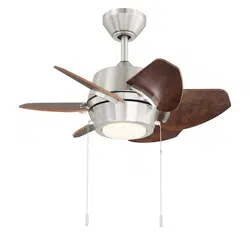
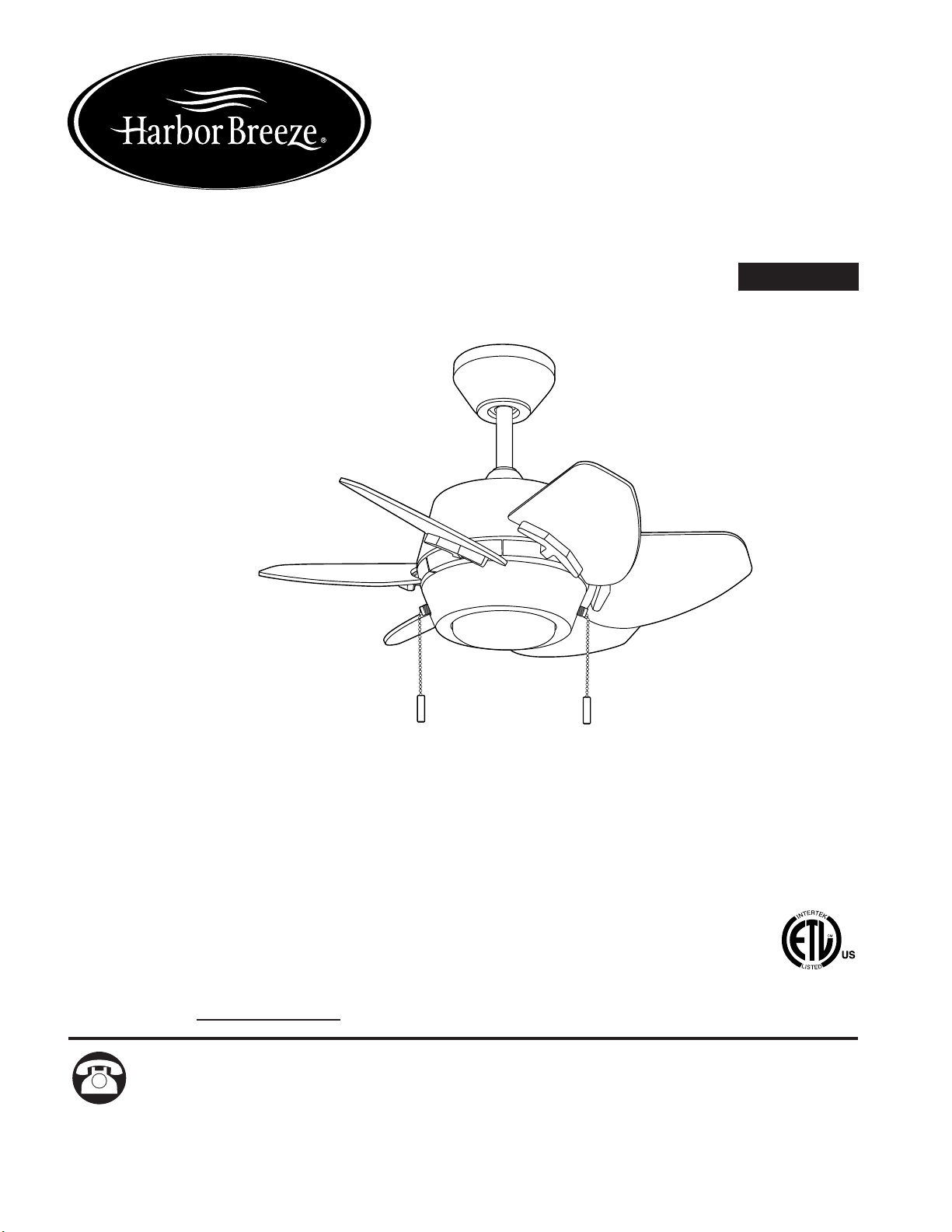
GASKIN CEILING FAN
ITEM #2599783
MODEL #GAT24BNK6L
Questions, problems, missing parts? Before returning to your retailer, call our customer
service department at 1-800-643-0067, 8 a.m. - 8 p.m., EST, Monday - Sunday.
Purchase Date
1
Español p. 19
ATTACH YOUR RECEIPT HERE
ADJUNTE SU RECIBO AQUÍ
Harbor Breeze® is a registered trademark
of LF, LLC. All Rights Reserved.
VR20320
4007498
TABLE OF CONTENTS
2
Modifications not approved by the party responsible for compliance could void the user's authority to
operate the equipment.
*NOTE: This equipment has been tested and found to comply with the limits for a Class B digital
device, pursuant to Part 15 of the FCC Rules. These limits are designed to provide reasonable
protection against harmful interference in a residential installation. This equipment generates,
uses and can radiate radio frequency energy and, if not installed and used in accordance with the
instructions, may cause harmful interference to radio communications. However, there is no
guarantee that interference will not occur in a particular installation. If this equipment does cause
harmful interference to radio or television reception, which can be determined by turning the
equipment off and on, the user is encouraged to try to correct the interference by one or more of
the following measures:
* Reorient or relocate the receiving antenna.
* Increase the separation between the equipment and receiver.
* Connect the equipment into an outlet on a circuit different from that to which the
receiver is connected.
Consult the dealer or an experienced radio/TV technician for help.
Distributed by: Litex Industries Inc., P.O. Box 535639, Grand Prairie, TX, 75053; 1-800-527-1292
The device complies with Part 15 of the FCC Rules. Operation is subject to the following two
conditions: (1) this device may not cause harmful interference, (2) this device must accept any
interference received, including interference that may cause undesired operation.
NOTE: Dimmable to 10% with select dimmers. See Lowes.com for more information.
SAFETY INFORMATION
Safety Information .................................................................................................................2
Package Contents .................................................................................................................5
Hardware Contents ...............................................................................................................6
Preparation ..........................................................................................................................
..
6
Initial Installation ....................................................................................................................6
Wiring ...................................................................................................................................10
Final Installation ...................................................................................................................12
Operating Instructions .......................................................................................................15
Care and Maintenance ........................................................................................................17
Troubleshooting..................................................................................................................
..
17
Limited Lifetime Warranty ..................................................................................................
..
18
Replacement Parts List .......................................................................................................18
READ AND SAVE THESE INSTRUCTIONS
Please read and understand this entire manual before attempting to assemble, install or operate the
product.
• Do not discard fan carton or foam inserts. Should this fan need to be returned to the factory for
repairs, it must be shipped in its original packaging to ensure proper protection against damage that
might exceed the initial cause for return.
• Make sure all electrical connections comply with local codes, ordinances, the National Electrical
Code and ANSI/NFPA 70-1999. Hire a qualified electrician or consult a do-it-yourself wiring
handbook if you are unfamiliar with installing electrical wiring.
• Make sure the installation site you choose allows a minimum clearance of 7 ft. from the blades to
the floor and at least 30 in. from the end of the blades to any obstruction.
• After you install the fan, make sure all connections are secure to prevent the fan from falling.
• The net weight of this fan including the light kit is: 11.68 lbs.
SAFETY INFORMATION
3
To reduce the risk of fire, electrical shock or personal injury, mount fan to outlet box
marked "ACCEPTABLE FOR FAN SUPPORT OF 35 LBS. OR LESS" and use
mounting screws provided with the outlet box. Most outlet boxes commonly used for the
support of lighting fixtures are not acceptable for fan support and may need to be replaced.
Consult a qualified electrician if in doubt.
When mounting fan to a ceiling outlet box, use a METAL octagonal outlet box; do NOT use a
plastic outlet box. Secure the outlet box directly to the building structure. The outlet box and its
support must be able to support the moving weight of the fan (at least 35 lbs.).
To avoid personal injury, the use of gloves may be necessary while handling fan parts with sharp
edges.
To reduce the risk of fire, electrical shock or personal injury, wire connectors provided with this fan
are designed to accept only one 12-gauge house wire and two lead wires from the fan. If your
house wire is larger than 12-gauge or there is more than one house wire to connect to the
corresponding fan lead wires, consult an electrician for the proper size wire connectors to use.
WARNING
DANGER
When using an existing outlet box, make sure the outlet box is securely attached to the building
structure and can support the full weight of the fan. Failure to do this can result in serious injury or
death. The stability of the outlet box is essential in minimizing wobble and noise in the fan after
installation is complete.
To reduce the risk of serious bodily injury, DO NOT use power tools to assemble any part of the fan,
including the blades.
4
SAFETY INFORMATION
CAUTION
Read all instructions and safety information before installing your new fan. Review the
accompanying assembly diagrams.
Be sure outlet box is properly grounded and that a ground wire (green or bare) is present.
Once installation is complete, carefully check all screws, bolts and nuts on fan motor assembly
to ensure that they are secured.
Do NOT tamper with or attempt to repair LED component. The light source is designed for this
specific application and should not be serviced by untrained personnel. If any servicing is
required, call our customer service department.
WARNING
To reduce the risk of fire or electrical shock, do not use the fan with any solid state speed control
device or control fan speed with a full range dimmer switch.
To reduce the risk of fire, electrical shock or personal injury, do not bend the blades when
installing or balancing them or cleaning the fan. Do not insert objects between the rotating fan
blades.
To reduce the risk of personal injury, use only parts provided with this fan. The use of parts
OTHER than those provided with this fan will void the warranty.
Before proceeding, be sure to shut off electricity at main switch or circuit breaker in order to avoid
electrical shock.
WARNING
A
D
B
F
M
L
I
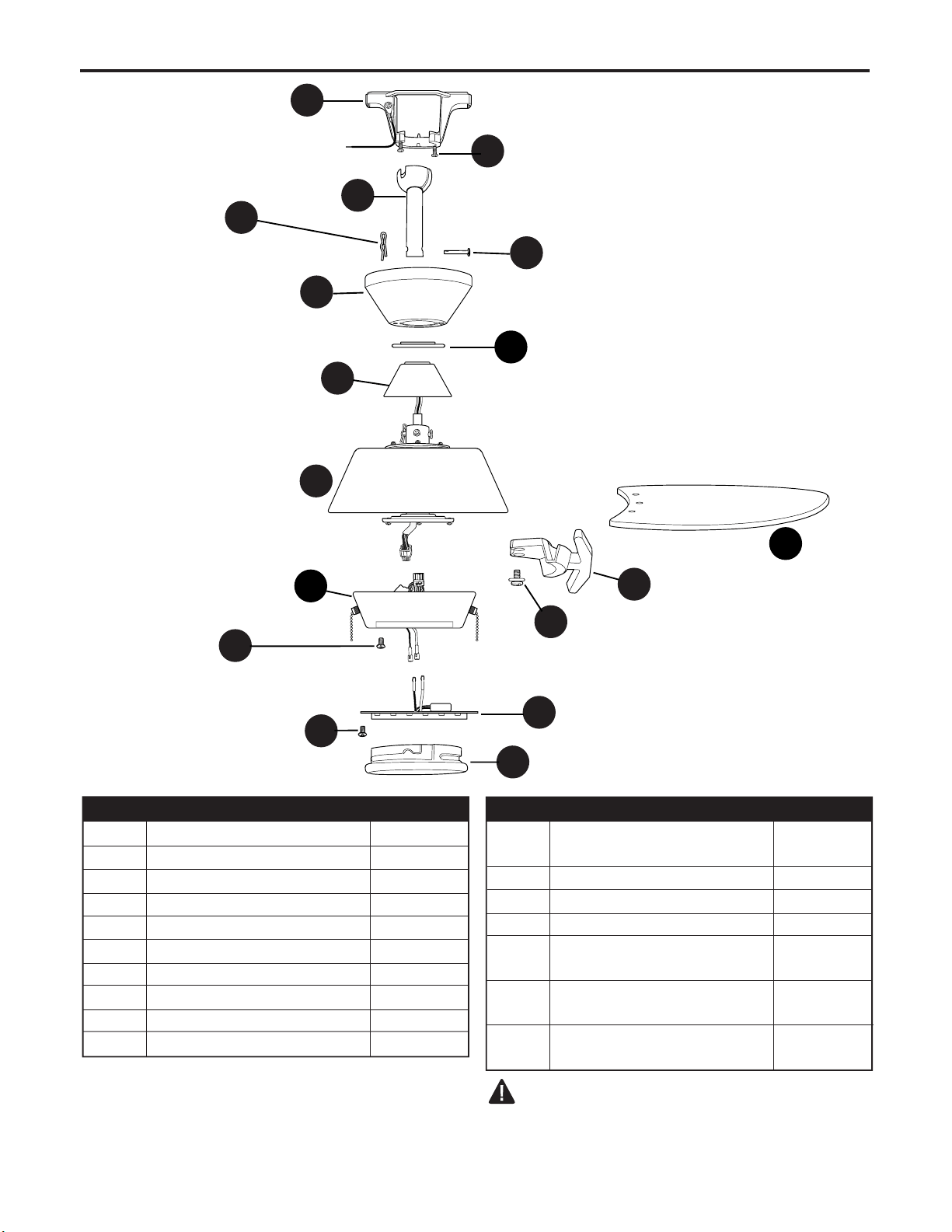
IMPORTANT REMINDER: You must use the
parts provided with this fan for proper installation
and safety.
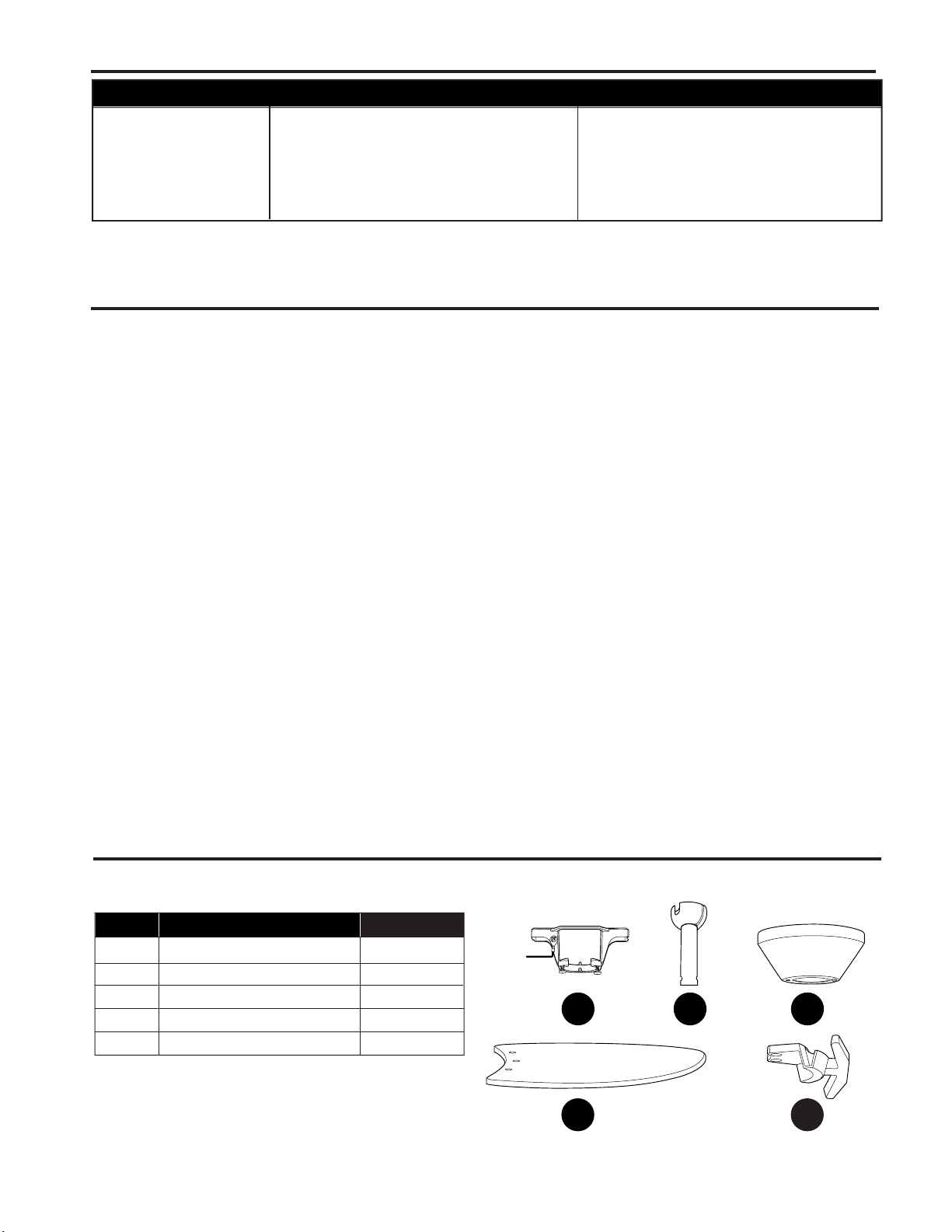
A Downrod 1
B Canopy 1
C Mounting Bracket 1
D Motor Housing 1
E Yoke Cover 1
F LED Light Kit 1
G Blade 6
H Switch Housing 1
I Shade 1
J Canopy Cover 1
DESCRIPTIONPART
QUANTITY
PACKAGE CONTENTS
5
E
O
DESCRIPTIONPART
QUANTITY
K Canopy Mounting Screw 2
(preassembled)
L Pin (preassembled) 1
M Clip (preassembled) 1
N Blade Arm 6
O Switch Housing Screw 3
(preassembled)
P Motor Plate Screw 3
(preassembled)
Q Motor Screw/Lock Washer 12
(preassembled) + 1 extra
H
G
C
K
J
N
Q
P
6
PREPARATION
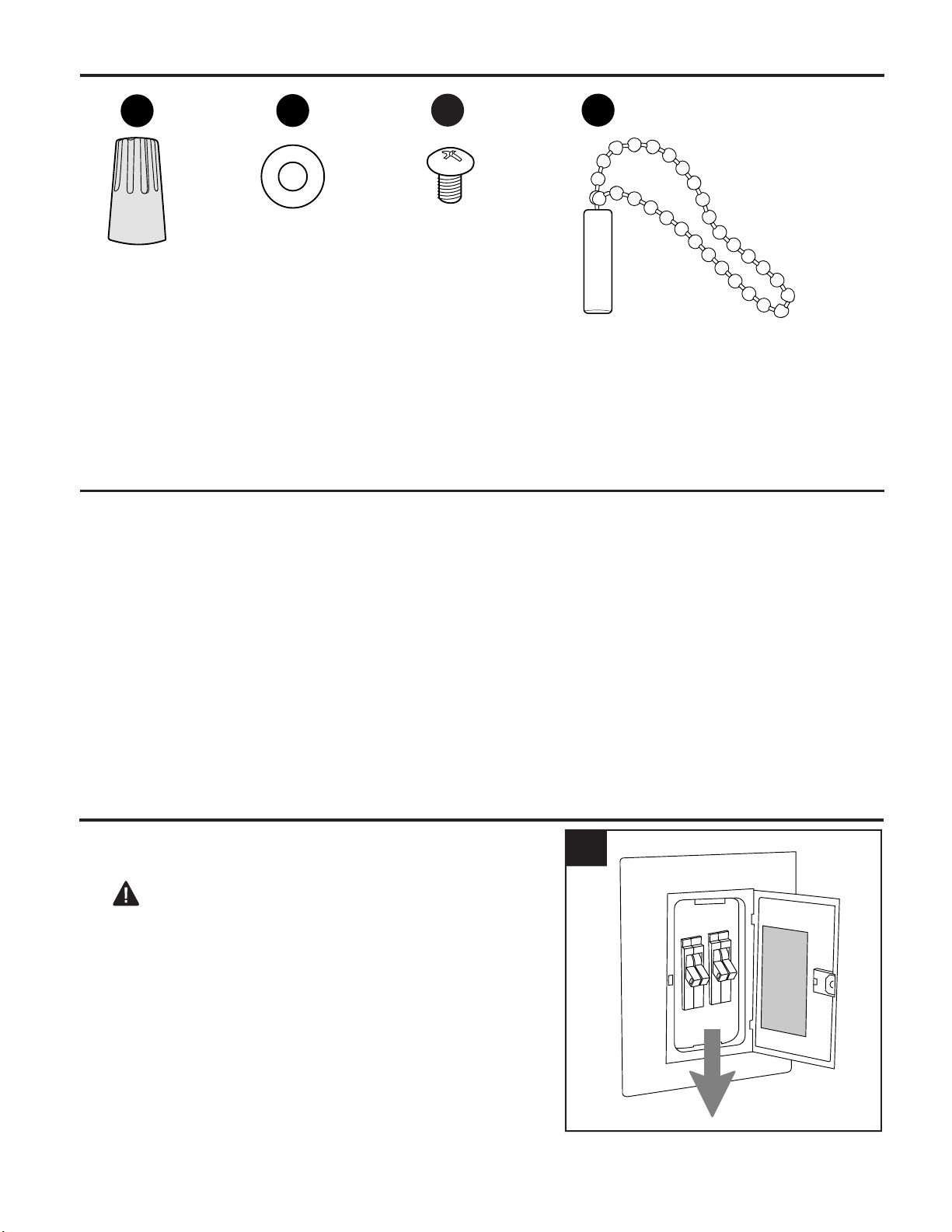
HARDWARE CONTENTS (shown actual size)
Before beginning assembly of product, make sure all parts are present. Place motor on carpet or on
foam to avoid damage to finish. Compare parts with package contents list and hardware contents list. If
any part is missing or damaged, do not attempt to install, operate or assemble the product.
Estimated Assembly Time: 120 minutes
Tools Required for Assembly (not included): Electrical Tape, Phillips Screwdriver, Pliers, Safety Glasses,
Stepladder and Wire Strippers
Helpful Tools (not included): AC Tester Light, Tape Measure, Do-It-Yourself Wiring Handbook and Wire
Cutters
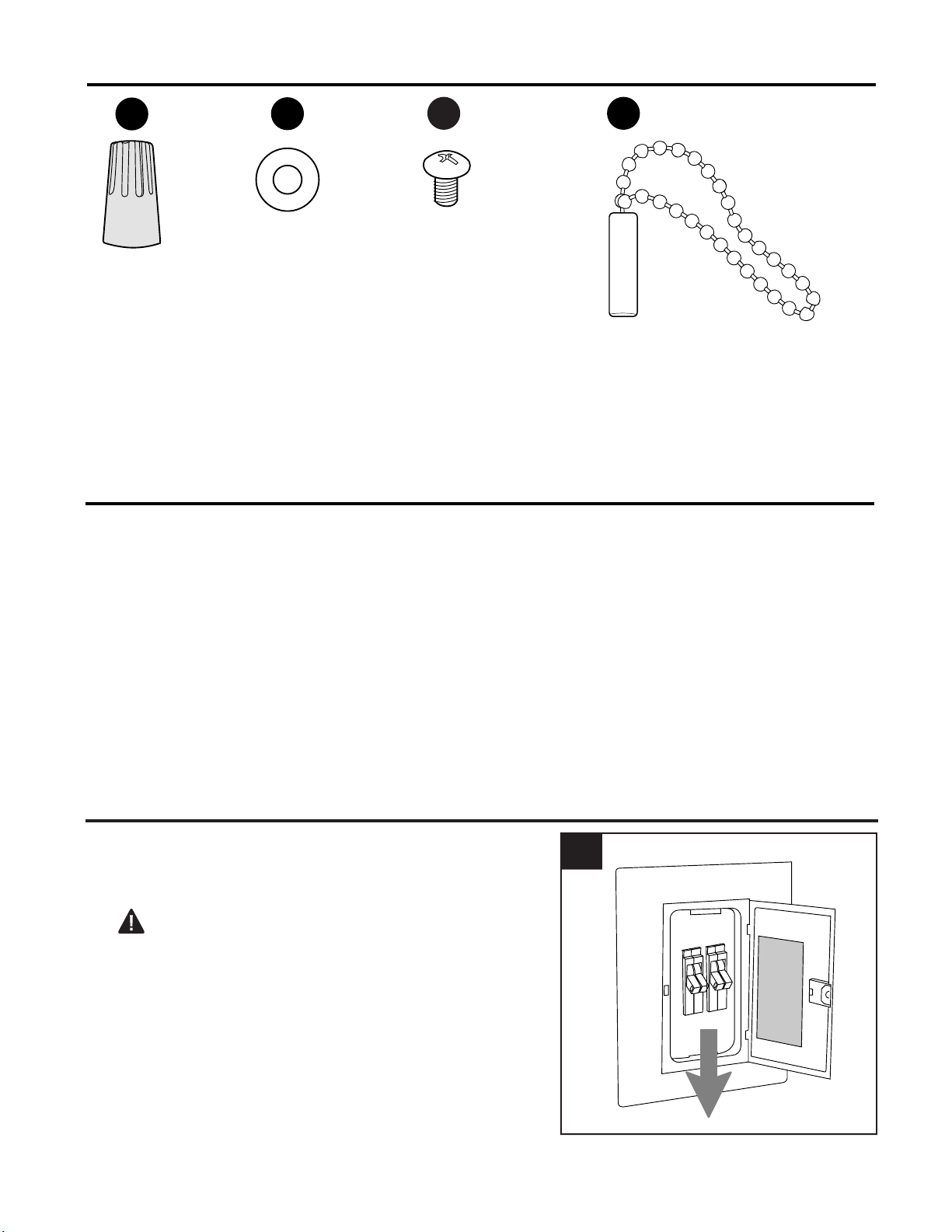
Wire
Connector
Qty. 3
AA
BB
Blade
Screw
Qty. 18
+ 1 extra
CC
INITIAL INSTALLATION
Turn off circuit breakers or fuse and wall switch to
the fan supply line leads.
DANGER: Failure to disconnect power supply
prior to installation may result in serious injury or
death.
1.
ON
OFF
ON
OFF
1
Fiber
Blade
Washer
Qty. 18
+ 1 extra
Pull Chain
Extension
Qty. 2
DD
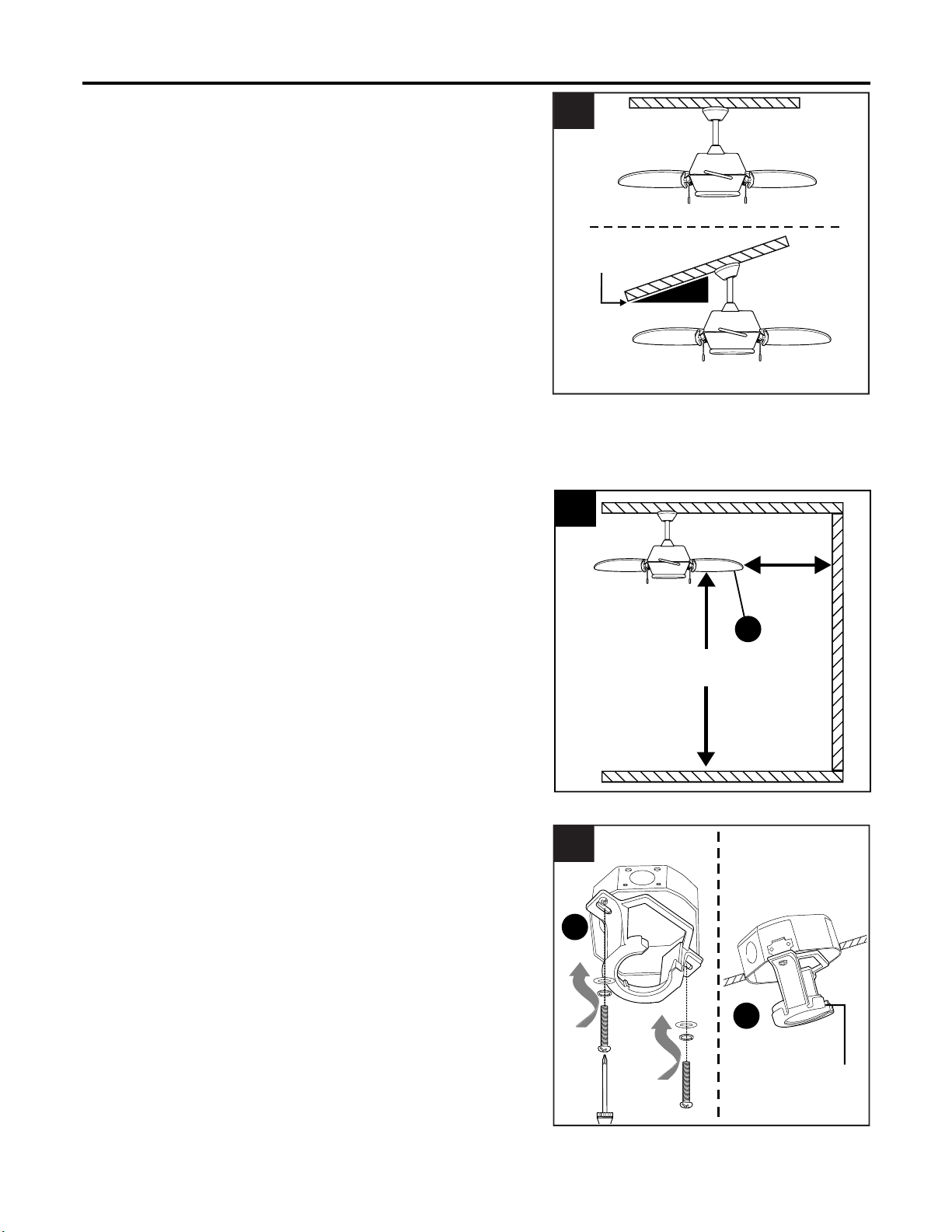
2.
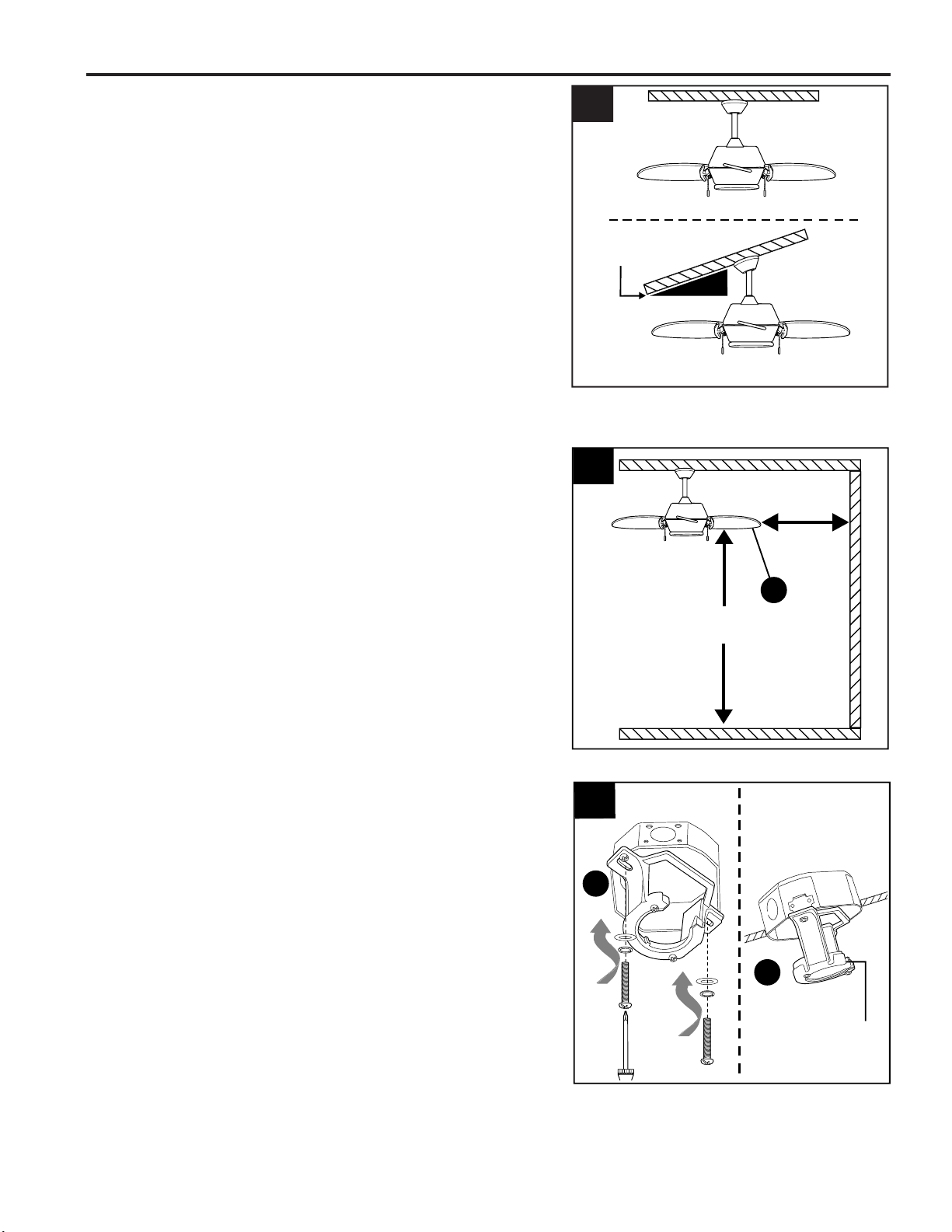
Determine mounting method to use.
A. Standard mount
B. Angle mount
IMPORTANT: If using the angle mount, ensure the
ceiling angle is not steeper than 19°.
NOTE: Closemount option is not available for this
fan.
*Helpful Hint: Downrod-style mounting is best
suited for ceilings 8 ft. high or higher. For taller
ceilings you may want to use a longer downrod
(not included). Angle-style mounting is best suited
for angled or vaulted ceilings. A longer downrod is
sometimes necessary to ensure proper blade
clearance.
7
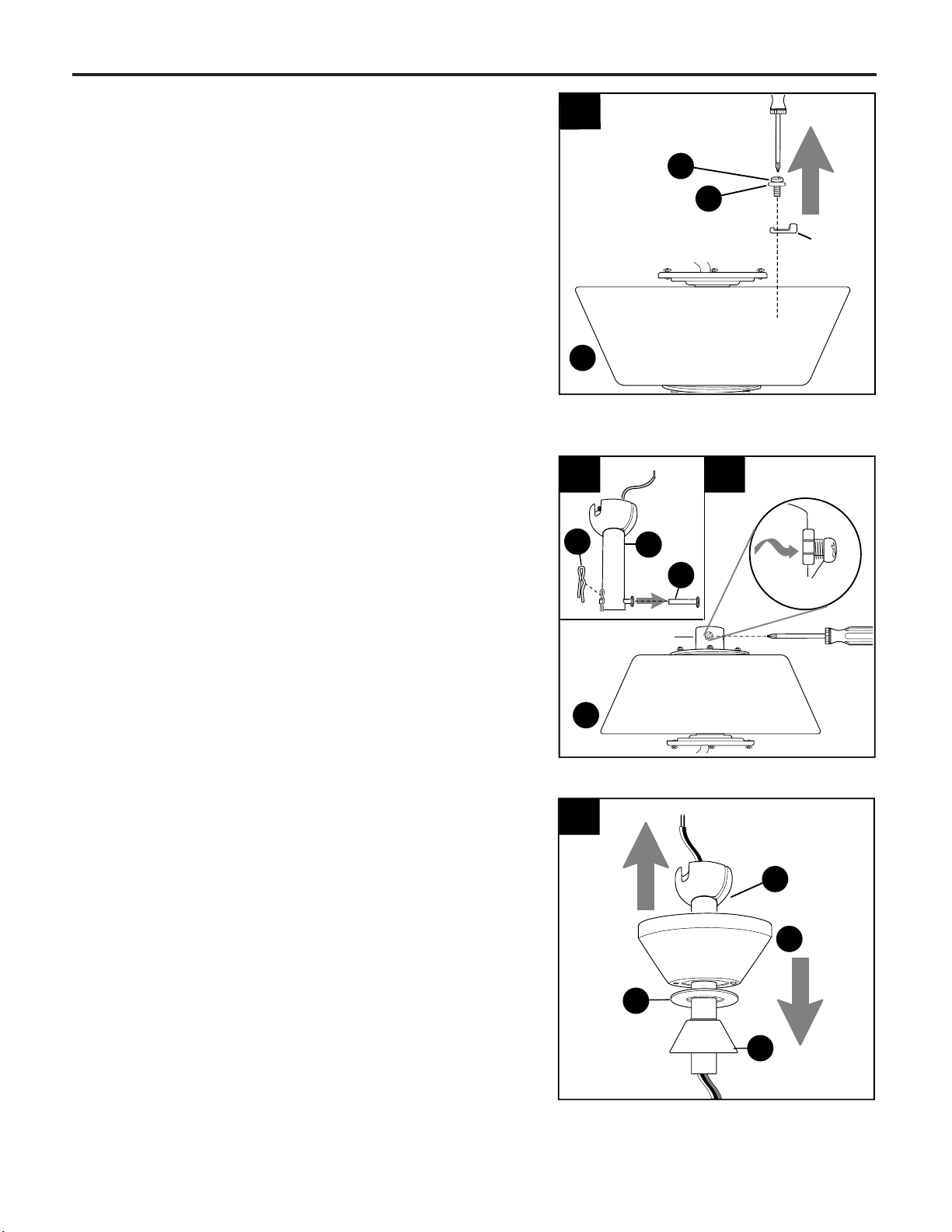
Check to make sure blades (G) will be at least
30 inches from any obstruction. Check downrod
(A) length to ensure blades (G) will be at least 7 ft.
above the floor.
3.
INITIAL INSTALLATION
7 ft.
min.
30 in.
min.
3
G
2
4.
Open End
4
C
C
ANGLE MOUNTSTANDARD MOUNT
Secure mounting bracket (C) to outlet box (not
included) using screws, spring washers and flat
washers provided with the outlet box.
*NOTE: It is very important you use the proper
hardware when installing the mounting bracket (C)
as this will support the fan.
IMPORTANT: If using the angle mount, make sure
open end of mounting bracket (C) is installed facing
the higher point of the ceiling, and ensure the
ceiling angle is not steeper than 19°.
B
A
19° max.
8
INITIAL INSTALLATION
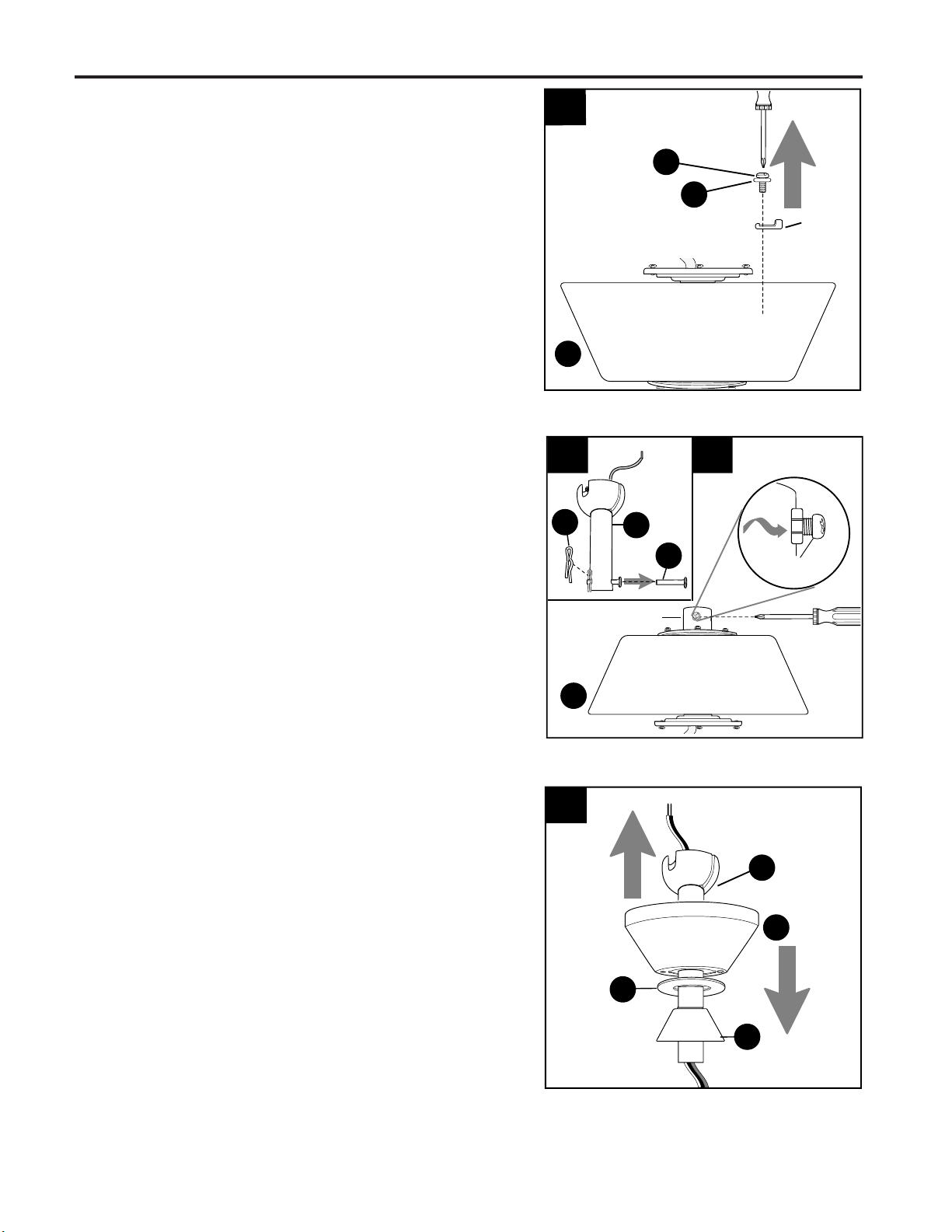
5.
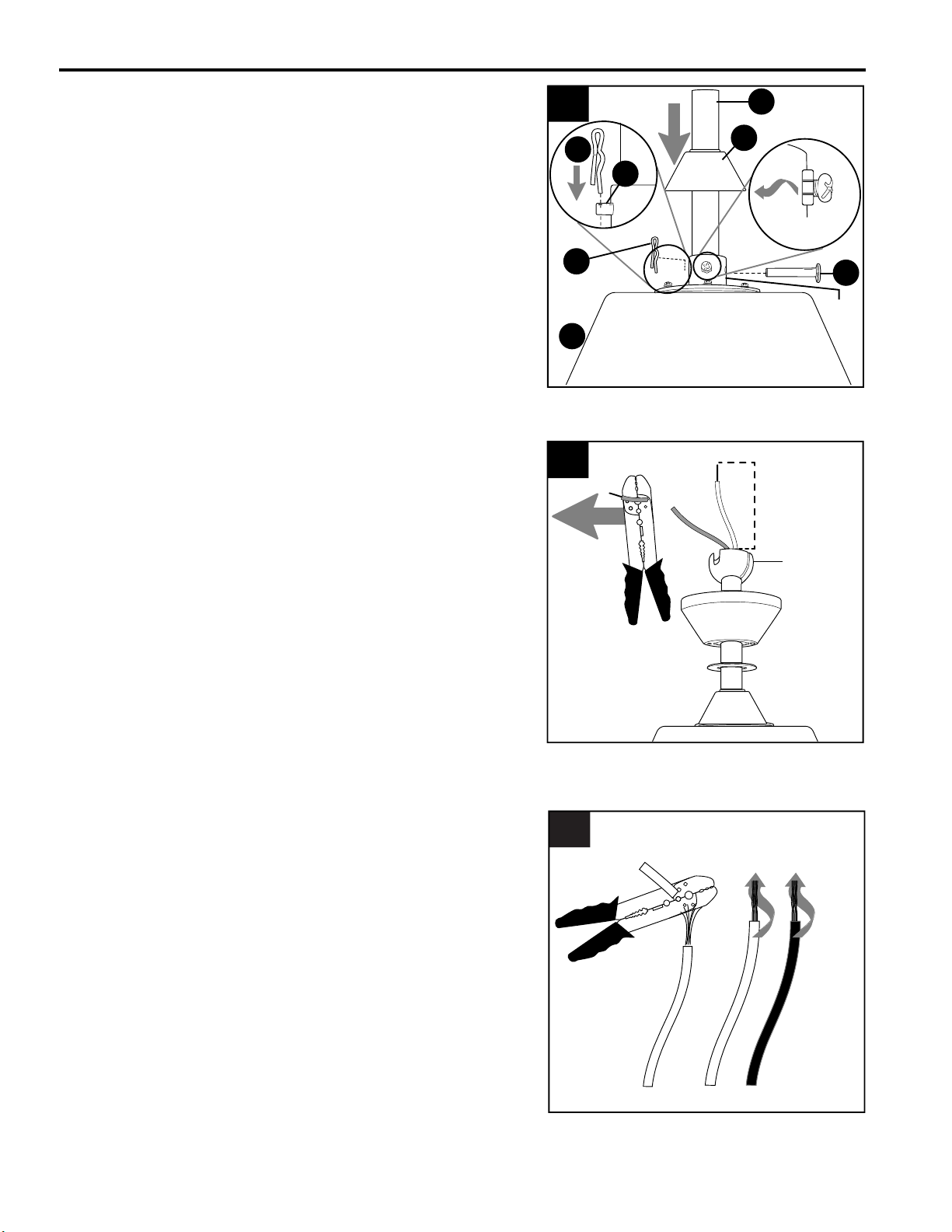
Remove preassembled motor screws/lock washers
(Q) from underside of motor housing (D). If there
are plastic motor blocks installed with the motor
screws/lock washers (Q), discard the plastic motor
blocks.
Note: Make sure to keep loose hardware separate
to avoid confusion during installation.
5
J
D
Plastic
Motor
Block
K
7.
Insert downrod (A) through canopy (B), canopy
cover (J) and yoke cover (E). NOTE: Canopy
cover (J) must be turned with the shiny side
toward the motor housing (D).
Then, thread wires from motor housing (D)
through downrod (A).
Remove pin (L) and clip (M) from downrod (A).
Partially loosen preassembled set screws and nut
in motor housing yoke at top of motor housing (D).
6a.
6a
M
L
6b
A
Set Screw
Sideview
D
Yoke
6b.
B
E
A
J
7
9
INITIAL INSTALLATION
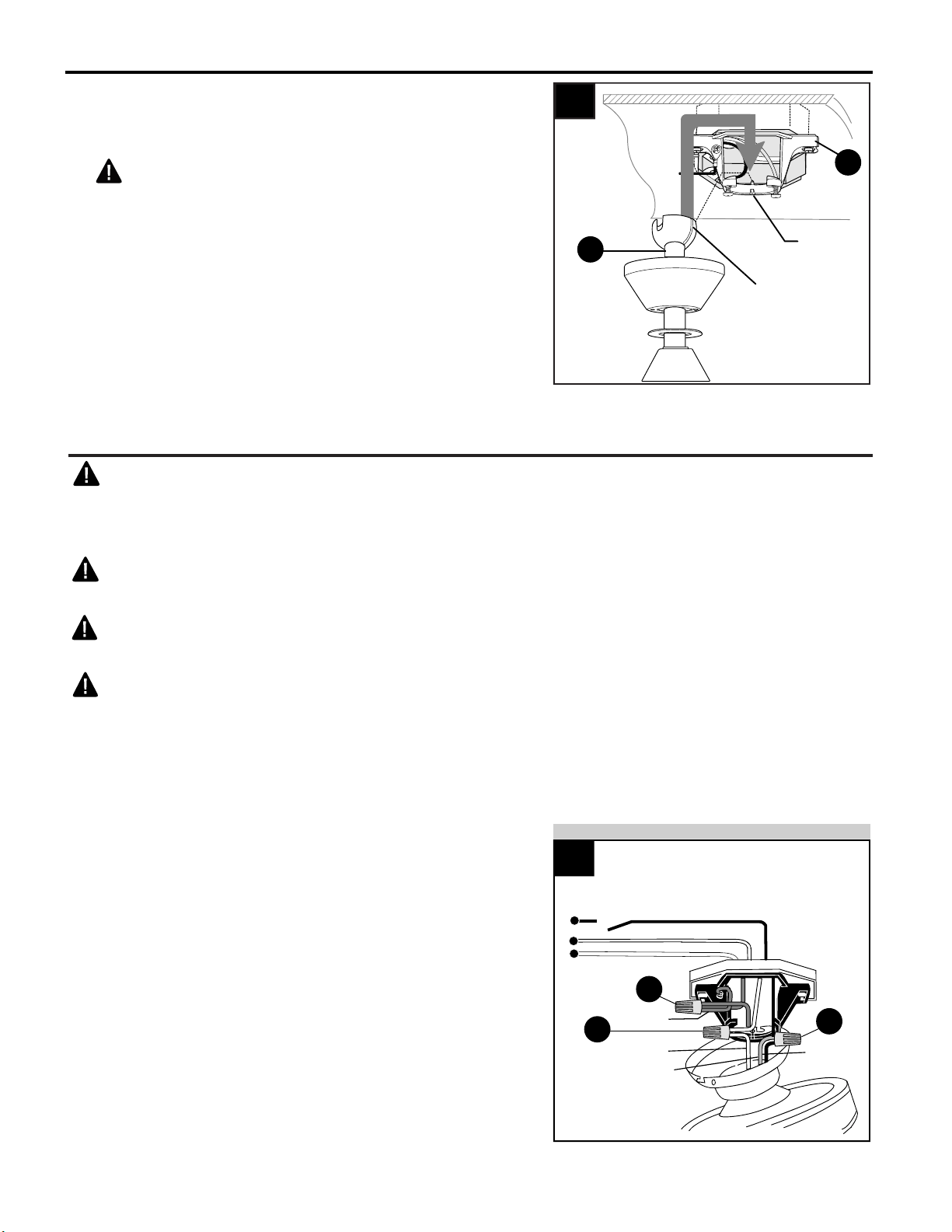
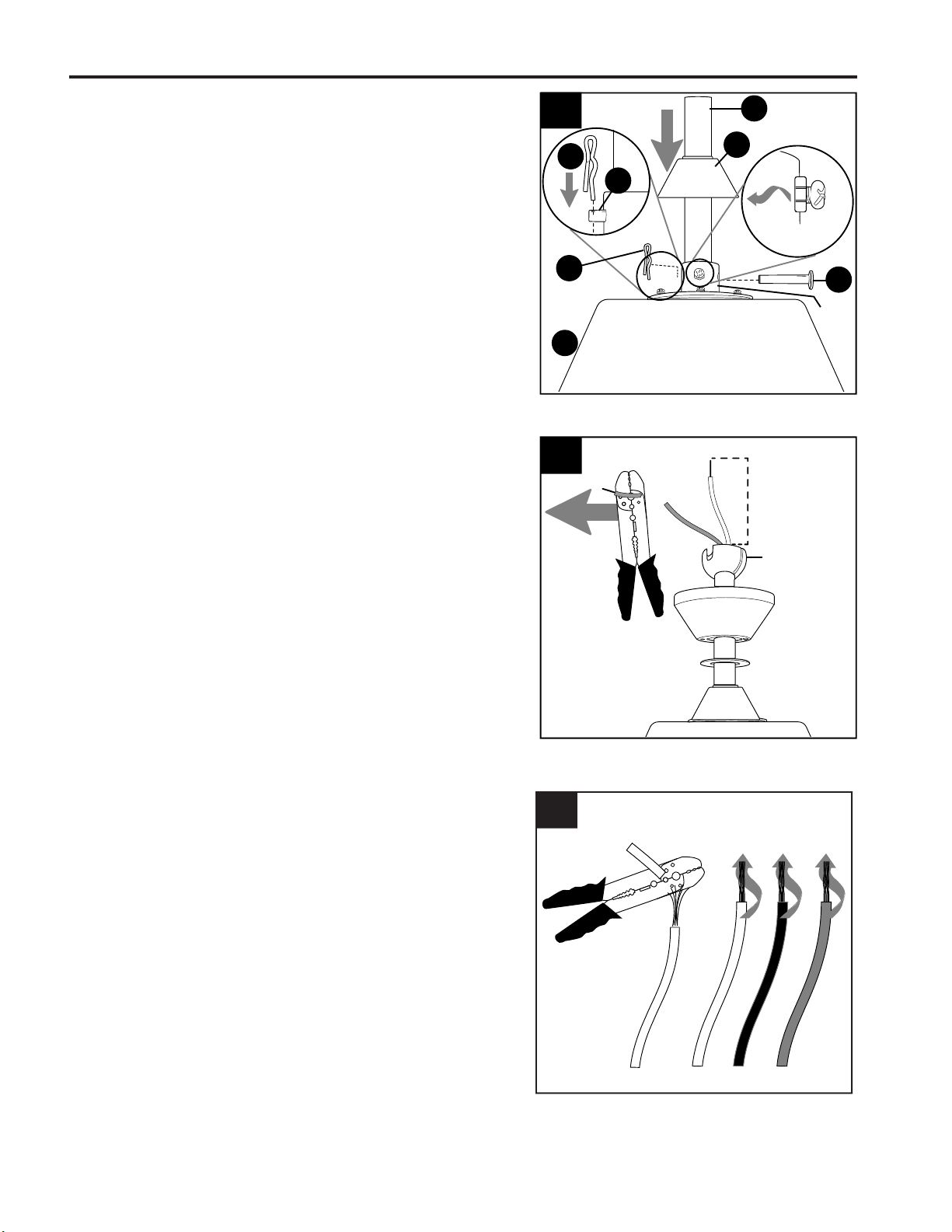
Depending on the length of downrod you use, you
may need to cut the lead wires back to simplify
the wiring. If you decide to cut back the lead
wires, it is suggested you do so in the following
manner:
Take the lead wires and make sure you have
pulled them all the way through the top of the
downrod. Start at the TOP of the hanging ball on
the downrod and measure 8 in. of lead wire, then
cut the excess wire off with wire cutters (not
included).
NOTE: If you do not cut back the lead wires,
Steps 9 and 10 are not necessary and you may
proceed to Step 11 instead.
9.
Hanging
Ball
9
8 in.
If you decided to cut back the lead wires in Step 8,
strip 1/2 in. of insulation from end of each wire --
white, black, green and blue (if applicable). Twist
stripped ends of each strand of wire within the
insulation with pliers (not included).
10.
10
8.
Slip downrod (A) into motor housing yoke, align
holes and re-install pin (L) and clip (M). Tighten
set screws in motor housing yoke and then tighten
preassembled nut on one of the set screws. Then,
slide yoke cover (E) down until it rests on top of
motor housing (D).
8
D
E
L
M
Yoke
M
L
Set Screw
and Nut
Sideview
A
10
WIRING
WARNING: To reduce the risk of fire, electrical shock or personal injury, wire connectors provided
with this fan are designed to accept only one 12-gauge house wire and two lead wires from the fan. If
your house wire is larger than 12-gauge or there is more than one house wire to connect to the
corresponding fan lead wires, consult an electrician for the proper size wire connectors to use.
CAUTION: Be sure outlet box is properly grounded and that a ground (green or bare) wire is
present.
WARNING: If house wires are different colors than referred to in the following steps, stop
immediately. A professional electrician is recommended to determine wiring.
WARNING: Using a full range dimmer switch (not included) to control fan speed will cause a loud
humming noise from fan. To reduce the risk of fire or electrical shock, do NOT use a full range dimmer
switch to control fan speed.
NOTE: This fan is remote control adaptable (remote control not included). Please refer to instructions
provided with the remote control before proceeding with these wiring instructions.
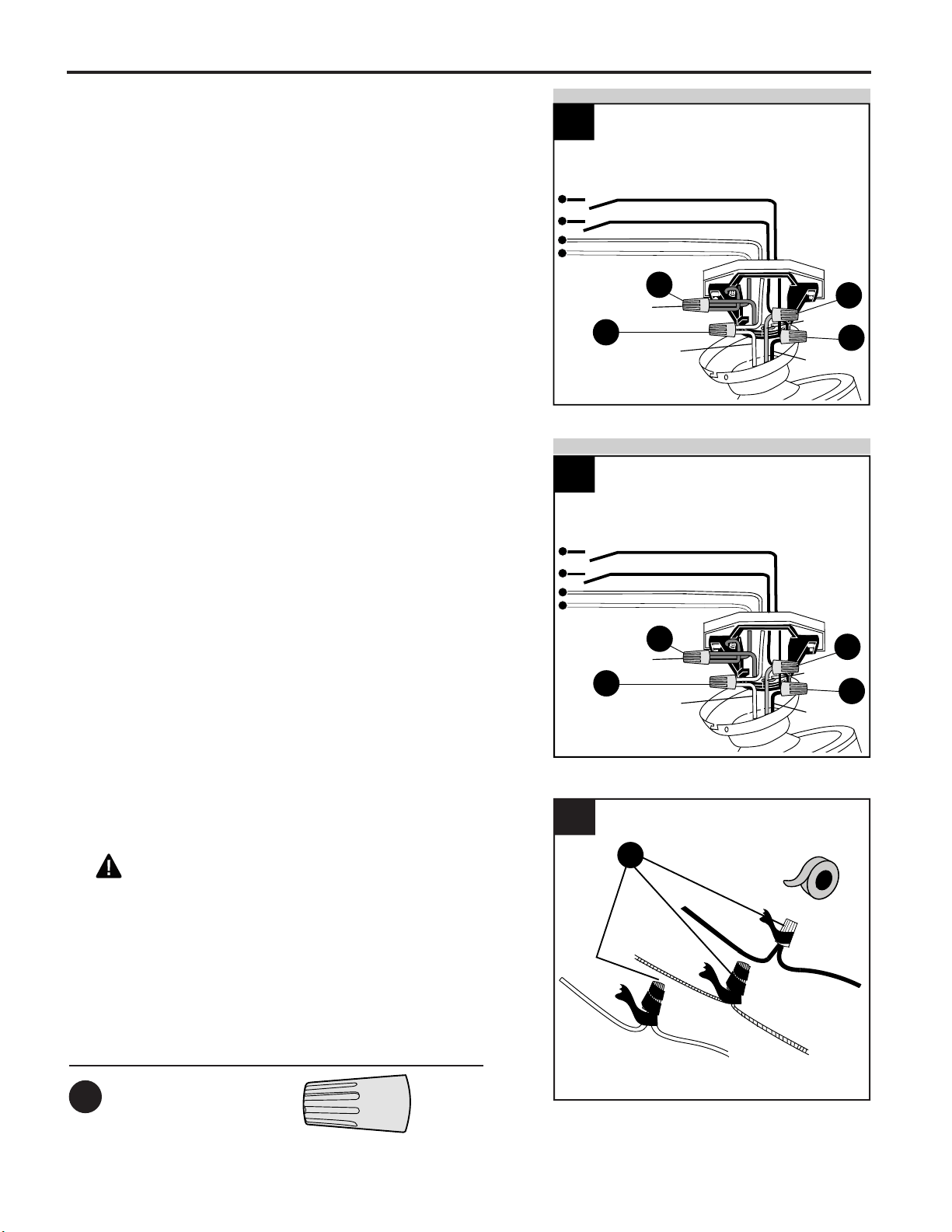
Choose wiring diagram (Fig. 1a, Fig. 1b or Fig. 1c)
that fits your situation and make appropriate wiring
connections as follows: [IMPORTANT: Use one of
the wire connectors (AA) provided to make each wire
connection, making sure to screw wire connector
(AA) on in a clockwise direction.]
1a. FAN AND LIGHT CONTROLLED BY PULL
CHAINS: Connect BLACK and BLUE wire from fan
to BLACK wire from ceiling. Connect WHITE wire
from fan to WHITE wire from ceiling. Connect
GROUND (GREEN) wires from downrod (A) and
mounting bracket (C) to BARE/GREEN wire from
ceiling.
1.
1a
FAN AND LIGHT CONTROLLED BY PULL CHAINS
120V POWER
FROM CEILING
GREEN
WHITE
BLACK
BLUE
BLACK (POWER)
WHITE (NEUTRAL)
GROUND/GREEN (BARE)
AA
AA
AA
INITIAL INSTALLATION
11.
Install hanging ball of downrod (A) into opening of
mounting bracket (C). Align one of the slots in
hanging ball with tab in mounting bracket (C).
DANGER: Failure to align one of the slots in
the ball with the tab may result in serious injury or
death.
A
Tab
11
C
Slot
11
WIRING
Wrap electrical tape (not included) around each
individual wire connector (AA) down to the wire.
WARNING: Make sure no bare wire or wire
strands are visible after making connections. Place
GREEN and WHITE wire connections on the
opposite side of the outlet box from the BLACK and
BLUE wire connections.
Turn spliced/taped wires upward and gently push
wires and wire connectors (AA) into outlet box.
2.
2
1c. FAN AND LIGHT CONTROLLED BY TWO
WALL SWITCHES: Connect BLACK wire from fan
to BLACK (or RED) wire from the independent
wall switch for the fan. Connect BLUE wire from
fan to the BLACK (or RED) wire from the other
independent wall switch for the light. Connect
WHITE wire from fan to WHITE wire from ceiling.
Connect GROUND (GREEN) wires from downrod
(A) and mounting bracket (C) to BARE/GREEN
wire from ceiling.
NOTE: BLACK wire is hot power for fan. BLUE wire
is hot power for light kit. WHITE wire is common for
fan and light kit. GREEN or BARE wire is ground.
BLACK (WALL SWITCH)
BLACK (WALL SWITCH FOR LIGHT)
FAN AND LIGHT CONTROLLED BY TWO WALL SWITCHES
FAN AND LIGHT CONTROLLED BY TWO WALL SWITCHES
1c
WHITE
BLACK
BLUE
120V POWER
FROM CEILING
WHITE (NEUTRAL)
GROUND/GREEN (BARE)
GREEN
Hardware Used
Wire Connector
x 4
AA
AA
AA
AA
AA
AA
1b. FAN CONTROLLED BY PULL CHAIN, LIGHT
BY WALL SWITCH: Connect BLACK wire from fan
to BLACK wire from ceiling. Connect BLUE wire
from fan to the BLACK wire from the independent
wall switch for the light. Connect WHITE wire from
fan to WHITE wire from ceiling. Connect GROUND
(GREEN) wires from fan (on downrod (A), if
applicable, and mounting bracket (C)) to
BARE/GREEN wire from ceiling.
FAN CONTROLLED BY PULL CHAIN, LIGHT BY WALL SWITCH
1b
WHITE
BLACK
BLUE
120V POWER
FROM CEILING
BLACK (POWER)
BLACK (WALL SWITCH)
WHITE (NEUTRAL)
GROUND/GREEN (BARE)
GREEN
AA
AA
AA
AA
12
FINAL INSTALLATION
1.
1
K
B
J
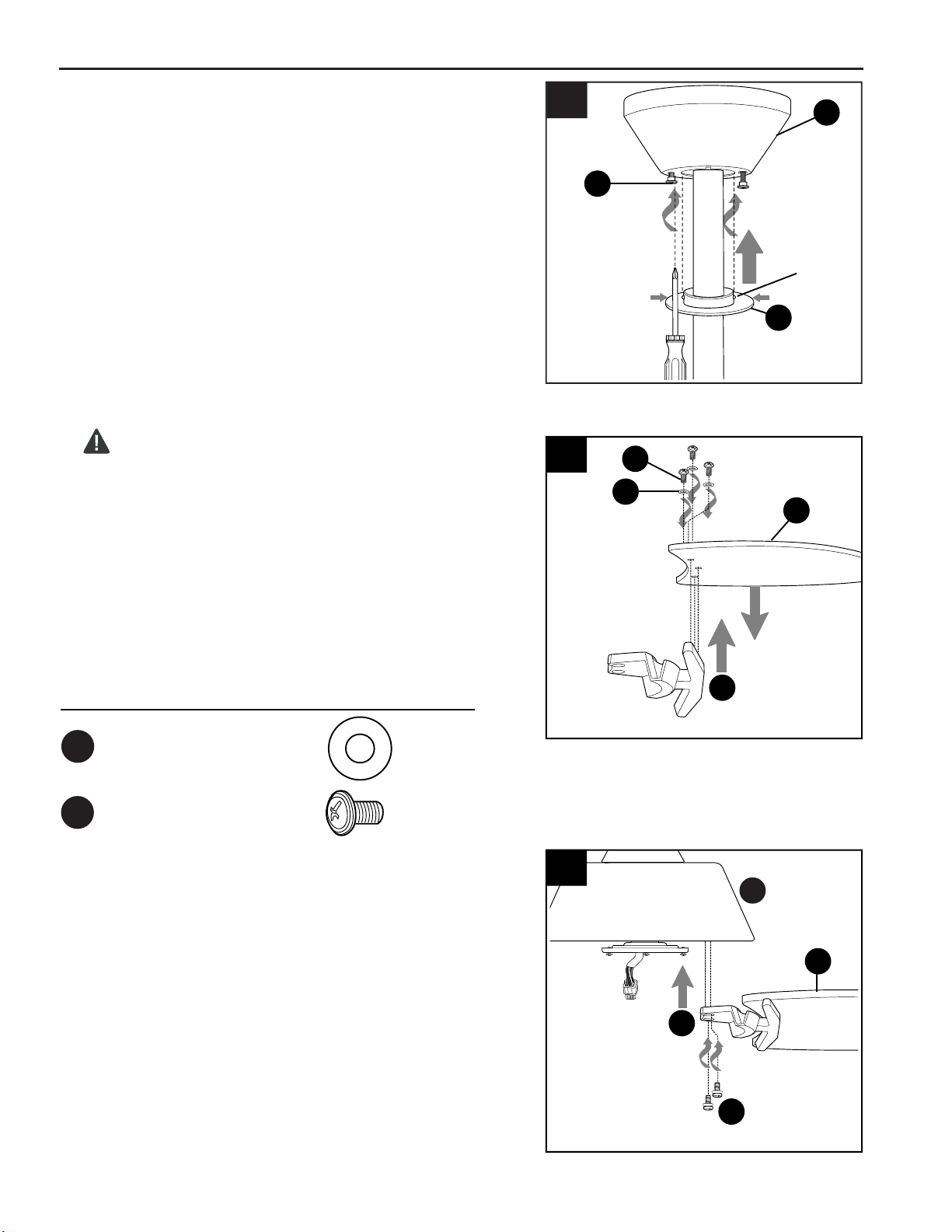
Locate two canopy mounting screws (K) on underside
of mounting bracket (C) and remove canopy mounting
screw (K) closest to the open end of the mounting
bracket (C). Partially loosen the other canopy
mounting screw (K). Lift canopy (B) to mounting
bracket (C). Place rounded part of slotted hole in
canopy (B) over loosened canopy mounting screw (K)
and push up. Twist canopy (B) to lock. Re-insert
canopy mounting screw (K) that was removed, then
tighten both canopy mounting screws (K).
Use arrows on inside of canopy cover (J) to locate
knobs on center ring of canopy cover (J). Slide
canopy cover (J) up to canopy (B), aligning knobs on
canopy cover (J) with openings in bottom of canopy
(B). Press up firmly on the canopy cover (J) until it fits
into the bottom of the canopy (B) and then turn canopy
cover (J) about ½ in.
DANGER: To reduce the risk of serious bodily
injury, DO NOT use power tools to assemble the
blades (G). If screws are overtightened, blades (G)
may crack and break.
Partially insert three blade screws (CC) along with
three blade washers (BB) into holes in blade (G) to
attach blade arm (N) to blade (G). Then, tighten
each blade screw (CC) starting with the one in the
middle.
Repeat Step 2 for remaining blades (G) and blade
arms (N).
2.
Fiber Blade Washer x 18
BB
Hardware Used
D
2
BB
CC
G
N
3
G
N
CC
Blade Screw x 18
Knobs
Attach blade arms (N) to the bottom of motor housing
(D) with motor screws/lock washers (Q) previously
removed (Step 5, page 8). Tighten motor screws/lock
washers (Q) securely.
NOTE: Make sure to completely secure each blade
arm (N) before proceeding to the next.
3.
Q
13
FINAL INSTALLATION
4.
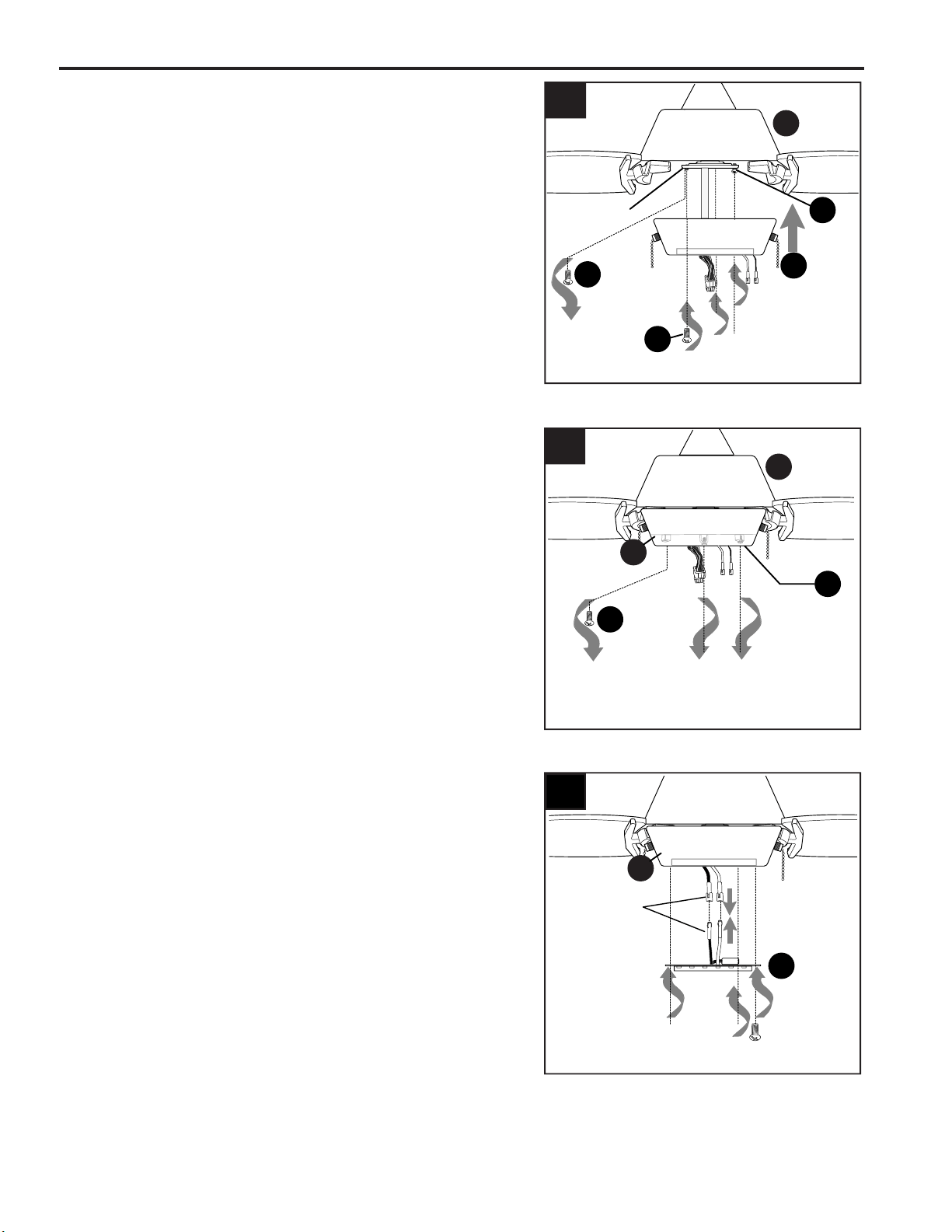
Remove one motor plate screw (P) from motor
plate preassembled on the underside of the motor
housing (D) and partially loosen the other two
motor plate screws (P). Align slotted holes in
switch housing (H) with loosened motor plate
screws (P), allowing molex connections from
motor housing (D) to come through hole in switch
housing (H). Twist switch housing (H) to lock.
Re-insert the motor plate screw (P) that was
removed and securely tighten all three motor plate
screws (P).
4
I
P
I
P
I
P
H
D
Motor
Plate
5.
Remove two switch housing screws (O) from
underside of switch housing (H) and partially
loosen the other switch housing screw (O).
3
5
O
F
O
D
molex
connections
6
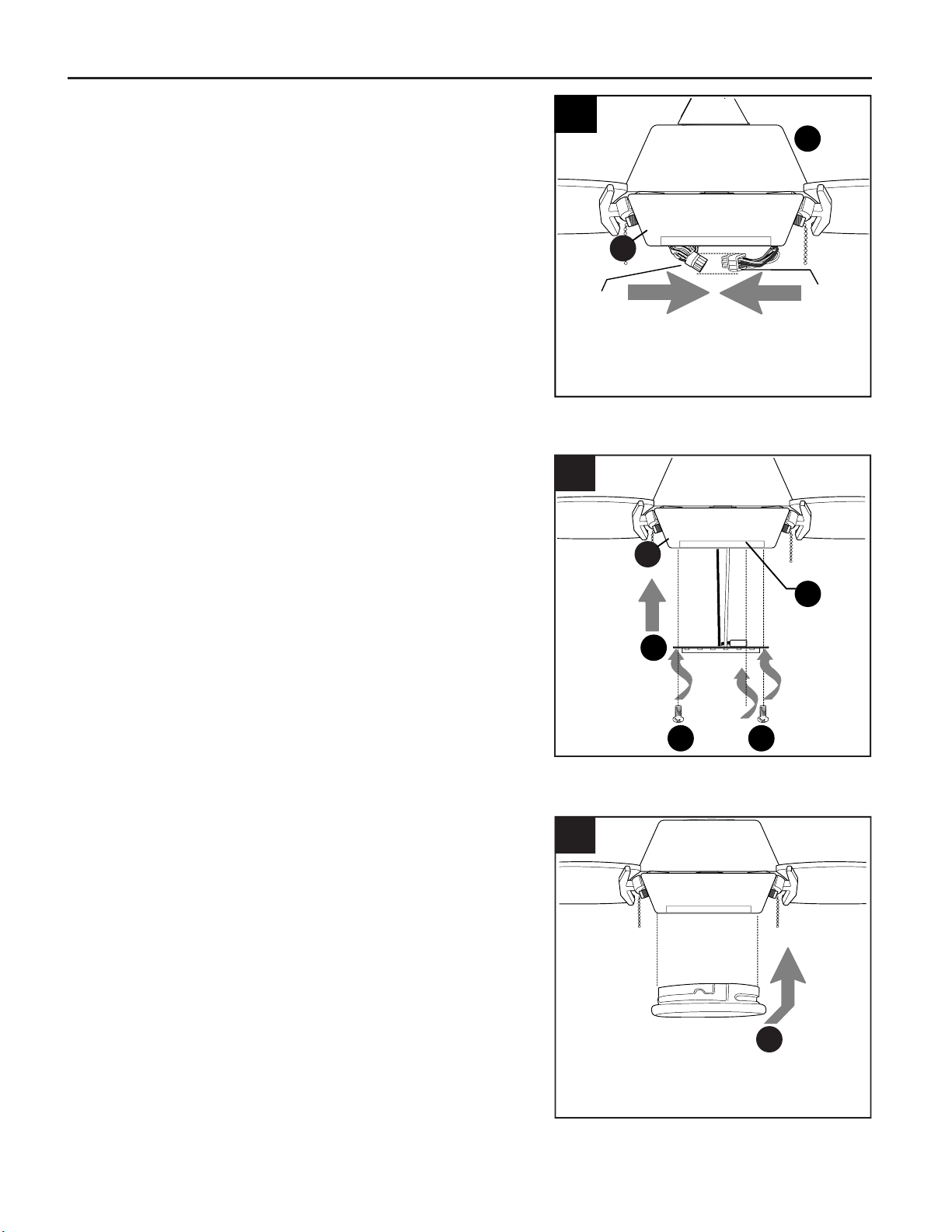
Connect WHITE molex wire from LED light kit (F) to
WHITE molex wire from switch housing (H).
Connect BLUE molex wire from LED light kit (F) to
BLACK (or BLUE) molex wire from switch housing
(H). Make sure molex wire connections snap
together securely.
6.
H
H
F
H
14
FINAL INSTALLATION
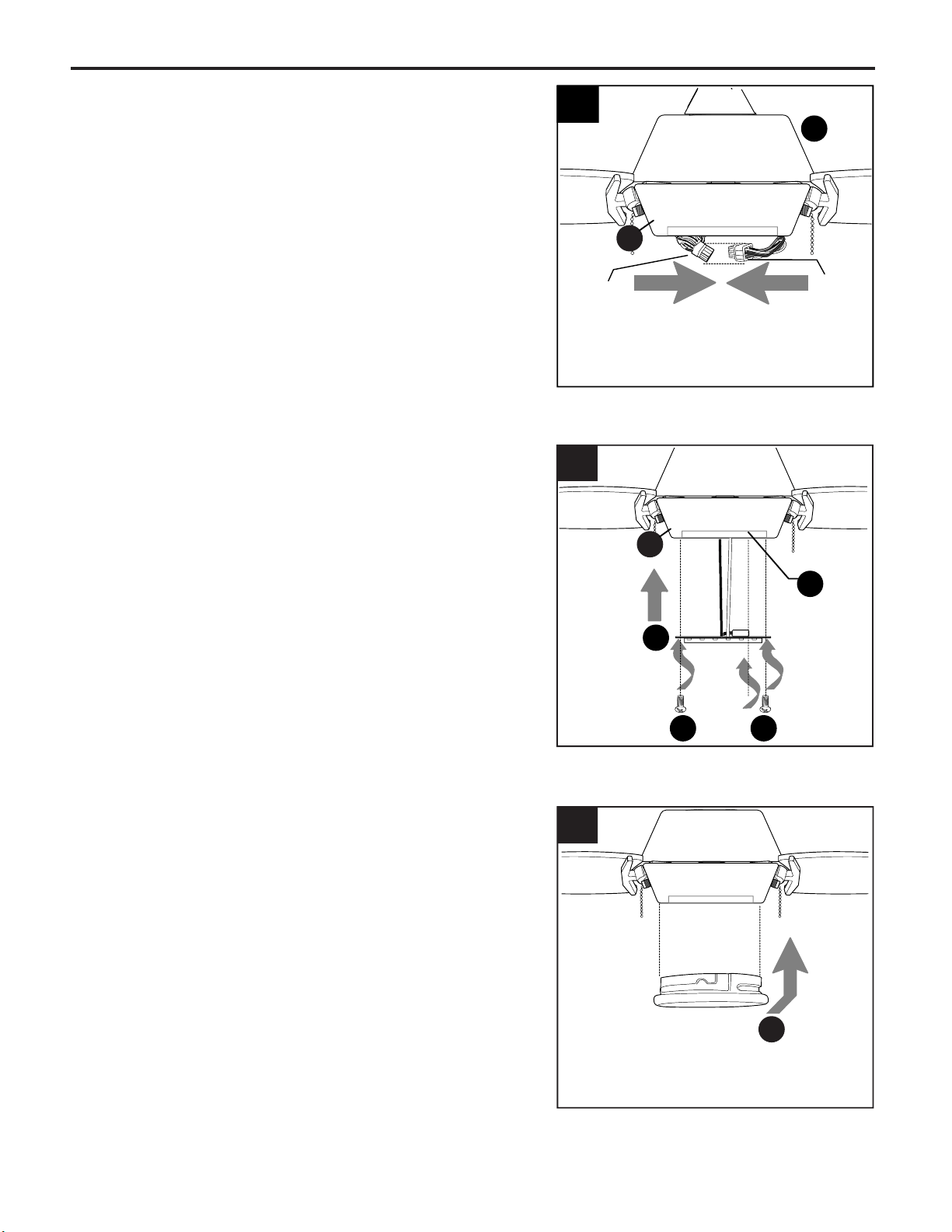
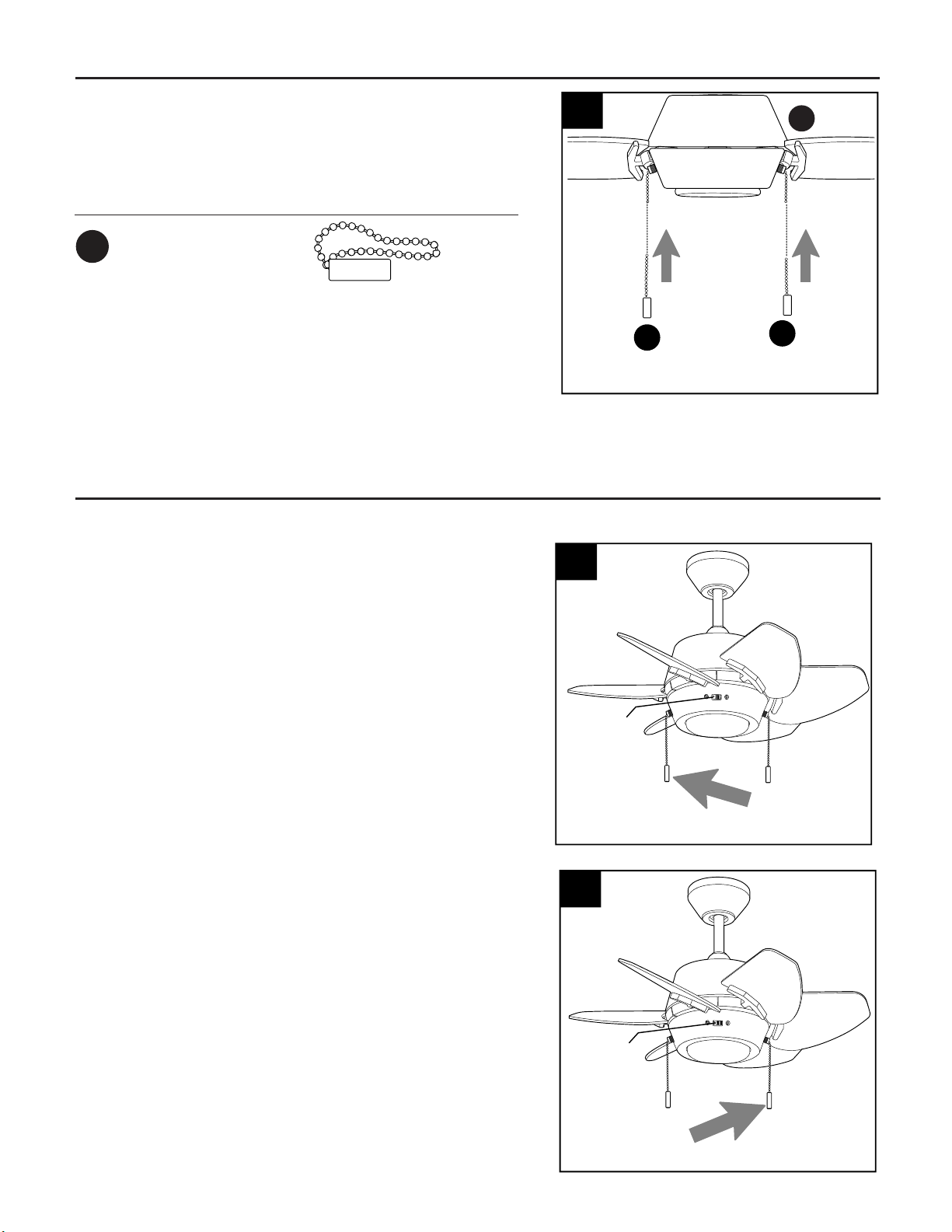
Carefully arrange wires inside switch housing (H).
Align hole in edge of LED light kit (F) with loosened
switch housing screw (O) in switch housing (H).
Re-insert the other two switch housing screws (O)
previously removed. Tighten all three switch
housing screws (O) securely.
8.
3
8
O
Align slots on shade (I) with protrusions on the
inside of the switch housing. Turn shade (I) to the
right (clockwise) until it no longer turns.
NOTE: Pull down gently on the shade (I) to make
sure that it is secured completely.
9.
3
9
I
7.
Connect male plug from motor housing (D) to female
plug from switch housing (H), matching up the colors
on the male plug with the colors on the female plug
for correct fit. Make sure plugs are connected
completely.
7
OO
D
Male
Plug
Female
Plug
H
15
D
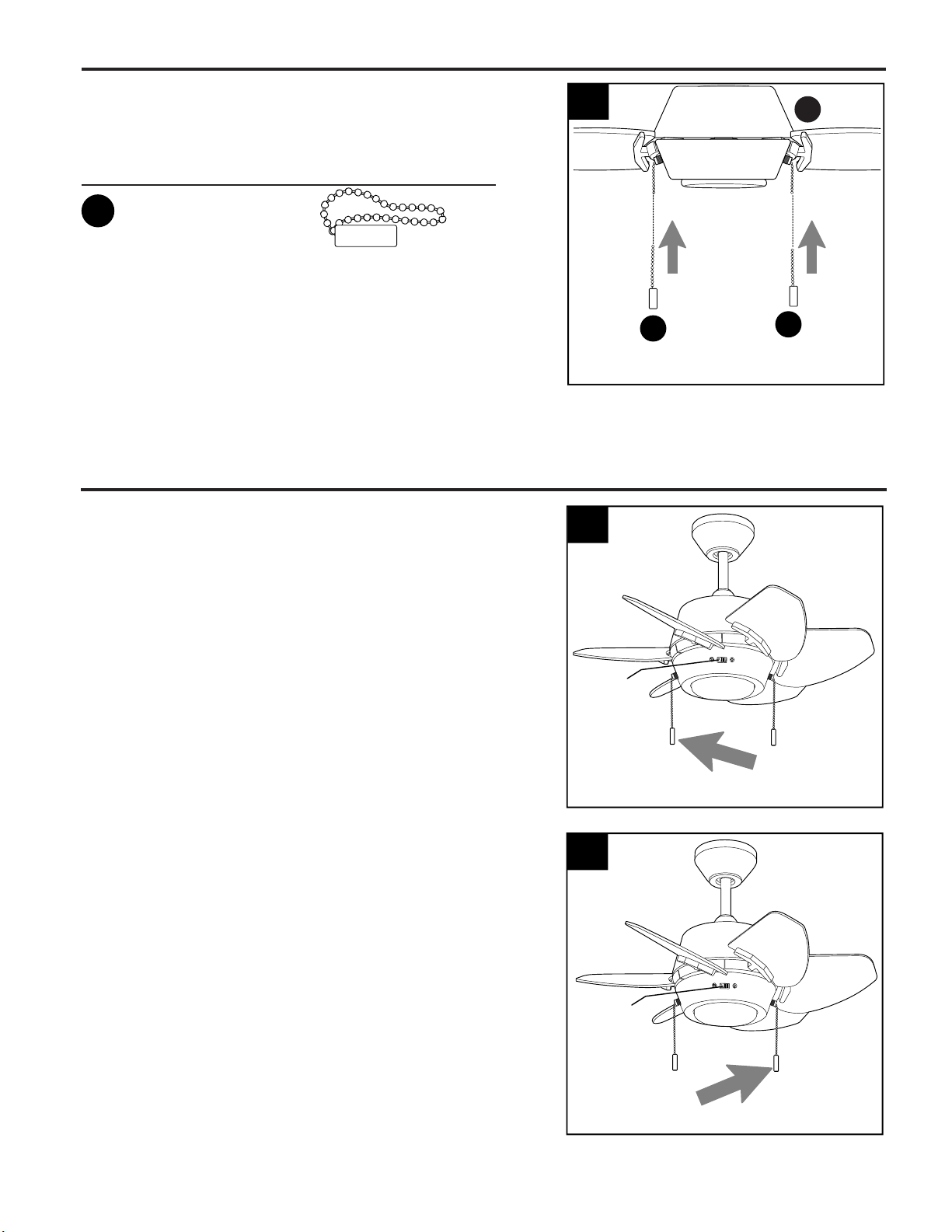
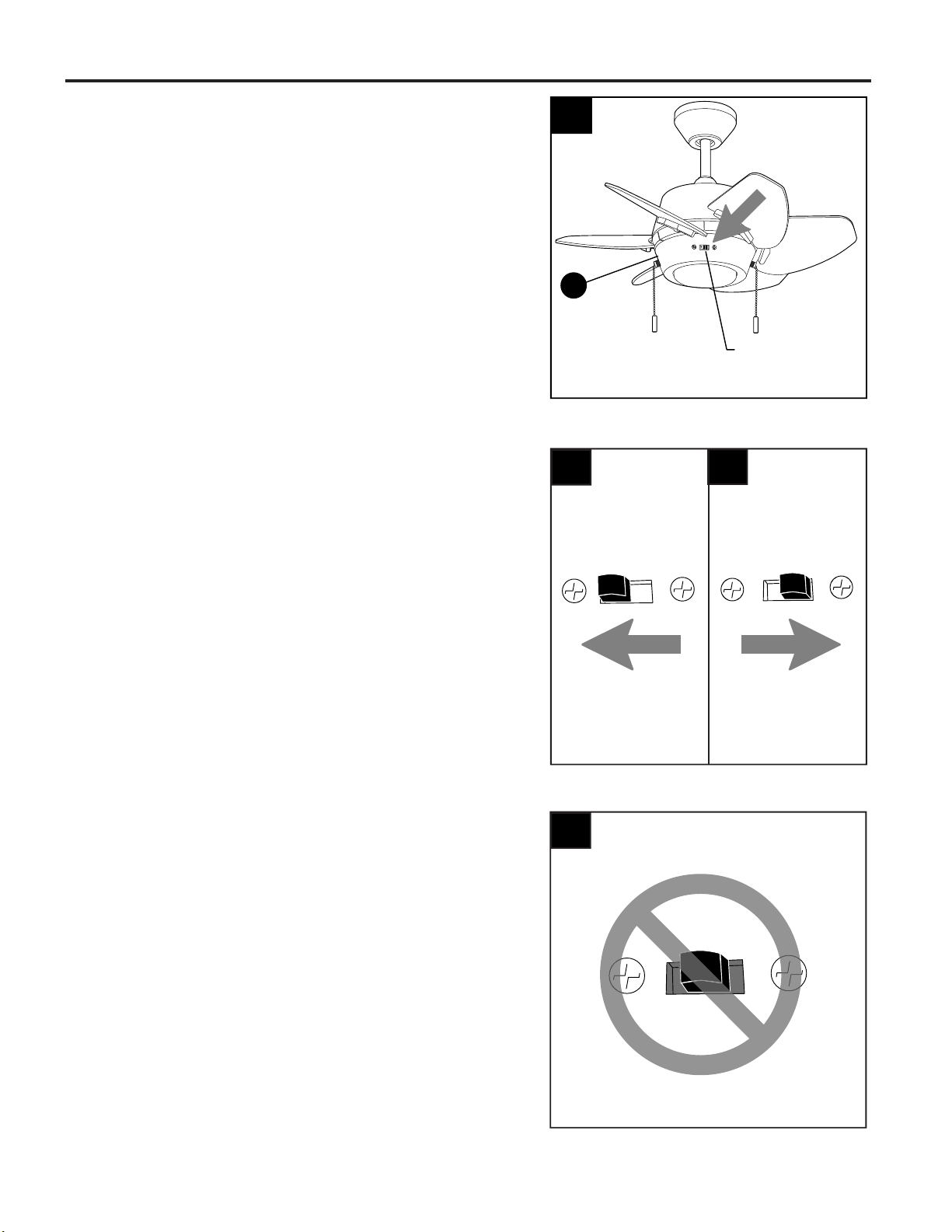
Attach pull chain extensions (DD) or custom pull
chain extensions (not included) to fan and light pull
chains.
10.
10
DD
DD
Pull Chain Extension x 2
Hardware Used
DD
FINAL INSTALLATION
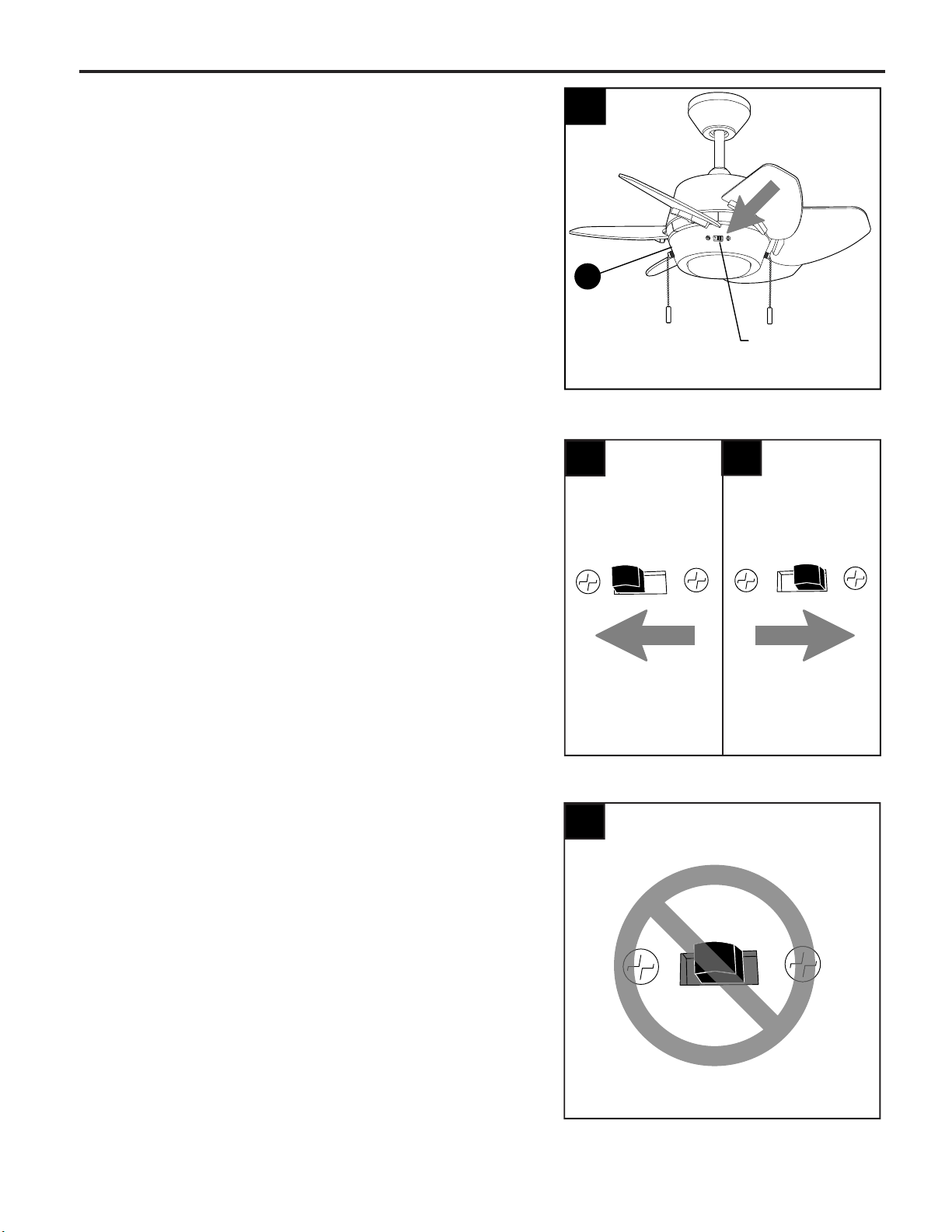
The light pull chain, located to the right of the reverse
switch, is used to turn the light ON or OFF.
OPERATING INSTRUCTIONS
The fan pull chain, located to the left of the
reverse switch, has four positions to control fan
speed. One pull is HIGH, two is MEDIUM, three
is LOW and four turns the fan OFF.
1.
2.
2
1
Reverse
Switch
Reverse
Switch
16
OPERATING INSTRUCTIONS
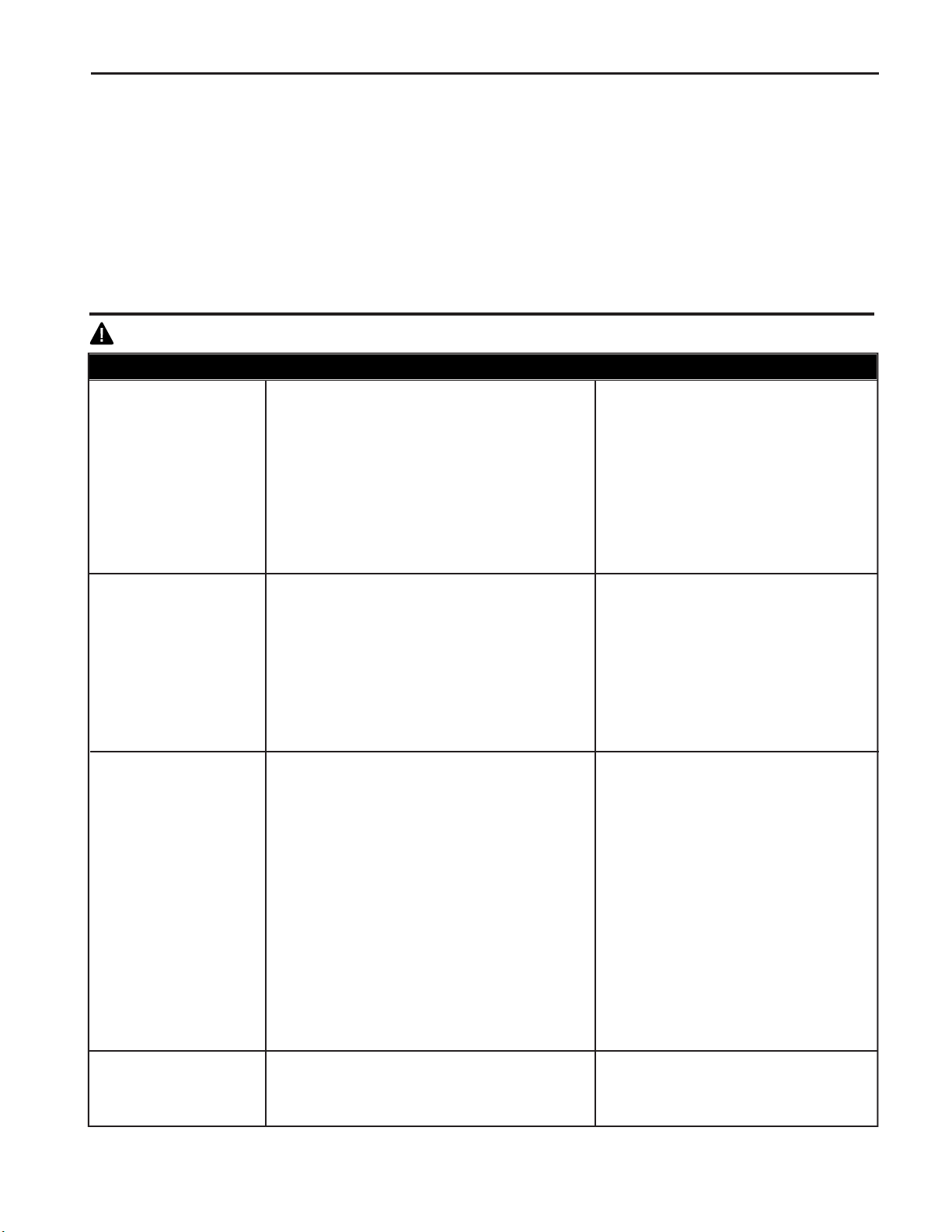
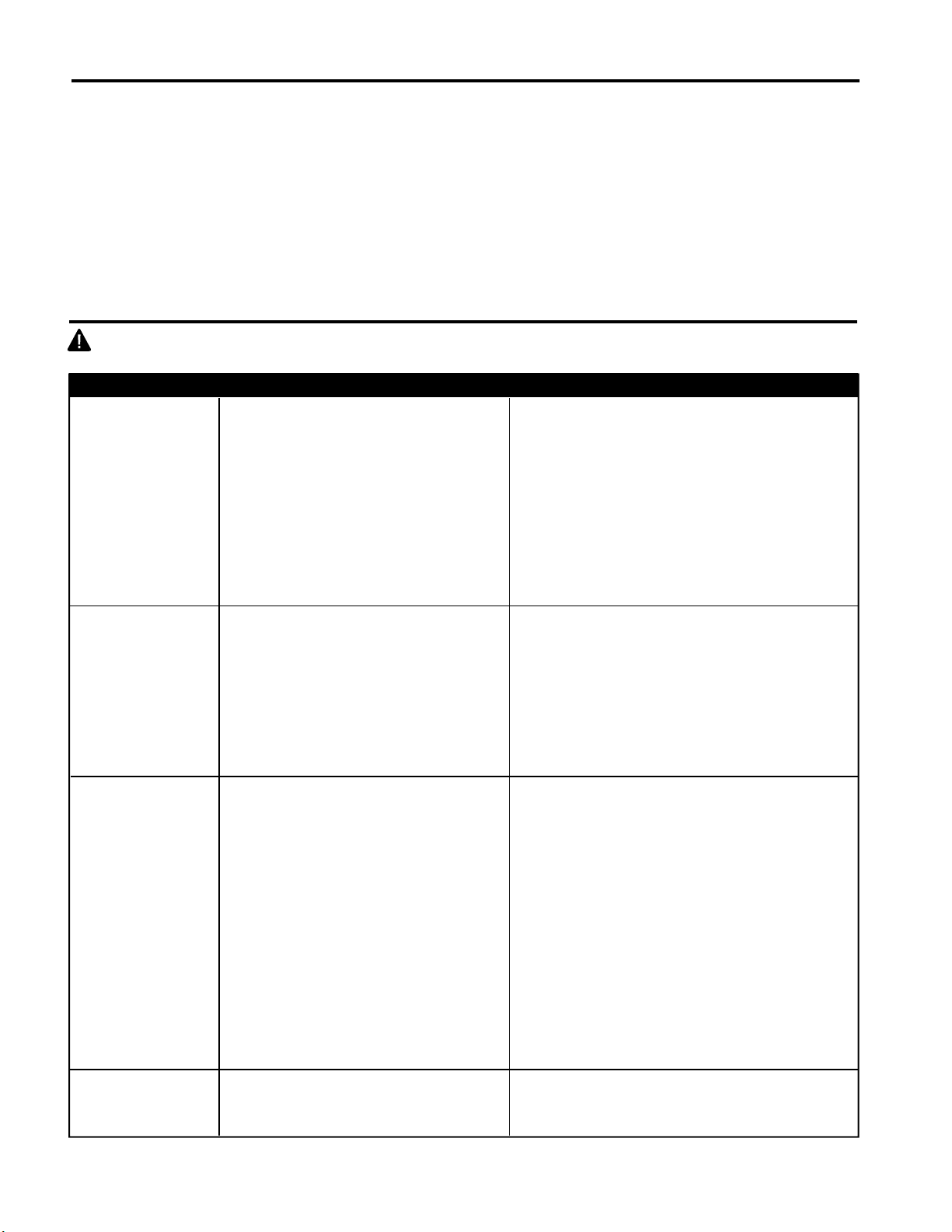
Use the fan reverse switch on the switch housing
(H) to optimize your fan for seasonal performance.
A ceiling fan will allow you to raise your thermostat
setting in summer and lower your thermostat
setting in winter without feeling a difference in your
comfort.
NOTE: Wait for fan to stop before moving the
reverse switch.
3.
Reverse Switch
H
3
3a
3b
3c
3c. IMPORTANT: Reverse switch must be set
either completely LEFT or completely RIGHT for
fan to function. If the reverse switch is set in the
middle position, fan will not operate.
3a. In warmer weather, setting the reverse switch
in the LEFT position will result in downward airflow
creating a wind chill effect.
3b. In cooler weather, setting the reverse switch
in the RIGHT position will result in upward airflow
that can help move stagnant, hot air off the ceiling
area.
17
CARE AND MAINTENANCE
At least twice each year, lower canopy (B) to check downrod (A) assembly, and then tighten all
screws on fan. Clean motor housing (D) with only a soft brush or lint-free cloth to avoid scratching the
finish. Clean blades (G) with a lint-free cloth. You may occasionally apply a light coat of furniture
polish to wood blades for added protection.
IMPORTANT: Shut off main power supply before beginning any maintenance. Do not use water or a
damp cloth to clean the ceiling fan.
Total wattage for this fan is 12 watts; do not attempt to replace the LEDs.
WARNING: Before beginning work, shut off the power supply to avoid electrical shock.
TROUBLESHOOTING
PROBLEM POSSIBLE CAUSE CORRECTIVE ACTION
Fan does not move. 1. Reverse switch not engaged.
2. Power is off or fuse is blown.
3. Faulty wire connection.
4. Plugs in switch housing not connected
properly.
1. Push switch firmly either left or
right.
2. Turn power on or check fuse.
3. Turn power off. Loosen canopy
and check all connections.
4. Check that male and female plugs
in switch housing are connected
properly according to instructions
on page 14.
Noisy operation. 1. Blades are loose.
2. Cracked blade.
3. Full range dimmer switch.
4. Fan is new.
1. Tighten all blade screws.
2. Replace blade.
3. Replace with an approved speed
control device.
4. Allow fan a “break in” period of
a few days, especially when
running the fan at Medium and
High speeds.
Excessive wobbling.
1. Blades are loose.
2. Blade arms incorrectly attached.
3. Unbalanced blades.
4. Fan not securely mounted.
5. Fan too close to vaulted ceiling.
6. Set screw(s) on motor housing yoke is
(are) not tightened properly.
7. Set screw on hanging ball is not
tightened properly.
1. Tighten all blade screws.
2. Re-install blade arms.
3. Switch one blade with a blade
from the opposite side.
4. Turn power off. Carefully loosen
canopy and verify that mounting
bracket is secure.
5. Use a longer downrod or move
fan to another location.
6. Tighten yoke set screw(s)
securely.
7. Carefully loosen and lower canopy
and verify that set screw on
hanging ball is tightened securely.
Fan operates but
light fails.
1. Wires in canopy not wired properly.
1. Check wires in canopy and, if
necessary, re-wire according to
instructions on pages 10 and 11.
C
G
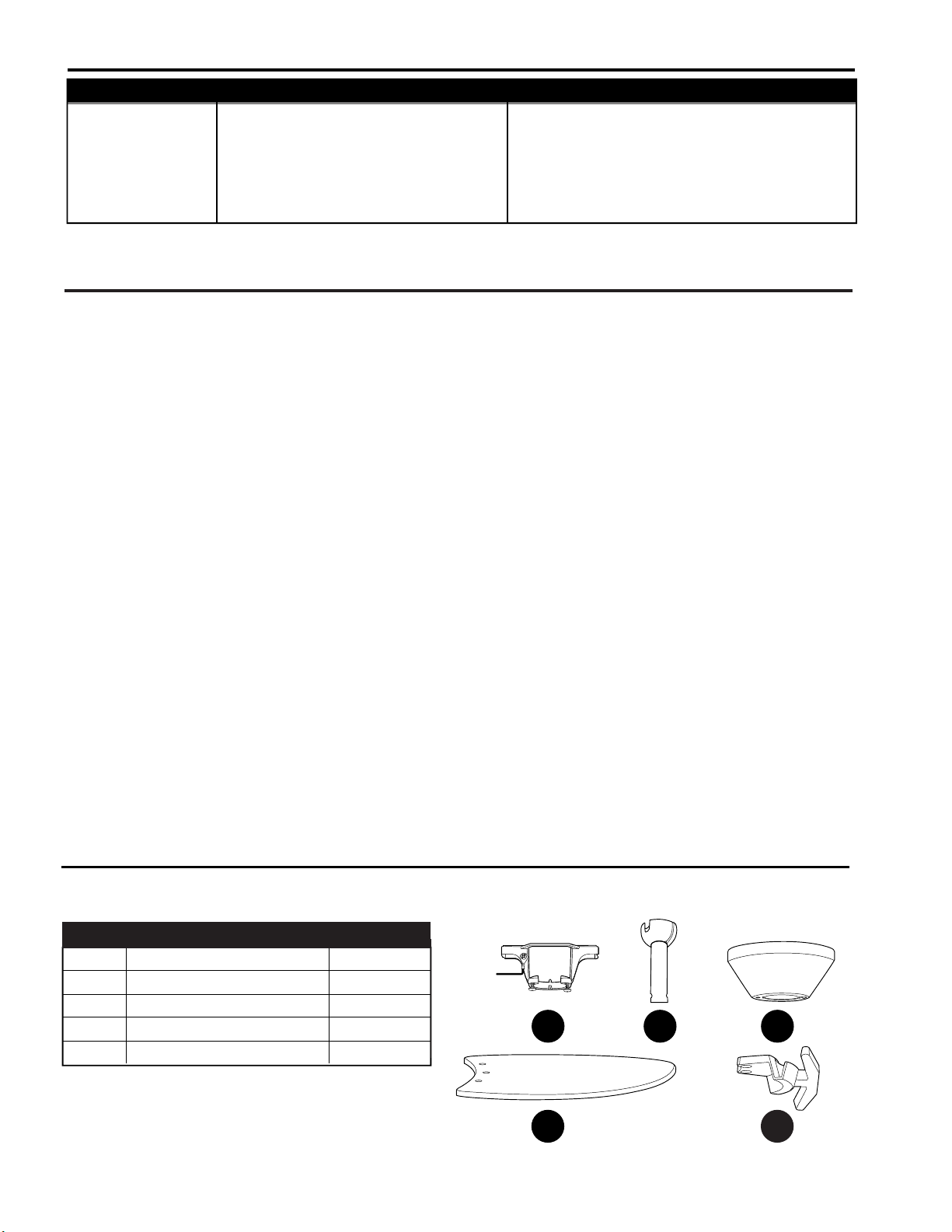
PART DESCRIPTION
2599783-A
2599783-B
2599783-C
2599783-G
2599783-N
PART #
B
A
A Mounting Bracket
B Downrod
C Canopy
G Blade
N Blade Arm
N
18
Printed in China
REPLACEMENT PARTS LIST
LIMITED LIFETIME WARRANTY
KHLI2007
The distributor warrants this fan to be free from defects in workmanship and materials present at time of
shipment from the factory for Lifetime limited from the date of purchase. This warranty applies only to the
original purchaser. The distributor agrees to correct any defect at no charge or, at our option, replace the
ceiling fan with a comparable or superior model.
To obtain warranty service, present a copy of your sales receipt as proof of purchase. All cost of removal
and reinstallation are the express responsibility of the purchaser. Any damage to the ceiling fan by
accident, misuse or improper installation, or by using parts not produced by the manufacturer of this fan or
affixing accessories not produced by the manufacturer of this fan, are the purchaser's own responsibility.
The distributor assumes no responsibility whatsoever for fan installation during the limited lifetime warranty.
Any service performed by an unauthorized person will render the warranty invalid.
Due to varying climatic conditions, this warranty does not cover changes in brass finish, rusting, pitting,
tarnishing, corroding or peeling. Brass finish fans maintain their beauty when protected from varying
weather conditions. Any glass provided with this fan is not covered by the warranty.
Any replacement of defective parts for the ceiling fan must be reported within the first year from the date of
purchase. For the balance of the warranty, call our customer service department (at 1-800-643-0067) for
return authorization and shipping instructions so that we may repair or replace the ceiling fan. Any fan or
parts returned improperly packaged is/are the sole responsibility of the purchaser. There is no further
express warranty. The distributor disclaims any and all implied warranties. The duration of any implied
warranty which cannot be disclaimed is limited to the limited lifetime period as specified in our warranty.
The distributor shall not be liable for incidental, consequential or special damages arising at or in
connection with product use or performance except as may otherwise be accorded by law. This warranty
gives you specific legal rights and you may also have other rights which vary from state to state. This
warranty supersedes all prior warranties.
For replacement parts, call our customer service department at 1-800-643-0067, 8 a.m. - 8 p.m., EST,
Monday - Sunday.
NOTE: A small amount of "wobble" is normal and should not be considered a defect.
TROUBLESHOOTING
PROBLEM POSSIBLE CAUSE CORRECTIVE ACTION
[Fan operates but
light fails.]
2. Wall switch to fan is off.
3. Wires in LED light kit not wired
correctly.
2. Make sure that wall switch to fan is
on.
3. Check that molex connections in
LED light kit are connected properly
according to instructions on page 13.
VENTILADOR DE TECHO GASKIN
Harbor Breeze® es una marca registrada
de LF, LLC. Todos los derechos reservados.
19
ADJUNTE SU RECIBO AQUÍ
Fecha de compra
¿Preguntas, problemas, piezas faltantes? Antes de volver a la tienda, llame a nuestro
Departamento de Servicio al Cliente al 1-800-643-0067, de lunes a domingo de 8 a. m.
a 8 p. m., hora estándar del Este.
ARTÍCULO #2599783
MODELO #GAT24BNK6L
4007498
20
Información de seguridad .......................................................................................................20
Contenido del paquete ...........................................................................................................23
Lista de aditamentos ..............................................................................................................24
Preparación ............................................................................................................................24
Instalación inicial ....................................................................................................................24
Cableado ................................................................................................................................28
Instalación final........................................................................................................................29
Instrucciones de funcionamiento ............................................................................................33
Cuidado y mantenimiento .......................................................................................................35
Solución de problemas ...........................................................................................................35
Garantía limitada de por vida .................................................................................................36
Lista de piezas de repuesto ...................................................................................................36
ÍNDICE
Las modificaciones que no estén aprobadas por la parte responsable del cumplimiento podrían
anular la autorización del usuario para utilizar el equipo.
*NOTA: este equipo ha sido probado y se ha verificado que cumple con los límites para un
dispositivo digital clase B, conforme a la sección 15 de las reglas de la FCC. Estos límites se han
diseñado para proporcionar una protección razonable contra la interferencia perjudicial en una
instalación residencial. Este equipo genera, utiliza y puede irradiar energía de radiofrecuencia y, si
no se instala y se usa de acuerdo con las instrucciones, puede causar interferencia perjudicial a las
comunicaciones de radio. Sin embargo, no se garantiza que no se producirán interferencias en una
instalación en especial. Si este equipo genera una interferencia perjudicial para la recepción de
radio o televisión, que se puede determinar apagando y encendiendo el equipo, se recomienda al
usuario que intente corregir la interferencia con una o más de las siguientes medidas:
* Reoriente o reubique la antena de recepción.
* Aumente la separación entre el equipo y el receptor.
* Conecte el equipo a un tomacorriente de un circuito distinto al que usa el receptor.
Solicite ayuda al distribuidor o a un técnico con experiencia en radio/TV.
Distribuido por: Litex Industries Inc., P.O. Box 535639, Grand Prairie, TX, 75053; 1-800-527-1292
Este dispositivo cumple con la Parte 15 de las Reglas de la FCC. La operación está sujeta a las dos
siguientes condiciones: (1) Este dispositivo no provoca ninguna interferencia perjudicial; (2) Este
dispositivo aceptará cualquier interferencia que reciba, incluyendo aquellas que provoquen una
operación no deseada.
NOTA: se puede regular al 10 % con reguladores seleccionados. Consulte Lowes.com para obtener
más información.
INFORMACIÓN DE SEGURIDAD
21
INFORMACIÓN DE SEGURIDAD
Para reducir el riesgo de incendio, descargas eléctricas o lesiones personales, monte el
ventilador en una caja de salida marcada como "ACCEPTABLE FOR FAN SUPPORT OF
35 LBS. OR LESS" (“APTA PARA SOSTENER VENTILADORES DE 15,87 KG O MENOS”)
y utilice los tornillos de montaje que se proporcionan con la caja de salida. La mayoría de las cajas de
salida que se usan comúnmente para sostener lámparas no son aptas para sostener un ventilador y
puede ser necesario reemplazarlas. Si tiene dudas, consulte a un electricista calificado.
Cuando monte el ventilador en una caja de salida del techo, use una caja de salida octogonal de
METAL; NO use una caja de salida de plástico. Asegure la caja de salida directamente a la
estructura del edificio. La caja de salida y el soporte deben ser capaces de sostener el peso del
ventilador en movimiento (al menos 15,87 kg).
Para evitar lesiones personales, puede ser necesario usar guantes al manipular las piezas del
ventilador con bordes filosos.
Para reducir el riesgo de incendios, descargas eléctricas o lesiones personales, los conectores de
cables incluidos con este ventilador están diseñados para soportar solo un cable de la casa de
calibre 12 y dos cables conductores desde el ventilador. Si el cable de la casa es de un calibre
superior a 12 o hay más de un cable de la casa para conectar a los cables conductores del
ventilador correspondientes, consulte a un electricista cuál es el tamaño adecuado de los
conectores de cables que debe utilizar.
ADVERTENCIA
PELIGRO
Si utiliza una caja de salida existente, asegúrese de que esté bien sujeta a la estructura del
edificio y que pueda sostener el peso del ventilador. El incumplimiento de dicho paso podría
provocar lesiones graves o la muerte. La estabilidad de la caja de salida es fundamental para
minimizar el balanceo y el ruido en el ventilador una vez que la instalación esté completa.
Para reducir el riesgo de lesiones corporales graves, NO utilice herramientas eléctricas para
ensamblar las piezas del ventilador, incluidas las aspas.
LEA Y GUARDE ESTAS INSTRUCCIONES
• No deseche la caja del ventilador ni los accesorios de espuma. En caso de que deba devolver este
ventilador a la fábrica para realizarle reparaciones, se debe enviar en su embalaje original para
asegurar una protección adecuada contra daños que puedan aumentar la causa inicial de la
devolución.
• Asegúrese de que todas las conexiones eléctricas cumplan con los códigos y ordenanzas locales,
el Código Eléctrico Nacional y la norma ANSI/NFPA 70-1999. Si no está familiarizado con la
instalación del cableado eléctrico, contrate a un electricista calificado o consulte un manual de
cableado para hacerlo usted mismo.
• Asegúrese de que en el lugar de instalación que elija se pueda establecer una distancia mínima
de 2,13 m desde las aspas hasta el piso y al menos 76,2 cm desde los extremos de las aspas hasta
cualquier obstáculo.
• Una vez que el ventilador esté instalado, asegúrese de que todas las conexiones sean seguras
a fin de evitar que se caiga.
• El peso neto de este ventilador, junto con el kit de iluminación, es de: 5,3 kg.
22
INFORMACIÓN DE SEGURIDAD
Para reducir el riesgo de incendios o descargas eléctricas, no use el ventilador con dispositivos de
control de velocidad para ventiladores de estado sólido ni controle la velocidad del ventilador con
un regulador de intensidad de rango completo.
Para reducir el riesgo de incendio, descargas eléctricas o lesiones personales, no doble las
aspas al instalarlas, equilibrarlas o al limpiar el ventilador. No coloque objetos entre las aspas
en movimiento.
Para reducir el riesgo de lesiones personales, use SOLO las piezas que se proporcionan con este
ventilador. El uso de piezas DISTINTAS a aquellas que se proporcionan con este ventilador anulará la
garantía.
Antes de proceder, asegúrese de cortar la alimentación eléctrica del interruptor principal o
interruptor de circuito a fin de evitar descargas eléctricas.
ADVERTENCIA
Asegúrese de que la caja de salida tenga la puesta a tierra correcta y de que haya un conductor
(verde o desnudo) de puesta a tierra.
Una vez que termine la instalación, revise cuidadosamente todos los tornillos, pernos y tuercas
del ensamble del motor del ventilador para comprobar que estén asegurados.
Lea todas las instrucciones y la información de seguridad antes de instalar el ventilador nuevo.
Revise los diagramas de ensamble adjuntos.
NO manipule ni intente reparar el componente LED. La fuente de luz está diseñada para esta
aplicación específica y el mantenimiento no debe estar a cargo de personal sin capacitación.
Si necesita algún tipo de mantenimiento, llame a nuestro Departamento de Servicio al Cliente.
PRECAUCIÓN
23
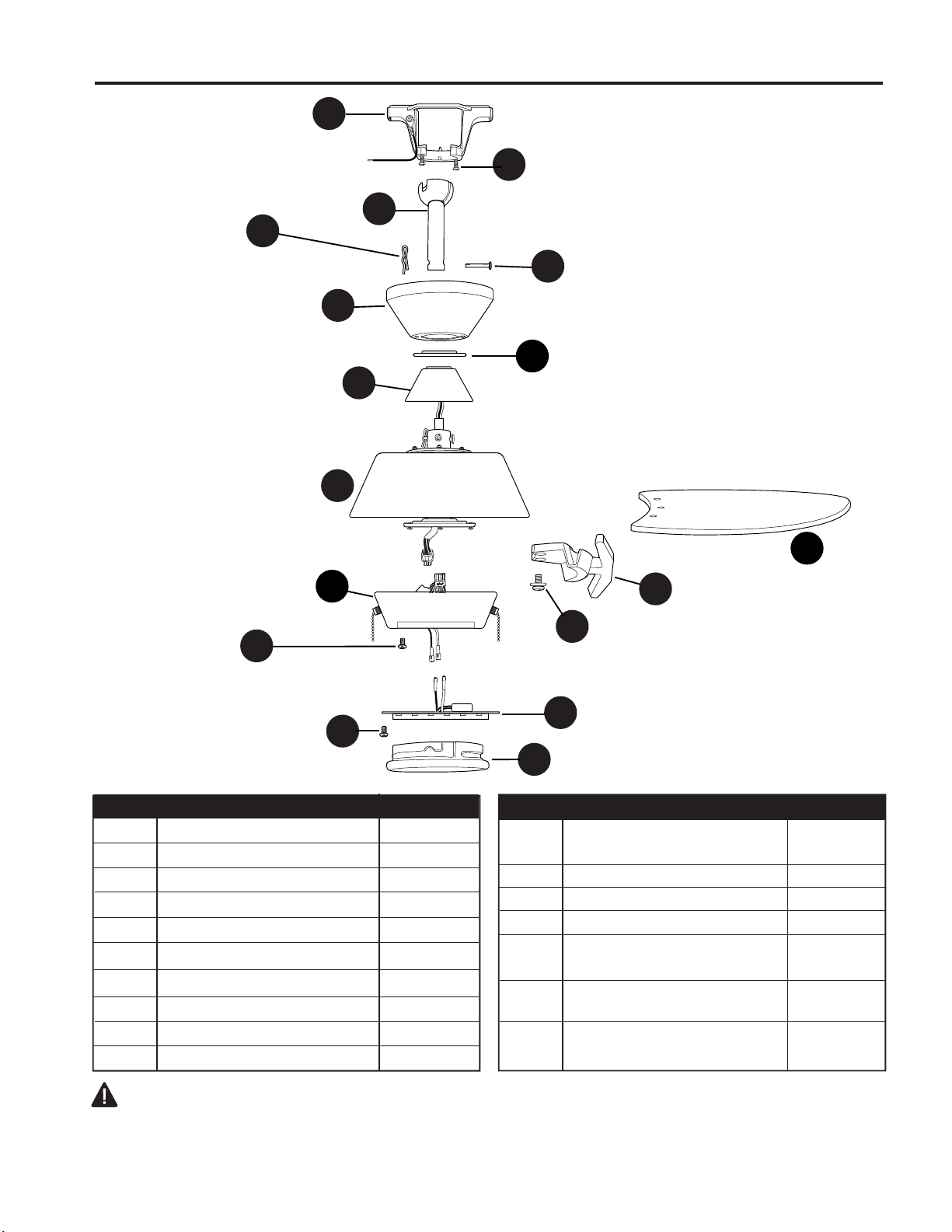
CONTENIDO DEL PAQUETE
RECORDATORIO IMPORTANTE: debe utilizar
las piezas que se incluyen con este ventilador para
realizar una instalación adecuada y segura.
A Varilla 1
B Base 1
C Soporte de montaje 1
D Carcasa del motor 1
E Cubierta de la horquilla 1
F Kit de iluminación LED 1
G Aspa 6
H Carcasa del interruptor 1
I Pantalla 1
J Cubierta de la base 1
DESCRIPCIÓNPIEZA
CANTIDAD
K Tornillo de montaje de 2
la base (preensamblado)
L Pasador (preensamblado) 1
M Sujetador (preensamblado) 1
N Brazo del aspa 6
O Tornillo de la carcasa del 3
interruptor (preensamblado)
P Tornillo de la placa del 3
motor (preensamblado)
Q Tornillo del motor/arandela de 12
seguridad (preensamblado) + 1 adicional
DESCRIPCIÓNPIEZA
CANTIDAD
A
D
B
F
M
L
I
E
O
H
G
K
J
N
Q
P
C
ADITAMENTOS (se muestran en tamaño real)
24
Antes de comenzar a ensamblar el producto, asegúrese de tener todas las piezas. Compare las
piezas con la lista del contenido del paquete y la lista de aditamentos. No intente ensamblar el
producto si falta alguna pieza o si estas están dañadas.
Tiempo estimado de ensamblaje: 120 minutos
Herramientas necesarias para el ensamblaje (no se incluyen): cinta aislante, destornillador Phillips,
pinzas, gafas de seguridad, escalera de tijera y pelacables
Herramientas útiles (no se incluyen): luz de prueba de CA, cinta métrica, manual de cableado hágalo
usted mismo y pinzas cortacables
PREPARACIÓN
INSTALACIÓN INICIAL
Interrumpa el suministro de energía del ventilador
apagando los interruptores de circuito y el
interruptor de pared.
PELIGRO: si no desconecta el suministro
de electricidad antes de la instalación, pueden
producirse lesiones graves o la muerte.
1.
ON
OFF
ON
OFF
1
Conector
de cables
Cant. 3
AA
BB
Tornillo
para aspa
Cant. 18
más 1
adicional
CC
Arandela
para aspa
de fibra
Cant. 18
más 1
adicional
Extensión para la
cadena de tiro
Cant. 2
DD
25
Compruebe que las aspas (G) estarán, al menos, a
76,2 cm de cualquier obstáculo. Verifique el largo de
la varilla (A) para asegurarse de que las aspas (G)
estarán al menos a 2,13 m por encima del piso.
3.
INSTALACIÓN INICIAL
2.
Determine el método de instalación que utilizará.
A. Montaje estándar
B. Montaje en ángulo
IMPORTANTE: si realiza el montaje en ángulo,
verifique que el ángulo del techo no tenga una
inclinación superior a los 19°.
Nota: las opciones de montaje cerrado y de montaje
a ras no se encuentran disponibles para este
ventilador.
*Consejo útil: el montaje de varilla es mejor para
los techos de 2,44 m o más de alto. Para los techos
más altos, se recomienda utilizar una varilla más
larga (no incluida). El montaje en ángulo es el mejor
para los techos en ángulo o de bóveda. En
ocasiones, es necesaria una varilla más larga para
asegurar una adecuada separación de las aspas.
4.
Asegure el soporte de montaje (C) a la caja de
salida (no incluida) con los tornillos, las arandelas
de resorte, y las arandelas planas que incluye con
la caja de salida.
*NOTA: es muy importante que use los aditamentos
adecuados para instalar el soporte de montaje (C),
ya que ésta soportará el ventilador.
IMPORTANTE: si realiza el montaje en ángulo,
asegúrese de que el extremo abierto del soporte
de montaje (C) esté instalado en dirección hacia
el punto más alto del techo, y asegúrese que el
ángulo del techo no tenga una inclinación superior
a los 19°.
MONTAJE
EN ÁNGULO
MONTAJE
ESTÁNDAR
Extremo
abierto
4
C
C
4
2
B
A
19° max.
3
G
76,2 cm
mín.
2,13 m
mín.
26
INSTALACIÓN INICIAL
5.
Retire los tornillos del motor/arandelas de
seguridad (Q) preensamblados de la parte inferior
de la carcasa del motor (D). Si hay topes plásticos
del motor instalados con los tornillos del
motor/arandelas de seguridad (Q), deseche los
topes plásticos del motor.
Nota: asegúrese de mantener todo el aditamento
separado para evitar confundirlo durante la
instalación.
Tope
plástico
del
motor
Retire el pasador (L) y el sujetador (M) de la
varilla (A).
Afloje parcialmente los tornillos de fijación y las
tuercas preensamblados en la horquilla en la
parte superior de la carcasa del motor (D).
6a.
7.
Introduzca la varilla (A) a través de la base (B), la
cubierta de la base (J) y la cubierta de la horquilla
(E). NOTA: la cubierta de la base (J) debe girarse
con el lado brillante apuntando hacia la carcasa
del motor (D).
Luego, pase los cables desde la carcasa del
motor (D) a través de la varilla (A).
5
J
D
K
6b.
B
E
A
J
7
Tornillo
de fijación
Vista lateral
6a
M
L
6b
A
D
Horquilla
27
INSTALACIÓN INICIAL
Dependiendo del largo de la varilla que utilice, es
posible que necesite cortar los cables conductores
para simplificar el cableado. Si decide cortar los
cables conductores, se sugiere hacerlo de la
siguiente manera:
Tome los cables conductores y asegúrese de jalarlos
completamente a través de la parte superior de la
varilla. Comience en la parte SUPERIOR de la bola
para colgar en la varilla y mida 20,32 cm de cable
conductor; luego, corte el exceso de cable con las
pinzas cortacables (no se incluyen).
NOTA: si no c
ortó los cables conductores, los Pasos
9 y 10 no son necesarios y puede proceder con el
Paso 11 en su lugar.
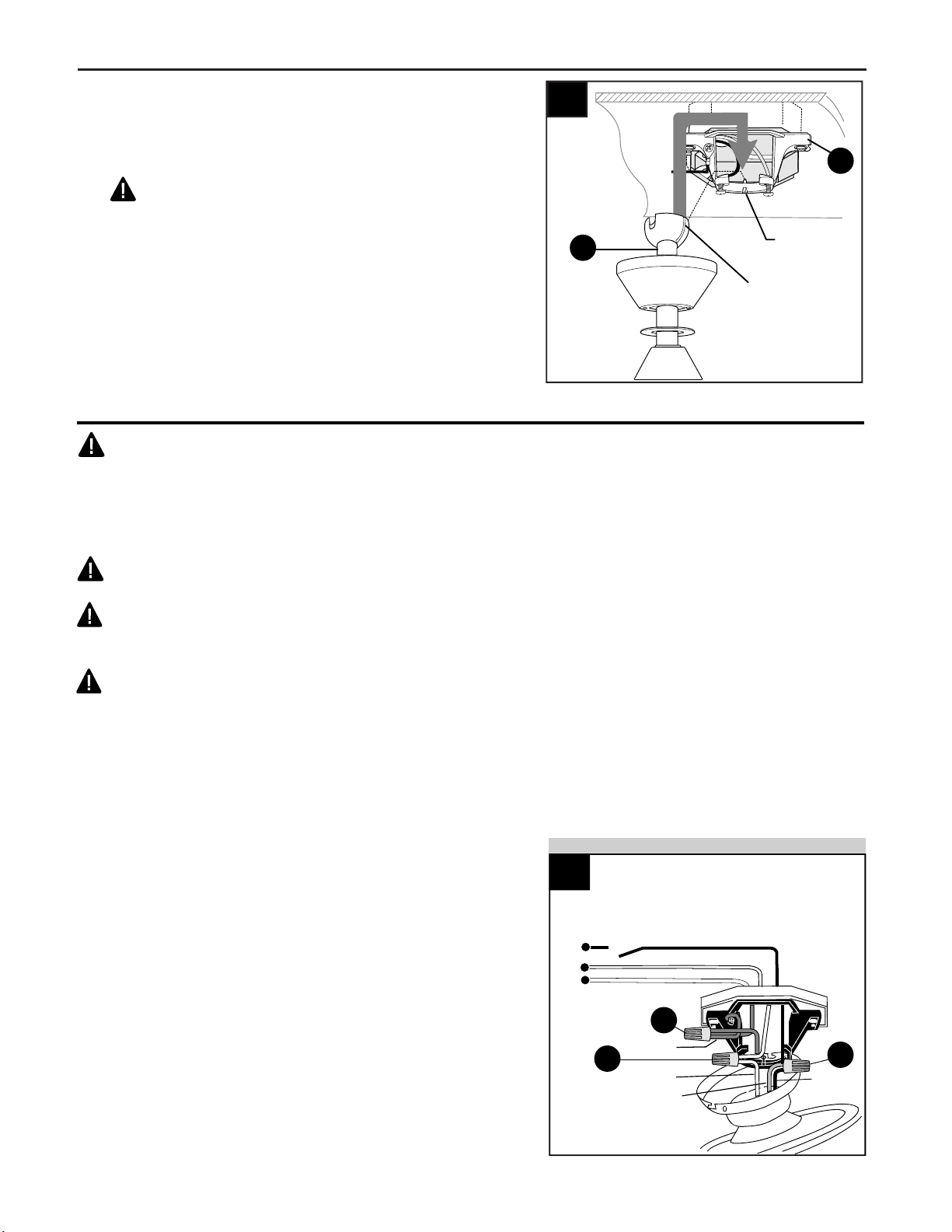
9.
8.
Deslice la varilla (A) en la horquilla de la carcasa
del motor, alinee los orificios y vuelva a instalar el
pasador (L) y el sujetador (M). Apriete los tornillos
de fijación en la horquilla de la carcasa del motor y
apriete las tuercas previamente ensambladas a los
tornillos de fijación. Luego, deslice la cubierta de la
horquilla (E) hacia abajo hasta que quede sobre la
carcasa del motor (D).
Bola para
colgar
20,32 cm
Si decidió acortar los cables conductores en el
paso 8, pele 1,27 cm. del aislamiento del extremo
de cada cable: blanco, negro, verde y azul
(si corresponde). Tuerza los extremos pelados
de cada filamento de cable dentro del aislamiento
con pinzas (no se incluyen).
10.
10
Tornillo de fijación
y tuerca
Vista lateral
8
D
E
L
M
M
L
A
Horquilla
9
28
Instale la bola para colgar en la varilla (A) en la
abertura del soporte de montaje (C). Alinee una
de las ranuras en la bola para colgar con la
lengüeta del soporte de montaje (C).
PELIGRO: si no alinea una de las ranuras de
la bola con la lengüeta, podrían producirse
lesiones graves o la muerte.
11.
INSTALACIÓN INICIAL
Lengüeta
Ranura
A
11
C
CABLEADO
ADVERTENCIA: para reducir el riesgo de incendios, descargas eléctricas o lesiones personales,
los conectores de cables incluidos con este ventilador están diseñados para soportar solo un cable de
la casa de calibre 12 y dos cables conductores del ventilador. Si el cable de la casa es de un calibre
superior a 12 o hay más de un cable para conectar a los cables conductores del ventilador
correspondientes, consulte a un electricista cuál es el tamaño adecuado de los conectores de cables
que debe utilizar.
PRECAUCIÓN: asegúrese de que la caja de salida tenga la puesta a tierra correcta y de que haya
un conductor (VERDE o DESNUDO) de puesta a tierra.
ADVERTENCIA: si los cables de la casa no tienen los mismos colores que se mencionan en los
siguientes pasos, deténgase de inmediato. Se recomienda que un electricista profesional determine el
cableado adecuado.
ADVERTENCIA: el uso de un regulador de intensidad de rango completo (no se incluye) para
controlar la velocidad del ventilador provocará un zumbido intenso del ventilador. Para reducir el riesgo
de incendios o descargas eléctricas, NO use un regulador de intensidad de rango completo para
controlar la velocidad del ventilador.
NOTA: este ventilador puede adaptarse para control remoto (el control remoto no se incluye). Consulte
las instrucciones que se proporcionan con el control remoto antes de proceder con estas instrucciones
de cableado.
Escoja el diagrama de cableado (Fig. 1a, Fig. 1b o
Fig. 1c) que se ajuste a su situación y realice las
conexiones del cableado adecuadas como se indica
a continuación: [IMPORTANTE: utilice uno de los
conectores de cables (AA) provistos para realizar la
conexión de cada cable y asegúrese de atornillar el
conector de cables (AA) en dirección de las
manecillas del reloj].
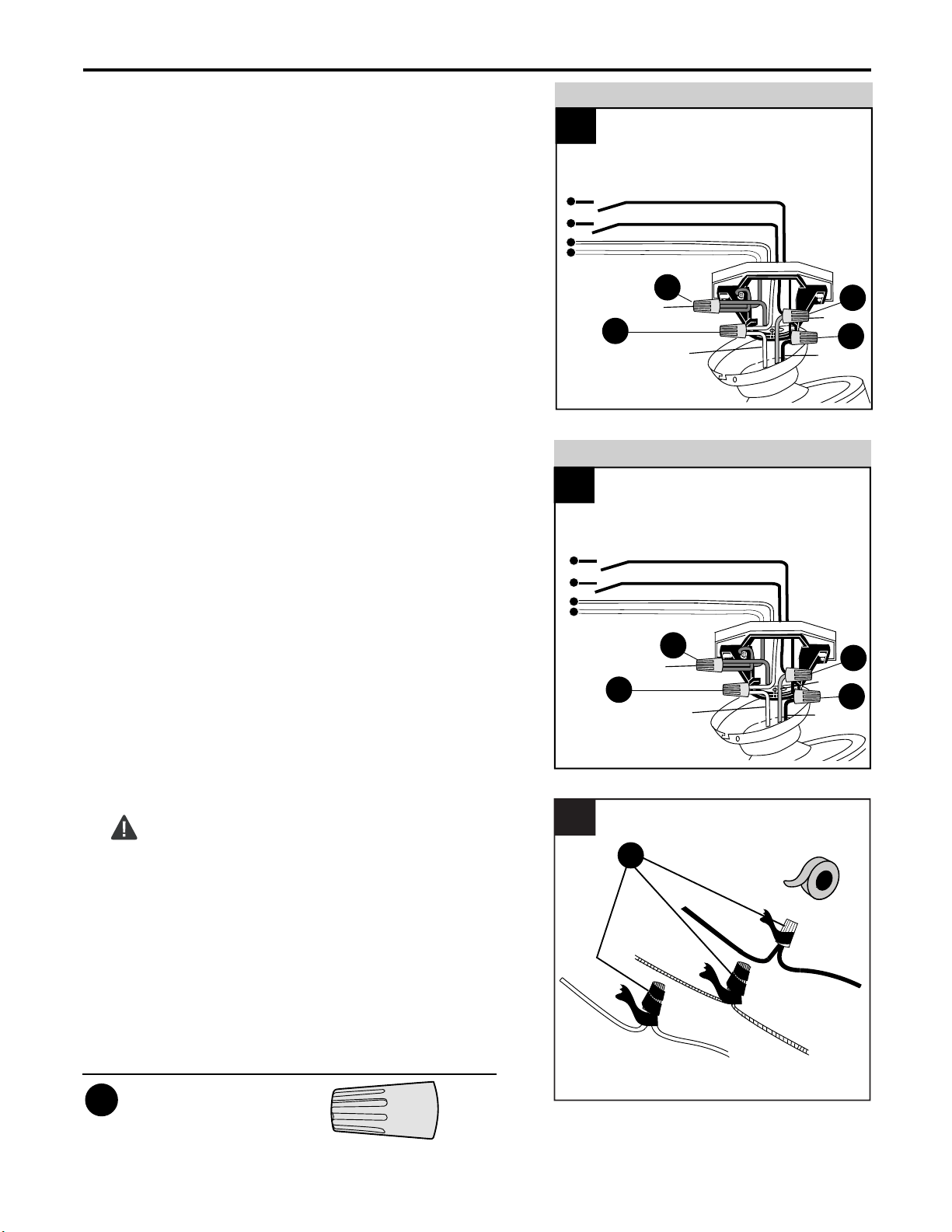
1a. VENTILADOR Y LUZ CONTROLADOS POR
CADENAS DE TIRO: conecte los cables NEGRO y
AZUL del ventilador al cable NEGRO del techo.
Conecte el cable BLANCO del ventilador al cable
BLANCO del techo. Conecte los cables de PUESTA
A TIERRA (VERDES) desde la varilla (A) y soporte
de montaje (C) al cable DESNUDO o VERDE del
techo.
1.
1a
VENTILADOR Y LUZ CONTROLADOS POR CADENAS DE TIRO
ALIMENTACIÓN
DE 120 V DESDE
EL TECHO
VERDE
BLANCO
NEGRO
AZUL
NEGRO (ALIMENTACIÓN)
BLANCO (NEUTRO)
PUESTA A TIERRA/VERDE
(DESNUDO)
AA
AA
AA
29
CABLEADO
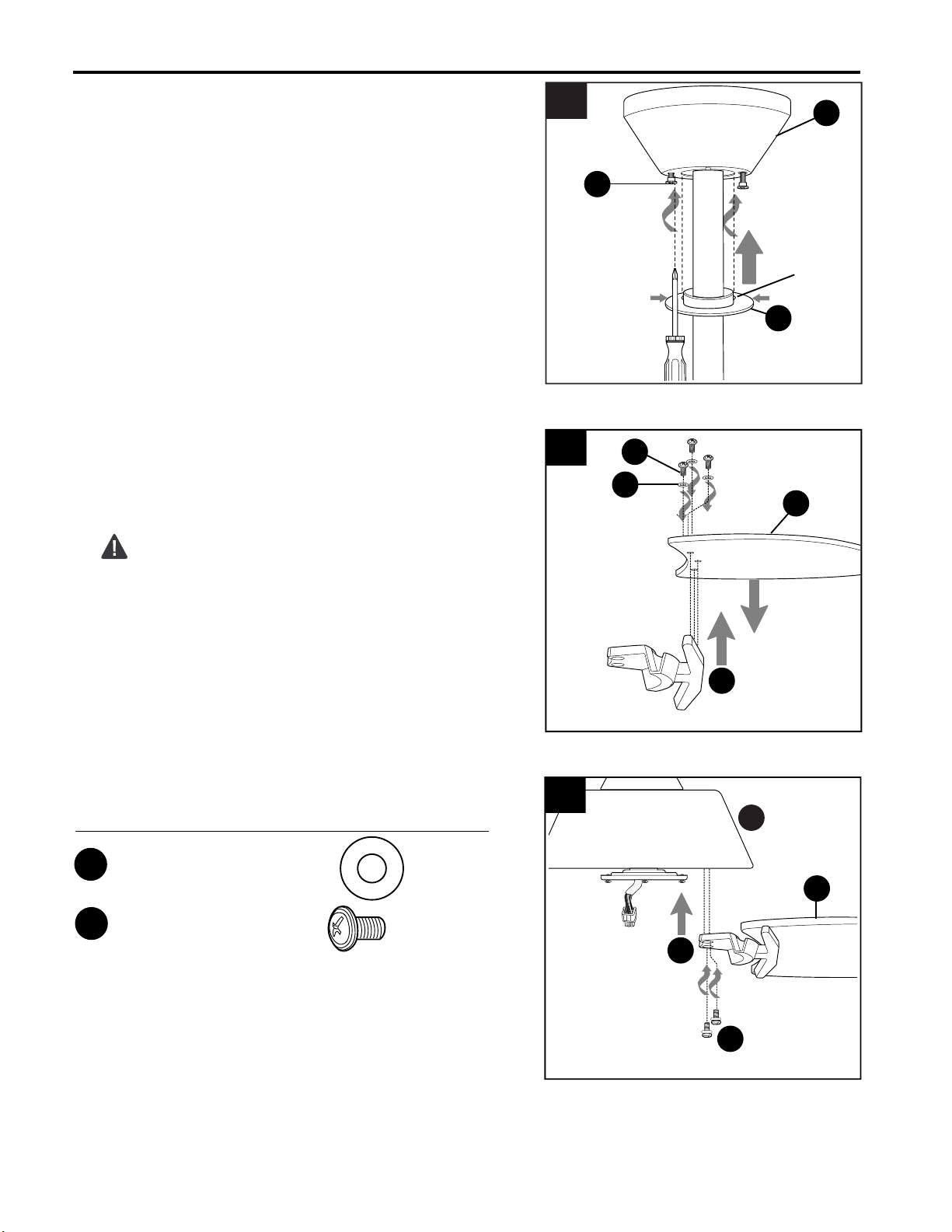
1b. VENTILADOR CONTROLADO POR
CADENA DE TIRO Y LUZ CONTROLADA POR
INTERRUPTOR DE PARED: conecte el cable
NEGRO del ventilador al cable NEGRO del techo.
Conecte el cable AZUL del ventilador al cable
NEGRO (o ROJO) del interruptor de pared
independiente para la luz. Conecte el cable
BLANCO del ventilador al cable BLANCO del
techo. Conecte los cables de PUESTA A TIERRA
(VERDES) desde la varilla (A) y soporte de
montaje (C) al cable DESNUDO o VERDE del
techo.
1c. VENTILADOR Y LUZ CONTROLADOS POR
DOS INTERRUPTORES DE PARED: conecte el
cable NEGRO del ventilador al cable NEGRO (o
ROJO) del interruptor de pared independiente del
ventilador. Conecte el conductor AZUL del
ventilador al conductor NEGRO (o ROJO) del otro
interruptor de pared independiente para la luz.
Conecte el cable BLANCO del ventilador al cable
BLANCO del techo. Conecte los cables de
PUESTA A TIERRA (VERDES) desde la varilla (A)
y soporte de montaje (C) al cable DESNUDO o
VERDE del techo.
NOTA: el cable NEGRO es el que proporciona
alimentación al ventilador. El cable AZUL es el que
proporciona alimentación al kit de iluminación. El
cable BLANCO es para el ventilador y el kit de
iluminación. El cable VERDE o DESNUDO es la
puesta a tierra.
Cubra con cinta aislante (no se incluye) cada
conector de cables (AA) individual hacia abajo del
conductor.
ADVERTENCIA: asegúrese de que no haya
conductores desnudos ni filamentos de cables
visibles después de hacer las conexiones. Coloque
los cables VERDE y BLANCO en el lado opuesto
de la caja de salida con respecto a las conexiones
de los cables NEGRO y AZUL.
Gire los cables empalmados o cubiertos con cinta
hacia arriba y empuje suavemente los cables y los
conectores de cables (AA) hacia dentro de la caja
de salida.
2.
Conector de cables x 4
Aditamentos utilizados
AA
VERDE
BLANCO
NEGRO
AZUL
ALIMENTACIÓN
DE 120 V DESDE
EL TECHO
NEGRO (ALIMENTACIÓN)
NEGRO (INTERRUPTOR DE PARED)
BLANCO (NEUTRO)
PUESTA A TIERRA/VERDE (DESNUDO)
1b
VERDE
BLANCO
NEGRO
ALIMENTACIÓN
DE 120 V DESDE
EL TECHO
NEGRO (INTERRUPTOR DE PARED)
NEGRO
(INTERRUPTOR DE PARED PARA LA LUZ)
BLANCO (NEUTRO)
PUESTA A TIERRA/VERDE (DESNUDO)
1c
VENTILADOR CONTROLADO POR CADENA DE TIRO Y LUZ
CONTROLADA POR INTERRUPTOR DE PARED
VENTILADOR Y LUZ CONTROLADOS POR DOS
INTERRUPTORES DE PARED
AZUL
2
AA
AA
AA
AA
AA
AA
AA
AA
AA
30
INSTALACIÓN FINAL
1.
2.
PELIGRO: para reducir el riesgo de lesiones
corporales graves, NO utilice herramientas eléctricas
para ensamblar las aspas (G). Si aprieta demasiado las
aspas (G), estas podrían agrietarse y quebrarse.
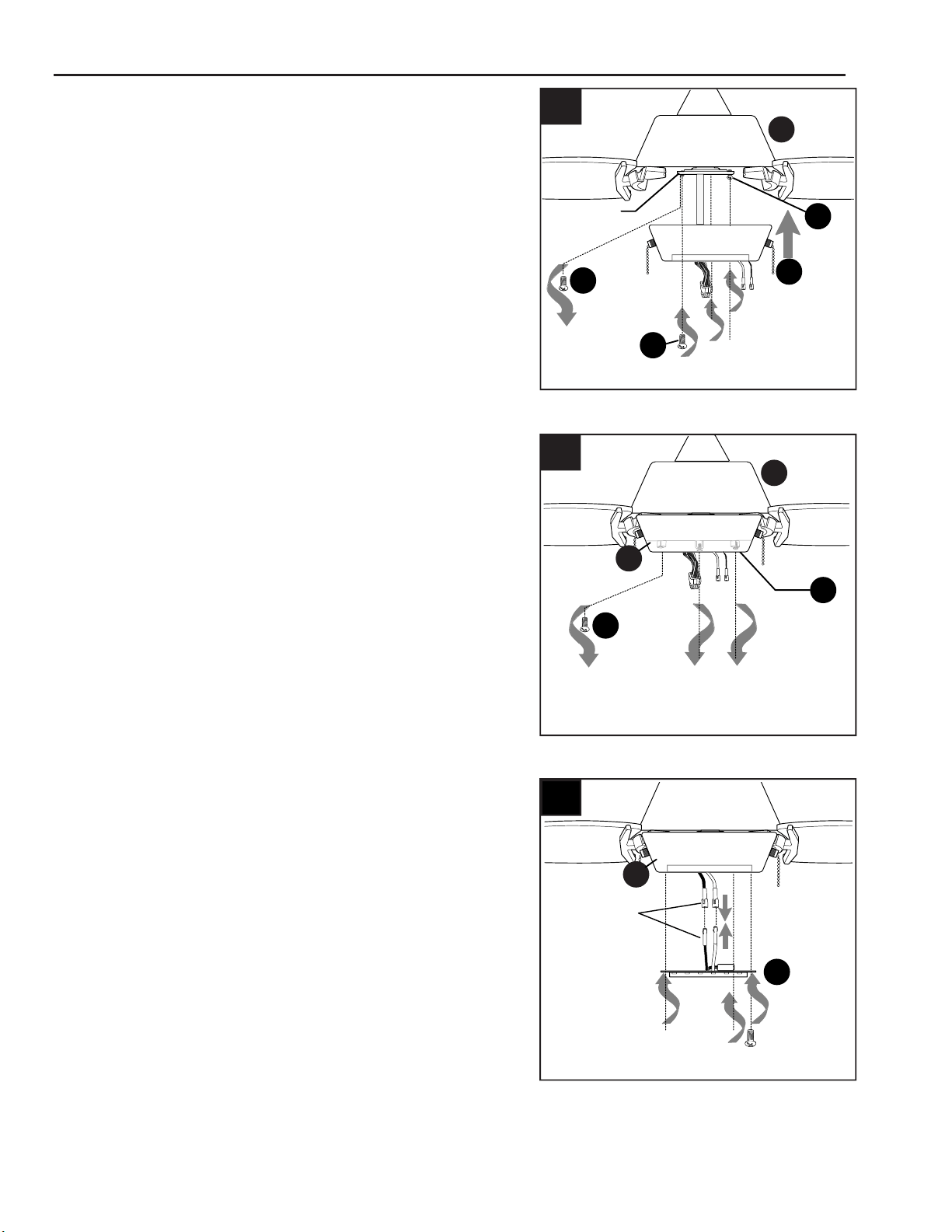
Inserte parcialmente tres tornillos para aspa (CC) junto
con tres arandelas para aspa (BB) en los orificios del
aspa (G) para fijar el brazo del aspa (N) al aspa (G).
Luego, apriete cada uno de los tornillos para las aspas
(CC), comenzando por el que está en el centro.
Repita el Paso 2 para las aspas (G) y brazos del aspa (N)
restantes.
Aditamentos utilizados
Tornillo para aspa
x 18
CC
Arandela para aspa
x 18
BB
Fije los brazos de las aspas (N) a la parte inferior de la
carcasa del motor (D) con los tornillos del
motor/arandelas de seguridad (Q) que retiró
previamente (Paso 5, página 26). Apriete bien los
tornillos del motor/arandelas de seguridad (Q).
NOTA: asegúrese de fijar completamente cada brazo
del aspa (N) antes de proceder con el siguiente.
3.
Perillas
1
K
B
J
2
BB
CC
G
N
Ubique dos tornillos de montaje de la base (K) debajo del
soporte de montaje (C) y retire el tornillo de montaje de la
base (K) más cercano al extremo abierto del soporte de
montaje (C). Afloje parcialmente el otro tornillo de montaje
de la base (K). Levante la base (B) hasta el soporte de
montaje (C). Coloque la parte redondeada del orificio
ranurado de la base (B) sobre el tornillo de montaje
aflojado de la base (K) y empuje hacia arriba. Gire la
base (B) para bloquearla. Vuelva a insertar el tornillo de
montaje de la base (K) que se retiró, luego apriete
firmemente ambos tornillos de montaje de la base (K).
Utilice las flechas que aparecen al interior de la cubierta
de la base (J) para ubicar las perillas en el aro central de
la cubierta de la base (J). Deslice la cubierta de la base
(J) hacia arriba hasta la base (B), alineando las perillas
de la cubierta de la base (J) con las aberturas en la parte
inferior de la base (B). Presione hacia arriba suave pero
firmemente en la cubierta de la base (H), hasta que
escuche que encaja en la parte inferior de la base (B), y
luego gire la cubierta de la base (H) en dirección contraria
a las manecillas del reloj en alrededor de 1,27 cm.
D
3
G
N
Q
INSTALACIÓN FINAL
31
4.
Retire un tornillo de la placa del motor (P)
preensamblado en la placa del motor en la parte
inferior de la carcasa del motor (D) y afloje
parcialmente los otros dos tornillos de la placa del
motor (P). Alinee los orificios ranurados en la
carcasa del interruptor (H) con los tornillos de la
placa del motor (P) y permita que el enchufe
macho de la carcasa del motor (D) pase por el
orificio de la carcasa del interruptor (H). Gire la
carcasa del interruptor (H) para fijarla. Vuelva a
insertar el tornillo de la placa del motor (P) que
retiró previamente y luego apriete firmemente los
tres tornillos de la placa del motor (P).
4
I
P
I
P
I
P
H
D
Placa del
motor
5.
Retire dos tornillos de la carcasa del interruptor
(O) en la parte inferior de la carcasa del interruptor
(H) y afloje parcialmente el otro tornillo de la
carcasa del interruptor (O).
3
5
O
F
O
D
conexiones
molex
6
Conecte el cable BLANCO del kit de iluminación
LED (F) con el cable BLANCO de la carcasa del
interruptor (H). Conecte el cable AZUL del kit de
iluminación LED (F) con el cable NEGRO (o AZUL)
de la carcasa del interruptor (H). Asegúrese de que
las conexiones molex estén seguras.
6.
H
H
32
F
H
INSTALACIÓN FINAL
Ordene los cables dentro de la carcasa del
interruptor (H) con cuidado. Alinee el orificio en el
borde del kit de iluminación LED (F) con el tornillo
de la carcasa del interruptor (O) aflojado de la
carcasa del interruptor (H). Vuelva a insertar los
dos tornillos de la carcasa del interruptor (O) que
retiró anteriormente. Apriete firmemente los tres
tornillos de la carcasa del interruptor (O).
8.
3
8
O
Alinee las ranuras de la pantalla (I) con las
protuberancias en la parte interior de la placa de
soporte (D). Gire la pantalla (I) hacia la derecha
(en dirección de las manecillas del reloj) hasta que
no gire más.
NOTA: jale suavemente de la pantalla (I) para
asegurarse de que esté completamente fija.
9.
3
9
I
7.
Conecte el enchufe macho de la carcasa del motor
(D) con el enchufe hembra de la carcasa del
interruptor (H) y haga combinar los colores de
los enchufes para que encastren correctamente.
Asegúrese de que los enchufes estén firmemente
conectados.
7
OO
D
Enchufe
macho
H
Enchufe
hembra
33
D
Conecte las extensiones para la cadena de tiro (DD)
o las extensiones para la cadena de tiro
personalizadas (no incluidas) con las cadenas de
tiro del ventilador y luz correspondientes.
10.
10
DD
DD
La cadena de tiro de la luz, ubicada a la derecha del
interruptor de reversa, se utiliza para ENCENDER o
APAGAR la luz.
INSTRUCCIONES DE FUNCIONAMIENTO
La cadena de tiro del ventilador, ubicada a la
izquierda del interruptor de reversa, tiene cuatro
posiciones para controlar la velocidad del
ventilador. Un movimiento activa la velocidad ALTA;
dos para la velocidad MEDIA; tres para la velocidad
BAJA; y cuatro para APAGAR el ventilador.
1.
2.
Extensión para la x 2
cadena de tiro
Aditamentos utilizados
DD
2
1
Interruptor
de reversa
Interruptor
de reversa
INSTALACIÓN FINAL
34
Utilice el interruptor de reversa de la carcasa del
interruptor (H) para optimizar el rendimiento de su
ventilador según la estación del año. Un ventilador
de techo le permitirá elevar la configuración de su
termostato en verano y disminuirla en invierno, sin
sentir una diferencia en su comodidad.
NOTA: espere a que el ventilador se detenga
antes de mover el interruptor de reversa.
3.
H
3
3a
3b
3c
3C. IMPORTANTE: el interruptor de reversa se
debe configurar ya sea completamente UP
(arriba) o completamente DOWN (abajo) para
que funcione el ventilador. Si el interruptor de
reversa se configura en la posición del medio,
el ventilador no funcionará.
3A. En climas más cálidos, la configuración del
interruptor de reversa en la posición DOWN
(abajo) creará un flujo de aire descendente que
generará un efecto de viento refrescante.
3B. En climas más fríos, la configuración del
interruptor de reversa en la posición UP (arriba)
creará un flujo de aire ascendente que puede
ayudar a mover el aire caliente estancado fuera
del área del techo.
Interruptor
de reversa
INSTRUCCIONES DE FUNCIONAMIENTO
35
CUIDADO Y MANTENIMIENTO
Al menos dos veces al año, baje la base (B) para revisar el ensamble de la varilla (A) y luego apriete todos
los tornillos en el ventilador. Limpie la carcasa del motor (D) solo con un cepillo suave o un paño que no
produzca pelusas para evitar rayar el acabado. Limpie las aspas (G) con un paño que no produzca pelusas.
De vez en cuando puede aplicar una fina capa de cera para muebles en las aspas de madera para darles
más protección.
IMPORTANTE: antes de realizar cualquier trabajo de mantenimiento, desconecte el suministro de
electricidad. No utilice agua ni un paño húmedo para limpiar el ventilador de techo.
• El vataje total del kit de iluminación para este ventilador es de 12 vatios. No intente reemplazar las
bombillas LED.
ADVERTENCIA: antes de comenzar cualquier trabajo, desconecte el suministro de electricidad para
evitar descargas eléctricas.
PROBLEMA CAUSA POSIBLE ACCIÓN CORRECTIVA
El ventilador no
se mueve.
1. El interruptor de reversa no está
activado.
2. No hay alimentación eléctrica o
hay un fusible quemado.
3. La conexión de los cables es
incorrecta.
4. Los enchufes de la carcasa de
interruptor no están conectados
correctamente.
1. Mueva el interruptor o hacia la derecha o
hacia la izquierda con firmeza.
2. Conecte la alimentación eléctrica o revise el
fusible.
3. Desconecte la alimentación. Afloje la base y
revise todas las conexiones.
4. Verifique que los enchufes macho y hembra
en la carcasa de interruptor estén
conectados correctamente de acuerdo con
las instrucciones de la página 32.
El funcionamiento
es ruidoso.
1. Las aspas están flojas.
2. Hay un aspa partida.
3. Se está utilizando un regulador de
intensidad de rango completo.
4. El ventilador es nuevo.
1. Apriete todos los tornillos de las aspas.
2. Reemplace el aspa.
3. Reemplace por un dispositivo de control de
velocidad autorizado.
4. Permita que el ventilador tenga un período
de asentamiento de un par de días,
especialmente al encender el ventilador a
velocidades media y alta.
SOLUCIÓN DE PROBLEMAS
Hay un tambaleo
excesivo.
1. Las aspas están flojas.
2. Los brazos de las aspas no están
ajustados correctamente.
3. Las aspas no están equilibradas.
4. El ventilador no está bien colocado.
5. El ventilador está demasiado cerca
del techo de bóveda.
6. El (los) tornillo(s) de fijación en la
horquilla de la carcasa del motor no
está(n) bien apretado(s).
7. El tornillo de fijación en la bola para
colgar no está bien apretado.
1. Apriete todos los tornillos de las aspas.
2. Vuelva a instalar los brazos de las aspas.
3. Cambie un aspa por la del lado opuesto.
4. Desconecte la alimentación. Afloje
cuidadosamente la base y verifique que el
soporte de montaje esté firme.
5. Utilice una varilla más larga o mueva el
ventilador a otra ubicación.
6. Apriete firmemente el (los) tornillo(s) de
fijación.
7. Afloje y baje cuidadosamente la base y
verifique que el tornillo de fijación de la bola
para colgar esté bien apretado.
El ventilador
funciona pero la
luz no.
1. Los conductores de la base no
están bien conectados.
1. Revise los conductores de la base y, si es
necesario, vuelva a conectarlos de acuerdo
con las instrucciones de las páginas 28 y 29.
36
Impreso en China
GARANTÍA LIMITADA DE POR VIDA
El distribuidor garantiza que este ventilador no presenta defectos en la mano de obra ni en los materiales
presentes al momento del transporte desde la fábrica durante un período limitado de por vida a partir de la
fecha de compra. Esta garantía es válida solo para el comprador original. El distribuidor acepta reparar
cualquier defecto sin cargo o, según nuestro criterio, remplazar el ventilador de techo por un modelo
comparable o superior.
Para obtener el servicio de garantía, presente una copia del recibo de venta como comprobante de compra.
Todos los costos de extracción y reinstalación son responsabilidad absoluta del comprador. Cualquier daño
al ventilador de techo producido por accidente, uso indebido o instalación incorrecta, o por el uso de piezas
no producidas por el fabricante de este ventilador o accesorios de fijación que no son del fabricante de este
ventilador, será responsabilidad del comprador. El distribuidor no asume ningún tipo de responsabilidad por
la instalación del ventilador durante la garantía limitada de por vida. Cualquier servicio realizado por una
persona no autorizada invalidará la garantía.
Debido a las cambiantes condiciones climáticas, esta garantía no cubre cambios en el acabado de latón,
óxido, picaduras, deslustre, corrosión o descascarado. Los ventiladores con acabado de latón mantienen su
belleza cuando se los protege de las condiciones climáticas cambiantes. La garantía no cubre los elementos
de vidrio incluidos con este ventilador.
Cualquier reemplazo de piezas defectuosas para el ventilador de techo debe informarse dentro del primer
año a partir de la fecha de compra. Para conocer el saldo de la garantía, llame a nuestro Departamento de
Servicio al Cliente (al 1-800-643-0067) para obtener la autorización para la devolución y las instrucciones de
envío, de modo que podamos reparar o reemplazar el ventilador de techo. Un ventilador o piezas devueltas
con un embalaje incorrecto son de responsabilidad única del comprador. No existe otro tipo de garantía
explícita. El distribuidor rechaza cualquiera y todas las garantías implícitas. La duración de cualquier
garantía implícita que no pueda rechazarse se limita al período limitado de por vida especificado en nuestra
garantía. El distribuidor no se hará responsable por daños accidentales, resultantes ni especiales que surjan
en relación con el uso o el funcionamiento del producto, excepto que la ley indique lo contrario. Esta garantía
le otorga derechos legales específicos, pero podría tener también otros derechos que varían según el
estado. Esta garantía sustituye cualquier garantía previa.
LISTA DE PIEZAS DE REPUESTO
Para obtener piezas de repuesto, llame a nuestro Departamento de Servicio al Cliente al
1-800-643-0067, de lunes a domingo de 8 a. m. a 8 p. m., hora estándar del Este.
2599783-A
2599783-B
2599783-C
2599783-G
2599783-N
A Soporte de montaje
B Varilla
D Base
E Aspa
G Brazo del aspa
PIEZA DESCRIPCIÓN PIEZA #
C
G
B
A
N
PROBLEMA CAUSA POSIBLE ACCIÓN CORRECTIVA
2. El interruptor de pared de la luz
está apagado.
3. Los cables del kit de iluminación
LED no están conectados
correctamente.
2. Asegúrese de que el interruptor de pared de
la luz esté en la posición de encendido.
3. Verifique que las conexiones molex en el kit
de iluminación LED estén bien conectadas
de acuerdo con las instrucciones de la
página 31.
[El ventilador
funciona pero la
luz no.]
SOLUCIÓN DE PROBLEMAS
NOTA: cierto "balanceo" es normal y no se debe considerar como un defecto.
