Operator's Manual
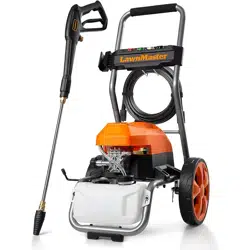
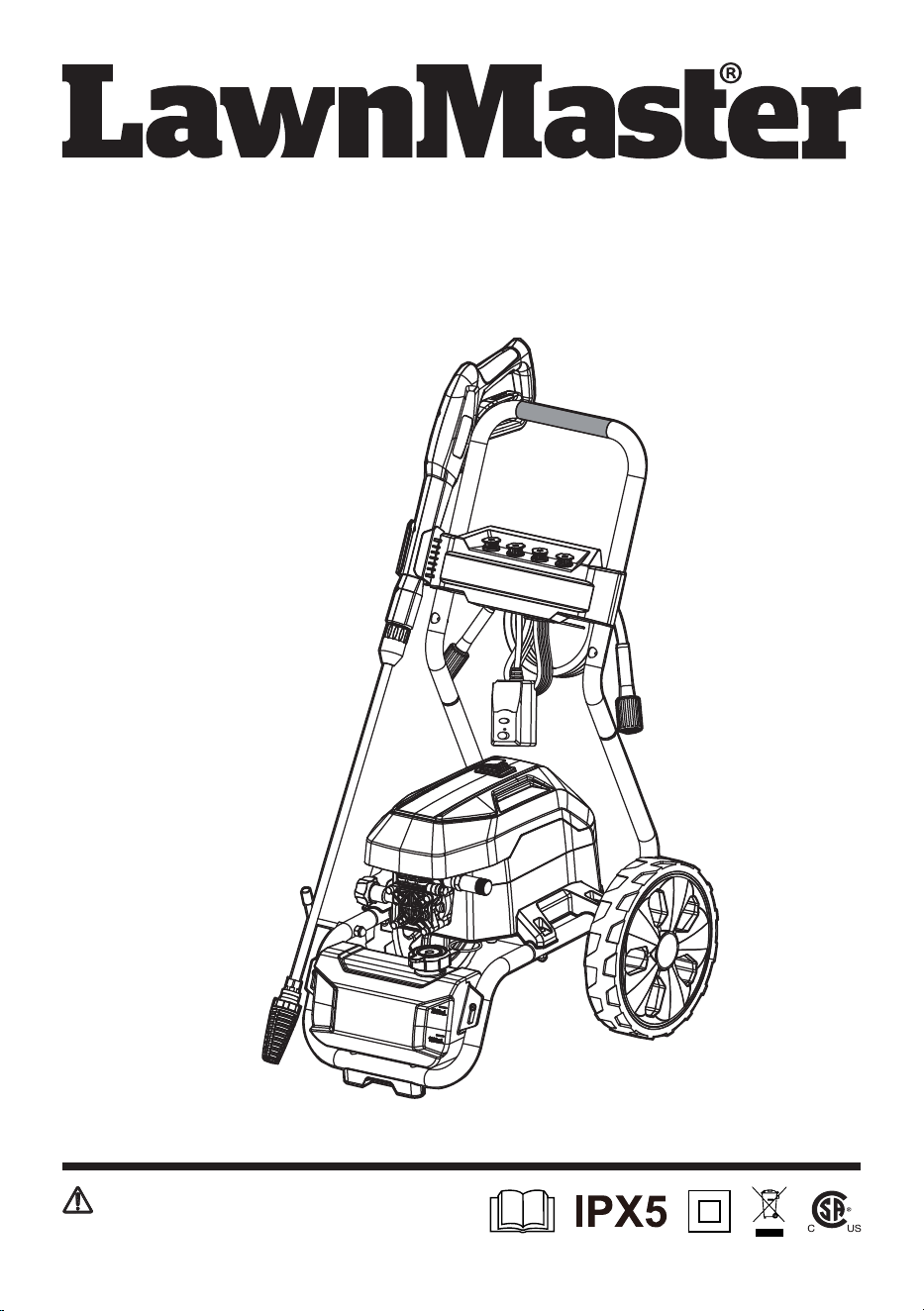
Electric High-Pressure Washer LT2100B
Save this manual for future reference
Read all safety rules and instructions carefully before operating
this tool.
Distributed By: Suzhou Cleva Electric Appliance Co., Ltd.
NO.8 Ting Rong Street 215122 Suzhou - China
2
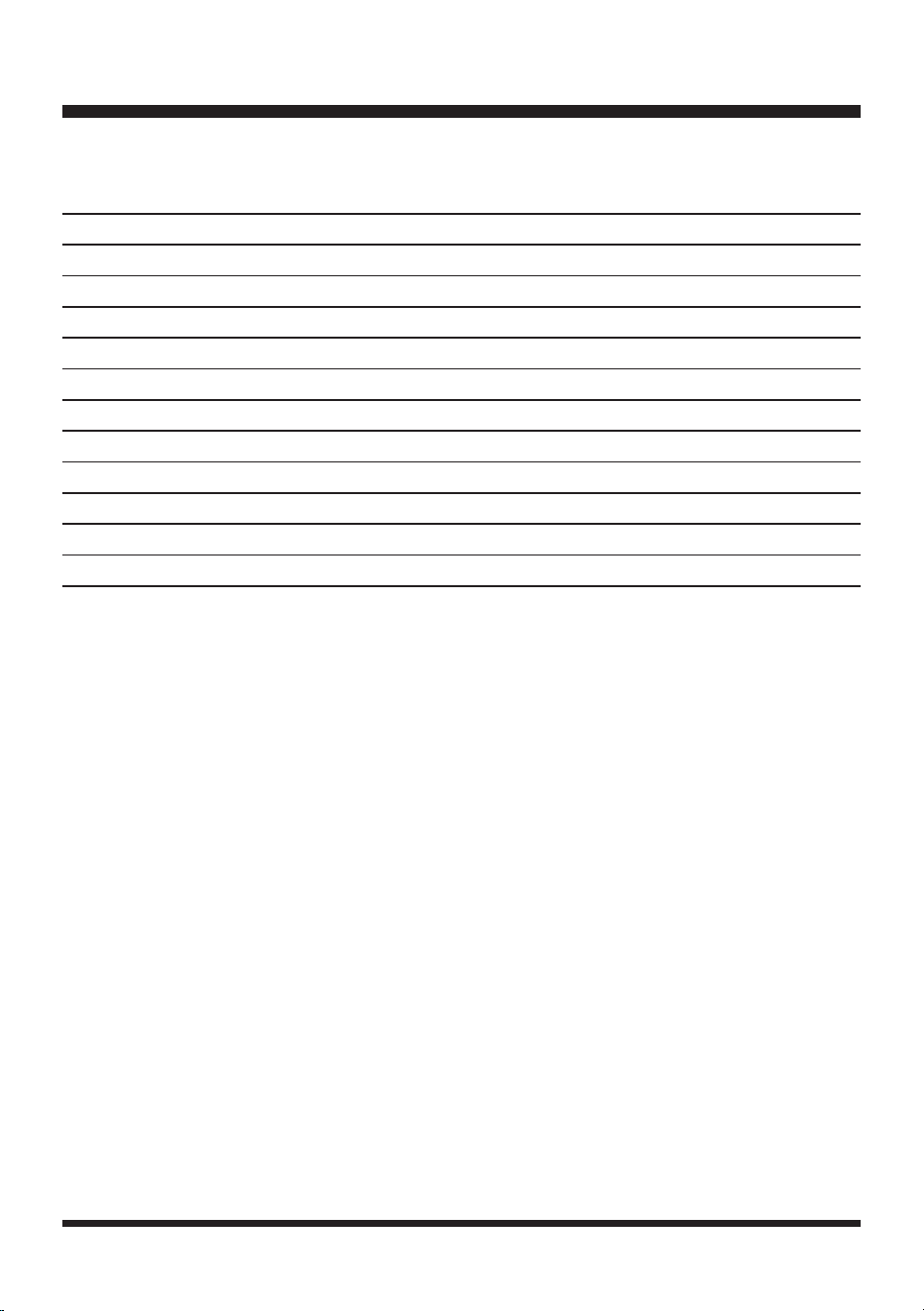
Section Page
TABLE OF CONTENTS
TABLE OF CONTENTS
SPECIFICATIONS
IMPORTANT SAFETY INSTRUCTIONS
SYMBOLS
KNOW YOUR HIGH-PRESSURE WASHER
ASSEMBLY
OPERATION
MAINTENANCE
TROUBLESHOOTING
LAWNMASTER
®
WARRANTY
EXPLODED VIEW
PARTS LIST
NOTES
2
3
4-7
8-9
10
11-16
17-22
23-24
25-26
27
28
29
32
3
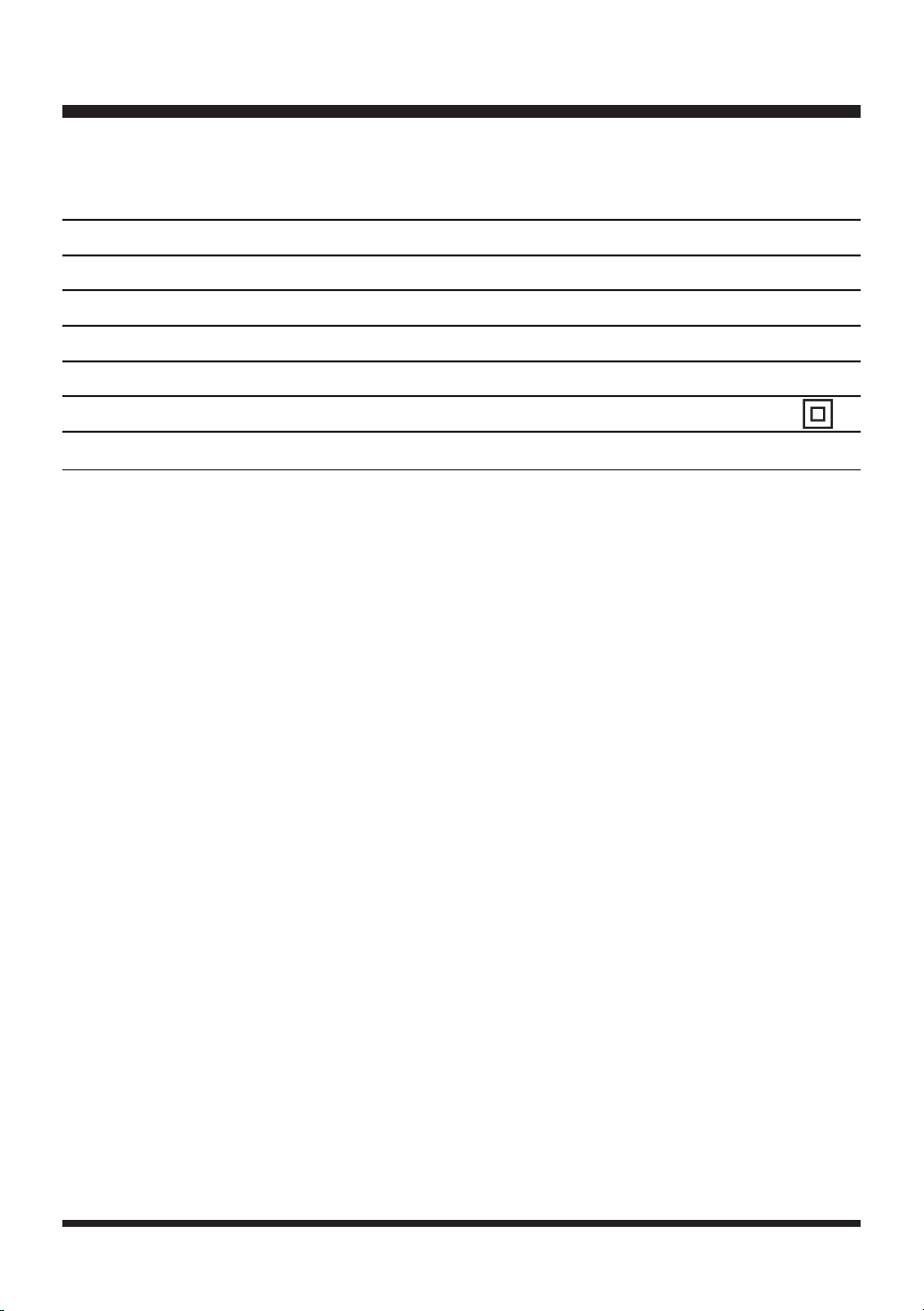
Rated Voltage
Frequency
Rated Current
Max Pressure
Rated Pressure
Rated Flow
Protection class
Weight
NOTE:
For pressure washer specications refer to the rating label on your pressure washer.
SPECIFICATIONS
HIGH-PRESSURE WASHER LT2100B
120 V~
60 Hz
13 A
2300 PSI
2000 PSI
1.2 GPM
/
II
30.0 lbs (13.6 kg)
4
READ AND UNDERSTAND ALL INSTRUCTIONS.
When using this product basic precautions should always be followed, including the following:
■ To avoid personal injury and/or damage to property and to maximize your pressure washing
experience, carefully follow all of the safety tips, instructions, warnings and safeguards and become
familiar with all of the controls. Be sure you know how to quickly bleed o the pressure from all parts
of your pressure washer, and how to turn o the pressure washer.
■ This pressure washer conforms to CSA and other safety and consumer standards. Do not modify or
rebuild any part of your pressure washer.
■ Do not use your pressure washer when you are under the inuence of alcohol or drugs. Use this
power tool carefully and only when you are alert.
■ Watch your balance and footing while using your pressure washer. Surfaces become slippery when
wet and are extra slippery when using a detergent or cleaner.
■ Never operate the pressure washer in bare feet, sandals, or open-toed shoes.
■ When using the pressure washer near children, make sure they are closely supervised by an adult
to avoid injury. Never let a child use the pressure washer.
■ When you press the power switch to turn o the pressure washer, water pressure may remain in the
system. To discharge the pressure, point the spray gun in a safe direction and pull the trigger.
■ Never spray ammable liquids.
■ Never use the pressure washer in areas that contain combustible dust, liquids or vapors.
■ Keep operating area clear of all persons.
■ Do not overreach or stand on unstable support. Keep good footing and balance at all times.
■ Follow the maintenance instructions specied in the manual.
■ Do not allow the pressure hose to come in contact with sharp objects. Examine the hose regularly
and replace the hose if it is damaged. Due to the high pressure the hose cannot be repaired if cut or
damaged.
■ Only use detergent specically formulated for pressure washers and follow instructions on the
detergent’s label. Dish or laundry soap is too thick and will clog the nozzle of your detergent tank.
Pressure washer detergents are available at your local hardware store.
■ Protect eyes, lungs, and skin from exposure to detergent.
■ Keep clear of nozzle.
IMPORTANT SAFETY INSTRUCTIONS
WARNING
Risk of Injection or Injury– Do Not Direct Discharge Stream At Persons.
WARNING
5
IMPORTANT SAFETY INSTRUCTIONS
If connection is made to a portable water system, the system should be protected against backow.
WARNING
Store the pressure washer indoors to prevent the water in the unit from expanding under freezing
conditions.
When the water freezes and expands, your pressure washer will be damaged and become
inoperable. After disconnecting the water supply and before disconnecting the high-pressure
hose, turn the pressure washer on for 2-3 seconds, then turn the unit o immediately.
IMPORTANT
!
■ Never use hot water with your pressure washer. It will overheat and damage the high-pressure
pump.
■ Never leave the pressure washer unattended while it is powered on.
■ Always turn the water supply on before turning the pressure washer power to the on position.
Running the pump dry will cause damage to the internal components.
■ Never use a water supply to your pressure washer that exceeds 150 PSI maximum.
■ Keep your ngers, hands, feet and any part of your body clear of the stream of high-pressure water.
The powerful spray can cause injury to skin and body. It can break a window if you are too close
when you pull the trigger on the spray gun.
■ Always wear eye protection to prevent injury to your eyes when operating the pressure washer.
■ To avoid mishaps or injury, always use the trigger safety lock when not using the pressure washer
even if the spraying stops for a moment.
■ The pressure washer is equipped with a Ground Fault Circuit Interrupter (GFCI) built into the power
cord plug which greatly reduces the chance of electric shock while the unit is in use. If replacement
of the plug or cord is needed, use only identical replacement parts.
■ Point the spray gun in a safe direction when beginning a pressure washing session.
■ When rst using the spray gun, hold the spray gun and lance with two hands when pulling the
trigger until you get used to the “kick back” from the spray gun (one hand to pull the trigger and the
other to stabilize the gun assembly).
■ Never disconnect the high-pressure hose from the pressure washer while the system is pressurized.
■ Never permanently engage the trigger mechanisms on the spray gun.
■ Never operate the pressure washer unless all components are properly and securely connected.
■ Never allow the pressure washer pump to run for more than one minute after turning o the water
supply. This can cause the motor and pump to overheat and fail.
■ Never use lances or other parts that have not been supplied with your pressure washer for
continuity.
■ Never use accessories that have not been supplied with this pressure washer. Only use included
parts.
■ Never spray electrical outlets or electrical components with your pressure washer.
6
IMPORTANT SAFETY INSTRUCTIONS
Use only extension cords that are intended for outdoor use. These extension cords are identied
by "Acceptable for use with outdoor appliances; store indoors while not in use". Only use
extension cords that are not rated less than the rating of the product. Do not use damaged
extension cords. Examine extension cord before using and replace if damaged. Do not abuse the
extension cord and do not yank on any cord to disconnect. Keep the cord away from heat and
sharp edges. Always disconnect the extension cord from the receptacle before disconnecting the
product from the extension cord.
WARNING
To reduce the risk of electrocution, keep all connections dry and o the ground.
Do not touch the plug with wet hands.
WARNING
EXTENSION CORDS
■ Make sure your extension cord is in good condition. When using an extension cord, be sure to use
one heavy enough to carry the current your product will draw. A wire gauge size (A.W.G.) of at least
14 is recommended for an extension cord 50 feet or less in length. If in doubt, use the next heavier
gauge. The smaller the gauge number, the heavier the cord. An undersized cord will cause a drop in
line voltage resulting in loss of power and overheating.
■ Do not point the pressure washer nozzle in the direction of people or pets.
■ Never place the pressure washer on any surface, except a hard, clean surface when motor is
running. Gravel, sand, and other debris can be picked up by the air inlet and thrown at the operator
or bystanders, causing possible serious injuries.
■ Never run the unit without the proper equipment attached. Always ensure the pressure washer
tubes are installed.
■ When not in use, the pressure washer should be stored indoors in a dry, locked up place, out of the
reach of children.
■ Maintain tool with care. Follow instructions for proper maintenance.
■ Do not attempt to clear clogs from tool without rst unplugging it.
■ Do not pull or carry by cord, use cord as a handle, or pull cord around sharp edges or corners. Keep
cord away from heated surfaces.
■ If the power supply cord is damaged, stop using the unit. Take the unit to a qualied service dealer
for inspection and possible repair.
SPECIFIC SAFETY INSTRUCTIONS FOR HIGH-PRESSURE WASHER
7
IMPORTANT SAFETY INSTRUCTIONS
SAVE THESE INSTRUCTIONS
Refer to them frequently and use them to instruct others who may use this tool. If you loan someone
this tool, loan them these instructions also.
Injection hazard: equipment can cause serious injury if the spray penetrates the skin. Do
not point the gun at anyone or any part of the body. In case of penetration seek medical aid
immediately.
WARNING
This system is capable of producing 16,000 kpa. To avoid rupture and injury, do not operate this
pump with components rated less than 16,000 kpa working pressure (including but not limited to
spray guns, hose, and hose connections).
WARNING
Before servicing, cleaning, or removal of any part, shut o power and relieve pressure.
WARNING
8
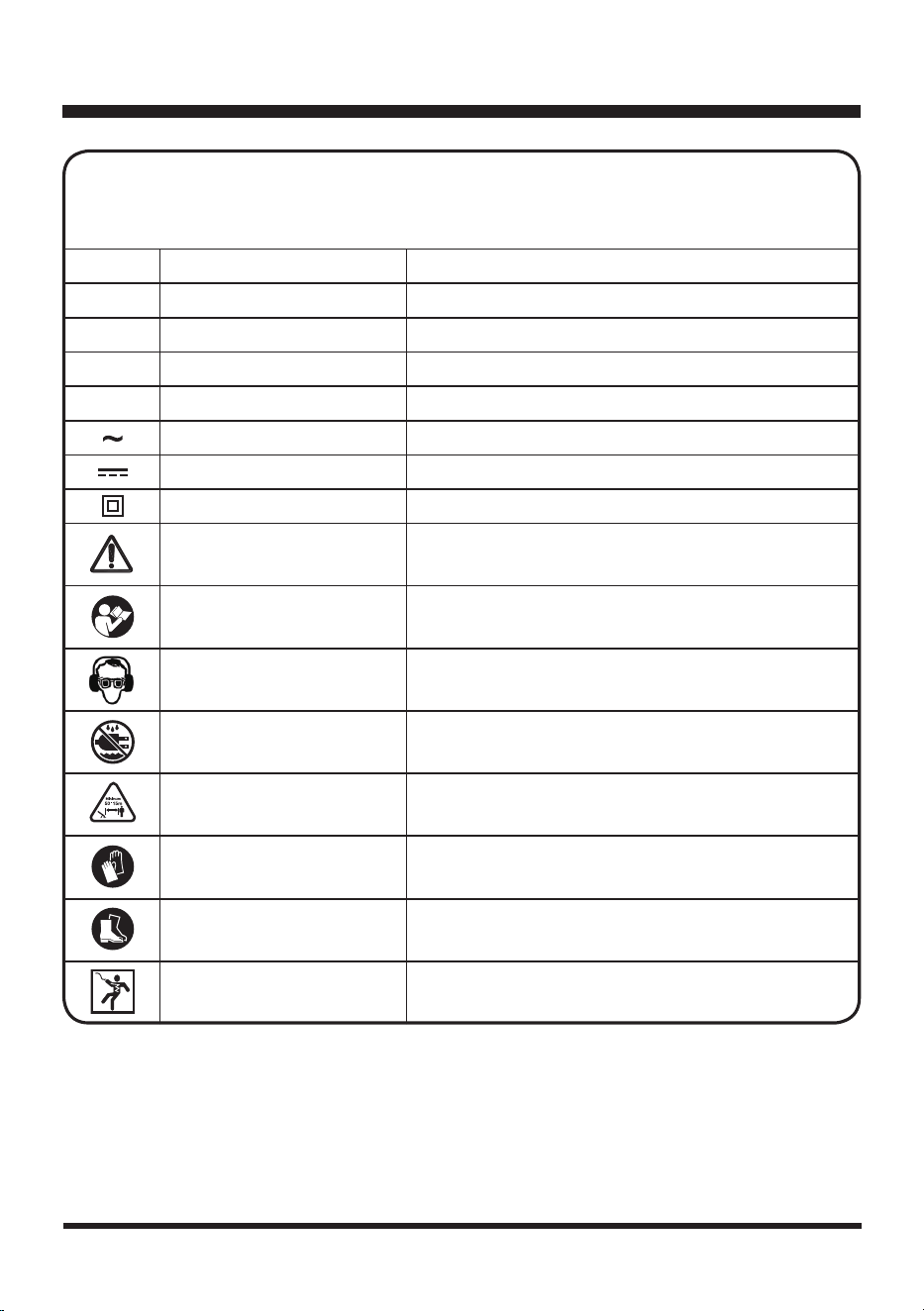
SYMBOLS
Some of the following symbols may be used on this product. Please study them and learn their
meaning. Proper interpretation of these symbols will allow you to operate the product better and
safer.
SYMBOL NAME DESIGNATION/EXPLANATION
V
Volts Voltage
A
Amperes Current
Hz
Hertz Frequency (cycles per second)
W
Watt Power
min
Minutes Time
Alternating Current Type of current
Direct Current Type or a characteristic of current
Class II Construction Double-insulated construction
Safety Alert Symbol Indicates a potential personal injury hazard.
Read The Operator’s Manual
To reduce the risk of injury, user must read and
understand Operator’s Manual before using this product.
Eye and Hearing Protection
Always wear eye protection with side shields marked to
comply with ANSI Z87.1, along with hearing protection.
Wet Conditions Alert Do not expose to rain or use in damp locations
Keep Bystanders Away Keep all bystanders at least 50 ft. away.
Gloves
Wear non-slip, heavy-duty protective gloves when
handling this equipment.
Safety Footwear Wear non-slip safety footwear when using this equipment.
Electric Shock
Failure to use in dry conditions and to observe safe
practices can result in electric shock.
9
SYMBOLS
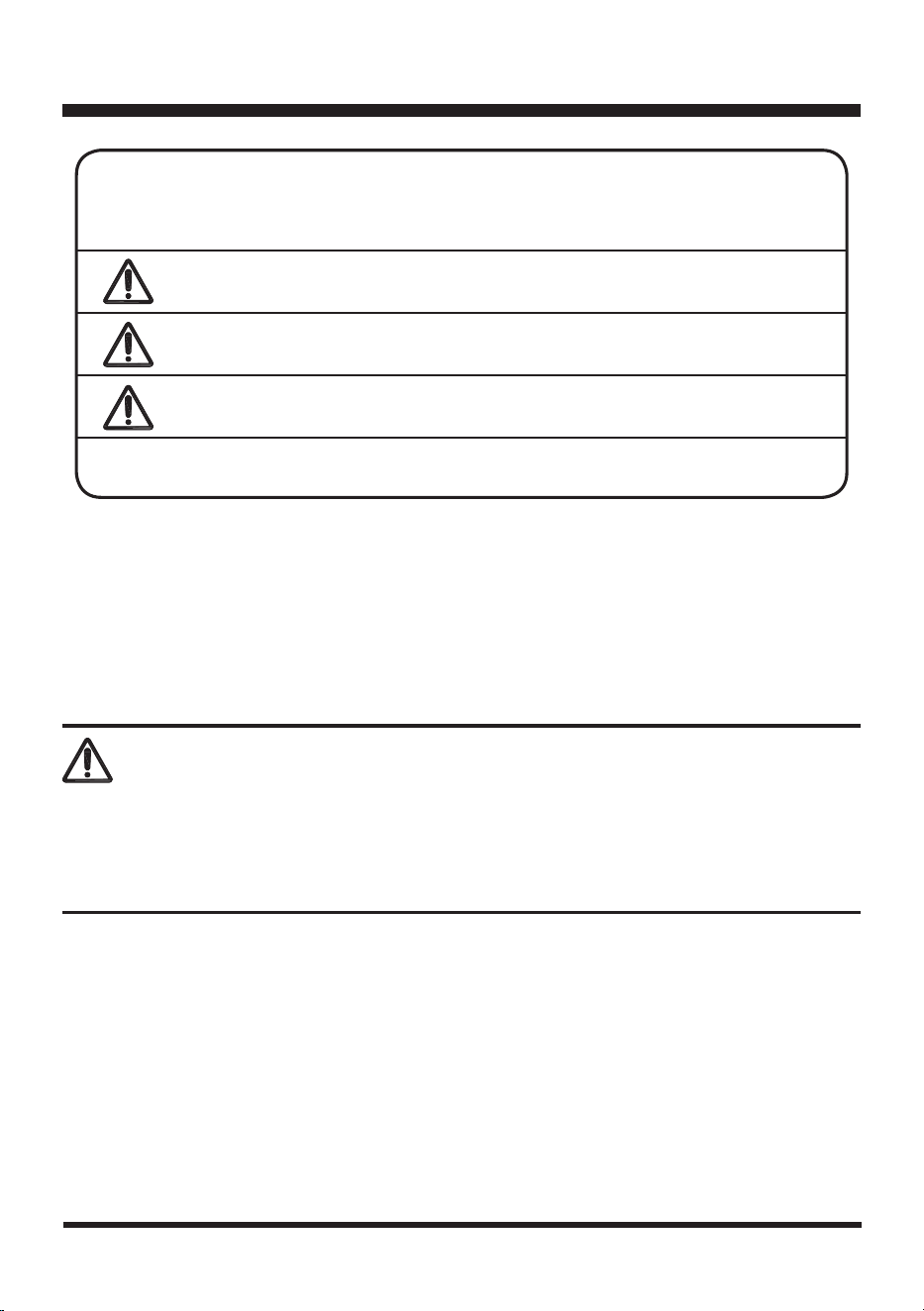
SYMBOL SIGNAL MEANING
DANGER
Indicates an imminently hazardous situation, which, if not
avoided, will result in death or serious injury.
WARNING
Indicates a potentially hazardous situation, which, if not
avoided, could result in death or serious injury.
CAUTION
Indicates a potentially hazardous situation, which, if not
avoided, may result in minor or moderate injury.
NOTICE
(Without Safety Alert Symbol) Indicates a situation that may
result in property damage.
The following signal words and meanings are intended to explain the levels of risk
associated with this product.
To avoid serious personal injury, do not attempt to use this product until you have read thoroughly and
understand completely the Operator’s Manual.
If you don't understand the warnings and instructions in the Operator’s Manual, do not use this
product. Call Customer Service for assistance (Toll free number 866-384-8432).
WARNING
SERVICE
Service requires extreme care and knowledge and should be performed only by a qualied service
technician. When servicing, use only identical replacement parts.
For troubleshooting or replacement, please call Customer Service for assistance (Toll free number
866-384-8432).
10
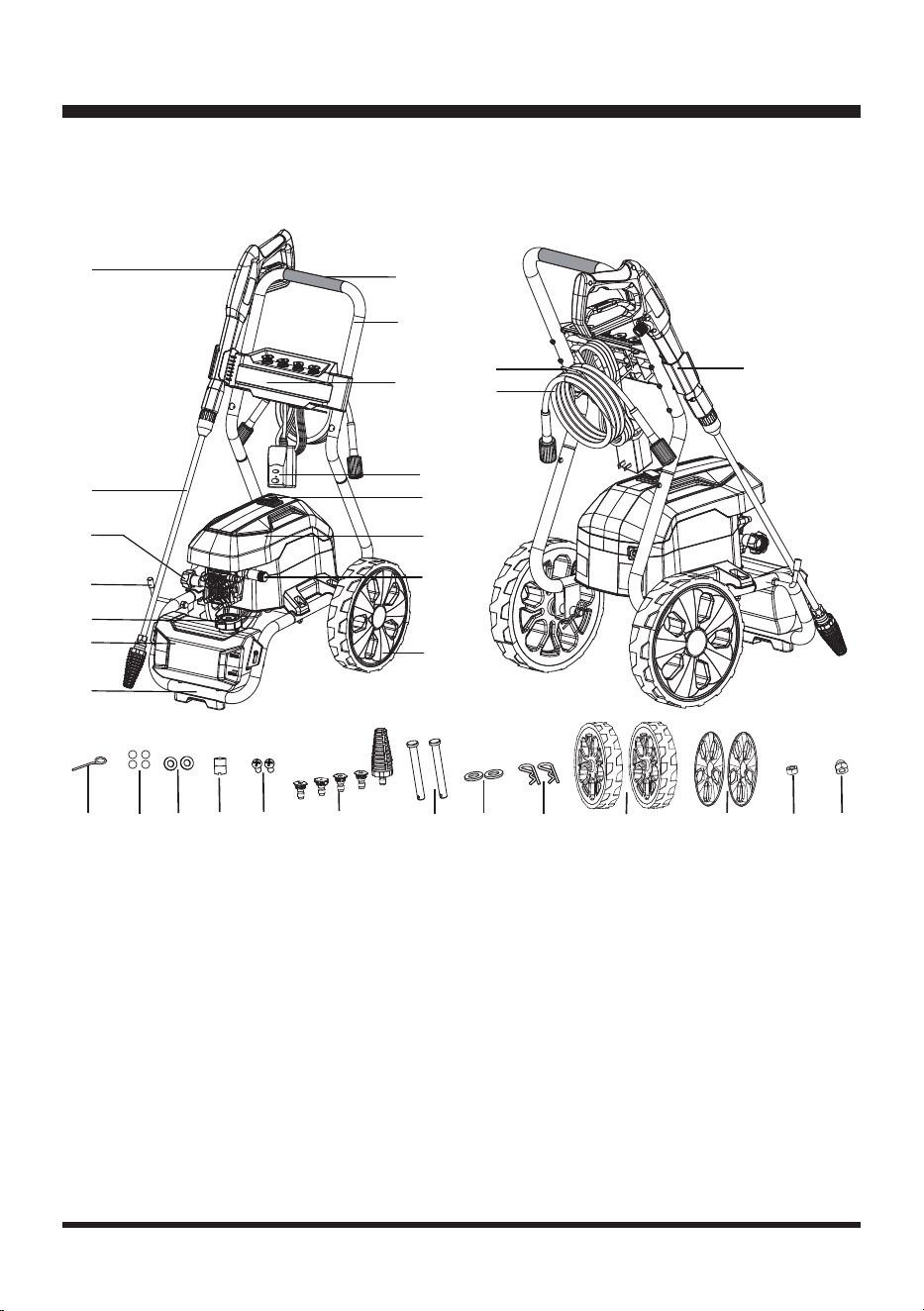
KNOW YOUR HIGH-PRESSURE WASHER
1. Bottom Rack
2. Detergent Container
3. Detergent Container Cap
4. Gun Rack
5. Water Inlet
6. Spray Wand
7. Spray Gun
8. Foam Grip
9. Transport Handle
10. Accessories Holder
11.Power Cord & GFCI
12.On/O Switch
1
2
5
7
8
10
11
16
17
18
12
19
24
20
15
26
6
14
27
25
28
30
31
29
21
23
22
3
4
9
13
The safe use of this product requires understanding of the information on the product and in this
operator's manual as well as knowledge of the project you are attempting.
Before use of this product, familiarize yourself with all operating features and safety rules.
13. Motor Pump
14. Water Outlet
15. Wheel
16. High-Pressure Hose Hook &
Power Cord Hook
17. High-Pressure Hose
18. Spray Gun Hook
19. Tip Cleaner (Attached at the
Back of the Manual)
20. Spare O-ring (X4)
21. Detergent Container Washer
(X2)
22. Suction Nozzle
23. Screw (X2)
24. Quick Connect Nozzles
25. Axle tree (X2)
26. Wheel Washer (X2)
27. Wheel Retaining Pin (X2)
28. Wheel (X2)
29. Wheel Cover (X2)
30. Nut
31. Nut Cap

11
ASSEMBLY
UNPACKING
This product requires assembly.
■ Carefully remove the product and any accessories from the box. Make sure that all items listed in
the packing list are included.
■ Inspect the product carefully to make sure no breakage or damage occurred during shipping.
■ Do not discard the packing material until you have carefully inspected and satisfactorily operated
the product.
■ If any parts are damaged or missing, please call Customer Service (Toll free number 866-384-
8432).
YOU WILL NEED (ITEMS NOT SUPPLIED)
■ Suitable Personal Protective Equipment
■ Phillips screwdriver
PACKING LIST
(1) Pressure Washer Unit
(1) Spray Gun
(1) Spray Wand
(1) Gun Rack
(1) High-Pressure Hose
(1) Bottom Rack
(1) Detergent Container
(1) Transport Handle (with Accessories Holder Pre-installed)
(1) High-Pressure Hose Hook & Power Cord Hook
(2) Wheels
(2) Wheel Covers
(2) Wheel Washers
(2) Wheel Retaining Pins
(2) Axle trees
(1) Suction Nozzle
(2) Detergent Container Washers
(2) Screws
(5) Quick Connect Nozzles
(4) Spare O-rings
(1) Nut
(1) Nut Cap
(1) Tip Cleaner (Attached at the Back of the Manual)
(1) Operator’s Manual
12
ASSEMBLY
ASSEMBLING THE HIGH-PRESSURE WASHER
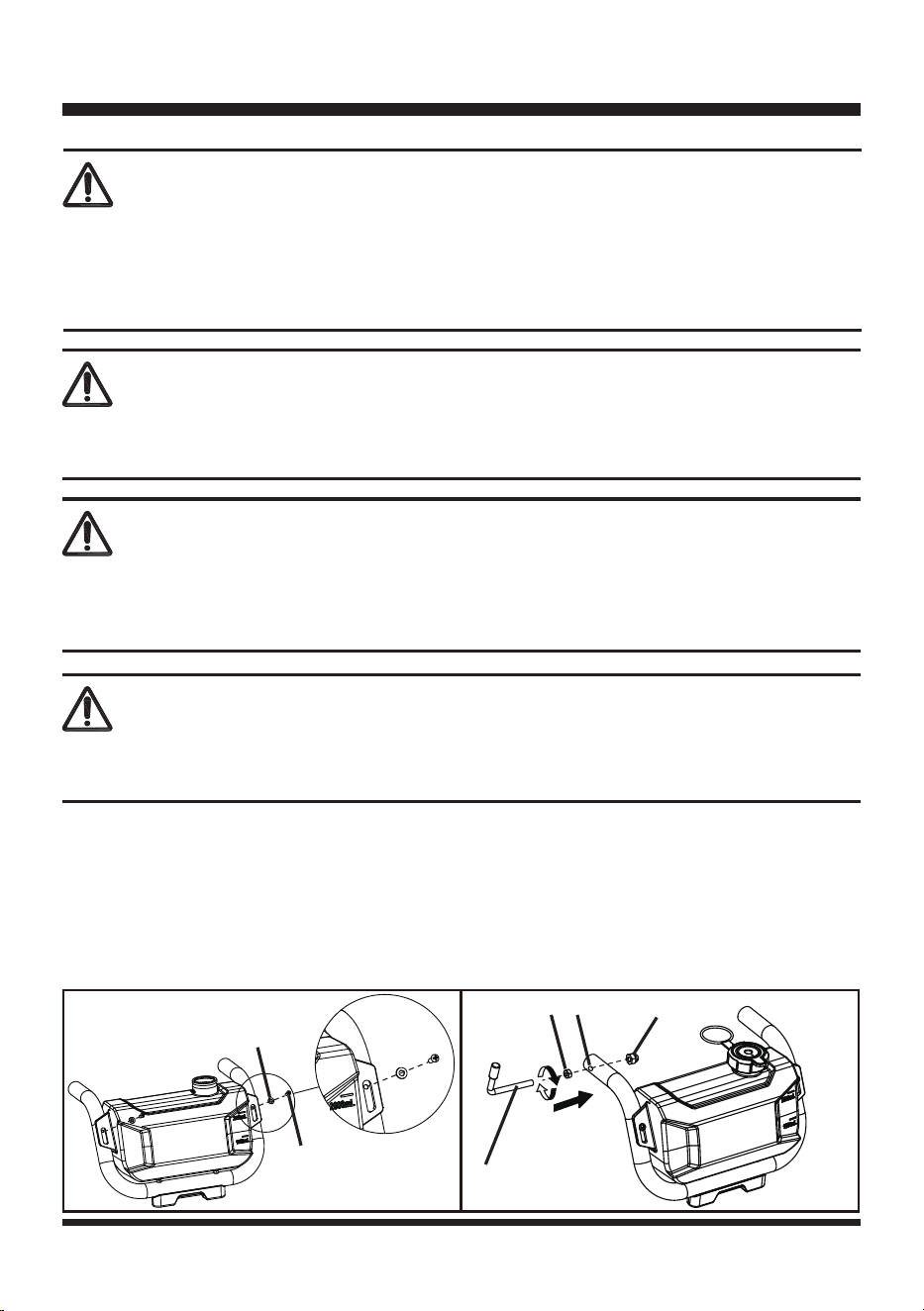
■ Attach the detergent container onto the bottom rack. Attach a detergent container washer onto the
hole located on the bottom rack, then insert a screw to the hole. Tighten the screw using a Phillips
screwdriver. Repeat the same steps on the other side of the detergent container (Fig. 1).
■ Attach the nut onto the gun rack, then insert it into the hole located on the bottom rack. Secure the
gun rack with the nut cap provided (Fig. 2).
WARNING
If any parts are damaged or missing, do not operate this product until the parts are replaced. Failure to
pay attention to this warning could result in serious personal injury.
WARNING
Do not attempt to modify this product or create accessories not recommended for use with this
product. Any such alteration or modication is misuse and could result in a hazardous condition
leading to possible serious personal injury.
WARNING
Do not connect to the power supply until assembly is complete. Failure to comply could result in
accidental starting and possible serious personal injury.
Fig. 1 Fig. 2
WARNING
Do not use this product if any parts on the Packing List are already assembled to your product when
you unpack it. Parts on this list are not assembled to the product by the manufacturer and require
customer installation. Use of a product that may have been improperly assembled could result in
serious personal injury.
Gun Rack
Nut
Nut Cap
Hole
Screw
Detergent
Container Washer
13
ASSEMBLY
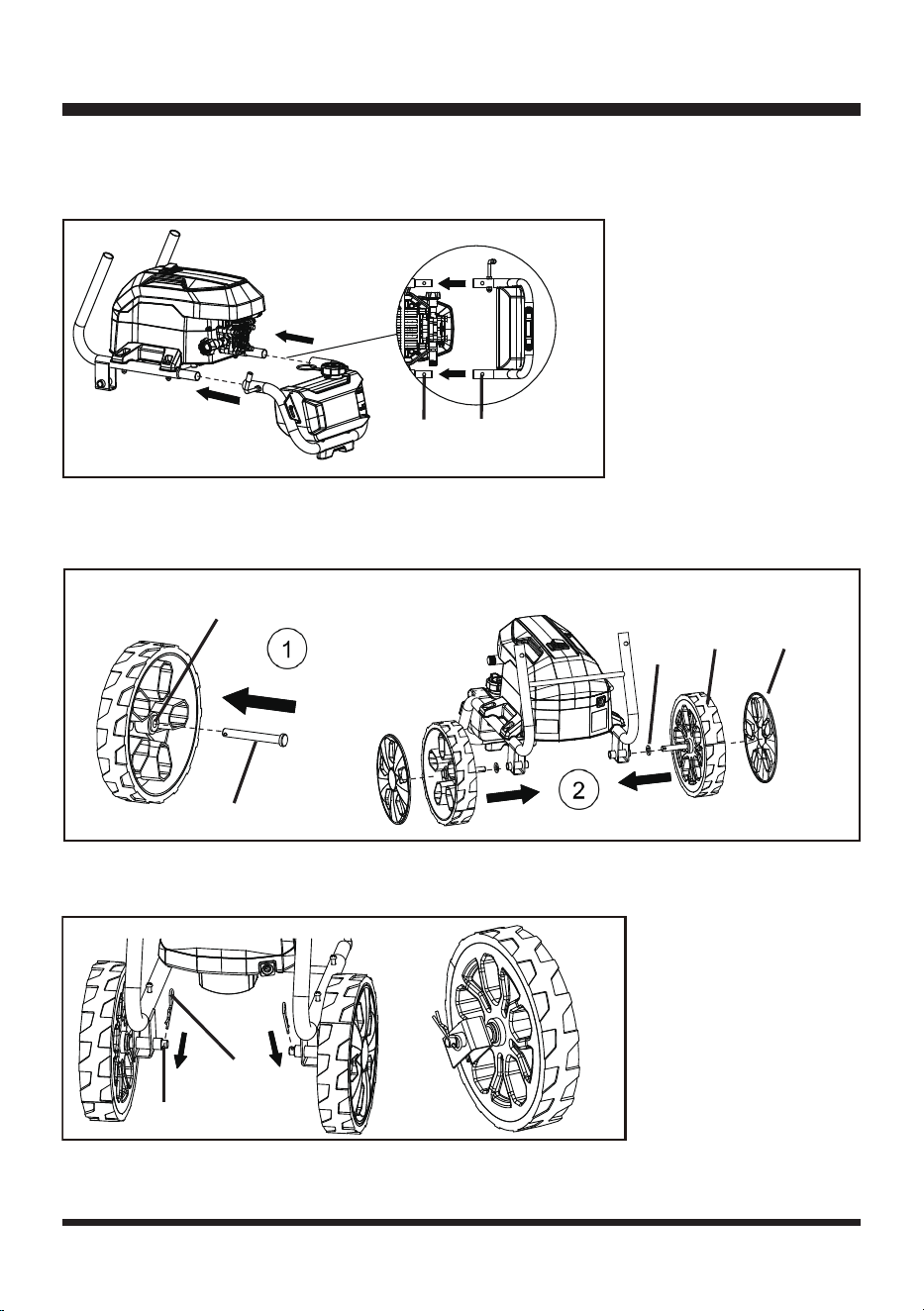
■ Insert the two ends of the bottom rack into the two holes of the pressure washer unit as shown.
Press the hoodle until it is inserted into the hoodle hole, and the bottom rack is xed when you hear
a "click" (Fig. 3).
Hoodle
Fig. 5
Hole
Wheel
Retaining
Pin
Fig. 4
Wheel
Washer
Axle tree
Wheel
Cover
Wheel
Hole
Fig. 3
Hole
■ Insert an axle tree into the hole of a wheel. Insert a wheel washer onto the axle tree followed by the
wheel. Insert the wheel into the hole at the bottom of the base as shown. Snap the wheel cover onto
the wheel. Repeat the same steps on the other end of the axle tree (Fig. 4)
■
Insert the wheel retaining pins into the holes at the end of the axle trees to lock the wheels as shown (Fig. 5).
NOTE:
The wheel retaining pin should be inserted to the bottom.
14
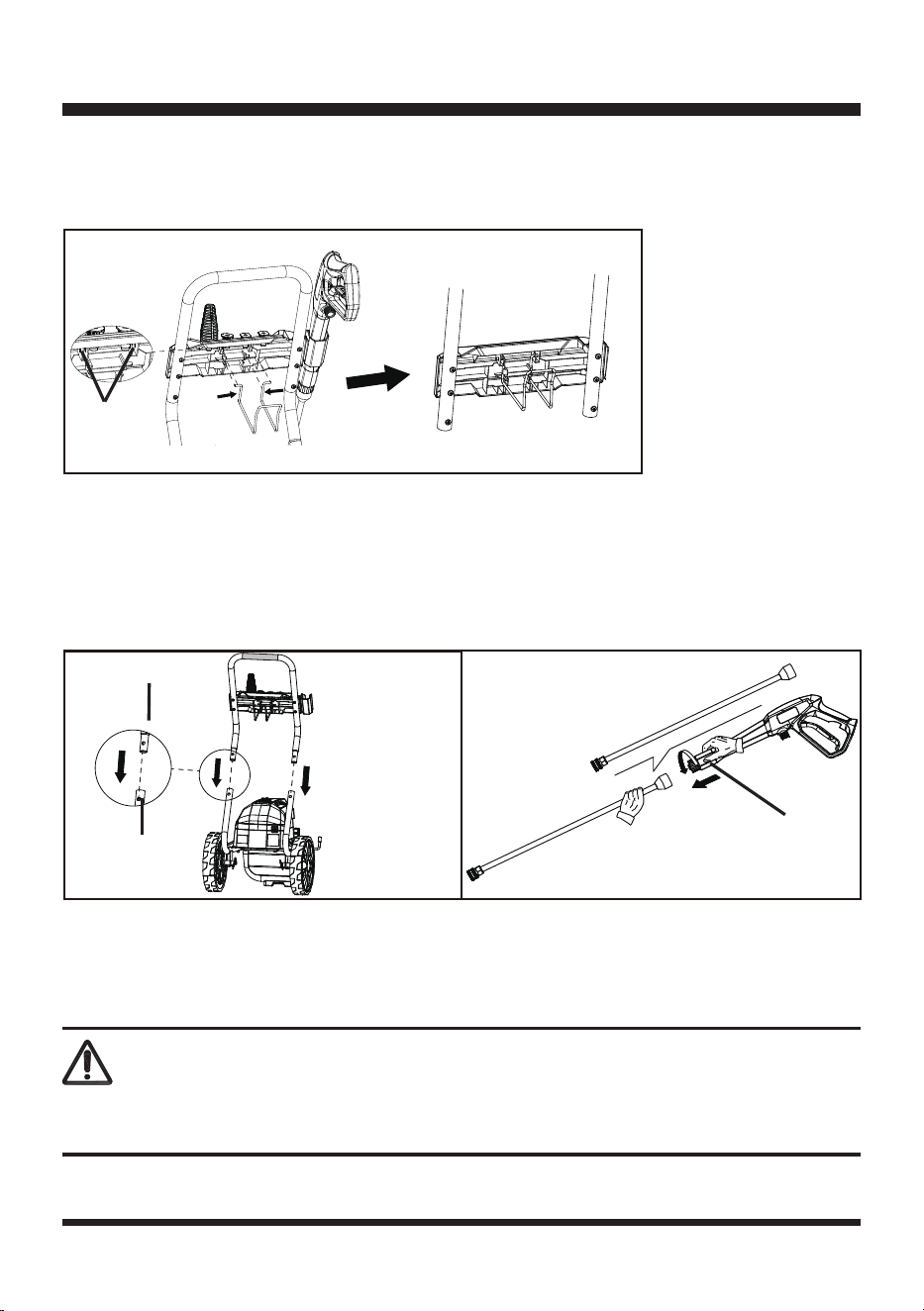
■ Slide back the collar at the end of the spray wand and insert the desired quick connect nozzle into
the end of the spray wand. Secure the nozzle in place by pushing forward the collar, it will make a
“click” sound when rmly in place.
To remove the nozzle, slide back on the collar on the spray wand and pull out the nozzle (Fig. 9).
ASSEMBLY
WARNING
Remember to change the nozzle when the gun is o, to ensure that they do not accidentally eject with force
during removal.
■ Insert the two ends of the transport handle assembly into the two holes at the top of the pressure
washer unit as shown. Press the hoodle until it is inserted into the hoodle hole, and the handle is
xed when you hear a "click" (Fig. 7).
■ Insert the spray gun into the spray wand and turn the locking collar of the spray gun clockwise to
lock the spray wand in place (Fig. 8). When the pieces are joined properly, you cannot separate the
two components by pulling the spray wand out. All quick connect nozzles must be inserted into the
spray wand for proper use.
Fig. 8
Fig. 7
Hole
Hoodle
Locking Collar
■ Squeeze the hook as illustrated. Insert the two ends of the hook into the holes on the back of the
accessories holder, then press the hook downwards to lock it in place. Make sure the hook is
completely installed (Fig. 6).
Fig. 6
Holes
15
Fig. 12
Fig. 9
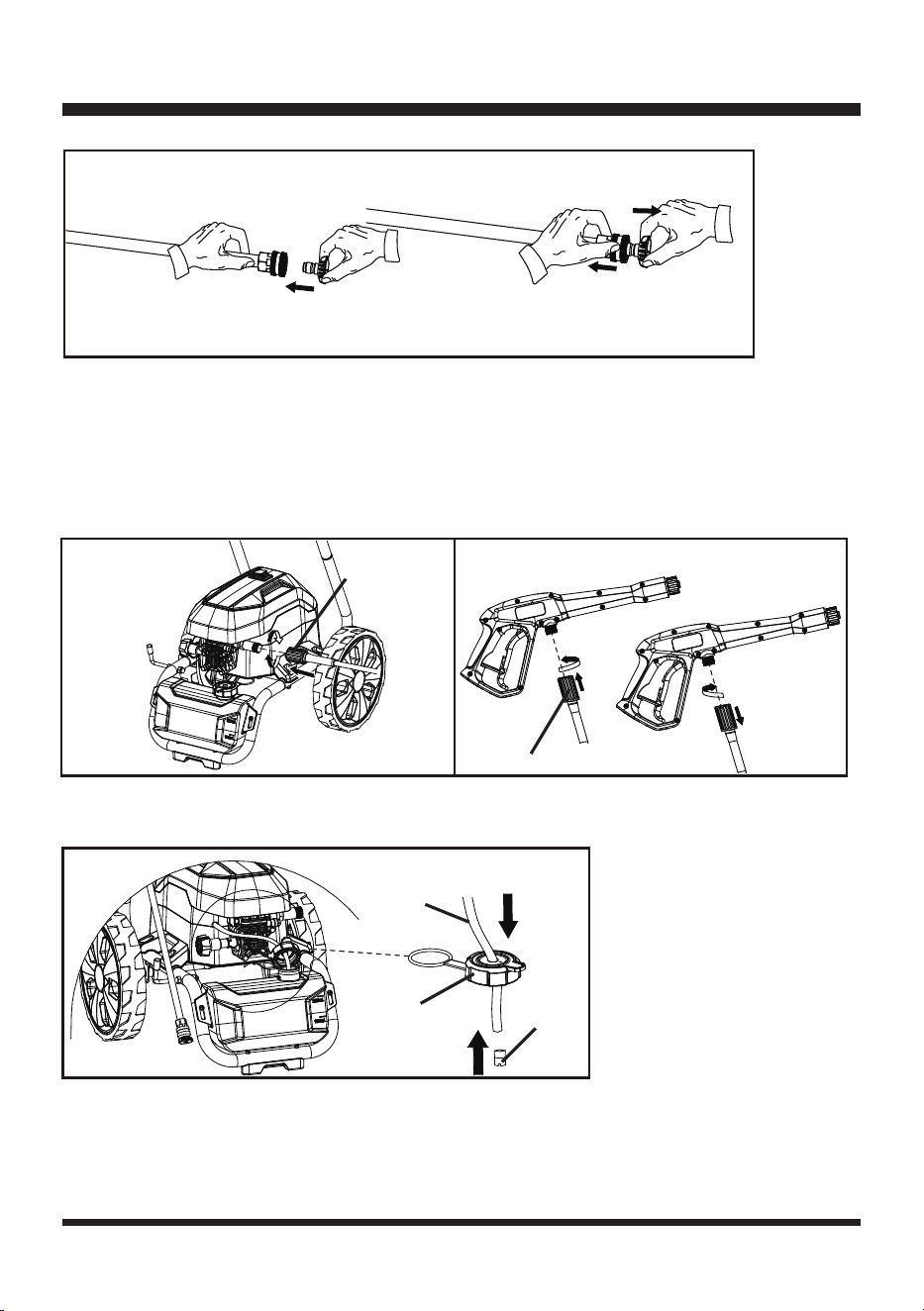
■ Insert one end of the high-pressure hose into the water outlet as shown and turn the locking collar
of the hose clockwise to lock the hose in place. Make sure the hose is secured completely (Fig. 10).
■ Insert the other end of the high-pressure hose into the spray gun as shown and turn the locking
collar of the hose clockwise to lock the hose in place.
To remove the hose, turn the locking collar anti-slide clockwise and pull out the hose (Fig. 11).
NOTE:
Both ends of the high-pressure hose are same.
ASSEMBLY
■ Insert the pipette into the detergent container cap and then insert the suction nozzle into pipette (Fig.
12).
■ Position the pressure washer close to the water supply. The pressure washer must be used standing
on a secure, stable level ground.
■ The pressure washer must be used standing on a secure, stable level ground.
■ Prepare the work area for cleaning, ensuring all doors and windows are closed tight.
Fig. 10 Fig. 11
Locking Collar
Locking Collar
Pipette
Detergent
Container Cap
Suction
Nozzle
16
Fig. 14
ASSEMBLY
■ Inspect the general condition of the pressure washer. Check for loose screws, misalignment
or binding of moving parts, damaged electrical wiring, damaged high-pressure hose, damaged
accessories, and any other condition that may aect its safe operation.
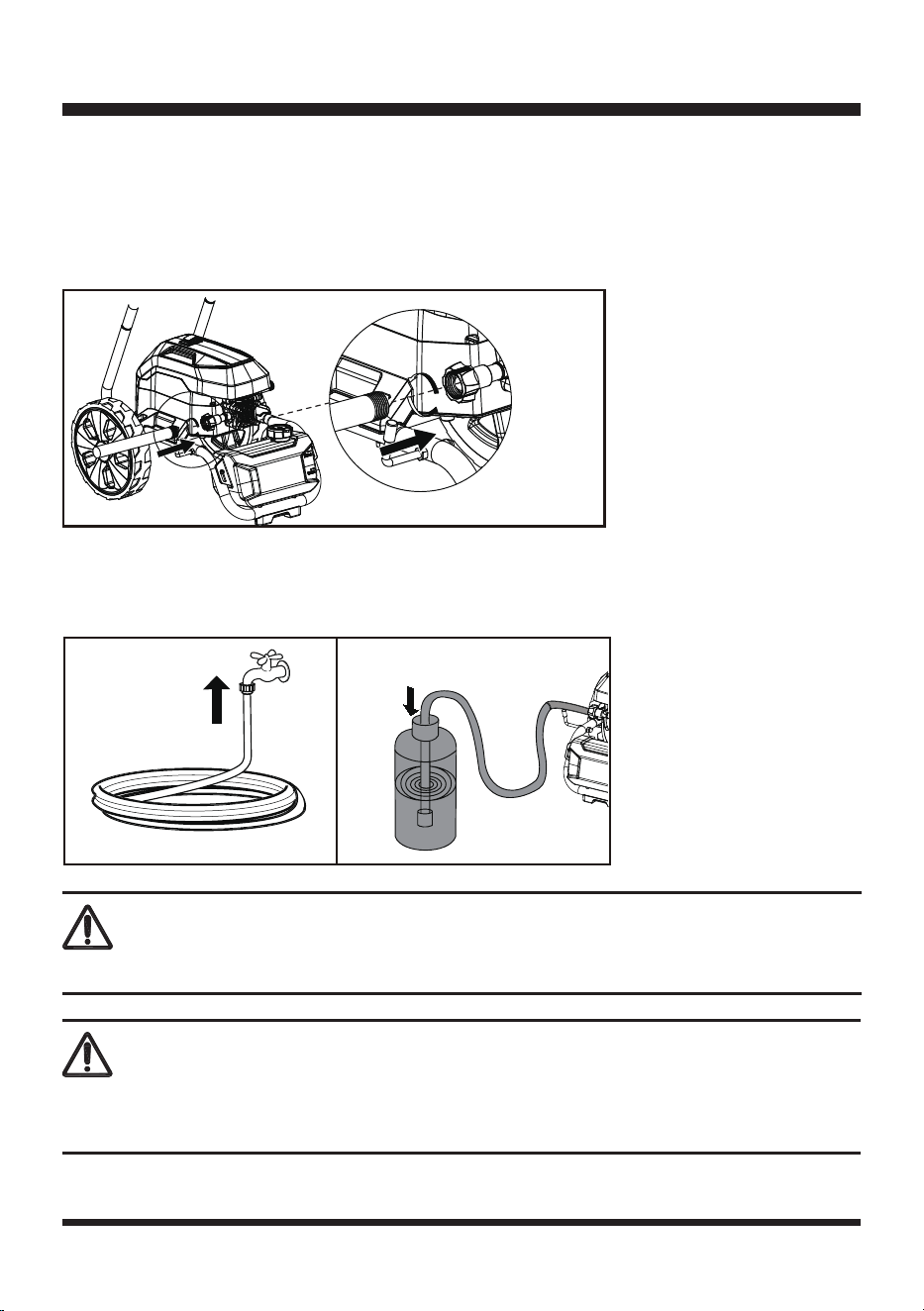
■ Connect the water supply hose (not supplied) to the water inlet (Fig. 13). The supply hose must
have an internal diameter less than 1/2’’ (12.7 mm) and must be reinforced. The length can not be
greater than 8 m. The water supply must be at least equal to the washer delivery capacity.
WARNING
The intake water temperature must not exceed 122°F (50°C). The water supply must not exceed 150 PSI.
CAUTION
The pressure washer must only be used with clean water, and is not suitable for connection to the
potable water main. Use of unltered water of corrosive chemicals will damage the pressure washer.
Fig. 13
■ Connect the water supply hose to water tap, or put the water supply hose with lter into the water
tanks or natural sources (Fig. 14).
NOTE:
Maximum suction head is less than 1.6 feet (0.5 m).
17
FOR MUNICIPAL WATER SUPPLY
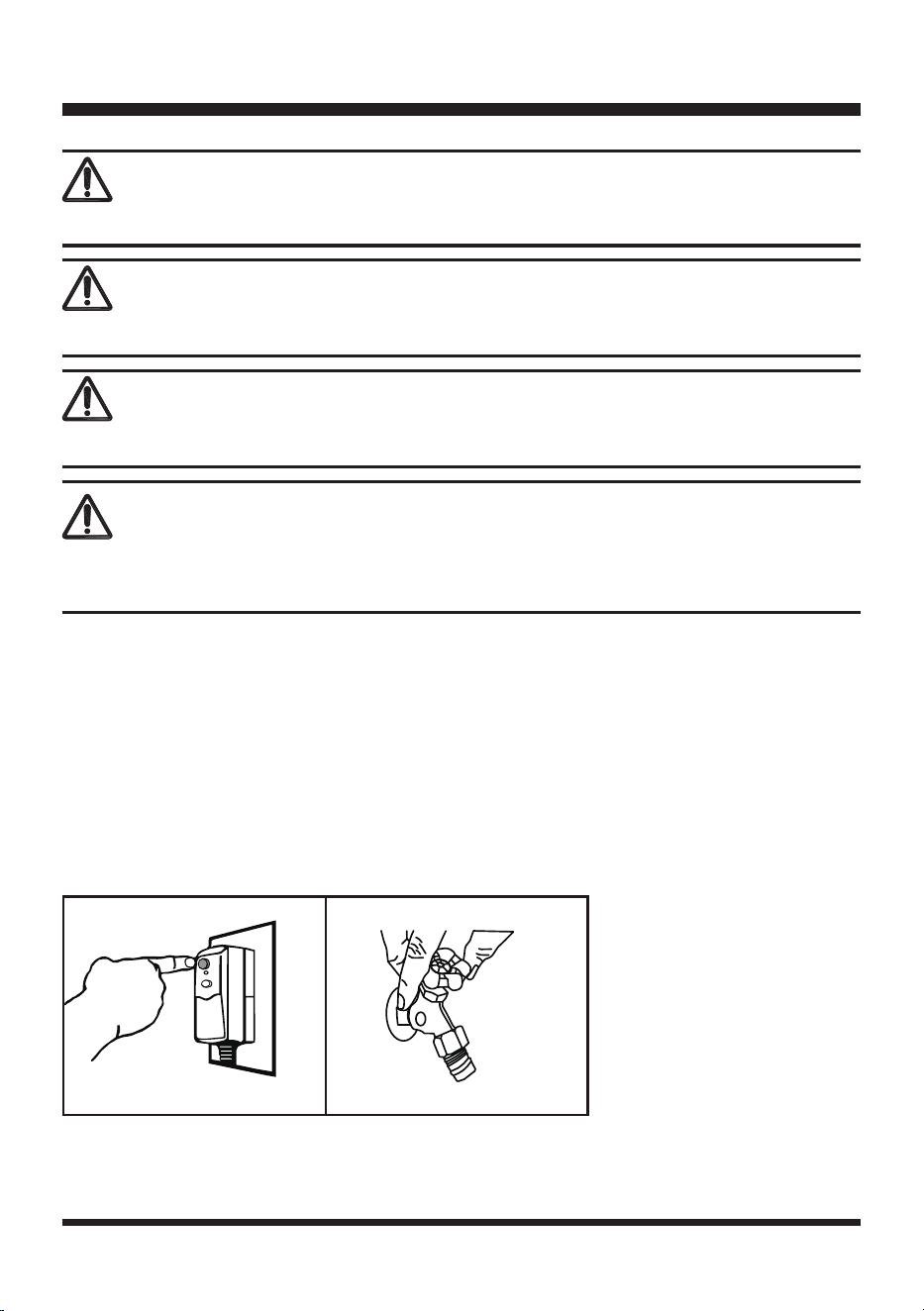
■ Unwind the power cord completely and plug the GFCI into a 120-volt outlet. Press the “TEST” button
on the GFCI, power will be cut, and indicator will fade. Do not use it if this test fails. We recommend
pressing the test button each time the pressure washer is used to ensure the protector works. Press
the RESET button, the indicator light will come on when the power is on (Fig. 15).
■ Before turning on the water supply tap, ensure that the On/O switch on the pressure washer is in
the OFF position. If abnormal noise or vibration occurs, have the problem corrected before further
use. Do not use damaged equipment.
■ Turn on the water supply tap fully (Fig. 16).
OPERATION
WARNING
This unit is intended to be used with cold water only. Do not use hot water in this pressure washer.
WARNING
High-pressure hose must not loop.
WARNING
ALWAYS turn o the unit's motor BEFORE turning o the unit's water supply. Serious damage could
occur to the motor if the unit is running without water.
WARNING
Danger! During operation the unit must be positioned on a rm, stable surface.
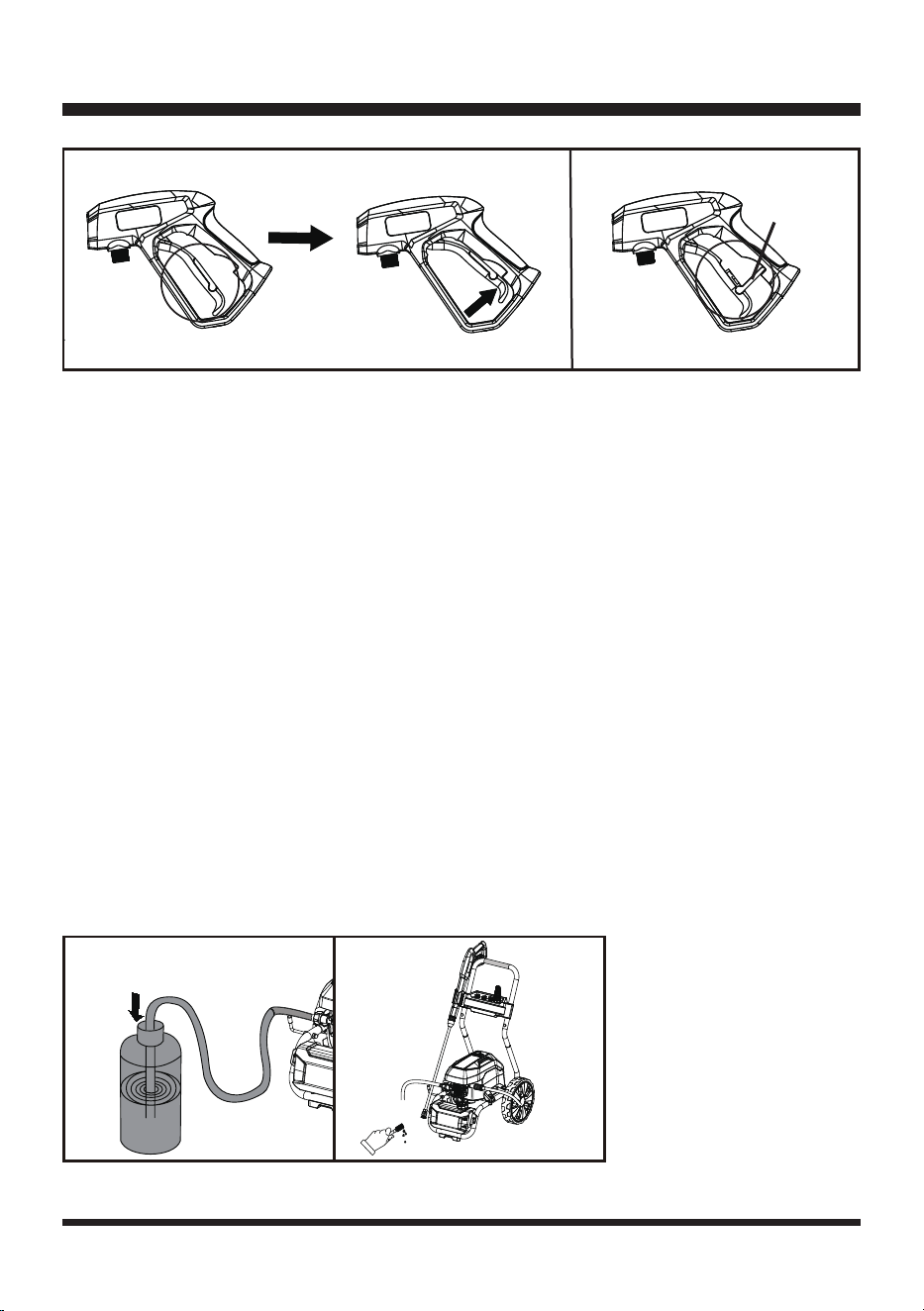
■ Before turning the pressure washer on, unlock the trigger (by setting down the safety lock rst and
then actuating the trigger) for a few seconds; let the water ow out from the nozzle (Fig. 17).
Fig. 15 Fig. 16
18
OPERATION
■ Check if water leaks from joints. If water leaks, please reconnect the water hose, the spray gun or
the spray wand to make sure each component is connected perfectly.
■ Turn the On/O switch to the ON position. Point the spray gun downwards. Fully press the trigger
and begin spraying.
■ The pressure washer is designed to switch o the motor when the trigger is released. If you need to
stop spraying, simply release the trigger.
■ Turn the On/O switch to the o position and unplug it from the electrical outlet once you are done
using it.
FOR OPEN TANKS/CONTAINERS AND NATURAL WATER SOURCES
■
Use the reinforced supply hose with an inlet strainer and non-return valve.
■
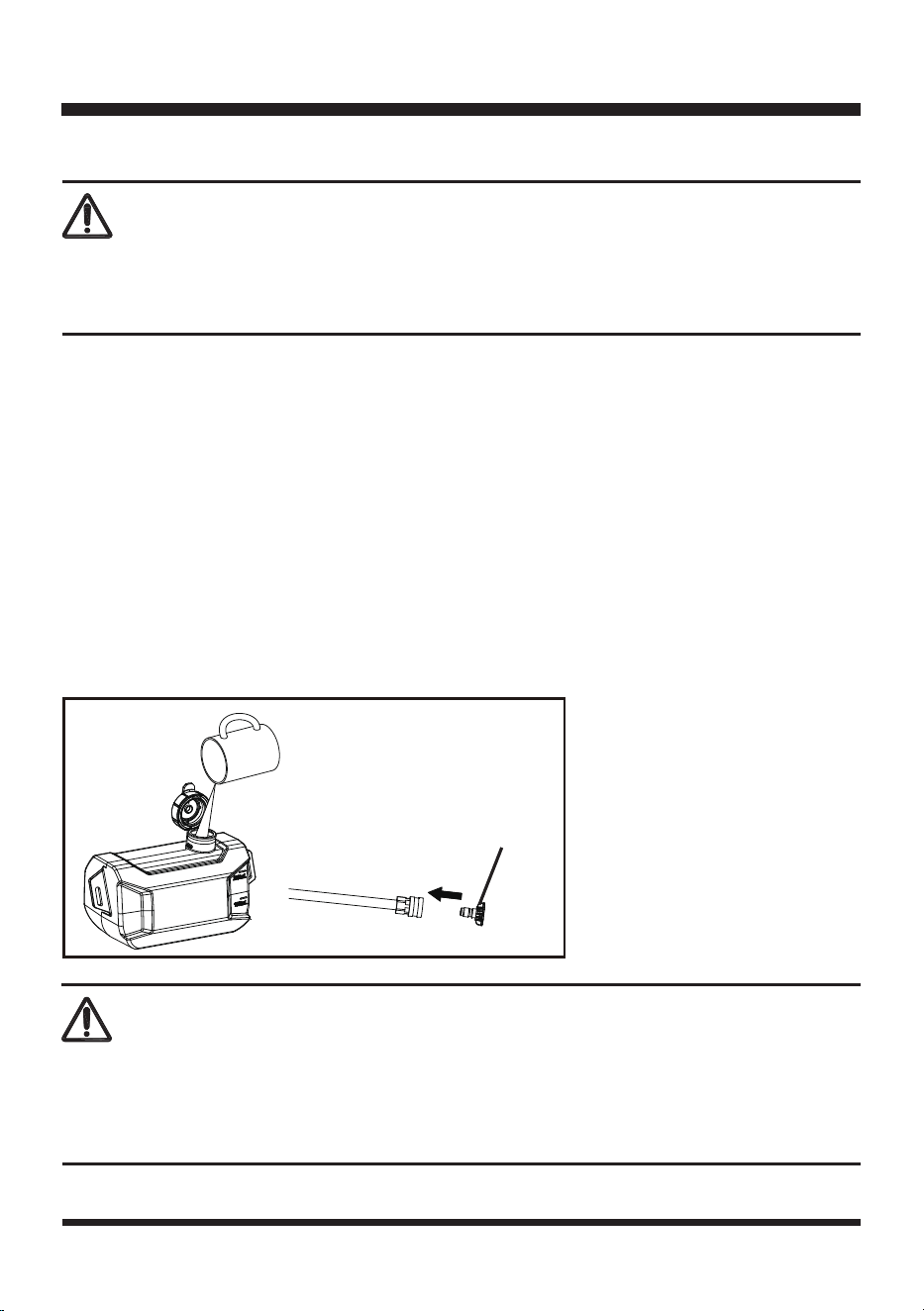
Submerge the water supply hose in water to displace the air. Connect the supply hose to the
pressure washer and ensure that the inlet strainer remains submerged in the water source (Fig. 18).
The height from the water level and the pressure washer should be less than 1.6 feet (0.5 m).
■
Run the pressure washer until a steady ow of water appears from the high-pressure hose (Fig.
19). Stop if this does not happen within 25 seconds and check all the connections. Switch o and
connect the pressure hose to the spray gun to operate.
■
It is important to ensure that all hose and coupling connections are of good quality, air tight and
that all washers are in good condition and correctly seated in place. Failure to do so may aect
performance.
Fig. 17
Unlock
Lock
Fig. 19Fig. 18
Safety Lock
19
USING DETERGENTS
The use of detergents can dramatically reduce cleaning time and assist in the removal of dicult
stains. Some detergents have been customized for pressure washer use on specic cleaning tasks.
These detergents are approximately as thick as water. The use of thicker detergents, such as dish
soap, will clog the chemical injection system and prevent the application of the detergent.
The cleaning power of detergents comes from applying them to a surface and giving the chemicals
time to break down the dirt and grime. Detergents work best when applied at low pressure.
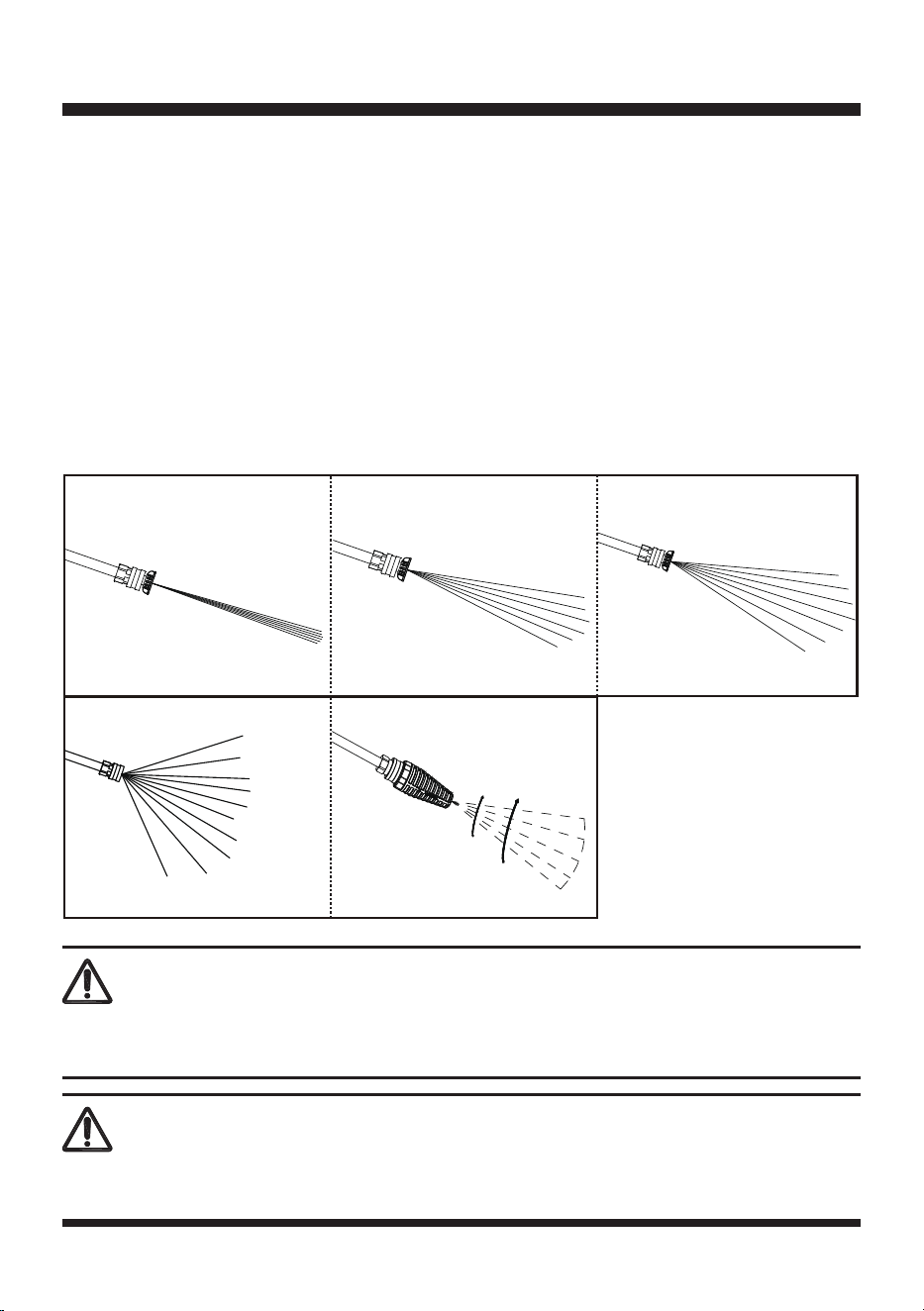
■ Remove the cap from the detergent container and ll with liquid detergent. When using detergents
that are approximately as thick as water, do not put any water into the container. When using thicker
detergents, add water into the container to make sure the detergent will not clog the chemical
injection system (Fig. 20).
■ Ret the detergent container cap onto the container.
■ Slide back the collar at the end of the spray wand and insert the soap nozzle-black into the end of
the spray wand to spray out the detergent.
NOTE:
Only use the soap nozzle-black to suck out cleaning detergents.
OPERATION
Fig. 20
WARNING
Only use detergent specically formulated for pressure washers and follow instructions on the
detergent's label. Dish or laundry soap is too thick and will clog the nozzle of your detergent bottle.
Pressure washer detergents are available at your local hardware store.
WARNING
Never use products with bleach or chlorine or any other corrosive materials, including liquids
containing solvents (i.e. gas, oils etc), tri-sodium phosphate products, ammonia, or acid-based
cleaners. These chemicals will harm the unit and causes damage to the surface being cleaned. Always
read the label.
Soap Nozzle-Black
20
SELECTING THE RIGHT NOZZLES
This appliance is equipped with 5 kinds of quick connect nozzles (0°, 25°, 40°, Turbo Nozzle, Soap
Nozzle), 5 types of water jet shape shown as follow (Fig. 21). Please turn o the appliance when
changing the nozzle, slide back the collar at the end of the spray wand and insert the desired quick
connect nozzle into the end of the spray wand. Push back the collar to the original position.
0° nozzle-red, 25° nozzle-green, 40° nozzle-white: These types of nozzles can produce the
corresponding angle fan-shaped high-pressure jet, cleaning power, for large-scale dirt surface
cleaning.
Soap nozzle-black: This nozzle is used to apply chemicals or cleaning solutions. It has the least power
steam.
Turbo nozzle features a 0°pencil jet which rotates 360°for maximum dirt cutting action, eectively
increasing cleaning performance up to 50%,this nozzle combines the cleaning performance of a
0°pencil jet with the surface coverage of a wide angle nozzle.
OPERATION
Fig. 21
0
°
nozzle-red
25
°
nozzle-green
40
°
nozzle-white
Turbo nozzle
Soap nozzle -black
WARNING
The 0° spray setting is very aggressive. Do not adjust while spraying. We recommend setting your
spray gun at a 40° angle for most cleaning applications in order to avoid damaging the surface.
WARNING
High-pressure jets can be dangerous if subject to misuse. The jet must not be directed at people, live
electrical equipment or the appliance itself.
21
AFTER USING YOUR PRESSURE WASHER
■ When storing, drain water out of pump by running motor for a few seconds. Pull trigger to release all
water. Freezing temperatures will damage the pressure washer if it contains water.
■ Turn o the On/O switch. Remove the plug from the electrical socket.
■ Turn o the water supply tap.
■ Before disconnecting high-pressure hose connection, discharge residual pressure by pressing the
trigger until no more water comes out of the spray wand nozzle.
■ Engage the gun safety lock.
■ Remove the high-pressure hose from the spray gun and pressure washer. Remove the water supply
hose from the pressure washer and water source.
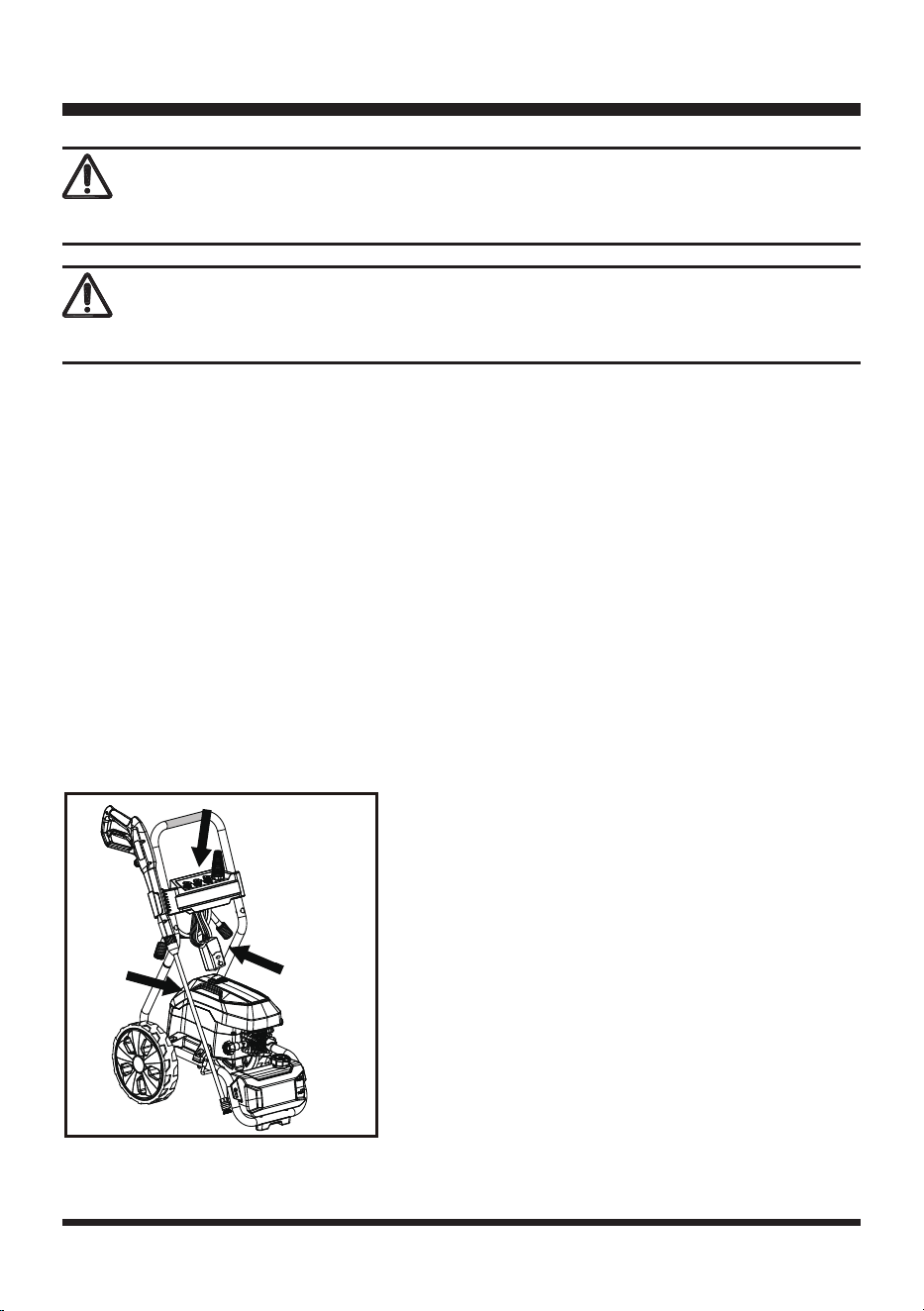
■ Place the spray gun, power cord, high-pressure hose and nozzles on the machine as shown (Fig.
22).
■ Wipe away any remaining water on all parts and ttings. Store the pressure washer indoors, in a dry
environment that does not allow for freezing temperatures.
■ Flush the pressure washer with automotive antifreeze prior to long-term storage.
OPERATION
Fig. 22
WARNING
Do not direct the jet against yourself or others in order to clean clothes or foot-wear.
WARNING
Spray gun must be turned o when changing nozzles.
22
Fig. 23
OPERATION
CAUTION
The machine is intended for cleaning areas and objects outside the house, tools, vehicles and boats.
Intended use is related to operation within 32°F (0°C) and 104°F (40°C) ambient temperature. Only
use water without any impurities.
WORKING HINTS FOR YOUR PRESSURE WASHER
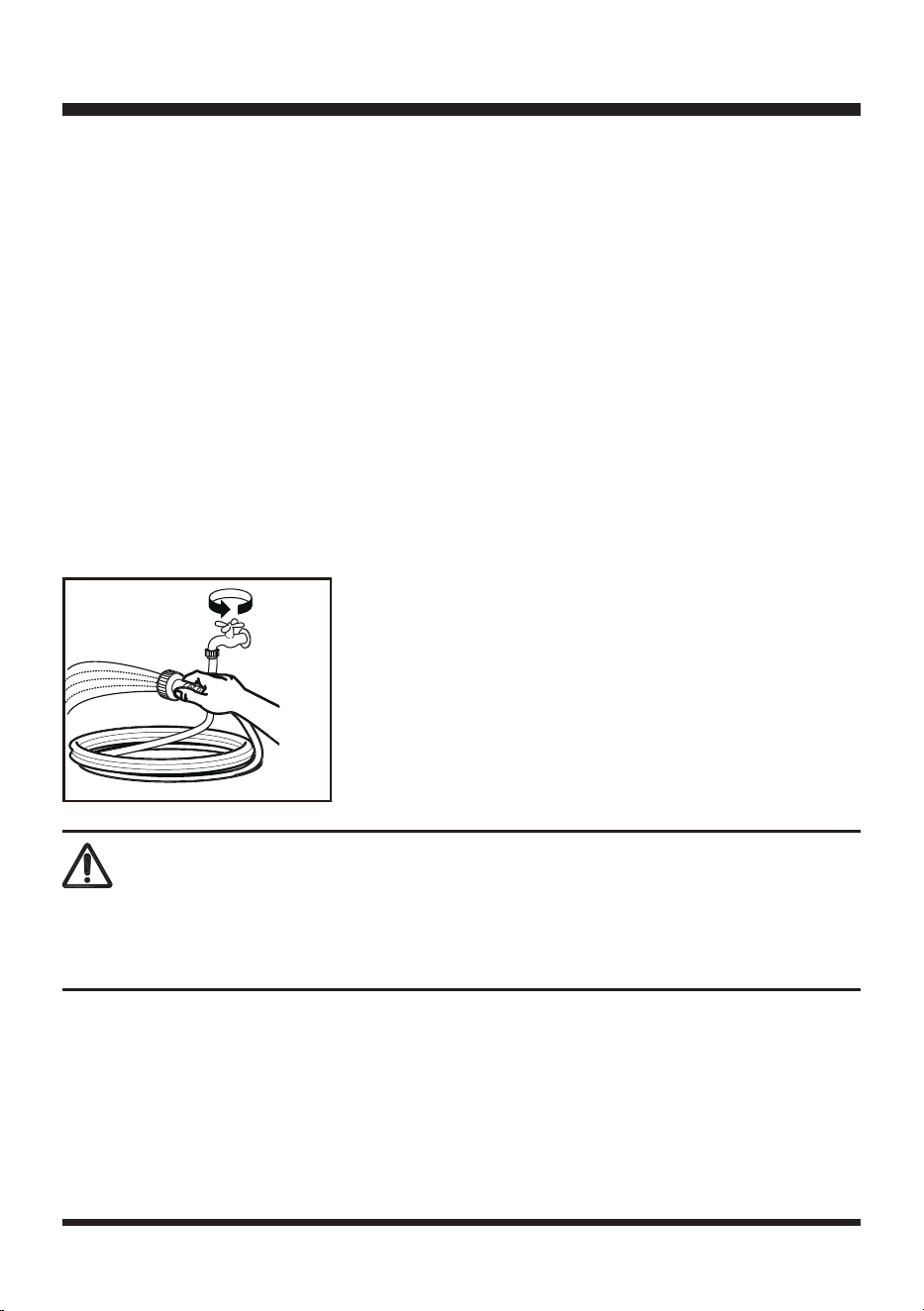
■ Before connecting the water supply hose to the pressure washer, run water through the water
supply hose (not provided) to remove any debris (Fig. 23).
■ This pressure washer will self prime and can draw water from water tanks and natural water
sources. It is important that the water is clean, and the inlet lter is clear and tted to the water
supply hose. The height from water level to pressure washer is less than 1.6 feet (0.5 m).
■ Clean an inconspicuous test area rst. Always begin with the fan spray at a distance of about 3.28-5.0
feet (1-1.5 m) from the surface being cleaned to avoid damaging it. After cleaning this area, switch
o the pressure washer and inspect the area carefully for any damage or discoloration.
■ If several dierent surfaces are to be cleaned, be careful not to damage any of the less solid
surfaces while trying to clean the harder ones. This is especially a concern when cleaning tile and
grout, bricks and mortar, or stones and mortar.
■ If wood is being cleaned, be careful to avoid damage. Wood will usually require resurfacing (sanding)
and recoating with a surface protectant (wood, stain, varnish) after it has dried. Try to avoid leaving
water on a wooden surface; doing so can harm the surface.
■ If using detergent, allow the detergent to rest on the surface for a few minutes, but do not let the
detergent dry.
23
MAINTENANCE
WARNING
Always switch the product o, disconnect it from the power supply and disconnect from water supply
before performing maintenance.
■ This pressure washer is supplied with a closed lubrication system, so no addition of oil is needed.
■ Check all hoses and accessories for damage prior to use.
■ Check the inlet lter periodically for deposits. Clean this lter regularly for maximum performance.
■ Check for obvious defects regularly such as loose ttings, and worn or damaged components.
■ Turn the switch o and operate the trigger to drain the water from the high-pressure hose. Use only
a clean cloth and mild detergent to clean the body of the pressure washer. Do not use solvents. Do
not immerse any part of the tool in liquid. Dry o any remaining water on all parts and ttings.
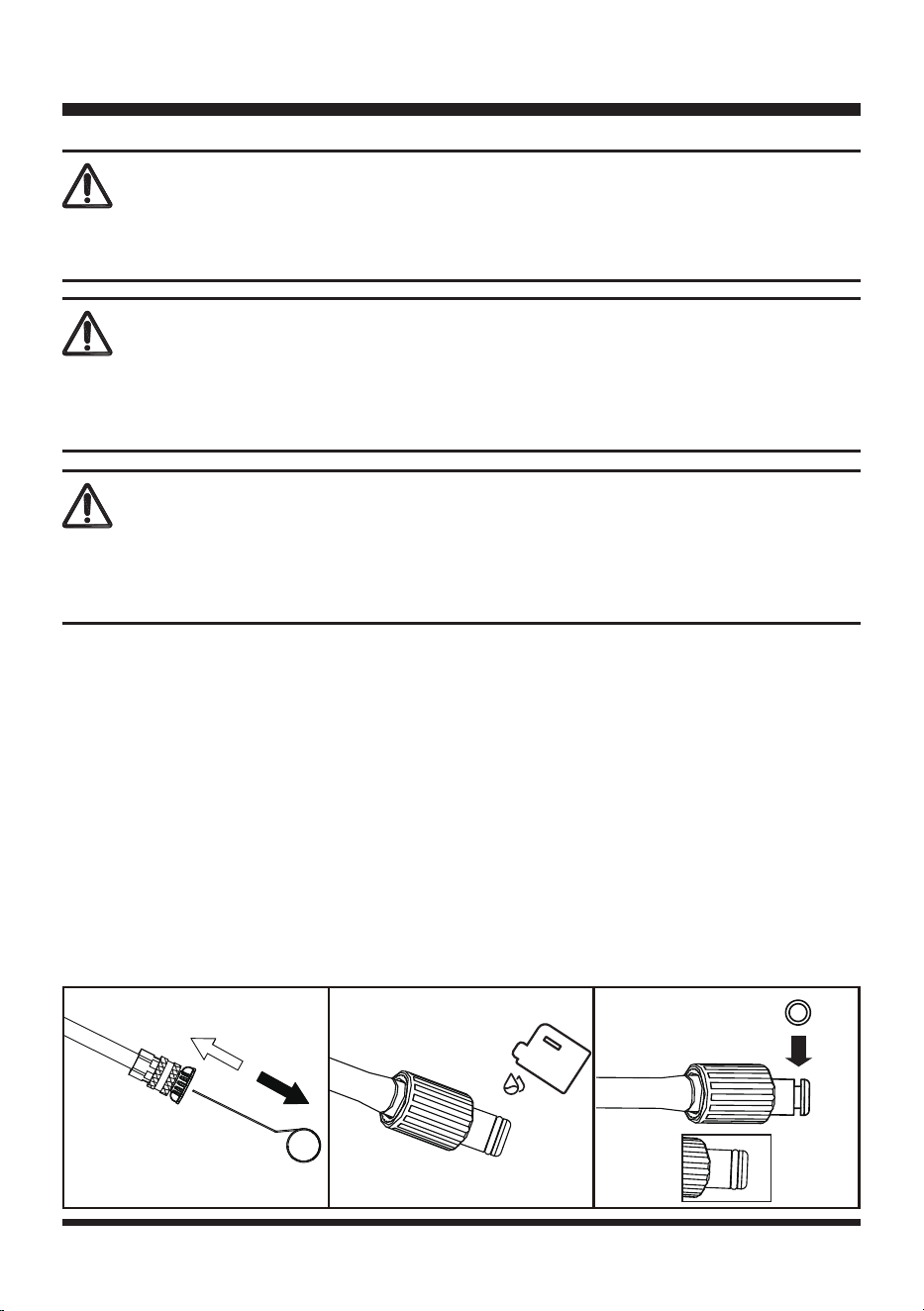
■ Clean the nozzle with the tip cleaner provided. Remove the spray wand from the gun and then
remove any dirt from the nozzle hole and rinse (Fig. 24).
■ To ensure an easy connection and O-rings do not dry up, the couplings should be greased regularly
(Fig. 25).
■
Replace the O-ring if there is obvious damage to the O-ring, water leakage on the high-pressure hose
connections, or spray gun connections. Conrm that the O-ring has been installed correctly (Fig. 26).
Fig. 24 Fig. 25 Fig. 26
WARNING
Do not use any attachments or accessories that are not recommended by the manufacturer of this
product. Using attachments or accessories that are not recommended can result in serious personal
injury.
WARNING
Always wear protective, heavy gloves and use protective safety equipment when performing
maintenance. Ensure the power plug is disconnected from the power supply. Failure to pay attention to
this warning could result in serious personal injury.
24
MAINTENANCE
■ Check all cords periodically. They must be in good condition and not cracked. If the cord is
damaged, contact customer service or take it to a qualied service technician for repair to avoid a
hazard.
WARNING
To avoid damage or electric shock, do not use strong solvents or detergents on plastic housing or
plastic components. Certain household cleaners may cause damage and may also cause a shock
hazard.
25
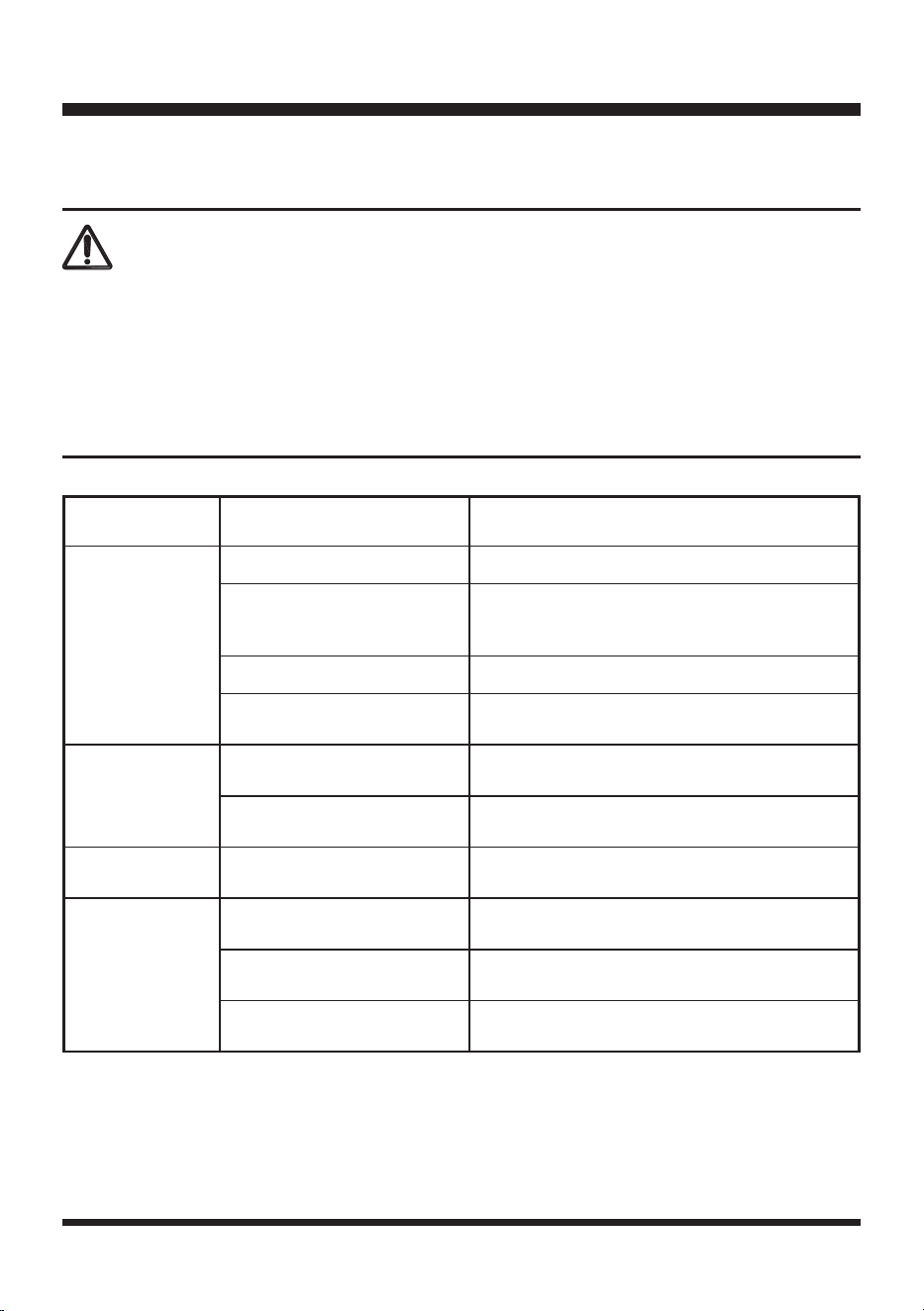
TROUBLESHOOTING
PROBLEM POSSIBLE CAUSE SOLUTION
The pressure
washer fails to
start.
The plug is not connected. Connect the plug.
No power supply.
Check the socket, fuse, cable, wire and plug
and have any repairs carried out by a qualied
person.
Extension cable is damaged. Replace with a new extension cord.
The thermal sensor has
activated.
Allow to cool for 5 minutes.
The motor stops.
Wrong power supply voltage.
Check that power supply voltage corresponds to
specications on the model tag.
The thermal sensor has
activated.
Allow to cool for 10 minutes.
Fuses blow. Fuses incorrectly rated.
Change to a power supply higher than the
pressure washer amp consumption.
Motor “sounds”
but fails to start.
Insucient power supply.
Check that the voltage of the power supply line
is the same as that on the plate.
Voltage loss due to use of
extension cable.
Check specications of extension cable.
Appliance not used for a long
period of time.
Contact Customer Service at (866) 384-8432.
Suspected malfunctions are often due to causes that the user can x themselves.
Therefore, check the product using this section. In most cases the problem can be solved quickly.
WARNING
Only perform the steps described within these instructions!
All further inspection, maintenance and repair work must be performed by an authorized service center
or a similarly qualied specialist if you cannot solve the problem yourself!
Gloves and appropriate protective clothing must be worn when performing these instructions. Always
turn o the machine, disconnect it from the power supply, and disconnect from water supply before
making any adjustment.
26
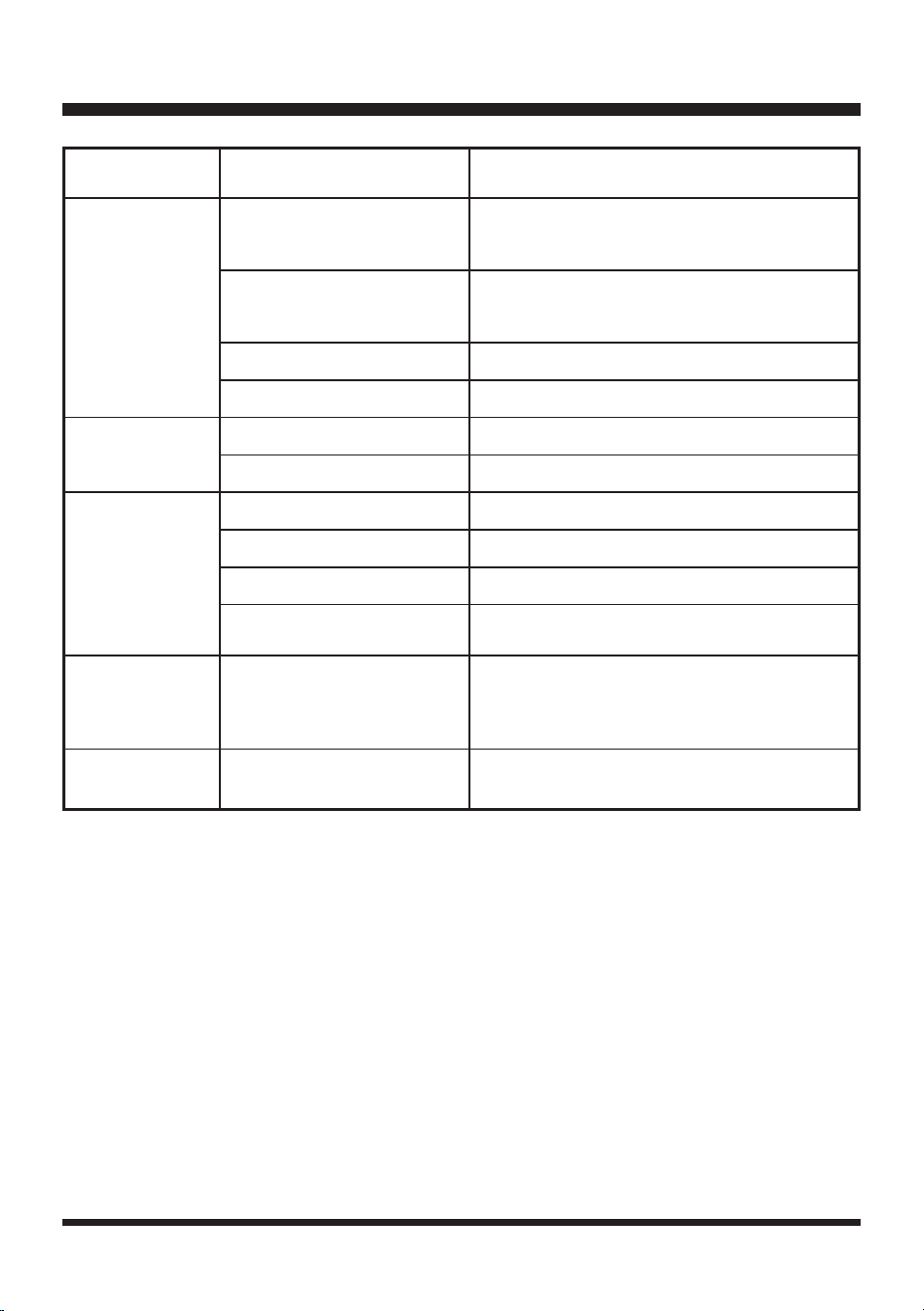
TROUBLESHOOTING
PROBLEM POSSIBLE CAUSE SOLUTION
Pressure
pulsating.
Air in the inlet water supply
hose/pump.
Allow pressure washer to run with open spray
handle and nozzle at low pressure until regular
working pressure is obtained.
Inadequate water supply.
Check that the water supply corresponds to
specications. The diameter for the water supply
hose is less than 1/2 inch or 12.7 mm.
Water lter blocked. Clean water lter.
Water supply hoses squeezed. Straighten out kinked water supply hoses.
Pressure too low,
but steady
Nozzle worn. Change the nozzle.
Start/stop valve worn. Activate trigger ve times in quick succession.
Motor starts up
but no water
comes out or no
working pressure.
No water supply. Connect water supply.
Water lter clogged up. Clean the water lter.
Nozzle clogged up Clean nozzle.
Suction distance is more than
1.6 ft (0.5 m).
Position pressure washer to the lower place.
The pressure
washer starts
irregularly by
itself.
Pump/power gun leaky. Contact Customer Service at (866) 384-8432.
Water leaks from
machine.
Leaking pump.
A slight water leak is permissible, in case of
excessive leak, contact Customer Service.

27
WARRANTY
We take pride in producing a high quality, durable product. This Lawnmaster
®
product carries a
limited one (1) year warranty against defects in workmanship and materials from date of purchase
under normal household use. If the product is to be used for commercial, industrial or rental use, a 30
day limited warranty will apply. Warranty does not apply to defects due to direct or indirect abuse,
negligence, misuse, accidents, repairs or alterations and lack of maintenance. Please keep your
receipt/packing list as proof of purchase. This warranty gives you specic legal rights, and you may
have other rights, which vary from state to state. For product service call Customer Service at 1-866-
384-8432.
Items not covered by warranty :
1. Any part that has become inoperative due to misuse, commercial use, abuse, neglect, accident,
improper maintenance, or alteration; or
2. The unit, if it has not been operated and/or maintained in accordance with the owner's manual; or
3. Normal wear, except as noted below.
4. Routine maintenance items such as lubricants, wearing parts like water inlet connector, high-
pressure hose, tip cleaner, spray wand and gun are not covered under this Warranty.
5. Normal deterioration of the exterior nish due to use or exposure.
Transportation Charges : Transportation charges for the movement of any power equipment unit or
attachment are the responsibility of the purchaser. It is the purchaser’s responsibility to pay
transportation charges for any part submitted for replacement under this warranty unless such a
return is requested in writing by Lawnmaster
®
.
SAVE YOUR RECEIPTS. THIS WARRANTY IS VOID WITHOUT THEM.
28
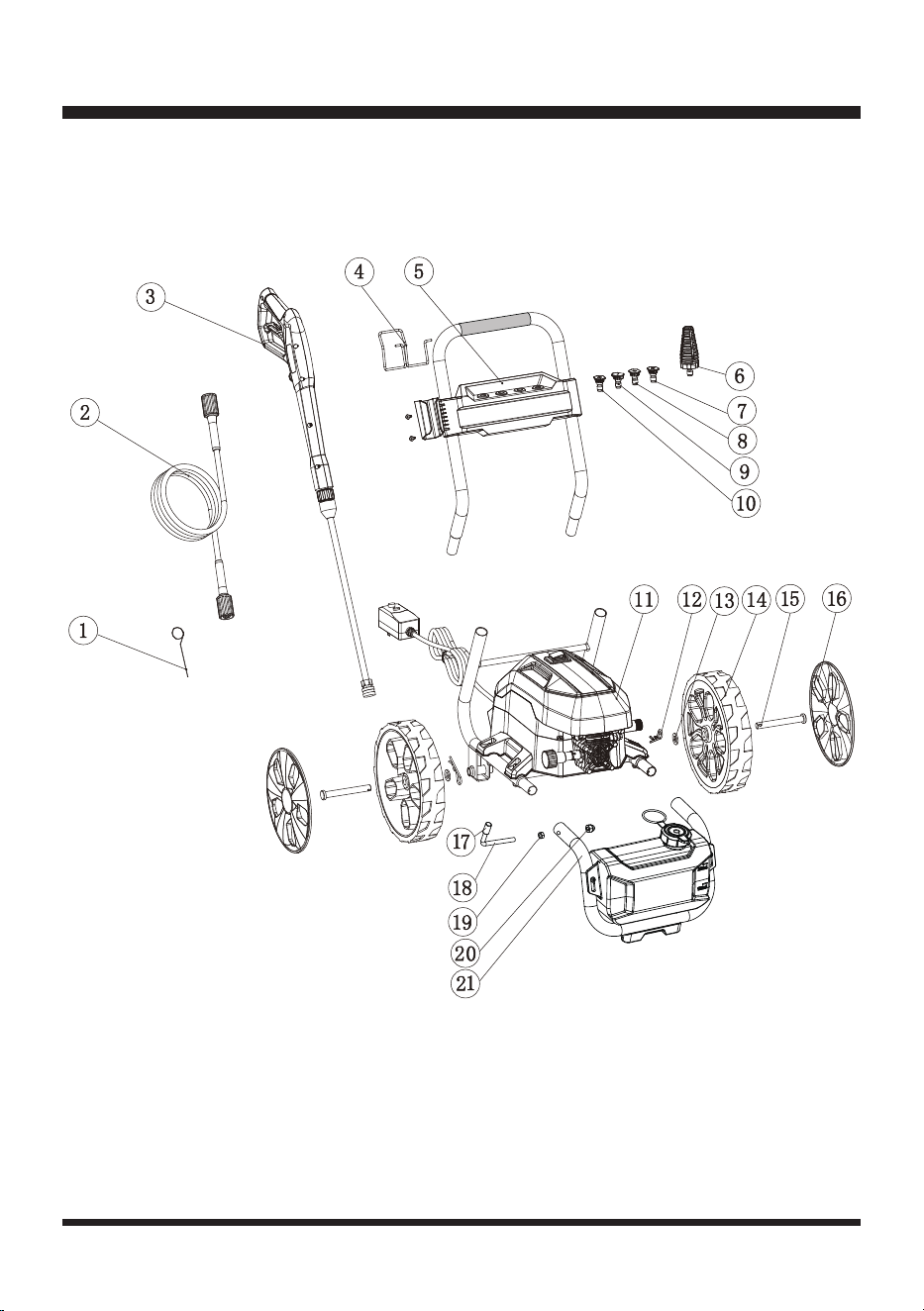
EXPLODED VIEW
29
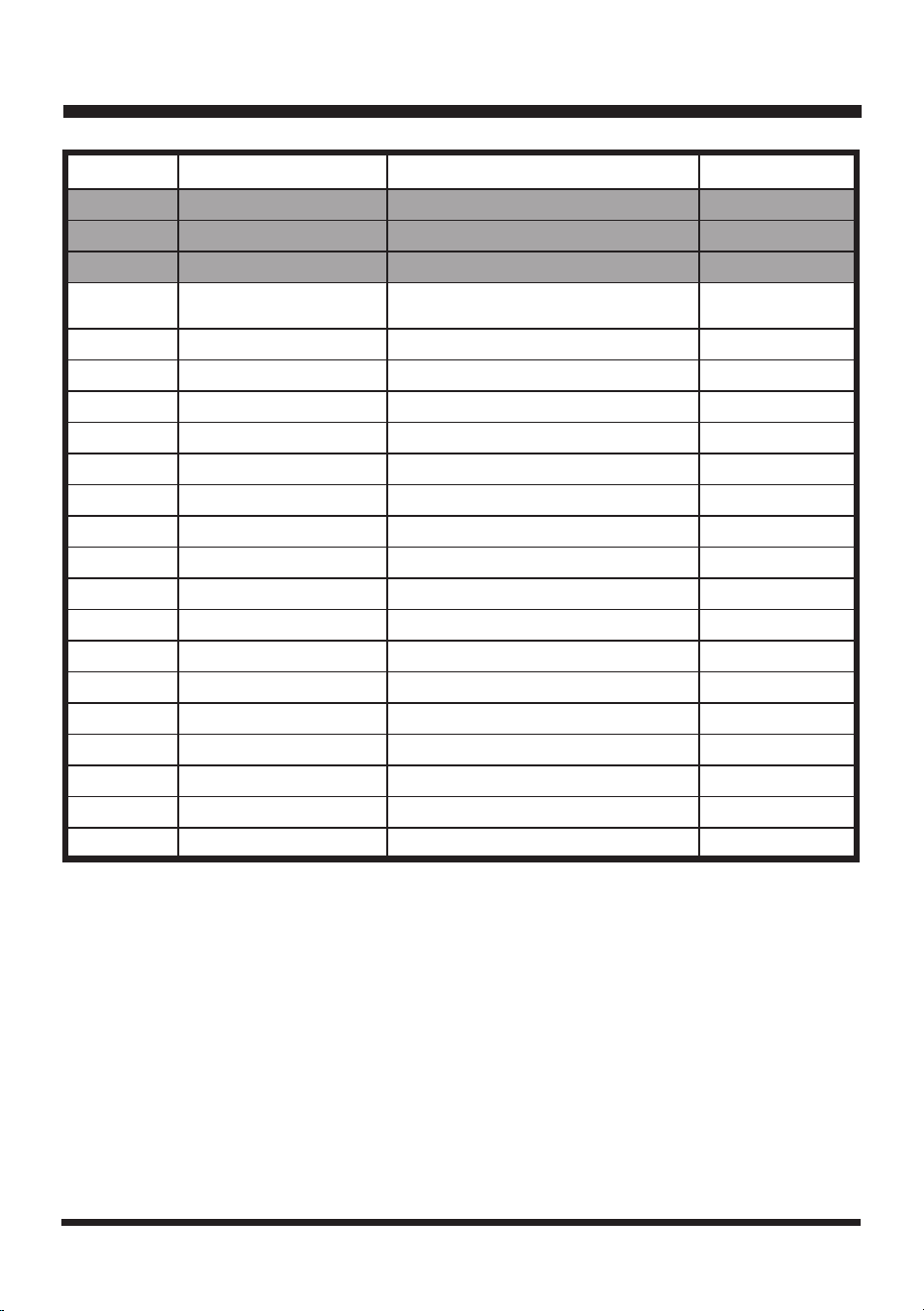
PARTS LIST
Key Number Part Number Description Quantity
1
691002106 Tip Cleaner
1
2 691004101
High-Pressure Hose 1
3
691004102 Spray Gun
1
4
High-Pressure Hose Hook
& Power Cord Hook
1
5
Accessories Holder
1
6
Turbo Nozzle
1
7
0° Nozzle
1
8
25° Nozzle
1
9
40° Nozzle
1
10
Soap Nozzle 1
11
Pressure Washer Unit
1
12
Wheel Retaining Pin
2
13
Wheel Washer
2
14
Wheel
2
15
Axle tree
2
16
Wheel Cover 2
17
Sheath for Gun Rack 1
18
Gun Rack 1
19
Nut 1
20
Nut Cap
1
21
Bottom Rack
1
Replacement parts highlighted in grey are available for after sales purchase. Replacement of repair or
internal parts should only be done by a qualied service professional. Please contact your authorized
service dealer or Customer Service at 866-384-8432.

30

31
32
NOTES
