

5001154
40V Hedge Trimmer
Badger:
Email:[email protected]
Phone Number: 1-844-786-7335
1-833-822-0145
Working hours: Monday-Friday 8am-5pm Eastern Standard Time
Three year limited warranty
2
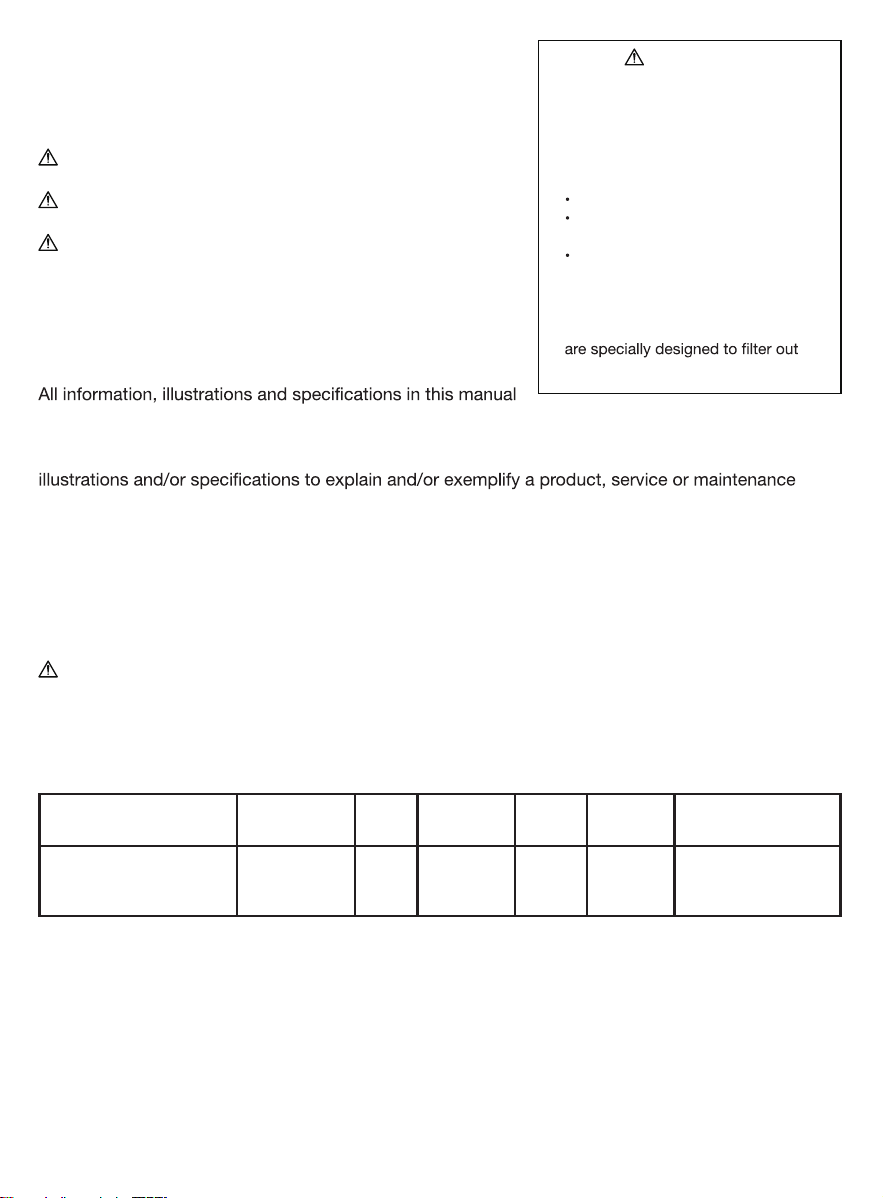
SAFETY GUIDELINES - DEFINITIONS
It is important to read and understand this manual. The
information it contains relates to protecting YOUR SAFETY
and PREVENTING PROBLEMS. The symbols below are used
to help you recognize this information.
DANGER: Indicates an imminently hazardous situation
which, if not avoided will result in death or serious injury.
WARNING: Indicates a potentially hazardous situation
which, if not avoided, could result in death or serious injury.
CAUTION: Indicates a potentially hazardous situation
which, if not avoided, may result in minor or moderate injury.
NOTICE: Used without the safety alert symbol indicates
potentially hazardous situation which, if not avoided, may result
in property damage.
DISCLAIMERS:
are based on the latest information available at the time of
publishing. The illustrations used in this manual are intended as representative reference views only.
Moreover, because of our continuous product improvement policy, we may modify information,
improvement. We reserve the right to make any change at any time without notice. Some images
may vary depending upon which model is shown.
ALL RIGHTS RESERVED:
No part of this publication may be reproduced or used in any form by any means – graphic,
electronic or mechanical, including photocopying, recording, taping or information storage and
retrieval systems – without the written permission of BADGER Outdoor Power Equipment.
DANGER: This manual contains important instructions for operating this product. For your safety
and the safety of others, be sure to read this manual thoroughly before operating the battery/charger.
Failure to properly follow all instructions and precautions can cause you and others to be seriously
hurt or killed.
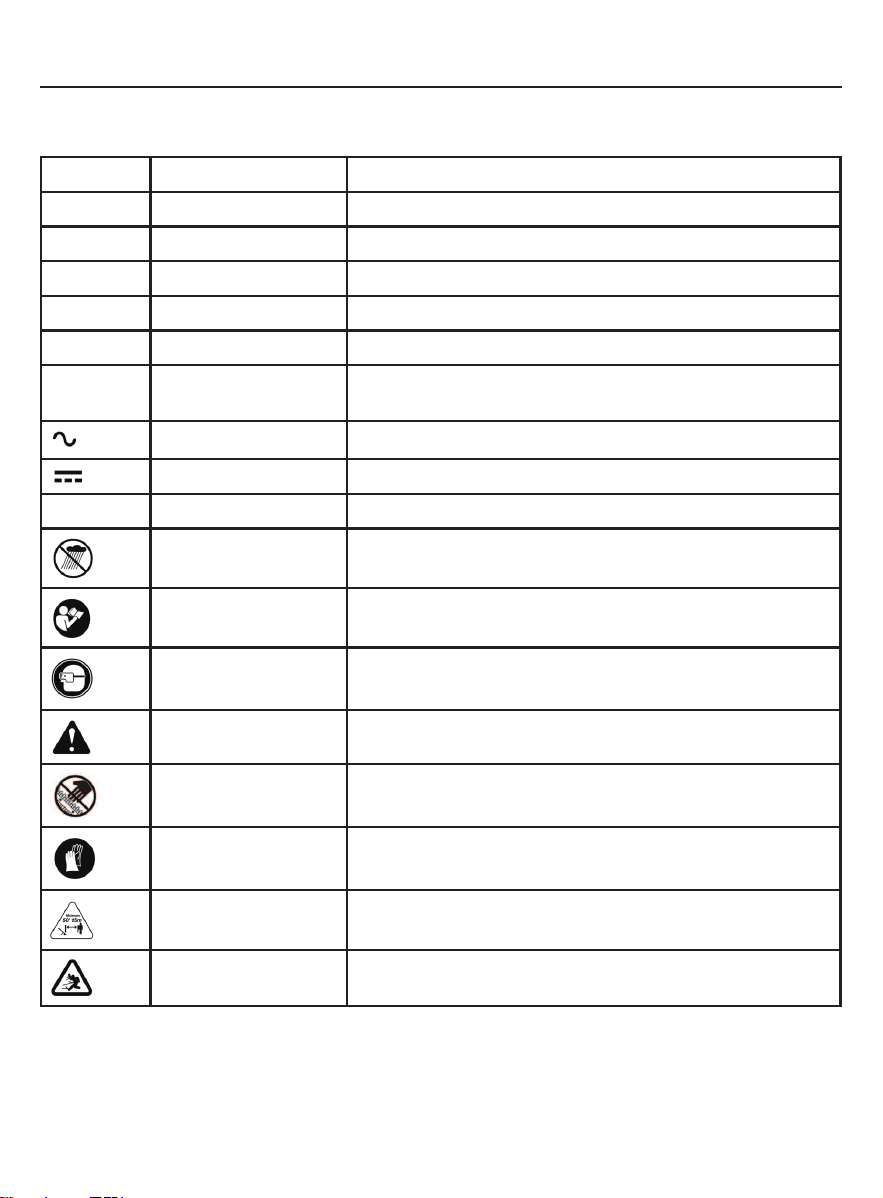
HEDGE TRIMMER SPECIFICATIONS
Model Part Number Motor
No-load
speed
Cutting
Length
Cutting
Capacity Works with Battery
WB40VHT24 HTB40 40V
DC
1500 RPM 24'' 1'' Badger
Some dust created by this product
contains chemicals known to the
State of California to cause cancer,
birth defects or other reproductive
harm. Some examples of these
chemicals are:
compounds in fertilizers
compounds in insecticides,
herbicides and pesticides
arsenic and chromium from
chemically treated lumber
To reduce your exposure to these
chemicals, wear approved safety
equipment such as dust masks that
microscopic particles.
WARNING
3
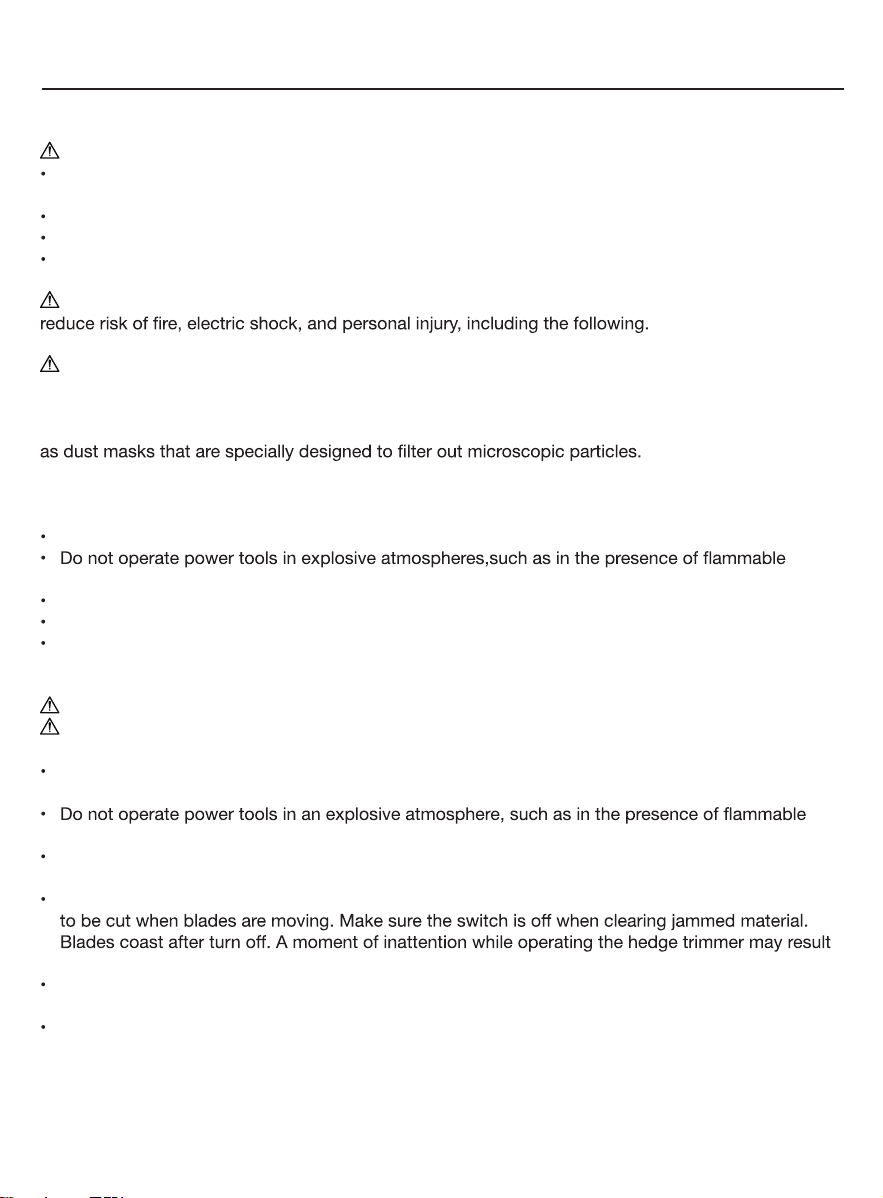
SAFETY SYMBOLS
Some of the following symbols may be used on this product. Please study them and learn their
meaning. Proper interpretation of these symbols will allow you to operate the product better and safer.
Symbols Name Designation/Explanation
V Volts Voltage
A Amperes Current
Hz Hertz Frequency (cycles per second)
W Watts Power
min Minutes Time
SPM Strokes per Minute The number of back-and-forth strokes the blade makes per
minute
Alternating Current Type of current
Direct Current Type or a characteristic of current
/min Per Minute Revolutions, strokes, surface speed, orbits etc., per minute
Wet Conditions Alert Do not expose to rain or use in damp locations
Read the Operator’s
Manual
To reduce the risk of injury user must read and understand
operator’s manual before using this product.
Eye Protection Always wear eye protection with side shields marked to
comply with ANSI Z87.1 when operating this equipment.
Safety Alert Precautions that involve your safety.
Sharp Blade Do not install or use any type of blade on a product
displaying this symbol.
Gloves Wear non-slip, heavy duty gloves.
Keep Bystanders
Away
Keep all bystanders at least 50 ft. away.
Ricochet Thrown objects can ricochet and result in personal injury or
property damage.
4
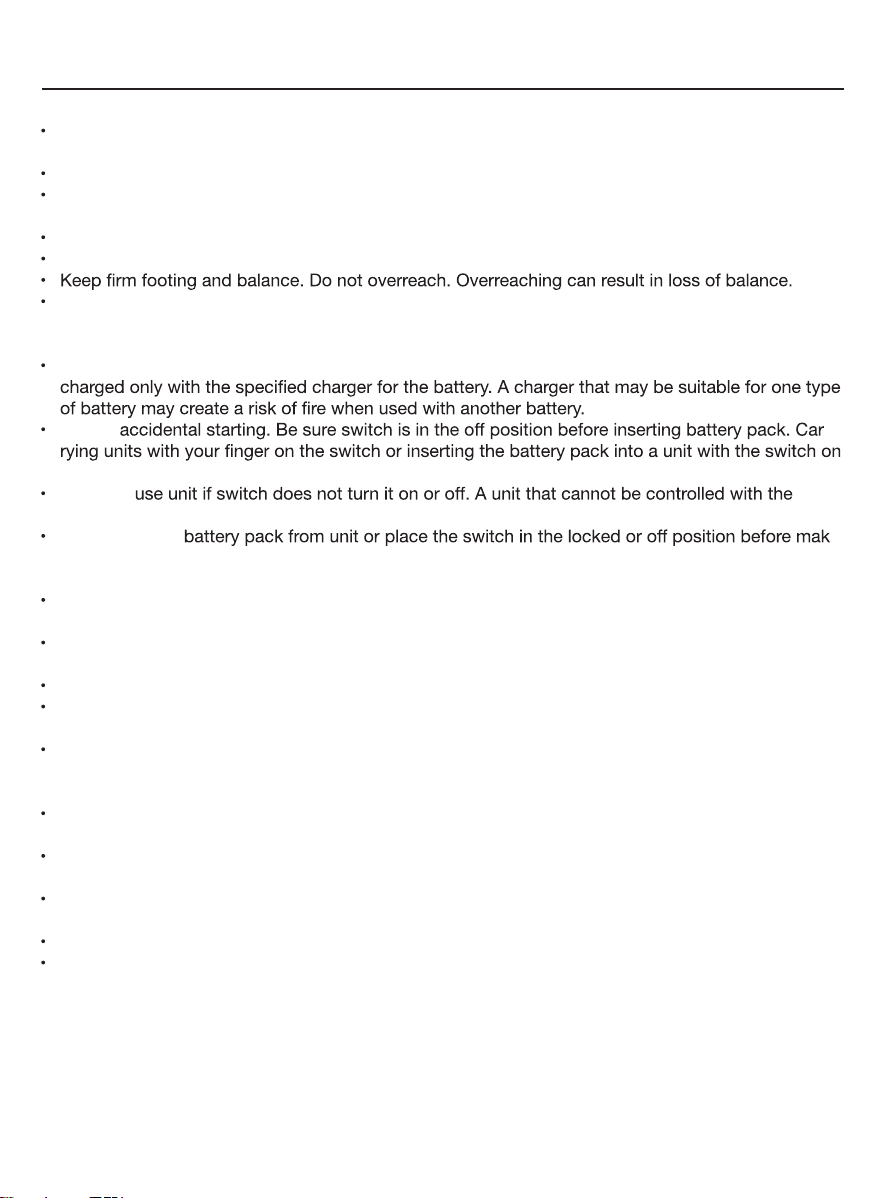
SAFETY INFORMATION
IMPORTANT SAFETY WARNINGS & INSTRUCTIONS
WARNING: TO REDUCE RISK OF INJURY:
Before any use, be sure everyone using this unit reads and understands all safety instructions and
other information contained in this manual.
Save these instructions and review frequently prior to use and in instructing others.
Do not point unit discharge at self or bystanders.
Keep long hair and loose clothing away from openings and moving parts.
WARNING: When using an electric tool, basic safety precautions should always be followed to
WARNING: When using hedge trimmer be aware of your surroundings. Dust generated by your
surrounding has the potential of containing harmful chemicals such as: compounds in fertilizers,
compounds in insecticides, herbicides and pesticides, arsenic and chromium from chemically
treated lumber. To reduce your exposure to these chemicals, wear approved safety equipment such
GENERAL SAFETY WARNINGS FOR HEDGE TRIMMER
BEFORE USING
Keep work area clean and well lit. Cluttered or dark areas invite accidents.
liquids, gases or dust.
Power tools create sparks which may ignite the dust or fumes.
Keep children and bystanders away while operating a power tool.
Distractions can cause you to lose control.
WHEN USING
DANGER: Keep hands away from blade. Contact with blade will result in serious personal injury.
WARNING: Only use with handle and guard properly assembled to hedge trimmer. The use of the
hedge trimmer without the proper guard or handle provided may result in serious personal injury.
Never allow children to operate the equipment. Never allow adults to operate the equipment
without proper instruction.
liquids, gases, or dust. Power tools create sparks that may ignite the dust of fumes.
Use both hands when operating the hedge trimmer. Using one hand could cause loss of control
and result in serious personal injury.
Keep all parts of the body away from the cutter blade. Do not remove cut material or hold material
in serious personal injury.
Carry the hedge trimmer by the handle with the cutter blade stopped. Proper handling of the
hedge trimmer will reduce possible personal injury from the cutter blades.
Hold the power tool by insulated gripping surfaces only, because the cutter blade may contact
hidden wiring. Cutter blades contacting a “live” wire may make exposed metal parts of the power
tool “live” and could give the operator an electric shock.
5
SAFETY INFORMATION
Use only identical manufacturer’s replacement parts and accessories. Use of any other parts may
create a hazard or cause product damage.
Keep all bystanders, children, and pets at least 50 ft. (15 m) away.
Do not operate the equipment while barefoot or when wearing sandals or similar lightweight
footwear.
Wear protective footwear that will protect your feet and improve your footing on slippery surfaces.
Secure long hair so it is above shoulder level to prevent entanglement in any moving parts.
Do not use the trimmer in rain or for cutting wet hedges.
GENERAL SAFETY WARNINGS AND INSTRUCTIONS FOR ALL TOOLS
A BATTERY OPERATED UNIT with integral batteries or a separate battery pack must be re-
AVOID -
invites accidents.
DO NOT
switch is dangerous and must be repaired.
DISCONNECT -
ing any adjustments, changing accessories, or storing the unit. Such preventative safety measures
reduce the risk of starting the unit accidentally.
ALWAYS WEAR EYE PROTECTION – Wear safety glasses or goggles at all times when this unit
is in use. Also use face or dust mask.
STORE IDLE UNITS. When not in use, the unit should be stored in a dry, high or locked-up place
- out of reach of children.
DON’T OVERREACH. Keep proper footing and balance at all times.
MAINTAIN UNIT WITH CARE. Keep unit clean for best and safest performance. Follow instruc-
tions for proper maintenance.
DO NOT attempt to repair the tool. To assure product safety and reliability, repairs, maintenance,
and adjustments should be performed by BADGER service centers or authorized service
centers, always using BADGER replacement parts.
DO NOT operate tool in a gaseous or explosive atmosphere. Motors in these units normally spark,
and the sparks might ignite fumes.
AVOID DANGEROUS ENVIRONMENTAL CONDITIONS – Do not use electric units in damp or
wet locations. Don’t use the unit in the rain.
STAY ALERT - Watch what you are doing. Use common sense. Do not operate unit when you are
tired.
USE THE RIGHT UNIT – Do not use this unit for any job except that for which it is intended.
DO NOT allow to be used as a toy. Close attention is necessary when used by or near children.
Not recommended for use by children.
6
SAFETY INFORMATION
DO NOT
USE ONLY as described in this manual. Use only manufacturer’s recommended attachments.
DO NOT put any objects into openings. Do not use with any opening blocked; keep free of dust,
KEEP
DO NOT immerse any part of the unit in liquid.
DO NOT handle charger, including charger plug, and charger terminals with wet hands.
KEEP CHILDREN, BYSTANDERS AND ANIMALS AWAY from the work area a minimum of 30
feet (10 meters) when starting or operating the unit.
INSPECT THE AREA before using the unit. Remove all debris and hard objects such as rocks,
glass, wire, etc. that can ricochet, be thrown, or otherwise cause injury or damage during opera-
tion.
USE ONLY charger supplied by the manufacturer to recharge.
EXERCISE CARE in handling batteries in order not to short the battery with conducting materials
such as rings, bracelets and keys. The battery or conductor may overheat and cause burns.
DO NOT OPEN OR MUTILATE the batteries. Released electrolyte is corrosive and may cause
damage to the eyes or skin. It may be toxic if swallowed.
DO NOT CHARGE the unit outdoors.
WARNING: To reduce the risk of electrical shock; do not expose to rain, do not use on wet sur-
faces. Store indoors.
IMPORTANT SAFETY INSTRUCTIONS FOR BATTERY CHARGERS
WARNING: Shock hazard. Do not allow any liquid to get inside charger.
CAUTION: Burn hazard. To reduce the risk of injury, charge only designated BADGER batter-
ies. Other types of batteries may burst causing personal injury and damage.
CAUTION: Under certain conditions, with the charger plugged in to the power supply, the charger
can be shorted by foreign material. Foreign materials of a conductive nature such as, but not limited
to, steel wool, aluminum foil, or any buildup of metallic particles should be kept away from charger
cavities. Always unplug the charger from the power supply when there is no battery pack in the cavi-
ty. Unplug charger before attempting to clean.
DO NOT attempt to charge the battery pack with any chargers other than the ones in this manual.
These chargers are not intended for any uses other than charging designated BADGER re-
DO NOT expose charger to rain or snow.
Pull by plug rather than cord when disconnecting charger. This will reduce risk of damage to elec-
tric plug and cord.
Make sure that cord is located so that it will not be stepped on, tripped over, or otherwise subject-
ed to damage or stress.
DO NOT use an extension cord unless it is absolutely necessary. Use of improper extension cord
DO NOT operate charger with damaged cord or plug — have them replaced immediately.
DO NOT operate charger if it has received a sharp blow, been dropped, or otherwise damaged in
any way. Take it to an authorized service center.
7
SAFETY INFORMATION
DO NOT disassemble charger; take it to an authorized service center when service or repair is
Disconnect the charger from the outlet before attempting any cleaning. This will reduce the risk of
electric shock. Removing the battery pack will not reduce this risk.
NEVER attempt to connect 2 chargers together.
The charger is designed to operate on standard household electrical power (120 Volts). Do not
attempt to use it on any other voltage.
IMPORTANT SAFETY INSTRUCTION FOR BATTERY PACKS
WARNING: For safe operation, read this manual and manuals originally supplied with tool before
using the charger. The battery pack is not fully charged out of the carton. Before using the battery
pack and charger, read the safety instructions below. Then follow charging procedures outlined.
READ ALL INSTRUCTIONS
DO NOT incinerate the battery pack even if it is severely damaged or is completely worn out. The
burned.
DO NOT
liquids, gases or dust. Inserting or removing the battery from the charger may ignite the dust or
fumes.
If battery contents come into contact with the skin, immediately wash area with mild soap and
water. If battery liquid gets into the eye, rinse water over the open eye for 15 minutes or until
irritation ceases. If medical attention is needed, the battery electrolyte for Lithium-Ion batteries is
composed of a mixture of liquid organic carbonates and lithium salts.
Contents of opened battery cells may cause respiratory irritation. Provide fresh air. If symptoms
persist, seek medical attention.
WARNING:
Charge the battery packs only in BADGER chargers.
DO NOT splash or immerse in water or other liquids. This may cause premature cell failure.
Do not store or use the tool and battery pack in locations where the temperature may reach or
WARNING: Never attempt to open the battery pack for any reason. If battery pack case is
cracked or damaged, do not insert into charger. Do not crush, drop or damage battery pack. Do not
use a battery pack or charger that has received a sharp blow, been dropped, run over or damaged in
any way (i.e., pierced with a nail, hit with a hammer, stepped on). Damaged battery packs should be
returned to service center for recycling.
8
SAFETY INFORMATION
WARNING: Fire hazard. Do not store or carry battery so that metal objects can contact exposed
battery terminals. For example, do not place battery in aprons, pockets, tool boxes, product kit
boxes, drawers, etc., with loose nails, screws, keys, etc. Transporting batteries can possibly cause
coins, hand tools and the like. The US Department of Transportation Hazardous Material Regulations
(HMR) actually prohibit transporting batteries in commerce or on airplanes (i.e., packed in suitcases
and carry on luggage) UNLESS they are properly protected from short circuits. So when transporting
individual batteries, make sure that the battery terminals are protected and well insulated from
materials that could contact them and cause a short circuit. NOTE: Lithium-Ion batteries should not
be put in checked baggage.
STORAGE RECOMMENDATIONS
1. The best storage place is one that is cool and dry away from direct sunlight and excess heat or
cold.
2. Long storage will not harm the battery pack or charger.
CHARGING PROCEDURE:
Battery packs are shipped in a low charge condition to prevent possible problems. Therefore, you
circumstances, return both the battery pack and charger to your nearest repair center for electrical
check. Charge time varies and is dependent upon the amp hour capacity of battery pack.
NOTICE: Do not place the charger in an area of extreme heat or cold. It will work best at normal
room temperature. The battery pack will become slightly warm to the touch while charging. This is
normal and does not indicate a problem.
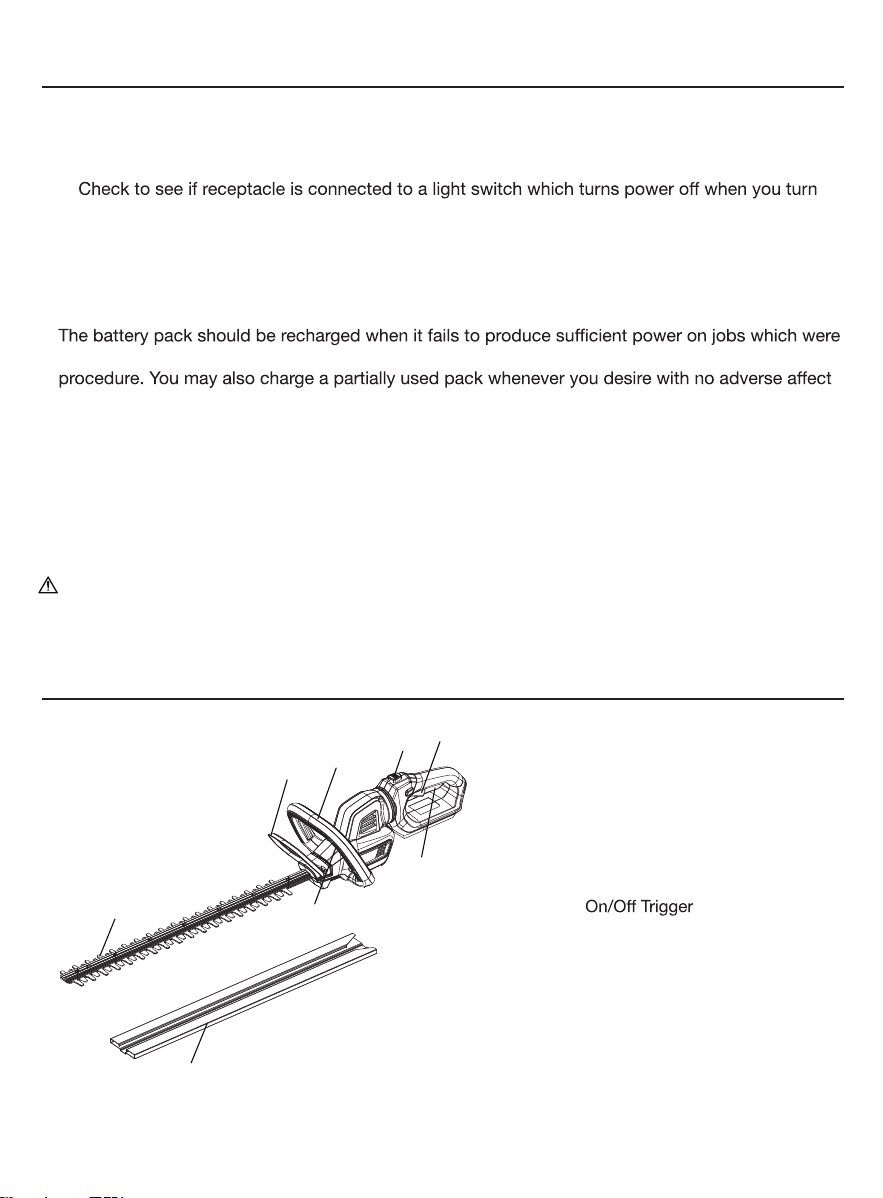
1. Plug charger into household outlet, make sure the power supply is normal household voltage, 120
Volts, AC only, 60 Hz.
2. Attach the battery pack to the charger by aligning the raised ribs on the
battery pack with the grooves in the charger, then slide the battery pack
onto the charger.
3. Press down on the battery pack to be sure contacts on the battery pack
battery charges.
4. After charging is complete, the green LED will remain on.
5. To remove the battery pack from the charger, slide back the battery pack.
IMPORTANT CHARGING NOTES
1. Longest life and best performance can be obtained if the battery pack is charged when the air
temperature is between 65°F and 75°F (18°- 24°C). DO NOT charge the battery pack in an air
temperature below +40°F (+4.5°C), or above +105°F (+40.5°C). This is important and will prevent
serious damage to the battery pack.
2. The charger and battery pack may become warm to touch while charging. This is a normal
condition, and does not indicate a problem. To facilitate the cooling of the battery pack after use,
avoid placing the charger or battery pack in a warm environment such as in a metal shed, or an
uninsulated trailer.
9
SAFETY INFORMATION
3. If the battery pack does not charge properly:
a. Check current at receptacle by plugging in a lamp or other appliance
b.
out the lights.
c. Move charger and battery pack to a location where the surrounding air temperature is
approximately 65°F - 75°F (18°- 24°C).
d. If charging problems persist, take the tool, battery pack and charger to your local service center.
4.
easily done previously. DO NOT CONTINUE to use under these conditions. Follow the charging
on the battery pack.
5. Foreign materials of a conductive nature such as, but not limited to, steel wool, aluminum foil, or
any buildup of metallic particles should be kept away from charger cavities. Always unplug the
charger from the power supply when there is no battery pack in the cavity. Unplug charger before
attempting to clean.
6. Do not freeze or immerse the charger in water or any other liquid.
WARNING: Do not allow any liquid to get inside charger. Never attempt to open the battery pack
for any reason. If the plastic housing of the battery pack breaks or cracks, return to a service center
for recycling.
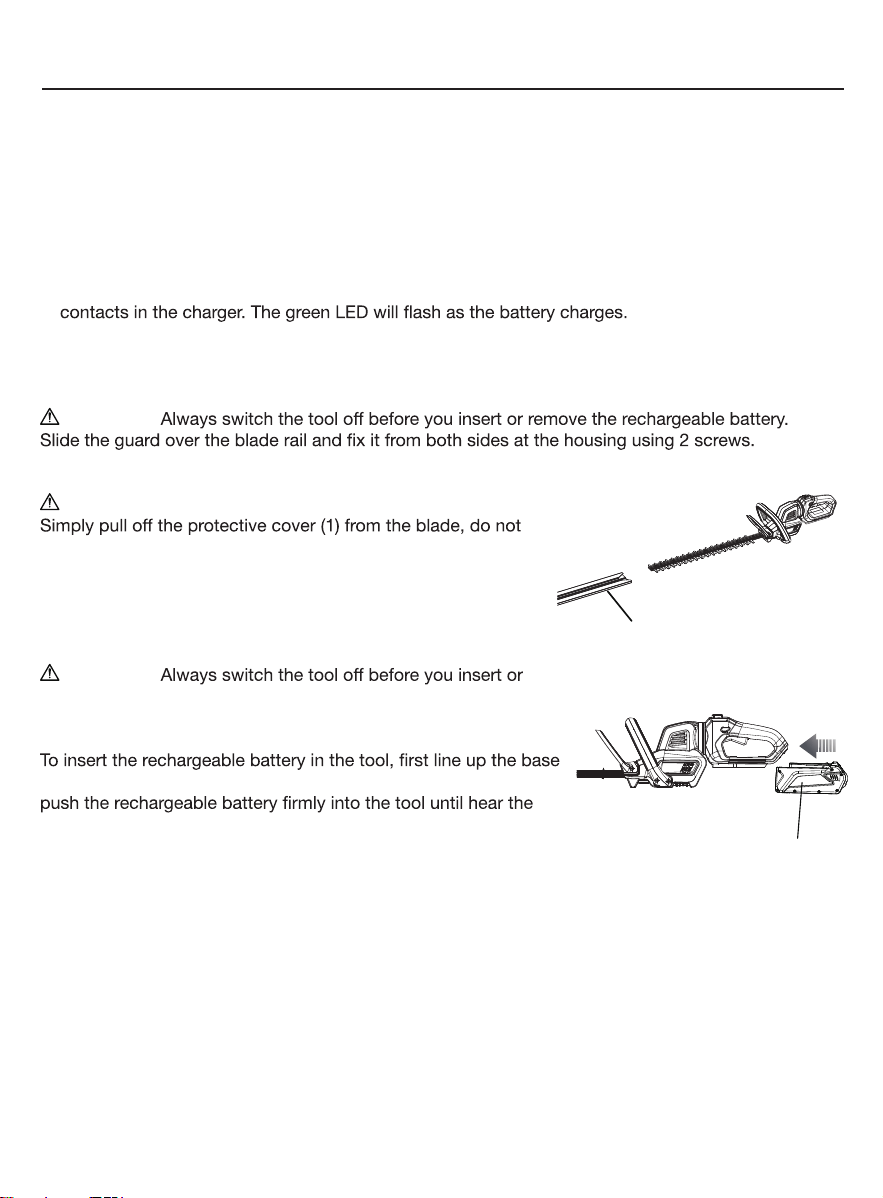
FEATURES
Description of the parts
1. Protective Blade Cover
2. Blade
3. Guard
4. Sensor Switch
5. Front Handle
6.
7. Starter Button
8.
Handle Rotate Button
1
3
5
4
2
8
7
6
10
ASSEMBLY
CHARGING PROCEDURE:
NOTICE: Do not place the charger in an area of extreme heat or cold. It will work best at normal
room temperature. The battery pack will become slightly warm to the touch while charging. This is
normal and does not indicate a problem.
1. Plug charger into household outlet, make sure the power supply is normal household voltage, 120
Volts, AC only, 60 Hz.
2. Attach the battery pack to the charger by aligning the raised ribs on the battery pack with the
grooves in the charger, then slide the battery pack onto the charger.
3. Press down on the battery pack to be sure contacts on the battery pack engage properly with
4. After charging is complete, the green LED will remain on.
5. To remove the battery pack from the charger, slide back the battery pack.
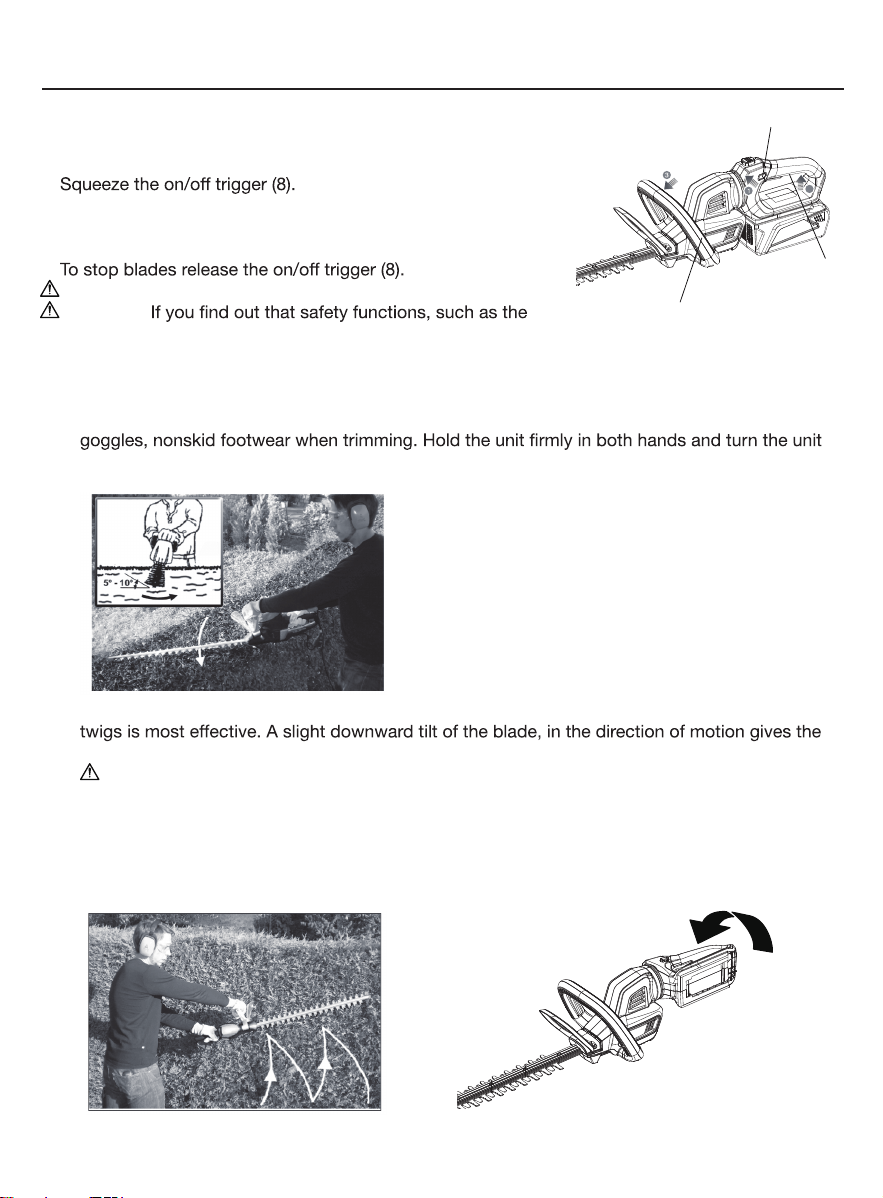
ASSEMBLY OF THE GUARD
WARNING:
REMOVING PROTECTIVE COVER FROM BLADE
WARNING: Never start trimmer with plastic cover on blades.
discard. Always cover blades when storing the tool as it prevents
debris from deteriorating blades.
INSTALLING AND REMOVING THE RECHARGEABLE
BATTERY
WARNING:
remove the rechargeable battery.
If you want to remove the rechargeable battery from the tool,
press the interlock of the battery and pull it upward from the tool.
of the rechargeable battery with the guide on the housing. Then
locking click into place. If the rechargeable battery is not locked
into place, you or other persons may be injured.
6
1
11
HOW TO OPERATE THE HEDGE TRIMMER
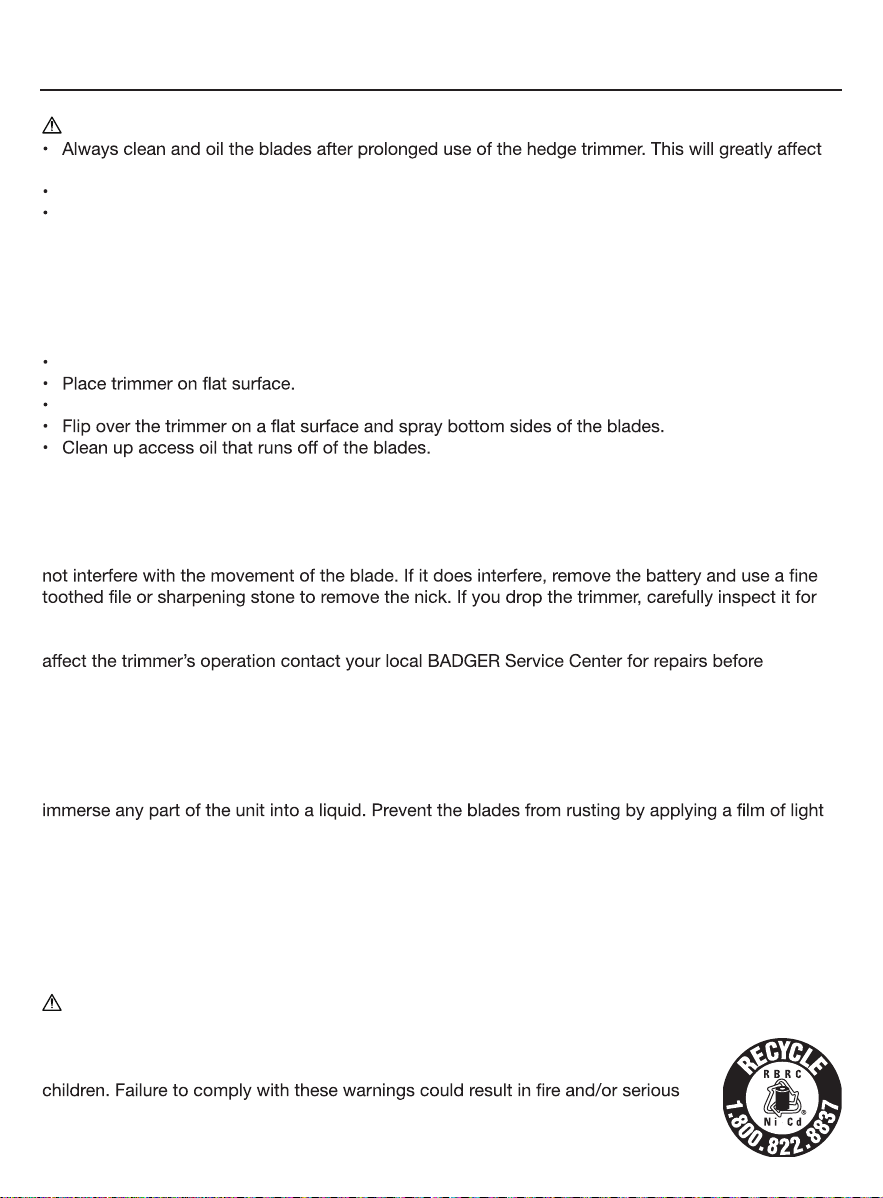
1. While holding the trimmer with both hands, use your thumb to
hold the starter button (7).
2.
3. With your opposite hand, hold the sensor switch to start the
blades.
4. Release thumb on starter button.
5.
WARNING: Never attempt to lock a switch in the ON position.
DANGER:
2-switch mechanism or the safety stop, are not functioning while working with the hedge shears,
immediately cease working and take the machine to a service center for repairing.
TRIMMING INSTRUCTIONS
1. WORKING POSITION – Maintain proper footing and balance and do not overreach. Wear safety
ON. Always hold the trimmer, as shown with one hand on the switch handle and one hand on the
wrap around handle. Never hold the unit by the blade guard.
2. TRIMMING NEW GROWTH – A wide, sweeping motion, feeding the blade teeth through the
best cutting.
CAUTION: Do not cut stems greater than 1 inch. Use the trimmer only for cutting
normal shrubbery around houses and buildings.
3. LEVEL HEDGES – To obtain exceptionally level hedges a piece of string can be stretched along
the length of the hedge as a guide.
4. SIDE TRIMMING WITH ROTATING REAR HANDLE – Rotate the handle for added convenience
when side trimming. Press the release button located on top of the handle, and rotate the handle
to the desired direction until click. Continue operation as shown.
OPERATION
4
7
2
8
12
CARE AND MAINTENANCE
WARNING: Always remove the rechargeable battery from the device before all work.
the life of the equipment. Damaged cutting units must be properly repaired immediately.
Clean the shearing blades with a dry cloth or - in case of heavier dirt -with a brush.
NOTICE: Oiling of the blades should ideally be carried out using an environmentally friendly
lubricant.
OILING THE BLADES
For easier operation and longer blade life, lubricate the hedge trimmer blade before and after each
use. Make sure to only use hedge trimmer blade oil. DO NOT USE any other types of oil. Other oils
or liquids may damage blades.
Remove the battery pack from the hedge trimmer and let the tool cool down.
Evenly spray oil across the blades on both sides, aim for where the blades meet the metal rail.
SHARPENING THE BLADES
The cutting blades are made from high quality, hardened steel and with normal usage, they will
not require resharpening. However, if you accidentally hit a wire fence, stones, glass or other hard
objects, you may put a nick in the blade. There is no need to remove this nick as long as it does
damage.
If the blade is bent, housing cracked, or handles broken or if you see any other condition that may
putting it back into use.
STORAGE AND CLEANING
Fertilizers and other garden chemicals contain agents which greatly accelerate the corrosion of
metals. Do not store the unit on or adjacent to fertilizers or chemicals. With the battery removed,
use only mild soap and a damp cloth to clean the unit. Never let any liquid get inside the unit; never
machine oil after cleaning.
BATTERY PACK REMOVAL AND PREPARATION FOR RECYCLING
To preserve natural resources, please recycle or dispose of batteries properly. This product contains
lithium-ion batteries. Local, state or federal laws may prohibit disposal of lithium-ion batteries in
ordinary trash. Consult your local waste authority for information regarding available recycling and/or
disposal options.
WARNING: Upon removal, cover the battery pack’s terminals with heavy-duty adhesive tape. Do
not attempt to destroy or disassemble battery pack or remove any of its components. Lithium-ion
batteries must be recycled or disposed of properly. Also, never touch both terminals
with metal objects and/or body parts as short circuit may result. Keep away from
injury.
13
TROUBLESHOOTING
PROBLEM POSSIBLE CAUSE POSSIBLE SOLUTION
Slow running, noisy or hot
blades
Dry, corroded blades Check battery installation
Blades or blade support bent
Straighten blade or blade
support
Bent or damaged teeth Straighten teeth
Loose blade bolts Tighten blade bolts.
Unit will not start
Battery not installed properly Check battery installation
Battery not charged
Check battery charging re-
quirements
Battery will not charge
Battery not inserted into charger
Insert battery into charger
until red LED appears
Charger not plugged in
Plug charger into a working
outlet.
Check current at receptacle
by plugging in a lamp or other
appliance.
Check to see if receptacle is
connected to a light switch
you turn out the lights.
Surrounding air temperature too
hot or too cold
Move charger and tool to a
surrounding air temperature of
above 40 degree F (4.5°C) or
below 105 degree F (+40.5°C).
Badger:
Email:[email protected]
Phone Number: 1-844-786-7335
1-833-822-0145
Working hours: Monday-Friday 8am-5pm Eastern Standard Time
Three year limited warranty
