.......................... 16
Important Safety Instructions ........................... 2-4
Operating Instructions ................................... 5-11
Stain Removal Guide ....................................12-13
Care and Cleaning ........................................14-15
Solutions to Common Inquiries
Avoid Service Checklist .................................17-19
Warranty ......................................................... 20
Français ........................................................... 21
Español ........................................................... 43
Frigidaire.com USA 1-800-374-4432 Frigidaire.ca Canada 1-800-265-8352
All about the
of your Washer
Use & Care
e
A29911401(November 2024)
2
IMPORTANT SAFETY INSTRUCTIONS
De¿ nitions
This is the safety alert symbol. It is used to alert you to
potential personal injury hazards. Obey all safety messages
that follow this symbol to avoid possible injury or death.
NOTE
The instructions appearing in this
Use and Care Guide
are not meant to cover every possible condition and situ-
ation that may occur. Common sense and caution must be
practiced when installing, operating and maintaining any
appliance.
WARNING
Please read all instructions before using this washer.
Recognize safety symbols, words and
labels
Safety items throughout this manual are labeled with a
WARNING or CAUTION based on the risk type as described
below:
Read all instructions before using this appliance. This book
contains valuable information about:
• Operation
• Care
• Service
Keep it in a safe place.
Model Number ___________________________
Serial Number ___________________________
Purchase Date ___________________________
This
Use and Care Guide
provides general operating instruc-
tions for your washer. It also contains information about
features for several other models. Your washer may not have
every feature included.
Use the washer only as instructed in this
Use & Care Guide
.
Product Record
Save these instructions for future reference.
Record Your Model and Serial Numbers
The model and serial numbers of your washer are found on
the serial plate located under the washer lid. Record and
retain these numbers.
IMPORTANT
IMPORTANT indicates installation, operation or
maintenance information which is important but not
hazard-related.
WARNING
WARNING indicates a potentially hazardous situation which,
if not avoided, could result in death or serious injury.
CAUTION
CAUTION indicates a potentially hazardous situation which,
if not avoided, may result in minor or moderate injury.
DANGER
DANGER indicates an imminently hazardous situation
which, if not avoided, will result in death or serious injury.
3
IMPORTANT SAFETY INSTRUCTIONS
WARNING - RISK OF FIRE
To reduce the risk of fire, electrical shock, or injury to persons when using this washer, comply with the basic warnings listed
below. Failure to comply with these warnings could result in serious personal injuries.
You can be killed or seriously injured if you don’t follow these Important Safety Instructions:
PREVENT FIRE
• Do not wash items that have been previously cleaned in,
soaked in, or spotted with gasoline, cleaning solvents,
kerosene, cooking oils, waxes, etc. Do not store these
items on or near the washer. These substances give off va-
pors or chemical reactions that could ignite or explode.
• Do not put oily or greasy rags or clothing on top of the
washer. These substances give off vapors that could ignite
the materials.
• Do not add gasoline, cleaning solvents, or other flammable
or explosive substances to the wash water. These sub-
stances give off vapors that could ignite or explode.
• Under certain conditions, hydrogen gas may be produced
in a hot water system that has not been used for 2 weeks
or more. HYDROGEN GAS IS EXPLOSIVE. If the hot water
system has not been used for such a period, before using
the washer, turn on all hot water faucets and let the water
flow from each for several minutes. This will release any
accumulated hydrogen gas. Hydrogen gas is flammable;
do not smoke or use an open flame during this time.
• Do not store or use gasoline or other flammable vapors or
liquids in the vicinity of this or any other appliance.
• Failure to comply with these warnings could result in fire,
explosion, serious bodily injury and/or damage to the rub-
ber or plastic parts of the washer.
• Do not continue to use the washer if you hear squeaking,
grinding, rubbing or other unusual noises. This could be a
sign of mechanical breakdown and lead to fire or serious
injury. Contact a qualified technician immediately.
PROTECT CHILDREN
• Do not allow children to play on or in the washer. Close su-
pervision of children is necessary when the washer is used
near children. As children grow, teach them the proper,
safe use of all appliances.
• Destroy the carton, plastic bag and other packing materi-
als after the washer is unpacked. Children might use them
for play. Cartons covered with rugs, bedspreads or plastic
sheets can become airtight chambers.
• Keep laundry products out of children’s reach. To prevent
personal injury, observe all warnings on product labels.
• Before the washer is removed from service or discarded,
remove the washer lid to prevent accidental entrapment.
• Failure to comply with these warnings could result in seri-
ous personal injuries.
4
IMPORTANT SAFETY INSTRUCTIONS
WARNING
FIRE/ELECTRICAL SHOCK HAZARD
Avoid ¿ re hazard or electrical shock. Do not use an adaptor
plug or extension cord or remove grounding prong from
electrical power cord. Failure to follow this warning can cause
serious injury, ¿ re or death.
WARNING
HARMFUL VAPOR HAZARD
Do not use or mix liquid chlorine bleach with other household
chemicals such as toilet cleaners, rust removers, acid or
products containing ammonia. These mixtures can produce
dangerous fumes which can cause serious injury or death.
PREVENT INJURY
• To prevent shock hazard and assure stability during
operation, the washer must be installed and electrically
grounded by a quali¿ ed service person in accordance with
local codes. Installation instructions are packed in the
washer for installer’s reference. Refer to
INSTALLATION
INSTRUCTIONS
for detailed grounding procedures. If the
washer is moved to a new location, have it checked and
reinstalled by a quali¿ ed service person.
• To prevent personal injury or damage to the washer, the
electrical power cord of the washer must be plugged into a
properly grounded and polarized 3-prong outlet. The third
grounding prong must never be removed. Never ground
the washer to a gas pipe. Do not use an extension cord or
an adaptor plug.
• Follow package directions when using laundry products.
Incorrect usage can produce poisonous gas - resulting in
serious injury or death.
• Do not combine laundry products for use in same load
unless speci¿ ed on the label.
• Do not mix chlorine bleach with ammonia or acids such
as vinegar.
PREVENT INJURY AND DAMAGE TO THE APPLIANCE
To prevent serious personal injury and damage to the washer:
• All repairs and servicing must be performed by an autho-
rized servicer unless speci¿ cally recommended in this
Use
& Care Guide
. Use only authorized factory parts.
• Do not tamper with controls.
• Do not install or store the washer where it will be exposed
to the weather.
• Do not install on carpet. Install washer on a solid À oor. It
may be necessary to reinforce the À oor to prevent vibra-
tion or movement.
• Do not sit on, step on or stand on the washer. Do not rest
heavy loads on top. The washer is not meant to support
weight.
• To reduce the risk of electric shock, disconnect this appli-
ance from the power supply before attempting any user
maintenance. Canceling a cycle or turning the power off
at the console does not disconnect this appliance from the
power supply.
• To prevent injury, do not reach into the washer while parts
are moving. Before loading, unloading or adding items,
press POWER
button to stop the cycle. Allow the wash
tub to coast to a complete stop before reaching inside.
• This washer is equipped with an electrical overload protector.
The washer motor will stop if it becomes overheated.
• Failure to comply with these warnings could result in seri-
ous personal injuries.
Read all instructions before
operating this washer.
IMPORTANT
Do not wash water-resistant clothing, rugs, mats, or other
waterproof items. This may create a hazardous out-of-
balance situation.
The electrical valve, retractor, motor and drain pump of this
appliance are intentionally not grounded and may present a
risk of electric shock during serving. Do not contact these
electronic devices while the appliance is energized.
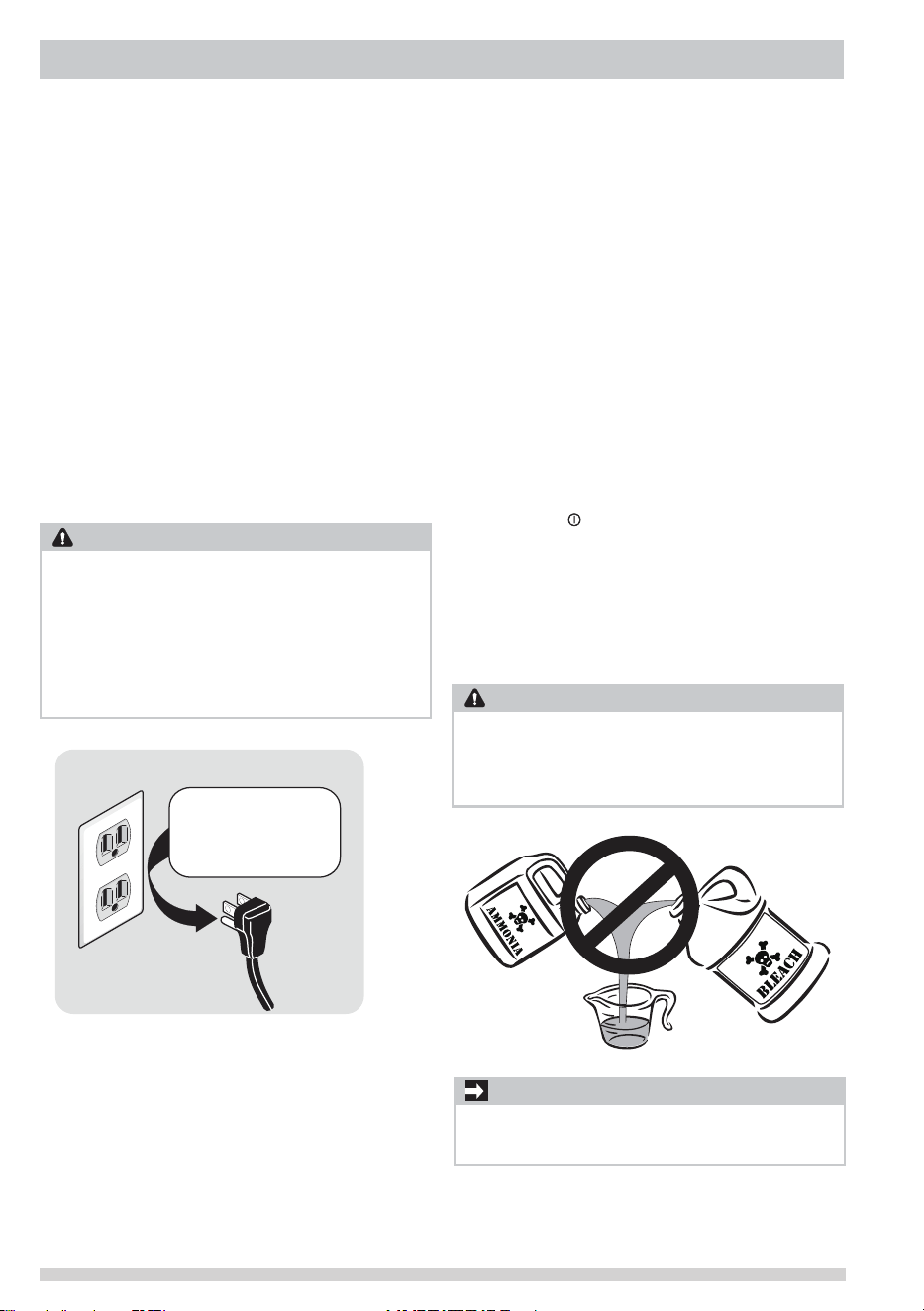
Grounding type
wall receptacle
Power cord with
3-prong grounded plug
Do not,under
any circumstances,
cut, remove,
or by pass the
grounding prong.
• Do not use replacement parts that have not been recommend-
ed by the manufacturer (e.g. parts made at home using a 3D
printer).
5
OPERATING INSTRUCTIONS
WARNING
To reduce the risk of fire, electric shock or injury to persons,
read the IMPORTANT SAFETY INSTRUCTIONS in this Use and
Care Guide before operating your washer.
(Mesh bag not included.)
Washing Procedures
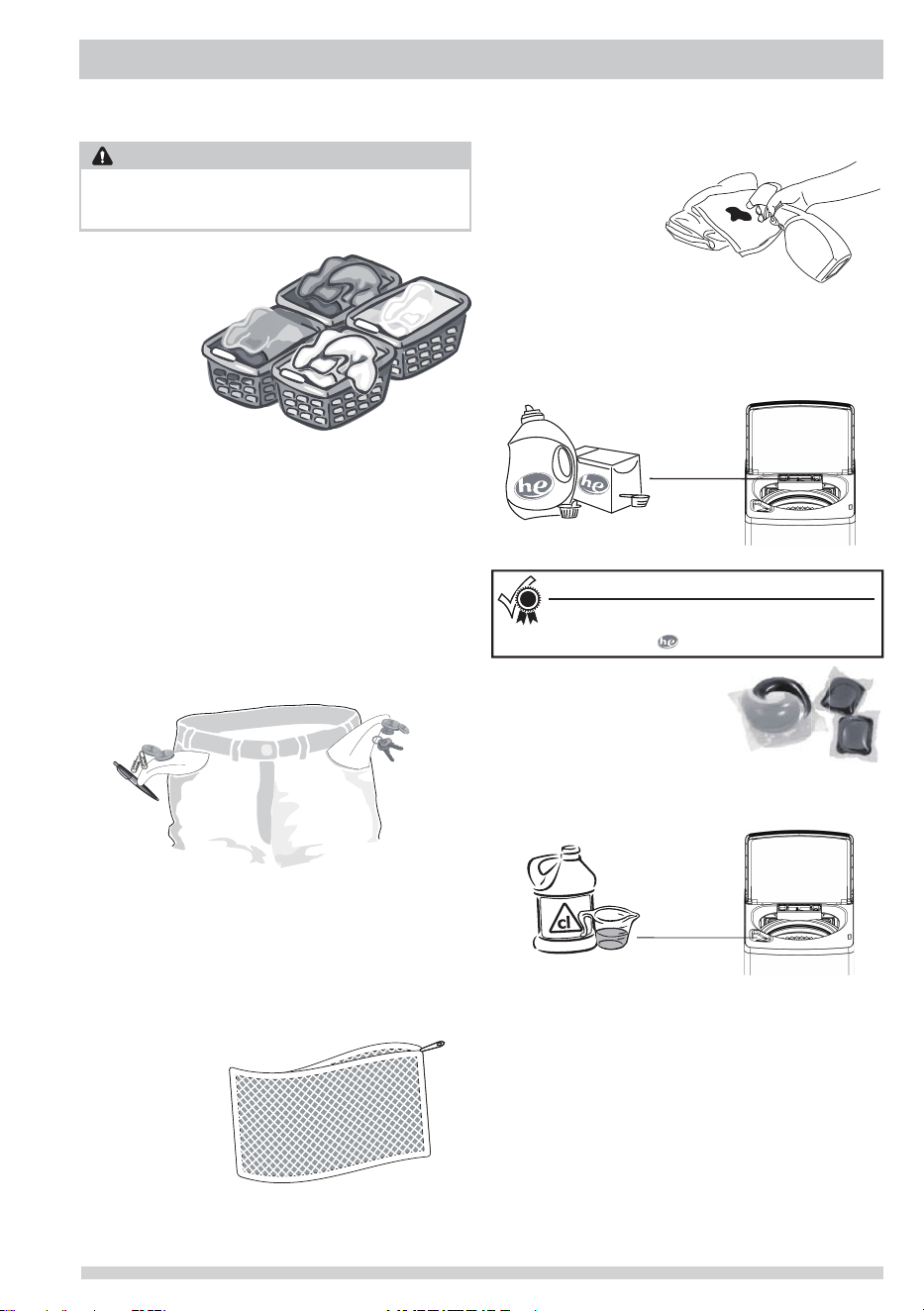
1 Sort laundry into loads that
can be washed together.
• Sort items by
recommended
cycle and water
temperature.
• Separate white, light and colorfast items from dark and
non-colorfast items.
• Separate items that shed lint from items that attract
lint. Casual, synthetic, knit, and corduroy items will pick
up lint from towels, rugs, and bedspreads.
• Separate heavily soiled items from lightly soiled items.
• Separate lacy, sheer, loosely knit, or delicate items from
durable items.
• Do not machine wash items containing fiberglass. Small
particles of fiberglass left in the drum may transfer to
fabrics in other loads and cause skin irritation and/or
damage to fabrics.
2 Prepare items for washing.
• Empty pockets.
• Brush off lint and dirt. Shake out rugs and beach
towels.
• Close zippers, fasten hooks, button buttons, tie strings
and sashes, and remove non-washable trims and
ornaments.
• Mend rips and tears to prevent further damage during
washing.
• Turn knit items inside out to prevent pilling.
• Place delicate and small items such as bras, hosiery
and baby socks in a mesh bag.
4 Add a measured amount of detergent to the deter-
gent compartment.
• Follow detergent manufacturer’s directions. The
amount required depends on type of detergent, load
size and soil level, and water hardness.
3 Pretreat stains and heavy soil.
• See Stain Removal Guide in
this guide for safe,
successful stain re-
moval instructions.
Use a low-sudsing, high efficiency detergent to
prevent oversudsing. Look for this symbol on the
detergent label:
For best results
• If using pod-type detergent
packs, place them directly
at the bottom of empty tub
BEFORE adding laundry.
5
If desired, add liquid bleach to bleach dispenser.
• Before adding the wash load, add liquid bleach to
bleach dispenser.
• Refer to bleach manufacturer’s directions for quantity
to add.
• Do not exceed the max fill line.
• Do not use powdered bleach in the bleach dispenser.
Add powdered bleach to the empty tub.
• If using liquid color-safe bleach, add it to the liquid
detergent dispenser if using liquid detergent.
7
OPERATING INSTRUCTIONS
Washing Procedures, continued
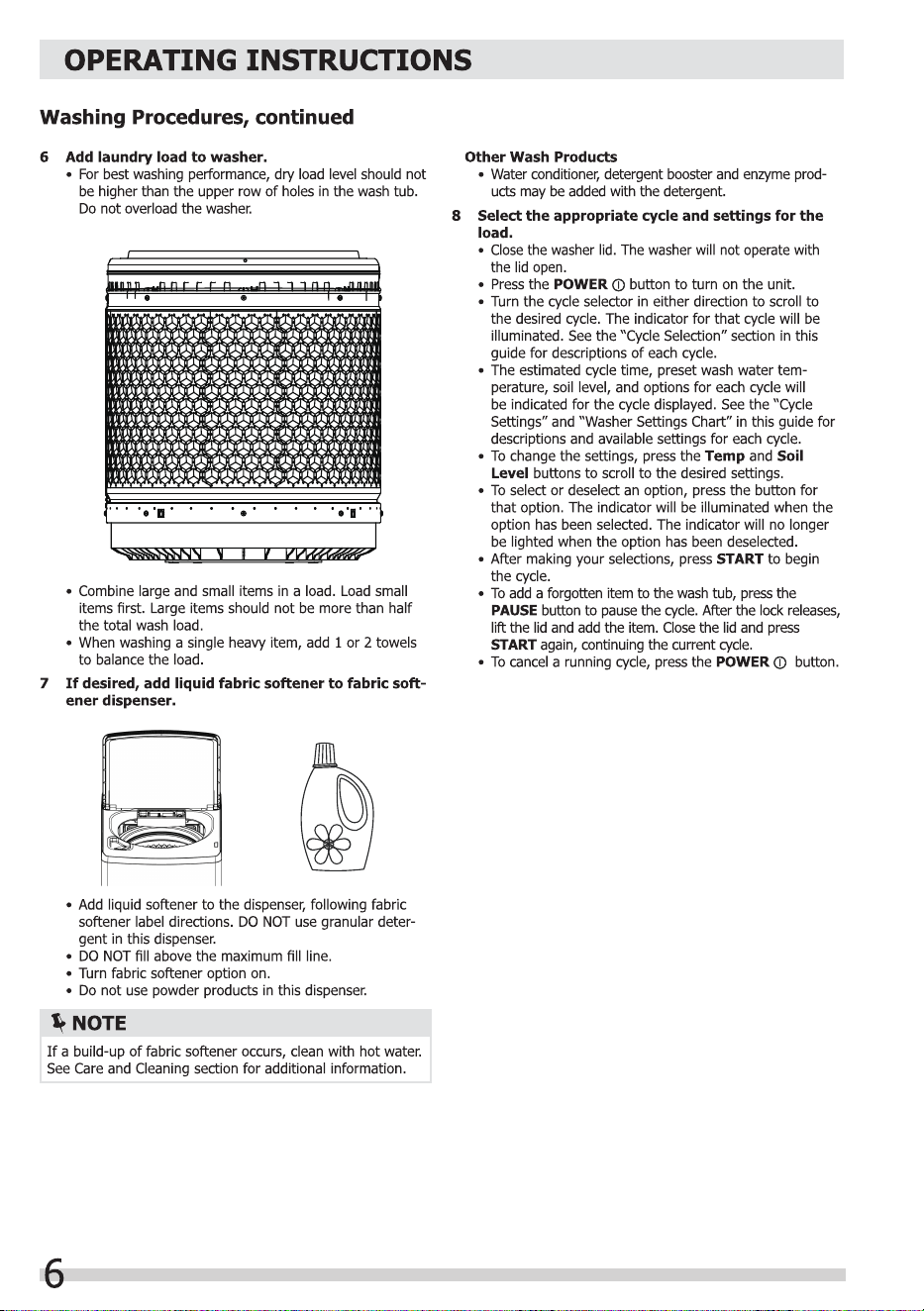
• To open the lid during cycle final spin,
press the PAUSE
button to pause the cycle
. Wait for the lid lock to
release. Do not force open the locked lid.
CAUTION
To avoid serious personal injury, do not operate washer if
safety lid lock is missing, damaged or operating improperly.
• Remove items from the washer when the cycle ends and
place in dryer, line dry or dry flat as directed on the fabric
care label. Excess wrinkling, color transfer or odors may
develop in items left in the washer after the cycle has
ended.
Cycle Selection
9 Remove items when the cycle is completed.
• For your safety, the lid is locked during the final spin of
the cycle. It will unlock at the cycle end after the tub has
come to a complete stop.
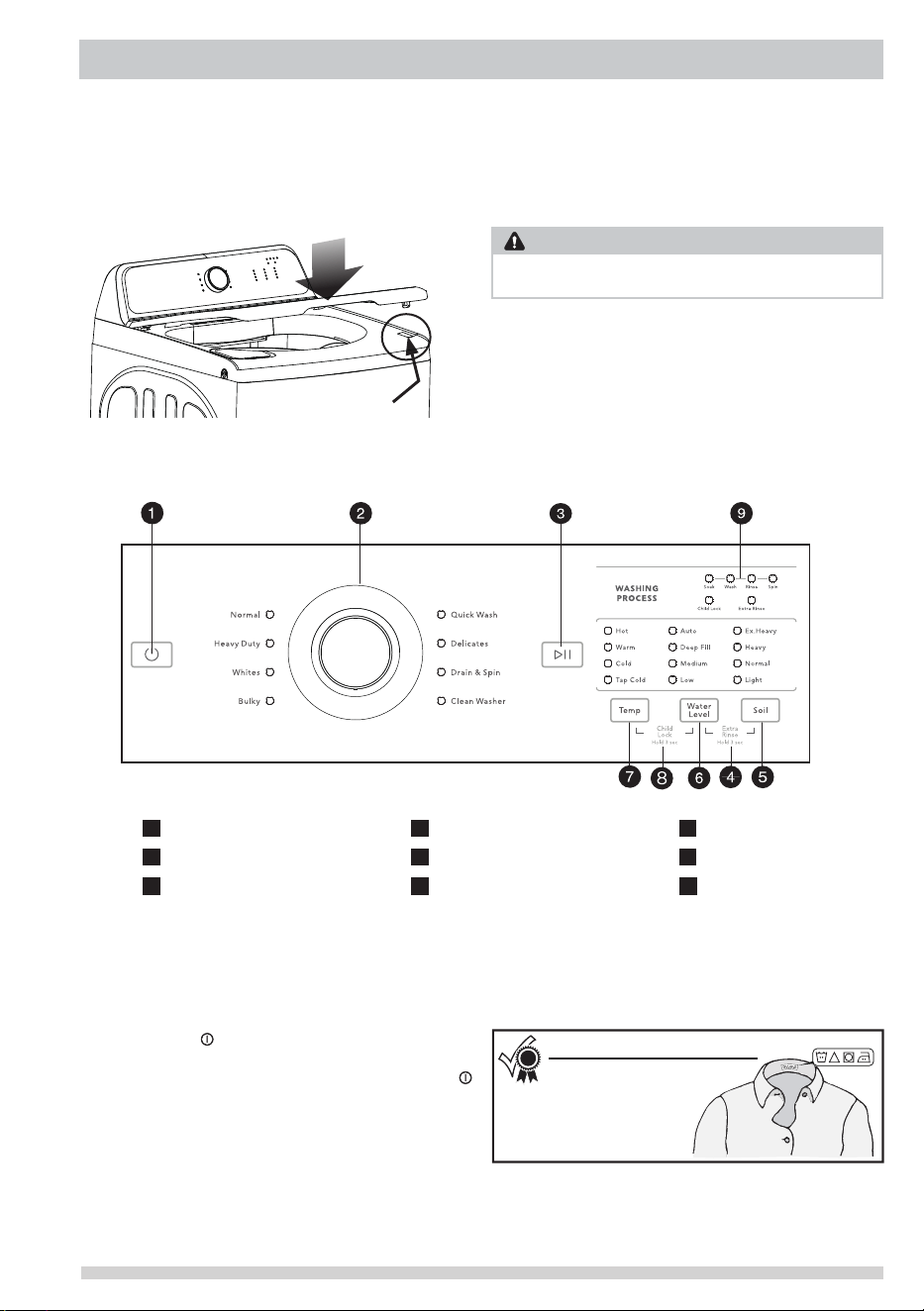
This manual covers many models and not all cycles, options, or features listed are available on every model. Console
shown above for reference only. Your model may differ.
Press the POWER button to turn on the unit. Turn the
cycle selector in either direction to scroll through the cycles.
To change the cycle once it has begun, press the POWER
button before selecting a new cycle. Just turning the cycle
selector will not change the cycle.
Follow the fabric care label
instructions on items to
be washed.
For best results
Cycle
START
Soil
Temp
1
POWER
2 3
4 5 6
7 8
Extra Rinse
Child Lock
Water Level
SAFETY LID LOCK
9
Status Lights
8
OPERATING INSTRUCTIONS
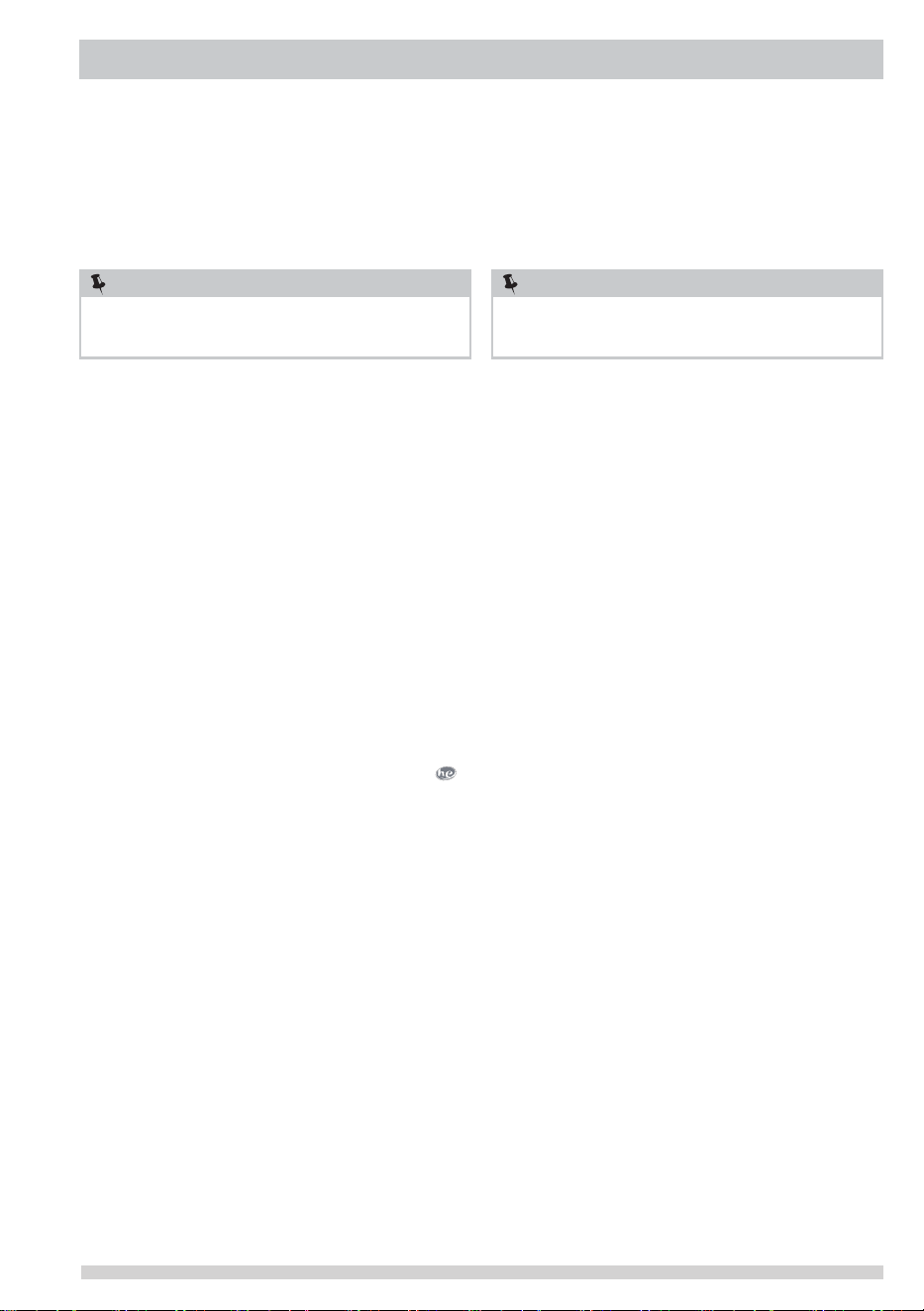
POWER
Press the Power button to your washer.Press again to turn
off your washer.lf you leave your washer on and do not
press START/PAUSE within 10 minutes,your washer
automatically turns off.
Cycle
Turn it select a wash Cycle.The Cycle you select determines
the wash pattern for the Cycle.
START
Press once to start the Cycle.Press again to pause the Cycle.
lf you pause the Cycle,you can add or remove items,but you
cannot change any settings.Press again to restart the Cycle.
Soil
Press to select the soil. to get different soil level settings.
Water Level
Select the washing Water Level.The rinsing Water Level is
the sameas the washing Water Level.
Deep Fill - Select for the large loading level.
Medium - Select for the medium.
Low - Select for the low loading level.
Auto - Automatically selects the water level according to the
loading weight.
Temp
Press to select the washing water temperature.The rinse
water temperature is always cold.
Child Lock
Press and hold the Temp and Water Level .buttons at the
same time for three seconds to turn on the Child Lock function.
Press an
d hold these buttons again for three seconds to turn off
the function. when the Child Lock function is turned on,the only
button that works is the POWER button and the Temp and
Water Level. buttons you
use to turn off the Child Lock.
NOTE
Cleaning vinegar works well to freshen your load as a
substitute to traditional fabric softeners. Load into fabric
softener dispenser as normal.
Cycle Selection, continued
9
OPERATING INSTRUCTIONS
NOTE
To change the temperature or soil level once the cycle has
begun, press the PAUSE button, make the new selection
and press START again.
NOTE
To change options once the cycle has begun, press the
PAUSE button, make the new selection and press START
again.
Cycle Settings
Select appropriate wash water temperature and soil level
settings suitable for each load. Make selections according to
¿ ber content, colorfastness and soil level.
The settings can be changed before the cycle is started. If
changes are attempted after the cycle starts, the lights will
À ash and a signal will beep, but the cycle will continue.
Wash Water Temperature
To change the preset washing temperature, press the Temp
button to scroll to the desired setting.
The water heater setting and its distance from the washer,
water usage in other parts of the home, and seasonally low
ground water temperature in some geographic areas can
affect water temperature.
Hot
Use this setting for heavily soiled white or colorfast cottons
and blends.
Warm
Use this setting for normally soiled white or colorfast
cottons or blends.
Cold
Some warm water will automatically blend with cold tap
supply to achieve cold. Use this setting for lightly soiled non-
colorfast items, knits, delicates, and hand washables.
Tap Cold
Wash and rinse temperatures are equivalent to temperature
of cold tap supply. Use this selection for fabrics and colors
that are prone to dye transfer. For use with cold water
detergents.
To select an option, press the corresponding option button to
illuminate the desired option. To deselect an option, press the
option button again and the indicator light will turn off.
To protect your fabrics, not all options are available with every
cycle. If an option is not appropriate for the cycle, the indicator
will not light.
Cycle Options
Soil Level
To change the preset level, press the Soil button to scroll to
the length of agitation desired.
Adjust duration of agitation time based on the soil level of
each load. Ex.Heavy , Heavy, Normal , and Light
soil levels are available.
10
OPERATING INSTRUCTIONS
Other Features
POWER
Turn you washer on, off, or cancel the current cycle with the
POWER
button. If the washer is left on for more than ten
minutes without pressing the START button, the washer will
automatically turn off.
Child Lock
To avoid having someone accidentally start or stop the washer,
press Temp and Water Level
Temp and Water Level
,
and hold for 3 seconds.
The
ind
icator light will be
illuminated.To remove the
press and hold .If the lid
is in the raised position for more than 20 seconds while
the
activated,the washer will begin drain
ing
draining, press the
POWER
button.
Estimated Time Remaining
The estimated cycle duration will be displayed before you
start the cycle and time remaining will be displayed after
you start the cycle. The initial display may be “ ” for some
cycles. Out-of-balance situations during spins may occasion-
ally lengthen actual
cycle times.
Status Lights
The following indicators may be lighted during the cycle,
indicating the current phase of the wash cycle:
• Soak
• Wash
• Rinse
• Spin
Press and hold for 1 seconds to turn on your washer.
Child Lock,
Child Lock feature is
water from the tub.To clear the display and stop the tub from
Child Lock
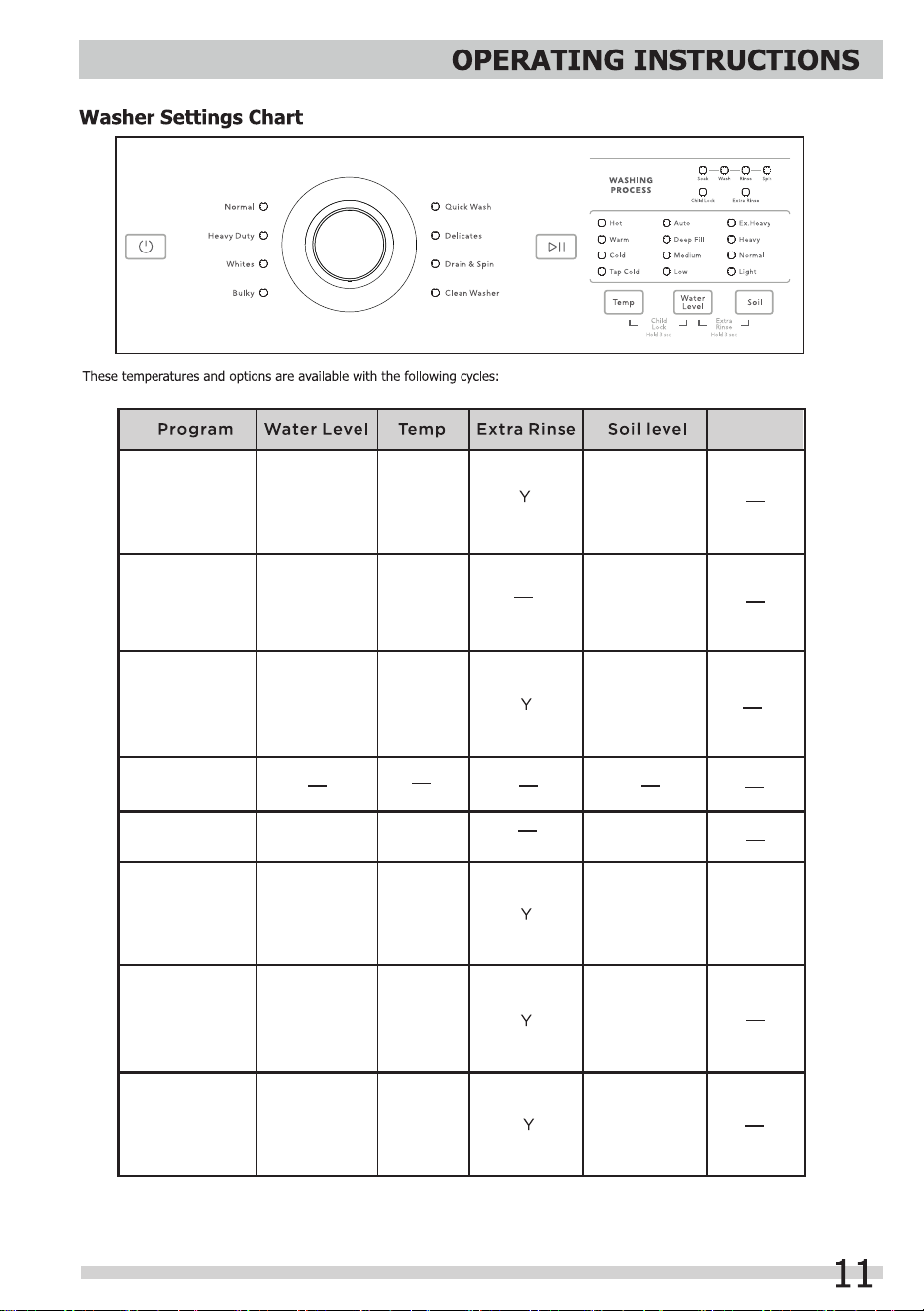
Normal
Quick Wash
Delicates
Drain&spin
Clean Washer
Bulky
Whites
Heavy Duty
Deep Fill
Auto
Medium
Low
Deep Fill
Aut
o
Medium
Medium
Low
Deep Fill
Deep Fill
Auto
Medium
Low
Deep Fill
Auto
Medium
Low
Deep Fill
Auto
Medium
Low
Hot
Warm
Cold
Tab Cold
Hot
Warm
Cold
Hot
Warm
Cold
Tab Cold
Hot
Hot
Warm
Cold
Tab C
old
Hot
Warm
Cold
Tab Cold
Hot
Warm
Cold
Tab Cold
Ex. Heavy
Heavy
Normal
Light
Normal
Light
Heavy
Normal
Light
Ex. Heavy
Ex. Heavy
Heavy
Normal
Ligh
t
Ex. Heavy
Heavy
Normal
Light
Ex. Heavy
Heavy
Normal
Light
Low Tab Cold
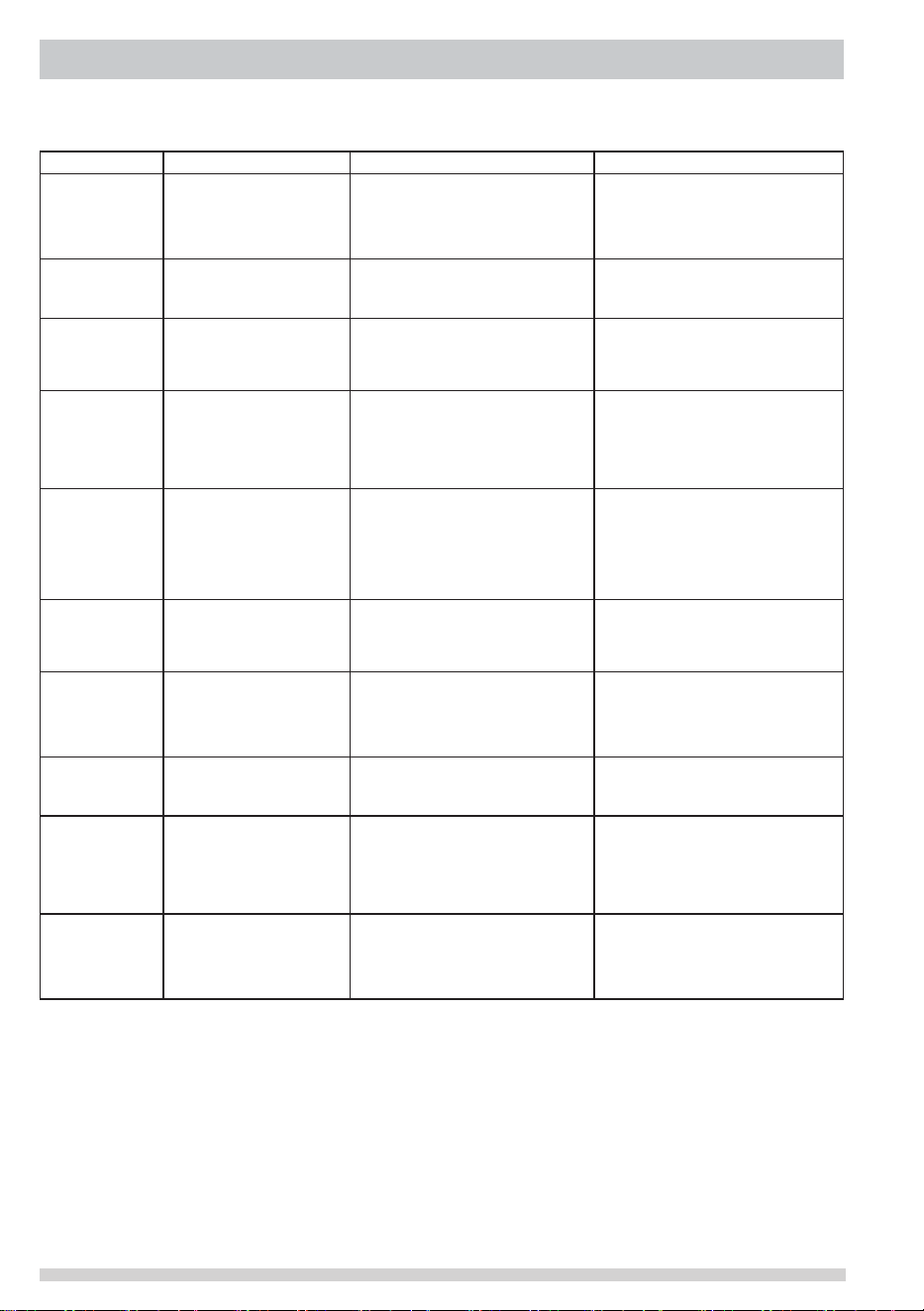
Soak
10
12
STAIN REMOVAL GUIDE
Follow the fabric care label instructions on items to
be washed.
For best results
Safe Stain Removal Procedures
To reduce the risk of fire or serious injury to persons or prop-
erty, comply with the basic warnings listed below:
• Read and comply with all instructions on stain removal
products.
• Keep stain removal products in their original labeled
containers and out of children’s reach.
• Thoroughly wash any utensils used.
• Do not combine stain removal products, especially am-
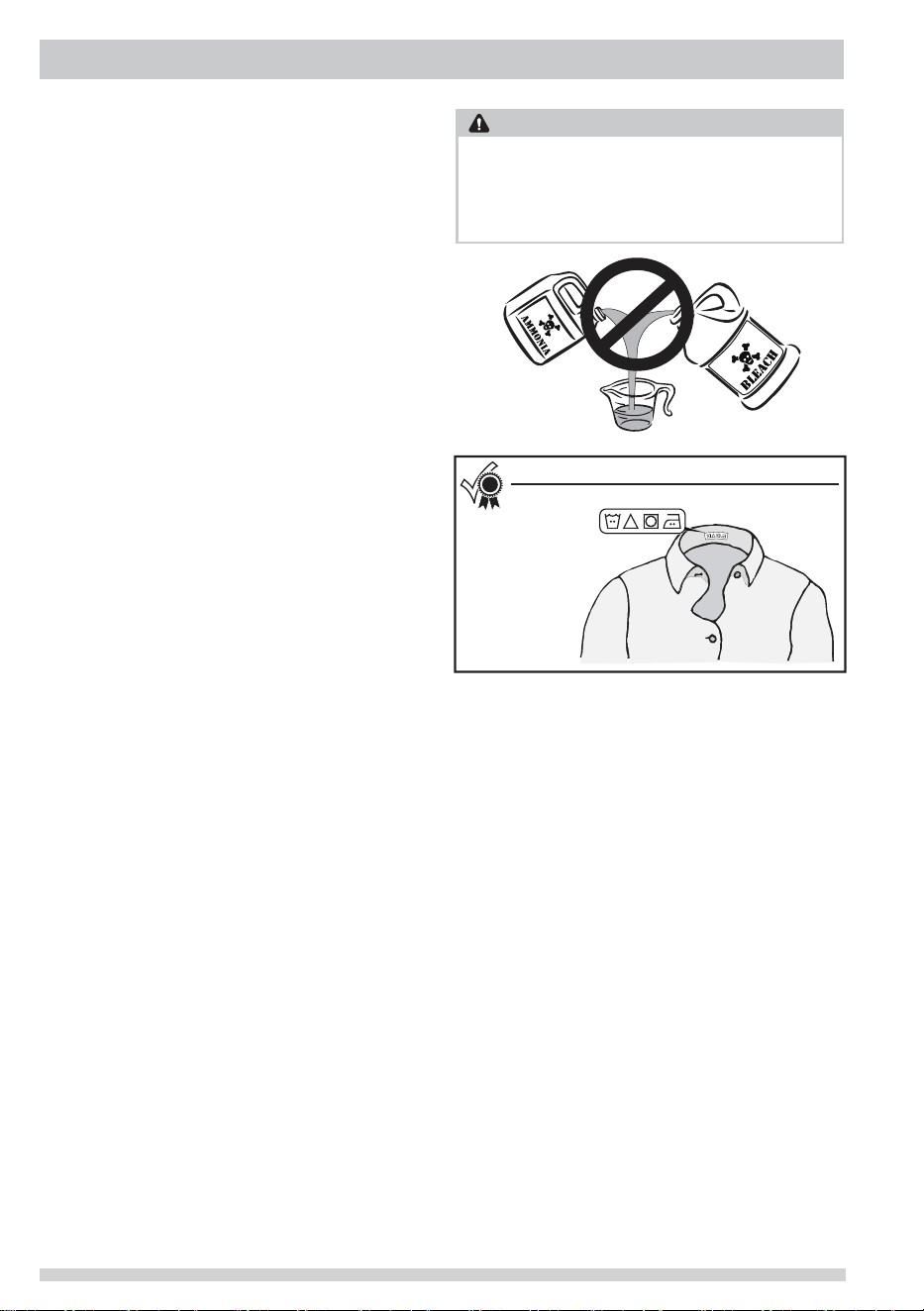
monia and chlorine bleach. Dangerous fumes can result.
• Never wash items which have been previously cleaned in,
washed in, soaked in or spotted with gasoline, dry clean-
ing solvents or other flammable or explosive substances
because they give off vapors that could ignite or explode.
• Never use highly flammable solvents, such as gasoline,
inside the home. Vapors can explode on contact with
flames or sparks.
For Successful Stain Removal:
• Remove stains promptly.
• Determine the kind of stain, then follow the recom-
mended treatment in the stain removal chart on the next
page.
• To pretreat stains, use a prewash product, liquid deter-
gent, or a paste made from powder detergent and water.
• Use cold water on unknown stains as hot water can set
stains.
• Consult care label instructions for treatments to avoid on
specific fabrics.
• Check for colorfastness by testing stain remover products
on an inside seam.
• Rinse and wash items after stain removal.
WARNING
HARMFUL VAPOR HAZARD
Do not use or mix liquid chlorine bleach with other
household chemicals such as toilet cleaners, rust
removers, acid or products containing ammonia. These
mixtures can produce dangerous fumes which can cause
serious injury or death.
13
STAIN REMOVAL GUIDE
STAIN
TREATMENT
Adhesive tape, chewing gum, rub-
ber cement
Apply ice. Scrape off excess. Place stain face down on paper towels. Saturate with prewash stain
remover or nonÀ ammable dry cleaning À uid.
Baby formula, dairy products, egg Use product containing enzymes to pretreat or soak stains. Soak for 30 minutes or more. Wash.
Beverages (coffee, tea,
soda, juice, alcoholic beverages)
Pretreat stain. Wash using cold water and bleach safe for fabric.
. semyzne gn i n i a t noc t cudor p ht iw kaos r o t ae r t e rp , rO . paos r ab h t iw buR . r e t aw d l oc h t iw esn i Rdoo l B
Wash using bleach safe for fabric.
Candle wax, crayon Scrape off surface wax. Place stain face down between paper towels. Press with warm iron until wax
is absorbed. Replace paper towels frequently. Treat remaining stain with prewash stain remover or
nonÀ ammable dry cleaning À uid. Hand wash to remove solvent. Wash using bleach safe for fabric.
.ci rbaf rof efas hcaelb gnisu hsa W .se m yzne gniniatnoc tcudorp gnisu retaw mraw ni kaos ro taerterPeta l ocohC
Collar or cuff soil, cosmetics Pretreat with prewash stain remover or rub with bar soap.
Dye transfer on white fabric Use packaged color remover. Wash using bleach safe for fabric.
.cirbaf rof efas hcael
b gnisu hsa W .se m yzne gniniatnoc tcudorp gnisu retaw mraw ni kaos ro taerterPssa rG
Grease, oil, tar (butter, fats, salad
dressing, cooking oils, car grease,
motor oils)
Scrape residue from fabric. Pretreat. Wash using hottest water safe for fabric. For heavy stains and
tar, apply nonÀ ammable dry cleaning À uid to back of stain. Replace towels under stain frequently.
Rinse thoroughly. Wash using hottest water safe for fabric.
, r e v ome r n i a t s h s awe r p e s U . s k n i emo s t e s y am g n i h s aW . e v ome r o t e l b i s s o pm i e b y am s k n i emo SknI
denatured alcohol or nonÀ ammable dry cleaning À uid.
. gn i hsaw e r o f eb r e t aw t oh dna hcae l b negyxo n i kaos , rO . c i r ba f r o f e f as f i hcae l b en i r o l hc h t iw hsaWh c r o c s , we d l i M
Badly mildewed fabrics may be permanently damaged.
. semy zne gn i n i a t noc t cudo r p h t i w kao
s ro taerterP .dum yrd f fo hsurBd uM
Mustard, tomato Pretreat with prewash stain remover. Wash using bleach safe for fabric.
ot revomer hs i lop l ian y lppA . s lewot repap no nwod ecaf ni ats ecalP .evomer ot elbi ssopmi eb yaMhs ilop liaN
back of stain. Repeat, replacing paper towels frequently. Do not use on acetate fabrics.
eb tonnac t i ,yrd si tniap ecnO .hsaW .te w si niats el ihw retaw looc ni ci rbaf esniR :DESAB RETAWhs i nr av , tn i aP
removed. OIL BASED AND VARNISH: Use solvent recommended on can label. Rinse thoroughly
before washing.
tsettoh ni hcaelb eni rolhcnon gnisu hsa W .esniR .paos rab ht iw bur ro revo m er niats hsawerp esUno i t a r i ps r eP
water safe for fabric.
Rust, brown or yellow discoloration Use rust remover safe for fabric. Do not use chlorine bleach because it may intensify discoloration.
tnegreted redwop fo etsap a ht iw taer terP :DIUQILhs i l op eohS and water. PASTE: Scrape residue from fabric.
Pretreat with prewash stain remover or nonÀ ammable dry cleaning À uid. Rinse. Rub detergent into
dampened area. Wash using bleach safe for fabric.
.c i rbaf rof efas hcaelb gni su hsa W . revomer niats hsawerp ht iw taer terPo t amo T
Urine, vomit, mucus, feces Pretreat or soak in product containing enzymes. Wash using bleach safe for fabric.
c i rbaf rof efas hcaelb dna retaw tset toh ni hsaW . retaw dloc ni kaos ro taer terPen iW
Stain Removal Suggestions
14
CARE AND CLEANING
Tub Clean Cycle
To help prevent odors or humidity accumulation leave the lid
open for a few hours after use or whenever the washer is not
in use.
Immediately follow up with a Quick Wash
cycle.
to help clear any residual bleach left after the Clean
Washer cycle.
For best results
To clean and freshen the wash tub, perform the Clean Washer
cycle. For best results perform the cycle once a month.
To begin the cycle, select the Clean Washer cycle. REMOVE
ALL ITEMS FROM WASH TUB before adding one (1) cup
of liquid chlorine bleach OR one (1) pouch of Tide® Washing
Machine Cleaner to the empty tub. DO NOT use both. Press
START to begin.
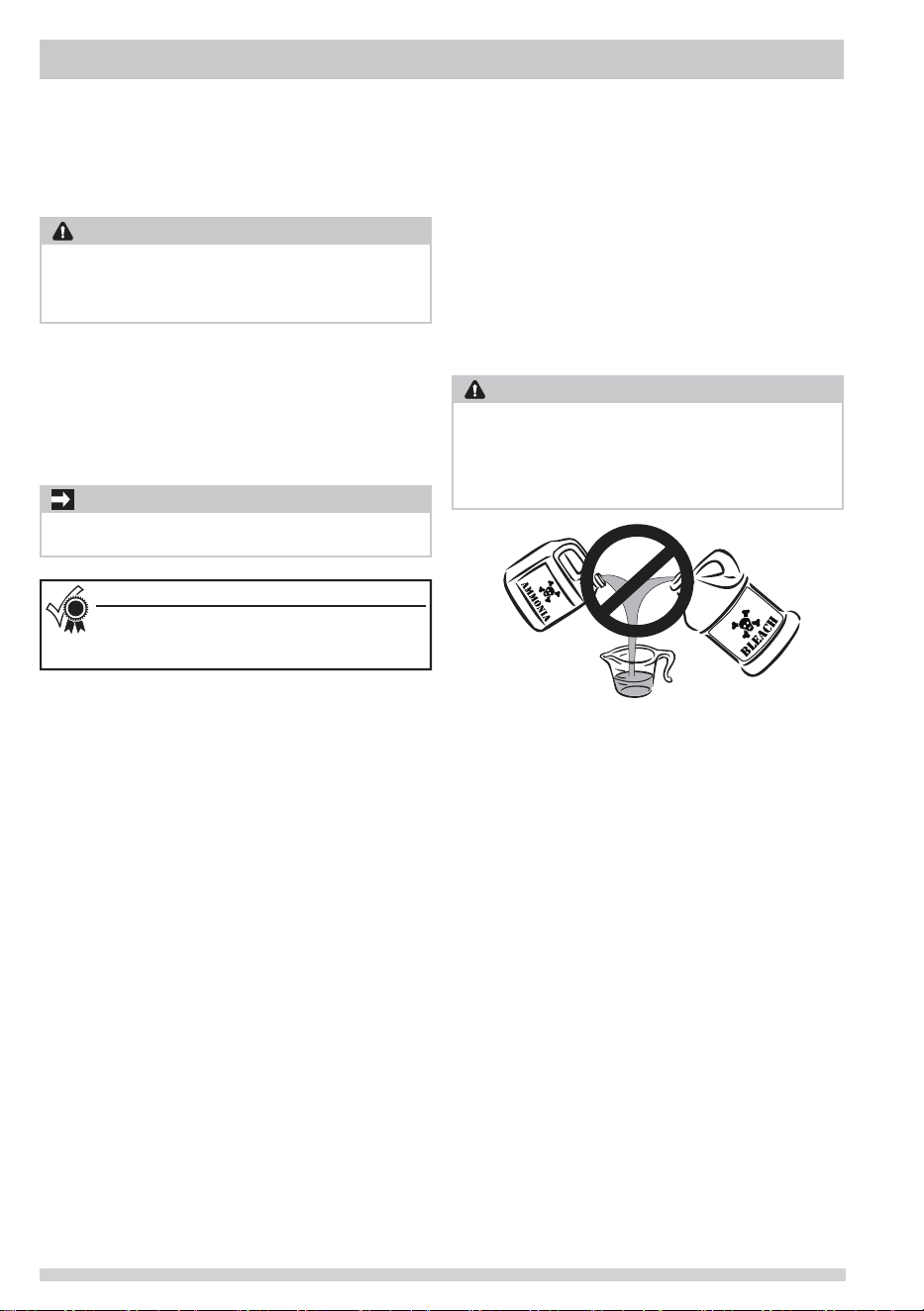
WARNING
HARMFUL VAPOR HAZARD
Do not use or mix liquid chlorine bleach with other
household chemicals such as toilet cleaners, rust removers,
acid or products containing ammonia. These mixtures can
produce dangerous fumes which can cause serious injury
or death.
IMPORTANT
Items left in washer while performing the Clean Washer
cycle may cause damage to the washing machine.
CAUTION
Do not leave the lid open if there are small children or pets
present. An open lid could entice children to crawl inside
the washer. If there are no small children present, you may
leave the lid up to prevent odor build up.
15
CARE AND CLEANING
Cleaning Instructions
INSIDE
• Remove items from the washer as soon as the cycle ends.
Excess wrinkling, color transfer, and odors may develop in
items left in the washer.
• Dry the washer top, the area around the lid opening, and
the underside of the lid. These areas should always be dry
before the lid is closed.
• Before cleaning the washer interior, unplug the electrical
power cord to avoid electrical shock hazards.
• When extremely soiled items have been washed, a dirty
residue may remain on the tub. Remove this by wiping the
tub with a nonabrasive household cleanser. Rinse thor-
oughly with water.
• The agitator or tub may become stained from fabric dye.
Clean these parts with a nonabrasive household cleanser. This
prevents dye transfer to future loads.
OUTSIDE
• When washing is completed, wipe top and sides of washer
with a damp cloth.
• Clean the cabinet with mild soap and water. Never use
harsh, gritty or abrasive cleansers
• If the cabinet becomes stained, clean with diluted chlorine
bleach (1 part bleach to 8 parts water). Rinse several times
with clear water.
• Remove glue residue from tape or labels with a mixture of
warm water and mild detergent. Or, touch residue with the
sticky side of tape.
• Before moving the washer, place a strip of cardboard or thin
fiberboard under the front leveling legs to prevent damage
to the floor.
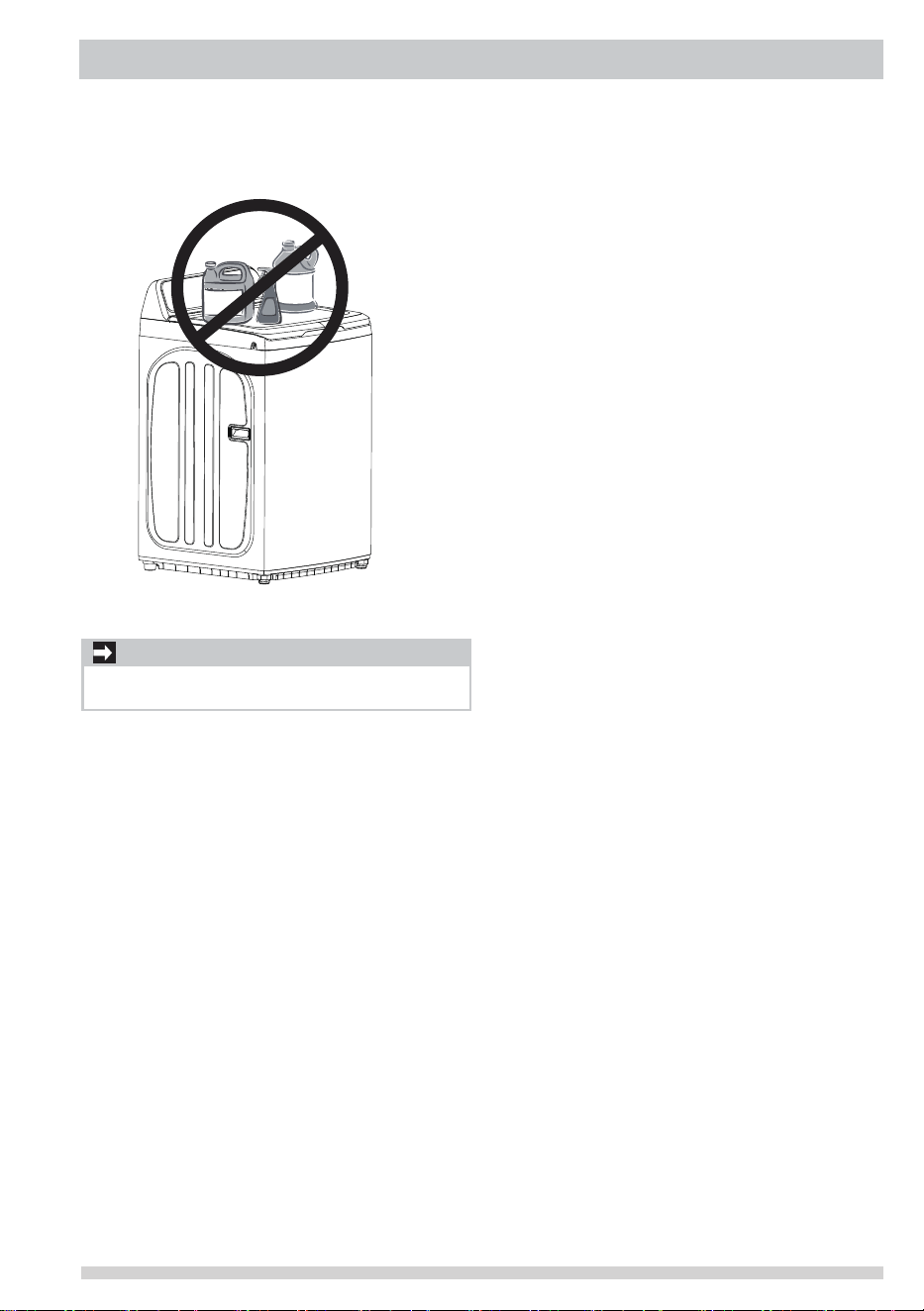
IMPORTANT
Do not store or place laundry products on top of washer at
any time. They can damage the finish or controls.
16
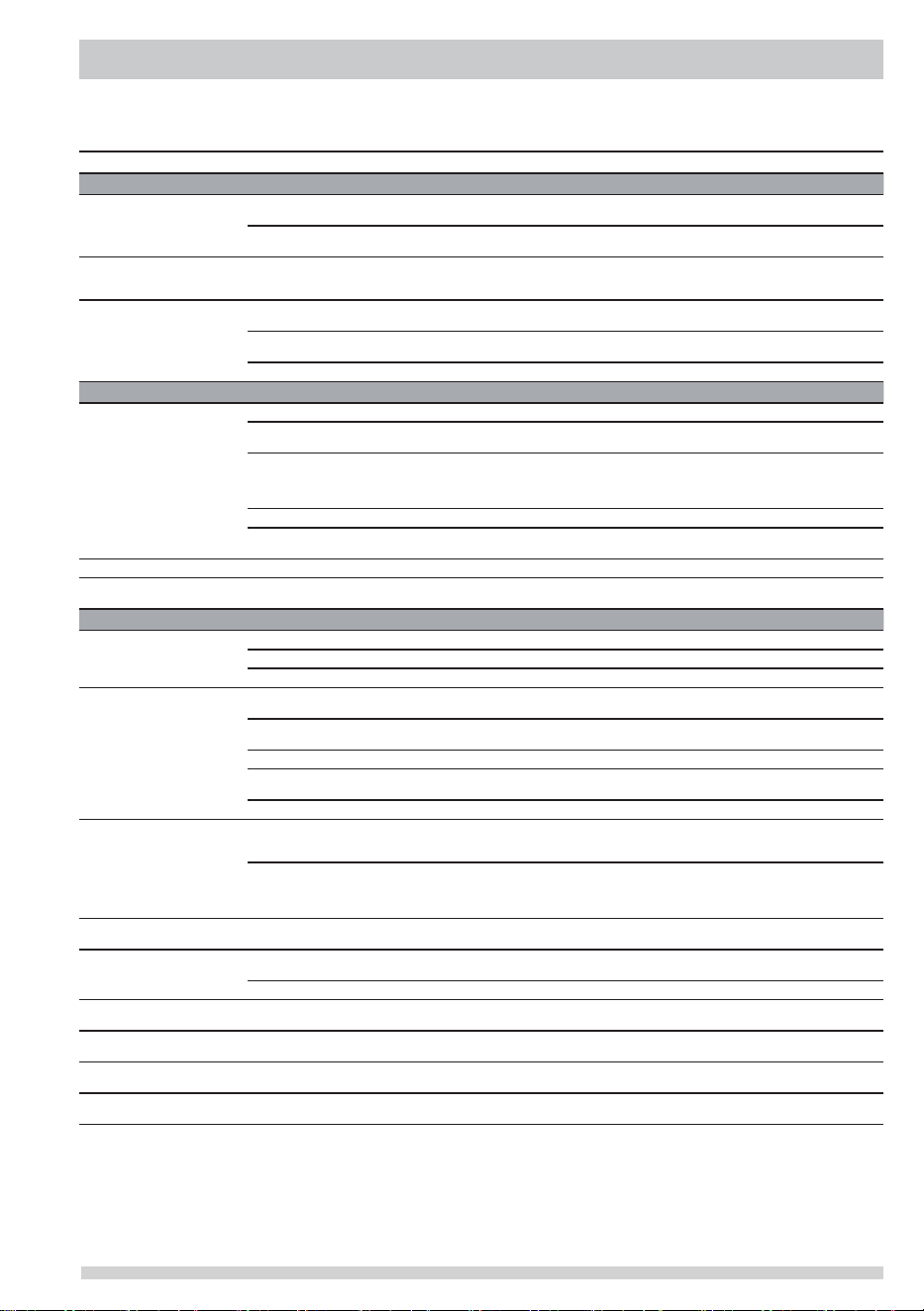
SOLUTIONS TO COMMON WASHING INQUIRIES
Many washing problems involve poor soil and stain removal, residues of lint and scum, and fabric damage. For satisfactory
washing results, follow these suggestions provided by The Soap and Detergent Association.
SERUSAEM EV I TNEVERPS NO I TU L OSSESUAC ELB I SSOPME L BOR P
Blue stains • Undiluted liquid detergent
or fabric softener dispensed
directly onto fabric.
• If caused by detergent, mix 1 cup (240
ml) white vinegar with 1 quart (.95 L)
water in a plastic container. Soak item 1
hour. Rinse.
• If caused by fabric softener, rub stains
with bar soap. Wash.
• Add detergent to empty tub. Do not pour
on dry load.
• Avoid over¿ lling fabric softener compart-
ment of dispenser.
Discoloration,
graying
• Not enough detergent.
• Wash water temperature
too low.
• Incorrect sorting.
• Rewash with correct amount of deter-
gent and hottest water safe for fabric.
• Add bleach safe for fabric.
• Sort items by soil level and color.
• Use correct amount of detergent, hottest
water and bleach safe for fabric.
Greasy, oily stains • Not enough detergent.
• Undiluted liquid fabric
softener poured directly on
fabric.
• Treat with prewash stain remover or
liquid detergent.
• Increase detergent and water tempera-
ture. Rewash.
• Rub fabric softener stains with bar soap.
• Use correct amount of detergent and
hottest water safe for fabric.
• Do not pour liquid fabric softener directly
on fabric. See Operating Your, step 5.
Holes, tears, or
snags
• Incorrect use of chlorine
bleach.
• Unfastened zippers, hooks,
buckles.
• Rips, tears and broken threads.
• Overloading the washer.
• Degradation of fabric.
• May be irreversible if rips, tears and
seams cannot be mended.
• Never pour chlorine bleach directly on
fabric.
• Check condition of items before washing.
See Operating Your, steps 2 and 5.
Lint • Incorrect sorting.
• Tissues left in pocket.
• Overloading the washer.
• Not enough detergent.
• Undissolved detergent has left
a residue resembling lint.
• Static cling is attracting lint.
• Load washed too long.
• Reduce load size. Rewash using correct
water temperature, water level, and
amount of detergent.
• Add nonprecipitating water conditioner to
wash water to remove detergent residue.
• Add liquid fabric softener to ¿ nal rinse.
• Dry load in dryer.
• Remove lint with lint brush or roller.
• See Washing Procedures, steps 1 and 2.
• Do not overload washer.
• Use correct temperature and amount of
detergent, water and wash time.
Pilling
(Fibers ball up and
cling to fabric.)
• Pilling is normal with synthetic
and permanent press fabrics.
This is due to abrasion from
normal wear.
• Use a lint brush or shaver to remove
pills.
• Use fabric softener in the washer to
lubricate ¿bers.
• When ironing, use spray starch or fabric
¿nish on collars and cuffs.
• Turn items inside out to reduce abrasion.
Residue or powder
on dark items;
Stiff, harsh fabrics.
• Undissolved detergent.
• Some granular detergents
can combine with hard water
minerals to form a residue.
• Overloading the washer.
tset toh gni su erutarepmet retaw esaercnI•. d a o l h s aweR •
water safe for fabric.
• Do not overload washer.
• Use liquid detergent or use nonprec-
ipitating water conditioner with powder
detergent.
Wrinkling • Overloading the washer.
• Incorrect wash cycle for
wash load.
• Reduce load size.
• Rinse in cold water with liquid fabric
softener using the casual or delicate
cycle.
• Do not overload washer.
• Remove items from washer as soon as
cycle is completed.
• Use liquid fabric softener.
Yellow buildup
of body soil on
synthetic fabrics
• Agitation time too short.
• Wash water temperature
too low.
• Not enough detergent.
• Soak in detergent booster or product
containing enzymes.
• Wash in hottest water safe for fabric
using casual cycle.
• Increase detergent.
• Add bleach safe for fabric or treat with
color remover.
• Select correct wash cycle.
• Use correct amount of detergent.
• Wash synthetics frequently using hot or
warm water.
Yellow or brown rust
stains
• Iron or manganese in
water
supply, water pipes, or water
heater.
• To restore discolored load of whites, use
rust remover safe for fabric.
• Do not use chlorine bleach to remove
rust stains. It may intensify discolor-
ation.
• Use nonprecipitating water softener.
• Before washing, run hot water for a few
minutes to clear lines.
• Drain water heater occasionally.
• For an ongoing problem, install an iron
¿lter in your water supply system.
17
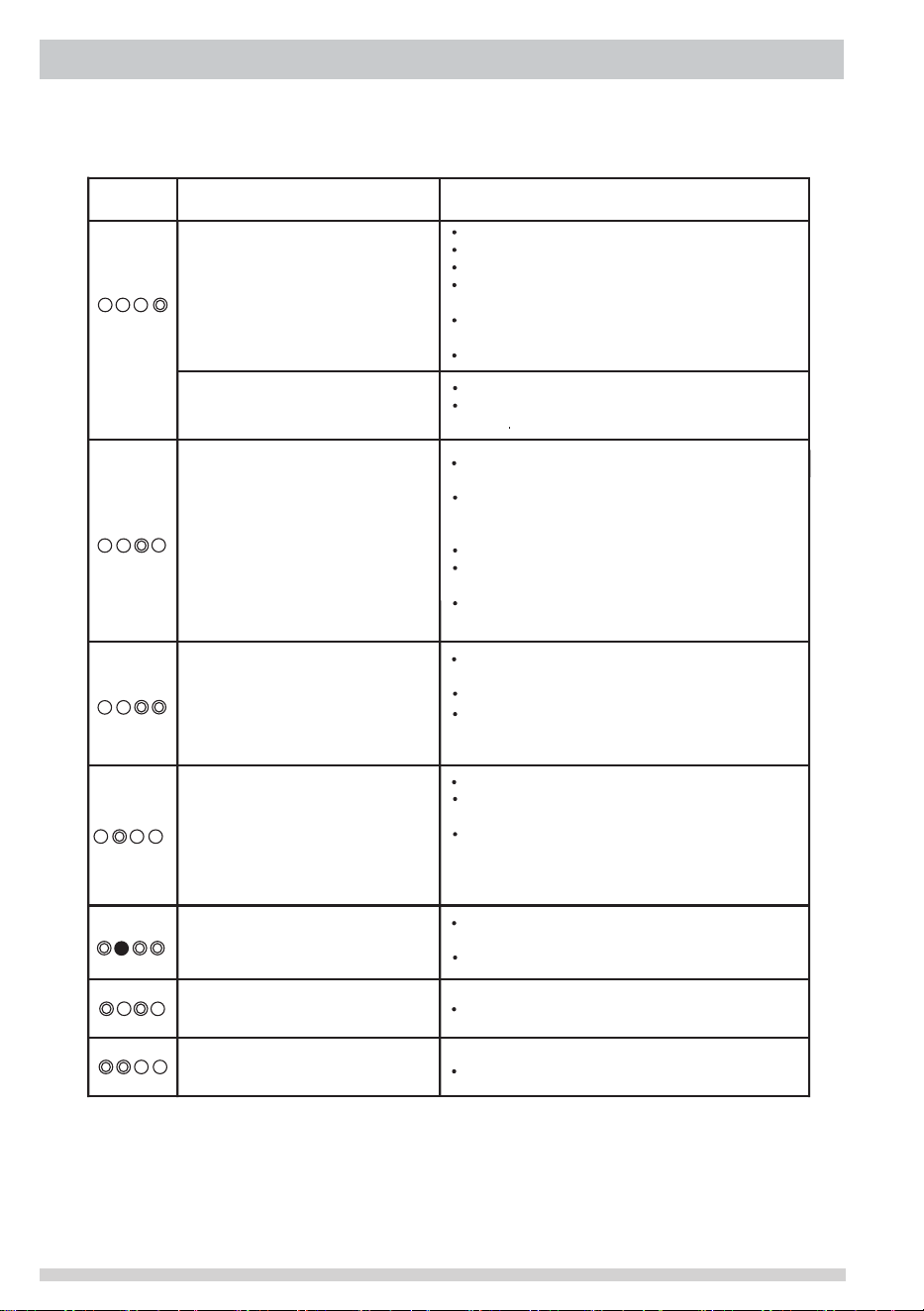
AVOID SERVICE CHECKLIST
NO I T U L OSESUAC E L B I S SOPECNERRUCCO
NOISE
Rattling and clanking noise. Foreign objects such as coins or safety pins may be
in tub or pump.
Stop washer and check drum. If noise continues after washer is
restarted, objects may be in pump. Call your authorized servicer.
Belt buckles and metal fasteners are hitting wash
tub.
To prevent unnecessary noise and damage to tub, fasten fasteners
and turn items inside out.
Thumping sound. Heavy wash loads may produce a thumping sound.
This is usually normal. If sound continues, washer is
probably out of balance.
Stop washer and redistribute wash load.
Vibrating noise. Washer is not resting ¿ rmly on À oor. Move washer so it rests ¿ rmly on À oor. Adjust leveling legs. See
INSTALLATION INSTRUCTIONS for details.
Foam shipping support has not been removed dur-
ing installation.
See INSTALLATION INSTRUCTIONS for removing foam shipping
support.
Wash load unevenly distributed in tub. Stop washer and rearrange wash load.
OPERATING
Washer does not start. Washer lid is open. Close washer lid. The washer will not operate when the lid is open.
Electrical power cord may not be plugged in or con-
nection may be loose.
Make sure plug ¿ ts tightly in wall outlet.
House fuse blown, circuit breaker tripped, or a
power outage has occurred.
Reset circuit breaker or replace fuse. Do not increase fuse capac-
ity. If problem is a circuit overload, have it corrected by a quali¿ed
electrician. If problem is a power outage, call local electric company.
Water supply faucets are not turned on. Turn on water supply faucets.
Motor is overheated. Washer motor will stop if it
becomes overheated.
Wait for the motor to cool down before attempting to restart.
Washer won’t spin. Lid is not completely closed. Close washer lid. The washer will not operate when the lid is open.
Residue left in drum. Heavily soiled items. Wipe tub with a nonabrasive household cleanser, then rinse. Shake or
brush excess dirt and sand from items before washing
WATER
. serudecorP gn i hsaW eeS . rehsaw dao l revo ton oD.dedaol revo s i rehsaW.nips ret fa te w oot daol hsaW
.gn i nn i ps r epo r p wo l l a o t dao l egna r r aeR . ecna l ab f o t uo s i daoL
.esoh niard nethgiar tS .deknik si esoh niarD
Water does not enter
washer or it enters
slowly.
Washer lid is open.
Close washer lid. The washer will not operate when the lid is open.
Water supply is not adequate in area. Check another faucet in the house. Wait until water supply and
pressure increase.
Water supply faucets are not completely open. Fully open hot and cold faucets.
Water is being used elsewhere in the house. Water pressure must be at least 10 psi (69 kPa). Avoid running
water elsewhere while washer is ¿lling.
. sesoh nethg i ar tS.dekn i k era sesoh te l n i retaW
Warm or hot water is not hot
enough.
Hot water heater is set too low or is a distance
from washer.
Measure hot water temperature at nearby faucet with candy or
meat thermometer. Water temperature should be at least 120°F
(50°C). Adjust water heater as necessary.
Hot water is being used elsewhere in the house. Avoid using hot water elsewhere before or during washer use.
There may not be enough hot water available for proper cleaning. If
problem persists, your hot water system may be unable to support
more than 1 use at a time.
Water in washer does not drain
or drains slowly.
. e s oh n i a r d eh t ne t hg i a r t s dna nae l C. deggo l c r o dekn i k s i esoh n i a rD
Water leaks. Loose ¿ ll hose connection at faucet or washer. Check and tighten hose connections. Ensure rubber sealing washers
are installed.
. yrassecen f i rebmulp tcatnoC . sepip niard gol cnU. deggo l c e r a sep i p n i a r d esuoH
Incorrect wash and rinse
temperatures.
Hot and cold water hoses are connected to wrong
supply faucets.
Connect hot water hose to hot water faucet and cold water hose to
cold water faucet.
Water is entering washer but
tub does not ¿ll.
Drain hose standpipe is incorrect height. Standpipe must be a minimum of 36” (90 cm) high to prevent
siphoning. See INSTALLATION INSTRUCTIONS.
Water is present in tub after
wash cycle is complete.
. r ec i v r es de z i r oh t ua r uoy l l aC . k co l d i l s sapyb t on oD.noi tcnuf la m kcol diL
The drain and spin cycles did
not occur.
.rec i v r es de z i r oh t ua r uoy l l aC . k co l d i l s sapyb t on oD.noi tcnuf la m kcol diL
Before calling for service, review this list. It may save both time and expense. The list includes common occurrences that are
not the result of defective workmanship or materials in this washer.
18
AVOID SERVICE CHECKLIST
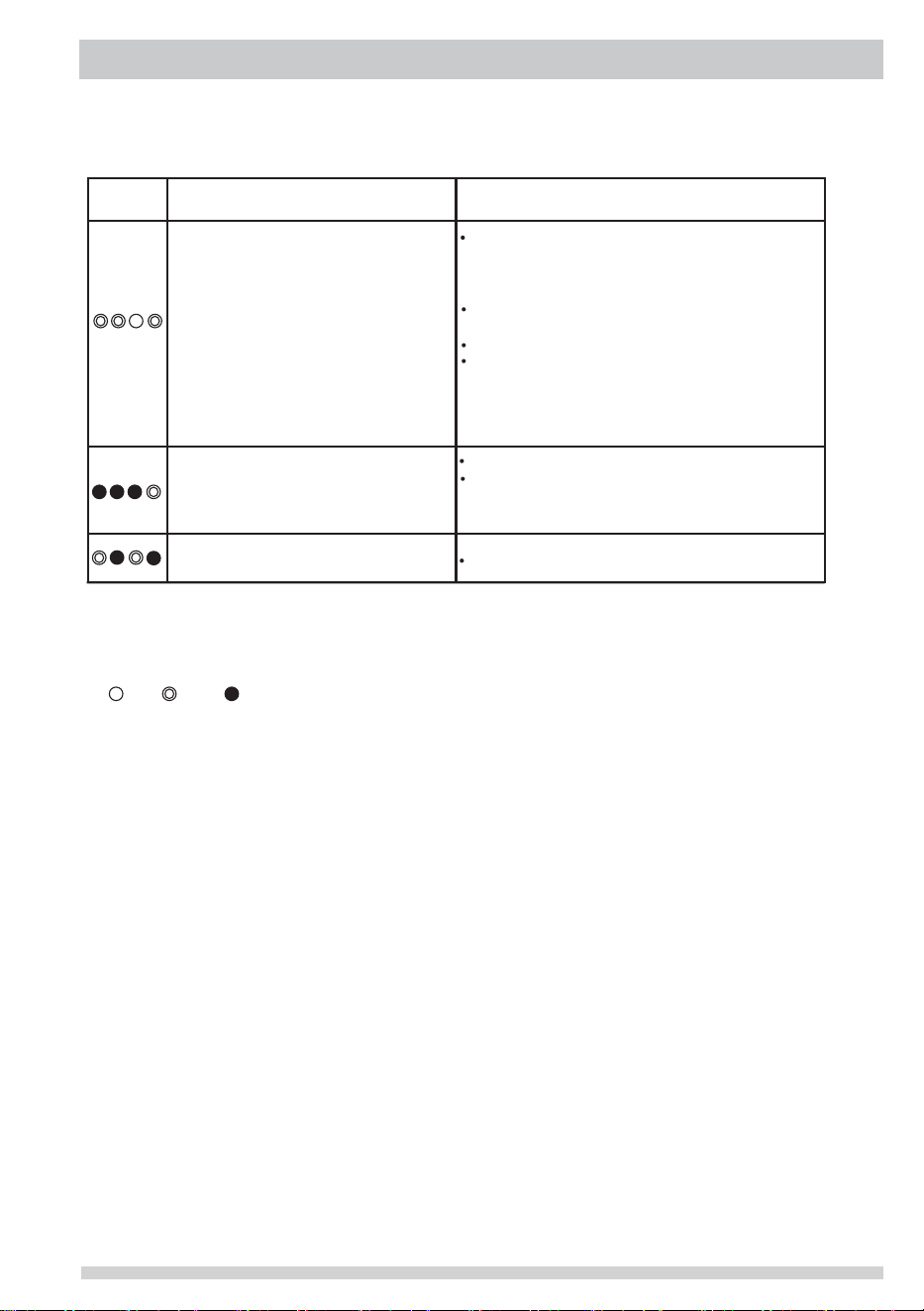
Error Codes
Water is not supplied.
The Water Level sensor is not working
properly.
Water is not draining.
The lid is open.
Spinning does not work.
The unit is out of balance in spin
operation.
Load sensing failed.
Water Leveling sensing failed.
Make sure the water taps are open.
Make sure the water hoses are not clogged.
Make sure he water taps are not frozen.
Make sure the washing machine is operating with
sufficient water pressure.
Make sure that the cold water tap and the hot water
tap are properly connected.
Clean the mesh filter as it may be clogged.
Check WaterLevel Sensor wire harness.
lf the information code remains, Call service center.
Make sure the drain hose is not frozen or clogged.
Make sure the drain hose is positioned correctly,
depending on the connection type.
Clean the debris flter as it may be clogged.
Make sure the drain hose is straightened all the
way to the drain system.
lf the information code remains, Call service center.
Close the lid.See installation instructions to"Level
your washer".
lf the information code remains, Cal service center.
The door lock or PCB may have failed, try steps again.
Make sure laundry is spread out evenly.
Make sure the washing machine is on a flat,stable
surface.
Redistribute the load. if only one item of clothing
needs washing, such as a bathrobe or pair of jeans,
the final spin result mightbe unsatisfactory.
Adiust the washer level refer to installation
instructions.
If situation continues, call service center.
Call service center.
Call service center.
Solutions
Possible Cause
Error
code
19
AVOID SERVICE CHECKLIST
Notice:
1.LED Display:
1)When error happening, Process LED indicates error code.
2 -off, -flash, -on
2.When error happening, the buzzer will beep 5 seconds and repeat once per 15minutes.
off automatically.
After 24 hour, machine will power
3.When other error happening, please try again first, call up service line if there are still troubles.
)
Solutions
Possible Cause
Error
code
Make sure that the lid is closed properly and press the
Start/Pause button. You can hearthe locking sound to
lock the lid in the beginning of the cycle. The washer
wil notoperate unless the lid is locked.
Make sure that nothing is caught under the lid,including
shipping material or clothing.
Make sure that the latch mechanism is fully retracted.
If the lid is closed and this error message is still
displaved,Cal service center.
Press the Power button to turn off your washer.
Turn off the children lock function.see Setting the
control lock on page 20.
Call service center.
Lid is not locked properly.
The lid has opened for over 20 seconds with
the control lockfunction activated.
The PCB is failed.

20
MAJOR APPLIANCE WARRANTY INFORMATION
Your appliance is covered by a one year limited warranty. For one year from date of delivery, Electrolux will pay all costs for repairing
or replacing any parts of this appliance that prove to be defective in materials or workmanship when such appliance is installed, used
and maintained in accordance with the provided instructions, The date of delivery establishes the warranty period, should service be
reguired.
Exclusions
This warranty does not cover the following:
1. Products with original serial numbers that have been removed, altered or cannot be readily determined.
2. Product that has been transferred from its original owner to another party or removed outside the USA or Canada.
3. Rust on the interior or exterior of the unit.
4. Products purchased “as-is” are not covered by this warranty.
5. Food loss due to any refrigerator or freezer failures.
6. Products used in a commercial setting.
7. Service calls which do not involve malfunction or defects in materials or workmanship, or for appliances not in ordinary household use
or used other than in accordance with the provided instructions.
8. Service calls to correct the installation of your appliance or to instruct you how to use your appliance.
9. Expenses for making the appliance accessible for servicing, such as removal of trim, cupboards, shelves, etc., which are not a part of
the appliance when it is shipped from the factory.
10. Service calls to repair or replace appliance light bulbs, air ¿ lters, water ¿ lters, other consumables, or knobs, handles, or other cosmetic
parts.
11. Surcharges including, but not limited to, any after hour, weekend, or holiday service calls, tolls, ferry trip charges, or mileage expense
for service calls to remote areas, including the state of Alaska.
12. Damages to the ¿ nish of appliance or home incurred during installation, including but not limited to À oors, cabinets, walls, etc.
13. Damages caused by: services performed by unauthorized service companies; use of parts other than genuine Electrolux parts or parts
obtained from persons other than authorized service companies; or external causes such as abuse, misuse, inadequate power supply,
accidents, ¿ res, or acts of God.
DISCLAIMER OF IMPLIED WARRANTIES; LIMITATION OF REMEDIES
CUSTOMER’S SOLE AND EXCLUSIVE REMEDY UNDER THIS LIMITED WARRANTY SHALL BE PRODUCT REPAIR OR REPLACEMENT AS
PROVIDED HEREIN. CLAIMS BASED ON IMPLIED WARRANTIES, INCLUDING WARRANTIES OF MERCHANTABILITY OR FITNESS FOR A
PARTICULAR PURPOSE, ARE LIMITED TO ONE YEAR OR THE SHORTEST PERIOD ALLOWED BY LAW, BUT NOT LESS THAN ONE YEAR.
ELECTROLUX SHALL NOT BE LIABLE FOR CONSEQUENTIAL OR INCIDENTAL DAMAGES SUCH AS PROPERTY DAMAGE AND INCIDENTAL
EXPENSES RESULTING FROM ANY BREACH OF THIS WRITTEN LIMITED WARRANTY OR ANY IMPLIED WARRANTY. SOME STATES AND
PROVINCES DO NOT ALLOW THE EXCLUSION OR LIMITATION OF INCIDENTAL OR CONSEQUENTIAL DAMAGES, OR LIMITATIONS ON THE
DURATION OF IMPLIED WARRANTIES, SO THESE LIMITATIONS OR EXCLUSIONS MAY NOT APPLY TO YOU. THIS WRITTEN WARRANTY
GIVES YOU SPECIFIC LEGAL RIGHTS. YOU MAY ALSO HAVE OTHER RIGHTS TH
AT VARY FROM STATE TO STATE.
IF YOU NEED SERVICE
Keep your receipt, del
ivery slip, or some other appropriate payment record to establish the warranty period should service be required. If
service is performed, it is in your best interest to obtain and keep all receipts. Service under this warranty must be obtained by contacting
Electrolux at the addresses or phone numbers below.
This warranty only applies in the USA and Canada. In the USA, your appliance is warranted by Electrolux Major Appliances North America,
a division of Electrolux Home Products, Inc. In Canada, your appliance is warranted by Electrolux Canada Corp. Electrolux authorizes no
person to change or add to any obligations under this warranty. Obligations for service and parts under this warranty must be performed
by Electrolux or an authorized service company. Product features or speci¿ cations as described or illustrated are subject to change without
notice.
USA
1.800.944.9044
Electrolux Major Appliances
10200 David Taylor Drive
Charlotte, NC 28262
Canada
1.800.265.8352
Electrolux Canada Corp.
5855 Terry Fox Way
Mississauga, Ontario, Canada
L5V 3E4