18" Scroll Saw
with Rotary Attachment
DO NOT RETURN TO STORE
Questions? Problems?
Please call our customer help line:
(888) 315-3080 M-F 8-5 CST or by
email:
partsandservice@greatlakestec.com
SKU: 240-0041
Operation and Safety Instructions

240-0041 (888)315-3080 2
Table
of
Contents
Technical data……………………………………………………………………………………. 2
General safety rules……………………………………………………………………………… 3
Specific safety rules for the scroll saw…………………………………………………………... 5
Electrical information……………………………………………………………………………. 7
Know your scroll saw……………………………………………………………………………. 9
Assembly and adjustments………………………………………………………………………. 10
Operation………………………………………………………………………………………… 17
Maintenance……………………………………………………………………………………… 21
Exploded view and parts list…………………………………………………………………………… 22
Warranty………………………………………………………………………………………….. 25
Technical
data
18" Scroll Saw with Rotary Attachment 240-0041
Motor: 120 V, 60 Hz, 2 A
Blade speed: 400-1,600 SPM
Rotary tool speed: 1,100-4,500 RPM
Maximum cutting capacity: 2” (5.1 cm) thick
Throat capacity: 18” (45.7 cm) long
Blade size: 5” (12.7 cm) pinned and pin-less
Blade stroke: 3/4” (19 mm)
Work table bevel: 45º left and right
Work table size: 24-5/8”x13” (62.5x33 cm)
Rotary table size: 5-3/8”x7-1/16” (13.6x18 cm)
Chuck size: 1/4” (6.35 mm)

General
safety
r
ules
Safety is a combination of common sense, staying alert, and knowing how your power tool works.
SAVE THESE SAFETY INSTRUCTIONS.
WARNING: To avoid mistakes that could cause serious injury, do not plug in the power tool
until the following steps have been read and understood.
1. READ and become familiar with this entire instruction manual. LEARN the tool’s applications,
limitations, and possible hazards.
2. AVOID DANGEROUS CONDITIONS. Do not use power tools in wet or damp areas or expose
them to rain. Keep work areas well-lit.
3. DO NOT use power tools in the presence of flammable liquids or gases.
4. ALWAYS keep your work area clean, uncluttered, and well-lit. DO NOT work on floor surfaces
that are slippery.
5. KEEP BYSTANDERS AT A SAFE DISTANCE from the work area, especially when the tool is
operating. NEVER allow children or pets near the tool.
6. DO NOT FORCE THE TOOL to do a job that it was not designed to do.
7. DRESS FOR SAFETY. Do not wear loose clothing, gloves, neckties, or jewelry (rings,
watches, etc.) when operating the tool. Inappropriate clothing and items can get caught in
moving parts and draw you in. ALWAYS wear non-slip footwear and tie back long hair.
8. WEAR A FACE MASK OR DUST MASK as the operation produces dust.
WARNING: Dust generated from certain materials can be hazardous to your health. Always
operate this tool in a well-ventilated area and provide for proper dust removal. Use dust
collection systems whenever possible.
9. ALWAYS remove the power cord plug from the electrical outlet when making adjustments,
changing parts, cleaning, or working on the tool.
10. KEEP GUARDS IN PLACE AND IN WORKING ORDER.
11. AVOID ACCIDENTAL START-UPS. Make sure the power switch is in the OFF position before
plugging in the power cord.
12. REMOVE ADJUSTMENT TOOLS. Always make sure all adjustment tools are removed from
the power tool before turning it on.
240-0041 (888)315-3080 3

General
safety
r
ules
(continued)
13. NEVER LEAVE A RUNNING TOOL UNATTENDED. Turn the power switch to OFF. Do not
leave the tool until it has come to a complete stop.
14. NEVER STAND ON A TOOL. Serious injury could result if the tool tips or is accidentally hit.
DO NOT store anything above or near the tool.
15. DO NOT OVERREACH. Keep proper footing and balance at all times. Wear oil-resistant
rubber-soled footwear. Keep the floor clear of oil, scrap, and other debris.
16. MAINTAIN TOOLS PROPERLY. ALWAYS keep tools clean and in good working order.
Follow instructions for lubricating and changing accessories.
17. CHECK FOR DAMAGED PARTS. Check for alignment of moving parts, jamming, breakage,
improper mounting, or any other conditions that may affect the tool’s operation. Any part that is
damaged should be properly repaired or replaced before use.
18. MAKE THE WORKSHOP CHILDPROOF. Use padlocks and master switches and ALWAYS
remove starter keys.
19. DO NOT operate the tool if you are under the influence of drugs, alcohol, or medication that
could affect your ability to use the tool properly.
20. USE SAFETY GOGGLES AT ALL TIMES—that comply with ANSI
Z87.1. Normal safety glasses only have impact resistant lenses and are not
designed for safety. Wear a face or dust mask when working in a dusty
environment. Use ear protection, such as plugs or muffs, during extended
periods of operation.
240-0041 (888)315-3080 4

Specific
safety
r
ules
for
the
scroll saw
WARNING: Do not operate the scroll saw until it is assembled, and you have read and
understand the following instructions and the warning labels on the scroll saw.
Before operating
1. Check for proper assembly and proper alignment of moving parts.
2. Understand the function and proper use of the ON/OFF switch.
3. Know the condition of the scroll saw. If any part is missing, bent, or does not operate properly,
replace the component before you use the scroll saw.
4. Determine the type of work you are going to be doing. Properly protect your body including your
eyes, hands, face and ears.
5. To avoid injury caused by pieces thrown accessories designed for this saw. Following the instructions
supplied with the accessory. The use of improper accessories may cause risk of injury.
6. To avoid contact with rotating equipment:
• Do not position your fingers where they could contact the blade if the workpiece should
unexpectedly shift or your hand should slip.
• Do not cut a workpiece too small to be held safety.
• Do not reach under the scroll saw table when the motor is running.
• Do not wear loose clothing or jewelry. Roll long sleeves above the elbow. Tie back long hair.
7. To avoid injury from accidental starting of the scroll saw:
• Make sure the switch is OFF and unplug the power cord from the electric outlet before changing
the blade, performing maintenance or making adjustment.
• Make sure the switch is OFF before plugging in the power cord to an electric outlet.
8. To avoid injury from a fire hazard, do not operate the scroll saw near flammable liquids, vapors or
gases.
9. To avoid back injury:
• Obtain help when it is necessary to raise the scroll saw more than 10 inches (25.4 cm). Bend your
knees when lifting the scroll saw.
• Carry the scroll saw by its base. Do not move the scroll saw by pulling on the power cord. Pulling
on the power cord could cause damage to the insulation or the wire connections resulting in
electric shock or fire.
240-0041 (888)315-3080 5

Specific
safety
r
ules
for
the
scroll saw (continued)
When operating the scroll saw
WARNING: Use the rotary tool for sanding and grinding applications only. This
product is not recommended for drilling applications.
1. To avoid injury from unexpected scroll saw movement:
• Use the scroll saw on a firm level surface with adequate space for handling and supporting the
workpiece.
• Be sure the scroll saw cannot move when operated. Secure the scroll saw to a workbench or table
with wood screws or bolts with washers and nuts.
2. Before moving the scroll saw, unplug the power cord from the electric outlet.
3. To avoid injury from kickback:
• Hold the workpiece firmly against the tabletop.
• Do not feed the workpiece too fast while cutting. Only feed the workpiece at the rate the saw will cut.
• Install the blade with the teeth pointing downward.
• Do not start the saw with the workpiece pressing against the blade. Slowly feed the workpiece into
the moving blade.
• Use caution when cutting round or irregularly shaped work pieces. Round items will roll and
irregularly shaped work pieces can pinch the blade.
4. T avoid injury when operating the scroll saw:
• If you are not thoroughly familiar with the operation of scroll saws, obtain advice from a qualified
person.
• Before starting the saw, make sure the blade tension is correct. Recheck and adjust tension as need.
• Make sure the table is locked into position before starting the saw.
• Do not use dull or bent blades.
• When cutting a large workpiece, make sure the material is supported at the table height.
• Turn the saw OFF and unplug the power cord if the blade jams in the workpiece while being backed
out. This condition is usually caused by sawdust clogging the line you are cutting. If this happens,
turn OFF the scroll saw and unplug the power cord. Wedge open the workpiece and back out the
blade.
240-0041 (888)315-3080 6
Electrical
information
Grounding instructions
IN THE EVENT OF A MALFUNCTION OR BREAKDOWN, grounding provides the path of least
resistance for electric current and reduces the risk of electric shock. This tool is equipped with an
electric cord that has an equipment grounding conductor and a grounding plug. The plug MUST be
plugged into a matching outlet that is properly installed and grounded in accordance with ALL local
codes and ordinances.
DO NOT MODIFY THE PLUG PROVIDED. If it will not fit the outlet, have the proper outlet
installed by a licensed electrician.
IMPROPER CONNECTION of the equipment grounding conductor can result in electric shock. The
conductor with the green insulation (with or without yellow stripes) is the equipment grounding
conductor. If repair or replacement of the electric cord or plug is necessary, DO NOT connect the
equipment grounding conductor to a live terminal.
CHECK with a licensed electrician or service personnel if you do not completely understand
the grounding instructions, or if you are not sure if the tool is properly grounded.
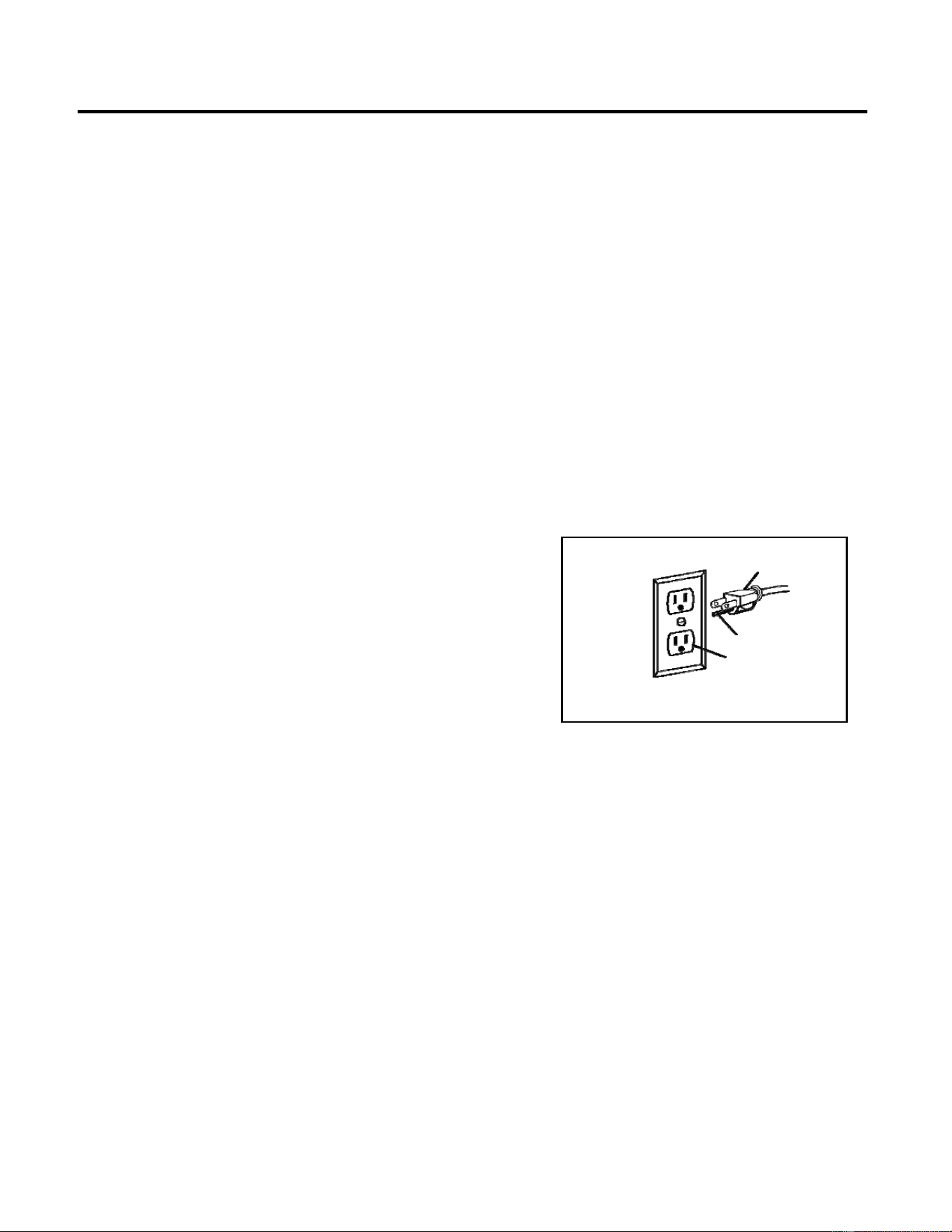
USE ONLY THREE-WIRE EXTENSION CORDS that
have 3-pronged plugs and outlets that accept the tool's
plug as shown in Fig. A. Repair or replace a damaged or
worn cord immediately.
240-0041 (888)315-3080 7
1 - 3-prong plug
2 - Properly grounded outlet
3 - Grounding prong
Fig. A
1
3
2
1. 3-pr onged plug 2. Properly grounded outlet
3. Grounding prong
CAUTION: In all cases, make certain the outlet in question is properly grounded. If you are not sure if
it is, have a licensed electrician check the outlet.
Electrical
information
(continued)
WARNING: This power tool is for indoor use only. Do not expose to rain or use in damp
locations.
Guidelines for using extension cords
Make sure your extension cord is in good condition. When using an extension cord, be sure
to use one heavy enough to carry the current your product will draw. An undersized cord
will cause a drop in line voltage resulting in loss of power and overheating. The table below
shows the correct size to be used according to cord length and nameplate ampere rating. If in
doubt, use the next heavier gauge. The smaller the gauge number, the heavier the cord.
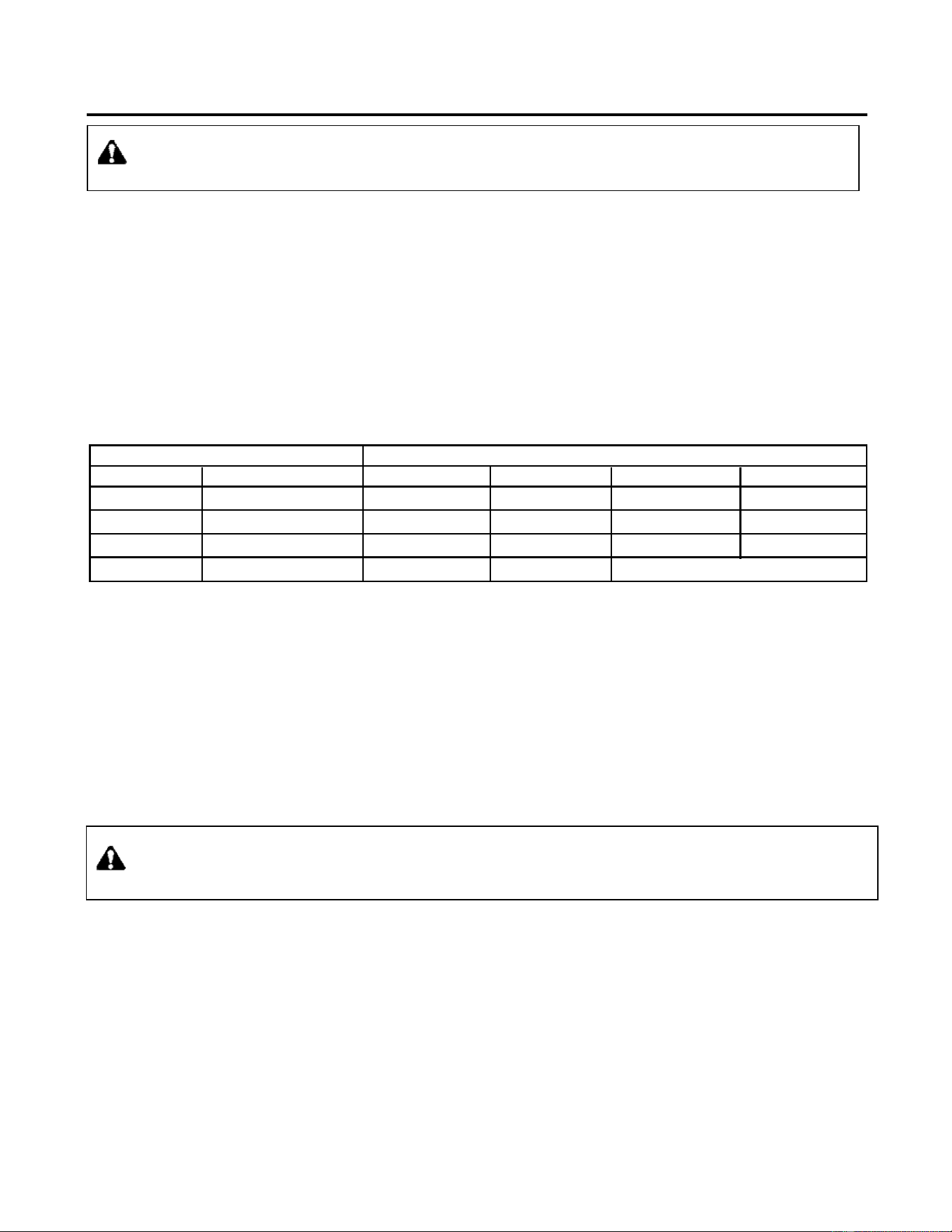
Minimum Gauge for Extension Cords (AWG)
(When using 120 V only)
Ampere rating Total length of cord in feet (meters)
More than Not more than 25 (7.6) 50 (15) 100 (30.4) 150 (45.7)
0 6 18 16 16 14
6 10 18 16 14 12
10 12 16 16 14 12
12 16 14 12 Not recommended
Make sure your extension cord is properly wired and in good condition. Always replace a
damaged extension cord or have it repaired by a qualified person before using it.
Protect your extension cords from sharp objects, excessive heat and damp or wet areas.
Use a separate electrical circuit for your tools. This circuit must not be less than a #12 wire
and should be protected with a 15 A time-delayed fuse. Before connecting the motor to the
power line, make sure the switch is in the OFF position and the electric current is rated the
same as the current stamped on the motor nameplate. Running at a lower voltage will
damage the motor.
WARNING: This tool must be grounded while in use to protect the operator from electric
shock.
240-0041 (888)315-3080 8
Know
your
scroll saw
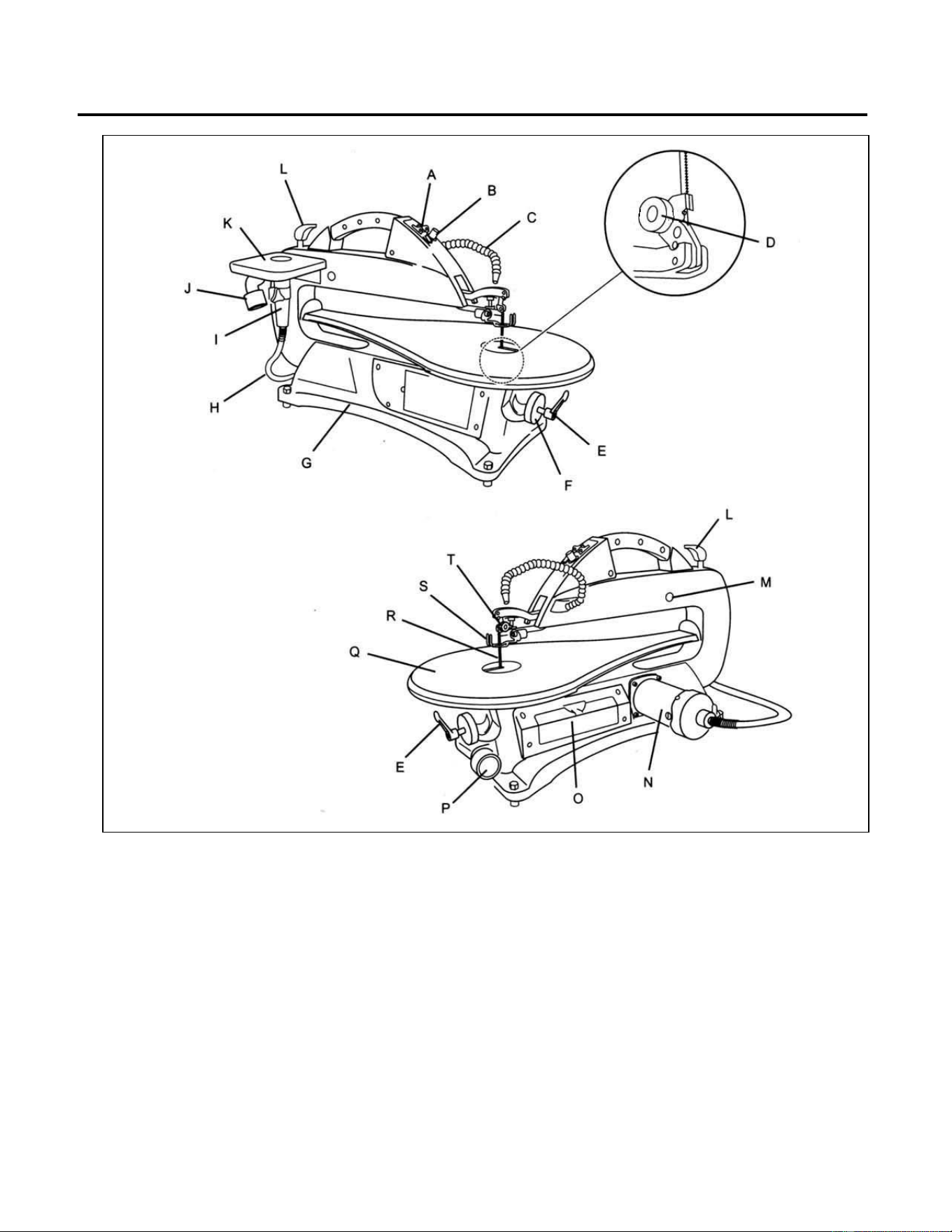
A On/off and light switches K Rotary table
B Speed control knob L Blade tension lock lever
C Dust blower and light M Rubber bearing cover
D Lower blade holder N Motor
E Bevel lock handle O Storage compartment
F Bevel adjustment knob P Sawdust port
G Base Q Saw table
H Rotary tool cable R Blade
I Rotary tool in clamp S Blade guard foot
J Rotary tool dust port T Upper blade holder and knob
Assembly
and
adjustments
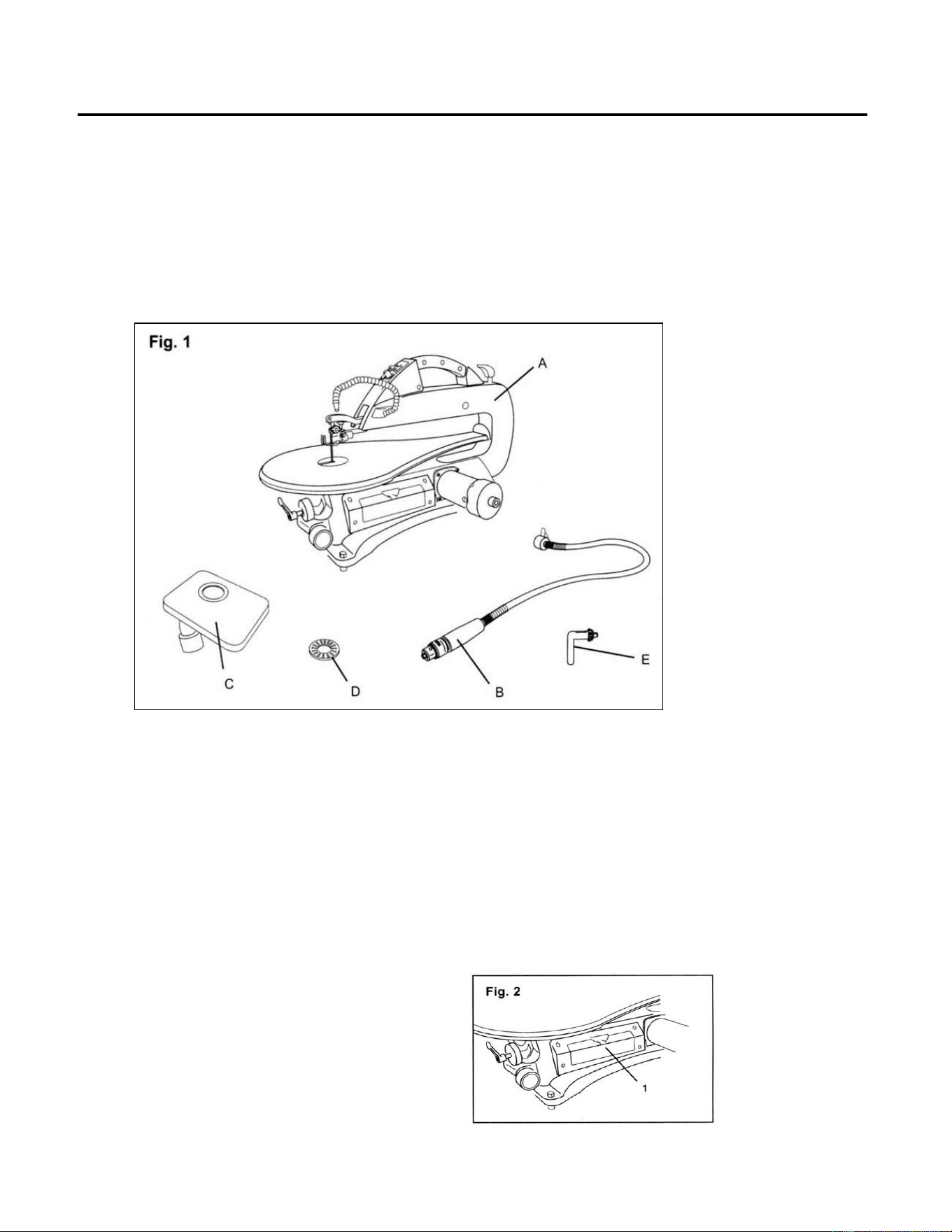
Unpacking (Fig. 1)
Unpack the scroll saw and all its parts, and compare against the list below. Do not discard the
carton or any packaging until the scroll saw is completely assembled.
CAUTION: Do not lift the saw by the arm that holds the blade. The saw will be damaged.
WARNING: To avoid injury from accidental starting, turn switch OFF and remove plug from
power source outlet before making any adjustments.
240-0041 (888)315-3080 10
A
Not shown:
Pin-less blade (1)
Allen wrench (3mm, 4mm & 5mm)
Extra brush (1 set)
Storage compartment (Fig. 2)
A storage location (1) for small accessories
Scroll saw
B Rotary tool
C Rotary table with dust port (Assembled on the scroll saw)
D Rotary table insert
E Chuck key
Assembly
and
adjustments
(continued)
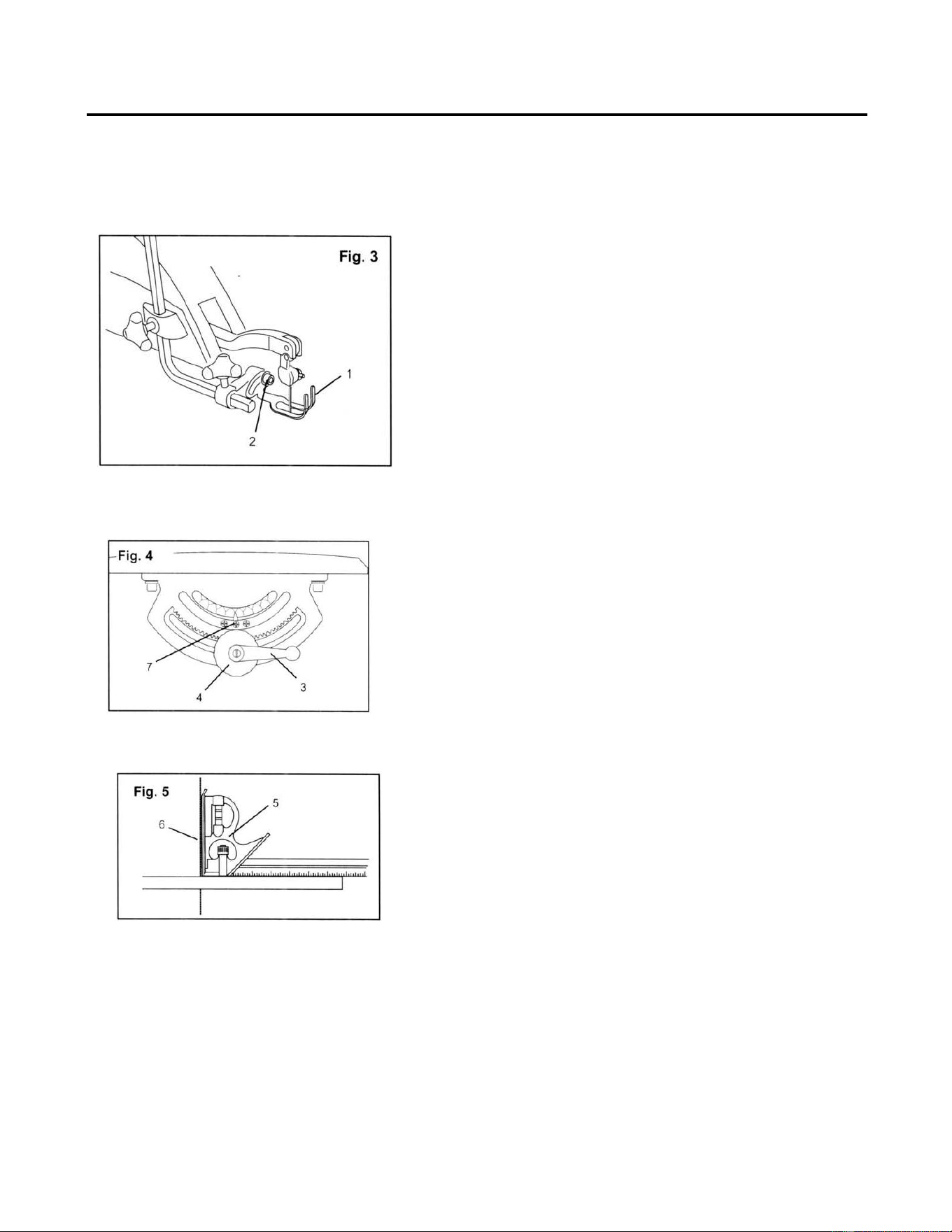
Align the bevel indicator (Fig. 3-5)
The bevel indicator has been factory adjusted, it should be rechecked prior to use for best
operation.
1. Remove the blade guard foot (1) using a hex key
to loosen the screw (2).
2. Loosen the table bevel lock handle (3) and turn
the table adjustment knob (4) to move the table
until it is approximately at a right angle to the
blade.
3. Use a combination square (5) (not provided) to
set the table exactly 90º to the blade (6). If there
is space between the square and the blade adjust
the table angle until the space is closed.
4. Tighten the table bevel lock handle (3) to prevent
movement.
5. Loosen the screw (7) holding the bevel scale
pointer and position pointer to 0º. Tighten the
screw.
6. Attach the blade guard foot (1) and tighten the
screw (2).
240-0041 (888)315-3080 11
Assembly
and
adjustments
(continued)
WARNING: to reduce the risk of injury:
• When carrying the saw, hold it close to your body to avoid injury to your back. Bend your knees
when lifting the saw.
• Carry the saw by the base. Do not carry the saw by the power cord.
• Secure the saw in a position where people cannot stand, sit, or walk behind it. Debris thrown
from the saw could injure people standing, sitting, or walking behind it.
• Secure the saw on a firm, level surface where the saw cannot rock and there is adequate room for
handling and properly supporting the workpiece.
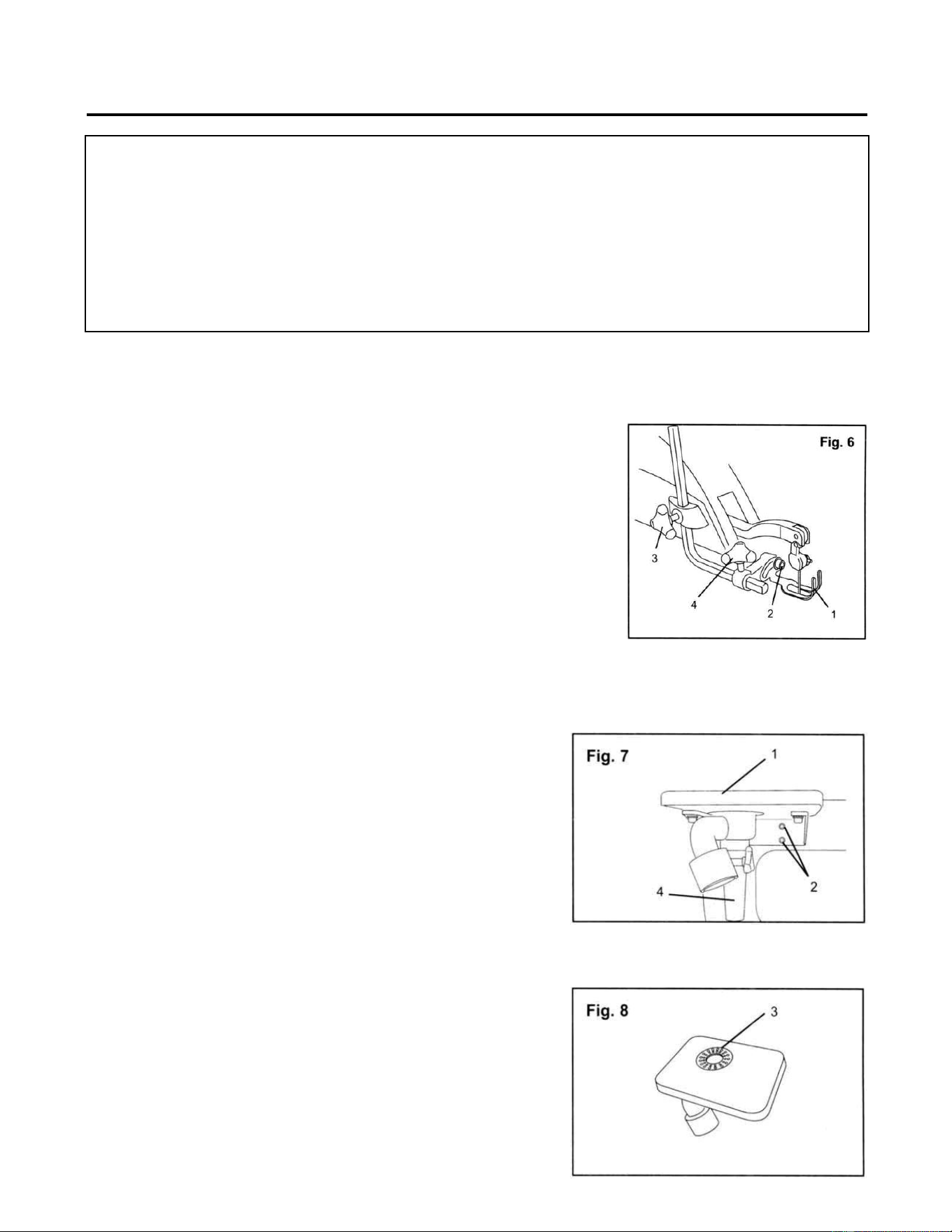
Blade guard foot adjustment (Fig. 6)
When cutting at angles, the blade guard foot should be adjusted so it is parallel to the table and rests flat
above the workpiece.
1. To adjust, loosen the screw (2), tilt the foot (1) so it is parallel to the
table, and tighten the screw.
2. Loosen the height adjustment knob to raise or lower the foot until it
just rests on top of the workpiece. Tighten the knob.
3. Loosen the horizontal adjustment knob (4) and move the foot
forward or backward as needed.
Attach the rotary tool table (Fig. 7 and 8)
1. Secure the rotary tool table (1) to the side of the saw using the four hex screws (2) and washers provided
with the table.
2. Place the rotary table insert (3) in the opening on the rotary
table.
Note: The rotary tool (4) attaches to the clamp located below the
rotary tool table.
240-0041 12 (888)315-3080
Assembly
and
adjustments
(continued)
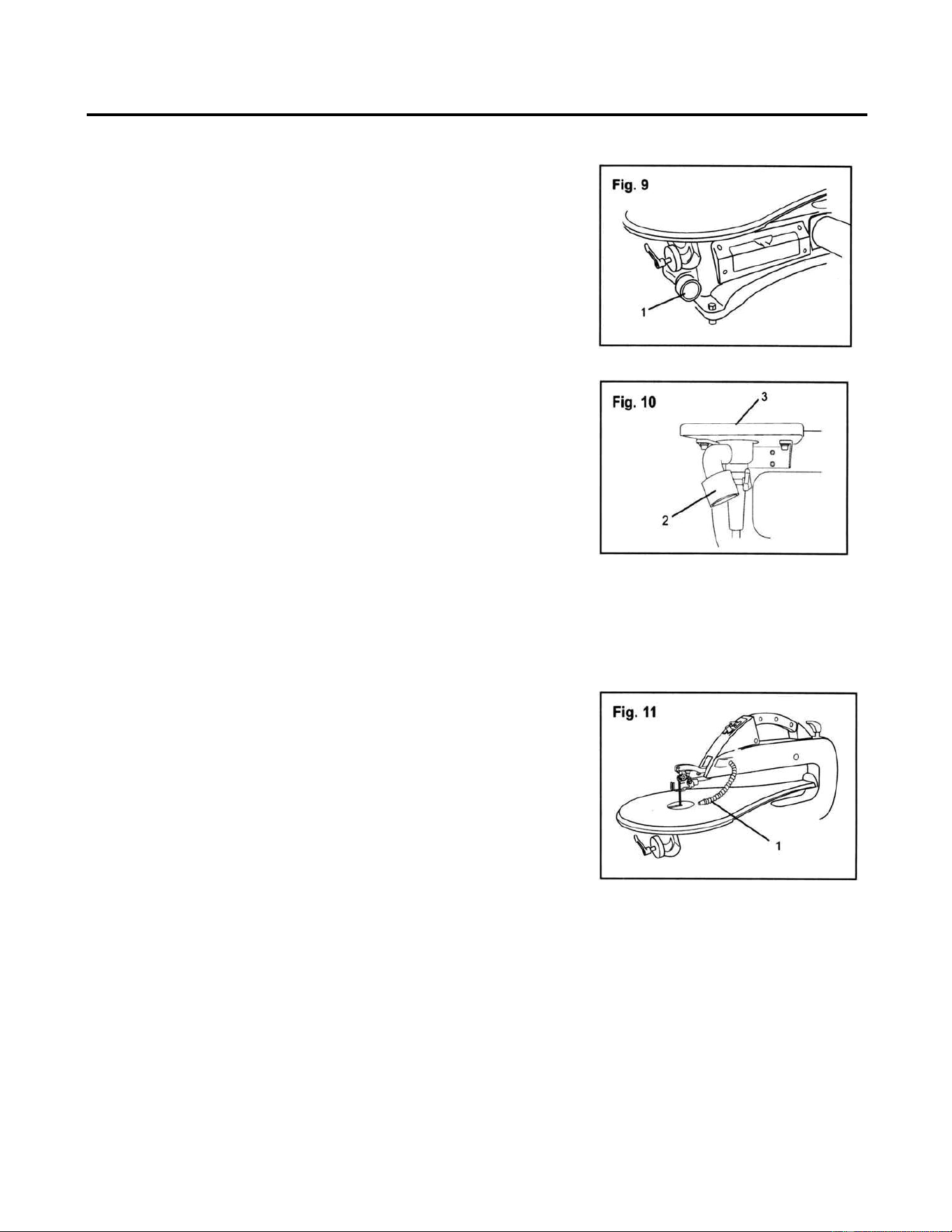
Sawdust collection port
(Fig. 9 and 10)
This scroll saw allows a hose or vacuum accessory (not provided)
to be connected to the dust chute (1) at the front of the saw and to
the dust chute (2) under the rotary tool table (30, if installed.
If excessive sawdust buildup occurs inside the base, use a wet/dry
vacuum cleaner or manually remove sawdust. This will keep your
saw cutting efficiently.
Adjusting the dust blower/light (Fig. 11)
For best results, the dust blower tube (1) should be adjusted to
direct air and light at the blade and workpiece.
240-0041 (888)315-3080 13
Assembly
and
adjustments
(continued)
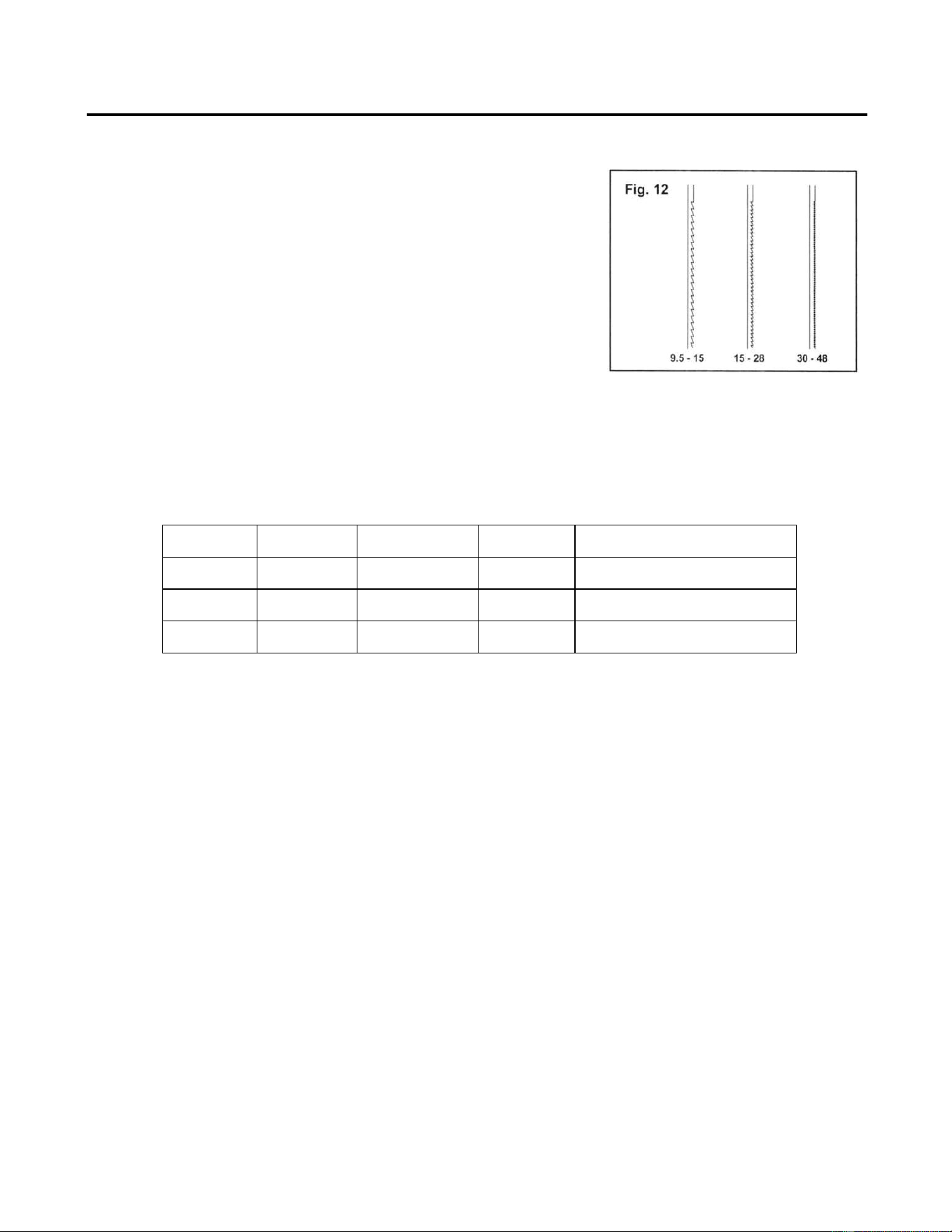
Blade selection (Fig. 12)
This scroll saw accepts 5" length pin-end and pinless blades, with a
wide variety of blade thicknesses and widths. The type of material
and intricacies of cutting operations will determine the number of
teeth per inch. Always select the narrowest blades for intricate
(tight radius and curves) curve cutting and the widest blades for
straight and large curve cutting operations. The following table
represents suggestions for various materials. When purchasing
blades, refer to the back of the package for best use of blades on
various materials. Use this table as an example, but practice and
your own personal preference will be the best selection method.
When choosing a blade, use very fine, narrow blades to scroll cut in thin wood 1/4" thick or less.
Use wider blades for thicker materials but this will reduce the ability to cut tight curves.
Note: Thinner blades will have more possibilities for blade deflection when cutting angles are not
perpendicular to the table.
Teeth /inch
TPI
Blade width
Inch
Blade thickness
Inch
Blade/SPM Material cut
10-15 0.110 0.018 500-1200 Medium turns on ¼” to 1-3/4”
wood, soft metal, hardwood
15-28 0.055-0.110 0.010-0.018 800-1700 Small turns on 1/8” to 1-1/2”
wood, soft metal, hardwood
30-48 0.024-0.041 0.012-0.019 Varies Non-ferrous metal/hardwoods
using very slow speeds
Blade Care
To maximize the life of your scroll saw blades:
1. Do not bend blades when installing.
2. Always set proper blade tension.
3. Use the right blade (see instructions on replacement blade packaging for proper use.)
4. Feed the workpiece correctly into the blade.
5. Use thin blades for intricate cutting.
CAUTION: Any and all servicing should be performed by a qualified service center.
240-0041 (888)315-3080 14
Assembly
and
adjustments
(continued)
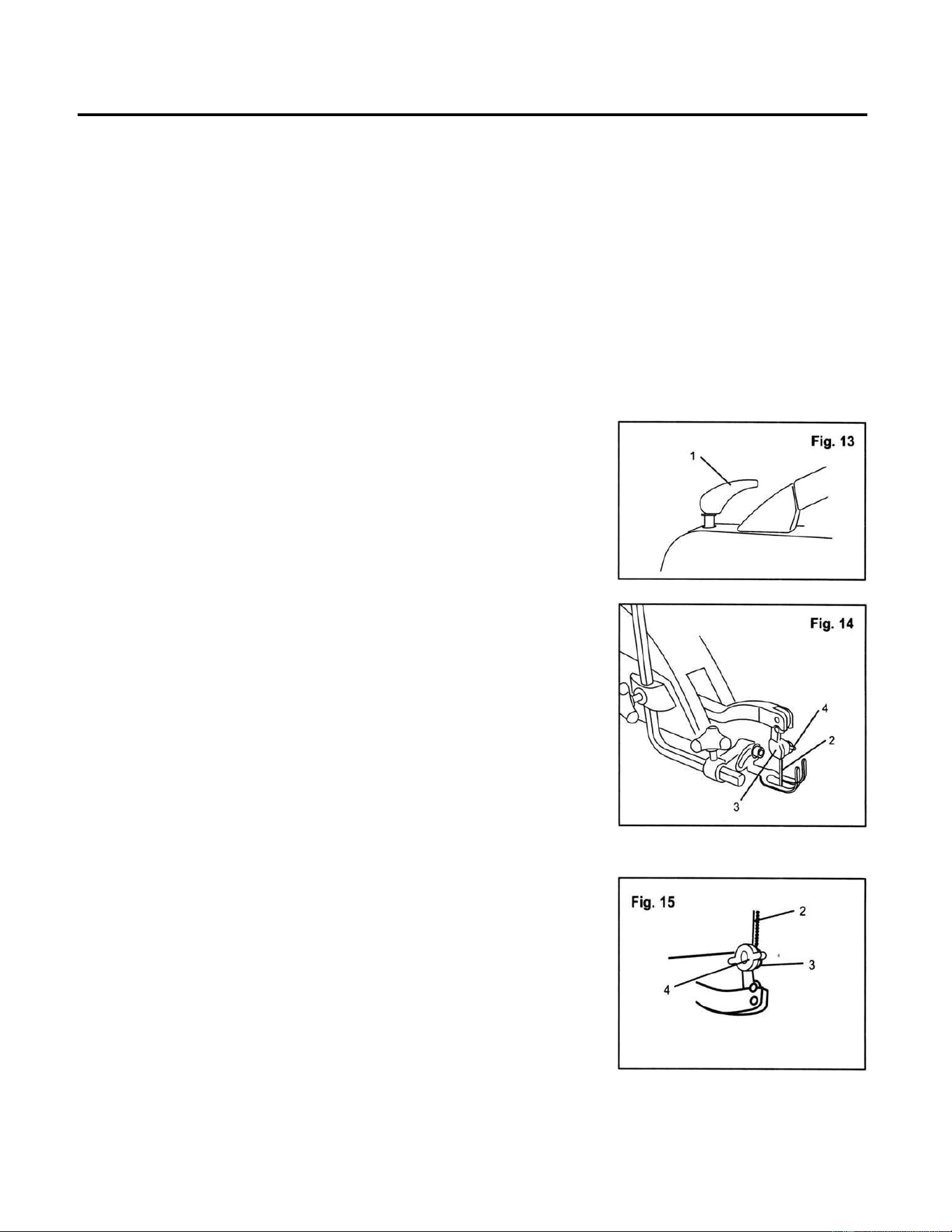
Blade removal and installation (Fig. 13-15)
WARNING: To prevent personal injury, always turn saw OFF and disconnect the plug from the power
source before changing blades or making adjustments.
This saw uses pin-end and pin-less blades. Pin-end blades are thicker for stability and for faster assembly.
They provide faster cutting on a variety of materials.
Note: When installing pin-end blades, the slot on the blade holder must be slightly wider than the
thickness of the blade. After the blade is installed, the blade tension mechanism will keep it in place.
1. Loosen the blade tension by raising the blade tension lock lever (1).
2. To remove a blade:
Pinned: Lift the blade (2) out and away from the upper and lower
blade holders (3).
Pin-less: Loosen the upper and lower blade holders (3), and lift the
blade out and away from the blade holders.
CAUTION: Install the blade with the teeth pointed downward.
3. Install a pinned blade:
a. Hook a blade (2) in the recess of the lower blade holder.
b. Press down on the upper blade holder and insert the blade
into the slot on the upper holder.
c. Lower the blade tension lock lever (1). Make sure the blade is
properly located in the blade holders.
4. Install a pinless blade:
a. Place a blade (2) in the upper and lower blade holders (3).
b. Tighten the lower and upper blade knobs (4) by hand or
provided allen wrench.
c. Lower the blade tension lock lever (1). Make sure the blade is
properly located in the blade holders.
240-0041 (888)315-3080 15
Assembly
and
adjustments
(continued)
WARNING: Remove the saw blade before installing and/or using the rotary tool.
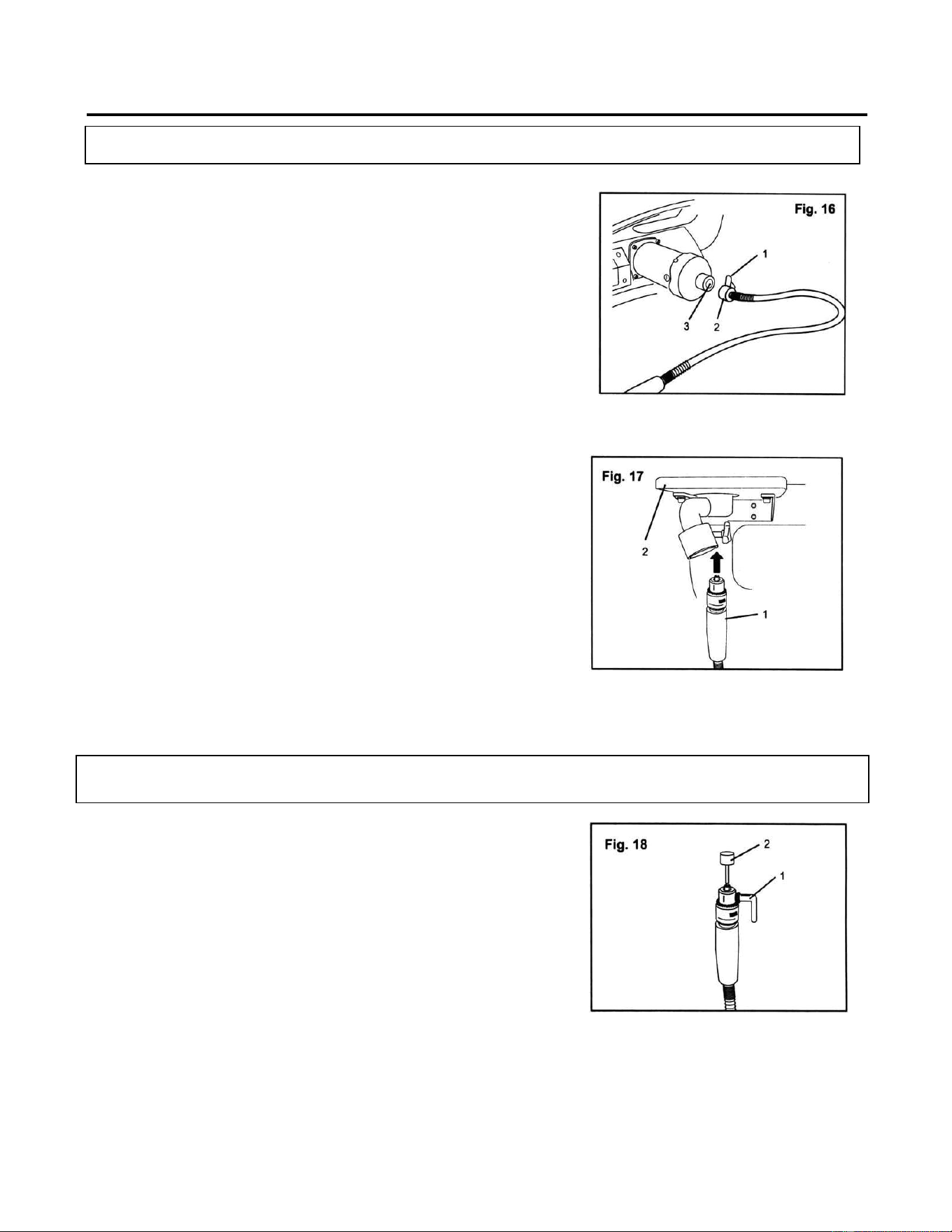
Connect the rotary tool to the saw (Fig. 16)
The rotary tool can be used as a handheld or stationary device. The
rotary tool connects to the motor and is operated using the ON/OFF
switch and variable speed dial on the saw.
1. Open the latch (1) on the rotary tool coupler (2).
2. Insert the inner cable into the opening (3) at the end of the
motor fitting.
3. Place the coupler (2) over the motor fitting. Turn the coupler
to ensure a good fit, and close the latch (1).
Attach the tool to the support bracket (Fig. 17)
Use this procedure to use the rotary tool as a stationary device.
1. Loosen the knob on the rotary clamp.
2. Insert the rotary tool (1) through the clamp and the opening
in the rotary table (2).
3. Tighten the knob to secure the rotary tool in the clamp.
Install rotary tools (Fig. 18)
WARNING: Use the rotary tool for sanding and grinding applications only. This product is not recommended for
drillin
g
a
pp
lications.
1. Place the chuck key (1) into the side keyhole of the chuck,
meshing the key with the gear teeth.
2. Turn the chuck key counterclockwise to open the chuck jaws.
3. Insert a rotary tool (2) (not provided) into the chuck far
enough to obtain maximum gripping of the chuck jaws.
4. Center the rotary tool in the chuck jaws.
5. Tighten the chuck jaws using the chuck key to ensure that the
tool will not slip while drilling.
6. Remove the chuck key (1).

Operation
Recommendations for cutting
A scroll saw is basically a curve-cutting machine. It can also be used for straight cutting and beveling
or angle cutting operations. Please read and understand the following items before attempting to use
the saw.
1. When feeding the workpiece into the blade do not force it against the blade. This could cause blade
deflection. Allow the saw to cut the material by guiding the workpiece into the blade as it cuts.
2. The blade teeth cut material ONLY on the down stroke.
3. Guide the wood into the blade slowly because the teeth of the blade are very small and remove
wood only on the down stroke.
4. There is a learning curve for each person using this saw. During that period of time it is expected
that some blades will break until you learn how to use the saw.
5. Best results are achieved when cutting wood one inch thick or less.
6. When cutting wood thicker than one inch, guide the wood very, very slowly into the blade and take
extra care not to bend or twist the blade while cutting in order to maximize blade life.
7. Teeth on scroll saw blades wear out and the blades must be replaced frequently for best cutting
results. Scroll saw blades generally stay sharp for 1/2 hour to 2 hours of cutting.
8. To get accurate cuts, be prepared to compensate for the blade's tendency to follow the wood grain
as you are cutting.
9. This scroll saw is primarily designed to cut wood or wood products. For cutting precious and non-
ferrous metals, the variable control switch must be set at very slow speeds.
10. When choosing a blade, use very fine, narrow blades to scroll cut in thin wood 1/4" thick or less.
Use wider blades for thicker materials but this will reduce the ability to cut tight curves.
11. Blades wear faster when cutting plywood or very abrasive particle board. Angle cutting in
hardwoods wears blades down faster.
LED Light switch (Fig. 19)
1. To turn on the light, press the light switch (1) to the ON (I)
position.
2. To turn OFF the light, press the light switch (1) to the OFF
(O) position.
240-0041 (888)315-3080 17
Operation (continued)
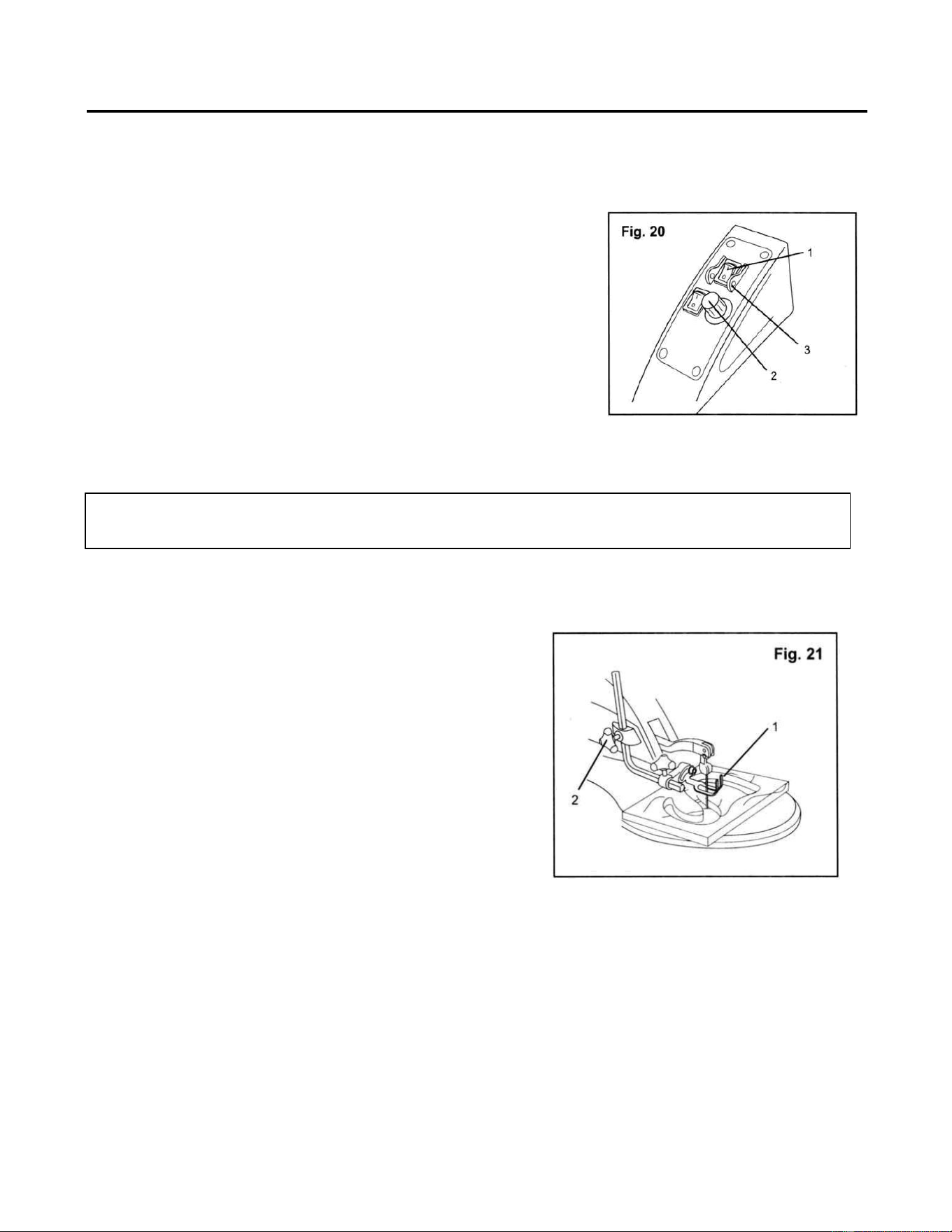
ON/OFF switch and speed control knob (Fig. 20)
Always wait for the saw or rotary to come to a complete stop before restarting.
1. To turn the saw or rotary on, press the switch (1) to the ON (I)
position.
2. Turn the variable speed knob (2) to adjust the blade speed or
rotary speed to the desired setting. Turning the control knob
clockwise increases speed; turning it counterclockwise reduces
speed.
3. To turn the saw off, press the switch (1) to the OFF (O) position.
Note: A small lock may be placed between the power switch and the
plastic switch guard (3) to prevent accidental operation. It is
recommended to lock the saw when not in use.
240-0041 (888)315-3080 18
WARNING: To avoid injury from accidental start-ups, always turn the switch OFF and unplug the
scroll saw before moving the tool, replacing the blade, or making adjustments.
Freehand cutting (Fig. 21)
1. Lay out desired design, or secure design to the workpiece.
2. Raise the blade guard foot (1) by loosening the height
adjustment knob (2).
3. Position the workpiece against the blade and place the
blade guard foot against the top surface of the workpiece.
4. Secure the blade guard foot (1) by tightening the height
adjustment knob (2).
5. Remove the workpiece from the blade prior to turning the
scroll saw ON.
CAUTION: In order to avoid uncontrollable lifting of the
workpiece and to reduce blade breakage, do not turn the
switch on while the workpiece is against the blade.
6. Slowly feed the workpiece into the blade by guiding and
pressing the workpiece down against the table.
CAUTION: Do not force the leading edge of the workpiece into the blade. The blade will deflect,
reducing accuracy of cut, and may break.
7. When the cut is complete, move the trailing edge of the workpiece beyond the blade guard foot. Turn
the switch OFF.
Operation (continued)
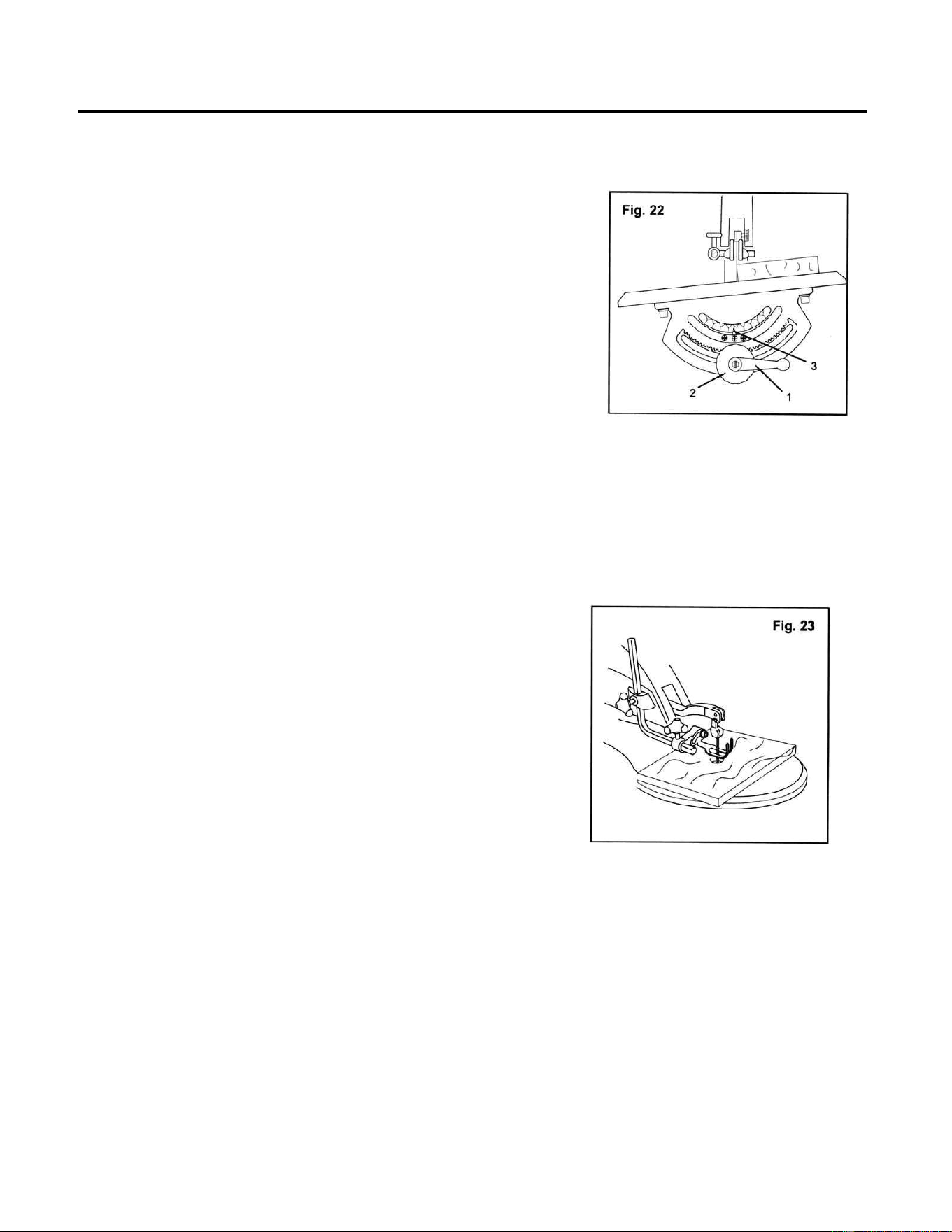
Angle cutting (bevel cutting) (Fig. 22)
1. Layout or secure design to workpiece.
2. Move the blade guard foot to the highest position by loosening
the height adjustment knob (1). Retighten.
3. Tilt the table to the desired angle by loosening the table bevel
lock handle (2) and moving the table to the proper angle using
the degree scale and the pointer (3).
4. Tighten the table bevel lock handle (2).
5. Loosen the blade guard screw, and tilt the blade guard to the
same angle as the table. Retighten the blade guard screw. See
Hold down clamp adjustment'.
6. Position the workpiece on the right side of the blade. Lower the
blade guard foot against the surface by loosening the height
adjustment knob. Retighten.
7. Follow steps 5-7 under Freehand cutting.
nterior cutting (Fig. 23)
sign on the workpiece. Drill a 1/4" hole in the
hole in the
iece.
from the blade holder. Remove the workpiece from the table.
I
1. Lay out the de
workpiece.
2. Remove the blade. See Blade removal and installation.
3. Place the workpiece on the saw table with the
workpiece over the access hole in the table.
4. Install a blade through the hole in the workp
5. Follow steps 3-7, under Freehand cutting.
6. When finished making the interior scroll cuts simply turn the
scroll saw OFF. Unplug the saw before removing the blade
240-0041 (888)315-3080 19
Operation (continued)
e.
t
the blade prior to turning the
nd reduce blade breakage, do
ng the workpiece against the straight edge and
e. The blade will deflect;
10. ove the trailing edge of the workpiece beyond the blade guard foot.
Turn the switch OFF.
antity
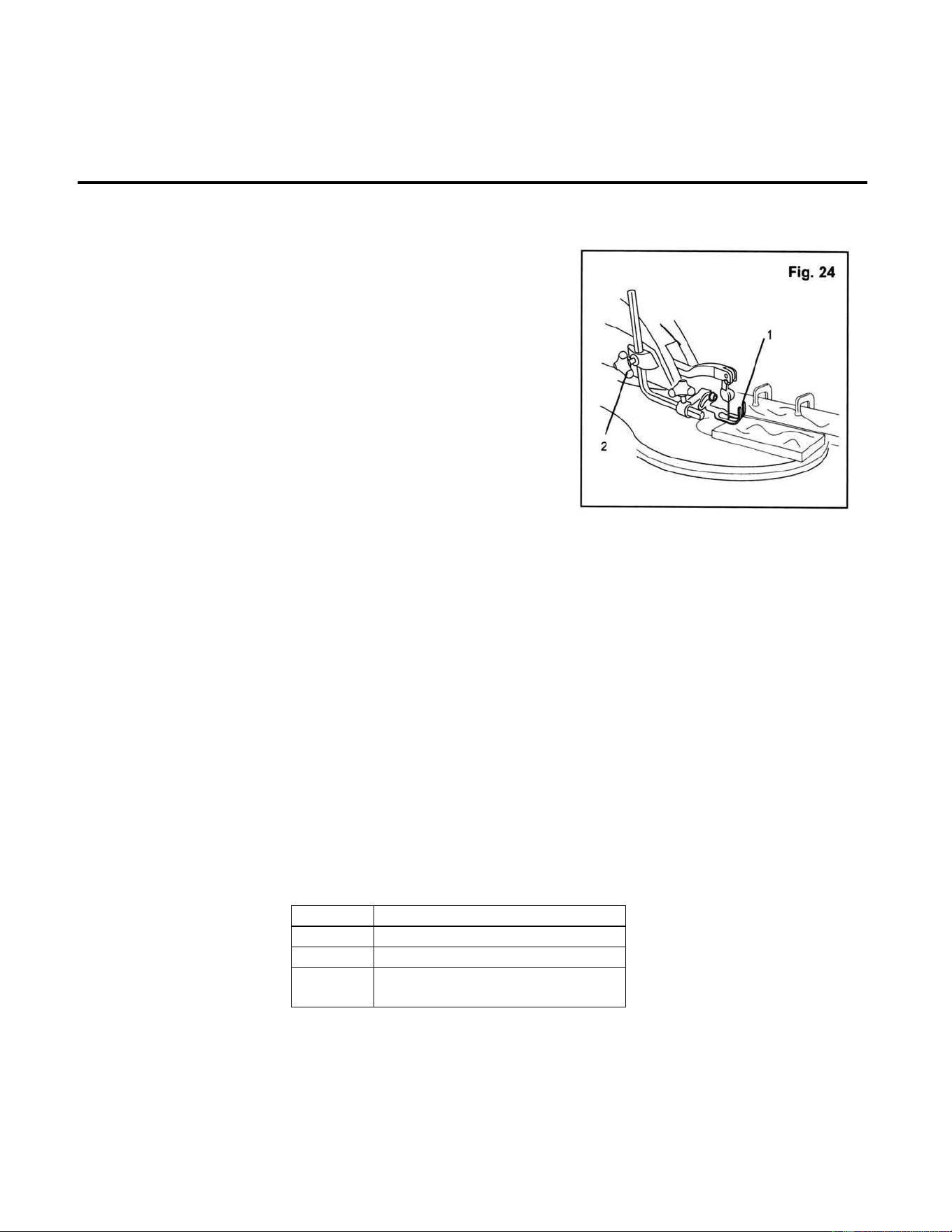
Rip or straight line cutting (Fig. 24)
1. Raise the blade guard foot (1) by loosening the height
adjustment knob (2).
e desired distance.
240-0041 (888)315-3080 20
2. Measure from the tip of the blade to th
Position the straight edge parallel to the blade at that distanc
3. Clamp the straight edge to the table.
4. Recheck your measurements using the workpiece to be cut
and make sure the straight edge is secure.
5. Position the workpiece against the blade and place the blade
guard foot against the top surface of the workpiece.
6. Secure the blade guard foot in place by tightening the heigh
adjustment knob.
. Remove the workpiece from7
scroll saw ON.
AUTION: In order to avoid uncontrollable lifting of the workpiece aC
not turn the switch on while the workpiece is against the blade.
8. Position the workpiece against the straight edge prior to touching the leading edge of the
workpiece against the blade.
. Slowly feed the workpiece into the blade, guidi9
pressing the workpiece down against the table.
AUTION: Do not force the leading edge of the workpiece into the bladC
reducing accuracy of cut, and may break.
When the cut is complete, m
Tool needed
Qu Description
2 Small C-clamp
1 Ruler or measuring tape
1 12” straight scrap of wood
(thickness to match workpiece)
240-0041 (888)315-3080 21
aintenance
M
it
ot attempt to oil the motor bearings or service the motor's internal parts.
) around the shaft and bearing.
. Repeat the above procedure for the opposite side of the saw.
s are seating, some sparking may be noticed in the motor.
This is normal for new brushes.
To ensure that the wood glides smoothly across the work surface, periodically apply a coat of paste
ax to the surface of the worktable. If the power cord is worn out or damaged in any way, replace
WARNING: Always turn the switch OFF and unplug the power cord from the outlet before
maintaining or lubricating the scroll saw.
w
immediately. Do n
Lubrication
Lubricate the arm bearings after every 50 hours of use.
ove the cover. 1. Turn the saw on its side and rem
2. Squirt a generous amount of SAE 20 oil (lightweight motor oil
. Let the oil soak in overnight. 3
4
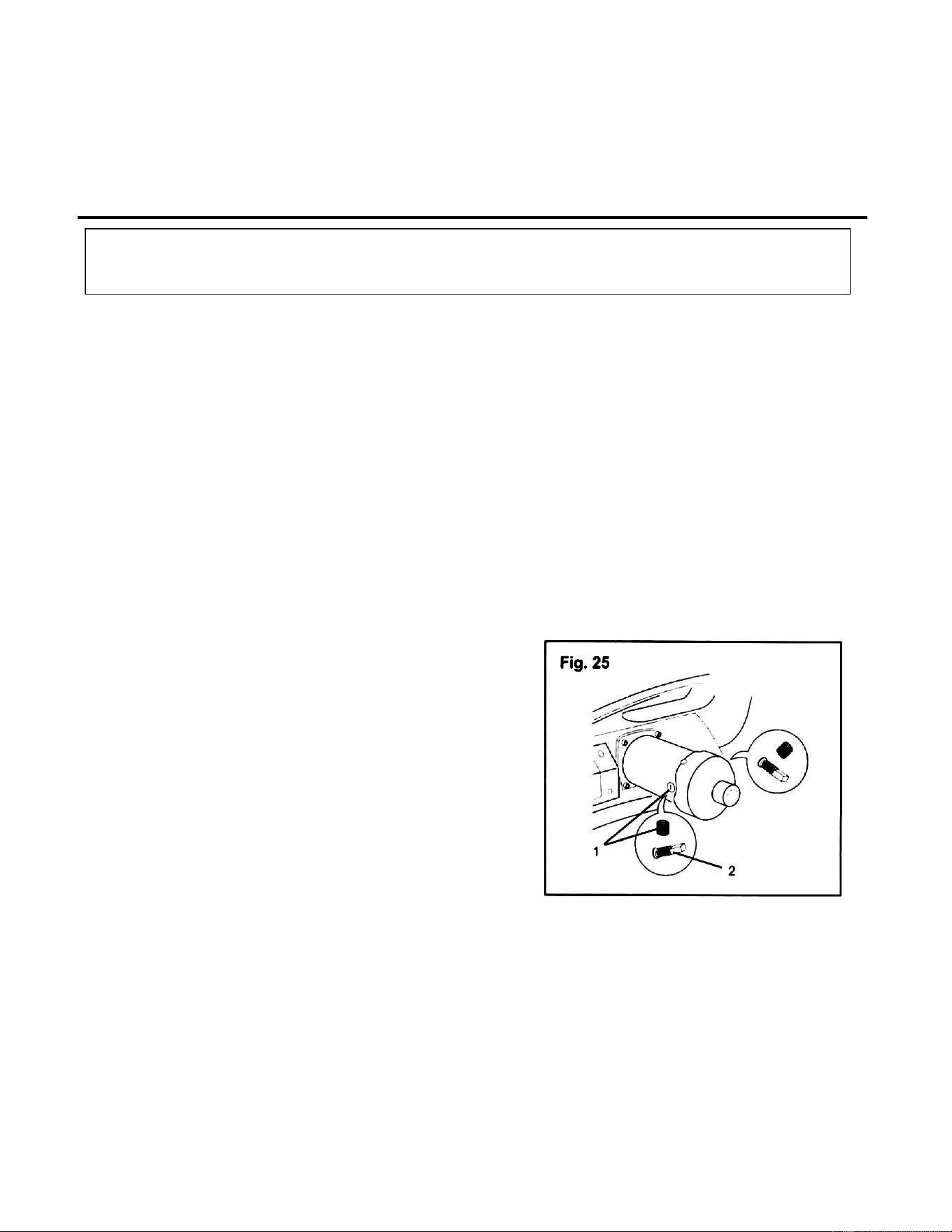
Brushes (Fig. 25)
Check the condition of the carbon brushes after 50 hours of
use. If the brushes are worn to 1/16” (2mm) in length,
replace them.
1. Loosen and remove the two brush caps (1) using a
flat-blade screwdriver.
2. Pull out each brush (2), inspect the brush and
replace if necessary. Replace both brushes even if
only one is damaged.
Note: After inspecting the brushes, be sure to install the
brushes into the same position that they were removed
from if you are not installing new ones.
3. Position the brushes into the motor. Tighten the
brush caps (1) snugly. Do not over tighten.
4. Run the saw for approximately 5 to 10 minutes to allow the brushes to “seat” themselves. If
the brushes are not seated correctly, the electric brake may not function correctly and could
damage the motor. While the brushe
240-0041 (888)315-3080 22
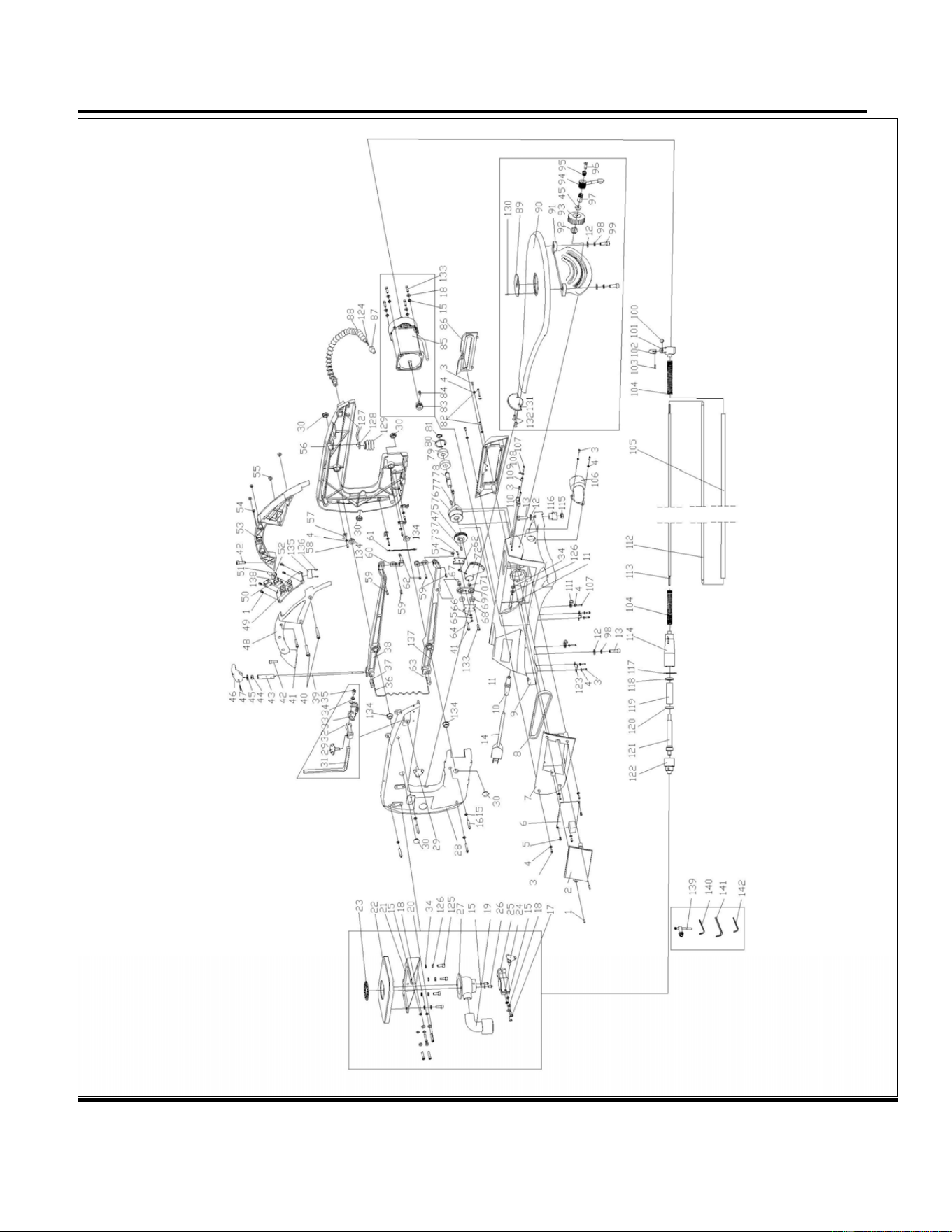
Exploded view and parts list

240-0041 (888)315-3080 23
xploded view and parts list (continued)E
Part# tion Q Pa Qty
Order # Descrip ty rt# Order # Description
1 240-0041-001 Screw ST4.2×12 5x25 6 41 240-0041-041 Screw M 4
2 240-0041-002 Cover 1 42 240-0041-042 Screw M6x20 2
3 240-0041-003 Screw M4x12 8 43 240-0041-043 Sleeve 1
4 240-0041-004 Washer 4 16 44 240-0041-044 Washer 1
5 240-0041-005 Screw ST2.9×8 2 45 240-0041-045 Flat Washer 6 2
6 240-0041-006 Circuit Board ver 1 46 240-0041-046 Blade Tension Lock Le 1
7 240-0041-007 Left Side Cover 20 1 47 240-0041-047 Spring Pin M3x 1
8 240-0041-008 Belt 1 48 240-0041-048 Left Carrying Handle 1
9 240-0041-009 Base 1 49 240-0041-049 Switch Cover 1
10 240-0041-010 Power Cord Sleeve 1 50 240-0041-050 ON/OFF Switch 1
11 240-0041-011 Bolt M6x70 1 51 240-0041-051 Speed Control Knob 1
12 240-0041-012 Washer 8 1 ntrol Label 0 52 240-0041-052 Speed Co 1
13 240-0041-013 Bolt M8 x 25 rrying Handle 4 53 240-0041-053 Right Ca 1
14 240-0041-014 Power Cord 1 54 240-0041-054 Nut M5 4
15 240-0041-015 Washer 5 12 55 240-0041-055 Nut M6 2
16 240-0041-016 Screw M5x25 4 56 240-0041-056 Right Housing 1
17 240-0041-017 Bolt M5x16 2 57 240-0041-057 Cord Clamp 4
18 240-0041-018 Spring Washer 5 6 58 240-0041-058 Screw M4x8 4
19 240-0041-019 Rotary Tool Dust Port 1 59 240-0041-059 Spring Pin M5x12 4
20 240-0041-020 Screw M5x25 4 60 240-0041-060 Blade Holder 2
21 240-0041-021 Rotary Table Support 1 61 240-0041-061 Blade 1
22 240-0041-022 Rotary Table 1 62 240-0041-062 Screw M6x5 3
23 240-0041-023 Rotary Table insert 1 63 240-0041-063 Lower Retainer 1
24 240-0041-024 Clamp Knob 1 64 240-0041-064 Nut M3 1
25 240-0041-025 Clamp 1 65 240-0041-065 Spring Washer 3 1
26 240-0041-026 Screw M5x10 2 66 240-0041-066 Flat Washer 3 1
27 240-0041-027 Dust Port A) 1 67 240-0041-067 Bearing Washer ( 1
28 240-0041-028 Left Housing 1 68 240-0041-068 Clamp Plate 2
29 240-0041-029 Knob 2 69 240-0041-069 Bearing 625-2Z 2
30 240-0041-030 Plastic Cap 6 70 240-0041-070 Connecting Link 1
31 240-0041-031 Hold Down Rod 1 71 240-0041-071 Bearing Washer (B) 1
32 240-0041-032 Hold Down Bracket 1 72 240-0041-072 Cam 1
33 240-0041-033 Blade Guard Foot 3x12 1 73 240-0041-073 Screw M 1
34 240-0041-034 Washer 6 6 74 240-0041-074 Flat Washer 1
35 240-0041-035 Screw M6x10 1 75 240-0041-075 Wheel 1
36 240-0041-036 Spring 1 76 240-0041-076 Retainer Sleeve 1
37 240-0041-037 Upper Retainer 1 77 240-0041-077 Screw M5x16 2
38 240-0041-038 Upper Rocker Arm 1 78 240-0041-078 Wheel Shaft 1
39 240-0041-039 Tension Bolt 1 79 240-0041-079 Bearing 2
40 240-0041-040 Screw M6x30 2 80 240-0041-080 Snap Ring 32 1

240-0041 (888)315-3080 24
Exploded view and parts list (continued)
Par tion Q Pa Qty t # Order # Descrip ty rt # Order # Description
81 240-0041-081 Snap Ring 12 1 121 240-0041-121 Rotary Shaft 1
82 240-0041-082 Screw M4x30 2 122 240-0041-122 Chuck 1
83 240-0041-083 Wheel 1 123 240-0041-123 Clamp Clip 1
84 240-0041-084 Screw M5x8 1 124 240-0041-124 LED Light 1
85 240-0041-085 Motor 1 125 240-0041-125 Screw M6x16 4
86 240-0041-086 Tool Box Cover asher 6 1 126 240-0041-126 Spring W 5
87 240-0041-087 Dust Blower 1 127 240-0041-127 Air Hose 1
88 240-0041-088 Air Nozzle 1 128 240-0041-128 Pressure Plate 1
89 240-0041-089 Table Insert 1 129 240-0041-129 Air Bag 1
90 240-0041-090 Saw Table 1 130 240-0041-130 Spring Pin M4x8 1
91 240-0041-091 Bevel Scale 1 131 240-0041-131 Table Rock 1
92 240-0041-092 Gear 1 132 240-0041-132 Screw M5x16 2
93 240-0041-093 Bevel Adjustment Knob 1 133 240-0041-133 Screw M5x16 5
94 240-0041-094 Table Bevel Lock Handle 1 134 240-0041-134 Copper Sleeve 4
95 240-0041-095 Spring 1 135 240-0041-135 LED Circuit Board 1
96 240-0041-096 Bolt 1 136 240-0041-136 Screw ST2.9x6 2
97 240-0041-097 Bolt 1 137 240-0041-137 Lower Rocker Arm 1
98 240-0041-098 Spring Washer 8 6 138 240-0041-138 Light Switch 1
99 240-0041-099 Screw M8x20 2 139 240-0041-139 Chuck Key 1
100 240-0041-100 Lock Bolt 1 140 0041-140 rench 4 1 240- W
101 240-0041-101 Rotary Connect 141 0041-141 rench 5 1 1 240- W
102 240-0041-102 Locking Knob 142 0041-142 rench 3 1 1 240- W
103 240-0041-103 Roll Pin 1
104 240-0041-104 Spring 2
105 240-0041-105 Shaft 1
106 240-0041-106 Sawdust Port 1
107 240-0041-107 Screw M4x16 2
108 240-0041-108 Pointer 1
109 240-0041-109 Pointer Holder 1
110 240-0041-110 bracket 1
111 240-0041-111 Cord Clamp 1
112 240-0041-112 Spring Tube 1
113 240-0041-113 Flex Shaft 1
114 240-0041-114 Rotary Tool 1
115 240-0041-115 Nut M8 4
116 240-0041-116 Rubber Foot 4
117 240-0041-117 Washer 15 1
118 240-0041-118 Bearing 1
119 240-0041-119 Sleeve 1
120 240-0041-120 Bearing 1

W
a
r
ranty
his MASTERFORCE™ brand power tool carries our 3-Month Money Back Guarantee. If you are not
TERFORCE™ brand power tool for any reason within three (3)
MASTERFORCE™ SCROLL SAW WARRANTY
3-MONTH MONEY BACK GUARANTEE:
T
completely satisfied with your
MAS
months from the date of purchase, return the tool with your original receipt to any
retail
store, and we will provide you a refund – no questions asked.
3-YEAR LIMITED WARRANTY:
This MASTERFORCE™ brand power tool carries our famous No Hassle 3-Year Limited Warranty to the
original purchaser. If the tool fails within three (3) years from the date of purchase, simply bring this tool
and its sale receipt back to your nearest retail store for a free equivalent replacement
within those three years. Notwithstanding the foregoing, this limited warranty does not cover any
damage that has resulted from abuse or misuse of the Merchandise. This warranty: (1) excludes
expendable parts including but not limited to blades, belts, bits, light bulbs, and/or batteries; (2) shall be
void if this tool is used for commercial and/or rental purposes; and (3) does not cover any losses, injuries
to persons/property or costs. This warranty does give you specific legal rights and you may have other
rights, which vary from state to state. Be careful, tools are dangerous if improperly used or maintained.
Seller’s employees are not qualified to advise you on the use of this Merchandise. Any oral
representation(s) made will not be binding on seller or its employees. The rights under this limited
warranty are to the original purchaser of the Merchandise and may not be transferred to any subsequent
owner. This limited warranty is in lieu of all warranties, expressed or implied including warranties or
merchantability and fitness for a particular purpose. Seller shall not be liable for any special, incidental,
r consequential damages. The sole exclusive remedy against the seller will be for the replacement of
able to replace this product or is willing
ce purposes, seller is not allowed to
emonstrate any of these power tools for you.
lease Call Toll Free at: 1-888-315-3080
(M-F 8am – 5pm) CST
AVE YOUR RECEIPTS. THIS WARRANTY IS VOID WITHOUT THEM.
Printed in China
o
any defects as provided herein, as long as the seller is willing or
to refund the purchase price as provided above. For insuran
d
or questions / comments, technical assistance or repair parts – F
P
S
240-0041 (888)315-3080 25
