HearLink
Charger Plus
miniRITE
Instructions for Use
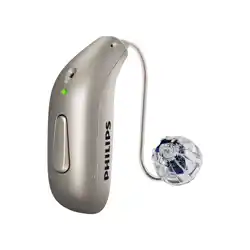
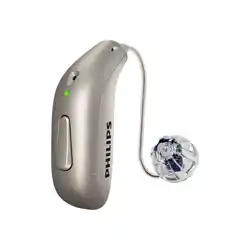
Compatible with HearLink 50 miniRITE
Introduction to this booklet
This booklet guides you on how to use and maintain your new
charger.
More information is available on www.hearingsolutions.philips.com
Ensure you read this booklet carefully, including the Warnings
section. This will help you get the most benefit from your charger.
Warnings
Text marked with a warning symbol must be read before using the device.
If you have additional questions about the use of your charger,
contact your hearing care professional.
IMPORTANT NOTICE
For details on the functionality of your specific hearing aid solution, refer to your hearing
aid’s instructions for use.

Table of contents
About
Intended use 4
Package contents 5
Charger 6
Temperature conditions 7
Getting started
Prepare charger 8
Charge the hearing aids 10
Daily use
Charging time 12
Charging the charger 14
Power bank function 16
Power and charge using other sources 18
Caring for your charger 19
Warnings
General warnings 20
More info
Conditions of use 24
Compliance statements 25
International warranty 30
Troubleshooting 32
4
Intended use
Intended use The charger is intended to recharge the hearing aids that contain
rechargeable batteries.
The product is intended to be used together with the given
hearing solution.
Indications for use There are no indications for use (diagnoses) for the charger itself.
Intended user Person with hearing loss using a hearing aid and their caregivers.
Hearing care professional responsible for adjusting the accessory.
Intended user group Adults and children older than 36months.
Use environment Indoor and outdoor.
Contraindications No contraindications.
Clinical benets See clinical benefits of the hearing aid.
About

5
Package contents
The packaging box consists of the following elements:
• Charger (CTN: HEA6008)
• Cable
• Power plug (varies from country to country)
6
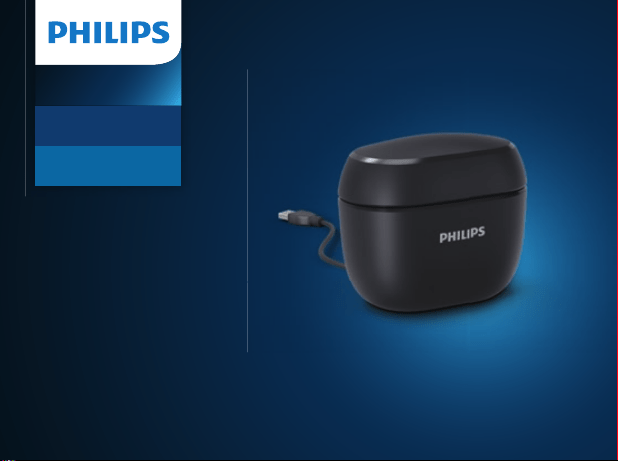
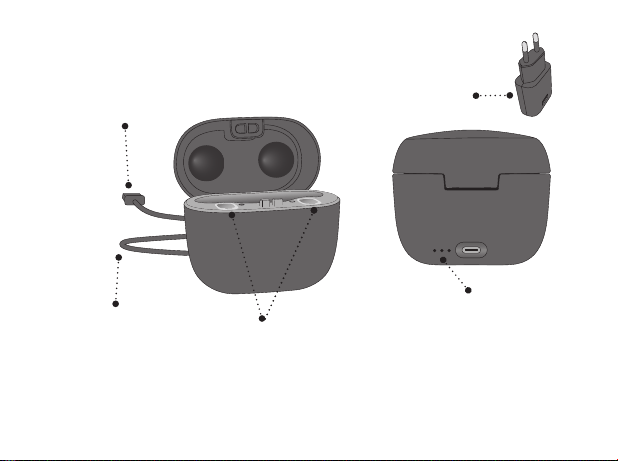
Charger
What it is and does
Charging ports
For hearing aids when
charging
Battery indicator
Displays charging status of
the power bank/power bank
battery levels
Power plug
For power socket
USB cable
Insert in power plug
Power cable
Supply power
7
IMPORTANT NOTICE
Do not expose the charger to temperatures below -25°C(-13°F) or above +70°C(+158°F).
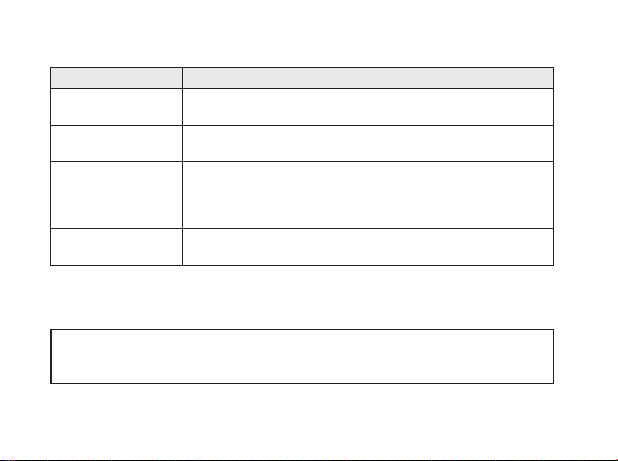
Temperature conditions
Temperature Charging condition
Below +5°C
(+41°F)
No charging due to low temperature.
+15°C to +35°C
(+59°F to +95°F)
Best charging condition. The charging of hearing aids can take up
to 2hours.
+5°C to +15°C and
+35°C to +40°C
(+41°F to +59°F and
+95°F to +104°F)
Extended charging. The charging of hearing aids can take up to
6 hours.
Above +40°C
(+104°F)
No charging due to high temperature.
8
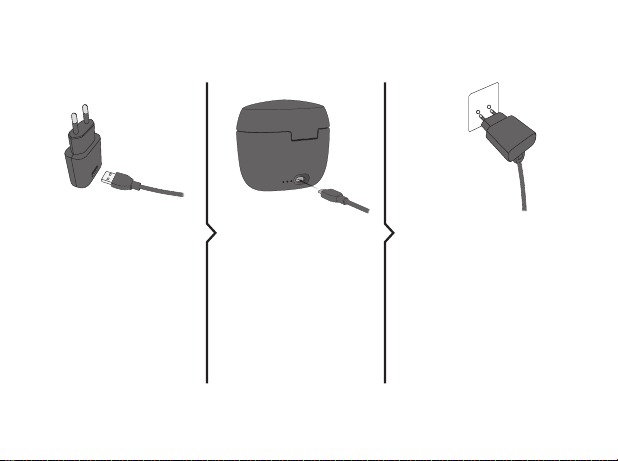
Prepare charger
Insert the USB plug
into the power plug.
Insert the other end
of the USB cable
into the back of the
charger
Insert the power plug
into a power socket.
The charger will turn ON
automatically and begin
charging the built-in
power bank battery.
Connect to power source
Getting started
Step 1 Step 2 Step 3
9
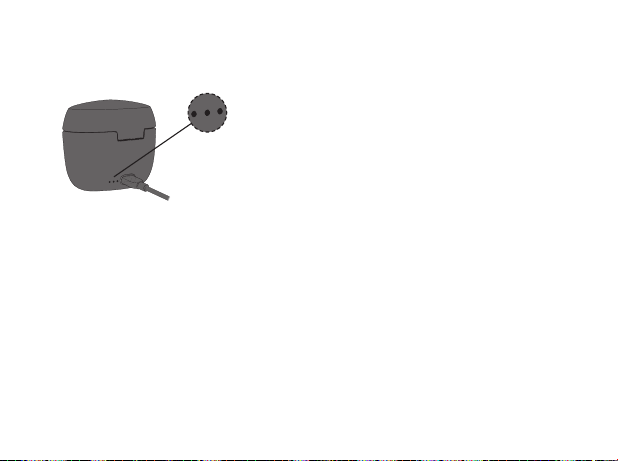
When the charger is connected to
power, the charger’s power bank
charging status is shown.
First use – Charge the power bank’s
battery
When you use your charger for the
first time, it is important that you fully
charge the charger’s built-in battery.
Charger is turned ON
10
Charge the hearing aids
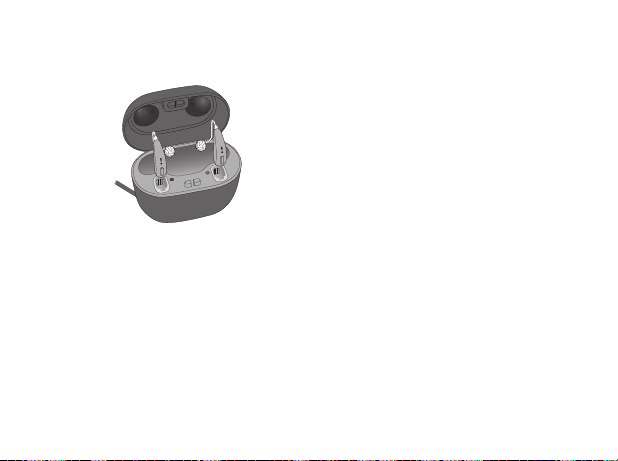
Place hearing aids in charger
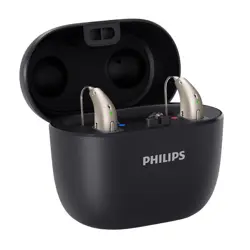
Place the hearing aids in the charging ports as shown in the picture and close
the lid. Make sure that your hearing aids match the right and left color indicators on
the charger’s charging ports.
The RED indicator is for the right side hearing aid. The BLUE indicator is for the left
side hearing aid.
11
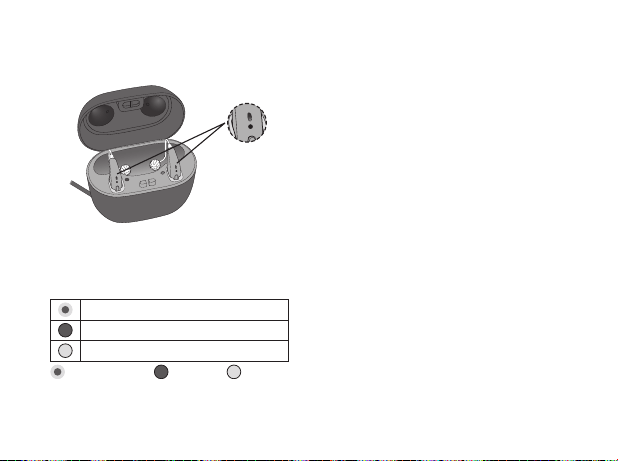
The hearing aid LED lights turn ON when the hearing aids are correctly placed in the
charger.
Hearing aid LED light charging status:
Charging - Low battery
Charging - At least 4 hours of use*
Fully charged
ORANGE pulse ORANGE GREEN
* Expected use time for rechargeable battery depends on use pattern, active feature set,
hearing loss, sound environment, battery age and use of wireless accessories.
Charging status
12
Charging time
Ensure you fully charge your hearing aids before first use and
charge them every night. That ensures that you start your day with
fully charged hearing aids.
Charging time may vary depending on the remaining capacity of
the battery and between the left/right-hand side hearing aid.
If your hearing aid’s battery is completely drained, the normal
charging and use time are:*
Charge time (minute) 15 30 60 120 (full)
Use time (hour) 4 8 16 20
Daily use
* Expected use time for rechargeable battery depends on use pattern, active feature set,
hearing loss, sound environment, battery age and use of wireless accessories.
13
When the battery in your hearing aids is fully charged, the charging
process will stop automatically.
The charger’s lid serves as protection and storage for your hearing
aids. During charging, when you open the lid, the LEDs in your
hearing aids light up to indicate their charging status.
Note
If you have not used your hearing aid in a long time and you then try to recharge it, it may
take up to 30seconds before the hearing aid begins charging. For more information, see your
hearing aid’s instructions for use.
IMPORTANT NOTICE
Ensure that your charger is powered or that the charger’s built-in battery is charged when
the hearing aid is seated in the charging port. Otherwise your hearing aids will remain
turned ON and continue using battery power.
14
Charging the charger
Your charger contains a built-in lithium-ion rechargeable battery
that doubles as a power bank. This lets you fully charge a pair of
hearing aids a minimum of three times on a fully-charged power
bank while you are on-the-go.
When the charger is plugged into a power source
• Your hearing aids and the charger’s built-in battery are being
charged.
When the charger is unplugged from a power source
• The charger enters Power bank mode, letting you charge your
hearing aids when you do not have access to a power socket.
Charging time*
Power bank battery Power bank + hearing aids
Up to 4 hours depending on charge level Up to 6 hours depending on charge level
*Temperature conditions may affect the charging times.
Note
It is recommended that you keep the lid closed at all times while charging your hearing aids.
15
IMPORTANT NOTICE
When charging, the charging indicators on your charger should be lit as described in this
booklet. If the charging indicators are not lit as described, disconnect the charger and
consult your hearing care professional.
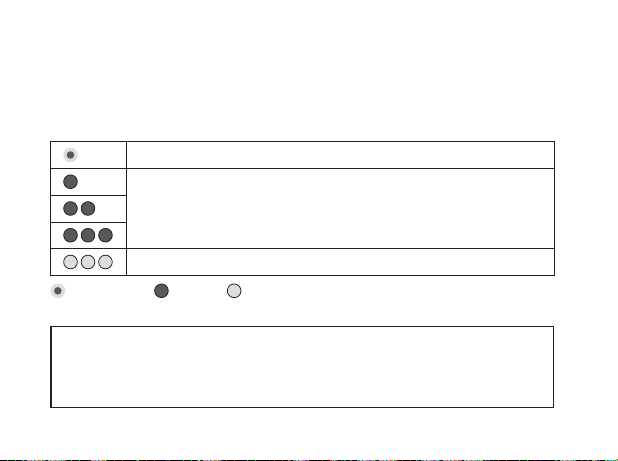
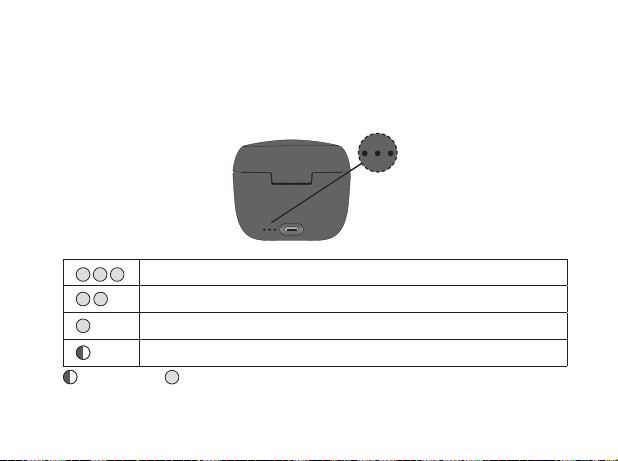
When the charger is connected to a power source, the LEDs on your
charger indicate the charging status of the power bank.
The LEDs turn OFF shortly after the power bank battery is fully
charged.
Charging (Battery too low to recharge the hearing aids)
Charging
Fully charged
ORANGE pulse ORANGE GREEN
16
Power bank function
When the charger is disconnected from power, the LEDs on your
charger indicate the charger’s power bank battery level. You can
check the remaining battery level by opening the charger’s lid.
70 to 100%
40 to 70%
less than 40%
Battery too low for a full charging cycle
ORANGE blink GREEN

17
Note
To protect the rechargeable battery, it is necessary that you fully charge the charger’s power
bank battery every 12 months, otherwise the rechargeable battery may need to be replaced.
Long-term storage
Before you put away or store the charger for a prolonged period of
time (more than 14days), ensure you first fully charge the charger’s
power bank battery. This way the battery can be charged again.

18
Power and charge using other sources
You can power and charge the charger’s battery from other sources
than a power socket. This can be done by using the charger’s USB
cable.
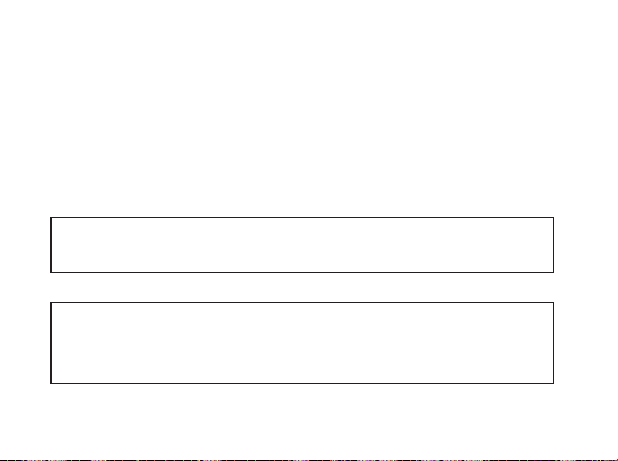
Ensure that the power source is USB 2.0 compliant, with a minimum
of 500mA output.
Examples of power sources:
• Computer
• Car
19
Caring for your charger
Always ensure that the charger is dry and clean before use. Keep
the charging ports clean from dust by using a dry cloth. Do not use
water or cleaning fluids to clean the charging ports.
Store your charger in a dry location, e.g., in the bedroom.
Ensure you keep the charger in an environment with a temperature
between +15°C and +35°C (+59°F and +95°F).
IMPORTANT NOTICE
Always ensure that the charger is dry and clean before use. Keep the charging ports clean
from dust by using a dry cloth. Do not use other objects (e.g., cotton buds), and do not use
water or cleaning fluids to clean the charging ports.
IMPORTANT NOTICE
Ensure you remove the USB cable when you transport the charger.

20
For your personal safety and to ensure
correct usage, you should familiarize
yourself fully with the following
general warnings before using
your charger. Consult your hearing
care professional if you experience
unexpected operations or serious
incidents with your charger during use
or because of its use. Your hearing care
professional will support you with issue
handling and, if relevant, reporting to
the manufacturer and/or the national
authorities.
Charging ports
Do not place anything other than
rechargeable hearing aids in the
charging ports. Other items may short
circuit the charger and result in burns.
Choking hazards of swallowing small
parts
Keep all small parts (for example,
hearing aids, earpieces, batteries, etc.)
out of reach and sight of children and
others who might swallow these items.
If a battery, hearing aid or small part
is swallowed, see a doctor immediately
and contact the National Poison Center
at 1-800-222-1222 or National Battery
Ingestion Hotline at 1-800-498-8666.
Keep away from extreme heat
Never expose your charger to extreme
heat. For example, do not leave your
charger inside a parked car in the sun.
Never use an external heating device to
dry your charger. For example, do not
dry your charger using a hair dryer or in
an oven such as a microwave.
General warnings
Warnings

21
Keep away from chemicals
Keep your charger away when applying
products that contain certain chemicals
that can damage your charger. For
example, cosmetics, hairspray, perfume,
aftershave lotion, suntan lotion and
insect repellent.
Keep away from environments with
risk of explosions
Your charger is safe to use under
normal usage conditions. The charger
has not been tested for compliance
with international standards concerning
explosive environments.
Do not use your charger in
environments with risk of explosions
such as mines, oil fields, oxygen
rich environments or areas where
flammable anesthetics are handled.
Never attempt to replace rechargeable
batteries
Do not attempt to open your charger as
it may damage the battery.
Never attempt to replace the battery.
If battery replacement is needed,
return your device to the supplier. The
warranty is void if there are signs of
tampering.
Beware of battery leakage
Do not touch your charger if the battery
appears to be leaking as the acids may
cause skin irritation. If you have been in
contact with battery acids, wipe it off
using a wet cloth.
If you experience skin irritation, consult
your doctor. In the event of battery
leakage contact your hearing care
professional for further instructions.
Continues on next page

22
Connection to external equipment
The safety of recharging batteries using
a USB connector is determined by the
external signal source. When connected
to external equipment plugged into
a power socket, this equipment must
comply with IEC 62368-1 or equivalent
safety standards.
Connecting the charger to external
equipment
If you connect your hearing aid
charger using a USB connector other
than the one originally supplied with
your charger, the USB connector must
comply with IEC 62368-1 or equivalent
safety standards.
Beware of your surroundings
Do not use your charger while driving
or in other situations that require your
full attention.
Potential side eects
The otherwise non-allergenic materials
used in your charger may, in rare cases,
cause a skin irritation or other side
effects.
If these conditions occur, consult your
doctor.
Transporting charger on aircraft
Consult the airline for details about
bringing your hearing aids charger onto
an aircraft.
Use with active medical implants
If you have an active brain implant,
contact the manufacturer of your
implanted device for information about
the use with a hearing aid.
General warnings

23
Your charger contains magnet and
should be kept at least 15centimeters
(6inches) away from any implanted
medical device. Follow the guidelines
from the manufacturer of your
implanted medical device regarding
their use with magnets.
Charge charger every 12 months
Ensure you charge the charger every
12 months to prevent potential battery
damage during storage.
Use of third-party accessories
Only use accessories, cables or
transducers (for example, microphones)
supplied by the manufacturer. Non-
original accessories may result in
reduced electromagnetic compatibility
(EMC) of your charger.
Remove your charger before certain
medical procedures
Remove your charger before medical
procedures such as X-ray examinations,
CT/MR/PET scans, electrotherapy,
surgery, etc. Your charger may be
damaged if exposed to strong magnetic
or electromagnetic fields.
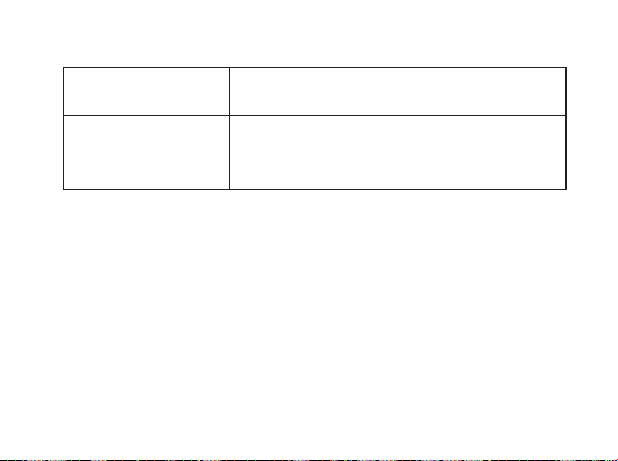
Connecting power adapter to power
socket
Only use the originally supplied power
adapter (5.0V/1A) when connecting the
charger to a power outlet.
24
Conditions of use
Operating conditions Temperature: +5°C to +40°C (+41°F to +104°F)
Humidity: 5% to 93%, non-condensing
Atmospheric pressure: 700hPa to 1060hPa
Transportation and storage
conditions
Temperature and humidity shall not exceed the below limits
for extended periods during transportation and storage:
Temperature: -25°C to +70°C (-13°F to +158°F)
Humidity: 5% to 93%, non-condensing
For information about your hearing aid’s conditions of use, see your hearing aid’s instructions
for use.
More info

25
Compliance statements
User information
This device has been tested and
found to comply with the limits for
a Class B digital device, pursuant to
part 15 of the FCC Rules. These limits
are designed to provide reasonable
protection against harmful interference
in a residential installation. This
device generates, uses and can radiate
radio frequency energy and, if not
installed and used in accordance with
the instructions, may cause harmful
interference to radio communications.
However, there is no guarantee
that interference will not occur in a
particular installation. If this device does
cause harmful interference to radio
or television reception, which can be
determined by turning the equipment
off and on, the user is encouraged to
try to correct the interference by one or
more of the following measures:
- Reorient or relocate the receiving
antenna.
- Increase the separation between the
equipment and receiver.
- Connect the equipment into an outlet
on a circuit different from that to
which the receiver is connected.
- Consult the manufacturer or an
experienced radio/TV technician
for help.
Changes or modifications not expressly
approved by the party responsible
for compliance could void the user’s
authority to operate the device.
26
This medical device complies with
the Medical Device Regulation (EU)
2017/745.
This device complies with part 15 of the
FCC Rules. Operation is subject to the
following two conditions:
1. This device may not cause harmful
interference, and
2. this device must accept any
interference received, including
interference that may cause
undesired operation.
Declaration of Conformity is available at
the headquarters.
SBO Hearing A/S
Kongebakken 9
DK-2765 Smørum
Denmark
hearingsolutions.philips.com/doc
Waste from
electronic
equipment must be
handled according
to local regulations.
SBO Hearing A/S
Denmark
27
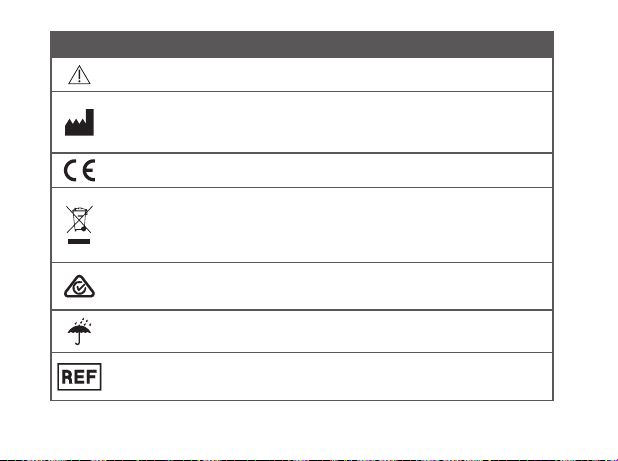
Description of symbols accompanying the product
Warnings
Text marked with a warning symbol must be read before using the device.
Manufacturer
The device is produced by the manufacturer whose name and address are stated
next to the symbol. Indicates the medical device manufacturer, as dened in EU
Regulations 2017/745.
CE mark
The device complies with all required EU regulations and directives.
Electronic waste (WEEE)
Recycle hearing aids, accessories or batteries according to local regulations.
Hearing aid users can also return electronic waste to their hearing care professional
for disposal. Electronic equipment covered by Directive 2012/19/EU on waste and
electrical equipment (WEEE).
Regulatory Compliance Mark (RCM)
The device complies with electrical safety, EMC and radio spectrum requirements for
devices supplied to the Australian or New Zealand markets.
Keep dry
Indicates a medical device that needs to be protected from moisture.
Catalog number
Indicates the manufacturer’s catalog number so that the medical device can be
identied.
Continues on next page
28
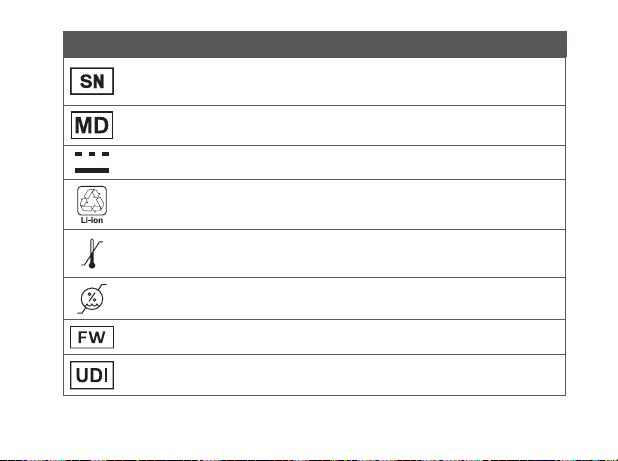
Description of symbols accompanying the product
Serial number
Indicates the manufacturer’s serial number so that a specic medical device can be
identied.
Medical Device
The device is a medical device.
Nature of supply voltage
Indicates that the nature of the device’s power supply voltage shall be DC (direct current).
Battery recycling symbol
Li-ion Battery recycling symbol.
Temperature limit
Indicates the temperature limits to which the medical device can be safely exposed.
Humidity limitation
Indicates the range of humidity to which the medical device can be safely exposed.
FW
Firmware version used in the device.
Unique device identier
Indicates a carrier that contains unique device identier information.
29
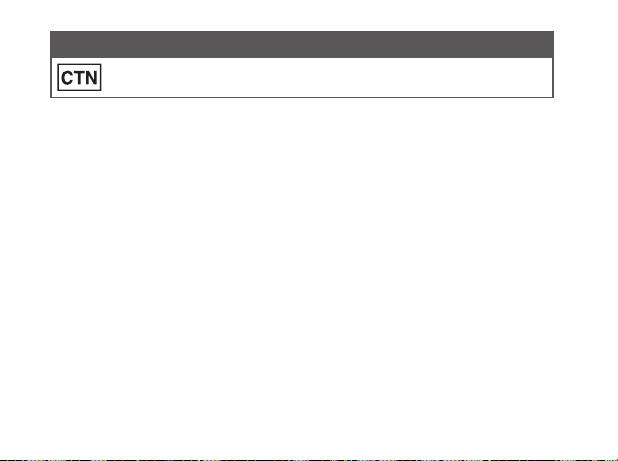
Description of symbols accompanying the product
CTN
Commercial Trade Number
REACH Declaration:
REACH requires Philips Hearing Solutions to provide chemical content
information for Substances of Very High Concern (SVHC) if they are present
above 0.1%of the article weight. Recent information can be found on the website
hearingsolutions.philips.com/REACH.

30
International warranty
Your device is covered by an
international warranty issued by
the manufacturer. This international
warranty covers manufacturing
and material defects in the device
itself, but not in accessories such as
batteries, tubing, speakers, earpieces
and filters, etc. Problems arising from
improper/incorrect handling or care,
excessive use, accidents, repairs made
by an unauthorized party, exposure to
corrosive conditions, physical changes
in your ear, damage due to foreign
objects entering the device, or incorrect
adjustments are NOT covered by the
international warranty and may void
it. The above international warranty
does not affect any legal rights that you
might have under applicable national
legislation governing the sale of
consumer goods in the country where
you have bought your device. Your
hearing care professional may also have
issued a warranty that goes beyond the
clauses of this international warranty.
Please consult him/her for further
information.
If you need service
Take your device to your hearing care
professional, who may be able to sort
out minor problems and adjustments
immediately. Your hearing care
professional may charge a fee for their
services.

32
Troubleshooting
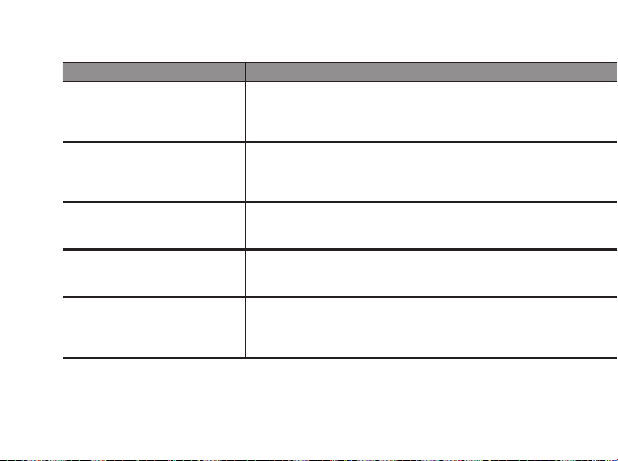
Symptom Possible causes Solutions
The hearing aids do not turn
ON after being removed from
the charger
The charger did not have enough time to turn the hearing
aids ON before they were removed from the charger
Place the hearing aids in the charger ports and try again, or use the push button to turn the
hearing aids ON manually
The hearing aids do not
charge when placed in the
charger
The hearing aids are not properly inserted
Ensure the hearing aids are correctly inserted
If the symptom persists, contact your hearing care professional
Two charger LEDs show
ORANGE blinks
The hearing aid or charger’s temperature is too cold or
too warm
Move the charger and hearing aid to a location with a temperature between +5°C and +40°C
(+41°F and +104°F)
Three charger LEDs show
ORANGE blinks
System error Contact your hearing care professional
The charger LEDs remain
turned OFF when the charger
is connected to power
The charger is not charging
Verify that the power plug is correctly connected
Ensure that the power source delivers sufficient output for your charger
33
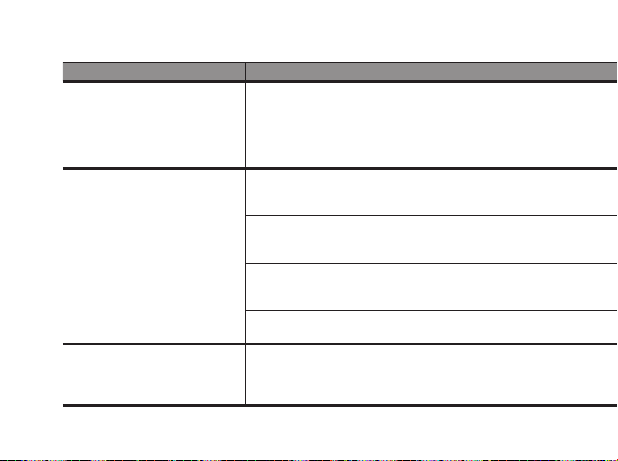
Symptom Possible causes Solutions
The hearing aids do not turn
ON after being removed from
the charger
The charger did not have enough time to turn the hearing
aids ON before they were removed from the charger
Place the hearing aids in the charger ports and try again, or use the push button to turn the
hearing aids ON manually
The hearing aids do not
charge when placed in the
charger
The hearing aids are not properly inserted
Ensure the hearing aids are correctly inserted
If the symptom persists, contact your hearing care professional
Two charger LEDs show
ORANGE blinks
The hearing aid or charger’s temperature is too cold or
too warm
Move the charger and hearing aid to a location with a temperature between +5°C and +40°C
(+41°F and +104°F)
Three charger LEDs show
ORANGE blinks
System error Contact your hearing care professional
The charger LEDs remain
turned OFF when the charger
is connected to power
The charger is not charging
Verify that the power plug is correctly connected
Ensure that the power source delivers sufficient output for your charger
Continues on next page
34
Troubleshooting
Symptom Possible causes Solutions
The hearing aid LED pulses
ORANGE when hearing aid
is placed in the charger but
does not power ON when
removed from the charger
Battery is very low and insufficient to power ON hearing
aid
Insert the hearing aid into the charger to continue charging
The hearing aid LED remains
turned OFF when the
hearing aid is placed in the
charger
The charger is not turned ON
Verify that the charger power plug is correctly connected or the power bank has enough
battery
The hearing aid or charger’s temperature is either too
warm or too cold
Move the charger and hearing aid to a location with a temperature between +5°C and +40°C
(+41°F and +104°F)
Charging is incomplete. The charger has stopped charging
to protect the battery.
Reinsert the hearing aid into the charger
The hearing aid is not correctly seated in the charger Check the charging ports for foreign objects
The hearing aid LED blinks
ORANGE when the hearing
aid is placed in the charger
System error Contact your hearing care professional
35
Symptom Possible causes Solutions
The hearing aid LED pulses
ORANGE when hearing aid
is placed in the charger but
does not power ON when
removed from the charger
Battery is very low and insufficient to power ON hearing
aid
Insert the hearing aid into the charger to continue charging
The hearing aid LED remains
turned OFF when the
hearing aid is placed in the
charger
The charger is not turned ON
Verify that the charger power plug is correctly connected or the power bank has enough
battery
The hearing aid or charger’s temperature is either too
warm or too cold
Move the charger and hearing aid to a location with a temperature between +5°C and +40°C
(+41°F and +104°F)
Charging is incomplete. The charger has stopped charging
to protect the battery.
Reinsert the hearing aid into the charger
The hearing aid is not correctly seated in the charger Check the charging ports for foreign objects
The hearing aid LED blinks
ORANGE when the hearing
aid is placed in the charger
System error Contact your hearing care professional

274110US | 2023.12.21 | v1

< 15 mm >
< >
8,15 mm
< >
9.0 mm
< 21 mm >
Placeholder
for FSC logo
274110US | 2023.12.21 | v1

hearingsolutions.philips.com
0000274110000001
Philips and the Philips Shield Emblem are registered trademarks
ofKoninklijke Philips N.V. and are used under license. This
product hasbeen manufactured by or for and is sold under the
responsibility ofSBO Hearing A/S, and SBO Hearing A/S is the
warrantor in relation tothis product.
274110US | 2023.12.21 | v1