

Legal Informaon
©2021 Hangzhou Hikvision Digital Technology Co., Ltd. All rights reserved.
About this Manual
The Manual includes instrucons for using and managing the Product.
Pictures, charts, images and all other informaon hereinaer are for
descripon and explanaon only. The informaon contained in the Manual
is subject to change, without
noce, due to rmware updates or other
reasons. Please nd the latest version of this Manual at the Hikvision
website ( hps://www.hikvision.com/ ).
Please use this Manual with the guidance and assistance of professionals
trained in
supporng the Product.
Trademarks
and other Hikvision's trademarks and logos are the
properes of Hikvision in various jurisdicons.
Other trademarks and logos menoned are the properes of their
respecve owners.
Disclaimer
TO THE MAXIMUM EXTENT PERMITTED BY APPLICABLE LAW, THIS MANUAL
AND THE PRODUCT DESCRIBED, WITH ITS HARDWARE, SOFTWARE AND
FIRMWARE, ARE PROVIDED "AS IS" AND "WITH ALL FAULTS AND ERRORS".
HIKVISION MAKES NO WARRANTIES, EXPRESS OR IMPLIED, INCLUDING
WITHOUT LIMITATION, MERCHANTABILITY, SATISFACTORY QUALITY, OR
FITNESS FOR A PARTICULAR PURPOSE. THE USE OF THE PRODUCT BY YOU IS
AT YOUR OWN RISK. IN NO EVENT WILL HIKVISION BE LIABLE TO YOU FOR
ANY SPECIAL, CONSEQUENTIAL, INCIDENTAL, OR INDIRECT DAMAGES,
INCLUDING, AMONG OTHERS, DAMAGES FOR LOSS OF BUSINESS PROFITS,
BUSINESS INTERRUPTION, OR LOSS OF DATA, CORRUPTION OF SYSTEMS, OR
LOSS OF DOCUMENTATION, WHETHER BASED ON BREACH OF CONTRACT,
TORT (INCLUDING NEGLIGENCE), PRODUCT LIABILITY, OR OTHERWISE, IN
Video Intercom Module Door
Staon User Manual
i

CONNECTION WITH THE USE OF THE PRODUCT, EVEN IF HIKVISION HAS
BEEN ADVISED OF THE POSSIBILITY OF SUCH DAMAGES OR LOSS.
YOU ACKNOWLEDGE THAT THE NATURE OF THE INTERNET PROVIDES FOR
INHERENT SECURITY RISKS, AND HIKVISION SHALL NOT TAKE ANY
RESPONSIBILITIES FOR ABNORMAL OPERATION, PRIVACY LEAKAGE OR
OTHER DAMAGES RESULTING FROM CYBER-ATTACK, HACKER ATTACK, VIRUS
INFECTION, OR OTHER INTERNET SECURITY RISKS; HOWEVER, HIKVISION
WILL PROVIDE TIMELY TECHNICAL SUPPORT IF REQUIRED.
YOU AGREE TO USE THIS PRODUCT IN COMPLIANCE WITH ALL APPLICABLE
LAWS, AND YOU ARE SOLELY RESPONSIBLE FOR ENSURING THAT YOUR USE
CONFORMS TO THE APPLICABLE LAW. ESPECIALLY, YOU ARE RESPONSIBLE,
FOR USING THIS PRODUCT IN A MANNER THAT DOES NOT INFRINGE ON THE
RIGHTS OF THIRD PARTIES, INCLUDING WITHOUT LIMITATION, RIGHTS OF
PUBLICITY, INTELLECTUAL PROPERTY RIGHTS, OR DATA PROTECTION AND
OTHER PRIVACY RIGHTS. YOU SHALL NOT USE THIS PRODUCT FOR ANY
PROHIBITED END-USES, INCLUDING THE DEVELOPMENT OR PRODUCTION
OF WEAPONS OF MASS DESTRUCTION, THE DEVELOPMENT OR
PRODUCTION OF CHEMICAL OR BIOLOGICAL WEAPONS, ANY ACTIVITIES IN
THE CONTEXT RELATED TO ANY NUCLEAR EXPLOSIVE OR UNSAFE NUCLEAR
FUEL-CYCLE, OR IN SUPPORT OF HUMAN RIGHTS ABUSES.
IN THE EVENT OF ANY CONFLICTS BETWEEN THIS MANUAL AND THE
APPLICABLE LAW, THE LATTER PREVAILS.
Video Intercom Module Door
Staon User Manual
ii
Symbol Convenons
The symbols that may be found in this document are dened as follows.
Symbol Descripon
Danger
Indicates a hazardous situaon which, if not avoided, will or
could result in death or serious injury.
Cauon
Indicates a potenally hazardous situaon which, if not
avoided, could result in equipment damage, data loss,
performance degradaon, or unexpected results.
Note
Provides addional informaon to emphasize or
supplement important points of the main text.
Video Intercom Module Door Staon User Manual
iii

Regulatory Informaon
FCC Informaon
Please take aenon that changes or modicaon not expressly approved
by the party responsible for compliance could void the user's authority to
operate the equipment.
FCC compliance: This equipment has been tested and found to comply with
the limits for a Class B digital device, pursuant to part 15 of the FCC Rules.
These limits are designed to provide reasonable protecon against harmful
interference in a residenal installaon. This equipment generates, uses and
can radiate radio frequency energy and, if not installed and used in
accordance with the instrucons, may cause harmful interference to radio
communicaons. However, there is no guarantee that interference will not
occur in a parcular installaon. If this equipment does cause harmful
interference to radio or television recepon, which can be determined by
turning the equipment o and on, the user is encouraged to try to correct
the interference by one or more of the following measures:
—Reorient or relocate the receiving antenna.
—Increase the separaon between the equipment and receiver.
—Connect the equipment into an outlet on a circuit dierent from that to
which the receiver is connected.
—Consult the dealer or an experienced radio/TV technician for help
FCC
Condions
This device complies with part 15 of the FCC Rules. Operaon is subject to
the following two condions:
1. This device may not cause harmful interference.
2. This device must accept any interference received, including interference
that may cause undesired operaon.
Video Intercom Module Door
Staon User Manual
iv

EU Conformity Statement
This product and - if applicable - the supplied accessories too are
marked with "CE" and comply therefore with the applicable
harmonized European standards listed under the EMC Direcve
2014/30/EU, the RoHS Direcve 2011/65/EU
2012/19/EU (WEEE direcve): Products marked with this symbol
cannot be disposed of as unsorted municipal waste in the
European Union. For proper recycling, return this product to your
local supplier upon the purchase of equivalent new equipment, or
dispose of it at designated collecon points. For more informaon
see: www.recyclethis.info
2006/66/EC (baery direcve): This product contains a baery
that cannot be disposed of as unsorted municipal waste in the
European Union. See the product documentaon for specic
baery informaon. The baery is marked with this symbol,
which may include leering to indicate cadmium (Cd), lead (Pb),
or mercury (Hg). For proper recycling, return the
baery to your
supplier or to a designated collecon point. For more informaon
see:www.recyclethis.info
Industry Canada ICES-003 Compliance
This device meets the CAN ICES-3 (B)/NMB-3(B) standards requirements.
This device complies with Industry Canada licence-exempt RSS standard(s).
Operaon is subject to the following two condions:
1.
this device may not cause interference, and
2.
this device must accept any interference, including interference that may
cause undesired operaon of the device.
Le présent appareil est conforme aux CNR d'Industrie Canada applicables
aux appareils radioexempts de licence. L'exploitaon est autorisée aux deux
condions suivantes :
Video Intercom Module Door
Staon User Manual
v

1.
l'appareil ne doit pas produire de brouillage, et
2.
l'ulisateur de l'appareil doit accepter tout brouillage radioélectrique
subi, même si le brouillage est suscepble d'en compromere le
fonconnement.
Under Industry Canada regulaons, this radio transmier may only operate
using an antenna of a type and maximum (or lesser) gain approved for the
transmier by Industry Canada. To reduce potenal radio interference to
other users, the antenna type and its gain should be so chosen that the
equivalent isotropically radiated power (e.i.r.p.) is not more than that
necessary for successful communicaon.
Conformément à la réglementaon d'Industrie Canada, le présent émeeur
radio peut fonconner avec une antenne d'un type et d'un gain maximal (ou
inférieur) approuvé pour l'émeeur par Industrie Canada. Dans le but de
réduire les risques de brouillage radioélectrique à l'intenon des autres
ulisateurs, il faut choisir le type d'antenne et son gain de sorte que la
puissance isotrope rayonnée équivalente (p.i.r.e.) ne dépasse pas l'intensité
nécessaire à l'établissement d'une communicaon sasfaisante.
This equipment should be installed and operated with a minimum distance
20cm between the radiator and your body.
Cet équipement doit être installé et
ulisé à une distance minimale de 20
cm entre le radiateur et votre corps.
Video Intercom Module Door
Staon User Manual
vi

Contents
1 Appearance ................................................................................................ 1
2 Terminal and Wiring ................................................................................... 9
2.1 Terminal Descripon ......................................................................................... 9
2.2 Module Door Staon Wiring ........................................................................... 13
2.2.1 Door Lock Wiring .................................................................................... 13
2.2.2 Door Contact Wiring ............................................................................... 14
2.2.3 Exit
Buon Wiring .................................................................................. 14
2.2.4 RS-485 Card Reader Wiring .................................................................... 15
3 Installaon ................................................................................................ 16
3.1 Congure Sub Module Address ....................................................................... 16
3.2 One-Module
Installaon ................................................................................. 17
3.2.1 One-Module Surface Mounng .............................................................. 17
3.2.2 One-Module Flush
Mounng ................................................................. 20
3.3 Two-Module Installaon ................................................................................. 25
3.3.1 Two-Module Surface Mounng .............................................................. 25
3.3.2 Two-Module Flush Mounng ................................................................. 29
3.4 Three-Module Installaon .............................................................................. 33
3.4.1 Three-Module Surface Installaon ......................................................... 33
3.4.2 Three-Module Flush Mounng ............................................................... 37
3.5 More-Than-Three Module Installaon ............................................................ 41
3.5.1 More-than-Three Module Surface Mounng ......................................... 41
3.5.2 More-Than-Three Module Flush Mounng ............................................ 47
Video Intercom Module Door
Staon User Manual
vii

4 Acvaon ................................................................................................. 55
4.1 Acvate Device via Client Soware ................................................................. 55
4.2 Edit Network Parameters ................................................................................ 55
5
Conguraon via Client Soware ............................................................. 57
5.1 Device Management ....................................................................................... 57
5.1.1 Add Online Device .................................................................................. 57
5.1.2 Add Device by IP Address ....................................................................... 58
5.1.3 Add Device by IP Segment ...................................................................... 58
5.2 Live View via Door Staon .............................................................................. 59
5.3 Remote
Conguraon ..................................................................................... 59
5.3.1 Device Management .............................................................................. 59
5.3.2 Local Parameters
Sengs ....................................................................... 61
5.3.3 System Sengs ....................................................................................... 62
5.3.4 Network
Sengs .................................................................................... 65
5.3.5 Video & Audio Sengs ........................................................................... 70
5.3.6 Image Sengs ........................................................................................ 72
5.3.7 Schedule Sengs .................................................................................... 75
5.3.8 Intercom Sengs .................................................................................... 76
5.3.9 Access Control Sengs ........................................................................... 81
5.4 Organizaon Management ............................................................................. 85
5.4.1 Add Organizaon .................................................................................... 85
5.4.2 Modify and Delete Organizaon ............................................................. 85
5.5 Person Management ....................................................................................... 85
5.5.1 Add Person ............................................................................................. 86
Video Intercom Module Door
Staon User Manual
viii

5.5.2 Modify and Delete Person ...................................................................... 87
5.5.3 Import and Export Person Informaon .................................................. 87
5.5.4 Get Person Informaon from Device ...................................................... 88
5.5.5 Change Person to Other
Organizaon .................................................... 88
5.5.6 Issue Card in Batch ................................................................................. 89
5.5.7 Permission Sengs ................................................................................. 90
6 Video Intercom
Operaon ........................................................................ 92
6.1 Video Intercom Operaon via Device ............................................................. 92
6.1.1 Call Resident ........................................................................................... 92
6.1.2 Issue Card ............................................................................................... 93
6.1.3 Unlock Door ............................................................................................ 94
6.2 Video Intercom
Operaon via Client Soware ............................................... 95
6.2.1 Receive Call from Door
Staon ............................................................... 95
6.2.2 Live View via Door Staon ...................................................................... 97
6.2.3 View Call Logs ......................................................................................... 97
6.2.4 Search Video Intercom
Informaon ....................................................... 97
A. Relevant
Instrucons for External Power Supply and Wiring of 2-wire
Video Intercom Products (2020-1-20) ....................................................... 101
B. Communicaon Matrix and Device Command ..................................... 106
Video Intercom Module Door
Staon User Manual
ix
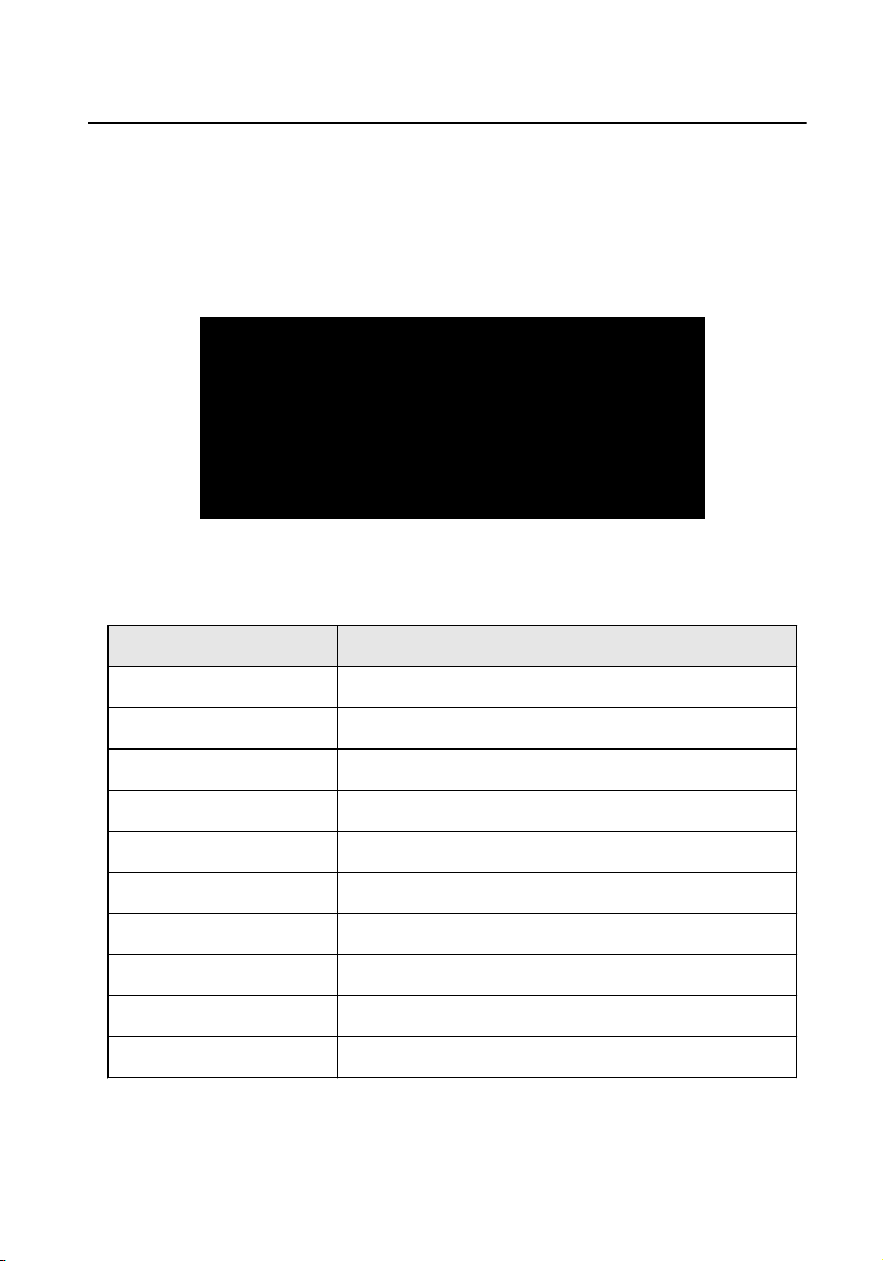
1 Appearance
Main Unit
Figure 1-1 Main Unit Appearance
Table 1-1 Appearance Descripon
No. Descripon
1 Microphone
2 Low Illuminaon IR Supplement Light
3 Built-in Camera
4 Loudspeaker
5 Call Buon
6 Nametag
7 TAMPER
8 Network Interface
9 Module-Connecng Interface (output)
10 Terminals
Video Intercom Module Door Staon User Manual
1
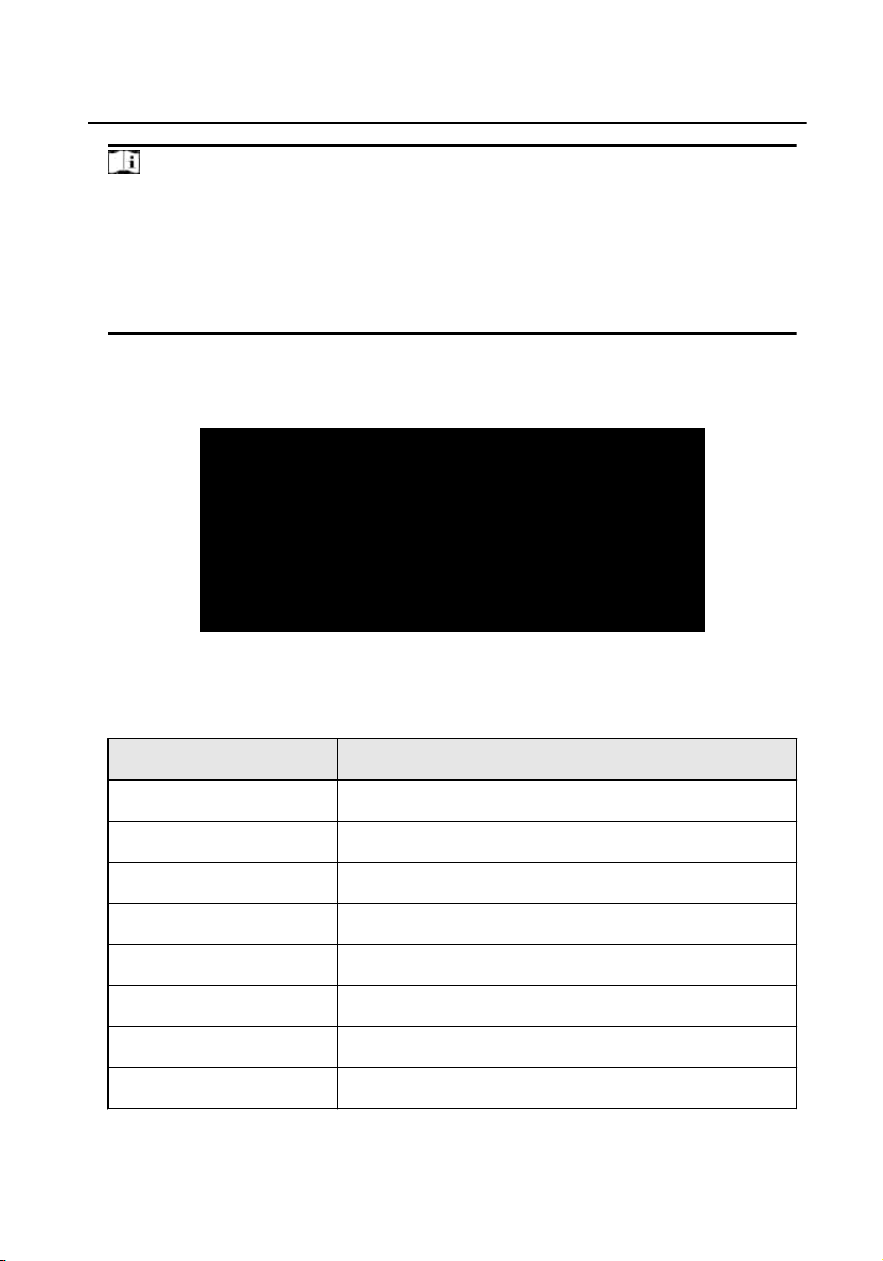
Note
●
Nametag area supports insert customized name card. The suggested card
size is: 58 (L) x 11.7(W) mm.
●
The module connecng interface is used to connect other funcon
module, such as nametag module, keypad module, card reader module,
etc. All these modules are known as sub module.
Two-Wire Main Unit
Figure 1-2 Two-Wire Main Unit
Table 1-2 Appearance Descripon
No. Descripon
1 Microphone
2 Low Illuminaon IR Supplement Light
3 Built-in Camera
4 Loudspeaker
5 Call Buon
6 Nametag
7 TAMPER
8 Two-Wire Interface
Video Intercom Module Door Staon User Manual
2
No. Descripon
9 Module-Connecng Interface (output)
10 Terminals
Note
●
Nametag area supports insert customized name card. The suggested card
size is: 58 (L) x 11.7(W) mm.
●
The module connecng interface is used to connect other funcon
module, such as nametag module, keypad module, card reader module,
etc. All these modules are known as sub module.
Nametag Module
Figure 1-3 Nametag Module Appearance
Table 1-3 Appearance Descripon
No. Descripon
1 Call Buon
2 Nametag
3 Module-Connecng Interface (output)
4 Module-Connecng Interface (input)
5 Debugging Port
Video Intercom Module Door Staon User Manual
3
Keypad Module
Figure 1-4 Keypad Module Appearance
Table 1-4 Appearance Descripon
No. Descripon
1 Buon
2 Module-Connecng Interface (output)
3 Module-Connecng Interface (input)
4 Debugging Port
Indicator Module
Figure 1-5 Indicator Module
Video Intercom Module Door Staon User Manual
4
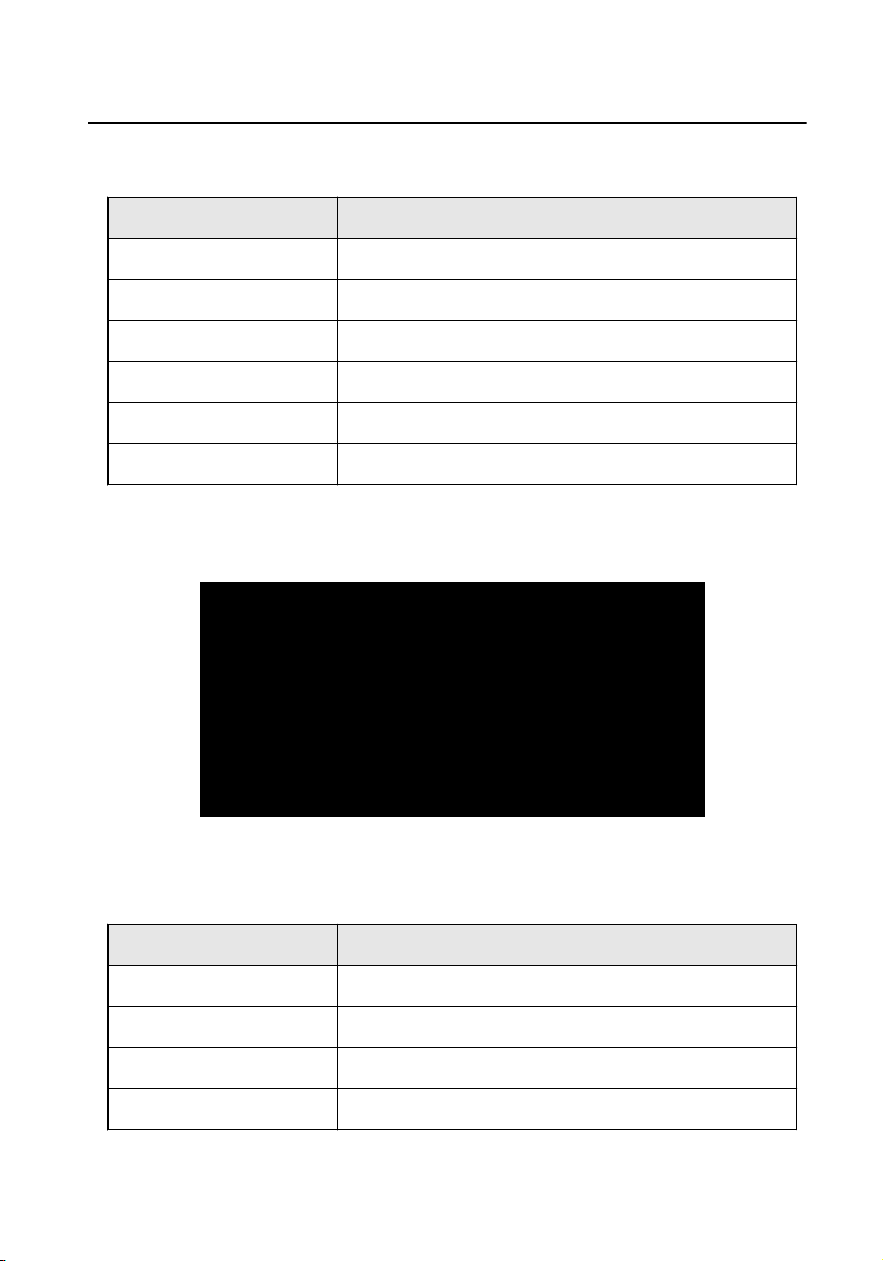
Table 1-5 Appearance Descripon
No. Descripon
1 Calling Indicator
2 Two-way Audio Indicator
3 Unlock Indicator
4 Module-connecng Interface (output)
5 Module-connecng Interface(input)
6 Debugging Port
Card Reader Module
Figure 1-6 Card Reader Module
Table 1-6 Appearance Descripon
No. Descripon
1 Card Reading Area
2 Module-connecng Interface (output)
3 Module-connecng Interface(input)
4 Debugging Port
Video Intercom Module Door Staon User Manual
5
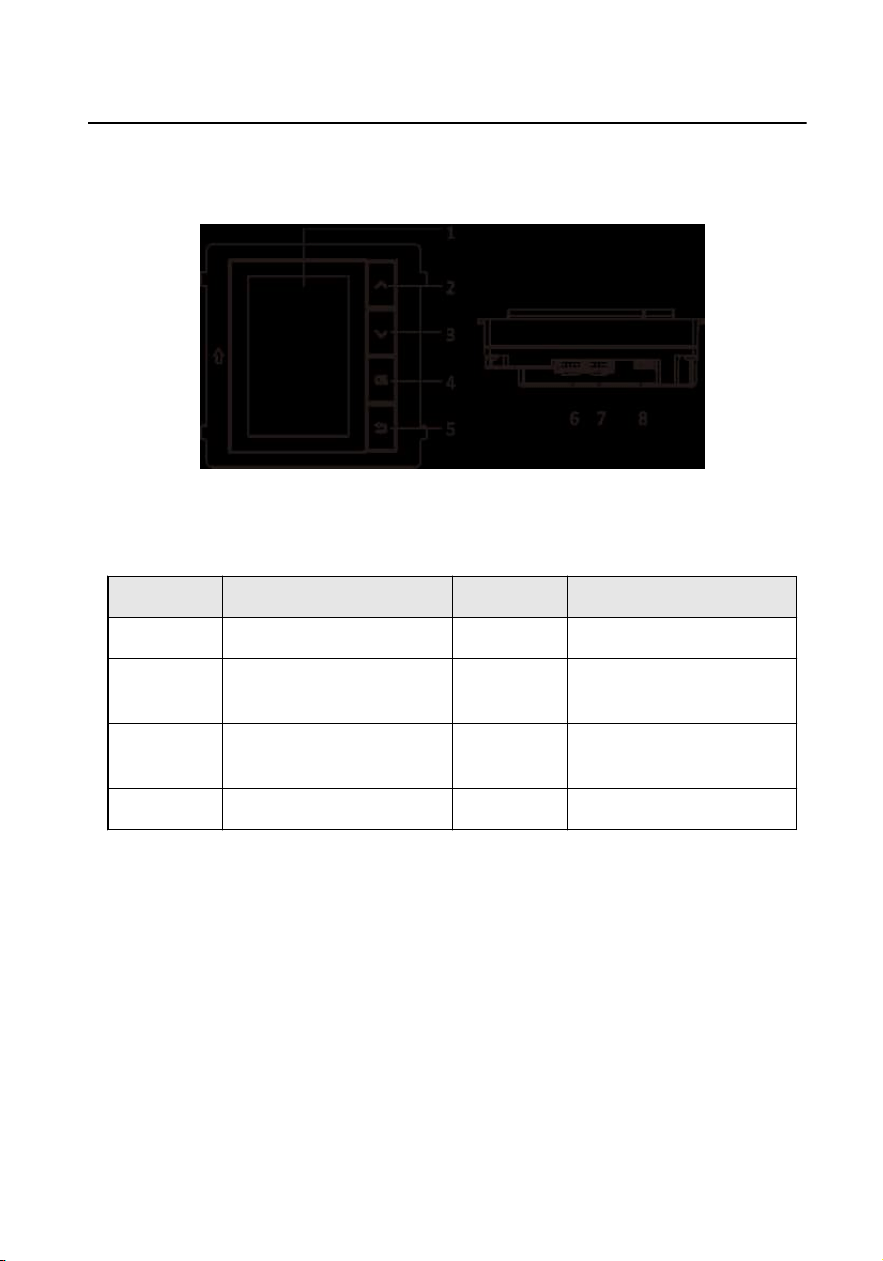
Display Module
Figure 1-7 Display Module
Table 1-7
Descripon
No. Descripon No. Descripon
1 Screen 5 Back Buon
2 Up Buon 6 Module-connecng
Interface (output)
3 Down Buon 7 Module-connecng
Interface (input)
4 Conrm Buon 8 Debug Port
Video Intercom Module Door Staon User Manual
6
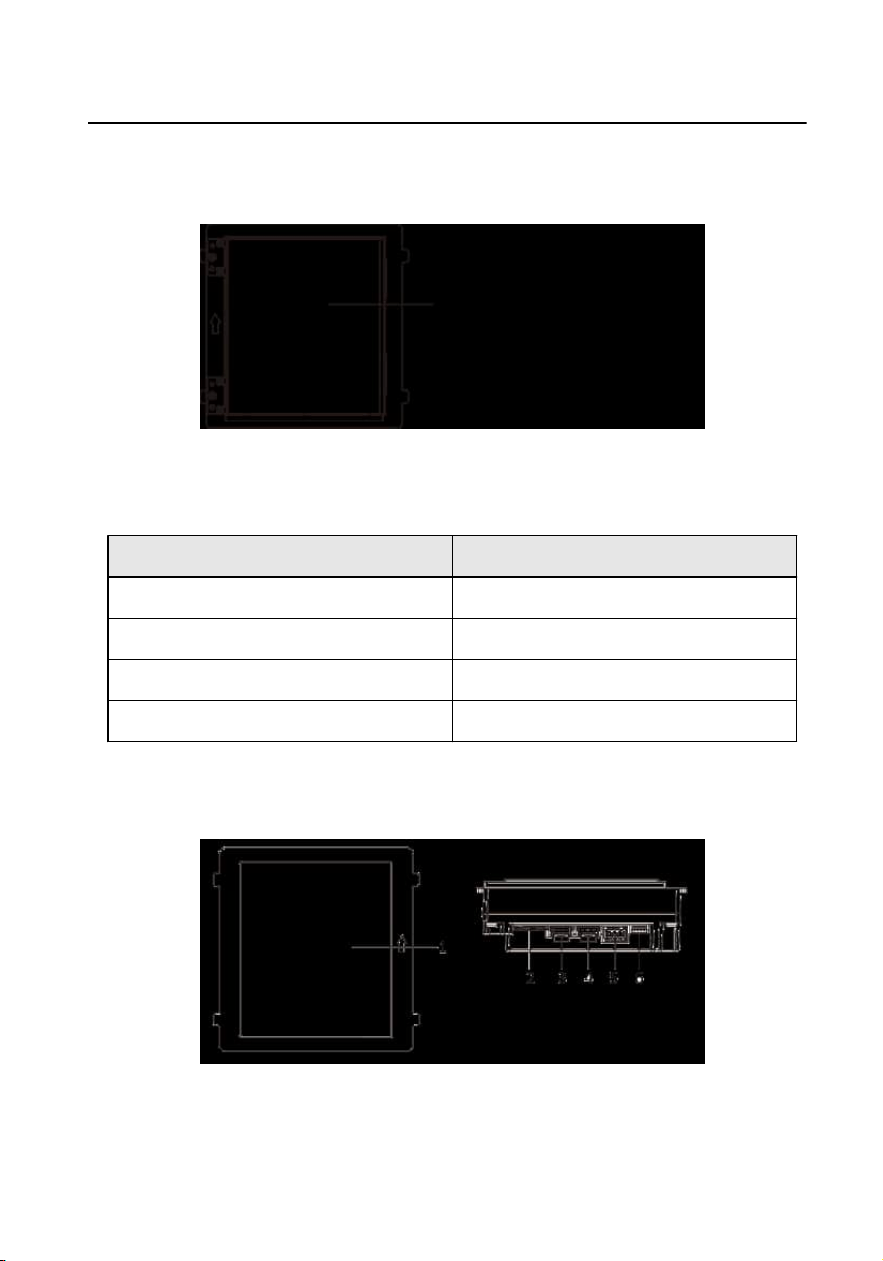
Informaon Module
Figure 1-8 Informaon Module
Table 1-8 Descripon
No. Descripon
1 Display Area
2 Module-connecng Interface (output)
3 Module-connecng Interface (input)
4 Debugging Port
Touch-Display Module
Figure 1-9 Touch-Display Module
Video Intercom Module Door Staon User Manual
7
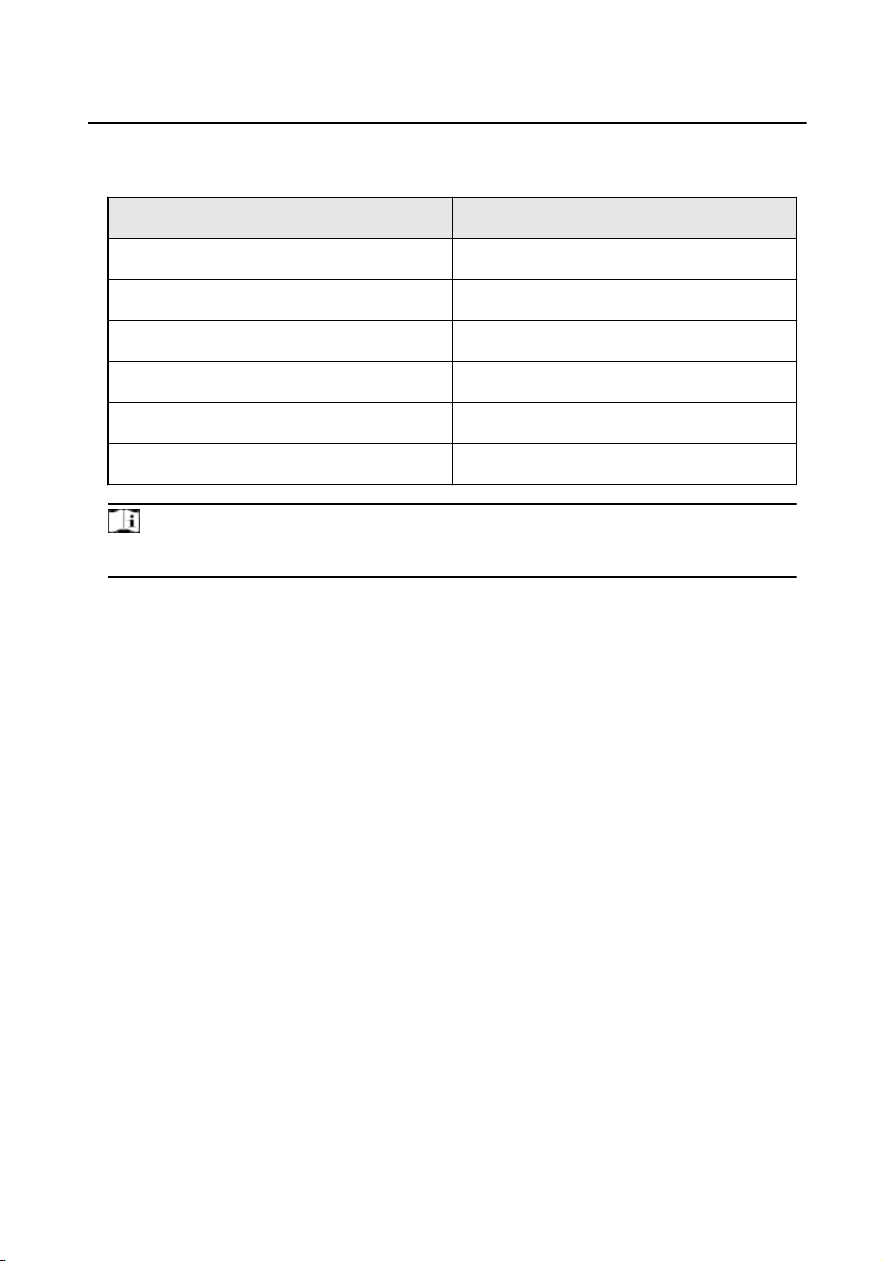
Table 1-9 Descripon
No. Descripon
1 Touch-Display Area
2 TF Card Slot
3 Module-connecng Interface (output)
4 Module-connecng Interface (input)
5 Video & Audio Terminal
6 Debugging Port
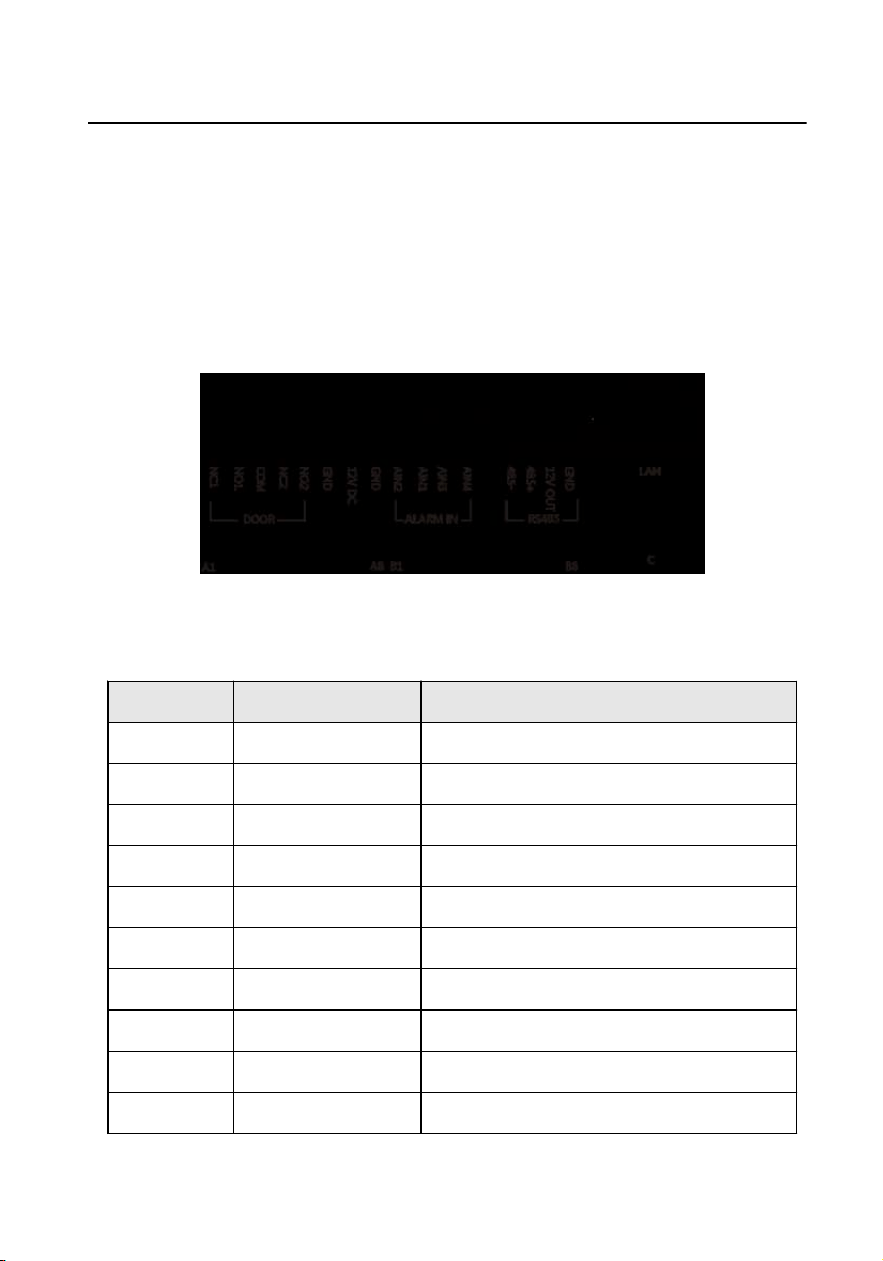
Note
The debugging port is used for debugging only.
Video Intercom Module Door Staon User Manual
8
2 Terminal and Wiring
2.1 Terminal Descripon
Main Unit Terminals
Figure 2-1 Main Unit Terminals
Table 2-1 Descripons of Terminals and Interfaces
No. Interface Descripon
A1 NC1 Door Lock Relay Output (NC)
A2 NO1 Door Lock Relay Output (NO)
A3 COM Common Interface
A4 NC2 Door Lock Relay Output (NC)
A5 NO2 Door Lock Relay Output (NO)
A6 GND Grounding
A7 12 VDC Power Input
A8 GND Grounding
B1 AIN2 For the access of Door Magnec 2
B2 AIN1 For the access of Door Magnec 1
Video Intercom Module Door Staon User Manual
9
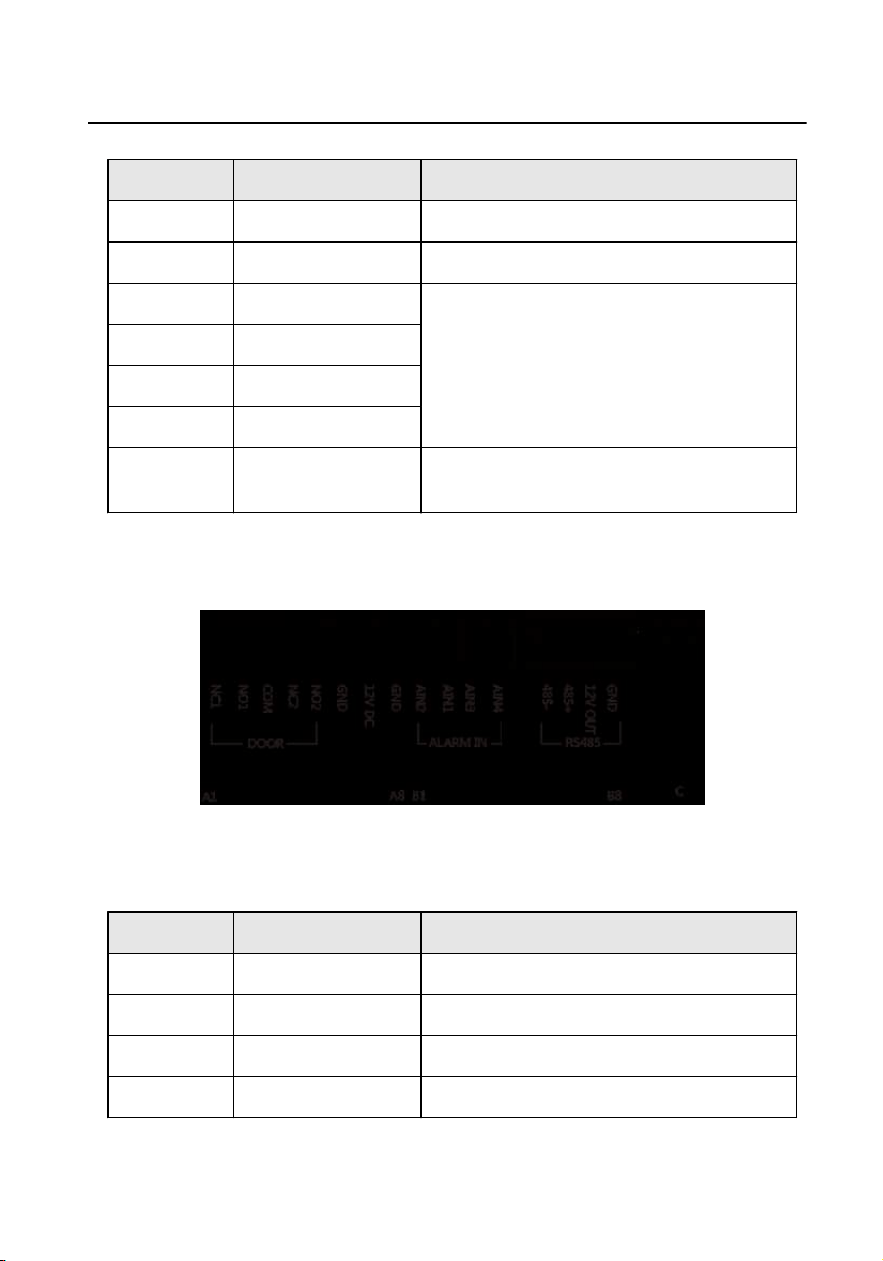
No. Interface Descripon
B3 AIN3 For the access of Exit Buon 1
B4 AIN4 For the access of Exit Buon 2
B5 485- Module-connecng Interface
B6 485+
B7 12 V OUT
B8 GND
C LAN PoE Network Interface(Supports IEEE
802.3af/at-Compliant Devices)
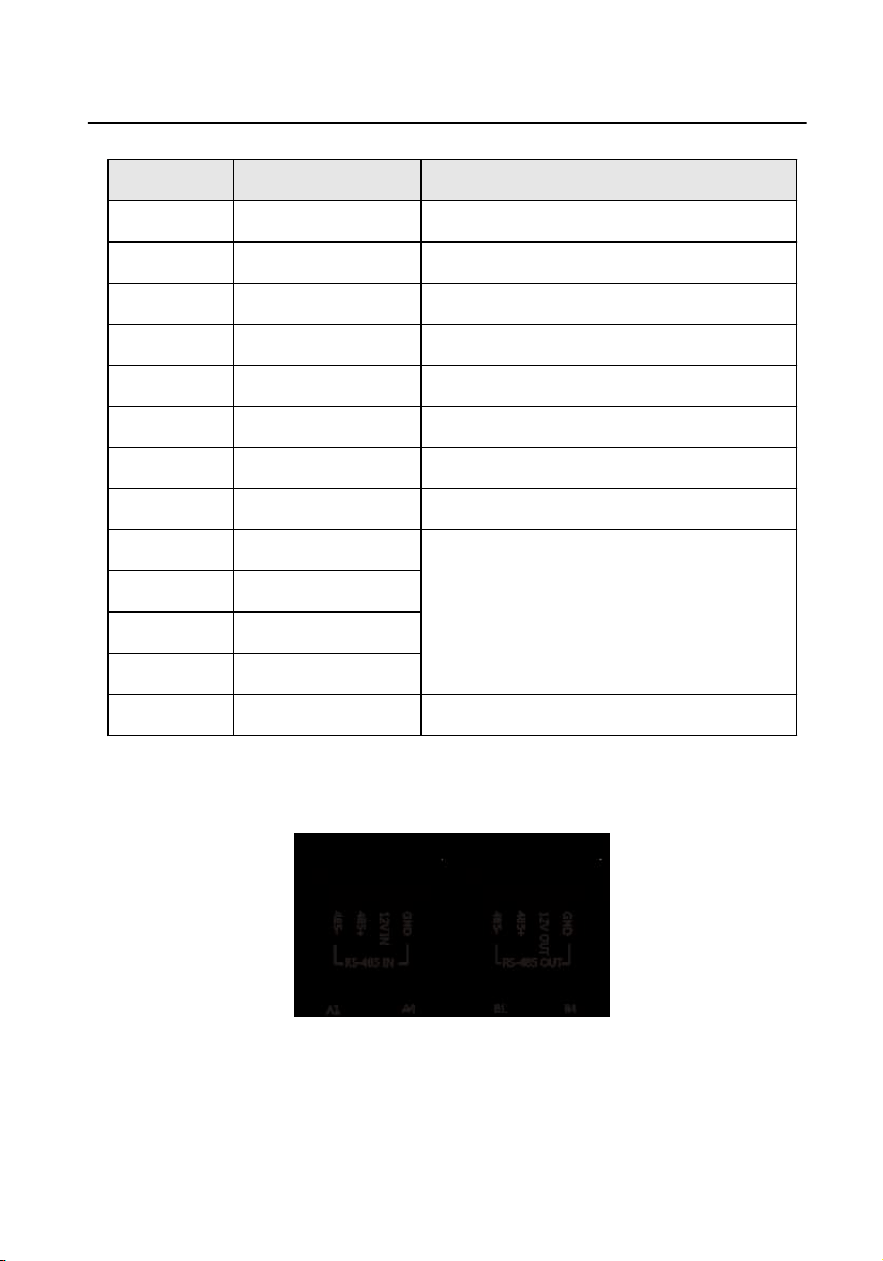
Two-Wire Main Unit Terminal
Figure 2-2 Two-Wire Main Unit Terminal
Table 2-2 Descripons of Terminals and Interfaces
No. Interface Descripon
A1 NC1 Door Lock Relay Output (NC)
A2 NO1 Door Lock Relay Output (NO)
A3 COM Common Interface
A4 NC2 Door Lock Relay Output (NC)
Video Intercom Module Door Staon User Manual
10
No. Interface Descripon
A5 NO2 Door Lock Relay Output (NO)
A6 GND Grounding
A7 12 VDC Reserved
A8 GND Grounding
B1 AIN2 For the access of Door Magnec 2
B2 AIN1 For the access of Door Magnec 1
B3 AIN3 For the access of Exit Buon 1
B4 AIN4 For the access of Exit Buon 2
B5 485- Module-connecng Interface
B6 485+
B7 12 V OUT
B8 GND
C Two-Wire Interface Two-Wire Interface
Sub Module Terminal (Except Touch-Display Module)
Figure 2-3 Sub Module Terminal (Except Touch-Display Module)
Video Intercom Module Door Staon User Manual
11
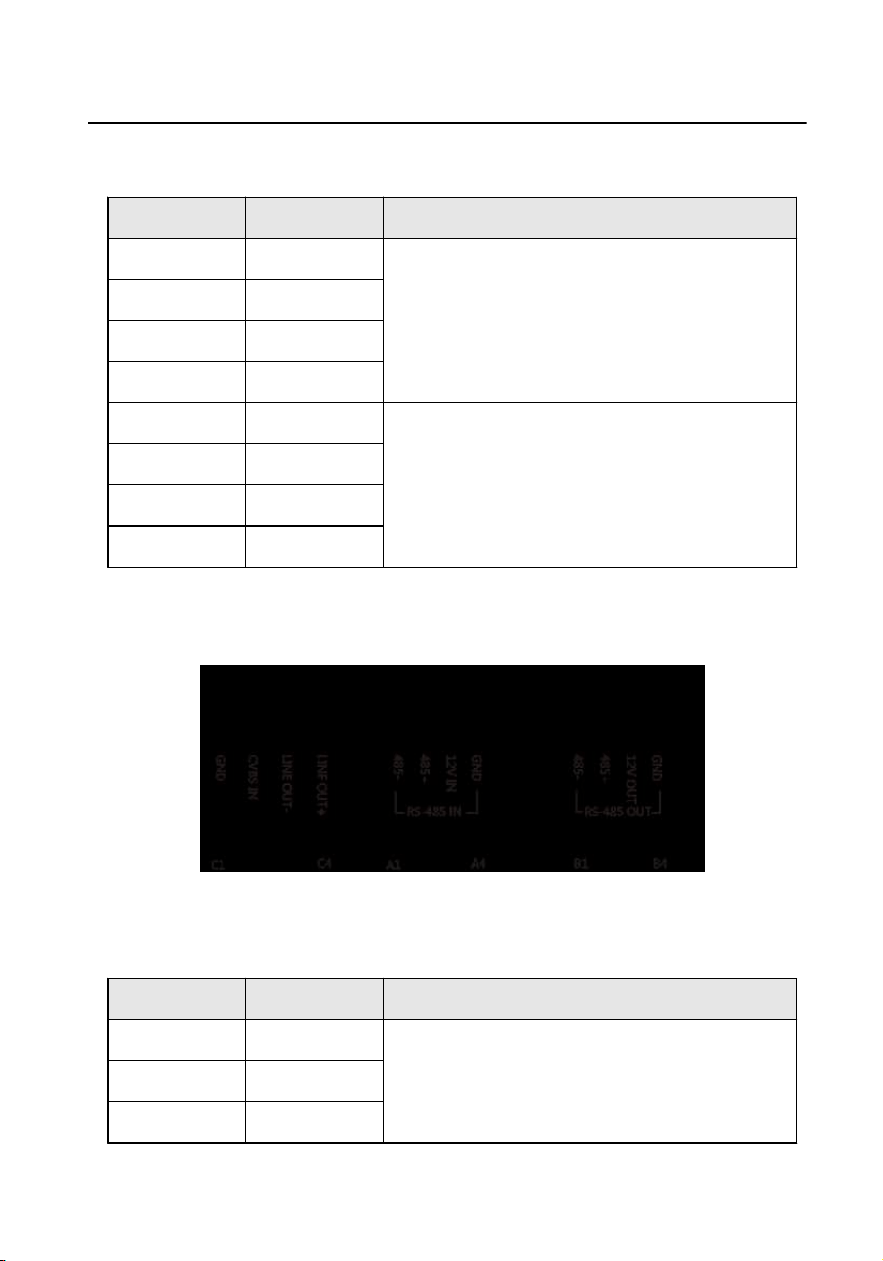
Table 2-3 Descripon
No. Interface Descripon
A1 485- Module-Connecng Interface (Input)
A2 485+
A3 12V IN
A4 GND
B1 485- Module-Connecng Interface (Output)
B2 485+
B3 12V OUT
B4 GND
Touch-Display Module
Figure 2-4 Touch-Display Module
Table 2-4 Descripon
No. Interface Descripon
A1 485- Module-Connecng Interface (Input)
A2 485+
A3 12V IN
Video Intercom Module Door Staon User Manual
12
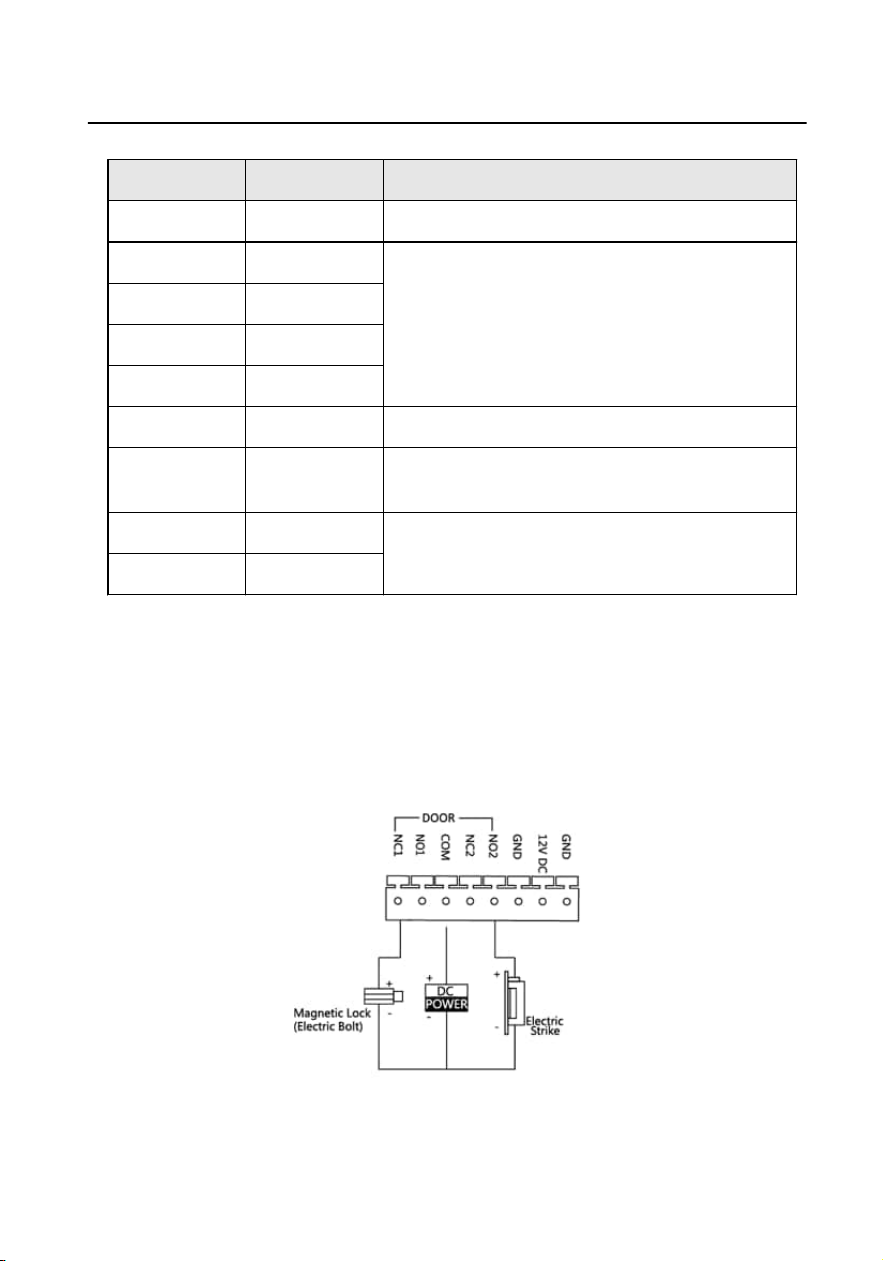
No. Interface Descripon
A4 GND
B1 485- Module-Connecng Interface (Output)
B2 485+
B3 12V OUT
B4 GND
C1 GND Grounding Interface
C2 CVSB IN Composite Video Broadcast Signal Input
(Reserved)
C3 LINEOUT- Audio Output (Reserved)
C4 LINEOUT+
2.2 Module Door Staon Wiring
2.2.1 Door Lock Wiring
Figure 2-5 Door Lock Wiring
Video Intercom Module Door
Staon User Manual
13
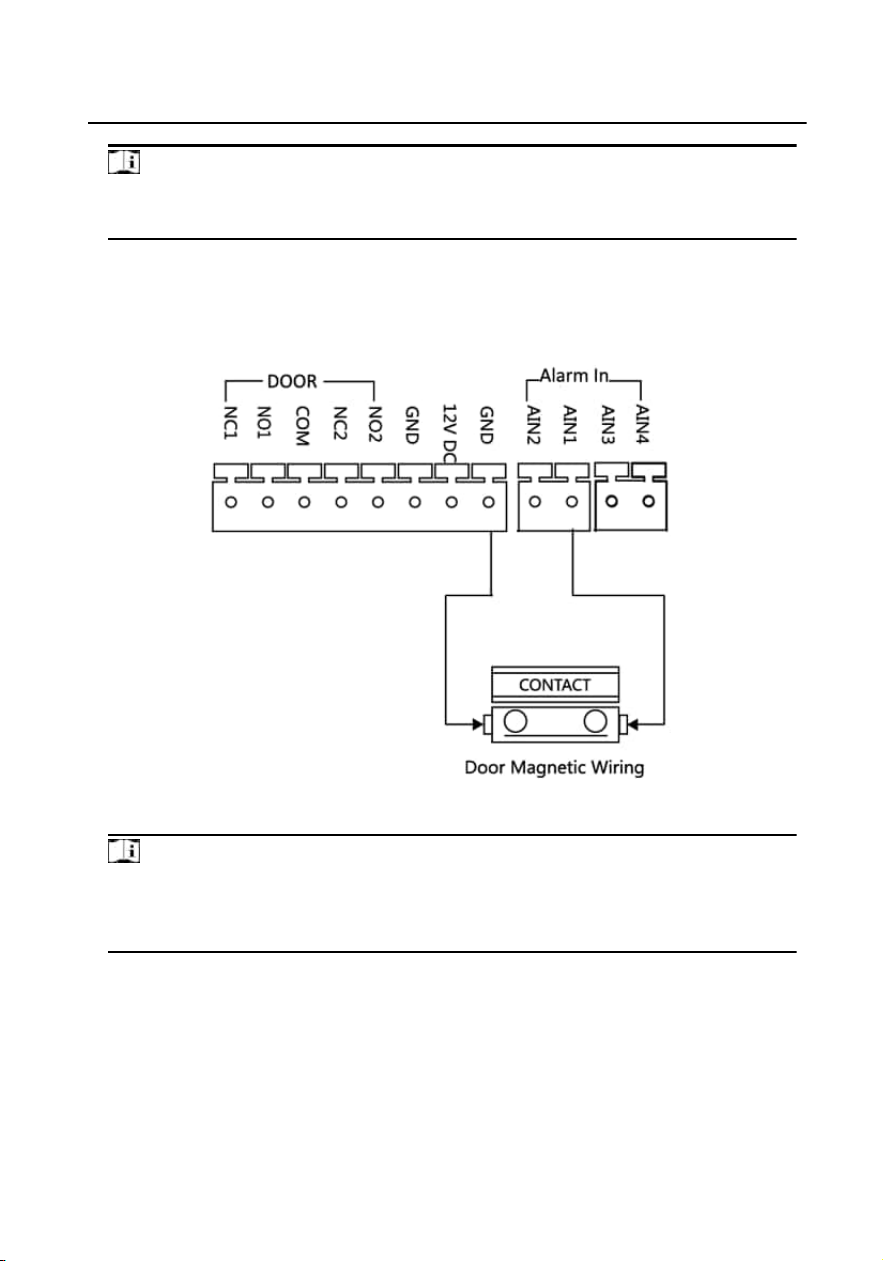
Note
Terminal NC1/COM is set as default for accessing magnec lock/electric bolt;
terminal NO2/COM is set as default for accessing electric strike.
2.2.2 Door Contact Wiring
Figure 2-6 Door Contact Wiring
Note
AIN1 and AIN2 are defaulted to connect door contact. Door contact connected to
AIN1 detects status of the lock that connected to NC1/NO1; Door contact connected
to AIN2 detects the status of the lock connected to NC2/NO2.
2.2.3 Exit Buon Wiring
Video Intercom Module Door Staon User Manual
14
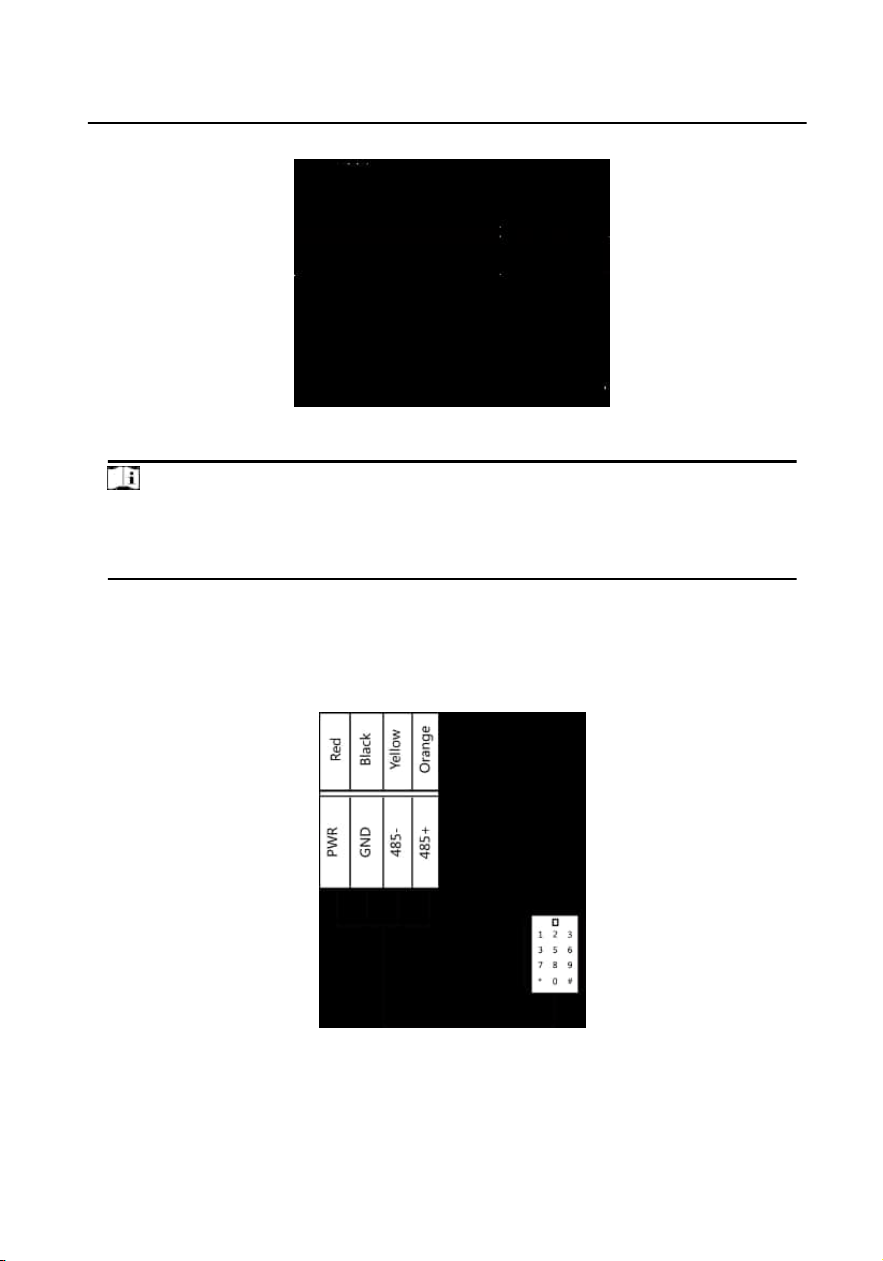
Figure 2-7 Exit Buon Wiring
Note
AIN3 and AIN4 are set as default for connecng exit buon. Exit buon connected to
AIN3 opens the lock connected to NC1/NO1; Exit buon connected to AIN4 controls
the lock that connected to NC2/NO2.
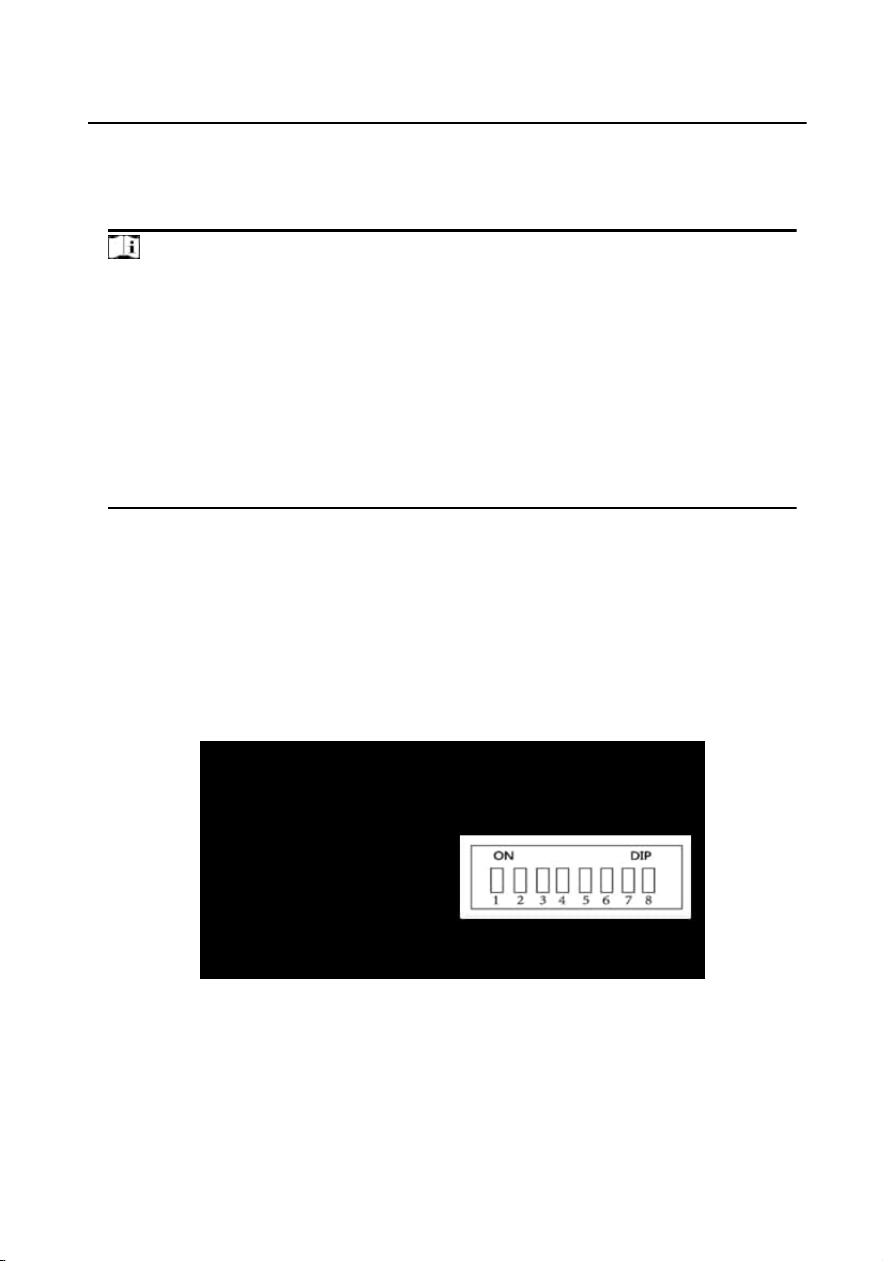
2.2.4 RS-485 Card Reader Wiring
To connect RS-485 card reader, refer to the picture below.
Figure 2-8 RS-485 Card Reader Wiring
Video Intercom Module Door
Staon User Manual
15
3 Installaon
Note
●
Make sure the device in the package is in good condion and all the assembly
parts are included.
●
Sub module must work along with the main unit.
●
Set the sub module address before start the installaon steps.
●
Make sure the place for surface mounng is at.
●
Make sure all the related equipment is power-o during the installaon.
●
Tools that you need to prepare for installaon:
Drill (ø6), cross screwdriver (PH1*150 mm), and gradienter.
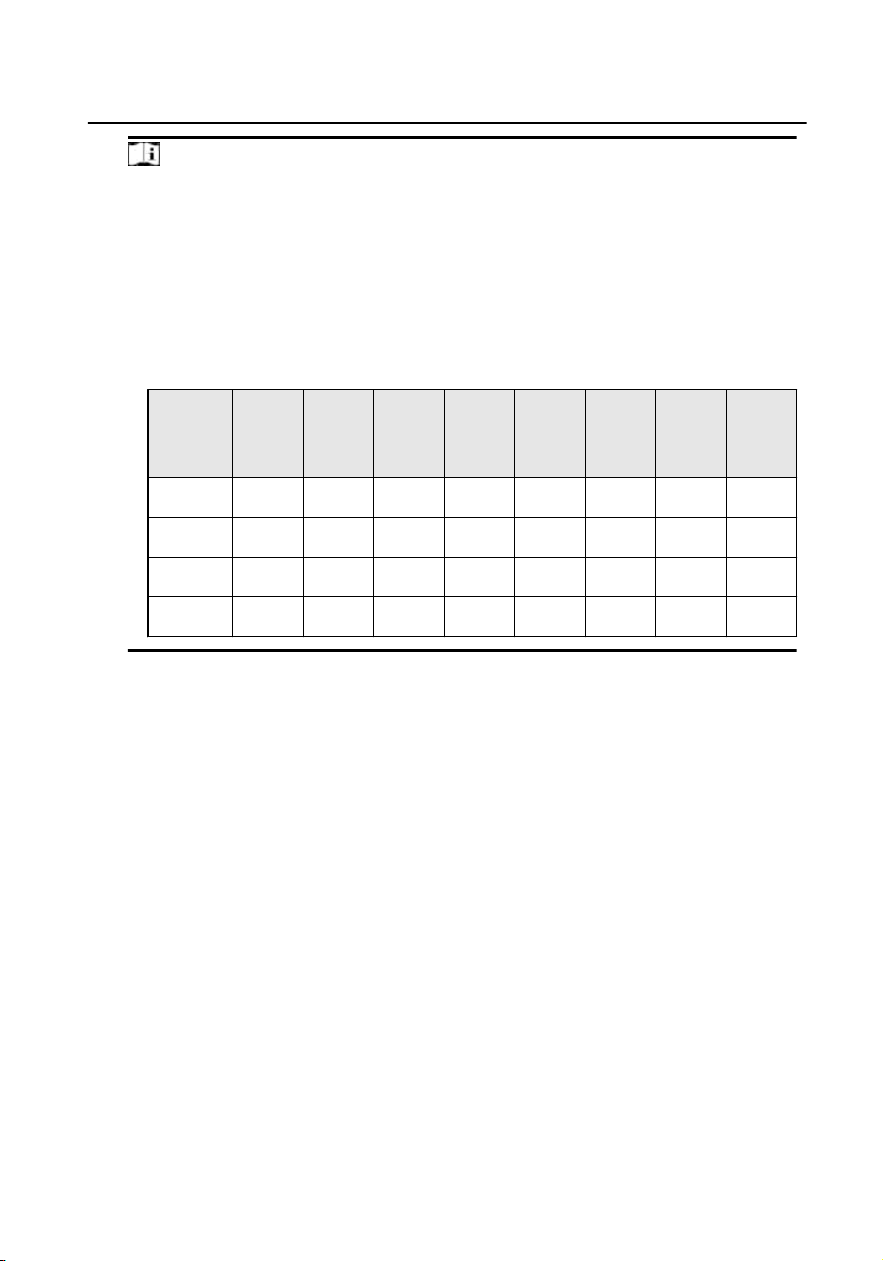
3.1 Congure Sub Module Address
You need to set the sub module address via DIP switch before installaon.
Steps
1. Remove the rubber cover on the rear panel of the sub module to expose the DIP
switch.
Figure 3-1 DIP Switch
2. Set the sub module address according to the DIP rules, and install the rubber
cover back.
Video Intercom Module Door
Staon User Manual
16
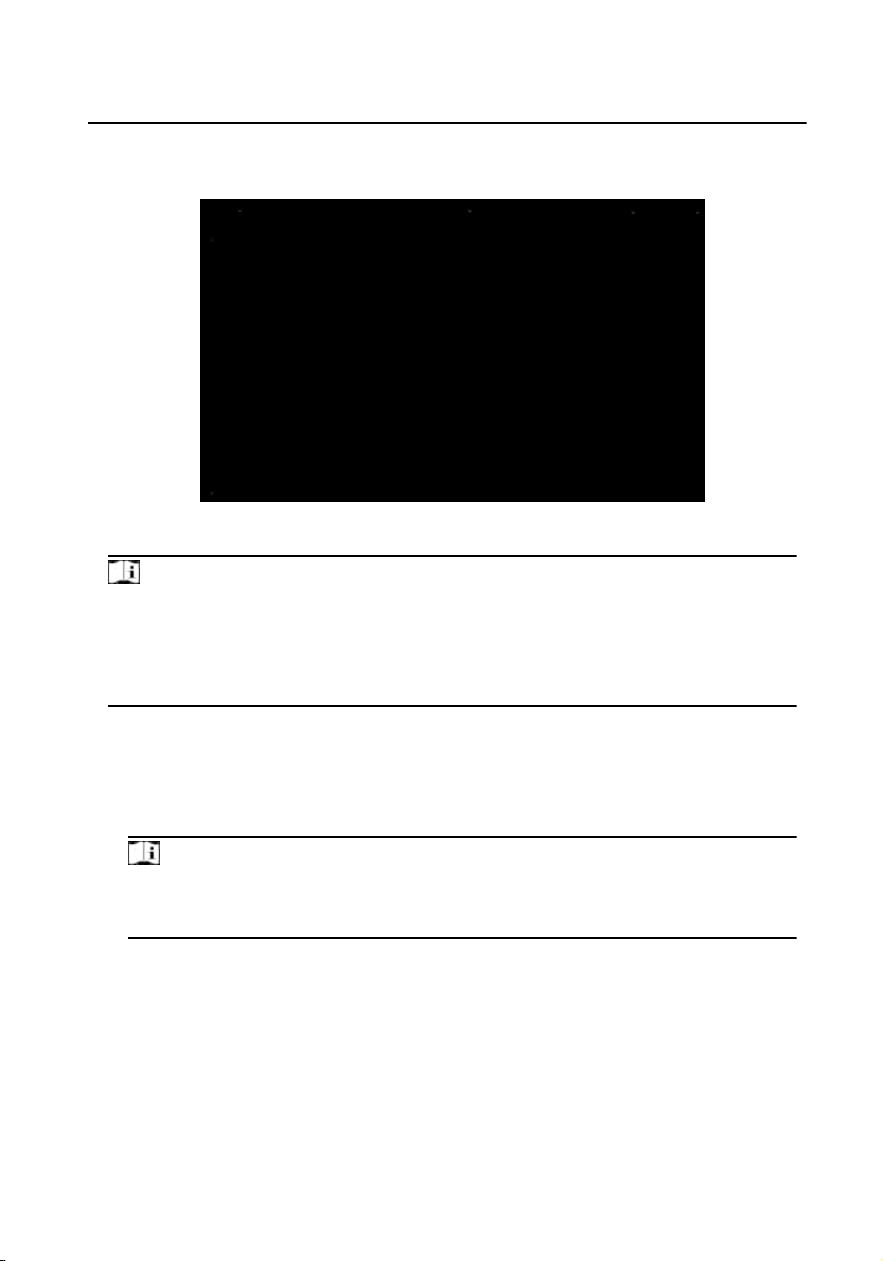
Note
●
Bit 1, 2, 3, 4 are used to coding the sub module address. Bit 5, 6, 7 are reserved.
Set Bit 8 as on to enable a resistance (120Ω).
●
Valid sub module address is from 1 to 8. The address should be unique for
connecng to the main unit.
The sub module address and its corresponding switch status are displayed as
below.
Table 3-1 Descripon
Sub
Module
Address
1 2 3 4 5 6 7 8
Bit 1 ON OFF ON OFF ON OFF ON OFF
Bit 2 OFF ON ON OFF OFF ON ON OFF
Bit 3 OFF OFF OFF ON ON ON ON OFF
Bit 4 OFF OFF OFF OFF OFF OFF OFF ON
3.2 One-Module Installaon
3.2.1 One-Module Surface Mounng
Video Intercom Module Door Staon User Manual
17
Before You Start
Figure 3-2 Mounng Frame
Note
●
The dimension of one module mounng frame (W × H × D) is: 117 mm × 107 mm
× 32.7 mm.
●
The dimensions above are for reference only. The actual size can be slightly
dierent from the theorecal dimension.
Steps
1. Paste the
installaon Scker 1 onto the wall. Make sure the scker is placed
horizontally via measuring with the gradienter.
2. Drill 4 holes according to the screw holes on the scker.
Note
●
The suggested size of hole is 6 (diameter) × 25 (depth) mm.
●
The suggested length of cables le outside is 100 mm.
Video Intercom Module Door Staon User Manual
18

Figure 3-3 Drill Screw Holes
3. Remove the stricker and insert the expansion sleeves into the screw holes.
4. Fix the
mounng frame onto the wall with 4 expansion bolts.
Figure 3-4 Fix the Mounng Frame
Video Intercom Module Door
Staon User Manual
19

5. Connect the cables to the corresponding interfaces of the main unit and insert the
main unit into the frame.
Figure 3-5 Insert the Main Unit
6. Fix the cover onto the frame.
Figure 3-6 Fix the Cover
3.2.2 One-Module Flush Mounng
Video Intercom Module Door Staon User Manual
20

Before You Start
Figure 3-7 Front and Side View of the Gang Box
Figure 3-8 Gang Box
Video Intercom Module Door
Staon User Manual
21

Note
The dimension of one-module gang box is: 115 (W) × 134 (H) × 56 (D) mm. The
dimension is for reference only.
Steps
1. Drill an installaon hole, and pull the cables out.
Note
●
The suggested dimension of installaon hole is 118 (W) × 108 (H) × 45.5 (D)
mm.
●
The suggested length of cables le outside is 100 mm.
Figure 3-9 Drill Installaon Hole
2. Remove the plasc sheet of the cable entry.
3. Mark the gang box screw holes on the wall.
1) Route the cables through the gang box hole.
2) Insert the gang box into the
installaon hole.
3) Mark the gang box screw holes' posion with a marker, and take out the gang
box.
Video Intercom Module Door
Staon User Manual
22
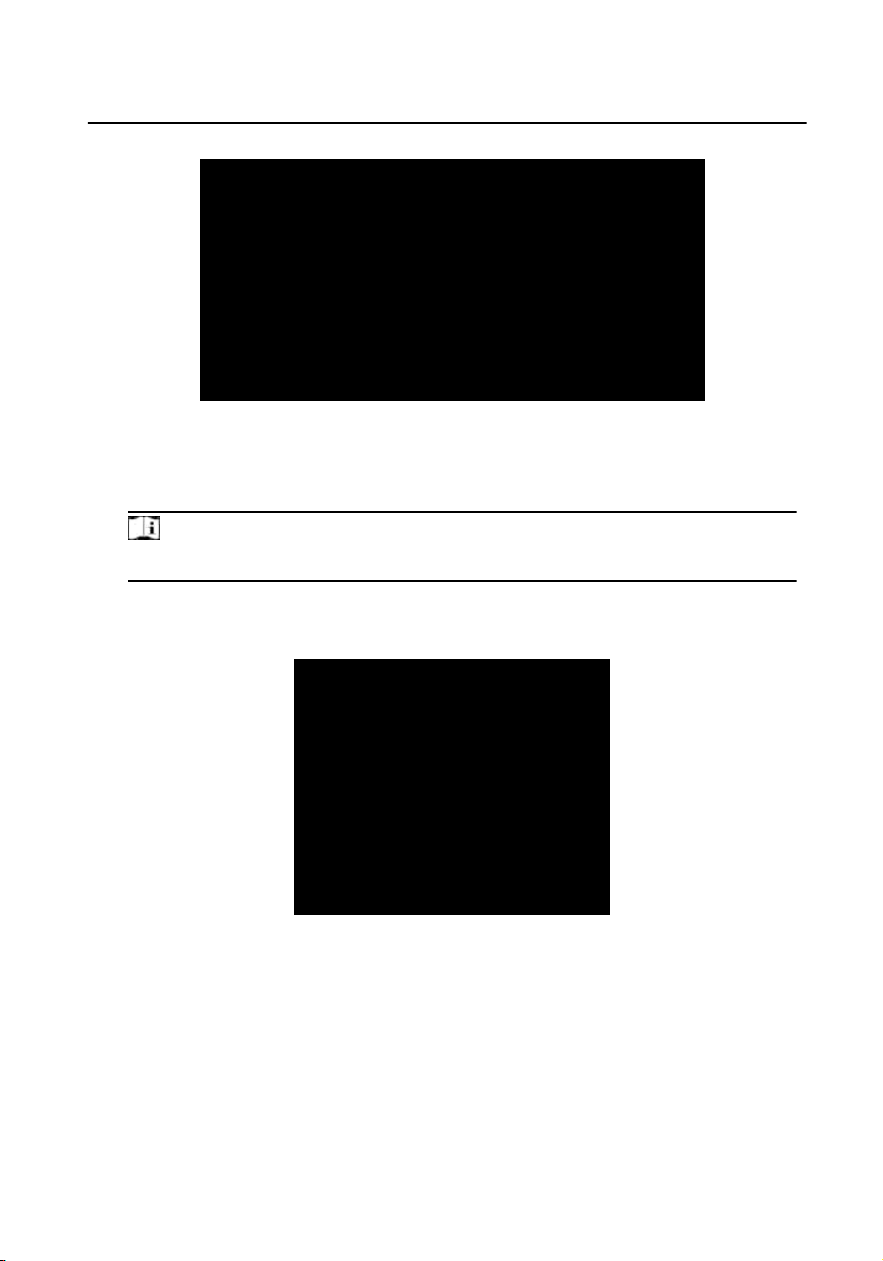
Figure 3-10 Mark the Screw Holes
4. Drill 4 holes according to marks on the wall, and insert the expansion sleeves into
the screw holes.
Note
The suggested size of the hole is 6 (diameter) × 45 (depth) mm.
5. Route the cables through the gang box hole. Insert the gang box into the
installaon hole. Fix the gang box with 4 expansion bolts.
Figure 3-11 Fix the Gang Box
6. Fill the gap between the gang box and the wall with concrete. Remove the 4
mounng ears with tool aer concrete is dry.
Video Intercom Module Door
Staon User Manual
23

Figure 3-12 Remove the Mounng Ears
7. Connect the cables to the corresponding interfaces of the main unit and insert the
unit into the gang box.
Figure 3-13 Insert the Main Unit
8. Fix the cover and the main unit with 2 socket head cap screws by using a hexagon
wrench (supplied).
Video Intercom Module Door
Staon User Manual
24

Figure 3-14 Fix the Cover
3.3 Two-Module Installaon
3.3.1 Two-Module Surface Mounng
Before You Start
Figure 3-15 Mounng Frame
Video Intercom Module Door
Staon User Manual
25

Note
●
The dimension of two-module mounng frame (W × H × D) is: 219 mm × 107 mm
× 32.7 mm.
●
The dimensions above are for reference only. The actual size can be slightly
dierent from the theorecal dimension.
Steps
1. Paste the
installaon Scker 1 onto the wall. Make sure the scker is placed
horizontally via measuring with the gradienter.
2. Drill 4 holes according to the screw holes on the scker. The suggested size of hole
is 6 (diameter) × 25 (depth) mm. The suggested length of cables le outside is 270
mm.
Figure 3-16 Drill Screw Holes
3. Remove the scker and insert the expansion sleeves into the screw holes.
4. Fix the
mounng frame onto the wall with 4 expansion bolts.
Video Intercom Module Door
Staon User Manual
26

Figure 3-17 Fix the Mounng Frame
5. Thread the
module-connecng line across the thread hole of the frame. Pass the
main unit
connecng lines across the thread hole to the upper grid.
Figure 3-18 Placement of Lines
6. Connect the cables.
1) Connect the lines and module-connecng line to the corresponding interfaces
of the main unit, then place the main unit into the upper grid.
2) Connect the other end of the
module-connecng line to the input interface of
the sub module.
Video Intercom Module Door
Staon User Manual
27

3) Organize the cable with cable e in the package. The suggested cable
connecon picture as shown below.
Figure 3-19 Line Connecon Eect Picture
7. Insert the modules into the frame aer wiring. The main unit must be placed in
the top grid.
Figure 3-20 Insert the Modules
8. Use the hexagon wrench in the package to x the cover onto the frame.
Video Intercom Module Door
Staon User Manual
28

Figure 3-21 Fix the Cover
3.3.2 Two-Module Flush Mounng
Before You Start
Figure 3-22 Gang Box
Video Intercom Module Door
Staon User Manual
29

Note
The dimension of two-module gang box is: 237 (W) × 134 (H) × 56 (D) mm. The
dimension is for reference only.
Steps
1. Drill the installaon hole, and pull the cable out.
Note
●
The suggested dimension of installaon hole is 220 (W) × 108 (H) × 45.5 (D)
mm.
●
The suggested length of cables le outside is 270 mm.
Figure 3-23 Drill the Installaon Hole
2. Select a cable entry and remove the plasc sheet.
3. Mark the gang box screw holes on the hole.
1) Routs the cables through the gang box hole.
2) Insert the gang box into the
installaon hole.
3) Mark the gang box screw holes' posion with a marker, and take out the gang
box.
Video Intercom Module Door
Staon User Manual
30

Figure 3-24 Mark the Screw Holes
4. Drill 4 holes according to the marks on the wall, and insert the expansion sleeves
into the screw holes. The suggested size of hole is 6 (diameter) × 45 (depth) mm.
5. Fix the gang box with 4 expansion bolts.
Figure 3-25 Fix the Gang Box
6. Fill the gap between the gang box and the wall with concrete. Remove the
mounng ears with tool aer concrete is dry.
Video Intercom Module Door
Staon User Manual
31

Figure 3-26 Remove the Mounng Ears
7. Connect cables and insert the modules.
1) Connect Cable 1 and one end of Cable 2 to the corresponding interfaces of the
main unit, then insert the main unit into the upper grid.
2) Connect the other end of Cable 2 to the input interface of the sub module.
Insert it into the lower grid.
Figure 3-27 Connect Cables and Insert the Modules
Video Intercom Module Door
Staon User Manual
32

Note
Cable 1 refers to the cables pulled out from the wall that connected to the main
unit. Cable 2 refers to the module-connecng line in the accessory package.
8. Fix the cover with 2 socket head cap screws by using a hexagon wrench (supplied).
Figure 3-28 Fix the Cover
3.4 Three-Module
Installaon
3.4.1 Three-Module Surface Installaon
Before You Start
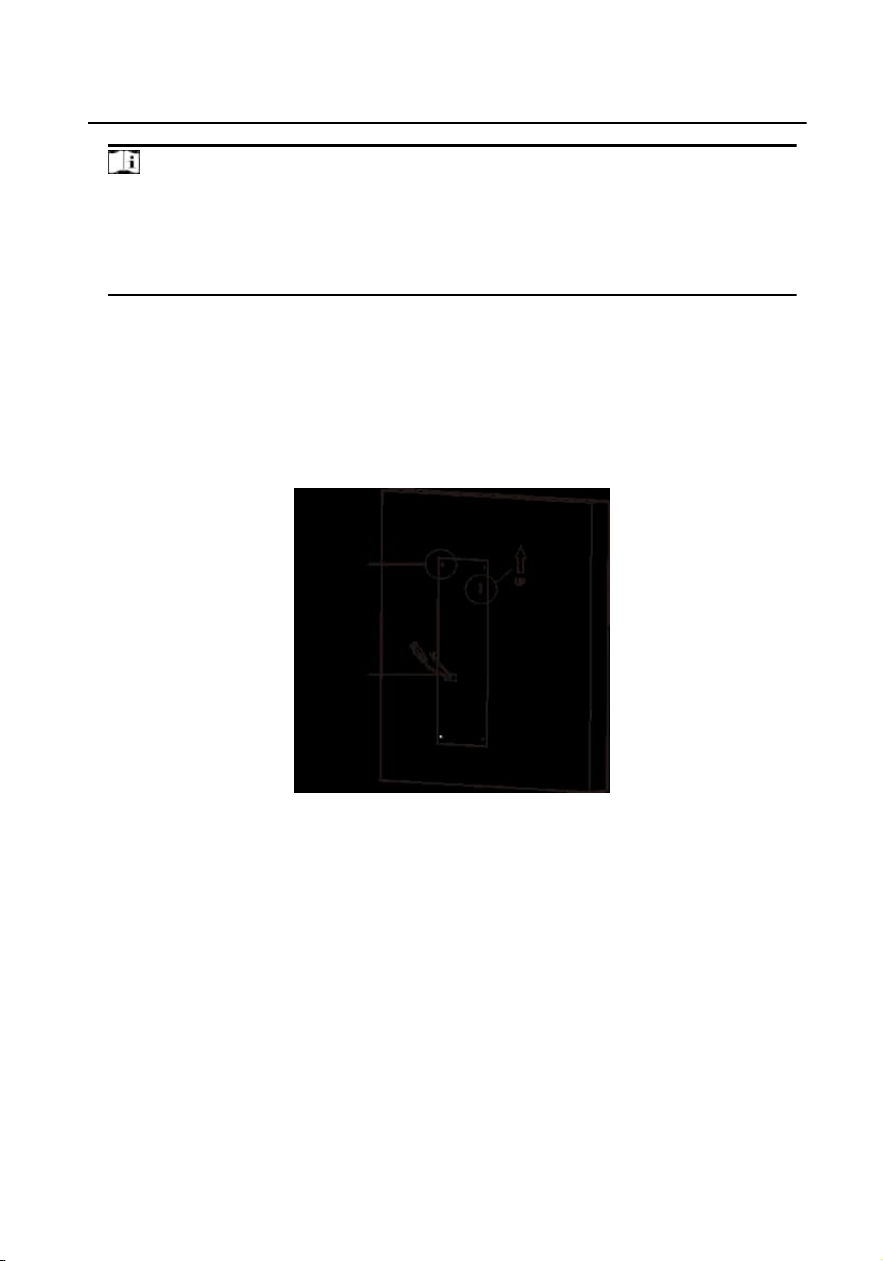
Figure 3-29 Mounng Frame
Video Intercom Module Door
Staon User Manual
33
Note
●
The dimension of two-module mounng frame (W × H × D) is: 320.8 mm × 107
mm × 32.7 mm.
●
The dimensions above are for reference only. The actual size can be slightly
dierent from the theorecal dimension.
Steps
1. Paste the
installaon scker 1 onto the wall. Make sure the scker is placed
horizontally via measuring with the gradienter.
2. Drill 4 holes according to the screw holes on the scker.The suggested size of hole
is 6 (diameter) × 25 (depth) mm. The suggested length of cables le outside is 270
mm.
Figure 3-30 Drill Screw Holes
3. Remove the scker and insert the expansion sleeves into the screw holes.
4. Fix the mounng frame onto the wall with 4 expansion bolts.
Video Intercom Module Door
Staon User Manual
34
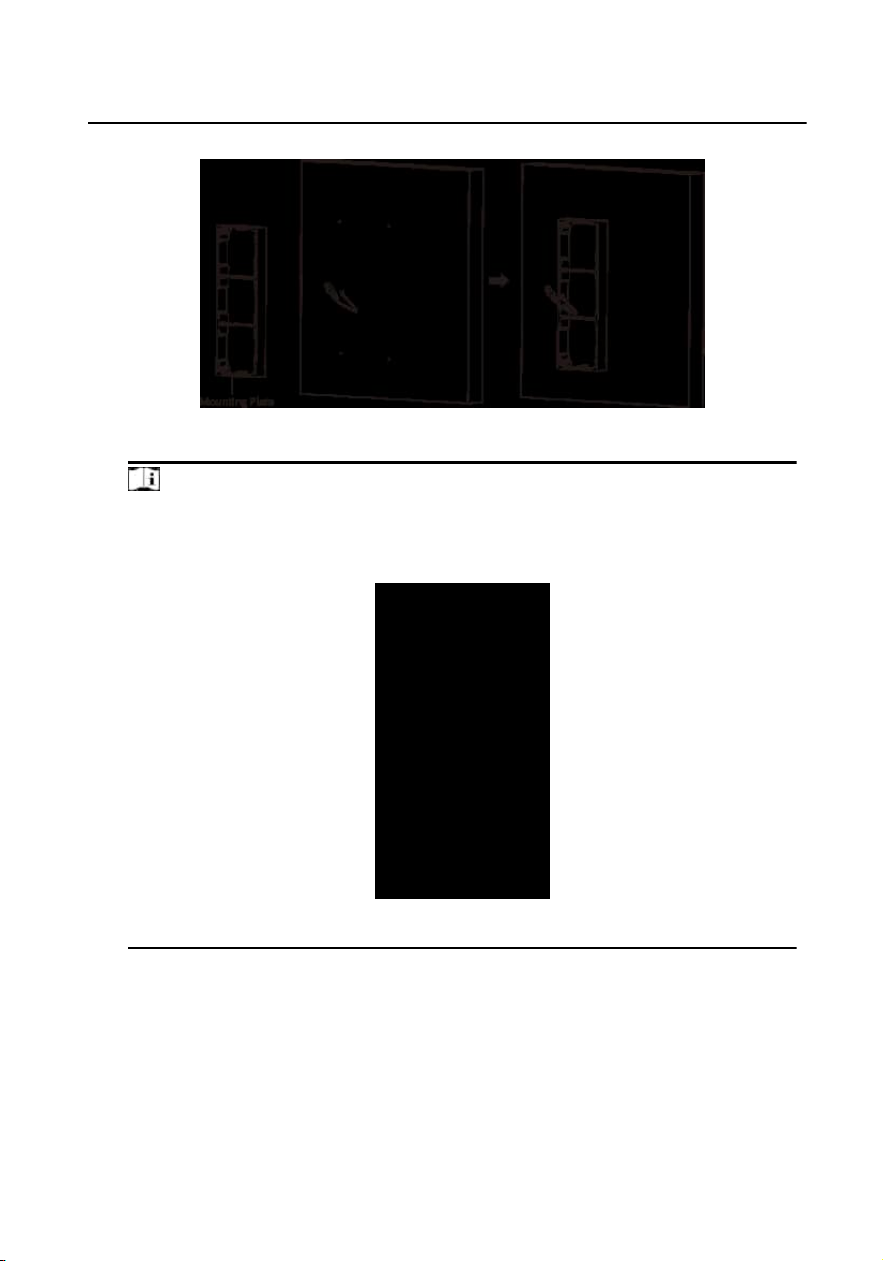
Figure 3-31 Fix the Mounng Frame
Note
The mounng frame should be placed exactly as shown below for this step. The
tamper plate should be at the low right of the rst grid.
Figure 3-32 Mounng Frame
5. Thread the module-connecng line across the thread holes of the frame. Pass the
main unit
connecng line across the thread hole to the top grid.
Video Intercom Module Door
Staon User Manual
35

Figure 3-33 Placement of Lines
6. Connect the cables.
1) Connect the lines and
module-connecng line 1 to the corresponding interfaces
of the main unit, then place the main unit into the upper grid.
2) Connect the other end of the module-connecng line 1 to the input interface of
the sub module. Connect two sub modules via module-connecng line 2.
3) Organize the cables with cable e in the package. The suggested cable
connecon picture as shown below.
Figure 3-34 Line Connecon Eect Picture
7. Insert the modules into the frame aer wiring. The main unit must be placed in
the top grid.
Video Intercom Module Door
Staon User Manual
36

Figure 3-35 Insert the Modules into the Frame
8. Use the hexagon wrench in the package to
x the cover onto the frame.
Figure 3-36 Fix the Cover
3.4.2 Three-Module Flush Mounng
Video Intercom Module Door Staon User Manual
37

Before You Start
Figure 3-37 Gang Box
Note
●
The dimension of one-module gang box is: 338.8(W)×134(H)×56(D) mm.
●
The dimensions above are for reference only. The actual size can be slightly
dierent from the theorecal dimension.
Steps
1. Cave the installaon hole, and pull the cable out.The suggested dimension of
installaon hole is 321.8(W)×108(H)×45.5(D) mm. The suggested length of cables
le outside is 270 mm.
Video Intercom Module Door
Staon User Manual
38

Figure 3-38 Cave the Installaon Hole
2. Select a cable entry and remove the plasc sheet.
3. Mark the gang box screw holes on the wall.
1) Route the cables through the gang box hole.
2) Insert the gang box into the
installaon hole.
3) Mark the gang box screw holes'
posion with a marker, and take out the gang
box.
Figure 3-39 Mark the Screw Holes
4. Drill 4 holes according to marks on the wall, and insert the expansion sleeves into
the screw holes. The suggested size of hole is 6 (diameter) × 45 (depth) mm.
5. Fix the gang box with 4 expansion bolts.
Video Intercom Module Door
Staon User Manual
39

Figure 3-40 Fix the Gang Box
6. Fill the gap between the gang box and wall with concrete. Remove the
mounng
ears with tool aer concrete is dry.
Figure 3-41 Remove the Mounng Ears
7. Connect cables and insert the modules.
1) Connect Cable 1 and one end of Cable 2 to the corresponding interfaces of the
main unit, then insert the main unit into the upper grid.
2) Connect the other end of Cable 2 to the input interface of Sub Module 1.
Connect one end of Cable 3 to the output interface of Sub Module 1 and insert
it into the middle grid.
3) Connect the other end of Cable 3 to the input interface of Sub Module 2. Insert
it into the boom grid.
Video Intercom Module Door
Staon User Manual
40
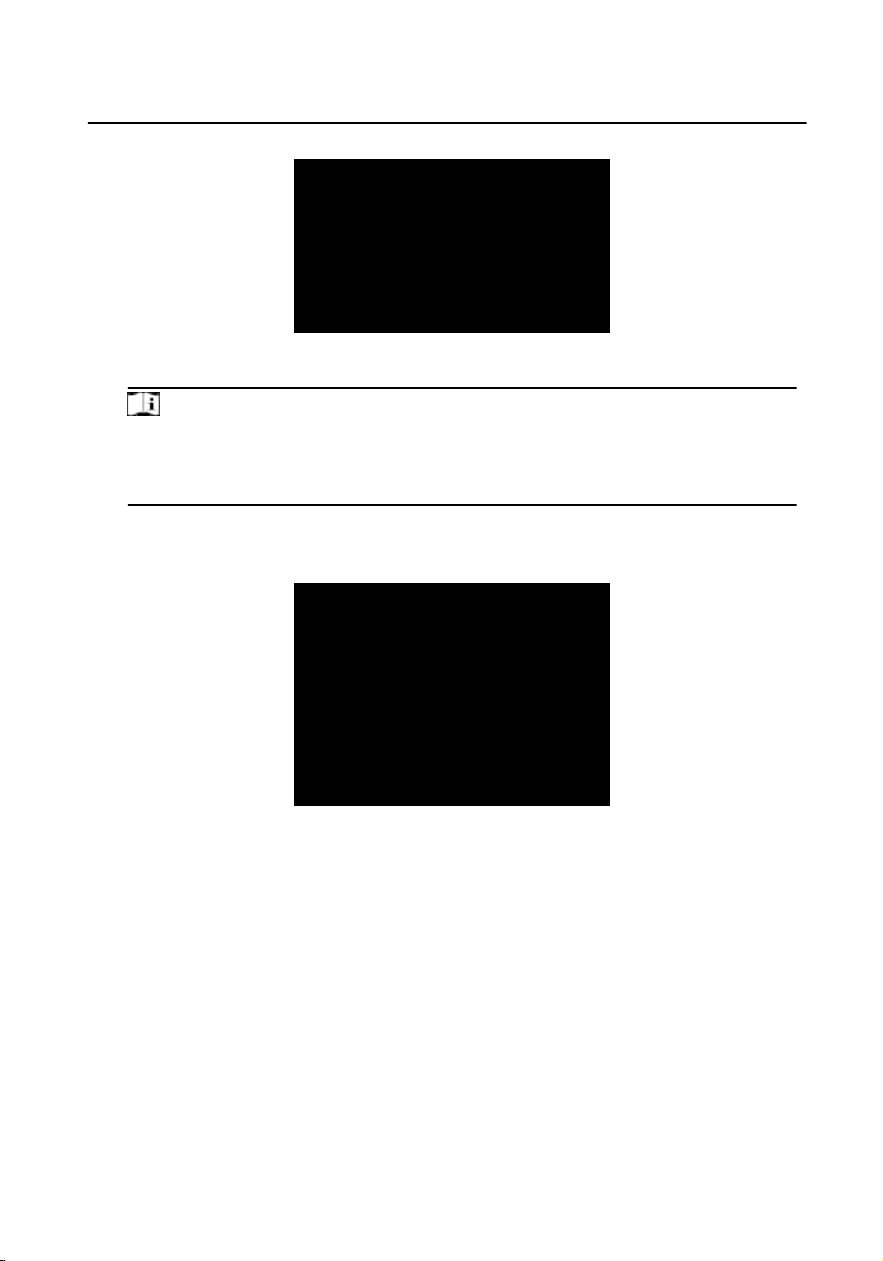
Figure 3-42 Connect Cables and Insert Modules
Note
Cable 1 refers to the cables pulled out from the wall that connected to the main
unit. Cable 2 and Cable 3 refer to the module-connecng line in the accessory
package.
8. Fix the cover and the main unit with 2 socket head cap screws by using a hexagon
wrench (supplied).
Figure 3-43 Fix the Cover
3.5 More-Than-Three Module Installaon
3.5.1 More-than-Three Module Surface Mounng
Video Intercom Module Door Staon User Manual
41
Before You Start
Figure 3-44 Mounng Frame
Note
●
It takes two three-module mounng frames. The dimension of three-module
mounng frame (W × H × D) is: 320.8 mm × 107 mm × 32.7 mm.
●
The dimensions above are for reference only. The actual size can be slightly
dierent from the theorecal dimension.
Steps
1. Paste two
Scker 1 onto the wall. Make sure the sckers are placed horizontally
via measuring with the gradienter.
2. Drill 8 holes according to the screw holes on the scker.
Note
●
The suggested size of hole is 6 (diameter) × 25 (depth) mm.
●
The suggested length of cables le outside is 270 mm.
3. Pull out the cable through the cable hole of the le scker.
Video Intercom Module Door
Staon User Manual
42

Figure 3-45 Drill Screw Holes
4. Remove the sckers and insert the expansion sleeves into the screw holes.
5. Thread the
module-connecng line (400 mm) and grounding line across the
thread hole of both frames.
Figure 3-46 Place the Grounding Line and Module-Connecng Line
Video Intercom Module Door
Staon User Manual
43

Note
●
There are 6 module-connecng lines in the package: 190 mm × 4 and 400 mm ×
2.
●
Take the 400 mm module-connecng line for this step.
●
The green-yellow line in the package is for grounding.
6. Fix the mounng frame onto the wall with 8 expansion bolts.
Figure 3-47 Fix the Mounng Frame
7. Pass the main unit connecng line across the thread hole to the top grid of the le
frame. Thread the module-connecng line (190 mm) across the thread hole of the
frame. The lines should be placed as shown below.
Figure 3-48 Placement of Lines
Video Intercom Module Door
Staon User Manual
44

8. Connect the cables.
1) Connect the cables from the wall and module-connecng line 1 to the
corresponding interfaces of the main unit, then place the main unit into the
upper grid.
2) Connect the other end of the module-connecng line 1 to the input interface of
the sub module. Connect all sub modules via
module-connecng lines.
3) Organize the cable with cable e in the package. The suggested cable
connecon picture as shown below.
Figure 3-49 Line Connecon Eect Picture
Video Intercom Module Door
Staon User Manual
45
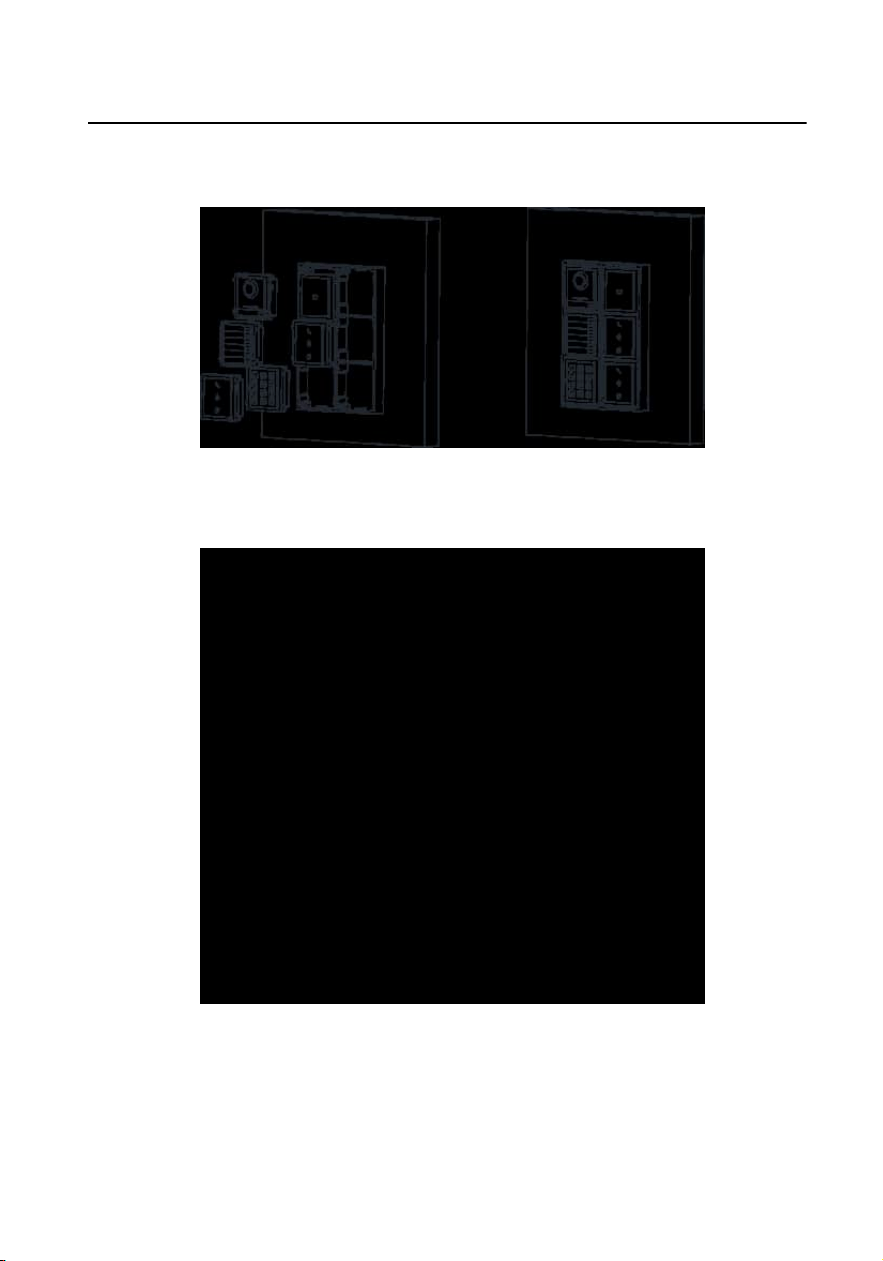
9. Insert the modules into the frame aer wiring. The main unit must be placed in
the top grid on the le.
Figure 3-50 Insert the Modules
10. Pull the grounding line out and xed its two end to the screw on the cover.
Figure 3-51 Connect the Grounding Line to the Cover
11. Use the hexagon wrench in the package to x the cover onto the frame.
Video Intercom Module Door
Staon User Manual
46

Figure 3-52 Fix the Cover
3.5.2 More-Than-Three Module Flush
Mounng
Video Intercom Module Door Staon User Manual
47

Before You Start
Figure 3-53 Gang Box
Note
It takes two three-module gang boxes. The dimension of the gang box is: 338.8 (W) ×
134 (H) × 56 (D) mm. The dimension is for reference only.
Video Intercom Module Door Staon User Manual
48

Steps
1. Drill the installaon hole, and pull the cable out.The suggested dimension of
installaon hole is 321.8 (W) × 315 (H) × 45.5 (D) mm. The suggested length of
cables le outside is 270 mm.
Figure 3-54 Cave the
Installaon Hole
2. Connect two gang boxes as below.
Figure 3-55 Connect Two Gang Boxes
3. Select a cable entry and remove the plasc sheet.
Video Intercom Module Door
Staon User Manual
49

4. Remove the plasc sheets on the side of the gang boxes (shown as 1 and 2)
below:
Figure 3-56 Remove the Plasc Sheets
5. Mark the gang box screw holes on the wall.
1) Route the cables through the gang box hole.
2) Insert the gang box into the installaon hole.
3) Mark the gang box screw holes'
posion with a marker, and take out the gang
box.
Figure 3-57 Mark the Screw Holes
Video Intercom Module Door
Staon User Manual
50

6. Drill 8 holes according to the marks on the wall, and insert the expansion sleeves
into the screw holes. The suggested size of hole is 6 (diameter) × 45 (depth) mm.
7. Fix the gang boxes with 8 expansion bolts.
Figure 3-58 Fix the Gang Boxes
8. Fill the gap between the gang box and wall with concrete. Remove the mounng
ears with tool aer concrete is dry. Route the grounding line through the cable
entries.
Figure 3-59 Remove the Mounng Ears
Note
The green-yellow line in the package is for grounding.
9. Connect cables and insert the modules.
Video Intercom Module Door
Staon User Manual
51

1) Connect Cable 1 and one end of Cable 2 to the corresponding interfaces of the
Main Unit, then place the Main Unit into the upper grid of the le gang box.
2) Connect the other end of Cable 2 to the input interface of Sub Module 1.
Connect one end of Cable 3 to the output interface of Sub Module 1 and insert
it into the middle grid of the le gang box.
3) Finish the wiring and
inserng according to the cable number and the posion
shown as below.
Figure 3-60 Install Mounng Frame
The cables connect to each module shown as below.
Figure 3-61 Cables Connecon
Video Intercom Module Door
Staon User Manual
52

Note
●
Cable 2,3,5 and 6 are the module-connecng lines (190 mm) in the package.
●
Cable 4 is the module-connecng line (400 mm) in the package.
●
Main unit must be put in the top grid.
10. Pull the grounding line out and xed its two end to the screw on the cover.
Figure 3-62 Connect the Grounding Line to the Cover
11. Fix the cover with 2 socket head cap screws by using a hexagon wrench
(supplied).
Video Intercom Module Door
Staon User Manual
53

Figure 3-63 Fix the Cover
Video Intercom Module Door
Staon User Manual
54
4 Acvaon
4.1 Acvate Device via Client Soware
You can only congure and operate the door staon aer creang a password for
the device acvaon.
Default parameters of door staon are as follows:
●
Default IP Address: 192.0.0.65.
●
Default Port No.: 8000.
●
Default User Name: admin.
Steps
1. Run the client
soware, click Maintenance and Management → Device
Management → Device to enter the page.
2. Click Online Device.
3. Select an
inacvated device and click Acvate.
4. Create a password, and conrm the password.
Note
We highly recommend you to create a strong password of your own choosing
(using a minimum of 8 characters, including at least three kinds of following
categories: upper case leers, lower case leers, numbers, and special characters)
in order to increase the security of your product. And we recommend you change
your password regularly, especially in the high security system, changing the
password monthly or weekly can
beer protect your product.
5. Click OK to acvate the device.
Note
●
When the device is not acvated, the basic operaon and remote operaon of
device cannot be performed.
●
You can hold the Ctrl or Shi key to select mulple devices in the online
devices, and click the Acvate buon to acvate devices in batch.
4.2 Edit Network Parameters
Video Intercom Module Door Staon User Manual
55

To operate and congure the device via LAN (Local Area Network), you need connect
the device in the same subnet with your PC. You can edit network parameters via
iVMS-4200 client soware.
Steps
1. Select an online acvated device and click the Modify Nenfo.
2. Edit the device IP address and gateway address to the same subnet with your
computer.
3. Enter the password and click OK to save the network parameters modicaon.
Note
●
The default port No. is 8000.
●
The default IP address of the door staon is 192.0.0.65.
●
Aer eding the network parameters of device, you should add the devices to
the device list again.
Video Intercom Module Door Staon User Manual
56

5 Conguraon via Client Soware
5.1 Device Management
Device management includes device acvaon, adding device, eding device, and
deleng device, and so on.
Aer running the iVMS-4200, video intercom devices should be added to the client
soware for remote conguraon and management.
5.1.1 Add Online Device
Before You Start
Make sure the device to be added is in the same subnet with your computer.
Otherwise, please edit network parameters rst.
Steps
1. Click Online Device to select an acve online device.
2. Click Add.
3. Enter corresponding
informaon, and click Add.
Video Intercom Module Door
Staon User Manual
57
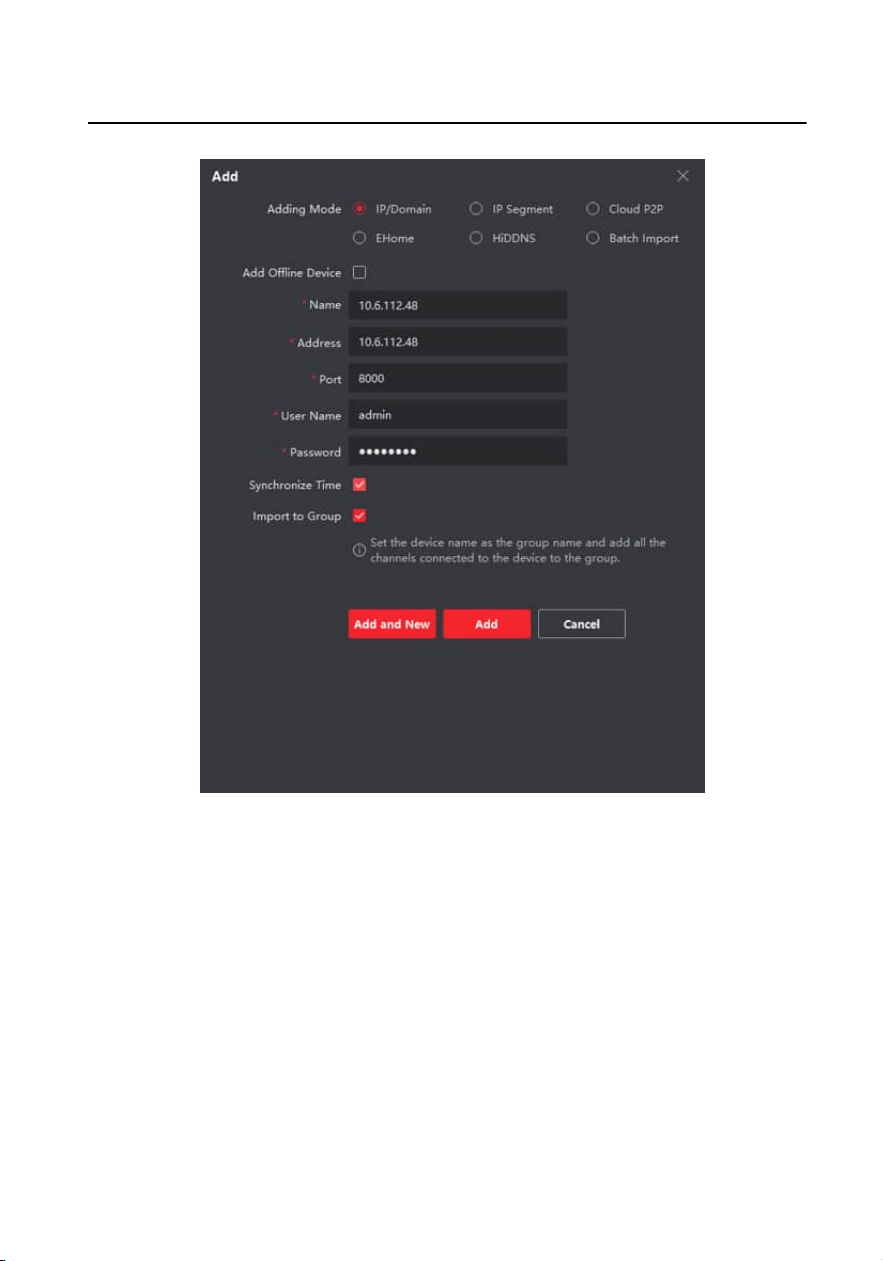
Figure 5-1 Add to the Client
5.1.2 Add Device by IP Address
Steps
1. Click +Add to pop up the adding devices dialog box.
2. Select IP/Domain as Adding Mode.
3. Enter corresponding
informaon.
4. Click Add.
5.1.3 Add Device by IP Segment
Video Intercom Module Door Staon User Manual
58
You can add many devices at once whose IP addresses are among the IP segment.
Steps
1. Click +Add to pop up the dialog box.
2. Select IP Segment as Adding Mode.
3. Enter corresponding informaon, and click Add.
5.2 Live View via Door Staon
Steps
1. On the main page of the client soware, click Main View to enter the Live View
page.
2. In the le list of the window, double-click the device IP or click the play icon to live
view.
3. Oponal: On the Live View page, control-click and select Capture to get the
picture of the live view.
5.3 Remote
Conguraon
Click to set the parameters of the device.
Note
Run the browser, click → Internet Opons → Security to disable the Protected
Mode.
5.3.1 Device Management
You can manage the linked device on the page.
Click Device Management to enter the
sengs page.
Video Intercom Module Door
Staon User Manual
59

Figure 5-2 Device Management
Add Device
●
Click Add to add the indoor staon or sub door staon. Enter the
parameters and click OK to add.
●
Click Import. Enter the
informaon of the device in the template to
import devices in batch.
Export
Click Export to export the informaon to the PC.
Delete
Select the device and click Delete to remove the selected device from the
list.
Refresh
Click Refresh to get the device informaon.
Oponal: Set Device Informaon.
●
Click to edit device informaon.
●
Click to delete device informaon from the list.
●
Select Status and Device Type to search devices.
Video Intercom Module Door
Staon User Manual
60
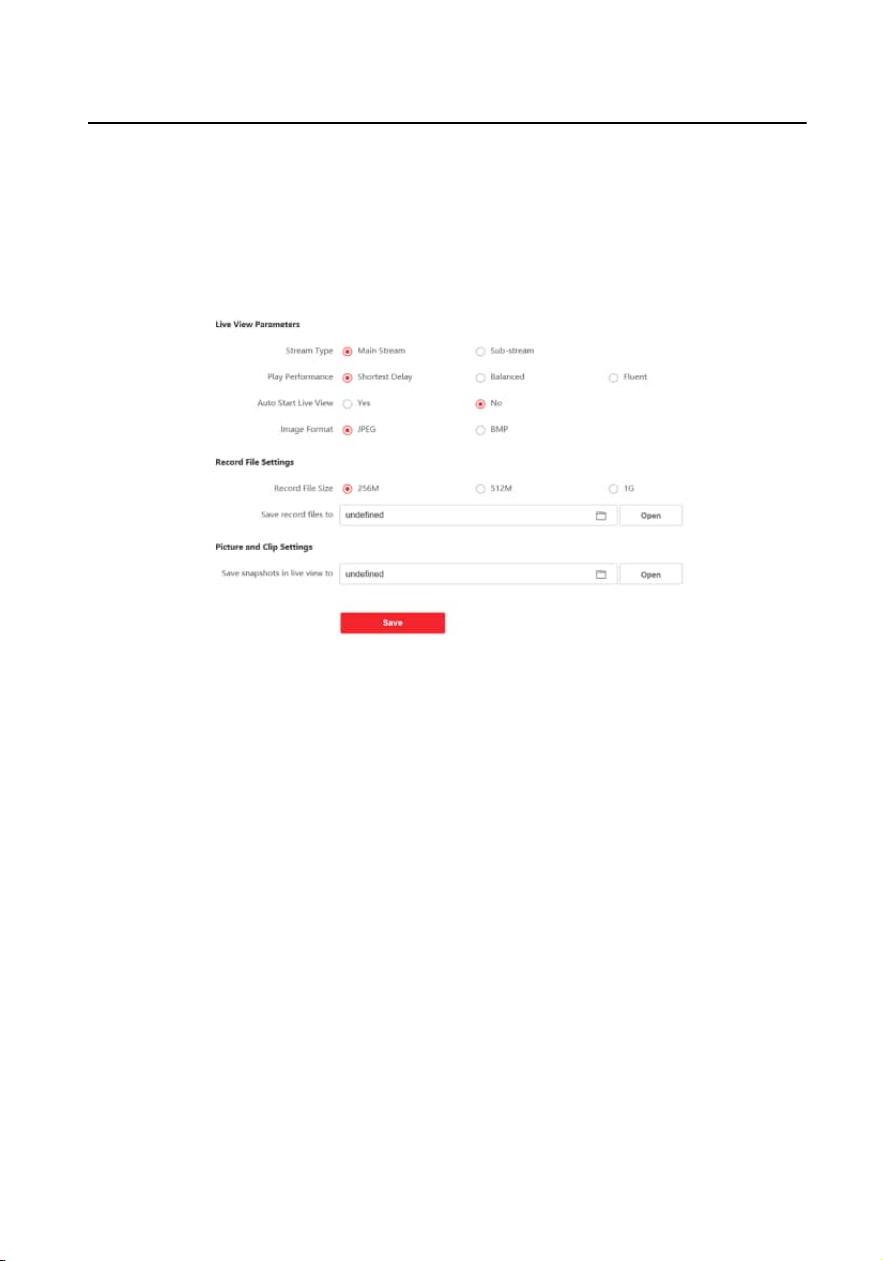
5.3.2 Local Parameters Sengs
You can congure the parameters of the live view, record les and captured pictures.
The record les and captured pictures are the ones you record and capture by using
the web browser. You can also set and view the saving paths of the captured pictures
and recorded videos on the PC that running the web browser.
Figure 5-3 Local Parameters
Live View Parameters
Stream Type
Set the stream type as Main Stream or Sub-stream.
Play Performance
Set the live view performance to Shortest Delay, Balanced or Fluent.
Auto Start Live View
Check Yes to enable the
funcon.
Image Format
Select the image format for picture capture.
Click Save to enable the
sengs.
Record File Parameters
Record File Size
Video Intercom Module Door
Staon User Manual
61
Select the packed size of the manually recorded and downloaded video
les to 256M, 512M or 1G. Aer the selecon, the maximum record le
size is the value you selected.
Save record les to
Set the saving path for the manually recorded video les.
Click Save to enable the sengs.
Picture and Clip Sengs
Save snapshots in live view to
Set the saving path of the manually captured pictures in live view mode.
Note
You can click Browse to change the directory for saving the clips and
pictures, and click Open to open the set folder of clips and picture saving.
Click Save to enable the sengs.
5.3.3 System Sengs
Follow the instrucons below to congure the system sengs, include System
Sengs, Maintenance, Security, and User Management, etc.
Click System to enter the sengs page.
Basic Informaon
Click System Sengs → Basic Informaon to enter the sengs page. On
the page, you can edit Device Name and Device No. Set the Language and
System Type according to your needs.
Click Save to enable the
sengs.
Time Sengs
Click System Sengs → Time Sengs to enter the sengs page. Select the
Time Zone of your locaon from the drop-down list.
Video Intercom Module Door
Staon User Manual
62
●
Enable NTP, set the Server Address, NTP Port and Interval.
●
Enable Manual Time Sync., set the me manually or check the Sync. with
computer me.
Click Save to enable the sengs.
DST
Click System Sengs → DST to check Enable DST. Set the parameters
according to your needs and click Save to enable the sengs.
About
Click System Sengs → About to enter the page. Click View Licenses to
view open source soware Licenses.
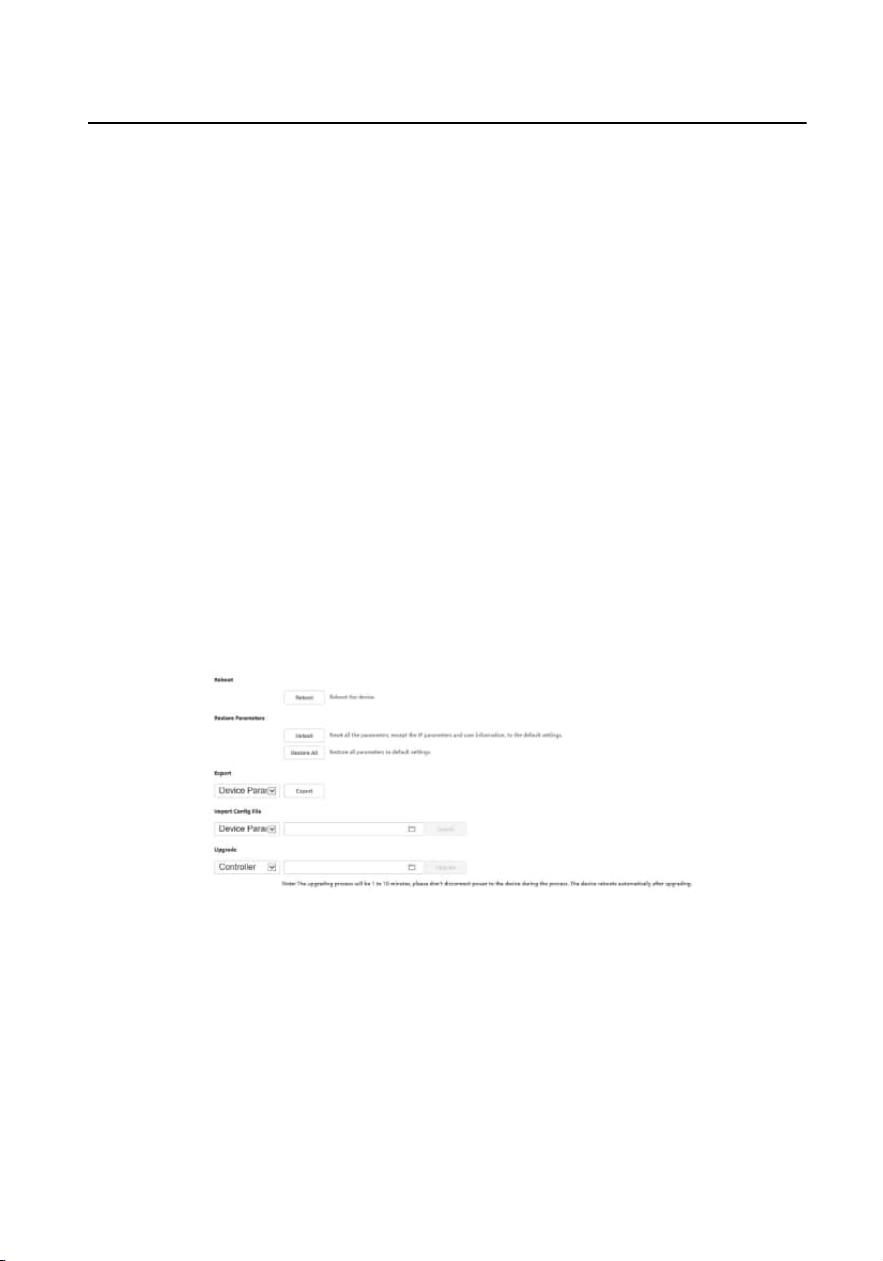
Maintenance
Click Maintenance → Upgrade & Maintenance to enter the sengs page.
Figure 5-4 Maintenance
●
Reboot: Click Reboot to reboot the device.
●
Default
Click Default to restore all parameters to default
sengs.
Restore All
Click Restore All to reset all the parameters, except the IP parameters
and user informaon, to the default sengs.
Video Intercom Module Door
Staon User Manual
63
●
Export parameters:
1. Select Device Parameters, and click Export to pop up the dialog box.
2. Set and conrm the encrypon password.
3. Click OK to export parameters.
●
Import Cong. File:
1. Click browse icon to select the conguraon le.
2. Click Import and enter the encrypon password to import.
●
Upgrade:
1. Click browse icon to select the upgrade le.
2. Click Upgrade.
Note
○
The upgrading process will last 1 to 10 minutes, do not power o
during the upgrading. The device reboots automacally aer
upgrading.
○
You can select controller, display module and sub modules to
upgrade.
Authencaon
Click Security → Authencaon to enter the sengs page. On the page,
you can select RTSP Authencaonaccording to your actual needs.
Click Save to enable the sengs.
Security Service
Click Security → Security Service to enter the sengs page. On the page,
you can enable SSH according to your actual needs.
Click Save to enable the
sengs.
User Management
Click User Management to enter the sengs page.
Administrator can edit the permission for the users.
Video Intercom Module Door
Staon User Manual
64
Note
We highly recommend you to create a strong password of your own
choosing (using a minimum of 8 characters, including at least three kinds of
following categories: upper case leers, lower case leers, numbers, and
special characters) in order to increase the security of your product. And we
recommend you change your password regularly, especially in the high
security system, changing the password monthly or weekly can beer
protect your product.
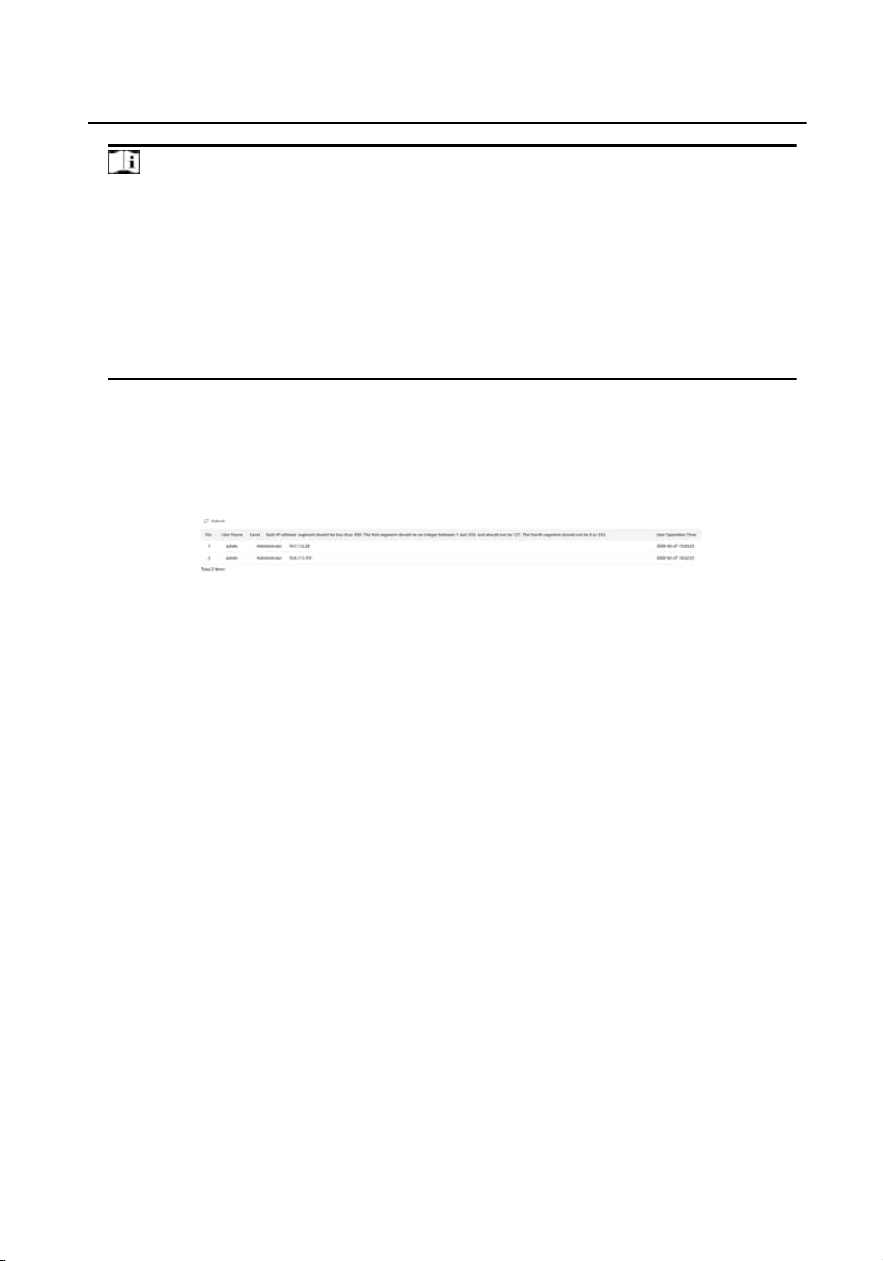
Online Users
Click User Management → Online Users to enter the page.
Figure 5-5 Online Users
Click Refresh to get the present informaon.
Arming/Disarming Informaon
Click User Management → Arming/Disarming Informaon to view the
informaon. Click Refresh to get the present informaon.
5.3.4 Network
Sengs
TCP/IP Sengs
TCP/IP sengs must be properly congured before you operate the device over
network. The device supports IPv4.
Steps
1. Click Network → Basic Sengs → TCP/IP to enter the sengs page.
Video Intercom Module Door
Staon User Manual
65
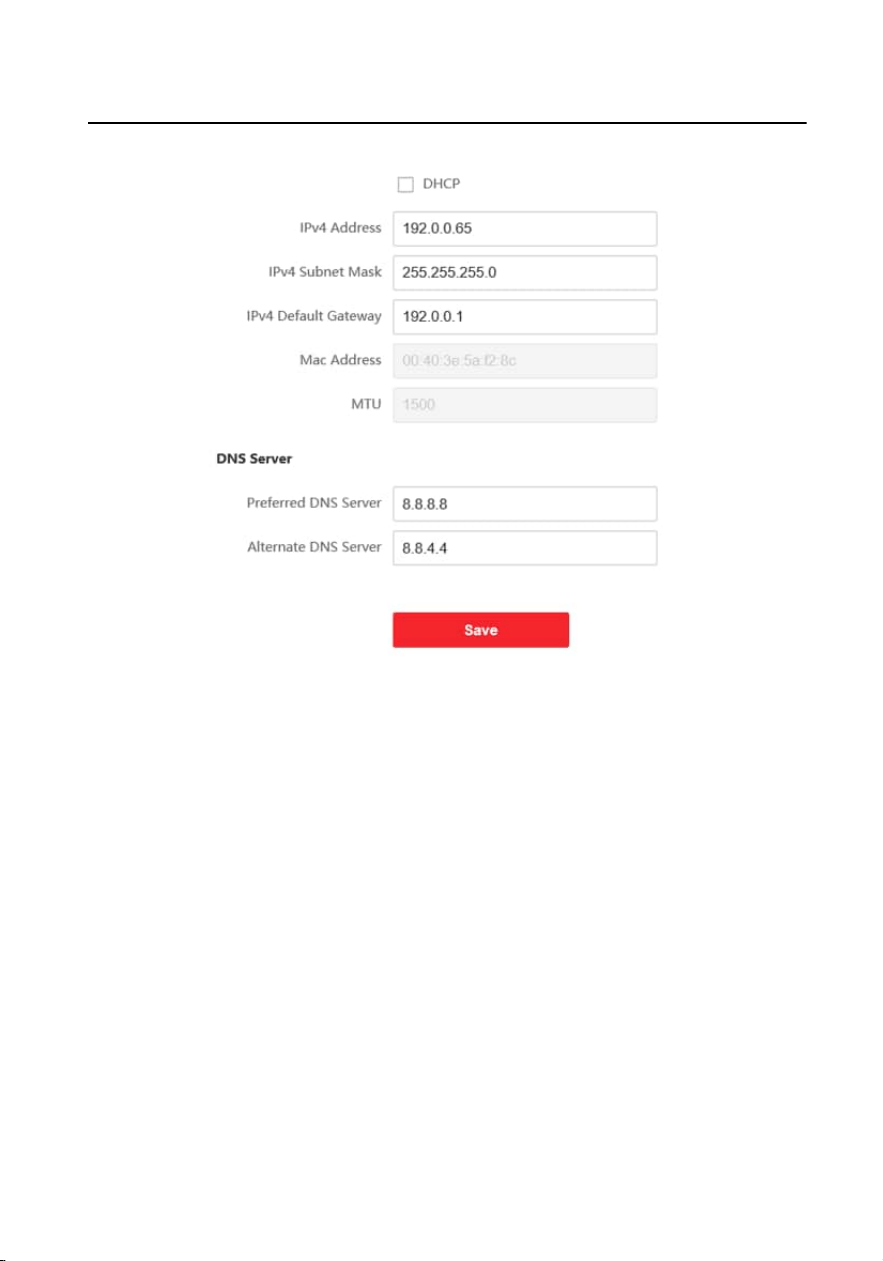
Figure 5-6 TCP/IP Sengs
2. Congure the network parameters.
-
Check DHCP, the device will get the parameters
automacally.
-
Set the IPv4 Address, IPv4 Subnet Mask and IPv4 Default Gateway manually.
3. Congure the corresponding DNS server parameters.
4. Click Save to enable the sengs.
Port
Sengs
Steps
1. Click Network → Basic Sengs → Port to enter the sengs page.
Video Intercom Module Door
Staon User Manual
66
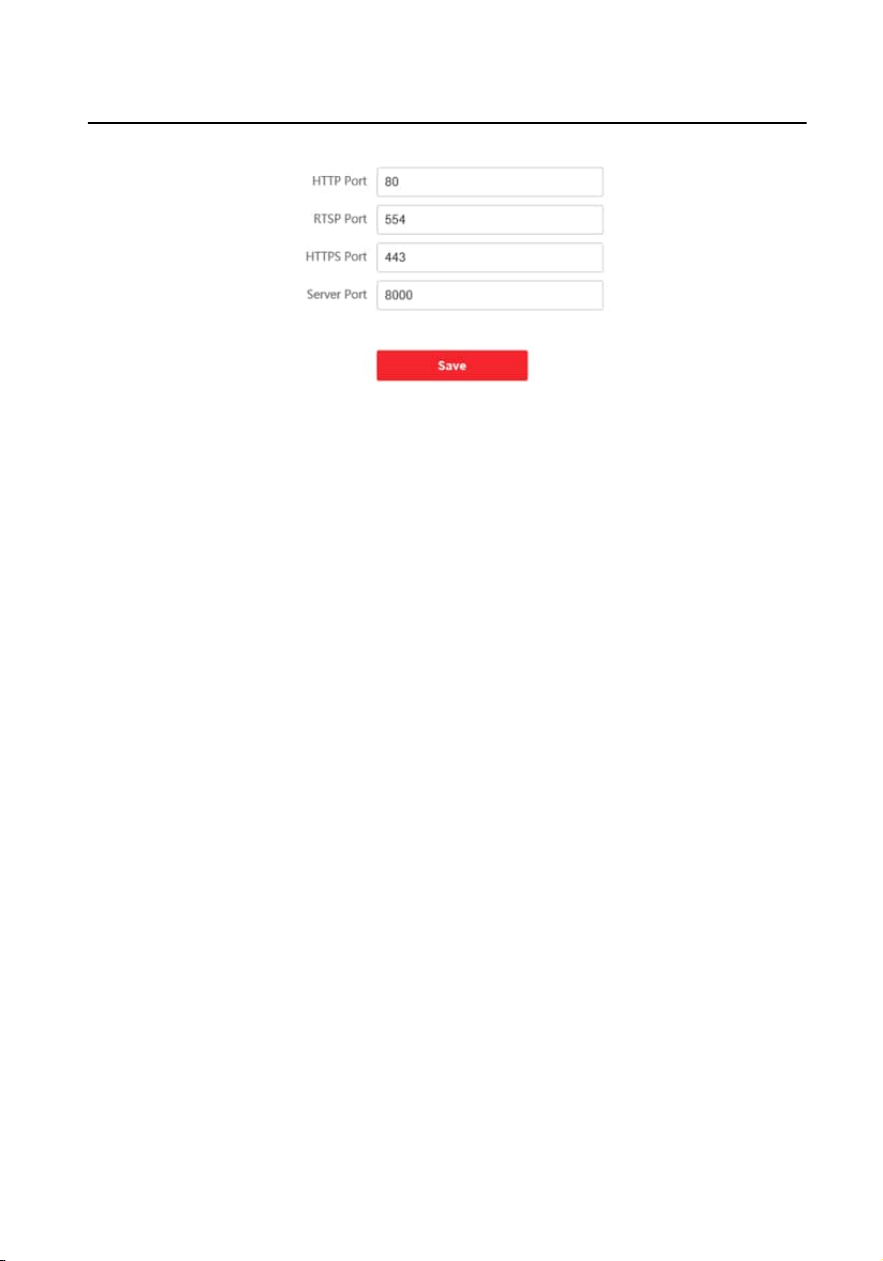
Figure 5-7 Port Sengs
2. Set the ports of the device.
HTTP Port
The default port number is 80, and it can be changed to any port No. which is
not occupied.
HTTPS Port
The default port number is 443, and it can be changed to any port No. which is
not occupied.
RTSP Port
The default port number is 554.
Server Port
The default server port number is 8000, and it can be changed to any port No.
ranges from 2000 to 65535.
3. Click Save to enable the
sengs.
SIP
Seng
Steps
1. Click Network → Basic
Sengs → SIP to enter the sengs page.
Video Intercom Module Door
Staon User Manual
67
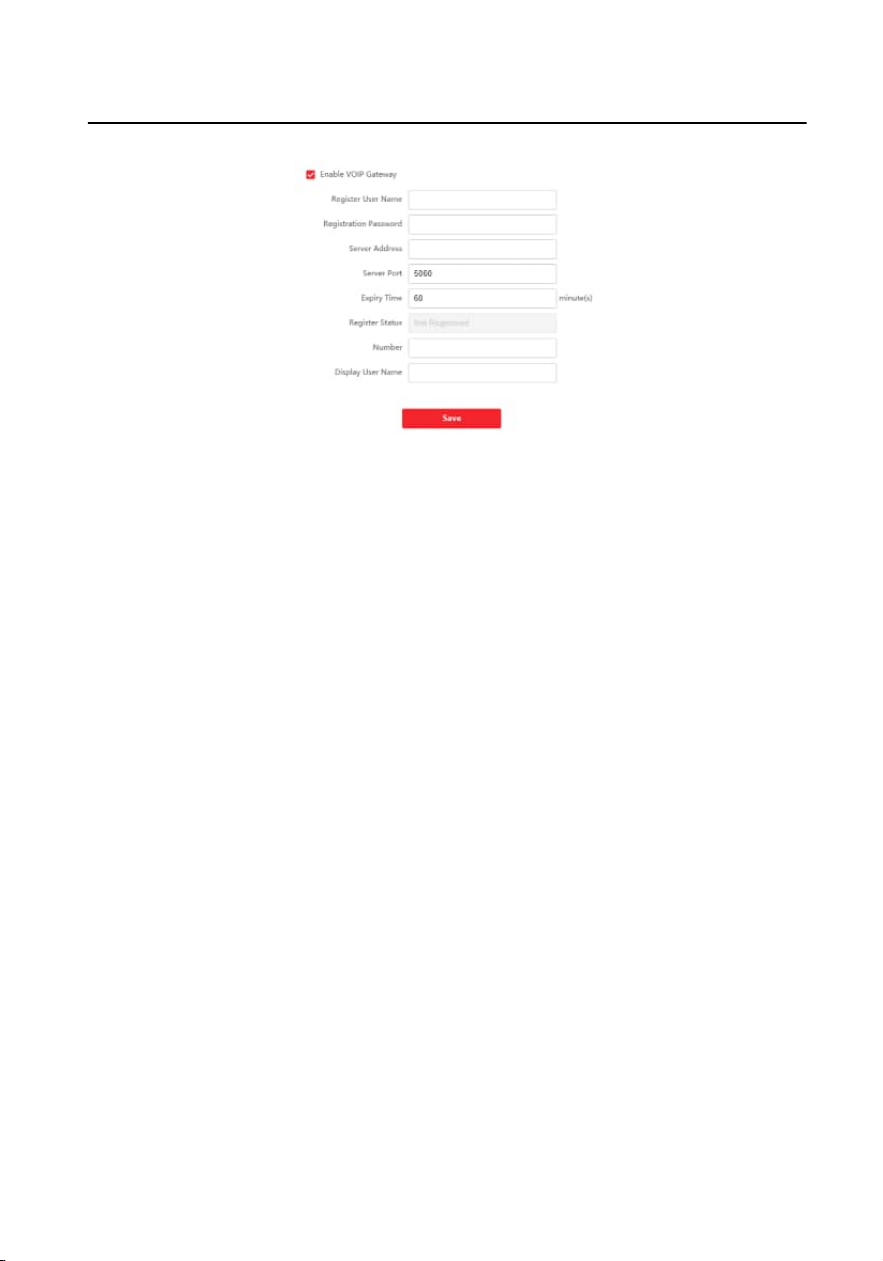
Figure 5-8 SIP Sengs
2. Check Enable VOIP Gateway.
3.
Congure the SIP parameters.
4. Click Save to enable the sengs.
FTP Sengs
Steps
1. Click Network → Advanced → FTP to enter the sengs page.
Video Intercom Module Door
Staon User Manual
68
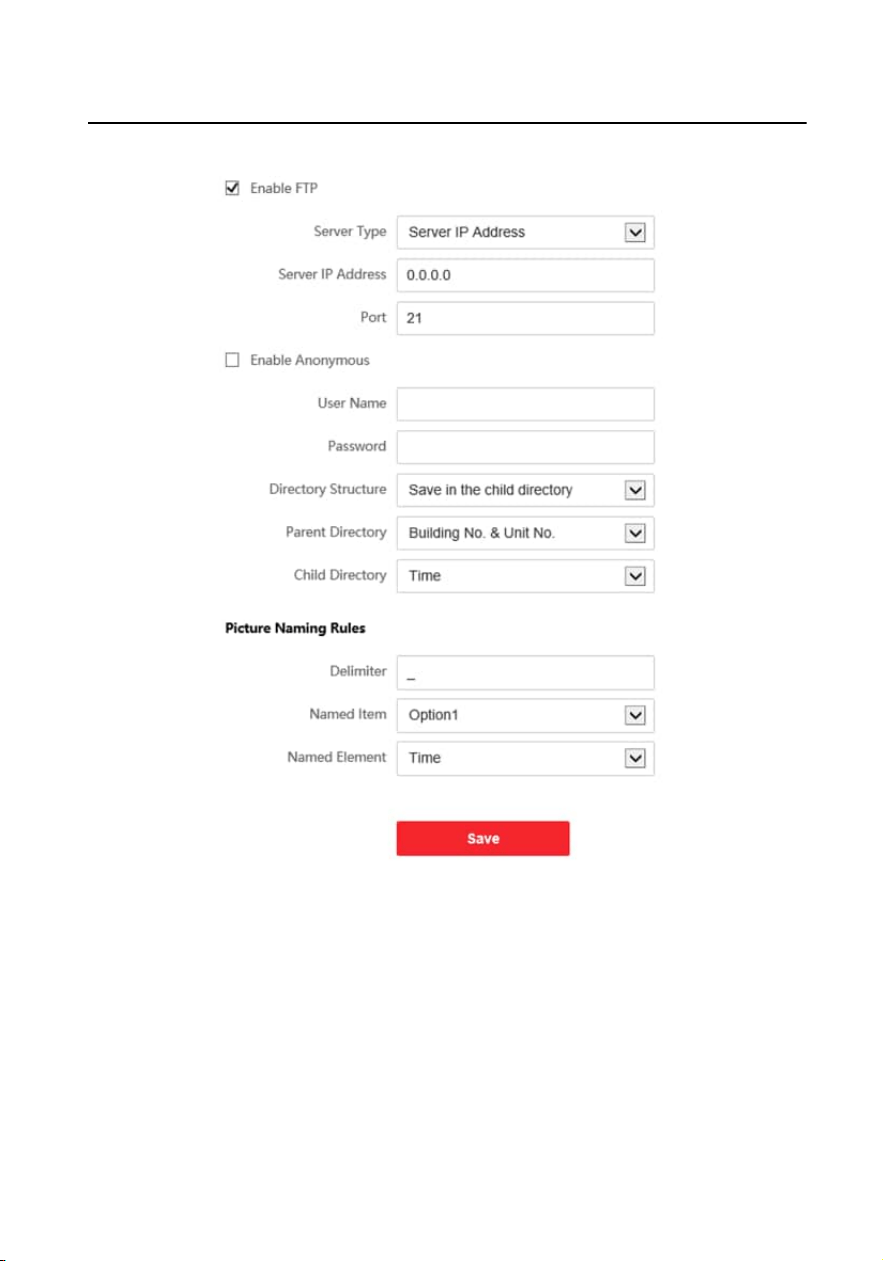
Figure 5-9 FTP Sengs
2. Check Enable FTP.
3. Select Server Type.
4. Input the Server IP Address and Port.
5.
Congure the FTP Sengs, and the user name and password are required for the
server login.
6. Set the Directory Structure, Parent Directory and Child Directory.
7. Set the picture naming rules.
Video Intercom Module Door
Staon User Manual
69
8. Click Save to enable the sengs.
5.3.5 Video & Audio Sengs
Video Parameters
Steps
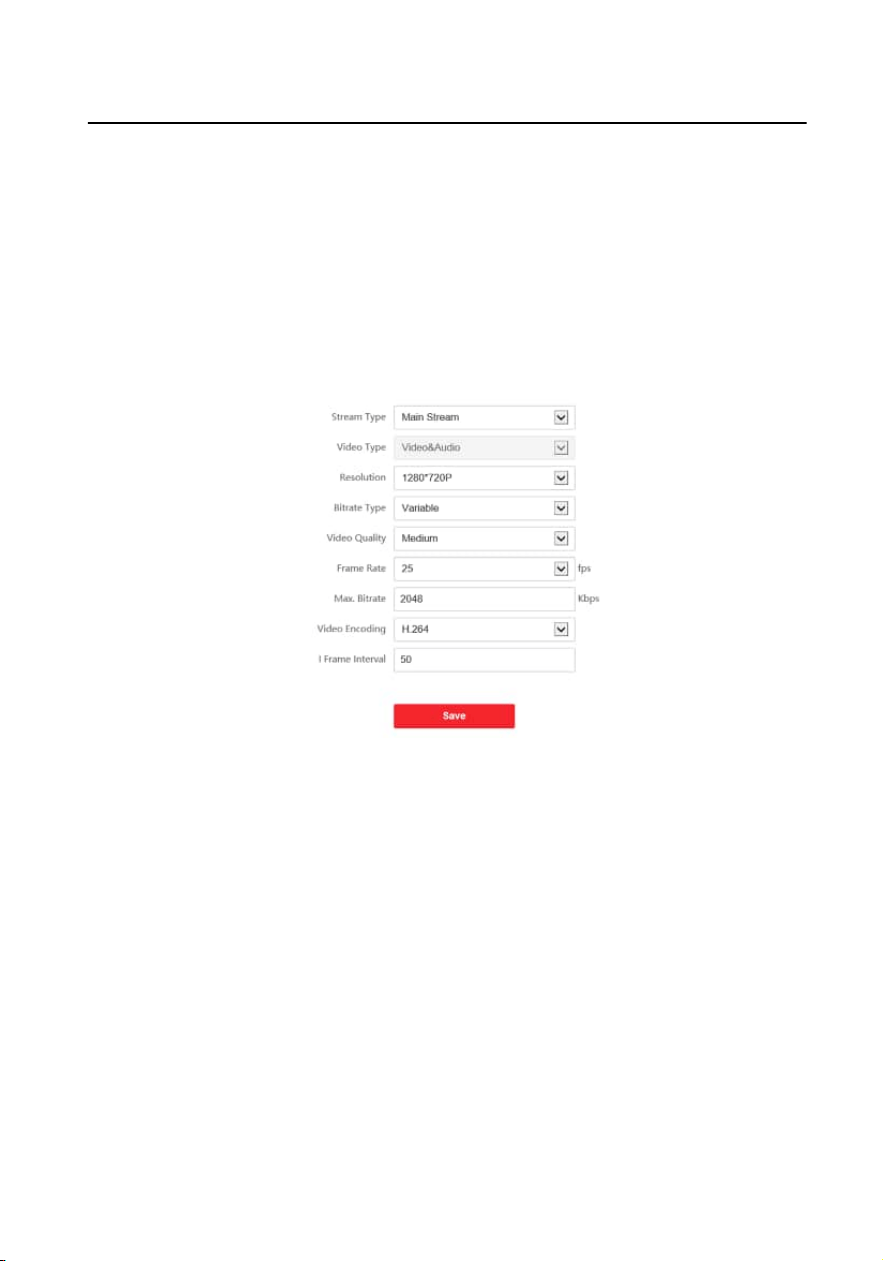
1. Click Video/Audio → Video to enter the sengs page.
Figure 5-10 Video Parameters
2. Select the Stream Type.
3.
Congure the video parameters.
Stream Type
Select the stream type to main stream or sub stream.
Video Type
Select the stream type to video stream, or video & audio composite stream.
The audio signal will be recorded only when the Video Type is Video & Audio.
Resoluon
Select the resoluon of the video output.
Bitrate Type
Select the bitrate type to constant or variable.
Video Quality
Video Intercom Module Door
Staon User Manual
70
When bitrate type is selected as Variable, 6 levels of video quality are
selectable.
Frame Rate
Set the frame rate. The frame rate is to describe the frequency at which the
video stream is updated and it is measured by frames per second (fps). A
higher frame rate is advantageous when there is movement in the video
stream, as it maintains image quality throughout.
Max. Bitrate
Set the max. bitrate from 32 to 16384 Kbps. The higher value corresponds to
the higher video quality, but the
beer bandwidth is required.
Video Encoding
The device supports H.264.
I Frame Interval
Set I Frame Interval from 1 to 400.
4. Click Save to save the
sengs.
Audio Parameters
Steps
1. Click Video/Audio → Audio to enter the sengs page.
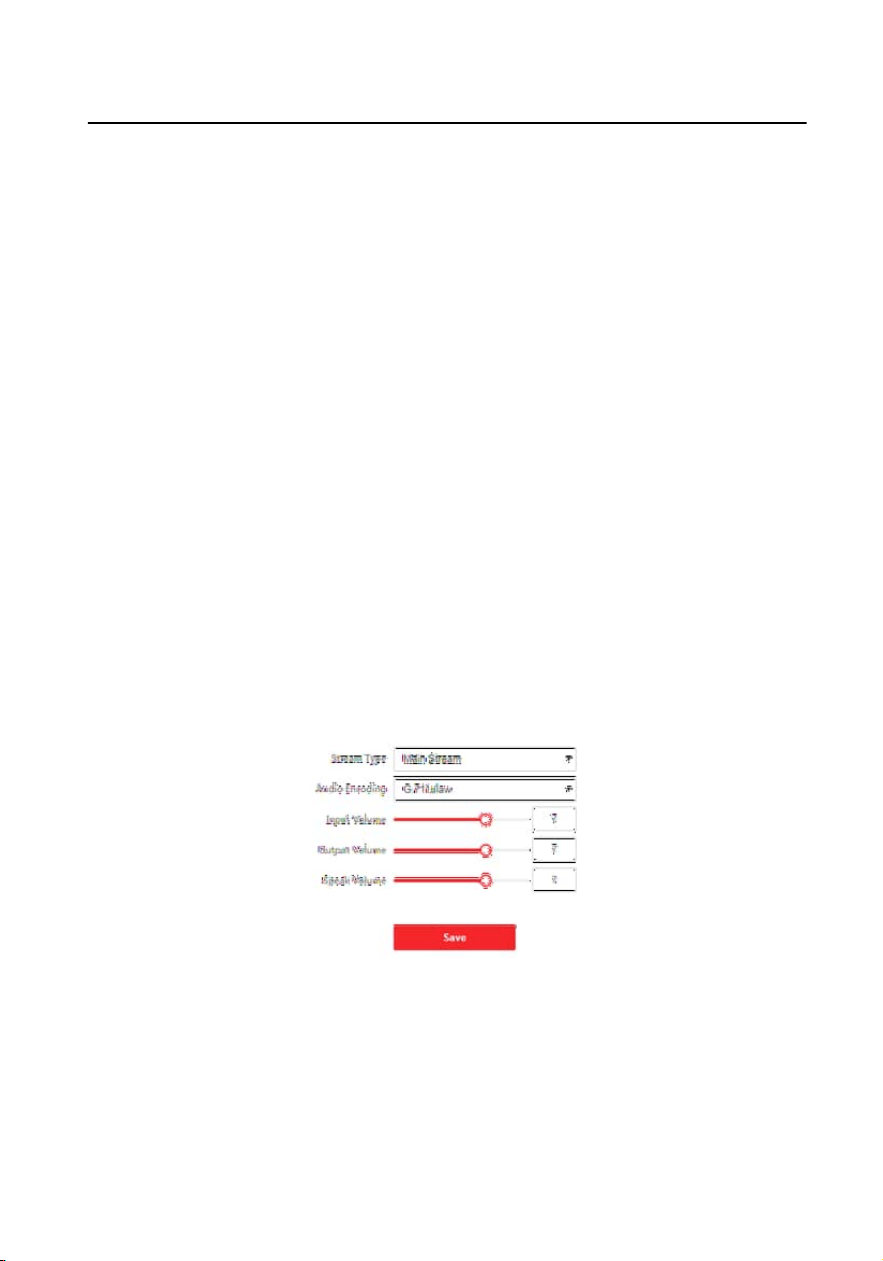
Figure 5-11 Audio Sengs
2. Congure the stream type and the audio encoding type.
Stream Type
Select the stream type to main stream or sub stream.
Audio Encoding
The device support G.711ulaw and G.711 alaw.
Video Intercom Module Door
Staon User Manual
71
3. Adjust the Input Volume, Output Volume and Speak Volume.
Note
Available range of volume: 0 to 10.
4. Click Save to save the sengs.
5.3.6 Image Sengs
Display Sengs
Congure the image adjustment, backlight sengs and other parameters in display
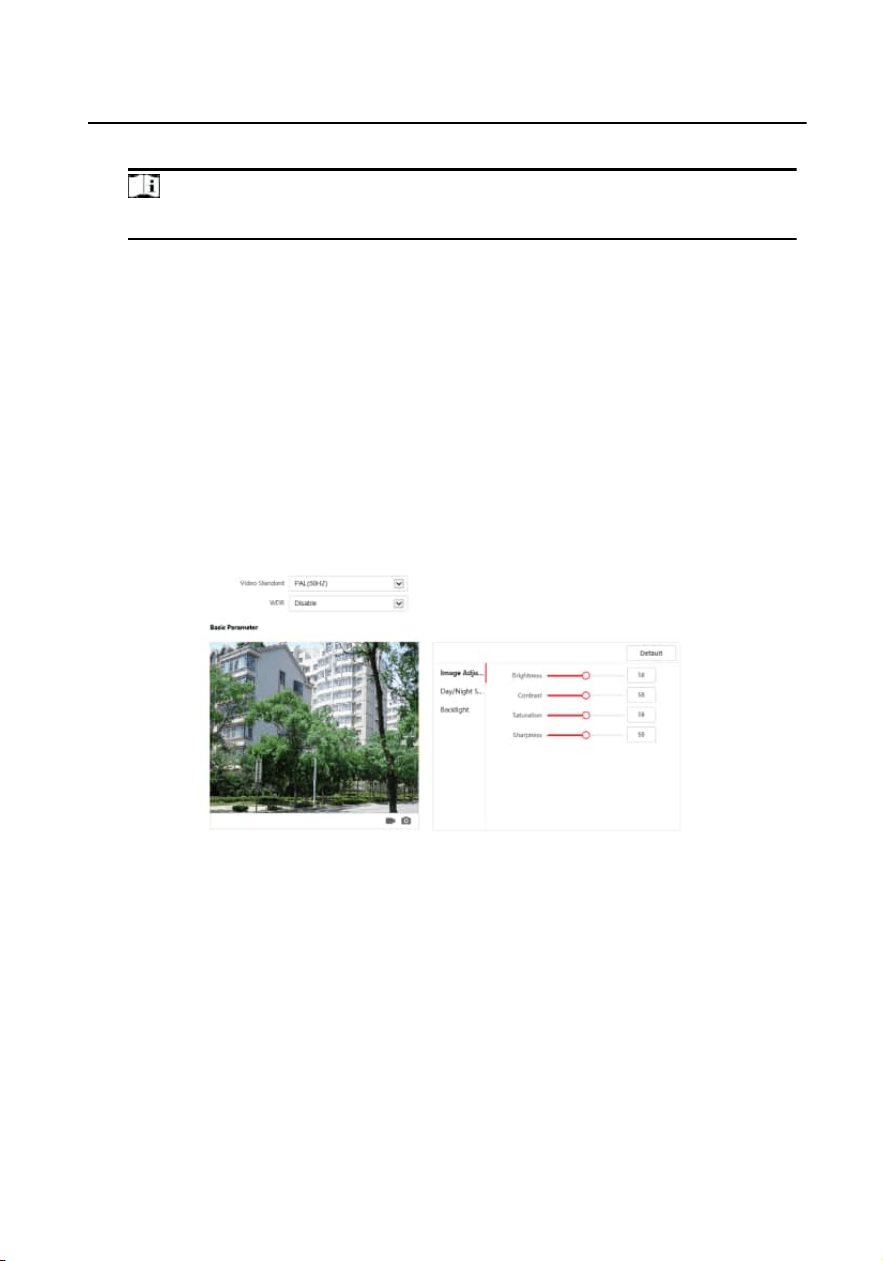
sengs.
Steps
1. Click Image → Display Sengs to enter the display sengs page.
Figure 5-12 Display Sengs
2. Select the Format.
3. Set the display parameters.
WDR
Wide Dynamic Range can be used when there is a high contrast of the bright
area and the dark area of the scene.
Brightness
Brightness describes bright of the image, which ranges from 1 to 100.
Contrast
Video Intercom Module Door
Staon User Manual
72
Contrast describes the contrast of the image, which ranges from 1 to 100.
Saturaon
Saturaon describes the colorfulness of the image color, which ranges from 1
to 100.
Sharpness
Sharpness describes the edge contrast of the image, which ranges from 1 to
100.
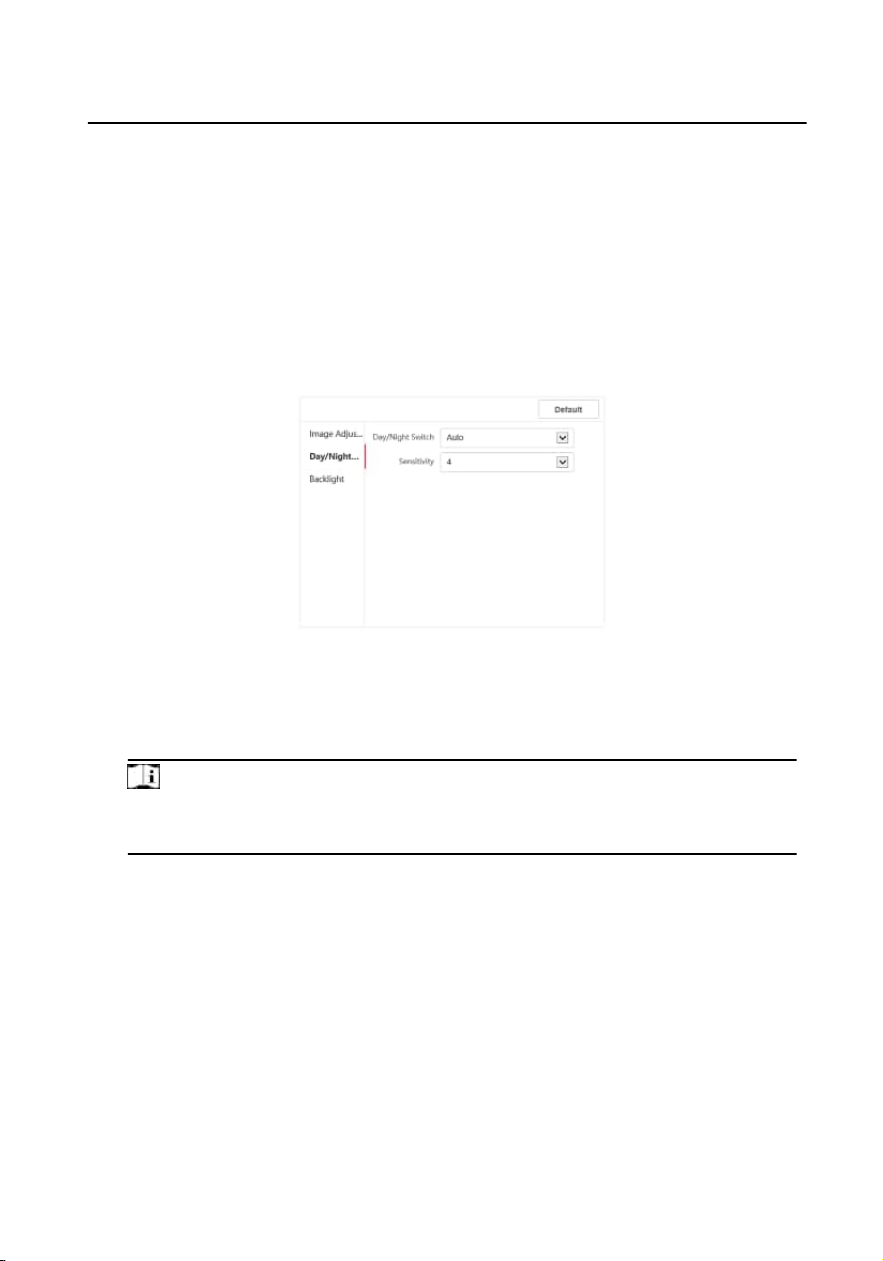
4. Set the Day/Night Mode.
Figure 5-13 Day/Night Mode
-
Set Day Mode or Night Mode manually.
-
Set the mode as Auto and edit the
sensivity according to your needs.
-
Set the mode as Scheduled-Switch. Set the start me and end me.
Note
Dayme is from congured start me to congured me. The rest of the me is
set as night by default.
5. Set the backlight parameters.
Video Intercom Module Door
Staon User Manual
73
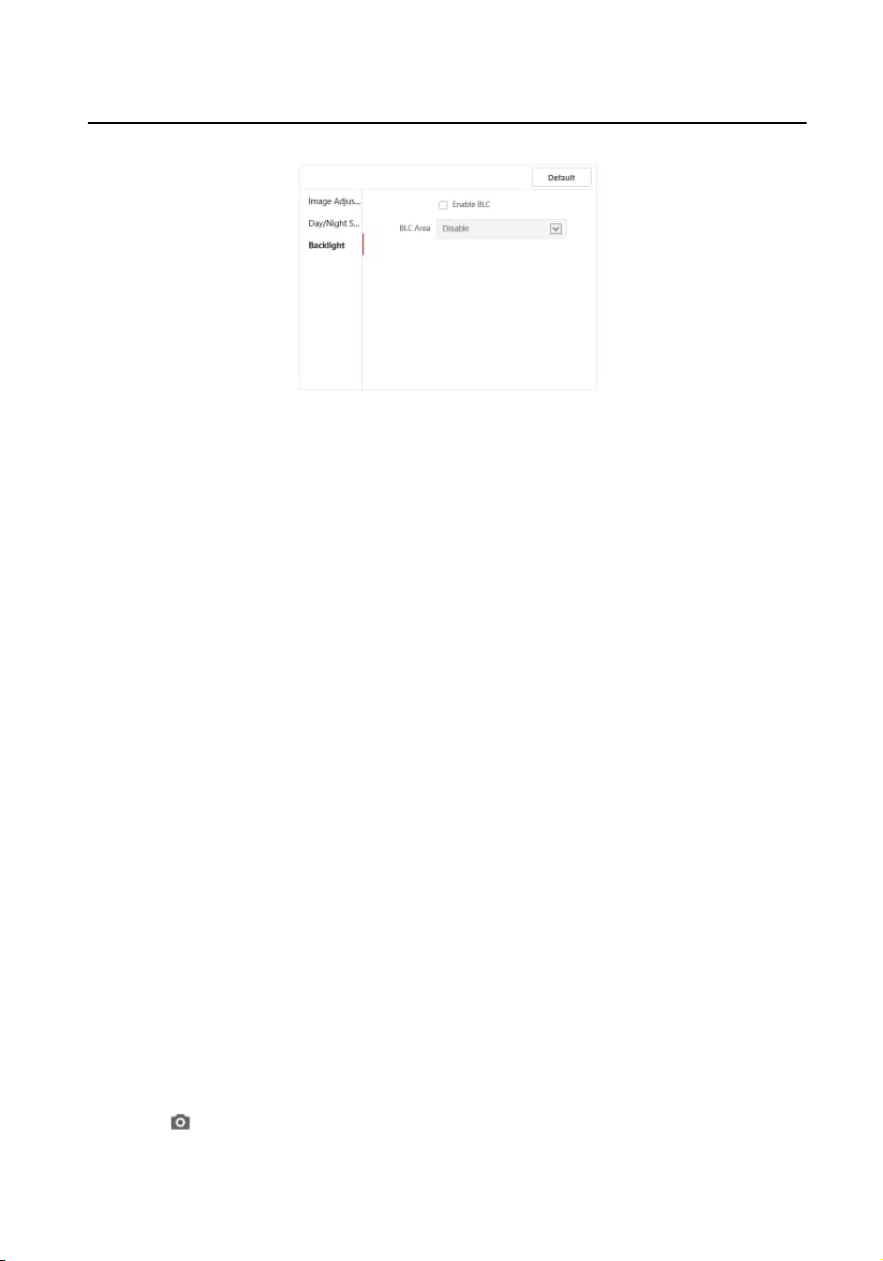
Figure 5-14 Backlight
1) Check the checkbox to enable BLC.
2) Select BLC Area.
6. Click Save to enable the
sengs.
OSD Sengs
You can customize the camera name, me/date format, display mode, and OSD size
displayed on the live view.
Steps
1. Click Image → OSD Sengs to enter the sengs page.
2. Check the corresponding checkbox to select the display of camera name, date or
week if required.
3. Edit the Camera Name.
4. Select from the drop-down list to set the Time Format and Date Format.
5. Adjust the OSD
posion.
6. Click Save to enable the sengs.
Target Cropping
Steps
1. Click Image → Crop to enter the page.
2. Check Enable Target Cropping to enable the
funcon.
3.
Click to capture photo.
Video Intercom Module Door
Staon User Manual
74
4.
Click to start recording.
5. Select Cropping Resoluon.
6. Click Save.
Note
●
You can select Cropping Resoluon as 704*576, 1280*720, or 1920*1080.
●
You can zoom in or zoom out the image by selecng Cropping Resoluon aer
clicking Save.
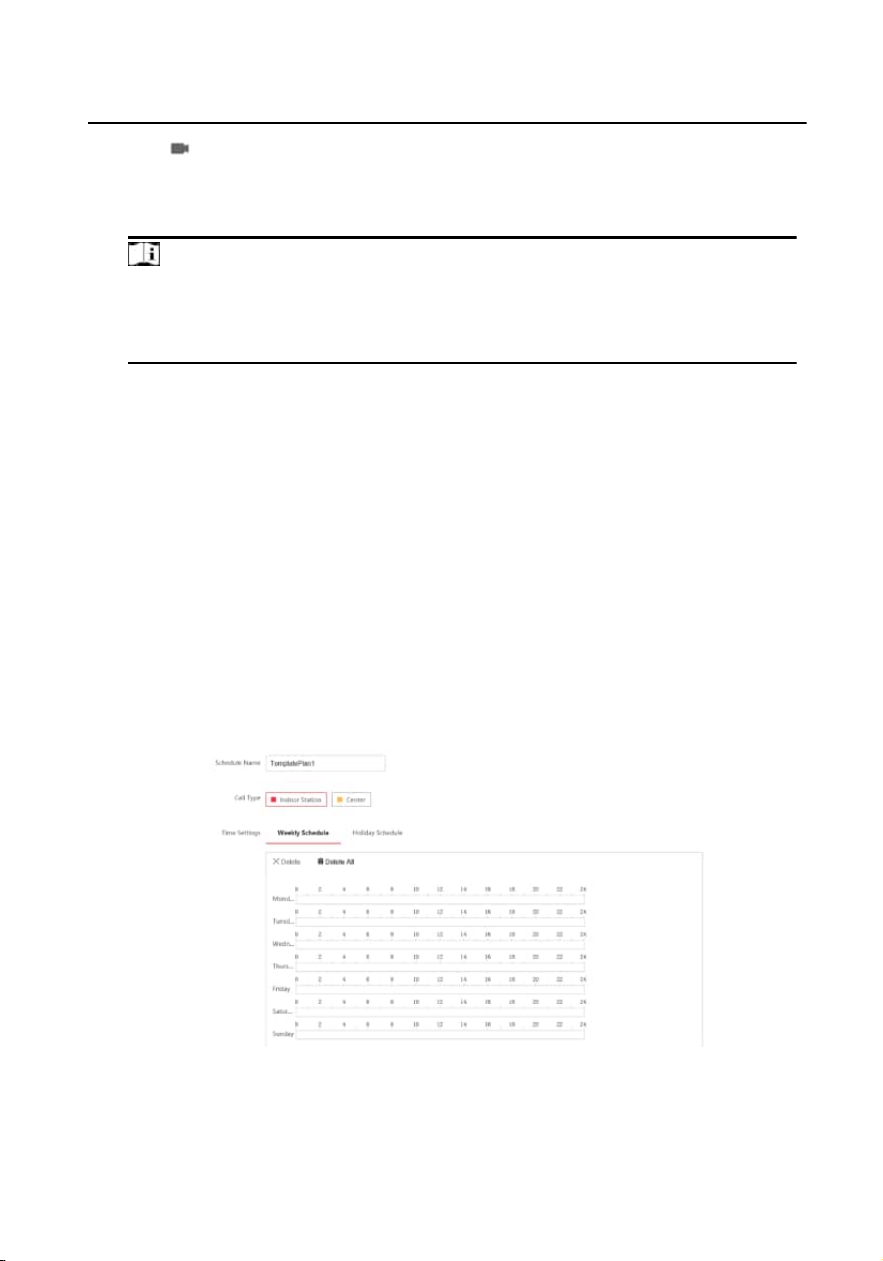
5.3.7 Schedule Sengs
You can create call schedule, or else the device will call indoor staon all day by
default.
Steps
1. Click Schedule → Video Intercom → Call Schedule .
2. Click the next row below Enable Indoor Staon All Day by Default.
3. Enter Schedule Name.
4. Select Call Type.
5. Set Weekly Schedule.
1) Click Weekly Schedule.
Figure 5-15 Weekly Schedule
2) Drag mouse to set the schedule according to the actual needs.
Video Intercom Module Door
Staon User Manual
75
3) Oponal: Click the copy icon to copy the schedule to other days according to
the actual needs.
4) Click Save.
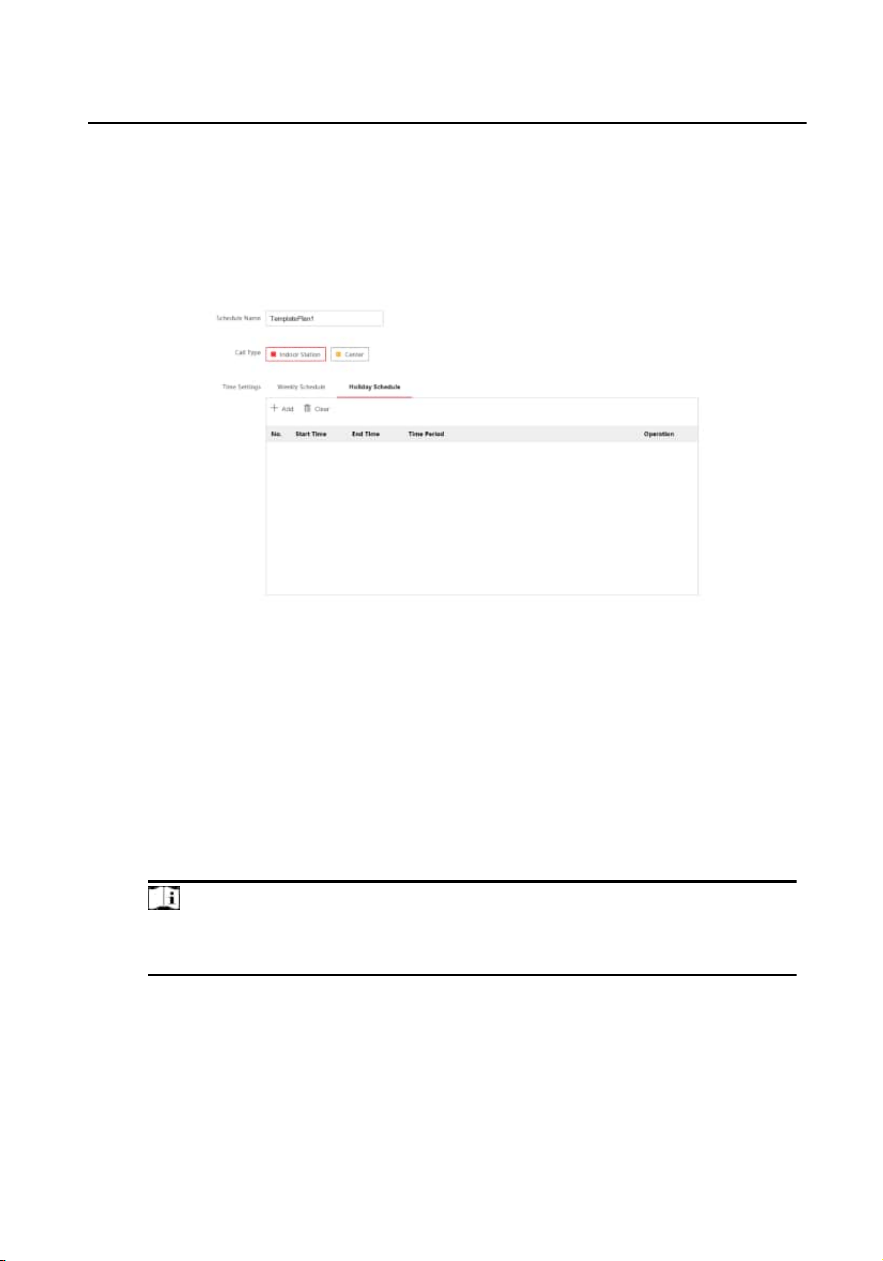
6. Set Holiday Schedule.
1) Click Holiday Schedule.
Figure 5-16 Holiday Schedule
2) Click Add.
3) Set Start Time and End Time.
4) Select Call Type.
5) Drag mouse to set the schedule according to the actual needs.
6) Click OK.
7) You can edit or delete the schedule according to the actual needs.
8) Click Save.
Note
The holiday schedule have higher priority than weekly schedule when you set
the two schedule at the same me.
5.3.8 Intercom Sengs
Device No. Sengs
Video Intercom Module Door Staon User Manual
76
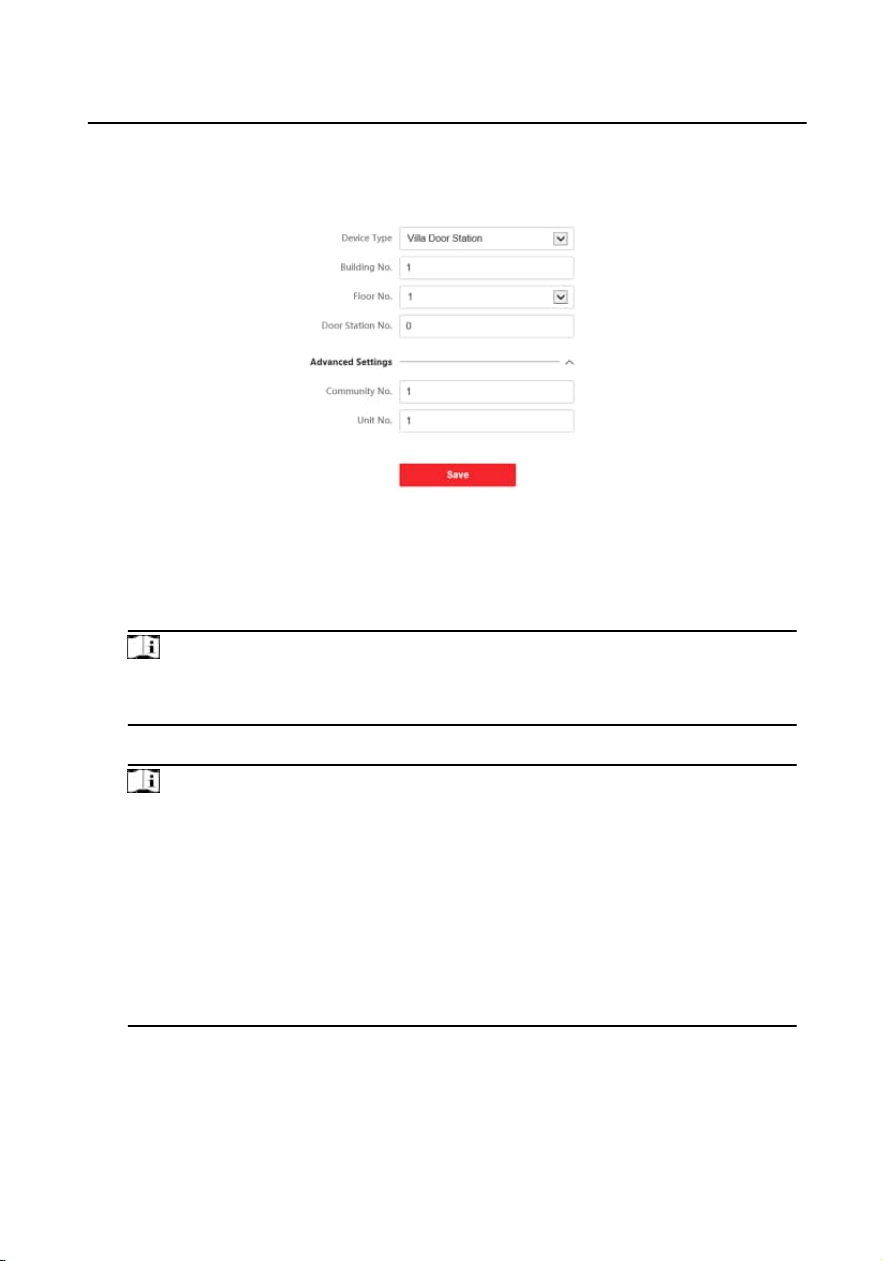
Steps
1. Click Device No. to enter the page.
Figure 5-17 Villa Door Staon No. Sengs
2. Select the device type from the drop-down list, and set the corresponding
informaon including Building No., Floor No., Door Staon No., Community No.
and Unit No.
Note
When you select Doorphone as Device Type, only Community No., Building No.
and Unit No. can be set.
3. Click Save to enable the device number conguraon.
Note
●
For main door staon (D series or V series), the No. is 0.
●
For sub door staon (D series or V series), the No. cannot be 0. The No.of sub
door staon ranges from 1 to 99.
●
For each villa or building, at least one main door staon (D series or V series)
should be congured, and one sub door staons (D series or V series) can be
customized.
●
For one main door
staon (D series or V series), up to 8 sub door staons can
be congured.
Linked Network Sengs
Video Intercom Module Door Staon User Manual
77
Steps
1. Go to Intercom → Session Sengs to enter the sengs page.
2. Set Register Number and Registraon Password.
3. Set Main Staon IP and VideoIntercom Server IP.
4. Enable Protocol 1.0.
5. Click Save to enable the sengs.
Time Parameters
Go to Intercom → Time Parameters to enter the page.
Congure Max. Call Duraon, Max. Message Duraon, Max. Ring Duraon, and
click Save.
Note
●
Max. call duraon between the module indoor staon and client ranges from 90 s
to 120 s. The call will end automacally when the actual calling duraon is longer
than the congured one.
●
Max. message duraon ranges from 30 s to 60 s. The message will end
automacally when the actual message duraon is longer than the congured
one.
●
Max. ring duraon refers to the maximum duraon of the module indoor staon
when it is called without being accepted. Max. ring duraon ranges from 65 s to
255 s.
Ring-Back Tone Sengs
Click Intercom → Ringbacktone Sengs to enter the sengs page.
Click Add to select the ring tone from PC.
Note
Available Audio Format: WAV、AAC, Size: Less than 600 KB, Sample Rate: 8000Hz,
Mono.
Press Buon to Call
Steps
1. Go to Intercom → Press Buon to Call to enter the sengs page.
Video Intercom Module Door
Staon User Manual
78
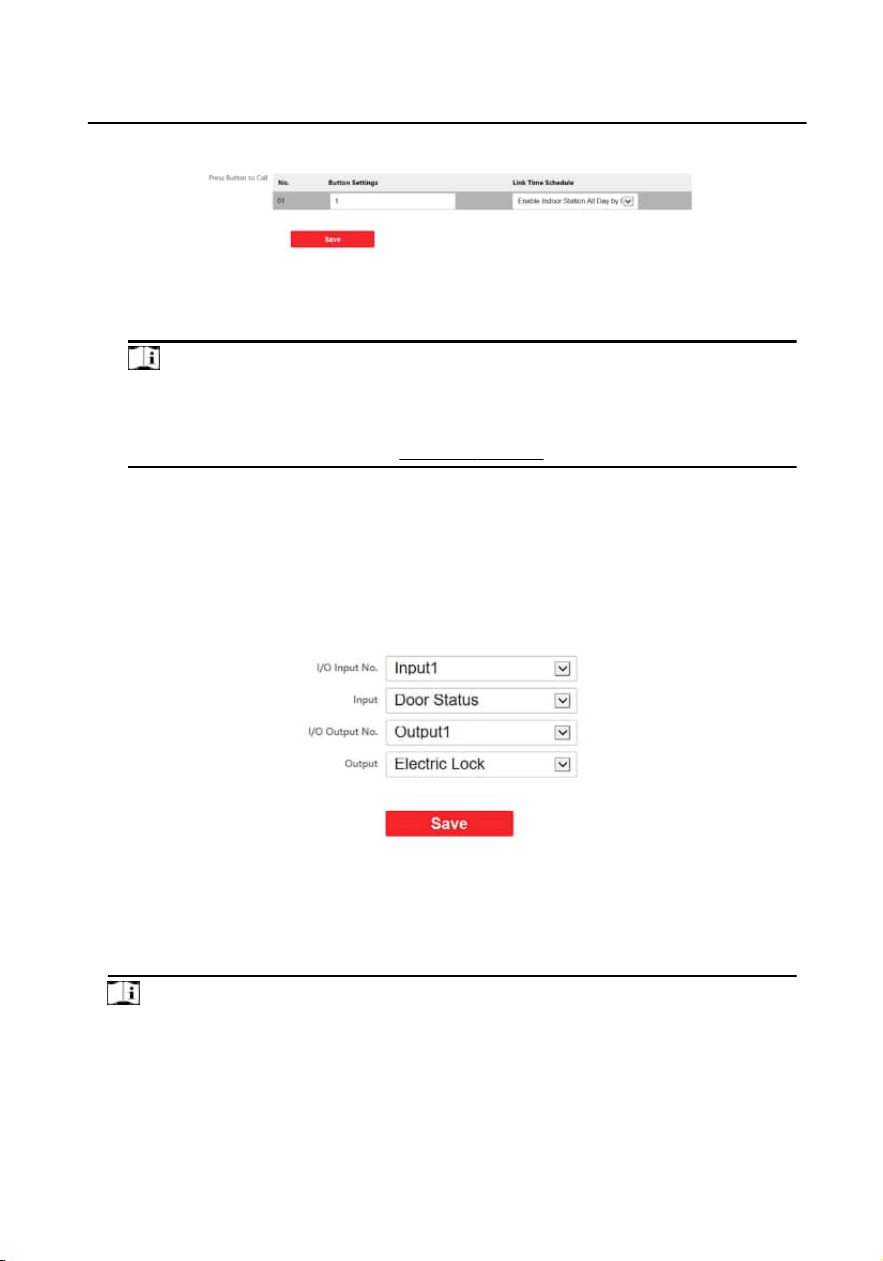
Figure 5-18 Press Buon to Call
2. Edit room No. in the buon sengs and select Link Time Schedule.
Note
●
The number of buons may vary with dierent models. Please refer to the
actual product.
●
The schedule sengs refers to Schedule Sengs for details.
3. Click Save to enable the sengs.
Input and Output
Go to Intercom → I/O Sengs to enter the sengs page.
Figure 5-19 IO Input and Output
Select I/O Input No., Input, I/O Output No. and Output.
Click Save to enable the sengs.
Note
●
I/O Input supports 4-channel inputs.
Video Intercom Module Door Staon User Manual
79
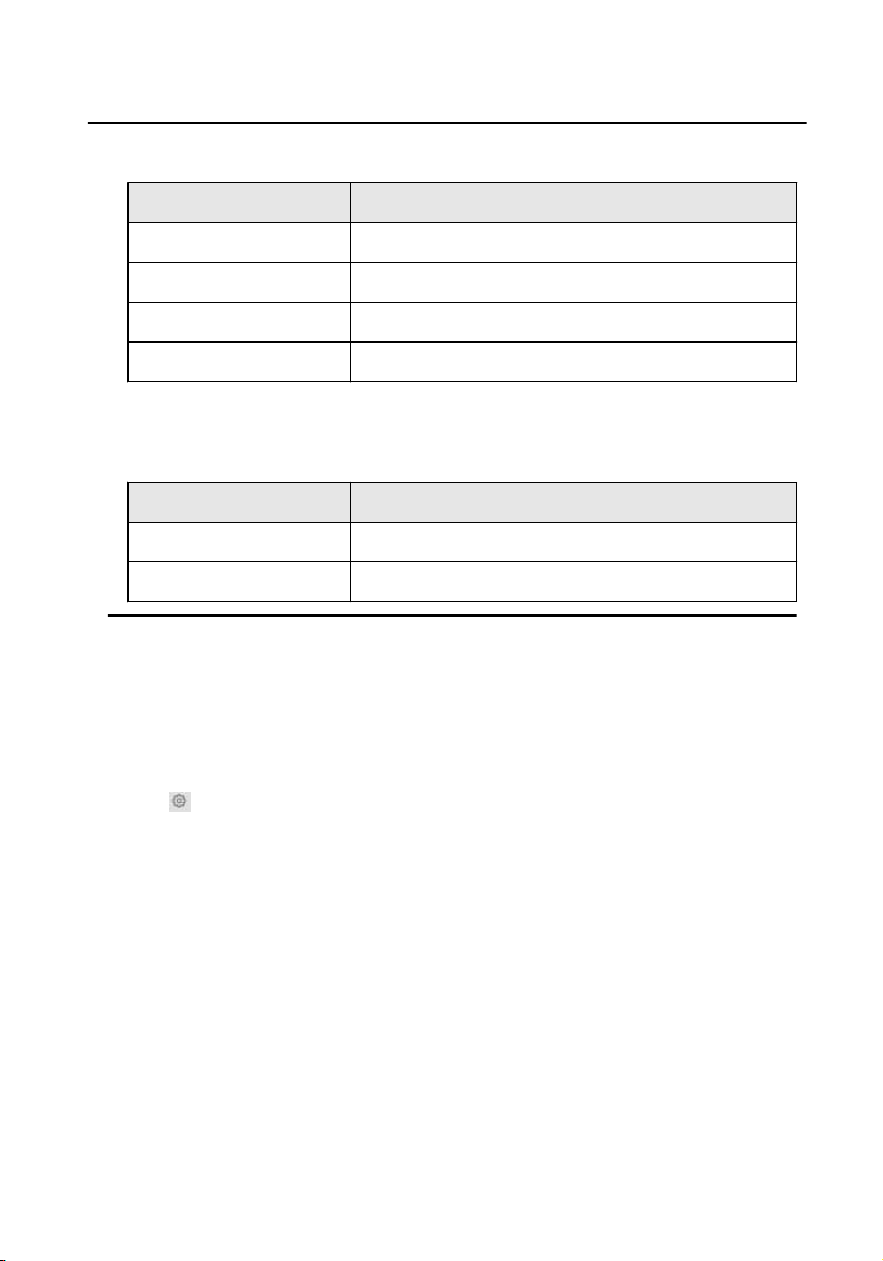
Table 5-1 I/O Input
I/O Input No. Input
1 Door Status
2 Disable/Door Status
3 Exit Buon
4 Disable/Exit Buon
●
I/O Output supports 2-channel outputs.
Table 5-2 I/O Output
I/O Output No. Output
1 Electric Lock
2 Disable/Electric Lock
Sub Module Conguraon
Steps
1. Click Intercom → Sub Module Conguraon , and you can view the sub module
informaon, including No., module type, status, and version.
2.
Click to edit the sub module.
Display Module
●
Slide to adjust Screen Backlight Brightness.
●
Slide Enable Buzzer to enable the
funcon.
Touch-Display Module
●
Slide to adjust Screen Backlight Brightness.
●
Slide Enable Buzzer to enable the
funcon.
●
Select Address Book Display Mode according to actual needs.
●
Enable Homepage Shortcut Dial, you can tap contact on the main page to call.
●
Click Add to add custom
buons.
Video Intercom Module Door
Staon User Manual
80

Note
●
The module address is used to dierenate the sub modules. See Congure Sub
Module Address for detailed conguraon instrucons.
●
For the other sub modules (indicator module, keypad module and card reader
module), it prompts Not supported.
●
The room No. for the main unit's call buon is 1 by default; and the room No.
for the nametag modules call
buons are 2 to 7 by default.
Number Sengs
Steps
1. Click Intercom → Number Sengs , and you can view the No., room No., and SIP
number.
2. Add the number.
1) Click Add.
2) Enter Room No., and SIP.
3)
Oponal: Click Add to add SIP according to the actual needs.
4) Click OK.
3.
Oponal: Click to edit the number.
5.3.9 Access Control Sengs
Permission Password
Steps
1. Click Access Control → Password
Sengs to enter the sengs page.
Video Intercom Module Door
Staon User Manual
81
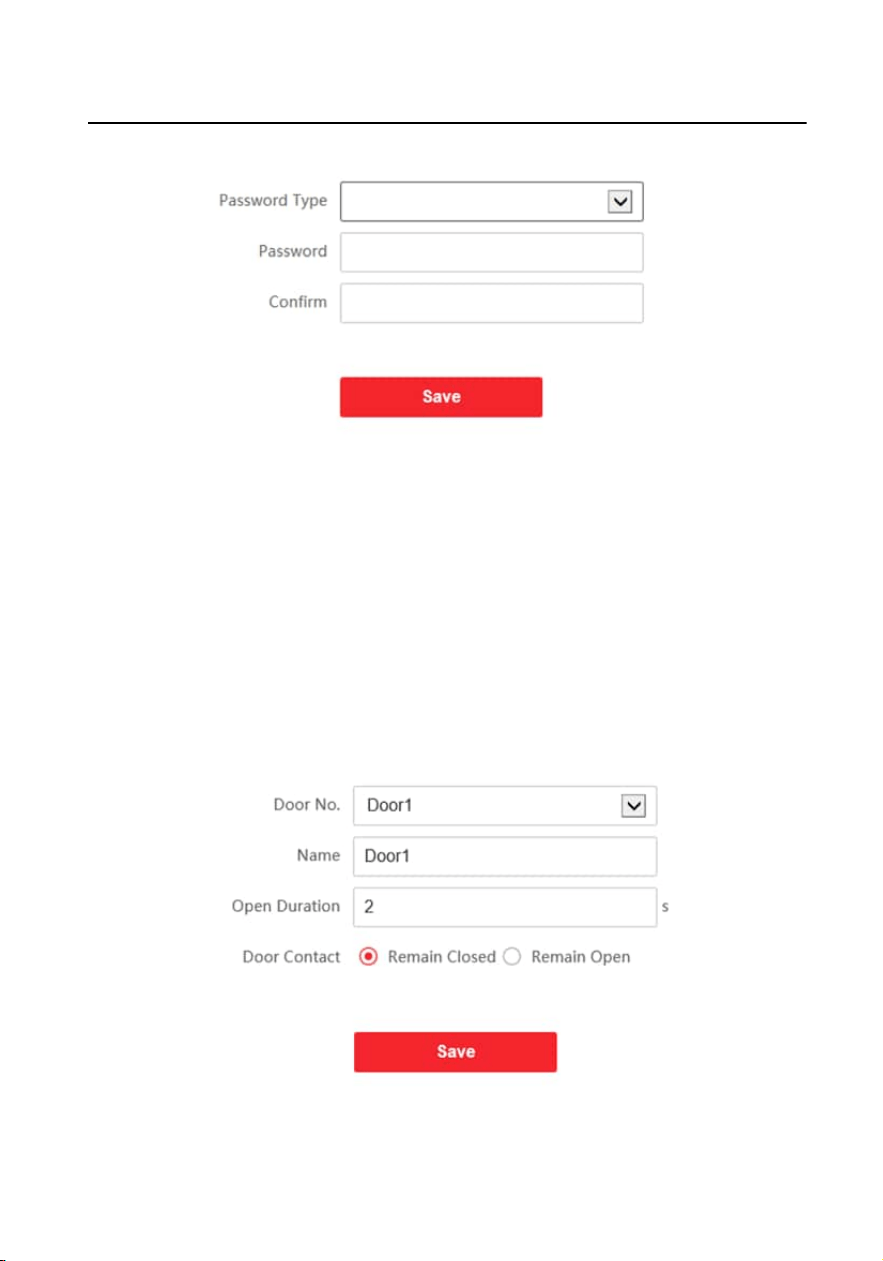
Figure 5-20 Password Sengs
2. Select Password Type.
3. Enter and
conrm the password.
4. Click Save to enable the sengs.
Door Parameters
Steps
1. Click Access Control → Door Parameters to enter the sengs page.
Figure 5-21 Door Parameters
Video Intercom Module Door
Staon User Manual
82

2. Select the door and edit the door name.
3. Edit Open Duraon.
4. Set door contact status.
5. Click Save to enable the sengs.
Card Security
Click Access Control → Card Security to enter the sengs page.
Slide to enable card encrypon parameters.
Click Save to enable the sengs.
Elevator Control
Before You Start
Make sure that the door staon is in the mode of main door staon. Only the main
door staon supports elevator control funcon.
Steps
1. Click Access Control → Elevator Control Parameter to enter the
sengs page.
Video Intercom Module Door
Staon User Manual
83
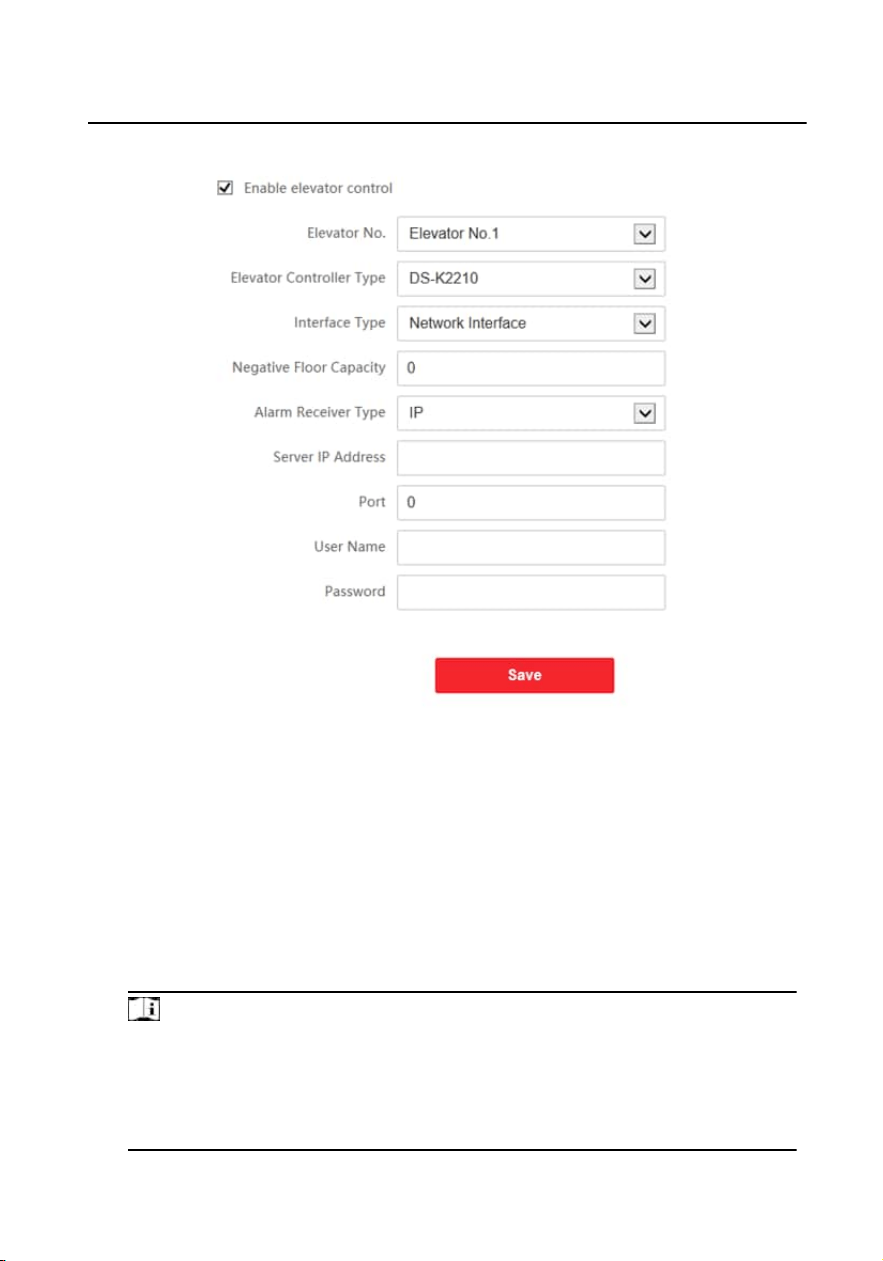
Figure 5-22 Elevator Control
2. Check to enable elevator control funcon.
3. Select an Elevator No., and select an elevator controller type for the elevator.
4. Select Interface Type.
5. Enter
Negave Floor Capacity, and select Alarm Receiver Type.
6. Enter the elevator controller's Server IP Address, Port No., User Name, and
Password.
7. Click Save to enable the sengs.
Note
●
Up to 4 elevator controllers can be connected to one door staon.
●
Up to 10 negave oors can be added.
●
Make sure the interface types of elevator controllers, which are connected to
the same door staon are consistent.
Video Intercom Module Door Staon User Manual
84
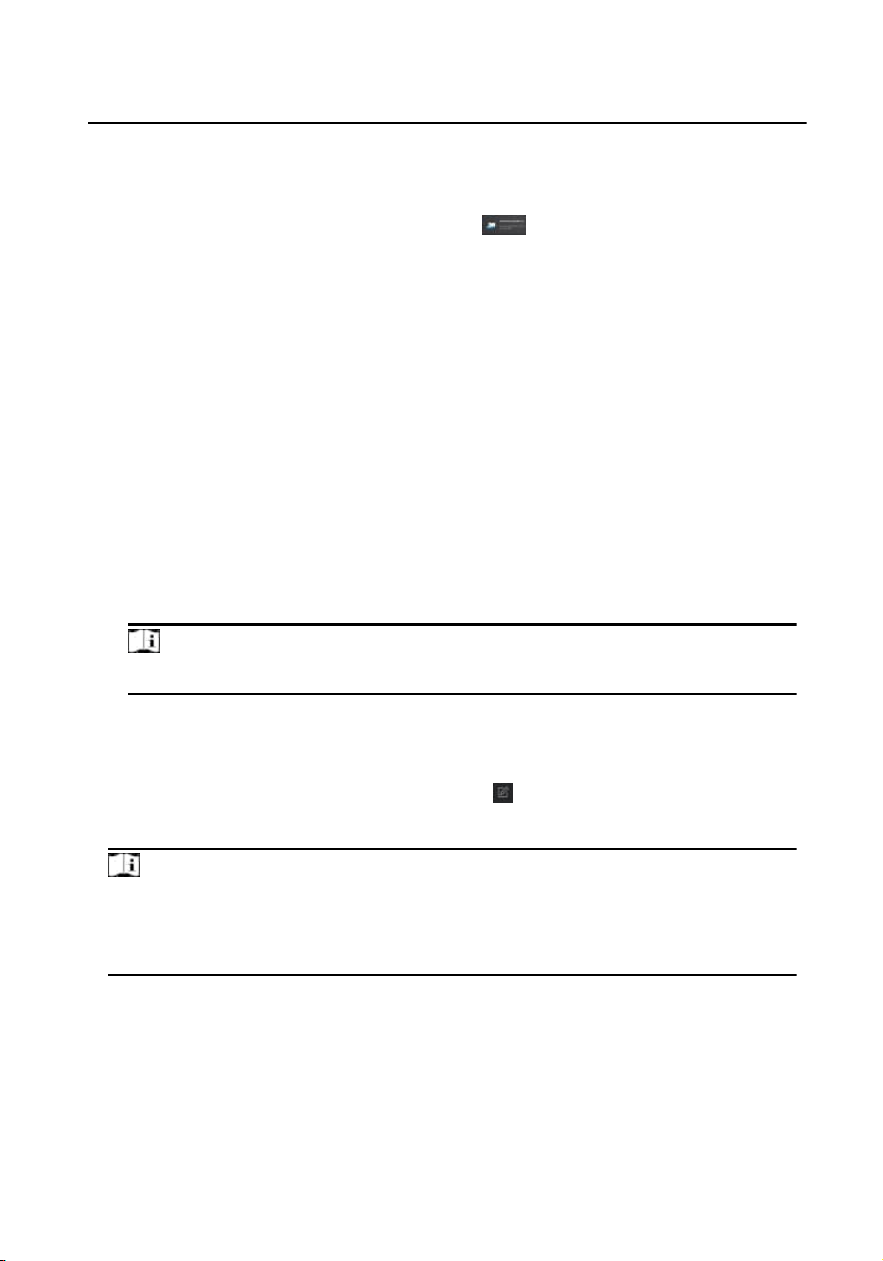
5.4 Organizaon Management
On the main page of the Client Soware, click PersonalManagement to enter
the conguraon page.
5.4.1 Add Organizaon
Steps
1. In the
organizaon list on the le, click +Add.
2. Enter the Organizaon Name as desired.
3. Click OK to save the adding.
4. Oponal: You can add mulple levels of organizaons according to the actual
needs.
1) You can add
mulple levels of organizaons according to the actual needs.
2) Then the added organizaon will be the sub-organizaon of the upper-level
organizaon.
Note
Up to 10 levels of organizaons can be created.
5.4.2 Modify and Delete Organizaon
You can select the added organizaon and click to modify its name.
You can select an
organizaon, and click X buon to delete it.
Note
●
The lower-level organizaons will be deleted as well if you delete an organizaon.
●
Make sure there is no person added under the organizaon, or the organizaon
cannot be deleted.
5.5 Person Management
Aer adding the organizaon, you can add person to the organizaon and manage
the added person such as issuing cards in batch, imporng and exporng person's
informaon in batch, etc.
Video Intercom Module Door
Staon User Manual
85
Note
●
Up to 2,000 persons can be added.
●
Up to 5 cards can be added to each person.
5.5.1 Add Person
Person informaon is necessary for the video intercom system. And when you set
linked device for the person, the intercom between intercom devices can be realized.
Steps
1. Select an organizaon in the organizaon list and click Add on the Person panel to
pop up the adding person dialog.
Note
The Person No. will be generated automacally and is editable.
2. Set basic person informaon.
1) Enter basic informaon: name, tel, birthday details, eecve period and email
address.
Note
The length of person name should be less than 15 characters.
2) Click Add face to upload the photo.
Note
The picture should be in *.jpg format.
Click Upload Select the person picture from the local PC to upload it
to the client.
Click Take Phone Take the person's photo with the PC camera.
Click Remote
Collecon
Take the person's photo with the collecon device.
3. Issue the card for the person.
1) Click
Credenal → Card .
2) Click + to pop up the Add Card dialog.
3) Select Normal Card as Card Type.
4) Enter the Card No.
Video Intercom Module Door
Staon User Manual
86
5) Click Read and the card(s) will be issued to the person.
4. Link the device to the person.
1) Set the linked devices.
Linked Device
You can bind the indoor staon to the person.
Note
If you select Analog Indoor Staon in the Linked Device, the Door Staon
eld will display and you are required to select the door staon to
communicate with the analog indoor staon.
Room No.
You can enter the room No. of the person.
2) Click OK to save the
sengs.
5. Click Add to save the sengs.
5.5.2 Modify and Delete Person
Select the person and click Edit to open the eding person dialog.
To delete the person, select a person and click Delete to delete it.
Note
If a card is issued to the current person, the linkage will be invalid aer the person is
deleted.
5.5.3 Import and Export Person Informaon
The person informaon can be imported and exported in batch.
Steps
1.
Exporng Person: You can export the added persons' informaon in Excel format
to the local PC.
1) Aer adding the person, you can click Export Person to pop up the following
dialog.
2) Click ... to select the path of saving the exported Excel le.
3) Check the checkboxes to select the person informaon to export.
4) Click OK to start
exporng.
Video Intercom Module Door
Staon User Manual
87
2. Imporng Person: You can import the Excel le with persons informaon in batch
from the local PC.
1) Click Import Person.
2) You can click Download Template for Imporng Person to download the
template rst.
3) Input the person informaon to the downloaded template.
4) Click ... to select the Excel
le with person informaon.
5) Click OK to start imporng.
5.5.4 Get Person Informaon from Device
If the added device has been congured with person informaon (including person
details, ngerprint, issued card informaon), you can get the person informaon
from the device and import to the client for further operaon.
Steps
Note
This funcon is only supported by the device the connecon mothod of which is
TCP/IP when adding the device.
1. In the organizaon list on the le, click to select an organizaon to import the
persons.
2. Click Get from Device to pop up the dialog box.
3. The added device will be displayed.
4. Click to select the device and then click Get to start
geng the person informaon
from the device.
Note
●
The person informaon, including person details, person's ngerprint
informaon (if congured), and the linked card (if congured), will be imported
to the selected organizaon.
●
If the person name stored in the device is empty, the person name will be lled
with the issued card No. aer imporng to the client.
5.5.5 Change Person to Other Organizaon
You can move the person to another organizaon if needed.
Video Intercom Module Door
Staon User Manual
88
Steps
1. Select the person in the list and click Change Organizaon.
2. Select the organizaon to move the person to.
3. Click OK to save the sengs.
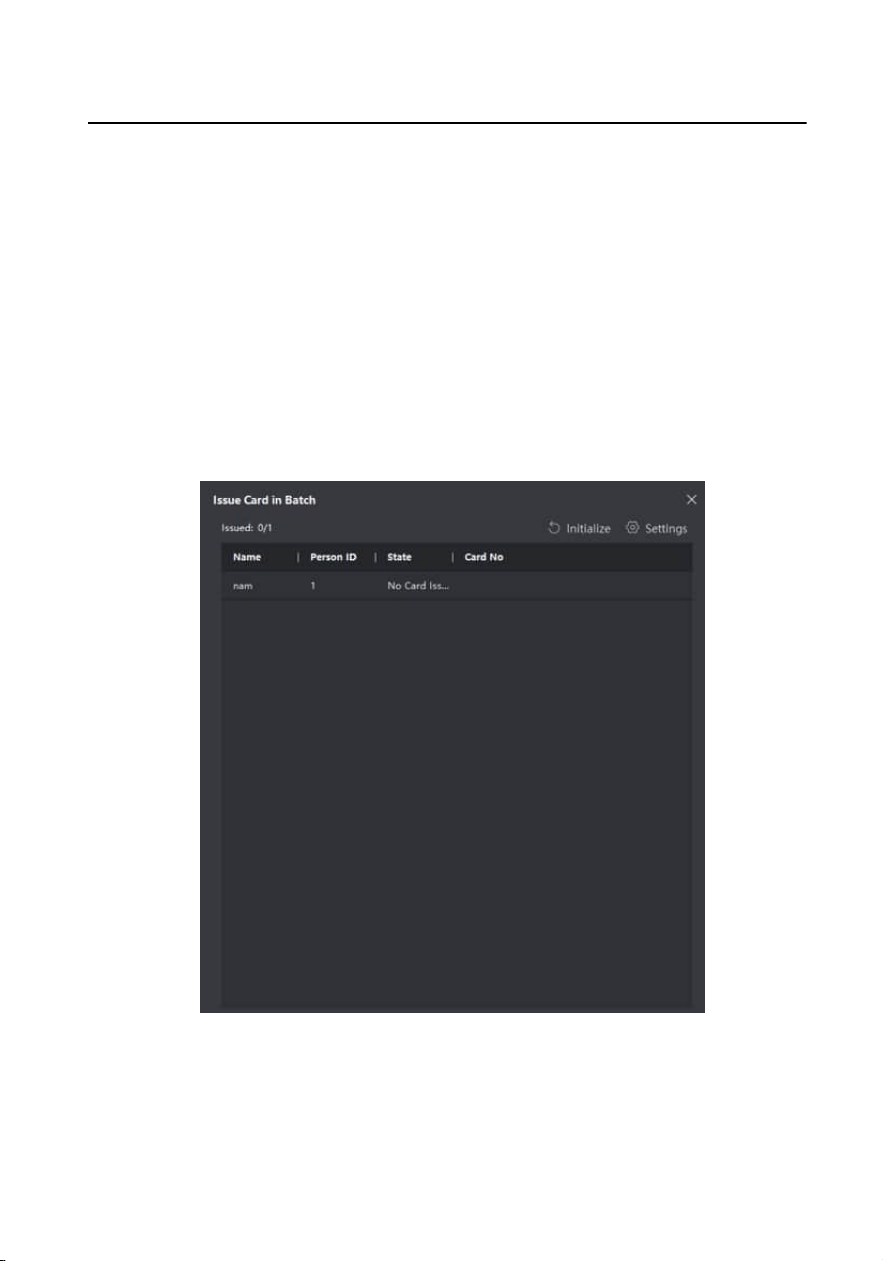
5.5.6 Issue Card in Batch
You can issue mulple cards for the person with no card issued in batch.
Steps
1. Click Batch Issue Cards to enter the dialog page. All the added person with no card
issued will display in the Person(s) with No Card Issued list.
Figure 5-23 Issue Card in Batch
2. Click Sengs.
Video Intercom Module Door
Staon User Manual
89
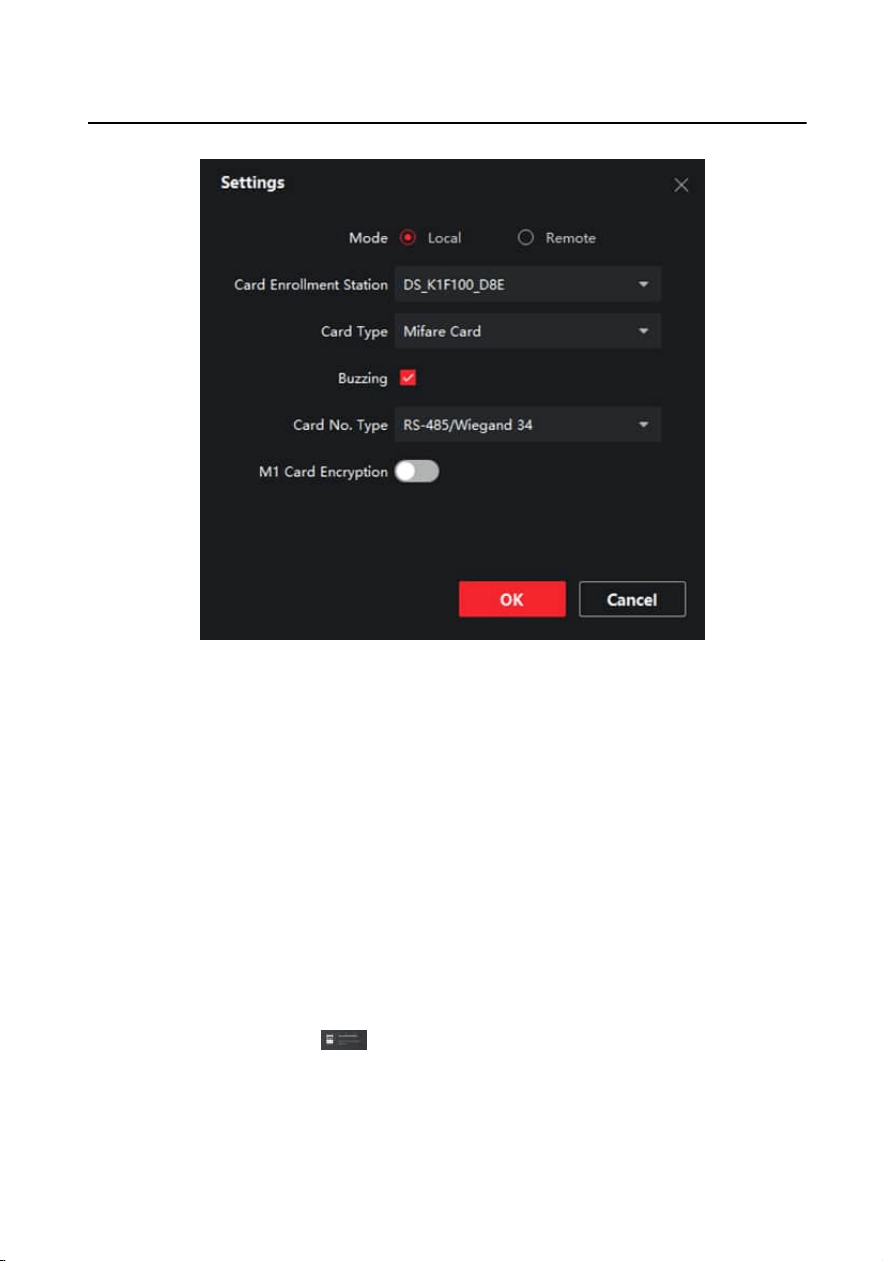
Figure 5-24 Card Sengs
3. Select Card Type and Card No. Type.
4. Click OK to save the sengs.
Result
Aer issuing the card to the person, the person and card informaon will display in
the Person(s) with Card Issued list.
5.5.7 Permission
Sengs
Add Permissions
Steps
1.
On the main page, click
AccessControlInfo → Access Group to enter the
page.
2. Click +Add to pop up the adding dialog box.
3. Congure the parameters.
Video Intercom Module Door
Staon User Manual
90

1) Enter the Name of the permission.
2) Select the Template of the schedule.
3) Check the person to Selected according to your needs.
4) Check the device to Selected according to your needs.
4. Click Save.
5. Check the permission and click Apply All to Device.
The status of the permission displays as Applied.
6. Oponal: Click Applying Status to check the details.
Modify/Delete Permissions
On the page of the permission sengs, click to edit the parameters of the
permission.
Select one or more permissions, click Delete to remove the permissions.
Video Intercom Module Door
Staon User Manual
91
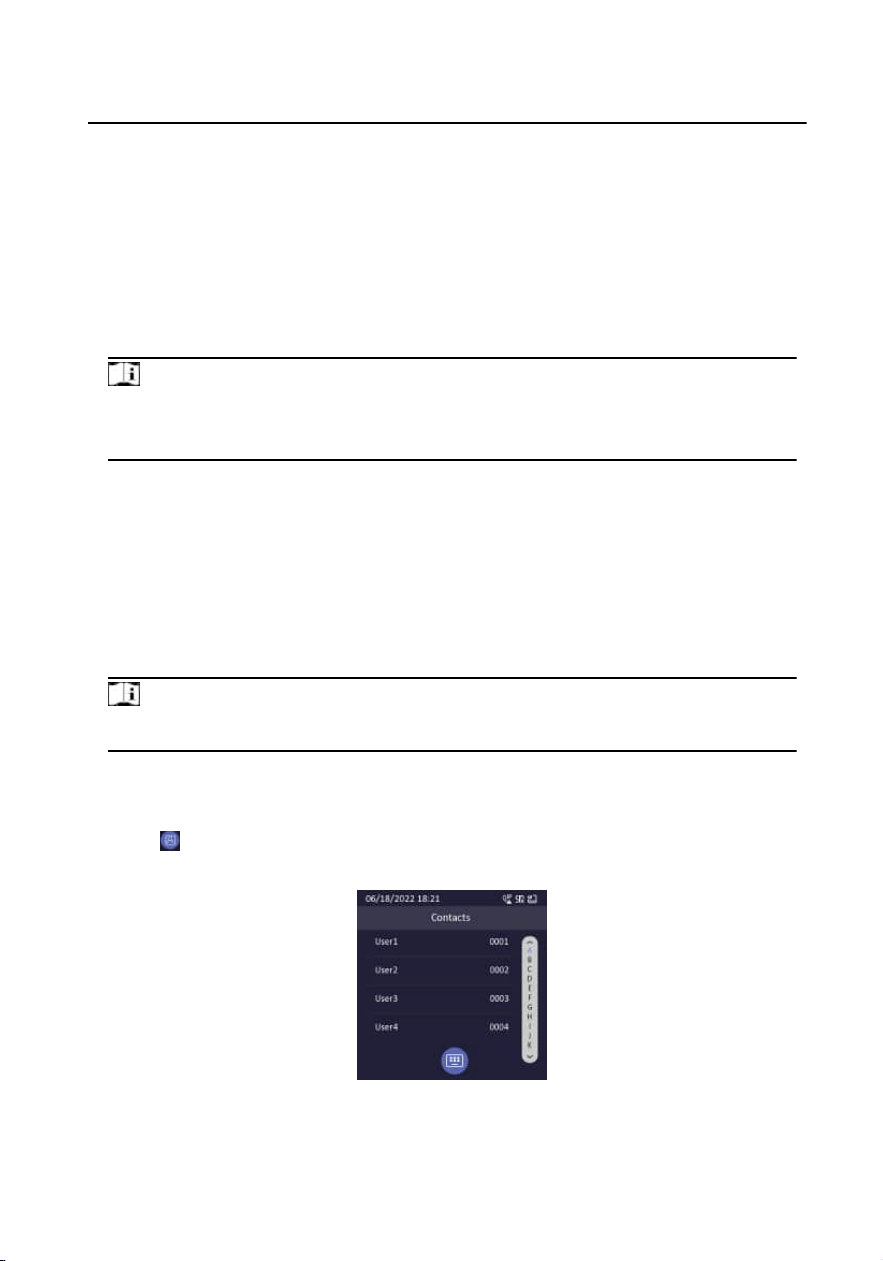
6 Video Intercom Operaon
6.1 Video Intercom Operaon via Device
6.1.1 Call Resident
Note
●
Make sure you have congured the room No. of the device.
●
Make sure you have add contacts to the device via iVMS-4200 Client Soware.
Call Resident via Main Module or Nametag Module
Press the call buon on the main unit or on the nametag unit.
Call Resident via Keypad Module
Enter the Room No. on the keypad module, and press # to start calling.
Note
You can press * via keypad module to hang up.
Call Resident via Display Module
Press on the display module to enter the contact list.
Figure 6-1 Contacts
Press or hold ˄/˅ to select a contact.
Video Intercom Module Door
Staon User Manual
92
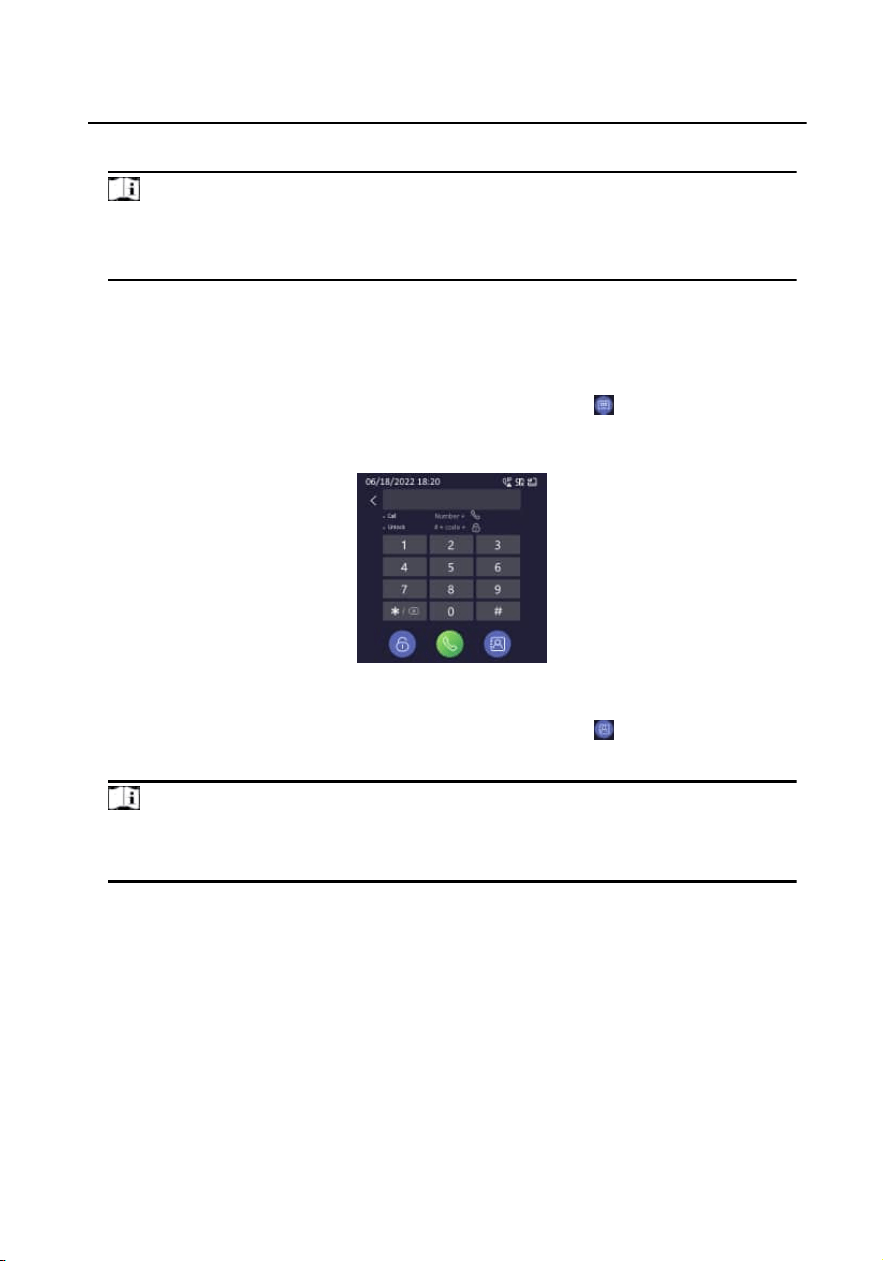
Press OK and conrm to call.
Note
●
Hold ˄ or ˅ to scroll the page up or down faster.
●
You can press Back buon via display module to hang up.
Call Resident via Touch-Display Module
You can call corresponding resident in the two ways. They are:
●
On the main page of the touch-display module, tap and enter the No.
to call.
Figure 6-2 Call Residents
●
On the main page of the touch-display module, tap to select a contact
in the list to call.
Note
Two themes of the main page are supported. You can change it remotely via
client soware.
6.1.2 Issue Card
Before You Start
Make sure you have issue the card locally or remotely. See Person Management for
issuing card via Client soware for details.
Issue Card via Main Card: You can swipe card to issue it aer swiping the main card
in advance.
Steps
1. Present the main card on the card reading area, and hear two beeps.
Video Intercom Module Door
Staon User Manual
93
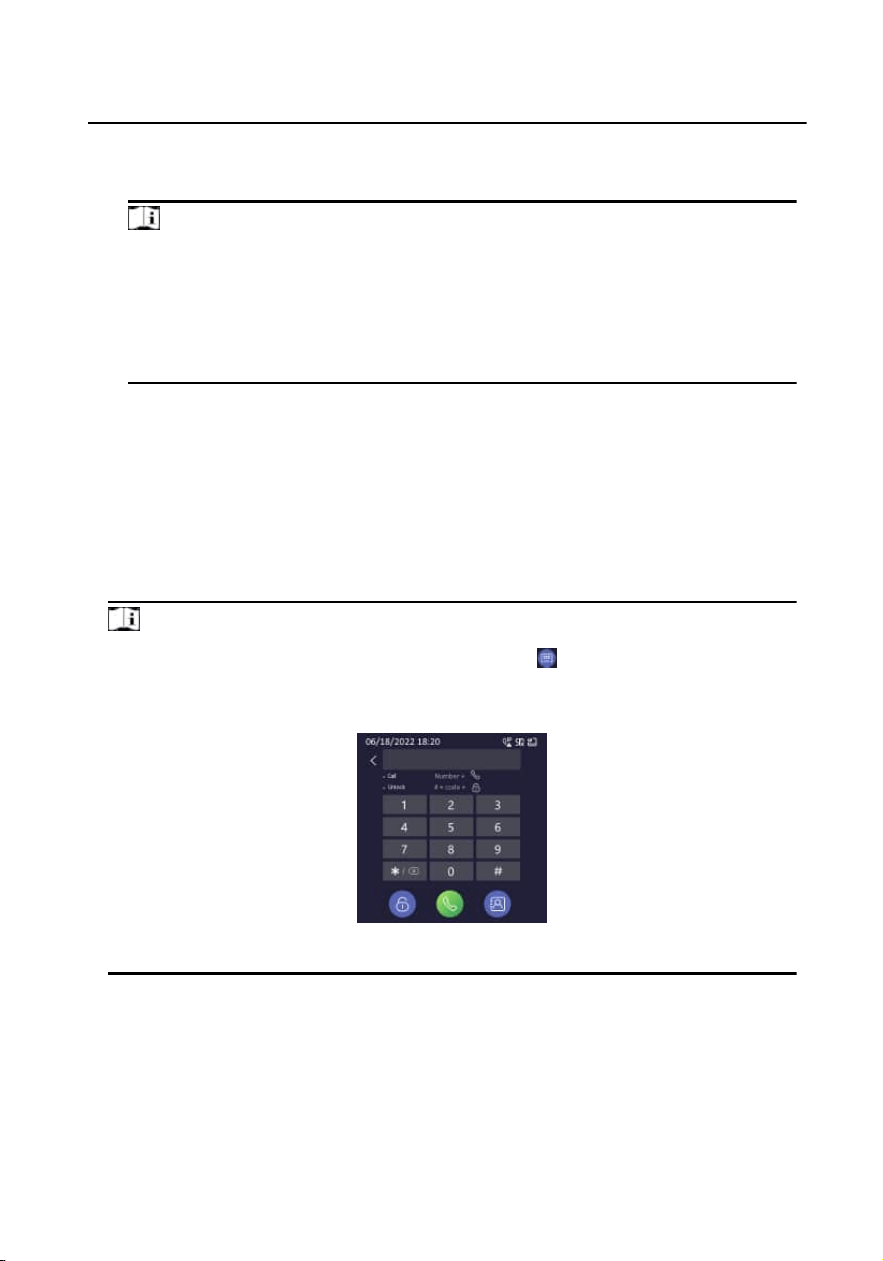
2. Present the unauthorized sub cards in turn aer hearing a beep.
3. Present the main card again to end the card issuing process.
Note
●
DS-KD-M/DS-KD-TDM supports Mifare card, DS-KD-E/DS-KD-TDE supports EM
card.
●
If the amount of sub cards exceeds 10000, no more sub cards can be issued.
●
Up to 5 sub cards can be issued once. The issued frequency is no more than
2000.
6.1.3 Unlock Door
Unlock Door by Password
You can unlock the door by entering the password via the keypad module or
touch-display module.
Note
On the main page of touch-display module, tap to enter the call/unlock
page to unlock the door.
Figure 6-3 Call/Unlock
Four formats of password are supported. They are:
●
【#】+ Public Password +【#】
●
【#】+ Password +【#】
●
【#】+ Duress Password +【#】
Video Intercom Module Door
Staon User Manual
94
Note
●
Password contains 6 digits.
●
You're allowed to set 3 public passwords via iVMS-4200 client soware.
●
The password varies according to dierent rooms.
Unlock Door by Card
Note
Make sure the card has been issued. You can issue the card via the door
staon, or via iVMS-4200 client soware.
Present the card on the card inducon area via card reader module or
touch-display module (with card reading funcon) to unlock the door.
Note
The main card does not support unlocking the door.
6.2 Video Intercom Operaon via Client Soware
The Video Intercom Management module provides the funcon of video intercom,
checking call logs and managing noce via the iVMS-4200 Client Soware.
Note
For the user with access control module permissions, the user can enter the Access
Control module and manage video intercom and search informaon.
You should add the device to the soware and congure the person to link the
device in Access Control module before your conguraon remotely.
Click AccessControlInfo → Video Intercom → Video Intercom on the le bar
to enter the Video Intercom page.
6.2.1 Receive Call from Door
Staon
Steps
1. Select the client
soware in door staon page to start calling the client and an
incoming call dialog will pop up in the client
soware.
Video Intercom Module Door
Staon User Manual
95
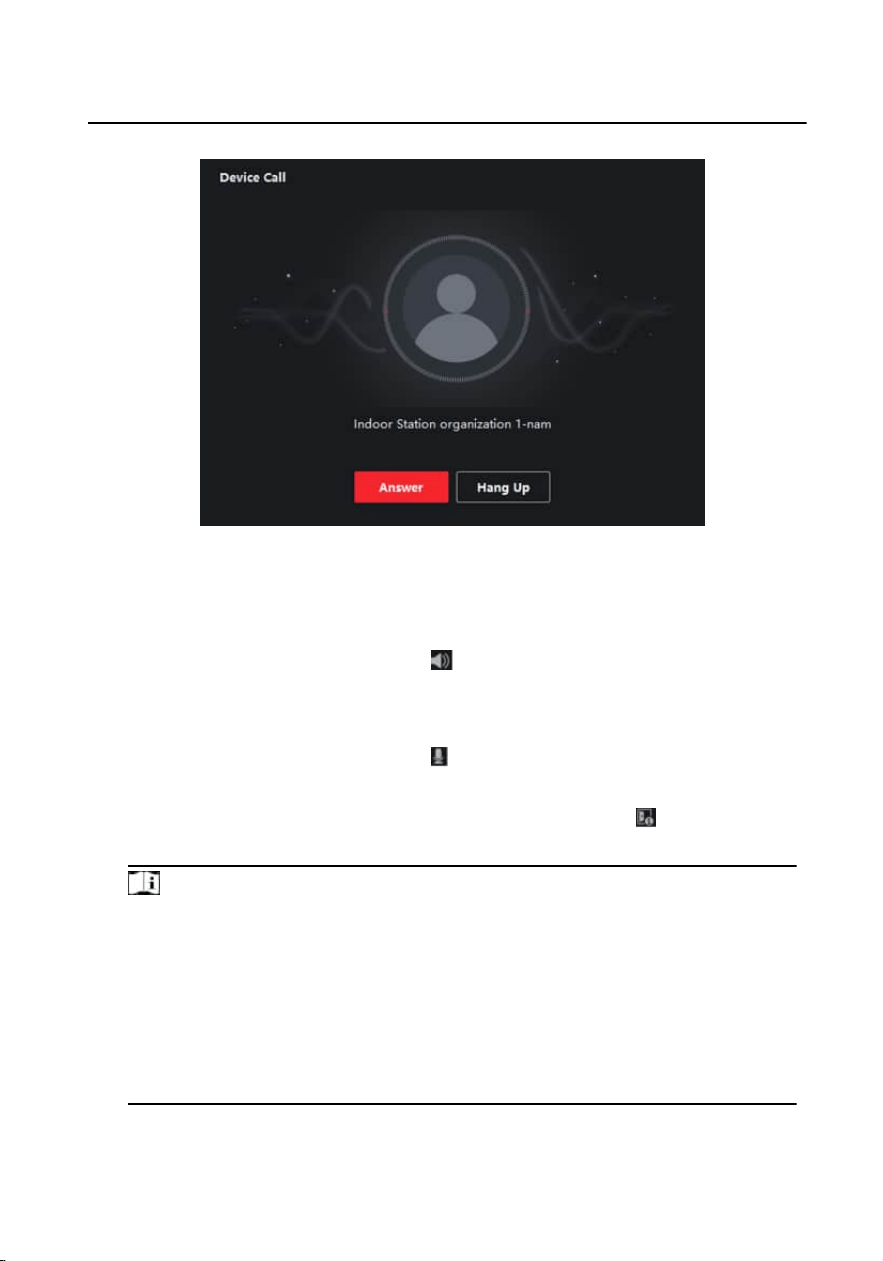
Figure 6-4 Device Call
2. Click Answer to answer the call. Or click Hang Up to decline the call.
3.
Aer you answer the call, you will enter the In Call page.
Adjust the Volume of
Loudspeaker
Click to adjust the volume of loudspeaker.
Hang Up Click Hang Up to hang up.
Adjust the Volume of
Microphone
Click to adjust the volume of the microphone.
Unlock Remotely
For door staon, you can click to open the
door remotely.
Note
●
One video intercom device can only connect with one client soware.
●
The maximum ring duraon can be set from 15s to 60s via the Remote
Conguraon of the video intercom device.
●
The maximum speaking duraon between indoor staon and iVMS-4200 can be
set from 120s to 600s via the Remote Conguraon of indoor staon.
●
The maximum speaking duraon between door staon and iVMS-4200 can be
set from 90s to 120s via the Remote
Conguraon of door staon.
Video Intercom Module Door Staon User Manual
96
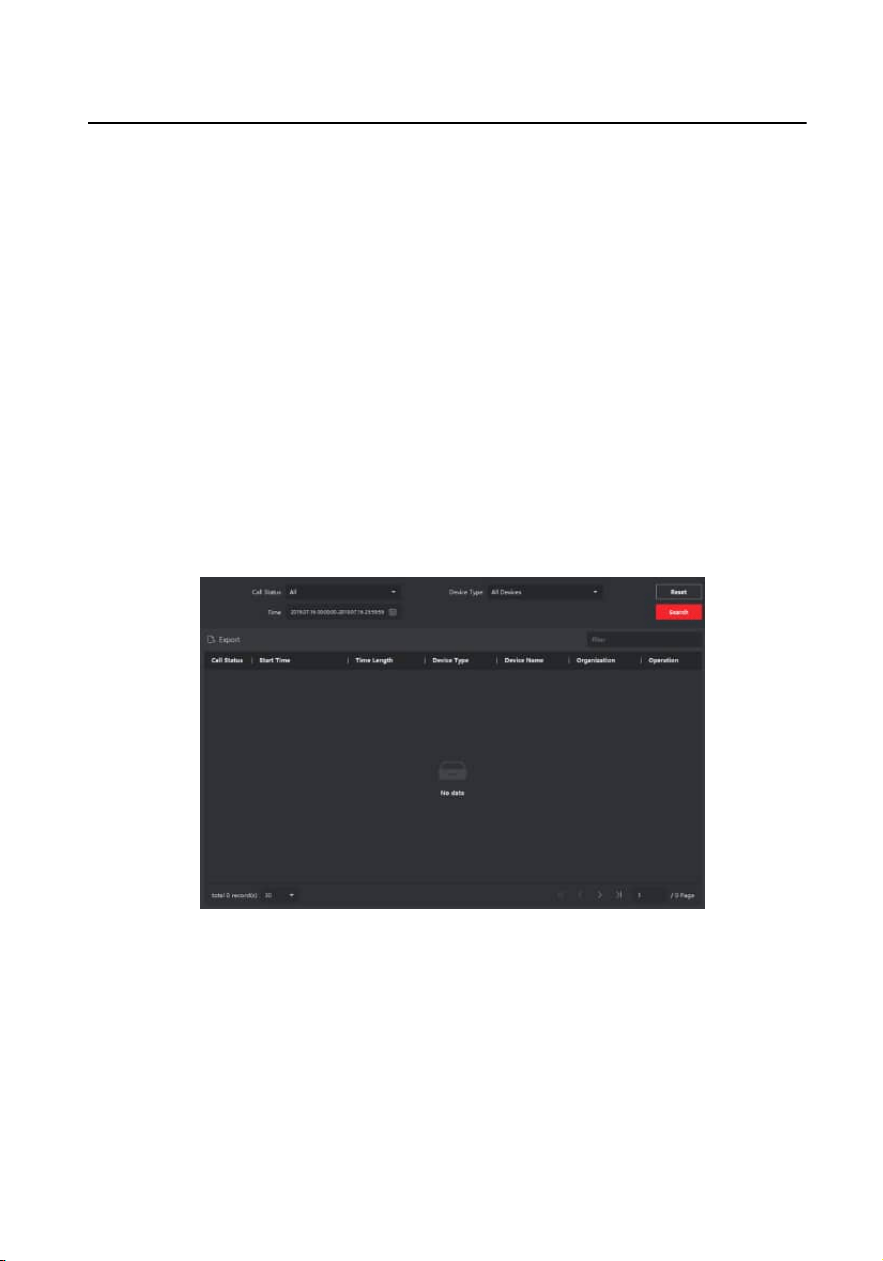
6.2.2 Live View via Door Staon
You can get the live view of the main unit in the Main View module and control the
door staon remotely.
In the Main View module, double-click a door staon or drag the device to a display
window to start the live view.
Right click on the live view page, clickthe unlock icon to remote unlock the door.
6.2.3 View Call Logs
Before You Start
You can check all the call logs, including dialed call logs, received call logs and missed
call logs. You can also directly dial via the log list and clear the logs.
Steps
1. In the Video Intercom page, click Call Log to enter the Call Log page.
Figure 6-5 View Call Logs
All the call logs will display on this page and you can check the log informaon,
e.g., call status, start me, resident's organizaon and name, device name and
ring or speaking duraon.
2. Oponal: Click the call buon to re-dial the resident.
6.2.4 Search Video Intercom
Informaon
Video Intercom Module Door Staon User Manual
97
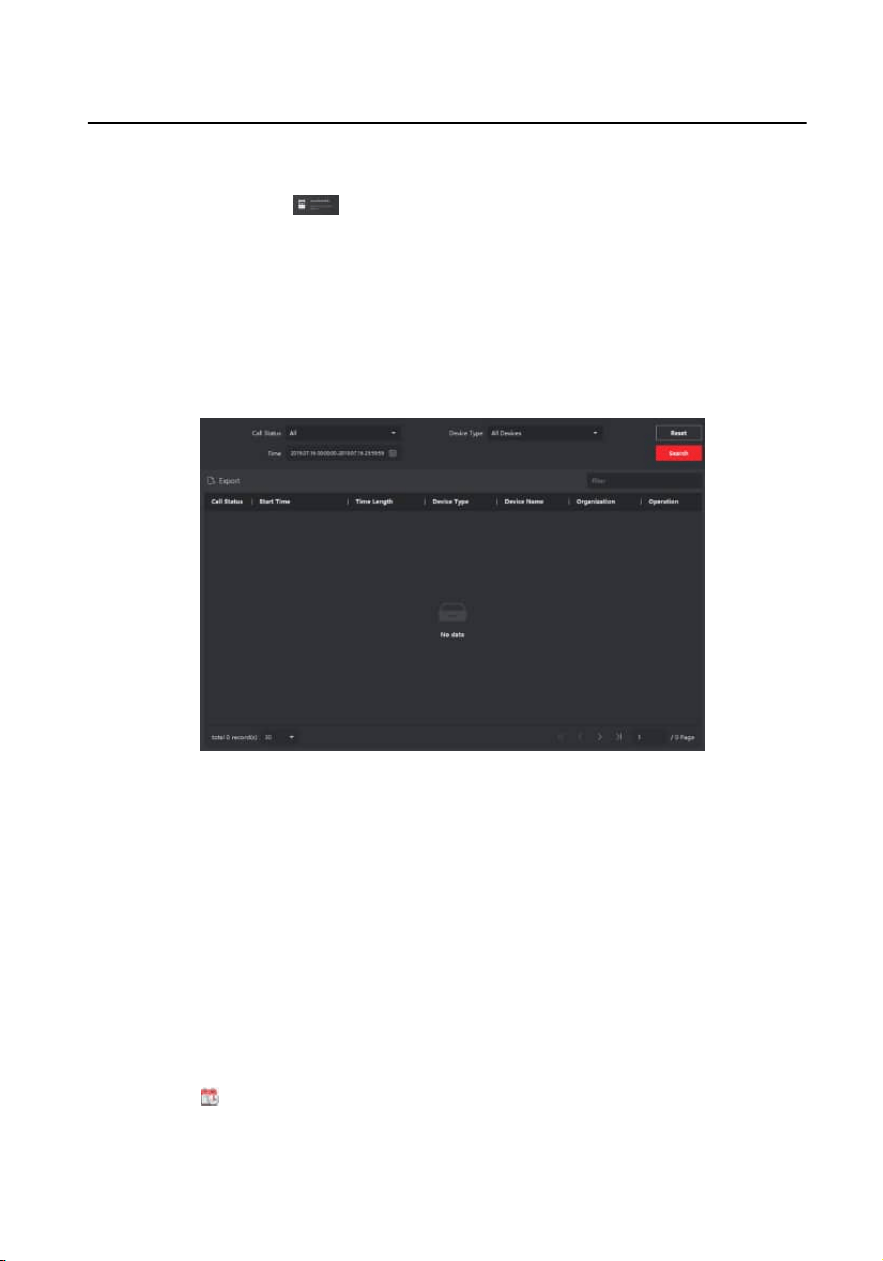
You can search the call logs between the iVMS-4200 client soware and video
intercom devices, device unlocking logs and the sent noce informaon.
In the main page, click AccessControlInfo to enter the access control module.
In the Access Control module, click Video Intercom.
Search Call Logs
Steps
1. In the Video Intercom page, click Call Log to enter the Call Log page.
Figure 6-6 Call Logs
2. Set the search condions, including call status, device type, start me and end
me.
Call Status
Click ˅to unfold the drop-down list and select the call status as Dialed,
Received or Missed. Or select All to search logs with all statuses.
Device Type
Click ˅ to unfold the drop-down list and select the device type as Indoor
Staon, Door Staon, Outer Door Staon or Analog Indoor Staon. Or select
All Devices to search logs with all device types.
Day Mode Start Time/Day Mode End Time
Click to specify the start me and end me of a me period to search the
logs.
Video Intercom Module Door
Staon User Manual
98
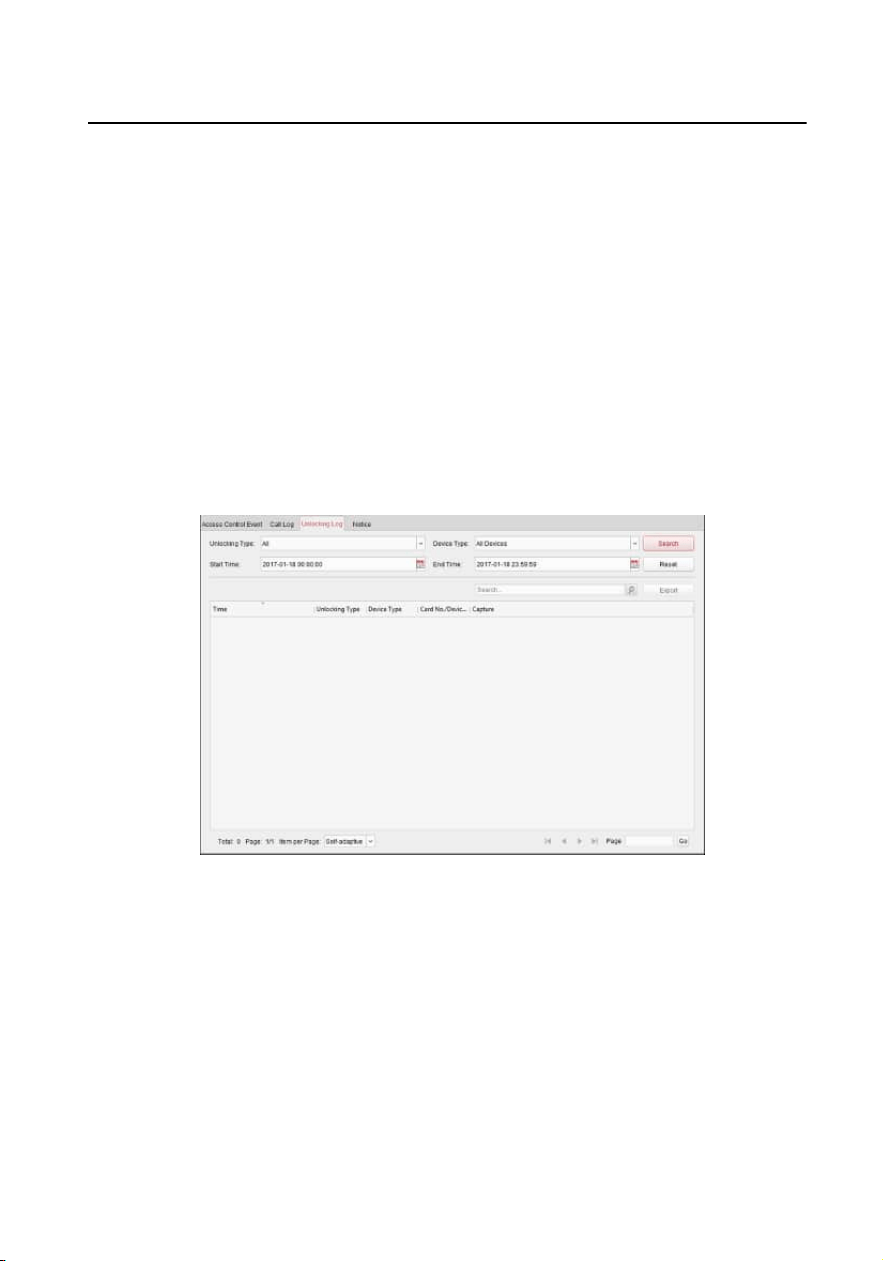
Reset the Sengs Click Reset to reset all the congured search condions.
3. Click Search and all the matched call logs will display on this page.
4. Oponal: Check the detailed informaon of searched call logs, such as call status,
ring/speaking
duraon, device name, resident organizaon, etc.
5. Oponal: Input keywords in the Search eld to lter the desired log.
6. Oponal: Click Export to export the call logs to your PC.
Search Unlocking Logs
Steps
1. In the Informaon Search page, click Unlocking Log to enter the Unlocking Log
page.
Figure 6-7 Unlocking Logs
2. Set the search condions, including unlocking type, device type, start me and
end me.
Unlocking Type
Click ˅ to unfold the drop-down list and select the unlocking type as Unlock by
Password, Unlock by Duress, Unlock by Card, Unlock by Resident or Unlock
by Center. Or select All to search logs with all unlocking types.
Device Type
Video Intercom Module Door
Staon User Manual
99
Click ˅ to unfold the drop-down list and select the device type as Door Staon
or Door Staon (V Series). Or select All Devices to search logs with all device
types.
Start Time/End Time
Click to specify the start me and end me of a me period to search the
logs.
`Reset the Sengs Click Reset` to reset all the congured search condions.
3. Click Search and all the matched unlocking logs will display on the page.
4.
Oponal: Check the detailed informaon of searched unlocking logs, such as
unlocked me, card No., device No., etc.
5. Oponal: Input keywords in the Search eld to lter the searching result.
6.
Oponal: Click on the Capture column to view the captured pictures.
Note
Viewing captured picture should be supported by device.
7. Oponal: Click Export to export the unlocking logs to your PC.
Video Intercom Module Door
Staon User Manual
100
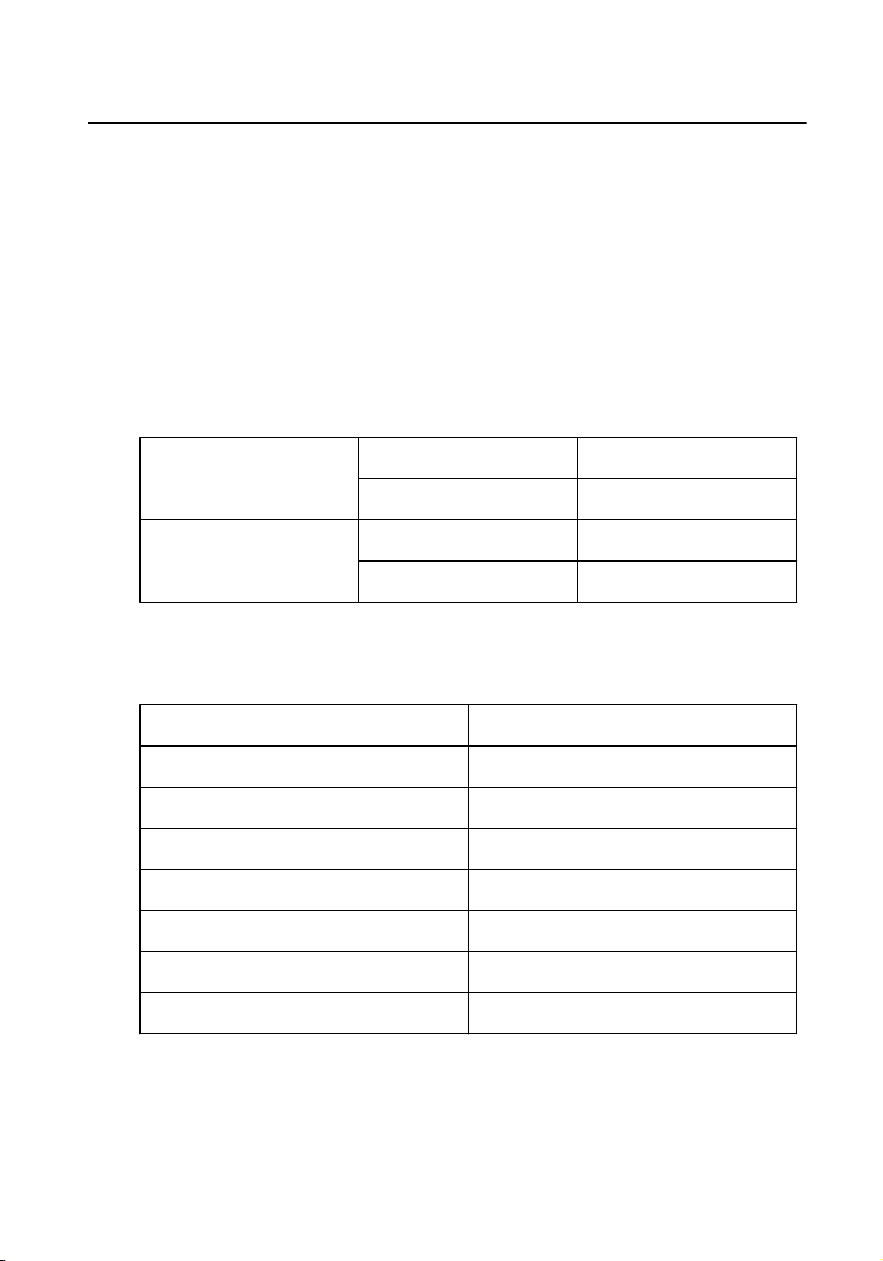
A. Relevant Instrucons for External
Power Supply and Wiring of 2-wire Video
Intercom Products (2020-1-20)
Power Descripon
2-Wire Distributor
DS-KAD706 CH6 CH1 to CH5
16 W 6 W
DS-KAD704 CH4 CH1 to CH3
16 W 6 W
Modular Door Staon
The main module & the sub-module maximum power consumpon.
Model Stable Power Consumpon
DS-KD8003-IME2 4 W
DS-KD-KK 0.8 W
DS-KD-KP 1 W
DS-KD-DIS 2.5 W
DS-KD-E 0.8 W
DS-KD-M 0.8 W
DS-KD-INFO 1.5 W
Indoor Staon
Video Intercom Module Door
Staon User Manual
101
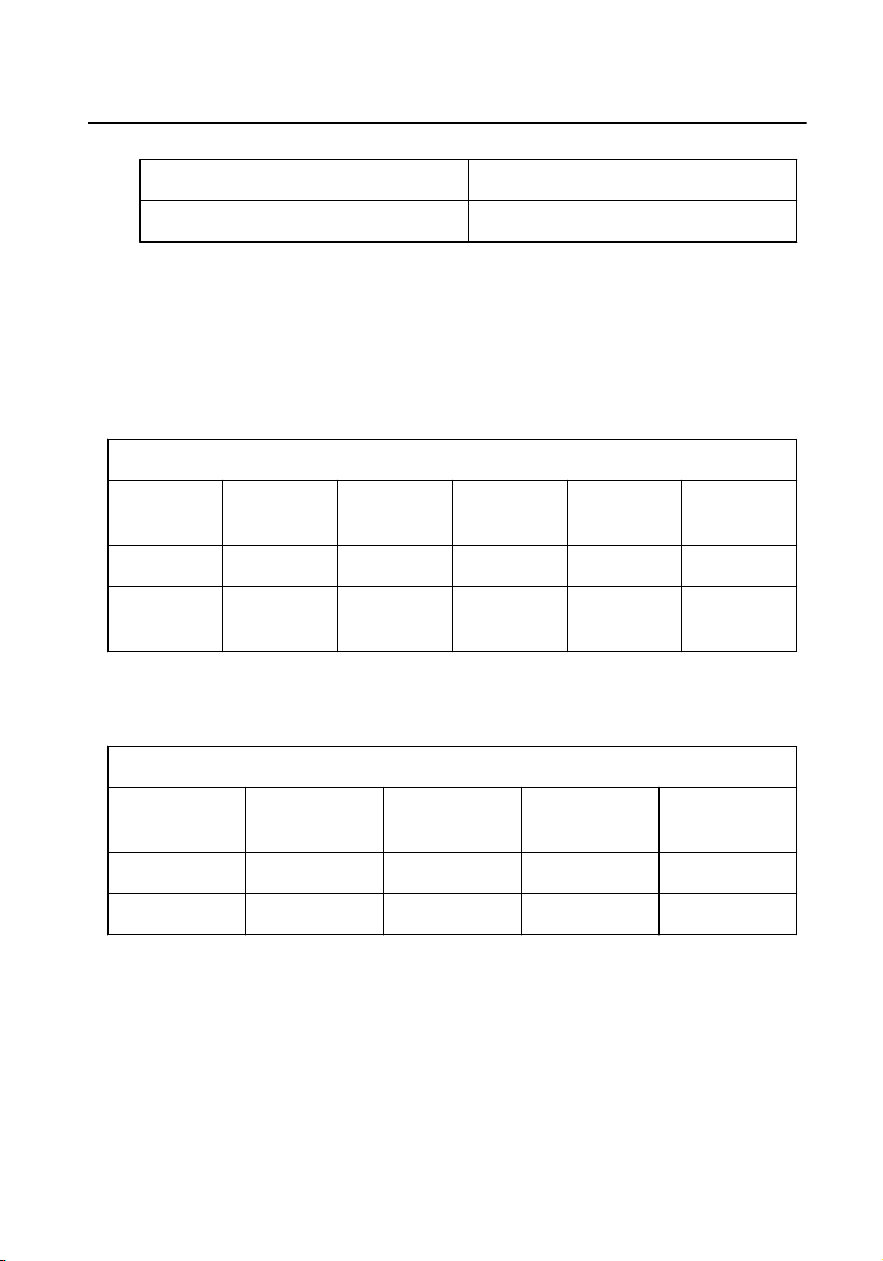
Model Stable Power Consumpon
DS-KH6320-WTE2 6 W
Example of the Calculaon Model of the Modular Door
Staon Sub-Module
The sum of the power consumpon of each module must be less than the
total power consumpon of the power supply.
2-Wire
Model DS-KD8003-
IME2
DS-KD-DIS DS-KD-KP DS-KD-M /
Quanty 1 1 2 2 /
Power 4 W 2.5 W 2 W 1.6 W Total: 10.1
W
Because 10.1 W ≤ 16 W, we can support powering this device through
KAD706 channel 6 or KAD704 channel 4.
2-Wire
Model DS-KD8003-
IME2
DS-KD-M DS-KD-KK /
Quanty 1 1 12 /
Power 4 W 0.8 W 9.6 W Total: 14.4 W
Because 14.4 W ≤ 16 W, we can support powering this device through
KAD706 channel 6 or KAD704 channel 4.
Video Intercom Module Door
Staon User Manual
102
Wire Tesng Standards
●
When there are mulple cores in one parallel line, only one pair of closed
cores are allowed to transmit signal. It is not allowed to use mulple pair
of cores in one cable to transmit signal.
●
When using parallel lines, it is suggested to use those with shielding layer.
If dual core or mulple core parallel lines without shielding layer are
routed, stability of signal transmission can be eected. You need to run a
test before installaon.
●
Impedance of twist pair in network cable are over 42 Ω/100 m, so
network cable cannot transmit enough power to indoor staon. Network
cable is not allowed to use during installaon.
●
Strong electricity and weak electricity cannot be wired in the same route,
they need to be wired separately and the distance should be more than
0.5 meter.
Table A-1 Table A
Roung
Path
Twisted
Pair : 24
AWG (0.2
mm
2
)
Twisted
Pair : 20
AWG (0.5
mm
2
)
Twisted
Pair :
18AWG
(0.8 mm
2
)
Twisted
Pair :
16AWG (1
mm
2
)
Parallel
lines (0.5
mm
2
to 0.8
mm
2
)
DS-
KAD706-S-
DS-KAD706
Transmissio
n Distance
≤ 60 m
Transmissio
n Distance
≤ 60 m
Transmissio
n Distance
≤ 60 m
Transmissio
n Distance
≤ 50 m
Transmissio
n Distance
≤ 35 m
DS-
KAD706-
DS-KAD706
Transmissio
n Distance
≤ 60 m
Transmissio
n Distance
≤ 60 m
Transmissio
n Distance
≤ 60 m
Transmissio
n Distance
≤ 50 m
Transmissio
n Distance
≤ 35 m
DS-
KAD706-
DS-
Transmissio
n Distance
≤ 35 m
Transmissio
n Distance
≤ 60 m
Transmissio
n Distance
≤ 60 m
Transmissio
n Distance
≤ 50 m
Transmissio
n Distance
≤ 35 m
Video Intercom Module Door Staon User Manual
103
Roung
Path
Twisted
Pair : 24
AWG (0.2
mm
2
)
Twisted
Pair : 20
AWG (0.5
mm
2
)
Twisted
Pair :
18AWG
(0.8 mm
2
)
Twisted
Pair :
16AWG (1
mm
2
)
Parallel
lines (0.5
mm
2
to 0.8
mm
2
)
KD8003-
IME2
DS-
KAD706-
DS-
KH6320-
WTE2
Transmissio
n Distance
≤ 35 m
Transmissio
n Distance
≤ 100 m
Transmissio
n Distance
≤ 100 m
Transmissio
n Distance
≤ 100 m
More
parameters
in Table B
Roung Path Parallel lines:
24 AWG (0.2
mm
2
)
Parallel lines:
20 AWG (0.5
mm
2
)
Parallel lines:
18 AWG (0.8
mm
2
)
Parallel lines:
16 AWG (1
mm
2
)
DS-KAD706-
DS- KH6320-
WTE2
Transmission
Distance ≤ 50
m
Transmission
Distance ≤
100 m
Transmission
Distance ≤
100 m
Transmission
Distance ≤
100 m
Device Installaon
●
Installaon environment (temperature, moisture etc.) need to follow
requirements in specicaon or power output can be eected.
●
Power consumpon of modular door staon (main module and sub
modules) should be less than 12W. Please reach local technical support if
you are not sure about power consumpon of each module. Door staon
should be connected to CH6 of the video/audio distributor. If modular
door staon is connected to any terminal of CH1 to CH5, up to 3 sub
modules can be connected.
●
Indoor staon should be connected to any terminal of CH1 to CH5 of the
video/audio distributor.
●
Up to 15 video/audio distributor can be cascaded. If more distributors are
needed, you should cascade network switch
supporng 1000 Mbps. The
whole 2-wire system can have up to 500 devices.
Video Intercom Module Door
Staon User Manual
104

●
Power supply must be cered by Hikvision.
●
Indoor staon needs to use rmware released aer October, 2019.
Video Intercom Module Door Staon User Manual
105
B. Communicaon Matrix and Device
Command
Communicaon Matrix
Scan the following QR code to get the device communicaon matrix.
Note that the matrix contains all communicaon ports of Hikvision access
control and video intercom devices.
Figure B-1 QR Code of Communicaon Matrix
Device Command
Scan the following QR code to get the device common serial port
commands.
Note that the command list contains all commonly used serial ports
commands for all Hikvision access control and video intercom devices.
Figure B-2 Device Command
Video Intercom Module Door Staon User Manual
106

UD23547B-A
