NOTE: This manual may be subject to updates or changes. Up to date manuals are available through our website at www.lifespanfitness.com.au
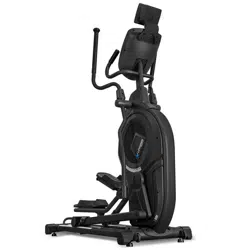
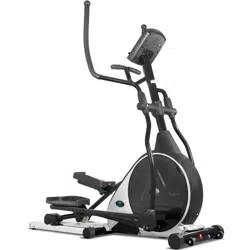
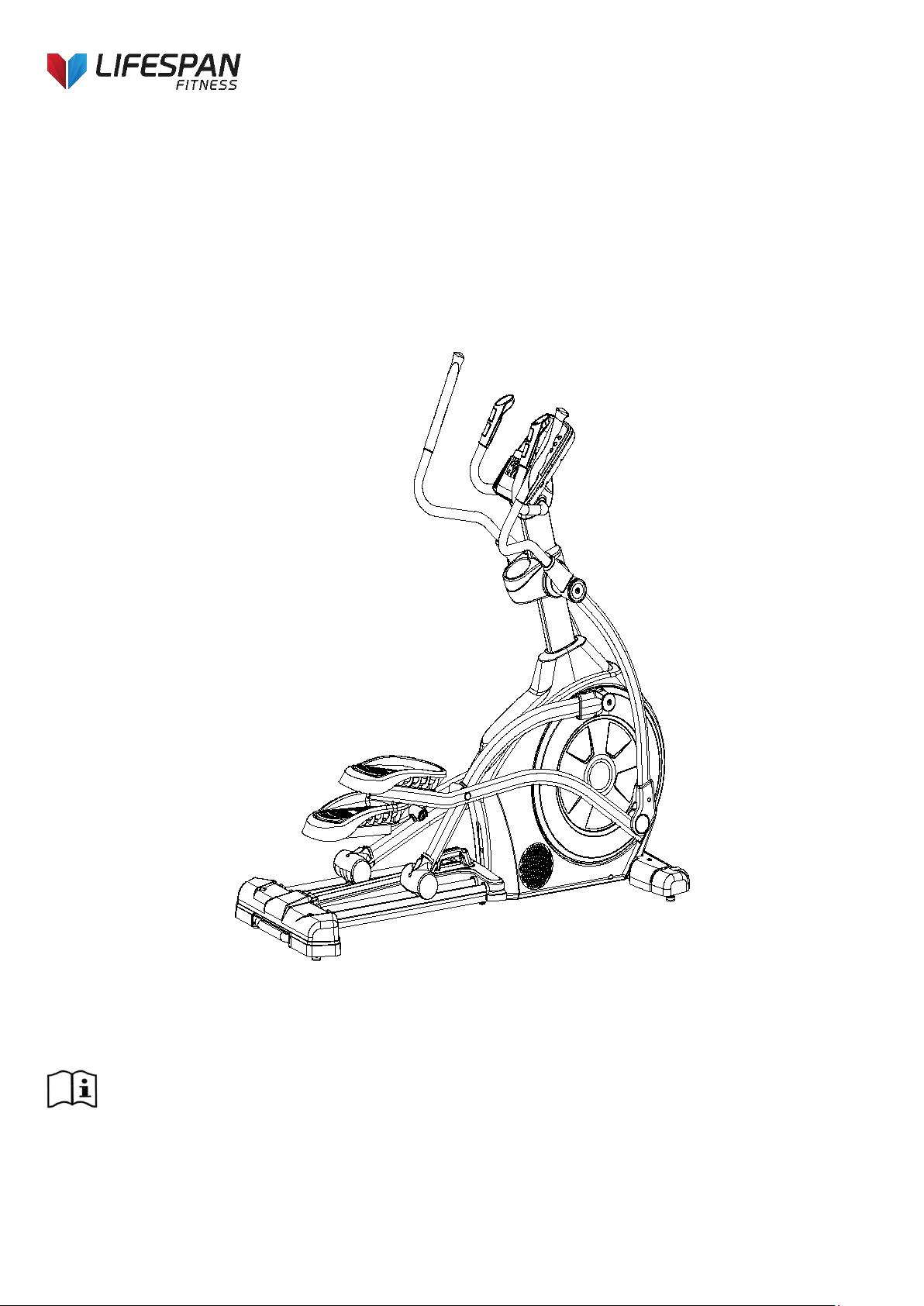
Product may vary slightly from the item pictured due to model upgrades
Read all instructions carefully before using this product. Retain this owner’s manual for future
reference.
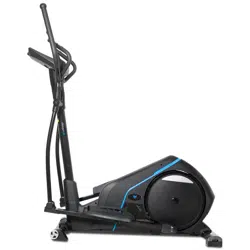
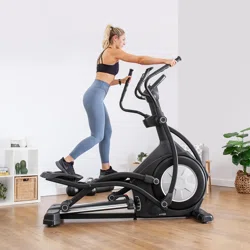
XT-40 ASCENDER INCLINE
CROSS TRAINER
OWNER’S MANUAL
2
TABLE OF CONTENTS
1. IMPORTANT SAFETY INSTRUCTIONS 3
2. CARE INSTRUCTIONS 4
3. EXPLODED DIAGRAM 5
4. PARTS LIST 6
5. ASSEMBLY INSTRUCTIONS 9
6. COMPUTER OPERATION 12
7. EXERCISE GUIDE 20
8. WARRANTY 22
3
1. IMPORTANT SAFETY INSTRUCTIONS
WARNING - Read all instructions before using this machine.
It is important your machine receives regular maintenance to prolong its useful life. Failing to
regularly maintain your machine may void your warranty.
Please keep this manual with you at all times
1. It is important to read this entire manual before assembling and using the equipment. Safe and
effective use can only be achieved if the equipment is assembled, maintained and used properly.
Please note: It is your responsibility to ensure that all users of the equipment are informed of all
warnings and precautions.
2. Before starting any exercise program, you should consult your doctor to determine if you have any
medical or physical conditions that could put your health and safety at risk or prevent you from using
the equipment properly. Your doctor’s advice is essential if you are taking medication that affects your
heart rate, blood pressure or cholesterol level.
3. Be aware of your body’s signals. Incorrect or excessive exercise can damage your health. Stop
exercising if you experience any of the following symptoms: pain, tightness in your chest, irregular
heartbeat, extreme shortness of breath, lightheadedness, dizziness, or feelings of nausea. If you do
experience any of these symptoms, you should consult your doctor before continuing with your
exercise program.
4. Keep children and pets away from the equipment. This equipment is designed for adult use only.
5. Use the equipment on a solid, flat level surface with a protective cover for your floor or carpet. To
ensure safety, the equipment should have at least 2 meters of free space around it.
6. Before using the equipment, check that the nuts and bolts are securely tightened. If you hear any
unusual noises coming from the equipment during use and assembly, stop immediately. Do not use the
equipment until the problem has been rectified.
7. Wear suitable clothing while using the equipment. Avoid wearing loose clothing that may get caught in
the equipment or that may restrict or prevent movement.

4
8. This equipment is designed for indoor and family use only.
9. Care must be taken when lifting or moving the equipment so as not to injure your back.
10. Always keep this instruction manual and assembly tools at hand for reference.
11. The equipment is not suitable for therapeutic use.
12. The pulse or heart rate sensors are not medical devices. Various factors, including the user’s
movement, may affect the accuracy of heart rate readings. The pulse sensors are intended only as
exercise aids in determining heart rate trends in general.
2. CARE INSTRUCTIONS
a. Lubricate moving joints with grease after periods of usage.
b. Be careful not to damage plastic or metal parts of the machine with heavy or sharp objects.
c. The machine can be kept clean by wiping it down using dry cloth.
d. All nuts and bolts are to be checked and tightened on a regular basis. This includes pedals and other
moving parts.
Failure to do so may cause damage to your thread and void your warranty.
5
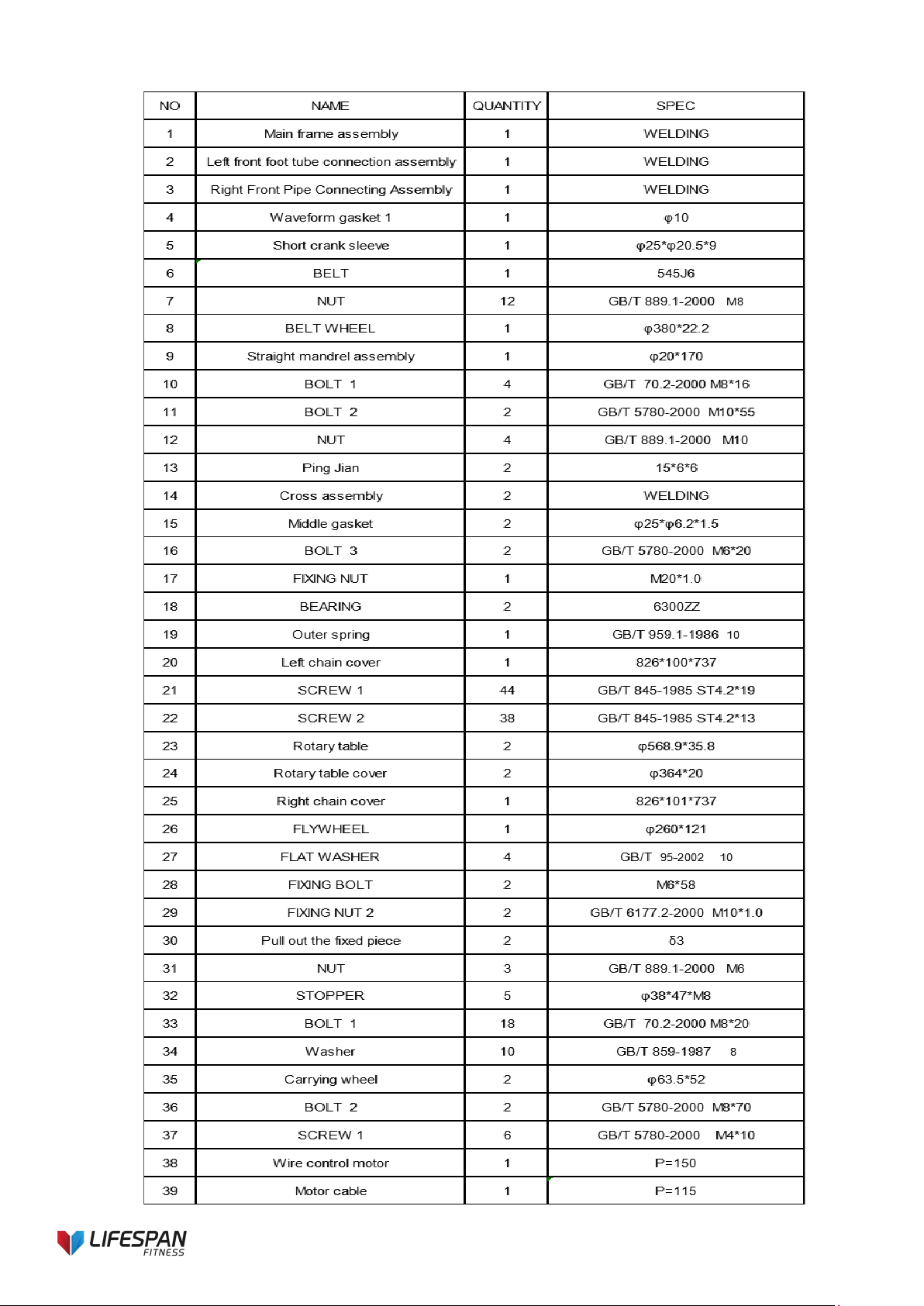
3. EXPLODED DIAGRAM
6
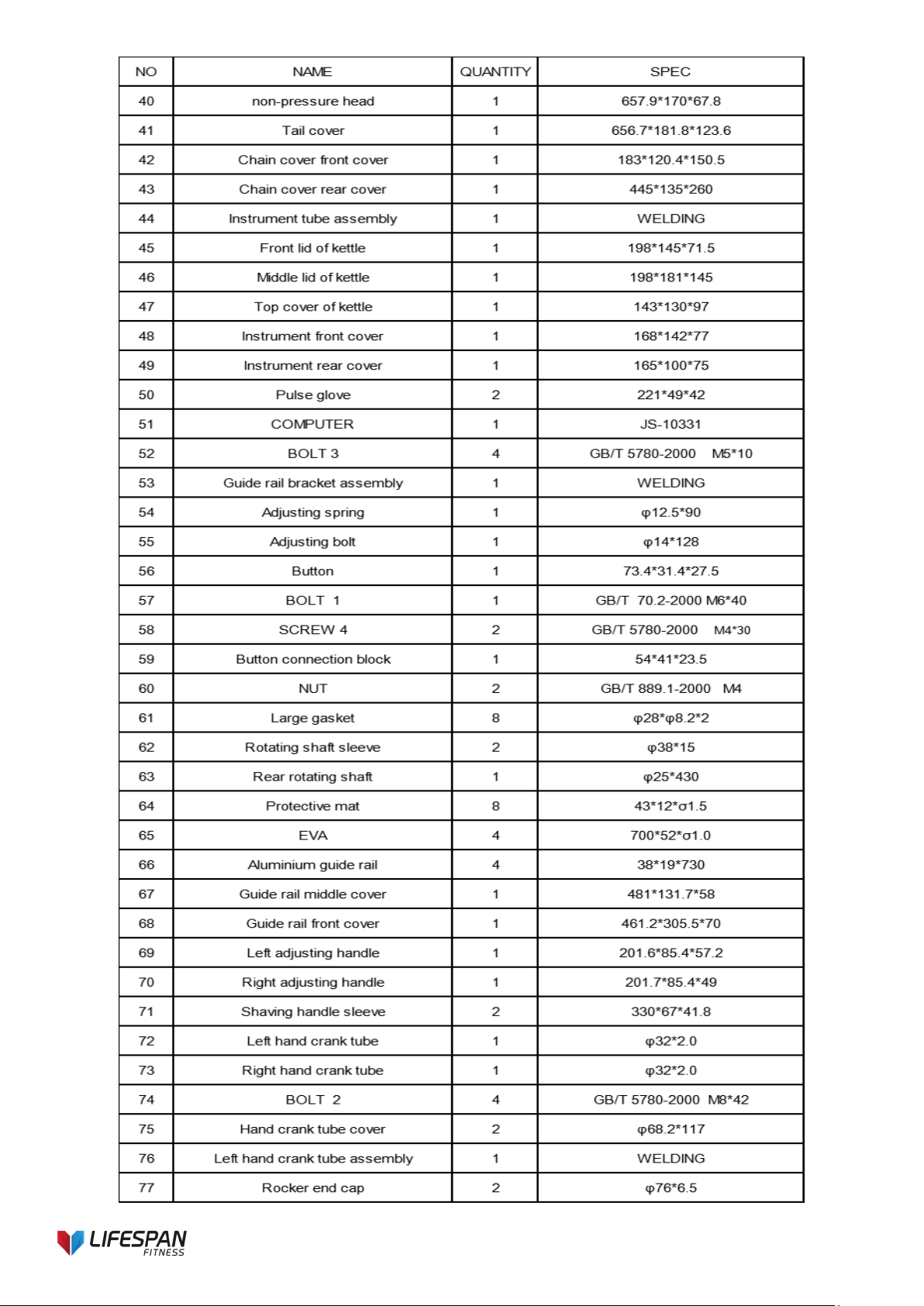
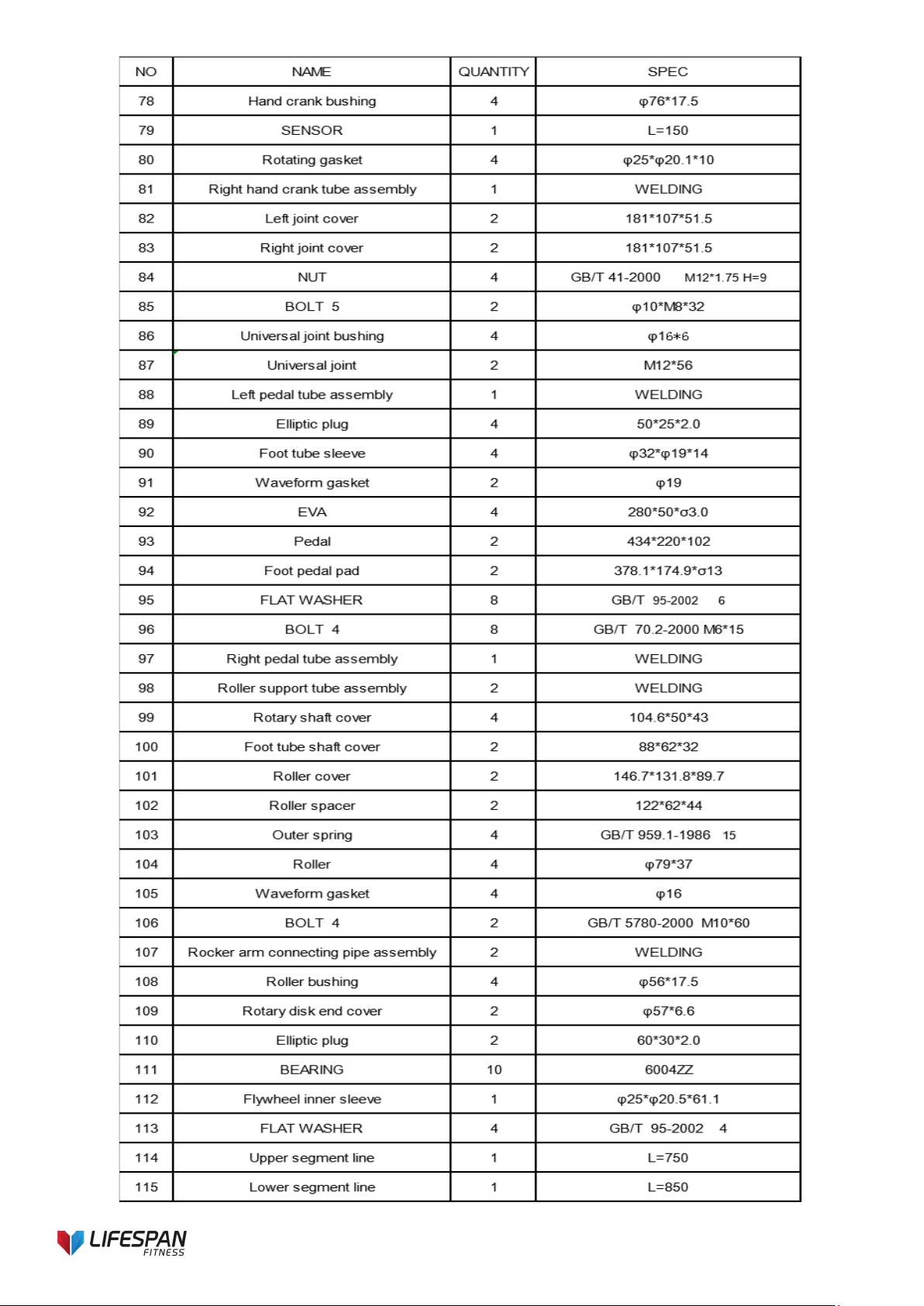
4. PARTS LIST
7
8
9
5. ASSEMBLY INSTRUCTIONS
A. Before assembling make sure that you will have enough space around the item.
B. Use the present tooling for assembling.
C. Before assembling please check whether all needed parts are available. Above of this instruction
sheet you will find an explosion drawing with all single parts (marked with numbers) which this item
consists of.
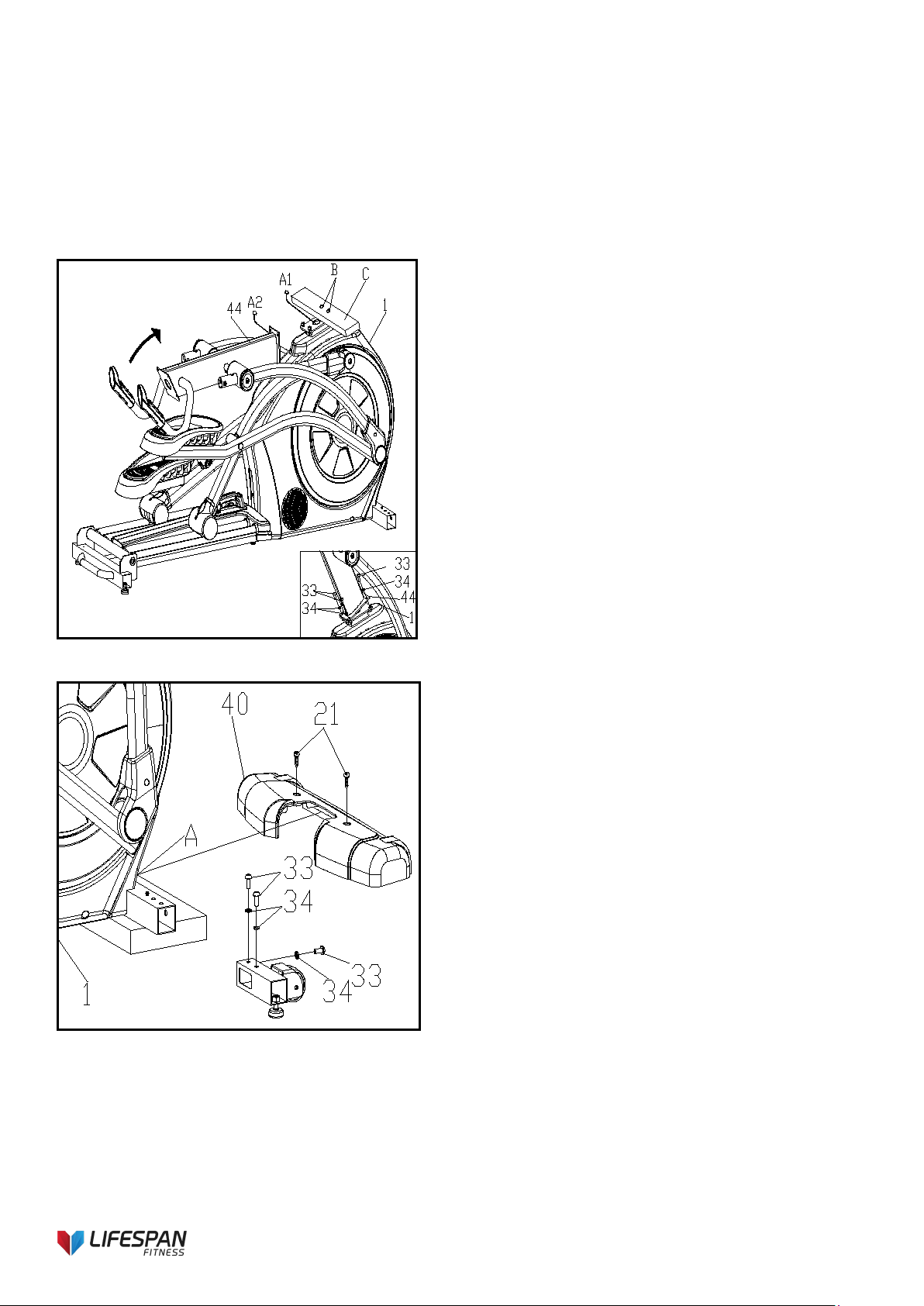
FIG. 1
FIG. 2
FIG.1:
1. Remove the pre-lock board (C) and two bolts (B)
at the front end of the main frame assembly (1)
and throw them away. Follow-up installation
steps are not needed.
2. As shown in the figure, turn the upper column
assembly (44) in the direction of arrow until the
upper column assembly (44) is close to the main
frame assembly (1). One person holds the upper
column assembly (44) and the other person
connects the signal line (A1-A2) after the
connection is completed. The terminal is inserted
into a large sheet metal hole on the main frame
assembly (1) to avoid overwhelming the signal
line.
3. As shown in the figure, the sheet metal on the
upper column assembly (44) is clamped into the
main frame assembly (44) which is pre-locked.
FIG.2:
1. As shown in the figure, the main frame assembly
(1) is padded with packing material (A), and the
screw (33), (34) which is pre-locked on the
connecting pipe assembly of the left and right
front foot tubes and the upper screw (21) of the
main frame assembly (1) are put on the side and
back for assembly.
2. The right front foot connecting pipe assembly (3)
is inserted into the square pipe corresponding to
the main frame assembly (1) and locked with
three M8*20 internal hexagonal screws (33) and
eight elastic gaskets (34). The other side is
assembled in the same way.
3. Take the packing material (A) padded under the
main frame assembly (1). Cover the front cover
(40) on the square pipe at the front end of the
main frame assembly (1). Lock it with two 4.2*19
cross groove disc head screws (21).
10
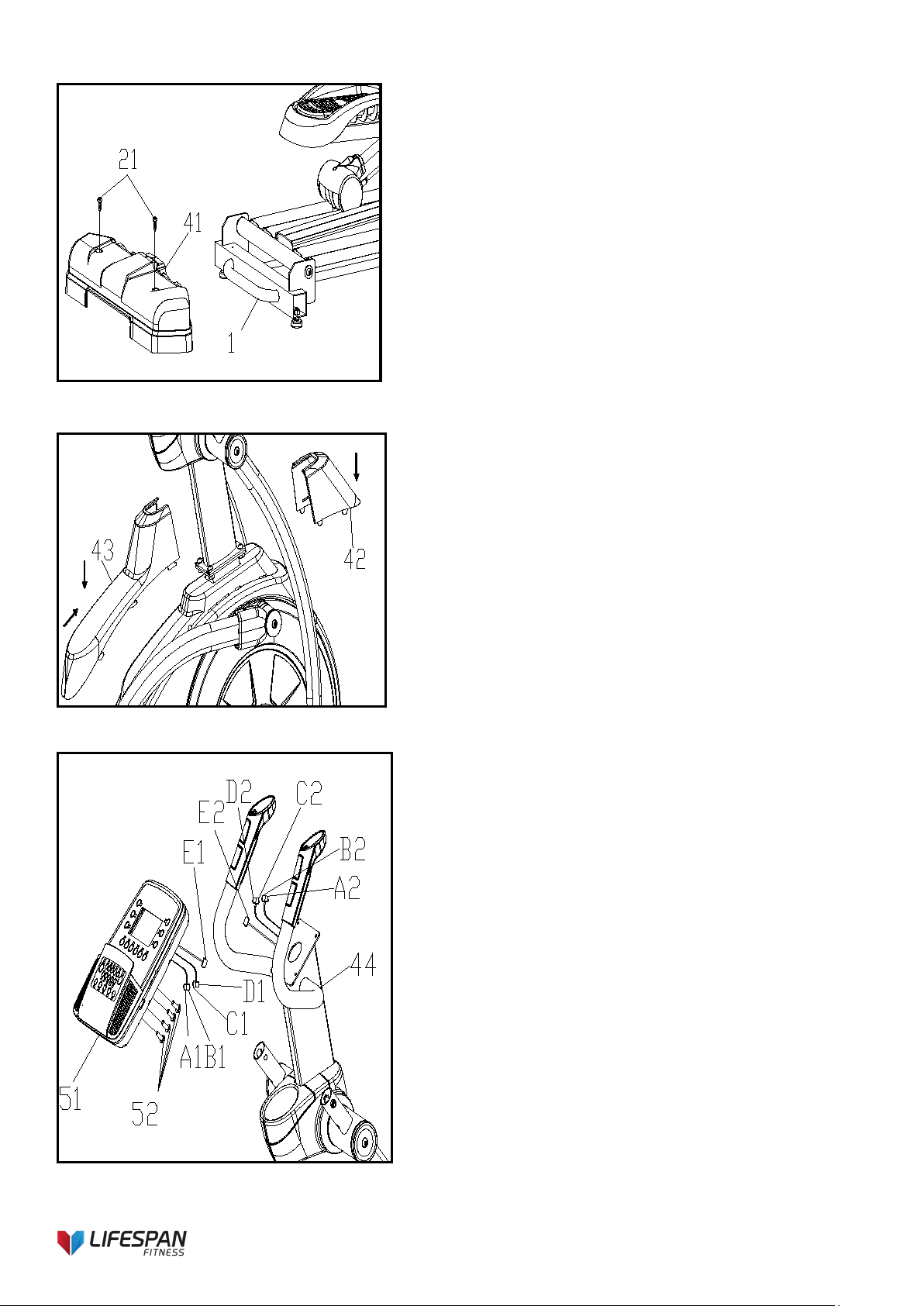
FIG. 3
FIG.3:
1. As shown in the figure, remove two 4.2*19 cross
groove head tapping screws (21) pre-locked on
the main frame assembly (1) and lock the rear
cover (41) on the main frame assembly (1).
FIG.4:
1. As shown in the figure, the chain cover rear
cover (43) and chain cover front cover (43) is
assembled on the main frame assembly (1).
FIG.4
FIG.5
FIG.5:
1. As shown in the figure, the wires under the
electronic meter (51) are connected together
according to (A1-A2) (B1-B2) (C1-C2) (D1-D2)
(E1-E2) l, and the terminals are inserted into the
large sheet metal hole on the instrument tube
assembly (44) to avoid overwhelming the signal
line.
2. Finally, the electronic meter (51) is fixed to the
instrument tube assembly (44) with four M5*8
cross groove head screws on the electronic
meter (51).
11
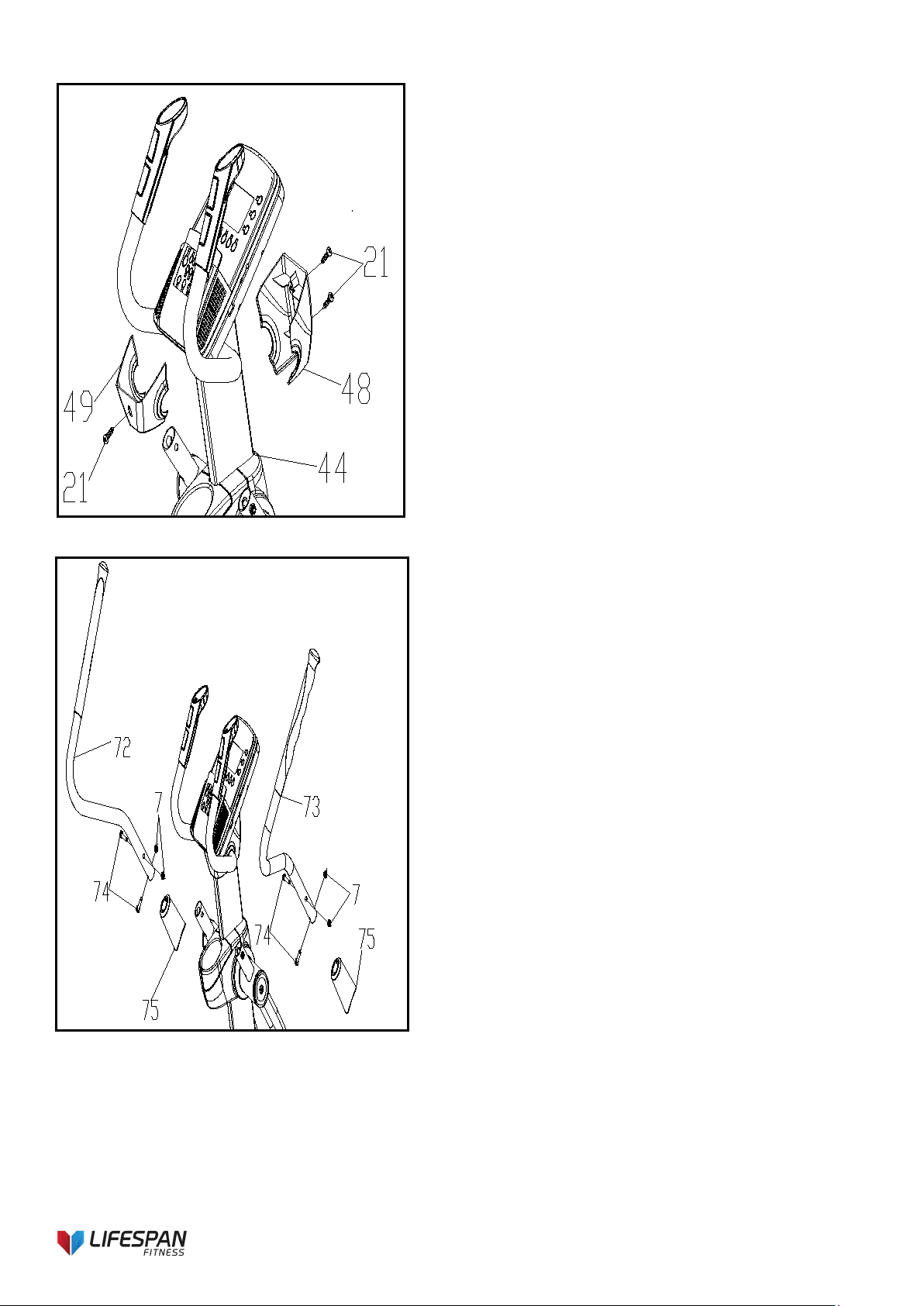
FIG. 6
FIG.7
FIG.6:
1. As shown in the figure, three screws (21) which
are pre-locked on the instrument tube assembly
(44) are removed first. Then, the instrument back
cover (49) and the instrument front cover (48)
are fixed on the instrument tube assembly (44)
with three self-tapping screws (21) with 4.2*19
cross groove disk head.
FIG.7:
1. As shown in the figure, remove four M8*45
hexagonal head screws and four M8 anti-
loosening nuts that are pre-locked on the left-
and right-hand rocker tube (72) (73).
2. Then two shaker caps (75) are inserted into the
left and right shaker caps (72) (73). Insert the left
handshake tube (72) into the left handshake tube
assembly circular tube and lock it with two M8*45
hexagonal head screws and two M8 anti-
loosening nuts (pay attention to the direction of
the head of the screw).
3. Finally, put down the shaker cover (75). The
assembly steps on the other side are the same.
12
6. COMPUTER OPERATION
Function:
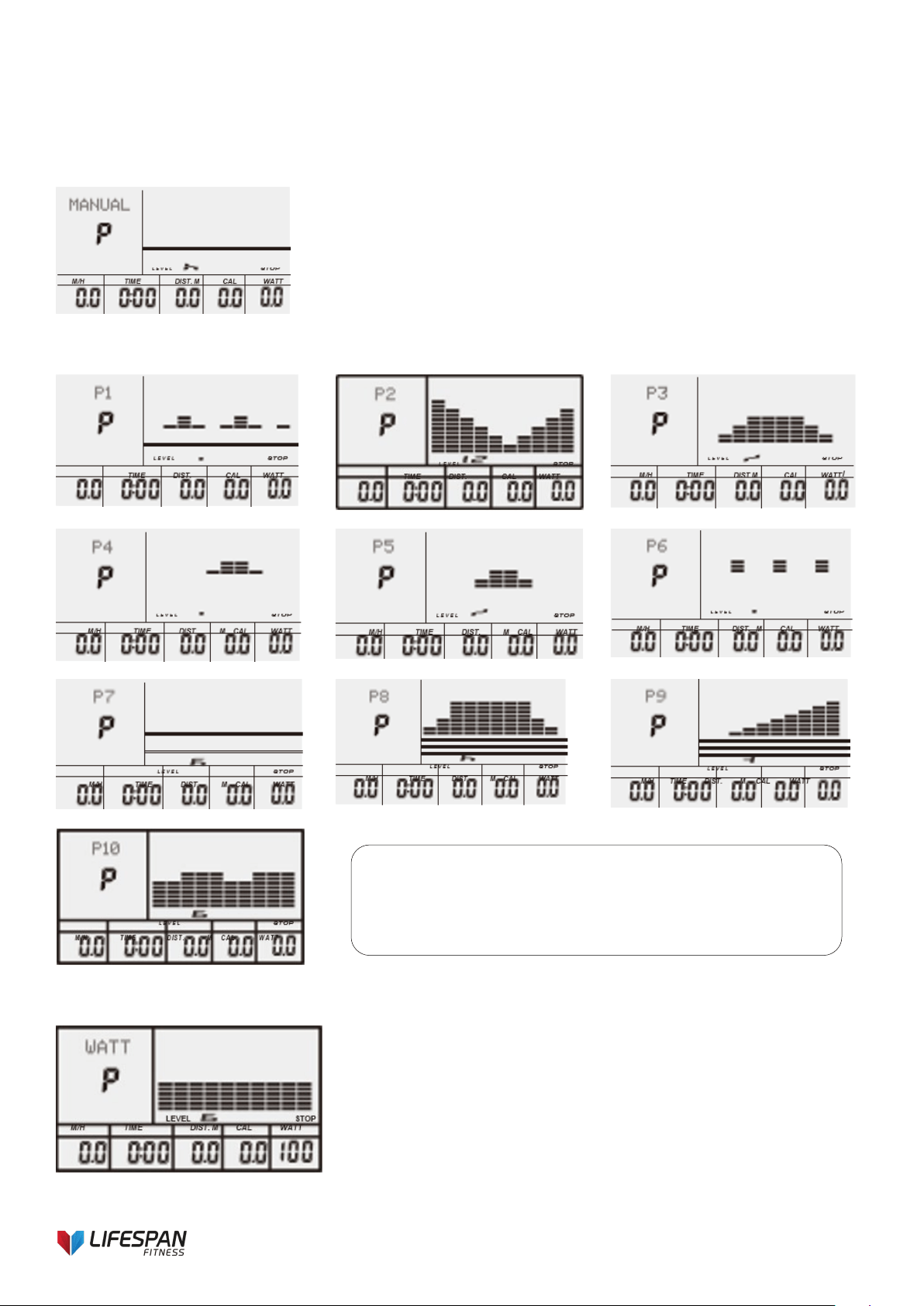
1. Program: 21 programs as following A: 1 Manual Program (See fig.1)
B: 10 Preset Program Profile: (See fig.2-fig.11)
Fig. 2
Fig. 3
Fig.4
Fig. 5
Fig. 6
Fig. 7
Fig. 8
Fig. 9
Fig. 10
Fig. 11
C:1 Watt Control Program (See fig.12)
Fig. 12
P1: ROLLING P2: VALLEY P3: FAT BURN
P4: RAMP P5: MOUNTAIN P6: INTERVAL
P7: CARDIO P8: ENDURANCE P9: SLOPE
P10: RALLY
13
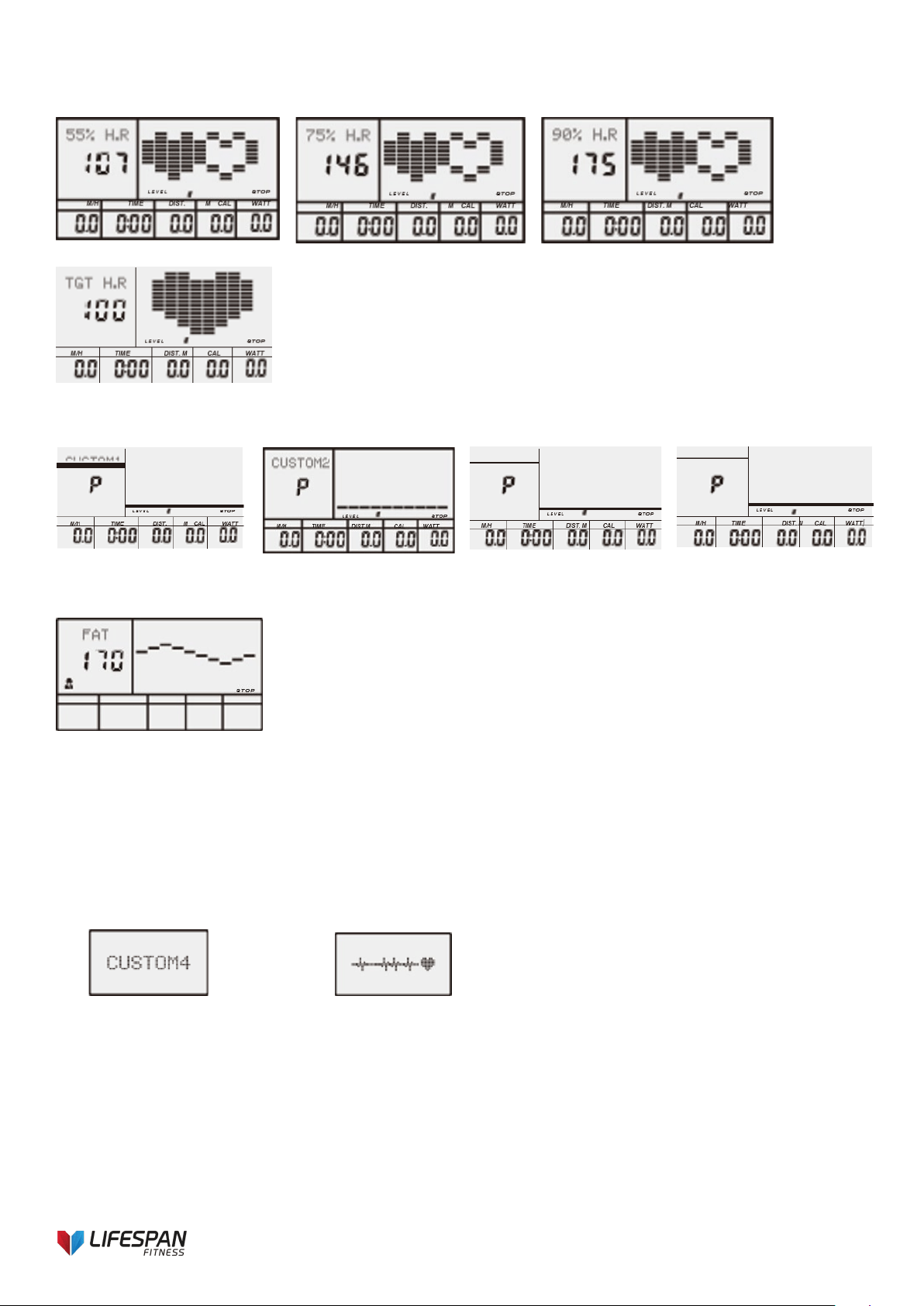
D: 4 Heart Rate Control Program: (See fig.13-fig.16)
55% H.R, 75% H.R, 90% H.R AND TARGET H.R
Fig. 13
Fig. 14
Fig. 15
Fig. 16
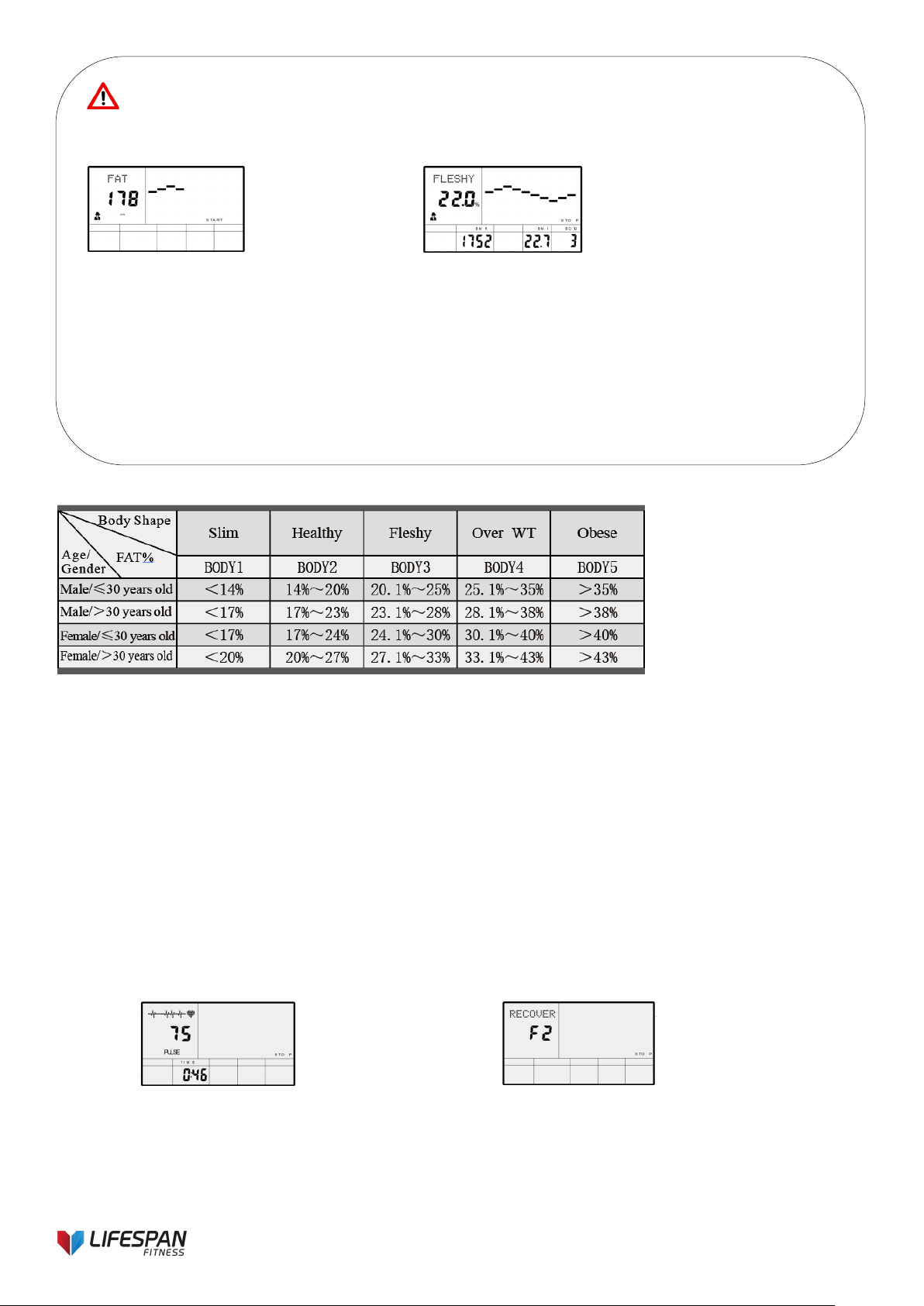
E: 4 User Setting Programs: CUSTOM1 TO CUSTOM4 (See fig.17-fig.20)
Fig. 17
Fig. 18
Fig. 19
Fig. 20
F: 1 Body Fat Measuring Program (See fig.21)
Fig. 21
2. Record the user's data of GENDER, HEIGHT, WEIGHT and AGE even cut off the power.
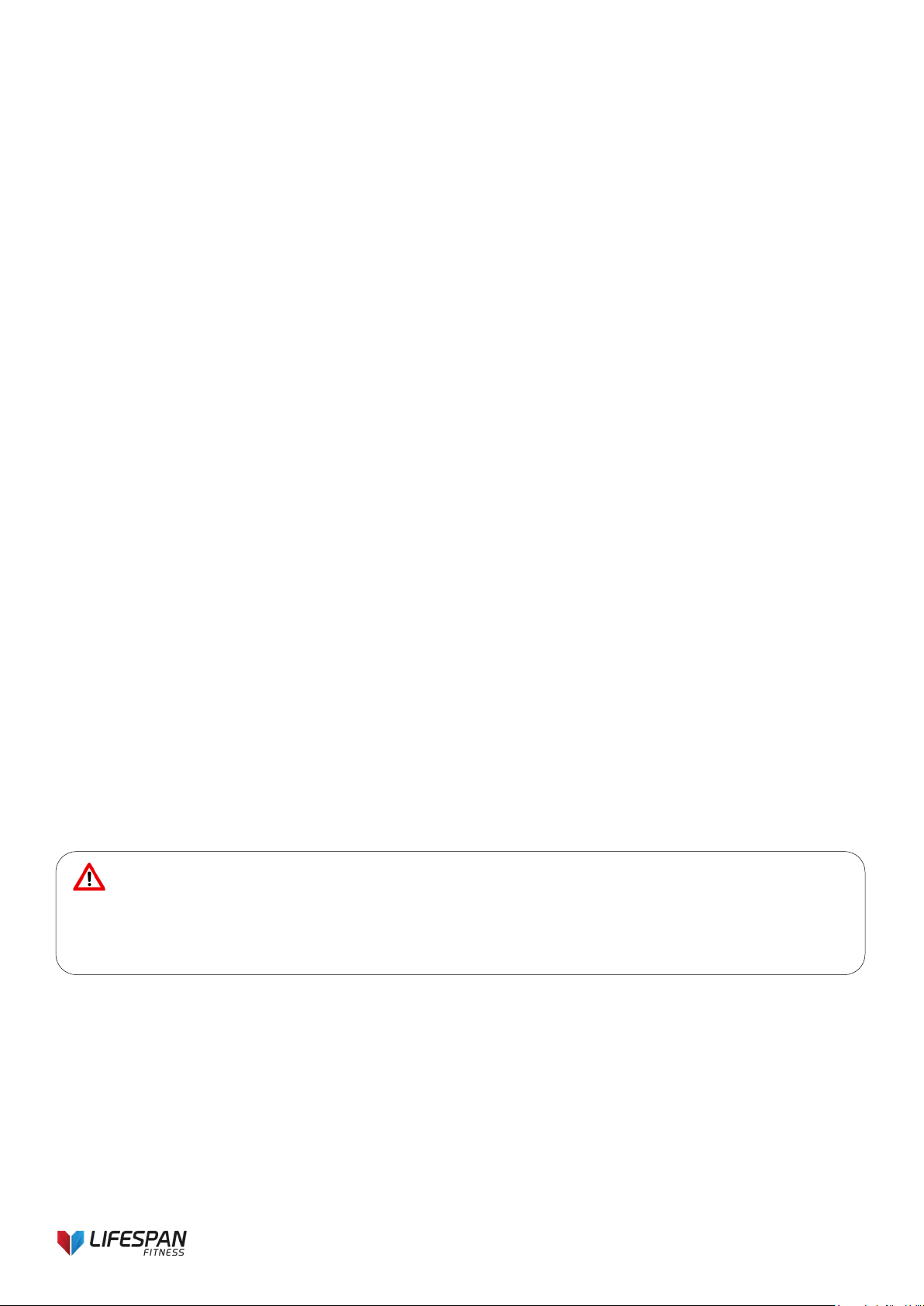
3. Dot matrix display showing your current status. (See fig.22)
4. Simulative ECG measuring the heart rate (See fig.23)
5. Display Speed (RPM), TIME, DIST., CAL., WATT, PULSE, LEVEL at the same time.
6. The computer will turn off automatically if there is no operation, speed signal and pulse signal over 4 minutes.
Meanwhile, it will store your current exercise data and turn the loading resistance to the minimum. Once you
press any button or in motion, the computer will turn on automatically.
Fig. 22 Fig. 23
14
Buttons:
1. ENTER:
• In "stop" mode (display STOP), press ENTER button to enter program selection and setting value which flash
in related window.
A: When you choose the program, press Enter to confirm the one you like.
B: When in setting, press ENTER to confirm the value that you would like to preset.
• During the start mode (display START), press ENTER to choose to display the speed or RPM or switch
automatically.
2. START/STOP:
• Press START/STOP button to start or stop the programs.
• During any mode, hold down this button for 2 seconds to totally reset the computer.
3. UP:
• In stop mode and the dot matrix character flash, press this button (or rotate clockwise) to select the program
up. If the related window value flash, press this button (or rotate clockwise) to increase the value.
• During the start mode (display START), press this button (or rotate clockwise) to increase the training
resistance.
4. DOWN:
• In stop mode and the dot matrix character flash, press this button (or rotate anticlockwise) to select the
program down. If the related window value flash, press this button (or rotate anticlockwise) to decrease the
value.
• During the start mode (display START), press this button (or rotate anticlockwise) to decrease the training
resistance.
5. PULSE RECOVERY:
• First test your current heart rate and show your heart rate value, press this button to enter pulse recovery
testing.
When you are in pulse recovery mode, press this button to exit.
6. RESET (IF HAVE)
• When in setting, press RESET to reset the value that you would like to preset.
• During any mode, hold down this button for 2 seconds to totally reset the computer.
Note:
1. To press or rotate of UP, DOWN button should be followed by different model.
2. It is suggested to cover your finger within the marked region to select functions in case of any wrong
action.
15
Operation:
1. Turn on the computer
Plug in one end of the adaptor to the AC electrical source and connect the other end to the computer. The
computer will beep and enter initial mode. (See fig.24)
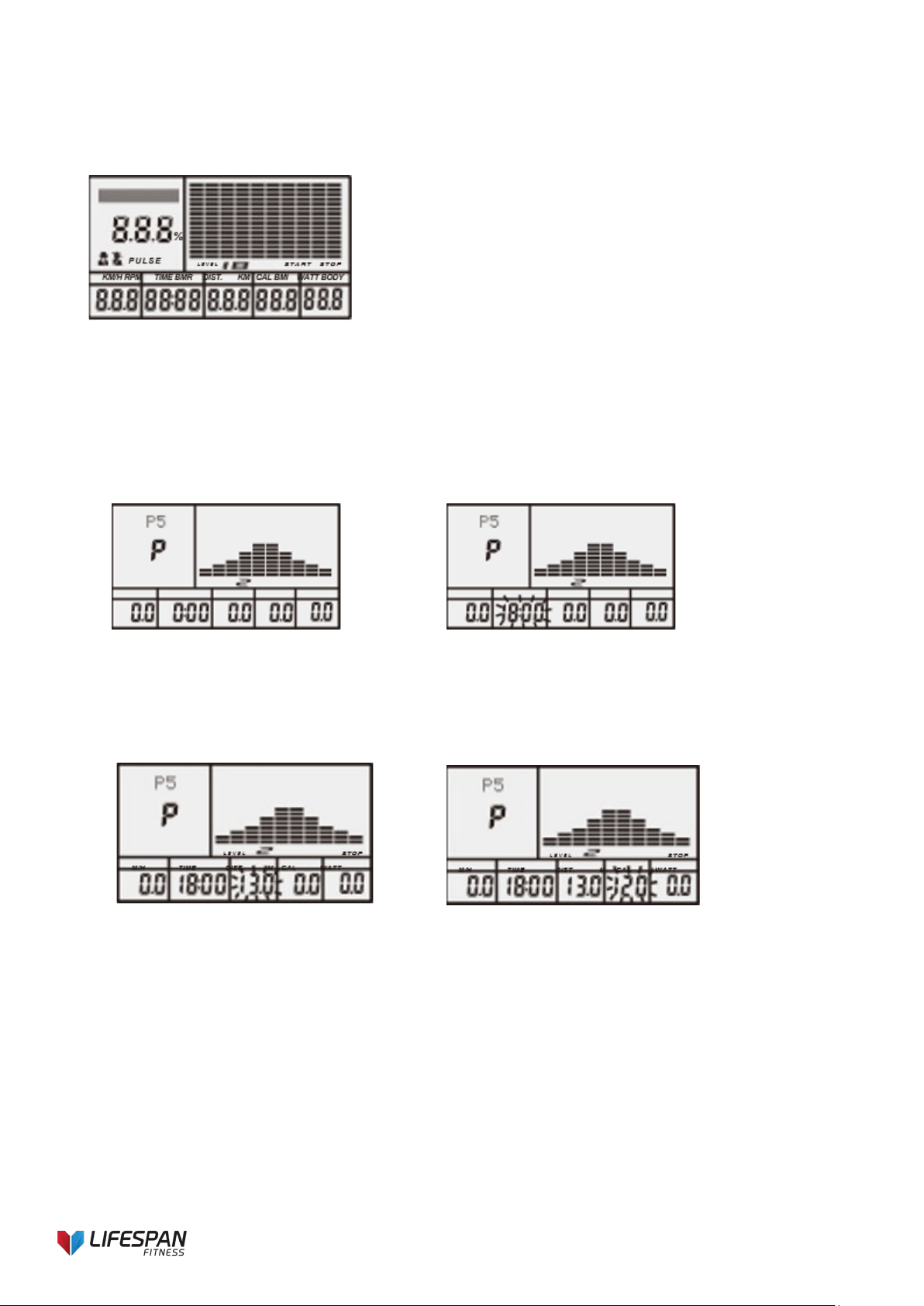
2. Program select and value setting
• Manual Program and Pre-set Program P1~P10
A. Press (or rotate) UP, DOWN button to select the program that you like. (See fig.25)
B. Press ENTER button to confirm the selected program and enter time setting window.
C. The time will flash, and then press (or rotate) UP, DOWN button to set up your desired time. Press
ENTER to confirm the value. (See fig.26)
Fig. 25 Fig. 26
D. The distance will flash, and then press (or rotate) UP, DOWN button to set up the desired distance value.
Press ENTER to confirm the value. (See fig.27)
E. The calories will flash, and then press (or rotate) UP, DOWN to set up the desired calories to be
consumed. Press ENTER to confirm the value. (See fig.28)
Fig. 27 Fig. 28
F. Press START/ STOP to begin exercise. (See fig.29)
• Watt Control Program
A. Press (or rotate) UP, DOWN to select the watt control program.
B. Press ENTER to confirm the selected watt control program and enter time setting window.
C. The time will flash, and then press (or rotate) UP, DOWN button to set up the desired time. Press
ENTER to confirm the value.
D. The distance will flash, and then press (or rotate) UP, DOWN button to set up the desired distance
value. Press ENTER to confirm the value.
E. The calories will flash, and then press (or rotate) UP, DOWN button to set up the desired calories to
be consumed. Press ENTER to confirm the value.
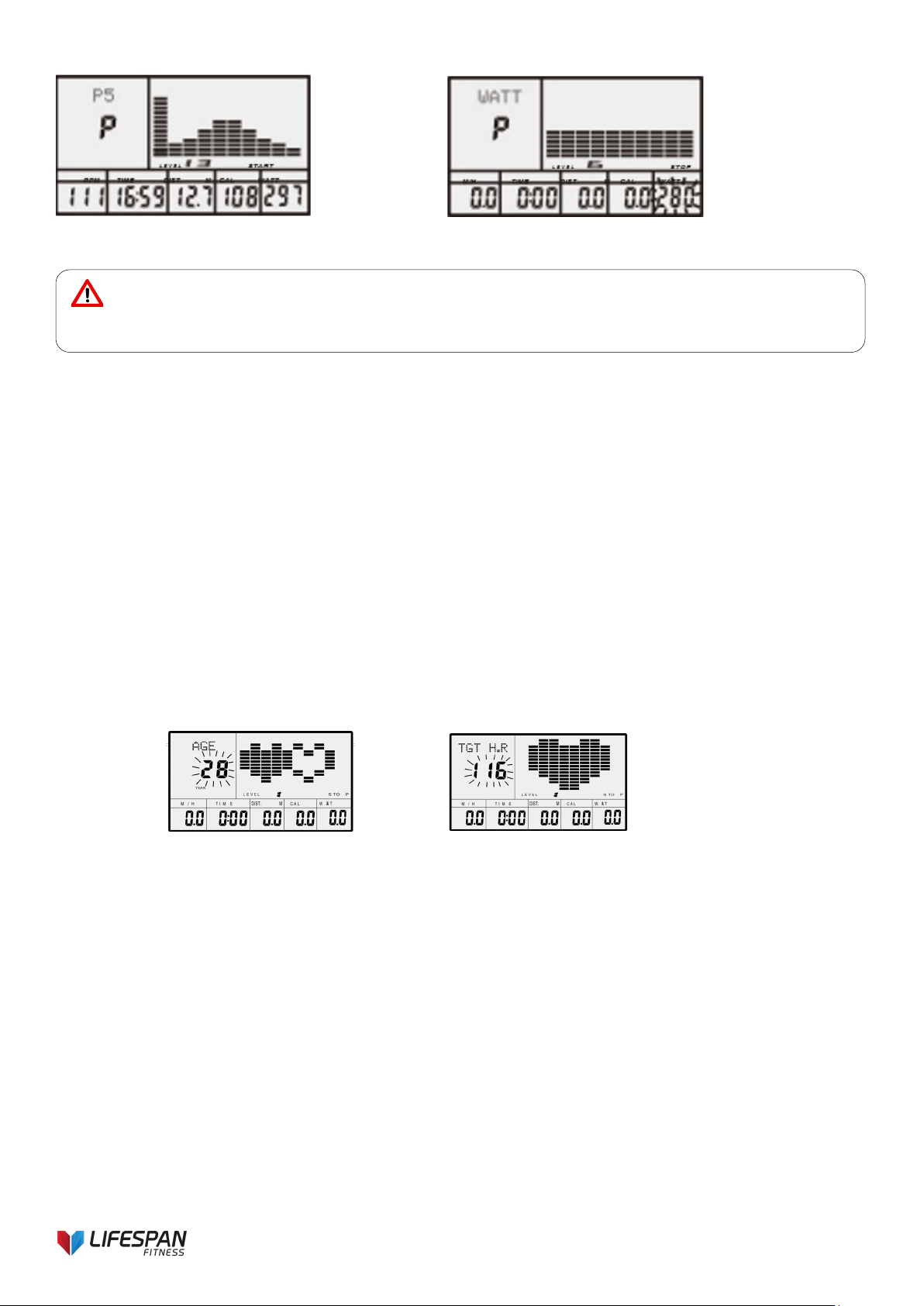
F. The watt display will flash, and then press (or rotate) UP, DOWN button to set up the watt to do the
exercise. Press ENTER to confirm the value. (See fig.30).
16
Fig.29 Fig. 30
G. Press START/ STOP to begin exercise.
• HEART RATE CONTROL PROGRAM: 55% H.R, 75% H.R and 90% H.R
The maximum heart rate depends on different age and this program will ensure you do the healthy exercise
within maximum heart rate.
A. Press (or rotate) UP, DOWN button to choose the heart rate control program.
B. Press ENTER to confirm the heart rate control program and enter time setting window.
C. The time will flash, and then press (or rotate) UP, DOWN button to set up the desired time. Press
ENTER to confirm the value.
D. The distance will flash, and then press (or rotate) UP, DOWN button to set up the desired distance
value. Press ENTER to confirm the value.
E. The calories will flash, and then press (or rotate) UP, DOWN button to set up the desired calories to
be consumed. Press ENTER to confirm the value.
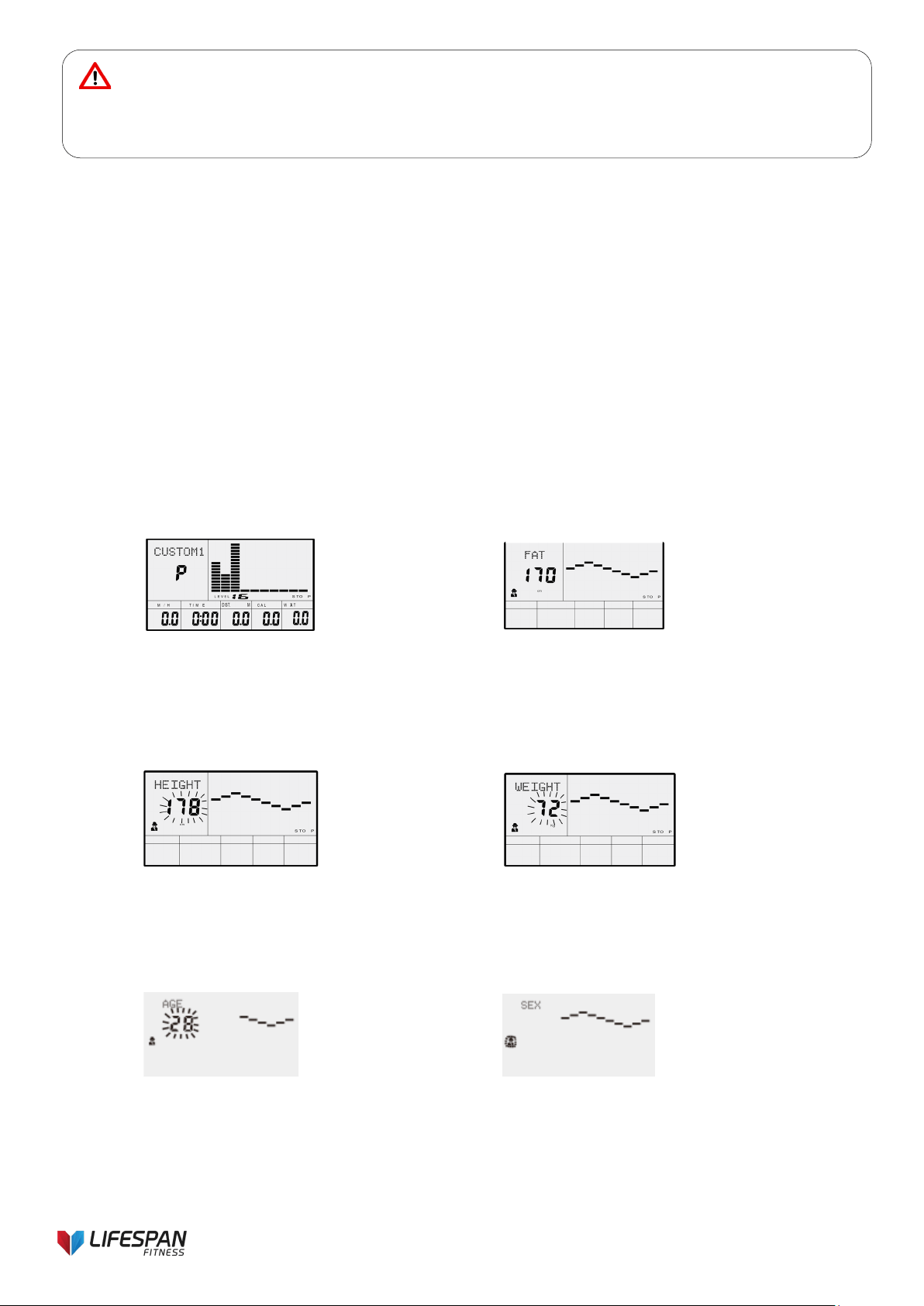
F. The age will flash, and then press (or rotate) UP, DOWN button to set the user's age. Press ENTER to
confirm the value. (See fig.31)
G. When the target heart rate control program flash, the computer will display the user's target heart rate
according to user's age.
H. Press START/ STOP to begin exercise.
Fig. 31 Fig. 32
• HEART RATE CONTROL PROGRAM: TARGET HEART RATE The user can set any target heart rate to do
the exercise.
A. Press (or rotate) UP, DOWN button to select TARGET HEART RATE program.
B. Press ENTER to confirm your choice and enter time setting window.
C. The time display will flash, and then press (or rotate) UP, DOWN button to set the desired time to do
the exercise. Press ENTER to confirm the value.
D. The distance will flash, and then press (or rotate) UP, DOWN button to set up the desired distance
value. Press ENTER to confirm the value.
E. The calories will flash, and then press (or rotate) UP, DOWN button to set up the desired calories to
be consumed. Press ENTER to confirm the value.
F. The target heart rate will flash, and then press (or rotate) UP, DOWN button to set up your target heart
rate. Press ENTER to confirm the value. (See fig 32)
G. Press START/ STOP to begin exercise.
Note: The WATT value is decided by the TORQUE and RPM. In this program, the WATT value will keep at
constant value. It means that if you pedal quickly, the load resistance will decrease and if you pedal slowly, the
load resistance will increase to ensure you are at the watt value.
17
• User Profile Programs: CUSTOM1~CUSTOM4
A. Press (or rotate) UP, DOWN button to select the user.
B. Press ENTER to confirm your choice and enter time setting window.
C. The time display will flash, and then press (or rotate) UP, DOWN button to set up the desired time to do
the exercise. Press ENTER to confirm the value.
D. The distance will flash, and then press (or rotate) UP, DOWN button to set up the desired distance value.
Press ENTER to confirm the value.
E. The calories will flash, and then press (or rotate) UP, DOWN button to set up the desired calories to be
consumed. Press ENTER to confirm the value.
F. The first resistance level will flash, and then press (or rotate) UP, DOWN button to set the desired load
resistance. Press ENTER to confirm. Then repeat above operation to set the resistance from 2 to 10. (See
fig.33)
G. Press START/ STOP to begin exercise.
• Body Fat Measurement Program
A. Press (or rotate) UP, DOWN button to select BODY FAT TEST program (See fig.34)
Fig. 33 Fig. 34
B. Press ENTER to confirm your choice, and enter height setting mode
C. The height display will flash, and then press (or rotate) UP, DOWN button to set up your height. Press
ENTER to confirm the value. (See fig.35)
D. The weight display will flash, and then press (or rotate) UP, DOWN button to set up your weight. Press
ENTER to confirm the value. (See fig.36)
Fig. 35 Fig.36
E. The age display will flash, and then press (or rotate) UP, DOWN button to set up your age. Press ENTER
to confirm the value. (See fig.37)
F. The gender display will flash, and then press (or rotate) UP, DOWN button to set up your gender. Press
ENTER to confirm. (See fig.38)
Fig. 37 Fig. 38
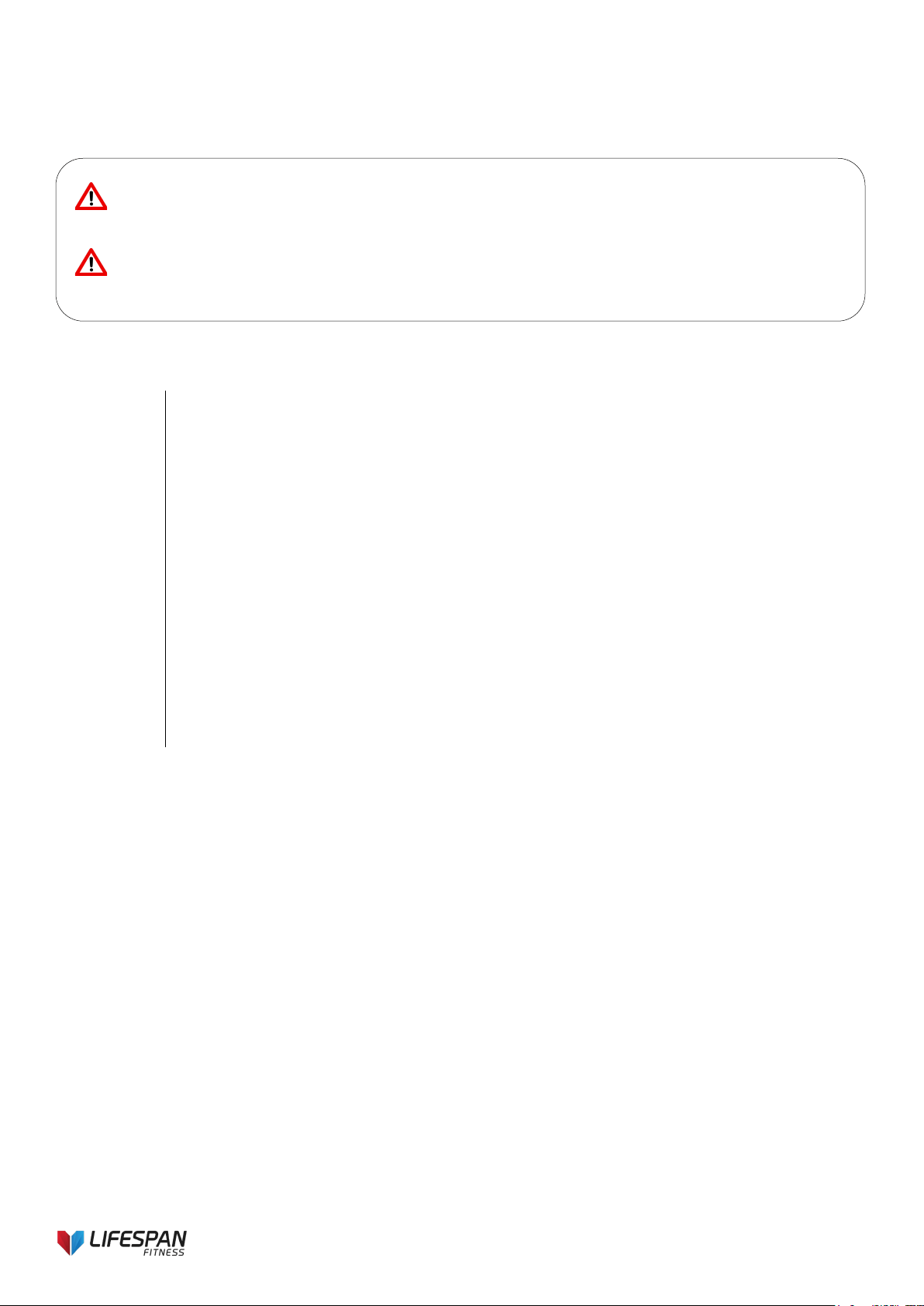
G. Press START/STOP to begin testing your body fat. (See fig.39)
Note: During exercise, the user's heart rate value depends on resistance level and speed. The heart rate
control program is to ensure your heart rate within the preset value. When the computer detects your current
heartrate is higher than preset, it will decrease the resistance level automatically or you may slow down exercise.
If your current heart rate is lower than preset, it will increase resistance and you may speed up.
18
3. Pulse Recovery Test
The pulse recovery test is to compare your heart rate before and after exercise. It is targeted to determine your
heart strength via the measuring. Please do the test as below:
A. Both your hands hold the pulse sensor or via wireless transmitter belt to test the pulse (if applicable), the
computer will display your current pulse value.
B. Press RECOVERY to enter the pulse recovery test and the computer program will enter the stop status.
(See fig 41)
C. Keep pulse detecting.
D. Time will count down from 60 seconds to 0 second.
E. When time reaches 0, the test result (F1-F6) appears on the display.
F1=Excellent F2=Good F3=Fair F4=below average F5= No Good F6= Poor (See fig 42)
F. If the computer does not detect your current heart rate first, pressing RECOVERY will not enter pulse
recovery test. During the pulse recovery test, press RECOVERY to exit the test and return to the stop
status.
Fig. 41 Fig. 42
Note:
① During the body fat measurement, place both your palms on the contact pads. The test result is: FAT%,
BMR (Basal Metabolic Rate), BMI (Body Mass Index), BODY and body shape. (See fig.40)
Fig. 39 Fig. 40
FAT%: The total body fat in our body measured by percentage.
BMR: Basal Metabolic Rate (metabolism) is the energy (measured in calories) expended by the body at rest
to maintain normal bodily function.
BMI: means Body Mass Index, which is used for body shape building
② During the body fat measurement, if your palms do not contact the pulse sensor well, the computer
cannot receive any signal and it will display ERROR2. Press START/STOP to try again.
③ During the test, you cannot exit the test when press any button. After the test finish, press (or rotate) UP,
DOWN button to exit the body fat measurement program and switch to another program.
④ Comparison sheet of body fat and Obese
19
4. Pulse Measurement
Please place both your palms on the contact pads and the computer will show your current heartbeat rate in
beats per minute (BPM) on the LCD after 3~4 seconds. During the measurement, heart icon will flash with
simulative ECG showing.
Specifications
SPEED KM/H
(M/H):
showing your current speed. Range: 0.0~99.9 KM/H (M/H).
TIME:
the accumulative exercise time, range: 0:00~99M59S. The preset time range is 5:00~99M00S. The
computer will start to count down from preset time to 0:00 with average time for each resistance
level. When it reaches to zero, the program will stop and computer alarm. If you do not preset the
time, it will run with one-minute decrement each resistance level.
DIST:
the exercise accumulative distance. Range: 0.0~99.9~999KM (MILE) the preset distance
range :1.0~99.0~999. When the distance reaches 0, the program will stop, and the computer will
alarm.
CALORIE:
the exercise accumulative calories burnt. Range: 0.0~99.9~999 the preset calories
range :10.0~90.0~990. When the calorie reaches 0, the program will stop, and the computer will
alarm.
PULSE:
showing the exercise heart rate value. Range: 30~240BPM (beat per minute)
RESISTANCE
LEVEL:
showing resistance level. Range: 1~16
WATT:
show the exercise watt
Error Codes
1. When the computer displays ERROR1, please check if the motor is in good condition and if the motor wires
connect well.
2. When the computer displays ERROR2, please check if your hands contact the sensors well as there no body fat
signal detected.
Remark: During the process of pulse measurement, because of the contact jamming, the measurement
value may not be stable when start, then it will return to normal level. The measurement value cannot be
regarded as the basis of medical treatment.
NOTE: If the computer is also equipped with wireless heart rate measuring via the transmitter belt, and
with hand pulse function, the hand-measurement-signal-detecting is preferred.
20
7. EXERCISE GUIDE
PLEASE NOTE: Before beginning any exercise program, consult your physician. This is important
especially if you are over the age of 45 or individuals with pre-existing health problems.
The pulse sensors are not medical devices. Various factors, including the user’s movement, may affect
the accuracy of heart rate readings. The pulse sensors are intended only as an exercise aid in
determining heart rate trends in general.
Exercising is a great way to control your weight, improving your fitness and reduce the effect of aging and stress.
The key to success is to make exercise a regular and enjoyable part of your everyday life.
The condition of your heart and lungs and how efficient they are in delivering oxygen via your blood to your
muscles is an important factor to your fitness. Your muscles use this oxygen to provide enough energy for daily
activity. This is called aerobic activity. When you are fit, your heart will not have to work as hard. It will pump a lot
fewer times per minute, reducing the wear and tear of your heart.
So the fitter you are, the healthier and greater you will feel.
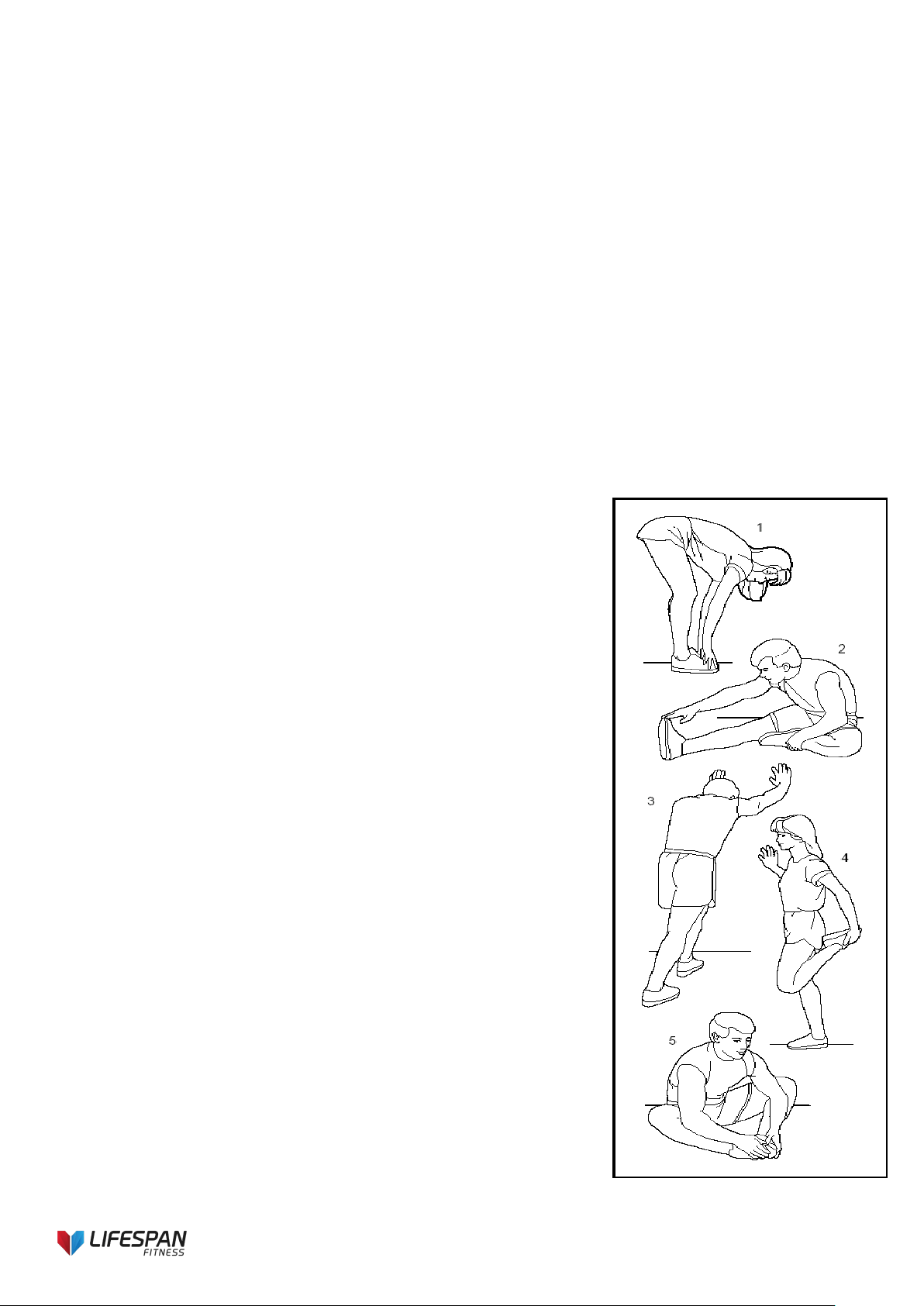
Warm-up / stretching exercises
A successful exercise session begins with warming up exercises and ends
with
exercises for cooling down and relaxing. These warming up exercises
prepare your body for the subsequent demands made upon it. The cooling
down / relaxation period after the exercise session ensures that you do not
experience any muscular problems. In the following you will find stretching
exercise instructions for warming up and cooling down.
Please pay attention to the following points:
1. TOUCH TOES
Bend your trunk slowly forwards and try to touch your feet with your hands.
Reach down
as far as possible to your toes. Maintain this position for 10-15 seconds if
possible.
2
.EXERCISES FOR THE KNEES
Sit on the floor and stretch out your right leg. Bend your left leg and place
your foot on
your right upper thigh. Now try to reach your right foot with your right arm.
Maintain
3. EXERCISES FOR THE CALVES/ACHILLES TENDON
Place both hands on the wall and support your full body weight. Then
move your left leg backwards and alternate it with your right leg. This
stretches the back of the leg. Maintain this position for 30-40 seconds if
possible.
4. EXERCISES FOR THE UPPER THIGH
Support yourself by placing your hand on the wall, then reach down behind
you and lift your right or left foot as close to your buttocks as possible. Feel
a comfortable tension in your front upper thigh. Maintain this position for 30
seconds if possible and repeat this exercise 2 times for each leg.
21
5. INSIDE UPPER THIGH
Sit on the floor and place your feet in such a way that your knees are facing outwards. Pull your feet as close as
possible to your groin. Now press your knees carefully downwards. Maintain this position for 30-40 seconds if
possible.
Training Zone Exercise
After warming up, increase the intensity to your desired exercise program. Be sure to maintain your intensity for
maximum performance. Breathe regularly and deeply as you exercise.
Cool Down
Finish each workout with a light jog or walk for at least 1 minute. Then complete 5 to 10 minutes of stretching to
cool down. This will increase the flexibility of your muscles and will help prevent problems post-exercise.
Workout Guidelines
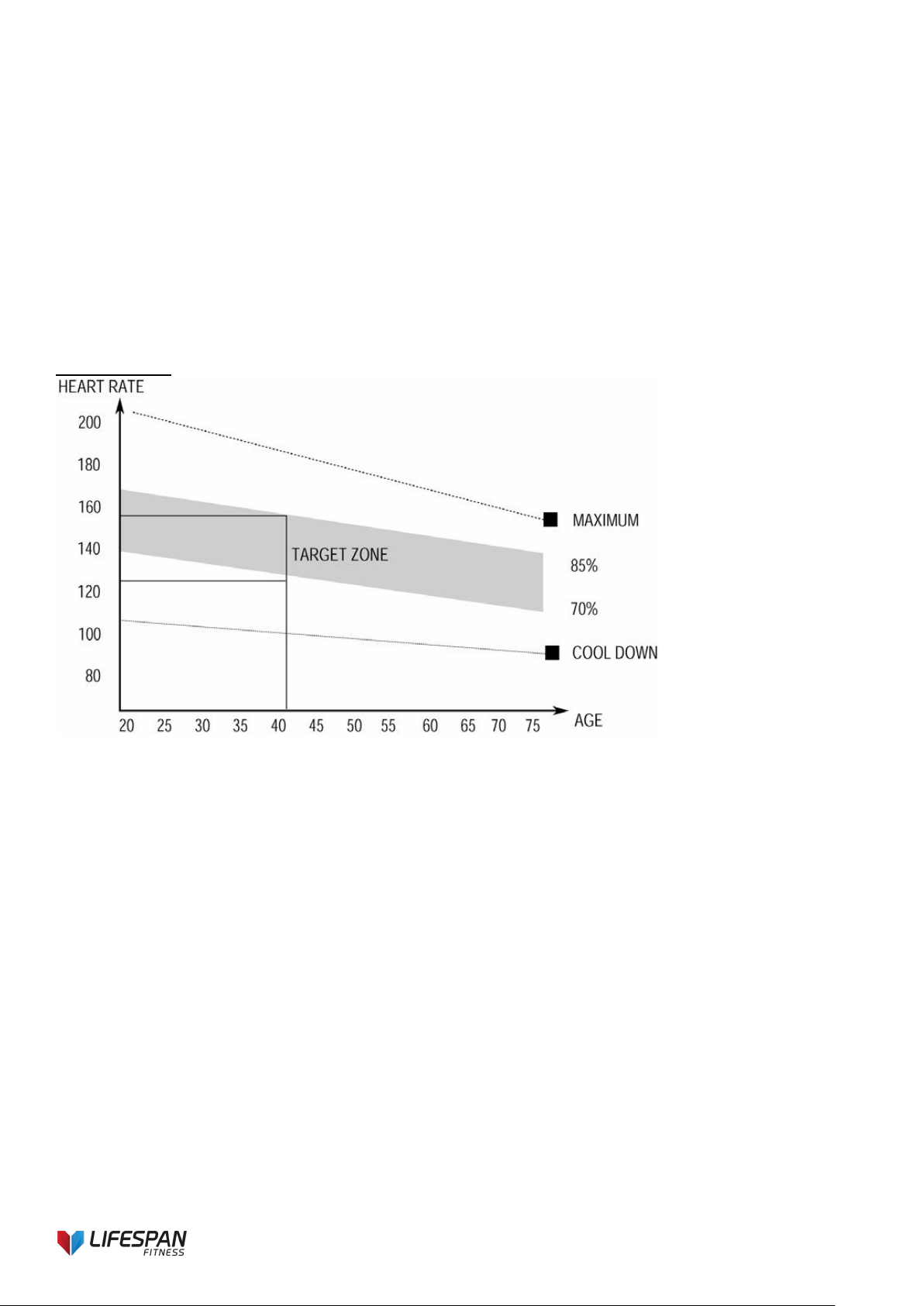
TARGET ZONE
This is how your pulse should behave during general fitness exercise. Remember to warm up and cool
down for a few minutes.
The most important factor here is the amount of effort you put in. The harder and longer you work, the more
calories you will burn.

22
8. WARRANTY
AUSTRALIAN CONSUMER LAW
Many of our products come with a guarantee or warranty from the manufacturer. In addition, they come with
guarantees that cannot be excluded under the Australian Consumer Law. You are entitled to a replacement or
refund for a major failure and compensation for any other reasonably foreseeable loss or damage.
You are entitled to have the goods repaired or replaced if the goods fail to be of acceptable quality and the
failure does not amount to a major failure. Full details of your consumer rights may be found at
www.consumerlaw.gov.au
Please visit our website to view our full warranty terms and conditions:
http://www.lifespanfitness.com.au/warranty-repairs
Warranty and Support:
Please email us at support@lifespanfitness.com.au
for all warranty or support issues.
For all warranty or support related enquiries an email must be sent before contacting us via any other means.

23
Hand Pulse Technology
This product comes equipped with hand pulse sensors which are used to pick up tiny EKG/ECG signals
that run through the body when your heart beats. These electrical EKG/ECG signals are very small, and
they must be amplified 1000 times to make the signal useful for the computer to display your pulse.
To ensure proper operation:
- The user must maintain good, consistent contact on all four sensors
- The users skin cannot be too dry or too wet
Other factors that could affect the reading:
- Change of grip on the sensors (during slow pace walking and up to running speeds)
- Tightening of hand muscles will produce small electrical signals
- Static electricity charges from the air or from walking on the treadmill
EKG/ECG sensors may filter through actual EKG/ECG signals and “Noise” factors that may affect the
reading. This will cause the pulse reading to be delayed and will take longer to update the display as the
heart rate changes. Too much noise will create an incorrect reading. Medical conditions or having no
electrical signal in the hands are other factors that may also affect pulse readings.
These are limitations of hand pulse technology and even the most expensive systems (which can cost
upwards of $3,000) used in hospitals have the same problems. The difference is that a patient in a hospital
is not running on a treadmill. Hand pulse technology works well on stationary exercise machines like bikes
and even elliptical cross trainers but are not perfect on a treadmill. We offer treadmills with a wireless heart
rate receiver which may be a more accurate option.
To test if your hand pulse sensors are working up to specification, hold them while standing on the sidestep
rails, not walking, and see if the reading is more in line with what you would expect. This will eliminate the
movement and static electricity factors. If your hands are dry, then wet them slightly (saliva works as a
great conductor if this doesn’t bother you).
For more information, please contact our Lifespan Technical Support Department
www.lifespanfitness.com.au