1
Original
Bedienungsanleitung
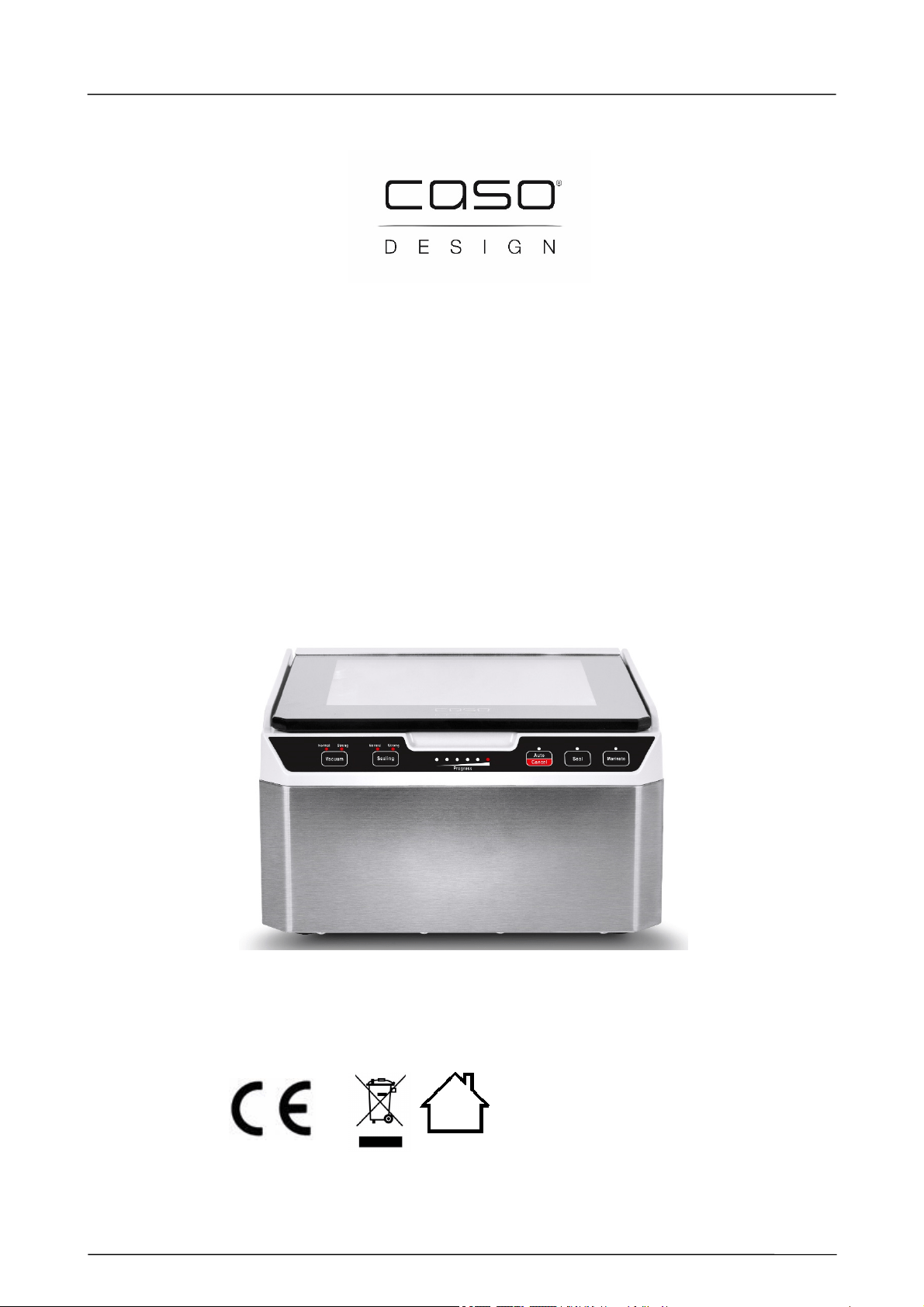
Kammervakuumierer
VacuChef 40
Artikelnummer. 1417

2
Braukmann GmbH
Raiffeisenstraße 9
D-59757 Arnsberg
Service-Hotline International:
Tel.: +49 (0) 29 32 / 80 55 4 – 99
Fax: +49 (0) 29 32 / 80 55 4 – 77
eMail: [email protected]
Internet: www.caso-germany.de
Dokument-Nr.: 1417 01-09-2019
Druck- und Satzfehler vorbehalten. Bildabweichungen zur Originalware
sind technisch bedingt möglich.
© 2019 Braukmann GmbH

3
1 Bedienungsanleitung ............................................................................. 11
2 Allgemeines ............................................................................................ 11
2.1 Informationen zu dieser Anleitung ........................................................................... 11
2.2 Warnhinweise ............................................................................................................ 11
2.3 Haftungsbeschränkung ............................................................................................ 12
2.4 Urheberschutz ........................................................................................................... 12
3 Sicherheit ................................................................................................ 12
3.1 Bestimmungsgemäße Verwendung ......................................................................... 12
3.2 Allgemeine Sicherheitshinweise .............................................................................. 13
3.3 Gefahrenquellen ........................................................................................................ 14
3.3.1Verbrennungsgefahr .................................................................................................. 14
3.3.2Brandgefahr ............................................................................................................... 15
3.3.3Gefahr durch elektrischen Strom ............................................................................... 15
4 Sicherheitshinweise zur Aufbewahrung von Lebensmitteln .............. 16
5 Inbetriebnahme ....................................................................................... 16
5.1 Sicherheitshinweise .................................................................................................. 16
5.2 Lieferumfang und Transportinspektion ................................................................... 16
5.3 Einsatzbereich ........................................................................................................... 17
5.4 Auspacken ................................................................................................................. 17
5.5 Entsorgung der Verpackung .................................................................................... 17
5.6 Aufstellung ................................................................................................................. 17
5.6.1Anforderungen an den Aufstellort .............................................................................. 17
5.7 Elektrischer Anschluss ............................................................................................. 18
5.7.1Verlängerungskabel .................................................................................................. 18
6 Aufbau und Funktion ............................................................................. 18
6.1 Gesamtübersicht ....................................................................................................... 19
6.2 Bedienelemente ......................................................................................................... 20
7 Bedienung und Betrieb .......................................................................... 20
7.1 Vakuum-Verpacken in einem Beutel in der Vakuumkammer ................................ 20
7.2 Vakuum-Verpacken in einem von der Rolle stammenden Beutel ......................... 21
7.3 Versiegeln eines Beutels ohne Vakuum .................................................................. 22
7.4 Vakuumieren eines Beutels außerhalb der Vakuumkammer ................................. 23
7.5 Beutel und Rollen ...................................................................................................... 23
7.6 Vakuumieren von Behältern ..................................................................................... 23
7.7 Marinieren von Lebensmitteln im Beutel ................................................................. 24

4
7.8 Aufbewahrung des Vakuumierers ............................................................................ 24
8 Reinigung und Pflege ............................................................................. 24
8.1 Sicherheitshinweise .................................................................................................. 25
8.2 Reinigung ................................................................................................................... 25
9 Störungsbehebung ................................................................................. 25
9.1 Sicherheitshinweise .................................................................................................. 26
9.2 Tabelle Störungsursachen und -behebung ............................................................. 26
10 Entsorgung des Altgerätes ................................................................... 27
11 Garantie ................................................................................................... 27
12 Technische Daten ................................................................................... 28
13 Instruction Manual .................................................................................. 30
13.1 General ............................................................................................................... 30
13.2 Information on this manual .............................................................................. 30
13.3 Warning notices ................................................................................................ 30
13.4 Limitation of liability ......................................................................................... 31
13.5 Copyright protection ......................................................................................... 31
14 Safety ....................................................................................................... 31
14.1 Intended use ...................................................................................................... 31
14.2 General Safety information .............................................................................. 32
14.3 Sources of danger............................................................................................. 33
14.3.1 Danger of burns ................................................................................................... 33
14.3.2 Danger of fire ....................................................................................................... 33
14.3.3 Dangers due to electrical power .......................................................................... 33
14.4 Food storage safety information ..................................................................... 34
15 Getting Started ........................................................................................ 34
15.1 Packaging safety information .......................................................................... 35
15.2 What’s included ................................................................................................ 35
15.3 Uses and advantages of vacuum sealing ....................................................... 35
15.4 Unpacking .......................................................................................................... 35
15.5 Disposal of the packaging ................................................................................ 35
15.6 Setup .................................................................................................................. 36
15.6.1 Setup location requirements: ............................................................................... 36
15.7 Electrical connection ........................................................................................ 36
15.7.1 Extension cords ................................................................................................... 36
16 Complete Overview ................................................................................ 37

5
16.1 Overview ............................................................................................................ 37
16.2 Control Panel ..................................................................................................... 38
17 Operation ................................................................................................. 38
17.1 Vacuum packaging with a bag in the vacuum chamber ................................ 38
17.2 Vacuum with a bag of the bag roll ................................................................... 39
17.3 Sealing a bag without vacuuming ................................................................... 40
17.4 Vacuuming a bag outside the vacuum chamber ............................................ 40
17.5 Bags and rolls ................................................................................................... 40
17.6 Vacuuming of canisters .................................................................................... 41
17.7 Marinate of food with bag ................................................................................. 42
17.8 Storage ............................................................................................................... 42
18 Cleaning and Maintenance .................................................................... 42
18.1 Safety information ............................................................................................. 42
18.2 Cleaning ............................................................................................................. 43
19 Troubleshooting ..................................................................................... 43
19.1 Safety notices .................................................................................................... 43
19.2 Troubleshooting table ...................................................................................... 43
20 Disposal of the Old Device ................................................................... 44
21 Guarantee ................................................................................................ 44
22 Technical Data ........................................................................................ 45
23 Mode d´emploi ........................................................................................ 47
23.1 Généralités ........................................................................................................ 47
23.2 Informations relatives à ce manuel ................................................................. 47
23.3 Avertissements de danger ............................................................................... 47
23.4 Limite de responsabilités ................................................................................. 48
23.5 Protection intellectuelle .................................................................................... 48
24 Sécurité ................................................................................................... 48
24.1 Utilisation conforme ......................................................................................... 49
24.2 Consignes de sécurités générales .................................................................. 49
24.3 Sources de danger ............................................................................................ 50
24.3.1 Danger de brulures .............................................................................................. 50
24.3.2 Danger d'incendie ................................................................................................ 51
24.3.3 Dangers du courant électrique ............................................................................ 51
24.4 Informations relatives à la sécurité de stockage des aliments ..................... 52
25 Mise en service ....................................................................................... 52

6
25.1 Consignes de sécurité ...................................................................................... 52
25.2 Inventaire et contrôle de transport .................................................................. 52
25.3 Fonctions ........................................................................................................... 53
25.4 Déballage ........................................................................................................... 53
25.5 Elimination des emballages ............................................................................. 53
25.6 Mise en place ..................................................................................................... 53
25.6.1 Exigences pour l'emplacement d'utilisation ......................................................... 53
25.7 Raccordement électrique ................................................................................. 54
25.7.1 Les cordons de rallonge ...................................................................................... 54
26 Structure et fonctionnement ................................................................. 55
26.1 Vue d'ensemble ................................................................................................. 55
26.2 Panneau de commande .................................................................................... 56
27 Commande et fonctionnement .............................................................. 56
27.1 Conservation dans un sachet dans le compartiment de mise sous vide .... 56
27.2 Conservation dans des sachets du rouleau ................................................... 57
27.3 Scellage sans vide d'un sachet ....................................................................... 58
27.4 Mise sous vide d’un sac à l’extérieur de la chambre à vide .......................... 58
27.5 Sachets et rouleaux .......................................................................................... 59
27.6 Mise sous vide de récipients ........................................................................... 59
27.7 Mariner des aliments dans un sachet ............................................................. 60
27.8 Ouverture d’un sac scellé ................................................................................ 60
27.9 Rangement de votre appareil: .......................................................................... 60
28 Nettoyage et entretien ............................................................................ 60
28.1 Consignes de sécurité ...................................................................................... 61
28.2 Nettoyage ........................................................................................................... 61
29 Réparation des pannes .......................................................................... 61
29.1 Consignes de sécurité ...................................................................................... 62
29.2 Origine et remède des incidents ...................................................................... 62
30 Elimination des appareils usés ............................................................ 63
31 Garantie ................................................................................................... 63
32 Caractéristiques techniques ................................................................. 64
33 Istruzione d´uso ...................................................................................... 66
33.1 In generale ......................................................................................................... 66
33.2 Informazioni su queste istruzioni d’uso .......................................................... 66
33.3 Indicazioni d’avvertenza ................................................................................... 66

7
33.4 Limitazione della responsabilità ...................................................................... 67
33.5 Tutela dei diritti d’autore .................................................................................. 67
34 Sicurezza ................................................................................................. 67
34.1 Utilizzo conforme alle disposizioni .................................................................. 67
34.2 Indicazioni generali di sicurezza ..................................................................... 68
34.3 Fonti di pericolo ................................................................................................ 69
34.3.1 Pericolo di ustioni ................................................................................................ 69
34.3.2 Pericolo d’incendio .............................................................................................. 70
34.3.3 Pericolo dovuto a corrente elettrica ..................................................................... 70
34.3.4 Informazioni di sicurezza per la conservazione del cibo. ..................................... 71
35 Messa in funzione ................................................................................... 71
35.1 Indicazioni di sicurezza .................................................................................... 71
35.2 Insieme della fornitura ed ispezione trasporto ............................................... 71
35.3 Funzioni ............................................................................................................. 72
35.4 Disimballaggio .................................................................................................. 72
35.5 Smaltimento dell’involucro .............................................................................. 72
35.6 Posizionamento ................................................................................................ 72
35.6.1 Requisiti del luogo di posizionamento ................................................................. 72
35.7 Connessione elettrica ....................................................................................... 73
35.7.1 Cavo prolunga ..................................................................................................... 73
36 Costruzione e funzione .......................................................................... 73
36.1 Panoramica complessiva ................................................................................. 74
36.2 Elementi di comando ........................................................................................ 75
37 Utilizzo e funzionamento ....................................................................... 75
37.1 Confezionamento sotto vuoto in un sacchetto nella camera del vuoto ....... 76
37.2 Confezionamento sotto vuoto in un sacchetto derivante dal rotolo ............ 76
37.3 Sigillatura di un sacchetto senza vuoto .......................................................... 78
37.4 Messa sotto vuoto di un sacchetto fuori dalla camera del vuoto ................. 78
37.5 Sacchetti in rotoli .............................................................................................. 78
37.6 Messa sotto vuoto di recipienti ....................................................................... 79
37.7 Marinatura di generi alimentari nel sacchetto ................................................ 80
37.8 Conservazione del sistema di VacuChef 40 ................................................... 80
38 Pulizia e cura ........................................................................................... 80
38.1 Indicazioni di sicurezza .................................................................................... 80
38.2 La pulizia ............................................................................................................ 81
39 Eliminazione malfunzionamenti ............................................................ 81

8
39.1 Indicazioni di sicurezza .................................................................................... 81
39.2 Cause malfunzionamenti e risoluzione ........................................................... 82
40 Smaltimento dell’apparecchio obsoleto .............................................. 83
41 Garanzia .................................................................................................. 83
42 Dati tecnici .............................................................................................. 84
43 Manual del usuario ................................................................................. 86
43.1 Generalidades ................................................................................................... 86
43.2 Información acerca de este manual ................................................................ 86
43.3 Advertencias ..................................................................................................... 86
43.4 Limitación de responsabilidad ........................................................................ 87
43.5 Derechos de autor (copyright) ......................................................................... 87
44 Seguridad ................................................................................................ 87
44.1 Uso previsto ...................................................................................................... 87
44.2 Instrucciones generales de seguridad ............................................................ 88
44.3 Fuentes de peligro ............................................................................................ 89
44.3.1 Peligro de quemaduras ....................................................................................... 89
44.3.2 Peligro de fuego .................................................................................................. 89
44.3.3 Peligro de electrocución ...................................................................................... 90
45 Indicaciones de seguridad para la conservación de alimentos ......... 90
46 Puesta en marcha ................................................................................... 91
46.1 Instrucciones de seguridad ............................................................................. 91
46.2 Ámbito de suministro e inspección de transporte ......................................... 91
46.3 Funciones .......................................................................................................... 91
46.4 Desembalaje ...................................................................................................... 92
46.5 Eliminación del embalaje ................................................................................. 92
46.6 Colocación ......................................................................................................... 92
46.6.1 Requisitos que debe reunir el lugar de montaje .................................................. 92
46.7 Conexión eléctrica ............................................................................................ 93
46.7.1 Los cables de extension ...................................................................................... 93
47 Estructura y funciones ........................................................................... 93
47.1 Descripción general .......................................................................................... 94
47.2 Elementos de operación ................................................................................... 95
48 Operación y funcionamiento ................................................................. 95
48.1 Envasar al vacío en una bolsa en la cámara de vacío ................................... 95
48.2 Envasar al vacío en una de las bolsas del rollo ............................................. 96

9
48.3 Sellado de una bolsa sin vacío ........................................................................ 97
48.4 Envasado al vacío de una bolsa fuera de la cámara de vacío ...................... 97
48.5 Bolsas y rollos .................................................................................................. 98
48.6 Envasado al vacío en recipientes .................................................................... 98
48.7 Marinado de alimentos en bolsa ...................................................................... 99
48.8 Almacenamiento de VacuChef 40 .................................................................... 99
49 Limpieza y conservación ....................................................................... 99
49.1 Instrucciones de seguridad ........................................................................... 100
49.2 Limpieza ........................................................................................................... 100
50 Resolución de fallas ............................................................................. 100
50.1 Instrucciones de seguridad ........................................................................... 101
50.2 Problemas, causas y remedios ...................................................................... 101
51 Eliminación del aparato usado ............................................................ 102
52 Garantía ................................................................................................. 102
53 Datos técnicos ...................................................................................... 103
54 Руководство по эксплуатации ......................................................... 105
55 Общие сведения ................................................................................. 105
55.1 Сведения о данном руководстве ............................................................... 105
55.2 Предупредительные указания .................................................................... 105
55.3 Ограничение ответственности ................................................................... 106
55.4 Защита авторского права ............................................................................ 106
56 Безопасность ...................................................................................... 106
56.1 Применение в соответствии с назначением ............................................ 106
56.2 Общие правила техники безопасности ..................................................... 107
56.3 Источники опасности ................................................................................... 108
56.3.1 Опасность ожога!! ............................................................................................ 108
56.3.2 Опасность возгорания ..................................................................................... 109
56.3.3 Опасность, связанная с электрическим током! ............................................. 109
57 Указания по безопасности при хранении продуктов питания ... 110
58 Ввод в эксплуатацию ......................................................................... 110
58.1 Правила техники безопасности .................................................................. 110
58.2 Объем поставки и осмотр после транспортировки ................................ 110
58.3 Область применения .................................................................................... 111
58.4 Распаковка ..................................................................................................... 111
58.5 Устранение упаковки .................................................................................... 111

10
58.6 Установка ........................................................................................................ 111
58.6.1 Требования к месту установки ........................................................................ 111
58.7 Подключение к сети ...................................................................................... 112
58.7.1 Удлинительный кабель ................................................................................... 113
59 Устройство и работа .......................................................................... 113
59.1 Общий вид ...................................................................................................... 113
59.2 Элементы управления ................................................................................. 114
60 Эксплуатация и функционирование ............................................... 115
60.1 Вакуумное упаковывание в пакете в вакуумной камере ....................... 115
60.2 Вакуумное упаковывание в пакете, сделанном из рулона .................... 115
60.3 Запаивание пакета без вакуума .................................................................. 116
60.4 Вакуумирование пакета вне вакуумной камеры ..................................... 117
60.5 Пакеты и рулоны ........................................................................................... 117
60.6 Вакуумирование контейнеров .................................................................... 117
60.7 Маринование продуктов в пакете .............................................................. 118
60.8 Хранение вакуумного упаковщика ............................................................. 118
61 Очистка и уход .................................................................................... 119
61.1 Правила техники безопасности .................................................................. 119
61.2 Очистка ........................................................................................................... 119
62 Устранение неисправностей ............................................................. 120
62.1 Правила техники безопасности .................................................................. 120
62.2 Таблица "Причины неисправностей и их устранение" .......................... 120
63 Утилизация отслужившего прибора ............................................... 121
64 Гарантия ............................................................................................... 121
65 Технические характеристики ............................................................ 122
11
1 Bedienungsanleitung
2 Allgemeines
Lesen Sie die hier enthaltenen Informationen, damit Sie mit Ihrem Gerät schnell vertraut
werden und seine Funktionen in vollem Umfang nutzen können.
Ihr Gerät dient Ihnen viele Jahre lang, wenn Sie es sachgerecht behandeln und pflegen.
Wir wünschen Ihnen viel Freude beim Gebrauch.
2.1 Informationen zu dieser Anleitung
Diese Bedienungsanleitung ist Bestandteil des Vakuumierers (nachfolgend als Gerät
bezeichnet) und gibt Ihnen wichtige Hinweise für die Inbetriebnahme, die Sicherheit, den
bestimmungsgemäßen Gebrauch und die Pflege des Gerätes.
Die Bedienungsanleitung muss ständig am Gerät verfügbar sein. Sie ist von jeder Person
zu lesen und anzuwenden, die mit der:
Inbetriebnahme, Bedienung,
Störungsbehebung und/oder Reinigung
des Gerätes beauftragt ist. Bewahren Sie diese Bedienungsanleitung auf und geben Sie
diese mit dem Gerät an Nachbesitzer weiter.
2.2 Warnhinweise
In der vorliegenden Bedienungsanleitung werden folgende Warnhinweise verwendet:
Ein Warnhinweis dieser Gefahrenstufe kennzeichnet eine drohende gefährliche
Situation. Falls die gefährliche Situation nicht vermieden wird, führt dies zum Tod oder zu
schweren Verletzungen.
► Die Anweisungen in diesem Warnhinweis befolgen, um die Gefahr des Todes oder
schwerer Verletzungen von Personen zu vermeiden.
Ein Warnhinweis dieser Gefahrenstufe kennzeichnet eine mögliche gefährliche
Situation. Falls die gefährliche Situation nicht vermieden wird, kann dies zu schweren
Verletzungen führen.
► Die Anweisungen in diesem Warnhinweis befolgen, um Verletzungen von Personen zu
vermeiden.
Ein Warnhinweis dieser Gefahrenstufe kennzeichnet eine mögliche gefährliche
Situation.
Falls die gefährliche Situation nicht vermieden wird, kann dies zu leichten oder
gemäßigten Verletzungen führen.
► Die Anweisungen in diesem Warnhinweis befolgen, um Verletzungen von Personen zu
vermeiden.

12
Ein Hinweis kennzeichnet zusätzliche Informationen, die den Umgang mit der Maschine
erleichtern.
2.3 Haftungsbeschränkung
Alle in dieser Anleitung enthaltenen technischen Informationen, Daten und Hinweise für
die Installation, Betrieb und Pflege entsprechen dem letzten Stand bei Drucklegung und
erfolgen unter Berücksichtigung unserer bisherigen Erfahrungen und Erkenntnisse nach
bestem Wissen.
Aus den Angaben, Abbildungen und Beschreibungen in dieser Anleitung können keine
Ansprüche hergeleitet werden.
Der Hersteller übernimmt keine Haftung für Schäden aufgrund:
Nichtbeachtung der Anleitung
Nicht bestimmungsgemäßer Verwendung
Unsachgemäßer Reparaturen
Technischer Veränderungen, Modifikationen des Gerätes
Verwendung nicht zugelassener Ersatzteile
Modifikationen des Gerätes werden nicht empfohlen und sind nicht durch die Garantie
gedeckt. Übersetzungen werden nach bestem Wissen durchgeführt. Wir übernehmen
keine Haftung für Übersetzungsfehler, auch dann nicht, wenn die Übersetzung von uns
oder in unserem Auftrag erfolgte. Verbindlich bleibt allein der ursprüngliche deutsche Text.
2.4 Urheberschutz
Diese Dokumentation ist urheberrechtlich geschützt.
Alle Rechte, auch die der fotomechanischen Wiedergabe, der Vervielfältigung und der
Verbreitung mittels besonderer Verfahren (zum Beispiel Datenverarbeitung, Datenträger
und Datennetze), auch teilweise, behält sich die Braukmann GmbH vor.
Inhaltliche und technische Änderungen vorbehalten.
3 Sicherheit
In diesem Kapitel erhalten Sie wichtige Sicherheitshinweise im Umgang mit dem Gerät.
Dieses Gerät entspricht den vorgeschriebenen Sicherheitsbestimmungen. Ein
unsachgemäßer Gebrauch kann jedoch zu Personen- und Sachschäden führen.
3.1 Bestimmungsgemäße Verwendung
Dieses Gerät ist nur für den Gebrauch im Haushalt in geschlossenen Räumen zum
Vakuumieren und Verschweißen von Beuteln und Vakuum-Behältern bestimmt.
Eine andere oder darüber hinaus gehende Verwendung gilt als nicht bestimmungsgemäß.

13
Gefahr durch nicht bestimmungsgemäße Verwendung!
Von dem Gerät können bei nicht bestimmungsgemäßer Verwendung und/oder
andersartiger Nutzung Gefahren ausgehen.
► Das Gerät ausschließlich bestimmungsgemäß verwenden.
► Die in dieser Bedienungsanleitung beschriebenen Vorgehensweisen einhalten.
Ansprüche jeglicher Art wegen Schäden aus nicht bestimmungsgemäßer Verwendung
sind ausgeschlossen. Das Risiko trägt allein der Betreiber.
3.2 Allgemeine Sicherheitshinweise
WICHTIGE SICHERHEITSHINWEISE: BITTE SORGFÄLTIG
LESEN UND FÜR SPÄTERE ZWECKE AUFHEBEN
Beachten Sie für einen sicheren Umgang mit dem Gerät die
folgenden allgemeinen Sicherheitshinweise:
► Kontrollieren Sie das Gerät vor der Verwendung auf äußere
sichtbare Schäden. Nehmen Sie ein beschädigtes Gerät nicht
in Betrieb.
► Bei Beschädigung der Anschlussleitung muss eine neue
Anschlussleitung durch eine autorisierte Fachkraft installiert
werden.
► Dieses Gerät kann von Kindern ab 8 Jahren und darüber
verwendet werden sowie von Personen mit eingeschränkten
physischen, sensorischen oder geistigen Fähigkeiten oder
mangelnder Erfahrung und Wissen, wenn Sie eine
ausführliche Anleitung zur Benutzung des Gerätes erhalten
haben und entsprechend beaufsichtig werden.
► Kinder dürfen nicht mit dem Gerät spielen. Kinder unter 8
Jahren und unbeaufsichtigte Kinder darüber dürfen das Gerät
nicht reinigen oder andere Arbeiten daran vornehmen.
► Das Gerät und das dazugehörige Anschlusskabel müssen
für Kinder unter 8 Jahren unerreichbar sein.
► Das Gerät sollte regelmäßig gereinigt und Lebensmittelreste
stets entfernt werden.
► Lagern oder benutzen Sie das Gerät nicht im Freien.

14
► Eine Reparatur des Gerätes darf nur von einem vom
Hersteller autorisierten Kundendienst vorgenommen werden,
sonst besteht bei nachfolgenden Schäden kein
Garantieanspruch mehr. Durch unsachgemäße Reparaturen
können erhebliche Gefahren für den Benutzer entstehen.
► Defekte Bauteile dürfen nur gegen Original-Ersatzteile
ausgetauscht werden. Nur bei diesen Teilen ist gewährleistet,
dass sie die Sicherheitsanforderungen erfüllen werden.Das
Gerät während des Betriebes nicht unbeaufsichtigt lassen.
► Das Gerät während des Betriebes nicht unbeaufsichtigt
lassen.
► Ziehen Sie zum Ausstecken am Netzstecker und nicht an der
Anschlussleitung und tragen Sie das Gerät nicht an der
Anschlussleitung.
► Das Gerät nicht in Wasser oder andere Flüssigkeiten
tauchen und nicht in die Spülmaschine geben.
► Öffnen Sie den Deckel nicht, wenn das Gerät bewegt wird.
► Bewegen Sie das Gerät nicht während des Vakuumier- und
Schweißvorgangs.
3.3 Gefahrenquellen
3.3.1 Verbrennungsgefahr
Der Schweißbalken des Gerätes wird sehr heiß, fassen Sie
diesen nicht an.
► Um eventuellen Verbrennungen vorzubeugen, berühren Sie
den Schweißbalken niemals unmittelbar nach dem
Schweißvorgang.
15
3.3.2 Brandgefahr
Bei nicht sachgemäßer Verwendung des Gerätes besteht
Brandgefahr.
Beachten Sie die folgenden Sicherheitshinweise um
Brandgefahr zu vermeiden:
► Stellen Sie das Gerät nicht in der Nähe von brennbarem
Material auf.
► Halten Sie das Gerät fern von jeglichen Wärmequellen (Gas,
Strom, Brenner, beheizter Ofen).
3.3.3 Gefahr durch elektrischen Strom
Lebensgefahr durch elektrischen Strom!
Beim Kontakt mit unter Spannung stehenden Leitungen oder
Bauteilen besteht Lebensgefahr!
Beachten Sie die folgenden Sicherheitshinweise um eine
Gefährdung durch elektrischen Strom zu vermeiden:
► Das Gerät darf nicht in Betrieb genommen werden, wenn die
Anschlussleitung oder der Stecker beschädigt sind, wenn es
nicht ordnungsgemäß funktioniert oder fallen gelassen oder
beschädigt worden ist. Bei Beschädigung der
Anschlussleitung oder des Steckers, müssen diese durch den
Hersteller oder dessen Servicebeauftragten ersetzt werden,
um Gefahren vorzubeugen.
► Öffnen Sie auf keinen Fall das Gehäuse des Gerätes.
Werden spannungsführende Anschlüsse berührt und der
elektrische und mechanische Aufbau verändert, besteht
Stromschlaggefahr. Darüber hinaus können
Funktionsstörungen am Gerät auftreten.
► Berühren Sie das Gerät sowie den Netzstecker nicht mit
nassen Händen.
16
4 Sicherheitshinweise zur Aufbewahrung von Lebensmitteln
Befolgen Sie bitte bestimmte Vorgehensweisen beim Vakuum-verschweißen; so können
Sie die Qualität und die Sicherheit Ihrer vakuumierten / eingeschweißten Lebensmittel
garantieren.
Beachten Sie für einen sicheren Umgang mit dem Gerät die folgenden allgemeinen
Sicherheitshinweise:
► Wenn verderbliche Lebensmittel erhitzt oder aufgetaut wurden oder ungekühlt
aufbewahrt werden, müssen sie umgehend verzehrt werden.
► Bevor Sie Lebensmittel vakuum-verpacken ist es wichtig, dass Sie sich vorher Ihre
Hände waschen und sämtliche Utensilien und Oberflächen reinigen.
► Kühlen oder gefrieren Sie verderbliche Lebensmittel umgehend nachdem Sie sie
vakuum-verschweißt haben. Bewahren Sie sie nicht bei Zimmertemperatur auf.
► Die Haltbarkeitsdauer von trockenen Lebensmitteln, wie z.B. Nüssen, Kokosnüssen
oder Getreide verlängert sich bei vakuum- verschweißter Verpackung, wenn Sie sie an
einem dunklen Ort aufbewahren. Sauerstoff und Wärme verursachen bei besonders
fettreichen Lebensmitteln, dass das Fett ranzig wird.
► Schälen Sie Früchte und Gemüse, wie z.B. Äpfel, Bananen, Kartoffeln und
Wurzelgemüse, bevor Sie sie vakuum-verschweißen; dies verlängert ihre
Haltbarkeitsdauer.
► Wenn Sie einige Gemüsearten, wie z.B. Broccoli, Blumenkohl und Kohl absolut
luftdicht verschweißen möchten, dann müssen Sie sie vorher kurz blanchieren und
einfrieren, da sie ansonsten Gase ausstoßen.
5 Inbetriebnahme
In diesem Kapitel erhalten Sie wichtige Hinweise zur Inbetriebnahme des Gerätes.
Beachten Sie die Hinweise um Gefahren und Beschädigungen zu vermeiden.
5.1 Sicherheitshinweise
► Verpackungsmaterialien dürfen nicht zum Spielen verwendet werden. Es besteht
Erstickungsgefahr.
5.2 Lieferumfang und Transportinspektion
Das Gerät wird standardmäßig mit folgenden Komponenten geliefert:
VacuChef 40 Bedienungsanleitung
Vakuumschlauch + Adapter 20 Vakuumierbeutel (25 x 28 cm)
► Prüfen Sie die Lieferung auf Vollständigkeit und auf sichtbare Schäden.
► Melden Sie eine unvollständige Lieferung oder Schäden infolge mangelhafter
Verpackung oder durch Transport sofort dem Spediteur, der Versicherung und dem
Lieferanten.
17
5.3 Einsatzbereich
Die mit diesem Gerät vakuum-verpackten Lebensmittel bleiben bis zu achtmal länger
frisch: Erhalten Sie Geschmack und Frische und reduzieren Sie Kosten durch weniger
verdorbene Lebensmittel.
Verpacken Sie Lebensmittel, wie z.B. Fleisch, Fisch, Geflügel, Fisch und Meeresfrüchte
und Gemüse zum Einfrieren oder für die Aufbewahrung im Kühlschrank.
Verpacken Sie trockene Lebensmittel, wie z.B. Bohnen, Nüsse, Müsli usw. um diese
Lebensmittel länger aufbewahren zu können.
Setzen Sie Ihren Vakuumierer im Non-Food-Bereich ein. Eingeschweißter
Campingbedarf, wie z.B. Streichhölzer, Sanitätskästen und Kleidung bleiben sauber
und trocken. Silber und Sammlerstücke laufen nicht an.
5.4 Auspacken
Zum Auspacken des Gerätes entnehmen Sie das Gerät aus dem Karton und entfernen Sie
das Verpackungsmaterial.
5.5 Entsorgung der Verpackung
Die Verpackung schützt das Gerät vor Transportschäden. Die Verpackungsmaterialien
sind nach umweltverträglichen und entsorgungstechnischen Gesichtspunkten ausgewählt
und deshalb recycelbar.
Die Rückführung der Verpackung in den Materialkreislauf spart Rohstoffe und verringert
das Abfallaufkommen. Entsorgen Sie nicht mehr benötigte Verpackungsmaterialien an den
Sammelstellen für das Verwertungssystem »Grüner Punkt«.
► Heben Sie, wenn möglich, die Originalverpackung während der Garantiezeit des
Gerätes auf, um das Gerät im Garantiefall wieder ordnungsgemäß verpacken zu
können.
5.6 Aufstellung
5.6.1 Anforderungen an den Aufstellort
Für einen sicheren und fehlerfreien Betrieb des Gerätes muss der Aufstellort folgende
Voraussetzungen erfüllen:
Das Gerät muss auf einer festen, ebenen, waagerechten und hitzebeständigen
Unterlage mit einer ausreichenden Tragkraft und Platz für das Gerät und das
erwartungsgemäß schwerste und größte zu vakuumierende Gut aufgestellt werden.
Das Gerät ist nicht für den Einbau in einer Wand oder einem Einbauschrank
vorgesehen.
Bewegen Sie den Vakuumierer nicht, während er in Betrieb ist.
Wählen Sie den Aufstellort so, dass Kinder nicht an den heißen Schweißbalken des
Gerätes gelangen können.
Stellen Sie das Gerät nicht in einer heißen, nassen oder sehr feuchten Umgebung oder
in der Nähe von brennbarem Material auf.

18
Das Gerät darf nicht in der Nähe eines Gas- oder Elektrokochers oder eines Ofens
aufgestellt werden.
Das Gerät benötigt zum korrekten Betrieb eine ausreichende Luftströmung. Lassen Sie
bei der Aufstellung an allen Seiten 10 cm Platz.
Die Steckdose muss leicht zugänglich sein, so dass das Stromkabel notfalls leicht
abgezogen werden kann.
Der Aufstellung des Gerätes an nichtstationären Aufstellungsorten (z. B. Schiffen) darf
nur von Fachbetrieben/Fachleuten durchgeführt werden, wenn sie die
Voraussetzungen für den sicherheitsgerechten Gebrauch dieses Gerätes sicherstellen.
5.7 Elektrischer Anschluss
Für einen sicheren und fehlerfreien Betrieb des Gerätes sind beim elektrischen Anschluss
folgende Hinweise zu beachten:
Vergleichen Sie vor dem Anschließen des Gerätes die Anschlussdaten (Spannung und
Frequenz) auf dem Typenschild mit denen Ihres Elektronetzes. Diese Daten müssen
übereinstimmen, damit keine Schäden am Gerät auftreten. Im Zweifelsfall fragen Sie
Ihre Elektro-Fachkraft.
Die Verwendung von Mehrfachsteckern oder Steckdosenleisten ist wegen der damit
verbundenen Brandgefahr verboten.
Vergewissern Sie sich, dass das Stromkabel unbeschädigt ist und nicht über oder
unter dem Gerät oder über heiße und/oder scharfkantige Flächen verlegt wird.
Die Steckdose muss über einen 16A-Sicherungsschutzschalter abgesichert sein.
Die elektrische Sicherheit des Gerätes ist nur dann gewährleistet, wenn es an ein
vorschriftsmäßig installiertes Schutzleitersystem angeschlossen wird. Lassen Sie im
Zweifelsfall die Hausinstallation durch eine Elektro-Fachkraft überprüfen.
Der Hersteller haftet nicht für Schäden, die durch einen fehlenden oder unterbrochenen
Schutzleiter verursacht werden.
5.7.1 Verlängerungskabel
Wenn ein Verlängerungskabel verwendet wird:
► Die elektrische Nennleistung des Verlängerungskabels sollte mindestens so groß wie
die elektrische Leistung des Gerätes sein.
► Die Kabel sollten so angeordnet sein, dass sie nicht über eine Arbeitsplatte oder über
einen Tisch drapiert werden. Verhindern Sie, dass die Kabel von Kindern gezogen
werden können oder darüber gestolpert wird.
6 Aufbau und Funktion
In diesem Kapitel erhalten Sie wichtige Hinweise zum Aufbau und zur Funktion des
Gerätes.
19
6.1 Gesamtübersicht
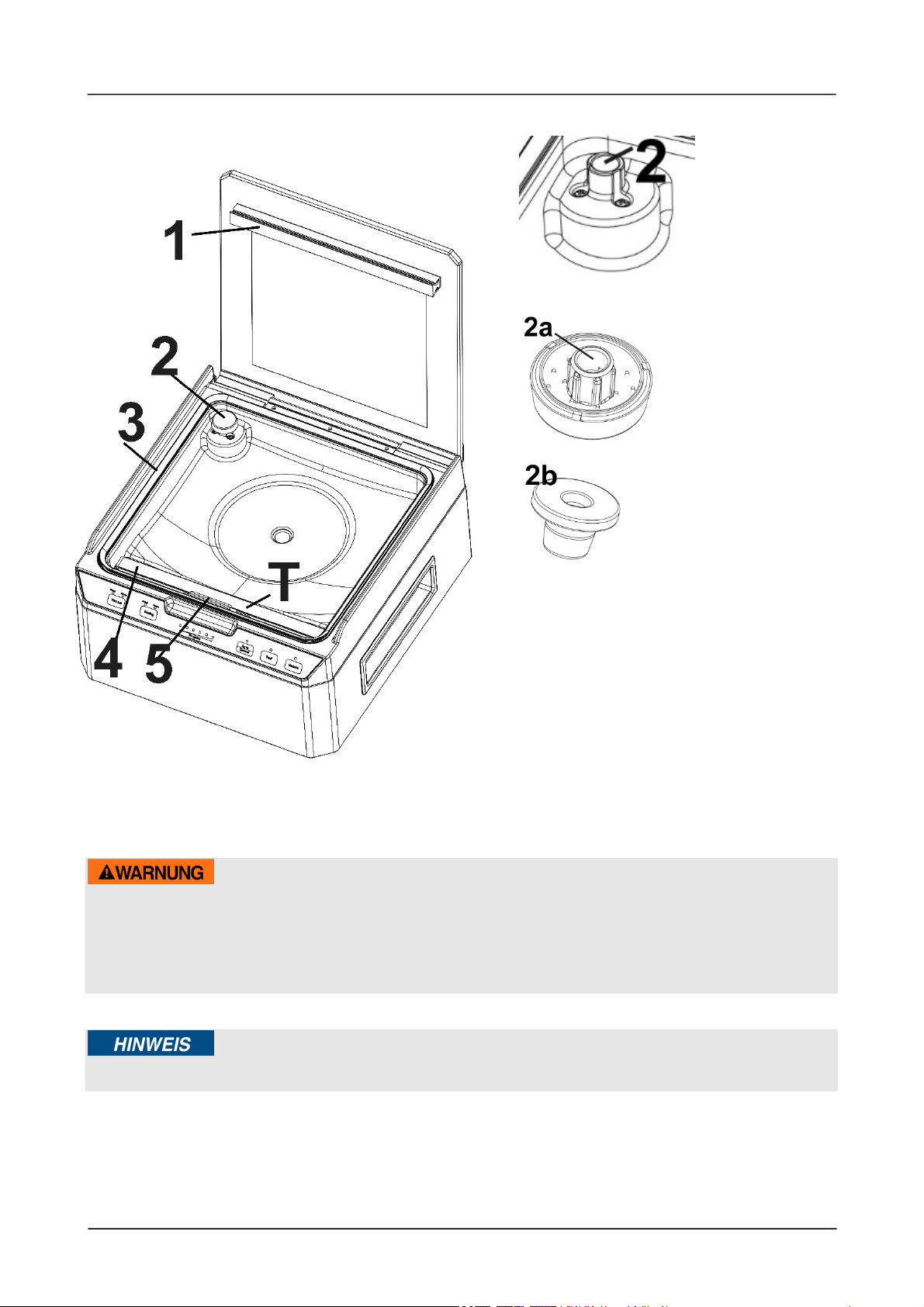
1 Gummidichtung: Drückt den Beutel
gegen den Schweißbalken
2 Anschluss für Vakuumierschlauch,
2a Luftfilter, 2b Adapter
Den Luftfilter nur abnehmen, wenn ein
Vakuumierschlauch angeschlossen
werden soll.
3 Dichtung
4 Schweißbalken: Enthält einen teflonbeschichteten Heizdraht; dieser ermöglicht es, den
Beutel zu versiegeln, ohne dass er festklebt.
5 Fixierung: Beutel-Fixierung.
Der Schweißbalken des Gerätes wird sehr heiß.
Beachten Sie bitte folgenden Sicherheitshinweis, um sich und andere nicht zu verbrennen:
► Um eventuellen Verbrennungen vorzubeugen, berühren Sie den Schweißbalken
niemals unmittelbar nach dem Schweißvorgang.
► Entfernen Sie nicht das Teflonband (T)!
20
6.2 Bedienelemente
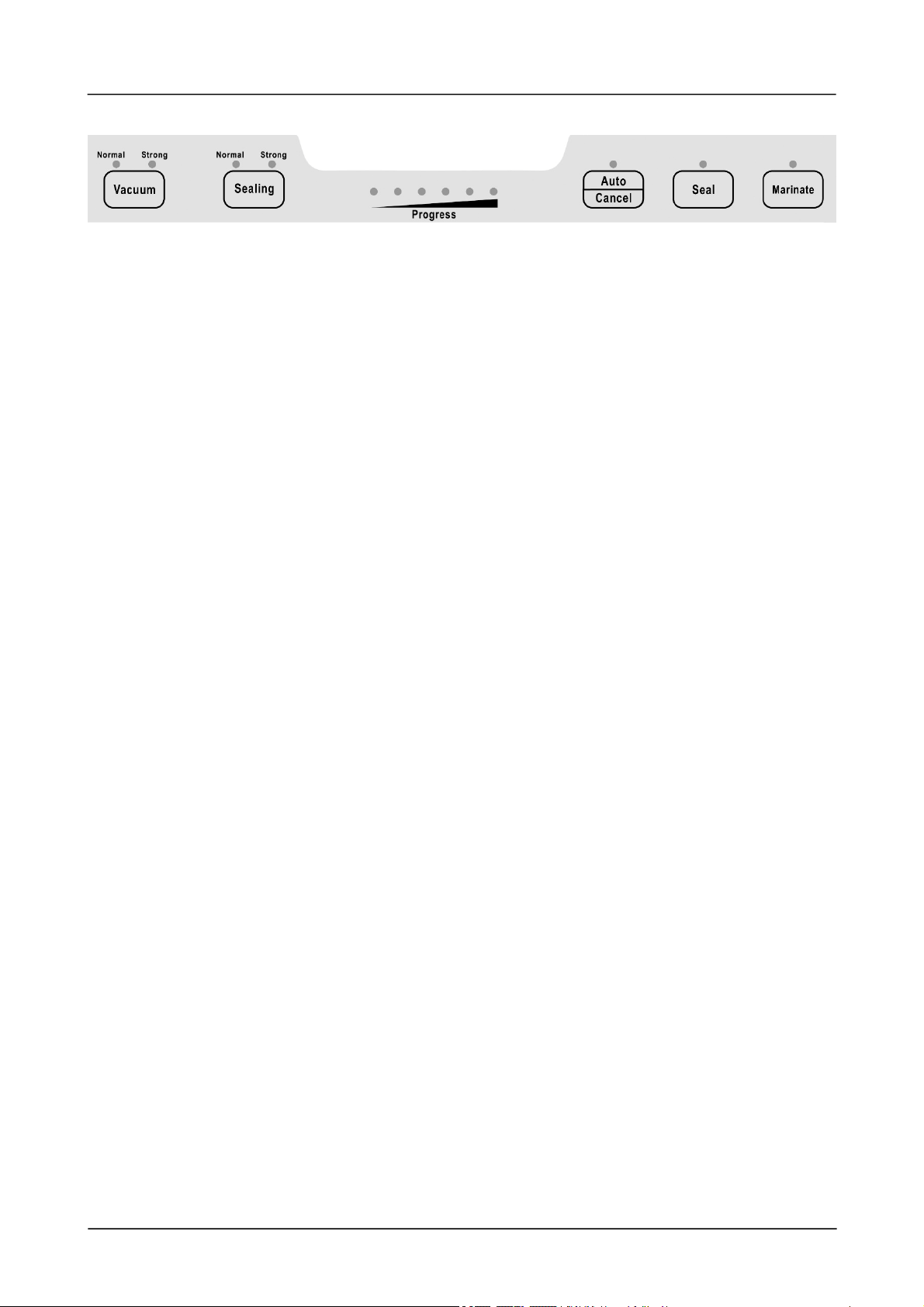
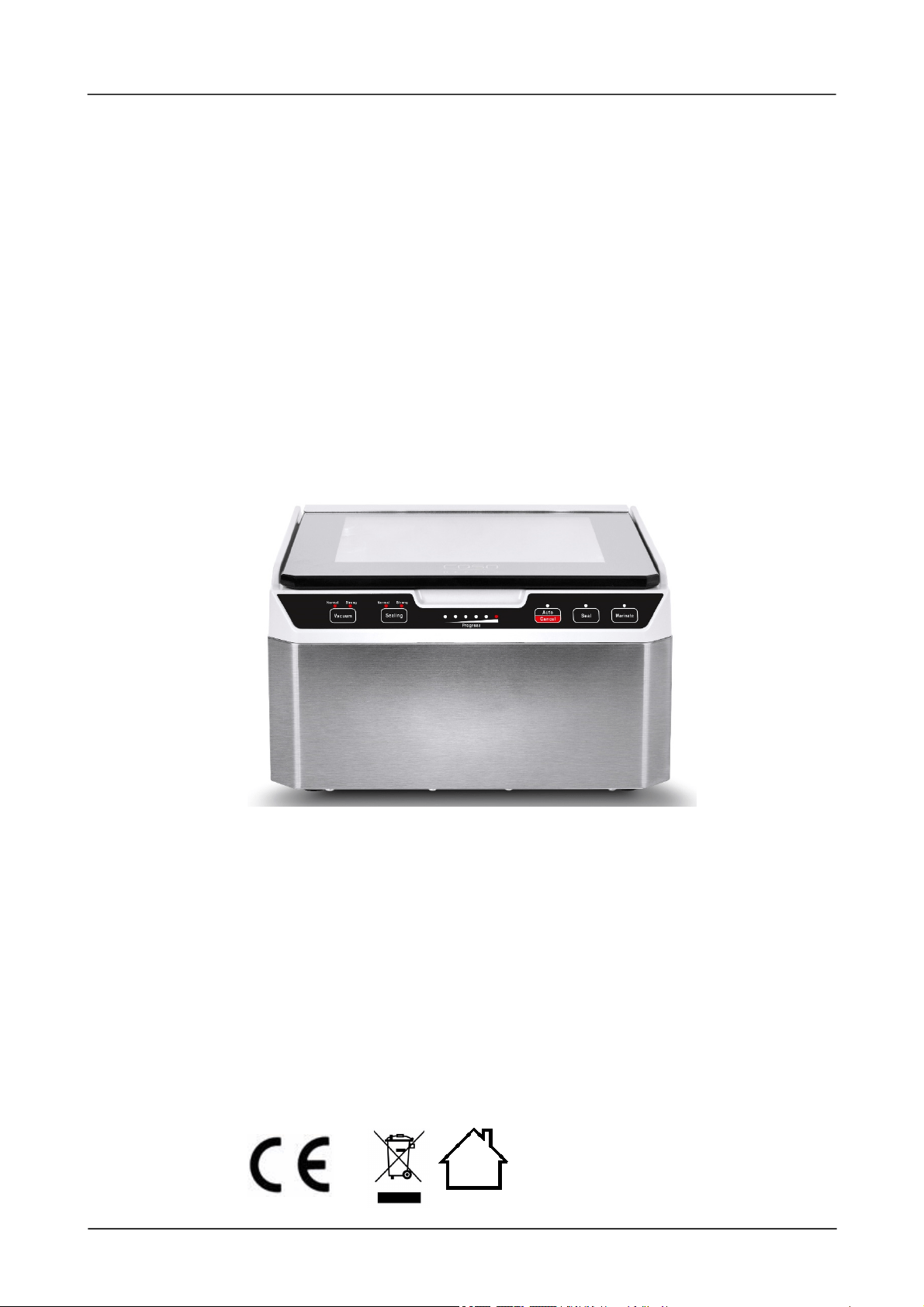
Vacuum Einstellung der Vakuumstärke
Normal: für empfindliche bzw. weiche Lebensmittel
Strong : für unempfindliche bzw. harte Lebensmittel (für einen besonders starken
Vakuumdruck)
Sealing Einstellung der Schweißzeit
Normal: für trockenes Vakuumiergut (kurze Schweißzeit)
Strong (extra lang): - für feuchtes Vakuumiergut oder Vakuumiergut mit viel Flüssigkeit
(lange Schweißzeit)
Progress – Fortschritts LED zeigt den Fortschritt des jeweiligen Vorgangs an
Auto/Cancel mit folgenden Funktionen:
Automatisches Vakuumieren: Für das automatische Vakuumieren und Versiegeln
eines Beutels.
Behälter vakuumieren: Bei geöffnetem Deckel des Gerätes kann mittels
Vakuumschlauch ein Behälter vakuumiert werden.
Abbrechen: Das Gerät kann während des Vakuumier/Schweißvorgangs jederzeit
gestoppt werden.
Seal – Verschweißen mit folgenden Funktionen:
Zum Verschweißen eines Beutels ohne Vakuumiervorgang
Wenn die Automatische Vakuumier-Funktion in Betrieb ist, kann diese Taste gedrückt
werden, um an einem beliebigen Zeitpunkt den Vakuumprozess zu stoppen und den
Beutel anschließend zu versiegeln
Marinate– Marinieren: Zum Marinieren innerhalb eines Beutels
Typenschild
Das Typenschild mit den Anschluss- und Leistungsdaten befindet sich an der Rückseite
des Gerätes.
7 Bedienung und Betrieb
In diesem Kapitel erhalten Sie wichtige Hinweise zur Bedienung des Gerätes. Beachten
Sie die Hinweise, um Gefahren und Beschädigungen zu vermeiden.
7.1 Vakuum-Verpacken in einem Beutel in der Vakuumkammer
Stellen Sie das Gerät an einem trockenen Platz auf.
Stecken Sie die Lebensmittel, die Sie aufbewahren möchten, in den Beutel.
21
► Streichen Sie überschüssige Luft aus dem Beutel um ein optimales Vakuumierergebnis
zu erzielen.
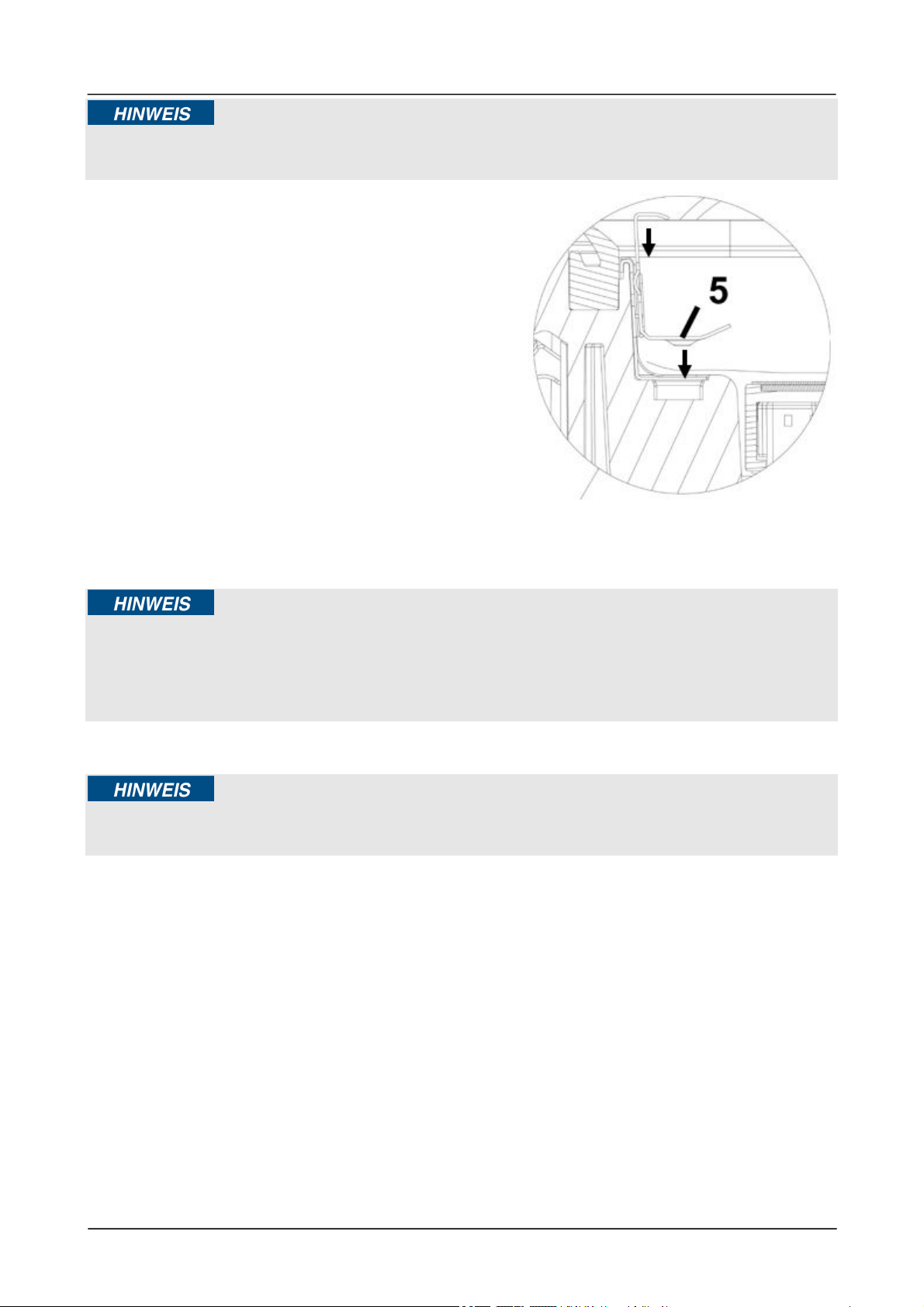
Schalten Sie das Gerät ein. Öffnen Sie den
Deckel des Gerätes und legen Sie das offene
Ende des Beutels über den Schweißbalken und
fixieren Sie diesen. Dafür Fixierung (5)
anheben, Beutelende darunter legen und
Fixierung nach unten drücken.
Passen Sie die Vakuumier- und
Schweißeinstellung wie gewünscht an.
Schließen Sie den Deckel und drücken Sie
Auto/Cancel (Automatisches Vakuumieren).
Drücken Sie den Deckel für 2 Sekunden nach
Starten des Vakuumiervorganges nach unten.
Das Gerät vakuumiert und verschweißt den Beutel automatisch.
Das Gerät piept, wenn der Vorgang abgeschlossen ist.
► Das Gerät erzeugt einen sehr hohen Unterdruck. Gegebenenfalls müssen Sie für
empfindliche Speisen und Suppen den automatischen Vakuumiervorgang frühzeitig
unterbrechen. Brechen Sie den Vorgang dann über Seal (Schweißen) ab, der Beutel
wird automatisch verschweißt.
Öffnen Sie den Deckel und entnehmen Sie den Beutel.
► Überschüssige Flüssigkeit oder Lebensmittelreste nach jedem Vakuumiervorgang aus
der Vakuumkammer entfernen.
7.2 Vakuum-Verpacken in einem von der Rolle stammenden Beutel
Stellen Sie das Gerät an einem trockenen Platz.
Stecken Sie den Netzstecker ein. Schalten Sie das Gerät ein. Passen Sie die
Vakuumier- und Schweißeinstellung wie gewünscht an.
Rollen Sie die Folie auf die von Ihnen gewünschte Länge aus und schneiden Sie diese,
mit einem genauen und sauberen Schnitt, auf die gewünschte Länge zu.
Öffnen Sie den Deckel des Gerätes und legen Sie eines der offenen Enden des Beutels
über den Schweißbalken und fixieren Sie diesen. Dafür Fixierung (5) anheben,
Beutelende darunter legen und Fixierung nach unten drücken. Schließen Sie den
Deckel des Gerätes.

22
Drücken Sie Seal (Schweißen). Der Beutel wird verschweißt. Die LED über Seal
leuchtet auf und erlischt, wenn der Vorgang abgeschlossen ist. Danach piept das
Gerät.
Öffnen Sie den Deckel und entnehmen Sie den Beutel. Dieser kann nun zum
Vakuumieren benutzt werden.
► Wir empfehlen nicht mehr als einen Beutel pro Minute luftdicht zu verschweißen, so
kann das Gerät zwischendurch ausreichend abkühlen. Es ist aber auch möglich
mehrere Beutel hintereinander zu verschweißen.
► Vergewissern Sie sich, dass die Länge des zu benutzenden Beutels mindestens 8cm
länger als das zu konservierende Lebensmittel ist und berücksichtigen Sie weitere
2cm, falls der Beutel nach dem Aufschneiden ein weiteres Mal versiegelt werden soll.
► Stecken Sie nicht zu viele Lebensmittel in den Beutel; lassen Sie genügend Platz, so
dass die geöffnete Seite des Beutels leicht auf dem Schweißbalken platziert werden
kann.
► Befeuchten Sie die offene Seite des Beutels nicht. Nasse Beutel sind schwierig zu
versiegeln.
► Reinigen und glätten Sie das offene Ende des Beutels bevor Sie ihn verschweißen.
Vergewissern Sie sich, dass keine Essensrückstände und keine Falten an der
Beutelöffnung sind. Fremdkörper oder ein zerknitterter Beutel können Schwierigkeiten
beim Verschweißen verursachen.
► Sollten die Lebensmittel, die Sie luftdicht versiegeln möchten, scharfe Kanten haben,
wie z.B. Knochen oder Krebstiere, dann wickeln Sie die Lebensmittel in Küchenpapier
ein; so verhindern Sie, dass der Beutel beschädigt wird.
► Blanchieren Sie das Gemüse kurz in kochendem Wasser oder in der Mikrowelle,
kühlen Sie das Gemüse ab und verpacken Sie es dann vakuumdicht in praktischen
Portionen.
► Um nicht gefrorene Lebensmittel vakuumdicht zu verschweißen, benötigen Sie
zusätzlich ca. 5 cm mehr Beutellänge, damit sich die Lebensmittel während des
Gefrierens ausbreiten können. Legen Sie Fleisch oder Fisch auf Küchenpapier und
vakuumieren Sie beides zusammen. Das Küchenpapier hat den Vorteil, dass es
Feuchtigkeit von den Lebensmitteln aufnehmen kann.
► Bevor Sie Lebensmittel, wie z.B. Tortillas, Crepes, Hamburger oder Pastetchen
aufbewahren möchten, legen Sie Wachs- oder Pergamentpapier zwischen die
Lebensmittel, so kann man sie besser stapeln. Später ist es dann leichter einen Teil
der eingefrorenen Lebensmittel herauszunehmen, sie wieder zu verschweißen und
einzufrieren.
7.3 Versiegeln eines Beutels ohne Vakuum
Sie können einen Beutel versiegeln, ohne diesen zu vakuumieren. Dafür den Beutel wie
gewohnt in die Vakuumkammer legen, und Seal (Schweißen) drücken.
Wenn hiermit kein zufriedenstellendes Ergebnis erreicht wird, dann alternativ den Beutel
nach außen hängen lassen. Dafür den Beutel von außen über den Schweißbalken legen.
Dann den Deckel schließen und Seal (Schweißen) drücken.
23
7.4 Vakuumieren eines Beutels außerhalb der Vakuumkammer
Sie können einen Beutel auch außerhalb der Vakuumkammer vakuumieren.
Dafür den Beutel von außen über den Schweißbalken legen. Dann den Deckel schließen
und vorgehen wie unter „Vakuum-Verpacken in einem Beutel in der Vakuumkammer“
beschrieben.
Dies funktioniert jedoch ausschließlich mit strukturierten Beuteln. Die besten Ergebnisse
erzielen Sie mit beidseitig strukturierten Beuteln.
► Vakuumieren außerhalb der Vakuumkammer kann nur mit strukturierten Beuteln
erfolgen.
7.5 Beutel und Rollen
Bitte verwenden Sie nur ausdrücklich für das Vakuumieren vorgesehene Beutel und
Rollen. Das Folienmaterial dieser speziellen Vakuumierfolien ist ein anderes als das von
gewöhnlichen Frischhaltefolien. Alle von CASO gelieferten Folienrollen und –beutel sind
für das Kochen-im-Beutel (Sous Vide) geeignet. Bitte vergewissern Sie sich bei der
Verwendung von Folien anderer Hersteller, ob diese ebenfalls für die Mikrowelle und für
das Kochen-im-Beutel (Sous Vide) geeignet sind.
7.6 Vakuumieren von Behältern
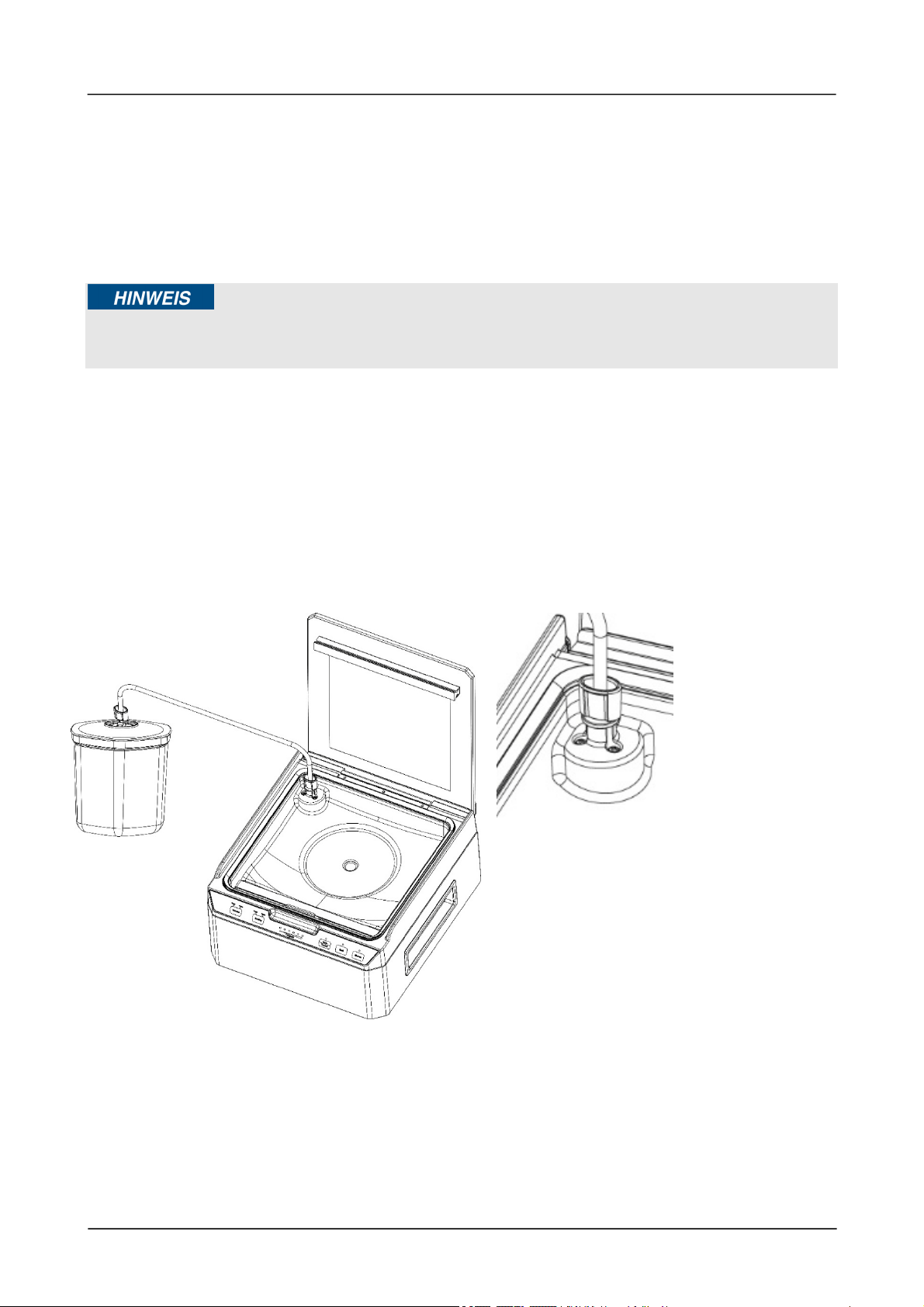
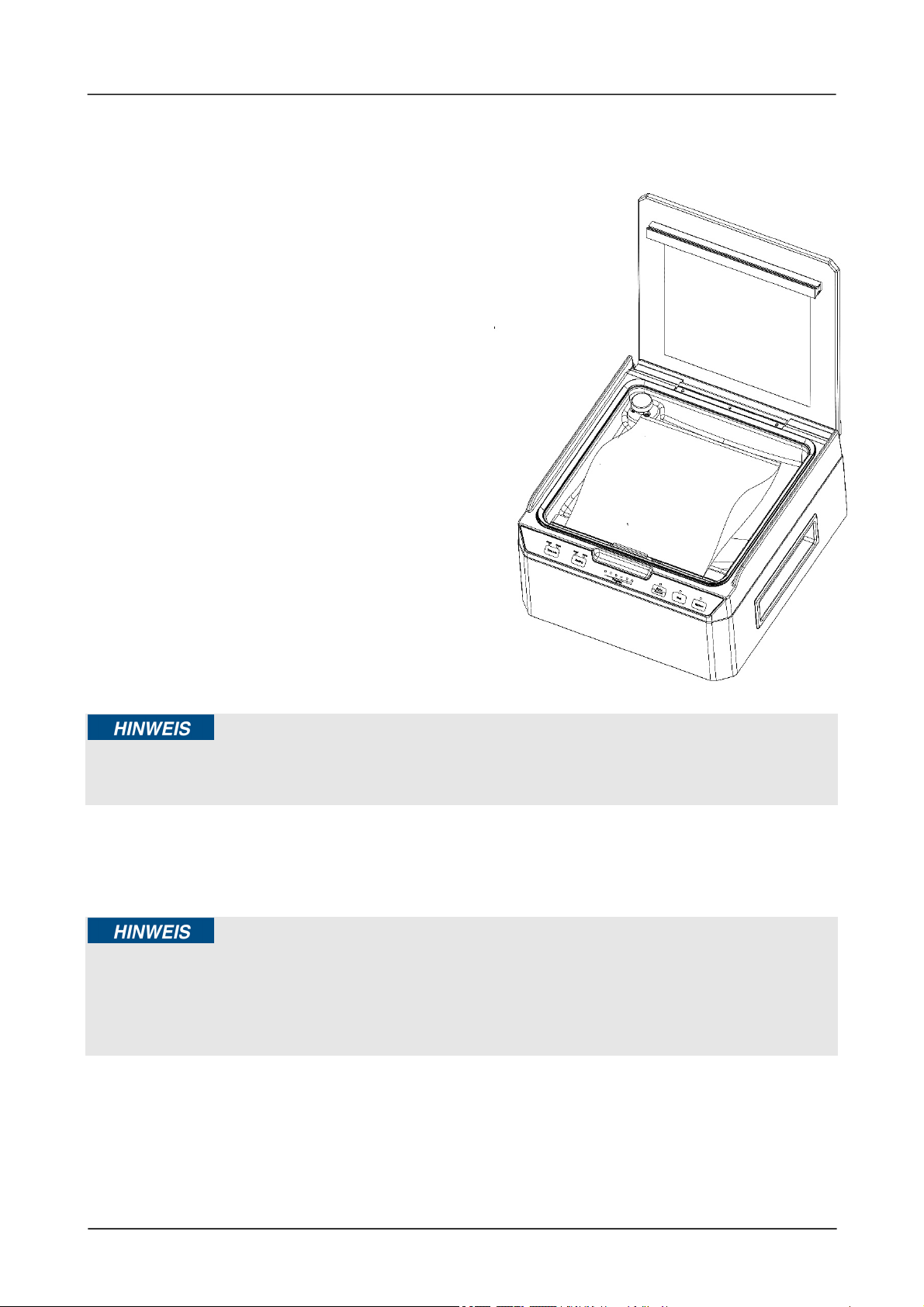
Luftfilter über dem Anschluss für den
Vakuumierschlauch abnehmen und
Adapter aufsetzen.
Geben Sie die Speisen in den
Vakuumbehälter. Behälterdeckel
aufsetzen und Vakuumschlauch am
Behälterdeckel anschließen und mit dem
Adapter am Anschluss in der Vakuumkammer des Gerätes verbinden.
Für 3 Sekunden Auto/Cancel (Automatisches Vakuumieren) drücken. Deckel des
Behälters kurz andrücken. Der Behälter wird automatisch vakuumiert.
Das Gerät piept, wenn der Vorgang abgeschlossen ist. Je nach gewünschter
Vakuumstärke den Vorgang beliebig oft wiederholen.
24
Danach den Adapter am Anschluss in der Vakuumkammer entfernen und Luftfilter
wieder einsetzen.
7.7 Marinieren von Lebensmitteln im Beutel
Geben Sie die zu marinierenden Speisen in
den Beutel.
Öffnen Sie den Deckel des Gerätes und
legen Sie den zu marinierenden Beutel in
die Vakuumkammer und fixieren Sie diesen.
Dafür Fixierung (5) anheben, Beutelende
darunter legen und Fixierung nach unten
drücken.
Schließen Sie den Deckel des Gerätes und
drücken Sie Marinate (Marinieren).
Die Speisen werden automatisch mariniert.
Das Gerät piept wenn der Vorgang
abgeschlossen ist.
Wiederholen Sie den Vorgang beliebig oft
bis die gewünschte Intensität erreicht ist.
Verschweißen Sie den Beutel anschließend
manuel (wie in Kapitel 7.3 beschrieben).
Öffnen Sie den Deckel des Gerätes und
entnehmen Sie den Beutel.
► Das Gerät verschweißt und vakuumiert nicht direkt nach der Marinierfunktion!
► Bitte führen Sie diesen Vorgang, wenn gewünscht, manuell aus.
7.8 Aufbewahrung des Vakuumierers
Bewahren Sie Ihr Gerät an einem ebenen und sicheren Ort, außerhalb der Reichweite von
Kindern, auf.
► Schalten Sie das Gerät nach Gebrauch aus. So vermeiden Sie unnötigen
Energieverbrauch und gewährleisten Ihre Sicherheit.
► Wenn Sie das Gerät längere Zeit nicht nutzen, empfehlen wir den Netzstecker aus der
Steckdose zu ziehen.
8 Reinigung und Pflege
In diesem Kapitel erhalten Sie wichtige Hinweise zur Reinigung und Pflege des Gerätes.
Beachten Sie die Hinweise um Beschädigungen durch falsche Reinigung des Gerätes zu
vermeiden.

25
8.1 Sicherheitshinweise
Beachten Sie die folgenden Sicherheitshinweise, bevor Sie mit der Reinigung des Gerätes
beginnen:
► Ziehen Sie vor dem Reinigen den Stecker aus der Steckdose.
► Das Gerät muss regelmäßig gereinigt und Rückstände entfernt werden. Ein nicht in
einem sauberen Zustand gehaltenes Gerät wirkt sich nachteilig auf die Lebensdauer
aus und kann zu einem gefährlichen Gerätezustand führen.
► Der Schweißbalken kann nach dem Vakuumieren heiß sein. Es besteht
Verbrennungsgefahr! Warten Sie, bis das Gerät abgekühlt ist.
► Reinigen Sie das Gerät nach der Verwendung, sobald es abgekühlt ist. Zu langes
Warten erschwert die Reinigung unnötig und macht sie im Extremfall unmöglich. Zu
starke Verschmutzungen können unter Umständen das Gerät beschädigen.
► Wenn Feuchtigkeit in das Gerät eindringt, können elektronische Bauteile beschädigt
werden. Achten Sie darauf, dass keine Flüssigkeit durch die Vakuumpumpe in das
Geräteinnere gelangt.
► Das Gerät nicht in Wasser oder andere Flüssigkeiten tauchen und nicht in die
Spülmaschine geben.
► Benutzen Sie keine aggressiven oder scheuernden Reinigungsmittel und keine
Lösungsmittel.
► Kratzen Sie hartnäckige Verschmutzungen nicht mit harten Gegenständen ab.
► Trocknen Sie das Gerät sorgfältig ab, bevor Sie es wieder benutzen.
8.2 Reinigung
Außenseite des Gerätes: mit einem feuchten Tuch oder unter Verwendung eines milden,
nicht scheuernden Spülmittels abwischen. Innenseite des Gerätes: mit Küchenpapier
reinigen, um Essensreste und Flüssigkeiten zu entfernen.
Falls Sie bei der Reinigung die Dichtung entfernen, diese anschließend gründlich
abtrocknen und wieder korrekt einsetzen, da das Gerät ansonsten den Unterdruck nicht
richtig erzeugen kann.
Aufbewahrungsbeutel
Waschen Sie den Beutel in warmem Spülwasser aus und lassen Sie ihn anschließend
sorgfältig trocknen bevor Sie ihn wieder benutzen.
► Beutel, die zur Aufbewahrung von rohem Fleisch, Fisch oder fettigen Lebensmitteln
benutzt wurden, können nicht wieder verwendet werden.
9 Störungsbehebung
In diesem Kapitel erhalten Sie wichtige Hinweise zur Störungslokalisierung und
Störungsbehebung. Beachten Sie die Hinweise um Gefahren und Beschädigungen zu
vermeiden.

26
9.1 Sicherheitshinweise
► Reparaturen an Elektrogeräten dürfen nur von Fachleuten durchgeführt werden, die
vom Hersteller geschult sind.
► Durch unsachgemäße Reparaturen können erhebliche Gefahren für den Benutzer und
Schäden am Gerät entstehen.
9.2 Tabelle Störungsursachen und -behebung
Die nachfolgende Tabelle hilft bei der Lokalisierung und Behebung kleinerer Störungen.
Fehler Mögliche Ursache Behebung
Der Vakuumierer
funktioniert nicht
Netzstecker nicht
eingesteckt
Netzstecker einstecken
Stromkabel oder Stecker
defekt
Kundendienst kontaktieren.
Steckdose defekt Andere Steckdose wählen
Das abgeschnittene
Rollenstück wird nicht
korrekt verschweißt
Rollenstück nicht korrekt
positioniert
Befolgen Sie die Schritte im Kapitel
„Vakuum-Verpacken in einem von
der Rolle stammenden Beutel”
Es wird kein
vollständiges Vakuum
im Beutel erzeugt
Das offene Ende des
Beutels befindet sich nicht
vollständig in der
Vakuumkammer
Positionieren Sie den Beutel
korrekt
Der Beutel ist defekt Wählen sie einen anderen Beutel
Es befinden sich
Unreinheiten auf den
Dichtungen
Säubern Sie die Dichtungen und
setzten Sie diese nach dem
Trocknen wieder korrekt ein.
Der Beutel wird nicht
korrekt verschweißt
Der Schweißbalken ist
überhitzt, so daß der
Beutel schmilzt
Der Schweißbalken ist
defekt.
Öffnen Sie den Deckel des
Gerätes und lassen Sie es einige
Minuten abkühlen
Lassen Sie den Schweißbalken
austauschen.
Der Beutel hält das
Vakuum nicht, nachdem
er verschweißt wurde
Der Beutel ist defekt
Wählen sie einen anderen Beutel,
umwickeln Sie scharfe Kanten des
Inhalts eventuell mit
Papierservietten
Es befinden sich Lecke,
aufgrund von Falten,
Krümeln, Fett oder
Flüssigkeiten entlang der
Schweißnaht
Öffnen Sie den Beutel wieder,
reinigen Sie den oberen inneren
Teil des Beutels und entfernen Sie
eventuell vorhandene Fremdkörper
vom Schweißbalken, bevor Sie
den Beutel erneut zuschweißen.
27
► Wenn Sie mit den oben genannten Schritten das Problem nicht lösen können, wenden
Sie sich bitte an den Kundendienst.
10 Entsorgung des Altgerätes
Elektrische und elektronische Altgeräte enthalten vielfach noch wertvolle
Materialien. Sie enthalten aber auch schädliche Stoffe, die für ihre Funktion und
Sicherheit notwendig waren. Im Restmüll oder bei falscher Behandlung können
diese der menschlichen Gesundheit und der Umwelt schaden.
Geben Sie Ihr Altgerät deshalb auf keinen Fall in den Restmüll.
► Nutzen Sie die von Ihrem Wohnort eingerichtete Sammelstelle zur Rückgabe und
Verwertung elektrischer und elektronischer Altgeräte. Informieren Sie sich
gegebenenfalls bei Ihrem Rathaus, Ihrer Müllabfuhr oder bei Ihrem Händler.
► Sorgen Sie dafür, dass Ihr Altgerät bis zum Abtransport kindersicher aufbewahrt wird.
11 Garantie
Für dieses Produkt übernehmen wir beginnend vom Verkaufsdatum 24 Monate Garantie
für Mängel, die auf Fertigungs- oder Werkstofffehler zurückzuführen sind.
Ihre gesetzlichen Gewährleistungsansprüche nach §439 ff. BGB-E bleiben hiervon
unberührt. In der Garantie nicht enthalten sind Schäden, die durch unsachgemäße
Behandlung oder Einsatz entstanden sind, sowie Mängel, welche die Funktion oder den
Wert des Gerätes nur geringfügig beeinflussen. Weitergehend sind Verschleißteile,
Transportschäden, soweit wir dies nicht zu verantworten haben, sowie Schäden, die durch
nicht von uns durchgeführte Reparaturen entstanden sind, vom Garantieanspruch
ausgeschlossen. Dieses Gerät ist für den Gebrauch im privaten Bereich
(Haushaltseinsatz) konstruiert und leistungsmäßig ausgelegt. Eine etwaige Nutzung im
gewerblichen Einsatz fällt nur soweit unter die Garantie, wie es sich im Umfang mit der
Beanspruchung einer privaten Nutzung vergleichen lässt. Es ist nicht für den
weitergehenden, gewerblichen Gebrauch bestimmt. Bei berechtigten Reklamationen
werden wir das mangelhafte Gerät nach unserer Wahl reparieren oder gegen ein
mängelfreies Gerät austauschen. Offene Mängel sind innerhalb von 14 Tagen nach
Lieferung anzuzeigen. Weitere Ansprüche sind ausgeschlossen.
Zur Geltendmachung eines Garantieanspruches setzen Sie sich bitte vor einer
Rücksendung des Gerätes (immer mit Kaufbeleg!) mit uns in Verbindung.

28
12 Technische Daten
Gerät Kammervakuumierer
Name VacuChef 40
Artikel-Nr. 1417
Anschlussdaten 220-240V, 50Hz
Leistungsaufnahme 280W
Außenabmessungen (B/H/T)
320 x 175 x 340 mm
Gewicht 8,3 kg
Kapazität 4,2 m3/h (70 L/min)
Maximale Beutelbreite Geeignet für 25 cm Beutel
29
Instruction Manual
Chamber Vacuum Sealer
VacuChef 40
Item No. 1417

30
13 Instruction Manual
13.1 General
Please read the information contained herein so that you can become familiar with your
device quickly and take advantage of the full scope of its functions.
Your vacuum sealer system will serve you for many years if you handle it and care for it
properly. We wish you a lot of pleasure in using it!
13.2 Information on this manual
These Operating Instructions are a component of the vacuum sealer system (referred to
hereafter as the device) and provide you with important information for the initial
commissioning, safety, intended use and care of the device. The Operating Instructions
must be available at all times at the device. This Operating Manual must be read and
applied by every person who is instructed to work with the device:
Commissioning Operation
Troubleshooting and/or Cleaning Keep the Operating Manual in
a safe place and pass it on to the subsequent owner along with the device.
13.3 Warning notices
The following warning notices are used in the Operating Manual concerned here.
DANGER
A warning notice of this level of danger indicates a potentially dangerous situation.
If the dangerous situation is not avoided, this can lead to death or serious injuries.
► Observe the instructions in this warning notice in order to avoid the danger of death or
serious personal injuries.
WARNING
A warning notice of this level of danger indicates a possible dangerous situation.
If the dangerous situation is not avoided, this can lead to serious injuries.
► Observe the instructions in this warning notice in order to avoid the personal injuries.
ATTENTION
A warning notice of this level of danger indicates a possible dangerous situation.
If the dangerous situation is not avoided, this can lead to slight or moderate injuries.
► Observe the instructions in this warning notice in order to avoid the personal injuries.
PLEASE NOTE
A notice of this kind indicates additional information, which will simplify the handling of the
machine.

31
13.4 Limitation of liability
All the technical information, data and notices with regard to the installation, operation and
care are completely up-to-date at the time of printing and are compiled to the best of our
knowledge and belief, taking our past experience and findings into consideration.
No claims can be derived from the information provided, the illustrations or descriptions in
this manual. The manufacturer does not assume any liability for damages arising as a
result of the following: Non-observance of the manual
Uses for non-intended purposes Improper repairs
Technical alterations, modifications of the device
Use of unauthorized spare parts
Modifications of the device are not recommended and are not covered by the guarantee.
All translations are carried out to the best of our knowledge. We do not assume any liability
for translation errors, not even if the translation was carried out by us or on our
instructions. The original German text remains solely binding.
13.5 Copyright protection
This document is copyright protected.
Braukmann GmbH reserves all the rights, including those for photomechanical
reproduction, duplication and distribution using special processes (e.g. data processing,
data carriers, data networks), even partially. Subject to content and technical changes.
14 Safety
This chapter provides you with important safety notices when handling the device.
The device corresponds with the required safety regulations. Improper use can result in
personal or property damages.
14.1 Intended use
This device is only intended for use in households in enclosed spaces for vacuuming and
sealing of bags and vacuum canisters.
Uses for a different purpose or for a purpose which exceeds this description are
considered incompatible with the intended or designated use.
Warning
Danger due to unintended use! Dangers can emanate from the device if it is used for an
unintended use and/or a different kind of use.
► Use the device exclusively for its intended use.
► Observe the procedural methods described in this Operating Manual.
Claims of all kinds due to damages resulting from unintended uses are excluded.
The User bears the sole risk.

32
14.2 General Safety information
Please note
IMPORTANT SAFETY INSTRUCTIONS
READ CAREFULLY AND KEEP FOR FUTURE REFERENCE
Please observe the following general safety notices with
regard to the safe handling of the device.
► Examine the device for any visible external damages prior to
using it. Never put a damaged device into operation.
► If the connection lead is damaged, you will need to have a
special connection lead installed by an authorized electrician
to avoid any hazard.
► This appliance can be used by children aged 8 years and
above and persons with reduced physical, sensory or mental
capabilities or lack of experience and knowledge if they have
been given supervision or instruction concerning use of the
appliance in a safe way and understand the hazards involved.
► Children shall not play with the device. Children under the
age of 8 years or unsupervised children may not clean the
appliance or carry out any other work on the appliance.
► Keep the appliance and its power cable out of reach of
children under the age of 8 years.
► The appliance should be cleaned regularly and all food
residues removed after each use.
► Do not use or store the appliance outdoors.
► Do not leave the device unsupervised when it is in operation.
► Only customer service departments authorized by the
manufacturer may carry out repairs on the device, as
otherwise the guarantee entitlements will be null and void in
the event of any subsequent damages. Improperly performed
repairs can cause considerable dangers for the user.
► Defective components must always be replaced with original
replacement parts. Only such parts will guarantee that the
safety requirements are fulfilled.

33
Please note
► When disconnect, please unplug by grasp the plug and not
the cord, do not carry the device at the cord.
► Do not immerse in water or any other liquids.
► Do not lift up the lid while moving the device.
► Do not move the device during vacuuming or sealing
process.
14.3 Sources of danger
14.3.1 Danger of burns
Warning
Please observe the following safety notices in order not to burn
or scald yourself or others.
► To avoid getting burned, never touch the sealing bar directly
after sealing process.
14.3.2 Danger of fire
Warning
There is a danger of fire due to the event the device is not
used properly.
Observe the following safety notices to avoid dangers of fire:
► Do not set up the device near flammable material.
► Keep this appliance away from sources of heat (gas, electric,
burner, heated oven).
14.3.3 Dangers due to electrical power
DANGER
Mortal danger due to electrical power!
Mortal danger exists when coming into contact with live wires or
subassemblies!
Observe the following safety notices to avoid dangers due to
electrical power:

34
DANGER
► Do not operate this device if it has a damaged cable or plug,
if it is not working properly or if it has been damaged or
dropped. If the power cable or plug are damaged, then they
must be replaced by the manufacturer or its service agent in
order to avoid a hazard.
► Do not open the housing on the device under any
circumstances. There is a danger of an electrical shock if live
connections are touched and the electrical or mechanical
structure is altered. In addition, functional faults on the device
can also occur.
► Before plugging the appliance in or when you operate it,
make sure your hands are dry.
14.4 Food storage safety information
Please follow specific procedures for vacuum sealing; so you can guarantee the quality
and safety of your vacuumed / sealed food.
Please note
Please follow certain procedures when using this appliance to ensure food quality
and safety.
► If perishable foods have been heated, defrosted or un-refrigerated, consume them
immediately.
► Before vacuum sealing, it’s necessary to clean your hands, and all utensils and surfaces
to be used for cutting and vacuum sealing foods.
► Refrigerate or freeze the perishable foods immediately, if you have vacuum-sealed
them, and do not leave them sitting at room temperature.
► The shelf life of dry foods such as nuts, coconut or cereals will be extended in vacuum-
sealed package, while storing them in dark place. Oxygen and warm temperature will
cause high-fat content foods fat to rancidity.
► Before vacuum sealing some fruit and vegetables, such as apples, bananas, potatoes
and root vegetables, peel them, this will extend their life span.
► When vacuum seal some vegetables such as broccoli, cauliflower and cabbage fresh
for refrigeration, they will emit gases, so it’s need to blanch and freeze these foods
before vacuum sealing.
15 Getting Started
This chapter will guide you through safely unpacking and setting up your new unit.
35
15.1 Packaging safety information
WARNING
► Do not allow children to play with packaging materials due to risk of suffocation.
15.2 What’s included
The vacuum sealer system VacuChef 40 includes the following components:
VacuChef 40 Instruction manual
Vacuum hose + adapter 20 bags (25 x 28 cm)
PLEASE NOTE
► Examine the shipment to ensure the unit and manual are included and inspect the unit
for any visible damage.
► Immediately notify the carrier and/or the supplier about an incomplete shipment or any
damage as a result of inadequate packaging or mishandling.
15.3 Uses and advantages of vacuum sealing
Vacuum-packaged foods stay fresh for up to eight times longer: maintain taste and
freshness, and reduce costs with less spoiled food.
Package foods, such as meat, fish, poultry, seafood and vegetables for refrigerated
storage.
Maintain the freshness of dry foods, such as beans, nuts, and cereals.
Besides storing food, there are many other uses for vacuum sealing: Protect moisture-
sensitive items such as camping supplies, matches, first aid kits, roadside flares and
clothing. Protect prized collectibles from dust and moisture.
15.4 Unpacking
Carefully remove the packaging material and unit from the carton.
15.5 Disposal of the packaging
Caso believes in the importance of recycling and has selected packaging materials that
not only protect your unit from damage during transit, but can be recycled to minimize any
ecological impact. Recycling the packaging materials preserves raw materials and reduces
waste. Take any packaging materials that are no longer required to a recycling collection
point for proper disposal.
PLEASE NOTE
► If possible, keep the original packaging for the duration of the guarantee period in the
event a return is necessary.

36
15.6 Setup
15.6.1 Setup location requirements:
In order to ensure the safe and trouble-free operation of the device, the setup location
must fulfill the following prerequisites:
The device must be set up on a solid, even, horizontal surface capable of supporting
the vacuum sealer and any items to be vacuum-sealed.
The device is not intended to be installed in a wall or a built-in cupboard.
Select a setup location where children cannot reach the hot sealing strip of the device.
Do not set up the unit in a hot or damp environment or near flammable material.
Do not place the device near a gas or electric cooker or an oven
To operate correctly, the unit requires sufficient air flow. Leave at least 10 centimeters
(4 inches) of space on all sides when setting up the unit.
Do not move the vacuum sealer when it is in operation.
The electrical outlet must be easily accessible so that the plug can be quickly
disconnected in the case of an emergency.
The setup of this unit in non-stationary locations (e.g., boats, airplanes, motor homes)
must be carried out by a qualified electrician, provided they guarantee the prerequisites
for the safe use of the unit.
15.7 Electrical connection
In order to ensure the safe and trouble-free operation of the device, the following
instructions must be observed for the electrical connection:
Before plugging in the unit, compare the voltage and frequency data on the vacuum
sealer’s rating plate (found on the bottom of the unit) with that of your electrical
network. This data must be compatible. If in doubt consult a qualified electrician.
The use of a multi-plug outlet adapter is not recommended due to fire danger.
Inspect the power cord for damage and ensure it doesn’t run under the unit or over hot
or sharp surfaces.
The electrical outlet must be protected by a 16A safety cut-out switch.
The electrical safety of the unit is only guaranteed if it is connected to a properly
installed protective conductor system. If in doubt, consult a qualified electrician. The
manufacturer cannot be made responsible for damages due to a missing or damaged
protective conductor.
15.7.1 Extension cords
If an extension cord is used:
► The electrical rating of the extension cord should be at least as great as the electrical
rating of the unit.
► The cord should be arranged so that it does not drape over a countertop or tabletop
where it can be pulled on by children or tripped over.
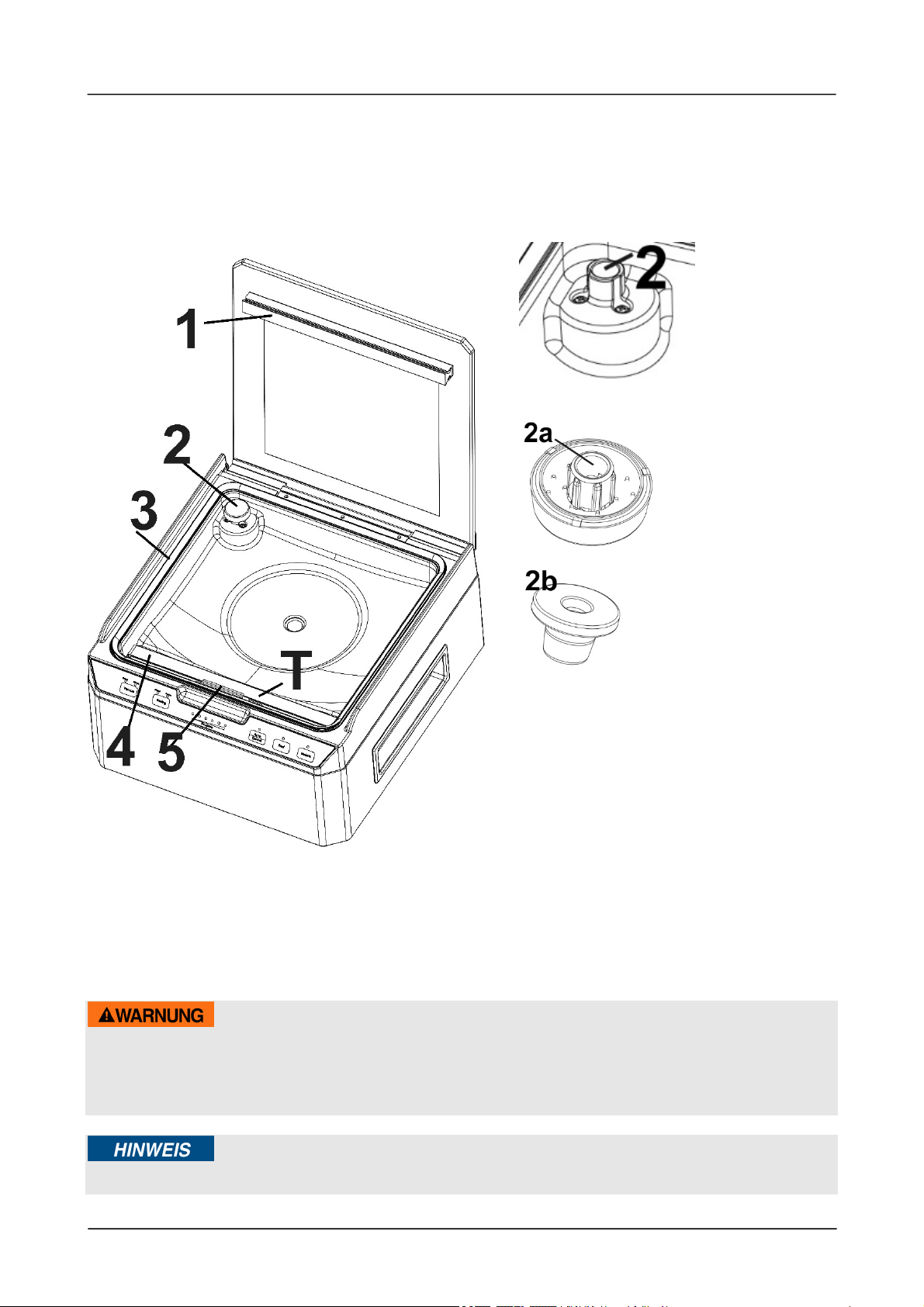
37
16 Complete Overview
This chapter provides you with an overview of your vacuum sealer and explains some of
its key features.
16.1 Overview
1 Sealing profile (which presses the
bag against the sealing bar)
2 connector for vacuum hose,
2a air filter, 2b adapter
Remove the air filter only if you want to connect a vacuum hose.
3 Gasket
4 Sealing bar: Contains a heating wire covered with Teflon which allows the bag to seal
but not to stick to the strip.
5 Fixation: For Fixation of bag.
Warning
The sealing bar gets very hot.
Please observe the following safety notice in order not to burn yourself or others.
► To avoid getting burned, never touch the sealing bar directly after sealing process.
Please note
► Do not remove the Teflon tape (T).
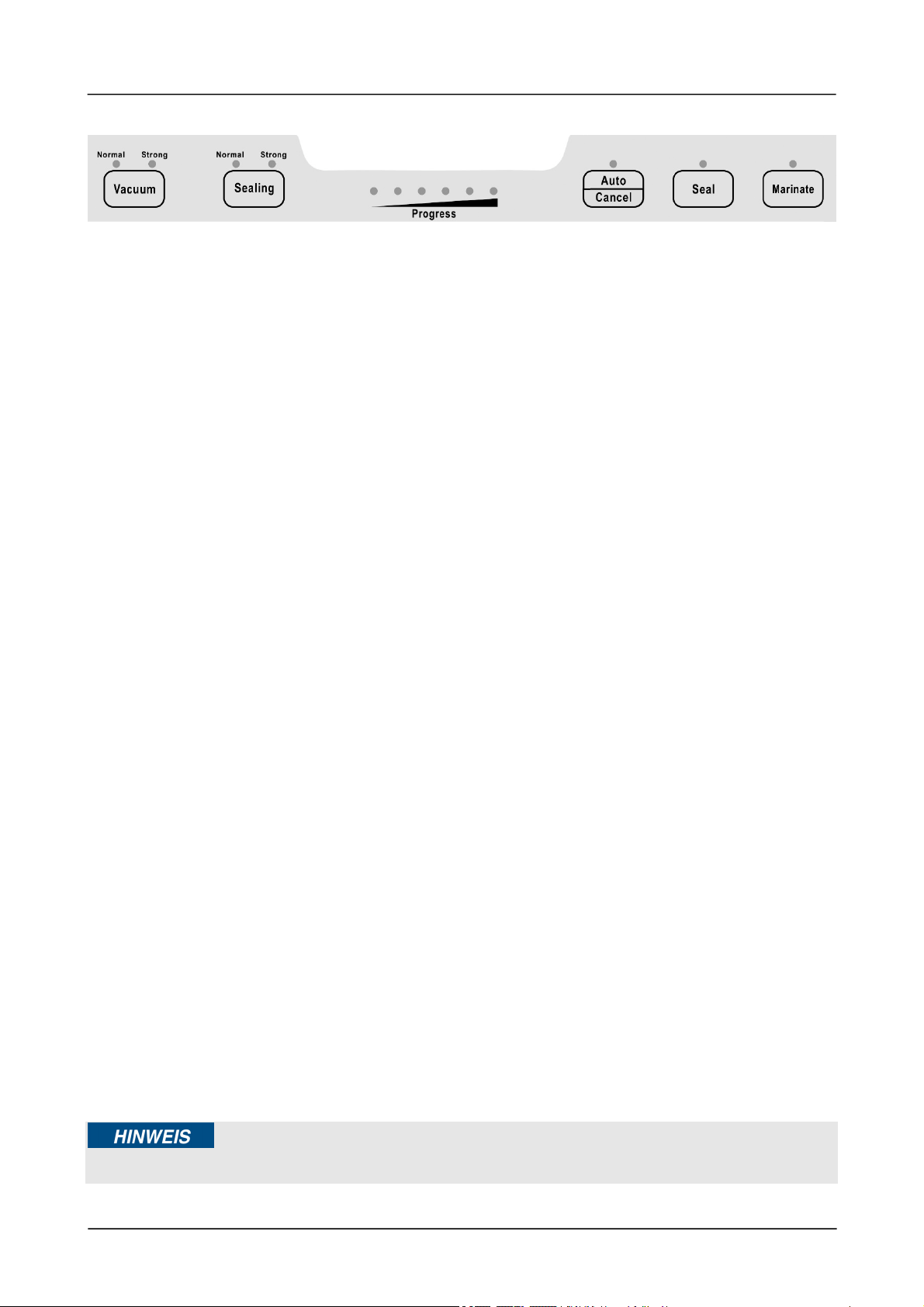
38
16.2 Control Panel
Vacuum setting of vacuumstrength
Normal: for sensitive or soft foods
Strong: for insensitive or hard food (for a particularly strong vacuum pressure)
Sealing setting of sealing time
Normal: for dry food (short sealing time)
Strong: for wet food or food with lot of liquid (long sealing time)
Default setting is Normal for dry bags and shorter sealing time.
Progress– Progress LED indicator Show progress of operation.
Auto/Cancel with following functions:
Automatic vacuuming: For the automatic vacuuming and sealing of a bag.
Vacuuming of canister or wine bottle: With open lid of device a container can be
vacuumed with a vacuum hose
Cancel: The device can be stopped at any time during vacuum/sealing operation
Seal– Sealing with following functions
For sealing a bag without vacuuming it
When the Automatic vacuuming function is in operation, this button can be pressed to
stop the vacuum operation at any time and then and seal the bag afterwards
Marinate – Marinate within a bag
Rating plate
The rating plate with the connection and performance data can be found on back of the
unit.
17 Operation
This chapter provides instructions on the proper operation of your vacuum sealer.
Please follow the hints to prevent dangers and damages.
17.1 Vacuum packaging with a bag in the vacuum chamber
Place the device on a dry surface.
Place the food to be preserved inside the bag.
Please note
► Strike excessive air out of the bag for best vacuum result.
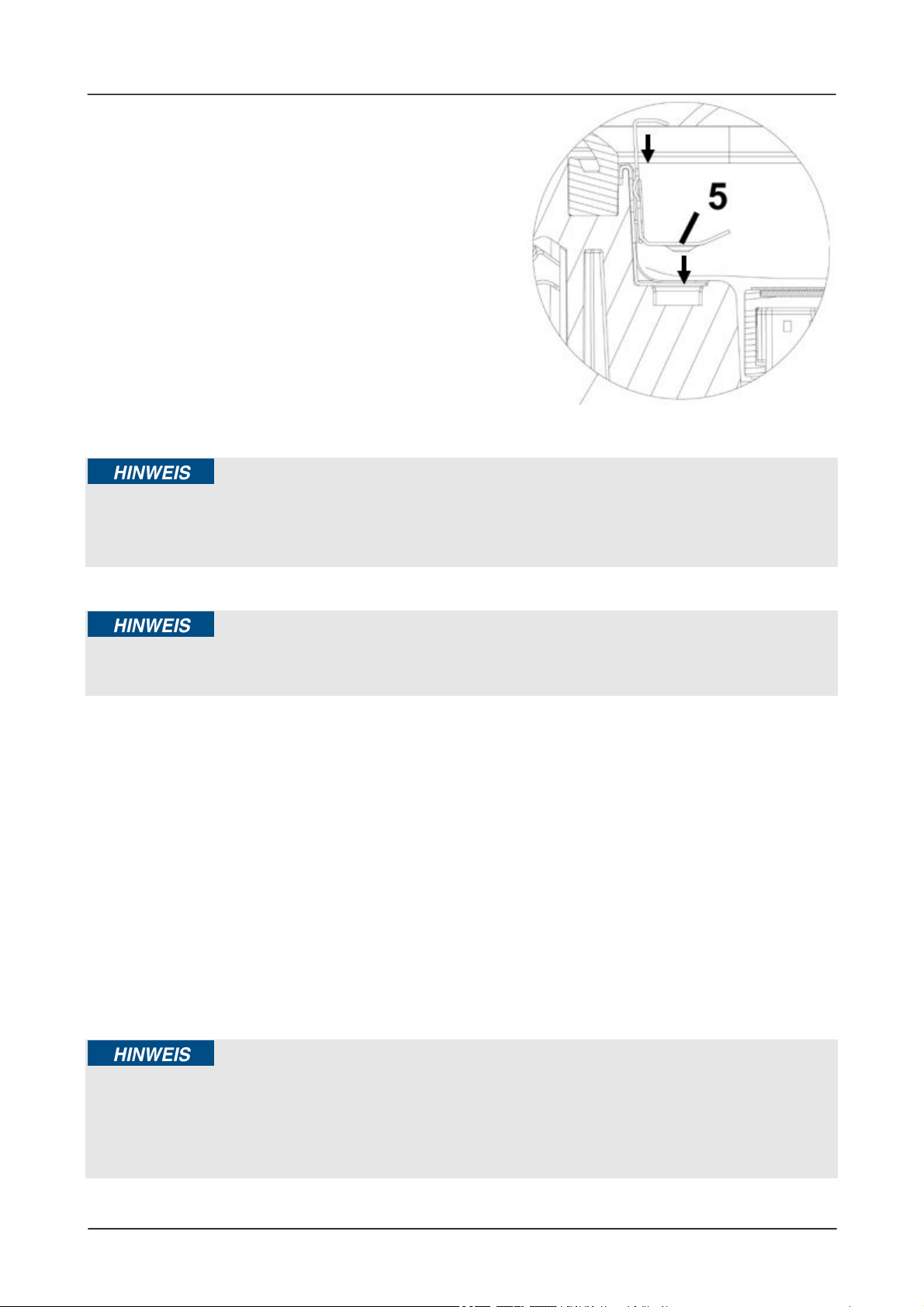
39
Switch the device on. Open the lid of the device
and place the open end of the bag over the
sealing bar and fixate it. Lift fixation (5), place
the end of the bag and push the fixation down
again.
Adjust the vacuum and sealing setting as
desired.
Close the lid and press Auto/Cancel.
Press the lid down for 2 seconds after starting of
vacuum process. The device automatically
vacuums and seals the bag.
The device beeps when the operation is
completed.
Please note
► The device creates a very high vacuum. If necessary, you must interrupt the automatic
vacuum operation for sensitive foods and soups early. Then interrupt the operation with
Seal, the bag will be sealed automatically.
Open the lid of the device and take out the bag.
Please note
► Remove excessive liquid or food residues from vacuum chamber after each vacuum
process.
17.2 Vacuum with a bag of the bag roll
Place the device on a dry surface. Plug in the power plug. Switch the device on. Adjust
the vacuum and sealing setting as desired.
Roll the film at desired length and cut it with a clean cut.
Open the lid of the device and place one of the open ends of the bag over the sealing
bar and fixate it. Lift fixation (5), place the end of the bag and push the fixation down
again.
Close the lid of the device. Press Seal button. The bag will be sealed. The LED above
Seal lights up and goes out when the operation is complete. Afterwards the device
beeps.
Open the lid and take out the bag. Now you can use bag for vacuuming.
PLEASE NOTE
► We suggest to vacuum seal one bag within 1 minute to let the appliance cool down
enough. But it is also possible to seal several bags consecutively.
► Cut the bag at least 8 cm longer than needed. The sealed ends will take up the extra
space.

40
PLEASE NOTE
► Do not overstuff the bag; leave enough empty length in the open end of the bag (at least
a few inches) so that the bag can be properly placed on the sealing bar.
► Do not wet the open end of the bag. Wet bags may not seal properly.
► Clean and straighten the open end of the bag before sealing. Foreign matter or creases
on the bag may result in a faulty seal.
► If the food you’re sealing has sharp edges (such as bones or shells) pack the edges
with kitchen paper to avoid tearing the bag.
► Blanch vegetables by cooking them briefly in boiling water. Allow them to cool then
vacuum seal them in convenient portions.
► When vacuum sealing unfrozen food, allow at least two additional inches of bag length
for expansion while freezing. Place unfrozen meat or fish on a paper towel and vacuum
seal with the paper towel in the bag to absorb any extra moisture.
► Before storing foods such as tortillas, crepes or bread, use wax or parchment paper
between them to stack the pieces. This will make it easier to remove an individual piece,
reseal the rest and immediately replace them in the freezer.
17.3 Sealing a bag without vacuuming
You can seal a bag without vacuuming it. Place the bag in the vacuum chamber as usual,
then press Seal.
If this does not provide a satisfactory result, then hang the bag outwards. To do this, place
the bag from the outside over the sealing bar.
Then close the lid and press Seal.
17.4 Vacuuming a bag outside the vacuum chamber
You can also vacuum a bag outside the vacuum chamber. To do this, place the bag from
the outside over the sealing bar. Then close the lid and proceed as described under
"Vacuum packaging with a bag in the vacuum chamber. However, this works only with
structured bags. For best results, use double-sided bags.
PLEASE NOTE
► Vacuuming outside the vacuum chamber can only be done with structured bags.
17.5 Bags and rolls
Please only use specified bags and rolls designed for vacuum sealing. Do not use other
materials such as plastic wrap. All vacuum rolls and bags delivered by CASO are
appropriate for cooking under vacuum (sous vide).
Please make sure when vacuum rolls and bags of other producers are used, whether they
are also microwaveable and suitable for cooking under vacuum.
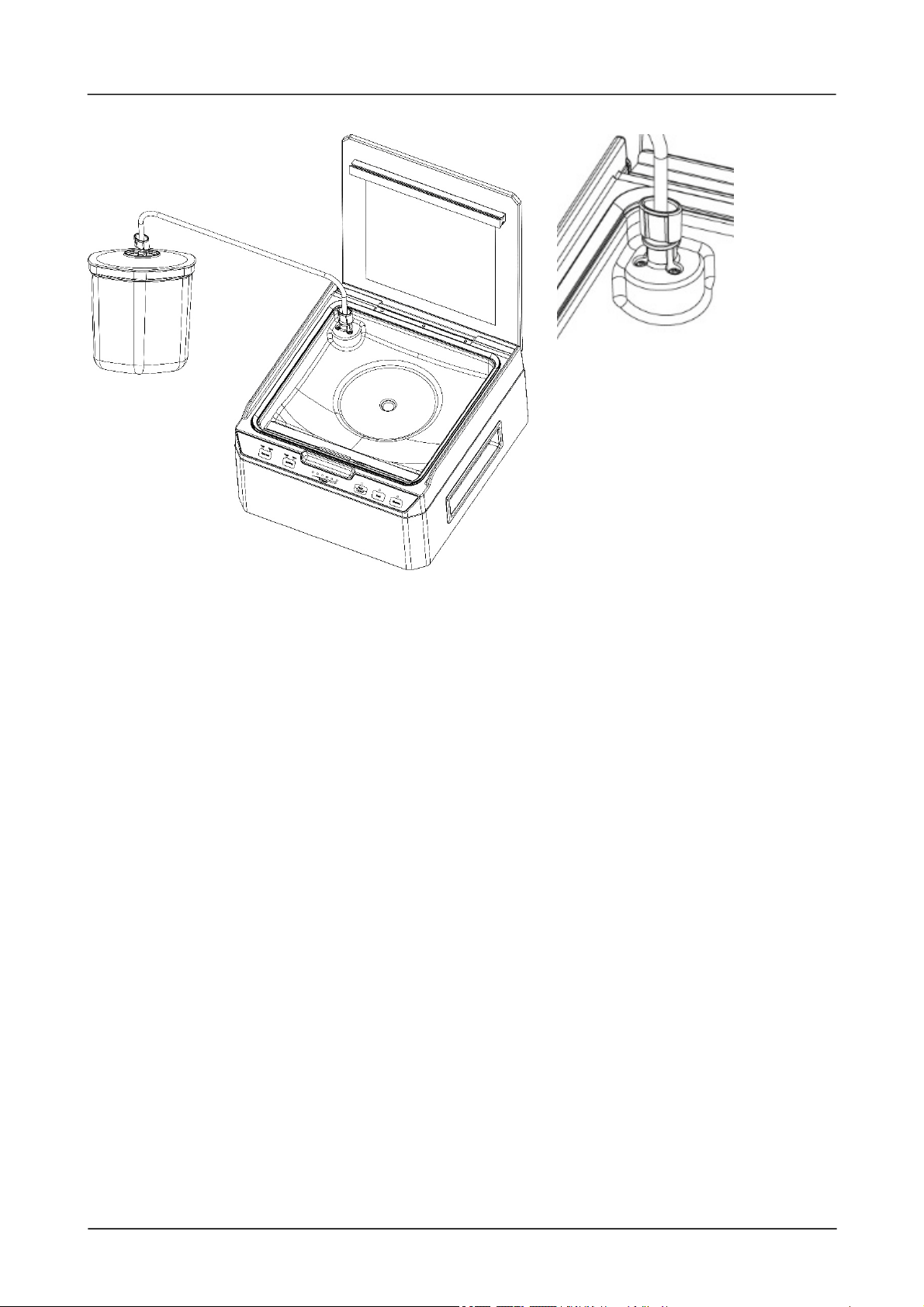
41
17.6 Vacuuming of canisters
Remove the air filter above
the connector for the vacuum hose
and place the adapter.
Place the food into the
canister. Place the lid of canister.
Connect the vacuum hose at lid of
canister and with adapter at the
connector at the vacuum chamber
of the device.
Press Auto/Cancel for 3 seconds. Briefly press down the lid of canister. The canister
will automatically. be vacuumed.
The device beeps when the operation is completed. Depending on the desired vacuum
strength, repeat the process as often as you like.
Then remove the adapter from the connector at the vacuum chamber and replace the
air filter.
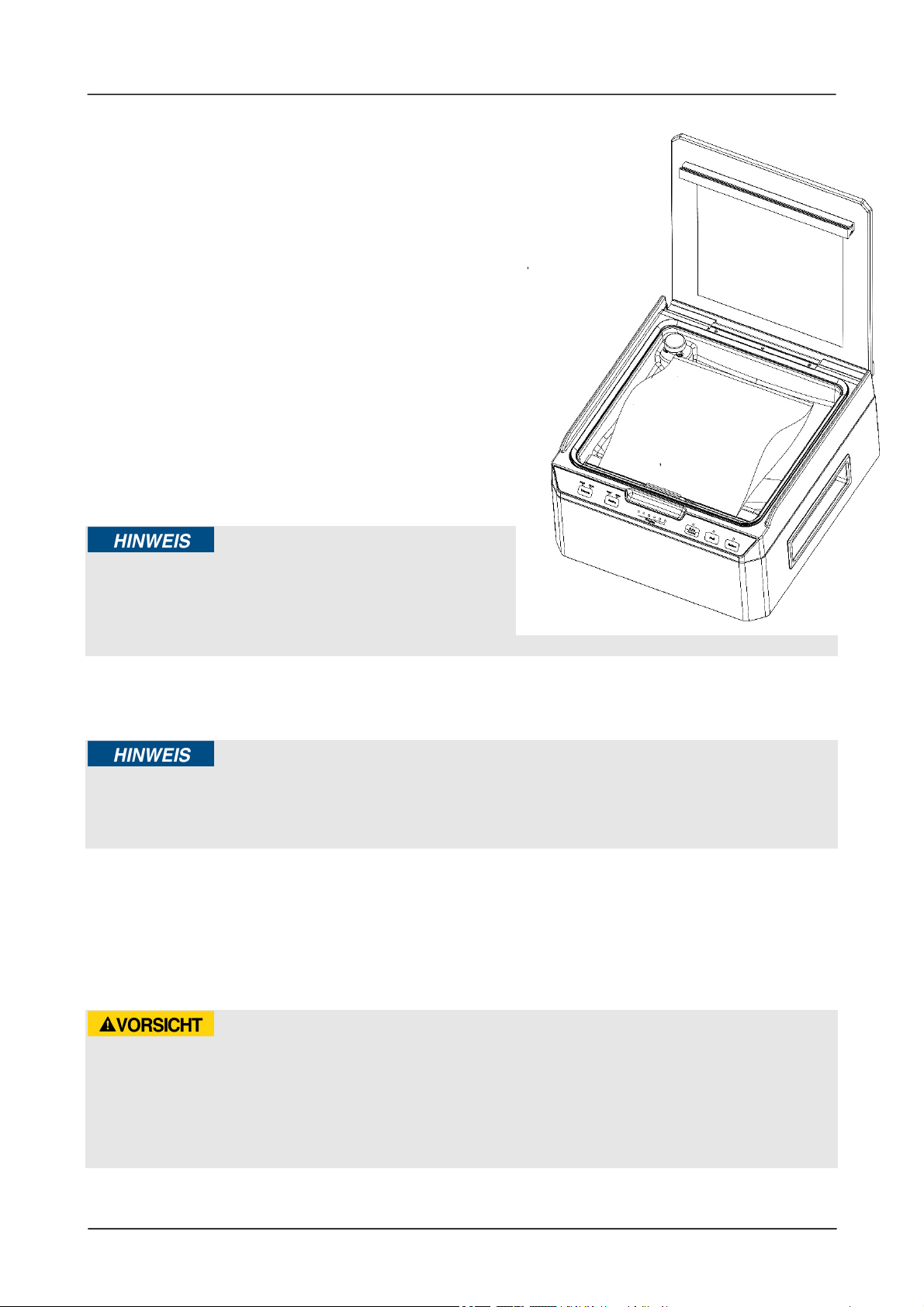
42
17.7 Marinate of food with bag
Place the food which you want to marinate into
the bag. Open the lid of the device and place
the bag which you want to marinate into the
vacuum chamber and fixate it. Lift fixation (5),
place the end of the bag and push the fixation
down again.
Close the lid of the device and press Marinate.
The food will automatically be marinated. The
device beeps when the operation is completed.
Repeat the operation as often as you like until
the desired intensity is reached.
Then seal the bag manually as described in
chapter 17.3.
Open the lid and take out the bag.
Please note
► The device will not seal and vacuum directly
after marinate function.
► Please perform this operation manually if
desired.
17.8 Storage
Store the device in its upright position, out of the reach of children.
PLEASE NOTE
► Unplug the device after using. So you reduce the unnecessary energy consumption and
ensure your safety.
► Always unplug the appliance from its outlet immediately after using and before cleaning.
18 Cleaning and Maintenance
This chapter provides important information on properly cleaning and maintaining your
vacuum sealer.
18.1 Safety information
ATTENTION
Please observe the following safety notices, before cleaning the unit to avoid damage to
the unit or personal injury:
► Unplug the device before to cleaning.
► To ensure optimum performance, the unit must be cleaned regularly. Failure to clean
the unit regularly can lead to potential malfunctions, as well as safety and health risks.
43
ATTENTION
► The sealing strip remains hot after use. Wait a few minutes until the strip has cooled
before cleaning.
► Clean the unit after every use as soon as it has cooled. Leaving the unit uncleaned for
long periods can make it very difficult to remove leftover food and grime and may even
damage the unit.
► If moisture penetrates the unit’s housing, it can damage the electronic components.
Please ensure that no moisture enters the device.
► Do not use any harsh or abrasive cleaning agents. Do not attempt to scrape off
stubborn grime with hard or abrasive tools.
► Dry all parts thoroughly before using after cleaning.
► Never immerse the device in water or other liquids and do not place in the dishwasher.
18.2 Cleaning
Outside of the unit: Wipe with a damp cloth or sponge and mild dish soap.
Inside of the unit: Wipe away any food or liquids with a paper towel.
If you remove the gasket during cleaning, then dry it thoroughly and reinsert it correctly,
otherwise the device cannot properly produce the vacuum.
Cleaning bags for reuse
Wash the bags in warm water with a mild dishwashing soap, then rinse them well and
allow them to dry completely before reusing.
ATTENTION
► Bags used to store raw meats, fish or greasy foods should never be reused due to risk
of contamination.
19 Troubleshooting
The following table may help you narrow down and address minor malfunctions:
19.1 Safety notices
ATTENTION
► Only qualified electricians, who have been trained by the manufacturer may carry out
any repairs on electrical equipment.
► Improperly performed repairs may result in personal injury or damage to the device.
19.2 Troubleshooting table
Fault Possible Cause To Rectify
Device does not turn
on
Power plug is not plugged in. Plug in the power plug.
Defective power cord Contact Customer Service
Defect socket outlet Select other outlet
44
A complete vacuum
is not being created
in the bag.
The open end of the bag is not
completely inside the vacuum
chamber
Position the bag correctly
The bag is defect Select another bag
There is residue on the welding
and the seal
Clean the welding / seals and
retry once they are dry
The bag is not being
sealed correctly
The sealing bar is overheating
so that the bag melts
Open the cover on the unit and
let it cool down for a few minutes.
Sealing bar needs to be replaced.
Defect sealing bar.
The bag does not
hold the vacuum
after it has been
sealed
The bag is defective
Select another bag; wrap paper
around any sharp edges within
the bag.
There are leaks along the
welding seam as a result of
creases, crumbs, grease or
liquids.
Open the bag again and clean
the upper internal part of the bag.
Remove any foreign matter that
might be on the welding bar
before sealing.
PLEASE NOTE
► In the event of technical troubles, faulty devices or missing parts, please contact
Customer Service.
20 Disposal of the Old Device
To protect the environment, it’s important to dispose of old electronic devices
properly. Do not place your old unit in the non-recyclable waste under any
circumstances.
PLEASE NOTE
► Please take your old unit to the nearest recycling center for safe disposal.
► Until it can be disposed of properly, store your old unit away from children.
21 Guarantee
We provide a 24 month guarantee for this product, commencing from the date of sale, for
faults which are attributable to production or material faults. Your legal guarantee
entitlements in accordance with § 439 ff. BGB-E remain unaffected by this.
The guarantee does not include damages, which were incurred as a result of improper
handling or use, as well as malfunctions which only have a minor effect on the function or
the value of the device. Consumables, transit damages, inasmuch as we are not
responsible for these, as well as damages, which were incurred as a result of any repairs
that were not performed by us, are also excluded from the guarantee entitlements.
This device is designed for use in domestic situations and has the appropriate
performance levels.

45
Any use in commercial situations is only covered under the guarantee to the extent that it
would be comparable with the stresses of being used in a domestic situation. It is not
intended for any additional, commercial use. In the event of justified complaints, we will
repair the faulty device at our discretion or replace it with a trouble-free device. Any
pending faults must be reported within 14 days of delivery.
All further claims are excluded.
To enforce a guarantee claim, please contact us prior to returning the device (always
provide us with proof of purchase).
22 Technical Data
Device Chamber Vacuum Sealer
Name VacuChef 40
Item No.: 1417
Mains data 220-240V, 50Hz
Power consumption 280W
External measurements (W x H x D): 320 x 175 x 340 mm
Net weight 8,3 kg
Capacity 4,2 m3/h (70 L/min)
Maximum bag width Suitable for 25 cm bags
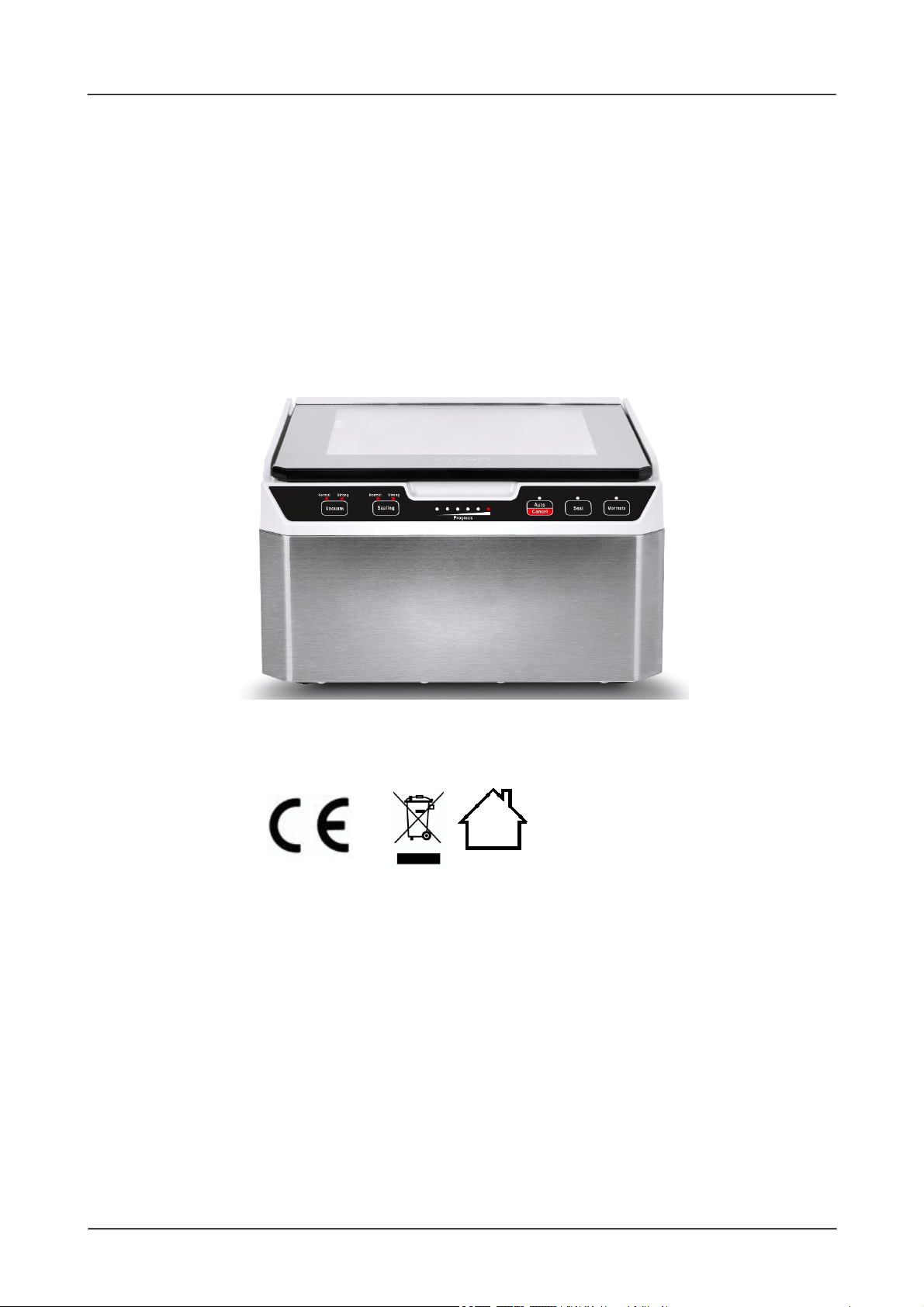
46
Mode d'emploi original
Appareil de mise sous vide à compartiment
VacuChef 40
N°. d'art. 1417

47
23 Mode d´emploi
23.1 Généralités
Veuillez lire les indications de ce manuel afin de vous familiariser rapidement avec
l'appareil et afin de pouvoir utiliser l'ensemble de ses fonctions.
Votre l´apparail d´emballage sous vide vous sera fidèle de nombreuses années si vous
l'utilisez et l'entretenez conformément.
Nous vous souhaitons beaucoup de plaisir lors de son utilisation.
23.2 Informations relatives à ce manuel
Ce mode d'emploi appartient au l´appareil d´emballage sous vide (nommé par la suite
l'appareil) et vous donne des indications importantes pour la mise en service, la sécurité,
l'utilisation conforme et l'entretien de l'appareil.
Le mode d'emploi doit être en permanence disponible près de l'appareil. Il doit être lu et
mis en application par toute personne effectuant :
sa mise en service,
son utilisation,
sa réparation et/ou
son entretien.
Veuillez conserver ce mode d'emploi, et le transmettre au propriétaire suivant de l'appareil.
23.3 Avertissements de danger
Dans le présent mode d'emploi vous pourrez trouver les avertissements suivants :
Danger
Un avertissement à ce niveau de danger signale un risque de situation dangereuse.
Si cette situation dangereuse n'est pas évitée, elle peut entraîner la mort ou des blessures
dangereuses.
► Il faut suivre les instructions données dans cet avertissement afin de prévenir tout
danger de mort ou de blessures graves pour les personnes.
Attention
Ce niveau de risque indique la présence possible d'une situation de danger.
Si cette situation dangereuse n'est pas évitée, elle peut entraîner des blessures graves.
► Il faut suivre les instructions données dans cet avertissement afin de prévenir tout
danger de blessures graves.

48
Prudence
Ce niveau de risque indique la présence possible d'une situation de danger.
Si cette situation dangereuse n'est pas évitée, elle peut entraîner des blessures légères ou
superficielles.
► Il faut suivre les instructions données dans cet avertissement afin de prévenir les
blessures de personnes.
Remarque
Cette indication est accompagnée d'informations complémentaires pour faciliter l'utilisation
de l'appareil.
23.4 Limite de responsabilités
Tous les renseignements techniques, données et instructions d'installation, de
fonctionnement et d'entretien contenus dans ce manuel sont parfaitement actuels au
moment de la publication et tiennent compte de notre expérience réalisée jusqu'ici et de
nos connaissances actuelles en toute bonne foi.
Les indications, illustrations et descriptions contenues dans ce manuel ne peuvent donner
lieu à aucun recours.
Le constructeur décline toute responsabilité pour les dommages causés par :
le non respect du mode d'emploi l'utilisation non conforme
des réparations non professionnelles
des modifications techniques, modifications de l’appareil
l'utilisation de pièces non autorisées
Les modifications de l’appareil ne sont pas recommandées et ne sont pas couvertes par la
garantie. Les traductions ont été réalisées avec la meilleure fidélité possible. Nous
déclinons toute responsabilité pour les erreurs de traduction, même si la traduction a été
réalisée par nos soins ou sur notre demande. Seul le texte original en allemand fait force
de loi.
23.5 Protection intellectuelle
Cette documentation est protégée par la loi sur la propriété intellectuelle.
Tous droits de reproduction aussi photomécaniques, de multiplication et de diffusion du
texte, dans sa totalité ou en partie, au moyen de processus spéciaux (par exemple
informatique, sur support électronique ou en réseau), sont réservés à la Sté. Braukmann
GmbH. Modifications techniques et de contenu réservées.
24 Sécurité
Ce chapitre vous indiquera des consignes de sécurité importantes pour l'utilisation de cet
appareil. Cet appareil répond aux directives de sécurité prescrites. Une utilisation non
conforme peut toutefois entraîner des dommages sur les personnes et matériels.

49
24.1 Utilisation conforme
Cet appareil est conçu uniquement pour une utilisation ménagère à l'intérieur de locaux,
afin de scellager uniquement ou de vider des sacs et récipient à vide pour conserver
d´aliments sous vide.
Toute autre utilisation est considérée comme non conforme.
Attention
Danger en cas d'utilisation non conforme ! En cas d'usage non conforme et/ou non
approprié l'appareil peut devenir une source de danger.
► Utiliser l'appareil uniquement de façon conforme.
► Respecter les procédures décrites dans ce mode d'emploi.
Tout recours en garantie est supprimé en cas de dommages causés par une utilisation
non conforme. L'utilisateur est entièrement responsable des risques encourus.
24.2 Consignes de sécurités générales
Remarque
IMPORTANTES CONSIGNES DE SECURITE
A LIRE ATTENTIVEMENT ET A CONSERVER POUR
UTILISATION ULTERIEURE
Pour une utilisation en toute sécurité de l'appareil veuillez
observer les consignes générales de sécurités suivantes :
► Avant son utilisation s'assurer qu'il ne comporte pas de
défauts visuels. Ne jamais mettre en marche un appareil
détérioré.
► En cas de dégradation du cordon de raccordement il faut
faire installer un nouveau câble par un électricien agréé.
► Cet appareil peut être utilisé par les enfants âgés de plus de
huit ans et par les personnes atteintes d'un handicap mental,
sensoriel ou physique si elles ont au préalable été instruites
de sa manipulation en sécurité et comprennent ses éventuels
dangers.
► Ne pas laisser les enfants jouer avec l'appareil. Les enfants
de moins de 8 ans ou laissés sans surveillance ne doivent
pas nettoyer l'appareil ou intervenir autrement sur celui-ci.
► L'appareil et le câble de branchement qui en fait partie
doivent être hors de portée des enfants de moins de 8 ans.
► Ne pas ranger ou utiliser l'appareil à l'air libre.

50
Remarque
► L'appareil doit être régulièrement nettoyé et il faut toujours
vider les restes d'aliments qu'il contient.
► Les réparations doivent être effectuées uniquement par un
service après-vente agréé par le constructeur, sinon en cas
de dommages le recours en garantie est supprimé. Des
réparations incorrectes peuvent entraîner de graves dangers
pour l'utilisateur.
► Les pièces défectueuses doivent être remplacées
uniquement par des rechanges d'origine. Ces pièces sont
seules capables de répondre aux exigences de sécurité.
► Pendant son fonctionnement ne pas laisser l'appareil sans
surveillance.
► Pour débrancher l’appareil, assurez-vous de tirer sur la prise
et non sur le câble, et ne pas porter l'appareil par le câble.
► Ne plongez pas l’appareil dans l’eau ou dans quelque autre
liquide que ce soit.
► N'ouvrez pas le couvercle pendant que vous déplacez
l'appareil.
► Ne déplacez pas l'appareil pendant la mise sous vide et le
soudage.
24.3 Sources de danger
24.3.1 Danger de brulures
Attention
La bande de scellage peuvent devenir très chauds.
Pour éviter que vous ou d'autres se brûlent ou s'ébouillantent
observez les consignes de sécurité suivantes :
► Pour éviter d’éventuelles brûlures, ne touchez jamais la
bande de scellage juste après le soudage .
51
24.3.2 Danger d'incendie
Attention
En cas d'utilisation non conforme de l'appareil cela peut
provoquer un incendie par inflammation du contenu.
Pour éviter tout risque d'incendie veuillez observer les
consignes de sécurité suivantes :
► Ne disposez pas l'appareil à proximité de matériaux
inflammables.
► N’approchez pas l’appareil de sources de chaleur (chauffage
à gaz ou électrique, brûleur, four chaud, etc.).
24.3.3 Dangers du courant électrique
Danger
Danger de mort par électrocution !
Danger de mort en cas de contact avec des câbles ou des
pièces sous tension ! Pour éviter les risques d'électrocution
veuillez observer les consignes de sécurité suivantes :
► L'appareil ne doit pas être mis en marche si le câble
électrique ou la prise sont endommagés, s'il ne fonctionne
pas correctement ou est tombé ou a été endommagé. Si le
câble électrique ou la prise ont été endommagés, ceux-ci
doivent être changés par le fabricant ou son service après-
vente afin de prévenir tout danger.
► N'ouvrez en aucun cas le caisson de l'appareil. Il y a danger
d'électrocution si on touche des raccords conducteurs
électriques et si on modifie la structure électrique et
mécanique. Cela peut aussi provoquer des
dysfonctionnements de l'appareil.
► Avant de brancher l’appareil sur le secteur ou de le mettre
sous tension, assurez-vous que vos mains sont parfaitement
sèches.
52
24.4 Informations relatives à la sécurité de stockage des aliments
Veuillez suivre certaines procédures de mise sous vide pour garantir la qualité et la
sécurité de vos produits alimentaires scellés sous vide.
Remarque
Règles générales relatives à la sécurité alimentaire
► Consommez immédiatement tout aliment périssable réchauffé, décongelé ou sorti du
réfrigérateur.
► Avant de procéder à l’emballage sous vide, lavez-vous les mains et nettoyez tous les
ustensiles et éléments qui seront utilisés pour la découpe et l’emballage des aliments.
► Réfrigérez ou congelez les aliments périssables immédiatement après leur emballage
sous vide; ne les laissez pas à température ambiante.
► Pour prolonger la durée de conservation des aliments secs emballés sous vide, tels que
les fruits secs ou les céréales, stockez-les dans un endroit frais et sombre. L’oxygène et
des températures élevées entraîneront la rancidité des aliments riches en lipides.
► Le fait de peler certains fruits et légumes, tels que les pommes, les bananes, les
pommes de terre et les légumes-racines, permet de prolonger leur durée de
conservation.
► Certains légumes frais emballés sous vide pour être réfrigérés émettront des gaz; ceci
est tout particulièrement le cas des brocolis, des choux-fleurs et des choux. Il est donc
nécessaire de blanchir et de congeler ces aliments avant de les emballer sous vide.
25 Mise en service
Ce chapitre est consacré à des indications importantes concernant la mise en service de
l'appareil. Observez les indications pour éviter les dangers et les détériorations.
25.1 Consignes de sécurité
Attention
► Ne pas utiliser les matériaux d'emballage pour jouer. Danger d'étouffement.
25.2 Inventaire et contrôle de transport
L'appareil de mise sous vide à compartiment est livré de façon standard avec les
composants suivants : VacuChef 40 mode d'emploi
Tuyau + Adaptateur
20 sacs de haute valeur (25 x 28 cm)
Remarque
► Vérifier l'intégralité de la livraison et les éventuels défauts visuels.
► En cas de livraison incomplète ou de dégâts en raison d'un emballage insuffisant ou du
transport veuillez en avertir immédiatement l'expéditeur, l'assurance et le livreur.

53
25.3 Fonctions
La principale fonction de cet appareil est de prolonger le stockage d’une grande variété
d’aliments sans en altérer ni la fraîcheur ni le goût et de vous faire bénéficier d’une plus
grande commodité. En général, les emballages sous vide permettent de conserver la
fraîcheur des aliments huit fois plus longtemps que les méthodes de stockage
traditionnelles.
Conservez leur goût et leur fraîcheur et réduisez vos coûts en consommant moins
d'aliments gâtés.
Emballez vos viandes, poissons, volailles, fruits de mer et légumes pour les congeler
ou les réfrigérer.
Emballez vos aliments secs, tels que haricots, fruits secs ou céréales, pour pouvoir les
stocker plus longtemps.
Cet appareil peut également être utilisé pour stocker et protéger d’autres articles, qu’il
s’agisse d’objets personnels, tels que des photos, des documents importants, des
collections de timbres, des bijoux, des cartes ou des bandes dessinées, d’éléments de
bricolage, tels que des vis, des clous ou des boulons, ou encore de médicaments ou
autres articles de premiers secours, etc.
25.4 Déballage
Pour déballer l'appareil procédez comme suit :
Retirer l'appareil du carton et éliminez les matériaux d'emballage.
25.5 Elimination des emballages
L'emballage protège l'appareil contre les dégâts de transport. Les matériaux d'emballage
ont été choisis selon des critères environnementaux et de techniques d'élimination, c'est
pourquoi ils sont recyclables.
Le retour des emballages dans le circuit des matières épargne les matières premières et
restreint le volume des déchets. Eliminez les emballages inutiles dans les points de
collecte destinés au système de recyclage avec le logo «Point vert».
Remarque
► Veuillez si possible conserver l'emballage original pendant la durée de la garantie de
l'appareil afin de pouvoir emballer correctement l'appareil en cas de recours en
garantie.
25.6 Mise en place
25.6.1 Exigences pour l'emplacement d'utilisation
Pour un fonctionnement sûr et sans problème de l'appareil, son emplacement d'utilisation
doit être choisi selon les critères suivants :
L'appareil doit être disposé sur un support solide, plat, à niveau et résistant à la chaleur
dont la capacité de charge est suffisante pour l´appareil et pour les choses les plus
lourdes devant être conserver d´aliments sous vide.
L'appareil n'est pas prévu pour une installation dans une niche de mur ou dans un
élément de cuisine.

54
Choisir un emplacement de sorte que les enfants ne puissent pas accéder aux bande
de scellage de l'appareil.
Ne disposez pas l'appareil dans un environnement chaud, mouillé ou très humide ou à
proximité de matériaux inflammables.
L´appareil ne doit pas être placé ni près d´une cuisinière à gaz ou électrique, ni près
d´un four.
Ne déplacez pas l’appareil d’emballage sous vide en cours d’utilisation.
Pour un fonctionnement correct l'appareil nécessite un flux d'air suffisant. Laissez un
espace de 10 cm au-dessus, de 10 cm à l'arrière et de 10 cm des deux côtés.
La prise de courant doit être facilement accessible, de sorte à pouvoir débrancher
facilement le câble en cas d'urgence.
L'installation et le montage de cet appareil sur des emplacements mobiles (par
exemple un bateau) doivent être exécutés uniquement par des entreprises / personnes
professionnels qui garantissent les exigences de sécurité d'utilisation de cet appareil.
25.7 Raccordement électrique
Pour une utilisation de l'appareil sûre et sans panne, il faut observer les indications
suivantes pour le raccordement électrique :
Avant de brancher l'appareil il faut comparer les données de raccordement (tension et
fréquence) de la plaque signalétique avec celles de votre réseau. Ces données doivent
correspondre, afin de ne pas exposer l'appareil à des dégradations.
En cas de doute renseignez-vous auprès d'un électricien.
Il est interdit d'utiliser des multiprises ou des barrettes de prises multiples en raison des
dangers potentiels.
Assurez-vous que le câble électrique est en parfait état et qu'il n'est pas disposé sous
le four ou des surfaces chaudes ou des bords coupants.
La prise de réseau doit être protégée par une protection de 16A.
La sécurité électrique de l'appareil est garantie uniquement lorsqu'il est raccordé à un
circuit électrique avec un système de protection installé en toute conformité. En cas de
doute faites vérifier l'ensemble de l'installation électrique par un électricien.
Le constructeur ne peut pas être tenu responsable pour les dégâts causés par un
conducteur de masse absent ou interrompu.
25.7.1 Les cordons de rallonge
Si une rallonge est utilisée:
► Les caractéristiques électriques de la rallonge doit être au moins aussi élevée que la
puissance électrique de l'unité.
► Le cordon doit être placé de sorte qu'il ne soit pas étalé sur le comptoir ou la table où il
peut être tiré par des enfants ou faire trébucher.
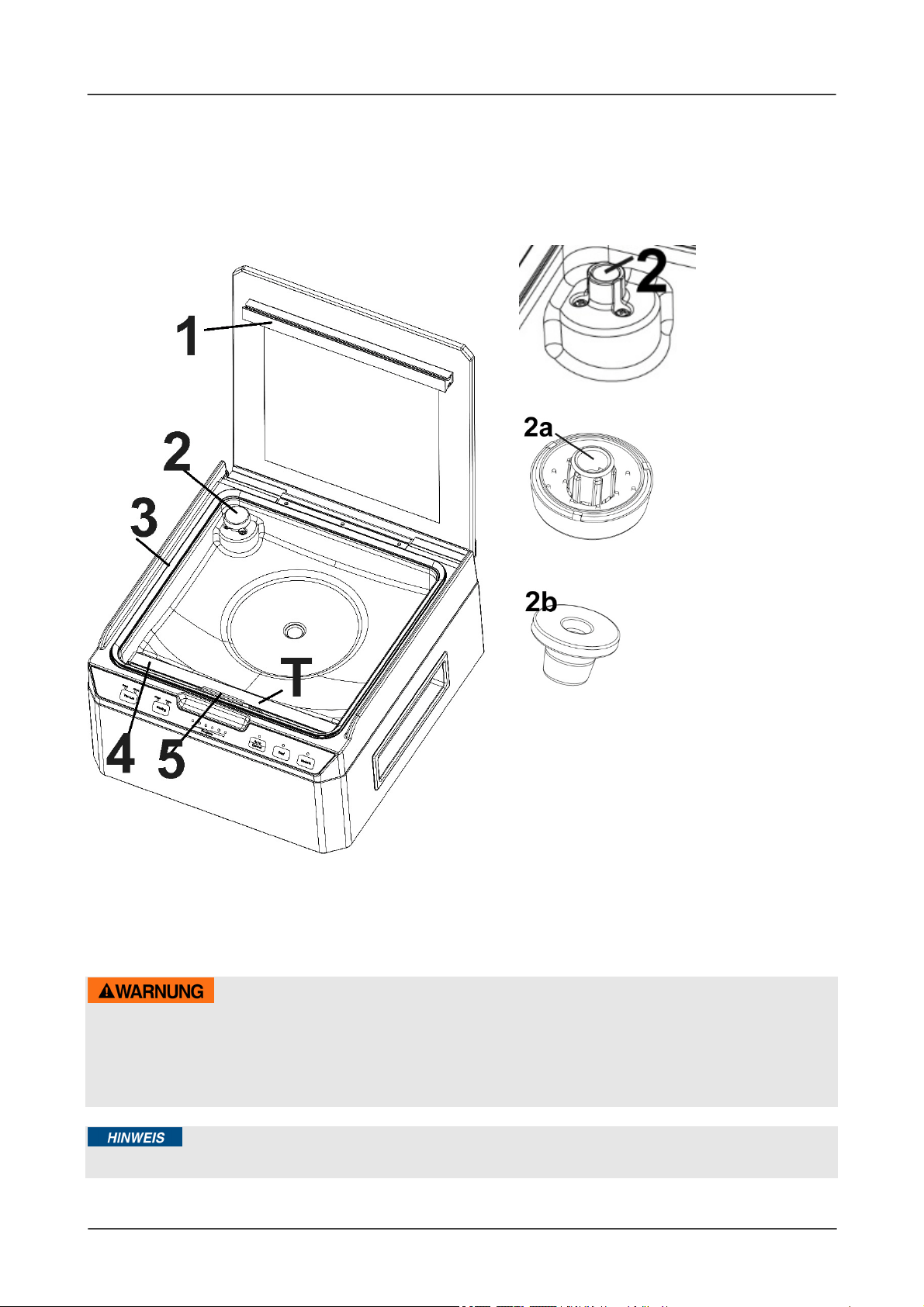
55
26 Structure et fonctionnement
Ce chapitre est consacré à des indications importantes sur la structure et le
fonctionnement de l'appareil.
26.1 Vue d'ensemble
1 Joint en caoutchouc : Comprime le
sachet contre la barre de soudure
2 Raccord pour tuyau à vide, filtre à
air 2a, adaptateur 2b
N'enlevez le filtre à air que si un tuyau
de mise sous vide doit être raccordé.
3 Sceau
4 Barre de scellage : est formée d´un fil de chauffage téflonisé ; ce dernier permet de
sceller le sac sans qu´il adhère.
5 Fixation : Pour fixer le sachet.
Attention
La bande de scellage peuvent devenir très chauds. Veuillez respecter la consigne
de sécurité suivante pour éviter de vous brûler et de brûler d’autres personnes:
► Pour éviter d’éventuelles brûlures, ne touchez jamais la bande de scellage juste après
le soudage .
Remarque
► N'enlevez pas la bande en téflon (T).
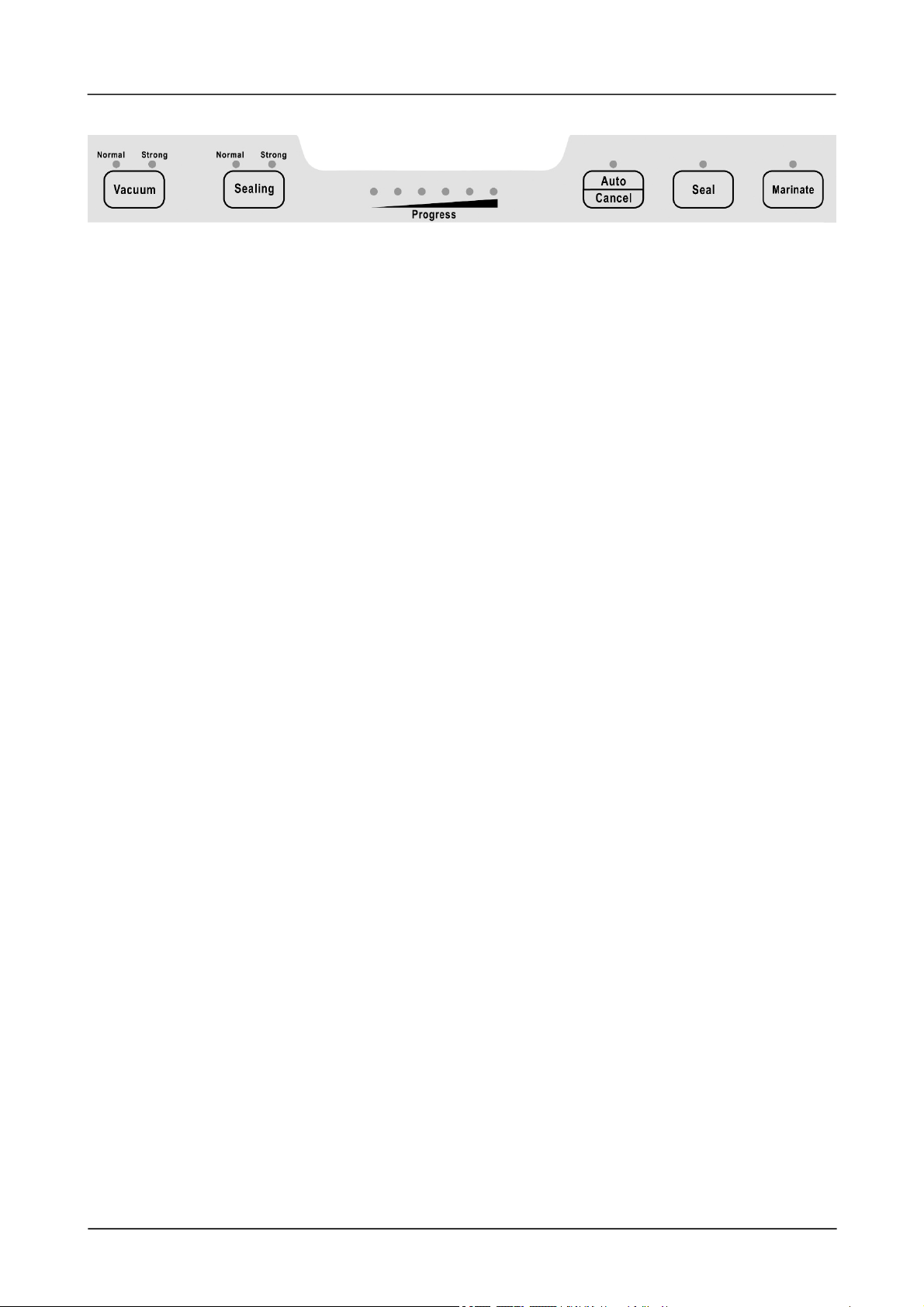
56
26.2 Panneau de commande
Vacuum (vide) : réglage du niveau de mise sous vide
Normal: pour les aliments sensibles ou mous
Strong (fort) : pour les aliments durs ou peu sensibles (pour une pression de vide
particulièrement forte)
Sealing (scellage) réglage du temps de scellage
Normal: pour matériau sec sous vide (temps de scellage court)
Strong (extra longue) : - pour matériau sous vide humide ou matériau sous vide avec
beaucoup de liquide (temps de scellage long)
Progress (progrès) – la LED de progression indique le progrès du processus respectif
Auto/Cancel (auto/annuler) avec les fonctions suivantes :
Mise sous vide automatique : pour la mise sous vide et le scellage automatique d'un
sachet.
Mise sous vide du récipient : lorsque le couvercle de l'appareil est ouvert, un récipient
peut être mis sous vide à l'aide d'un tuyau de mise sous vide.
Annulez l'opération : l'unité peut être arrêtée à tout moment pendant le processus de
mise sous vide / scellage.
Seal (scellage) – scellage avec les fonctions suivantes :
Pour le scellage d'un sachet sans procédé de mise sous vide
Lorsque la fonction de mise sous vide automatique est activée, ce bouton peut être
enfoncé pour arrêter le processus de mise sous vide à tout moment, puis sceller le sac.
Marinate (laisser mariner) : pour laisser mariner à l'intérieur d'un sachet
Plaque signalétique
La plaque signalétique indiquant les données de raccordement et de puissance se trouve
à l'arrière de l'appareil.
27 Commande et fonctionnement
Ce chapitre est consacré à des indications importantes sur la commande de l'appareil.
Pour éviter tout risque et dégradations, veuillez observer les indications.
27.1 Conservation dans un sachet dans le compartiment de mise sous
vide
Placez l'appareil sur une surfache sèche.
Placez les aliments que vous souhaitez conserver à l'intérieur du sachet.
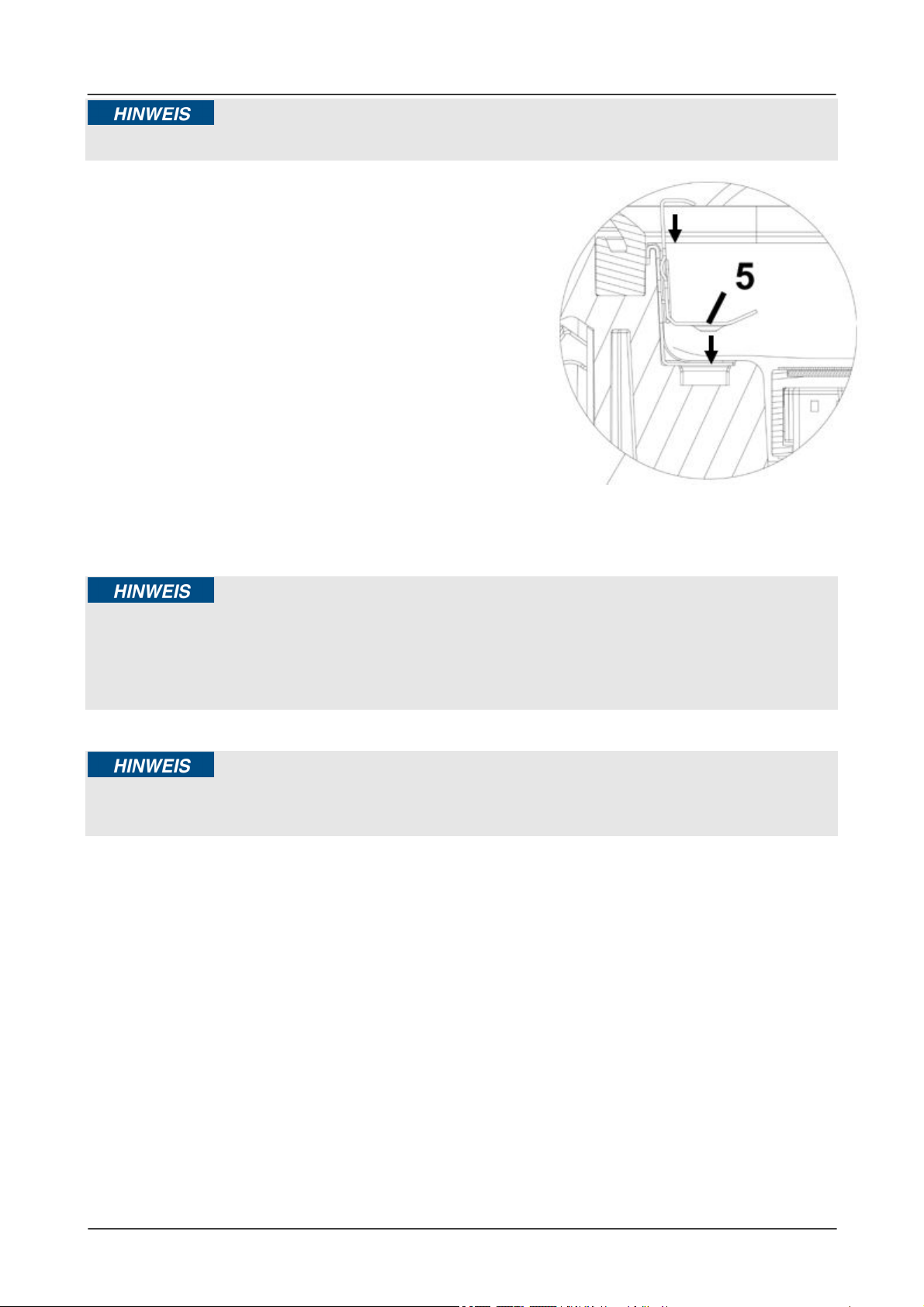
57
Remarque
► Évacuer l'air excédentaire du sachet pour obtenir un résultat optimal de mise sous vide.
Mettez l'appareil en marche. Ouvrez le couvercle de
l'appareil et posez le bout ouvert du sachet au-
dessus de la barre de soudure puis fixez-le. Pour
ce faire, soulevez la fixation (5), placez l'extrémité
du sac sous celle-ci et appuyez sur la fixation vers
le bas.
Régler le vide et les paramètres de scellage selon
les besoins.
Fermez le couvercle et appuyer sur mise sous
Auto/Cancel.
Appuyez sur le couvercle pendant 2 secondes pour
l'enfoncer après le démarrage de la mise sous
vide.
L'appareil met sous vide et scelle automatiquement le sachet. L'appareil émet un bip
lorsque l'opération est terminée.
Remarque
► L'appareil génère une très forte dépression. Si nécessaire, vous devez interrompre le
processus de mise sous vide automatique à un stade précoce pour les aliments
sensibles et les soupes. Annulez ensuite le processus via Seal (scellage), le sac est
automatiquement scellé.
►
Appuyez sur le couvercle et sortez le sachet.
Remarque
► Éliminer le liquide excédentaire ou les résidus alimentaires dans le compartiment de
mise sous vide après chaque opération de mise sous vide.
27.2 Conservation dans des sachets du rouleau
Placez l'appareil sur une surfache sèche.
Branchez la prise d'alimentation. Mettez l'appareil en marche. Régler le vide et les
paramètres de scellage selon les besoins.
Rouler la feuille jusqu'à la longueur désirée et couper-la avec une découpe exacte et
précise. Ouvrez le couvercle de l'appareil et posez le bout ouvert du sachet au-dessus
de la barre de soudure puis fixez-le. Pour ce faire, soulevez la fixation (5), placez
l'extrémité du sac sous celle-ci et appuyez sur la fixation vers le bas.
Fermez le couvercle de l'appareil. Appuyez sur Seal. La LED au-dessus de Seal
s'allume et s'éteint lorsque le processus est terminé. Puis l'appareil émet un bip.
Appuyez sur le couvercle et sortez le sachet. Celui-ci peut maintenant être utilisé pour
la mise sous vide.

58
Remarque
► Laissez un délai d’une minute environ entre le scellage de chaque sac afin de laisser le
temps à l’appareil de se réinitialiser. Il est également possible de sceller plusieurs
sachets l'un après l'autre.
► Ne remplissez pas trop les sacs; laissez suffisamment de place pour permettre de
mieux positionner l’extrémité ouverte du sac sur sur la barre de scellage.
► Ne mouillez pas l’ouverture du sac. Les sacs humides sont en effet plus difficiles à faire
fondre et à sceller parfaitement.
► Nettoyez et étirez l’ouverture du sac avant de le sceller. Vérifiez que l’ouverture du sac
ne présente ni pli, ni impureté. Les sacs présentant des plis ou des saletés peuvent en
effet s’avérer difficiles à sceller proprement.
► Si les aliments que vous souhaitez emballer sont coupants ou pointus, par exemple des
os, des spaghettis ou des fruits de mer, rembourrez le sac avec de l’essuie-tout afin
d’éviter tout risque de déchirement.
► Blanchissez vos légumes en les plongeant quelques instants dans de l’eau bouillante
ou en les passant au four micro-ondes, laissez-les refroidir et emballez-les sous vide
pendant qu’ils sont encore croustillants, selon les portions désirées.
► Pour emballer sous vide des aliments non préalablement congelés, prévoyez environ
5 cm de longueur de sac supplémentaires pour laisser la place aux aliments de se
dilater durant la congélation. Placez tout morceau de viande ou de poisson sur une
serviette en papier et emballez le tout sous vide; ceci permettra d’absorber l’humidité
des aliments.
► Pour stocker des aliments tels que des tortillas, des crêpes ou des steak hachés, placez
des feuilles de papier sulfurisé ou paraffiné entre chaque portion ; ceci permettra de
séparer plus facilement les portions et d’ensuite pouvoir remballer le reste des aliments
avant de les replacer dans le congélateur.
27.3 Scellage sans vide d'un sachet
Vous pouvez sceller un sac sans le mettre sous vide. Placez le sac dans la chambre à
vide comme d’habitude, appuyez sur Seal.
Si le résultat n’est pas satisfaisant, laissez le sac pendre vers l’extérieur. Pour ce faire,
placez le sachet sur la barre de scellage de l'extérieur.
Fermez ensuite le couvercle et appuyez sur Seal.
27.4 Mise sous vide d’un sac à l’extérieur de la chambre à vide
Vous pouvez également aspirer un sac à l’extérieur de la chambre à vide.
Pour ce faire, placez le sachet sur la barre de scellage de l'extérieur.
Fermez ensuite le couvercle et procédez comme décrit sous « Conservation dans un
sachet dans le compartiment de mise sous vide ».
Cela ne fonctionne cependant qu’avec des sacs structurés. Les meilleurs résultats sont
obtenus avec des sacs structurés des deux côtés.
Remarque
► La mise sou vide à l'extérieur de la chambre à vide ne peut se faire qu'avec des sachets
structurés.
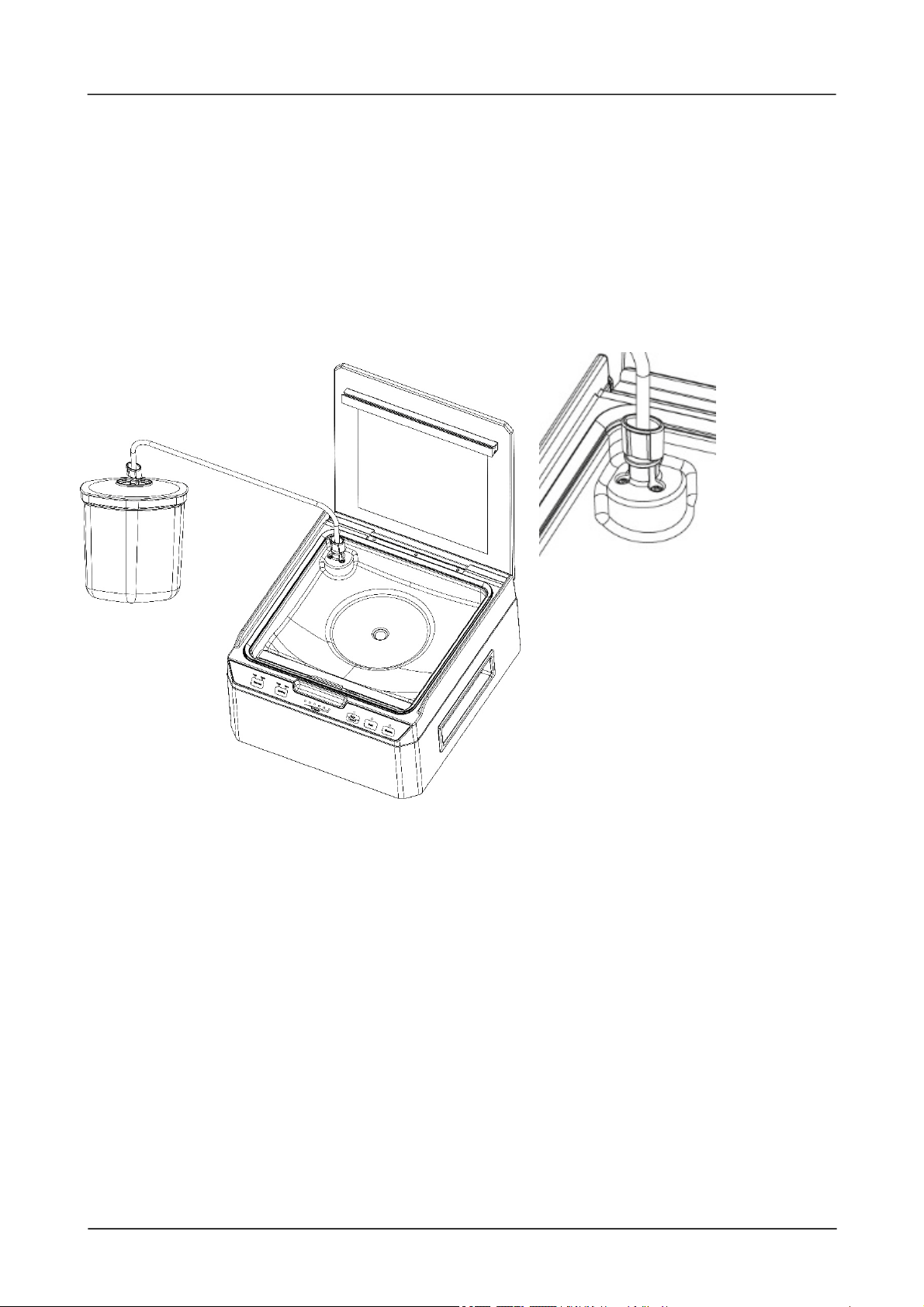
59
27.5 Sachets et rouleaux
N’utilisez que des sachets et rouleaux prévus exclusivement pour la mise sous vide. La
matière de ces films spéciaux pour mise sous vide est différente de celle des films de
conservation. Tous les rouleaux de vide et les sachets livrés de CASO sont appropriés
pour la cuisson sous vide.
Veuillez vous assurer que lorsque d’autres feuilles sont utilisées, celles-ci sont également
appropriées pour four à micro-ondes et pour cuire sous-vide. Vous recevrez donc en plus
de CASO une large offre de divers rouleaux et sacs.
27.6 Mise sous vide de récipients
Retirez le filtre à air au-dessus du raccord pour le tuyau de mise sous vide et fixez
l'adaptateur. Placez les aliments dans le récipient sous vide. Fixez le couvercle du
réservoir et raccordez le tuyau de mise sous vide au couvercle du réservoir et
l'adaptateur au raccord dans la chambre à vide de l'appareil.
Appuyez sur Auto/Cancel (mise sous vide automatique) pendant 3 secondes.
Appuyez brièvement sur le couvercle du récipient. Le récipient est automatiquement
mis sous vide. L'appareil émet un bip lorsque l'opération est terminée. En fonction de la
force de vide désirée, répéter l'opération aussi souvent que nécessaire.
Retirez ensuite l'adaptateur du raccord dans la chambre à vide et réinsérez le filtre à
air.
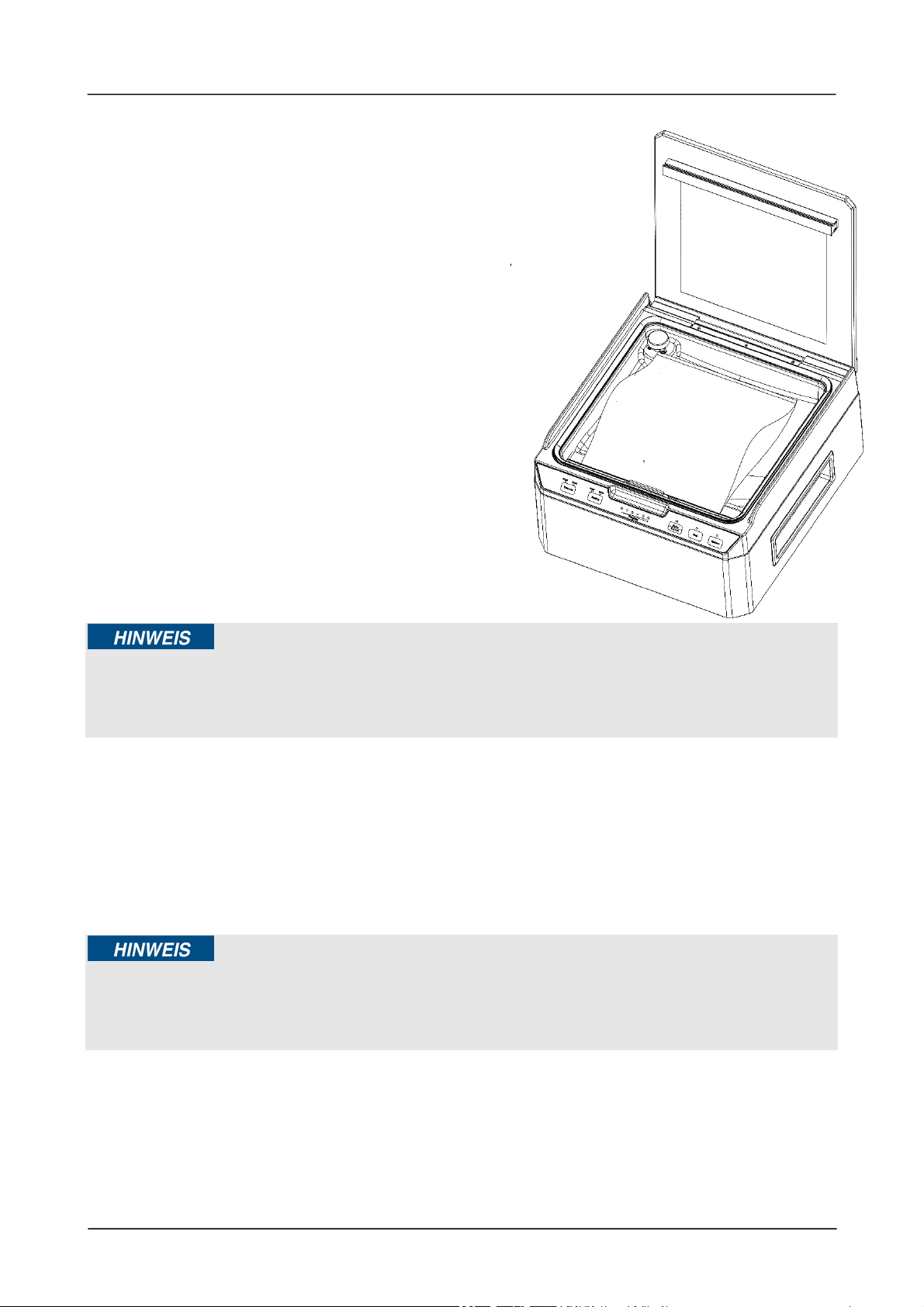
60
27.7 Mariner des aliments dans un sachet
Placez les aliments à mariner dans le sachet.
Ouvrez le couvercle de l'appareil et placez le
sachet à mariner dans la chambre à vide et
fixez-le en place. Pour ce faire, soulevez la
fixation (5), placez l'extrémité du sachet sous
celle-ci et appuyez sur la fixation vers le bas.
Fermez le couvercle de l'appareil et appuyez
sur Marinate.
Les aliments sont marinés automatiquement.
L'appareil émet un bip lorsque l'opération est
terminée.
Répétez le processus aussi souvent que vous
le souhaitez jusqu'à ce que l'intensité désirée
soit atteinte. Scellez ensuite le sachet
manuellement (comme décrit au chapitre
27.3).
Ouvrez le couvercle de l'appareil et retirez le
sachet.
Remarque
► L'appareil ne scelle pas et ne met pas sous vide pas directement après la fonction de
marinade !
► Si vous le souhaitez, effectuez cette opération manuellement.
27.8 Ouverture d’un sac scellé
Coupez le sac avec des ciseaux juste en dessous du joint.
27.9 Rangement de votre appareil:
Rangez l’appareil à plat dans un endroit sûr et hors de portée des enfants.
Remarque
► Débranchez toujours l’appareil du secteur immédiatement après son utilization.
► Veuillez stocker avec le couvercle légèrement fermé, pas vérrouiller, il se déforme les
joints et affecter le fonctionnement de la machine.
28 Nettoyage et entretien
Ce chapitre est consacré à des indications importantes sur le nettoyage et l'entretien de
l'appareil. Pour éviter la dégradation de l'appareil par un nettoyage incorrect et pour son
bon fonctionnement veuillez observer les conseils ci-dessous.
61
28.1 Consignes de sécurité
Prudence
Avant de commencer le nettoyage de l'appareil veuillez observer les consignes de sécurité
suivantes :
► Avant le nettoyage retirer le connecteur de la prise murale.
► L´appareil d´emballage sans vide doit être régulièrement nettoyé et il faut éliminer les
restes d'aliments cuits. Si l'appareil n'est pas maintenu dans un état permanent de
propreté, cela a des effets négatifs sur sa durée de vie et peut rendre l'appareil
dangereux et provoquer l'apparition de moisissures et d'attaques bactériennes.
► Après son utilisation la bande de scellage est chaude. Attention, risques de brulures !
Attendre que l'appareil soit froid.
► Nettoyer l´appareil après utilisation quand le four est refroidi. Ne pas attendre trop
longtemps car cela rend le nettoyage plus difficile, et éventuellement impossible. Un
encrassement trop important peut le cas échéant dégrader l'appareil.
► La pénétration d'humidité dans l'appareil peut détériorer les composants
électroniques. Faire attention qu'aucun liquide ne pénètre à l'intérieur de l'appareil par
les ouvertures de ventilation.
► Ne plongez pas l'appareil dans l'eau ou dans un autre liquide et ne mettez pas au
lave-vaisselle.
► Ne pas utiliser de produits nettoyants agressifs ou abrasifs et aucun solvant.
► Ne pas gratter les salissures résistantes avec des objets acérés.
► Séchez parfaitement l’appareil avant de le réutiliser.
28.2 Nettoyage
Essuyer l’extérieur de l'appareil avec un chiffon humide ou en utilisant une solution
sablonneuse douce et non abrasive. Intérieur de l'appareil : le nettoyer au papier essuie-
tout pour éliminer les résidus alimentaires et liquides.
Si vous retirez le joint pour le nettoyage, faites-le ensuite sécher complètement et
remettez-le correctement, sinon l'appareil ne pourra plus générer de dépression correcte.
Sacs de conservation :
Lavez les sacs à l’eau chaude avec un liquide vaisselle doux, puis rincez-les bien et
laissez-les totalement sécher avant de les réutiliser.
Prudence
► Les sacs ayant servi à conserver des viandes crues, du poisson ou des aliments gras
ne peuvent être réutilisés.
29 Réparation des pannes
Ce chapitre est consacré à des indications importantes sur la localisation des pannes et
leur réparation. Pour éviter les dangers et les dégradations il faut observer les indications.
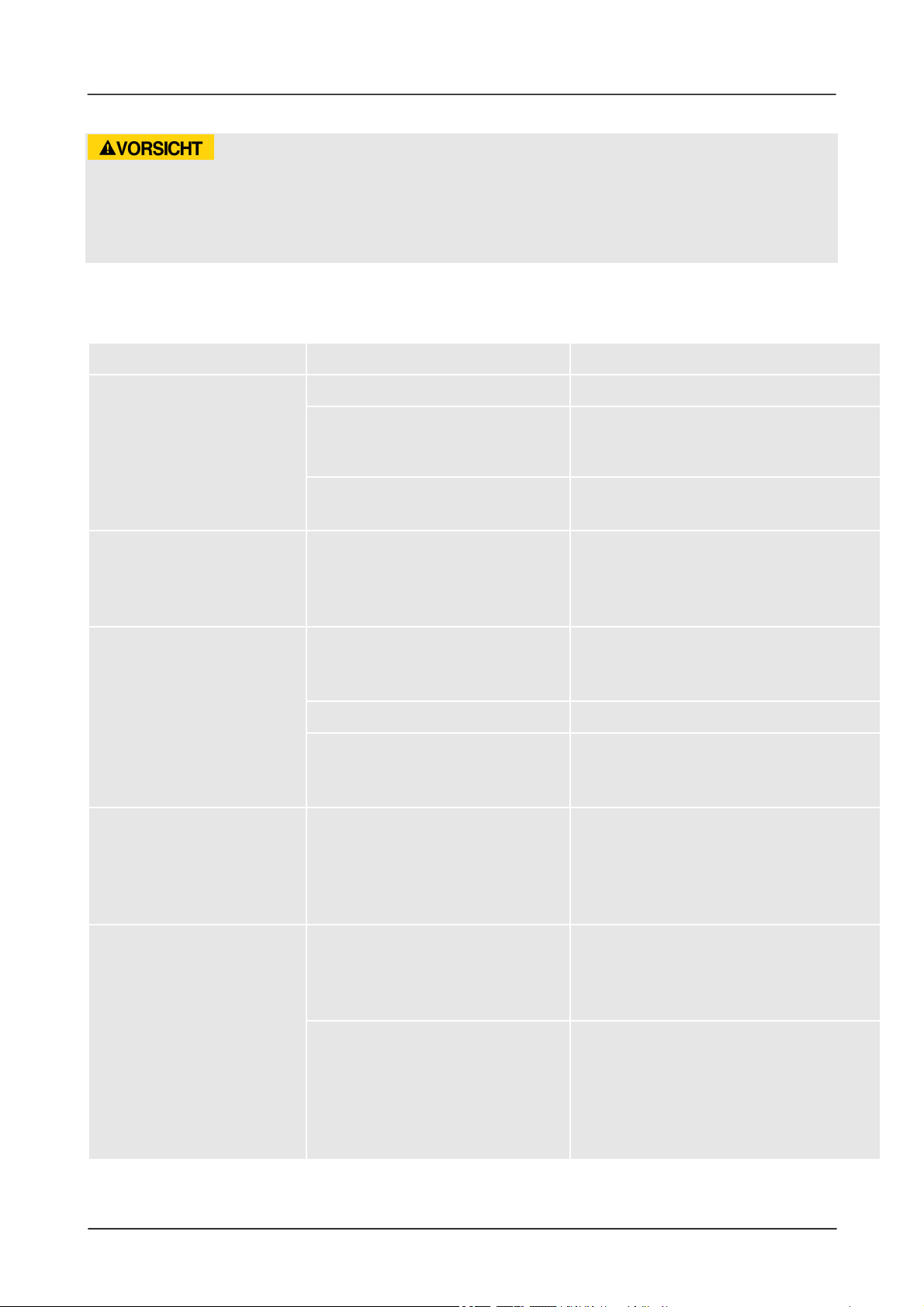
62
29.1 Consignes de sécurité
Prudence
► Les réparations sur les appareils électriques doivent être effectuées uniquement par
des spécialistes agréés par le constructeur.
► Les réparations non professionnelles peuvent provoquer de graves dangers pour
l'utilisateur et des dégâts sur l'appareil.
29.2 Origine et remède des incidents
Le tableau suivant aide à la localisation et à la réparation des petits incidents.
Erreur Cause possible Réparation
L’emballeuse sous vide
ne fonctionne pas.
Fiche secteur non encastrée Enfoncer la fiche secteur
Câble d'électricité ou prises
de courant défectif.
Adressez-vous au service après
vente.
Prise défective.
Prendre une autre prise de
courant.
Le premier soudage sur
la section de rouleau
découpée n'est pas mis
en œuvre.
Le rouleau n’est pas placé
correctement.
Suivez les étapes dans le chapitre
« Conservation dans des sacs du
rouleau ».
Aucun vide complet
dans le sac n'est
produit.
L’extrémité ouverte du sac ne
se trouve pas complètement
dans la chambre à vide
Placez correctement le sac.
Le sac est défectif. Prendre un autre sac.
Il y a des impuretés sur les
joints d’étanchéité et/ou les
autres joints.
Nettoyez les joints d’étanchéité et
replacez les correctement après
séchage.
Le sac n'est pas soudé
correctement.
La barre de soudage est
surchauffée de sorte que le
sac fond.
La barre de soudure est
défectueuse.
Ouvrez le couvercle de l'appareil et
laissez le refroidir quelques
minutes.
Changez la barre de soudure.
Le sac ne tient pas le
vide après avoir été
soudé.
Le sac est défectif.
Prendre éventuellement un autre
sac, entourer éventuellement les
pointes du contenu avec des
serviettes en papier.
Il y a des fuites à cause de
miettes, graisse ou liquides le
long de la soudure
Ouvrez à nouveau le sac, nettoyez
la partie interne supérieure du sac
et éliminez les corps étrangers
éventuellement existants de la
barre de soudage avant de souder
de nouveau le sac.
63
Remarque
► Si vous ne pouvez pas résoudre le problème à l'aide du tableau ci-dessus, adressez-
vous au service après vente.
30 Elimination des appareils usés
Les appareils électriques et électroniques contiennent de nombreux matériaux
recyclables. Mais ils contiennent également des produits nocifs qui sont
indispensables au fonctionnement et à la sécurité.
Ces derniers peuvent être nocifs pour les personnes ou pour l'environnement en cas
d'élimination dans les ordures ménagères ou de traitement incorrect.
Ne jamais jeter les anciens appareils avec les ordures ménagères.
Remarque
► Portez les vieux appareils électriques et électroniques dans les points de collecte et de
recyclage près de chez vous. Le cas échéant informez-vous auprès de la mairie, des
services des ordures ou de votre concessionnaire.
► Assurez-vous que votre ancien appareil reste hors de portée des enfants jusqu'à son
transport définitif.
31 Garantie
Sur ce produit nous accordons une garantie de 24 mois à partir de la date d'achat pour les
manques et les défauts de fabrication ou de matériaux.
Vous conserver entièrement vos droits de garantie légale accordés par le §439 et suivants
BGB-E.
La garantie ne concerne pas les dégâts causés par une utilisation ou une manipulation
non conforme, ainsi que les défauts qui n'influencent que faiblement le fonctionnement ou
la valeur de l'appareil. D'autre part ne sont pas garantis également les pièces d'usure, les
dommages de transport dans la mesure où ils ne sont pas sous notre responsabilité, ainsi
que les dommages occasionnés par des réparations qui n'ont pas été effectuées par nos
soins.
La construction et la puissance de cet appareil sont conçues pour un usage ménager
privé.
Un éventuel usage commercial reste couvert par la garantie dans la mesure où cette
utilisation ne dépasse pas le cadre des contraintes d'un usage privé. L'appareil n'est pas
prévu pour un usage commercial plus intensif.
En cas de recours en garantie justifié nous déciderons de réparer l'appareil ou de le
remplacer par un appareil sans défaut.
Les manques doivent être signalés dans un délai de 14 jours après livraison.
Tout autre recours est sans objet.
Pour tout recours en garantie nous vous prions d'entrer en contact avec nos services
avant de nous retourner l'appareil (toujours avec le bon d'achat!).

64
32 Caractéristiques techniques
Appareil Appareil de mise sous vide à compartiment
Nom VacuChef 40
N°. d'article 1417
Données de raccordement 220-240V, 50Hz
Puissance consommée 280W
Dimensions externes (l/h/p) 320 x 175 x 340 mm
Poids net 8,3 kg
Capacité 4,2 m3/h (70 L/min)
Largeur maximale du sachet Convient pour des sachets de 25 cm
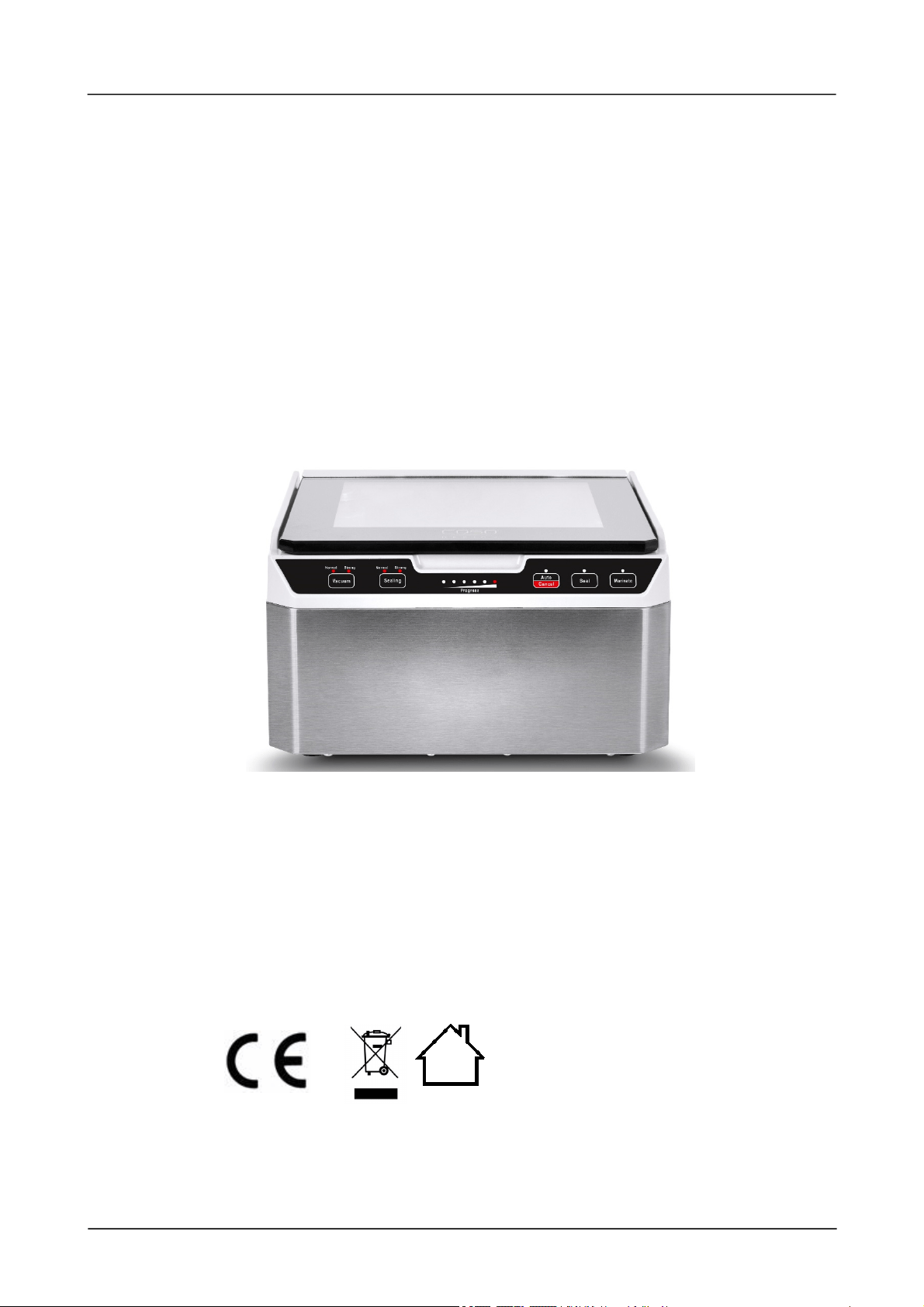
65
Istruzioni d’uso
originali
Sigillatore sotto vuoto
VacuChef 40
Articolo-N. 1417
66
33 Istruzione d´uso
33.1 In generale
Legga le informazioni qui contenute, affinché acquisti rapidamente familiarità con il suo
apparecchio e affinché possa utilizzare appieno le sue funzioni.
Il Suo VacuChef 40 le renderà un buon servizio per molti anni, se lo tratterà e lo curerà in
modo adeguato. Ci auguriamo che il suo utilizzo le procuri molta gioia.
33.2 Informazioni su queste istruzioni d’uso
Queste istruzioni d’uso sono una componente del VacuChef 40 (di seguito chiamato
l’apparecchio) e le fornirà importanti indicazioni per la messa in funzione, la sicurezza, un
utilizzo conforme alle disposizioni e per la cura dell’apparecchio.
Le istruzioni d'uso devono trovarsi sempre nelle vicinanze dell’apparecchio. Dovranno
essere lette ed utilizzate da qualsiasi persona, incaricata con la:
messa in funzione, l’utilizzo,
l'eliminazione di malfunzionamenti e/o la pulizia
dell’apparecchio. Conservi queste istruzioni d'uso e le passi insieme all’apparecchio al
successivo proprietario.
33.3 Indicazioni d’avvertenza
Nelle presenti istruzioni d’uso vengono utilizzate le seguenti indicazioni d’avvertenza:
Pericolo
Un’indicazione d'avvertimento di questo livello di pericolo contrassegna una
situazione di pericolo imminente.
Se tale situazione pericolosa non viene evitata, le conseguenze saranno la morte o gravi
lesioni.
► Osservare le indicazioni in queste avvertenze, per evitare il pericolo di morte o gravi
lesioni di persone.
Avviso
Un’indicazione d'avvertimento di questo livello di pericolo contrassegna una
situazione di pericolo potenziale.
Se tale situazione pericolosa non viene evitata, le conseguenze potranno essere la morte
o gravi lesioni.
► Osservare le indicazioni in queste avvertenze, per evitare il lesioni di persone.
Attenzione
Un’indicazione d'avvertimento di questo livello di pericolo contrassegna una
situazione di pericolo potenziale.
Se tale situazione pericolosa non viene evitata, le conseguenze potranno essere lesioni
leggere o di media entità.
► Osservare le indicazioni in queste avvertenze, per evitare il lesioni di persone.

67
Indicazione
Un indicazione contrassegna inoltre delle informazioni, che facilitano l’utilizzo della
macchina.
33.4 Limitazione della responsabilità
Tutte le informazioni tecniche, tutti i dati e le indicazioni per l’installazione, il
funzionamento e la cura, contenute in queste istruzioni d’uso, corrispondono all’ultimo
stato dell’arte al momento della messa in stampa e sono forniti in considerazione delle
nostre attuali esperienze e conoscenze, secondo scienza e coscienza.
Dalle indicazioni, le figure e le descrizioni in queste istruzioni d’uso non possono derivare
pretese di nessun tipo. Il produttore non assume alcuna responsabilità per danni dovuti:
Alla mancata osservanza delle istruzioni d’uso A riparazioni inadeguate
All’utilizzo non conforme alle disposizioni
A modifiche tecniche, modifiche dell'apparecchio
All’utilizzo di pezzi di ricambio non autorizzati
Non è consigliabile apportare modifiche dell'apparecchio, le quali non sono coperte da
garanzia.
Le traduzioni avvengono secondo scienza e coscienza. Non assumiamo alcuna
responsabilità per errori nella traduzione, nemmeno in quei casi in cui la traduzione è stata
effettuata da noi o su nostro incarico. Soltanto il testo originale in tedesco sarà vincolante.
33.5 Tutela dei diritti d’autore
Questo documento è coperto dalla tutela per i diritti d’autore.
La Braukmann GmbH si riserva tutti i diritti, anche quelli della riproduzione fotomeccanica,
della riproduzione e diffusione mediante particolari procedure (per esempio mediante
l'elaborazione dati, supporto dati e reti di dati) anche parziale.
Ci si riserva il diritto di effettuare modifiche tecniche e nel contenuto.
34 Sicurezza
In questo capitolo riceverà importanti indicazioni sulla sicurezza nell’utilizzo
dell’apparecchio. Questo apparecchio corrisponde alle disposizioni di sicurezza prescritte.
Un utilizzo inadeguato può però provocare danni a persone e cose.
34.1 Utilizzo conforme alle disposizioni
Questo apparecchio è previsto solo per l’utilizzo in un ambiente domestico, al aspira l’aria
dal sacchetto e sigilla il sacchetto e contenitore del vuoto.
Un altro utilizzo o un utilizzo che vada oltre a ciò è da considerarsi inadeguato.

68
Avviso
Pericolo per un utilizzo non conforme alle disposizioni!
Dall’apparecchio possono derivare pericoli, nel caso di un utilizzo non conforme alle
disposizioni e/o nel caso di un utilizzo differente.
► Utilizzare l’apparecchio esclusivamente in conformità alle disposizioni.
► Rispettare le procedure descritte in queste istruzioni d’uso.
Pretese di qualsiasi genere, per danni dovuti ad un utilizzo non conforme alle disposizioni,
sono escluse. L'utilizzo avviene a rischio esclusivo dell'operatore.
34.2 Indicazioni generali di sicurezza
Indicazione
IMPORTANTI AVVERTENZE DI SICUREZZA
LEGGERE ACCURATAMENTE E CONSERVARE PER SCOPI
FUTURI
Osservi le seguenti indicazioni di sicurezza per un utilizzo
sicuro dell'apparecchio:
► Controlli prima dell'utilizzo, che l’apparecchio non presenti
danni esterni. Non metta in funzione un apparecchio
danneggiato.
► In caso di danni dei cavi di connessione, sarà necessario far
installare un nuovo cavo di connessione da un tecnico
autorizzato.
► L'apparecchio può essere utilizzato da bambini dall'età di 8
anni, nonché da persone con disabilità fisiche o mentali
oppure con facoltà visive ridotte, se essi sono adeguatamente
sorvegliati o se sono stati istruiti nel funzionamento sicuro
dell'apparecchio e sui pericoli connessi a ciò.
► Non fare giocare i bambini con l'apparecchio. Bambini sotto
l'età di 8 anni e bambini sopra quest'età incustoditi non
possono pulire l'apparecchio o effettuare altri lavori su di
questo.
► L'apparecchio e il cavo di collegamento appartenente
devono essere irraggiungibili per bambini di età inferiore a 8
anni.
69
Indicazione
► L'apparecchio deve essere pulito regolarmente e i residui di
cibo vanno sempre rimossi.
► Non immagazzinare o utilizzare l'apparecchio all'aperto.
► Una riparazione dell’apparecchio dovrà essere effettuata
soltanto da un servizio Clienti autorizzato dal produttore,
altrimenti decade ogni diritto di garanzia per danni che ne
conseguono. Con riparazioni inadeguate possono verificarsi
pericoli per l’utilizzatore.
► Componenti difettosi dovranno essere sostituiti soltanto da
pezzi di ricambio originali. Solo con questi pezzi vi è la
garanzia, che i requisiti di sicurezza siano soddisfatti.
► Non lasciare l’apparecchio incustodito durante il suo
funzionamento.
► Per disinserire la presa, afferrare la presa stessa e non il
cavo elettrico per evitare incidenti e non tenere il dispositivo
tramite il cavo.
► Non immergere l’apparecchio in acqua o altri liquidi.
► Non aprire il coperchio, mentre l’apparecchio viene mosso.
► Non muovere l'apparecchio durante il processo di sotto
vuoto e la saldatura.
34.3 Fonti di pericolo
34.3.1 Pericolo di ustioni
Avviso
La barra saldante dell'apparecchio è molto caldo, non capirlo.
► Per prevenire eventuali ustioni, mai toccare la barra di
saldatura direttamente dopo la saldatura.
70
34.3.2 Pericolo d’incendio
Avviso
In caso di utilizzo inadeguato dell’apparecchio, sussiste
pericolo d’incendio mediante l’incendiarsi del contenuto.
Di seguito osservi le indicazioni di sicurezza per evitare il
pericolo d'incendio:
► Non posizioni l’apparecchio in un ambiente caldo, bagnato o
molto umido o nelle vicinanze di materiale infiammabile.
► Tenere l’apparecchio di lontano da fonti di calore (gas,
elettricità, bruciatori, forni caldi).
34.3.3 Pericolo dovuto a corrente elettrica
Pericolo
Pericolo di vita dovuto a corrente elettrica!
In caso di contatto con cavi o componenti sotto tensione,
sussiste pericolo di vita.
Di seguito osservi le indicazioni di sicurezza per evitare il
pericolo dovuto alla corrente elettrica:
► Non mettere in funzione l'apparecchio quando il cavo
elettrico o la spina sono danneggiati, se non funziona
correttamente oppure è stato fatto cadere o è danneggiato.
Nel caso il cavo elettrico o la spina sono stati danneggiati,
questi vanno sostituiti solo dal fabbricante oppure dal suo
incaricato al Servizio, per evitare pericoli.
► Non aprire in nessun caso la scatola dell’apparecchio. Se si
toccano connessioni sotto tensione e se viene modificata la
struttura elettrica e meccanica, sussiste il pericolo di scossa
elettrica. Inoltre possono verificarsi malfunzionamenti
dell’apparecchio.
► Prima di connettere l’apparecchio o di utilizzarlo, assicurarsi
che le mani siano asciutte e in posizione sicura.
71
34.3.4 Informazioni di sicurezza per la conservazione del cibo.
Rispettare determinate procedure per la saldatura sottovuoto. In questo modo potete
garantire la qualità e la sicurezza dei vostri generi alimentari confezionati sotto vuoto /
saldati.
Indicazione
Osservi le seguenti indicazioni di sicurezza per un utilizzo sicuro dell'apparecchio:
► Se generi deperibili sono stati riscaldati, scongelati o non refrigerati, devono essere
consumati immediatamente.
► Prima di realizzare la confezione sottovuoto, è necessario pulirsi le mani e tutti gli
strumenti e le superfici usate durante l’operazione.
► Dopo averli messi sottovuoto, refrigerare o congelare immediatamente i generi
deperibili , e non lasciarli a temperatura ambiente.
► La durata di conservazione di alimenti secchi come noci, noci di cocco o cereali sarà
prolungata grazie al condizionamento sottovuoto e alla conservazione in un luogo
fresco e buio. L’ossigeno e la temperatura elevata faranno irrancidire i contenuti grassi
degli alimenti.
► Per aumentare la durata di conservazione di alcuni tipi di frutta e verdura, come mele,
banane patate e ortaggi con radici, e consigliabile sbucciarli prima di confezionarli
sottovuoto.
► Verdure come broccoli, cavolfiori e cavoli freschi emettono gas se conservati
sottovuoto; è dunque necessario sbollentarli e congelarli prima di sigillarli sottovuoto.
35 Messa in funzione
In questo capitolo riceverà indicazioni importanti sulla messa in funzione dell’apparecchio.
Osservi le indicazioni per evitare pericoli e danni.
35.1 Indicazioni di sicurezza
Avviso
► Materiali d’imballaggio non dovranno essere utilizzati come giocattoli. Sussiste il
pericolo di soffocamento.
35.2 Insieme della fornitura ed ispezione trasporto
Il sigillatore sotto vuotoVacuChef 40 viene fornito standard con le seguenti componenti:
VacuChef 40 Istruzioni per l'uso
Tubo per sottovuoto + Adattatore
20 buste professionali in dotazione (25 x 28 cm)
Indicazione
► Controlli che la fornitura sia completa e non presenti danni visibili.
► Segnali immediatamente al spedizioniere, all’assicurazione e al fornitore una fornitura
incompleta o danni dovuti ad un imballaggio insufficiente o al trasporto.

72
35.3 Funzioni
La funzione principale di quest’apparecchio è di conservare una gran varietà di alimenti e
mantenere a lungo freschezza e sapore a vostro vantaggio. In generale, il
condizionamento sotto vuoto mantiene il cibo fresco per un periodo di tempo otto volte più
lungo rispetto ai metodi tradizionali di conservazione del cibo.
Mantengono il gusto e la freschezza e riducono i costi con alimenti meno viziati.
Confezionare alimenti come carne, pesce, pollame, frutti di mare e verdure da
congelare o refrigerare.
Confezionare alimenti secchi come fagioli, noci, o cereali per lunga conservazione.
Questo sistema serve anche a conservare e proteggere altri oggetti preziosi come
fotografie, documenti importanti, collezioni di francobolli, libri da collezione, gioielli,
carte, fumetti. Può anche servire per proteggere articoli di ferramenta come viti, chiodi,
dadi o bulloni. Può infine conservare medicine, cerotti e altri articoli di pronto soccorso
ecc.
35.4 Disimballaggio
Per il disimballaggio dell’apparecchio, proceda come segue:
Estragga l’apparecchio dal cartone e tolga il materiale d'imballaggio.
35.5 Smaltimento dell’involucro
L’involucro protegge l’apparecchio da danni dovuti al trasporto. I materiali per l'imballaggio
sono stati selezionati in considerazione dell'ambiente e della tecnica di smaltimento e
sono quindi riciclabili.
Ricondurre l’imballaggio nel circuito materiali permette di risparmiare sulle materie prime e
riduce la produzione di rifiuti. Smaltisca i materiali per l'imballaggio, che non sono più
necessari, nei punti di raccolta presso le “aree ecologiche” per il sistema di riciclo.
Indicazione
► Conservi, se possibile, l'imballaggio originale durante il periodo di garanzia, per poter
reimballare adeguatamente l’apparecchio, in caso di necessità.
35.6 Posizionamento
35.6.1 Requisiti del luogo di posizionamento
Per un funzionamento sicuro privo di errori dell’apparecchio, il punto di posizionamento
dovrà soddisfare i seguenti presupposti:
L’apparecchio deve essere posizionato su una superficie solida, piatta, orizzontale e
resistente al calore, con una portata sufficiente per il forno ed il preparato da cuocere
presumibilmente più pesante, che possa essere preparato.
L’apparecchio non è previsto per il montaggio in una parete o in un armadio a muro.
Scelga il luogo di posizionamento in modo tale, che i bambini non possano raggiungere
le superfici calde dell'apparecchio.
Non posizioni l’apparecchio in un ambiente caldo, bagnato o molto umido o nelle
vicinanze di materiale infiammabile.

73
Non posizionare l’apparecchio nelle vicinanze di un fornello a ga o elettrico oppure
vicino a una stufa.
Non spostare il sistema di sigillamento sottovuoto quando è in funzione.
L’apparecchio necessita una sufficiente aerazione per un funzionamento corretto. Lasci
10 cm di spazio libero sopra, 10 cm dietro e 10 cm su entrambi i lati.
La presa dovrà essere facilmente accessibile, in modo tale che il cavo elettrico possa
essere facilmente estratto, in casi d'emergenza.
Il montaggio di questo apparecchio in luoghi di posizionamento non stazionari (per
esempio navi) dovrà essere effettuato esclusivamente da aziende/persone
specializzate, se i presupposti per un utilizzo conforme alla sicurezza dell'apparecchio
sono dati.
35.7 Connessione elettrica
Per un funzionamento sicuro e privo di errori dell’apparecchio, bisognerà considerare le
seguenti indicazioni durante la connessione elettrica.
Prima di connettere l’apparecchio, confronti i dati di connessione (tensione e
frequenza) sulla targhetta di omologazione con quelli della rete elettrica. Questi dati
dovranno corrispondere, affinché non si verifichino danni sull’apparecchio.
In caso di dubbi, chieda il suo tecnico elettricista specializzato.
La connessione dell’apparecchio alla rete elettrica dovrà avvenire al con una prolunga
lunga al massimo 3 metri, srotolata con una sezione di 1,5 mm2. L’utilizzo di prese
multiple o di ciabatte è vietato a causa del pericolo d’incendio collegato all’uso di
queste.
Ci si assicuri che il cavo elettrico non sia danneggiato e che non venga posato sotto il
forno o sopra superfici calde o dai bordi taglienti.
La spina dovrà essere assicurata mediante un interruttore di protezione 16°.
La sicurezza elettrica dell’apparecchio viene garantita solo se ci si connette ad un
conduttore di terra installato in conformità alle disposizioni. In caso di dubbio, faccia
controllare l’installazione di casa mediante un tecnico elettricista specializzato.
Il produttore non può essere considerato responsabile per danni, provocati da una
conduttura di terra mancante o interrotta.
35.7.1 Cavo prolunga
Se viene utilizzato un cavo prolunga:
► La potenza nominale elettrica del cavo prolunga deve essere almeno così grande come
la potenza elettrica dell'apparecchio.
► I cavi devono essere disposti in modo che non siano drappeggiati (posati) sopra un
piano di lavoro o sopra una tavola. Impedire che i cavi possono essere tirati da bambini
o che si inciampi sopra.
36 Costruzione e funzione
In questo capitolo riceverà indicazioni importanti sulla costruzione e sulla funzione
dell’apparecchio.
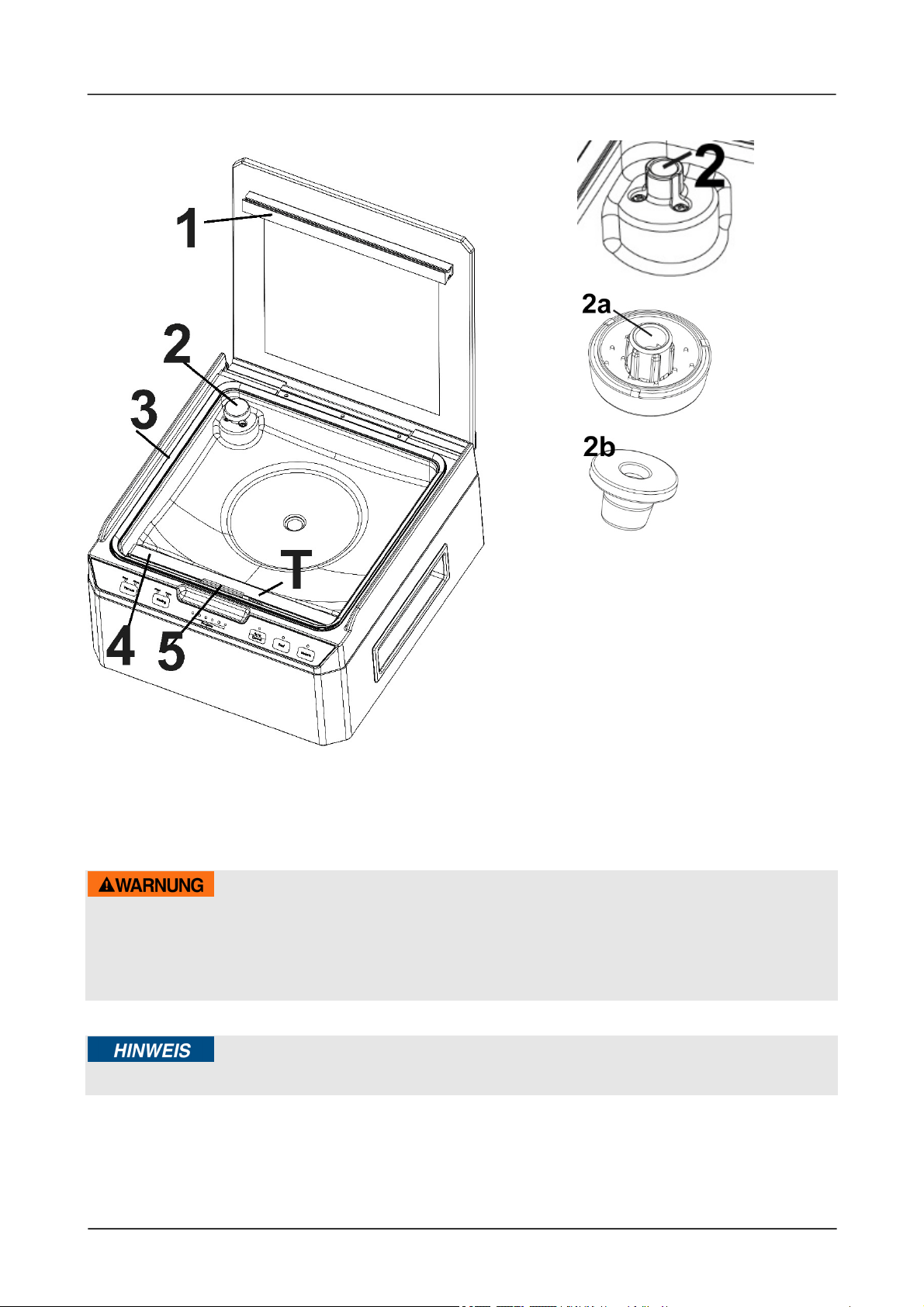
74
36.1 Panoramica complessiva
1 Guarnizione di gomma: Preme il
sacchetto contro la barra di saldatura
2 Attacco per tubo flessibile di sotto
vuoto, 2a Filtro dell’aria, 2b
Adattatore
Rimuovere il filtro dell’aria solo, quando
deve essere collegato un tubo flessibile
per sotto vuoto.
3 Guarnizione
4 Barra di saldatura: Contiene un filo di riscaldamento rivestito di teflon; questo consente
di sigillare il sacchetto senza farlo incollare.
5 Fissaggio: Per il fissaggio dei sacchetti
Avviso
La barra saldatura dell'apparecchio diventa molto caldo. Osservare la seguente
avvertenza di sicurezza, per non scottarsi se stessi o altri:
► Per prevenire eventuali ustioni, mai toccare la barra di saldatura direttamente dopo la
saldatura.
Indicazione
► Non rimuovere il nastro di teflon (T)!
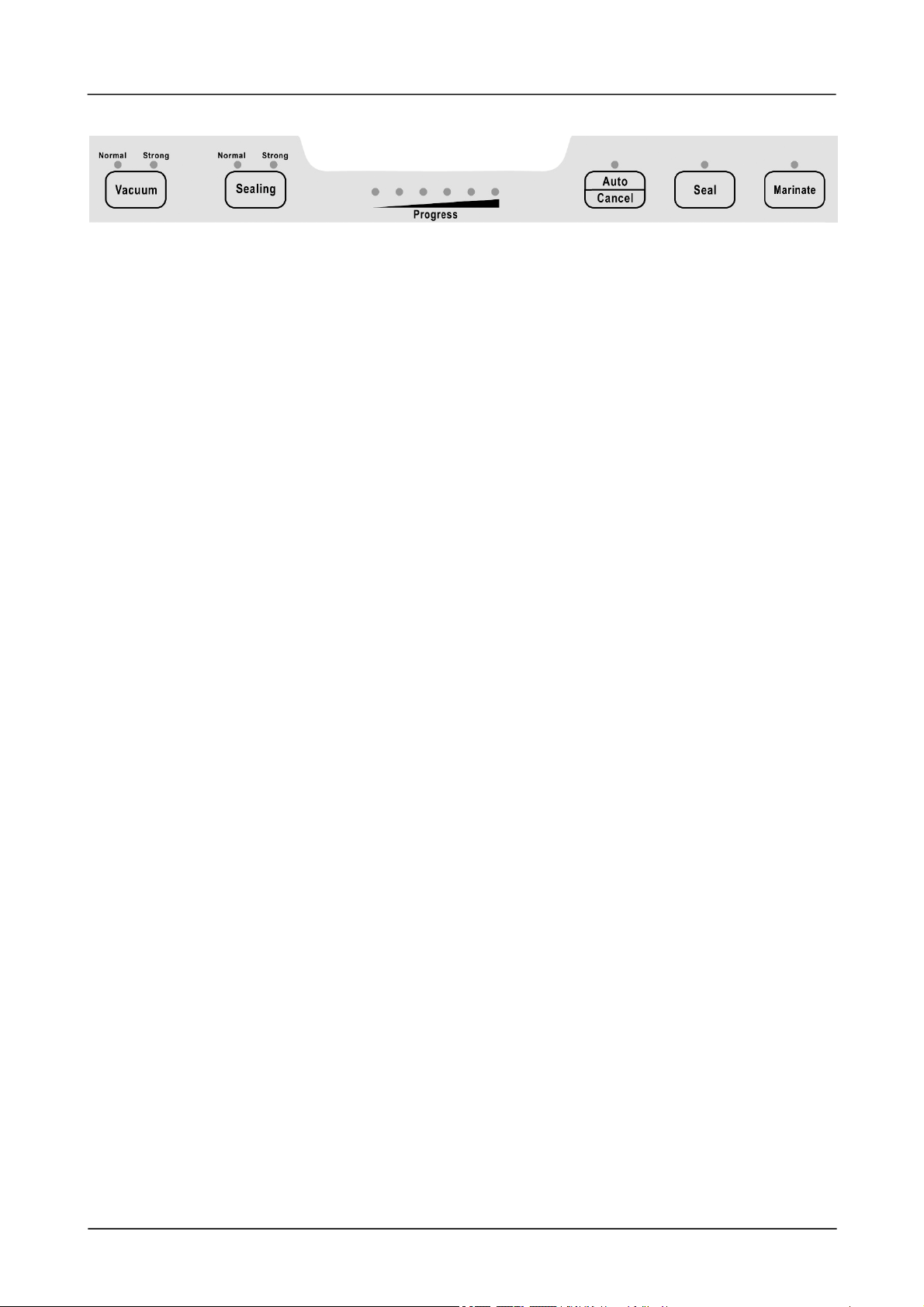
75
36.2 Elementi di comando
Vacuum (Sotto vuoto) Impostazione della potenza del sotto vuoto
Normal (Normale): per generi alimentari sensibili e/o morbidi
Strong (Potente): per generi alimentari insensibili e/o duri (per una pressione di sotto
vuoto particolarmente forte)
Sealing (Sigillatura) Impostazione del tempo di saldatura
Normal (Normale): per prodotti asciutti da mettere sotto vuoto (tempo di saldatura
breve)
Strong (Potente) (extra lungo): Per prodotti da mettere sotto vuoto umidi o con molto
liquido (tempo di saldatura lungo)
Progress (Avanzamento) – LED di avanzamento, mostra l’avanzamento della rispettiva
operazione
Auto/Cancel (Auto/Cancella) con le funzioni seguenti:
Messa sotto vuoto automatico: Per la messa sotto vuoto automatica e la sigillatura di
un sacchetto.
Messa sotto vuoto di un recipiente: Con coperchio aperto dell’apparecchio, tramite
un tubo flessibile per vuoto è possibile mettere sotto vuoto un recipiente.
Annulla: L’apparecchio può essere arrestato in qualsiasi momento durante una
operazione di messa sotto vuoto / saldatura.
Seal (Salda) – Saldatura con le funzioni seguenti:
Per saldare un sacchetto senza l’operazione di messa sotto vuoto
Quando la funzione automatica della messa sotto vuoto è in corso, premendo il tasto è
possibile arrestare in qualsiasi punto il processo di messa sotto vuoto e
successivamente sigillare il sacchetto.
Marinate – Marinare: Per marinare prodotti all’interno di un sacchetto
Targhetta di omologazione
La targhetta di omologazione con i dati di connessione e di potenza, si trova sul lato
posteriore dell'apparecchio.
37 Utilizzo e funzionamento
In questo capitolo riceverà indicazioni importanti sull’utilizzo dell’apparecchio. Osservi le
indicazioni per evitare pericoli e danni.
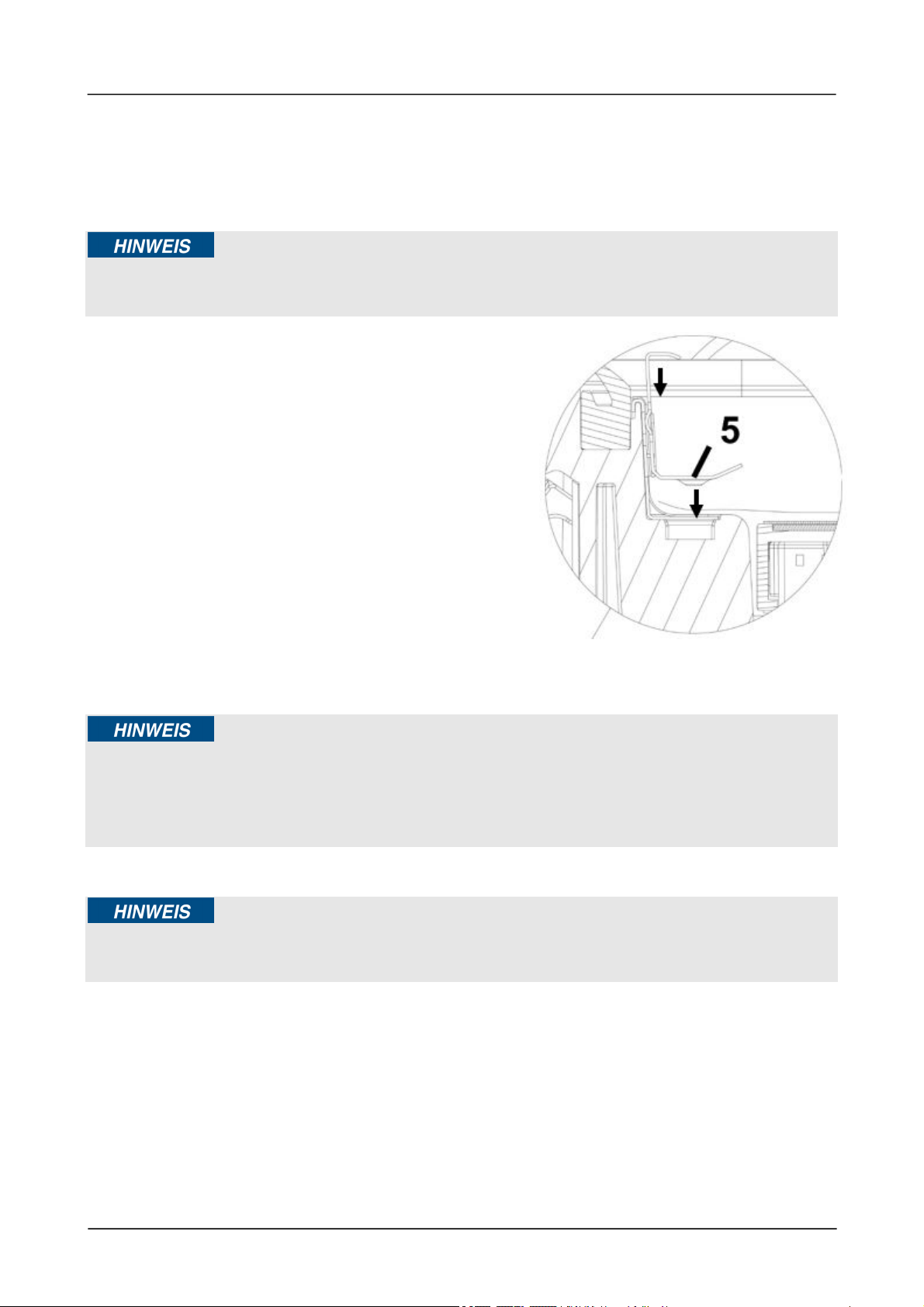
76
37.1 Confezionamento sotto vuoto in un sacchetto nella camera del
vuoto
Posizionare l’apparecchio in luogo asciutto.
Inserire nel sacchetto i generi alimentari che volete conservare.
Indicazione
► Estrarre aria eccessiva fuori dal sacchetto per ottenere un risultato di sotto vuoto
ottimale.
Accendere l'apparecchio. Aprire il coperchio
dell'apparecchio e appoggiare l’estremità aperta
del sacchetto sopra la barra di saldatura e
fissarlo. A tal proposito, alzare il fissaggio (5),
metterci sotto l’estremità sacchetto e premere in
basso il fissaggio.
Adattare l’impostazione della messa sotto vuoto e
della saldatura come desiderato.
Chiudere il coperchio e premere Auto/Cancel.
Dopo l’avvio del processo di messa sotto vuoto
premere il coperchio per 2 secondi in basso.
L’apparecchio mette sotto vuoto e salda automaticamente il sacchetto. L'apparecchio
suona, quando l’operazione è terminata.
Indicazione
► L’apparecchio genera una depressione elevata. Eventualmente, per cibi e minestre
sensibili occorre interrompere precocemente l’operazione automatica della messa sotto
vuoto. Interrompere quindi l’operazione, premendo il tasto Seal (Salda), il sacchetto
viene automaticamente saldato.
Aprire il coperchio e rimuovere il sacchetto.
Indicazione
► Rimuovere dalla camera del vuoto il liquido eccedente o i resti dei prodotti alimentari
dopo ogni messa di sotto vuoto.
37.2 Confezionamento sotto vuoto in un sacchetto derivante dal rotolo
Posizionare l’apparecchio in luogo asciutto.
Inserire la spina. Accendere l'apparecchio. Adattare l’impostazione della messa sotto
vuoto e della saldatura come desiderato.

77
Srotolare il foglio alla lunghezza desiderata e tagliarlo in modo preciso e pulito alla
lunghezza desiderata.
Aprire il coperchio dell'apparecchio e appoggiare una delle estremità aperte del
sacchetto sopra la barra di saldatura e fissarlo. A tal proposito, alzare il fissaggio (5),
metterci sotto l’estremità sacchetto e premere in basso il fissaggio.
Chiudere il coperchio dell’apparecchio.
Premere Seal. Il sacchetto viene saldato. Il tasto sopra Seal (Salda) si accende e si
spegne una volta terminata l’operazione. Poi l’apparecchio suona.
Aprire il coperchio e rimuovere il sacchetto.
Questo può ora essere utilizzato per la messa sotto vuoto.
Indicazione
► È preferibile non sigillare più di un sacchetto al minuto per lasciare all’apparecchio il
tempo di recuperare. Però è possibile sigillare anche diversi sacchetti uno dopo l’altro.
► Assicurarsi che il sacchetto che si desidera utilizzare sia più lungo del cibo di almeno
8cm. Aggiungere 2 cm. supplementari ogni volta che il sacchetto viene riutilizzato.
► Non mettere una quantità di cibo eccessiva nel sacchetto; lasciare una lunghezza
sufficiente all’estremità aperta del sacchetto in modo che possa essere ben posizionato
sopra la barra di saldatura.
► Non inumidire l’estremità aperta. Questo può rendere più difficile la chiusura ermetica
del sacchetto.
► Esistono diversi usi non alimentari per sacchetti sotto vuoto. Tenere gli articoli per il
campeggio come fiammiferi, cassette di pronto soccorso e indumenti, puliti ed asciutti.
Proteggere razzi di segnalazione di pericolo stradale. Mantenere l’argenteria lucida e
inossidata.
► Pulire e appianare il lato aperto prima di sigillarlo. Assicurarsi che niente rimanga nella
parte aperta del sacchetto, che non ci siano grinze o pieghe sulle estremità del lato
aperto. Corpi estranei o grinze e pieghe possono compromettere il sigillo.
► Se gli alimenti da sigillare hanno dei bordi taglienti, come ossa, spaghetti o molluschi, è
necessario coprire le punte con carta assorbente per evitare perforazioni o tagli del
sacchetto.
► Sbollentare le verdure in acqua bollente o forno a microonde per un corto periodo, farle
raffreddare ancora croccanti e condizionarle sotto vuoto in porzioni convenienti.
► Per sigillare sotto vuoto alimenti non congelati, sono necessari due pollici (5 cm) di
lunghezza supplementare del sacchetto per compensare la dilatazione del
congelamento. Mettere la carne o il pesce su una carta assorbente e sigillare sotto vuoto
con la carta nel sacchetto. Questo accorgimento permette di assorbire meglio l’umidità
del cibo.
► Per cibi come tortillas, frittelle, crêpe o polpette per hamburger, è utile separarli con uno
strato di paraffina o di carta oleata prima di sovrapporli. Questo permette di rimuoverne
una parte, risigillare il resto e rimetterlo immediatamente nel congelatore.

78
37.3 Sigillatura di un sacchetto senza vuoto
Puoi sigillare un sacchetto senza metterlo sotto vuoto. A tal proposito, mettere il sacchetto
come di consueto nella camera del vuoto, premere Seal.
Se con ciò non si ottiene un risultato soddisfacente, allora, in alternativa, lasciare appeso
fuori il sacchetto. A tal proposito, mettere il sacchetto dall’esterno sopra la barra di
saldatura.
Poi chiudere il coperchio e premere Seal.
37.4 Messa sotto vuoto di un sacchetto fuori dalla camera del vuoto
Puoi sigillare un sacchetto anche fuori dalla camera del vuoto.
A tal proposito, mettere il sacchetto dall’esterno sopra la barra di saldatura.
Poi chiudere il coperchio e procedere come descritto al punto „ Confezionamento
sotto vuoto in un sacchetto nella camera del vuoto “.
Ciò funziona però solo con sacchetti strutturati. I migliori risultati sono ottenuti con
sacchetti strutturati su entrambi i lati.
Indicazione
► La messa sotto vuoto all’esterno della camera del vuoto può essere svolta solo con
sacchetti strutturati.
37.5 Sacchetti in rotoli
Utilizzare solo ed esclusivamente i sacchetti in rotoli previsti per il confezionamento
sottovuoto. Il materiale di questi speciali sacchetti per il confezionamento sottovuoto è
diverso rispetto ai normali sacchetti utilizzati per mantenere la freschezza degli alimenti.
Tutti i rotoli e sacchetti forniti da CASO sono adatti per la cottura dentro il sacchetto (Sous
Vide).
All’impiego di fogli di altri produttori, La preghiamo di verificare se questi possono altresì
essere utilizzati nel fornello a microonde e per la cottura nel sacchetto (Sous Vide).
A riguardo, la CASO mette a disposizione una vasta gamma di diversi rotoli e sacchetti.
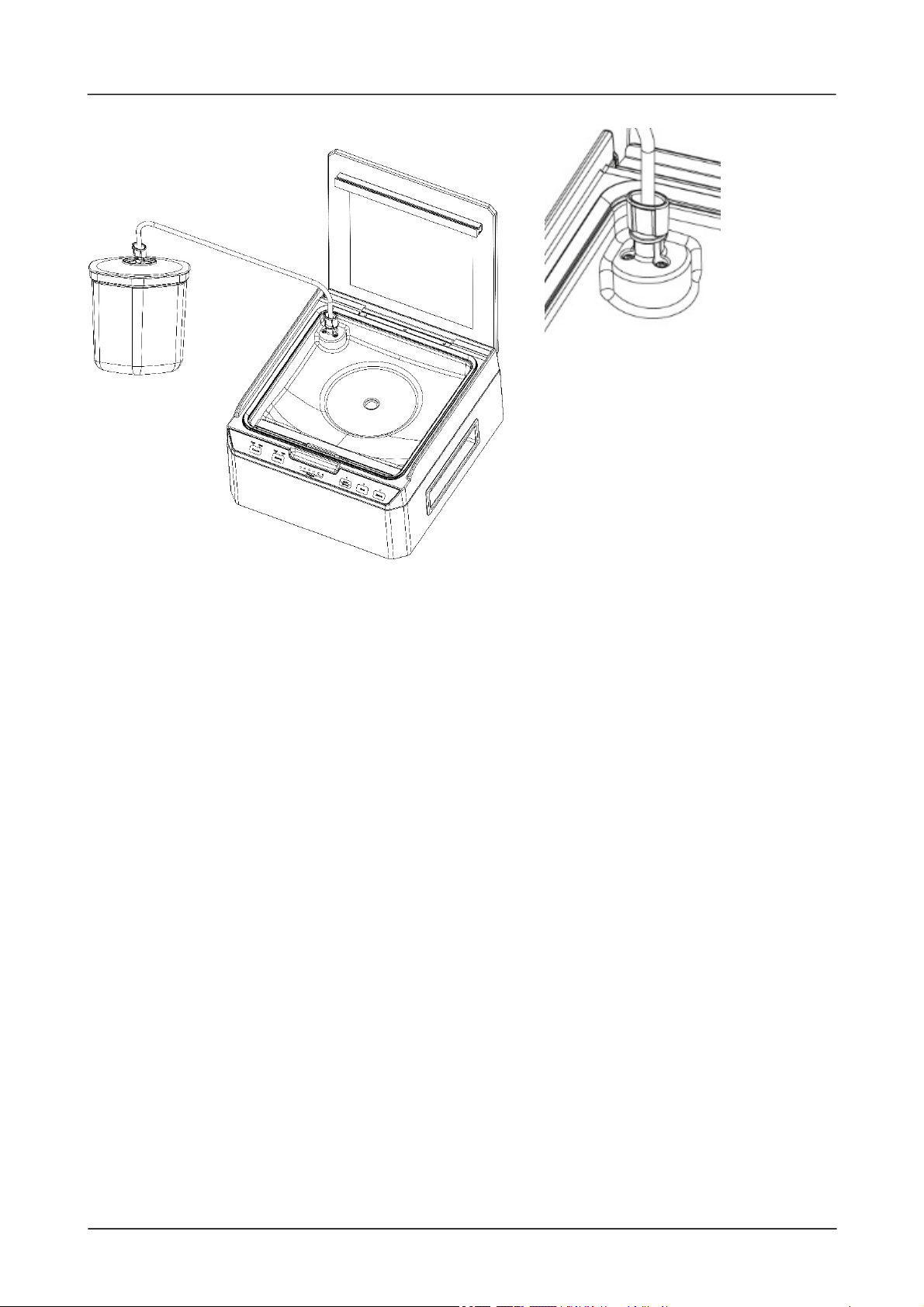
79
37.6 Messa sotto vuoto di recipienti
Rimuovere il filtro dell’aria sopra
l’attacco per il tubo flessibile del vuoto
e metterci l’adattatore. Mettere nel
recipiente per sotto vuoto i cibi.
Mettere sopra il coperchio del
recipiente e collegare il tubo flessibile
del vuoto. Poi con l’adattatore
all’attacco collegare alla camera del
vuoto dell’apparecchio.
Premere per 3 secondi il tasto Auto/Cancel (Messa sotto vuoto automatico).
Premere brevemente il coperchio del recipiente.
Il recipiente viene automaticamente messo sotto vuoto. L'apparecchio suona, quando
l’operazione è terminata. A seconda della potenza del vuoto desiderata, ripetere
l’operazione tutte le volte che è necessario.
Poi, rimuovere l’adattatore dall’attacco nella camera del vuoto e reinserire il filtro
dell’aria.
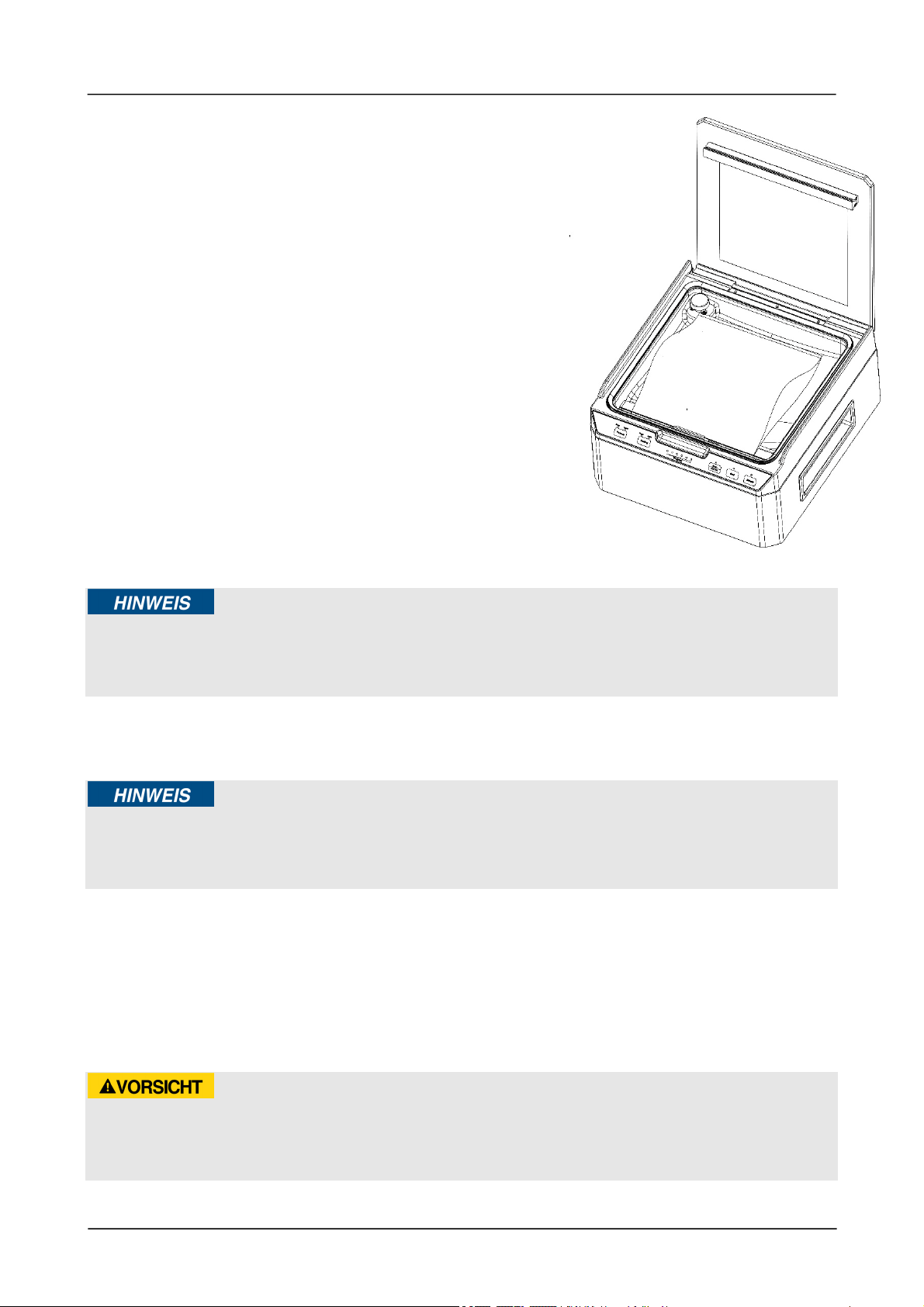
80
37.7 Marinatura di generi alimentari nel
sacchetto
Mettere nel sacchetto i cibi da marinare.
Aprire il coperchio dell'apparecchio e mettere il
sacchetto da marinare nella camera del vuoto e
fissarlo. A tal proposito, alzare il fissaggio (5),
metterci sotto l’estremità sacchetto e premere in
basso il fissaggio.
Chiudere il coperchio dell’apparecchio e premere il
pulsante Marinate.
I cibi vengono automaticamente marinati.
L'apparecchio suona quando l’operazione è
terminata. Ripetere l’operazione più volte, finché
l’intensità desiderata è raggiunta. Infine, saldare
manualmente il sacchetto (come descritto al capitolo
37.3).
Aprire il coperchio dell’apparecchio e prelevare il
sacchetto.
Indicazione
► La saldatura e la messa sotto vuoto non viene eseguita dall’apparecchio direttamente
dopo la funzione di marinatura!
► Eseguire questa operazione manualmente se desiderata.
37.8 Conservazione del sistema di VacuChef 40
Tenere l’apparecchio in un posto piano e sicuro, fuori dalla portata dei bambini.
Indicazione
► Per la conservazione chiudere il coperchio solo leggermente, non bloccarlo con la
chiave, si deformano le guarnizioni e alterare il funzionamento della macchina.
► Sempre staccare la presa elettrica immediatamente dopo l’uso.
38 Pulizia e cura
In questo capitolo riceverà indicazioni importanti sulla pulizia e la cura dell’apparecchio.
Osservi le indicazioni per evitare danni dovuti ad una erronea pulizia dell’apparecchio e
per assicurare un funzionamento senza inconvenienti.
38.1 Indicazioni di sicurezza
Attenzione
Osservi le seguenti indicazioni di sicurezza, prima di procedere con la pulizia
dell’apparecchio:
► Estragga la spina dalla presa a muro prima della pulizia.
81
Attenzione
► L’apparecchio dovrà essere pulito regolarmente e residui del composto da cuocere
dovranno essere rimossi. Se il sistema di sigillatura sottovuoto non viene mantenuto
pulito, ci saranno effetti negativi per la durata dell'apparecchio. Le condizioni
dell’apparecchio potranno risultare pericolose e comportare un’infestazione di funghi e
di batteri.
► Il barra saldatura scotta dopo l’utilizzo. Sussiste il pericolo di ustioni! Attenda che
l'apparecchio si sia raffreddato.
► Pulisca l’apparecchio dopo l'utilizzo, non appena si è raffreddato. Attendere troppo,
rende inutilmente difficile la pulizia e la rende impossibile in casi estremi. Un eccesso
di sporcizia può, in alcune situazioni, danneggiare l'apparecchio.
► Se penetra dell'umidità nell'apparecchio, possono danneggiarsi componenti elettriche.
Osservi che non penetrino liquidi nell’interno dell’apparecchio, attraverso le fessure
d’aerazione.
► Non immergere l'apparecchio nell'acqua e in altri liquidi e non metterli nella
lavastoviglie.
► Non utilizzi detersivi aggressivi o abrasivi e non utilizzi solventi.
► Non utilizzi oggetti duri per grattare via i residui incrostati.
► Lasciare asciugare completamente prima di utilizzare di nuovo.
38.2 La pulizia
Lato esterno dell’apparecchio: pulire con un panno umido oppure utilizzando una
soluzione di sapone delicata non abrasiva. Lato interno dell’apparecchio: pulire con carta
da cucina per rimuovere resti di cibo e i liquidi.
Se durante la pulizia rimuovete le guarnizioni, queste poi vanno accuratamente asciugate
e rimesse correttamente, altrimenti l'apparecchio non può più generare la giusta
depressione.
Conservazione dei sacchetti
Lavare i sacchetti con acqua calda e con un detergente neutro per stoviglie, risciacquarli
bene e lasciarli asciugare completamente prima di utilizzarli nuovamente.
Attenzione
► Sacchetti usati per carne cruda, pesce o cibi grassi non possono essere riutilizzati.
39 Eliminazione malfunzionamenti
In questo capitolo riceverà indicazioni importanti sulla localizzazione di malfunzionamenti e
sulla loro eliminazione. Osservi le indicazioni per evitare pericoli e danni.
39.1 Indicazioni di sicurezza
Attenzione
► Riparazioni su apparecchi elettrici dovranno essere eseguiti soltanto da personale
specializzato, addestrato dal produttore.
► Con riparazioni inadeguate possono verificarsi gravi pericoli per l’utilizzatore e danni
sull’apparecchio.

82
39.2 Cause malfunzionamenti e risoluzione
La seguente tabella aiuta a localizzare e a risolvere malfunzionamenti più lievi.
Malfunzionamento Possibile causa Risoluzione
La macchina
sottovuoto non
funziona
Non è stata inserita la
spina
Inserire la spina
Il cavo elettrico o la spina
sono difettosi
Contatta il servizio clienti.
La presa è difettosa Scegliere un’altra presa
Non viene eseguita la
prima saldatura sulla
parte di rullo tagliata
Il rullo non è stato
posizionato in modo
corretto
Segua i passi nel capitolo
"Confezionamento sotto vuoto in un
sacchetto derivante dal rotolo"
Nel sacchetto non
viene generato un
vuoto assoluto
La parte aperta del
sacchetto non si trova
completamente nella
camera sottovuoto
Posizioni il sacchetto correttamente
Il sacchetto è difettoso Scelga un altro sacchetto
Sulle guarnizioni di
saldatura e su quelle
normali sono presenti
delle impurità
Pulisca le guarnizioni e le posizioni
di nuovo correttamente dopo
l'asciugatura.
Il sacchetto non viene
saldato nel modo
corretto
La barra di saldatura è
troppo calda, quindi il
sacchetto si scioglie
La barra di saldatura è
difettosa.
Apra il coperchio dell’apparecchio e
lo faccia raffreddare per alcuni
minuti
Lasciare sostituire la barra di
saldatura.
Il sacchetto non resta
sottovuoto, dopo
essere stato saldato
Il sacchetto è difettoso
Selezioni un altro sacchetto, avvolga
eventualmente i bordi taglienti del
contenuto con dei tovaglioli di carta
A causa di pieghe,
briciole, del grasso o di
liquidi lungo la saldatura,
sono presenti delle perdite
Apra nuovamente il sacchetto e
pulisca la parte superiore del
sacchetto all’interno e rimuova
eventualmente corpi estranei
presenti sulla barra di saldatura,
prima di saldare nuovamente il
sacchetto.
Indicazione
► Se non riesce a risolvere il problema con i passi sopra descritti, la preghiamo di
rivolgersi al servizio Clienti.

83
40 Smaltimento dell’apparecchio obsoleto
Apparecchi elettrici ed elettronici obsoleti contengono spesso ancora materiali
preziosi. Essi contengono però anche sostanze nocive, che erano necessarie
per il loro funzionamento e la loro sicurezza.
Questi possono nuocere alla salute umana o all’ambiente se vengono gettati tra i rifiuti non
riciclabili o in caso di un trattamento errato.
Per questo eviti assolutamente di gettare il suo apparecchio obsoleto nella spazzatura non
riciclabile.
Indicazione
► Si serva dell'area ecologica realizzata nel suo comune di residenza, per la consegna ed
il riciclo di apparecchi elettrici o elettronici obsoleti. Si informi eventualmente presso il
Suo comune, il Suo servizio di nettezza urbana o presso il suo rivenditore.
► Si assicuri, che il suo apparecchio obsoleto venga stoccato a prova di bambini, fino al
momento della sua rimozione.
41 Garanzia
A partire dalla data di vendita assumiamo per questo prodotto una garanzia di 24 mesi per
difetti, riconducibili ad errori di fabbricazione o nelle materie prime.
Ciò non ha alcuna influenza sulle sue pretese di garanzia di legge in conformità al §439 e
seguenti del BGB-E.
Non contenute nella garanzia sono i danni, che si sono verificati a causa di un trattamento
o un impiego inadeguato, così come i danni, che compromettono solo lievemente il
funzionamento o il valore dell’apparecchio. Inoltre si escludono dalle pretese di garanzia
pezzi d'usura, danni dovuti al trasporto, fin tanto questi non siano imputabili alla nostra
responsabilità, così come danni, che sono riconducibili a riparazioni non eseguiti da noi.
Questo apparecchio è stato realizzato per un utilizzo in ambito privato (impiego domestico)
ed è stato realizzato con una potenza adeguata.
Un eventuale utilizzo di tipo commerciale è assoggettabile alla garanzia, solo fintanto il
suo utilizzo possa essere confrontato con quello in ambito privato. Non è previsto per un
uso che vada oltre questo tipo di utilizzo commerciale.
In caso di reclami giustificati, saremo liberi di scegliere se riparare l’apparecchio o se è il
caso di sostituirlo con uno privo di malfunzionamenti.
Malfunzionamenti aperti dovranno essere comunicati entro 14 giorni dalla fornitura.
Altre pretese sono escluse.
Per far valere una pretesa di garanzia, La preghiamo di mettersi in contatto con noi, prima
di reinviarci l’apparecchio (sempre con scontrino d’acquisto!).

84
42 Dati tecnici
Apparecchio Sigillatore sotto vuoto
Nome VacuChef 40
N. articolo 1417
Dati connessione 220-240V, 50Hz
Potenza assorbita 280W
Misure esterne (L/H/P) 320 x 175 x 340 mm
Peso netto 8,3 kg
Capacità 4,2 m3/h (70 L/min)
Larghezza massima del sacchetto Adatto per sacchetti da 25 cm
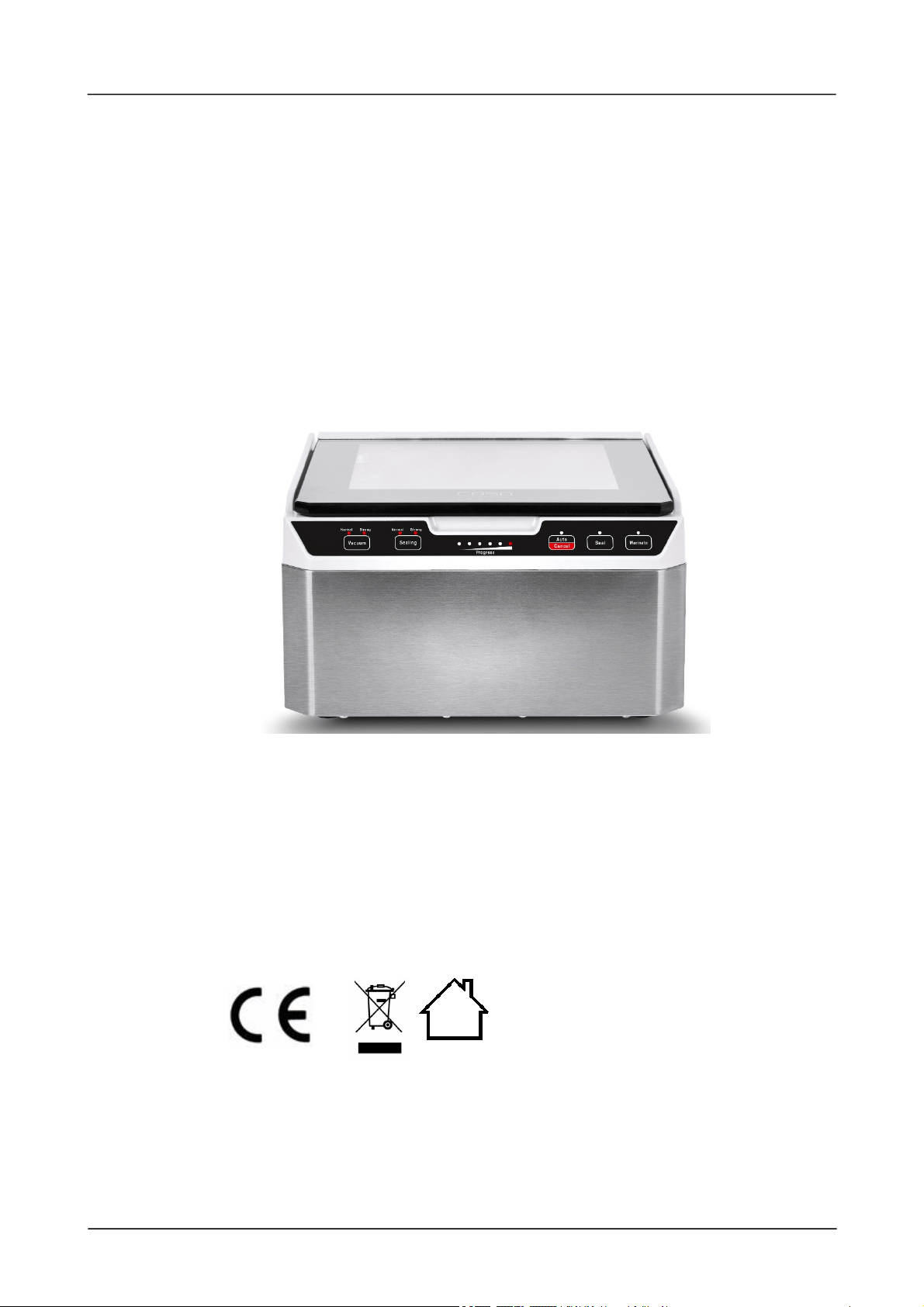
85
Manual del usuario
Envasadora al vacío
VacuChef 40
Ref. 1417
86
43 Manual del usuario
43.1 Generalidades
Lea atentamente la información contenida en este manual para familiarizarse rápidamente
con el aparato y poder utilizar sus funciones en toda su capacidad.
Su VacuChef 40 le servirá durante muchos años si lo trata y conserva adecuadamente.
Le deseamos una gran satisfacción durante el uso.
43.2 Información acerca de este manual
El manual de instrucciones forma parte integrante del VacuChef 40 (en lo sucesivo
denominado aparato) y le proporciona instrucciones importantes para la puesta en
marcha, la seguridad, el uso previsto y la conservación del aparato. El manual del usuario
debe guardarse siempre a mano, cerca del aparato. Debe ser leído y utilizado por la
persona encargada de: la puesta en marcha, operación,
resolución de fallas y/o limpieza
del aparato. Guarde este manual de instrucciones en un lugar seguro y facilítelo a las
terceras personas que vayan a utilizarlo en el futuro.
43.3 Advertencias
En el presente manual se utilizan las siguientes advertencias:
Peligro
Una advertencia de este nivel de peligro indica una situación peligrosa.
Si la situación peligrosa no se evita, puede causar la muerte o lesiones graves.
► Siga las instrucciones que indica esta advertencia para evitar el peligro de muerte o de
lesiones graves a personas.
Advertencia
Una advertencia de este nivel de peligro indica una posible situación peligrosa.
Si la situación de peligro no se evita, puede conducir a lesiones graves.
► Siga las instrucciones que indica esta advertencia para evitar lesiones a personas.
Precaución
Una advertencia de este nivel de peligro indica una posible situación peligrosa.
Si la situación de peligro no se evita, puede conducir a lesiones de gravedad moderada a
leve.
► Siga las instrucciones que indica esta advertencia para evitar lesiones a personas.
Nota
Esta indicación proporciona información adicional que facilitará el manejo de la máquina.

87
43.4 Limitación de responsabilidad
La información técnica contenida, datos e indicaciones contenidos en el presente manual
para la instalación, operación y conservación se corresponden con los últimos avances
técnicos en el momento de la impresión y se publican teniendo en cuenta nuestra
experiencia y conocimientos hasta ese momento. Por este motivo no nos hacemos
responsables de las indicaciones, ilustraciones o descripciones contenidas en el presente
manual del usuario. El fabricante no se hace responsable de los daños causados por:
desobedecimiento de las instrucciones uso indebido
reparaciones indebidas modificaciones técnicas, modificaciones del aparato
uso de piezas de repuesto no autorizadas
No se recomienda realizar modificaciones en el aparato y no están cubiertas por la
garantía. Las traducciones se realizan a nuestro buen saber y entender. No nos hacemos
responsables de ningún error de traducción, incluso si la traducción hubiera sido realizada
por nosotros o por orden nuestra. Por tanto, sólo el texto original en alemán tendrá
carácter vinculante.
43.5 Derechos de autor (copyright)
Esta documentación está protegida por los derechos de autor.
Braukmann GmbH se reserva todos los derechos, incluida la reproducción fotomecánica,
la publicación y distribución mediante procedimientos especiales (p.ej. procesamiento de
datos, soporte de datos y redes de datos), ya sea en su totalidad o en parte.
Válido salvo errores de contenido y modificaciones técnicas
44 Seguridad
En este capítulo obtendrá importantes instrucciones de seguridad sobre la manipulación
del aparato. Este aparato cumple la normativa de seguridad vigente. No obstante, el uso
indebido puede causar lesiones a personas y daños materiales.
44.1 Uso previsto
Este aparato se ha concebido para hacer vacío en bolsas y recipientes así como el
sellado de láminas de manera doméstica en salas cerradas.
Cualquier otro uso distinto al aquí previsto se considera un uso indebido del aparato.
Advertencia
Peligro ante el uso no conforme a lo previsto.
El uso indebido del aparato o cualquier uso distinto al uso previsto puede entrañar peligro.
► Utilice el aparato exclusivamente para su uso previsto
► Los procedimientos descritos en el manual de instrucciones deben obedecerse.
Queda excluida cualquier reclamación de garantía debido a daños derivados del uso no
conforme a lo previsto. La responsabilidad recae exclusivamente en el usuario.

88
44.2 Instrucciones generales de seguridad
Nota
INSTRUCCIONES DE SEGURIDAD IMPORTANTES.
LEER ATENTAMENTE Y ARCHIVAR PARA FUTURAS
CONSULTAS.
Para una manipulación segura del aparato, observe las
siguientes instrucciones generales de seguridad:
► Antes de utilizar el aparato debe revisarlo para detectar
posibles daños. Si el aparato presenta daños, no lo ponga en
marcha.
► Si el cable de alimentación está dañado deberá avisar al
servicio técnico para que lo sustituya.
► El aparato puede ser utilizado por niños mayores de 8 años,
así cmo por personas con alguna discapacidad física o
mental o capacidad visual mermeda si son supervisados
adecuadamente o instruidos en el funcionamiento seguro del
aparato, así como sobre sus riesgos
► Los niños no deben jugar con el aparato. Los niños menores
de 8 años y niños sin vigilancia no deben limpiar ni realizar
ningún otro tipo de trabajo en el aparato.
► El aparato y su cable de alimentación deben permanecer
lejos del alcance de los niños menores de 8 años.
► El aparato debe limpiarse periódicamente y es necesario
limpiar siempre cualquier resto de alimentos de su interior.
► No guarde ni utilice el aparato en exteriores.
► No deje el aparato sin vigilancia durante el funcionamiento.
► Para desconectar el aparato, no tire del cable de
alimentación ni transporte el aparato arrastrando el cable.
► La reparación del aparato sólo debe ser realizada por el
servicio técnico autorizado por el fabricante. De lo contrario,
la garantía quedará anulada en caso de sufrir daños. Las
reparaciones incorrectas pueden causar riesgos significativos
para el usuario.
89
Nota
► Los componentes defectuosos solo deben ser sustituidos
por piezas de repuesto originales. Sólo en este tipo de
componentes se asegura el cumplimiento de los requisitos de
seguridad.
► No deje el aparato sin vigilancia durante el funcionamiento
para poder reaccionar rápidamente ante los peligros.
► No abra la tapa al mover el aparato.
► No mueva el aparato durante el proceso de envasado al
vacío o sellado.
44.3 Fuentes de peligro
44.3.1 Peligro de quemaduras
AVISO
La barra selladora puede estar muy caliente; no la toque.
► Para evitar posibles quemaduras, nunca toque la barra
selladora justo después de sellar.
44.3.2 Peligro de fuego
AVISO
El uso no adecuado del aparato puede provocar fuego.
Tenga en cuenta las siguientes indicaciones de seguridad para
evitar el peligro de fuego:
► No coloque el aparato cerca de materiales combustibles.
► Aleje el aparato de fuentes de calor (gas, electricidad,
quemador, horno caliente).

90
44.3.3 Peligro de electrocución
Peligro
Peligro de muerte por electrocución
El contacto con cables o componentes energizados implica
peligro de muerte. Tener en cuenta las precauciones indicadas,
a fin de evitar peligro de electrocución:
► El aparato no puede utilizarse si el cable de alimentación o
el enchufe presentan daños, si no funciona correctamente o
se ha caído y sufrido daños. Si el cable de alimentación o el
enchufe resultan dañados, éstos deben ser sustituidos por el
fabricante o su distribuidor, con el fin de evitar daños.
► Nunca abra la carcasa del aparato. Si toca cualquier
conexión energizada y cambia la disposición del cableado
eléctrico o el diseño mecánico existe peligro de
electrocución. Además, pueden producirse fallos de
funcionamiento en el aparato.
► No toque el aparato ni el enchufe de alimentación con las
manos mojadas.
45 Indicaciones de seguridad para la conservación de
alimentos
Siga procedimientos específicos al sellar al vacío para garantizar la calidad y la seguridad
del envasado al vacío/sellado de alimentos.
Nota
Tenga en cuenta las siguientes indicaciones de seguridad para un uso adecuado
del aparato:
► Consuma inmediatamente los alimentos perecederos que hayan sido calentados,
descongelados o almacenados sin refrigeración.
► Es importante que se lave las manos y límpie los utensilios y superficies que vaya a
utilizar antes de empaquetar alimentos al vacío.
► Enfríe o congele los alimentos perecederos inmediatamente después de haberlos
sellado al vacío. No los deje a temperatura ambiente.
► El tiempo de conservación de alimentos secos sellados al vacío, como por ejemplo
nueces, coco o cereales, se alarga al almacenarlos en la oscuridad. El oxígeno y el
calor rancian los alimentos, especialmente los ricos en grasas.
91
Nota
► Pele fruta y verdura, por ejemplo manzanas, plátanos, patatas y verduras de raíces
antes de envasarlas al vacío. Esto alarga el tiempo de conservación.
► Algunos tipos de verduras, como brécol, coliflor y col, emiten gases. Estos se deben
escaldar primero y dejar enfriar después antes de ser envasados para conseguir buen
vacío.
46 Puesta en marcha
Este capítulo incluye algunos consejos importantes acerca de la puesta en marcha del
aparato. Observe dichos consejos para evitar peligros y daños.
46.1 Instrucciones de seguridad
Advertencia
► Los materiales de embalaje no deben utilizarse como juguetes. Peligro de asfixia.
46.2 Ámbito de suministro e inspección de transporte
El aparato se entrega con los siguientes componentes:
VacuChef 40 Manual del usuario
Manguera de vacío + Adaptador
20 bolsas profesionales en vacío (25 x 28 cm)
Nota
► Verifique la integridad del suministro y revíselo para detectar daños visibles.
► Si detectara cualquier falta o daños en el suministro debidos a un embalaje defectuoso
o al transporte debe informar de inmediato al transportista, a la aseguradora y al
proveedor.
46.3 Funciones
Este aparato permite el almacenamiento de una gran variedad de alimentos manteniendo
su frescura y sabor. En general, el tiempo de almacenamiento de un alimento envasado al
vacío se ocho veces con respecto a los métodos convencionales. Esta envasadora al
vacío se convertirá en una parte indispensable de su vida y le ahorrará dinero al
malgastar menos alimentos.
Empaquete alimentos como carnes, pescados, aves, mariscos y verduras para
congelar o para almacenar en el frigorífico.
Empaquete alimentos secos como alubias, nueces, muesli, etcétera, para alargar la
conservación.
La envasadora se puede utilizar también para otros usos con productos no
alimenticios: mantenga utensilios de cámping secos y limpios, como cerillas, botiquín o
ropa; mantenga objetos de plata o de coleccionismo.
92
46.4 Desembalaje
Para desembalar el aparato, sáquelo de la caja y retire el material de embalaje.
46.5 Eliminación del embalaje
El embalaje protege al aparato frente a daños ocasionados por el transporte. Los
materiales de embalaje han sido seleccionados con una filosofía respetuosa con el medio
ambiente e idónea a efectos de una correcta eliminación y, por tanto, son reciclables.
La devolución del embalaje al ciclo de material ahorra materia prima y reduce la
generación de residuos. Por tanto, deposite los materiales de embalaje que no necesite
en los puntos de recogida "punto verde”.
Nota
► Si fuera posible, conserve el embalaje original durante el período de garantía
para poder embalar el aparato adecuadamente en caso de que requiera hacer uso de
la garantía.
46.6 Colocación
46.6.1 Requisitos que debe reunir el lugar de montaje
Para garantizar el funcionamiento seguro y correcto del aparato, el lugar de colocación
debe cumplir los siguientes requisitos:
El aparato debe colocarse sobre una superficie sólida, plana, horizontal y resistente al
calor, con suficiente capacidad portante para el aparato y los alimentos más pesados
que podrían ser preparados en el horn la manera en que compra alimentos y los
conserva
El aparato no es apto para su encastre en una pared o en un armario empotrado.
El lugar de colocación debe quedar fuera del alcance de los niños, para que no
puedan tocar el barra selladora del aparato.
El aparato no es apto para su encastre en una pared o en un armario empotrado.
No coloque el aparato en un lugar demasiado cálido, húmedo o con presencia de agua
ni cerca de materiales inflamables.
El aparato no debe colocarse cerca de la cocina de gas o vitrocerámica ni junto al
horno.
Para su correcto funcionamiento, el aparato requiere suficiente ventilación. Deje 10 cm
de espacio libre sobre el aparato, 10 cm por detrás y 10 cm a ambos lados.
No tape las aberturas del aparato ni las obstruya.
No retire las patas de regulación del aparato.
La toma de alimentación debe estar fácilmente accesible para poder desconectar el
cable de alimentación rápidamente, si fuera preciso.
La colocación y montaje del presente aparato en lugares no estacionarios (p.ej.
barcos) debe ser realizado por personal técnico autorizado, con el fin de asegurar el
cumplimiento de los requisitos para el uso seguro de este aparato.

93
La VacuChef 40 no debe ponerse en funcionamiento sobre una superficie que
contenga acero, ya que éste puede calentarse mucho.
El aire frío es aspirado por la parte inferior del aparato. No tape las aberturas del
aparato ni las obstruya.
46.7 Conexión eléctrica
Para que el aparato funcione con seguridad y correctamente debe observar las siguientes
indicaciones al establecer la conexión eléctrica:
Antes de conectar el aparato, compare los datos de conexión (tensión y frecuencia) de
la placa de especificaciones con las de la red eléctrica doméstica. Estos datos deben
coincidir para evitar daños en el aparato.
En caso de duda, consulte a su servicio técnico eléctrico.
La conexión del aparato a la red eléctrica debe realizarse mediante un cable alargador
arrollado, de 3 metros de longitud como máximo y una sección recta de 1,5 mm². El
uso de regletas de conexiones o ladrones con varias tomas está prohibido, por el
peligro de incendio.
Asegúrese de que el cable de alimentación no resulte dañado y que no se tienda bajo
el horno ni sobre superficies calientes o de bordes afilados.
La toma de alimentación debe estar provista de un fusible protector de 16A.
La seguridad eléctrica del aparato sólo se asegurará si se conecta un sistema de
protección frente a sobrecargas. En caso de duda, avise al electricista autorizado para
que revise la instalación doméstica. El fabricante no se hace responsable de los daños
ocasionados por falta de protección o protección interrumpida.
46.7.1 Los cables de extension
Si un cable de extensión se utiliza:
► La capacidad eléctrica del cable de extensión debe ser al menos tan grande como la
potencia eléctrica de la unidad.
► El cable debe acomodarse de modo que no cuelgue de un mostrador o mesa donde
pueda ser jalado por un niño o tropezarse.
47 Estructura y funciones
Este capítulo incluye algunos consejos importantes acerca de la estructura y el
funcionamiento del aparato.
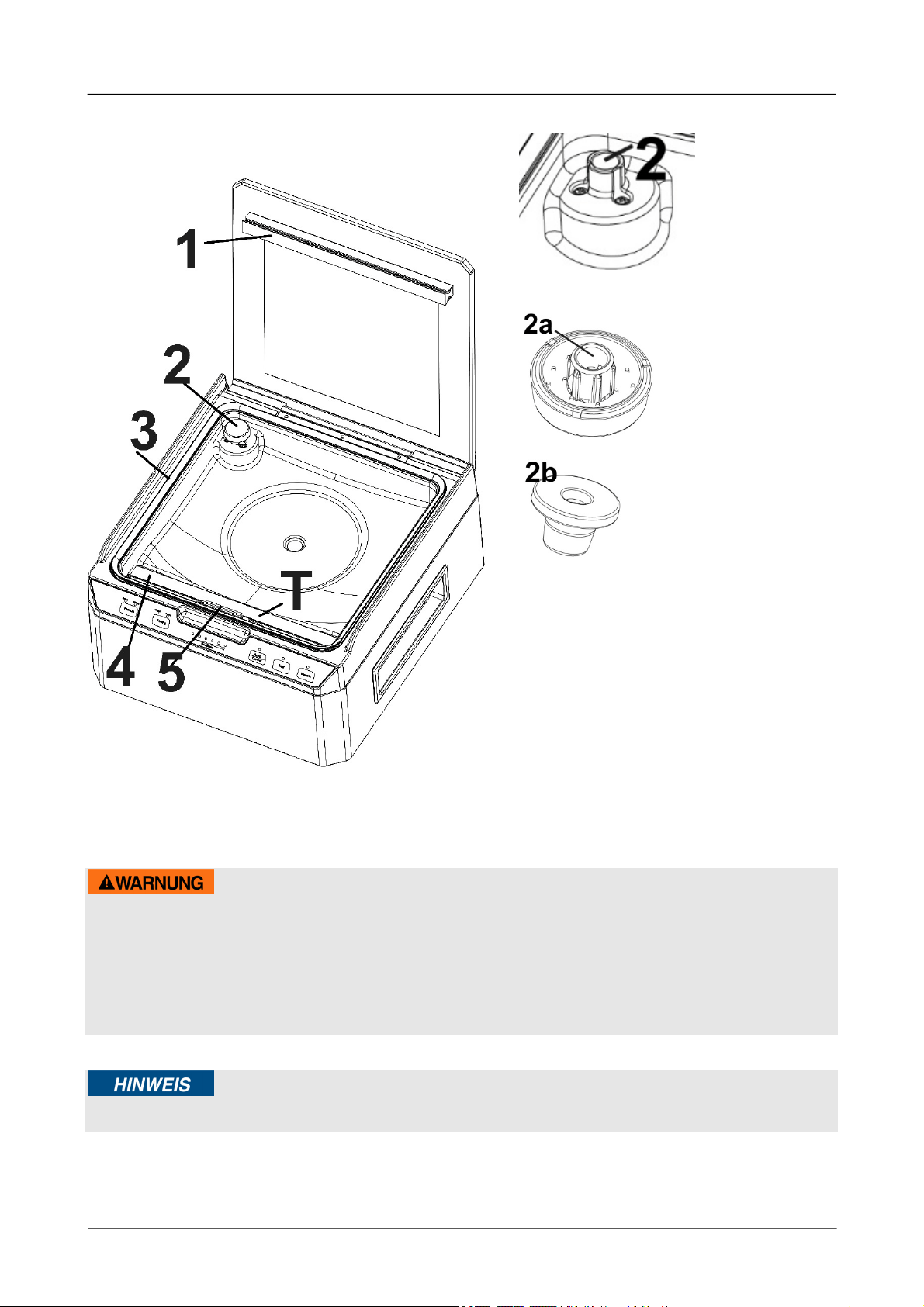
94
47.1 Descripción general
1 Junta de goma: Presiona la bolsa
contra la barra selladora
2 Conexión para tubo flexible de
vacío, 2a Filtro de aire, 2b Adaptador
3 Junta
4 las barras selladoras, con los filamentos calentadores recubiertos de teflón. Esto
permite sellar las bolsas sin que se peguen a las barras.
5 Fijación: Para fijar la bolsa
Advertencia
La barra selladora puede estar muy caliente.
Tenga presente la siguiente indicación de seguridad para no quemarse a sí mismo ni
quemar a otras personas:
► Para evitar posibles quemaduras, nunca toque la barra selladora justo después de
sellar.
Nota
► ¡No retire la cinta de teflón (T)!
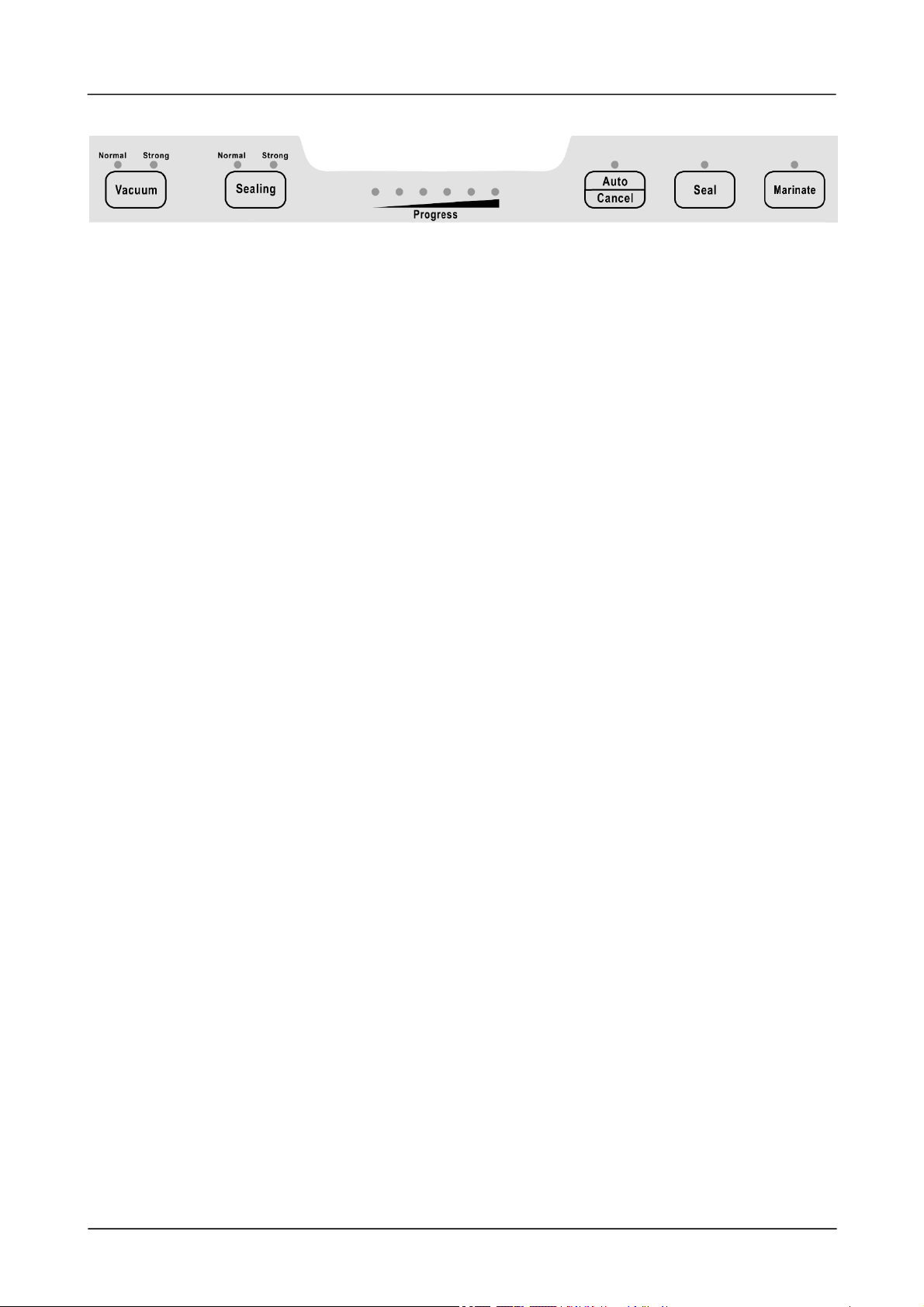
95
47.2 Elementos de operación
Vacuum Ajuste de la intensidad del vacío
Normal: Para alimentos delicados o blandos
Strong: Para alimentos no delicados o duros (para una presión de vacío especialmente
intensa)
Sealing Ajuste del tiempo de sellado
Normal: Para alimentos al vacío secos (breve tiempo de sellado)
Strong (extralargo): - para alimentos al vacío húmedos o con mucho líquido (tiempo de
sellado prolongado)
Progress – El piloto LED de progreso indica el estado del proceso actual
Auto/Cancel con las siguientes funciones:
Envasado al vacío automático: Para envasar al vacío automáticamente y sellar una
bolsa.
Envasado al vacío en recipientes: Con la tapa abierta del aparato puede envasarse al
vacío un recipiente utilizando un tubo flexible de vacío.
Cancelar: El aparato puede detenerse en cualquier momento durante el proceso de
vacío / sellado.
Seal – Sellado con las siguientes funciones:
Para sellar una bolsa sin proceso de vacío
Mientras la función de envasado al vacío automático está en funcionamiento, puede
pulsarse este botón para detener el proceso de vacío en cualquier momento y sellar la
bolsa posteriormente
Marinate– Marinado: Para marinar dentro de la bolsa
Placa de especificaciones
La placa de especificaciones con los datos de conexión y de potencia se encuentra en la
parte trasera del aparato.
48 Operación y funcionamiento
Este capítulo incluye algunos consejos importantes acerca de la operación y el
funcionamiento del aparato. Observe dichos consejos para evitar peligros y daños.
48.1 Envasar al vacío en una bolsa en la cámara de vacío
Coloque el aparato en un lugar seco.
Introduzca los alimentos que desea conservar en una bolsa.
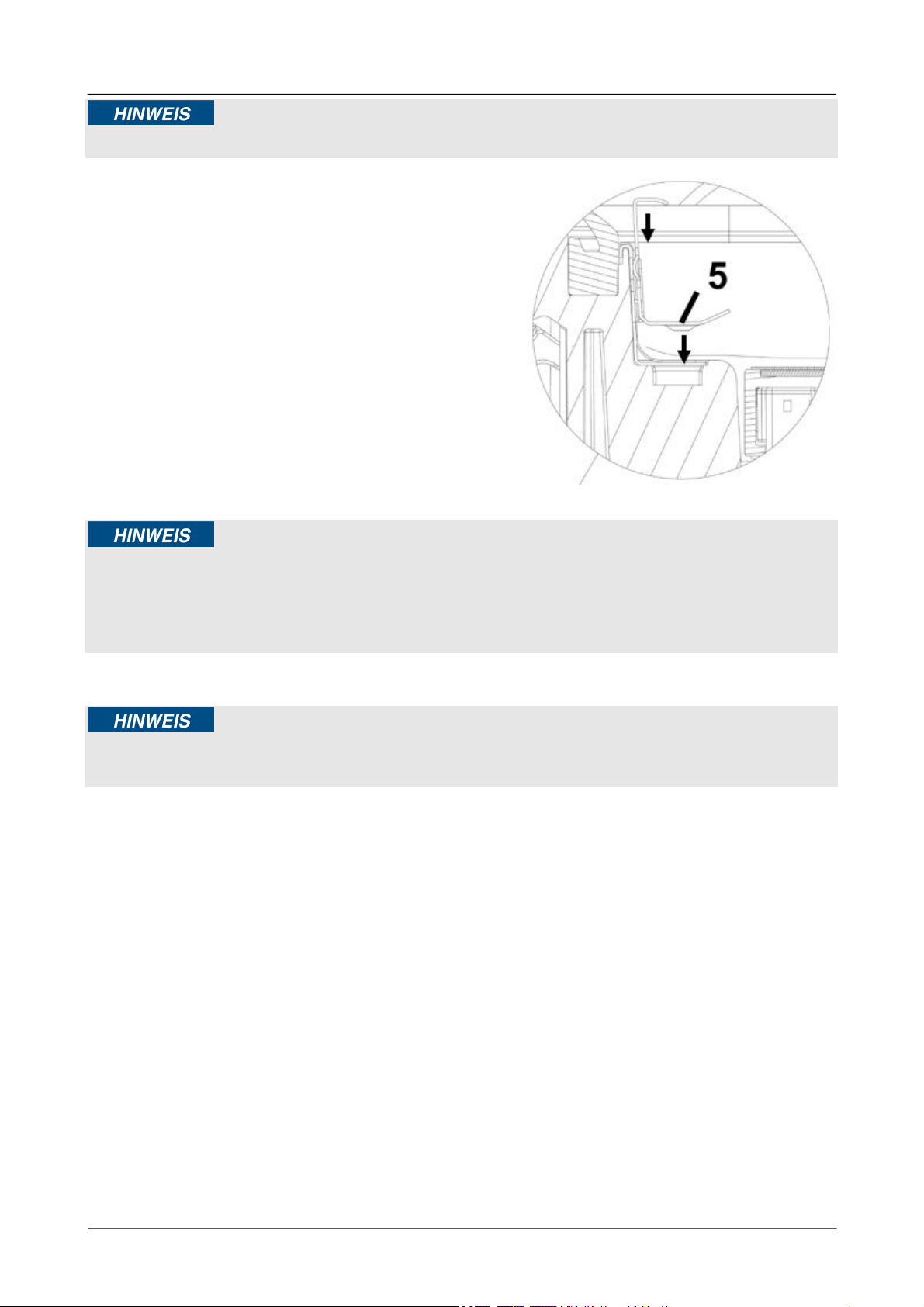
96
Nota
► Expulse el aire sobrante de la bolsa para obtener un envasado al vacío óptimo.
Encienda el aparato Abra la tapa del aparato y
luego coloque el extremo abierto de la bolsa
sobre la barra de sellado y sujétela. Para ello,
levante la fijación (5), pase por debajo el
extremo de la bolsa y presione hacia abajo la
fijación.
Adapte el ajuste de vacío y sellado como desee.
Cierre la tapa y pulse Auto/Cancel.
Presiones la tapa durante 2 segundos hacia
abajo e inicie el proceso de envasado al vacío.
El aparato envasará al vacío y sellará la bolsa
automáticamente. El aparato pita cuando el proceso ha finalizado.
Nota
► El aparato genera una subpresión muy elevada. Si fuera preciso, deberá interrumpir
antes de tiempo el proceso de sellado automático, en caso de alimentos delicados o
sopas. Interrumpa el proceso mediante Seal (Sellado) y la bolsa quedará
automáticamente sellada.
Abra la tapa y retire la bolsa.
Nota
► El líquido o restos de alimentos sobrantes pueden retirarse de la cámara de vacío
después de cada proceso de envasado al vacío.
48.2 Envasar al vacío en una de las bolsas del rollo
Coloque el aparato en un lugar seco.
Conecte el enchufe de alimentación. Encienda el aparato. Adapte el ajuste de vacío y
sellado como desee.
Desenrolle la lámina y cuando haya alcanzado el largo deseado, córtela con un corte
preciso y limpio.
Abra la tapa del aparato y luego coloque el extremo abierto de la bolsa sobre la barra
de sellado y sujétela. Para ello, levante la fijación (5), pase por debajo el extremo de la
bolsa y presione hacia abajo la fijación.
Cierre la tapa del aparato.
Pulse Seal. La bolsa se sellará. El piloto LED sobre Seal (sellado) se iluminará y
apagará una vez finalizado el proceso. A continuación, el aparato pita.

97
Abra la tapa y retire la bolsa. Esta puede utilizarse posteriormente para envasar al
vacío.
Nota
► Aconsejamos que no haga el vacío en más de una bolsa por minuto. De esta manera el
aparato puede enfriarse correctamente. También es posible sellar varias bolsas
sucesivamente.
► No llene la bolsa demasiado. Deje suficiente espacio (8 cm) para que pueda meterse la
boca de la bolsa fácilmente en la envasadora.
► No moje la boca de la bolsa. Las bolsas mojadas son difíciles de sellar.
► Limpie y alise la boca de la bolsa antes de ser sellada. Asegúrese de que no hay restos
de comida ni arrugas en la boca de la bolsa. Estos pueden dificultar el sellado.
► Si los alimentos a envasar al vacío tuvieran cantos afilados, por ejemplo huesos,
espaguetis o cangrejos, envuélvalos en papel de cocina para evitar que la bolsa se
dañe.
► Escalde las verduras durante un periodo corto de tiempo en agua hirviendo o en el
microondas. Enfríelas y enváselas al vacío en prácticas raciones.
► Para envasar al vacío alimentos no congelados se necesitan bolsas unos 5 cm más
largas para que los alimentos se puedan expandir al congelarse. Ponga carne y
pescado en papel de cocina y enváselos al vacío juntos. Usar papel de cocina tiene la
ventaja de absorver la humedad de los alimentos.
► Para envasar alimentos como tortillas, crepes, hamburguesas o empanadillas,
sepárelos con papel encerado o de pergamino, así se pueden apilar mejor. Después
podrá coger una parte de los alimentos fácilmente y volver a envasar y congelar el
resto.
48.3 Sellado de una bolsa sin vacío
Puede sellar una bolsa sin envasarla al vacío. Para ello, coloque al bolsa del modo
acostumbrado, pulse Seal.
Si así no obtiene un resultado satisfactorio, también puede dejar colgando la bolsa hacia
fuera. Para ello, pase la bolsa por fuera a través de la barra de sellado.
A continuación, cierre la tapa y pulse Seal.
48.4 Envasado al vacío de una bolsa fuera de la cámara de vacío
También puede envasar al vacío una bolsa fuera de la cámara de vacío. Para ello, pase la
bolsa por fuera a través de la barra de sellado.
A continuación, cierre la tapa y proceda como se explica en “Envasar al vacío en una
bolsa en la cámara de vacío “.
Esto solo funciona con bolsas estructuradas. Conseguirá un resultado óptimo con bolsas
estruturadas por ambos lados.
Nota
► El envasado al vacío fuera de la cámara de vacío solo puede realizarse con bolsas
estructuradas.
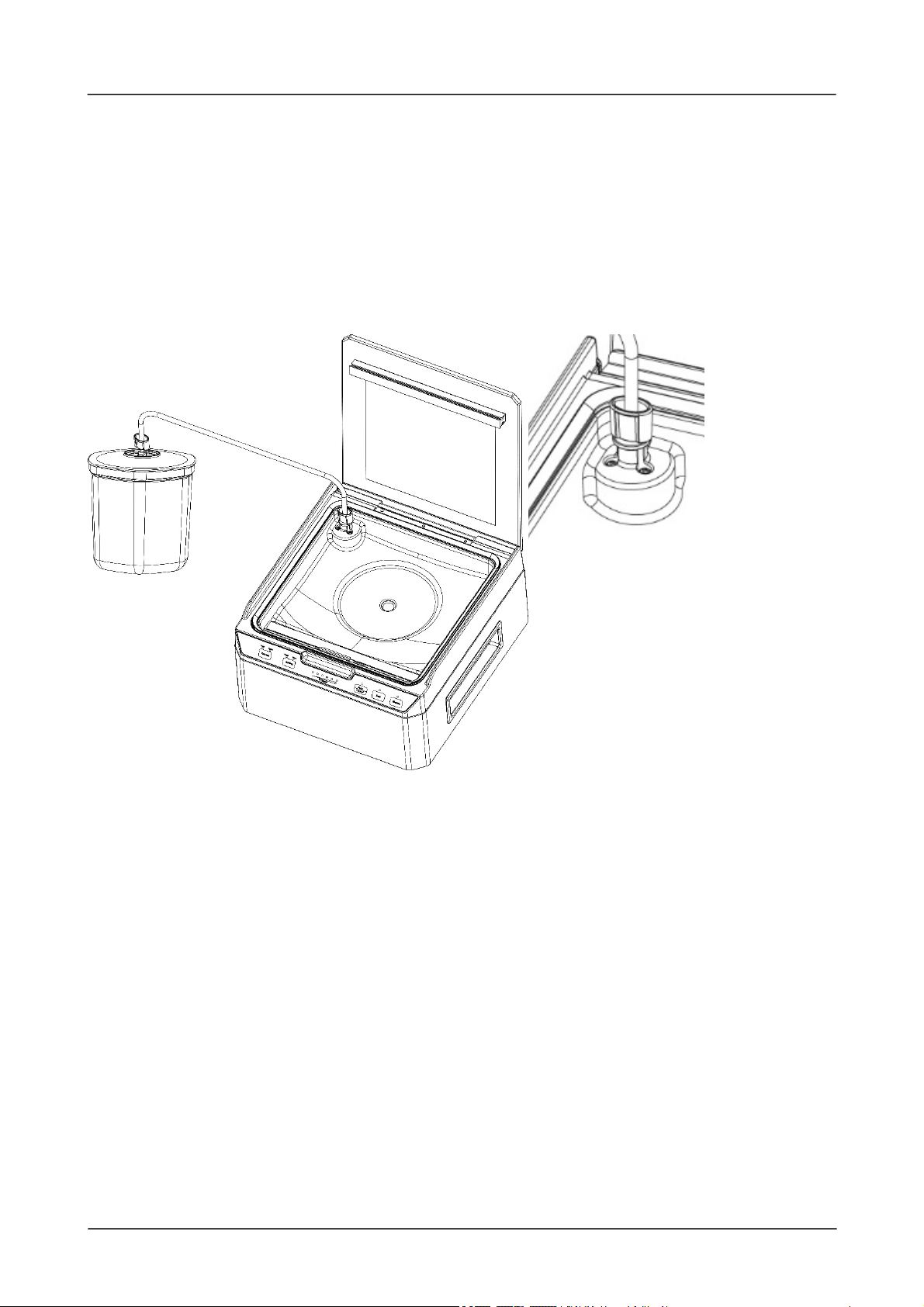
98
48.5 Bolsas y rollos
Por favor, utilice solamente las bolsas y rollo necesarios previstos. El material de estas
láminas especiales para vacío es distinto que el de los rollos comunes de plástico de
cocina. Todos los rollos y bolsas de film suministrados por CASO son aptos para cocinar
en bolsa (al vacío).
Asegúrese de que si se utilizan films de otros fabricantes, éstos sean aptos para
microondas y para el cocinado en bolsa (al vacío). Para ello puede usted contar con una
amplia gama de rollos y bolsas CASO.
48.6 Envasado al vacío en recipientes
Retire el filtro de aire pasándolo a través de la conexión para el tubo flexible de vacío y
coloque el adaptador. Introduzca los alimentos en el recipiente de vacío. Coloque la
tapa del recipiente y acople el tubo de vacío a la tapa del recipiente y conéctelo
mediante el adaptador a la conexión de la cámara de vacío del aparato.
Mantenga pulsado durante 3 segundos Auto/Cancel (envasado al vacío automático).
Presione brevemente la tapa del recipiente. El recipiente se envasa al vacío
automáticamente.
El aparato pita cuando el proceso ha finalizado. En función de la intensidad de vacío
deseada, repita el proceso las veces que necesite.
A continuación, retire el adaptador de la conexión de la cámara de vacío y vuelva a
colocar el filtro de aire.
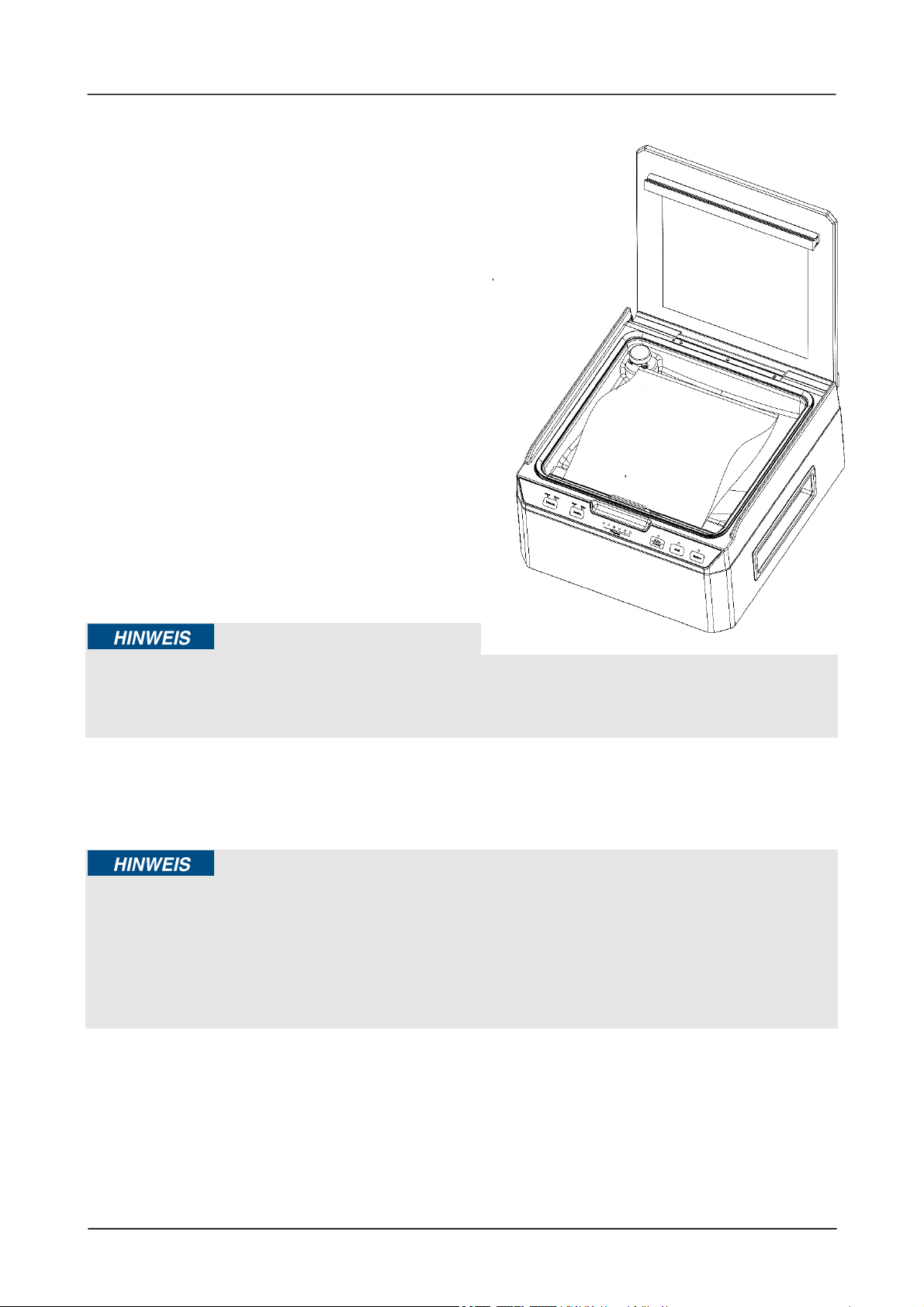
99
48.7 Marinado de alimentos en bolsa
Introduzca los alimentos marinados en la
bolsa.
Abra la tapa del aparato e introduzca la
bolsa que está previsto marinar en la
cámara de vacío y fíjela. Para ello, levante
la fijación (5), pase por debajo el extremo
de la bolsa y presione hacia abajo la
fijación.
Cierre la tapa del aparato y pulse Marinate.
Los alimentos se marinan automáticamente.
El aparato pita cuando el proceso ha
finalizado.
Repita el proceso las veces que sea
necesario hasta alcanzar la intensidad
deseada. A continuación, selle la bolsa
manualmente (tal y como se explica en el
capítulo 48.3).
Abra la tapa del aparato y retire la bolsa.
Nota
► ¡El aparato no sella y envasa al vacío inmediatamente después de la función de
marinado!
► Si lo desea, puede llevar a cabo este proceso manualmente.
48.8 Almacenamiento de VacuChef 40
Guarde el aparato en un sitio plano, seguro y fuera del alcance de los niños.
Nota
► Apague el aparato después de su uso. Así evitará gasto innecesario de energía y se
garantiza su seguridad.
► Si no va a utilizar el aparato durante un periodo largo de tiempo le aconsejamos que
desconecte el enchufe de la toma de red eléctrica.
► Para almacenar el producto, coloque la tapa sin bloquearla, que las juntas se deformen
y no perjudicar el funcionamiento del aparato.
49 Limpieza y conservación
Este capítulo incluye algunos consejos importantes acerca de la limpieza y la
conservación del aparato. Tenga presentes las instrucciones y daños por limpieza
incorrecta del aparato y asegúrese de que el aparato funciona sin errores.
100
49.1 Instrucciones de seguridad
Precaución
Tenga presentes las siguientes instrucciones de seguridad antes de comenzar a limpiar el
aparato:
► Antes de limpiar desconectarlo de la toma de alimentación eléctrica.
► El aparato debe limpiarse periódicamente para eliminar los restos de alimentos
cocinados. Un aparato que no se mantenga limpio perjudicará la conservación del
aparato y puede hacer peligrar el aparato, además de causar una acumulación de
hongos y bacterias.
► Las barras selladoras pueden estar calientes después del proceso de vacío. ¡Existe
peligro de fuego! Espere a que el aparato se enfríe.
► Después del uso debe limpiar el espacio de cocción en cuanto enfríe. Si espera
demasiado, será más difícil llevar a cabo la limpieza e incluso, la hará imposible. Si se
acumula demasiada suciedad el aparato podría sufrir daños.
► Si la humedad penetra en el aparato, sus componentes electrónicos pueden resultar
dañados. Evite que caiga líquido en el interior del aparato, a través de las ranuras de
ventilación.
► No utilice limpiadores agresivos ni disolventes.
► No elimine la suciedad incrustada mediante la fuerza, utilizando objetos duros.
► No sumerja el aparato en agua ni otros líquidos ni los meta en el lavavajillas.
49.2 Limpieza
Exterior del aparato: limpiar con un paño húmedo o utilizando una solución jabonosa
suave, no agresiva. Interior del aparato: limpiar con papel de cocina para eliminar los
restos de alimento y líquido.
Si durante la limpieza retira la junta, séquela a fondo posteriormente y vuelva a colocarla
correctamente, ya que de lo contrario el aparato no podría generar correctamente la
subpresión necesaria.
Bolsas
Limpie las bolsas con agua caliente y déjelas secar completamente antes del siguiente
uso.
Precaución
► No reutilice bolsas que hayan contenido carne cruda, pescado o alimentos grasos.
50 Resolución de fallas
Este capítulo incluye algunos consejos importantes acerca de la localización y resolución
de fallas del aparato. Observe dichos consejos para evitar peligros y daños.

101
50.1 Instrucciones de seguridad
Precaución
► Las reparaciones de aparatos eléctricos y electrónicos sólo deben realizarse por
personal técnico autorizado e instruido por el fabricante.
► Una reparación indebida podría poner en grave peligro al usuario y causar daños en el
aparato.
50.2 Problemas, causas y remedios
La siguiente tabla le ayudará a localizar y remediar pequeños problemas.
Problema Posible causa Remedio
La envasadora no
funciona
Enchufe no conectado Conectar el enchufe
Cable o enchufe
defectuoso.
Contacte al Servicio al Cliente.
Toma de red defectuosa Escoger otra toma de red
El primer sellado de
la bolsa hecha de
rollo no se efectúa
Rollo en posición incorrecta
Siga los pasos del capítulo
“Envasado al vacío e una de las
bolsas del rollo”
No se hace vacío en
la bolsa
La boca de la bolsa no está
colocada correctamente en
la cámara de vacío
Coloque correctamente la bolsa
La bolsa está defectuosa Coja otra bolsa
Hay suciedad en las barras
selladoras y en las juntas.
Limpie las juntas y colóquelas
correctamente cuando estén secas.
La bolsa no ha sido
sellada
correctametne
La barra selladora se ha
sobrecalentado y la bolsa se
ha fundido
La barra selladora está
defectuosa
Abra la tapa del aparato y déjelo
enfriar unos minutos
Avise al servicio técnico para que
sustituya la barra selladora.
La bolsa no mantiene
el vacío después de
haber sido sellada
La bolsa está defectuosa
Coja otra bolsa. Cubra los cantos
afilados del contenido con
servilletas de papel
Hay fugas debido a arrugas,
migas, grasa o líquidos en
la costura de sellado.
Vuelva a abrir la bolsa; limpie la
parte interior de la boca de la bolsa;
limpie la posible suciedad de la
barra selladora. Vuelva a sellar la
bolsa.
Nota
► Si con los pasos que se indica más arriba no consigue solucionar el problema, diríjase
al servicio de atención al cliente.

102
51 Eliminación del aparato usado
Los productos eléctricos y electrónicos usados contienen materiales
reutilizables. No obstante, también contienen materiales nocivos, necesarios
para su funcionamiento y seguridad.
En la basura doméstica, o ante la manipulación indebida, puede ponerse en peligro la
salud humana y el medio ambiente. Por tanto, no debe depositar su aparato usado en
ningún caso junto con la basura doméstica.
Nota
► Utilice el puesto de recogida más cercano para devolver y reciclar los aparatos
electrónicos usados. Infórmese, si fuera preciso, en su ayuntamiento, en el servicio de
recogida de basura o en su distribuidor.
► Guarde su aparato usado, protegido frente al acceso de los niños, para su eliminación
52 Garantía
Otorgamos para este producto, 24 meses de garantía a contar desde la fecha de venta
por defectos de fabricación o de material.
Su derecho legal de reclamación de garantía, de conformidad con el §439 ss. de la ley
BGB-E alemana permanecen invariables.
En la garantía no se incluyen daños resultantes de la manipulación o el uso indebidos, ni
aquellos daños que impidan el correcto funcionamiento o disminuyan el valor del aparato
en lo más mínimo. Además, no nos hacemos responsables en cuanto a la garantía en
relación a los componentes desgastados, daños de transporte, siempre que no seamos
responsables, así como daños no atribuibles a las reparaciones realizadas por nosotros.
Este aparato es apto para el uso doméstico y sus características de diseño y potencia así
lo confirman. Cualquier uso industrial o comercial restringe el derecho a garantía en la
medida en que el aparato haya sido sometido a esfuerzo equivalente al uso doméstico. El
aparato no está previsto para el uso industrial.
En caso de reclamaciones legítimas, enviaremos el aparato defectuoso, a nuestra
discreción, a reparar o a sustituir por un aparato sin defecto.
Los defectos detectados deben notificarse en un plazo de 14 días a partir de la fecha de
suministro.
Queda excluida cualquier otra reclamación de garantía.
Para hacer valer una declaración de garantía, antes de devolver el aparato (siempre con
presentación del recibo de compra), póngase en contacto con nosotros.

103
53 Datos técnicos
Aparato Envasadora al vacío
Denominación
VacuChef 40
Nº de art 1417
Conexión 220-240V, 50Hz
Consumo de potencia 280W
Dimensiones exteriores (An/H/P)
320 x 175 x 340 mm
Peso neto
8,3 kg
Capacidad
4,2 m3/h (70 L/min)
Ancho máximo de bolsa
Apto para bolsas de 25 cm
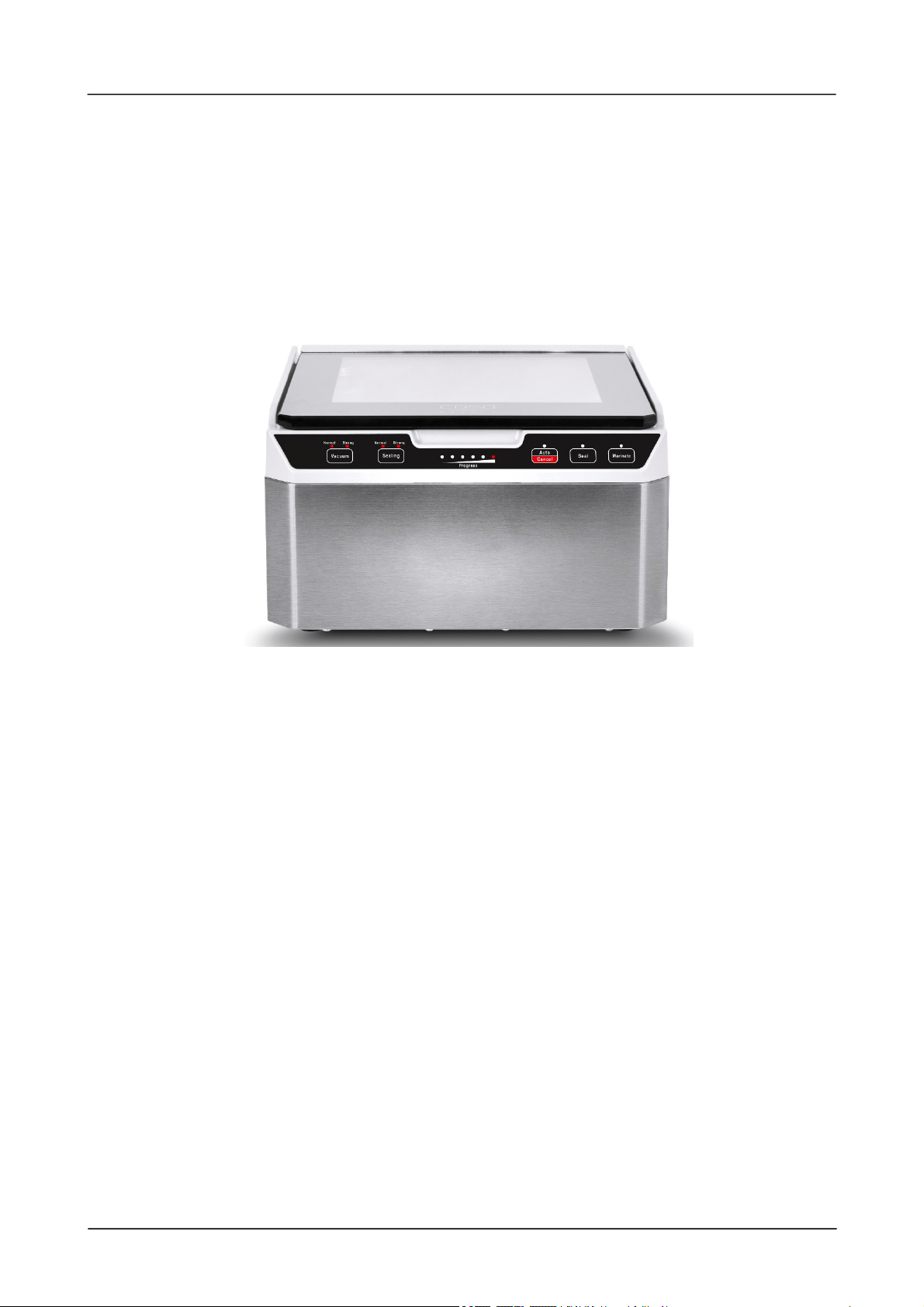
104
Камерный вакуумный упаковщик
VacuChef 40
Номер артикула 1417
105
54 Руководство по эксплуатации
55 Общие сведения
Прочитайте содержащиеся здесь сведения для быстрого ознакомления с прибором
и использования его функций в полном объеме.
Ваш прибор прослужит Вам долгие годы при условии надлежащего обращения и
ухода.
Желаем Вам пользоваться им с удовольствием.
55.1 Сведения о данном руководстве
Это руководство по эксплуатации является составной частью вакуумного
упаковщика (называемого далее "прибор") и дает важные указания по первому
использованию, безопасности, надлежащему применению прибора и уходу за ним.
Руководство по эксплуатации должно всегда находиться вблизи прибора. Его
необходимо прочесть всем лицам, осуществляющим:
ввод прибора в эксплуатацию, эксплуатацию,
устаранение неисправностей и/или очистку
прибора. Сохраните данное Руководство по эксплуатации, при передаче прибора
другому лицу передайте это Руководство вместе с прибором.
55.2 Предупредительные указания
В данном Руководстве по эксплуатации используются следующие
предупредительные указания:
Опасность
Предупредительное указание этой степени опасности обозначает опасную
ситуацию, сопряженную с сильной угрозой. Если опасная ситуация не будет
предотвращена, это может привести к смерти или тяжелым травмам.
► Во избежание опасности смерти или тяжелых травм людей необходимо следовать
инструкциям в данном предупредительном указании.
Предостережение
Предупредительное указание этой степени опасности обозначает возможность
опасной ситуации. Если опасная ситуация не будет предотвращена, это может
привести к тяжелым травмам.
► Во избежание опасности травмирования людей необходимо следовать
инструкциям в данном предупредительном указании.
Внимание
Предупредительное указание этой степени опасности обозначает возможность
опасной ситуации. Если опасная ситуация не будет предотвращена, это может
привести к травмам легкой или средней степени тяжести.
► Во избежание опасности травмирования людей необходимо следовать
инструкциям в данном предупредительном указании.

106
Примечание
Примечание обозначает дополнительную информацию, облегчающую обращение с
прибором.
55.3 Ограничение ответственности
Все содержащиеся в данном Руководстве по эксплуатации технические сведения,
данные и указания по установке, использованию и уходу за прибором актуальны на
момент печати и учитывают весь наш опыт и знания.
Сведения, рисунки и описания, содержащиеся в данном Руководстве по
эксплуатации, не могут являться основанием для заявления каких-либо претензий.
Производитель не несет ответственности за ущерб, возникший вследствие:
Несоблюдения указаний в Руководстве
Использования прибора не по назначению
Неквалифицированного ремонта
Технических изменений, модификаций прибора
Использования неразрешенных запчастей
Модификации прибора не рекомендуются и не покрываются гарантией. Перевод
осуществляется самым добросовестным образом. Однако мы не несем
ответственности за ошибки в переводе, даже если перевод был выполнен нами или
по нашему заказу. Наши обязательства ограничиваются только оригинальным
немецким текстом.
55.4 Защита авторского права
Данная документация защищена авторским правом.
Braukmann GmbH сохраняет за собой все права, в том числе право на
фотомеханическое воспроизведение, копирование и распространение посредством
особых способов (например, обработка данных, носители данных, сети передачи
данных), в том числе частичное.
Мы оставляем за собой право на внесение смысловых и технических изменений.
56 Безопасность
В этой главе Вы получите важные указания по безопасности при обращении с
прибором.
Этот прибор соответствует установленным нормам безопасности. Однако
ненадлежащая эксплуатация прибора может привести к травмированию людей и
причинению материального ущерба.
56.1 Применение в соответствии с назначением
Данный прибор предназначен только для бытового использования внутри
помещения для вакуумного упаковывания и запаивания пакетов и контейнеров для
вакуумного упаковывания.
Иное использование или использование, выходящее за рамки описанного, считается
ненадлежащим использованием.
107
Предостережение
Опасность из-за ненадлежащего использования!
При использовании не по назначению и/или использовании, отличном от указанного в
Руководстве по эксплуатации, прибор может являться источником опасностей.
► Используйте прибор только по назначению.
► Соблюдайте порядок действий, описанный в данном Руководстве по эксплуатации.
Исключаются претензии всякого рода, связанные с ущербом вследствие использования не
по назначению. Все риски несет исключительно пользователь.
56.2 Общие правила техники безопасности
Примечание
ВАЖНЫЕ ПРАВИЛА ТЕХНИКИ БЕЗОПАСНОСТИ:
ВНИМАТЕЛЬНО ПРОЧТИТЕ И СОХРАНИТЕ, ЧТОБЫ ПОЗЖЕ
ИСПОЛЬЗОВАТЬ
В целях обеспечения безопасного обращения с прибором
следуйте нижеприведенным общим указаниям по
безопасности:
► Перед использованием проверяйте прибор на предмет видимых
внешних повреждений. Не используйте поврежденный прибор.
► При повреждении электрического кабеля для подключения
прибора новый кабель должен монтировать только специалист,
имеющий авторизацию изготовителя.
► Детям в возрасте старше 8 лет и лицам с ограниченными
физическими, сенсорными или умственными возможностями
или с недостаточными знаниями и/или опытом использования
прибора прибор разрешается использовать лишь в том случае,
если они получили подробные указания относительно
эксплуатации прибора и они используют прибор под
наблюдением.
► Детям запрещается играть с прибором. Детям в возрасте
младше 8 лет и детям старшего возраста, находящимся не под
наблюдением взрослых, запрещается выполнять очистку
прибора и другие работы в его отношении.
► У детей младше 8 лет не должно быть доступа к прибору и его
соединительному кабелю.
► Прибор необходимо регулярно чистить и постоянно удалять
остатки пищи.
► Не храните и не используйте прибор на улице.

108
Примечание
► Ремонт прибора может выполняться только сервисной службой,
авторизованной производителем, в противном случае претензии
по гарантии в отношении последующих повреждений не
принимаются. Ремонт, выполненный неквалифицированными
лицами, может привести к серьезным опасностям для
пользователя.
► Неисправные детали можно заменять только оригинальными
запчастями. Выполнение требований техники безопасности
гарантировано только при использовании оригинальных
запчастей. Во время работы не оставляйте прибор без
присмотра.
► Во время работы не оставляйте прибор без присмотра.
► Не тяните прибор за соединительный провод, чтобы
отсоединить его от сети, и не переносите прибор, взявшись за
соединительный провод.
► Нельзя опускать прибор в воду и другие жидкости и помещать в
посудомоечную машину.
► Не открывайте крышку при перемещении прибора.
► Не перемещайте прибор во время процесса вакуумирования и
запаивания.
56.3 Источники опасности
56.3.1 Опасность ожога!!
Предостережение
Сварные планки прибора очень сильно нагреваются,
поэтому не трогайте их.
► В целях предотвращения возможных ожогов ни в коем
случае не прикасайтесь к сварной планке
непосредственно после операции запаивания.

109
56.3.2 Опасность возгорания
Предостережение
При ненадлежащем применении прибора существует
опасность возгорания.
Чтобы избежать опасности возгорания, соблюдайте
следующие правила техники безопасности:
► Не устанавливайте прибор поблизости от горючих
материалов.
► Не помещайте прибор вблизи от любых источников тепла
(газ, электроток, горелки, топящиеся печи).
56.3.3 Опасность, связанная с электрическим током!
Опасность для жизни из-за поражения
электрическим током!
Контакт с проводами или деталями прибора, находящимися
под напряжением, опасен для жизни!
Чтобы избежать угроз, связанных с электрическим током,
соблюдайте следующие правила безопасности:
► Прибор нельзя использовать, если его соединительный
провод или штекер повреждены, если прибор работает
со сбоями, упал или получил повреждения. Во избежание
опасности в случае повреждения соединительного
провода или штекера прибора его замена должна
осуществляться производителем или его
уполномоченным представителем по техническому
обслуживанию.
► Ни в коем случае не вскрывайте корпус прибора. При
контакте с соединительными элементами,
находящимися под напряжением, а также при изменении
электрической и механической конструкции существует
опасность удара током. Кроме того, это может привести
к сбоям в работе прибора.
► Никогда не трогайте прибор и штепсельную вилку
мокрыми руками.

110
57 Указания по безопасности при хранении продуктов
питания
При упаковывании в вакуумную упаковку и запаивании следуйте, пожалуйста,
определенным процедурам; это позволит Вам гарантировать качество и безопасность
Ваших продуктов.
Примечание
В целях обеспечения безопасного обращения с прибором следуйте
нижеприведенным общим указаниям по безопасности:
► Если скоропортящиеся продукты были разогреты или разморожены или
хранились в неохлажденном виде, их следует немедленно использовать.
► Перед вакуумной упаковкой продуктов питания важно вымыть руки и вымыть все
инструменты и поверхности.
► Охлаждайте или замораживайте скоропортящиеся продукты сразу после их
вакуумной упаковки. Не храните их при комнатной температуре.
► Срок хранения сухих продуктов питания, таких, как, например, орехи, кокосовые
орехи или зерновые при их вакуумной упаковке увеличивается, если они будут
храниться в темном месте. Кислород и тепло у продуктов с особенно высоким
содержанием жира способствуют тому, что жир становится прогорклым.
► Очистите кожуру с таких фруктов и овощей, как, например, яблоки, бананы,
картофель и корнеплоды, прежде чем будете подвергать их вакуумной упаковке;
это увеличит их срок хранения.
► Если вы хотите упаковать абсолютно герметично такие виды овощей, как,
например, брокколи, цветная капуста и капуста, то предварительно их следует
бланшировать в течение короткого времени и заморозить, так как в противном
случае они выделяют газы.
58 Ввод в эксплуатацию
В этой главе содержатся важные указания по вводу прибора в эксплуатацию.
Следуйте данным указаниям во избежание опасностей и повреждений.
58.1 Правила техники безопасности
Предостережение
► Упаковочные материалы не предназначены для игры. Существует опасность
удушья.
58.2 Объем поставки и осмотр после транспортировки
В стандартный объем поставки прибора входят следующие компоненты:
VacuChef 40 Руководство по эксплуатации
Шланг для вакуумирования + адаптер
111
20 пакетов для вакуумного упаковывания (25 х 28 см)
Примечание
► Проверьте полноту комплекта поставки и наличие видимых повреждений.
► Сразу сообщите экспедитору, страховой компании и поставщику о неполной
поставке или повреждениях вследствие неудовлетворительной упаковки или
транспортировки.
58.3 Область применения
Упакованные с помощью данного прибора в вакуумную упаковку продукты остаются
свежими в восемь раз дольше: Сохраните вкус и свежесть продуктов и снизьте свои
затраты благодаря меньшему количеству испорченных продуктов.
Упаковывайте такие продукты, как, например, мясо, рыбу, птицу, морепродукты и
овощи для заморозки или для хранения в холодильнике.
Упаковывайте такие сухие продукты питания, как, например, бобы, орехи, мюсли и
т.д., чтобы их срок хранения стал намного дольше.
Используйте свой вакуумный упаковщик не только для упаковывания продуктов.
Он позволит сохранить сухими и чистыми упакованные принадлежности для
похода, например, спички, аптечки и одежду. Не образуется налет на серебре и
коллекционных изделиях.
58.4 Распаковка
Для распаковки прибора выньте его из коробки и удалите упаковочный материал.
58.5 Устранение упаковки
Упаковка защищает прибор от повреждений при транспортировке. Упаковочные
материалы выбираются с учетом экологичности и техники устранения и поэтому
пригодны для утилизации.
Возврат упаковки в оборот материалов экономит сырье и сокращает отходы.
Сдавайте ненужные упаковочные материалы в приемные пункты системы
утилизации "Зеленая точка".
Примечание
► Если возможно, сохраняйте оригинальную упаковку в течение гарантийного
периода прибора, чтобы в гарантийном случае снова можно было упаковать
прибор надлежащим образом.
58.6 Установка
58.6.1 Требования к месту установки
Для надежной и безупречной работы прибора место установки должно выполнять
следующие условия:
Устанавливайте прибор на прочное, ровное, горизонтальное и жаропрочное
основание с достаточной несущей способностью и мостом для прибора и для
самого тяжелого и большого предполагаемого продукта для вакуумной упаковки.

112
Прибор не предназначен для встраивания в стену или встроенный шкаф.
Не перемещайте вакуумный упаковщик во время его работы.
Выбирайте место установки таким образом, чтобы дети не могли достать до
горячей сварной планки.
Не устанавливайте прибор в горячей, мокрой или очень влажной среде или
поблизости от горючего материала.
Прибор нельзя устанавливать вблизи газовой или электрической плиты или
духовки.
Во время работы прибору нужна достаточная циркуляция воздуха вверх и со всех
сторон. При установке прибора оставьте со всех сторон от прибора свободное
пространство 10 см.
Розетка должна быть легкодоступна, чтобы при необходимости кабель
электропитания можно было легко вытащить из розетки.
Установка прибора в нестационарных местах установки (например, на кораблях)
может проводиться только специализированными
предприятиями/специалистами, если эти места удовлетворяют условиям
безопасного использования этого прибора.
58.7 Подключение к сети
Для обеспечения безопасной и бесперебойной работы прибора при подключении к
сети необходимо соблюдать нижеперечисленные указания:
Перед подключением прибора к сети, сравните технические параметры
подключения (напряжение и частоту) на заводской табличке прибора с
техническими параметрами Вашей сети. Во избежание повреждения прибора эти
параметры должны совпадать.
В сомнительном случае проконсультируйтесь с электриком.
Запрещается использовать многоконтактные штекеры или сетевые разветвители
из-за связанной с ними опасностью возгорания.
Убедитесь, что электрический кабель не поврежден и не проложен над или под
прибором или над горячими поверхностями и/или поверхностями с острыми
кромками.
Розетка должна быть защищена защитным автоматом 16А.
Электрическая безопасность прибора гарантирована лишь в том случае, если он
подключен к системе защитного заземления, установленной по всем правилам. В
случае сомнений поручите электрику проверить внутреннюю электропроводку.
Изготовитель не несет ответственности за повреждения вследствие отсутствия
или прерывания защитного провода.
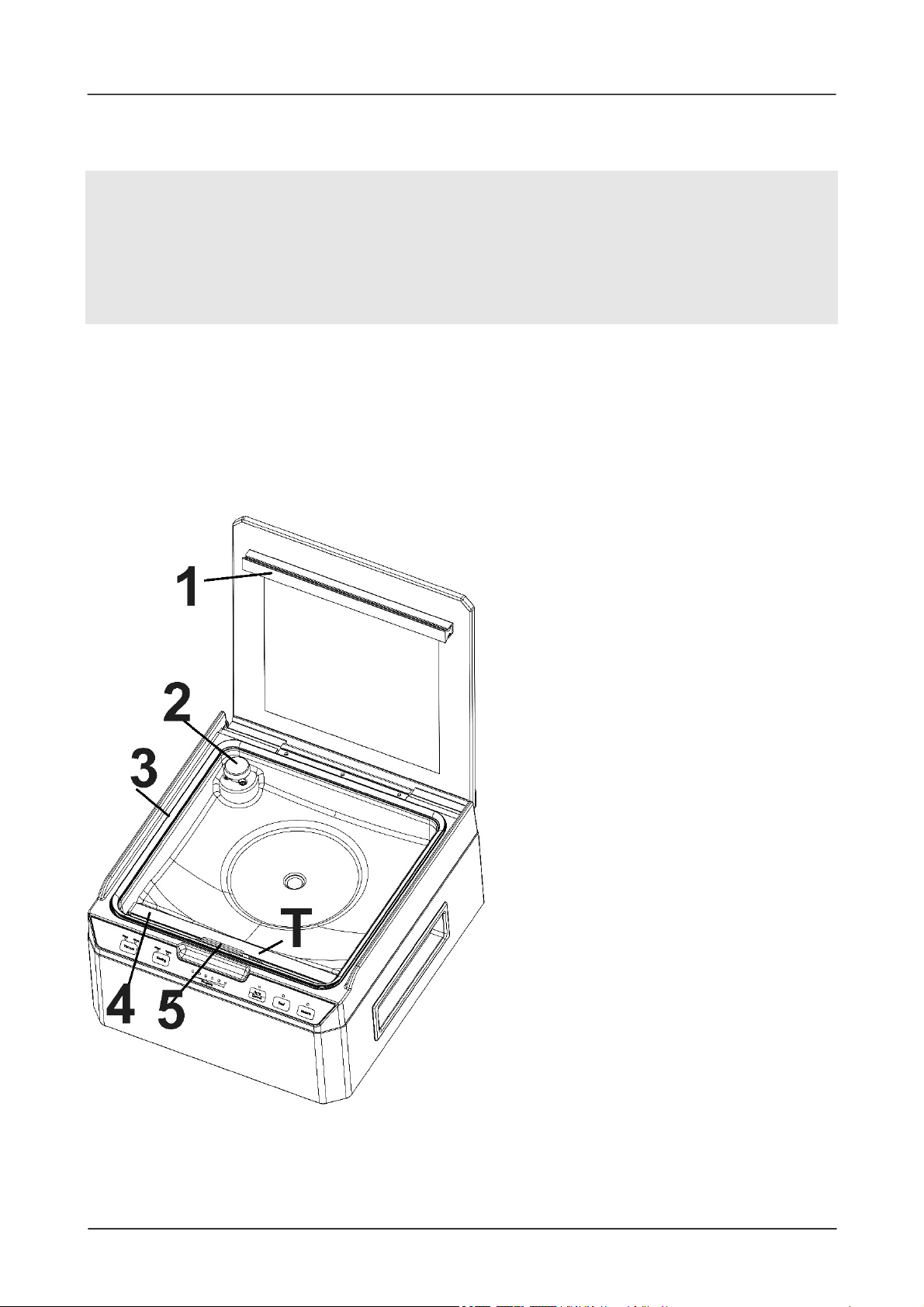
113
58.7.1 Удлинительный кабель
Если используется удлинительный кабель:
► Электрическая номинальная мощность удлинительного кабеля должна быть не
меньше электрической мощности прибора.
► Кабель должен быть расположен таким образом, чтобы он не находился над
рабочей поверхностью или над столом. Проследите, чтобы дети не могли
потянуть за кабель или споткнуться об него.
59 Устройство и работа
В этой главе содержатся важные указания по устройству и работе прибора.
59.1 Общий вид
1 резиновая прокладка: прижимает
пакет к сварной планке.
2 подключение для шланга для
вакуумирования, 2a воздушный
фильтр, 2b адаптер
Снимайте воздушный фильтр, только
если требуется подключить шланг
для вакуумирования.
3 Уплотнение
4 Сварная планка: включает в себя
нагревательный провод с
тефлоновым покрытием; он позволяет запечатывать пакет без прилипания.
5 Фиксатор: Фиксатор пакета.
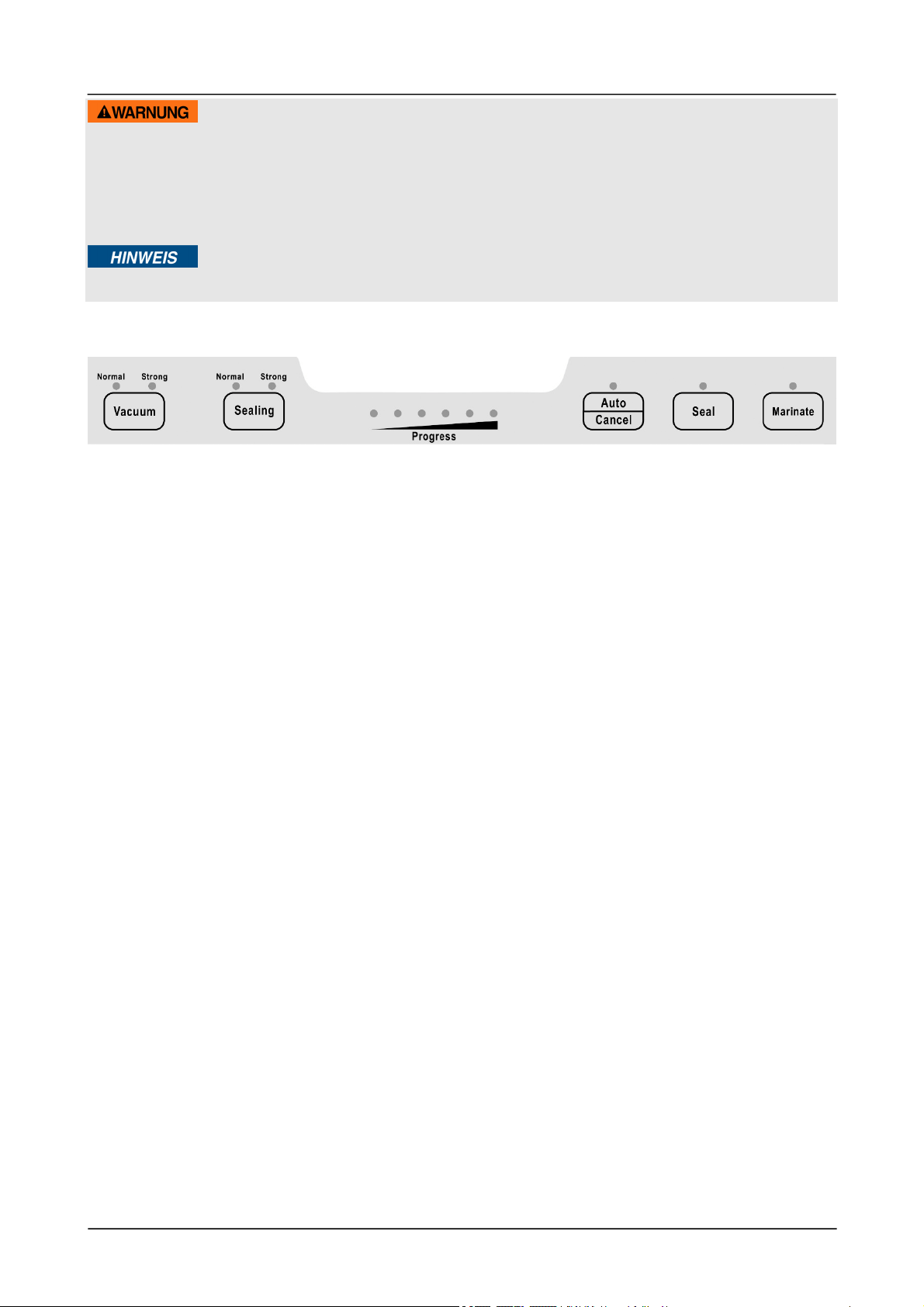
114
Предостережение
Сварная планка прибора очень сильно нагревается.
Соблюдайте следующие правила безопасности, чтобы не обжечь себя и других:
► В целях предотвращения возможных ожогов ни в коем случае не прикасайтесь к
сварной планке непосредственно после операции запаивания.
Примечание
► Не снимайте тефлоновую ленту (Т)!
59.2 Элементы управления
Vacuum Настройка силы вакуума
Normal: для чувствительных или мягких продуктов
Strong: для нечувствительных или твердых продуктов (для особенно сильного
давления вакуума
Sealing Настройка времени запаивания
Normal: для сухих продуктов или предметов, предназначенных для вакуумного
упаковывания (короткое время запаивания)
Strong (экстрадолгое): - для влажных продуктов или предметов, предназначенных
для вакуумного упаковывания, или для продуктов или предметов,
предназначенных для вакуумного упаковывания, содержащих большое
количество жидкости (долгое время запаивания)
Progress – СИД выполнения показывает выполнение соответствующего процесса
Auto/Cancel со следующими функциями:
Автоматическое вакуумирование: Для автоматического вакуумирования и
запаивания пакета.
Вакуумировать контейнер: При открытой крышке прибора с помощью шланга
для вакуумирования можно вакуумировать контейнер.
Прервать: Прибор можно остановить в любой момент во время процесса
вакуумирования/запаивания.
Seal – Запаять со следующими функциями:
Для запаивания пакета без вакуумирования
При использовании функции автоматического вакуумирования можно нажать эту
кнопку, чтобы в любой момент остановить процесс вакуумирования, а затем
запаять пакет.
Marinate – Замариновать: Для маринования внутри пакета
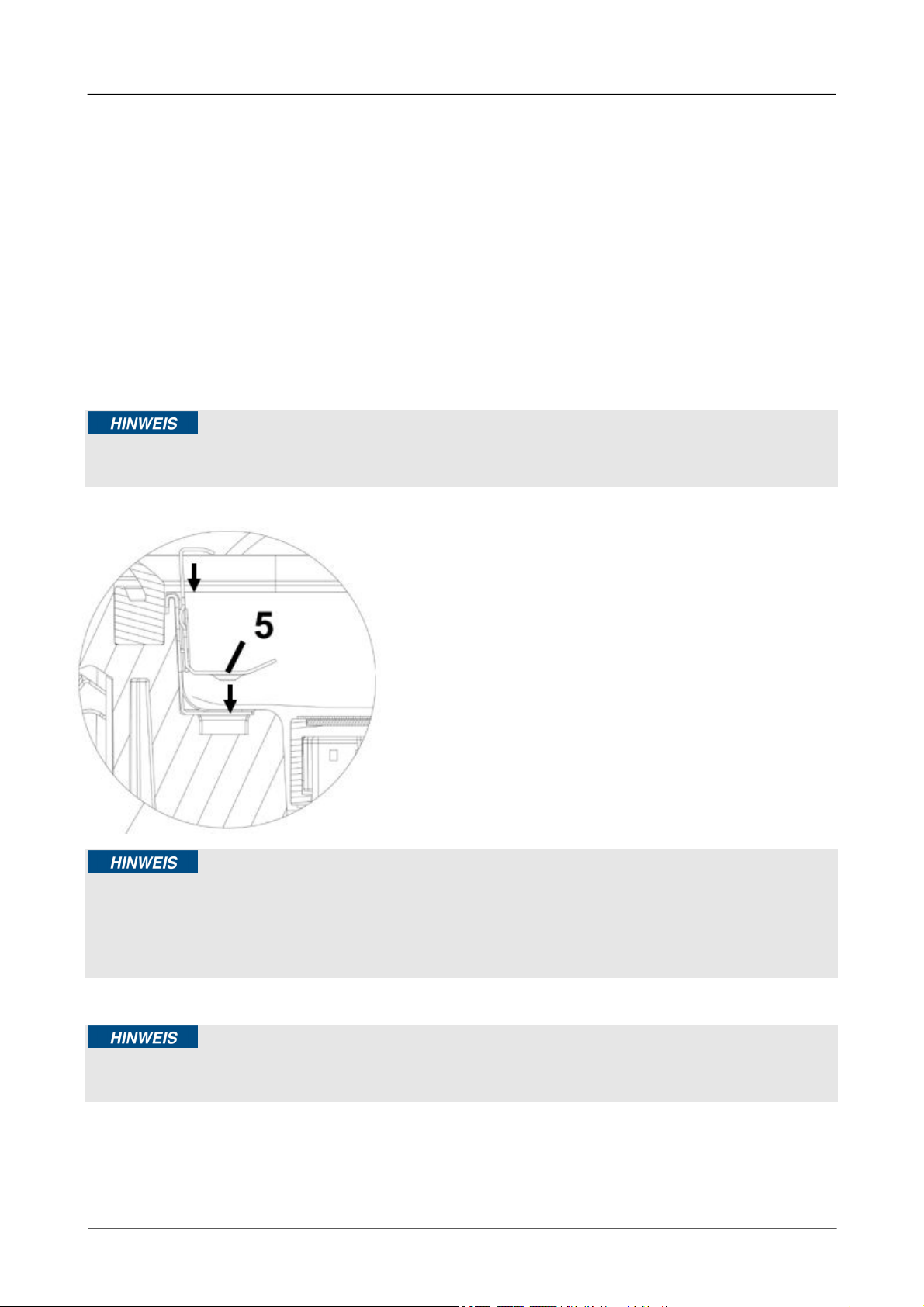
115
Заводская табличка
Заводская табличка с указанием параметров подключения и мощности находится на
задней стороне прибора
60 Эксплуатация и функционирование
В этой главе содержатся важные указания по обслуживанию прибора. Во избежание
опасностей и повреждений следуйте указаниям.
60.1 Вакуумное упаковывание в пакете в вакуумной камере
Установите прибор в сухом месте.
Положите продукты, которые вы хотите сохранить, в пакет.
Примечание
► Для достижения оптимального результата вакуумирования выдавите лишний
воздух из пакета.
Включите прибор. Откройте крышку прибора,
положите открытый конец пакета на сварную
планку и зафиксируйте ее. Для этого поднимите
фиксатор (5), положите под него конец пакета и
прижмите фиксатор вниз.
Настройте параметры вакуумирования и
запаивания по желанию. Закройте крышку и
нажмите Auto/Cancel (Автоматическое
вакуумирование).
Через 2 секунды после начала процесса
вакуумирования закройте крышку вниз. Прибор
автоматически вакуумирует и запаяет пакет.
По завершении процесса прибор издаст звуковой
сигнал.
Примечание
► Прибор создает очень высокий вакуум. При автоматическом вакуумировании
чувствительных блюд и супов может потребоваться преждевренная остановка
процесса. В этом случае прервите процесс с помощью кнопки Seal (Запаять),
пакет запаяется автоматически.
Откройте крышку и извлеките пакет.
Примечание
► После каждого процесса вакуумирования удаляйте из вакуумной камеры лишнюю
жидкость или остатки продуктов.
60.2 Вакуумное упаковывание в пакете, сделанном из рулона
Установите прибор в сухом месте.

116
Вставьте вилку в розетку. Включите прибор. Настройте параметры вакуумирования и
запаивания по желанию.
Отмотайте пленку нужной длины и обрежьте ее, сделав точный и чистый разрез на
нужной длине.
Откройте крышку прибора, положите открытый конец пакета на сварную планку и
зафиксируйте ее. Для этого поднимите фиксатор (5), положите под него конец
пакета и прижмите фиксатор вниз. Закройте крышку прибора.
Нажмите кнопку Seal (Запаять). Пакет будет запаян. СИД над Seal загорится и
погаснет, когда процесс будет завершен. После этого прибор издаст звуковой
сигнал.
Откройте крышку и извлеките пакет.
Теперь его можно использовать для вакуумирования.
Примечание
► Мы не рекомендуем запаивать более одного пакета в минуту, чтобы прибор мог
достаточно остыть в промежутках. Однако можно запаять несколько пакетов друг
за другом.
► Убедитесь, что длина используемого пакета не менее чем на 8 см больше длины
консервируемого продукта и учтите еще 2 см, если пакет после вскрытия еще раз
будет запаиваться.
► Не кладите в пакет слишком много продуктов; оставляйте достаточно места,
чтобы открытая сторона пакета легко размещалась на сварной планке.
► Не увлажняйте открытую сторону пакета. Влажные пакеты очень трудно
запаивать.
► Очистите и выровняйте открытый конец пакета, прежде чем его запаивать.
Убедитесь, что на открытом конце пакета нет остатков пищи и складок.
Инородные тела или мятый пакет могут затруднить запаивание.
► Если Вы хотите запаять в пакете продукты с острыми краями, например, кости,
спагетти или ракообразных, то заверните их в бумажное полотенце; таким
образом Вы предотвратите повреждение пакета.
► Непродолжительное время бланшируйте овощи в кипящей воде или в
микроволновой печи, затем охладите овощи, разделите на порции и упакуйте.
► Чтобы герметично упаковать незамороженные продукты, вам понадобиться
дополнительно около 5 см от длины пакета, чтобы продукты во время заморозки
могли увеличиться в объеме. Положите мясо или рыбу на бумажное полотенце и
вакуумируйте все вместе. Преимуществом кухонного полотенца является его
способность впитывать влагу с продуктов питания.
► Прежде чем класть на хранение такие продукты питания, как, например,
тортильи, французские блинчики, гамбургеры или пирожки, положите между
ними вощеную или пергаментную бумагу, так их можно будет лучше сложить.
Тогда потом будет легче вынуть часть замороженных продуктов, снова их
герметично упаковать и заморозить.
60.3 Запаивание пакета без вакуума
Вы можете запаять пакет, не вакуумируя его. Для этого, как обычно, положите пакет
в вакуумную камеру и нажмите Seal (Запаять).
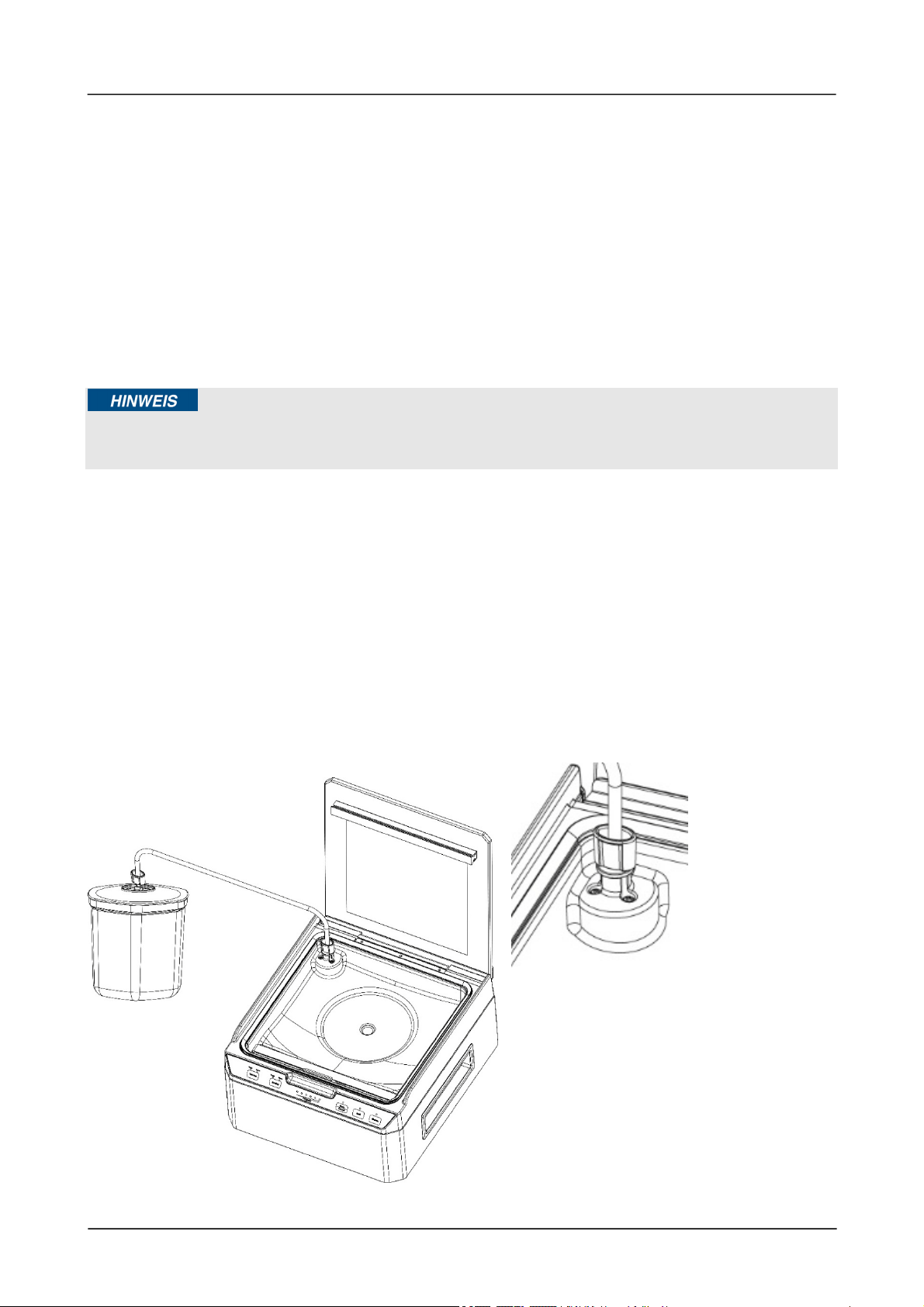
117
Если таким образом не удастся получить удовлетворительный результат, можно
уложить пакет так, чтобы он свисал наружу. Для этого положите пакет снаружи на
сварную планку. Затем закройте крышку и нажмите Seal (Запаять).
60.4 Вакуумирование пакета вне вакуумной камеры
Пакет можно также вакуумировать вне вакуумной камеры.
Для этого положите пакет снаружи на сварную планку. После этого закройте крышку
и действуйте, как описано в „Вакуумное упаковывание в пакете в вакуумной
камере“.
Однако это работает исключительно со структурированными пакетами. Наилучшего
результата можно добиться при использовании пакетов, структурированных с обеих
сторон.
Примечание
► Вакуумирование вне вакуумной камеры возможно только при использовании
структурированных пакетов.
60.5 Пакеты и рулоны
Используйте только пакеты и рулоны, которые однозначно предназначены для
вакуумирования. Материал этой специальной предназначенной для вакуумирования
пленки отличается от обычной пленки для сохранения свежести продуктов.
Все поставляемые CASO пленочные рулоны и пакеты подходят для готовки в пакете
(Sous Vide).
При применении пленки других изготовителей убедитесь, действительно ли она
подходит также для использования в микроволновой печи и для приготовления в
пакете (Sous Vide).
60.6 Вакуумирование контейнеров
Снимите
воздушный
фильтр над
местом
подключения
для
вакуумного
шланга и
установите адаптер. Поместите
блюда в вакуумный контейнер.
Установите крышку контейнера и
подсоедините шланг для
вакуумирования к крышке
контейнера, соедините шланг с
помощью адаптера с местом
подключения к вакуумной камере
прибора.
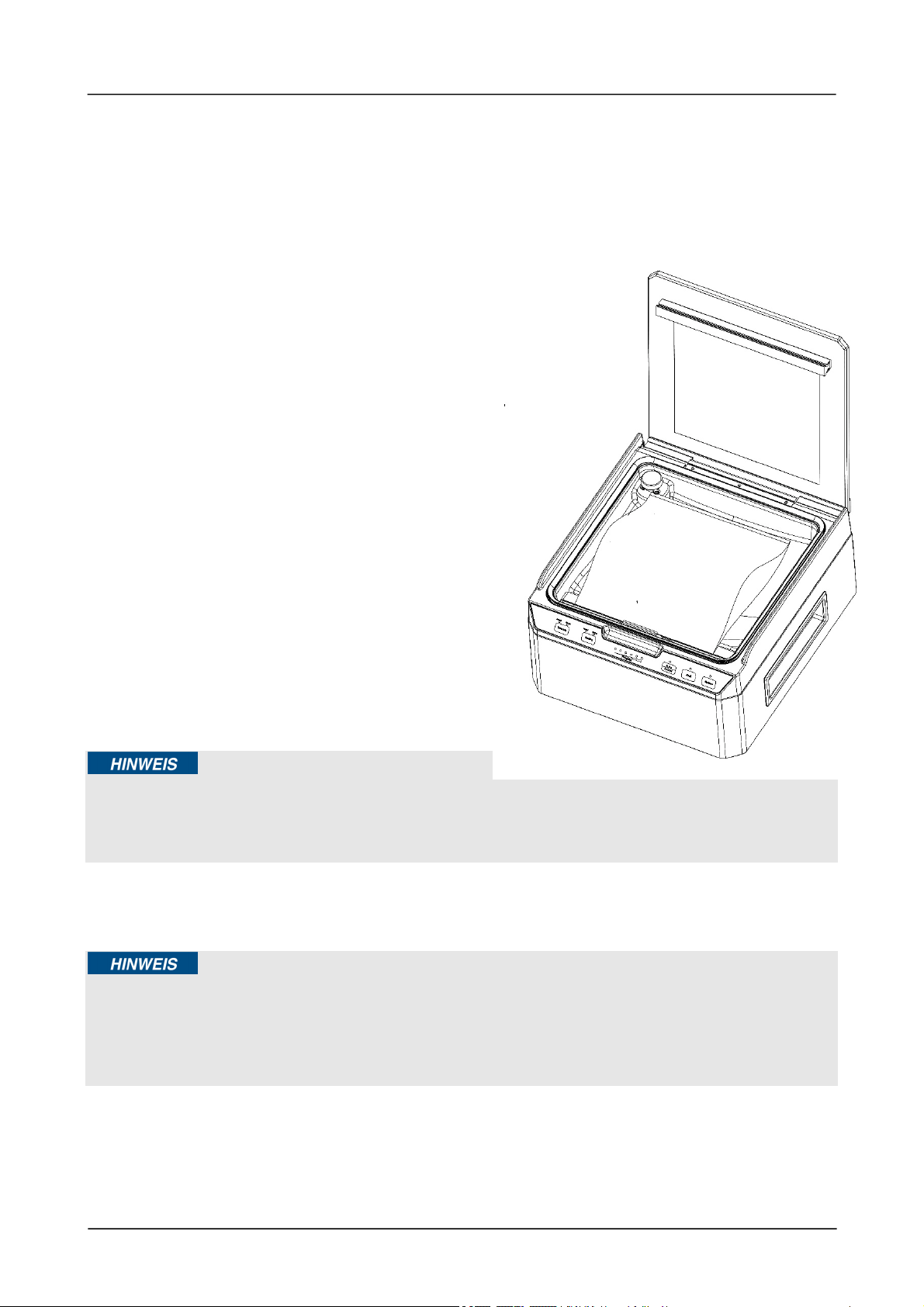
118
На 3 секунды нажмите Auto/Cancel (Автоматическое вакуумирование). Надавите
на крышку контейнера. Автоматически начнется процесс вакуумирования
контейнера. По завершении процесса прибор издаст звуковой сигнал. В зависимости
от желаемой силы вакуума процесс можно повторять желаемое количество раз.
После этого снимите адаптер с места подсоединения к вакуумной камере и вновь
установите воздушный фильтр.
60.7 Маринование продуктов в
пакете
Положите продукты, которые Вы собираетесь
замариновать, в пакет.
Откройте крышку прибора, положите пакет, в
котором будут мариноваться продукты, в
вакуумную камеру и зафиксируйте его. Для
этого поднимите фиксатор (5), положите под
него конец пакета и прижмите фиксатор вниз.
Закройте крышку прибора и нажмите
Marinate (Маринование).
Блюда будут замаринованы автоматически.
По завершении процесса прибор издаст
звуковой сигнал. Повторяйте процесс
желаемое количество раз до достижения
желаемой интенсивности. После этого
выполните запаивание пакета вручную (как
описано в главе 61.3).
Откройте крышку прибора и извлеките пакет.
Примечание
► Прибор не запаивает и не вакуумирует непосредственно после использования
функции маринования!
► При желании Вы можете выполнить этот процесс вручную.
60.8 Хранение вакуумного упаковщика
Храните прибор на ровном и устойчивом месте, в месте, недоступном для детей.
Примечание
► Выключите прибор после использования. Так вы избежите ненужного расхода
энергии и обеспечите свою безопасность.
► Если в течение продолжительного времени вы не будете пользоваться прибором,
мы рекомендуем вынимать вилку из розетки.

119
61 Очистка и уход
В этой главе содержатся важные указания по очистке прибора и уходу за ним.
Соблюдайте указания, чтобы избежать повреждений прибора из-за неправильной
очистки.
61.1 Правила техники безопасности
Внимание
Прежде чем приступить к очистке прибора, примите к сведению нижеприведенные
указания по безопасности:
► Перед очисткой вытащите вилку из розетки.
► Прибор следует регулярно чистить и постоянно удалять остатки. Если прибор не
поддерживается в чистом состоянии, то это отрицательно влияет на срок его
эксплуатации и может привести к опасному состоянию прибора.
► Сварная планка после процесса вакуумирования может быть горячей.
Существует опасность ожога! Подождите, пока прибор остынет.
► Очищайте прибор после использования, как только он остынет. Слишком долгое
ожидание излишне затрудняет очистку и в исключительных случаях делает ее
невозможной. В определенных ситуациях слишком сильные загрязнения могут
привести к повреждению прибора.
► Если в прибор попадет влага, то могут быть повреждены электронные элементы.
Следите за тем, чтобы жидкость не попадала внутрь прибора через вакуумный
насос.
► Нельзя опускать прибор в воду и другие жидкости и помещать в посудомоечную
машину.
► Не используйте агрессивные или абразивные чистящие средства и
растворители.
► Не пытайтесь удалить стойкие загрязнения с помощью жестких предметов.
► Тщательно высушите прибор, прежде чем его снова использовать.
61.2 Очистка
Наружная сторона прибора: протрите влажной тряпкой или с использованием
мягкого, не абразивного чистящего средства. Внутренняя сторона прибора: очистите
кухонным полотенцем для удаления остатков пищи и жидкостей.
Если во время очистки Вы снимаете уплотнение, его необходимо хорошенько
высушить после очистки и правильно установить на место, так как в противном
случае прибор не сможет правильно создать вакуум.
Пакет для хранения
Вымойте пакет в теплой проточной воде и потом тщательно его высушите, прежде
чем снова использовать.
Внимание
► Пакеты, которые использовались для хранения сырого мяса, рыбы или жирных
продуктов питания, повторно использовать нельзя.

120
62 Устранение неисправностей
В этой главе содержатся важные указания по локализации и устранению
неисправностей. Следуйте данным указаниям во избежание опасностей и
повреждений.
62.1 Правила техники безопасности
Внимание
► Ремонт электроприборов разрешено осуществлять только квалифицированным
специалистам, прошедшим обучение у производителя.
► Ненадлежащий ремонт может привести к значительным опасностям для
пользователя и к повреждениям прибора.
62.2 Таблица "Причины неисправностей и их устранение"
Нижеприведенная таблица поможет при выявлении и устранении мелких
неисправностей.
Ошибка Возможная причина Устранение
Вакуумный упаковщик
не работает
Вилка не вставлена в
розетку
Вставить вилку в розетку
Неисправность питающего
кабеля или вилки
Обратитесь в сервисную службу.
Розетка неисправна Выбрать другую розетку
Отрезанный кусок
рулона неправильно
запаивается
Кусок рулона расположен
неправильно
Следуйте пошаговым указаниям в
главе "Вакуумная упаковка в пакет
из рулона"
В пакете не создается
полный вакуум
Открытый конец пакета не
полностью находится в
вакуумной камере
Разместите пакет правильно
Пакет поврежден Выберите другой пакет.
На уплотнениях имеются
загрязнения
Очистите уплотнители и после
просушивания правильно вставьте
их на место.
Пакет спаивается
неправильно
Сварная планка
перегрелась, и пакет
плавится
Сварная планка
неисправна.
Откройте крышку прибора и дайте
ему остыть в течение нескольких
минут
Отдайте прибор на замену сварной
планки.
После запечатывания
пакет не держит вакуум
Пакет поврежден
Выберите другой пакет, при
необходимости обмотайте острые
края содержимого бумажными
салфетками
Имеются утечки из-за
наличия складок, крошек,
жира и жидкостей на
Снова откройте пакет, очистите
верхнюю внутреннюю часть пакета
и удалите со сварной планки
121
поверхности вдоль шва
спайки.
возможно имеющиеся там
инородные тела, прежде чем снова
спаивать пакет.
Примечание
► Если Вы с помощью описанных выше шагов не можете решить проблему,
обратитесь, пожалуйста, в сервисную службу.
63 Утилизация отслужившего прибора
Отслужившие электрические и электронные приборы содержат еще много
ценных материалов. Но они содержат также и вредные вещества, которые
были необходимы для их работы и безопасности. В бытовых отходах или
при неправильном обращении они могут быть опасны для здоровья людей и
окружающей среды.
Поэтому ни в коем случае не выбрасывайте Ваш отслуживший прибор вместе с
остальными отходами.
Примечание
► Используйте организованные в Вашем населенном пункте сборные пункты для
сдачи и утилизации старых электрических и электронных приборов. При
необходимости соответствующую информацию можно получить в городской
администрации, службе вывоза мусора или у продавца.
► Позаботьтесь о безопасном хранении Вашего отслужившего прибора в
недоступном для детей месте до его вывоза.
64 Гарантия
Мы предоставляем на данный продукт гарантию в течение 24 месяцев с даты
продажи. Гарантия распространяется на недостатки, вызванные производственными
дефектами и дефектами материала.
Гарантия не покрывает повреждения, вызванные ненадлежащим обращением или
использованием, а также дефекты, которые незначительно влияют на
работоспособность или стоимость прибора. Кроме того, гарантийные требования не
распространяются на быстроизнашивающиеся детали, повреждения при
транспортировке, если мы не несем за них ответственность, а также повреждения,
которые появились вследствие ремонтных работ, выполненных не нами.
Прибор предназначен для частного использования (для использования в домашних
условиях) и имеет соответствующую конструкцию и мощностные характеристики.
Любое возможное его использование в коммерческих целях покрывается гарантией
только в той мере, в какой его загруженность можно сравнить с загруженностью при
использовании в частном порядке. Он не предназначен для иного коммерческого
использования.

122
65 Технические характеристики
Прибор Камерный вакуумный упаковщик
Наименование VacuChef 40
Арт. номер 1417
Технические параметры подключения 220 В - 240 В; 50 Гц - 60 Гц
Потребляемая мощность 280 Вт
Габаритные размеры (Ш/В/Г)
320 x 175 x 340 мм
Вес 8,3 кг
Поизводительность 4,2 м3/ч (70 л/мин)
Максимальная ширина пакета Подходит для пакета шириной 25 см