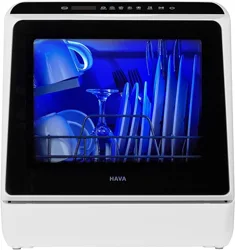
Compact Countertop Dishwasher
User Manual
Model: TDQR01
Website: www.havalab.com
Email: support@havalab.com
MADE IN CHINA

CONTENTS
IMPORTANT SAFETY INSTRUCTIONS
IMPORTANT SAFEGUARDS
GROUNDING INSTRUCTIONS
ELECTRICAL REQUIREMENTS
ELECTRICAL CONNECTION
GETTING TO KNOW YOUR DISHWASHER
INSTALLATION
TECHNICAL SPECIFICATIONS
OPERATING INSTRUCTIONS
CLEANING & MAINTENANCE
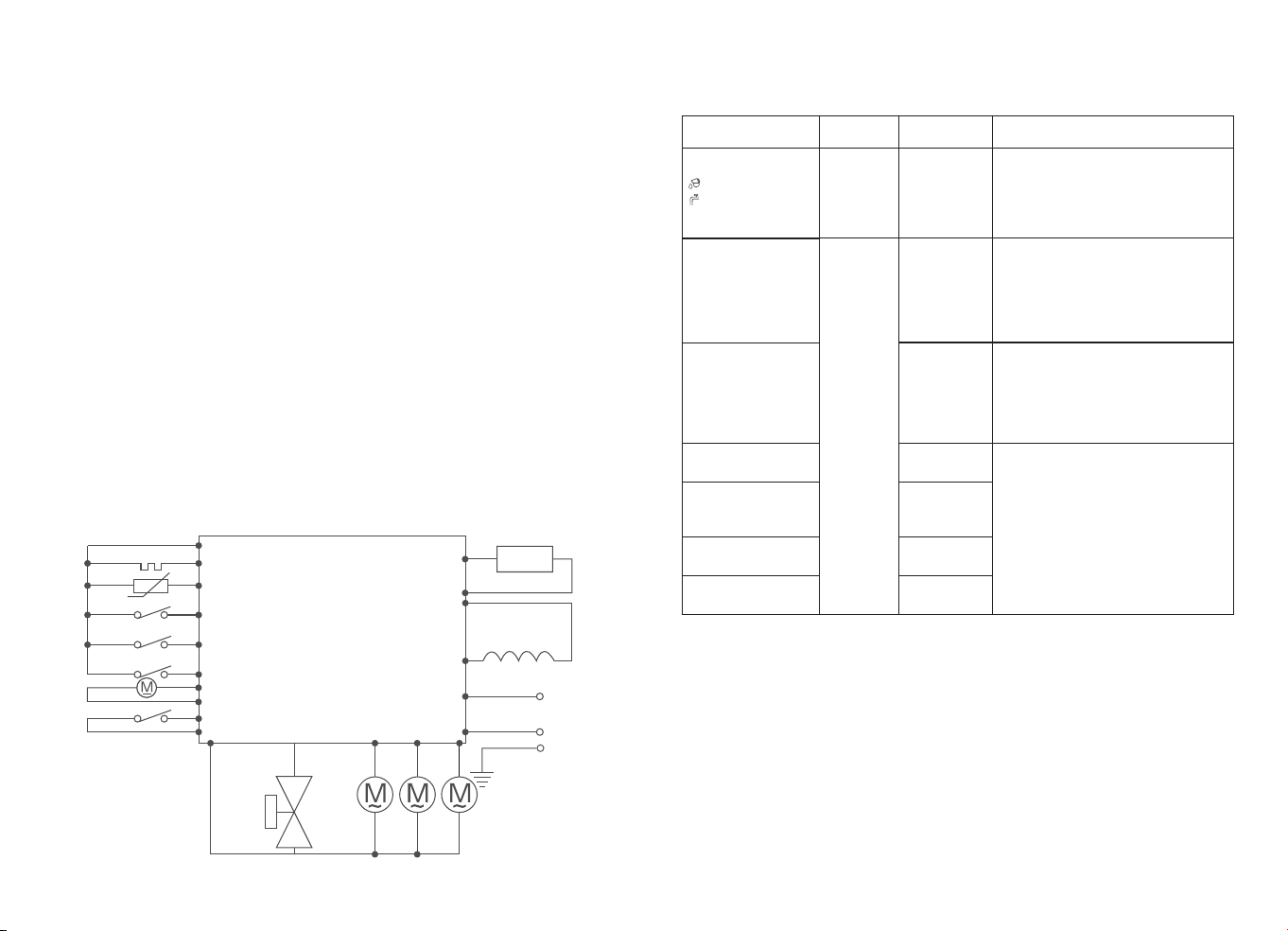
ELECTRICAL DIAGRAM
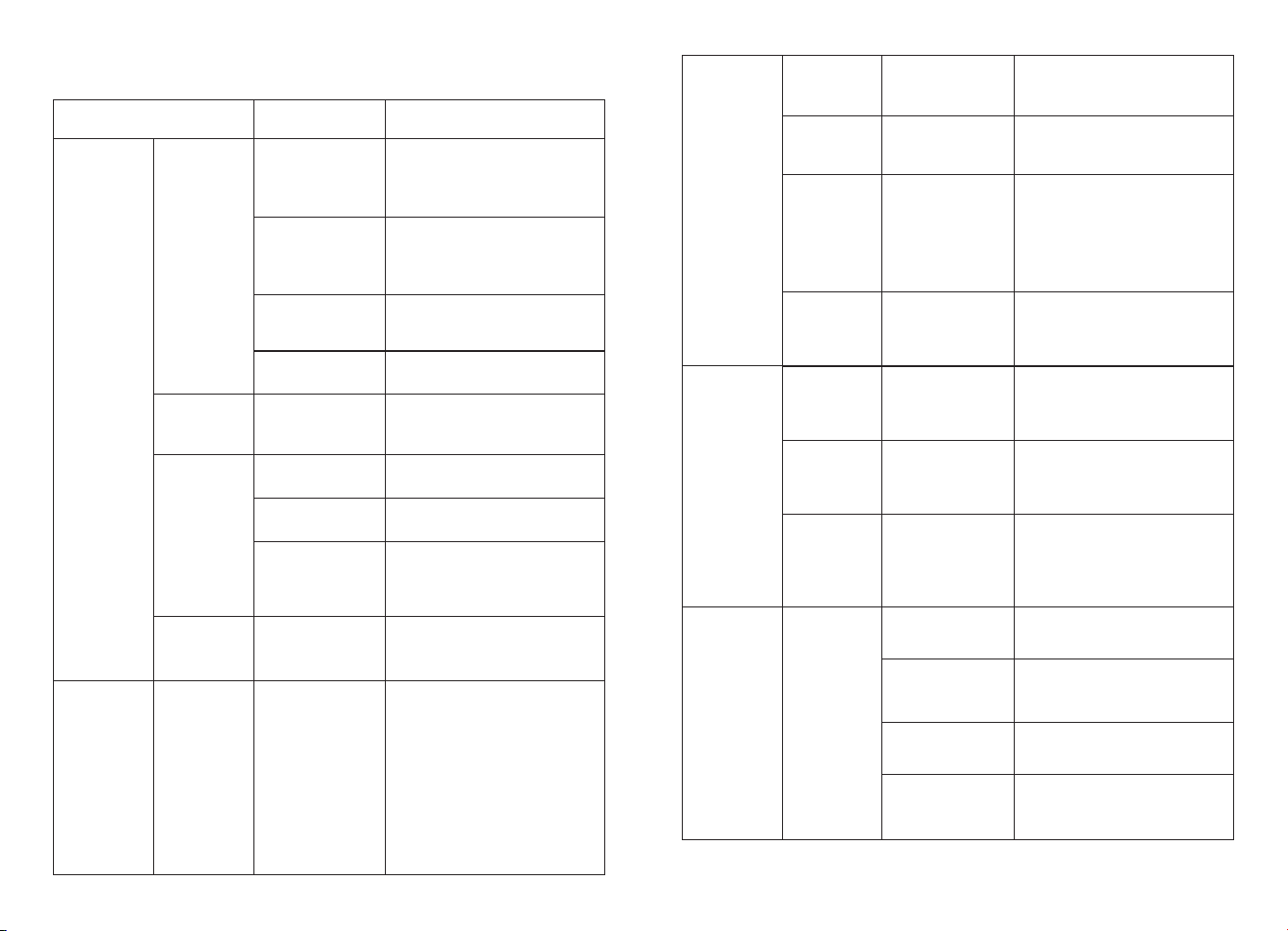
ERROR CODES
TROUBLESHOOTING
ENVIRONMENTAL PROTECTION
WARRANTY
CONTACT US
1
2
3
3
3
3
7
10
10
18
23
24
25
28
28
28

Before using this compact dishwasher, please read this user manual carefully.
This manual is for the HAVA Compact Countertop Dishwasher (Model: TDQR01).
WARNING: To reduce risk of injury, the user should read and understand this user manual
before using this dishwasher.
Save this user manual for future reference.
IMPORTANT SAFEGUARDS
• DO NOT operate this appliance if parts are missing or broken.
• DO NOT operate this appliance unless all parts are installed properly.
• DO NOT place any heavy objects on top of the dishwasher.
• Unplug from outlet when not in use, before removing parts, or before cleaning. Allow time for
the dishwasher to cool before assembling or disassembling any parts, and before cleaning.
• To clean the inside of the dishwasher, use a soft damp cloth with mild soap, and then use a
dry cloth to dry.
• DO NOT operate this appliance with a damaged cord or plug, or if the appliance
malfunctions or is damaged in any manner.
• It is not recommended to use accessory attachments other than those provided by the
manufacturer. The use of attachments may cause injuries.
• DO NOT use an extension cord or an adapter plug with this appliance.
• DO NOT place on or near a gas or electric burner.
• DO NOT allow the cord to hang over the edge of a table or counter, or to touch hot surfaces.
• To disconnect, turn any control to "OFF", then remove the plug from the wall outlet.
IMPORTANT SAFETY INSTRUCTIONS
WARNING! When using your dishwasher, follow basic precautions, including:
a. Read all instructions before using the dishwasher.
b. Only use the dishwasher for its intended purpose.
c. Only use recommended detergents or soaps in the dishwasher and keep them out of
reach of children.
d. When loading items to be washed:
1. Position sharp items such that they are not likely to damage the door seal.
2. Load sharp knives with the handles pointed up to reduce risk of injury.
e. Do not wash plastic items unless they are marked “dishwasher safe” or similar. For plastic
items that are not marked, check the manufacturer’s recommendations.
f. Do not touch the heating element during or immediately after use.
g. Do not tamper with the controls.
h. Do not abuse, sit on, or stand on the door or dish rack of the dishwasher.
i. To reduce risk of injury, do not allow children to play in or on the dishwasher.
j. Under certain conditions, hydrogen gas may be produced in a hot water system that has
not been used for two or more weeks. HYDROGEN GAS IS EXPLOSIVE. If the hot water
system has not been used for a while, before using the dishwasher, turn on all hot water
faucets and let the water run for several minutes. This will release any accumulated
hydrogen gas. As this gas is flammable, do not smoke or use an open flame during this
time.
k. Remove the door to the washing compartment before disposing of it.
l. DO NOT IMMERSE IN WATER.
m. HOUSEHOLD AND INDOOR USE ONLY.
n. DO NOT open the door while the appliance is running to avoid personal injury. Do not open
the door when washing. When you open the door, be sure to avoid any hot water that may
splash out.
SAVE THESE INSTRUCTIONS.
• 01 • • 02 •
GROUNDING INSTRUCTIONS
• This dishwasher must be grounded. In the event of a malfunction or breakdown, grounding
will reduce the risk of electrical shock by providing a path of least resistance for the electric
current. This dishwasher is equipped with a cord with a grounding conductor and a
grounding plug. DO NOT, under any circumstances, cut or remove the grounding plug from
the power cord.
• The plug must be plugged into an outlet that has been installed and grounded in
accordance with all local codes and ordinances.
• Improper connection of the grounding conductor can result in risk of electrical shock.
• Check with a qualified electrician or service representative if you are unsure as to whether
the dishwasher is properly grounded. Do not modify the plug provided with the dishwasher.
If it does not fit the outlet, have a qualified electrician install a proper outlet.
ELECTRICAL REQUIREMENTS
Look at the rating label for the voltage rating (120 V) and connect the dishwasher to the
appropriate power supply. If the supply cord is damaged, it must be replaced by the
manufacturer, service agent, or a similarly qualified person in order to avoid any hazards.
ELECTRICAL CONNECTION
Ensure that the voltage and frequency of the dishwasher corresponds to those on the rating
plate. Only insert the plug into an electrical socket that is grounded properly. If your electrical
sockets are not appropriate for the plug, replace the sockets rather than using an adapter.
GETTING TO KNOW YOUR DISHWASHER
IMPORTANT: To get the best performance from your dishwasher, read all operating
instructions for the dishwasher prior to first use.
• 03 • • 04 •
Dishwasher Features
①
②
③
④
⑫
⑤
⑥
⑦
⑧
⑩
⑨
⑪
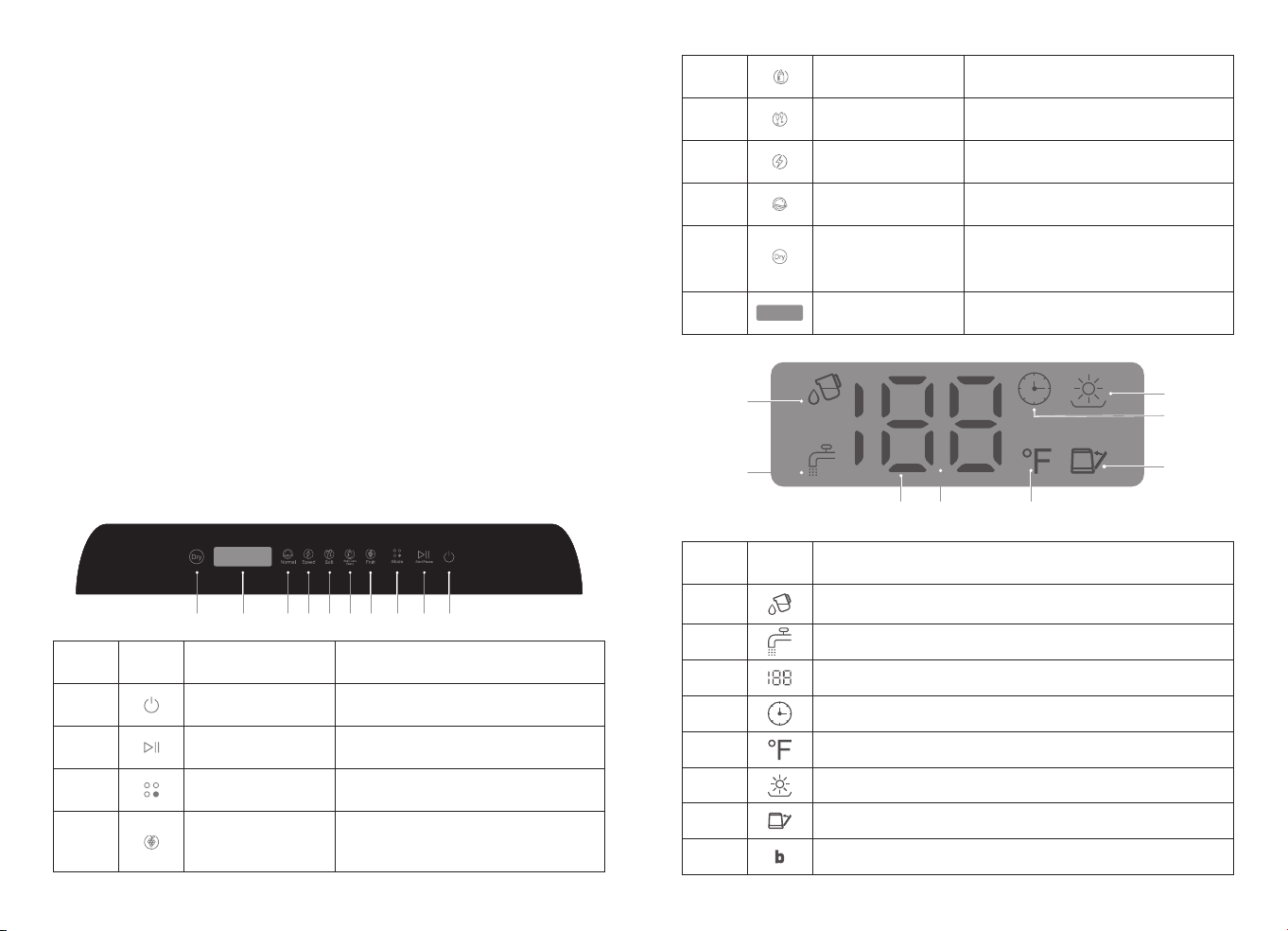
① Water tank
② Upper spray arm
③ Control panel
④ LED lamp
⑤ Lower spray arm
⑥ Filter system
⑦ Glass door
⑧ Detergent dispenser
⑨ Tableware basket
⑩ Storage rack, it can be fold up to save space.
⑪ Cutlery basket
⑫ Air vent
Built-in LED Lamp
The LED lamp allows you to clearly check the working status of the dishwasher. When the
glass door is opened, the lamp will automatically turn on and when the glass door is closed, it
will automatically turn off within 2 minutes. If the door is kept open for more than 5 minutes, it
will automatically turn off. In the last 10 minutes of the drying process, the LED lamp will turn
on, indicating that the drying is almost complete.
Control Panel
No. Icon Button/Indicator Function
①
②
③
④
Power Button
Start/Pause
Mode
Fruit
Press and hold this button for 3 seconds to turn
on the machine.
Press this button to start or pause a wash cycle.
Press this button to choose a wash cycle and
dry mode.
Use this mode to wash hard surface fruits with
room temperature water. There is no need to
add detergent.
• 05 • • 06 •
No. Icon Meaning
①
②
③
④
⑤
⑥
⑦
⑧
Water tank mode
Faucet mode
Display of temperature, time, error code, etc.
Temperature icon in Fahrenheit
Dry indicator
Door opened
Air dry in Dry mode
Time icon
⑤
⑥
⑦
⑧
⑨
⑩
Baby Care/Heavy
Soft
Speed
Normal
Suitable for washing baby bottles, oily and grimy
tableware, or pet products.
Suitable for washing slightly dirty dishes or
fragile items.
A shorter wash for lightly soiled loads.
Displays temperature, time, error code, etc.
For normal soiled loads such as dishes, glasses,
and other tableware.
Dry
Working Status
Adds 60 minutes of hot air drying and 72 hours
of automatic intermittent ventilation to remove
odors and facilitate storage.
①
②
③ ⑤
⑥
④
⑦
⑧
①②③④⑤⑥ ⑦⑧⑩⑨
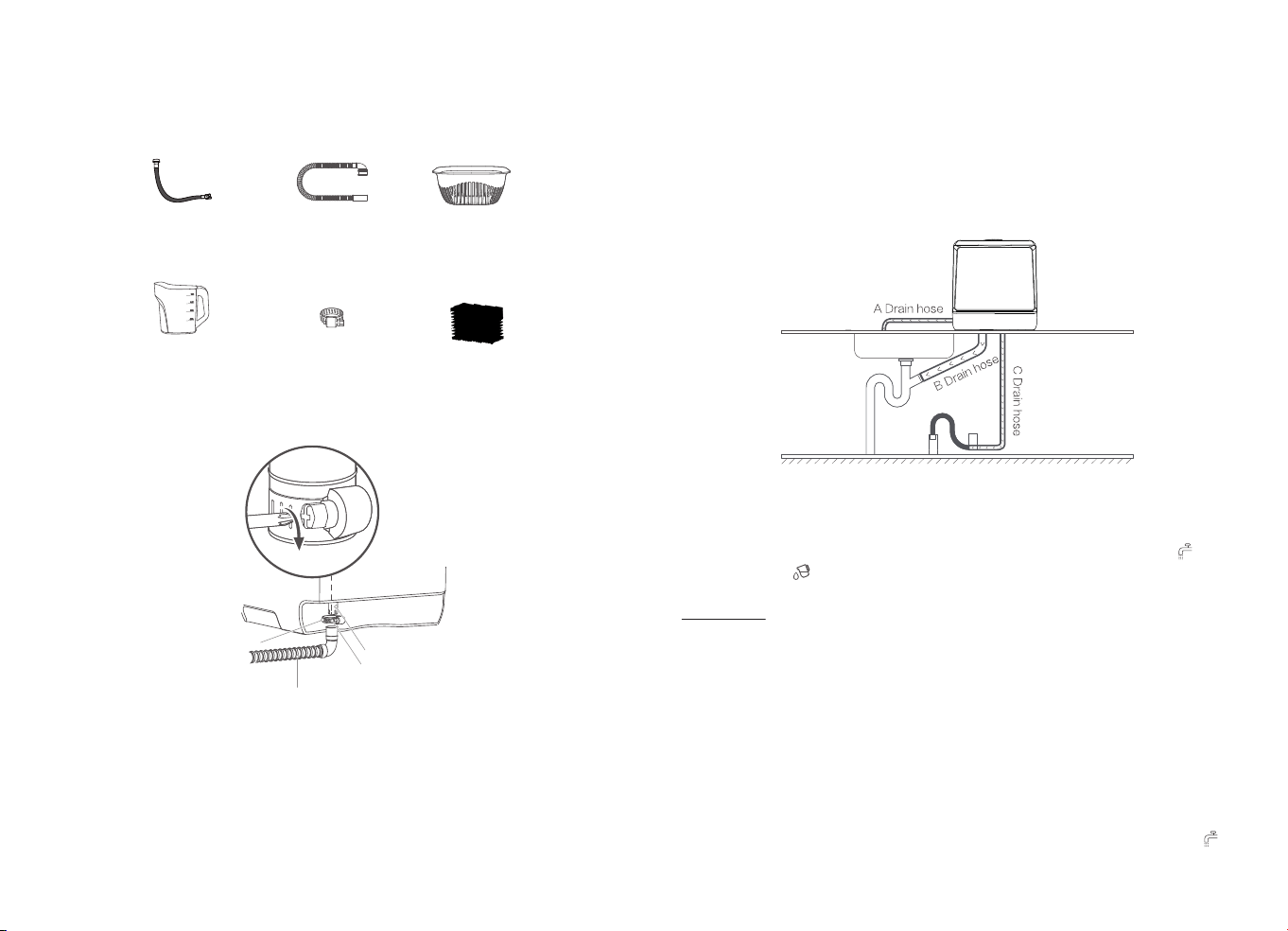
Connecting the Drain Hose to a Sewer
1. There are three options for sewer connection, A (sink), B (sink drainpipe), and C (drainage
pipe). For options B and C, it is required to drill a hole on or under the counter so that the
pipe can go through the counter.
2. The drain hose must be property fitted to its containment source (such as a sink, bucket,
etc.) to avoid water leaks. Ensure that the drain hose is not kinked or impeded in any way.
Adding Water to Dishwasher
NOTE: This machine supports two water supply modes, including faucet mode and
water tank mode .
Faucet Mode
1. Remove the silica gel plug from the water inlet on the back of the machine. Then, attach
one end of the water inlet hose onto water inlet of the machine.
2. Connect the other end of the water inlet hose to your faucet and make sure it is fastened
tightly in place. The included water inlet hose has a 3/4" GHT female connector, so it
matches the faucet with a 3/4" GHT male connector.
NOTE: If the included water inlet hose does not fit your faucet, you may need to buy a
3/4" GHT threaded faucet adapter from a plumbing supply manufacturer. If you are
unsure of what to do, please feel free to contact our after-sales service team.
3. Turn on the dishwasher and press the Mode button to choose a wash cycle. Then, press
the Start/Pause button to start the wash cycle. The panel will display a white indicator ,
meaning the faucet is properly connected and turned on.
• 07 • • 08 •
INSTALLATION
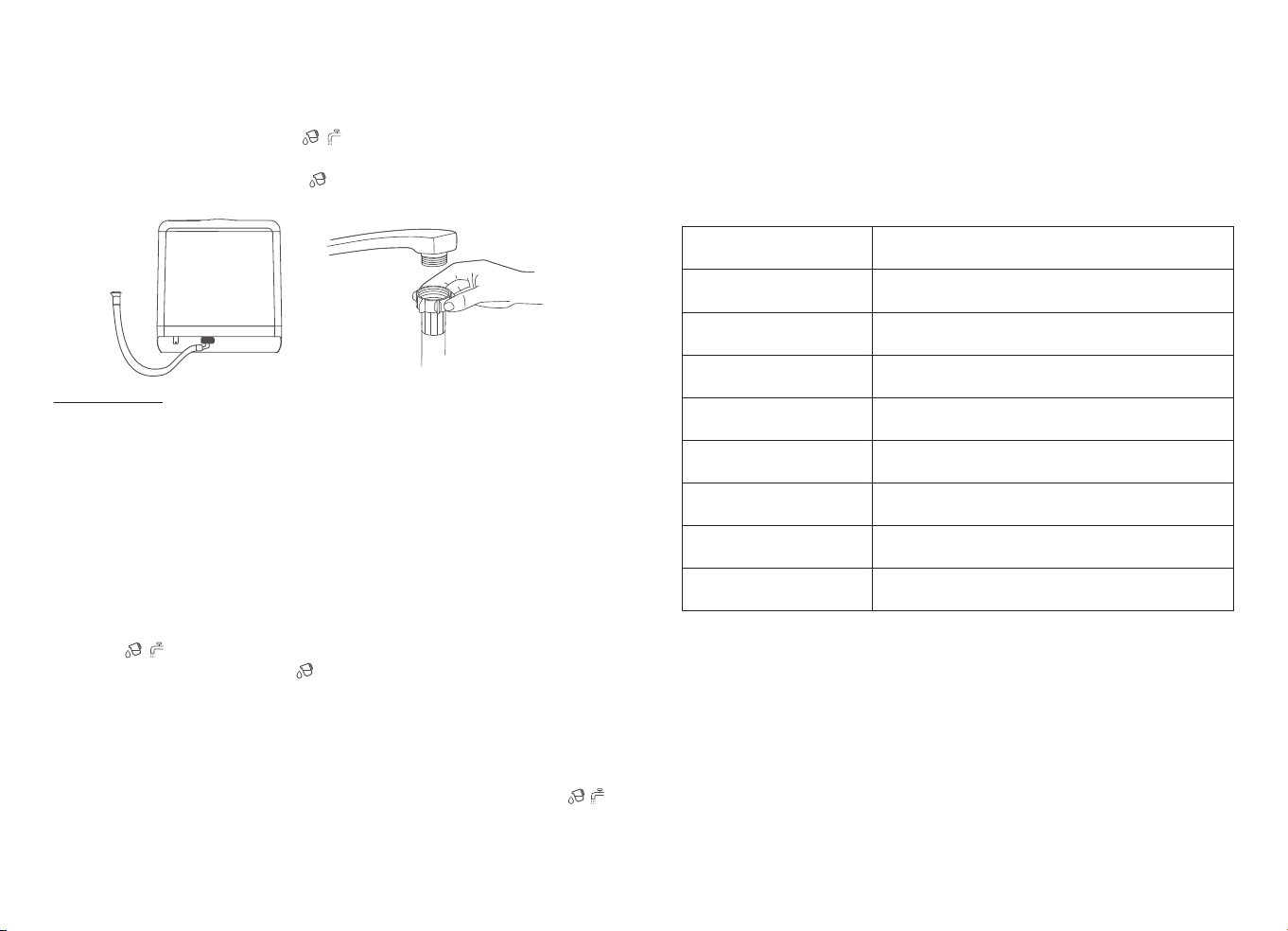
Parts List
Connecting the Drain Hose to the Machine
WARNING: The dishwasher drain hose is an essential part of the machine, so it must be
installed correctly to drain water and perform its job effectively.
1. Connect the drain hose to the water outlet located on the back of the machine.
2. Tighten the hose collar screw with a screwdriver.
Inlet Hose × 1
(61 in/154 cm)
Drain Hose × 1
(61 in/154 cm)
Fruit Basket × 1
Pitcher × 1 Hose Collar × 1 Cutlery Basket × 1
Water Outlet
Hose Collar Screw
Drain Hose
Hose Collar
• 09 • • 10 •
NOTES:
1. While in the faucet mode, DO NOT disconnect the faucet. Otherwise, the wash cycle
cannot be completed.
2. A red flashing water shortage indicator means that this machine is not connected
to a faucet, the faucet is not turned on, and/or the water tank is not full. If the water tank is
full, the panel will display a white indicator .
Water Tank Mode
Reminder: If the machine is being used for the first time or has not been used in a long time,
insufficient water flow may occur when the water tank is filled due to trapped air in the
machine’s water pipe system, which prevents the water from flowing into the machine
interior. In this case, you can slightly shake the machine 5-6 times to exhaust all trapped air.
This will ensure a smooth water flow.
1. Open the water tank lid and fill with about 1.3 gallons (5 L) of water, or approximately 3
pitchers. When the tank is full, beeps will be heard. There is no need to add more water
during the washing process.
NOTE: To prevent loss of the tank lid, attach it to the water tank.
2. If the water tank is not full when you start a wash cycle, a red flashing water shortage
indicator will display on the panel and the buzzer will beep. When the water tank is
full, a white water tank mode indicator will appear.
3. Before starting any wash cycle, if the machine detects that the water tank is full, it will
automatically switch to the water tank mode.
4. To drain the water tank by hand, pause the wash cycle and press and hold both the Dry
button and Power button simultaneously for 3 seconds. If the water tank will not be used
for a long time, it is recommended to empty the water tank.
5. The system will automatically check all water supplies. If the red water shortage indicator
appears, you will need to fill the water tank or turn on the faucet. Once the water tank is filled,
the machine will automatically start the wash cycle you selected with no need to press the
Start/Pause button again. In the faucet mode, it is required to press the Start/Pause button
again to start the wash cycle after you open the faucet.
NOTE: In the case of a water shortage, if you press the Start/Pause button 5 times and
there is still no adequate water supply, the machine will automatically enter standby mode.
Or, if there is no user operation or water supply for 10 minutes, the machine will automatically
enter standby mode.
TECHNICAL SPECIFICATIONS
OPERATING INSTRUCTIONS
Loading the Dishwasher Basket
• Remove large, hard food scraps before loading tableware into the dishwasher.
Model
Voltage/Frequency
Power
Inlet Pressure
Water Tank Capacity
Dry Mode
Noise Level
Product Weight
Product Size
TDQR01
120 V/60 Hz
950 W
0.04-1 MPa
1.3 gallons (5 L)
PTC hot air
50 dB
28.7 lb (13 kg)
16.86 × 16.75 × 18.05 in (428 × 425 × 458 mm)
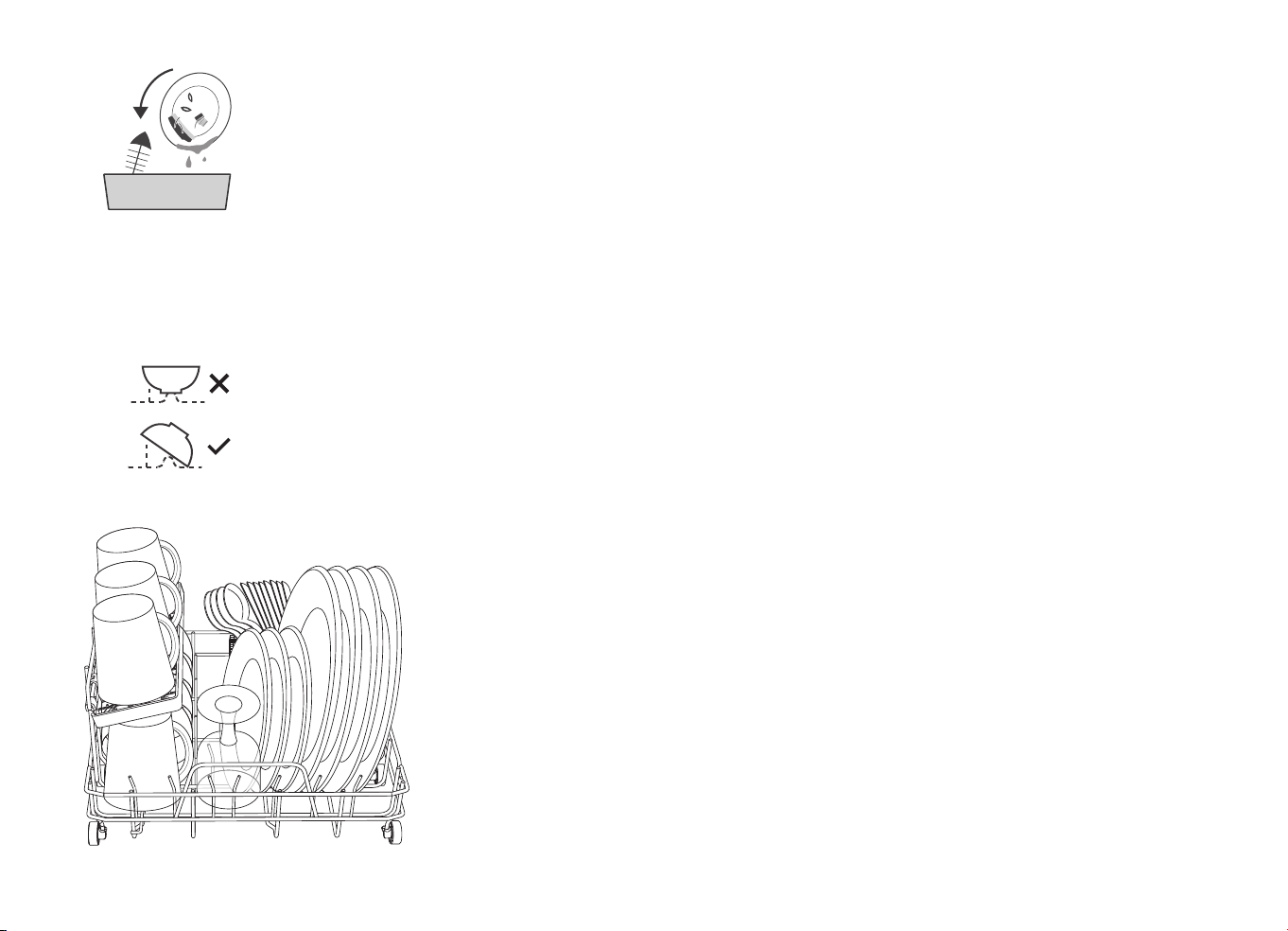
For the best cleaning performance, follow these loading guidelines:
• Scrape off any large food particles.
• Soften and/or soak remnants of burnt food in pans.
• It is not necessary to rinse all dishes under running water.
• Place objects in the dishwasher in the following way:
- Load hollow items such as cups, glasses, pans etc. with the opening facing downwards.
- Curved items or items with recesses should be loaded at a slant so that water can run off.
- All tableware and cutlery should be placed such that the spray arms can rotate freely
during washing.
• Knives and other utensils with sharp points should be loaded in the storage rack or cutlery
basket with their points down or placed in a horizontal position so that they do not damage
the inside of the dishwasher.
• Very small items should not be washed in the dishwasher, as they could fall out.
• Dishes and cutlery should not lie inside, be stacked with, or lie against each other.
• To avoid damage to glasses, ensure they are not touching each other.
• Do not overload the dishwasher. Position the dishes and cookware such that they will not
be moved by the water spray.
Not suitable for:
• Cutlery with wooden or mother-of-pearl handles
• Plastic items that are not heat-resistant
• Non-heat resistant bonded cutlery or china
• Pewter or copper items
• Delicate crystal
• Steel or silver items subject to rusting or discoloration
• Wooden items
• Glazed items that may fade
• Painted tableware
• 11 • • 12 •
• Refer to the illustration when loading the dishwasher. All tableware and cutlery should be
tilted to improve cleaning performance, with the dirty side facing toward the spray arm.
Load tableware such that they are leaning against each other, and load hollow items such as
cups, glasses, etc. with the opening facing downwards. Ladles should face open side down.
Improper placement of tableware and cutlery may block the spray arm, which may affect
the cleaning.
Recommended Layout
Try to leave the dirty facing
toward the spray arm.
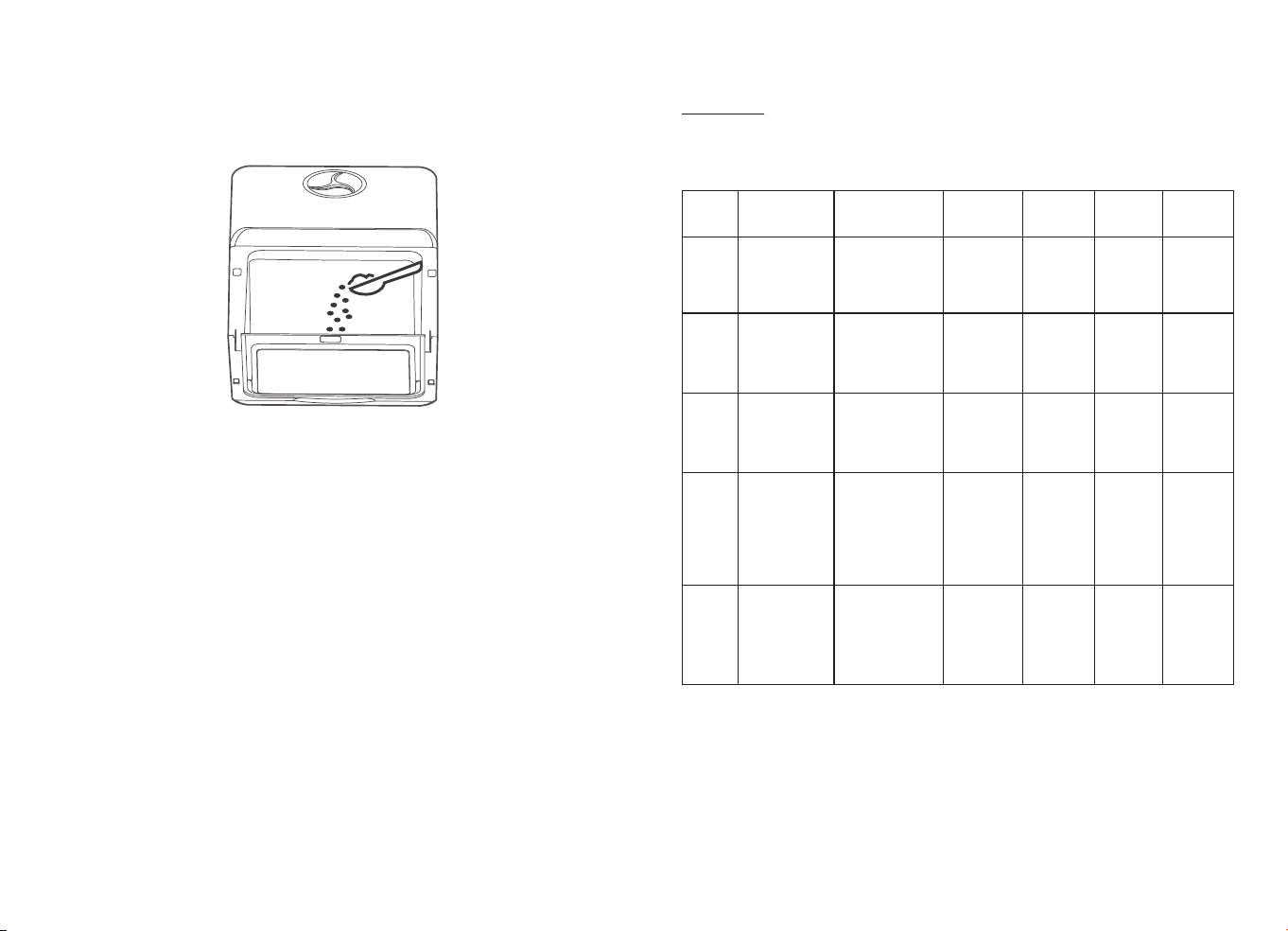
Detergent Use
Pods, liquid, or powder detergent are all acceptable. Add detergent to the detergent
dispenser located on the bottom of the glass door (depicted in the figure below).
WARNING: Only use detergent made specifically for dishwashers. Do not use rinse aids.
Dishwasher detergent is corrosive! Keep away from children.
• DO NOT add detergent when using the Fruit mode.
• The use of normal washing mode in combination with low alkaline concentrated detergents
with natural enzymes reduces pollution and is good for your dishes.
• The detergent must be refilled before the start of each wash cycle.
• Generally, only one tablespoon of detergent is needed for a normal wash load.
• Always add the detergent just before starting the dishwasher. Otherwise it could become
damp and will not dissolve properly.
Speed Shorter wash
for lightly soiled
loads
Hot water washing
Cold water rinsing
Hot water rinsing
122 °F/50 °C
(Washing)
144 °F/62 °C
(Rinsing)
0.28 oz (8 g) 29 minutes 60 minutes
Soft
Suitable for
washing slightly
dirty dishes
Hot water washing
Cold water rinsing
Hot water rinsing
131 °F/55 °C
(Washing)
154 °F/68 °C
(Rinsing)
0.28 oz (8 g) 59 minutes 60 minutes
Baby Care
/Heavy
Suitable for
washing baby
bottles, oily and
grimy
tableware, or
pet products
Hot water washing
Hot water rinsing
Cold water rinsing
Hot water rinsing
131 °F/55 °C
(Washing)
131 °F/55 °C
(Rinsing)
167 °F/75 °C
(Rinsing)
0.42 oz
(12 g)
89 minutes 60 minutes
Fruit
Suitable for
washing hard
surface fruit
with room
temperature
water
Cold water rinsing
Cold water rinsing
Constant
temperature,
no heating
Not required 19 minutes
/
Mode
Normal
Cycle
Information
Description
of Cycle
Temperature Detergent Time Air Drying
Time
To clean normal
soiled loads
Hot water washing
Cold water rinsing
Cold water rinsing
Hot water rinsing
131 °F/55 °C
(Washing)
154 °F/68 °C
(Rinsing)
0.28 oz (8 g) 69 minutes 60 minutes
Mode Selection
Wash Cycle
The table below shows which modes are used for each cleaning job and how much
detergent is needed.
NOTES:
• For washing tableware in the water tank mode, add water with a temperature below 104 °F
(40 °C). For washing fruits and vegetables, add room temperature water. The default
cleaning time is 19 minutes in Fruit mode. You can stop the wash cycle in this mode to
prevent the fruits from becoming over-washed or damaged.
• The Dry mode can be used with any washing mode other than Fruit mode.
• 13 • • 14 •
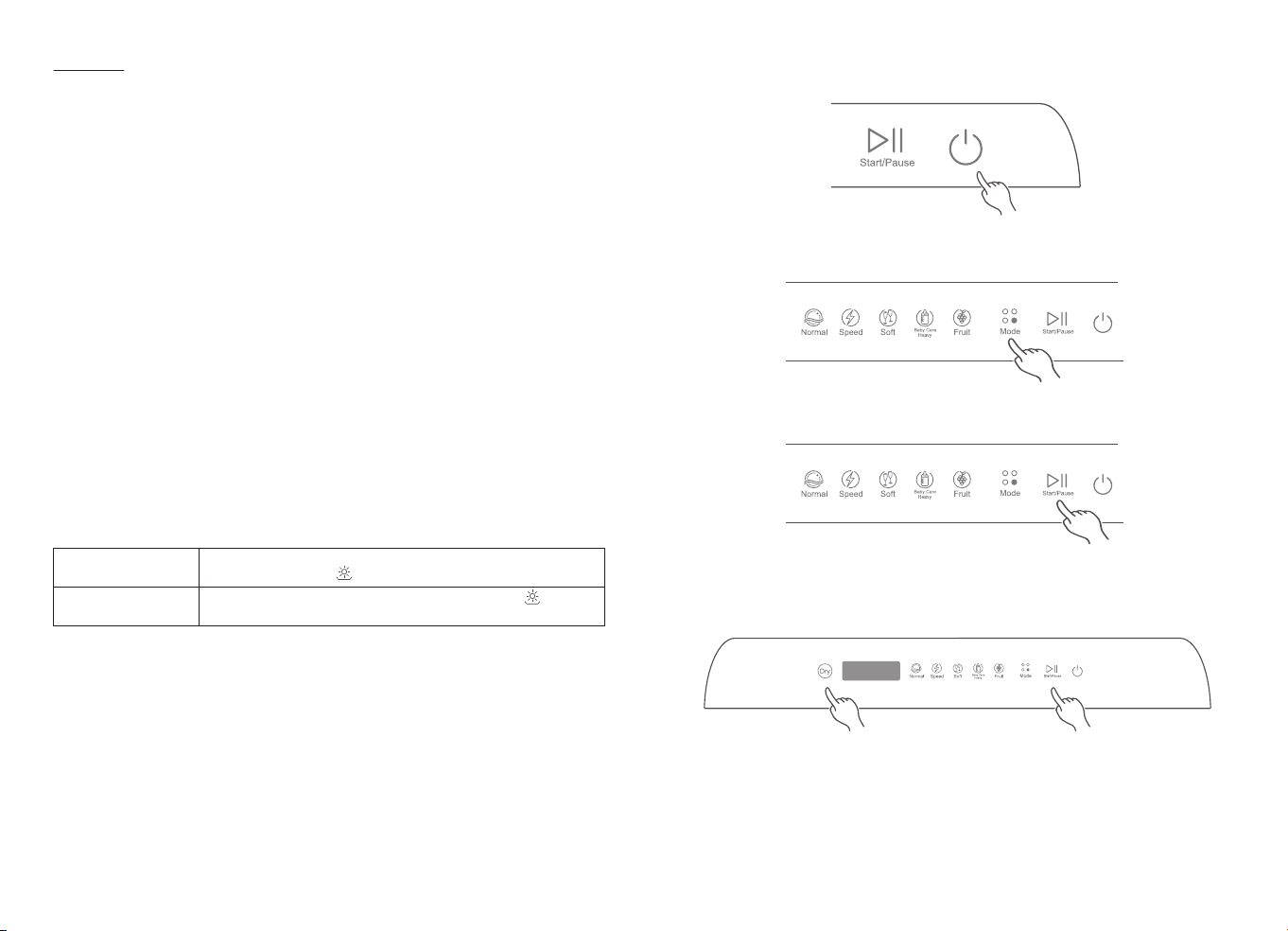
Dry Mode
What is Dry Mode?
The Dry mode can be used to keep your dishes clean and dry for long periods. Hot air drying
and automatic ventilation can also prevent bacteria and odors, allowing you to keep your
tableware sanitary while storing them.
How Does it Work?
When this mode is selected, it will provide an extra 60 minutes of hot air drying to the dishes.
In the next 3 days, a 15-minute automatic ventilation will start every 75 minutes.
Working Modes
The Dry mode can be used with any washing mode other than Fruit mode and can also be
turned on separately.
① To combine with a wash cycle: After choosing the wash cycle of Normal, Speed, Soft, Baby
Care/Heavy, add an extra air-drying time by pressing the Dry button. To cancel, simply
press the Dry button again if the drying process does not start.
② To use separately: Simply press the Mode button and then press the Dry button to select
the Dry mode. Then, press the Start/Pause button to start.
NOTE: The Dry mode cannot be paused or canceled during operation of air-drying and
intermittent circulation. If you want to cancel the Dry mode, press and hold the Power button
for 3 seconds to turn off the dishwasher.
How the Working Status Panel Displays the Air-Dry Function
Starting a Wash Cycle
1. Load the dishwasher. See “Loading the Dishwasher Basket” for instructions.
2. Add detergent. See “Detergent Use” for instructions.
3. Connect the water inlet hose to the faucet. Ensure that the faucet is turned on to full
pressure. Alternatively, add water to the water tank manually. See “Adding Water to
Dishwasher” for instructions.
4. Insert the plug into the socket. The power supply is 120 V/60 Hz. The Power button should
light up and pulse.
Air Dry in any wash cycle
(except Fruit mode)
Power button, Start/Pause button, and Mode button will stay illuminated
with remaining time and on the working status panel.
Air Dry in Dry mode
Dry button and Power button will stay illuminated with “b” and on the
working status panel.
5. Press and hold the Power button for 3 seconds to turn on the appliance. The Power
button, Start/Pause button, and Mode button will light up.
6. Press the Mode button repeatedly to select the desired wash cycle. The options are: Dry,
Normal, Speed, Soft, Baby Care/Heavy, and Fruit. Refer to the wash cycle table for details.
7. When a wash cycle is selected, the corresponding indicator will illuminate.
8. Press the Start/Pause button to start the wash cycle.
9. If needed, press the Dry button either before or after a wash cycle is started, or when the
wash cycle is finished to add an extra 60 minutes of air-drying and 72 hours of intermittent
ventilation for storage.
10. To pause the dishwasher, press the Start/Pause button. The button will flash until it is
pressed again to resume the wash cycle.
NOTE: The Dry mode cannot be paused or canceled during operation of air-drying and
intermittent circulation. If you want to cancel the drying, press and hold the Power button for
3 seconds to turn off the dishwasher.
• 15 • • 16 •
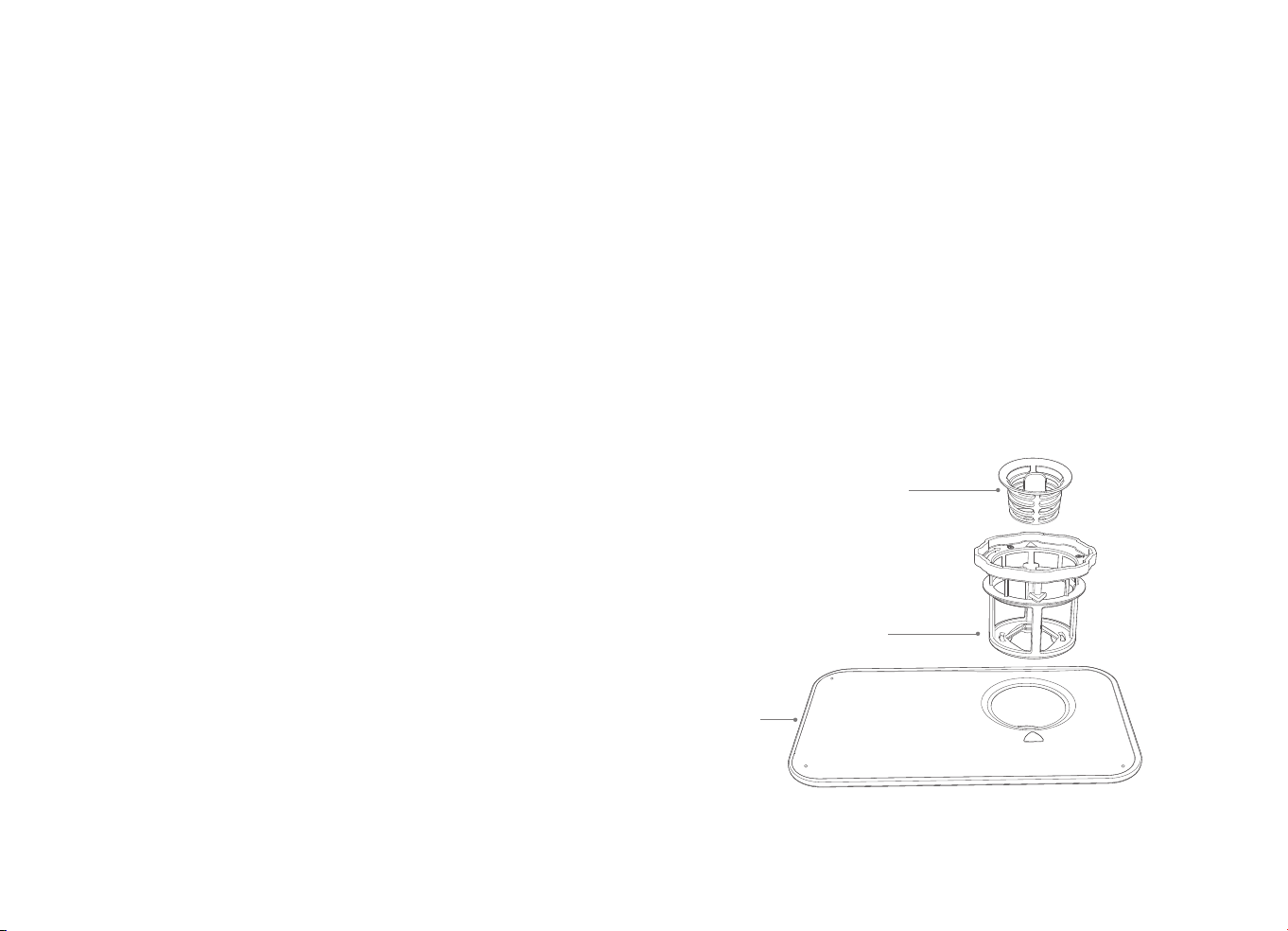
Changing the Wash Cycle
The wash cycle cannot be changed during washing. If you want to change the wash cycle,
please follow these steps to re-select a wash cycle:
1. Press the Start/Pause button to pause the wash cycle.
2. Press and hold the Power button for 3 seconds to turn off the machine.
3. Press and hold the Power button for 3 seconds to turn on the machine and start a wash
cycle. See “Starting a Wash Cycle” for instructions.
NOTE: As the wash cycle has run for a short time, the detergent may have already been
released and the appliance may have already drained the wash water. It is then required to
refill the water tank if it is in the tank mode, and the detergent dispenser must be refilled. See
“Detergent Use” for instructions.
Forget to Add a Dish?
You can only add a dish if the dishwasher has been running for a short time prior to detergent
being released and water being drained.
NOTE: It is dangerous to open the door when the wash cycle has commenced as the hot
water may scald you. If you do need to open the door completely, press the Start/Pause
button and then slowly open the door.
1. Press the Start/Pause button to stop the wash cycle.
2. After the spray arms stop moving, you can open the door. The LED lamp will then turn on.
3. Add forgotten dishes.
4. Close the door.
5. Press the Start/Pause button. The dishwasher will then resume operation.
At the End of a Wash Cycle
When the cleaning cycle is completed, the machine will drain out the water for 1 minute, and
6 beeps will be heard. It will then begin the drying cycle. When the entire wash cycle is
completed, the machine will automatically enter the standby mode. Note: If the Dry mode is
turned on, the machine will begin the Dry mode after the wash cycle is completed. After the
air drying is finished, the machine will automatically enter the standby mode.
1. Turn off the water supply, if connected. If the water tank will not be used for a long time, it is
recommended to drain the water tank by pressing and holding both the Dry button and
Power button simultaneously for 3 seconds.
2. Unplug the appliance from the power source.
• 17 • • 18 •
NOTE: When the wash cycle is completed, there may be a few droplets on the dishwasher’s
interior or on the tableware. This is normal.
CLEANING & MAINTENANCE
Filter System
NOTES:
• Never run the dishwasher without the filters in place. Improper placement of the filters may
reduce the performance level of the dishwasher and damage dishes and utensils.
• Make sure the filters are properly assembled.
• The entire filter system should be cleaned once a week. Remove food remnants and clean
the filters under running water.
• When cleaning the filters, do not knock them against surfaces. This can contort the filters
and affect the performance of your dishwasher.
The filters prevent larger remnants of food or other objects from getting inside the pump.
For best performance and results, regularly clean the filter system.
The filter system consists of a coarse filter, a flat filter (main filter), and a micro filter (fine filter).
① Coarse filter: This filter traps larger items, such as pieces of bone or glass that could block
the drain.
①
③
②
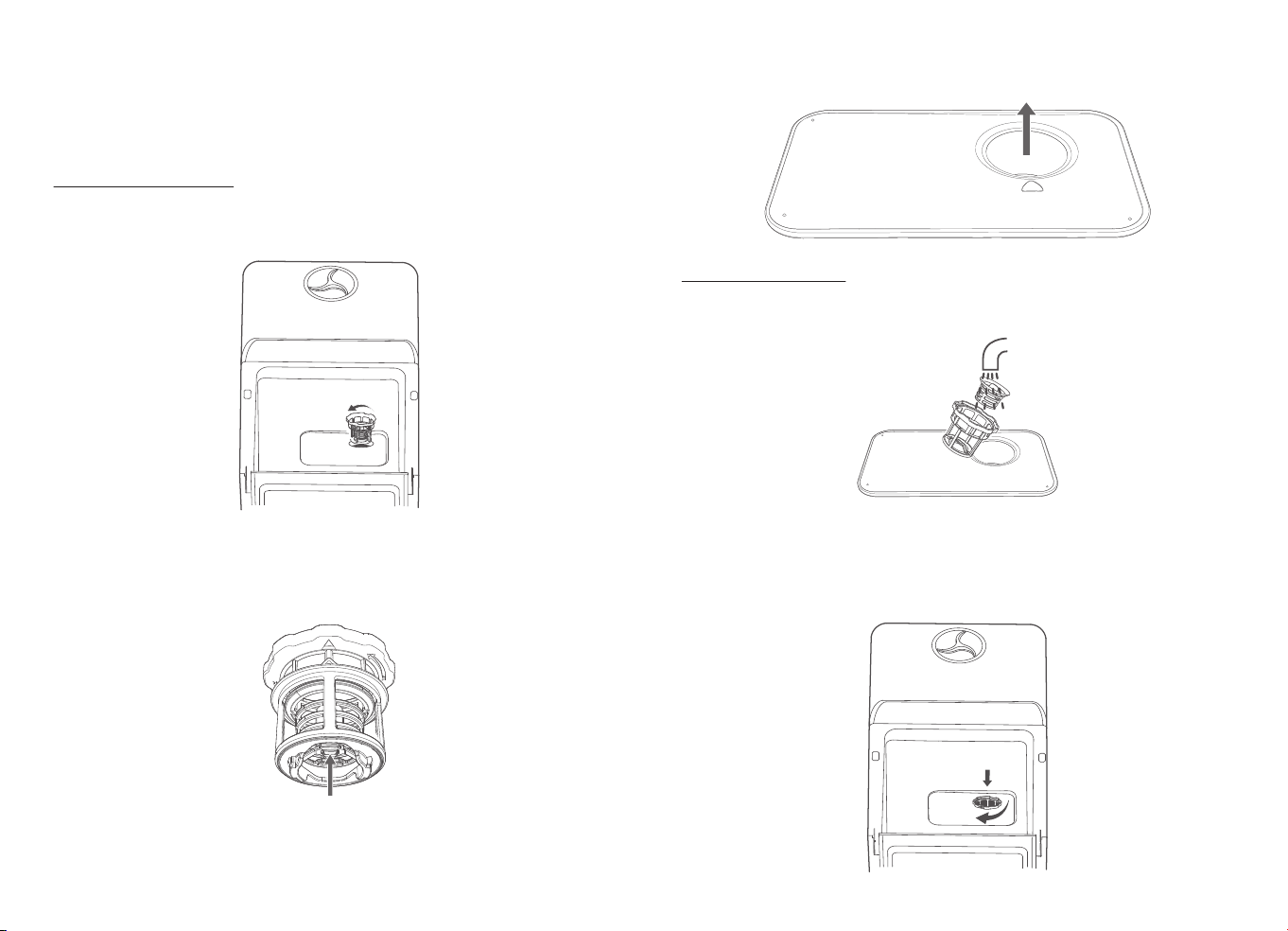
② Fine filter: This filter catches soil and food residue in the cylindrical base and prevents the
soil from being redeposited on the dishes during wash cycle.
③ Main filter: Food and soil particles trapped by this filter are broken down by a special jet on
the spray arm and flushed down the drain.
To Remove the Filter System
1. Turn the fine filter counterclockwise to remove it from the machine.
2. Push the tabs at the bottom center of the fine filter to separate the coarse filter from the
fine filter.
3. Remove the main filter by pulling upwards.
To Clean the Filter System
1. Rinse the filter system under running water. Use a soft cleaning brush to clean the coarse
filter and the fine filter.
2. To reinstall the filter system, position the main filter on its seat and push downwards, align
the tabs on the bottom of the coarse filter with the corresponding hole of the fine filter,
and then insert the coarse filter into the fine filter. Then, place the fine filter into its seat
and rotate clockwise to tighten.
• 19 • • 20 •
Dishwasher Care and Maintenance
Daily Maintenance
• The control panel and exterior should be cleaned by using a lightly damp cloth. After
cleaning, make sure to dry thoroughly. Never use sharp objects, scouring pads, or harsh
cleaners on any part of the dishwasher. To remove spots or stains from the surface of the
interior, use a cloth dampened with water and a little vinegar.
• There may be some oil stains left on the edge of the dishwasher’s interior wall or door after
heavily soiled loads have been washed. To clean the edge around the door, only use a soft,
warm, damp cloth. Avoid getting water inside the door lock and electrical components.
• Regularly clean the door seals with a damp sponge to prevent odors from trapped food
particles in the door seal.
WARNING: Never use a spray cleaner to clean the door panel, as it may damage the door
lock and electrical components. Abrasive agents or paper towels should not be used due to
risk of scratching or leaving spots on the stainless-steel surface.
Protecting the Dishwasher from Freezing
Please take frost protection measures during the wintertime. After every wash cycle, take
the following steps:
1. Turn off the dishwasher. Cut off electrical power from the dishwasher.
2. Turn off the water supply and disconnect the water inlet hose from the back of the unit.
3. Drain the water from the inlet hose and inlet port (Use a pan or bucket to catch the water).
4. Reconnect the water inlet hose to the inlet port.
5. Remove the filter system and use a sponge to absorb the water that is in the filter (sump)
area.
If your dishwasher no longer works due to freezing or ice, please contact our after-sales service team.
General Tips
In order to keep your dishwasher in good working order, the following suggestions should be
observed:
• Before cleaning or performing maintenance, always remove the plug.
• After every wash - Turn off the water supply to the appliance and leave the door slightly
ajar so that moisture and odors are not trapped inside.
Spray Arms
The upper and lower spray arms can be easily removed for periodic cleaning of the nozzles,
preventing potential clogging. Wash them under running water and carefully replace them in
their seats, checking that rotary movement is in no way impeded.
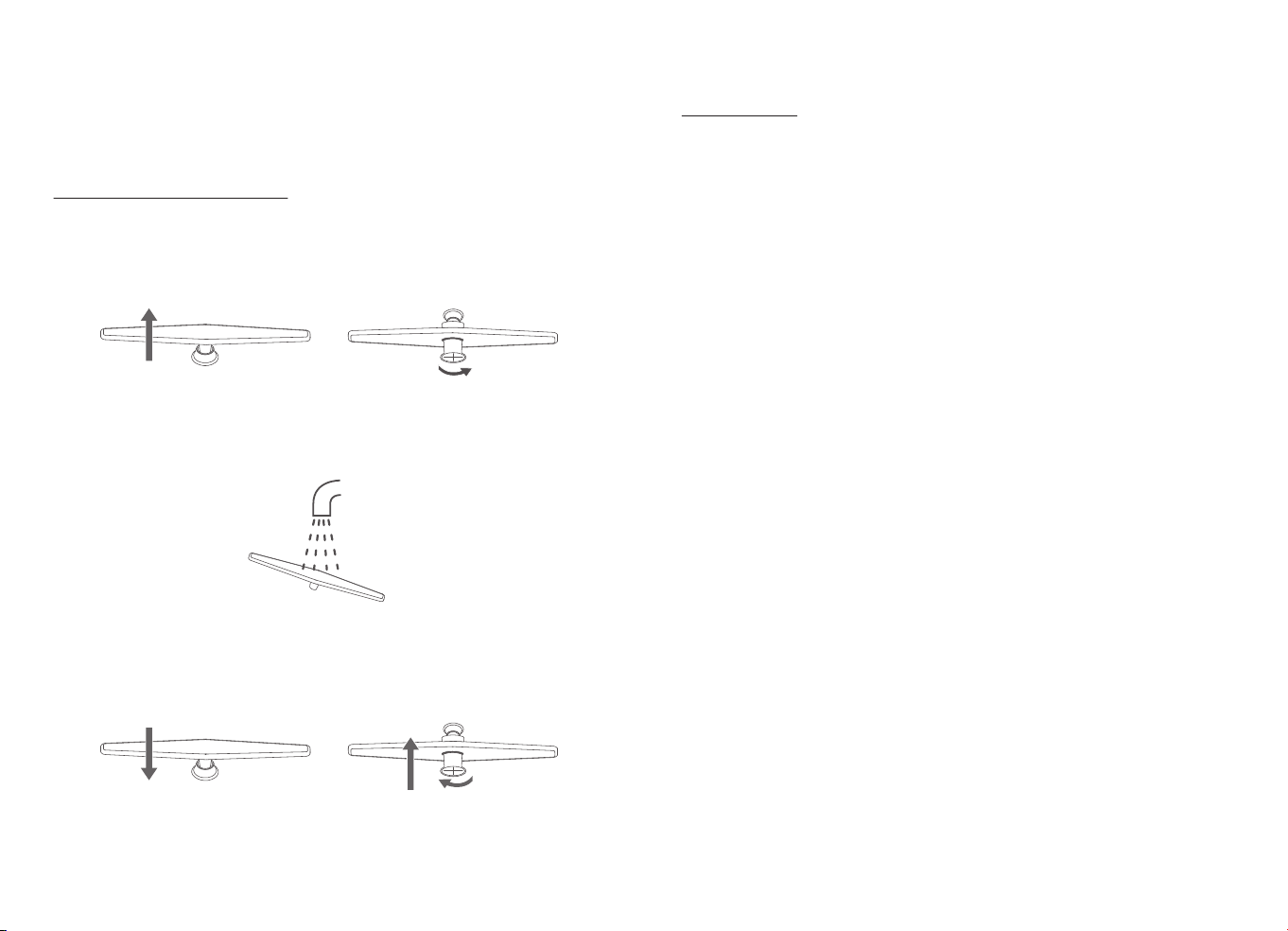
To Remove and Clean the Spray Arms
1. Open the door and take out the basket.
2. Remove the lower spray arm by grasping the middle arm and pulling upwards. Unscrew the
upper spray arm by rotating counterclockwise.
3. Wash the arms under running water and brush each spray arm. Use tools with a sharp
point, such as a needle, to clean nozzles if needed.
4. Replace the lower spray arm to its seat by pushing downward until it clicks into place.
Replace the upper spray arm by screwing clockwise into its seat. Ensure that the spray arm
movement is not impeded before running another cycle.
Lower Upper
Lower Upper
• 21 • • 22 •
• 23 • • 24 •
ERROR CODES
“E4”
“E5”
“E6”
“E7”
Codes
Buzzer
Sound
Error Type Solutions
10 beeps
(once every
second)
5 beeps
every 2
seconds
A fault in the
water inflow
1. Make sure the faucet is connected and
turned on, or the water tank is full.
2. Restart the appliance. If the icon still
flashes red, please contact NOVETE
support team.
“E2”
“E3”
(Water shortage icon
keeps flashing red)
Draining
error
1. Check the drain hose and make sure the
hose is not kinked or obstructed.
2. Turn off the appliance and check if
anything is blocking the filter system or
drain hose.
3. Make sure all hoses are not blocked.
Overflow
Thermistor
error
Internal
communication
error
Heating system
failure
Pressure switch
failure
Tilt the machine backwards to a 30-45
degree and hold it in this position for at least
2 minutes, allowing water to flow out from
the machine. Restart the appliance. If the
error code still persists, please contact
NOVETE support team.
Restart the appliance. If the error code
still persists, please contact NOVETE
support team.
• If the dishwasher will not be used for an extended period of time - It is recommended
that you run a wash cycle with the dishwasher empty, then power off the dishwasher,
remove the plug from the socket, turn off the water supply, force drain the water tank, and
leave the appliance door slightly open. This will help the door seals to last longer and
prevent odors.
• Moving the appliance - If the appliance must be moved, try to keep it in a vertical position.
Do not transport the unit on its side or upside down.
• Water connection - Our water hose has a 3/4" GHT female connector, so it matches with
faucets with a 3/4" GHT male connector. Connect the female connector to your faucet and
make sure it is fastened tightly in place. Please Note: If the supplied water inlet hose does
not fit your faucet, you may need to buy a 3/4" GHT threaded faucet adapter from a
plumbing supply manufacturer. If you are unsure of what to do, please feel free to contact
our after-sales service team.
• Water drainage - The drain hose must be properly fitted to avoid water leaks. Ensure that
the water drain hose is not kinked or in any way impeded. If the sink is higher than the
surface where you have placed your dishwasher, it will be necessary to drain excess water
into a bucket that is in a lower position than the dishwasher. If you need a drain hose
extension, be sure to use a similar drain hose, and that it is no longer than 12 feet long.
Otherwise, the cleaning effect of the dishwasher could be reduced.
ELECTRICAL DIAGRAM
Pressure Pump
Inlet Valve
Heating
Drain Pump
Washing Pump
Flowmeter
Thermistor
Pressure Switch
Liquid Level Switch
Overflow Switch
Draught Fan
Door Switch
~120 V N
120 V
PTC
~120 V L
120 V N
120 V L
DC 5 V
DC 12 V
DC 12 V
N
120 V
TROUBLESHOOTING
Problems
TECHNICAL
PROBLEMS
Possible Causes Solutions
Dishwasher
doesn't start.
Insufficient
water flow.
Water is not
pumped from
the dishwasher.
Can't
select a
wash cycle.
Fuse is blown, or
the circuit breaker
is tripped.
Replace the fuse or reset the circuit
breaker. Remove any other appliances
sharing the same circuit with the
dishwasher.
Make sure the power cord is properly
plugged into the wall socket.
Make sure the dishwasher is turned on
and the door is closed securely.
Power supply is not
turned on.
Open the faucet or add water to the
tank until the water shortage indicator
turns off.
Water shortage.
Make sure the door is fully closed.
Slightly shake the machine 5-6 times
to exhaust all trapped air.
Dishwasher door is
not properly closed.
There is trapped air in
the machine’s water
pipe system.
Check the drain hose.
Kinks in the
drain hose.
Check the coarse filter.
Filter system
is clogged.
Check your kitchen sink to make sure
it is draining.
If the kitchen sink is not draining,
contact a plumber.
Re-select a program by stopping the
in-progress program or wait for the
in-progress program to finish.
Kitchen sink
is clogged.
The dishwasher
is in operation.
GENERAL
PROBLEMS
Suds in the tub.
• Only use special detergents for
dishwashers.
• Open the dishwasher and remove
foam by hand.
• Pour 1.3 gallons of water into
machine, or open the connected
faucet, select any program, and let it
run for 1-2 minutes. The foam will
then be drained. Repeat process if
needed.
Note: If the water tank is not full, the
machine cannot be activated.
Wrong detergent.
NOISE
UNSATISFACTORY
WASHING
RESULT
Discoloration of
plastic
tableware.
Washing
temperature is
too high.
Select a wash cycle with lower
temperatures.
White film on
the inside
surface.
Hard water
minerals.
This problem is difficult to avoid in
areas with hard water. To clean the
interior, use a damp sponge with
dishwasher detergent, wearing rubber
gloves. Never use any cleaner other
than dishwasher detergent, as there is
a risk of foaming or suds.
There are rust
stains on
cutlery.
The affected
items are
not corrosion
resistant.
The spray arm is
knocking against an
item in the basket.
Avoid washing items that are not
corrosion resistant in the dishwasher
Knocking noise
inside the tub
while running.
Pause the program and rearrange
items obstructing the spray arms.
Items are not
securely placed in
the basket.
Rattling noise
inside the tub
while running.
Pause the wash cycle and secure the
items in the basket.
This may be caused
by on-site
installation
or the cross-section
of the piping.
Dishes were not
loaded properly.
See “Loading the Dishwasher Basket”
for instructions.
Knocking noise
in the water
pipes.
Tableware is
not cleaned.
This has no influence on dishwasher
function. If unsure, contact a qualified
plumber.
The wash cycle was
not powerful
enough.
Select a more intense wash cycle.
Refer to the wash cycle table for details.
Items are blocking the
path of spray arms.
Rearrange the items so that the spray
arms can rotate freely.
The filter system is
not clean or is not
correctly installed.
Clean and/or fit the filter system
correctly.
Detergent with
colorant was used.
Stained tub
interior.
Do not use detergents with colorants.
• 25 • • 26 •
ENVIRONMENTAL PROTECTION
Waste electrical products should not be disposed of with household waste. Please recycle
where facilities exist. Check with your Local Authority or retailer for recycling advice.
WARRANTY
HAVA offers a limited 45-day no questions asked refund policy and 12-month warranty, plus
lifetime technical support on our dishwasher.
The warranty does not apply where damage is caused by other factors, including without
limitation: (a) normal wear and tear; (b) abuse, mishandling, accident, or failure to follow
operating instructions; (c) exposure to liquid or infiltration of foreign particles; (d) servicing or
modifications of the product other than by HAVA; (e) commercial or non-household use.
These are our general terms for warranty service, but we always urge our customers to reach
out to us with any issue, regardless of warranty terms.
CONTACT US
Email: [email protected]
Website: www.havalab.com
• 27 •
Not enough
detergent was
dispensed.
Use more detergent or change
detergent type.
UNSATISFACTORY
DRYING
RESULT
Combination of soft
water and not
enough detergent.
Use less detergent if you have soft
water and select Speed cycle to wash
the glassware.
Cloudiness on
glassware.
Protein solidification.
Wash the tableware with egg custard
by hand.
Egg custard
left on the
tableware.
Aluminum utensils
have rubbed against
dishes.
Check that dishes are loaded properly
and not rubbing against each other.
Black or gray
marks
on dishes.
Dishes are blocking
the detergent
dispenser.
Check that dishes are loaded properly.
Improper loading.
Check that dishes are loaded properly.
Inappropriate
wash cycle.
Select an appropriate wash cycle.
Poor drying effect
for plastic/wooden
tableware.
Dry tableware by hand.
Drying cycle has
not finished yet.
Wait for the drying cycle to finish.
Cutlery has
low-quality coating.
Not enough
drying time.
Water drainage is more difficult with
these types of items. These types of
cutlery and dishware are not suitable
for washing in the dishwasher.
Select the Dry mode to add more
air-drying time.
Detergent left
in dispenser.
The dishes are
not drying.
Water drops
left inside of
machine.
