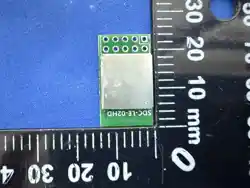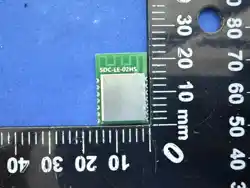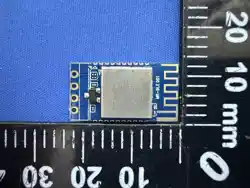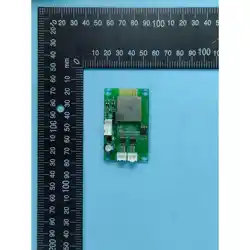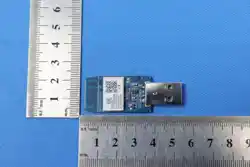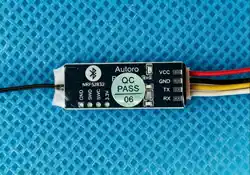

Bluetooth Module BT Nano User Manual
Achieve wireless communication between AESC or other VESC-compatible
controllers and Android / iOS devices via the VESC-Tool app, enabling
controller configuration, real-time control, operation monitoring, and firmware
updates.
•Configuration: Customize controller operating parameters
•Control: Real-time device operation management
•Monitoring: Real-time visualization of essential operating parameters:
voltage,current,temperature,ERPM
•Updates: Wireless firmware upgrades supported
T
y
p
i
c
a
l
A
p
p
l
i
c
a
t
i
o
n
s
•E-mobility motor controller tuning •Robotic motion control configuration
•
D
I
Y
e
l
e
c
t
r
i
c
v
e
h
i
c
l
e
d
e
v
e
l
o
p
m
e
n
t
•
E
-
S
k
a
t
e
b
o
a
r
d
p
a
r
a
m
e
t
e
r
c
o
n
f
i
g
u
r
a
t
i
o
n
W
e
l
c
o
m
e
t
o
s
e
n
d
e
m
a
i
l
i
f
a
n
y
p
r
o
b
l
e
m
.
S
u
p
p
o
r
t
e
m
a
i
l
:
A
u
t
o
r
o
.
s
e
r
v
i
c
e
@
h
o
t
m
a
i
l
.
c
o
m
W
e
b
s
i
t
e
:
h
t
t
p
s
:
/
/
w
w
w
.
a
u
t
o
r
o
t
e
c
h
.
c
o
m
autorotech.com
1.Hardware Preparation
• Controller: AESC or other VESC-compatible unit
• Bluetooth Module: BT Nano
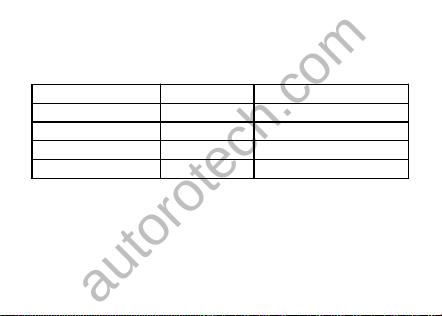
• Wiring Requirements
Controller Interface
BT Nano Pin
Notes
3.3V / 5V
VCC
Voltage MUST match
GND
GND
Ensure common ground
RX
TX
Cross-connect
TX
RX
Cross-connect
2.Software Preparation
D
o
w
n
l
o
a
d
A
p
p
:
h
t
t
p
s
:
/
/
w
w
w
.
v
e
s
c
-
p
r
o
j
e
c
t
.
c
o
m
/
v
e
s
c
_
t
o
o
l
3
.
C
o
n
n
e
c
t
i
o
n
P
r
o
c
e
d
u
r
e
•
P
o
w
e
r
o
n
t
h
e
c
o
n
t
r
o
l
l
e
r
•
E
n
a
b
l
e
B
l
u
e
t
o
o
t
h
o
n
y
o
u
r
m
o
b
i
l
e
d
e
v
i
c
e
•
L
a
u
n
c
h
V
E
S
C
-
T
o
o
l
a
p
p
l
i
c
a
t
i
o
n
• Search and connect to "VESC 52832 UART"
Autoro
autorotech.com

FCC Statement
This device complies with part 15 of the FCC Rules. Operation is subject to the following
two conditions:
(1) This device may not cause harmful interference, and
(2) this device must accept any interference received, including interference that may
cause undesired operation.
This equipment has been tested and found to comply with the limits for a Class B digital
device, pursuant to part 15 of the FCC Rules. These limits are designed to provide
reasonable protection against harmful interference in a residential installation. This
equipment generates, uses and can radiate radio frequency energy and, if not installed
and used in accordance with the instructions, may cause harmful interference to radio
communications. However, there is no guarantee that interference will not occur in a
particular installation. If this equipment does cause harmful interference to radio or
television reception, which can be determined by turning the equipment off and on, the
user is encouraged to try to correct the interference by one or more of the following
measures:
- Reorient or relocate the receiving antenna.
- Increase the separation between the equipment and receiver.
- Connect the equipment into an outlet on a circuit different from that to which the
receiver is connected.
- Consult the dealer or an experienced radio/TV technician for help.
This modular has been tested and found to comply with part 15 requirements for Modular
Approval.
FCC Caution: Any changes or modifications not expressly approved by the party
responsible for compliance could void the user's authority to operate the equipment. This
transmitter must not be co-located or operating in conjunction with any other antenna or
transmitter.
Radiated Exposure Statement
This device complies with FCC radiation exposure limits set forth for an uncontrolled
environment. This equipment should be installed and operated with minimum distance
20cm between the radiator & your body. The antenna used for this transmitter must not
transmit simultaneously with any other antenna or transmitter, except in accordance with
FCC multi-transmitter product procedures. Users and installers must be provided with
antenna installation instructions and transmitter operating conditions for satisfying RF
exposure compliance.
The OEM integrator is still responsible for testing their end-user end-product for any
additional compliance requirements required with this modular installed.
Integration instructions for host product manufacturers according to KDB 996369
D03 OEM Manual v01r01

2.2 List of applicable FCC rules
CFR 47 FCC Part 15 Subpart C has been investigated. It is applicable to the modular
transmitter
2.3 Specific Operational Use Conditions - Antenna Placement Within the Host
Platform
The module is tested for standalone mobile RF exposure use condition.
● The antenna must be installed such that 20cm is maintained between the antenna and
users,
● The transmitter module may not be co-located with any other transmitter or antenna.
In the event that these conditions cannot be met (for example certain laptop configurations
or co-location with another transmitter), then the FCC authorization is no longer
considered valid and the FCC ID cannot be used on the final product. In these
circumstances, the OEM integrator will be responsible for re-evaluating the end product
(including the transmitter) and obtaining a separate FCC authorization.
2.4 Limited Module Procedures
Not applicable
2.5 Trace Antenna Designs
Not applicable
2.6 RF Exposure Considerations
This device complies with FCC radiation exposure limits set forth for an uncontrolled
environment. This equipment should be installed and operated with minimum distance
20cm between the radiator & your body.
2.7 Antenna Type and Gain
The following antennas have been certified for use with this module.
Only antennas of the same type with equal or lower gain may also be used with this
module.
Other types of antennas and/or higher gain antennas may require the additional
authorization for operation.
Antenna Specification list below:
Model
Type
Connector
Frequency Range
Peak Gain (dBi
NB080-13B-IX150
FPC
R-SMA
2400-2500
1.00
2.8 End Product Labelling Compliance Information
When the module is installed in the host device, the FCC ID label must be visible through
a window on the final device or it must be visible when an access panel, door or cover is
easily removed. If not, a second label must be placed on the outside of the final device
that contains the following text: “Contains FCC ID: 2AVEDFRX-M7663BU6”. The FCC ID
can be used only when all FCC compliance requirements are met.

2.9 Information on Test Modes and Additional Testing Requirements
This transmitter is tested in a standalone mobile RF exposure condition and any
co-located or simultaneous transmission with other transmitter(s) class II permissive
change re-evaluation or new FCC authorization.
Host manufacturer installed this modular with single modular approval should perform the
test of radiated emission and spurious emission according to FCC part 15C, Part 15E,
15.209, 15.207 requirement, only if the test result comply with FCC part 15C, Part 15E,
15.209, 15.207 requirement, then the host can be sold legally.
2.10 Additional testing, Part 15 Subpart B Disclaimer
This transmitter modular us tested as a subsystem and its certification does not cover the
FCC Part 15 Subpart B rules requirement applicable to the final host. The final host will
still need to be reassessed for compliance to this portion of rules requirements if
applicable.
As long as all conditions above are met, further transmitter test will not be required.
However, the OEM integrator is still responsible for testing their end-product for any
additional compliance requirements required with this modular installed.
2.11 Note EMI Considerations
The OEM integrator has to be aware not to provide information to the end user regarding
how to install or remove this RF module in the user’s manual of the end product which
integrates this module.
The host integrator must follow the integration instructions provided in this document and
ensure that the composite system end product complies with the requirements by a
technical assessment or evaluation to the rules and to KDB Publication 996369.
The host integrator installing this module into their product must ensure that the final
composite product complies with the requirements by a technical assessment or
evaluation to the rules, including the transmitter operation and should refer to guidance in
KDB Publication 996369.
OEM/Host Manufacturer Responsibilities
OEM/Host manufacturers are ultimately responsible for the compliance of the Host and
Module. The final product must be reassessed against all the essential requirements of
the FCC rule such as FCC Part 15 Subpart B before it can be placed on the US market.
This includes reassessing the transmitter module for compliance with the Radio and RF
Exposure essential requirements of the FCC rules.
2.12 How to Make Changes - Important Note
In the event that these conditions cannot be met (for example certain laptop configurations
or co-location with another transmitter), then the FCC authorization is no longer
considered valid and the FCC ID cannot be used on the final product. In these
circumstances, the OEM integrator will be responsible for re-evaluating the end product
(including the transmitter) and obtaining a separate FCC authorization.