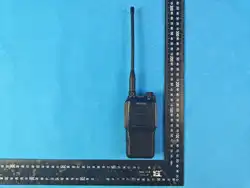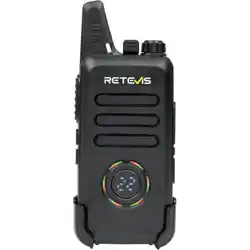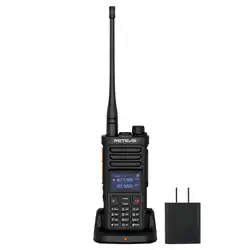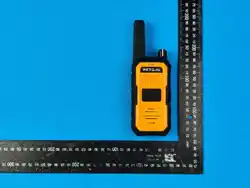


Specifications
Genel
Frequency Range
GMRS
Memory Channels
30
Channel Space
12.5KHz/25kHz
Audio Distortion
S5%
Frequency Stability
±2.5ppm
Max Frequency Shi
s5KHz/s2.5KHz
Spurious Emission
JuW
Modulation Method
eM
Receive Sensitivitv
s0.25us0.3uV
Squelch Sensitivity
0.2uV/0.25uV
Adjacent Channel Selectivity
65dB
Spurious Response Suppress
55dB
Intermodulation
"60dB
Current
2.5mA
Work Voltage
7.4VDC
RF ENERGY EXPOSURE AND PRODUCT SAFETY GUIDE
Bere using this device, please read this guide which contains important operating instructions for sa usage, control inrmation and
operational instructions r compliance with RF Energy Exposure limits in applicable national and international standards.
User' instructions should accompany the device when transrred to other users.
Unauthorized modification and adjustment
Changes or modifications not expressly approved by the party responsible r compliance may void the user's authority granted by the
local government radio management departments to operate this radio and should not be made. comply with the corresponding
requirements, transmitter adjustments should be made only by or under the supervision of a person certified as technically qualified to
perform transmitter maintenance and repairs in the private land mobile and fixed services as certified by an organization representative
of the user of those services. Replacement of any transmitter component (crystal, semiconductor, etc.) not authorized by the local
government radio management departments equipment authorization for this radio could violate the rules.
Radio License
This two-way radio is a GMRS station. A valid individual license is required to operate a GMRS station. To obtain an individual license, an
applicant must be eligible and llow the applicable rules and pcedures established by FCC. The applicant must pay the required
application and regulatory es. Each individual license in the GMRS will normally have a term of ten years from the date of grant or
renewal, and may be renewed pursuant to the procedures of FCC. obtain a GMRS operator license, you need FCC Form 605 & 159,
we suggest visiting the FCC website at https:www.fcc.gov/wireless/support/fcc-rm-605, which includes necessary instructions. More
questions about the license application, please contact the FCC at 1-888-225-5322 or go to the FCC's website: http:www.fcc.gov.
Note: According to FCC rules, any individual who holds an individual GMRS license may allow his or her immediate family members to
operate his or her GMRS station or stations. Immediate mily members are the licensee's spouse, children, grandchildren, stepchildren,
parents, grandparents, stepparents, brothers, sisters, aunts, uncles, nieces, nephews, and in-laws.
FCC
This device complies with part 15 of the FCC Rules. Operation is subject to the condition that this device does not cause harmful
interrence. (Licensed radios are applicable);
This device complies with part 15 of the FCC Rules. Operation is subject to the following two conditions: (Other devices are applicable)
(1) This device may not cause harmful interference.
(2) This device must accept any interference received, including interrence that may cause undesired operation.
Note: This equipment has been tested and und to comply with the limits r a Class B digital device. These limits are designed to
provide reasonable protection against harmful inteerence in a residential installation. This equipment generates, uses and can radiate
radio frequency energy and, if not installed and used in accordance with the instructions, may cause harmful interference to radio
communications. However, there is no guarantee that interference will not occur in a particular installation. If this equipment does
cause harmful interference to radio or television reception, which can be determined by turning the equipment o and on, the user is
encouraged to try to correct the interference by one or more of the llowing measures:
-Reorient or relocate the receiving antenna.
-Increase the separation between the equipment and receiver.
-Connect the equipment into an outlet on a circuit dierent from that to which the receiver is connected.
-Consult the dealer or an experienced radio/TV technician for help.
Disposal
The crossed-out wheeled-bin symbol on your product, literature, or packaging reminds you that all electrical and electronic
products, batteries, or accumulators must be taken to designated collection locations at the end of their working li. Do not
dispose of these products as unsorted municipal waste. Dispose of them according to the laws and rules in your area.
-
RF Saty
This two-way radio uses electromagnetic energy in the radio frequency (RF) spectrum to provide communications between two or
more users over a distance. RF energy, which when used improperly, can cause biological damage. Please rer to the llowing
websites r more inrmation on what RF energy exposure is and how to control your exposure to assure compliance with established
RF exposure limits: http:www.who.int/en/
07