USER MANUAL
AIS SEARCH AND RESCUE TRANSMITTER

Copyright © 2026 ACR Electronics, Inc.
All contents of this manual are the intellectual property of ACR Electronics, Inc.
This includes but is not limited to text, diagrams, illustrations and any other materials
contained herein. No part of this manual may be altered and further produced in any form,
electronic or mechanical, without the prior written permission of ACR Electronics, Inc.
For permission requests or inquiries, please contact [email protected]
ACR Electronics, Inc. reserves the right to change or update the contents of this manual
without prior notice. While every eort has been made to ensure the accuracy of the
information provided, ACR Electronics, Inc. assumes no responsibility for errors or omissions.
Pathnder
TM
is a registered trademark of ACR Electronics, Inc.
PATHFINDER AIS USER MANUAL
10/06/2026 912S-04652 Issue 01.02 3
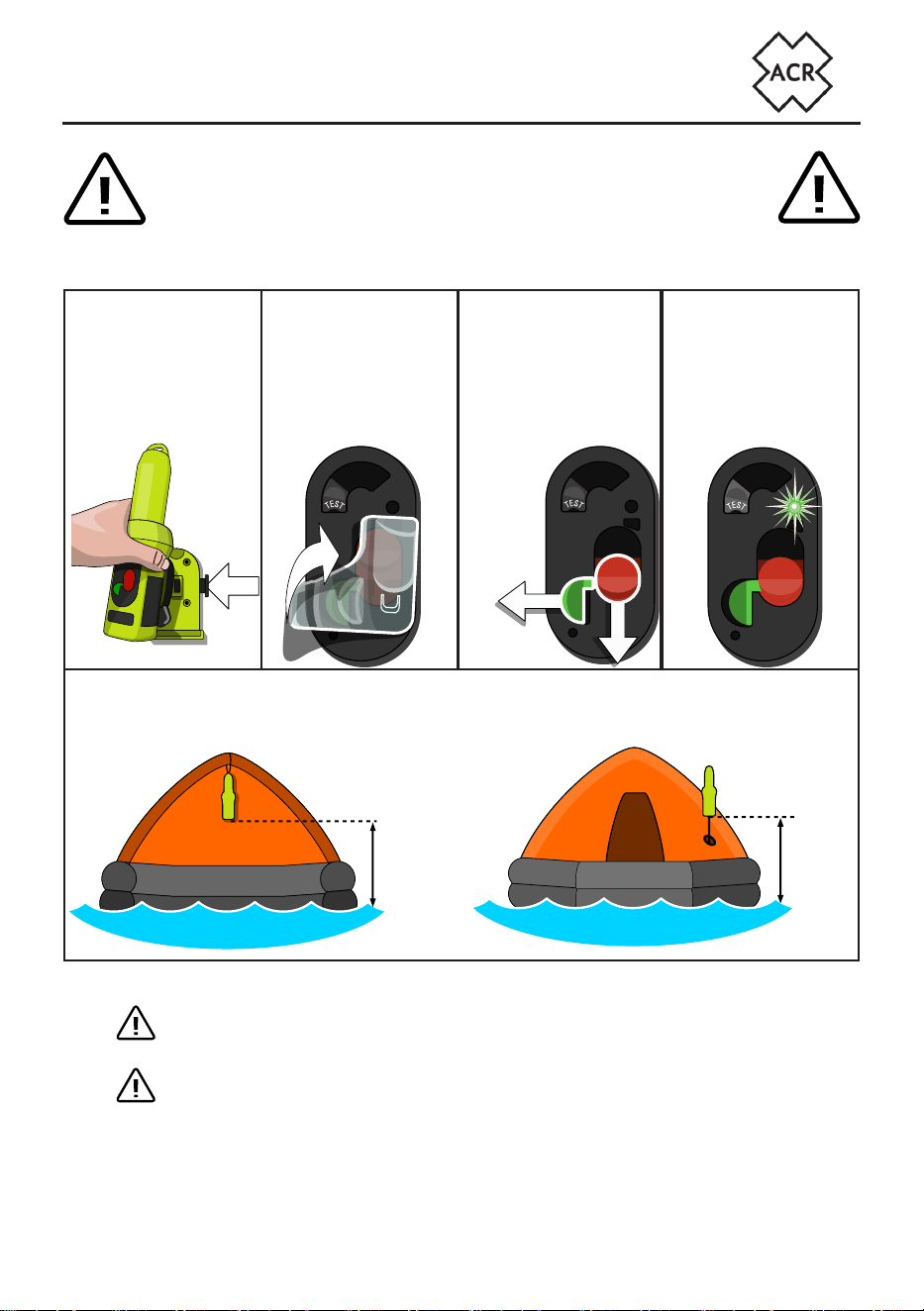
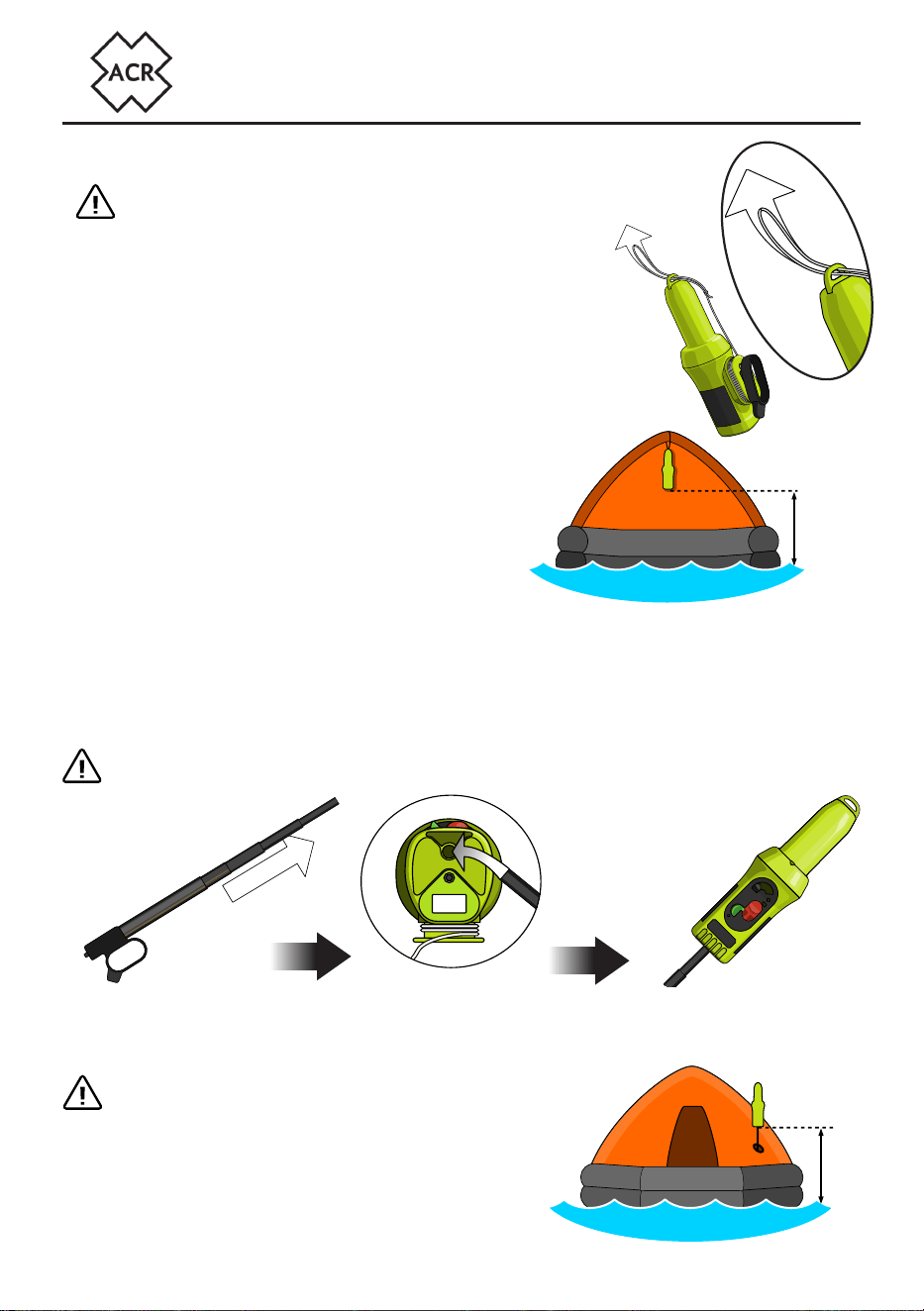
IN CASE OF EMERGENCY
Use only in situations of grave and imminent danger
The Pathnder AIS SART should be mounted at least 3.3ft (1m) above
sea level for maximum eectiveness during activation.
The Pathnder AIS SART should be tethered to the life raft using the
lanyard to avoid being lost overboard.
NOTE: Refer to section 5.2 and 5.3 for full deployment instructions.
NOTE: Refer to section 5.6 for deactivation instructions.
>3.3ft
(>1m)
>3.3ft
(>1m)
Press release
latch and remove
from bracket.
Break o clear
protective
cover over the
green and red
switches.
Holding the
green switch to
the left, push
the red switch
down and hold.
Whilst holding
the red switch
down, release
the green switch
to lock in active
position.
1
2 3
4
NOTE:
this will
activate
SART
5
Attach the SART to the roof of the life raft, or mount on the optional telescopic pole,
if tted, and attach to the side of the life raft.
OR

PATHFINDER AIS USER MANUAL
4 912S-04652 Issue 01.02 10/06/2026
CONTENTS
1. GENERAL 5
1.1 Exposure to RF Electromagnetic Energy 5
1.2 Warnings 5
1.3 Pathnder AIS Contents 5
2. INTRODUCTION 6
2.1 AIS System 6
2.2 Near Field Communication (NFC) 6
3. PATHFINDER AIS SART OVERVIEW 7
3.1 Antenna Information 7
4. INSTALLATION 8
4.1 Bracket Installation 8
4.2 Battery Installation 9
5. Operation 9
5.1 Activation 9
5.2 Standard Deployment 10
5.3 Deployment using optional pole 10
5.4 Optical indications on activation 11
5.5 End of Life 11
5.6 Deactivation 12
6. TESTING 12
6.1 Function Test 12
6.2 Functional Test LED Indicator 13
7. BATTERIES 13
7.1 Battery Replacement 14
8. APPENDIX 15
8.1 Maintenance and Troubleshooting 15
8.2 Battery Safety Information 15
8.3 Handling and Storage 15
8.4 Transportation 16
8.5 Accessories 16
8.6 Specications 17
8.7 Limited Warranty 18
8.8 Approvals 19
PATHFINDER AIS USER MANUAL
10/06/2026 912S-04652 Issue 01.02 5
1. GENERAL
1.1 Exposure to RF Electromagnetic Energy
This product has been evaluated for compliance with the FCC RF exposure limits given in
CFR 47 part 2.1093: Portable Devices.
This equipment complies with the RF exposure limits established by ISED for an
uncontrolled environment. The device has been evaluated at 0 mm separation distance
and found to meet the Specic Absorption Rate (SAR) requirements of RSS-102.
No minimum separation distance is required during use.
1.2 Warnings
The Pathnder AIS SART is designed for use in emergency only. Only
operate it in situations of grave and imminent danger.
The Pathnder AIS SART incorporates a protective tab over the
operating controls to avoid accidental activation and indicate that the
unit has been used.
After any period of operation, the battery should be replaced and
the unit returned to your local service dealer for replacement of the
protective tab.
Always replace the battery before the expiry date is exceeded to
ensure full operating capacity in case of emergency.
Please ensure you follow local regulations before disposing of this
item. Ensure the battery is removed from the unit before disposal.
Changes or modications not expressly approved by the manufacturer
may void the user’s authority to operate this equipment.
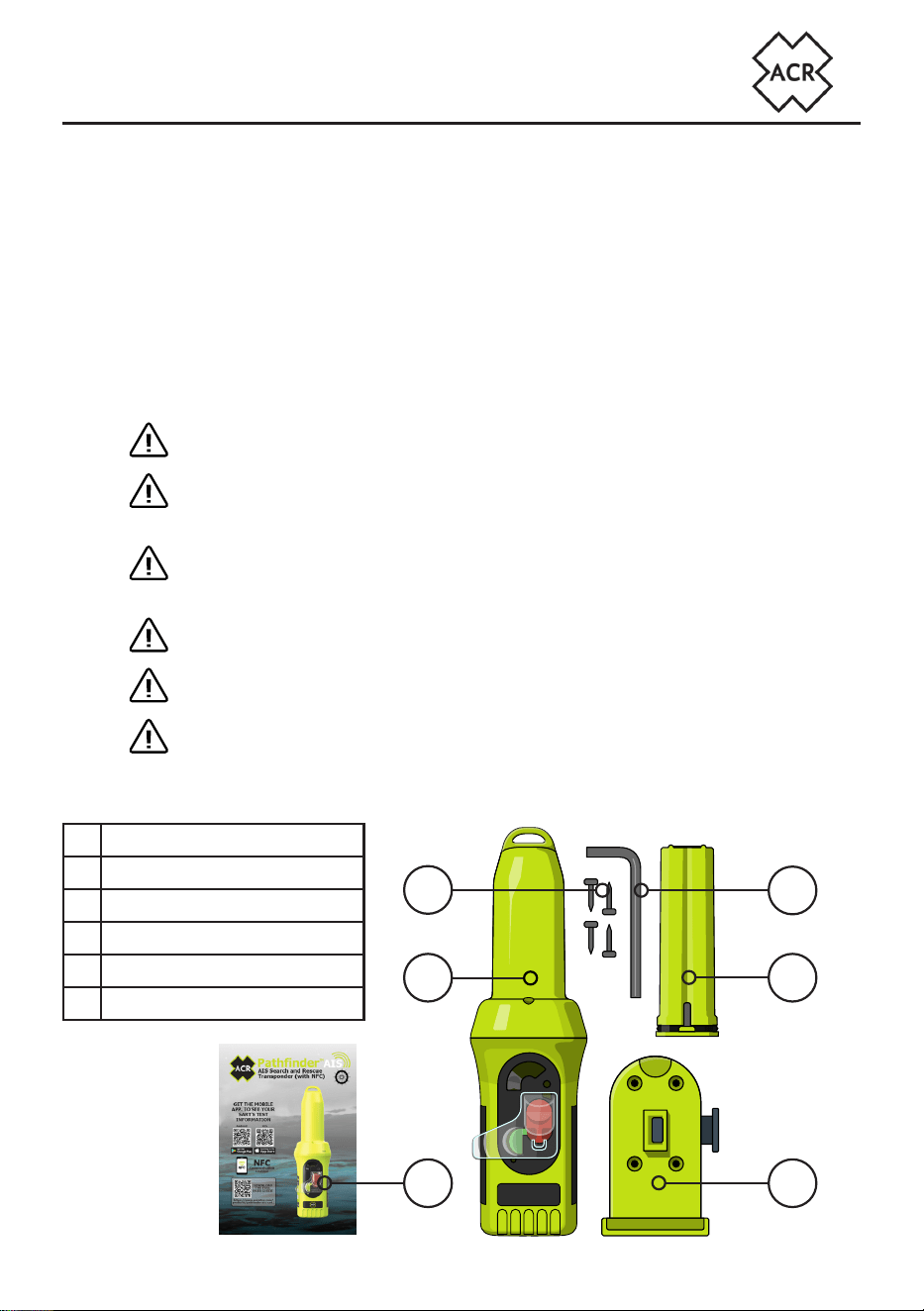
1.3 Pathnder AIS Contents
1 4x Screws (for bracket)
2 Pathnder AIS SART
3 Quick Start Guide
4 Hex Key (for battery)
5 2920 Battery Module
6 Mounting Bracket
1
4
6
2 5
3
PATHFINDER AIS USER MANUAL
6 912S-04652 Issue 01.02 10/06/2026
2. INTRODUCTION
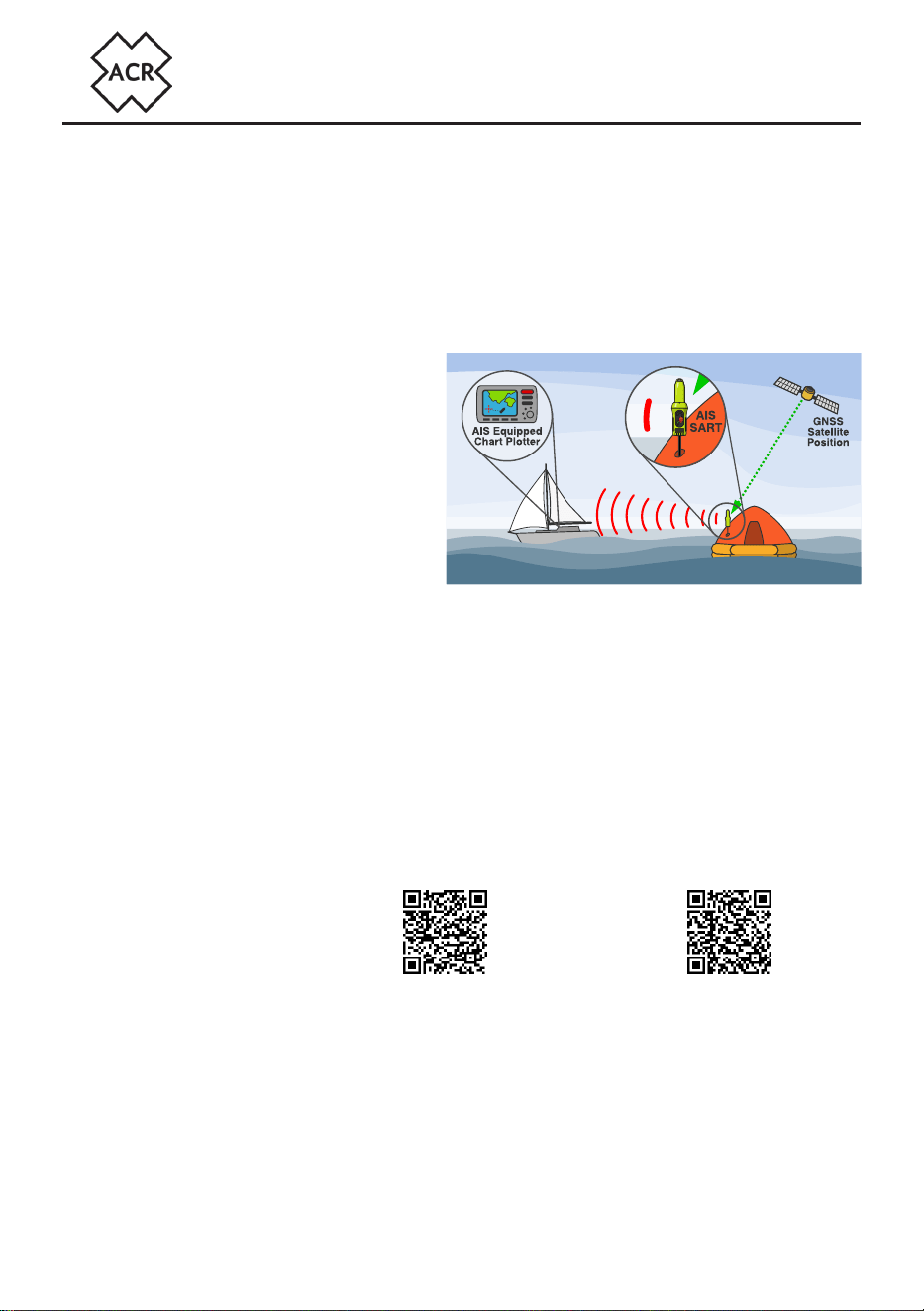
2.1 AIS System
The AIS system operates on the VHF radio band. Transceivers are tted to all commercial
ships and an ever-growing number of recreational vessels globally. Shortly after activation
an AIS location device will activate a SART target and SART ACTIVE message on plotters on
all AIS equipped vessels within the VHF range, alerting them that emergency assistance is
required. Often it is a vessel in the close vicinity of an incident that is able to react and eect
a rescue quicker than the emergency
services. Emergency service craft are
tted with AIS receivers allowing them to
pinpoint emergencies in the water more
precisely than any other system.
The method in which an AIS message is
displayed will depend on the reception
equipment being used. AIS enabled
plotters will display a ship or SART target
with the SART preprogrammed AIS unique
ID, that identies it as an AIS SART device.
2.2 Near Field Communication (NFC)
The Pathnder AIS AIS SART is capable of connection to devices using Near Field
Communication (NFC). NFC technology allows communication between two electronic
devices over a distance of a few centimetres.
The benet of using NFC in the Pathnder AIS SART is that the power used for communication
comes from the mobile device and not the SART. The ACR Electronics, Inc. mobile app allows
a user to access the Pathnder AIS SART for viewing the latest test results and battery
health.
Download the app here: Android iOS
To use the app simply align your mobile device NFC antenna to the front of the Pathnder
AIS SART where you see “NFC”. Once connected, details about your Pathnder AIS SART
will be displayed on your mobile device, including the product name and serial number, the
unique ID and any previous test results that have been stored.
The battery information is also available through the app, including the current battery
expiry date and how long the battery has been in use so far
Interface diagram showing typical usage
PATHFINDER AIS USER MANUAL
10/06/2026 912S-04652 Issue 01.02 7
3. PATHFINDER AIS SART OVERVIEW
3.1 Antenna Information
This device contains an integral, non-removable antenna. The antenna must not be
modied, replaced, or used with any external antenna system.
Any modication to the antenna or radio section may void the user’s authority to operate
this equipment.
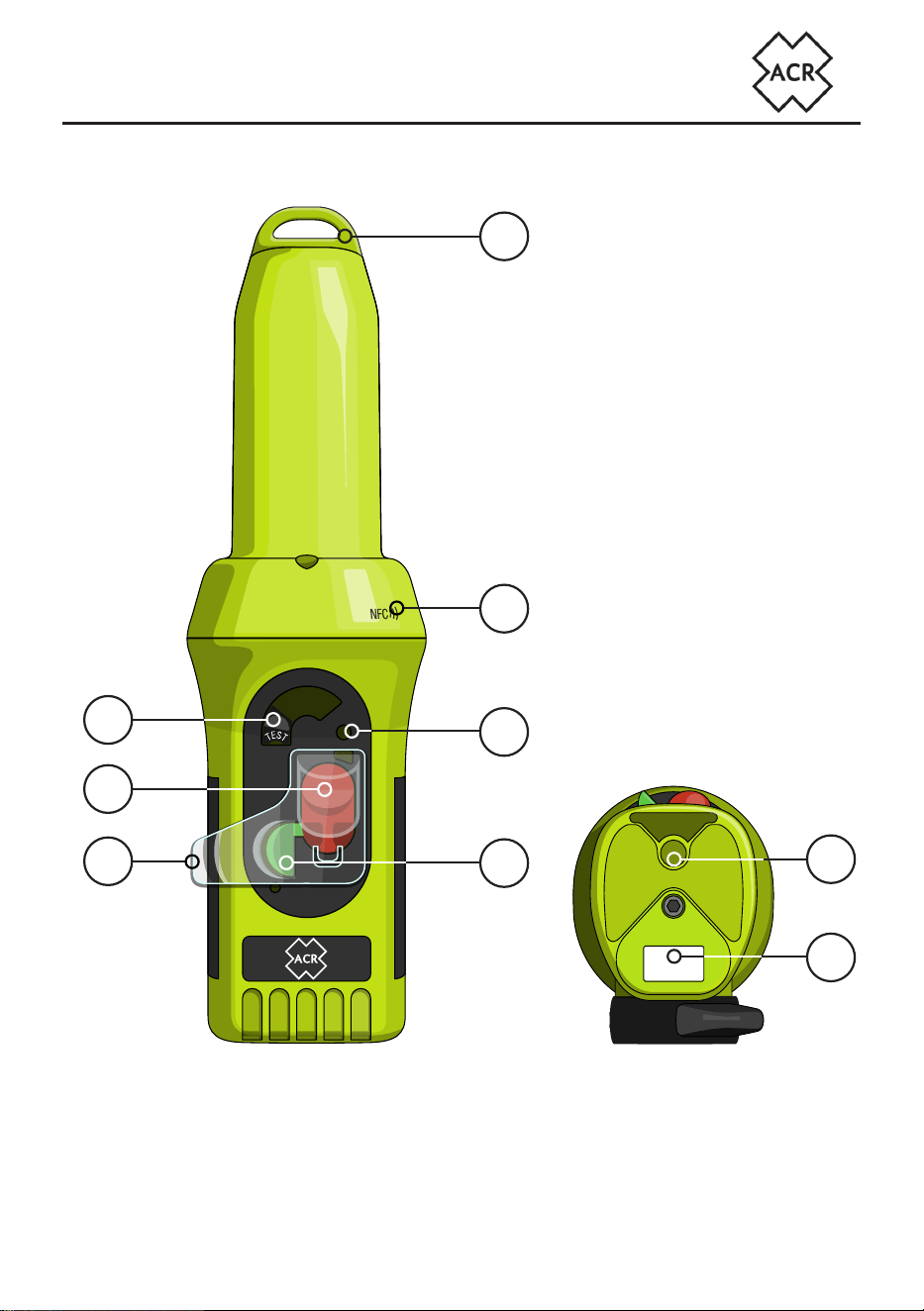
1. Lanyard Attachment Point
2. NFC Antenna (Internal)
3. Test Switch
4. Indicator LED
5. Activation Switch
6. Clear Protective Cover
7. Interlock Switch
8. Pole Attachment Point
9. Battery Module with Expiry
1
4
6
7
8
9
5
2
3
PATHFINDER AIS USER MANUAL
8 912S-04652 Issue 01.02 10/06/2026
4. INSTALLATION
4.1 Bracket Installation
The Pathnder AIS SART is supplied with a quick release mounting bracket. This bracket
should be mounted on a suitable wall or bulkhead in a position where it can easily be
retrieved in an emergency.
Although the Pathnder AIS SART is rugged and waterproof, ACR Electronics recommends
mounting the SART in a protected position whenever possible.
Do not mount the Pathnder AIS SART closer than 1 meter to any
steering compass as this may aect the accuracy of the compass.
Keep the Pathnder AIS SART away from any strong magnetic sources
such as loudspeakers, compass compensation magnets, etc.
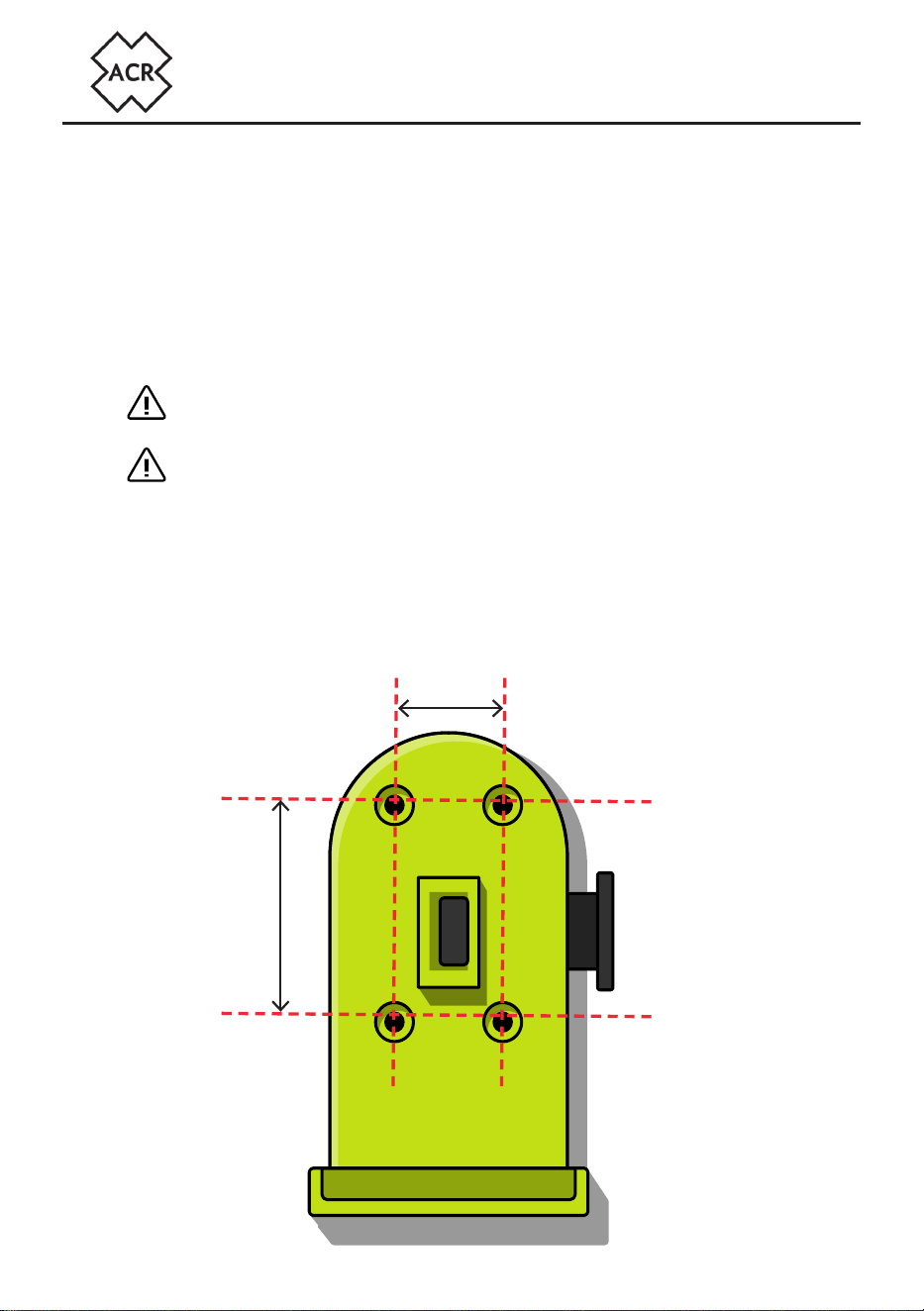
Mark the location of the four screw holes onto the mounting position. Pre-drill the holes if
required then screw the mounting bracket to the surface using the four No6 x 5/8” screws
supplied.
The Pathnder AIS SART simply clips onto the mounting bracket.
0.98”
(25mm)
1.97”
(50mm)
PATHFINDER AIS USER MANUAL
10/06/2026 912S-04652 Issue 01.02 9
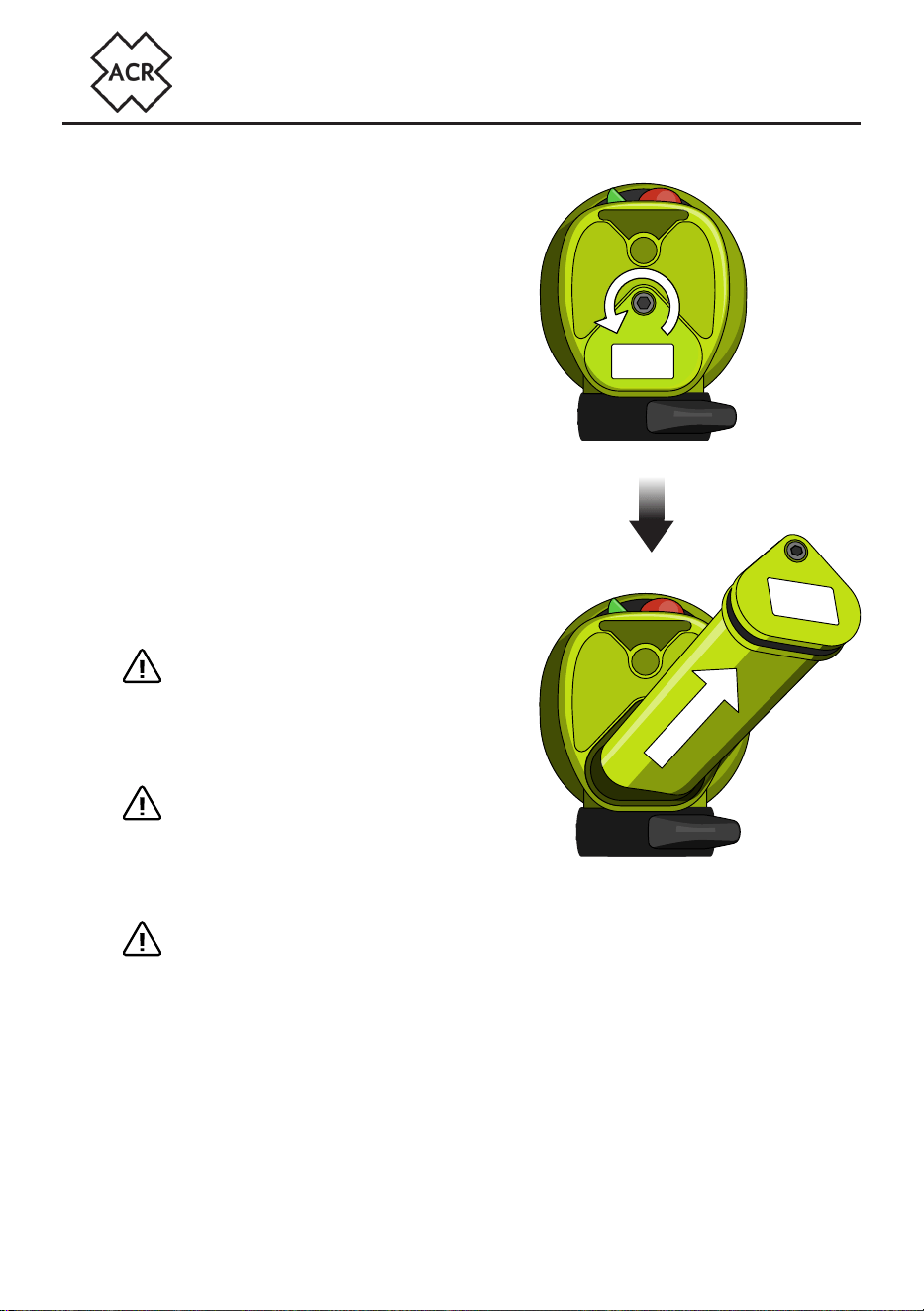
4.2 Battery Installation
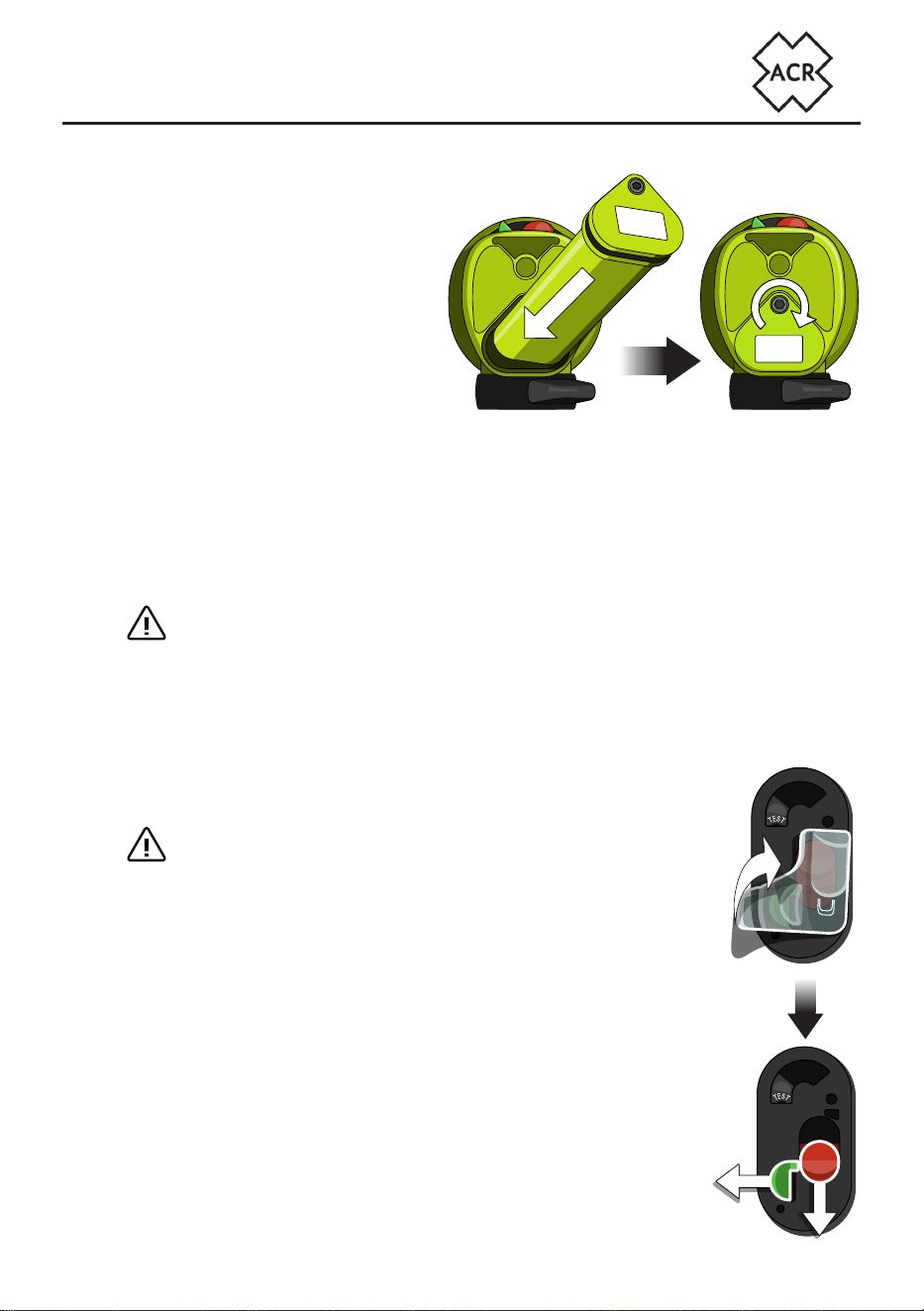
The battery module is retained by a single
hex head screw using the 3mm hex key
provided.
Insert the battery module into the bottom
of the Pathnder AIS SART, ensuring that
the rubber seal is correctly in position.
Tighten the screw until the battery is fully
home within the SART body, torque not
exceeding 0.5Nm.
5. OPERATION
Ensure the Pathnder AIS SART is always tted with an unused battery that is within the
marked expiry date. Check the battery information by using the NFC and the ACR Electronics
app (see section 2.2).
A SART is not intended as a primary distress alerting device. At least
one of the following should also be carried on-board your vessel to
alert the authorities to your situation: an EPIRB; a DSC radio; an
Inmarsat satellite terminal.
Once the Pathnder AIS SART is activated it will help guide the Search and Rescue authorities
to your position.
5.1 Activation
The Pathnder AIS SART should only be activated
if there is grave and imminent danger to the vessel
and its crew.
To activate the Pathnder AIS SART, remove the unit from its mounting
bracket.
Break o the clear protective cover over the green and red switches.
Holding the green switch to the left, push the red switch down and
hold.
While holding the red switch down, release the green switch to lock the
red switch in the active position.
NOTE: See section 5.4 for optical indication on activation
PATHFINDER AIS USER MANUAL
10 912S-04652 Issue 01.02 10/06/2026
5.2 Standard Deployment
The lanyard should be unwound and tied securely
to the life raft to ensure the Pathnder AIS SART
is not lost overboard.
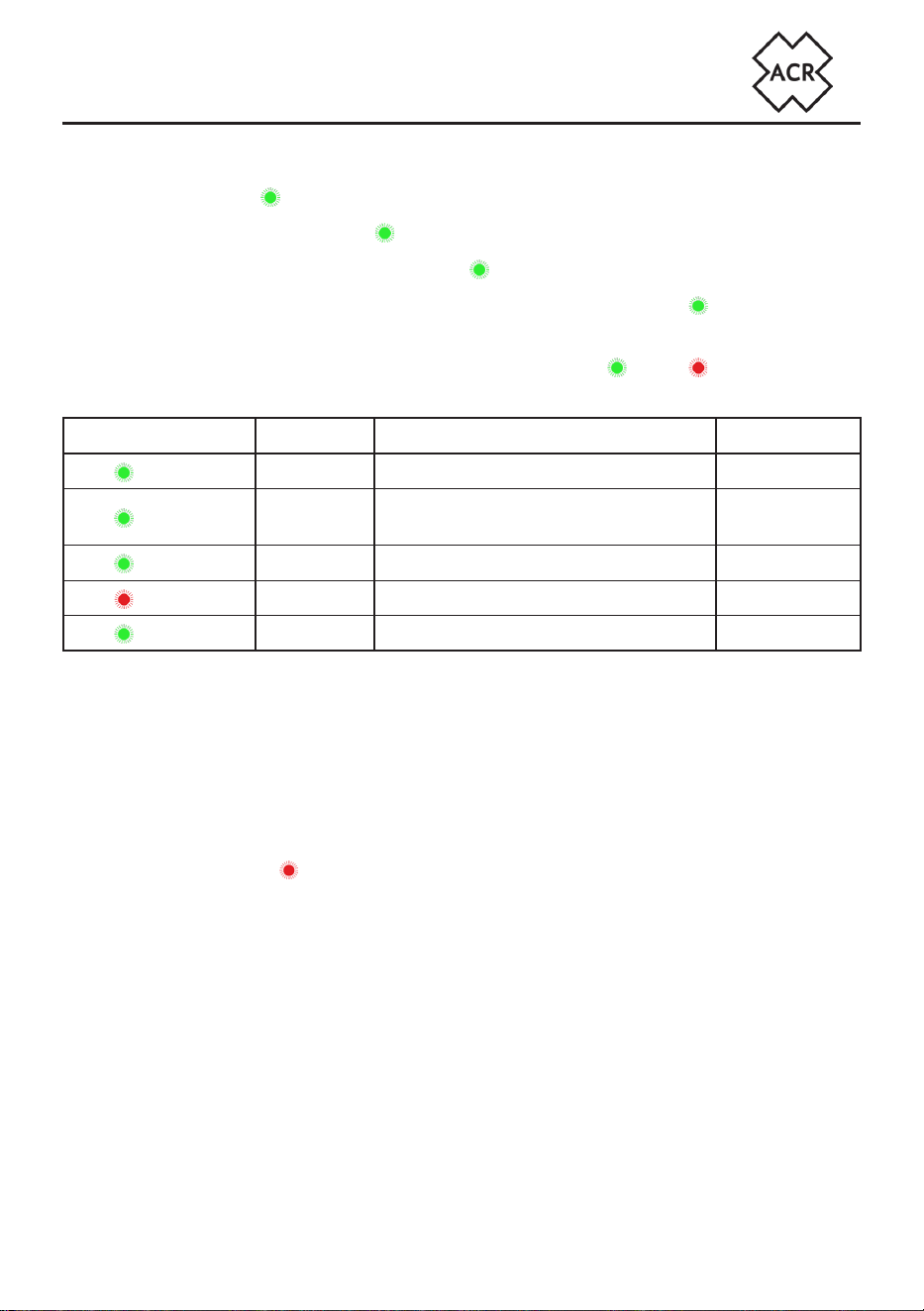
5.3 Deployment using optional pole
The Pathnder AIS SART can also be tted with an optional telescopic pole which will keep
the unit at a height of 3.3ft (1 meter) above sea level.
Remove the cap from the top of the pole and then pull out the sections until fully extended.
Ensure the sections are locked tight by pulling on them.
Do not remove the rubber pole retainer from the bottom of the pole.
Fit the smallest section of the pole into the pole attachment point in the base of the Pathnder
AIS SART as shown, ensuring it is pushed in tightly.
>3.3ft
(>1m)
Raise the Pathnder AIS SART vertically and attach
the pole to the life raft. Most life rafts are tted with
suitable attachments to accommodate the SART pole.
>3.3ft
(>1m)
Once the Pathnder AIS SART is activated it will help guide
the Search and Rescue authorities to your position. For the
best performance, it is important that the Pathnder AIS SART
is mounted as high as possible in the life raft.
Remove the rubber lanyard cover from the back of the
Pathnder AIS SART to reveal the lanyard stowed underneath.
Use this lanyard to attach the Pathnder AIS SART directly to
the liferaft canopy or around the inatable tube supporting
the canopy
The lanyard should be unwound at this stage
and tied securely to the life raft to ensure the
Pathnder AIS SART is not lost overboard.
NOTE: Thread the lanyard through the
attachment point at the top of the Pathnder
AIS SART. This will allow the SART to remain
in an upright position when attached to the
canopy from above.
PATHFINDER AIS USER MANUAL
10/06/2026 912S-04652 Issue 01.02 11
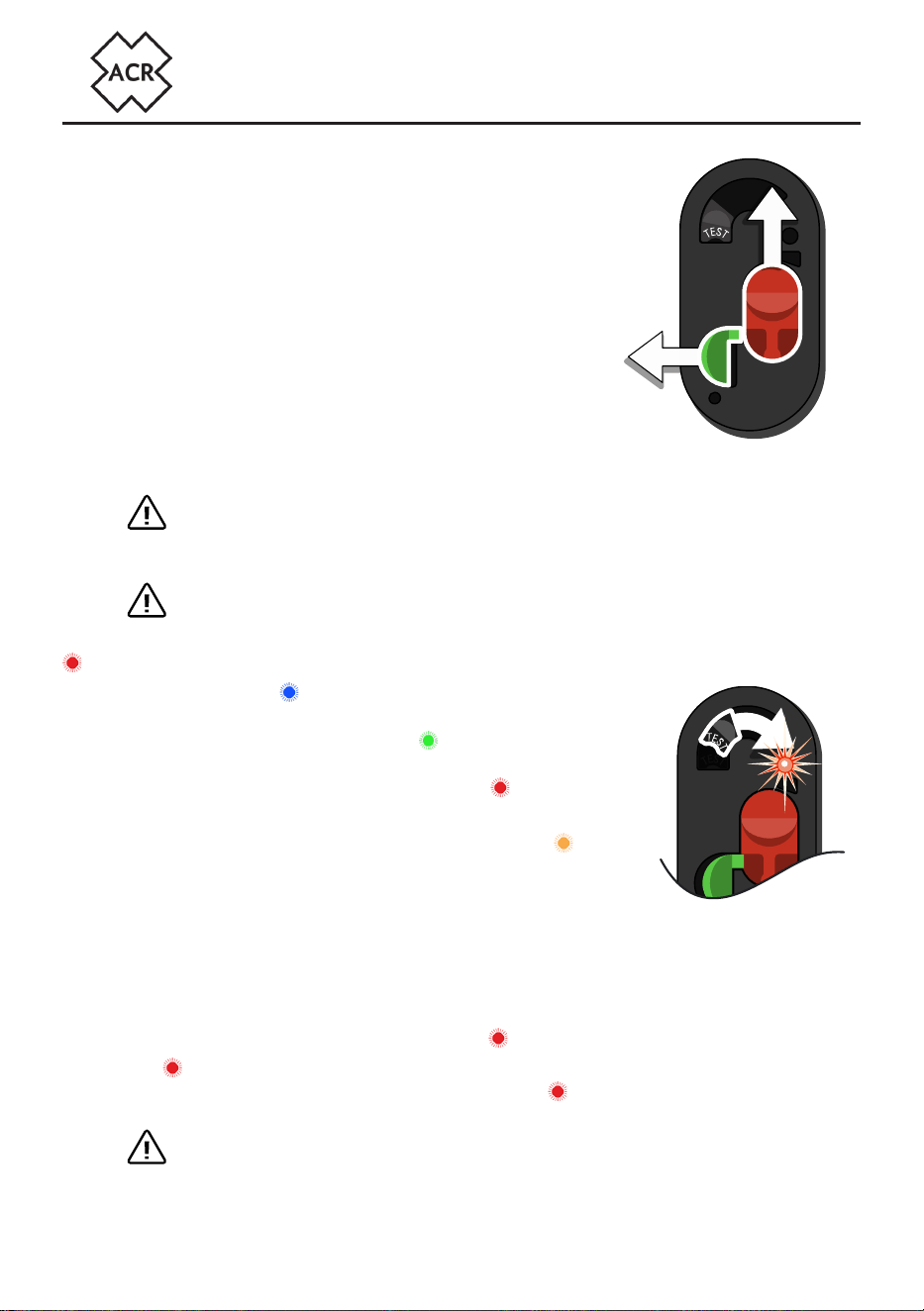
5.4 Optical indications on activation
• The green LED will illuminate for 1 second.
• During activation, the green LED will ash once every 5 seconds.
• Once a GNSS x is acquired, the green LED will ash 3 times.
NOTE: this will happen one time, after which the green LED will again
begin to ash once every 5 seconds to indicate the unit is active.
• After approximately 50 seconds of activation, the green or red indicator LED will
ash indicating AIS transmission.
LED COLOR WHEN GNSS
(1x) single ash
Green On activation
(1x) single ash
Green
Every 5 seconds
continuously whilst active
(3x) single ash
Green Once Fix acquired
(8x) double ash
Red At AIS transmission No x
(8x) double ash
Green At AIS transmission Fix acquired
5.5 End of Life
Once the Pathnder AIS SART is activated, it will continue to transmit as above until it is
either manually deactivated, or the battery reaches its end of life.
At its end of life, the Pathnder AIS SART battery power will become too low to continue
transmitting and the red LED will begin to ash rapidly (4x ash/second). This rapid ash
will continue until either the battery is completely depleted, or the Pathnder AIS SART is
manually deactivated (see section 5.6 for deactivation instruction).
After the end of life, the battery must be replaced in order for the Pathnder AIS SART to
become operational again. (see section 7.1 for battery replacement instruction).
PATHFINDER AIS USER MANUAL
12 912S-04652 Issue 01.02 10/06/2026
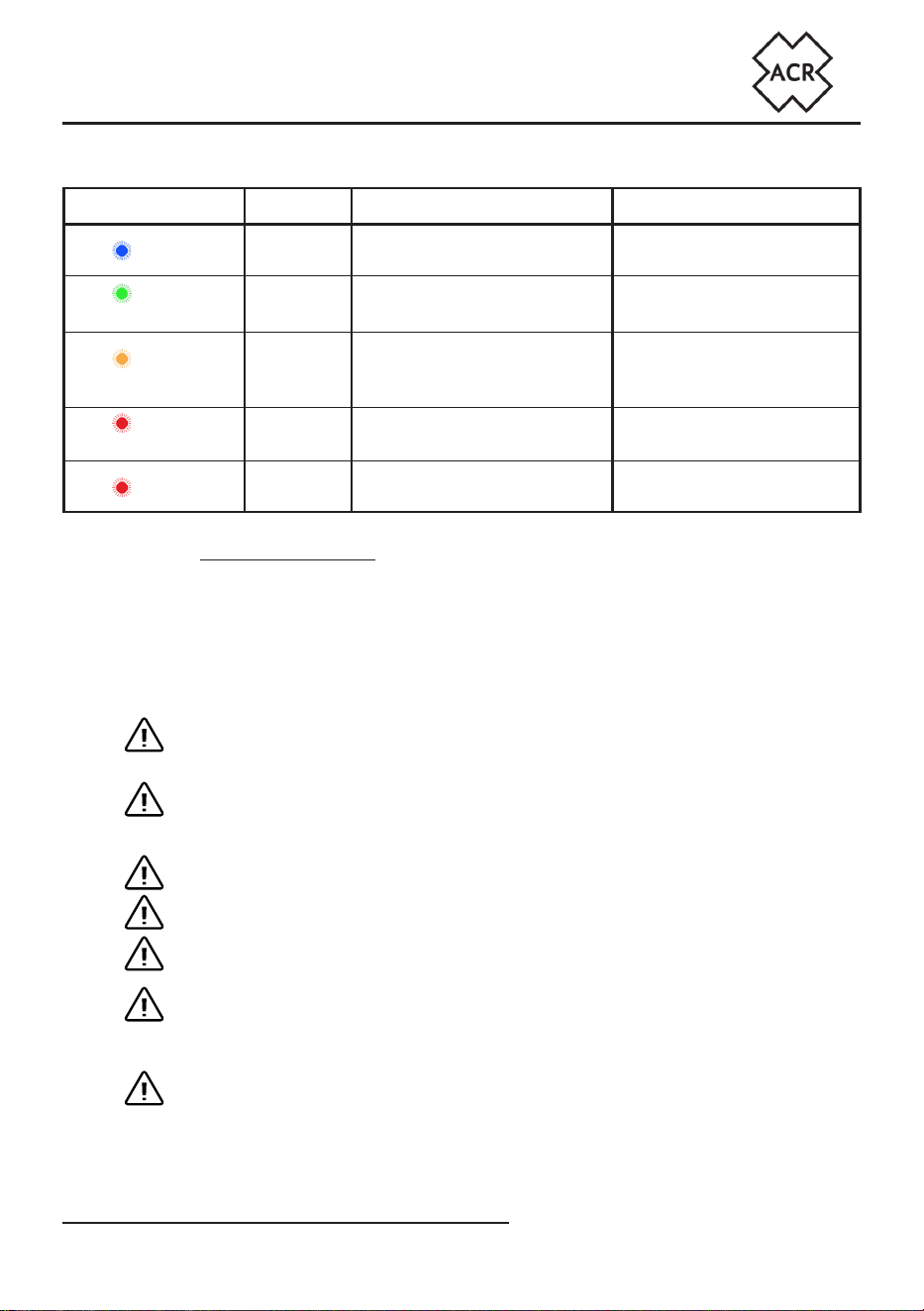
5.6 Deactivation
If the Pathnder AIS SART has been inadvertently activated, it
can be turned o simply by reversing the activation process.
Holding the green switch to the left, push the red switch upwards
to return to the o position.
Release the green switch.
It is not possible for the user to replace the clear protective cover.
Return the Pathnder AIS SART to an ACR Electronics authorised
service centre for replacement.
6. TESTING
6.1 Function Test
When performing this test, the Pathnder AIS SART should be
situated in an upright position with a clear and unobstructed view
of the sky. This is required to allow the GNSS receiever to acquire a
signal from a sucient number of satelliites to determine a position.
This test should be carried out once per year.
Activate the Test Mode by rotating the grey test switch clockwise and holding until the red
LED begins to ash. Release the test switch.
During the test, the blue LED will ash once every ve seconds
whilst obtaining a GNSS x. Once a x is acquired the green
LED will ash three times. The 3x green LED ash will then be
repeated after a short pause. The Pathnder AIS SART will then
automatically shut down, indicated by the red LED ashing
two times.
If during this function test, the LED ashes amber three
times, instead of green, it indicates that the battery has been
signicantly depleted and may not have sucient energy to
operate for the specied 96 hours if activated in an emergency.
Immediate battery replacement is recommended.
The overall duration of the test will depend on the time taken for the SART to acquire a GNSS
x. The Pathnder AIS SART will shut down automatically once a x is obtained and a burst
of eight messages have been transmitted. If within approximately six minutes a GNSS x
cannot be acquired, the test will fail and the red LED ash three times.
The 3x red LED ash will then be repeated after a short pause. The Pathnder AIS SART
will then automatically shut down, indicated by the red LED ashing two times.
A single burst of 8x AIS transmissions will occur during a successful
Functional Test indicating “SART TEST” on AIS receivers within range.
PATHFINDER AIS USER MANUAL
10/06/2026 912S-04652 Issue 01.02 13
6.2 Functional Test LED Indicator
LED COLOR WHEN INDICATION
(1x) single ash
Blue Every 5 seconds
Searching for
GNSS x
(3x) single ash
repeated
Green
Once at end of GNSS search
repeated after short pause
GNSS Fix acquired.
Test successful
(3x) single ash
repeated
Amber
Once at end of GNSS search
repeated after short pause
GNSS Fix acquired.
Test successful. Battery
change required.
(3x) single ash
repeated
Red
Once at end of GNSS search
repeated after short pause
Test failure*
(2x) single ash
Red Once at end of test
Test over & SART
shutdown
*In the event of a failure, test result details can be viewed using the ACR app. Contact ACR Electronics,
Inc. for advice at support@acrartex.com.
7. BATTERIES
The Pathnder AIS SART uses a Lithium Iron Disulde battery module to power the device.
These batteries have a ve year storage life before any signicant reduction in capacity. Each
battery is marked with an expiry date, which is located at the base of the unit.
The battery should be replaced before the expiry date has passed to
ensure reliable operation and full capacity in emergency situations.
Always use batteries manufactured by ACR Electronics. Failure to do
so will invalidate the type approval and may mean the unit does not
operate correctly in a distress situation.
Never dispose of batteries in a re.
Never puncture or attempt to dismantle the battery.
Never attempt to charge the battery.
Extreme temperature caused by failure to observe the above warnings
may cause the battery to explode or catch re, which may result in
injury or damage to surrounding personnel or property.
Dispose of used batteries in a responsible manner. National or local
regulations on battery disposal may apply, including restricting the
disposal of batteries in domestic refuse.
For the Product Safety Data Sheet and advice on battery transportation, this can be viewed
or downloaded directly from the product page on the ACR Electronics website at:
https://www.acrartex.com/products/pathnder-ais/
PATHFINDER AIS USER MANUAL
14 912S-04652 Issue 01.02 10/06/2026
7.1 Battery Replacement
The battery may be changed by the user,
although commercial vessels may be subject
to local regulations relating to Shore Based
Maintenance that prevent this.
Remove the Pathnder AIS SART from its
mounting bracket and turn it over.
The battery pack is retained by a single hex head
screw.
Undo the screw using the 3mm hex key provided.
Remove the pack from the main body.
Insert new battery pack, ensuring that the rubber
seal is correctly in position.
Tighten the screw until the
battery is fully home within
the SART body, torque not
exceeding 0.5Nm.
Ensure that any maintenance
records on-board are updated
with the new battery expiry
date.
Follow instructions provided with the replacement battery in order
to update the Pathnder AIS SART with new battery and counter
information.

PATHFINDER AIS USER MANUAL
10/06/2026 912S-04652 Issue 01.02 15
8. APPENDIX
8.1 Maintenance and Troubleshooting
The Pathnder AIS SART should not need servicing during its lifetime, with the exception of
changing the battery before the marked expiry date.
Regular cleaning, inspection and testing are advised - clean any grime or salt residue o the
unit with a weak solution of detergent in warm water. Never use solvents as this may aect
the structural integrity of the plastics used. Rinse well with fresh water after cleaning.
Inspect the unit for signs of case damage or cracks, check the labels are intact and the
battery is within the expiry date. Make sure the telescopic pole (if provided) is still present
and is free to extend.
Check for correct SART operation using the Test Mode (section 6). If the unit appears to fail
testing, contact a service representative at ACR Electronics.
8.2 Battery Safety Information
Battery pack name: 2920 Pathnder SART Battery
Volts: 3.0V nominal
Approximate weight: 89 grams
Chemical system: LiFeS
2
Lithium weight/cell: 0.98g
Total lithium weight/battery: 1.96g
Designated for recharge: No
For information regarding the physical and chemical properties, the potential health and
safety measures and the environmental eects of the battery used with this product, refer
to the manufacturers safety information documentation.
The safety information datasheets for all products are available for download at:
https://acrartex.com/
8.3 Handling and Storage
This product should be stored in a cool and well-ventilated area. elevated temperatures can
result in a reduction of battery life.
Avoid accidentally short-circuiting batteries. Prolonged short-circuiting can cause the battery
temperature to rise and signicantly reduce battery life.

PATHFINDER AIS USER MANUAL
16 912S-04652 Issue 01.02 10/06/2026
8.4 Transportation
The 2920 Pathnder SART battery module has been tested in accordance with subsection
38.3 of part III of the UN Manual of Tests and Criteria. Summary test reports are available
from ACR Electronics on request.
This battery module should be transported by air in accordance with the IATA dangerous
goods regulations: class 9, UN3090, proper name “Lithium metal batteries” and packed
according to packing instruction 968 section IB.
When supplied with equipment it is class 9, UN3091, proper name “Lithium metal batteries
packed with equipment” and should be packed in accordance with packing instruction 969
section II.
8.5 Accessories
Pathnder SART Replacement Battery ..................................................Part Number: 2920
Pathnder SART Optional Mounting Pole ..............................................Part Number: 2918

PATHFINDER AIS USER MANUAL
10/06/2026 912S-04652 Issue 01.02 17
8.6 Specications
AIS Transmission
Frequency ..................................................................................... 161.975/162.025MHz
Transmit Power (EIRP) ............................................................................... 1Watt ±3dBm
Baud Rate .......................................................................................................9600baud
Synchronization ....................................................................................................... UTC
Messages........................................................ Message 1 (Position), Message 14 (Status)
Repetition Interval ............................................................................. 8 Messages/Minute
................................................................ Message 14 sent twice every 4 minutes
GNSS Receiver
Satellite Channels ...................................................................................... 72 Acquisition
Sensitivity ...................................................................................................... -167 dBm
Cold Start Re-acquisition .................................................................................. -148 dBm
GNSS Antenna ....................................................................................... Microstrip Patch
Battery
Type ..............................................................................Lithium Iron Disulde (LiFeS
2
)
Operating life ..................................................................................... 96 hours at -20°C
Lithium Metal Weight (for air transport) ................................................... <2g per battery
Replacement interval ...........................................................................................5 years
NFC
Frequency .....................................................................................................13.56 MHz
Test Standards
Standards ................................................................................. IEC61097-14, IEC60945
Environmental
Temperature Range (operating) ...............................................................-20°C to +55°C
Temperature Range (storage) .................................................................... -30°C to +70C
Waterproof .....................................................................................................10 meters
Drop proof (on water) .....................................................................................20 meters
Compass safe distance .......................................................................................1 meter
General
Equipment Class.................................................................................................Portable
Weight (with battery) .............................................................................................. 315g
Weight (without battery) ......................................................................................... 227g
Height .............................................................................................................. 227mm
Body Diameter (max) ...............................................................................65mm (82mm)

PATHFINDER AIS USER MANUAL
18 912S-04652 Issue 01.02 10/06/2026
8.7 Limited Warranty
The limited warranties in the global limited warranty are exclusive and in lieu of all other
warranties express or implied or statutory, including any liability arising under any warranty
of merchantability or tness for a particular purpose, statutory or otherwise. This warranty
gives the owner specic legal rights, which may vary from jurisdiction to jurisdiction.
In no event shall ACR Electronics, Inc. or its aliates be liable for any incidental, special,
indirect or consequential damages, whether resulting from the use, misuse, inability to use,
improper reliance on, or from any defects in the product. Some jurisdictions do not allow
the exclusion on incidental or consequential damages, so the above limitation may not apply
to you.
The Global Limited Warranty does not aect a customer’s rights against a retailer arising
from a sales/purchase contract.
Product repaired or replaced under warranty will be warranted only for the remaining balance
of the applicable original warranty period.
Subject to the terms, conditions, limitations and exclusions in the Global Limited Warranty,
all ACR Electronics, Inc. Products are warranted to be free from defects in material or
workmanship for a period of two (2) years from the date the Product was purchased by
the Original Customer (the “Standard Limited Warranty Period”). During this period and for
the Original Customer only, ACR Electronics, Inc. will, at its sole discretion, repair or replace
any components that fail in normal use, which, in the absence of any applicable law to the
contrary, shall be the customer’s sole and exclusive remedy for any breach of warranty.
If the Standard Limited Warranty applies to you, ACR Electronics, Inc. will not charge you for
parts or labour for warranty repairs or replacements. However, the cost of transporting your
warranted Product to ACR Electronics, Inc. for repair or replacement is your responsibility
and is not covered by ACR Electronics, Inc.
For the full warranty policy, see https://acrartex.com/warranty-policy/

PATHFINDER AIS USER MANUAL
10/06/2026 912S-04652 Issue 01.02 19
8.8 Approvals
Any unauthorised modication to this equipment will invalidate any approvals listed either in
this manual or on the ACR Electronics website, www.acrartex.com.
8.8.1 EU
Hereby, ACR Electronics Inc., declares that the PathnderTM AIS SART search and rescue
locating device, is in compliance with EU Marine Equipment Directive, under MED/4.55 of
the current implementing regulation. The full text of the EU Declaration of Conformity is
available at the following internet address:
https://www.acrartex.com/products/pathnder-ais/
8.8.2 United Kingdom
The Pathnder AIS SART is approved under the UK Marine Equipment Regulations, MSN
1874 as amended.
8.8.3 Canada
ISED Certication Number: IC: 9296A-S200
This device complies with the applicable Innovation, Science and Economic Development
Canada (ISED) Radio Standards Specications, including RSS-182 and RSS-GEN for licensed
maritime radio equipment.
8.8.4 US
The Pathnder AIS SART is approved under FCC Rule 80.233 with FCC Identier XYES200.

5757 Ravenswood Road
Fort Lauderdale, Florida 33312
United States of America
www.ACRARTEX.com