Product Manual
www.lithink.com
51.2V
LiFePO
4
400A BMS
LOW TEMP CUT OFF
PROTECTION
(Charge/Discharge)
SELF
-HEATING
Charing
Golf Cart
Baery
APP
Smart Bluetooth 5.0

LiFePO₄ Baery - Compliance
Statement & Disclaimer
Page 01
LiFePO₄ Baery Installaon
Page 04
Important Safety Informaon
Page 02
24/7 Monitoring Via Lithink App
Page 05
Product Overview
Page 06
Baery Self-Heang Funcon Workflow
Page 10

Baery Capacity Esmaon Guide
Page 15
Recommended Cable Sizing
Page 16
What To Do When The Baery
Stops Working
Page 17
Baery Capacity Esmaon Guide
Page 19
Internal structure
Page 11
Things To Know Before Using
Page 12
Charging Methods
Page 13
1
LiFePO₄ Baery - Compliance
Statement & Disclaimer
FCC STATEMENT
Reorient or relocate the receiving antenna.
Increase the separaon between the equipment and receiver.
Connect the equipment into an outlet on a circuit different from that to which the
receiver is connected.
Consult the dealer or an experienced radio/TV technician for help.
This equipment has been tested and found to comply with the limits for a Class
B digital device, pursuant to part 15 of the FCC Rules. These limits are designed
to provide reasonable protecon against harmful interference in a residenal
installaon. This equipment generates, uses and can radiate radio frequency
energy and, if not installed and used in accordance with the instrucons, may
cause harmful interference to radio communicaons. However, there is no
guarantee that interference will not occur in a parcular installaon. If this
equipment does cause harmful interference to radio or television recepon,
which can be determined by turning the equipment off and on, the user is
encouraged to try to correct the interference by one or more of the following
measures:
Cauon:
Any changes or modificaons to this device not explicitly approved by manufacturer
could void your authority to operate this equipment.
This device complies with part 15 of the FCC Rules. Operaon is subject to the following two
condions: (1) This device may not cause harmful interference, and (2) this device must accept
any interference received, including interference that may cause undesired operaon.
RF Exposure Informaon This equipment complies with FCC radiaon exposure limits set
forth for an uncontrolled environment. This equipment should be installed and operated with
minimum distance 20cm between the radiator and your body.
(FCC ID: 2BVX7LITHINK48VB)
Model: LT-48-105-400-BT-LTP2-H-GF
Product Name: Li Think 48V105Ah Lifepo4 Baery
2
Disclaimer
LIXIANG INTERNATIONAL (HONG KONG) ENERGY TECHNOLOGY CO.,
LIMITED SHALL NOT BE LIABLE FOR ANY DAMAGES CAUSED BY:
Unauthorized use or disregard of this manual
Consequenal/accidental damage
Improper repairs
Acons of unqualified personnel
THIS LIMITATION OF LIABILITY ALSO APPLIES TO:
Use of non-original spare parts
STRICTLY PROHIBITED:
Unauthorized modificaons or technical changes
※ Note: Applies only if baery incorporates wireless funconality.
Risk of Fire, Explosion, or Burns: DO NOT puncture, drop, crush, burn,
penetrate, shake, or strike the baery. Keep the baery away from fire, heat
sources, sparks, and hazardous chemicals. Never soak the baery in water.
Risk of Severe Electrical Shock: The terminals of this baery are always live.
Avoid exposed metal terminals or connectors. DO NOT short circuit the
baery, place tools on the terminals, or touch them with bare hands.
hemical Hazard: DO NOT open, dismantle, or modify the baery. If the
casing is damaged, DO NOT touch the exposed electrolyte or powder.
Uncovered electrolyte or powder that has contacted the skin or eyes MUST be
flushed out with plenty of clean water immediately. Seek medical aenon
aerward.
DANGER
WarningImportant Safety Informaon
3
Installaon Hazard: Baery installaon and maintenance must be performed
by trained and cerfied technicians. Improper configuraon or installaon may
damage the baery and other related equipment.
Personal Protecon: Always wear proper personal protecve equipment (PPE),
such as insulang gloves and safety goggles, when working on the baery.
Reverse Polarity Risk: Please verify the polarity before connecng the wiring
using a mulmeter. Reverse polarity can and will destroy the baery and other
electrical equipment.
California Proposion 65 Warning: This product can expose you to chemicals
including lead and lead compounds, which are known to the State of California to
cause cancer and birth defects or other reproducve harm. For more informaon, go
to www.P65Warnings.ca.gov.
Overheang Risk: Place the baery in a well-venlated area with sufficient
heat dissipaon to prevent overheang and damage.
System Protecon: Please use circuit breakers, fuses, or disconnects that have
been properly sized by cerfied electricians or regional code authories to
protect all the electrical equipment in your system. While the baery has a
built-in baery management system (BMS), it alone will not protect your system
from severe electrical condions.
Cable Sizing: Size the baery cables and connectors appropriately. Use
high-stranded copper connectors and heavy gauge cables to handle possible
baery loads. Make sure to keep idencal cable lengths.
Applicaon Limit: DO NOT use this deep cycle baery as a starng baery
(e.g., for starng vehicles).
Proper Disposal: DO NOT dispose of the baery as household waste. Please
use recycling channels in accordance with local, state, and federal regulaons.
WARNING
CAUTION
NOTICE
If you have any quesons or need any help, please feel free to contact us
(and leave your contact phone number) at suppor[email protected], we will
offer phone or email support in 12hrs.
4
Connect POS (+) first:
Place red O-terminal on stud → ensure full surface contact
Hand-ghten M8 bolt (several turns)
Connect NEG (-) last:
Torque wrench to 12 N·m → ghten unl audible "click"
LiFePO₄ Baery Installaon
Scenario-Specific Checks
Crical Post-Installaon ChecksScenario
1. Baery securely fastened (no wobble)
2. +/- cables separately secured (no fricon)
3. Baery compartment well-venlated
1. Baery mounted high & dry
2. Apply thin an-corrosion grease (copper-based)
on studs
3. Monthly check terminals for green corrosion
1. Use LiFePO₄-compable charge controller
2. Avoid direct sunlight on baery
3. Keep cables away from heat sources
RV Use
Marine Use
Solar Use
Preparaon & Idenficaon (Power OFF)
Disconnect all loads and chargers
Idenfy terminals: Posive POS (+) Red / Negave NEG (-) Black
Prepare cables: Color-coded O-terminals (red+/black-)
Clean contacts: Wipe terminals with dry cloth
Verificaon
Polarity check (MANDATORY):
Visually confirm red cable → POS (+) / black cable → NEG (-)
Security test:
Gently tug cables → O-terminals must show zero movement
Terminal Connecon Sequence
5
24/7
Monitoring Via Lithink App
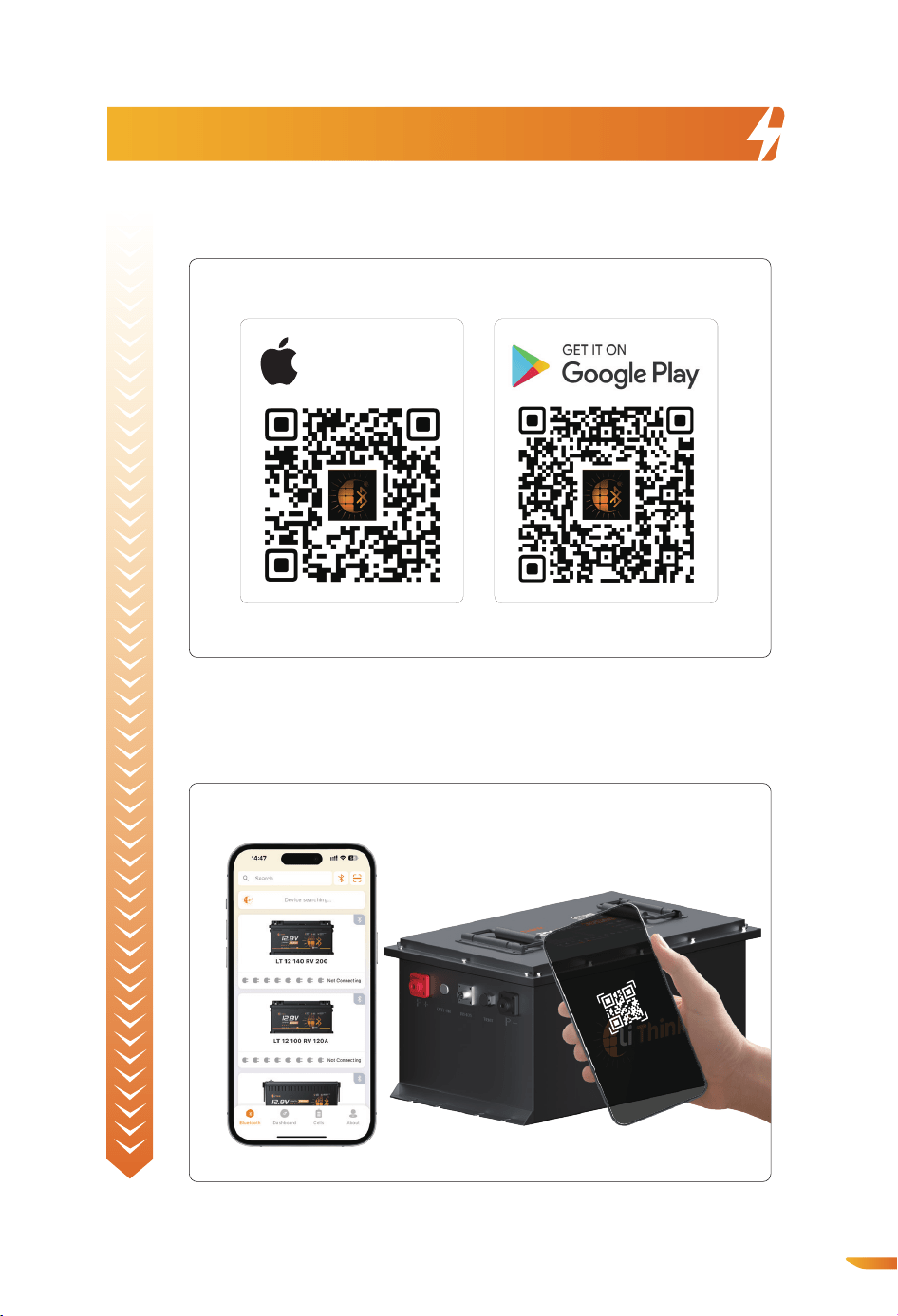
Pair the baery with the Lithink APP and effortlessly keep trackof
the baery's real-me status.
Download the Lithink APP and register your account.
Download on the
APP Store
6
Product Overview
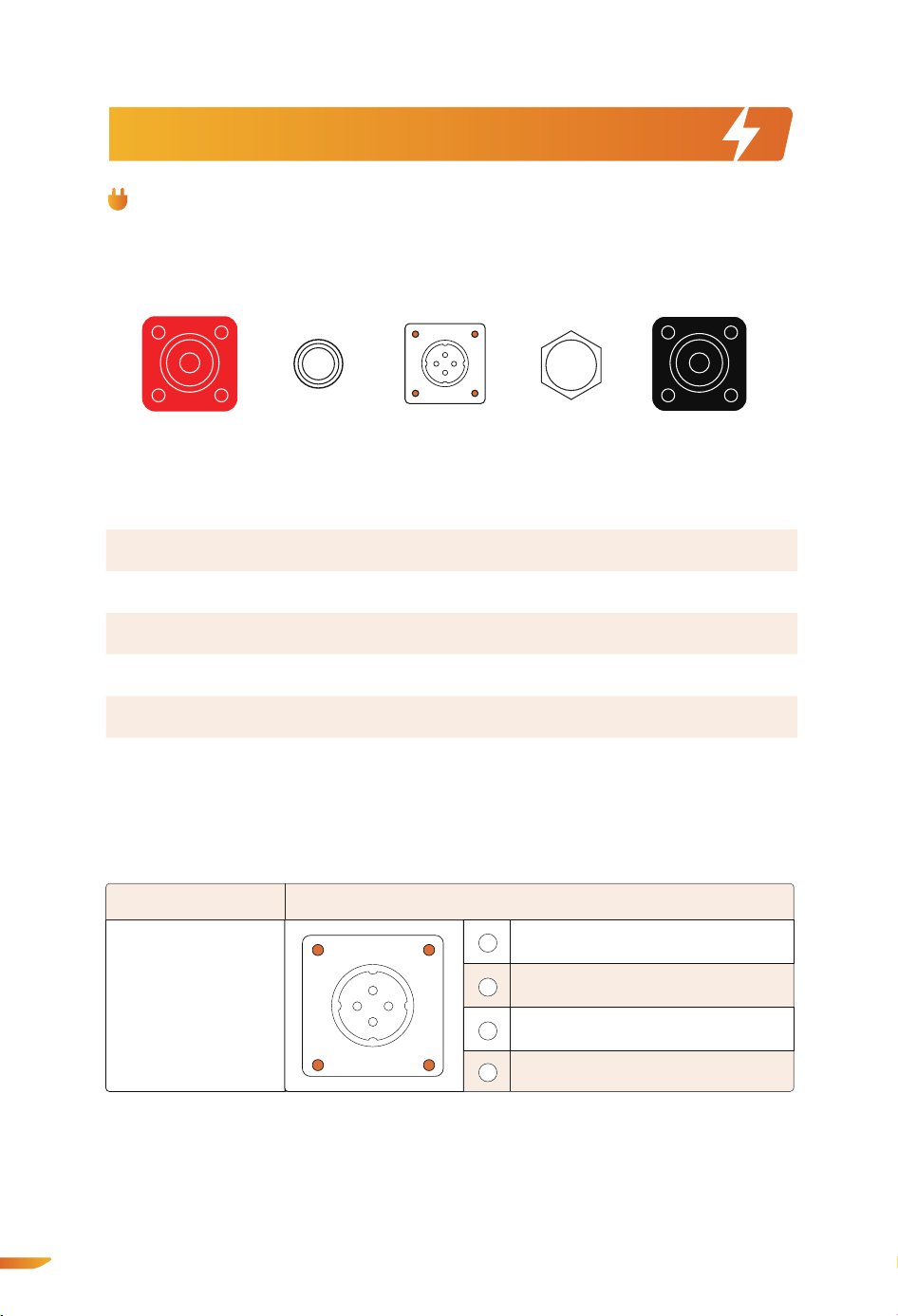
51.2V 105Ah Baery
P+ P-
Output posive
OFF/ON
Weak current switch
RS485
Communicaon port
VENT Gas vent
Output negave
1
1
2
3
4
2
3
4
Interface tool
4 core
aviaon socket
Interface definion
RS485A
RS485B
P+
P-
P +
OFF/ON RS485 VRNT
P -
7
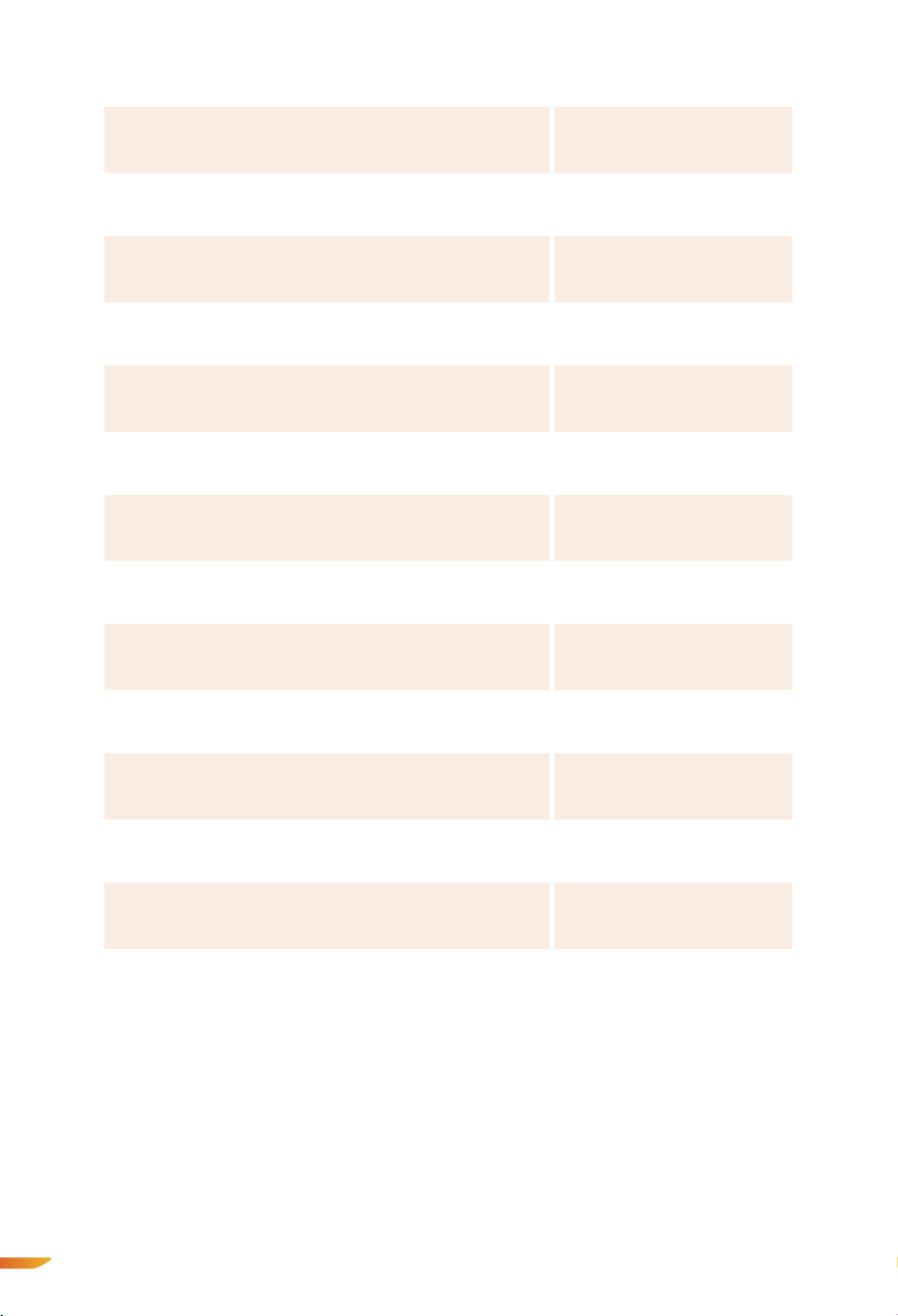
Parameter Name
Cell Type
Nominal Voltage
Rated Capacity
Energy
Internal Resistance
Cycle Life
Baery Management System (BMS) Board
Charge Method
Charge Voltage
Parameter Value
LiFePO4
51.2V
105Ah
5376Wh
≤40mΩ
≥4000 cycles
400A
CC/CV
58.4V
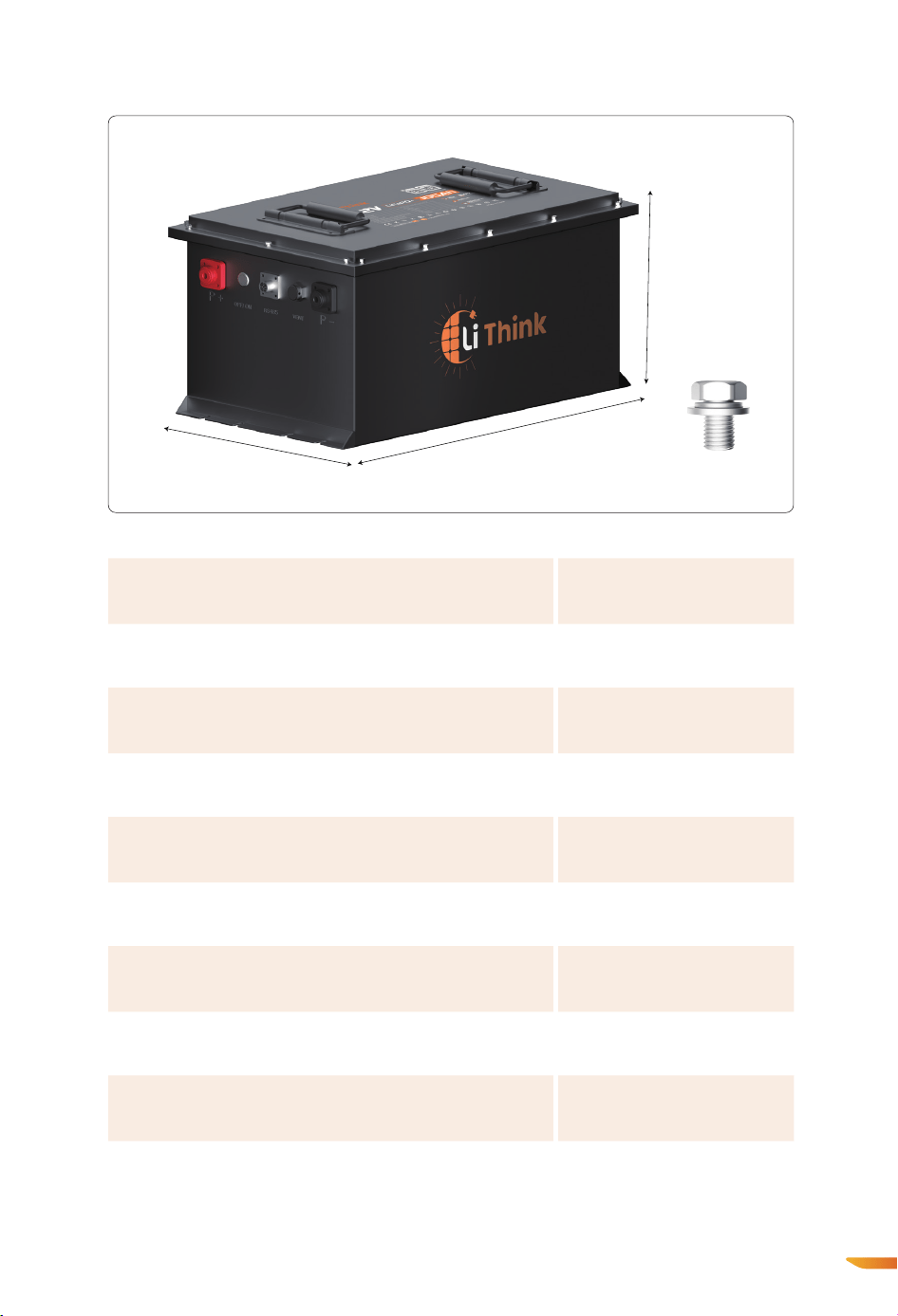
M8*14mm
318mm
12.51inch
500mm
19.68inch
244mm
9.60inch
8
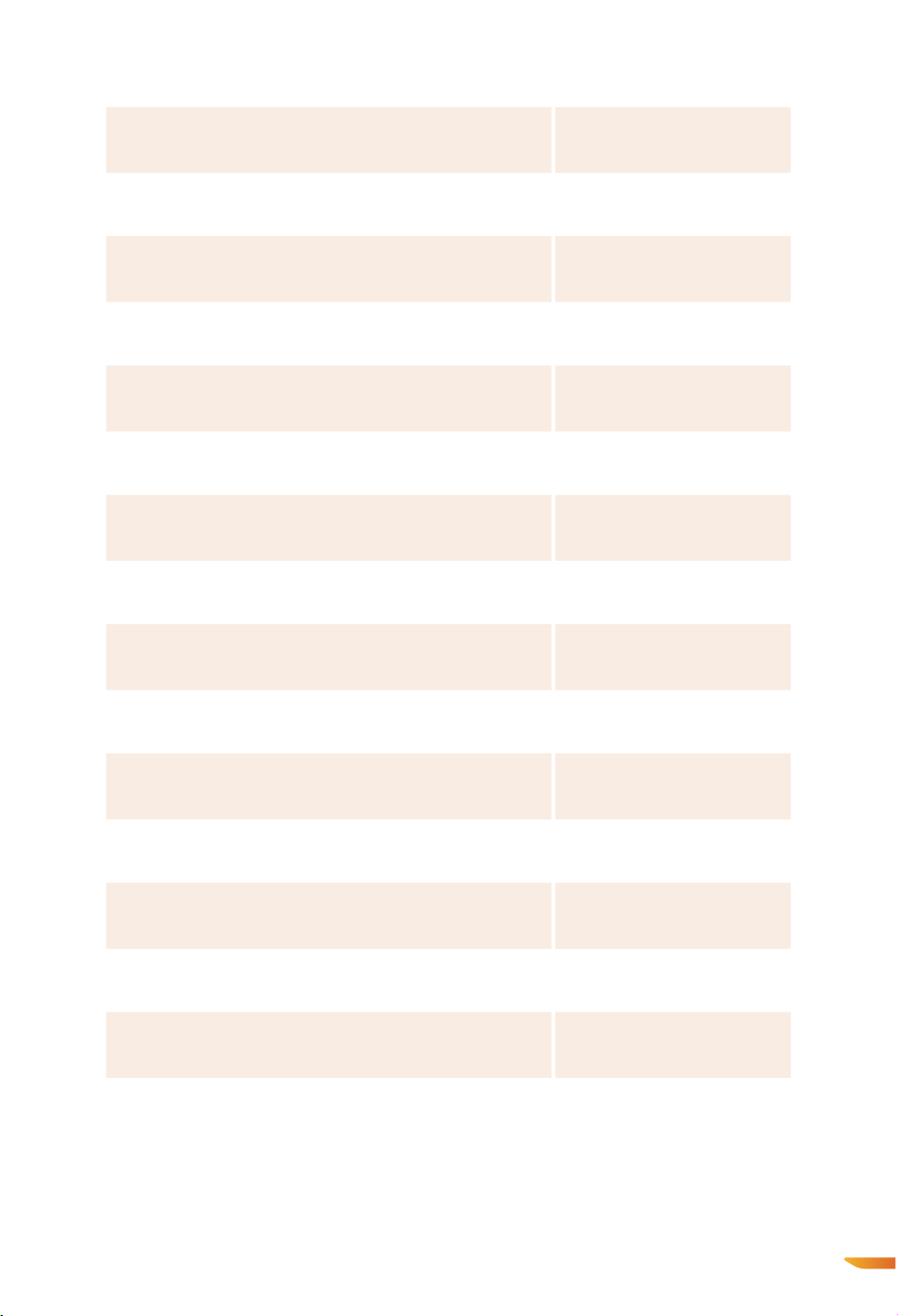
Recommend Charge Current
Required Minimum Charge Current for
Heang Funcon
Max. Connuous Charge Current
Max. Connuous Discharge Current
Surge Discharge Current (30s)
Max. Connuous Output Power
Dimension (inch)
Dimension (mm)
Housing Material
Recommended Terminal Torque
Protecon Class
Charge Temperature Range
Discharge Temperature Range
Storage Temperature Range (Less than 1 year)
21A
10A
105A
250A
600A
12800W
19.68 * 12.51 * 9.60
500 * 318 * 244
SPCC
12N·m
IP65
0°C to 50°C / 32°F to
122°F
-20°C to 60°C / -4°F to
140°F
-20°C to 25°C / -4°F to
77°F
9
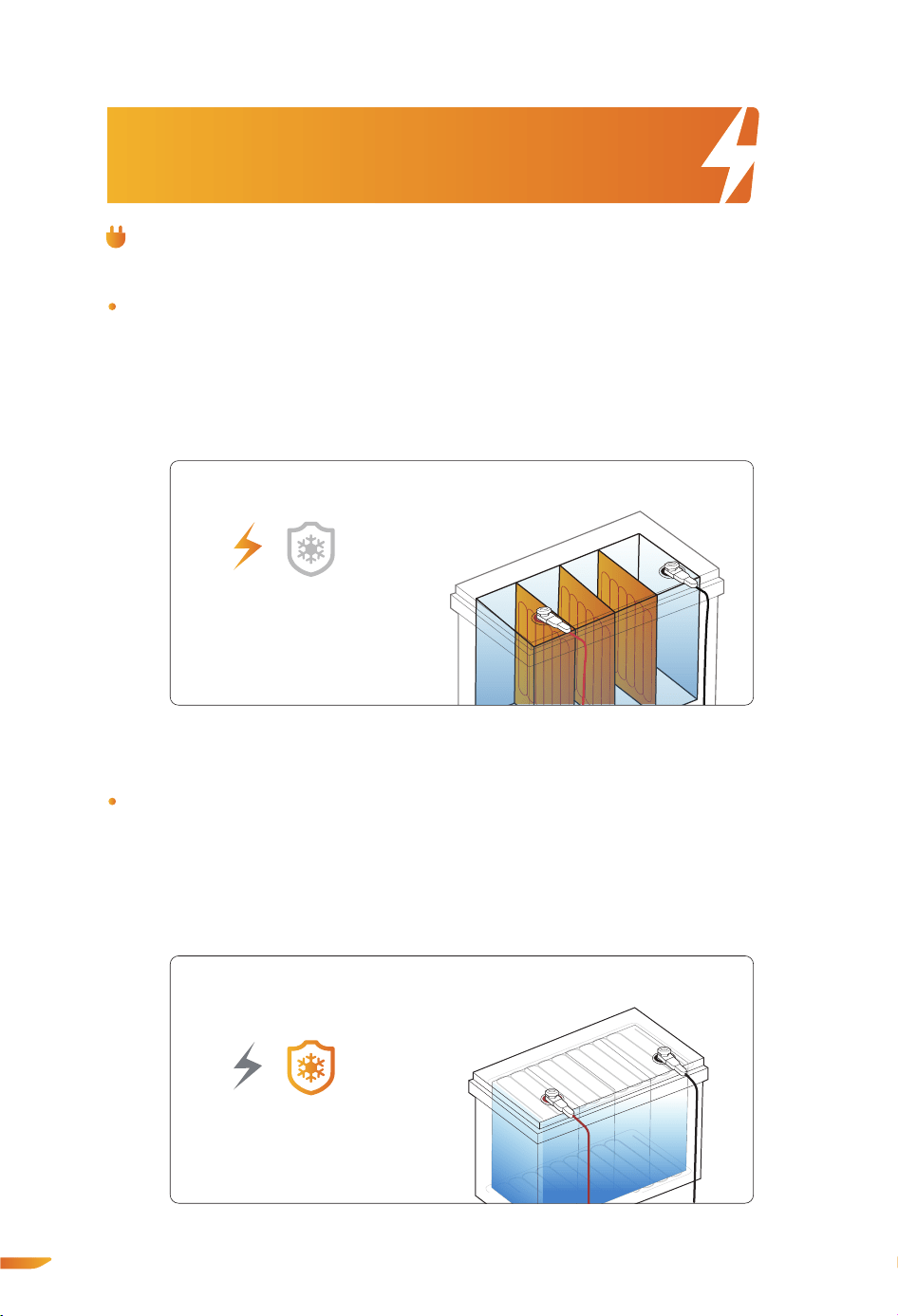
Storage Temperature Range (Less than 3
months)
Storage Temperature Range (Less than 7 days)
Heang Temperature
Approx. Heang Time @8A (From -10°C/14°F)
Approx. Heang Time @8A (From -20°C/-4°F)
Low Temperature Charging Protecon
Stop Charging Temperature
Resume Charging Temperature
Baery Weight
Color
Cell Weight
Number of Cells
Charging Time @ Recommended Current
Discharge Cut-off Voltage
Self-discharge Rate
Terminals
-20°C to 40°C / -4°F to
104°F
-20°C to 65°C / -4°F to
149°F
>10°C/>50°F
70-90 minutes
100-150 minutes
Yes
0°C/32°F
5°C/41°F
42.9 kg / 94.5 lbs
Black
31.7kg/69.9 lbs
16
21A@5h
43.2V
≤2%
M8 * 14mm
10
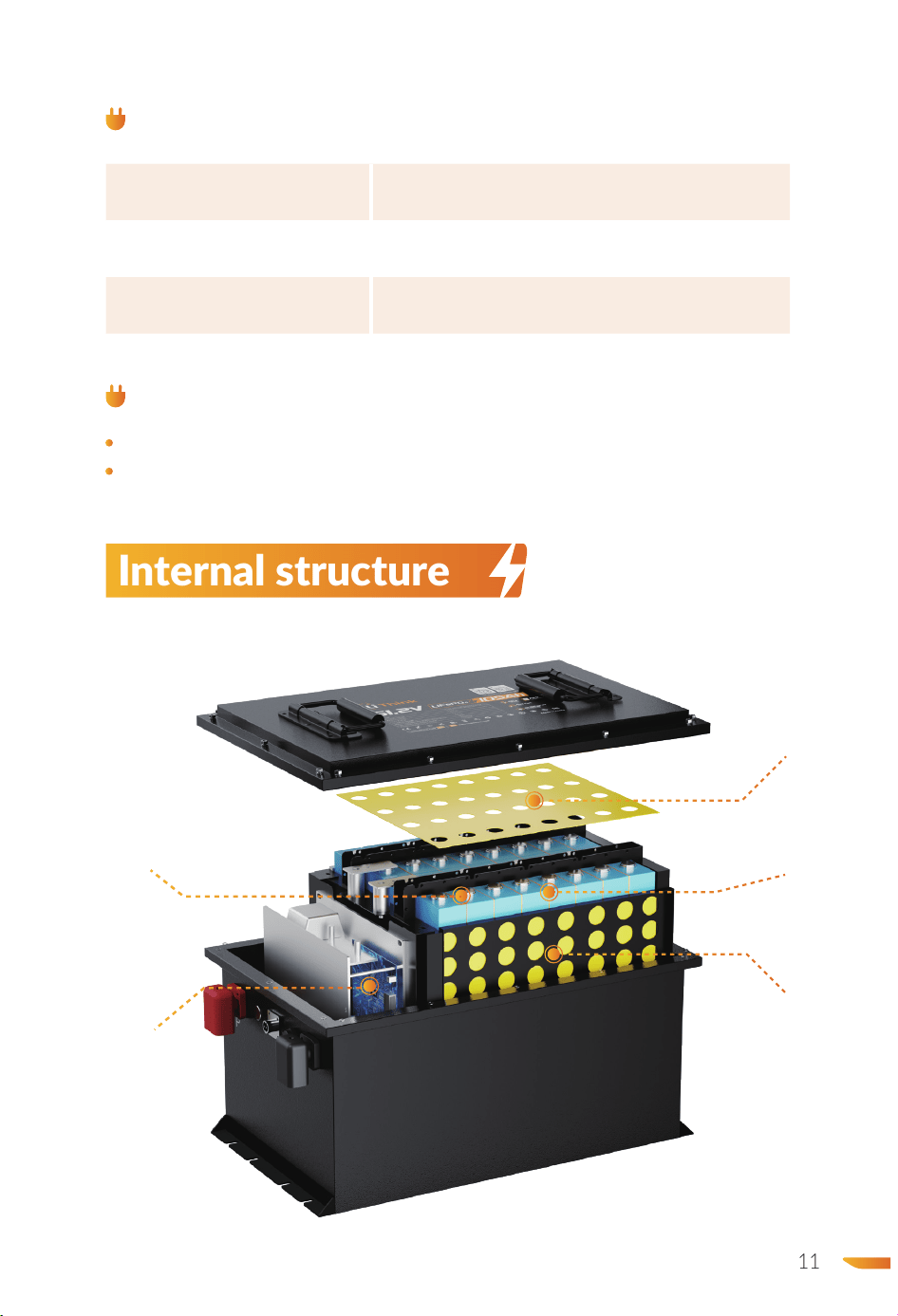
Heang & Charging
Heang Only
Non-triggered
Triggered
Baery Self-Heang Funcon
Workflow
Condions & Responses
1.Normal Charging Mode (Baery Temperature > 0°C)
Aer connecng charger:
If temperature between 0°C ~ 5°C → Immediately iniates simultaneous
heang & charging
When temperature reaches ≥10°C → Heang stops automacally,
charging connues
2.Low-Temperature Protecon Mode (Baery Temperature < 0°C)
Aer connecng charger:
System priorizes heang only (no charging)
When temperature reaches ≥5°C → Acvates simultaneous heang &
charging
When temperature reaches ≥10°C → Heang stops, charging connues
11
Heang Time Reference (Constant 8A Current)
Charging Preparaon
In extreme cold environments: Reserve addional 20% charging capacity
Example: Target charge 100Ah → Requires ≥120Ah actual input
Time to Reach 10°C
70-90 minutes
100-150 minutes
Starng Temperature
-10°C (14°F)
-20°C (-4°F)
Internal structure
BMS
Baery cells
Epoxy Board
Heang Pad
Alloy bracket
12
Things To Know Before Using
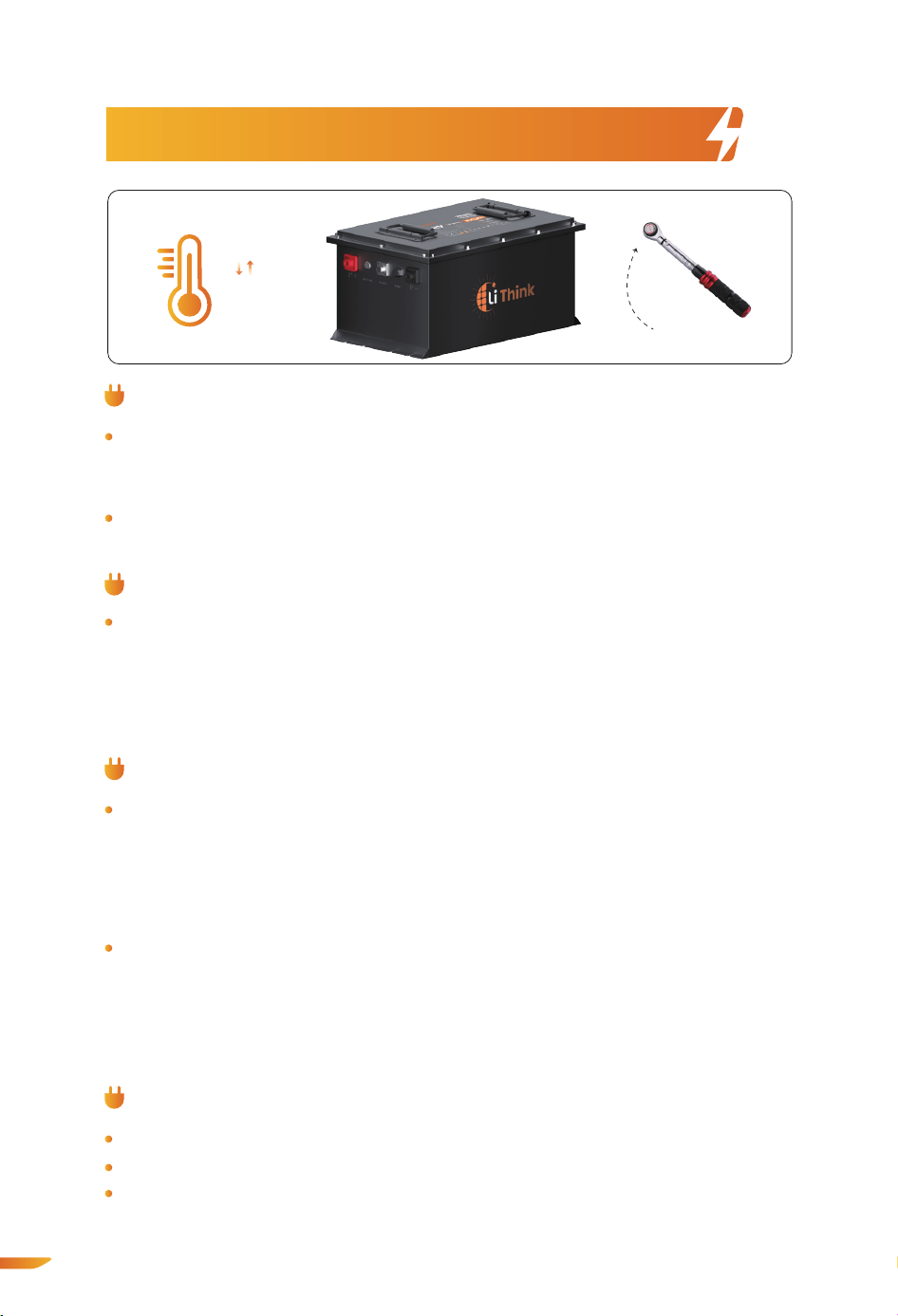
10°C
35°C
12N·m
Terminal Security
Firmly ghten terminal bolts to ensure secure connecons. Loose
terminals may cause heat buildup, leading to baery damage or safety
hazards.
Regularly inspect bolt ghtness and reghten if necessary.
Long-Term Storage Protocol
Temperature:
Operaonal range: -20°C to 60°C (-4°F to 140°F).
Ideal storage: 10°C to 35°C (50°F to 95°F).
Store in fireproof containers away from children.
Extreme temperatures degrade performance and longevity.
State of Charge (SoC):
Maintain 50% SoC during storage.
Avoid full-charge (100%) or full-discharge (0%) states.
If unused >3 months: Recharge every 3 months.
Maintenance Requirements
Regularly inspect for wear, corrosion, or physical damage.
Clean terminals with baking soda-water soluon when corrosion occurs.
Ensure all connecons remain ght.
Usage Limitaons
Not for Cranking Applicaons
This baery is engineered for deep-cycle applicaons, not high-crank
currents required for engine starng. Use as a starter baery reduces
lifespan and performance.
13
Storage Temperature Range (Less than 3
months)
Storage Temperature Range (Less than 7 days)
Heang Temperature
Approx. Heang Time @8A (From -10°C/14°F)
Approx. Heang Time @8A (From -20°C/-4°F)
Low Temperature Charging Protecon
Stop Charging Temperature
Resume Charging Temperature
Baery Weight
Color
Cell Weight
Number of Cells
Charging Time @ Recommended Current
Discharge Cut-off Voltage
Self-discharge Rate
Terminals
Charging Methods
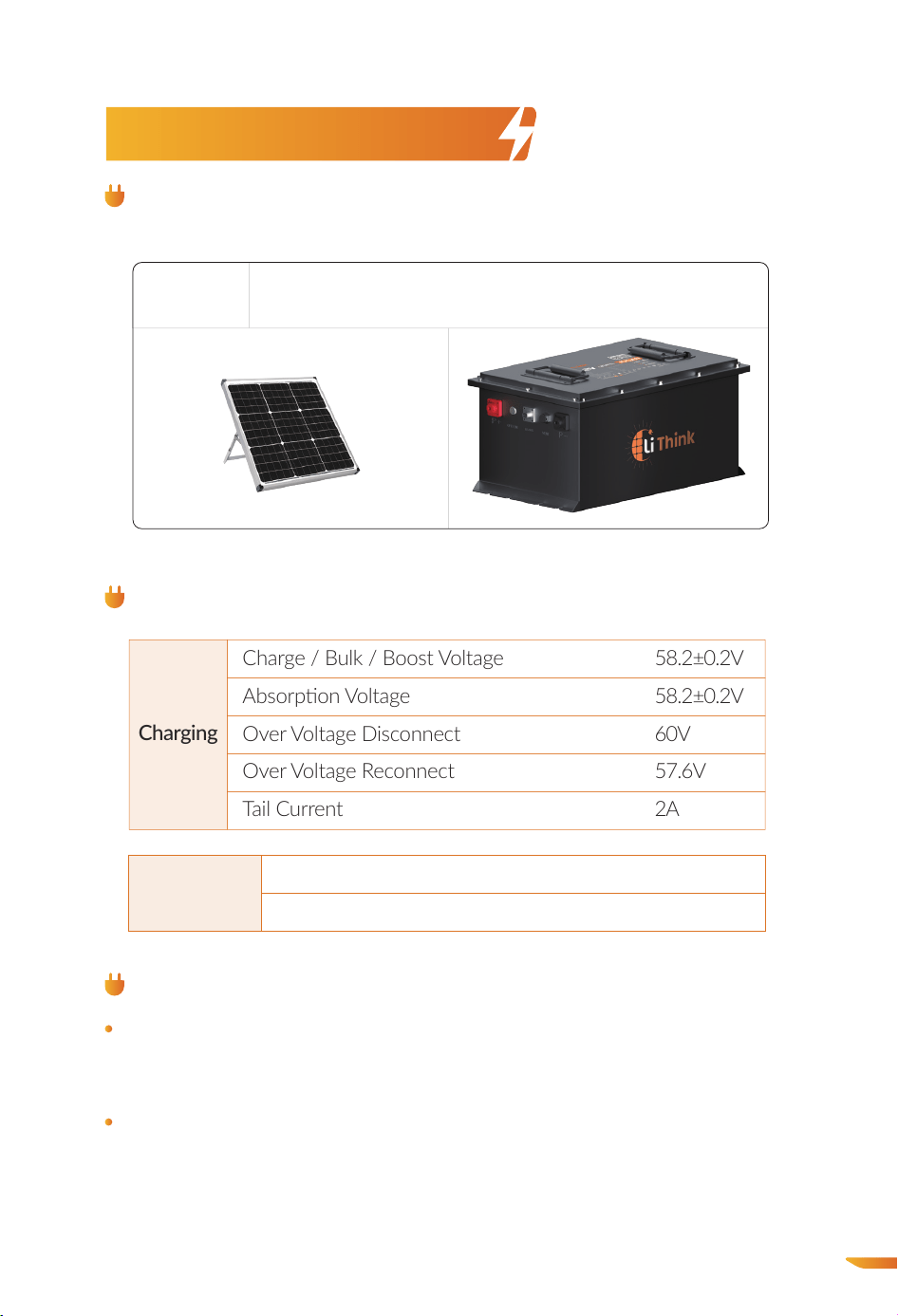
Recommended Charging Current: 21A(0.2C)
Recommendaons:
Charging Voltage: 57.6V to 58.4V
Disconnect the charger from the baery when it is fully charged.
Not recommended:
Using alligator clips to connect the charger or load to the baery. (the small
contact area may cause the terminals to melt and damage the baery).
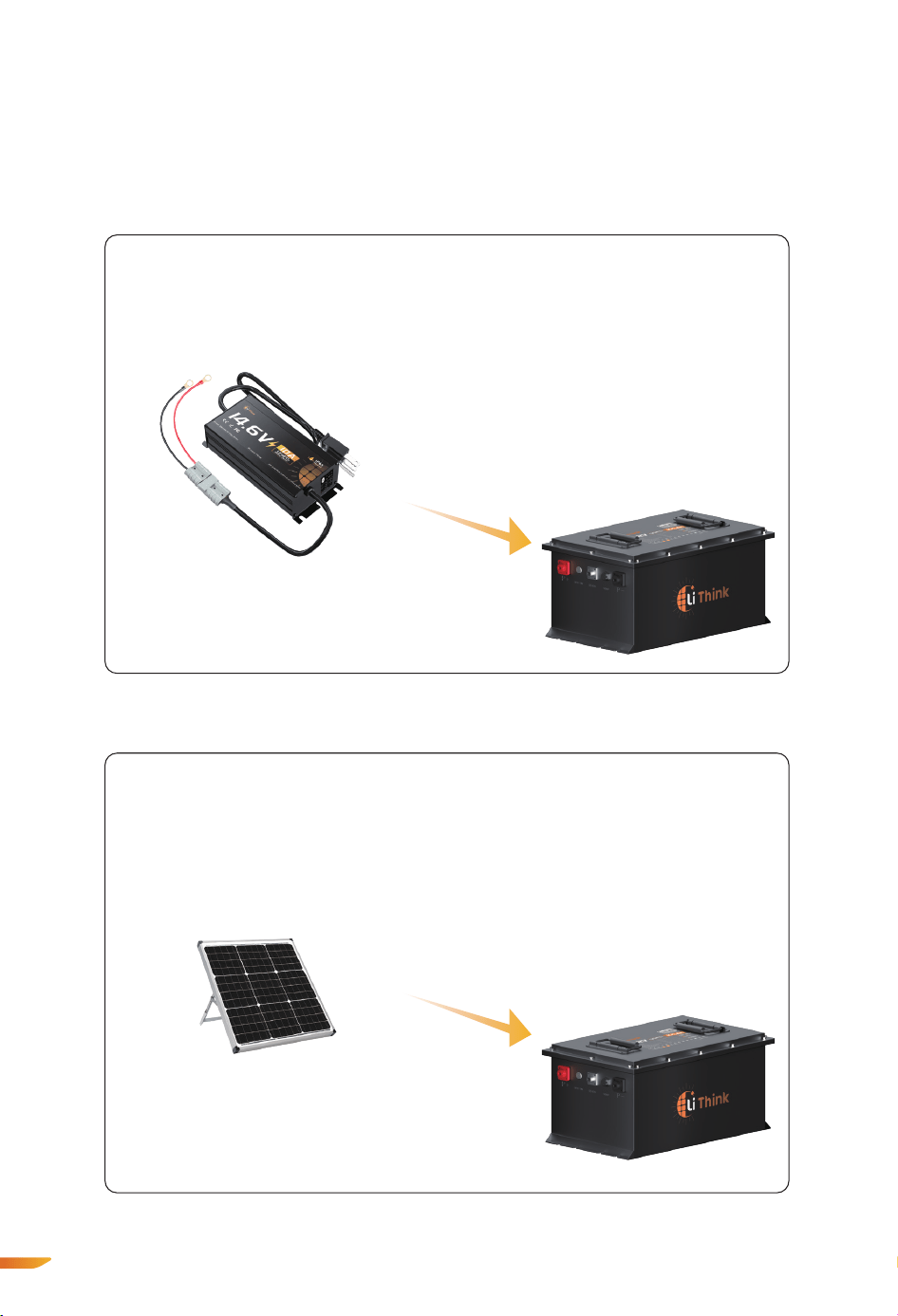
Solar Panel
LiFePO4 baeries Controller Sengs
Baery Charger
With effecve daily sunlight of around 4.5 hours, a 1200W
solar panel can fully charge the baery within one day.
1200W
Charging
Charge / Bulk / Boost Voltage
Absorpon Voltage
Over Voltage Disconnect
Over Voltage Reconnect
Tail Current
58.2±0.2V
58.2±0.2V
60V
57.6V
2A
Discharging
Low Voltage Disconnect
Low Voltage Reconnect
43.2V
44.8V
14
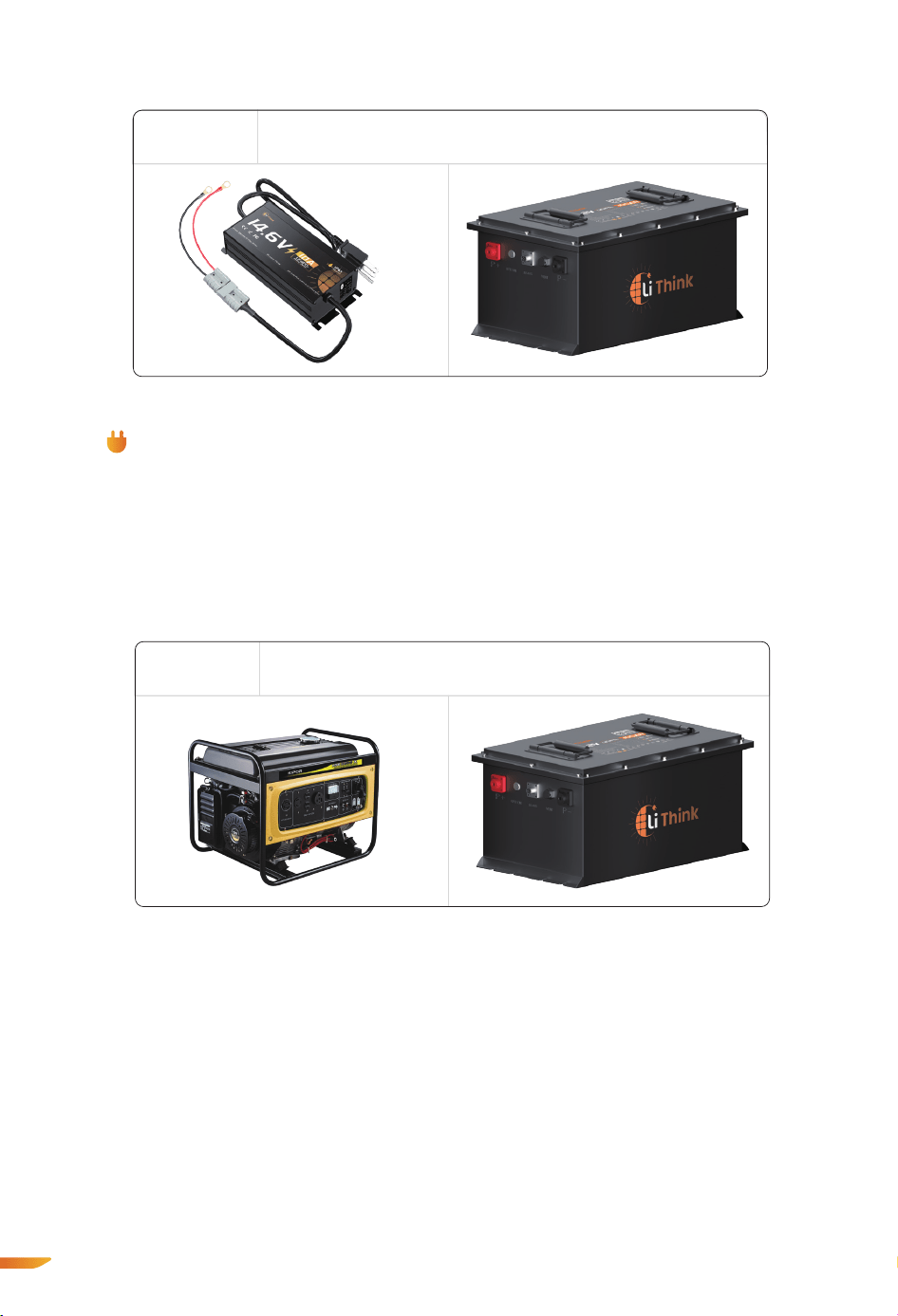
Alternator / Generator
The baery will reach a full charge in approximately 5 hours.21A (0.2C)
The LiThink baery can be charged via an alternator or generator.
Note: If the alternator/generator supports DC output, a DC-to-DC
charger should be installed between the baery and the generator. If the
alternator/generator supports AC output, refer to the "Baery Charger"
secon above and add a suitable baery charger between the baery
and the generator.
The baery will reach a full charge in approximately 5 hours.21A (0.2C)

15
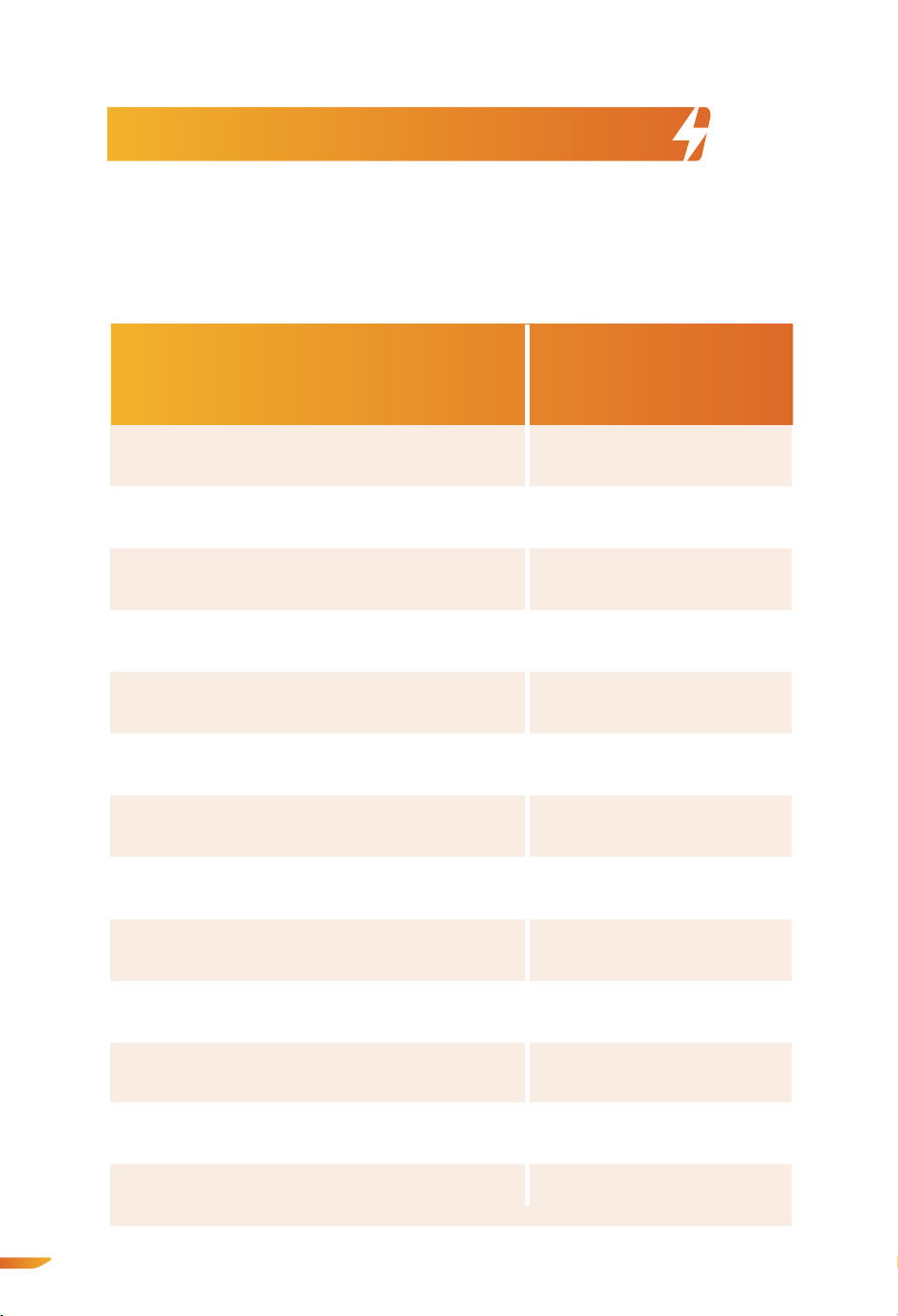
SOC (%) Voltage(V)
0
25
50
75
100
30 to 36
39 to 39.45
39.45 to 39.6
39.6 to 39.99
≥39.99
Baery Capacity Esmaon Guide
For LiFePO4 baeries, the voltage shown during
charging or discharging isn't the baery's true voltage. Once you finish
charging or discharging and disconnect the baery from the power
source, its voltage will gradually sele to the real value.
Resng Voltage: Measure the voltage aer disconnecng the baery
from
the charger and loads. Leave it undisturbed with no current flow for 3
hours.
16
14 (2.08)
12 (3.31)
10 (5.25)
8 (8.36)
6 (13.3)
4 (21.1)
2 (33.6)
1 (42.4)
1/0 (53.5)
2/0 (67.4)
4/0 (107)
2 * 1/0 (107)
2 * 2/0 (134.8)
20
25
35
50
65
85
115
130
150
175
230
300
350
PVC Copper Cable Size (AWG/mm(2)) Ampacity (A)
Recommended Cable Sizing
The values above comply with NEC Table 310.15(B)(16) for copper cables rated at 167°F
(75°C) and apply to ambient temperatures ≤ 86°F (30°C). For cables longer than 6 feet
(1,829 mm) or in environments exceeding 86°F (30°C), use larger-gauge cables to prevent
excessive voltage drop caused by undersized cables.
17
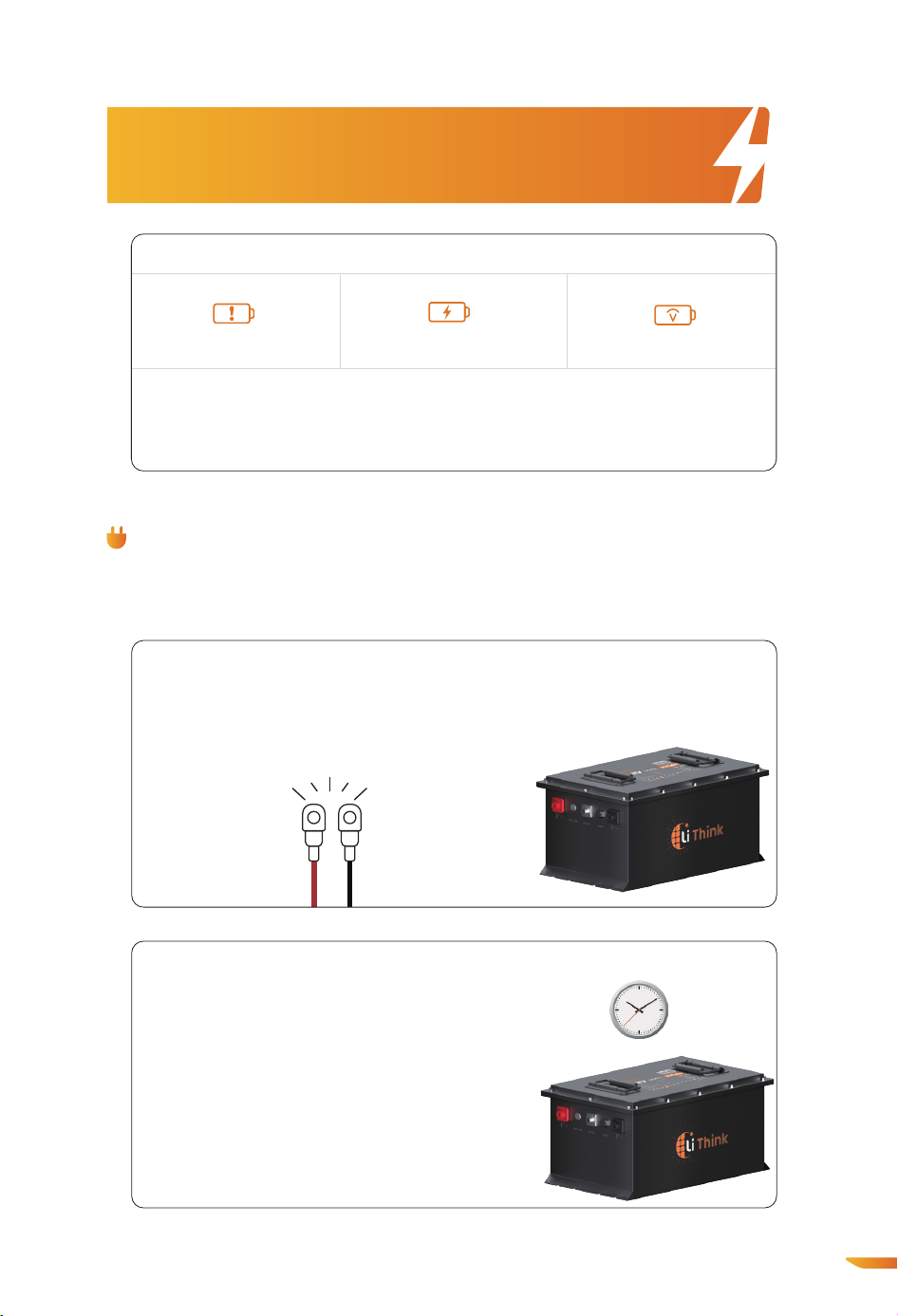
When the baery
there's an 85% chance that the BMS has shut it off for
protecon. You can try the following ways to acvate the
baery.
can't be chargedcan't work voltage < 36V
What To Do When The Baery
Stops Working?
If the BMS has cut off the baery for protecon, follow these steps to
acvate it:
Disconnect all connecons from the baery.
Leave the baery aside for 30 minutes. The
baery will then automacally recover to a
normal voltage (>40V) and can be used again
aer being fully charged.
Trennen
General Steps
Step①
Step②
30min.
18
3~10s
Acvate & Fully Charge
If the baery sll can't recover aer the above steps, try acvang it using
one of the following two methods. Once acvated (voltage > 30V) and fully
charged via the normal charging method, it can be used normally again.
Use a charger with a lithium baery acvaon funcon to fully
charge the baery.
Connect a controller that supports 48V LiFePO4 baery charging
to charge the baery for 3 to 10 seconds in sunny dayme.
Method②
Method①
Controller
(supports 48V LiFePO4)
charger with a lithium baery
acvaon funcon
Acvate & Fully Charge
19
Baery Capacity Esmaon Guide
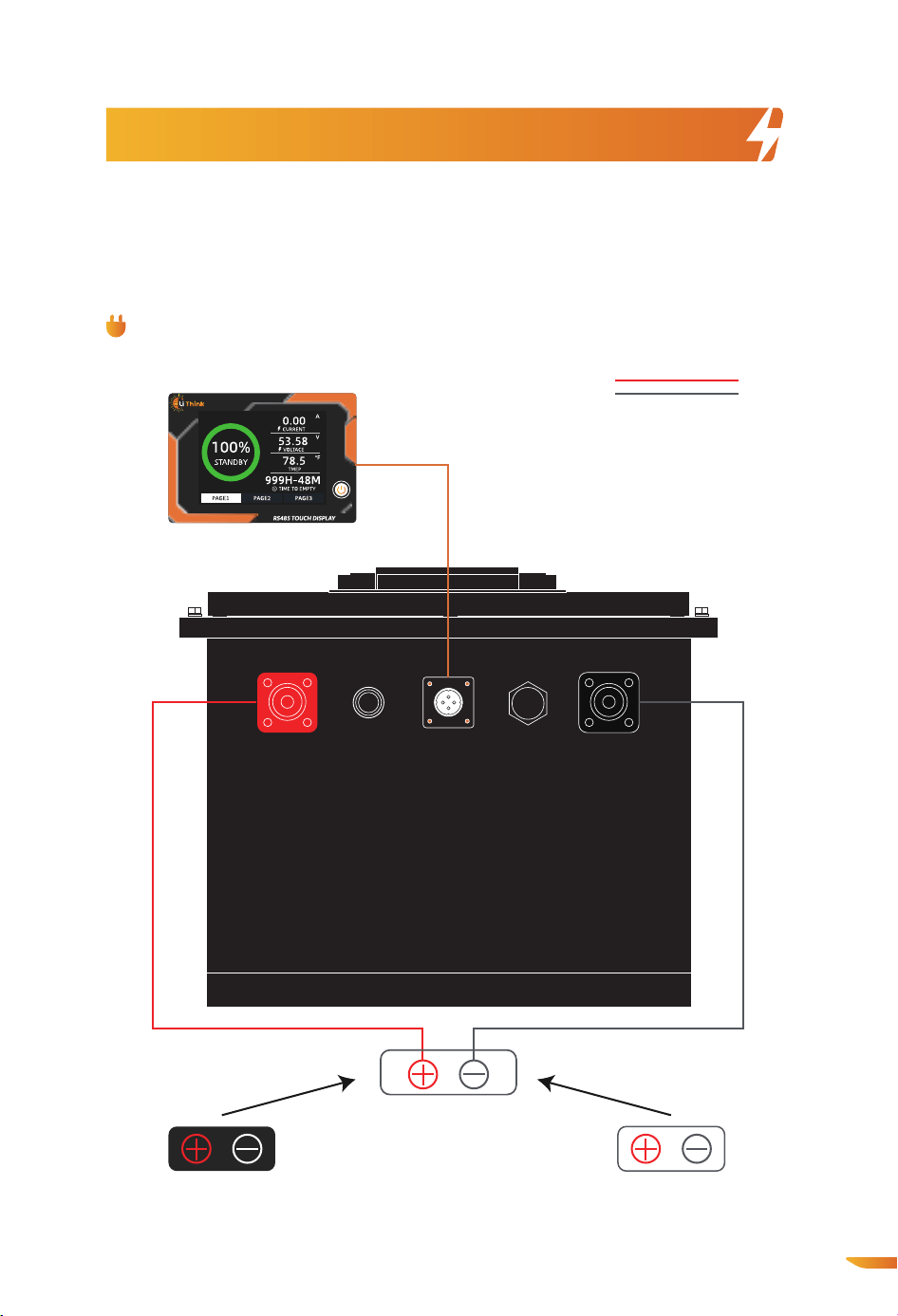
Typical electrical connecon
A typical wiring layout is shown in Figure 3. Connect the charger and the load
to the main output terminals of the baery. If an external display is used,
connect it to the RS485 communicaon port only. Always confirm correct
polarity before switching the baery on.
P + OFF/ON RS485 VRNT P -
Charger Load
Power cable

20
Installaon Guidelines
Before installaon, place the baery on a flat, dry, and stable surface. Make
sure the installaon area is clean, well venlated, and protected from direct
heat, water, and corrosive materials.
Turn the baery switch to OFF before making any connecon.
Secure the baery firmly using a suitable bracket, tray, or hold-down system.
Connect the posive cable to P+ and the negave cable to P-.
If applicable, connect the external display to the RS485 communicaon port.
Aer confirming that all connecons are correct and secure, switch the baery to ON
and check that the system operates normally.
Important Installaon Notes
Do not reverse the posive and negave connecons.
Do not connect the charger or load to the RS485 port.
Use insulated tools during installaon.
Make sure all terminals are ghtened securely.
Keep the vent area unobstructed.
Prevent the baery from moving, lng, or impacng other parts during vehicle operaon.
Keep the vent area unobstructed.
Inspect all cables for damage before use.
Recheck all connecons aer the first installaon and inial operaon.
Before Power-On Checklist
Baery is securely mounted.
Posive and negave cables are connected correctly.
RS485 cable, if used, is connected properly.
No loose terminals or exposed conductors are present.
Vent area is clear and unobstructed.


LIXIANG INTERNATIONAL (HONG KONG) ENERGY TECHNOLOGY CO., LIMITED
www.lithink.com
Li energy, Think safety,
Secure every journey.