
VIVOTEK
User's Manual - 1
Smart VCA provides the following features:
Crowd detection, Intrusion detection, Loitering detection, Missing object detection,
Unattended Object detection, Line Crossing detection, Face detection, Parking
Violation, Restricted Zone, and Running detection.
These features can suffice a wide variety of surveillance needs in different scenarios. The
feature package comes with fixed dome, bullet, or fisheye cameras to fit various installation
sites. They can be used to mointor ofce buildings, retail stores, industrial assets, for areas less
attended by security staff. VCA Events are incorporated into VIVOTEK’s VAST software and
NVR, enabling rapid search through the archived footages. The instant video prompts enable
security personnel to quickly react to potential problems.
Minimized No. of False Alarms: An important factor in the Smart VCA is a human and vehicle
silhouette database and the rapid responses via an artificial neural network technology. The
Smart engine instantly recognizes human appearances in a video surveillance area. Since
people and vehicles are the objects of interest in the majority of video surveillance, the People
detection feature enables users to quickly congure their installation.
The traditional video contents analysis relies heavily on the detection of pixel changes or motion
vectors, and false alarms can be triggered by swaying trees, clouds floating by, or even the
appearance of little animals. The Smart VCA detection, with comprehensive detection rules
and tunable time lter, can eliminate the defects of traditional video detection and facilitate the
conguration at a surveillance site.
Ease of Configuration: With the self-learning algorithm, light changes or swaying vegetation,
or animal activities in the scene are not taken as event triggers. Only activities worth notice
will trigger an event. This helps reduce false alarms and the time and efforts for a camera
conguration.
Reduced Management Efforts: Integrated with VIVOTEK’s VAST software, the VCA events can
be tagged as video clips, making the forensic search effortless. With ordinary video recordings,
it often takes hours to search for meaningful videos from the archives. With the VCA tagged
events, searching for the related evidences is reduced to a matter of minutes. The correlation of
events on different cameras are available at a glimpse as tagged events in the VAST Alarm list.
If users choose to record the videos only when VCA alarms occur, the bandwidth and storage
requirements can be minimized. Also, the detection and analysis takes place on individual
cameras, instead of being processed on a dedicated server. There is no need for an expensive
server hardware, and the use of network bandwidth for transmitting videos is reduced to
minimum.
Smart VCA
User Guide
https://www.dropbox.com/sh/eo7e72dc1vh6vtc/AADVuNErcli6woSgWBA1RyDta?dl=0
Rev.: 1.6
SW rev.: 6.17
VIVOTEK
2 - User's Manual
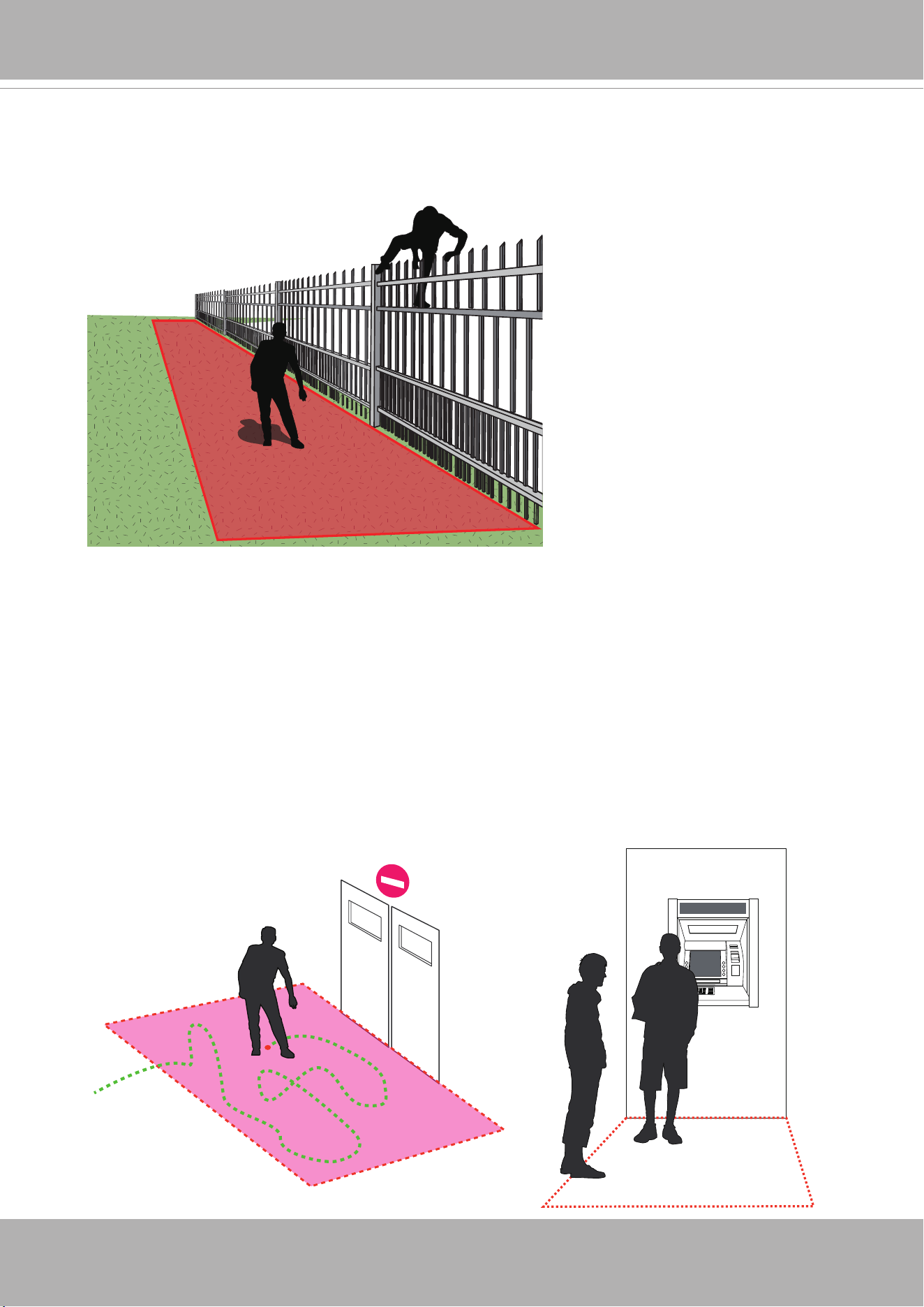
For VCA events such as a wait line that is too long at the checkout, a trespasser crossing
the fence, the security staff can quickly take a look.
Smart VCA also supports the traditional event messaging, such as Sending live streams,
record videos, send HTTP requests, send videos to FTP, sending Emails with snapshots,
etc.
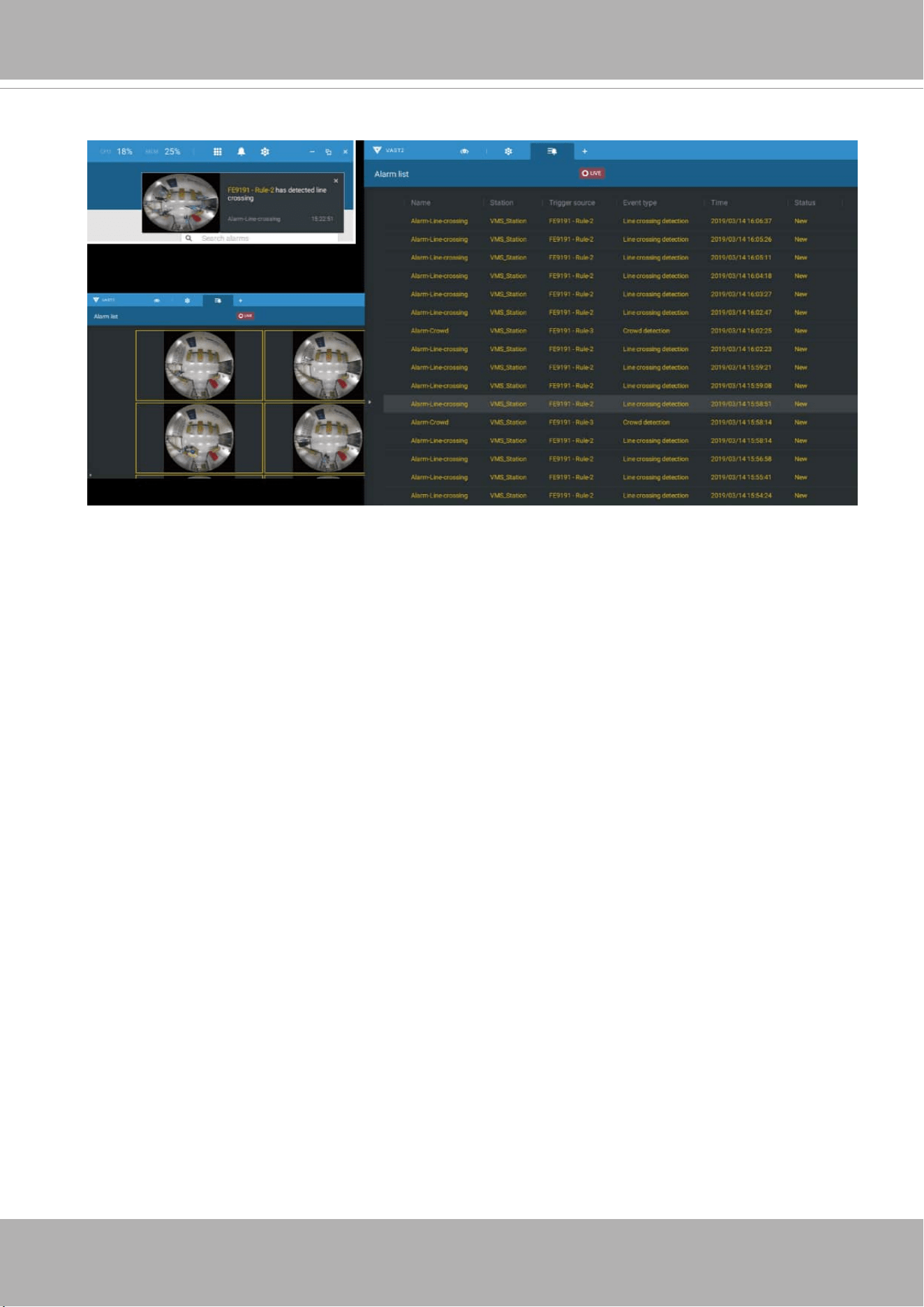
VCA Events as Event Prompts, in List, and in Thumbnails.
VIVOTEK
User's Manual - 3
Smart VCA: Individual Features
Crowd Detection
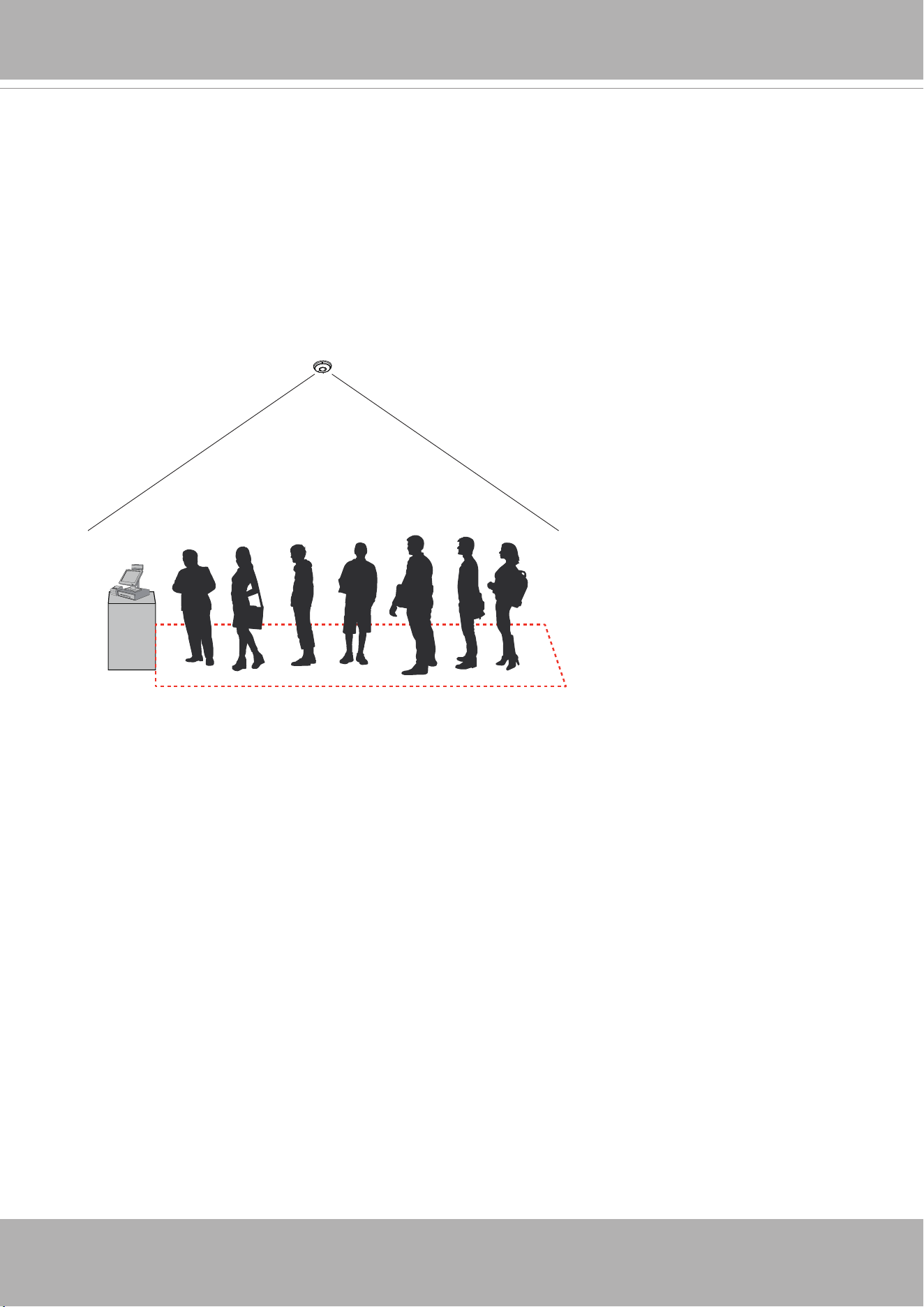
For important access or checkout areas, the crowd detection can be used to trigger an
alarm when the number of people waiting has exceeded a configured threshold. The
number of people waiting in queue reminds a manager of staff management problems and
to take immediate actions, e.g., sending men to help or opening another check-in counter.
The applicable scenarios of this feature can be:
* Detects abnormal gatherings within sensitive areas.
* Monitors the utilization rate of services or facilities.
* Can help improve the efciency of customer service and improve customer experience. It
leads to better planning and more cost-effective stafng.
VIVOTEK
4 - User's Manual
Loitering Detection
The Loitering detection can be used to detect a person or a group of people lingering in an
area for longer than a preset time threshold.
ATM
Intrusion Detection
VIVOTEK Intrusion Detection can be used to detect people entering or leaving a virtual
area in the camera eld of view.
Alerted zone
The applicable scenarios of this feature can be:
* Detects when a person enters a bank vault or school after the ofce hours.
* Detects when a person leaves an emergency exit or fire escape, or any place that is
normally forbidden from access.
VIVOTEK
User's Manual - 5
The applicable scenarios of this feature can be:
* Detects when a person is loitering at a walk-up of ATM lane.
* Detects when a person is loitering in a high-theft area of a store, or to prevent vandalism
and break-ins.
* Detects when a person is loitering in an area that is normally not an access for visitors.
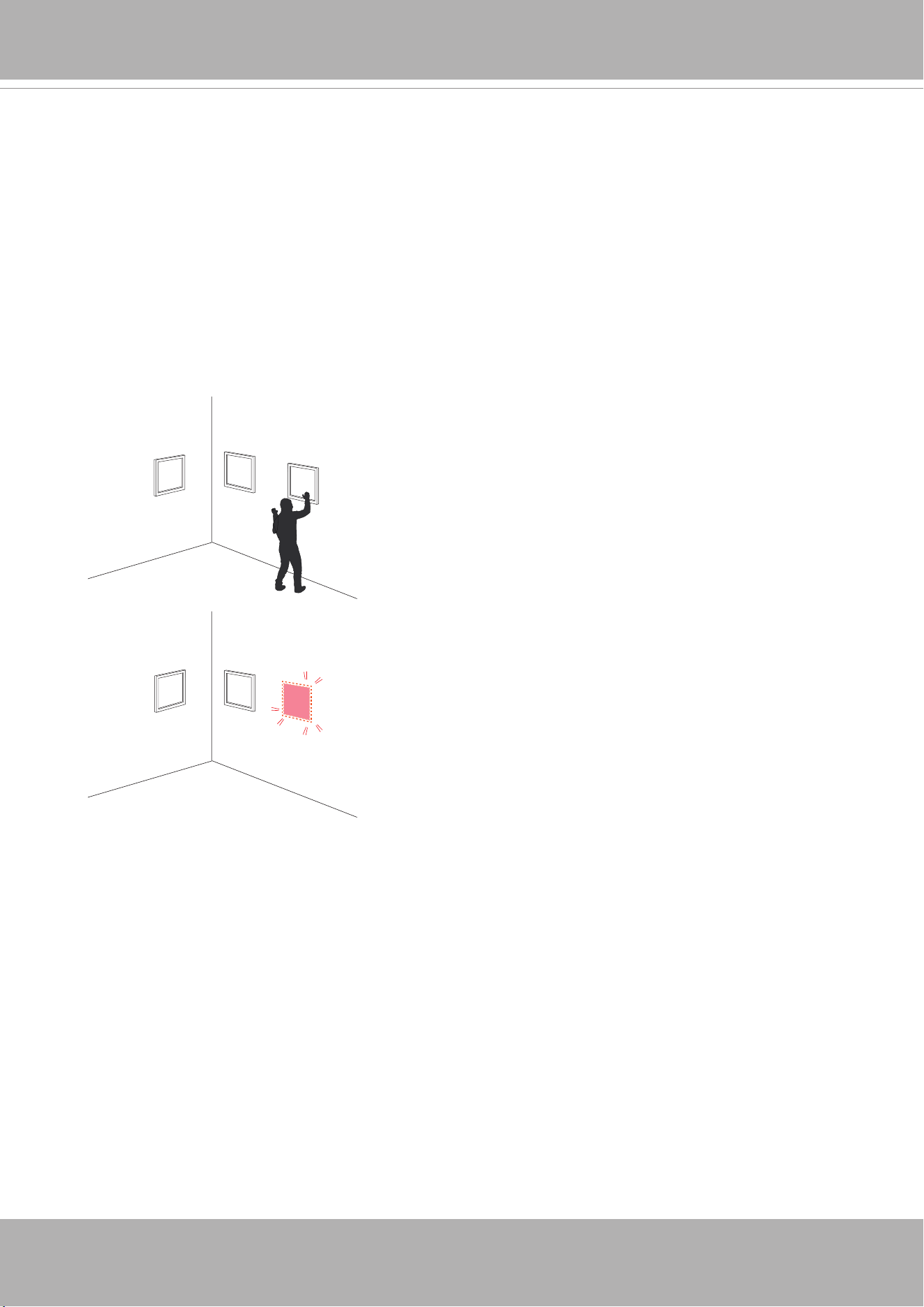
Missing Object Detection
The Missing Object detection can be used to detect the removal of a predened asset from
a surveillance scene.
The applicable scenarios of this feature can be:
* In a campus setting, the Missing Object feature can be used to monitor high-risk areas
for theft, such as the administrative ofces, computer labs, or science laboratories.
* Detects when theft occurs in storage areas or warehouses. It is helpful when there are
security personnels monitoring the scene, yet their attention went down through time.
VIVOTEK
6 - User's Manual
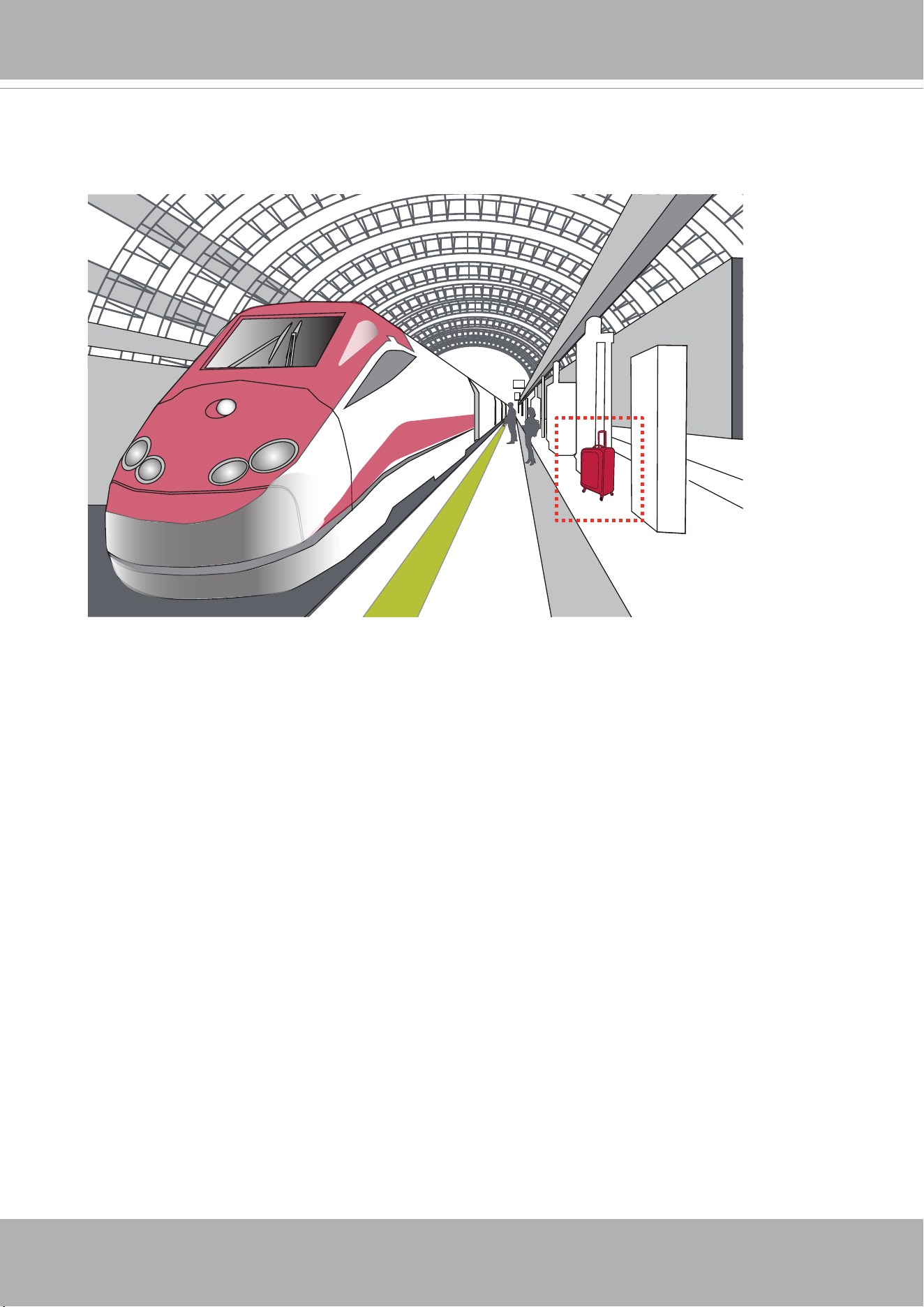
Unattended Object Detection
The Unattended Object detection can be used to detect objects intentionally or
unintentionally left in scene.
The applicable scenarios of this feature can be:
* Detects objects placed in front of an emergency exit.
* Detects objects left on subway tracks, platform, on a bridge, or in a bank lobby.
VIVOTEK
User's Manual - 7
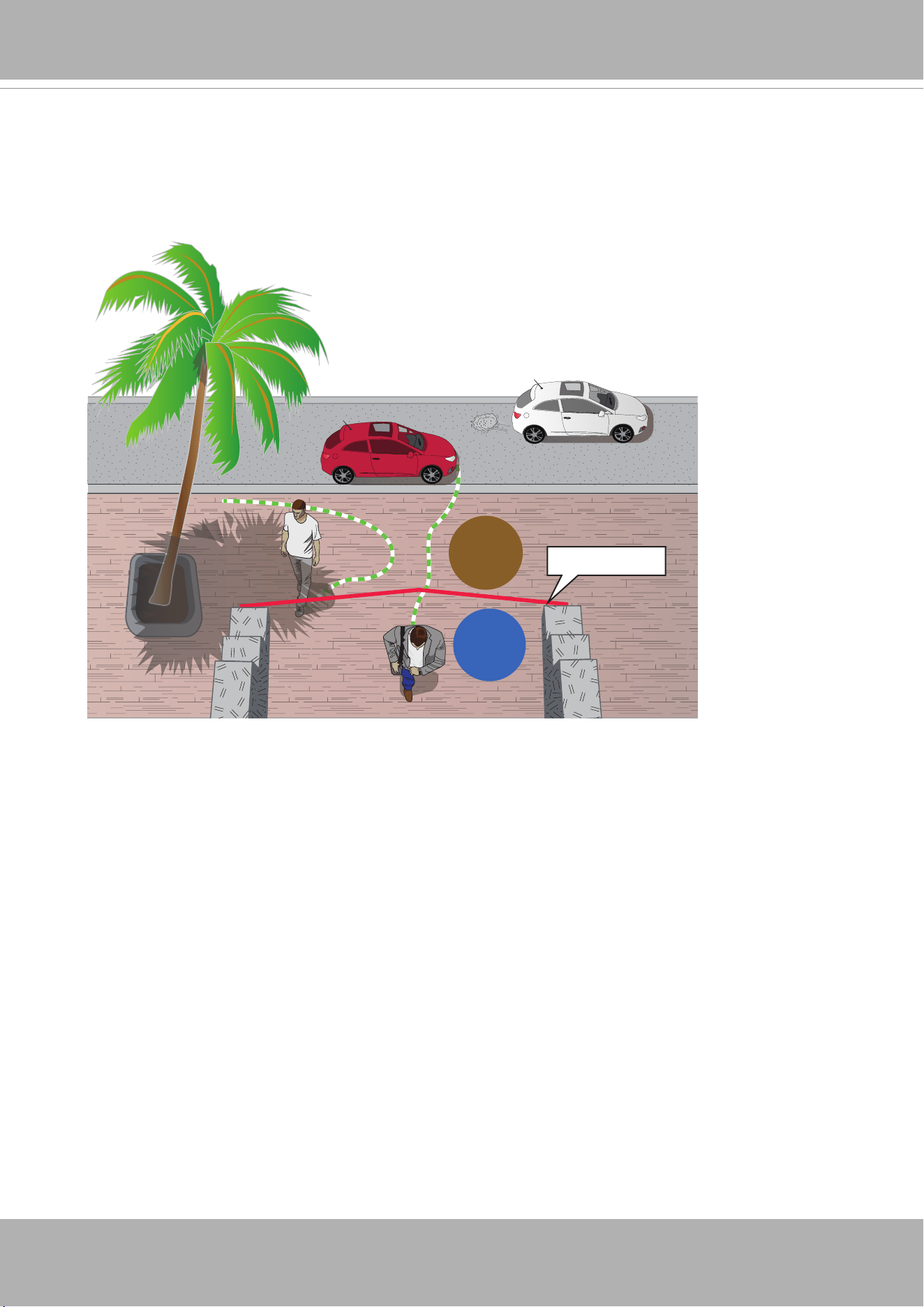
Line Crossing Detection
The Line Crossing detection detects one or multiple persons crossing a virtual trip-wire.
The trafc direction can be assigned on screen for persons passing the line in one specic
direction or in both directions.
The applicable scenarios of this feature can be:
* Detects someone who enters a drive way, entrance, or exit through the virtual line.
* Detects and triggers an alarm in a predetermined direction.
* The detection line can be used as a fence boundary to know if someone has crossed the
articulated line around a perimeter.
Out
In
Detection line
VIVOTEK
8 - User's Manual
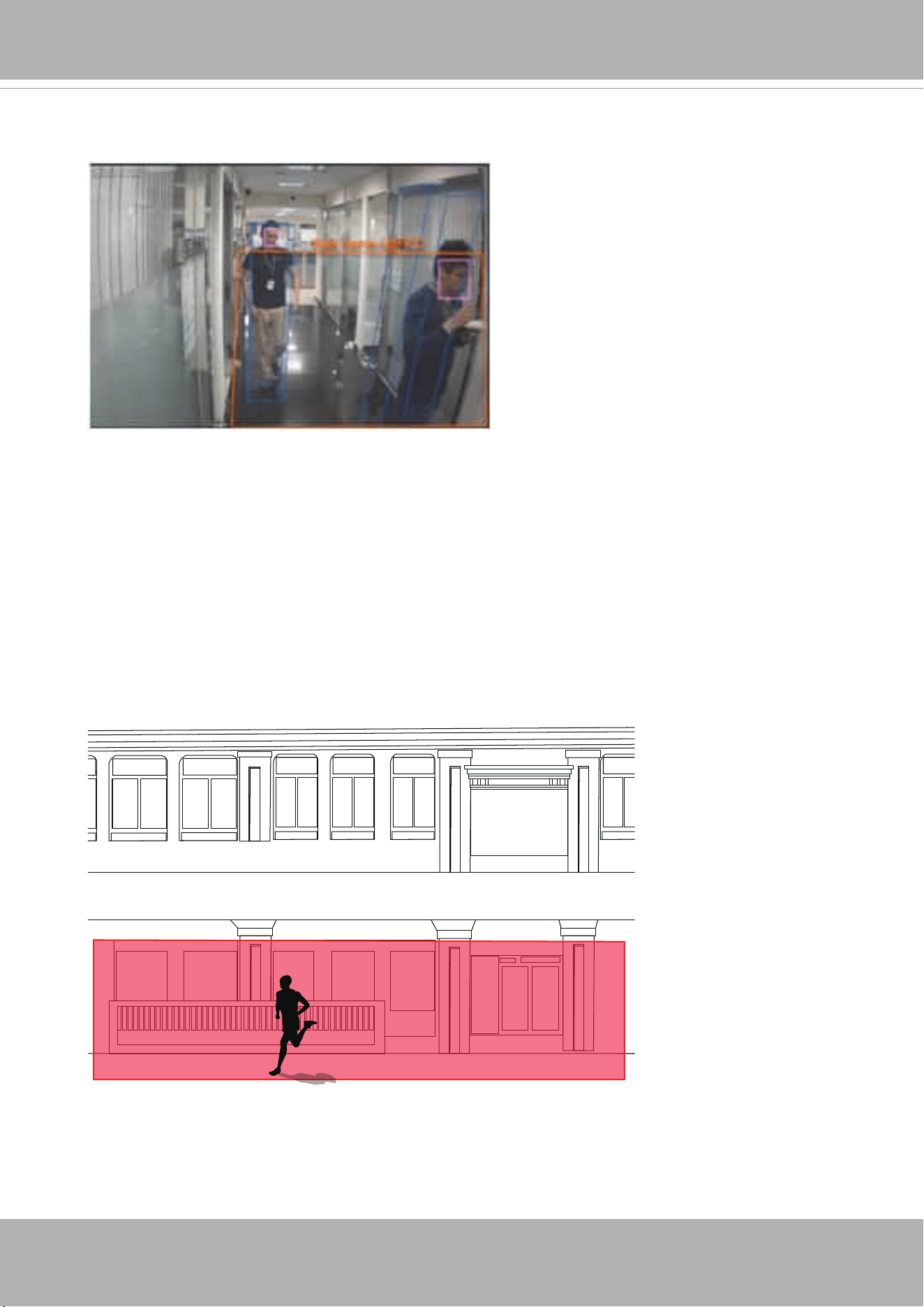
Face Detection
Face detection detects the presence of human faces in the eld of view.
The applicable scenarios of this feature can be:
* By tagging the video frames which contain facial features, the administrator can later
search for the video clips with presence of these faces in a more efficient manner.
Instead of searching through hours of recordings, face detection can facilitate the
process of forensic search in recorded videos. Objects irrelevant to facial features will be
ltered out.
Running Detection
Running Detection can be used to detect people running from a crime scene or rioting
occurs in a virtual area, such as gang ghts. The algorithm can detect abnormal running
behavior with a speed higher than the normal walking speed.
Alerted zone
The applicable scenarios of this feature can be:
* Detects when a person running from a crime scene.
* Detects unusual events when one or many people running in abnormal speed such as on
a plaza, shopping mall, etc., that is normally calm with casual activities.
VIVOTEK
User's Manual - 9
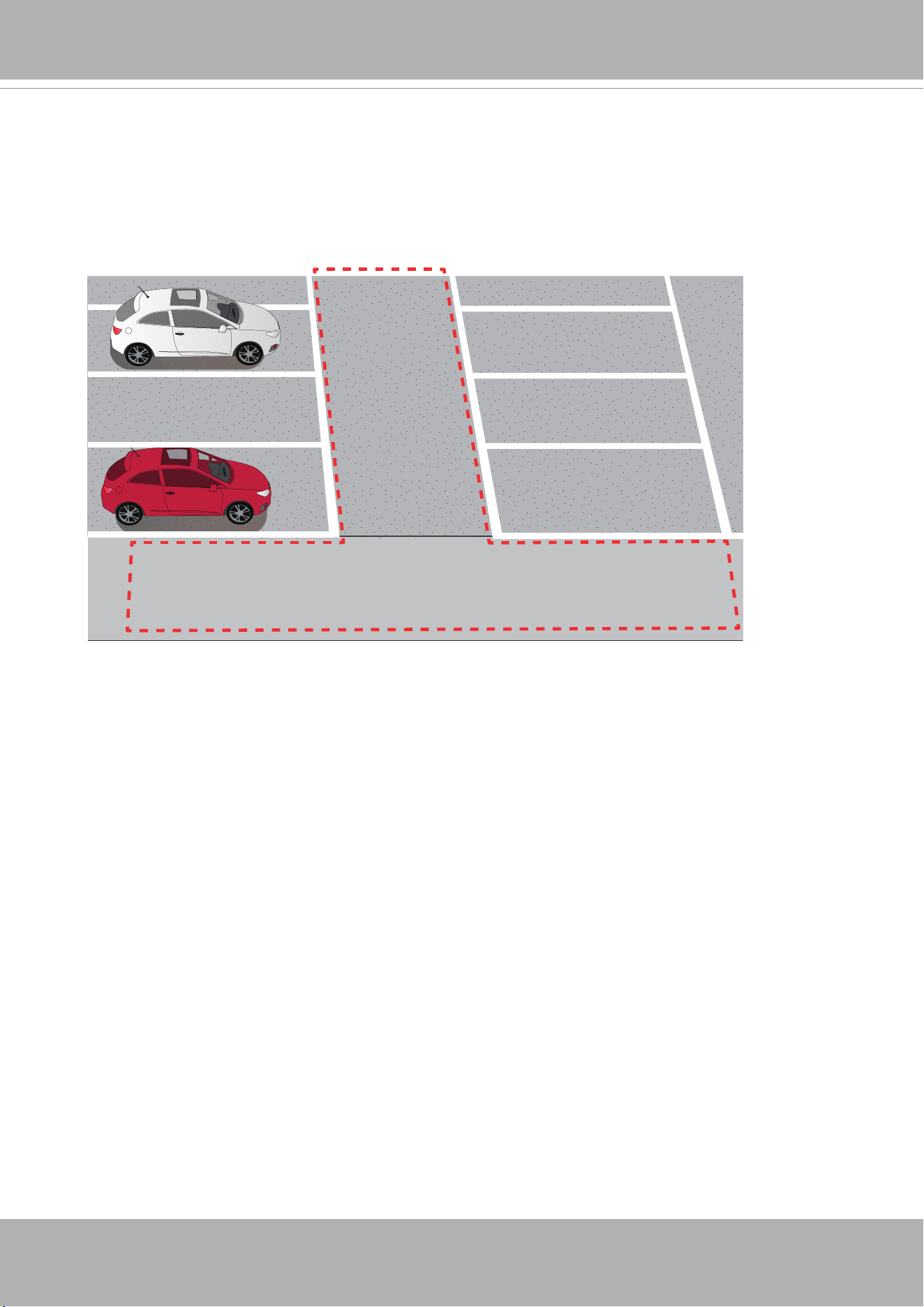
Parking Violation
The Parking Violation detection helps when vehicles stay still for a period of time in an
area. You can congure an area where parking can cause problems. You can congure
an event notication when vehicles stay longer than a congurable period of time, e.g., 20
seconds.
The applicable scenarios of this feature can be:
* Detects abnormal parking on the side of the road.
* To receive notications when someone parks in front of an important access.
No-parking area
VIVOTEK
10 - User's Manual
1. The effectiveness of the Smart Motion detection slightly diminishes for objects lower
than 130cm, such as children.
2. The accuracy of vehicle detection is lower for large trucks or trailers. It works best for
smaller vehicles moving in a perpendicular direction to the eld of view.
3. For VCA running on MS9390, the VCA is turned off by default. When running VCA, the
frame rate will be reduced. You can manually turn on the VCA if preferred.
4. When using an HTTPS connection, you should stop and re-start the VCA after you
upload a license.
NOTE:
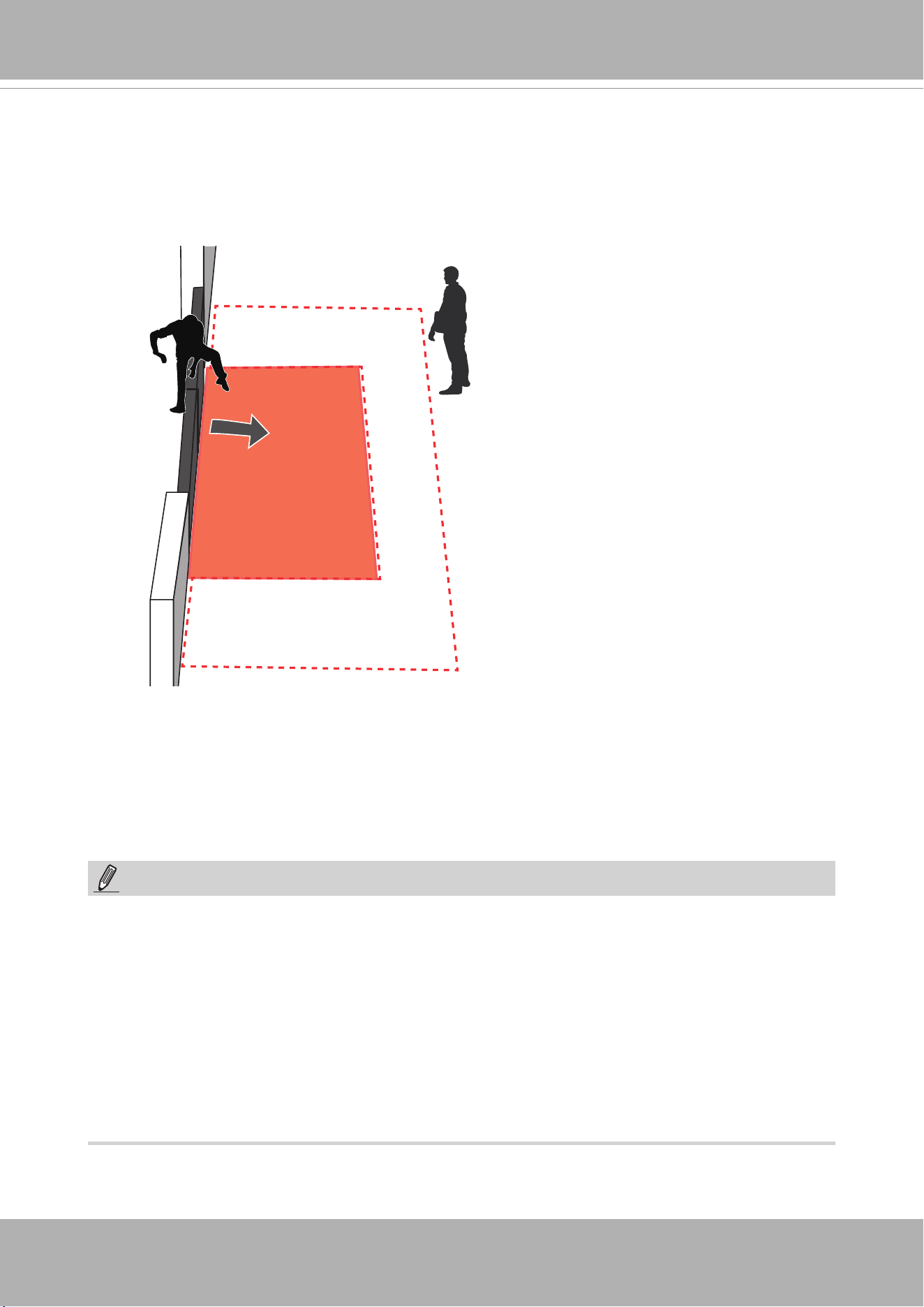
Restricted Zone
The Restricted Zone is a conditional detection where an intruder can be detected by
entering a Restricted zone. The workers inside a facility will not trigger an alarm by entering
a Dened zone rst and then enter the Restricted zone.
The applicable scenarios of this feature can be:
* Detects and triggers an alarm when a person or vehicle enters a restricted zone while
someone passes through two zones will not trigger an alarm.
Zone1
Zone2
Defined zone
Restricted zone
Intruder
Your employee

VIVOTEK
User's Manual - 11
Applicable Cameras:
Please refer to VIVOTEK’s VCA package and camera documentation on the website.
The majority of VIVOTEK’s latest camera models will come embedded with this utility.
Revision History
■ Rev. 1.0: Initial release
■ Rev. 1.1: Updated some operation screens and parameters.
■ Rev. 1.2: Added description for Running detection; enlarged MS9390 people detection area; and
supports MS9321.
■ Rev. 1.3: Temporarily removed Running detection.
■ Rev. 1.4: Added Running detection and VCA schedule.
■ Rev. 1.5: Added Parking Violation and Restricted Zone detection.
■ Rev. 1.6: Added changes to Motion cell coverage, Export cong./logs without package running,
Proprietary format for 3rd-party VMS plug-in, and Auto calibration.
Requirements for Running the Smart VCA:
1.
The embedded video tracking requires a monitoring session on Chrome, Microsoft Edge
browser. Note that Chrome does not support H.265 streaming.
If you open a console with a non-IE browser, the Smart Motion stream must be
congured to be streaming in MJPEG.
2.
Lens cleanliness is also required because dust spots or smears on dirty lens can
produce miscalculation of pixels, correlation, and movements.
3.
For other installation concerns, please refer to page 16, Considerations.
4
. Avoid glass and reective materials, such as aluminum foils, in the eld of view. If
unavoidable, you can use the Exclusive area settings to get rid of the side effects.
5.
Make sure the camera is installed appropriately above the area of your interest, e.g.,
an entrance to building. Installation at an extremely busy area, e.g., a square or cross
road section with dozens of passengers per minute, may not apply due to the system
computing load.
6
. Due to the system load, do not open two conguration web consoles at the same time.
IMPORTANT:
VIVOTEK
12 - User's Manual
Licensing
The Smart VCA features can be acquired through the following:
1. VCA package and license are ready in the factory.
2. VCA package is ready, the license is purchased later. Users need to upload the VCA license to
enable the features.
3. Online purchase of the VCA package and license. Users need to manually upload the VCA
packages and licenses.
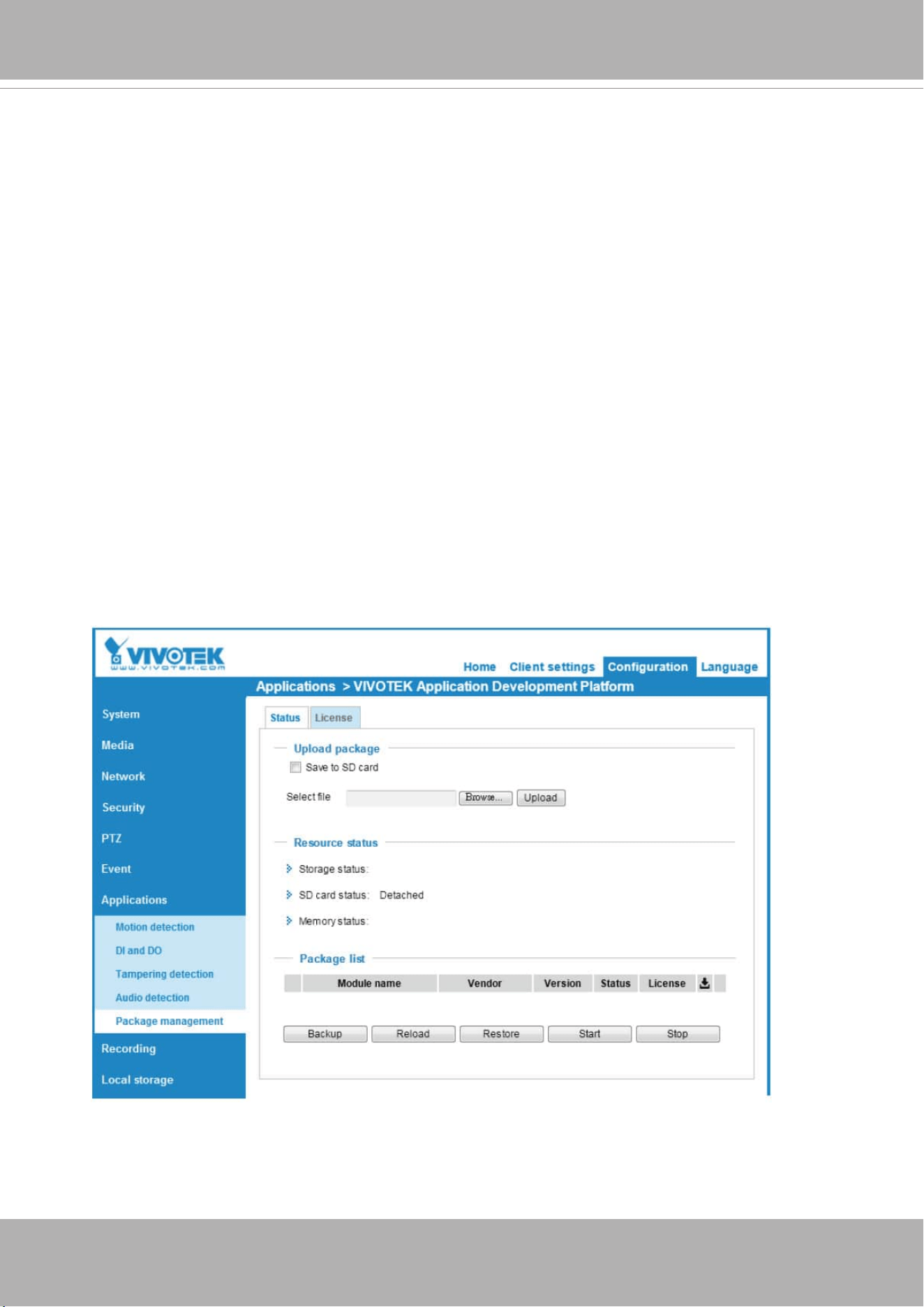
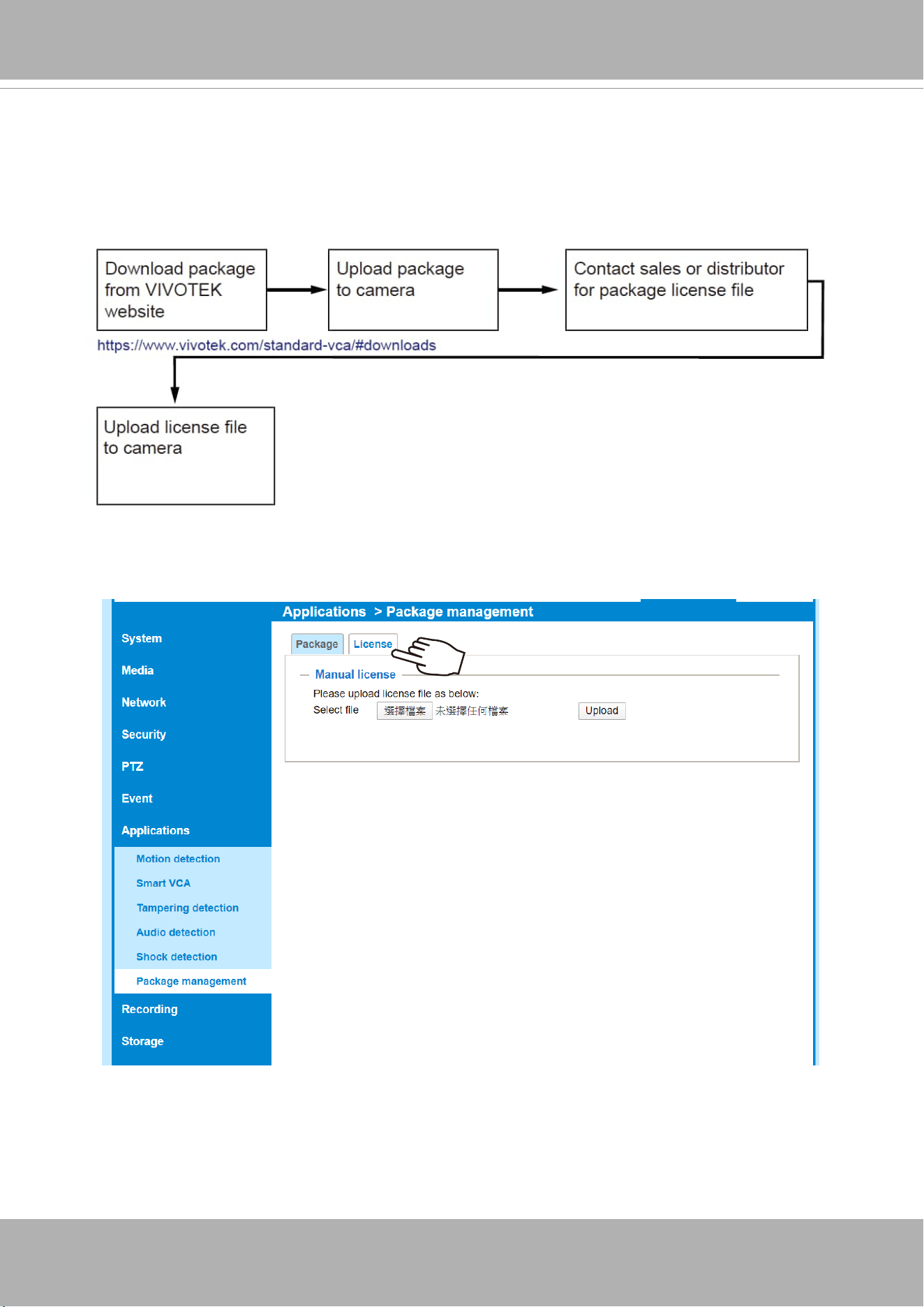
Uploading Smart VCA Package:
1.
You can download the VCA package from VIVOTEK's website or acquire it through your
distributors or sales. Acquire the package les and click the Browse button to locate
the VCA package you received. The web address is: https://www.vivotek.com/learning/
feature-article/24/smart-vca.
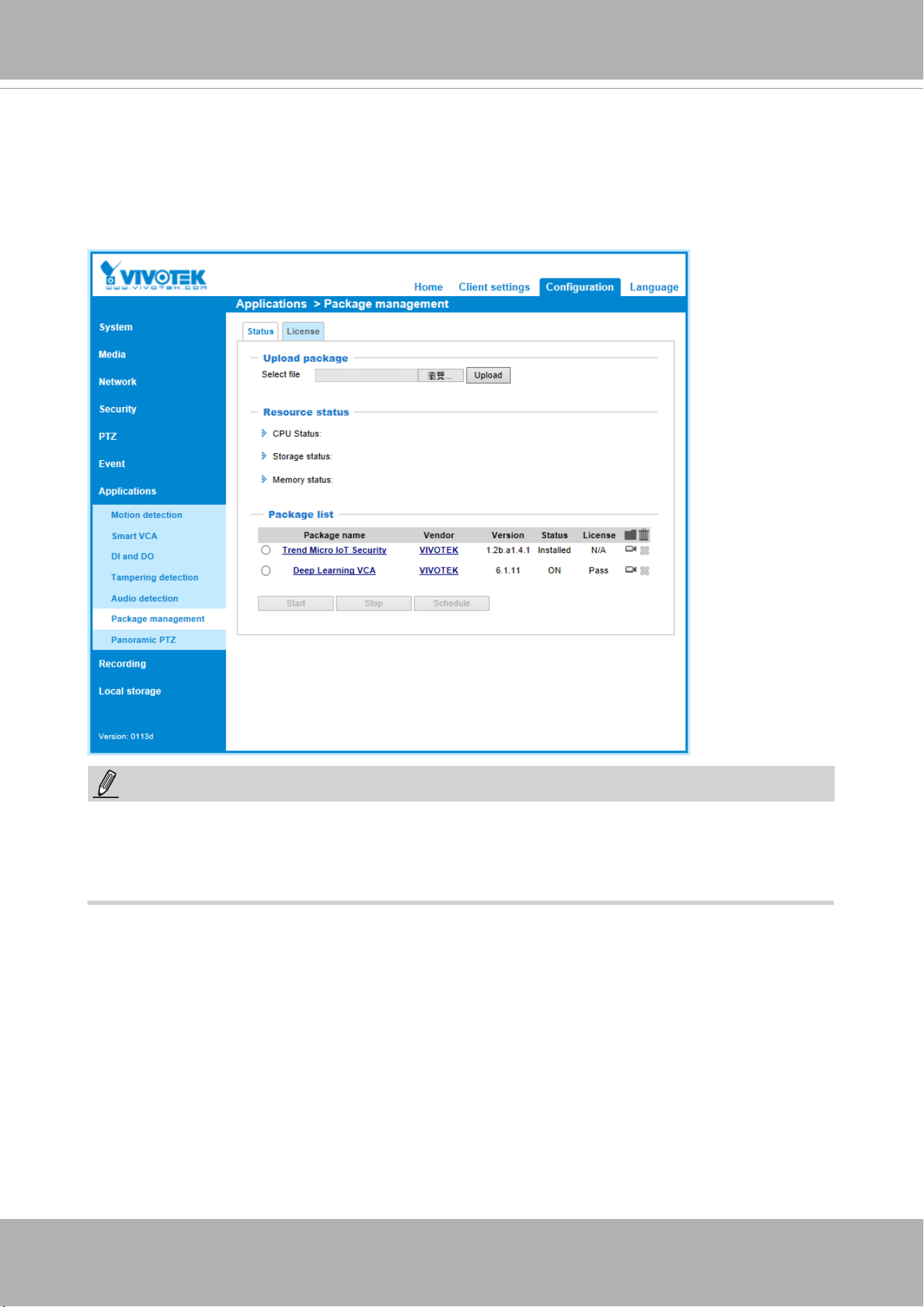
On a web console, open the Conguration > Applications > Package management
page.
VIVOTEK
User's Manual - 13
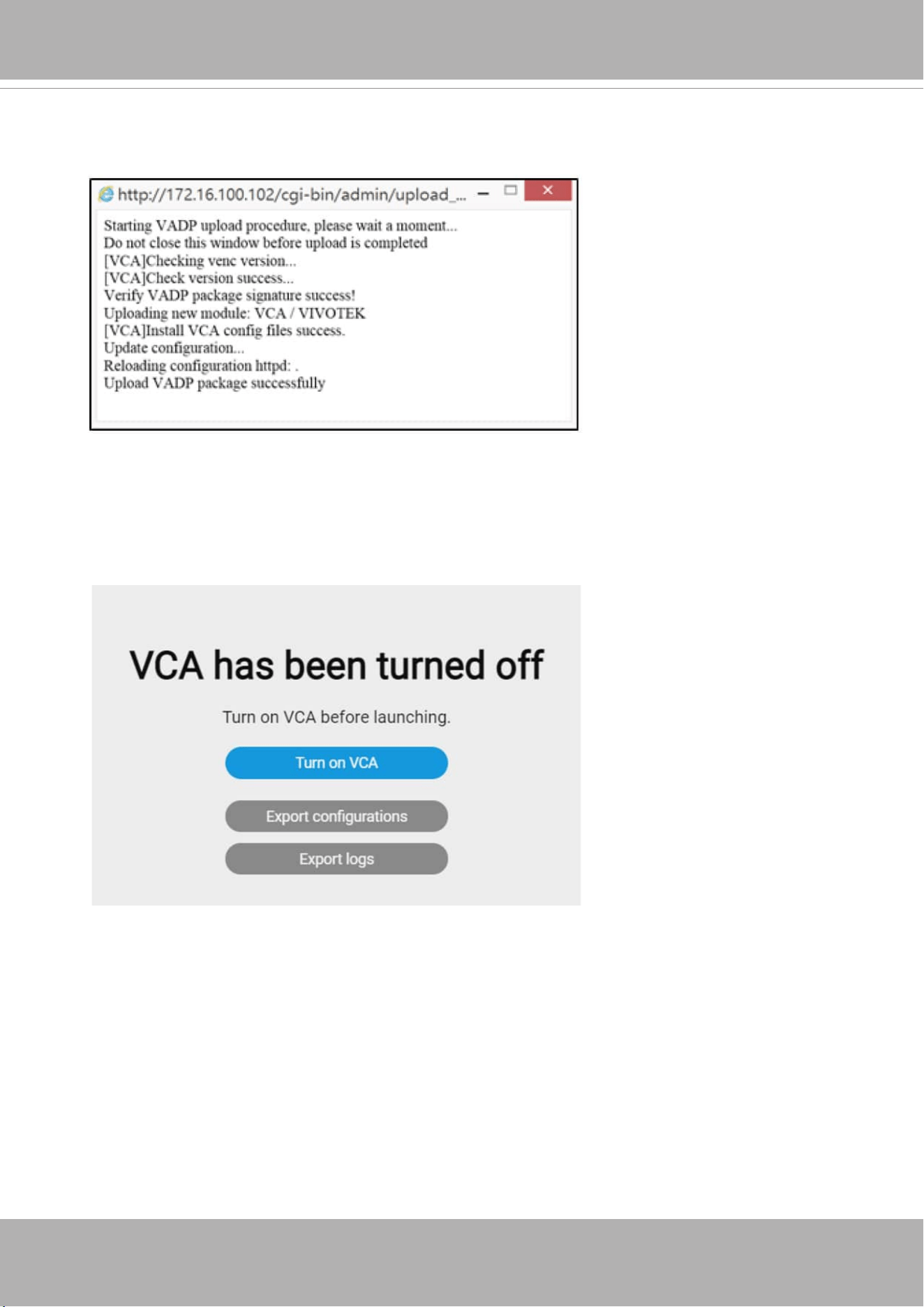
2.
Click the Upload button to upload the VCA package. For a package le, the le
extension name "gz." The screen message for successful upload is shown below.
For debug purposes, you can export your congurations and system logs without
running the VCA package.
VIVOTEK
14 - User's Manual
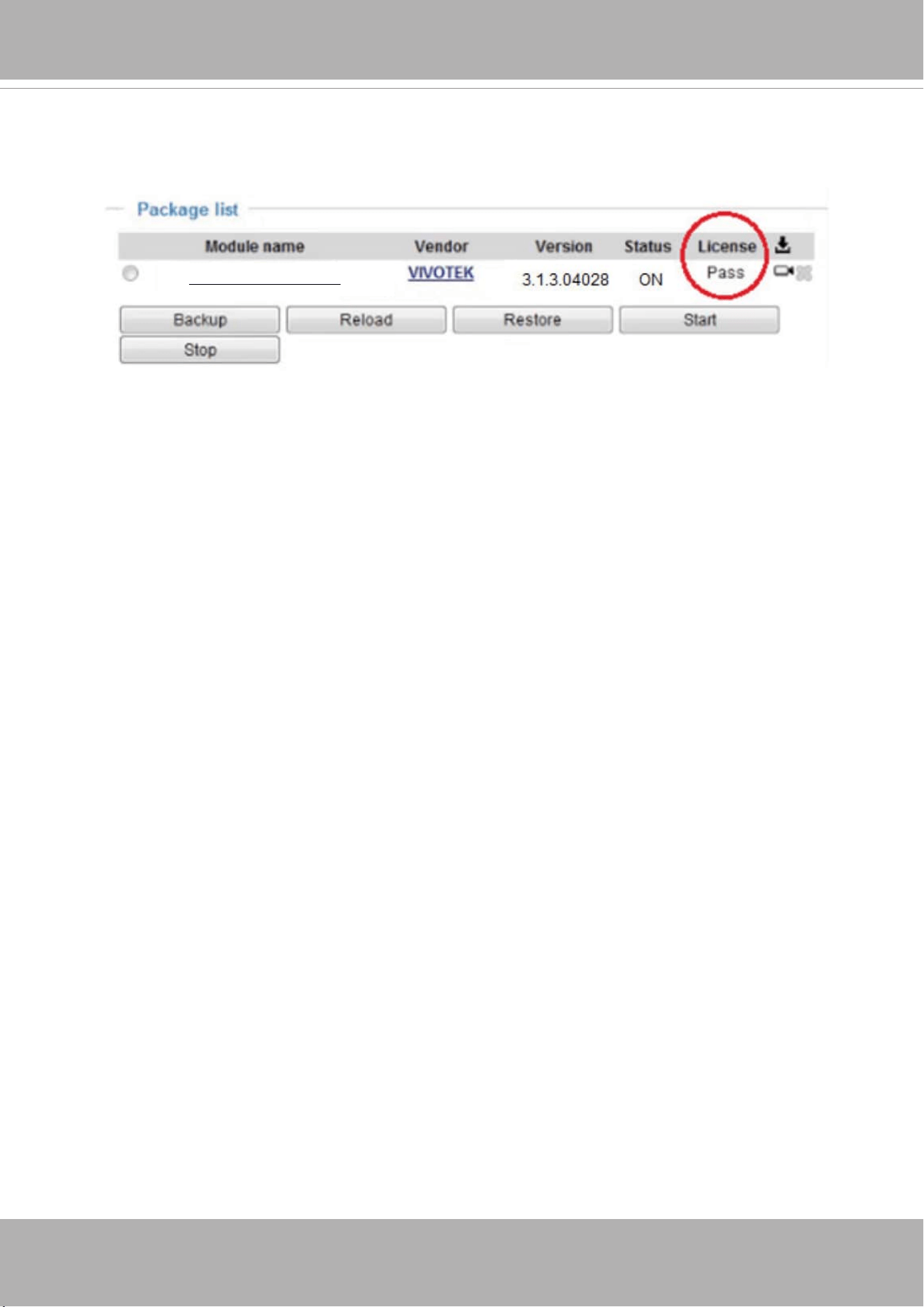
Manual Licensing:
1.
Click on the License tab (on the web console to the camera) to open the License
window.
VCA package
2.
On the License page, use the Browse and Upload buttons to upload the license.
VIVOTEK
User's Manual - 15
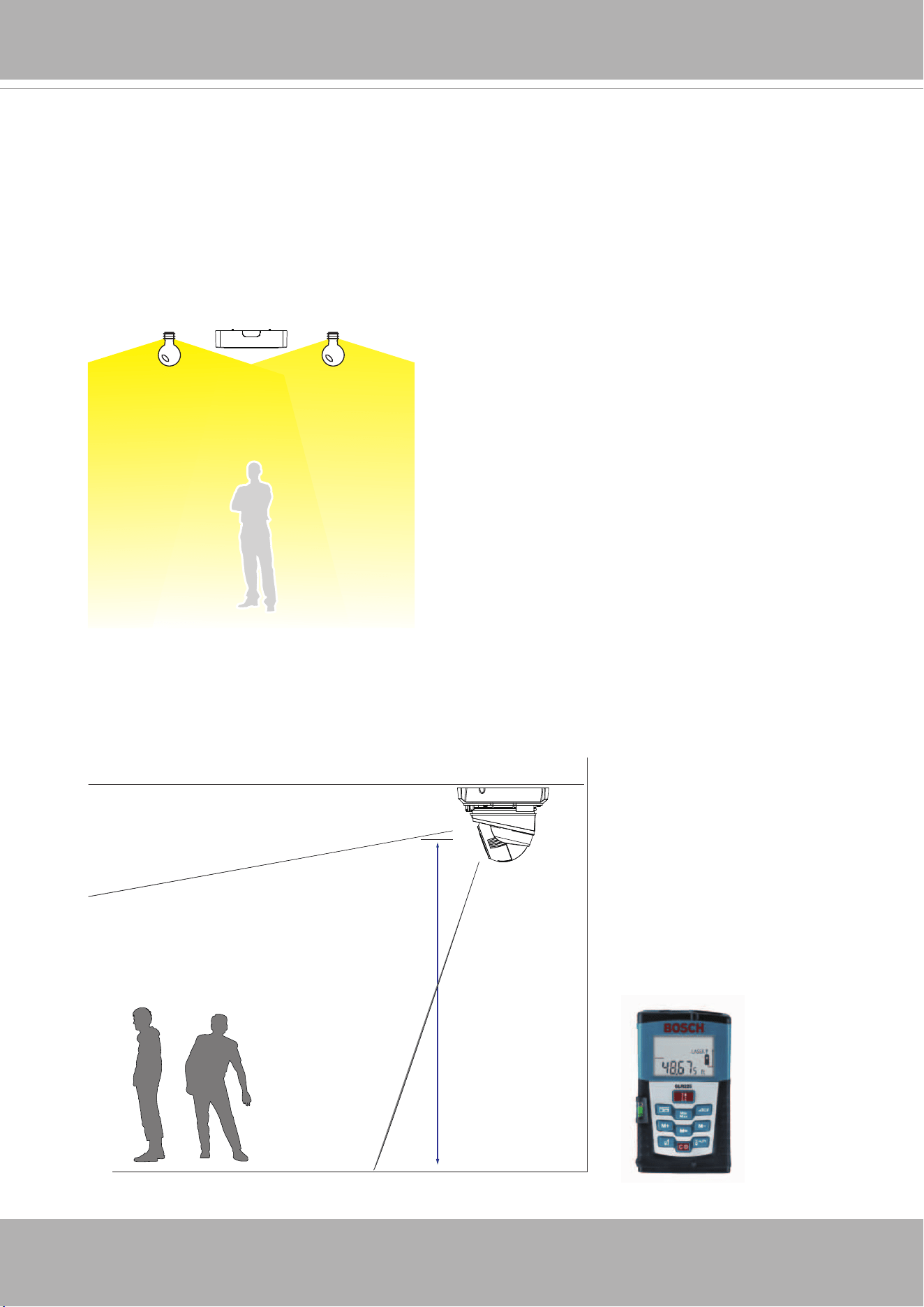
3.
On the Status page, you can see the license status is indicated as Pass.
Deep Learning VCA
VIVOTEK
16 - User's Manual
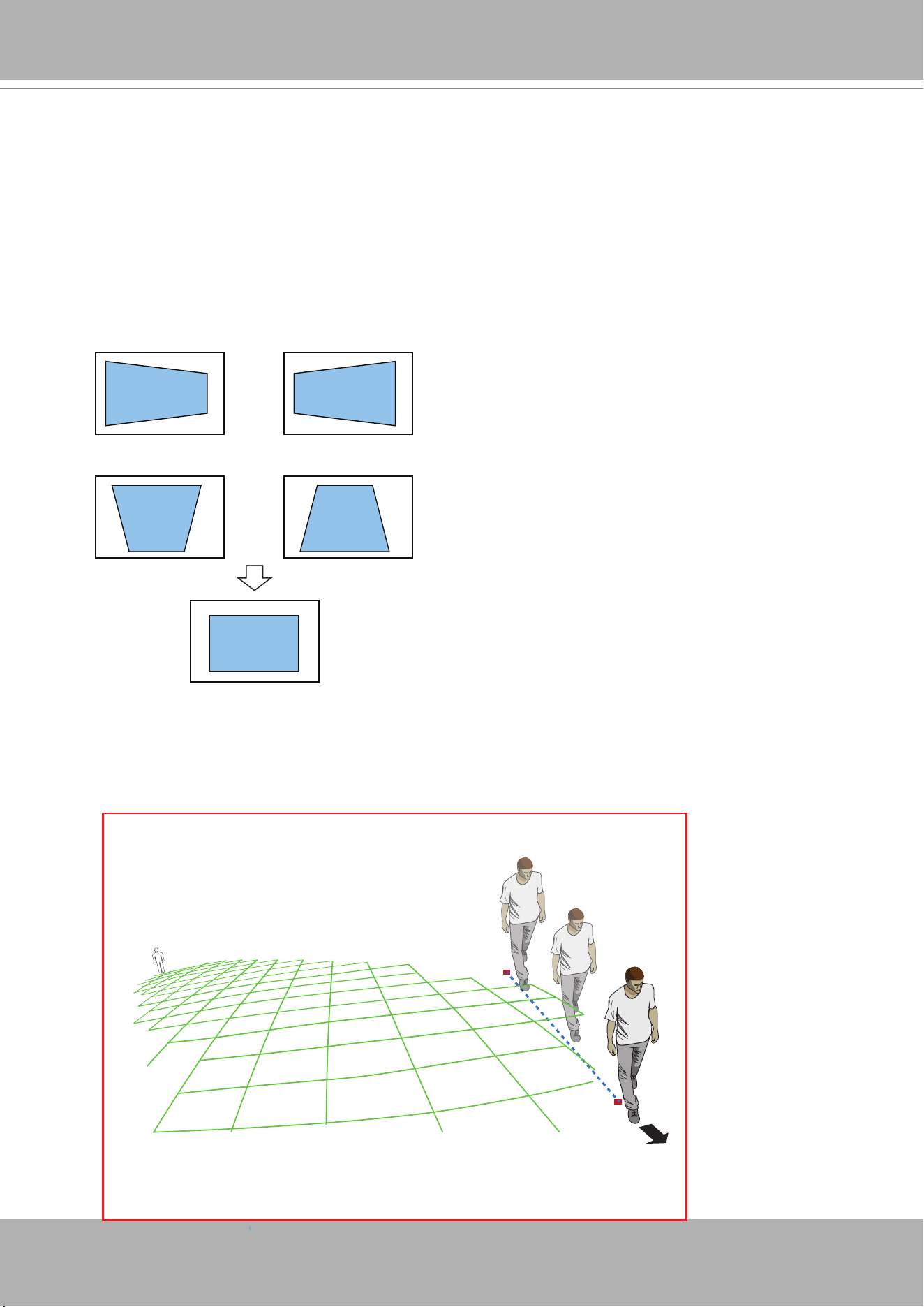
Considerations
Note the following when planning the camera installation:
1
. The installation site must be adequately lighted for optimal accuracy with video
detection. For example, a black bar in a shaded area may not be adequately detected.
2
. In the night mode, congure a schedule prole for the different lighting condition. In
the night mode, the Smart VCA works if additional lighting is provided, e.g., using the
on-board or external IR light. Avoid obstructions that can reect IR lights back to the
camera.
Installation
height
3
.
IMPORTANT
: Make sure you measure the height of your camera. The height
information is important for the accuracy of the video analytics results. Some of the other
perspective information are automatically collected by the onboard G-sensor. The height
information enables the horizontal and vertical keystone corrections of the eld of view.
Measure the distance between camera (ceiling where it is mounted) and the ground.
For bullet cameras or
wall-mounted domes,
measure the distance
from the lower edge of
the camera canister to the
ground.
VIVOTEK
User's Manual - 17
4
. Because the horizontal and vertical keystone corrections are performed for an accurate
detection, the height and tilt information of the camera must be correctly congured.
Use a laser distance meter to measure the installation height. The height information
MUST BE
correctly measured and entered in the camera's conguration page.
The sheye cameras can also run the Smart VCA feature and they
MUST NOT BE
mounted on a tilted ceiling, nor can they be installed on a wall. The camera
MUST BE
installed level on the ceiling. Enter 0 as the tilt angle in the conguration page.
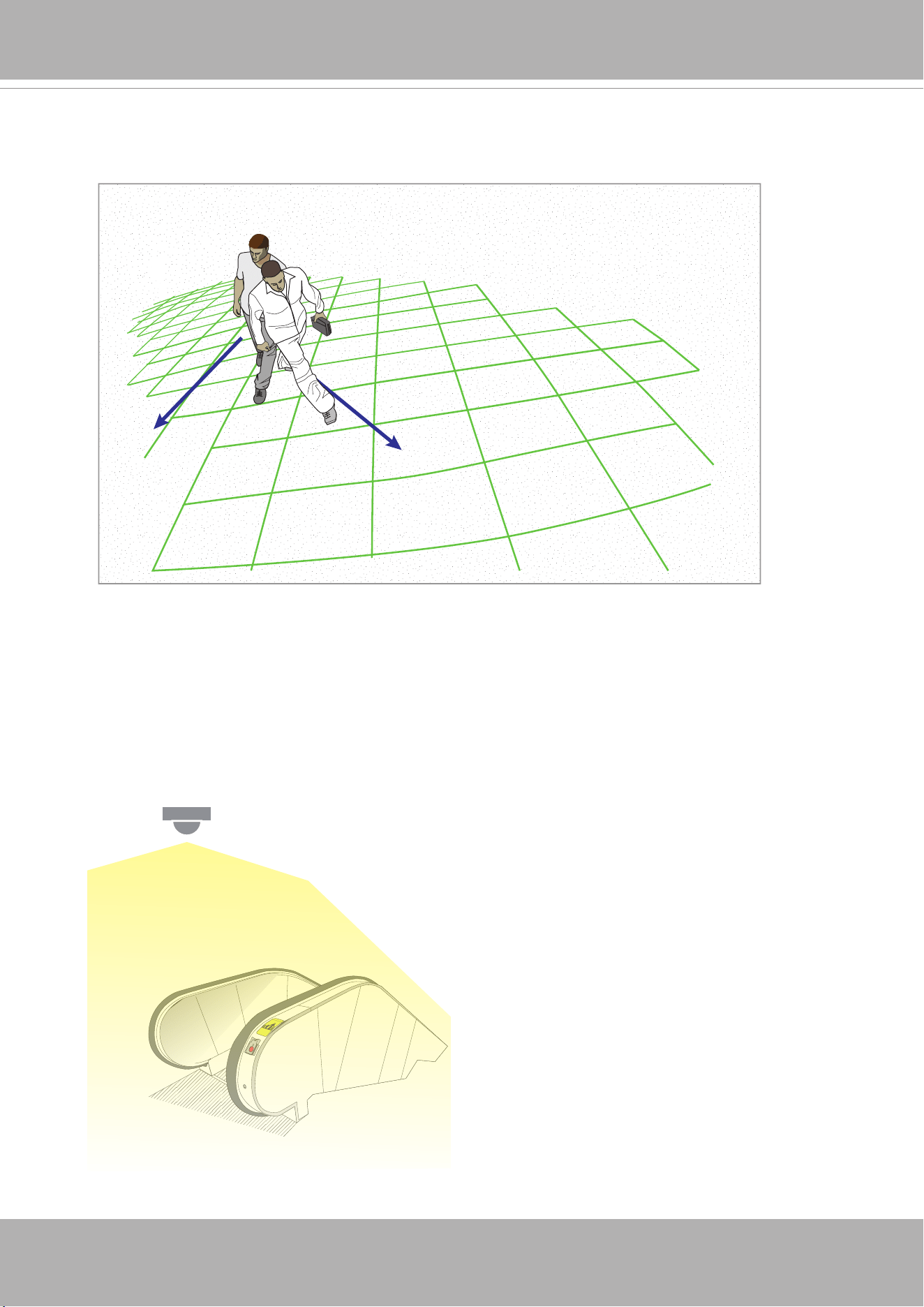
Only part of the human is covered
by the detection area.
Field of View
Detection area
5
. For effective detection, as long as a human silhouette is detected in the eld of view,
and his feet travelled through the People detection area, he can be detected. Due to the
visual perspective of lens, sometimes the entire body may not be fully contained by the
detection area.
OR
OR
Horizontal keystone correction
Vertical keystone correction
VIVOTEK
18 - User's Manual
6
. A man sitting, squated, or men lying on the oor may not be detected as a human,
because his silhouette has been destroyed. Detection may also be affected when
a human form is changed, e.g., a man's body is hidden behind a counter, or a man
showing only the upper half of his body by leaning on a desk.
• Due to the optic concave characteristics of a lens, men can be temporarily blocked
behind other men. When a man's head-shoulder feature is consealed, he may not be
detected for the short moment. The analytics is not designed for a very crowded area.
FOV
Detection area
7
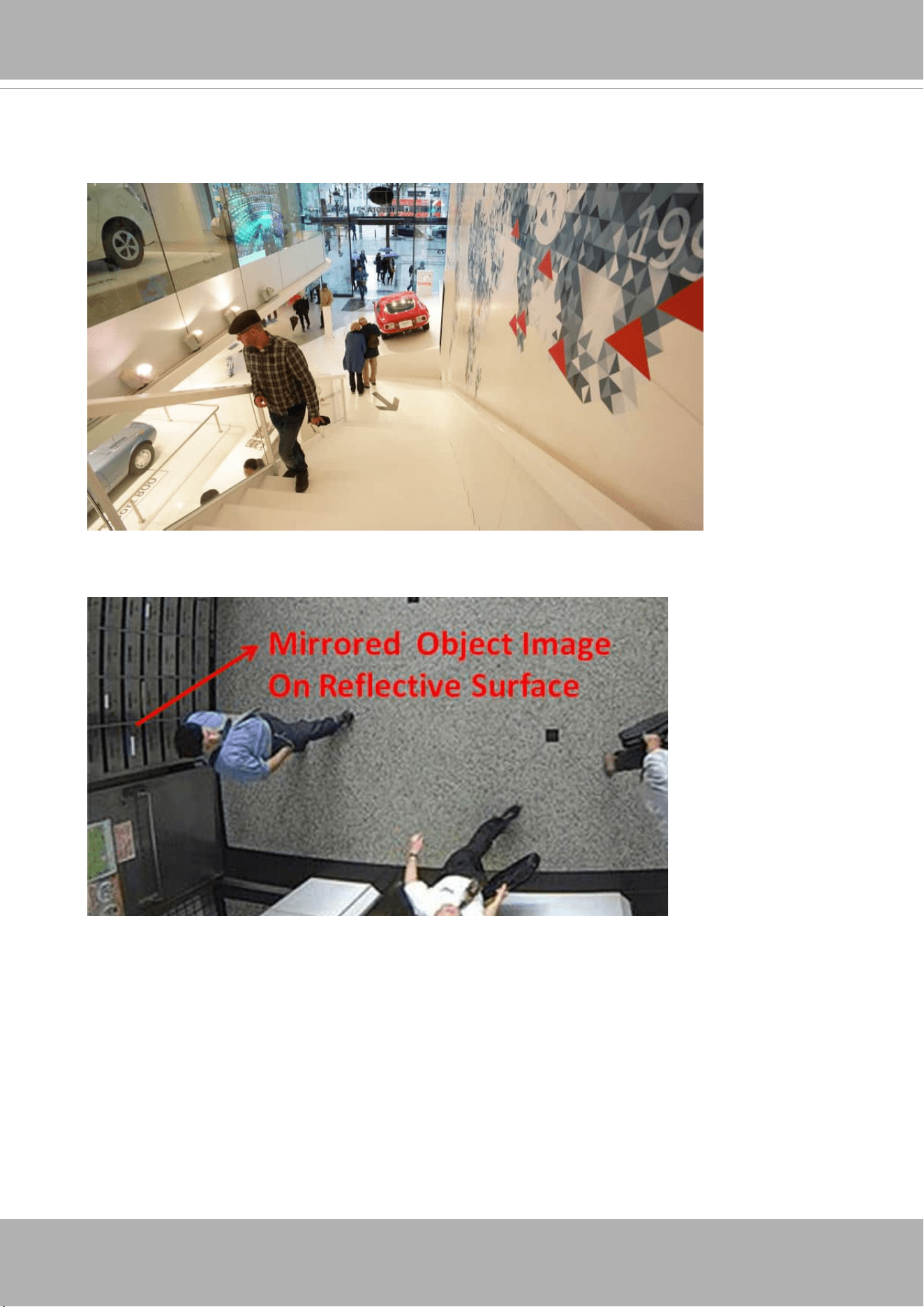
. Unnecessary objects should be avoided. A door, a oating curtain, and moving objects
such as an escalator can cause mistakes with the detection.
VIVOTEK
User's Manual - 19
9
. Some other possible sources of interference may include: shadows on the wall,
mirrored object image on the reective surface.
8
. The Human detection takes effects with standing or moving objects or people. There is a
limitation that the detection may not handle more than 15 people in the eld. The eld of
view should not cover a slope or terraced structure, either.
10
. Small and distant objects may not be properly detected.
11
. Detection accuracy can still be affected by severe weather, such as heavy rains.
12
. Ensure the camera is properly mounted. Excessive vibration, such as that when
mounted on a pole, can affect the detection accuracy.
13
. If fast moving objects are expected, use a wider FOV to enable a longer observation
time.
14
. Contrast between the object and the background cannot be too low. A black car in a
very shaded area may not be detected.
15
. The camera has been moved or re-installed after the detection conguration.
16
. Incorrect installation: the camera is too far away from the detection zone.
VIVOTEK
20 - User's Manual
Basics:
Responsive Elements
1.
Tracking block
: Tracking blocks are the cubic boxes to indicate the appearances of detected
people. The tracking blocks include People block and Vehicle block.
2.
Exclusive Area
: You can create Exclusive areas on the FOV for areas that might affect the
correctness of video analytics, or simply areas that are not related to your surveillance purpose.
3.
People \ Vehicle detection area
: Calculated automatically from the the camera's installation
height and tilt/roll angles, the People detection area indicates the boundaries within which
effective people activity detection can occur. You should not congure rules (cross lines or
areas) outside this area.
Due to the visual perspectives of the camera mounted on top, a person enters the
scene from the edge of the FOV with his feet appearing first, and then his/her head
later. Only until he/she comes to a place within the perimeter of the detection area,
the head and feet positions can be aligned. A person's feet are detected rst, and if a
detection area is congured too close to the border, a person may not be appropriately
recognized when his/her entire body prole has not entered the detection area.
People crossing the non-Detection area may not be properly recognized by the Smart
VCA detection.
FOV
People Detection area
Head
Feet
FOV
Detected object
Tracking block
VIVOTEK
User's Manual - 21
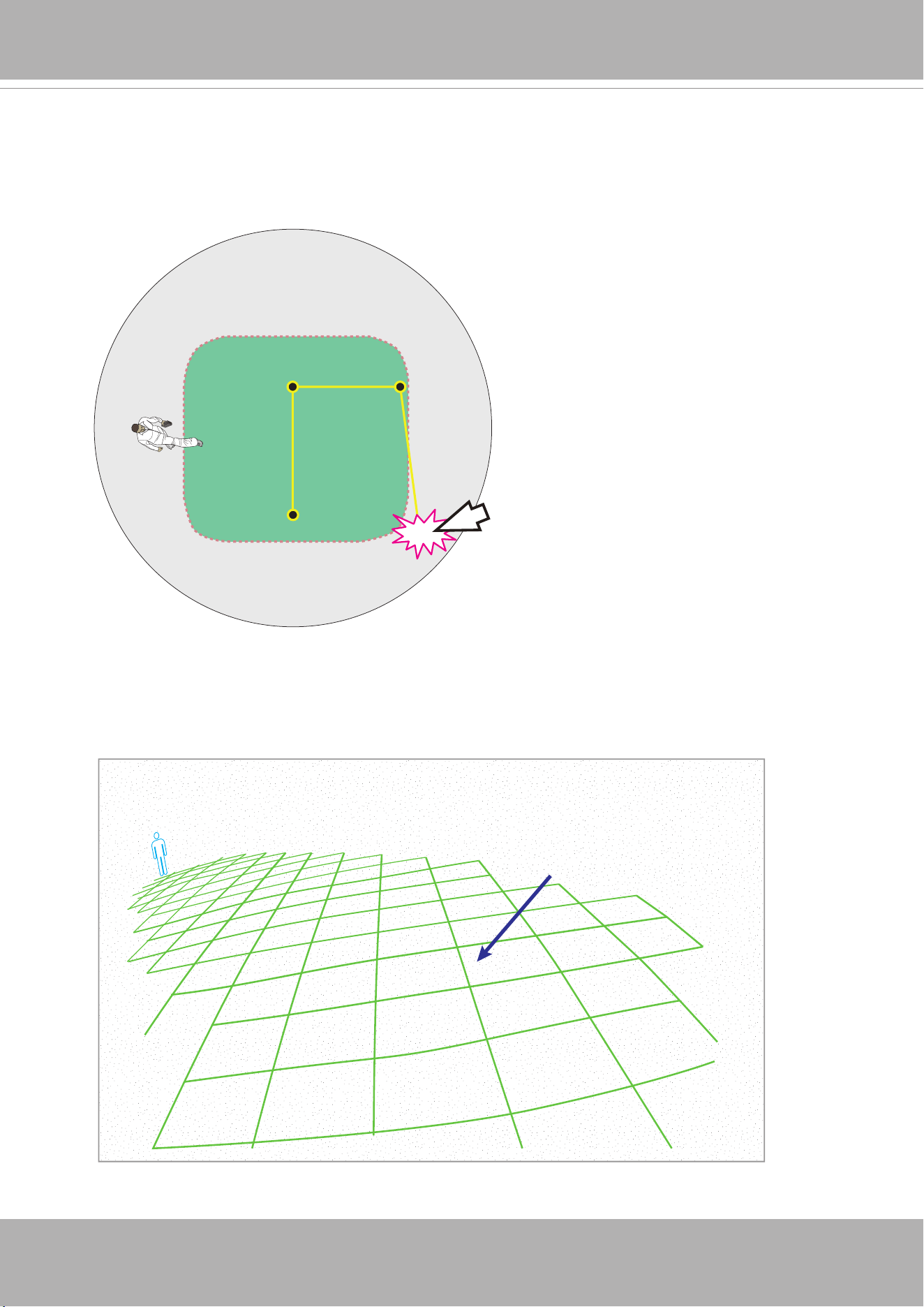
When you are conguring a detection rule related to people detection (e.g., Intrusion,
Loitering, or Line crossing), you can not place a border point outside the People
Detection area. Smart VCA invalidates any clicks outside the area.
FOV
People Detection area
Head
Feet
FOV
The Detection area of sheye camera running a Smart VCA package is shown below.
For a xed dome or bullet camera, a simulated oor level (People Detection area) is
displayed on a Smart VCA conguration screen. The Smart VCA detection zones must
be congured to have men walking through this area (their feet within the area).
FOV
People Detection area
The Vehicle detection area is slightly
different using a different object
analysis algorithm.

VIVOTEK
22 - User's Manual
4.
TP (Time duration of people stay)
: When a rule is violated, e.g., a man stays in a loitering
zone for long enough, this time duration will display.
5.
TV (Time duration of vehicle stay)
: When a parking violation state is triggered, the time
duration will display. Note that the time duration will not display for vehicles passing by.
6.
Display
: It is recommended you select a video stream your client side is using for live viewing.
Otherwise, the subject camera will have to deliver another video stream, e.g., Stream 1 +
Stream 2, causing increased loading on the camera.
If streaming 1 is 5MP full resolution at 30fps, used for video recording. You congured VCA
package to be using stream 3 full HD 30 fps, the camera SoC codec will have to handle stream
1 5MP 30fps + stream 3 full HD 30fps. It is therefore recommended to use the same stream for
viewing, recording, and VCA analytics.
VIVOTEK
User's Manual - 23
Conguration:
1.
Open a web console to the camera. Enter the
Conguration
>
Applications
>
Package
management
page. Click on
Deep Learning VCA package
to open the monitoring and
conguration page.
You can also access the feature through
Conguration
>
Applications
>
Smart VCA
.
VCA package
After you upload a software license for the VCA package, please stop and re-start the VCA
package for the licensing to take effect.
NOTE:
VIVOTEK
24 - User's Manual
2.
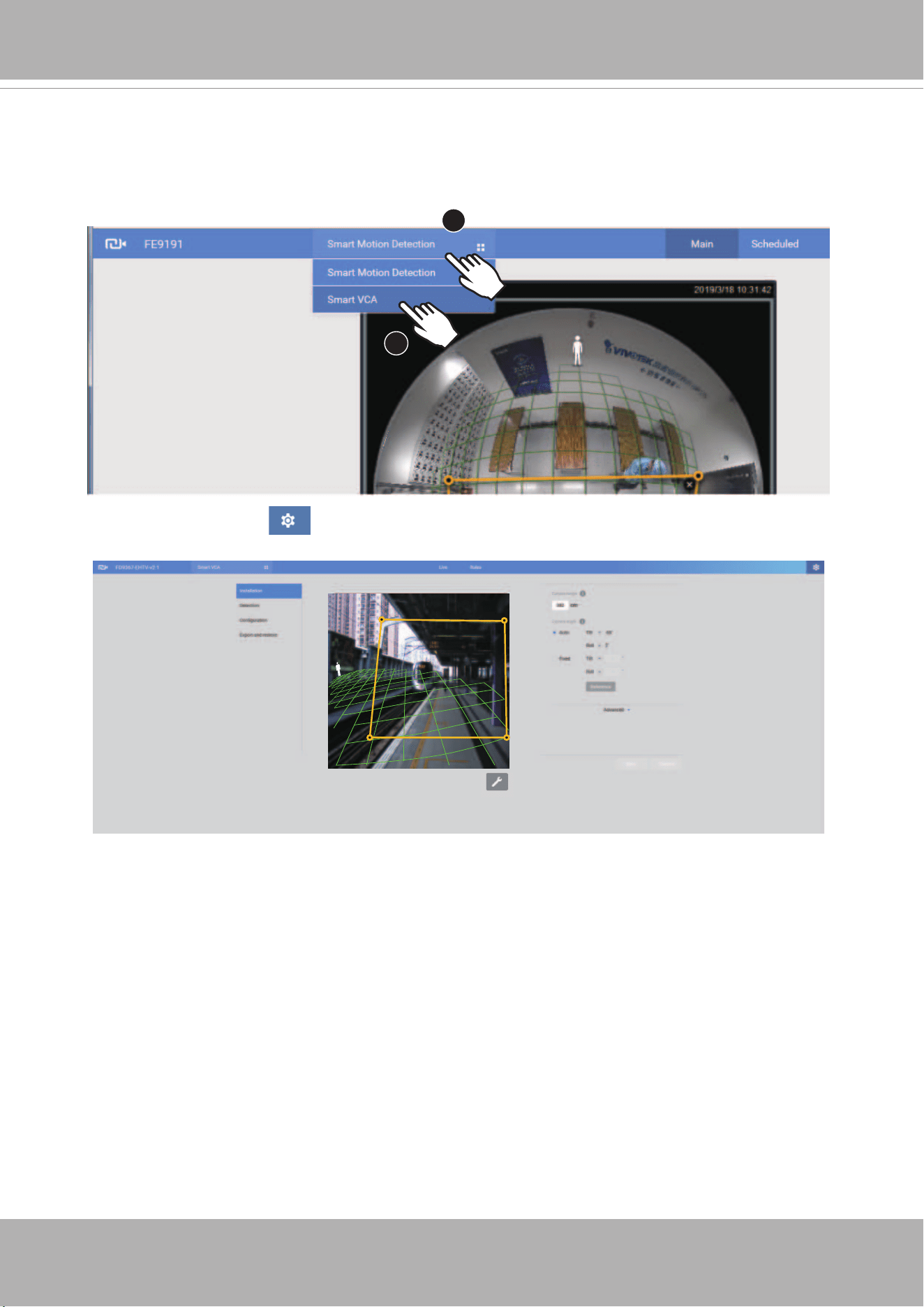
The utility defaults to the Main page. Click on the Smart Motion Detection tab on top. Click
Smart VCA
to proceed. If entering from the Smart Motion detection link, you will enter the Main
page. If entering from the Smart VCA link, you will enter the Smart VCA page directly.
1
2
3.
Click on the Settings button on the upper-right corner to enter the Settings page.
VIVOTEK
User's Manual - 25
4.
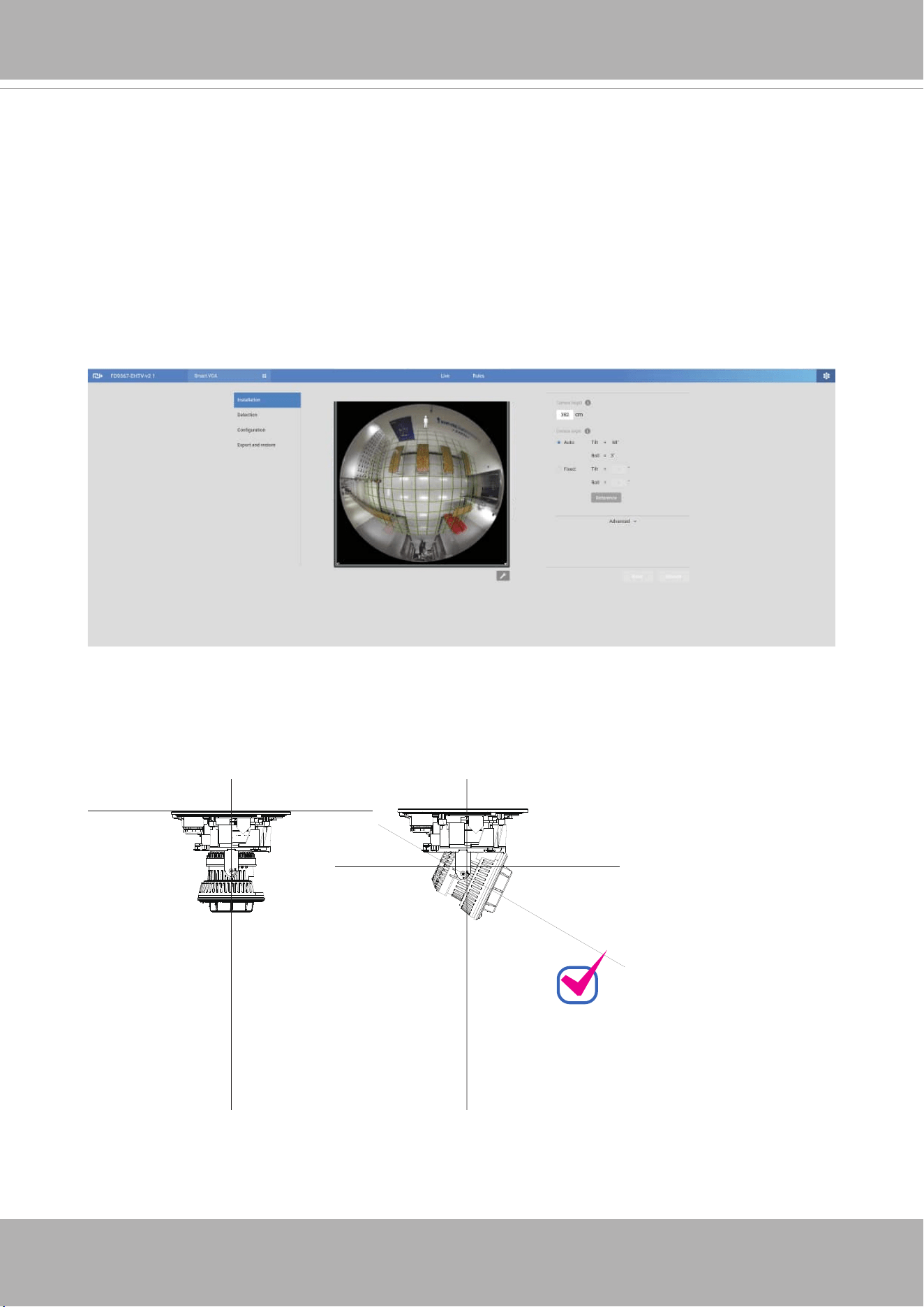
Enter the correct installation height. Please select the Auto mode for the camera to automatically
acquire the shooting angles (Tilt and Roll). Many of the VCA cameras come with a G sensor,
which allows an automated calibration. Users are not suggested to use the Manual mode to
congure the tilt and roll angles.
Should you observe unsatisfying readings from the Auto mode, select the
Fixed
option, and
Click on the
Reference
button for the camera to acquire the installation related parameters. The
Auto mode brings out the calibrated results, while the
Reference
function brings out the original
engineering readings by the G sensor.
If using models that are not equipped with a G sensor, you can manually enter the tilt and roll
angles. When done, click the Save button.
Note that the tilt angle corelates to the absolute downward direction. If a camera is
installed on a ceiling, and its lens points straight downward, its tilt angle is 0 degree. If
your camera lens is tilted, enter the angle related to the vertical line, e.g., 60º as shown
below.
30°
60°
0°
The roll angle is one that refers to the horizontal level line.
VIVOTEK
26 - User's Manual
Exclusive Areas
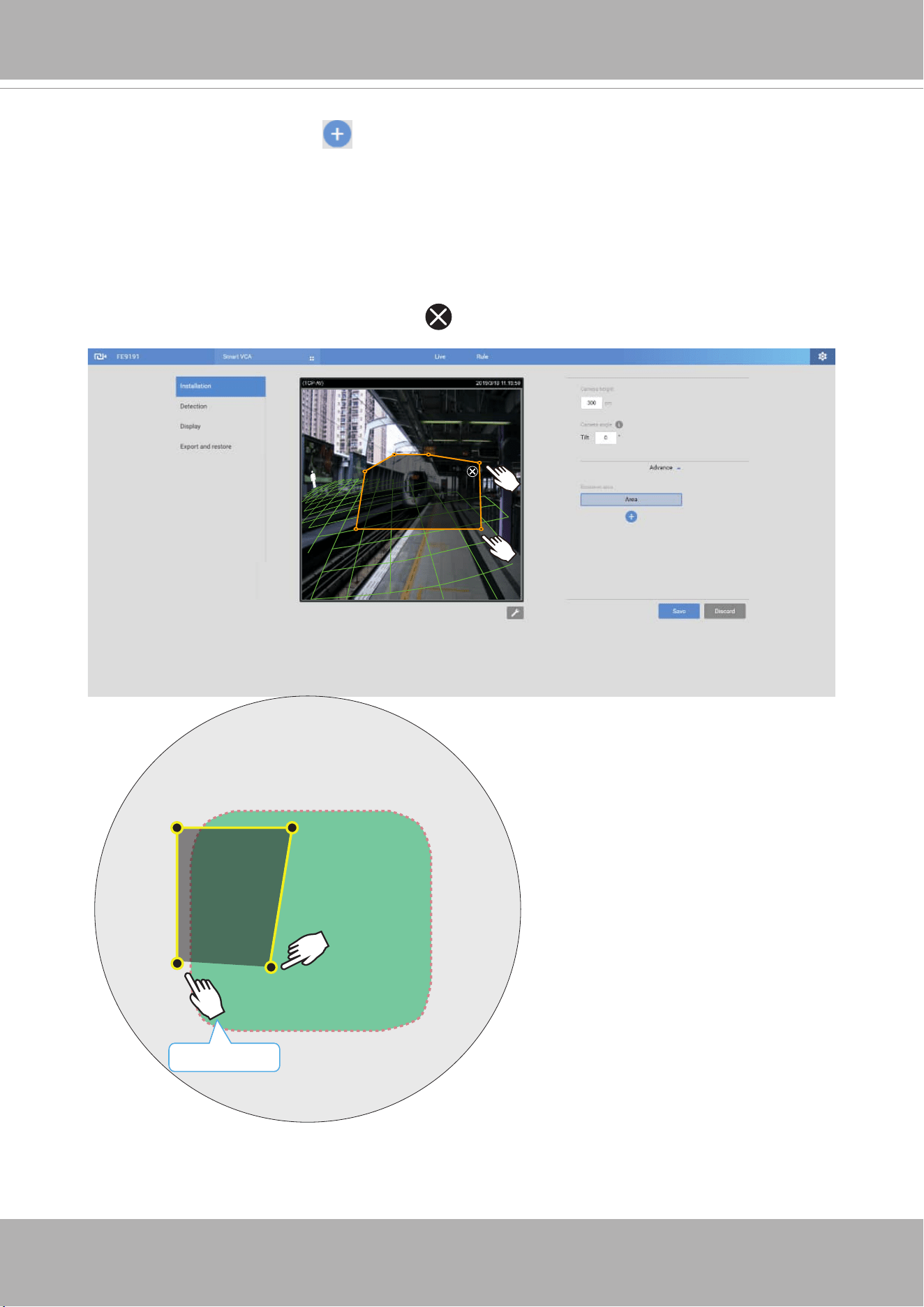
Click the Add area button to add an Exclusive area. Sometimes there are non-
related elements in your eld of view, such as a white wall where no one can walk on it
or a sh pond with reective water surface. You can add exclusive areas to block out the
unnecessary elements in scene.
To create Exclusive areas, use mouse clicks on the screen to draw polygons. Click
Save to preserve your settings. Up to 20 clicks can be used. A minimum of 3 clicks are
required for an exclusive area. You can also double-click to conclude an area.
To delete an area, click the cross sign on the area.
5.
When done, click
Save
to preserve your settings.
FOV
People Detection area
FOV
1
2
3
4
5
Exclusive
area
Click the 1st point
to conclude
NOTE
:
An Exclusive area can be placed
outside of the People detection
area.
VIVOTEK
User's Manual - 27
6.
The
Settings
page also provides the generic tuning options. Refer to the following pages
for conguration details. Note the Smart Motion detection and Smart VCA share the same
Sensitivity parameters.
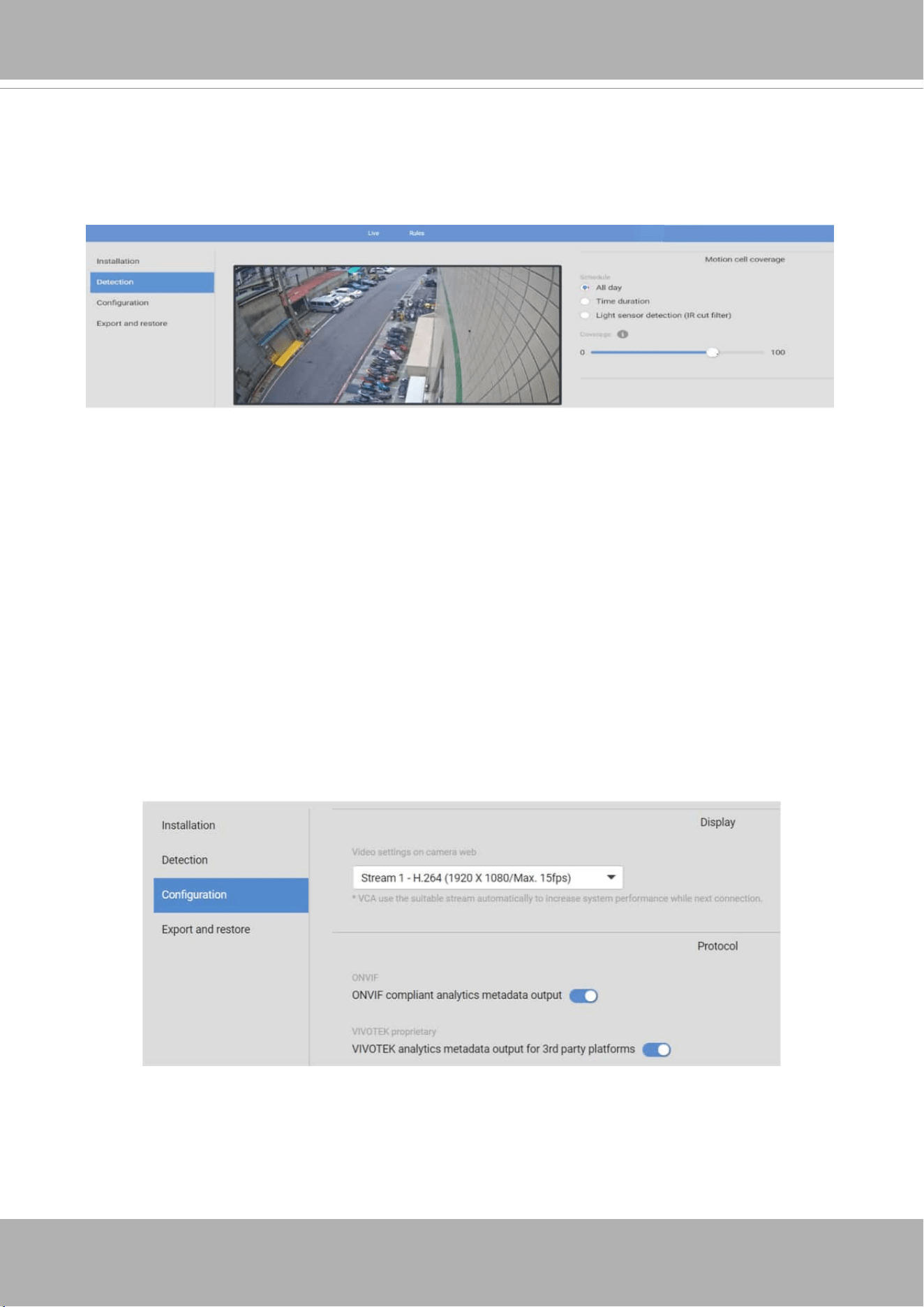
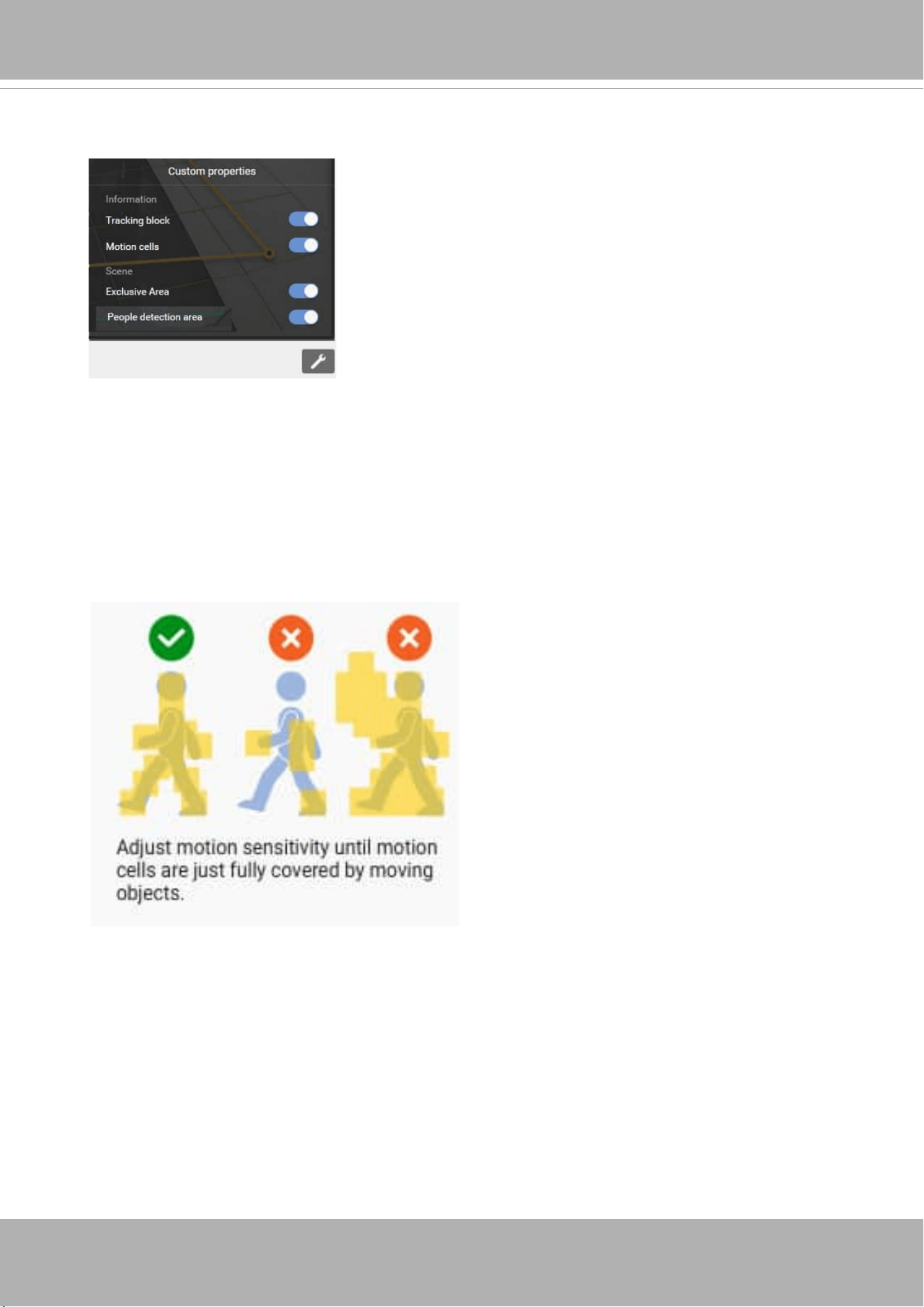
Settings > Detection (Motion Cell Coverage)
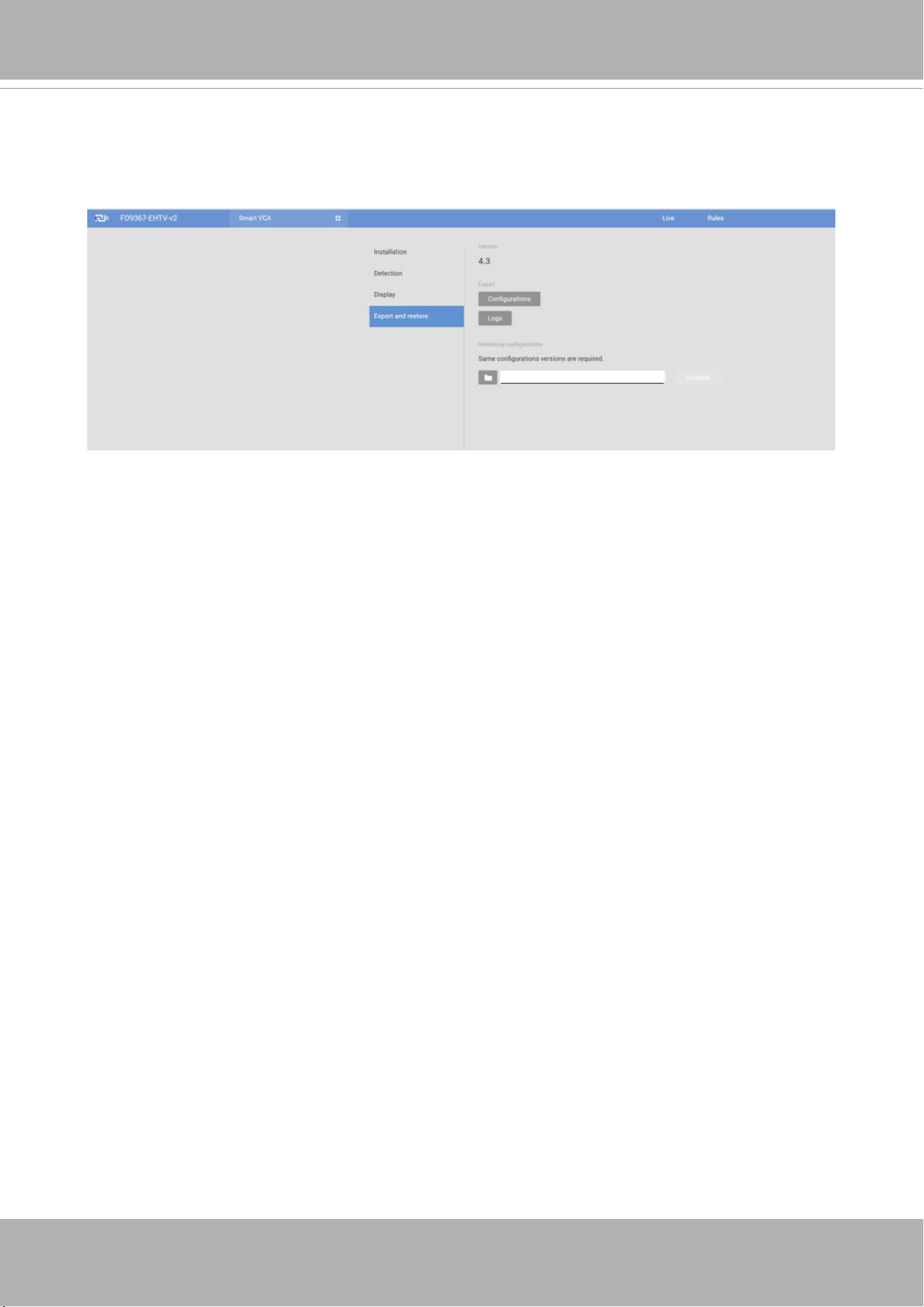
The
ONVIF
option is selected when you need to display detection details on 3rd-party software,
such as Milestones. The metadata is sent to the VMS using the ONVIF protocols. Another option
is for the analytics data to be ported to a 3rd-party platform, displaying detection results on video
management software.
Depending on the different lighting conditions throughout a day, you can congure a different
sensitivity for a specic span of time and individually for People detection, Vehicle detection, or
Object detection. For day or night modes, you can congure different sensitivity settings in terms
of Less false alarms or Less missing people(or Vehicle or Objects).
Settings > Conguration
NOTE
:
Since rev. 6.17, the motion cell settings for both Smart Motion detection and Smart VCA is
accessed through the common Settings > Conguration window.
VIVOTEK
28 - User's Manual
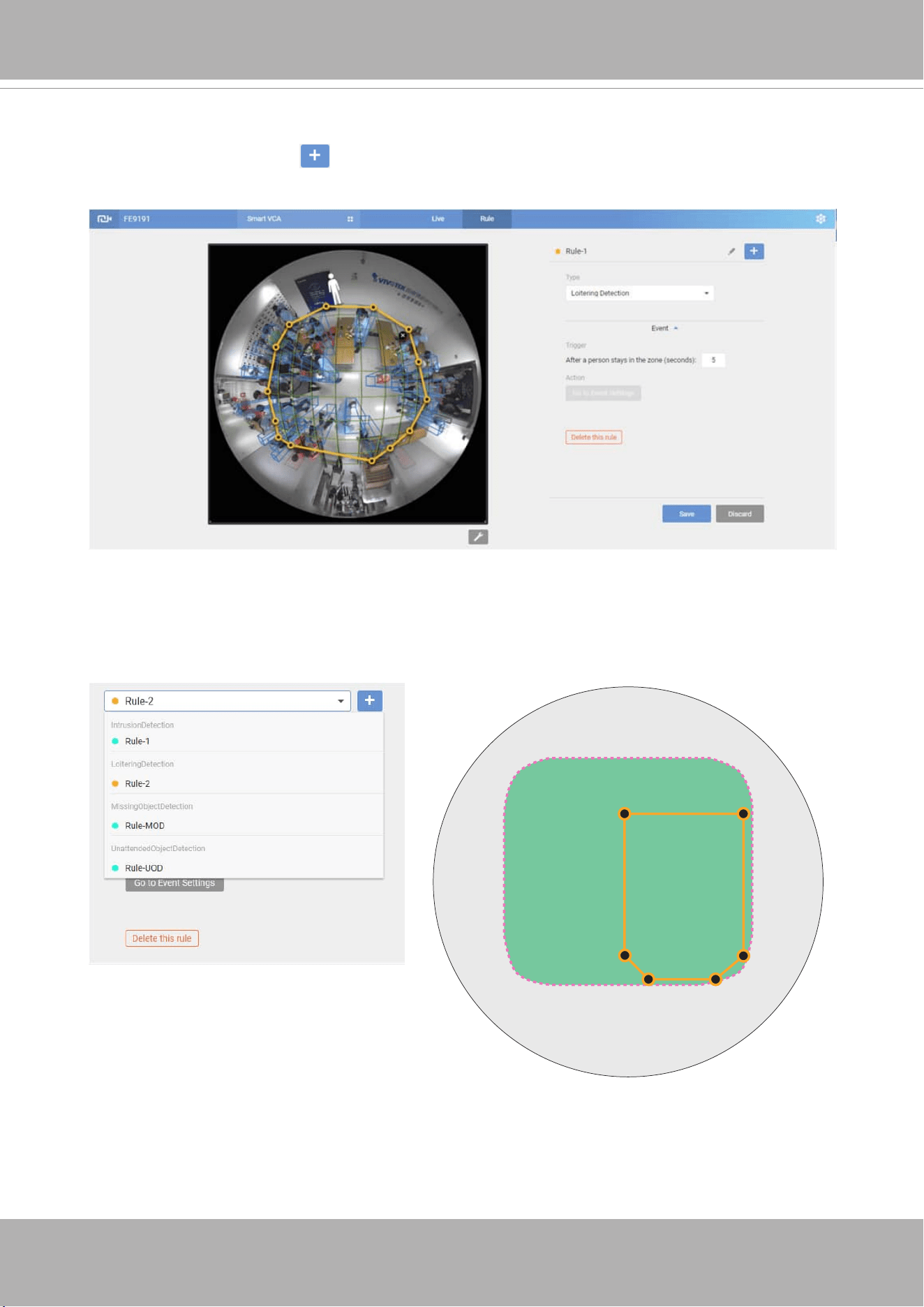
The
Export & restore
page can be used to save your conguration as a le. In some cases,
your conguration can be repeatedly used at different locations. For example, when you install
many cameras at the doors of train carts, you can use one conguration. Since their positions
are identical, one conguration le will apply to all.
You can also export system logs for debug purposes or detail examination.
VIVOTEK
User's Manual - 29
7.
Click on the
Rules
tab to congure your detection rules.
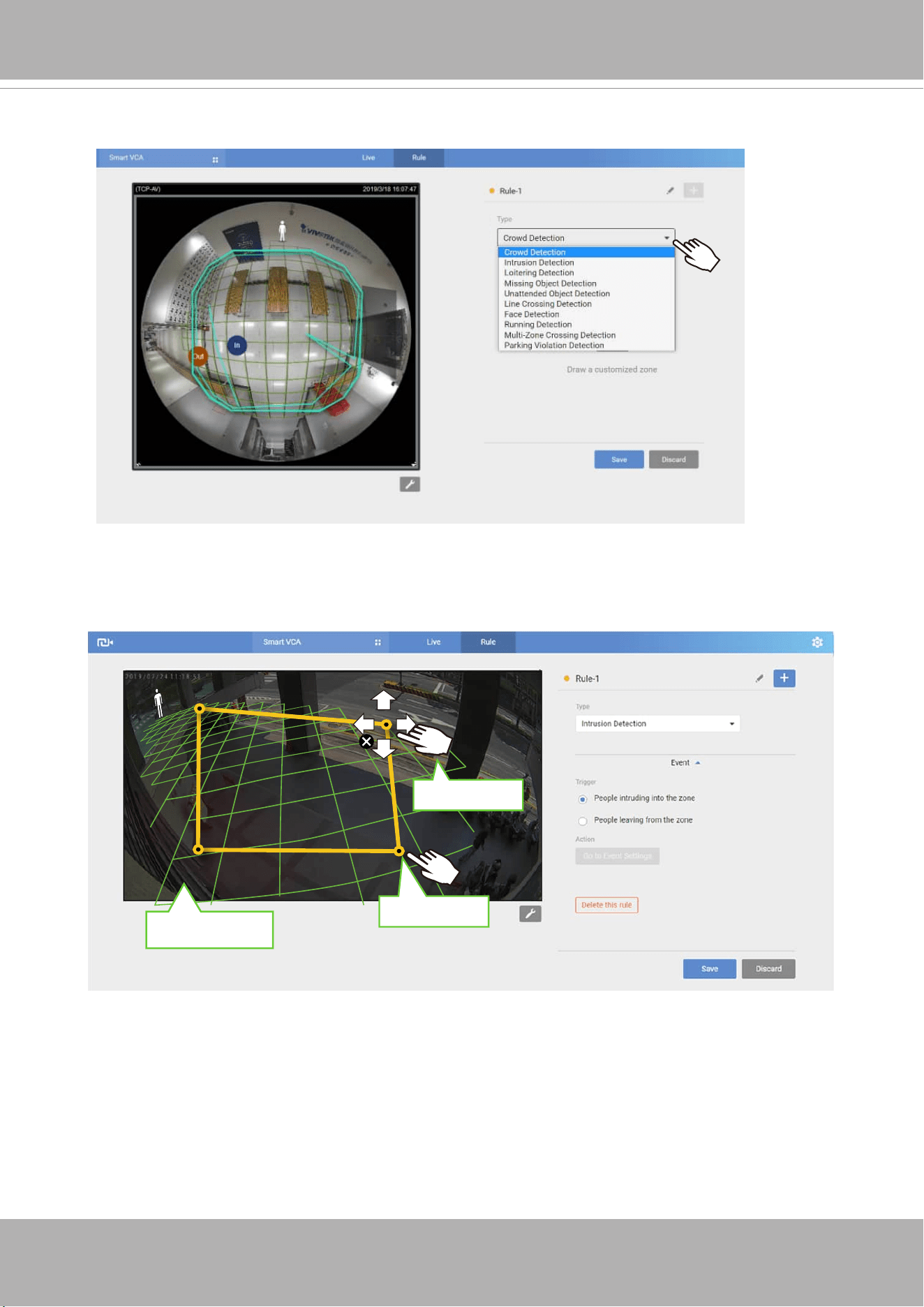
Use the
Add rule
button to congure a new rule. This button will be disabled if all 5 rules
have been created.
If there are existing rules, they can be found from the pull-down menu. You may also click the
specic detection zone on screen. A selected zone (rule) will have its border points highlighted.
FOV
People Detection area
FOV
Configured zone
VIVOTEK
30 - User's Manual
9.
Click on the streaming window to create a detection zone in which you want the detection
feature to take effect. You can use up to 20 clicks to create border points.
Green horizontal grid
as Human detection area
Click to create.
Drag to change shape
8.
Select from the pull-down menu the type of VCA detection features you want to congure.
VIVOTEK
User's Manual - 31
Change the coverage area of the window by dragging the border points. Note that the coverage area
should be within the People detection area. The People detection area is indicated by the red, dotted
line.
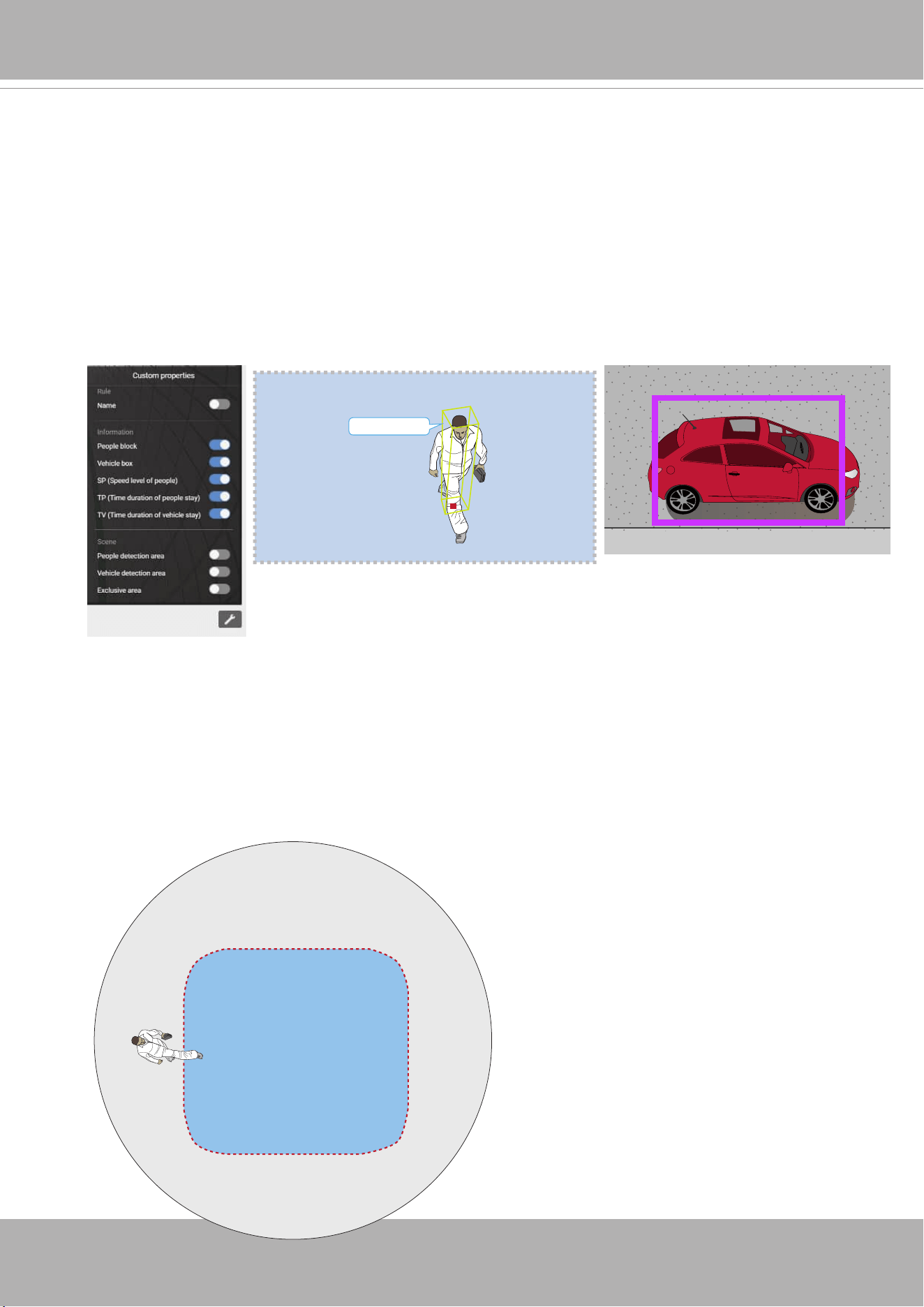
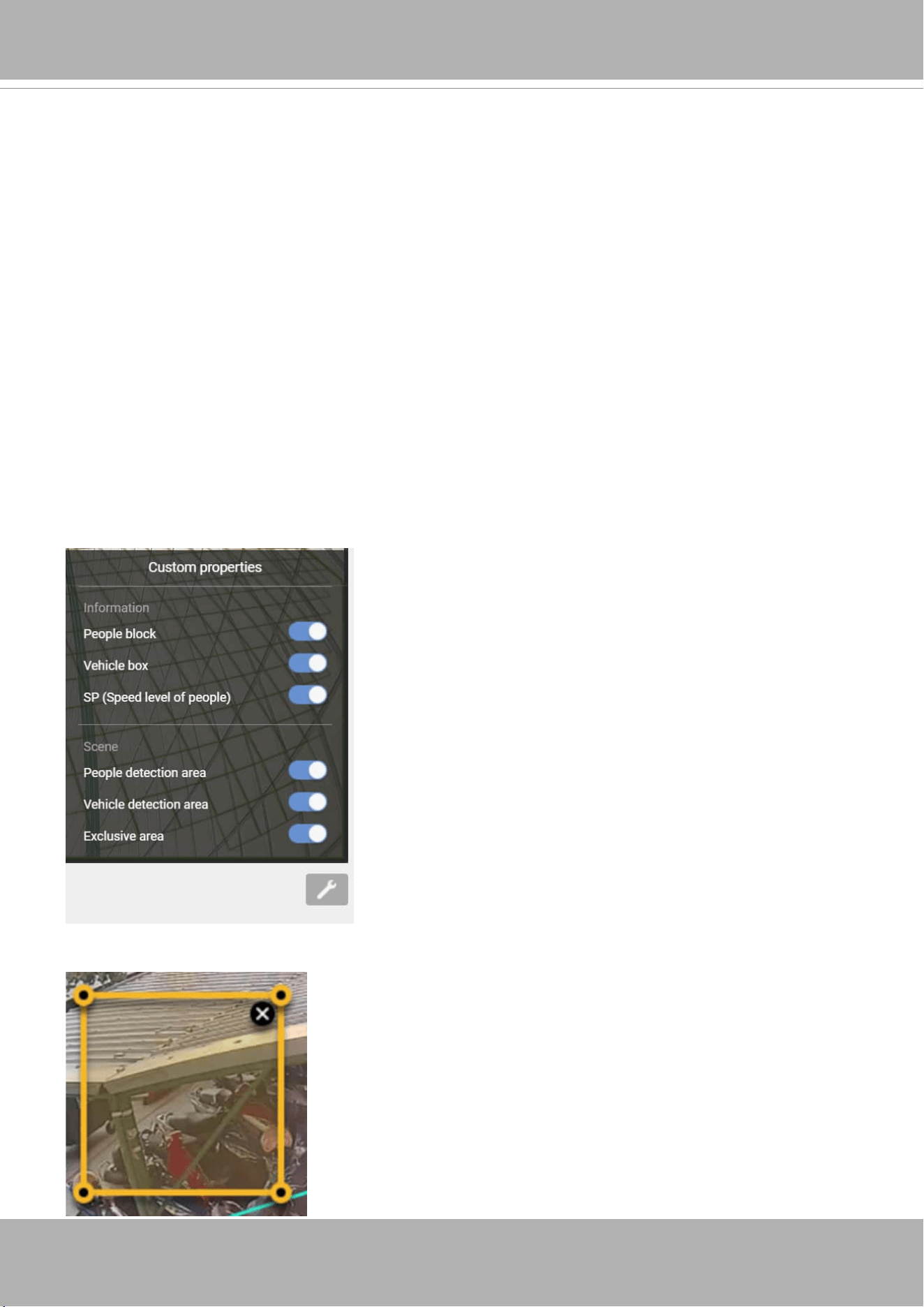
The display elements can be congured in the
Custom properties
pane:
*
Name
: The name of the VCA rule.
*
People / Vehicle block
: The vertical bounding box surrounding a standing or walking human form.
The vehicle block is a color square.
*
SP (Speed level of people)
: The speed level of people travelling through.
*
T(Time duration of stay)
: The calculated duration of stay of the detected vehicle or people in scene.
*
Exclusive Area
: Displays the Exclusive area(s) you created in the Settings page.
*
People detection area
: The green horizontal grid mesh is automatically generated according to the
camera's FOV, installation height, tilt, and roll angles. It is designed to indicate the area where
the effective people detection can take effect. Place your detection window within the green grid
(those for Intrusion, Loitering, and Line crossing detection).
The approximate distance between any two of the green lines is 1 meter. The height of the little
white man on the upper left of the grid is approximately 1.7m.
To remove an existing window, select and click on the
X
mark. A conrm box will prompt for the
deletion of the window.
VIVOTEK
32 - User's Manual
10.
Congure the related parameters for the individual Smart VCA functionality you selected.
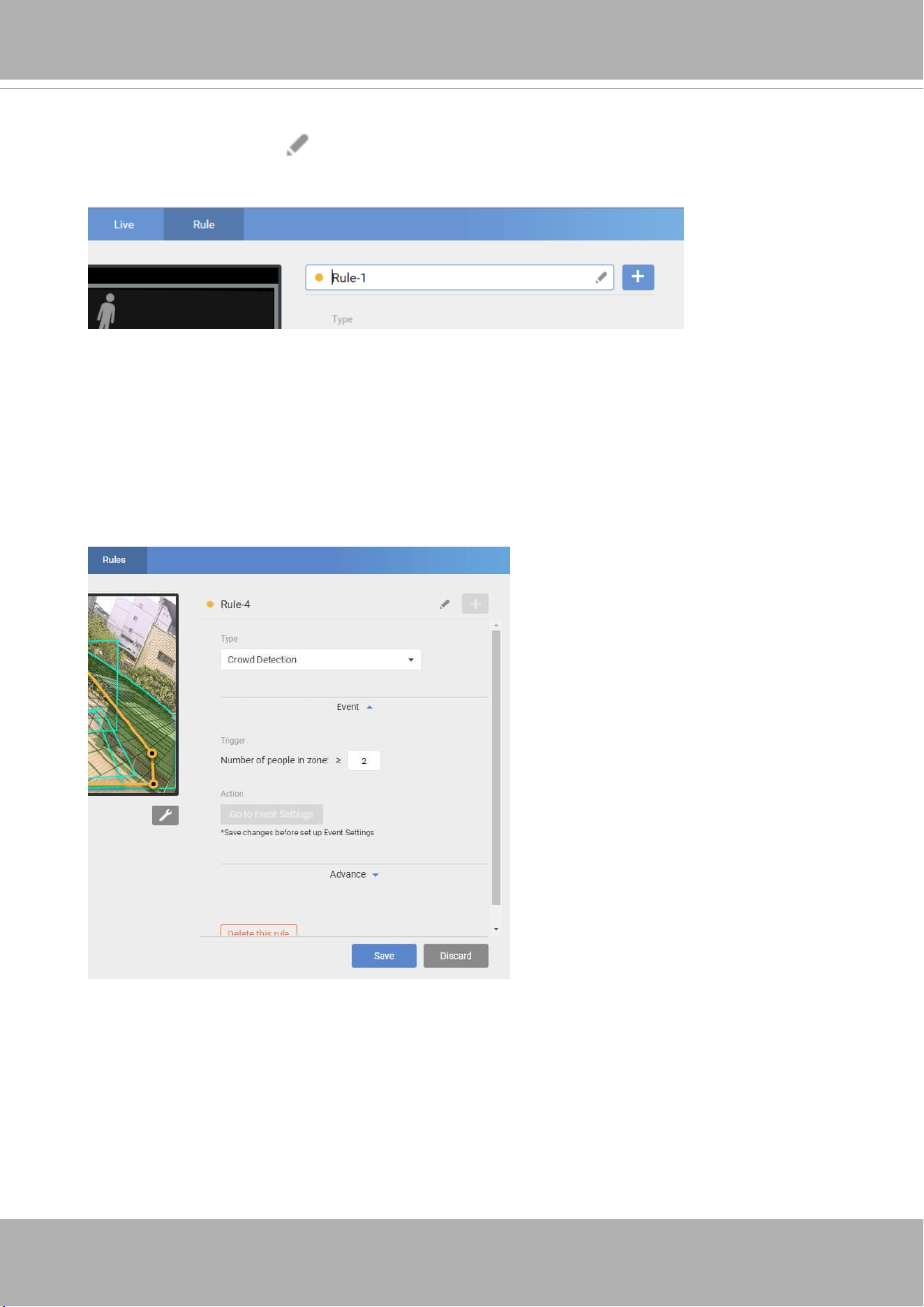
1. Crowd Detection:
Select to detect when the number
of people exceeds a pre-congured
threshold.
The number of people in zone ≥:
If the
number of people equals or exceeds
the threshold number, an event will be
triggered.
The max. number is 20.
After a person entered the zone
(seconds)
:
People must be present in the zone for
_ seconds before the detection takes
place. When staying for a time too short,
people may not have the intention for
staying or entering.
After a person left the zone (seconds)
:
An effective count takes effect after
people left the zone for _ seconds. If a
man leaves a zone temporarily for 1 or 2
seconds, he may not intend to leave. If a
crowd of people are talking and standing
close together, one man may block the
image of another. The person may be
temporarily undetected.
Click the pencil button to enter a name for the Smart VCA rule, e.g., Loitering detction,
building A. Up to 64 alpha-numeric characters are allowed.
Conguration for Individual VCA Features:
If someone stands very still playing his cell phone, he may be exempted from track list. Setting
the leave delay for 1 or 2 seconds helps correct this issue.
VIVOTEK
User's Manual - 33
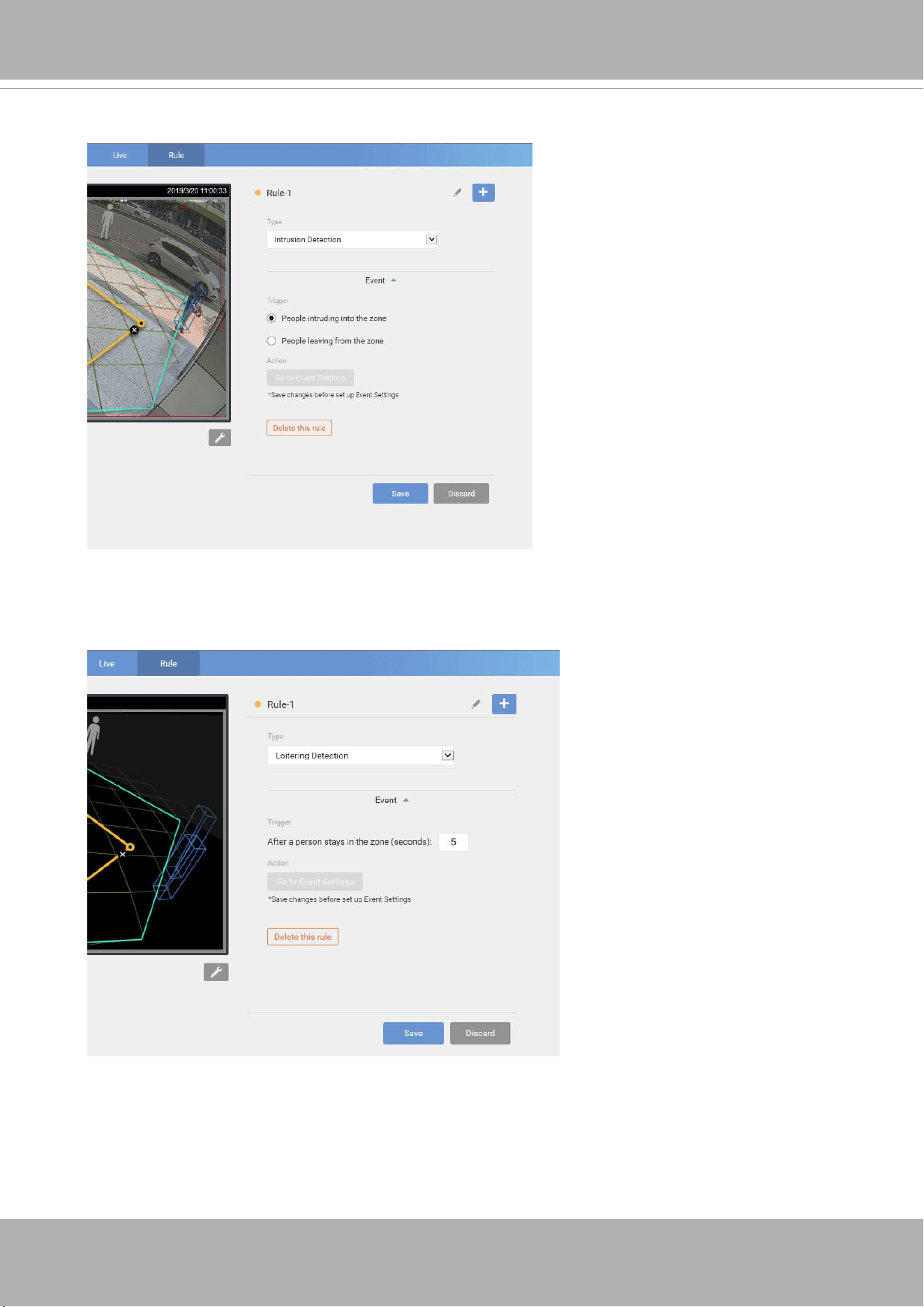
2. Intrusion Detection:
Select to detect either people
entering
or
leaving
the detection
area.
People leaving the area may be
those who exit a place where
normally human trafc should not
occur, e.g., a re exit.
3. Loitering Detection:
After a person stays
in the zone
(seconds):
Select a time threshold to trigger
an event for a person lingering in
the detection zone.
Note that you can change the
Custom properties in order to
display the duration of stay of
people in scene.
VIVOTEK
34 - User's Manual
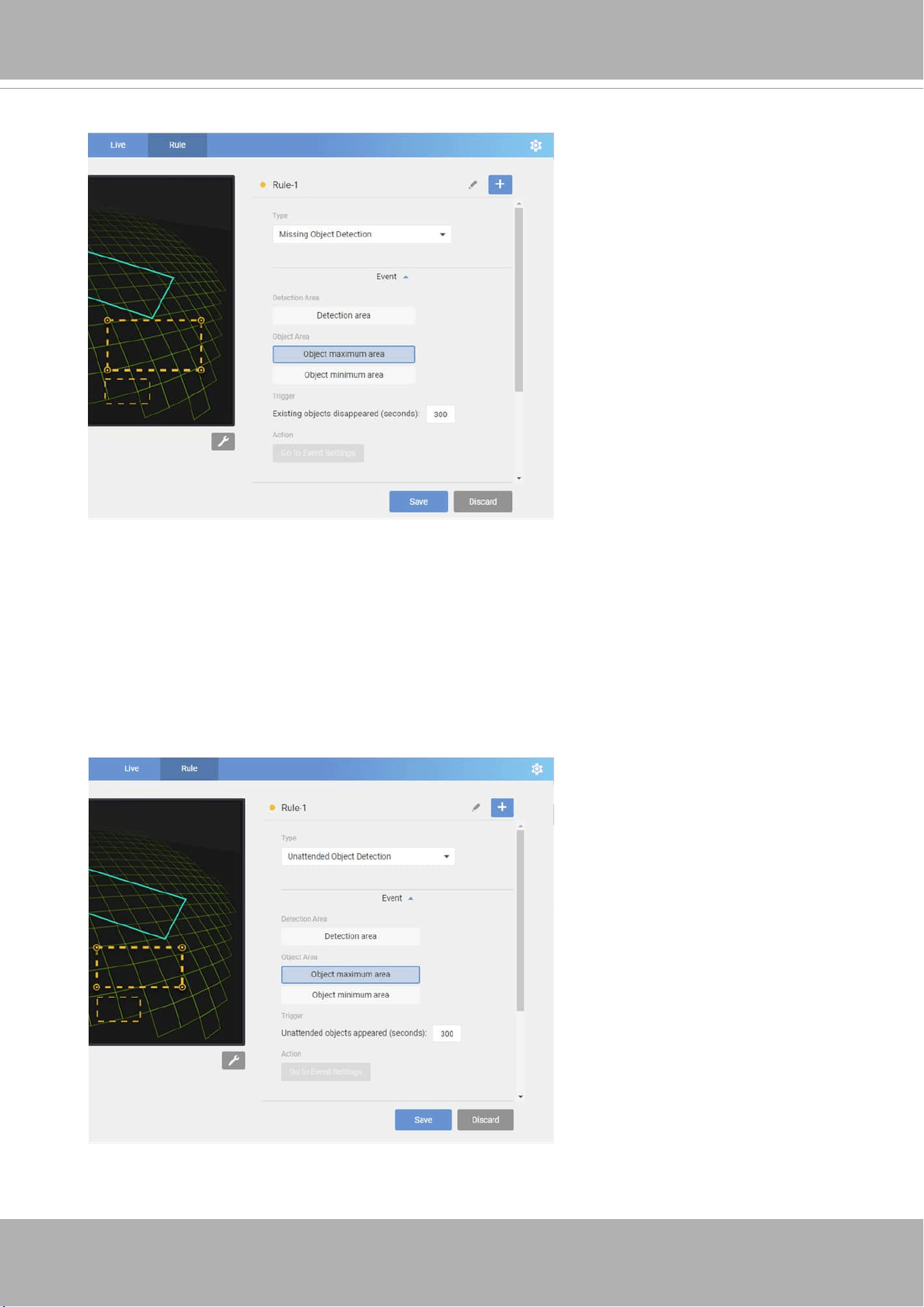
4. Missing Object Detection:
Existing objects disappeared
(seconds):
Select a time threshold to trigger an
event after an object disappeared
from the scene.
Object maximum/minimum size
:
Use these size parameters to
determine the size of the objects to
be detected in the area.
Note that the camera algorithm
rapidly learns the presence of objects
in a scene within only a few frames.
Therefore, if objects are continuously
moved in and moved out of the
scene, the events will be triggered
whenever objects are moved.
Advanced
Trigger conditions:
Before the object disappeared,
someone had walked near it: Select
to add a triggering condition with
the presence of people before the
disappearance.
5. Unattended Object Detection:
Unattended objects appeared
(seconds)
:
Select a time threshold before
triggering an event after an object
is left in scene.
Object maximum/minimum size
:
Use these size parameters to
determine the size of the objects
to be detected in the area.
VIVOTEK
User's Manual - 35
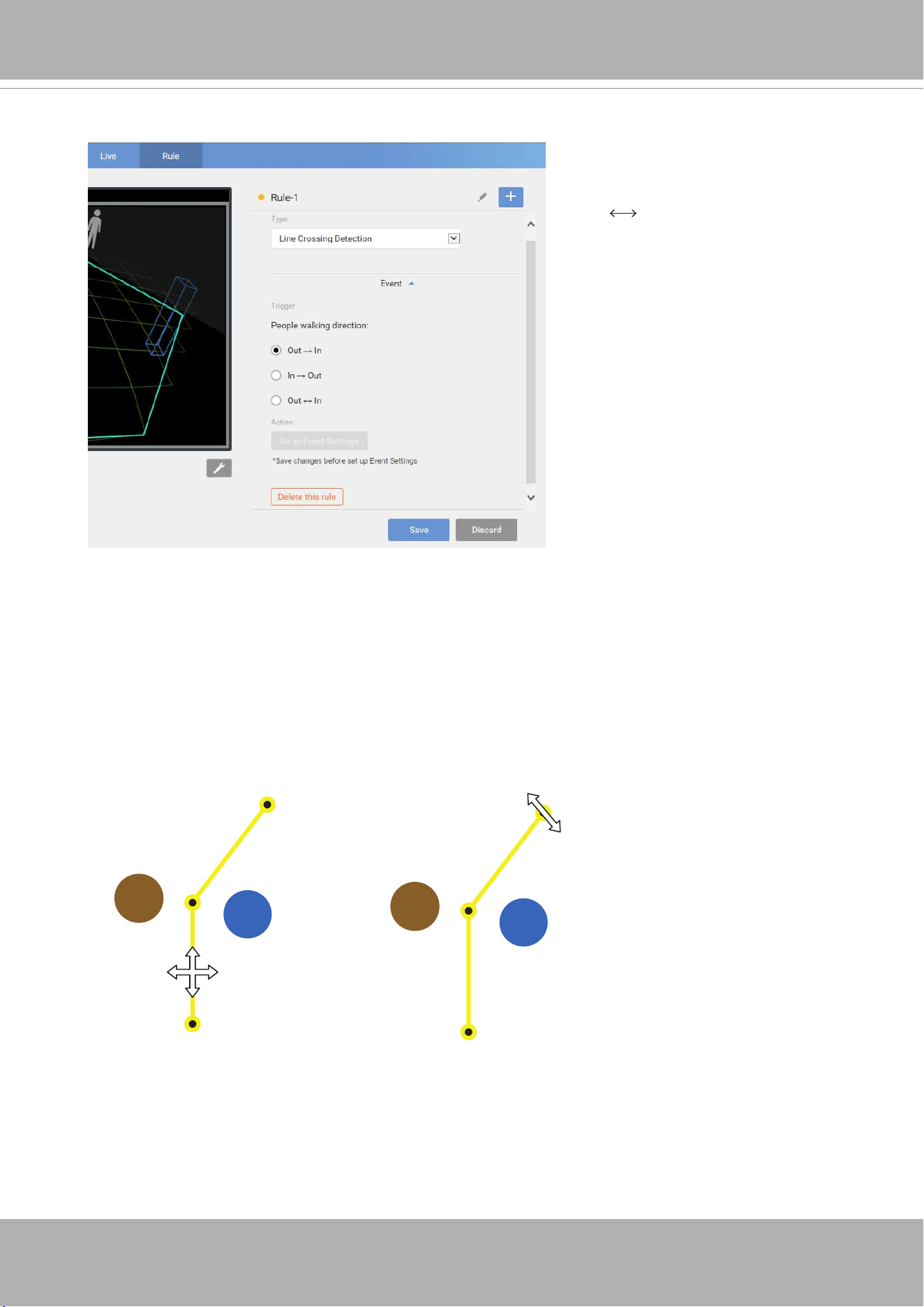
6. Line Crossing Detection:
People walking direction:
Out → In
In → Out
Out In
By default, a detection line will
appear on screen, use your cursor
to change its shape and location.
Select the direction of the line to
suit your application. See below for
the description.
Place cursor on the line to drag
the whole line.
Out
In
Out
In
Place cursor on the end point
to move the end point or
stretch the line.
Place your cursor on the detection line to move the line to a preferred location. If you place your
cursor on the end point, you can drag the end point to any place on the screen. Note that the
line can not extend beyond the People detection area.
You can turn the whole line over to detect the movement from the opposite direction.
VIVOTEK
36 - User's Manual
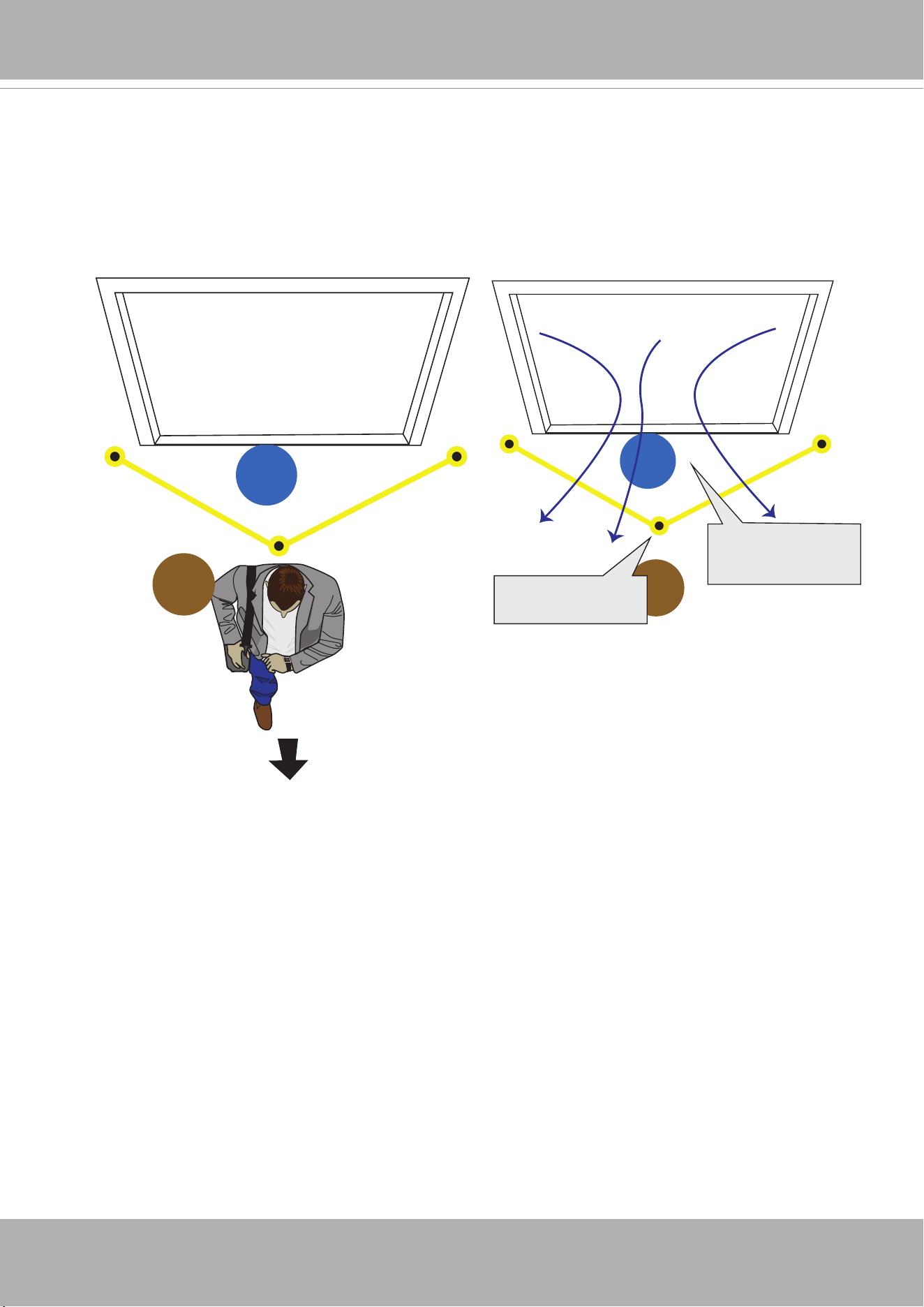
Out
In
For example, if you want to detect people coming out from an entrance, place the detection line
in front of the door and congure the line as In -> Out. You will then acquire the notication every
time a person leaves the door.
Note that you should not place the line too close to the edge of FOV. The time people appears
before reaching the line may be too short. The camera may not be able to detect the presence
of people before they cross the line. You can bend the line to make room for detecting the
presence.
Out
In
Possible traffic flows
Leave enough room
here
Drag center point
forward
VIVOTEK
User's Manual - 37
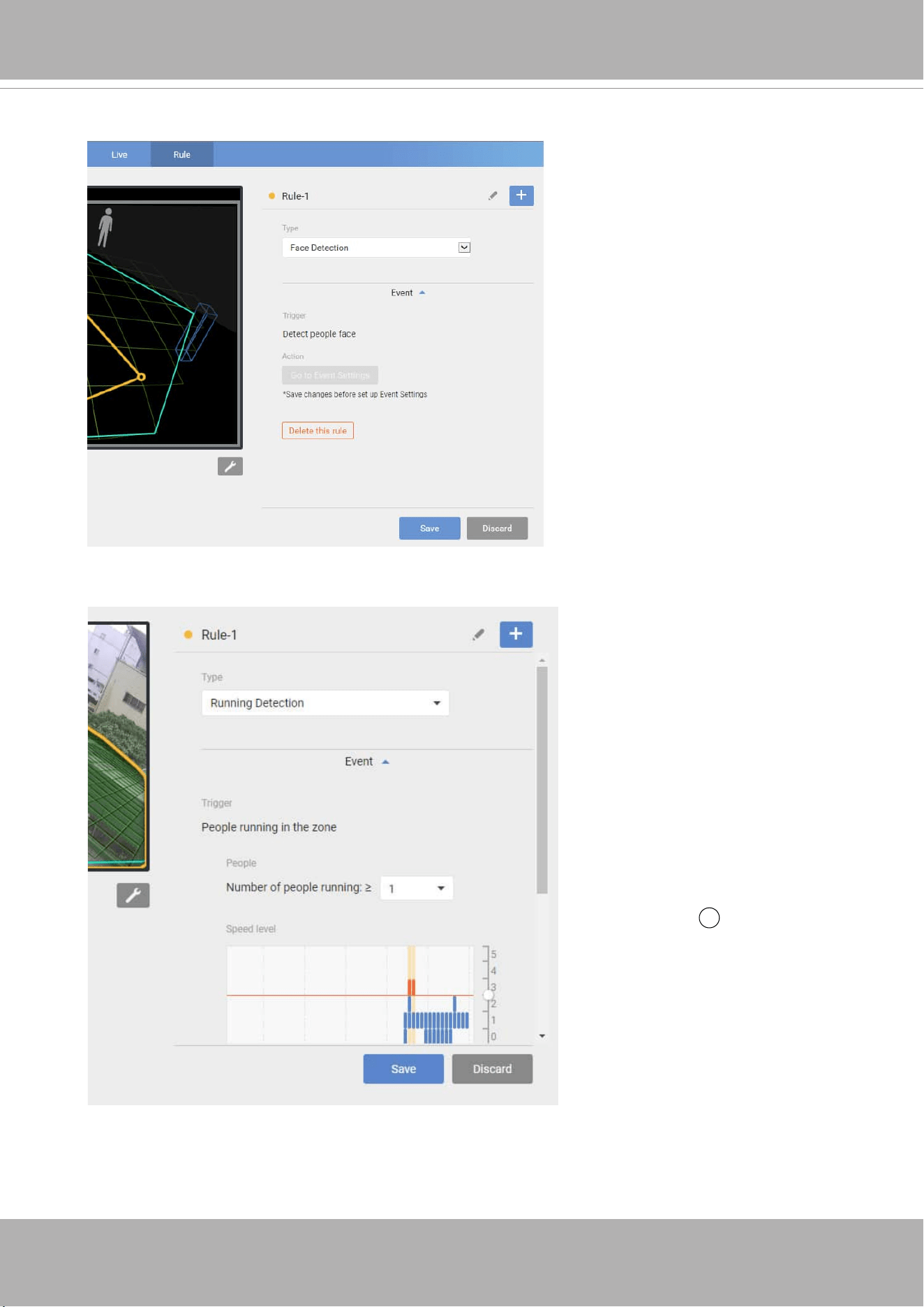
7. Face Detection:
Face detection:
Currently there is no congurable
option for this feature. The
recognition of facial features
is determined by the built-in
database.
Face detection is not supported on
sheye cameras.
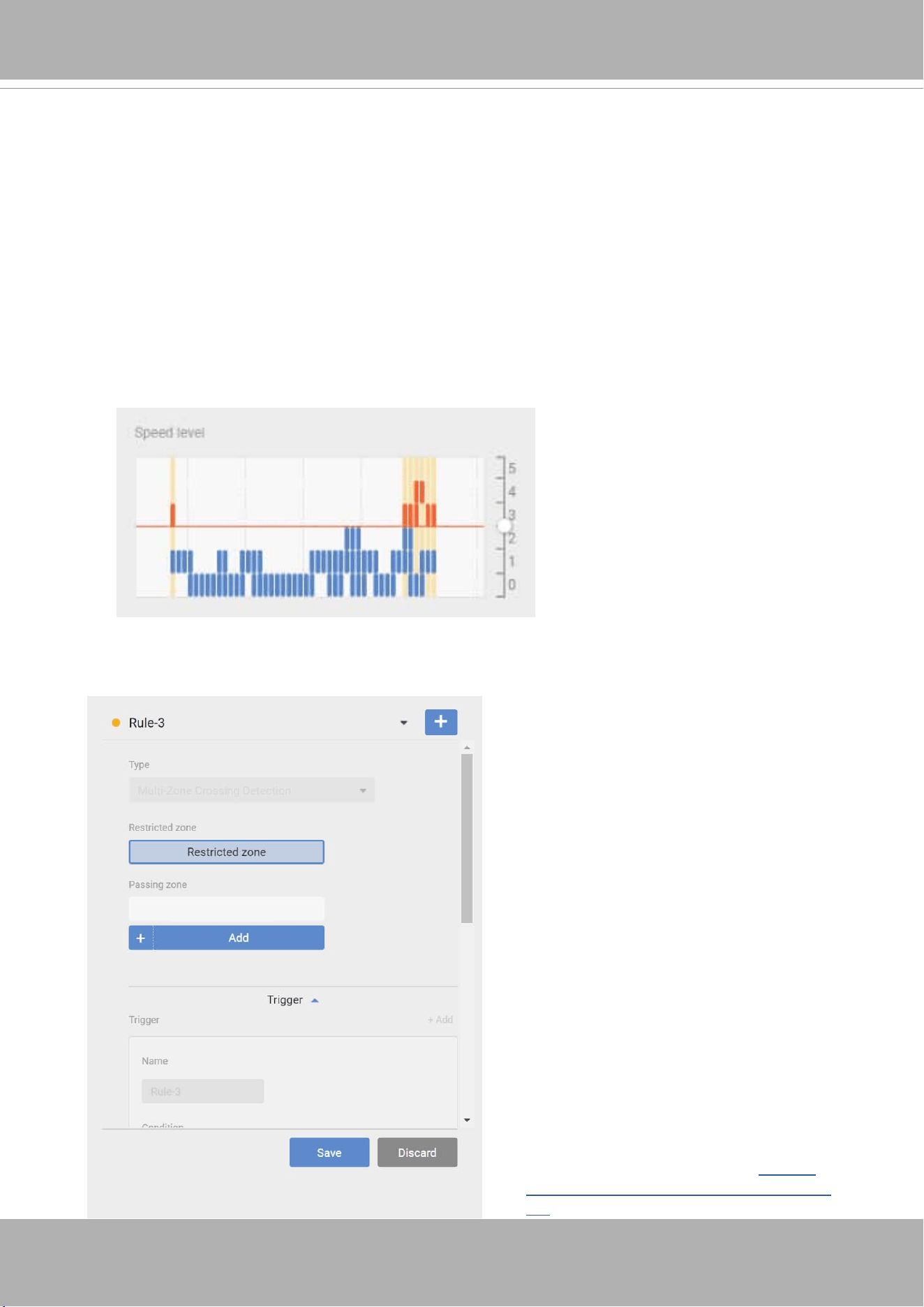
8. Running Detection:
Number of people running ≥
:
Select a number to trigger an
event (normally 1) when people
run in the scene.
Speed level (0 ~ 5)
:
Red: People moving faster than
the threshold. Considered as
running.
Blue: People moving slower than
the threshold. Not running.
Threshold tab : Pull this tab to
determine the threshold for moving
speed. People who moves with
a speed faster than threshold is
considered as
running
.
The speed parameters are
determined by the size of your
FOV. In a wide open scene where
people are smaller, you can tune
the speed threshold lower. In a
near scene where people appear
larger, you can tune the speed
threshold higher.
VIVOTEK
38 - User's Manual
It is recommended to have a co-worker to run in the scene when you are conguring the speed
threshold. Try test the effectiveness by observing the human trafc in scene. Observe and
use the speed threshold tab to change the threshold. A speed faster than level 5 will still be
displayed as level 5. 0 means static.
Due to the wide variety of view perspectives, zoom ratio, near-far distances, and the very
complex parameters involved, there is currently not a single calculation rule for how fast is a
running in the view area of your interest.
Another notice is that while people are moving around, the silhouette of one man can be blocked
by another during their movements, and hence the detection can be interfered.
The indicators on the Speed level chart indicate the detected activities. They do not represent
the number of people walking or running in the scene.
Defined zone 1
9. Restricted Zone:
Restricted zone
:
Click on the screen to draw a restricted
zone.
Dened zone 1 and/or 2
:
Use clicks on the screen to draw one
or two dened zones. People must
pass through 1 zone and then enter the
Restricted zone to trigger an event.
Before a people enters the Restricted
Zone, the person
also crosses the Dened Zone
: This
determines the direction to trigger an
event. One passes 1 zone and then
enters the Restricted Zone to trigger an
event.
does NOT cross any Dened Zone
:
This option is the contrary. Someone
enters the Restricted zone will trigger an
alarm, while someone enters 1 dened
zone rst, and then enters the Restricted
zone will not trigger the alarm. Please
refer to the feature introduction on page
10.
VIVOTEK
User's Manual - 39
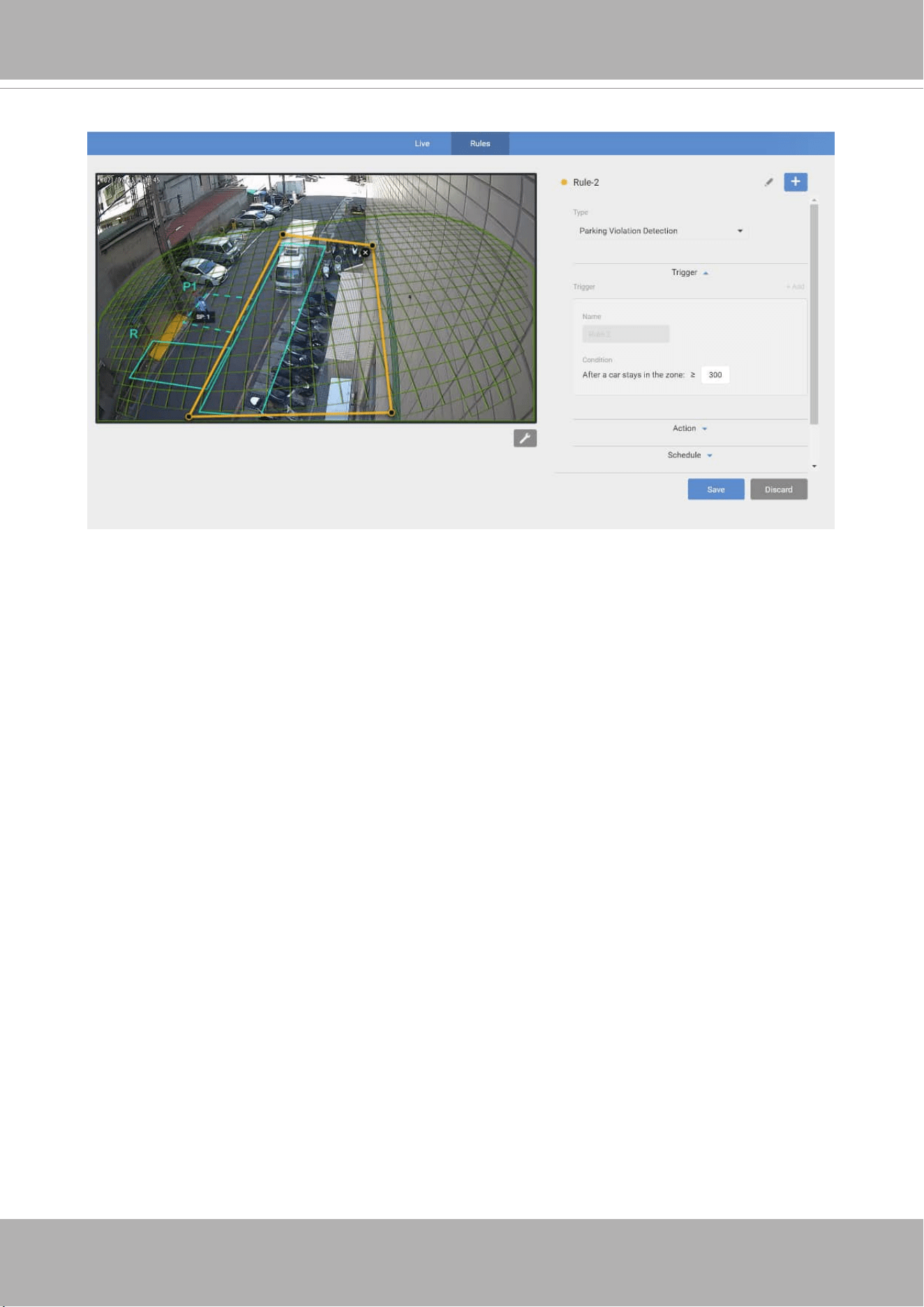
10. Parking Violation detection:
Click on the screen to draw a non-parking zone.
After a car stays in the zone
: ≥ xxx seconds. Enter a number to be the duration of time for a
car to stay before triggering an event.
Action, Schedule
: See the following pages for the conguration. Click Save to preserve your
settings.
VIVOTEK
40 - User's Manual
Mininum activity duration (seconds)
:
Select a duration of running time to trigger an event (normally 1) when people run in the scene.
Activity merge interval (seconds):
This number is used to merge 2 activities when someone runs, stops, and runs again. If
someone runs and stops for shorter than 1 second, and runs again, the whole process will be
considered as 1 event.
11.
Click
Save
to preserve your settings. Click on the
Live
tab to check the performance and
accuracy of your detection rules.
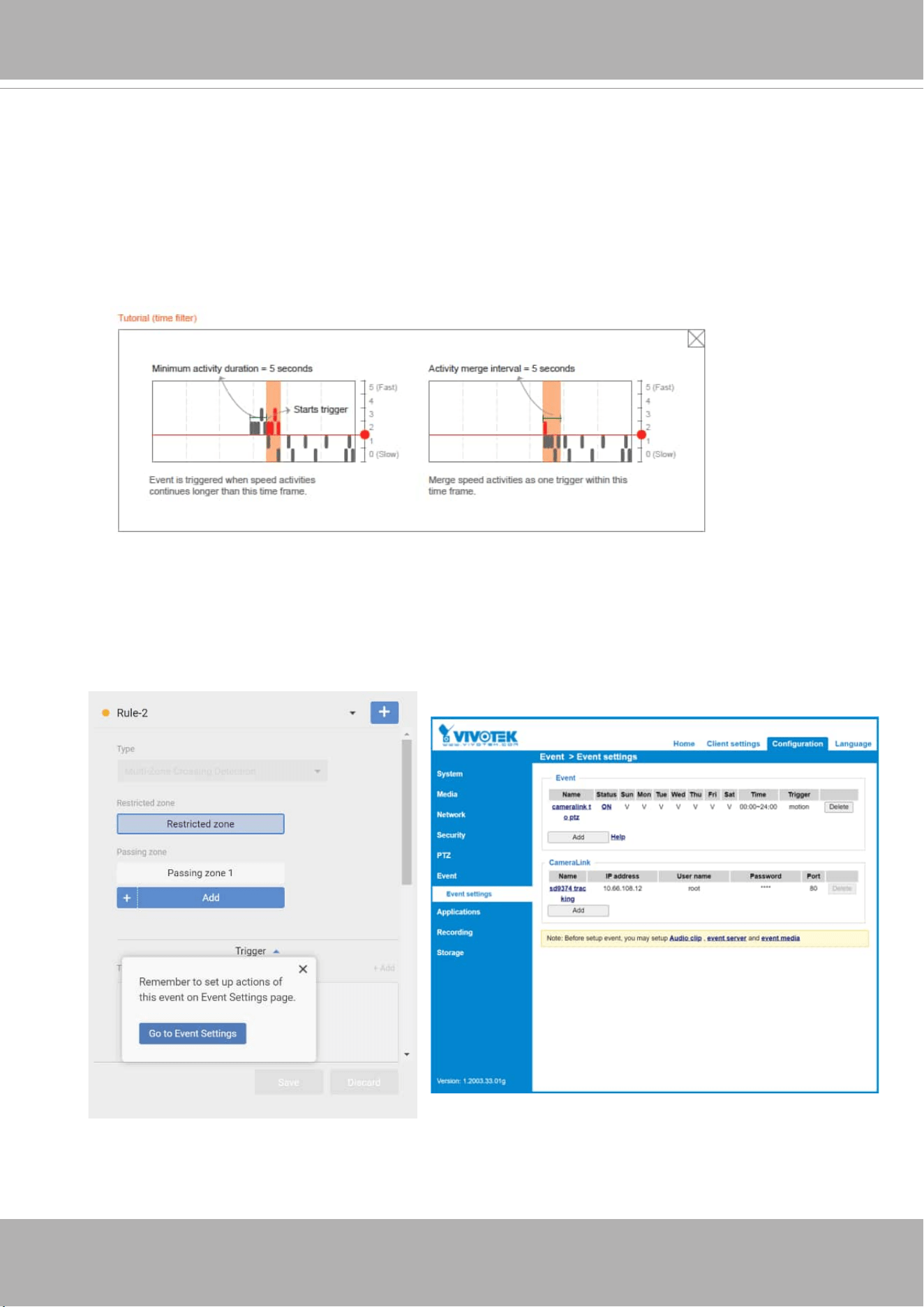
If you want to send the event trigger notications via Email, FTP, HTTP, or to the networked
storage, click the
Go to Event Settings
button. Refer to later discussion for how to receive
interactive notications on the
VAST
software.
VIVOTEK
User's Manual - 41
12.
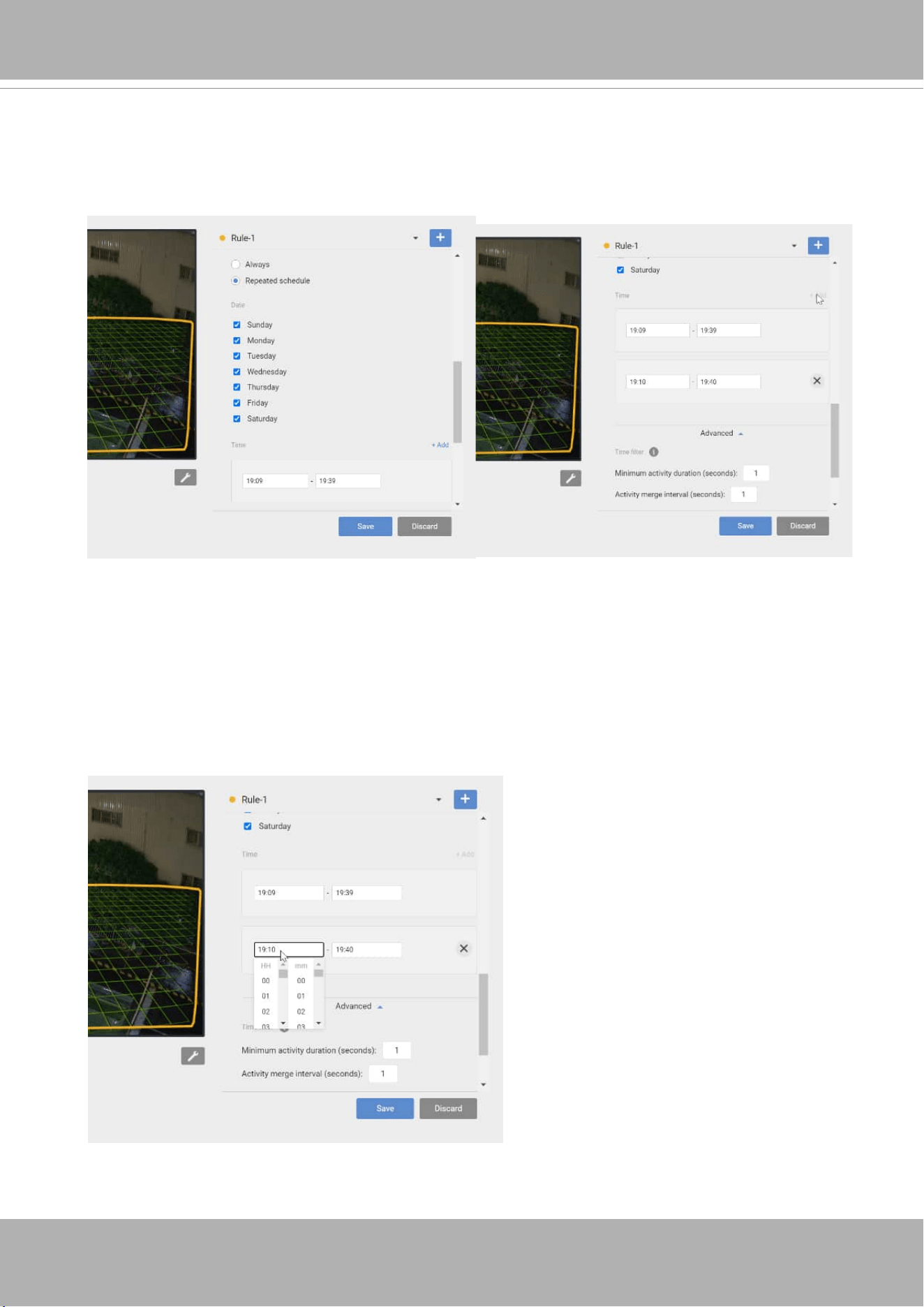
Schedule
You can select to enable a Night mode to accommodate different lighting conditions in the day
and night scenes. If the need should arise, you can specify the duration of the night mode.
For Smart Motion, the Schedule settings can be found in the
Scheduled
tab windows.
For Smart VCA rules, the schedule settings can be found in the individual Rule conguration
windows.
When conguring a detection rule, you can select the Repeated schedule check circle. The
default is Always.
VIVOTEK
42 - User's Manual
On the Repeated schedule pane, you can select the days for the rule to take effect within a
week. You can dene the period of time for the effective schedule.
Use the pull-down menus to select the beginning and the end time. The detection rule will take
effect during these periods of time.
Up to 2 time spans can be congured for each detection rule. 1 or 2 time spans are available
depending on the detection rule types.
VIVOTEK
User's Manual - 43
• People detection, Vehicle detection, Object detection
: In real-world applications, the
effectiveness of VCA detection can be affected by the following:
• Fast moving, running in the scene,
• Lingering at the edges of FOV,
• People crouching or crawling.
In such situations, users can consider tuning the sensitivity towards "
Less missing
objects,
" or vehicle, people.
On the contrary, if tuned towards "Less false alarms," the detection algorithm will apply
more strictly human or vehicle silhouette matching. In some situations, such as when a
man crouchs down to pick up an object, he will be temporarily undetected.
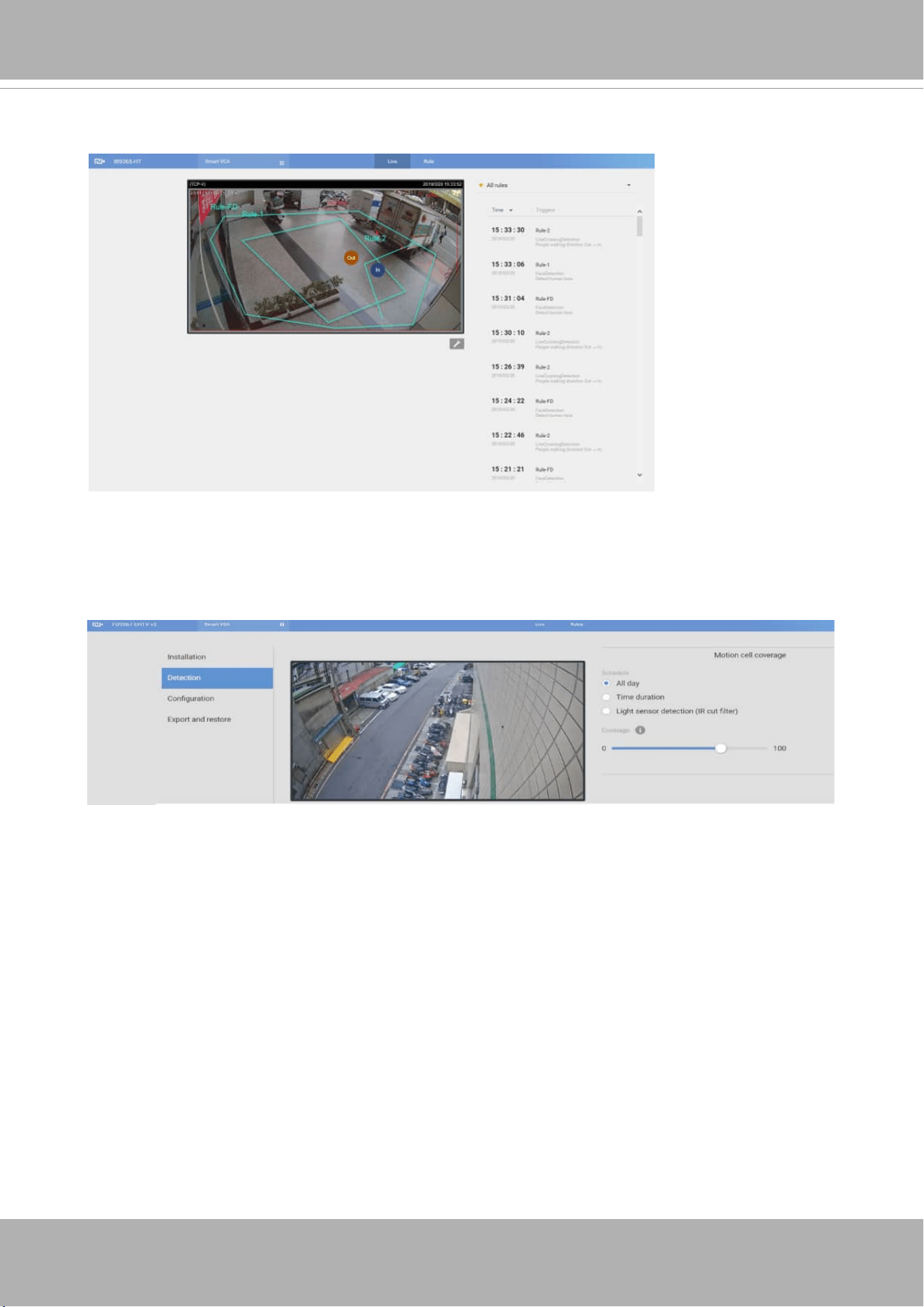
13.
The VCA detection results appear immediately on screen (depending on the activities and
inputs in the scene).
You may need to enter
Settings > Detection
to tune the VCA sensitivity settings if
detection does not perform as your expectation. Note that these Sensitivity parameters
are shared between Smart VCA and Smart Motion detection.
VIVOTEK
44 - User's Manual
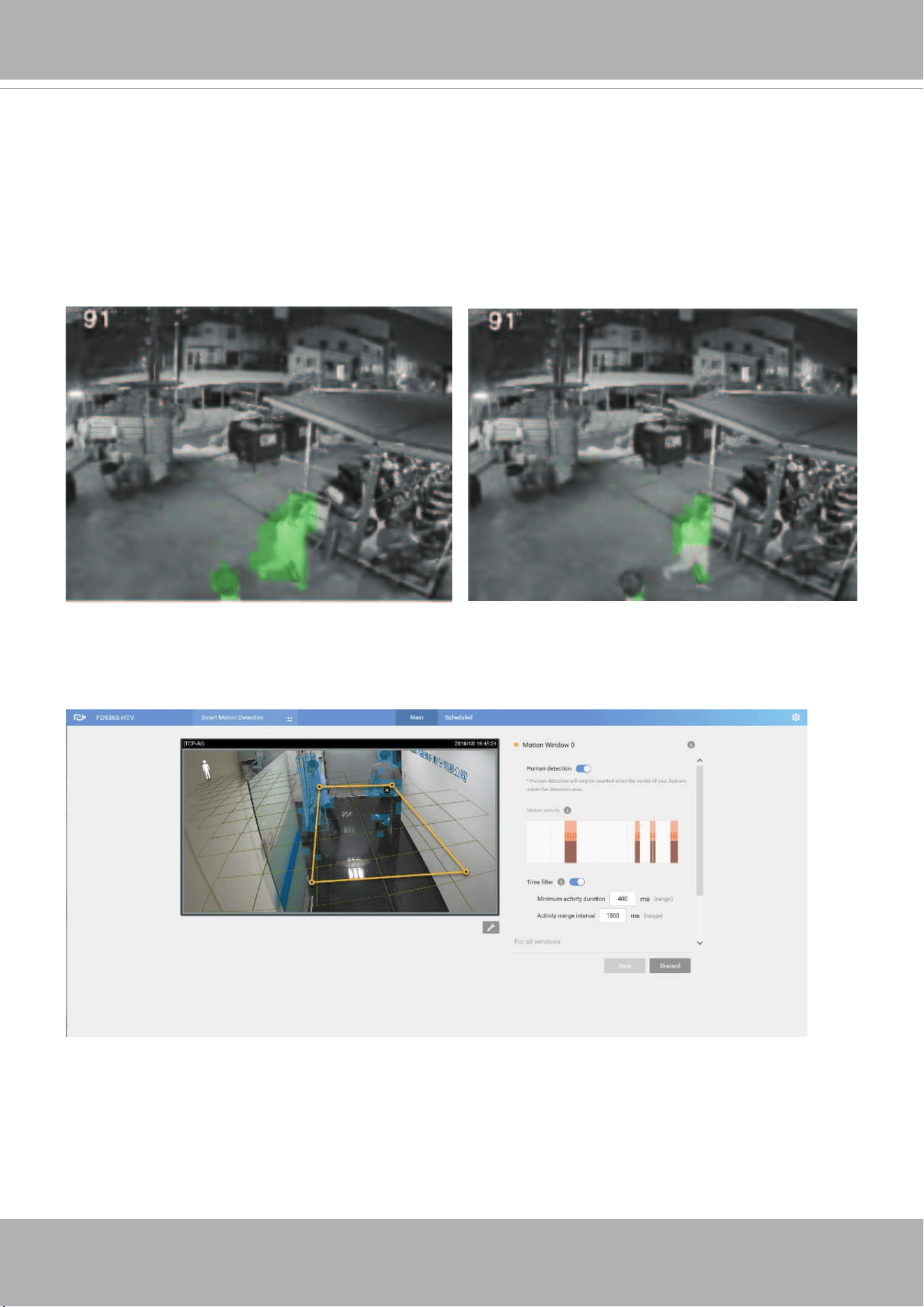
13-1. Observe the human trafc on screen and tune the sensitivity until the motion cells
match the human gures on screen. If you aim to detect larger objects, such as vehicles,
the same applies. Tune the sensitivity so that the appearance of motion cells better
coordinates the appearance of the objects of your interest.
excessive cells
cells too few
Coordinated
The following is available in the Smart Motion detection window:
Click on the Tools button at the lower-right of the streaming window for the display options.
• Show Motion Cells
: Displays the motion cells around a moving object.
VIVOTEK
User's Manual - 45
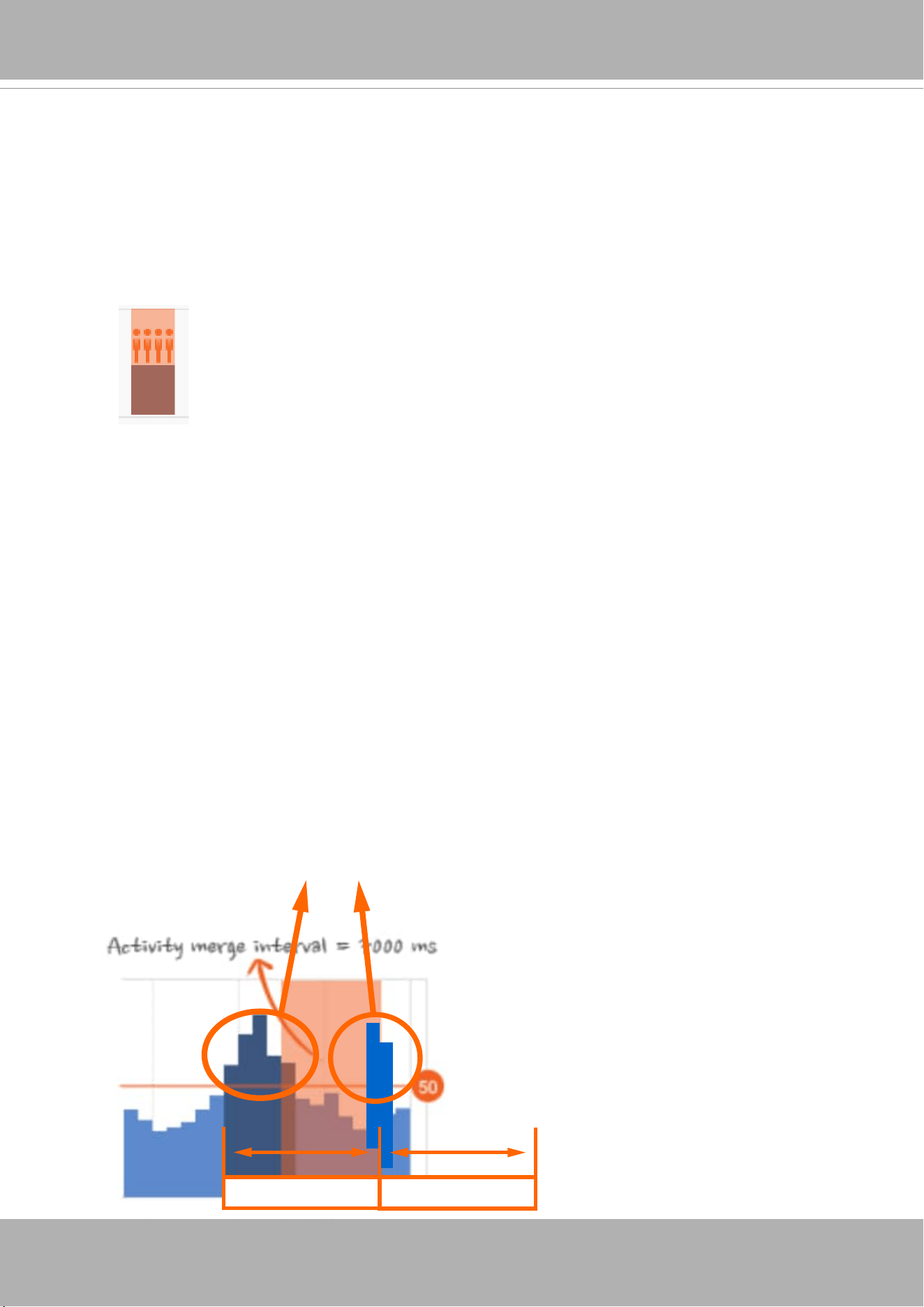
A real-world view of excessive motion cells is shown below. The higher the sensitivity, the higher
the chance of generating more motion cells.
Sensitivity: 90 Sensitivity: 30
Shown below is the comparison of the same object detected through different sensitivity
levels. At the sensitivity level 90, excessive motion cells can be observed; while at level 30, the
detection ends up with insufcient motion cells.
With a live view, you can observe the effectiveness of People detection on screen.
VIVOTEK
46 - User's Manual
Tune the following if the need should arise.
Motion sensitivity
: Use the slide bar to change the sensitivity. Default is 70%.
People detection
: Use this slide tab to enable or disable the People detection feature.
When People detection is disabled, different conguration options will appear.
Motion activity
: The detected human activities is displayed on a 1-minute time line. The
consecutive 4 standing man icons indicate a detected presence persisted for 4 seconds.
Note that when watching the activities, the Motion activity displays for a selected window. If
you have multiple detection windows, and a window is currently not selected on screen, its
activities do not display.
When activities occur, and the window is triggered, the window will be highlighted by
turning the frame into red.
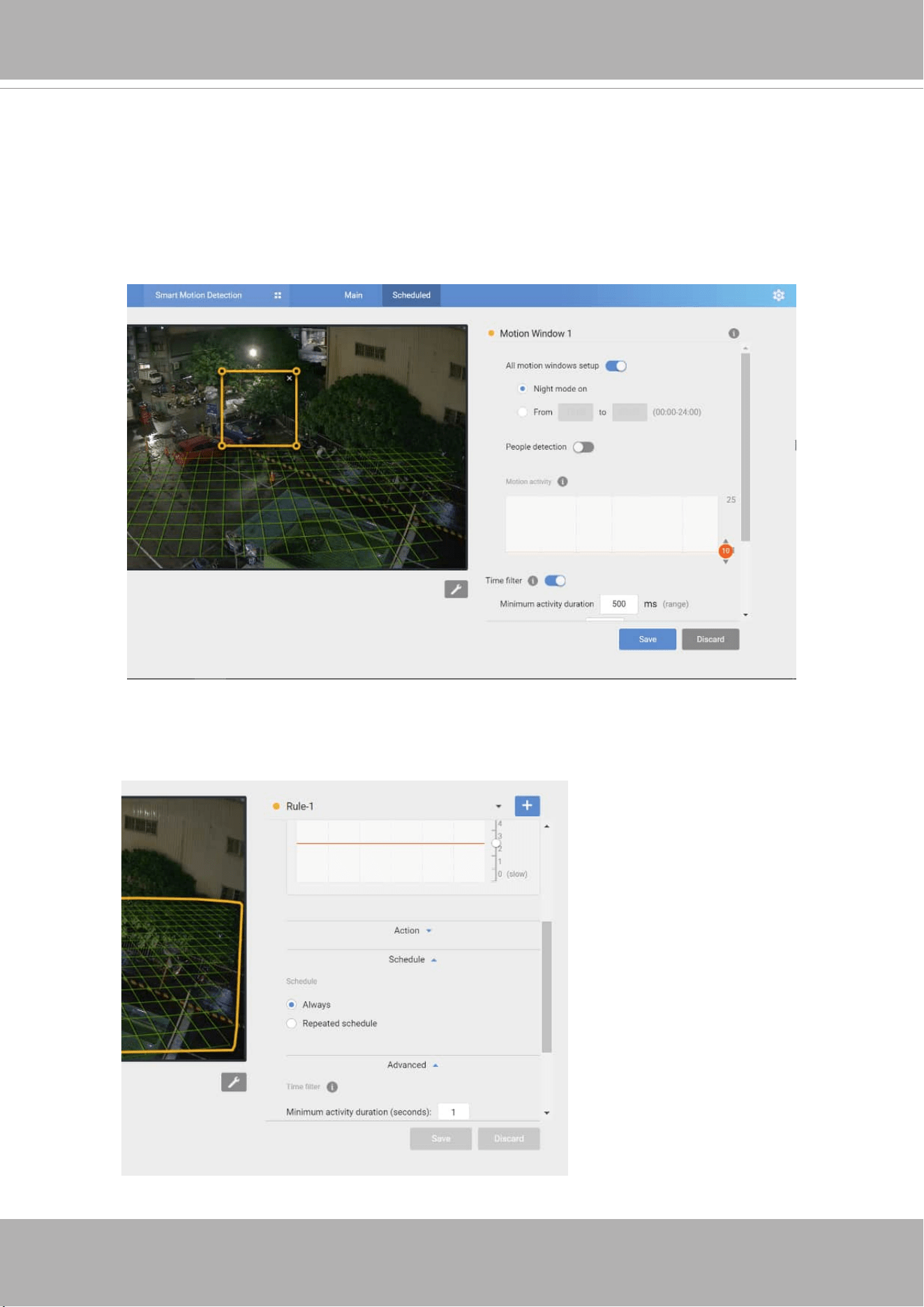
Time lter
:
Minimum activity duration
: A human activity (or moving objects) must persist for
longer than this duration to be considered an effective trigger. This aims to avoid the
situation when one enters and leaves the scene very quickly.
Activity merge interval
: Setting this interval aims to avoid the stop-and-move
maneuver by some thieves. The activities occurred during this duration is considered
as one trigger. If activities occur before the end of the interval, the interval will be
prolonged, e.g., 7 + 7 seconds.
If activities occur before the end of
this interval, the inconsecutive actions
will be considered as one trigger.
7,000ms interval
Prolonged interval
VIVOTEK
User's Manual - 47
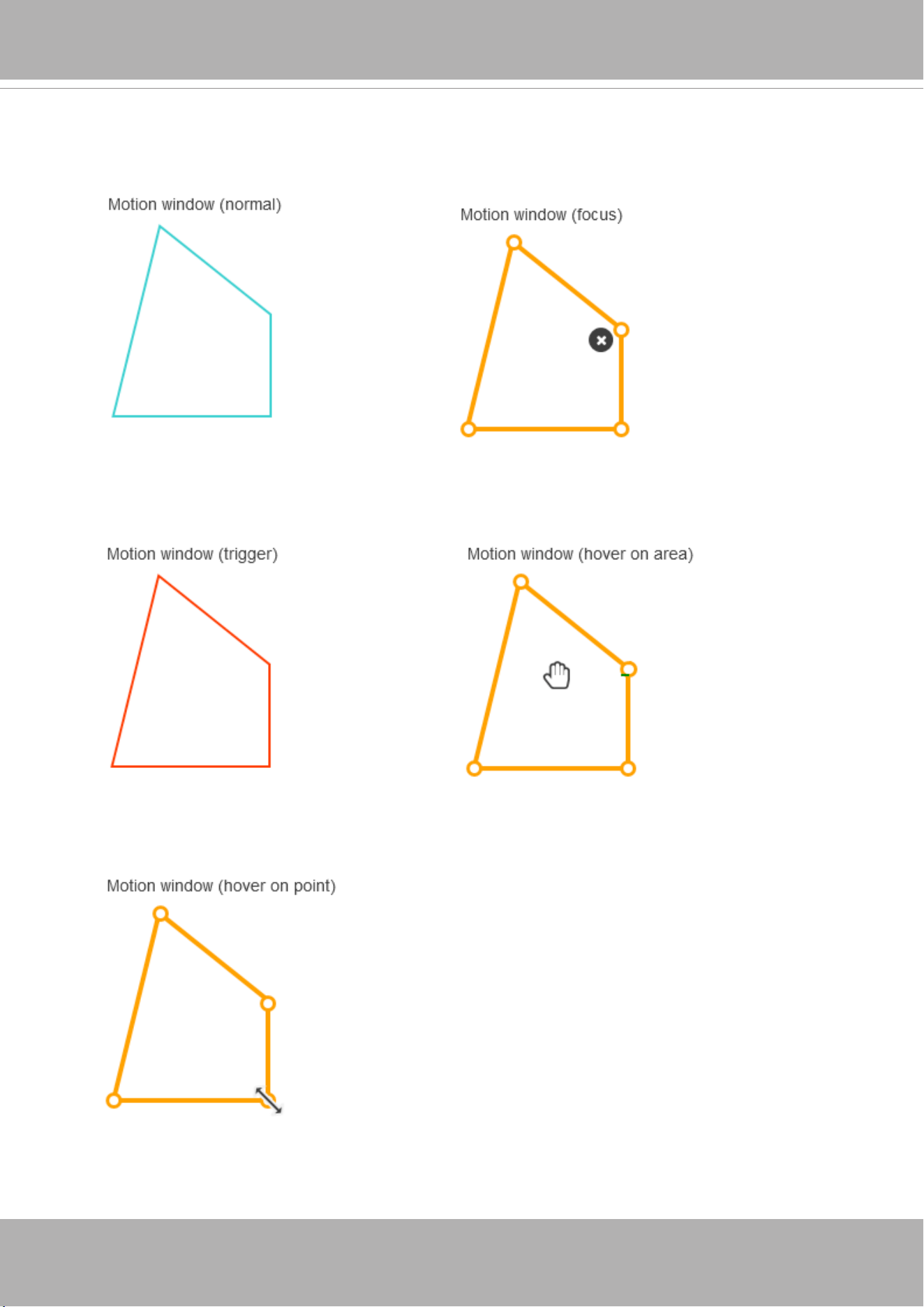
Below are the statuses of the VCA rule detection polygons (zones):
Normal Selected by a mouse click. You can click on the
delete button to remove a configured window.
When motion is triggered in the window. When moused over. You edit the end points.
Click and drag the end points to edit the coverage of
the motion window.
VIVOTEK
48 - User's Manual
Camera 01
Camera 02
Camera 03
Camera 04
Camera 06
Camera 05
Camera 07
Camera 08
Camera 09
VAST2 Server
VCA notification
Email
VIVOCloud
NVR
FTP / HTTP
Deterrent
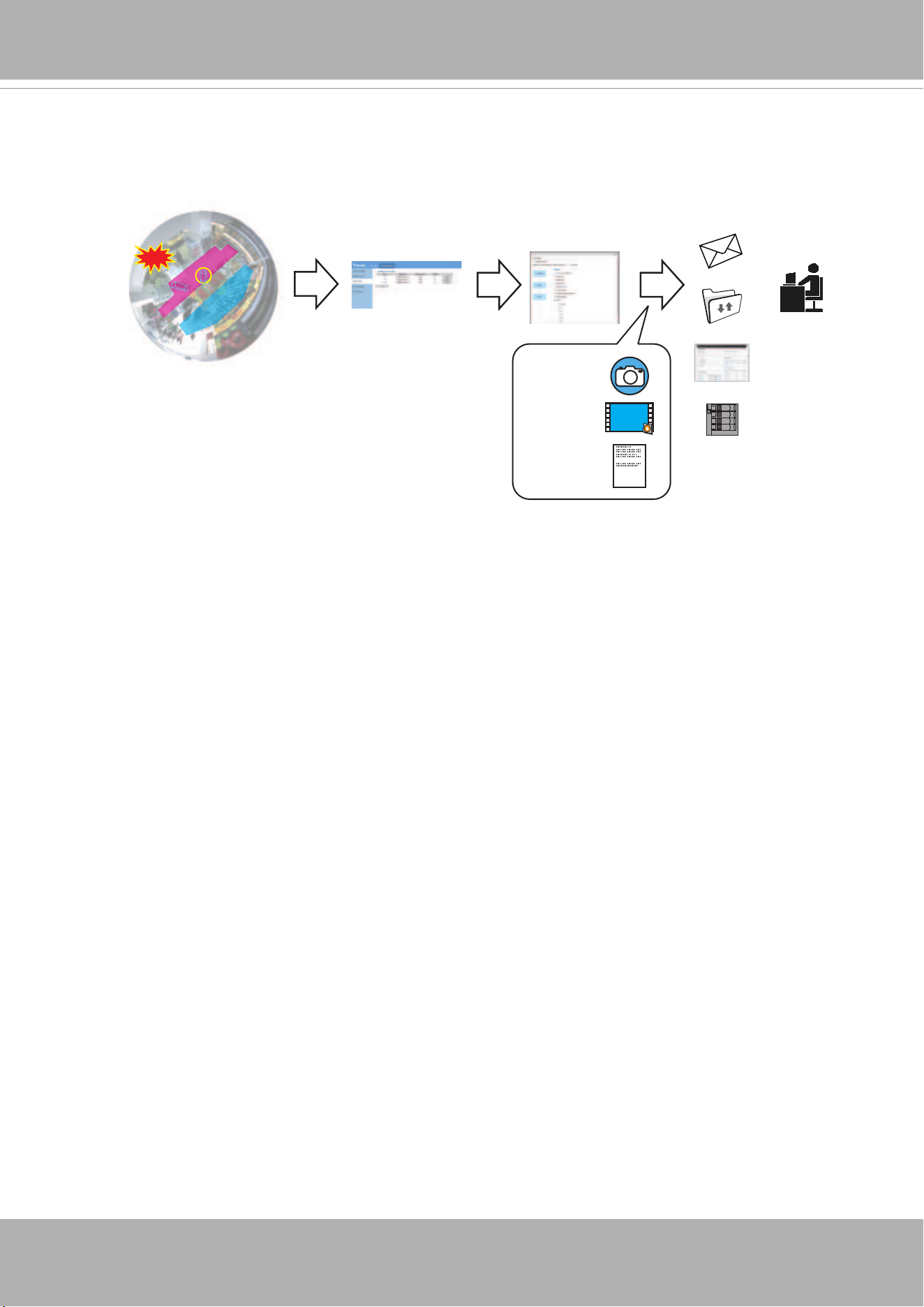
13-2. When the Smart VCA conguration is made, associate the event delivery with the
occurence of VCA events. For example, you can congure the camera to record the
related video clips by the time the events occur, or sending an Email containing the
snapshot of the event.
Congure the motion event notication in Conguration > Event settings.
VIVOTEK
User's Manual - 49
Example:
man staying for too
long
1
1
1
1
1
1
1
VCA situation creates a trigger
Event rule
Event actions
Email
FTP
HTTP
NAS
Snapshot
Video clips
Logs
Users
Number exceeding threshold,
e.g., Wait time too long...
Congure and use the Event notication to send snapshot, video clips, or logs to your
receivers.
VIVOTEK
50 - User's Manual
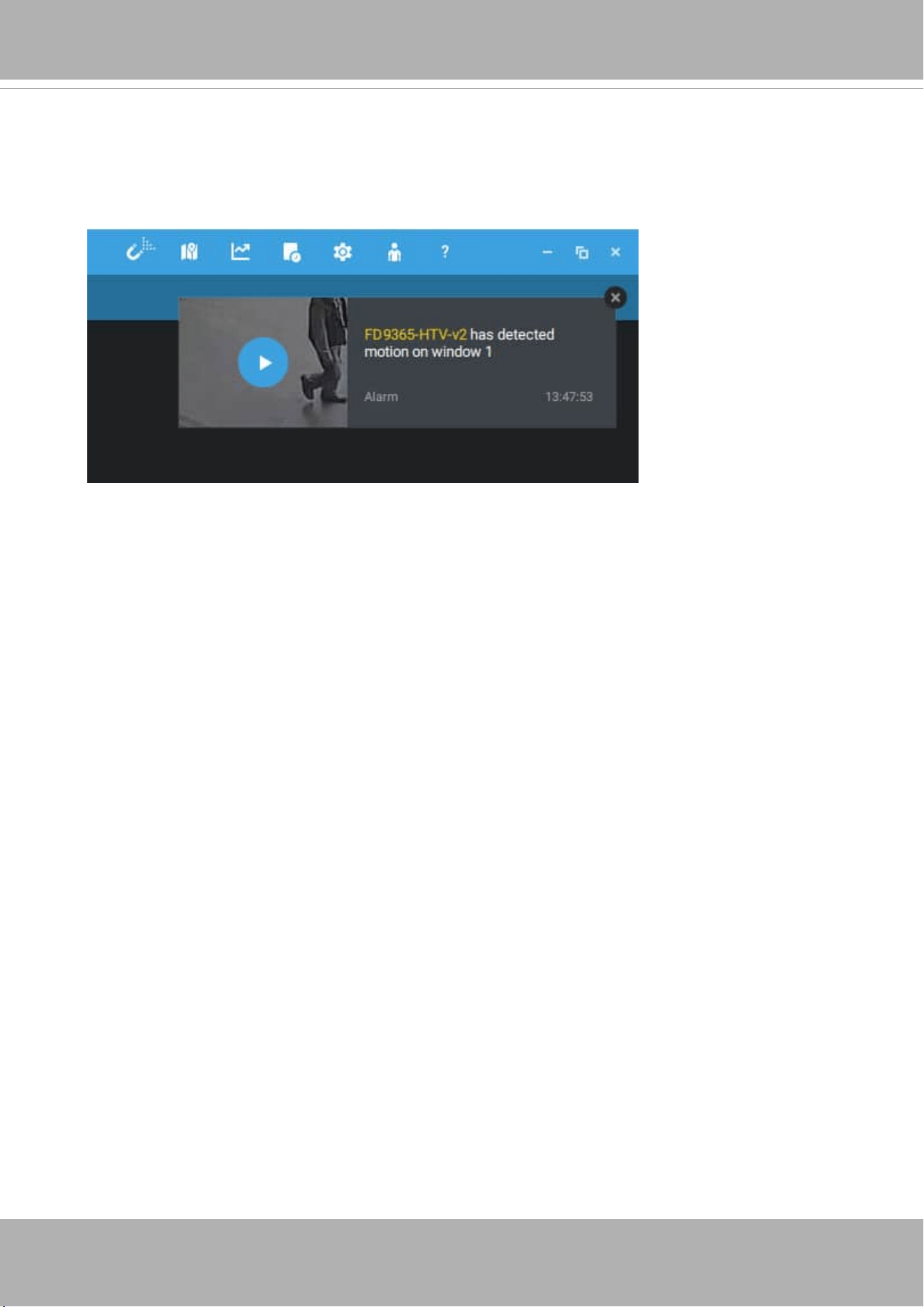
VCA events prompt on VIVOTEK’s central management software, VAST2. A single click on
the event prompt can play back the related video footage.
VCA events are tagged and can be retrieved from the event list using the Alarm Search
function.
The search function has the following benefits:
1. Faster search: Metadata is saved with videos coming from cameras running Smart
VCA detection. With the help of the metadata, the search focuses on the effective
alerted vectors and the adverse effects, e.g., headlights causing dramatic contrast
or small animals passing through, have already been eliminated by the camera. The
search can be more rapidly completed.
2. People detection: The search can be conducted for human activities only. Activities
matching the silhouettes of human will be considered as effective results.
3. Multiple multi-point polygons: Users can more readily create flexible polygons on the
areas of their interest.
Note that the detection areas must have been configured on each camera before the
VCA search can take effect.
Conguration & Viewing on the VAST Software:
VIVOTEK
User's Manual - 51
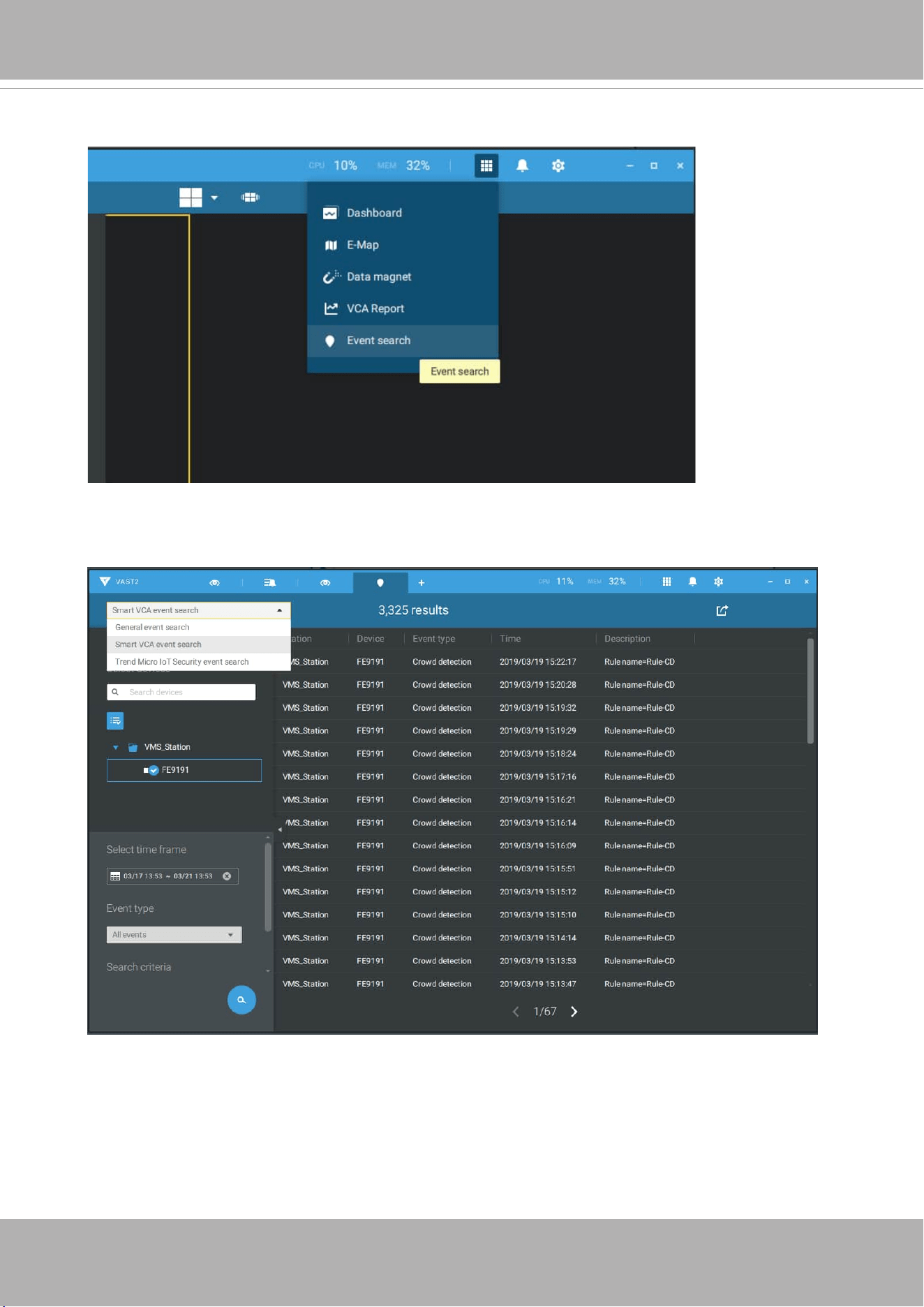
Open the Application tab on VAST tool bar. Click Event search.
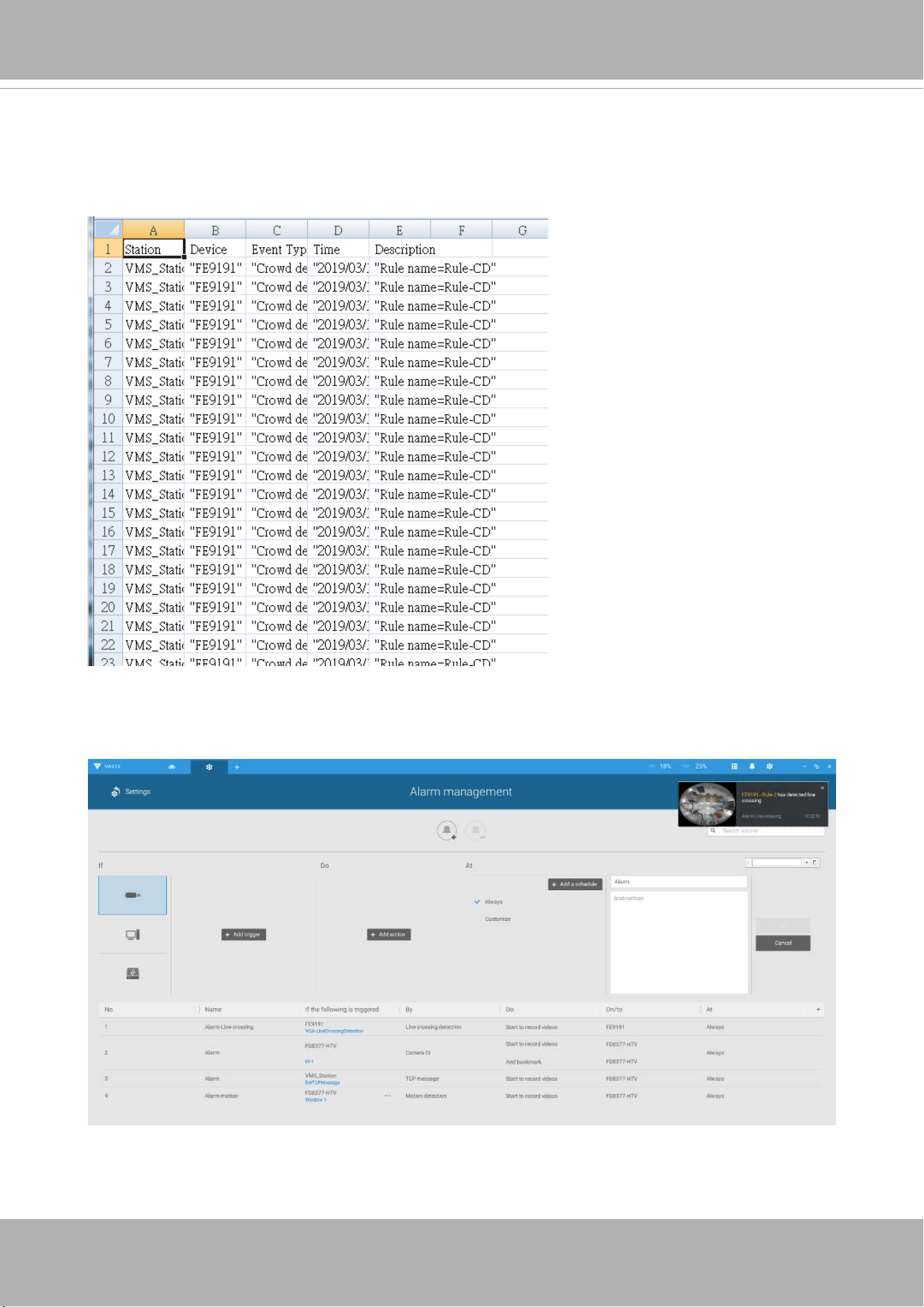
On the pull-down menu on the upper left, click Smart VCA event search. Select the time
span, and select the event type, and the search results will rapidly display.
VIVOTEK
52 - User's Manual
If you nd important events, use the Export function to export an event le. The le looks
like this: 20190318_083935-20190319_152217_Smart VCA event.csv.
The rule name, rule type, and the time of occurrence will be listed.
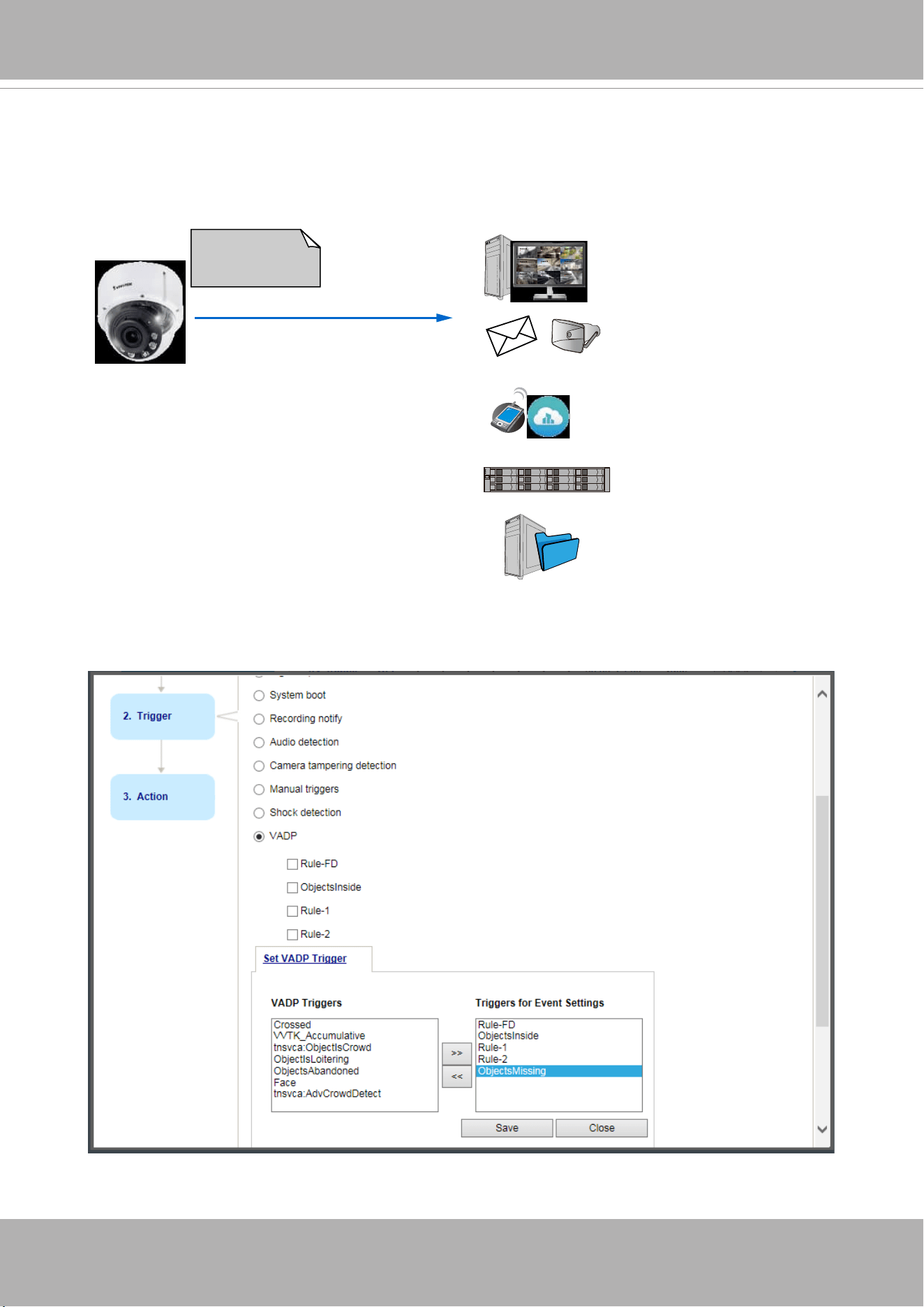
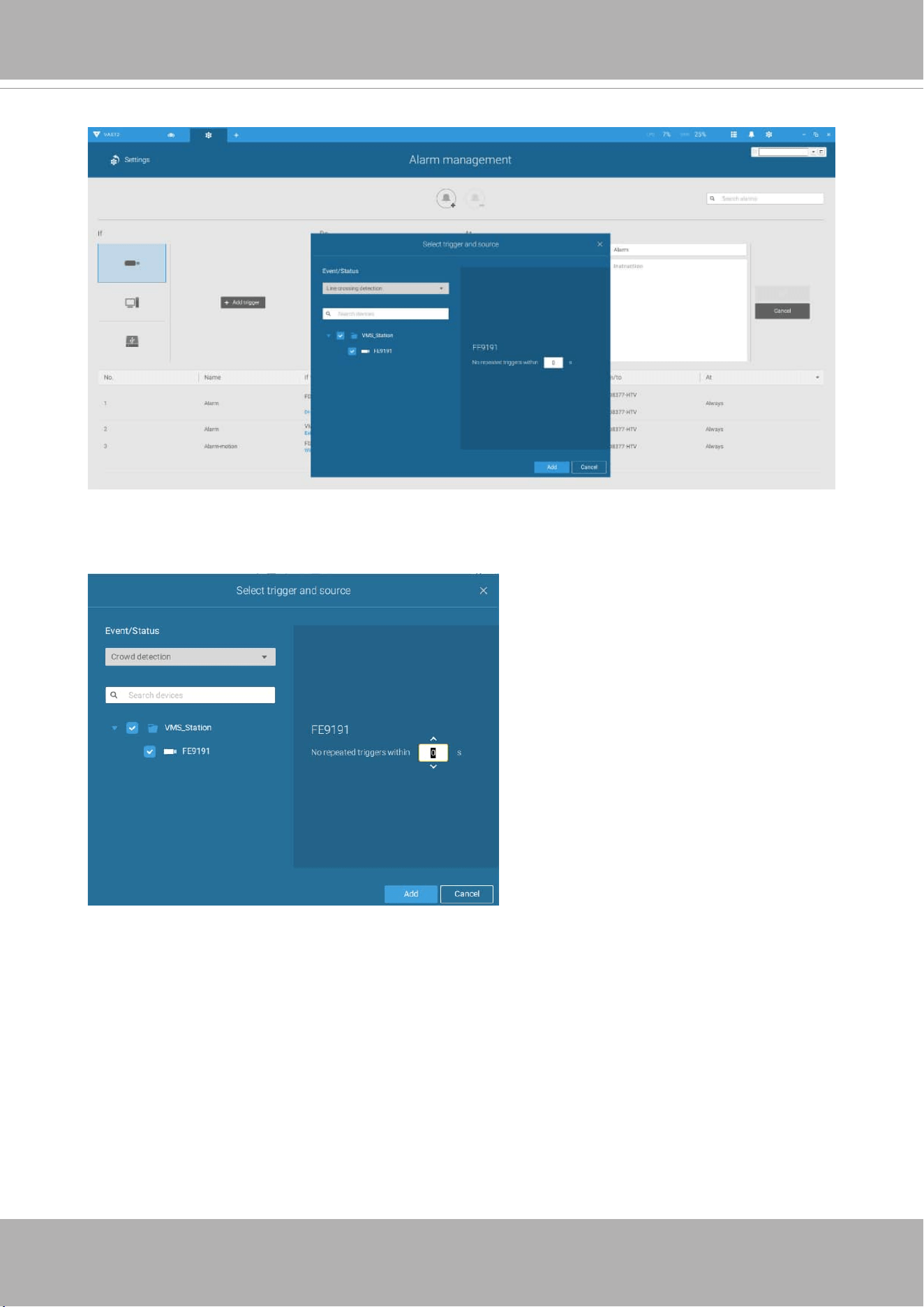
In VAST > Settings > Event Management, congure VCA event from cameras as event
triggers.
VIVOTEK
User's Manual - 53
Click
Add Trigger
to enter the conguration window.
Proceed with the following:
1. Select the camera running the VCA detection.
2. Select the type of Smart VCA feature.
VIVOTEK
54 - User's Manual
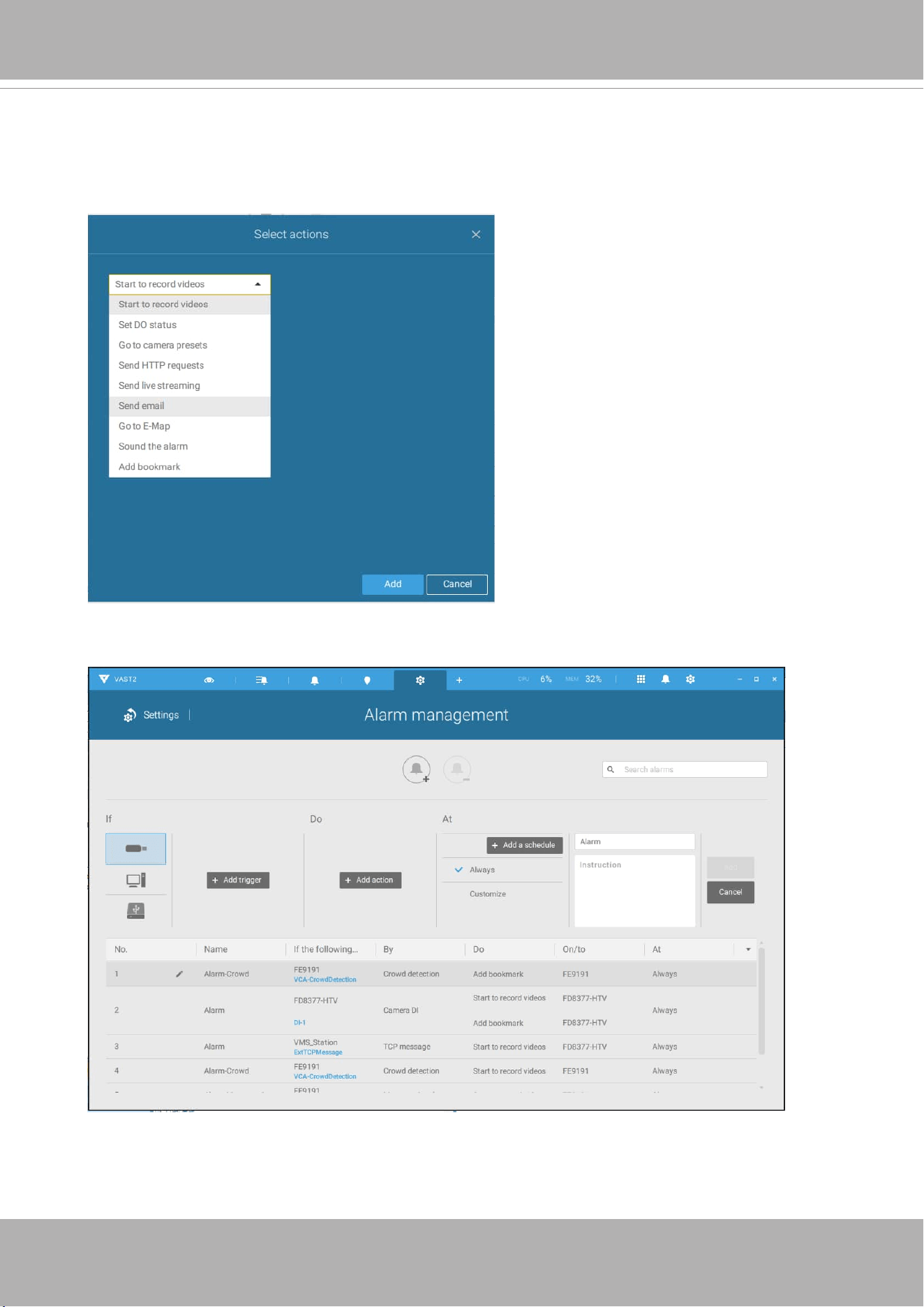
3. Select the responsive action and complete the rest of the conguration.
Note that if
Add bookmark
is selected, the related video clip will be saved, and the clips
will not be recycled when the storage space is full.
The congured VCA alarms will be listed and the conguration takes effect immediately.
