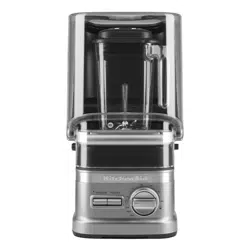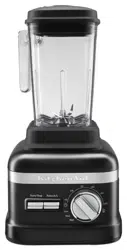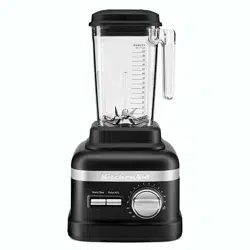
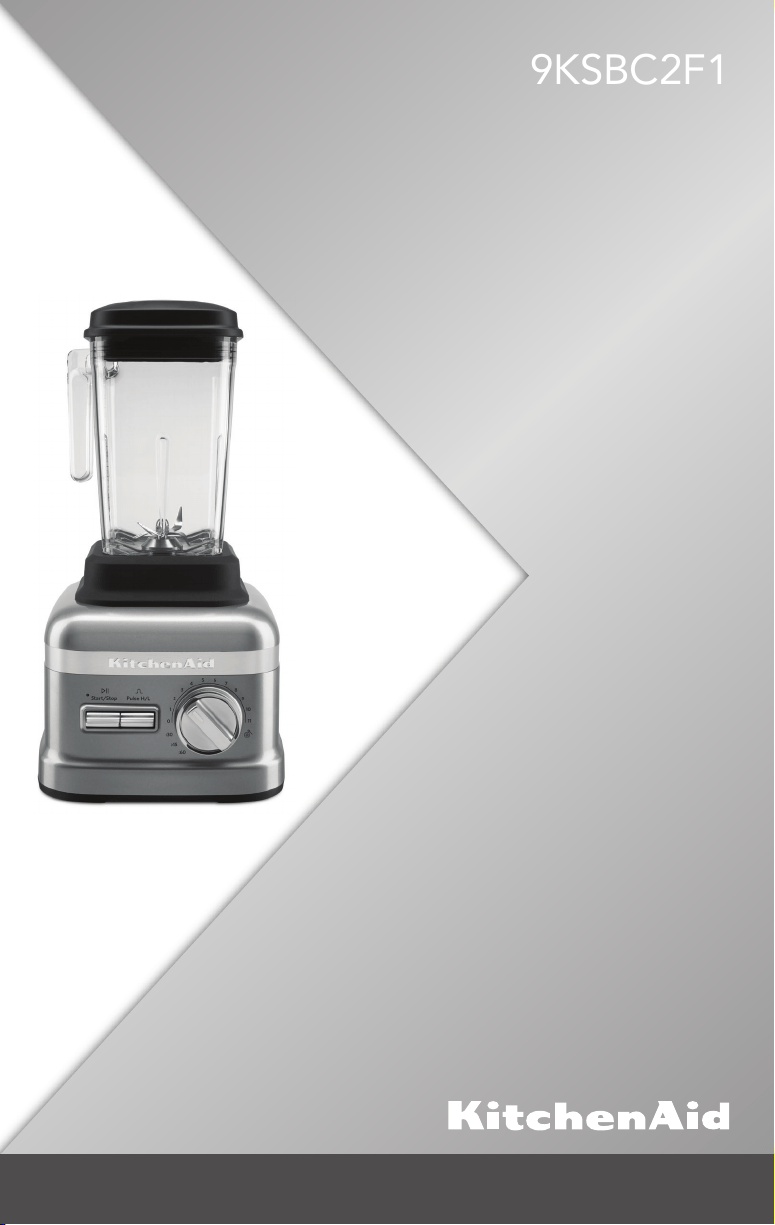
9KSBC2F1

Cord cleat
(not shown)
PARTS AND FEATURES
PARTS AND ACCESSORIES
Ingredient
cap with
measuring
cup
Flex Edge
tamper
Lid
Talon™
blade
Base
On/off
switch
(not shown)
Start/Stop toggle switch
Pulse toggle switch
Control
dial
Open handle
for easy
stackability
Removable blender
jar pad
Blender jar
Status indicator light
Power cord
socket and
removable
power cord
(not shown)
Motor horsepower for the blender motor was measured using a dynamometer, a machine
that laboratories routinely use to measure the mechanical power of motors. Our 3.5 peak
horsepower (HP) motor reference reflects the horsepower output of the motor itself and
not the Blender’s horsepower output in the blender jar. As with any blender, the power
output in the blender jar is not the same as the horsepower of the motor itself. This
motor delivers 2.45 peak HP in the blender jar, enabling your Blender to deliver robust
power for all your recipes.
ENGLISH
COMMERCIAL BLENDER SAFETY | 3
COMMERCIAL BLENDER SAFETY
IMPORTANT SAFEGUARDS
When using electrical appliances, basic safety
precautions should always be followed, including the
following:
1. Read all instructions. Misuse of appliance may
result in personal injury.
2. To protect against risk of electrical shock, do not
put Blender in water or other liquid.
3. This appliance can be used by children aged
from 8 years and above and persons with reduced
physical, sensory, or mental capabilities or lack of
experience and knowledge if they have been given
supervision or instruction concerning use of the
appliance in a safe way and understand hazards
involved. Cleaning and user maintenance shall not
be made by children without supervision.
4. This appliance is not intended for use by persons
(including children) with reduced physical, sensory
or mental capabilities, or lack of experience and
knowledge, unless they have been given supervision
or instruction concerning use of the appliance by
a person responsible for their safety.

4 | COMMERCIAL BLENDER SAFETY
COMMERCIAL BLENDER SAFETY
5. Children should be supervised to ensure that they do
not play with the appliance.
6. This appliance shall not be used by children under
8 years. Keep the appliance and its cord out of reach
of children.
7. Never leave the Blender unattended while it is in
operation.
8. Avoid contacting moving parts. Keep hands, hair,
clothing, as well as spatulas and other utensils away
from blade during operation to reduce the risk of injury
to persons and/or damage to the Blender.
9. Unplug from outlet when not in use, before putting
on or taking off parts, and before cleaning.
10. Do not operate any appliance with a damaged cord
or plug or after the appliance malfunctions or has
been damaged in any manner. Return appliance to
the nearest Authorised Service Centre for examination,
repair or adjustment. If the supply cord is damaged,
it must be replaced by a special cord or assembly
available from the manufacturer, its service agent, or
similarly qualied persons in order to avoid a hazard.
11. Do not let cord hang over edge of table or counter.
12. The blades are sharp. Care should be taken when
handling the sharp cutting blades, emptying the jar,
and during cleaning.
13. Keep hands and utensils out of jar while blending to
reduce the risk of severe injury to persons or damage
to the Blender. A scraper may be used, but must be
used only when the Blender is not running.
14. Do not use the Blender outdoors.
15. Be careful if hot liquid is poured into the Blender as
it can be ejected out of the appliance due to sudden
steaming.
16. Always operate Blender with lid in place.
17. The use of attachments not recommended or sold by
KitchenAid may cause re, electric shock, or injury.
ENGLISH
COMMERCIAL BLENDER SAFETY | 5
COMMERCIAL BLENDER SAFETY
SAVE THESE INSTRUCTIONS
ELECTRICAL REQUIREMENTS
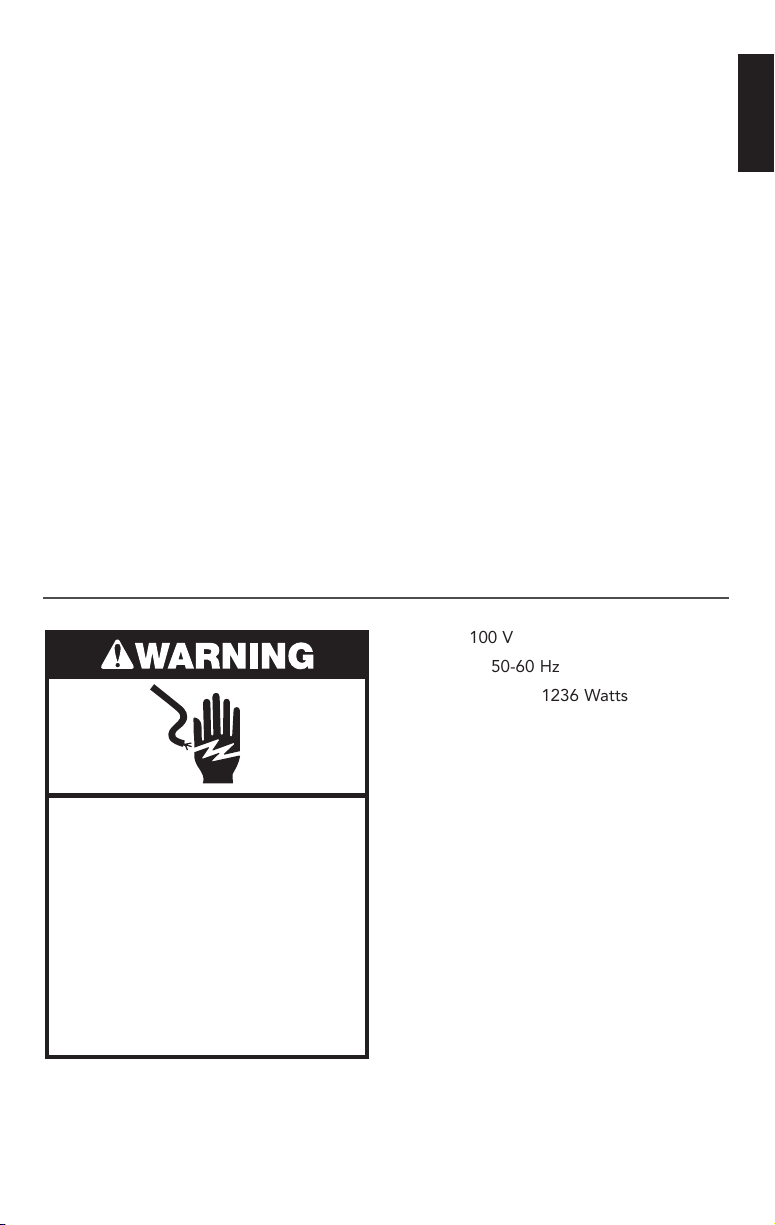
Electrical Shock Hazard
Plug into an earthed outlet.
Do not remove earth prong.
Do not use an adapter.
Do not use an extension cord.
Failure to follow these
instructions can result in
death, fire, or electrical shock.
Voltage: 100 V
Frequency: 50-60 Hz
Power (Wattage): 1236 Watts
NOTE: If the plug does not fit in the
outlet, contact a qualified electrician. Do
not modify the plug in any way. Do not
use an adapter.
Do not use an extension cord. If the power
supply cord is too short, have a qualified
electrician or service technician install an
outlet near the appliance.
18. When blending hot liquids or ingredients, ingredient-
measuring cap should remain in place over the lid
opening. Always start on lowest speed and slowly
ramp to desired speed when blending hot liquids or
ingredients.
19. This appliance is intended to be used in commercial
and similar applications such as:
- staff kitchen areas in shops, ofces or other
working environments;
- farmhouses;
- by clients in hotels, motels and other residential
type environments;
- bed and breakfast type environments.
6 | USING THE COMMERCIAL BLENDER
USING THE COMMERCIAL BLENDER
The Blender has a preset recipe program: Coulis Cycle. It also features Variable Speeds
and Pulse functions that allow you to customize your blending for any recipe you make.
To clean the Blender: Quick pulses of power and high speeds work to clean the blender
jar with just 2 cups of water and a drop of dish soap.
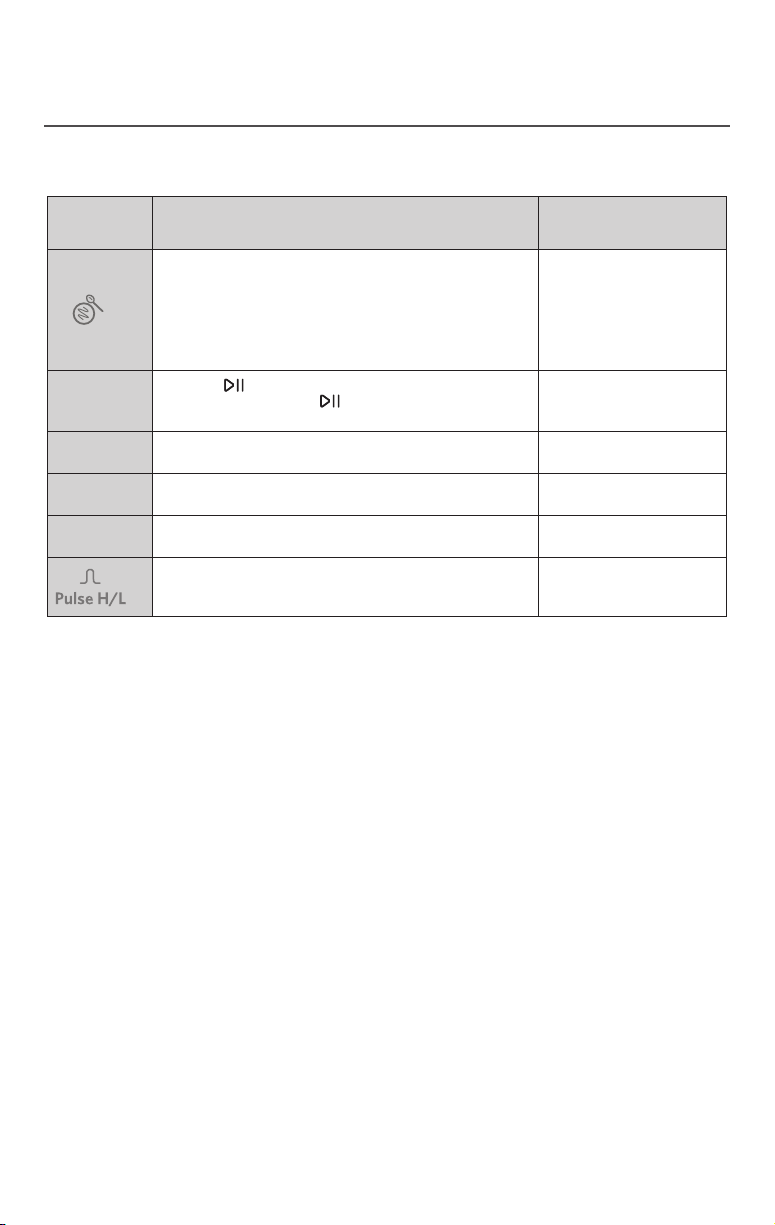
BLENDER FUNCTION GUIDE
SETTING
DESCRIPTION BLENDING TIME
(IN MIN:SEC)
Blends fluid gels into a smooth mixture. A series of pulses
and speeds run before the unit gradually ramps up to full
power before it finishes with a slow speed to allow air to
escape from the fluid. For best results, cut or crumble gel
into 1/2'' cubes before blending. Limit gel to 500-1000
grams. Do not exceed 1000 grams in the jar. You may need
to use the tamper for thicker fluid gels.
< 3 minutes
VARIABLE
SPEEDS
When the Start/Stop switch is pressed, the Blender will
run continuously until the Start/Stop switch is pressed
again, or after 6 minutes have elapse.
N/A
:30
When the :30 time is selected, the Blender will gradually
ramp up to full power and run for 30 seconds total.
:30
:45
When the :45 time is selected, the Blender will gradually
ramp up to full power and run for 45 seconds total.
:45
:60
When the :60 time is selected, the Blender will gradually
ramp up to full power and run for 60 seconds total.
:60
Alternatively, use Pulse during manual operation to
manually operate the Blender at either High or Low
speeds.
N/A
ENGLISH
USING THE COMMERCIAL BLENDER | 7
USING THE COMMERCIAL BLENDER
Before first use
Before using your Blender for the first
time, wipe the blender base with a warm
damp cloth, then wipe clean with a damp
cloth. Dry with a soft cloth. Wash the
blender jar, lid, and ingredient cup in warm,
sudsy water (see the “Care and cleaning”
section). Rinse parts and wipe dry.
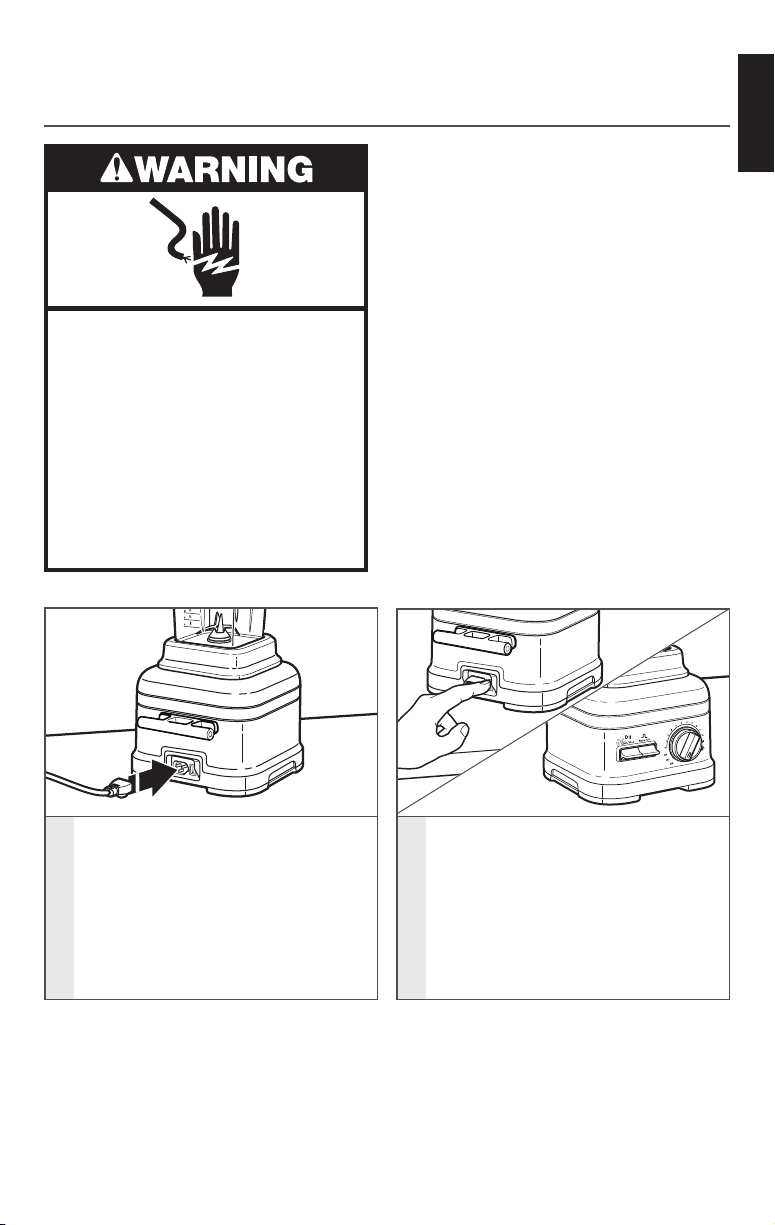
1
Before using the Blender, be sure the
countertop beneath the Blender and
surrounding areas are dry and clean.
Be sure the power switch on the back
of the blender base is in the Off (O)
position and the cord is also fully
plugged into the back of the Blender.
Then, plug the Blender into
an earthed.
2
The main power switch is on the
back of the blender base. Flip the
POWER switch to the On (I) position.
The status indicator light above the
Start toggle button will begin to
flash, indicating that the Blender is in
Standby mode. The Blender is now
ready to operate.
Electrical Shock Hazard
Plug into an earthed outlet.
Do not remove earth prong.
Do not use an adapter.
Do not use an extension cord.
Failure to follow these
instructions can result in
death, fire, or electrical shock.
PREPARING THE COMMERCIAL BLENDER FOR USE
NOTE: The cord cleat is not to be used
as a handle; the cord cleat is designed to
wrap the power cord around it for
storage only.
8 | USING THE COMMERCIAL BLENDER
USING THE COMMERCIAL BLENDER
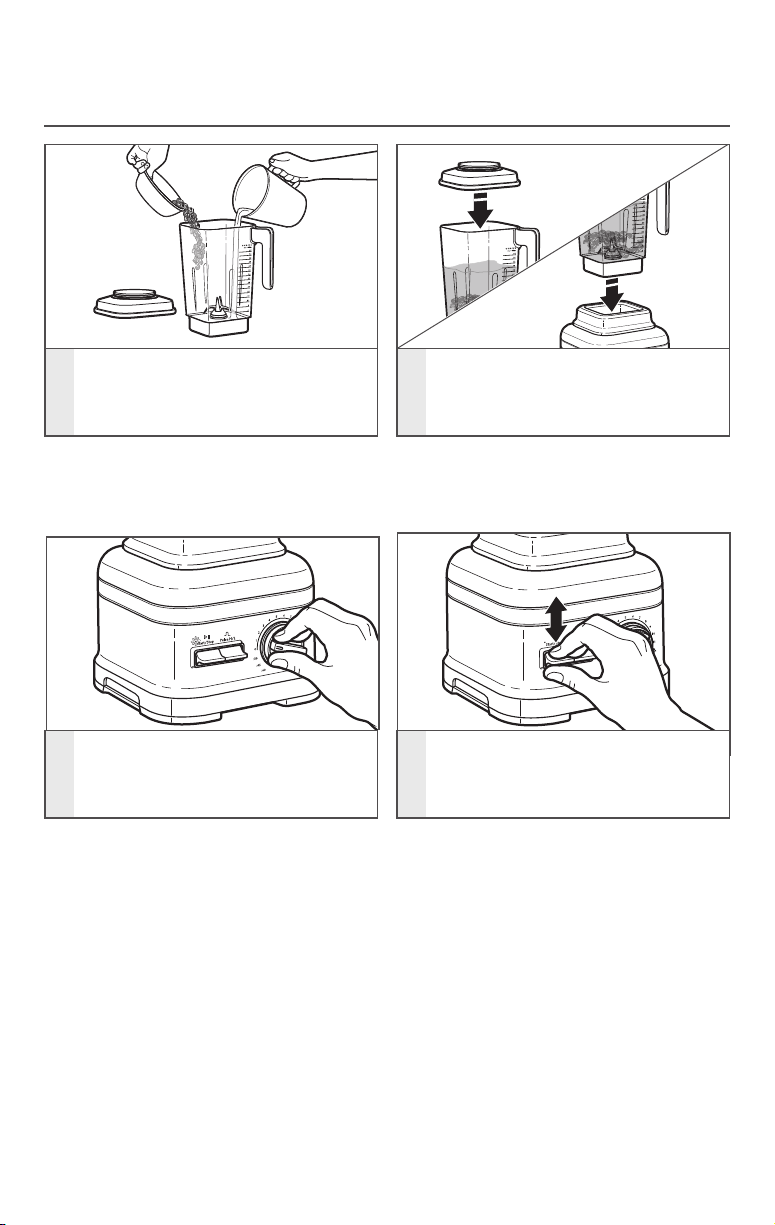
3
Turn the control dial to your desired
speed, time, or program. See the
“Blender function guide” for more
information.
4
Flip the Start/Stop toggle switch up
or down to begin operation of the
Blender. The status indicator light will
now be solid.
ASSEMBLING AND RUNNING THE COMMERCIAL BLENDER
NOTE: To avoid spills, do not fill blender
jar past the top-most measurement mark,
especially when blending liquids.
1
Put the items to blend into the
blender jar. Add liquids first, then
soft foods, then leafy greens, and
ice or frozen items last.
2
Make sure that the lid is fully secured
on the blender jar; next, place the
blender jar on the base, making sure
that it is fully aligned on the jar pad.
NOTE: If you select a preprogrammed
cycle, you will need to flip the Start/Stop
toggle to begin operation.
ENGLISH
USING THE COMMERCIAL BLENDER | 9
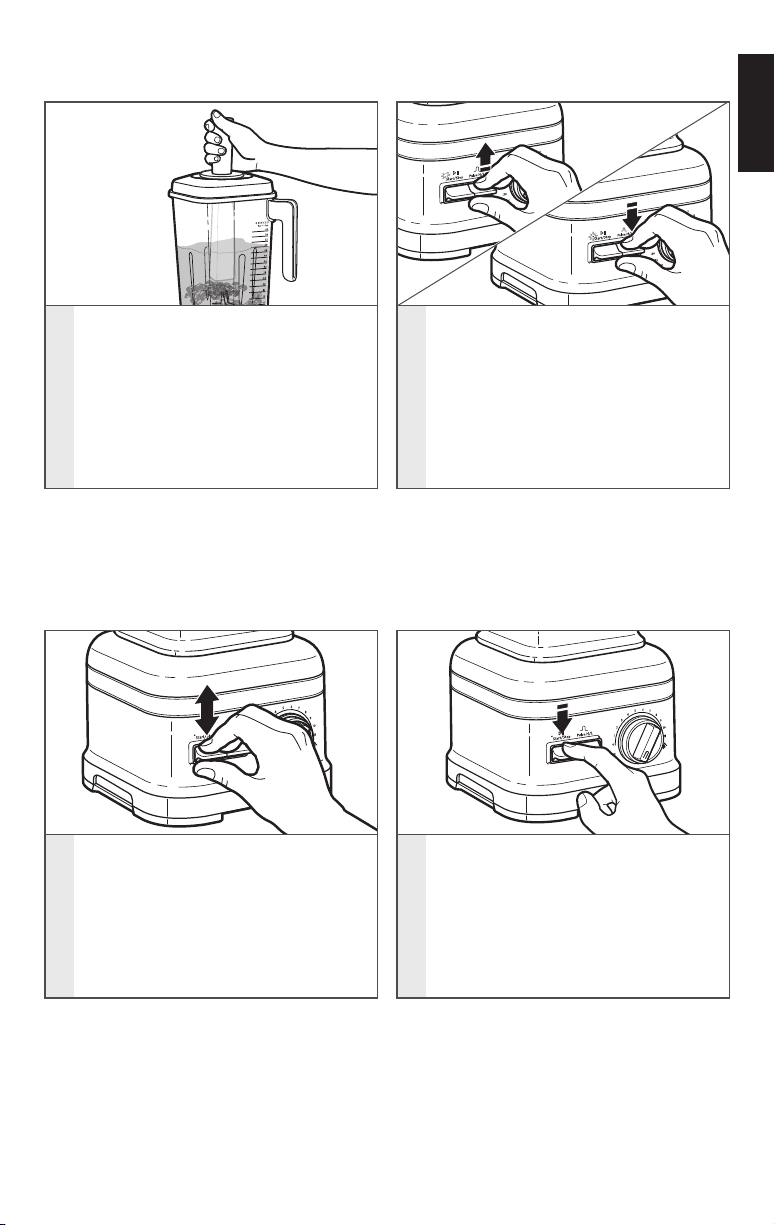
5
Use the Flex Edge tamper accessory
as needed for optimal blending
performance. Remove the ingredient-
measuring cap only, and leave the
lid in place. Stir or press contents
down towards the blade. When you
are finished, replace the ingredient-
measuring cap in the blender jar lid
before resuming blending.
6
If desired, use the Pulse function for
a momentary boost of speed while
blending on the variable speed
settings.
Press and hold the Pulse toggle
switch up for a faster pulse, or down
for a slower pulse.
7
After blending, flip the Start/Stop
toggle switch up or down. Allow the
Blender to come to a complete stop
before removing the lid and pouring
your blended ingredients.
8
If the Blender remains in standby
mode for 28 minutes with no
activity, the Blender will enter sleep
mode. To get out of sleep mode,
press the Start/Stop switch once
to bring into standby mode. Then,
press Start/Stop once more to start
the Blender.
USING THE COMMERCIAL BLENDER
NOTE: The Pulse function may also
be used on its own as a separate
blending function while the Blender
is in standby mode.
10 | CARE AND CLEANING
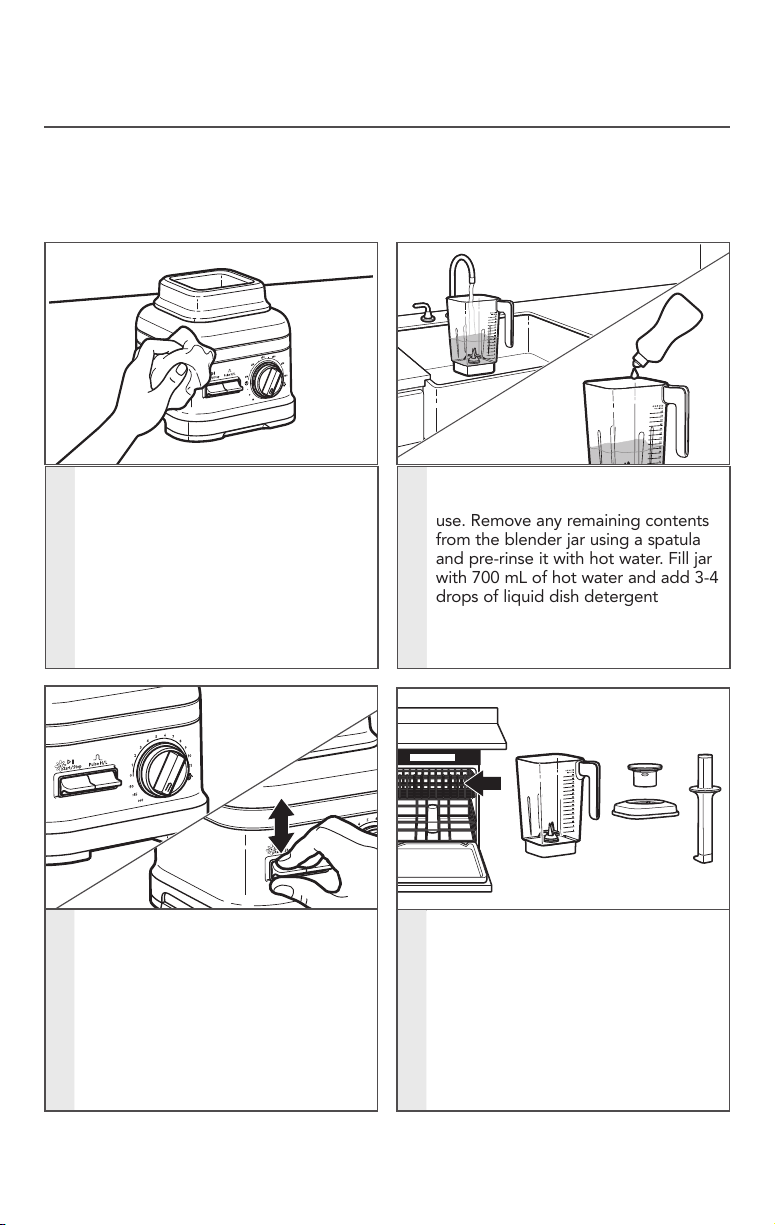
1
To clean the blender base and cord:
Unplug the Blender before cleaning.
Wipe the base and the cord with a
warm, damp cloth; wipe clean with a
damp cloth, and dry with a soft cloth.
2
Make sure to clean the blender jar,
lid, and ingredient cap after each
use. Remove any remaining contents
from the blender jar using a spatula
and pre-rinse it with hot water. Fill jar
with 700 mL of hot water and add 3-4
drops of liquid dish detergent.
Place
the lid on the blender jar, and make
sure the blender jar is fully in place on
the blender base.
CARE AND CLEANING
CLEANING THE BLENDER AND ACCESSORIES
Clean the Blender thoroughly after every use.
NOTE: To avoid damaging the Blender, do not immerse the blender base
or cord in water. To avoid scratching the Blender, do not use abrasive cleansers
or scouring pads.
3
Rotate the control dial to 30 seconds.
Flip the Start/Stop toggle switch up
or down. When the timer finishes,
pour out the soapy water, and rinse
the blender jar with warm water.
4
The blender jar, lid, Flex Edge tamper,
and ingredient-measuring cap are
dishwasher-safe; the Flex Edge
tamper, lid, and ingredient-measuring
cap should be placed in the top rack
of the dishwasher. If preferred, all
parts may also be washed by hand
with a damp cloth and warm soapy
water, and then rinsed with warm
water and dried with a soft cloth.

ENGLISH
CARE AND CLEANING | 11
CARE AND CLEANING
SANITIZING THE BLENDER
1. Remove any remaining contents from the blender jar.
2. Prepare a 200 ppm sodium hypochlorite solution* using 1.75 L of hot water in the
blender jar. Place the lid on the blender jar, and make sure the blender jar is fully in
place on the blender base.
3. Run the Blender on the High Speed setting for 35 seconds. Flip the Start/Stop toggle
switch up or down to start the Blender.
4. Turn off the Blender and let the sanitizing mix sit in the blender jar for an
additional 2 minutes.
5. Pour out the sanitizing solution mix. Do not rinse the blender jar.
6. Place the lid on the blender jar. Make sure the empty blender jar is fully in place on
the blender base. Run the empty Blender for an additional 10 seconds. Do not rinse
the jar after sanitizing.
7. Allow the blender jar to air dry.
*To prepare a 200 ppm sodium hypochlorite solution: use 6.67 mL household bleach (with a 5.25% sodium
hypochlorite concentration) in 1.75 L of hot water.

12 | TROUBLESHOOTING
TROUBLESHOOTING
Electrical Shock Hazard
Plug into an earthed outlet.
Do not remove earth prong.
Do not use an adapter.
Do not use an extension cord.
Failure to follow these
instructions can result in
death, fire, or electrical shock.
1. When the Blender is plugged in and the
main power On/Off (I/O) toggle switch
is on (I), the Blender will go to Standby
mode (flashing white indicator light).
However, after 28 minutes of no activity
the Blender will go into Sleep mode
and the indicator light will turn off.
• To wake up the Blender simply flip the
Start/Stop toggle switch up or down.
This will put the Blender back into
Standby mode.
2. If the status indicator light flashes an
orange color, the Blender is in error
mode. This can be caused by: using a
spatula or any other utensil that could
obstruct the blade to freely spin in the
blender jar, or having an ice cube or
hard food in a location that locks up the
blade.
• Correct the problem by turning off
the Blender using the dedicated On/
Off toggle switch in the back, or by
unplugging the Blender. Remove the
blender jar from the base, and clear
the items. Place the Blender back on
the base, and then turn the
Blender
back on to continue regular use.
3. If the Blender stops while blending:
• After 6 minutes of run time, the
Blender will automatically shut off
and go into Sleep mode, and the
LED light will turn off. You can wake
the Blender back up using the toggle
switches (Start/Stop or Pulse High/
Pulse Low). If the Blender stops in less
than 6 minutes, it is possible there
is an internal error with the Blender.
Contact an authorized service center
for assistance.
4. If the ingredients of a recipe aren’t
blending:
• There may be times when an air
pocket is created around the blade
causing the ingredients to miss the
blending blade. Stop the Blender,
remove the blender jar from the
base, and use a spatula to rearrange
ingredients in the blender jar. For
certain recipes, try adding more
liquid.
5. If you experience an overflow from the
blender jar:
• Disconnect the Blender from the
power source. Remove the jar pad
from the housing to make sure the
base is fully dry. The control dial can
be detached by pulling it off with
force. Wipe dry, and then replace. To
avoid damage to the graphics when
cleaning, don’t apply too much force
or use abrasive cleansers or scouring
pads.
If the problem cannot be corrected:
See the “Warranty and service” section.
Do not return the Blender to the retailer;
retailers do not provide service.
©2018 All rights reserved.
Specifications subject to change without notice.