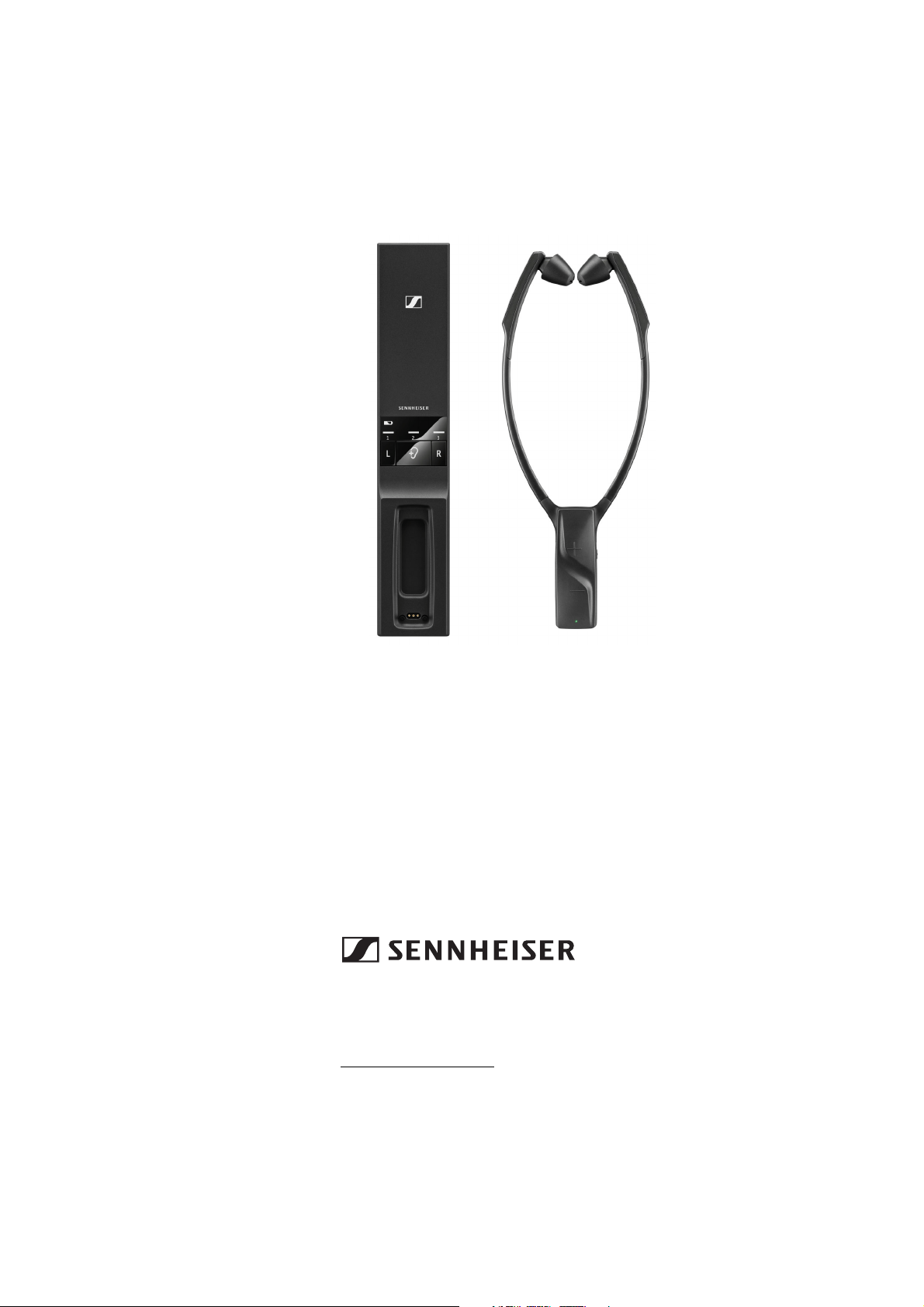
RS 5200
Digital wireless TV listening system
Model: TR 5000, RR 5200
Instruction manual
Use the search function, the navigation (left) or the following links:
“Start ”
“Product overview”
“Putting the RS 5200 into operation”
“Using the RS 5200”
“Using the RS 5200’s additional functions”
“If a problem occurs...”
“Specifications”
Sennheiser electronic GmbH & Co. KG
Am Labor 1
30900 Wedemark
Germany
www.sennheiser.com
Version: 06/21 A01

Important safety instructions
2|RS 5200
Important safety instructions
▷ Read this instruction manual carefully and completely
before using the product.
▷ Always include this instruction manual when passing the
product on to third parties.
▷ Do not use an obviously defective product.
▷ Only use the product in environments where wireless 2.4 GHz
transmission is permitted.
Preventing damage to health and accidents
▷ These headphones allow you to set higher volumes than
conventional headphones. Protect your hearing from high
volume levels.
Permanent hearing damage may occur when headphones are
used at high volume levels for long periods of time. Sennheiser
headphones sound exceptionally good and provide clear speech
intelligibility at low and medium volume levels.
▷ To prevent hearing damage, set the volume to a low level before
passing the product on to third parties.
▷ Do not use the product in an environment that requires your spe-
cial attention (e.g. in traffic or when performing skilled jobs).
▷ Always keep the headphones/MCA 800 charging
adapter at least 3.94" (10 cm) from cardiac pacemakers,
implanted defibrillators (ICDs) and other implants. The
headphones/MCA 800 charging adapter generate/s magnetic
fields that could cause interference with cardiac pacemakers,
implanted defibrillators (ICDs) and other implants.
▷ Do not use the product near water. To reduce the risk of fire or
electric shock, do not expose the product to rain or moisture.
▷ Keep the product, accessories and packaging parts out of reach
of children and pets to prevent accidents. Swallowing and chok-
ing hazard.
▷ Only use the power supply units supplied by Sennheiser.
Preventing damage to the product and malfunctions
▷ Always keep the product dry and do not expose it to extreme tem-
peratures (hairdryer, heater, extended exposure to sunlight, etc.)
to avoid corrosion or deformation. The normal operating tempera-
ture is from 5 °C to 40 °C/32 °F to 104 °F.
▷ Use the product with care and store it in a clean, dust-free envi-
ronment.
▷ Switch off the product after use to conserve battery power.
▷ Unplug the power supply unit from the wall socket
– to completely disconnect the product from the power source,
– during lightning storms or
– when not using the product for long periods of time.
▷ Always ensure that the power supply unit is
– in a safe operating condition and easily accessible,
– properly plugged into the wall socket,
– only operated within the permissible temperature range,
– not exposed to direct sunlight for longer periods of time in order
to prevent heat accumulation.
Important safety instructions
RS 5200 | 3
▷ Varnish or furniture polish may degrade the feet of the transmit-
ter, which could stain your furniture. You should therefore place
the transmitter on a non-slip pad to avoid potential staining of fur-
niture.
▷ Do not operate the product near heat sources.
▷ Clean the product only with a soft, dry cloth.
▷ Use only attachments/accessories/spare parts supplied or rec-
ommended by Sennheiser.
Safety instructions for Lithium rechargeable batteries
Intended use/Liability
This wireless TV headphone system is suitable for use with TV sets,
hi-fi systems, and home cinema systems and can be connected to
analog and digital audio sources.
This product is intended for private domestic use only. It is not suit-
able for commercial use. This product is also not intended to be used
with portable audio devices.
WARNING
If abused or misused, rechargeable batteries may leak. In extreme
cases, they may even present a risk of:
•explosion
• heat and fire development
• smoke and/or gas development
• damage to health and/or the environment
Only use rechargeable batteries and chargers recom-
mended by Sennheiser.
Do not charge a product with a built-in rechargeable
battery if the product is obviously defective.
Only charge the product / rechargeable batteries at
ambient temperatures between 5 °C and 40 °C/41 °F
and 95 °F and do not charge them near easily flammable
objects.
Do not heat the product / rechargeable batteries above
70 °C/158 °F. Avoid exposure to sunlight and do not
throw the product / rechargeable batteries into fire.
When not using the product / rechargeable batteries for
extended periods of time, charge them regularly (about
every three months).
Switch rechargeable battery-powered products off after
use.
Dispose of defective products with built-in rechargeable
batteries at special collection points or return them to
your specialist dealer to facilitate recycling.

Important safety instructions
4|RS 5200
It is considered improper use when the product is used for any appli-
cation not named in the corresponding product documentation.
Sennheiser does not accept liability for damage arising from misuse
or improper use of this product and its attachments/accessories.
Before putting the product into operation, please observe the
respective country-specific regulations.
Package contents
RS 5200 | 5
Package contents
Online you can find:
• this detailed instruction manual and additional information
(www.sennheiser.com/download
)
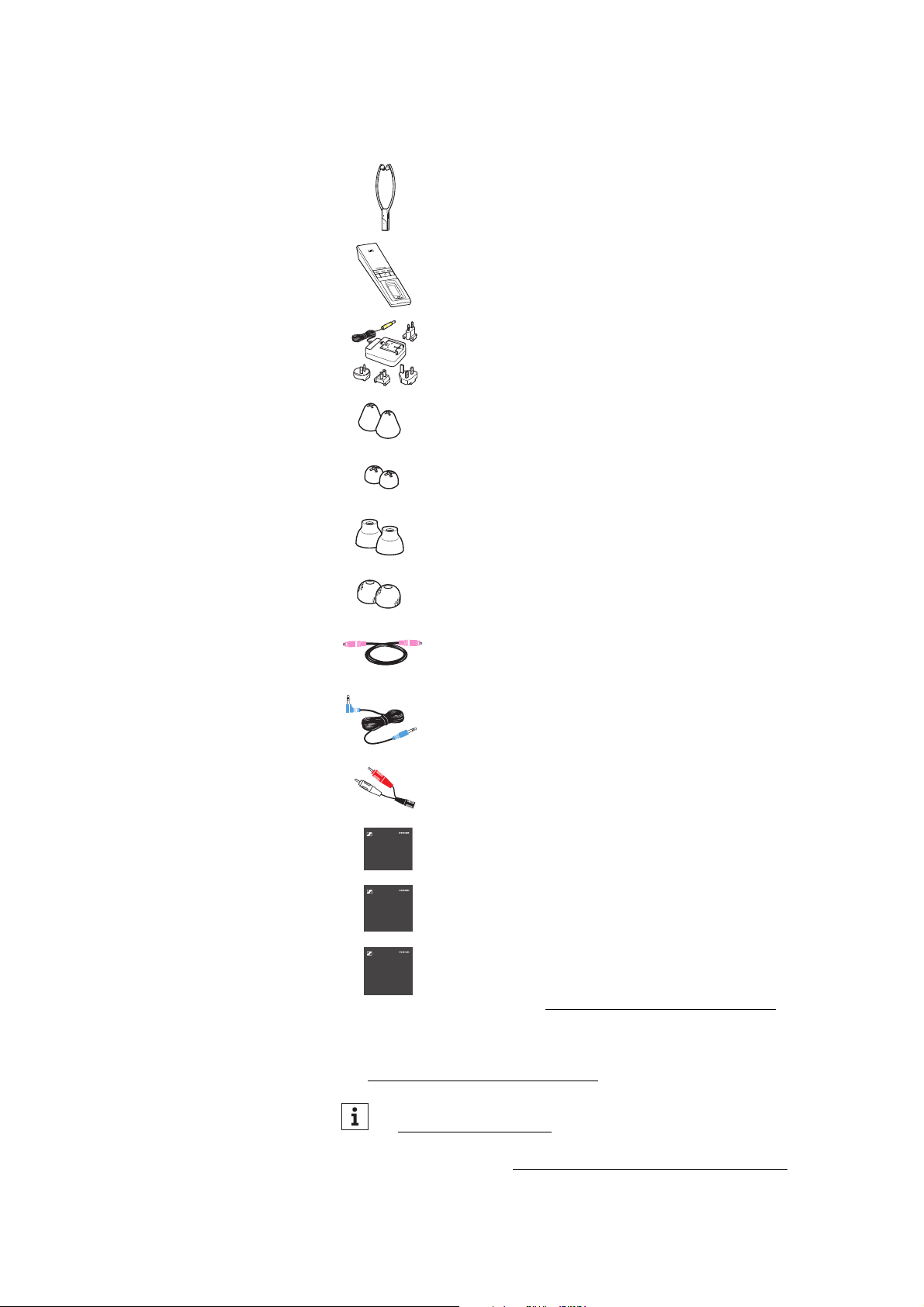
Stethoset receiver with built-in rechargeable battery,
model: RR 5200
Transmitter with charging compartment,
model: TR 5000
Power supply unit with multi-country adapters
(EU, UK, US, AU),
model: NT 5-10AW
1 pair of silicone ear pads, large
(pre-mounted upon delivery)
1 pair of silicone ear pads, small
1 pair of memory foam ear pads
1 pair of open foam ear pads
Optical digital cable, 1.5 m
Stereo audio cable with 3.5 mm jack plugs, 1.5 m
RCA adapter (3.5 mm jack socket to 2 RCA connec-
tors)
Safety guide
Quick guide
Instruction manual in English, German, French, and
Spanish
The instruction manual in other languages can be
downloaded at www.sennheiser.com/download
.
+
Safety Guide
Quick Guide
Instruction
Manual
A list of accessories can be found on the RS 5200 product page
at www.sennheiser.com. For information on suppliers, contact
your Sennheiser partner. To find a Sennheiser partner in your
country, search at www.sennheiser.com/service-support
Product overview
6|RS 5200
Product overview
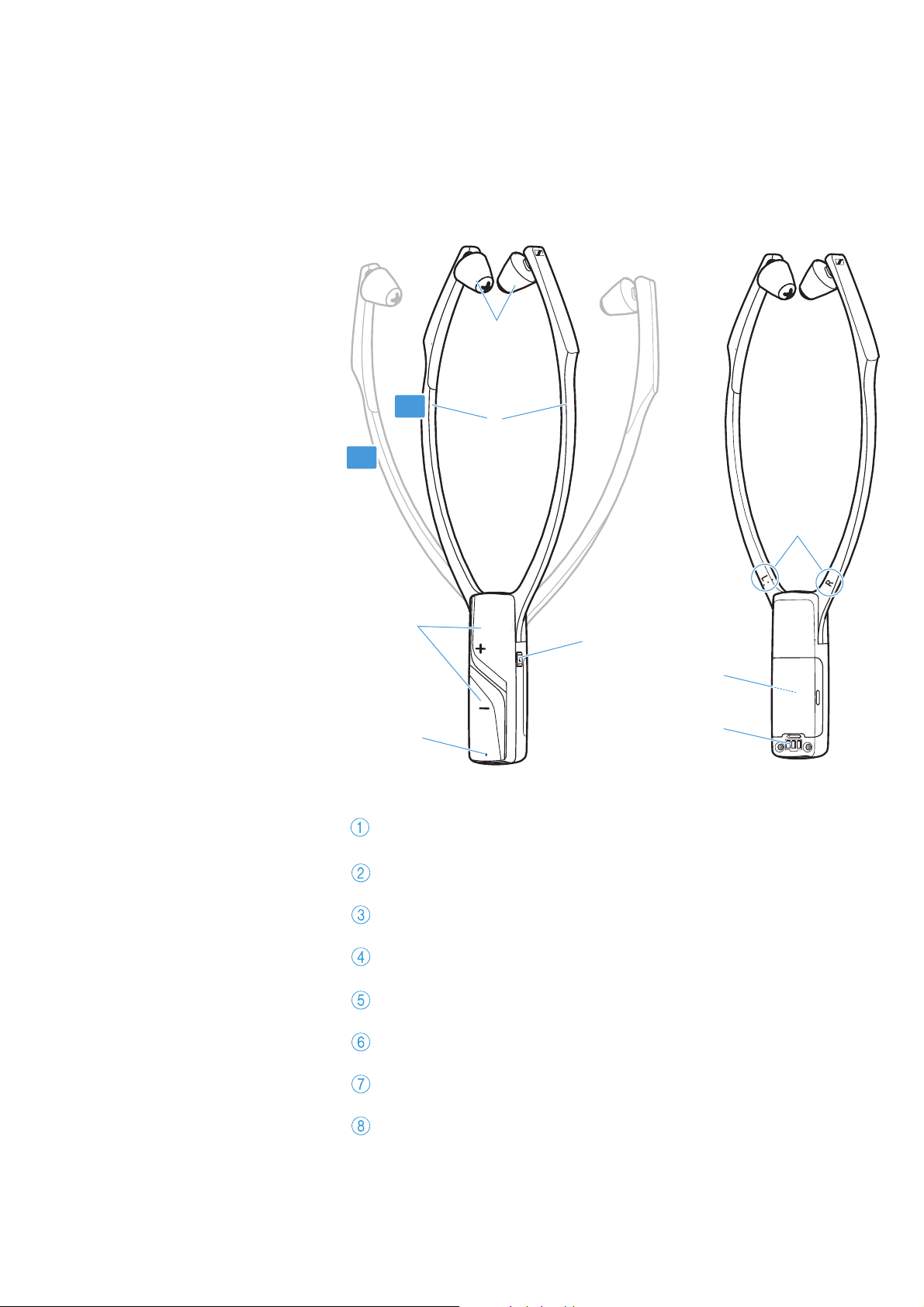
Overview of the stethoset receiver
Model: RR 5200
Ear pads, replaceable
Ear bows with on/off function
Volume buttons
+ and –
Receiver status
LED
(see page 8)
Speech intelligibility
button
R marking for the right ear and L marking for the left ear
Built-in rechargeable battery
Charging contacts
2
6
1
3
7
8
4
5
On
Off
Product overview
RS 5200 | 7
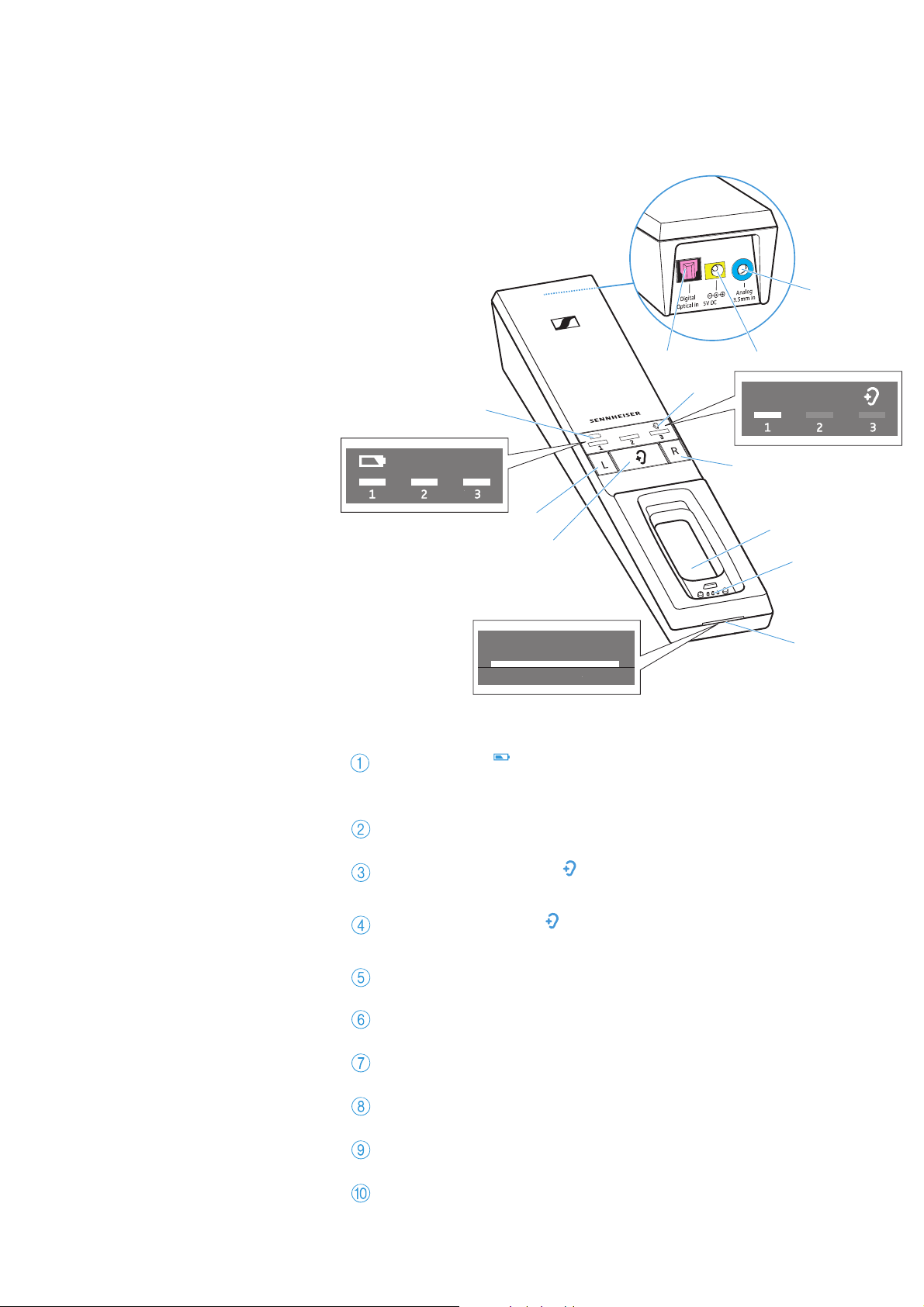
Overview of the transmitter
Model: TR 5000
Battery
LED ,
indicating the charging process/remaining operating time
of the receiver (see page 15 und 16)
Balance buttons
for right ear
R and left ear L
Hearing profile
button
for selecting the hearing profiles (see page 23)
Hearing profile
LED ,
indicating the activated hearing profile (see page 23)
Charging compartment for stethoset receiver
Charging contacts for stethoset receiver with holding mag-
nets
Transmitter status
LED
(see page 8)
Digital Optical In audio input (marked pink) for connecting a
digital audio source (optical)
5V DC 1A socket (marked yellow) for connecting the power
supply unit
Analog 3.5 mm In audio input (marked blue) for connecting
an analog audio source (3.5 mm jack socket)
5
4
2
6
7
1
2
3
0
9
8
1A
Product overview
8|RS 5200
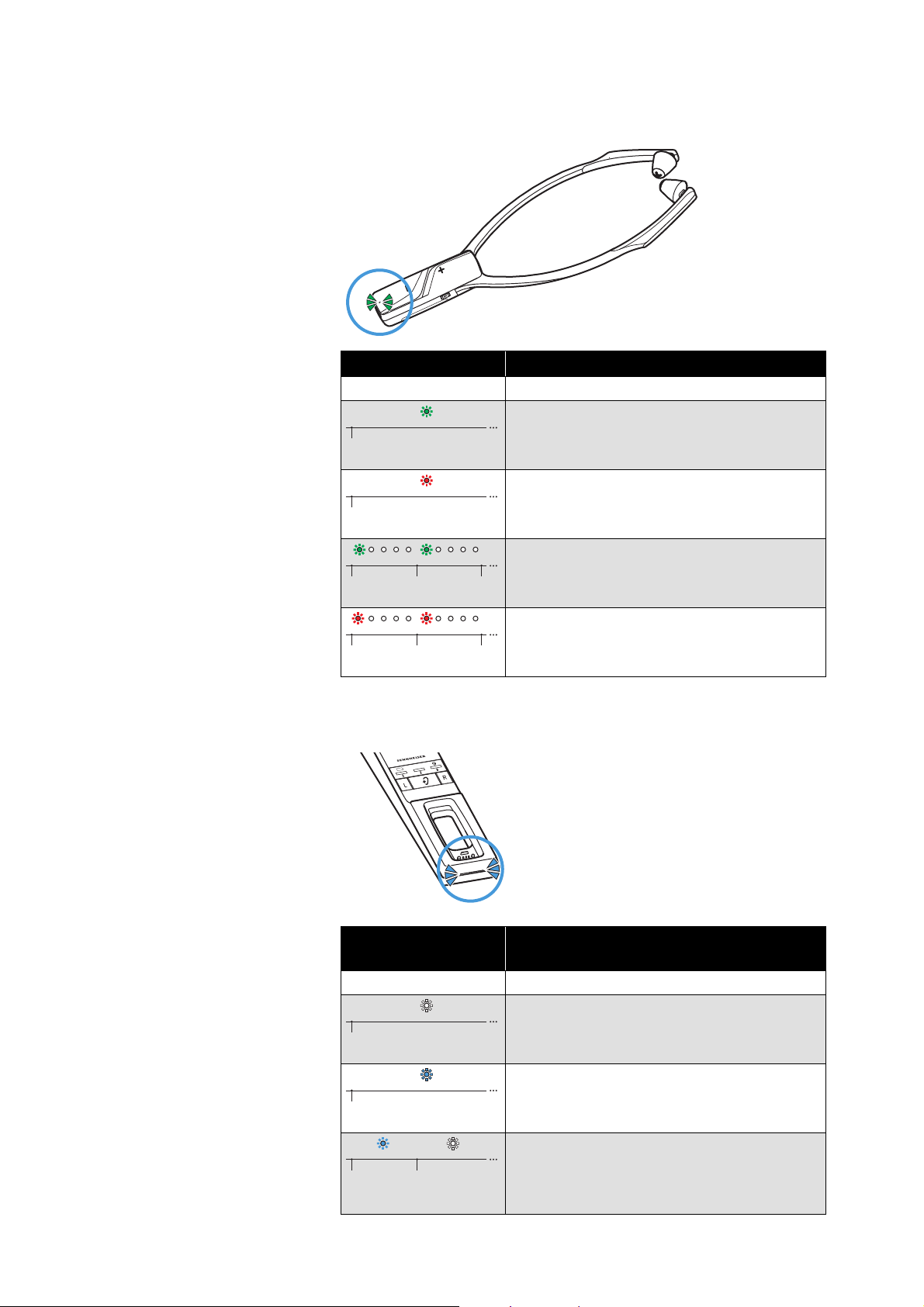
Overview of the Receiver status LED
Overview of the Transmitter status LED
Receiver status LED The stethoset receiver...
– ... is switched off.
lights up green
... is connected to the transmitter.
lights up red
... is connected to the transmitter, the
rechargeable battery is almost empty.
flashes green
... is not connected to the transmitter or
cannot connect to the transmitter.
flashes red
... is not connected to the transmitter or
cannot connect to the transmitter, the
rechargeable battery is almost empty.
1s1s
1s1s
Transmitter status
LED
The transmitter...
– ... is in standby mode.
lights up white
... and the stethoset receiver are
connected. The speech intelligibility
function is deactivated (see page 26).
lights up blue
... and the stethoset receiver are
connected. The speech intelligibility
function is activated (see page 26).
flashes blue and
white
... has detected an incompatible digital
audio signal (see page 11).
Product overview
RS 5200 | 9
Overview of the acoustic signals/beeps
The LEDs on the stethoset receiver and on the transmitter indi-
cate the current operating state. If you are not pressing any
button on the stethoset receiver, the LEDs automatically dim
after approx. 30 seconds to not disturb you.
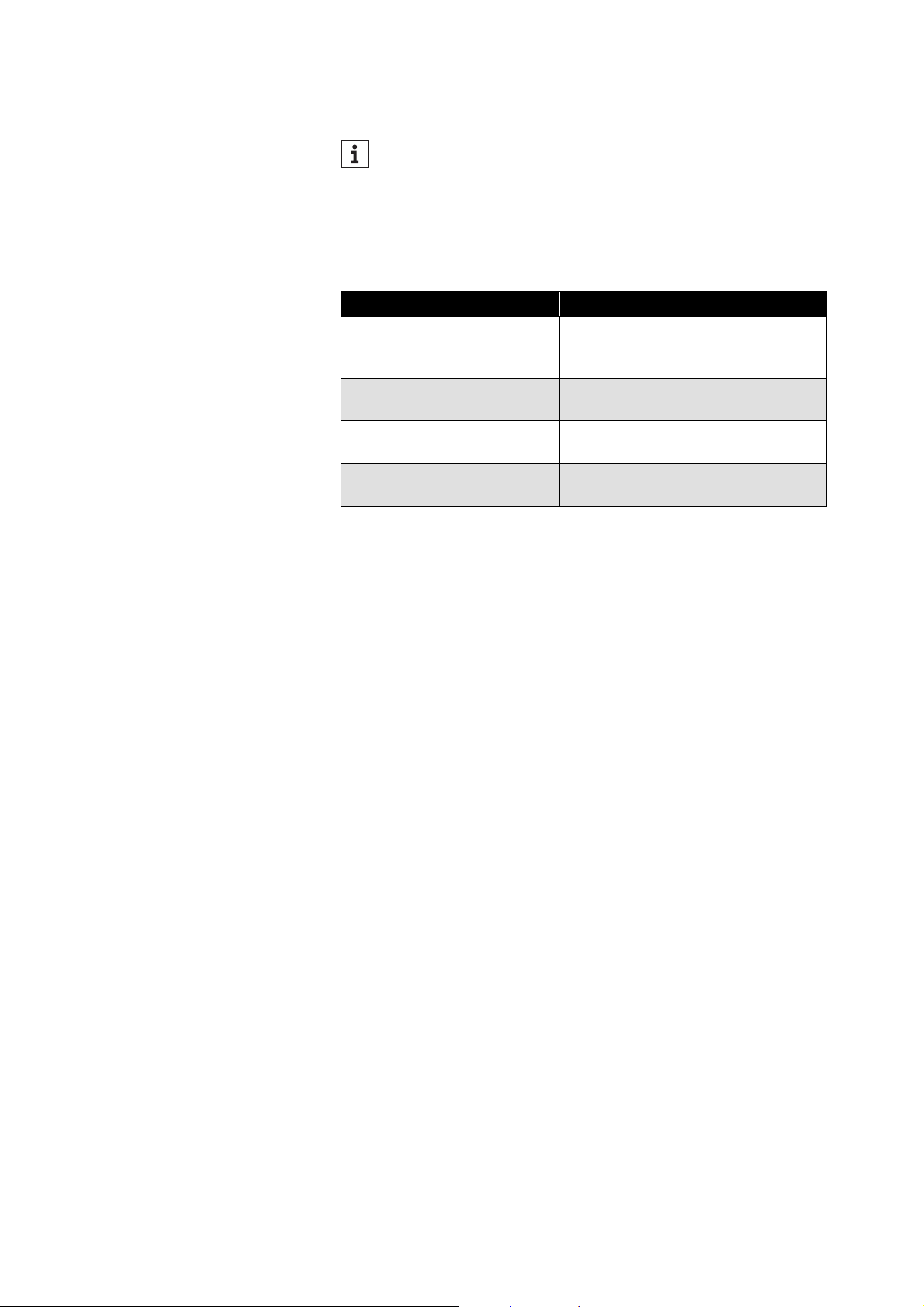
Beeps Meaning
during operation,
2 beeps
The rechargeable battery is almost
empty, recharge the rechargeable
battery (see page 15).
during operation, no audio
transmission, 5 beeps
The receiver is outside the
transmission range (see page 39).
when changing the volume The maximum or minimum volume
is reached (see page 22).
when changing the balance
setting
The maximum or minimum balance
setting is reached (see page 22).
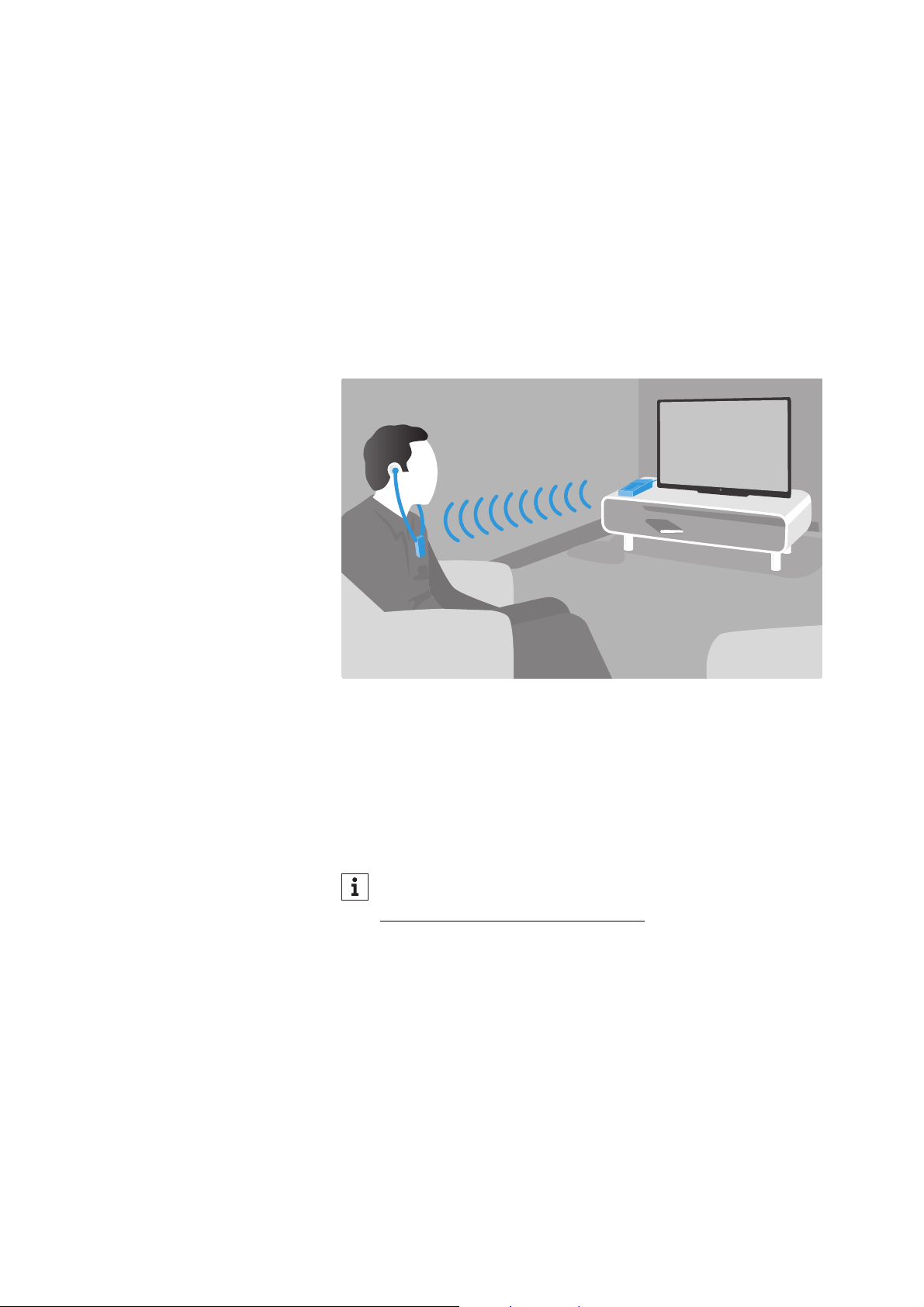
Putting the RS 5200 into operation
10 | RS 5200
Putting the RS 5200 into
operation
Setting up the transmitter
▷ Choose a suitable place near your sound source.
▷ Separate the transmitter from other wireless devices in the room
by at least 50 cm/20" to avoid interference.
▷ Do not place the transmitter close to metal objects such as shelf
bars, reinforced concrete walls, etc. as this can decrease the
transmitter’s range.
Connecting the transmitter to an audio
source
You can connect the transmitter either to a digital or an analog audio
source (e.g. a TV and a stereo hi-fi system).
If you connect an audio source to
both
inputs (digital and analog),
only the analog audio source will be reproduced.
▷ Switch your audio source off before connecting the transmitter.
▷ Check the connection possibilities of your audio source (audio
output, usually marked “OUT”).
▷ Select the corresponding connection cable and, if necessary, a
suitable adapter.
▷ To connect the transmitter to your audio source, refer to the con-
nection diagram suitable for your audio source (see the following
chapters). Follow the color codings on the transmitter and on the
cables.
You can also refer to the beginner’s video guides on how to con-
nect your digital wireless headphone system to a TV:
www.sennheiser.com/how-to-videos
Putting the RS 5200 into operation
RS 5200 | 11
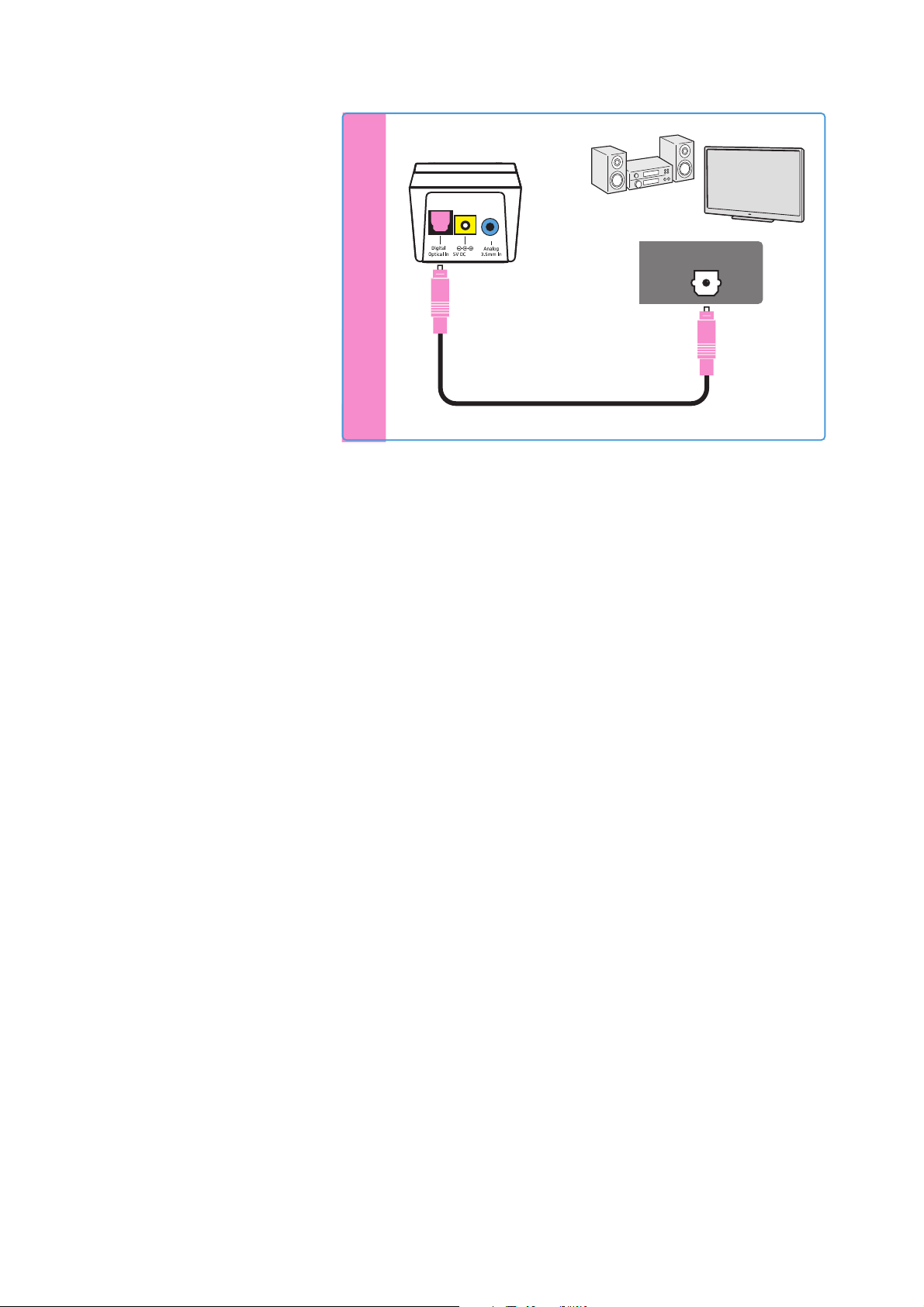
Connection possibility A: optical (digital)
To achieve the best possible listening experience, connect the trans-
mitter to your TV or hi-fi system using the supplied optical digital
cable.
Note that your wireless headphone system only supports digital sig-
nals coded in the PCM format. Information on how to set the audio
format of the connected audio source to PCM can be found in the
Sound menu or in the instruction manual of your device.
If an incompatible digital audio signal is being received, the
Trans-
mitter status
LED flashes white and blue. Audio playback is not pos-
sible.
* The appearance of the Sound menu can vary depending on the
device you are using.
▷ Connect the optical digital cable to the pink
Digital Optical In
audio input of the transmitter and to the optical output of your
audio source.
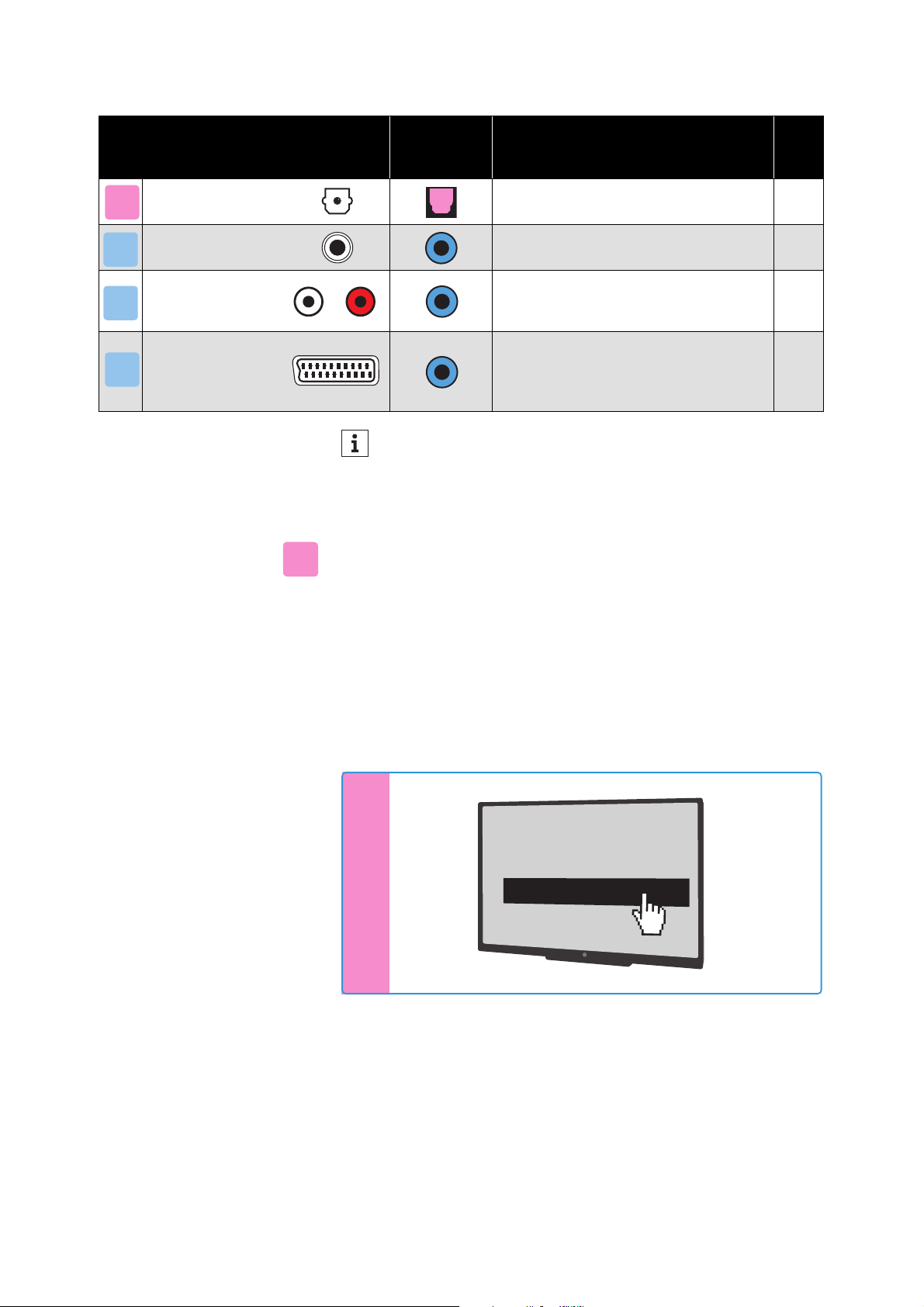
Connection possibilities of the audio
source
Color coding
on the
transmitter
Connection cable Page
Optical (digital) Optical digital cable 11
3.5 mm jack
socket (analog)
Stereo audio cable 13
RCA (analog)
Stereo audio cable with RCA adapter
(3.5 mm jack socket to 2 RCA connec-
tors)
14
SCART (analog)
Stereo audio cable with SCART
adapter (3.5 mm jack socket to
SCART connector; optional acces-
sory)
14
A
B
C
D
If you want to connect the transmitter to a TV that has only one
HDMI output, you need an active HDMI audio adapter. Using
this adapter, you can connect your TV to the transmitter.
An HDMI audio adapter and/or other accessories are available
from your Sennheiser partner.
A
A
S
o
und
menu
*
D
igital sound output
B
itstream
P
CM
Digital Audio
Putting the RS 5200 into operation
12 | RS 5200
Digital Audio
1A
OPTICAL OUT
Putting the RS 5200 into operation
RS 5200 | 13
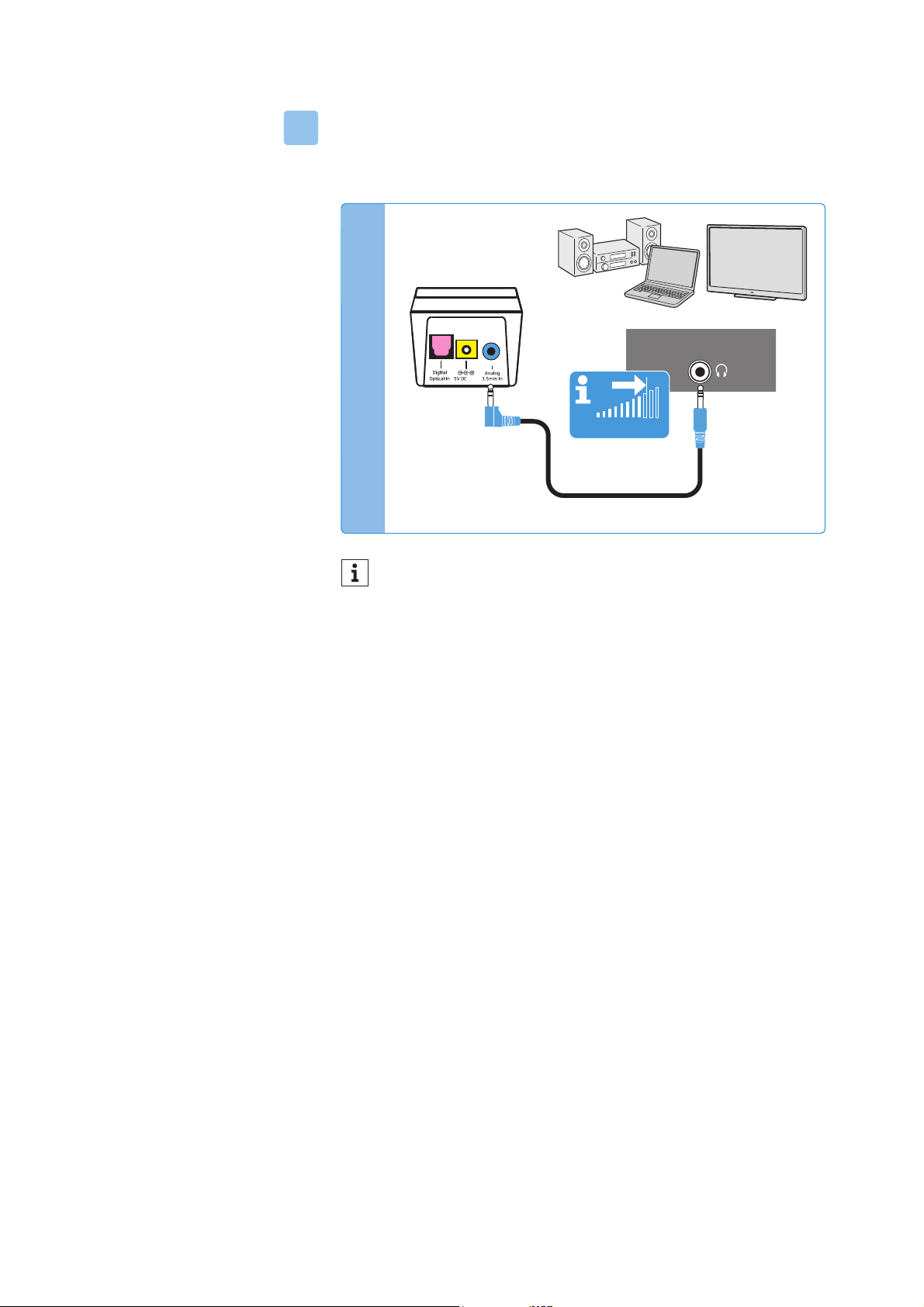
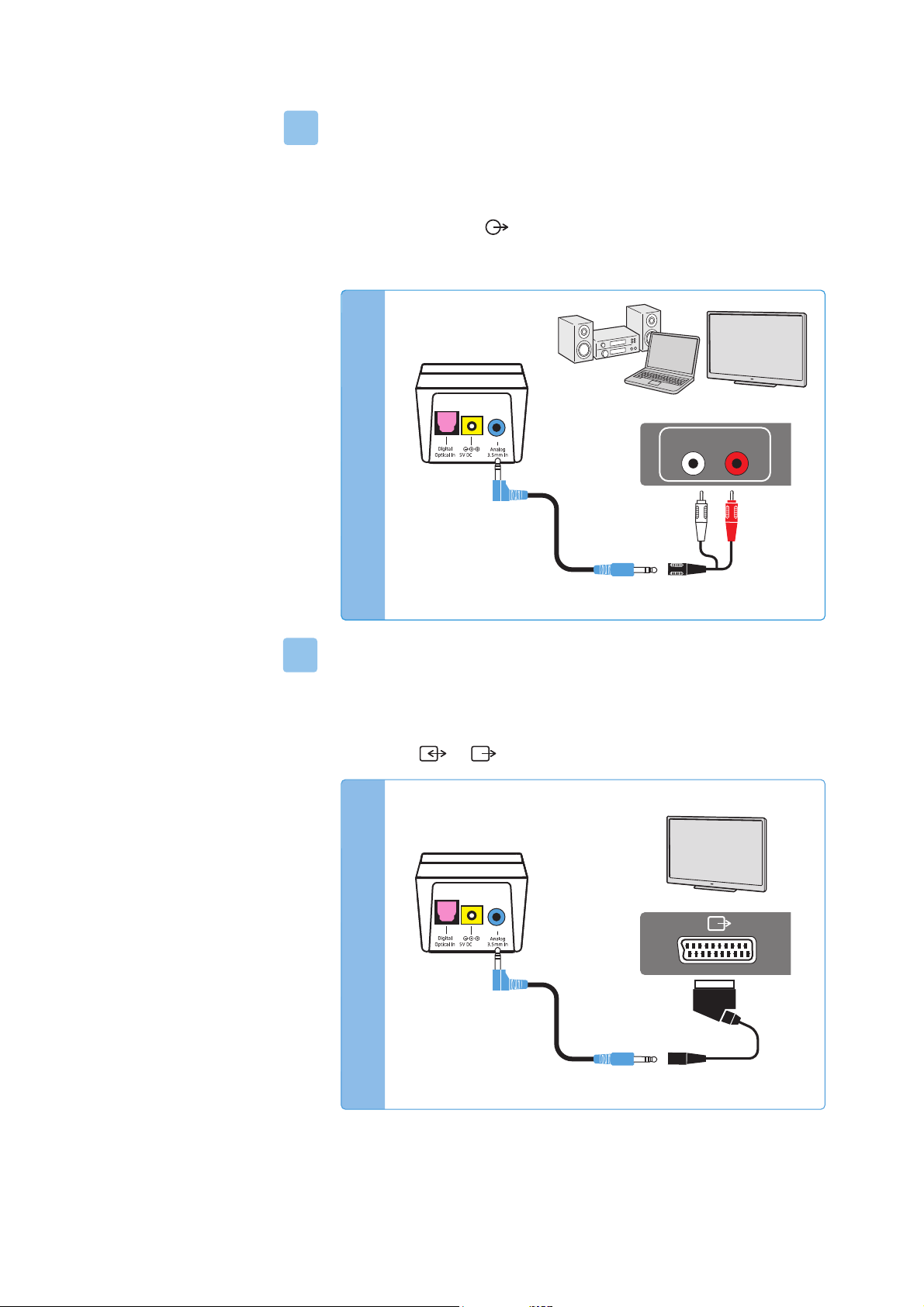
Connection possibility B: 3.5 mm jack socket (analog)
▷ Connect the stereo audio cable to the blue Analog 3.5 mm In
audio input (3.5 mm jack socket) of the transmitter and to the
3.5 mm headphone socket of your audio source.
If the headphones socket on your audio source is a 6.3 mm/¼" jack
socket, you require an adapter (3.5 mm jack plug to 6.3 mm/¼" jack
plug, optional accessory) for the supplied 3.5 mm stereo audio cable.
Some TV models mute the loudspeakers when you connect the
transmitter to the 3.5 mm headphone socket. Other TV models have
their own menu for adjusting the volume of the headphone socket.
Check the menu of your TV for information on how to deactivate the
muting function or adjust the volume. Alternatively, connect the TV
and the transmitter using a different connection possibility (A, C or
D).
B
Adjust the volume of the headphone socket on your TV/audio
source to at least a medium level.
This improves the quality of wireless audio transmission. For
detailed information, please refer to the instruction manual of
your TV/audio source.
PHONES
TV VOLUME
Analog Audio
1A
Putting the RS 5200 into operation
14 | RS 5200
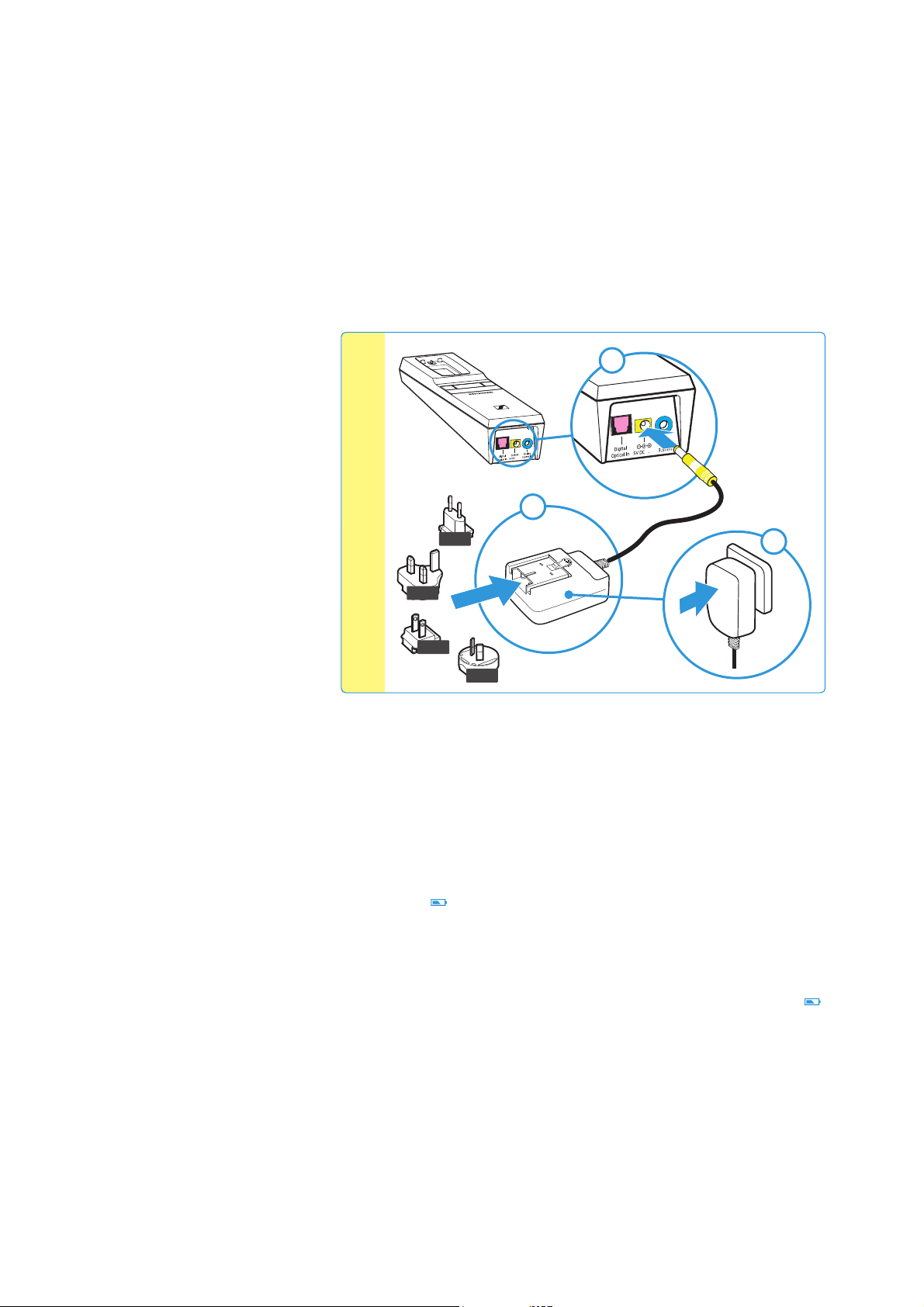
Connection possibility C: RCA sockets (analog)
▷ Plug the RCA adapter onto the stereo audio cable.
▷ Connect the stereo audio cable to the blue 3.5 mm jack socket of
the transmitter.
▷ Connect the RCA connectors to the RCA sockets (mostly labeled
“AUDIO OUT” or ) of your audio source. Connect the red con-
nector to the red RCA socket and the white connector to the white
or black RCA socket.
Connection possibility D: SCART socket (analog)
▷ Plug the SCART adapter* onto the stereo audio cable.
▷ Connect the stereo audio cable to the blue 3.5 mm jack socket of
the transmitter.
▷ Connect the SCART connector to the SCART socket (mostly
labeled or ) of your audio source.
* optional accessory
C
Analog Audio
AUDIO OUT
LR
1A
D
Analog Audio
*
1A
Putting the RS 5200 into operation
RS 5200 | 15
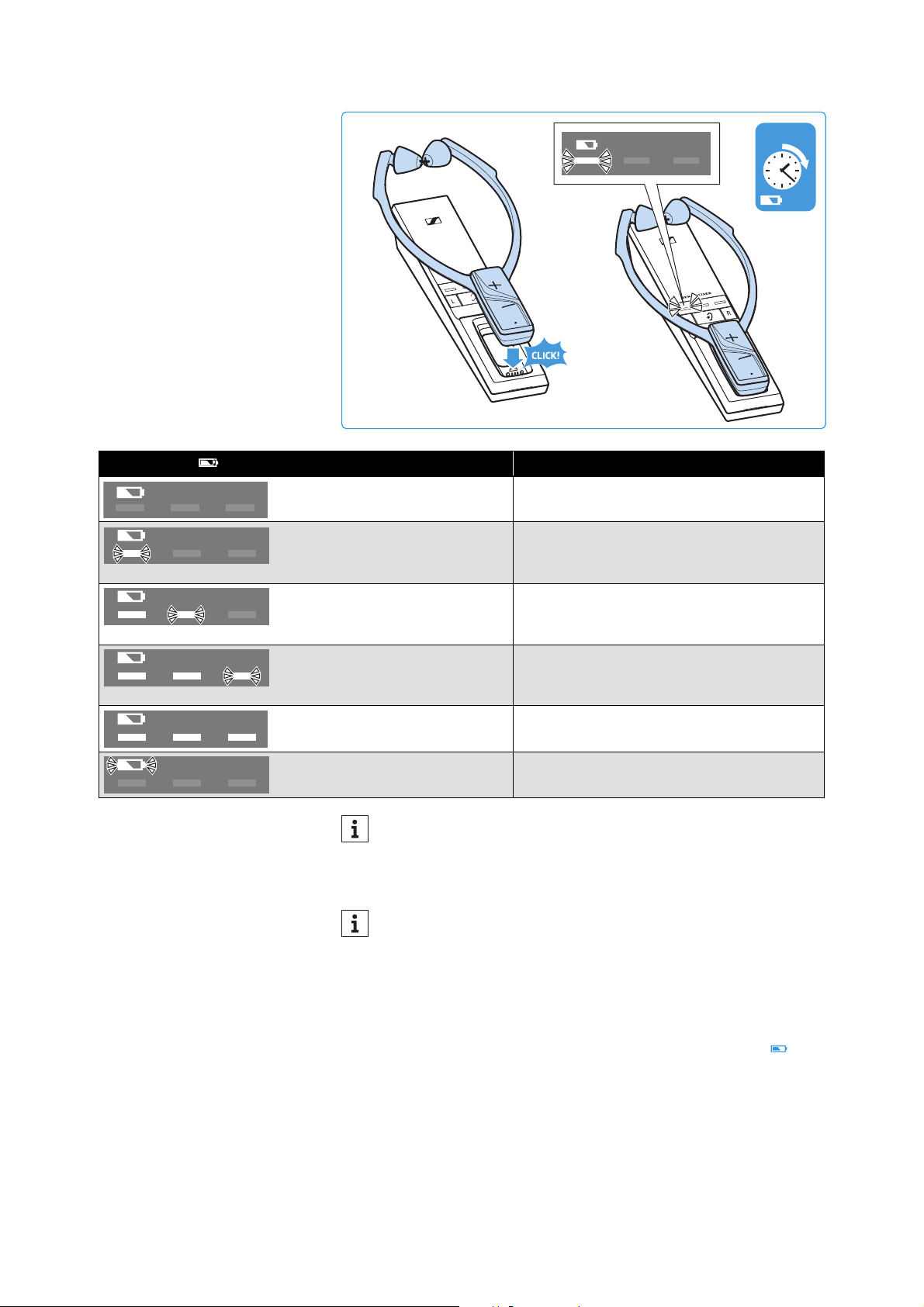
Connecting the transmitter to the power
supply system
▷ Connect the connector of the power supply unit to the yellow
socket of the transmitter.
▷ Select a suitable country adapter and slide it onto the power
supply unit until it clicks audibly into place.
▷ Plug the power supply unit into the wall socket.
▷ All LEDs on the transmitter light up for 5 seconds. The transmitter
is in standby mode.
Charging the stethoset receiver’s
rechargeable battery
A complete charging cycle takes about 3 hours. Before using the
receiver for the first time, charge its rechargeable battery for a com-
plete charging cycle without interruption.
When the rechargeable battery is almost empty, the
Receiver status
LED lights up red and you hear 2 beeps in the stethoset receiver. The
Battery
LED on the transmitter flashes white. The stethoset
receiver switches off after a few minutes.
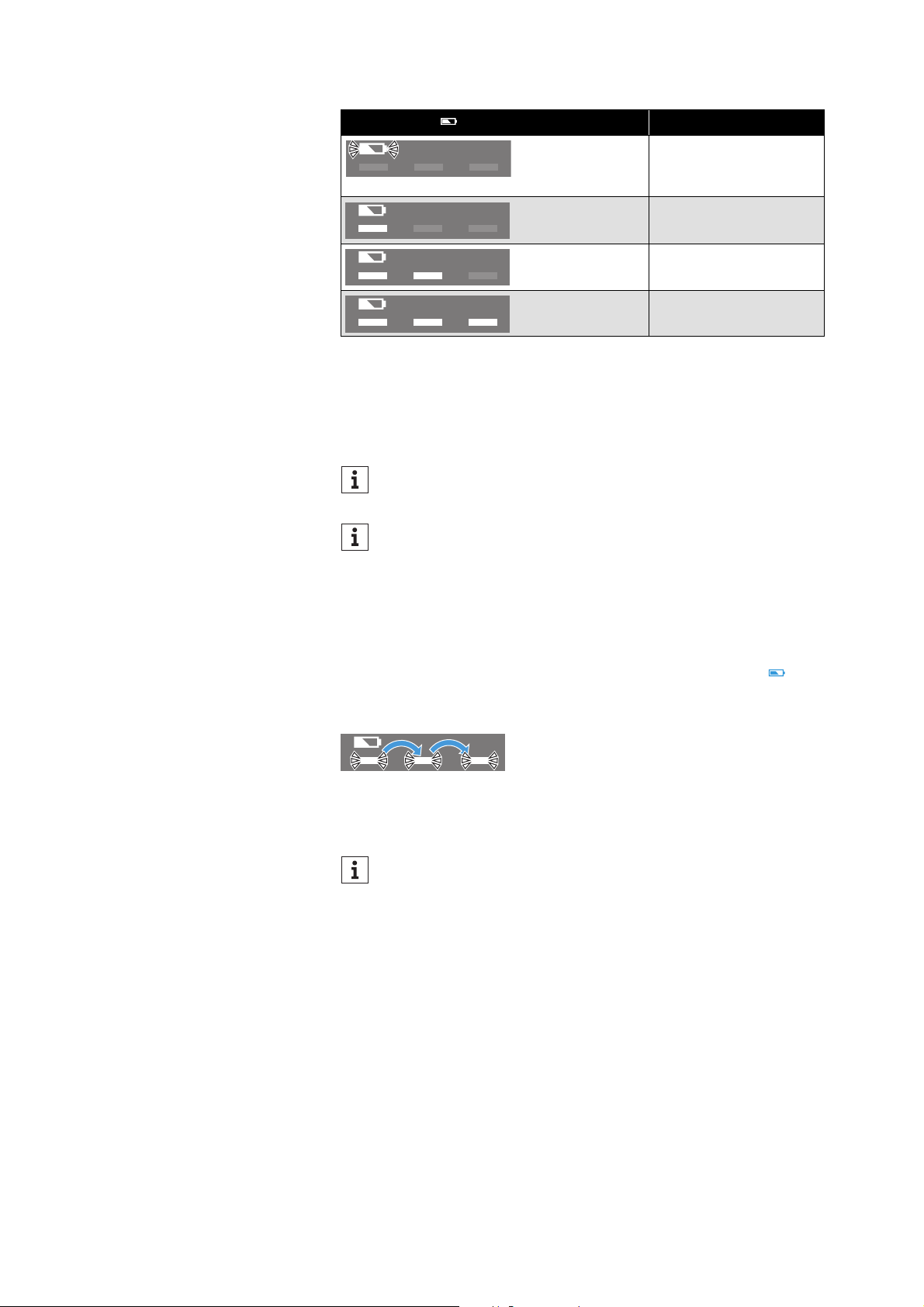
▷ Place the stethoset receiver into the transmitter’s charging com-
partment so that the volume buttons face upwards. The stethoset
receiver is magnetically oriented to the correct position. The ste-
thoset receiver automatically switches off and the
Battery
LED
on the transmitter lights up white. The LED segments display the
charge status of the rechargeable battery. When the recharge-
able battery is fully charged, all LED segments light up white.
US
EU
UK
AU
2
1
3
Power
1A
1A
Putting the RS 5200 into operation
16 | RS 5200
Displaying the remaining operating time
of the rechargeable battery
When you switch the stethoset receiver on, the
Battery
LED dis-
plays the remaining operating time/charge status.
+
3 h
100
%
Battery LED Meaning
– The transmitter is not charging.
1
st
LED segment flashes
The rechargeable battery is being
charged. Less than 1/3 of the charge
capacity is reached.
1
st
LED segment lit,
2
nd
LED segment flashes
The rechargeable battery is being
charged. Up to 1/3 of the charge capacity
is reached.
1
st
+ 2
nd
LED segments lit
3
rd
LED segment flashes
The rechargeable battery is being
charged. Up to 2/3 of the charge capacity
is reached.
All LED segments lit The rechargeable battery is fully charged.
Battery
LED flashes rapidly
A charging error/battery error has
occurred (see page 29).
Always store the stethoset receiver in the transmitter’s
charging compartment to ensure that it is fully charged when
needed. The intelligent battery charging technology prevents
overcharging.
The display during charging can be set so that it automatically
switches off after 30 seconds (see page 32).
Putting the RS 5200 into operation
RS 5200 | 17
To indicate that the operating time is decreasing, each LED segment
slowly dims before it goes off completely.
If the actual operating time differs widely from the specified values,
the rechargeable battery is probably exhausted and should be
replaced. Information on the rechargeable battery: see page 29.
Using the charging reminder functionn
When the stethoset receiver is switched off and the transmitter
automatically switches off (standby mode), the
Battery
LED will
flash back and forth for 10 minutes to remind you to charge the ste-
thoset receiver.
▷ Charge the stethoset receiver by placing it into the transmitter’s
charging compartment (see page 15).
The LED stops flashing and the charging process starts.
Battery LED Meaning
Battery
LED
flashes slowly
Rechargeable battery
is empty; recharge the
rechargeable battery
1
st
LED segment
lit
approx. 4 hours of
operating time
1
st
+ 2
nd
LED
segment lit
approx. 8 hours of
operating time
All LED
segments lit
approx. 12 hours of
operating time
The display of the remaining operating time can be set so that
it automatically switches off after 30 seconds (see page 32).
If more than one stethoset receiver is connected to the trans-
mitter, the remaining operating time/charge status cannot be
displayed.
You can also switch off the charging reminder function (see
page 32).

Putting the RS 5200 into operation
18 | RS 5200
Selecting and replacing the ear pads
You can choose between:
• Ear pads made of silicone, large (pre-mounted upon delivery)
– for easy use due to uncomplicated alignment in the ears.
– Easy to clean and long lasting even with intensive use.
• Ear pads made of silicone, small
– smaller and flatter than the large silicone ear pads, for easy use
and alignment in smaller ears.
– Easy to clean and long lasting even with intensive use.
• Ear pads made of memory foam
– for a comfortable, ambient noise-attenuating fit of the receiver
in the ears.
– With intensive use, the memory effect of the foam wears off
after a few months, causing the pressure relief to deteriorate. In
this case, replace the ear pads with new ones.
• Ear pads made of open foam
– for pressure-sensitive ears and a lightweight wearing comfort,
even over long periods of use.
– Due to the open foam, the hygienic durability is limited. Clean
the ear pads regularly (see page 28).
To replace the ear pads:
1. Reach behind the ear pads with your fingernails so that you can
carefully detach the ear pads from the stethoset receiver.
2. Put the two other/new ear pads on the stethoset receiver. The
rubber ring of the ear pads locks into place on the stethoset
receiver.

Putting the RS 5200 into operation
RS 5200 | 19
Spare ear pads in different materials and forms are available
from your Sennheiser partner.
21
Using the RS 5200
20 | RS 5200
Using the RS 5200
Switching the wireless headphone
system on
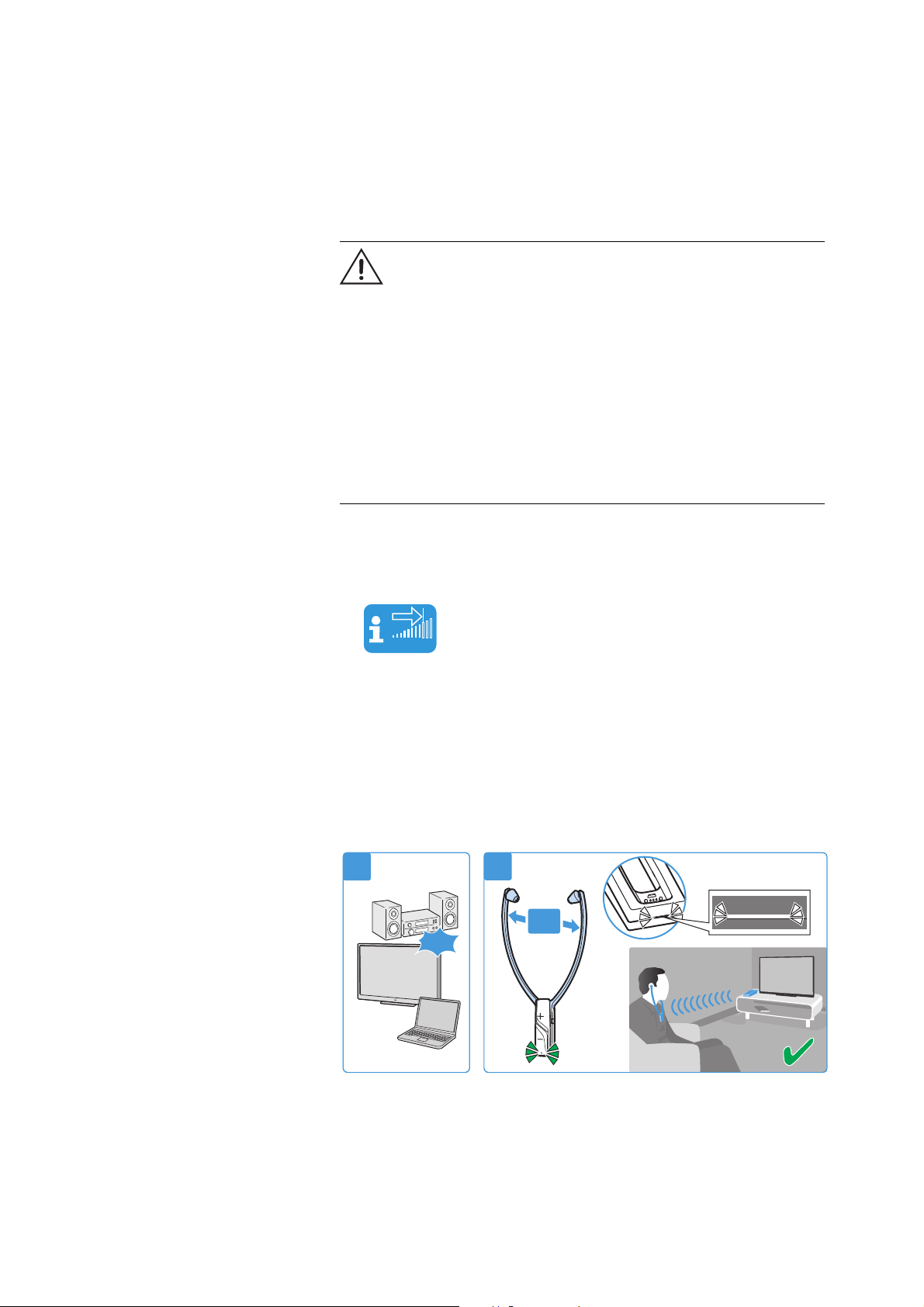
1. Switch your audio source on.
If the transmitter is connected to the headphone socket (see page
13) of your TV/audio source, adjust the volume of the headphone
socket on your TV/audio source to at least a medium level.
2. Take the stethoset receiver out of the transmitter’s charging com-
partment and pull the ear bows apart so that you can put the
receiver on.
The stethoset receiver automatically switches on when you pull
the ear bows apart. The
Receiver status
LED lights up green. The
transmitter automatically switches on and the
Transmitter status
LED lights up white or blue. The audio transmission starts.
The remaining operating time of the stethoset receiver is dis-
played on the transmitter (see page 16).
WARNING
Danger of hearing damage due to high volumes!
This receiver allows you to set higher volumes than conventional
devices. Constant high-volume use can cause hearing damage.
▷ Before putting the stethoset receiver on, set the volume on the
receiver to a low level.
▷ Do not expose yourself to high volume levels for extended periods
of time.
▷ Use a hearing profile (see page 23) that improves especially
speech intelligibility without the need for a high volume.
VOLUME
ON
ON
2
1
Using the RS 5200
RS 5200 | 21
Switching the wireless headphone
system off
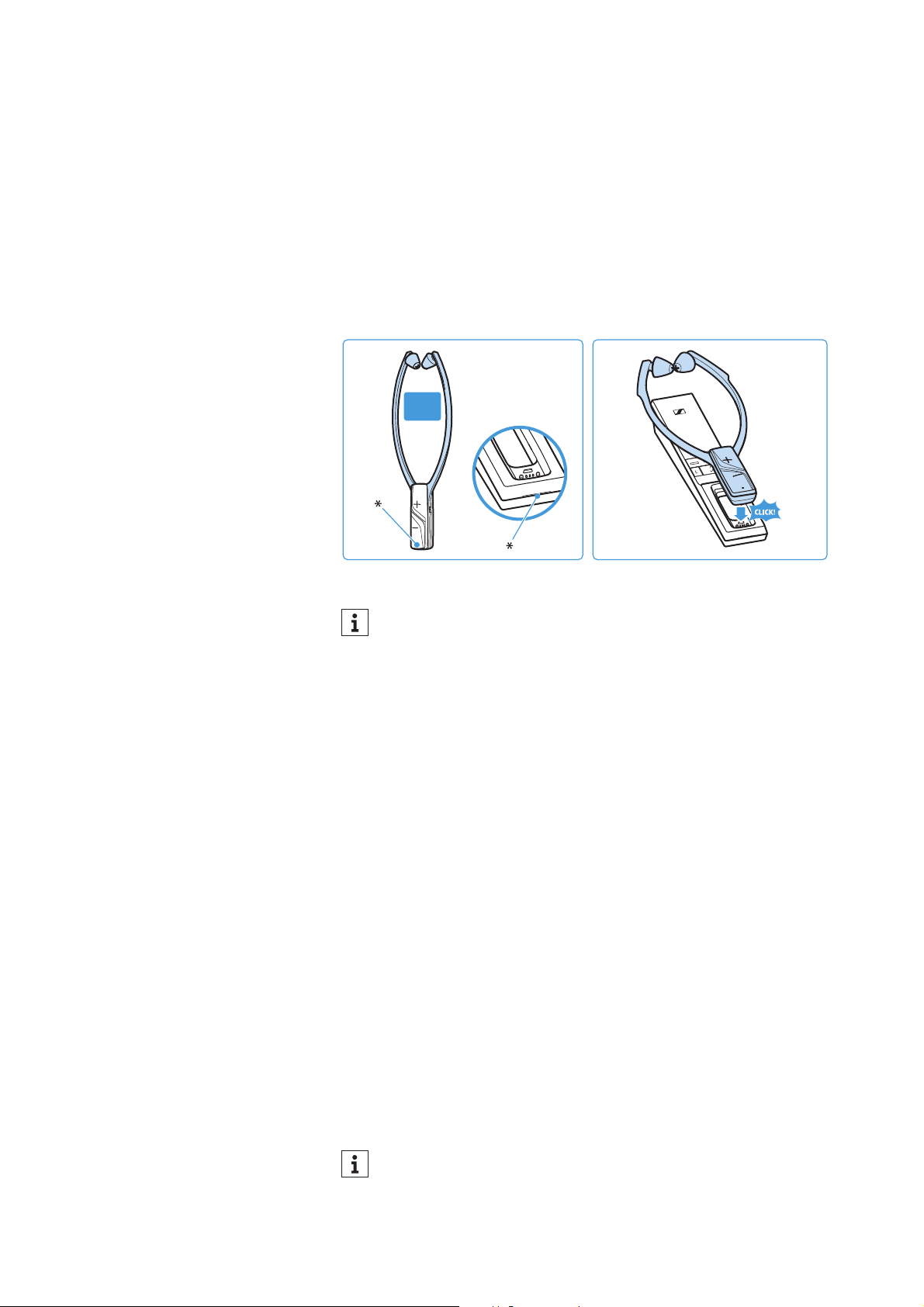
▷ Take the stethoset receiver off so that the ear bows fold inwards.
The stethoset receiver automatically switches off after 20 sec-
onds. The
Receiver status
LED goes off. The transmitter automat-
ically switches off (standby) when there is no stethoset receiver
connected. The
Transmitter status
LED goes off.
▷ Always store the stethoset receiver in the transmitter’s charging
compartment to ensure that it is fully charged when needed.
The charging process starts (see page 15).
* LED goes off
To disconnect the transmitter from the power supply system (e.g.
when you are on holiday):
▷ Unplug the power supply unit from the wall socket.
Wearing the stethoset receiver
▷ Wear the stethoset receiver so that it hangs freely from your ears
and rests lightly on your chest. When putting the stethoset
receiver on, observe the
L
(left) and R (right) markings on the rear
of the ear bows. The volume buttons face away from your body to
facilitate ease of use.
▷ Wear the stethoset receiver so that
– the ear pads are positioned just in front of your ear canals.
– you feel a gentle pressure on your ears. The ear pads adapt to
your ear form. Any feeling of pressure should disappear after a
very short time.
– If you find the ear pads uncomfortable, try other ear pads (see
page 5).
– the stethoset receiver hangs freely from your ears and rests
lightly on your chest.
If the stethoset receiver is outside the transmission range for
more than 5 minutes or if the transmitter receives no audio
signal for more than 30 minutes, the wireless headphone
system switches off automatically (standby).
OFF
+
If you use the memory foam ear pads, you can compress the
ear pads a bit to adjust them to your ear shape.
Using the RS 5200
22 | RS 5200
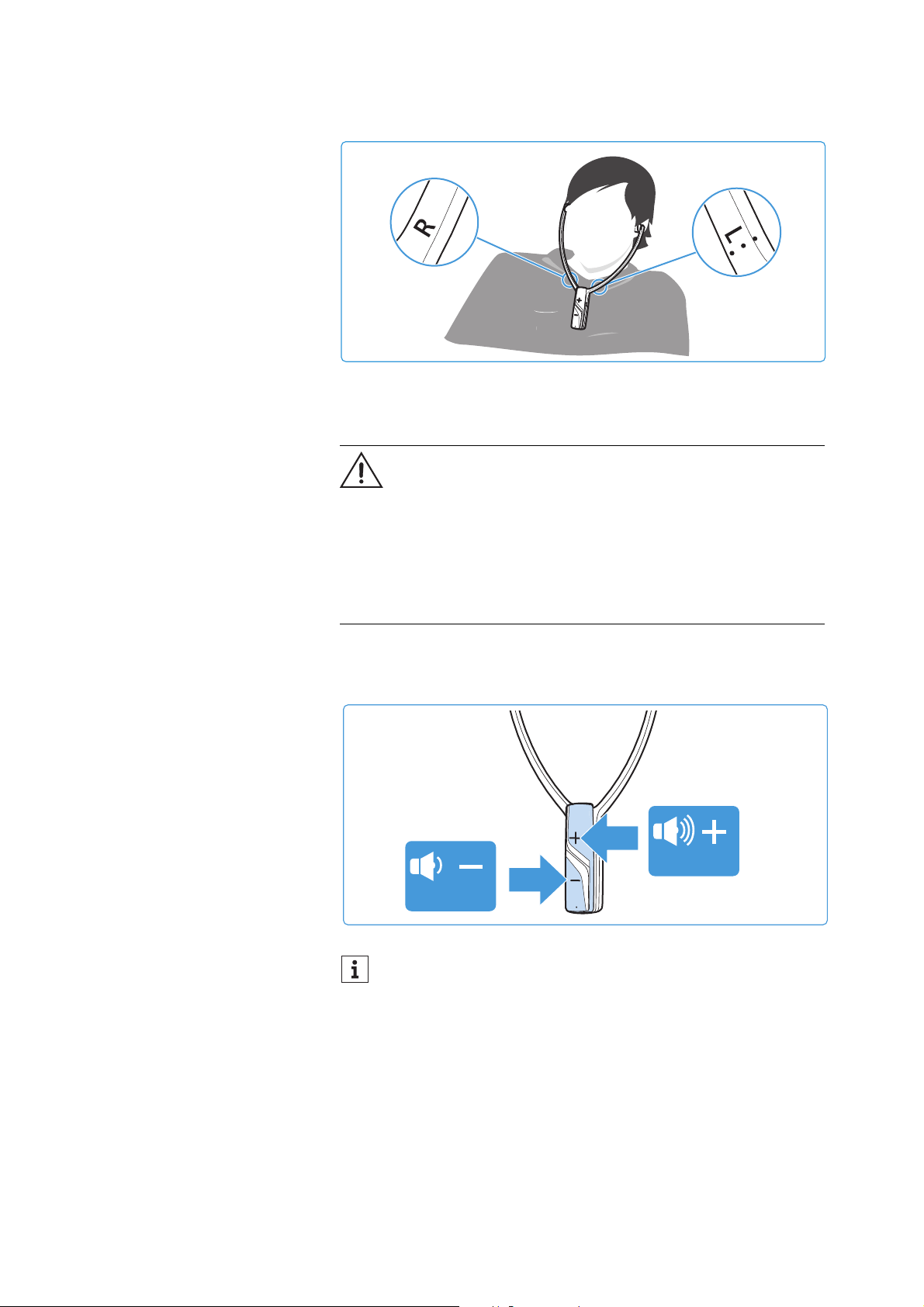
Adjusting the volume
▷ Press the volume button + or the volume button – until the volume
is adjusted to a comfortable level. When the minimum or maxi-
mum volume is reached, you hear a beep in the stethoset receiver.
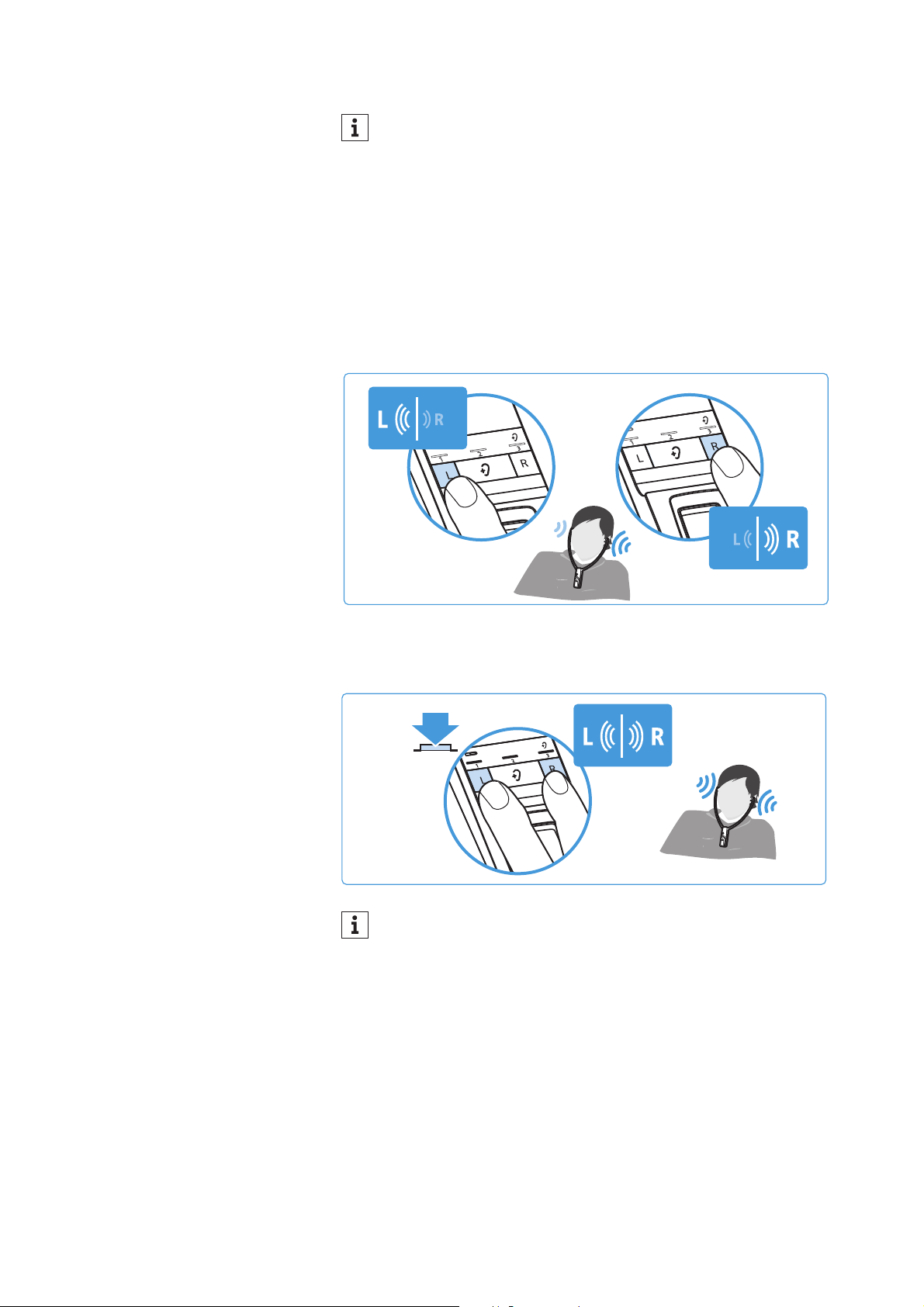
Adjusting the balance
The balance buttons allow for left/right volume adjustment. Adjust
the balance so that you hear equally well with both ears.
WARNING
Danger of hearing damage due to high volume levels!
▷ Before putting the stethoset receiver on, set the volume on the
receiver to a low level.
▷ Do not expose yourself to high volume levels for extended periods
of time.
If you have set a very high volume level and switch the TV head-
phone system off and on again, the volume is reset to a moder-
ate level to protect your hearing.
VOLUME
VOLUME
Using the RS 5200
RS 5200 | 23
▷ Press the balance button R (right) or L (left) on the transmitter to
gradually increase or reduce the volume for your right or left ear.
When the minimum or maximum balance setting is reached, you
hear a beep via the receiver.
To reset the balance setting to the middle setting:
▷ Simultaneously press the balance buttons
R (right) and L (left) on
the transmitter for 3 seconds.
Selecting a hearing profile for sound
enhancement
The hearing profiles alter the sound of the audio signal in order to
especially improve the speech intelligibility. The profiles are used to
specifically change certain frequency ranges by e.g. boosting or
attenuating low-frequency or high-frequency tones.
The balance setting is stored on the stethoset receiver. If you
are using several receivers with a transmitter, the respective
receivers are optimally adjusted to match the personal hearing
preferences of the users (e.g. you and your partner).
Please note that the personal hearing preferences can only be
adjusted when only one stethoset receiver is connected to the
transmitter.
To prevent accidental adjustment of the balance settings, you
can activate the balance protection (see page 33).
3s
Using the RS 5200
24 | RS 5200
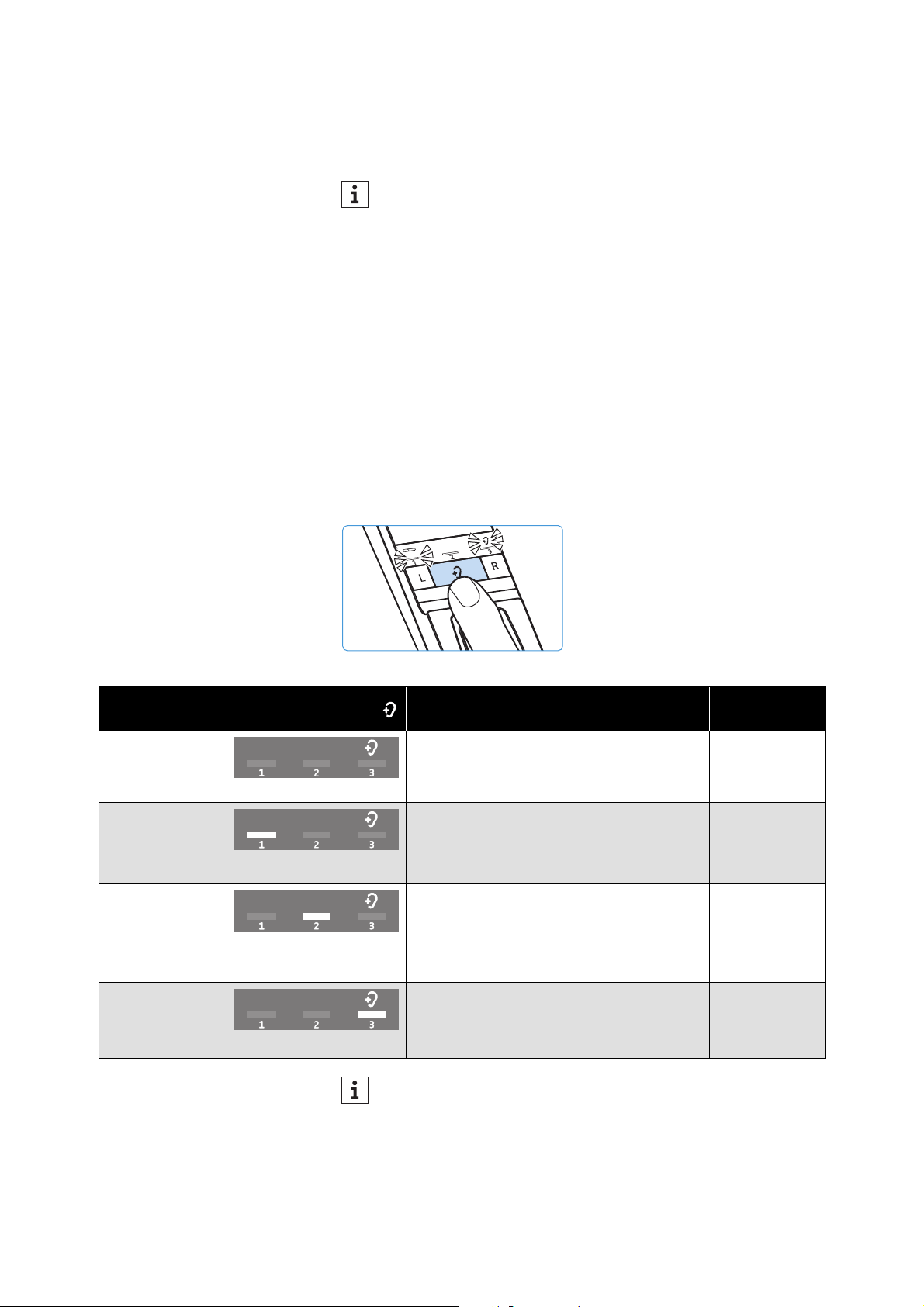
All hearing profiles feature a compression function which compen-
sates for volume differences by boosting the volume of quiet pas-
sages and reducing the volume of loud passages if necessary.
Displaying the activated hearing profile
The activated hearing profile is not permanently displayed.
To check the activate hearing profile:
▷ Switch the stethoset receiver on by putting it on (see page 20).
▷ Briefly press the Hearing profile button on the transmitter.
The currently activated hearing profile is displayed for 10 sec-
onds.
Selecting a hearing profile
To select the hearing profile that best suits you, proceed as follows:
The balance setting is saved on the stethoset receiver. If you
are using several receivers with a transmitter, the respective
receivers are optimally adjusted to match the personal hearing
preferences of the users (e.g. you and your partner). Please
note that the personal hearing preferences can only be
adjusted when only stethoset receiver is connected to the
transmitter.
2s
Activated
hearing profile
Hearing profile LED
Sound enhancement Compression
–
No LED segment lit
The sound from the connected audio
source is reproduced unchanged.
no
Hearing profile 1
1
st
LED segment lit
Low-frequency tones are slightly
boosted to provide a warm, full sound.
High-frequency tones are reproduced
less piercing and clanking.
yes
Hearing profile 2
2
nd
LED segment lit
High-frequency tones are strongly
boosted to provide a crystal-clear sound,
especially for sibilants and high-
frequency tones such as twittering of
birds.
yes
Hearing profile 3
3
rd
LED segment lit
Low-frequency tones are attenuated so
that they cannot mask high-frequency
tones.
yes
For a graphic representation of the hearing profiles, see page
41.
Using the RS 5200
RS 5200 | 25
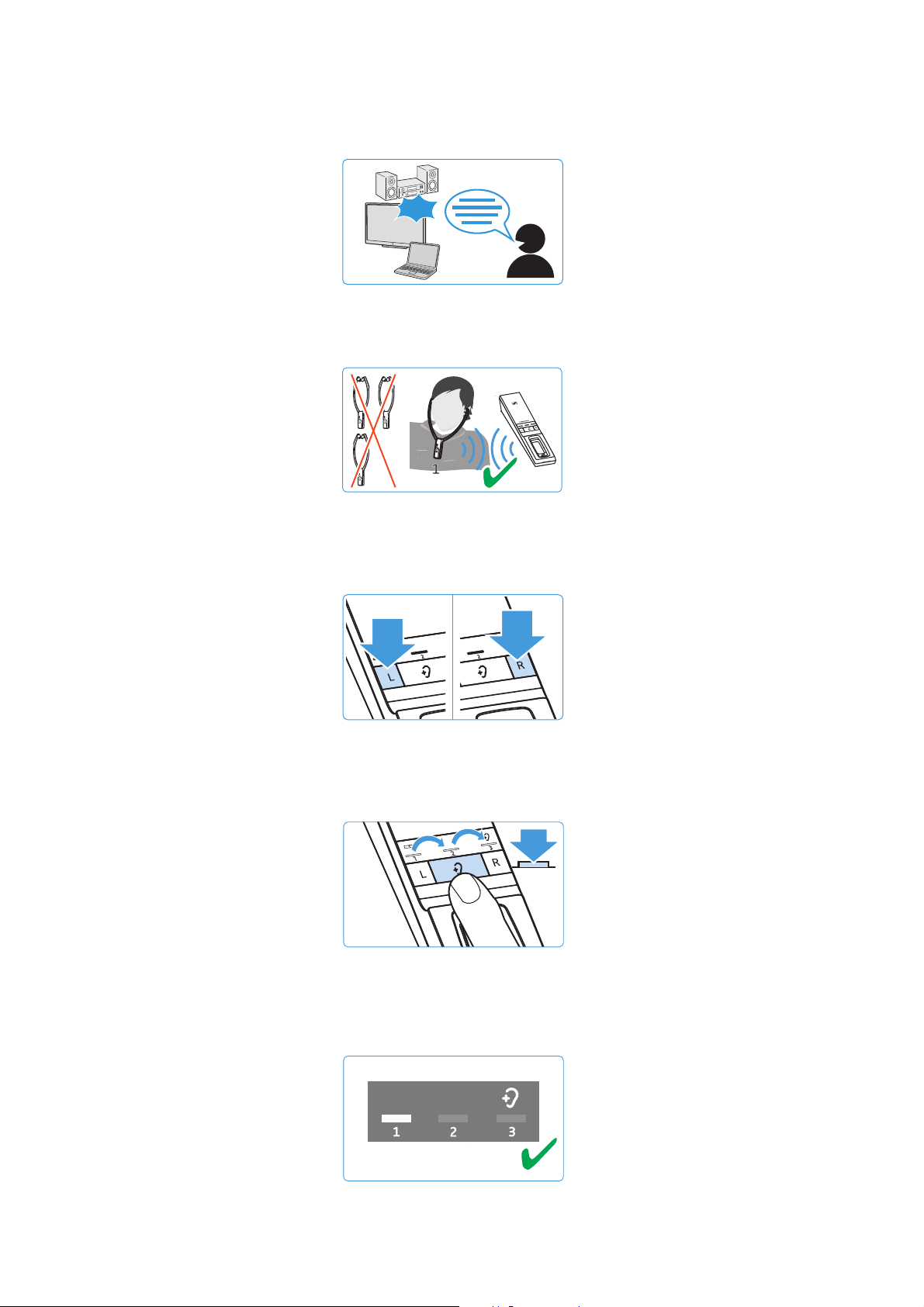
1. Switch your audio source on and select a program where speech
is foregrounded.
2. Put the stethoset receiver on and make sure that only this
receiver is connected to the transmitter. Otherwise, a hearing
profile cannot be adjusted.
3. Use the
L and R buttons on the transmitter to adjust the balance
(see page 22). This ensures that each subsequently selected
hearing profile is perfectly matched to your left/right balance set-
ting.
4. Press the Hearing profile button on the transmitter for 2 seconds
to select the next hearing profile.
Press the button again for 2 seconds to switch to the next hearing
profile.
5. Test which of the hearing profiles (1, 2 or 3) gives you the best
sound quality and helps you to hear best.
Your individual hearing profile is adjusted and saved on the ste-
thoset receiver.
ON
2...4
2s
Using the RS 5200
26 | RS 5200
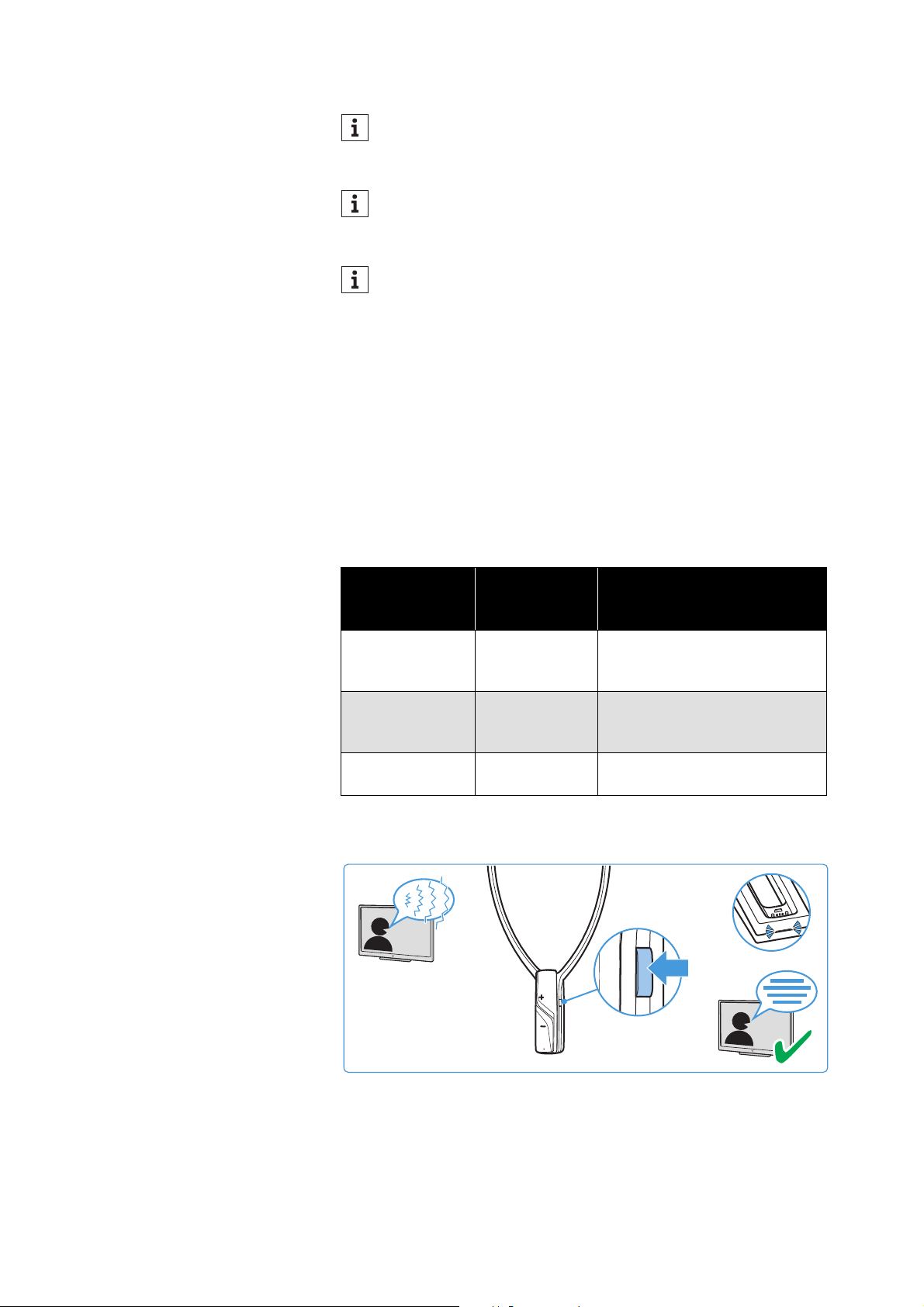
Activating/deactivating the speech
intelligibility function
When speech is mixed with annoying background noise, speech may
be difficult to understand.
The speech intelligibility function automatically detects and reduces
annoying background noise. The audio signal is permanently ana-
lyzed and adjusted accordingly so speech is foregrounded and easier
to understand.
Application examples
▷ Press the
Speech intelligibility
button to activate or deactivate the
function.
Since your level of hearing impairment may change over time,
we recommend that you repeat the selection of the hearing
profile from time to time.
If you switch to the next hearing profile, the speech intelligibil-
ity function is automatically deactivated so that you can hear
the hearing profile unchanged (see page 26).
To prevent accidental adjustment of the hearing profile set-
tings, you can activate the hearing profile protection (see page
33).
Application
Speech
intelligibility
function
Advantage
TV motion pic-
tures, TV series
or audio books
activated
Dialogs muffled by back-
ground music and noise are
easier to understand.
Sportscasts switched on
The presentation muffled by
background noise in the sta-
dium is easier to understand.
Music switched off
No speech, the speech intelli-
gibility function is not needed.

Using the RS 5200
RS 5200 | 27
Transmitter status
LED
Speech intelligibility function
lights up blue
activated;
Annoying background noise is effectively
reduced, speech becomes clearer and
easier to understand.
lights up white
deactivated
The speech intelligibility function can also be used in addition
to one of the hearing profiles 1-3.
Cleaning and maintaining the RS 5200
28 | RS 5200
Cleaning and maintaining the
RS 5200
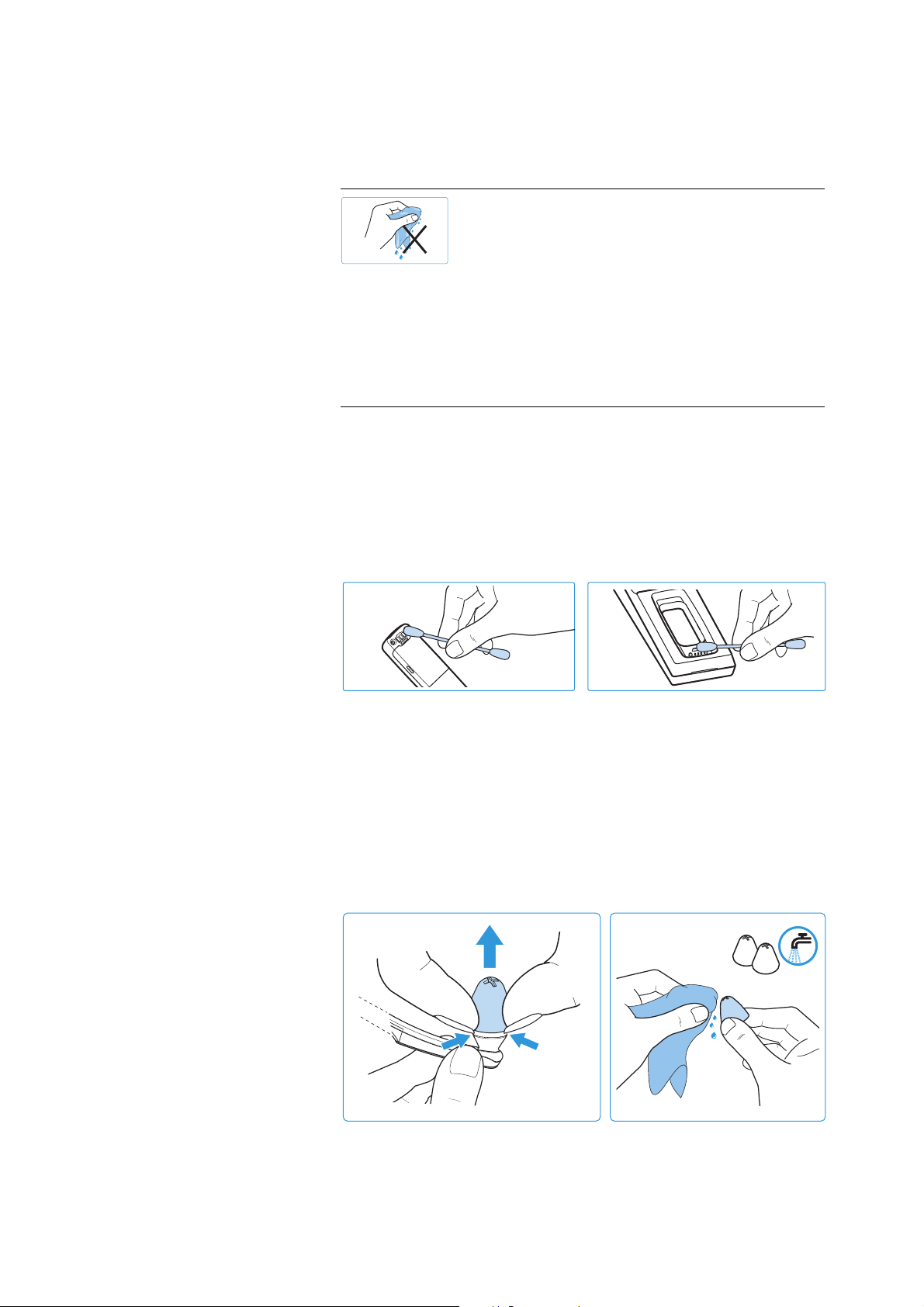
To clean the wireless headphone system:
▷ Switch your wireless headphone system off and disconnect the
transmitter from the wall socket before cleaning.
▷ Clean the product only with a soft, dry cloth.
▷ Clean the charging contacts on the stethoset receiver and in the
charging compartment from time to time using e.g. a cotton
swab.
To clean the ear pads:
▷ Reach behind the ear pads with your fingernails so that you can
carefully detach the ear pads from the stethoset receiver.
▷ Clean the ear pads under lukewarm running water.
▷ Let the ear pads air dry at room temperature for at least 12 hours
before using them again.
▷ Put the ear pads back on the stethoset receiver.
The rubber ring of the ear pads locks into place on the stethoset
receiver.
CAUTION
Liquids can damage the electronics of the product!
Liquids entering the housing of the product can cause a short-circuit
and damage the electronics.
▷ Keep all liquids far away from the product.
▷ Do not use any solvents or cleansing agents.

Cleaning and maintaining the RS 5200
RS 5200 | 29
Replacing the stethoset receiver’s
rechargeable battery
The BAP 800 rechargeable battery of the stethoset receiver is com-
pactly built into the receiver housing and does not have to be
replaced or removed.
However, if the operating time of the stethoset receiver decreases
drastically or if a charging error is displayed during charging (see
page 15), the rechargeable battery may be exhausted or defective
and has to be replaced.
Outside the warranty period, the rechargeable batteries may be
replaced or removed by any qualified service center in an appropri-
ate manner. Instructions for qualified service centers on how to
replace or remove the rechargeable batteries are available from your
Sennheiser service partner.
You need suitable tools for replacement. We therefore recommend to
have the rechargeable battery replaced by your Sennheiser service
partner. To find a Sennheiser partner in your country, search at
www.sennheiser.com/service-support
For reasons of hygiene, the ear pads should be replaced from
time to time (especially the ear pads made of memory foam and
open foam only have a durability of a few months due to their
material properties). Spare ear pads in different materials and
forms are available from your Sennheiser partner.
CAUTION
Danger of damage to the product!
During the warranty period, the rechargeable batteries must only be
replaced by an authorized Sennheiser service partner, otherwise the
warranty will be null and void.
▷ Contact your Sennheiser service partner if the rechargeable bat-
teries need to be replaced or removed.
▷ Do not return a product with a defective battery to your dealer or
Sennheiser partner unless requested to do so.
Using the RS 5200’s additional functions
30 | RS 5200
Using the RS 5200’s additional
functions
The following additional functions are not required for normal use of
the wireless headphone system. You can, however, extend the
potential use of the system and adjust some of the functions to your
individual needs.
Pairing one or several stethoset receivers
with the transmitter
The stethoset receiver and the transmitter of your wireless head-
phone system are factory pre-paired. The following steps are only
necessary if you want to pair additional stethoset receivers with the
transmitter.
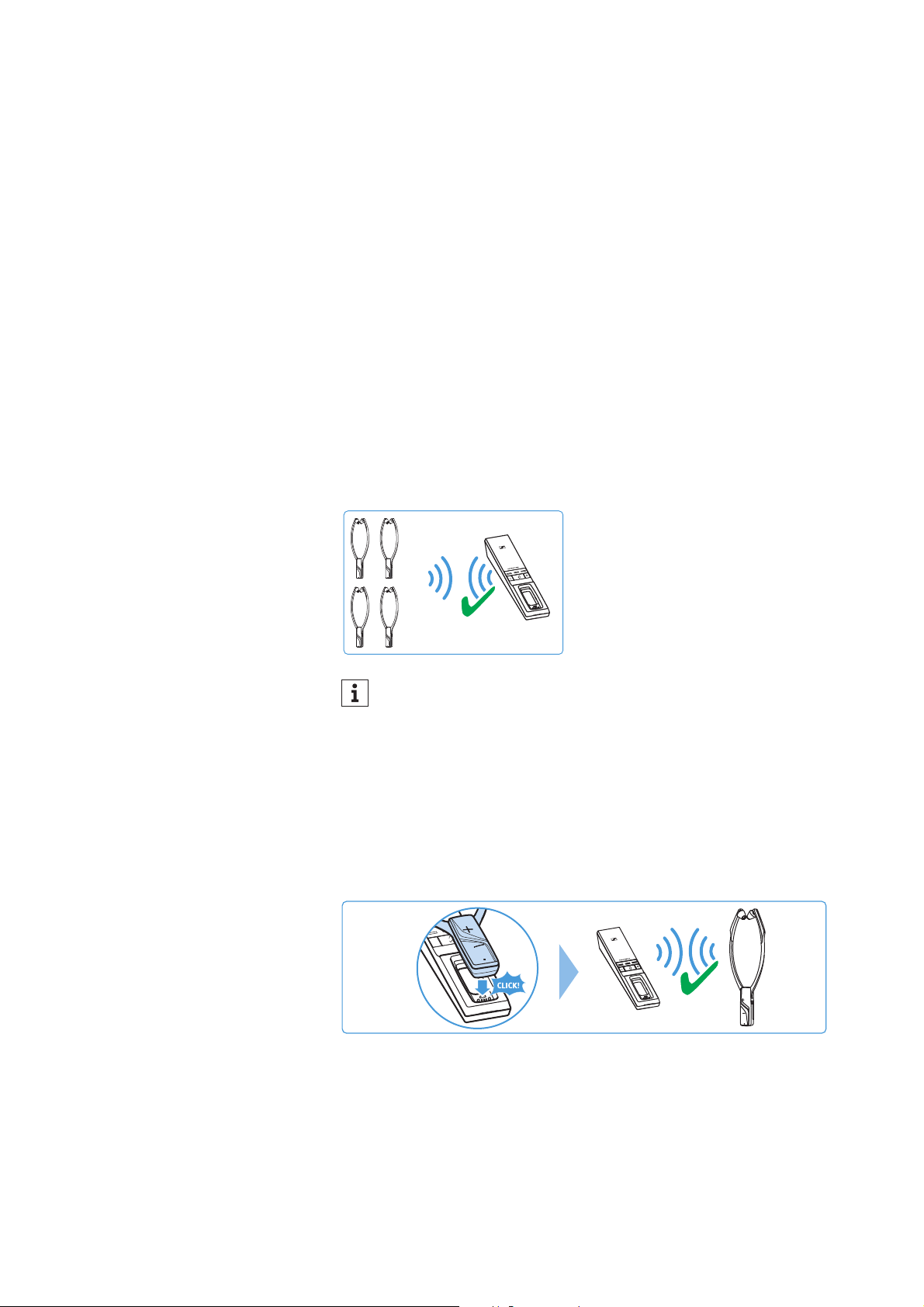
You can simultaneously use up to 4 paired stethoset receivers with
your transmitter. All other paired and switched-on receivers cannot
connect to the transmitter.
Option A (contact pairing)
▷ Place the stethoset receiver into the transmitter’s charging com-
partment.
The stethoset receiver is paired with the transmitter.
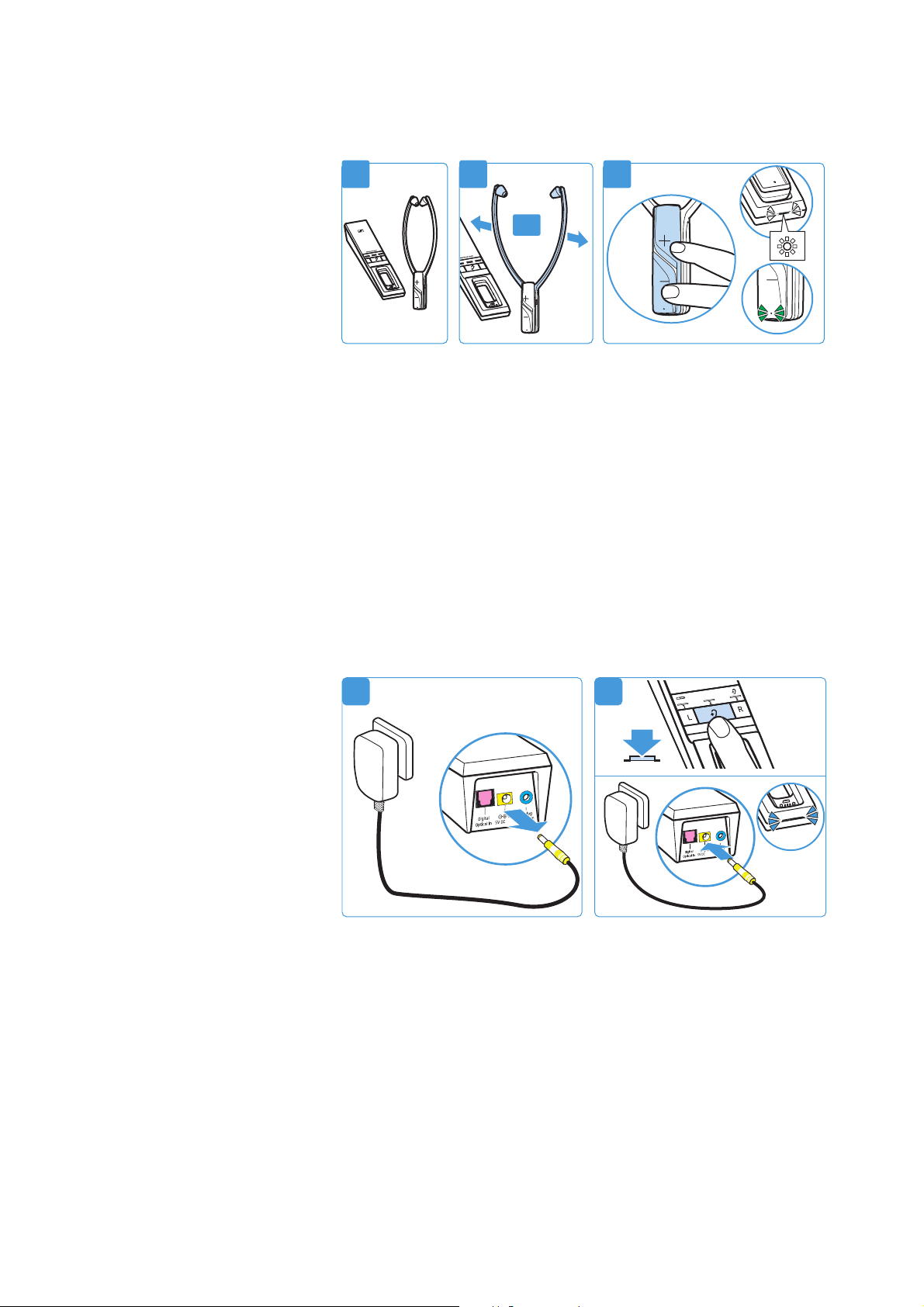
Option B (proximity pairing)
1. Place the stethoset receiver as close as possible to the transmit-
ter.
2. Switch the stethoset receiver on by pulling the ear bows apart.
3. Simultaneously press and hold the volume buttons
+
/– until the
Receiver status
LED flashes red. Once paring is completed, the
Receiver status
LED flashes green and the
Transmitter status
If more than one stethoset receiver is connected to the trans-
mitter, the remaining operating time/charge status and the
hearing profile cannot be displayed. In addition, the balance
and a hearing profile cannot be adjusted. These functions can
only be used/adjusted when only one stethoset receiver is con-
nected to the transmitter.
1...4
+
Using the RS 5200’s additional functions
RS 5200 | 31
LED flashes white.
Release the buttons.
Advanced settings
The advanced settings allow you to adjust the wireless headphone
system to your individual needs and to protect the settings against
accidental changes.
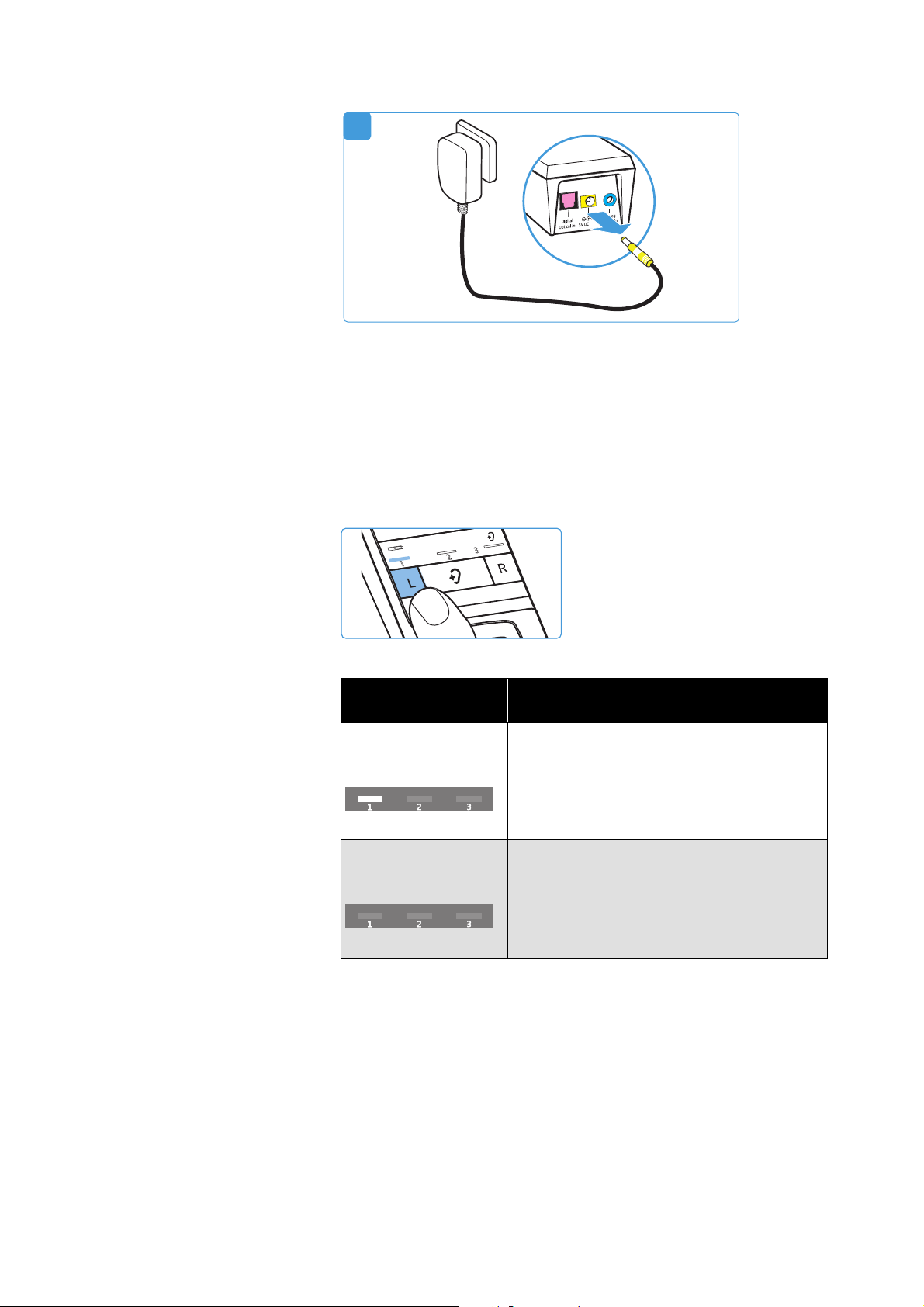
Activating the protected settings mode
You can change the advanced settings by activating the protected
settings mode:
1. Disconnect the transmitter from the power supply system by
unplugging the connector of the power supply unit.
2. Keep the Hearing profile button pressed and connect the trans-
mitter to the power supply system by connecting the connector of
the power supply unit to the yellow socket of the transmitter.
The protected settings mode is activated. The
Transmitter status
LED flashes blue. The LED segments indicate the current settings as
specified in the following chapters:
• battery status display (see page 32)
• charging reminder function (see page 32)
• hearing profile and balance protection (see page 33)
Deactivating the protected settings mode and saving the advanced
settings
To save the advanced settings and to deactivate the protected set-
tings mode:
3. Disconnect the transmitter from the power supply system by
unplugging the connector of the power supply unit.
2 31
+
ON
+
21
1A
1A
Using the RS 5200’s additional functions
32 | RS 5200
Battery status display
This setting is saved on the transmitter, independent of the stethoset
receiver you are using.
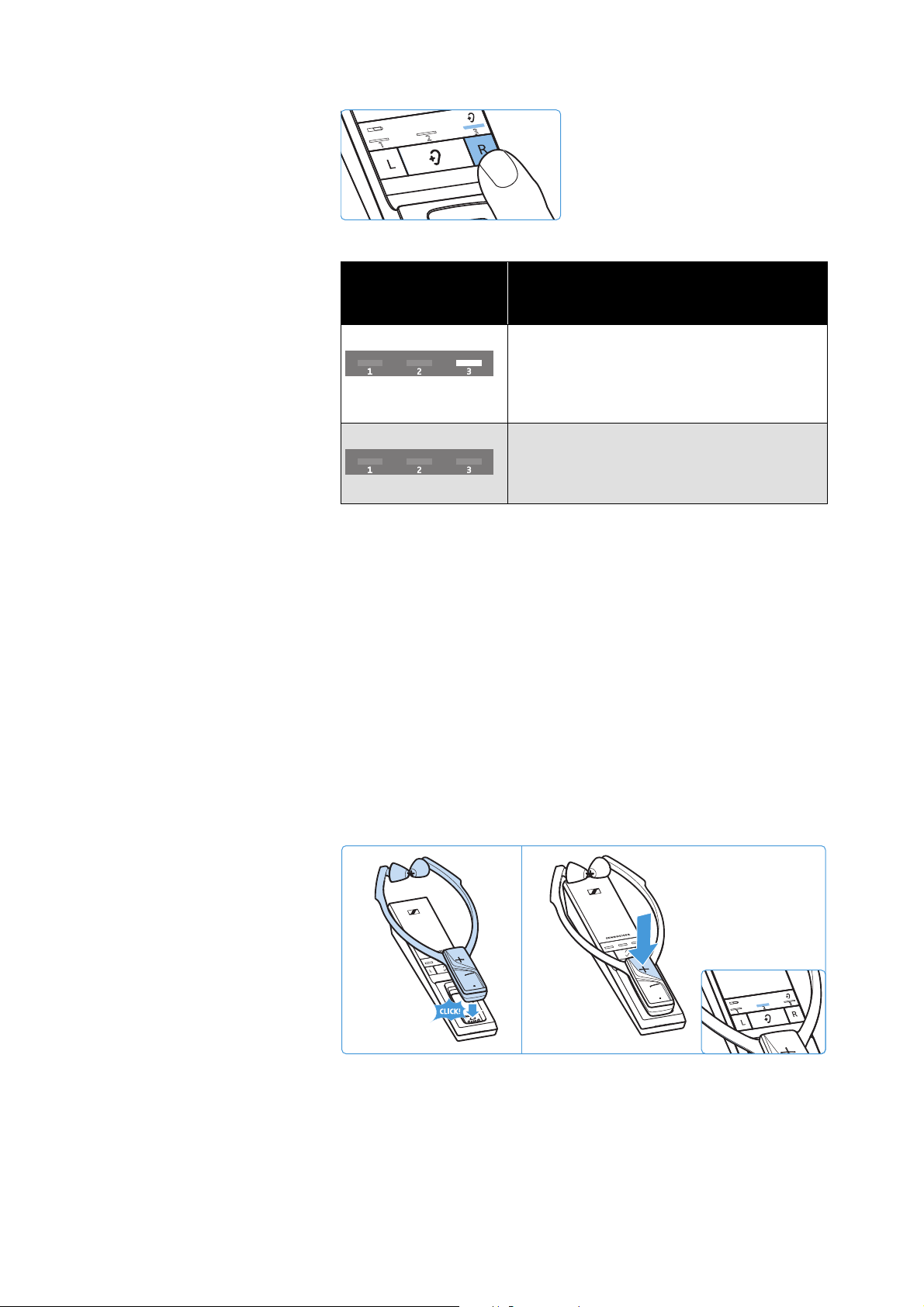
To change the battery status display:
▷ Make sure that the protected settings mode is activated (see
page 31).
▷ Press the Balance button
L.
* factory default setting
▷ Save the setting by disconnecting the transmitter from the power
supply system (see page 31).
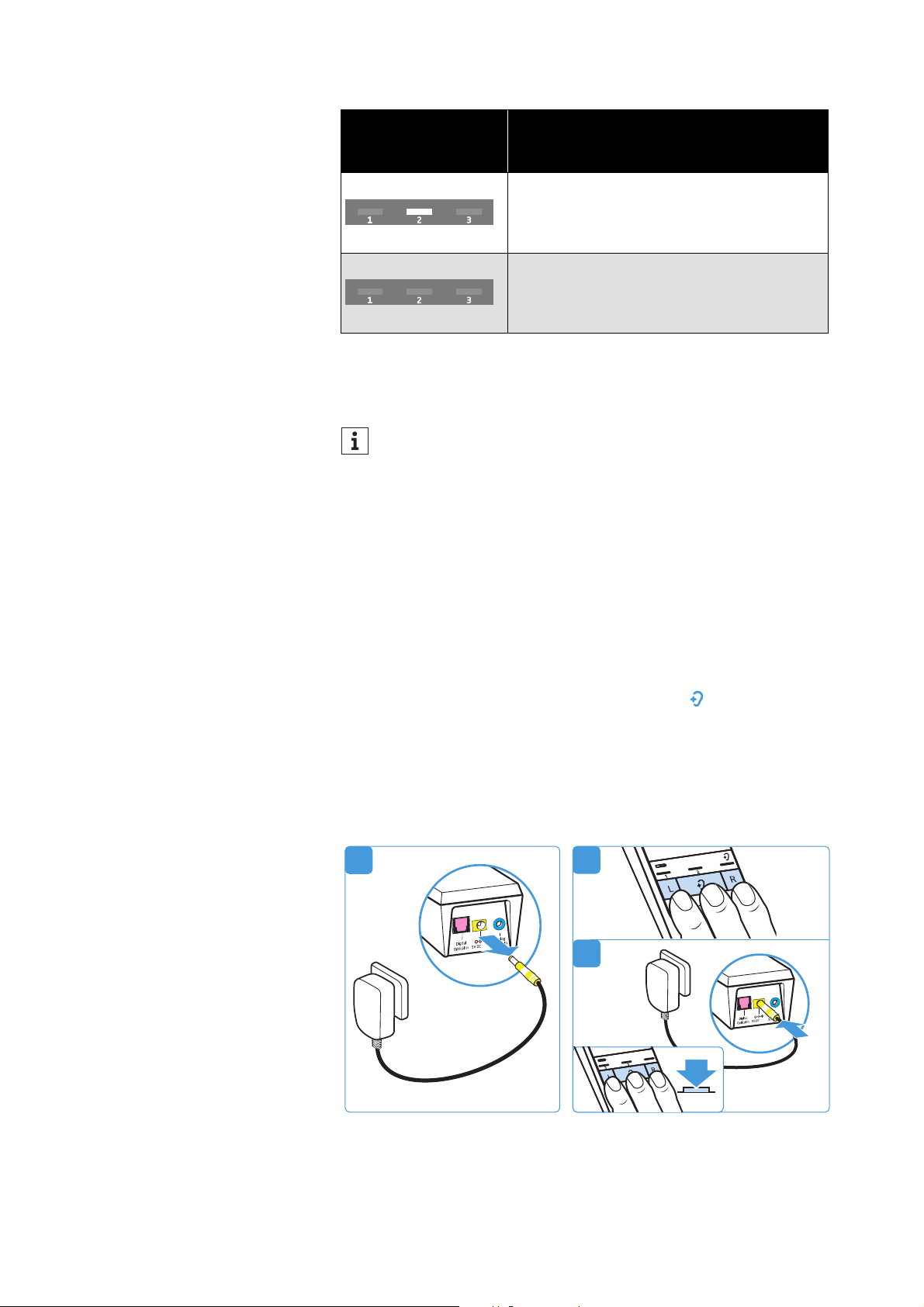
Charging reminder function
This setting is saved on the transmitter, independent of the stethoset
receiver you are using.
To activate or deactivate the function:
▷ Make sure that the protected settings mode is activated (see
page 31).
▷ Press the Balance button
R on the transmitter.
Status and display of
the Battery LED
Function/behavior
permanently
activated (operation
and charging)*
1
st
LED segment lit
The current charge status is permanently
displayed during charging.
The remaining charge status is
permanently displayed during operation.
activated for 30
seconds (operation
and charging)
1
st
LED segment off
The current charge status is displayed for
30 seconds during charging. Then all LEDs
go off. The charging process is continued.
The remaining charge status is displayed
for 30 seconds during operation. The
battery status display then goes off.
3
1A
Using the RS 5200’s additional functions
RS 5200 | 33
* factory default setting
▷ Save the setting by disconnecting the transmitter from the power
supply system (see page 31).
Hearing profile and balance protection
This setting is saved on the stethoset receiver, independent of the
transmitter you are using.
▷ Make sure that your stethoset receiver’s balance setting and
hearing profile are correctly adjusted (see page 22 and 23).
▷ Make sure that the protected settings mode is activated (see
page 31).
▷ Place the stethoset receiver into the transmitter’s charging com-
partment.
▷ Press the volume button
+ on the stethoset receiver to activate or
deactivate the hearing profile and balance protection.
Status and display of
the charging
reminder function
Function/behavior
activated*
3
rd
LED segment lit
When you switch the stethoset receiver off
and the transmitter switches to standby
mode, the battery status display will flash
for 10 minutes to remind you to charge the
stethoset receiver.
switched off
3
rd
LED segment off
After switching the wireless headphone
system off, all LEDs remain off.
+
+
Using the RS 5200’s additional functions
34 | RS 5200
* factory default setting
▷ Save the setting by disconnecting the transmitter from the power
supply system (see page 31).
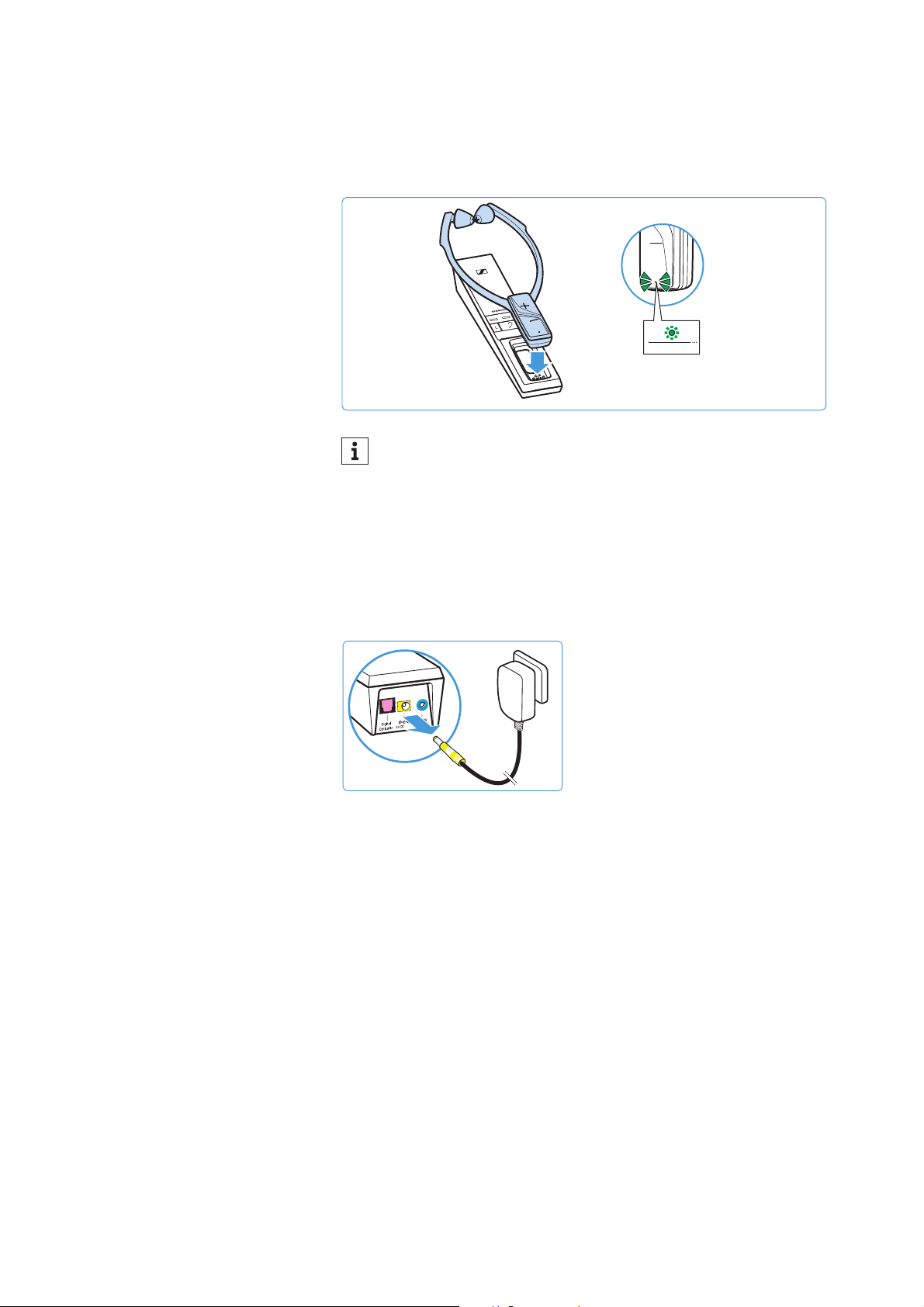
Restoring the factory default settings
To restore the transmitter to the factory settings:
1. Disconnect the transmitter from the power supply system by
unplugging the connector of the power supply unit.
2. Simultaneously press and hold the buttons
L
, and R.
3. Connect the transmitter to the power supply system by connect-
ing the connector of the power supply unit to the yellow socket of
the transmitter while keeping the 3 buttons pressed for at least 3
seconds.
All LEDs on the transmitter flash. The transmitter settings are
restored to the factory settings.
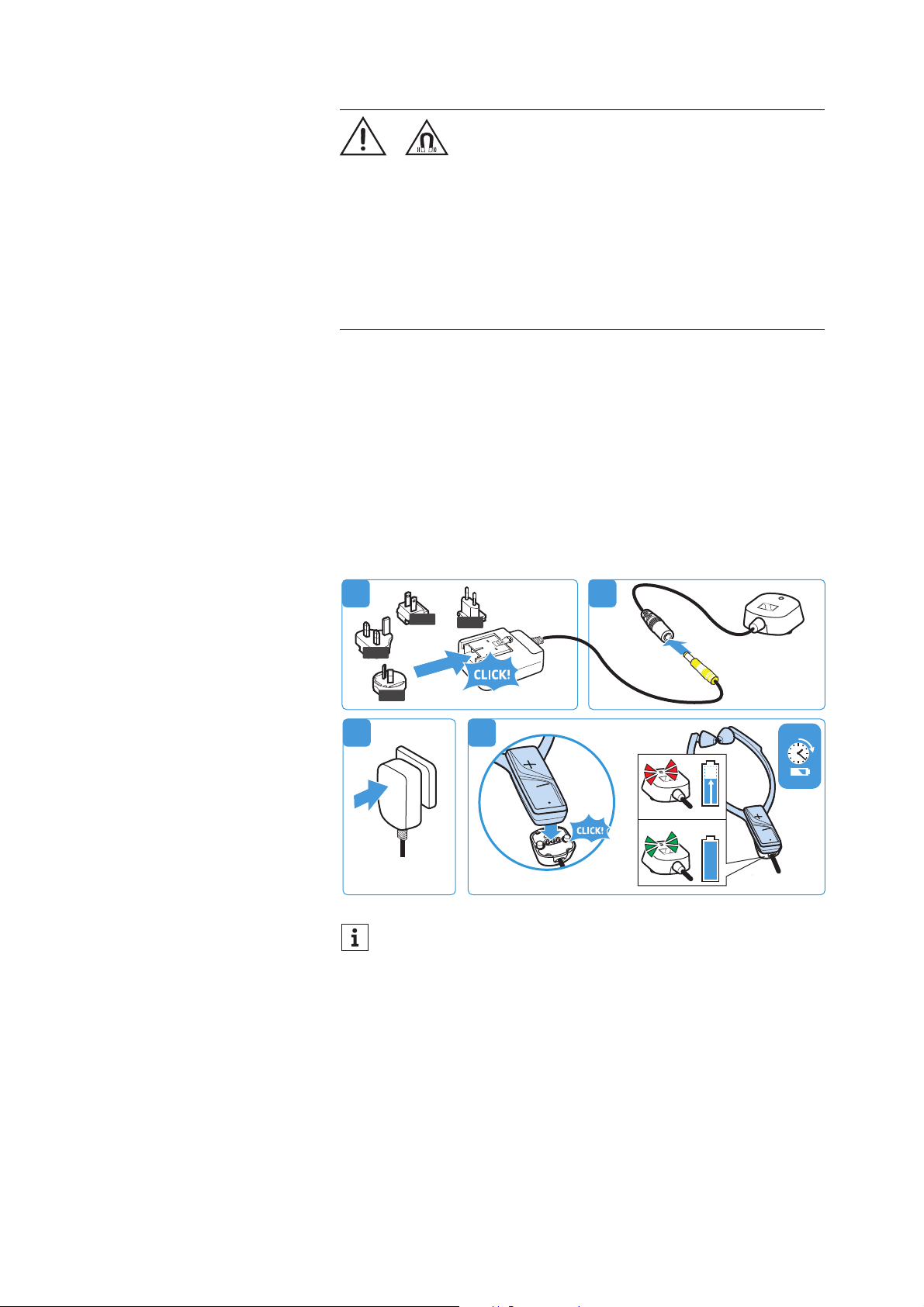
To restore a stethoset receiver to the factory settings:
Status and display of
the protection
function
Function/behavior
activated
2
nd
LED segment lit
The activated hearing profile and the
balance setting cannot be changed/
deactivated.
deactivated*
2
nd
LED segment off
The hearing profiles can be changed at any
time by pressing the Hearing profile button
for 2 seconds. The balance setting can be
changed.
If you are using several stethoset receivers and want to protect
the activated hearing profiles from accidental adjustment, you
can place the stethoset receivers, one after the other, into the
transmitter’s charging compartment to activate the hearing
profile and balance protection.
1
2
3
1
A
1A
3s
Using the RS 5200’s additional functions
RS 5200 | 35
▷ Place the stethoset receiver into the transmitter’s charging com-
partment.
The
Receiver status
LED flashes green. The settings of the ste-
thoset receiver are also restored to the factory settings.
▷ Disconnect the transmitter from the power supply system by
unplugging the connector of the power supply unit.
The factory settings are restored and you can use the wireless
headphone system again.
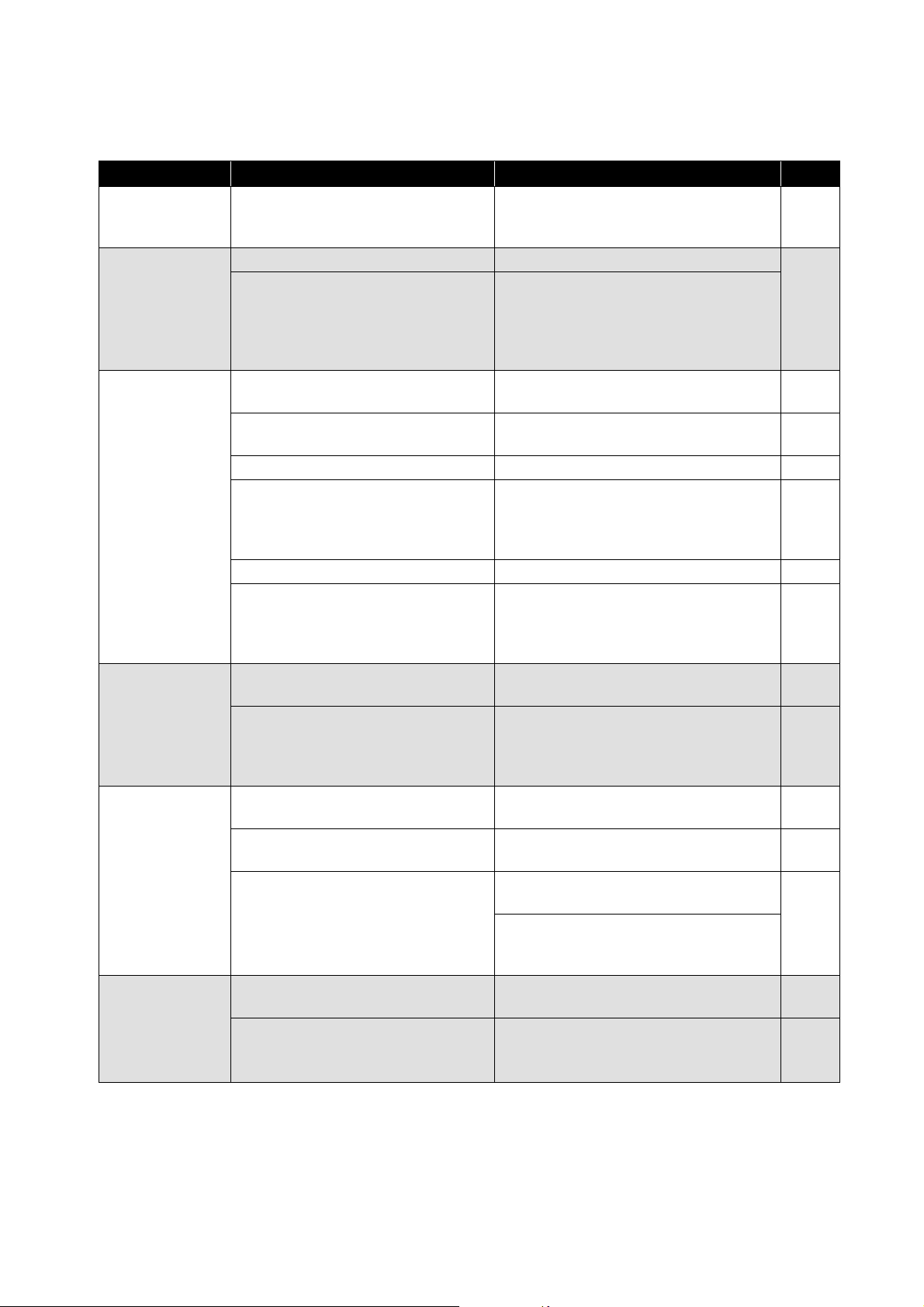
Charging the rechargeable battery using
the MCA 800 charging adapter
If you have purchased an additional stethoset receiver or an optional
MCA 800 charging adapter, you can also charge the stethoset
receiver using the charging adapter.
Always keep the headphones/MCA 800 charging adapter at least
3.94" (10 cm) from cardiac pacemakers, implanted defibrillators
(ICDs) and other implants. The headphones/MCA 800 charging
adapter generate/s magnetic fields that could cause interference
with cardiac pacemakers, implanted defibrillators (ICDs) and other
implants.
If you place the stethoset receiver into the transmitter’s
charging compartment at the very beginning of the restore pro-
cedure, the factory settings of the transmitter and the receiver
are restored simultaneously.
+
1
A
Using the RS 5200’s additional functions
36 | RS 5200
Select a suitable country adapter and slide it onto the power supply
unit until it clicks audibly into place.
1. Connect the connector of the power supply unit to the connection
socket of the MCA 800 charging adapter.
2. Plug the power supply unit into the wall socket.
3. Connect the charging adapter to the charging contacts on the
stethoset receiver. The charging adapter is magnetically oriented
to the correct position.
The rechargeable battery is being charged. The LED on the
charging adapter lights up red. When the rechargeable battery is
fully charged, the LED lights up green.
If the LED on the charging adapter flashes red and green, a charging
error/battery error has occurred. In this case, disconnect the
charging adapter from the stethoset receiver. For additional informa-
tion on the rechargeable battery, see page 29.
WARNING
Interference due to magnetic fields!
The MCA 800 charging adapter generates stronger permanent mag-
netic fields that could cause interference with cardiac pacemakers,
implanted defibrillators (ICDs) and other implants
▷ Always maintain a distance of at least 3.94" (10 cm) between the
holding magnets of the charging adapter and the cardiac pace-
maker, implanted defibrillator or other implant.
You can also use the stethoset receiver during charging. Please
note, however, that the receiver can get slightly warm during
charging. The charge status of the rechargeable battery is dis-
played on the transmitter (see page 15).
3 h
100 %
US
EU
UK
AU
21
3 4
If a problem occurs...
RS 5200 | 37
If a problem occurs...
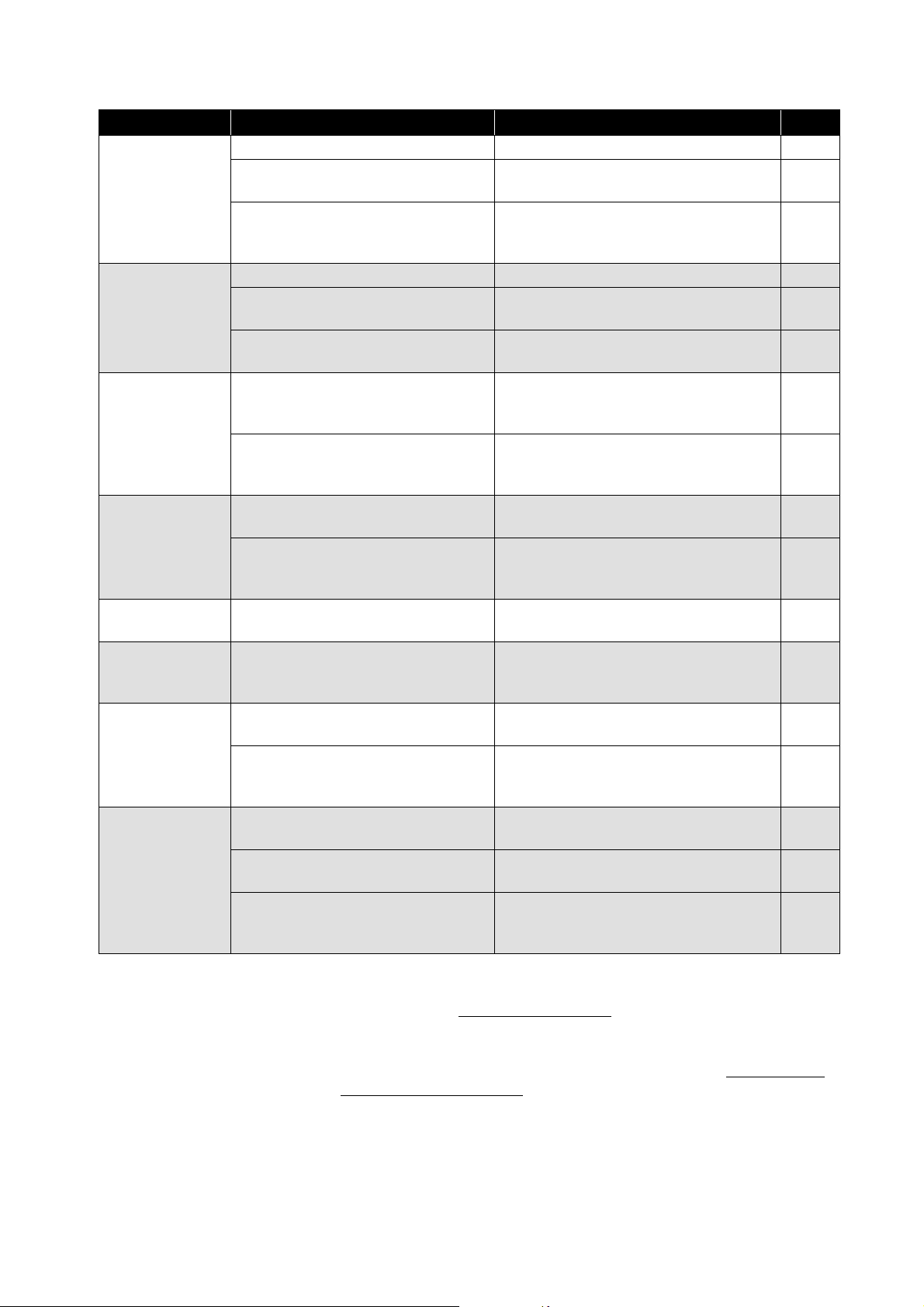
Problem Possible cause Possible solution Page
The transmitter
does not switch
on
No connection to the power supply
system.
Check the connections of the power
supply unit.
15
The headphones
cannot be
switched on
The rechargeable battery is empty. Recharge the rechargeable battery.
15
The rechargeable battery is deep
discharged.
Recharge the rechargeable battery for
several hours. If the rechargeable bat-
tery is deep discharged, the charging
process might take a while to start (up
to 1 hour).
No sound
No connection to the power supply
system.
Check the connections of the power
supply unit.
15
The audio plug is not properly con-
nected.
Check the audio plug connection. 10
The audio source is switched off. Switch the audio source on. –
The volume of the analog audio
source is either set to the minimum
or is on mute.
Increase the volume on the audio
source to at least a medium level/
deactivate the muting function on the
audio source.
–
The audio cable is defective. Replace the audio cable. –
The stethoset receiver is not cor-
rectly paired with the transmitter
(e.g. additional stethoset receiver/
receiver).
Pair the stethoset receiver with the
transmitter again.
30
No audio signal
when a digital
audio source is
connected
Cables are connected to both the
digital and the analog audio input.
Remove the cable from the analog
audio input.
10
The connected digital audio source
uses an incompatible audio format.
The
Transmitter status
LED flashes
white and blue.
Set the audio format of your audio
source to “PCM”, with a sampling rate
of max. 96 kHz (see the instruction
manual of the audio source).
–
Occasional
sound dropouts,
it might be that
you hear 5 beeps
via the receiver
The stethoset receiver is out of the
transmitter’s range.
Reduce the distance between the ste-
thoset receiver and the transmitter.
–
The signal is shielded.
Remove obstacles between the trans-
mitter and the stethoset receiver.
–
There are interfering devices (e.g.
WiFi router, Bluetooth devices or
microwaves) in the vicinity.
Change the position of the transmitter
or of the receiver.
10
Separate the transmitter from other
wireless devices by at least 50 cm/
20”.
Sound too low
The volume on the stethoset
receiver is adjusted too low.
Increase the volume on the stethoset
receiver.
22
The volume of the analog audio
source is adjusted too low.
Increase the volume of the analog
audio source to at least a medium level
(approx. 1 V
rms
).
–
If a problem occurs...
38 | RS 5200
If a problem occurs that is not listed in the above table or if the prob-
lem cannot be solved with the proposed solutions, visit the RS 5200
product page at www.sennheiser.com. There you will find a current
list of frequently asked questions (FAQ).
You may also contact your local Sennheiser partner for assistance.
To find a Sennheiser partner in your country, search at www.sennhe-
iser.com/service-support
Sound only on
one ear
The balance is misadjusted. Adjust the balance. 22
The audio cable is not properly con-
nected.
Check the audio plug connection. 10
The TV has only a mono headphone
socket
Use an adapter (mono to stereo jack
socket) to connect the transmitter to
the TV.
–
Sound is dis-
torted
The audio cable is defective. Replace the audio cable. –
The signal of the audio source is
distorted.
Reduce the volume of the audio
source.
–
The volume on the stethoset
receiver is adjusted too high
Reduce the volume on the stethoset
receiver.
22
You hear echos
when using the
stethoset
receiver with a
TV
Some TVs can adjust a delay or
latency of the audio signal for the
digital audio output.
Check the audio output settings of
your TV and set the latency to “0”.
–
Ear pads made of open foam is
being used
Reduce the volume of the TV speaker
or use closed ear pads (memory foam
or silicone).
18
The battery
status display
goes off
The battery status display is set so
that it goes off after 30 seconds.
Set the battery status display so that it
is permanently displayed.
32
More than one stethoset receiver is
currently connected to the trans-
mitter.
This function is only possible when
only one stethoset receiver/receiver is
connected to the transmitter.
–
2 beeps during
operation
The rechargeable battery is almost
empty.
Recharge the rechargeable battery. 15
The operating
time decreases
The rechargeable battery is
exhausted.
Have the rechargeable battery
replaced by an authorized Sennheiser
service partner.
29
A hearing profile
or the balance
cannot be acti-
vated or
changed
The hearing profile and balance
protection is activated.
Deactivate the hearing profile and bal-
ance protection.
33
More than one stethoset receiver/
receiver is currently connected to
the transmitter.
This function is only possible when
only one stethoset receiver/receiver is
connected to the transmitter.
–
The stethoset
receiver does
not connect to
the transmitter
The stethoset receiver is not paired
with the transmitter.
Pair the stethoset receiver with the
transmitter.
30
The distance to the transmitter is
too large.
Reduce the distance between the ste-
thoset receiver and the transmitter.
–
4 stethoset receivers are currently
connected to the transmitter
Up to 4 stethoset receivers can be
simultaneously used with the trans-
mitter.
–
Problem Possible cause Possible solution Page
If a problem occurs...
RS 5200 | 39
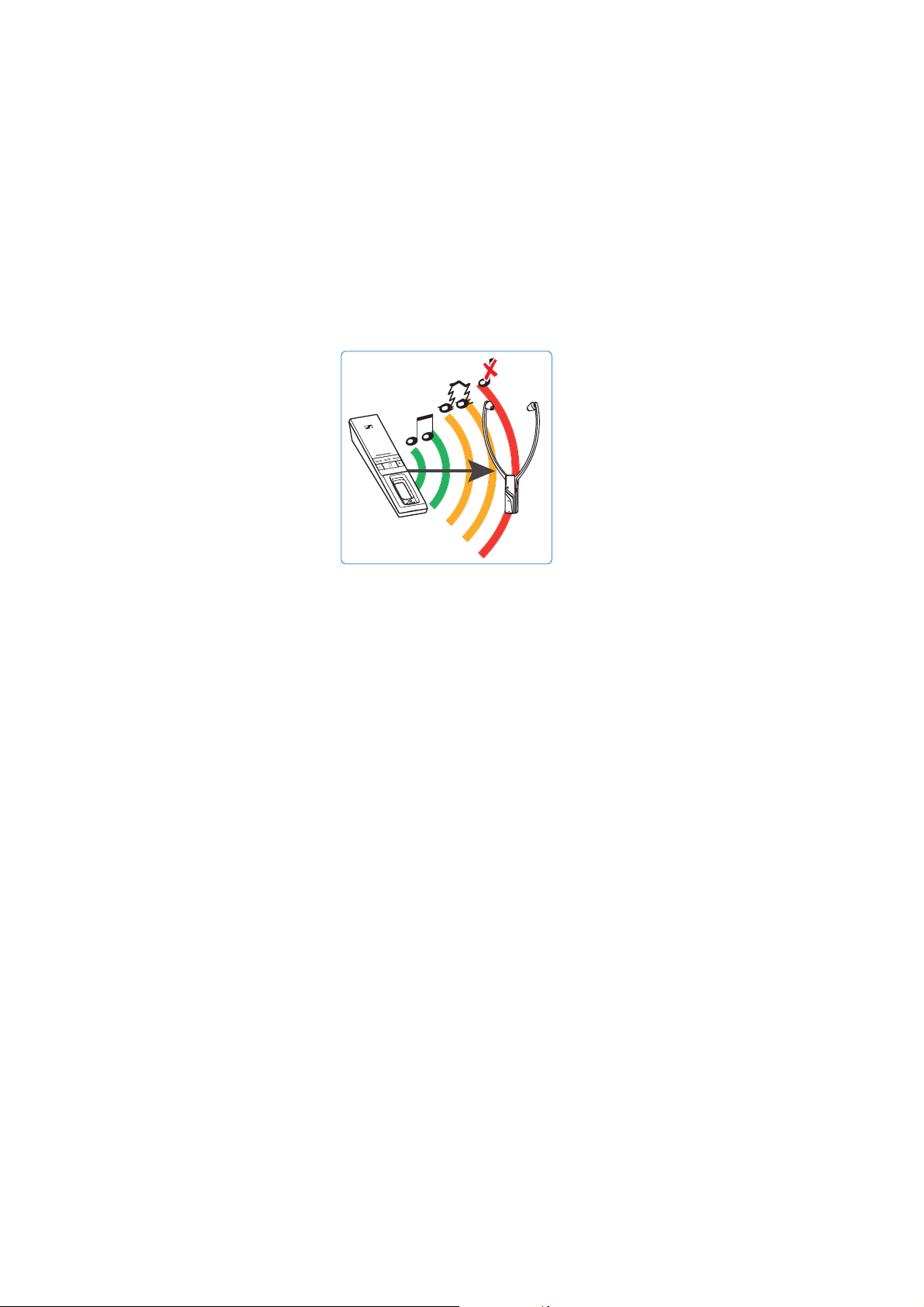
Leaving the range of the transmitter
The range of the transmitter largely depends on environmental con-
ditions such as wall thickness, wall composition etc. If you leave the
range of the transmitter, the audio drops out occasionally at first
before the connection breaks down completely. You hear alerts in the
stethoset receiver and the
Receiver status
LED flashes green (or red
if the rechargeable battery is almost empty).
If you re-enter the transmission range within 5 minutes, the connec-
tion is automatically re-established.
If you spend more than 5 minutes outside the transmission range,
the stethoset receiver switches off automatically.
+

Specifications
40 | RS 5200
Specifications
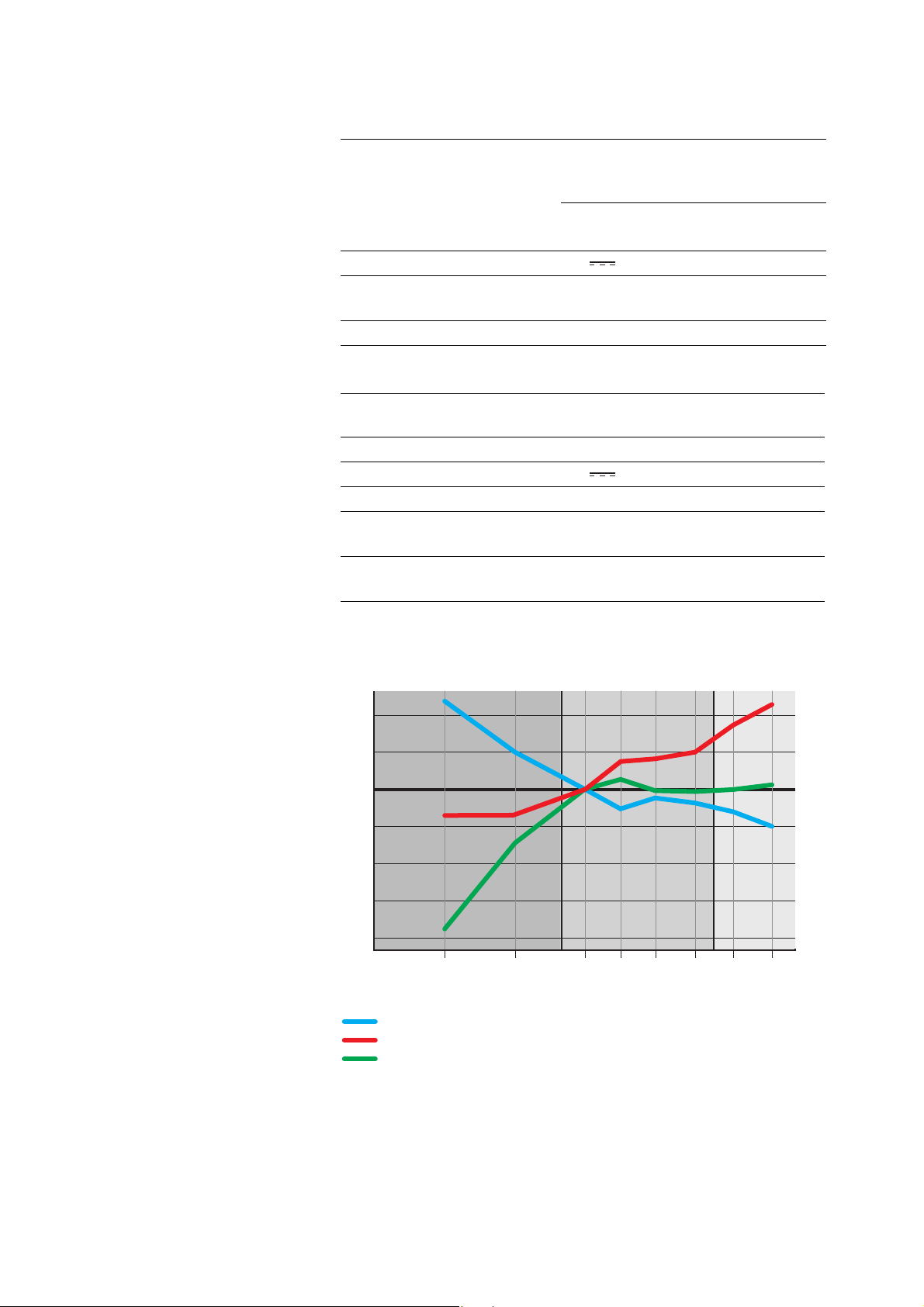
RS 5200 system
RR 5200 stethoset receiver
Carrier frequency 2.4 to 2.4835 GHz
Modulation 8-FSK Digital
Signal-to-noise ratio
analog input:
typ. 85 dBA at 1 V
rms
digital input: > 90 dBA
RF output power max. 10 dBm
Audio latency < 60 ms
Range up to 70 m (line of sight)
Stethoset receivers that can
be simultaneously connected
to the transmitter
4
Temperature range
operation: +5 °C to +40 °C
storage: -25 °C to +70 °C
Relative air humidity (non-
condensing)
operation: 10 to 80 %
storage: 10 to 90 %
Type intra-aural, closed
Transducer principle dynamic, neodymium magnets
Ear pad material
silicone: silicone elastomer
memory foam: PUR
open foam: PUR
Frequency response 15 Hz to 16 kHz
Sound pressure level max. 125 dB at 1 kHz, 3 % THD
THD < 0.5 % at 1 kHz, 100 dB SPL
Operating time up to 12 hours
Charging time of recharge-
able battery
up to 3 hours
Power supply
built-in BAP 800 lithium polymer
rechargeable battery, 3.7 V,
350 mAh
Weight (incl. rechargeable
battery)
approx. 61 g
Dimensions
(switched off, W x H x D)
approx. 102 mm x 265 mm x 23 mm
Maximum value of the static
magnetic field at the surface
1,15 mT
Specifications
RS 5200 | 41
TR 5000 transmitter
Sennheiser NT 5-10AW power supply unit
Hearing profiles 1-3
Connections
digital input: optical
supported data streams:
PCM, 32 - 96 kHz/16 - 24 bit
analog input: 3.5 mm jack socket
input voltage range: 0.15 to 4.0 V
pk
Power supply 5 V , 1 A
Power consumption
operation: typ. 1 W
standby: ≤ 0.5 W (without charging)
Dimensions (W x H x D) approx. 50 mm x 42 mm x 270 mm
Nominal input voltage/cur-
rent
100 – 240 V~/300 mA
Power frequency 50 – 60 Hz
Nominal output voltage 5 V
Nominal output current 1 A
Temperature range
operation: 0 °C to +40 °C
storage: -25 °C to +70 °C
Relative air humidity (non-
condensing)
operation: 10 to 80 %
storage: 10 to 90 %
Lows Midrange Highs
Profile 1
Profile 2
Profile 3
10
5
0
-5
-10
-15
-20
0 0.25 0.5 1 21.5 3 4
Frequency/kHz
6
Gain/dB
Manufacturer Declarations
42 | RS 5200
Manufacturer Declarations
Warranty
Sennheiser electronic GmbH & Co. KG gives a warranty of 24 months
on this product.
For the current warranty conditions, please visit our website at
www.sennheiser.com or contact your Sennheiser partner.
In compliance with the following requirements
EU declaration of conformity
• ErP Directive (2009/125/EC)
• RoHS Directive (2011/65/EU)
Hereby, Sennheiser electronic GmbH & Co. KG declares that the
radio equipment type TR 5000, RR 5200 is in compliance with the
Radio Equipment Directive 2014/53/EU.
The full text of the EU declaration of conformity is available at the fol-
lowing Internet address:
www.sennheiser.com/download.
Notes on disposal
• Battery Directive (2006/66/EC & 2013/56/EU)
• WEEE Directive (2012/19/EU)
The symbol of the crossed-out wheeled bin on the product, the bat-
tery/rechargeable battery (if applicable) and/or the packaging indi-
cates that these products must not be disposed of with normal
household waste, but must be disposed of separately at the end of
their operational lifetime. For packaging disposal, please observe the
legal regulations on waste segregation applicable in your country.
Further information on the recycling of theses products can be
obtained from your municipal administration, from the municipal col-
lection points, or from your Sennheiser partner.
The separate collection of waste electrical and electronic equip-
ment, batteries/rechargeable batteries (if applicable) and packag-
ings is used to promote the reuse and recycling and to prevent neg-
ative effects caused by e.g. potentially hazardous substances
contained in these products. Herewith you make an important con-
tribution to the protection of the environment and public health.
Trademarks
Sennheiser is a trademark of Sennheiser electronic GmbH & Co. KG,
registered in the U.S. and other countries.
Other product and company names mentioned in the user documen-
tation may be the trademarks or registered trademarks of their
respective holders.
