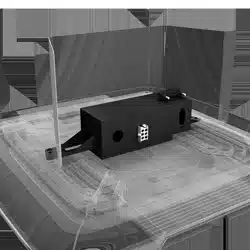
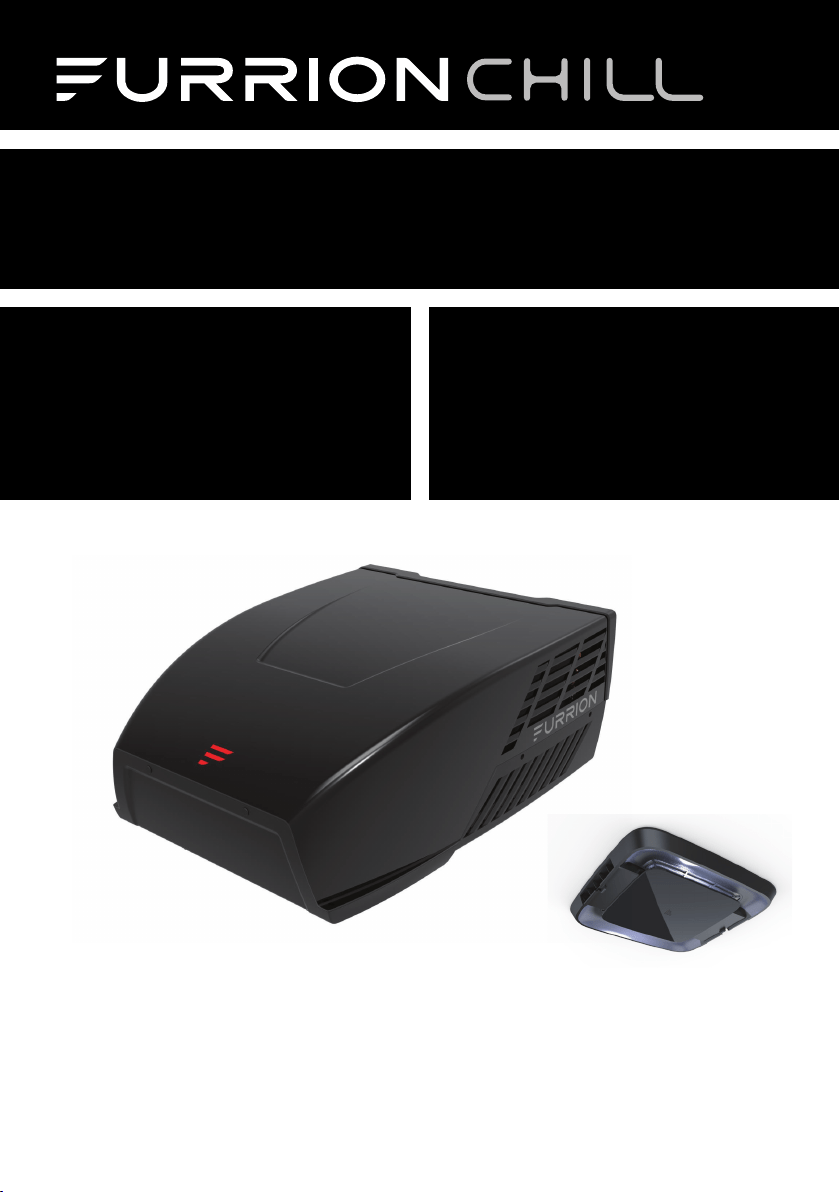
FACT12LA-PS/FACT12LA-BL
FACT12SA-PS/FACT12SA-BL
(Sold Separately)
TM
Rooftop Air Conditioner
Instruction Manual
Model:
FACR13SA-PS/FACR13SA-BL
FACR14SA-PS/FACR14SA-BL
FACR15SA-PS/FACR15SA-BL
1
Contents
Thank you for purchasing this Furrion® Chill
TM
Rooftop Air Conditioner. Before
operating your new product, please read these instructions carefully. This will ensure
safe use and reduce the risk of injury. This instruction manual contains information for
installation, operation, maintenance of the product and safe use.
Please keep this instruction manual in a safe place for future reference. Be sure to pass
on this manual to any new owners of this product.
The manufacturer does not accept responsibility for any damages due to not
observing these instructions.
Contents ........................................................................................................................1
Important Safety Instructions ....................................................................................2
Handling the Device .............................................................................................................................2
Handling Electrical Cables ................................................................................................................ 3
Before Installing ...........................................................................................................4
What’s in the Box .................................................................................................................................... 4
Choosing Proper Location for the Air Conditioner .................................................................4
Roof Preparation ....................................................................................................................................6
Air Distribution Duct Sizing and Design .......................................................................................7
Air Distribution System Installation ................................................................................................8
Laying the Connecting Cables ........................................................................................................9
Installation ....................................................................................................................10
Installing the Rooftop Unit..................................................................................................................10
Installing the Wall Thermostat (model: FACW12SA-BL/FACW12PA-BL/FACW12ZA-
BL, sold separately) .............................................................................................................................. 10
Installing the Air Distribution Box (for FACT12LA-PS/FACT12LA-BL/FACT12SA-
PS/FACT12SA-BL models only, same for both ducted and non-ducted models,
sold separately) ...................................................................................................................................... 11
Cleaning and Maintenance ........................................................................................16
Troubleshooting ...........................................................................................................17
Specifications...............................................................................................................18
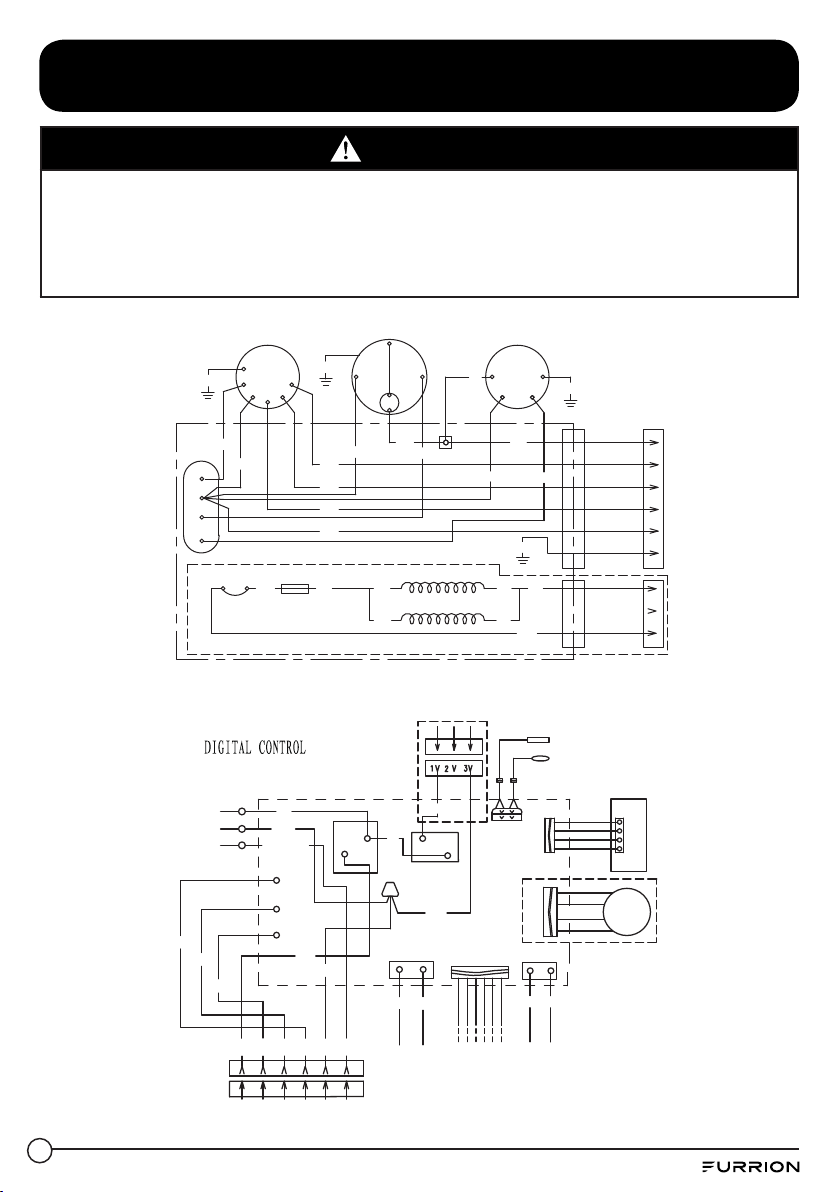
Wiring Diagram .............................................................................................................19
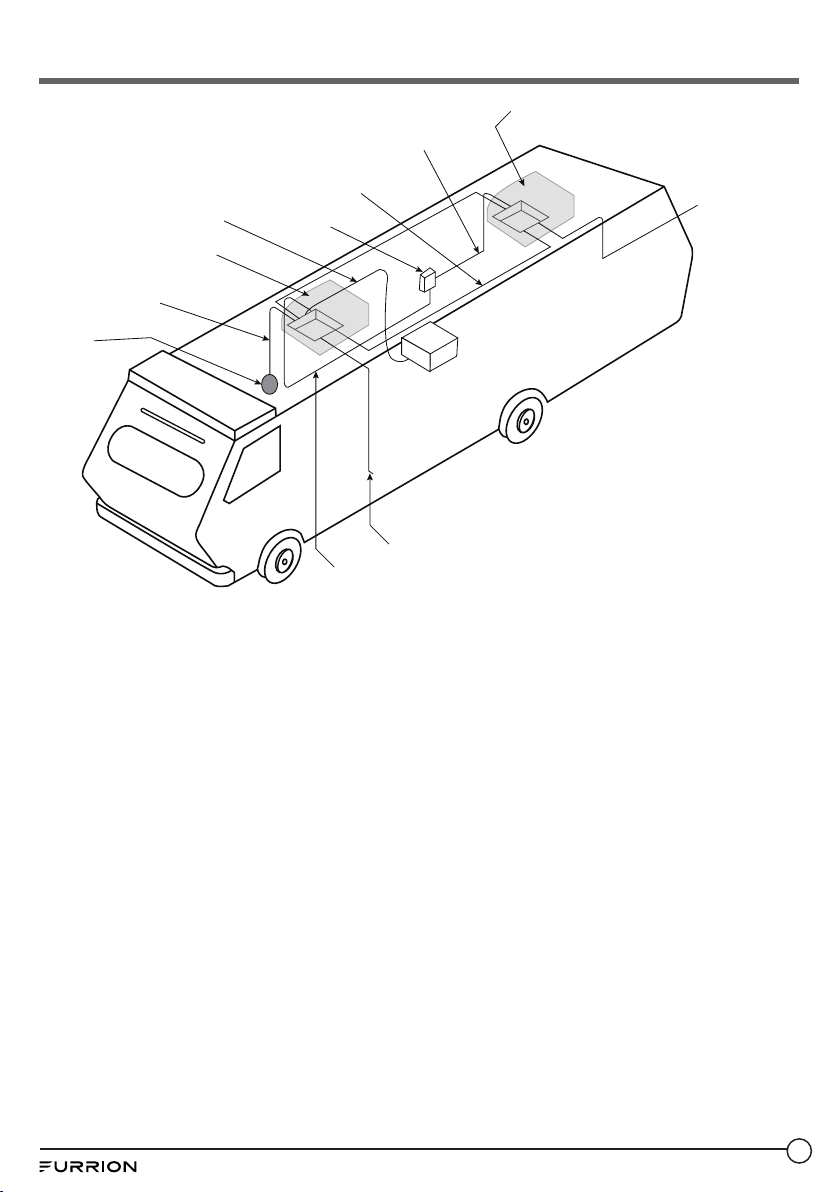
Multi Zone Wiring Diagram ................................................................................................................ 20
2
Important Safety Instructions
This manual has safety information
and instructions to help users eliminate
or reduce the risk of accidents and
injuries. Please read this instruction
manual carefully before installation
and start-up, and store it in a safe place
for future reference. If you pass on the
device to another person, hand over this
instruction manual along with it.
● The manufacturer accepts no liability
for damage in the following cases:
− Faulty assembly or connection
− Damage to the product resulting from
mechanical influences and excess
voltage
− Alterations to the product without
express permission from the
manufacturer
− Use for purposes other than those
described in the operating manual
● The following basic safety information
should be heeded when using
electrical devices to protect against:
− Electric shock
− Fire hazards
− Injury
● All Furrion product referenced in
this manual is to be installed in
accordance with local and national
codes, including the latest editions of
the following standards:
USA:
− NFPA 1192
− NFPA 70
Canada:
− C22.1
− CSA Z240
Handling the Device
WARNING
● Installation and repair of the rooftop
air conditioner must only be carried
out by qualified personnel who are
familiar with the risks involved and
the relevant regulations. Inadequate
repairs may cause serious hazards.
● Electrical devices are not toys.
Keep electrical devices out of reach
of children or elderly persons. Do
not allow them to use electrical
devices without supervision.
● Prevent inexperienced people
from using the device without
supervision.
● Do not undo the upper cover
of the rooftop air conditioner in
the event of a fire. Use approved
extinguishing agents instead. Do
not use water to extinguish fires.
3
CAUTION
● The rooftop air conditioner must be
installed securely so that it cannot
fall down.
● Only operate the rooftop air
conditioner if you are certain that
the housing and the cables are not
damaged.
● Do not use the rooftop air
conditioner near flammable fluids or
in closed rooms.
● Make sure no combustible objects
are stored or installed near the air
outlet. A distance of at least 20”
must be kept.
● Do not reach into air outlets or
insert any foreign objects into the
device.
● Only use the device as intended.
● Do not make any alterations or
conversions to the device.
● If faults occur in the refrigerant
circuit, the system must be checked
by a certified service technician and
repaired properly. The refrigerant
must never be released into the air.
Handling Electrical
Cables
WARNING
The electrical power supply must only
be connected by a qualified electrician.
CAUTION
● Refer to NEC (National Electric
Code) for proper sizing of wire
gauge (awg) based on cable length
and overcurrent protection rating
that is suppling power to the air
conditioner.
● See rooftop unit nameplate for
proper overcurrent protection
sizing.
● Attach and lay the cables so that
they cannot be tripped over or
damaged.
● Only a qualified electrician should
connect the rooftop air conditioner to
electrical power.
● Do not lay loose or bent cables next
to electrically conductive materials.
● Do not pull on the cables.
● Use cable ducts to lay cables through
walls with sharp edges.
● Refer to rooftop unit nameplate and
NEC for proper power supply rating.
4
Before Installing
Read this installation manual completely
before installing the rooftop air
conditioner.
The following tips and instructions must
be observed while installing the rooftop
air conditioner.
What’s in the Box
Open the box and remove the
components from carton. Make sure
you have all the following items included
in the packaging, if any item is missing,
contact your dealer.
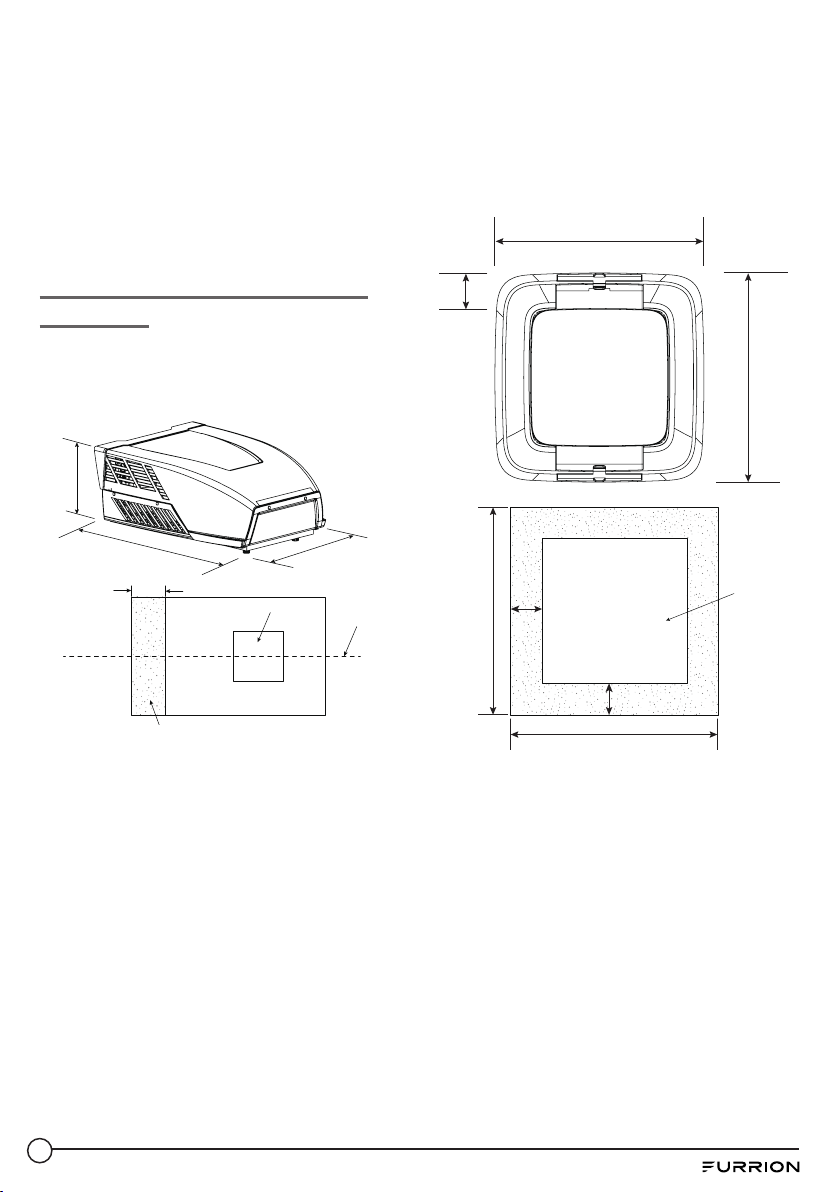
Rooftop Air Conditioner:
Rooftop Unit
Lower Duct
Divider
Upper Duct
Divider
Mounting Frame
Filter
Decoration Plate
ADB Shroud
Control Box
Bolt
PE Foam
● Rooftop unit x 1
● Warranty Leaflet x 1
Air Distributor Box (sold separately):
Rooftop Unit
Lower Duct
Divider
Upper Duct
Divider
Mounting Frame
Filter
Decoration Plate
ADB Shroud
Control Box
Bolt
PE Foam
● Upper Duct Divider x 1
● Lower Duct Divider x 1
● Bolt x 4
● Mounting Frame x 1
● Control Box (sold separately) x 1
● Air Distribution Box (ADB) Shroud x 1
● Filter x 2
● Decoration Plate x 1
● Self-tapping Screws x 6
● PE foam x 1
● Instruction Manual x 1
Choosing Proper Location
for the Air Conditioner
IMPORTANT: The roof must be
designed to support the weight of the
rooftop unit and the weight of 2 installers
standing on the roof.
There are two ways of installing the
rooftop air conditioner:
● Using the existing roof vent opening in
the vehicle roof.
● Making a new opening. In this case
the opening should be reinforced by
an appropriate frame as required.
Existing Roof Vent Opening
The air conditioner is designed to fit over
an existing 14” roof vent opening.
New Opening
When no roof vent is available or another
location is desired, the following is
recommended:
● For one unit installation - the air
conditioner should be mounted
slightly forward of center (front to
back) and centered from side to side.
● For two unit installations, install one
air conditioner one third from the front
of the RV and the other air conditioner
two thirds from the front of the RV,
aligned in the center.
5
It is preferred that the air conditioner be
installed on a relatively flat and horizontal
roof section measured when the RV is
parked on a level surface.
NOTE: A 15° slant to either side or front
to back is acceptable for all units. If the
roof exceeds 15° please use an exterior
leveling shim to make air conditioner
level.
After the Location Has Been
Selected:
● Check for obstructions in the area
where the air conditioner will be
installed.
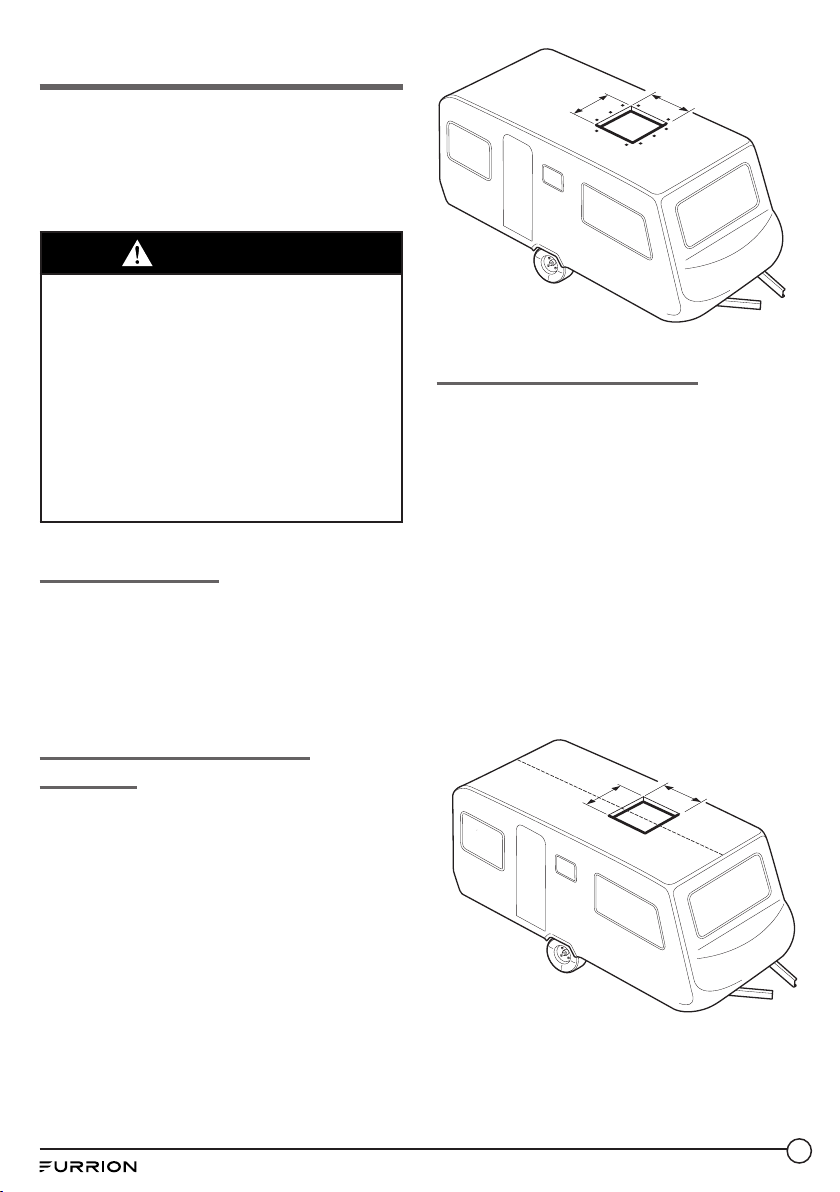
Center Line
of Rooftop
Front
Roof Opening
18”
34⁄”
(884mm)
13⁄”
(345mm)
27⁄”
(700mm)
Keep this air flow area free of obstructions
● Check the inside of the RV for
return air kit obstructions. (i.e. door
openings, room dividers, curtains,
ceiling fixtures, etc.) Allow 6”
(152mm) space from the opening to
account for any potential return air kit
obstructions.
Roof
Opening
19⁄”
(500mm)
19⁄”
(500mm)
2⁄”
(70mm)
19⁄”
(500mm)
19⁄”
(500mm)
6"
6"
6
Roof Preparation
Opening Requirements - Before
preparing the ceiling opening, decide
on the type of system options. Read
all of the following instructions before
beginning the installation.
WARNING
Fire/Electric Shock Hazard
● Make sure there are no obstacles
inside the RV roof, floor and walls,
such as wires and pipes.
● Shut off the gas supply and
disconnect the 115VAC power from
the RV before drilling or cutting
into the RV. Failure to obey these
warnings could result in death or
serious injury.
Roof Thickness
The installation of air conditioner suits
for roof thickness from 3” (75mm) to 6”
(152mm). For other thickness, please
contact Furrion or Furrion authorized
service agent.
Installing in an Existing
Opening
1. Unscrew and remove the roof vent.
2. Remove all caulking compound
around the opening.
3. If the opening exceeds 14¼” x 14¼”
(+½”), it will be necessary to resize the
opening to 14¼” x 14¼” (+½”). If the
opening is less than 14¼” x 14¼” (+½”),
it must be enlarged.
362 m m
14¼ ”
362 m m
14¼ ”
362 m m
14¼ ”
362 m m
14¼ ”
Making a New Opening
If a roof vent opening will not be used,
a 14¼” x 14¼” (+½”) (362mm x 362mm)
opening must be cut through the roof
and ceiling of the RV. This opening must
be located between the roof reinforcing
members.
The 14¼” x 14¼” (+½”) opening is
part of the return air system of the air
conditioner and must be finished in
accordance with NFPA Standard 501C
Section 2.7.2.
1. Mark a 14¼” x 14¼” (+½”) square on
the roof and carefully cut an opening.
362 m m
14¼ ”
362 m m
14¼ ”
362 m m
14¼ ”
362 m m
14¼ ”
7
2. Using the roof opening as a guide, cut
a matching hole in the ceiling.
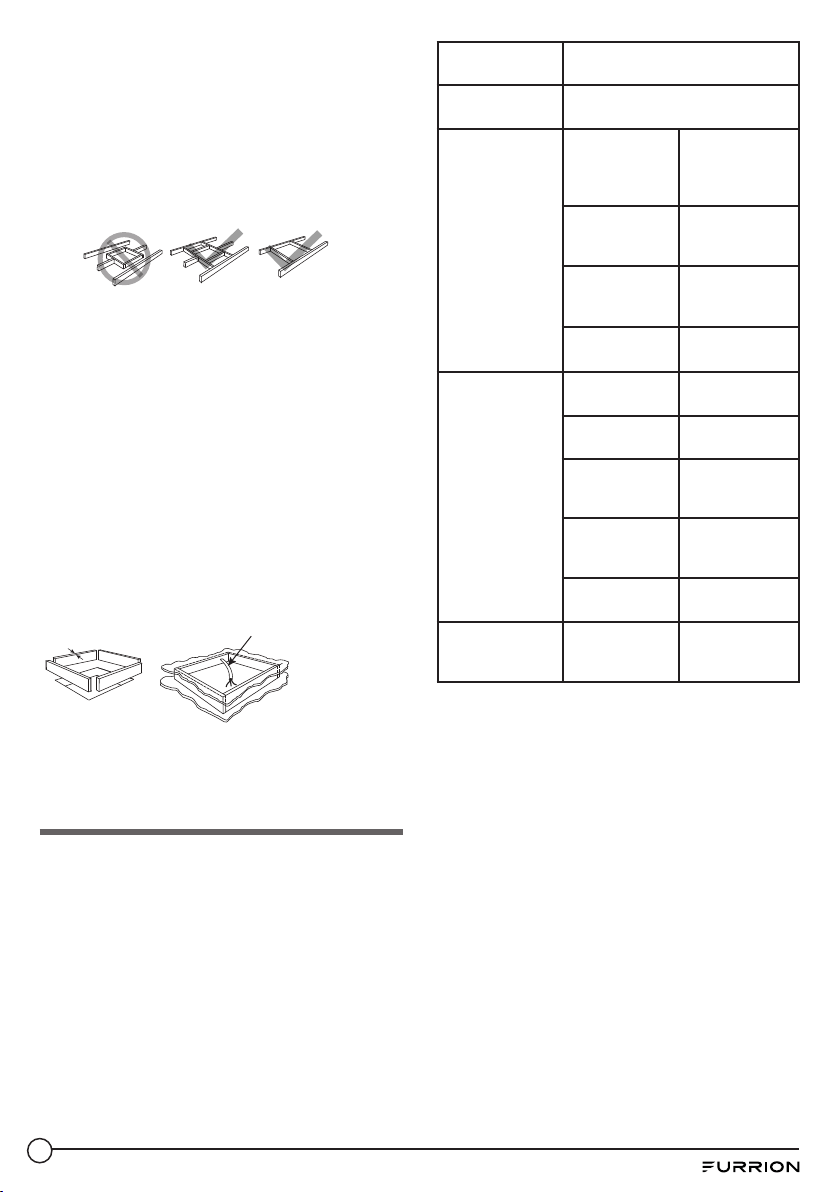
NOTE: Maintain structural integrity.
Otherwise damage to product and/or
RV could occur. Always observe the
following guidelines while structuring
the opening.
Do not cut roof
structure or
rafters
Good: rafters
supported by
cross beams
Good: location
between roof
rafters
3⁄4" Min.
(19.05 mm)
Leave access for
power supply wiring and other wirings.
3. The opening created must be framed
to provide adequate support and
prevent air from being drawn from the
roof cavity.
4. Lumber ¾” or more in thickness must
be used. Remember to provide an
entrance hole for power supplies,
wall thermostat and furnace wiring
for connections. Leave 15” (381mm)
minimum at the front of the opening.
Do not cut roof
structure or
rafters
Good: rafters
supported by
cross beams
Good: location
between roof
rafters
3⁄4" Min.
(19.05 mm)
Leave access for
power supply wiring and other wirings.
Air Distribution Duct
Sizing and Design
The installer of this system must design
the air distribution system for their
particular application.
NOTE: Make sure ductwork will NOT
bend or collapse during and after
installation, and that it is correctly
insulated and sealed. Otherwise, damage
to roof structure and ceiling could occur.
The following requirements must be met
for properly operate the unit:
Roof Cavity
Depth
3”-6” (75mm-152mm)
Duct Cross
Sectional Area
21 Sq. In. Min.
Duct Size
Depth
1½” Min. - 2½”
Max. (38mm
Min. - 63.5mm
Max.)
Width
7” Min. - 10” Max.
(178mm Min. -
254mm Max.)
Total Duct
Length
15Ft. Min. - 40Ft.
Max. (4.5m -
13m)
Duct Length
(short run)
⅓ Total Duct
Length
Register
Requirements
per A/C Unit
Number
Required
4 Min. - 8 Max.
Supply Register
Free Air Area
14 Sq. In. (90 sq.
cm)
Return Register
Free Air Area
40 Sq. In. (258
sq. cm)
Distance From
Duct End
5” Min. - 8” Max.
(127mm Min. -
203mm Max.)
Distance From
Elbow
15” (381mm)
Total System
Static Air
Pressure
Blower at High
Speed, Filter &
Grille In Place
0.55 - 1.10 In.
W.C.
● Properly insulate and seal all
discharge air ducts to prevent
condensation from forming on their
surfaces or adjacent surfaces during
operation of the unit. This insulation
must be R-7 minimum.
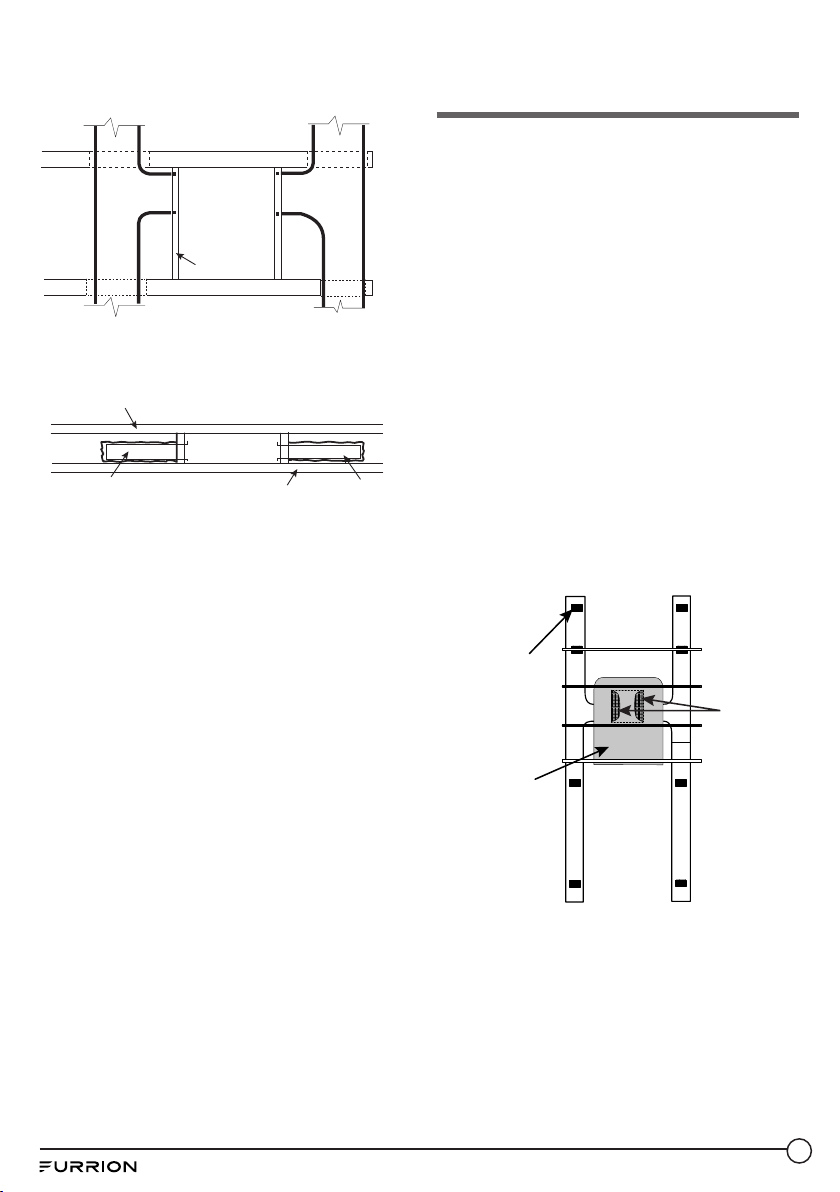
8
Frame
DuctDuct
Frame
Frame
Roof
Opening
Roof Opening
Roof
SIDE VIEW
(TOWARD BACK OF RV)
Duct
Ceiling
Duct
TOP VIEW
(BACK OF RV)
● Return air openings must have
80 square inches (516 square
centimeters) minimum free area
including the filter.
● Return air to the unit must be filtered
to prevent dirt accumulation on the
unit cooling surface.
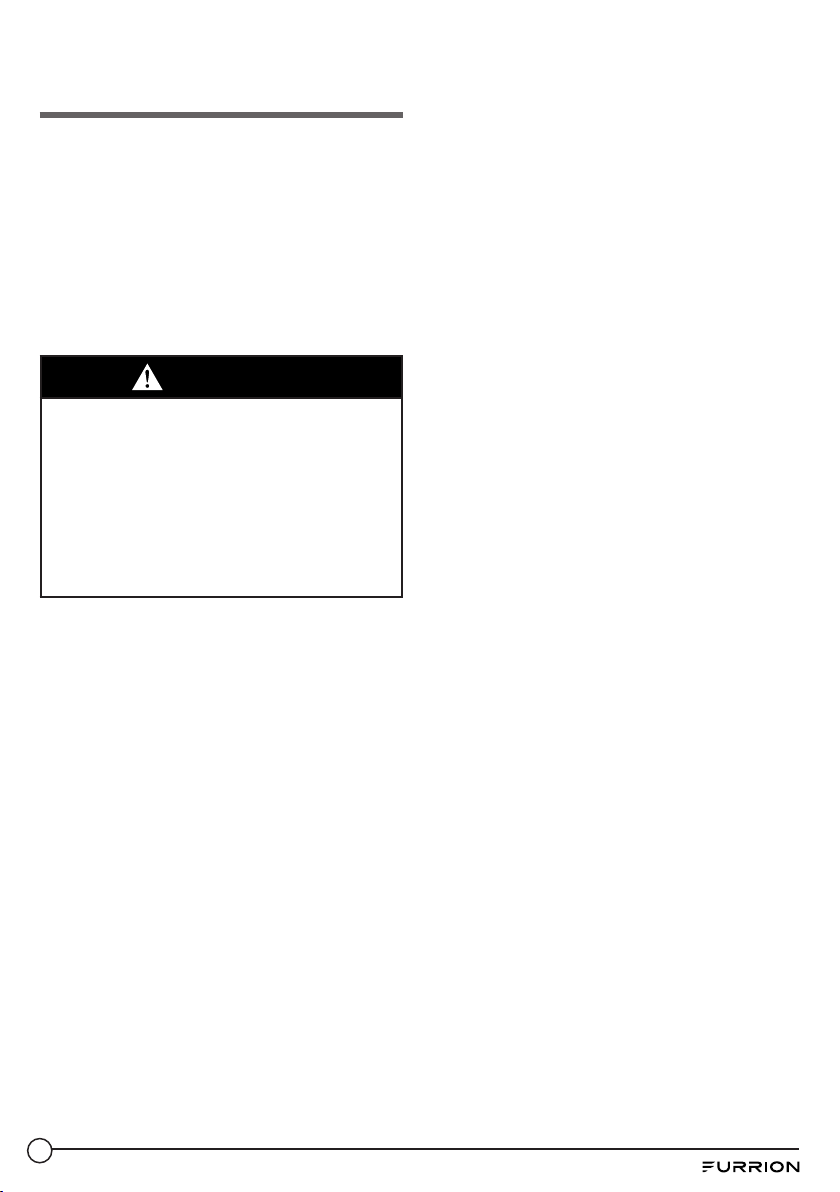
Air Distribution System
Installation
It is the responsibility of the installer to
review each RV floor plan to determine
the following items in conjunction with
“Air Distribution Duct Sizing and Design”
section on Page 8.
NOTE: Alternate configurations and
methods may be used which will allow
the unit to operate properly, however,
these alternate configurations and
methods MUST be approved by Furrion
in writing.
● Duct size
● Duct layout
● Register size
● Register location
● Thermostat location
● Indoor temperature sensor location (if
applicable)
Front
Registers 4
Min - 8 Max.
(Per Unit) 14
Sq. In. Free
Area Per
Register
Air Conditioner
Return Air
9
Laying the Connecting
Cables
The rooftop air conditioner must be
connected to an electric circuit which is
able to supply the required power supply
(see chapter “Specification”).
NOTE: The supply wire must be located
in the front portion of the roof opening.
The power supply must be equipped with
a time delay fuse or circuit breaker. See
rooftop unit nameplate for rating.
DANGER
Electrical Shock Hazard
● Disconnect power before servicing.
Failure to obey this warning could
result in death or serious injury.
● Provide grounding in compliance
with all applicable electrical codes.
Failure to obey this warning could
result in death or serious injury.
1. Refer to the applicable electric code
guidelines for sizing the appropriate
wire gauge, length and type.
2. Route a 115VAC supply wire with
ground wire from the time delay fuse
or circuit breaker box to the roof
opening.
NOTE: Refer to rooftop unit
nameplate and applicable code for
proper installation.
3. Use approved method to protect
the wire where it passes through the
opening.
4. Feed the 115VAC cable through the
opening into the vehicle interior. Make
sure at least 15” (381mm) of supply
wire extends into the roof opening.
This ensures an easy connection at
the control box.
10
Installation
Installing the Rooftop Unit
CAUTION
● The rooftop unit weighs
approximately 100 pounds (45
kg). To prevent back injury, use a
mechanical hoist when lifting or
moving the unit. Failure to obey this
warning could result in injury.
● Do not slide unit. It may damage the
gasket at the bottom of the rooftop
unit and cause leakage.
● Do not grasp the ventilation slots to
lift the rooftop unit up.
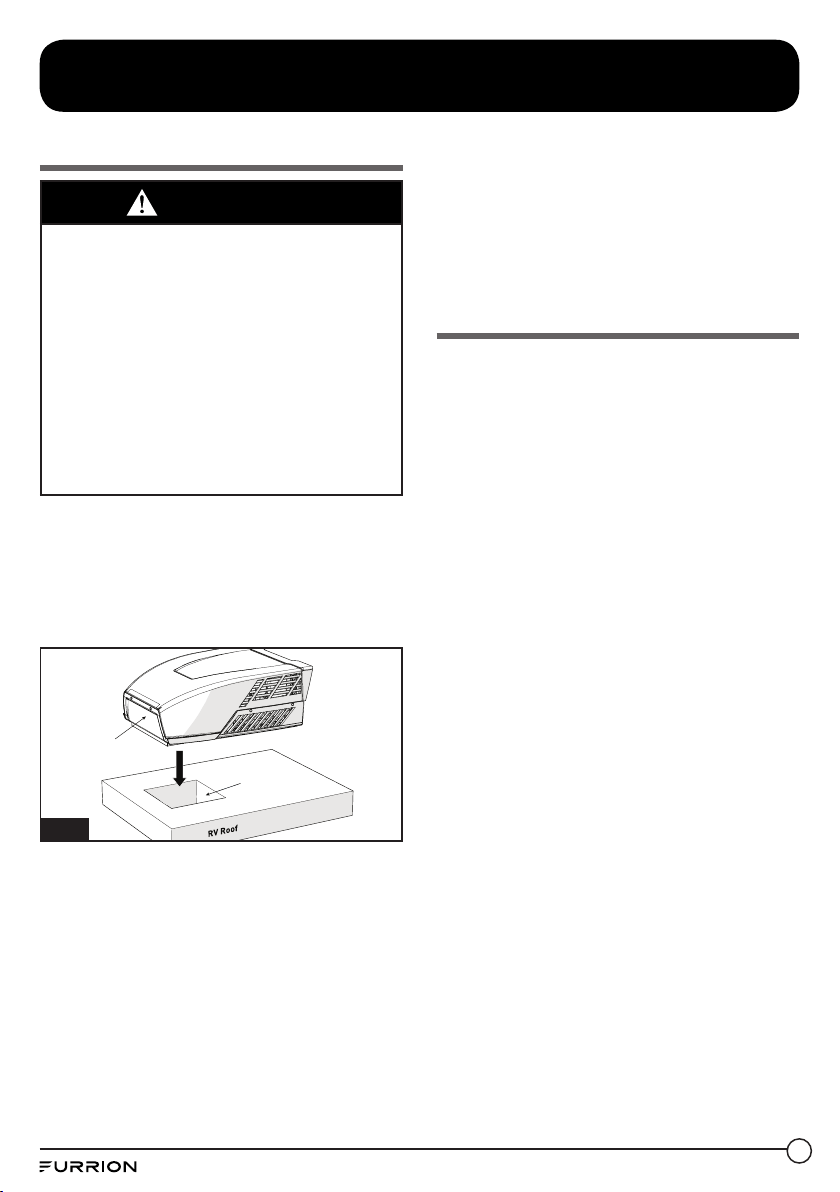
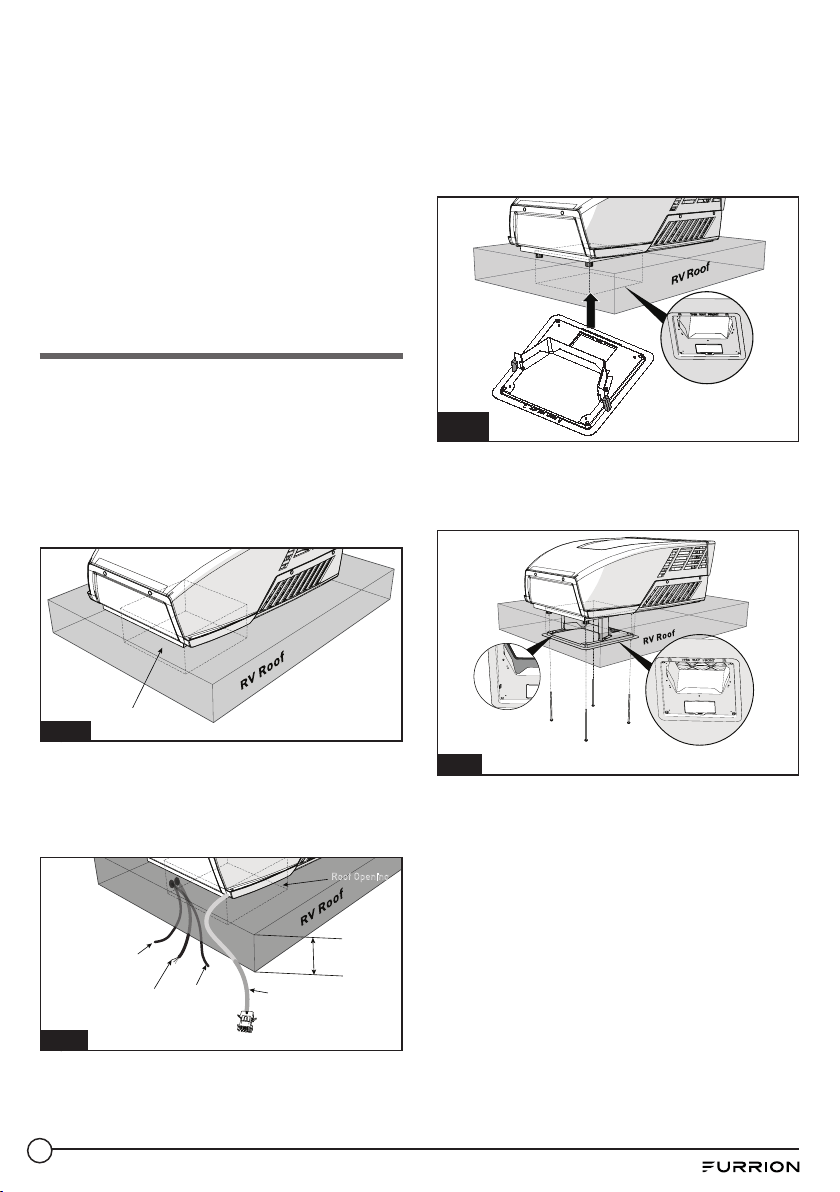
1. Grasp the bottom of two sides of the
unit, lift and position the rooftop unit
into the prepared opening using the
gasket at the bottom of the rooftop
unit as a guide. (Fig. 1)
Roof Opening
This Side is
Facing Forward
Fig. 1
This completes the outside installation of
the rooftop unit. Minor adjustments can
be done from inside of the RV if required.
Installing the Wall
Thermostat (model:
FACW12SA-BL/
FACW12PA-BL/
FACW12ZA-BL,
sold separately)
There are 3 types of wall thermostat for
you to select.
● FACW12SA-BL: Single zone basic wall
thermostat
● FACW12PA-BL: Single zone premium
wall thermostat
● FACW12ZA-BL: Multi zone wall
thermostat
Based on the wall thermostat version you
selected. Please refer to the separate
instruction manual on how to install the
wall thermostat to the RV.
11
Installing the Air
Distribution Box (for
FACT12LA-PS/FACT12LA-
BL/FACT12SA-PS/
FACT12SA-BL models
only, same for both
ducted and non-ducted
models,
sold separately)
The rooftop unit is fixed on the RV roof
using 4 long bolts through the mounting
frame from the interior of the RV ceiling.
1. Check the gasket alignment of the
rooftop unit inside the RV over the
roof opening and adjust as necessary
by lifting and moving slightly. (Fig. 2)
Roof Opening
Fig. 2
2. Reach up into the return air opening
and pull the rooftop unit electric cord,
115VAC power cord,±12VDC and
thermostat wires. (Fig. 3)
Roof Opening
Rooftop Unit Cable
Ceiling Thickness
115VAC
Power Cord
±12VDC Wires
Thermostat Wire
Fig. 3
3. Install the assembled mounting frame
and the lower duct divider into the
rooftop opening. Make sure the “THIS
WAY FRONT” mark is facing front
(the direction of the vehicle) while
installing. (Fig. 4)
Fig. 4
4. Fix the assembled mounting frame
and lower duct divider into the rooftop
unit using 4 bolts provided. (Fig. 5)
Fig. 5
NOTE: If bolts are left loose there may
not be an adequate roof seal or if over
tightened, damage may occur to the
rooftop base or mounting frame. Evenly
tighten the four bolts to a torque of 40 to
50 inch pounds. This will compress the
roof gasket to approximately ⁄”.
12
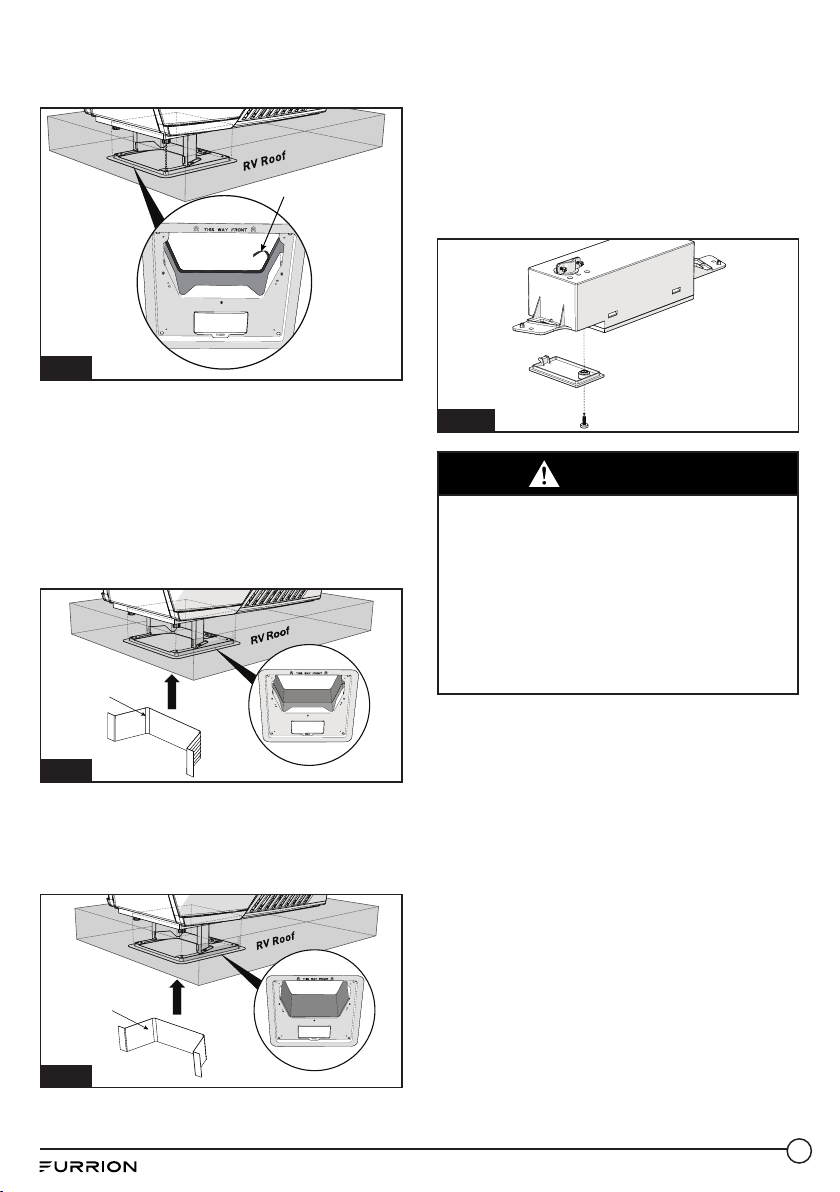
5. Pull to remove the film off the double
sided sticky tape on the inner side of
the lower duct divider. (Fig. 6)
Film
Fig. 6
6. Stick the upper duct divider into the
assembled mounting frame.
NOTE: Make sure the upper duct
divider is compressing the top foam
on the base of the unit, and compress
to doubled sided tape on the lower
duct divider to ensure a positive
retention. (Fig. 7)
Upper Duct
Divider
Fig. 7
7. Peel to remove the release paper from
the PE foam, overlap the sticky side
over all gaps and compress to seal
and insulate the entire section. (Fig. 8)
PE Foam
Fig. 8
8. Use self adhesive foil tape to seal
all remaining gaps around the duct
divider, PE foam and roof opening,
completely sealing duct edges as
required.
9. Remove the cable compartment
cover using a Phillips screw driver.
(Fig. 9)
Fig. 9
DANGER
Electrical Shock Hazard
● Disconnect power before servicing.
Failure to obey this warning could
result in death or serious injury.
● Provide grounding in compliance
with all applicable electrical codes.
Failure to obey this warning could
result in death or serious injury.
13
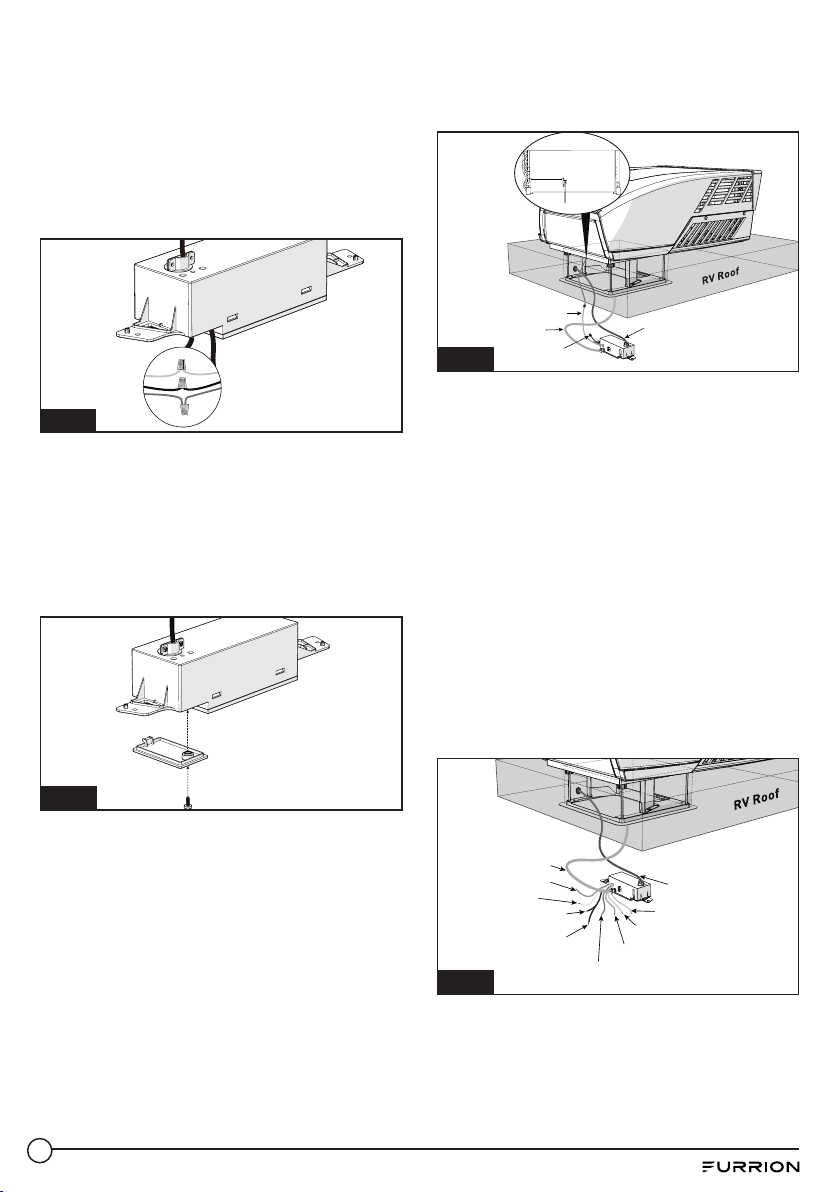
10. Loosen the strain relief on top of the
control box and let the 115VAC power
cord pass through. (Fig. 10)
NOTE: Always follow the color code
while connecting the cables.
Black - Hot
White - Neutral
Green/yellow - Ground
Fig. 10
11. Tighten the cable clip until the cable is
properly restrained.
NOTE: Do not over tighten.
12. Fit all cables into the cable
compartment and tuck any excess
wires up out of the way. Tighten the
cover with screw. (Fig. 11)
Fig. 11
13. Lock the freeze sensor onto the pipe
of the evaporator. Connect the freeze
sensor cable of the control box to the
freeze sensor of the rooftop. (Fig. 12)
Rooftop Unit
Cable
115VAC Power
Cord
Room Sensor Cable
Freeze Sensor Cable
170mm
Freeze
Sensor
Fig. 12
14. Connect the other wires of the rooftop
unit cable to the control box. (Fig. 13)
− Furnace + / Furnace - Cable:
Connect to Furnace.
− Analog Cable (if applicable):
Connect to external analog input.
− LED Cable: Connect to LED stripe.
− Wall Thermostat Cable: Connect to
wall thermostat and another zone’s
control box if applicable. (See multi
zone wiring diagram in page 21).
− Rooftop Cable: Connect to rooftop
unit.
− 115VAC Power Cord: Connect to
115VAC power source.
115VAC Power Cord
Wall Thermostat Cable
Control Cables from
Another Zone’s
Contol Box
Analog Cable
Furnace(±) Cable
12V DC Power Cable
Room Sensor Cable
Freeze Sensor Cable
LED Cable
Rooftop Unit Cable
Fig. 13
14
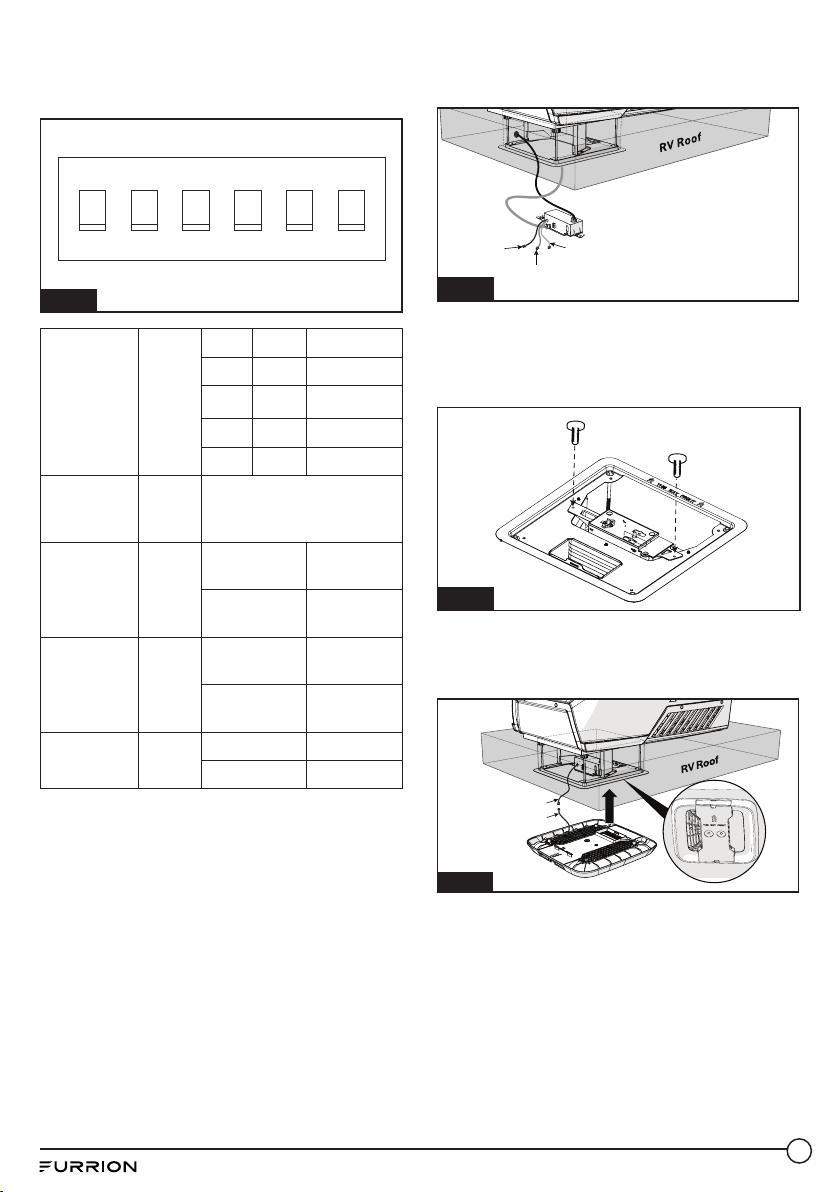
15. Set up the control box dip switches as
indicated in the illustration and table
below (Fig. 14):
ON
1
2
3
4
5
6
Fig. 14
Zone
Selection*
DIP 1
:DIP2
DIP 1 DIP 2 ZONE
OFF OFF ZONE1
OFF ON ZONE2
ON OFF ZONE3
ON ON ZONE4
Heat Pump
(selected
models)
DIP 3 Reserved
Furnace DIP 4
OFF
Furnace
Off
ON
Furnace
On
Electric
Heat
(selected
models)
DIP 5
OFF
Heat Stripe
Off
ON
Heat Stripe
On
Analog /
Digital
DIP 6
OFF Digital
ON Analog
*NOTE: DIP1 and DIP2 are for Multi Zone
only.
16. Connect the wall thermostat cable
and 12VDC power cable to the control
box.(Fig. 15)
Wall Ther-
mostat Cable
12V DC Power Cable
LED Cable
Fig. 15
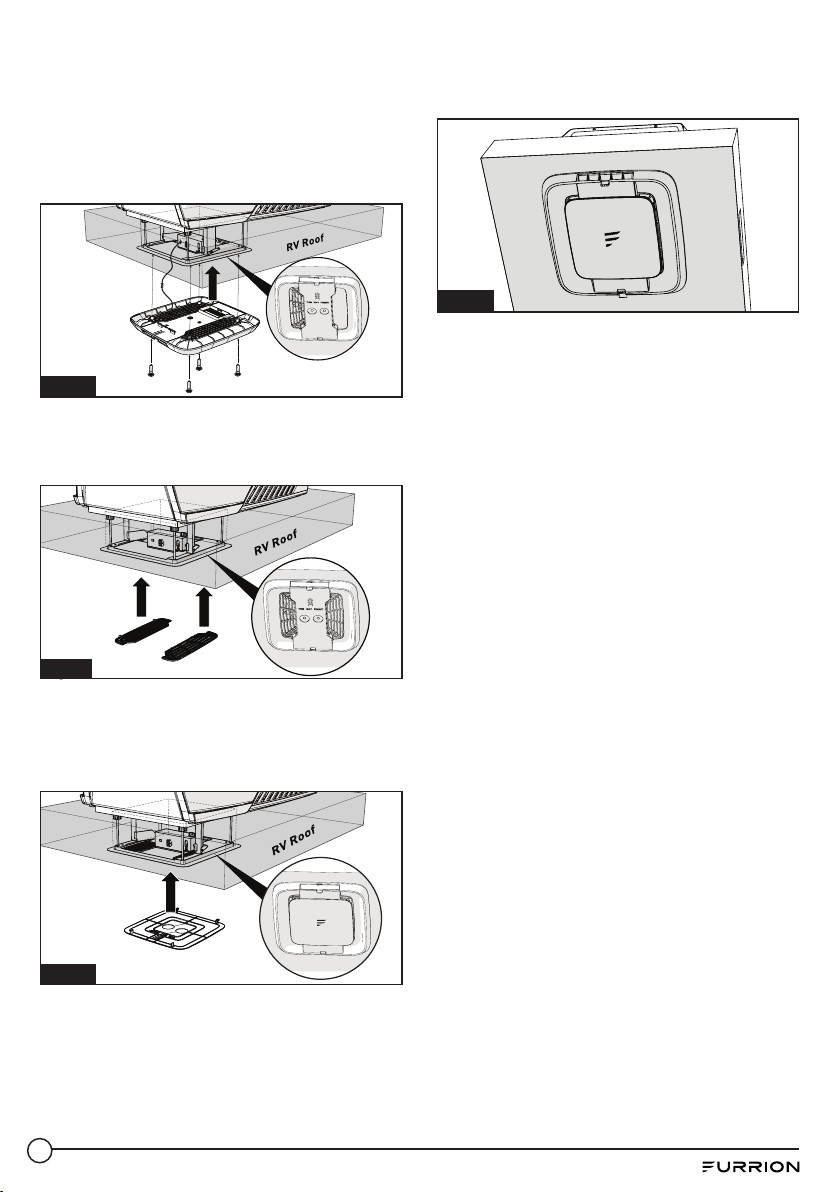
17. Install the control box into the
mounting frame and fix with 2 self-
tapping screws (one piece each side).
(Fig. 16)
Fig. 16
18. Connect the LED cable (if applicable)
from the ADB shroud to the control
box. (Fig. 17)
LED Cable
LED Cable
Fig. 17
15
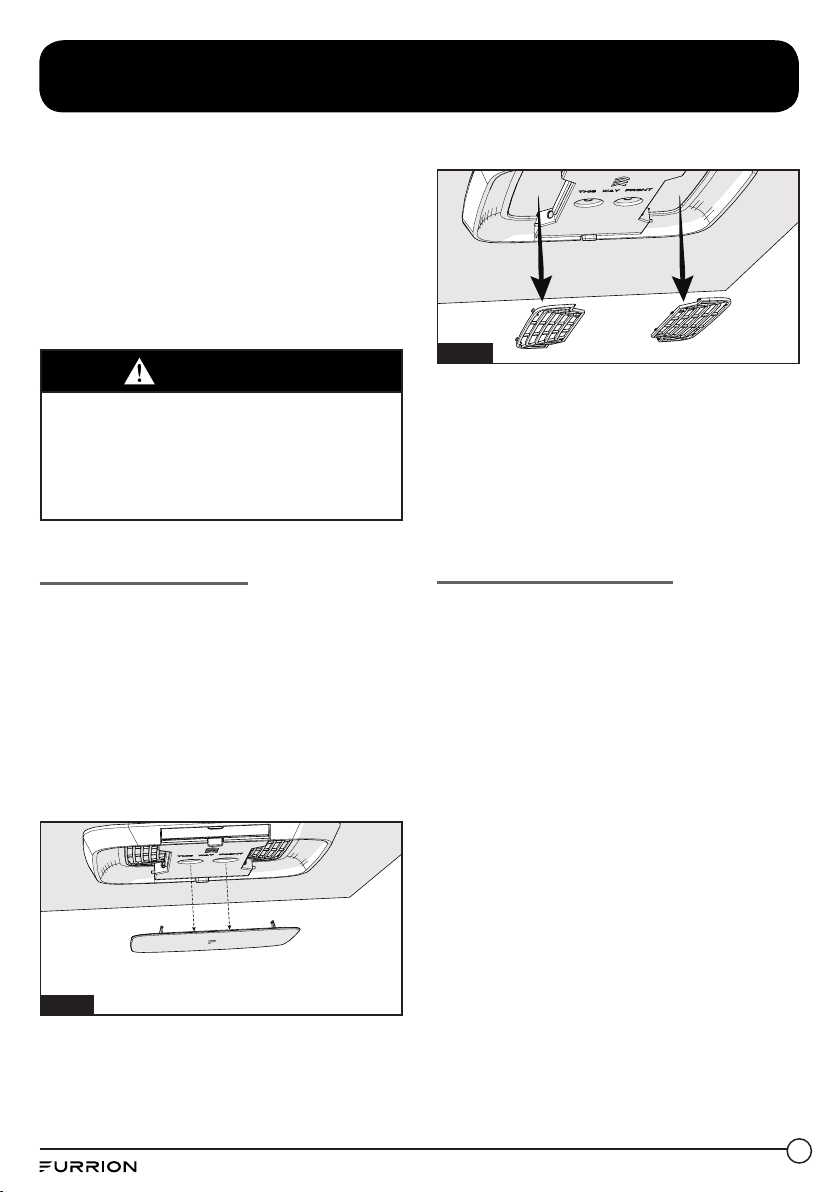
19. Install the Air Distribution Box (ADB)
shroud over the mounting frame and
fix with 4 self-tapping screws.
NOTE: Make sure the “THIS WAY
FRONT” mark is facing front (the
direction of the vehicle) while installing.
(Fig. 18)
Fig. 18
20. Align the filter tabs with mating
notches and push to snap the filters
into the ADB shroud. (Fig. 19)
Fig. 19
21. Align the decoration plate tabs
with the mating notches on the
ADB shroud and push to snap the
decoration plate into place. (Fig. 20)
Fig. 20
22. Your new rooftop air conditioner has
now been fully installed in the RV roof.
(Fig. 21)
Fig. 21
Based on the wall thermostat version you
selected. Please refer to the separate
instruction manual on how to operate
your RV air conditioning system.
16
Cleaning and Maintenance
A blocked filter will impair the cooling
and heating performance of the unit
significantly.
The filter must be cleaned periodically to
ensure that it does not become clogged
with dust and other particles. The state
of the filter can be ascertained from its
appearance. If it appears dirty or clogged
then it should be cleaned.
WARNING
Airborne particles can pose a health
risk, particularly to young children
and the elderly. Ensure that filters are
cleaned in a safe and well ventilated
area.
To Clean the Filter
The filter should be cleaned every four
weeks or more when in use. Prolonged
use, higher concentrations of airborne
particles and various other factors may
result in the filters needing to be cleaned
more often.
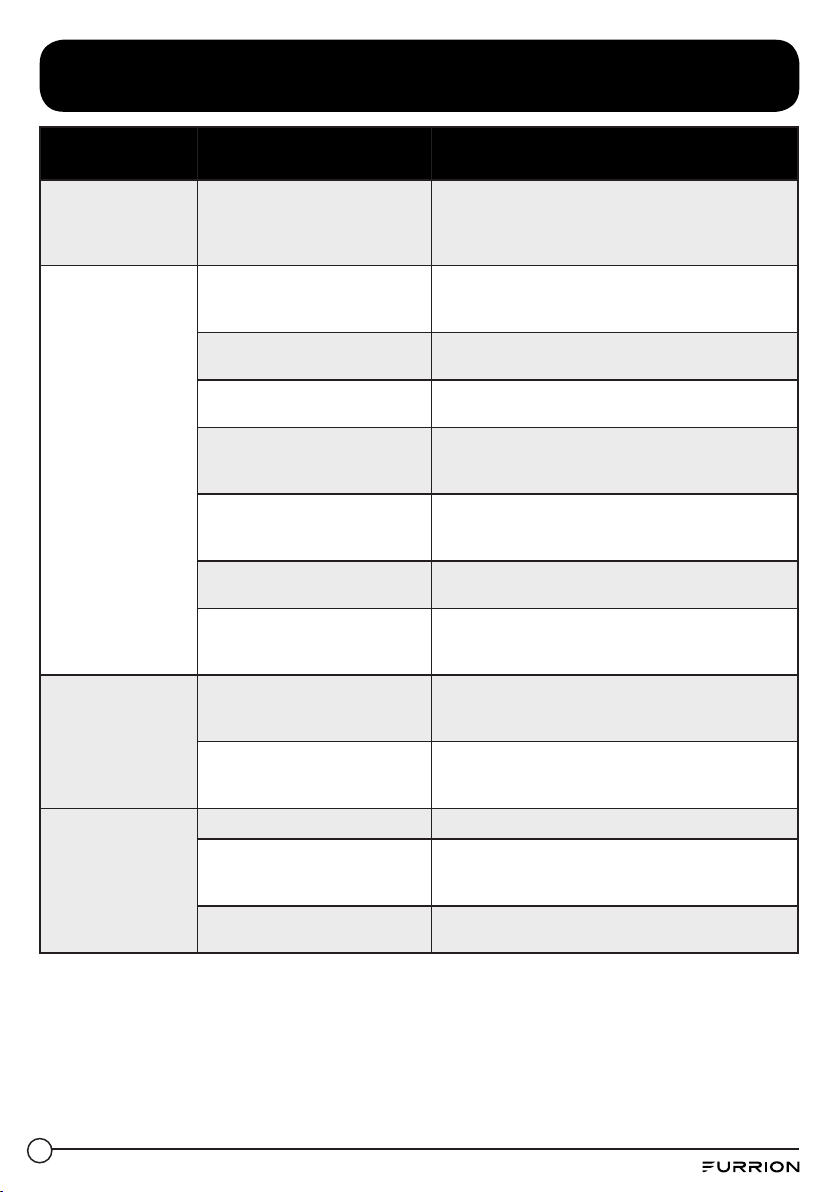
1. Remove the decoration plate from the
air conditioning system by pushing
the side tabs to release. (Fig. 22)
Fig. 22
2. Remove the filters by pushing the
tabs to release. (Fig. 23)
Fig. 23
3. The filter can be washed with warm
soapy water. Care must be taken to
avoid ripping the fabric.
4. Replace the filters and decoration
plate, by reversing the above process.
NOTE: The filter must be completely
dry before re-installation.
To Replace the Filter
Filter changes should be carried out
depending on the amount of use, it
is recommended to change at least
every 12 months. Never operate the air
conditioning system without a filter, since
this can decrease performance and
indoor air quality.
Replacement return air filters can be
ordered directly from Furrion.
17
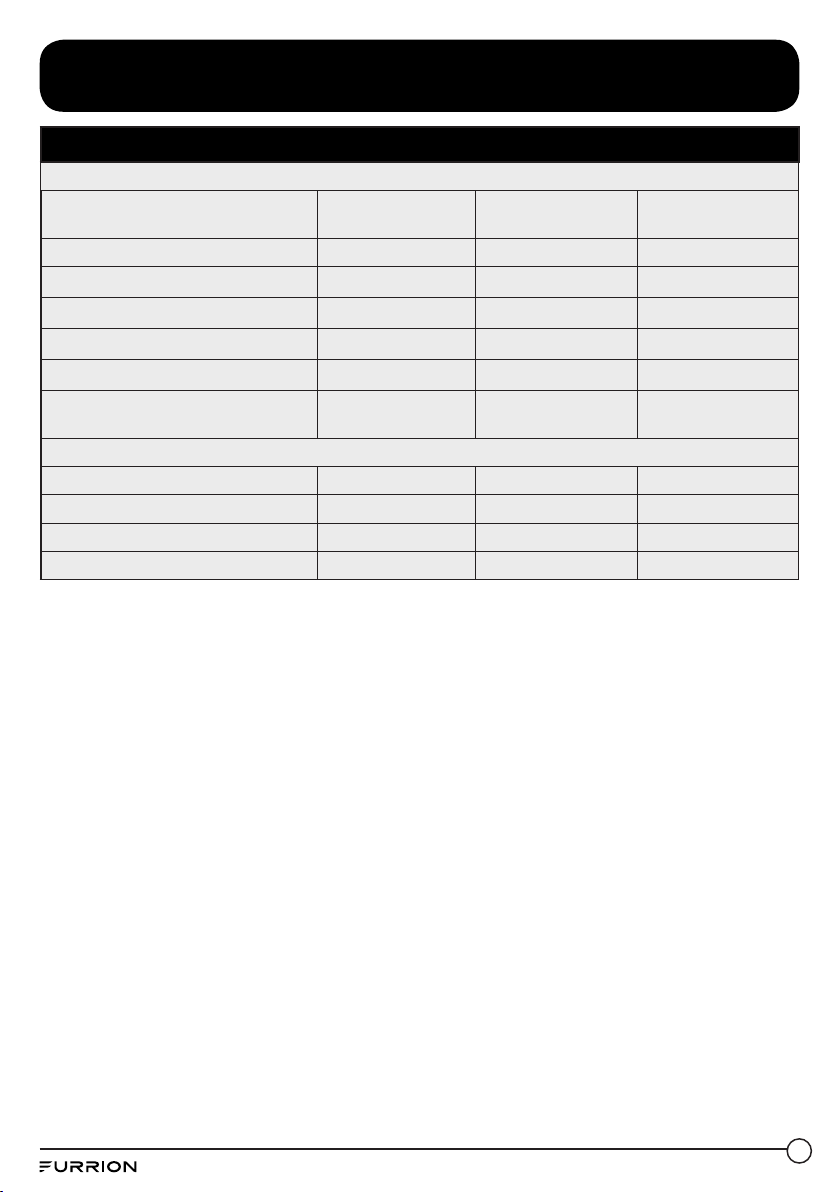
Troubleshooting
Problem Cause Remedy
Rooftop air
conditioner
Abnormal
shutdown
Freeze sensor has tripped. Outer temperature is too low or all air nozzles are closed.
Not cool enough
Refrigerant leakage
Contact an authorized service agent or Furrion
(see the detail contact info at the back page of
this manual).
The rooftop air conditioner is
not set to cooling.
Set the rooftop air conditioner to cooling.
The set temperature is too
high.
Select a lower temperature.
The evaporator fan is
damaged.
Contact an authorized service agent or Furrion
(see the detail contact info at the back page of
this manual).
The condenser fan is
damaged.
Contact an authorized service agent or Furrion
(see the detail contact info at the back page of
this manual).
The air intake grilles are
blocked or obstructed.
Remove any leaves and other dirt from the
ventilation grilles of the rooftop air conditioner.
The blower is defective.
Contact an authorized service agent or Furrion
(see the detail contact info at the back page of
this manual).
Water enters the
vehicle
The condensation water
drainage openings are
clogged up.
Clean the drainage openings for condensation
water.
The seals are damaged.
Contact an authorized service agent or Furrion
(see the detail contact info at the back page of
this manual).
Rooftop air
conditioner does
not switch on
No supply voltage connected. Check the power supply.
The voltage is too low.
Contact an authorized service agent or Furrion
(see the detail contact info at the back page of
this manual).
Fuse blown or circuit protector
tripped.
Check the electrical fuse of the power supply.
18
Specifications
Specification
PERFORMANCE
Model Number
FACR13SA-PS
FACR13SA-BL
FACR14SA-PS
FACR14SA-BL
FACR15SA-PS
FACR15SA-BL
Cooling Capacity (Btu/h) 13,500 14,500 15,500
Dehumidification (pint/h) 2.5 2.7 3.2
Applicable vehicle length (feet) 23 26 31
Refrigerant R410A R410A R410A
Charge (Oz) 15.9 19.8 23.1
Roof top Unit Dimensions (L x W x
H) (inch)
34⅞ x 27⅝ x 13⅝ 34⅞ x 27⅝ x 13⅝ 34⅞ x 27⅝ x 13⅝
ELECTRICAL
Volts/Frequency 115V~/60Hz/1Ph 115V~/60Hz/1Ph 115V~/60Hz/1Ph
Power Watts (Cooling) 1450 1620 1720
Amps (Cooling) 13.1 14.6 15.4
Power Cord Gauge Min. (mm
2
) AWG12 AWG12 AWG12
19
Wiring Diagram
6
5
4
3
2
1
BLU
RED
BLK
YEL
RED
WHT
WHT
BRN
GRN/YEL
INDOOR
MOTOR
COMPRESSOR
R S
C
O.L
WHT
6PIN CONN
IF
COM
CP
PASSED
DIELECTRIC
(CONN TO AIR DISTRIBUTION BOX)
USE COPPER CONDUCTORS ONLY.
OUTDOOR
MOTOR
GRN/YEL
WHT
BLK
GRN/YEL
OF
RED
GRN/YEL
BLU
CAPACITOR
2
3
1
HEAT ELEMENT
LIMMITED SWITCH
FUSE
BLK
RED
REDRED
3PIN CONN
HEAT ELEMENT
BLK
BLK
RED
RED
(OPTIONAL)
GRN/YEL
BLU
BLKYEL
RED
HIGH
MED
LOW
RY2
ON
COM
TO UPPER
UNIT
WHT
BK
WALL THERMOSTAT
BR
12V
G
TO FURNACE
THERM
+12V
GND
GRN/YEL
WHT
RGB LED
FREEZE SENSOR
ROOM SENSOR
B
A
12V
GND
654321
115VAC
60Hz 1
BLU
BLK
YEL
RED
CN3
CN2
CN6
CN5
CN1
REDBLK
BRNBRN
ANALOG
CONTROL
CN8
PASSED DIELECTIC
BK
RY7
TO UPPER
UNIT
WHT
WHT
GAY
Elect.Heater
Optional*
DANGER
Electrical Shock Hazard
● Disconnect power before servicing. Failure to obey this warning could result in
death or serious injury.
● Provide grounding in compliance with all applicable electrical codes. Failure to
obey this warning could result in death or serious injury.
20
Multi Zone Wiring Diagram
115VAC Input
Front Unit
12VDC Input 2
Wires
12VDC Input 2
Wires
Air Conditioner
Air Conditioner
Furrion
Thermostat
115VAC Input
Rear Unit
Four Conductor
Communication
Cable
Four Conductor
Communication
Cable
Breaker Box
Furnace 2 Wires

Furrion Innovation Center & Institute of Technology
● 52567 Independence Ct., Elkhart, IN 46514, USA ● Toll free:1-800-789-3341
● Email: [email protected]
©2007-2020 Furrion Ltd. Furrion
®
and the Furrion logo are trademarks licensed for
use by Furrion Ltd. and registered in the U.S. and other countries.
CN ZL201830175933.3 andother patents pending (FACR13SA-PS, FACR13SA-BL,
FACR14SA-PS, FACR14SA-BL, FACR15SA-PS, FACR15SA-BL, FACT12LA-PS,
FACT12SA-PS)
www.furrion.com
IM-FHA00024_V2.0
