USER'S MANUAL
AP-305N FLASH

For video tutorials about your product(s), customer
support, updated user manuals, and all other
Altura Photo news please visit:
alturaphoto.com

FOREWORD
Thank you for purchasing this product.
This AP-305N camera flash applies to Nikon series cameras and is compatible
with TTL autoflash. With this TTL compatible flash, your shooting will become
simpler. You can easily achieve a correct flash exposure even in complex
light-changing environments. This camera flash features:
• GN 36 m. (ISO 100 ft)
• Fully supported Nikon I-TTL camera flash. Workable as Master or Slave unit
in a wireless flash group.
• With built-in 2.4 GHz wireless remote system to support transmitting and
receiving.
1

• Provides multiple functions including: manual flash, multi flash, HSS
(up to 1/8000 s), second curtain sync, FEC, etc.
• Support with firmware upgrade.
WARNING
• Always keep this product dry. Do not use in rain or in damp conditions.
• Do not disassemble. Should repairs become necessary, this product must be
sent to an authorized maintenance center.
• Keep out of reach of children.
• Stop using this product if it breaks open due to extrusion, falling or strong hit.
Otherwise, electric shock may occur if you touch the electronic parts inside it.
2

• Do not fire the flash directly into the eyes (especially those of babies) within
short distances. Otherwise visual impairment may occur.
• Do not use the flash unit in the presence of flammable gases, chemicals and
other similar materials. In certain circumstance, these materials may be
sensitive to the strong light emitting from this flash unit and fire or
electromagnetic interference may result.
• Do not leave or store the flash unit if the ambient temperature reads over
50°C. Otherwise the electronic parts may be damaged.
• Turn off the flash unit immediately in the event of malfunction.
3

Altura Photo TTL Camera Flash
Conventions used in this Manual
• This manual is based on the assumption that both the camera and camera
flash’s power switches are powered on.
• Reference page numbers are indicated by “p.**”.
• The following alert symbols are used in this manual:
The Caution symbol gives supplemental information.
The Note symbol indicates a warning to prevent shooting problem.
4

CONTENTS
Foreword
Warning
Nomenclature
Attaching to a Camera
Power Management
Flash Mode: TTL Autoflash
Flash Mode: Manual Flash
Flash Mode: Multi Stroboscopic Flash
Wireless Flash Shooting: Radio (2.4G) Transmission
1
2
7
14
15
16
21
24
29
5

6
Other Applications
C. Fn: Setting Custom Functions
Protection Function
Firmware Upgrade
Technical Data
Troubleshooting
Compatible Camera Models
Maintenance
CONTENTS
42
48
50
53
54
57
60
61
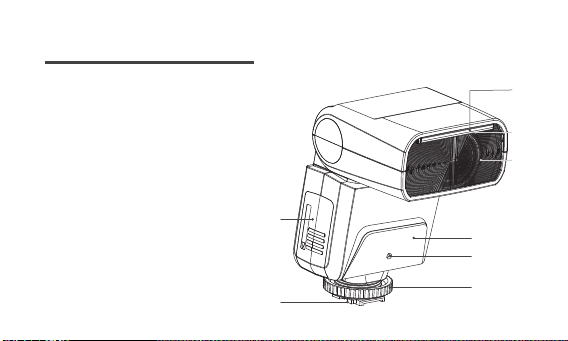
NOMENCLATURE
1
2
3
4
7
8
5
6
Catchlight Panel
Built-in Wide Panel
Flash Head
Optic Control Sensor
Focus Assist Beam
Lock Ring
Battery Compartment
Hotshoe
1.
2.
3.
4.
5.
6.
7.
8.
BODY
7
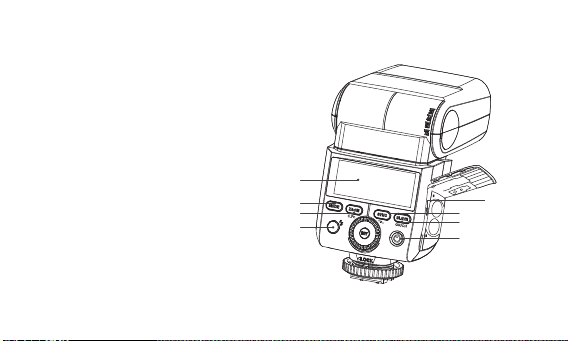
USB Port
LCD Panel
Mode selection button
Zoom selection button
High-Speed Sync button
S1/S2 optic slave triggering
selection button
(in non-wireless mode)
Power switch
Test button/Flash ready indicator
9.
10.
11.
12.
13.
14.
15.
16.
8
9
10
11
12
16
13
14
15
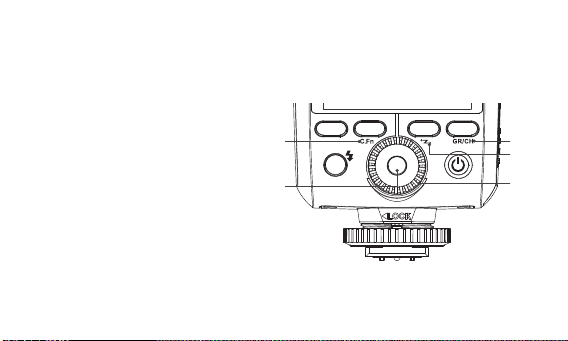
MODE ZOOM SYNC SLAVE
SET
19
20
18
21
17
CONTROL PANEL
Custom function setting
button (reusable button, long
press for 2 seconds)
Wireless selection button
(reusable button, long press
for 2 seconds)
Group/Channel button
(reusable button, long press
for 2 seconds)
Select Dial
Set button
17.
18.
19.
20.
21.
9
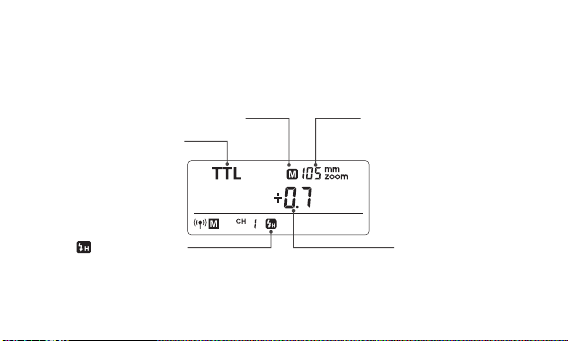
LCD PANEL
1. TTL Autoflash
Flash exposure
compensation (Page 17)
Zoom: zoom display (Page 45)
TTL: TTL autoflash
Focus length (Page 45)
Flash exposure
compensation
amount
10
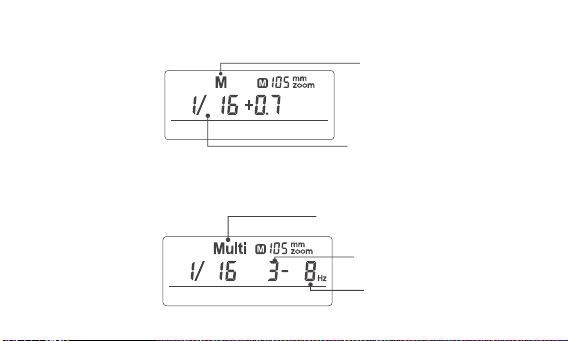
Multi: Stroboscopic flash
Number of flashes
Flash frequency
M: Manual flash
Manual flash output
2. M Manual Flash
3. Multi Flash
11
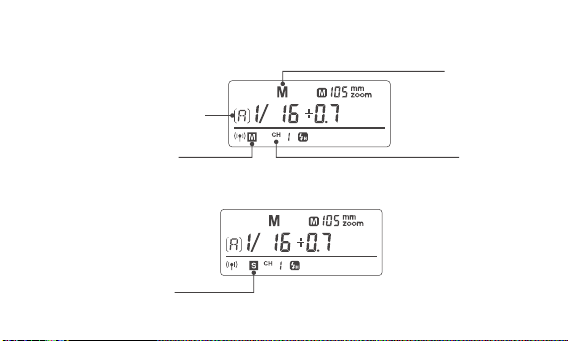
Slave
Flash mode
Channel
Firing group
Master
4. Radio transmission shooting
• Master unit
• Slave unit
12

What’s in the Box of AP-305C?
• Flash unit
• Mini stand
• Protection case
13
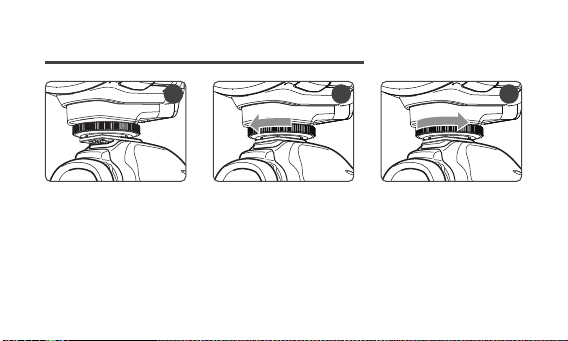
ATTACHING TO A CAMERA
1 2 3
1. Attach the Camera Flash. Slip the camera flash’s mounting foot into the
camera’s hotshoe all the way.
2. Secure the Camera Flash. Rotate the lock ring on the mounting foot until
it locks up.
3. Detach the Camera Flash. Rotate the lock ring on the mounting foot until
it is loosened.
14
POWER MANAGEMENT
Press Power Switch to power the flash unit on or off (long press the button
for one second).
Flash unit will enter sleep mode after a certain period of idle use. Pressing the
camera shutter halfway or pressing any flash button will wake up the flash unit.
Set as Master Slave – Will enter sleep mode after approx. 90 sec.
Set as Slave Flash – Will enter sleep mode after approx. 60 min. (adjustable)
Disabling Auto Power Off function is recommended when the flash is used off
camera. (C. Fn-ST, Page 48)
C.Fn
15

FLASH MODE: TTL AUTOFLASH
This flash has three flash modes: TTL, Manual (M), and Multi (Stroboscopic). In
TTL mode, the camera and the flash will work together to calculate the correct
exposure for the subject and the background. In this mode, multiple TTL
functions are available: FEC, HSS, second curtain sync, etc.
Press <MODE> Mode Selection Button and three flash modes will display on
the LCD panel one by one with each pressing.
TTL MODE
Press <MODE> Mode Selection Button to enter TTL mode. The LCD panel will
display <TTL>.
• Press the camera release button halfway to focus.
16

• When the shutter button is fully pressed, the flash will fire a preflash that the
camera will use to calculate exposure and flash output the instant before the
photo is taken.
Display “Hi”: When the flash output value is up to the maximum value, “Hi” will
be displayed and blinking for 3 seconds. Adjust the camera’s parameters if
underexposure appears.
Display “Lo”: When the flash output value is up to the minimum value, “Lo” will
be displayed and blinking for 3 seconds. Adjust the camera’s parameters if
overexposure appears.
FEC: FLASH EXPOSURE COMPENSATION
With FEC function, this flash can adjust from -3 to +3 in 1/3rd stops. It is useful
in situations where minor adjusting of the TTL system is needed based on the
environment.
17
MODE ZOOM SYNC SLAVE
SET
ZOOM SYNC SLAVE
SET
MODE ZOOM SYNC SLAVE
SET
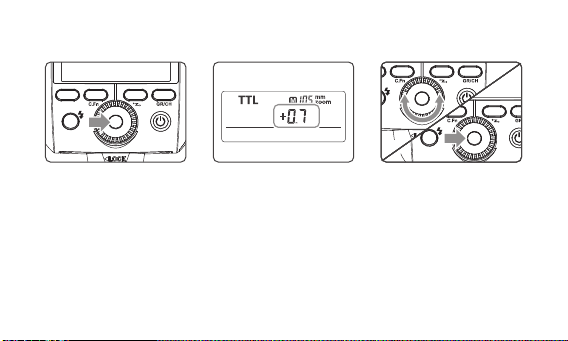
Setting FEC:
• Press the SET Button and the flash exposure compensation amount will be
highlighted on the LCD panel.
• Turn the Select Dial to set the amount.
- “0.3” means 1/3 step, “0.7” means 2/3 step.
- To cancel the flash exposure compensation, set the amount to “+0”.
• Press <SET> button again to confirm the setting.
18
HIGH-SPEED SYNC
High Speed Sync (FP flash) enables the flash to synchronize with all camera
shutter speeds. This is convenient when you want to use aperture priority for
fill-flash portraits.
Choose the < > button:
• Press the <SYNC> button to turn on high-speed sync function.
• Set the Nikon camera high-speed sync to 1/320s (auto FP) or 1/250s (auto FP)
• With high-speed sync, the faster the shutter speed, the shorter the effective
flash range.
• Multi flash mode cannot be set in high-speed sync mode.
• Over-temperature protection may be activated after 15 consecutive
high-speed sync flashes.
• Try to avoid using high-speed sync flash, which will cut short flash tube’s
lifetime.
19

SECOND-CURTAIN SYNC
With a slow shutter speed, you can create a light train following the subject.
The flash fires right before the shutter closes.
• Set Nikon camera to Rear mode.
20
FLASH MODE: MANUAL FLASH
The flash output is adjustable from 1/1 full power to 1/128
th
power in 1/3
rd
stop
increments. To obtain a correct flash exposure, use a hand-held flash meter to
determine the required flash output.
MODE ZOOM SYNC SLAVE
SET
MODE ZOOM SYNC SLAVE
SET
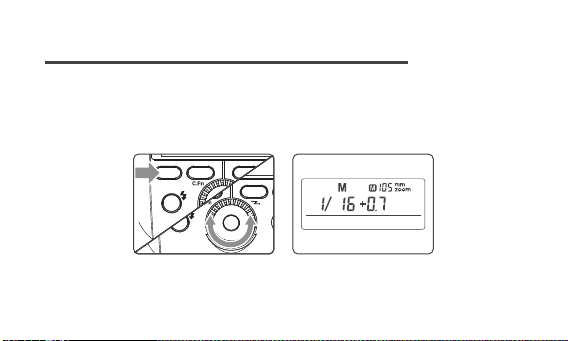
• Press <MODE> button so that <M> is displayed.
• Turn the Select Dial to choose a desired flash output amount.
21
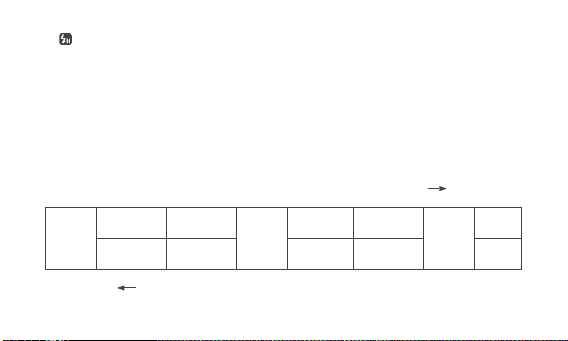
In high-speed sync mode, the adjustable flash range is 1/16~1/1.
Flash Output Range
The following table makes it easier to see how the stop changes in terms of
f/stop when you increase or decrease the flash output. For example, when you
decrease the flash output to 1/2, 1/2-0.3, or 1/2-0.7, and then increase the
flash output to more than 1/2, 1/2+0.3, 1/2+0.7, and 1/1 will be displayed.
1/1 1/2 1/4
1/1-0.3 1/1-0.7 1/2-0.3 1/2-0.7
......
......
1/2+0.7 1/2+0.3 1/4-0.7 1/4+0.3
Figures displayed when reducing flash output level
Figures displayed when increasing flash output level
22

In the M mode, high-speed sync and second curtain sync functions can be
achieved.
• Optical S1 Secondary Unit Setting
In M manual flash mode, press the <SLAVE> button so that this flash can
function as an optic S1 secondary flash with optic sensor. With this function,
the flash will fire synchronously when the main flash fires, the same effect as
that by the use of radio triggers. This helps create multiple lighting effects.
• Optical S2 Secondary Unit Setting
Press the <SLAVE> button so that this flash can also function as an optic S2
secondary flash with optic sensor in M manual flash mode. This is useful when
cameras have pre-flash function. With this function, the flash will ignore a single
“preflash” from the main flash and will only fire in response to the second,
actual flash from the main unit.
23
• S1 and S2 optic triggering and off camera high-speed mode are only
available in M manual flash mode.
MULTI STROBOSCOPIC FLASH
With stroboscopic flash mode, a rapid series of flashes is fired. It can be used
to capture multiple images of a moving subject in a single photograph.
You can set the firing frequency (number of flashes per sec. expressed as Hz),
the number of flashes, and the flash output.
24
MODE ZOOM SYNC SLAVE
SET
MODE ZOOM SYNC SLAVE
SET
MODE ZOOM SYNC SLAVE
SET
MODE ZOOM SYNC SLAVE
SET
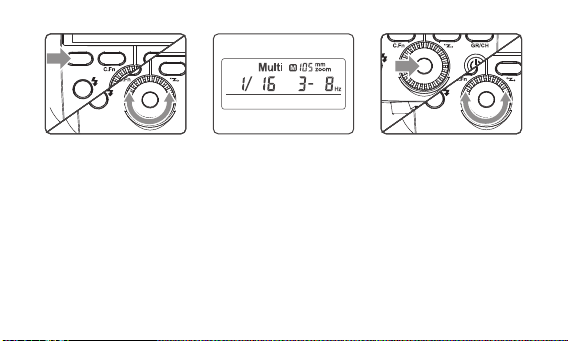
• Long press the <MODE> button for 2 seconds so that <Multi> is displayed.
• Turn the Select Dial to choose a desired flash output.
• Set the flash frequency and flash times.
- Press the SET Button to select the flash frequency. Turn the Select Dial to
set the number.
- Press the SET Button again to select the flash times. Turn the Select Dial to
set the number.
25

Calculating the Shutter Speed
During stroboscopic flash, the shutter remains open until the firing stops. Use
the formula below to calculate the shutter speed and set it with the camera.
Number of Flashes/Flash Frequency = Shutter Speed
For example, if the number of flashes is 10 and the firing frequency is 5 Hz, the
shutter speed should be at least 2 seconds.
To avoid overheating and deteriorating the flash head, do not use stroboscopic
flash more than 10 times in succession. After 10 times, allow the camera flash
to rest for at least 15 minutes.
If you try to use the stroboscopic flash more than 10 times in succession, the
firing might stop automatically to protect the flash head. If this happens, allow
at least 15 minutes rest for the camera flash.
26

• Stroboscopic flash is most effective with a highly reflective subject against a
dark background.
• Using a tripod and a remote control is recommended.
• Stroboscopic flash can be used with “bulb mode”.
• If the number of flashes is displayed as “--”, the firing will continue until the
shutter closes or the battery is exhausted. The number of flashes will be limited
as shown by the following table.
27
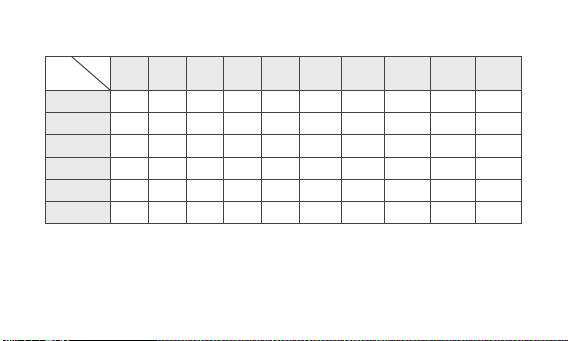
Maximum Stroboscopic Flashes:
Flash
Output
HZ
1 2 3 4 5 6-7 8-9 20-50 60-90
1/4
1/8
1/16
1/32
1/64
1/128
6
14
30
60
90
90
3
14
30
60
90
90
2
6
30
60
90
90
2
4
20
50
80
90
2
3
10
50
80
90
2
3
8
40
70
90
2
3
5
12
60
80
2
2
3
5
20
70
2
2
3
5
10
30
2
2
3
5
10
20
10-19
28

29
• You can set up three slave groups for TTL autoflash shooting. With TTL
autoflash, you can easily create various lighting effects.
• Any flash settings for the slave units on the master flash in TTL mode will be
automatically sent to the slave units. So the only thing you need to do is to set
the master unit for each slave group. There is no need to operate the actual slave
units at all during the shooting.
• This flash can work in TTL/M/Multi/OFF flash modes when set as a master unit.
As a master unit. The AP-305N can control multiple AP-305N flashes
(TTL/M/Multi).
As a slave unit. The AP-305N can be controlled by the following master unit
models, RT-305 (M mode only), AP-305N (TTL/M/Multi).
WIRELESS FLASH SHOOTING:
RADIO (2.4G) TRANSMISSION
• Even with multiple slave units, the master unit can control all of them via
wireless.
• In this user manual, “master unit” refers to the camera flash on a camera and
“slave unit” will be controlled by the master unit.
1. WIRELESS SETTINGS
You can switch between normal flash and wireless flash. For normal flash
shooting, be sure to set the wireless setting to OFF.
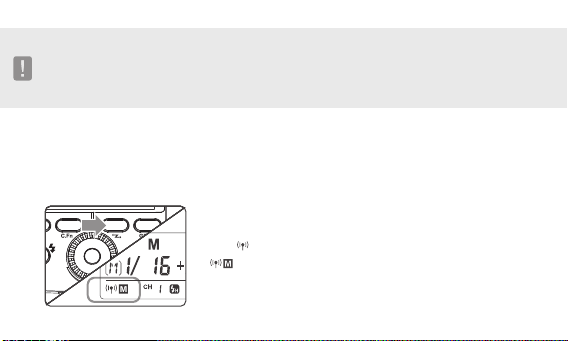
Master Unit Setting
Long Press the <SYNC> button for 2 seconds so
that < > is blinking. Turn the Select Dial until the
< > is displayed on the LCD panel, which means
the master unit.
ZOOM SYNC SLAVE
SET
30
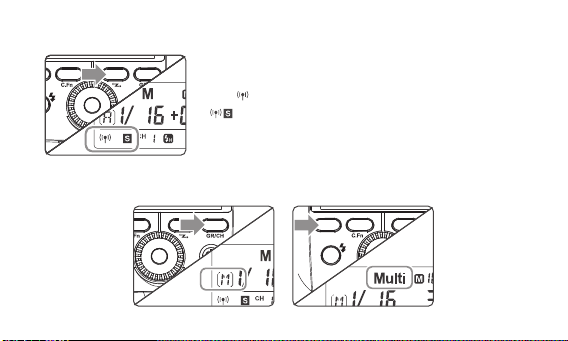
Slave Unit Setting
ZOOM SYNC SLAVE
SET
Long Press the <SYNC> button for 2 seconds so
that < > is blinking. Turn the Select Dial until the
< > is displayed on the LCD panel, which means
the slave unit.
2. SETTING GROUP UNIT’S FLASH MODE
31
ZOOM SYNC SLAVE
SET
MODE ZOOM SYNC SLAVE
SET

• Press the <SLAVE> Button to choose the group from M/A/B/C. Then, press
the <MODE> Button so that the master unit can work in OFF/TTL/M flash
mode. Choose one of them as the flash mode of master unit.
• Press the <MODE> Button for 2 seconds to switch to Multi mode.
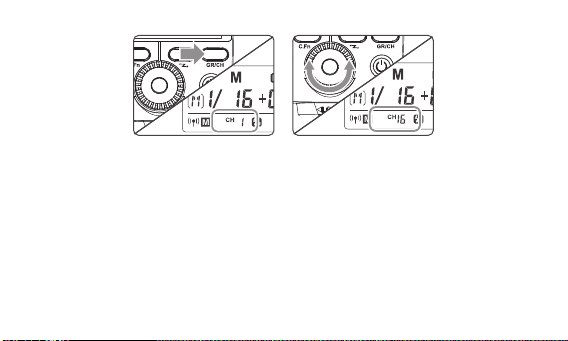
3. SETTING THE COMMUNICATION CHANNEL
If there are other wireless flash systems nearby, you can change the channel
IDs to prevent signal interference. The channel IDs of the master unit and the
slave unit(s) must be set to the same.
32
33
ZOOM SYNC SLAVE
SET
ZOOM SYNC SLAVE
SET
• Long press the <SLAVE> Button for 2 seconds until the channel IDs is
blinking. Turn the Select Dial to choose a channel ID from 1 to 16.
• Press the <SET> button to confirm.
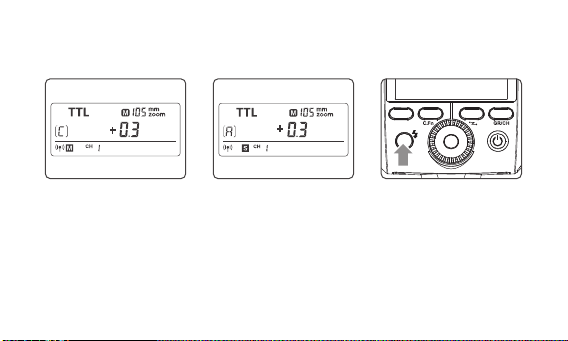
4. TTL: FULLY AUTOMATIC WIRELESS FLASH SHOOTING
Autoflash Shooting with One Slave Unit
MODE ZOOM SYNC SLAVE
SET
• Master Unit Setting:
- Attach a AP-305N camera flash on the camera and set it as the master unit.
(Page 30)
- A/B/C can be set as TTL mode independently.
• Slave Unit Setting:
- Set the AP-305N that to be controlled as the wireless slave unit. (Page 31)
34
- The slave unit can be set as A/B/C.
• Check the communication channel:
- If the master unit and slave unit(s) are set to a different channel, set them to
the same channel. (Page 32)
• Position the camera and flashes:
- Position the camera and flashes as the picture shows. (Page 39-41)
• Check the flash operation:
- Press the master unit’s Test Button < >.
- Then, the slave unit will fire. If not, adjust the slave unit’s angle toward the
master unit and distance from the master unit.
The slave unit might be out of order or fire an unwanted flash due to the
nearby wifi routers or other 2.4G equipments. If in this case, please adjust the
flash’s channel or turn off the 2.4G equipments.
35
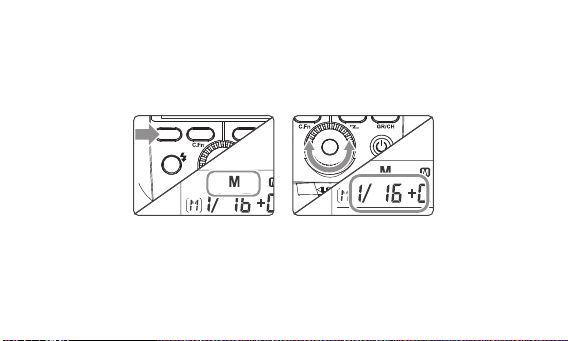
5. M: WIRELESS FLASH SHOOTING WITH MANUAL FLASH
This describes wireless (multiple shooting) using manual flash. You can shoot
with a different flash output setting for each slave unit (firing group). Set all
parameters on the master unit.
• Setting the flash mode to <M>:
Press the <MODE> Button to set the flash to M mode.
• Setting flash output:
Turn the Select Dial to set the flash output of the groups.
36
MODE ZOOM SYNC SLAVE
SET
ZOOM SYNC SLAVE
SET
• Taking the picture:
Each group fires at the set flash ratio.
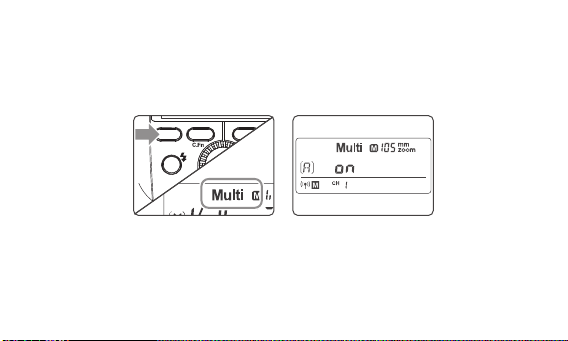
7. MULTI: WIRELESS FLASH SHOOTING WITH MANUAL FLASH
• Setting <Multi> stroboscopic flash:
Long press the <MODE> button for 2 seconds so that <Multi> is displayed.
Long press the <MODE> button for 2 seconds again to exit.
37
MODE ZOOM SYNC SLAVE
SET

• Setting flash output/flash frequency/flash times:
- Setting the flash output/flash frequency/flash times of the groups in the M
mode. Setting the multi flash mode. (Page 24-25)
- A, B, and C group can only control the ON/OFF of the slave unit by pressing
the <MODE> Button.
Using a flash (master/slave) with a radio transmission wireless shooting
function makes it easy to shoot with advanced wireless multiple flash lighting,
in the same way as TTL autoflash shooting.
The basic relative position and operation range are as shown in the picture.
You can then perform wireless TTL autoflash shooting just by setting the
master unit to <TTL>.
38
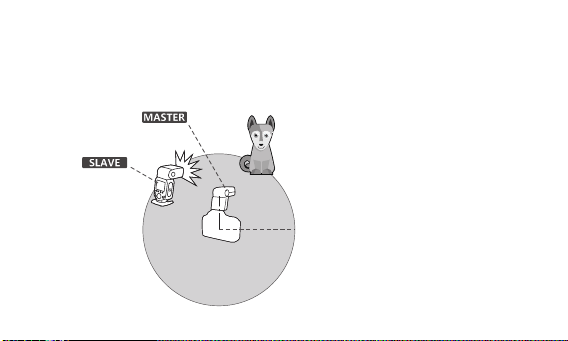
Slave/Master Unit's Positioning and Operation Range
Autoflash Shooting with One Slave Unit:
Transmission distance is about 30 m.
39

• Use the supplied mini stand to position the slave unit.
• Before shooting, perform a test flash and test shooting.
• The transmission distance might be shorter depending on the conditions
such as positioning of slave units, the surrounding environment and weather
conditions.
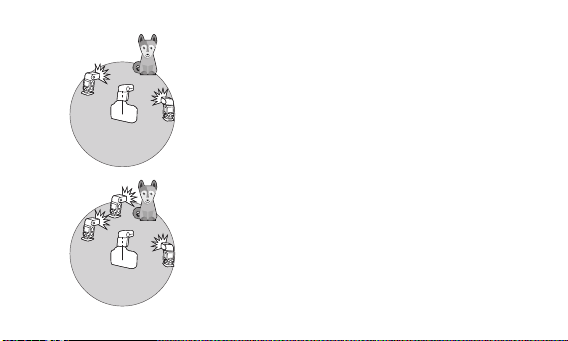
Wireless Multiple Flash Shooting
You can divide the slave units into two or three groups and perform TTL
autoflash while changing the flash ratio (factor). In addition, you can set and
shoot with a different flash mode for each firing group, for up to 3 groups.
40
A
B
A
B
C
• Auto Shooting with Two Slave Groups.
• Auto Shooting with Three Slave Groups.
41
42
OTHER APPLICATIONS
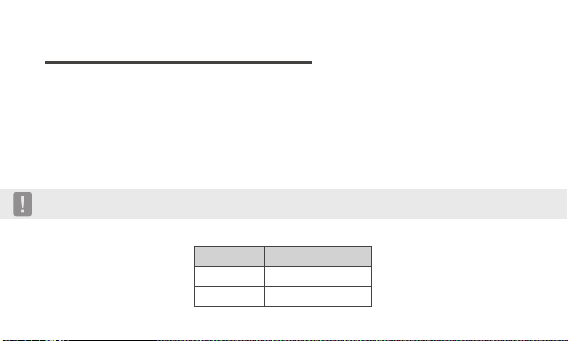
Position
Center
Periphery
Effective Range
0.6 - 4 m
0.6 - 2.5 m
Auto Focus Assist Beam
In poorly-lit or low-contrast shooting environments, the built-in auto focus
assist beam will automatically light on to make it easier for autofocus.The beam
will illuminate only when auto focus is difficult, and will cut out as soon as AF is
achieved.
The AF assistant will only work in when the AF-S is selected on the camera.
43
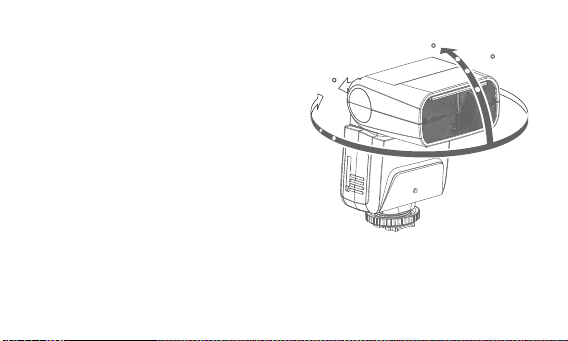
Bounce Flash
By pointing the flash head toward a
wall or ceiling, the flash will bounce off
the surface before illuminating the
subject. This can soften shadows
behind the subject for a more
natural-looking shot. This is called
bounce flash.
To set the bounce direction, hold the
flash head and turn it to a satisfying
angle.
270
-7
-90
• If the wall or ceiling is too far away, the bounced flash might be too weak and
result in underexposure.
• The wall or ceiling should be a plain, white color for high reflectance. If the
bounce surface is not white, a color cast may appear in the picture.
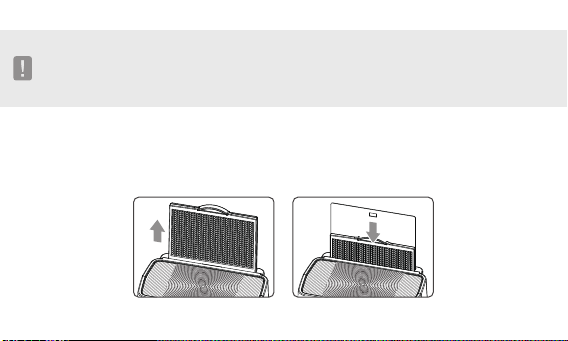
Creating a Catchlight
With the catchlight panel, you can create a catchlight in the subject’s eyes to
add life to the facial expression.
44
• Point the flash head upward by 90°.
• Pull out the wide panel. The catchlight panel will come out at the same time.
• Push the wide panel back in.
- Push in only the wide panel.
- Follow the same procedures as for bounce flash.
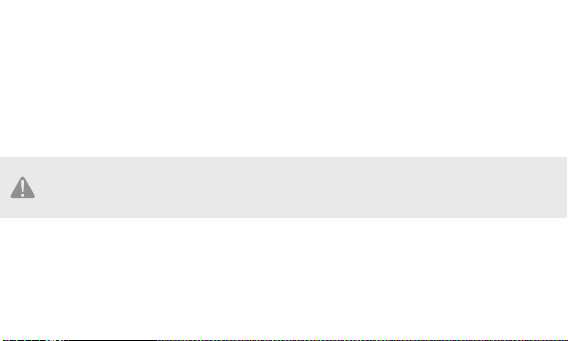
• Point the flash head straight ahead and then upward by 90°. The catchlight
will not appear if you swing the flash head left or right.
• For best catchlight effect, stay 1.5 m/4.9 ft away from the subject.
ZOOM: Setting the Flash Coverage and Using the Wide Panel
The flash coverage can be set automatically or manually. It can be set to match
the lens focal length from 24 mm to 105 mm. Also, with the built-in wide panel,
the flash coverage can be expanded for 14 mm wide-angle lenses.
45
ZOOM SYNC SLAVE
SET
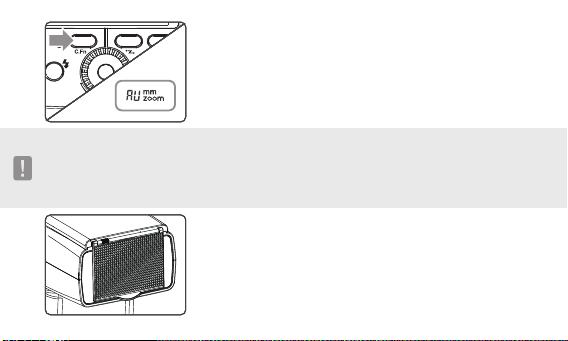
• In Manual Zoom mode, press the <ZOOM> button.
• Turn the Select Dial to change the flash coverage.
• If <AU> is displayed, the flash coverage will be set
automatically.
Using the Wide Panel
Pull out the wide panel and place it over the flash
head as shown. The flash coverage will then be
extended to 14 mm.
• If you set the flash coverage manually, make sure it covers the lens focal
length so that the picture will not have a dark periphery.
• When the low battery indicator is displayed, the ZOOM can not be adjusted,
it will constantly be 24 mm.
46
The catchlight panel will come out at the same time. Push the catchlight panel
back in.
When pull out the wide panel, the ZOOM will constantly be 14 mm.
The <ZOOM> button will not work.
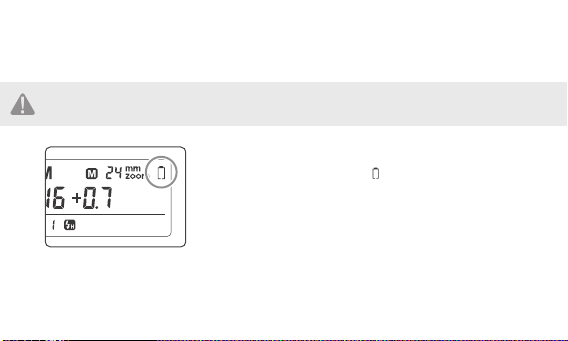
Low Battery Warning
If the battery power is low, < > will appear and blink
on the LCD panel. Please replace the battery
immediately. When the low battery indicator is
displayed, the ZOOM can not be adjusted, it will
constantly be 24 mm.
47
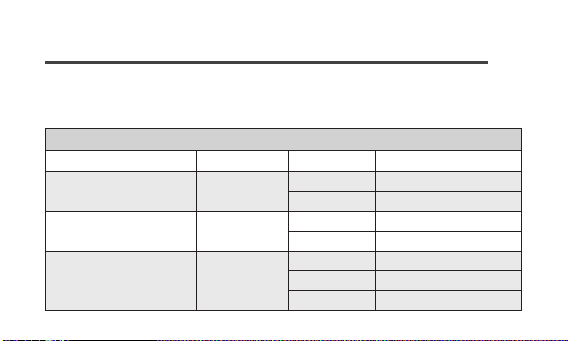
C. FN: SETTING CUSTOM FUNCTIONS
The following table lists the available and unavailable custom functions
of this flash.
Custom Function Signs Function Setting No. Settings & Description
ST
AF
BL
Backlighting
control
AF-assist
beam
Auto sleep
(standby)
ON
OF
ON
OF
10 Sec
OF
ON
ON
OFF
ON
OFF
Off in 10 Sec
Always off
Always lighting
C.Fn Custom Functions
48

• Press the <ZOOM> button for 2 seconds until C. Fn menu is displayed.
• Turn the select dial to select the custom functions.
• Press the <SET> button and the setting No. blinks.
• Turn the select dial to set the desired number. Pressing the <SET> button will
confirm the settings.
• Press the <ZOOM> button to exit.
49

PROTECTION FUNCTION
Overheating Protection
• To avoid overheating and deteriorating the flash head, do not fire more than
30 continuous flashes in fast succession at 1/1 full power. After 30 continuous
flashes, allow a rest time of at least 10 minutes.
• If you fire more than 30 continuous flashes and then fire more flashes in short
intervals, the inner over-temperature protection function may be activated and
makes the recycling time over 10 seconds. If this occurs, allow a rest time of
about 10 minutes, and the flash unit will then return to normal.
• When the overheating protection has started, is shown on the LCD panel.
50
Power Output Level Number of Flashes
1/1
1/2 + 0.7
1/2 + 0.3
1/2
1/4 (+0.3, +0.7)
1/8 (+0.3 , +0.7)
1/16 (+0.3, +0.7)
1/32 (+0.3, +0.7)
1/64 (+0.3, +0.7)
1/128 (+0.3, +0.7)
30
40
50
60
100
200
300
500
1000
Power Output Times
1/1
1/2 (+0.3, +0.7)
1/4 (+0.3, +0.7)
1/8 (+0.3 , +0.7)
1/16 (+0.3, +0.7)
15
20
30
40
51
Number of flashes that will
activate over-temperature
protection.
Number of flashes that will activate
over-temperature protection in
high-speed sync triggering mode.
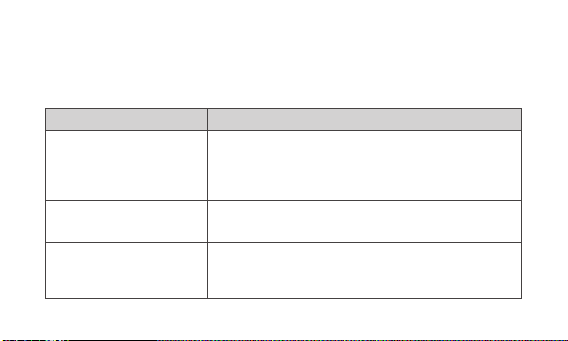
There are some errors occurred during the upgrading
process. Please using the correct firmware upgrade
method.
The voltage on two outlets of the flash tube is too high.
Please send this product to a maintenance center.
A failure occurs on the recycling system so that the
flash cannot fire.
Please restart the flash unit. If the problem still exists,
please send this product to a maintenance center.
Prompts on LCD Panel
E1
E3
E9
Meaning
Other Protections
The system provides real-time protection to secure the device and your safety.
The following lists prompts for your reference:
52
53
FIRMWARE UPGRADE
This flash supports firmware upgrade through the USB port. Update
information will be released on our official website.
USB connection line is not included in this product. The USB port is a standard
Micro USB socket. Common USB connection line is applicable.
Checking the version: Press the <MODE> Button and the turn the flash on.
Then, the firmware update version (e.g. Version 1.0 will read U-1.0) will be
displayed on the LCD panel.
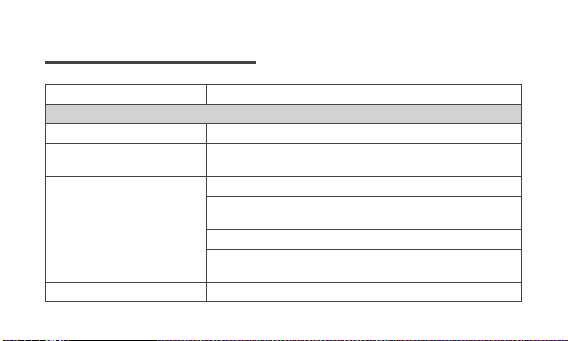
54
AP-305N
Please reference to compatible camera models (page 59)
36 m (ISO 100 ft)
24 to 105 mm
Auto zoom (Flash coverage set automatically to match
the lens focal length and image size)
Manual zoom
Swinging/tilting flash head (bounce flash):
0 to 270° horizontally and -7° to 90° vertically
1/350 to 1/20000 seconds
Model
Type
Compatible Cameras
Guide No.
(1/1 output @ 105 mm)
Flash Coverage
Flash Duration (t0.1)
TECHNICAL DATA
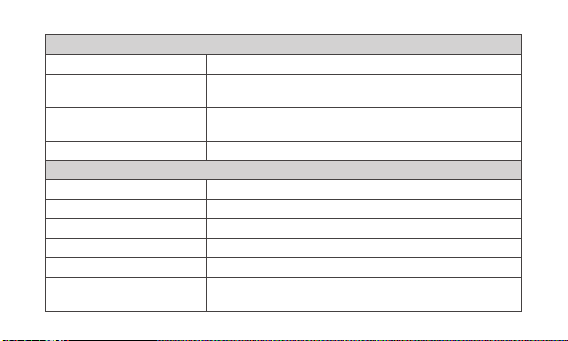
55
Exposure Control
Exposure control system
Flash exposure
compensation (FEC)
Sync mode
Multi flash
Wireless Flash (2.4G radio transmission)
Wireless flash function
Controllable slave groups
Transmission range (approx.)
Channels
Auto Focus Assist Beam
Effective range (approx.)
TTL autoflash and manual flash
Manual. FEB: ±3 stops in 1/3 stop increments
(Manual FEC can be combined.)
High-speed sync (up to 1/8000 seconds),
first-curtain sync, and second-curtain sync
Provided (up to 90 times, 99 Hz)
Master, Slave, Off
3 (A, B and C)
≤ 30 m
16 (1~16)
Center: 0.6~4 m
Periphery: 0.6~2.5 m
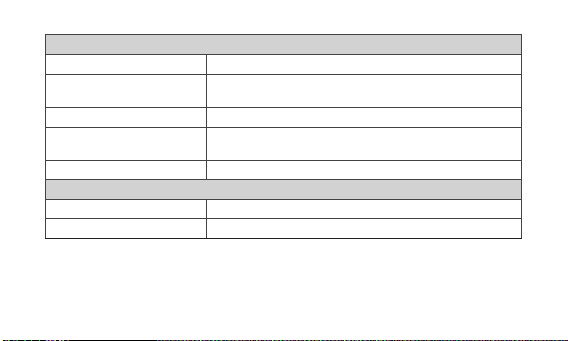
56
Power Supply
AA batteries
Recycle time
(Approx.)
Full power flashes
Power saving
Sync Triggering Mode
Dimensions
W x H x D
Weight without battery
Ni-MH batteries (recommended) or 2*LR6 alkaline batteries
0.1-2.2 seconds (eneloop Ni-MH batteries of Panasonic).
Red LED indicator will light up when the flash is ready.
Approx. 210 (2500mA Ni-MH batteries)
Power off automatically after approx. 90 seconds of idle
operation. (60 minutes if set as slave)
Hotshoe, optic triggering
140*62*38 mm
200 g

TROUBLESHOOTING
If there is a problem, refer to this Troubleshooting Guide.
The Camera Flash cannot be charged.
• The battery is installed in the wrong direction.
- Install the battery in the correct direction.
• The camera flash’s internal battery is exhausted.
- If < > appears and blinks on the LCD panel, replace the battery immediately.
The Camera Flash does not fire.
• The camera flash is not attached securely to the camera.
- Attach the camera’s mounting foot securely to the camera.
57

• The electrical contacts of the Camera Flash and camera are dirty.
- Clean the contacts.
The power turns off by itself.
• After 90 seconds of idle operation, auto power off took effect if the flash is
set as master.
- Press the shutter button halfway or press any flash button to wake up.
• After 60 minutes of idle operation, the flash unit will enter sleep mode if it is
set as slave.
- Press any flash button to wake up.
Auto zoom does not work.
• The camera flash is not attached securely to the camera.
- Attach the camera flash’s mounting foot to the camera.
58

The flash exposure is underexposed or overexposed.
• You used high-speed sync.
- With high-speed sync, the effective flash range will be shorter. Make sure
the subject is within the effective flash range displayed.
• You used Manual Flash mode.
- Set the flash mode to TTL or modify the flash output.
Photos have dark corners or only parts of the target subject are
illuminated.
• The focal length of lens exceeds the flash coverage.
- Check the flash coverage you set. This flash unit has the flash coverage
between 24 and 105 mm, which fits medium-format cameras. Pull the wide
panel out to extend the flash coverage.
59
60
COMPATIBLE CAMERA MODELS
This flash unit can be used on the following Nikon camera models:
- D800
- D700
- D5600
- D5500
- D5200
- D5100
- D5000
This table only lists the tested camera models, not all Nikon series cameras.
For the compatibility of other camera models, a self-test is recommended.
Rights to modify this table are retained.
- D3000
- D3100
- D3200
- D3300
- D3400
- D3500
- Coolpix P900
- D7000
- D7100
- D7200
- D7500
- D300
- D300S
- Coolpix P1000
- D200
- D70S
- D810
- D610
- D90
- D750
- Z7/Z6

61
MAINTENANCE
• Shut down the device immediately should abnormal operation be detected.
• Avoid sudden impacts and the product should be dedusted regularly.
• It is normal for the flash tube to be warm when in use. Avoid continuous
flashes if unnecessary.
• Maintenance of the flash must be performed by our authorized maintenance
department which can provide original accessories.
• This product, except consumables e.g. flash tube, is supported with a
one-year warranty.
• Unauthorized service will void the warranty.
• If the product has a failure or is exposed to water, do not use it until it is
repaired by professionals.
• Changes made to the specifications or designs may not be reflected in this
manual.

62
FCC WARNING
Any Changes or modifications not expressly approved by the party responsible
for compliance could void the user’s authority to operate the equipment. This
device complies with part 15 of the FCC Rules. Operation is subject to the
following two conditions: (1) This device may not cause harmful interference,
and (2) this device must accept any interference received, including
interference that may cause undesired operation.
FCC Radiation Exposure Statement:
This equipment complies with FCC radiation exposure limits set forth for an
uncontrolled environment. This transmitter must not be colocated or operating
in conjunction with any other antenna or transmitter.