5800 Ontario Mills Pkwy
Ontario, CA 91764 USA
www.duromaxpower.com
Call our Customer Care Team Toll Free 8-5pm PST Mon-Fri
844-DUROMAX
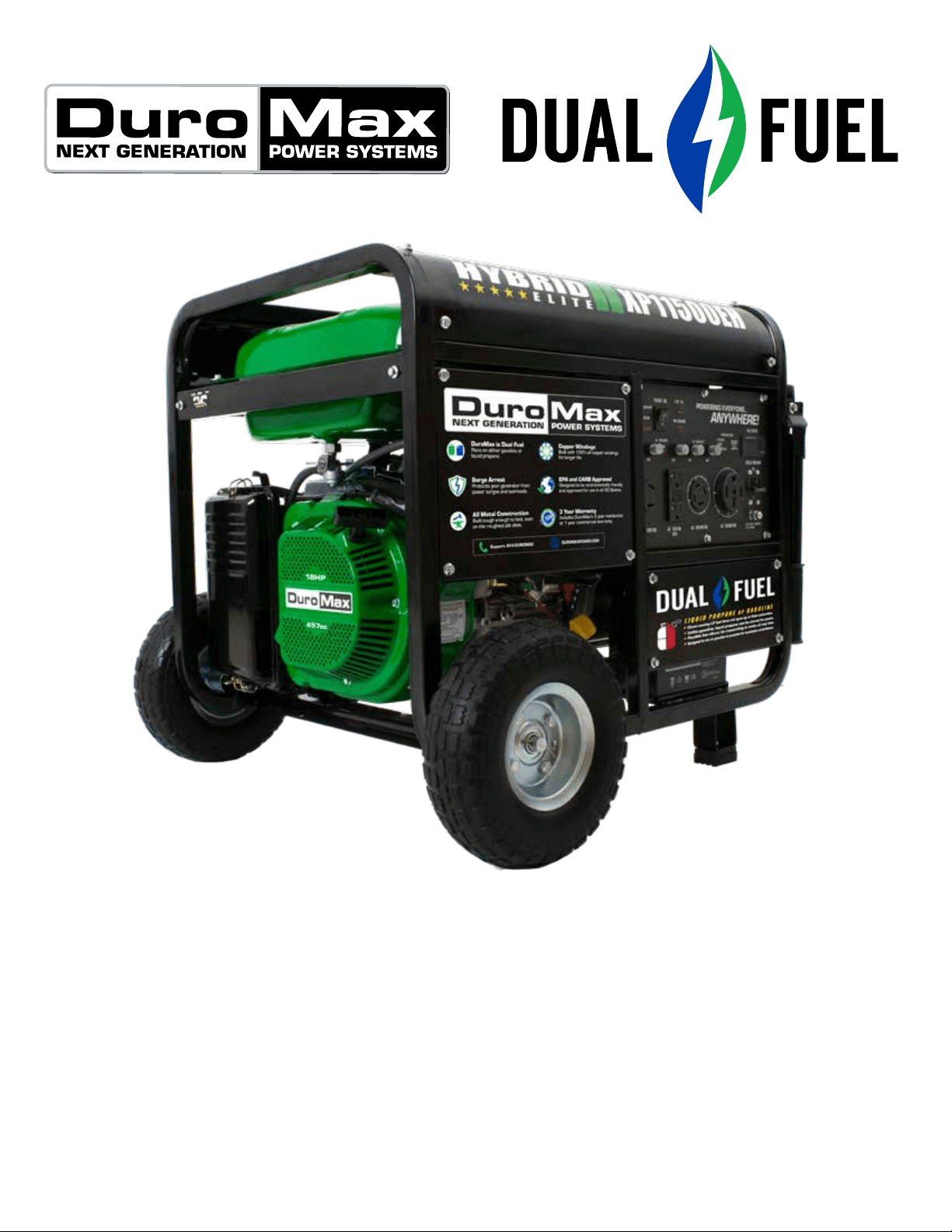
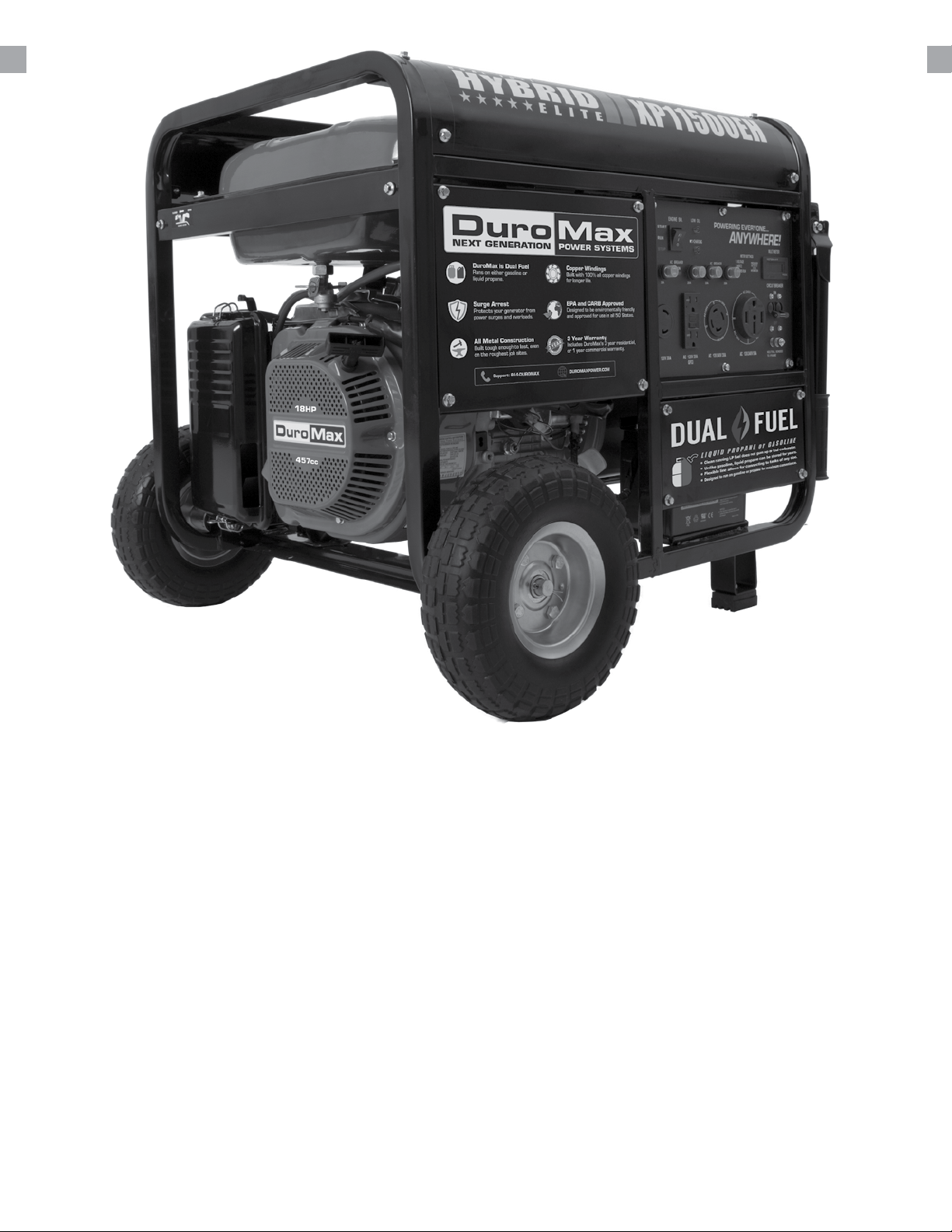
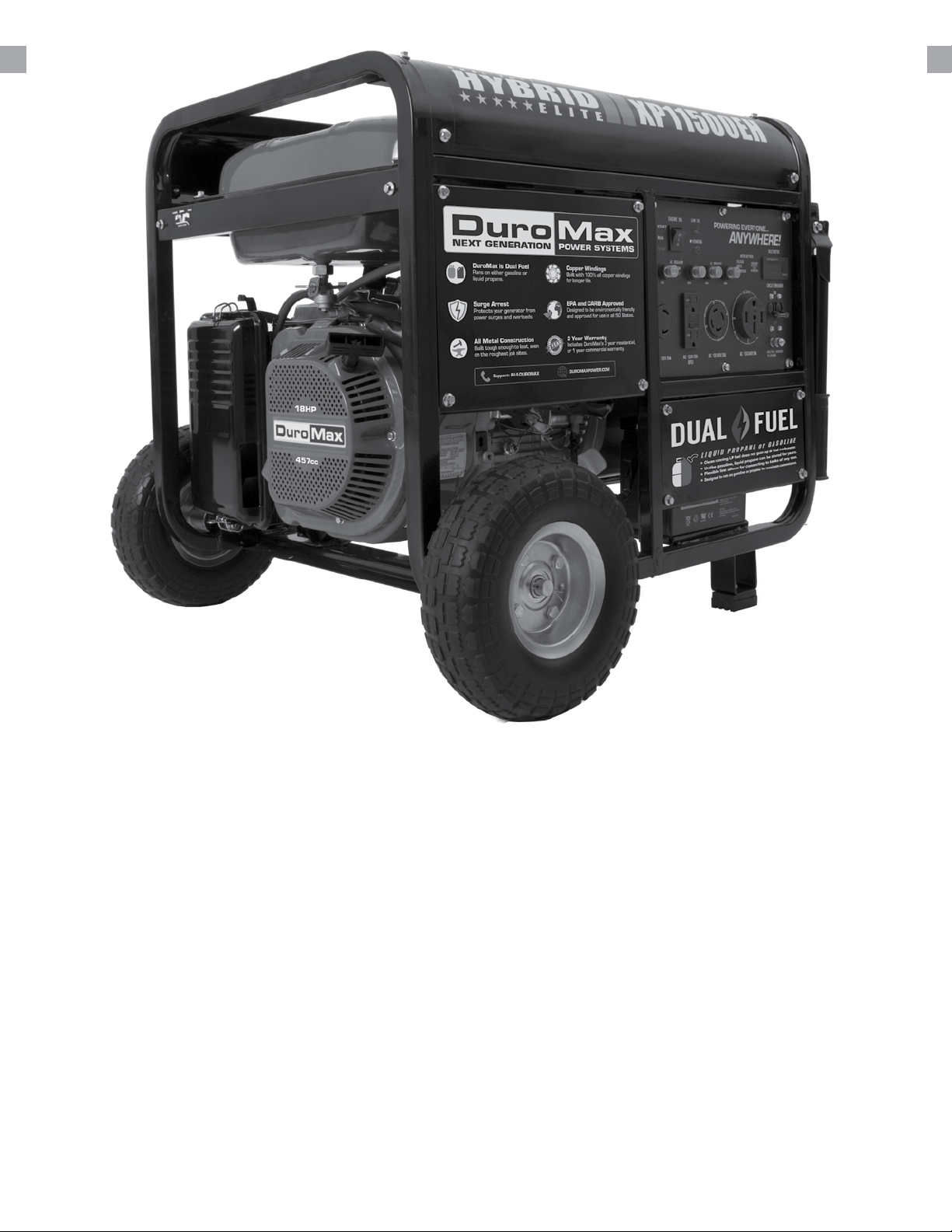
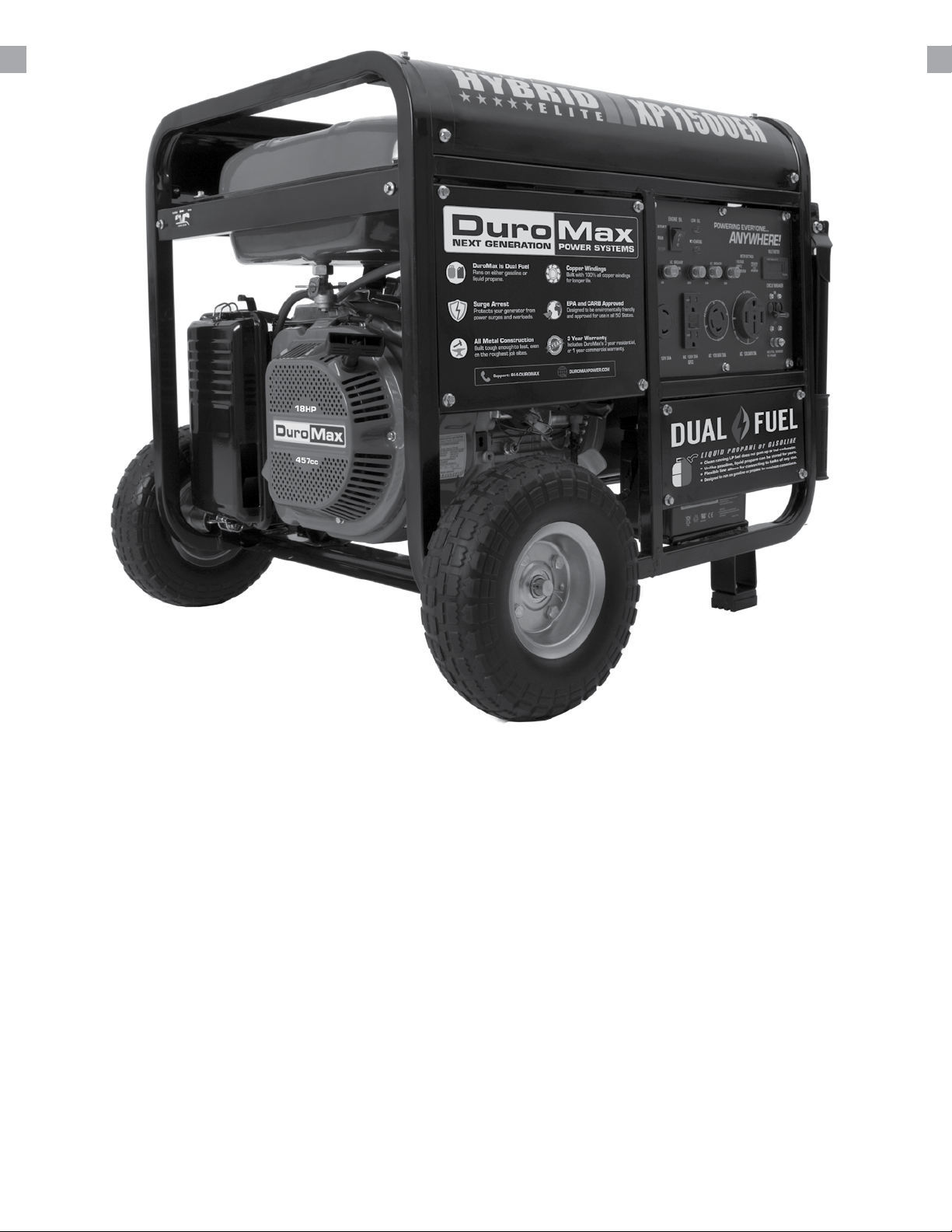
XP11500EH GENERATOR
User Manual
REV: XP11500EH-02192020
This manual provides information regarding the operation
and maintenance of these products. We have made every
effort to ensure the accuracy of the information in this
manual. We reserve the right to change this product at
any time without prior notice.


CONTENTS
1.
Introduction .................................................................................................................... 6
General Safety Procedures ........................................................................................... 7
Unit and Purchase Information................................................................................... 10
Introduction
4.
Checking the Oil ........................................................................................................... 28
Check the Gas Level ..................................................................................................... 29
Starting the Generator Using Gasoline ...................................................................... 30
Starting the Generator Using Propane....................................................................... 32
Starting the Generator Using Recoil Start ................................................................. 36
Starting the Generator
3.
Shipping Braces ............................................................................................................ 20
Wheel Kit Installation .................................................................................................... 21
Connect the Battery .................................................................................................... 22
Adding Oil ...................................................................................................................... 23
Adding Gasoline ............................................................................................................ 24
Grounding the Generator ........................................................................................... 25
High Altitude Operation .............................................................................................. 25
Generator Setup
5.
AC Usage ........................................................................................................................ 40
Connecting a Load to the Generator .......................................................................... 42
Using the Digital Multimeter ....................................................................................... 44
Using the Generator
2.
Quick Start Guide (Gasoline) ....................................................................................... 12
Quick Start Guide (Propane) ........................................................................................ 14
Generator Components ............................................................................................... 16
Package Contents ......................................................................................................... 18
Quick Start

CONTENTS
6.
7.
8.
Maintenance Schedule .................................................................................................. 48
Maintenance Log ........................................................................................................... 49
Checking the Oil ............................................................................................................ 50
Changing the Oil ............................................................................................................. 51
Cleaning the Air Filter .................................................................................................... 52
Spark Plug Maintenance ............................................................................................... 54
Emptying the Gas Tank ................................................................................................. 56
Cleaning the Fuel Filter Cup .......................................................................................... 58
Storage and Transportation ......................................................................................... 59
Specications .................................................................................................................. 60
.......................................................................................................................... 70
Basic Troubleshooting .................................................................................................. 62
Changing / Inspecting the Carbon Brushes ............................................................... 63
Changing / Inspecting the AVR .................................................................................... 65
Wiring Diagram ............................................................................................................. 68
Maintenance and Care
Warranty
Troubleshooting
9.
.................................................................................................. 74
Contact Information
INTRODUCTION
Notice Regarding Emissions
DuroMax has cemented its reputation as one of the markets leading power equipment companies
who are headquartered in the US. All of our products are manufactured to the strictest guidelines
and go through countless testing in all phases of production.
Evolving our strong engine line, DuroMax has complemented its oerings to include Pressure
Washers, Water Pumps, Engines and now oering V-Twin engines. Reliability is the highest
standard we hold ourselves to, whether its powering a heater during a winter storm that knocks
out power, draining a ooded property, or washing away a deck for the summer season
Engines that are certied to comply with U.S. EPA emission regulations for SORE (Small o Road
Equipment), are certied to operate on regular unleaded gasoline, and may include the following
emission control systems: (EM) Engine Modications and (TWC) Three-Way Catalyst (if so equipped).
6
STOP
Please do not return
to store.
Duromax representatives are ready to help you
with any questions, concerns, or issues about your
new product. We can guide you through assembly,
start up, and how to operate your new generator.
We want you to be able to put your new generator
to use right away!
CALL US BEFORE YOU CONSIDER
RETURNING THE PRODUCT!
1-844-DUROMAX
TOLL FREE
SAFETY ALERT SYMBOL
DANGER: This generator produces poisonous carbon monoxide gas when running. This
gas is both odorless and colorless. Even if you do not see or smell gas, carbon monoxide
may still be present. Breathing this poison can lead to headaches, dizziness, drowsiness,
and eventually death.
● Use outdoors ONLY in non-conned areas.
● Keep several feet of clearance on all sides to allow proper ventilation of the generator.
WARNING: The exhaust from this product contains chemicals known to the State of
California to cause cancer, birth defects, or other reproductive harm.
WARNING: This generator produces heat when running. Temperatures near exhaust can
exceed 150°F (65°C).
● Do not touch hot surfaces. Pay attention to warning labels on the generator denoting
hot parts of the machine.
● Allow generator to cool several minutes after use before touching engine or areas
which heat during use.
The safety alert symbol is used with one of the safety words (DANGER,
CAUTION, or WARNING) to alert you of hazards. Please pay attention to
these hazard notices both in this manual and on the generator.
GENERAL SAFETY PROCEDURES
7
Please familiarize yourself with the following safety symbols and words:
● DANGER: Indicates a hazard that will result in serious injury or death if instructions are not
followed.
● WARNING: Indicates a strong possibility of causing serious injury or death if instructions are not
followed.
● CAUTION: Indicates a possibility of personal injury or equipment damage if instructions are not
followed.
WARNING: This generator may emit highly ammable and explosive gasoline vapors,
which can cause severe burns or even death. A nearby open ame can lead to an
explosion even if not directly in contact with gas.
● Do not operate near an open ame.
● Do not smoke near generator.
● Always operate on a rm, level surface.
● Always turn generator o before refueling.
● Allow generator to cool for at least 2 minutes before removing fuel cap. Loosen cap
slowly to relieve pressure in tank.
● Do not overll gas tank. Gas may expand during operation. Do not ll to the top of
the tank.
● Always check for spilled gas before operating.
● Empty the gasoline tank before storing or transporting the generator.
● Before transporting, turn fuel valve to the o position and disconnect the spark plug.
WARNING: This generator produces a powerful voltage, which can result in electrocution.
● ALWAYS ground the generator before using it (see the “Grounding the Generator”
portion of the “PREPARlNG THE GENERATOR FOR USE section).
● Generator should only be plugged into electrical devices, either directly or with an
extension cord. NEVER connect to a building electrical system without a qualied
electrician. Such connections must comply with local electrical laws and codes. Failure
to comply can create a back-ow of power, which may result in serious injury or death
to utility workers.
● Use a ground fault circuit interrupter (GFCI) in highly conductive areas such as metal
decking or steel work. GFCls are available in-line with some extension cords.
● Do not use uncovered in rainy or wet conditions.
● Do not touch bare wires or receptacles (outlets).
● Do not allow children or non-qualied persons to operate.
GENERAL SAFETY PROCEDURES
8
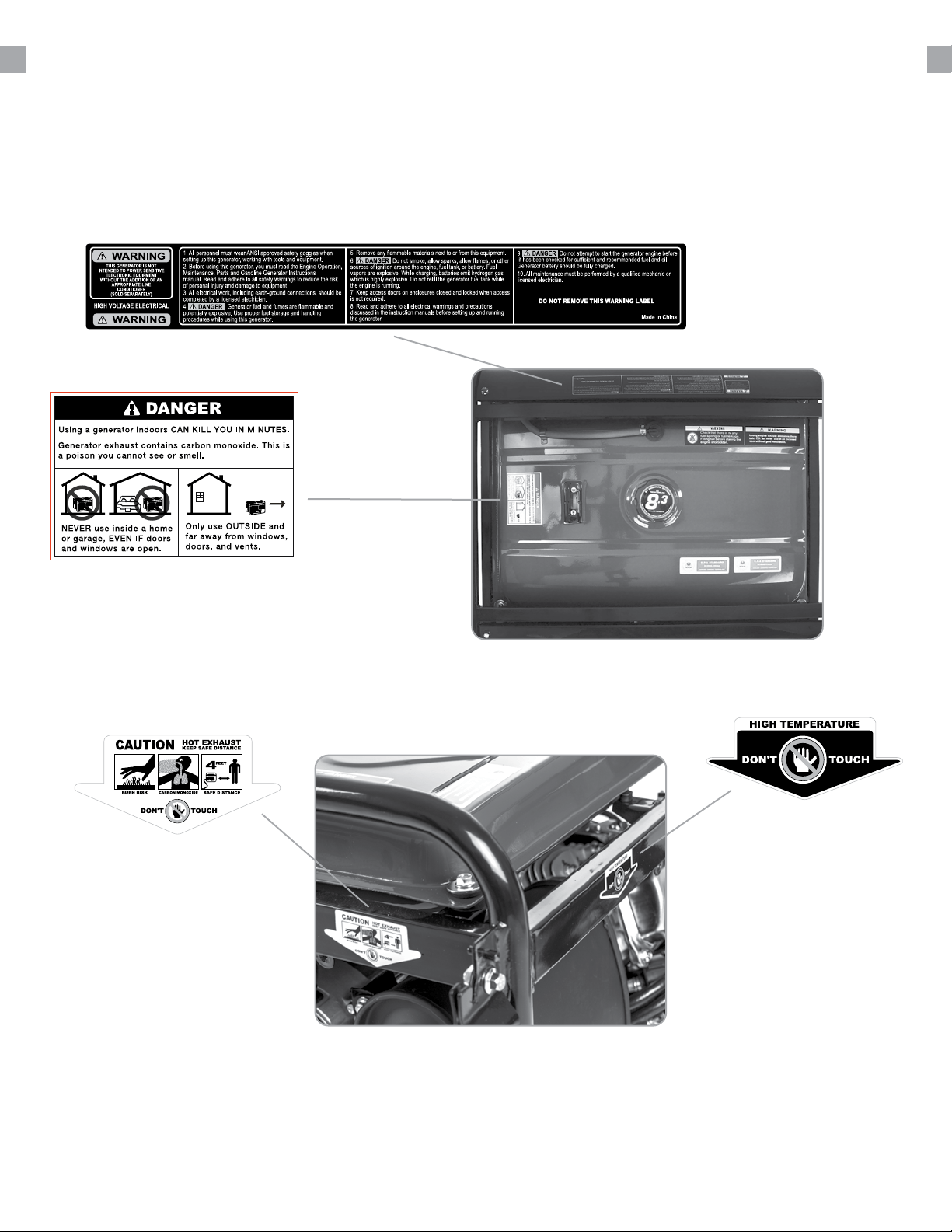
In addition to the above safety notices, please familiarize yourself with the safety and
hazard markings on the generator.
GENERAL SAFETY PROCEDURES
9
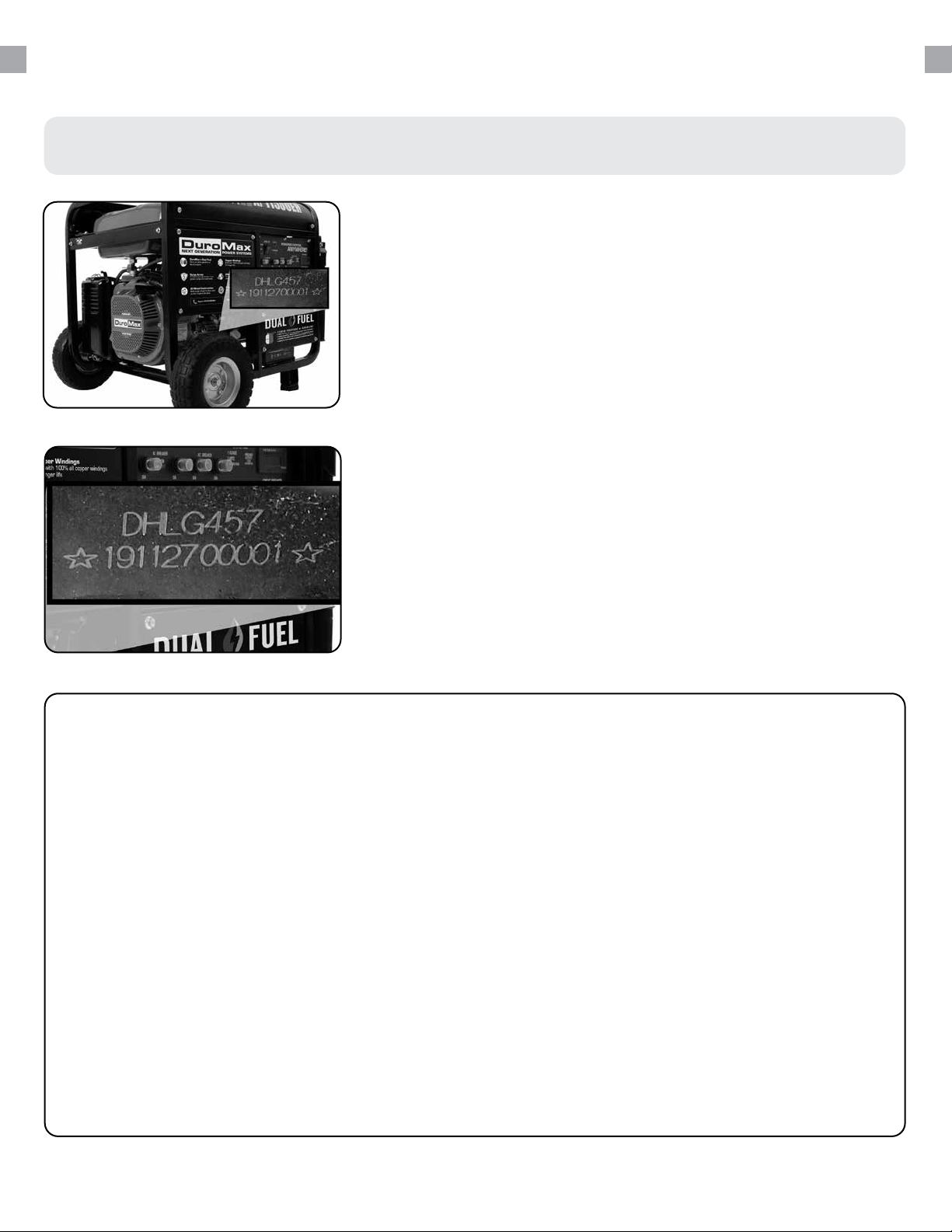
Serial Number
Serial number format
STAPLE RECEIPT HERE
The serial number will be shown in two parts. The engine
model, followed by the serial number.
Engine Model: _____________________________________________
Serial Number: _____________________________________________
A purchase receipt may be necessary for warranty parts or
service in the future. If you have a paper receipt staple it
here for easy reference.
If you purchased the unit online, save the email receipt
where you can access it, and record your details here for
convenience in the future.
Purchase Date: ____________________________________________
Order Number: ____________________________________________
Retailer Name: _____________________________________________
Serial Number
The serial number is located on the engine block, above and
to the left of the oil ll.
UNIT AND PURCHASE INFORMATION
10
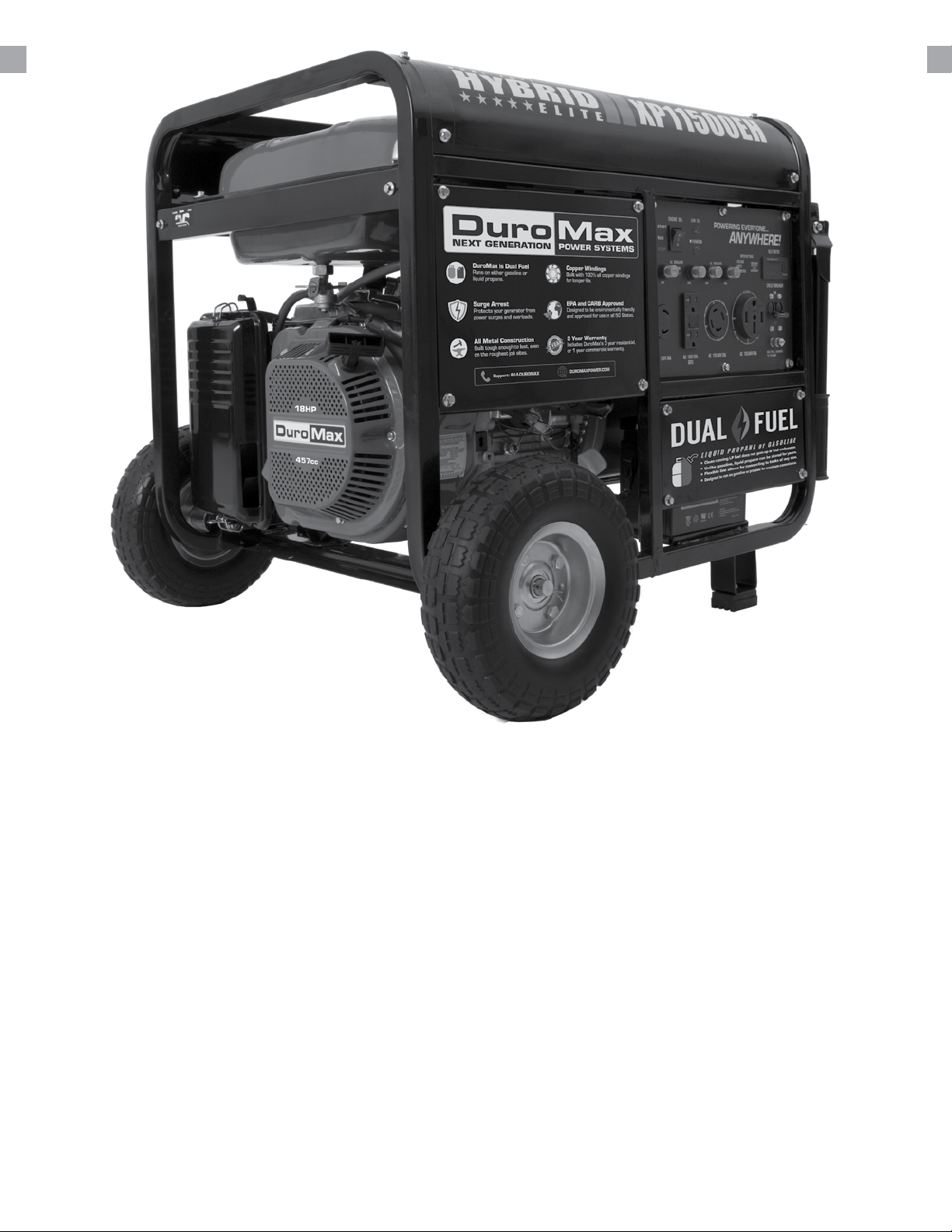
QUICK START
Quick Start of your generator is the minimum necessary setup that will get you going as soon as
possible. Be sure to read the instructions starting on pg. 20 for full setup instructions.
11
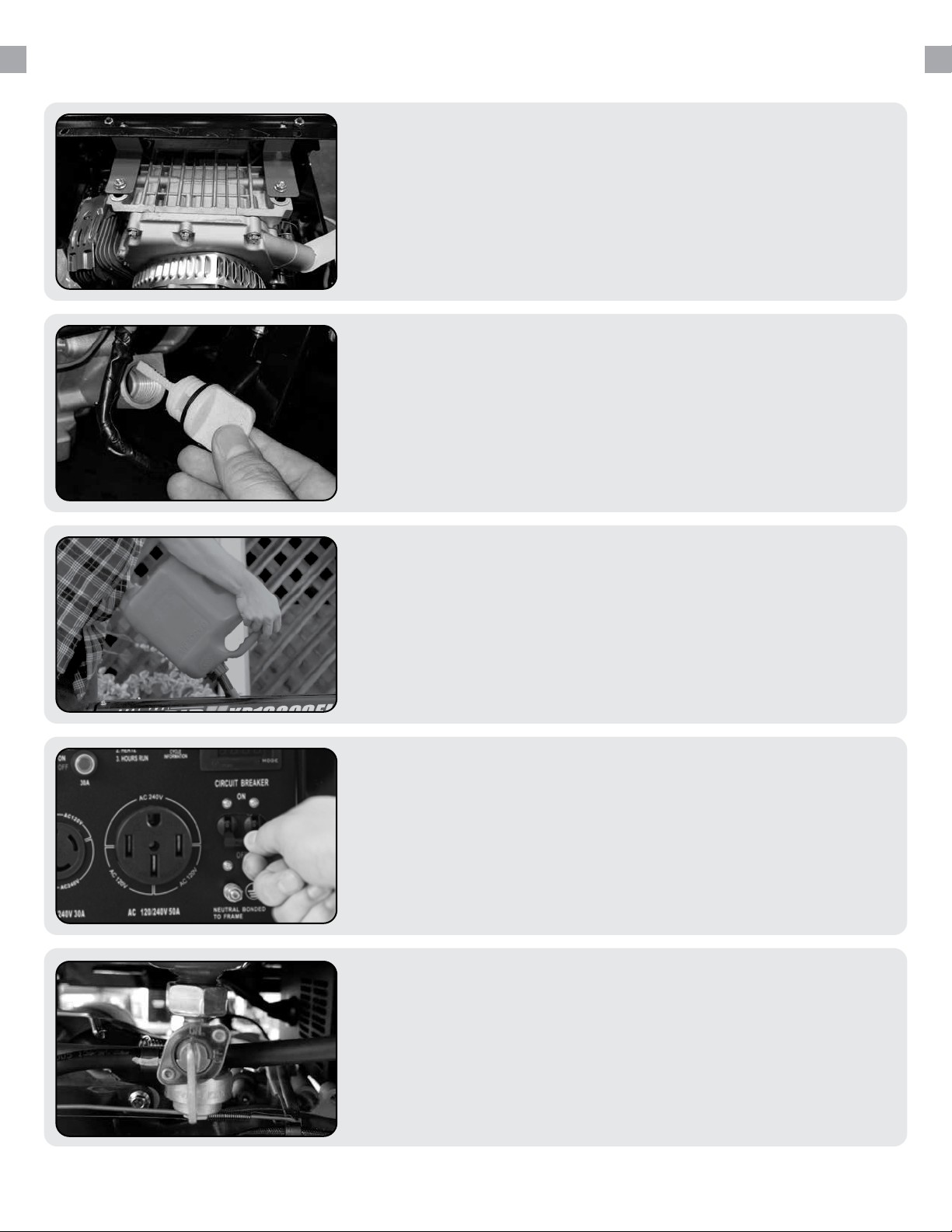
QUICK START GUIDE (GASOLINE)
Remove shipping braces
The shipping braces prevent engine movement during
shipment. Flip the generator over and remove the brightly
colored braces between the motor and the frame, and the
wood brace under the generator.
1.
Add gasoline
The fuel cap is located on top of the fuel tank. Fill the tank
with fresh unleaded gasoline 87 octane or higher. The tank
is full when you see fuel in the bottom of the fuel lter cup.
DO NOT overll the tank.
3.
Turn gas valve on
The gas valve is located above the recoil start on the
bottom of the fuel tank. Rotate the valve counterclockwise
to the vertical position to turn on the gas supply.
5.
Add oil
The oil ll cap is located on the lower engine block to the
right of the recoil start housing. Remove the oil ll cap and
ll with 10w30 oil.
2.
Turn breaker o
The breaker is located on the right side of the front power
panel. Flip the breaker down to prevent accidental load
when starting the generator.
4.
12
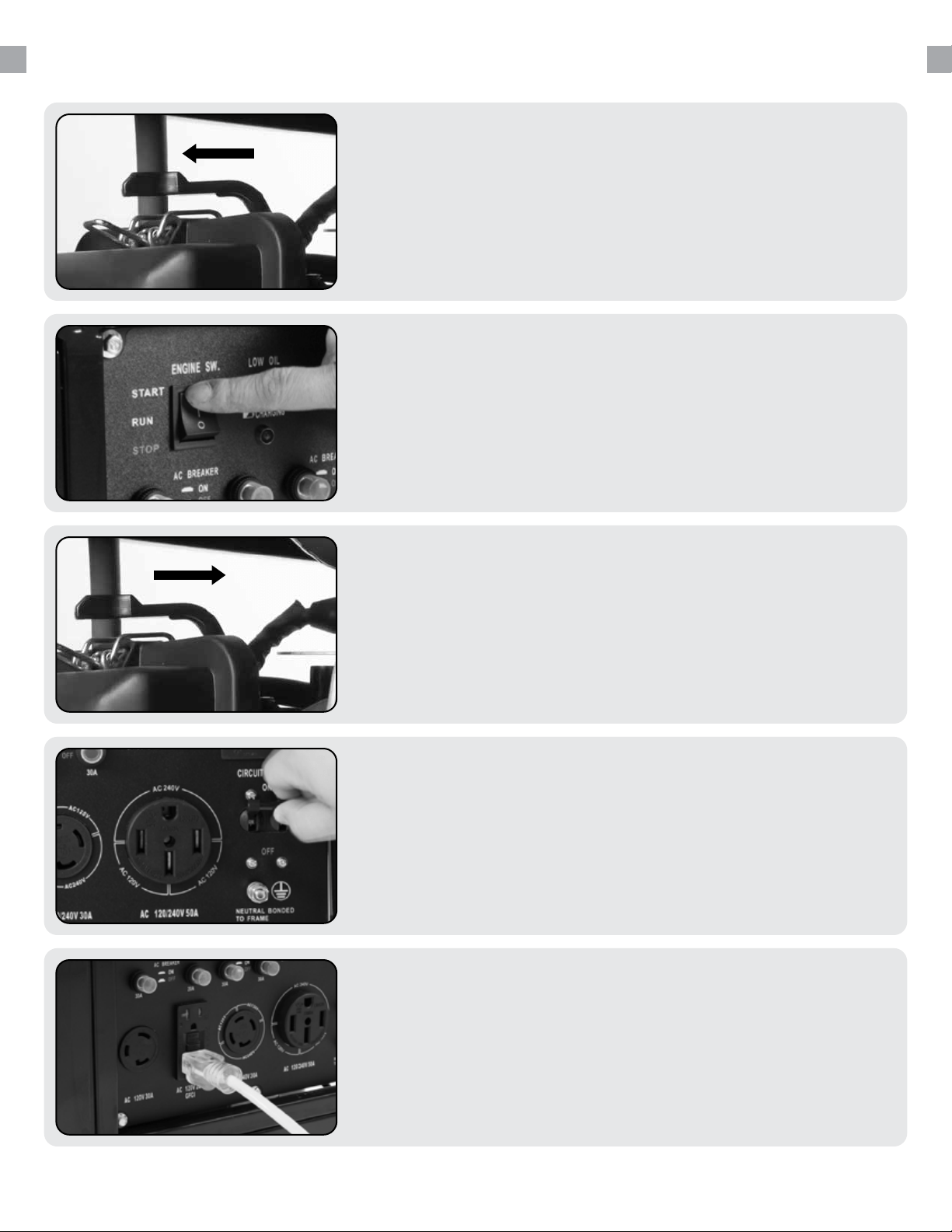
Close choke
The choke lever is located above the air lter to the left
of the recoil start. Slide the lever to the left to cut the air
supply and allow more gas into the engine to start.
6.
Open choke
The choke lever is located above the air lter to the left
of the recoil start. Slide the lever to the right to open the
choke and increase air into the carburetor for normal
running.
8.
Connect devices
Connect your devices to the receptacles on the front panel.
Start with the largest loads rst.
10.
Start generator
The engine switch is located on the left side of the front
power panel. Press the top “Start” position on the rocker
switch to start the generator. Allow the switch to return to
the run position once started.
7.
Turn breaker on
The breaker is located on the right side of the front power
panel. Flip the breaker up to allow power to ow to the
receptacles.
9.
13
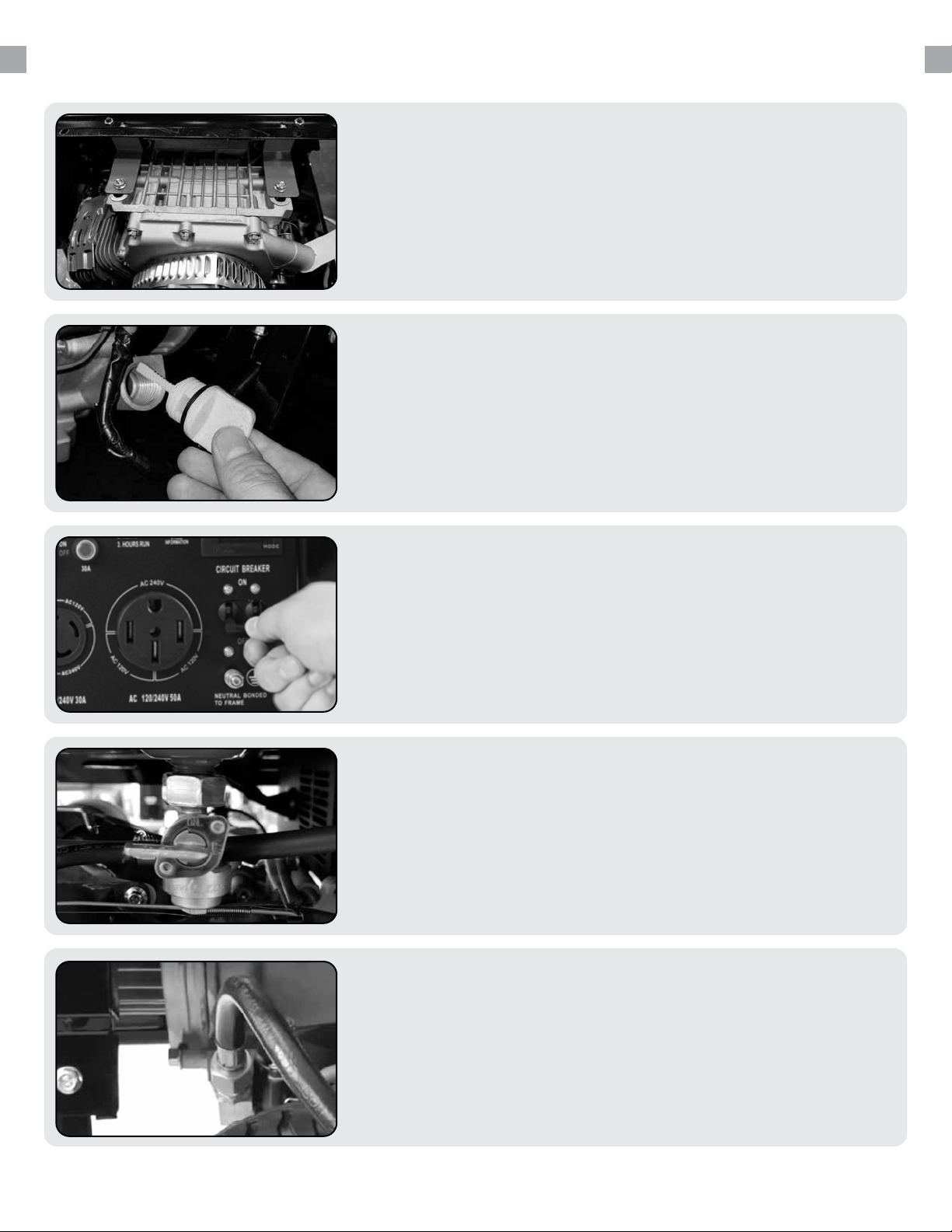
QUICK START GUIDE (PROPANE)
Remove shipping braces
The shipping braces prevent engine movement during
shipment. Flip the generator over and remove the brightly
colored braces between the motor and the frame, and the
wood brace under the generator.
1.
Turn breaker o
The breaker is located on the right side of the front power
panel. Flip the breaker down to prevent accidental load
when starting the generator.
3.
Connect propane hose
The propane regulator is located on the frame of the
generator below the OHV valve cover on the rear of the
generator. Ensure the propane hose is securely connected
to the regulator.
5.
Add oil
The oil ll cap is located on the lower engine block to the
right of the recoil start housing. Remove the oil ll cap and
ll with 10w30 oil.
2.
Turn gas valve o
The gas valve is located above the recoil start on the
bottom of the fuel tank. Rotate the valve clockwise to
the horizontal position to stop the ow of gasoline to the
carburetor.
4.
14
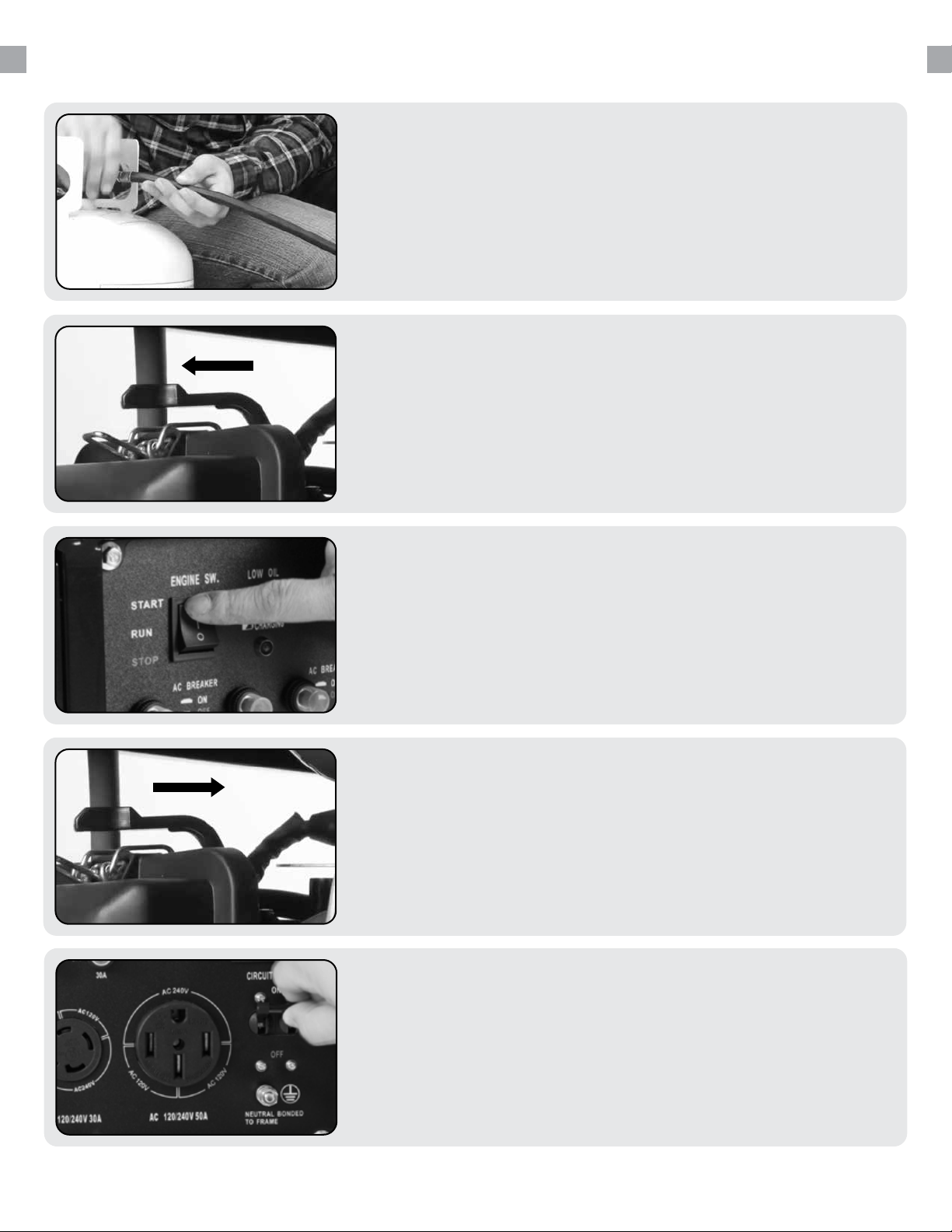
Connect propane tank
The propane hose is located on the left side of the regulator,
below the OHV valve cover. Screw the open ACME nut
connection to your propane tank and turn the tank on.
6.
15
Close choke
The choke lever is located above the air lter to the left
of the recoil start. Slide the lever to the left to cut the air
supply and allow more gas into the engine to start.
Turn breaker on / connect
The breaker is located on the right side of the front power
panel. Flip the breaker up to allow power to ow to the
receptacles. Connect your devices to the receptacles on
the front panel. Start with the largest loads rst.
10.
7.
Open choke
The choke lever is located above the air lter to the left
of the recoil start. Slide the lever to the right to open the
choke and increase air into the carburetor for normal
running.
9.
Start generator
The engine switch is located on the left side of the front
power panel. Press the top “Start” position on the rocker
switch to start the generator. Allow the switch to return to
the run position once started.
8.
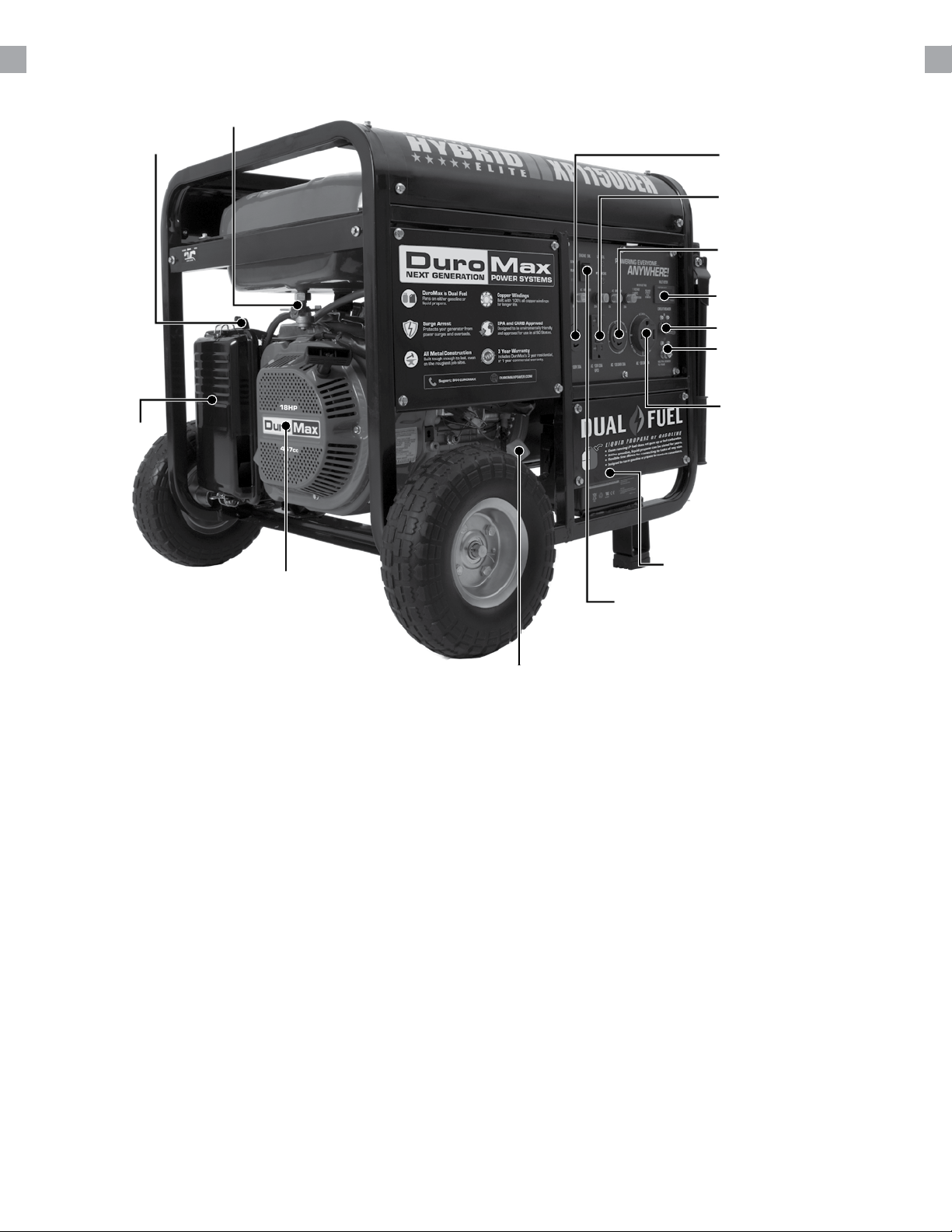
GENERATOR COMPONENTS
16
2. Choke Lever
1. Air Filter
7. Multimeter
5. 120v 3-Prong
Receptacle
6. 120/240v 4-Prong
Receptacle
4. 120V 3-Prong
Twist Lock
10. 120/240v 4-Prong
Twist Lock
8. Circuit Breaker
9. Ground Terminal
11. Battery
13. Oil Fill and Dipstick
12. Engine Switch
14. Recoil Start
1. Air Cleaner - a removable, cleanable, oiled, element that cleans the air going into the engine.
2. Choke Lever - Allows the airow into the carburetor to be restricted to assist in starting the
engine.
3. Fuel Valve - On/O Valve that allows fuel into the engine.
4. 120v 3-Prong Twist Lock - Use to connect electrical devices that run 120 Volt, 60 Hz, single
phase, AC current (L5-30).
5. 120v 3-Prong Receptacle - Use to connect electrical devices that run 120 Volt, 60 Hz, single
phase, AC current (NEMA 5-20).
6. 120/240v 4-Prong Twist Lock - Use to connect electrical devices that run 120 or 240 Volt, 60Hz,
single phase, AC current (NEMA L14-30).
7. Multimeter - Provides reading of voltage output (v), frequency (hz), and hours run.
8. Circuit Breaker - Resettable switch that protects the generator from electrical overload.
9. Ground Terminal - Connect a ground wire here to properly ground the generator.
10. 120/240v 4-Prong Receptacle - Use to connect electrical devices that run 120 or 240 Volt,
60Hz, single phase, AC current (NEMA 14-50).
3. Fuel Valve
15. Muer
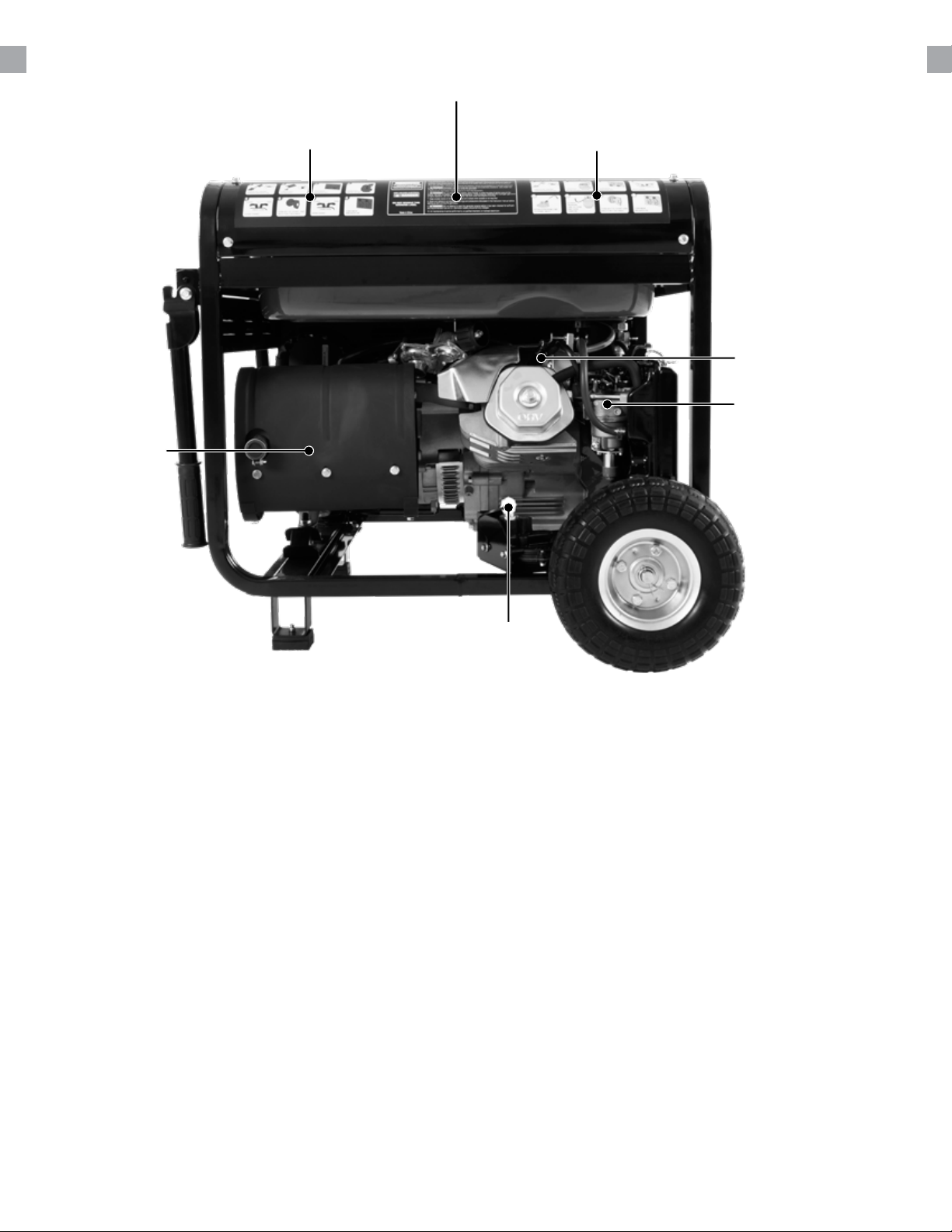
16. Gasoline Quick Start
17. Warnings
15. Muer
19. Spark Plug
21. Propane Connector
18. Propane Quick Start
11. Battery - 12V DC Battery that powers the Electric Start System.
12. Engine Switch – 3 Position Switch to “Start”, “Run”, or turn “O” the generator.
13. Oil Fill and Dipstick - Use to add or check the oil.
14. Recoil Start – Easy Pull Recoil Start to start the engine without the electric start.
15. Muer – Reduces engine emissions and reduces noise.
16. Gasoline Quick Start - Start-up instructions using gasoline as the fuel source.
17. Warnings - Safety and regulatory warning panel.
18. Gasoline Quick Start - Start-up instructions using propane as the fuel source.
19. Spark plug – Provides ignition to the engine.
20. Carburetor – Provides fuel/air mixture to the engine.
21. Propane Regulator - Provides a regulated LPG Fuel supply to the engine. (Intended for use
with a LPG Source of 3 PSI or more.) *Standard ACME Hose w/ regulator included
17
20. Carburetor
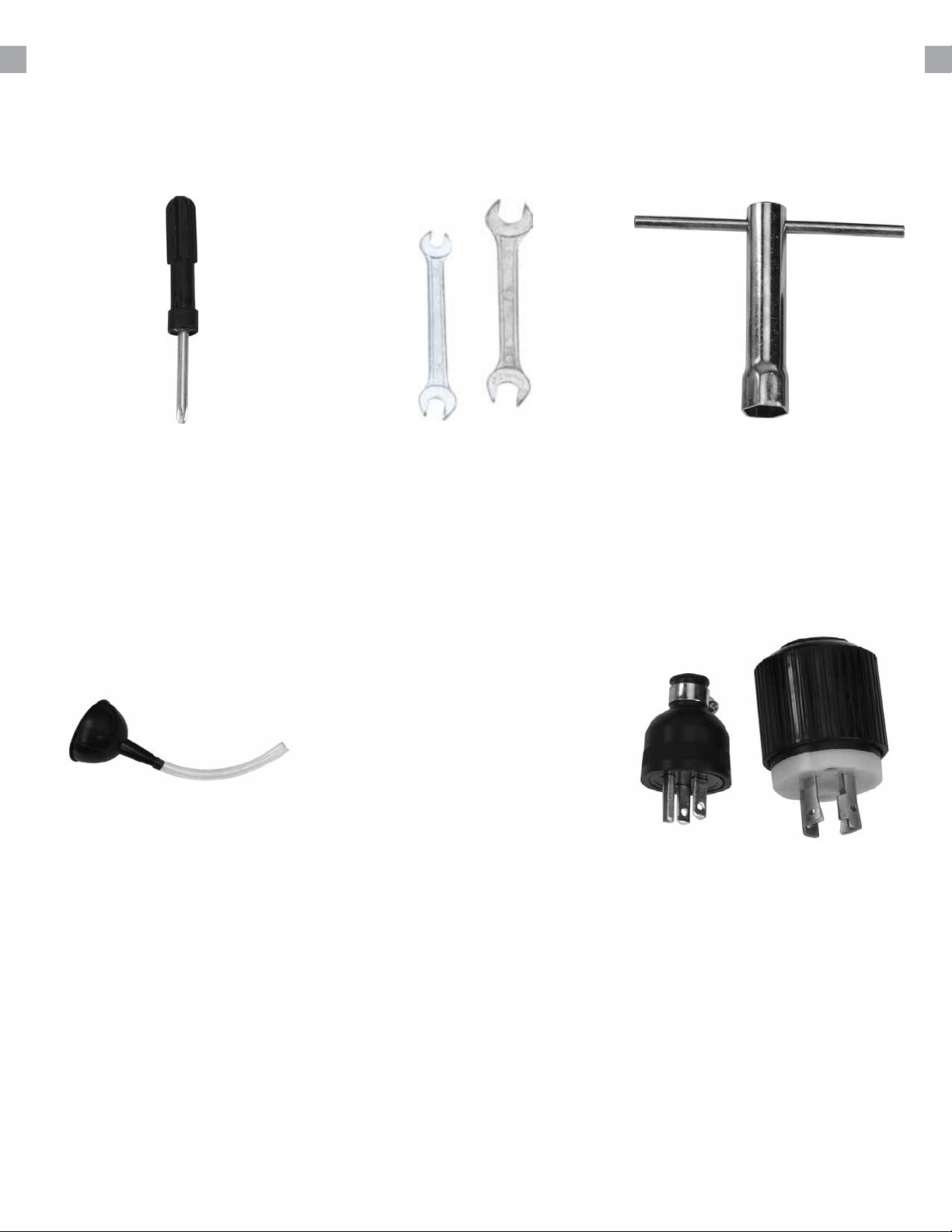
PACKAGE CONTENTS
Your generator comes with the items listed below. Please check to see that all of the following
items are included with your generator.
● Note: Actual tools may dier in appearance or design from image shown.
Double Sided
Screw Driver
Oil Funnel w/ hose
Spanner Spark Plug Wrench
Plug Ends
Phillips and slot blade
screwdriver used for generator
maintenance.
Used to add oil to the
generator without messy spills.
Assorted wrenches used in
generator maintenance and
assembly. Commonly 8mm,
10mm, 13mm, and 15mm.
Used in spark plug
maintenance, inspection, and
installation.
Plug heads for the receptacles
found on the generator are
included to make or rewire
your own cords.
18
GENERATOR SETUP
Proper setup of your generator will get you going as soon as possible while making sure you and
your equipment are safe and cared for.
19
GENERATOR SETUP
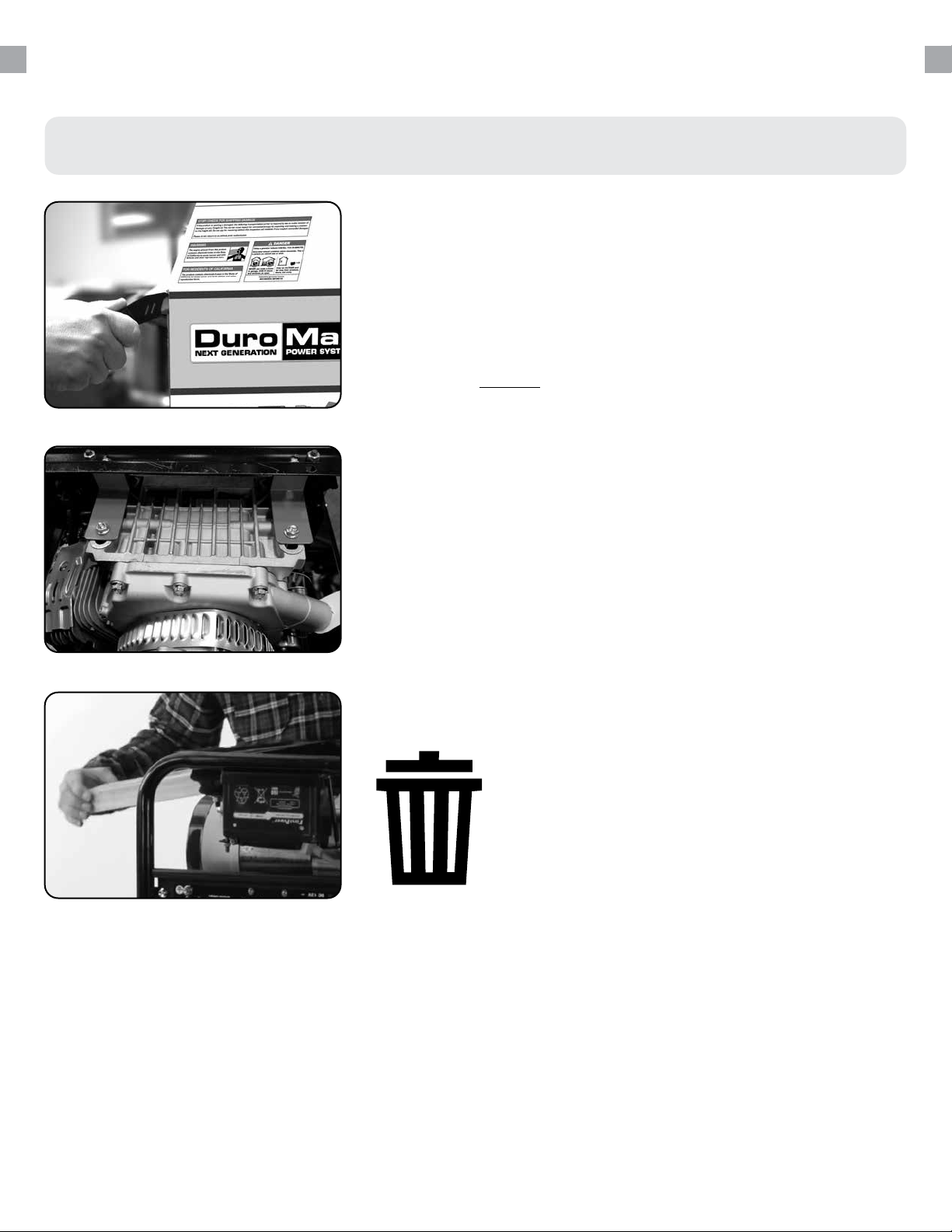
Unpack
a. Remove the generator from the box.
b. Place the largest piece of packing foam on a at surface.
c. Flip the generator upside down on the pad.
CAUTION: NEVER Attempt this if you have put fuel or oil in
the generator.
1.
Step 1 - Remove Shipping Braces
Remove braces
The shipping braces prevent engine movement during
shipment. Flip the generator over and remove the brightly
colored braces between the motor and the frame, and the
wood brace under the generator.
2.
20
Note: Shipping braces can be thrown away.
They will not be needed again.
21
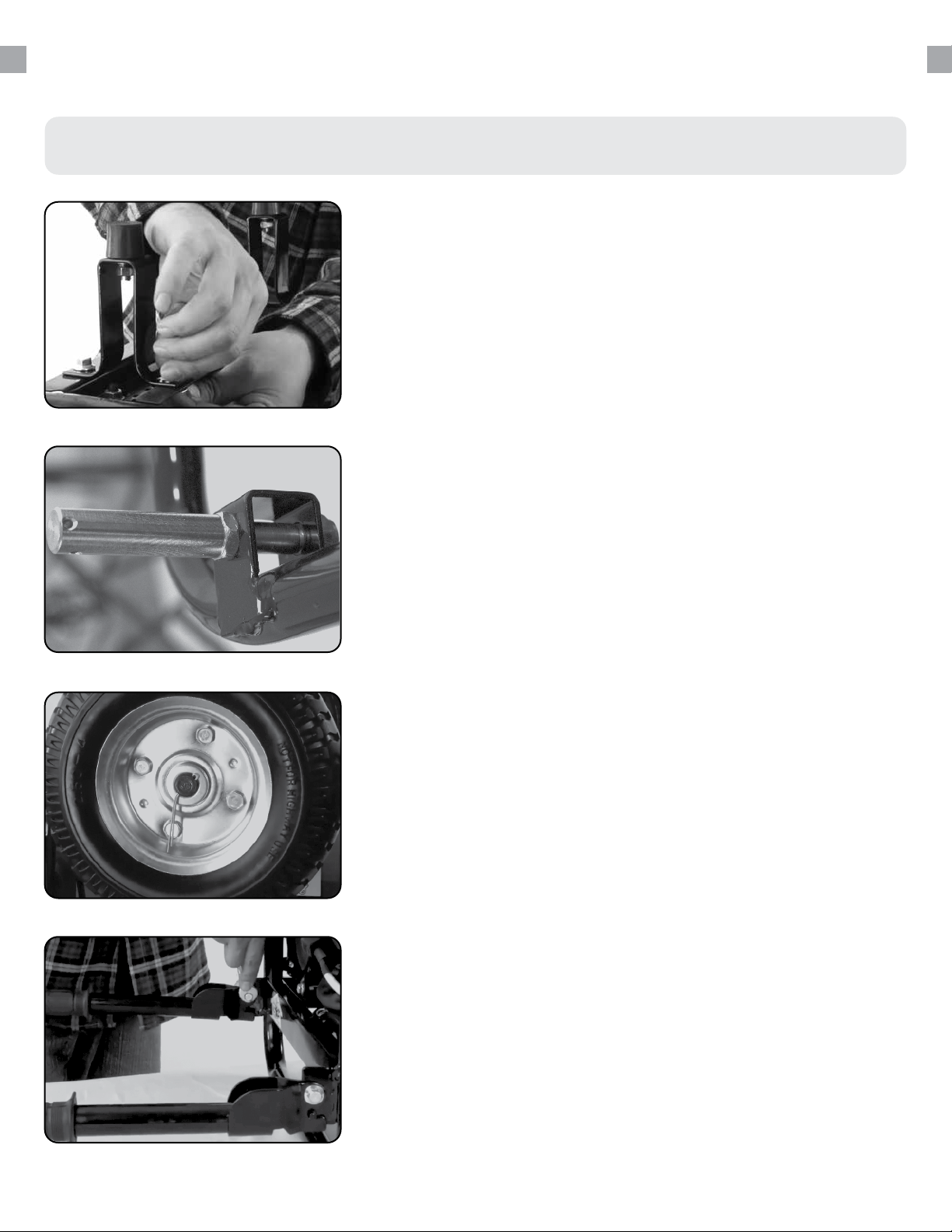
Install support legs
Secure the support legs to the frame with provided bolts and
lock nuts.
1.
Step 2 - Wheel Kit Installation (Optional)
Install Handles
Attach the handles to the brackets on the frame using the
provided bolts and nuts.
Do not over tighten the handles, it will prevent
free movement.
3.
Install wheels
a. Insert wheel bolt through frame and secure with
provided nut.
b. Slide one wheel over each axle end and secure with
the provided retaining pins.
2.
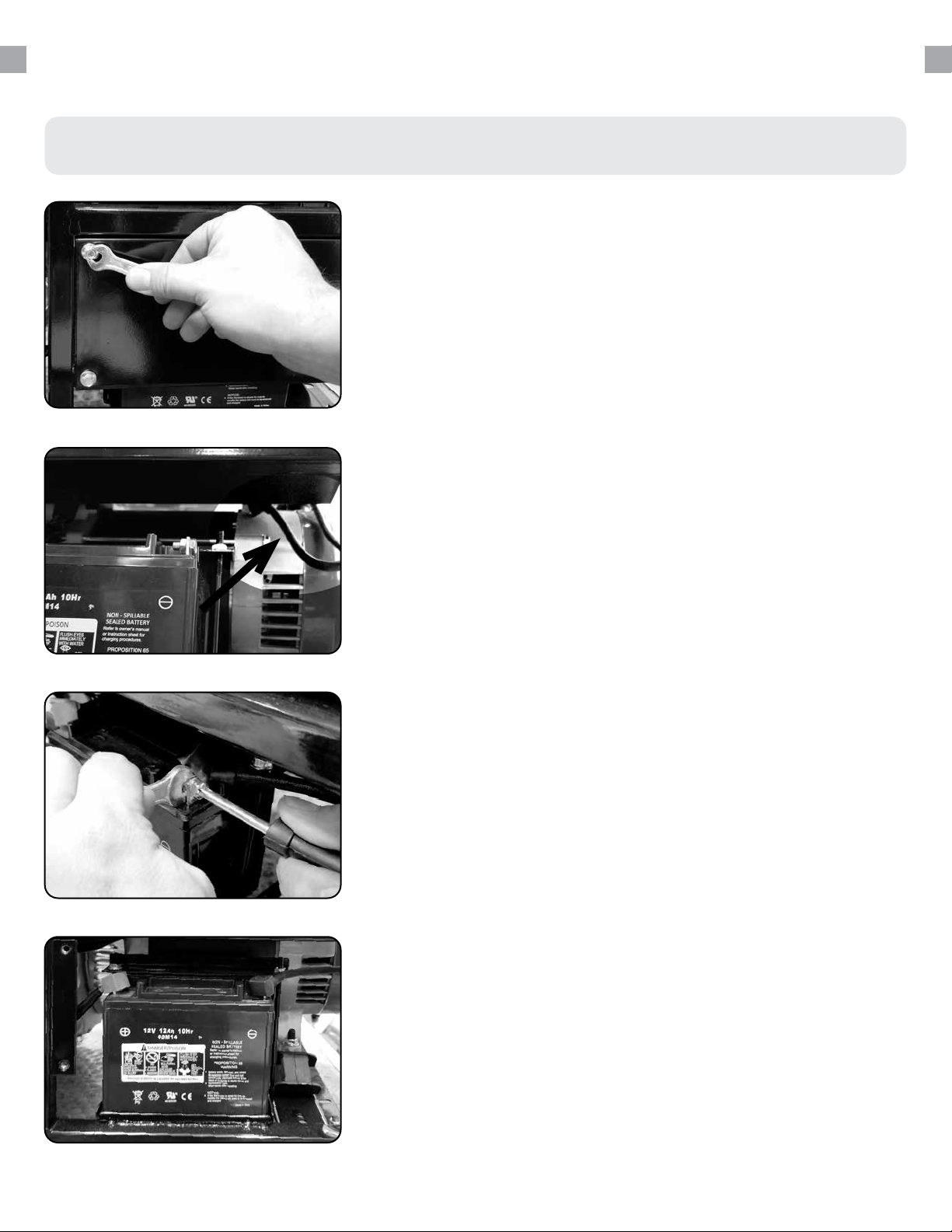
Step 3 - Connect the Battery
Connect the Battery
The generator battery is disconnected on arrival to
prevent discharge or accidental starting in storage and
transportation.
To connect the battery:
a. Remove the battery cover plate using the wrench
from the toolkit.
b. Locate the negative battery cable above and behind
the battery. One side is connected to ground and
the other end needs to be connected to the battery.
Route the free end to the negative battery terminal.
c. Push the black rubber boot up the wire to expose
the connector.
d. Securely connect the free end of the battery cable
to the negative battery terminal using the screw
and nut from the battery with the screwdriver and
wrench from the toolkit.
e. Cover the connected terminal with the black rubber
boot.
f. Reinstall the battery cover plate.
22
BEFORE YOU START YOUR GENERATOR
23
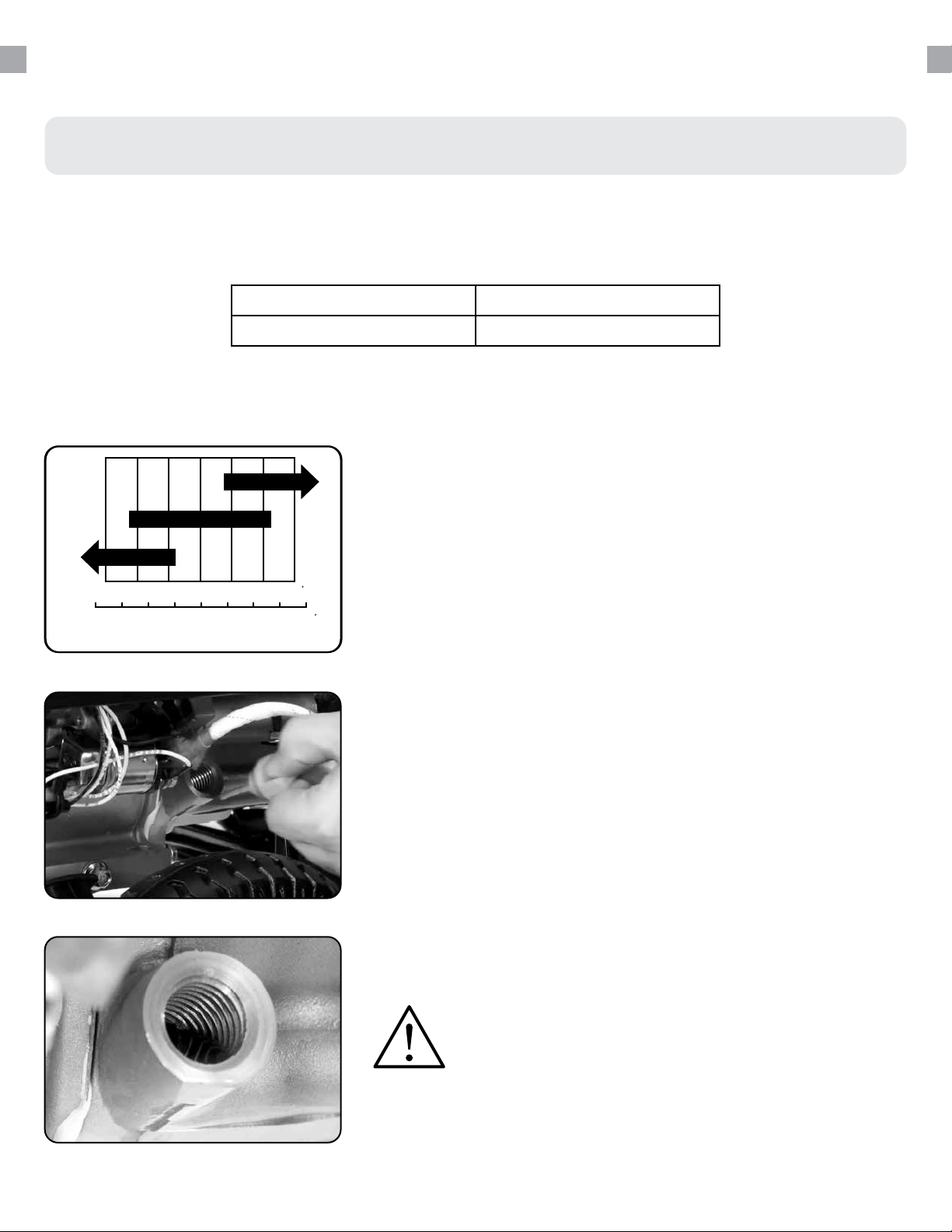
-20 20 40 60 800 100 F
-30-40 -10 0 10 20
30
-20
40 C
30
10W-30
ENVIRONMENTAL TEMPERATURE
5W-30
SAE
Add oil
The generator requires engine oil to operate properly. The generator, when new from the package
contains no oil in the crankcase
*
. You must add the proper amount of oil before operating the
generator for the rst time. This amount is equal to the oil capacity of the engine crankcase:
WARNING: Do not apply engine oils with additives or 2-stroke gasoline engine oils. They don’t
have enough lubrication, and may shorten the engine’s service life.
a. Make sure the generator is on a level surface.
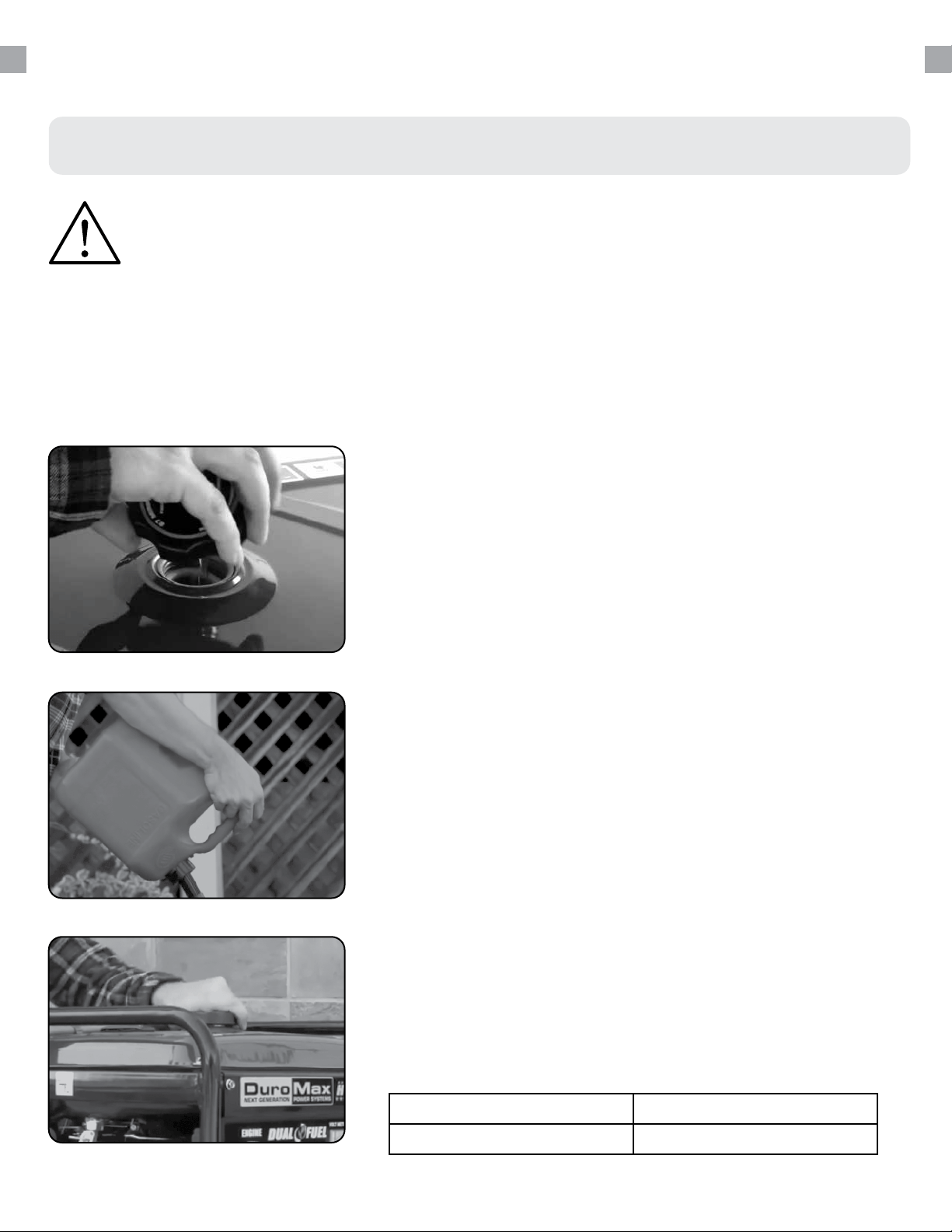
b. Unscrew the oil ller/dipstick cap from the engine .
c. Using a funnel, add the appropriate amount of oil
into the crankcase. You will know the crankcase is
full when the oil level has reached the lower lip of
the opening you have just poured the oil into.
d. Replace oil ller cap.
Step 4 - Adding Oil
Engine oil recommended: SAE 10W-30. Viscosity varies with
regions and temperatures. Choose your oil viscosity using the
chart to the left.
* A small amount of oil from factory testing may be present on
arrival.
Model Number XP11500EH
Engine Oil Capacity 37 . oz (1.1L)
WARNING: DO NOT overll the crankcase. This
may damage the motor and shorting overall life
of your generator.
GENERATOR SETUP (CONTINUED)
24
WARNING: Gasoline and gas fumes are highly ammable.
● Do not ll tank near an open ame.
● Do not overll. Always check for fuel spills.
Step 5 - Adding Gasoline
Add Gasoline
a. Make sure the generator is on a level surface.
b. Unscrew gas cap and set aside (NOTE: the gas cap
may be tight and hard to unscrew).
c. Slowly add unleaded gasoline to the fuel tank. Be
careful not to overll. Please refer to the chart below
to nd the gas capacity of your generator model. The
fuel gauge on the top of the gas tank indicates how
much gasoline is in the generator gas tank.
d. Replace fuel cap and wipe up any spilled gasoline
with a dry cloth.
NOTE: Gas can expand. Do not ll the gas tank
to the very top. Leave a minimum of 1.5 in of open
space.
IMPORTANT:
● Never use an oil/gasoline mixture. Never use old gas.
● Avoid getting dirt or water in the fuel tank.
● Gas can age in the tank and make it hard to start up
the generator in the future.
● Never store generator for extended periods of time
with fuel in the tank.
To ensure that the generator runs smoothly use only FRESH, UNLEADED GAS WITH AN OCTANE
RATING OF 87 OR HIGHER.
Model Number XP11500EH
Gas Tank Capacity 7.9 US Gallons (30L)
25
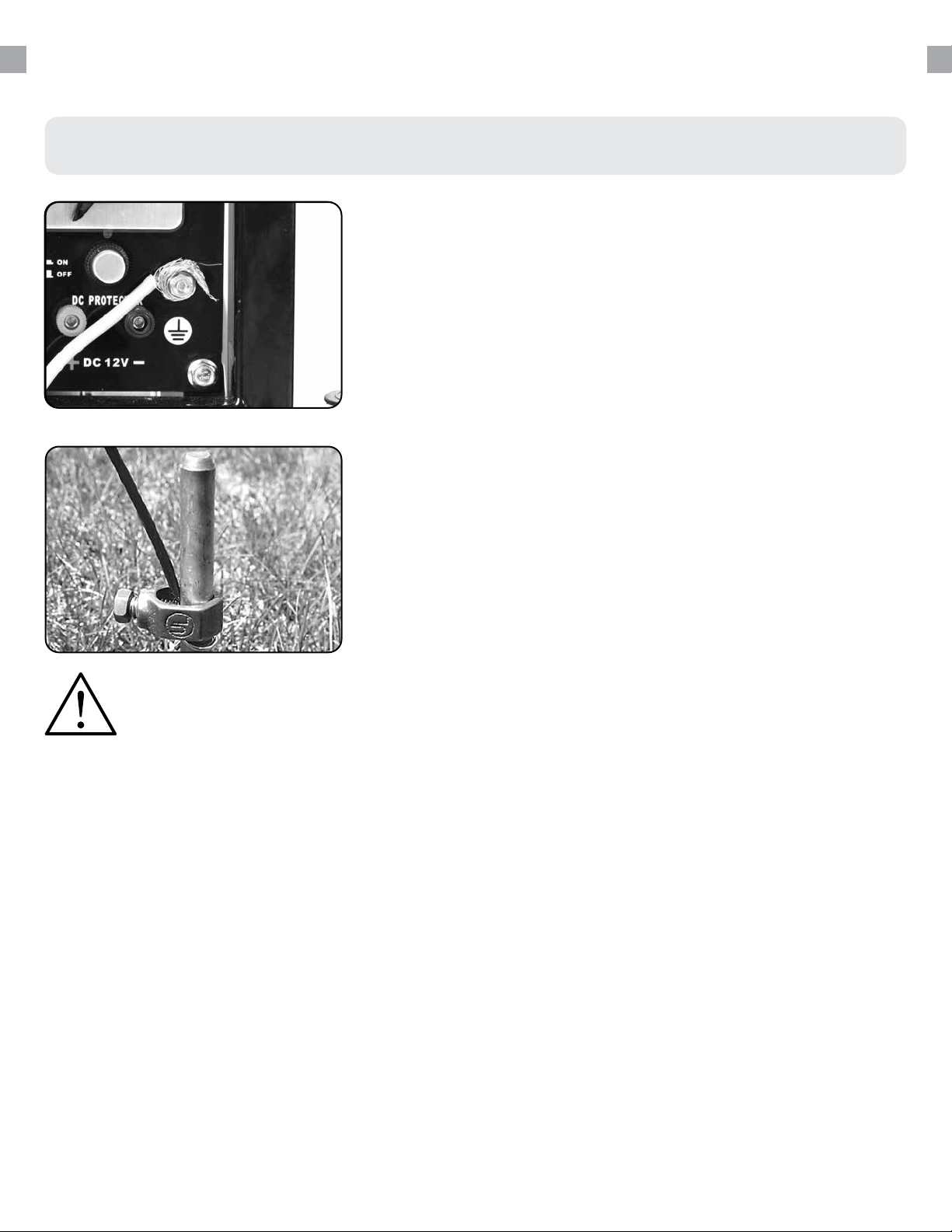
Attach grounding wire
a. Ground the generator by tightening the grounding
nut against a grounding wire.
b. Connect the other end to a copper or brass
grounding rod that’s driven into the earth.
A generally acceptable grounding wire is a No. 12 AWG
(American Wire Gauge) stranded copper wire.
Grounding codes can vary by location. Please contact a local
electrician to check the grounding regulations for your area.
Step 6 - Grounding the Generator
WARNING: Failure to properly ground the generator can result in electrocution.
High Altitude Operation
At high altitude, the standard carburetor air/fuel mixture will be too rich. Performance will decrease, and
fuel consumption will increase. A very rich mixture will also foul the spark plug and cause hard starting.
Operation at an altitude that diers from that at which this engine was certied, for extended periods of
time, may increase emissions. High altitude performance can be improved by specic modications to the
carburetor. If you always operate your generator at altitudes above 3,000 feet (900 meters), have a dealer
perform this carburetor modication. This engine, when operated at high altitude with the carburetor
modications for high altitude use, will meet each emission standard throughout its useful life. Even with
carburetor modication, engine horsepower will decrease about 3.5% for each 1,000-foot (300-meter)
increase in altitude. The eect of altitude on horsepower will be greater than this if no carburetor
modication is made.
When the carburetor has been modied for high altitude operation, the air/fuel mixture will be too lean
for low altitude use. Operation at altitudes below 3,000 feet (900 meters) with a modied carburetor may
cause the engine to overheat and result in serious engine damage.
26
27
STARTING THE GENERATOR
If this is not your rst time using the generator there are still steps you should take to prepare it for
operation each time you use it.
IMPORTANT: At this point you should be familiar with the procedures described in the rst
portion of this section entitled “GENERATOR SETUP” If you have not yet read this section, go
back and read it now.
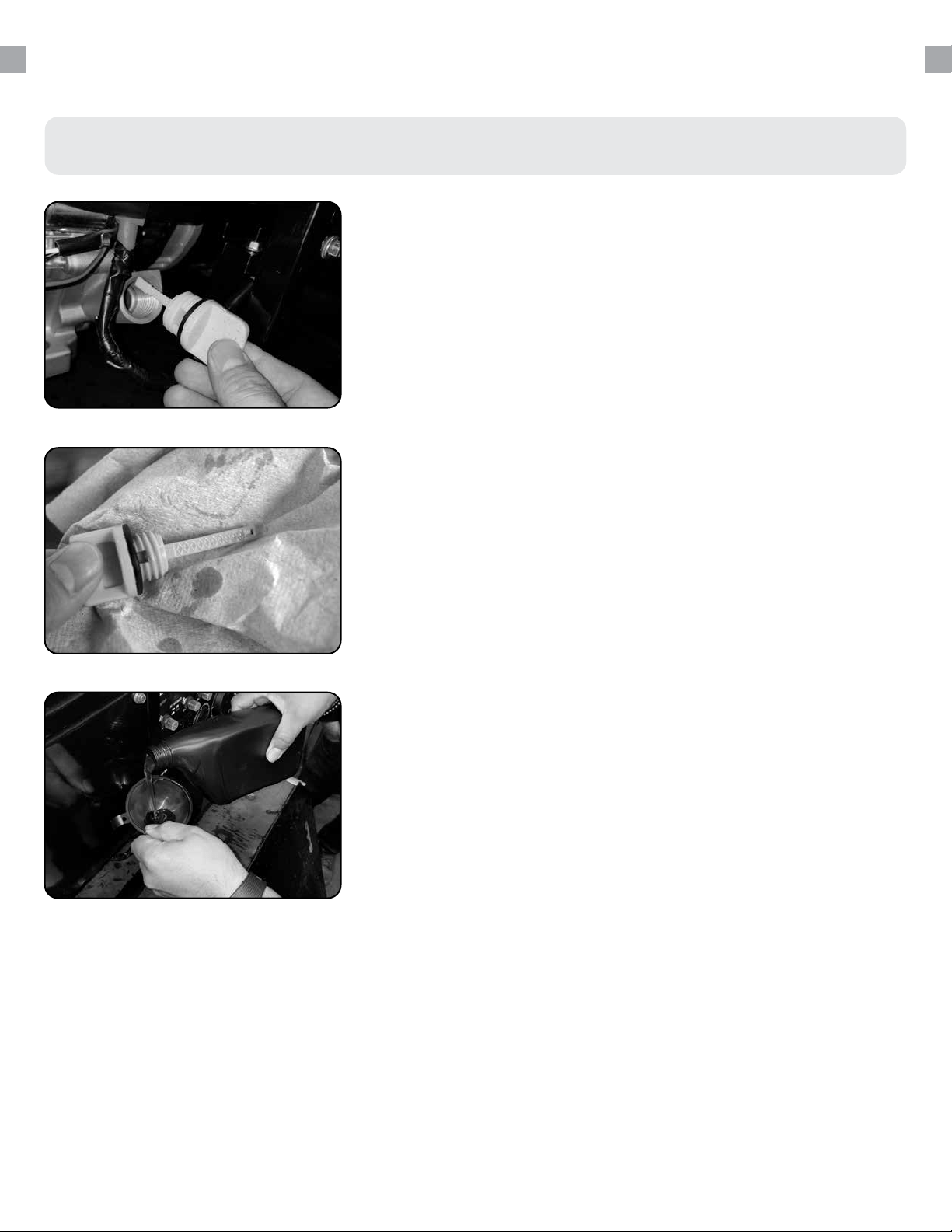
Step 1 - Check the oil
Check the oil
The generator is equipped with an automatic shuto to
protect it from damage due to low oil. Nonetheless, you
should check the oil level of the engine before each use to
ensure that the engine crankcase has a sucient amount.
To check the oil level:
a. Make sure the generator is on a level surface.
b. Unscrew the oil ller/dipstick cap.
c. With a dry cloth, wipe the oil o of the stick on the
inside of the cap.
d. Insert the dipstick as if you were replacing the
cap and then remove again. There should now be
oil on the stick. If there is no oil on the stick, or oil
only at the very end of the stick, you should add
oil until the engine crankcase is lled (see “Adding
Oil” portion of the “Maintenance” section).
e. Be sure to replace the cap when nished checking
oil.
NOTE: The oil capacity for your generator can be found in
the “Specications” section of this manual.
28
BEFORE YOU START YOUR GENERATOR
29
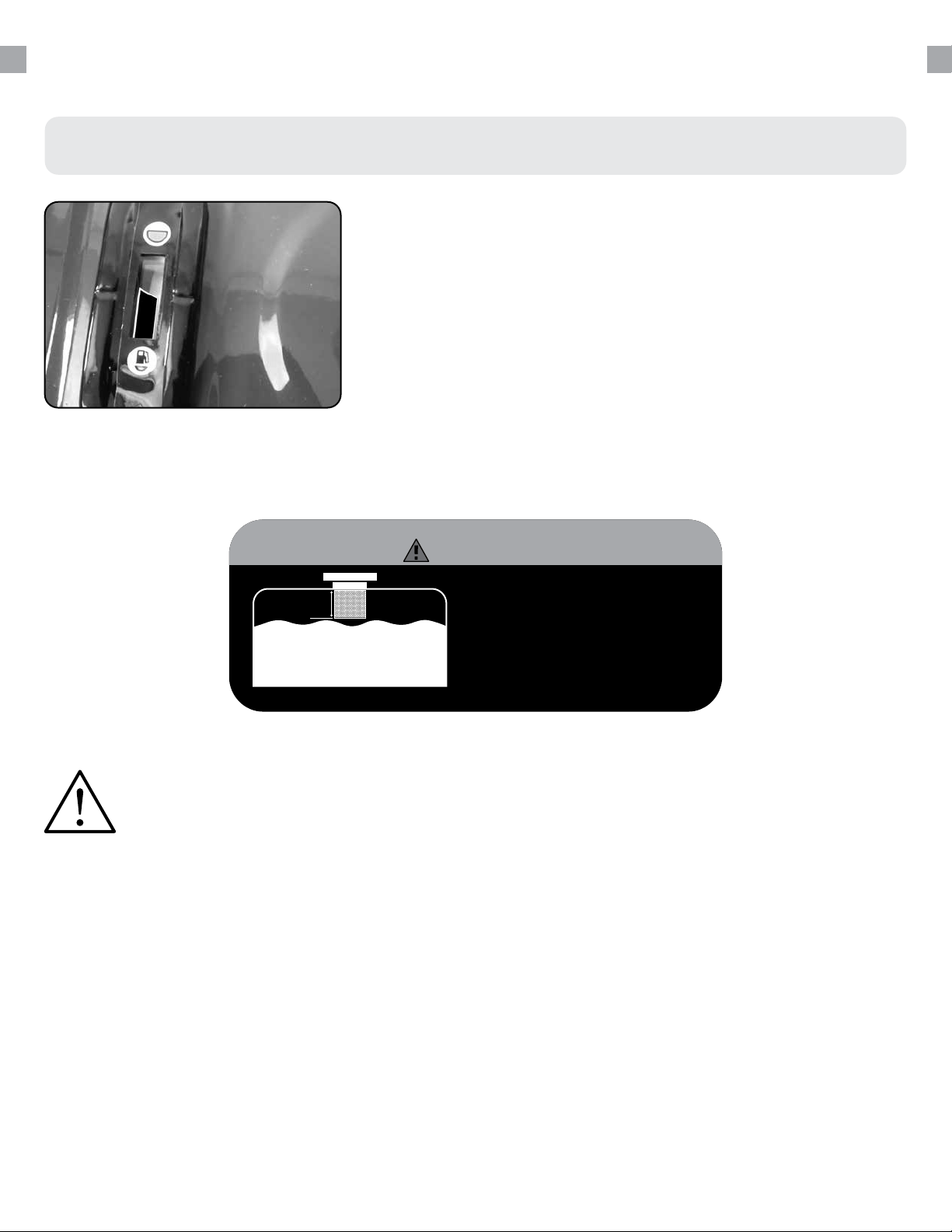
Check Fuel Level
If running the engine on gasoline check to see that there is
sucient gasoline in the fuel tank. The fuel gauge on top of
the tank will give a rough estimate of the gasoline level. The
gauge will appear white then ll red as the tank is lled.
Note: Fuel gauge may not register with less than 1/3 fuel
tank full.
Step 2 - Check the gas level (Optional)
WARNING: Gasoline and gasoline fumes are highly ammable.
● Do not ll tank near an open ame.
● Always allow engine to cool for several minutes before refueling.
● DO NOT overll fuel tank. Fuel expands when shaken or heated. ALWAY leave 1
1
/
2
“
space or more at the top of the tank.
● ALWAYS use fresh fuel or stabilized fuel. Old gasoline (older than 30 days) can cause
permanent damage to the fuel system.
● Always check for fuel spills.
DANGER
DO NOT OVERFILL
THE GAS TANK
OVERFILLING CAN RESULT
IN A FIRE, EXPLOSION,
OR DEATH.
1.5”
STARTING THE GENERATOR
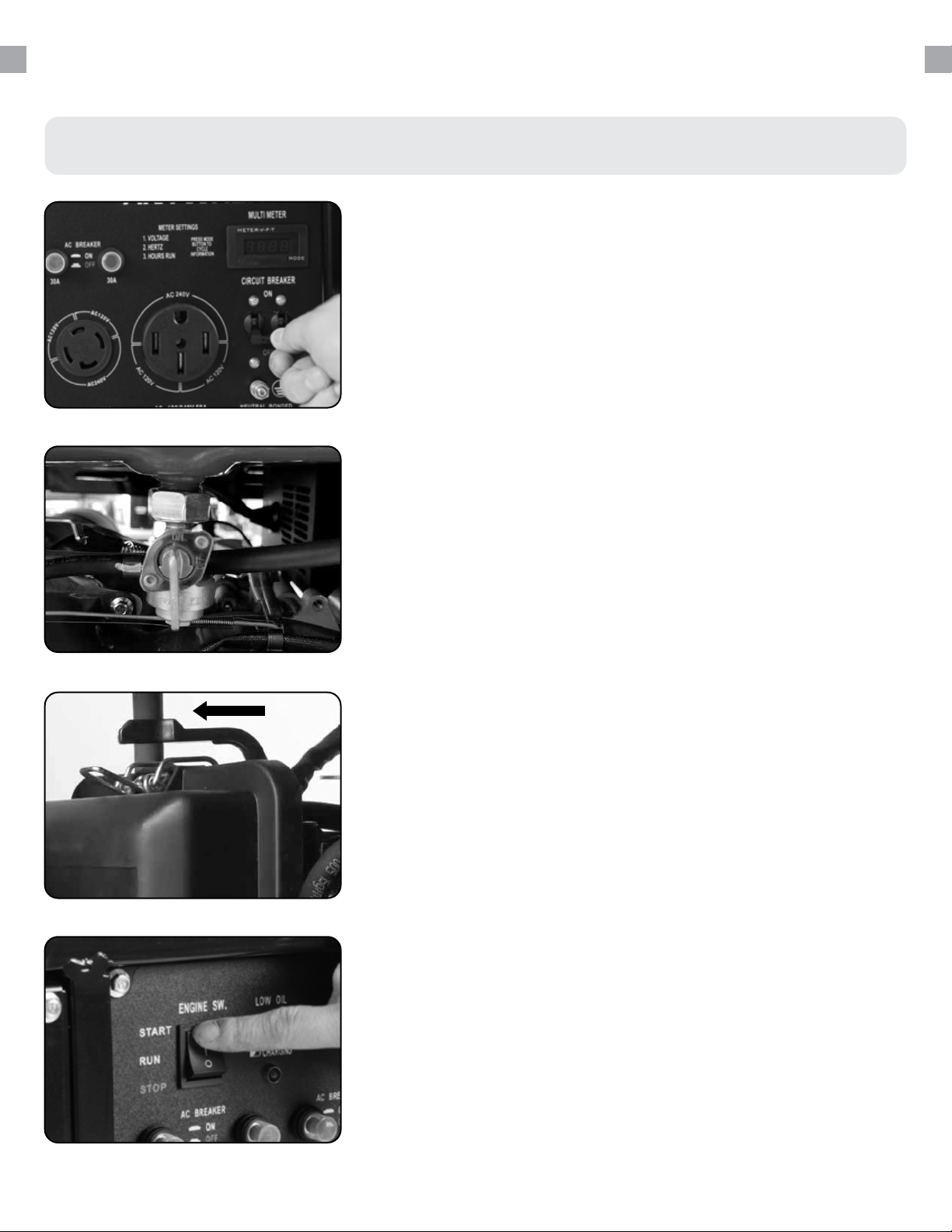
Shut breaker o
The breaker is located on the right side of the front power
panel. Flip the breaker down to prevent accidental load
when starting the generator.
1.
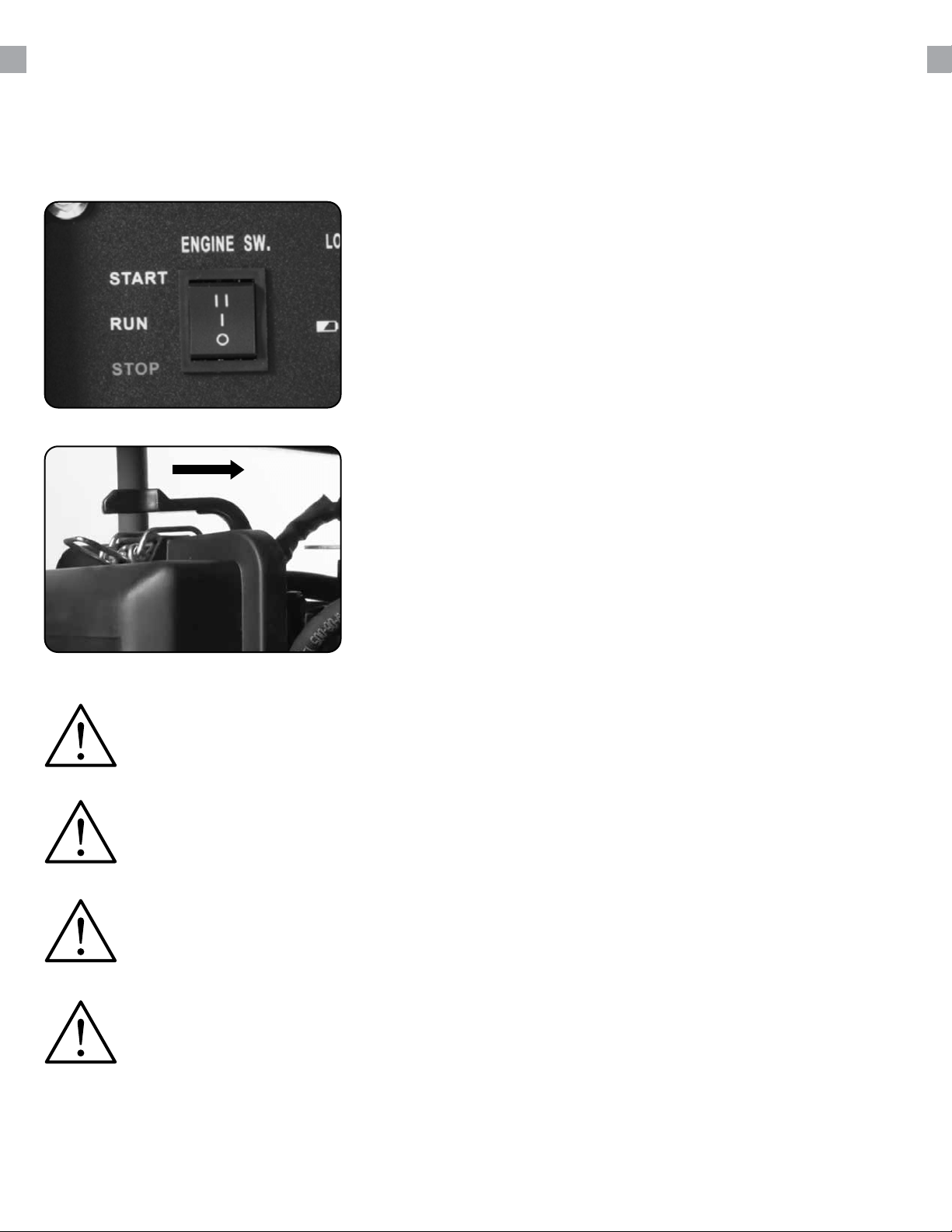
Starting the Generator Using Gasoline
Turn gas valve on
Turn engine switch to START
The gas valve is located above the recoil start on the bottom
of the fuel tank. Rotate the valve counterclockwise to the
vertical position to turn on the gas supply.
The engine switch is located on the left side of the front
power panel. Press the top “Start” position on the rocker
switch to start the generator.
2.
Close choke
The choke lever is located above the air lter to the left of
the recoil start. Slide the lever to the left to cut the air supply
and allow more gas into the engine to start.
3.
4.
30
CAUTION: LPG must be shut o when using gasoline!
CAUTION: Gasoline must be shut o when using LPG!
CAUTION: Disconnect all electrical loads from the generator before attempting to
start!
WARNING: Operating the starter motor for more than 5 seconds can damage the
motor. If the engine fails to start, release the switch and wait 10 seconds before
operating the starter again.
31
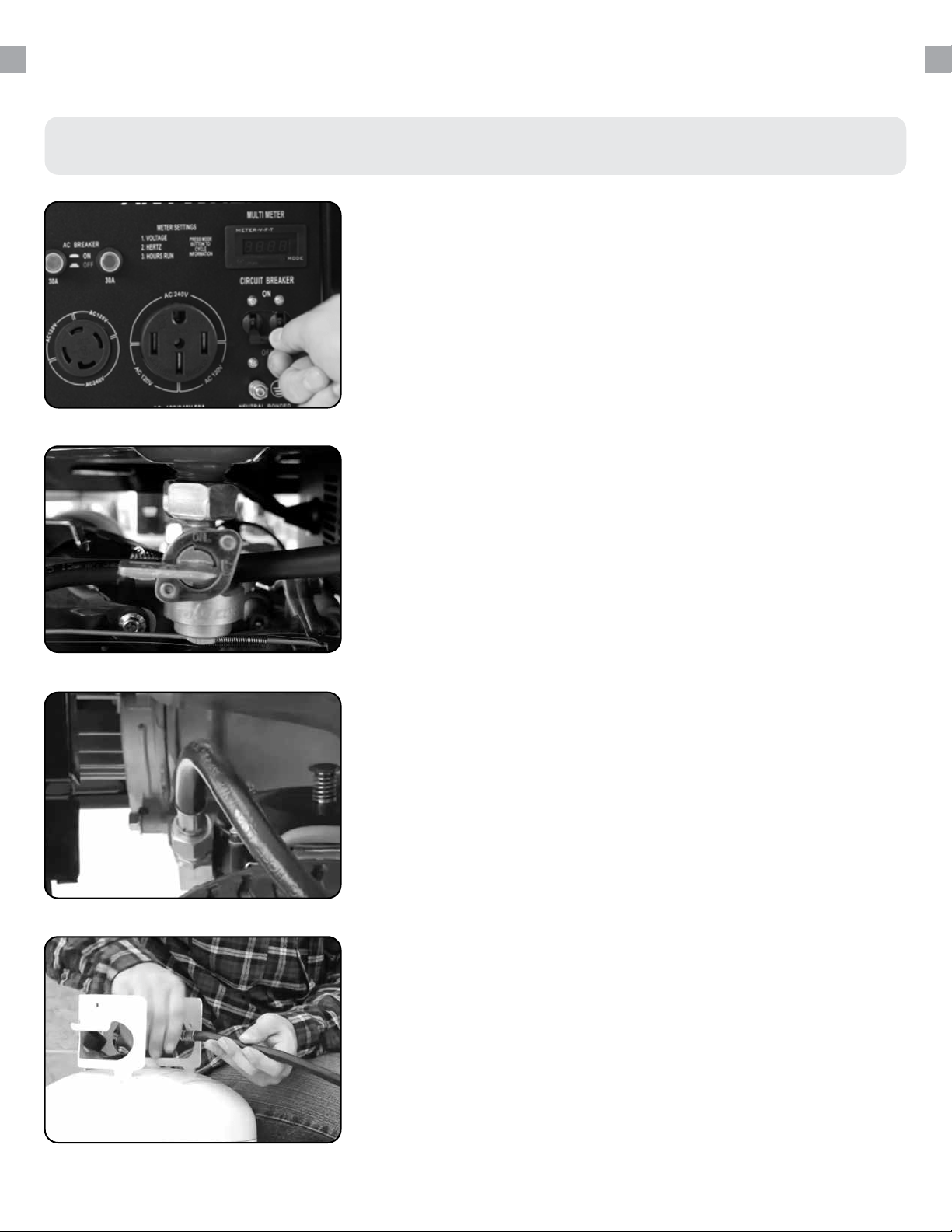
Turn engine switch to RUN
When the engine starts, allow the engine switch to return to
the RUN position.
5.
Open choke
Push the choke to the OPEN position as the engine warms up.
6.
STARTING THE GENERATOR (CONTINUED)
Turn breaker o
The breaker is located on the right side of the front power
panel. Flip the breaker down to prevent accidental load
when starting the generator.
1.
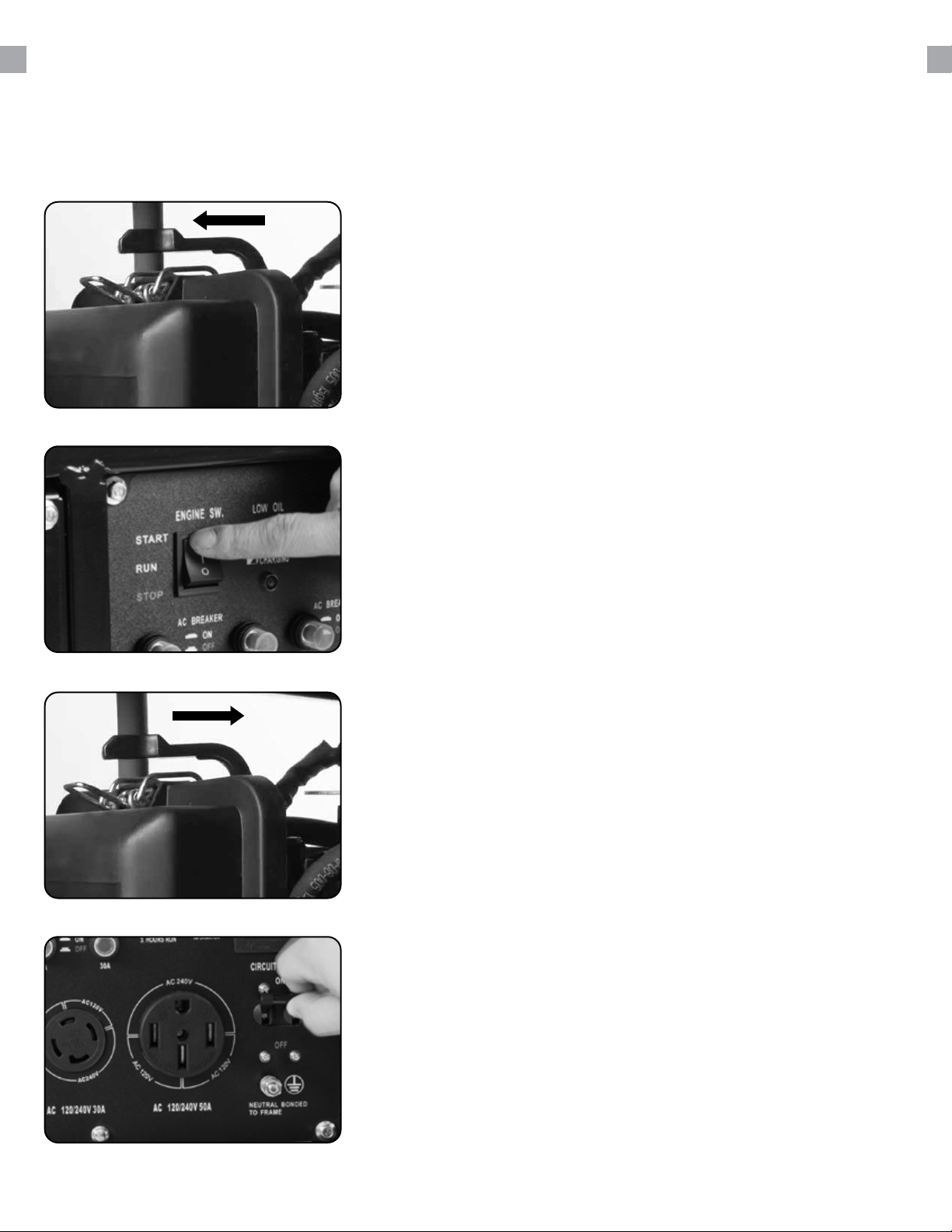
Starting the Generator Using Propane
Turn gas valve o
The gas valve is located above the recoil start on the
bottom of the fuel tank. Rotate the valve counter clockwise
to the horizontal position to stop the ow of gasoline to the
carburetor.
2.
Connect propane hose
The propane regulator is located on the frame of the
generator below the OHV valve cover on the rear of the
generator. Ensure the propane hose is securely connected
to the regulator.
3.
Connect propane tank
There propane hose is located on the left side of the
regulator, below the OHV valve cover. Screw the open ACME
nut connection to your propane tank and turn the tank on.
4.
32
33
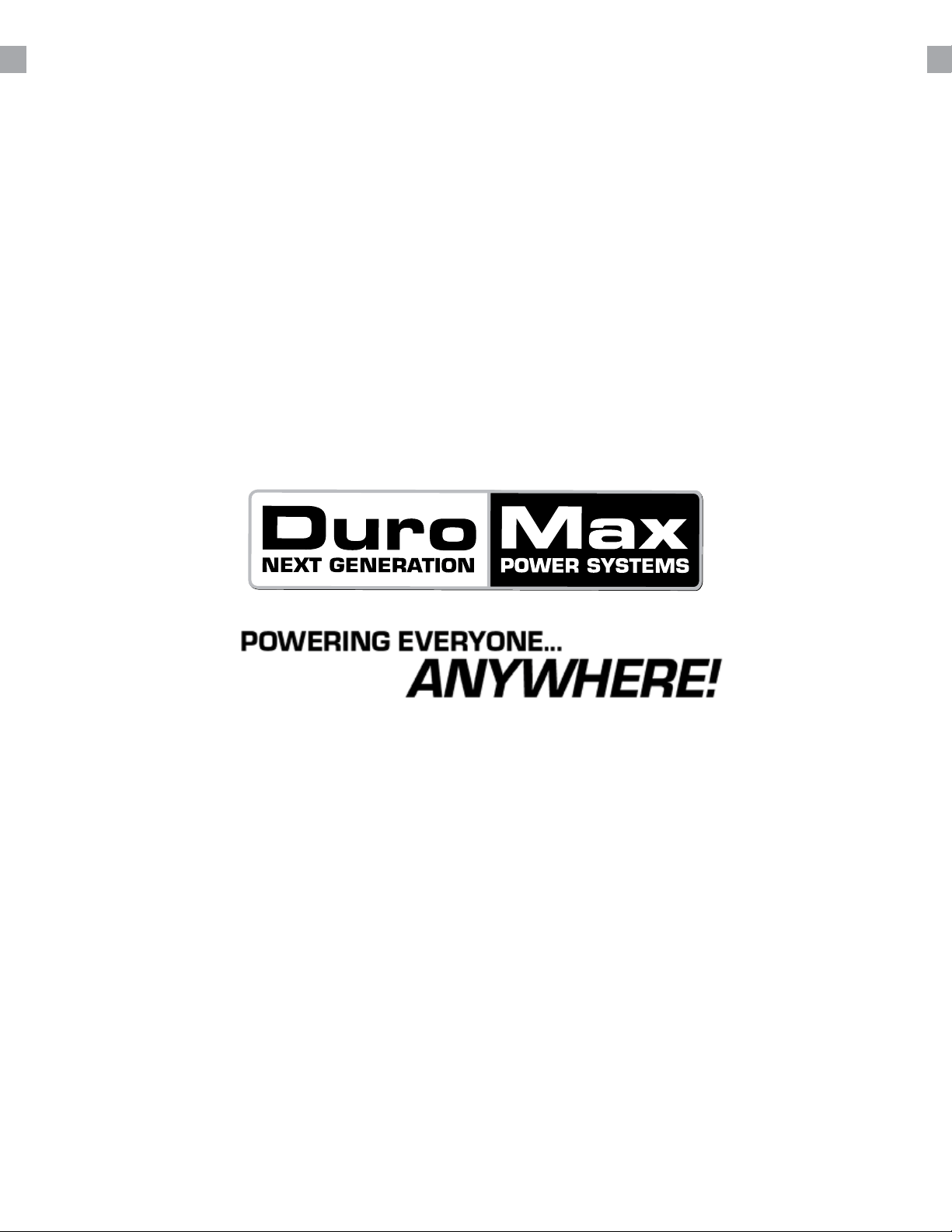
Turn breaker on / connect
The breaker is located on the right side of the front power
panel. Flip the breaker up to allow power to ow to the
receptacles. Connect your devices to the receptacles on the
front panel. Start with the largest loads rst.
7.
Adjust choke
The choke lever is located above the air lter to the left of
the recoil start. Slide the lever to the right to open the choke
and increase air into the carburetor for normal running.
5.
6.
Start
The engine switch is located on the left side of the front
power panel. Insert the switch and turn to the start position
to start the generator. Allow the switch to return to the on
position once started.
Close choke
The choke lever is located above the air lter to the left of
the recoil start. Slide the lever to the left to cut the air supply
and allow more gas into the engine to start.
3.

STARTING THE GENERATOR (CONTINUED)
Starting the Generator Using Propane
WARNING: WHEN USING THE GENERATOR WITH LPG, MAKE SURE THERE IS NO
POSSIBLE IGNITION SOURCE CLOSE TO THE GENERATOR.
1. Before using, make sure all of the LPG connectors and hoses are well connected and
sealed.
2. Connect electrical devices to generator ONLY after the engine runs smoothly.
(There may be remnant gasoline in the carburetor; this can cause unsteady engine
performance for several minutes)
3. If the propane gas leaks, shut o the LPG supply rst and then quickly unplug or turn
o any electrical devices powered by the unit.
4. When stopping the engine, unplug or turn o any electrical devices, turn o the Main
Circuit Breaker and then turn o the LPG Supply. After the engine has stopped turn
the Switch to ‘OFF” position.
34
35
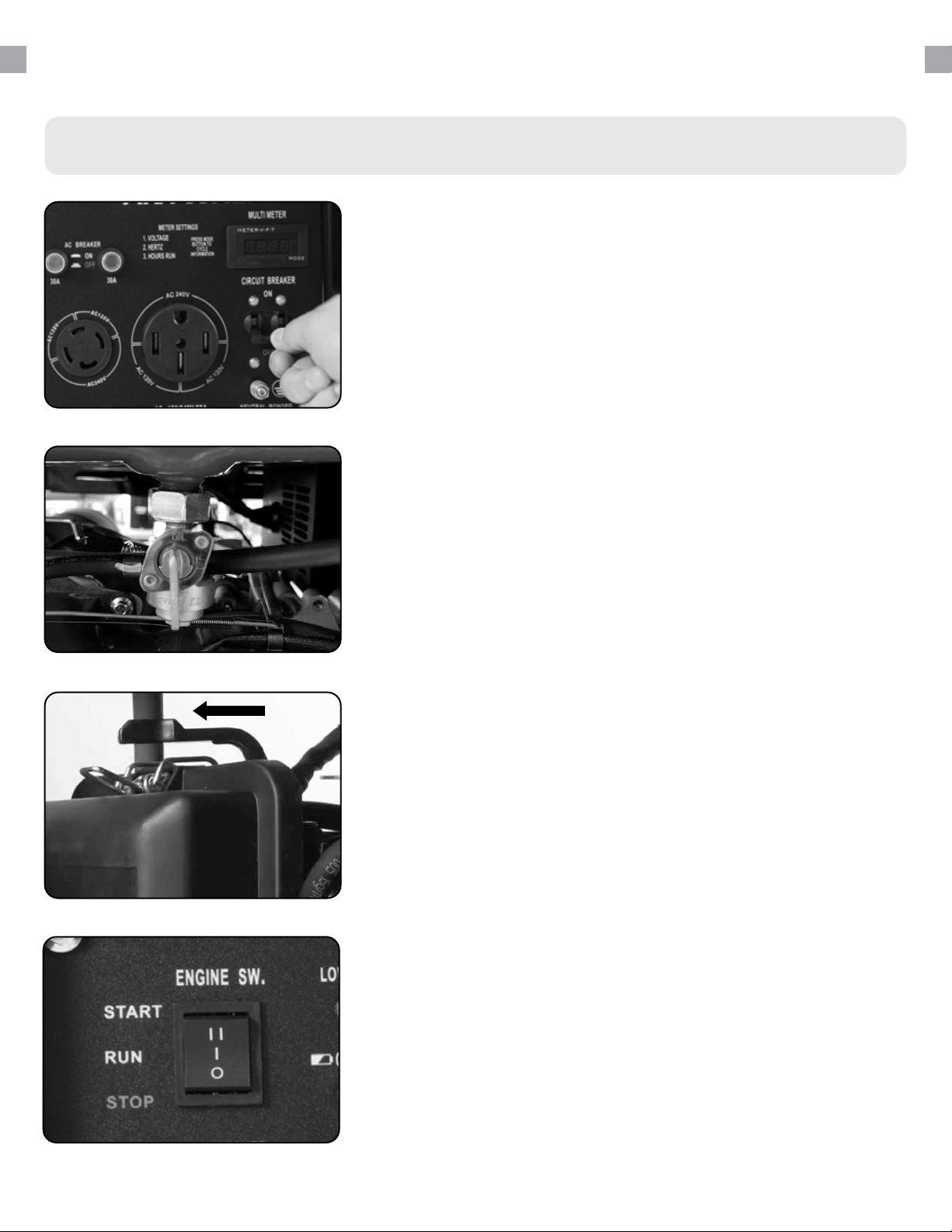
STARTING THE GENERATOR (CONTINUED)
Shut breaker o
The breaker is located on the right side of the front power
panel. Flip the breaker down to prevent accidental load
when starting the generator.
1.
Starting the Generator Using Recoil Start
Select your fuel.
Turn engine switch to RUN
If using gasoline, see step 2 on pg. 30. If using propane see
steps 2 - 4 on pg. 32
The engine switch is located on the left side of the front
power panel. Press the engine switch to the RUN position.
2.
Close choke
The choke lever is located above the air lter to the left of
the recoil start. Slide the lever to the left to cut the air supply
and allow more gas into the engine to start.
3.
4.
36
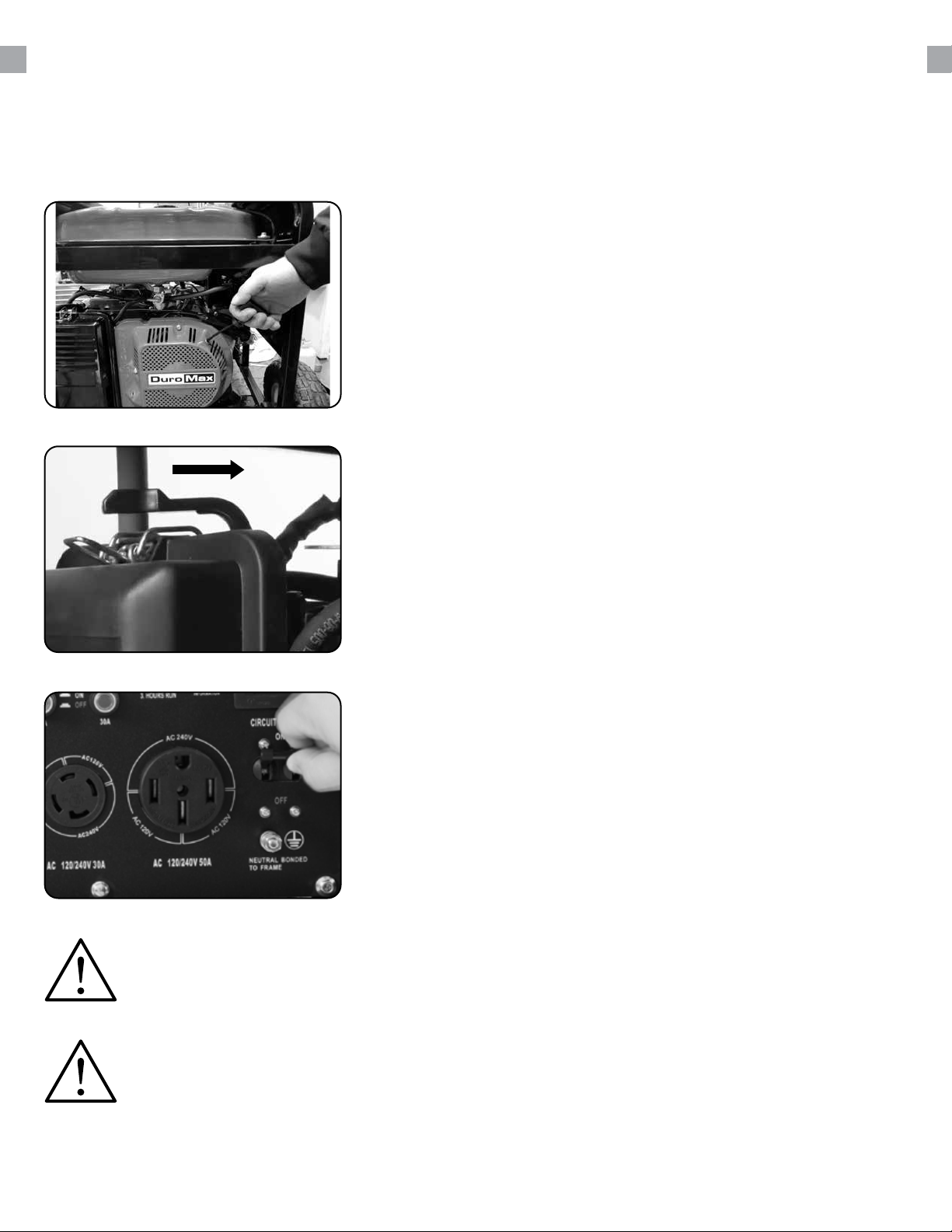
CAUTION: Disconnect all electrical loads from the generator before attempting to
start!
CAUTION: Release the recoil handle only after the cord has retracted. Releasing
the recoil handle while extended may cause harm to yourself or your equipment.
37
Pull the recoil start
The recoil start in located on the left side panel next to the air
lter. Pull the recoil handle slowly until resistance is felt, then
quickly pull the recoil handle until fully extended.
5.
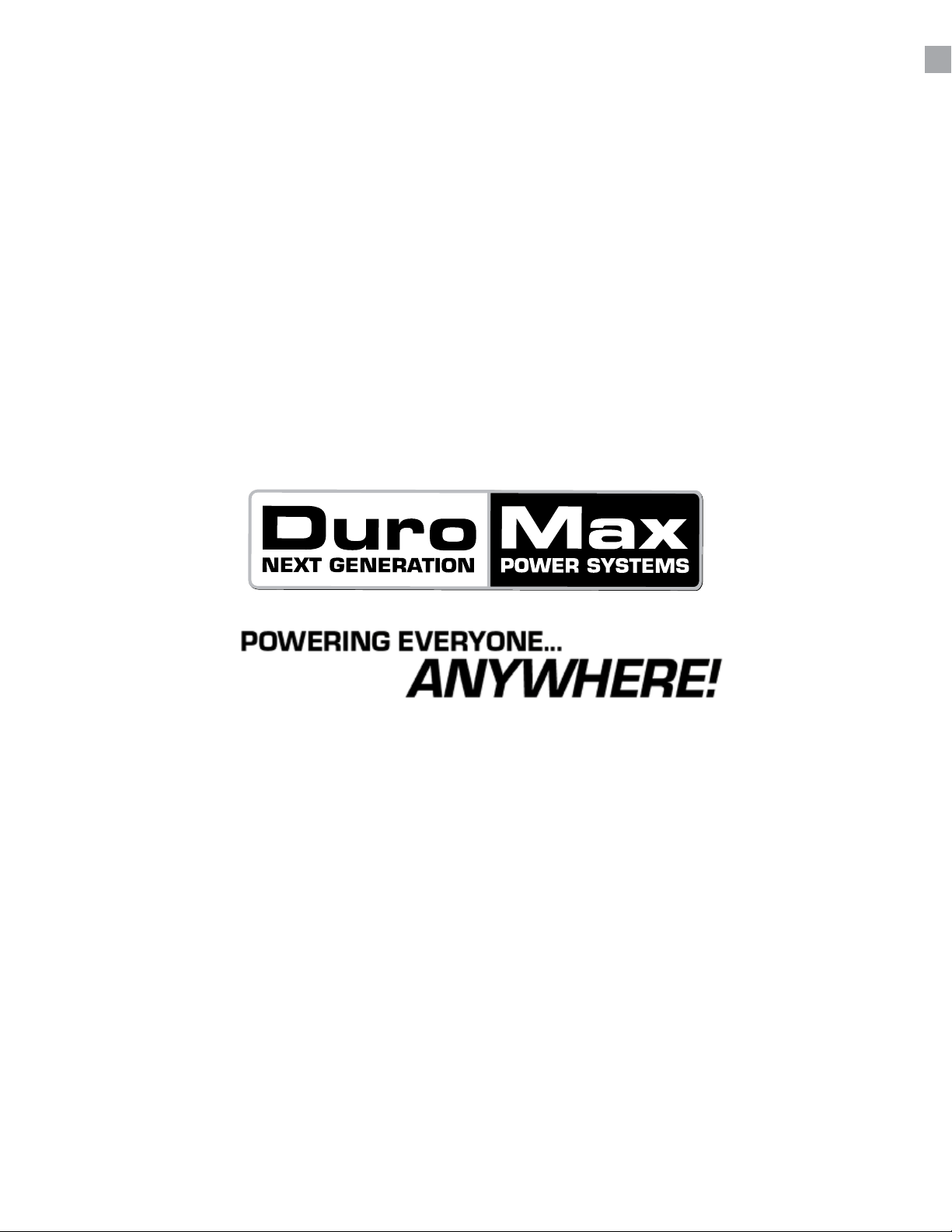
Open choke
After the engine has started. Push the choke to the OPEN
position as the engine warms up.
6.
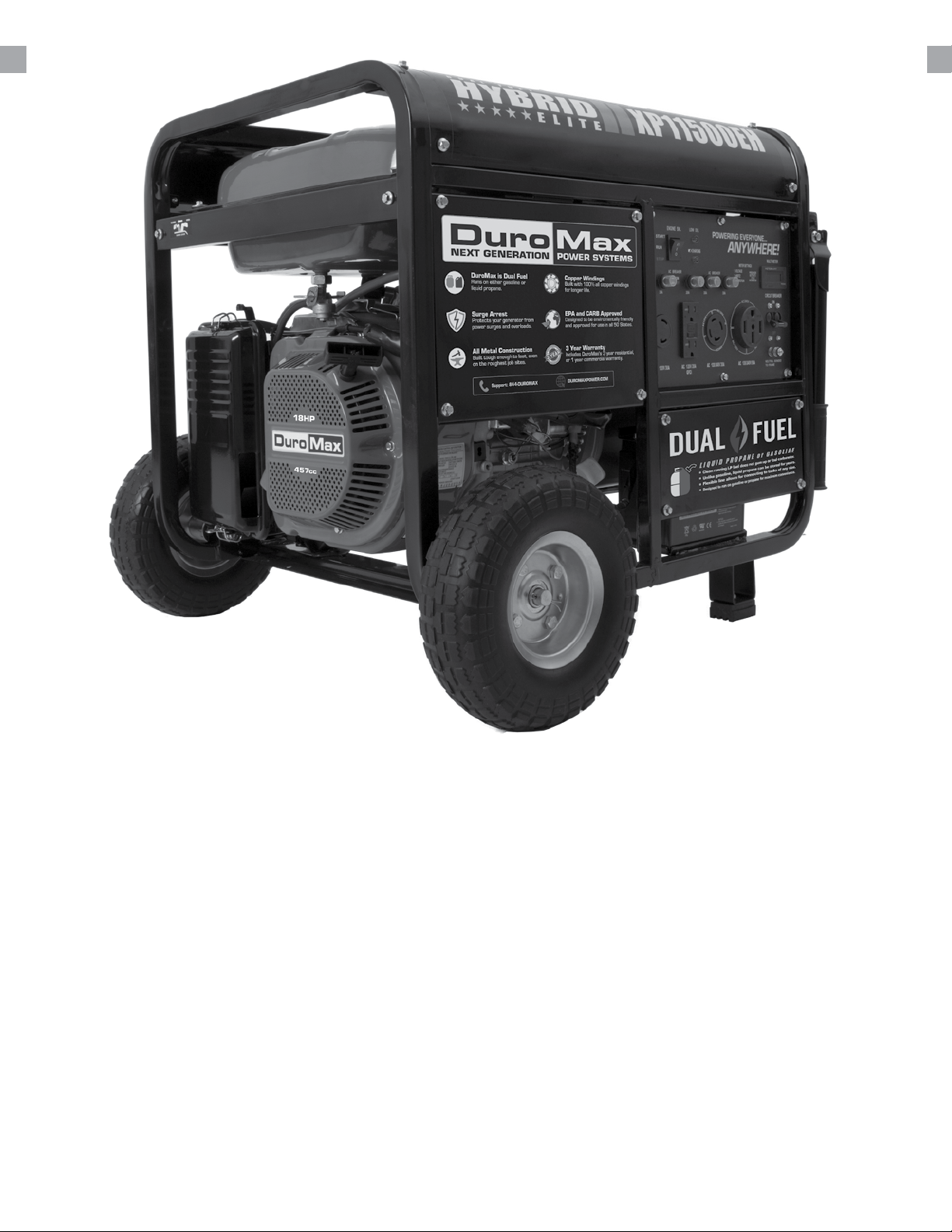
Turn breaker on / connect
The breaker is located on the right side of the front power
panel. Flip the breaker up to allow power to ow to the
receptacles. Connect your devices to the receptacles on the
front panel. Start with the largest loads rst.
7.
38
USING THE GENERATOR
If this is not your rst time using the generator there are still steps you should take to prepare it for
operation each time you use it.
IMPORTANT: At this point you should be familiar with the procedures described in the rst
portion of this section entitled “GENERATOR SETUP” If you have not yet read this section, go
back and read it now.
39

USING THE GENERATOR
AC Usage
● You may connect electrical devices running on AC current according to their wattage
requirements.
● The chart below shows the rated and surge wattage of your generator according to its model
number.
● The rated wattage corresponds to the maximum wattage the generator can output on a
continuous basis.
● The surge wattage corresponds to the maximum amount of power the generator can output for
a short period of time. Many electrical devices such as refrigerators require short bursts of extra
power, in addition the rated wattage listed by the device, to stop and start their motors. The
surge wattage ability of the generator covers this extra power requirement.
The total running wattage requirement of the electrical devices connected to the generator should
not exceed the rated wattage of the generator itself. To calculate the total wattage requirement of
the electrical devices you wish to connect, nd the rated (or running) wattage of each device. This
number should be listed somewhere on the device or in its instruction manual.
If you cannot nd this wattage, you may calculate it by multiplying the Voltage requirement by the
Amperage drawn: Watts = Volts x Amps. If these specications are not available you may estimate
the Watts required by your device by using the chart on the next page.
Once you have found the rated wattage requirement of each electrical device, add these numbers
to nd the total rated wattage you wish to draw from the generator. If this number exceeds
the rated wattage of the generator, DO NOT connect all these devices. Select a combination of
electrical devices, which has a total rated wattage lower than or equal to the rated wattage of the
generator.
Fuel Source Rated (Running Wattage) Surge (Peak) Wattage
Gasoline 9000 11500
Propane 8550 10925
40
41
Tool or Appliance Rated (Running) Watts Additional Surge Watts
Electric water heater (40 gal) 4000 0
Hot plate 2500 0
Radial arm saw 2000 2000
Electric Stove 1500 0
Circular Saw 1500 1500
Air compressor (1 HP) 1500 3000
Window air conditioner 1200 1800
Miter saw 1200 1800
Microwave 1000 2000
Well water pump 1000 1500
Reciprocating saw 960 1040
Sump pump 800 1200
Refrigerator freezer 800 1200
Furnace blower 800 1300
Computer 800 0
Electric drill 600 900
Television 500 0
Deep freezer 500 800
Garage door opener 480 600
Stereo 400 0
Box fan 300 600
Clock radio 300 0
Security system 180 0
DVD Player 100 0
Common light bulb 75 0
CAUTION - The generator can only run at its surge wattage capacity for a very short time.
Connect only electrical devices requiring a rated (running) wattage equal to or less than
the rated wattage of the generator. Never connect devices requiring a rated wattage
equal to the surge wattage of the generator.
NOTE: The above wattage gures are estimates only.
Try to check the wattage listed on your electrical devices before consulting this chart.
USING THE GENERATOR (CONTINUED)
Connecting a load to the generator
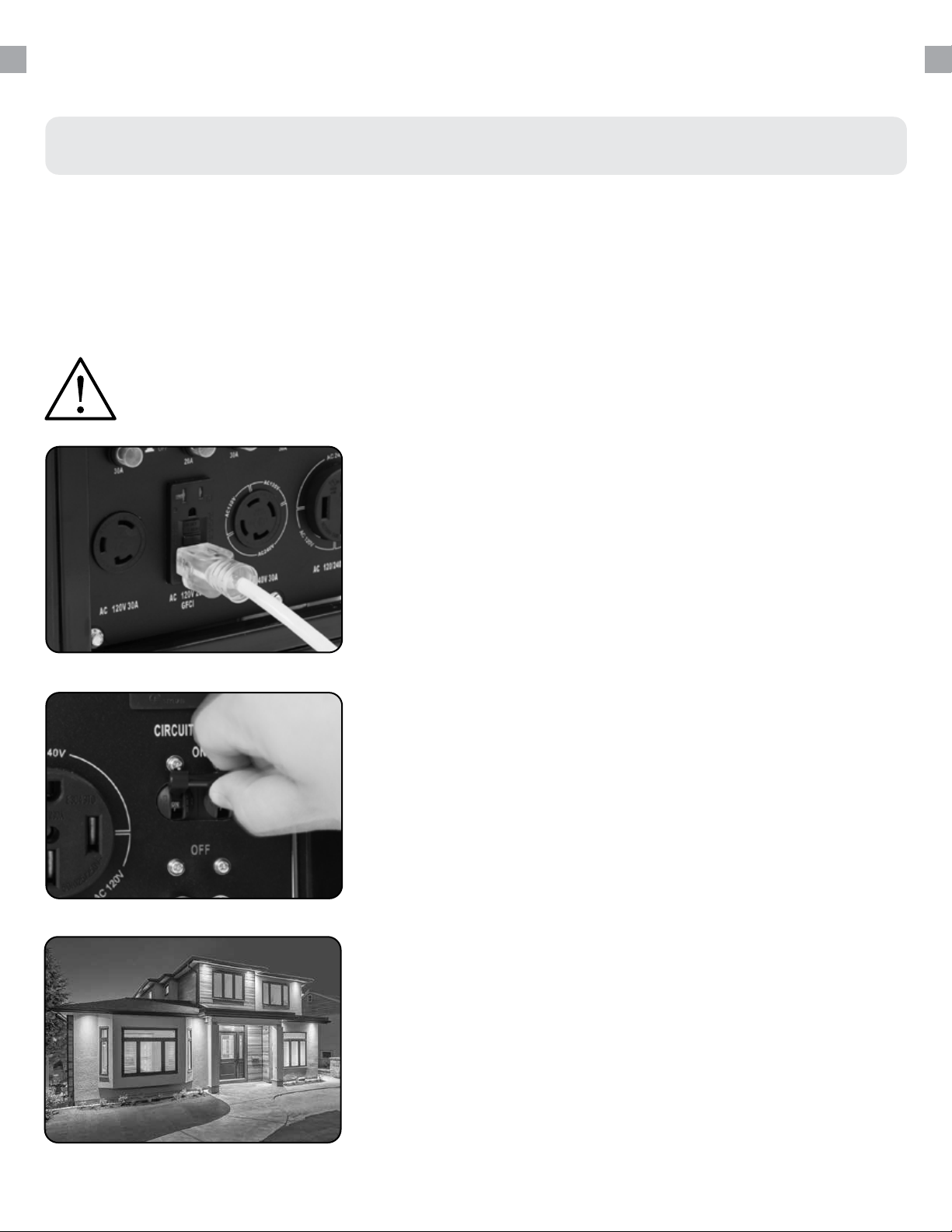
NOTE: Be sure to attach devices to the correct receptacle (outlet).
● 120v devices can be directly connected to the 120v ONLY receptacles.
● 120v devices can be connected to the 120/240v receptacle using an appropriate adapter.
● 240v devices can ONLY be connected the 240v receptacle.
Plug in devices
Turn breaker on
Turn on connected devices
Plug in devices to the appropriate receptacle. When using
the generator balance the load as closely as possible. Placing
more load on one side of the circuit will reduce the breaker
trip period.
Flip the circuit breaker up to the on position to allow power to
the receptacles.
Start or turn on appliances starting with the biggest loads
rst.
1.
2.
3.
CAUTION: Do not connect 50Hz or 3-phase loads to the generator.
42
43
Choosing the right power cord
Long or thin cords can drain the power provided to an electrical device by the generator. When
using such cords, allow for a slightly higher rated wattage requirement for the electrical device. See
table below for recommended cords based on the power requirement of the electrical device.
DEVICE REQUIREMENTS WIRE GAUGE BY LENGTH (ft.)
AMPS WATTS (120/240V) 10 25 50 100 150
5 600/1200 18 16 14 12 10
10 1200/2400 16 14 12 12 10
15 1800/3600 14 14 12 12 10
20 2400/4800 12 12 12 10 10
25 3000/6000 12 10 10 10 8
30 3600/7200 10 10 10 8 NR
40 4800/9600 8 8 6 6 NR
50 6000/12000 6 6 6 NR NR
*NR = NOT RECOMMENDED
USING THE GENERATOR (CONTINUED)
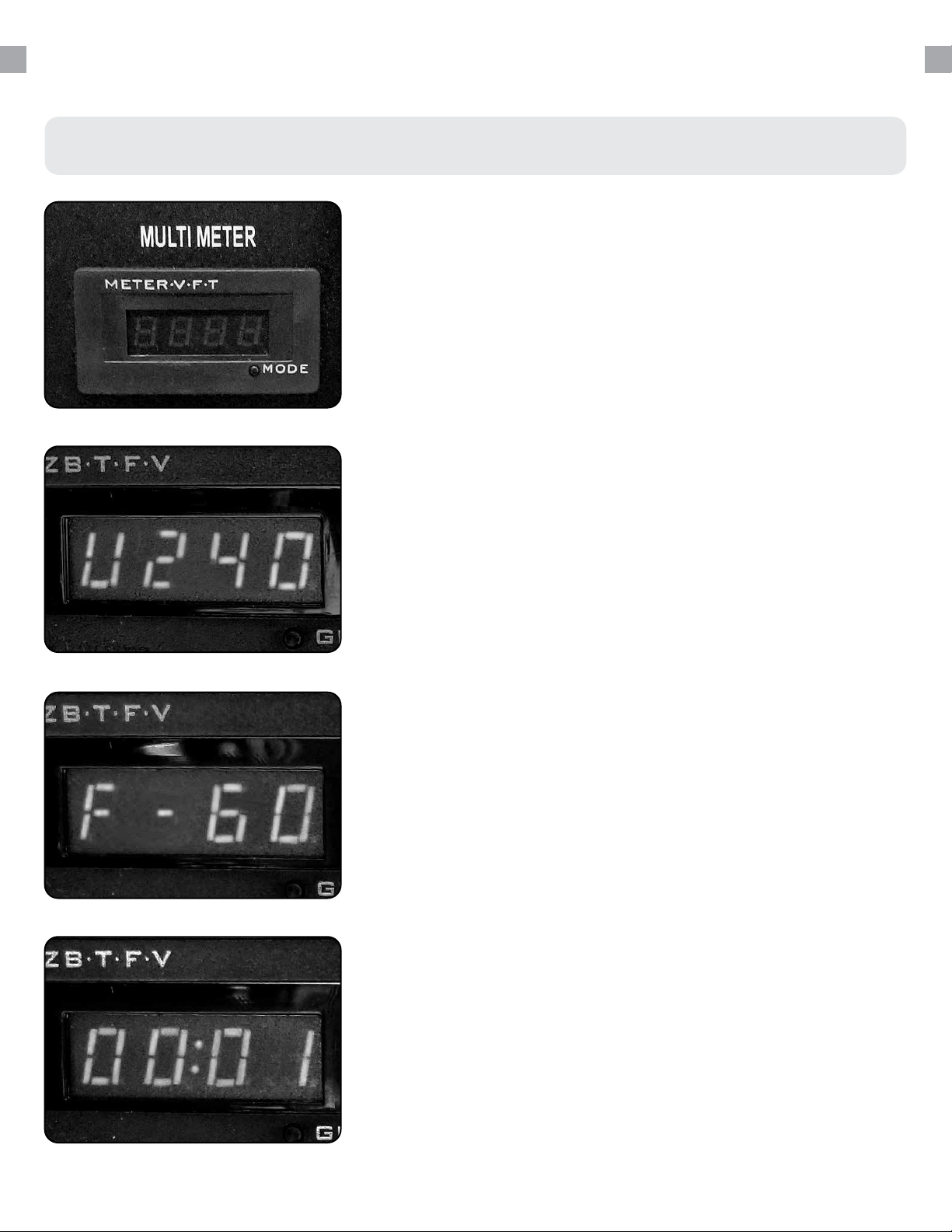
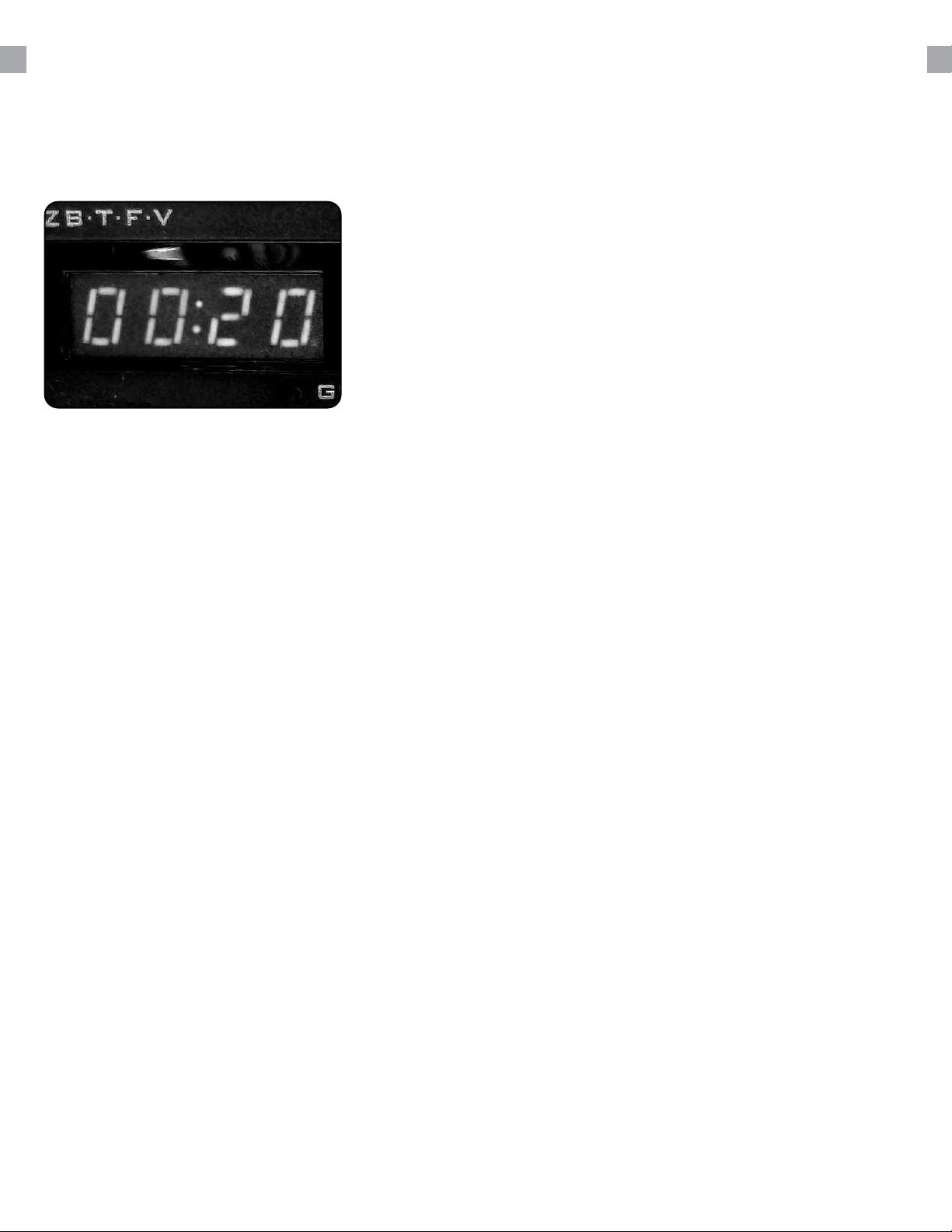
When the generator is started the display when read the
current voltage. Press the MODE button to cycle through
the multimeter functions.
Using the digital multimeter
Voltage
The voltage currently produced by the generator in volts.
1.
Frequency
The frequency currently produced by the generator in Hz.
2.
Hours Run
The number of hours the engine has currently been running.
3.
44
45
Hours Total
The number of hours the generator has been run in total.
4.
46
MAINTENANCE AND CARE
Proper maintenance and storage of your generator is essential to ensure trouble free use of your
generator when you need it.
By following the maintenance and care requirements, you can keep your generator running
smooth and ecient for years to come.
47
MAINTENANCE AND CARE
Proper routine maintenance of your generator is essential for safe, economical, and trouble-free
operation. It will also help reduce air pollution.
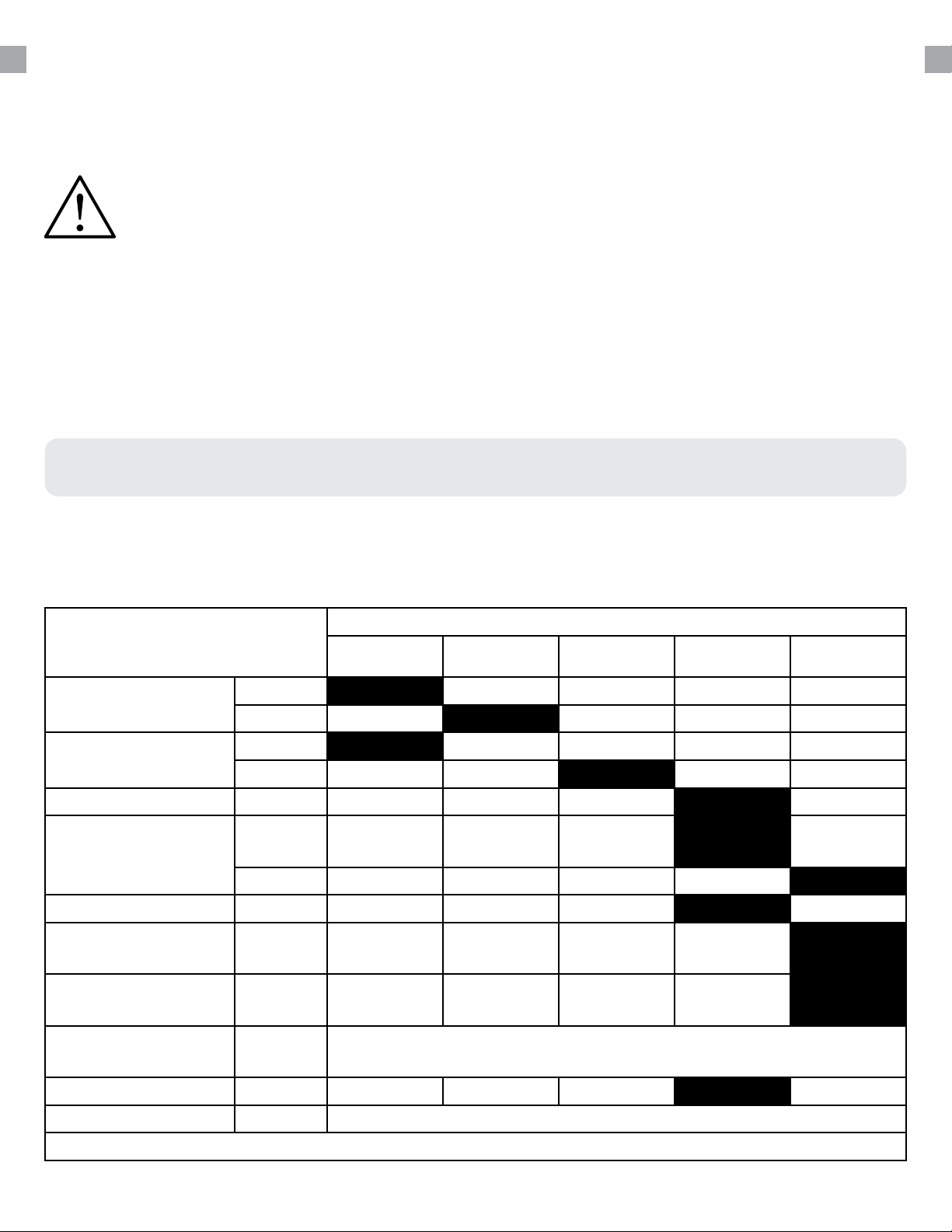
Maintenance Schedule
Remember that this schedule is based on the assumption that your machine will be used for its
designed purpose. Sustained high-load, high temperature operation, or use in unusually wet or
dusty conditions, will require more frequent service.
WARNING: Improper maintenance, or failure to correct a problem before operation, can
cause a malfunction in which you can be seriously injured or killed. Always follow the
inspection and maintenance recommendations and schedules in this instruction manual.
● Make sure the engine is o before you begin any maintenance or repairs.
● Let the engine and exhaust system cool before touching.
● To reduce the possibility of re or explosion, be careful when working around
gasoline. Use only a nonammable solvent, not gasoline, to clean parts. Keep
cigarettes, sparks, and ames away from all fuel related parts.
SERVICE
REGULAR SERVICE PERIOD
BEFORE
EACH USE
EVERY MO. OR
20 HRS
EVERY 3 MO. OR
50 HRS
EVERY 6 MO. OR
100 HRS
EVERY 12 MO.
OR 300 HRS
ENGINE OIL CHECK
CHANGE
AIR CLEANER CHECK
CHANGE
SEDIMENT CUP CLEAN
SPARK PLUG CLEAN-
ADJUST
REPLACE
SPARK ARRESTOR CLEAN
IDLE SPEED CHECK /
ADJUST
VALVE CLEARANCE CHECK-
ADJUST
COMBUSTION
CHAMBER
CLEAN
500 HOURS
FUEL TANK / FILTER CLEAN
FUEL TUBE CHECK EVERY 24 MO. (REPLACE IF NECESSARY)
TO BE PERFORMED AT EVERY MONTH INDICATED OR HOUR INTERVAL WHICH EVER COMES FIRST
48
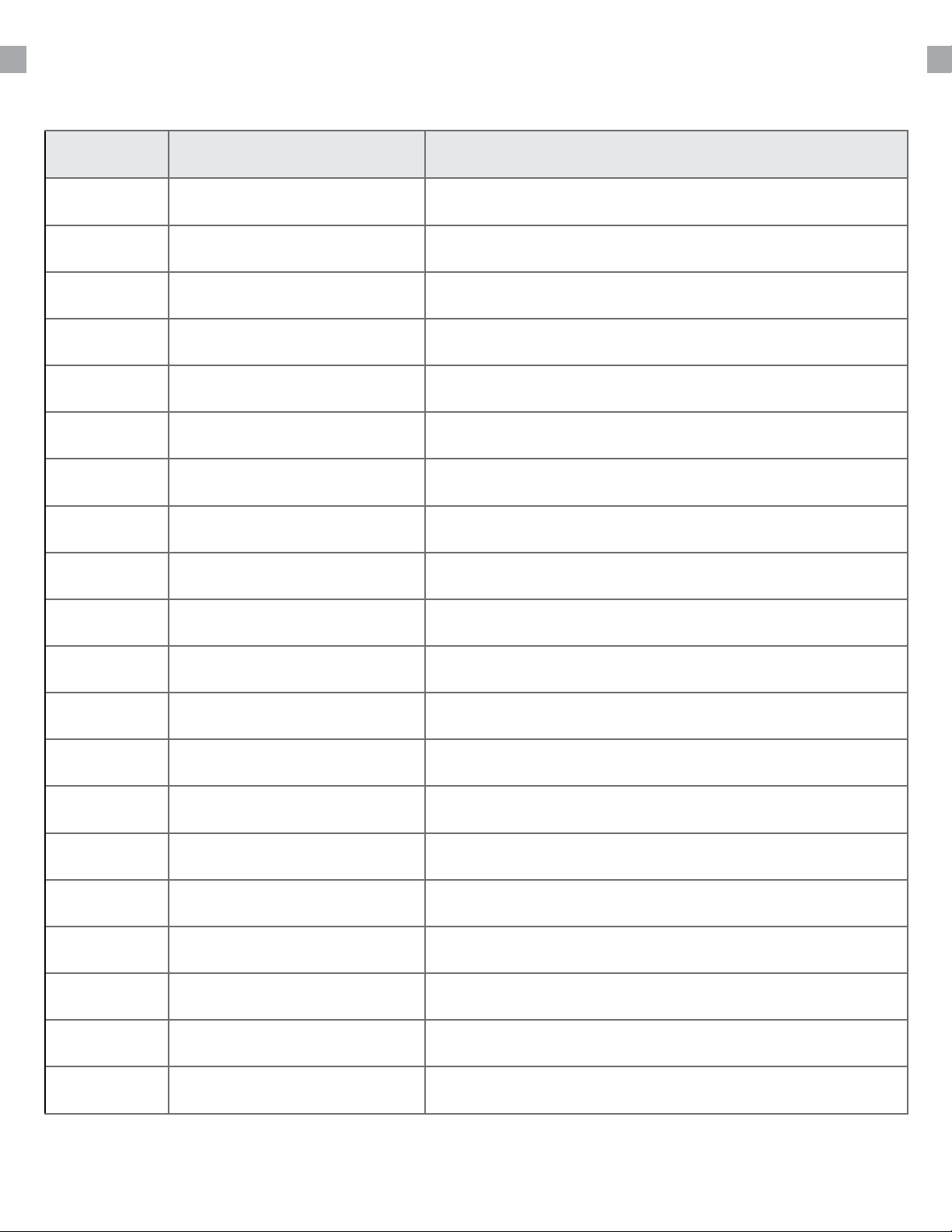
MAINTENANCE LOG
Date Generator Hours Maintenance Performed
49
MAINTENANCE AND CARE (CONTINUED)
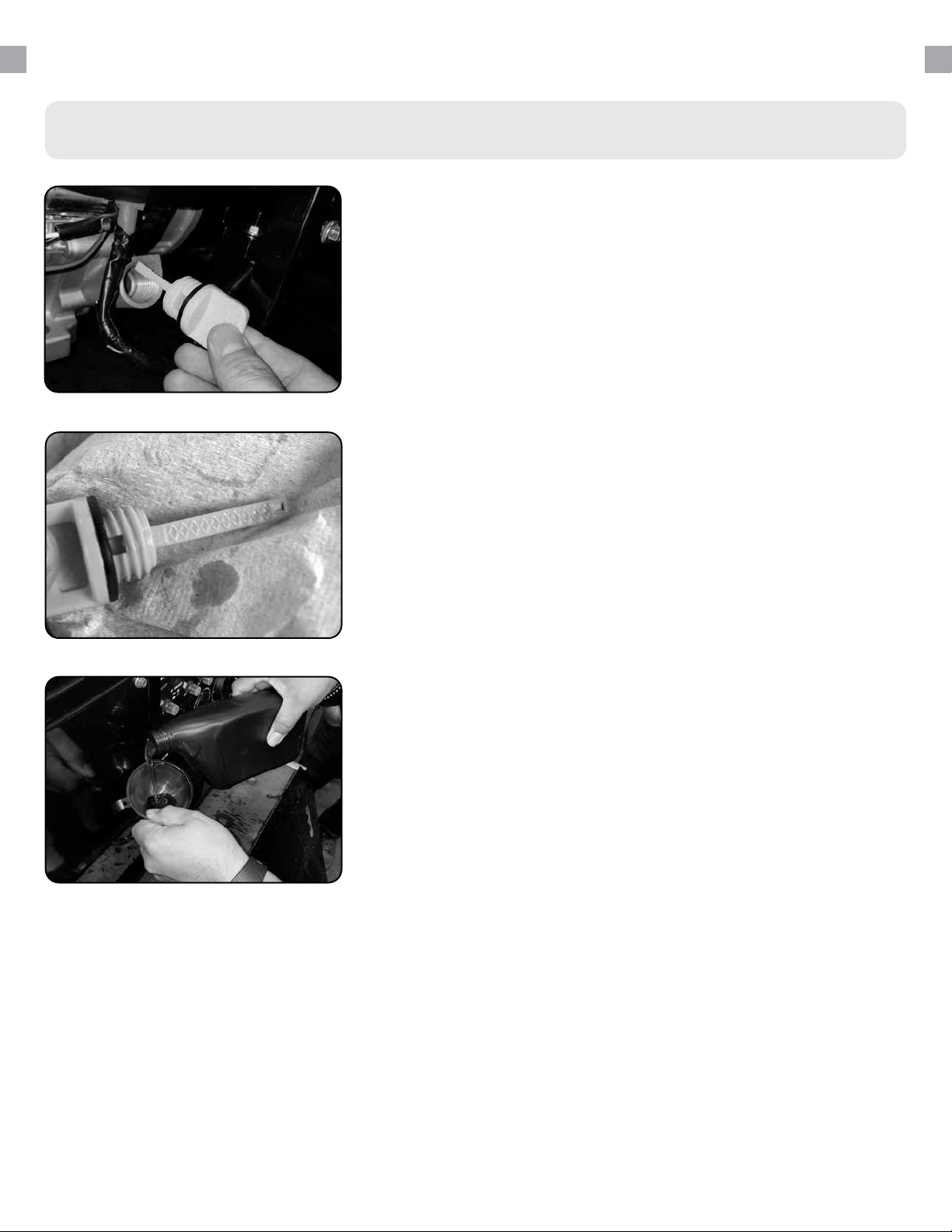
Checking the oil
Check the oil
The generator is equipped with an automatic shuto to
protect it from damage due to low oil. Nonetheless, you
should check the oil level of the engine before each use to
ensure that the engine crankcase has a sucient amount.
To check the oil level:
a. Make sure the generator is on a level surface.
b. Unscrew the oil ller/dipstick cap.
c. With a dry cloth, wipe the oil o of the stick on the
inside of the cap.
d. Insert the dipstick as if you were replacing the
cap and then remove again. There should now be
oil on the stick. If there is no oil on the stick, or oil
only at the very end of the stick, you should add
oil until the engine crankcase is lled (see “Adding
Oil” portion of the “Maintenance” section).
e. Be sure to replace the cap when nished checking
oil.
NOTE: The oil capacity for your generator can be found in
the “Specications” section of this manual.
50
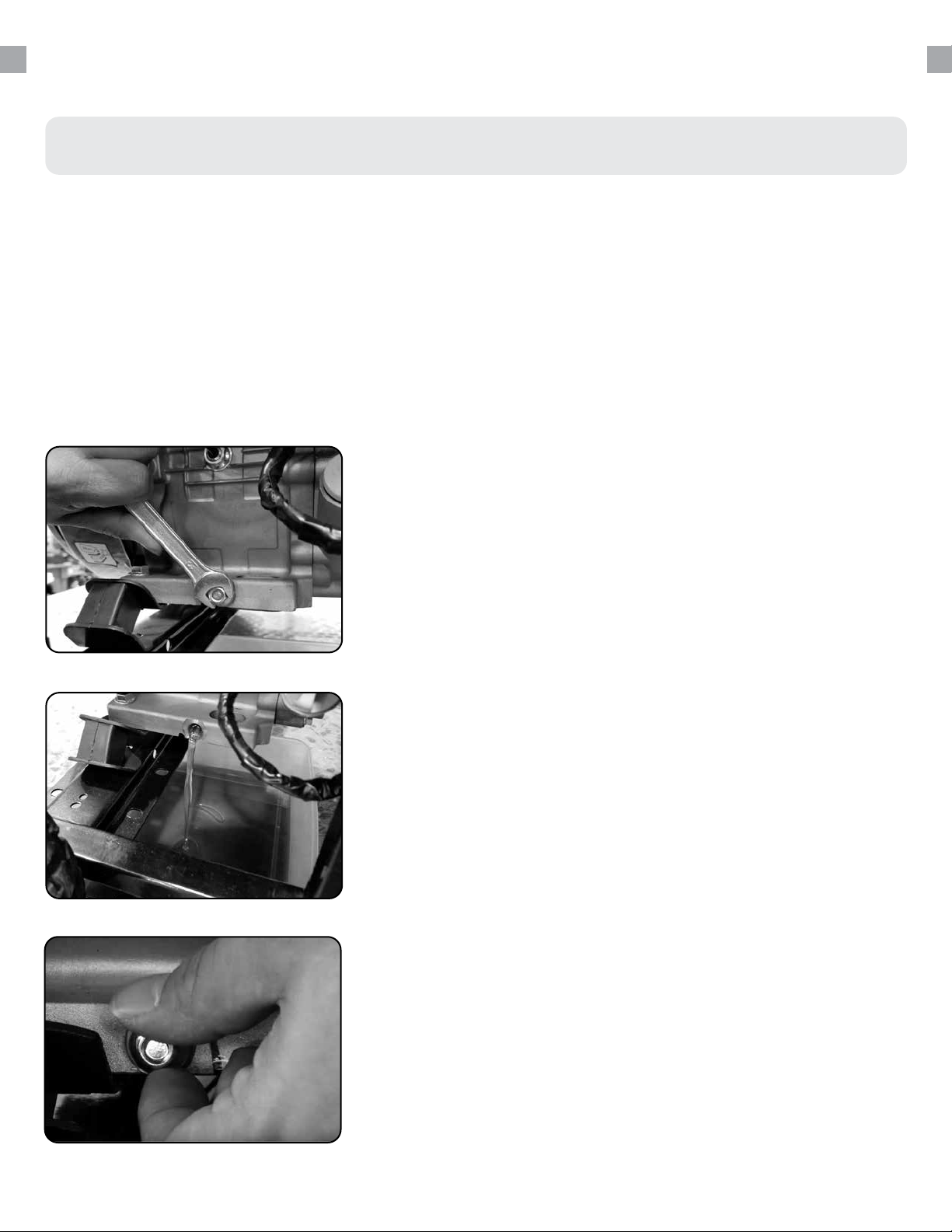
Changing the oil
Worn out or dirty oil does not cool the generator properly and can lead to catastrophic engine
damage.
In addition to regular oil changes, it is necessary to drain the oil from the crankcase if it has
become contaminated with water or dirt.
Remove drain plug
Drain oil
Replace drain plug
Using a 12 mm hex wrench, unscrew the oil drain plug, which
is located on the crankcase underneath the oil ller/dipstick
cap.
Allow all the oil to drain from the generator.
Drain oil into an approved oil disposal container. Contact
your local auto parts store for information on oil disposal.
Replace the oil drain plug and tighten with a 12 mm hex
wrench.
1.
2.
3.
51
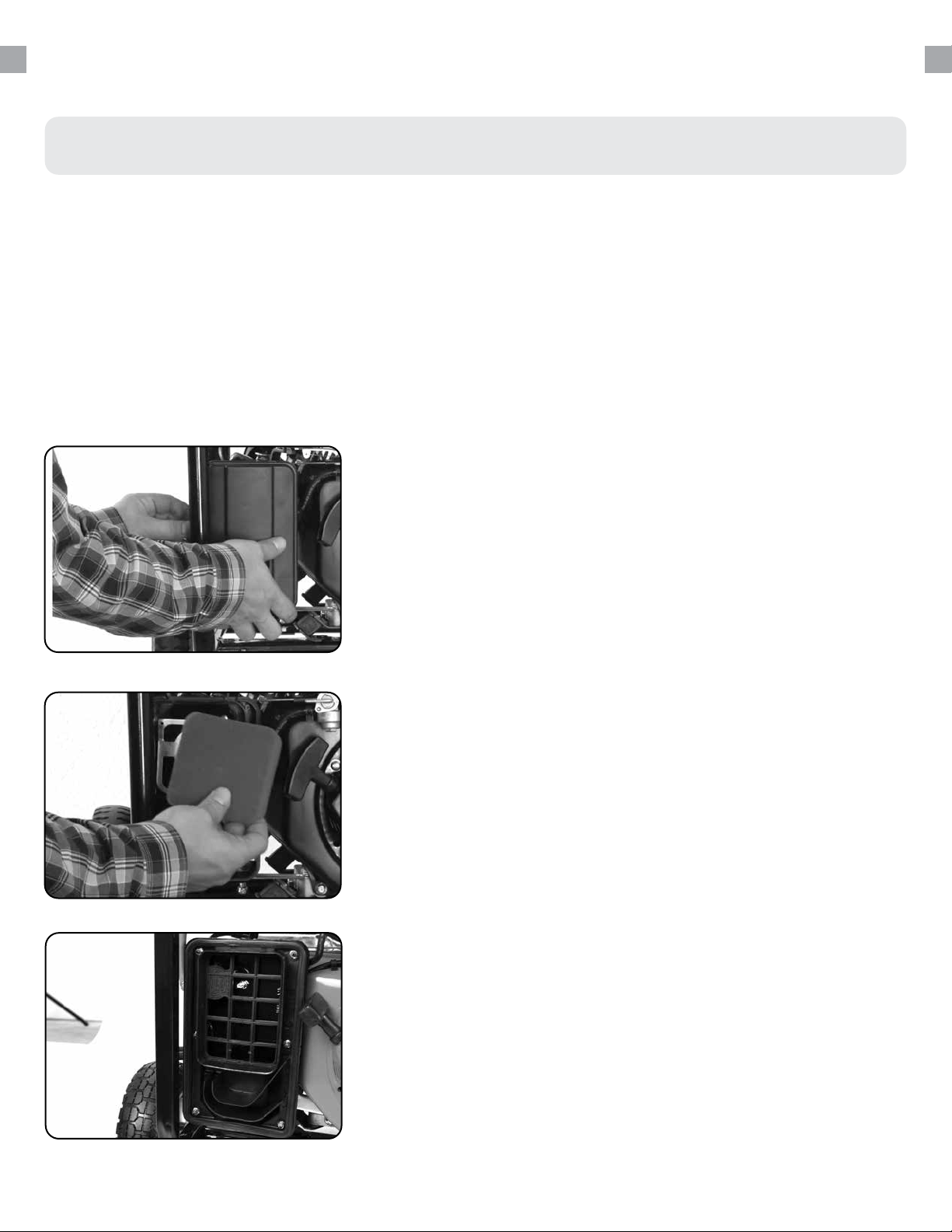
Routine maintenance of the air cleaner helps maintain proper airow to the carburetor. Check
that the air cleaner is free of excessive dirt after every use.
Note: Improper maintenance may cause less air to enter the engine or dirty air to enter the
engine causing overheating and engine wear.
MAINTENANCE AND CARE (CONTINUED)
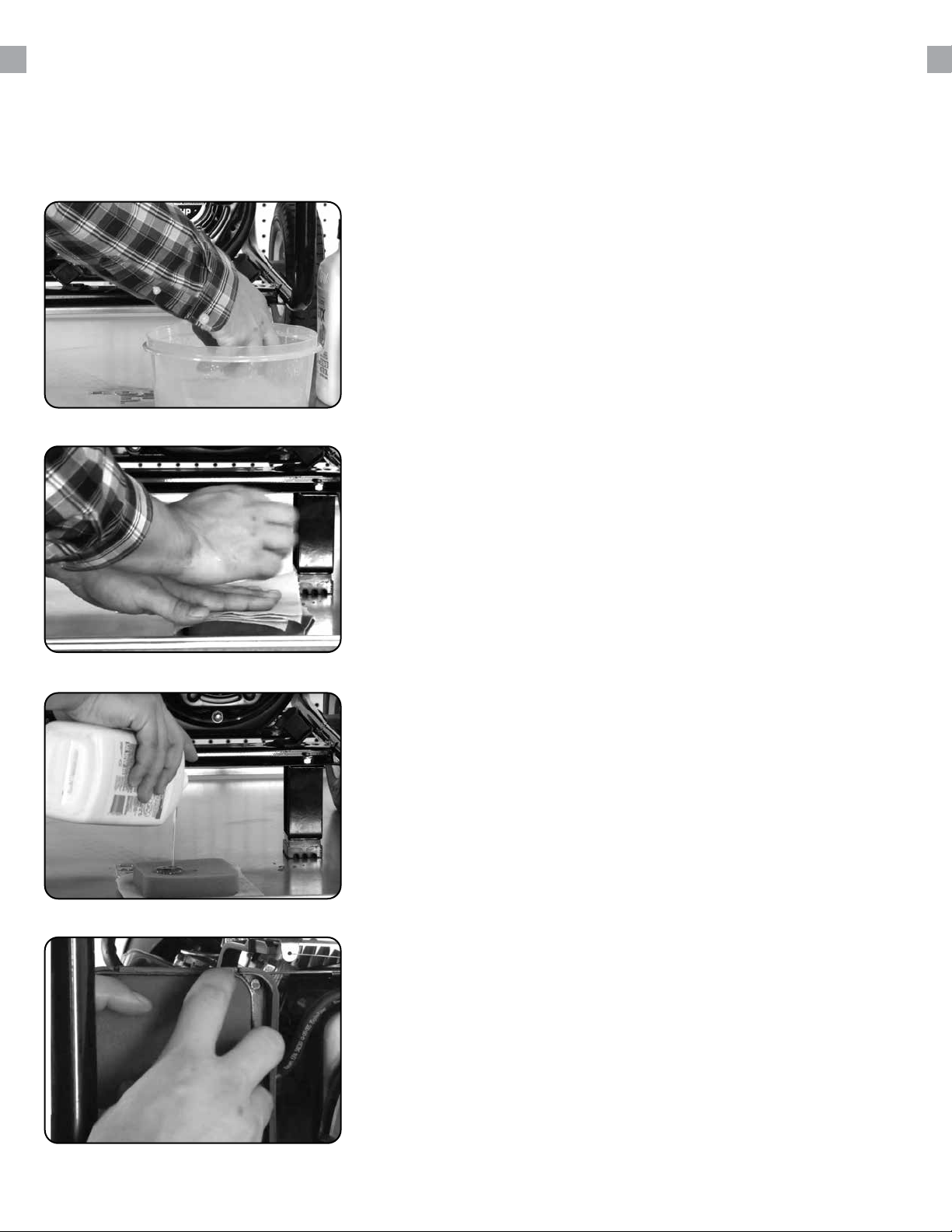
Cleaning the air lter
Open lter cover
Remove lter element
Wipe out lter casing
Unhinge the clasps at the top and bottom of the air cleaner
cover.
Remove the sponge-like elements from the casing.
Wipe the dirt from inside the empty air cleaner casing.
1.
2.
3.
52
Replace elements in casing
Replace the sponge-like elements in the air cleaner casing and
replace the cover.
7.
53
Wash lter element
Wash the sponge-like elements in household dish detergent
and warm water.
4.
Dry lter element
Allow the elements to dry completely.
5.
6.
Add engine oil to elements
Soak the dry elements in a small amount of engine oil. Ring
out any excess oil.
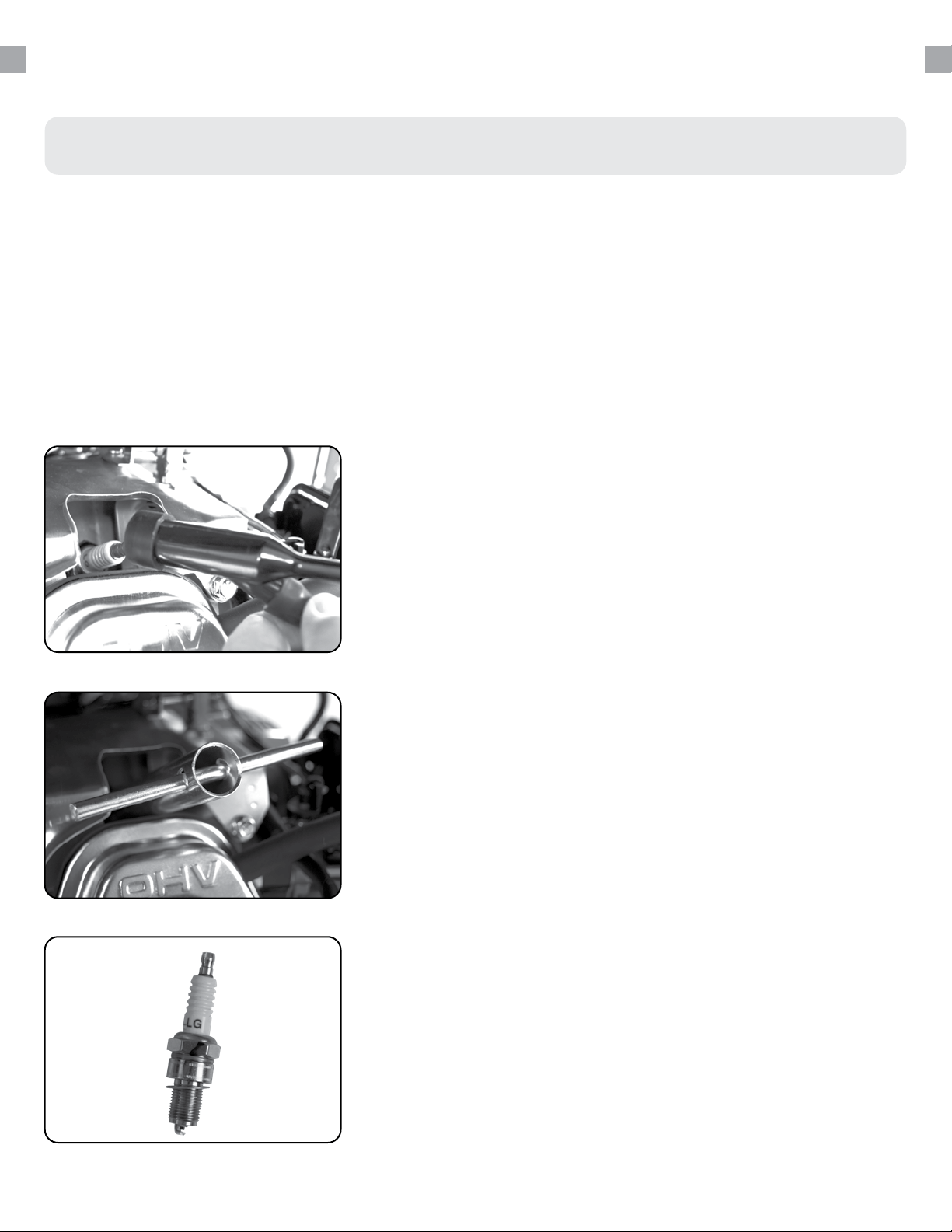
The spark plug is important for proper engine operation. A good spark plug should be intact,
free of deposits, and properly gapped.
Improper maintenance may cause reduced fuel economy, misres, trouble starting, or damage
to the spark plug threads.
Spark Plug Maintenance
Remove spark plug cap
Remove spark plug
Inspect spark plug
Pull on the spark plug cap to remove it.
Unscrew the spark plug from the generator using the spark
plug wrench included with this product.
Visually inspect the spark plug. If it is cracked or chipped,
discard and replace with a new spark plug. We recommend
using a F6RTC spark plug such as NGK BPR5ES.
1.
2.
3.
MAINTENANCE AND CARE (CONTINUED)
54
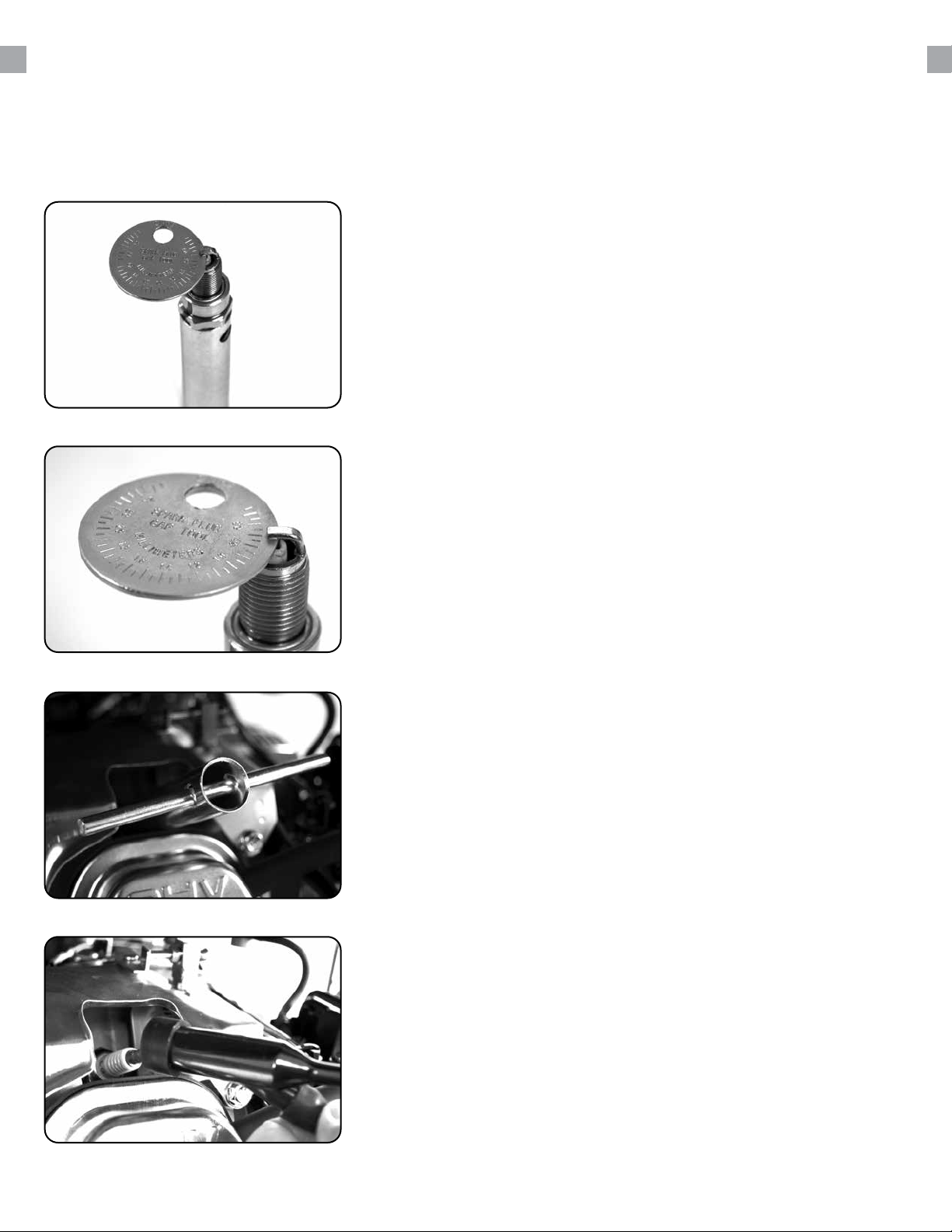
Measure plug gap
Measure the plug gap with a gauge. The gap should be 0.7-0.8
mm (0.028-0.031 in).
4.
Clean and re-gap
Replace spark plug
Replace spark plug cap
If you are re-using the spark plug, use a wire brush to clean
any dirt from around the spark plug base and then re-gap the
spark plug.
Screw the spark plug back into its place on the generator
using the spark plug wrench.
Replace the spark plug cap.
5.
6.
7.
55
Before storing your generator for extended periods of time, you should drain your generator of
gasoline.
Emptying the Gas Tank
Shut fuel valve o
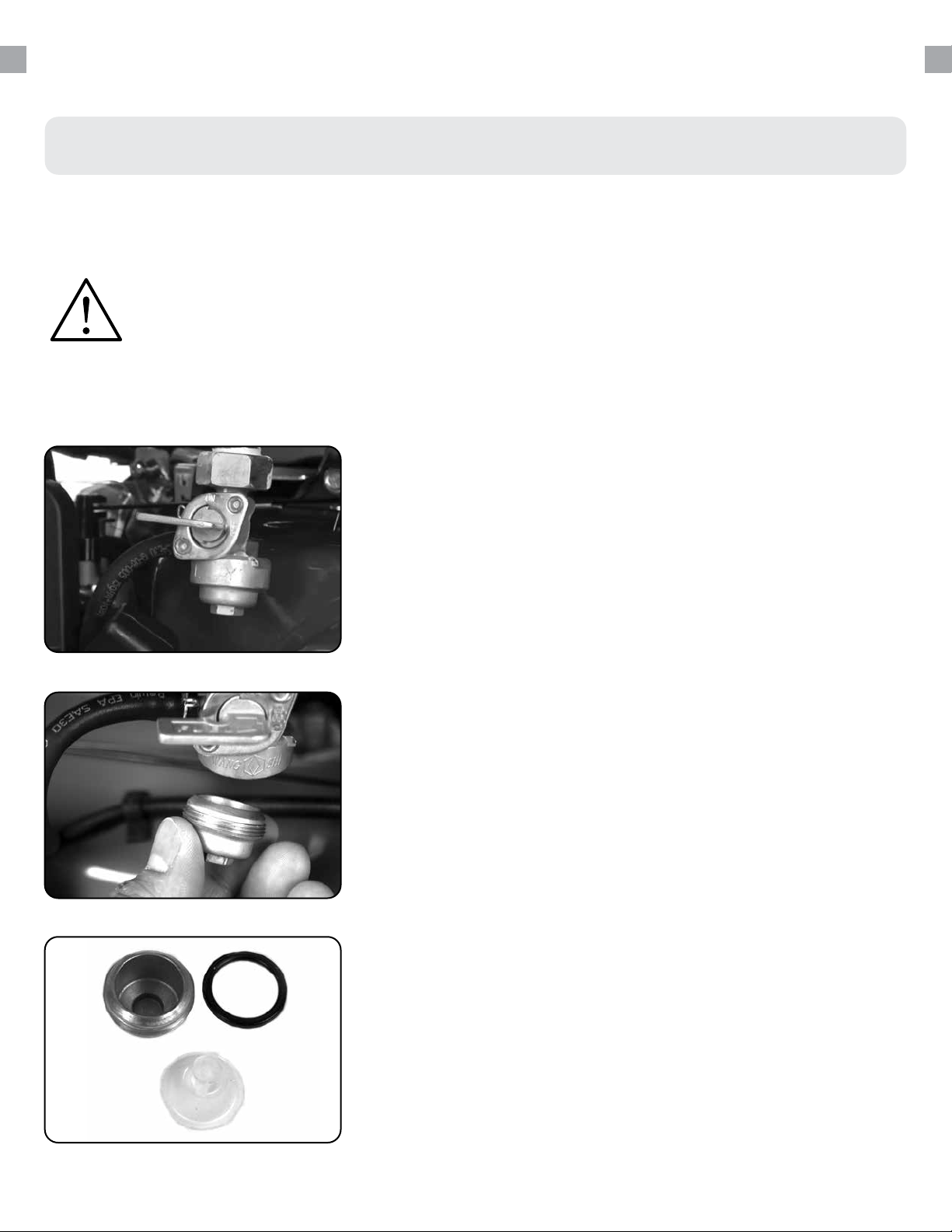
Remove fuel lter cup
Empty fuel lter cup
Turn the fuel valve to the “OFF” position.
Remove the fuel lter cup (see “Removing the Fuel Filter Cup”
earlier in this section.
Empty the fuel lter cup of any fuel.
1.
2.
3.
CAUTION: Do not store fuel from one season to another. Gasoline sold at the pump
today contains additives such as ethanol that even when stored properly may
damage the fuel system components.
MAINTENANCE AND CARE (CONTINUED)
56
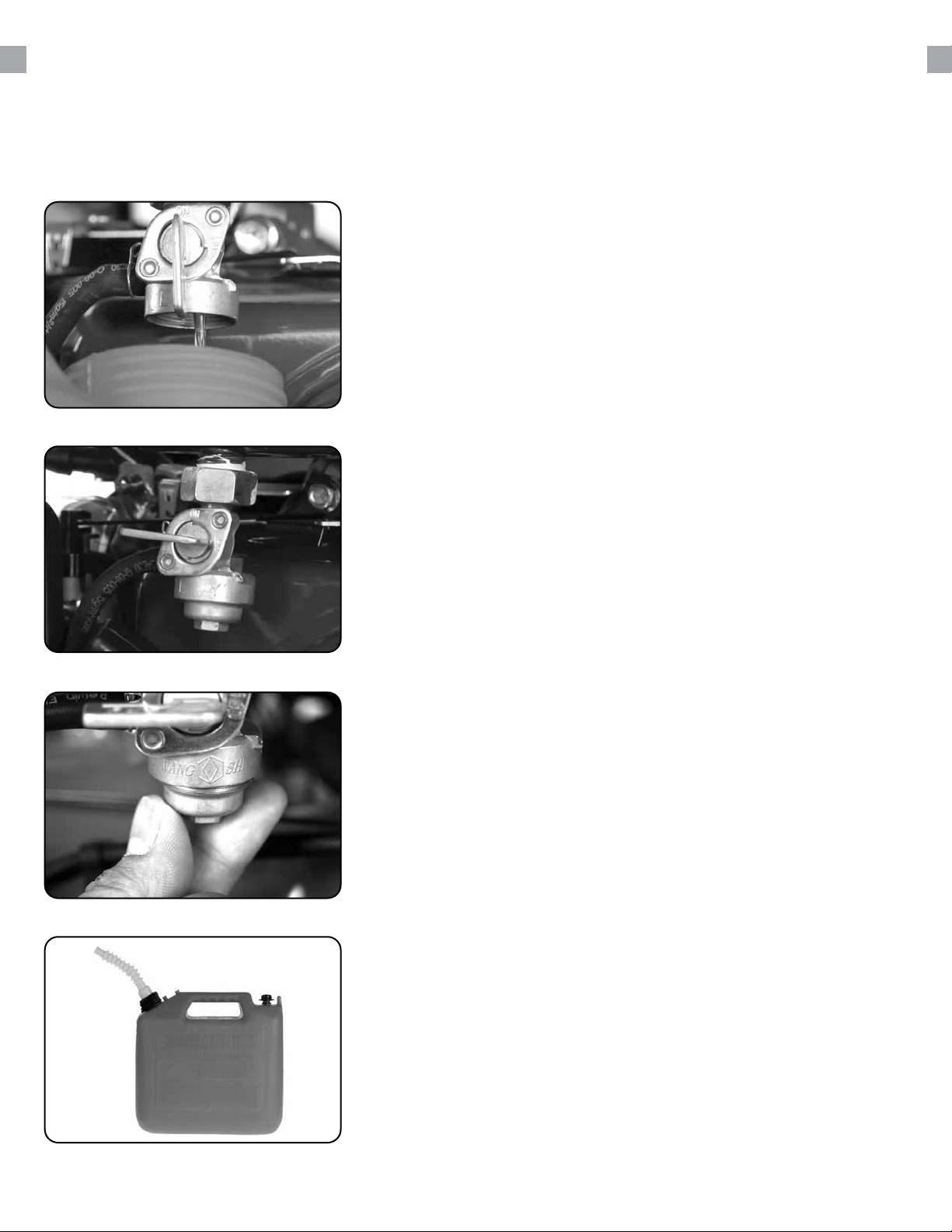
Drain gas from generator
With a receptacle underneath the generator to catch the gas,
turn the fuel valve to the “ON” position. Drain all the gas from
the generator.
4.
Shut fuel valve o
Replace fuel lter cup
Store emptied gas
Turn the fuel valve to the “OFF” position.
Reinstall the fuel lter cup.
Store the emptied gasoline in a suitable place and add fuel
stabilizer to keep fuel fresh and usable.
5.
6.
7.
57
MAINTENANCE AND CARE (CONTINUED)
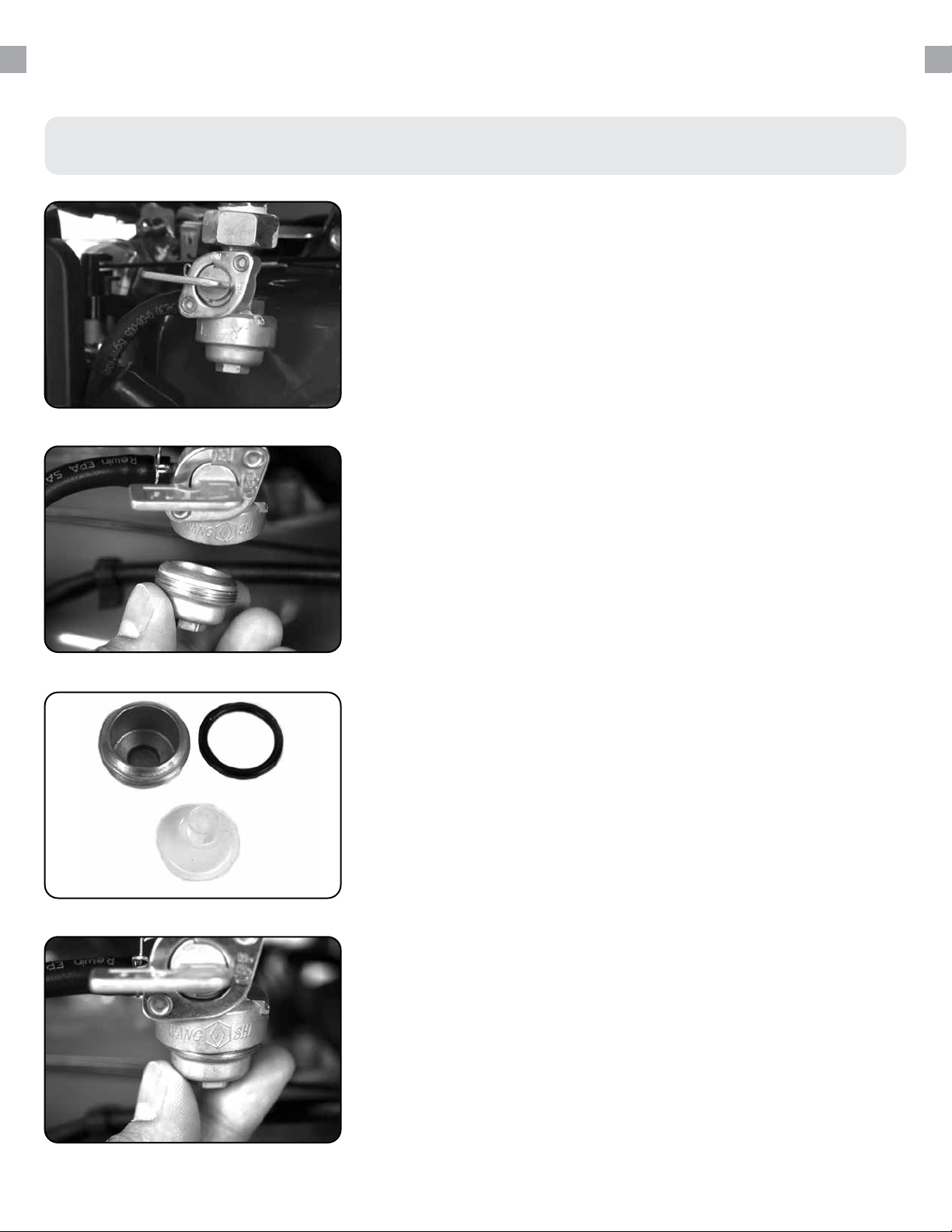
Shut fuel valve o
Turn the fuel valve to the “OFF” position.
1.
Cleaning the fuel lter cup
Remove fuel lter cup
Clean lter cup
Replace fuel lter cup
Unscrew the fuel lter cup from the fuel valve using a wrench.
Turn the valve towards you to unscrew
Clean the cup of all sediment using a rag or brush.
Reinstall the fuel lter cup.
2.
3.
4.
58
CAUTION: Never place any type of storage cover on the generator while it is still
hot.
When transporting your generator:
● Empty the gas tank (see “Emptying the Gas Tank” in the “Maintenance” section).
● Disconnect the spark plug.
● Do not obstruct any ventilation openings & keep the generator in a cool dry area.
Storage and Transportation
59
Storage Period Storage Preparation
If you plan on starting
the same day.
1. Turn o the main breaker.
2. Allow the unit to run 3 - 5 minutes.
3. Turn o the switch.
4. Store.
If you plan on starting
the unit again within
30 days.
1. Turn o the main breaker.
2. Allow the unit to run 3 - 5 minutes.
3. Turn o the fuel valve.
4. Allow the unit to stall out.
5. Turn o the switch.
6. Add fuel stabilizer to the gas remaining in the tank.
7. Store.
If you do not plan to
start the unit for
longer than 30 days.
1. Turn o the main breaker.
2. Allow the unit to run 3 - 5 minutes.
3. Turn o the fuel valve.
4. Allow the unit to stall out.
5. Turn o the switch.
6. Drain the fuel tank (See “Emptying the Gas Tank” in the “Maintenance” section)
7. Drain the carburetor
a. Remove the drain bolt from the carburetor.
b. Drain the small amount of remaining fuel from the carburetor bowl.
8. Oil the cylinder
a. Remove the spark plug.
b. Put 2 tbsp. of 10w30 motor oil directly into the spark plug hole
c. Pull the recoil start one time.
d. Replace the plug.
9. Remove the battery and place on tender indoors.

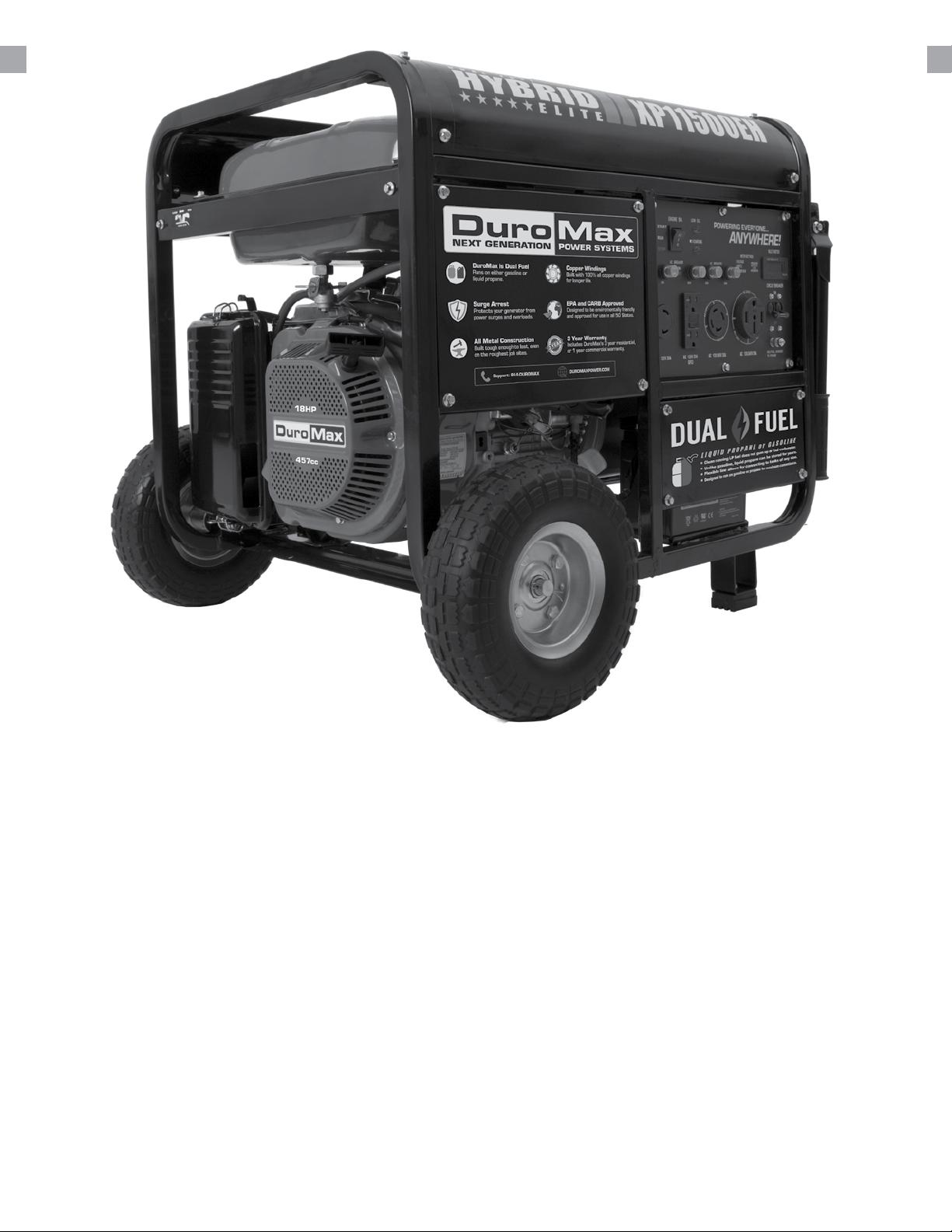
SPECIFICATIONS
AC Rated Wattage (Gasoline) 9000W
AC Rated Wattage (Propane) 8550W
AC Surge Wattage (Gasoline) 11500W
AC Surge Wattage (Propane) 10925W
AC Rated Voltage 120/240V
AC Rated Frequency 60 Hz
AC Phase Single
DC Voltage 12V
DC Amperage 8.3A
Dimensions LENGTH 28in.
WIDTH 22in.
HEIGHT 23in.
Engine Type 4-Stroke OHV Forced-Air
Ignition System Non-Contact Transistor
Displacement 457cc
Starting Type Electric / Recoil
Fuel Tank Capacity 7.9 US Gal. (30L)
Oil Capacity 37 . oz. (1.1L)
Run Time @ 50% (Gasoline) 10 hr.
Run Time @ 50% (Propane) 10 hr. (40 lb.)
Noise Level <74db
60
TROUBLESHOOTING
This section of the manual is to help you troubleshoot problems with your generator.
61
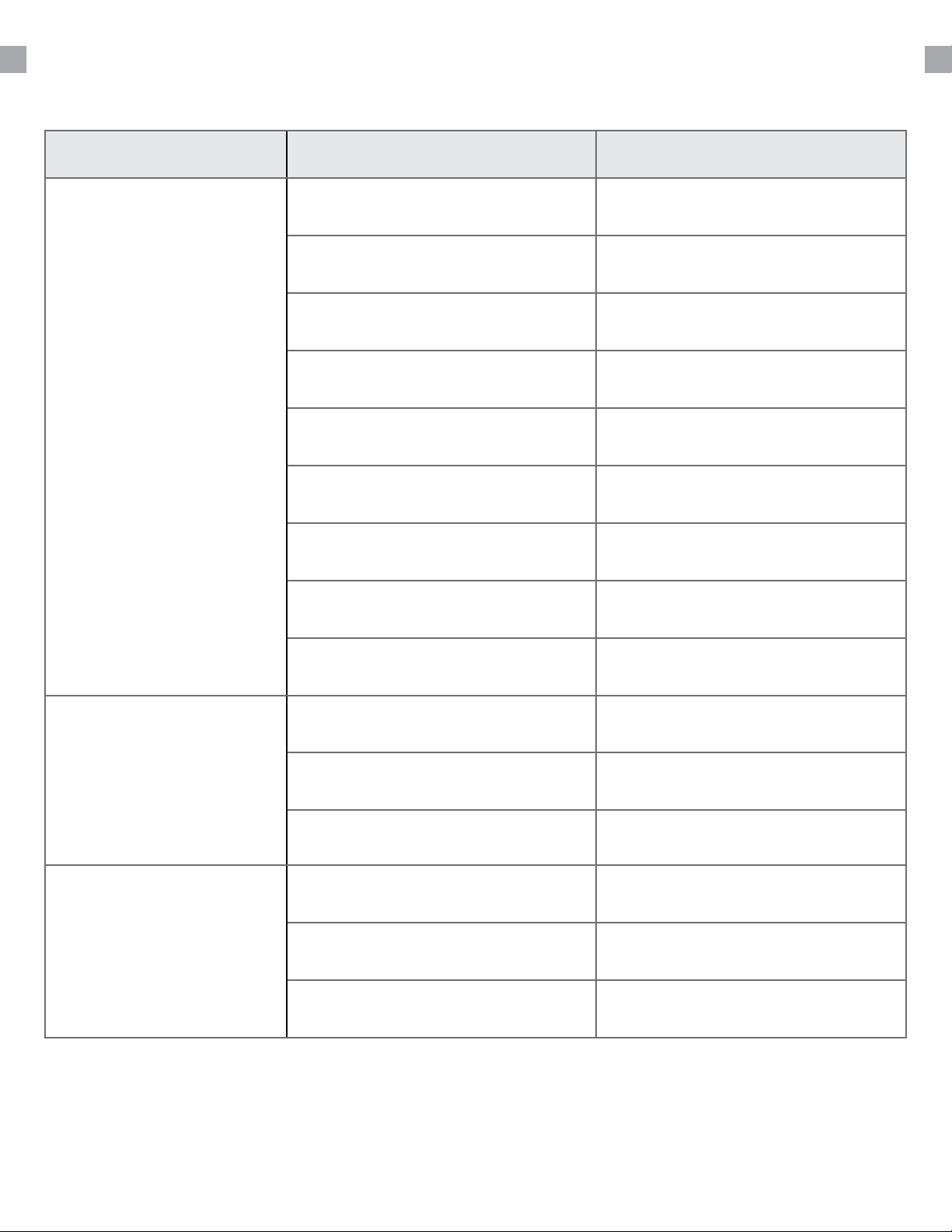
TROUBLESHOOTING
Mode Description
Engine will not start
Engine Switch is “O” Set engine switch to “run”
Fuel Valve is “Closed” Turn fuel valve to “open”
Choke is open Close the choke
Engine is out of fuel Add fuel
Fuel is old or contaminated Change fuel
Spark Plug is dirty Clean spark plug
Spark Plug is broken Replace spark plug
Generator is not level
Move generator to a level
surface
Oil is low. Add / change oil
Engine runs, but there
is no electrical output
Circuit breaker is “O” Turn “on” circuit breaker
Wiring connection is bad Replace extension cord(s)
Device connected to generator
is malfunctioning
Disconnect malfunctioning
device
Generator runs, but
does not support all
electrical devices
connected
Generator is overloaded
Disconnect 1 or more items to
reduce the load
Device connected to generator
is bad
Disconnect malfunctioning
device
Air Cleaner is dirty. Clean / replace the air lter
62
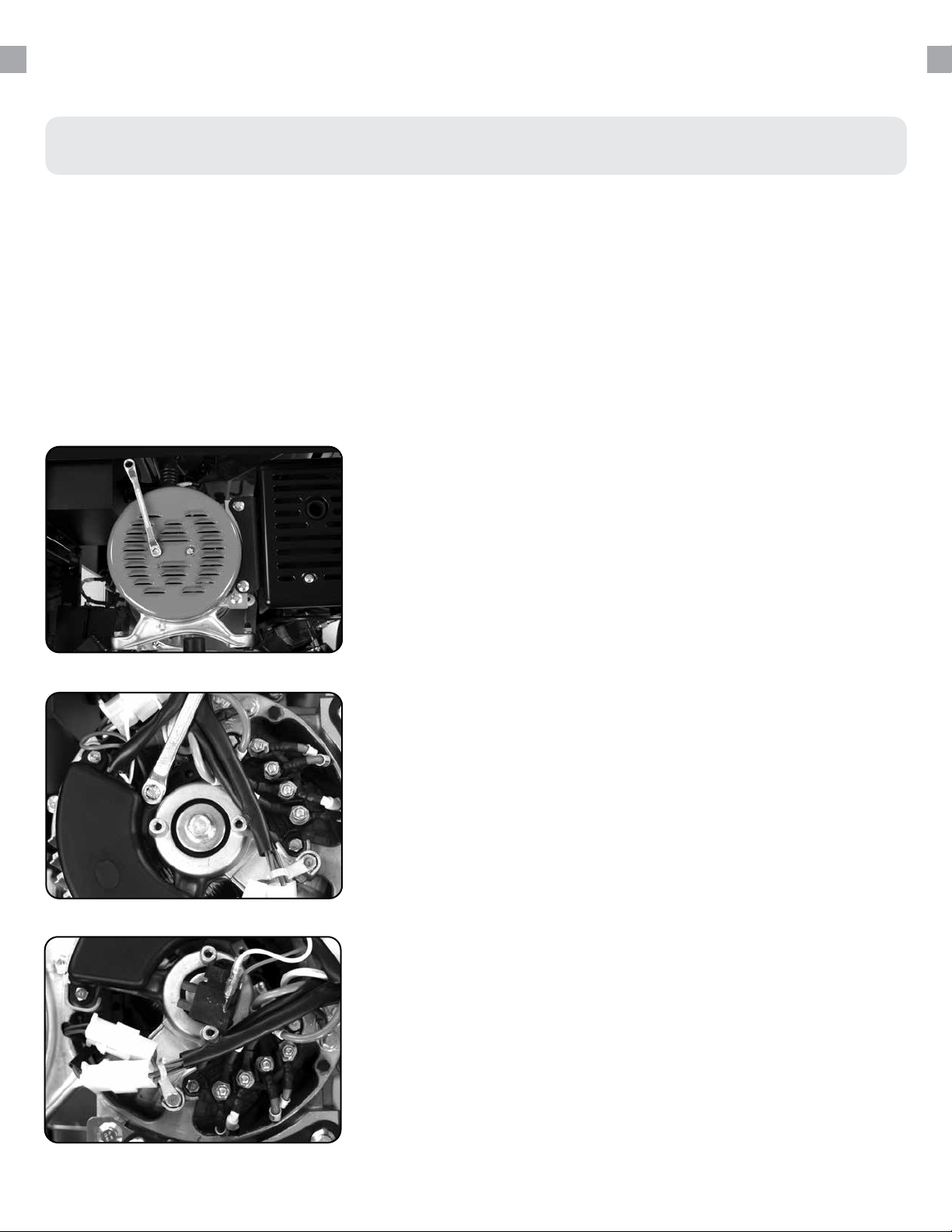
Changing / Inspecting the Carbon Brushes
The carbon brushes in conjunction with the AVR regulates power from the generator. The
carbon brushes are wearable parts and should be inspected every 250 running hours.
Remove generator cover
Remove bolt from brush
Disconnect AVR wires
Remove the 2 bolts of the generator cover then pull the cover
o the generator.
Remove the bolt holding the carbon brush.
Remove the two wires from the AVR on the carbon brush
1.
2.
3.
63
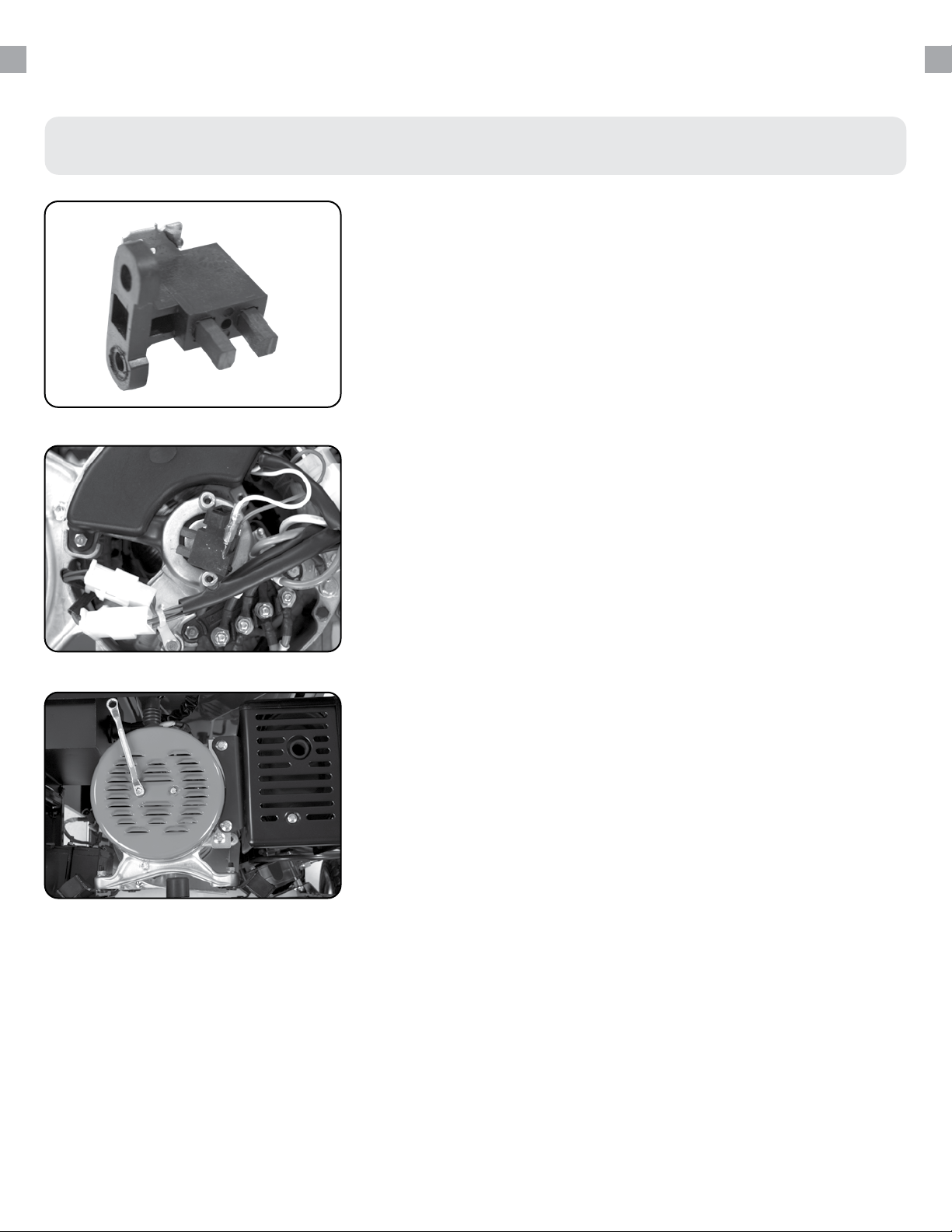
Changing / Inspecting the Carbon Brushes (Cont.)
Install new brush
Install new carbon brush with bolt.
4.
Connect AVR wires
Insert and connect the 2 wires from the AVR, be sure to connect
+ and – correctly.
5.
6.
Replace generator cover
Replace the back cover of the generator and secure with the
2 bolts.
TROUBLESHOOTING (CONTINUED)
64
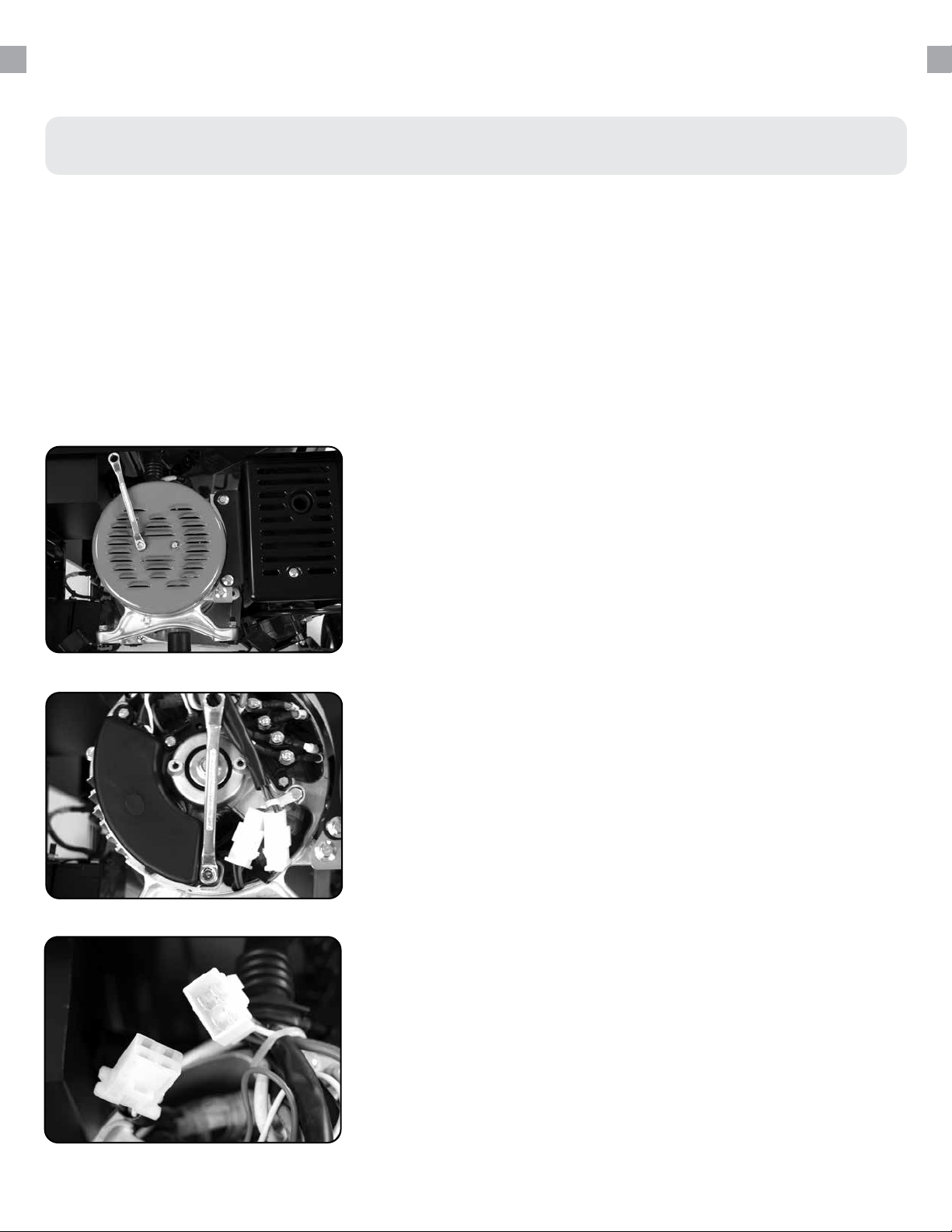
Changing / Inspecting the AVR
The carbon brushes in conjunction with the AVR regulates power from the generator. If the
generator is overheated or overloaded, the AVR may be damaged and require replacement.
Remove generator cover
Remove AVR bolts
Disconnect AVR wire clip
Remove the 2 bolts of the generator cover then pull the cover
o the generator.
Remove the 2 bolts holding the AVR.
Disconnect the wire clip.
1.
2.
3.
65
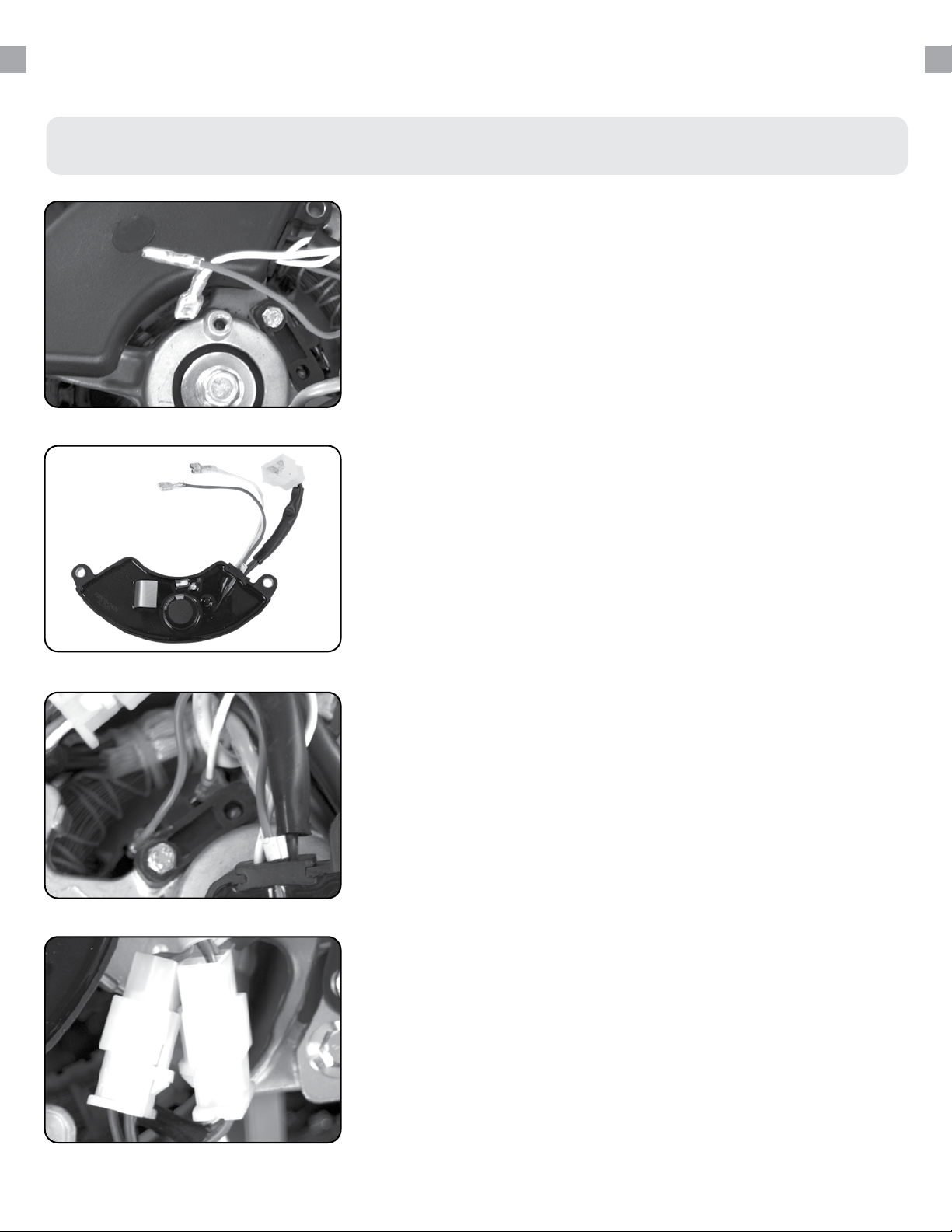
Reconnect the AVR wire clip
Insert and connect the 2 wires from the AVR, be sure to
connect + and – correctly.
7.
Disconnect wires from brush
Remove the 2 wires from the AVR on the carbon brush.
4.
Install new AVR
Install the new AVR with the 2 bolts.
5.
6.
Reconnect wires to brush
Reconnect the wire clip.
Changing / Inspecting the AVR (Continued)
TROUBLESHOOTING (CONTINUED)
66
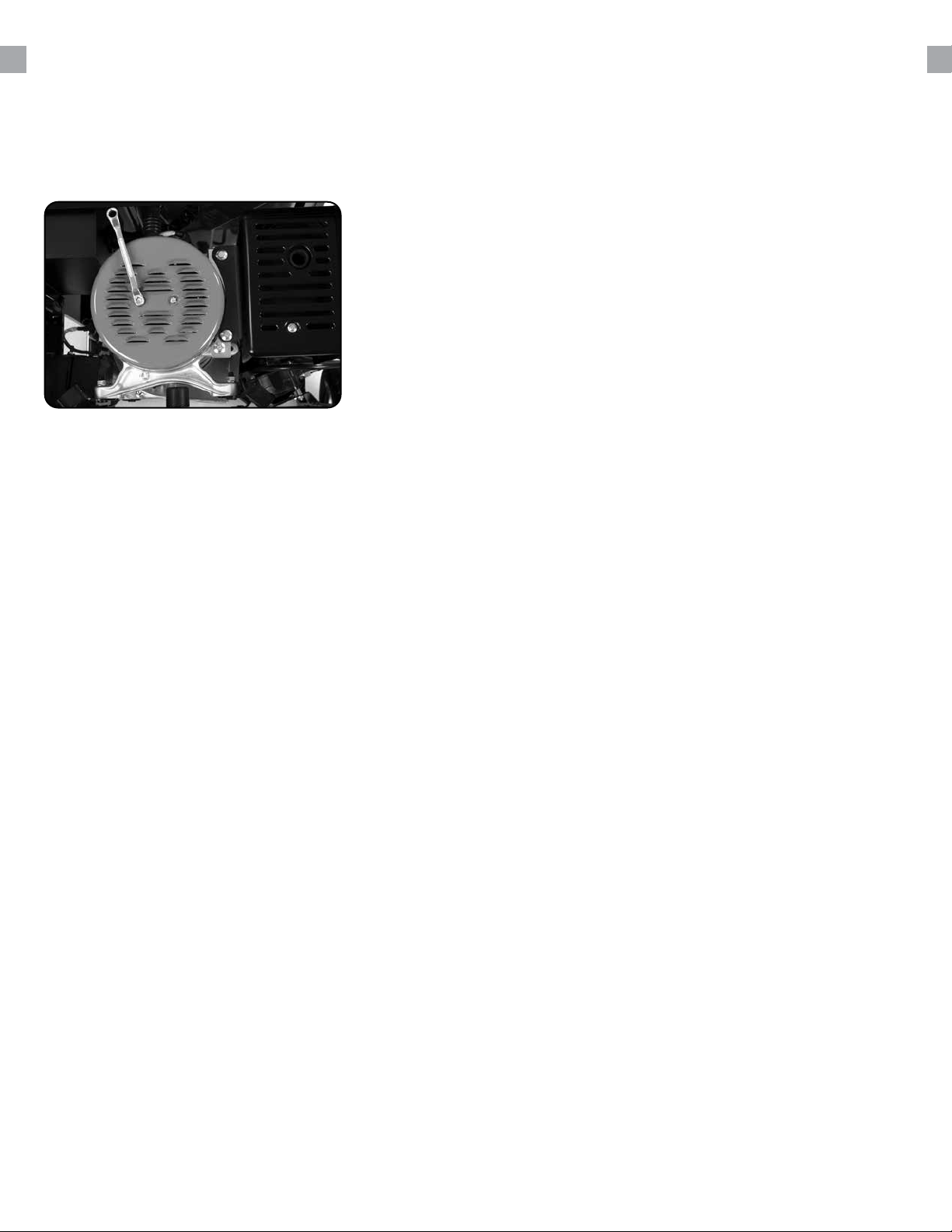
Replace generator cover
Replace the back cover of the generator and secure with the
2 bolts.
8.
67
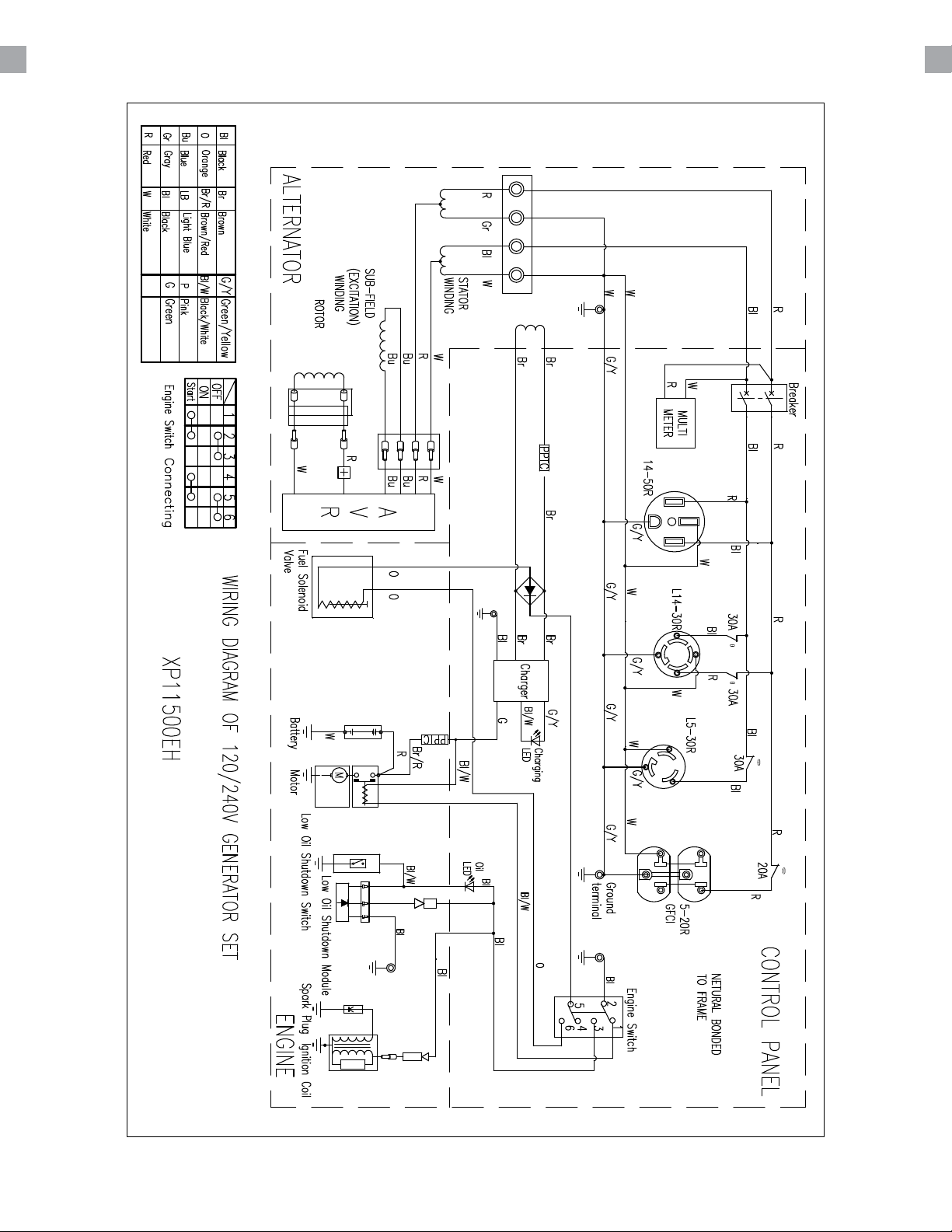
WIRING DIAGRAM
68
69

WARRANTY
3-year Warranty
All DuroMax Power Equipment warrant the original purchasers to a 3-year Parts Warranty
(Residential Use ONLY: Unusually heavy or commercial use is covered for a period of 1-year) in
the event of failure due to defects in electrical or mechanical components. Freight on any items
submitted for replacement or repair under the Warranty are the responsibility of the equipment
owner. This warranty is non-transferable and only valid to the original purchaser.
Warranty Exclusions
The DuroMax Power Equipment warranty does not cover repairs or returns when the fault is:
Normal Wear and Tear, Installation Use or Maintenance Services, Cosmetic defects, Accessories,
Failures due to acts of God or Natural Disasters, or problems related to/from aftermarket or non-
OEM parts.
Warranty Limitations
DuroMax Power Equipment does not claim or hold any obligation to loss of time, freight charges,
use of product, or any incidental damages from the use of this product. THIS WARRANTY IS IN LIEU
OF ALL OTHER WARRANTIES, EXPRESSED OR IMPLIED.
U.S EPA AND CALIFORNIA EMISSION CONTROL WARRANTY STATEMENT
YOUR WARRANTY RIGHTS AND OBLIGATIONS
The California Air Resources Board, The United States Environmental Protection Agency (US EPA)
and DuroMax Power Equipment, are pleased to explain the emission control system warranty on
your 2020-2021 year small o-road engine. In the United States and California, new small o-road
engines must be designed built and equipped to meet the State’s stringent anti-smog standards.
DuroMax Power Equipment must warrant the emission control system on your small o-road
engine for the periods of time listed below provided there has been no abuse neglect or improper
maintenance of your small o-road engine.
Your emission control system may include parts such as the carburetor or fuel injection system, the
ignition system, and a catalytic converter. Also included may be hoses, belts, connectors, and other
emission-related assemblies.
Where a warrantable condition exists, DuroMax Power Equipment will repair your small o-road
engine at no cost to you including diagnosis, parts, and labor.
MANUFACTURER’S WARRANTY COVERAGE:
As the small o-road engine owner, you are responsible for the performance of the required
70

maintenance listed in your owner’s manual. DuroMax Power Equipment recommends that you
retain all receipts covering maintenance on your small o-road engine, but DuroMax Power
Equipment cannot deny warranty solely for the lack of receipts or for your failure to ensure the
performance of all scheduled maintenance.
As the small o-road engine owner, you should, however, be aware that DuroMax Power
Equipment may deny you warranty coverage if your small o-road engine or a part has failed due
to abuse, neglect, improper maintenance or unapproved modications.
You are responsible for presenting your small o-road engine to a DuroMax Power Equipment
distribution center as soon as a problem exists. The warranty repairs should be completed in a
reasonable amount of time, not to exceed 30 days.
If you have any questions regarding your warranty rights and responsibilities, contact DuroMax
Power Equipment authorized warranty service facility:
TEL: 1-844-387-6629
WEBSITE: www.duromaxpower.com
ADDRESS: 5800 Ontario Mills Pkwy, Ontario CA 91764
This telephone number is only for the engines which the company name “DuroMax Power
Equipment” on the emission label.
DEFECTS WARRANTY REQUIREMENTS:
(a) The warranty period begins on the date the engine or equipment is delivered to an ultimate
purchaser.
(b) General Emissions Warranty Coverage. DuroMax Power Equipment warrants to the ultimate
purchaser and each subsequent owner that the engine or equipment is:
(1) Designed, built, and equipped so as to conform with all applicable regulations adopted by
US EPA & Air Resources Board; and
(2) Free from defects in materials and workmanship that causes the failure of a warranted
part for a period of two years.
(c) The warranty on emissions-related parts will be interpreted as below:
(1) Any warranted part that is not scheduled for replacement as required maintenance in
the written instructions required by subsection (d) must be warranted for the warranty
period dened in Subsection(b)(2). If any such part fails during the period of warranty
coverage, it must be repaired or replaced by DuroMax Power Equipment according to
71

WARRANTY (CONTINUED)
Subsection (4) below. Any such part repaired or replaced under the warranty must be
warranted for the remaining warranty period.
(2) Any warranted part that is scheduled only for regular inspection in the written instructions
required by subsection(d)must be warranted for the warranty period dened in Subsection(b)
(2). A statement in such written instructions to the eect of “repair or replace as necessary” will
not reduce the period of warranty coverage. Any such part repaired or replaced under warranty
must be warranted for the remaining warranty period.
(3) Any warranted part that is scheduled for replacement as required maintenance in the written
instructions required by subsection (d) must be warranted for the period of time prior to the
rst scheduled replacement point for that part. If the part fails prior to the rst scheduled
replacement, the part must be repaired or replaced by DuroMax Power Equipment according to
Subsection (4) below. Any such part repaired or replaced under warranty must be warranted for
the remainder of the period prior to the rst scheduled replacement point for the part.
(4) Repair or replacement of any warranted part under the warranty must be performed at no
charge to the owner at a warranty station. (5) Notwithstanding the provisions of Subsection
(4) above, warranty services or repairs must be provided at all DuroMax Power Equipment
distribution centers that are franchised to service the subject engines.
(6) The owner must not be charged for diagnostic labor that leads to the determination that
a warranted part is, in fact, defective provided that such diagnostic work is performed at
a warranty station. (7) DuroMax Power Equipment is liable for damages to other engine
components proximately caused by a failure under warranty of any warranted part.
(8) Throughout the emissions warranty period dened in Subsection (b)(2), DuroMax Power
Equipment must maintain a supply of warranted parts sucient to meet the expected demand
for such parts.
(9) Any replacement part may be used in the performance of any warranty maintenance or repairs
and must be provided without charge to the owner such use will not reduce the warranty
obligations of DuroMax Power Equipment
(10) Add-on or modied parts that are not exempted by the Air Resources Board may not be
used. The use of any non-exempted add-on or modied parts will be grounds for disallowing
a warranty claim. DuroMaxPower Equipment will not be liable to warrant failures of warranted
parts caused by the use of a non-exempted add-on or modied part.
(11) DuroMax Power Equipment issuing the warranty shall provide any documents that describe
that manufacturer’s warranty procedures or policies within ve working days of a request by the
US EPA & Air Resources Board.
72

Exhaust Emission Warranty Parts List.
(1) Fuel Metering System
(i) Carburetor and internal parts (and/or
pressure regulator or fuel injection
system).
(ii) Air/fuel ratio feedback and control
system.
(iii) Cold start enrichment system.
(iv) Fuel tank.
(2) Air induction system
(i) Controlled hot air intake system.
(ii) Intake manifolds.
(iii) Air lter.
(3) Ignition System
(i) Spark Plugs.
(ii) Magneto or electronic ignition system.
(iii) Spark advance/retard system.
(4) Exhaust Gas Recirculation (EGR) System
(i) EGR valve body, and carburetor spacer
if applicable.
(ii) EGR rate feedback and control system.
(5) Air Injection System
(i) Air pump or pulse valve.
(ii) Valves aecting the distribution of
ow.
(iii) Distribution manifold.
(6) Catalyst or Thermal Reactor System
(i) Catalytic converter.
(ii) Thermal reactor.
(iii) Exhaust manifold.
(7) Particulate Controls
(i) Traps, lters, precipitators, and any
other device used to capture particulate
emissions.
(8) Miscellaneous Items Used in Above Systems
(i) Electronic controls
(ii) Vacuum, temperature, and time-
sensitive valves and switches.
(iii) Hoses, belts, connectors, and
assemblies.
73
DuroMax Power Equipment will furnish with each new engine written instructions for the
maintenance and use of the engine by the owner

74
CUSTOMER SERVICE
Duromax Power Equipment is comitted to ensuring that our products perform when they need
to. Our generators are your lifeline in the event of an emergency. Should you have any problems,
please contact our customer service department:
DUROMAX POWER EQUIPMENT
5800 Ontario Mills Parkway
Ontario, CA 91764
Customer Service: 844-DUROMAX
Customer Service Hours: 8-5pm PST
Website: www.duromaxpower.com
Email: [email protected]

5800 Ontario Mills Parkway
Ontario, CA 91764
United States
844-DUROMAX
