Visítenos en http://solutions.brother.com donde hallará consejos para la solución
de problemas así como la lista de preguntas y respuestas más frecuentes.
Please visit us at http://solutions.brother.com where you can get product
support and answers to frequently asked questions (FAQs).
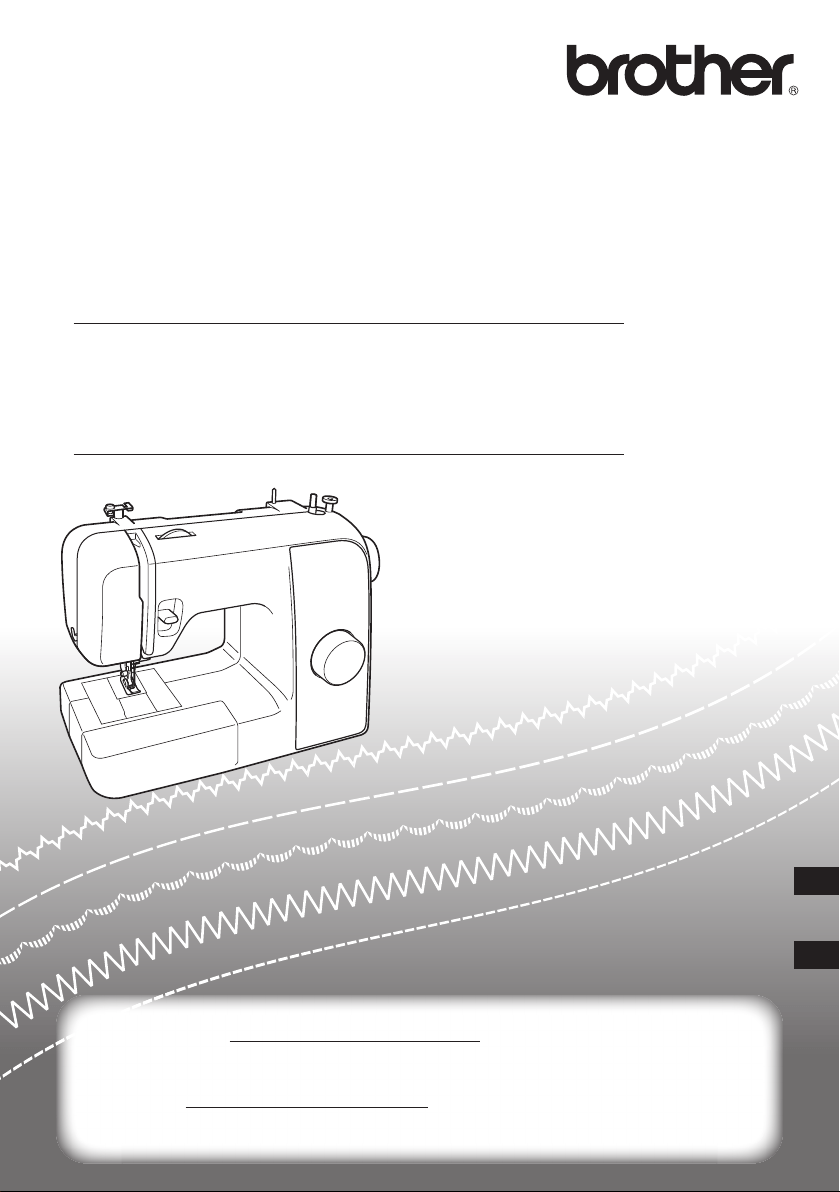
Operation Manual
Product Code: 885-X11
Model:LX2500
Sewing Machine
Manual de instrucciones
Código de producto: 885-X11
Modelo:LX2500
Máquina de coser
ENGLISH
ESPAÑOL

———————————————————————————————————————————————————————————————————————————————————————————————————————————————————————————————————————————————————————————————————————————————————————————————————————————————————————————————————————————————————————————————————————
—————
1
IMPORTANT SAFETY
INSTRUCTIONS
Please read these safety instructions
before attempting to use the machine.
DANGER - To reduce the
risk of electric shock:
1Always unplug the machine from
the electrical outlet immediately after
using, when cleaning, when making
any user servicing adjustments
mentioned in this manual, or if you are
leaving the machine unattended.
WARNING - To reduce the
risk of burns, fire, electric shock, or
injury to persons.
2Always unplug the machine from
the electrical outlet when making any
adjustments mentioned in the
instruction manual:
• To unplug the machine, switch the
machine to the symbol “O” position
to turn it off, then grasp the plug and
pull it out of the electrical outlet. Do
not pull on the cord.
• Plug the machine directly into the
electrical outlet. Do not use an
extension cord.
•Always unplug your machine if the
power is cut.
3Never operate this machine if it has
a damaged cord or plug, if it is not
working properly, if it has been
dropped or damaged, or water is spilled
on the unit. Return the machine to the
nearest authorized dealer or service
center for examination, repair,
electrical or mechanical adjustment.
• While the machine is stored or in use
if you notice anything unusual, such
as an odor, heat, discoloration or
deformation, stop using the machine
and immediately unplug the power
cord.
• When transporting the machine, be
sure to carry it by its handle. Lifting
the machine by any other part may
damage the machine or result in the
machine falling, which could cause
injuries.
• When lifting the machine, be careful
not to make any sudden or careless
movements, otherwise you may
injure your back or knees.
4Always keep your work area clear:
• Never operate the machine with any
air openings blocked. Keep
ventilation openings of the machine
and foot control free from the build
up of lint, dust, and loose cloth.
•Do not store objects on the foot
controller.
•Do not use extension cords. Plug the
machine directly into the electrical
outlet.
•Never drop or insert any object into
any opening.
•Do not operate where aerosol (spray)
products are being used or where
oxygen is being administered.
•Do not use the machine near a heat
source, such as a stove or iron;
otherwise, the machine, power cord
or garment being sewn may ignite,
resulting in fire or an electric shock.
•Do not place this machine on an
unstable surface, such as an unsteady
or slanted table, otherwise the
machine may fall, resulting in
injuries.
5Special care is required when
sewing:
•Always pay close attention to the
needle. Do not use bent or damaged
needles.

2
—————
————————————————————————————————————————————————————————————————————————————————————————————————————————————————————
—
——————————————————————————————————————————————————————————————————————————————————————————————————————————————————————————————————————————————————————————
• Keep fingers away from all moving
parts. Special care is required around
the machine needle.
• Switch the machine to the symbol
“O” position to turn it off when
making any adjustments in the needle
area.
•Do not use a damaged or incorrect
needle plate, as it could cause the
needle to break.
•Do not push or pull the fabric when
sewing, and follow careful instruction
when freehand stitching so that you
do not deflect the needle and cause it
to break.
6This machine is not a toy:
• Your close attention is necessary
when the machine is used by or near
children.
• The plastic bag that this machine was
supplied in should be kept out of the
reach of children or disposed of.
Never allow children to play with the
bag due to the danger of suffocation.
•Do not use outdoors.
7For a longer service life:
• When storing this machine, avoid
direct sunlight and high humidity
locations. Do not use or store the
machine near a space heater, iron,
halogen lamp, or other hot objects.
• Use only neutral soaps or detergents
to clean the case. Benzene, thinner,
and scouring powders can damage
the case and machine, and should
never be used.
• Always consult the operation manual
when replacing or installing any
assemblies, the presser feet, needle,
or other parts to assure correct
installation.
8For repair or adjustment:
• If the Light unit (light-emitting diode)
is damaged, it must be replaced by
authorized dealer.
• In the event a malfunction occurs or
adjustment is required, first follow the
troubleshooting table in the back of
the operation manual to inspect and
adjust the machine yourself. If the
problem persists, please consult your
local authorized Brother dealer.
Use this machine only for its intended
use as described in this manual.
Use accessories recommended by the
manufacturer as contained in this
manual.
The contents of this manual and
specifications of this product are
subject to change without notice.
For additional product information,
visit our web site at www.brother.com
SAVE THESE
INSTRUCTIONS
This machine is intended
for household use.
This appliance is not intended for use by
persons (including children) with
reduced physical, sensory or mental
capabilities, or lack of experience and
knowledge, unless they have been given
supervision or instruction concerning use
of the appliance by a person responsible
for their safety.
Children should be supervised to ensure
that they do not play with the appliance.
FOR USERS IN THE UK, EIRE,
MALTA AND CYPRUS ONLY
IMPORTANT
• In the event of replacing the plug fuse, use a fuse
approved by ASTA to BS 1362, i.e. carrying the
mark, rating as marked on plug.
• Always replace the fuse cover. Never use plugs with
the fuse cover omitted.
• If the available electrical outlet is not suitable for the
plug supplied with this equipment, you should
contact your authorized dealer to obtain the correct
lead.

———————————————————————————————————————————————————————————————————————————————————————————————————————————————————————————————————————————————————————————————————————————————————————————————————————————————————————————————————————————————————————————————————————
—————
3
CONTENTS
IMPORTANT SAFETY INSTRUCTIONS ...........1
1. KNOWING YOUR SEWING
MACHINE .................................. 4
ACCESSORIES .................................................4
Optional accessories .......................................... 4
THE MAIN PARTS ...........................................5
Flat bed attachment ............................................ 5
USING YOUR SEWING MACHINE ................6
Connecting plugs ............................................... 6
Main power and sewing light switch .................. 7
Foot controller .................................................... 7
Checking the needle ........................................... 7
Replacing the needle .......................................... 7
Changing the presser foot ................................... 8
THE CONTROLS .............................................9
Pattern selection dial .......................................... 9
Patterns and stitch names ................................... 9
Reverse sewing lever ........................................ 10
THREADING THE MACHINE .......................11
Winding the bobbin ......................................... 11
Lower threading ............................................... 13
Upper threading ............................................... 14
Drawing up the lower thread ............................ 16
FABRIC, THREAD, AND NEEDLE
COMBINATIONS .........................................17
2. SEWING BASICS ......................18
Please read before sewing ................................ 18
Starting sewing ................................................. 18
Trial sewing ...................................................... 19
Changing the sewing direction ......................... 19
Sewing thick fabrics ......................................... 19
Sewing thin fabrics ........................................... 20
Sewing stretch fabrics ....................................... 20
Stitching cylindrical pieces ............................... 20
Sewing with a twin needle (Option) ................. 20
Thread tension ................................................. 22
3. BUILT-IN STITCHES .................23
Straight stitching ............................................... 23
Zigzag stitching ................................................ 23
Blind hem stitching .......................................... 24
Shell tuck stitching ........................................... 25
Elastic stitching ................................................. 25
Double action stitching .................................... 26
Decorative stitching ......................................... 26
4. SEWING BUTTONHOLES AND
BUTTONS ............................... 27
Making a buttonhole .........................................27
Adjusting buttonholes .......................................28
Sewing buttons .................................................29
5. USING ATTACHMENTS AND
APPLICATIONS ....................... 30
Zipper insertion ................................................30
Gathering ..........................................................31
Darning ............................................................31
Appliqués .........................................................32
OPTIONAL ACCESSORIES ........................... 33
Using the walking foot ......................................33
Using the quilting guide ....................................34
Using the quilting foot ......................................34
Using the 1/4-inch quilting foot ........................35
Using the narrow hemmer foot .........................35
Using the blind stitch foot .................................37
6. APPENDIX ................................ 38
MAINTENANCE ........................................... 38
Restrictions on oiling ........................................38
Precautions on storing the machine ..................38
Cleaning ...........................................................38
TROUBLESHOOTING .................................. 40
INDEX .......................................................... 43
4
—————
——————————————————————————————————————————————————————————————————————————
—
————————————————————————————————————————————————————————————————————————————————————————————————————————————————————————————————————————————————————————————————————————————————————————————————————
1
1KNOWING YOUR SEWING MACHINE
ACCESSORIES
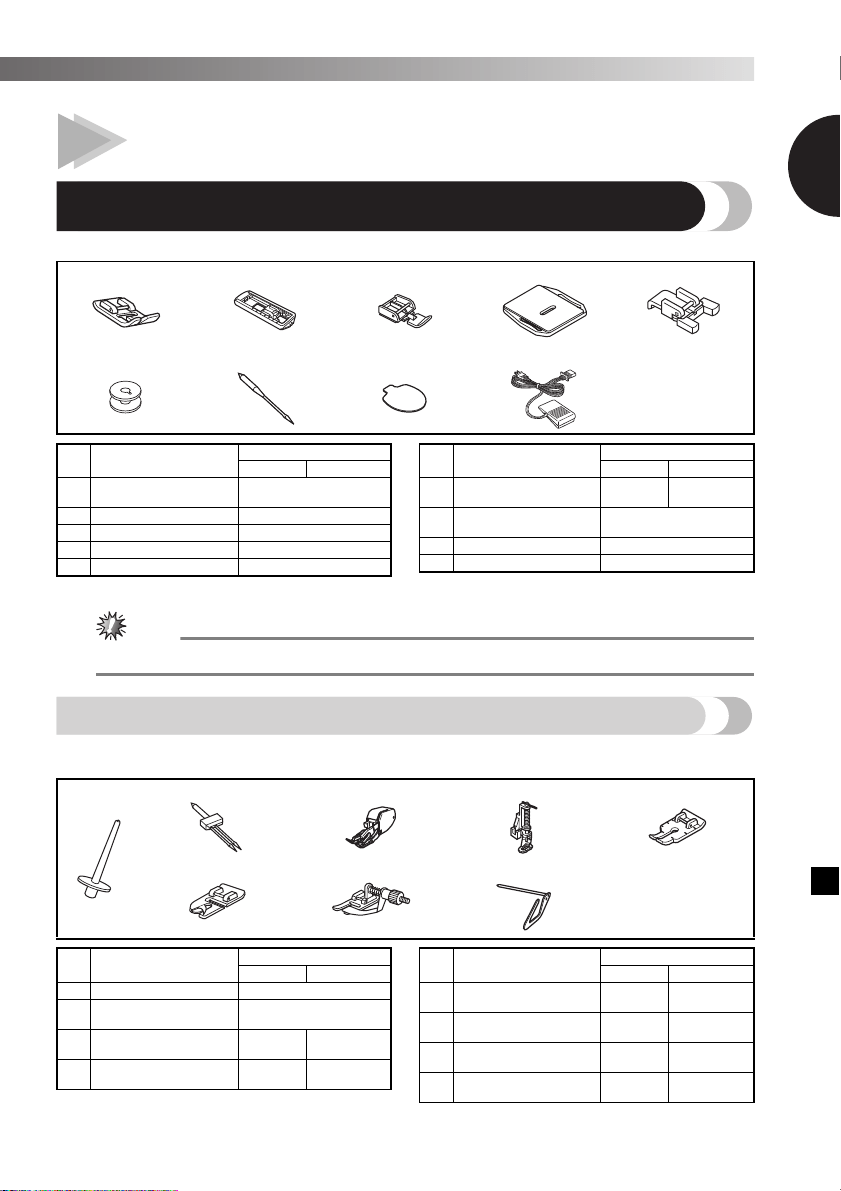
We have designed these accessories to help you easily perform most sewing tasks.
Note
●The included accessories vary depending on the machine model.
Optional accessories
The following are available as optional accessories to be purchased separately. Depending on the model you
purchased, the following accessory may be included with your machine.
1. 2. 3. 4. 5.
6. 7. 8. 9.
No. Part Name Part Code
Americas Others
1Zigzag foot “J”
(on machine) XC4901-021
2 Buttonhole foot “A” X59369-321
3 Zipper foot “I” XE9369-001
4 Darning Plate XC6063-021
5 Button sewing foot “M” XE2137-001
6Bobbin
(One is on machine) SA156 SFB:
XA5539-151
7Needle set
(90/14 needle) 3-piece set: XE5328-001
2-piece set: XE7064-001
8 Oval screwdriver XE5241-001
9 Foot controller See page 5
No. Part Name Part Code
Americas Others
1. 2. 3. 4. 5.
6. 7. 8.
No. Part Name Part Code
Americas Others
1 Extra spool pin XE2241-001
2Twin needle
(2.0/75 needle) X57521-021
3 Walking Foot SA107 F034N:
XC2165-002
4 Quilting Foot SA129 F005N:
XC1948-002
5 1/4-inch Quilting Foot SA125 F001N:
XC1944-052
6 Narrow Hemmer Foot SA127 F003N:
XC1945-002
7 Blind Stitch Foot SA134 F018N:
XC1976-052
8 Quilting guide SA132 F016N:
XC2215-002
No. Part Name Part Code
Americas Others
KNOWING YOUR SEWING MACHINE ————————————————————————————————————————————————————————————————————————————————————————————————————————————————————————————————
—
————————————————————————————————————————————————
—————
5
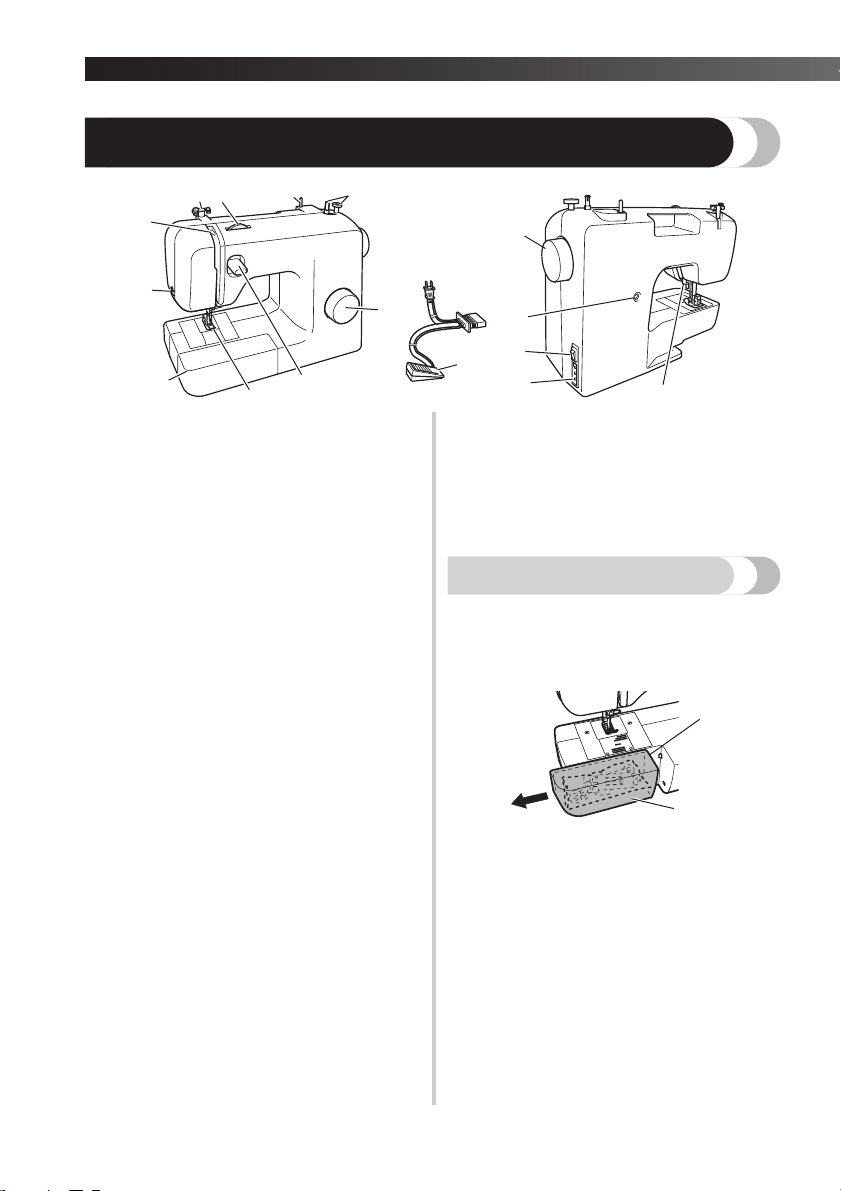
THE MAIN PARTS
1Bobbin winder (Page 11)
This winds the thread onto the bobbin for use as the
lower thread.
2Spool pin (Page 11, 14)
This holds the spool of thread.
3Upper tension-control dial (Page 22)
This controls the tension of the upper thread.
4Thread guide (Page 11, 14)
This is used when winding the thread onto the
bobbin and then threading the machine.
5Thread take-up lever (Page 15)
6Thread cutter (Page 19)
Pass the threads through the thread cutter to cut
them.
7Flat bed attachment with accessory compartment
(Page 5)
8Presser foot (Page 8)
9Reverse sewing lever (Page 10)
Push this lever to stitch in the reverse direction.
0Pattern selection dial (Page 9)
Rotate the dial in either direction to choose the
stitch you want.
AHandwheel
Used to manually raise and lower the needle.
BButtonhole fine-adjustment screw (Page 28)
CMain power and sewing light switch (Page 7)
You can turn the main power and sewing light
switch on and off.
DFoot controller jack / socket (Page 6)
Plug in the foot controller plug and connect the
machine to the power supply.
EPresser foot lever (Page 14)
Used to raise and lower the presser foot.
FFoot controller (Page 7)
You can use this to control the sewing speed, and to
start and stop sewing.
Foot Controller: Model KD-1902 for 110/120V area
Model KD-2902 for 220/240V area
The foot controller part code differs depending on the
country or region. Contact your dealer or the nearest
authorized service center.
Flat bed attachment
The accessories can be stored in a compartment inside
the flat bed attachment.
1Slide the flat bed attachment to the left to
open it.
1Flat bed attachment
2Storage compartment
1
2
3
4
5
6
7
89
0
A
D
C
E
F
B
1
2
6
—————
——————————————————————————————————————————————————————————————————————————
—
————————————————————————————————————————————————————————————————————————————————————————————————————————————————————————————————————————————————————————————————————————————————————————————————————
1
USING YOUR SEWING MACHINE
WARNING
CAUTION
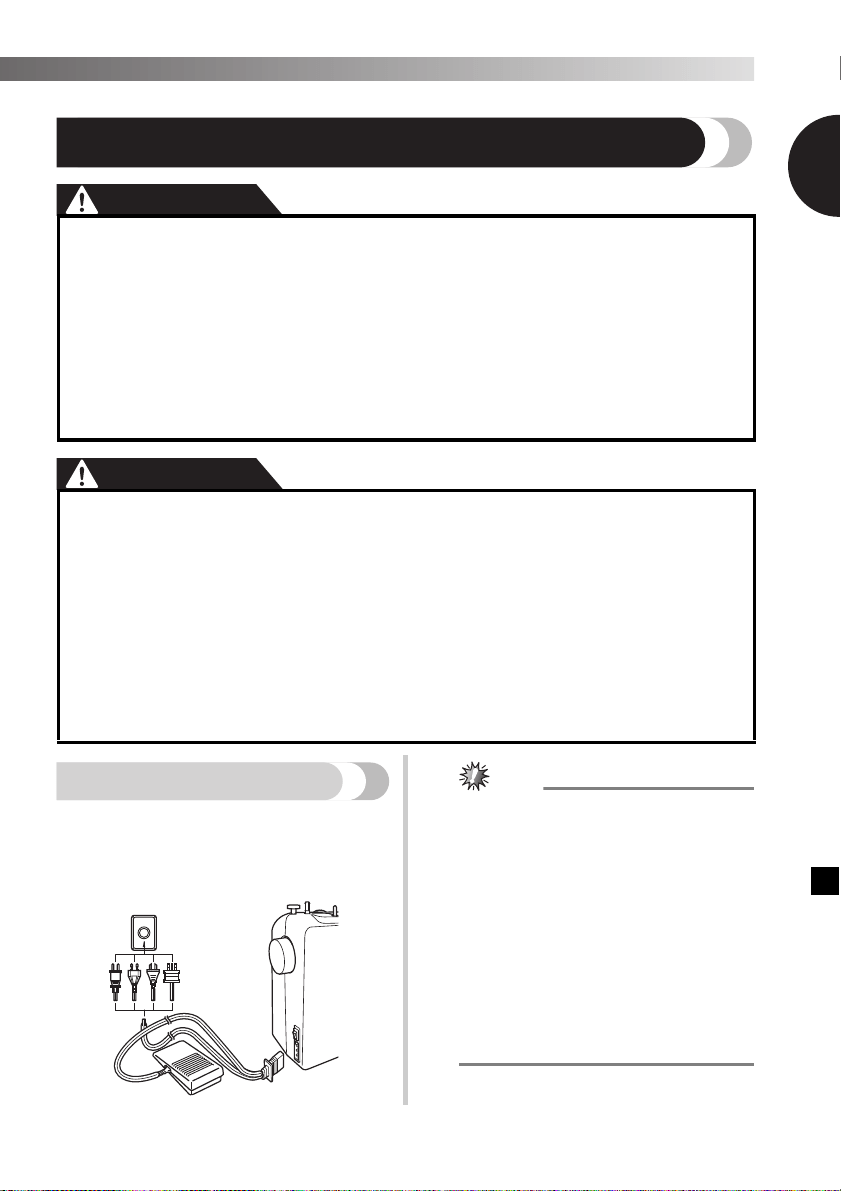
Connecting plugs
1Connect the foot controller plug to the
machine.
2Connect the power supply plug to a wall
outlet.
Note
●If a power outage occurs while the sewing
machine is being operated, turn off the main
power and unplug the power supply cord.
When restarting the sewing machine, follow
the necessary procedure to correctly operate
the machine.
(For U.S.A. only)
●This appliance has a polarized plug (one
blade wider than the other). To reduce the
risk of electric shock, this plug is intended to
fit in a polarized outlet only one way. If the
plug does not fit fully in the outlet, reverse
the plug.
If it still does not fit, contact a qualified
electrician to install the proper outlet. Do
not modify the plug in any way.
●Use only regular household electricity for the power source. Using other power sources may
result in fire, electric shock, or damage to the machine.
●Make sure that the plugs on the power cord are firmly inserted into the electrical outlet and
the power supply jack on the machine.
●Do not insert the plug on the power cord into an electrical outlet that is in poor condition.
●Turn off the main power and remove the plug in the following circumstances:
• When you are away from the machine
• After using the machine
• When the power fails during use
• When the machine does not operate correctly due to a bad connection or a disconnection
• During electrical storms
●Use only the power cord included with this machine.
●Do not use extension cords or multi-plug adapters with many other appliances plugged in to
them. Fire or electric shock may result.
●Do not touch the plug with wet hands. Electric shock may result.
●When unplugging the machine, always turn off the main power first. Always grasp the plug to
remove it from the outlet. Pulling on the cord may damage the cord, or lead to fire or electric
shock.
●Do not allow the power cord to be cut, damaged, modified, forcefully bent, pulled, twisted,
or bundled. Do not place heavy objects on the cord. Do not subject the cord to heat. These
things may damage the cord and cause fire or electric shock. If the cord or plug is damaged,
take the machine to your authorized dealer for repairs before continuing use.
●Unplug the power cord if the machine is not to be used for a long period of time. Otherwise
a fire may result.
2
1
KNOWING YOUR SEWING MACHINE ————————————————————————————————————————————————————————————————————————————————————————————————————————————————————————————————
—
————————————————————————————————————————————————
—————
7
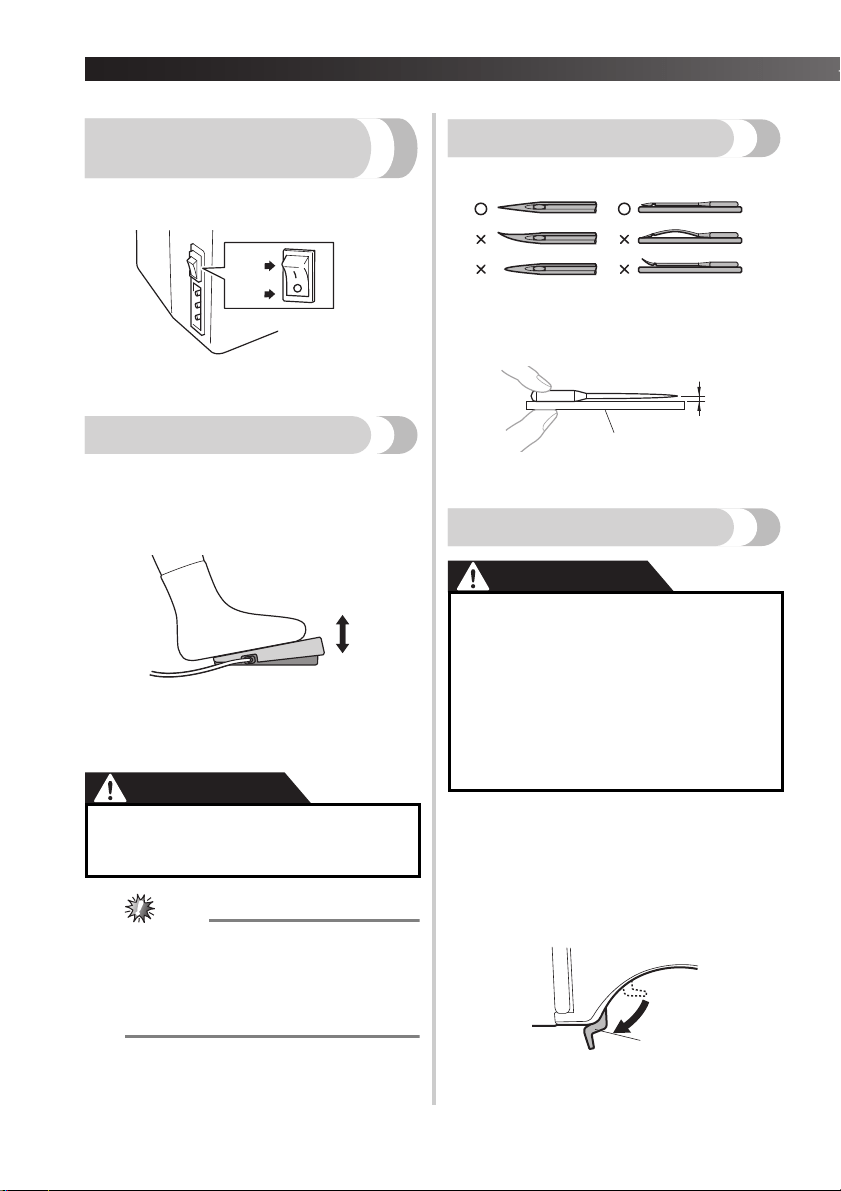
Main power and sewing
light switch
This switch turns the main power and sewing light on or
off.
1Turn on (toward the ‘I’ mark)
2Turn off (toward the ‘O’ mark)
Foot controller
When you press the foot controller down lightly, the
machine will run at a low speed. When you press
harder, the machine’s speed will increase. When you
take your foot off the foot controller, the machine will
stop.
1Slower
2Faster
You should make sure that nothing is placed on the foot
controller when the machine is not in use.
CAUTION
Note
(For U.S.A. only)
●Foot Controller: Model KD-1902
This foot controller can be used on the
machine with product code 885-X11.
The product code is mentioned on the
machine rating plate.
Checking the needle
The sewing needle must always be straight and sharp
for smooth sewing.
■Checking the needle correctly
Put the flat side of the needle on a flat surface.
Check the needle from the top and the sides.
Dispose of any bent needles safely.
1Parallel space
2Level surface (bobbin cover, glass, etc.)
Replacing the needle
CAUTION
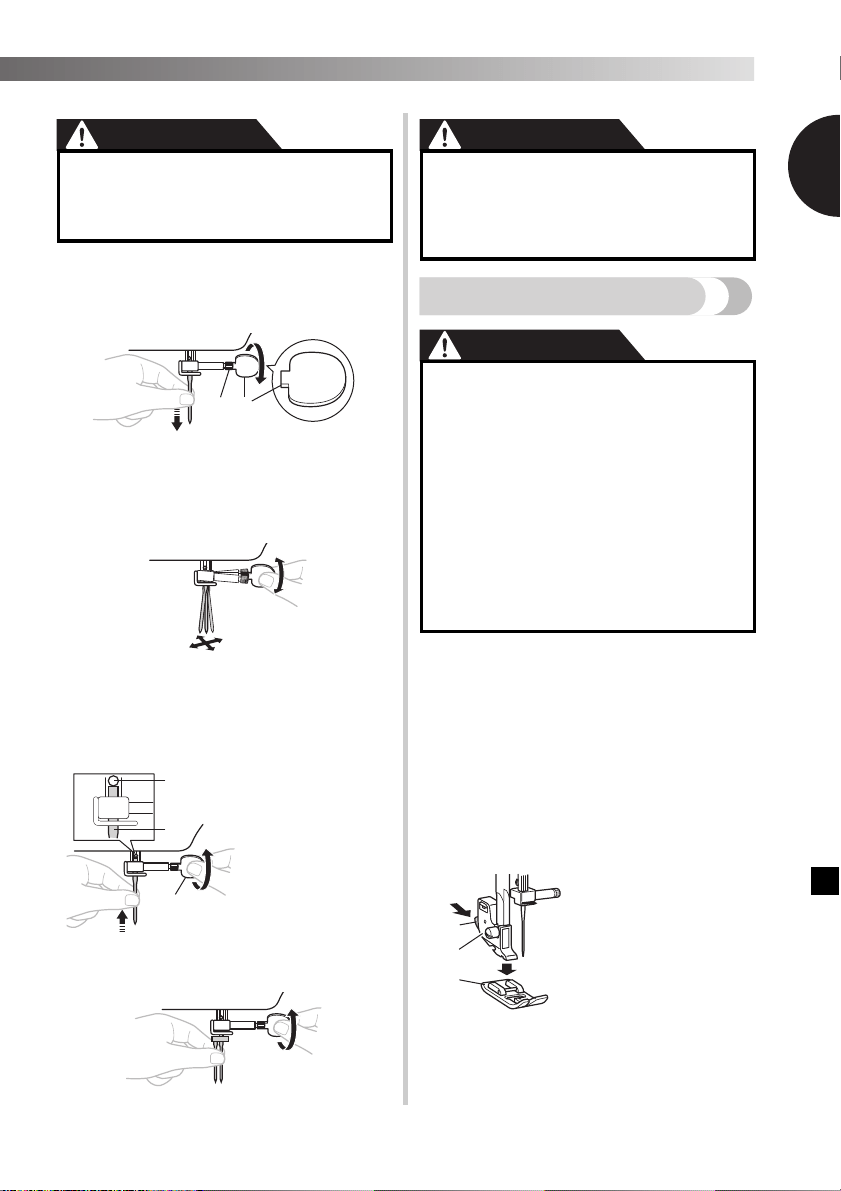
1Turn off the machine.
2Raise the needle by turning the
handwheel toward you
(counterclockwise) so that the mark on
the wheel points up.
3Lower the presser foot lever.
1Presser foot lever
●Do not allow pieces of cloth and dust to
build up on the foot controller. Doing so
could cause a fire or an electric shock.
2
1
1
2
●Always turn off the machine before you
change the needle. Otherwise, injuries
may occur if the foot controller is
accidentally pressed and the machine
starts sewing.
●Only use sewing machine needles for
home use. Other needles may bend or
break and cause injury.
●Never sew with a bent needle. A bent
needle will easily break and cause injury.
1
2
1
8
—————
——————————————————————————————————————————————————————————————————————————
—
————————————————————————————————————————————————————————————————————————————————————————————————————————————————————————————————————————————————————————————————————————————————————————————————————
1
CAUTION
4
Hold the needle with your left hand, and
then use an oval screwdriver to turn the
needle clamp screw counterclockwise to
remove the needle.
1Use an oval screwdriver
2Needle clamp screw
• Do not use excessive force when loosening
or tightening the needle clamp screw,
otherwise certain parts of the sewing
machine may be damaged.
5With the flat side of the needle toward the
back of the machine, insert the needle
until it touches the needle stopper. Next,
tighten the needle clamp using an oval
screwdriver.
Install the twin needle in the same way.
CAUTION
Changing the presser foot
CAUTION
You will have to change the presser foot depending on
what you want to sew and how.
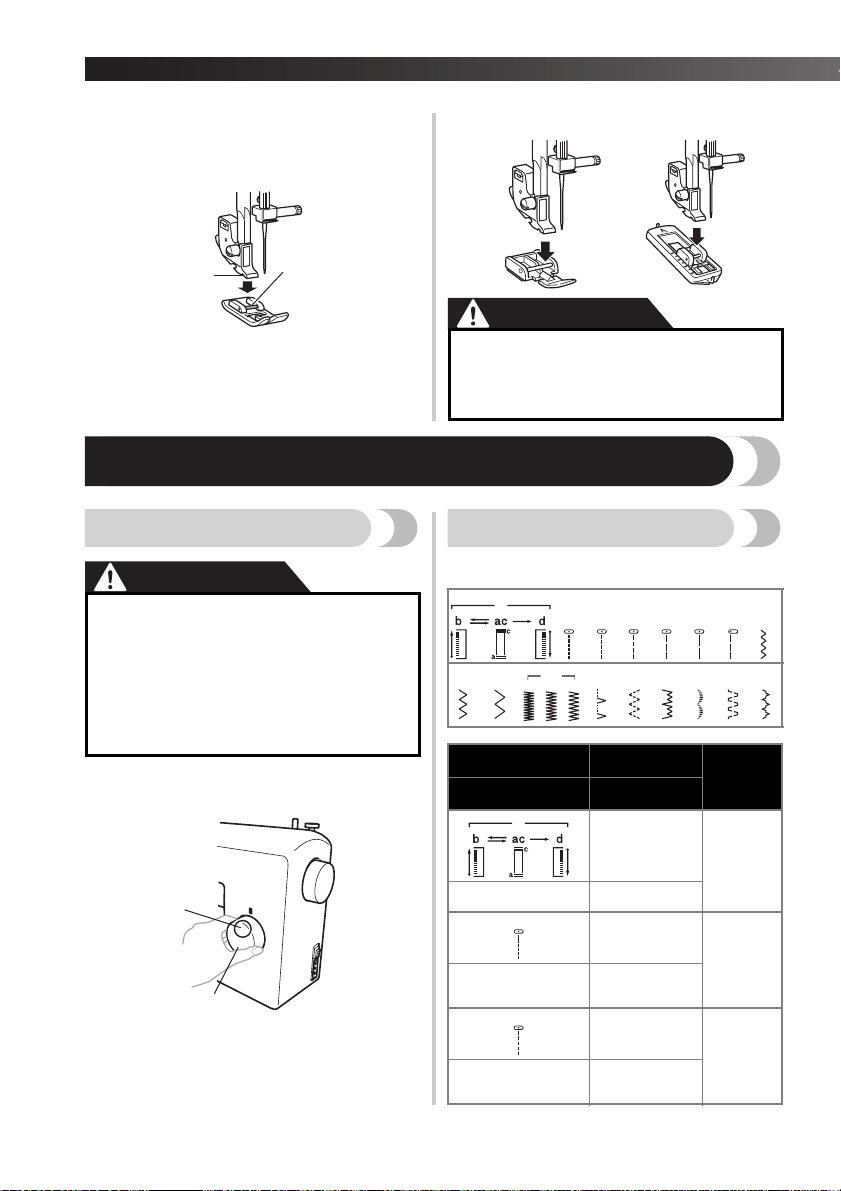
1Turn off the machine.
Raise the presser foot lever.
2Raise the needle by turning the
handwheel toward you
(counterclockwise) so that the mark on
the wheel points up.
3Press the black button at the back of the
presser foot holder to release the presser
foot.
4Put a different presser foot on the needle
plate so that the bar on the presser foot is
in line with the slot on the shank.
●Before replacing the needle, place fabric
or paper under the presser foot to
prevent the needle from falling into the
hole in the needle plate.
1Use an oval
screwdriver
2Needle stopper
3Needle
21
2
3
1
●Make sure you insert the needle until it
touches the stopper, and securely tighten
the needle clamp screw with an oval
screwdriver, otherwise the needle may
break or the machine may be damaged.
●Always turn off the machine before you
change the presser foot. If you leave the
power on and step on the controller, the
machine will start and you may be
injured.
●Always use the correct presser foot for
the stitch pattern you have chosen. If
you use the wrong presser foot, the
needle may strike the presser foot and
bend or break, and may cause injury.
●Only use presser feet that have been
designed to be used with this machine.
Using any other presser foot may cause
accident or injury.
1Black button
2Presser foot holder
3Presser foot
1
2
3
KNOWING YOUR SEWING MACHINE ————————————————————————————————————————————————————————————————————————————————————————————————————————————————————————————————
—
————————————————————————————————————————————————
—————
9
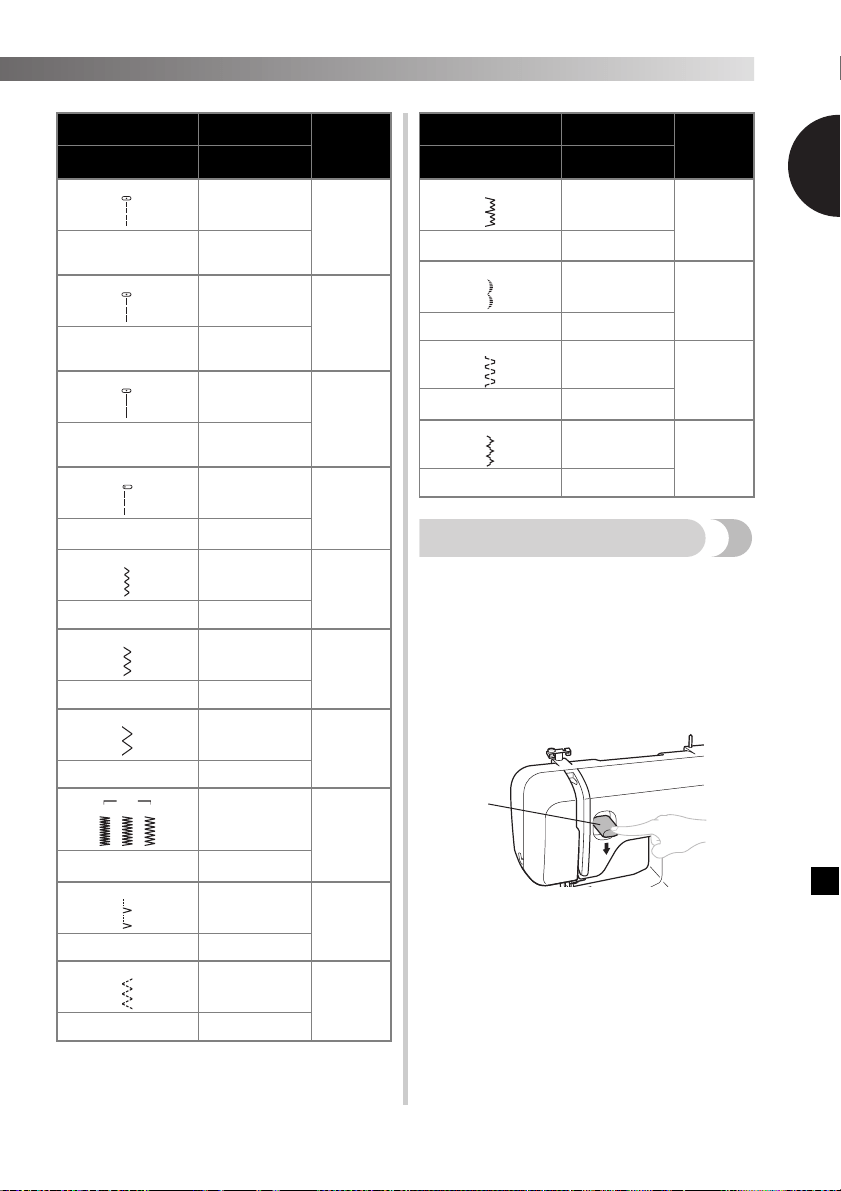
5Lower the presser foot lever and fix the
presser foot onto the shank. If the presser
foot is in the correct place, the bar should
snap in.
1Shank
2Bar
■Presser foot installation orientation
CAUTION
THE CONTROLS
Pattern selection dial
CAUTION
To choose a stitch, simply turn the pattern selection dial
in either direction.
1Pattern selection dial
2Chosen pattern number
Patterns and stitch names
■17 Stitches
12
●If the presser foot is not installed with
the correct orientation, the needle may
strike the presser foot, which may bend
or break the needle and cause injury.
●When you use the pattern selection dial
to choose a pattern, raise the needle by
turning the handwheel toward you
(counterclockwise) so that the mark on
the wheel points up. If the needle is in
the down position when you turn the
pattern selection dial, the needle, presser
foot or fabric may be damaged.
2
1
Pattern Preset Length
(mm (inch)) Reference
Page
Stitch Name Preset Width
(mm (inch))
0.5 (1/32) 27
4-STEP AUTOMATIC
BUTTONHOLE 5 (3/16)
1.6 (1/16)
23, 31
STRAIGHT STITCH
(Center Needle
Position) —
1.8 (1/16)
23, 31
STRAIGHT STITCH
(Center Needle
Position) —
1
23 4 5678
910 11 12 13 14 15 16 17
1
2
3
10
—————
——————————————————————————————————————————————————————————————————————————
—
————————————————————————————————————————————————————————————————————————————————————————————————————————————————————————————————————————————————————————————————————————————————————————————————————
1
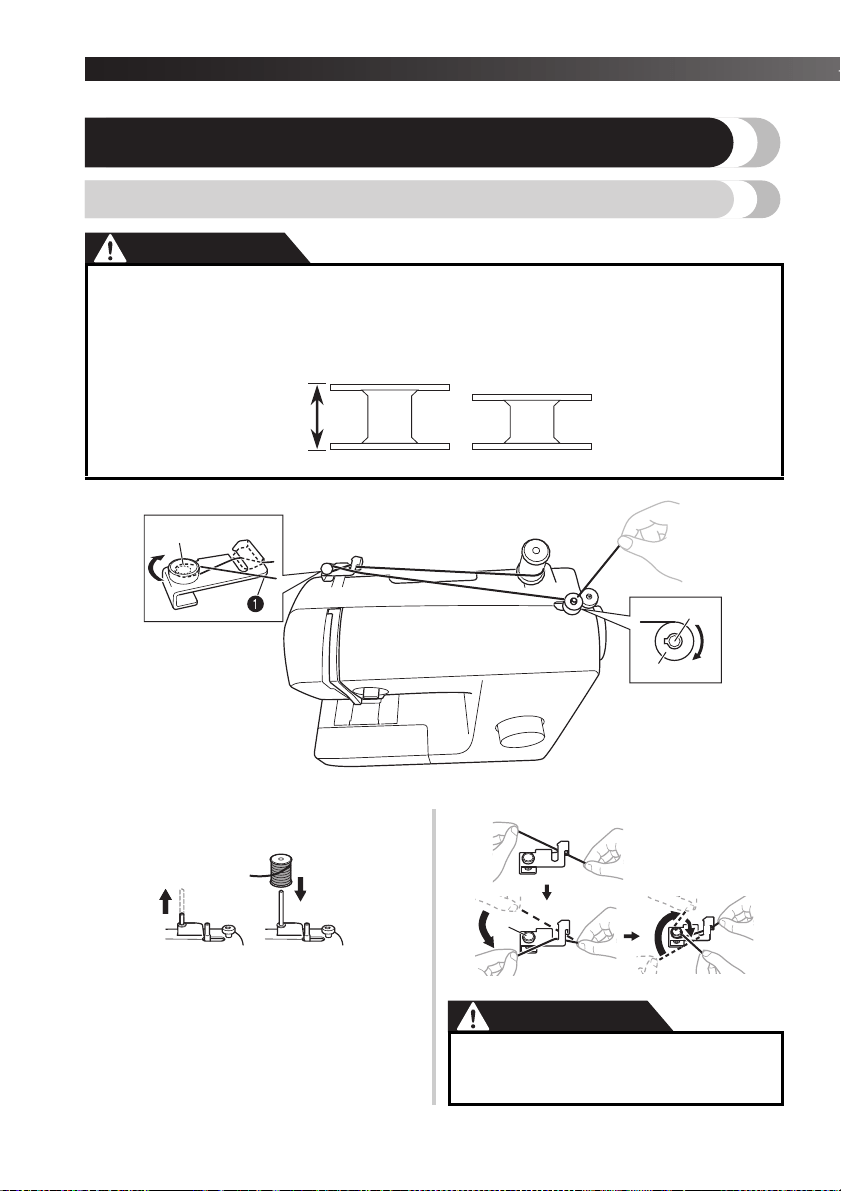
Reverse sewing lever
You can use reverse sewing for back tacking and
reinforcing seams.
To sew in reverse, push the reverse sewing lever in as
far as possible and hold it in that position while you
lightly push the foot controller. To sew forward, release
the reverse sewing lever. The machine will then sew
forward.
The length of reverse stitches is fixed at 2 mm
(1/16 inch).
1Reverse sewing lever
2 (1/16)
23, 31
STRAIGHT STITCH
(Center Needle
Position) —
2.5 (3/32) 23, 30, 31,
33, 34, 35,
37
STRAIGHT STITCH
(Center Needle
Position) —
4 (3/16)
23, 31
STRAIGHT STITCH
(Center Needle
Position) —
2.5 (3/32) 23, 31, 33,
34
STRAIGHT STITCH
(Left Needle Position) —
0.7 (1/32) 23, 29, 32,
33, 37
ZIGZAG STITCH 1.5 (1/16)
1.5 (1/16) 23, 29, 32,
33, 37
ZIGZAG STITCH 3 (1/8)
2 (1/16) 23, 29, 32,
33, 37
ZIGZAG STITCH 5 (3/16)
0.5 (1/32) 23, 32, 33
ZIGZAG (SATIN)
STITCH 5 (3/16)
2 (1/16) 25
SHELL TUCK STITCH 5 (3/16)
1 (1/16) 25
ELASTIC STITCH 5 (3/16)
Pattern Preset Length
(mm (inch)) Reference
Page
Stitch Name Preset Width
(mm (inch))
4
5
6
7
8
9
10
11
12
13
2 (1/16) 24, 37
STRETCH BLIND
HEM STITCH 5 (3/16)
0.5 (1/32) 26
SCALLOP STITCH 5 (3/16)
1.2 (1/16) 26
DOUBLE ACTION
STITCH 5 (3/16)
1.2 (1/16) 26
BRIDGING STITCH 5 (3/16)
Pattern Preset Length
(mm (inch)) Reference
Page
Stitch Name Preset Width
(mm (inch))
14
15
16
17
1
KNOWING YOUR SEWING MACHINE ————————————————————————————————————————————————————————————————————————————————————————————————————————————————————————————————
—
————————————————————————————————————————————————
—————
11
THREADING THE MACHINE
Winding the bobbin
CAUTION
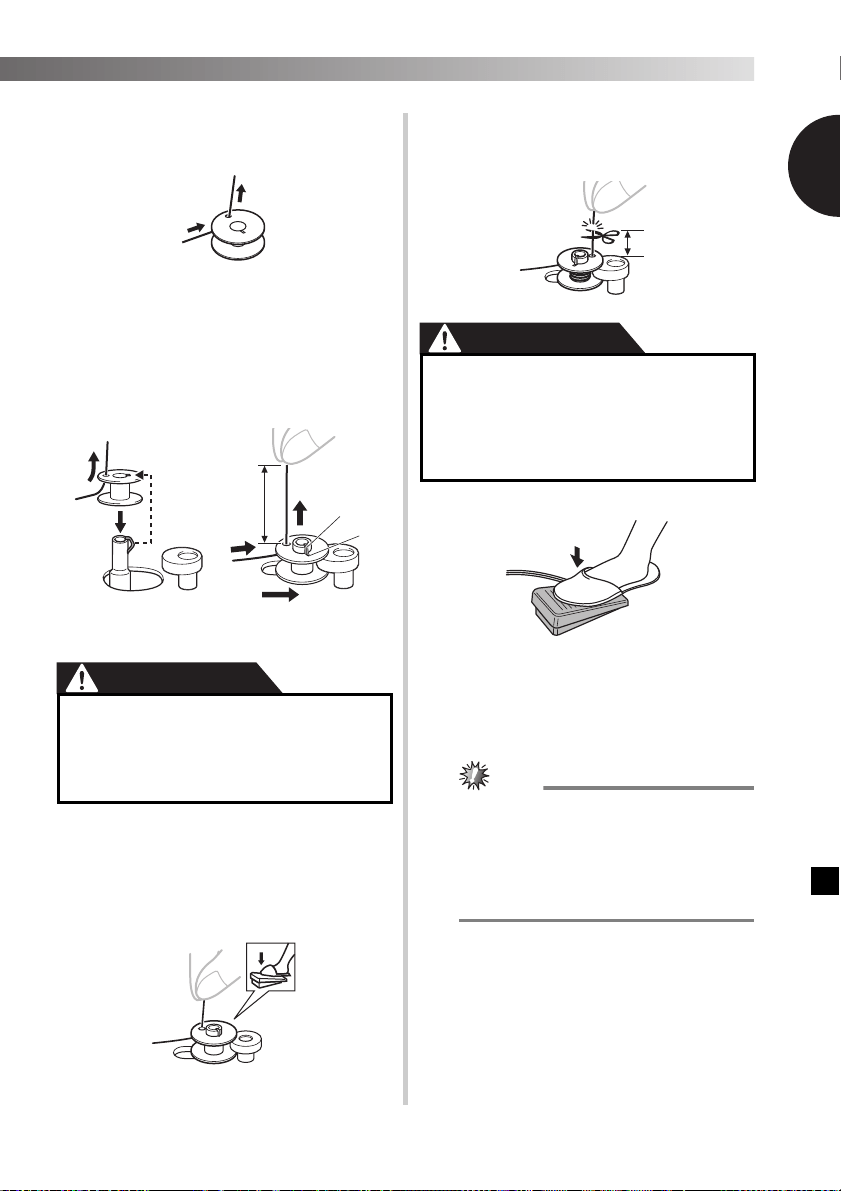
1Pull up the spool pin and put a spool of
thread on this pin.
2While holding the thread from the spool
with your right hand, pass the thread
toward you, in the groove on the thread
guide. Then, pass the thread around the
pre-tension disk and pull the thread in
completely.
1Pre-tension disk
CAUTION
●We designed the bobbin that comes with this machine. If you use bobbins from other models,
the machine will not work properly. Only use the bobbin that comes with this machine or
bobbins of the same type (part code: SA156, SFB: XA5539-151). Using other bobbins may
cause damage to the machine.
Actual size
11.5 mm
(7/16 inch)
This model Other models
1Pre-tension disk 2Bobbin winder shaft 3Bobbin
1
3
2
1Pull the thread
in completely.
●If the spool of thread is in the wrong
place, or is set incorrectly, the thread
may tangle on the spool pin.
1
12
—————
——————————————————————————————————————————————————————————————————————————
—
————————————————————————————————————————————————————————————————————————————————————————————————————————————————————————————————————————————————————————————————————————————————————————————————————
1
3Pass the end of the thread through the
hole on the bobbin from the inside of the
bobbin.
4Put the bobbin onto the bobbin winder
shaft and slide the bobbin winder shaft to
the right. Turn the bobbin clockwise, by
hand, until the spring on the shaft slides
into the notch of the bobbin.
• Make sure to pull out 7 to 10 cm (3 - 4
inches) of thread from the hole on the
bobbin.
1Spring on the shaft
2Notch
37-10 cm (3 - 4 inches)
CAUTION
5Turn on the machine.
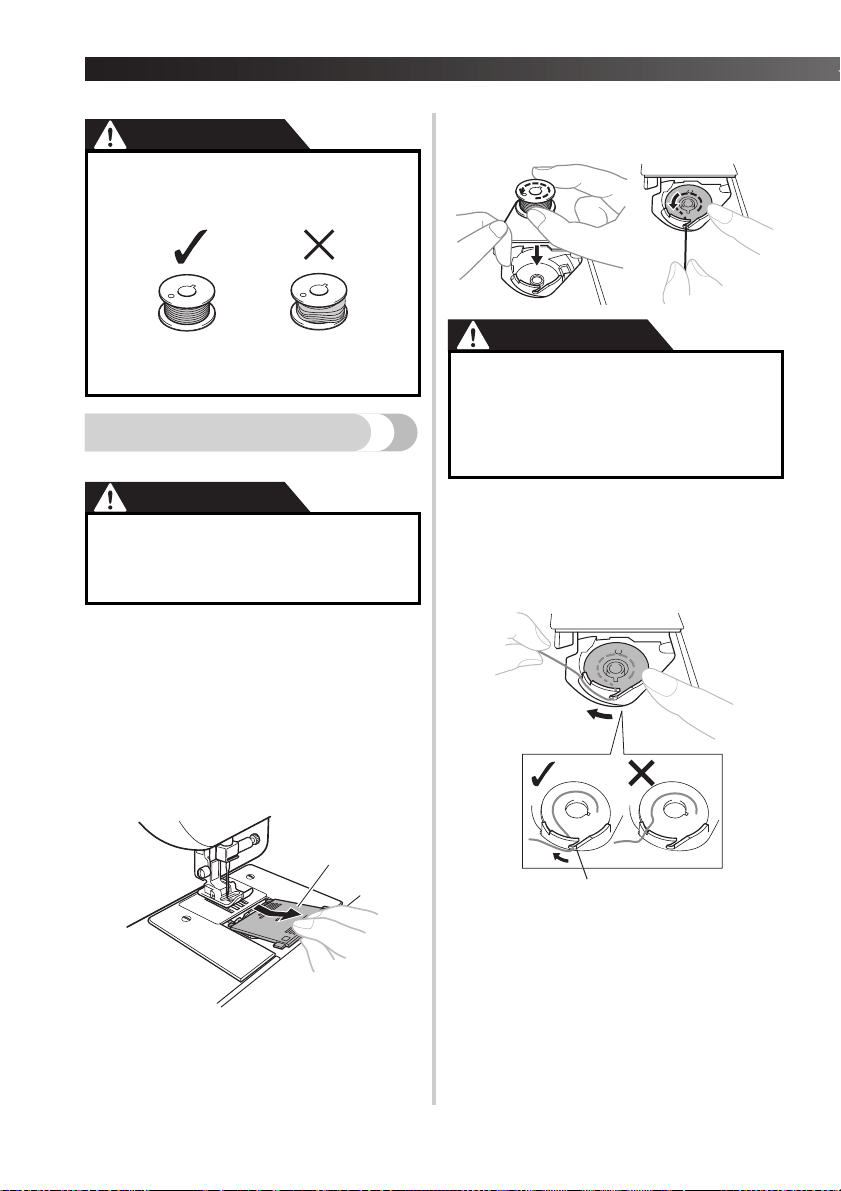
6While holding the end of the thread,
gently press the foot controller to wind
the thread around the bobbin a few times.
Then stop the machine.
7Trim the excess thread above the bobbin.
• Leave 1 cm (1/2 inch) of thread from the hole
on the bobbin.
11 cm (1/2 inch)
CAUTION
8Press the foot controller to start.
9When the bobbin seems full and begins
spinning slowly, take your foot off the foot
controller.
0Cut the thread, slide the bobbin winder
shaft to the left and remove the bobbin.
Note
●When the sewing machine is started or the
handwheel is turned after winding the
thread around the bobbin, the machine will
make a clicking sound; this is not a
malfunction.
●The needle bar does not move when you
slide the bobbin winder shaft to the right.
●Pull the thread taut and hold the end of
the thread straight up. If the thread is too
short, not pulled taut or held at an angle,
injuries may occur when the thread is
wound around the bobbin.
31
2
●Make sure you follow the instructions
carefully. If you do not cut the excess
thread completely before winding the
bobbin, when the thread runs low it may
tangle around the bobbin and cause the
needle to break.
1
KNOWING YOUR SEWING MACHINE ————————————————————————————————————————————————————————————————————————————————————————————————————————————————————————————————
—
————————————————————————————————————————————————
—————
13
CAUTION
Lower threading
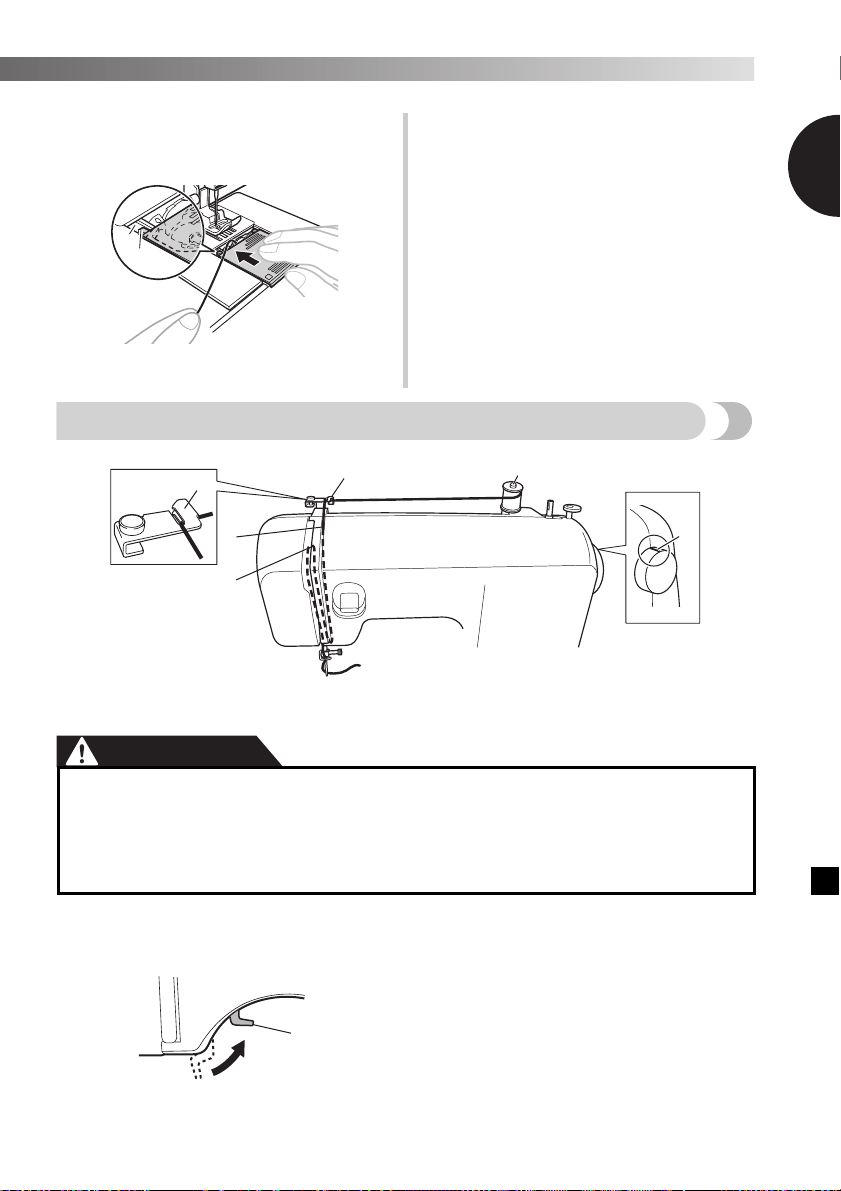
Install the bobbin wound with thread.
CAUTION
1Prepare the bobbin wound properly
before threading the lower thread.
• See page 11 for the details about bobbin
winding.
2Raise the needle by turning the
handwheel toward you
(counterclockwise) and raise the presser
foot lever.
3Remove the bobbin cover by sliding it and
lift toward you.
1Bobbin cover
4Put the bobbin in so the thread comes out
in the direction shown by the arrow.
CAUTION
5Hold the end of the thread, push the
bobbin down with your finger, and then
pass the thread through the slit, as shown.
• If the thread is not correctly inserted through
the tension-adjusting spring of the bobbin
case, it may cause incorrect thread tension.
1Tension-adjusting spring
●Not winding the bobbin properly may
cause the thread tension to loosen, and
may break the needle.
1Wound evenly
2Wound poorly
●Make sure you turn off the machine
while threading. If you accidentally step
on the foot controller and the machine
starts to sew, you could be injured.
1
2
1
●Make sure you set the bobbin so the
thread unrolls in the right direction. If
the thread unrolls in the wrong
direction, it may cause the thread
tension to be incorrect or break the
needle.
1
14
—————
——————————————————————————————————————————————————————————————————————————
—
————————————————————————————————————————————————————————————————————————————————————————————————————————————————————————————————————————————————————————————————————————————————————————————————————
1
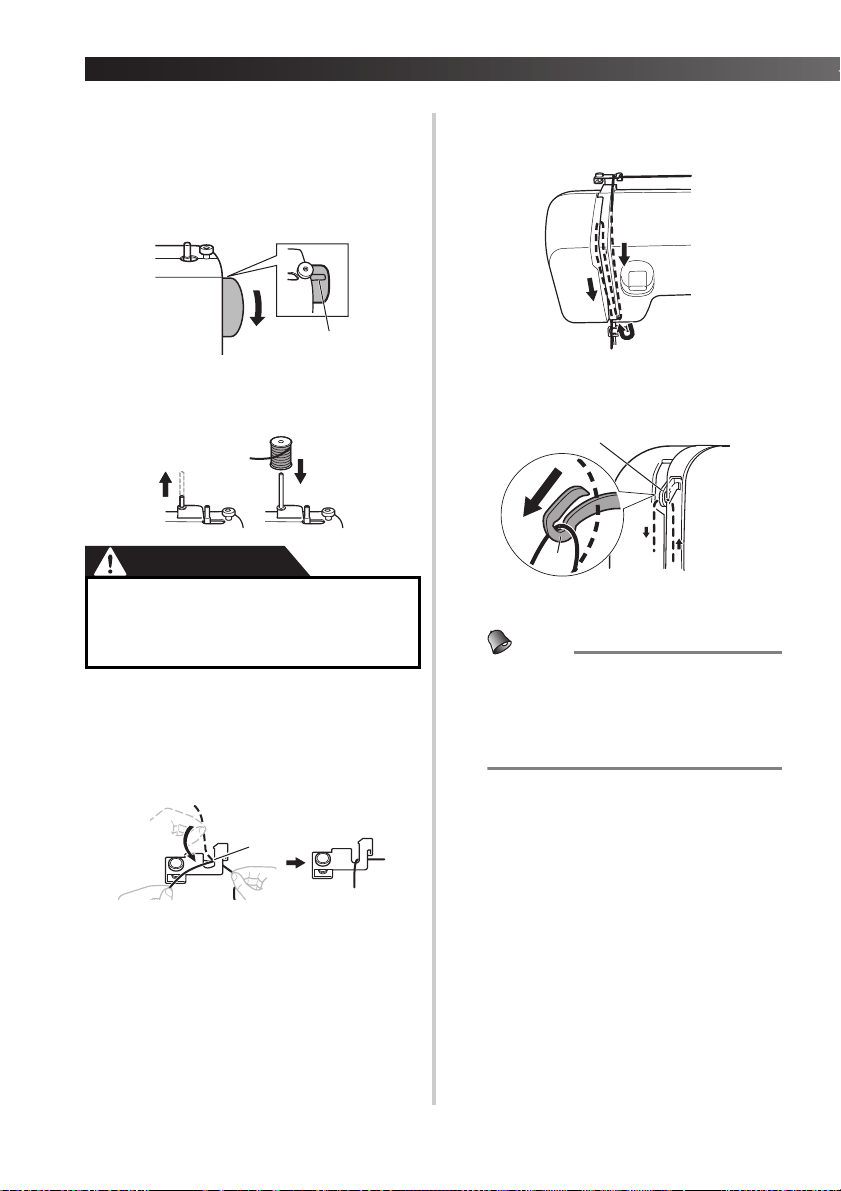
6Replace the bobbin cover. Put the
projection into the race retainer groove
and push closed.
1Groove
2Projection
• Make sure that the end of the thread comes
out from the cover toward the rear of the
machine (as shown in the illustration).
• Draw up the lower thread before starting
sewing. Refer to “Drawing up the lower
thread” on page 16 after threading the upper
thread.
Upper threading
1Spool pin
2Thread guide (back)
3Thread guide (front)
4Thread take-up lever
5Mark on the handwheel
CAUTION
1Turn off the machine.
2Raise the presser foot lever.
1Presser foot lever
1
2
4
3
2
21
5
●When threading the upper thread, carefully follow the instructions. If the upper threading is
not correct, the thread may become tangled or the needle may bend or break.
●Never use a thread weight of 20 or lower.
●Use the needle and the thread in the correct combination. For details on the correct
combination of needles and threads, refer to “FABRIC, THREAD, AND NEEDLE
COMBINATIONS” on page 17.
1
KNOWING YOUR SEWING MACHINE ————————————————————————————————————————————————————————————————————————————————————————————————————————————————————————————————
—
————————————————————————————————————————————————
—————
15
3Raise the needle by turning the
handwheel toward you
(counterclockwise) so that the mark on
the wheel points up.
• If the needle is not correctly raised, the
sewing machine can not be threaded.
1Mark on the wheel
4Pull up the spool pin and put a spool of
thread on this pin.
CAUTION
5While holding the thread from the spool
with your right hand, pass the thread
toward you, in the groove on the thread
guide.
• Make sure that the spring in the groove
catches the thread.
1Spring
6Feed the upper thread as shown in the
following illustration.
7Make sure you guide the thread through
the thread take-up lever from right to left
as shown in the following illustration.
1Thread take-up lever
Memo
●If the thread take-up lever is lowered, the
upper thread can not be wrapped around
the thread take-up lever. Make sure you
raise the needle by turning the handwheel
toward you (counterclockwise) so that the
mark on the wheel points up.
●If the spool of thread is in the wrong
place, or is set incorrectly, the thread
may tangle on the spool pin and cause
the needle to break.
1
1
1
1
16
—————
——————————————————————————————————————————————————————————————————————————
—
————————————————————————————————————————————————————————————————————————————————————————————————————————————————————————————————————————————————————————————————————————————————————————————————————
1
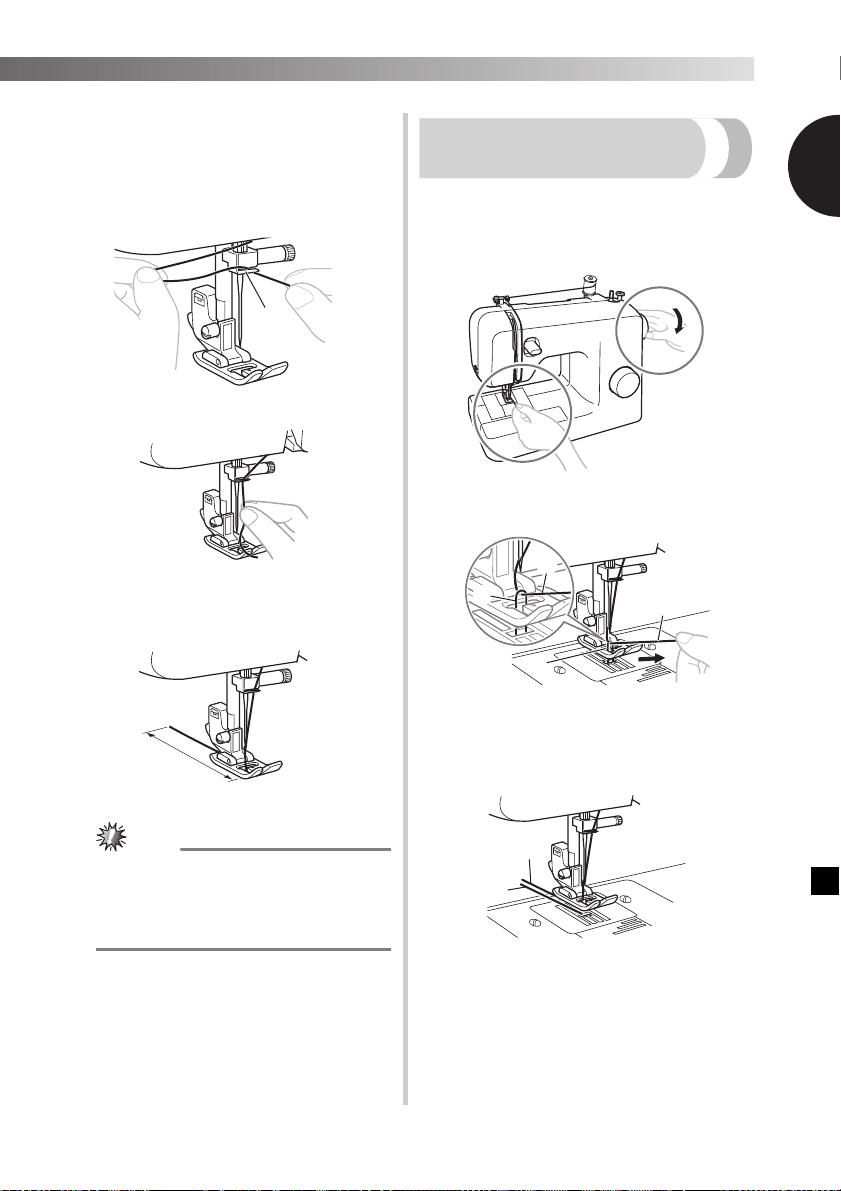
8Put the thread behind the guide above the
needle.
• The thread can easily be passed behind the
needle bar thread guide by holding the
thread in your left hand, then feeding the
thread with your right hand.
1Needle bar thread guide
9Thread the needle from front to back
leaving a thread tail of about 5 cm
(2 inches).
15 cm (2 inches)
Note
●Make sure you raise the presser foot lever
and the thread take-up lever before you feed
the upper thread.
●If you incorrectly feed the thread you may
cause sewing problems.
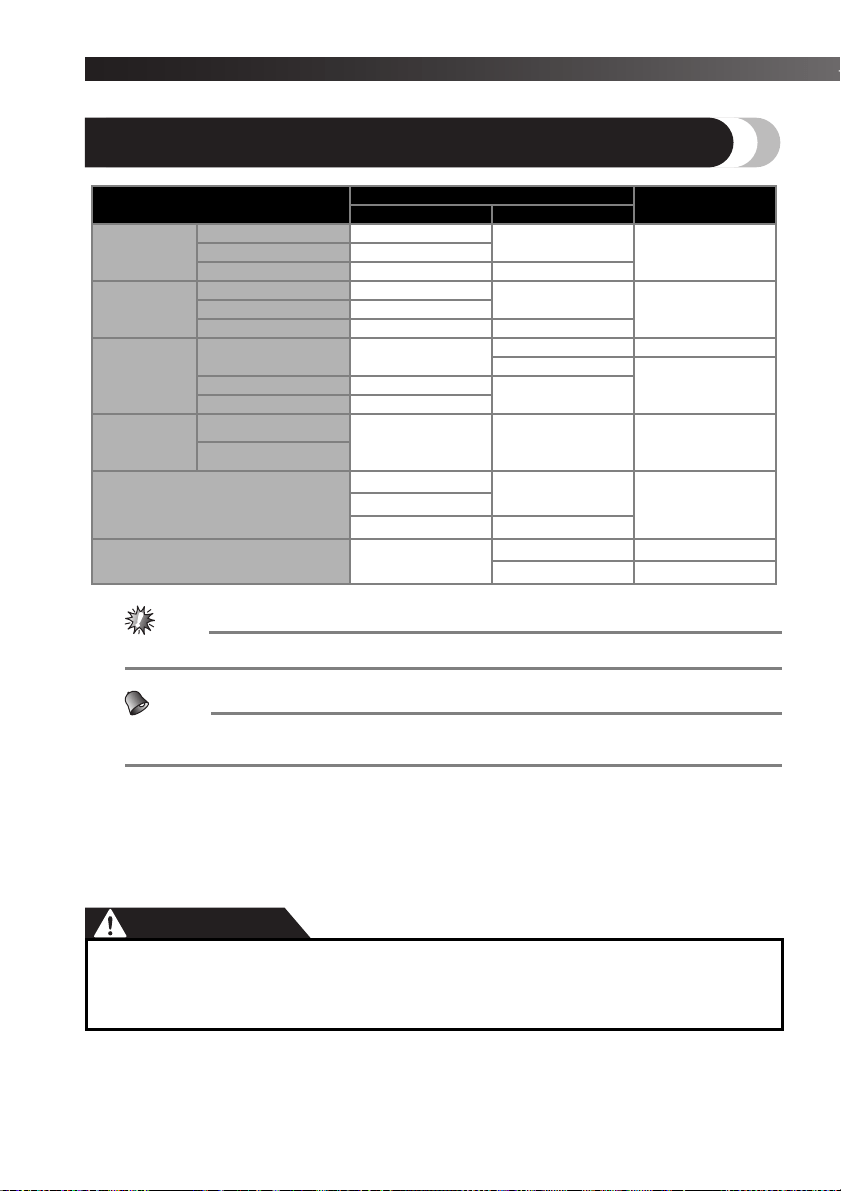
Drawing up the lower
thread
1While lightly holding the end of the upper
thread, slowly turn the handwheel toward
you (counterclockwise) by hand to lower
and then raise the needle.
2Pull on the upper thread to draw up the
lower thread.
1Upper thread
2Lower thread
3Pull out about 10 cm (4 inches) of both
threads and put them toward the back of
the machine under the presser foot.
1Upper thread
2Lower thread
1
1
1
1
2
2
1
2
KNOWING YOUR SEWING MACHINE ————————————————————————————————————————————————————————————————————————————————————————————————————————————————————————————————
—
————————————————————————————————————————————————
—————
17
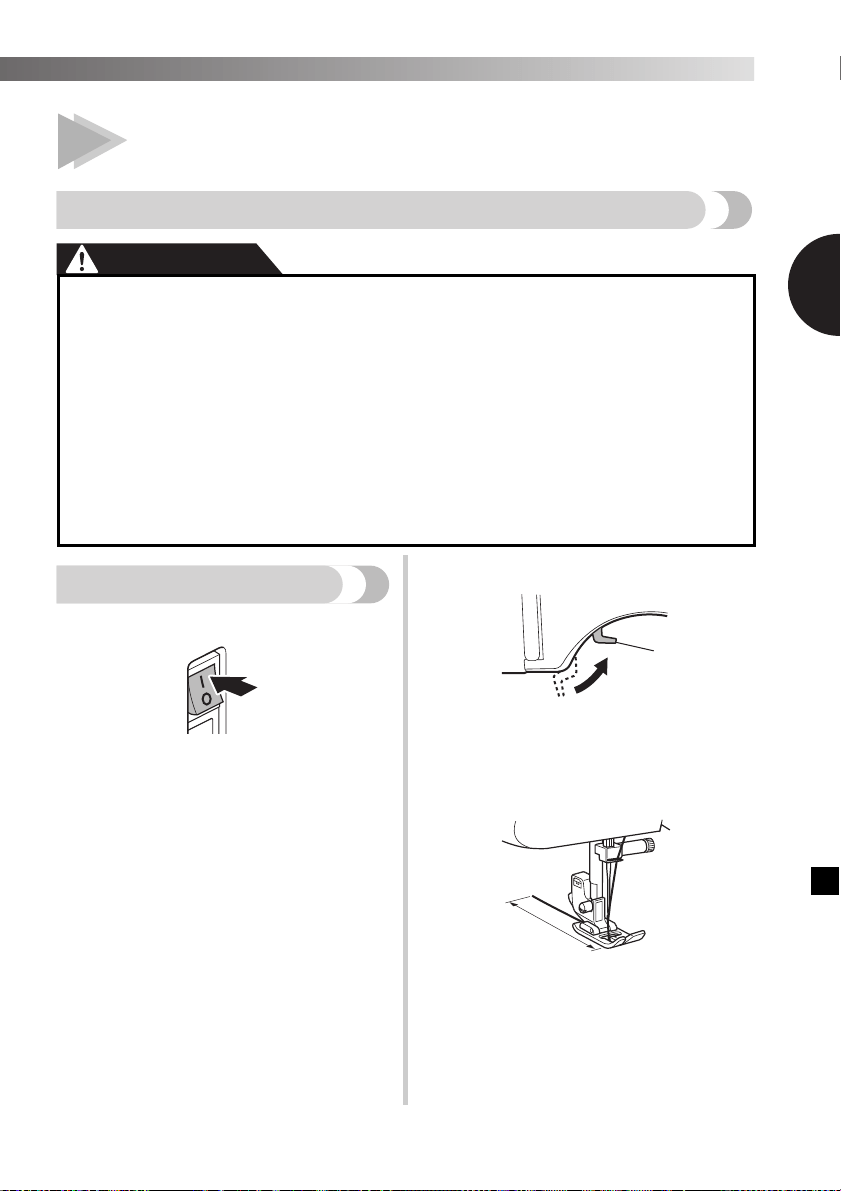
FABRIC, THREAD, AND NEEDLE COMBINATIONS
Note
●Never use a thread weighted #20 or lower. It may cause machine malfunction.
Memo
●The lower the thread number, the thicker the thread; and the higher the needle number, the thicker the
needle.
■Ball point needle
Use the ball point needle when sewing on stretch fabrics or fabrics where skipped stitches easily occur.
The factory recommended needle is “HG-4BR” (Organ). Schmetz needles “JERSEY BALL POINT” 130/705H SUK
90/14 may be used as a substitute.
■Transparent nylon thread
Use a 90/14 to 100/16 needle, regardless of the fabric or thread.
CAUTION
Fabric Type/Application Thread Size of Needle
Type Size
Medium weight
fabrics
Broadcloth Cotton thread 60–90 75/11–90/14
Taffeta Synthetic thread
Flannel, Gabardine Silk thread 50
Thin fabrics
Lawn Cotton thread 60–90 65/9–75/11
Georgette Synthetic thread
Challis, Satin Silk thread 50
Thick fabrics
Denim Cotton thread 30 100/16
50
90/14–100/16
Corduroy Synthetic thread 50–60
Tweed Silk thread
Stretch fabrics Jersey Thread for knits 50–60 Ball point needle
75/11–90/14
(gold colored)
Tricot
Easily frayed fabrics
Cotton thread 50–90 65/9–90/14Synthetic thread
Silk thread 50
For top-stitching Synthetic thread
Silk thread
30 100/16
50–60 75/11–90/14
●Make sure you follow the needle, thread, and fabric combinations listed in the table.
Using the wrong combination, such as heavyweight fabric like denim with a small needle
(65/9-75/11), may bend or break the needle. The wrong combination may also cause the seam
to be uneven, the fabric to pucker, or the machine to skip stitches.
18
—————
———————————————————————————————————————————————————————————————————————————————————————————————————————————————————————————————————————————————————————————————————————————————————————————————————————————————————————————————————————————————————————————————————————————————
2
2SEWING BASICS
Please read before sewing
CAUTION
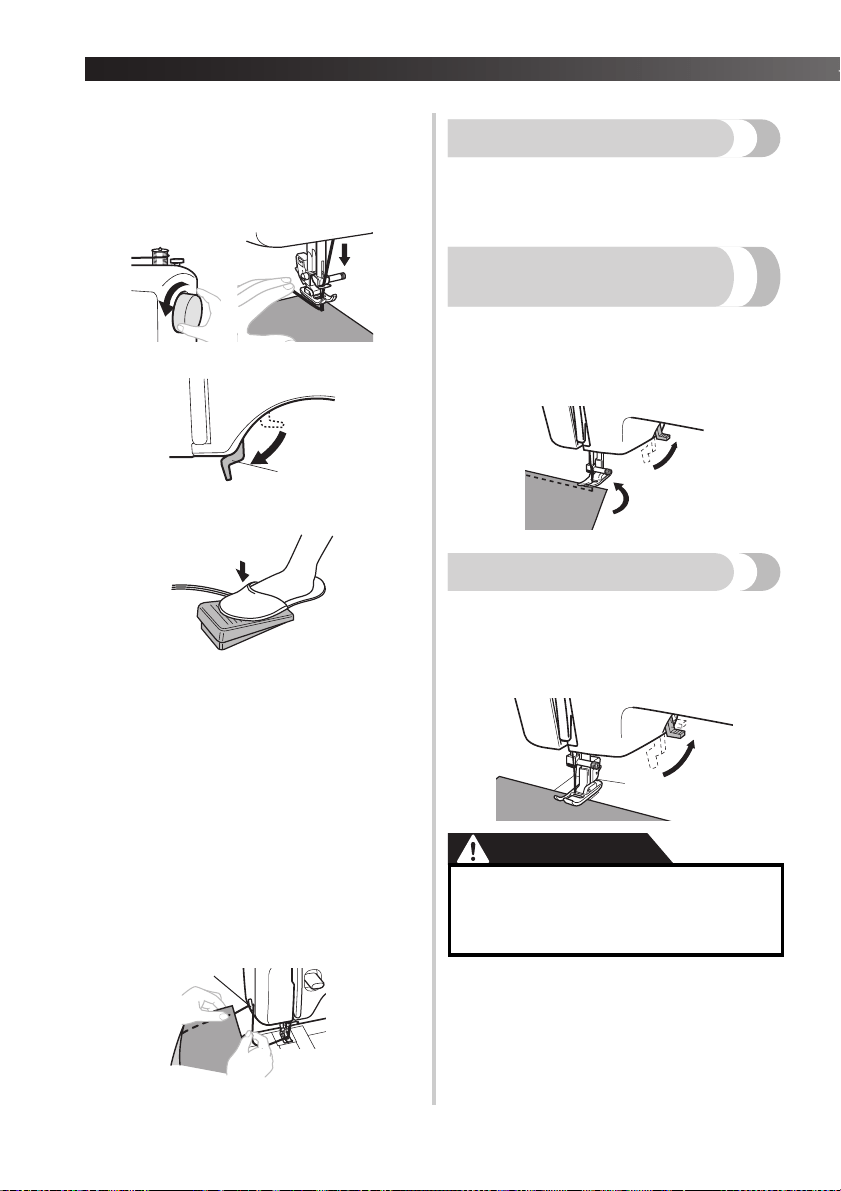
Starting sewing
1Turn on the machine.
2Raise the needle by turning the
handwheel toward you
(counterclockwise) so that the mark on
the wheel points up.
3Turn the pattern selection dial to select a
stitch (see page 9).
4Change the presser foot (see page 8).
5Raise the presser foot lever.
1Presser foot lever
6Place the fabric under the presser foot,
pass the thread under the presser foot,
and then pull out about 5 cm (2 inches) of
thread toward the rear of the machine.
15 cm (2 inches)
●To avoid being injured, watch the needle carefully while you are using the machine. Keep
your hands away from moving parts.
●Do not stretch or pull the fabric during sewing, otherwise the needle may be damaged and
you may be injured.
●Do not use bent or broken needles, otherwise you may be injured.
●Take care that the needle does not hit basting pins or other objects during sewing. The needle
may break and you may be injured.
●Always use the correct presser foot. If you use the wrong presser foot, the needle may hit the
presser foot and bend or break and you may be injured.
●When you turn the handwheel by hand, always turn it toward you (counterclockwise).
Turning it the other way may cause the thread to tangle and damage the needle or fabric, and
you may be injured.
●Do not start sewing without placing the fabric under the presser foot, otherwise the presser
foot may be damaged.
1
1
SEWING BASICS ————————————————————————————————————————————————————————————————————————————————————————————————————————————————————————————————
—
—————————————————————————————————————————————————————————————————————————————————————————————————
—————
19
7While holding the end of the thread and
the fabric with your left hand, turn the
handwheel toward you
(counterclockwise) with your right hand
to lower the needle to the starting point of
the stitching.
8Lower the presser foot lever.
1Presser foot lever
9Slowly press down on the foot controller.
XThe machine starts sewing.
0Take your foot off the foot controller.
XThe machine stops sewing.
• You can use reverse sewing for back tacking
and reinforcing seams by pressing the reverse
sewing lever. Refer to “Reverse sewing lever”
on page 10 for the details.
aRaise the needle by turning the
handwheel toward you
(counterclockwise).
bRaise the presser foot lever.
cPull the fabric to the left side of the
machine, and then pass the threads
through the thread cutter to cut them.
.
1Thread cutter
Trial sewing
A trial piece of fabric should be sewn. Use a piece of
fabric and thread that are the same as those used for
your project, and check the thread tension and stitch
length and width.
Changing the sewing
direction
Stop the machine with the needle in the fabric at the
point where you want to change the sewing direction,
and then raise the presser foot lever. Using the needle
as a pivot, turn the fabric, lower the presser foot lever,
and then continue sewing.
Sewing thick fabrics
■If the fabric does not fit under the presser
foot
If the fabric does not fit easily under the presser foot,
raise the presser foot lever even higher to bring the
presser foot to its highest position.
CAUTION
1
1
●If fabric more than 6 mm (15/64 inch)
thick is sewn or if the fabric is pushed
with too much force, the needle may
bend or break.
1
2
20
—————
———————————————————————————————————————————————————————————————————————————————————————————————————————————————————————————————————————————————————————————————————————————————————————————————————————————————————————————————————————————————————————————————————————————————
2
Sewing thin fabrics
When sewing thin fabrics, the stitching may become
misaligned or the fabric may not feed correctly. If this
occurs, place thin paper or stabilizer material under the
fabric and sew it together with the fabric. When you
have finished sewing, tear off any excess paper.
1Stabilizer material or paper
Sewing stretch fabrics
First, baste the pieces of fabric together, and then sew
without stretching the fabric.
1Basting
Stitching cylindrical
pieces
Removing the flat bed attachment makes it easier to sew
cylindrical pieces such as cuffs and pant legs, or hard-
to-reach areas.
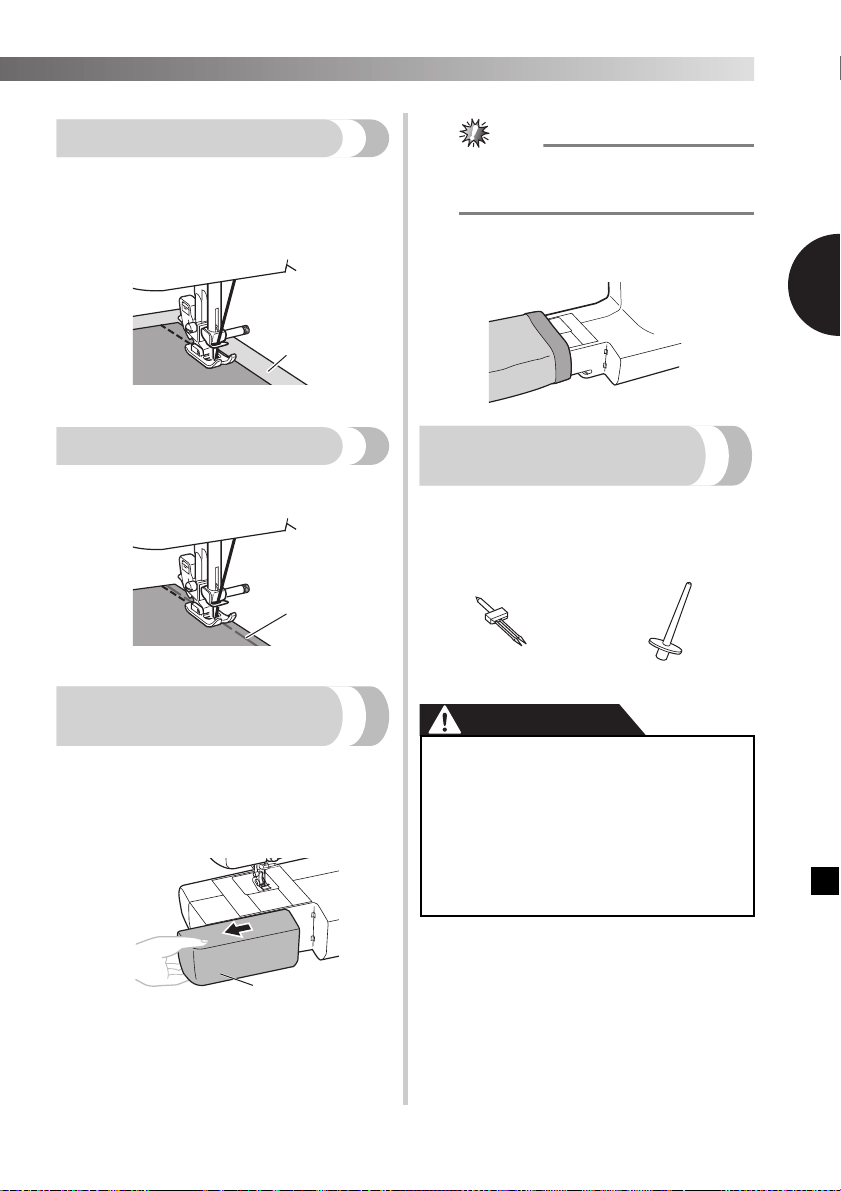
1Slide the flat bed attachment to the left to
release it.
1Flat bed attachment
XWith the flat bed attachment removed,
free-arm sewing is possible.
Note
●When you are finished with free-arm
sewing, install the flat bed attachment back
in its original position.
2Slide the part that you wish to sew onto
the arm, and then sew from the top.
Sewing with a twin needle
(Option)
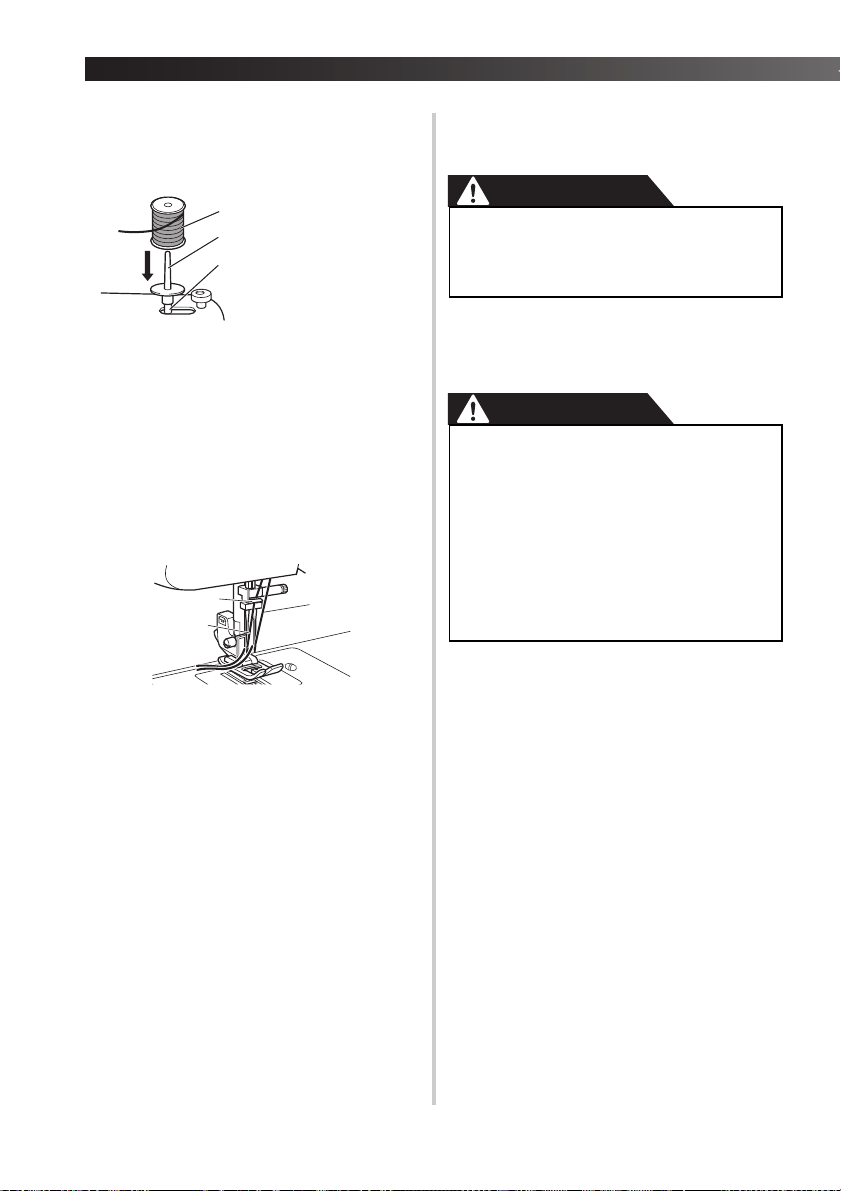
We have designed your machine so you can sew with
this needle and two top threads. You can use the same
color or two different colors of thread for making
decorative stitches.
CAUTION
■Attaching the twin needle
Attach the twin needle in the same way as a single
needle (see page 7–8). The flat side of the needle
should face toward the back and the rounded side
should face toward you.
1
1
1
1Twin needle 2Extra spool pin
●Use only twin needles that have been
made for this machine (part code:
X57521-021:2.0/75 with a 2 mm width).
Other needles could break and damage
the machine.
●Make sure that the needle does not strike
the presser foot.
●Do not sew with bent needles. The
needle could break and injure you.
SEWING BASICS ————————————————————————————————————————————————————————————————————————————————————————————————————————————————————————————————
—
—————————————————————————————————————————————————————————————————————————————————————————————————
—————
21
■Attaching the extra spool pin
Insert the extra spool pin onto the end of the bobbin
winder shaft. Install the second thread spool onto
the extra spool pin.
■Twin needle threading
You should thread each needle separately.
1Thread the left needle.
Follow the same instructions for threading a
single needle (see page 14).
2Thread the right needle.
Thread the right needle in the same way that
you threaded the left needle using the thread
from the spool on the extra spool pin, but do not
pass the thread through the guide above the
needle before you pass it through the eye of the
right needle.
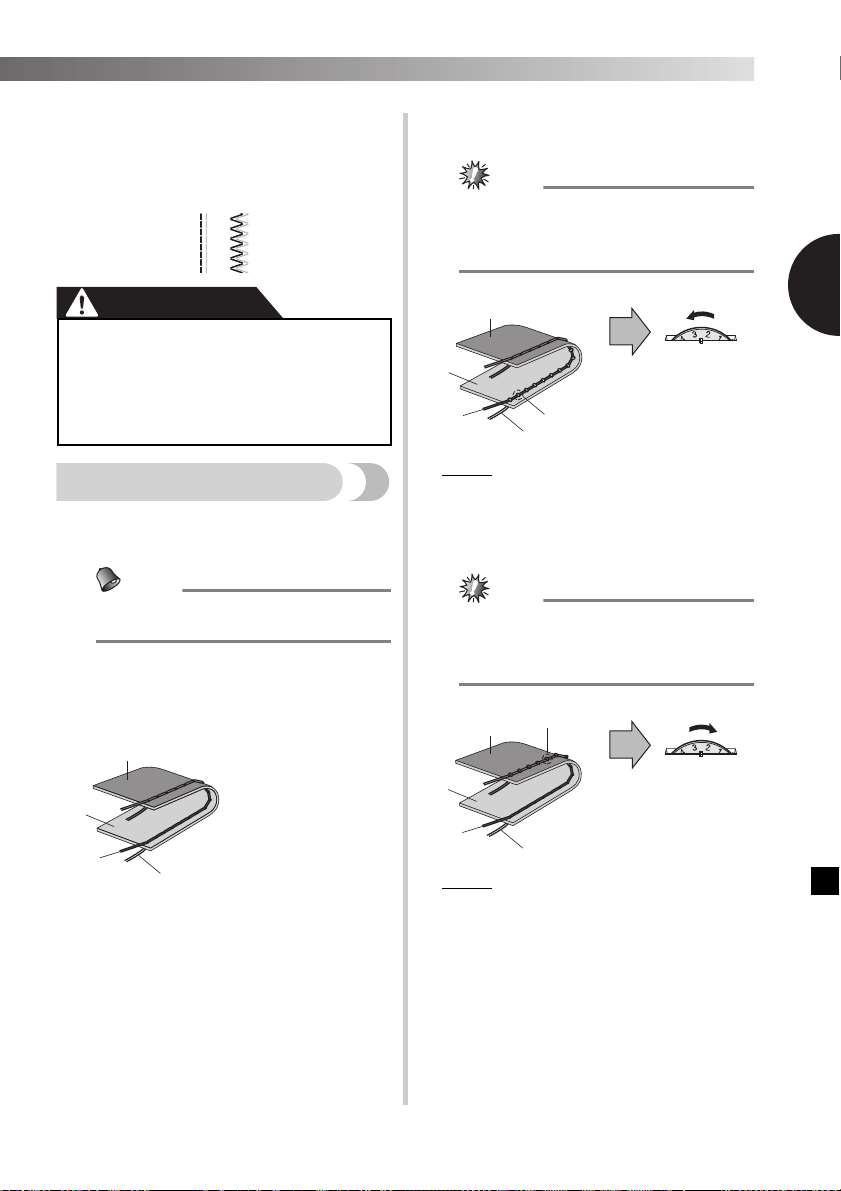
1Left needle thread passes through the needle
bar thread guide
2Right needle thread passes in front of the needle
bar thread guide
3Needle bar thread guide
3Attach zigzag foot “J”.
For details on changing the presser foot, refer
to “Changing the presser foot” on page 8.
CAUTION
4Turn on the machine.
5Select a stitch.
CAUTION
1Bobbin winder shaft
2Extra spool pin
3Thread spool
1
2
3
1
32
●When using the twin needle, be sure to
attach zigzag foot “J”, otherwise the
needle may break or the machine may be
damaged.
●After selecting a stitch, slowly turn the
handwheel toward you
(counterclockwise) and check that the
needle does not touch the presser foot. If
the needle hits the presser foot, the
needle may bend or break.
●The twin needle should only be used
with the Straight Stitch (Center Needle
Position) and the Zigzag Stitch (1.5 mm
(1/16 inch) width). Do not use the twin
needle with any other stitches.
22
—————
———————————————————————————————————————————————————————————————————————————————————————————————————————————————————————————————————————————————————————————————————————————————————————————————————————————————————————————————————————————————————————————————————————————————
2
6Start sewing.
For details on starting to sew, refer to “Starting
sewing” on page 18.
XTwo lines of stitching are sewn parallel to
each other.
CAUTION
Thread tension
The tension of the thread will affect the quality of your
stitches. You may need to adjust it when you change
fabric or thread.
Memo
●We recommend that you do a test sample
on scrap of a fabric before you start to sew.
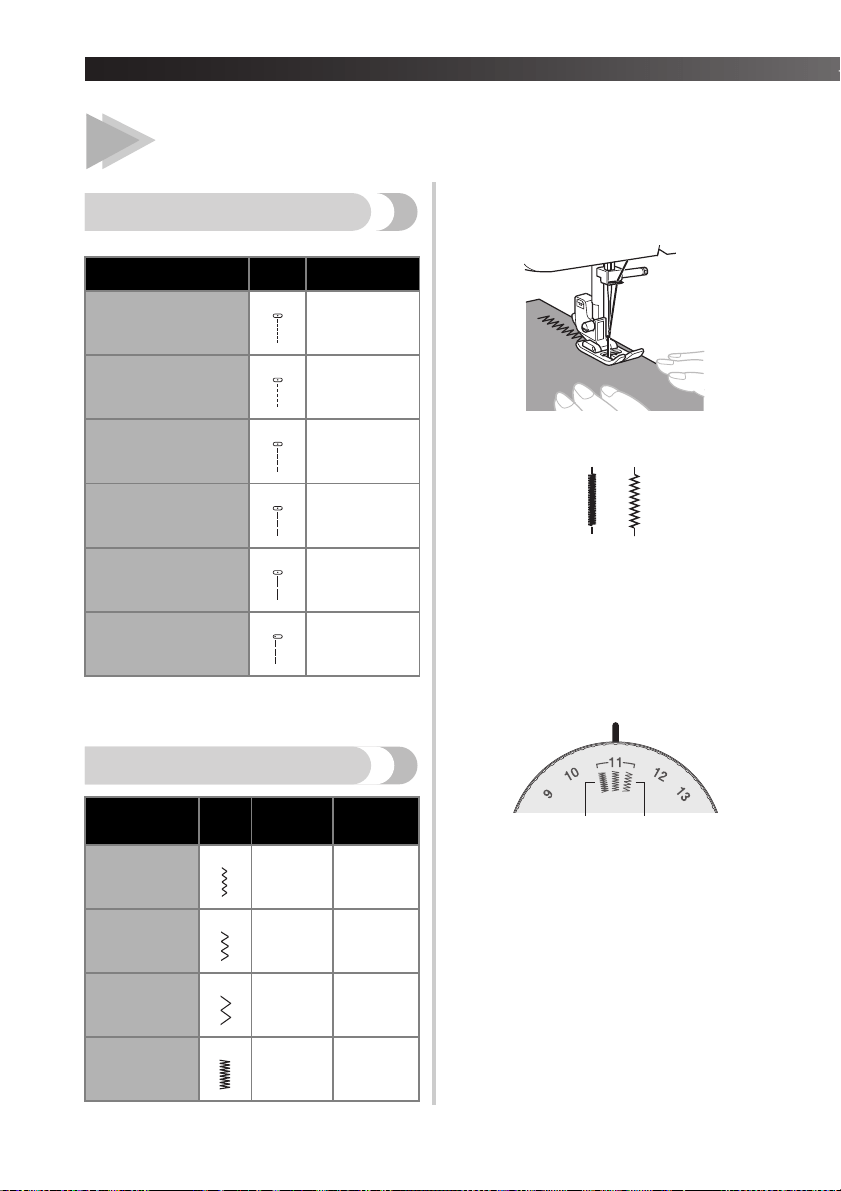
■Correct tension
Correct tension is important as too much or too little
tension will weaken your seams or cause puckers
on your fabric.
■Upper tension is too tight
Loops will appear on the surface of the fabric.
Note
●If the bobbin thread was incorrectly
threaded, the upper thread may be too tight.
In this case, refer to “Lower threading” on
page 13 and rethread the bobbin thread.
Solution
Reduce the tension by turning the upper tension
control dial to a lower number.
■Upper tension is too loose
Loops appear on the back of the fabric.
Note
●If the upper thread was incorrectly threaded,
the upper thread may be too loose. In this
case, refer to “Upper threading” on page 14
and rethread the upper thread.
Solution
Increase the tension by turning the upper tension
control dial to a higher number.
●When changing the sewing direction, be
sure to raise the needle from the fabric,
and then raise the presser foot lever and
turn the fabric. Otherwise the needle
may break or the machine may be
damaged.
1Surface of fabric
2Back of fabric
3Upper thread
4Lower thread
1
2
3
4
1Surface of fabric
2Back of fabric
3Upper thread
4Lower thread
5Loops appear on
surface of fabric
1Surface of fabric
2Back of fabric
3Upper thread
4Lower thread
5Loops appear on back
of fabric
1
2
3
4
5
1
2
3
4
5
BUILT-IN STITCHES ————————————————————————————————————————————————————————————————————————————————————————————————————————————————————————————————
—
——————————————————————————————————————————————————————————————————————————————————————————
—————
23
3BUILT-IN STITCHES
Straight stitching
Straight stitches are used for sewing plain seams.
■Top stitching and stretch materials
You can use a straight stitch for top stitching and
sewing lightweight fabrics.
Zigzag stitching
■Zigzag stitch
Turn the pattern selection dial to the Zigzag Stitch,
and then start sewing.
We recommend that you sew using the Straight
Stitch at the beginning and end of Zigzag Stitches.
(This acts as a reinforcement stitch.)
■Zigzag (Satin) Stitch
You can use the Zigzag (Satin) Stitch for making
decorative stitches.
When sewing a Zigzag (Satin) Stitch, use a slightly
looser upper-thread tension to produce more
beautiful stitches.
With the pattern selection dial, the Zigzag (Satin)
Stitch (number 11) can be set to one of three stitch
lengths. The middle position is the setting for the
standard stitch length.
1For a shorter stitch length, turn the pattern
selecting dial to the left position of Zigzag
(Satin) Stitch (number 11).
2For a longer stitch length, turn the pattern
selecting dial to the right position of Zigzag
(Satin) Stitch (number 11).
Stitch Name Pattern Stitch Length
[mm (inch)]
Straight Stitch
(Center Needle Position) 1.6 (1/16)
Straight Stitch
(Center Needle Position) 1.8 (1/16)
Straight Stitch
(Center Needle Position) 2 (1/16)
Straight Stitch
(Center Needle Position) 2.5 (3/32)
Straight Stitch
(Center Needle Position) 4 (3/16)
Straight Stitch
(Left Needle Position) 2.5 (3/32)
Stitch Name Pattern Stitch
Length
[mm (inch)]
Stitch Width
[mm (inch)]
Zigzag Stitch 0.7 (1/32) 1.5 (1/16)
Zigzag Stitch 1.5 (1/16) 3 (1/8)
Zigzag Stitch 2 (1/16) 5 (3/16)
Zigzag (Satin)
Stitch 0.5 (1/32) 5 (3/16)
2
3
4
5
6
7
8
9
10
11
1 2
24
—————
———————————————————————————————————————————————————————————————————————————————————————————————————————————————————————————————————————————————————————————————————————————————————————————————————————————————————————————————————————————————————————————————————————————————
3
Blind hem stitching
Memo
●When the size of cylindrical pieces is too
small to slide onto the arm or the length is
too short, the fabric will not feed and
desired results may not be achieved.
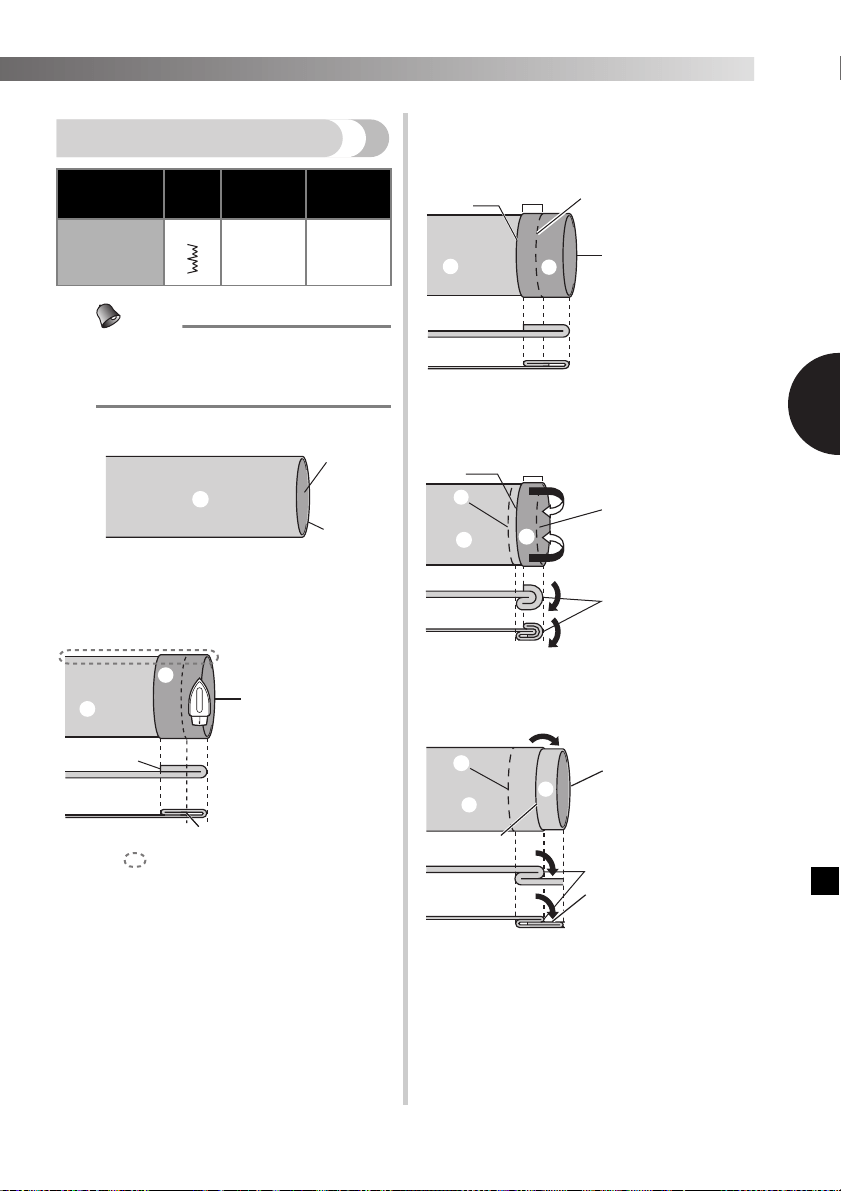
1Reverse the skirt or pants.
1Wrong side of fabric
2Right side of fabric
3Bottom side
4Edge of fabric
2Fold the fabric along the desired edge of
the hem, and press.
3Use a chalk to mark on the fabric about
5 mm (3/16 inch) from the edge of the
fabric, and then baste it.
4Fold back the fabric inside along the
basting.
5Unfold the edge of fabric, and position the
fabric with the wrong side facing up.
6Remove the flat bed attachment and make
free-arm sewing possible.
• For details on free-arm sewing, refer to
“Stitching cylindrical pieces” (Page 20).
Stitch Name Pattern Stitch
Length
[mm (inch)]
Stitch Width
[mm (inch)]
Stretch Blind
Hem Stitch 2 (1/16) 5 (3/16)
1Wrong side of
fabric
2Right side of
fabric
3Edge of fabric
4Desired edge of
hem
<Thick fabric>
<Normal fabric>
<Seen from the side>
14
2
13
4
1
2
12
1
3
3
4
2
1Wrong side of
fabric
2Right side of
fabric
3Edge of fabric
4Basting stitching
55 mm (3/16 inch)
6Desired edge of
hem
<Thick fabric>
<Normal fabric>
<Seen from the side>
1Wrong side of
fabric
2Edge of fabric
3Basting
45 mm (3/16 inch)
5Desired edge of
hem
6Right side of
fabric
7Basting point
<Thick fabric>
<Normal fabric>
<Seen from the side>
1Wrong side of
fabric
2Right side of
fabric
3Basting
4Edge of fabric
5Desired edge of
hem
6Basting point
<Thick fabric>
<Normal fabric>
<Seen from the side>
12
12
35
6
4
12
1
2
3
4
1
1
6
7
5
6
11
11
12
3
4
5
BUILT-IN STITCHES ————————————————————————————————————————————————————————————————————————————————————————————————————————————————————————————————
—
——————————————————————————————————————————————————————————————————————————————————————————
—————
25
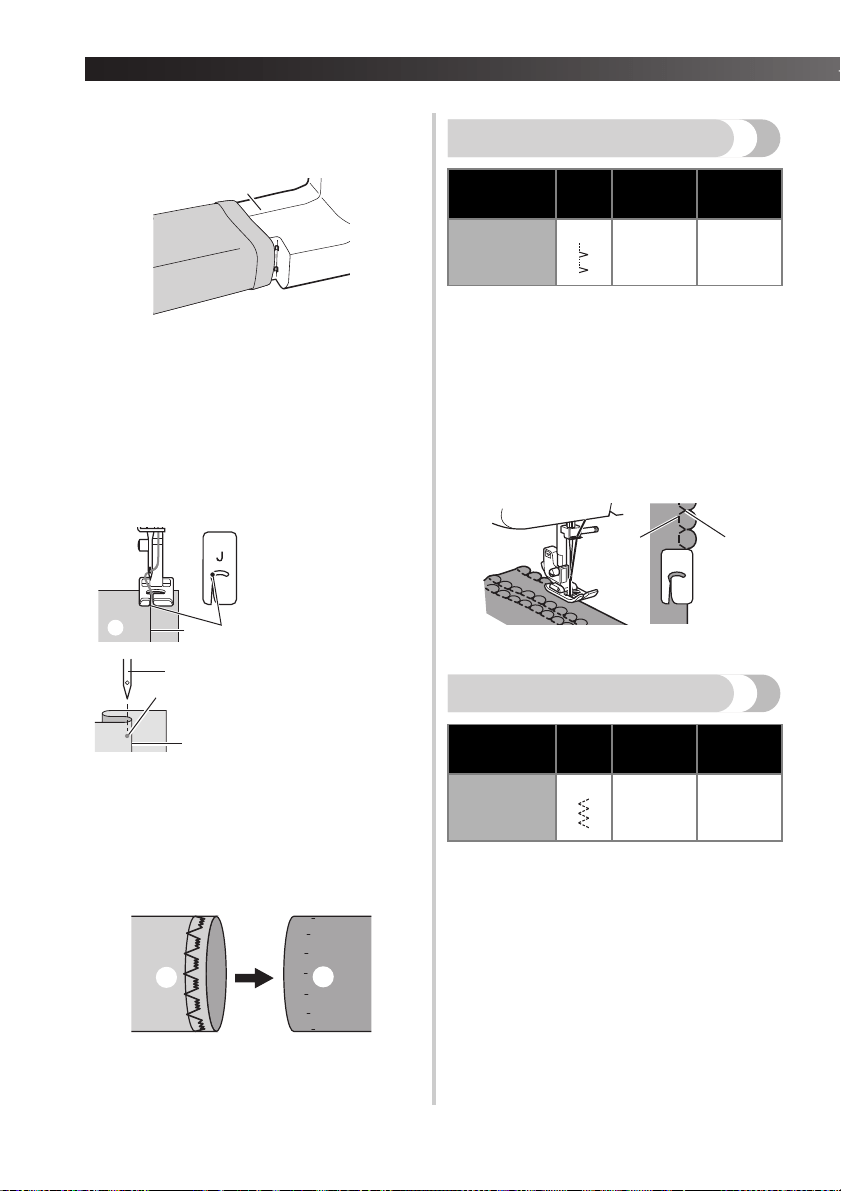
7Slide the part that you wish to sew onto
the arm, make sure that the fabric feeds
correctly, and then start sewing.
1Arm
8After selecting a stitch, slowly turn the
handwheel toward you
(counterclockwise) until the needle has
moved from the right side to the left.
9Position the fabric under the presser foot,
and then adjust the fabric position until
the needle slightly catches the fold of the
hem when the needle comes to the left
end of the stitch.
0Lower the presser foot lever.
aSew at a slow speed holding the fabric
with your hands, so that the needle
slightly catches the fold of the hem.
bRemove the basting stitching and turn the
fabric right side up.
Shell tuck stitching
The Shell Tuck Stitch can be used to sew a picot (lace-
like) edge on lightweight fabric.
1Adjust the thread tension so that it is
tighter than normal.
2Place the fabric under the presser foot so
that it will be sewn along the bias, with
the straight stitches sewn on the seamline
and the zigzag stitches sewn slightly over
the folded edge.
3Sew at a slow speed.
1Straight stitches
2Zigzag stitches
Elastic stitching
You can use the Elastic Stitch for mending, sewing
elastic or joining fabric. Each is explained below.
■Mending
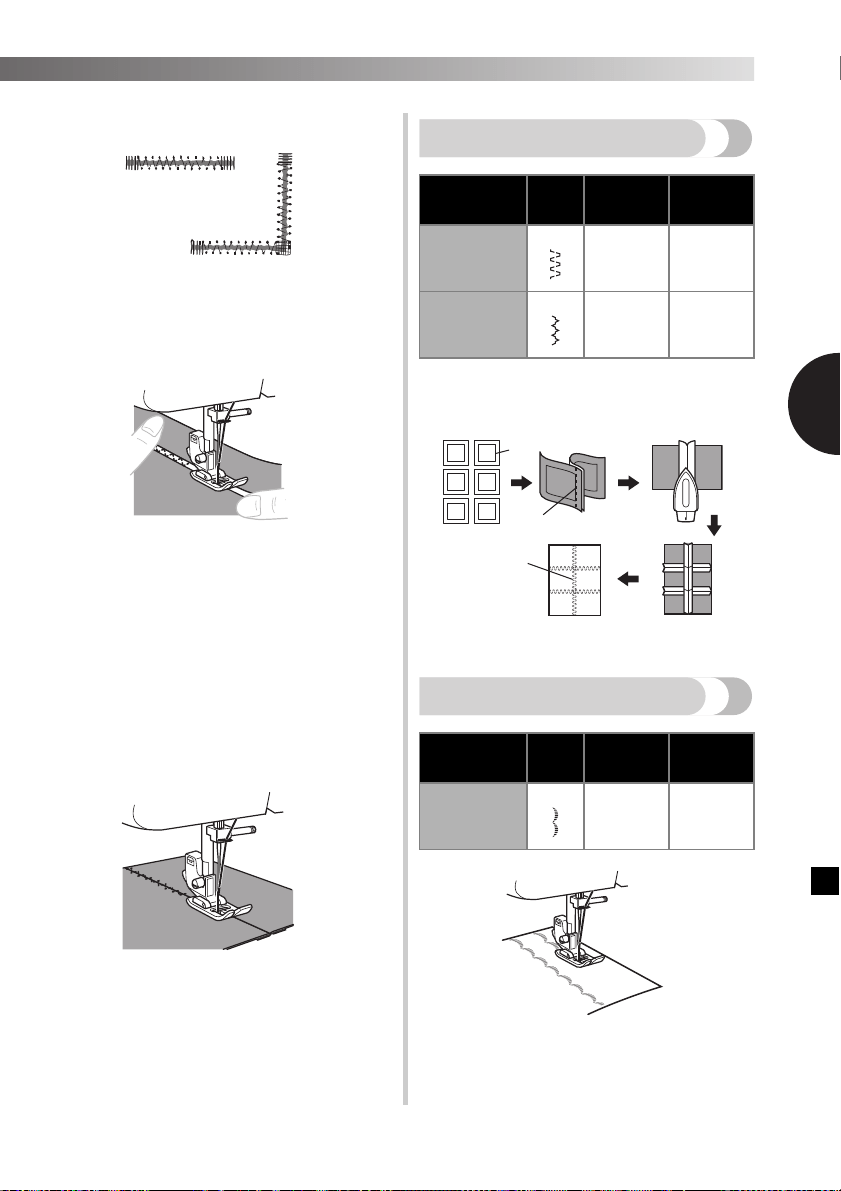
1Place the reinforcement fabric under the
area you want to mend.
• Use the basting pins to hold the
reinforcement fabric.
1Wrong side of fabric
2Fold of hem
3Needle drop point
1Needle
2Needle drop point
3Fold of hem
1Wrong side of fabric 2Right side of fabric
1
123
1
2
3
12
Stitch Name Pattern Stitch
Length
[mm (inch)]
Stitch Width
[mm (inch)]
Shell Tuck
Stitch 2 (1/16) 5 (3/16)
Stitch Name Pattern Stitch
Length
[mm (inch)]
Stitch Width
[mm (inch)]
Elastic Stitch 1 (1/16) 5 (3/16)
12
12
13
26
—————
———————————————————————————————————————————————————————————————————————————————————————————————————————————————————————————————————————————————————————————————————————————————————————————————————————————————————————————————————————————————————————————————————————————————
3
2Following the line of the tear, sew using
the Elastic Stitch as shown.
■Sewing elastic
1Pin the elastic tape to the wrong side of
the fabric.
2As you sew, stretch the elastic in front of
and behind the presser foot.
■Joining fabric
You can use the Elastic Stitch to join two pieces of
fabric together and it is very effective when sewing
knitted fabrics. If you are using nylon thread, the
stitch will not be visible.
1Put the edge of the two pieces of fabric
together and center them under the
presser foot.
2Sew them together using the Elastic Stitch.
Make sure you keep the two fabric edges
close together.
• Use the basting pins to hold the two fabric
edges close together.
Double action stitching
These stitches are used for joining two pieces of fabric,
such as when making patchwork.
Example: Patchwork with Double Action Stitch
1Desired seamline
2Straight Stitch
3Double Action Stitch
Decorative stitching
Stitch Name Pattern Stitch
Length
[mm (inch)]
Stitch Width
[mm (inch)]
Double Action
Stitch 1.2 (1/16) 5 (3/16)
Bridging Stitch 1.2 (1/16) 5 (3/16)
Stitch Name Pattern Stitch
Length
[mm (inch)]
Stitch Width
[mm (inch)]
Scallop Stitch 0.5 (1/32) 5 (3/16)
16
17
1
2
3
15
SEWING BUTTONHOLES AND BUTTONS ————————————————————————————————————————————————————————————————————————————————————————————————————————————————————————————————
—
———————————————————————————————————————
—————
27
4SEWING BUTTONHOLES AND BUTTONS
CAUTION
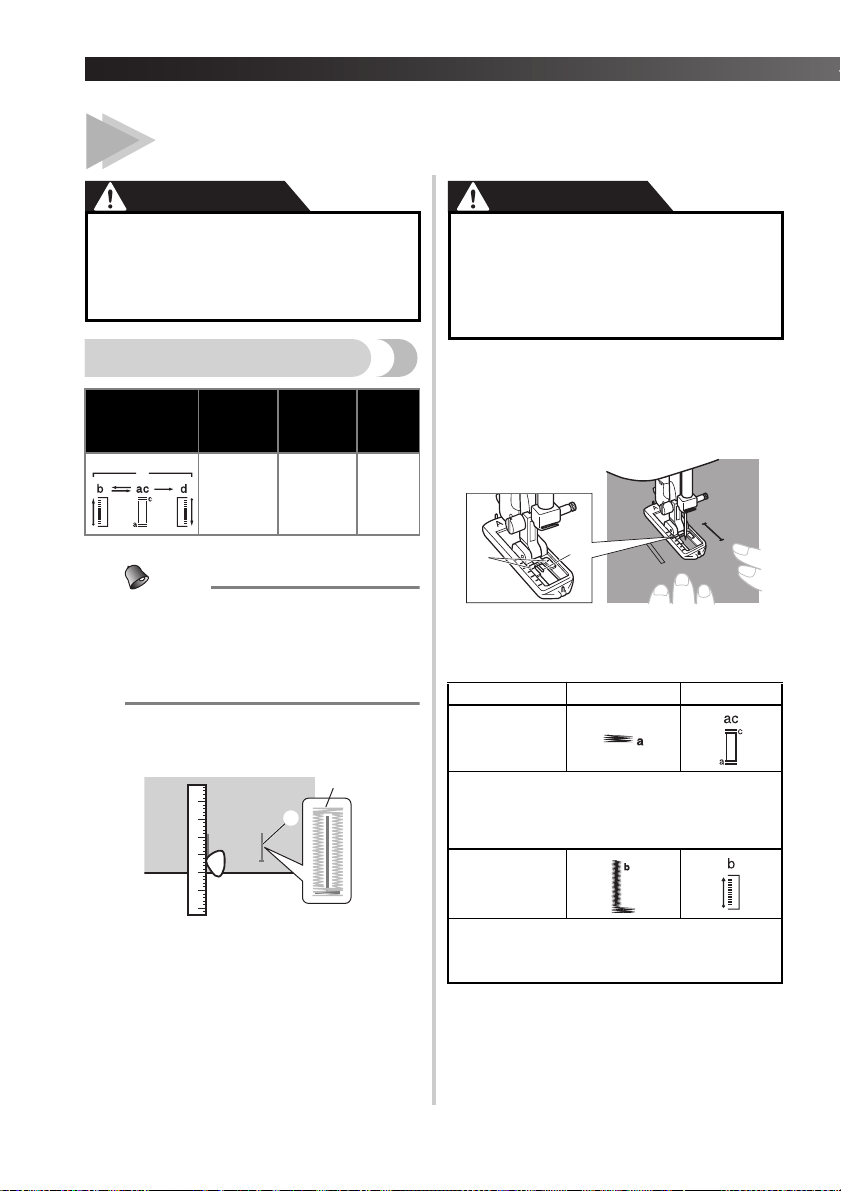
Making a buttonhole
Memo
●We recommend that you practice making a
buttonhole on a scrap piece of fabric before
you try it on an actual garment.
●When making buttonholes on soft fabrics,
place a stabilizer material on the underside
of the fabric.
1Using tailor’s chalk, mark the position and
length of the buttonhole on the fabric.
1Marks on fabric
2Buttonhole sewing
2Attach the buttonhole foot and push the
frame back until it stops with the plastic
insert at the front of the frame.
CAUTION
3You need to sew the front bar tack first.
Line the bar tack mark under the center of
the presser foot and match it up to the
two lines on the presser foot.
1Front of chalk mark
2Red lines
■Making a Buttonhole
●Always turn off the machine before
replacing the presser foot. Otherwise,
injuries may occur if the foot controller
is accidentally pressed and the machine
starts sewing.
Pattern
Stitch
Length
[mm
(inch)]
Stitch
Width
[mm
(inch)]
Foot
0.5 (1/32) 5 (3/16) Button-
hole
Foot “A”
1
1
2
●If the presser foot is not installed with
the correct orientation, the needle may
strike the presser foot, which may bend
or break the needle and cause injury.
(See page 8 for the correct presser foot
orientation.)
Step Sewn section Pattern
Step 1
(Front bar tack)
1. Set the pattern selection dial to “a”.
2. Lower the presser foot and sew 5 to 6 stitches.
3. Stop the machine when the needle is at the left
side of the stitches and then raise the needle from
the material.
Step 2
(Left side)
1. Turn the pattern selection dial to “b”.
2. Sew the length of the tailor’s chalk line.
3. Stop the machine when the needle is at the left
side of the stitch and then raise the needle.
1
2
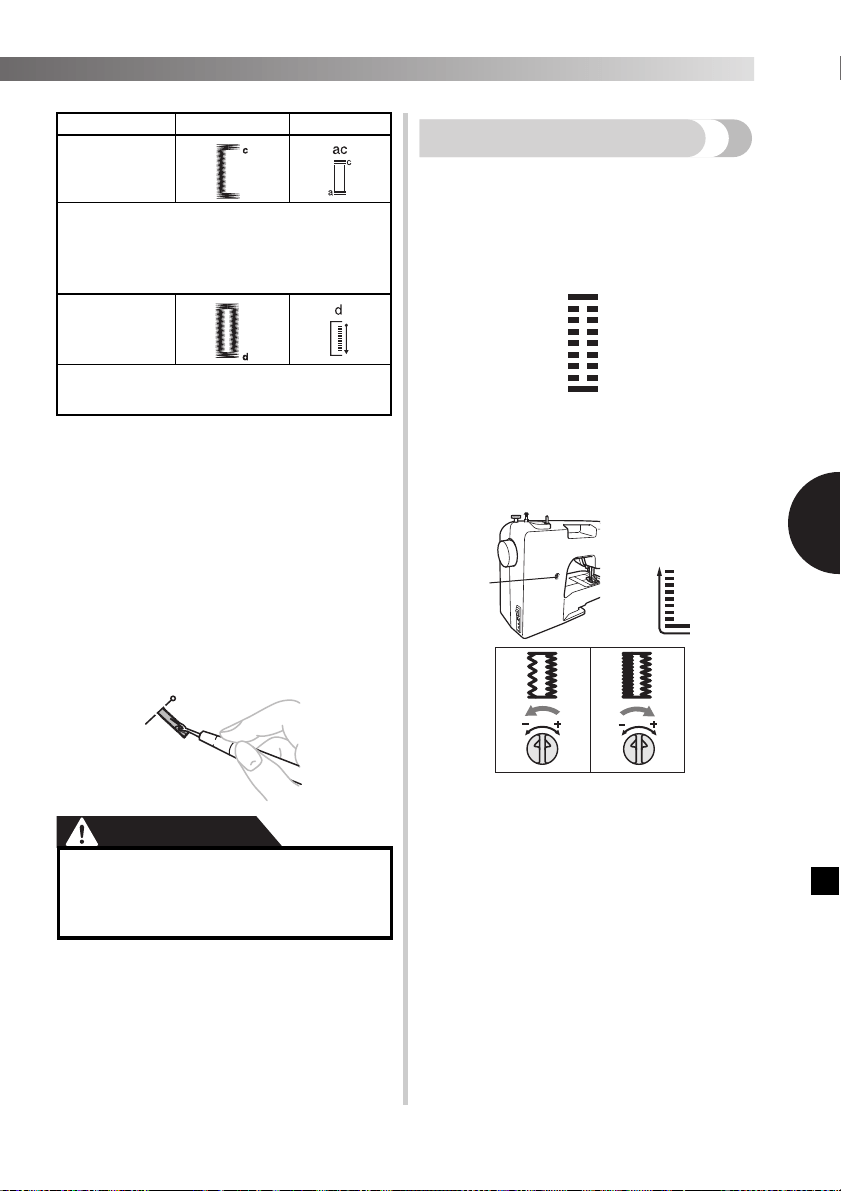
28
——————
—————————————————————————————————————————————————————————————————————————————————
—
————————————————————————————————————————————————————————————————————————————————————————————————————————————————————————————————————————————————————————————————————————————————————————————
4
■Securing the Stitching and Cutting the
Buttonhole
1To secure the stitching, turn the material
90 degrees counterclockwise and sew
straight stitches to the end of the front bar
tack of the buttonhole.
2Remove the material from the machine.
We recommend that you put pins across
both ends of the buttonhole to prevent the
stitches from being cut.
3Cut an opening in the middle of the
buttonhole with the seam ripper tool. Be
careful not to cut through any stitches.
CAUTION
Adjusting buttonholes
If the stitching on the two sides of the buttonhole is not
the same, you can make the following adjustments.
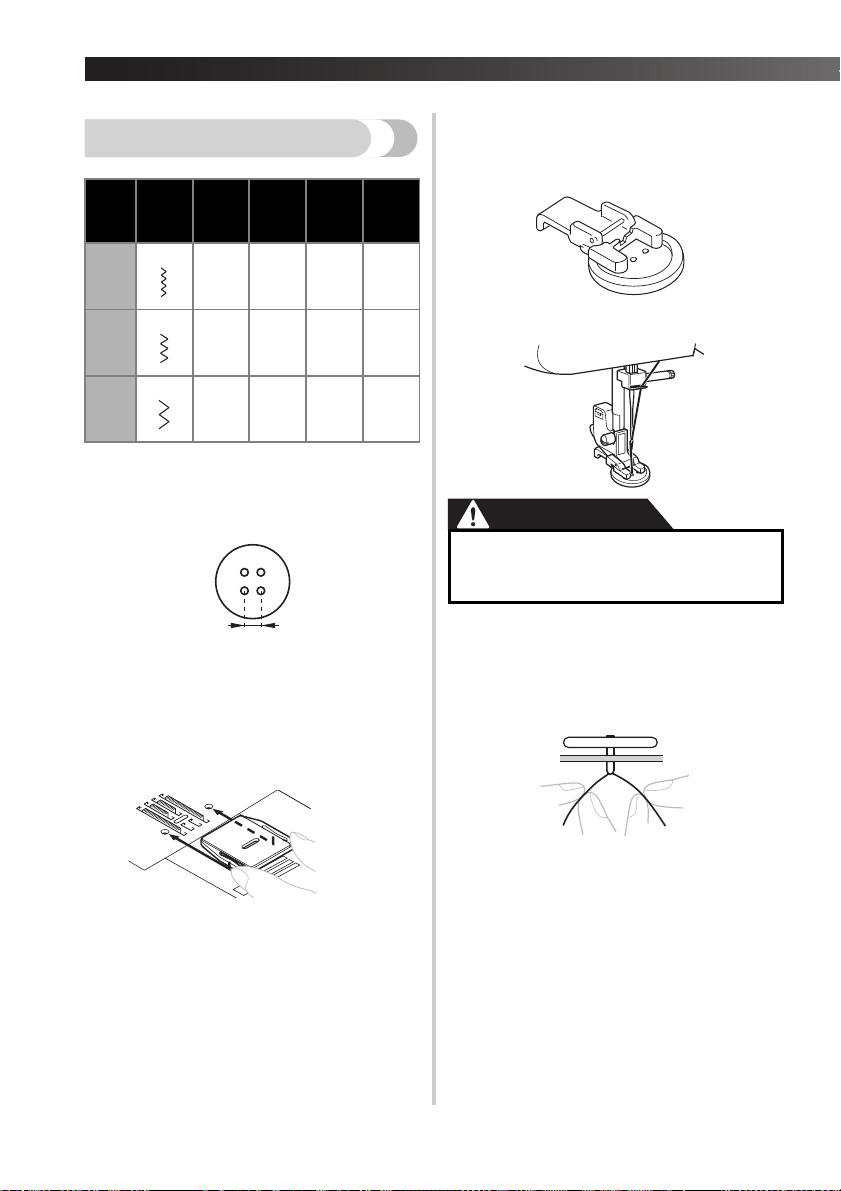
1After sewing the left side of the
buttonhole, stitch the right side and
observe the feeding.
1Right row
2If the left side is too open or tight
compared with the right side, adjust the
buttonhole fine-adjustment screw as
described in the following paragraphs.
1Buttonhole fine-adjustment screw
2Left side
3Buttonhole appearance
If the left side is too open, turn the buttonhole
fine-adjustment screw with a large
screwdriver in the “–” direction.
If the left side is too tight, turn the buttonhole
fine-adjustment screw with a large
screwdriver in the “+” direction.
• This adjustment ensures both sides of the
buttonhole are the same.
Step 3
(Back bar tack)
1. Turn the pattern selection dial to “c” (same
position as in step 1).
2. Sew 5 to 6 stitches.
3. Stop the machine when the needle is at the right
side of the stitch and then raise the needle from the
material.
Step 4
(Right side)
1. Set the pattern selection dial to “d”.
2. Sew the right side until the needle reaches the
stitches sewn in step 1.
●When using the seam ripper to open the
buttonhole, do not put your hand or
finger in the path of the ripper. The seam
ripper may slip and you may be injured.
Step Sewn section Pattern
1
2
33
1
SEWING BUTTONHOLES AND BUTTONS ————————————————————————————————————————————————————————————————————————————————————————————————————————————————————————————————
—
———————————————————————————————————————
—————
29
Sewing buttons
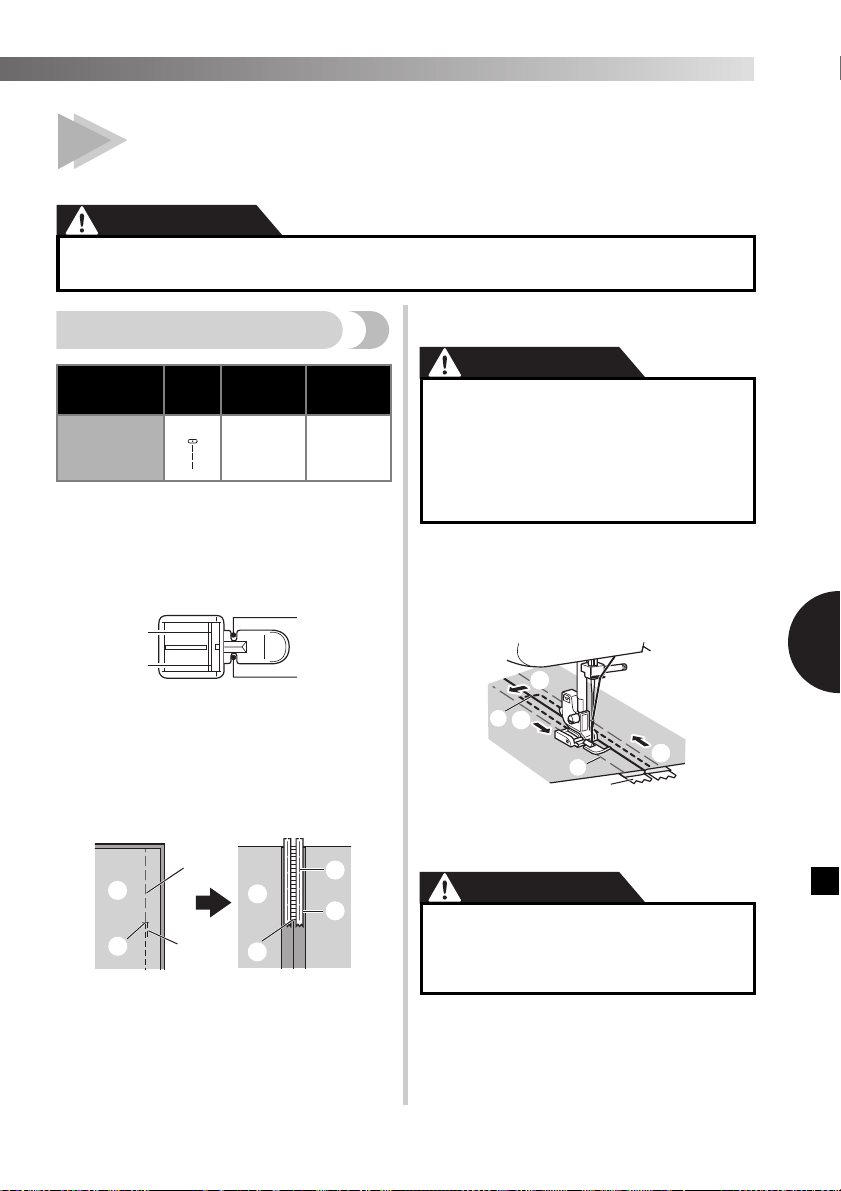
1Measure the distance between the
buttonholes and set the pattern selection
dial to the Zigzag Stitch with the desired
width.
2Turn off the machine.
3Change the foot to the button sewing foot
“M”.
4Place the darning plate on the needle
plate.
5Turn on the machine.
6
Put a button between the foot and the
fabric and make sure that the needle enters
the holes without hitting the button. If it
hits, see step
1
.
7At a slow speed, sew about 10 stitches.
CAUTION
8Pull the upper thread at the end of the
stitching to the wrong side of the fabric,
and then tie it with the bobbin thread.
XUse scissors to cut the upper thread and
the bobbin thread at the beginning of the
stitching.
Stitch
Name
Pattern
Stitch
Length
[mm
(inch)]
Stitch
Width
[mm
(inch)]
Foot Other
Zigzag
Stitch 0.7
(1/32) 1.5
(1/16)
Button
Sewing
Foot
“M”
Darning
Plate
Zigzag
Stitch 1.5
(1/16) 3
(1/8)
Button
Sewing
Foot
“M”
Darning
Plate
Zigzag
Stitch 2
(1/16) 5
(3/16)
Button
Sewing
Foot
“M”
Darning
Plate
8
9
10
●Make sure the needle does not hit the
button during sewing. The needle may
break and you may be injured.
30
——————
—————————————————————————————————————————————————————————————————————————————————————————
—
————————————————————————————————————————————————————————————————————————————————————————————————————————————————————————————————————————————————————————————————————————————————————
5
5USING ATTACHMENTS AND
APPLICATIONS
CAUTION
Zipper insertion
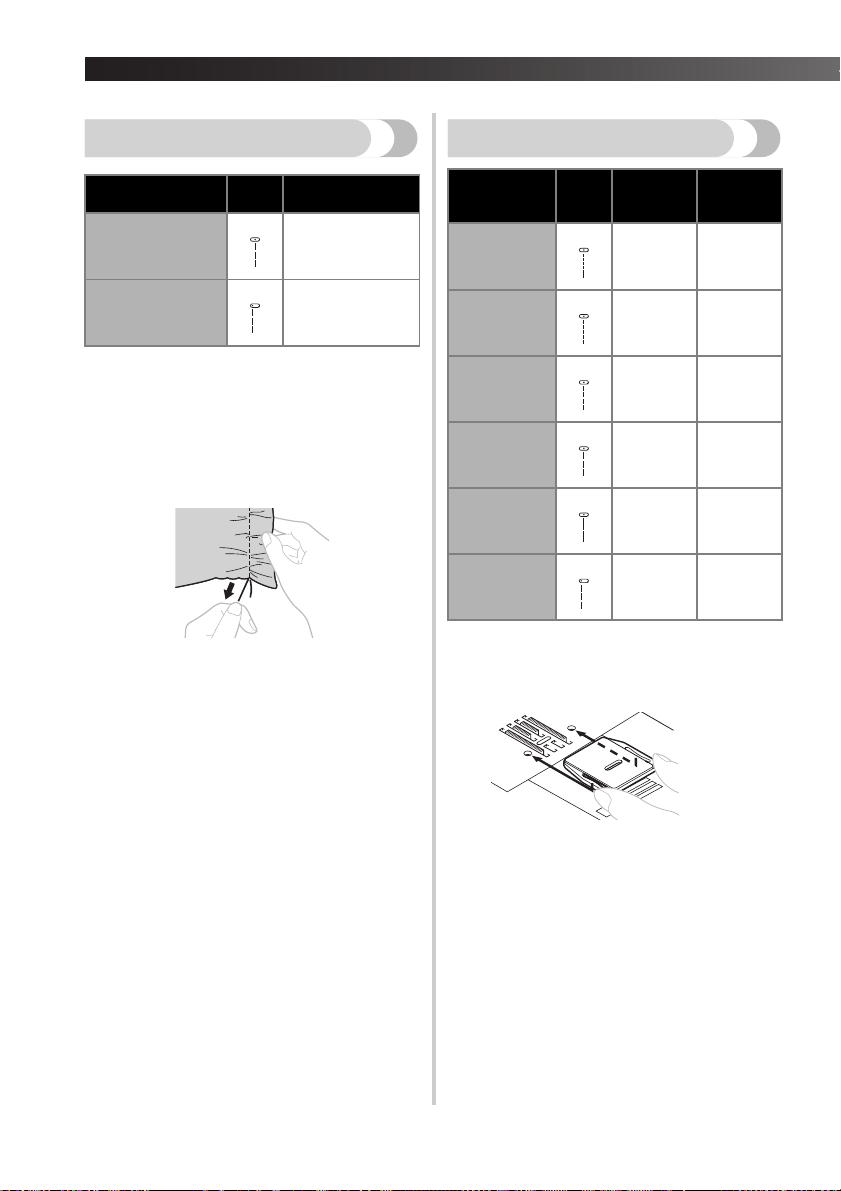
You can use the zipper foot “I” to sew different types of
zippers, and can easily position it to the right or left side
of the needle.
When sewing with the zipper on the right side, attach
the shank to the left pin of the zipper foot. When sewing
with the zipper on the left side, attach the shank to the
right pin of the zipper foot.
1Right pin for sewing with the zipper on the left
side
2Left pin for sewing with the zipper on the right
side
3Needle drop point for sewing with the zipper
on the left side
4Needle drop point for sewing with the zipper
on the right side
1Prepare the fabric with the zipper basted
on the wrong side.
1Basting stitching
2Reverse stitches
3Wrong side of fabric
4End of zipper opening
5Zipper
2Turn off the machine.
Attach the zipper foot “I”.
CAUTION
3Turn on the machine.
4With the right side of the fabric facing up,
continue sewing with the zipper on the
right side of the presser foot.
1End of zipper opening
2Basting stitching
3Zipper
• Sew the stitching in order, from 1 to 3.
CAUTION
5When you have finished sewing, remove
the basting stitching.
●Always turn off the machine before replacing the presser foot. Otherwise, injuries may occur
if the foot controller is accidentally pressed and the machine starts sewing.
Stitch Name Pattern Stitch
Length
[mm (inch)] Foot
Straight Stitch
(Center Needle
Position) 2.5 (3/32) Zipper
Foot “I”
5
I
1
2
3
4
1
2
3
4
1
5
3
4
●Turn the handwheel toward you
(counterclockwise) and check that the
needle does not touch the zipper foot
before you start sewing. Choosing a
different stitch will cause the needle to
hit the presser foot and break, and you
may be injured.
●Make sure the needle does not hit the
zipper during sewing. If the needle hits
the zipper, the needle may break and
you may be injured.
1
2
3
1
2
3
USING ATTACHMENTS AND APPLICATIONS ————————————————————————————————————————————————————————————————————————————————————————————————————————————————————————————————
—
————————————————————————————————
—————
31
Gathering
1Loosen the tension of the upper thread so
that the lower thread lies on the underside
of the material.
2Sew a single row (or many rows) of
straight stitches.
3Pull the lower threads to gather the
material.
Darning
1Turn off the machine.
Place the darning plate on the needle
plate, then turn on the machine.
2Either remove both the presser foot and
presser foot holder assembly and then
lower the presser foot lever.
3Put the section you want to darn under
the presser foot together with fabric for
reinforcement.
4Turn on the machine.
Stitch Name Pattern Stitch Length
[mm (inch)]
Straight Stitch
(Center Needle
Position)
2.5 (3/32)
Straight Stitch
(Left Needle Position)
2.5 (3/32)
5
7
Stitch Name Pattern Stitch
Length
[mm (inch)] Other
Straight Stitch
(Center Needle
Position) 1.6 (1/16)
Darning
Plate
Straight Stitch
(Center Needle
Position) 1.8 (1/16)
Darning
Plate
Straight Stitch
(Center Needle
Position) 2 (1/16)
Darning
Plate
Straight Stitch
(Center Needle
Position) 2.5 (3/32)
Darning
Plate
Straight Stitch
(Center Needle
Position) 4 (3/16)
Darning
Plate
Straight Stitch
(Left Needle
Position) 2.5 (3/32)
Darning
Plate
2
3
4
5
6
7
32
——————
—————————————————————————————————————————————————————————————————————————————————————————
—
————————————————————————————————————————————————————————————————————————————————————————————————————————————————————————————————————————————————————————————————————————————————————
5
5Begin sewing by alternating between
gently drawing the work away from you
and pulling it toward you.
Note
●Sew while holding the fabric stretched in
order to keep the fabric held down.
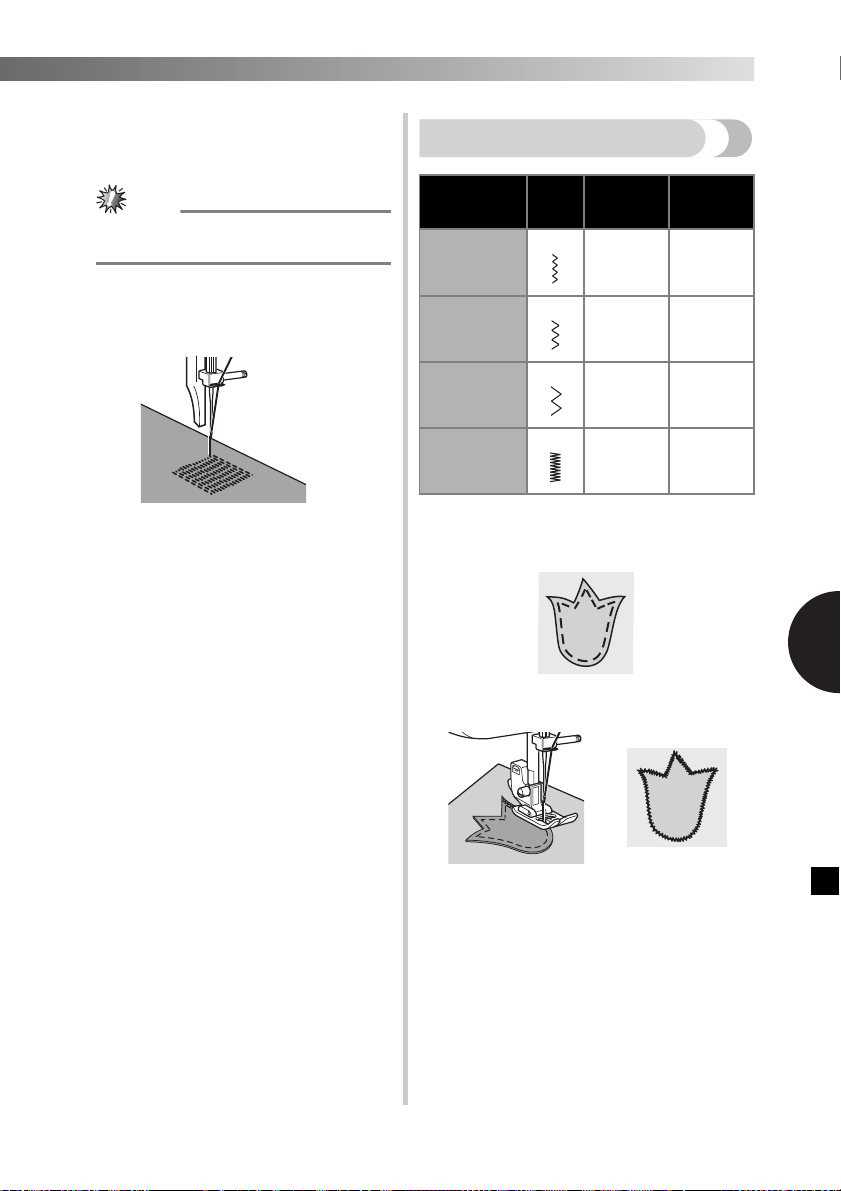
6Repeat this motion until the section being
darned is filled with parallel lines of
stitching.
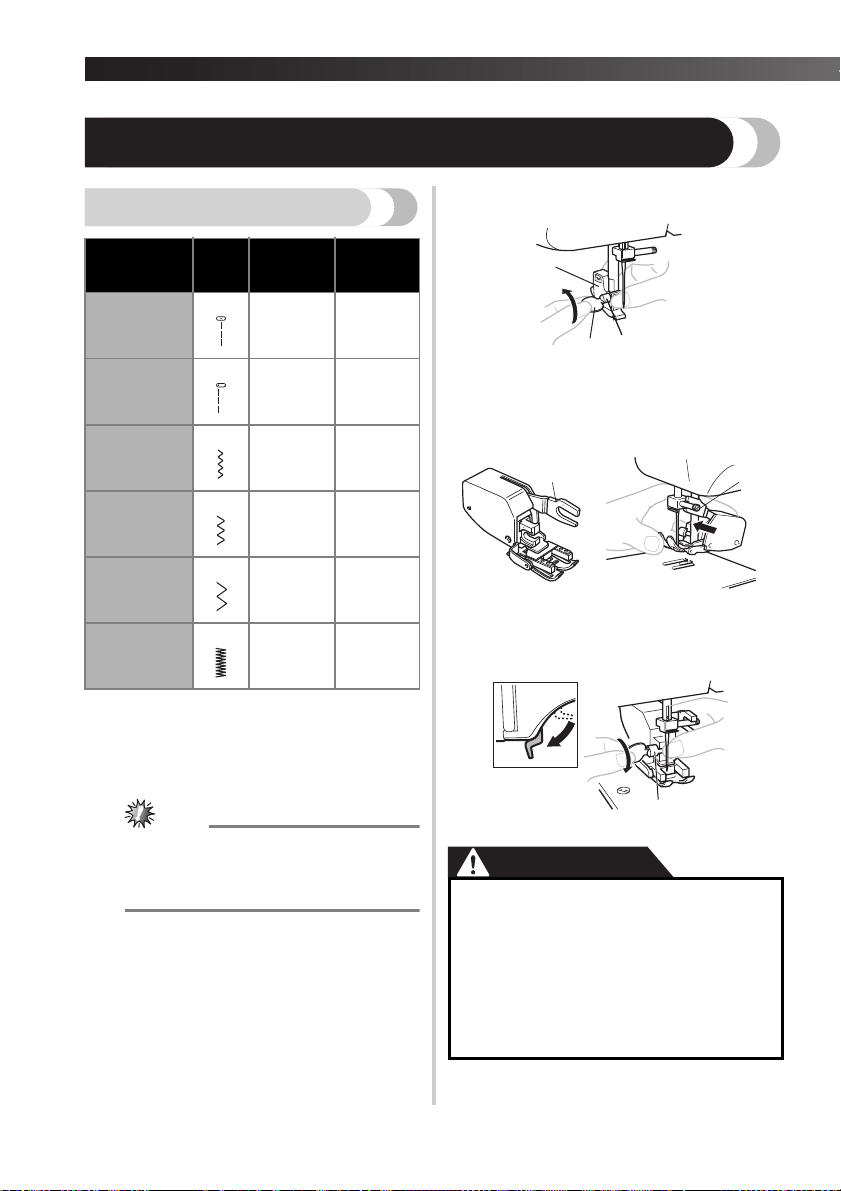
Appliqués
You can create an appliqué by cutting a different piece
of fabric into a shape and applying it as a decoration.
1Baste the cut design to the fabric.
2Carefully sew around the edge of the
design with a zigzag stitch.
Stitch Name Pattern Stitch
Length
[mm (inch)]
Stitch Width
[mm (inch)]
Zigzag Stitch 0.7 (1/32) 1.5 (1/16)
Zigzag Stitch 1.5 (1/16) 3 (1/8)
Zigzag Stitch 2 (1/16) 5 (3/16)
Zigzag (Satin)
Stitch 0.5 (1/32) 5 (3/16)
8
9
10
11
USING ATTACHMENTS AND APPLICATIONS ————————————————————————————————————————————————————————————————————————————————————————————————————————————————————————————————
—
————————————————————————————————
—————
33
OPTIONAL ACCESSORIES
Using the walking foot
The walking foot is very useful for sewing materials
such as vinyl cloth, synthetic leather, thin leather, etc.
These materials are difficult to feed when sewing. The
walking foot prevents these materials from crumpling,
slipping or sticking to the sole of the presser foot and
the material.
Note
●Only use the walking foot with straight or
zigzag stitches. Do not use other patterns.
Reverse stitches can not be sewn with the
walking foot.
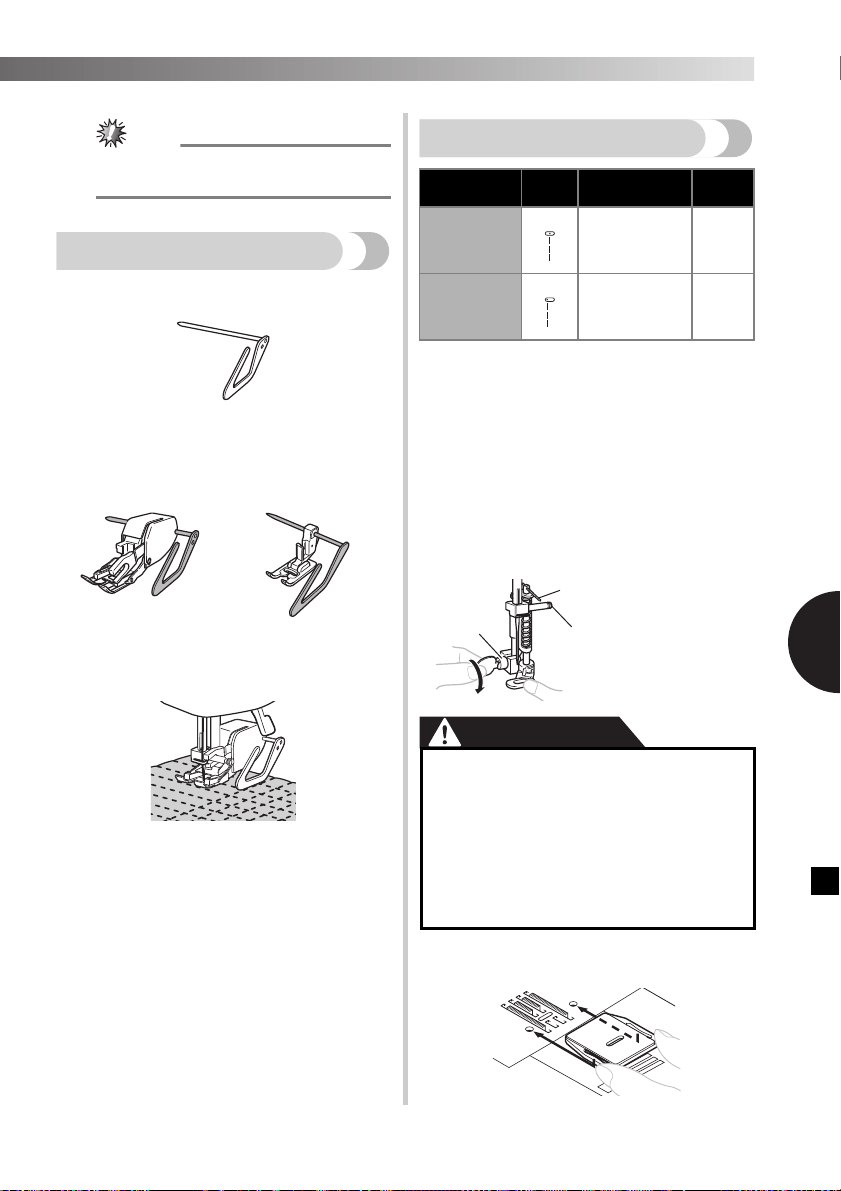
1Turn off the machine.
2Raise the needle and the presser foot.
3Loosen the presser foot screw to remove
the presser foot holder.
1Use the oval screwdriver
2Presser foot holder
3Presser foot screw
4Hook the connecting fork of the walking
foot onto the needle clamp screw.
1Connecting fork
2Needle clamp screw
5Lower the presser foot lever and then
tighten the presser foot screw.
1Presser foot screw
CAUTION
Stitch Name Pattern Stitch
Length
[mm (inch)]
Stitch Width
[mm (inch)]
Straight Stitch
(Center Needle
Position) 2.5 (3/32) —
Straight Stitch
(Left Needle
Position) 2.5 (3/32) —
Zigzag Stitch 0.7 (1/32) 1.5 (1/16)
Zigzag Stitch 1.5 (1/16) 3 (1/8)
Zigzag Stitch 2 (1/16) 5 (3/16)
Zigzag (Satin)
Stitch 0.5 (1/32) 5 (3/16)
5
7
8
9
10
11
●Use the oval screwdriver to tighten the
screw securely. If the screw is loose, the
needle may hit the presser foot and you
may be injured.
●Turn the handwheel toward you
(counterclockwise) and check that the
needle does not touch the presser foot. If
the needle hits the presser foot, the
needle may bend or break.
1
2
3
1
2
1
34
——————
—————————————————————————————————————————————————————————————————————————————————————————
—
————————————————————————————————————————————————————————————————————————————————————————————————————————————————————————————————————————————————————————————————————————————————————
5
Note
●When sewing with the walking foot, sew at
medium to low speeds.
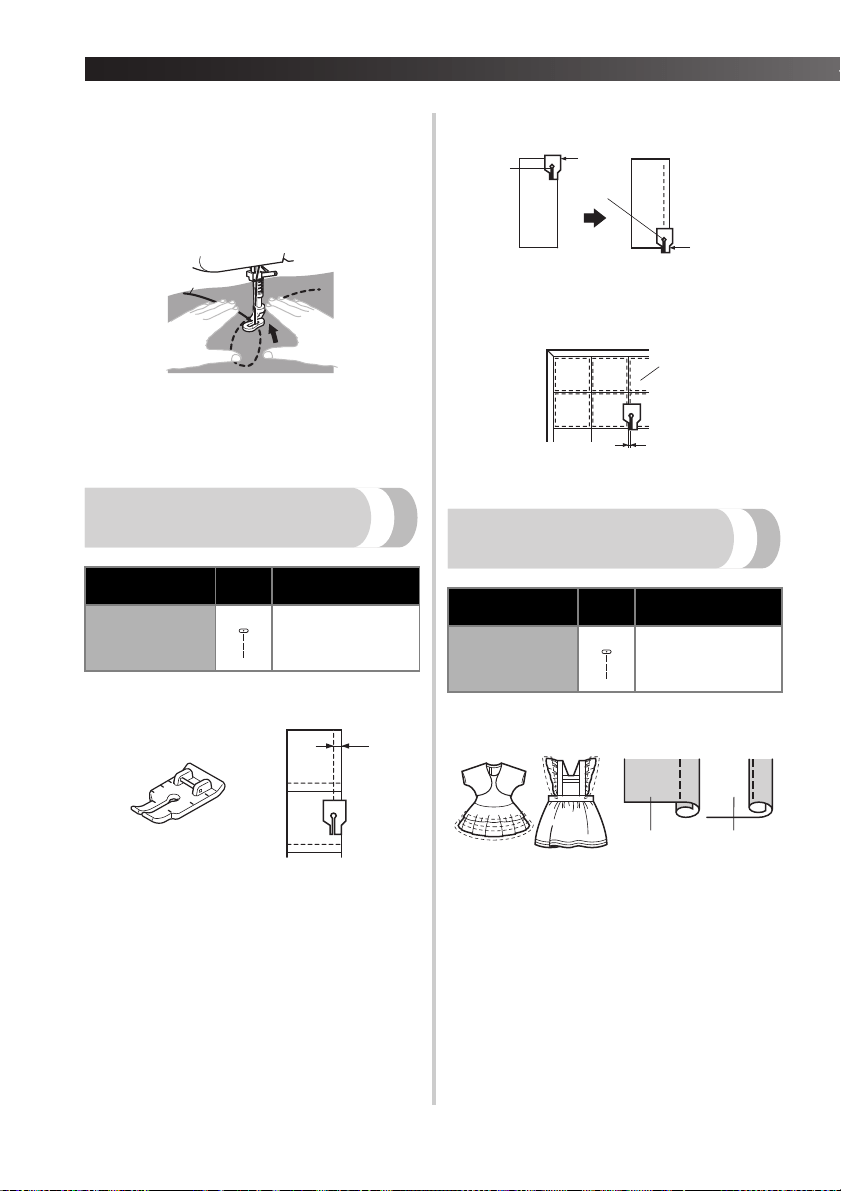
Using the quilting guide
Use the quilting guide to sew parallel stitches that are
equally spaced.
1Insert the stem of the quilting guide into
the hole at the rear of the walking foot or
presser foot holder.
2Adjust the stem of the quilting guide so
that the quilting guide aligns with the
seam that has already been sewn.
Using the quilting foot
The Quilting Foot is useful for darning and
free-motion machine quilting.
1Follow the steps 1 to 3 on page 33.
2Attach the quilting foot, making sure that
part A shown in the illustration is above
the needle clamp screw. Then lower the
presser foot lever and tighten the presser
foot screw.
• Make sure that the needle clamp screw is
firmly tightened.
CAUTION
3Put the darning plate on the needle plate.
Turn on the machine.
■Walking foot ■Presser foot holder
Stitch Name Pattern Stitch Length
[mm (inch)]
Other
Straight Stitch
(Center Needle
Position)
2.5 (3/32)
Darning
Plate
Straight Stitch
(Left Needle
Position)
2.5 (3/32)
Darning
Plate
1Presser foot screw
2Needle clamp screw
●Use the oval screwdriver to tighten the
presser foot holder screw securely. If the
screw is loose, the needle may hit the
presser foot and you may be injured.
●Turn the handwheel toward you
(counterclockwise) and check that the
needle does not touch the presser foot. If
the needle hits the presser foot, the
needle may bend or break.
5
7
2
1
A
USING ATTACHMENTS AND APPLICATIONS ————————————————————————————————————————————————————————————————————————————————————————————————————————————————————————————————
—
————————————————————————————————
—————
35
4Set the pattern selection dial to the
Straight Stitch.
• Before starting to sew, draw the quilting
design on the fabric.
5Use both hands to keep the fabric firmly
stretched and move the fabric to sew over
the drawn design.
1Quilting design
6The length of the stitch depends on how
quickly you move the fabric and on the
machine’s sewing speed. Sew while
moving the fabric slowly.
Using the 1/4-inch
quilting foot
You can use the 1/4-inch quilting foot to sew seams
when piecing together a quilt.
1Seam allowance 6.5 mm (1/4 inch)
1Turn off the machine.
2Set the pattern selection dial to the
Straight Stitch (Center Needle Position).
3Attach the 1/4-inch quilting foot.
Turn on the machine.
4Position the presser foot over the fabric
and sew as shown in the following
illustrations.
■Achieving an accurate seam allowance
1Beginning of stitching
2Align this mark with the edge of the fabric.
3End of stitching
4Align this mark with the edge of the fabric.
■Stitching the top of a quilt
1Top of fabric
2Seam 3.2 mm (1/8 inch)
Using the narrow hemmer
foot
You can use the narrow hemmer foot for binding
lightweight fabrics and for narrow rolled hems.
1Right side of fabric
2Wrong side of fabric
1Turn off the machine.
2Attach the narrow hemmer foot and then
set the pattern selection dial to the
Straight Stitch (Center Needle Position).
3Turn on the machine.
Stitch Name Pattern Stitch Length
[mm (inch)]
Straight Stitch
(Center Needle
Position) 2.5 (3/32)
1
5
1
Stitch Name Pattern Stitch Length
[mm (inch)]
Straight Stitch
(Center Needle
Position) 2.5 (3/32)
2
1
3
4
1
2
5
1 2
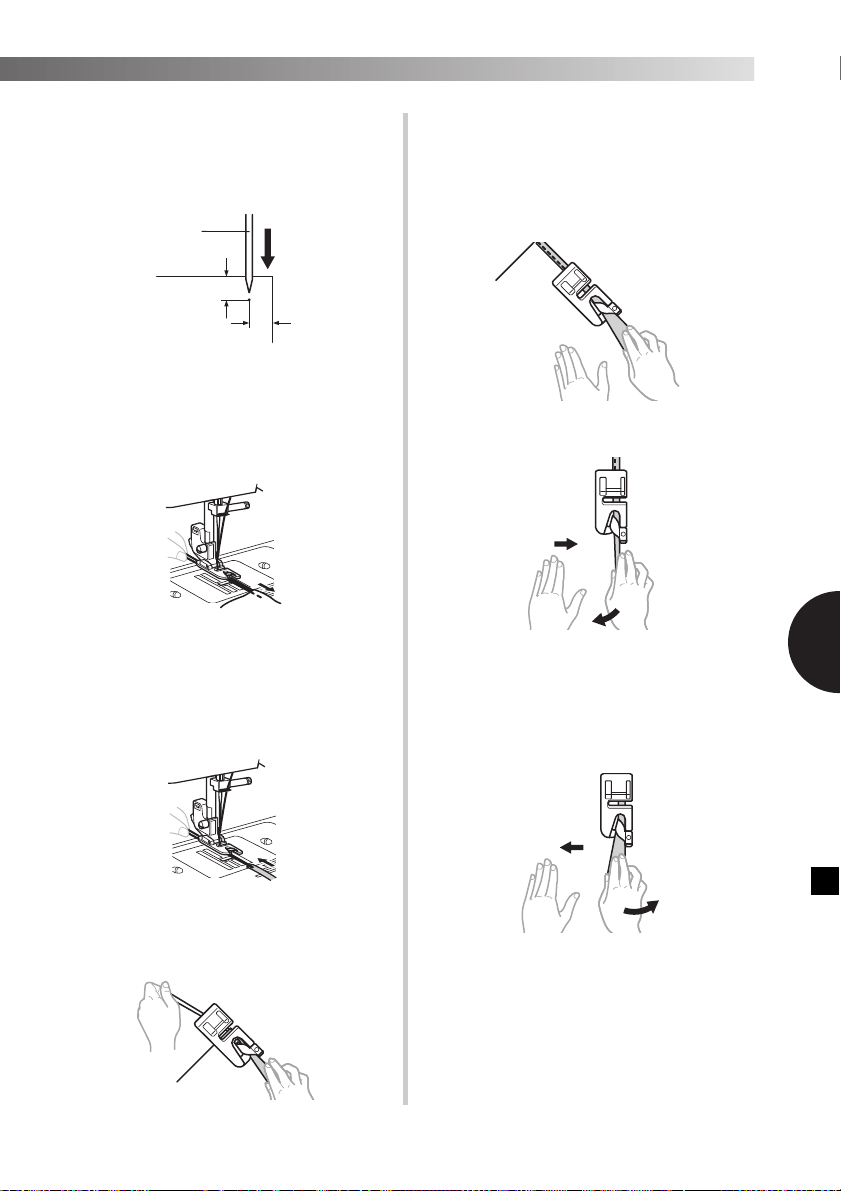
36
——————
—————————————————————————————————————————————————————————————————————————————————————————
—
————————————————————————————————————————————————————————————————————————————————————————————————————————————————————————————————————————————————————————————————————————————————————
5
4Position the fabric (wrong side facing up)
under the presser foot. Lower the needle
3 mm (1/8 inch) from the edges of the
fabric, lower the presser foot, and then
sew 2 or 3 stitches.
1Needle
23 mm (1/8 inch)
5Raise the needle and the presser foot, then
hold the ends of the upper and lower
thread to prevent them from being pulled
out of the fabric and pull the fabric out
from the front of the presser foot.
6Holding both threads, pass them through
the curled part of the presser foot and pull
them toward the back of the presser foot.
Wrap the fabric around the curled part of
the presser foot in the same way. Position
the edge of the fabric just behind the
needle and lower the presser foot.
7Without allowing the fabric to stick out
from the right side of the presser foot,
lightly pull on the thread while slowly
sewing.
8After sewing 2 (3/4 inch) to 3 cm (1 1/8
inch) of the fabric, release the thread and
guide the fabric from the front of the
presser foot with your both hands. Keep a
uniform amount of fabric wrapped around
the presser foot curl until the seam is
completed.
■If too little fabric is wrapped around the
curl, then a threefold seam is not being sewn
Pull the fabric held in your right hand to the left in order
to increase the amount of fabric wrapped in the presser
foot curl. At the same time, carefully guide the fabric to
the right with your left hand.
■If too much fabric is wrapped around the
curl, then a wide threefold seam is being
sewn
Pull the fabric held in your right hand to the right in
order to decrease the amount of fabric wrapped in the
presser foot curl. At the same time, carefully guide the
extra fabric to the left with your left hand.
1
2
2
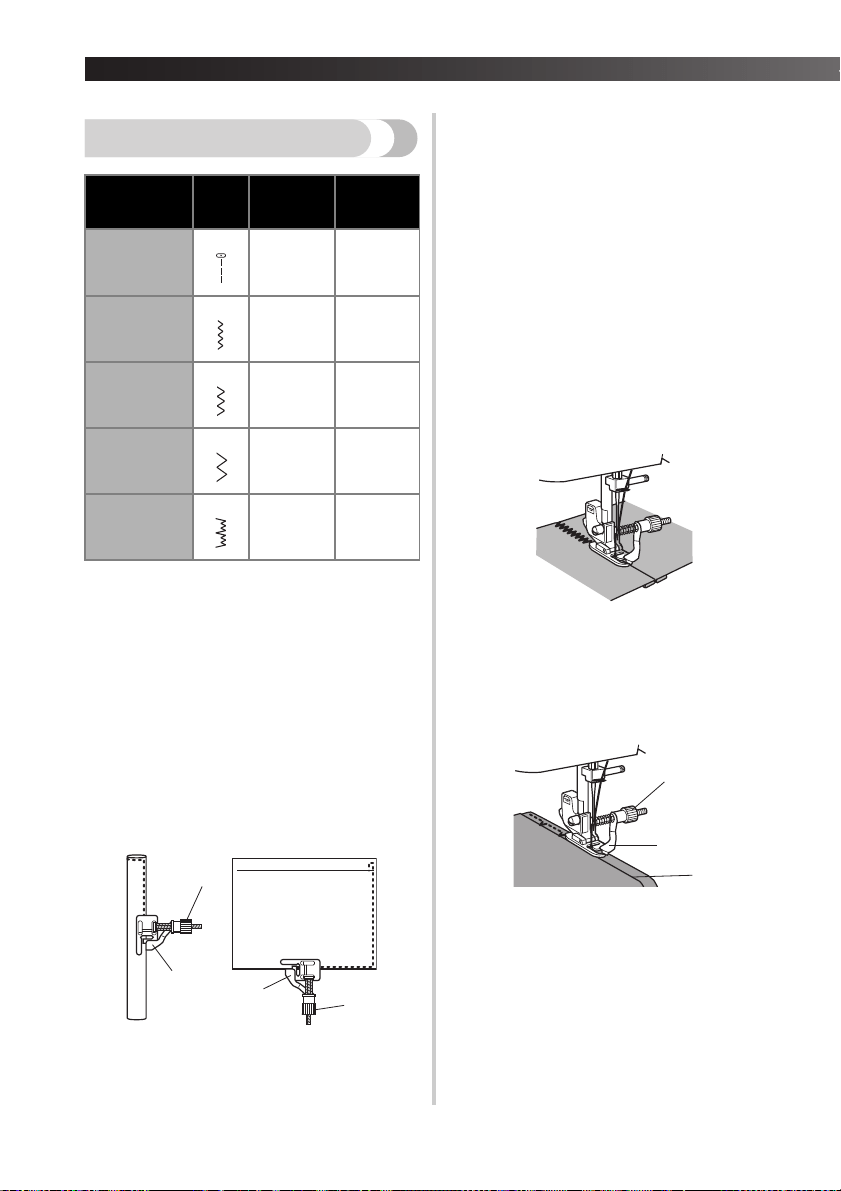
USING ATTACHMENTS AND APPLICATIONS ————————————————————————————————————————————————————————————————————————————————————————————————————————————————————————————————
—
————————————————————————————————
—————
37
Using the blind stitch foot
This foot comes in handy not only for stretch blind hem
stitching, but also for sewing fabric edges and seams.
■When edge stitching
1Turn off the machine.
2Attach the blind stitch foot.
Turn on the machine.
3Position the needle the distance you want
the stitch to be from the edge of the
fabric, and then lower the needle in that
position.
4Turn the foot guide screw and carefully
adjust to guide the fabric.
1Screw
2Guide
■When sewing seams
1Turn off the machine.
2Attach the blind stitch foot.
Turn on the machine.
3Set the pattern selection dial to the
Straight Stitch (Center Needle Position).
Align the foot guide with the needle
position.
4Set the pattern selection dial to the Zigzag
Stitch with the desired width.
5Place the fabric under the foot so the foot
guide is aligned between both edges of the
fabric.
6Lower the presser foot and start sewing.
■When stretch blind hem stitching
When stretch blind hem stitching using the blind
stitch foot, turn the screw to adjust the guide to the
folded hem.
• For more details on blind hem stitching, see
page 24.
1Screw
2Guide
3Folded hem
Stitch Name Pattern Stitch
Length
[mm (inch)]
Stitch Width
[mm (inch)]
Straight Stitch
(Center Needle
Position) 2.5 (3/32) —
Zigzag Stitch 0.7 (1/32) 1.5 (1/16)
Zigzag Stitch 1.5 (1/16) 3 (1/8)
Zigzag Stitch 2 (1/16) 5 (3/16)
Stretch Blind
Hem Stitch 2 (1/16) 5 (3/16)
5
8
9
10
14
1
1
2
2
1
2
3
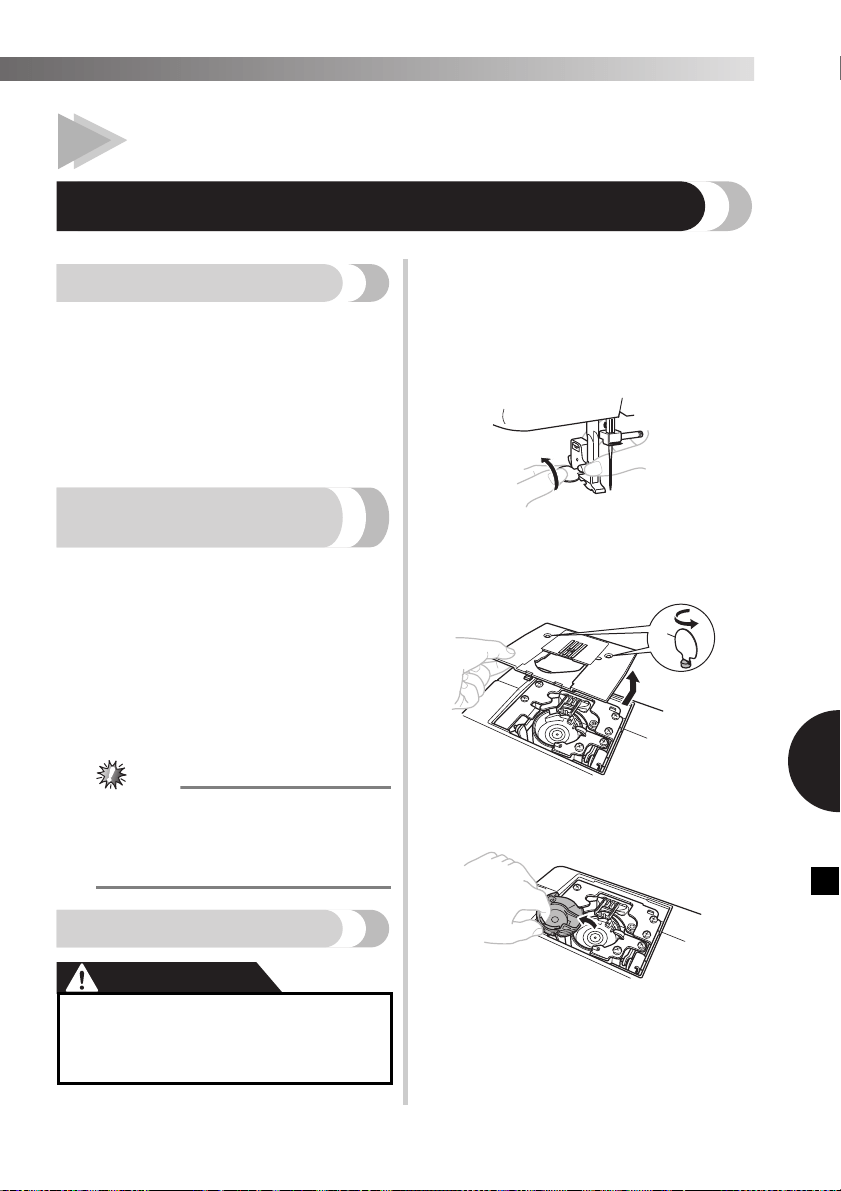
38
——————
——————————————————————————————————————————————————————————————————————————————————————————————————————————————————————————————————————————————————————————————————————————————————————————————————————————————————————————————————————————————————————————————————————————————
6
6APPENDIX
MAINTENANCE
Restrictions on oiling
In order to prevent damaging this machine, it must not
be oiled by the user.
This machine was manufactured with the necessary
amount of oil applied to ensure correct operation,
making periodic oiling unnecessary.
If problems occur, such as difficulty turning the
handwheel or an unusual noise, immediately stop using
the machine, and contact your authorized dealer or the
nearest authorized service center.
Precautions on storing the
machine
Do not store the machine in any of the locations
described below, otherwise damage to the machine
may result, for example, rust caused by condensation.
• Exposed to extremely high temperatures
• Exposed to extremely low temperatures
• Exposed to extreme temperature changes
• Exposed to high humidity or steam
• Near a flame, heater or air conditioner
• Outdoors or exposed to direct sunlight
• Exposed to extremely dusty or oily environments
Note
●In order to extend the life of this machine,
periodically turn it on and use it.
Storing this machine for an extended period
of time without using it may reduce its
efficiency.
Cleaning
CAUTION
1Turn off the machine and unplug it.
2Raise the needle and the presser foot.
3Loosen the presser foot screw and the
needle clamp screw to remove the presser
foot holder and the needle.
4Using the oval screwdriver, remove the
two screws. Lift up the needle plate as
shown in the illustration, and then slide
the needle plate to the left to remove it.
1Use the oval screwdriver
5Grasp the bobbin case, and then lift it out
to the left.
●Make sure you unplug the machine
before you clean it, otherwise you risk
getting an electric shock or being
injured.
1
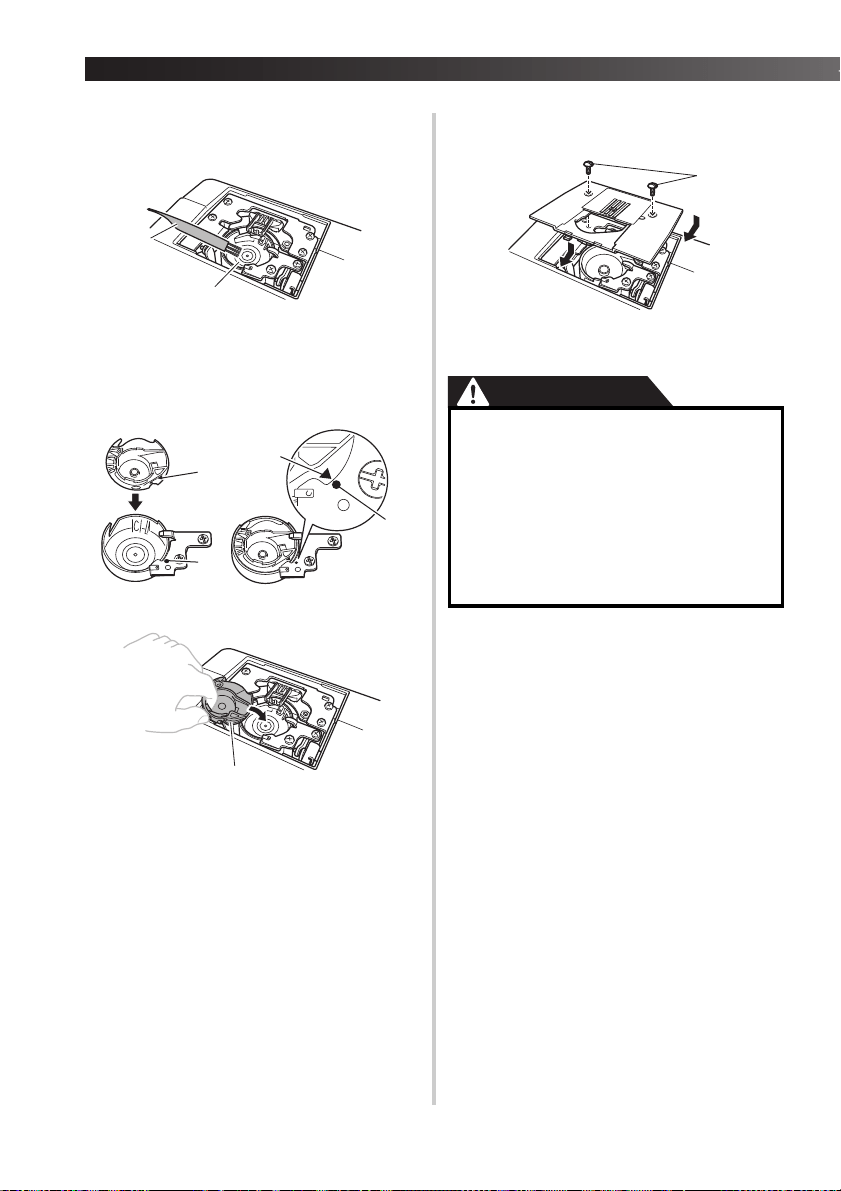
APPENDIX ————————————————————————————————————————————————————————————————————————————————————————————————————————————————————————————————
—
——————————————————————————————————————————————————————————————————————————————————————————————————————————————
—————
39
6Use the cleaning brush or a vacuum
cleaner to remove any dust from the race
and its surrounding area.
1Cleaning brush
2Race
• Do not apply oil to the bobbin case.
7Insert the bobbin case so that the ▲ mark
on the bobbin case aligns with the ● mark
on machine as shown below.
• Align the ▲ and ● marks.
1▲ mark
2● mark
3Bobbin case
• Make sure that the indicated points are
aligned before installing the bobbin case.
8Install the needle plate, and then tighten
the screws.
1Screws
• Make sure that you install the needle plate
securely.
CAUTION
1
2
2
1
2
1
3
●Never use a bobbin case that is
scratched; otherwise the upper thread
may become tangled, the needle may
break, or sewing performance may
suffer. For a new bobbin case (part code:
XE9326-001), contact your nearest
authorized service center.
●Make sure that you fit the bobbin case
properly, otherwise the needle may
break.
1
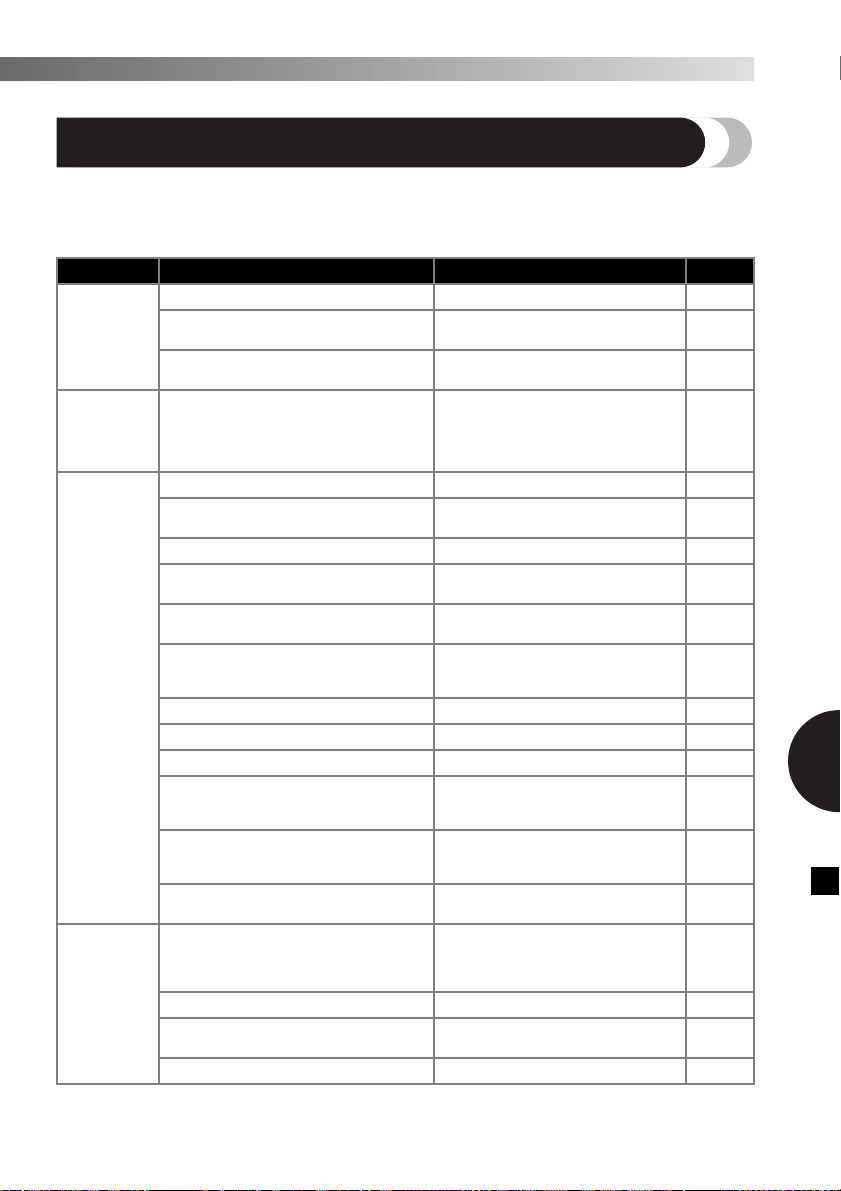
40
——————
——————————————————————————————————————————————————————————————————————————————————————————————————————————————————————————————————————————————————————————————————————————————————————————————————————————————————————————————————————————————————————————————————————————————
6
TROUBLESHOOTING
If the machine stops operating correctly, check the following possible problems before requesting service. You can
solve most problems by yourself. If you need additional help, the Brother Solutions Center offers the latest FAQs and
troubleshooting tips. Visit us at “ http://solutions.brother.com ”. If the problem persists, contact your dealer or the
nearest authorized service center.
Symptom Possible cause How to put it right Page
The sewing
machine does
not work.
The main power switch is turned off. Turn on the main power switch. 7
The bobbin-winder shaft is pushed to the
right. Move the bobbin-winder shaft to the
left. 12
You have not used the foot controller
properly. Use the foot controller properly. 7
Fabric being
sewn with the
machine
cannot be
removed.
Thread is tangled below the needle plate. Lift up the fabric and cut the threads
below it, and clean the race. 38
The needle
breaks.
The needle is incorrectly installed. Correctly install the needle. 7
The needle clamp screw is loose. Use the oval screwdriver to firmly
tighten the screw. 8
The needle is bent or blunt. Replace the needle. 7
The upper thread was not threaded
correctly. Correct the upper threading. 14
You have not used the right combination of
fabric, thread and needle. Choose a thread and needle that are
appropriate for the type of fabric. 17
The presser foot you are using is not
appropriate for the type of stitch that you
want to sew.
Attach the presser foot that is correct
for the type of stitch that you want to
sew. –
The upper thread tension is too tight. Loosen the upper thread tension. 22
You are pulling the fabric too much. Lightly guide the fabric. –
You have not fitted the spool properly.
Fit the spool properly. 15, 20
The area around the hole in the needle
plate or the presser foot is scratched.
Replace the needle plate.
Contact your retailer or the nearest
authorized service center. –
The bobbin case is scratched. Replace the bobbin case.
Contact your retailer or the nearest
authorized service center. –
You have not used a bobbin that has been
designed for this machine. Use a bobbin that has been designed
for this machine. 11
The upper
thread
breaks.
You have not threaded the upper thread
properly. (For example, you have not fitted
the spool properly, or the thread has come
out of the guide above the needle.)
Correct the upper threading. 14
There are knots or tangles in the thread. Remove any knots or tangles. –
The needle is not appropriate for the thread
you are using. Choose a needle that is appropriate for
the type of stitch. 17
▼The upper thread tension is too tight. Loosen the upper thread tension. 22
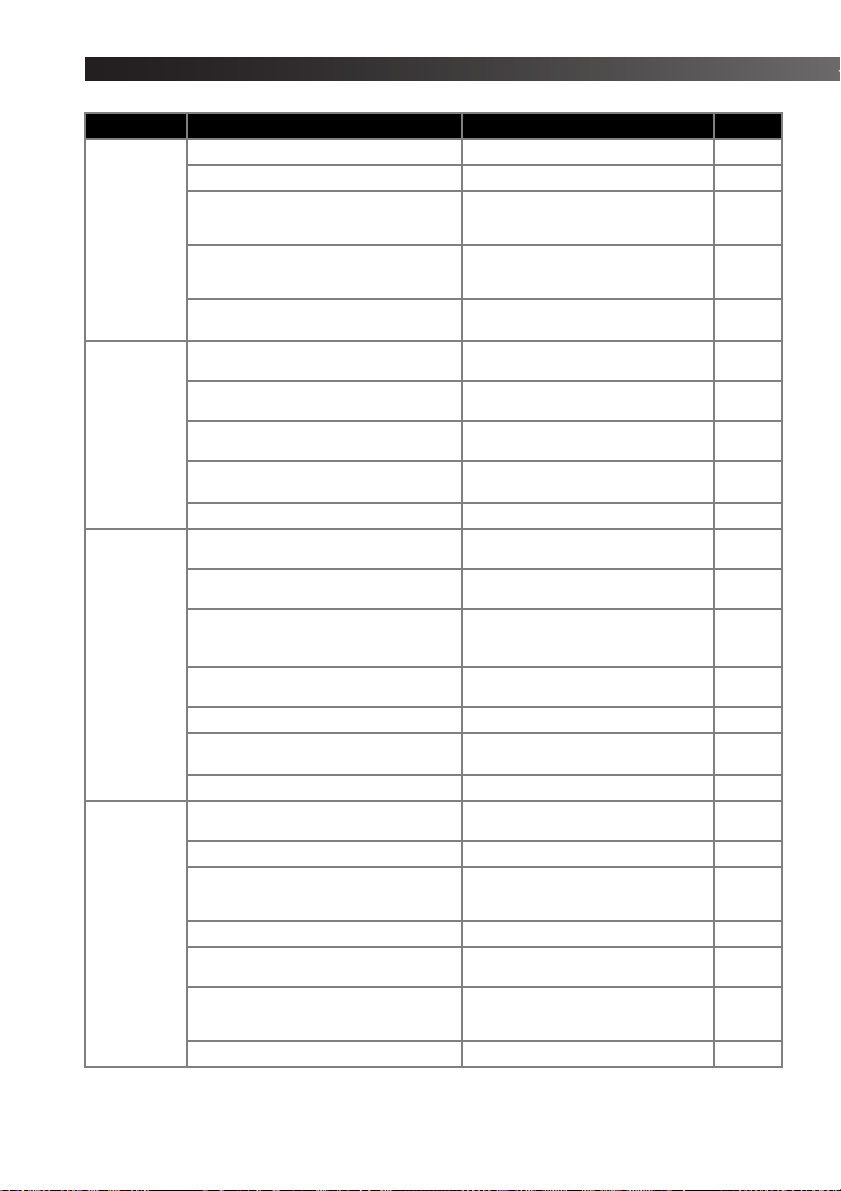
APPENDIX ————————————————————————————————————————————————————————————————————————————————————————————————————————————————————————————————
—
——————————————————————————————————————————————————————————————————————————————————————————————————————————————
—————
41
▲The needle is bent or blunt. Replace the needle. 7
The upper
thread
breaks.
The needle is incorrectly installed. Correctly install the needle. 7
The area around the hole in the needle
plate or the presser foot is scratched.
Replace the needle plate.
Contact your retailer or the nearest
authorized service center. –
The bobbin case is scratched, or has a burr
on it.
Replace the bobbin case.
Contact your retailer or the nearest
authorized service center. –
You have not used a bobbin that has been
designed for this machine. Use a bobbin that has been designed for
this machine. 11
The lower
thread is
tangled or
breaks.
You have not wound the bobbin thread
properly. Wind the bobbin thread properly. 11
The bobbin is scratched or does not turn
smoothly. Replace the bobbin. –
The thread is tangled. Remove the tangled thread and clean
the race. 38
You have not used a bobbin that has been
designed for this machine. Use a bobbin that has been designed for
this machine. 11
Bobbin is set incorrectly. Reset the bobbin thread correctly. 13
The thread
tension is
incorrect.
You have not threaded the upper thread
properly. Correct the upper threading. 14
You have not wound the bobbin thread
properly. Wind the bobbin thread properly. 11
You have not threaded the right
combination of thread and needle for the
fabric you are using.
Choose a thread and needle that are
appropriate for the type of fabric. 17
You have not attached the presser foot
holder properly. Attach the presser foot holder properly. –
The thread tension is incorrect. Adjust the tension of the upper thread. 22
You have not used a bobbin that has been
designed for this machine. Use a bobbin that has been designed
for this machine. 11
Bobbin is set incorrectly. Reset the bobbin thread correctly. 13
The fabric is
wrinkled.
You have not threaded the upper thread
properly or fitted the bobbin properly. Thread the upper thread and wind the
bobbin thread properly. 11-16
You have not fitted the spool properly. Fit the spool properly. 15, 20
You have not used the right
combination of fabric, thread and
needle.
Choose a thread and needle that are
appropriate for the type of fabric. 17
The needle is bent or blunt. Replace the needle. 7
If thin fabrics are being sewn, the fabric is
not being fed correctly. Sew with stabilizer material under the
fabric. 20
The presser foot you are using is not
appropriate for the type of stitch that you
want to sew.
Attach the presser foot that is correct
for the type of stitch that you want to
sew. 30
The thread tension is incorrect. Adjust the tension of the upper thread. 22
Symptom Possible cause How to put it right Page
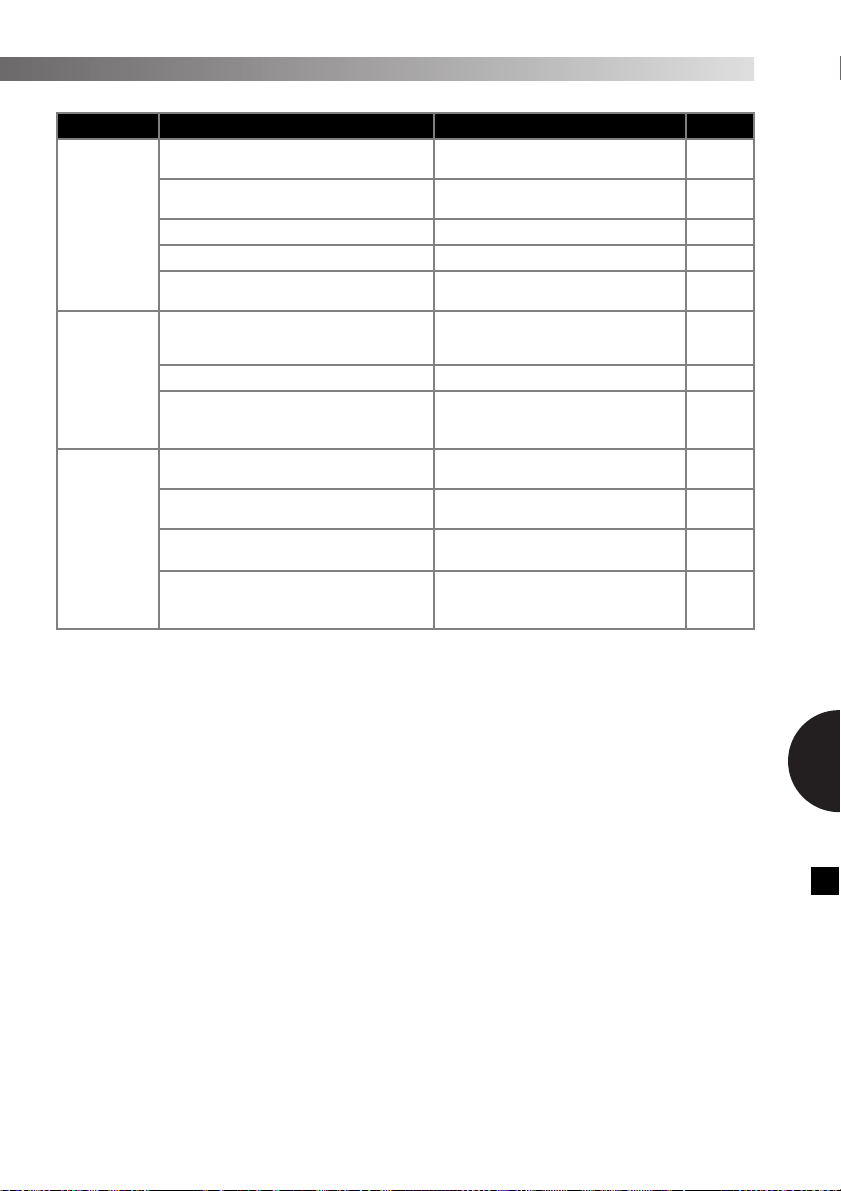
42
——————
——————————————————————————————————————————————————————————————————————————————————————————————————————————————————————————————————————————————————————————————————————————————————————————————————————————————————————————————————————————————————————————————————————————————
6
Stitches are
skipped.
You have not threaded the upper thread
properly. Correct the upper threading. 14
You have not used the right combination of
fabric, thread and needle. Choose a thread and needle that are
appropriate for the type of fabric. 17
The needle is bent or blunt. Replace the needle. 7
The needle is incorrectly installed. Correctly install the needle. 7
Dust has accumulated under the needle
plate or in the bobbin case. Remove the needle plate and clean the
plate and the bobbin case. 38
The stitch is
not sewn
correctly.
The presser foot that you are using is not
correct for the type of stitch.
Attach the presser foot that is correct
for the type of stitch that you want to
sew. –
The thread tension is incorrect. Adjust the tension of the upper thread. 22
The thread is tangled. Remove the tangled thread. If the
thread is tangled in the bobbin case,
clean the bobbin case. 38
The fabric
does not feed.
The darning plate is fitted on the needle
plate. Remove the darning plate. –
You have not used the right combination of
fabric, thread and needle. Choose a thread and needle that are
appropriate for the type of fabric. 17
The thread is tangled, for example, in the
race. Remove the tangle thread. If the thread
is tangled in the race, clean the race. 38
The presser foot you are using is not
appropriate for the type of stitch that you
want to sew.
Attach the presser foot that is correct
for the type of stitch that you want to
sew. 30
Symptom Possible cause How to put it right Page

———————————————————————————————————————————————————————————————————————————————————————————————————————————————————————————————————————————————————————————————————————————————————————————————————————————————————————————————————————————————————————————————————————
—————
43
INDEX
Numerics
1/4-inch quilting foot .................................. 35
4-Step Automatic Buttonhole ....................... 27
A
Accessories .................................................. 4
optional ............................................ 4, 33
Appliqués .................................................. 32
B
Blind hem stitching .....................................24
Blind stitch foot .......................................... 37
Bobbin winding .......................................... 11
Button sewing ............................................ 29
Buttonhole
adjusting ................................................ 28
making ................................................... 27
Buttonhole fine-adjustment screw ................28
C
Cleaning .................................................... 38
Connecting plugs .......................................... 6
D
Darning ..................................................... 31
Darning plate ................................29, 31, 34
Decorative stitching .................................... 26
Double action stitching ............................... 26
Drawing up the lower thread ....................... 16
E
Elastic stitching ........................................... 25
F
Fabric, thread, and needle combinations ...... 17
Flat bed attachment ...................................... 5
Foot controller .............................................. 7
Free-arm style ............................................. 20
G
Gathering ................................................... 31
H
Handwheel ................................................ 14
L
Light switch .................................................. 7
Lower threading ......................................... 13
M
Main parts .................................................... 5
Main power ................................................. 7
Maintenance .............................................. 38
N
Narrow hemmer foot .................................. 35
Needle
checking .................................................. 7
combinations with fabric and thread ......... 17
replacing .................................................. 7
P
Pattern selection dial .....................................9
Patterns ........................................................ 9
Presser foot changing .................................... 8
Q
Quilting foot .............................................. 34
R
Race cleaning .............................................38
Reverse sewing lever ...................................10
S
Shell tuck stitching ......................................25
Spool pin .............................................11, 14
extra ......................................................21
Stitches
built-in ...................................................23
names ......................................................9
Straight stitching .........................................23
T
Thread cutter ..............................................19
Thread tension ............................................22
Threading
lower .....................................................13
twin needle .............................................21
upper .....................................................14
Troubleshooting ..........................................40
Twin needle
attaching ...........................................8, 20
sewing ...................................................20
U
Upper tension control dial ...........................22
Upper threading ..........................................14
W
Walking foot ...............................................33
Z
Zigzag stitching ...........................................23
Zipper insertion ..........................................30


———————————————————————————————————————————————————————————————————————————————————————————————————————————————————————————————————————————————————————————————————————————————————————————————————————————————————————————————————————————————————————————————————————
—————
1
INSTRUCCIONES DE
SEGURIDAD IMPORTANTES
Lea estas instrucciones de seguridad
antes de utilizar la máquina.
PELIGRO: para reducir el
riesgo de descarga eléctrica:
1Desenchufe siempre la máquina de
la toma de corriente inmediatamente
después de su uso, al proceder a su
limpieza, al realizar cualquier ajuste de
reparación mencionado en este manual
o si deja la máquina desatendida.
ADVERTENCIA: para
reducir el riesgo de quemaduras,
incendio, descarga eléctrica o lesiones.
2Desenchufe siempre la máquina de
la toma de corriente cuando realice
cualquier ajuste mencionado en el
manual de instrucciones:
• Para desenchufarla, coloque el
interruptor de la máquina en la posición
con el símbolo “O” para apagarla, sujete
después el enchufe y desconéctelo de la
toma de corriente.
No
tire del cable.
•
Enchufe la máquina directamente a la
toma de corriente. No utilice un alargador.
• Desenchufe
siempre
la máquina en caso
de producirse un corte de corriente.
3
Nunca
ponga la máquina en
funcionamiento si el cable o el enchufe
están dañados, si no funciona
correctamente, si se ha caído o está averiada
o si se ha derramado agua dentro. Lleve la
máquina al distribuidor o servicio de
reparaciones autorizado más cercano para
su revisión, reparación y realización de los
ajustes eléctricos o mecánicos necesarios.
•
Si observa algo inusual (como olor,
calor, decoloración o deformación) con
la máquina guardada o en uso, deje de
utilizar la máquina y desenchufe
inmediatamente el cable de la corriente.
• Cuando traslade la máquina, tómela por
su asa. Si se levanta desde cualquier
otra pieza, la máquina puede dañarse o
caerse, lo que podría causar lesiones.
• Al levantar la máquina, procure no
realizar movimientos bruscos o sin
cuidado ya que, de lo contrario, podría
lesionarse la espalda o las rodillas.
4Mantenga siempre el área de
trabajo despejada:
• Nunca utilice esta máquina si las
aberturas de ventilación están
bloqueadas. Mantenga las aberturas
de ventilación y el pedal libres de
pelusa, polvo y trocitos de tela.
•
No
deje ningún objeto encima del pedal
.
•No utilice alargadores. Enchufe la
máquina directamente a la toma de
corriente.
•Nunca deje que caigan objetos en
ninguna de las aberturas, ni inserte
nada en las mismas.
•No la use en lugares donde se
utilicen productos con aerosoles
(atomizadores), ni en sitios donde se
esté administrando oxígeno.
•No utilice la máquina cerca de una
fuente de calor, como un horno o una
plancha; de lo contrario, la máquina,
el cable de corriente o la prenda que
se esté cosiendo podrían incendiarse,
provocando un incendio o una
descarga eléctrica.
•No coloque esta máquina sobre una
superficie inestable, como una mesa
que se tambalee o esté inclinada ya
que, de lo contrario, la máquina
podría caerse y provocar lesiones.
5Hay que tener especial cuidado al
coser:
•Preste siempre especial atención a la
aguja. No utilice agujas dobladas o
dañadas.

2
—————
————————————————————————————————————————————————————————————————————————————————————————————————————————————————————
—
——————————————————————————————————————————————————————————————————————————————————————————————————————————————————————————————————————————————————————————
• Mantenga los dedos alejados de
todas
las
piezas en movimiento. Se debe tener
especial cuidado con la zona de la aguja.
•
Coloque el interruptor de la máquina en la
posición con el símbolo “O” para apagarla
al realizar ajustes en la zona de la aguja.
•No utilice una placa de la aguja
dañada o equivocada, ya que la
aguja podría romperse.
•
No
empuje ni tire de la tela cuando cosa
y siga detenidamente las instrucciones
durante la costura de brazo libre para
que no se doble la aguja y se rompa.
6Esta máquina no es un juguete:
• Deberá prestar especial atención
cuando se utilice cerca de niños o sea
utilizada por ellos.
• La bolsa de plástico en la que se
suministra esta máquina debe
mantenerse fuera del alcance de los
niños o desecharse. No permita en
ningún caso que los niños jueguen con
la bolsa debido al riesgo de asfixia.
•No la utilice en el exterior.
7Para una vida útil más prolongada:
•
Cuando guarde esta máquina, evite
exponerla directamente a la luz solar y no
la guarde en lugares con gran humedad.
No utilice o guarde la máquina cerca de
una fuente de calor, plancha, lámpara
halógena u otros objetos candentes.
• Utilice solamente detergentes o jabones
neutros para limpiar la carcasa. Gasolina,
diluyentes y polvos desengrasantes
pueden dañar la carcasa y la máquina,
por lo que nunca debe utilizarlos.
• Consulte siempre el manual de
instrucciones cuando cambie o coloque
cualquier pieza, el pie prensatela, la
aguja u otras piezas para asegurarse de
que la colocación es correcta.
8Para reparaciones o ajustes:
• Si la unidad de iluminación (diodo
emisor de luz) está dañada, deberá
cambiarla un distribuidor autorizado.
• En caso de que se produzca una avería o
se requiera un ajuste, consulte primero
la tabla de solución de problemas al
final del manual de instrucciones para
inspeccionar y ajustar la máquina usted
mismo. Si el problema persiste, póngase
en contacto con su distribuidor de
Brother autorizado más cercano.
Utilice esta máquina solamente para
los fines descritos en este manual.
Utilice los accesorios recomendados
por el fabricante en este manual.
El contenido de este manual y las
especificaciones de este producto están
sujetos a cambios sin previo aviso.
Si desea obtener información adicional
del producto, visite nuestro sitio Web
en www.brother.com
CONSERVE ESTAS
INSTRUCCIONES
Esta máquina ha sido
diseñada para uso doméstico.
Este aparato no ha sido diseñado para ser
utilizado por personas (niños incluidos)
con alguna discapacidad física, sensorial o
mental, ni por personas sin experiencia o
conocimientos técnicos, a menos que
hayan recibido supervisión o instrucciones
relativas al uso del aparato por parte de
una persona responsable de su seguridad.
Los niños deberán ser vigilados para
asegurarse de que no juegan con este
aparato.
SOLO PARA LOS USUARIOS
DEL REINO UNIDO,
IRLANDA, MALTA Y CHIPRE
IMPORTANTE
• Si cambia el fusible del enchufe, utilice un fusible
homologado por ASTA para BS 1362, es decir, que
lleve la marca correspondiente a la marca en
el enchufe.
• No olvide volver a colocar siempre la tapa del fusible.
No utilice nunca enchufes sin la tapa del fusible.
• Si la toma de corriente disponible no es apropiada
para el enchufe suministrado con esta máquina,
deberá ponerse en contacto con su distribuidor
autorizado para obtener el cable correcto.

———————————————————————————————————————————————————————————————————————————————————————————————————————————————————————————————————————————————————————————————————————————————————————————————————————————————————————————————————————————————————————————————————————
—————
3
CONTENIDO
INSTRUCCIONES DE
SEGURIDAD IMPORTANTES .........................1
1. CONOZCA SU MÁQUINA DE
COSER ....................................... 4
ACCESORIOS .................................................4
Accesorios opcionales ........................................ 4
COMPONENTES PRINCIPALES ......................5
Unidad de cama plana ....................................... 5
USO DE LA MÁQUINA DE COSER ................6
Conexión de enchufes ........................................ 6
Interruptor de la alimentación y de luz de
cosido ................................................................ 7
Pedal .................................................................. 7
Comprobación de la aguja ................................. 7
Cambio de la aguja ............................................ 7
Cambio del pie prensatela .................................. 8
CONTROLES ...................................................9
Selector de puntadas .......................................... 9
Dibujos y nombres de las puntadas .................... 9
Pulsador de retroceso ....................................... 10
ENHEBRADO DE LA MÁQUINA ..................11
Devanado de la bobina .................................... 11
Enhebrado del hilo inferior ............................... 13
Enhebrado del hilo superior ............................. 14
Procedimiento para tirar del hilo inferior .......... 16
COMBINACIONES DE TELA,
HILO Y AGUJA .............................................17
2. FUNCIONES DE COSTURA
BÁSICAS ..................................18
Lea lo siguiente antes de utilizar la máquina .... 18
Comienzo de la costura .................................... 18
Costura de prueba ............................................ 19
Cambio de la dirección de costura ................... 19
Costura en telas gruesas ................................... 19
Costura en telas finas ........................................ 20
Costura en telas elásticas .................................. 20
Costura de piezas cilíndricas ............................ 20
Costura con aguja gemela (Opción) ................. 20
Tensión del hilo ............................................... 22
3. PUNTADAS DE COSTURA
INCORPORADAS .................... 23
Costura recta .....................................................23
Costura en zig-zag ............................................23
Costura invisible para dobladillo .......................24
Costura de concha ............................................25
Costura elástica .................................................25
Costura de doble acción ...................................26
Costura decorativa ............................................26
4. COSTURA DE OJALES Y
BOTONES ............................... 27
Realización de un ojal ......................................27
Ajuste de ojales .................................................28
Costura de botones ...........................................29
5. USO DE ACCESORIOS Y
APLICACIONES ....................... 30
Costura de cremalleras ......................................30
Fruncidos ..........................................................31
Zurcido .............................................................31
Aplicaciones .....................................................32
ACCESORIOS OPCIONALES ........................ 33
Utilización del pie móvil ..................................33
Utilización de la guía de acolchados ................34
Utilización del pie para acolchados ..................34
Utilización del pie para acolchados de
1/4 pulgadas .....................................................35
Utilización del pie para dobladillos estrechos ...35
Utilización del pie para puntada invisible .........37
6. ANEXO ..................................... 38
MANTENIMIENTO ....................................... 38
Restricciones para el engrase ............................38
Precauciones para el almacenamiento de la
máquina ...........................................................38
Limpieza ...........................................................38
SOLUCIÓN DE PROBLEMAS ....................... 40
ÍNDICE ......................................................... 43
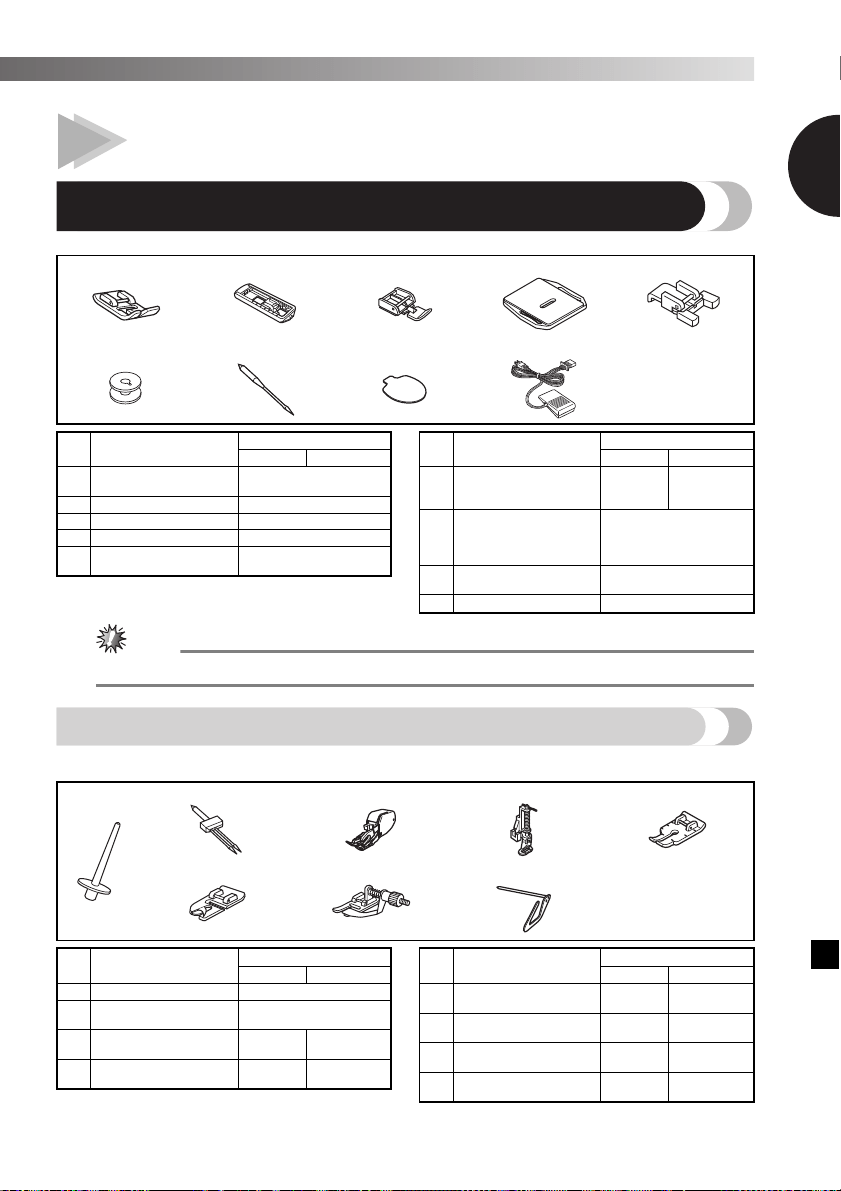
4
——————
———————————————————————————————————————————————————————————————————————
—
——————————————————————————————————————————————————————————————————————————————————————————————————————————————————————————————————————————————————————————————————————————————————————————————————————
1
1CONOZCA SU MÁQUINA DE COSER
ACCESORIOS
Hemos diseñado estos accesorios para ayudarle a realizar fácilmente la mayoría de las tareas de costura.
Nota
●Los accesorios incluidos varían dependiendo del modelo de la máquina.
Accesorios opcionales
Los siguientes accesorios son opcionales y han de comprarse por separado. Dependiendo del modelo que haya
adquirido, el siguiente accesorio puede estar incluido con la máquina.
1. 2. 3. 4. 5.
6. 7. 8. 9.
N.º Nombre de la pieza Código de la pieza
América Otros
1Pie para zig-zag “J”
(en la máquina) XC4901-021
2 Pie para ojales “A” X59369-321
3 Pie para cremalleras “I” XE9369-001
4 Placa de zurcir XC6063-021
5Pie especial para
botones “M” XE2137-001
6Bobina
(Una está colocada en la
máquina) SA156 SFB:
XA5539-151
7Paquete de agujas
(Aguja 90/14)
Paquete de 3 unidades:
XE5328-001
Paquete de 2 unidades:
XE7064-001
8Destornillador de
cabeza ovalada XE5241-001
9 Pedal Consulte la página 5
N.º Nombre de la pieza Código de la pieza
América Otros
1. 2. 3. 4. 5.
6. 7. 8.
N.º Nombre de la pieza Código de la pieza
América Otros
1 Portacarrete adicional XE2241-001
2Aguja gemela
(Aguja 2.0/75) X57521-021
3 Pie móvil SA107 F034N:
XC2165-002
4 Pie para acolchados SA129 F005N:
XC1948-002
5Pie para acolchados de
1/4 pulgadas SA125 F001N:
XC1944-052
6Pie para dobladillos
estrechos SA127 F003N:
XC1945-002
7Pie para puntada
invisible SA134 F018N:
XC1976-052
8 Guía de acolchados SA132 F016N:
XC2215-002
N.º Nombre de la pieza Código de la pieza
América Otros
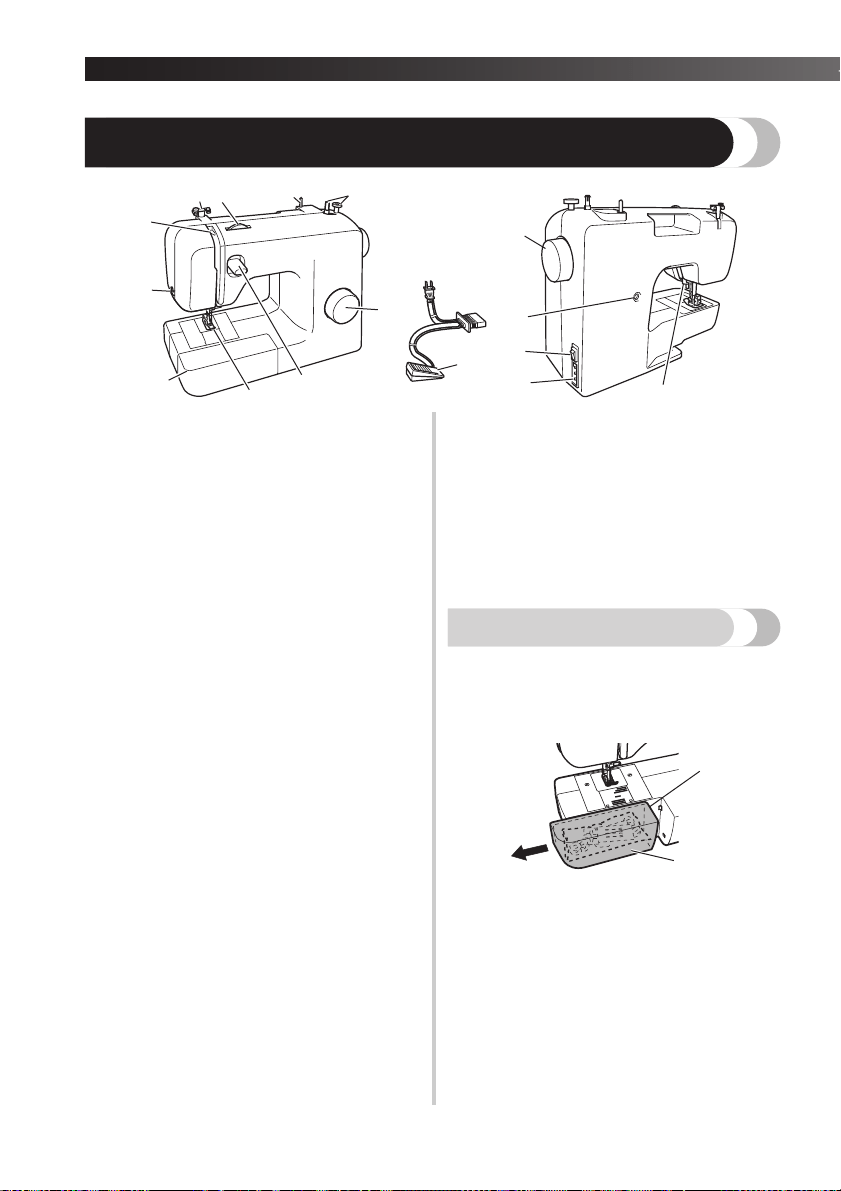
CONOZCA SU MÁQUINA DE COSER ————————————————————————————————————————————————————————————————————————————————————————————————————————————————————————————————
—
—————————————————————————————————————————————————
—————
5
COMPONENTES PRINCIPALES
1Devanadora de bobina (Página 11)
Esta devanadora enrolla el hilo en la bobina para
utilizarlo como hilo inferior.
2Portacarrete (Página 11, 14)
Esta pieza sostiene el carrete de hilo.
3Disco de control de la tensión superior (Página 22)
Este disco controla la tensión del hilo superior.
4Guía del hilo (Página 11, 14)
Se utiliza para enrollar el hilo en la bobina y
enhebrar la máquina a continuación.
5Tirahilo (Página 15)
6Cortador de hilo (Página 19)
Para cortar los hilos, páselos por el cortador de hilo.
7Unidad de cama plana con compartimento para
accesorios (Página 5)
8Pie prensatela (Página 8)
9Pulsador de retroceso (Página 10)
Con este pulsador puede hacer puntadas en reversa.
0Selector de puntadas (Página 9)
Gire el selector en cualquier dirección para elegir el
tipo de puntada que desee.
ARueda
Permite subir y bajar la aguja de forma manual.
BTornillo de ajuste fino de los ojales (Página 28)
CInterruptor de la alimentación y de luz de cosido
(Página 7)
Puede encender y apagar el interruptor de la
alimentación y de luz de cosido.
DConexión o toma eléctrica para el pedal (Página 6)
Enchufe la clavija del pedal y conecte la máquina a
la toma de corriente.
EPalanca del pie prensatela (Página 14)
Permite subir y bajar el pie prensatela.
FPedal (Página 7)
Con este pedal puede controlar la velocidad de
cosido y comenzar o detener la costura.
Pedal: Modelo KD-1902 para área de 110/120 V
Modelo KD-2902 para área de 220/240 V
El código de pieza del pedal varía dependiendo del país
o de la región. Póngase en contacto con su distribuidor
o con el servicio de reparaciones autorizado más
cercano.
Unidad de cama plana
Los accesorios pueden almacenarse en un
compartimento dentro de la unidad de cama plana.
1Tire de la unidad de cama plana hacia la
izquierda para abrirla.
1Unidad de cama plana
2Compartimento para almacenamiento
1
2
3
4
5
6
7
89
0
A
D
C
E
F
B
1
2
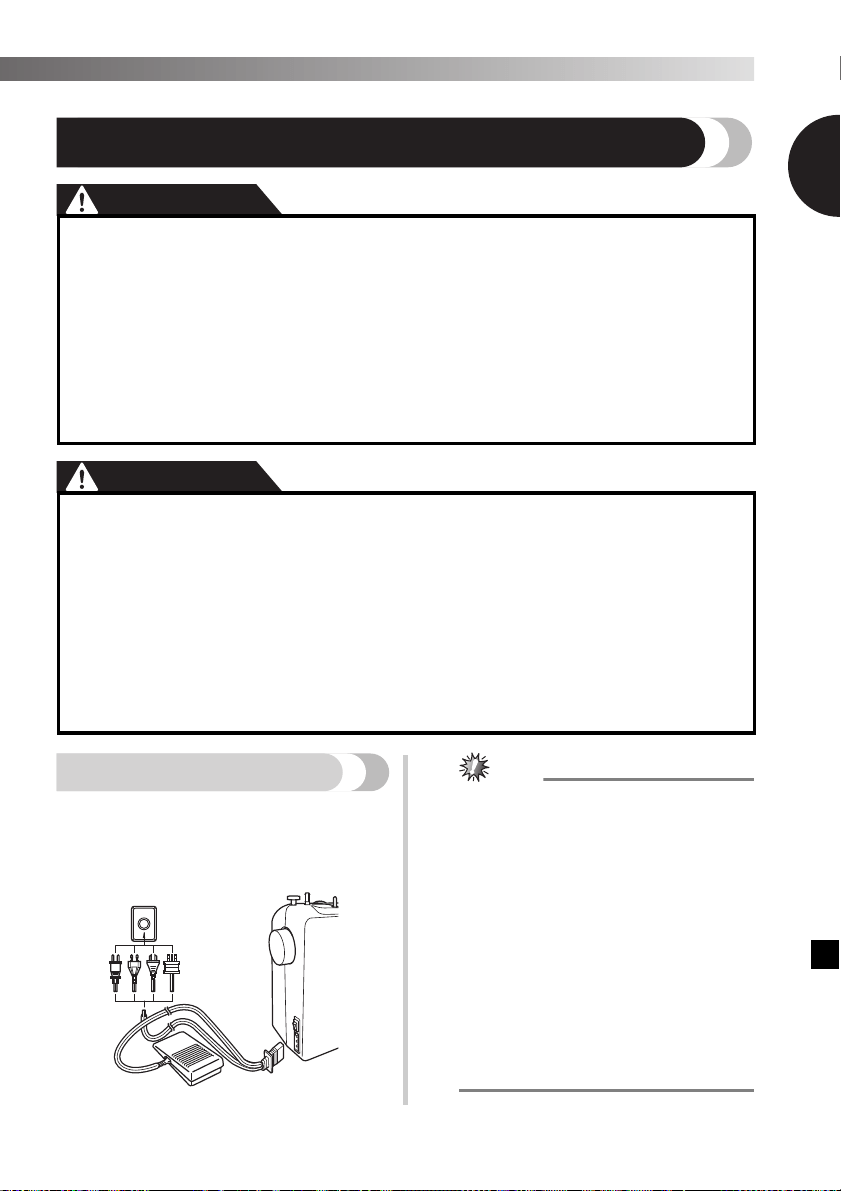
6
——————
———————————————————————————————————————————————————————————————————————
—
——————————————————————————————————————————————————————————————————————————————————————————————————————————————————————————————————————————————————————————————————————————————————————————————————————
1
USO DE LA MÁQUINA DE COSER
ADVERTENCIA
PRECAUCIÓN
Conexión de enchufes
1Enchufe la clavija del pedal a la máquina.
2Conecte el enchufe en una toma de
corriente de la pared.
Nota
●Si se produce un corte de corriente mientras
está utilizándose la máquina de coser,
apague la máquina y desenchufe el cable de
corriente. Al volver a poner en
funcionamiento la máquina de coser, siga el
procedimiento necesario para utilizar la
máquina correctamente.
(Solamente para EE. UU.)
●
Este aparato tiene un enchufe polarizado
(una patilla más ancha que la otra). Para
reducir el riesgo de descarga eléctrica, este
enchufe está diseñado de forma que presenta
una única posición de ajuste a una toma
polarizada. Si el enchufe no se ajusta
perfectamente a la toma, dele la vuelta.
Si el problema persiste, póngase en contacto
con un electricista cualificado para instalar
una toma adecuada. No realice
modificaciones de ningún tipo en el enchufe.
●Utilice solamente electricidad doméstica regular para la alimentación de la máquina. El uso
de otras fuentes de alimentación puede provocar incendios, descargas eléctricas o averías en
la máquina.
●Asegúrese de que las clavijas del cable de corriente están firmemente insertadas en la toma
de corriente y el enchufe hembra en la máquina.
●No inserte el enchufe del cable de corriente en una toma en mal estado.
●Apague la máquina y desenchufe el cable de la corriente en las situaciones siguientes:
• Cuando se aleje de la máquina
• Cuando haya terminado de utilizar la máquina
• Si se produce un fallo de tensión durante el funcionamiento
• Si la máquina no funciona correctamente debido a una mala conexión o a una desconexión
• Durante tormentas eléctricas
●Utilice exclusivamente el cable de corriente que se suministra con esta máquina.
●No utilice cables alargadores ni adaptadores de varias clavijas con otros aparatos
conectados. Podría producirse un incendio o una descarga eléctrica.
●No toque el enchufe con las manos húmedas. Podría recibir una descarga eléctrica.
●Apague siempre la máquina antes de desenchufar el cable de corriente. Sujete siempre el
enchufe para sacarlo de la toma de corriente. Si tira del cable podría dañarlo, o provocar un
incendio o una descarga eléctrica.
●No corte, estropee, cambie, doble, estire, tuerza o enrolle el cable. No coloque objetos
pesados sobre el cable. No exponga el cable al calor. Todo esto podría dañar el cable y
provocar un incendio o una descarga eléctrica. Si el cable o el enchufe está dañado, lleve la
máquina a su distribuidor autorizado para que la repare antes de volver a utilizarla.
●Desenchufe el cable de la corriente si no va a utilizar la máquina durante un largo período de
tiempo. De no hacerlo, podría producirse un incendio.
2
1
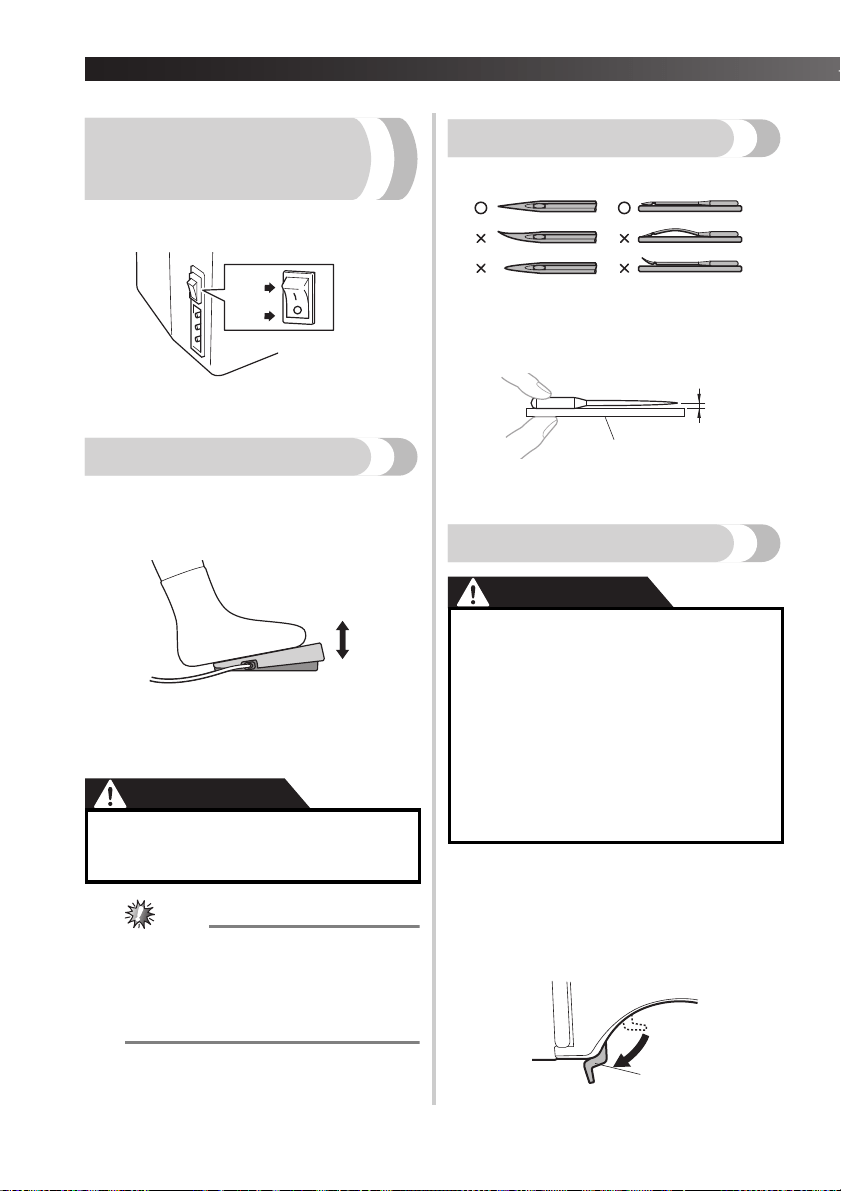
CONOZCA SU MÁQUINA DE COSER ————————————————————————————————————————————————————————————————————————————————————————————————————————————————————————————————
—
—————————————————————————————————————————————————
—————
7
Interruptor de la
alimentación y de luz de
cosido
Este interruptor enciende y apaga la alimentación y la
luz de cosido.
1Encendido (hacia la marca ‘I’)
2Apagado (hacia la marca ‘O’)
Pedal
Cuando pise el pedal lentamente, la máquina
funcionará a baja velocidad. Cuando lo pise más fuerte,
la velocidad de la máquina aumentará. La máquina se
detendrá cuando quite el pie del pedal.
1Más lento
2Más rápido
Debe asegurarse de que no haya nada sobre el pedal
cuando no se esté usando la máquina.
PRECAUCIÓN
Nota
(Solamente para EE. UU.)
●Pedal: Modelo KD-1902
Este pedal puede utilizarse en la máquina
con el código de producto 885-X11.
El código de producto aparece en la placa
de características de la máquina.
Comprobación de la aguja
La aguja de coser debe estar siempre recta y afilada
para una costura óptima.
■Comprobación correcta de la aguja
Coloque la parte plana de la aguja sobre una
superficie lisa. Examine la aguja desde la parte
superior y los laterales. Deseche de manera segura
las agujas dobladas.
1Espacio paralelo
2Superficie nivelada (tapa de la bobina, cristal,
etc.)
Cambio de la aguja
PRECAUCIÓN
1Apague la máquina.
2Suba la aguja girando la rueda hacia usted
(hacia la izquierda), de manera que la
marca de la rueda apunte hacia arriba.
3Baje la palanca del pie prensatela.
1Palanca del pie prensatela
●No deje que se acumulen trozos de tela y
polvo en el pedal. Esto podría provocar
un incendio o una descarga eléctrica.
2
1
1
2
●Apague siempre la máquina antes de
cambiar la aguja. De lo contrario, podría
lesionarse si el pedal se pisa
accidentalmente y la máquina comienza
a coser.
●Utilice solamente agujas de máquina de
coser para uso doméstico. Otras agujas
podrían doblarse o romperse, y causar
lesiones.
●No cosa nunca con una aguja doblada.
Una aguja doblada puede romperse
fácilmente y causar lesiones.
1
2
1
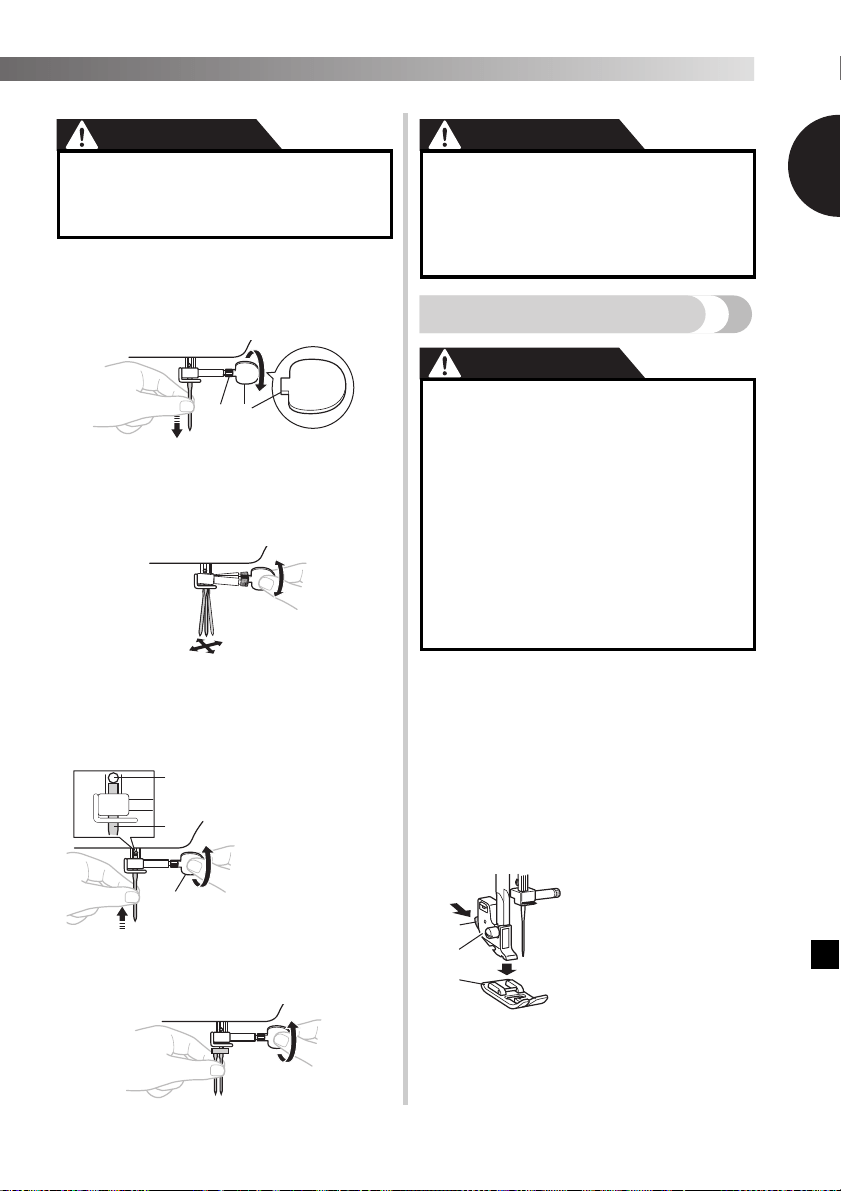
8
——————
———————————————————————————————————————————————————————————————————————
—
——————————————————————————————————————————————————————————————————————————————————————————————————————————————————————————————————————————————————————————————————————————————————————————————————————
1
PRECAUCIÓN
4
Sujete la aguja con la mano izquierda y, a
continuación, utilice un destornillador de
cabeza ovalada para girar el tornillo de la
presilla de la aguja hacia la izquierda y
quitar la aguja.
1Utilice un destornillador de cabeza ovalada
2Tornillo de la presilla de la aguja
• No ejerza una fuerza excesiva para aflojar o
apretar el tornillo de la presilla de la aguja,
pues podría dañar algunas piezas de la
máquina de coser.
5Con la parte plana hacia la parte trasera
de la máquina, inserte la aguja hasta que
toque el tope para agujas. A continuación,
apriete la presilla de la aguja con un
destornillador de cabeza ovalada.
Coloque la aguja gemela siguiendo el mismo
procedimiento.
PRECAUCIÓN
Cambio del pie prensatela
PRECAUCIÓN
Deberá cambiar el pie prensatela según lo que desee
coser y cómo.
1Apague la máquina.
Suba la palanca del pie prensatela.
2Suba la aguja girando la rueda hacia usted
(hacia la izquierda), de manera que la
marca de la rueda apunte hacia arriba.
3Pulse el botón negro situado en la parte
trasera del soporte del pie prensatela para
soltar el pie prensatela.
4Coloque otro pie prensatela en la placa de
la aguja para que la varilla del pie quede
alineada con la ranura de la lengüeta.
●Antes de cambiar la aguja, coloque tela o
papel debajo del pie prensatela para
evitar que la aguja caiga en el orificio de
la placa de la aguja.
1Utilice un
destornillador de
cabeza ovalada
2Tope de la aguja
3Aguja
21
2
3
1
●Asegúrese de insertar la aguja hasta que
llegue al tope y apriete fuertemente el
tornillo de la presilla de la aguja con un
destornillador de cabeza ovalada; de lo
contrario, la aguja podría romperse o la
máquina, averiarse.
●Antes de cambiar el pie prensatela,
apague la máquina. Si deja la máquina
encendida y pisa el pedal, la máquina
comenzará a funcionar y podría
lesionarse.
●Utilice siempre el pie prensatela
correcto para la costura elegida. Si
utiliza un pie prensatela erróneo, la
aguja puede golpearlo y doblarse o
romperse, y podría causar lesiones.
●Utilice exclusivamente el pie prensatela
diseñado para esta máquina. El uso de
otro pie prensatela puede causar lesiones
o accidentes.
1Botón negro
2Soporte del pie
prensatela
3Pie prensatela
1
2
3
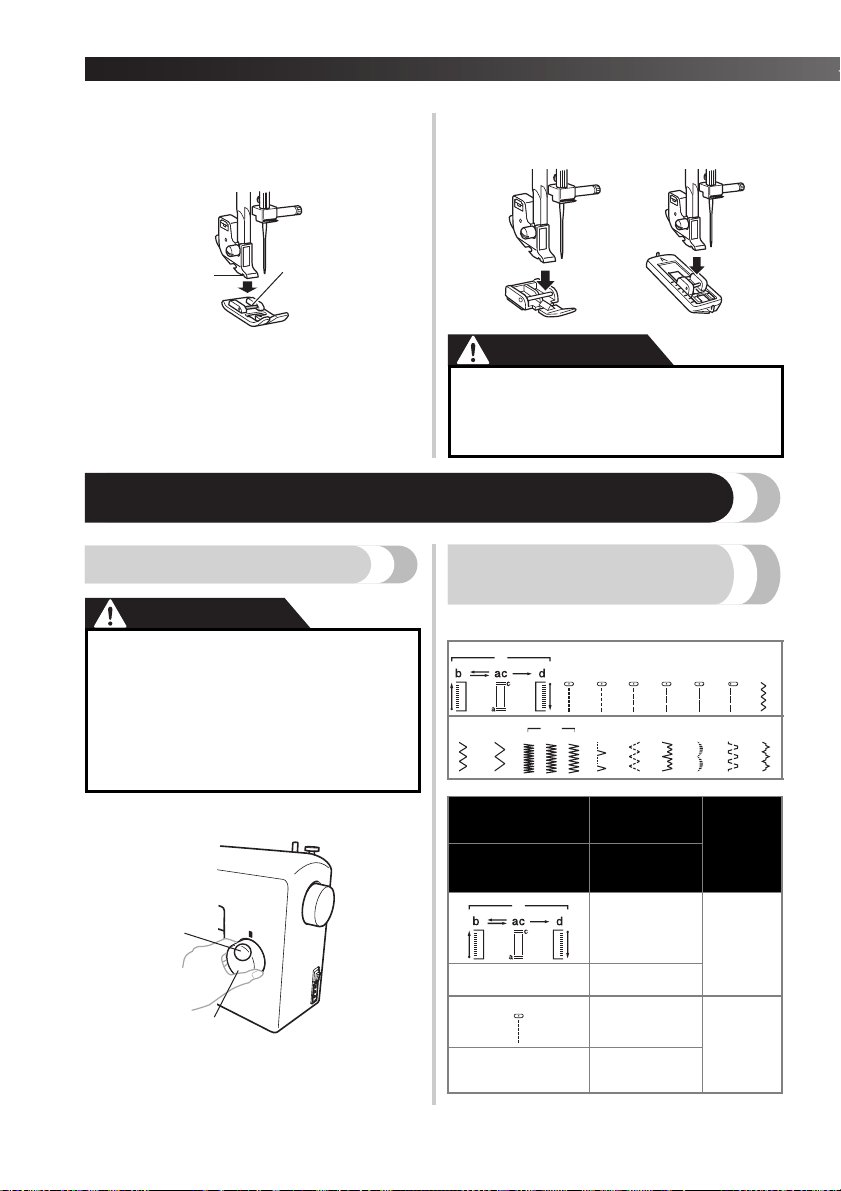
CONOZCA SU MÁQUINA DE COSER ————————————————————————————————————————————————————————————————————————————————————————————————————————————————————————————————
—
—————————————————————————————————————————————————
—————
9
5Baje la palanca del pie prensatela y ajuste
el pie en la lengüeta. Si el pie prensatela
está en el lugar correcto, la varilla deberá
ajustarse perfectamente.
1Lengüeta
2Varilla
■Orientación para la colocación del pie
prensatela
PRECAUCIÓN
CONTROLES
Selector de puntadas
PRECAUCIÓN
Para elegir una puntada, simplemente gire el selector
de puntadas en cualquier dirección.
1Selector de puntadas
2Número de dibujo elegido
Dibujos y nombres de las
puntadas
■17puntadas
12
●Si el pie prensatela no está colocado con
la orientación correcta, la aguja puede
golpearlo y doblarse o romperse, y
podría causar lesiones.
●Cuando utilice el selector de puntadas
para elegir un dibujo, suba la aguja
girando la rueda hacia usted (hacia la
izquierda), de manera que la marca de la
rueda apunte hacia arriba. Si la aguja
está en la posición baja, cuando gire el
selector de puntadas se podrían dañar la
aguja, el pie prensatela o la tela.
2
1
Dibujo Longitud
recomendada
[mm (pulg.)] Página de
referencia
Nombre de la
puntada
Anchura
preajustada
[mm (pulg.)]
0,5 (1/32)
27
OJAL AUTOMÁTICO
DE 4 PASOS 5 (3/16)
1,6 (1/16)
23, 31
PUNTADA RECTA
(Posición de la aguja
en el centro) —
1
2 3 4 5678
910
11
12 13 14 15 16 17
1
2
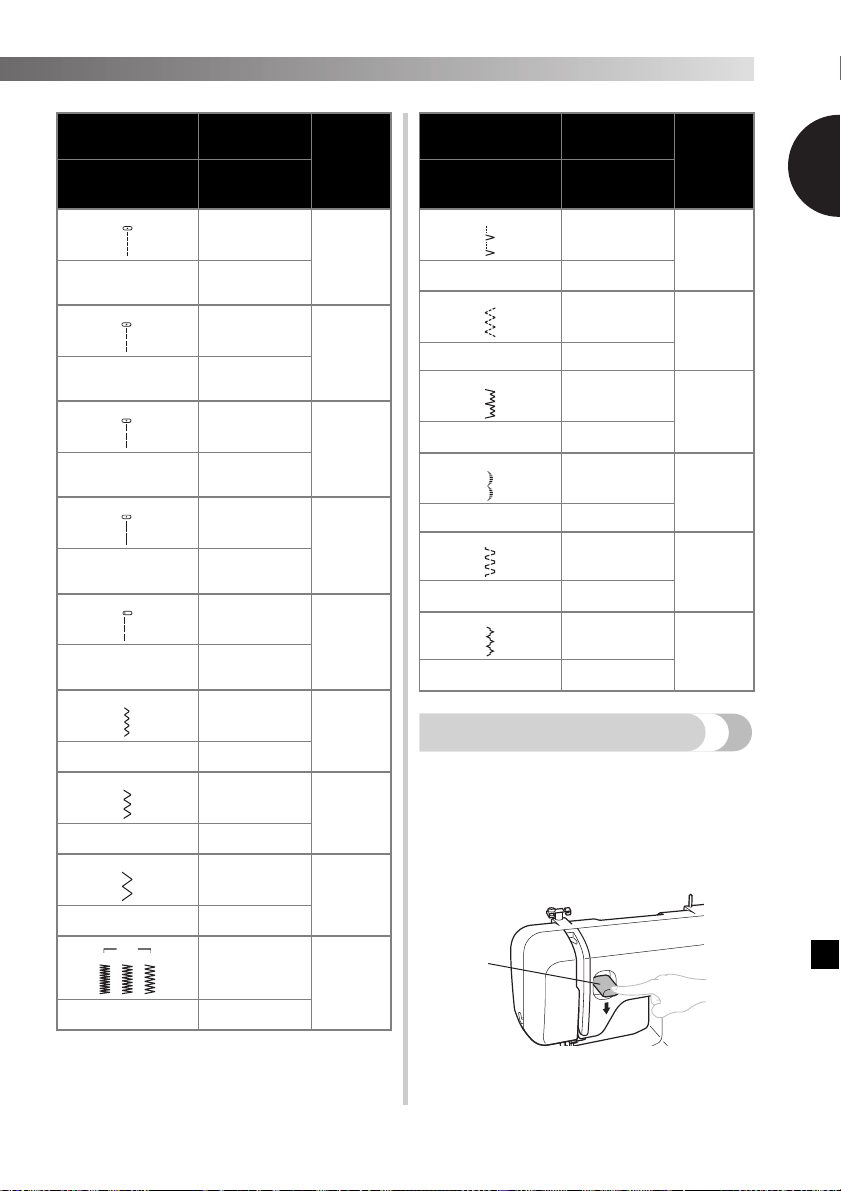
10
——————
———————————————————————————————————————————————————————————————————————
—
——————————————————————————————————————————————————————————————————————————————————————————————————————————————————————————————————————————————————————————————————————————————————————————————————————
1
Pulsador de retroceso
Con el pulsador de retroceso puede hilvanar en reversa y
reforzar costuras.
Para coser en reversa, empuje el pulsador de retroceso
todo lo posible y manténgalo en esa posición mientras
pisa ligeramente el pedal. Para coser hacia delante, suelte
el pulsador de retroceso. La máquina coserá hacia delante.
La longitud de las puntadas en reversa se ha fijado en
2 mm (1/16 de pulgada).
1Pulsador de retroceso
1,8 (1/16)
23, 31
PUNTADA RECTA
(Posición de la aguja
en el centro) —
2 (1/16)
23, 31
PUNTADA RECTA
(Posición de la aguja
en el centro) —
2,5 (3/32) 23, 30, 31,
33, 34, 35,
37
PUNTADA RECTA
(Posición de la aguja
en el centro) —
4 (3/16)
23, 31
PUNTADA RECTA
(Posición de la aguja
en el centro) —
2,5 (3/32) 23, 31, 33,
34
PUNTADA RECTA
(Posición de la aguja
a la izquierda) —
0,7 (1/32) 23, 29, 32,
33, 37
PUNTADA DE
ZIG-ZAG 1,5 (1/16)
1,5 (1/16) 23, 29, 32,
33, 37
PUNTADA DE
ZIG-ZAG 3 (1/8)
2 (1/16) 23, 29, 32,
33, 37
PUNTADA DE
ZIG-ZAG 5 (3/16)
0,5 (1/32) 23, 32, 33
PUNTADA DE
ZIG-ZAG (SATÉN) 5 (3/16)
Dibujo Longitud
recomendada
[mm (pulg.)] Página de
referencia
Nombre de la
puntada
Anchura
preajustada
[mm (pulg.)]
3
4
5
6
7
8
9
10
11
2 (1/16) 25
PUNTADA DE
CONCHA 5 (3/16)
1 (1/16) 25
PUNTADA ELÁSTICA 5 (3/16)
2 (1/16) 24, 37
COSTURA INVISIBLE
ELÁSTICA 5 (3/16)
0,5 (1/32) 26
PUNTADA FESTÓN 5 (3/16)
1,2 (1/16) 26
PUNTADA DE
DOBLE ACCIÓN 5 (3/16)
1,2 (1/16) 26
PUNTADA DE
PUENTE 5 (3/16)
Dibujo Longitud
recomendada
[mm (pulg.)] Página de
referencia
Nombre de la
puntada
Anchura
preajustada
[mm (pulg.)]
12
13
14
15
16
17
1
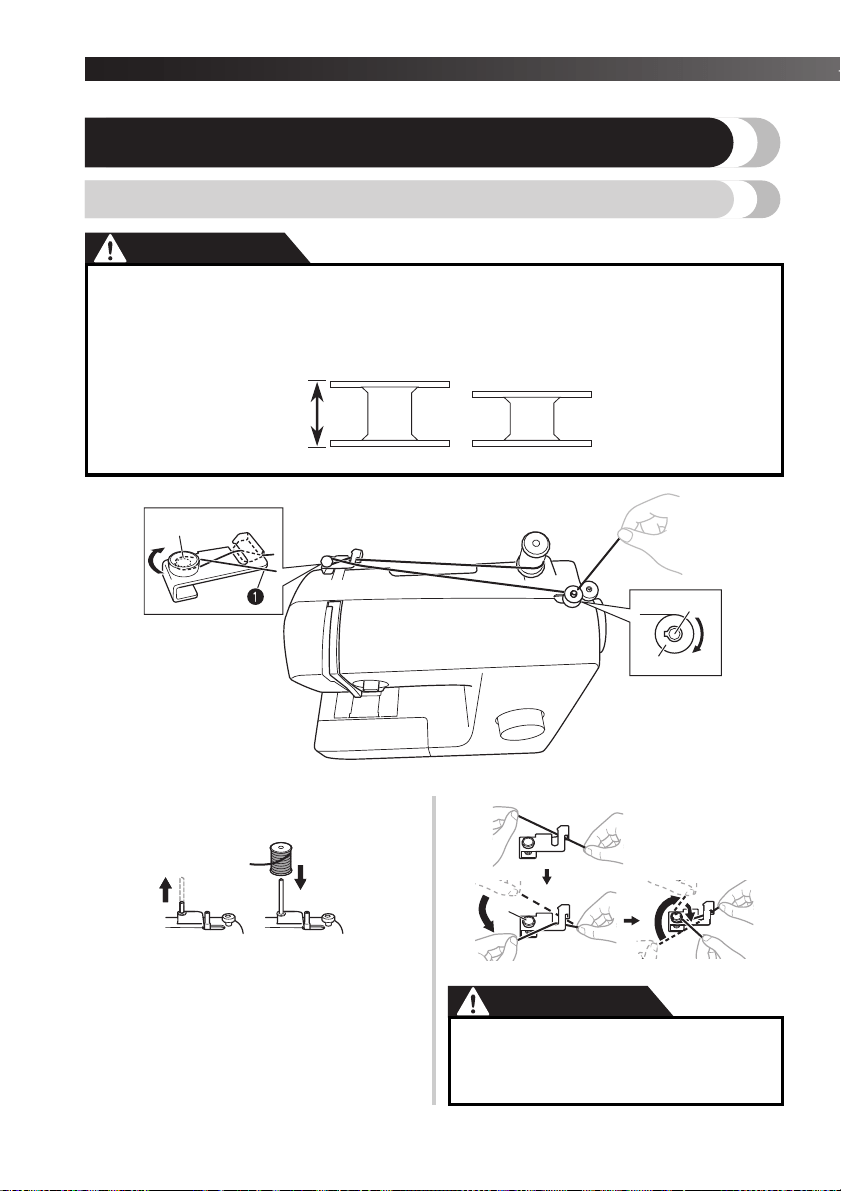
CONOZCA SU MÁQUINA DE COSER ————————————————————————————————————————————————————————————————————————————————————————————————————————————————————————————————
—
—————————————————————————————————————————————————
—————
11
ENHEBRADO DE LA MÁQUINA
Devanado de la bobina
PRECAUCIÓN
1Tire del portacarrete y coloque un carrete
de hilo.
2Mientras sujeta el hilo del carrete con la
mano derecha, pase el hilo hacia usted
por la ranura de la guía del hilo. A
continuación, pase el hilo alrededor del
disco pretensor y tire del hilo hacia
dentro.
1Disco pretensor
PRECAUCIÓN
●Hemos diseñado la bobina que se proporciona con esta máquina. Si utiliza bobinas de otros
modelos, la máquina no funcionará correctamente. Utilice exclusivamente la bobina
suministrada con esta máquina o bobinas del mismo tipo (código de pieza: SA156, SFB:
XA5539-151). El uso de otras bobinas puede dañar la máquina.
Tamaño real
11,5 mm
(7/16 pulg.)
Este modelo Otros modelos
1Disco pretensor 2Eje de la devanadora de bobina 3Bobina
1
3
2
1Tire del hilo
hacia dentro.
●Si el carrete de hilo no está en el lugar
correcto o no está bien colocado, es
posible que el hilo se enganche en el
portacarrete.
1
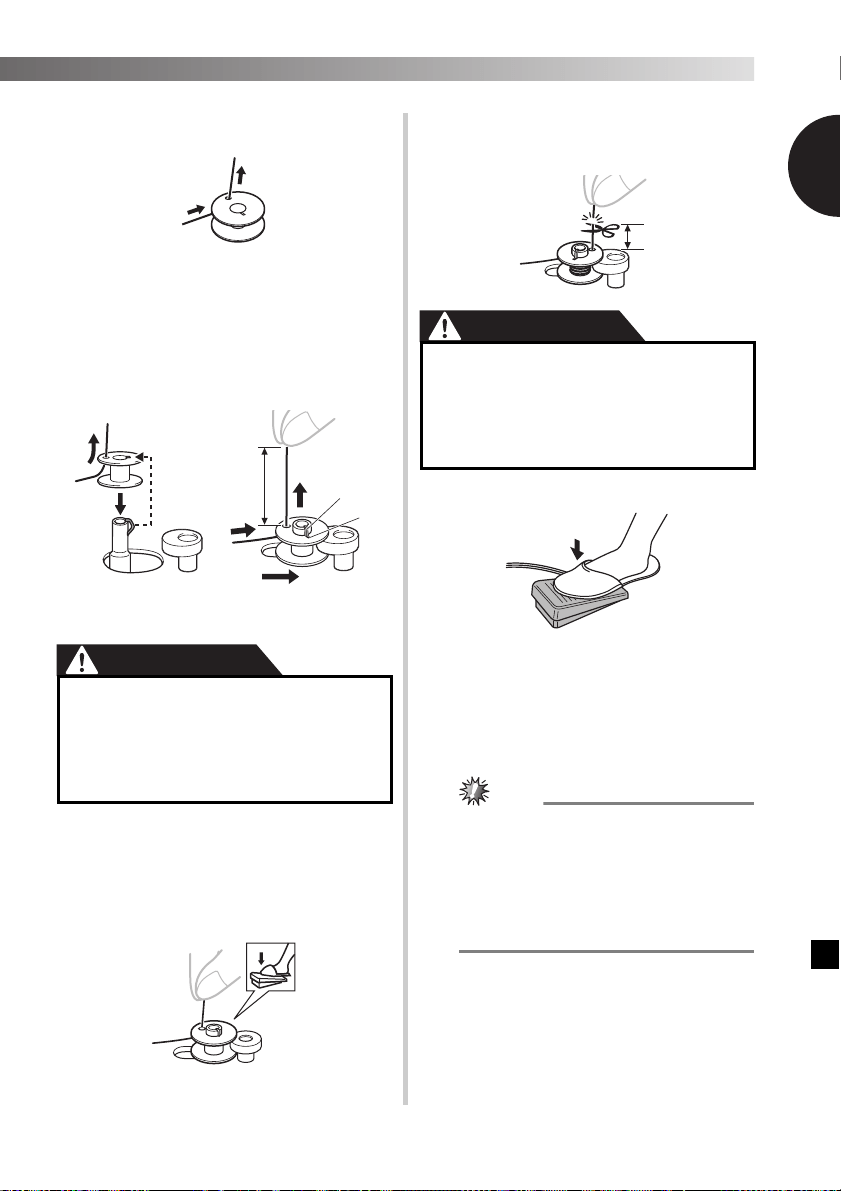
12
——————
———————————————————————————————————————————————————————————————————————
—
——————————————————————————————————————————————————————————————————————————————————————————————————————————————————————————————————————————————————————————————————————————————————————————————————————
1
3Pase el extremo del hilo por el orificio de
la bobina desde el interior de la misma.
4Coloque la bobina en el eje de la
devanadora y desplácelo hacia la derecha.
Gire con la mano la bobina hacia la
derecha hasta que el resorte del eje entre
en la muesca de la bobina.
• Asegúrese de sacar de 7 a 10 cm
(3 – 4 pulgadas) de hilo desde el orificio de la
bobina.
1Resorte del eje
2Muesca
37-10 cm (3 – 4 pulg.)
PRECAUCIÓN
5Encienda la máquina.
6Mientras sujeta el extremo del hilo, pise
suavemente el pedal para enrollar el hilo
alrededor de la bobina unas cuantas
veces. Después pare la máquina.
7Recorte el hilo sobrante de la bobina.
• Deje 1 cm (1/2 pulg.) de hilo desde el orificio
de la bobina.
11 cm (1/2 pulg.)
PRECAUCIÓN
8Pulse el pedal para comenzar.
9Cuando la bobina parece estar llena y
empieza a girar despacio, deje de pisar el
pedal.
0Corte el hilo, mueva el eje de la
devanadora de bobina hacia la izquierda y
retire la bobina.
Nota
●Cuando se pone en marcha la máquina de
coser o se gira la rueda después de enrollar
el hilo en la bobina, la máquina emitirá un
sonido parecido a un chasquido, que no es
indicativo de avería.
●Al desplazar el eje de la devanadora de
bobina hacia la derecha, la varilla de la
aguja no se mueve.
●Tire del hilo para que quede tenso y
sujete el extremo del hilo hacia arriba. Si
el hilo es demasiado corto, no está tenso
o queda en ángulo, pueden producirse
lesiones cuando el hilo se enrolle en la
bobina.
31
2
●Asegúrese de seguir las instrucciones con
precisión. Si no corta el hilo sobrante
totalmente antes de enrollar la bobina,
es posible que cuando quede poco hilo
éste se enganche alrededor de la bobina
y se rompa la aguja.
1
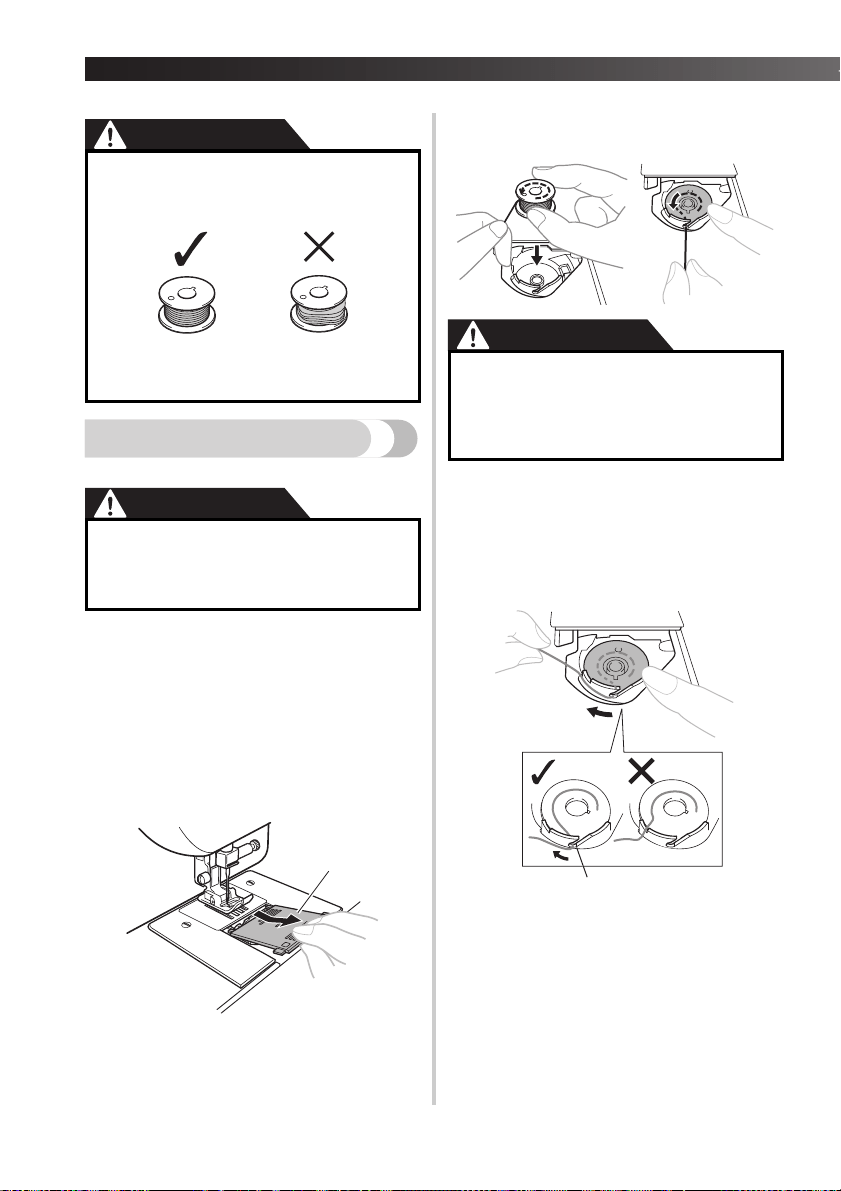
CONOZCA SU MÁQUINA DE COSER ————————————————————————————————————————————————————————————————————————————————————————————————————————————————————————————————
—
—————————————————————————————————————————————————
—————
13
PRECAUCIÓN
Enhebrado del hilo inferior
Coloque la bobina devanada con hilo.
PRECAUCIÓN
1Prepare la bobina devanada
correctamente antes de enhebrar el hilo
inferior.
• Consulte la página 11 si desea información
sobre el devanado de la bobina.
2Suba la aguja girando la rueda hacia usted
(hacia la izquierda) y suba la palanca del
pie prensatela.
3Retire la tapa de la bobina deslizándola y
levántela hacia usted.
1Tapa de la bobina
4Coloque la bobina de modo que el hilo
salga en la dirección que indica la flecha.
PRECAUCIÓN
5Sujete el extremo del hilo, empuje la
bobina hacia abajo con el dedo y pase el
hilo por la ranura, como se indica.
• Si el hilo no se inserta correctamente a través
del resorte de ajuste de tensión de la caja de
la bobina, puede producirse una tensión del
hilo incorrecta.
1Resorte de ajuste de tensión
●Un devanado incorrecto de la bobina
puede disminuir la tensión del hilo y
romper la aguja.
1Enrollado uniforme
2Enrollado deficiente
●Asegúrese de apagar la máquina cuando
vaya a enhebrar. Si pisa el pedal sin
querer y la máquina empieza a coser,
podría lesionarse.
1
2
1
●Asegúrese de colocar la bobina de modo
que el hilo se desenrolle en la dirección
correcta. En caso contrario, la tensión
del hilo podría ser incorrecta o se podría
romper la aguja.
1
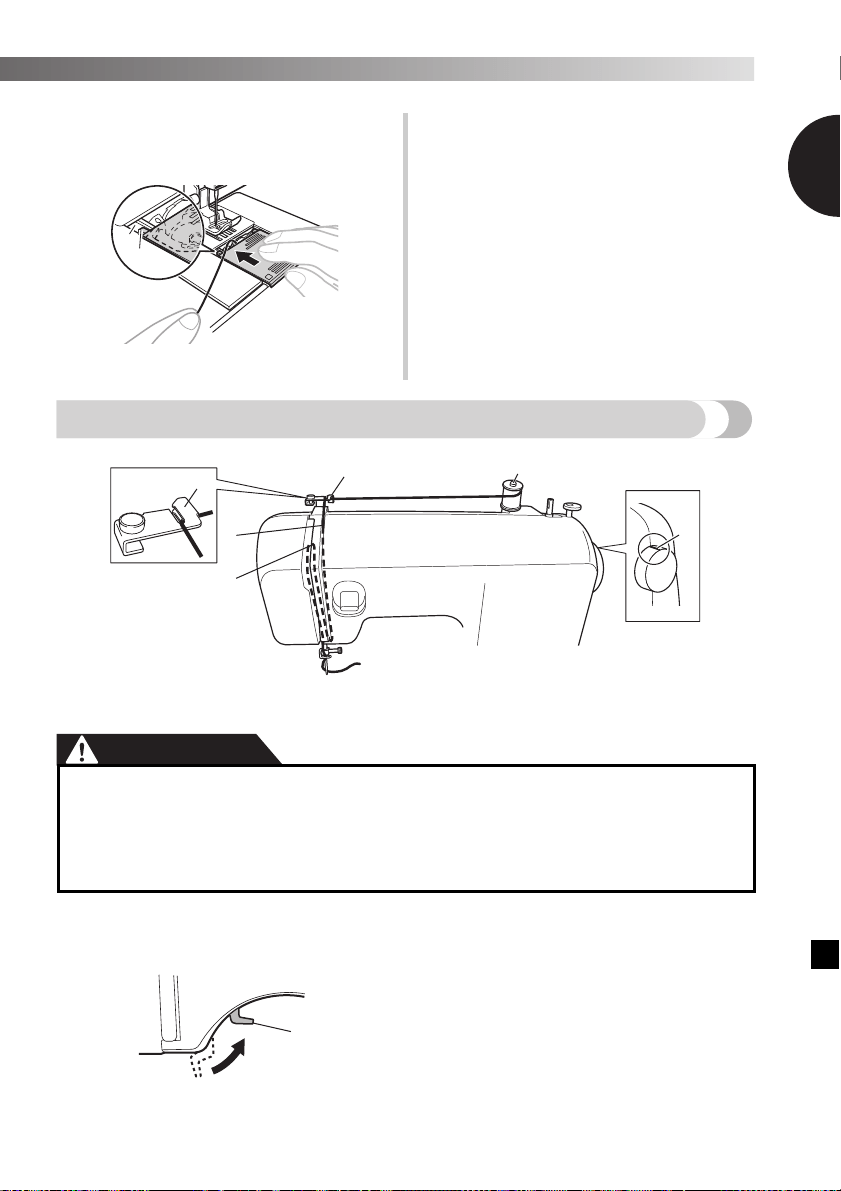
14
——————
———————————————————————————————————————————————————————————————————————
—
——————————————————————————————————————————————————————————————————————————————————————————————————————————————————————————————————————————————————————————————————————————————————————————————————————
1
6Vuelva a colocar la tapa de la bobina.
Coloque la proyección en la ranura de la
sujeción de la pista y empuje para cerrar.
1Ranura
2Proyección
• Asegúrese de que el extremo del hilo sale por
la tapa hacia la parte trasera de la máquina
(como se muestra en la ilustración).
• Tire del hilo inferior antes de comenzar a
coser. Consulte “Procedimiento para tirar del
hilo inferior” en la página 16 después de
enhebrar el hilo superior.
Enhebrado del hilo superior
1Portacarrete
2Guía del hilo (parte trasera)
3Guía del hilo (parte delantera)
4Tirahilo
5Marca de la rueda
PRECAUCIÓN
1Apague la máquina.
2Suba la palanca del pie prensatela.
1Palanca del pie prensatela
1
2
4
3
2
21
5
●Para enhebrar el hilo superior, siga las instrucciones con precisión. Si el enhebrado del hilo
superior no es correcto, el hilo puede engancharse o la aguja puede doblarse o romperse.
●No utilice en ningún caso un hilo del 20 o inferior.
●Utilice la combinación correcta de aguja e hilo. Si desea información sobre la combinación
correcta de agujas e hilos, consulte “COMBINACIONES DE TELA, HILO Y AGUJA” en la
página 17.
1
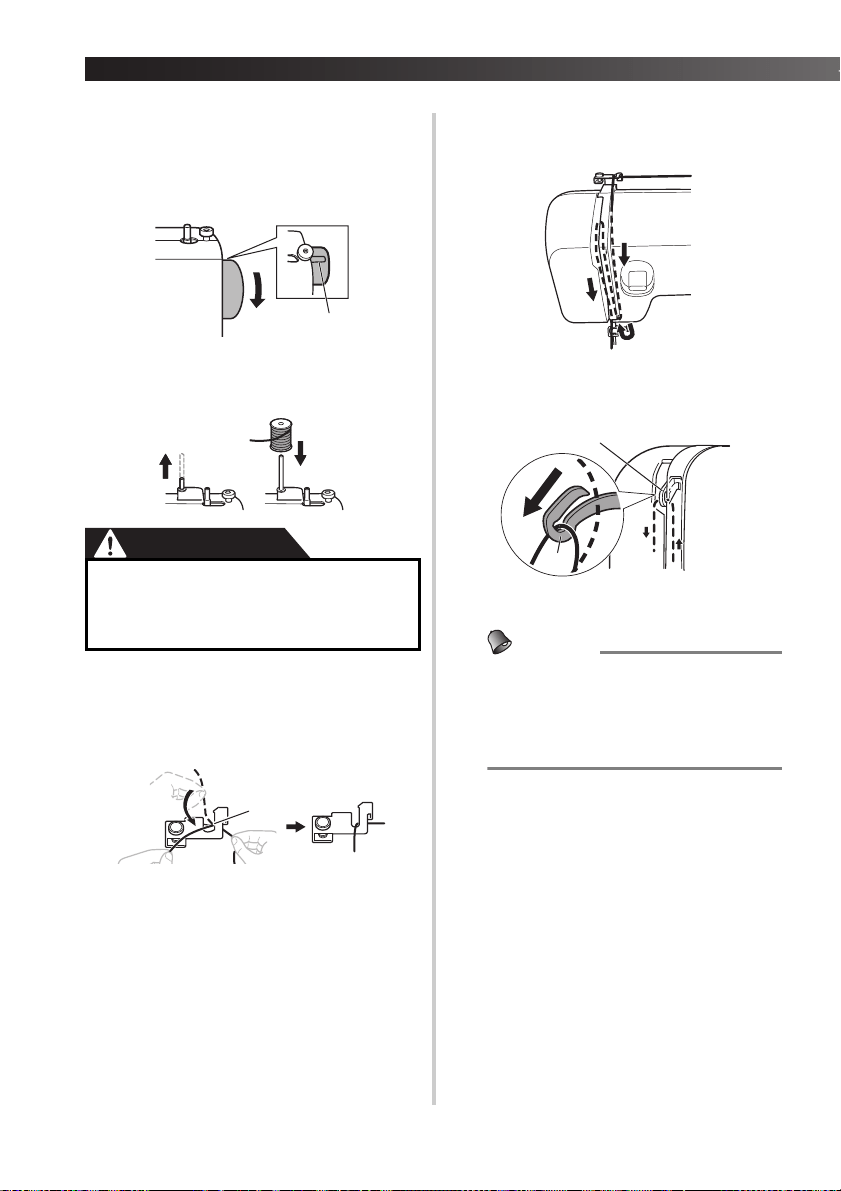
CONOZCA SU MÁQUINA DE COSER ————————————————————————————————————————————————————————————————————————————————————————————————————————————————————————————————
—
—————————————————————————————————————————————————
—————
15
3Suba la aguja girando la rueda hacia usted
(hacia la izquierda), de manera que la
marca de la rueda apunte hacia arriba.
• Si la aguja no está levantada correctamente,
la máquina de coser no podrá enhebrarse.
1Marca de la rueda
4Tire del portacarrete y coloque un carrete
de hilo.
PRECAUCIÓN
5Mientras sujeta el hilo del carrete con la
mano derecha, pase el hilo hacia usted
por la ranura de la guía del hilo.
• Asegúrese de que el resorte de la ranura
engancha el hilo.
1Resorte
6Pase el hilo superior como se indica en la
ilustración siguiente.
7Asegúrese de guiar el hilo de derecha a
izquierda por el tirahilo, como se muestra
en la ilustración siguiente.
1Tirahilo
Recuerde
●Si el tirahilo está en posición baja, el hilo
superior no se puede enrollar a su
alrededor. Asegúrese de subir la aguja
girando la rueda hacia usted (hacia la
izquierda), de manera que la marca de la
rueda apunte hacia arriba.
●Si el carrete de hilo no está en el lugar
correcto o no está bien colocado, es
posible que el hilo se enganche en el
portacarrete y rompa la aguja.
1
1
1
1
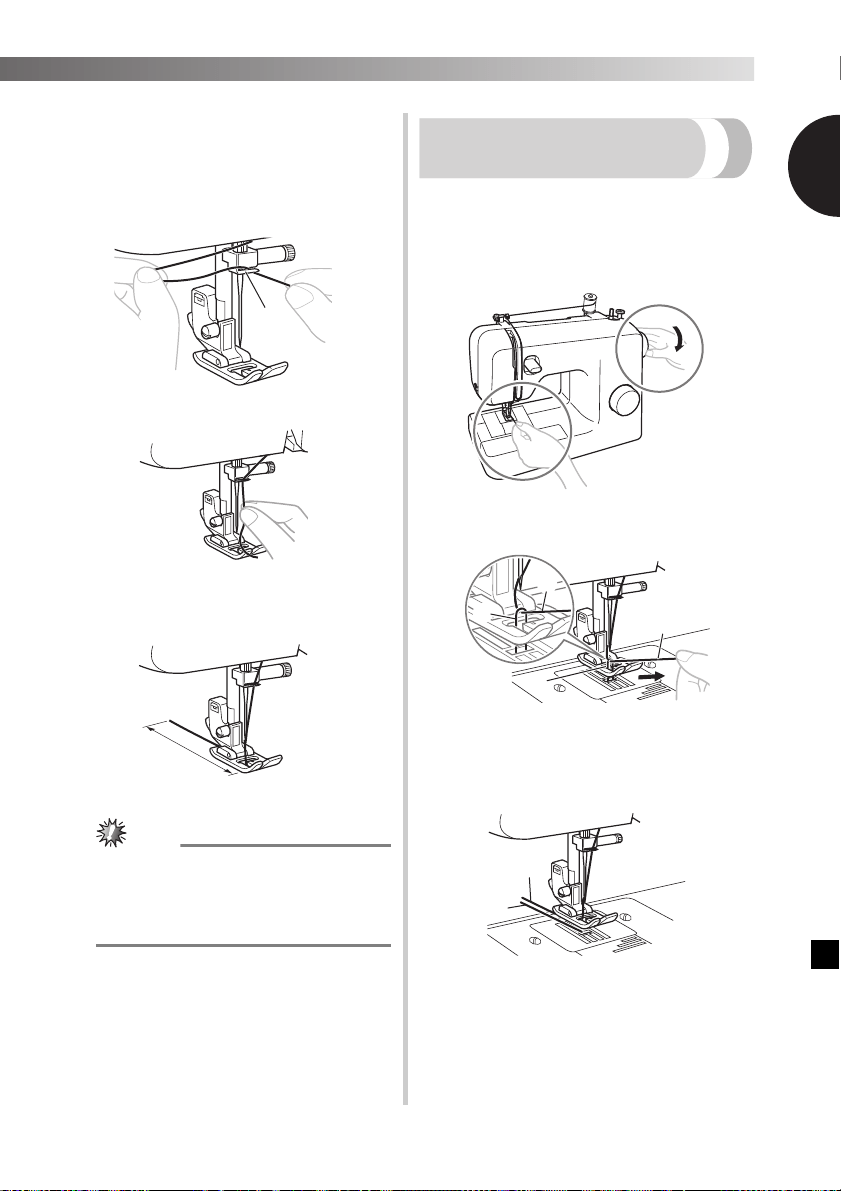
16
——————
———————————————————————————————————————————————————————————————————————
—
——————————————————————————————————————————————————————————————————————————————————————————————————————————————————————————————————————————————————————————————————————————————————————————————————————
1
8Coloque el hilo detrás de la guía por
encima de la aguja.
• Para pasar fácilmente el hilo por detrás de la
guía del hilo de la varilla de la aguja, sujételo
con la mano izquierda y hágalo avanzar con
la derecha.
1Guía del hilo de la varilla de la aguja
9Enhebre la aguja desde la parte delantera
a la trasera, dejando un trocito de hilo de
unos 5 cm (2 pulg.).
15 cm (2 pulg.)
Nota
●Asegúrese de levantar la palanca del pie
prensatela y el tirahilo antes de pasar el hilo
superior.
●Si no pasa el hilo de manera correcta,
pueden producirse problemas al coser.
Procedimiento para tirar
del hilo inferior
1Mientras sujeta ligeramente un extremo
del hilo superior, gire lentamente la rueda
a mano hacia usted (hacia la izquierda)
para bajar y, a continuación, subir la
aguja.
2Saque el hilo superior para tirar del
inferior.
1Hilo superior
2Hilo inferior
3Tire de los dos hilos unos 10 cm (4 pulg.)
y colóquelos en la parte trasera de la
máquina, debajo del pie prensatela.
1Hilo superior
2Hilo inferior
1
1
1
1
2
2
1
2
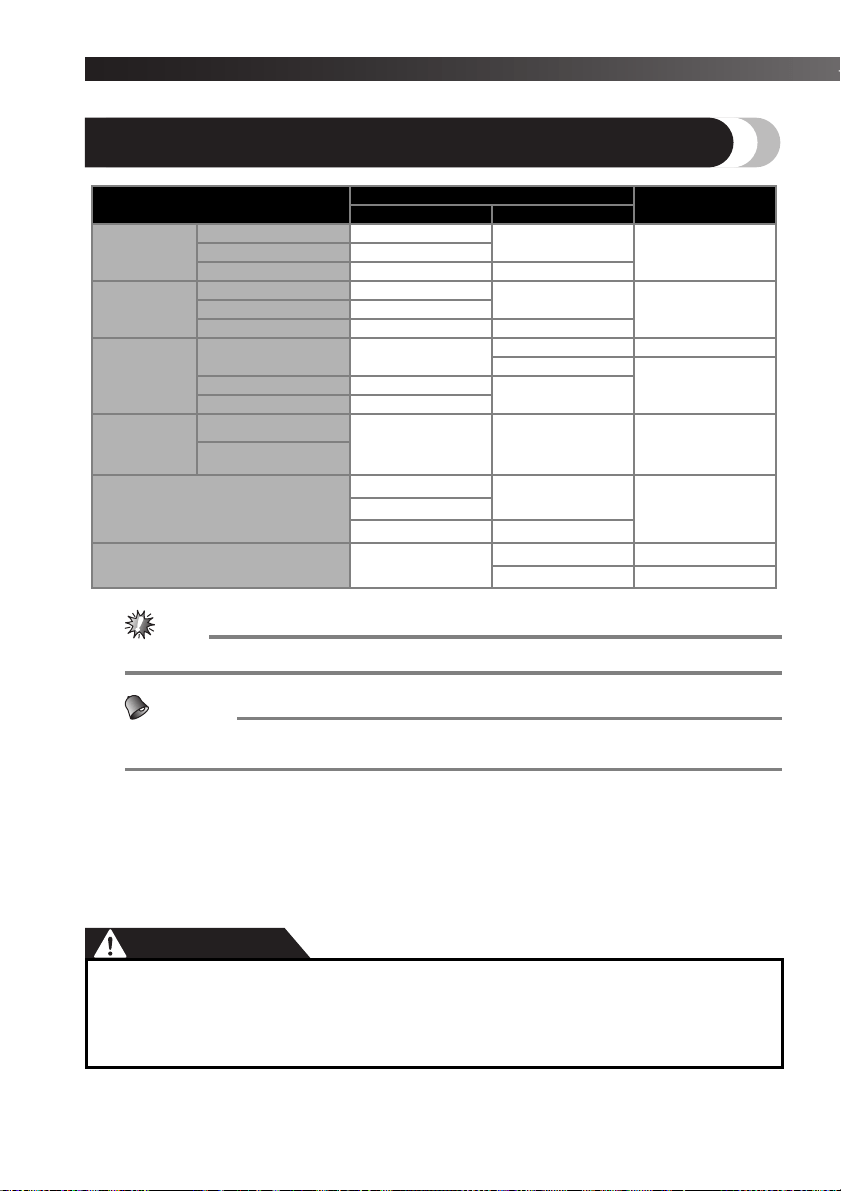
CONOZCA SU MÁQUINA DE COSER ————————————————————————————————————————————————————————————————————————————————————————————————————————————————————————————————
—
—————————————————————————————————————————————————
—————
17
COMBINACIONES DE TELA, HILO Y AGUJA
Nota
●No utilice en ningún caso un hilo del 20 o inferior. Puede producir averías.
Recuerde
●Cuanto más pequeño sea el número de hilo, más grueso será el hilo. Cuanto más grande sea el número
de aguja, más gruesa será la aguja.
■Aguja de punta redonda
Utilice la aguja de punta redonda para coser en telas elásticas o telas en las que es fácil que las puntadas queden
sueltas.
La aguja recomendada de fábrica es “HG-4BR” (Organ). Puede utilizar en su lugar agujas Schmetz “JERSEY BALL
POINT” 130/705H SUK 90/14.
■Hilo de nylon transparente
Utilice una aguja entre 90/14 y 100/16, con independencia de la tela o del hilo.
PRECAUCIÓN
Tipo de tela/Aplicación Hilo Medida de la aguja
Tipo Medida
Telas medianas
Paño Hilo de algodón 60–90 75/11–90/14
Tafetán Hilo sintético
Franela, gabardina Hilo de seda 50
Telas finas
Lino Hilo de algodón 60–90 65/9–75/11
Punto Georgette Hilo sintético
Challis, satén Hilo de seda 50
Telas gruesas
Tejano Hilo de algodón 30 100/16
50
90/14–100/16
Pana Hilo sintético 50–60
Tweed Hilo de seda
Telas elásticas Tejido de punto Hilo para punto
calado 50–60
Aguja de punta
redonda
75/11–90/14
(color dorado)
Punto de lana
Telas que se deshilachan con facilidad
Hilo de algodón 50–90 65/9–90/14Hilo sintético
Hilo de seda 50
Para costuras sobrepuestas Hilo sintético
Hilo de seda
30 100/16
50–60 75/11–90/14
●Asegúrese de seguir las combinaciones de aguja, hilo y tela que se indican en la tabla.
El uso de una combinación incorrecta (por ejemplo, una aguja pequeña (entre 65/9 y 75/11)
para una tela pesada como el tejano), podría romper o doblar la aguja. Una combinación
incorrecta también podría causar que
la costura fuera irregular, la tela se frunciera o la
máquina dejara puntadas sueltas.
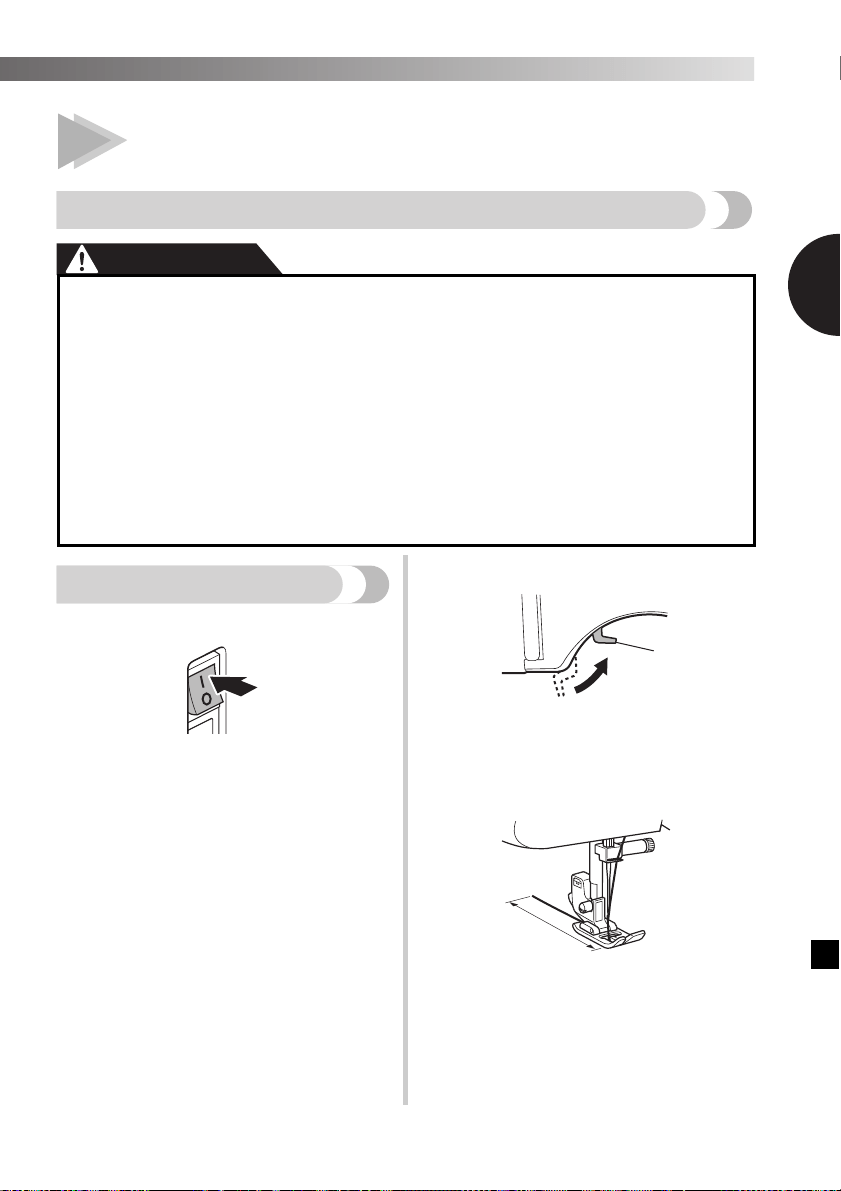
18
——————
—————————————————————————————————————————————————————————————————————
—
————————————————————————————————————————————————————————————————————————————————————————————————————————————————————————————————————————————————————————————————————————————————————————————————————————
2
2FUNCIONES DE COSTURA BÁSICAS
Lea lo siguiente antes de utilizar la máquina
PRECAUCIÓN
Comienzo de la costura
1Encienda la máquina.
2Suba la aguja girando la rueda hacia usted
(en sentido contrario a las manecillas del
reloj), de manera que la marca de la rueda
apunte hacia arriba.
3Gire el selector de puntadas para
seleccionar una puntada (consulte la
página 9).
4Cambie el pie prensatela (consulte la
página 8).
5Suba la palanca del pie prensatela.
1Palanca del pie prensatela
6Coloque la tela debajo del pie prensatela,
pase el hilo debajo del pie prensatela y
saque unos 5 cm (2 pulg.) del hilo hacia la
parte trasera de la máquina.
15 cm (2 pulg.)
●Para evitar lesiones, observe con atención la aguja mientras utiliza la máquina. Mantenga las
manos alejadas de las piezas en movimiento.
●No estire ni empuje la tela durante la costura, pues la aguja podría dañarse y producir
lesiones.
●No utilice agujas dobladas o rotas, ya que podría lesionarse.
●Tenga cuidado de que la aguja no golpee los alfileres de hilvanado ni otros objetos durante la
costura. La aguja podría romperse y usted podría lesionarse.
●Utilice siempre el pie prensatela adecuado. Si utiliza un pie prensatela erróneo, la aguja
puede golpearlo y doblarse o romperse, y podría causar lesiones.
●Al girar la rueda a mano, gírela siempre hacia usted (en sentido contrario a las manecillas del
reloj). Si la gira en sentido contrario, el hilo podría engancharse y causar daños en la aguja o
la tecla, y podría lesionarse.
●No comience a coser sin colocar la tela bajo el pie prensatela; de lo contrario, el pie
prensatela podría dañarse.
1
1
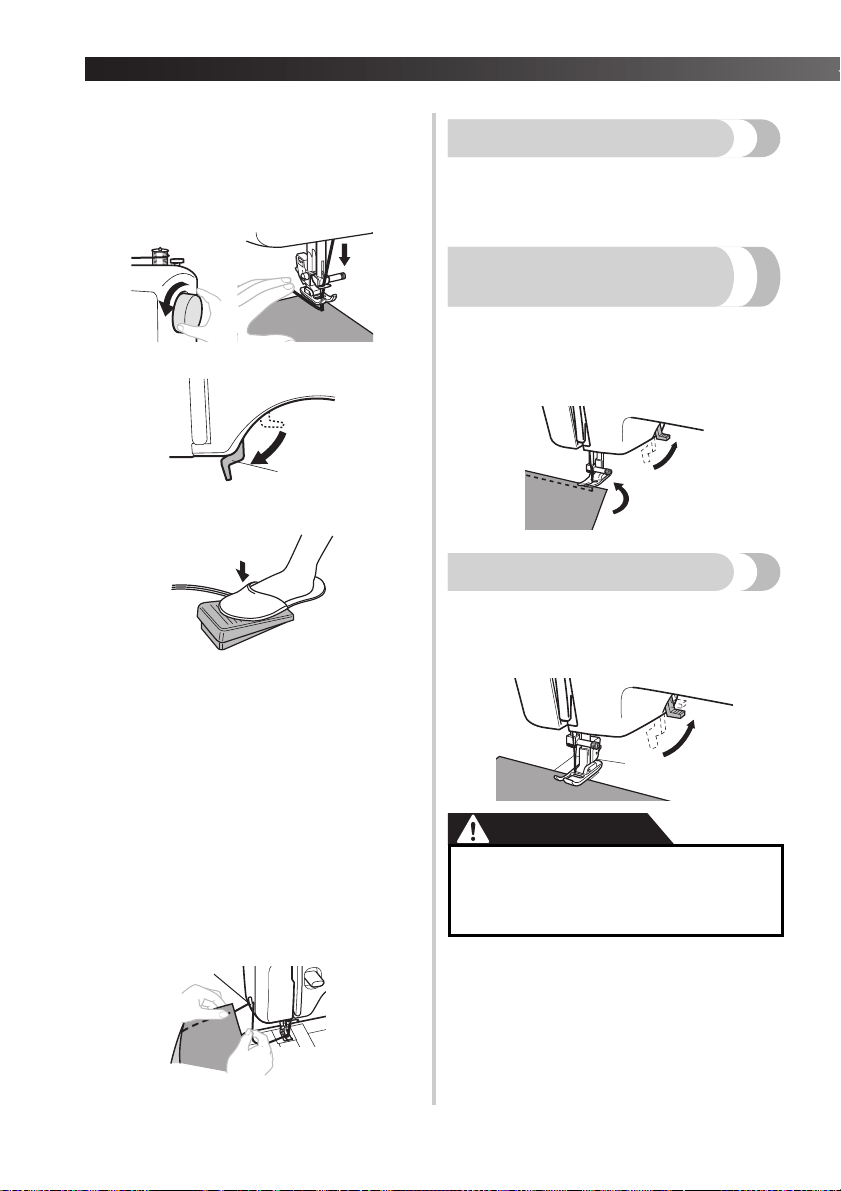
FUNCIONES DE COSTURA BÁSICAS ————————————————————————————————————————————————————————————————————————————————————————————————————————————————————————————————
—
————————————————————————————————————————————————————
—————
19
7Mientras sujeta el extremo del hilo y la
tela con la mano izquierda, gire la rueda
hacia usted (en sentido contrario a las
manecillas del reloj) con la mano derecha
para bajar la aguja al punto de inicio de la
costura.
8Baje la palanca del pie prensatela.
1Palanca del pie prensatela
9Pise lentamente el pedal.
XLa máquina comienza a coser.
0Retire el pie del pedal.
XLa máquina deja de coser.
• Con el pulsador de retroceso puede hacer
costura en reversa para hilvanar en reversa y
reforzar costuras. Consulte “Pulsador de
retroceso” en la página 10 para obtener más
información.
aSuba la aguja girando la rueda hacia usted
(hacia la izquierda).
bSuba la palanca del pie prensatela.
cTire de la tela hacia el lado izquierdo de la
máquina y, a continuación, pase los hilos
por el cortador de hilo para cortarlos.
.
1Cortador de hilo
Costura de prueba
Debe coserse una prueba en un retal. Utilice una tela y
un hilo que sean del mismo tipo que vaya a utilizar
para su labor y compruebe la tensión del hilo y la
longitud y anchura de la puntada.
Cambio de la dirección de
costura
Pare la máquina con la aguja en la tela en el punto en
el que desee cambiar la dirección de costura y, a
continuación, suba la palanca del pie prensatela.
Utilizando la aguja como eje, gire la tela, baje la
palanca del pie prensatela y continúe cosiendo.
Costura en telas gruesas
■Si la tela no avanza debajo del pie prensatela
Si la tela no avanza bien debajo del pie prensatela,
levante todavía más la palanca del pie prensatela
hasta colocarlo en la posición más elevada.
PRECAUCIÓN
1
1
●Si se cose en tela de más de 6 mm
(15/64 pulg.) o si la tela se empuja con
demasiada fuerza, la aguja podría
romperse o doblarse.
1
2
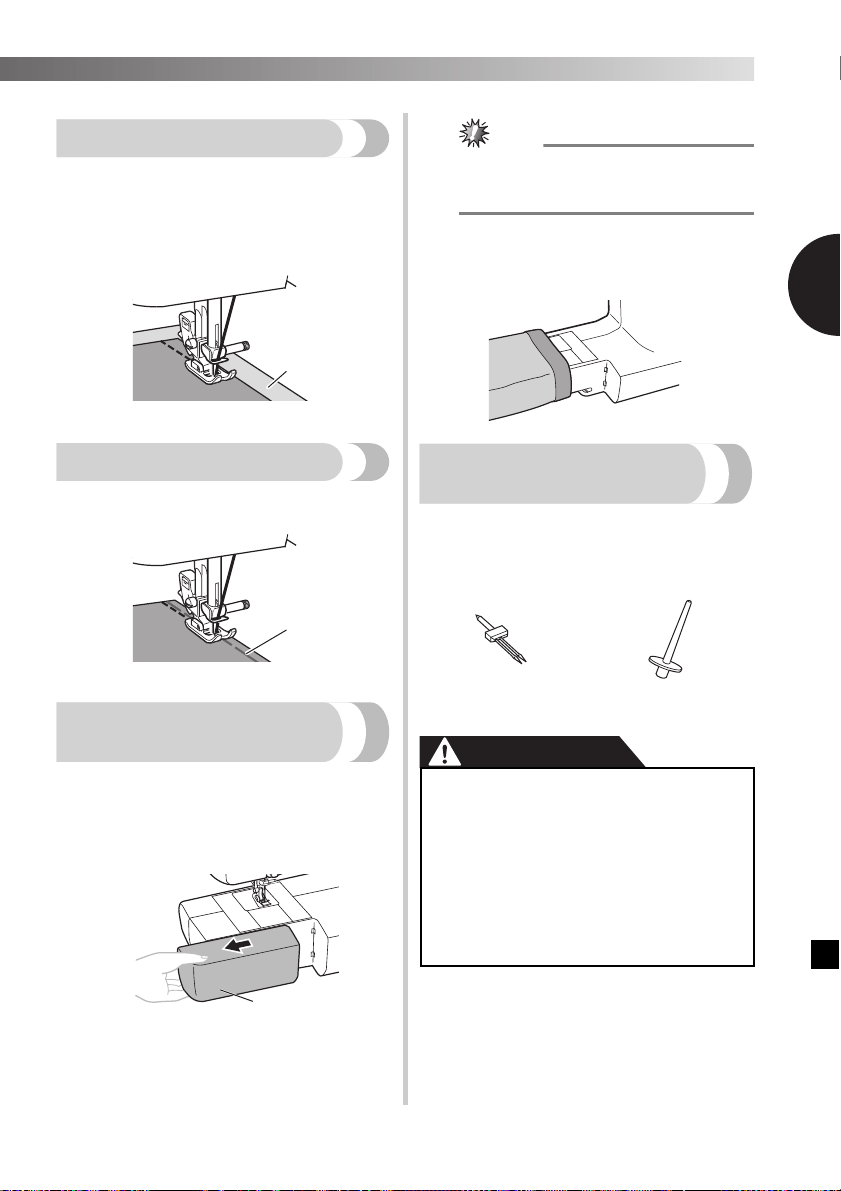
20
——————
—————————————————————————————————————————————————————————————————————
—
————————————————————————————————————————————————————————————————————————————————————————————————————————————————————————————————————————————————————————————————————————————————————————————————————————
2
Costura en telas finas
Al coser en telas finas, las puntadas podrían no quedar
alineadas o la tela podría no avanzar correctamente. En
ese caso, coloque debajo de la tela un papel fino o un
material estabilizador y cósalo junto con la tela.
Cuando haya terminado de coser, quite el papel
sobrante.
1Material estabilizador o papel
Costura en telas elásticas
En primer lugar, hilvane juntas las piezas de tela y, a
continuación, cosa sin estirar la tela.
1Hilvanado
Costura de piezas
cilíndricas
Si se extrae la unidad de cama plana resultará más
sencillo coser piezas cilíndricas, como los puños y las
perneras del pantalón, o zonas de difícil alcance.
1Deslice la unidad de cama plana hacia la
izquierda para abrirla.
1Unidad de cama plana
XCon la unidad de cama plana quitada, es
posible la costura de brazo libre.
Nota
●Cuando termine con la costura de brazo
libre, vuelva a colocar la unidad de cama
plana en su posición original.
2Deslice la parte que desee coser sobre el
brazo y, a continuación, cosa desde la
parte superior.
Costura con aguja gemela
(Opción)
La máquina está diseñada para que pueda coser con
esta aguja y dos hilos superiores. Puede utilizar hilo de
un mismo color o de diferentes colores para realizar
puntadas decorativas.
PRECAUCIÓN
■Colocación de la aguja gemela
Coloque la aguja gemela del mismo modo que las
agujas sencillas (consulte las páginas 7–8). La parte
plana de la aguja debe estar colocada hacia la parte
trasera, y la parte redondeada hacia usted.
1
1
1
1Aguja gemela 2Portacarrete
adicional
●Utilice exclusivamente las agujas
gemelas diseñadas para esta máquina
(código de pieza: X57521-021:2.0/75
con una anchura de 2 mm). Otras agujas
podrían romperse y causar averías en la
máquina.
●Compruebe que la aguja gemela no
golpea el pie prensatela.
●No cosa con agujas dobladas. Podrían
romperse y causar lesiones.
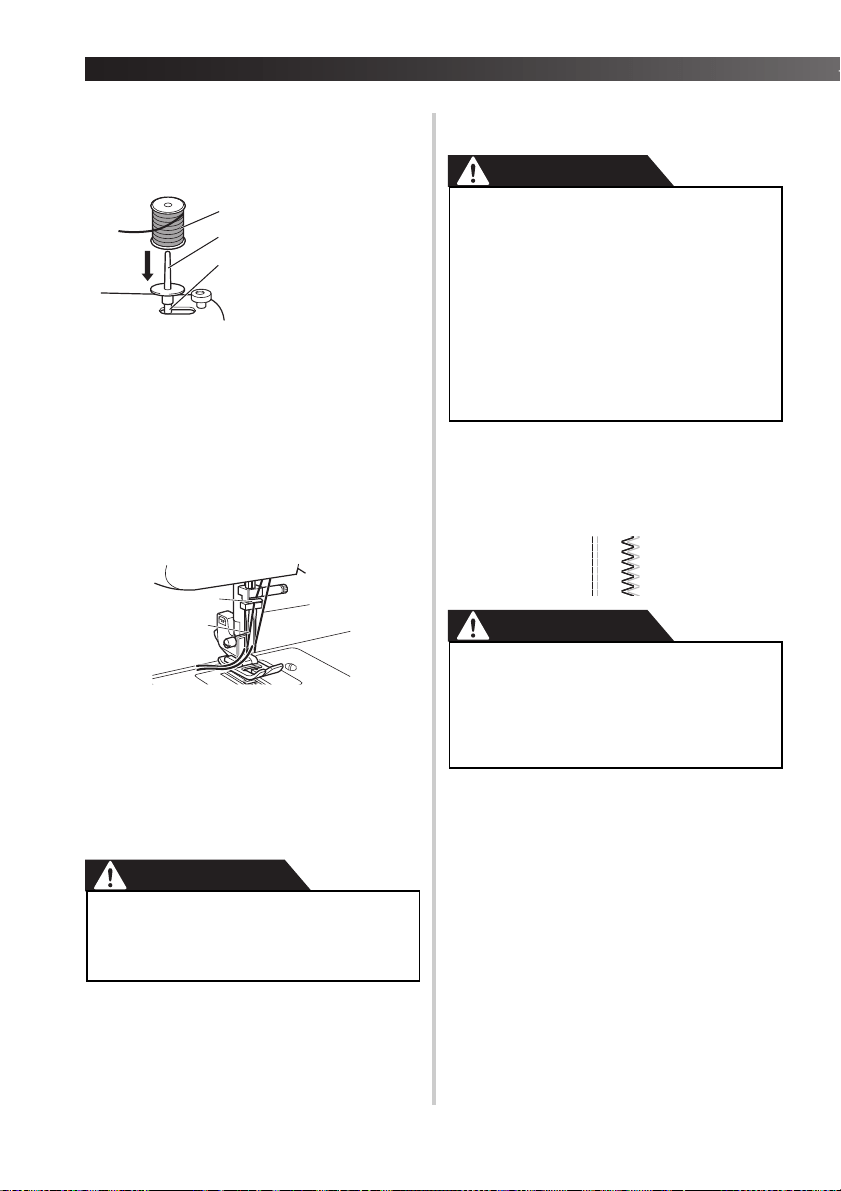
FUNCIONES DE COSTURA BÁSICAS ————————————————————————————————————————————————————————————————————————————————————————————————————————————————————————————————
—
————————————————————————————————————————————————————
—————
21
■Colocación del portacarrete adicional
Introduzca el portacarrete adicional en el extremo
del eje de la devanadora. Coloque el segundo
carrete de hilo en el portacarrete adicional.
■Enhebrado de agujas gemelas
Deberá enhebrar cada aguja por separado.
1Enhebre la aguja izquierda.
Siga las mismas instrucciones que para el
enhebrado de una aguja sencilla (consulte la
página 14).
2Enhebre la aguja derecha.
Enhebre la aguja derecha igual que la izquierda
utilizando el hilo del carrete del portacarrete
adicional, pero sin pasar el hilo por la guía
encima de la aguja; páselo antes a través del ojo
de la aguja derecha.
1El hilo de la aguja izquierda pasa a través de la
guía del hilo de la varilla de la aguja
2El hilo de la aguja derecha pasa delante de la
guía del hilo de la varilla de la aguja
3Guía del hilo de la varilla de la aguja
3Coloque el pie para zig-zag “J”.
Si desea información sobre cómo cambiar el
pie prensatela, consulte “Cambio del pie
prensatela” en la página 8.
PRECAUCIÓN
4Encienda la máquina.
5Seleccione una puntada.
PRECAUCIÓN
6Comience a coser.
Si desea información sobre cómo comenzar a
coser, consulte “Comienzo de la costura” en
la página 18.
XSe cosen dos líneas de puntadas paralelas.
PRECAUCIÓN
1Eje de la devanadora de
bobina
2Portacarrete adicional
3Carrete de hilo
●Al utilizar la aguja gemela, asegúrese de
colocar el pie para zig-zag “J” ya que, de
lo contrario, la aguja puede romperse o
la máquina averiarse.
1
2
3
1
32
●Después de seleccionar una puntada,
gire lentamente la rueda hacia usted
(hacia la izquierda) y compruebe que la
aguja no toca el pie prensatela. Si la
aguja golpea el pie prensatela, la aguja
podría doblarse o romperse.
●La aguja gemela solo debe utilizarse con
la puntada recta (posición de la aguja en
el centro) y la puntada de zig-zag
(1,5 mm (1/16 de pulgada) de anchura).
No utilice la aguja gemela con ninguna
otra puntada.
●Al cambiar la dirección de costura,
asegúrese de levantar la aguja de la tela
y, a continuación, suba la palanca del pie
prensatela y gire la tela. De lo contrario,
la aguja podría romperse o la máquina
averiarse.
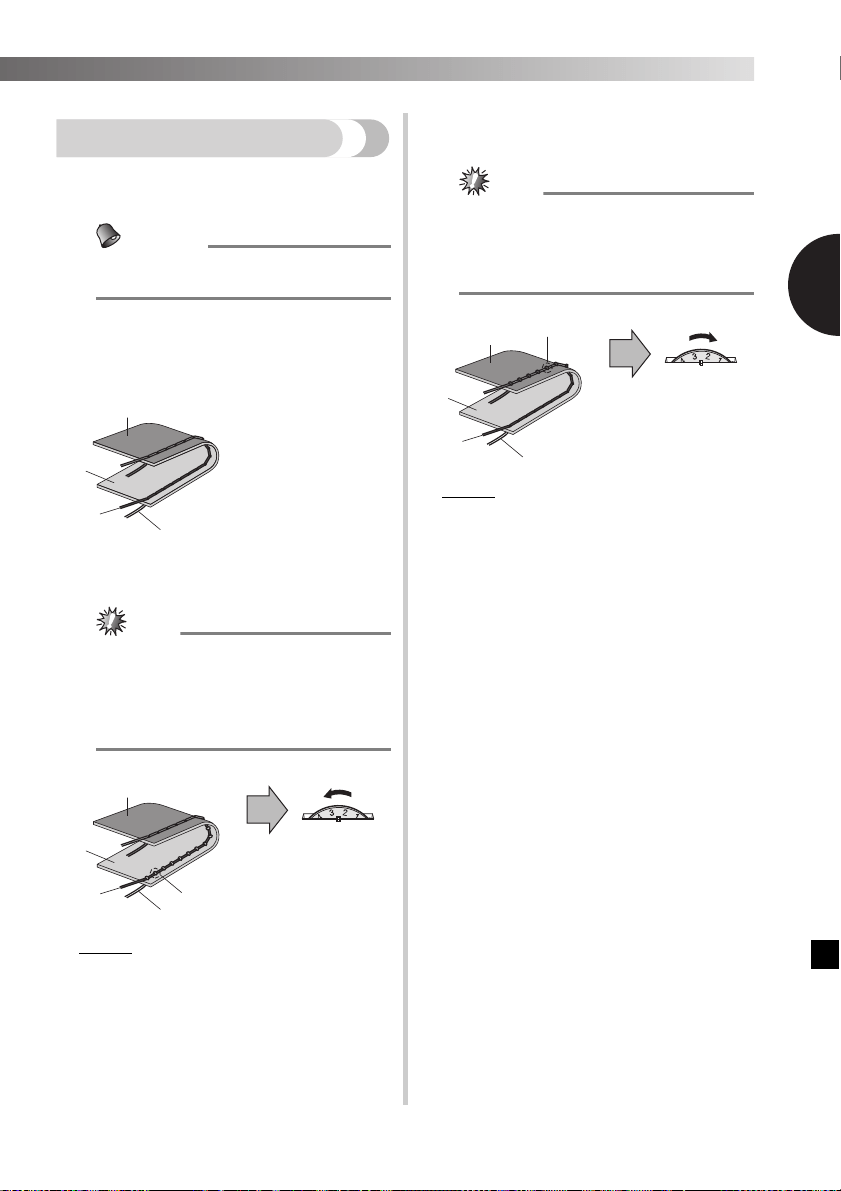
22
——————
—————————————————————————————————————————————————————————————————————
—
————————————————————————————————————————————————————————————————————————————————————————————————————————————————————————————————————————————————————————————————————————————————————————————————————————
2
Tensión del hilo
La tensión del hilo afectará a la calidad de las puntadas.
Cuando cambie de tela o de hilo, es posible que
necesite ajustar la tensión del hilo.
Recuerde
●Antes de comenzar a coser, recomendamos
que haga una prueba en un retal.
■Tensión adecuada
Una tensión adecuada es importante, puesto que un
exceso o carencia de la misma afectará a la calidad
de la costura y la tela podría fruncirse.
■El hilo superior está demasiado tenso
Aparecerán ondas en la superficie de la tela.
Nota
●Si el hilo de la bobina se enhebra
incorrectamente, el hilo superior puede
quedar demasiado tenso. En este caso,
consulte “Enhebrado del hilo superior” en la
página 14 y vuelva a enhebrar el hilo de la
bobina.
Solución
Reduzca la tensión girando el disco de control de la
tensión superior a un número inferior.
■El hilo superior está demasiado flojo
Aparecerán ondas en el revés de la tela.
Nota
●Si el hilo superior no está enhebrado
correctamente, puede que quede demasiado
flojo. En este caso, consulte “Enhebrado del
hilo superior” en la página 14 y vuelva a
enhebrar el hilo superior.
Solución
Aumente la tensión girando el disco de control de
la tensión superior a un número superior.
1Superficie de la tela
2Revés de la tela
3Hilo superior
4Hilo inferior
1Superficie de la tela
2Revés de la tela
3Hilo superior
4Hilo inferior
5Aparecen ondas en la
superficie de la tela
1
2
3
4
1
2
3
4
5
1Superficie de la tela
2Revés de la tela
3Hilo superior
4Hilo inferior
5Aparecen ondas en el
revés de la tela
1
2
3
4
5
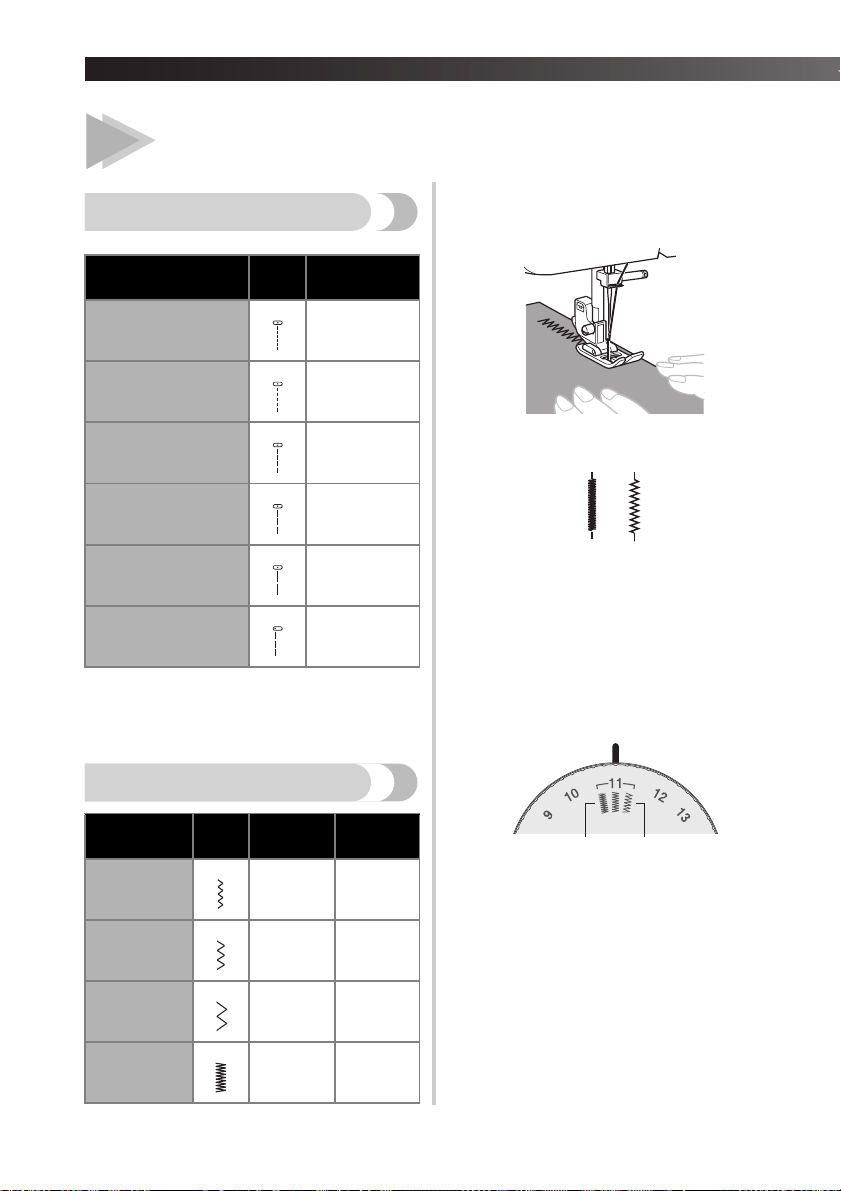
PUNTADAS DE COSTURA INCORPORADAS ————————————————————————————————————————————————————————————————————————————————————————————————————————————————————————————————
—
——————————————————————————————————
—————
23
3
PUNTADAS DE COSTURA INCORPORADAS
Costura recta
Las puntadas rectas se utilizan para la costura básica.
■Costura sobrepuesta y telas elásticas
Puede utilizar la puntada recta para la costura
sobrepuesta y de telas ligeras.
Puede utilizar la puntada elástica triple para coser
telas elásticas.
Costura en zig-zag
■Puntada de zig-zag
Gire el selector de puntadas hasta la puntada de
zig-zag y, a continuación, comience a coser.
Es aconsejable que cosa utilizando la puntada recta
al comienzo y al final de las puntadas de zig-zag.
(Esto actúa de puntada de refuerzo.)
■Puntada de zig-zag (Satén)
Puede utilizar la puntada de zig-zag (satén) para
crear puntadas decorativas.
Cuando cosa una puntada de zig-zag (satén), afloje
ligeramente la tensión del hilo superior para
conseguir unas puntadas más atractivas.
Con el selector de puntadas, la puntada de zig-zag
(satén) (número 11) puede ajustarse en una de tres
longitudes de puntada.
La posición central es el ajuste para la longitud de
pulgada estándar.
1Si desea una longitud de pulgada más corta,
gire el selector de puntadas hacia la posición
izquierda de la puntada de zig-zag (satén)
(número 11).
2Si desea una longitud de pulgada más larga,
gire el selector de puntadas hacia la posición
derecha de la puntada de zig-zag (satén)
(número 11).
Nombre de la puntada Dibujo Longitud de la
puntada
[mm (pulg.)]
Puntada recta
(Posición de la aguja en
el centro) 1,6 (1/16)
Puntada recta
(Posición de la aguja en
el centro) 1,8 (1/16)
Puntada recta
(Posición de la aguja en
el centro) 2 (1/16)
Puntada recta
(Posición de la aguja en
el centro) 2,5 (3/32)
Puntada recta
(Posición de la aguja en
el centro) 4 (3/16)
Puntada recta
(Posición de la aguja a la
izquierda) 2,5 (3/32)
Nombre de la
puntada Dibujo Longitud de
la puntada
[mm (pulg.)]
Anchura de
la puntada
[mm (pulg.)]
Puntada de
zig-zag 0,7 (1/32) 1,5 (1/16)
Puntada de
zig-zag 1,5 (1/16) 3 (1/8)
Puntada de
zig-zag 2 (1/16) 5 (3/16)
Puntada de
zig-zag (Satén) 0,5 (1/32) 5 (3/16)
2
3
4
5
6
7
8
9
10
11
1 2
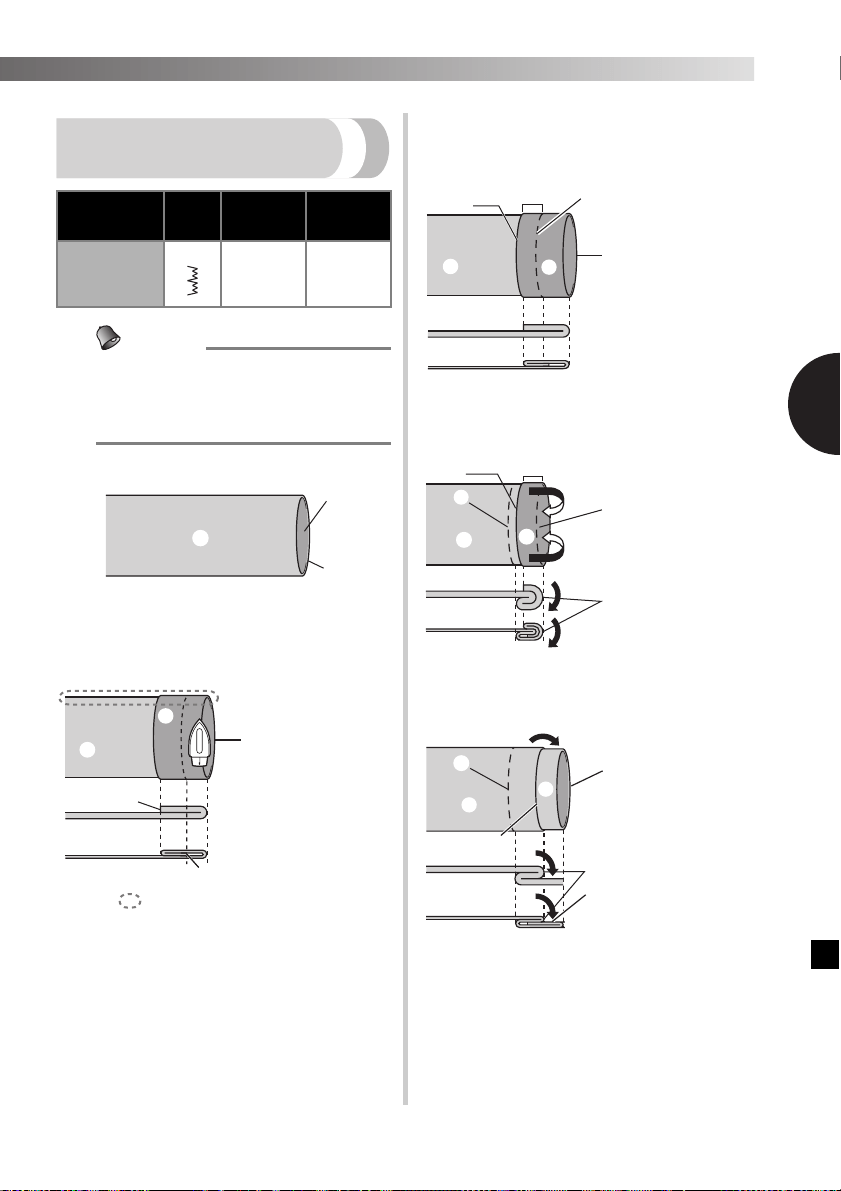
24
—————
————————————————————————————————————————————————————————————————————————————————————————
—
——————————————————————————————————————————————————————————————————————————————————————————————————————————————————————————————————————————————————————————————————————————————————————
3
Costura invisible para
dobladillo
Recuerde
●Cuando el tamaño de las piezas cilíndricas
sea demasiado pequeño para deslizarse en
el brazo o la longitud sea demasiado
pequeña, la tela no avanzará y es posible
que no se consigan los resultados deseados.
1Dé la vuelta a la falda o los pantalones.
1Tela del revés
2Tela del derecho
3Lado inferior
4Borde de la tela
2Doble la tela a lo largo del borde del
dobladillo deseado y presione.
3Utilice una tiza para hacer una marca en
la tela a unos 5 mm (3/16 pulg.) del borde
de la tela y, a continuación, hilvánela.
4Doble hacia dentro la tela a lo largo del
hilvanado.
5Desdoble el borde de la tela y coloque la
tela con el revés hacia arriba.
6Retire la unidad de cama plana para
permitir la costura de brazo libre.
• Si desea información sobre la costura de
brazo libre, consulte “Costura de piezas
cilíndricas” (Página 20).
Nombre de la
puntada Dibujo Longitud de
la puntada
[mm (pulg.)]
Anchura de
la puntada
[mm (pulg.)]
Costura
invisible
elástica 2 (1/16) 5 (3/16)
1Tela del revés
2Tela del derecho
3Borde de la tela
4Borde del
dobladillo
deseado
<Tela pesada>
<Tela normal>
<Visto desde el lateral>
14
2
13
4
1
2
12
1
3
3
4
2
1Tela del revés
2Tela del derecho
3Borde de la tela
4Costura de
hilvanado
55 mm (3/16 pulg.)
6Borde del
dobladillo
deseado
<Tela pesada>
<Tela normal>
<Visto desde el lateral>
1Tela del revés
2Borde de la tela
3Hilvanado
45 mm (3/16 pulg.)
5Borde del
dobladillo
deseado
6Tela del derecho
7Punto de
hilvanado
<Tela pesada>
<Tela normal>
<Visto desde el lateral>
1Tela del revés
2Tela del derecho
3Hilvanado
4Borde de la tela
5Borde del
dobladillo
deseado
6Punto de
hilvanado
<Tela pesada>
<Tela normal>
<Visto desde el lateral>
12
12
35
6
4
12
1
2
3
4
1
1
6
7
5
6
11
11
12
3
4
5
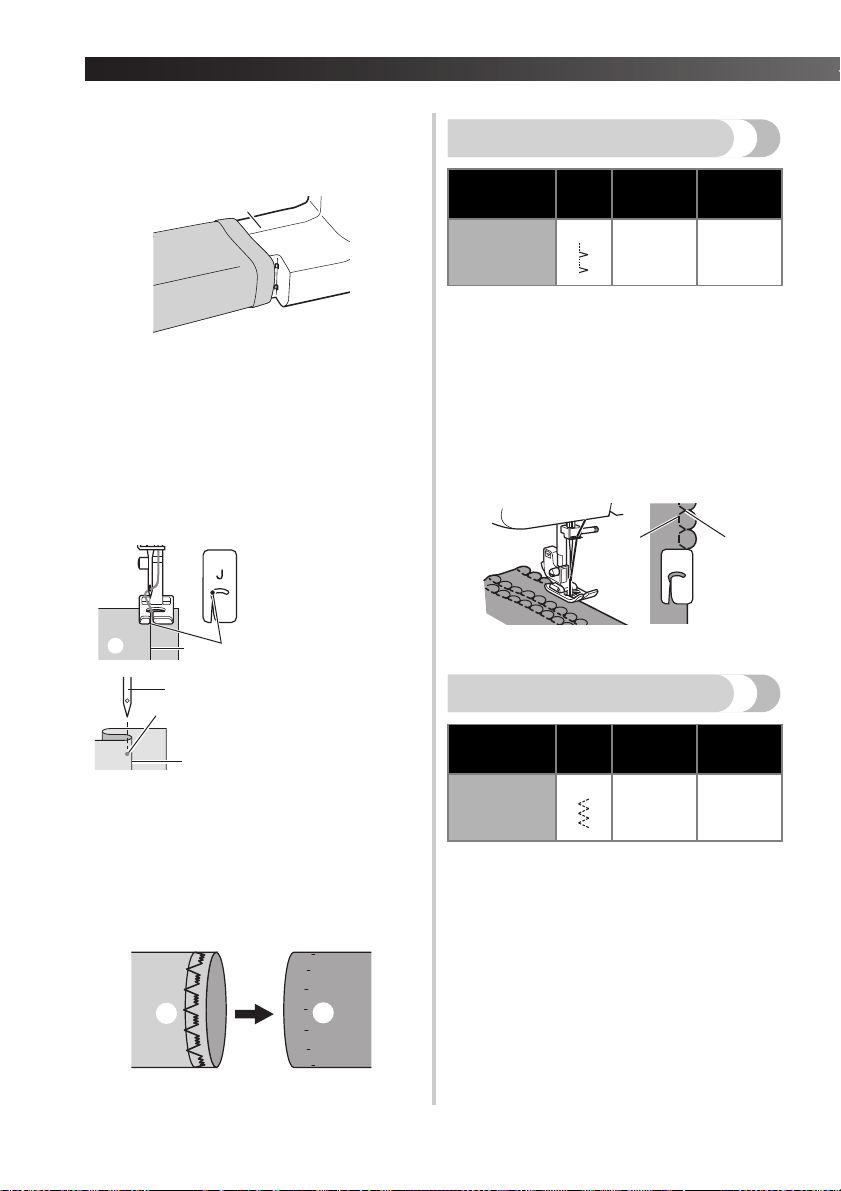
PUNTADAS DE COSTURA INCORPORADAS ————————————————————————————————————————————————————————————————————————————————————————————————————————————————————————————————
—
——————————————————————————————————
—————
25
7Deslice la parte que desee coser sobre el
brazo, asegurándose de que la tela avanza
correctamente y, a continuación,
comience a coser.
1Brazo
8Después de seleccionar una puntada, gire
lentamente la rueda hacia usted (hacia la
izquierda) hasta que la aguja se mueva de
derecha a izquierda.
9Coloque la tela debajo del pie prensatela
y, a continuación, ajuste la posición de la
tela hasta que la aguja llegue ligeramente
al pliegue del dobladillo cuando la aguja
llegue al extremo izquierdo de la puntada.
0Baje la palanca del pie prensatela.
aCosa a una velocidad baja sujetando la
tela con las manos de forma que la aguja
llegue ligeramente al pliegue del
dobladillo.
bQuite el hilvanado y ponga la tela con el
derecho hacia arriba.
Costura de concha
La puntada de concha puede utilizarse para coser
bordes con puntilla (parecida al encaje) en telas ligeras.
1Ajuste la tensión del hilo para que esté
más tenso de lo normal.
2Coloque la tela debajo del pie prensatela
para coserla al bies con puntadas rectas
en la línea de costura y con puntadas de
zig-zag ligeramente por encima del borde
doblado.
3Cosa a una velocidad baja.
1Puntadas rectas
2Puntadas de zig-zag
Costura elástica
La puntada elástica puede utilizarse para zurcir, coser
gomas o unir trozos de tela. A continuación se explica
cada opción.
■Zurcido
1Coloque la tela de refuerzo debajo del
área que desee zurcir.
• Utilice los alfileres de hilvanado para sujetar
la tela de refuerzo.
1Tela del revés
2Pliegue del dobladillo
3Punto de entrada de la
aguja
1Aguja
2Punto de entrada de la
aguja
3Pliegue del dobladillo
1Tela del revés 2Tela del derecho
1
123
1
2
3
12
Nombre de la
puntada Dibujo Longitud de
la puntada
[mm (pulg.)]
Anchura de
la puntada
[mm (pulg.)]
Puntada de
concha 2 (1/16) 5 (3/16)
Nombre de la
puntada Dibujo Longitud de
la puntada
[mm (pulg.)]
Anchura de
la puntada
[mm (pulg.)]
Puntada elástica 1 (1/16) 5 (3/16)
12
12
13
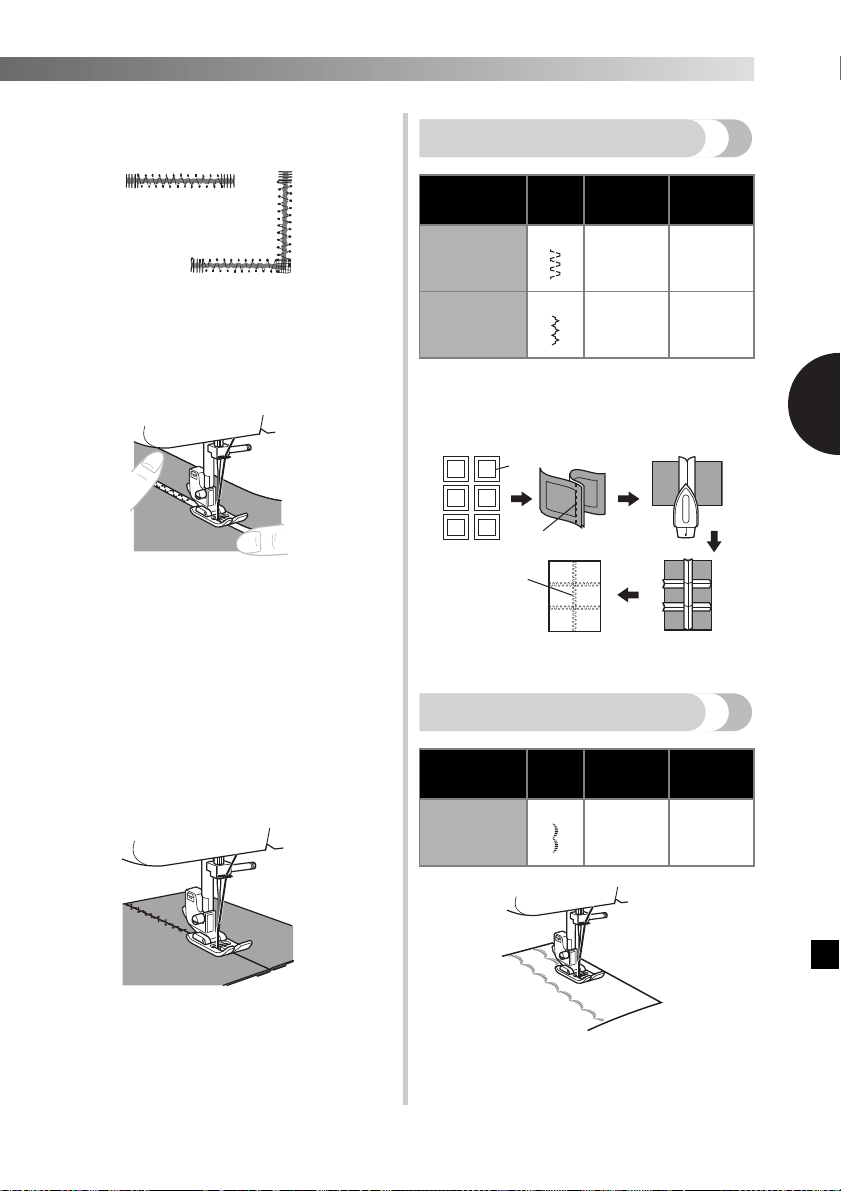
26
—————
————————————————————————————————————————————————————————————————————————————————————————
—
——————————————————————————————————————————————————————————————————————————————————————————————————————————————————————————————————————————————————————————————————————————————————————
3
2Siga la línea de la zona rasgada y cosa
utilizando la puntada elástica como se
muestra.
■Costura de gomas
1Sujete con alfileres la goma en el revés de
la tela.
2A medida que cosa, vaya estirando la
goma por delante y detrás del pie
prensatela.
■Unión de trozos de tela
La puntada elástica puede emplearse para unir dos
trozos de tela y resulta muy eficaz a la hora de
coser tejidos de punto. Si utiliza hilo de nylon, la
puntada no se verá.
1Coloque juntos los bordes de los dos
trozos de tela y céntrelos debajo del pie
prensatela.
2Cósalos utilizando la puntada elástica.
Asegúrese de tener los dos bordes de tela
muy juntos.
• Utilice los alfileres de hilvanado para sujetar
los dos bordes de la tela juntos.
Costura de doble acción
Estos tipos de puntadas se utilizan para unir dos trozos
de tela, por ejemplo, en la costura de patchwork.
Ejemplo: costura de patchwork con puntada de doble
acción
1Línea de costura deseada
2Puntada recta
3Puntada de doble acción
Costura decorativa
Nombre de la
puntada Dibujo Longitud de
la puntada
[mm (pulg.)]
Anchura de
la puntada
[mm (pulg.)]
Puntada de
doble acción 1,2 (1/16) 5 (3/16)
Puntada de
puente 1,2 (1/16) 5 (3/16)
Nombre de la
puntada Dibujo Longitud de
la puntada
[mm (pulg.)]
Anchura de
la puntada
[mm (pulg.)]
Puntada festón 0,5 (1/32) 5 (3/16)
16
17
1
2
3
15
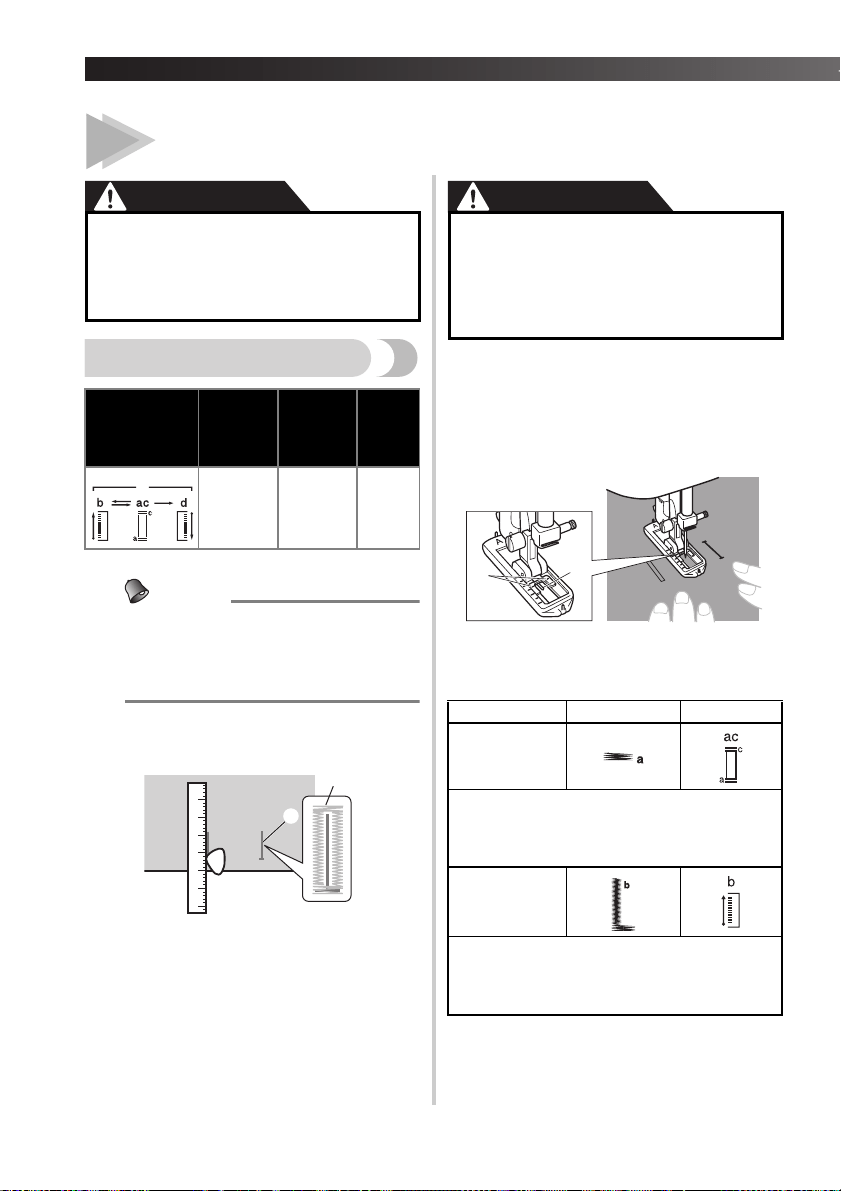
COSTURA DE OJALES Y BOTONES ————————————————————————————————————————————————————————————————————————————————————————————————————————————————————————————————
—
————————————————————————————————————————————————————————
—————
27
4COSTURA DE OJALES Y BOTONES
PRECAUCIÓN
Realización de un ojal
Recuerde
●Es aconsejable que practique la realización
de ojales en una retal de prueba antes de
intentarlo en la prenda real.
●Para realizar ojales en telas suaves, coloque
un material estabilizador debajo de la tela.
1Con un trozo de tiza, marque en la tela la
posición y la longitud del ojal.
1Marcas sobre la tela
2Costura de ojales
2Coloque el pie para ojales y empuje el
bastidor hacia atrás hasta que haga tope
con la pieza de plástico situada delante
del bastidor.
PRECAUCIÓN
3Primero tiene que coser la tachuela
delantera. Alinee la marca de la tachuela
debajo del centro del pie prensatela y
hágala coincidir con las dos líneas del pie
prensatela.
1Parte delantera de la marca de tiza
2Líneas rojas
■Realización de un ojal
●Apague siempre la máquina antes de
cambiar el pie prensatela. De lo
contrario, podría lesionarse si el pedal se
pisa accidentalmente y la máquina
comienza a coser.
Dibujo
Longitud
de la
puntada
[mm
(pulg.)]
Anchura de
la puntada
[mm
(pulg.)]
Pie
0,5 (1/32) 5 (3/16) Pie para
ojales
“A”
1
1
2
●Si el pie prensatela no está colocado con
la orientación correcta, la aguja puede
golpearlo y doblarse o romperse, y
podría causar lesiones. (Consulte en la
página 8 la orientación correcta del pie
prensatela).
Paso Zona cosida Dibujo
Paso 1
(Tachuela
delantera)
1. Ajuste el selector de puntadas en “a”.
2. Baje el pie prensatela y cosa de 5 a 6 puntadas.
3. Detenga la máquina cuando la aguja esté en el
lado izquierdo de las puntadas y, a continuación,
levante la aguja del material.
Paso 2
(Lado izquierdo)
1. Coloque el selector de puntadas en “b”.
2. Cosa a lo largo de la línea de tiza.
3. Detenga la máquina cuando la aguja esté en el
lado izquierdo de la puntada y, a continuación,
levante la aguja.
1
2
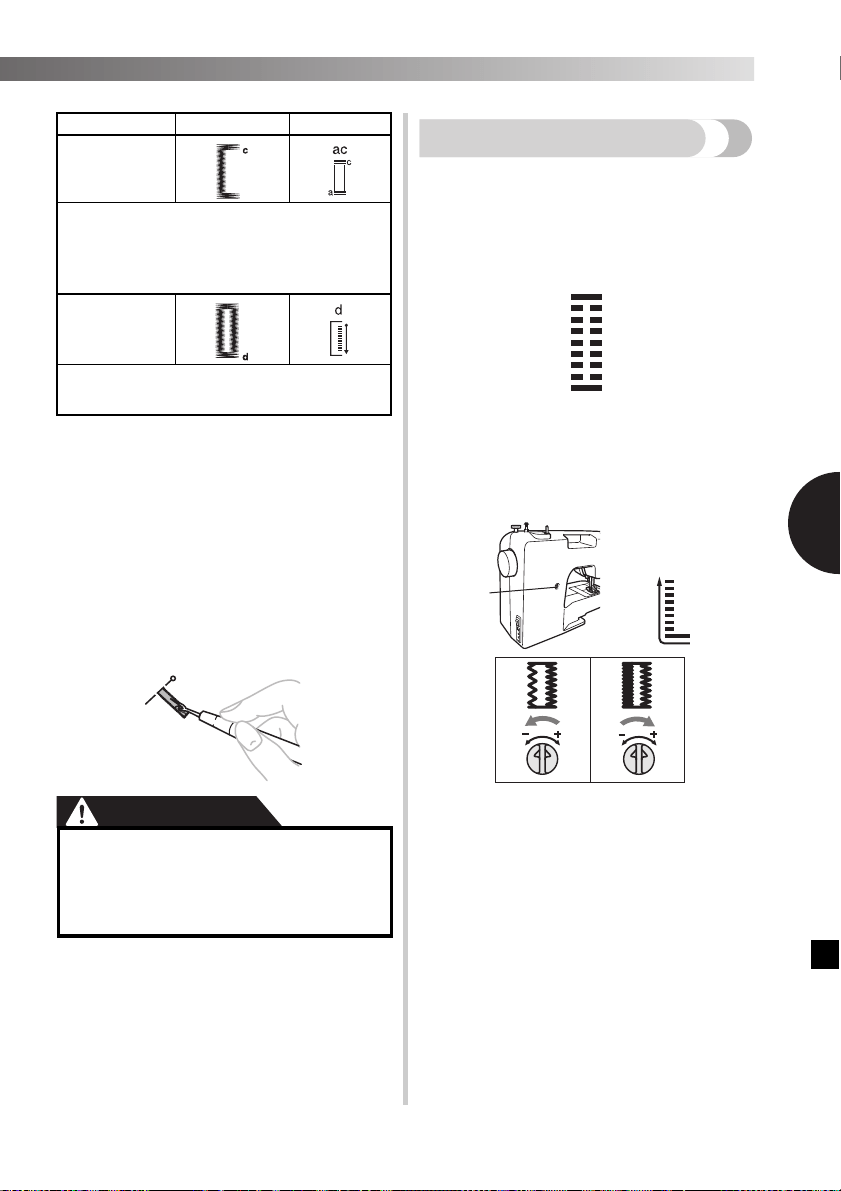
28
——————
—————————————————————————————————————————————————————————————————
—
————————————————————————————————————————————————————————————————————————————————————————————————————————————————————————————————————————————————————————————————————————————————————————————————————————————
4
■Sujeción de la costura y corte del ojal
1Para sujetar la costura, gire el material 90
grados hacia la izquierda y cosa puntadas
rectas hasta el final de la tachuela
delantera del ojal.
2Retire el material de la máquina. Se
recomienda que ponga alfileres en los dos
extremos del ojal para evitar que las
puntadas se corten.
3Corte una abertura en el centro del ojal
con el abridor de costura. Tenga cuidado
de no cortar la costura.
PRECAUCIÓN
Ajuste de ojales
Si la costura en los dos lados del ojal no es igual, puede
realizar los siguientes ajustes.
1
Después de coser el lado izquierdo del
ojal, cosa el lado derecho y observe el
avance.
1Fila derecha
2Si el lado izquierdo está demasiado
abierto o apretado en comparación con el
lado derecho, ajuste el tornillo de ajuste
fino para ojales como se describe en los
párrafos siguientes.
1Tornillo de ajuste fino para ojales
2Lado izquierdo
3Aspecto del ojal
Si el lado izquierdo está demasiado abierto,
gire el tornillo de ajuste fino para ojales con
un destornillador grande en la dirección “–”.
Si el lado izquierdo está demasiado apretado,
gire el tornillo de ajuste fino para ojales con
un destornillador grande en la dirección “+”.
• Este ajuste asegura que ambos lados del ojal
sean iguales.
Paso 3
(Tachuela trasera)
1. Coloque el selector de puntadas en “c” (misma
posición que en el paso 1).
2. Cosa de 5 a 6 puntadas.
3. Detenga la máquina cuando la aguja esté en el
lado derecho de la puntada y, a continuación,
levante la aguja del material.
Paso 4
(Lado derecho)
1. Ajuste el selector de puntadas en “d”.
2. Cosa el lado derecho hasta que la aguja llegue a
las puntadas cosidas en el paso 1.
●Cuando utilice el abridor de costura para
abrir el ojal, no coloque la mano o el
dedo en la dirección del abridor. El
abridor podría deslizarse y provocarle
lesiones.
Paso Zona cosida Dibujo
1
2
33
1
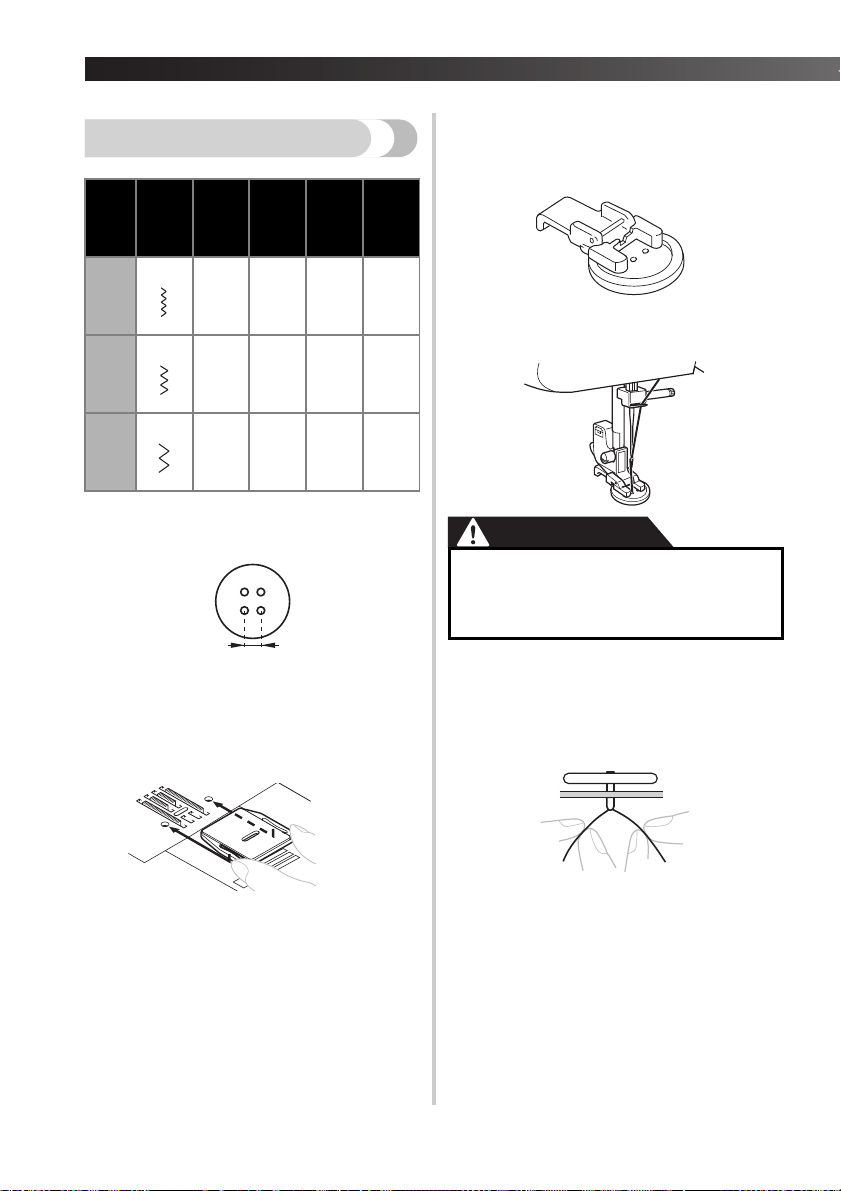
COSTURA DE OJALES Y BOTONES ————————————————————————————————————————————————————————————————————————————————————————————————————————————————————————————————
—
————————————————————————————————————————————————————————
—————
29
Costura de botones
1Mida la distancia entre los ojales y ajuste
el selector de puntadas en la puntada de
zig-zag con la anchura deseada.
2Apague la máquina.
3Quite el pie que hay colocado y ponga el
pie especial para botones “M”.
4Coloque la placa de zurcir en la placa de
la aguja.
5Encienda la máquina.
6
Coloque un botón entre el pie y la tela, y
asegúrese de que la aguja entra en los
orificios sin golpear el botón. Si golpeara,
consulte el paso
1
.
7Cosa unas 10 puntadas a una velocidad
baja.
PRECAUCIÓN
8Saque el hilo superior al final de la costura
por el revés de la tela y, a continuación,
anúdelo al hilo de la bobina.
XCon unas tijeras corte el hilo superior y el
hilo de la bobina al comienzo de la
costura.
Nombre
de la
puntada
Dibujo
Longitud
de la
puntada
[mm
(pulg.)]
Anchura
de la
puntada
[mm
(pulg.)]
Pie Otro
Puntada
de
zig-zag
0,7
(1/32) 1,5
(1/16)
Pie
especial
para
botones
“M”
Placa de
zurcir
Puntada
de
zig-zag
1,5
(1/16) 3
(1/8)
Pie
especial
para
botones
“M”
Placa de
zurcir
Puntada
de
zig-zag
2
(1/16) 5
(3/16)
Pie
especial
para
botones
“M”
Placa de
zurcir
8
9
10
●Asegúrese de que la aguja no golpea el
botón durante la costura. La aguja
podría romperse y usted podría
lesionarse.
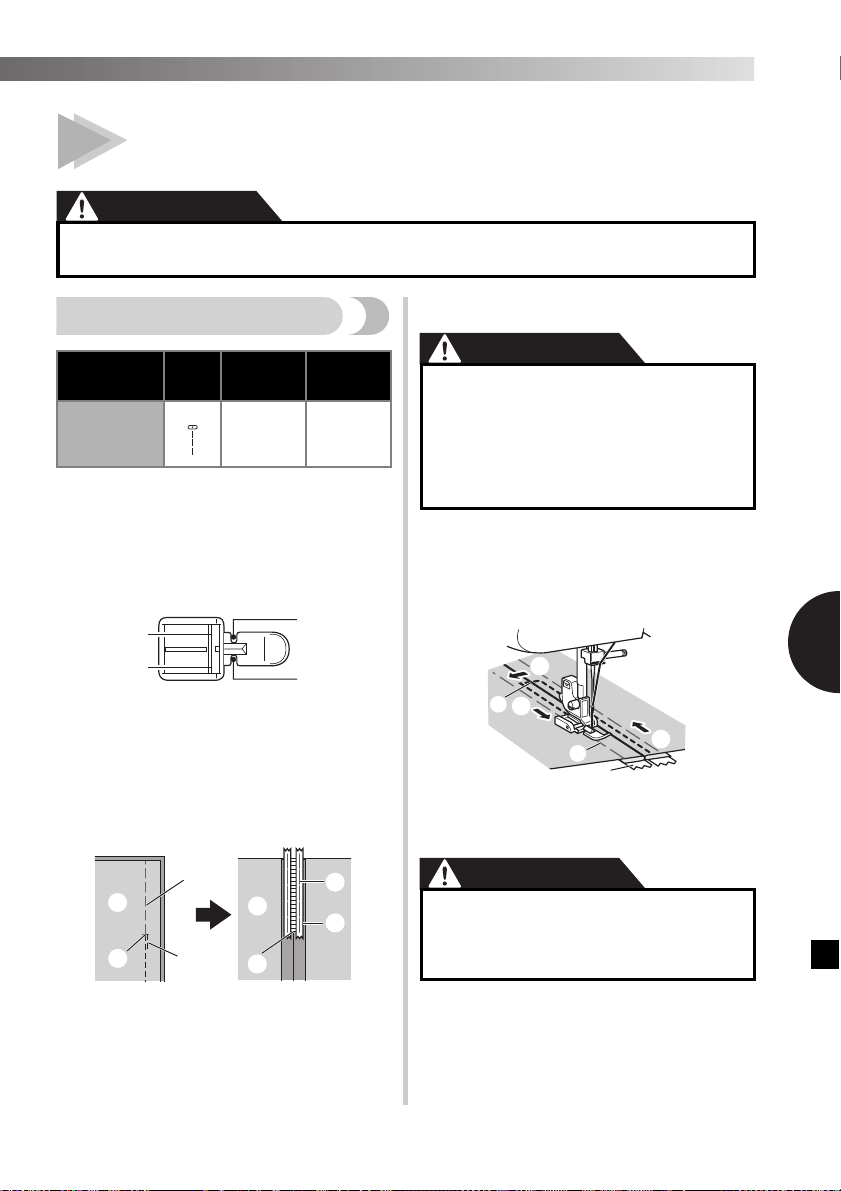
30
——————
——————————————————————————————————————————————————————————————————————————————
—
———————————————————————————————————————————————————————————————————————————————————————————————————————————————————————————————————————————————————————————————————————————————————————————————
5
5USO DE ACCESORIOS Y APLICACIONES
PRECAUCIÓN
Costura de cremalleras
El pie para cremalleras “I” puede utilizarse para coser
diferentes tipos de cremalleras y se puede colocar
fácilmente a la derecha o a la izquierda de la aguja.
Al coser con la cremallera en el lado derecho, coloque
la lengüeta en la patilla izquierda del pie para
cremalleras. Cuando cosa con la cremallera en el lado
izquierdo, coloque la lengüeta en la patilla derecha del
pie para cremalleras.
1Patilla derecha para coser con la cremallera en
el lado izquierdo
2Patilla izquierda para coser con la cremallera
en el lado derecho
3Punto de entrada de la aguja para coser con la
cremallera en el lado izquierdo
4Punto de entrada de la aguja para coser con la
cremallera en el lado derecho
1Prepare la tela con la cremallera
hilvanada en el revés.
1Costura de hilvanado
2Puntadas en reversa
3Tela del revés
4Extremo de la abertura de la cremallera
5Cremallera
2Apague la máquina.
Coloque el pie para cremalleras “I”.
PRECAUCIÓN
3Encienda la máquina.
4Con el derecho de la tela hacia arriba,
continúe cosiendo con la cremallera en el
lado derecho del pie prensatela.
1Extremo de la abertura de la cremallera
2Costura de hilvanado
3Cremallera
• Cosa las puntadas en orden, de 1 a 3.
PRECAUCIÓN
5Una vez finalizada la costura, quite la
costura de hilvanado.
●Apague siempre la máquina antes de cambiar el pie prensatela. De lo contrario, podría
lesionarse si el pedal se pisa accidentalmente y la máquina comienza a coser.
Nombre de la
puntada Dibujo Longitud de
la puntada
[mm (pulg.)] Pie
Puntada recta
(Posición de la
aguja en el
centro)
2,5 (3/32) Pie para
cremalleras
“I”
5
I
1
2
3
4
1
2
3
4
1
5
3
4
●Antes de comenzar a coser, gire la rueda
hacia usted (hacia la izquierda) y
compruebe que la aguja no golpea el pie
para cremalleras. Si elige una puntada
diferente, la aguja golpeará el pie
prensatela y se romperá y usted puede
lesionarse.
●Asegúrese de que la aguja no golpea la
cremallera durante la costura. Si la aguja
golpeara la cremallera, podría romperse
y usted podría lesionarse.
1
2
3
1
2
3
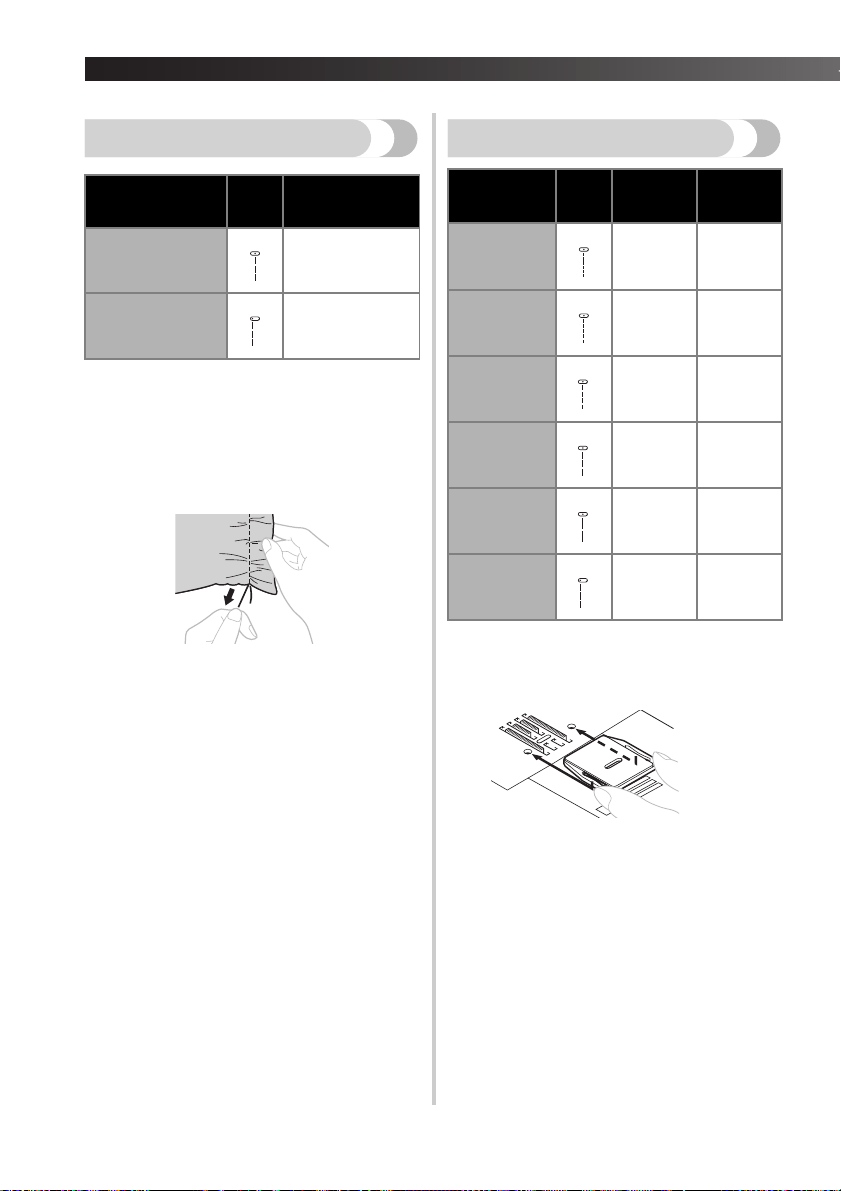
USO DE ACCESORIOS Y APLICACIONES ————————————————————————————————————————————————————————————————————————————————————————————————————————————————————————————————
—
———————————————————————————————————————————
—————
31
Fruncidos
1Afloje la tensión del hilo superior de
forma que el hilo inferior descanse sobre
la cara inferior del material.
2Cosa una sola fila (o muchas filas) de
puntadas rectas.
3Tire de los hilos inferiores para fruncir el
material.
Zurcido
1Apague la máquina.
Coloque la placa de zurcir en la placa de
la aguja y, a continuación, encienda la
máquina.
2Retire el pie prensatela y el soporte del
pie prensatela y, a continuación, baje la
palanca del pie prensatela.
3Coloque la zona que desee zurcir bajo el
pie prensatela, junto con tela de refuerzo.
4Encienda la máquina.
Nombre de la
puntada Dibujo Longitud de la
puntada
[mm (pulg.)]
Puntada recta
(Posición de la aguja
en el centro)
2,5 (3/32)
Puntada recta
(Posición de la aguja
a la izquierda)
2,5 (3/32)
5
7
Nombre de la
puntada Dibujo Longitud de
la puntada
[mm (pulg.)] Otro
Puntada recta
(Posición de la
aguja en el
centro)
1,6 (1/16)
Placa de
zurcir
Puntada recta
(Posición de la
aguja en el
centro)
1,8 (1/16)
Placa de
zurcir
Puntada recta
(Posición de la
aguja en el
centro)
2 (1/16)
Placa de
zurcir
Puntada recta
(Posición de la
aguja en el
centro)
2,5 (3/32)
Placa de
zurcir
Puntada recta
(Posición de la
aguja en el
centro)
4 (3/16)
Placa de
zurcir
Puntada recta
(Posición de la
aguja a la
izquierda)
2,5 (3/32)
Placa de
zurcir
2
3
4
5
6
7
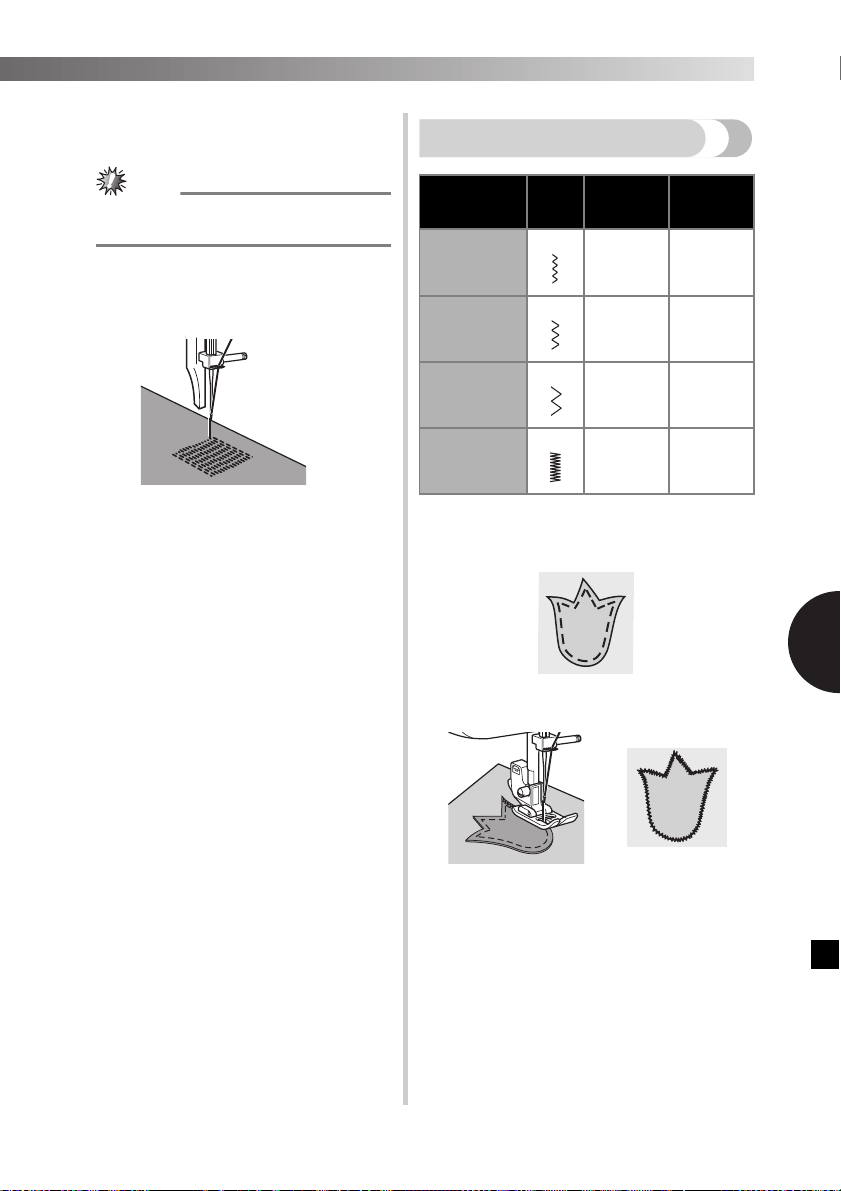
32
——————
——————————————————————————————————————————————————————————————————————————————
—
———————————————————————————————————————————————————————————————————————————————————————————————————————————————————————————————————————————————————————————————————————————————————————————————
5
5Comience a coser alternando entre alejar
y acercar poco a poco la labor.
Nota
●Cosa mientras sujeta la tela estirada para
mantenerla tensa.
6Repita este movimiento hasta que la zona
que se está zurciendo quede rellena de
líneas paralelas de puntadas.
Aplicaciones
Puede crear una aplicación si corta un trozo diferente
de tela con forma y lo utiliza como motivo decorativo.
1Hilvane el diseño de corte a la tela.
2Cosa con cuidado alrededor del borde del
diseño con una puntada de zig-zag.
Nombre de la
puntada Dibujo Longitud de
la puntada
[mm (pulg.)]
Anchura de
la puntada
[mm (pulg.)]
Puntada de
zig-zag 0,7 (1/32) 1,5 (1/16)
Puntada de
zig-zag 1,5 (1/16) 3 (1/8)
Puntada de
zig-zag 2 (1/16) 5 (3/16)
Puntada de
zig-zag (Satén) 0,5 (1/32) 5 (3/16)
8
9
10
11
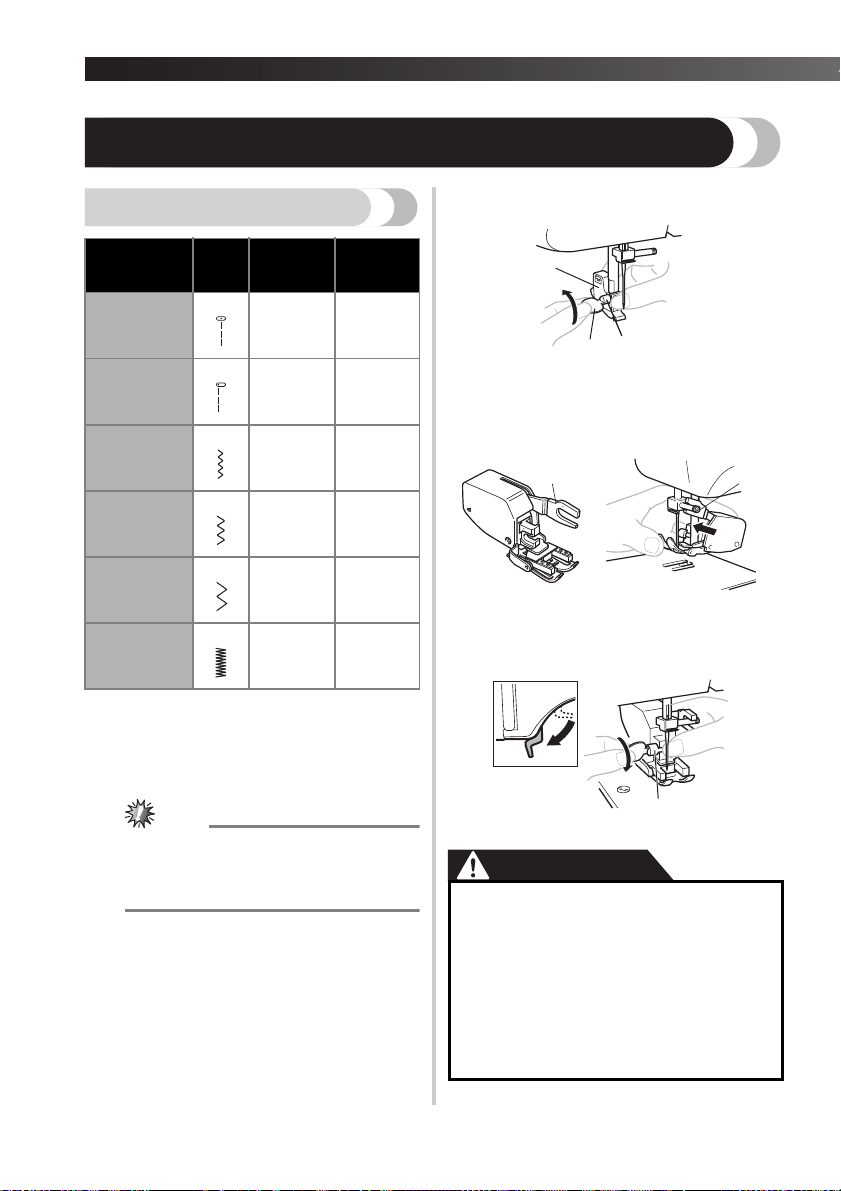
USO DE ACCESORIOS Y APLICACIONES ————————————————————————————————————————————————————————————————————————————————————————————————————————————————————————————————
—
———————————————————————————————————————————
—————
33
ACCESORIOS OPCIONALES
Utilización del pie móvil
Este pie resulta muy útil para coser materiales como la
tela de vinilo, el cuero sintético y el cuero fino, etc.
Estos materiales son difíciles de arrastrar durante la
costura. El pie móvil evita que estos materiales se
arruguen, deslicen o queden pegados a la suela del pie
prensatela y el material.
Nota
●Utilice el pie móvil únicamente con
puntadas rectas o de zig-zag. No lo utilice
con otros tipos de puntadas. No es posible
coser puntadas en reversa con el pie móvil.
1Apague la máquina.
2Suba la aguja y el pie prensatela.
3Afloje el tornillo del pie prensatela para
retirar el soporte del pie.
1Utilice el destornillador de cabeza ovalada
2Soporte del pie prensatela
3Tornillo del pie prensatela
4Enganche la horca de conexión del pie
móvil al tornillo de la presilla de la aguja.
1Horca de conexión
2Tornillo de la presilla de la aguja
5Baje la palanca del pie prensatela y, a
continuación, apriete el tornillo del pie.
1Tornillo del pie prensatela
PRECAUCIÓN
Nombre de la
puntada Dibujo Longitud de
la puntada
[mm (pulg.)]
Anchura de
la puntada
[mm (pulg.)]
Puntada recta
(Posición de la
aguja en el
centro)
2,5 (3/32) —
Puntada recta
(Posición de la
aguja a la
izquierda)
2,5 (3/32) —
Puntada de
zig-zag 0,7 (1/32) 1,5 (1/16)
Puntada de
zig-zag 1,5 (1/16) 3 (1/8)
Puntada de
zig-zag 2 (1/16) 5 (3/16)
Puntada de
zig-zag (Satén) 0,5 (1/32) 5 (3/16)
5
7
8
9
10
11
●Utilice el destornillador de cabeza
ovalada para apretar firmemente el
tornillo. Si el tornillo está suelto, la aguja
podría golpear el pie prensatela y usted
podría lesionarse.
●Gire la rueda hacia usted (hacia la
izquierda) y compruebe que la aguja no
golpea el pie prensatela. Si la aguja
golpea el pie prensatela, la aguja podría
doblarse o romperse.
1
2
3
1
2
1
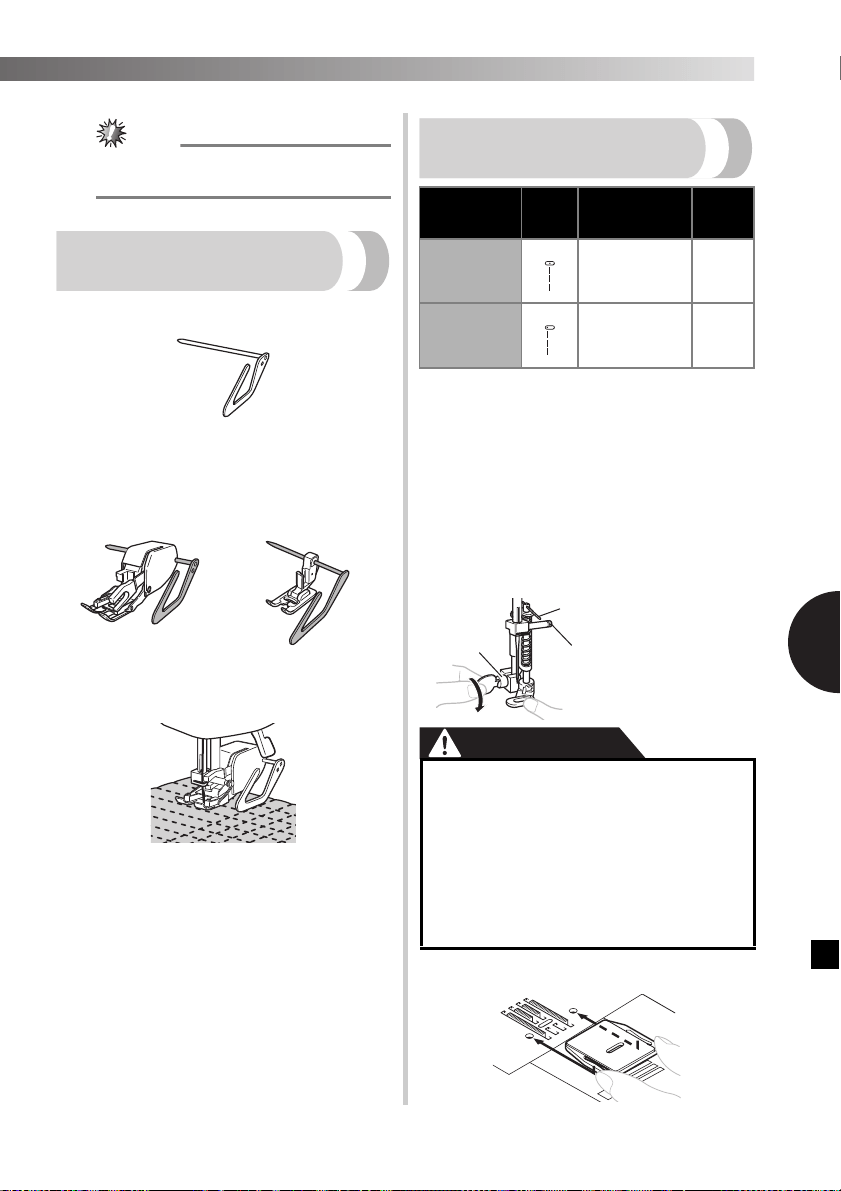
34
——————
——————————————————————————————————————————————————————————————————————————————
—
———————————————————————————————————————————————————————————————————————————————————————————————————————————————————————————————————————————————————————————————————————————————————————————————
5
Nota
●Cuando cosa con el pie móvil, utilice una
velocidad de cosido entre media y baja.
Utilización de la guía de
acolchados
Utilice la guía de acolchados para coser puntadas
paralelas con un espacio igual entre ellas.
1
Introduzca la base de la guía de acolchados
en el orificio situado en la parte trasera del
pie móvil o del soporte del pie prensatela.
2Ajuste la base de la guía de acolchados de
manera que esta quede alineada con la
costura que ya se ha cosido.
Utilización del pie para
acolchados
El pie para acolchados resulta útil para zurcidos
y acolchados con la máquina en marcha libre.
1Siga los pasos del 1 al 3 en la página 33.
2Coloque el pie para acolchados,
asegurándose de que la parte A que se
muestra en la ilustración está por encima
del tornillo de la presilla de la aguja. A
continuación, baje la palanca del pie
prensatela y apriete el tornillo del pie.
• Compruebe que el tornillo de la presilla de la
aguja está firmemente apretado.
PRECAUCIÓN
3Coloque la placa de zurcir en la placa de
la aguja. Encienda la máquina.
■Pie móvil ■Soporte del pie
prensatela
Nombre de la
puntada Dibujo Longitud de la
puntada
[mm (pulg.)]
Otro
Puntada recta
(Posición de la
aguja en el
centro)
2,5 (3/32)
Placa de
zurcir
Puntada recta
(Posición de la
aguja a la
izquierda)
2,5 (3/32)
Placa de
zurcir
1Tornillo del pie
prensatela
2Tornillo de la presilla
de la aguja
●
Utilice un destornillador de cabeza
ovalado para apretar firmemente el
tornillo del soporte del pie prensatela. Si el
tornillo está suelto, la aguja podría golpear
el pie prensatela y usted podría lesionarse.
●Gire la rueda hacia usted (hacia la
izquierda) y compruebe que la aguja no
golpea el pie prensatela. Si la aguja
golpea el pie prensatela, la aguja podría
doblarse o romperse.
5
7
2
1
A
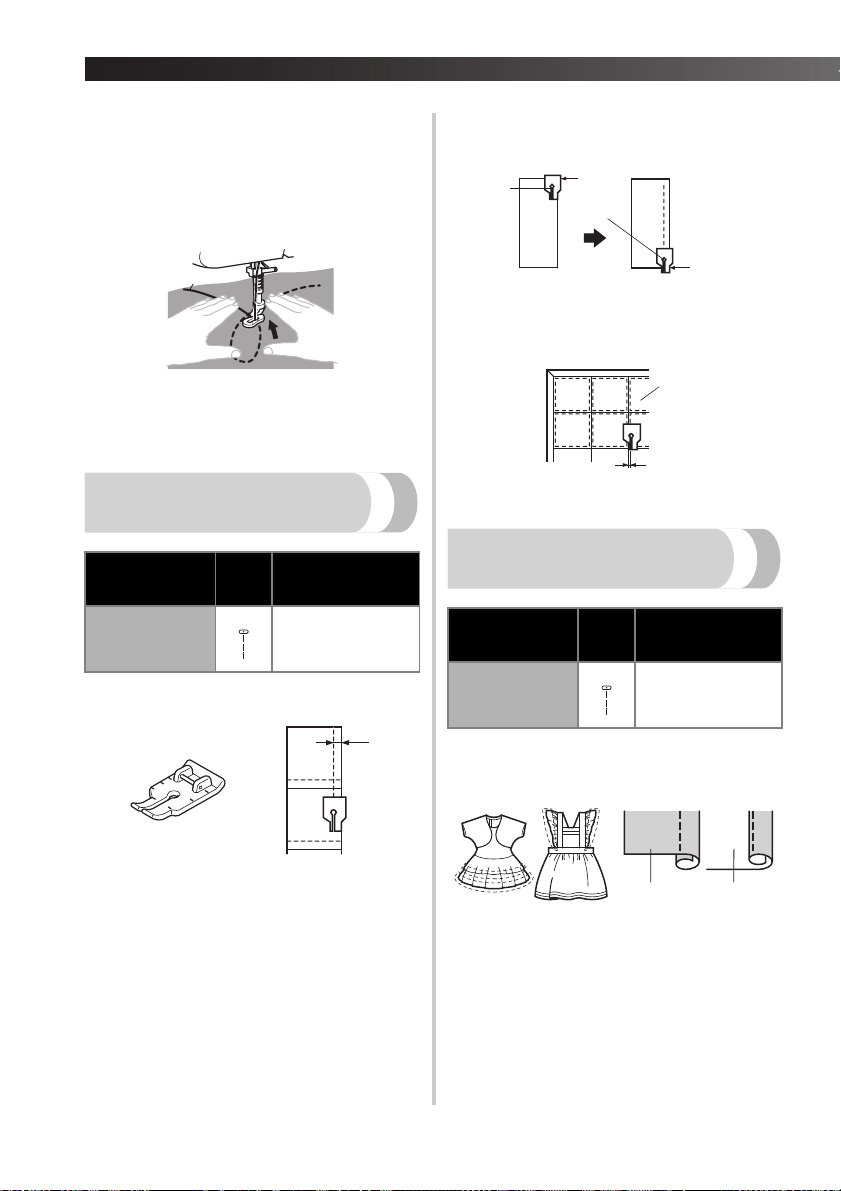
USO DE ACCESORIOS Y APLICACIONES ————————————————————————————————————————————————————————————————————————————————————————————————————————————————————————————————
—
———————————————————————————————————————————
—————
35
4Ajuste el selector de puntadas en la
puntada recta.
• Antes de comenzar a coser, dibuje el diseño
de acolchado en la tela.
5Utilice las dos manos para mantener la
tela bien estirada y muévala para coser
sobre el diseño dibujado.
1Diseño de acolchado
6La longitud de la puntada depende de la
rapidez con que mueva la tela y de la
velocidad de cosido de la máquina. Cosa
mientras mueve la tela lentamente.
Utilización del pie para
acolchados de 1/4 pulgadas
Con el pie para acolchados de 1/4 pulgadas puede
coser costuras al juntar las piezas de un acolchado.
1Margen de costura de 6,5 mm (1/4 pulg.)
1Apague la máquina.
2
Ajuste el selector de puntadas en la
puntada recta (posición de la aguja en el
centro).
3Coloque el pie para acolchados de
1/4 pulgadas.
Encienda la máquina.
4Coloque el pie prensatela sobre la tela y
comience a coser según se muestra en las
ilustraciones siguientes.
■Cómo conseguir un margen de costura
preciso
1Comienzo de la costura
2Alinee esta marca con el borde de la tela.
3Final de la costura
4Alinee esta marca con el borde de la tela.
■Cosido en la parte superior de un acolchado
1Parte superior de la tela
2Margen de costura de 3,2 mm (1/8 pulg.)
Utilización del pie para
dobladillos estrechos
El pie para dobladillos estrechos se puede utilizar para
coser juntas telas ligeras y dobladillos enrollados
estrechos.
1Tela del derecho
2Tela del revés
1Apague la máquina.
2Coloque el pie para dobladillos estrechos
y, a continuación, ajuste el selector de
puntadas en la puntada recta (posición de
la aguja en el centro).
3Encienda la máquina.
Nombre de la
puntada Dibujo Longitud de la
puntada
[mm (pulg.)]
Puntada recta
(Posición de la
aguja en el centro)
2,5 (3/32)
1
5
1
Nombre de la
puntada Dibujo Longitud de la
puntada
[mm (pulg.)]
Puntada recta
(Posición de la
aguja en el centro)
2,5 (3/32)
2
1
3
4
1
2
5
1 2
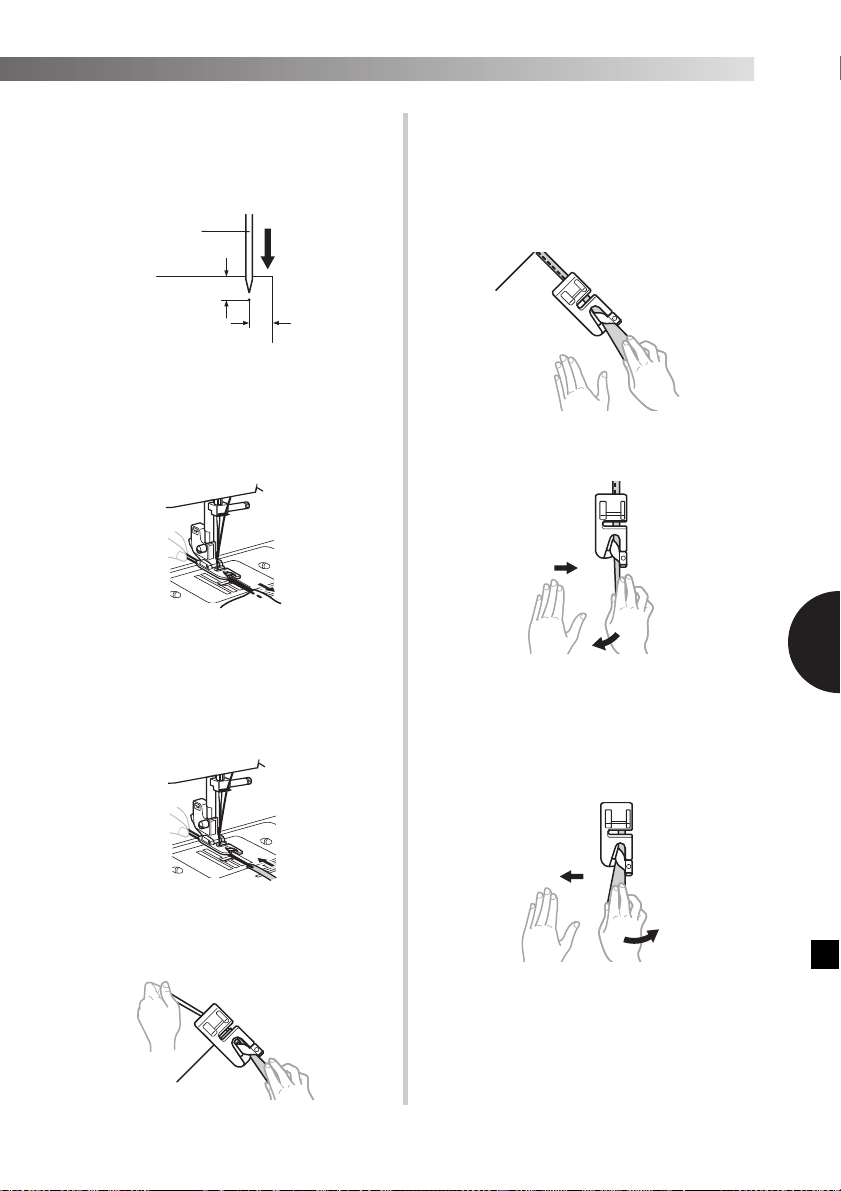
36
——————
——————————————————————————————————————————————————————————————————————————————
—
———————————————————————————————————————————————————————————————————————————————————————————————————————————————————————————————————————————————————————————————————————————————————————————————
5
4Coloque la tela (con el revés hacia
arriba) debajo del pie prensatela. Baje la
aguja 3 mm (1/8 pulg.) desde los bordes
de la tela, baje el pie prensatela y, a
continuación, cosa 2 ó 3 puntadas.
1Aguja
23 mm (1/8 pulg.)
5Suba la aguja y el pie prensatela, sujete los
extremos de los hilos superior e inferior
para que no se salgan de la tela y, a
continuación, tire de ella desde la parte
delantera del pie.
6Sujetando ambos hilos, páselos por la
parte ondulada del pie prensatela y
llévelos hasta la parte trasera del pie.
Coloque la tela alrededor de la parte
ondulada del pie prensatela de la misma
manera. Sitúe el borde de la tela justo
detrás de la aguja y baje el pie.
7Sin permitir que se salga la tela por el lado
derecho del pie prensatela, tire
ligeramente del hilo mientras cose
lentamente.
8Después de coser entre 2 (3/4 pulg.) y
3 cm (1 1/8 pulg.) de la tela, suelte el hilo
y guíe la tela con ambas manos desde la
parte delantera del pie prensatela.
Mantenga la misma cantidad de tela
colocada alrededor de la parte ondulada
del pie prensatela hasta que termine la
costura.
■Si hay muy poca tela colocada alrededor de
la parte ondulada, no podrá coser una
costura triple
Tire de la tela que tiene en la mano derecha hacia la
izquierda para aumentar la cantidad de tela colocada
en la parte ondulada del pie prensatela. Al mismo
tiempo, guíe con cuidado la tela hacia la derecha con
la mano izquierda.
■Si hay demasiada tela colocada alrededor de
la parte ondulada, se coserá una costura
triple ancha
Tire de la tela que tiene en la mano derecha hacia la
derecha para reducir la cantidad de tela colocada en la
parte ondulada del pie prensatela. Al mismo tiempo,
guíe con cuidado la tela que sobra hacia la izquierda
con la mano izquierda.
1
2
2
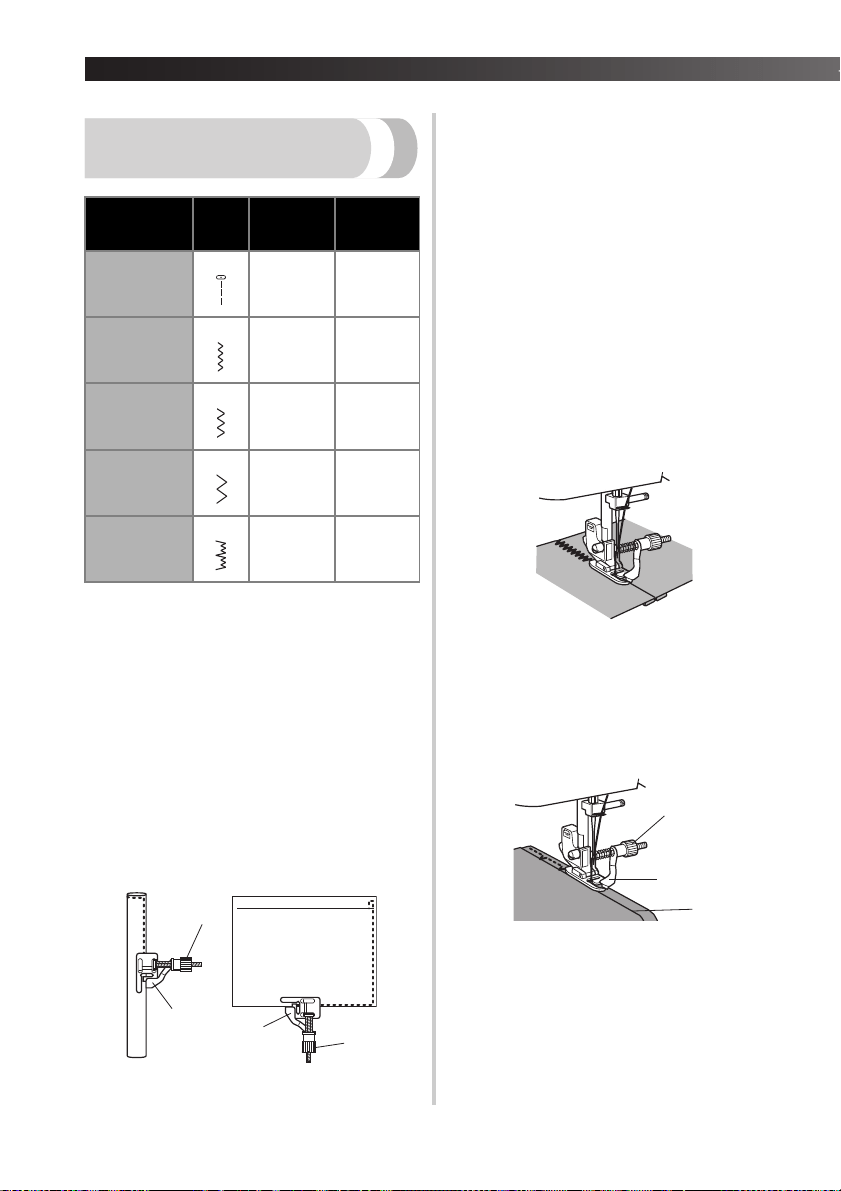
USO DE ACCESORIOS Y APLICACIONES ————————————————————————————————————————————————————————————————————————————————————————————————————————————————————————————————
—
———————————————————————————————————————————
—————
37
Utilización del pie para
puntada invisible
Este pie resulta útil no solo para la costura invisible
elástica, sino también para coser bordes de tela y
costuras.
■Para coser bordes
1Apague la máquina.
2Coloque el pie para puntada invisible.
Encienda la máquina.
3Coloque la aguja a la distancia que desee
que esté la puntada del borde de la tela y,
a continuación, baje la aguja en esa
posición.
4Gire el tornillo de la guía del pie y ajuste
con cuidado para guiar la tela.
1Tornillo
2Guía
■Para coser costuras
1Apague la máquina.
2Coloque el pie para puntada invisible.
Encienda la máquina.
3Ajuste el selector de puntadas en la
puntada recta (posición de la aguja en el
centro). Alinee la guía del pie con la
posición de la aguja.
4Ajuste el selector de puntadas en la
puntada de zig-zag con la anchura
deseada.
5Coloque la tela debajo del pie de manera
que la guía del pie quede alineada entre
ambos bordes de la tela.
6Baje el pie prensatela y comience a coser.
■Para coser costuras invisibles elásticas
Para coser costuras invisibles elásticas utilizando el
pie para puntada invisible, gire el tornillo para
ajustar la guía al dobladillo.
• Si desea información sobre la costura
invisible para dobladillo, consulte la
página 24.
1Tornillo
2Guía
3Dobladillo
Nombre de la
puntada Dibujo Longitud de
la puntada
[mm (pulg.)]
Anchura de
la puntada
[mm (pulg.)]
Puntada recta
(Posición de la
aguja en el
centro)
2,5 (3/32) —
Puntada de
zig-zag 0,7 (1/32) 1,5 (1/16)
Puntada de
zig-zag 1,5 (1/16) 3 (1/8)
Puntada de
zig-zag 2 (1/16) 5 (3/16)
Costura
invisible
elástica 2 (1/16) 5 (3/16)
5
8
9
10
14
1
1
2
2
1
2
3
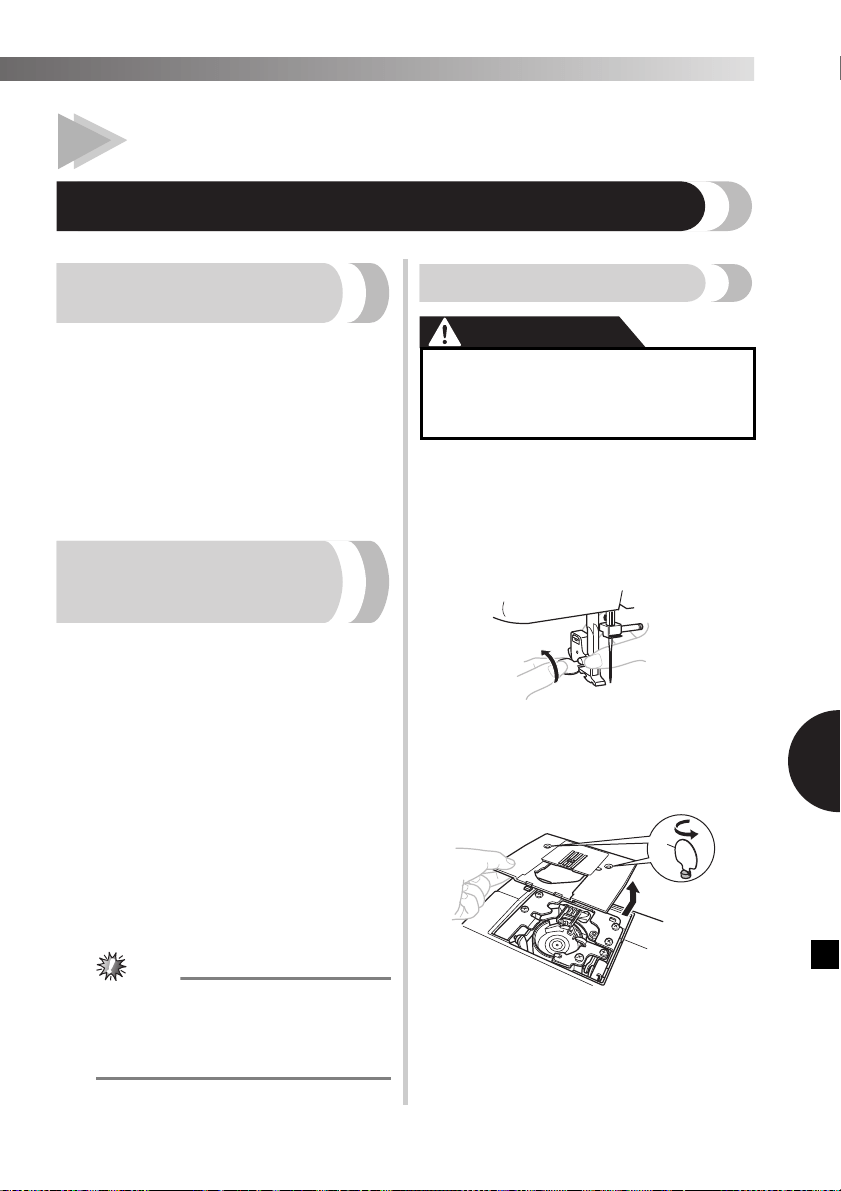
38
——————
——————————————————————————————————————————————————————————————————————————————————————————————————————————————————————————————————————————————————————————————————————————————————————————————————————————————————————————————————————————————————————————————————————————————
6
6ANEXO
MANTENIMIENTO
Restricciones para el
engrase
Para evitar que se dañe la máquina, no debe ser
engrasada por el usuario.
Esta máquina se fabricó con la cantidad de aceite
necesaria ya aplicada para garantizar un
funcionamiento correcto, lo que hace que el engrase
periódico no sea necesario.
Si se producen problemas, como dificultades para girar
la rueda o un ruido no habitual, deje de utilizar
inmediatamente la máquina y póngase en contacto con
su distribuidor autorizado o el servicio de reparaciones
autorizado más cercano.
Precauciones para el
almacenamiento de la
máquina
No guarde la máquina en ninguno de los lugares que se
describen a continuación ya que, de lo contrario, la
máquina puede dañarse; por ejemplo, óxido causado
por la condensación.
• Lugares expuestos a temperaturas extremadamente
altas
• Lugares expuestos a temperaturas extremadamente
bajas
• Lugares expuestos a cambios extremos de
temperatura
• Lugares expuestos a alta humedad o vapor
• Cerca de una llama, calefactor o aparato de aire
acondicionado
• En el exterior o lugares expuestos a la luz directa del
sol
• Entornos extremadamente polvorientos o con grasa
Nota
●Para prolongar la vida útil de esta máquina,
enciéndala y utilícela de vez en cuando.
Si se guarda durante un período de tiempo
prolongado sin utilizarse, su eficacia puede
verse reducida.
Limpieza
PRECAUCIÓN
1Apague la máquina y desenchúfela.
2Suba la aguja y el pie prensatela.
3Afloje el tornillo del pie prensatela y el
tornillo de la presilla de la aguja para
retirar el soporte del pie y la aguja.
4Con el destornillador de cabeza ovalada,
quite los dos tornillos. Levante la placa de
la aguja como se muestra en la ilustración
y, a continuación, deslícela hacia la
izquierda para extraerla.
1Utilice el destornillador de cabeza ovalada
●Asegúrese de desenchufar la máquina
antes de limpiarla ya que, de lo
contrario, hay riesgo de descarga
eléctrica o de que usted se lesione.
1
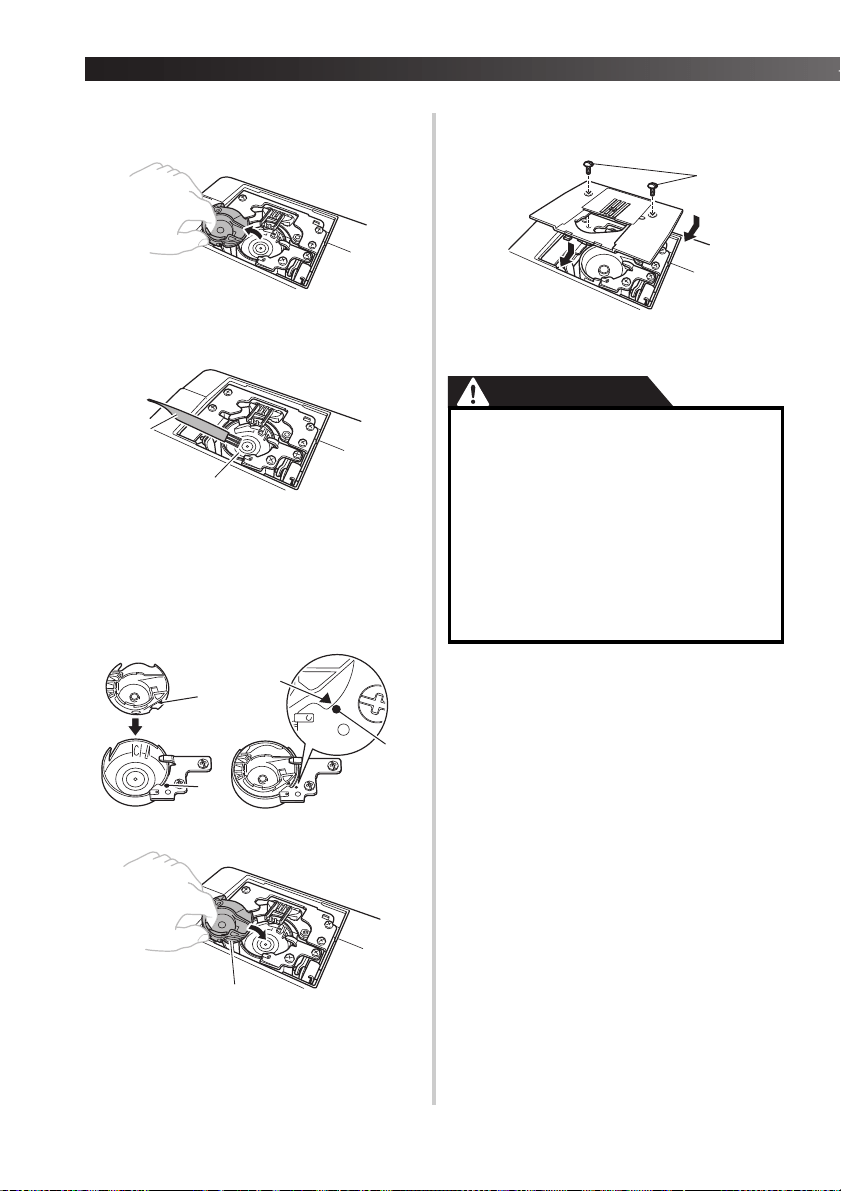
ANEXO ————————————————————————————————————————————————————————————————————————————————————————————————————————————————————————————————
—
—————————————————————————————————————————————————————————————————————————————————————————————————————————————————————
—————
39
5Coja la caja de la bobina y tire de ella
hacia la izquierda.
6Utilice el cepillo de limpieza o una
aspiradora para eliminar todo el polvo de
la pista y la zona de alrededor.
1Cepillo de limpieza
2Pista
• No aplique aceite lubricante en la caja de la
bobina.
7Introduzca la caja de bobina de forma que
la marca ▲ coincida con la marca ● de la
máquina, como se muestra a
continuación.
• Haga coincidir las marcas ▲ y ●.
1Marca ▲
2Marca ●
3Caja de bobina
• Asegúrese de que los puntos indicados
queden alineados antes de colocar la caja de
bobina.
8Coloque la placa de la aguja y apriete los
tornillos.
1Tornillos
• Asegúrese de que coloca la placa de la aguja
firmemente.
PRECAUCIÓN
1
2
2
1
2
1
3
●Nunca utilice una caja de bobina que
esté rayada, pues de hacerlo, es posible
que el hilo superior se enganche, la aguja
se rompa o se vea afectado el
rendimiento de la costura. Si desea una
caja de bobina nueva (código de pieza:
XE9326-001), póngase en contacto con
el servicio de reparaciones autorizado
más cercano.
●Asegúrese de que coloca la caja de
bobina correctamente ya que, de lo
contrario, la aguja podría romperse.
1
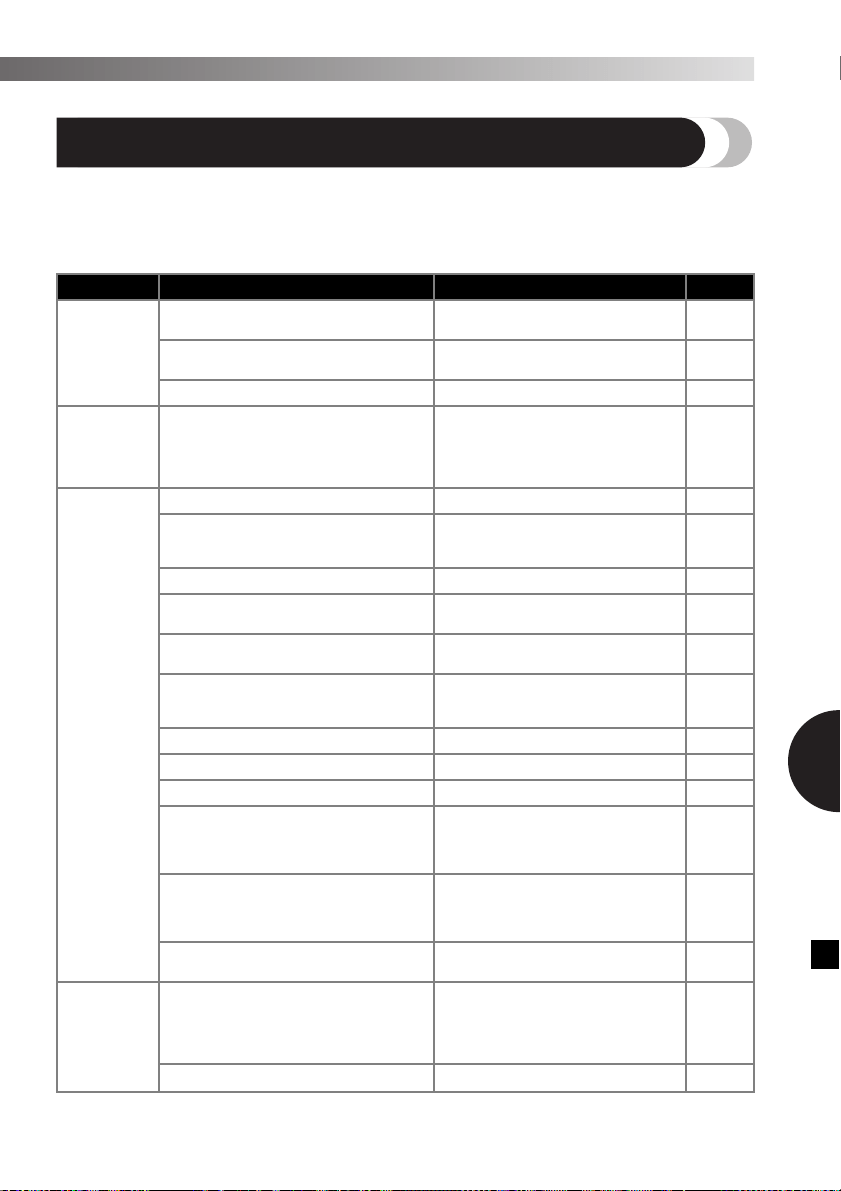
40
——————
——————————————————————————————————————————————————————————————————————————————————————————————————————————————————————————————————————————————————————————————————————————————————————————————————————————————————————————————————————————————————————————————————————————————
6
SOLUCIÓN DE PROBLEMAS
Si la máquina deja de funcionar correctamente, compruebe los posibles problemas que se exponen a continuación
antes de solicitar la reparación. Usted podrá resolver la mayoría de los problemas. Si necesitara ayuda adicional, en
Brother Solutions Center hallará consejos para la solución de problemas, así como la lista actualizada de preguntas
y respuestas más frecuentes. Visítenos en “ http://solutions.brother.com ”. Si el problema persiste, póngase en
contacto con su proveedor o con el servicio de reparaciones autorizado más cercano.
Síntoma Causa posible Solución Página
La máquina
de coser no
funciona.
El interruptor de la alimentación está en la
posición de apagado. Ponga el interruptor de la alimentación
en la posición de encendido. 7
El eje de la devanadora de bobina está
hacia la derecha. Mueva el eje de la devanadora hacia la
izquierda. 12
No ha utilizado el pedal correctamente. Utilice el pedal correctamente. 7
La tela cosida
con la
máquina no
se puede
retirar.
El hilo está enganchado debajo de la placa
de la aguja. Levante la tela y corte los hilos por
debajo, y limpie la pista. 38
La aguja se
rompe.
La aguja no está colocada correctamente. Coloque la aguja correctamente. 7
El tornillo de la presilla de la aguja está
suelto.
Utilice un destornillador de cabeza
ovalada para apretar firmemente el
tornillo. 8
La aguja está doblada o poco afilada. Cambie la aguja. 7
El hilo superior no se ha enhebrado
correctamente. Corrija el enhebrado del hilo superior. 14
No ha utilizado la combinación correcta
de tela, hilo y aguja. Elija un hilo y una aguja que sean
adecuados para el tipo de tela. 17
El pie prensatela que utiliza no es
adecuado para el tipo de puntada que
desea realizar.
Coloque el pie prensatela adecuado
para el tipo de puntada que desea
realizar. –
El hilo superior está demasiado tenso. Afloje la tensión del hilo superior. 22
Está tirando demasiado de la tela. Guíe la tela ligeramente. –
No ha colocado el carrete correctamente.
Coloque el carrete correctamente. 15, 20
La zona alrededor del orificio en la placa
de la aguja o en el pie prensatela está
rayada.
Cambie la placa de la aguja.
Póngase en contacto con su proveedor
o con el servicio de reparaciones
autorizado más cercano.
–
La caja de bobina está rayada.
Cambie la caja de bobina.
Póngase en contacto con su proveedor
o con el servicio de reparaciones
autorizado más cercano.
–
No ha utilizado una bobina diseñada para
esta máquina. Utilice bobinas diseñadas para esta
máquina. 11
El hilo
superior se
rompe.
▼
No ha enhebrado el hilo superior
correctamente. (Por ejemplo, si no ha
colocado el carrete correctamente o el hilo
se ha salido de la guía por encima de la
aguja).
Corrija el enhebrado del hilo superior. 14
El hilo tiene nudos o está enredado. Elimine todos los nudos o enredos. –
ANEXO ————————————————————————————————————————————————————————————————————————————————————————————————————————————————————————————————
—
—————————————————————————————————————————————————————————————————————————————————————————————————————————————————————
—————
41
▲La aguja no es adecuada para el hilo que
está utilizando. Elija la aguja adecuada para el tipo de
costura. 17
El hilo
superior se
rompe.
El hilo superior está demasiado tenso. Afloje la tensión del hilo superior. 22
La aguja está doblada o poco afilada. Cambie la aguja. 7
La aguja no está colocada correctamente. Coloque la aguja correctamente. 7
La zona alrededor del orificio en la placa
de la aguja o en el pie prensatela está
rayada.
Cambie la placa de la aguja.
Póngase en contacto con su proveedor
o con el servicio de reparaciones
autorizado más cercano.
–
La caja de bobina está rayada o tiene
pelusa.
Cambie la caja de bobina.
Póngase en contacto con su proveedor
o con el servicio de reparaciones
autorizado más cercano.
–
No ha utilizado una bobina diseñada para
esta máquina. Utilice bobinas diseñadas para esta
máquina. 11
El hilo
inferior está
enredado o se
rompe.
No ha enrollado el hilo de la bobina
correctamente. Enrolle el hilo de la bobina
correctamente. 11
La bobina está rayada o no gira fácilmente. Cambie la bobina. –
El hilo está enganchado. Retire el hilo enganchado y limpie la
pista. 38
No ha utilizado una bobina diseñada para
esta máquina. Utilice bobinas diseñadas para esta
máquina. 11
La bobina no está colocada correctamente. Vuelva a colocar correctamente el hilo
de la bobina. 13
La tensión del
hilo no es
correcta.
No ha enhebrado el hilo superior
correctamente. Corrija el enhebrado del hilo superior. 14
No ha enrollado el hilo de la bobina
correctamente. Enrolle el hilo de la bobina
correctamente. 11
No ha enhebrado la combinación correcta
de hilo y aguja para la tela que está
utilizando.
Elija un hilo y una aguja que sean
adecuados para el tipo de tela. 17
No ha colocado el soporte del pie
prensatela correctamente. Coloque el soporte del pie prensatela
correctamente. –
La tensión del hilo no es correcta. Ajuste la tensión del hilo superior. 22
No ha utilizado una bobina diseñada para
esta máquina. Utilice bobinas diseñadas para esta
máquina. 11
La bobina no está colocada correctamente. Vuelva a colocar correctamente el hilo
de la bobina. 13
La tela está
arrugada.
No ha enhebrado el hilo superior
correctamente o ha colocado la bobina de
forma incorrecta.
Enhebre el hilo superior y enrolle el
hilo de la bobina correctamente. 11-16
No ha colocado el carrete correctamente. Coloque el carrete correctamente. 15, 20
No ha utilizado la combinación correcta
de tela, hilo y aguja. Elija un hilo y una aguja que sean
adecuados para el tipo de tela. 17
▼La aguja está doblada o poco afilada. Cambie la aguja. 7
Síntoma Causa posible Solución Página
42
——————
——————————————————————————————————————————————————————————————————————————————————————————————————————————————————————————————————————————————————————————————————————————————————————————————————————————————————————————————————————————————————————————————————————————————
6
▲
La tela está
arrugada.
Si se cosen telas finas, la tela no está
avanzando correctamente. Cosa utilizando un material
estabilizador debajo de la tela. 20
El pie prensatela que utiliza no es
adecuado para el tipo de puntada que
desea realizar.
Coloque el pie prensatela adecuado
para el tipo de puntada que desea
realizar. 30
La tensión del hilo no es correcta. Ajuste la tensión del hilo superior. 22
Las puntadas
quedan
sueltas.
No ha enhebrado el hilo superior
correctamente. Corrija el enhebrado del hilo superior. 14
No ha utilizado la combinación correcta
de tela, hilo y aguja. Elija un hilo y una aguja que sean
adecuados para el tipo de tela. 17
La aguja está doblada o poco afilada. Cambie la aguja. 7
La aguja no está colocada correctamente. Coloque la aguja correctamente. 7
Se ha acumulado polvo debajo de la placa
de la aguja o en la caja de bobina. Retire la placa de la aguja y limpie la
placa y la caja de bobina. 38
Al coser, el
resultado de
las puntadas
no es el
correcto.
El pie prensatela que está utilizando no es
el correcto para el tipo de puntada.
Coloque el pie prensatela adecuado
para el tipo de puntada que desea
realizar. –
La tensión del hilo no es correcta. Ajuste la tensión del hilo superior. 22
El hilo está enganchado. Desenganche el hilo. Si el hilo está
enganchado en la caja de bobina,
limpie la caja de bobina. 38
La tela no se
arrastra bien.
La placa de zurcir está colocada en la
placa de la aguja. Retire la placa de zurcir. –
No ha utilizado la combinación correcta
de tela, hilo y aguja. Elija un hilo y una aguja que sean
adecuados para el tipo de tela. 17
El hilo está enganchado en alguna pieza
como, por ejemplo, en la pista. Desenganche el hilo. Si el hilo está
enganchado en la pista, limpie la pista. 38
El pie prensatela que utiliza no es
adecuado para el tipo de puntada que
desea realizar.
Coloque el pie prensatela adecuado
para el tipo de puntada que desea
realizar. 30
Síntoma Causa posible Solución Página

———————————————————————————————————————————————————————————————————————————————————————————————————————————————————————————————————————————————————————————————————————————————————————————————————————————————————————————————————————————————————————————————————————
—————
43
ÍNDICE
A
Accesorios ................................................... 4
opcionales ........................................ 4, 33
Aguja
cambio .................................................... 7
combinaciones con tela e hilo ................. 17
comprobación .......................................... 7
Aguja gemela
colocación ........................................ 8, 20
costura ................................................... 20
Aplicaciones .............................................. 32
C
Cambio del pie prensatela ............................. 8
Combinaciones de tela, hilo y aguja ............. 17
Componentes principales .............................. 5
Conexión de enchufes ................................... 6
Cortador de hilo ......................................... 19
Costura de botones .....................................29
Costura de concha ...................................... 25
Costura de cremalleras ................................ 30
Costura de doble acción .............................. 26
Costura decorativa ...................................... 26
Costura elástica .......................................... 25
Costura en zig-zag ...................................... 23
Costura invisible para dobladillo ..................24
Costura recta .............................................. 23
D
Devanado de la bobina ............................... 11
Dibujos ........................................................ 9
Disco de control de la tensión superior ......... 22
E
Enhebrado
aguja gemela .......................................... 21
hilo inferior ............................................ 13
hilo superior ........................................... 14
Enhebrado del hilo inferior .......................... 13
Enhebrado del hilo superior ......................... 14
Estilo de brazo libre .................................... 20
F
Fruncidos ................................................... 31
I
Interruptor de la alimentación ........................ 7
Interruptor de luz de cosido ........................... 7
L
Limpieza .................................................... 38
Limpieza de la pista .................................... 38
M
Mantenimiento ........................................... 38
O
Ojal
ajuste ..................................................... 28
realización ............................................. 27
Ojal automático de 4 pasos ......................... 27
P
Pedal ...........................................................7
Pie móvil ....................................................33
Pie para acolchados ....................................34
Pie para acolchados de 1/4 pulgadas ............35
Pie para dobladillos estrechos ......................35
Pie para puntada invisible ............................37
Placa de zurcir .............................. 29, 31, 34
Portacarrete .........................................11, 14
adicional ................................................21
Procedimiento para tirar del hilo inferior .......16
Pulsador de retroceso ..................................10
Puntada para satén ......................................23
Puntadas
incorporadas ...........................................23
nombres ...................................................9
R
Rueda ........................................................14
S
Selector de puntadas .....................................9
Solución de problemas ................................40
T
Tensión del hilo ..........................................22
Tornillo de ajuste fino para ojales .................28
U
Unidad de cama plana ..................................5
Z
Zurcido ......................................................31




English
Spanish
885-X11
Printed in China
XF0512-001