INSTALLATION GUIDE | NZ AU
Vertical Freezer
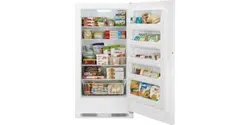
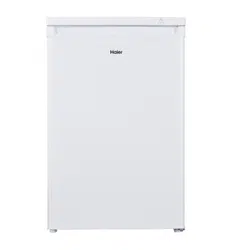
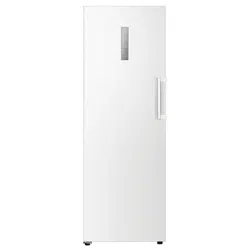
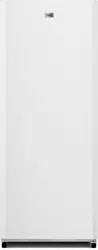
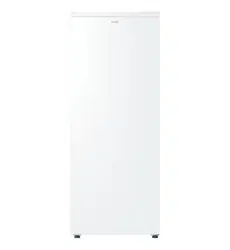
HVF90VW, HVF170VW
Contents
2
4 Safety information
10 Product Overview
11 Control Panel
12 Installation
14 Door Reversibility
16 Use
18 Energy Saving Tips
19 Care and Cleaning
21 Troubleshooting
9 Intended Use
Before first use 12
Unpacking 12
Equipment 17
User manual
3
Thank you
Thank you for purchasing this Product.
Please read these instructions carefully before using this appliance. The instructions
contain important information which will help you get the best out of the appliance
and ensure safe and proper installation, use and maintenance.
Keep this manual in a convenient place so you can always refer to it for the safe and
proper use of the appliance.
If you sell the appliance, give it away, or leave it behind when you move house, make
sure you also pass on this manual so that the new owner can become familiar with
the appliance and safety warnings.
Accessories
Check the accessories and literature in accordance with this list:
WARNING – Important Safety information
NOTICE-General information and tips
Environmental information
Disposal
WARNING!
4
Safety information
Help protect the environment and human health. Put the
packaging in applicable containers to recycle it. Help to
recycle waste of electrical and electronic appliances. Do not
dispose of appliances marked with this symbol with the house-
hold waste. Return the product to your local recycling facility
or contact your municipal office.
The symbol indicates there is a risk of fire since flammable
materials are used. Take care to avoid causing a fire by igniting
flammable material.
WARNING: Risk of fire/flammable material
Risk of injury or suffocation!
Refrigerants and gases must be disposed of professionally. Ensure that the
tubing of the refrigerant circuit is not damaged before being properly disposed
of. Disconnect the appliance from the mains supply. Cut off the mains cable and
dispose of it. Remove the trays and drawers as well as the door catch and seals
to prevent children and pets to get closed in the appliance.
5
WARNING!
Safety information
Before switching on the appliance for the first time read the
following safety hints:
Before first use
▶ Make sure there is no transport damage.
▶ Remove all packaging and keep out of children´s reach.
▶ Wait at least two hours before installing the appliance in order to ensure the
refrigerant circuit is fully efficient.
▶ Handle the appliance always with at least two persons because it is heavy.
Installation
▶ The appliance should be placed in a well–ventilated place. Ensure a space of at
least 5 cm above and around the appliance.
▶ Never place the appliance in a damp area or location where it might be splashed
with water. Clean and dry water splashes and stains with a soft clean cloth.
▶ Do not install the appliance in direct sunlight or near heat sources(e.g. stoves,
heaters).
▶ Install and level the appliance in an area suitable for its size and use.
▶ Keep ventilation openings in the appliance or in the in–built structure clear of
obstruction.
▶ Make sure that the electrical information on the rating plate agrees with the power
supply. If it does not, contact an electrician.
▶ The appliance is operated by a 220–240 VAC/50 Hz power supply. Abnormal
voltage fluctuation may cause the appliance to fail to start, or damage to the
temperature display or compressor, or there may be an abnormal noise when
operating. In such case, an automatic regulator shall be mounted.
▶ Do not use multi–plug adapters and extension cables.
▶ Do not locate multiple portable socket–outlets or portable power supplies at the
rear of the appliance.
▶ Ensure that the power cable is not trapped by the refrigerator. Do not step on the
power cable.
6
WARNING!
WARNING!
Safety information
▶ Use a separate earthed socket for the power supply which is easy accessible.
The appliance must be earthed.
▶ Do not damage the refrigerant circuit.
Before first use
▶ This appliance can be used by children aged from 8 years and above and person
with reduced physical, sensory or mental capabilities or lack of experience and
knowledge if they have been given supervision or instruction concerning use of
the appliance in a safe way and understand the hazards involved.
▶ Children aged from 3 to 8 years are allowed to load and unload, but not allowed to
clean or install the refrigerating appliances.
▶ Keep away children under 3 years of age from the appliance unless they are
constantly supervised.
▶ Children shall not play with the appliance.
▶ Keep ventilation openings in the appliance or in the in–built structure clear of
obstruction.
▶ If cool gas or other inflammable gas is leaking in the vicinity of the appliance, turn
off the valve of the leaking gas, open the doors and windows and do not unplug
in the power cable of the refrigerator or any other appliance.
▶ Notice that the appliance,for example HVF90VW、HVF170VW, is set for operation
at a specific ambient range between 16 °C and 43°C. The appliance may not work
properly if it is left for a long period at a temperature above or below the indicated
range.
▶ Do not pull on the door shelves. The door may be pulled slant, the bottle rack, may
be pulled away, or the appliance may topple.
▶ Open and close the doors only with the handles. The gap between the doors and
the cabinet is very narrow. Do not extend your hands in these areas to avoid
pinching your fingers. Open or close the refrigerator doors only when there are no
children standing within the range of door movement.
▶ Risk of child entrapment. Before you throw away your old refrigerator or freezer, the
doors and panels should be removed and the racks left in place so that children
may not easily climb inside.
WARNING!
7
Safety information
▶ Do not store or use inflammable, explosive or corrosive materials in the appliance
or in the vicinity.
▶ Do not store medicines, bacteria or chemical agents in the appliance. This appliance
is a household appliance. It is not recommended to store materials that require
strict temperatures.
▶ Never store liquids in bottles or cans (besides high percentage spirits) especially
carbonated beverages in the freezer, as these will burst during freezing.
▶ Check the condition of food if a warming in the freezer has taken place.
▶ Do not set unnecessarily low temperature in the refrigerator compartment. Minus
temperatures may occur at high settings. Attention: Bottles can burst.
▶ Do not touch frozen goods with wet hands (wear gloves). Especially do not eat ice
lollies immediately after removal from the freezer compartment. There is the risk to
freeze or the formation of frost blisters. First aid: keep immediately under running
cold water. Do not pull away!
▶ Do not touch the inside surface of the freezer storage compartment when in
operation, especially with wet hands, as your hands may freeze onto the surface.
▶ Unplug the appliance in the event of a power interruption or before cleaning. Allow
at least 7 minutes before restarting the appliance, as frequent starting may damage
the compressor.
▶ Do not use electrical devices inside the food storage compartments of the
appliance, unless they are of the type recommended by the manufacturer.
Maintenance / cleaning.
▶ Make sure children are supervised if they carry out cleaning and maintenance.
▶ Disconnect the appliance from the electrical supply before undertaking any routine
maintenance. Allow at least 5 minutes before restarting the appliance, as frequent
starting may damage the compressor.
▶ When positioning the appliance, ensure the supply cord is not trapped or damaged.
▶ Do not locate multiple portable socket–outlets or portable power supplies at
the rear of the appliance.
▶ Do not use electrical appliances inside the food storage compartments of the
appliance, unless they are of the type recommended by the manufacturer.
▶ Do not store explosive substances such as aerosol cans with a flammable
propellant in this appliance.
8
Safety information
WARNING!
▶ Hold the plug, not the cable, when unplugging the appliance.
▶ Do not clean the appliance with hard brushes, wire brushes, detergent powder,
petrol, amyl acetate, acetone and similar organic solutions, acid or alkaline
solutions. Please clean with special refrigerator detergent to avoid damage.
▶ Do not scrape off frost and ice with sharp objects. Do not use sprays, electric
heaters, hair dryer, steam cleaners or other sources of heat in order to avoid
damage to the plastic parts.
▶ Do not use mechanical devices or other means to accelerate the defrosting
process, other than those recommended by the manufacturer.
▶ If the supply cord is damaged, it must only be replaced by your Fisher &Paykel
Appliances Authorised Service Centre.
▶ Do not try to repair, disassemble or modify the appliance by yourself. In Case of
repair please contact our customer service.
▶ Eliminate the dust on the back of the unit at least once a year to avoid hazard
by fire, as well as increased energy consumption.
▶ Do not spray or flush the appliance during cleaning.
▶ Do not use water spray or steam to clean the appliance.
▶ Do not clean the cold glass shelves with hot water. Sudden temperature change
may cause the glass to break.
Refrigerant gas information
WARNING!
The appliance contains the flammable refrigerant ISOBUTANE (R600a). Make
sure the refrigerant circuit is not damaged during transportation or installation.
Leaking refrigerant may cause eye injuries or ignite. If damage has occurred,
keep away open fire sources, thoroughly ventilate the room, do not plug or unplug
the power cords of the appliance or any other appliance.
If the refrigerant gets into your eyes with the refrigerant, rinse immediately it under
running water and call an eye specialist immediately.
QLD Gas note:It is hazardous for anyone other than an Authorised Service
Person to service this appliance. In Queensland-the authorized Service Person
MUST hold a Gas Work Authorisation for hydrocarbon refrigerants, to carry out
Servicing or repairs which involve the removal of covers.
9
Intended use
Intended use
This appliance is intended for freezing food. It has been designed exclusively for use
in household and similar applications such as staff kitchen areas in shops, offices and
other working environments; farm houses and by clients in hotels, motels and other
residential type environments as well as in bed-and-breakfast and catering business.
It is not intended for commercial or industrial use. Changes or modifications to the
device are not allowed. Unintended use may cause hazards and loss of warranty claims.
HVF90VW
HVF170VW
4
4
10
Product Overview
NOTICE
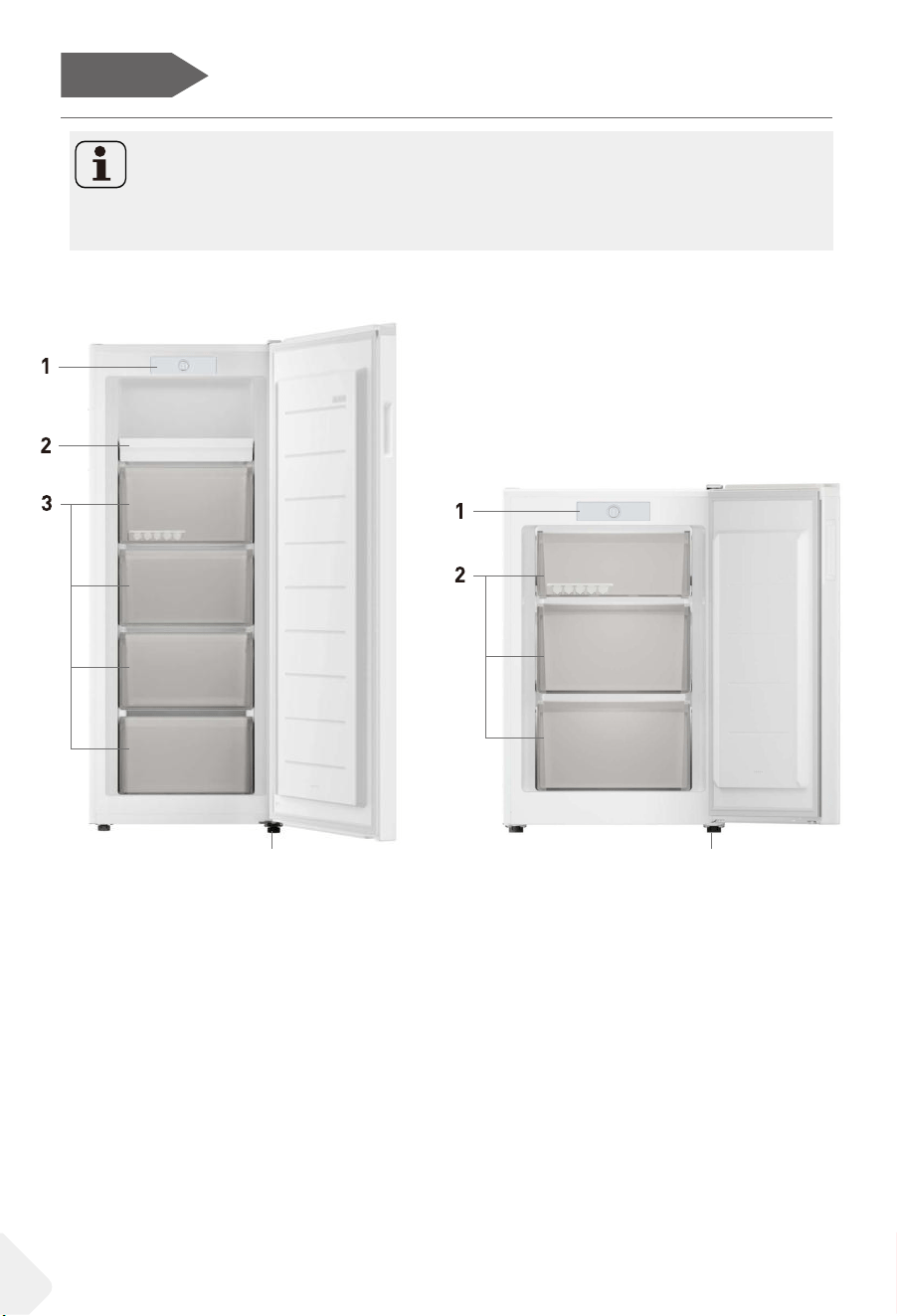
Due to technical changes and different models, some of the illustrations in this
manual may differ from your model.
1 Control panel
2 Plastic shelves
3 Drawers
4 Adjustable feet
Note
11
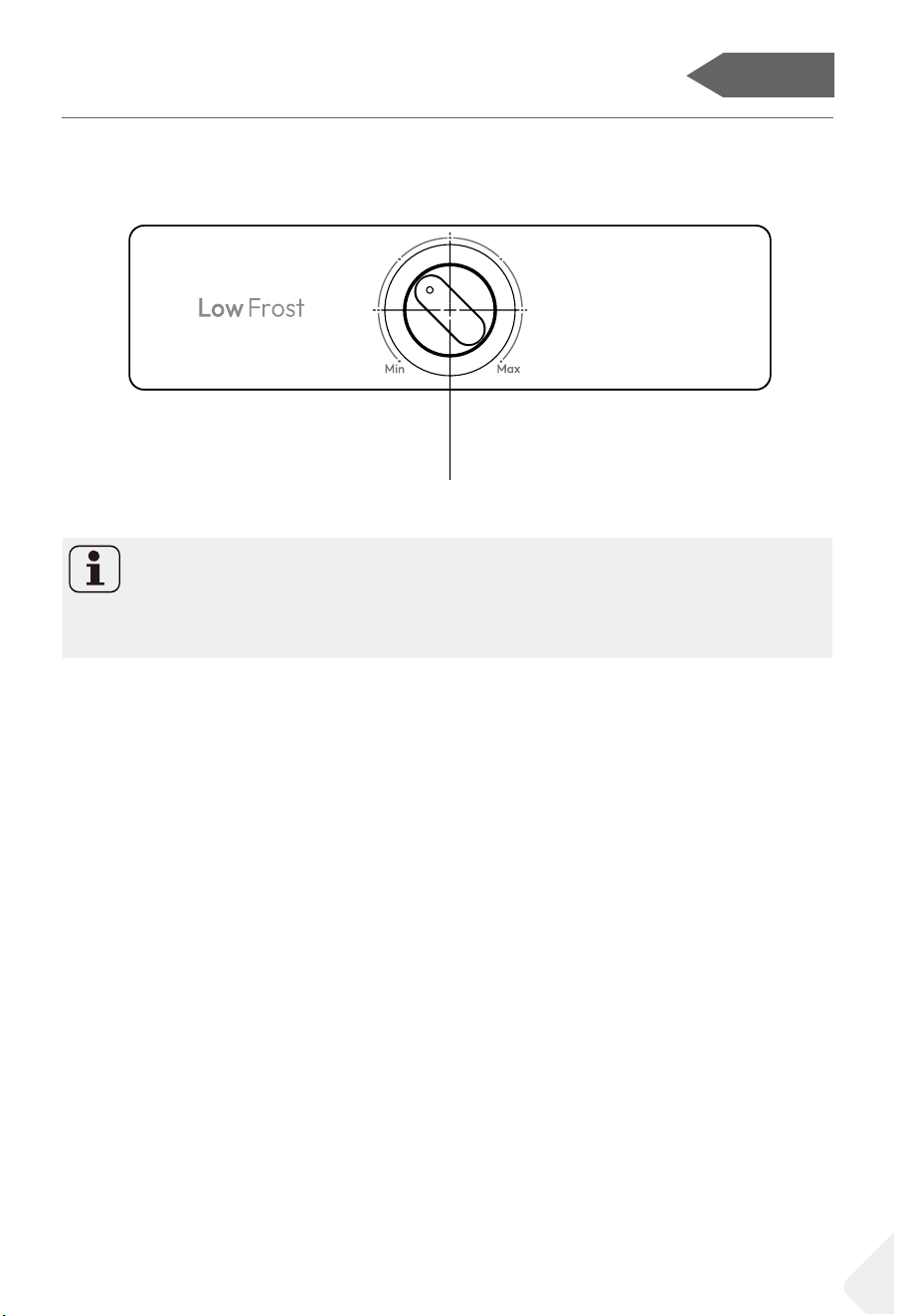
Control panel
Temperature control (Thermostat)
Display panel
NOTICE
Turn thermostat to adjust the cooling between MIN (warmer) and MAX(colder).
The storage temperature will decrease as you move from the MIN to the MAX setting.
▶ If the ambient temperature around the freezer is high and the cooling level is set
high, ice formation may not stop, and the cabinet temperature could become
too low.
▶ If the ambient temperature around the refrigerator is low and the cooling level is
set too low, the freezer may not operate properly. This can cause the temperature
inside the unit to rise, which is not ideal for food storage and preservation.
▶ After adjusting the temperature, it will take some time for the interior to stabilize.
The time required depends on the cooling level set, the surrounding temperature,
how often the door is opened, and the amount of food stored inside.
WARNING!
50
50
50
50
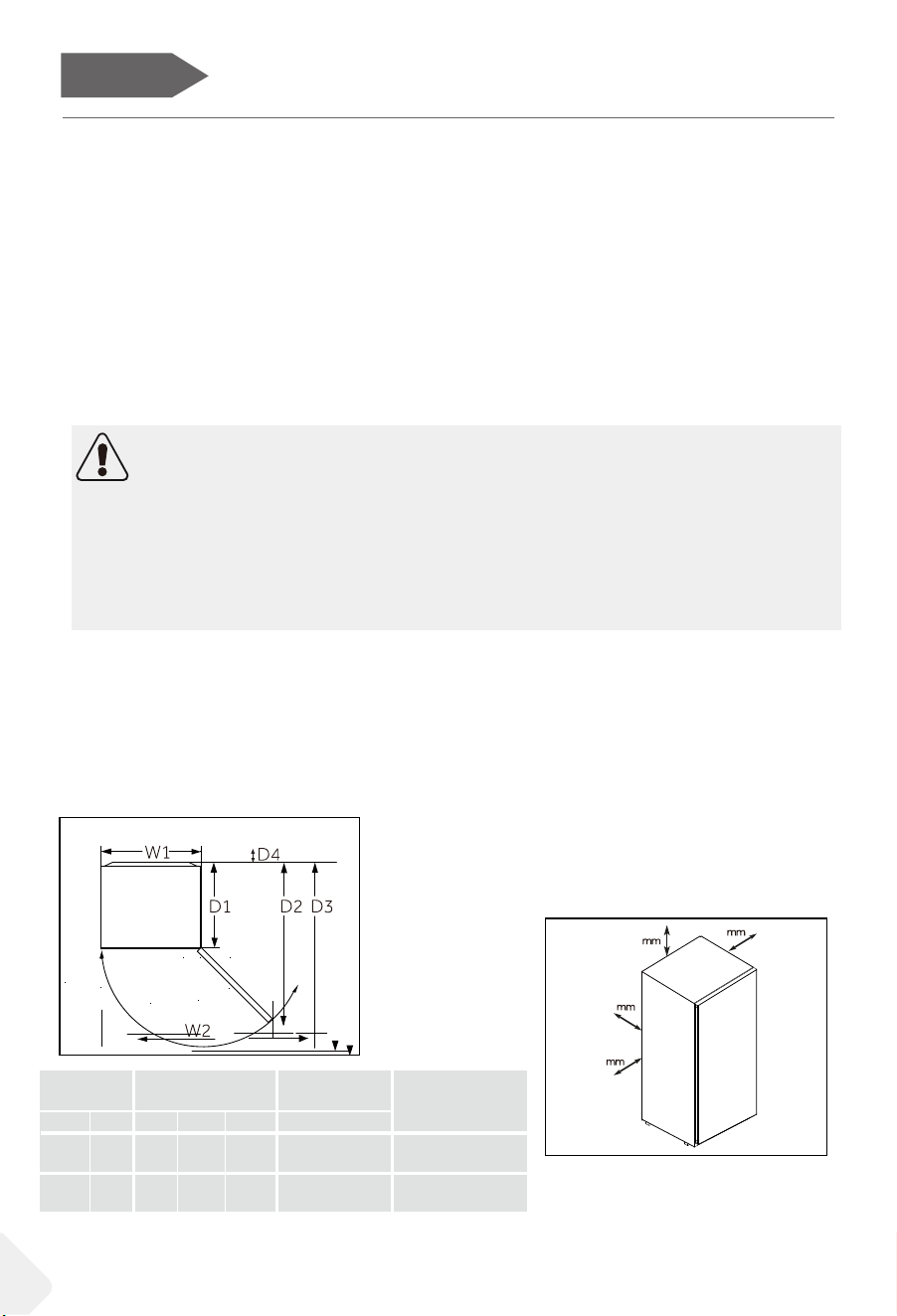
Width Distance toDepth
Model
identifier
wall in mmin mmin mm
D42D 3DD1W2W1
10641002500824545
10641002500824545
50
50
HVF170VW
HVF90VW
12
Installation
Keep the room temperature between 10°C and 43°C. Temperatures outside this
range can affect the appliance’s performance and energy use.
Avoid placing the appliance near heat sources like ovens or other refrigerators.
Before first use
▶ Remove all packaging materials. Keep them out of children's reach and dispose of
them responsibly.
▶ Clean both the inside and outside of the appliance using water and a mild detergent.
Dry thoroughly with a soft cloth.
▶ After leveling and cleaning the appliance, wait at least 2 hours before plugging it in.
(See the INSTALLATION section for more details.)
▶ Pre-cool the compartments before placing food inside.
Unpacking
▶ The appliance is heavy. Always handle with at least two persons.
▶ Keep all packaging materials out of children´s reach and dispose them in an
environmentally friendly manner.
▶ Take the appliance out of the packaging.
▶ Remove all packaging materials.
Environmental conditions
Recommended Space
Recommended space when door is opened.
Recommended Space
For safe and effective operation,
ensure proper ventilation around
the appliance. Follow the
recommended ventilation
guidelines shown in the diagrams.
2.1.
2 h
WARNING!
13
Installation
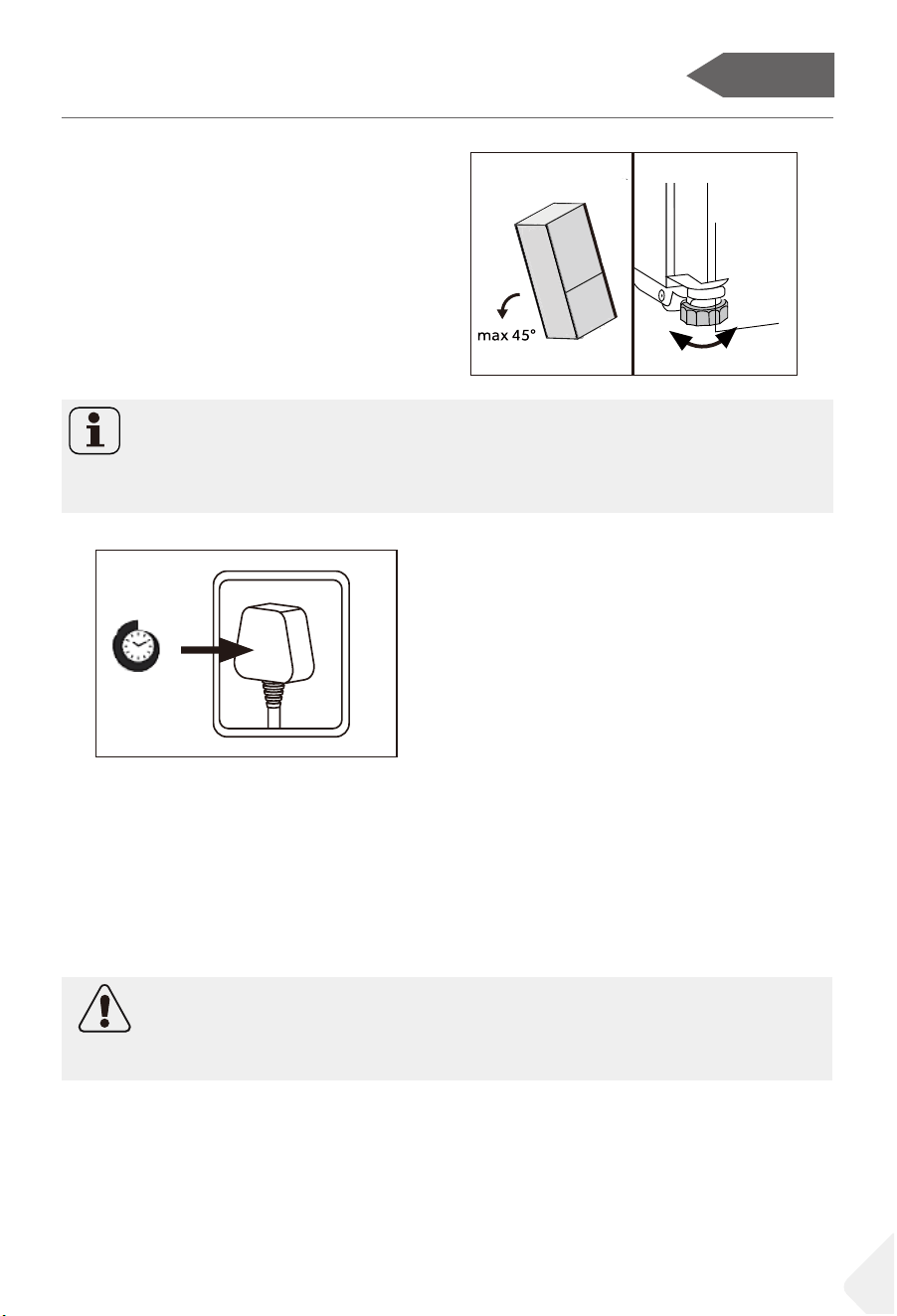
Aligning the appliance
The appliance should be placed on a flat
and solid surface.
1.Tilt the refrigerator slightly backwards.
2.Set the feet to the desired level.
Make sure the distance to the wall on the
hinge side is at least 50 mm for the door
to open properly.
NOTICE
For a free standing appliance: this refrigerating appliance is not intended to be used as a
built–in appliance.
Waiting time
After moving the fridge, let it sit upright for at
least 2 hours before plugging it in.This allows
the internal oil to settle properly, helping the
fridge run smoothly.
Electrical connection
Before each connection check if:
▶ Power supply, socket and fusing are appropriate to the rating plate.
▶ The power socket is earthed and no multi–plug or extension.
Connect the plug to a properly installed household socket.
To avoid risks a damaged power cord must be replaced by the customer service.
14
WARNING!
Door Reversibility
▶ The appliance is heavy. You need two persons to reverse the door.
▶ Always unplug the appliance before starting.
▶ Do not tilt the appliance more than 45° to prevent damage of the refrigeration
system.
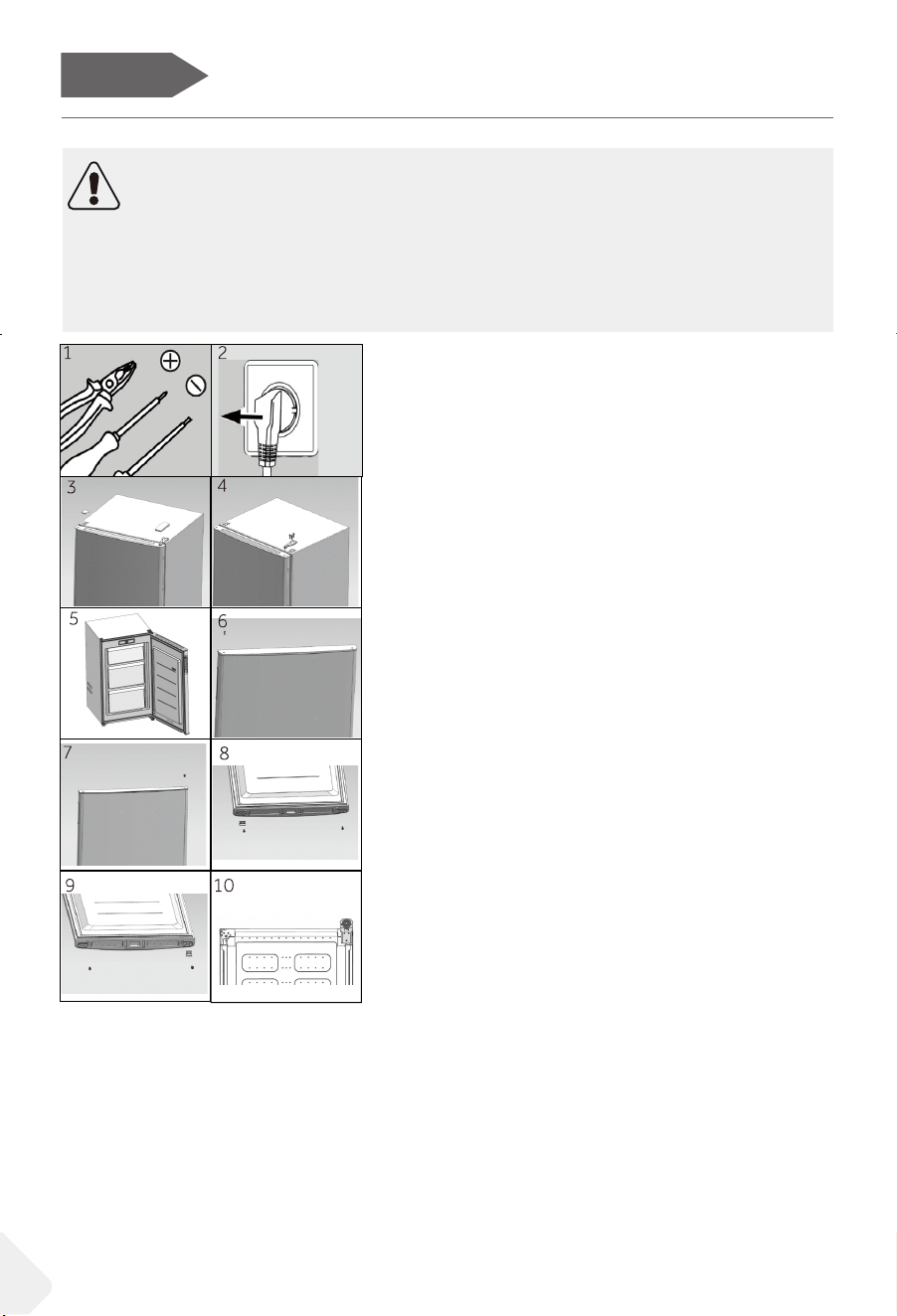
Assembly steps
1. You will need a Phillips screwdriver and a spanner.
2. Unplug the appliance.
3. Remove the top hinge cover and the hinge hole
cover.
4. Remove 3 screws and hinge.
5. Open and remove the door.
6. Remove hole cover on top left of door.
7. Fix the cover in right side of door.
8. Turn the door upside down, remove 2 screws
and door stopper at the bottom of the door.
9. Fix door stopper dismounted last step to the
other side and 2 screws.
10. Tilt slightly backwards the cabinet, remove
3 screws, the lower hinge and adjustable feet.
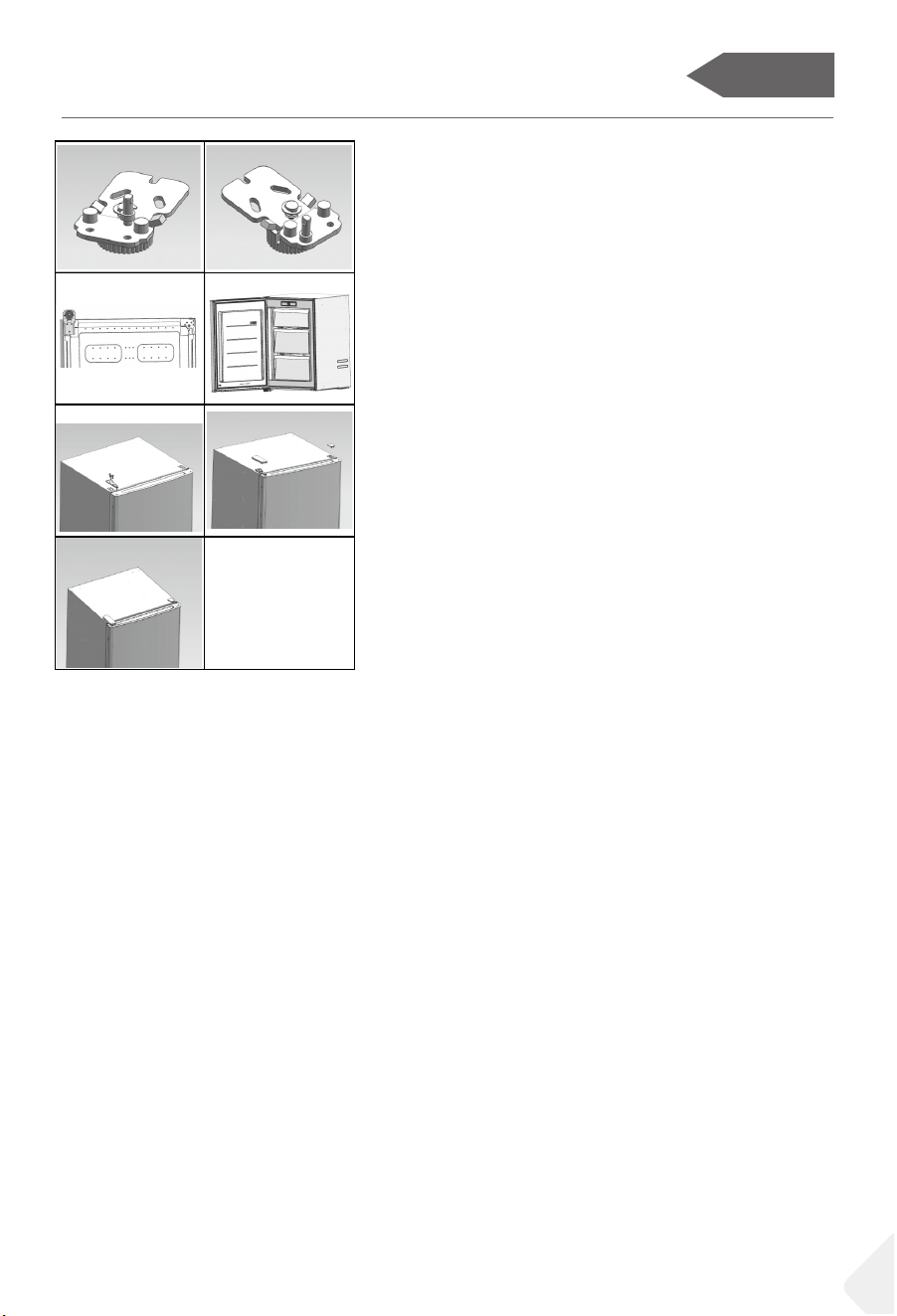
11
12
13
14
15
16
17
15
Door Reversibility
11. Remove hinge pin.
12. Insert hinge pin into the hole on the opposite side.
13. Fix the hinge to the opposite position of the cabinet
with 4 screws and adjustable feet.
14. Mount the door.
15. Fix upper hinge with 3 screws.
16. Fix hinge hole cover and upper left hinge cover.
17. Remove step 17.
16
WARNING!
Tips on storing fresh food
Use
• Keep the freezer temperature at– 18°C.
• Hot food should be cooled to room temperature before storing in the freezer
compartment.
• Food cut into small portions will freeze faster and be easier to defrost and cook. The
recommended weight for each portion is less than 2.5 kg.
• It is better to pack food before putting it into the freezer. The outside of the packaging
must be dry to avoid bags sticking together. Packaging materials should be odour–
free, airtight, non–poisonous and nontoxic.
• In order to avoid expiration of storage periods, please note the freezing date, time
limit and name of the food on the packaging according to the storage periods of
different foods.
Tips on storing commercially frozen foods
• Always follow the manufacturers time guidelines on the packaging.
• Try to keep the length of time between purchase and storage as short as possible
to preserve food quality.
• Buy frozen food, which has been stored at a temperature of –18 °C or below.
• Avoid buying food which has ice or frost on the packaging – This indicates that the
products might have been partially defrosted and refrozen at some point–
temperature rising affects the quality of food.
Acid, alkali and salt etc. could erode the internal surface of the freezer.
• Do not place the food with these substances (e.g. sea fish) directly on the internal
surface. Salt water in the freezer should be cleaned up immediately.
• Do not exceed the food storage time recommended by the manufacturers.
Only take the required amount of food out of the freezer.
• Consume defrosted food quickly. Defrosted food cannot be refrozen unless it is
first cooked, otherwise it may be less edible.
• Do not load excessive quantities of fresh food in the freezer compartment.
Refer to the freezing capacity of the freezer.
• While freezing fresh food, avoid bringing them in contact with already frozen food
due to the risk of thawing!
17
Use
NOTICE
Due to different models, your product may not have all of the following features.
Please refer to section Product Description.
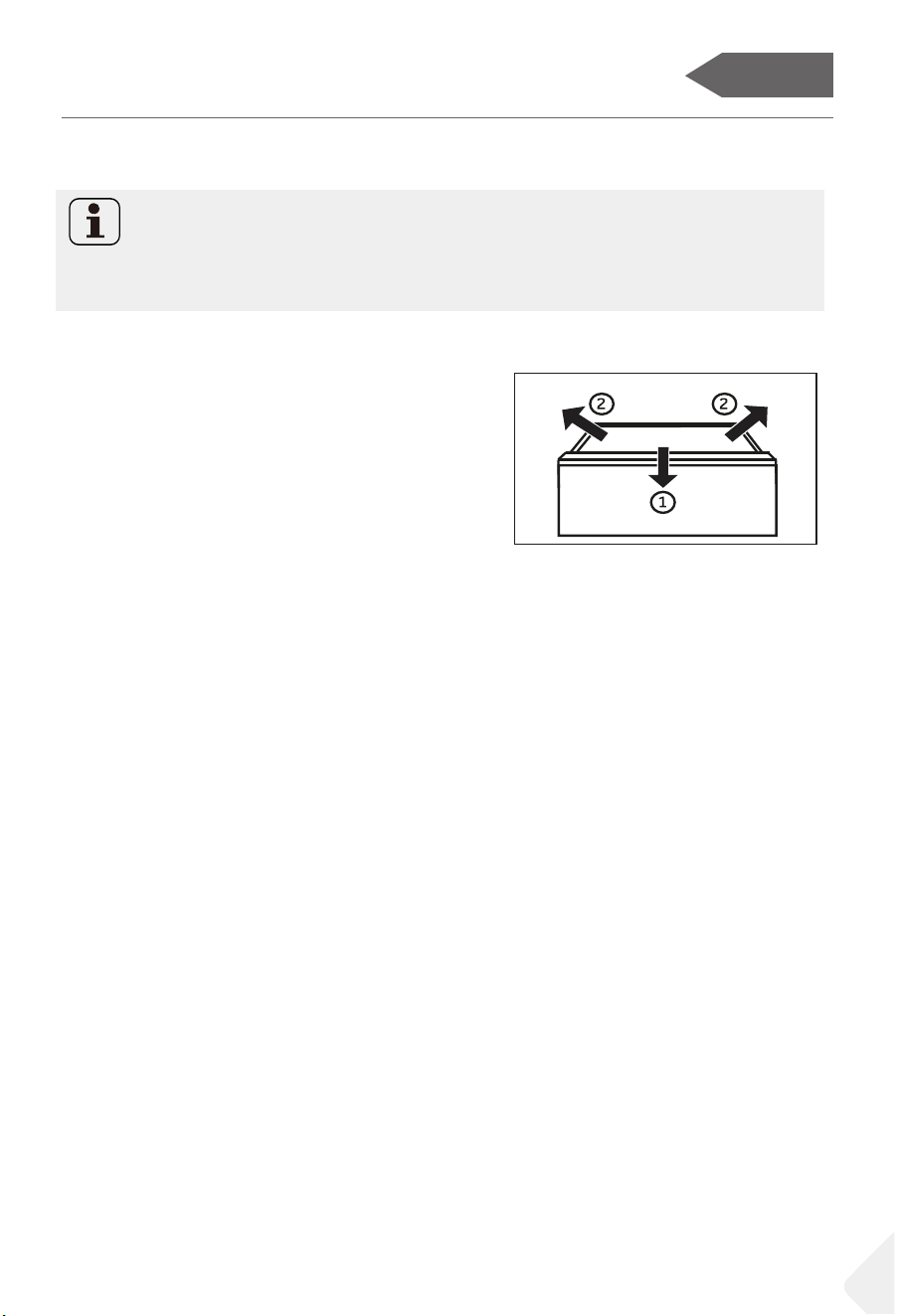
Equipment
Removable drawer
To remove the drawer out, pull out to the
maximum extension the lift and remove.
In order to insert the drawer, the above steps
repeat above in reverse order.
18
Energy saving tips
Energy saving tips
▶ Make sure the appliance is properly ventilated (see INSTALLATION).
▶ Do not install the appliance in direct sunlight or near heat sources (e.g. stoves,
heaters).
▶ Avoid unnecessarily low temperatures in the appliance. Energy use increases as
the temperature is set lower.
▶ Allow warm food to cool down before placing it in the appliance.
▶ Open the appliance door as little and briefly as possible.
▶ Do not overfill the appliance to avoid obstructing the air flow.
▶ Avoid air within the food packaging.
▶ Keep door seals clean so that the door always closes correctly.
▶ The most energy-efficient setup uses the drawers, food box, and shelves to be
positioned in the appliance in the default factory position, and food to be placed
without blocking the air outlet of the duct.
19
WARNING!
WARNING!
Care and cleaning
Disconnect the appliance from the power supply before cleaning.
Clean
Clean the appliance when there is little or no food inside.
Clean the appliance every four weeks to maintain hygiene and prevent food odours.
▶ Do not clean the appliance with hard brushes, wire brushes, detergent powder,
petrol, amyl acetate, acetone and similar organic solutions, acid or alkaline so-
lutions. Please clean with refrigerator-safe cleaner.
▶ Do not spray or flush the appliance during cleaning.
▶ Do not use water spray or steam to clean the appliance.
▶ Do not clean the cold glass shelves with hot water. Sudden temperature change
may cause the glass to break .
▶ Do not touch the inside surface of the freezer storage compartment, especially
with wet hands, as your hands may freeze onto the surface.
▶ Always keep the door gasket clean.
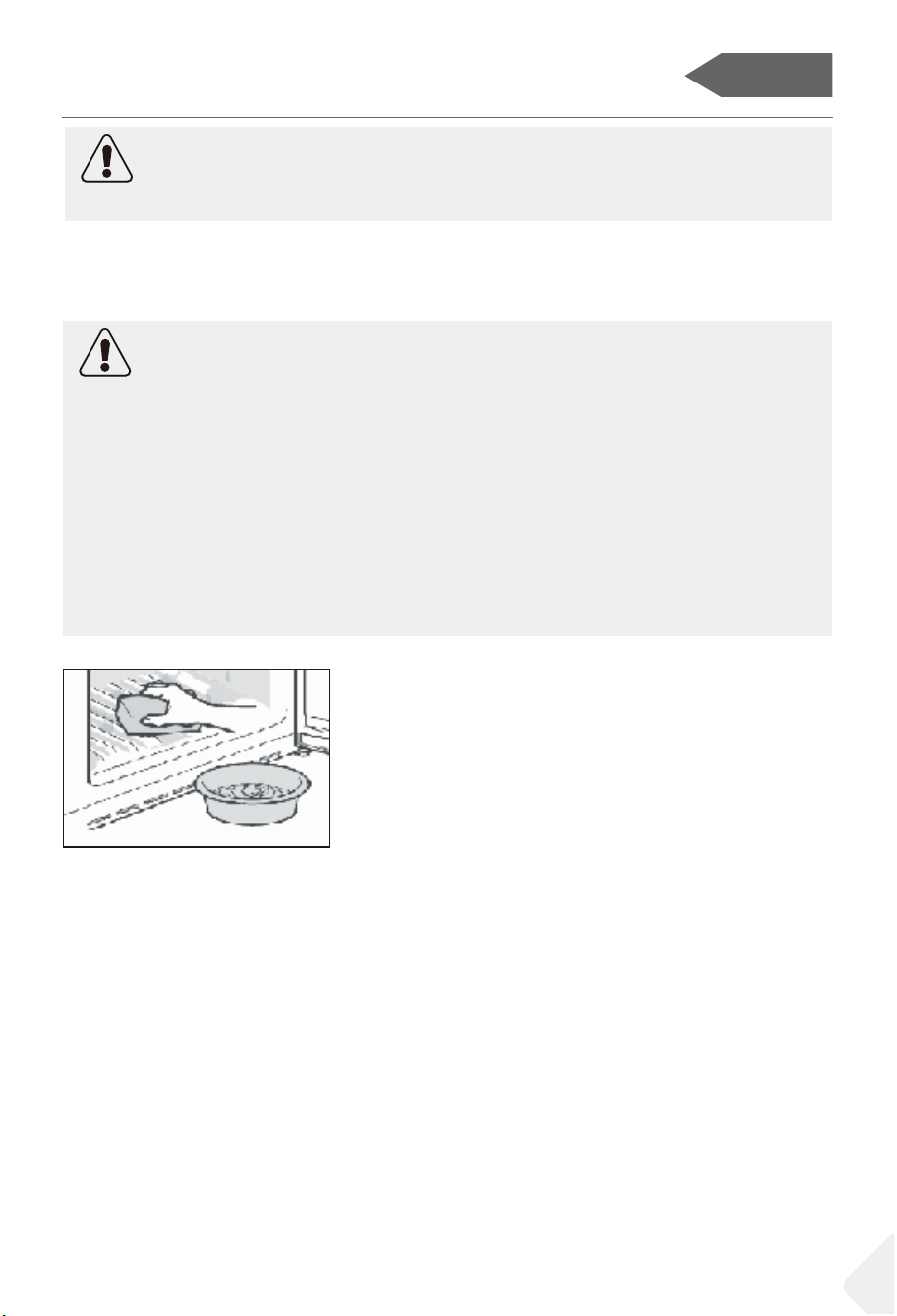
▶ Wipe the inside and outside of the appliance with a
sponge and mild detergent.
Please scrub the interior and exterior of the refrigerator,
including door sealing, door rack, glass shelves,
compartments, and other removable parts..., with a soft
towel or sponge dipped in warm water (you may add
neutral detergent into the warm water).
▶ If there is liquid spilled, remove all the contaminated parts, directly rinse with running
water, dry and place it back into the fridge.
▶ If there is spilled cream (such as the cream, melting ice cream), please remove all
the contaminated parts, put into the warm water with about 40 °C for several
minutes, then rinse with water, dry and place it back into the fridge.
▶ In case some small part or component gets stuck inside of the fridge (between
shelves or drawers), use small soft brush to release it. If you cannot reach the part,
please contact customer service
▶ Rinse and dry with soft cloth.
▶ Do not clean any of the parts of the appliance in a dishwasher.
▶ Allow at least 7 minutes before restarting the appliance as frequent starting may
damage the compressor.
WARNING!
20
Non-use for a longer period
If the appliance is not used for an extended period of time:
Take out the food.
Unplug the power cord.
Clean the appliance as described above.
Leave the doors open to prevent unpleasant odours.
Turn the appliance off only if strictly necessary.
Moving the appliance
1. Remove all food and unplug the appliance.
2. Tape down shelves and other loose parts in the fridge and freezer.
3. Do not tilt the refrigerator more than 45° to avoid damaging the refrigerating system.
▶ Do not lift the appliance by its handles.
▶ Never place the appliance horizontally on the ground.
Care and cleaning
Possible SolutionPossible CauseProblem
WARNING!
21
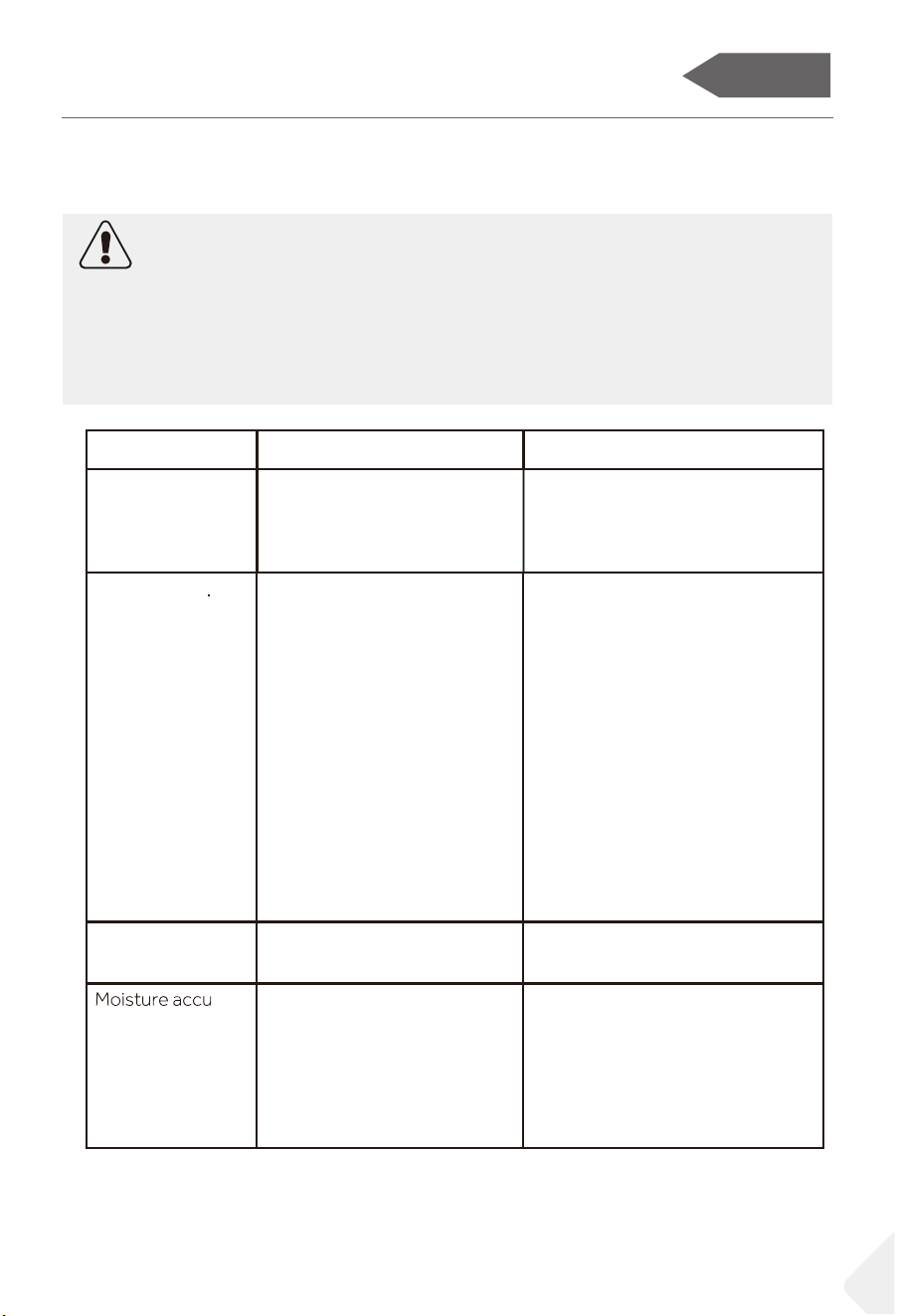
It is too warm
It is too cold.
-
mulates on the
refrigerators
outside surface
or between the
drawer.
doors/door and
Troubleshooting
▶ Unplug the appliance before maintenance.
▶ Electrical equipment should be serviced only by qualified electrical experts, because
improper repairs can cause considerable consequential damages.
▶ Power cords must be replaced by the manufacturer or a qualified service technician.
Many common issues can be solved without expert help.
Please check the suggestions below before contacting after-sales service.
The inside of the
refrigerator is dirty
and/or smells.
• The inside of the refrigera-
tor needs cleaning.
• Food of strong odour is
stored in the refrigerator.
• The temperature is set too
high.
• Too warm goods has been
stored.
• Too much food has been
stored at one time.
• The goods are too close to
each other.
• A door/drawer of the appli-
ance is not tightly closed.
• The door/drawer has been
opened too frequently or for
too long.
• The climate is too warm
and too damp.
• The door is not closed
tightly. The cold air in the
appliance and the warm air
outside it condensates.
• Set the temperature to a colder
setting.
• Always cool down goods
before storing them.
• Always store small quantities of
food.
• Leave space between food
items for air to circulate
• Close the door/drawer.
• Do not open the door/drawer
too frequently.
• Clean the inside of the
refrigerator.
• Wrap food thoroughly.
• This is normal in damp climate
and will change when the
humidity decreases.
• Ensure that the door/drawer is
tightly shut.
• The temperature is set
too low.
• Set the temperature to a
warmer setting.
Possible SolutionPossible CauseProblem
22
Troubleshooting
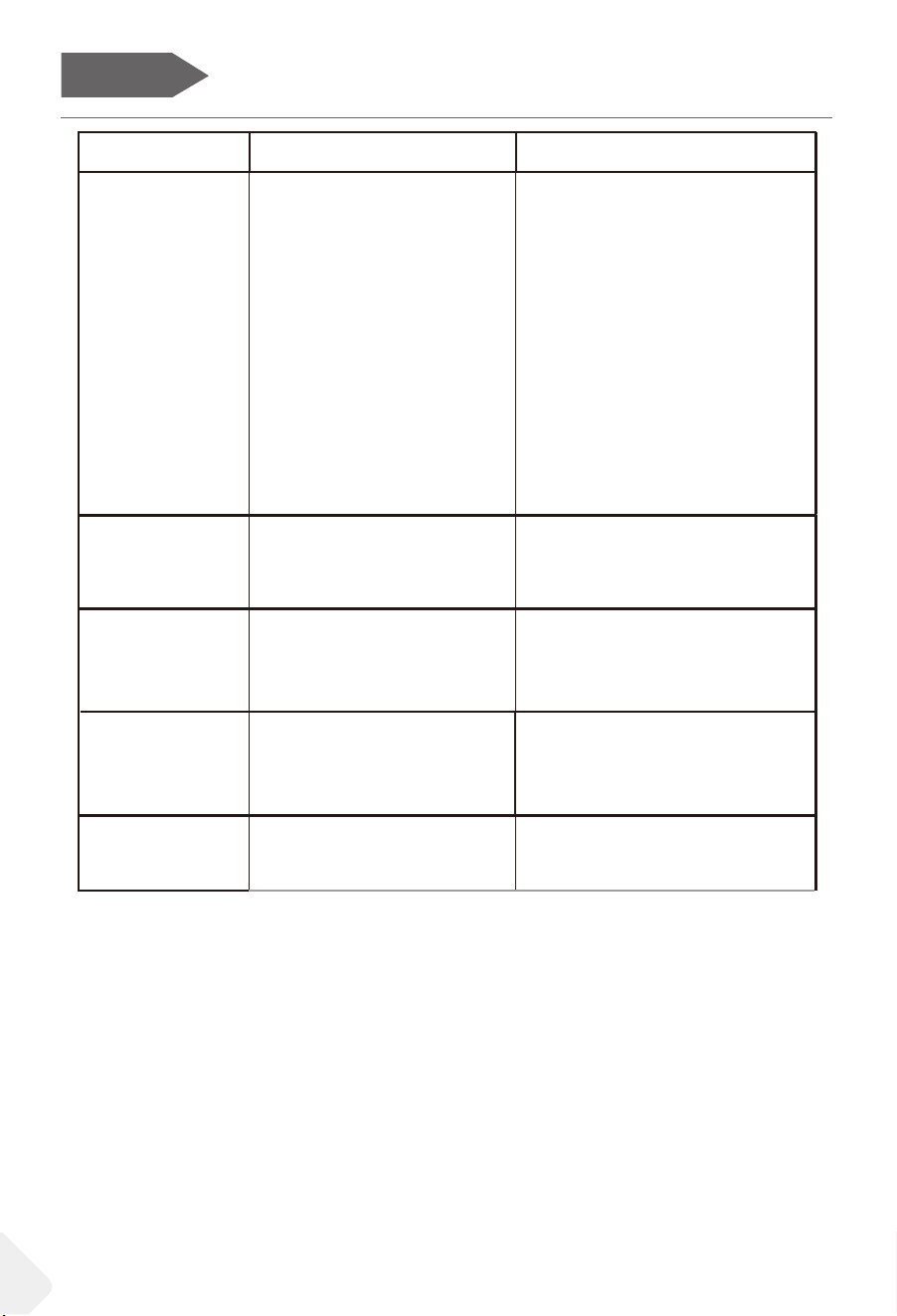
• A defrost is required.
• The goods were not
adequately packaged.
• A door/drawer of the
appliance is not tightly closed.
• The door/drawer has been
opened too frequently or
for too long.
• The door/drawer gasket
is dirty, worn, cracked or
mismatched.
• Something on the inside
prevents the door/drawer
to close properly.
• Defrost according to the
instructions in this guide.
• Always pack the goods well.
• Close the door/drawer.
• Do not open the door/drawer
too frequently.
• Clean the door/drawer gasket
or replace them by new ones.
• Reposition the shelves, door
racks, or internal containers to
allow the door/drawer to close.
Ice and frost in the
freezer
compartment.
The sides of the
cabinet and door
strip get warm.
The appliance
makes abnormal
sounds.
A slight sound is
to be heard
similar to that of
flowing water.
You will hear a
faint hum.
• - • This is normal.
• This is normal.• -
• The appliance is not located
on level ground.
• The appliance is in contact
with nearby objects.
• Adjust the feet to level the
appliance.
• Remove objects around the
appliance.
• This prevents condensation
and is normal.
• The anti-condensation
system is working.
23
Troubleshooting
Power interruption
In the event of a power cut,
▶ Open the door/drawer as few times as possible.
▶ Do not put additional food into the appliance during a power cut.
▶ If you’re notified in advance, place a container of ice at the top of the refrigerator to
help keep it cool.
▶ Check the condition of the food as soon as the power returns.
▶ Since the temperature will rise during a power cut, food quality and storage time may
be affected. Any food that has defrosted should be eaten promptly or, if suitable,
cooked and refrozen.
WWW.HAIER.COM.AU
WWW.HAIER.CO.NZ
0070520557