MoatAppliances.ca
Moat is a trademark of the General Electric Company. Manufactured under trademark license.
Write the model and serial
numbers here:
Model #
Serial #
SAFETY INFORMATION . . . . . . . . . . . 2
MYE22HYPKFS
ENGLISH/FRANÇAIS/
ESPAÑOL
OWNER'S &
INSTALLATION
MANUAL
USING THE REFRIGERATOR
. . . . . . 6
Location of the appliance . . . . . . . . . . . . . . . . . 6
Starting operation . . . . . . . . . . . . . . . . . . . . . . . 7
Parts and features . . . . . . . . . . . . . . . . . . . . . . . 8
Control panel . . . . . . . . . . . . . . . . . . . . . . . . . . . . 9
Mode setting . . . . . . . . . . . . . . . . . . . . . . . . . . . . 11
Dispensing cold water and ice . . . . . . . . . . . . 13
CARE AND CLEANING . . . . . . . . . . . . 14
Overall cleaning . . . . . . . . . . .
. . . . . . . . . . . . . 14
Defrosting . . . . . . . . . . . . . . . . . . . . . . . . . . . . . 16
INSTALLATION INSTRUCTIONS . 17
Leveling legs . . . . . . . . . . . . . . . . . . . . . . . . . . . 17
Level the doors . . . . . . . . . . . . . . . . . . . . . . . . . 17
Installation procedure . . . . . . . . . . . . . . . . . . . 18
Installing the lter . . . . . . . . . . . . . . . . . . . . . . . 19
Water line . . . . . . . . . . . . . . . . . . . . . . . . . . . . . 20
TROUBLESHOOTING TIPS . . . . . . . 22
WARRANTY . . . . . . . . . . . . . . . . . . . . . . . 27
CONSUMER SUPPORT . . . . . . . . . . . . 28
THIS MANUAL CONTAINS IMPORTANT SAFETY INFORMATION WHICH SHOULD
BE OBSERVED BY THE USERS.
IMPORTANT SAFETY INFORMATION.
READ ALL INSTRUCTIONS BEFORE USING THE APPLIANCE
SAFETY INFORMATION
2
This appliance is intended to be used in household and
similar applications such as staff kitchen areas in shops,
offices and other working environments; farm houses and
by clients in hotels, motels and other residential type envi-
ronments; bed and breakfast type environments; catering
and similar non-retail applications.
This appliance is not intended for use by persons (includ-
ing children) with reduced physical, sensory or mental ca-
pabilities, or lack of experience and knowledge, unless
they have been given supervision or instruction concern-
ing use of the appliance by a person responsible for their
safety.) Children should be supervised to ensure that they
do not play with the appliance.
If the supply cord is damaged, it must be replaced by the
manufacturer, its service agent or similarly qualified per-
sons in order to avoid a hazard.
Do not store explosive substances such as aerosol cans
with a flammable propellant in this appliance.
The appliance has to be unplugged after operation and
before carrying out user maintenance on the appliance.
Keep ventilation openings in the appliance enclosure or in
the built-in structure, clear of obstructions.
Do not use mechanical devices or other means to acceler-
ate the defrosting process, other than those recom-
mended by the manufacturer.
Do not damage the refrigerant circuit.
Do not use electrical appliances inside the food storage
compartments of the appliance unless they are of the type
recommended by the manufacturer.
Dispose of the refrigerator according to local regulations
as it uses flammable blowing gas and refrigerant.
When positioning the appliance, make sure the supply
cord is not trapped or damaged.
Do not locate multiple portable socket-outlets or portable
power supplies at the rear of the appliance.
Do not use extension cords or ungrounded (two prong)
adapters.
DANGER Risk of child entrapment. Before you throw away
your old refrigerator or freezer:
- Take off the doors.
- Leave the shelves in place so that children may not eas-
ily climb inside.
WARNING: RISK OF FIRE/FLAMMABLE MATERIALS
The refrigerator must be disconnected from the source of
electrical supply before attempting the installation of ac-
cessories.
Refrigerant and cyclopentane foaming material used for
the refrigerator are flammable. Therefore, when the refrig-
erator is scrapped, it shall be kept away from any fire
source and be recovered by a special recovering company
with corresponding qualification other than be disposed by
combustion, so as to prevent damage to the environment
or any other harm.
Children should be supervised to ensure that they do not
play with the appliance.
FOR EN Standard: This appliance can be used by children
aged from 8 years and above and persons with reduced
physical sensory or mental capabilities or lack of experi-
ence and knowledge if they have been given supervision
or instruction concerning the operation of the appliance in
a safe way and they understand the hazards involved.
Children should not play with the appliance. Cleaning and
user maintenance should not be made by children without
supervision. Children aged from 3 to 8 years are allowed
to load and unload refrigerator.
To avoid contamination of food, observe the following in-
structions:
- Leaving the door open for long periods of time can cause
a significant increase of the temperature in the compart-
ments of the appliance.
- Clean regularly surfaces that can come in contact with
food and accessible drainage systems.
- Clean water tanks if they have not been used for 48
hours; flush the water system connected to a water sup-
ply if water has not been drawn for 5 days. (Note 1).
- Store raw meat and fish in suitable containers in the re-
frigerator, so that it is not in contact with or drip onto
other food.
- Two-star frozen food compartments are suitable for stor-
ing prefrozen food, storing or making ice-cream and
making ice cubes. (Note 2).
- One , two , and three star rated compart-
ments are not suitable for the freezing of fresh food.
- If the refrigerating appliance is left empty for long periods
of time, switch off, defrost, clean, dry, and leave doors
open to prevent mould developing within the appliance.
Notes 1, 2 and 3: Confirm whether these notes are ap-
plicable according to your product compartment type.
SAFETY INFORMATION
IMPORTANT SAFETY INFORMATION.
READ ALL INSTRUCTIONS BEFORE USING THE APPLIANCE
3
To prevent children from being entrapped, keep keys out of
reach of children and not in the vicinity of refrigerator. (On mod-
els equipped with locks)
TO AVOID HAZARD DUE TO INSTA-
BILITY OF THE APPLIANCE, IT MUST BE FIXED AC-
CORDING TO THE INSTRUCTIONS.
CONNECT TO POTABLE WATER
SUPPLY ONLY. (ON MODELS EQUIPPED WITH AN ICE
MAKING MACHINE).
POWER SUPPLY
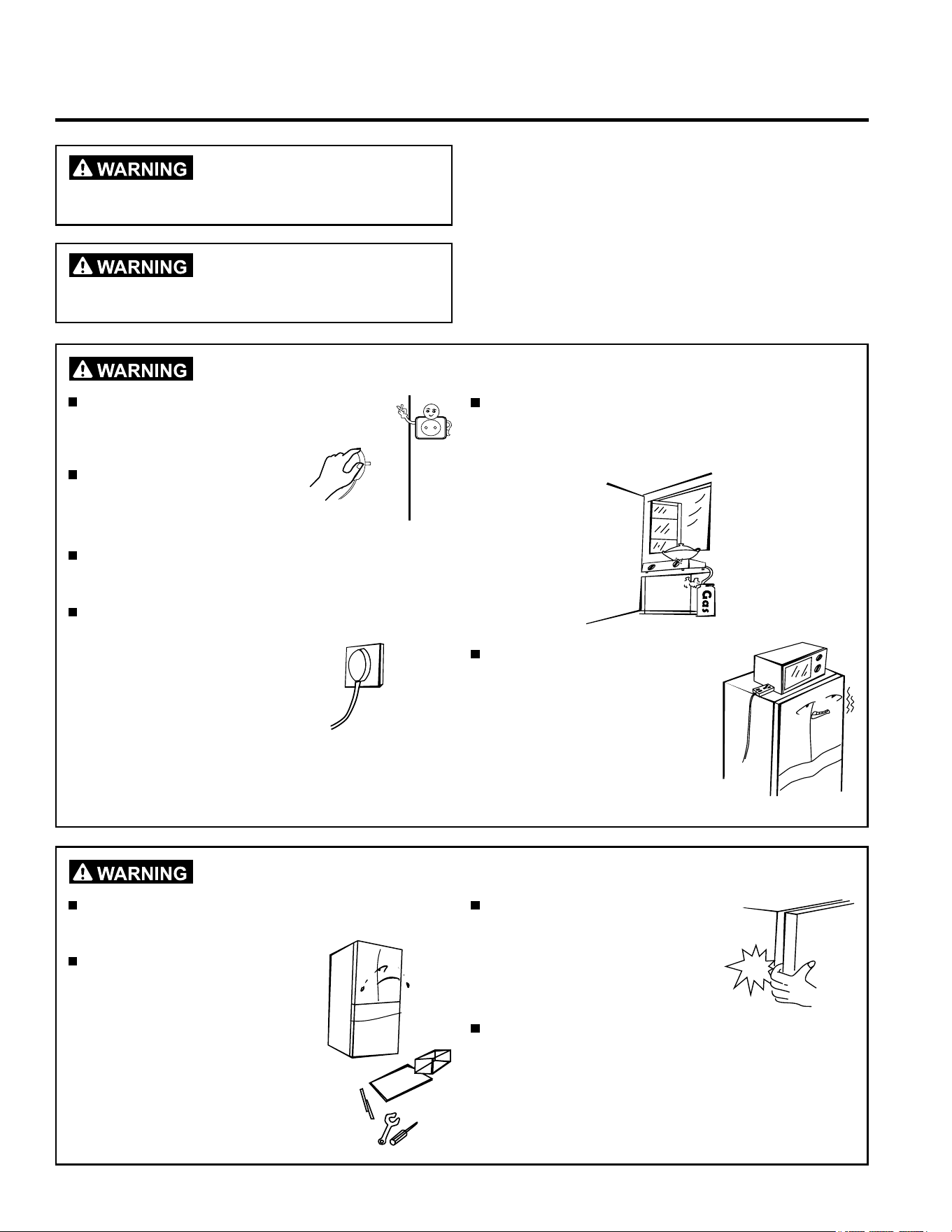
When unplugging the refrigerator,
do not pull the power cord. Firmly
grasp the plug and pull it out it
from the power outlet.
To ensure safe operation, do not
damage the power cord or use
the power cord if it is damaged or
worn.
Do not operate electrical appli-
ances on top of the refrigerator, un-
less they are of the type recom-
mended by the manufacturer.
In case of leakage of gas and other flammable gases, turn
off the valve of the leaking gas and then open doors and
windows. Do not unplug the refrigerator and other electri-
cal appliances considering that a spark may cause a fire.
Use a dedicated power outlet that must not be shared with
other electrical appliances. The power plug should firmly
contact the outlet or this could result in fire.
Make sure that the grounding electrode of the power
socket is equipped with a reliable grounding line.
OPERATION
Do not disassemble the refrigerator, nor damage the refrig-
erant circuit; maintenance of the appliance must be con-
ducted by a specialist.
A damaged power cord must be re-
placed by the manufacturer, its
maintenance area or related profes-
sionals in order to avoid danger.
Gaps between refrigerator doors
and between doors and refrigerator
body are small. Do not place your
hands in these areas to prevent
from pinching a finger. Be gentle
when closing the refrigerator door
to avoid falling articles.
Do not pick foods or containers with wet hands in the
freezer compartment when the refrigerator is running, es-
pecially metal containers in order to avoid frostbite.
IMPORTANT SAFETY INFORMATION.
READ ALL INSTRUCTIONS BEFORE USING THE APPLIANCE
OPERATION
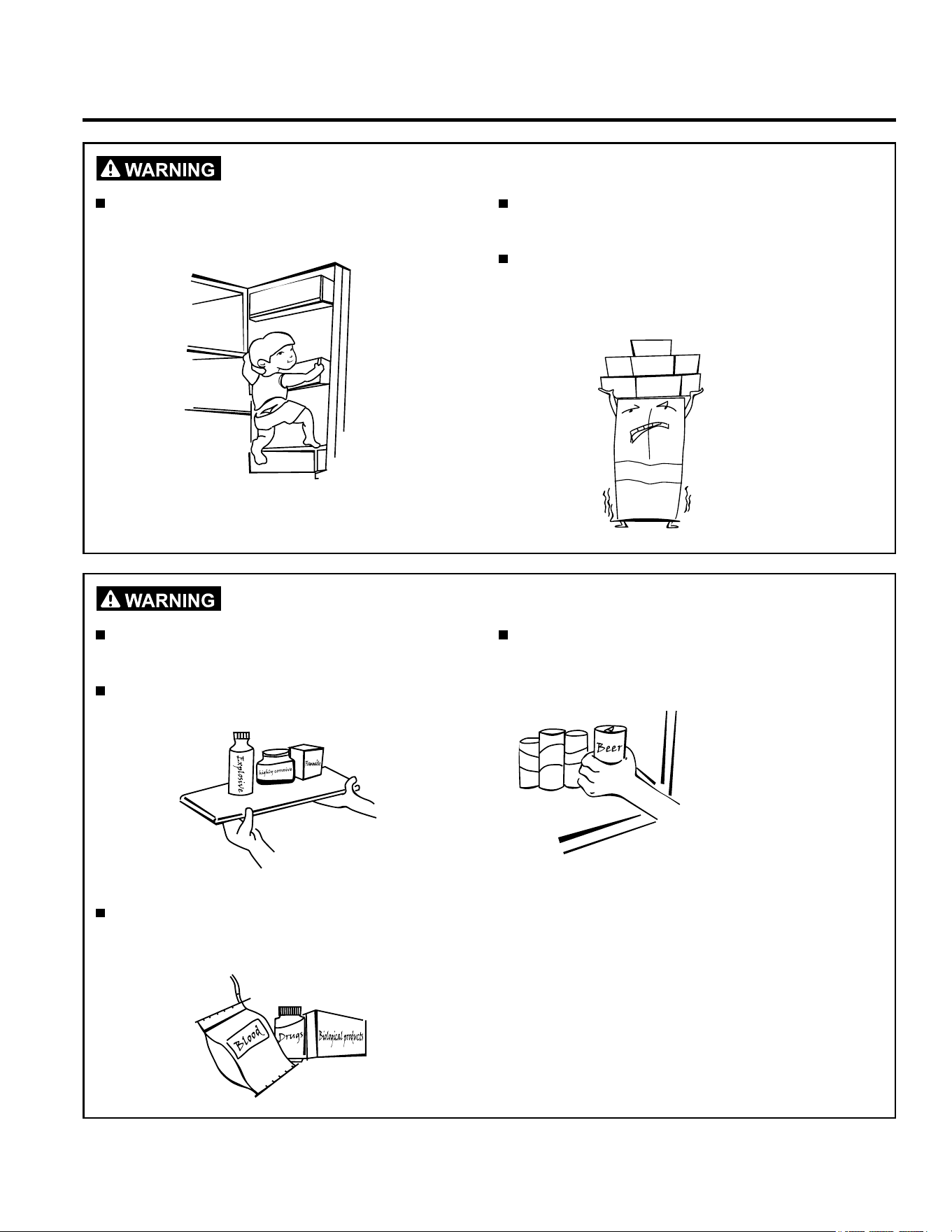
Do not allow children to get into, or climb the refrigerator;
otherwise suffocation or falling injury of the children may
be caused.
Do not place heavy objects on top of the refrigerator con-
sidering that an object may fall when closing or opening
the door resulting in an accidental injury.
Pull out the plug in case of power failure or cleaning. Do
not connect the appliance to power supply within five min-
utes to prevent damages caused to the compressor due to
successive starts.
PLACEMENT OF ITEMS
Do not place flammable, explosive, volatile and highly cor-
rosive items into the refrigerator to prevent damages to the
product or fire.
Do not place flammable items near the refrigerator to avoid
a fire.
The refrigerator is intended for household use, such as
storage of foods; it should not be used for other purposes,
such as storage of blood, drugs or biological products, etc.
Do not store beer, beverages or other fluid contained in
bottles or enclosed containers in the freezer compartment,
otherwise bottles or enclosed containers may explode due
to freezing resulting in damages.
Freezer compartment
SAFETY INFORMATION
4
IMPORTANT SAFETY INFORMATION.
READ ALL INSTRUCTIONS BEFORE USING THE APPLIANCE
ENERGY
Refrigeration appliances might not operate consistently
(defrosting of contents or temperature becoming too warm
in the freezer compartment) when set for an extended pe-
riod of time below the cold end of the range of tempera-
tures for which the refrigeration appliance is designed.
Carbonated drinks should not be stored in the freezer
compartment or in low temperature compartments or cabi-
nets. Some products such as water ice cubes should not
be consumed too cold.
Do not exceed the storage times recommended by the
food manufacturer for any kind of food and particularly for
commercially quick-frozen food in the freezer compart-
ment.
DISPOSAL
The refrigerant and cyclopentane foaming material used
for the refrigerator are flammable. Therefore, when the re-
frigerator is disposed of, it shall be kept away from any
source of fire and it must be recovered by a special recov-
ering company with corresponding qualification other than
be disposed by combustion, so as to prevent damage to
the environment or any other harm.
When dsiposing of the refrigerator, remove doors, and
gaskets from doors and shelves; put the doors and shelves
in a proper place, so as to prevent children getting trapped
inside the appliance.
Take the necessary precautions to prevent an undue rise
in the temperature of frozen food while defrosting the appli-
ance, such as wrapping the frozen food in several layers of
newspaper.
An accidental rise in temperature of frozen food during
manual defrosting, maintenance or cleaning will shorten its
storage life.
For doors or lids fitted with locks and keys, the keys should
be kept out of the reach of children and not in the vicinity
of the refrigerator, in order to prevent children from being
locked inside.
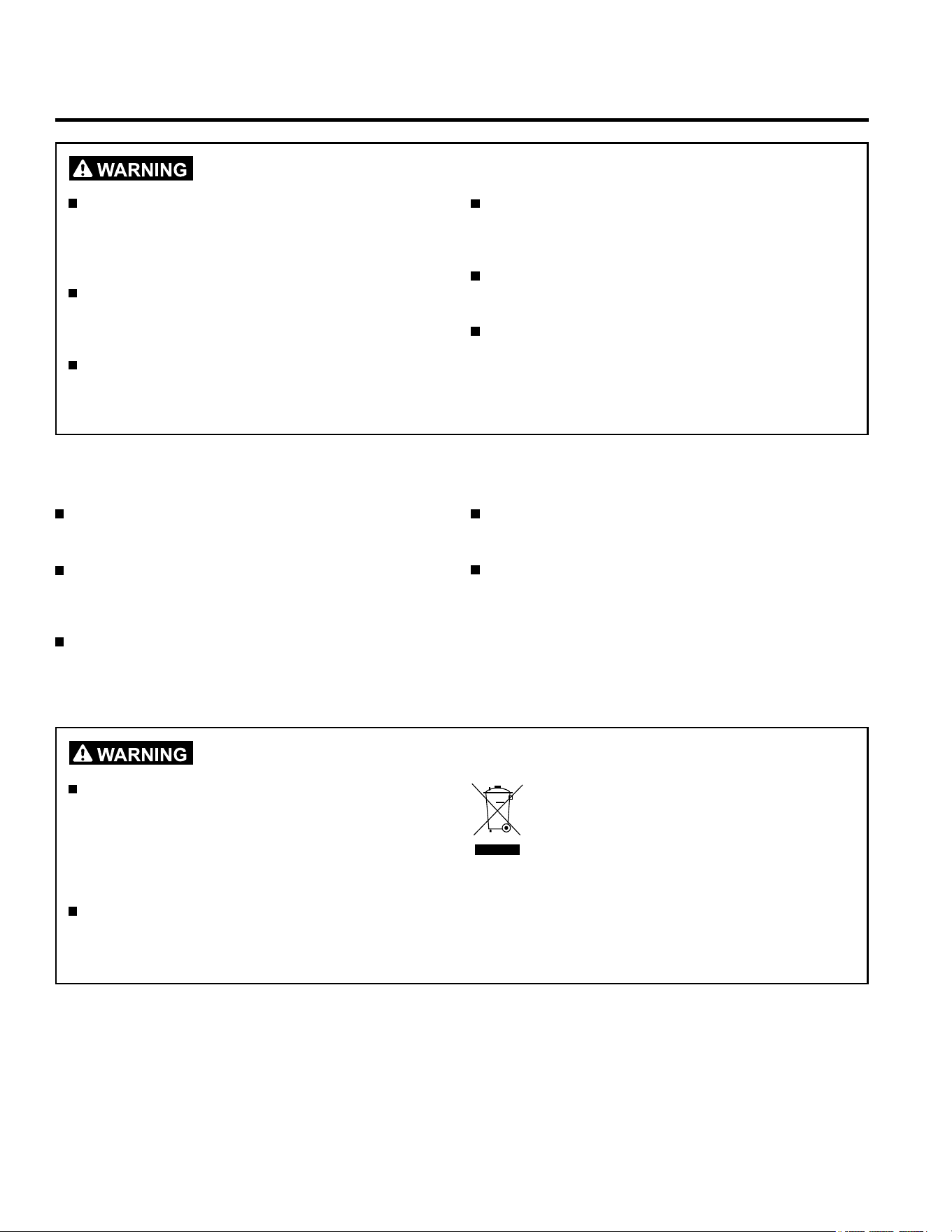
Correct disposal of this product:
This mark indicates that this product should not be
disposed with other household wastes throughout
the E.U. To prevent possible harm to the environ-
ment or human health from uncontrolled waste, re-
cycle it responsibly to promote the sustainable re-
use of material resources. To return your used de-
vice, please use the return and collection systems
or contact the retailer where the product was pur-
chased. They can take this product for environ-
mental safe recycling.
KEEP THESE INSTRUCTIONS
Energy saving tips
The appliance should be located in the coolest area of the
room, away from heat producing appliances or heating ducts,
and out of the direct sunlight.
Let hot foods cool down to room temperature before placing
them into the appliance. Overloading the refrigerator forces
the compressor to run longer. Foods that freeze too slowly
may lose quality, or spoil.
Be sure to wrap foods properly, and wipe containers dry be-
fore placing them in the appliance. This cuts down on frost
build-up inside the appliance.
Appliance storage bins should not be lined with aluminum
foil, wax paper, or paper towels. Liners interfere with cold air
circulation, making the appliance less efficient.
Organize and label food to reduce door openings and ex-
tended searches. Remove as many items as needed at
once, and close the door as soon as possible.
SAFETY INFORMATION
5
Using the refrigerator
Location of the appliance
Precautions before installation
Before installation or adjusting accessories, make sure that the
refrigerator is disconnected from the power supply.
Precautions should be taken to prevent fall of the handle and
causing personal injuries.
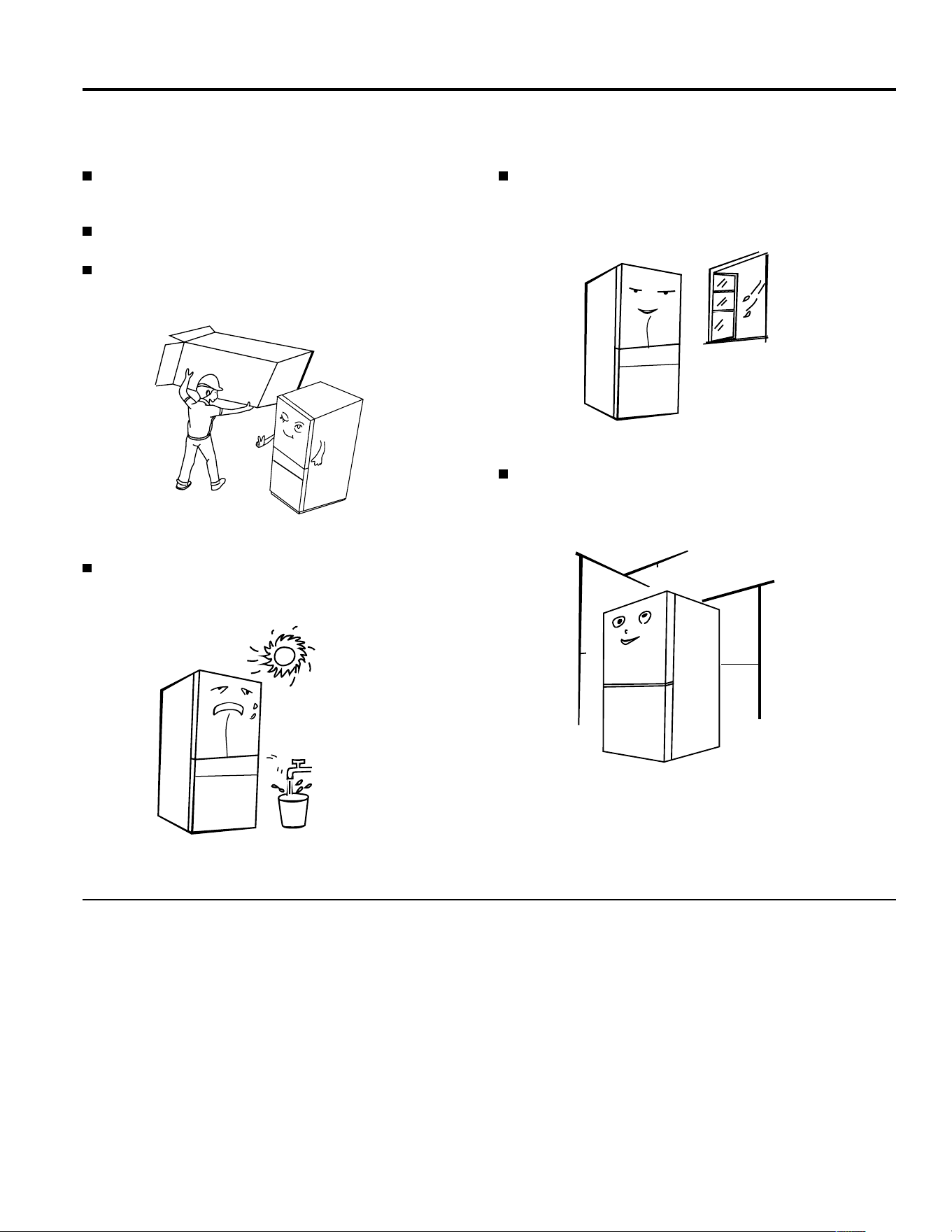
Clearance on top of the refrigerator should be 30 cm mini-
mum. Place the refrigerator against a wall with a clearance of
more than 10 cm to facilitate heat dissipation.
The refrigerator should be placed in a well-ventilated indoor
place; floor should be flat, and sturdy (rotate left or right to
adjust the wheel for levelling if unstable).
Keep the appliance away from heat and direct sunlight. Do
not place the refrigerator in moist or watery places to prevent
rust or reduction of insulation effect.
Keep the refrigerator upright to avoid vibration during trans-
portation. Avoid tilting the appliance over 45 degrees during
handling.
When moving the refrigerator, avoid excessive stress on the
door or top cover, in addition, it may deform.
Before operation, remove all packing materials, including bot-
tom foam pads and tape inside the appliance; tear off the
protective film on doors and the refrigerator body.
USING THE REFRIGERATOR
6
Using the refrigerator
Starting operation
Before initial start, keep the refrigerator still for two hours be-
fore connecting it to power supply.
Before placing any fresh or frozen foods, allow the refrigera-
tor to run for 2-3 hours, or more than 4 hours during summer
when the ambient temperature is high.
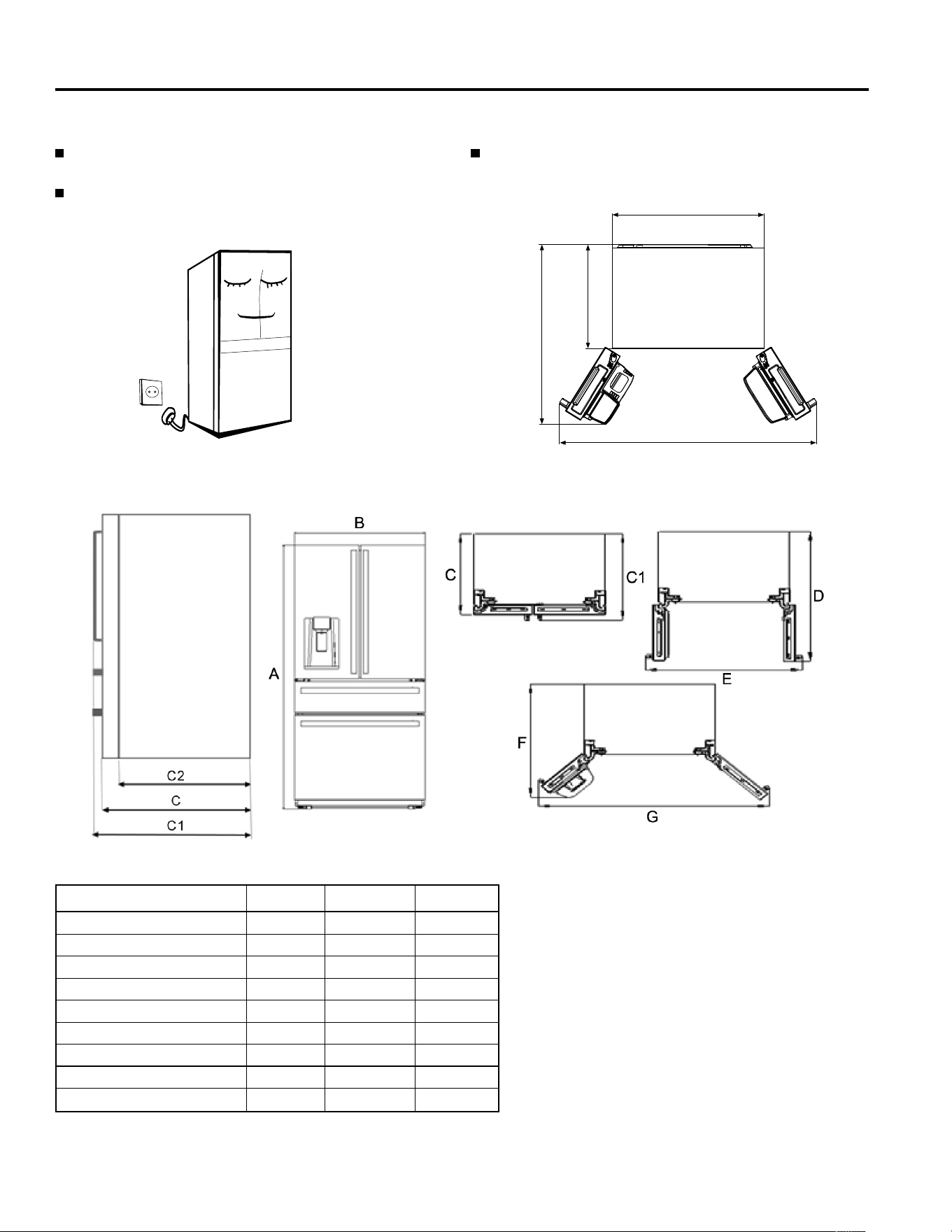
Leave enough space for convenient opening of the doors and
drawers.
Height
Width
Depth without doors
Depth including handles
Depth
Depth with door open 90°
Width with door open 90°
Depth with door open 122°
Width with door open 122°
A
B
C2
C1
C
D
E
F
G
SIZE (inch)CODE SIZE (mm)
69.8
35.8
24.4
30.9
29.0
43.2
44.3
42.2
60.0
1772.7
910
620
785.5
737
1096.5
1124
1072
1524
USING THE REFRIGERATOR
7
Using the refrigerator
Parts and features
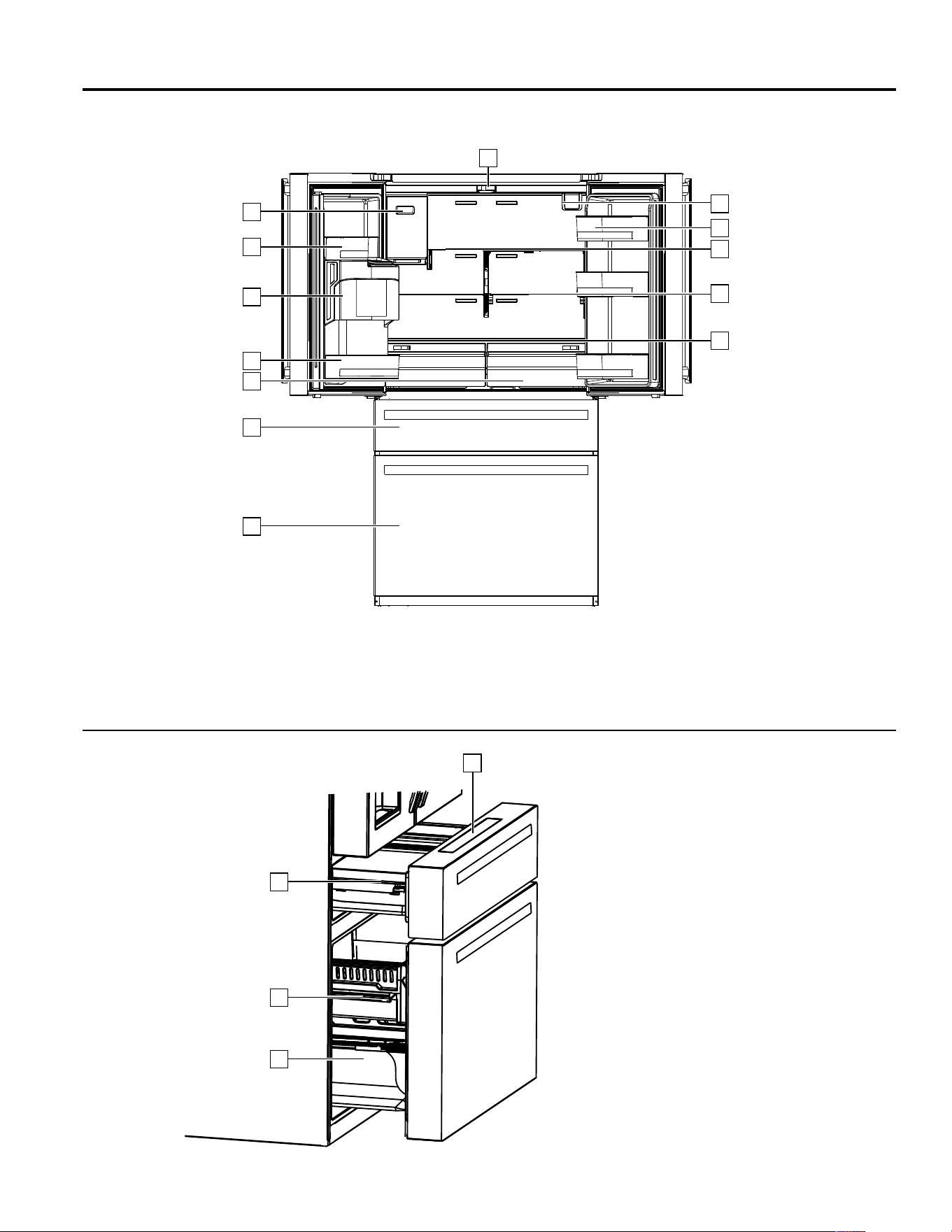
1. Ice maker
2. Door tray
3. Turnover box
This illustration is for reference only. The ac-
tual configuration will depend on the physical
product or statement by the distributor.
4. Door tray
5. Two vegetable cases
6. Flex drawer
7. Freezer drawer
8. Filter
9. Door tray
10. Shelf
11. Shelf
12. Shelf
13 LED lighting
1. Display screen
2. Flex drawer
3. Upper freezer drawer
4. Lower freezer drawer
This illustration is for reference only. The actual
configuration will depend on the physical product
or statement by the distributor.
USING THE REFRIGERATOR
8
The fresh food compartment is suitable for storage of a vari-
ety of fruits, vegetables, beverages and other foods to be
consumed in the short term.
Cooked foods should not be placed in the refrigerator com-
partment until cooled down to room temperature.
Using the refrigerator
Fresh food compartment
Foods are recommended to be sealed up before placing
them into the fresh food compartment.
The glass shelves can be adjusted up or down for a reason-
able amount of storage space and easy use.
Freezer compartment
The low temperature freezer compartment keeps food fresh
for a long time and it is mainly used to store frozen foods and
making ice cubes.
The freezer compartment is suitable for storage of meat, fish,
rice balls and other foods not to be consumed in short term.
Chunks of meat are preferably to be divided into small pieces
for quick freezing and easy access.
Foods should be consumed within the shelf time.
Flex drawer
The Flex drawer temperature can be adjusted in -1 °C/30 °F,
1 °C /34 °F, 3 °C /37 °F and 5 °C /4 °F. The appropriate tem-
perature can be selected according to different foods.
When the Flex drawer temperature is set at - 1 °C /30 °F, it is
suitable to store meat.
When the Flex drawer temperature is set at 1 °C /34 °F, it is
suitable to store drinks.
When the Flex drawer temperature is set at 3 °C / 37 °F, it is
suitable to store cooked food.
When the Flex drawer temperature is set at 5 °C / 41 °F, it is
suitable to store wine.
Control panel
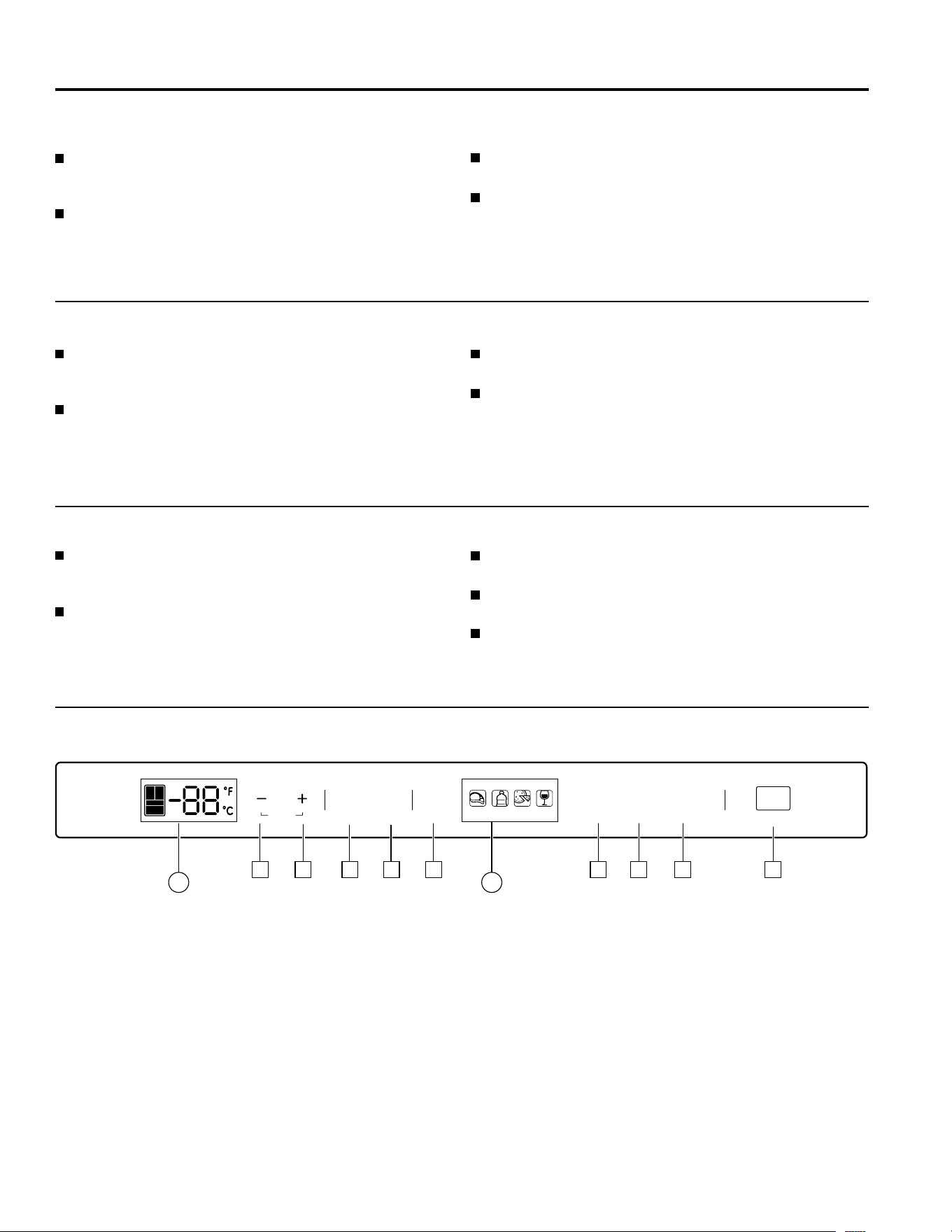
The illustration is for reference only. The actual configuration will depend on the physical product or statement by the dealer.
Displays
1. Temperature zone display
2. Temperature shift gear
Operation pads
A. Decrease temperature pad
B. Increase temperature pad
C. Refrigerator temperature pad
D. Freezer temperature pad
E. FLEX drawer mode pad
F. Icemaker pad
H. Water filter pad
I. Energy saving pad
J. Lock/UNLOCK pad
USING THE REFRIGERATOR
9
Using the refrigerator
Displays
When the refrigerator is energized for the first time, the
distribution display and control will turn on for 3 seconds
and then it enters the normal operation. Water dispensing
function is the default option when the refrigerator is ener-
gized for the first time.
Main display control (located on drawer door) Distribution display and control
When the power is on for the first time, icons will be
semibright, fully displayed and scrolling from left to right.
Then icons will be fully lighted for 3 seconds. At the same
time, the start-up bell will ring, and then the display will en-
ter normal operation. When the refrigerator is energized
for the first time, the temperature of refrigerator, freezer
and flex drawer will be set at 39°F, 0°F and 37°F respec-
tively.
Under normal conditions, if there is no door opening action
and no pad is pressed for 30 seconds, the display will be
locked, and will turn off after 30 seconds at locking status.
When the display off, if any pad is pressed, then it will turn
on.
1 2
Lock and unlock
In the unlock state, press and hold the locking pad for 3 sec-
onds to enter the lock state, the locking buzzer beeps.
In the lock state, press and hold the locking pad for 3 seconds
to unlock. The buzzer beeps.
If no pad is pressed after 30 seconds, the display enters the
locking state automatically.
Temperature setting of refrigerator compartment
Press the refrigerator pad to select the refrigerator temperature
zone. Then press the "-" and "+" temperature regulation pads to
set the temperature for the fresh food compartment. When
pressing the "-" pad once, the temperature will decrease by
1°C/1°F. After the temperature reaches 1°C/34°F, the "-" pad
will be invalid no matter how it is pressed.
When the "+" pad is pressed once, the temperature will incre-
ment by 1°C/1°F. After the temperature reaches 7°C/44°F, the
"+" pad will be invalid no matter how it is pressed.
The temperature range for the fresh food compartment is 1°C
(34°F) ~ 7°C (44°F). The setting will take effect after locking.
Temperature setting of the Flex Drawer
Press the FLEX drawer pad to select temperature shift zone.
Press the temperature shift pad again to adjust the temperature
of the FLEX drawer.
When the temperature shift pad is pressed once, the tempera-
ture will be increased by 1 gear, when the temperature reaches
the WINE setting (4th gear), press the temperature shift key
again, the temperature will return to MEAT (1st gear).
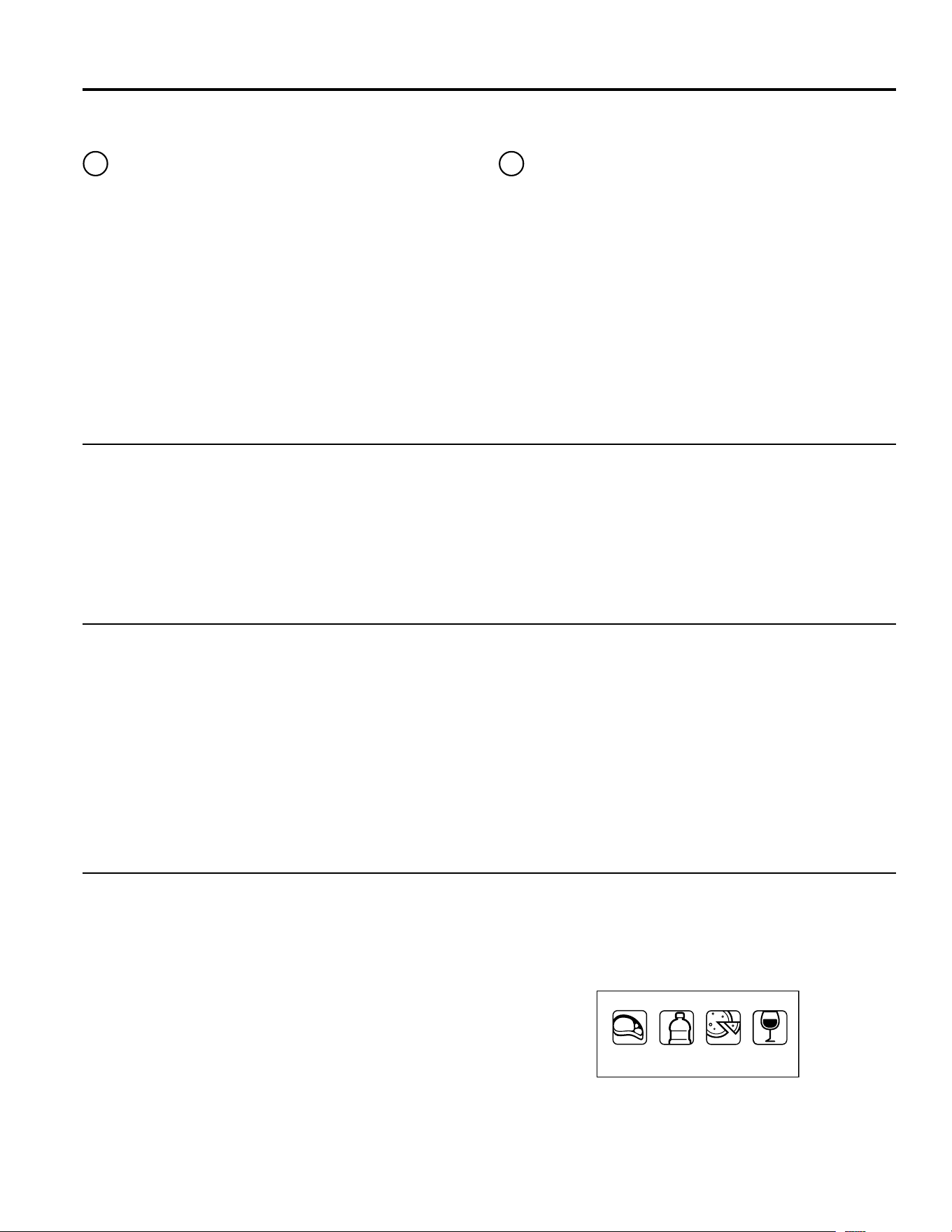
The corresponding temperature settings for each gear are
MEAT -1°C (30°F), BEV. 1°C (34°F), DELI 3°C (37°F) and
WINE 5°C (41°F). The settings will take effect after locking.
USING THE REFRIGERATOR
10
Using the refrigerator
Temperature setting of the freezer compartment
Press the freezer pad to select the freezer temperature zone,
then press the "-" or "+" temperature pads to adjust the tem-
perature of the freezer compartment.
When the "-" pad is pressed once, the temperature will de-
crease by 1°C (1°F). After the temperature reaches -22°C (-
7°F), the "-" pad will be invalid no matter how it is pressed.
When the "+" pad is pressed once, the temperature will in-
crease by 1°C/1°F. After the temperature reaches -14°C
(7°F), the "+" pad will be invalid no matter how it is pressed.
The temperature range for the freezer compartment is -22°C
(-7°F) to -14°C (7°F). The setting will take effect after locking.
Mode setting
Quick cooling mode
Press and hold the refrigerator pad 3 seconds to enter the
QUICK COOLING mode. At the same time, the icon of the
fresh food compartment turns blue.
The QUICK COOLING mode will take effect after being
locked.
When setting the QUICK COOLING mode, the temperature
of the refrigerator compartment is automatically set at 1°C.
When exiting the QUICK COOLING mode, the set tempera-
ture of the refrigerator compartment automatically returns to
the previous set temperature.
Tips for filter replacement
When the filter is used for more than 150 days and the indicator
light is on, or when the filter is used for more than 180 days and
the indicator light flashes, press the WATER-FILTER pad for 3
seconds to clear the alarm settings and reset it.
The buzzer will sound 3 times.
Dispenser selection
1. Touch the pad corresponding to the desired mode to select
between Ice Cubes, Cold Water or Crushed Ice.
2. After the corresponding function is selected, the indicator
light of that function will turn on.
3. Water will be dispensed immediately after Cold Water dis-
pensing mode is selected. Ice will be dispensed 3 seconds
after Ice Cubes or Crushed Ice is pressed.
Dispenser indicator lamp
When turning on the dispenser switch, the dispenser indicator
light will turn on; when the dispenser switch is turned off, the
dispenser indicator light will turn off after a 3 seconds delay.
Press the REF-ICE pad to turn on the backlight and the refrig-
erator ice maker; press the REF-ICE pad again to turn off the
backlight and the refrigerator ice maker. It will take effect after
locking.
Note: When the refrigerator ice maker is on, the ice maker will
direct the ice into the ice making compartment, if the ice stor-
age box is removed and the ice maker is currently turning over
the ice.
Switching between Fahrenheit and Celsius degrees
Press both pads "+" and "-" at the same time for 3 econds,
Fahrenheit temperature and Celsius temperature are switched
and it will take effect after locking.
Quick freezing mode
Press and hold the freezer pad 3 seconds to enter the
QUICK FREEZING mode. At the same time, the icon of the
freezer compartment turns blue.
The QUICK FEEZING mode will take effect after being
locked.
When setting the QUICK FREEZING mode, the temperature
of the refrigerator compartment is automatically set at -22°C.
When exiting the QUICK FREEZING mode, the set tempera-
ture of the freezer compartment automatically returns to the
previous set temperature.
USING THE REFRIGERATOR
11
Using the refrigerator
ECO mode
Press the ENERGY SAVING pad to enter the ECO mode.
The indicator light will turn on. The QUICK-FREEZING mode
is cancelled. The QUICK FREEZING is set at -14°C and the
fresh food compartmente temperature at 7°C.
Press the ENERGY SAVING pad again to exit the ECO
mode, the backlight of the pad will turn off, and the tempera-
ture of freezer and fresh food compartments will return to the
previous set temperature.
The mode will take effect after locking.
Anti-condensation heater strip
The anti-condensation heater strip can be turned on and off
via a combination of pads.
Press the ENERGY SAVING and FREEZER TEMP pads at
the same time for 3 seconds, the Fahrenheit symbol will
blink, it will take effect by pressing the locking key, and the
anti-condensation heater strip will be turned off.
When the anti-condensation heater strip is off, press the EN-
ERGY SAVING and FREEZER TEMP pads at the same time
for 3 seconds, the Fahrenheit symbol will stop blinking, it will
take effect by pressing the locking key, and the anti-conden-
sation heater strip will be turned on.
The on and off anti-condensation heater strip is used for in-
spection and maintenance convenience. The user should not
easily turn off the anti-condensation heater strip, as it will
cause the risk of condensation.
Error codes
When there is an error, the display shows the error code (the
display cycles after locking).
The buzzer sounds an alarm. Press any pad when unlocking
or locking, the alarm turns off. After the corresponding sen-
sor/ice maker error is eliminated, the display will clear the
corresponding error code.
When any door is opened for more than 2 minutes, the
buzzer will sound an alarm. When the door is locked/un-
locked, press any pad to turn off the alarm, or close all doors,
the alarm sound will be muted.
EH
F5
F4
CC
C9
CA
F6
E0
E1
E2
E3
E4
E5
E6
E7
Error code Error description
Humidity sensor failed.
Refrigerator ice maker fails to turn over ice.
The sensor at the bottom of refrigerator ice maker fails.
The defrosting sensor in ice maker chamber fails.
The sensor in ice maker compartment fails.
The communication between main control and ice maker boards failed.
Initialization of refrigerator ice maker failed.
Initialization of freezer ice maker fails.
The temperature sensor in the fresh food compartment failed.
The temperature sensor in the freezer compartment failed.
Sensor of the Flex Drawer failed.
Frosting sensor of fresh food compartment failed.
Frosting sensor of freezer compartment failed.
Communication between display and main control boards failed.
Ambient temperature sensor failed.
USING THE REFRIGERATOR
12
Using the refrigerator
Dispensing cold water and ice
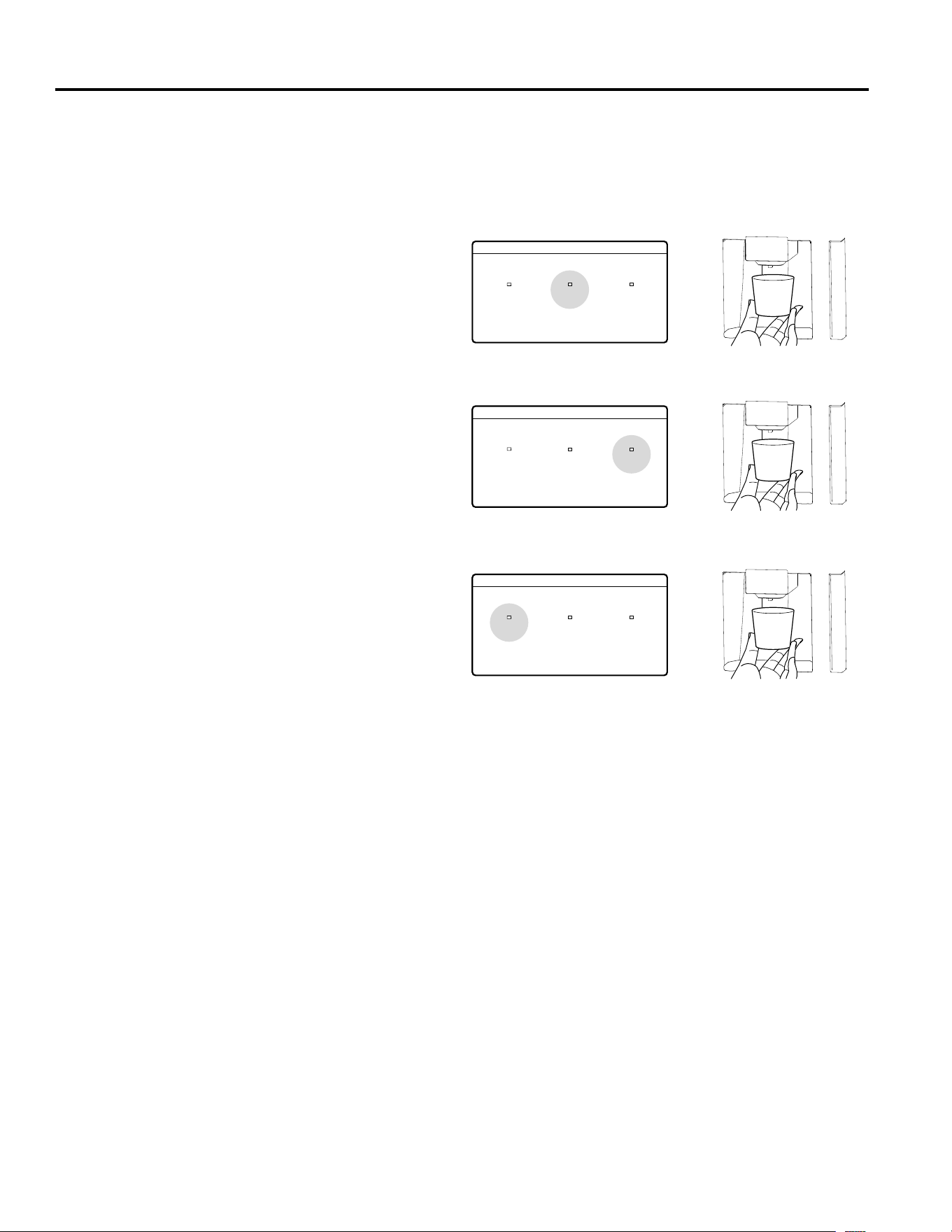
The ice and water dispenser is located on the outside of refrigerator compartment door. You can select cubed ice, crushed ice, or
cold water.
The dispenser only works when the fresh food compartment door is closed.
Dispensing cold water
1. Press the WATER pad until the indicator turns on.
2. Push the container against the dispensing cushion, cold wa-
ter starts to flow into the container.
3. Remove the container from the dispensing cushion to end
water dispensing.
Dispensing ice cubes
1. Press te CUBED pad until the indicator turns on.
2. Push the container against the dispensing cushion.
3. Ice cubes start to fall into the container.
4. Remove the container from the dispensing cushion to end
dispensing of cubed ice.
Dispensing crushed ice
1. Press the CRUSHED pad until the indicator turns on.
2. Place the container against mouth of water dispenser to pre-
vent side jet.
3. Push the container against the dispensing cushion.
4. Fill the container with crushed ice.
5. Remove the container from the dispensing cushion to end
crushed ice dispensing.
The illustrations above are for reference only. The actual configuration will depend on the physical product or statement by the
dealer.
USING THE REFRIGERATOR
13
Care and Cleaning
Overall cleaning
Dust behind the refrigerator and on the floor should be regu-
larly removed to improve cooling and energy saving.
Check the door gasket regularly to make sure there are no
debris. Clean the door gasket with a soft cloth dampened
with soapy water or diluted detergent.
The interior of the refrigerator should be cleaned regularly to
avoid odor formation.
Turn off the power before cleaning the interior, remove all
foods, drinks, shelves, drawers, etc.
Use a soft cloth or sponge to clean the inside of the refrigera-
tor with a solution made with warm water and two table-
spoons of baking soda, about a quart of warm water. Then
rinse with clear water and wipe clean. After cleaning, open
the doors and let dry naturally before turning on the power.
For areas that are difficult to clean (such as narrow gaps or
corners), it is recommended to wipe them regularly with a soft
cloth, soft brush, etc. and when necessary, combined with
auxiliary tools (such as thin sticks) to ensure no contaminants
or bacteria accumulation in these areas.
UNPLUG THE REFRIGERATOR
FROM POWER SUPPLY BEFORE DEFROSTING AND
CLEANING.
Do not use soap, detergent, scrubbing powders, spray
cleaner, etc., as these may cause odors in the interior of the
refrigerator or could contaminate foods.
Clean the bottle frame, shelves and drawers with a soft cloth
dampened with soapy water or diluted detergent. Dry with a
soft cloth or dry naturally.
Wipe the outer surface of the refrigerator with a soft cloth
dampened with soapy water, detergent, etc., and then wipe
dry.
Do not use hard brushes, cleaning steel balls, wire brushes,
abrasives such as toothpaste, organic solvents such as alco-
hol, acetone, banana oil, etc., boiling water, acid or alkaline
items, which may damage the refrigerator surface and inte-
rior. Boiling water and organic solvents such as benzene may
deform or damage plastic parts.
Do not rinse with water or other liquids during cleaning to
avoid short circuits or affect electrical insulation after immer-
sion.
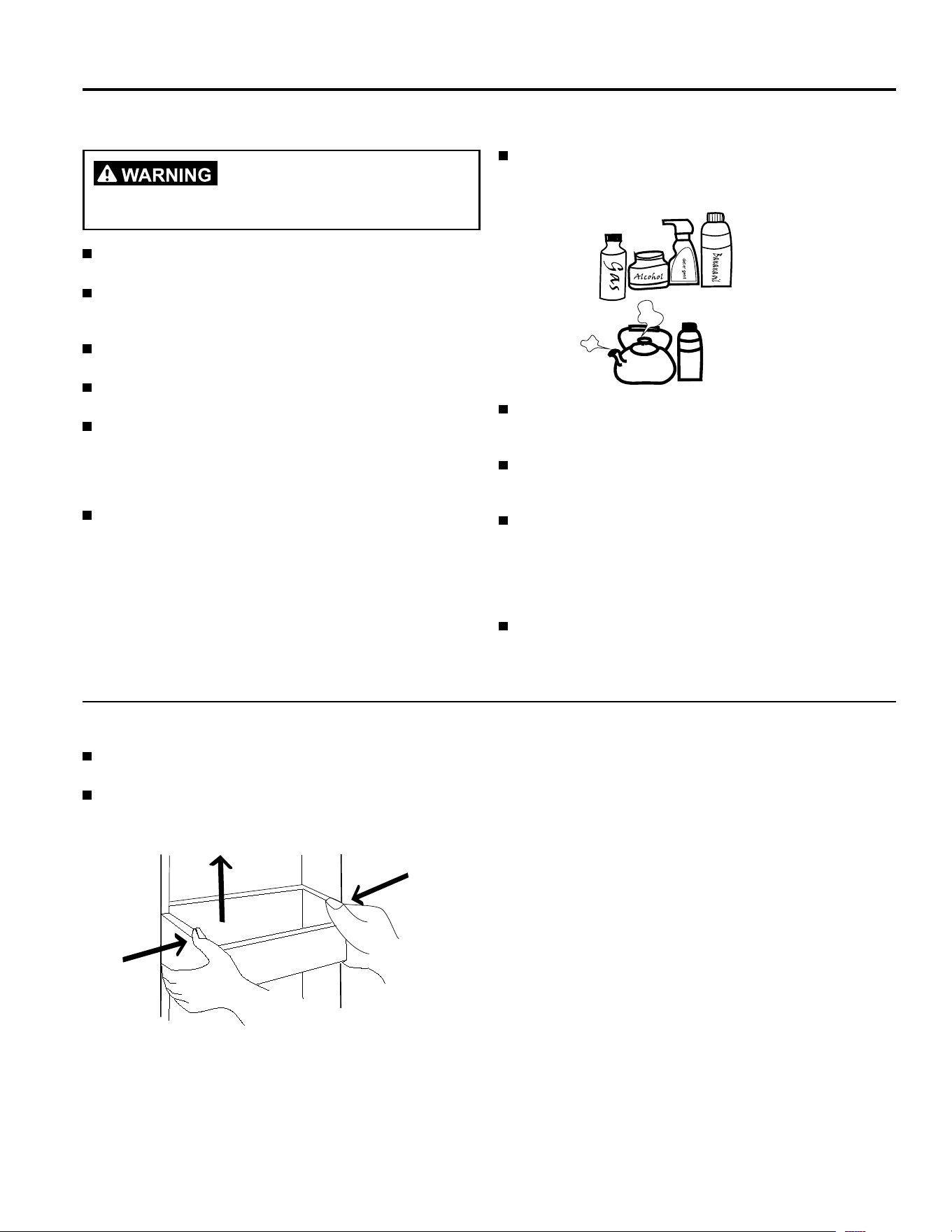
Cleaning door bins
According to the direction of arrows in the figure below, use
both hands to press the bin, and pull it upward, to take it out.
After washing the door bin, you can replace it at a height that
best suits your needs.
The illustration is for reference only. The actual configuration
will depend on the physical product or statement by the dealer.
CARE AND CLEANING
14
Care and Cleaning
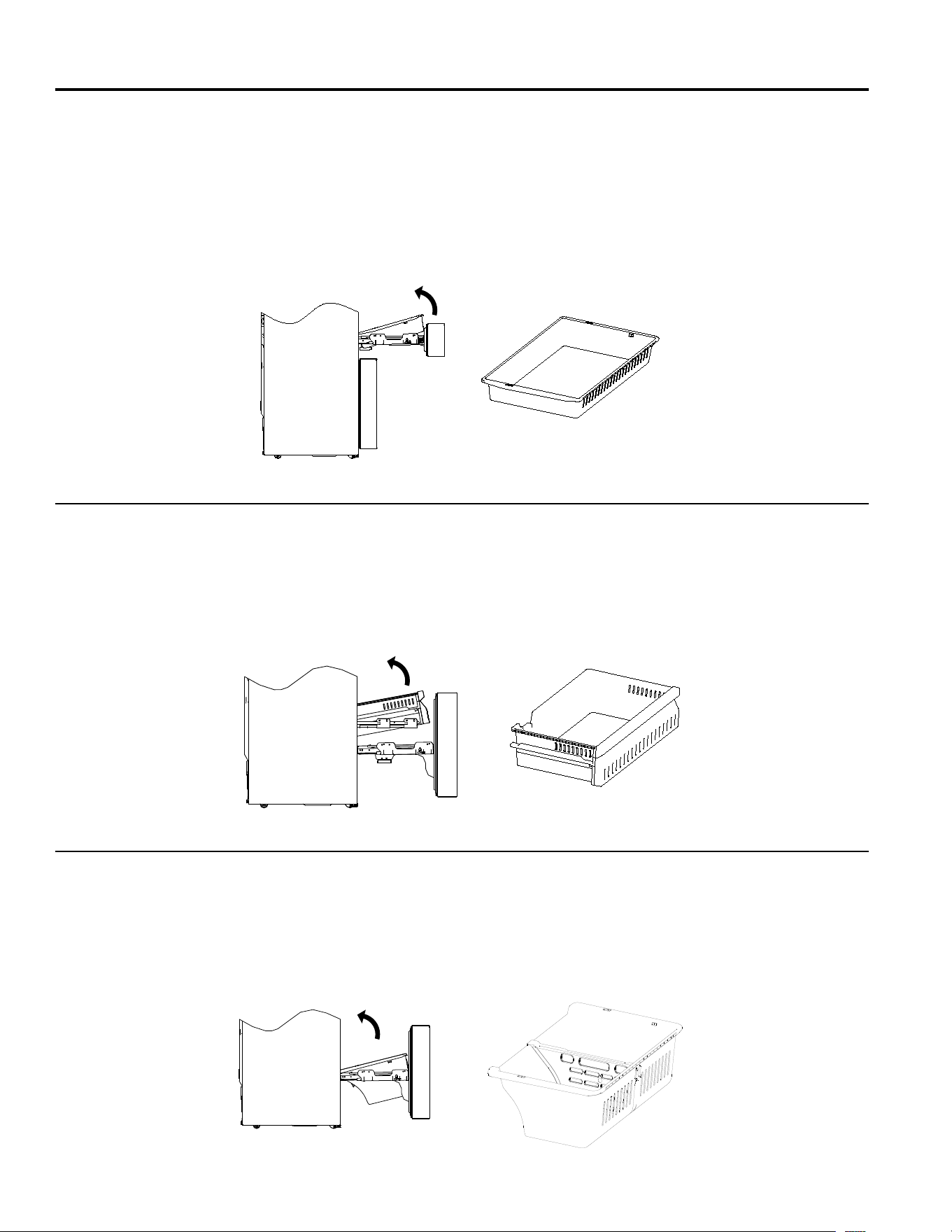
Variable temperature drawer (Flex Drawer)
Completely open the freezer compartment lower drawer, hold
the left and right sides of the lower drawer. Lift the back end of
the drawer to pull the whole drawer about 15 mm to the external
side of the compartment until the sliding rail support claw is
separated from the drawer.
Lower freezer drawer
Completely open the freezer compartment drawer, lift the back
end of the upper drawer, pull the slide rail so that it won't jump.
Push the drawer forward to separate it from the support claw of
the slide rail. Separate the drawer on the side from the support
claw of the slide rail with the same method.
Upper freezer drawer
Completely open the variable temperature drawer, hold the left
and right sides of the drawer with both hands. Lift the back end,
exert a litte force to pull the whole drawer back about 15 mm
until the support claw of the slide rail is separated from the
drawer, then lift the front end of the drawer at an angle. Hold
the drawer and move horizontally to the inside of the compart-
ment, then rotate it back and up to remove the drawer.
Rotate the drawer back and up to take it out.
Rotate the drawer back and up to remove it after the slide rail
support is separated from the drawer.
CARE AND CLEANING
15
Care and Cleaning
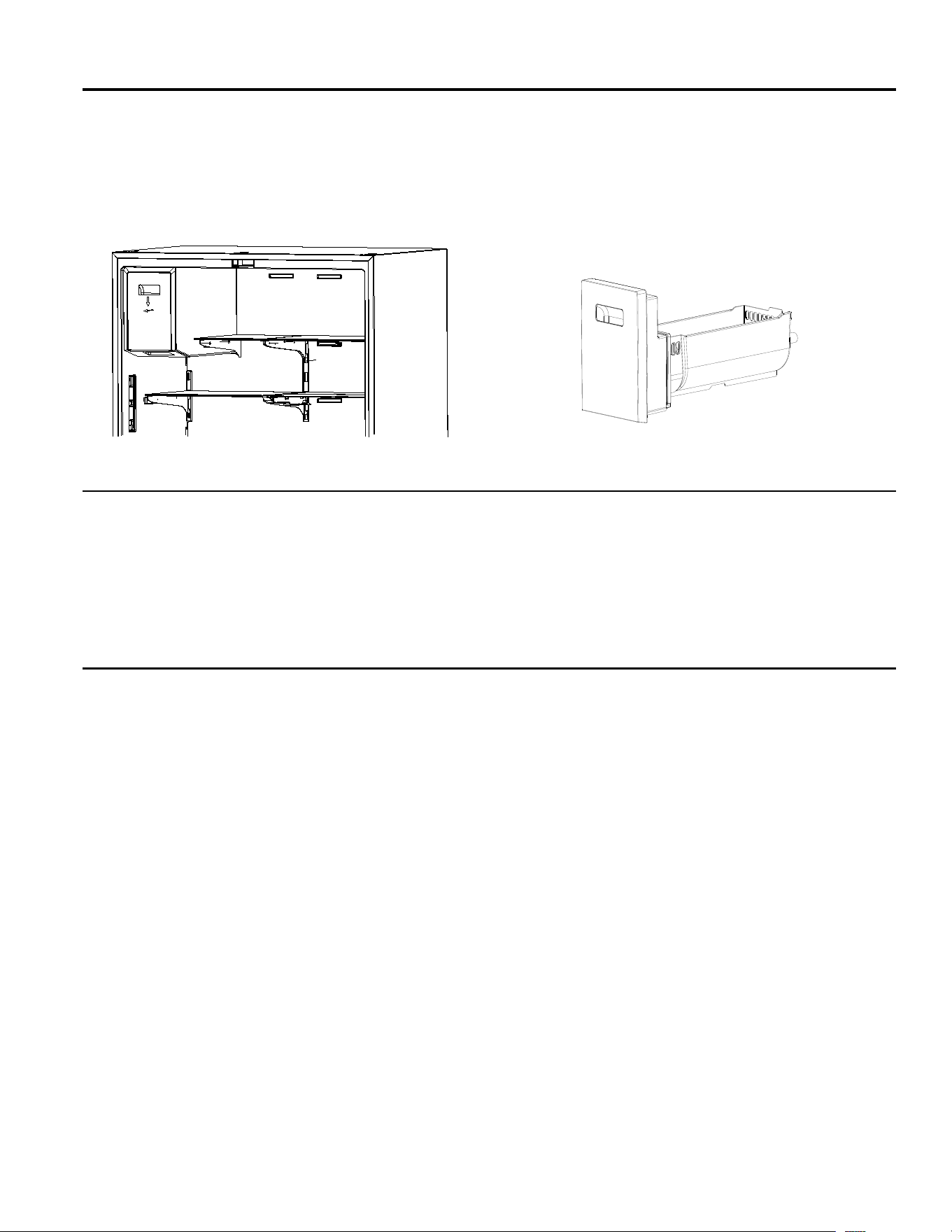
Cleaning the ice storage box
When you need to use a lot of ice, or need to clean the ice storage box, you can take out the ice storage box.
1. Hold the bottom of the ice storage box with your hand, press
it gently, then pull it out horizontally.
2. Push the ice storage box in slightly after cleaning.
Note: Please remove the ice that fall in the ice making chamber
during pulling out.
Power failure: In case of power failure, even during summer,
foods inside the appliance can be kept for several hours; during
the power failure. The number of door openings should be re-
duced, and no more fresh food should be placed into the appli-
ance.
Long-time nonuse: The appliance should be unplugged and
then cleaned; then leave the doors open to prevent odors.
Defrosting
The refrigerator was designed based on the air-cooling prin-
ciple and thus has an automatic defrosting function. Frost
formed due to change of season or temperature may also be
manually removed by unplugging the appliance from power
supply or by wiping with a dry towel.
Out of operation
Moving: Before the refrigerator is moved, take all items out, fix
the glass shelves, vegetable holder, freezer compartment draw-
ers, etc. with tape. Tighten the leveling legs; close the doors
and fix them with tape. During moving, the appliance shall not
be laid upside down or horizontally, or be vibrated; the inclina-
tion during moving should be no more than 45°.
CARE AND CLEANING
16