OTC
HEARING AID
Good Voice
Everyday
GV-SA03.60
User Manual
Regulatory Information
The following additional information is provided in compliance with U.S. Food and Drug Administration
(FDA) regulations:
WARNING: If you are younger than 18, do not use this.
You should go to a doctor, preferably an ear-nose-throat doctor (an ENT), because your condition
needs specialized care. Over-the-counter hearing aids are only for users who are 18 or older.
This OTC hearing aid is for users who are 18 and older. People who are younger than 18 with hearing
loss should see a doctor, preferably an ENT, because they may need medical testing and
management. Hearing loss can affect speech and learning, so professional fitting and continuing
care are also important.
Intended Use
Good Voice OTC Hearing Aids are designed to enhance and deliver sound directly to the ear,
addressing mild to moderate hearing loss in individuals aged 18 and above. No prior programming or
hearing assessment is required. These aids are intended for use independently, without the need for
a hearing care professional's assistance.
WARNING: When to See a Doctor
If you have any of the problems listed below, please see a doctor, preferably an ear nose throat doctor
(an ENT).
• Your ear has a birth defect or an unusual shape. Your ear was injured or deformed in an accident.
• You saw blood, pus, or fluid coming out of your ear in the past 6 months
• You ear feels painful or uncomfortable
• You have a lot of ear wax, or you think something could be in your ear
1

• You get really dizzy or have a feeling of spinning or swaying (called vertigo)
• Your hearing changed suddenly in the past 6 months
• Your hearing changes: it gets worse then gets better again
• You have worse hearing in one ear
• You hear ringing or buzzing in only one ear
WARNING: This hearing aid should not cause pain when inserting it.
Remove this device from your ear if it causes pain or discomfort when you insert or place it. To try
again, make sure to follow the instructions. If you feel pain or discomfort again, contact the
manufacturer. If your pain or discomfort does not go away, contact your hearing healthcare
professional. You can also report this to FDA as an adverse event according to the instructions that
appear later.
Caution: This is not hearing protection.
You should remove this device if you experience overly loud sounds, whether short or long-lasting. If
you’re in a loud place, you should use the right kind of hearing protection instead of wearing this
device. In general, if you would use ear plugs in a loud place, you should remove this device and use
ear plugs.
Caution: The sound output should not be uncomfortable or painful.
You should turn down the volume or remove the device if the sound output is uncomfortably loud or
painful. If you consistently need to turn the volume down, you may need to further adjust your device.
Caution: You might need medical help if a piece gets stuck in your ear.
If any part of your hearing aid, like the eartip (dome), gets stuck in your ear, and you can’t easily
remove it with your fingers, get medical help as soon as you can. You should not try to use tweezers or
cotton swabs because they can push the part farther into your ear, injuring your eardrum or ear canal,
possibly seriously.
2

Note: If you remain concerned, consult a professional
If you try this device and continue to struggle with or remain concerned about your hearing, you
should consult with a hearing healthcare professional.
Note: What you might expect when you start using a hearing aid
A hearing aid can benefit many people with hearing loss. However, you should know it will not restore
normal hearing, and you may still have some difficulty hearing over noise. Further, a hearing aid will
not prevent or improve a medical condition that causes hearing loss.
People who start using hearing aids sometimes need a few weeks to get used to them. Similarly, many
people find that training or counseling can help them get more out of their devices.
If you have hearing loss in both ears, you might get more out of using hearing aids in both, especially in
situations that make you tired from listening—for example, noisy environments.
Note: Tell FDA about injuries, malfunctions, or other adverse events.
To report a problem involving your hearing aid, you should submit information to FDA as soon as
possible after the problem. FDA calls them “adverse events,” and they might include: skin irritation in
your ear, injury from the device (like cuts or scratches, or burns from an overheated battery), pieces of
the device getting stuck in your ear, suddenly worsening hearing loss from using the device, etc.
Instructions for reporting are available at https://www.fda.gov/Safety/MedWatch, or call
1-800-FDA-1088.
You can also download a form to mail to FDA.
Possible Side Effects
You may experience minor itchiness, redness, or irritation as your ear adjusts to having an object in it.
If these or any related symptoms occur, please see the back page for full contact details. Should you
experience an allergic reaction, inflammation, ear discharge, excessive wax buildup, or any other
unusual conditions, seek medical help from a physician.
3

Regulatory Information
Table of Contents:
Welcome
Important Guidelines for Optimal Performance
Getting to Know Your Good Voice OTC Hearing Aid
Controller
Wired Earphones (Model: CD-1)
Bluetooth Earphones (Model: HT-001)
Included Accessories
Care and Maintenance Guidelines
Daily Use of the Hearing Aids
Extension of Your Wireless Everyday Hearing
In Meetings
When Watching TV
Activating Noise Reduction Modes in Noisy Environments
Instructions for Product Use
Wearing Your Earphones
Finding the Suitable Ear Tips
Removing Ear Tips
Replacing Ear Tips
When to Discard an Ear Tip
When to Reuse an Ear Tip
How to Use Wired Earphones
How to Use Wireless Earphones
Device Controls
Adjust the Volume
1
4
6
6
9
9
10
11
12
13
15
15
15
16
16
17
17
17
18
18
19
19
20
21
23
23
4

Unlock the Controller
Power Off the Controller
Status and Indicators
Bluetooth Pairing Instructions
Answering Phone Calls
Audio Streaming Bluetooth Devices
Charging Instructions
Charging Your Hearing Aid
Charging Your Bluetooth Earphones
Troubleshooting Guide
Symbol Information
Wireless Technical Description
Technical Specifications
FCC Warning Statement
Manufacturer Information
Service and Warranty
General Warranty Information
Warranty Period and Coverage
Customer Responsibilities
How to Claim Warranty Service
Out-of-Warranty Cases
Your Warranty Information
Contact Details
23
23
24
25
26
27
28
28
29
31
33
34
35
36
37
38
38
38
39
39
40
41
42
5

Welcome
Thank You for Choosing Good Voice OTC Hearing Aid. We appreciate your purchase as a greater
step toward hearing what MATTERS.
Please thoroughly review this manual before using your Good Voice OTC Hearing Aid. It contains
important information on product features, safety precautions, and regulatory guidelines. Similar to
trying on any new devices, it may take some time to get used to the Good Voice OTC Hearing Aid.
Caution: Please retain this manual for future reference. If you have any questions, please see the back
page for full contact details. Follow the safety information to avoid damage or injury.
Important Guidelines for Optimal Performance
• Ensure the earphones fit securely and comfortably in your ears. Improper fitting may result in
discomfort or reduced performance. Gradually increase the volume to a comfortable level to avoid
discomfort.
• Regularly clean or replace the ear tips as instructed to maintain optimal functionality. Accumulation
of earwax or residue may cause irritation or impair performance.
• To ensure the best performance of your Good Voice devices, use only authentic Good Voice
accessories purchased from authorized dealers.
• This hearing device is intended exclusively for individuals with hearing loss. It is not recommended
for use by individuals with normal hearing.
• Keep the device and all components out of reach of children to prevent choking or accidental
swallowing.
• Remove the earphones immediately if exposed to excessively loud sounds.
6

• Confirm whether the hearing aid can be used in areas where electronics or wireless devices are
restricted (e.g., on aircraft) as they may cause interference.
• Consult your healthcare professional before using the device if you have an active implanted
medical device (e.g. pacemaker).
• Avoid using the hearing devices or charger in areas with oxygen enrichment or a risk of explosion.
• Protect the product from exposure to electromagnetic fields, humidity, smoke, direct sunlight, fire,
and extreme temperatures.
• This devicies complies with the IP22 rating, offering limited protection against dust and dripping
water. It is not fully waterproof, so avoid exposing it to water or immersing it in any liquid.
• Protect the product from exposure to electromagnetic fields, humidity, smoke, direct sunlight, fire,
and extreme temperatures.
CAUTION: Please keep away from children and pets, because small parts may be inhaled or swallowed.
CAUTION: Please keep this device away from pets, pests, and children.
CAUTION: Avoid potential allergic reactions, please avoid the front of scanner in direct contact to
patient's wound.
WARNING: The equipment not suitable for use in the presence of a flammable anesthetic mixture with
air or with oxygen or nitrous: Not AP or APG Category
WARNING: No modification of this equipment is allowed.
7

Accessory equipment connected to the analog and digital interfaces must be in compliance with the
respective nationally harmonized IEC standards (i.e. IEC 60950 for data processing equipment, IEC
60065 for video equipment, IEC 62368-1 for audio, video, information and communication technology,
IEC 61010-1 for laboratory equipment, and IEC 60601-1 for medical equipment.) Furthermore all
configurations shall comply with the system standard IEC 60601-1. Everybody who connects additional
equipment to the signal input part or signal output part configures a medical system, and is therefore,
responsible that the system complies with the requirements of the system standard IEC 60601-1. The
unit is for exclusive interconnection with IEC 60601-1 certified equipment in the patient environment
and IEC 60XXX certified equipment outside of the patient environment. If in doubt, consult the
technical services department or your local representative
Operating Principle
Good Voice hearing aid amplifies sounds to help users with mild to moderate hearing loss hear more
clearly. The Controller uses a built-in microphone to pick up sound, a digital signal processor (DSP) to
analyze and enhance speech while reducing unwanted noise, and a speaker (receiver) to deliver the
amplified sound into the ear by Bluetooth earphones, allowing wireless audio streaming from
compatible devices.
8
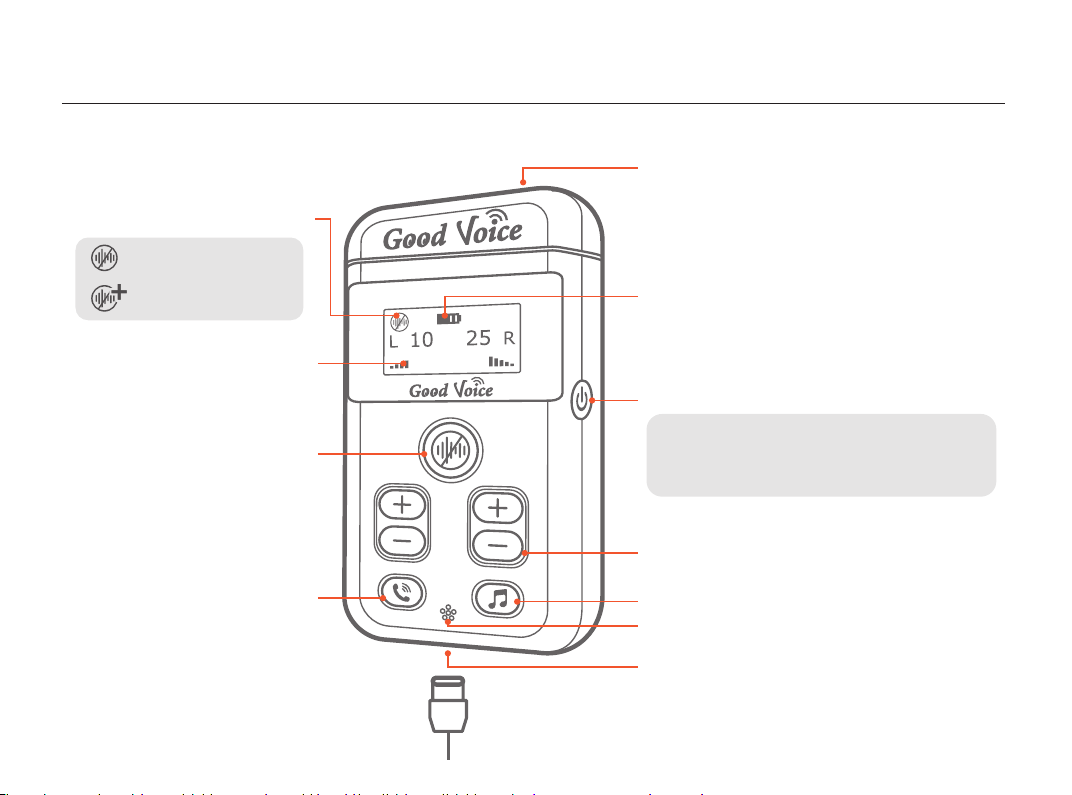
Getting to Know Your Good Voice OTC Hearing Aid
Standard
Wired Earphone Port
Type-C Charging Port
Type-C Charging Cable
Power Button
Volume Indicator
L: Left / R: Right
Noise Reduction Mode
Battery Indicator
Noise Reduction Button
Volume Control Buttons
Call Answer Button
Stream Button
Sound Inlet (Microphone)
Power on: Press power button once.
Unlock: Press power button once.
Power off: Hold power button for 3 sec.
Enhanced
Controller
9
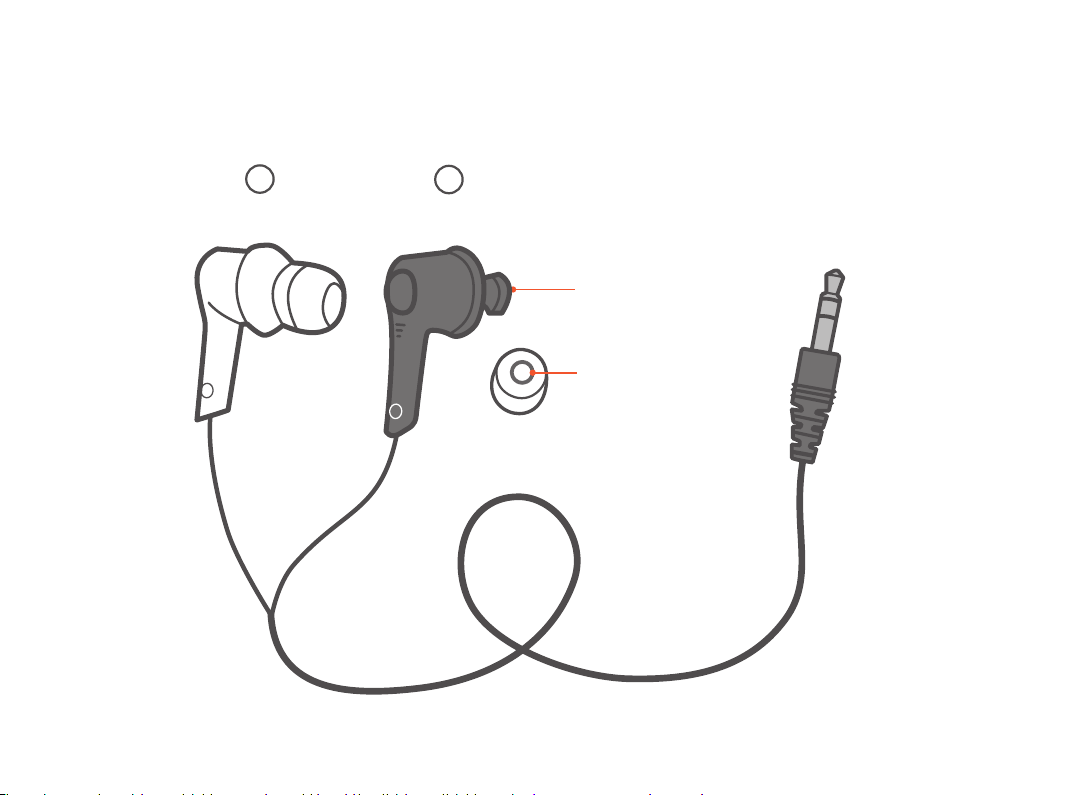
Wired Earphones (Model: CD-1)
Earphone Jack
Sound Outlet
Replaceable Eartip
Left Earphone
Right Earphone
L
R
R
L
10
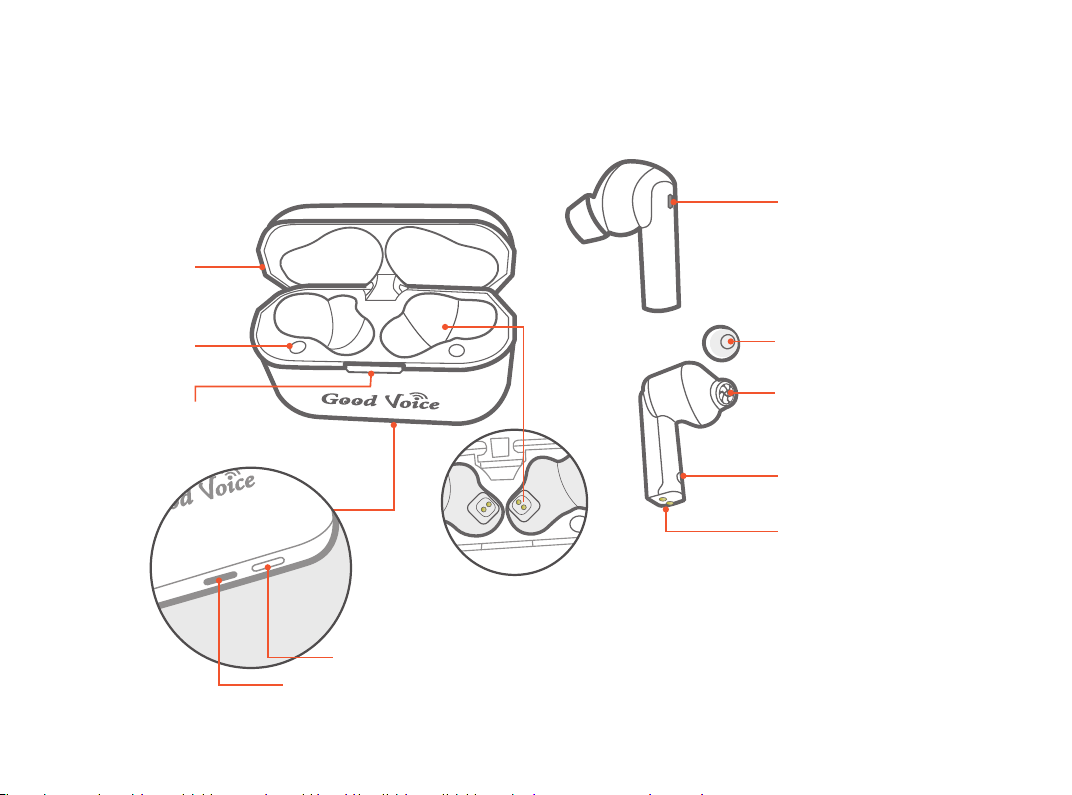
Bluetooth Earphones (Model: HT-001)
R
L
R
Charger Status LED
Lid
L/R Indicator
Charging Contact
CCAP23LP5590T6
Battery Status Button
Charging Port
Indicator Light
Charging Contact
L/R Indicator
Sound Outlet
Replaceable Eartip
Note: The included Bluetooth earphones
is exclusively designed for pairing with
the Good Voice controller.
11
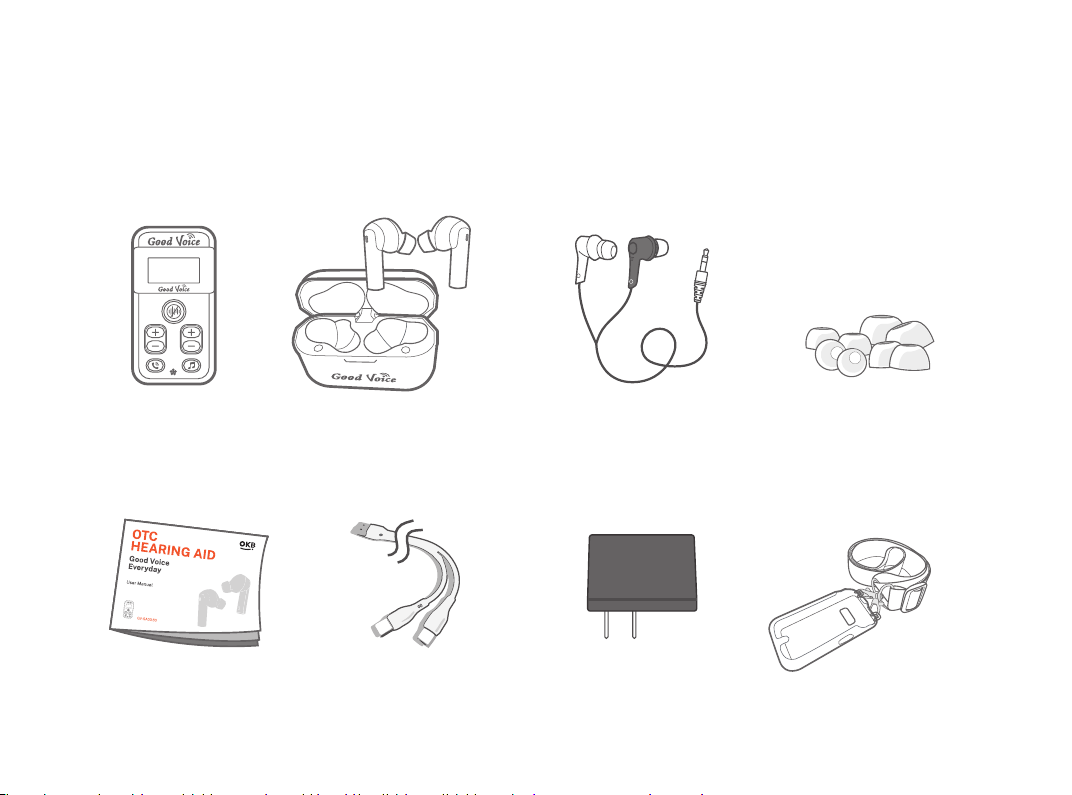
Included Accessories
L
R
R
L
Please ensure all the following items are included in the package. If any of the following accessories
are missing, please see the back page for full contact details.
Controller
Wired EarphonesBluetooth Earphone Replacement
Ear Tips
User Manual Charging Cable
(USB-A to Dual Type-C)
Controller
Protection Case
Adapter
12

Care and Maintenance Guidelines
To maximize the life of your rechargeable hearing aid batteries, do not store the devices for extended
periods without recharging them. Recharge at least once every six months if it is not used.
• Avoid storing the hearing aids in extreme temperatures or harsh weather conditions to prevent
battery deterioration.
• “Enhanced Noise Reduction Mode” reduces environmental sound awareness. Avoid using this
mode when full awareness of the user's surroundings is necessary.
• Do not expose the hearing aids or charging case to sand, dust, or other fine particulates, as this may
cause permanent damage to the device.
• Store and charge your devices in a dry location. Prolonged exposure to moisture can harm the
hearing aids and charging case.
• Avoid using a hairdryer or other heating devices to dry the hearing aids as excessive heat may cause
damage.
• Clean the hearing aids as instructed to prevent earwax or residue buildup for maximum product
performance.
• To prevent a voided warranty, do not attempt to repair, disassemble, or modify the product.
13

• To Clean the Controller, Earphones and Charging case: Wipe with a cloth lightly dampened with
water. Do not use alcohol for cleaning.
• It is recommended to clean the Controller, Earphones and Charging case whenever visible dirt is
observed to maintain hygiene and proper function.
• The hearing aid is designed for single person use.
Battery Safety Warning
• The in-built lithium battery can only be replaced by the manufacturer or an authorized service
provider.
• Replacement of batteries with an incorrect type may defeat a safety safeguard, especially with
some lithium battery types.
• Disposal of batteries into fire or a hot oven, or mechanical crushing or cutting, may result in an
explosion.
• Leaving batteries in an extremely high-temperature environment can result in an explosion or
leakage of flammable liquid or gas.
• Exposing batteries to extremely low air pressure may cause an explosion or leakage of flammable
CAUTION: Risk of fire or explosion
• Do not replace the battery with an incorrect type.
• Dispose of used batteries according to the instructions.
14
Daily Use of the Hearing Aids
Extension of Your
Wireless Everyday Hearing
The device is suitable for various environments,
ensuring seamless communication with others
and helping users to hear WHAT MATTERS
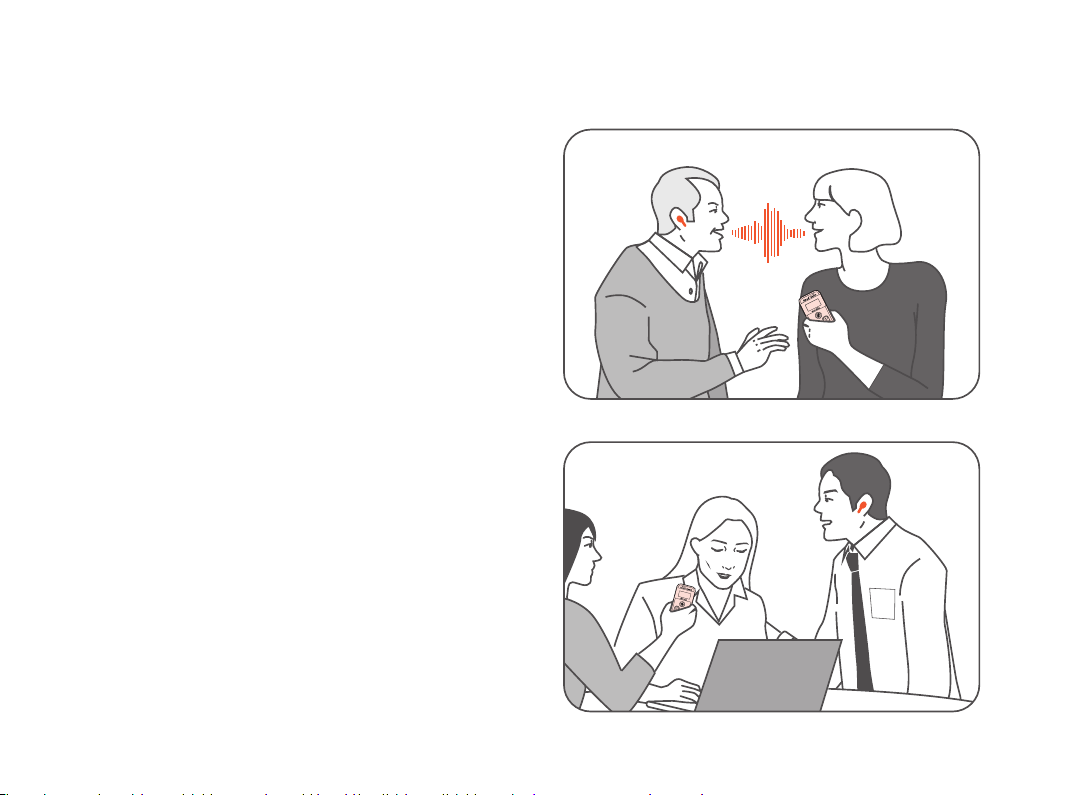
Consider the controller as an extension of your
ears. For optimal audio reception, position the
controller close to the speaker or sound source in
different situations.
Note: The following instructions and features
apply exclusively to wireless earphones. Wired
earphones may not support these functionalities.
In Meetings
For effective participation and easier follow-up
on conversations, place the controller in the
center of the conference room table to capture
discussions clearly.
15
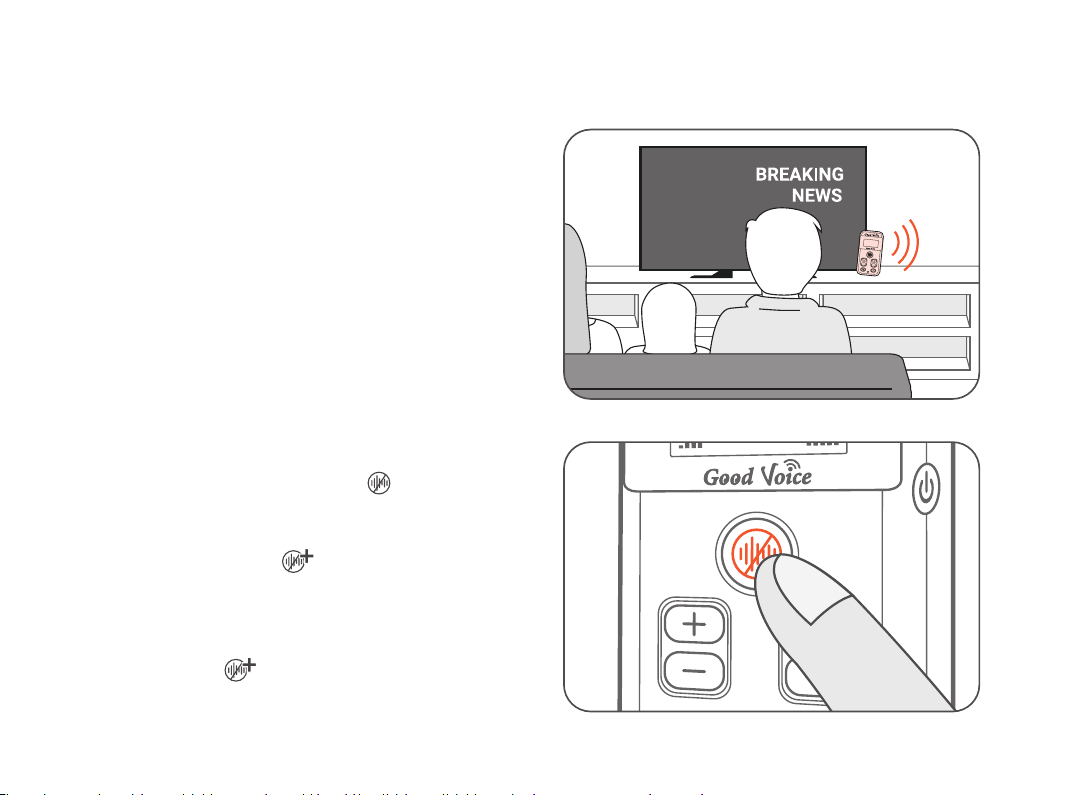
When Watching TV
Position the controller near the TV to enhance
audio clarity.
If the controller cannot be placed close to the
sound source, adjust the volume for each ear
to achieve optimal audio performance.
Activating Noise Reduction Modes
In Noisy Environments
Press the noise reduction button once to
activate “Standard Noise Reduction Mode”
Press the button again to switch to “Enhanced
Noise Reduction Mode”
Press the button once more to return to
Regular Mode.
Caution: Avoid using “Enhanced Noise
Reduction Mode” when full awareness of
your surroundings is needed for safety or
situational awareness.
16
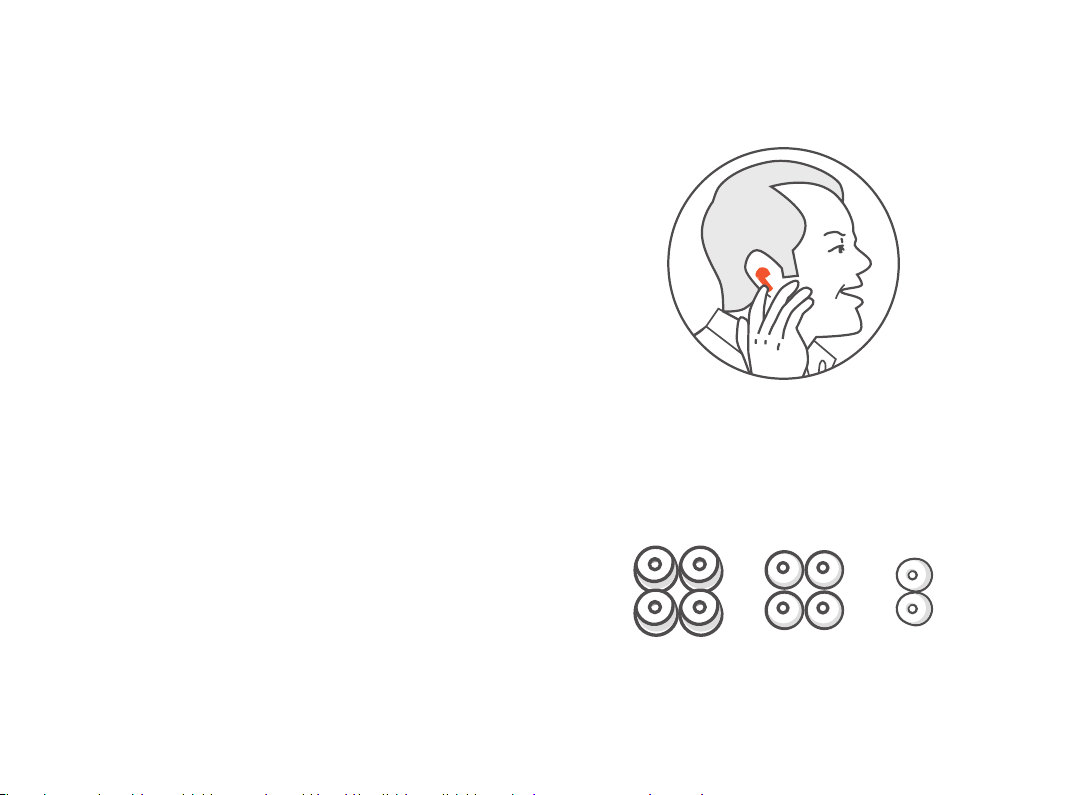
Instructions for Product Use
Wearing Your Earphones
• Rotate about 45 degrees toward your face and
gently press the earphones further into your ear.
• Hold the earphones stem with the ear tips
facing inward.
• The “L” (Left) or “R” (Right) symbol on the stem
will be facing you.
1. Consider practicing in front of a mirror
2. Place the Ear Tip into Your Ear
3. Rotate the Earphone Stem
Finding the Suitable Ear Tips
For the best audio performance and hearing
experience, selecting the correct ear tip size is
essential.
The earphones come pre-fitted with small ear tips. If
the ear tips do not fit your ear comfortably, consider
testing out other ear tip size options. Choose the ear
tip that offers the best combination of a snug fit and
comfort for optimal performance.
Silicone Eartips
L M
S
17
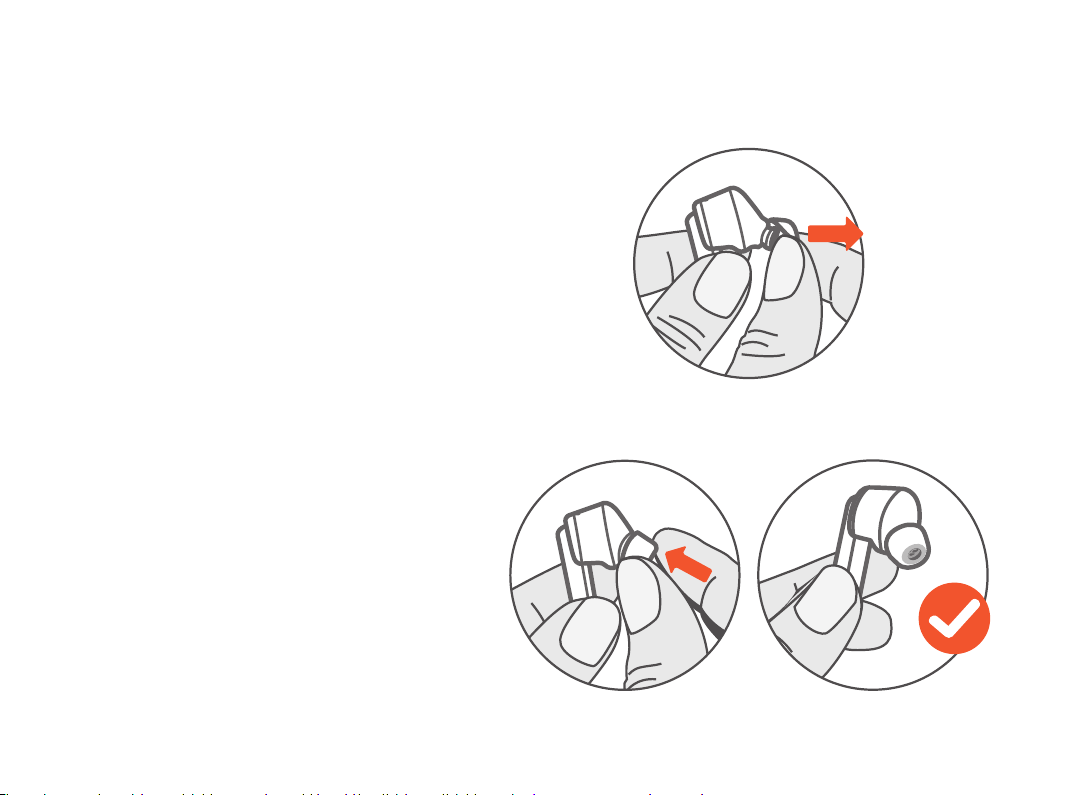
Removing Ear Tips
1. Hold the earphone securely in one hand.
2. Use the other hand to grasp the ear tip.
3. Gently pull the ear tip away from the
earphone to detach.
Replacing Ear Tips
1. Align the chosen ear tip with the sound
outlet of the earphone.
2. Press the ear tip firmly onto the sound
outlet.
3. Ensure the ear tip is fully and securely
mounted on the sound outlet before use.
R
18

When to Discard an Ear Tip
Dispose of the ear tips when:
• Ear tips appear noticeably dirty or stained.
• Signs of wear and tear, such as cracks or deformation, are visible.
• Ear tips no longer fit securely or comfortably.
When to Reuse an Ear Tip
Instructions for Product Use
Ear tips can be reused if they remain intact and show minimal signs of wear or damage. To clean:
• Soak the ear tip in a mixture 1:100 ratio of soap to warm water.
• Rinse thoroughly with clean water.
• Allow the ear tip to dry completely before reattaching it to the earphone.
19
R
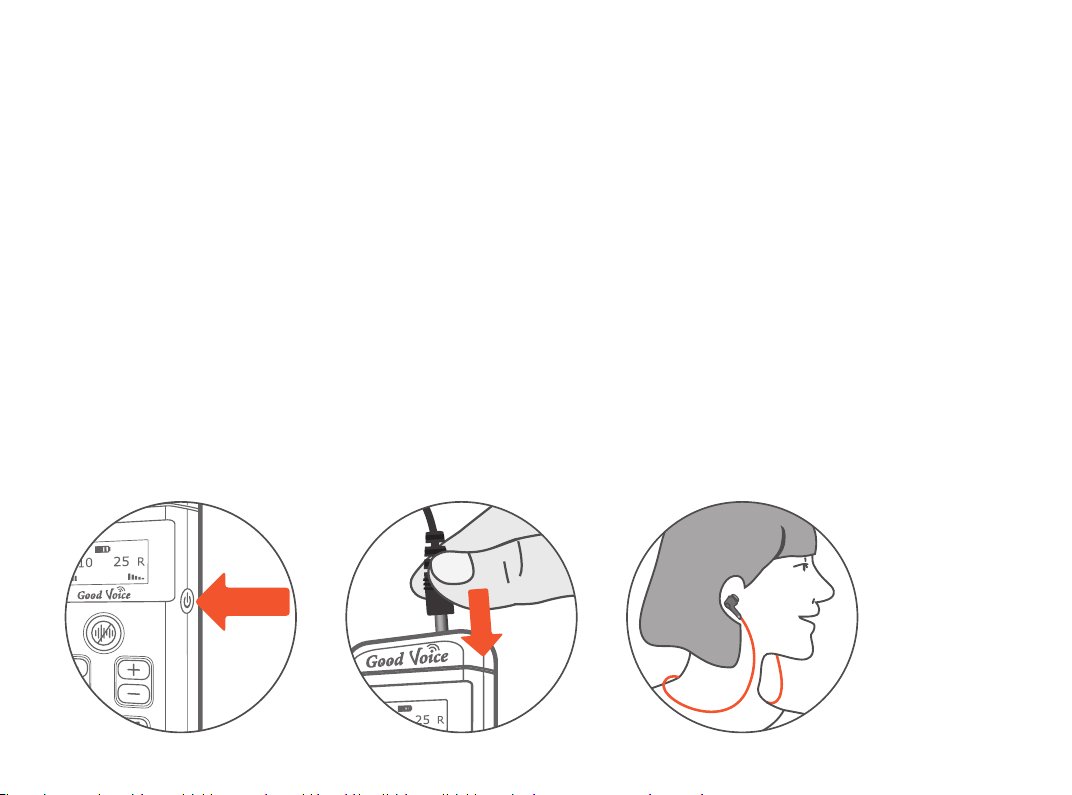
How to Use Wired Earphones
• Connect the wired earphones to the wired earphone port on the controller.
• Press the power button once to turn on the controller.
1. Turn On the Controller
2. Insert the Wired Earphones
• Place the black earphone in the right ear and the white earphone in the left ear.
• For easier use, guide the black right earphone wire around the back of your neck from the left side,
then place the earphone in your right ear.
3. Wear the Wired Earphones
Press Once
20
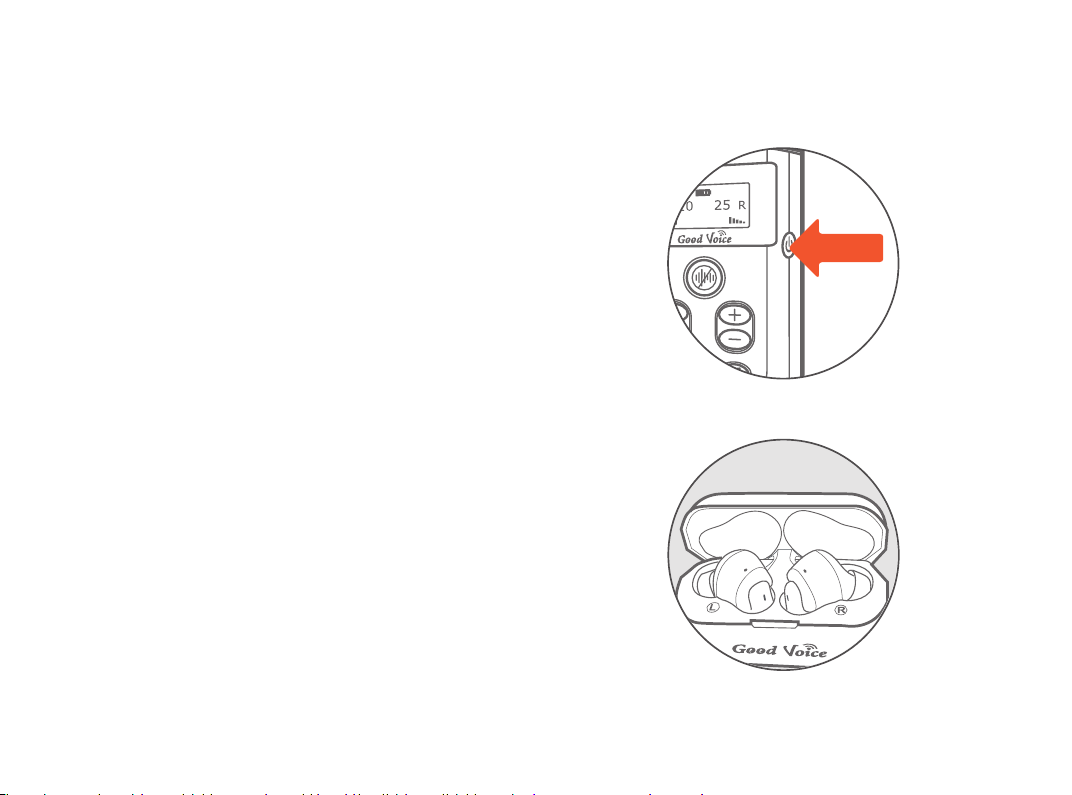
How to Use Wireless Earphones
• When opening the charging case, a prompt
sound will play, indicating "Power on"
• Press the power button once to turn on the
controller.
1. Turn On the Controller
2. Open the Lid of the Charging Case
Instructions for Product Use
Press Once
21
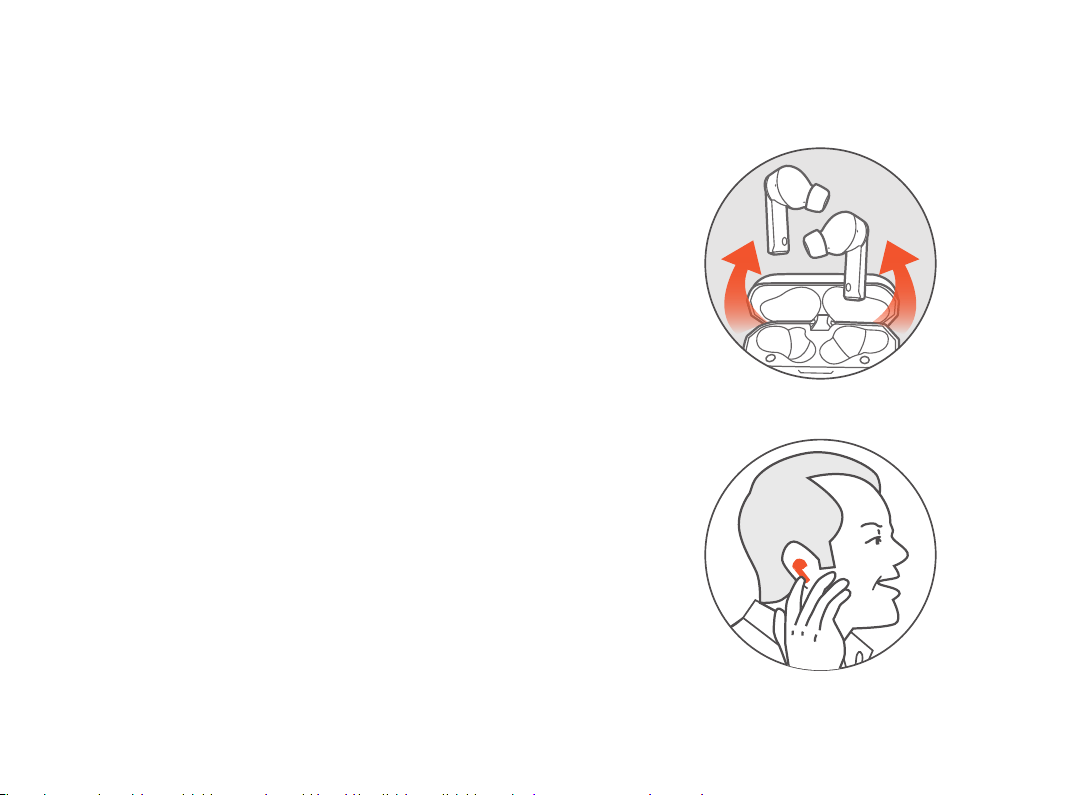
• The left and right earphones will automatically attempt
to connect to the controller individually once the lid is
opened.
• If successful, you will hear a "Connected" voice prompt
from each side, indicating that the earphones are now
connected to the controller.
• When both earphones are connected, they are ready for
use.
3. Automatic Pairing
• Remove the earphones from the charging case.
• Place the earphones in your ears according to the left
(L) and right (R) indicators for proper fit and function.
4. Wear the Earphones
L
R
L
R
22
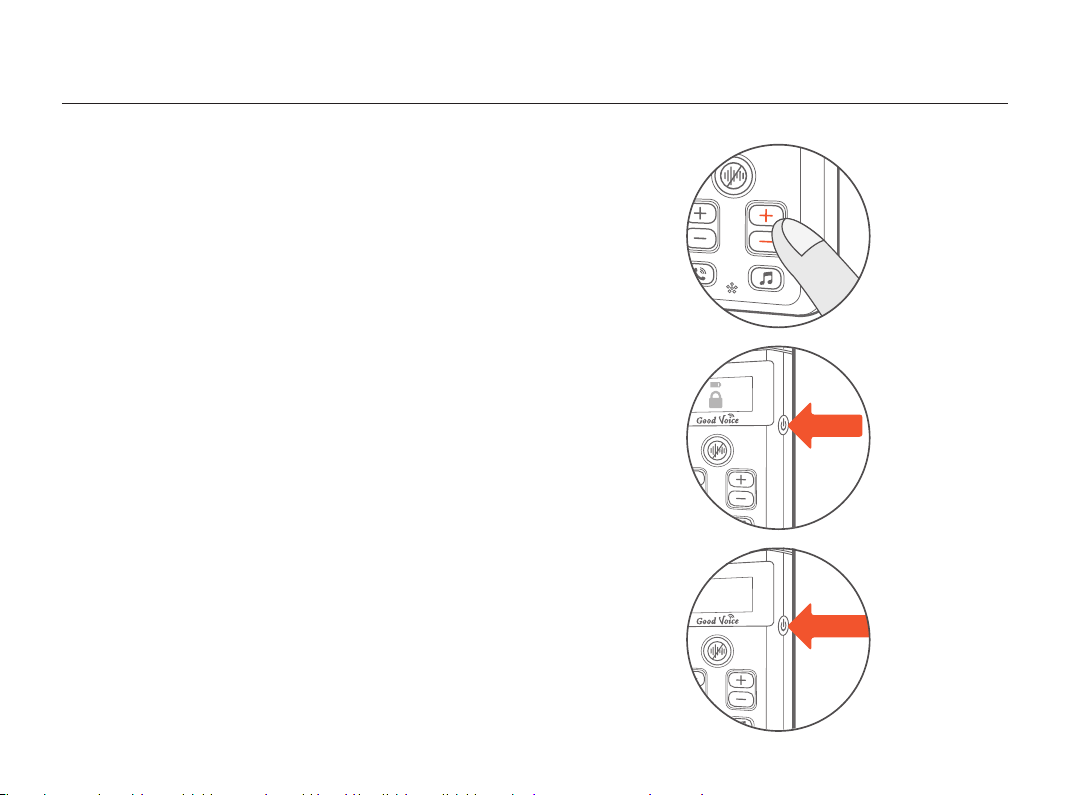
Press for
3 Seconds
POWER OFF
Device Controls
Adjust the Volume
• Use the volume buttons on the controller to adjust the
volume for the left and right ear correspondingly.
• Press “+” to increase the volume
• Press “-“ to decrease the volume
Unlock the Controller
• If the Controller is inactive for 60 seconds, it will
automatically lock to prevent accidental pressing of
the volume buttons.
• To unlock, gently press the power button once.
Power Off the Controller
• Press the power button for 3 seconds.
LOCK
Press Once
23
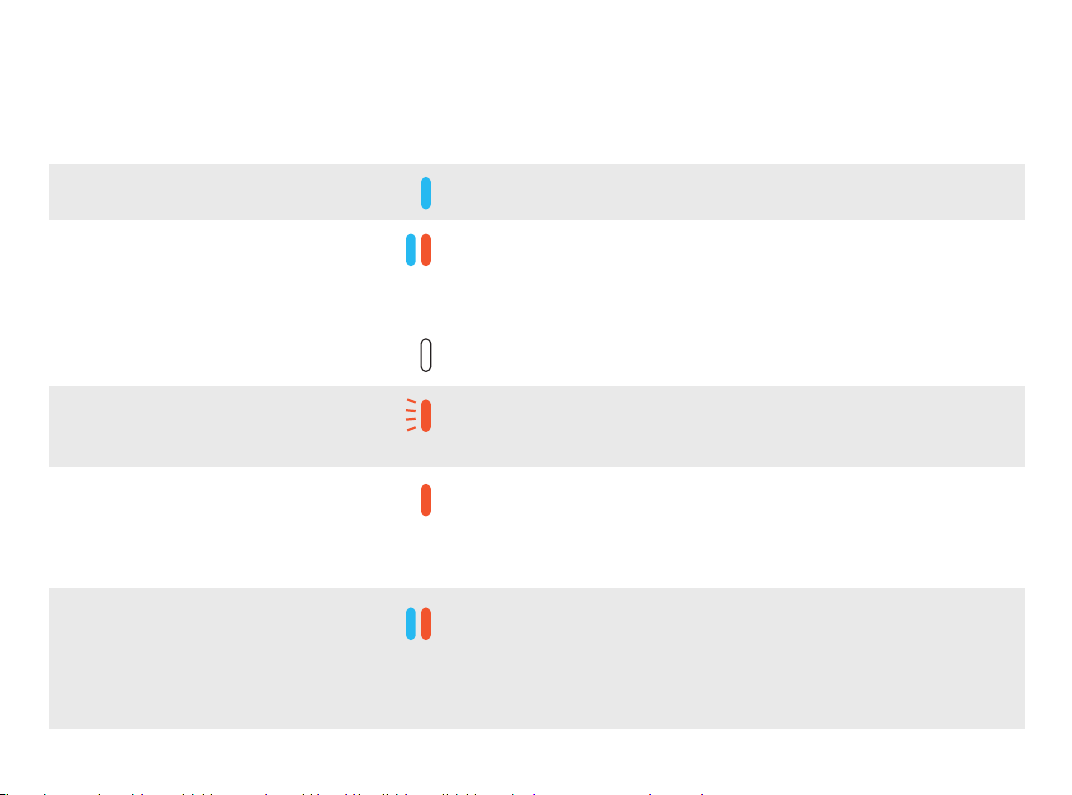
Status and Indicators
Status
Description Indicator Light Notification Sound Remark
Open the lid of charging case
Scenario A:
Open the charging case lid.
Then, power on the controller.
Scenario B:
Power on the controller. Then,
open the charging case lid.
Power on
Pairing with
the controller
Disconnected
Low battery
Charging
When the battery is low
Place the bluetooth earphones
back in the charging case
Case 1: When the controller is
turned off
Case 2: The controller and
earphones are beyond the
connection range (26 feet/8
meters in open space).
Blue light on for 1 second "Power on"
Scenario A:
The LED indicator emits three
consecutive blue flashes. It
then alternates between
amber and blue flashes.
Scenario B:
The LED indicator remains off.
Amber light flashes
every 5 seconds
Amber light stays on
The LED indicator remains
blue for 1 second, then it
alternates between amber
and blue flashes.
“Pairing”, then
“Connected,
Connected”
"Low Battery"
"Disconnected"
When the lid is opened, the
earphones will automatically
attempt to connect to the
controller individually,
followed by a "connected,
connected" indicating that
both the earphones are now
connected to the controller.
Please place the bluetooth
earphones back in the charging
case to recharge them.
Make sure the amber light
stays on when placing the
earphones into the charging
case, indicating that the
charging contacts are properly
aligned.
The Bluetooth connected
range is around 26 feet (8
meters) in open spaces.
24
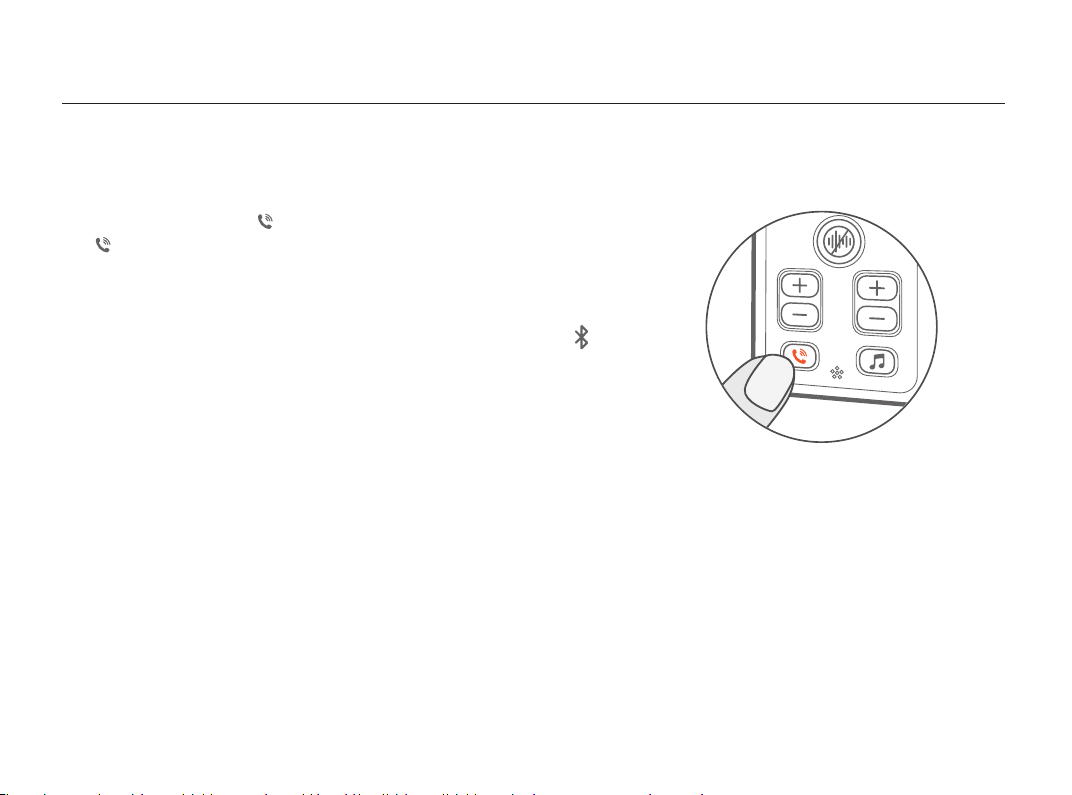
Bluetooth Pairing Instructions
Pairing your Good Voice Hearing Aid with your
Mobile or Bluetooth Devices
• Press and hold the button for about 5 seconds, then release.
“ Pairing” will appear on the screen.
• Turn on the Bluetooth function on your phone.
• "OK Good Voice" will appear on your phone for connection.
• After a successful connection, the Bluetooth symbol
will appear on the screen of the Controller.
Follow these steps during the initial use or
if the connection is interrupted:
• Ensure the controller is powered on.
• Confirm that the phone’s Bluetooth is enabled.
• Pair the device following the instructions provided in this
manual.
Once the setup is complete, the device will automatically
reconnect whenever the controller is powered on and the
phone’s Bluetooth is active.
25
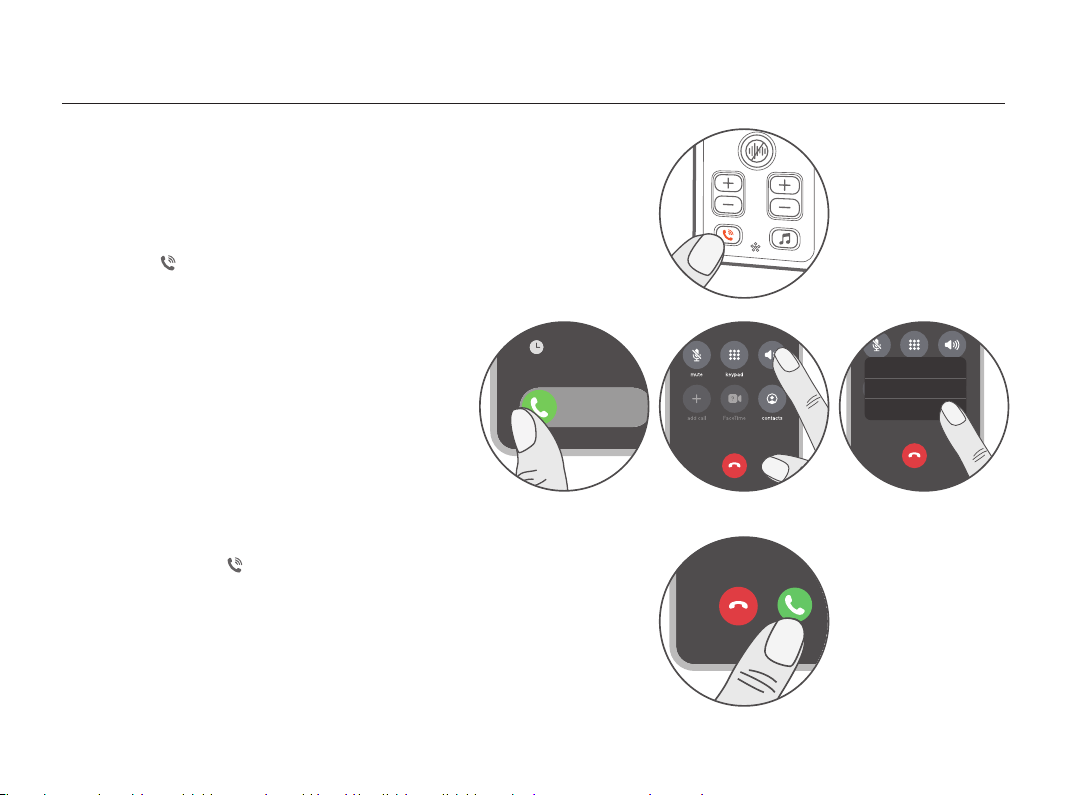
Answering Phone Calls
Answer directly from the controller.
- Press on the controller.
IOS
Answer the phone call via your iPhone
- Swipe right or Tap "Accept" to answer
the call
- Tap "audio"
- Choose “OK Good Voice”
Android
Answer from your Android phone
- Swipe or Tap / "Accept" icons to
answer the call from your Android
phone. Do not answer the phone from
the controller directly.
- For Android systems, calls can only be
answered via the phone, not through
the controller.
Bluetooth Pairing Instructions
audio
audio
iPhone
Speaker
OK Good Voice
Slide to answer
MessageRemind Me
26
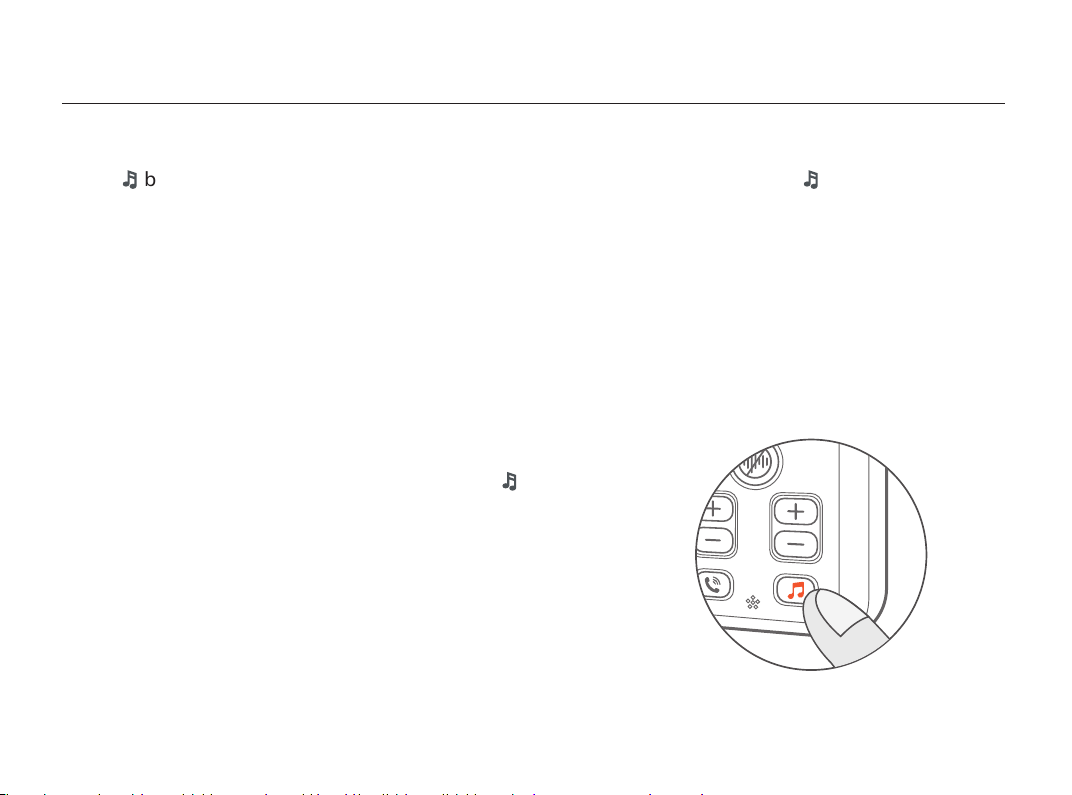
Audio Streaming Bluetooth Devices
Bluetooth Pairing Instructions
After connecting to your phone or tablet, press
🎵
button
on the controller to switch to music mode. Your Good
Voice hearing aid amplifies audio for clear listening while
enjoying videos or music.
Enjoying Music or Videos from Your Mobile Devices
Press
🎵
button once and release the button. The controller's screen will display
🎵
, indicating you're
ready to enjoy audio from both music and videos on your Bluetooth device. Press the button again to
return to regular mode.
General Warnings:
• During Bluetooth streaming, ensure that the volume is adjusted directly on the Bluetooth device.
• IOS 6 or higher is required to use the controller with an iPhone, and Android 5 or later for Android
phones. Please ensure your device meets the required operation system version before use.
• Bluetooth streaming will lead to higher power consumption on your Good Voice device.
27
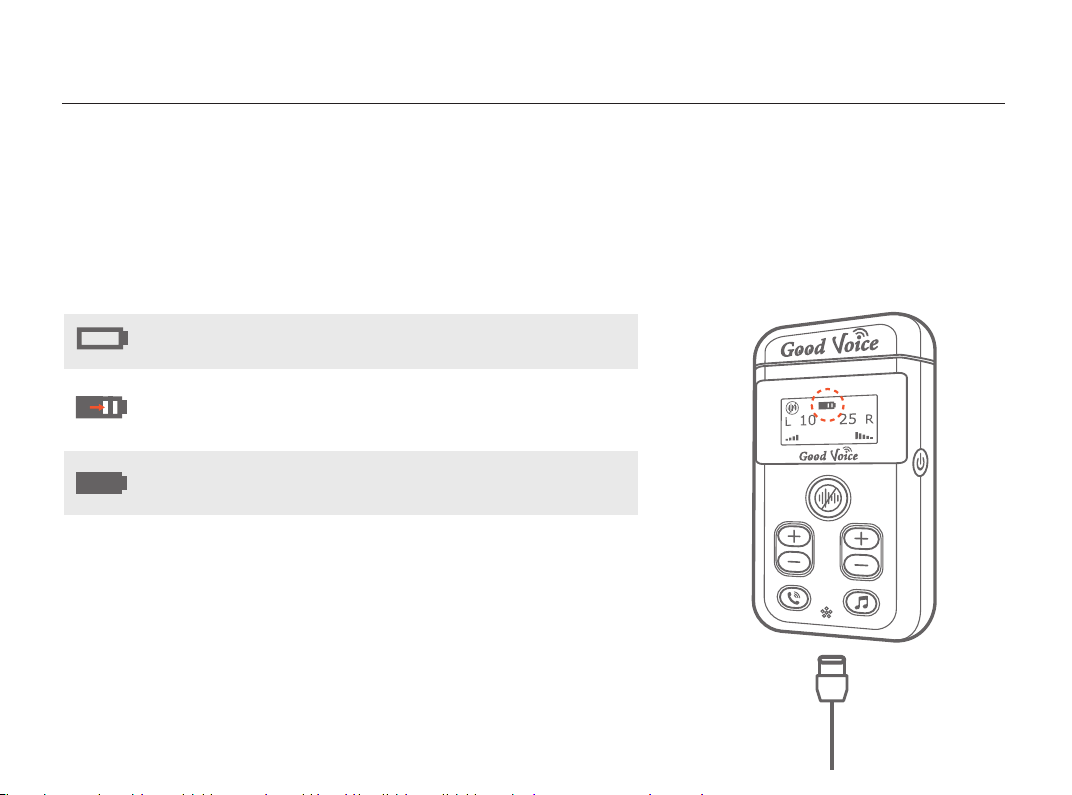
Charging Your Hearing Aid
Charging Instructions
The controller is designed to provide a battery life of up to 10 hours on a full charge.
A fully depleted controller takes approximately 2.5 hours to recharge completely.
Controller
Low Battery
Charging
Charging
Completed
Controller Battery Status Indicators
The Good Voice Controller's battery capacity gradually
decreases with use. Lithium-ion batteries lose a small amount
of capacity with each full charge cycle, which consists of a
complete discharge and recharge. After 300 cycles, the battery
retains 80% of its capacity. However, it can be recharged at any
time without needing a full discharge, ensuring long-lasting
performance.
Battery Life
The empty battery icon will flash on
the screen.
The battery icon will display the
current battery level and flash while
charging.
The battery icon will stop flashing,
indicating the charge is complete.
28
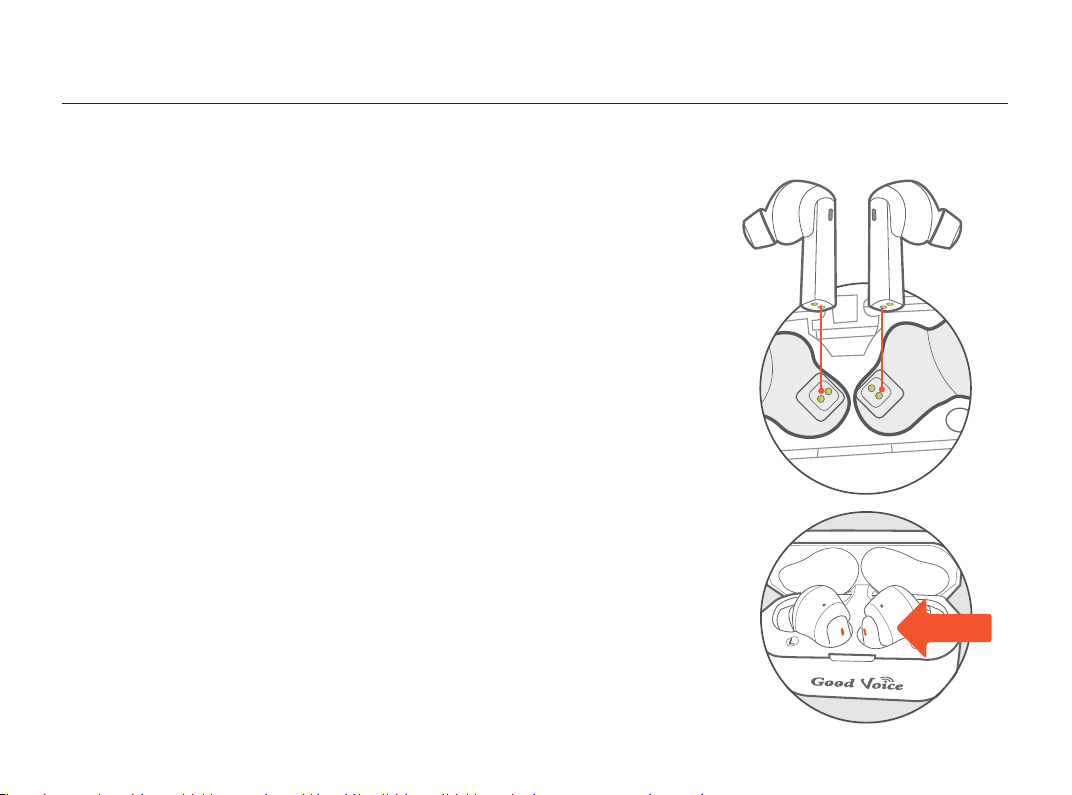
Charging Your Bluetooth Earphones
Charging Instructions
Fully charged earphones provide up to 6 hours of use. The
on-the-go charging case offers an additional 2.5 charges (roughly
15 hours), ensuring all-day usage.
A 5-minute charge in the charging case provides approximately
20 minutes of use.
Battery Life
Charging the Earphones
• Place the left earphone in the left cradle and the right earphone
in the right cradle of the charging case.
• Ensure the charging port on the earphones and the charging
cradles are properly aligned.
• The indicator light on the earphones will turn solid amber,
confirming a secure connection.
Once the lid is closed, the earphones will turn off automatically
while inside the charging case.
Charging Instructions
R
Stays on
29
CCAP23LP5590T6
Charging
Fully
Charged
Low Battery
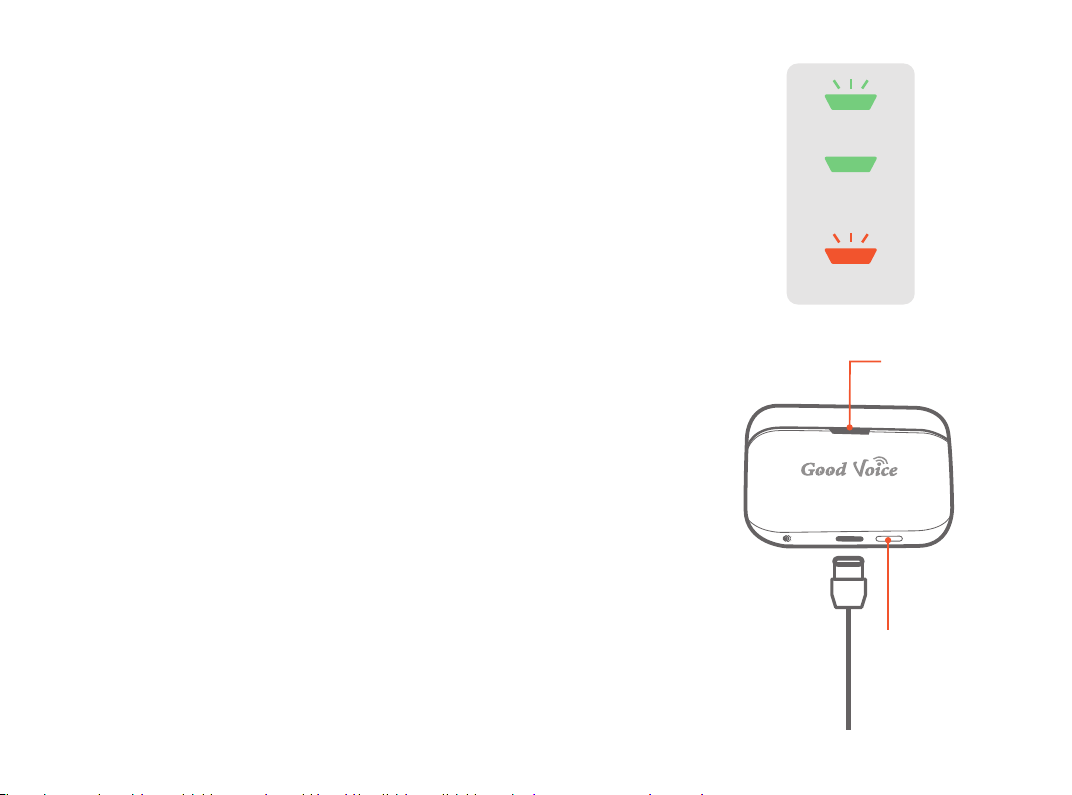
Charging the Charging Case
• Connect the supplied USB-C cable to the USB-C port on the
bottom of the charging case.
• Plug the larger end of the cable into the supplied USB wall
adapter (supports 5V/1.2A).
It takes approximately 2 hours to fully charge a fully depleted
charging case.
Additional Notes:
• Always use the USB cable provided in the packaging.
• Do not use non-specified chargers or adapters, as this may damage
the device.
• The supplied USB wall adapter “UNIFIVE/ UMB305-0512 ” is a
forming part of the medical device. Input Rating: AC 100-240V 50/60
Hz 0.16-0.12A Output Rating: DC5.0V 1.2A 6.0W
Earphones Charging Case Battery Status Indicators
• Charging:
- When the case has sufficient battery, it flashes green.
- When the case is low on battery, it flashes amber.
• Fully Charged: Solid green light for 10 minutes, then turns off.
• Low Battery: Pulsing amber light for 10 seconds, then turns off.
Battery Status
Button
Battery Status
Indicator
30
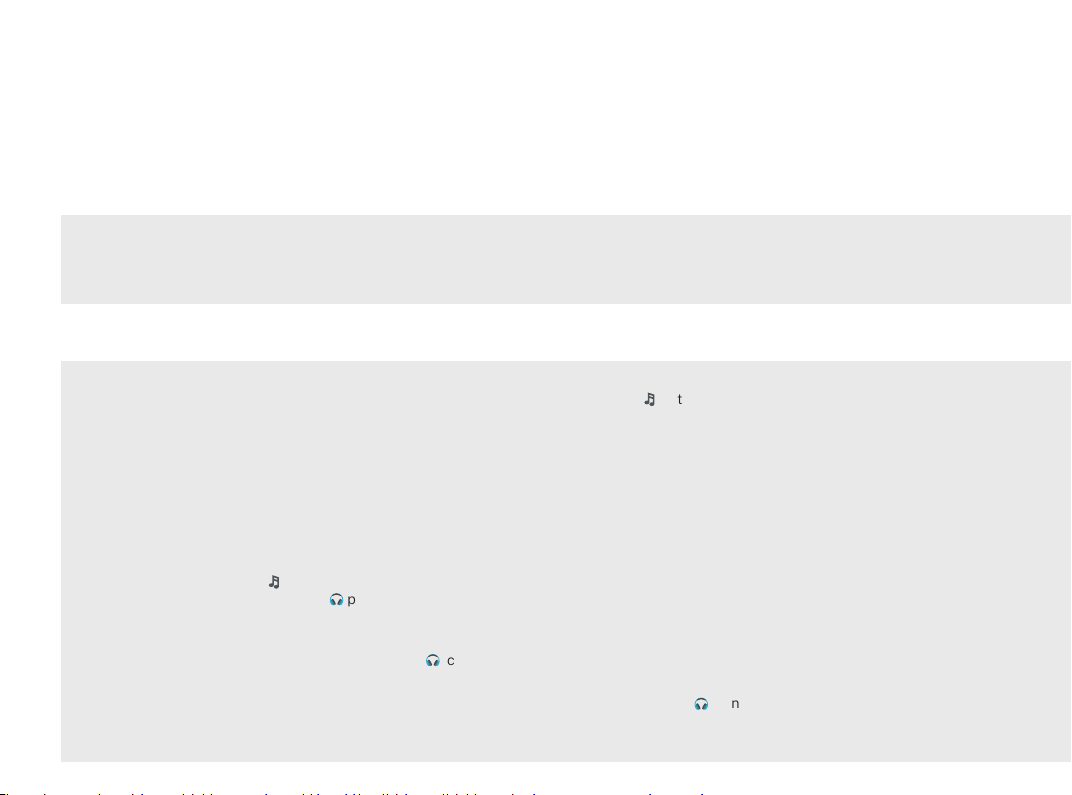
Troubleshooting Guide
If you encounter any issues with your device, please try the following steps:
No.
Description
Possible Cause
Solution
The controller and earphone have never
been paired.
Earphones were replaced with a new set.
Step1:
Open the lid of the charging case. The blue
indicator light on the earphones will flash, you will
hear the "Power on" prompt.
Step2:
Wait until the amber and blue indicator lights flash
alternately, and you will hear the "Pairing" prompt.
Step 3:
Then, power on the controller.
Step 4:
Hold the
🎵
button on the controller for 5 seconds,
then release. The “
🎧
pairing” icon will appear on
the screen.
Step 5.
Wait for pairing, once paired, the
🎧
icon will appear
on the screen of Controller, and you will hear the
"connected, connected" prompt.
The controller and earphones have been
paired, but they cannot re-pair when both
are powered on.
The Bluetooth memory might be full.
Step 1:
Hold the
🎵
button on the controller for 10 seconds, then
release. The screen will display "Clear," and the controller will
automatically turn off.
Step 2:
Open the lid of the charging case. The blue indicator light on the
earphones will flash, you will hear the "Power on" prompt.
Step 3:
Wait until the amber and blue indicator lights flash alternately,
and you will hear the "Pairing" prompt.
Step 4:
Then, power on the controller.
Step 5:
The controller will automatically search for and pair with the
earphones.
Step 6:
Once paired, the
🎧
icon will appear on the screen of Controller,
and you will hear the "connected, connected" prompt.
1 2
31

Loud feedback noise
Earphones are too close to the controller.
Increase the distance between the
earphones and the controller, especially
when the volume is set to high.
3
Controller cannot connect to
mobile phone
The Controller is already paired with
another phone
Disable Bluetooth on the currently
paired device, then reconnect the
controller to your mobile phone.
Follow the instructions in the
section "Bluetooth Pairing
Instructions" on page 25.
4
No sound in phone calls or audio
streaming mode, even when the
controller is connected to the
Bluetooth device.
The Bluetooth device is muted.
During Bluetooth streaming, ensure
that the volume is adjusted directly
on the connected Bluetooth device.
5
If there is any other problem, please consult or return the device to your distributor. Do not try to repair a defective device.
32
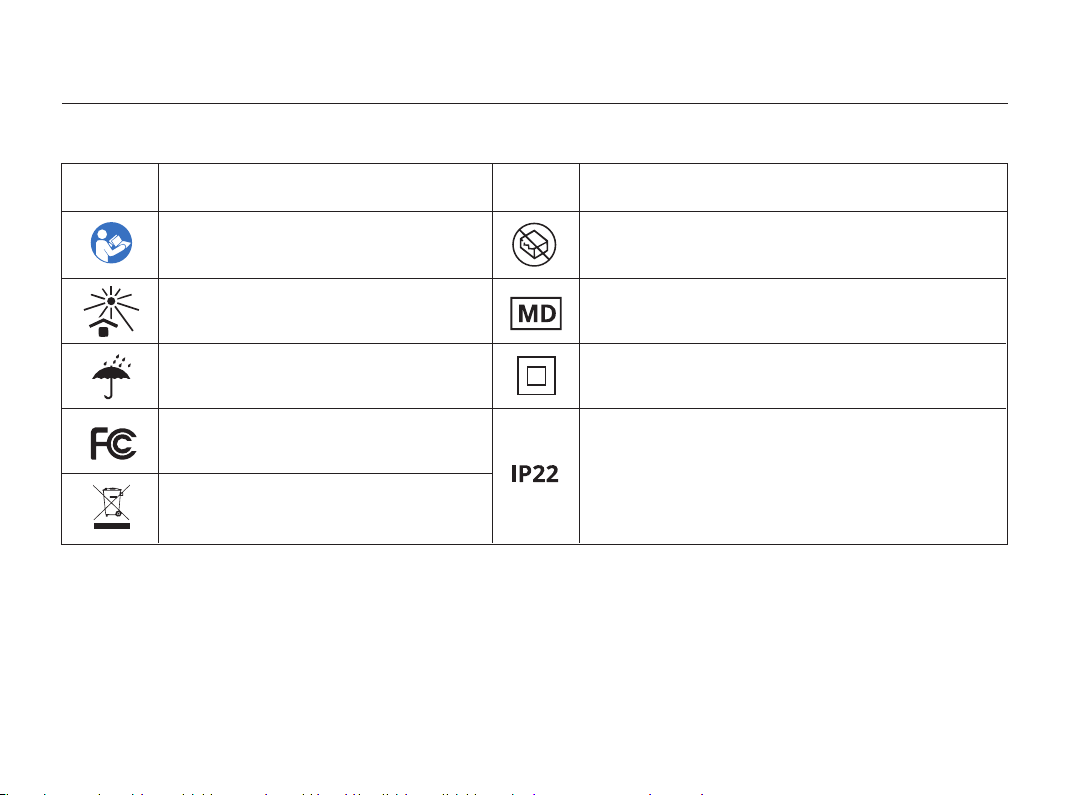
Symbol Information
Troubleshooting Guide
Symbol
Description
Caution: Consult accompanying document.
Please follow the national guidelines for
electronic product disposal.
Do not use it if packaging is damaged.
Federal Communications Commission symbol
Symbol
Description
Class II devices
Protected against solid objects larger than 12.5 mm,
such as fingers or similar objects. Protected against
dripping water when tilted at up to 15 degrees from its
normal position. Important: The device is not waterproof
or dustproof. Do not submerge it in water or expose it to
heavy moisture, such as rain or splashing.
Medical device
Keep away from direct sunlight
Protected from moisture
33
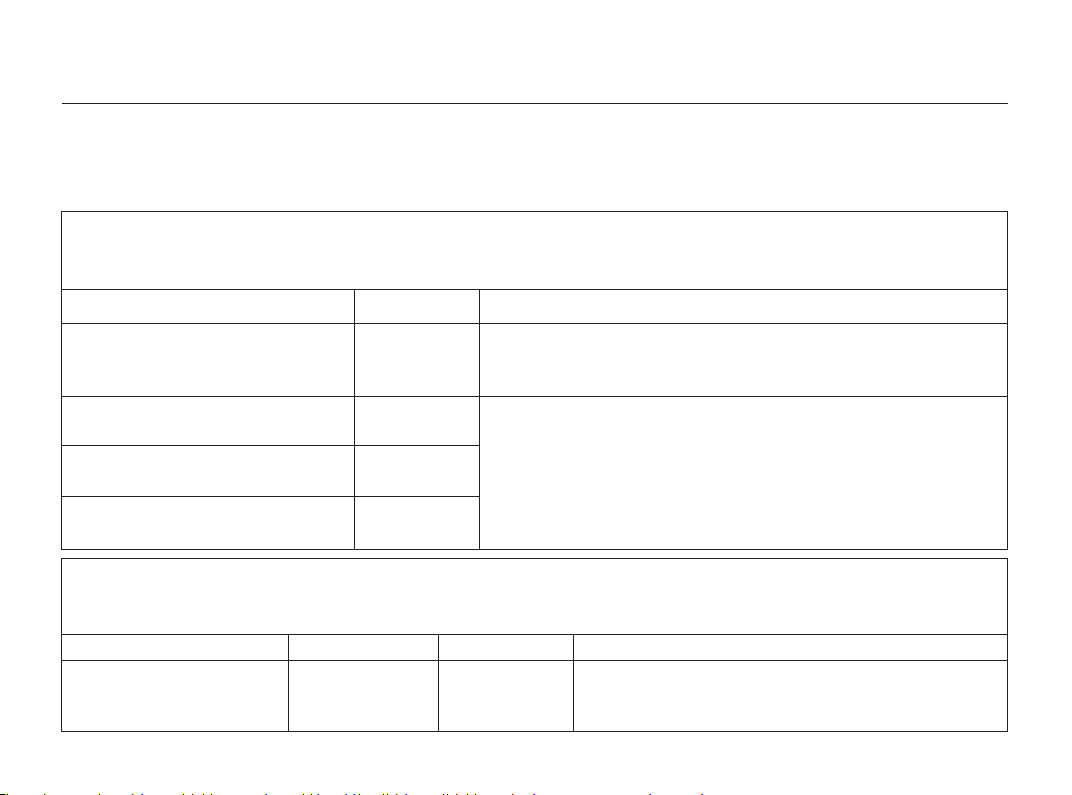
Wireless Technical Description
Your Good Voice hearing aid system is classified as Class II Exempt per 21 CFR 874 and Class II Type BF per IEC
60601-1 Medical Electrical Equipment.
This hearing aid model has been tested to, and has passed, the following EMC, emissions, and immunity tests:
Good Voice hearing aids are intended for use in the Electromagnetic environment specified below.
The user should assure that your Good Voice is used in such an environment
Electromagnetic Emission
Emission
RF emissions
CISPR 11
RF emissions
CISPR 11
Harmonic current emissions
IEC 61000-3-2
Compliance
Group 1
Class B
Class A
Electromagnetic environment guidance
The Good voice uses RF energy only for its internal function. Therefore,
its RF emissions are very low and are not likely to cause any interference
in nearby electronic equipment.
The Good voice is suitable for use in all establishments, including
domestic establishments and those directly connected to the public
low-voltage power supply network that supplies buildings used for
domestic purposes.
Voltage Fluctuations/flicker emissions
IEC61000-3-2
Good Voice hearing aids are intended for use in the Electromagnetic environment specified below.
The user should assure that your Good Voice is used in such an environment
Electromagnetic Immunity
Immunity Test
IEC60601 test level
Compliance level
Electromagnetic environment guidance
Electrostatic discharge (ESD)
IEC 6100-1-2
±8 kV contact
±- 15 kV .
Compliant
Floors should be wood, concrete, or ceramic tile. If floors are
covered with synthetic material, the relative humidity
should be at least 30%.
34
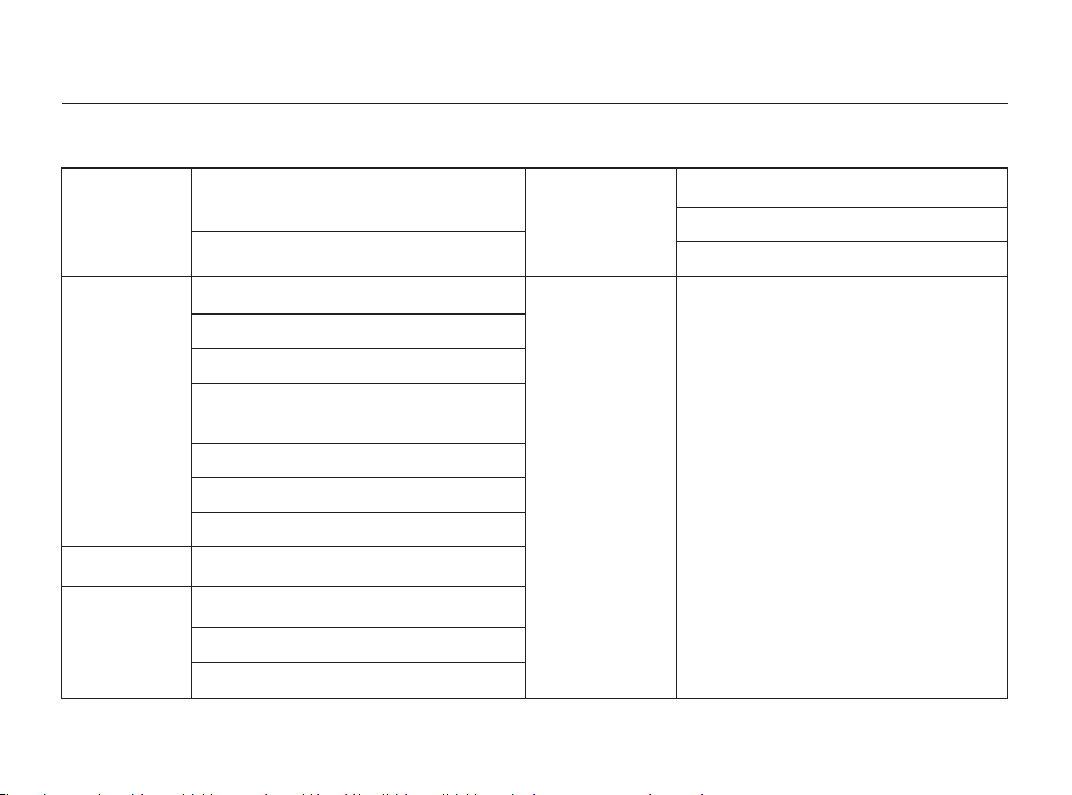
Technical Specifications
Design
Audio Specs
Compatibility
True wireless earphones with a compact,
in-ear design
Max Output: 111dB (OSPL90) 1K/1.6K/2.5K
Max Output Gain: 25.7 dB (HFA-FOG)
Frequency Range (Earphones): 200~8KHz
Equivalent Input Noise <32dBA
Latency : 2.2 ms
Frequency response smoothness : 4.4 dB
70 dB
100 dB
THD+N @ 500Hz
2.2%
0.8%
Bluetooth Version: BT 5.3
Battery Life
Controller: Approx. 10 hours
Wireless Earphones: Approx. 6 hours
With Charging Case: Approx. 21 hours
Charging Time
Controller: Approx. 2.5~3 hours
Wireless Earphones: Approx. 1.5 hours
Charging Case: Approx. 2 hours
Battery Capacity Controller: 1400mAh / 3.7V
Wireless Earphones: 70mAh / 3.7V
Charging Case: 550mAh / 3.7V
Charging Port Type-C
Operating
Conditions
Temperature: 32°F to 104°F (0°C to 40°C)
Humidity: 5% to 95% RH
Atmospheric pressure: 70~106KPa
Output 3.5mm Auxiliary Output x1
Storage/
Transportation
Conditions
Temperature: 14°F to 122°F (-10°C to 50°C)
Humidity: 5% to 95% RH
Atmospheric pressure: 70~106KPa
Color: Polar White
Input rating
Controller: 5Vdc, 0.7A
Charging case: I/P 5Vdc, 1A O/P 5Vdc/0.2A
Bluetooth Earphone: 5Vdc, 0.1A
35

FCC Warning Statement
Changes or modifications not expressly approved by the party responsible for compliance could void
the user's authority to operate the equipment.
This device complies with Part 15 of the FCC Rules. Operation is subject to the following two
conditions: (1) this device may not cause harmful interference, and (2) this device must accept any
interference received, including interference that may cause undesired operation
This device has been tested and found to comply with the limits for a Class B digital device, pursuant
to Part 15 of the FCC Rules. These limits are designed to provide reasonable protection against
harmful interference in a residential installation. This device generates, uses and can radiate radio
frequency energy and, if not installed and used in accordance with the instructions, may cause
harmful interference to radio communications.
However, there is no guarantee that interference will not occur in a particular installation. If this device
does cause harmful interference to radio or television reception, which can be determined by turning
the device off and on, the user is encouraged to try to correct the interference by one or more of the
following measures:
• Reorient or relocate the receiving antenna.
• Increase the separation between the device and receiver.
• Connect the device into an outlet on a circuit different from that to which the receiver is connected.
• Consult the dealer or an experienced radio/TV technician for help.
36

Manufacturer Information
OK Biotech Co., Ltd.
Address: No. 91, Sec. 2, Gongdao 5th Rd., Hsinchu City 30070, Taiwan (ROC)
Website: www.okbiotech.com
Tel: +886-3-5160258
Made in Taiwan
37

Service and Warranty
General Warranty Information:
OKB Hearing warrants the product to be free from defects in workmanship and materials for the
duration of the warranty period. If the product fails during normal and proper use within the warranty
period, OKB Hearing may, at its discretion, repair or replace the defective parts or the product itself
with new or reconditioned parts/products of equal or superior functionality.
The warranty applies only to products newly manufactured at the time of purchase and does not
cover used, refurbished, or manufacturing seconds. Please retain your original purchase invoice for
warranty claims.
Warranty Period and Coverage:
• 30-Day Money-Back Guarantee: Begins on the delivery date and expires on the 31st day.
• 1-Year Manufacturer’s Warranty: Starts on the delivery date and lasts 365 days. For replacements,
the warranty duration is calculated from the original purchase date.
• If proof of purchase is unavailable, the manufacturer’s recorded date will be used as the warranty
start date.
This warranty covers all OKB Hearing and accessories purchased directly from OKB Hearing and
includes defects in materials or workmanship under normal use.
38

Service and Warranty
This warranty excludes damage or failure caused by:
• Improper installation, operation, cleaning, or maintenance
• Tampering, unauthorized repairs, or modifications
• Loss or theft
• Wear and tear, including changes in texture, color, or finish
• External factors such as accidents, natural disasters, or electrical faults
• Use outside recommended operational conditions as stated in the user manual
Customer Responsibilities:
• Read the user manual and follow instructions carefully.
• Avoid overcharging; unplug the product once fully charged.
• Keep the original packaging for transportation if servicing is required.
How to Claim Warranty Service:
1. Contact customer support in the back page with a description of the issue.
2. Provide proof of purchase.
3. Follow instructions for sending the product for evaluation.
39

Out-of-Warranty Cases:
If the warranty period has expired or exclusions apply, OKB Hearing will offer a service estimate.
Repairs will proceed only after customer approval and payment.
International Warranty:
The warranty applies only in the country of purchase.
Limitation of Liability:
OKB Hearing is not responsible for incidental or consequential damages beyond the scope of this
warranty.
40

Your Warranty Information
Thank You for Choosing OKB Hearing. This warranty is valid for a period of 12 months from the date
of purchase. To ensure smooth service, please keep your warranty card in a safe place.
• Name:
• Address:
• Phone:
• E-mail:
• Product Serial Number:
• Date of Purchase:
• Purchased from (Dealer’s Name)
41
Contact Details
Email: support@okbhearing.com
Phone: +1 626-225-0621
Business Hours: 9:00 AM – 6:00 PM (PST) | Monday - Friday
Business Address: 414C Cloverleaf Dr, Baldwin Park, CA 91706
Need an extra pair of Bluetooth Earphones?
Contact us and we'll be happy to assist you!
42
GV-SA03.60
10-81-0377-0103 V1-MAY25