Freezer
User Manual
FND568P
58 9989 0000/ EN/ AA/ 20/06/2023 11:29
7278441213
EN / 2
Please read this manual first!
Dear Customer
Please read this manual before using the product.
Thank you for choosing this Blomberg product. We would like you to achieve the optimal
efficiency from this high quality product which has been manufactured with state of the art
technology. To do this, carefully read this manual and any other documentation provided
before using the product and keep it as a reference.
Heed all information and warnings in the user manual. This way, you will protect yourself
and your product against the dangers that may occur.
Keep the user manual. Include this manual with the unit if you hand it over to someone
else.
The following symbols are used in the user manual:
Hazard that may result in death or injury.
Important information or useful tips on operation.
Read the user manual.
Combustible material, warning against fire hazard.
NOTICE A hazard that may cause material damage to the product or its surroundings
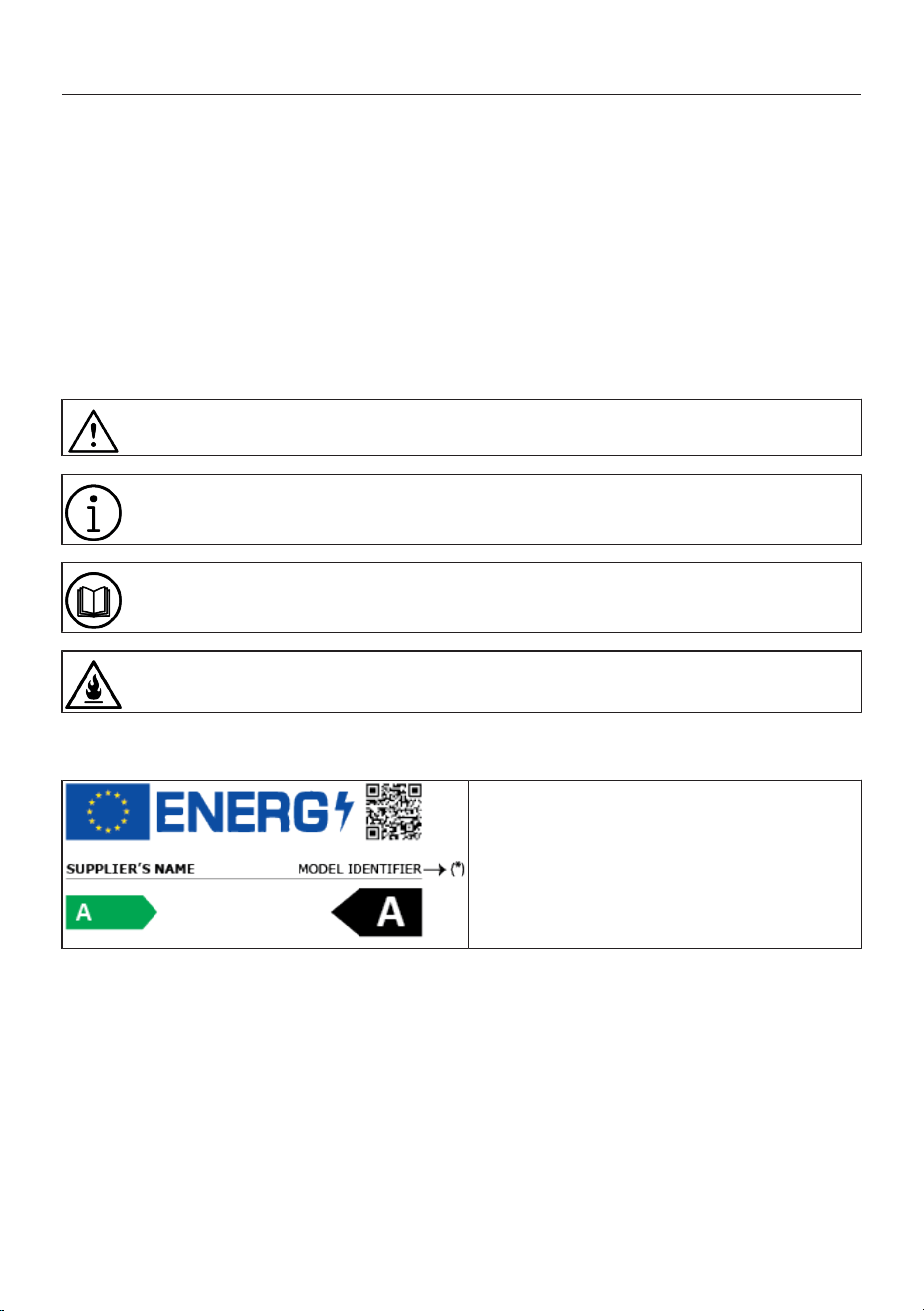
The model information as stored in the product data
base can be reached by entering following website and
searching for your model identifier (*) found on energy
label.
https://eprel.ec.europa.eu/
EN / 3
1 Safety Instructions........................ 4
1.1 Intention of Use ............................. 4
1.2 Safety of Children, Vulnerable
Persons and Pets ..........................
4
1.3 Electrical Safety............................. 5
1.4 Handling Safety ............................. 6
1.5 Installation Safety.......................... 6
1.6 Operational Safety......................... 8
1.7 Food Storage Safety...................... 10
1.8 Maintenance and Cleaning Safety 11
1.9 Disposal of the Old Product.......... 12
2 Environmental Instructions.......... 12
2.1 Compliance with the WEEE Dir-
ective and Disposing of the
Waste Product ...............................
12
3 Your Freezer.................................. 13
4 Installation ..................................... 13
4.1 Right Place For Installation........... 13
4.2 Electrical Connection .................... 14
4.3 Hot Surface Warning..................... 14
4.4 Attaching the Plastic Wedges ...... 14
4.5 Adjusting the Legs......................... 15
4.6 Installation of the Cooler and
Freezer Products Side-by-side......
15
5 Preparation.................................... 15
5.1 What To Do For Energy Saving ..... 16
5.2 First Use ......................................... 16
5.3 Climate Class and Definitions ...... 16
6 Operating the Product.................. 17
7 Use of Your Appliance.................. 17
7.1 Control Panel of the Product ........ 17
7.2 Freezing Fresh Foods.................... 18
7.3 Reversing the Door Opening Side. 22
7.4 Door Open Alert ............................. 22
8 Maintenance and Cleaning .......... 23
9 Troubleshooting............................ 24
EN / 4
1 Safety Instructions
• This section includes the
safety instructions necessary
to prevent the risk of personal
injury or material damage.
• Our company shall not be held
responsible for damages that
may occur if these instructions
are not observed.
Always have installation and repair
operations performed by manufac-
turer, authorized service or a per-
son who will be described by im-
porter company.
Use original spare parts and ac-
cessories only.
Do not repair or replace any com-
ponent of the product unless it is
clearly specified in the user
manual.
Do not perform any modifications
on the product.
1.1 Intention of Use
• This product is not suitable for
commercial use and should
not be used for a purpose
other than its intended use.
• This product is intended for
operating interiors, such as
households or similar.
For example;
In the staff kitchens of the
stores, offices and other work-
ing environments,
In farm houses,
In the units of hotels, motels or
other resting facilities that are
used by the customers,
In hostels, or similar environ-
ments,
In catering services and similar
non-retail applications.
• This product shall not be used
in open or enclosed external
environments such as vessels,
camper vans, balconies or ter-
races. Exposing the product to
rain, snow, sunlight and wind
may cause risk of fire.
1.2 Safety of Children,
Vulnerable Persons
and Pets
• This product may be used by
children aged 8 years and
older and persons with under-
developed physical, sensory or
mental capabilities or lack of
experience and knowledge if
they are being supervised or
have been given instruction
concerning use of the appli-
ance in a safe way and the
hazards involved.
EN / 5
• Children between 3 and 8
years are allowed to put and
take out food into/from the
cooler product.
• Electrical products are danger-
ous for children and pets. Chil-
dren and pets must not play
with, climb on, or enter the
product.
• Cleaning and user mainten-
ance should not be performed
by children unless there is
someone overseeing them.
• Keep the packaging materials
away from children. Risk of in-
jury and suffocation.
Before disposing of old products
that shall not be used any more:
1. Unplug the power cord from
the mains socket.
2. Cut the power cable and re-
move it from the appliance
together with the plug.
3. Do not remove the racks and
drawers from the product to
prevent children from getting
inside the appliance.
4. Remove the doors.
5. Store the product so that it
shall not be tipped over.
6. Do not allow children to play
with the scrapped product.
• Do not dispose of the product
by throwing it into fire. Risk of
explosion.
• If there is a lock available on
the product’s door, keep the
key out of children's reach.
1.3 Electrical Safety
• The product shall not be
plugged into the outlet during
installation, maintenance,
cleaning, repair, and transport-
ation operations.
• If the power cable is damaged,
it shall only be replaced by au-
thorized service to avoid any
risks that may occur.
• Do not tuck the power cable
under the product or to the
rear of the product. Do not put
heavy items on the power
cable. The power cable should
not be bent, crushed, and
come into contact with any
heat source.
• Do not use an extension cord,
multi-plug or adaptor to oper-
ate your product.
• Portable multi-plugs or port-
able power supplies may over-
heat and cause fire. Thus, do
not have a multi-plug, portable
power sources behind or in the
vicinity of the product.
• Do not plug the product’s
power cord in a loose or dam-
aged power outlet. These
types of connections may
overheat and cause fire.
EN / 6
• The plug shall be easily ac-
cessible. If this is not possible,
a mechanism that meets the
electrical legislation and that
disconnects all terminals from
the mains (fuse, switch, main
switch, etc.) shall be available
on the electrical installation.
• Do not touch the plug with wet
hands.
• When unplugging the appli-
ance, don’t hold the power
cord, but the plug.
1.4 Handling Safety
• Make sure to unplug the appli-
ance before carrying the
product.
• This product is heavy, do not
handle it by yourself. Injuries
may occur if the product falls
on you. Do not bump into
places or drop the product
while transporting it.
• Always close the doors and do
not hold the product by its
doors while transporting it.
• Be careful not to damage the
cooling system and the pipes
while handling the product. Do
not operate the product if the
pipes are damaged, and con-
tact an authorized service.
1.5 Installation Safety
• Contact the Authorized Service
for the product's installation.
To prepare the product for use,
see the information in the user
manual and make sure the
electric and water utilities are
as required. If not, call a quali-
fied electrician and plumber to
arrange the utilities as neces-
sary. Failure to do so may res-
ult in electric shock, fire, prob-
lems with the product, or in-
jury.
• The product is designed for
use in areas 2000 metres be-
low sea level.
• Check for any damage on the
product before installing it. Do
not have the product installed
if it is damaged.
• Always use personal protective
equipment (gloves, etc.) during
product installation, mainten-
ance and repair. Risk of Injury!
• Place the product on a clean,
level and hard surface and bal-
ance it with the adjustable legs
(by rotating the front feet to
the right or left). Otherwise, the
refrigerator may tip over and
cause injuries.
• The product shall be installed
in a dry and ventilated environ-
ment. Do not keep carpets,

EN / 7
rugs or similar covers under
the product. This may cause
risk of fire as a result of inad-
equate ventilation!
• Do not block or cover ventila-
tion holes. Otherwise, power
consumption increases and
your product may be damaged.
• When placing the product,
make sure that the supply
cable is not damaged or
pinched.
• The product must not be con-
nected to supply systems such
as solar power supply. Other-
wise, your product may be
damaged due to sudden
voltage changes!
• The more refrigerant a refriger-
ator contains, the bigger its in-
stallation room should be. In
very small rooms, a flammable
gas-air mixture may occur in
case of a gas leak in the cool-
ing system. At least 1 m³ of
volume is required for each 8
grams of refrigerant. The
amount of the refrigerant avail-
able in your product is spe-
cified in the Type Label.
• The installation place of the
product shall not be exposed
to direct sunlight and it shall
not be in the vicinity of a heat
source such as stoves, radiat-
ors, etc. If you cannot prevent
installation of the product in
the vicinity of a heat source,
use a suitable insulation plate
and make sure the minimum
distance to the heat source is
as specified below:
– At least 30 cm away from
heat sources such as stoves,
ovens, heating units and
heaters, etc.,
– And at least 5 cm away from
electrical ovens.
• Your product has the protec-
tion class of I.
• Plug the product in a grounded
socket that conforms with the
Voltage, Current and Fre-
quency values specified in the
type label. The socket must
have a 10A – 16A fuse. Our
firm will not assume respons-
ibility for any damages due to
usage without earthing and
without power connection in
compliance with local and na-
tional regulations.
• The product’s power cable
must be unplugged during in-
stallation. Otherwise, risk of
electric shock and injury may
occur!
• Do not plug the product’s
power cord in loose, dislo-
cated, broken, dirty, oily power
outlets which have a risk of
water contact. These types of
connections may cause over-
heating and fire.
EN / 8
• Place the power cable and
hoses (if any) of the product
so that they shall not cause a
risk of tripping over.
• Penetration of humidity and li-
quid to live parts or to the
power cord may cause short
circuit. Thus, do not use the
product in humid environ-
ments or in areas where water
may splash (e.g. garage, laun-
dry room, etc.) If the refriger-
ator is wet by water, unplug it
and contact an authorized ser-
vice.
• Do not ever connect your refri-
gerator to power saving
devices. These systems are
harmful for the product.
• There is a risk of contact with
electrical parts when removing
the electronic board cover and
the compressor rear cover (if
fitted). Do not remove the elec-
tronic board cover and the
compressor rear cover (if fit-
ted). There is a risk of electro-
cution!
1.6 Operational Safety
• Do not ever use chemical
solvents on the product. These
materials contain an explosion
risk.
• In case of a failure of the
product, unplug it and do not
operate until it is repaired by
the authorized service. There
is a risk of electric shock!
• Do not place a source of flame
(e.g. candles, cigarettes, etc.)
on the product or in the vicinity
of it.
• Do not get on the product. Risk
of falling and injury!
• Do not cause damage to the
pipes of the cooling system us-
ing sharp and piercing tools.
The refrigerant that sprays out
in case of puncturing the gas
pipes, pipe extensions or upper
surface coatings may cause ir-
ritation of skin and injury to the
eyes.
• Do not place and operate elec-
trical appliances inside the re-
frigerator/freezer unless it is
advised by the manufacturer.
• Do not jam any parts of your
hands or your body to the mov-
ing parts inside the product. Be
careful to prevent jamming of
your fingers between the refri-
gerator and its door. Be careful
while opening or closing the
door if there are children
around.

EN / 9
• Do not put ice cream, ice
cubes or frozen food to your
mouth as soon as you take
them out of the freezer. Risk of
frostbite!
• Do not touch the inner walls,
metal parts of the freezer or
food kept inside the freezer
with wet hands. Risk of frost-
bite!
• Do not place soda cans or
cans and bottles that contain
fluids that may be frozen to the
freezer compartment. Cans or
bottles may explode. Risk of
injury and material damage!
• Do not use or place materials
sensitive against temperature
such as flammable sprays,
flammable objects, dry ice or
other chemical agents in the
vicinity of the refrigerator. Risk
of fire and explosion!
• Do not store explosive materi-
als such as aerosol cans with
flammable materials inside the
product.
• Do not place cans containing
fluids over the product an open
state. Splashing of water on an
electrical part may cause an
electric shock or a fire.
• This product is not intended
for storage and cooling of
medicines, blood plasma,
laboratory preparations or sim-
ilar materials and products
that are subject to the Medical
Products Directive.
• If the product is used against
its intended purpose, it may
cause damage to or deteriora-
tion of the products kept in-
side.
• If your refrigerator is equipped
with blue light, do not look at
this light with optical devices.
Do not stare directly at UV LED
light for a long time. Ultraviolet
rays may cause eye strain.
• Do not fill the product with
more contents than its capa-
city. Injuries or damages may
occur if the contents of the re-
frigerator fall when the door is
opened. Similar problems may
also occur when an object is
placed over the product.
• Ensure that you have removed
any ice or water that may have
fallen to the floor to prevent in-
juries.
• Change the locations of the
racks/bottle racks on the door
of your refrigerator only when
the racks are empty. Danger of
injury!
• Do not place objects that may
fall/tip over on the product.
These objects may fall while
opening or closing the door
and cause injuries and/or ma-
terial damages.
EN / 10
• Do not hit or exert excessive
pressure on glass surfaces.
Broken glass may cause injur-
ies and/or material damages.
• The cooling system in your
product contains R600a refri-
gerant. The refrigerant type
used in the product is spe-
cified in the type label. This
gas is flammable. Therefore,
be careful not to damage the
cooling system and the pipes
while operating the product. In
case of damage to the pipes;
1. Do not touch the product or
the power cable.
2. Keep the product away from
potential sources of fire that
may cause the product to
catch fire.
3. Ventilate the area where the
product is placed. Do not use
a fan.
4. Contact Authorized Service.
If the product is damaged and
you observe gas leak, please
stay away from the gas. Gas
may cause frostbite if it con-
tacts your skin.
Before disposing of old products
that shall not be used any more:
1. Unplug the power cord from
the mains socket.
2. Cut the power cable and re-
move it from the appliance
together with the plug.
3. Do not remove the racks and
drawers from the product to
prevent children from getting
inside the appliance.
4. Remove the doors.
5. Store the product so that it
shall not be tipped over.
6. Do not allow children to play
with the scrapped product.
• Do not dispose of the product
by throwing it into fire. Risk of
explosion.
• If there is a lock available on
the product’s door, keep the
key out of children's reach.
1.7 Food Storage
Safety
Please pay attention to the fol-
lowing warnings to avoid food
spoilage:
• Leaving the doors open for a
long time may cause the tem-
perature inside the product to
rise.
• Regularly clean the accessible
drainage systems in contact
with food.
• Clean the water tanks that
have not been used for 48
hours and mains-fed water
systems that have not been
used for more than 5 days.
• Store raw meat and fish
products in appropriate com-
partments within the product.
EN / 11
Thus, it does not drip on or
come into contact with other
foods.
• Two-star freezer compart-
ments are used for storing pre-
filled foods, making and stor-
ing ice and ice cream.
• One, two and three-star com-
partments are not appropriate
for freezing fresh food.
• If the cooling product has been
left empty for a long time, turn
off the product, defrost, clean,
and dry the product in order to
protect the housing of the
product.
1.8 Maintenance and
Cleaning Safety
• Unplug the refrigerator before
cleaning it or starting to per-
form maintenance.
• Do not pull by the door handle
if you shall move the product
for cleaning purposes. Handle
may cause injuries if it is
pulled too hard.
• Do not put your hands etc. un-
der the refrigerator. Jamming
may occur or any sharp edge
may cause personal injuries.
• Do not clean the product by
spraying or pouring water on
the product and inside the
product. Risk of electric shock
and fire.
• When cleaning the product, do
not use sharp and abrasive
tools or household cleaning
agents, detergent, gas, gasol-
ine, thinner, alcohol, varnish,
and similar substances. Use
only cleaning and maintenance
agents that are not harmful for
food inside the product.
• Do not ever use steam or
steamed cleaning materials for
cleaning the product and thaw-
ing the ice inside it. Steam con-
tacts the live areas in your re-
frigerator and causes short cir-
cuit or electric shock.
• Do not use any mechanical
tools or any other tools than
the recommendations of the
manufacturer to speed up the
defrost operation.
• Take care to keep water away
from the ventilation holes,
electronic circuits or lighting of
the product.
• Use a clean, dry cloth to wipe
the dust or foreign material on
the tips of the plugs. Do not
use a wet or damp piece of
cloth to clean the plug. Other-
wise, risk of fire or electric
shock may occur.
EN / 12
1.9 Disposal of the Old
Product
When disposing of your old
product follow the instructions
below:
• To prevent children from acci-
dentally locking themselves
into the product, if there is
door lock, make it deactivated.
• Splash of coolant is harmful to
the eyes. Do not damage any
part of the cooling system
while disposing of the product.
• It may be fatal if the com-
pressor oil is swallowed or if it
penetrates the respiratory
tract.
• Cooling system of your
product includes R600a gas as
specified in the type label. This
gas is flammable. Do not dis-
pose of the product by throw-
ing it into fire. Risk of explo-
sion!
2 Environmental Instructions
2.1 Compliance with the WEEE Dir-
ective and Disposing of the
Waste Product
This product complies with EU
WEEE Directive (2012/19/EU).
This product bears a classifica-
tion symbol for waste electrical
and electronic equipment
(WEEE).
This symbol indicates that this product
shall not be disposed with other household
wastes at the end of its service life. Used
device must be returned to offical collec-
tion point for recycling of electrical and
electronic devices. To find these collection
systems please contact to your local au-
thorities or retailer where the product was
puchased. Each household performs im-
portant role in recovering and recycling of
old appliance. Appropriate disposal of used
appliance helps prevent potential negative
consequences for the environment and hu-
man health.
Compliance with RoHS Directive
The product you have purchased complies
with EU RoHS Directive (2011/65/EU). It
does not contain harmful and prohibited
materials specified in the Directive.
Package information
Packaging materials of the product
are manufactured from recyclable
materials in accordance with our
National Environment Regulations.
Do not dispose of the packaging
materials together with the do-
mestic or other wastes. Take them
to the packaging material collection
points designated by the local au-
thorities.
EN / 13
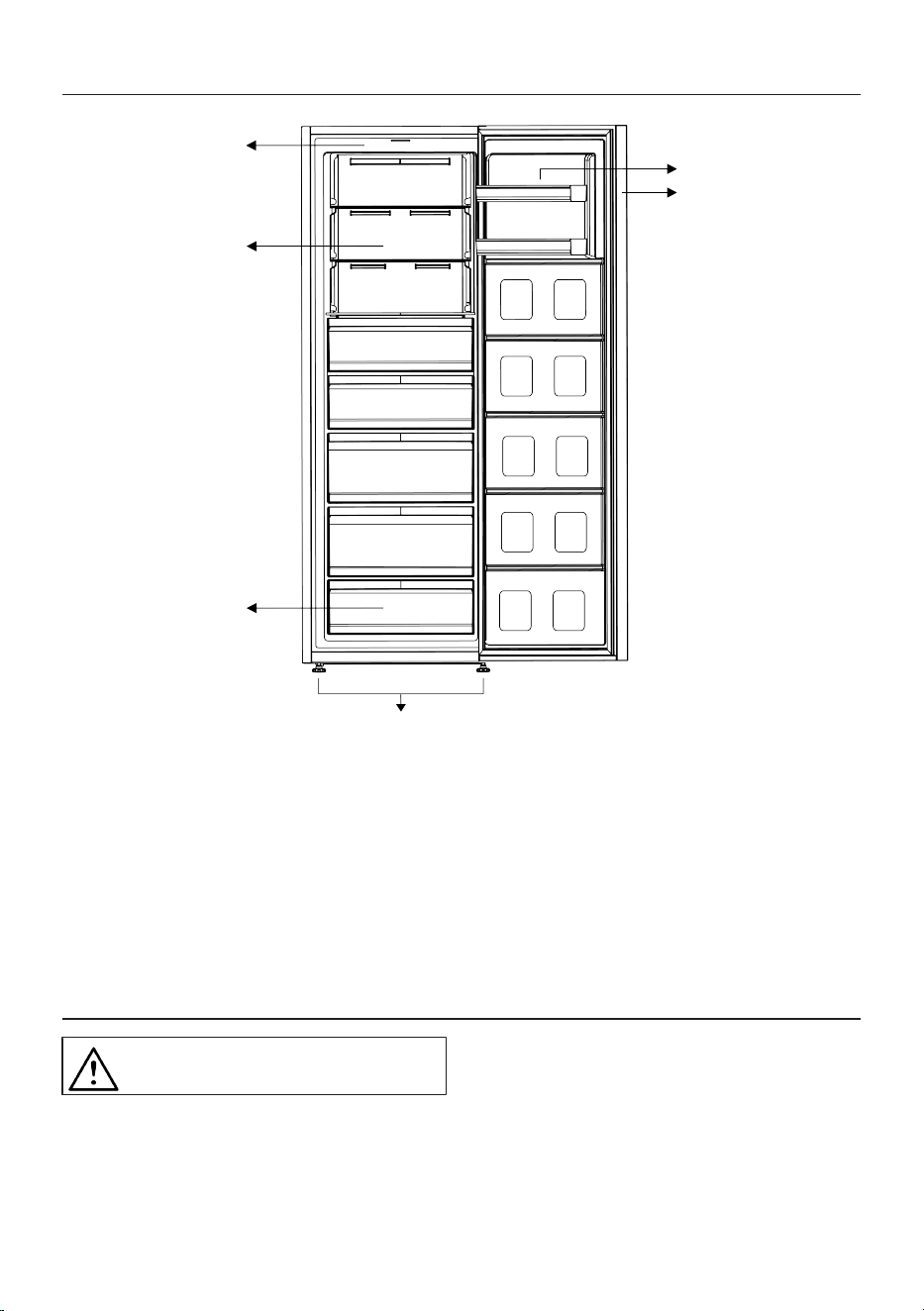
3 Your Freezer
1
2
3
4
5
6
1 Adjustable Door Shelf 2 Electronic Indicator
3 Adjustable Legs 4 Freezer Compartments
5 Adjustable glass shelves 6 Lightning glass
*Optional: Figures in this user manual are
schematic and may not exactly match your
product. If your product does not comprise
the relevant parts, the information pertains
to other models.
4 Installation
Read the “Safety Instructions” sec-
tion first!
4.1 Right Place For Installation
Contact the Authorized Service for the
product's installation. To prepare the
product for installation, see the information
in the user manual and make sure the elec-
tric and water utilities are as required. If
not, call an electrician and plumber to ar-
range the utilities as necessary.
EN / 14
WARNING:
The manufacturer assumes no re-
sponsibility for any damages
caused by the work carried out by
unauthorized persons.
WARNING:
The product’s power cable must be
unplugged during installation. Fail-
ure to do so may result in death or
serious injuries!
WARNING:
If the door span is too narrow for
the product to pass, remove the
door and turn the product side-
ways; if this does not work, contact
the authorized service.
• Place the product on a flat surface to
avoid vibration.
• Place the product at least 30 cm away
from the heater, stove and similar
sources of heat and at least 5 cm away
from electric ovens.
• Do not expose the product to direct sun-
light or keep it in damp environments.
• Your product requires adequate air circu-
lation to function efficiently. If the
product will be placed in an alcove, re-
member to leave at least 5 cm clearance
between the product and the ceiling, rear
wall and the side walls.
• Check if the rear wall clearance protec-
tion component is present at its location
(if provided with the product).
• If the component is not available, or if it
is lost or fallen, position the product so
that at least 5 cm clearance shall be left
between the rear surface of the product
and the wall of the room. The clearance
at the rear is important for efficient oper-
ation of the product.
4.2 Electrical Connection
Do not use extension or multi sock-
ets in power connection.
Damaged power cable must be re-
placed by Authorized Service.
When placing two coolers in adja-
cent position, leave at least 4 cm
distance between the two units.
• Our firm will not assume responsibility
for any damages due to usage without
earthing and power connection in compli-
ance with national regulations.
• The power cable plug must be easily ac-
cessible after installation.
• Do not use multi-group plug with or
without extension cable between the wall
socket and the refrigerator.
4.3 Hot Surface Warning
The side walls of your product are equipped
with cooler pipes to enhance the cooling
system. High pressure fluid may flow
through these surfaces, and cause hot sur-
faces on the side walls. This is normal and
it does not require servicing. Be careful
when you contact these areas.
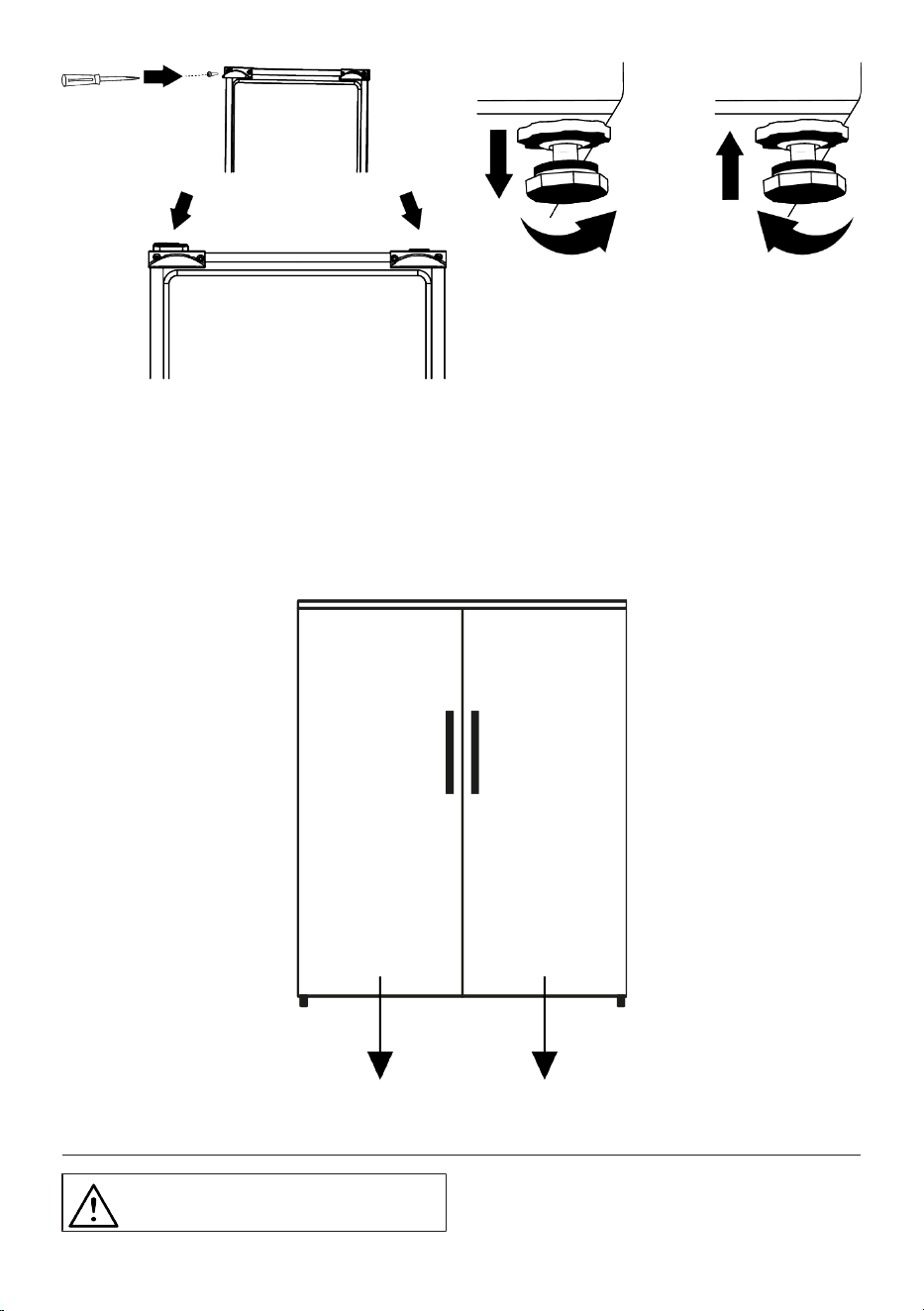
4.4 Attaching the Plastic Wedges
Use the plastic wedges provided with the
product to maintain sufficient space for air
circulation between the product and the
wall.
1. To attach the wedges, remove the
screws on the product and use the
screws provided with the wedges.
2. Attach 2 plastic wedges on the ventila-
tion cover as shown in the figure.
EN / 15
4.5 Adjusting the Legs
If the product is not in balanced position,
adjust the front adjustable legs by rotating
them to right or left.
4.6 Installation of the Cooler and
Freezer Products Side-by-side
When the freezer and cooler products are
installed side by side, the installation
should be performed so that the freezer
product (1) will be on the left and the cooler
product (2) will be on the right. To prevent
sweating problems that might occur
between products, anti-condensation ele-
ments are located on the left side of the
cooler product.
Freezer ( 1 ) Cooler ( 2 )
5 Preparation
Read the “Safety Instructions” sec-
tion first!
EN / 16
5.1 What To Do For Energy Saving
Connecting the product to elec-
tronic energy-saving systems is
harmful, as it may damage the
product.
• This refrigerating appliance is not inten-
ded to be used as a built in appliance.
• Do not keep the refrigerator doors open
for long periods.
• Do not place hot food or beverages into
the refrigerator.
• Do not overfill the refrigerator; blocking
the internal air flow will reduce cooling
capacity.
• Since hot and humid air will not directly
penetrate into your product when the
doors are not opened, your product will
optimize itself in conditions sufficient to
protect your food. Under these circum-
stances, functions and components such
as compressor, fan, heater, defrost, light-
ing, display and so on will operate ac-
cording to the needs by consuming min-
imum energy.
• In case that multiple options are present,
glass shelves must be placed so that the
air outlets at the rear wall are not blocked
and preferably, in a way that air outlets
remain below the glass shelf. This com-
bination may help improving air distribu-
tion and energy efficiency.
• Using the below drawer when storing is
strongly recommended.
• Depending on the product’s features; de-
frosting frozen foods in the cooler com-
partment will ensure energy saving and
preserve food quality.
• In order to load the maximum quantity of
food into the freezer compartment of
your refrigerator, the upper drawers may
be taken out and the food should be
placed onto the wire/glass shelves.
• Food shall be stored using the drawers in
the cooler compartment in order to en-
sure energy saving and protect food in
better conditions.
• Food packages shall not be in direct con-
tact with the temperature sensor located
in the freezer compartment.
5.2 First Use
Before using your refrigerator, make sure
the necessary preparations are made in line
with the instructions in "Safety and Environ-
mental Instructions" and "Installation" sec-
tions.
• Keep the product running without placing
any food inside for 6 hours and do not
open the door, unless absolutely neces-
sary.
• The temperature change caused by open-
ing and closing of the door while using
the product may normally lead to con-
densation on door/body shelves and
glassware placed in the product.
A sound will be heard when the
compressor is engaged. It is nor-
mal for the product to make noise
even if the compressor is not run-
ning, as fluid and gas may be com-
pressed in the cooling system.
It is normal for the front edges of
the refrigerator to be warm. These
areas are designed to warm up in
order to prevent condensation.
For some models, indicator panel
turns off automatically 1 minute
after the door closes. It will be re-
activated when the door is opened
or any button is pressed.
5.3 Climate Class and Definitions
Please refer to the Climate Class on the rat-
ing plate of your device. One of the follow-
ing information is applicable to your device
according to the Climate Class.
• SN: Long Term Temperate Climate: This
cooling device is designed for use at am-
bient temperatures between 10 °C and 32
°C.
EN / 17
• N: Temperate Climate: This cooling
device is designed for use at ambient
temperatures between 16°C and 32 °C.
• ST: Subtropical Climate: This cooling
device is designed for use at ambient
temperatures between 16°C and 38°C.
• T: Tropical Climate: This cooling device
is designed for use at ambient temperat-
ures between 16°C and 43°C.
6 Operating the Product
Read the “Safety Instructions” sec-
tion first!
• Do not use any mechanical tools or any
other tools than the recommendations of
the manufacturer to speed up the defrost
operation.
• Do not use parts of your refrigerator such
as the door or drawers as a support or a
step. This may cause the product to trip
over or its components to be damaged.
• The product shall be used for storing
food only.
• Turn off the water valve if you will be
away from home (e.g. at vacation) and
you will not be using the Icematic or the
water dispenser for a long period of time.
Otherwise, water leaks may occur.
Unplugging the Product
• If you are not going to use the product for
a long time, unplug the product from the
socket.
• Remove the food to prevent odours,
• Wait for the ice to melt, clean the interior
and let it dry, leave the doors open to
avoid damaging the inner body plastics.
7 Use of Your Appliance
7.1 Control Panel of the Product
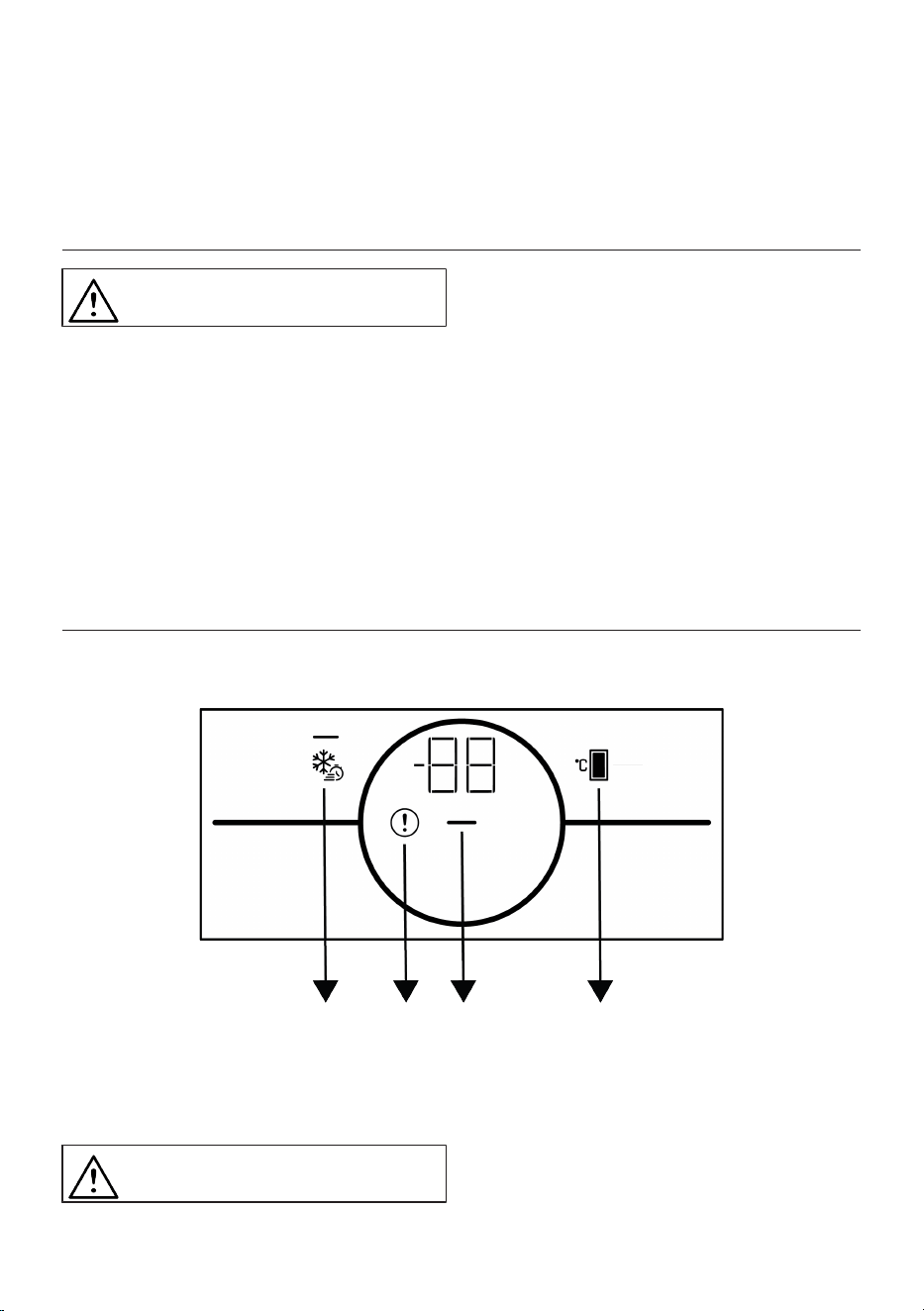
1234
Illustration1:
1 Temperature Adjustment Key 2 Energy Saving (Display Off) Indicator
3 Error Status Indicator 4 Quick Freezing Key
Read the “Safety Instructions” sec-
tion first.
Auditory and visual functions on the indic-
ator panel will assist you in using the refri-
gerator.
EN / 18
*Optional: Shown functions are optional,
there may be differences of shape and loc-
ation in functions found on your appliance’s
indicator panel.
1. Temperature Adjustment Key
Allows adjustment of temperature for the
refrigerator. Pressing the key will enable
compartment temperature to be set at
19°C, -20°C, -21°C, -22°C, -23°C, -24 °C, and
-18°C.
2. Energy Saving (Display Off) Indicator
Energy saving function is enabled automat-
ically and the energy saving symbol (relev-
ant symbol) is displayed when the door of
the product is not opened or closed for
some period of time. When the energy sav-
ing function is active, all symbols on the
display except the energy saving symbol
shall be turned off. When the energy saving
function is active, pressing any key or open-
ing the door will deactivate the energy sav-
ing function and the display signals will re-
turn to normal. The energy-saving function
is a function activated ex-factory and can-
not be cancelled.
3. Error Condition Indicator
This indicator shall be active when your re-
frigerator cannot perform adequate cooling
or in case of any sensor error. On the
freezer compartment temperature indicator
the letter “E” and on the cooler compart-
ment temperature indicator the numbers 1,
2, 3 will be displayed. These numbers on
the indicator specify the service regarding
the failure. If you place hot food in the
freezer compartment or leave its door open
for a prolonged time, an exclamation mark
can be lit. This is not a fault, this warning
shall be removed when the food is cooled
down or when any key is pressed.
4.Quick Freezing Key
When the quick freezing key is pressed, the
LED on the key is illuminated and the quick
freezing function shall be activated. The
freezer compartment temperature is set to
-27 °C. Press the key again to cancel the
function. The quick freezing function will be
automatically cancelled after 50 hours. To
freeze a large amount of fresh food, press
the quick freezing key before placing the
food in the freezer compartment.
7.2 Freezing Fresh Foods
• Foods to be frozen must be divided into
portions according to a size to be con-
sumed, and frozen in separate packages.
In this way, all the food should be preven-
ted from being re-frozen by thawing.
• In order to protect the nutritional value,
the aroma and the colour of the foods as
much as possible, vegetables should be
boiled for a short period of time before
freezing. (Boiling is not necessary for
foods such as cucumber, parsley.) Cook-
ing time of the vegetables frozen in this
way is shortened by 1/3 than that of the
fresh vegetables.
• To extend the storage times of frozen
foods, boiled vegetables must first be
filtered and then hermetically packaged
as in the all types of foods.
• Foods should not be placed in the freezer
compartment without package.
• The packaging material of the food to be
stored should be air-tight, thick and dur-
able and should not deform with cold and
humidity. Otherwise, the food that is
hardened by freezing might pierce the
package. Sealing the package well is also
important in terms of securely storing the
food.
The Following Packaging Types Are
Suitable to Freeze Food:
Polyethylene bag, aluminium foil, plastic
foil, vacuum bags and cold-resistant stor-
age containers with caps.

EN / 19
The Use of Following Types of Pack-
aging Is Not Recommended to Freeze
Food:
Packaging paper, parchment paper, cello-
phane (gelatin paper), garbage bag, used
bags and shopping bags.
• Hot foods should not be placed in the
freezer compartment without cooling.
• When placing unfrozen fresh foods in the
freezer compartment, please note that it
does not contact with frozen foods. Cool-
pack (PCM) can be placed to the rack im-
mediately below the quick freezing rack
for preventing them from being getting
warm.
• During the freezing time (24 hours) do
not place other food to the freezer.
• Place your foods to the freezing shelves
or racks by spreading them so that they
will not be cramped (it is recommended
that the packaging does not come into
contact with each other).
• Frozen foods must be immediately con-
sumed in a short period of time after de-
frosting and must never be frozen again.
• Do not block the ventilation holes by put-
ting your frozen foods in front of the vent-
ilation holes located on the back surface.
• We recommend you to attach a label
onto the package and write the name of
the foods in the package and the freezing
time.
Foods Suitable for Freezing:
Fish and seafood, red and white meat,
poultry, vegetables, fruit, herbaceous
spices, dairy products (such as cheese, but-
ter and strained yoghurt), pastries, ready or
cooked meals, potato dishes, souffle and
desserts.
Foods Not Suitable for Freezing:
Yoghurt, sour milk, cream, mayonnaise,
leaved salad, red radish, grapes, all fruits
(such as apple, pears and peaches).
• For foods to be frozen quickly and thor-
oughly, the following specified amounts
per package should not be exceeded.
– Fruits and vegetables, 0.5-1 kg
– Meat, 1-1.5 kg
• A small amount of foods (maximum 2
kg) can also be frozen without the use of
the quick freezing function.
To obtain the best result, apply the follow-
ing instructions:
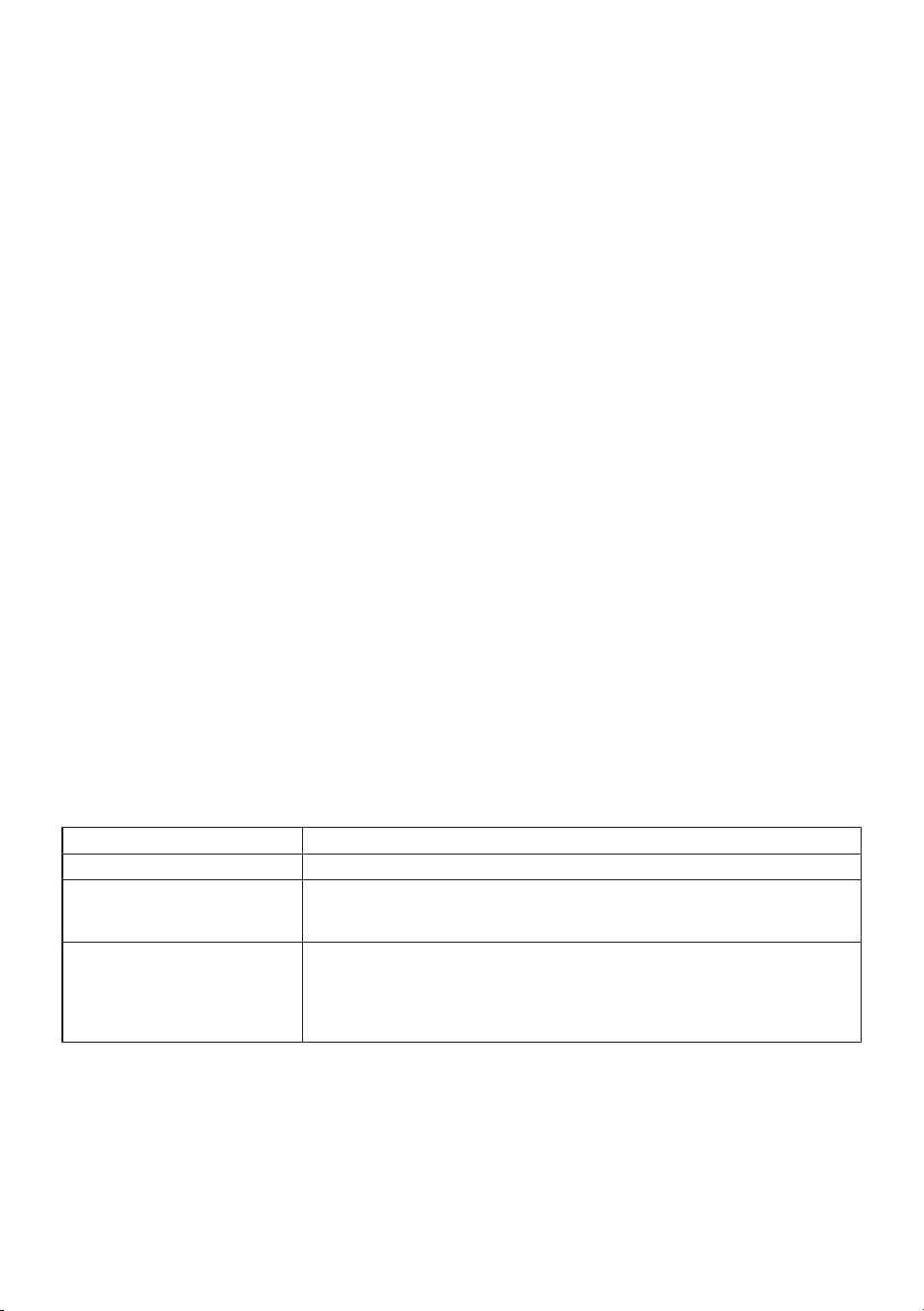
1. Activate the quick freezing function 24
hours before placing your fresh foods.
2. 24 hours after you have pressed the
button, first place your food that you
want to freeze to the top shelf with
higher freezing capacity. Place your re-
maining food, if any, to the rightmost
part of the second shelf.
3. The quick freezing function will be
automatically deactivated after 52
hours.
4. Do not try to freeze a large quantity of
food at a time. Within 24 hours, this
product can freeze the maximum food
quantity specified as «Freezing Capa-
city … kg/24 hours» on its type label. It
is not convenient to put more un-
frozen/fresh foods to the freezer com-
partment than the quantity specified on
the label.
1. Switch the adjusting knob to MAX or 5
position 24 hours before placing your
fresh foods to freeze.
2. 24 hours after turning the thermostat
knob, place your food that you want to
freeze to the front of bottom drawer
with higher freezing capacity. If you
have food remained, place it in front of
the upper drawer.
3. Do not forget to turn the thermostat
knob to its previous position, after pla-
cing your food.
4. Do not try to freeze a large quantity of
food at a time. Within 24 hours, this
product can freeze the maximum food
quantity specified as «Freezing Capa-
city … kg/24 hours» on its type label. It
is not convenient to put more un-
frozen/fresh foods to the freezer com-
partment than the quantity specified on
the label.
EN / 20
• You can review the Meat and Fish, Veget-
ables and Fruits, Dairy Products tables
for placing and storing your foods in the
deep-freezer.
Advice on Storing Frozen Foods
• While purchasing your frozen foods,
make sure that they are frozen at appro-
priate temperatures and their packages
are not broken.
• Put the packages in the freezer compart-
ment as soon as possible after purchas-
ing them.
• Make sure that the expiration date indic-
ated on the packaging is not expired be-
fore consuming the packaged ready
meals that you remove from the freezer
compartment.
Defrosting
The ice in the freezer compartments is
automatically thawed.
Freezer Details
The EN 62552 standard requires (according
to specific measurement conditions) that
at least 4.5 kg of food for each 100 litres of
freezer compartment volume can be frozen
at 25 °C ambient temperature in 24 hours.
Defrosting the Frozen Foods
Depending on the food diversity and the
purpose of use, a selection can be made
between the following options for defrost-
ing:
• At room temperature (it is not very suit-
able to defrost the food by leaving it at
room temperature for a long time in
terms of maintaining the food quality)
• In the refrigerator
• In the electrical oven (in models with or
without fan)
• In the microwave oven
CAUTION!
• Never put acidic beverages in glass
bottles and cans into your freezer due to
the risk of explosion.
• If there is moisture and abnormal swell-
ing in the packaging of frozen foods, it is
likely that they were previously stored in
an improper storage condition and their
contents deteriorated. Do not consume
these foods without checking.
• Since the taste of some spices in cooked
meals may change when exposed to
long-term storage conditions, you must
add lesser amount of spices to your
foods to be frozen or the desired spices
should be added to the foods after the
thawing process.
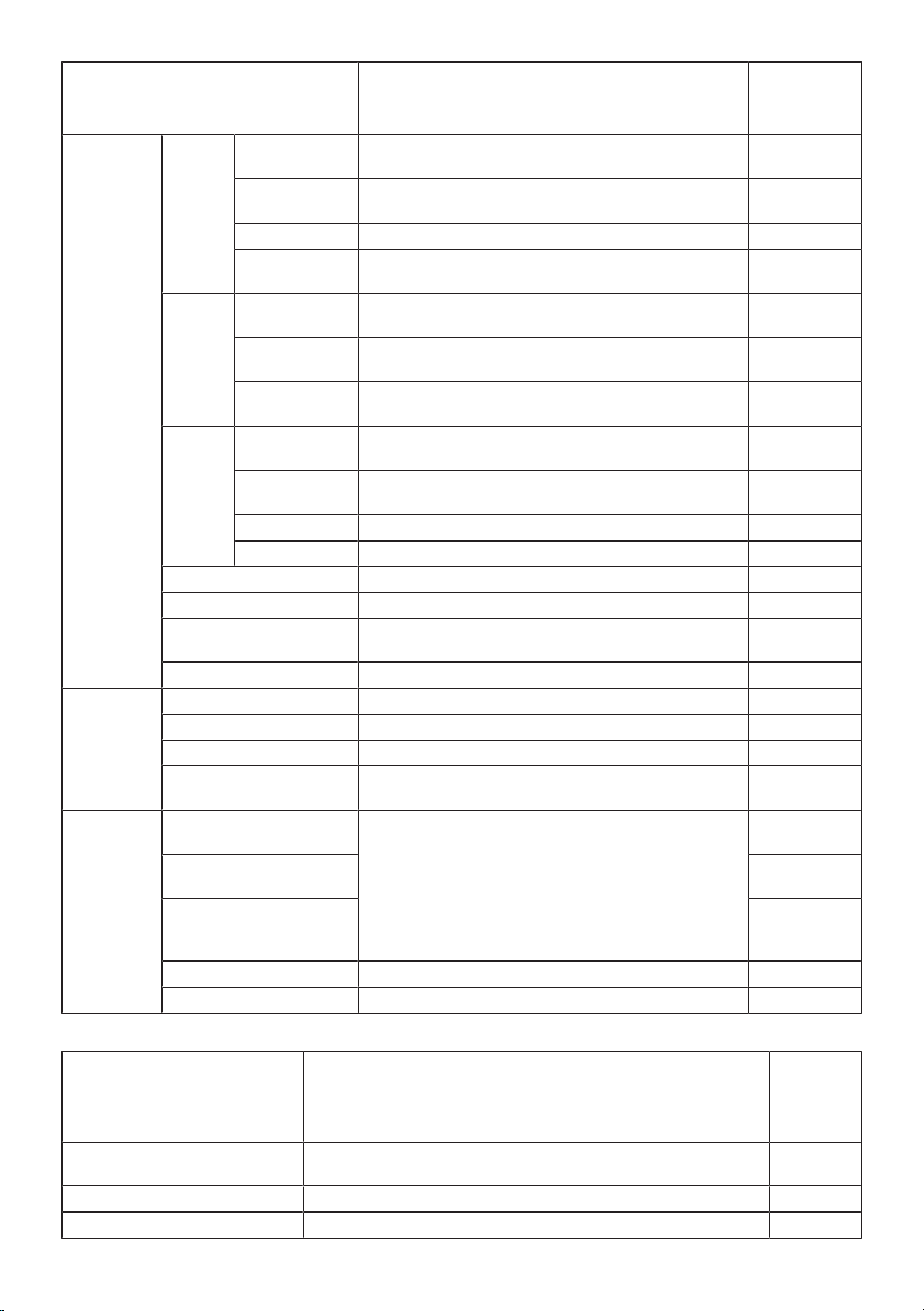
Recommended Temperature Settings
Freezer compartment setting Remarks
-20
o
C This is the default recommended temperature setting.
-21,-22,-23 or -24
o
C
These settings are recommended when the ambient temperature is higher than
30 °C or when you think the refrigerator is not cool enough due to frequent open-
ing and closing of the door.
Quick freezing
Use when you want to freeze your foods in a short time. It is recommended to be
used for protecting the quality of your fresh foods. There is no need for you to
use the quick freezing function when storing your frozen foods. There is no need
for you to use the quick freezing function to freeze the small amounts of fresh
food up to a maximum of 2 kg daily.
EN / 21
Meat and Fish Preparation
Longest stor-
age time
(month)
Meat
Products
Veal
Steak
By cutting them 2 cm thick and placing foil between
them or wrapping tightly with stretch
6-8
Roast
By packing the pieces of meat in a refrigerator bag or
wrapping them tightly with stretch
6-8
Cubes In small pieces 6-8
Schnitzel, chops
By placing foil between cut slices or wrapping individu-
ally with stretch
6-8
Mutton
Chops
By placing foil between meat pieces or wrapping indi-
vidually with stretch
4-8
Roast
By packing the pieces of meat in a refrigerator bag or
wrapping them tightly with stretch
4-8
Cubes
By packing the shredded meats in a refrigerator bag or
wrapping them tightly with stretch
4-8
Beef
Roast
By packing the pieces of meat in a refrigerator bag or
wrapping them tightly with stretch
8-12
Steak
By cutting them 2 cm thick and placing foil between
them or wrapping tightly with stretch
8-12
Cubes In small pieces 8-12
Boiled meat By packaging in small pieces in a refrigerator bag 8-12
Mince Without seasoning, in flat bags 1-3
Offal (piece) In pieces 1-3
Fermented sausage -
Salami
It should be packaged even if it has casing. 1-3
Jambon By placing foil between cut slices 2-3
Poultry and
hunting an-
imals
Chicken and Turkey By wrapping in foil 4-6
Goose By wrapping in foil (portions should not exceed 2.5 kg) 4-6
Duck By wrapping in foil (portions should not exceed 2.5 kg) 4-6
Deer, Rabbit, Roe Deer
By wrapping in foil (portions should not exceed 2.5 kg,
and their bones should be separated)
6-8
Fish and sea-
food
Freshwater fish (Trout,
Carp, Crane, Catfish)
After thoroughly cleaning the inside and scales, it
should be washed and dried, and the tail and head parts
should be cut when necessary.
2
Lean fish (Sea bass, Tur-
bot, Sole)
4-6
Fatty fish (Bonito, Mack-
erel, Bluefish, Red Mullet,
Anchovy)
2-4
Shellfish Cleaned and in bags 4-6
Caviar In its packaging, in an aluminium or plastic container 2-3
Fruits and Vegetables Preparation
Longest
storage
time
(month)
String bean and Pole bean
By shock boiling for 3 minutes after washing and cutting into small
pieces
10-13
Green pea By shock boiling for 2 minutes after shelling and washing 10-12
Cabbage By shock boiling for 1-2 minute(s) after cleaning 6-8
EN / 22
Fruits and Vegetables Preparation
Longest
storage
time
(month)
Carrot
By shock boiling for 3-4 minutes after cleaning and cutting into
slices
12
Pepper
By boiling for 2-3 minutes after cutting the stem, dividing into two
and separating the seeds
8-10
Spinach By shock boiling for 2 minutes after washing and cleaning 6-9
Leek By shock boiling for 5 minutes after chopping 6-8
Cauliflower
By shock boiling in a little lemon water for 3-5 minutes after separ-
ating the leaves, cutting the core into pieces
10-12
Eggplant
By shock boiling for 4 minutes after washing and cutting into 2cm
pieces
10-12
Squash
By shock boiling for 2-3 minutes after washing and cutting into
2cm pieces
8-10
Mushroom By lightly sauteing in oil and squeezing lemon on it 2-3
Corn By cleaning and packing in cob or granular 12
Apple and Pear By shock boiling for 2-3 minutes after peeling and slicing 8-10
Apricot and Peach Divide in half and extract the seeds 4-6
Strawberry and Raspberry By washing and shelling 8-12
Baked fruit By adding 10% sugar in the container 12
Plum, Cherry, Sour Cherry By washing and shelling the stalks 8-12
Dairy Products Preparation Longest Storage Time
(Month)
Storage Conditions
Cheese (except feta
cheese)
By placing foil thereb-
etween, in slices
6-8
It can be left in its original pack-
aging for short term storage. For
long-term storage it should also
be wrapped in aluminium or
plastic foil.
Butter, margarine In its own packaging 6
In its own packaging or in plastic
containers
7.3 Reversing the Door Opening
Side
The door opening side of your refrigerator
can be reversed according to the place you
put it. When you need this, you should def-
initely call the nearest Authorized Service.
7.4 Door Open Alert
The door open alert system of your refriger-
ator may differ depending on the model.
Version 1;
If the door of the product remains open for
a certain time (between 60 s and 120 s), an
audio warning signal sounds; depending on
the product model, a visual warning signal
(light flash) can also be displayed. If you
close the door of the device or press a but-
ton on the screen of the device, if any, the
warning sound will stop.
Version 2;
If the door of the device remains open for a
certain period of time (between 60 s and
120 s), the door open alert is sounded. The
door open alert is sounded gradually. First,
an audible warning starts to sound. After 4
minutes, if the door is still not closed, a
visual warning (lighting flash) is activated.
The door open alert will be delayed for a
certain period of time (between 60 s and
EN / 23
120 s) when any key on the product screen, if any, is pressed. Then the process will
start again. When the device door is closed,
the door open alert will be cancelled.
8 Maintenance and Cleaning
WARNING:
Read the “Safety Instructions” sec-
tion first.
WARNING:
Unplug the refrigerator before
cleaning it.
• Do not use sharp or abrasive tools to
clean the product. Do not use materials
such as household cleaning agents,
soap, detergents, gas, gasoline, thinner,
alcohol, wax, etc.
• The dust shall be removed from the vent-
ilation grill on the rear of the product at
least once a year (without opening the
cover). Clean the product with a dry cloth.
• Take care to keep water away from the
lamp's cover and other electrical parts.
• Clean the door with a damp cloth. Re-
move all contents to remove the door
and body racks. Remove the door racks
by lifting them upwards. Clean and dry
the shelves, then attach back in place by
sliding from above.
• Do not use chlorinated water or cleaning
products on the exterior surface and
chromecoated parts of the product.
Chlorine will cause rust on such metallic
surfaces.
• Do not use sharp and abrasive tools,
soap, house cleaning materials, deter-
gents, gas, gasoline, varnish and similar
substances to prevent deformation of the
plastic part and removal of prints on the
part. Use warm water and a soft cloth for
cleaning, and then dry it.
• On the products without a No-Frost fea-
ture, water droplets and icing up to a
thickness of a finger may occur on the
rear wall of the freezer compartment. Do
not clean, and never apply oils or similar
materials.
• Use a mildly dampened micro-fibre cloth
to clean the external surface of the
product. Sponges and other types of
cleaning clothes may cause scratches.
• To clean all removable components dur-
ing the cleaning of the interior surface of
the product, wash these components
with a mild solution consisting of soap,
water and carbonate. Wash and dry thor-
oughly. Prevent contact of water with illu-
mination components and the control
panel.
CAUTION:
Do not use vinegar, rubbing alcohol
or other alcohol based cleaning
agents on any interior surface.
Stainless Steel External Surfaces
Use a non-abrasive stainless steel cleaning
agent and apply it with a soft lint-free cloth.
To polish, gently wipe the surface with a mi-
cro-fibre cloth dampened with water and
use dry polishing chamois. Always follow
the veins of the stainless steel.
Preventing Odours
The product is manufactured free of any
odorous materials. However, keeping the
food in inappropriate sections and im-
proper cleaning of internal surfaces may
lead to odours.
• To avoid this, clean the inside with car-
bonated water every 15 days.
• Keep the foods in sealed holders, as mi-
cro-organisms arising from foods kept in
unsealed containers will cause bad
odour.
• Do not keep expired and spoilt foods in
the refrigerator.

EN / 24
Protecting Plastic Surfaces
Oil spilled on plastic surfaces may damage
the surface and must be cleaned immedi-
ately with warm water.
9 Troubleshooting
Check this list before contacting the ser-
vice. Doing so will save you time and
money. This list includes frequent com-
plaints that are not related to faulty work-
manship or materials. Certain features
mentioned herein may not apply to your
product.
The refrigerator is not working.
• The power plug is not fully settled. >>>
Plug it in to settle completely into the
socket.
• The fuse connected to the socket power-
ing the product or the main fuse is blown.
>>> Check the fuse.
Condensation on the side wall of the
cooler compartment (MULTI ZONE,
COOL CONTROL and FLEXI ZONE).
• The door is opened too frequently. >>>
Take care not to open the product's door
too frequently.
• The environment is too humid. >>> Do
not install the product in humid environ-
ments.
• Foods containing liquids are kept in un-
sealed holders. >>> Keep the foods con-
taining liquids in sealed holders.
• The product's door is left open. >>> Do
not keep the product's door open for long
periods.
• The thermostat is set to a very cool tem-
perature. >>> Set the thermostat to an ap-
propriate temperature.
Compressor is not working.
• In case of sudden power failure or pulling
the power plug off and putting back on,
the gas pressure in the product's cooling
system is not balanced, which triggers
the compressor thermic safeguard. The
product will restart after approximately 6
minutes. If the product does not restart
after this period, contact the service.
• Defrosting is active. >>> This is normal
for a fully-automatic defrosting product.
The defrosting is carried out periodically.
• The product is not plugged in. >>> Make
sure the power cord is plugged in.
• The temperature setting is incorrect. >>>
Select the appropriate temperature set-
ting.
• The power is out. >>> The product will
continue to operate normally once the
power is restored.
The refrigerator's operating noise is in-
creasing while in use.
• The product's operating performance
may vary depending on the ambient tem-
perature variations. This is normal and
not a malfunction.
The refrigerator runs too often or for too
long.
• The new product may be larger than the
previous one. Larger products will run for
longer periods.
• The room temperature may be high. >>>
The product will normally run for long
periods in higher room temperature.
• The product may have been recently
plugged in or a new food item is placed
inside. >>> The product will take longer to
reach the set temperature when recently
plugged in or a new food item is placed
inside. This is normal.
• Large quantities of hot food may have
been recently placed into the product.
>>> Do not place hot food into the
product.
• The doors were opened frequently or
kept open for long periods. >>> The warm
air moving inside will cause the product
to run longer. Do not open the doors too
frequently.
• The freezer or cooler door may be ajar.
>>> Check that the doors are fully closed.

EN / 25
• The product may be set to a temperature
that is too low. >>> Set the temperature
to a higher degree and wait for the
product to reach the adjusted temperat-
ure.
• The cooler or freezer door washer may
be dirty, worn out, broken or not properly
settled. >>> Clean or replace the gasket.
Damaged / torn door washer will cause
the product to run for longer periods to
preserve the current temperature.
The freezer temperature is very low, but
the cooler temperature is adequate.
• The freezer compartment temperature is
set to a very low degree. >>> Set the
freezer compartment temperature to a
higher degree and check again.
The cooler temperature is very low, but
the freezer temperature is adequate.
• The cooler compartment temperature is
set to a very low degree. >>> Set the
cooler compartment temperature to a
higher degree and check again.
The food items kept in cooler compart-
ment drawers are frozen.
• The cooler compartment temperature is
set to a very low degree. >>> Set the
cooler compartment temperature to a
higher degree and check again.
The temperature in the cooler or the
freezer is too high.
• The cooler compartment temperature is
set to a very high degree. >>> Temperat-
ure setting of the cooler compartment
has an effect on the temperature in the
freezer compartment. Wait until the tem-
perature of relevant parts reach the suffi-
cient level by changing the temperature
of cooler or freezer compartments.
• The doors were opened frequently or
kept open for long periods. >>> Do not
open the doors too frequently.
• The door may be ajar. >>> Fully close the
door.
• The product may have been recently
plugged in or a new food item is placed
inside. >>> This is normal. The product
will take longer to reach the set temperat-
ure when recently plugged in or a new
food item is placed inside.
• Large quantities of hot food may have
been recently placed into the product.
>>> Do not place hot food into the
product.
Shaking or noise.
• The surface is not flat or durable >>> If
the product is shaking when moved
slowly, adjust the stands to balance the
product. Also make sure the ground is
sufficiently durable to bear the product.
• Any items placed on the product may
cause noise. >>> Remove any items
placed on the product.
• The product is making noise of liquid
flowing, spraying etc.
• The product's operating principles in-
volve liquid and gas flows. >>> This is
normal and not a malfunction.
There is sound of wind blowing coming
from the product.
• The product uses a fan for the cooling
process. This is normal and not a mal-
function.
There is condensation on the product's
internal walls.
• Hot or humid weather will increase icing
and condensation. This is normal and not
a malfunction.
• The doors were opened frequently or
kept open for long periods. >>> Do not
open the doors too frequently; if open,
close the door.
• The door may be ajar. >>> Fully close the
door.
There is condensation on the product's
exterior or between the doors.
• The ambient weather may be humid, this
is quite normal in humid weather. >>>
The condensation will dissipate when the
humidity is reduced.
The interior smells bad.
• The product is not cleaned regularly. >>>
Clean the interior regularly using sponge,
warm water and carbonated water.
EN / 26
• Certain holders and packaging materials
may cause odour. >>> Use holders and
packaging materials without free of
odour.
• The foods were placed in unsealed hold-
ers. >>> Keep the foods in sealed hold-
ers. Microorganisms may spread out of
unsealed food items and cause bad
odour.
• Remove any expired or spoilt foods from
the product.
The door is not closing.
• Food packages may be blocking the
door. >>> Relocate any items blocking
the doors.
• The product is not standing in full upright
position on the ground. >>> Adjust the
stands to balance the product.
• The surface is not flat or durable >>>
Make sure the surface is flat and suffi-
ciently durable to bear the product.
The crisper is jammed.
• The food items may be in contact with
the upper section of the drawer. >>> Re-
organize the food items in the drawer.
Temperature on the product surface.
• High temperature may be observed
between two doors, on the side panels
and on the rear grill area while your
product is operated. This is normal and it
does not require servicing.
Fan continues to operate when the door
is opened.
• Fan may continue to operate when the
freezer door is open.
WARNING: If the problem persists
after following the instructions in
this section, contact your vendor or
an Authorized Service. Do not try to
repair the product. This is normal.
DISCLAIMER / WARNING
Some (simple) failures can be adequately
handled by the end-user without any safety
issue or unsafe use arising, provided that
they are carried out within the limits and in
accordance with the following instructions
(see the “Self-Repair” section).
Therefore, unless otherwise authorized in
the “Self-Repair” section below, repairs
shall be addressed to registered profes-
sional repairers in order to avoid safety is-
sues. A registered Professional repairer is a
professional repairer that has been granted
access to the instructions and spare parts
list of this product by the manufacturer ac-
cording to the methods described in legis-
lative acts pursuant to Directive 2009/125/
EC.
However, only the service agent (i.e.au-
thorized professional repairers) that you
can reach through the phone number
given in the user manual/warranty card
or through your authorized dealer may
provide service under the guarantee
terms. Therefore, please be advised that
repairs by professional repairers (who
are not authorized by) Blomberg shall
void the guarantee.
Self-Repair
Self-repair can be done by the end-user
with regard to the following spare
parts:door handles,door hinges, trays, bas-
kets and door gaskets (an updated list is
also available support.blombergappli-
ances.com as of 1st March 2021).
Moreover, to ensure product safety and to
prevent risk of serious injury, the mentioned
self-repair shall be done following the in-
structions in the user manual for selfrepair
or which are available in support.blomber-
gappliances.com . For your safety, unplug
the product before attempting any self-re-
pair.
Repair and repair attempts by end-users for
parts not included in such list and/or not
following the instructions in the user manu-
als for self-repair or which are available in
support.blombergappliances.com, might

EN / 27
give raise to safety issues not attributable
to Blomberg, and will void the warranty of
the product.
Therefore, it is highly recommended that
end-users refrain from the attempt to carry
out repairs falling outside the mentioned
list of spare parts, contacting in such cases
authorized professional repairers or re-
gistered professional repairers. On the con-
trary, such attempts by end-users may
cause safety issues and damage the
product and subsequently cause fire, flood,
electrocution and serious personal injury to
occur.
By way of example, but not limited to,the
following repairs must be addressed to au-
thorized professional repairers or re-
gistered professional repairers:compressor,
cooling circuit, main board,inverter board,
display board, etc.
The manufacturer/seller cannot be held li-
able in any case where end-users do not
comply with the above.
The spare part availability of the refriger-
ator that you purchased is 10 years.During
this period, original spare parts will be avail-
able to operate the refrigerator properly
The minimum duration of guarantee of the
refrigerator that you purchased is 24
months.
This product is equipped with a lighting
source of the "G" energy class.
The lighting source in this product shall
only be replaced by Professional repairer.