Sivantos GmbH - R&D PSA WLS L DE ERL - Richard Rose
Page 1 of 3
Erlangen, 2026-07-14
Restricted
Integration manual
for RF Module 22 (RFM022)
The module is for use in our own products only and will not be sold to third parties
The “RFM022” radio module contains two radio transceivers running at 3.27 MHz and
2.45 GHz which are implemented in a single hardware platform.
The 3.27 MHz radio consists of a nearfield inductive magnetic transceiver. It uses time
division duplex and runs on a single channel with phase modulation. The signal is
transmitted by a coil antenna. The intended use of this radio is to exchange data between
two hearing aids or to communicate with a proprietary accessory.
The 2.45 GHz radio is mainly used for Bluetooth® Low Energy Radio communication. In
addition to that, the receiver is also capable of proprietary communication modes. The
transceiver is connected to a PCB-integrated antenna. The intended use of this radio is to
exchange data between hearing aids and Bluetooth accessories.
The main part of the module is a set of analog and digital ASICs which contain both radios.
These ASICs are mounted on a flex PCB. In addition to that the module comprises the coil
antenna for the nearfield inductive magnetic system, one crystal and an EEPROM
memory. The antenna for the 2.45 GHz radio is integrated in the flex PCB of the module.
The matching circuitry between the radio ASIC and the antenna is also on the flex PCB.
On the flex PCB additional components are mounted and connected to the radio module.
These include microphones, the connector to the external speaker, push buttons, the
telecoil and the battery connector. The system is powered by a lithium ion battery, all
necessary voltage regulators are included in the module.
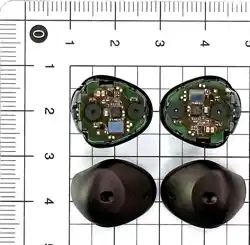
The PCB with the module and all other components of the hearing aid are arranged in a
plastic frame that is not user serviceable or user modifiable. The outer housing may be
replaced by field service, but this is not relevant for the wireless module.
The module is thus not installed but instead assembled at the same time as the host is.
The position of components and interconnection through the PCB are decided during the
project phase for the different hosts and following the best practice of the engineering
team in order to assure an optimal integration of the module.
Several validation steps are done through the development to assure the full compliance
with all the regulatory requirements.
Sivantos GmbH - R&D PSA WLS L DE ERL - Richard Rose
Page 2 of 3
Erlangen, 2026-07-14
Restricted
The user guide must contain the HVIN, the FCC ID and the IC ID:
HVIN: RFM022
Contains FCC ID: 2AXDT-RFM022
Contains IC ID: 26428-RFM022
and following statements:
(English version)
This Class B digital apparatus complies with Canadian ICES
‑
003.
Changes or modifications made to this equipment not expressly approved by the legal
manufacturer may void the FCC authorization to operate this equipment.
This device complies with Part 15 of the FCC Rules and with ISED's licence-exempt
RSSs.
Operation is subject to the following conditions:
• this device may not cause harmful interference, and
• this device must accept any interference received,
including interference that may cause undesired operation.
This equipment has been tested and found to comply with the limits for a Class B
digital device, pursuant to Part 15 of the FCC Rules. These limits are designed to
provide reasonable protection against harmful interference in a residential
installation. This equipment generates, uses and can radiate radio frequency energy
and, if not installed and used in accordance with the instructions, may cause harmful
interference to radio communications. However, there is no guarantee that
interference will not occur in a particular installation. If this equipment does cause
harmful interference to radio or television reception, which can be determined by
turning the equipment off and on, the user is encouraged to try to correct the
interference by one or more of the following measures:
• Reorient or relocate the receiving antenna.
• Increase the separation between the equipment and receiver.
• Connect the equipment to an outlet on a circuit different from that to which
the receiver is connected.
• Consult the dealer or an experienced radio/TV technician for help.
The radiated output power of the device is far below the FCC and ISED radio frequency
exposure limits.
Sivantos GmbH - R&D PSA WLS L DE ERL - Richard Rose
Page 3 of 3
Erlangen, 2026-07-14
Restricted
For body worn operation, this device has been tested and meets the FCC RF exposure
guidelines when used with the legal manufacturer’s accessories supplied or
designated for this product. Use of other accessories may not ensure compliance with
FCC RF exposure guidelines.
(French version)
Cet appareil numérique de classe B est conforme à la norme canadienne ICES
‑
003.
Un changement ou une modification apporté à cet appareil sans être expressément
approuvé par le fabricant légal peut annuler l'autorisation FCC d'utilisation de
l'appareil.
Cet appareil est conforme à la partie 15 des règlements FCC et aux normes RSS
d'exemption de licence de l'organisme canadien ISDE.
Son fonctionnement est soumis aux conditions suivantes :
• cet appareil ne doit pas causer d'interférences nuisibles, et
• cet appareil doit supporter toutes les interferences reçues, y compris celles
susceptibles de perturber son bon fonctionnement.
Cet appareil a été testé et déclaré conforme aux valeurs limites d'un appareil
numérique de classe B selon la partie 15 des règlements FCC. Ces limites sont
destinées à garantir une protection raisonnable contre les interférences nuisibles en
milieu résidentiel. Cet appareil génère, utilise et peut rayonner de l'énergie
radiofréquence et, s'il n'est pas installé et utilisé dans le respect des instructions, peut
produire des interferences nuisibles aux liaisons radio. Cependant, rien ne garantit
que ces interférences ne se produiront pas dans une installation particulière. Si cet
appareil provoque des interférences nuisibles avec des récepteurs de radio ou
télévision, lesquelles peuvent être déterminées par l'arrêt et la remise en marche de
l'appareil, l'utilisateur est encouragé à essayer de les corriger par une ou plusieurs des
mesures suivantes :
• Réorientez ou déplacez l'antenne réceptrice.
• Augmentez la distance entre l'appareil et le récepteur.
• Branchez l'appareil sur une prise d'un circuit different de celui auquel est
raccordé le récepteur.
• Pour obtenir de l'aide, contactez le revendeur ou un technicien spécialisé en
radio/TV.
La puissance de sortie rayonnée de l'appareil est bien inférieure aux limites
d'exposition aux fréquences radio de la FCC et l’ISDE.