USE AND CARE GUIDE
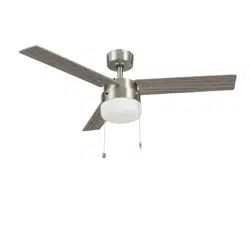
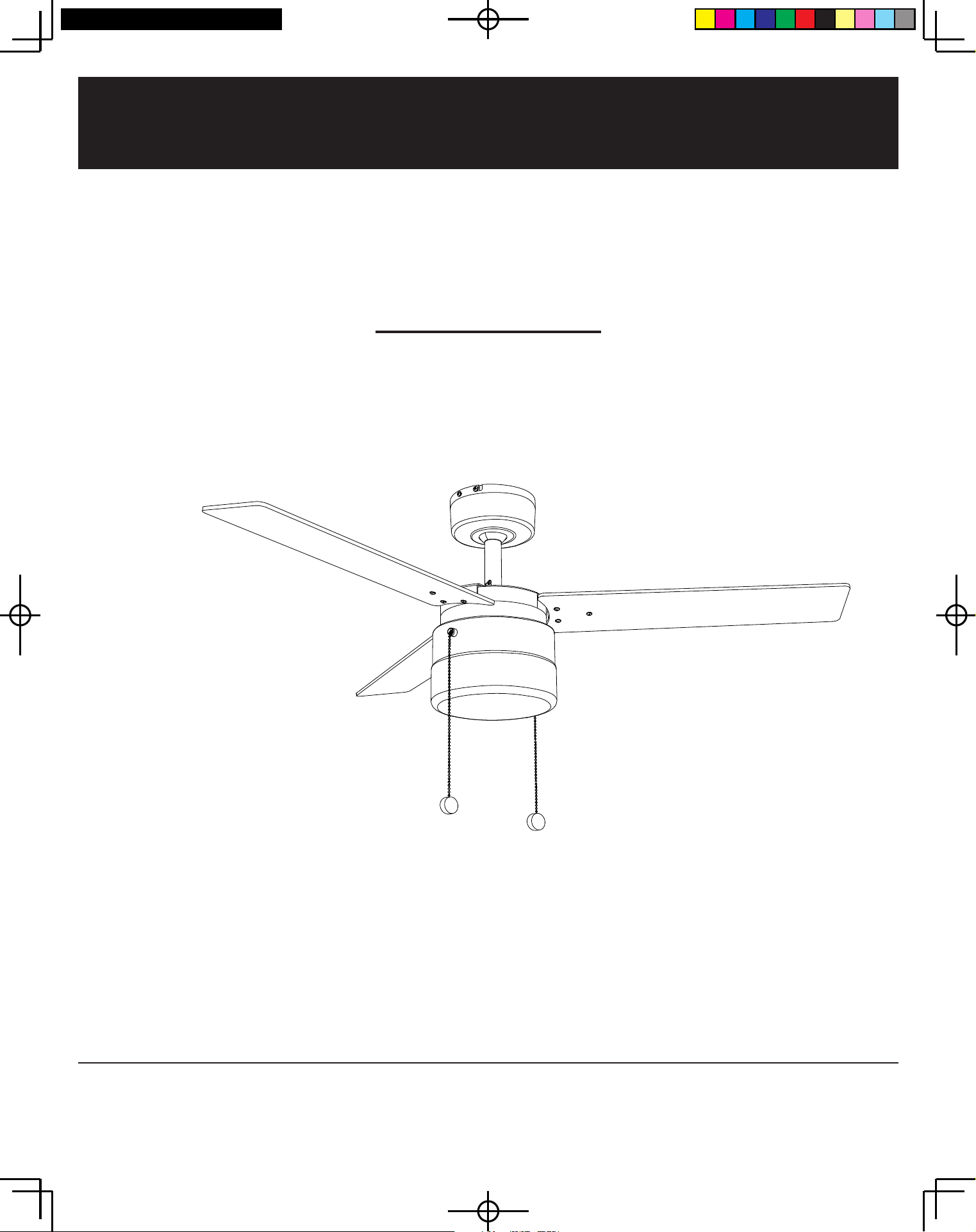
MONTGOMERY 44 IN. CEILING FAN
An electronic copy of this user manual can also be obtained online at
homedepot.com
Model# RDB9144-WH/BN/ORB
RDB9144-WH/BN/ORB
Table of Contents
Table of Contents 2
Safety Information
2
Warranty
3
Operation 10
Care and Cleaning 11
Troubleshooting 11
Safety Information
PLEASE READ AND SAVE THESE INSTRUCTIONS.
.
1. To reduce the risk of electric shock, ensure electricity has been
turned off at the circuit breaker or fuse box before beginning.
2. All wiring must be in accordance with the National Electrical
Code, / , ANSI NFPA 70 and local electrical codes. Electrical
installation should be performed by a qualified licensed
electrician.
3. The outlet box and support structure must be securely mounted
and capable of reliably supporting a minimum of 35 pounds. Use
only UL Listed outlet boxes marked "FOR FAN SUPPORT."
4. Do not operate the reversing switch while the fan blades are in
motion. The fan must be turned off and blades stopped before
reversing blade direction.
5. Avoid placing objects in the path of the blades. To avoid personal
injury or damage to the fan and other items, be cautious when
working around or cleaning the fan.
6. Do not use water or detergents when cleaning the fan or fan
blades . A dry dust cloth or lightly dampened cloth will be
suitable for most cleaning.
7. After making electrical connections, spliced conductors should
be turned upward and pushed carefully up into the outlet box.
The wire should be spread apart with the grounded conductor
and the equipment-grounding conductor on one side of the
outlet box. Splices after being made should be turned upward
and pushed carefully up into the outlet box.
8. Electrical diagrams are for reference only. Light kits that are not
packed with the fan must be UL Listed and marked suitable for
use with the model fan you are installing. Switches must be UL
General Use Switches. Refer to the instructions packaged with
the light kits and switches for proper assembly.
WARNING: Before servicing or cleaning unit, switch power
off at service panel, and lock service disconnecting means to
prevent power from being switched on accidentally. When the
service disconnecting means cannot be locked, securely fasten
a prominent warning.
WARNING: To reduce the risk of fire, electric shock or
personal injury, mount to an outlet box acceptable for fan
support of 15.9 Kg (35 lbs) or less. Use mounting screws
provided with the outlet box. Most outlet boxes commonly
used for the support of lighting fixtures are not acceptable for
fan support and may need to be replaced. Consult a qualified
electrician if in doubt.
WARNING: To reduce the risk of personal injury, do not bend
the blade brackets when installing the brackets, balancing the
blades, or cleaning the fan. Do not insert foreign objects in
between rotating fan blades.
WARNING: To reduce the risk of fire or electric shock, do not
use this fan with any solid-state speed control device.
CAUTION: To reduce the risk of injury to person, the fan
must be mounted with a minimum of 7 feet clearance from the
trailing edge of the blades to the floor.
2
RK7R
Specification
3
Pre-Installation
3
. . . . . . . . . . . . . . . . . . . . . . . . . . . . . . . . . . .
. . . . . . . . . . . . . . . . . . . . . . . . . . . . . . . . . .
. . . . . . . . . . . . . . . . . . . . . . . . . . . . . . . . . . . . . . . . . .
. . . . . . . . . . . . . . . . . . . . . . . . . . . . . . . . . . . . . . . .
. . . . . . . . . . . . . . . . . . . . . . . . . . . . . . . . .
. . . . . . . . . . . . . . . . . . . . . . . . . . . . . . . .
. . . . . . . . . . . . . . . . . . . . . . . . . . . . . . . . . . . . . . .
Installation 5
. . . . . . . . . . . . . . . . . . . . . . . . . . . . . . . . . . . . . . . .
. . . . . . . . . . . . . . . . . . . . . . . . . . . . . . . . . . . . .
Tools Required
3
. . . . . . . . . . . . . . . . . . . . . . . . . . . . . . . . . . . . .
Hardware Included
Package Contents
3
. . . . . . . . . . . . . . . . . . . . . . . . . . . . . . . . . . . . . . . .
4
. . . . . . . . . . . . . . . . . . . . . . . . . . . . . . . . . . . . . . . .
3
Warranty
LIMITED WARRANTY
WHAT IS COVERED
The retailer warrants the fan motor to be free from defects in workmanship and material present at time of shipment from the
factory for a period of fifteen years after the date of purchase by the original purchaser. The retailer also warrants that all other fan parts,
excluding any glass or acrylic blades, to be free from defects in workmanship and material at the time of shipment from the factory for a
period of one year after the date of purchase by the original purchaser. We agree to correct such defects without charge or at our option
replace with a comparable or superior model if the product is returned to the retailer. To obtain warranty service, you must present a
copy of the receipt as proof of purchase. . All costs of removing and reinstalling the product are your responsibility Damage to any part
suc
h as by accident or misuse or improper installation or by affixing any accessories, is not covered by this warranty. Because of varying
climatic conditions this warranty does not cover any changes in brass finish, including rusting, pitting, corroding, tarnishing or peeling.
Brass finishes of this type give their longest useful life when protected from varying weather conditions. A certain amount of "wobble" is
normal and should not be considered a defect. Servicing performed by unauthorized persons shall render the warranty invalid. There is no
other express warranty. The retailer hereby disclaims any and all warranties, including but not limited to those of merchantability and
fitness for a particular purpose to the extent permitted by law. The duration of any implied warranty which cannot be disclaimed is limited
to the time period as specified in the express warranty. Some states do not allow limitation on how long an implied warranty lasts, so the
above limitation may not apply to you. The retailer shall not be liable for incidental, consequential, or special damages arising out of or
in connection with product use or performance except as may otherwise be accorded by law. Some states do not allow the exclusion of
incidental or consequential damages, so the above exclusion or limitation may not apply to you. This warranty gives specific legal rights,
and you may also have other rights which vary from state to state. This warranty supersedes all prior warranties. Shipping costs for any
return of product as part of a claim on the warranty must be paid by the customer.
Specification
Fan Size Speed Volts Amps Watts RPM CFM N.W. G.W. C.F.
42 in.
Low 120 0.26 29 135
4.4 kg 4.9 kg 0.82Med 120 0.27 31 180
High 120 0.38 45 245
Pre-installation
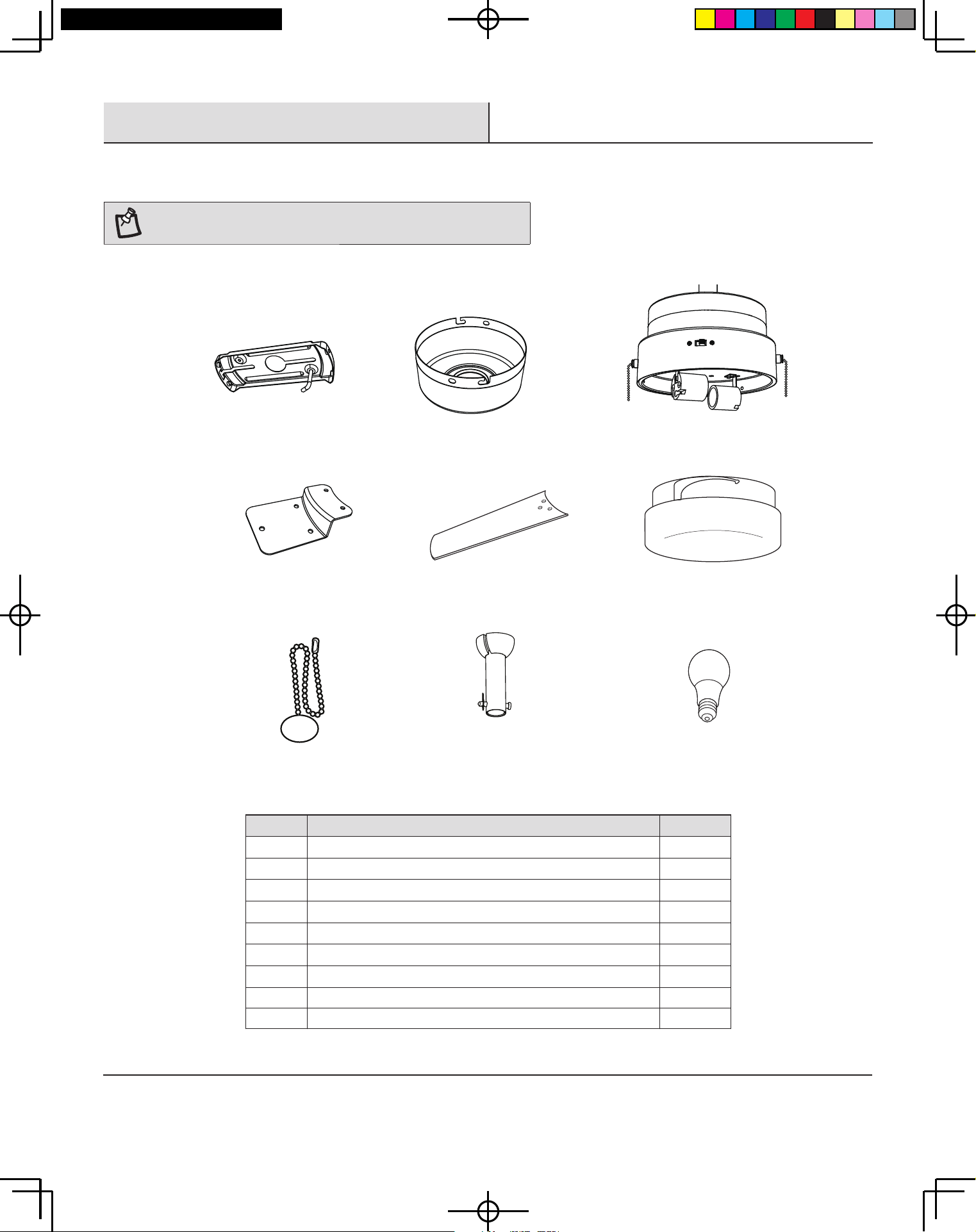
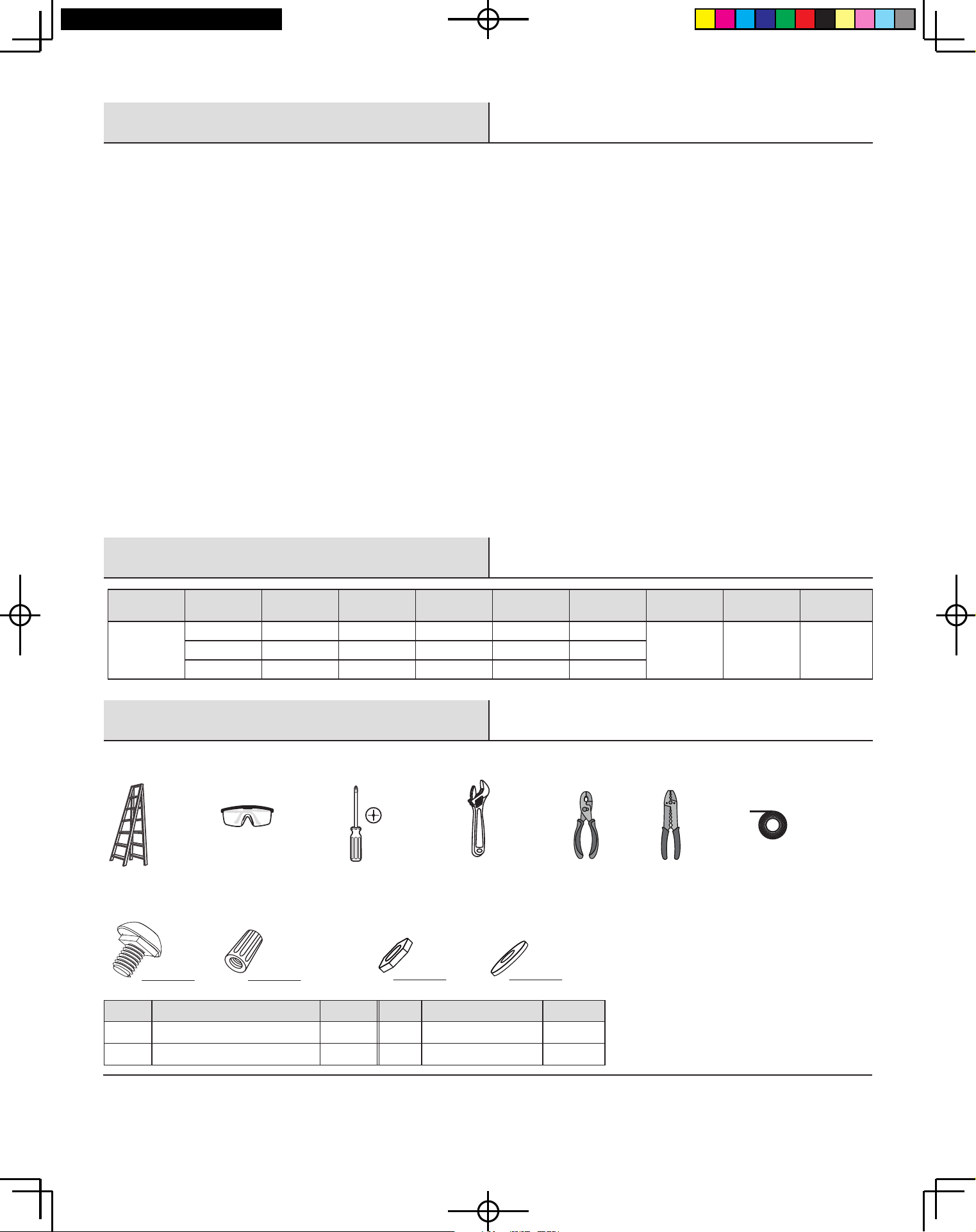
TOOLS REQUIRED
Safety
goggles
Phillips
screwdriver
HARDWARE INCLUDED
AA BB
Part Description Quantity
AA Square Neck Screws 10
BB Wire Nuts 10
Adjustable
wrench
Step
Ladder
Pliers Wire
cutter
Electrical
tape
CC DD
Quantity
10
3
Part
CC
DD
DescriptionPart
Hex Nuts
Flat Washers
1856
2407
3297
4
Pre-installation (continued)
PACKAGE CONTENTS
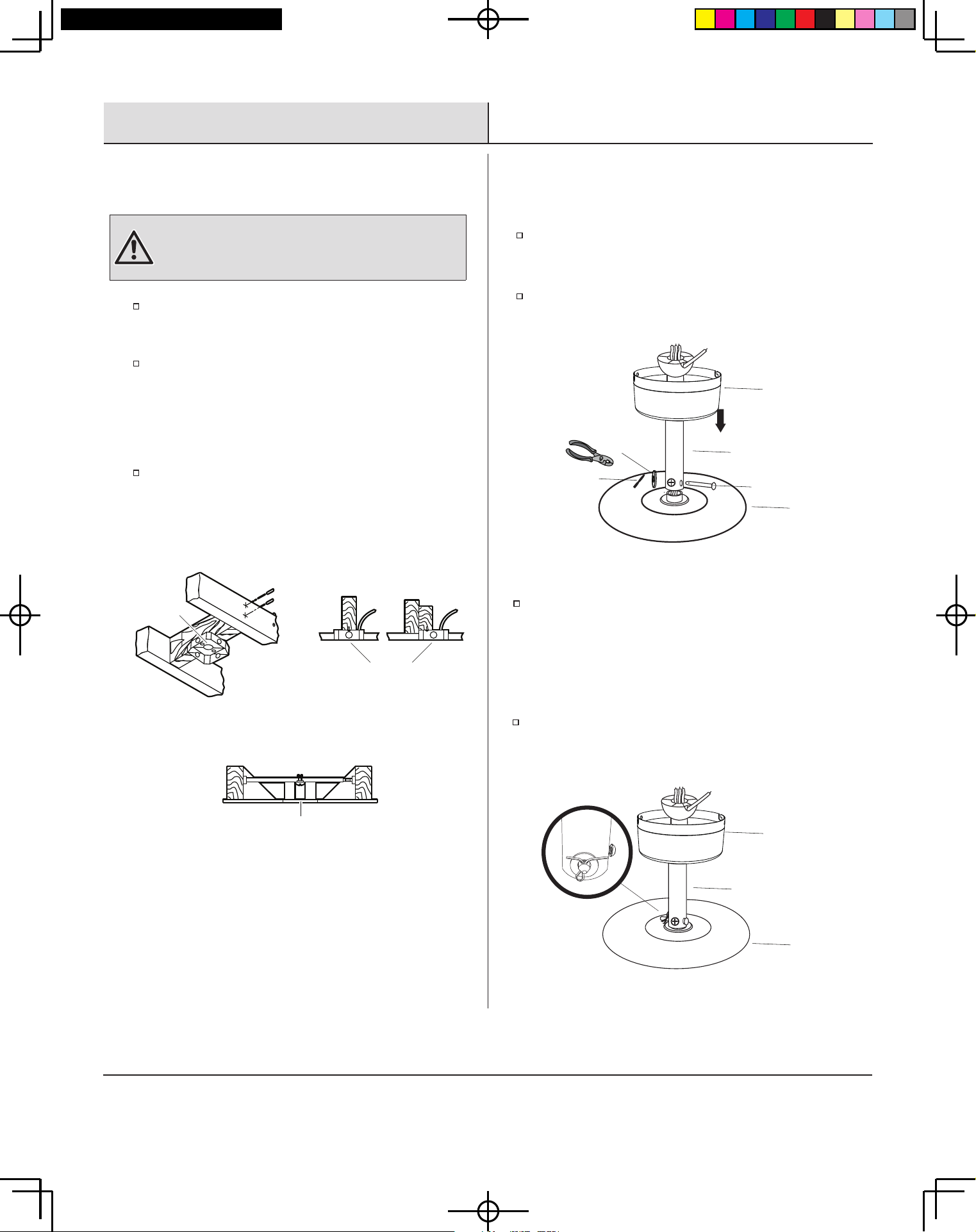
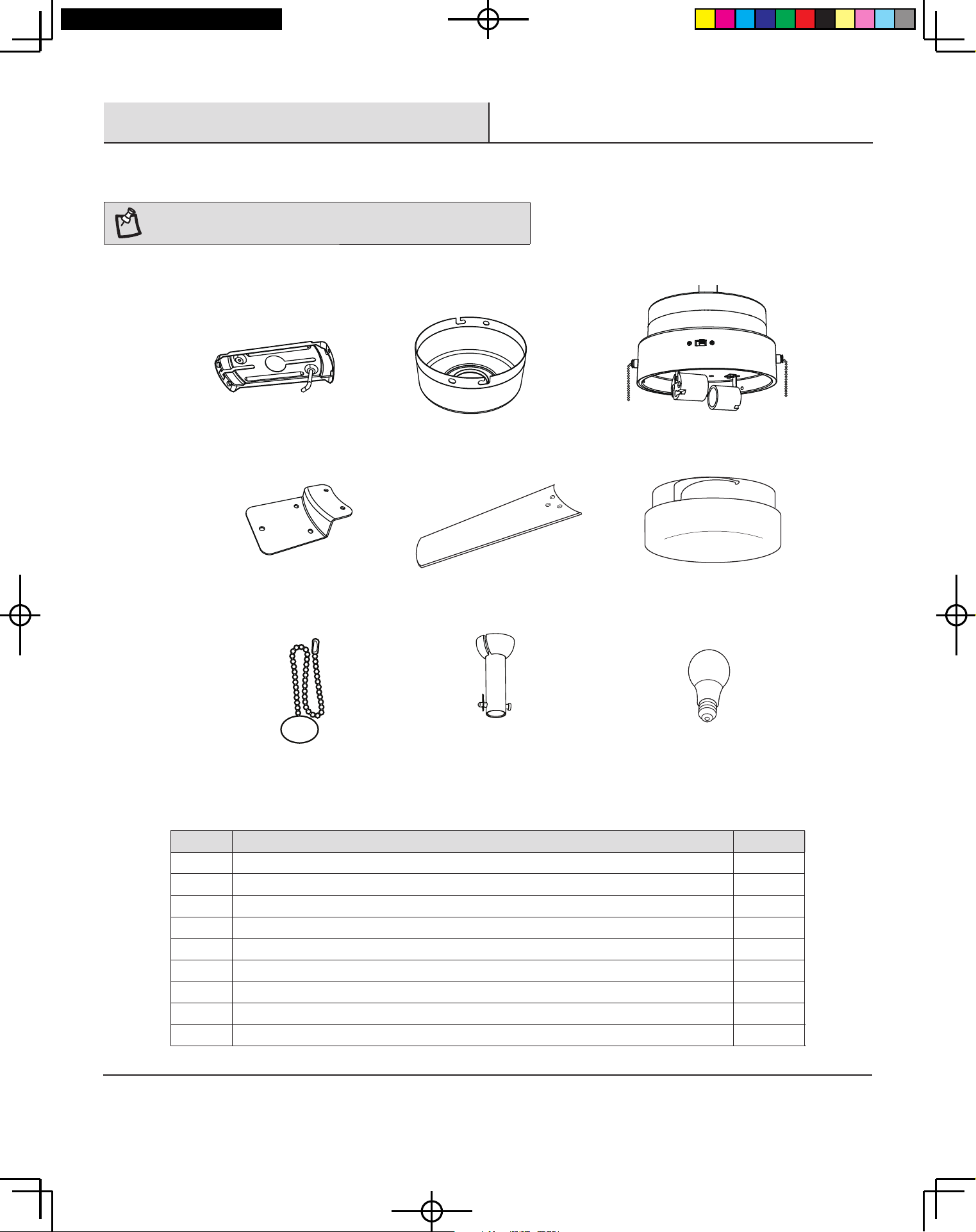
NOTE: Unpack your fan and check the contents . You should have the
following items listed below.
A B C
D
E
F
G
Part Description Quantity
A Mounting plate 1
B Ceiling canopy 1
C Fan motor with switch housing 1
D Set of blade holders (with blade holder screws pre-installed)
E Set of blades 3
1
G Pull chain pendant 2
3
H
H
½
4 " Downrod Assembly 1
RDB9144-WH/BN/ORB
I
I 2
9 Watt E-26 (LED, A19) Bulb
Shatter resistant shadeF
5
Installation
1
WARNING: To reduce the risk of fire, electric shock, or
personal injury, mount to outlet box marked acceptable for
fan support of 15.9 Kg (35 lbs) or less and use mounting
screws provided with the outlet box.
If there is not an existing UL Listed metal mounting box,
then read the following instructions. Disconnect the power
by removing fuses or turning off circuit breakers.
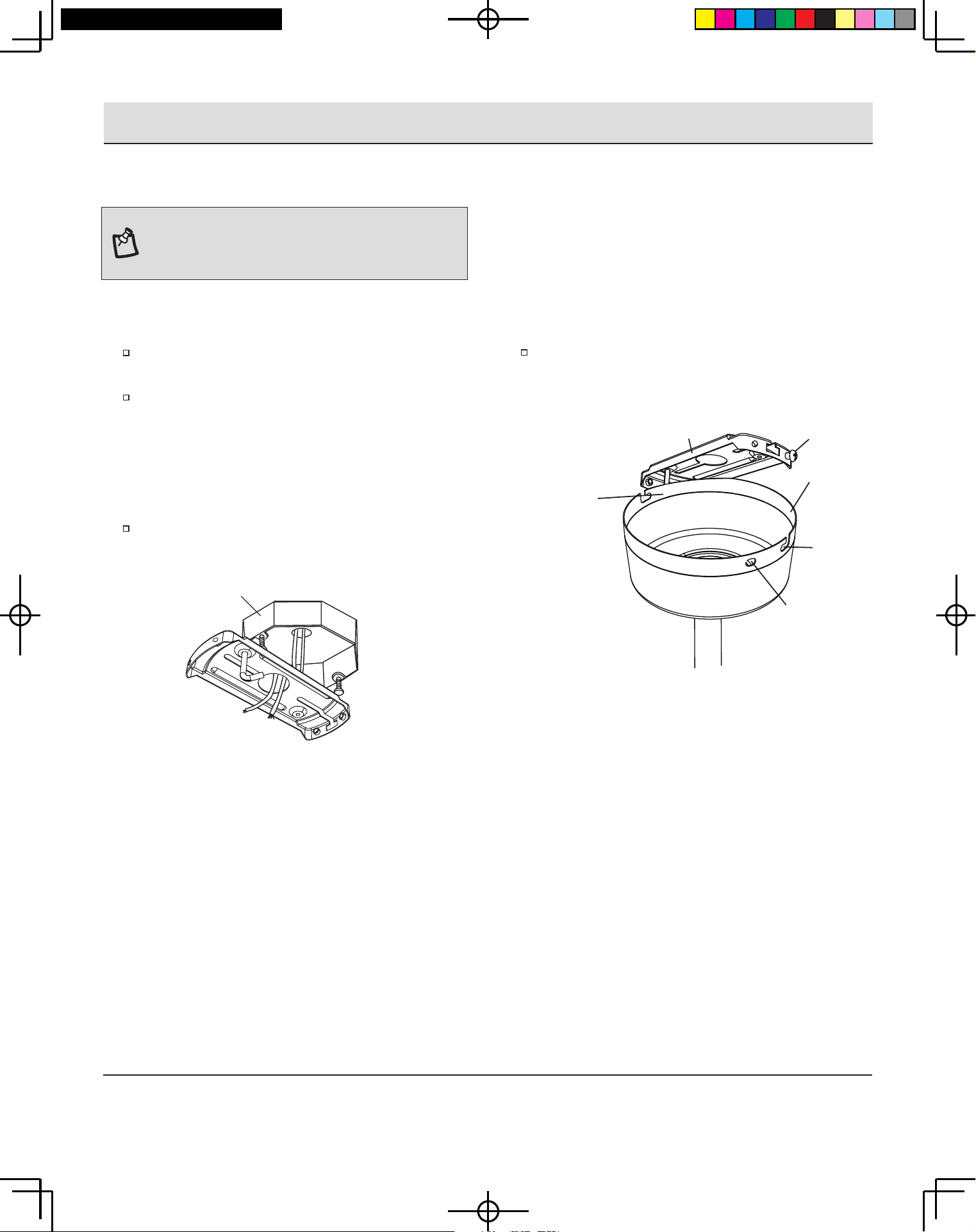
Secure the outlet box directly to the building structure. Use
appropriate fasteners and building materials. The outlet
box and its support must be able to fully support the moving
weight of the fan (at least 35 lbs.). Do not use plastic outlet
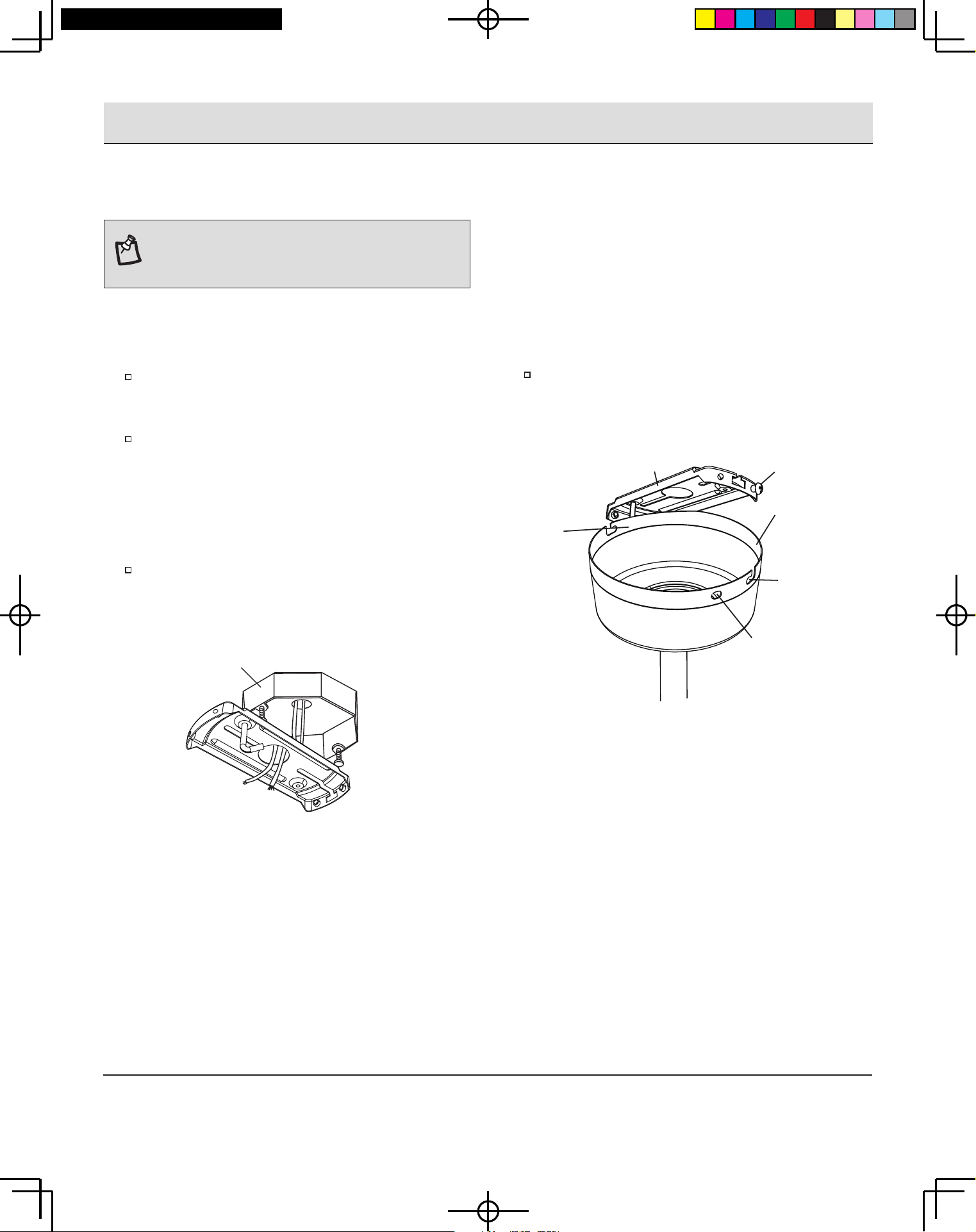
boxes. Figures 1 and 2 are examples of different ways to
mount the outlet box.
To hang your fan where there is an existing fixture but no
ceiling joist, you may need an installation hanger bar as
shown in Figure 3 (available at your Retailer).
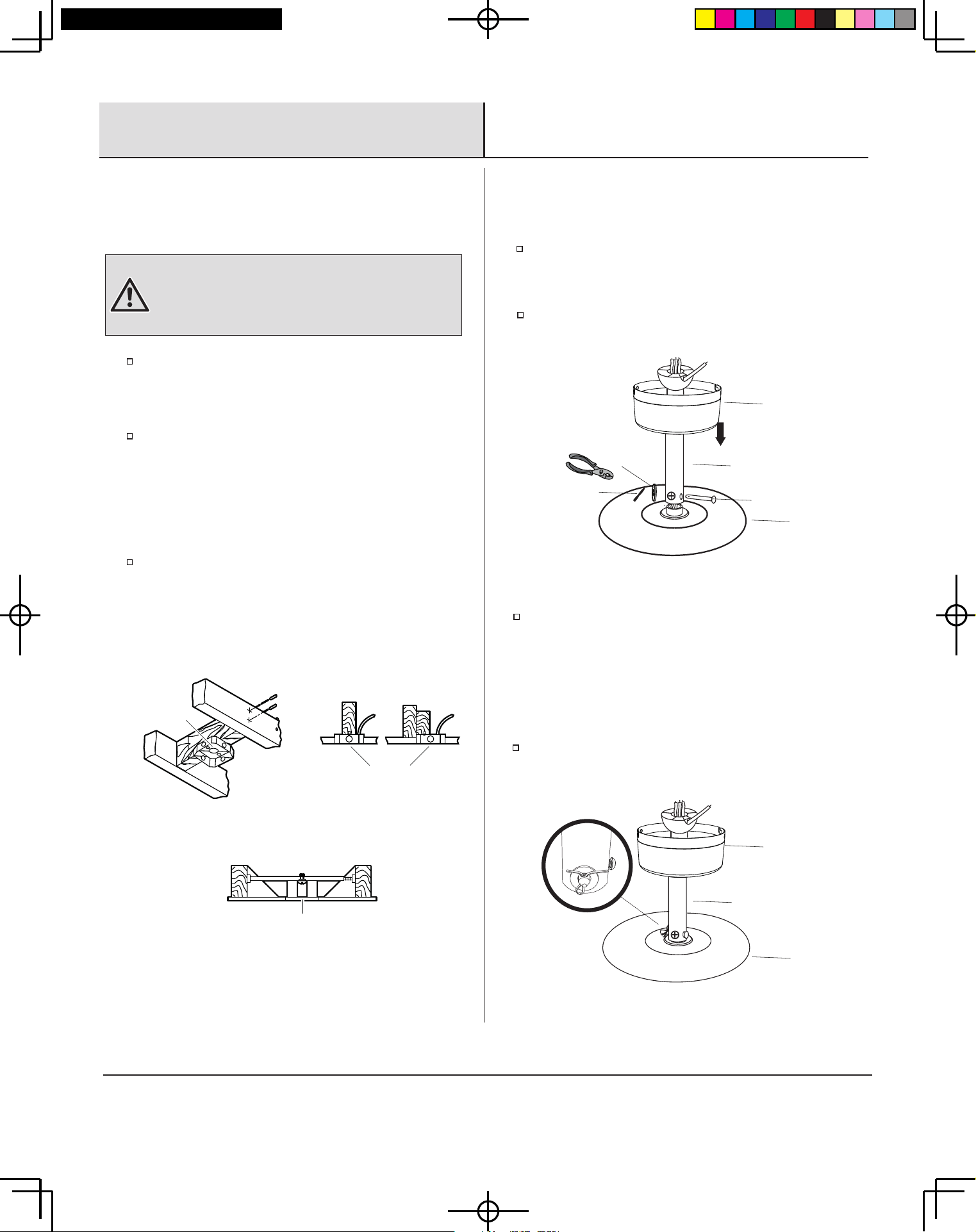
Figure 1
Figure 2
Figure 3
Outlet Box
Outlet Box
Outlet Box
Place the downrod assembly (H) through the ceiling canopy (B)
and insert the motor wires through the downrod assembly
(Figure 4).
Determining mounting method Installing the fan body
2
Remove the split pin (1), washer (2) and pivot pin (3) from the
downrod assembly (H) and set them aside for later restoration.
Push the pivot pin through the motor shaft and downrod
holes (Figure 5). Pivot pin's insert end is of special
designed cone shape, it would push away and won't harm
the wires inside the downrod. Secure the pivot pin by
inserting the split pin and bending the ends to prevent it
from falling out of the holes (Figure 5).
Figure 4
H
B
C
3
2
1
Secure the motor shaft and downrod by tightening the
screw on the downrod (Figure 5).
Figure 5
H
B
C
6
Installation (continued)
NOTE: Y ou may need a longer downrod to maintain proper
blade clearance when installing on a steep, sloped ceiling.
The maximum angle allowable is 18° away from horizontal.
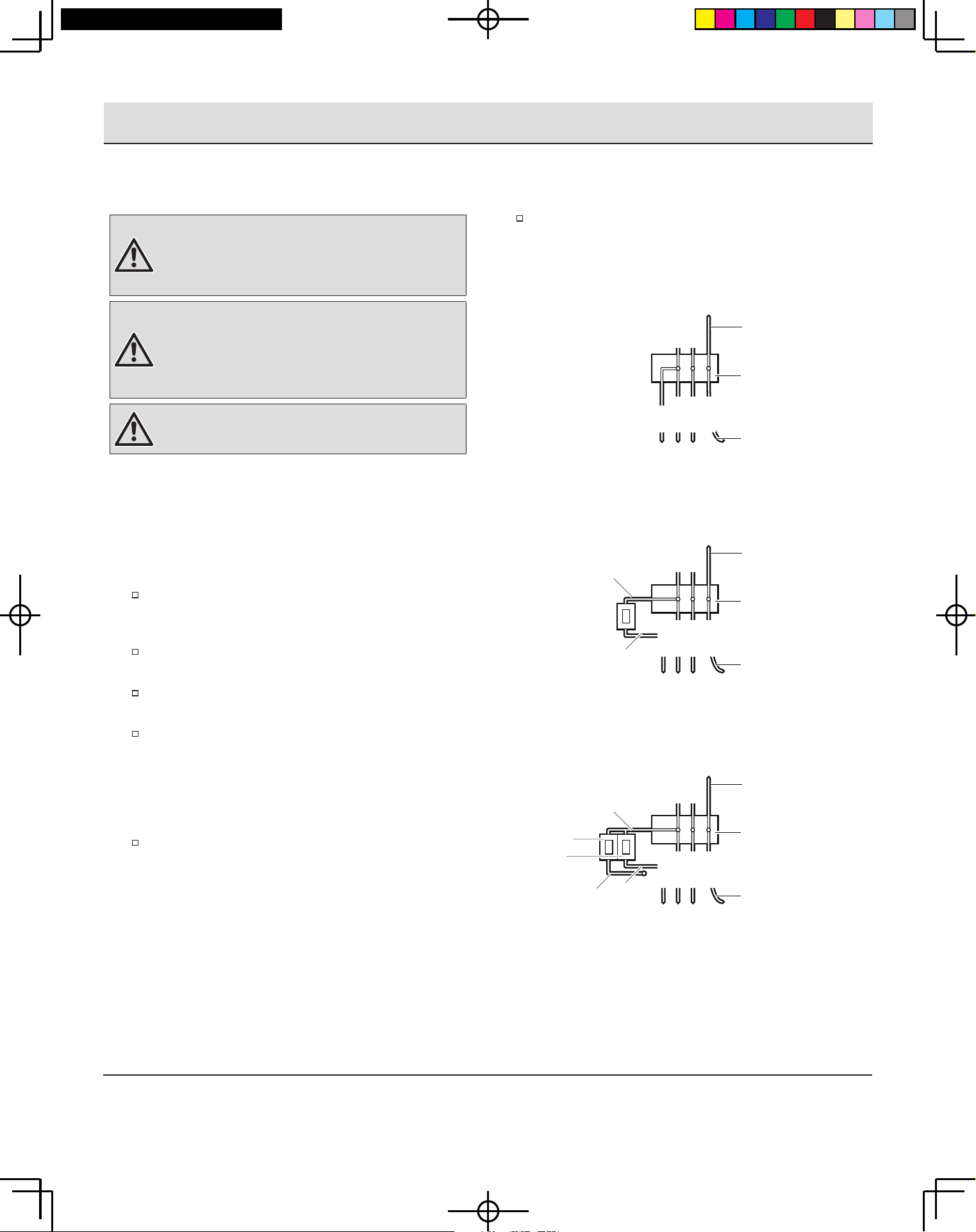
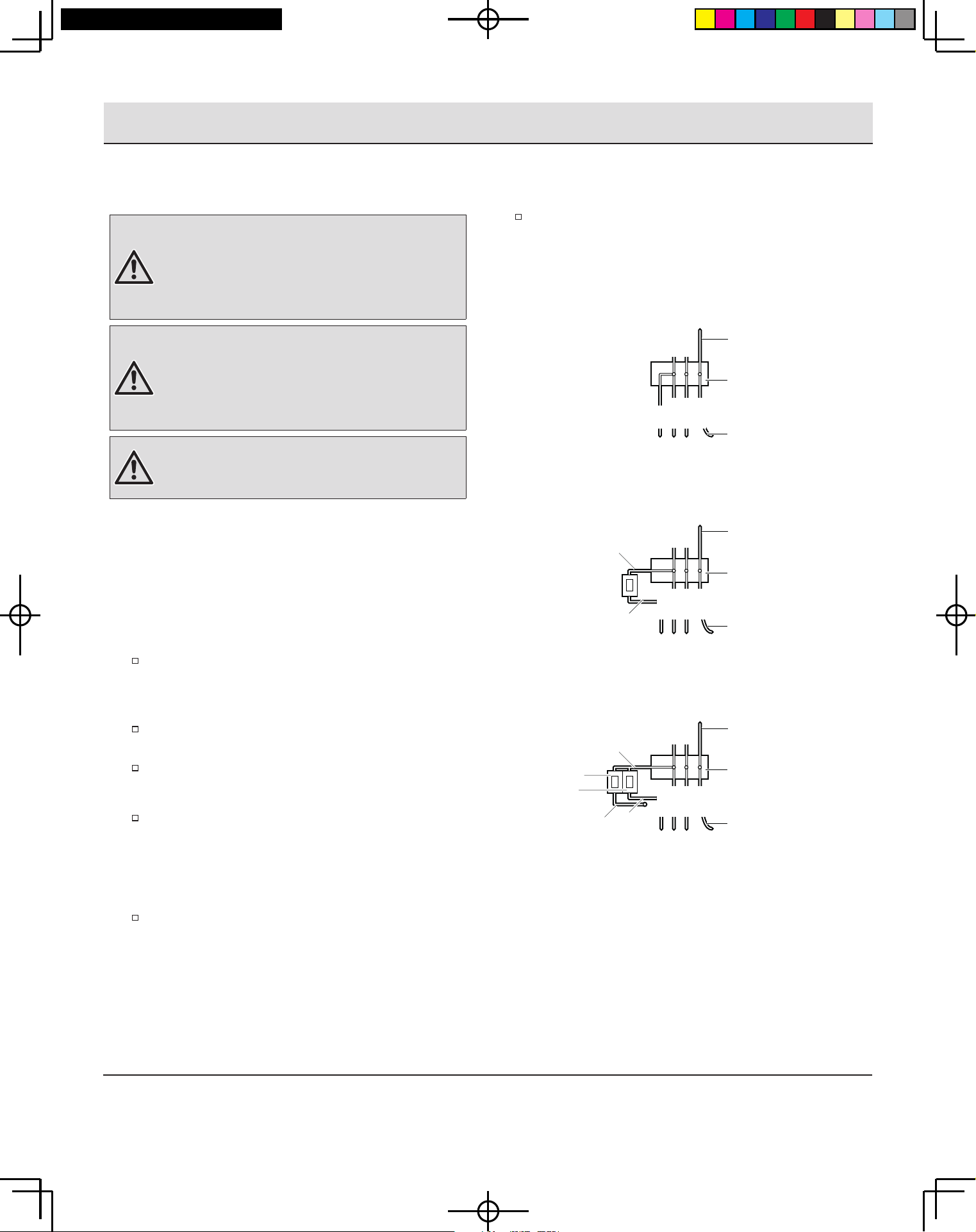
Before making the electrical connections, engage one of the
screw holes at the top of the ceiling canopy with the hook on
the mounting plate (Figure 7).
Figure 7
Installing the mounting plate
3
RDB9144-WH/BN/ORB
your fan properly.
Pass the 120-volt supply wires through the center hole in
the mounting plate as shown in Figure 6.
Figure 6
Outlet Box
REMEMBER to turn off the power. Follow the steps below to hang
Securely tighten the two mounting screws. Carefully lift
the fan assembly up to the mounting plate.
Attached the mounting plate on the electrical box by
sliding the mounting plate over the screws provided with
the outlet box. Make sure the mounting plate is level. You
may need to insert additional washers (not provided)
between the outlet box and the mounting plate to make
it level. Note that the flat side of the plate is to be toward
the electrical box.
Canopy
Round Hole
Bayonet
Slot
Canopy
Screw
Hook
Mounting
Plate
7
Making the electrical connections
Installation (continued)
WARNING: To avoid possible electrical shock, be sure
electricity is turned off at the main fuse box before wiring.
If you are not sure the electrical box and fan are grounded,
contact a licensed electrician for advice. They must be
grounded for safe operation.
WARNING: Each wire nut (wire connector) supplied with
this fan is designed to accept up to one 12 gauge house
wire and two wires from the fan. If you have larger than 12
gauge house wiring or more than one house wire to connect
to the fan wiring, consult an electrician for the proper size
wire nuts to use.
WARNING: Check to see that all connections are tight,
including ground, and that no bare wire is visible at the wire
nuts, except for the ground wire.
or experience, have your fan installed by a licensed electrician.
Follow the steps below to connect the fan to your household
wiring. Use the plastic wire splice connectors (BB) supplied with
your fan. Secure the connectors with electrical tape. Make sure
there are no loose strands or connections.
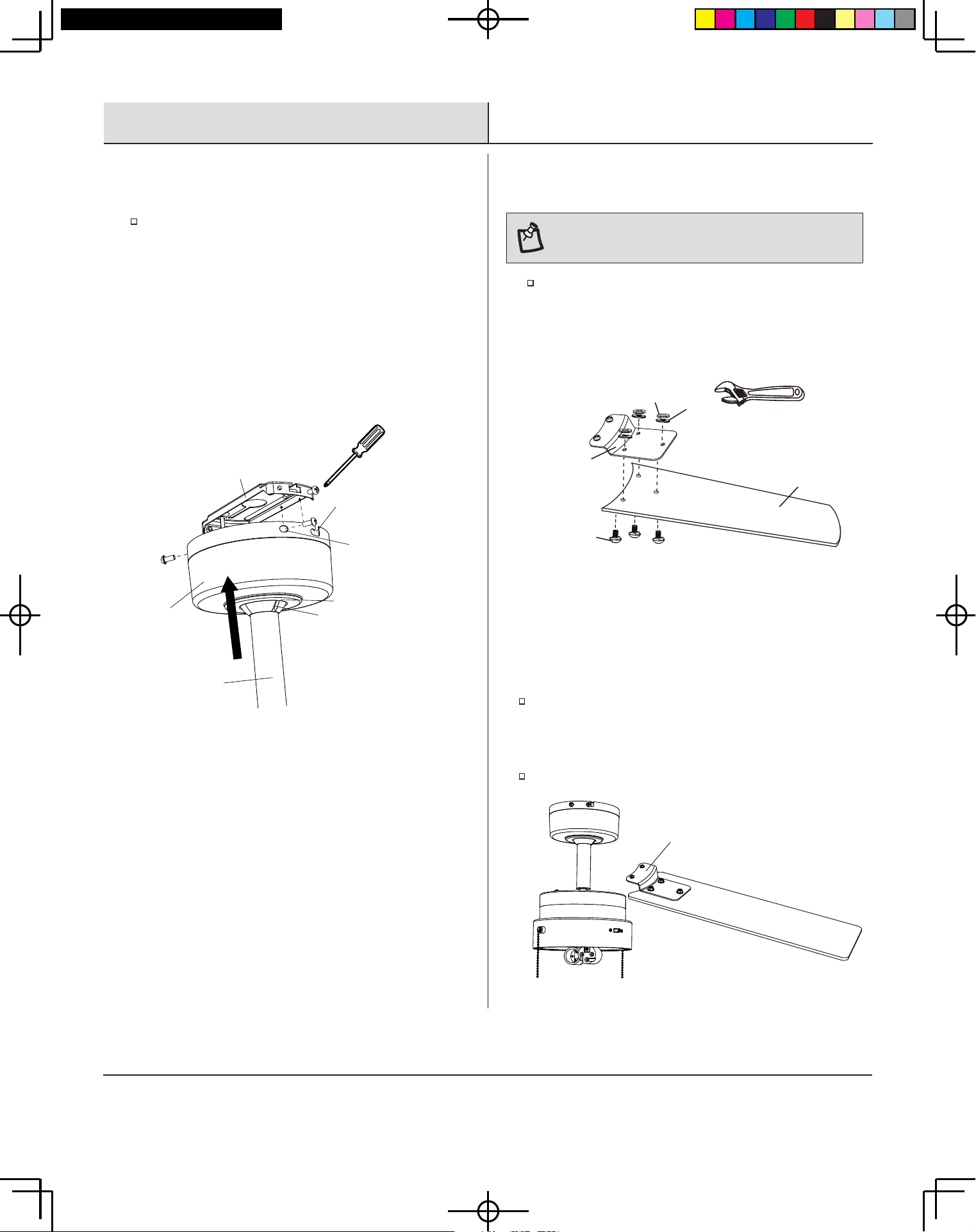
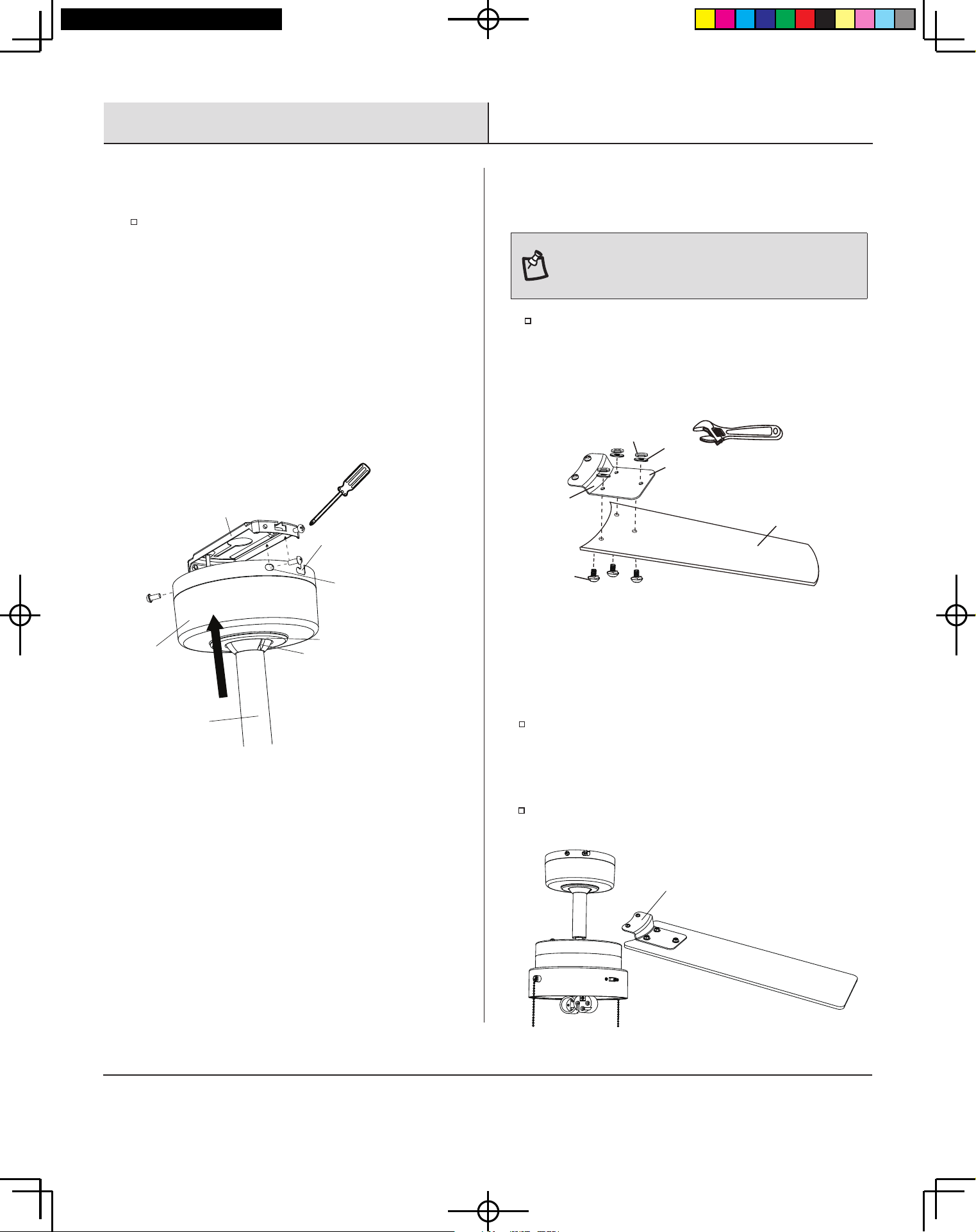
Connect the fan supply (black) wire and light supply (blue)
wire to the black household wire as shown in Figure 8. Do
not connect the blue wire if the light kit is not used.
Connect the neutral fan (white) wire to the white neutral
household wire.
Connect the fan ground wires (green) on the mounting plate
and the downrod assembly to the household ground wire.
After connecting the wires, secure the wire connectors (BB)
with black electrical tape and spread them apart so that
the green and white wires are on one side of the outlet box
and the black and blue wires are on the other side. (i.e.,
grounded conductor on one side and hot wires on the other
side.)
Turn the wire connectors (BB) upward and push the wiring
into the outlet box.
If you wish to control the light from a wall switch and the fan from
the pull chain switch or if you wish to control both fan and light
from wall switches, refer to the wiring diagrams in Figures 9 and 10.
If you choose to install another light kit, it must be a UL
Listed light kit accessory marked suitable for use with this
fan. Follow the instruction packed with the light kit.
SUPPLY CIRCUIT
Figure 8
Diagram indicates light kit wiring.
Figure 9
Diagram indicates optional wiring.
Figure 10
Diagram indicates optional wiring.
BlackBlackBlack Black
Black
Black
White
WhiteWhite WhiteWhiteWhite
Blue
BlueBlue
Green
GreenGreen
Ground
Conductor
Ground
Conductor
Ground
Conductor
Outlet Box
Outlet Box
Outlet Box
Green
Ground Lead
Green
Ground Lead
Green
Ground Lead
Light
Switch
Light
Fan
Black
Black
White
WhiteRed
4
If you feel that you do not have enough electrical wiring knowledge
8
Installation (continued)
5
NOTE: Your fan blades are reversible. Select the blade side
finish which best accentuates your decor. Failure to follow
below procedure could result in fan wobble.
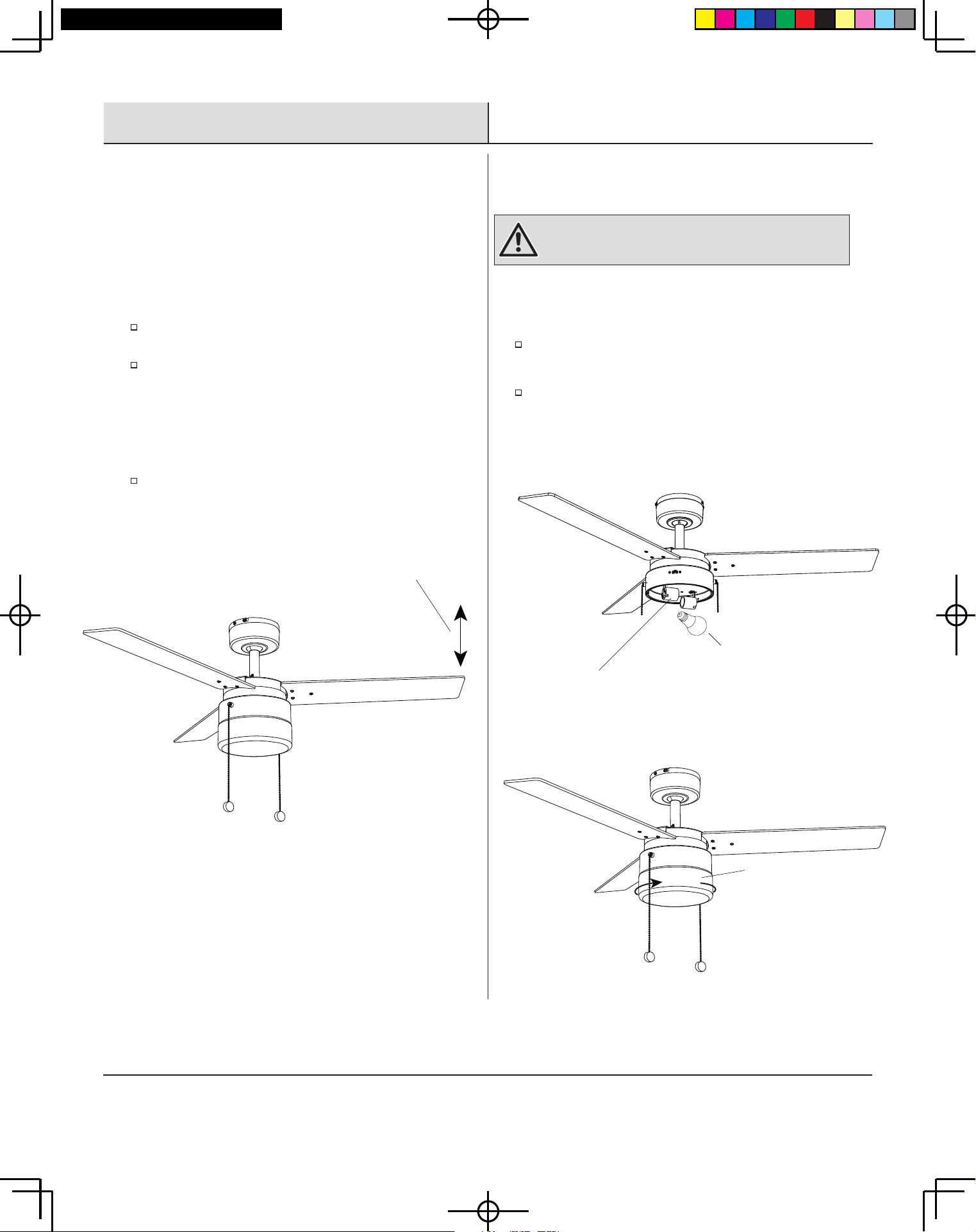
The fan blade assemblies are to be attached to the motor using the blade
holder screws (1) that are pre-installed into the blade holder (D). The
procedure to attach blade assemblies is as follows:
Figure 12
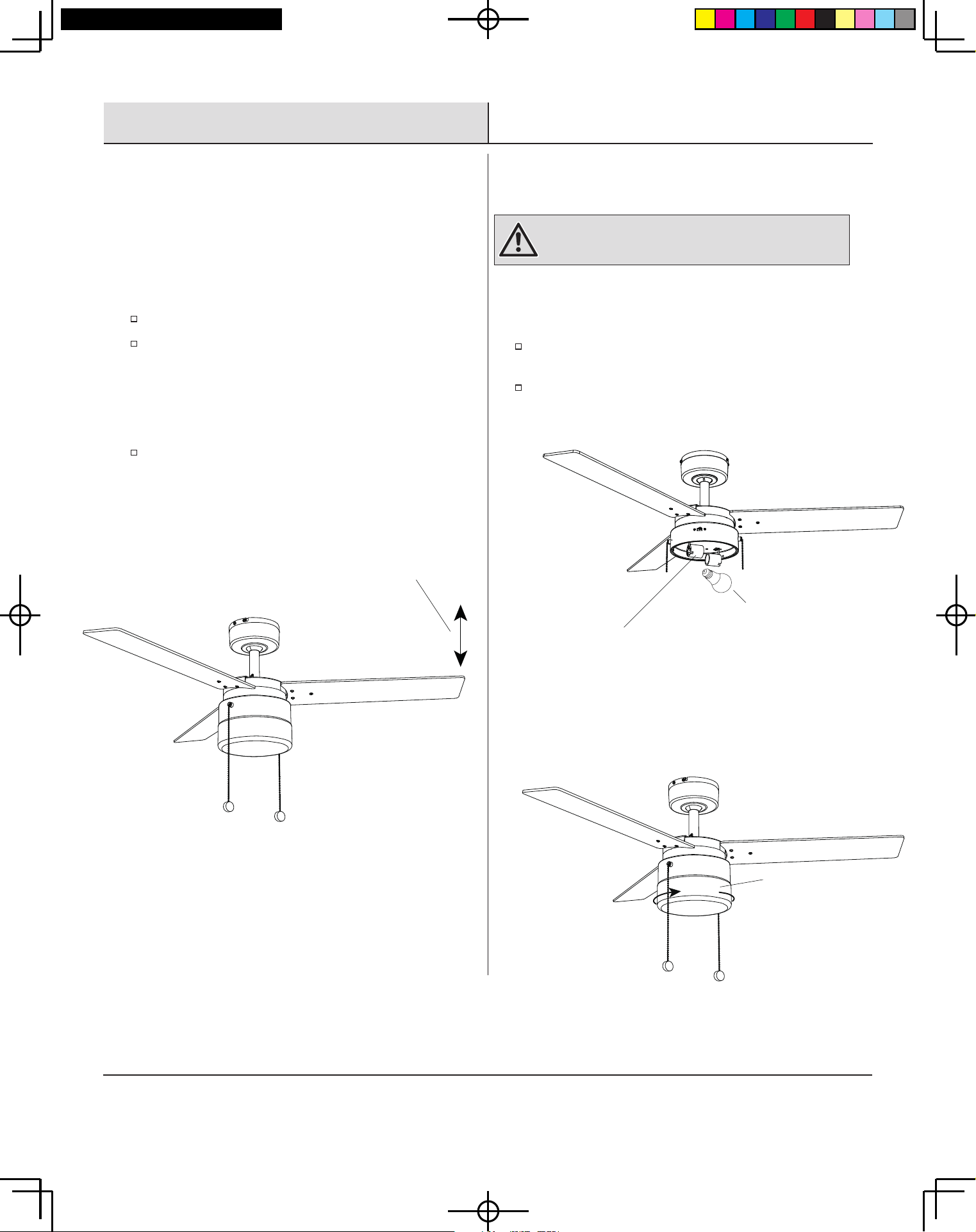
Position the blade holder (D) above the motor such that the
pre-installed screws on the blade holder fits into the holes in
the motor (Figure 13). Tighten the pre-installed blade holder
screws (1).
2
Repeat these steps to install the remaining blade assemblies.
Figure 13
Attaching the fan blades
Mount the blade holders (D) to the fan blades (E) using the
square neck screws (AA), hex nuts (CC) and flat washers (DD)
provided - 3 each per blade (Figure 12).
When the electrical connections have been
made, take the fan off the hook. Slide the ceiling
canopy up the downrod, making sure that the
ball joint groove engages with the ceiling canopy
entry hole tab. Slide the bayonet slots on the
ceiling canopy onto the screws at either end of
the mounting plate, secure with the four screws
provided (Figure 11).
Figure 11
Finishing the installation
Downrod
Ceiling
Canopy
Bayonet
Locating Slot
Screw
Hole
Mounting
Plate
Groove
Tab
1
6
RDB9144-WH/BN/ORB
CC
DD
D
AA
E
9
Installation (continued)
density, the fan may wobble even though the blades are weight
matched.
The following procedure should correct most fan wobble. Check for
wobble after each step.
Check that all blade and blade holder screws are secure.
Most fan wobble problems are caused when blade levels
are unequal. Check this level by selecting a point on the
ceiling above the tip of one of the blades. Measure this
distance as shown in Figure 14. Rotate the fan until the
next blade is positioned for measurement. Repeat for each
blade. Measurements should be within 1/8 in.
If blade wobble is still noticeable, interchanging two
adjacent (side by side) blades can redistribute the weight
and possibly result in smoother operation.
Figure 14
Touch Ceiling
WARNING: To reduce the risk of electric shock,
disconnect the electrical supply circuit to the fan before
installing light kit.
Install light bulbs (max. 9W, LED, medium screw base) to
the lampholders (Figure 15).
Install the lamp shade (F) into the lamp-fitter b
y a gentle
clockwise twist-and-lock (Figure 16).
Figure 15
Figure 16
Balancing the blades
All blades are grouped by weight. Because natural woods vary in
Installing the light kit
F
Light Bulb
Lamp Holder
7
8
10
Operation
Operating
*NOTE: Wait for the fan to stop before changing the setting
of the slide switch.
pulls - Medium, 3 pulls – Low, and 4 pulls – off.
Speed settings for warm or cool weather depend on factors such
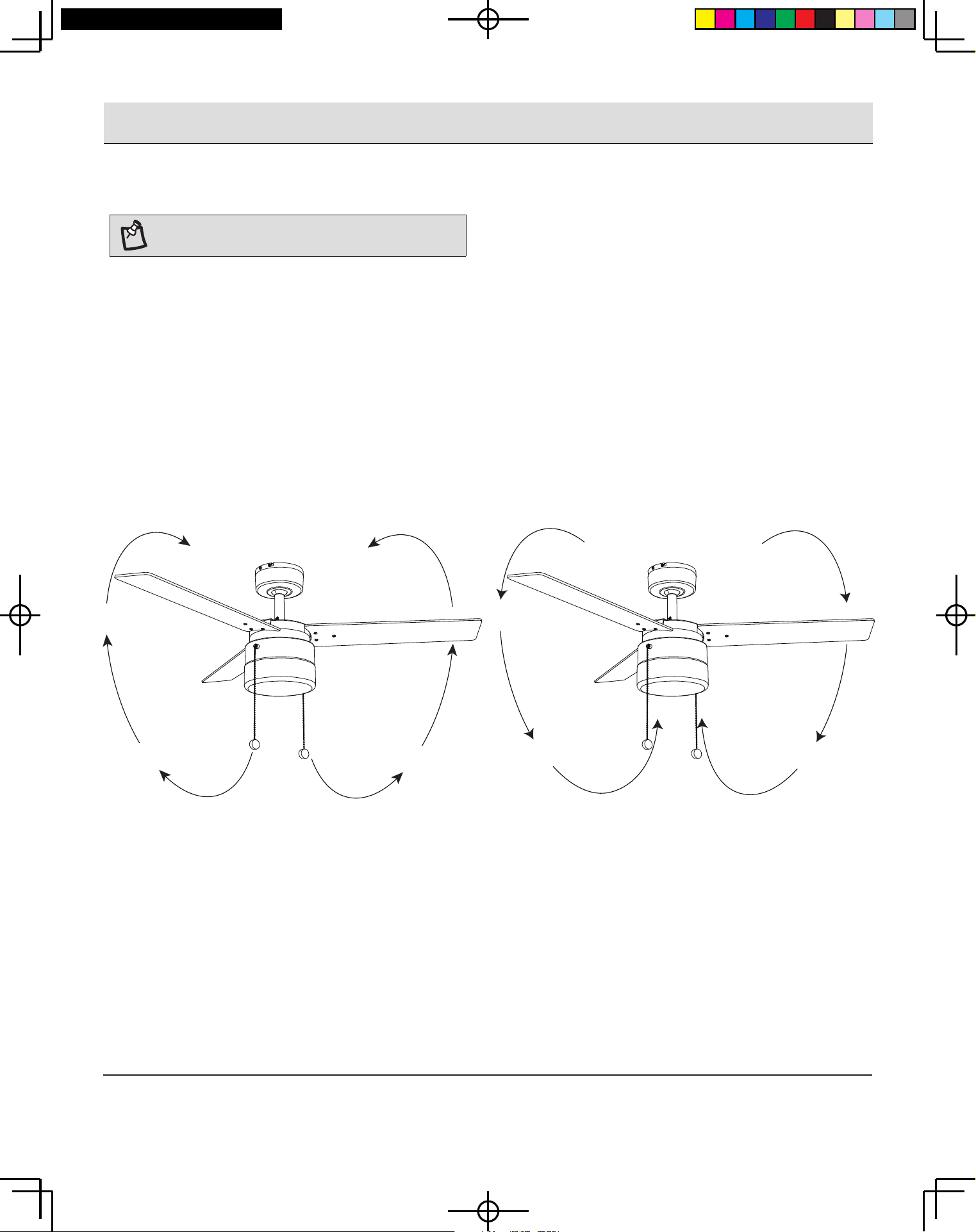
as the room size, ceiling height, number of fans, and so on.
Figure 17
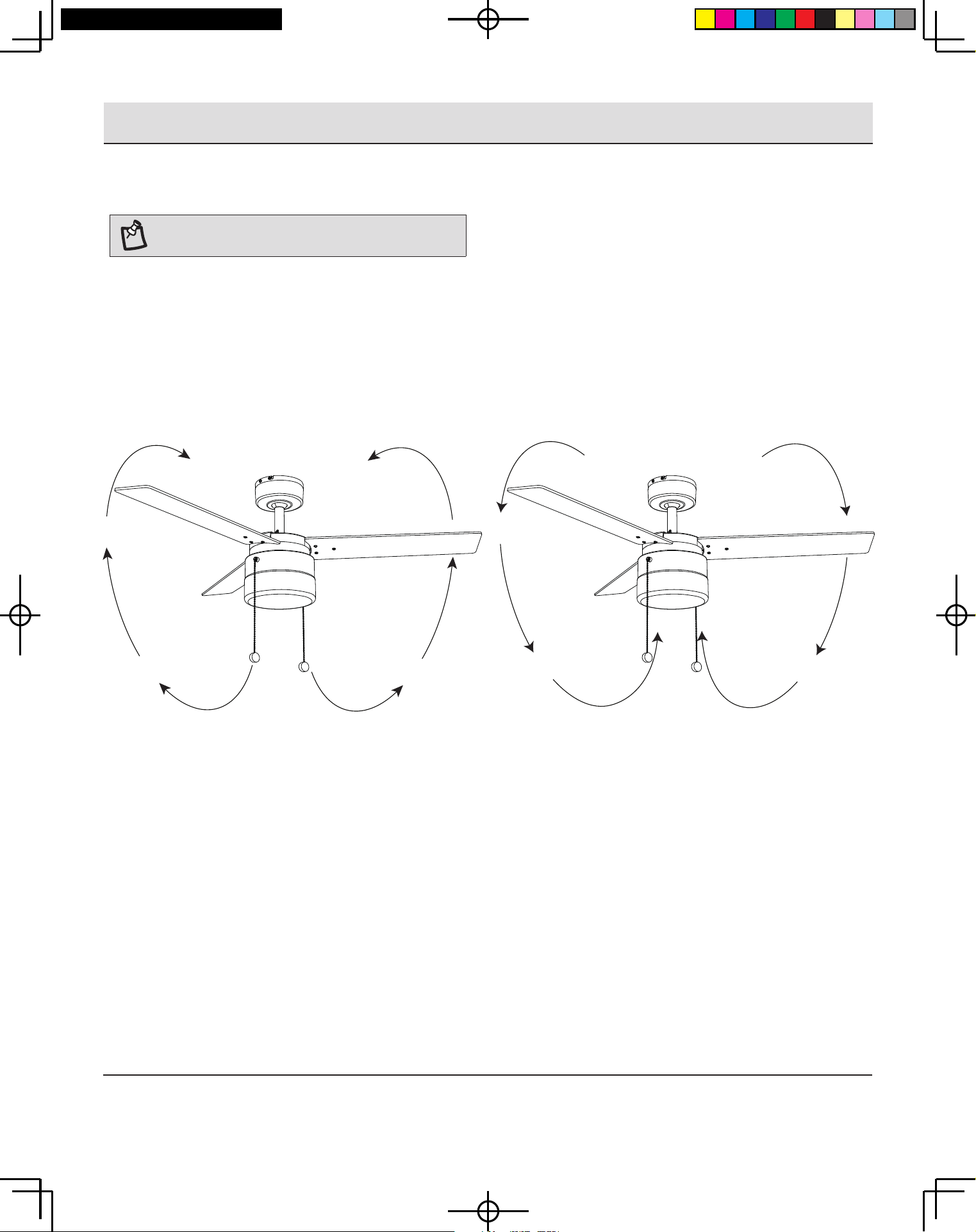
The slide switch controls direction: forward (switch down) or
reverse (switch up).*
Warm weather - (Forward) A downward air flow creates a cooling
effect as shown in Figure 17. This allows you to set your air
conditioner on a higher setting without affecting your comfort.
Cool weather - (Reverse) A n upward air flow moves warm air off
the ceiling area as shown in Figure 18. This allows you to set your
heating unit on a lower setting without affecting your comfort.
Figure 18
The pull chain controls the fan speed as follows: 1 pull – High, 2
RDB9144-WH/BN/ORB
11
Care and Cleaning
WARNING: Make sure the power is off at the electrical panel box before you attempt any repairs. Refer to the section Making Electrical
Connections Section.
Because of the fan's natural movement, some connections may become loose. Check the support connections, brackets, and blade
attachments twice a year. Make sure they are secure. (It is not necessary to remove the fan from the ceiling.)
Clean your fan periodically to help maintain its new appearance over the years. Use only a soft brush or lint-free cloth to avoid
scratching the finish. The plating is sealed with a lacquer to minimize discoloration or tarnishing. Do not use water when cleaning. This
could damage the motor, or the wood, or possibly cause an electrical shock.
You can apply a light coat of furniture polish to the wood blades for additional protection and enhanced beauty. Cover small scratches
with a light application of shoe polish.
There is no need to oil your fan. The motor has permanently lubricated bearings.
Troubleshooting
WARNING: Make sure the power is off at the electrical panel box before you attempt any repairs. Refer to the section Making Electrical
Connections Section.
Problem Solution
The fan will not start. Check circuit fuses or breakers.
Check the line wire connections to the fan and switch wire connections in the switch housing.
The fan sounds noisy. Make sure all motor housing screws are snug.
Make sure the screws that attach the fan blade bracket to the motor hub are tight.
Make sure wire nut connections are not rubbing against each other or the interior wall of the switch
housing.
Allow a 24-hour "breaking-in period. Most noises associated with a new fan disappear during this time" .
Some fan motors are sensitive to signals from solid-state variable speed controls. If you have installed
this type of control, choose and install another type of control.
Make sure the motor housing is a short distance from the ceiling. It should not touch the ceiling.
Here are some suggestions to help you maintain your fan.
An electronic copy of this user manual can also be obtained online at
homedepot.com
Retain this manual for future use.
Núm. de modelo
VENTILADOR DE TECHO MONTGOMERY DE 44 PULG.
RDB9144-WH/BN/ORB
Puede obtener también una copia electrónica de este manual del usuario en línea en
homedepot.com.
GUÍA DE USO Y CUIDADO
Tabla de contenido
Tabla de contenido . . . . . . . . . . . . . . . . . . . . . . . . . . . . . . . . . . 2
Información de seguridad . . . . . . . . . . . . . . . . . . . . . . . . . . . . . 2
Garantía
. . . . . . . . . . . . . . . . . . . . . . . . . . . . . . . . . . . . . . . . . . .
3
Instalación
Herrajes incluidos
Contenido del paquete
5
3
4
Operación . . . . . . . . . . . . . . . . . . . . . . . . . . . . . . . . . . . . . . . . 10
Cuidado y limpieza . . . . . . . . . . . . . . . . . . . . . . . . . . . . . . . . . 11
Solución de problemas
. . . . . . . . . . . . . . . . . . . . . . . . . . . . . . . .
11
Información de seguridad
asegúrese de que la electricidad haya sido desconectada en el
interruptor de circuito o la caja de fusibles.
2.
Nacional, ANSI/NFPA 70 y los códigos eléctricos nacionales.
La instalación eléctrica debe ser hecha por un electricista
calificado autorizado.
3.
montadas con seguridad y ser capaces de soportar de manera
fiable un mínimo de 35 libras. Use solamente cajas de salida
listadas UL marcadas "PARA SOPORTE DE VENTILADOR."
4.
ventilador estén en movimiento. El ventilador debe estar
apagado y las aspas detenidas antes de invertir la dirección de
las aspas.
5.
lesiones personales o daños al ventilador y otros artículos, tenga
precaución cuando trabaje cerca o limpie el ventilador.
6.
aspas. Un paño seco o ligeramente empapado será adecuado
para la mayoría de limipiezas.
7.
empalmados deben ser girados hacia arriba y empujados con
cuidado hacia adentro de la caja de salida. El cable debe estar
separado con el conductor de puesta a tierra y el conductor
de puesta a tierra del equipo en un lado de la caja de salida.
Después de hacer los empalmes, estos deben ser girados hacia
arriba y empujados con cuidado hacia adentro de la caja de
salida.
8.
juegos de lámparas que no están empacados con el ventilador
deben ser Listados UL y marcados como adecuados para uso
con el ventilador modelo que está instalando. Los interruptores
deben ser Interruptores de Uso General UL. Consulte las
instrucciones que vienen con los juegos de lámparas e
interruptores para un montaje apropiado.
ADVERTENCIA : Antes de darle servicio o limpiar la unidad,
desconecte la energía en el panel de servicio y cierre el
servicio desconectando los medios para evitar que la energía
se active accidentalmente. Cuando los medios de desconexión
del servicio no se pueden cerrar, coloque con seguridad una
advertencia fácil de ver.
ADVERTENCIA : Para evitar el riesgo de incendio, choque
eléctrico o lesiones a las personas, monte una caja de salida
aceptable para soporte del ventilador de 15.9 Kg (35 lbs) o
menos. Use los tornillos de montaje proporcionados con la caja
de salida. La mayoría de cajas de salida usadas comúnmente
como soporte de luminarias no son aceptables para soporte
del ventilador y pueden necesitar ser reemplazadas. Consulte
a un electricista calificado si tiene dudas.
ADVERTENCIA : Para reducir el riesgo de lesiones
personales, no doble los soportes de las aspas cuando instale
los soportes, equilibre las aspas o limpie el ventilador. No
inserte objetos extraños en medio de las aspas del ventilador
en rotación.
ADVERTENCIA : Para reducir el riesgo de incendio o
choque eléctrico, no use este ventilador con ningún dispositivo
de control de velocidad de estado sólido.
PRECAUCIÓN : Para reducir el riesgo de lesiones
personales, el ventilador debe estar montado con un mínimo
de 7 pies de espacio libre desde el borde posterior de las
aspas hasta el piso.
1.
Para reducir el riesgo de choque eléctrico, antes de comenzar
POR FAVOR LEA Y GUARDE ESTAS INSTRUCCIONES.
Todo el cableado debe estar de acuerdo con el Código Eléctrico
La caja de salida y la estructura de soporte deben estar
No opere el interruptor de reversa mientras las aspas del
Evite colocar objetos en el paso de las aspas. Para evitar
No use agua o detergentes cuando limpie el ventilador o las
Después de hacer conexiones eléctricas, los conductores
Los diagramas eléctricos son solamente para referencia. Los
2
RDB9144-WH/BN/ORB
Pre-instalación . . . . . . . . . . . . . . . . . . . . . . . . . . . . . . . . . . . . .
3
. . . . . . . . . . . . . . . . . . . . . . . . . . . . . . . . . . . . . . . .
. . . . . . . . . . . . . . . . . . . . . . . . . . . . . . . . . . . . . . . .
. . . . . . . . . . . . . . . . . . . . . . . . . . . . . . . . . . . . . . . .
Especificaciones
. . . . . . . . . . . . . . . . . . . . . . . . . . . . . . . . . . . . .
3
Herramientas requeridos
. . . . . . . . . . . . . . . . . . . . . . . . . . . . . . . . . . . . .
3
RK7R
3
Garantía
GARANTÍA LIMITADA
LO QUE ESTÁ CUBIERTO
El distribuidor garantiza que el motor del ventilador está libre de defectos en materiales y mano de obra presentes en el momento del envío
de la fábrica por un periodo de quince años después de la fecha de compra por el comprador original. El distribuidor también garantiza que todas
las otras piezas del ventilador, excluyendo cualquier aspa de vidrio o acrílico, están libres de defectos en materiales y mano de obra en el
momento del envío de la fábrica por un periodo de un año después de la compra por el comprador original. Aceptamos corregir cualquier
defecto sin cargos o a nuestra discreción reemplazar con un modelo comparable o superior si el producto es devuelto a el distribuidor. Para
obtener el servicio de garantía, debe presentar una copia del recibo como prueba de compra. Todos los costos por retirar o reemplazar el
producto son su responsabilidad. Los daños a cualquier pieza por accidente o mal uso o instalación inapropiada o por la fijación de cualquier
accesorio, no están cubiertos por la garantía. Debido a las condiciones climáticas variables, esta garantía no cubre ningún cambio en el
acabado de latón, incluyendo herrumbre, picaduras, corrosión, deslustrado o descamación. Los acabados de latón de este tipo dan su vida
útil más larga cuando se protegen de las condiciones climáticas variables. Es normal una cierta cantidad de "bamboleo" y no debe ser
considerado un defecto. El mantenimiento realizado por personas no autorizadas anulará la garantía. No hay otra garantía expresa. Por la
presente, el distribuidor renuncia a cualquier y todas las garantías, incluyendo pero no limitadas a Garantías de comercialización o idoneidad
para un propósito particular en la medida permitida por la ley. La duración de cualquier garantía implícita que no puede ser denegada está
limitada al periodo de tiempo que se especifca en la garantía expresa. Algunos estados no permiten limitaciones sobre cuánto debe durar
una garantía implícita, por lo tanto las limitaciones anteriores podrían no aplicar a usted. La tienda minorista no será responsable de daños
incidentales, consecuenciales, o daños especiales que surgan de o con respecto al uso o rendimiento del producto excepto como pueda ser
acordado de otra manera por la ley. Algunos estados no permiten la exclusión de los daños incidentales o consecuenciales, por lo tanto, las
limitaciones y exclusiones anteriores podrían no aplicar a usted. Esta garantía le otorga derechos legales específicos y también puede tener
otros derechos que varían de un estado a otro. Esta garantía reemplaza todas las garantías anteriores.
Especificaciones
Tamaño del
ventilador
Velocidad Voltios Amperios Watts tr/min
3
pies /min Peso neto Peso bruto C.F.
42 pulg.
Baja 120
0.26
29 135 1856
4.4 kg 4.9 kg 0.82Media 120 0.27 31 180 2407
Alta 120 0.38 45 245 3297
Pre-instalación
HERRAMIENTAS REQUERIDAS
AA BB
Pieza Descripción Cantidad
AA Tornillos de cuello cuadrado 10
BB Tuercas de cable 3
HERRAJES INCLUIDOS
Gafas de
seguridad
Destornillador
Phillips
Llave
ajustable
Escalera
de tijera
Alicate Cortador
de
alambre
Cinta de
electricista
CC DD
Pieza
CC
DD
Descripción
Tuercas hexagonales
Arandelas planas
Cantidad
10
10
Pre-instalación (continuación)
CONTENIDO DEL PAQUETE
NOTA : Desempaque su ventilador y compruebe el contenido. Debe tener
los siguientes artículos listados a continuación.
A B C
D
E
F
G H
RDB9144-WH/BN/ORB
I
4
Pieza Descripción Cantidad
A Placa de montaje 1
B Cubierta del techo 1
C Motor del ventilador con carcasa de interruptor 1
D Conjunto de soportes de las aspas (con tornillos de soportes de las aspas preinstalados) 3
E Conjunto de aspas 3
1
G Halador colgante de cadena 2
H
½
4 " unidad de la vara 1
I 2
Foco de 9 Watts de base E-26 (LED, A19)
F Pantalla de la lámpara
5
Instalación
1
Determinación del método de
montaje
ADVERTENCIA : Para evitar el riesgo de incendio,
choque eléctrico o lesiones a las personas, monte la caja
de salida marcada aceptable para soporte de ventilador
de 15.9 Kg (35 lbs) o menos y use los tornillos de montaje
proporcionados con la caja de salida.
Si no hay una caja de montaje de metal existente Listada
UL, lea las siguientes instrucciones. Desconecte la energía
retirando los fusibles o apagando los interruptores de
circuito.
Asegure la caja de salida directamente a la estructura
del edificio. Use sujetadores apropiados y materiales
de construcción. La caja de salida y su soporte deben
de ser capaces de soportar por completo el peso móvil
del ventilador (al menos 35 lbs.). No use cajas de salida
plásticas. Las Figuras 1 y 2 son ejemplos de diferentes
maneras de montar la caja de salida.
Para colgar su ventilador donde ya hay una luminaria pero
no una viga de techo, puede necesitar un barra colgador
como se muestra en la Figura 3 (disponible en su tienda
minorista el distribuidor).
Figura 1
Figura 2
Figura 3
Caja de salida
Caja de salida
Caja de salida
Coloque la unidad de la vara (H) a través de la cubierta del
techo (B) e inserte los cables del motor a través de la unidad
de la vara (Figura 4).
Instalación del cuerpo del ventilador
2
Extraiga el pasador de chaveta (1), la arandela (2) y el pasador
(3) de la unidad de la vara (H) y sepárelos para volver a
colocarlos luego.
Empuje el pasador a través del eje del motor y de los orificios de
la vara (Figura 5). El extremo de inserción del pasador es de
forma cónica, con un diseño especial, de forma que pasaría
empujando sin dañar los cables dentro de la vara. Asegure el
pasador insertando el pasador de chaveta y doblando los
extremos para evitar que se salga de los orificios (Figura 5).
Figure 4
Figure 5
H
B
C
H
B
C
3
2
1
Asegure el eje del motor y la vara ajustando el tornillo en
esta última (Figura 5).
6
Instalación (continuación)
3
Instalación de la placa de montaje
NOTA : Puede necesitar un vástago de extensión para
mantener un espacio libre de aspa adecuado cuando instale
sobre un techo inclinado. El ángulo máximo permisible es
de 18° a partir de la horizontal.
Figura 6
Caja de salida
Antes de realizar las conexiones eléctricas, enganche uno de
los orificios del tornillo en la parte superior de la cubierta del
techo con el gancho en la placa de montaje (Figura 7).
Figura 7
Cubierta
Orificio redondo
Ranura bayoneta
Tornillo de la
cubierta
Placa de
montaje
Gancho
RDB9144-WH/BN/ORB
Pasar los cables de alimentación de 120 voltios a través
del hueco del refuerzo superior del motor se muestra en
la Figura 6.
RECUERDE desconectar el suministro de electricidad. Para colgar
el ventilador apropiadamente, siga los siguientes pasos que se
presentan a continuación.
Presione y asegure los 2 tornillos que van instalados
a la caja de montaje. Cuidadosamente levante el
ventilador hasta el soporte de montaje rápido.
Deslize el soporte de montaje rápido a través de los
tornillos que se encuentran en la caja de distribución.
Asegúrese de que la placa de montaje esté nivelada.
Puede necesitar insertar arandelas adicionales (no
suministradas) entre la caja de salida y la placa de
montaje para nivelar. El lado plano del sporte de
montaje deberá estar hacia la caja de electricidad.
7
Instalación (continuación)
4
ADVERTENCIA : Para evitar un posible choque eléctrico,
asegúrese de que la electricidad esté desconectada en
la caja de fusibles principal antes del cableado. Si no
está seguro de que la caja eléctrica y el ventilador están
conectados a tierra, póngase en contacto con un electricista
calificado para que lo aconseje. Deben estar conectados a
tierra para una operación segura.
ADVERTENCIA : Cada tuerca de cable (conector de
cable) suministrada con este ventilador está diseñada
para aceptar hasta un cable calibre 12 y dos cables del
ventilador. Si tiene un cableado más grande de calibre
12 o más de un cableado para conectar al cableado del
ventilador, consulte a un electricista sobre el tamaño
adecuado de las tuercas de cableado que debe usar.
ADVERTENCIA : Revise para ver que todas las
conexiones estén apretadas, incluyendo la tierra, y que
ningún cable desnudo sea visible en las tuercas de
cableado, excepto el cable de tierra.
cableado eléctrico, haga que su ventilador sea instalado por un
electricista autorizado.
Siga los pasos a continuación para conectar el ventilador al
cableado eléctrico de su vivienda. Use los conectores plásticos de
empalme de cables (BB) suministrados con su ventilador. Asegure
los conectores con cinta aislante. Asegúrese de que no hayan
hebras o conexiones flojas.
Conecte el cable de alimentación del ventilador (negro) y el
cable de alimentación de la lámpara (azul) al cable negro
de la vivienda como se muestra en la Figura 8. No conecte
el cable azul si el juego de la lámpara no es usado.
Conecte el cable neutro del ventilador (blanco) al cable
neutro blanco de la vivienda.
Conecte los cables de conexión a tierra del ventilador (verde) en
la placa de montaje; y la unidad de la vara con el cable de conexión
a tierra de la conexión del hogar.
Después de conectar los cables, asegure los conectores de
cable (BB) con cinta aislante negra y sepárelos de modo
que los cables verde y blanco estén en un lado de la caja
de salida y los cables negro y azul en el otro lado. (o sea, el
conector con conexión a tierra en un lado y los cables vivos
en el otro lado).
Gire los conectores de cable (BB) hacia arriba y empuje el
cableado dentro de la caja de salida.
Si desea controlar la lámpara desde un interruptor de pared y el
ventilador desde el interruptor de cadena o si desea controlar
ambos desde interruptores de pared, consulte los diagramas de
cableado en la Figuras 9 y 10.
Si desea instalar otro juego de lámparas, debe ser un
accesorio de juego de lámparas Listado UL marcado como
adecuado para ser usado con este ventilador. Siga las
instrucciones que vienen con el juego de lámparas.
CIRCUITO DE ALIMENTACIÓN
Figura 8
El diagrama indica el cableado del juego de lámparas.
Figura 9
El diagrama indica cableado opcional.
Figura 10
El diagrama indica cableado opcional.
NegroNegroNegro Negro
Negro
Negro
Blanco
BlancoBlanco
Blanco
BlancoBlanco
Azul
Azul
Azul
Verde
VerdeVerde
Conductor
de tierra
Caja de Salida
Caja de salida
Caja de salida
Hilo de Tierra
Verde
Hilo de tierra verde
Interruptor de
Ilminación
Luz
Ventilador
Negro
Negro
Blanco
BlancoRojo
Conductor
de tierra
Conductor
de tierra
Si siente que no tiene suficiente conocimiento o experiencia sobre
Hilo de tierra
verde
Cómo hacer las conexiones eléctricas
8
Figura 12
Figura 13
Instalación (continuación)
6
Instalación de las aspas del
ventilador
NOTA : Las aspas de su ventilador son reversibles.
Seleccione el acabado lateral del aspa que mejor acentúe
su decoración. No seguir el procedimiento anterior puede
resultar en bamboleo del ventilador.
Monte los soportes de las aspas (D) a las aspas del ventilador
(E) con los tornillos de cuello cuadrado (AA), las tuercas
hexagonales (CC) y las arandelas planas (DD) incluidas (3 por
cada aspa) (Figura 12).
5
Una vez realizadas las conexiones eléctricas, quite
el ventilador del gancho. Deslice la cubierta del techo
hacia arriba de la vara, asegurándose de que la ranura
de la junta de rótula se enganche con la lengüeta de
orificio de entrada de la cubierta del techo. Deslice las
ranuras bayoneta en la cubierta del techo, sobre los
tornillos en cada extremo de la placa de montaje y
asegúrelas con los cuatro tornillos incluidos (Figura 11).
Figura 11
Finalización de la instalación
FIGURE 4
Orificio para tornillo
Placa de
montaje
Unidad de la vara
Ranura
Lengüeta
Ranura bayoneta
de ubicación
Cubierta del
techo
Los ensamblajes de las aspas deben acoplarse al motor
utilizando los tornillos (1) de retención pre-instalados en el
soportes de las aspas (D). El procedimiento para acoplar los
ensamblajes del aspa es el siguiente :
1
Coloque el soportes las aspas (D) por encima del motor, de
modo que los tornillos preinstalados en el soportes las aspas
encajen en los orificios del motor (Figura 13). Apriete los
tornillos preinstalados (1) del soportes de las aspas.
Repita estos pasos para instalar los ensamblajes de las aspas
restantes.
RDB9144-WH/BN/ORB
CC
DD
D
AA
E
9
Cómo equilibrar las aspas
7
maderas naturales varían en densidad, el ventilador puede
bambolear incluso si las aspas concuerdan en peso.
El siguiente procedimiento debe corregir la mayor parte del
bamboleo del ventilador. Compruebe si hay bamboleo después de
cada paso.
Compruebe que todos los tornillos de las aspas y soportes
las aspas estén seguros.
La mayoria de problemas de bamboleo ocurren cuando los
niveles de las aspas son desiguales. Compruebe este nivel
seleccionando un punto en el techo sobre la punta de una
de las aspas. Mida esta distancia como se muestra en la
Figura 14. Gire el ventilador hasta que la siguiente aspa
esté ubicada para medición. Repita para cada aspa. Las
medidas deben estar dentro de 1/8 pulg.
Si todavía se nota bamboleo en el aspa, el intercambio de dos
aspas adyacentes (lado por lado) puede redistribuir el peso y
posiblemente resulte en un funcionamiento más estable.
Figura 14
Instalación del juego de lámparas
8
ADVERTENCIA : Para reducir el riesgo de choque
eléctrico, desconecte el circuito de suministro eléctrico al
ventilador antes de instalar el juego de lámparas.
Figura 15
Bombilla
Portalámpara
Figura 16
Instalación (continuación)
Todas las aspas están agrupadas por peso. Debido a que las
Tocar techo
F
Instale las bombillas (9 W como máximo cada una, LED, base de
tornillo mediano) a los soportes de la lámpara (Figura 15).
Coloque la pantalla de la lámpara (F) en el ajustador de la
lámpara mediante un suave giro y ajuste en sentido horario
(Figura 16).
10
Operación
Cómo operarla
NOTA : Espere a que el ventilador se detenga antes de
cambiar el ajuste del interruptor corredizo.
Alta, 2 tirones - Media, 3 tirones - Baja, y 4 tirones - Apagado.
Los ajustes de velocidad para clima cálido o fresco dependen de
factores como el tamaño de la habitación, altura del techo, número
de ventiladores, y así sucesivamente.
Figura 17
(interruptor abajo) o reversa (interruptor hacia arriba)*.
Clima cálido - (Hacia adelante) Un flujo de aire hacia abajo crea un
efecto de enfriamiento como se muestra en la Figura 17. Esto le
permite ajustar su acondicionador de aire a un ajuste más alto sin
afectar su comodidad.
Clima fresco - (Reversa) Una corriente de aire hacia arriba hace
salir el aire caliente del área del techo como se muestra en la
Figura 18. Esto le permite ajustar su unidad de calefacción a un
ajuste más bajo sin afectar su comodidad.
Figura 18
La cadena controla la velocidad del ventilador como sigue : 1 tirón -
El interruptor corredizo controla la dirección : hacia adelante
RDB9144-WH/BN/ORB
11
Cuidado y limpieza
ADVERTENCIA : Asegúrese de que la energía esté desconectada en la caja del panel eléctrico antes de intentar cualquier reparación.
Consulte la sección Cómo Hacer Conexiones Eléctricas.
Debido al movimiento natural del ventilador, algunas conexiones se pueden aflojar. Revise las conexiones del soporte, soportes y
acoplamientos de las aspas dos veces al año. Asegúrese de que estén seguras. (No es necesario retirar el ventilador del techo.)
Limpie su ventilador periódicamente para ayudar a mantener su apariencia nueva con el paso de los años. Use solamente un cepillo
suave o paño sin pelusa para evitar rayar el acabado. El enchapado está sellado con una laca para minimizar la decoloración o el
deslustrado. No use agua cuando limpie. Esto podría dañar el motor, o la madera, o causar posiblemente un choque eléctrico.
Puede aplicar una capa ligera de cera para muebles a las aspas de madera para protección adicional y belleza mejorada. Cubra las
rayas pequeñas con una aplicación ligera de betún para calzado.
No hay necesidad de aceitar su ventilador. El motor tiene cojinetes lubricados permanentemente.
Solución de problemas
ADVERTENCIA : Asegúrese de que la energía esté desconectada en la caja del panel eléctrico antes de intentar cualquier reparación.
Consulte la sección Cómo Hacer Conexiones Eléctricas.
Problema Solución
El ventilador no arranca. Revise los fusibles o los interruptores.
Revise las conexiones del cable de línea al ventilador y las conexiones del cable del interruptor en la
carcasa del interruptor.
El ventilador hace ruido. Asegúrese de que todos los tornillos de la carcasa del motor estén ajustados.
Asegúrese de que los tornillos que sujetan el soporte del aspa del ventilador al núcleo del motor estén
apretados.
Asegúrese de que las conexiones de la tuerca del cable no rocen entre sí o con la pared interior de la
carcasa del interruptor.
Permita un periodo de "rodaje" de 24 horas. La mayoría de ruidos asociados a un ventilador nuevo
desaparecen durante este tiempo.
Algunos motores de ventilador son sensibles a señales de controles de velocidad variable de estado
sólido. Si tiene instalado este tipo de control, elija e instale otro tipo de control.
Asegúrese de que la carcasa del motor esté a una corta distancia del techo. No debe tocar el techo.
Aquí tiene algunas sugerencias para ayudarle a mantener su ventilador.
Puede obtener también una copia electrónica de este manual del usuario en línea en
homedepot.com.
Conserve este manual para uso futuro.