Santa Monica
Let’s start assembling your NAKTO Santa Monica ebike!
(Please read this entire assembly manual before assembly as it will save
you a lot of time!)
Step One:Unpack the bike.
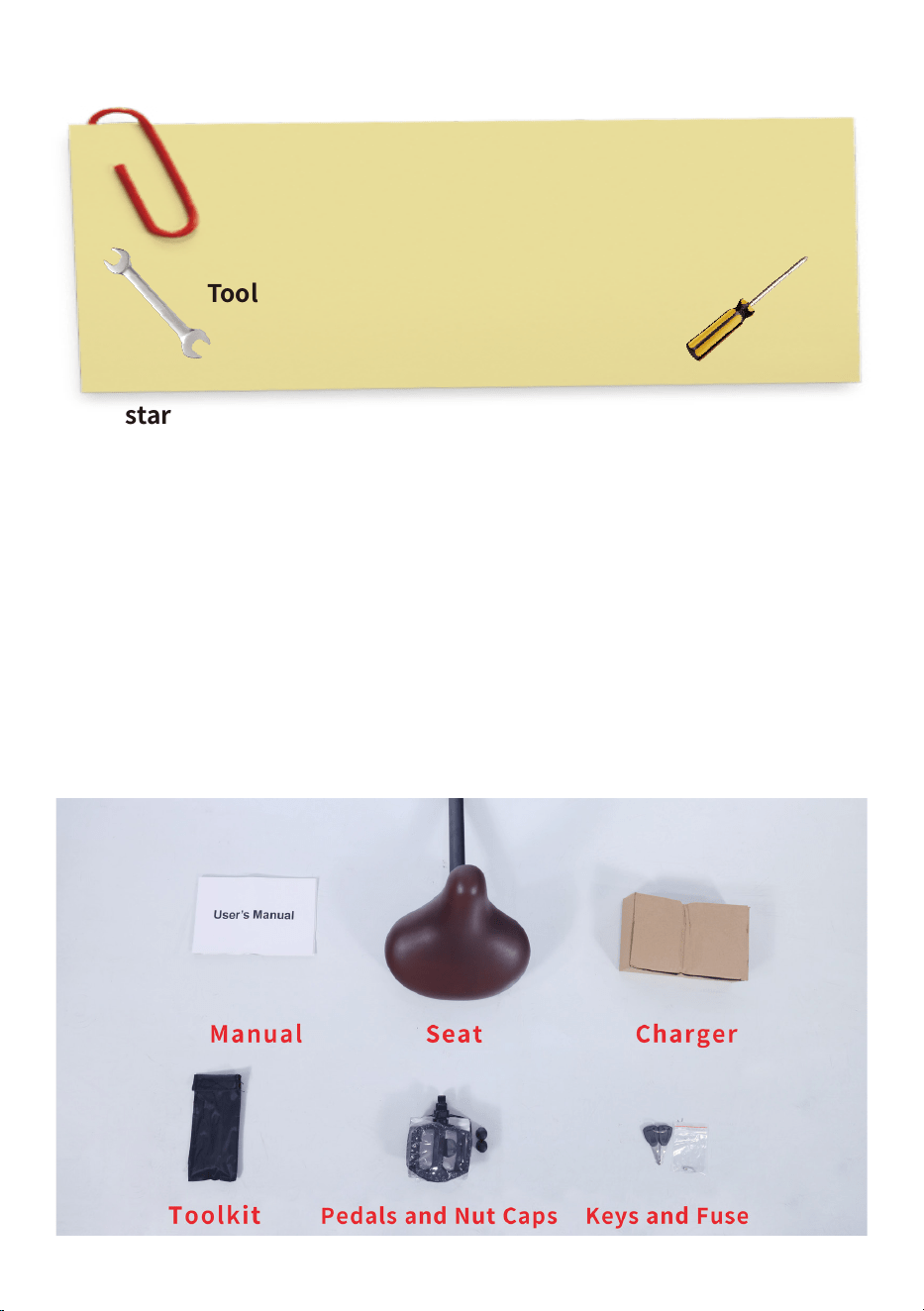
1.Pull the frame and all parts (seat, manual, charger, pedals, keys & fuse,
nut caps and toolkit) out of cardboard box. Separate bike from foam
padding. Cut off all zip ties with scissors while being extra careful as not
to damage the paint or cut any wires or cables.Notice: Keep the spare
fuse in a safe place.It is not used for assembly and will be used for the
replacement if the original fuse were damaged.
Ensure all the following pieces are included with the Nakto Santa
Monica.
Assembly Instructions: Santa Monica
Tools included: Screwdriver, Phillips & Slotted 2 in 1
Double open-end wrench, 13mm/15mm
Allen wrench, 5mm
Allen wrench, 6mm
Tools needed: Scissor
Bike pump
2.Now stand the bike upright. Place some foam padding under the front
fork if placed on the ground or put it on bike assembly/repair stand if you
have one. We want to keep your bike looking new!
Step Two: Assemble the front wheel.
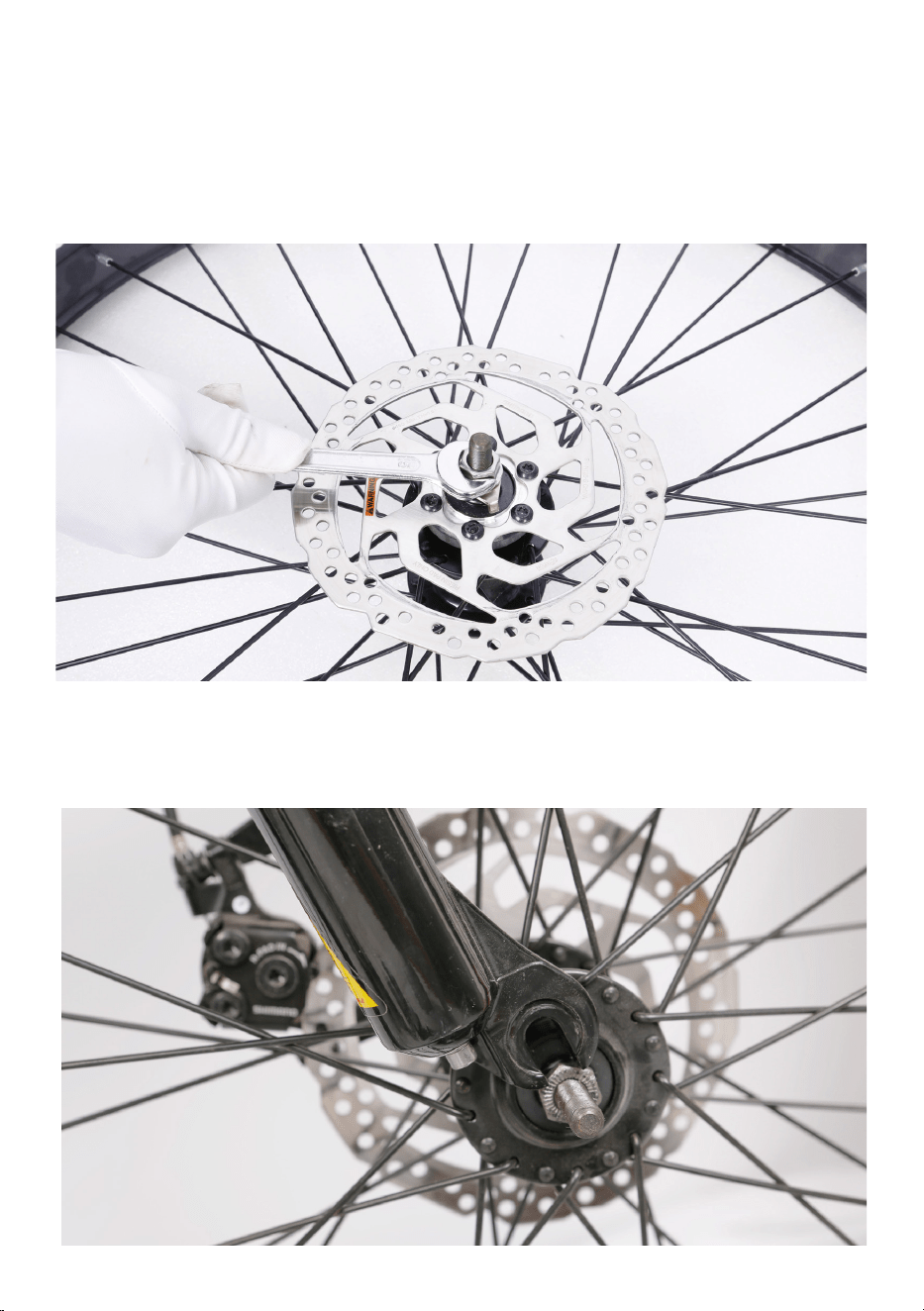
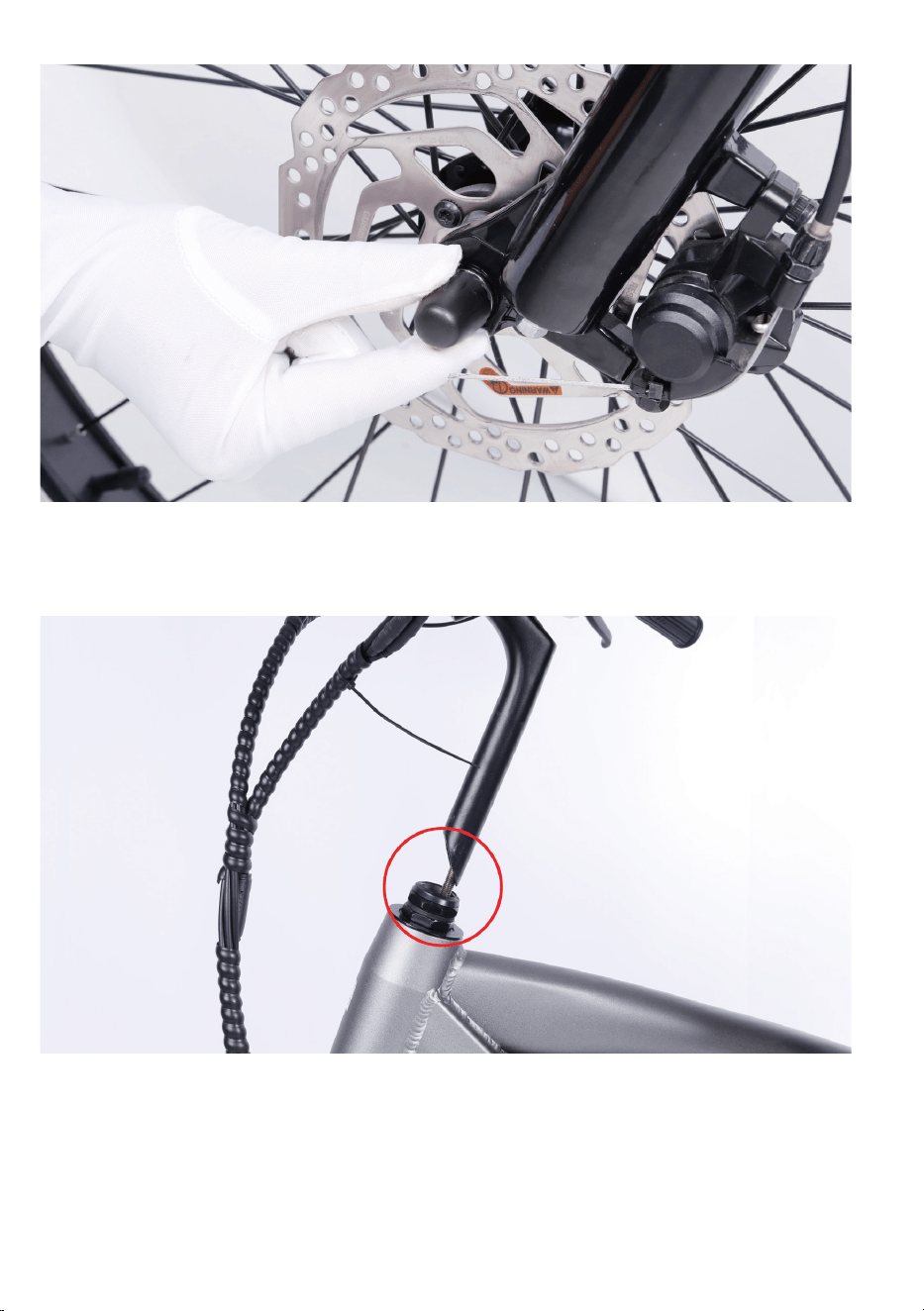
1.Loosen axle nuts on front wheel to make room for the front fork.
2.Lift the front of the bike and lower the fork onto the wheel axle. Notice:
The brake rotor should go into the brake caliper in between the brake
pads and the axle should enter the fork dropouts fully. The front rotor
orientation should be to the left of the fork.
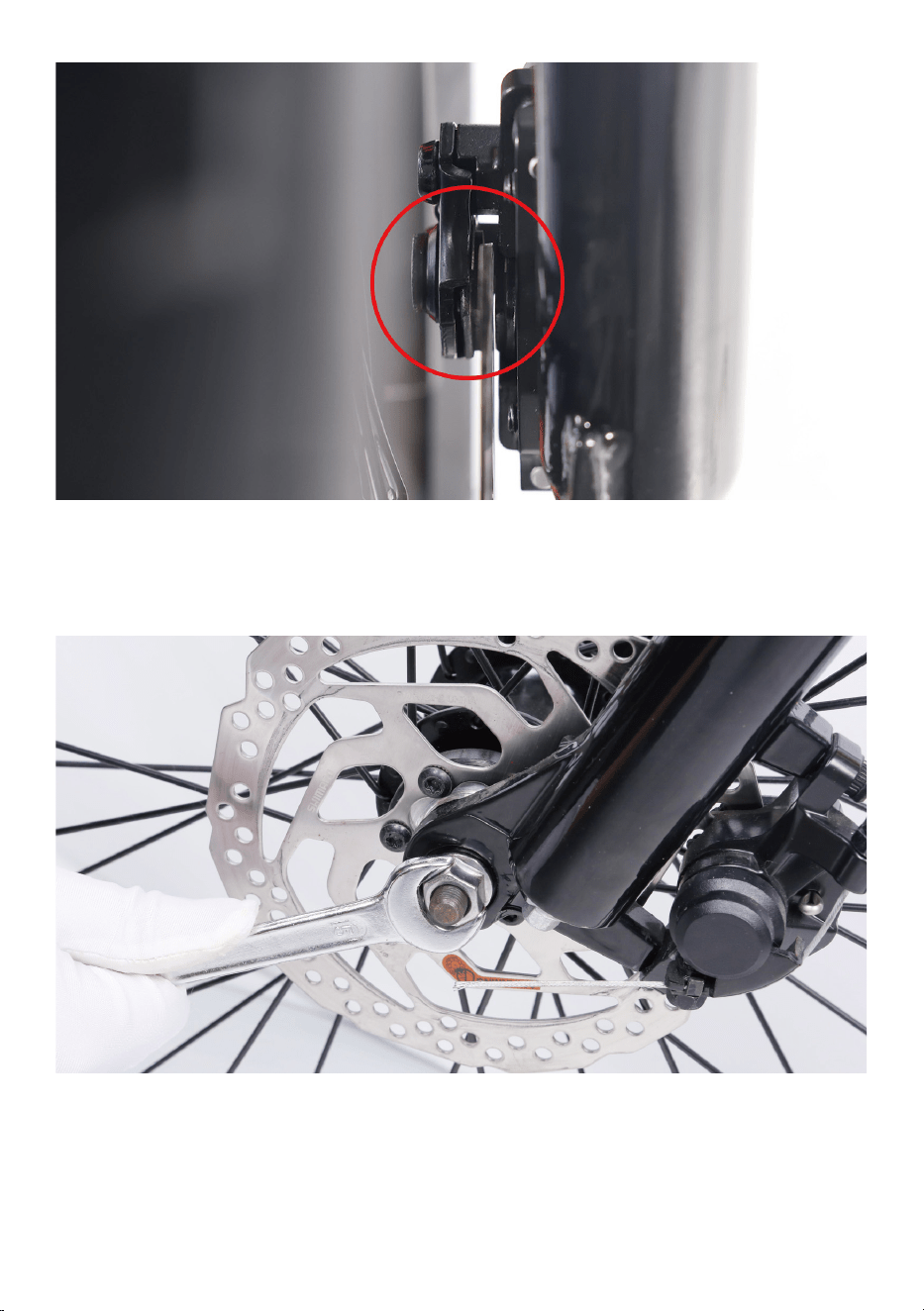
3.Tighten both axle nuts with the supplied double-open end wrench.
Noteic: Before doing the final tightening of the axle nuts, make sure the
wheel is square and true with the forks.
4.Push the black plastic nut caps onto the axle nuts.
2.Set the stem to the desired height but not exceed max height or mini-
mum insertion.
3.Align the stem so the handlebar is perpendicular to the front wheel.
Step Three: Install the handlebar.
1.Install the handlebar stem into the steer tube.
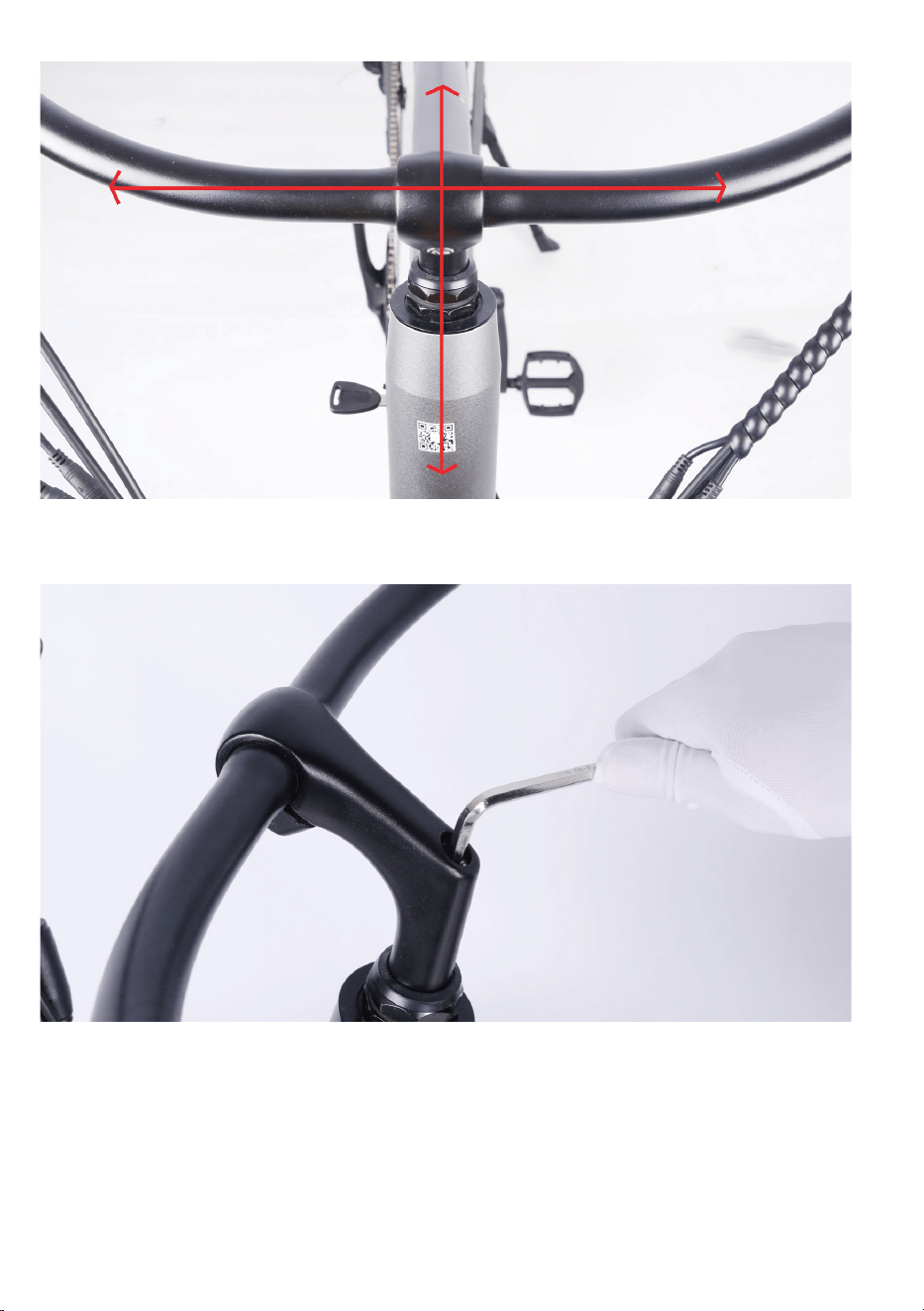
4.Tighten the bolt on top of the handlebar stem with the supplied allen
wrench.
5.Use the supplied allen wrench to loosen the handlebars angle adjust-
ment bolt, tilt the handlebars to the optimal position, and tighten in
place securely.
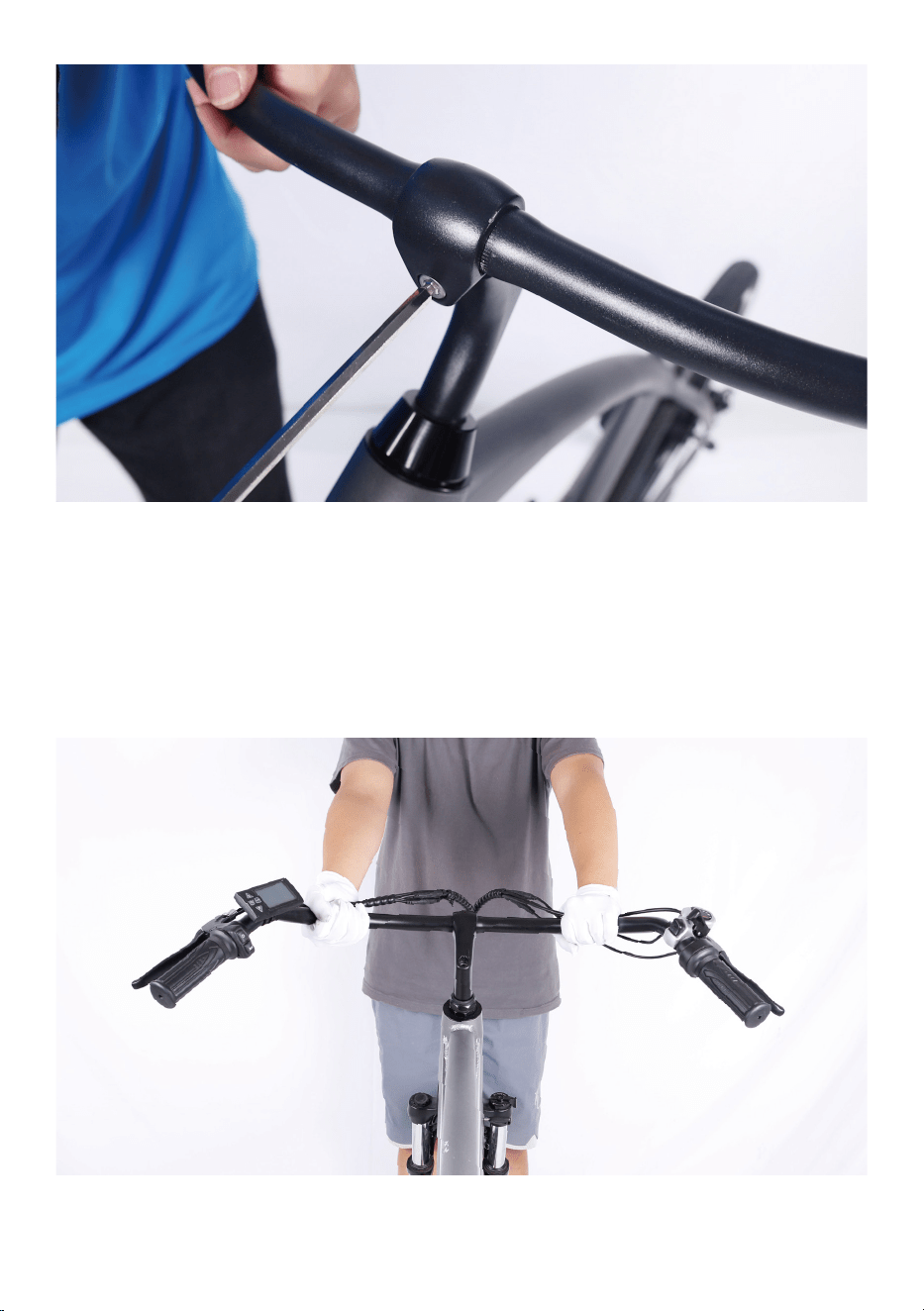
6.Perform a twist test.
(1).Brace the front wheel between your legs.
(2).Switch hands so the opposite hands are pushing and pulling with
about 20 pounds of force make sure the handlebar and front wheel are
still properly aligned.
(3).Repeat the twist test pulling/pushing with the opposite hands.
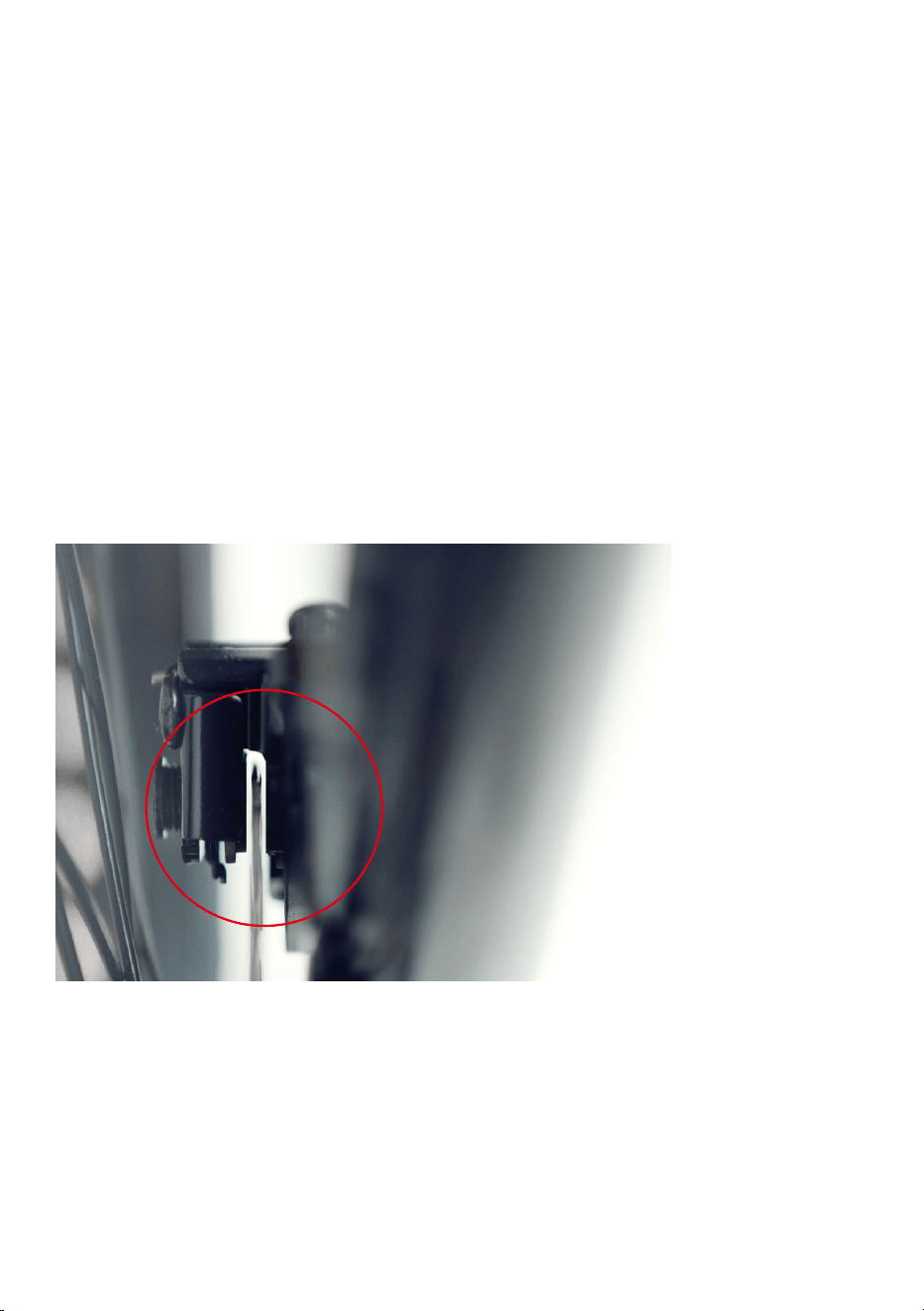
On the front disc brake caliper there are two bolts mounting it to the front
fork. Loosen the mounting bolts until the caliper body is able to freely
move side to side. Then squeeze the brake lever(this centers the caliper
body over the rotor). While holding the lever, tighten the bolts. Release
the brake lever, spin the wheel and check for pad rub. If there is no
rubbing, the pads are aligned. Secure the mounting bolts to full torque
and your work is complete.
Step Four:Adjust the front brake system.
NOTICE: The The adjustment of the front brake system is not easy. The
following steps are only a general guide to assist in the adjustment of the
front brake system. Consult a certified, reputable bike mechanic to assist
with it.
The end goal is a caliper that is parallel to the rotor, with even gap
(2mm-3mm) on each side, and an adequate lever feel. Before adjusting
the front brake system, make sure the axle nuts in Step One have been
tightened.
1.Alignment procedure of the front brake.
Notice: Usually, all bike's rear brake were adjusted in the good condition
at factory. If not, alignment procedures are the same for front and rear
brakes. The end goal here is to keep 2mm-3mm clearance on either side
of the disc brake rotor so that the pads do not rub on the rotor when they
are not applied.
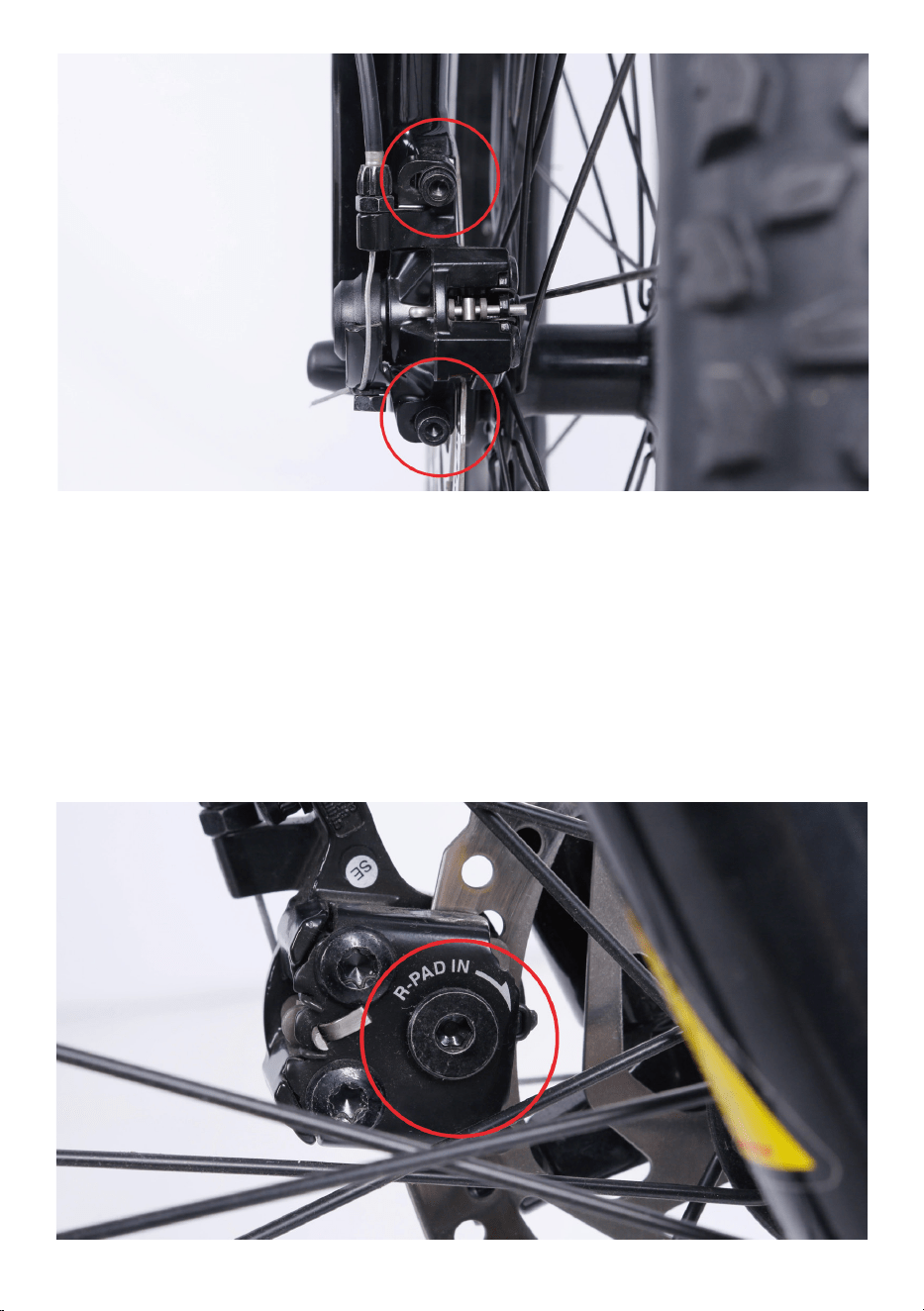
If the pads are still rubbing, we need to do some fine-tuning. Loosen one
bolt at a time and adjust until there is a gap on either side of the rotor.
Once the pads are not rubbing, fully secure each mounting bolt and the
process is complete.
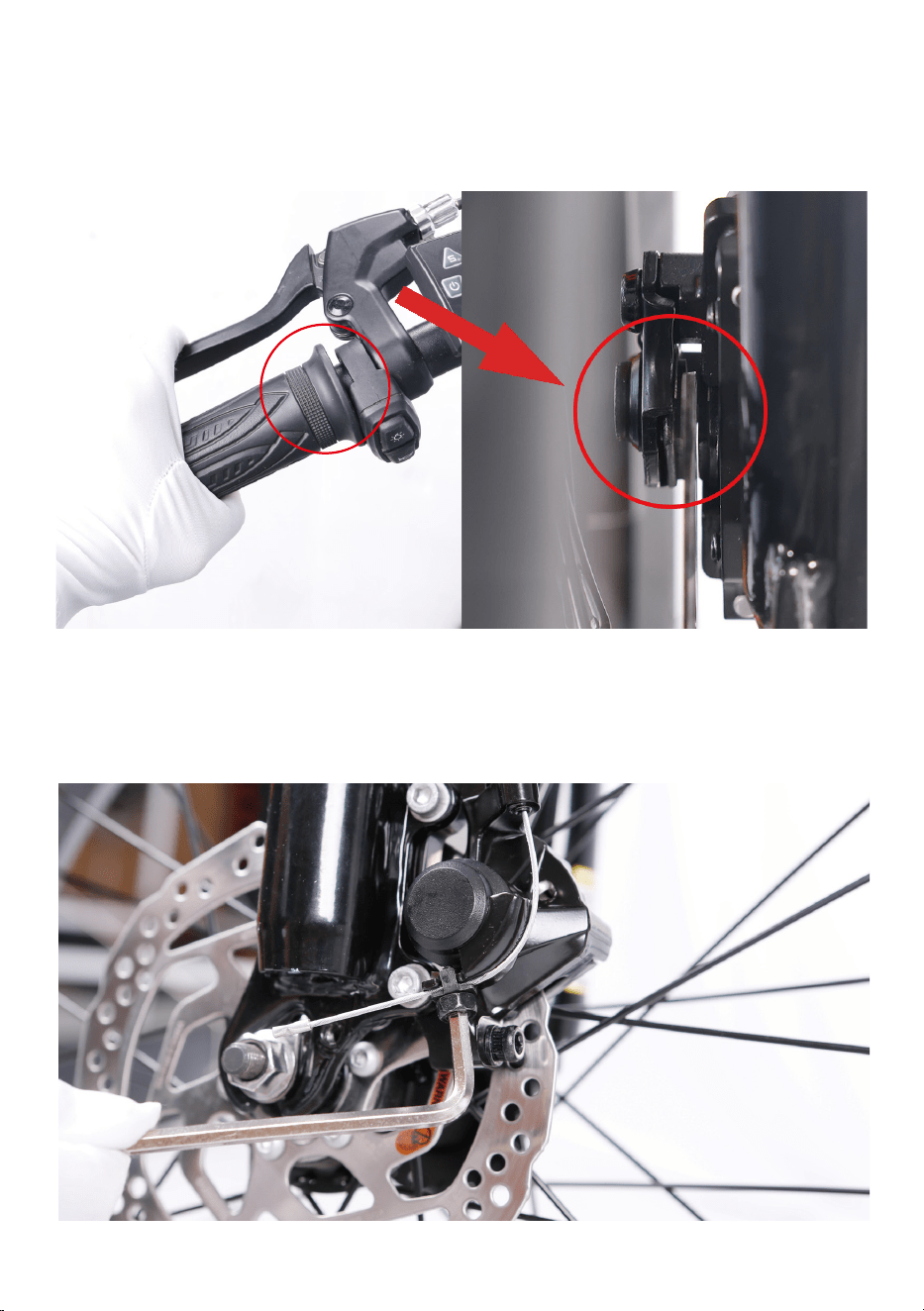
To achieve proper gap, it is sometimes necessary to move pads by pad
adjusters. Calipers are equipped with pad adjusters that move the brake
pads in or out from the rotor. Notice: Turning the mounting bolt clock-
wise will move the pad closer to the rotor. Turning it counterclockwise
will move it away from it. Adjust the mounting bolt with the supplied
allen wrench.
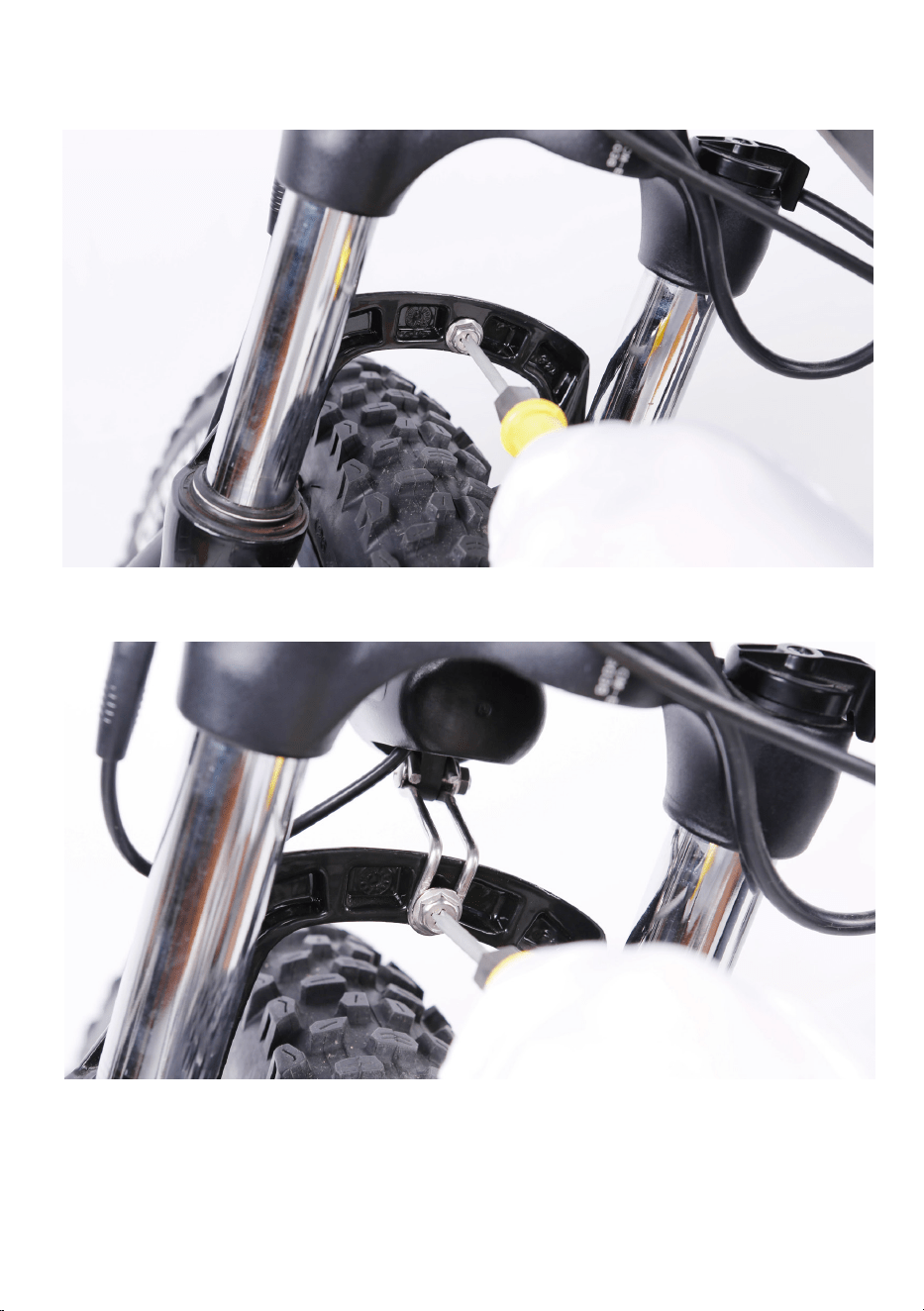
2.Check and adjust the travel at the brake lever at the handlebars.
Typically the pads should feel like they are contacting the rotor at a
minimum of 1/2 the lever travel. We will get it by adjusting the brake
cable tension.
Loosen the bolt on the end of the disc brake caliper arm with the supplied
allen wrench to adjust the brake cable tension. Once achieve the required
tension mentioned above, fully secure the mounting bolt and the process
is complete.
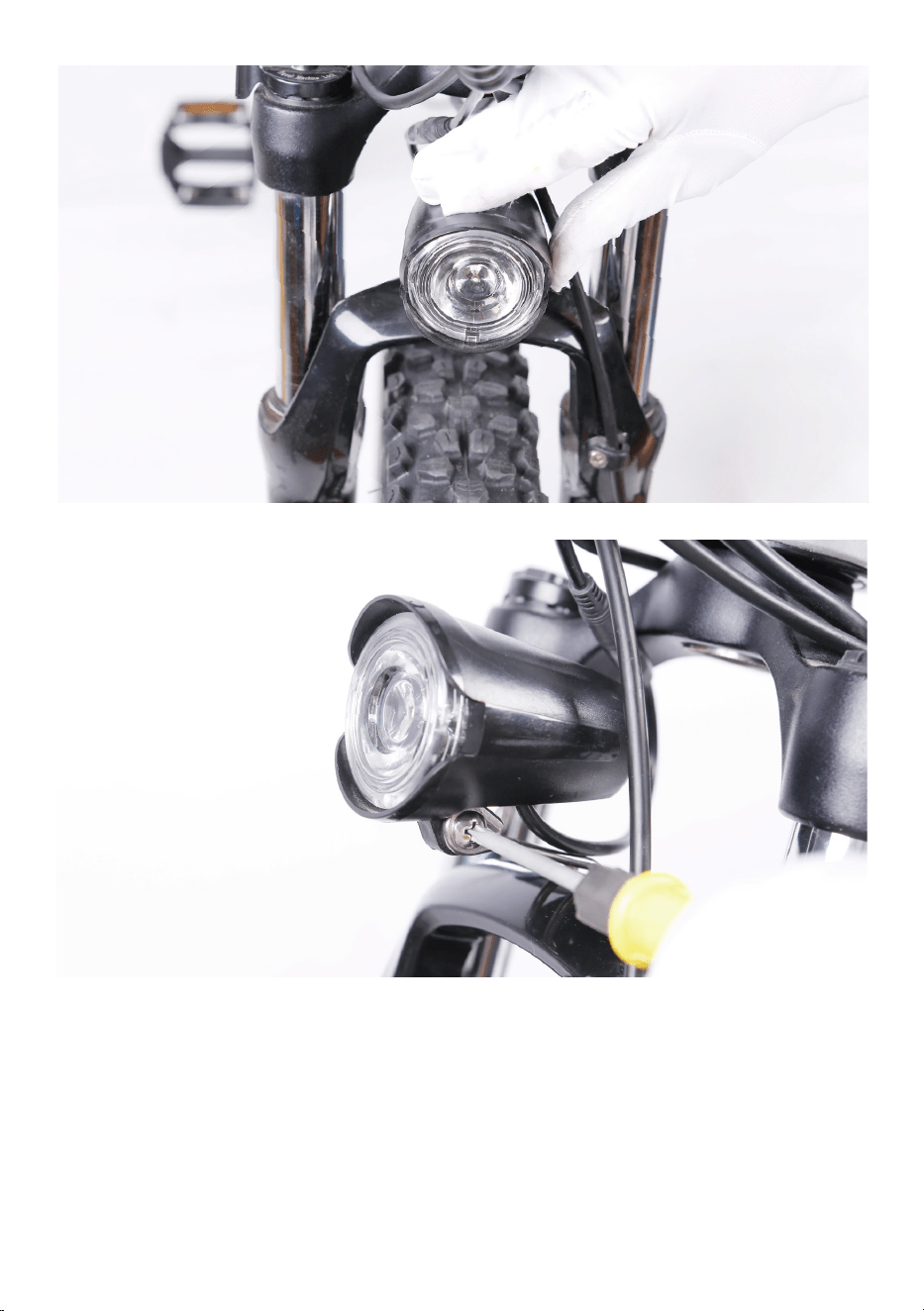
2.Attach the headlight to the fork arch. Pass the bolt through the head-
light mount and fork arch mount. Tighten with the supplied screwdriver.
3.Center the headlight and adjust the angle slightly downwards to illumi-
nate the road ahead and not blind oncoming traffic. Use the supplied
Phillips-head screwdriver to loosen the headlight angle adjustment bolt,
tilt the headlight to the optimal position, and then tighten in place
securely.
Step Five: Install the headlight.
1.Remove headlight mounting bolt from the fork arch and set aside.
Step Six: Install the seat.
1.Open the quick release lever by hinging it open fully.
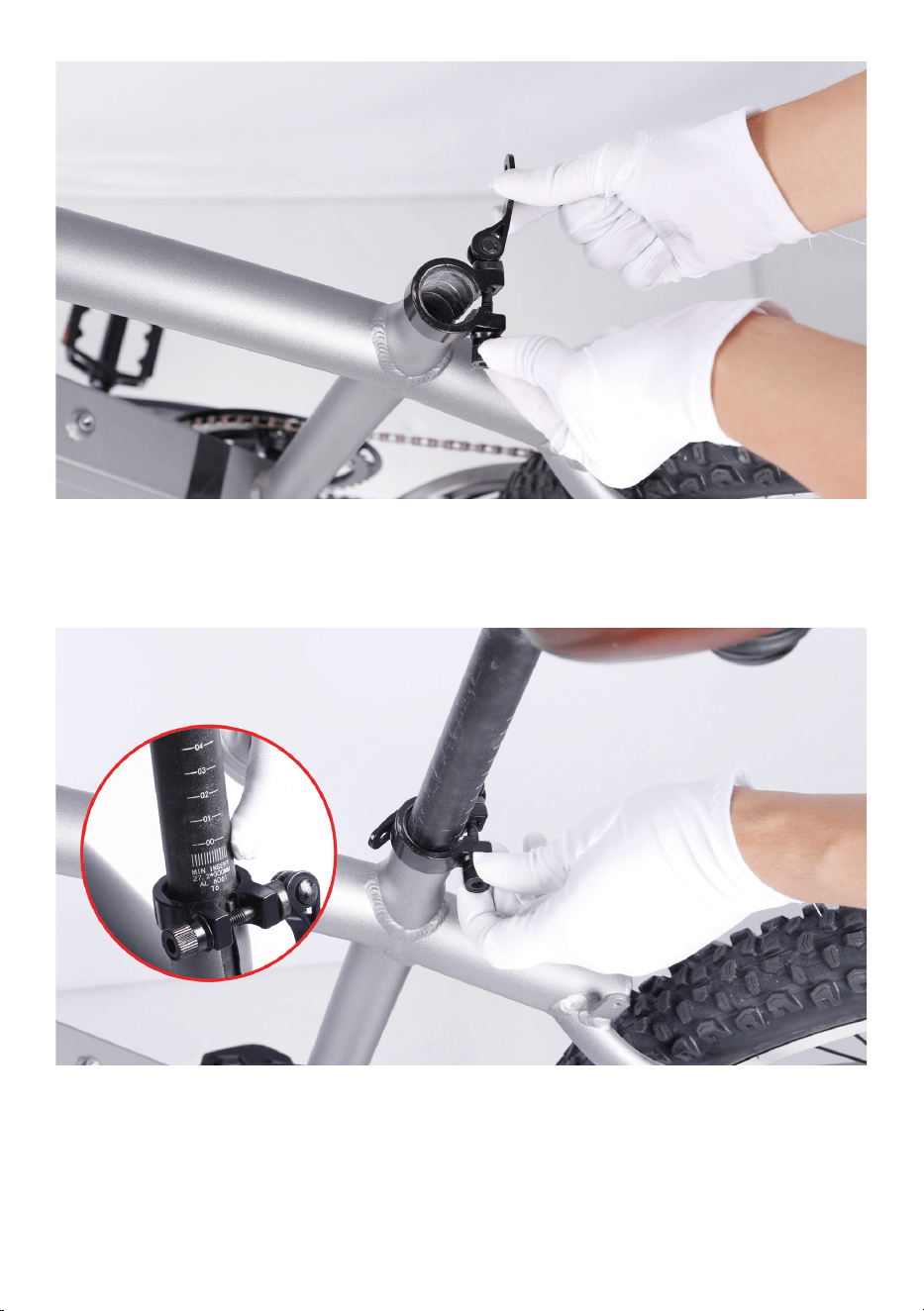
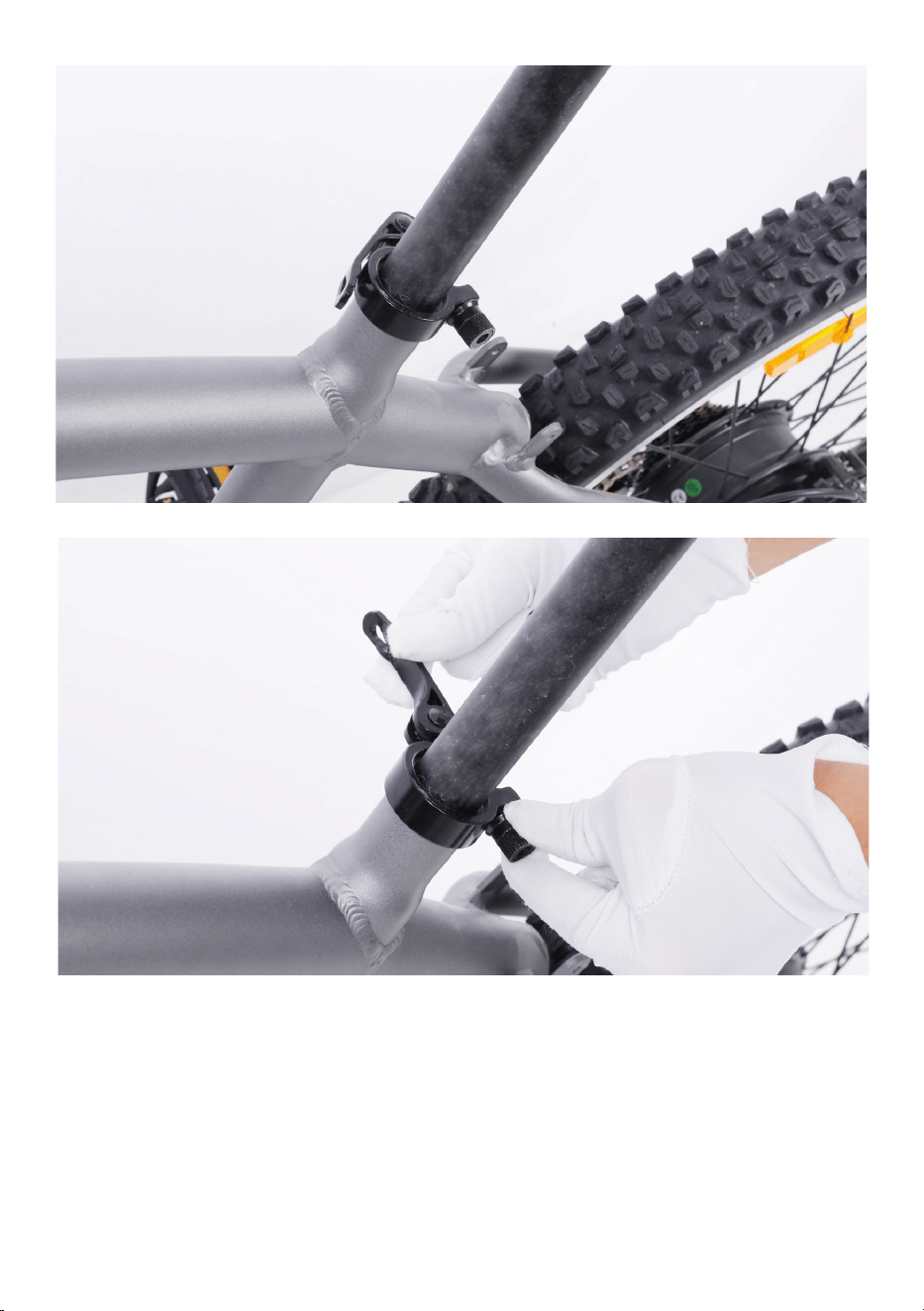
2.Insert seat post into seat tube. Adjust the seat post up or down to a
comfortable height, while ensuring the seat post is inserted into the
frame past the minimum insertion point.
3.Close the quick release lever to secure the seat post and check that it
cannot move. If needed, use the thumb nut to add tension to the clamp
so there is some resistance when the lever is in line with the clamp bolt.
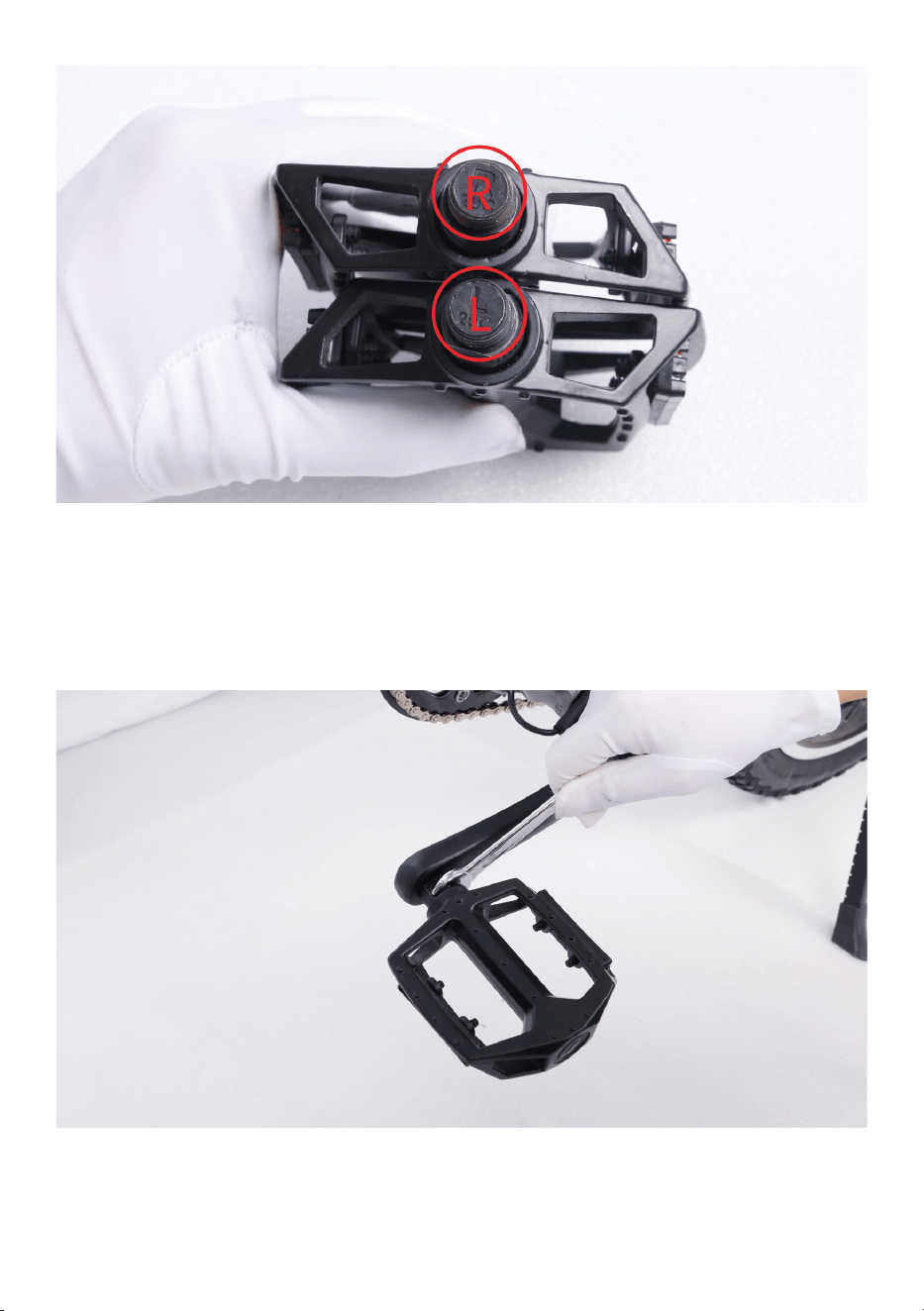
Step Seven: Install the pedals.
1. Locate the pedal with an “R” stamped into the end of the pedal axle,
which indicate it is the right pedal. The right pedal goes on the crank on
the right side of the bike. The remaining pedal with an “L” stamped into
the end of the axle, is the left pedal. The left pedal goes on the crank on
the left side of the bike.
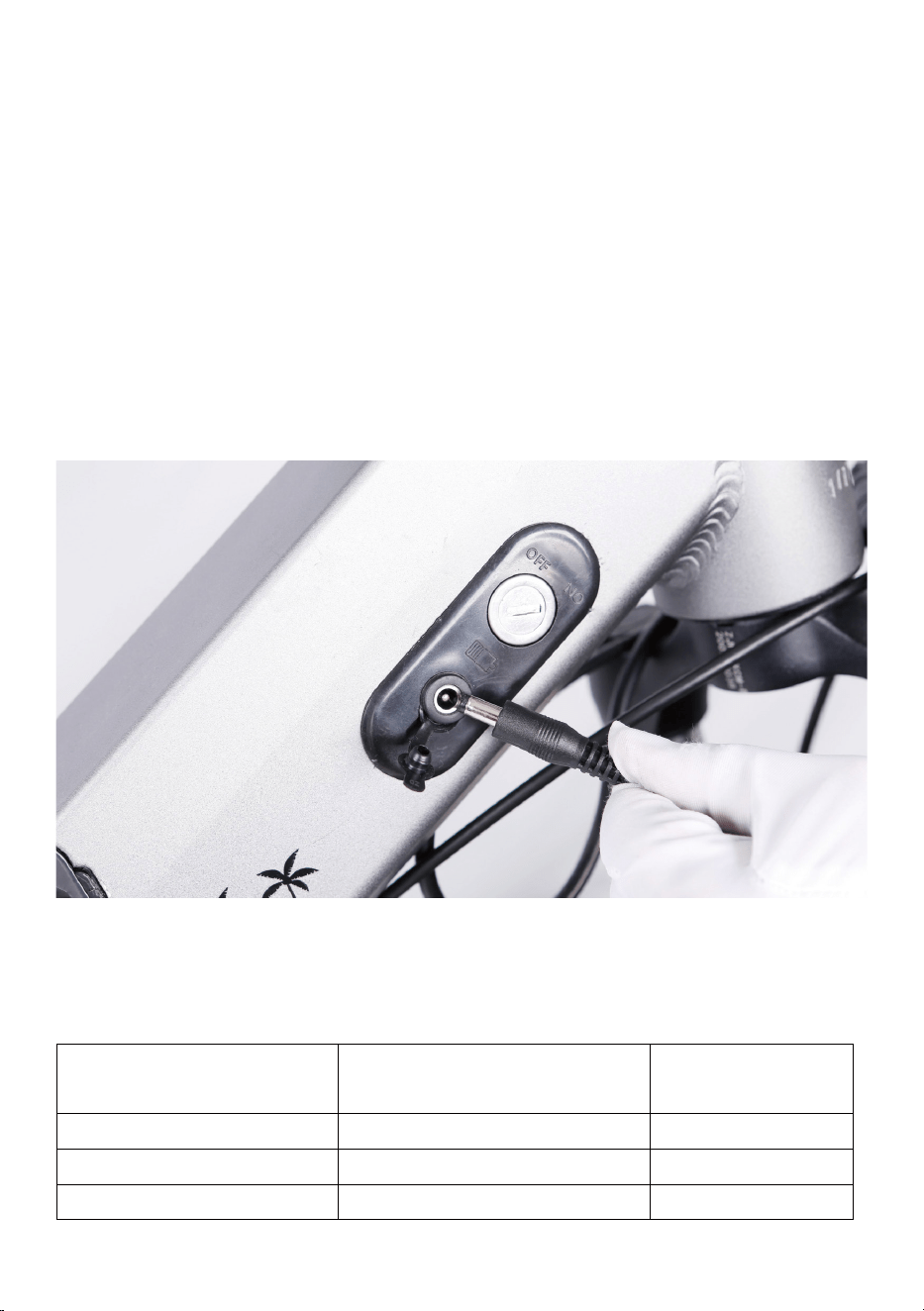
2. he right pedals threaded to tighten by turning clockwise. The left
pedals reverse-threaded and tightens counterclockwise. Carefully thread
the pedal onto the crank by hand slowly.
3.Further tighten with the supplied double open-end wrench. Do not
cross thread or damage the threads.
Step Eight: Inflate the tires.
Check that the tire beads and tires are evenly seated around the rims. Use
a pump with a Schrader valve and pressure gauge to inflate each tire to
the recommended pressure indicated on the tire sidewall. Do not overin-
flate or underinflate tires.
Step Nine: Charge the battery.
Operate the electrical system when the battery has been adequately
charged and the battery is secured to the frame mount.
Your Nakto bike comes partially charged. We recommend you Connect
the charger input plug (110/220-volt plug) to the power outlet for 3 to 4
hours. The charger light will go from red to green when it is fully charged.
Step Ten: Ensure all hardware is tightened properly
following recommended torque values.
Recommended Torque Values:
Hardware Loca�on Hardware
Torque Required
(Nm)
Front Dropout Area
Front Axle Nuts
40
Handlebar Area
Handlebar Stem Bolts
10
Handlebar Area
Brake Lever Clamp Bolt
6

Step Ten: Register warranty card with us ASAP.
Notice: Keep proof of purchase in a safe place. Keep packing
and box for at least two weeks from the date of purchase. (As
we do not provide a box for returns if needed.)
Have fun and be safe!
Hardware Loca�on Hardware
Torque Required
(Nm)
Handlebar Area Shi�er Clamp Screw 6
Brakes Caliper Adapter to Frame 6-8
Brakes
Caliper to Adapter
6-8
Brakes
Brake Cable to Caliper Clamp
6-8
Brakes
Disc Brake Rotor to Hub
7
Headlight
Headlight Angle Adjustment
Bolt
6
Seatpost Area
Seat Angle Adjustment Bolt
20
Rear Dropout Area
Rear Axle Nuts
40
Rear Dropout Area
Rear Torque Arm Bolt
5
Rear Dropout Area
Derailleur Hanger Moun�ng
Bolt
6
Rear Dropout Area
Derailleur Moun�ng Bolt
10
Rear Dropout Area
Derailleur Cable Pinch Bolt
6-8
Rear Dropout Area
Kickstand Moun�ng Bolts
8
Bo�om Bracket and
Crank Area
Bo�om Bracket and Lockring
60
Bo�om Bracket and
Crank Area
Crank Arm Bolt into Bo�om
Bracket Spindle
35
Bo�om Bracket and
Crank Area
Pedal into Crank Arm 35
Bo�om Bracket and
Crank Area
Chainring Bolts 10
Bo�om Bracket and
Crank Area
Controller Moun�ng Bolts 6
Quick Start Guide
This ebike is equipped with two ways for a rider to use power assistance
from the motor to propel the bike forward:
The pedal assist system (PAS) ⸺The rider can engage the pedal assist
system (PAS) while pedaling, and it will call up assistance from the motor
to help propel the bike forward.
The twist throttle⸺The throttle is located on the right side of the
handlebar. The rider can use it with a twist of the throttle grip to propel
the bike forward without pedaling.
Warning: The throttle is active whenever the bike is turned on. Do not
use the throttle unless you are on the bike.
Start-Up Procedure
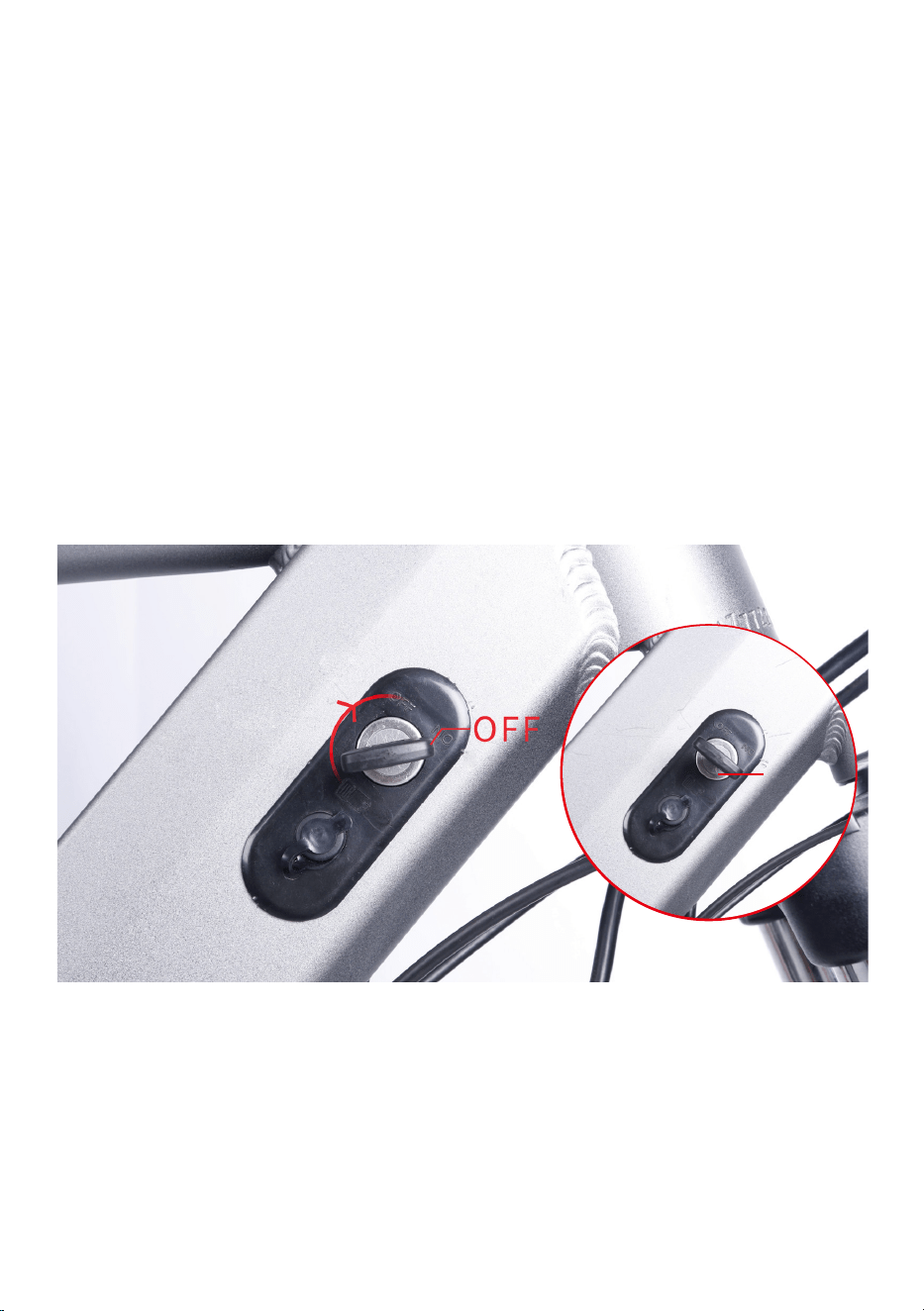
1.Turn on the battery with the key. Insert the key and turn clockwise.
2.Sit on the bike.
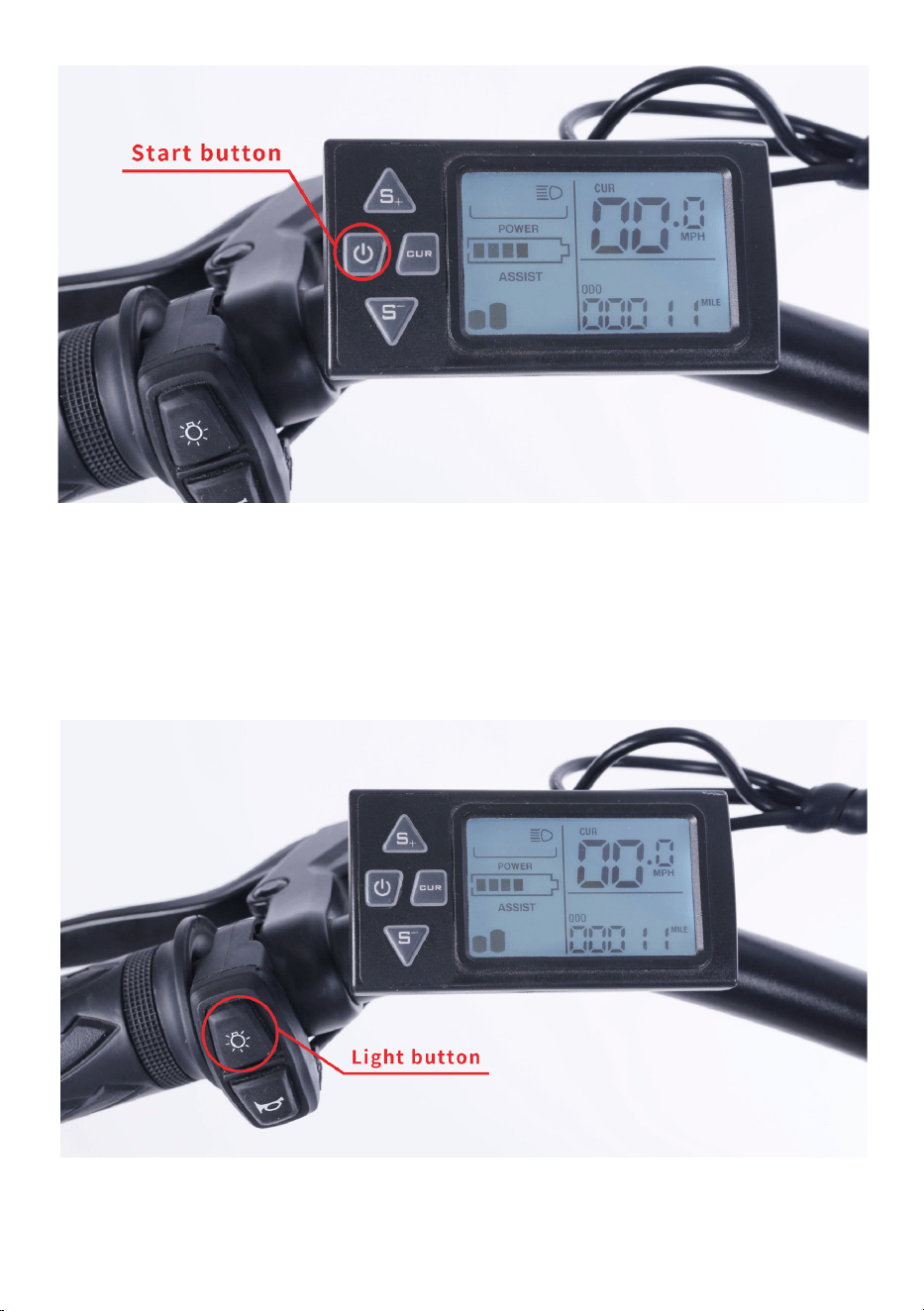
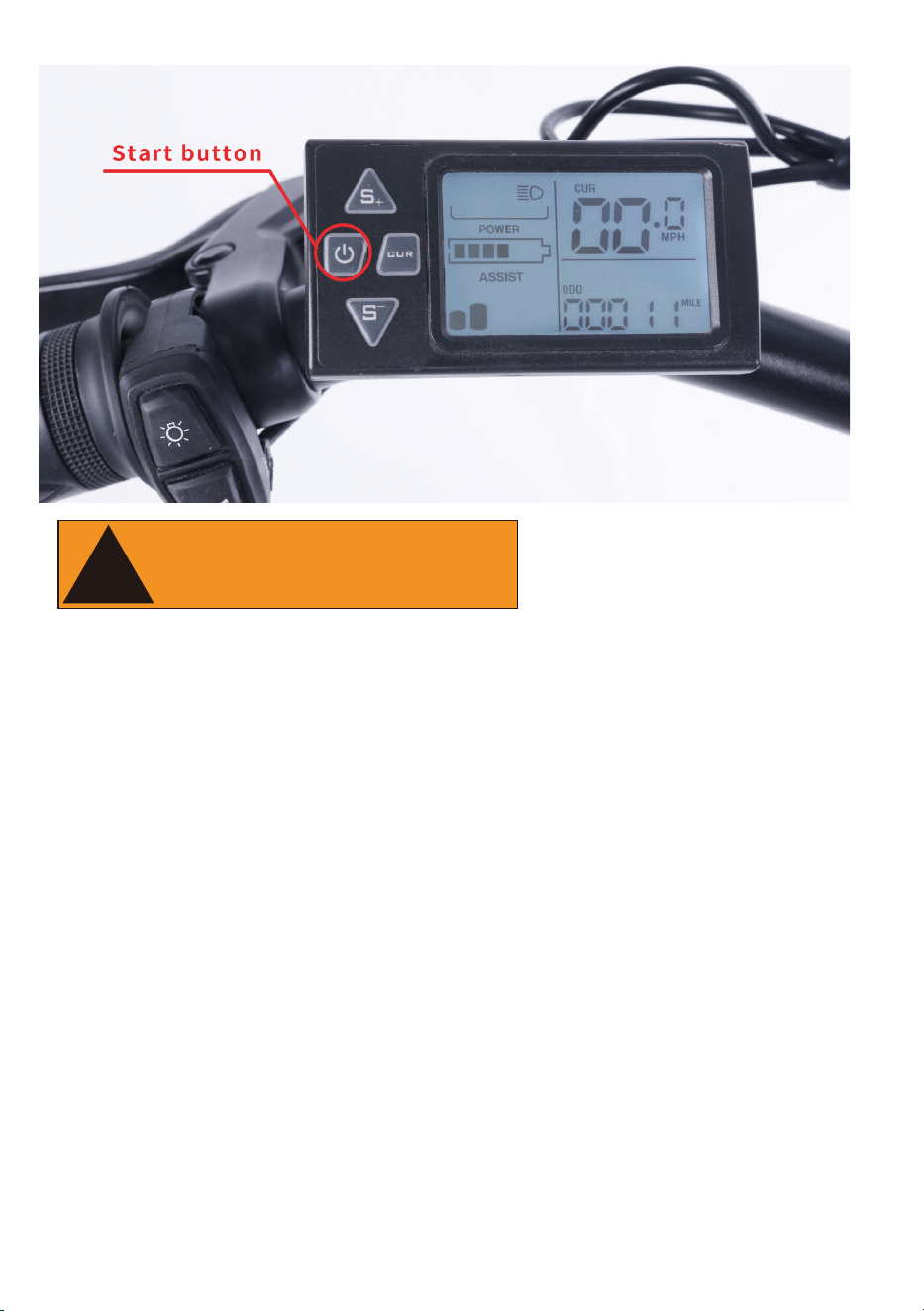
3.Turn on the electrical system⸺Press and hold the start button on
LCD display panel for approximately 3 seconds until power is delivered to
the LCD Display.
ON
4.Turn on the headlight if needed or desired. Notice: the headlight will
not work until the electrical system is turned on. This ebike is equipped
with two ways to turn the headlight on/off.
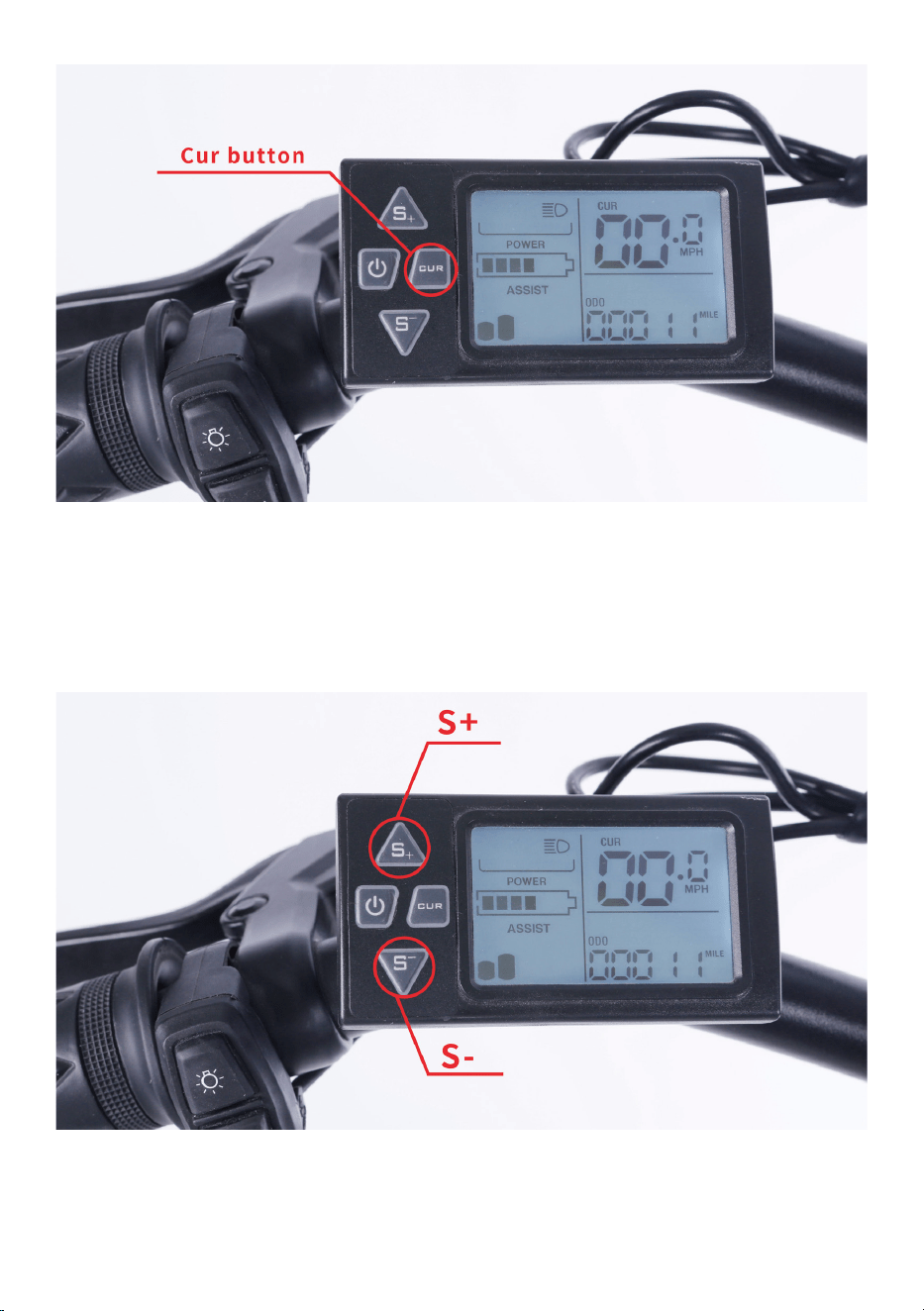
(1).Once the LCD Display is on, press the light button on the left side of
the handlebar to turn the headlight on. Press it again to turn the head-
light off.
(2).Once the LCD Display is on, press “CUR” button to turn the headlight
on. Press it again to turn the headlight off.
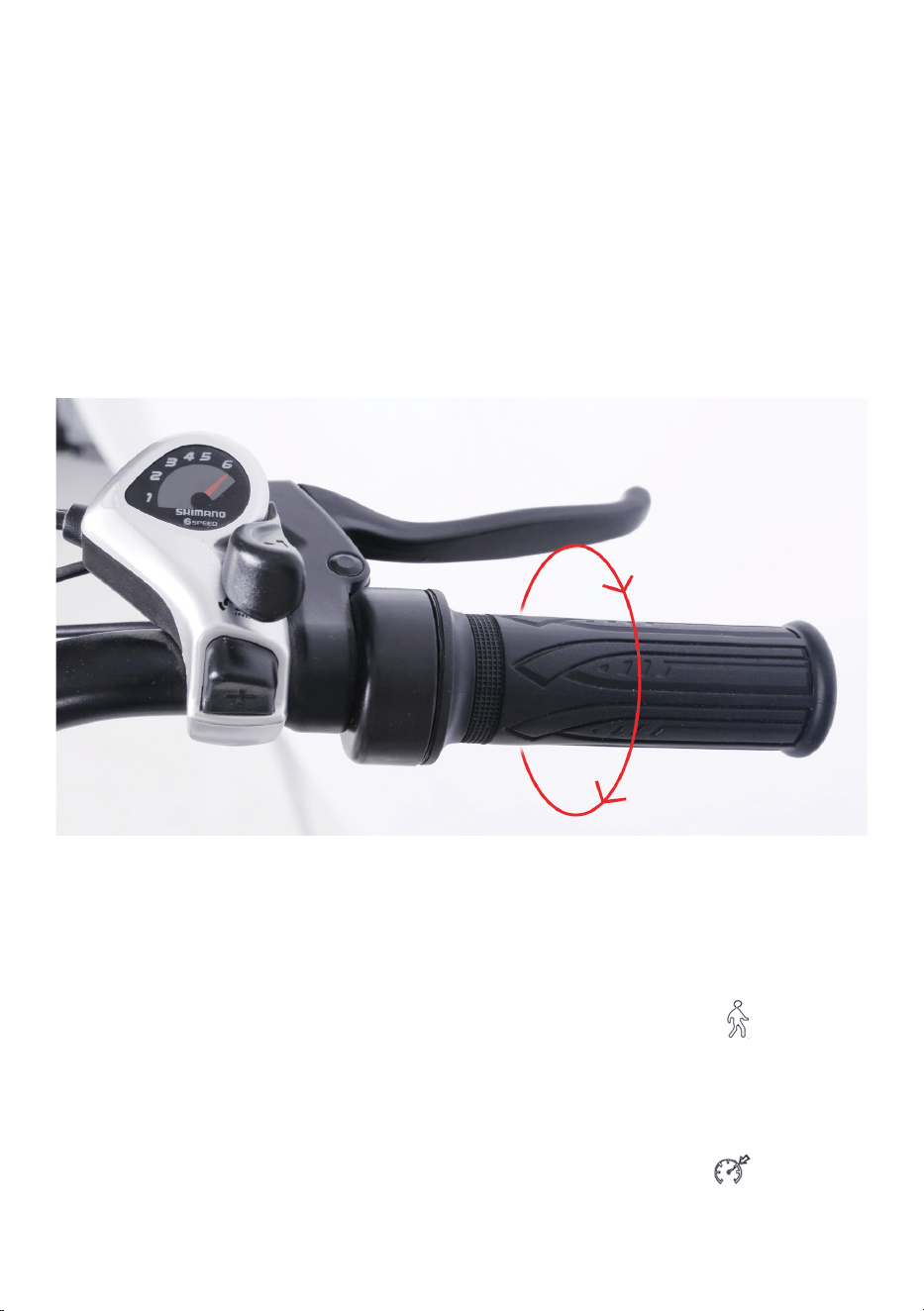
5.Select the desired level of pedal assistance⸺Select the level from
0-5 by pressing “S+” and “S-”. Level 1 corresponds to the lowest level of
pedal assistance, and level 3 corresponds to the highest level of pedal
assistance. Level 0 indicates pedal assistance is inactive. Start in PAS
level 0 or 1 and adjust from there.
6.Begin riding carefully⸺Hold handlebars and start pedaling on a flat
surface, in a low gear (1 or 2), most riders should be able to begin pedal-
ing the bike with pedal assist level 0 or 1. You may also use the throttle to
accelerate and maintain your desired speed.
7.The throttle is used by slowly and carefully rotating the throttle back-
ward toward the rider. The more you twist, the more powerfully the
throttle will propel the bike forward.
Do not use the throttle while dismounted. Avoid accidental application
of the throttle while dismounted; anytime you are moving the bike while
dismounted, ensure the bike is powered off to prevent accidental appli-
cation of the throttle.
8.Brake⸺Brake the bike by squeezing the brake lever (Note: as a safety
feature applying either front or rear brake will disengage the motor.)
9.Cruise Control:
This ebike is equipped with two mode of cruise control:
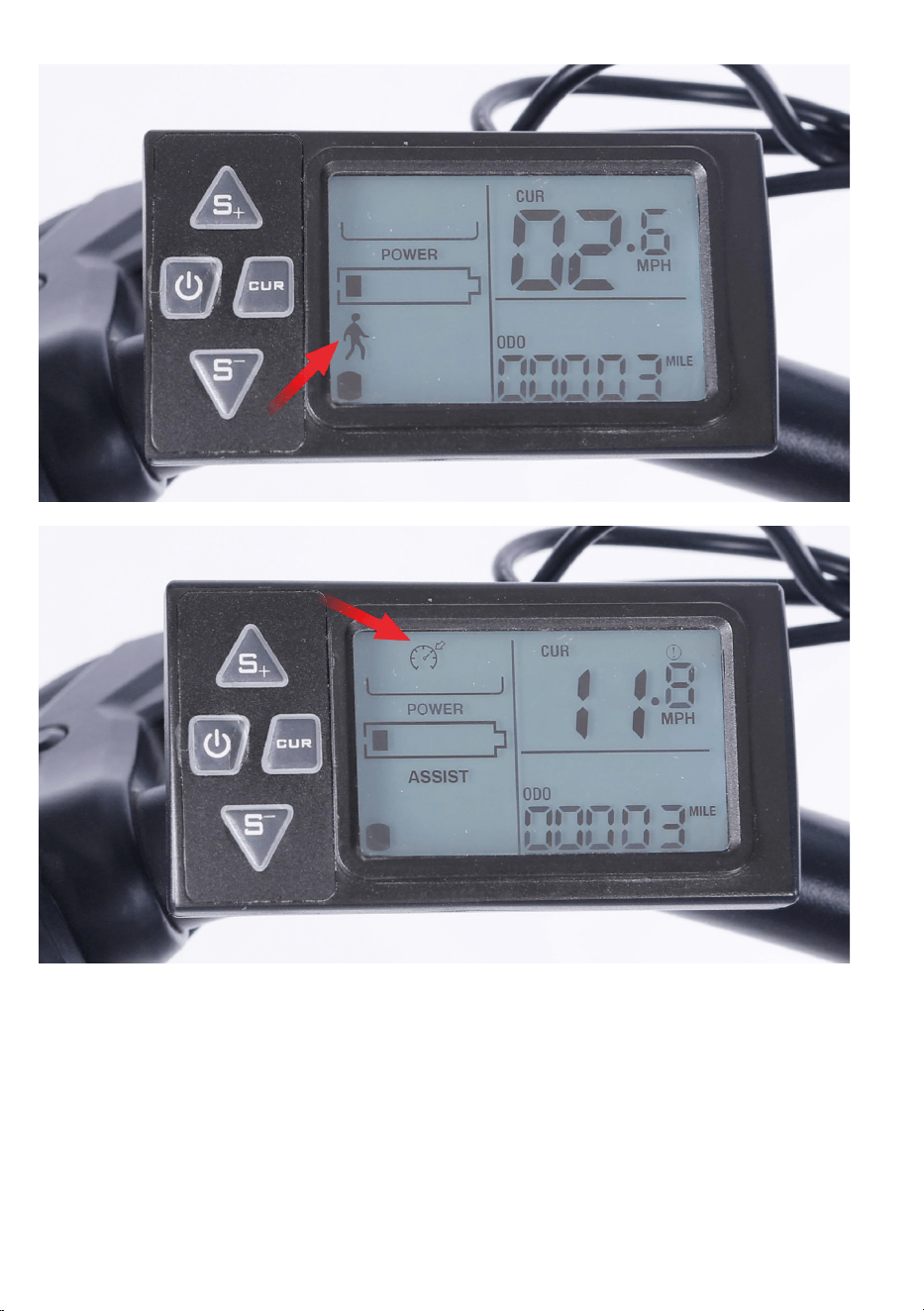
Walk Cruise Mode---While dismounted, press and continue to hold down
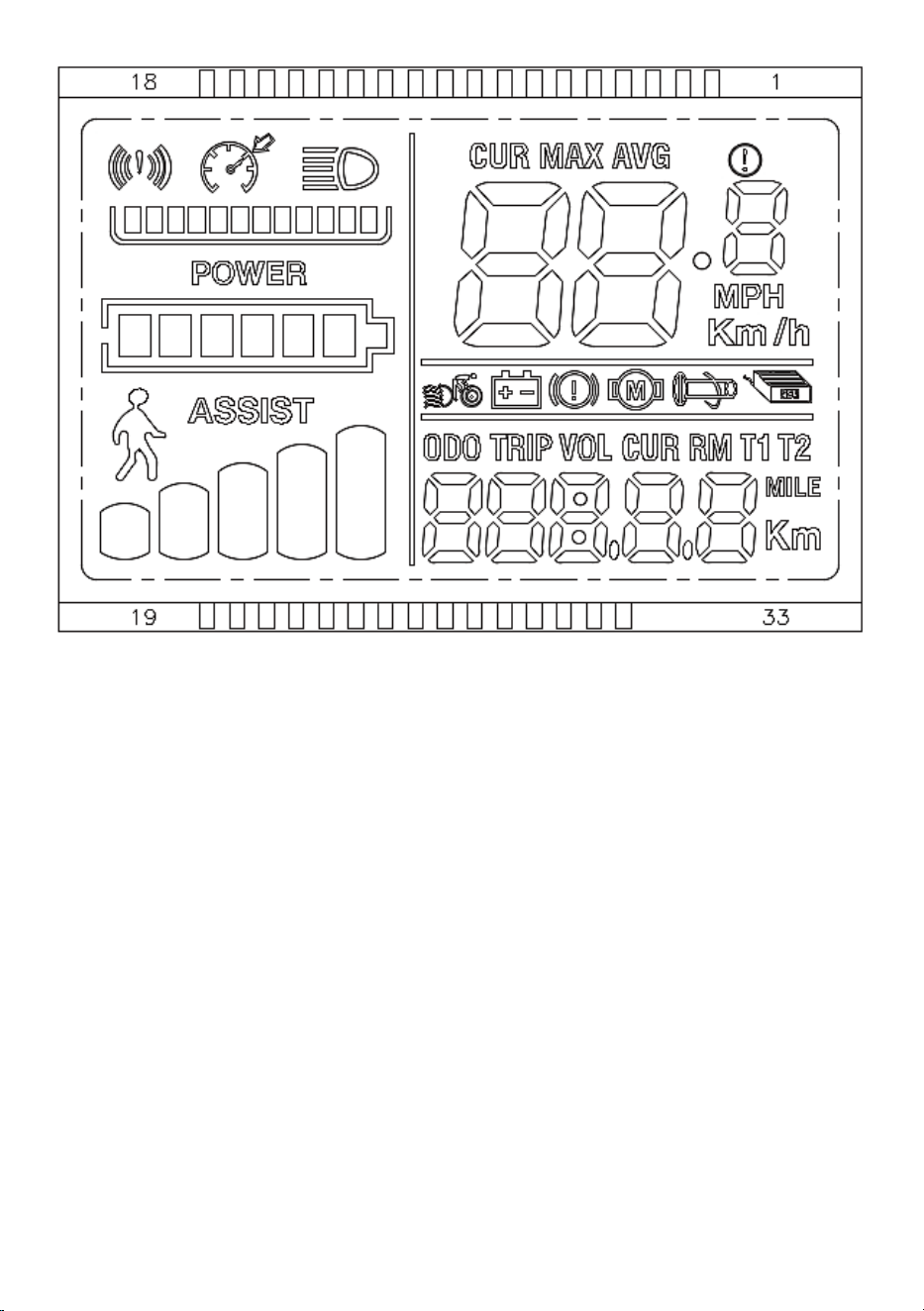
“CUR”. The walk cruise mode is active. The indicator lights in the
LCD display light up. A speed of 6kg/h is maintained. Warning: Walk
mode should only be used while dismounted from the bike and with
both hands on the handlebar.
Ride Cruise Mode---While riding, press and continue to hold down
“CUR”. The ride cruise mode is active. The indicator lights in the LCD
display light up. The current speed is maintained and stored as desired
speed.
Switching off---Press and continue to hold down “CUR” to switching
cruise control.
Warning:
Always keep at least one hand on a brake lever to allow quick cutoff of the
motor assistance if necessary and to maintain control of the bike.
The desired speed can be incorrectly adjusted or called up by mistake.
There is a risk of an accident. Adjust the desired speed to the traffic
conditions. Watch traffic closely and actively intervene where appropri-
ate.
10.Turn off the electrical system by pressing and holding the start
button approximately 3 seconds again before getting off the bike.
We recommend that you always wear protective gear when cycling such
as a helmet, gloves, elbow pads and goggles.
When riding, obey the same road laws as all other road vehicles as appli-
cable by law in your area.
Best to charge the battery during the day when someone is around.
Overnight charging is not recommended.
Before riding always carry out a through safety check each time. We
highly recommend that you read the instruction manual before your very
first ride.
It is the user’s responsibility to ensure a potential passenger on the Nakto
eblike is adequately experienced and healthy enough to ride safely as a
passenger. Serious injury or death can occur if passengers are inexperi-
enced or in poor health such that it impacts their ability to ride as passen-
gers safely.
Carrying baggage may reduce the control of your ebike.
Take extra care while riding in wet and sandy surface including decreasing
speed and increasing braking distances.
11.Turn off the battery by turning the key counterclockwise and remove
the key when you park.
!
WARING

Trek Power Inc
Toll Free: 1-855-997-7297
E-mail: support@nakto.com
Website: www.nakto.com
Adress:1683 Sierra Madre,Placentia,CA 92870
ELECRTIC
BICYCLE

