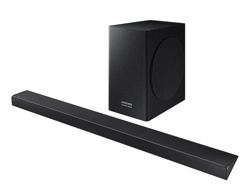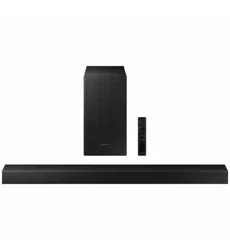
FULL MANUAL
HW-Q700A
Imagine the possibilities
Thank you for purchasing this Samsung product.
To receive more complete service, please register your product at
www.samsung.com/register
ENG - 2
SAFETY INFORMATION
SAFETY WARNINGS
TO REDUCE THE RISK OF ELECTRIC SHOCK, DO NOT REMOVE THE
COVER (OR BACK).
NO USER-SERVICEABLE PARTS ARE INSIDE. REFER SERVICING TO
QUALIFIED SERVICE PERSONNEL.
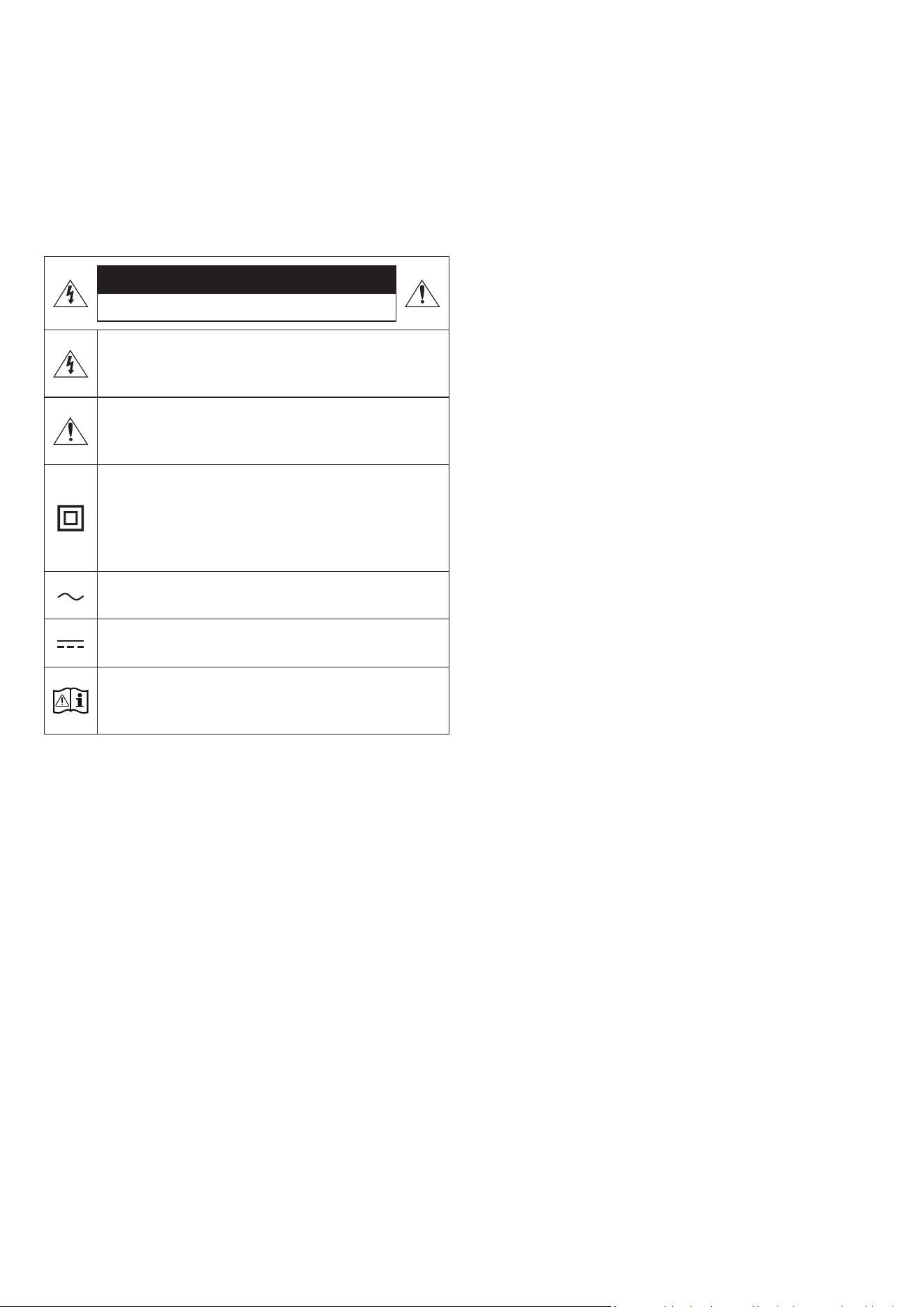
Refer to the table below for an explanation of symbols which may be
on your Samsung product.
CAUTION
RISK OF ELECTRIC SHOCK. DO NOT OPEN.
This symbol indicates that high voltage is present inside.
It is dangerous to make any kind of contact with any
internal part of this product.
This symbol indicates that this product has included
important literature concerning operation and
maintenance.
Class II product : This symbol indicates that a safety
connection to electrical earth (ground) is not required.
If this symbol is not present on a product with a power
cord, the product MUST have a reliable connection to
protective earth (ground).
AC voltage : Rated voltage marked with this symbol is AC
voltage.
DC voltage : Rated voltage marked with this symbol is DC
voltage.
Caution. Consult Instructions for use : This symbol
instructs the user to consult the user manual for further
safety related information.
WARNING
• To reduce the risk of re or electric shock, do not expose this
appliance to rain or moisture.
CAUTION
• TO PREVENT ELECTRIC SHOCK, MATCH WIDE BLADE OF PLUG TO
WIDE SLOT, FULLY INSERT.
• This apparatus shall always be connected to a AC outlet with a
protective grounding connection.
• To disconnect the apparatus from the mains, the plug must be
pulled out from the mains socket, therefore the mains plug shall
be readily operable.
• Do not expose this apparatus to dripping or splashing. Do not put
objects lled with liquids, such as vases, on the apparatus.
• To turn this apparatus off completely, you must pull the power
plug out of the wall socket. Consequently, the power plug must be
easily and readily accessible at all times.

ENG - 3
PRECAUTIONS
1. Ensure that the AC power supply in your house complies with the
power requirements listed on the identication sticker located
on the bottom of your product. Install your product horizontally,
on a suitable base (furniture), with enough space around it for
ventilation (7~10 cm). Make sure the ventilation slots are not
covered. Do not place the unit on ampliers or other equipment
which may become hot. This unit is designed for continuous use.
To fully turn off the unit, disconnect the AC plug from the wall
outlet. Unplug the unit if you intend to leave it unused for a long
period of time.
2. During thunderstorms, disconnect the AC plug from the wall
outlet. Voltage peaks due to lightning could damage the unit.
3. Do not expose the unit to direct sunlight or other heat sources.
This could lead to overheating and cause the unit to malfunction.
4. Protect the product from moisture (i.e. vases), and excess heat
(e.g. a replace) or equipment creating strong magnetic or electric
elds. Unplug the power cable from the AC wall socket if the unit
malfunctions. Your product is not intended for industrial use. It is
for personal use only. Condensation may occur if your product has
been stored in cold temperatures. If transporting the unit during
the winter, wait approximately 2 hours until the unit has reached
room temperature before using.
5. The battery used with this product contains chemicals that are
harmful to the environment. Do not dispose of the battery in the
general household trash. Do not expose the battery to excess
heat, direct sunlight, or re. Do not short circuit, disassemble, or
overheat the battery.
CAUTION : Danger of explosion if the battery is replaced
incorrectly. Replace only with the same or equivalent type.

ENG - 4
CONTENTS
01 Checking the Components 6
02 Product Overview 7
Front Panel / Top Panel of the Soundbar . . . . . . . . . . . . . . . . . . . . . . . . . . . . . . . . . . . . . . . . . . . . . . . . . . . . . . . . . . . . . . . . . . . . . . . . . . . . . . . . . . . . . . . . .7
Bottom Panel of the Soundbar . . . . . . . . . . . . . . . . . . . . . . . . . . . . . . . . . . . . . . . . . . . . . . . . . . . . . . . . . . . . . . . . . . . . . . . . . . . . . . . . . . . . . . . . . . . . . . . . . .7
03 Using the Soundbar Remote Control 9
Inserting Batteries before using the Remote Control (AA batteries X 2). . . . . . . . . . . . . . . . . . . . . . . . . . . . . . . . . . . . . . . . . . . . . . . . . . . . . . . . . . . . 9
How to Use the Remote Control . . . . . . . . . . . . . . . . . . . . . . . . . . . . . . . . . . . . . . . . . . . . . . . . . . . . . . . . . . . . . . . . . . . . . . . . . . . . . . . . . . . . . . . . . . . . . . . . 9
Using the Hidden Buttons (Buttons with more than one function). . . . . . . . . . . . . . . . . . . . . . . . . . . . . . . . . . . . . . . . . . . . . . . . . . . . . . . . . . . . . . . . .11
Output specications for the different sound effect modes . . . . . . . . . . . . . . . . . . . . . . . . . . . . . . . . . . . . . . . . . . . . . . . . . . . . . . . . . . . . . . . . . . . . . . .11
Adjusting the Soundbar volume with a TV remote control . . . . . . . . . . . . . . . . . . . . . . . . . . . . . . . . . . . . . . . . . . . . . . . . . . . . . . . . . . . . . . . . . . . . . . . .12
04 Connecting the Soundbar 13
Connecting the power and units. . . . . . . . . . . . . . . . . . . . . . . . . . . . . . . . . . . . . . . . . . . . . . . . . . . . . . . . . . . . . . . . . . . . . . . . . . . . . . . . . . . . . . . . . . . . . . . 13
‒ Manually connecting the Subwoofer. . . . . . . . . . . . . . . . . . . . . . . . . . . . . . . . . . . . . . . . . . . . . . . . . . . . . . . . . . . . . . . . . . . . . . . . . . . . . . . . . . . . . . . . 13
‒ LED Indicator Lights on the Rear of Subwoofer. . . . . . . . . . . . . . . . . . . . . . . . . . . . . . . . . . . . . . . . . . . . . . . . . . . . . . . . . . . . . . . . . . . . . . . . . . . . . . . 14
Connecting an SWA-9500S (Sold Separately) to your Soundbar. . . . . . . . . . . . . . . . . . . . . . . . . . . . . . . . . . . . . . . . . . . . . . . . . . . . . . . . . . . . . . . . . . 15
05 Using a wired connection to the TV 16
Method 1. Connecting with HDMI . . . . . . . . . . . . . . . . . . . . . . . . . . . . . . . . . . . . . . . . . . . . . . . . . . . . . . . . . . . . . . . . . . . . . . . . . . . . . . . . . . . . . . . . . . . . . . 16
‒ Connecting the TV that supports HDMI ARC (Audio Return Channel) . . . . . . . . . . . . . . . . . . . . . . . . . . . . . . . . . . . . . . . . . . . . . . . . . . . . . . . . . . 16
Method 2. Connecting using an Optical Cable . . . . . . . . . . . . . . . . . . . . . . . . . . . . . . . . . . . . . . . . . . . . . . . . . . . . . . . . . . . . . . . . . . . . . . . . . . . . . . . . . . .17
06 Using a wireless connection to the TV 18
Method 1. Connecting via Bluetooth . . . . . . . . . . . . . . . . . . . . . . . . . . . . . . . . . . . . . . . . . . . . . . . . . . . . . . . . . . . . . . . . . . . . . . . . . . . . . . . . . . . . . . . . . . . 18
Method 2. Connecting via Wi-Fi . . . . . . . . . . . . . . . . . . . . . . . . . . . . . . . . . . . . . . . . . . . . . . . . . . . . . . . . . . . . . . . . . . . . . . . . . . . . . . . . . . . . . . . . . . . . . . . 19
07 Connecting an External Device 20
Method 1. Connecting using an HDMI Cable (Capable of Dolby Atmos decoding and playback) . . . . . . . . . . . . . . . . . . . . . . . . . . . . . . . . . . . . . . 20
Method 2. Connecting using an Optical Cable . . . . . . . . . . . . . . . . . . . . . . . . . . . . . . . . . . . . . . . . . . . . . . . . . . . . . . . . . . . . . . . . . . . . . . . . . . . . . . . . . . .21
08 Connecting a Mobile Device 22
Method 1. Connecting via Bluetooth . . . . . . . . . . . . . . . . . . . . . . . . . . . . . . . . . . . . . . . . . . . . . . . . . . . . . . . . . . . . . . . . . . . . . . . . . . . . . . . . . . . . . . . . . . . 22
Method 2. Connecting via Wi-Fi (Wireless Network). . . . . . . . . . . . . . . . . . . . . . . . . . . . . . . . . . . . . . . . . . . . . . . . . . . . . . . . . . . . . . . . . . . . . . . . . . . . . 23
09 Getting Started with Alexa on Amazon Product (Works with Alexa) 24
Connect and use with an Amazon product (Amazon Echo) . . . . . . . . . . . . . . . . . . . . . . . . . . . . . . . . . . . . . . . . . . . . . . . . . . . . . . . . . . . . . . . . . . . . . . . 24
Use voice commands to control the Soundbar . . . . . . . . . . . . . . . . . . . . . . . . . . . . . . . . . . . . . . . . . . . . . . . . . . . . . . . . . . . . . . . . . . . . . . . . . . . . . . . . . . 24
Using the Tap Sound . . . . . . . . . . . . . . . . . . . . . . . . . . . . . . . . . . . . . . . . . . . . . . . . . . . . . . . . . . . . . . . . . . . . . . . . . . . . . . . . . . . . . . . . . . . . . . . . . . . . . . . . . 25
10 Connecting To Apple AirPlay 2 26
Connect and use with an Apple product. . . . . . . . . . . . . . . . . . . . . . . . . . . . . . . . . . . . . . . . . . . . . . . . . . . . . . . . . . . . . . . . . . . . . . . . . . . . . . . . . . . . . . . . 26
11 Installing the Wall Mount 27
Installation Precautions . . . . . . . . . . . . . . . . . . . . . . . . . . . . . . . . . . . . . . . . . . . . . . . . . . . . . . . . . . . . . . . . . . . . . . . . . . . . . . . . . . . . . . . . . . . . . . . . . . . . . . 27
Wallmount Components. . . . . . . . . . . . . . . . . . . . . . . . . . . . . . . . . . . . . . . . . . . . . . . . . . . . . . . . . . . . . . . . . . . . . . . . . . . . . . . . . . . . . . . . . . . . . . . . . . . . . . 27

ENG - 5
12 Installing the Soundbar above a TV Stand 28
Component . . . . . . . . . . . . . . . . . . . . . . . . . . . . . . . . . . . . . . . . . . . . . . . . . . . . . . . . . . . . . . . . . . . . . . . . . . . . . . . . . . . . . . . . . . . . . . . . . . . . . . . . . . . . . . . . . 28
13 Software Update 29
Auto Update. . . . . . . . . . . . . . . . . . . . . . . . . . . . . . . . . . . . . . . . . . . . . . . . . . . . . . . . . . . . . . . . . . . . . . . . . . . . . . . . . . . . . . . . . . . . . . . . . . . . . . . . . . . . . . . . . 29
USB Update . . . . . . . . . . . . . . . . . . . . . . . . . . . . . . . . . . . . . . . . . . . . . . . . . . . . . . . . . . . . . . . . . . . . . . . . . . . . . . . . . . . . . . . . . . . . . . . . . . . . . . . . . . . . . . . . . 29
Initialisation. . . . . . . . . . . . . . . . . . . . . . . . . . . . . . . . . . . . . . . . . . . . . . . . . . . . . . . . . . . . . . . . . . . . . . . . . . . . . . . . . . . . . . . . . . . . . . . . . . . . . . . . . . . . . . . . . 29
14 Troubleshooting 30
15 License 31
16 Open Source License Notice 31
17 Important Notes About Service 31
18 Specications and Guide 32
Specications . . . . . . . . . . . . . . . . . . . . . . . . . . . . . . . . . . . . . . . . . . . . . . . . . . . . . . . . . . . . . . . . . . . . . . . . . . . . . . . . . . . . . . . . . . . . . . . . . . . . . . . . . . . . . . . 32
ENG - 6
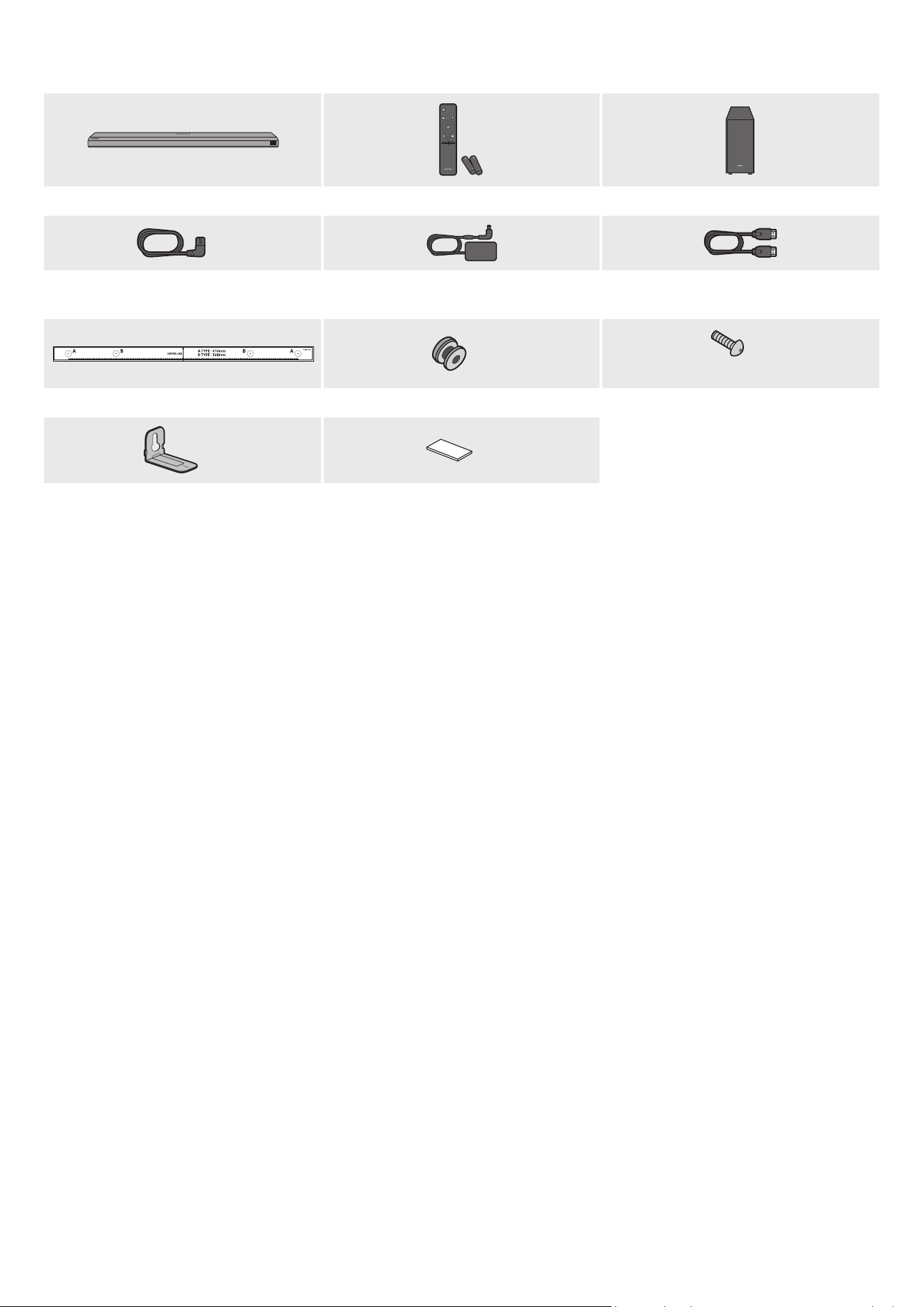
01 CHECKING THE COMPONENTS
VOL WOOFER
SOUNDBAR
SOUND
MODE
PAIR
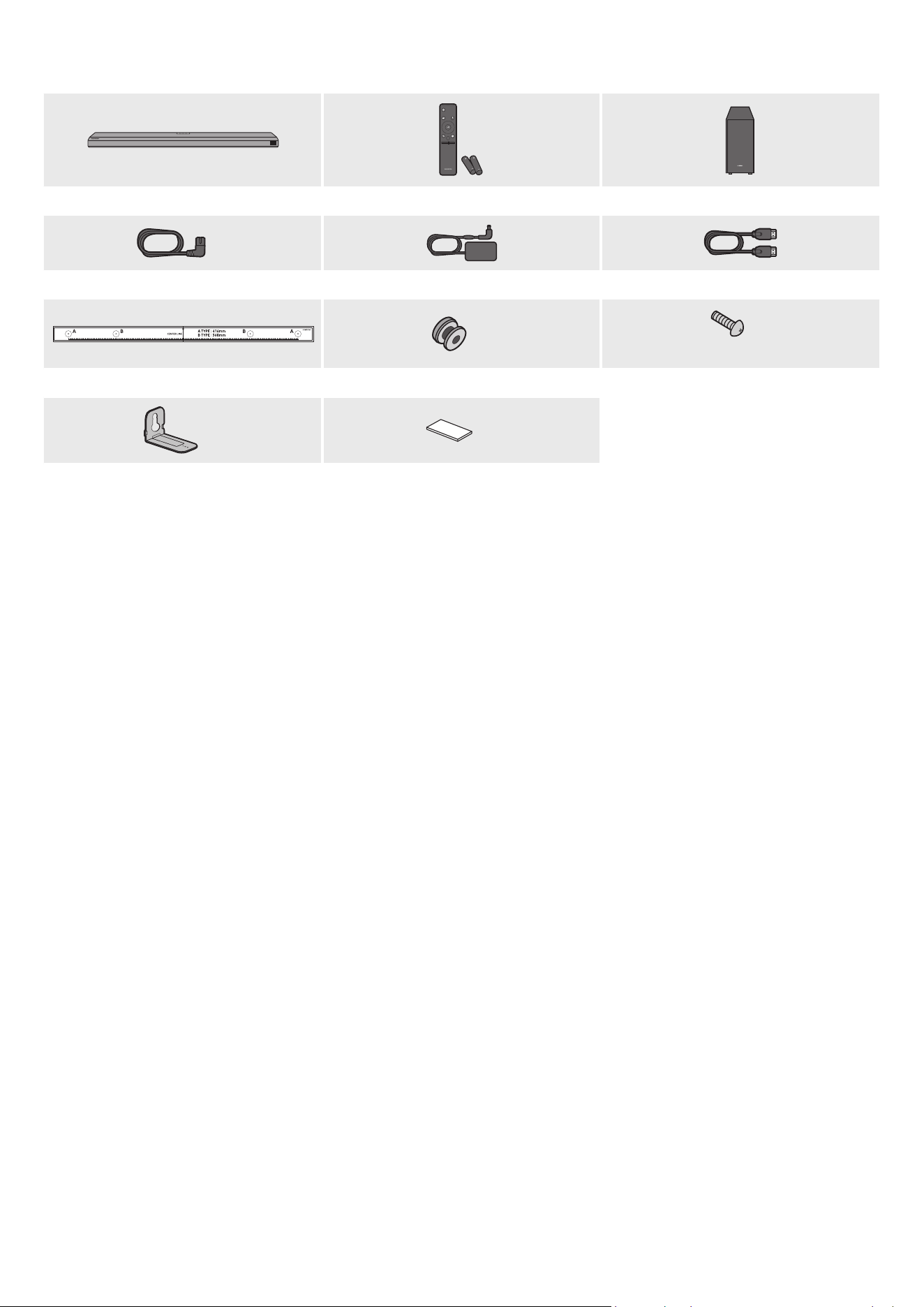
Soundbar Main Unit Soundbar Remote Control / Batteries Subwoofer
x 2
Power Cord (Subwoofer, Soundbar) AC/DC Adapter (Soundbar) HDMI Cable
x 2
x 2
(M4 x L10)
Wall Mount Guide Holder-Screw Screw
x 2
x 4
Bracket-Wall Mount Rubber-Foot
• For more information about the power supply and power consumption, refer to the label attached to the product. (Label: Bottom of the
Soundbar Main Unit)
• To purchase additional components or optional cables, contact a Samsung Service Centre or Samsung Customer Care.
• For more information about the wallmount or rubber-foot, see pages 27~28.
• Design, specications, and App screen are subject to change without prior notice.
• The appearance of the accessories may differ slightly from the illustrations above.
ENG - 7
02 PRODUCT OVERVIEW
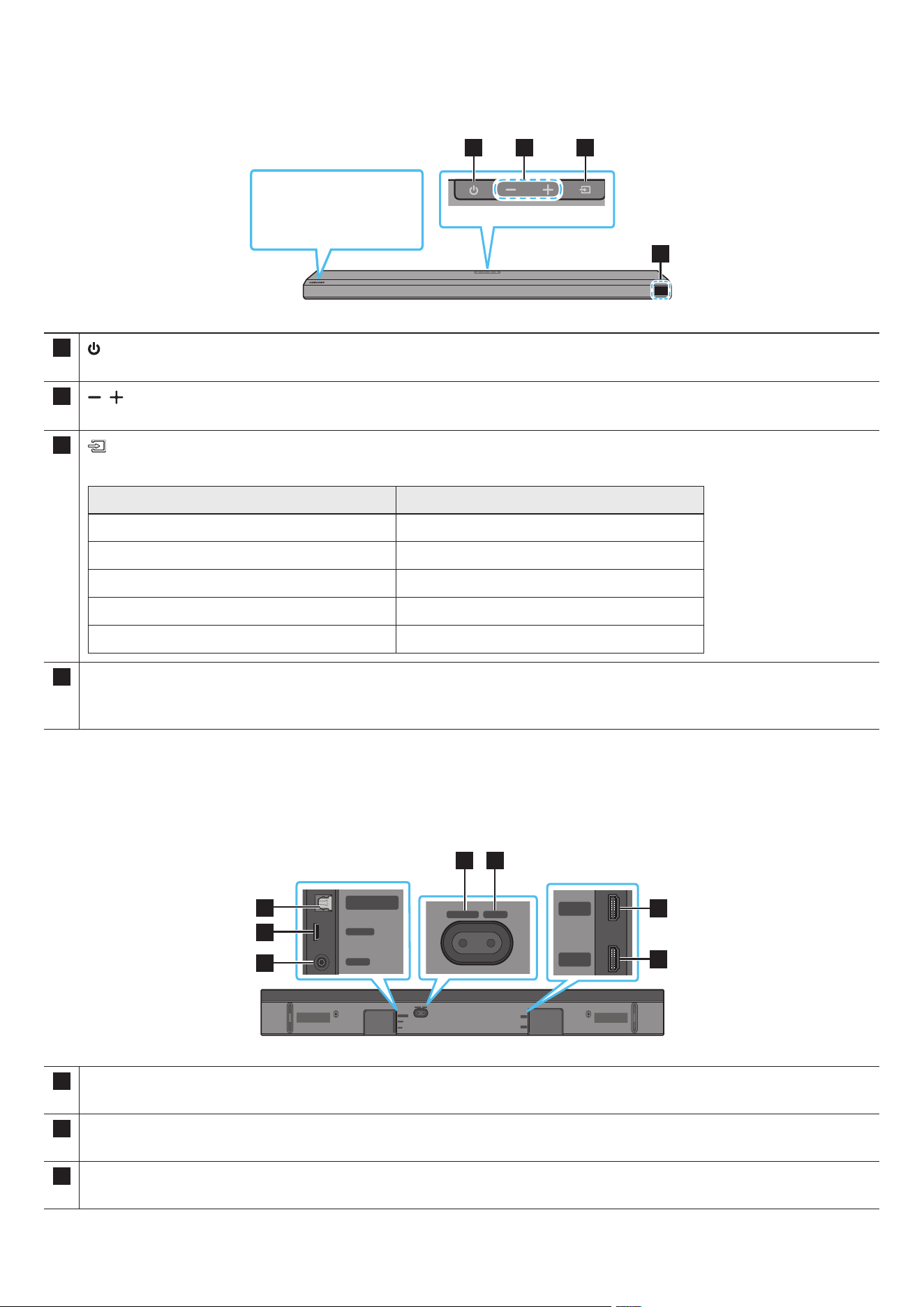
Front Panel / Top Panel of the Soundbar
1 2 3
4
Position the product so that
the SAMSUNG logo is located
on the top.
1
(Power) Button
Turns the power on and off.
2
(Volume) Button
Adjusts the volume.
3
(Source) Button
Selects the source input mode.
Input mode Display
Optical Digital input D.IN
ARC (HDMI OUT) input D.IN → TV ARC (Auto conversion)
HDMI input HDMI
Wi-Fi mode WIFI
BLUETOOTH mode BT
4 Display
Displays the product’s status and current mode.
D.IN → HDMI → Wi-Fi → BT
• When you plug in the AC cord, the power button will begin working in 4 to 6 seconds.
• When you turn on this unit, there will be a 4 to 5 second delay before it produces sound.
• If you hear sounds from both the TV and Soundbar, go to the Settings menu for the TV audio and change the TV speaker to External Speaker.
Bottom Panel of the Soundbar
DIGITAL AUDIO IN
(OPTICAL)
SERVICE
DC 19V
HDMI
NETWORK ID SET
DIGITAL AUDIO IN
(OPTICAL)
SERVICE
NETWORK ID SET
HDMI TO TV
(eARC/ARC)
HDMI IN
HDMI OUT
(TV-ARC)
DIGITAL AUDIO IN
(OPTICAL)
SERVICE
DC 19V
DIGITAL AUDIO IN
(OPTICAL)
SERVICE
DC 19V
HDMI
HDMI TO TV
(eARC/ARC)
DIGITAL AUDIO IN
(OPTICAL)
SERVICE
DC 19V
HDMI
NETWORK ID SET
DIGITAL AUDIO IN
(OPTICAL)
SERVICE
NETWORK ID SET
HDMI TO TV
(eARC/ARC)
HDMI IN
HDMI OUT
(TV-ARC)
DIGITAL AUDIO IN
(OPTICAL)
SERVICE
DC 19V
DIGITAL AUDIO IN
(OPTICAL)
SERVICE
DC 19V
HDMI
HDMI TO TV
(eARC/ARC)
DIGITAL AUDIO IN
(OPTICAL)
SERVICE
DC 19V
HDMI
NETWORK ID SET
DIGITAL AUDIO IN
(OPTICAL)
SERVICE
NETWORK ID SET
HDMI TO TV
(eARC/ARC)
HDMI IN
HDMI OUT
(TV-ARC)
DIGITAL AUDIO IN
(OPTICAL)
SERVICE
DC 19V
DIGITAL AUDIO IN
(OPTICAL)
SERVICE
DC 19V
HDMI
HDMI TO TV
(eARC/ARC)
DIGITAL AUDIO IN
(OPTICAL)
SERVICE
DC 19V
HDMI
NETWORK ID SET
DIGITAL AUDIO IN
(OPTICAL)
SERVICE
NETWORK ID SET
HDMI TO TV
(eARC/ARC)
HDMI IN
HDMI OUT
(TV-ARC)
DIGITAL AUDIO IN
(OPTICAL)
SERVICE
DC 19V
DIGITAL AUDIO IN
(OPTICAL)
SERVICE
DC 19V
HDMI
HDMI TO TV
(eARC/ARC)
1
2
3
4 5
6
7
1 DIGITAL AUDIO IN (OPTICAL)
Connect to the digital (optical) output of an external device. (See page 21)
2 SERVICE
Connect a USB storage device to upgrade the product’s software.
3 DC 19V (Power Supply In)
Connect the AC/DC power adapter. (See page 13)

ENG - 8
4 NETWORK
Press to connect to a wireless network (Wi-Fi) via the SmartThings app.
5 ID SET
Press to connect the Soundbar to surround speakers and a subwoofer wirelessly. (The surround speaker is sold separately.)
6 HDMI
Inputs digital video and audio signals simultaneously using an HDMI cable.
Connect to the HDMI output of an external device. (See page 20)
7 HDMI TO TV (eARC/ARC)
Connect to the HDMI jack on a TV. (See page 16)
• When disconnecting the power cable of the AC/DC power adaptor from a wall outlet, pull the plug.
Do not pull the cable.
• Do not connect this unit or other components to an AC outlet until all connections between components are complete.
ENG - 9
03 USING THE SOUNDBAR REMOTE CONTROL
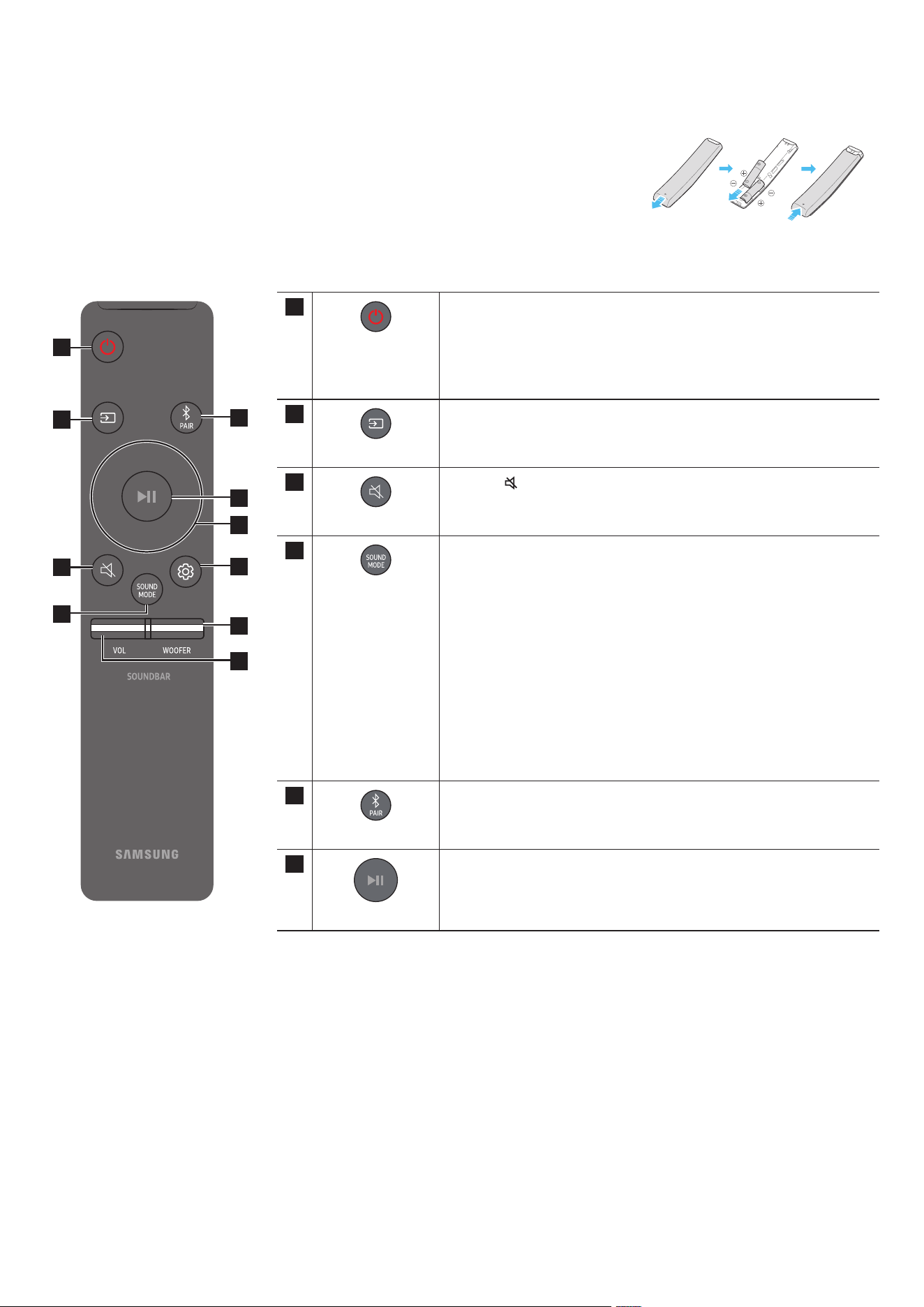
Inserting Batteries before using the Remote Control (AA batteries X 2)
Slide the back cover in the direction of the arrow until it is completely removed. Insert 2 AA batteries
(1.5V) oriented so that their polarity is correct. Slide the battery cover back into position.
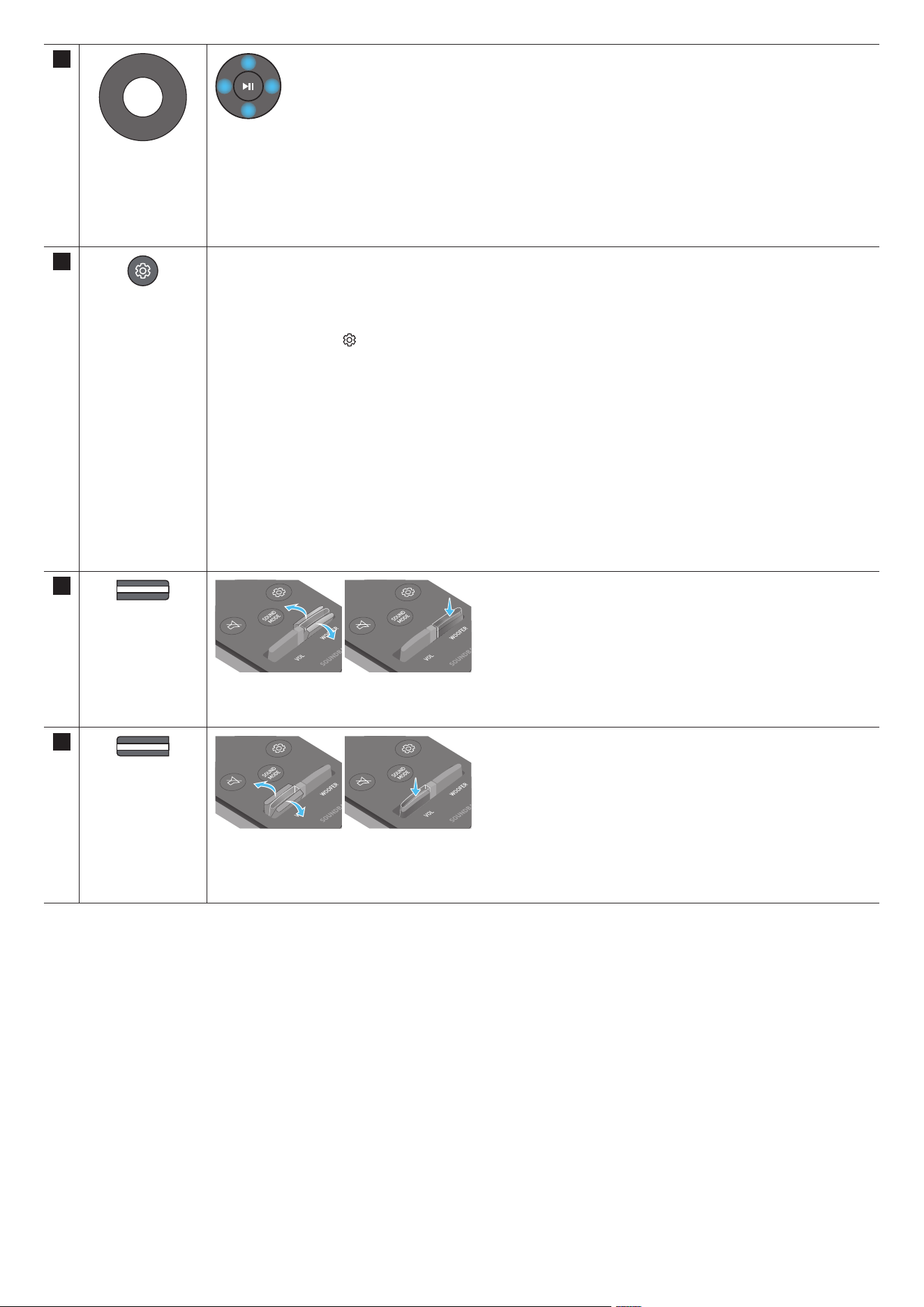
How to Use the Remote Control
1
2
3
4
5
6
7
8
9
10
1
Power
Turns the Soundbar on and off.
• Auto Power Down Function
The unit turns off automatically in the following situations:
• In D.IN / HDMI / Wi-Fi / BT mode if there is no audio signal for 18
minutes.
2
Source
Press to select a source connected to the Soundbar.
3
Mute
Press the
(Mute) button to mute the sound.
Press it again to unmute the sound.
4
SOUND MODE
You can select the desired sound mode by choosing STANDARD,
SURROUND, GAME PRO, or ADAPTIVE SOUND.
• STANDARD
Outputs the original sound.
• SURROUND
Provides a wider sound eld than standard.
• GAME PRO
Provides stereoscopic sound to immerse you in the action while
gaming.
• ADAPTIVE SOUND
Analyzes the content in real time and automatically provides the
optimal sound eld based on the characteristics of the content.
5
Bluetooth PAIR
Switch the Soundbar to Bluetooth pairing mode. Press the button and
wait for the “BT PAIRING” screen to connect to a new Bluetooth device.
6
Play / Pause
You can also play or pause music by pressing the button.
ENG - 10
7
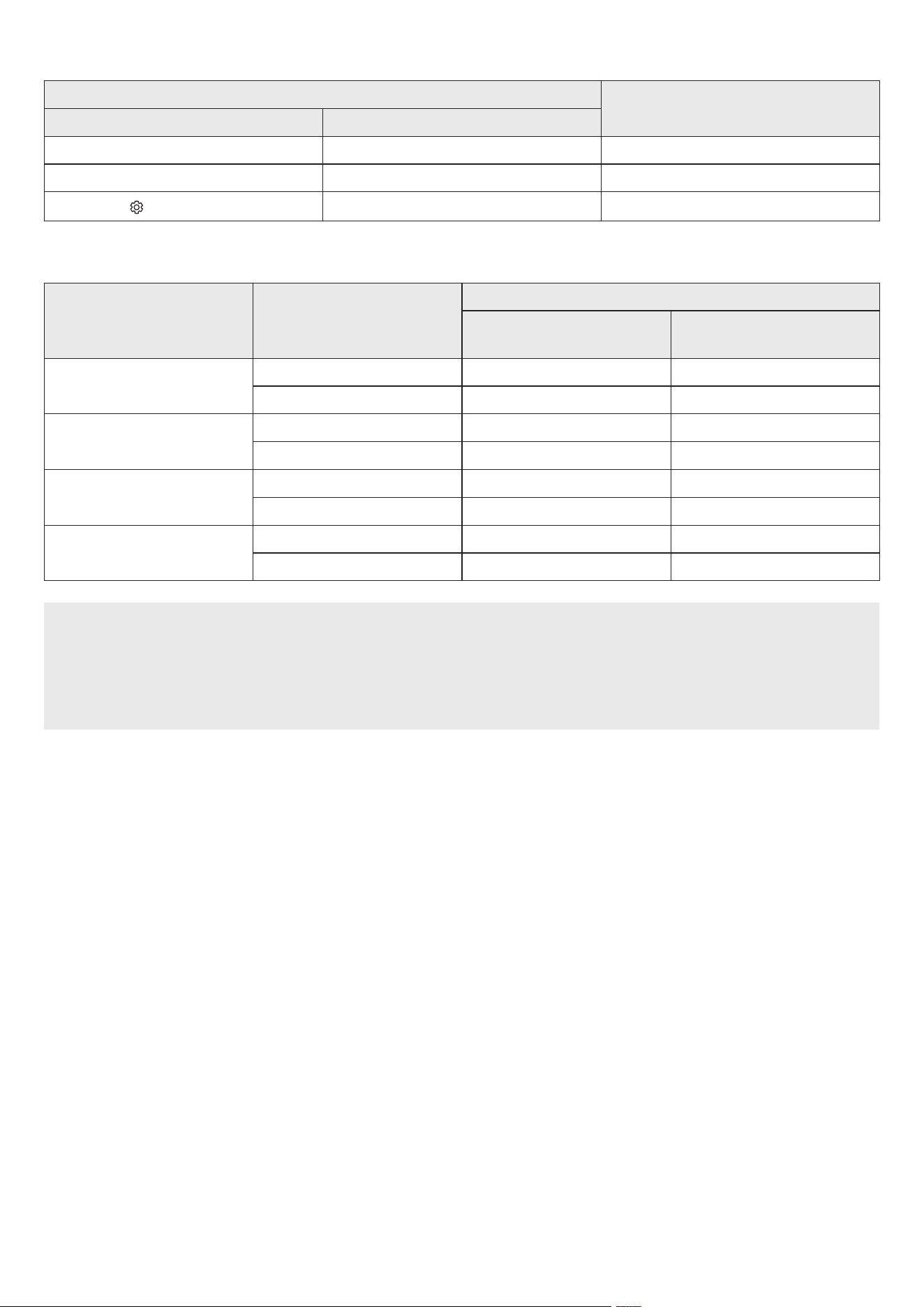
Up/Down/Left/
Right
Press the indicated areas to select Up/Down/Left/Right.
Press Up/Down/Left/Right on the button to select or set functions.
• Music Skip
Press the Right button to select the next music le. Press the Left button to select the previous music le.
• ID SET
Use this option when the Subwoofer or Surround Speakers are not connected or need reconnection.
While powered off, press and hold the Up button for 5 seconds to perform ID SET. (See page 14.)
8
Sound Control
When pressed, the setting items such as TREBLE, BASS, SYNC, CENTER LEVEL, FRONT TOP LEVEL, and VIRTUAL
ON/OFF are displayed in sequence. The desired item can be adjusted using the Up/Down buttons.
• To control the volume of the treble or bass sound, select TREBLE or BASS in Sound Settings, and then adjust
the volume between -6~+6 by using the Up/Down buttons.
• Press and hold the
(Sound Control) button for about 5 seconds to adjust the sound for each frequency band.
150Hz, 300Hz, 600Hz, 1.2kHz, 2.5kHz, 5kHz, and 10kHz are selectable using the Left/Right buttons and each
can be adjusted to a setting between -6 to +6 using the Up/Down buttons.
(Make sure the Sound mode is set to “STANDARD”.)
• To control the volume of the each speaker select CENTER LEVEL, or FRONT TOP LEVEL in Sound Settings, and
then adjust the volume between -6~+6 by using the Up/Down buttons.
• If the video on the TV and audio from the Soundbar are not synchronized, select SYNC in Sound Control, and
then set the audio delay between 0~300 milliseconds by using the Up/Down buttons.
• SYNC is only supported for some functions.
• If Surround Speakers are connected, select REAR LEVEL, REAR TOP LEVEL, and then use the Up/Down buttons
to adjust the volume within a -6 to +6 range.
• The VIRTUAL Speaker function can be turned ON/OFF by using the Up/Down buttons.
9
WOOFER (BASS)
LEVEL
Push the button up or down to adjust the level of the woofer (bass) to -12 or between -6 to +6. To set the woofer
(bass) volume level to 0 (Default), press the button.
10
VOLUME
Push the button up or down to adjust the volume.
• Mute
Press the VOL button to mute the sound. Press it again to unmute the sound.
ENG - 11
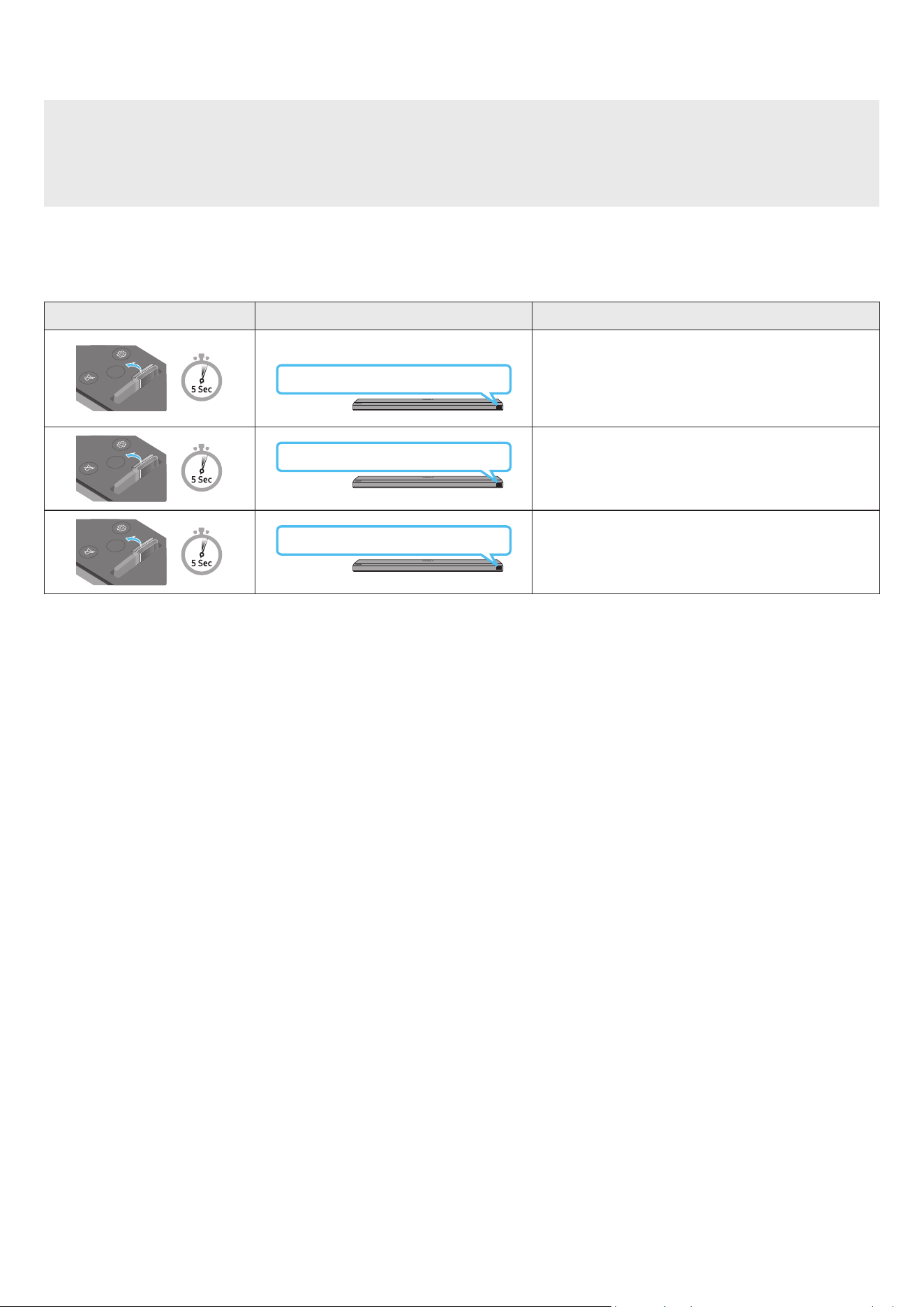
Using the Hidden Buttons (Buttons with more than one function)
Hidden Button
Reference page
Remote Control Button Function
WOOFER (Up) TV remote control On/Off (Standby) page 12
Up ID SET page 14
(Sound Control)
7 Band EQ page 10
Output specications for the different sound effect modes
Effect Input
Output
With Subwoofer Only
With Subwoofer & Wireless Rear
Speaker Kit
STANDARD
2.0 ch 2.1 ch 2.1 ch
5.1 ch 3.1 ch 5.1 ch
SURROUND
2.0 ch 3.1.2 ch 5.1.4 ch
5.1 ch 3.1.2 ch 5.1.4 ch
GAME PRO
2.0 ch 3.1.2 ch 5.1.4 ch
5.1 ch 3.1.2 ch 5.1.4 ch
ADAPTIVE SOUND
2.0 ch 3.1.2 ch 5.1.4 ch
5.1 ch 3.1.2 ch 5.1.4 ch
• When the input source is Dolby Atmos®, DTS:X, the Subwoofer-only setup provides 3.1.2 channel audio, while the Subwoofer & Wireless
Rear Speaker Kit setup provides 5.1.4 channel audio.
• The Samsung Wireless Rear Speaker Kit can be purchased separately. To purchase a Kit or the Subwoofer, contact the vendor you purchased
the Soundbar from.
• The Surround Speakers will not produce sounds for 2 channel output while STANDARD mode is in use. To enable sound for the Surround
Speakers, change the effect mode to SURROUND.
ENG - 12
Adjusting the Soundbar volume with a TV remote control
Adjust the Soundbar volume using the TV’s remote control.
• This function can be used with IR remote controls only. Bluetooth remote controls (remote controls that require pairing) are not
supported.
• Set the TV speaker to External Speaker to use this function.
• Manufacturers supporting this function:
VIZIO, LG, Sony, Sharp, PHILIPS, PANASONIC, TOSHIBA, Hisense, RCA
1. Turn Off the Soundbar.
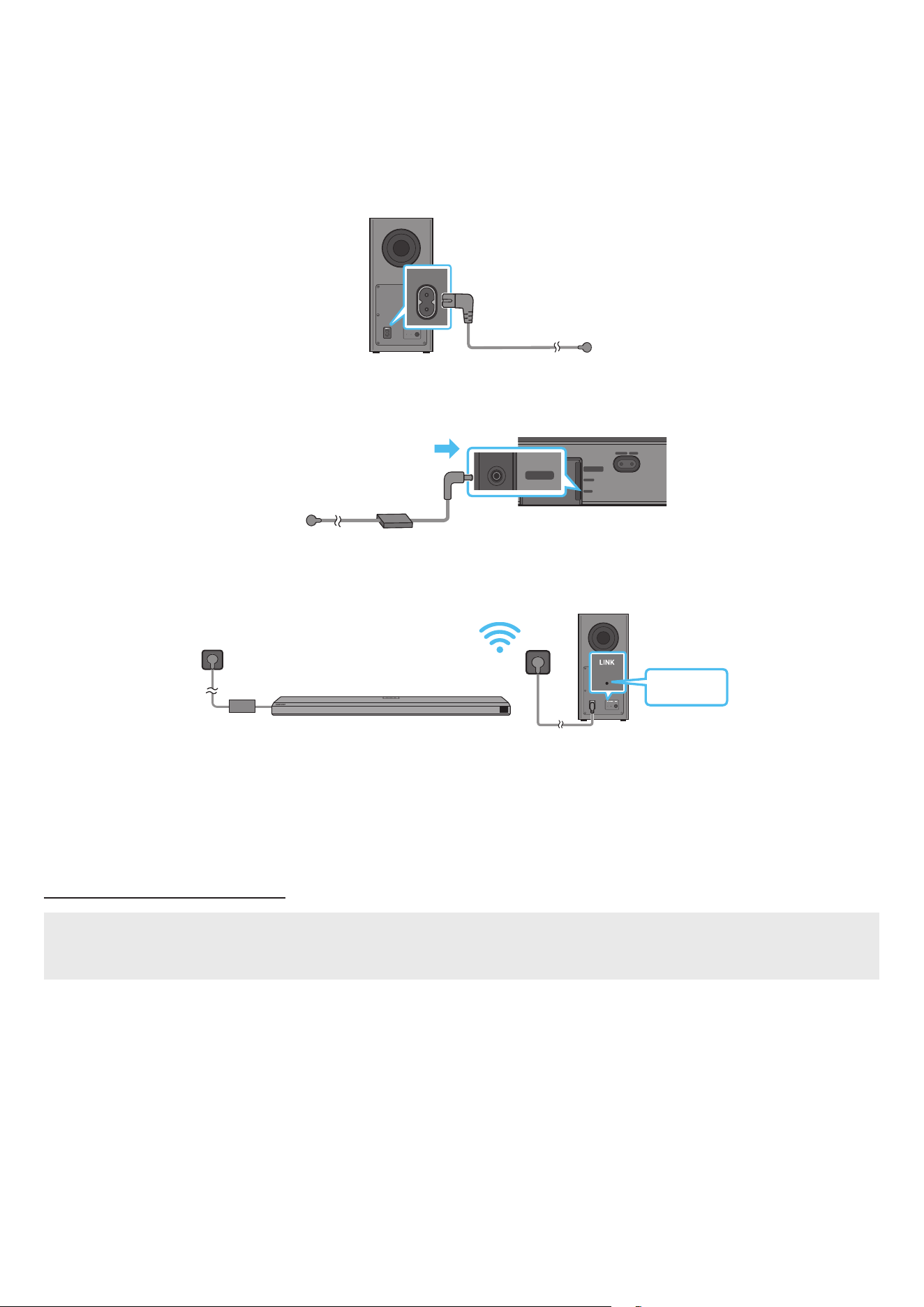
Push up and hold the WOOFER button for 5 seconds.
Each time you push the WOOFER button up and hold it for 5 seconds, the mode switches in the following order: “OFF-TV REMOTE” (Default
mode), “SAMSUNG-TV REMOTE”, “ALL-TV REMOTE”.
Remote Control Button Display Status
SOUND
MODE
VOL
WOOFER
SOUNDBAR
(Default mode)
OFF-TV REMOTE
Disable the TV remote control.
SOUND
MODE
VOL
WOOFER
SOUNDBAR
SAMSUNG-TV REMOTE
Enable a Samsung TV’s IR remote control.
SOUND
MODE
VOL
WOOFER
SOUNDBAR
ALL-TV REMOTE
Enable a third-party TV’s IR remote control.
ENG - 13
04 CONNECTING THE SOUNDBAR
Connecting the power and units
Use the power components to connect the Subwoofer and Soundbar to an electrical outlet in the following order:
• For more information about the required electrical power and power consumption, refer to the label attached to the product. (Label: Bottom
of the Soundbar Main Unit)
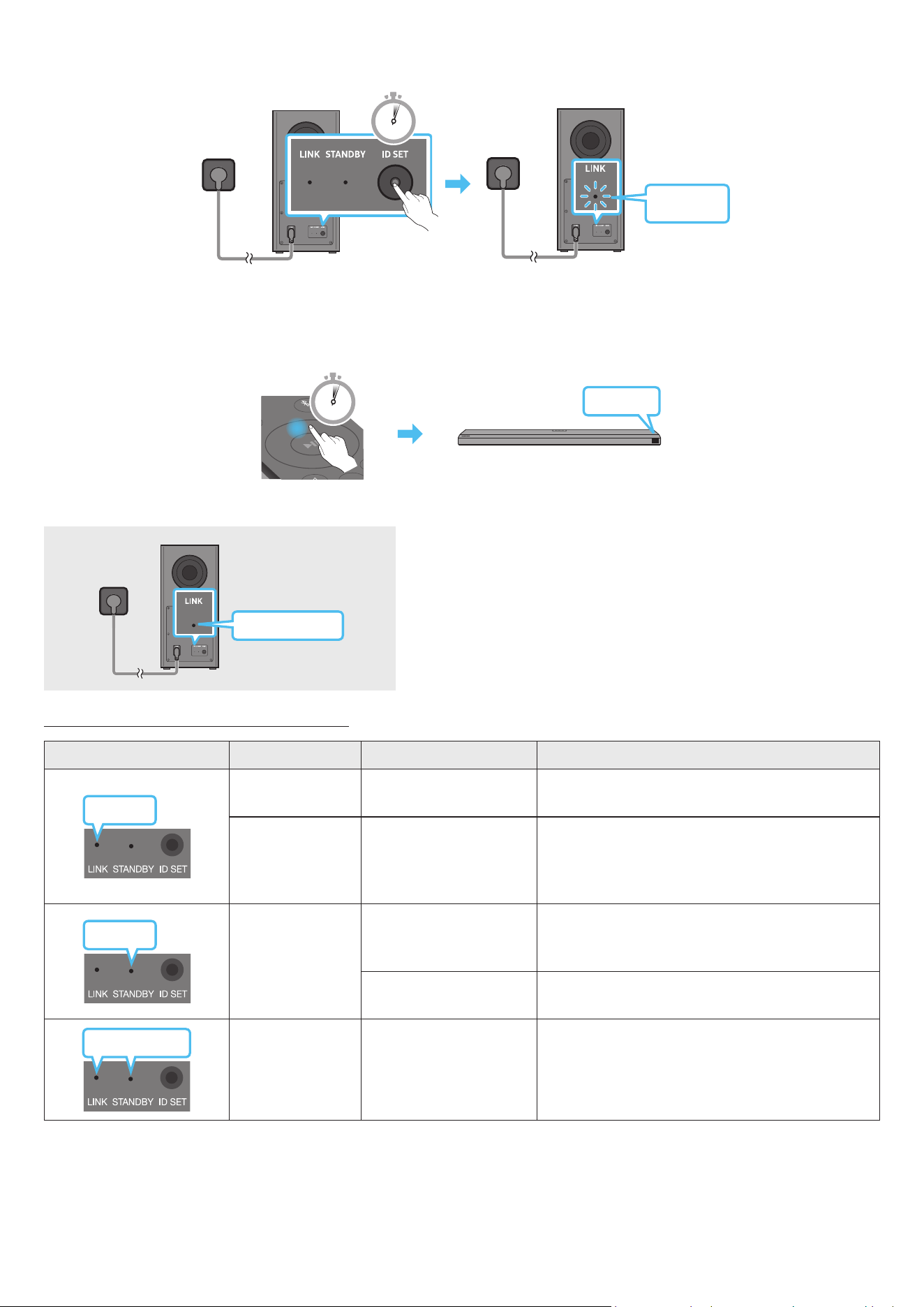
1. Connect the Power cord to the Subwoofer.
POWER
Rear of Subwoofer
Power Cord
2. First connect the power cable to the AC/DC adapter.
Connect the AC/DC adapter (with the power cable) to the Soundbar.
DIGITAL AUDIO IN
(OPTICAL)
SERVICE
DC 19V
HDMI
NETWORK ID SET
DIGITAL AUDIO IN
(OPTICAL)
SERVICE
NETWORK ID SET
HDMI TO TV
(eARC/ARC)
HDMI IN
HDMI OUT
(TV-ARC)
DIGITAL AUDIO IN
(OPTICAL)
SERVICE
DC 19V
DIGITAL AUDIO IN
(OPTICAL)
SERVICE
DC 19V
HDMI
HDMI TO TV
(eARC/ARC)
DIGITAL AUDIO IN
(OPTICAL)
SERVICE
DC 19V
HDMI
NETWORK ID SET
DIGITAL AUDIO IN
(OPTICAL)
SERVICE
NETWORK ID SET
HDMI TO TV
(eARC/ARC)
HDMI IN
HDMI OUT
(TV-ARC)
DIGITAL AUDIO IN
(OPTICAL)
SERVICE
DC 19V
DIGITAL AUDIO IN
(OPTICAL)
SERVICE
DC 19V
HDMI
HDMI TO TV
(eARC/ARC)
DC 19V
Bottom of the Soundbar
Main Unit
AC/DC Adapter
Power Cord
3. Connect power to the Soundbar and Subwoofer. The Subwoofer is automatically connected when the Soundbar is turned on.
Blue is On
NOTE
• Connect the Subwoofer power before connecting to the Soundbar.
The Subwoofer will be automatically connected when turning on the Soundbar.
• If you unplug and reconnect the power cord when the product is turned on, the Soundbar turns on automatically.
• Make sure to rest the AC/DC Adapter at on a table or the oor. If you place the AC/DC Adapter so that it is hanging with the AC cord input
facing upwards, water or other foreign substances could enter the Adapter and cause the Adapter to malfunction.
Manually connecting the Subwoofer
Before performing the manual connection procedure below:
• Check whether the power cables for the Soundbar and subwoofer are connected properly.
• Make sure that the Soundbar is turned off.
1. Turn off the Soundbar main.
ENG - 14
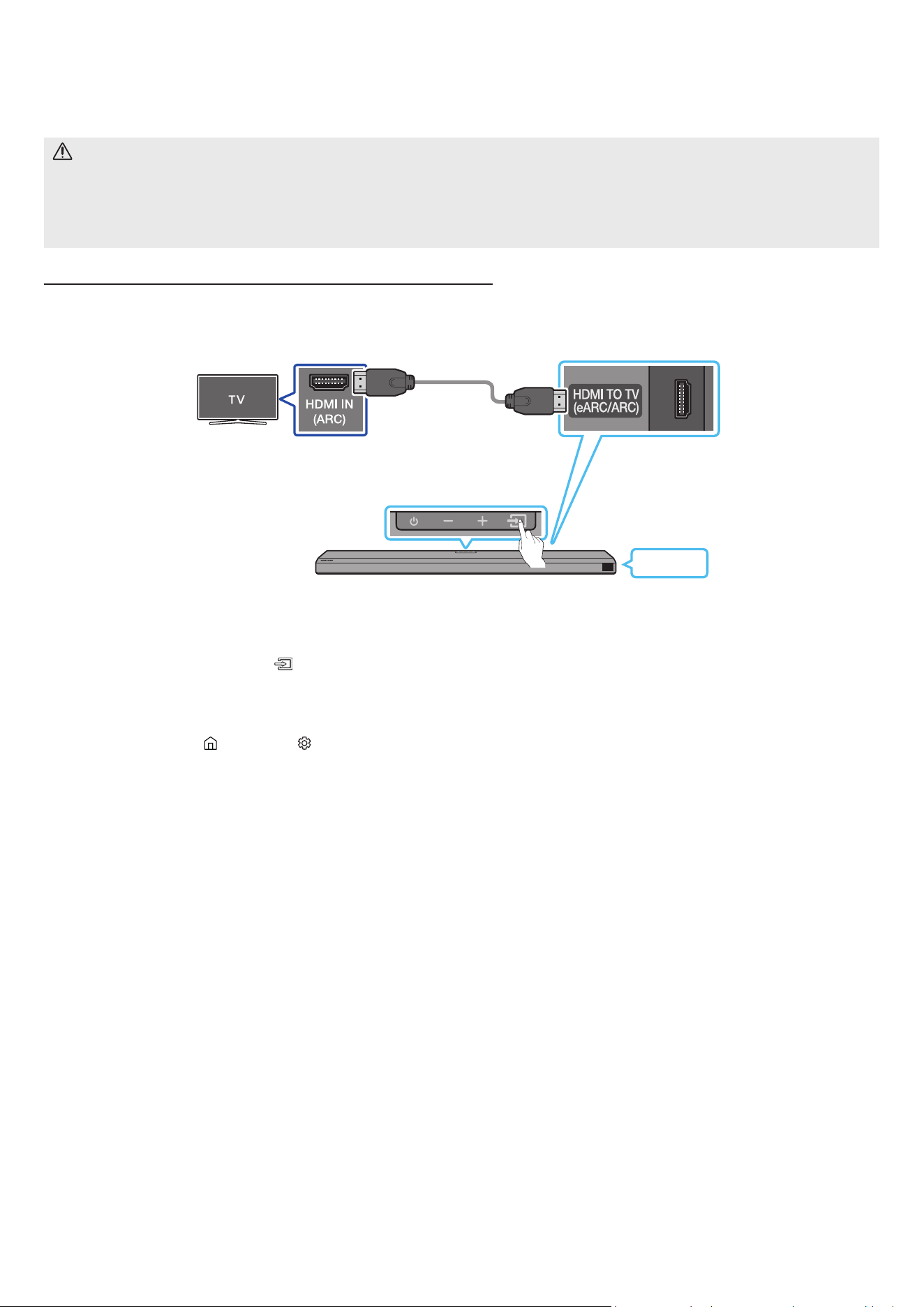
2. Press and hold ID SET on the rear of the subwoofer for at least 5 seconds.
• The red indicator on the rear of the subwoofer turns off and the blue indicator blinks.
5 Sec
Blinking blue
fast
Rear of Subwoofer Rear of Subwoofer
3. Press the Up button on the remote control for 5 seconds.
• The ID SET message appears on the display of the Soundbar for a moment, and then it disappears.
• The Soundbar will automatically power on when ID SET is complete.
SOUND
MODE
PAIR
5 Sec
ID SET
4. Check if the LINK LED is solid blue (connection complete).
Blue is On
The LINK LED indicator stops blinking and glows a solid blue when a connection
is established between the Soundbar and the Wireless Subwoofer.
LED Indicator Lights on the Rear of Subwoofer
LED Status Description Resolution
Blue
On
Successfully connected
(normal operation)
-
Blinking Recovering the connection
Check if the power cable attached to the main Soundbar
unit is connected properly or wait about 5 minutes.
If blinking persists, try manually connecting the
subwoofer. See page 13.
Red
On
Standby (with the
Soundbar main unit turned
off)
Check if the power cable attached to the main Soundbar
unit is connected properly.
Connection failed
Connect again. See the instructions for manual
connection on page 13.
Red and blue
Blinking Malfunction
See the contact information for the Samsung Service
Centre in this manual.
NOTE
• If the main unit is powered off, the wireless subwoofer will go into stand-by mode and the STANDBY LED on the rear of the sub-woofer will
turn red after blinking in blue several times.
• If you use a device that uses the same frequency as the Soundbar near the Soundbar, interference may cause some sound interruption.

ENG - 15
• The maximum transmission distance of the main unit’s wireless signal is about 10 m, but may vary depending on your operating environment.
If a steel-concrete or metallic wall is between the main unit and the wireless subwoofer, the system may not operate at all because the
wireless signal cannot penetrate metal.
CAUTION
• Wireless receiving antennas are built into the wireless subwoofer. Keep the unit away from water and moisture.
• For optimal listening performance, make sure that the area around the wireless subwoofer and the Wireless Receiver Module (sold separately)
is clear of any obstructions.
Connecting an SWA-9500S (Sold Separately) to your Soundbar
Expand to true wireless surround sound by connecting the Samsung Wireless Rear Speaker Kit (SWA-9500S, sold separately) to your Soundbar.
For detailed information on connections, see the Samsung Wireless Rear Speaker Kit manual.
ENG - 16
05 USING A WIRED CONNECTION TO THE TV
Method 1. Connecting with HDMI
CAUTION
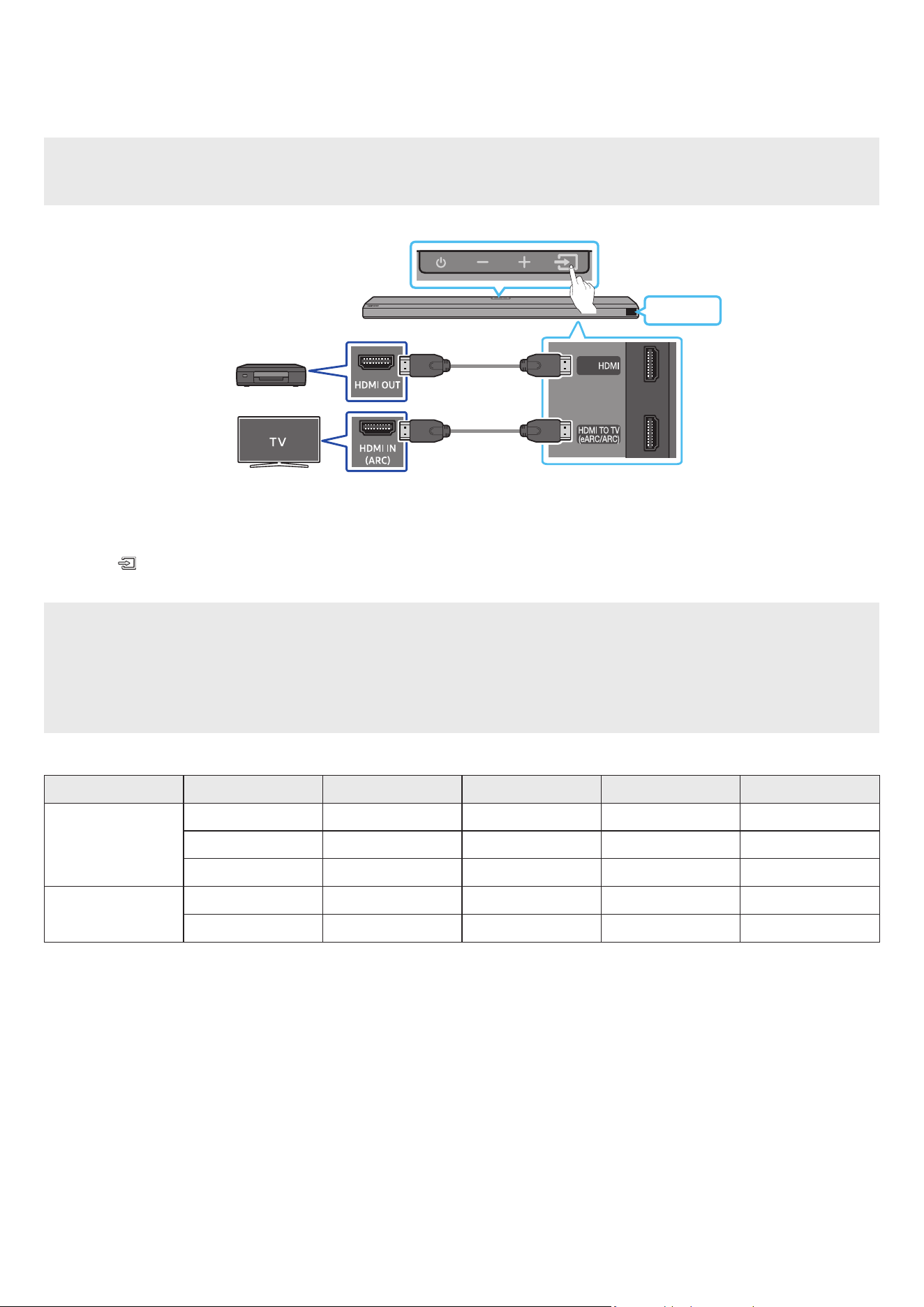
• When both the HDMI cable and optical cable are connected, the HDMI signal is received rst.
• To connect the HDMI cable between the TV and Soundbar, be sure to connect the terminals marked ARC. Otherwise, the TV sound may not
be output.
• The recommended cable is High Speed HDMI Cable with Ethernet.
Connecting the TV that supports HDMI ARC (Audio Return Channel)
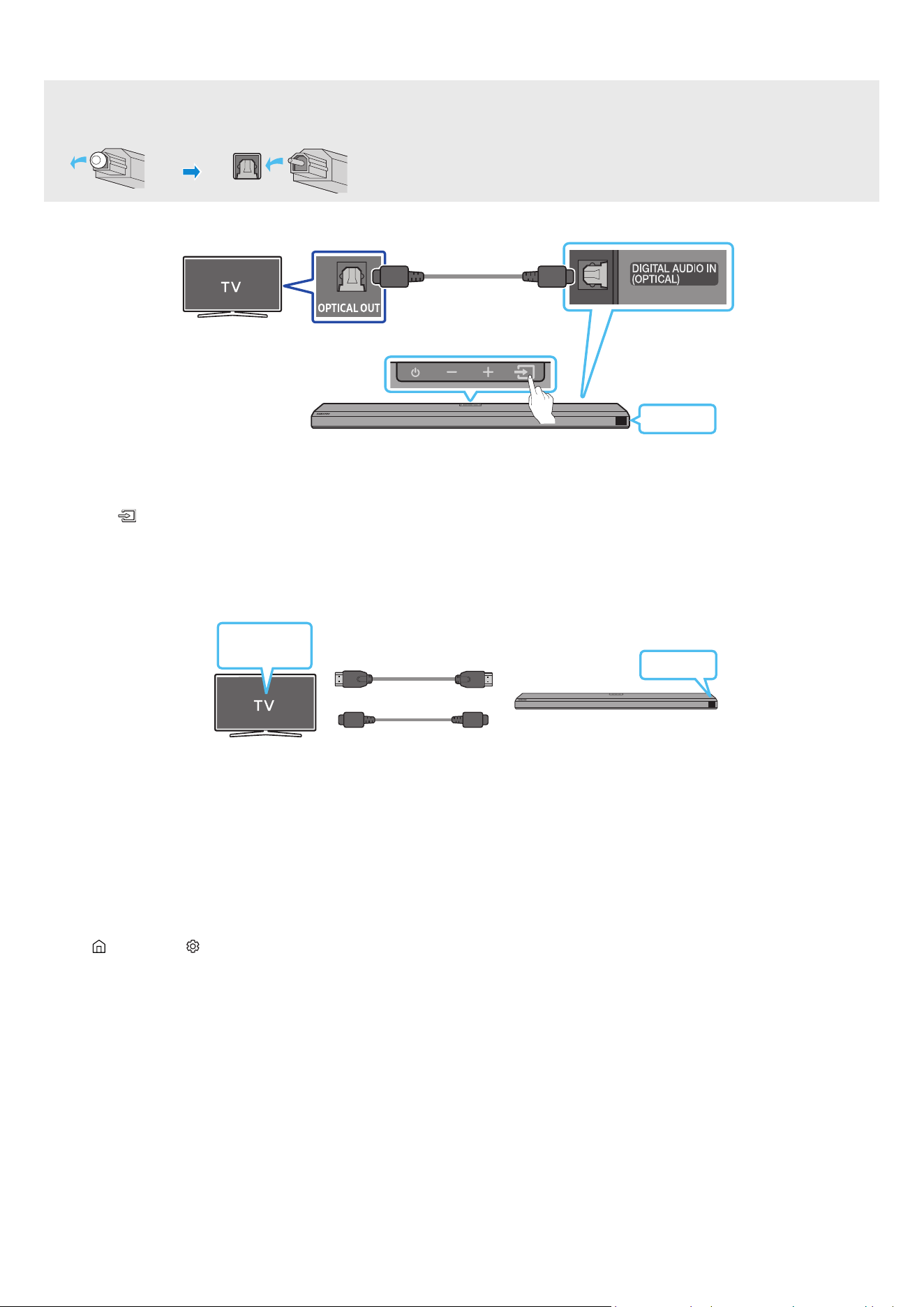
TV ARC
Connect to the HDMI TO
TV (eARC/ARC) port of the
Soundbar main unit.
Top of the Soundbar
Connect to the HDMI IN (ARC)
port of your TV.
HDMI Cable
Bottom of the Soundbar
1. With the Soundbar and TV turned off, connect the HDMI cable as shown in the gure.
2. Turn on the Soundbar and TV.
3. “TV ARC” appears in the display window of the Soundbar main unit and the Soundbar plays TV sound.
• If TV sound is inaudible, press the
(Source) button on the remote control or on the top of the Soundbar to switch to “D.IN” mode. The
screen displays “D.IN” and “TV ARC” in sequence, and TV sound is played.
• When connecting a TV that supports the eARC function, “eARC” appears on the display and the sound is heard.
• To connect with eARC, the eARC function in the TV menu should be set to On. Refer to the TV user manual for details on setting. (e.g.
Samsung TV : Home ( ) → Settings ( ) → Sound → Expert Settings → HDMI-eARC Mode (Auto))
• If “TV ARC” does not appear in the display window of the Soundbar main unit, conrm that the HDMI cable is connected to the correct port.
• Use the volume buttons on the TV’s remote control to change the volume on the Soundbar.
NOTE
• When you connect the TV that supports the HDMI ARC (Audio Return Channel) to the Soundbar with an HDMI cable, you can transmit the
digital video and audio data without connecting a separate optical cable.
• We recommend you use a coreless HDMI cable if possible. If you use a cored HDMI cable, use one whose diameter is less than 14 mm.
• This function is not available if the HDMI cable does not support ARC.
• When the audio in a broadcast is encoded in Dolby Digital and the “Digital Output Audio Format” on your TV is set to PCM, we recommend that
you change the setting to Dolby Digital. When the setting on the TV is changed, you will experience better sound quality. (The TV menu may
use different words for Dolby Digital and PCM depending on the TV manufacturer.)
ENG - 17
Method 2. Connecting using an Optical Cable
Pre-connection Checklist
• When both the HDMI cable and optical cable are connected, the HDMI signal is received rst.
• When you use an optical cable and the terminals have covers, be sure to remove the covers.
D.IN
Bottom of the Soundbar
Top of the Soundbar
Optical Cable (not supplied)
1. With the TV and Soundbar turned off, connect the DIGITAL AUDIO IN (OPTICAL) port on the Soundbar and the OPTICAL output port on the TV
with the optical cable (not supplied), as shown in the gure.
2. Turn on the Soundbar and TV.
3. Press the
(Source) button on the top panel or remote control, and then select the “D.IN” mode.
4. The TV sound is output from the Soundbar.
Using the Q-Symphony Function
For Q-Symphony, the Soundbar syncs with a Samsung TV to output sound through two devices for optimum surround effect. When the Soundbar
is connected, the menu, “TV+Soundbar” appears under the Sound Output menu of the TV. Select the corresponding menu.
Optical Cable (not supplied)
HDMI Cable
OR
D.IN
TV menu
• TV menu example: TV + [AV]Soundbar series name [HDMI]
NOTE
• It can operate according to the Codec supported by TV.
• This function is supported only when the HDMI Cable or Optical Cable (not supplied) is connected.
• This function is available in some Samsung TVs and some Soundbar models.
Using the Spacet sound
Provides optimized sound quality by analyzing the listening spaces.
To enable this function, turn on the Adaptive Sound+ mode on your Samsung TV menu.
(Home ( ) → Settings ( ) → General → Intelligent Mode Settings → Adaptive Sound+)
NOTE
• The sound mode on your Soundbar will automatically change to Adaptive Sound+ if you enable the Adaptive Sound+ mode on your TV.
• This function works when the Soundbar connects to some of the Samsung TVs.
ENG - 18
06 USING A WIRELESS CONNECTION TO THE TV
Method 1. Connecting via Bluetooth
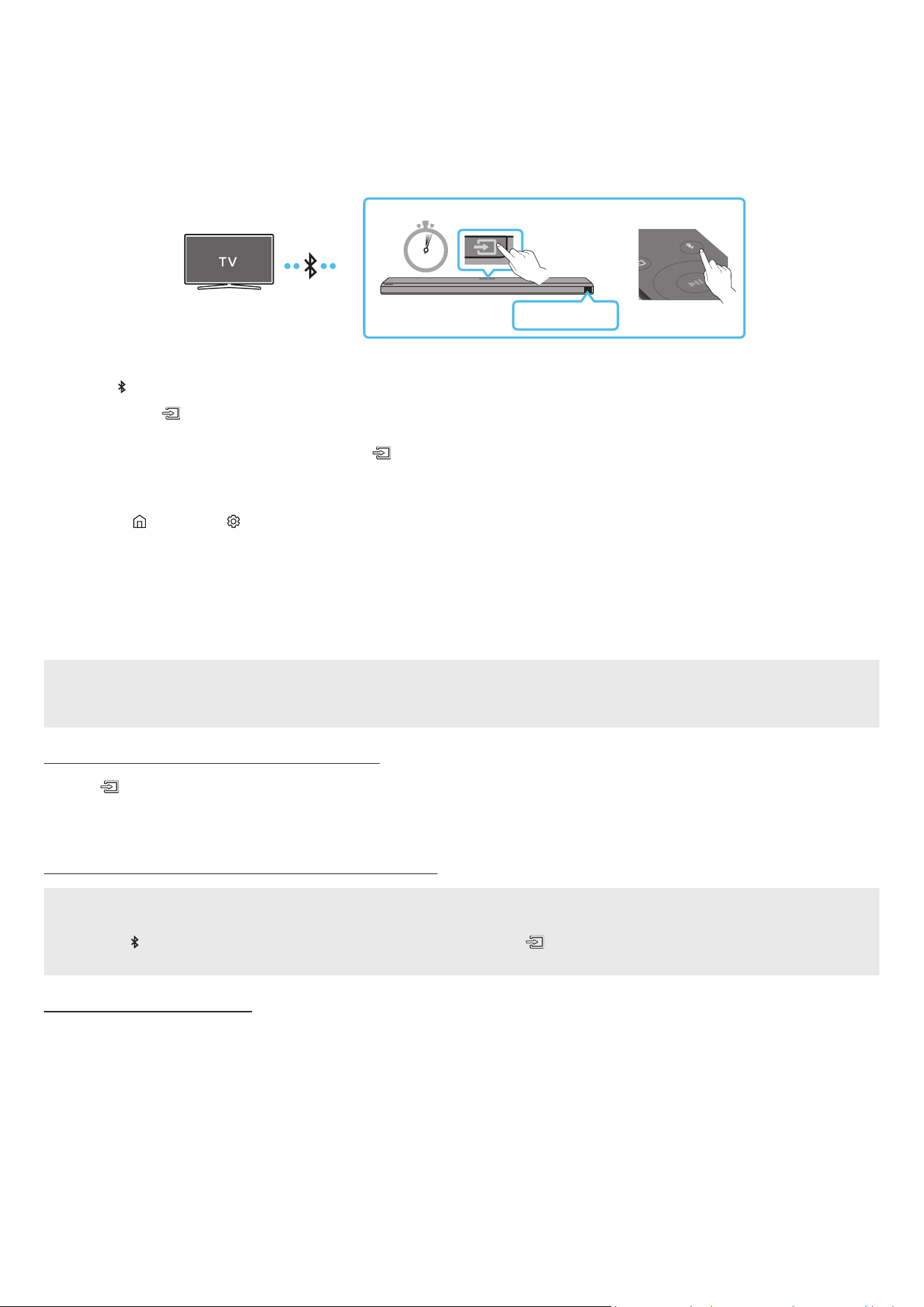
When a Samsung TV is connected using Bluetooth, you can hear stereo sound without the hassle of cabling.
• Only one Samsung TV can be connected at a time.
• Samsung TV that supports Bluetooth can be connected. Check the specications of your TV.
5 Sec
SOUND
MODE
PAIR
Top of the Soundbar
OR
BT PAIRING
The initial connection
1. Press the PAIR button on the Soundbar remote control to enter the “BT PAIRING” mode.
(OR)
a. Press the
(Source) button on the top panel and then select “BT”.
“BT” changes to “BT PAIRING” in a few seconds automatically or changes to “BT READY” if there is a connect record.
b. When “BT READY” appears, press and hold the (Source) button on the top panel of the Soundbar for more than 5 seconds to
display “BT PAIRING”.
2. Select Bluetooth mode on the Samsung TV.
(e.g. Home (
) → Settings ( ) → Sound → Sound Output → Bluetooth Speaker List → [AV] Samsung Soundbar Q700A (Bluetooth))
3. Select “[AV] Samsung Soundbar Q700A” from the list on TV’s screen.
An available Soundbar is indicated with “Need Pairing” or “Paired” on the TV’s Bluetooth device list. To connect the Samsung TV to the
Soundbar, select the message, and then establish a connection.
• When the Samsung TV is connected, [TV Name] → “BT” appears on the Soundbar’s front display.
4. You can now hear Samsung TV sound from the Soundbar.
• After you have connected the Soundbar to your Samsung TV the rst time, use the “BT READY” mode to reconnect.
If the device fails to connect
• If you have an existing Soundbar (e.g., [AV] Samsung Soundbar Q700A) on the list of speakers on the Samsung TV, delete it.
• Then repeat steps 1 through 3.
Disconnecting the Soundbar from the Samsung TV
Press the (Source) button on the top panel or on the remote control and switch to any mode but “BT”.
• Disconnecting takes time because the Samsung TV must receive a response from the Soundbar.
(The time required may differ, depending on the Samsung TV model.)
What is the difference between BT READY and BT PAIRING?
• BT READY : In this mode, you can reconnect any Samsung TV or mobile device that was connected before.
• BT PAIRING : In this mode, you can connect a new device to the Soundbar.
(Press the PAIR button on the Soundbar remote control or press and hold the (Source) button on the top of the Soundbar for more
than 5 seconds while the Soundbar is in “BT” mode.)
Notes on Bluetooth connection
• Locate a new device within 1 m to connect via Bluetooth communication.
• If asked for a PIN code when connecting a Bluetooth device, enter <0000>.
• The Soundbar automatically turns off after 18 minutes in the Ready state.
• The Soundbar may not perform Bluetooth search or connection correctly under the following circumstances:
‒ If there is a strong electrical eld around the Soundbar.
‒ If several Bluetooth devices are simultaneously paired with the Soundbar.
‒ If the Bluetooth device is turned off, not in place, or malfunctions.
• Electronic devices may cause radio interference. Devices that generate electromagnetic waves must be kept away from the Soundbar main
unit - e.g., microwaves, wireless LAN devices, etc.

ENG - 19
Method 2. Connecting via Wi-Fi
Pre-connection Checklist
• Wi-Fi connection is available only on Samsung TV.
• Check whether the wireless router (Wi-Fi) is turned on and the TV is connected to the router.
• The TV and Soundbar must be connected to the same wireless network (Wi-Fi).
• If your wireless router (Wi-Fi) uses a DFS channel, you will not be able to establish a Wi-Fi connection between the TV and Soundbar.
Contact your Internet service provider for details.
• Because the menus may differ depending on the year of manufacture, refer to your TV manual.
• To connect the TV to the Soundbar via Wi-Fi, connect the Soundbar to the wireless router rst. See page 23, for details on how to
establish a Wi-Fi connection.
1. For more information about Wi-Fi connection to the Soundbar, see page 23, “Method 2. Connecting via Wi-Fi (Wireless Network)”.
2. Change the input source of the TV by using the Audio menu to Soundbar.
• Samsung TVs released in 2017 or later
Home (
) → Settings ( ) → Sound → Sound Output → [AV] Samsung Soundbar Q700A (Wi-Fi)
ENG - 20
07 CONNECTING AN EXTERNAL DEVICE
Method 1. Connecting using an HDMI Cable (Capable of Dolby Atmos decoding and playback)
Pre-connection Checklist
• If the Audio Output options include Secondary Audio, make sure Secondary Audio is set to Off.
• Make sure that the content supports Dolby Atmos®.
Top of the Soundbar
HDMI
HDMI Cable
External Device
HDMI Cable
1. Use an HDMI cable to connect the HDMI OUT port on the external device and the HDMI port on the bottom of the Soundbar.
2. Use an HDMI cable to connect the HDMI IN port of the TV and the HDMI TO TV (eARC/ARC) port on the bottom of the Soundbar.
3. Turn on the Soundbar, TV, and the external device.
4. Press the
(Source) button on the top panel or on the remote control, and then select “HDMI”.
5. The Soundbar display indicates that “HDMI” mode is currently selected and the Soundbar will start playing sounds.
NOTE
• When you use Dolby Atmos®: If the input source is Dolby Atmos®, 3.1.2 channels are outputted.
• When Dolby Atmos® is activated, “DOLBY ATMOS” appears in the front display.
• Conguring Dolby Atmos® on your BD player or other device
Open the audio output options on the settings menu of your BD player or other device and make sure that “No Encoding” is selected for
Bitstream. For example, on a Samsung BD Player, go to Home Menu → Sound → Digital Output and then select Bitstream (unprocessed).
Supported UHD Signals Specication (3840 x 2160p)
Frame rate (fps) Colour depth RGB 4:4:4 YCbCr 4:4:4 YCbCr 4:2:2 YCbCr 4:2:0
< 60
8 bit O O O O
10 bit - - O O
12 bit - - O O
120
8 bit - - - -
10 bit - - - -
• Supported specication may vary depending on the connected external device or usage conditions.
ENG - 21
Method 2. Connecting using an Optical Cable
Top of the Soundbar
BD / DVD player / Set-top
box / Game console
D.IN
Bottom of the Soundbar
Optical Cable (not
supplied)
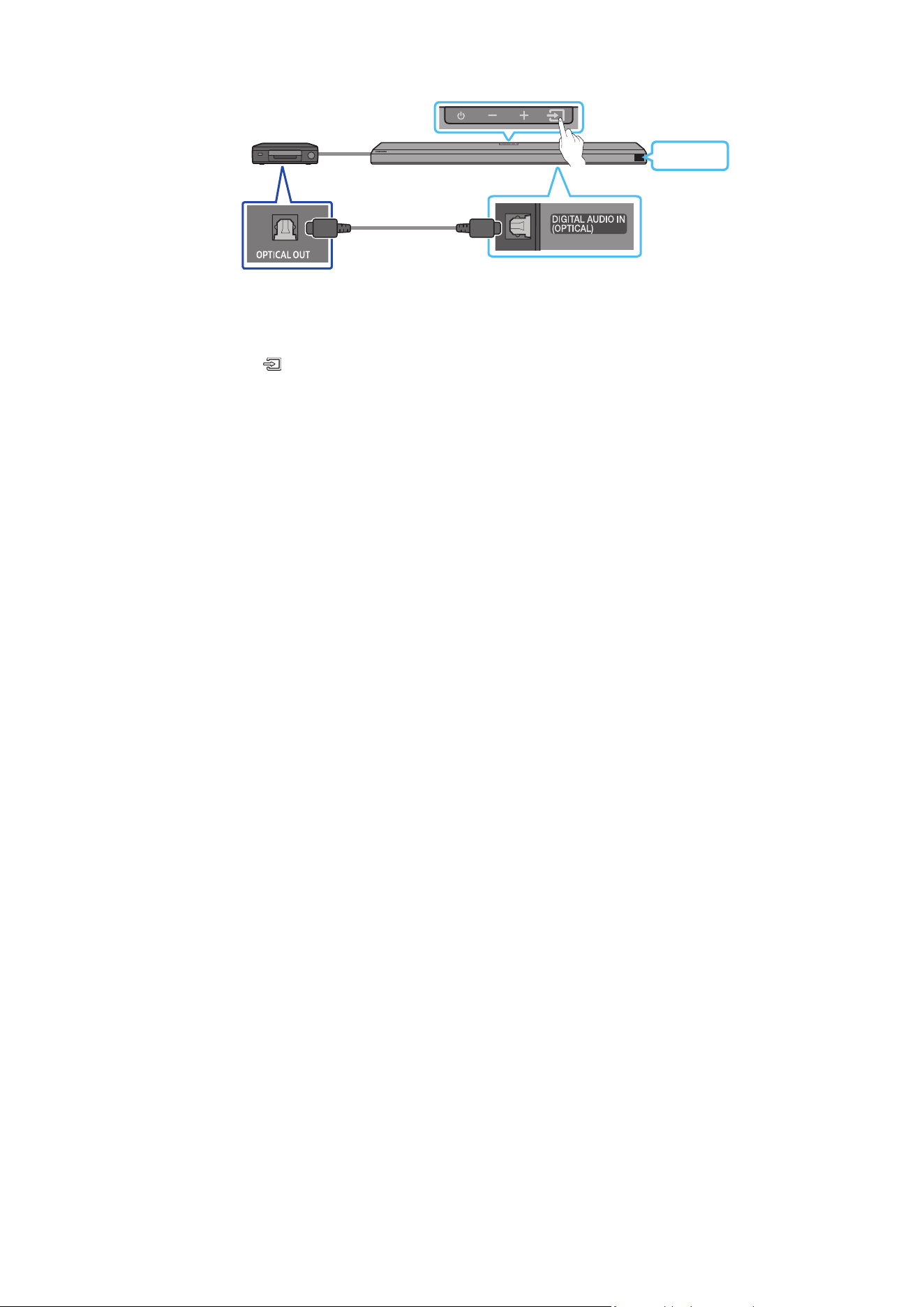
1. Use an optical cable (not supplied) to connect the DIGITAL AUDIO IN (OPTICAL) on the Soundbar main and the OPTICAL OUT port on the
external device.
2. Turn on the Soundbar and external device.
3. Select “D.IN” mode by pressing the
(Source) button on the top panel or on the remote control.
4. Your Soundbar will play sounds from the external device.
ENG - 22
08 CONNECTING A MOBILE DEVICE
Method 1. Connecting via Bluetooth
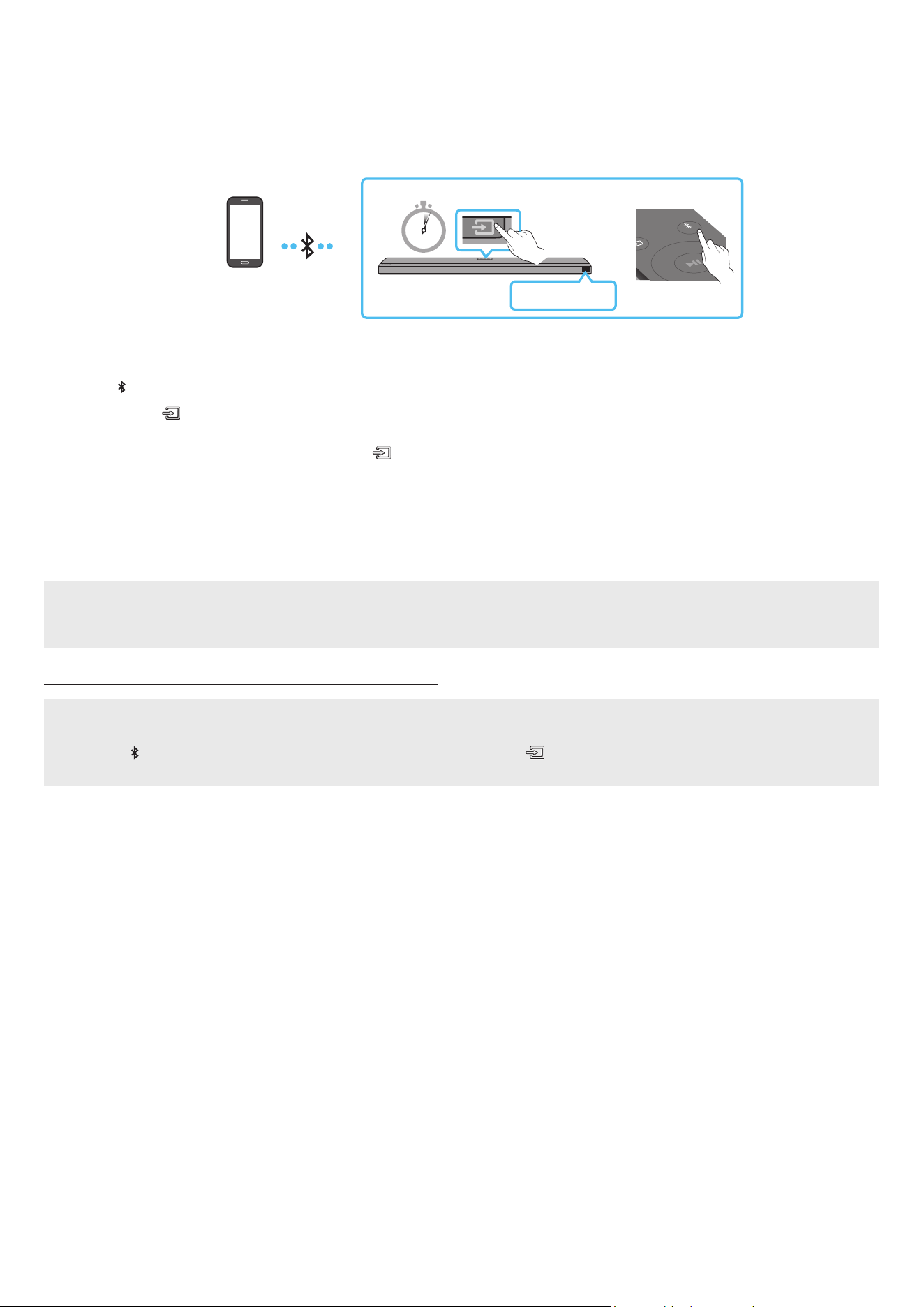
When a mobile device is connected using Bluetooth, you can hear stereo sound without the hassle of cabling.
• When you connect a paired Bluetooth device with the Soundbar off, the Soundbar automatically turns on.
5 Sec
SOUND
MODE
PAIR
Mobile device
Top of the Soundbar
OR
BT PAIRING
The initial connection
• When connecting to a new Bluetooth device, make sure the device is within 1 m distance.
1. Press the PAIR button on the Soundbar remote control to enter the “BT PAIRING” mode.
(OR)
a. Press the
(Source) button on the top panel and then select “BT”.
“BT” changes to “BT PAIRING” in a few seconds automatically or changes to “BT READY” if there is a connect record.
b. When “BT READY” appears, press and hold the (Source) button on the top panel of the Soundbar for more than 5 seconds to
display “BT PAIRING”.
2. On your device, select “[AV] Samsung Soundbar Q700A” from the list that appears.
• When the Soundbar is connected to the Mobile device, [Mobile Device Name] → “BT” appears in the front display.
3. Play music les from the device connected via Bluetooth through the Soundbar.
• After you have connected the Soundbar to your mobile device the rst time, use the “BT READY” mode to reconnect.
If the device fails to connect
• If you have an existing Soundbar (e.g., “[AV] Samsung Soundbar Q700A”) in the list of speakers on the Mobile device, delete it.
• Repeat steps 1 and 2.
What is the difference between BT READY and BT PAIRING?
• BT READY : In this mode, you can reconnect any Samsung TV or mobile device that was connected before.
• BT PAIRING : In this mode, you can connect a new device to the Soundbar.
(Press the PAIR button on the Soundbar remote control or press and hold the (Source) button on the top of the Soundbar for more
than 5 seconds while the Soundbar is in “BT” mode.)
Notes on Bluetooth connection
• Locate a new device within 1 m to connect via Bluetooth communication.
• If asked for a PIN code when connecting a Bluetooth device, enter <0000>.
• The Soundbar automatically turns off after 18 minutes in the Ready state.
• The Soundbar may not perform Bluetooth search or connection correctly under the following circumstances:
‒ If there is a strong electrical eld around the Soundbar.
‒ If several Bluetooth devices are simultaneously paired with the Soundbar.
‒ If the Bluetooth device is turned off, not in place, or malfunctions.
• Electronic devices may cause radio interference. Devices that generate electromagnetic waves must be kept away from the Soundbar main
unit - e.g., microwaves, wireless LAN devices, etc.
• The Soundbar supports SBC data (44.1kHz, 48kHz).
• Connect only to a Bluetooth device that supports the A2DP (AV) function.
• You cannot connect the Soundbar to a Bluetooth device that supports only the HF (Hands Free) function.
• When connecting the Soundbar to a Bluetooth device, place them as close to each other as possible.
• The farther the Soundbar and Bluetooth device are from each other, the lower the sound quality will become.
The Bluetooth connection may break when the devices are out of the effective range.
• The Bluetooth connection may not function as intended in areas with poor reception.
ENG - 23
• A Bluetooth device may experience noise or malfunction under in the following conditions:
‒ When the body is in contact with the signal transceiver on the Bluetooth device or Soundbar
‒ In corners or when there is an obstacle in proximity, such as a wall or partition, where electrical changes may occur.
‒ When exposed to radio interferences by other products operating on the same frequency ranges, such as medical equipment, microwave
ovens, and wireless LAN devices.
‒ Obstacles such as doors and walls may still impact the sound quality even when the devices are within the effective range.
• If prompted for a PIN code while connecting to a Bluetooth device, enter <0000>.
• Note that your Soundbar cannot be paired with other Bluetooth devices while using the Bluetooth option.
• This wireless device may cause electrical interference during operation.
Disconnecting the Bluetooth device from a Soundbar
You can disconnect a Bluetooth device from the Soundbar. For instructions, see the Bluetooth device’s user manual.
• The Soundbar will be disconnected.
• When the Soundbar is disconnected from the Bluetooth device, the Soundbar will display “BT DISCONNECTED” on the front display.
Disconnecting the Soundbar from the Bluetooth device
Presns the (Source) button on the top panel or on the remote control, and then change to any mode except “BT”.
• Disconnecting takes time because the Bluetooth device must receive a response from the Soundbar. (Disconnection time may differ,
depending on the Bluetooth device)
• When the Soundbar is disconnected from the Bluetooth device, the Soundbar will display “BT DISCONNECTED” on the front display
Method 2. Connecting via Wi-Fi (Wireless Network)
To connect a Soundbar to a mobile device via a wireless network (Wi-Fi), the SmartThings app is required.
The initial connection
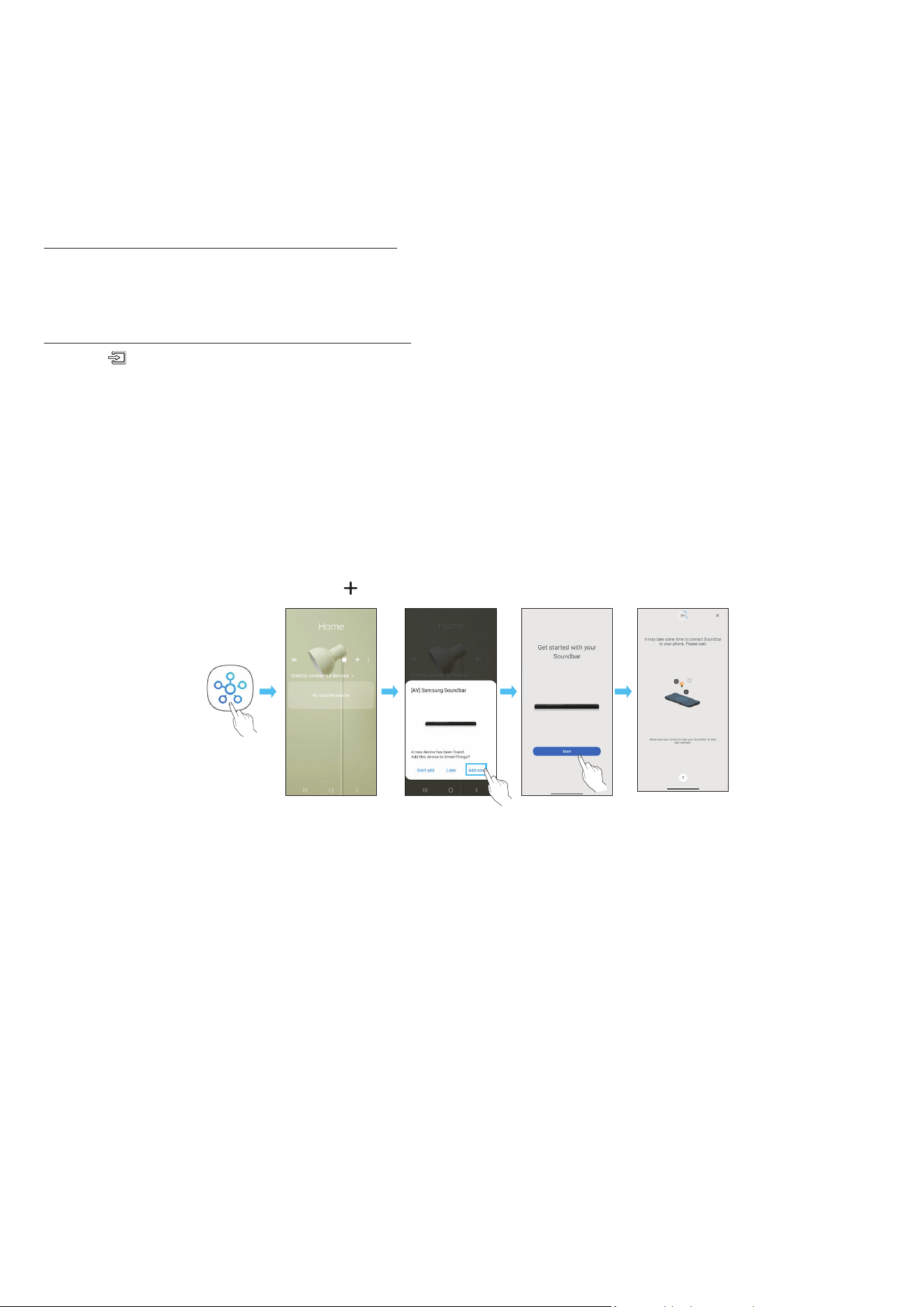
1. Install and launch the SmartThings app from your mobile device (smartphone or tablet).
2. On the app, follow the screen instructions to add the Soundbar.
• The automatic pop-up (the second screenshot below) may not show on some devices.
If the pop-up window does not appear, press “ ” on the Home screen. The Soundbar is added to the app.
Launch App Auto pop-up Add device
SmartThings
App
ENG - 24
09 GETTING STARTED WITH ALEXA ON AMAZON PRODUCT
(WORKS WITH ALEXA)
• This function may not be supported depending on the model or geographical area.
• This function only supports some languages, and the supported functions may differ depending on the geographical area.
• For product specication or compatibility, refer to the Samsung website (www.samsung.com).
• This service is provided by Amazon and can be terminated at any time. Samsung does not assume responsibility for service availability.
• Amazon Alexa app screen is subject to change without prior notice.
Connect and use with an Amazon product (Amazon Echo)
Use an Amazon Echo product to control your Soundbar and enjoy music services provided by Amazon Echo.
To use Amazon Alexa, an Amazon account is required to connect the Soundbar over the network.
1. Install the SmartThings app on your mobile device and then launch it.
2. Enter the Alexa account by following the instructions on the app and then log in the service.
Use voice commands to control the Soundbar
• The Amazon Echo service you can use with your Soundbar is limited to music. Other services provided by Amazon Echo, such as news and
weather, can only be accessed through your Amazon Echo product.
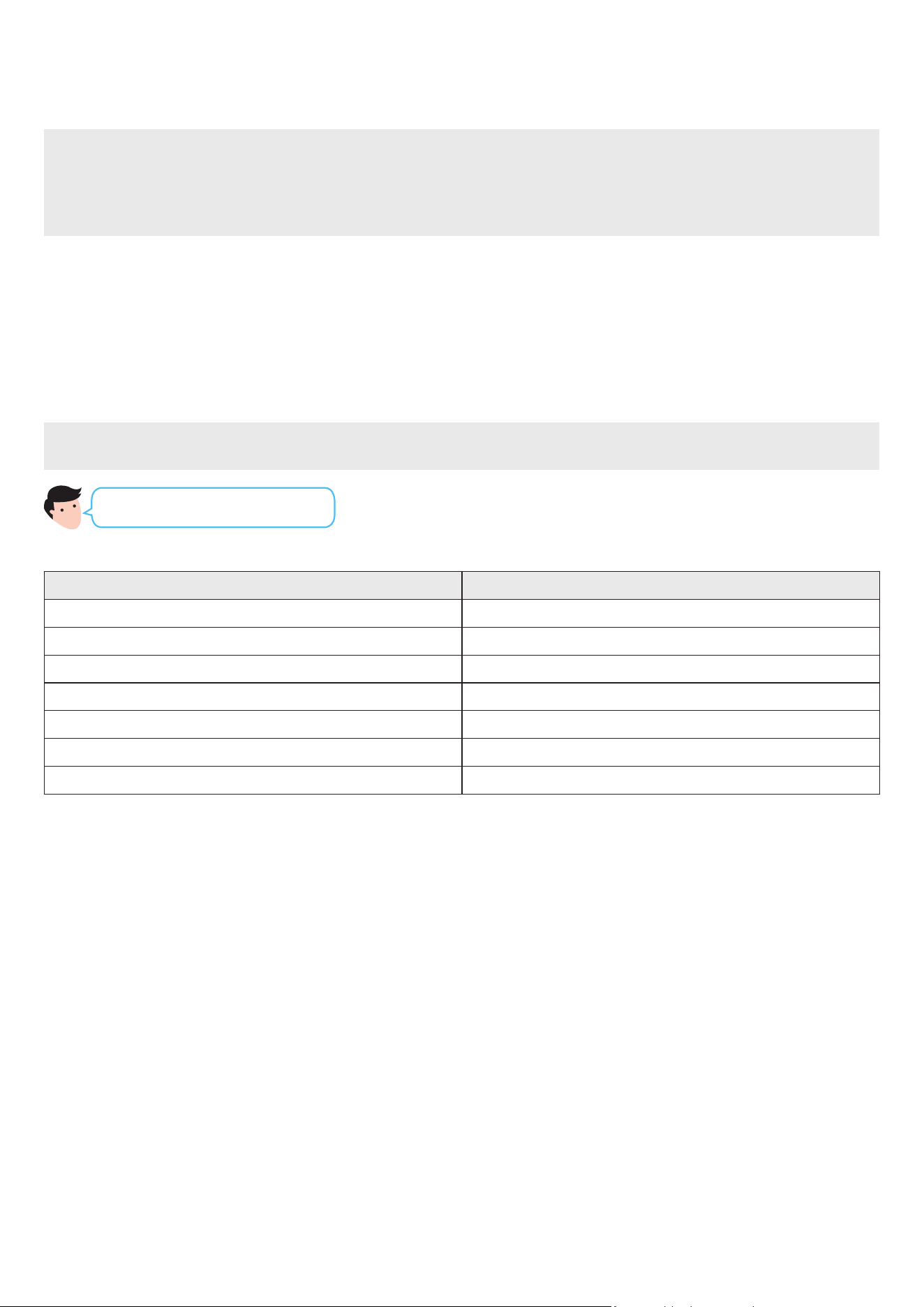
Trigger + Command + Speaker name
* To use voice commands for the Soundbar named “Living room”
Action Voice Command
To set the volume level to 5 “Alexa Set the volume to 5 on Living room”
To increase the volume level “Alexa Volume up on Living room”
To mute the sound “Alexa Mute on Living room”
To listen to a radio station named KISS FM “Alexa Play Kiss FM on Living room”
To play the next song “Alexa Next song on Living room”
To stop the audio “Alexa Stop on Living room”
To turn the audio off “Alexa Turn off on Living room”
ENG - 25
Using the Tap Sound
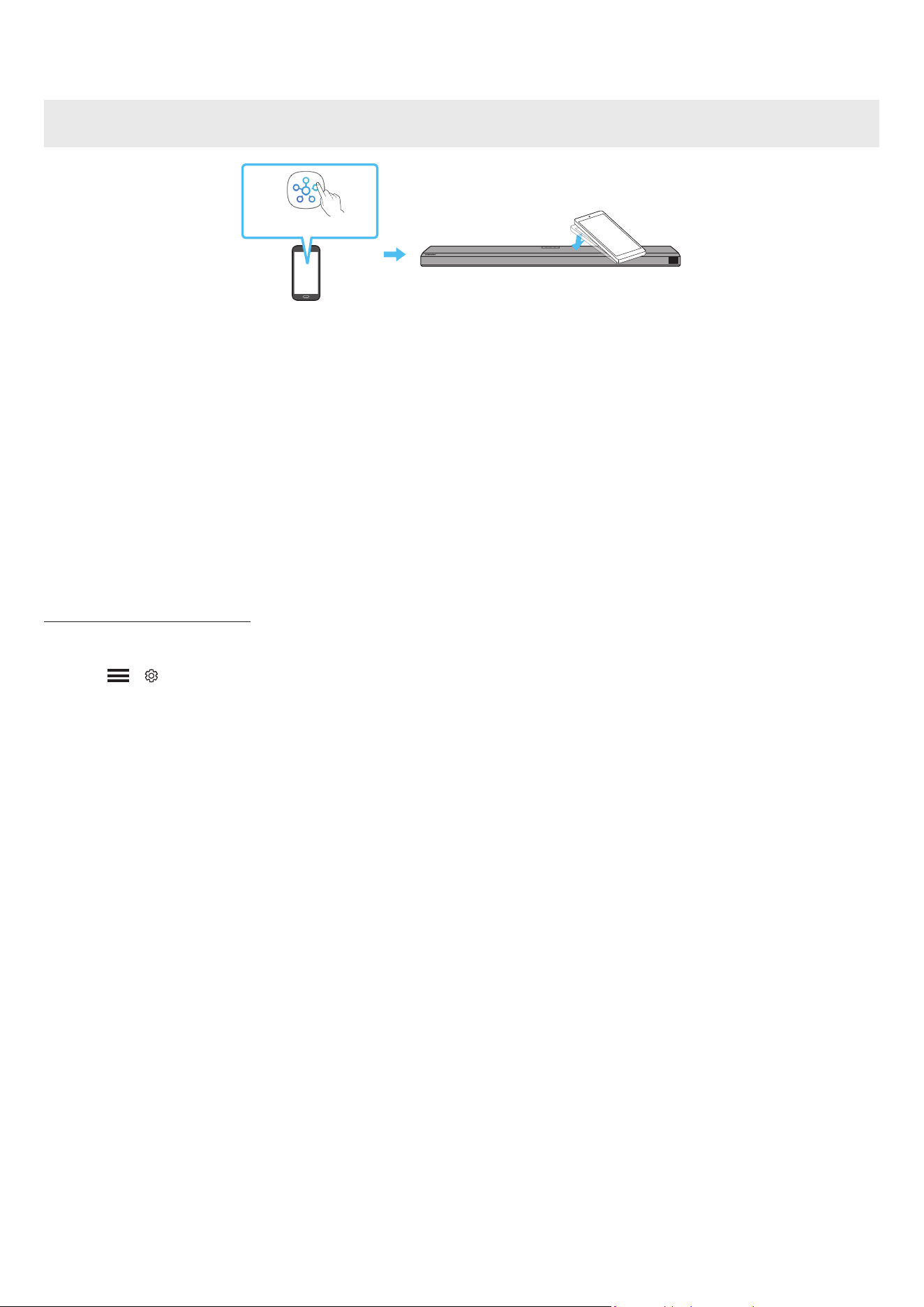
Tap the Soundbar with your mobile device to play the sound of content on the mobile device through the Soundbar.
• This function may not be supported, depending on the mobile device.
• This function is only compatible with Samsung mobile devices with Android 8.1 or later.
Top of the Soundbar
Mobile device
SmartThings App
1. Turn on the Tap Sound function on your mobile device.
• For details on how to turn on the function, refer to “Setting the Tap Sound function” below.
2. Tap the Soundbar with the mobile device. Select “Start now” in the displayed message window.
A connection is established between the mobile device and Soundbar via Bluetooth.
3. Play the sound of content on the mobile device through the Soundbar.
• This function connects a mobile device to the Soundbar via Bluetooth by detecting vibration that occurs when the device touches the
Soundbar.
• Make sure the mobile device does not tap a sharp corner of the Soundbar. The Soundbar or mobile device may become scratched or
damaged.
• It is recommended that the mobile device be covered with a case. Lightly tap the wide area in the upper portion of the Soundbar, without
using excessive force.
• To use this function, update the SmartThings app to the latest version.
The function may not be supported, depending on the app version.
Setting the Tap Sound function
Use the SmartThings app to turn on the Tap View, Tap Sound function.
1. On the mobile device, run the SmartThings app.
2. Select ( → ) in the SmartThings app screen displayed on the mobile device.
3. Set “Tap View, Tap Sound” to On to allow the function to work when a mobile device moves close to the Soundbar. The function is turned on.
NOTE
• When the mobile device is in power-saving mode, the Tap Sound function does not work.
• The Tap Sound function may not work if there are devices near the Soundbar that cause radio interference such as electric devices. Make sure
devices that may cause radio interference are placed at a sufcient distance away from the Soundbar.

ENG - 26
10 CONNECTING TO APPLE AIRPLAY 2
This feature may not be available in some countries.
Connect and use with an Apple product
• With AirPlay 2, you can control your home’s audio system from your iPhone, iPad, HomePod, or Apple TV.
• This Samsung Soundbar supports AirPlay 2 and requires iOS 11.4 or later.
NOTE
• Conrm that the Soundbar is connected to Wi-Fi. (Refer to Method 2. Connecting via Wi-Fi (Wireless Network))
ENG - 27
11 INSTALLING THE WALL
MOUNT
Installation Precautions
• Install on a vertical wall only.
• Do not install in a place with high temperature or humidity.
• Verify whether the wall is strong enough to support the product’s
weight. If not, reinforce the wall or choose another installation
point.
• Purchase and use the xing screws or anchors appropriate for
the kind of wall you have (plaster board, iron board, wood, etc.). If
possible, x the support screws into wall studs.
• Purchase wall mounting screws according to the type and
thickness of the wall you want to mount the Soundbar on.
‒ Diameter: M5
‒ Length: 35 mm or longer recommended.
• Connect cables from the unit to external devices before you install
the Soundbar on the wall.
• Make sure the unit is turned off and unplugged before you install
it. Otherwise, it may cause an electric shock.
Wallmount Components
Wall Mount Guide
x 2
x 2
(M4 x L10)
Holder-Screw Screw
x 2
Bracket-Wall Mount
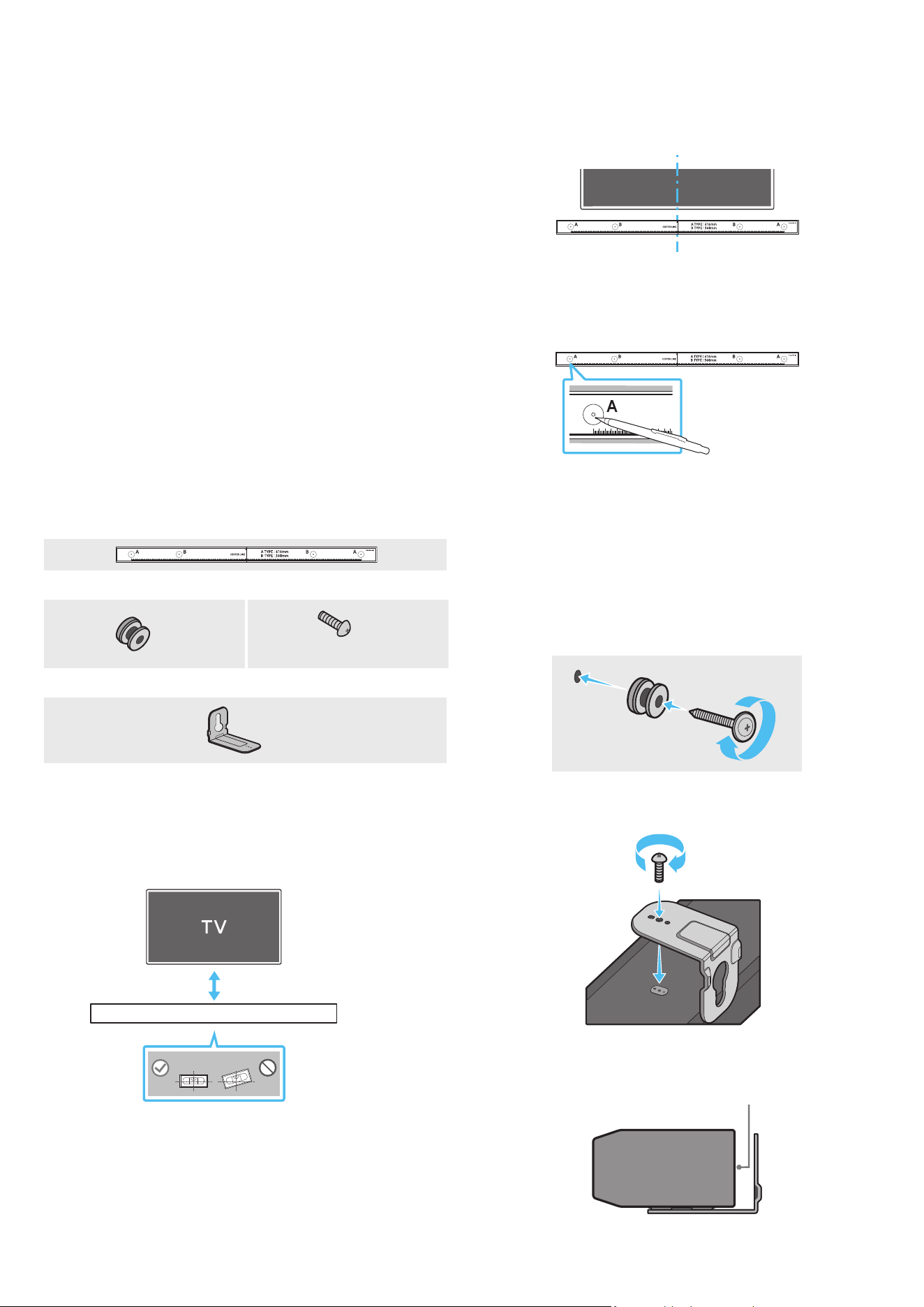
1. Place the Wall Mount Guide against the wall surface.
• The Wall Mount Guide must be level.
• If your TV is mounted on the wall, install the Soundbar at least
5 cm below the TV.
5 cm or more
2. Align the Wall Mount Guide’s Centre Line with the centre of your
TV (if you are mounting the Soundbar below your TV), and then x
the Wall Mount Guide to the wall using tape.
• If you are not mounting below a TV, place the Centre Line in the
centre of the installation area.
Centre Line
3. Push a pen tip or sharpened pencil tip through the centre of the
A-TYPE images on each end of the Guide to mark the holes for the
supporting screws, and then remove the Wall Mount Guide.
4. Using an appropriately sized drill bit, drill a hole in the wall at each
marking.
• If the markings do not correspond to the positions of studs,
make sure you insert appropriate anchors or mollies into the
holes before you insert the support screws. If you use anchors
or mollies, make sure the holes you drill are large enough for
the anchors or mollies you use.
5. Push a screw (not supplied) through each Holder-Screw, and then
screw each screw rmly into a support screw hole.
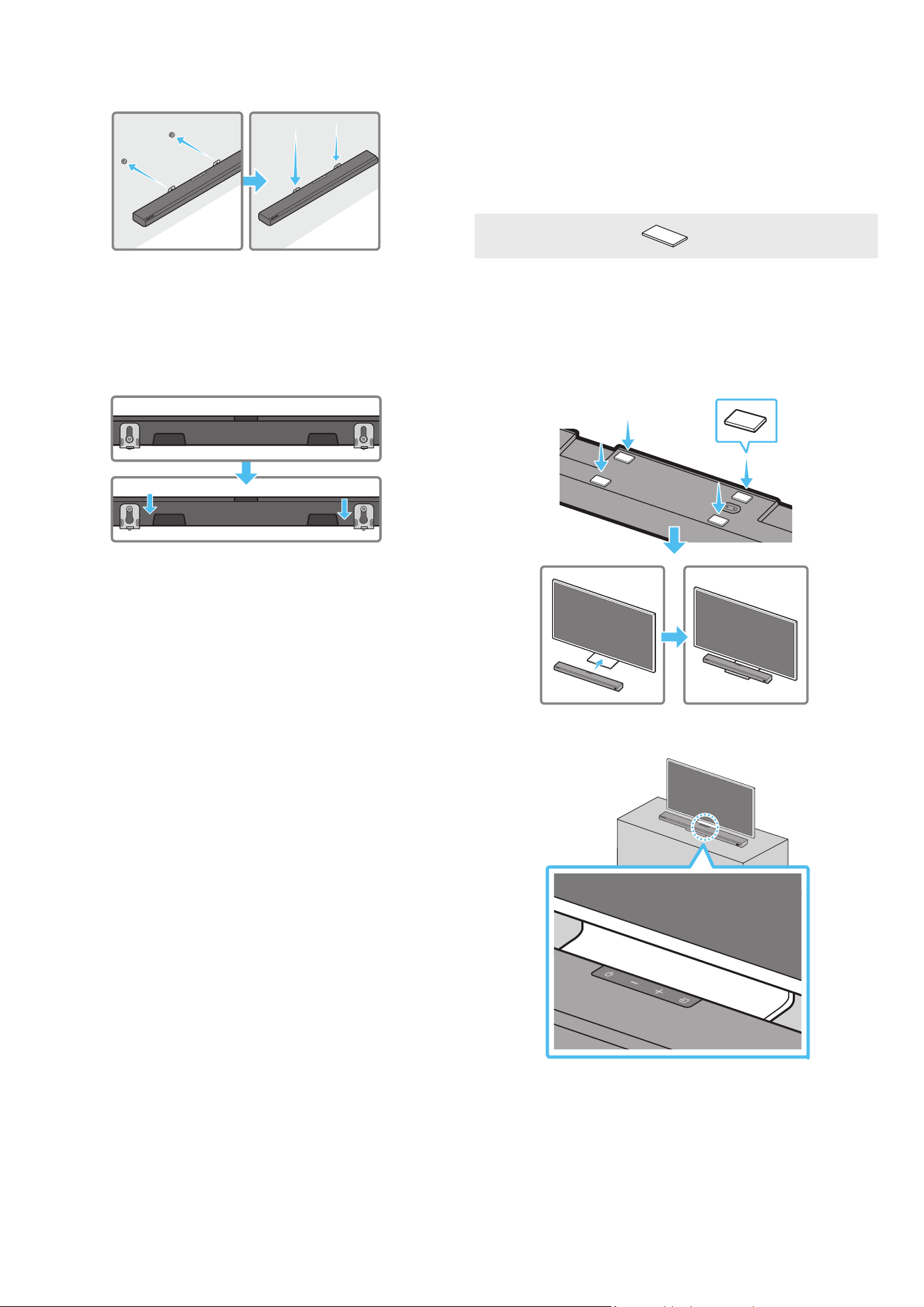
6. Install the 2 Bracket-Wall Mounts in the correct orientation on the
bottom of the Soundbar using 2 Screws.
• When assembling, make sure the hanger part of the Bracket-
Wall Mounts are located behind the rear of the Soundbar.
Rear of Soundbar
Right end of Soundbar
ENG - 28
7. Install the Soundbar with the attached Bracket-Wall Mounts by
hanging the Bracket-Wall Mounts on the Holder-Screws on the
wall.
8. Slide the Soundbar down as shown below so that the Bracket-Wall
Mounts rest securely on the Holder-Screws.
• Insert the Holder-Screws into the wide (bottom) part of the
Bracket-Wall Mounts, and then slide the Bracket-Wall Mounts
down so that the Bracket-Wall Mounts rest securely on the
Holder-Screws.
12 INSTALLING THE
SOUNDBAR ABOVE A TV
STAND
Component
x 4
Rubber-Foot
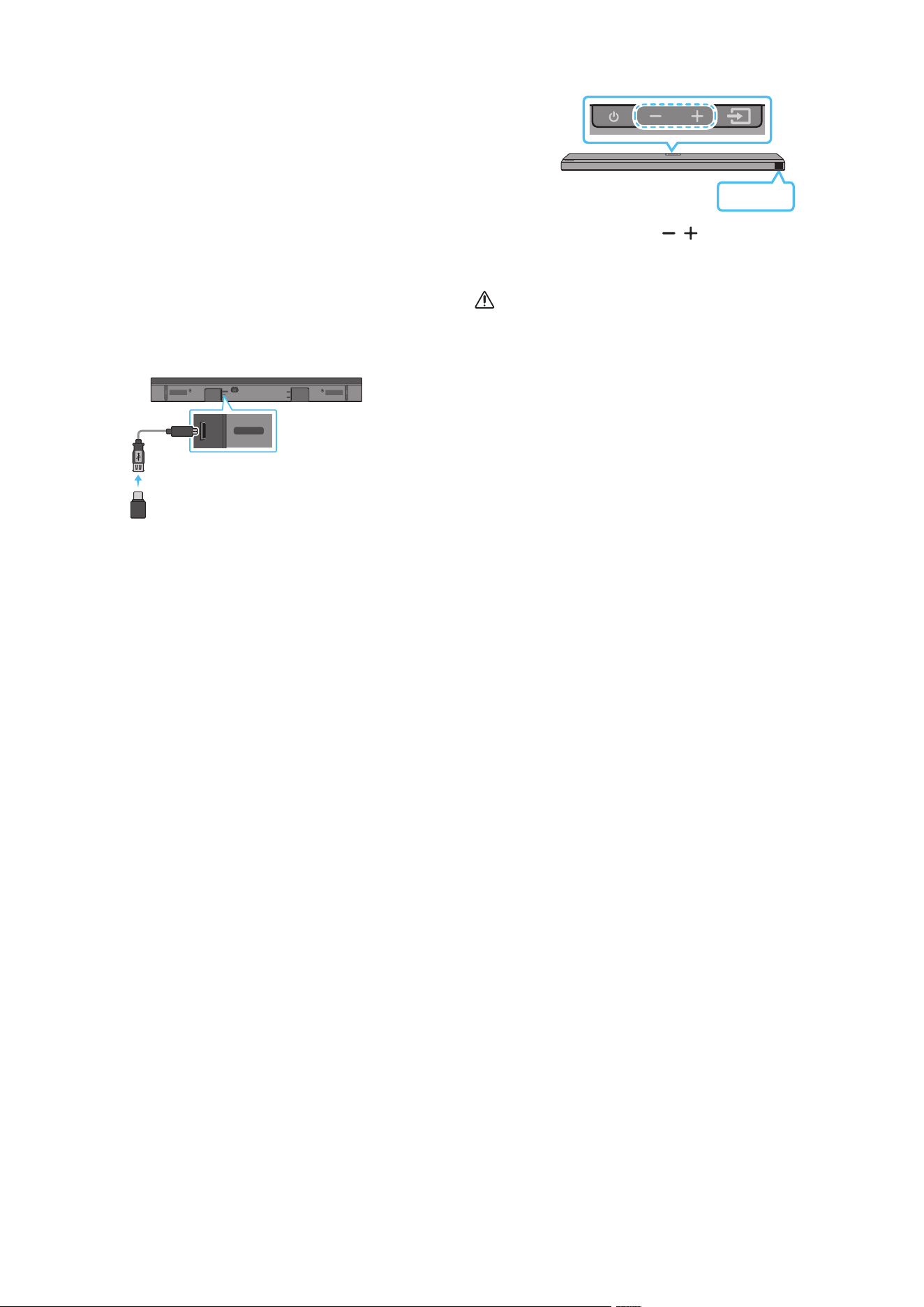
To install, attach the Rubber-Feet to the bottom of the Soundbar
before placing it in position above the TV stand. Make sure you attach
the Rubber-Feet so they do not lie outside the edges of the TV stand.
Refer to the gure below.
Rubber-Foot
Place the Soundbar on a TV stand.
As illustrated in the image, align the centre of the Soundbar with the
centre of the TV, carefully place the Soundbar onto the TV stand.
NOTE
• Make sure the Soundbar is placed on a at and solid surface.
• Insufcient gap from the TV may cause acoustic problem.
ENG - 29
13 SOFTWARE UPDATE
Auto Update
When the Soundbar is connected to the Internet, software updates
automatically occur even when the Soundbar is turned off.
• To use the Auto Update function, the Soundbar must be connected
to the Internet.
The Wi-Fi connection to the Soundbar will be terminated if
the Soundbar’s power cord is disconnected or the power is cut
off. If the power is cut off, when the power comes back on or
you reconnect the power cord, turn on the Soundbar, and then
reconnect it to the Internet.
USB Update
DIGITAL AUDIO IN
(OPTICAL)
SERVICE
DC 19V
HDMI
NETWORK ID SET
HDMI TO TV
(eARC/ARC)
HDMI IN
HDMI OUT
(TV-ARC)
DIGITAL AUDIO IN
(OPTICAL)
SERVICE
DC 19V
Bottom of the Soundbar
Micro USB to USB adapter Cable (not
supplied)
Samsung may offer updates for the Soundbar’s system rmware in the
future.
When an update is available, you can update the Soundbar by
connecting the USB drive that contains the update rmware to the
SERVICE port of the Soundbar.
1. Go to the Samsung Electronics website (www.samsung.com) →
search for the model name from the customer support menu
option.
• For more information about update, refer to Upgrade Guide.
2. Download the upgrade le (USB type).
3. Unzip the le to create a folder with the le name.
4. Store the created folder in a USB and then connect it to the
Soundbar.
5. Turn on the Soundbar. Then the product is updated within 3
minutes with displaying the message, “UPDATE”.
• During update, do not turn it off or remove the USB.
• If “UPDATE” does not appear on the display window, remove the
power cord from the Soundbar and then reconnect it.
• When the latest version is installed, no update is performed.
• Depending on the USB type, update may not be supported.
Initialisation
Top of the Soundbar
INIT
With the Soundbar on, press the (Volume) buttons on the body
at the same time for at least 5 seconds. “INIT” appears on the display
and then the Soundbar is initialised.
CAUTION
• All the settings of the Soundbar are initialised. Be sure to
perform this only when initialisation is required.

ENG - 30
14 TROUBLESHOOTING
Before seeking assistance, check the following.
Soundbar does not turn on
• Check whether the power cord of the Soundbar is correctly
inserted into the outlet.
Soundbar works erratically
• After removing the power cord, insert it again.
• Remote the power cord from the external device and try again.
• If there is no signal, the Soundbar automatically turns off after a
certain period of time. Turn on the power. (See page 9.)
In case the remote control does not work
• Point the remote directly at the soundbar.
• Replace the batteries with new ones.
The Soundbar does not output any sound
• The volume of the Soundbar is too low or muted. Adjust the
volume.
• When any external device (STB, Bluetooth device, mobile device,
etc.) is connected, adjust the volume of the external device.
• For sound output of the TV, select Soundbar. (Samsung TV:
Home (
) → Settings ( ) → Sound → Sound Output → Select
Soundbar)
• The cable connection to the Soundbar may not be loose. Remove
the cable and connect again.
• Remove the power cord completely, reconnect, and turn the
power on.
• Initialise the product and try again. (See page 29.)
The Subwoofer does not output any sound
• Check whether the LED indicator on the rear of the Subwoofer
is on in blue. Reconnect the Soundbar and Subwoofer if the
indicator is blinking in blue or turned red. (See page 13.)
• You may experience an issue if there is an obstacle between the
Soundbar and Subwoofer. Move devices to an area away from
obstacles.
• Other devices sending radio frequency signals in proximity may
interrupt the connection.
Keep your speaker away from such devices.
• Remove and reconnect the power plug.
The Subwoofer volume is too low
• The original volume of the content you are playing may be low.
Try adjusting th e Subwoofer level. (See page 10.)
• Bring the Subwoofer speaker closer to you.
In case the TV is not connected via HDMI TO TV (eARC/ARC)
• Check whether the HDMI cable is correctly connected to the ARC
terminal. (See page 16.)
• Connection may not be possible due to the connected external
device (set-top box, game machine, etc.). Directly connect the
Soundbar.
• HDMI-CEC may not be activated on the TV. Turn on the CEC on the
TV menu. (Samsung TV: Home (
) → Settings ( ) → General →
External Device Manager → Anynet+ (HDMI-CEC) ON)
• To connect with eARC, the eARC function in the TV menu should
be set to On. (Samsung TV: Home ( ) → Settings ( ) → Sound
→ Expert Settings → HDMI-eARC Mode (Auto))
There is no sound in when connecting to the TV in HDMI TO TV (eARC/
ARC) mode
• Your device is unable to play the input signal. Change the
TV’s audio output to PCM or Dolby Digital. (For a Samsung TV:
Home (
) → Settings ( ) → Sound → Expert Settings → Digital
Output Audio Format)
The soundbar will not connect via Bluetooth.
• When connecting a new device, switch to “BT PAIRING” for
connection. (Press the
PAIR button on the remote control or
press the (Source) button on the body for at least 5 seconds.)
• If the Soundbar is connected to another device, disconnect that
device rst to switch the device.
• Reconnect it after removing the Bluetooth speaker list on the
device to connect. (Samsung TV: Home ( ) → Settings ( ) →
Sound → Sound Output → Bluetooth Speaker List)
• The automatic TV connection may be disabled. While the
Soundbar is in “BT READY”, press and hold the Left button on
the Soundbar remote control for 5 seconds to select ON-TV
CONNECT. If you see OFF-TV CONNECT, press and hold Left
button again for 5 seconds to switch the selection.
• Remove and reconnect the power plug, then try again.
• Initialise the product and try again. (See page 29.)
The sound drops out when connected via Bluetooth
• Some devices can cause radio interference if they are located too
close to the Soundbar. e. g. microwaves, wireless routers, etc.
• If your device that is connected via Bluetooth moves too far away
from the soundbar, it may cause the sound to drop out. Move the
device closer to the soundbar.
• If a part of your body is in contact with the Bluetooth transceiver
or the product is installed on metal furniture, the sound may drop
out. Check the installation environment and conditions for use.
Unable to connect to Wi-Fi
• Check whether your wireless router is on.
• Turn off the router, turn it back on, and then try again.
• The soundbar will not connect if the wireless signal is too weak.
Try moving the router closer to the soundbar, or eliminating
any obstacles that are between the soundbar and the router, if
possible.
• If your wireless router is new, you will need to recongure the
speaker’s network settings.
The soundbar does not turn on automatically with the TV.
• When you turn off the Soundbar while watching TV, power
synchronization with the TV is disabled. First turn off the TV.
ENG - 31
15 LICENSE
Dolby, Dolby Atmos, and the double-D symbol are registered
trademarks of Dolby Laboratories Licensing Corporation.
Manufactured under license from Dolby Laboratories. Condential
unpublished works. Copyright © 2012-2020 Dolby Laboratories. All
rights reserved.
For DTS patents, see http://patents.dts.com. Manufactured under
license from DTS, Inc. (for companies headquartered in the U.S./
Japan/Taiwan) or under license from DTS Licensing Limited
(for all other companies). DTS, DTS:X Pro, DTS:X, and the DTS:X
logo are registered trademarks or trademarks of DTS, Inc. in the
United States and other countries. © 2020 DTS, Inc. ALL RIGHTS
RESERVED.
The terms HDMI and HDMI High-Denition Multimedia Interface,
and the HDMI Logo are trademarks or registered trademarks of
HDMI Licensing Administrator, Inc. in the United States and other
countries.
• Use your phone, tablet or computer as a remote control for
Spotify. Go to spotify.com/connect to learn how
• The Spotify Software is subject to third party licenses found
here: https://www.spotify.com/connect/third-party-licenses.
* This function may not be supported depending on the model or
geographical area.
• Apple, AirPlay, iPhone, iPad, HomePod, and Apple TV are
trademarks of Apple Inc., registered in the U.S. and other
countries.
• Use of the Works with Apple badge means that an accessory
has been designed to work specically with the technology
identied in the badge and has been certied by the developer
to meet Apple performance standards.
16 OPEN SOURCE LICENSE
NOTICE
To send inquiries and requests for questions regarding open sources,
contact Samsung Open Source (http://opensource.samsung.com)
17 IMPORTANT NOTES ABOUT
SERVICE
Figures and illustrations in this User Manual are provided for
reference only and may differ from actual product appearance.

ENG - 32
18 SPECIFICATIONS AND GUIDE
Specications
Model Name HW-Q700A
Weight 3.6 kg
Dimensions (W x H x D) 980.0 x 60.0 x 115.0 mm
Operating Temperature Range +5°C to +35°C
Operating Humidity Range 10 % ~ 75 %
AMPLIFIER
Rated Output power ((30 W x 4) + (20 W x 2) + 10 W) + 160 W
Supported play formats
Dolby 5.1ch / Dolby Digital Plus / Dolby TRUE HD / Dolby ATMOS
DTS 5.1ch / DTS HD / DTS-HD Master Audio / DTS:X / LPCM 8Ch
Subwoofer Name PS-WA75B
Weight 5.9 kg
Dimensions (W x H x D) 205.0 x 353.0 x 302.0 mm
AMPLIFIER
Rated Output power 160 W
NOTE
• Samsung Electronics Co., Ltd reserves the right to change the specications without notice.
• Weight and dimensions are approximate.
Precaution : The Soundbar will restart automatically if you turn on/turn off Wi-Fi.
Wi-Fi
Port deactivation method
Press the ID SET button on the bottom panel of the Soundbar for 30 seconds to turn Wi-
Fi On / Off.
Bluetooth
Port deactivation method
Press the NETWORK button on the bottom panel of the Soundbar for 30 seconds to turn
Bluetooth On / Off.
FRA - 2
INFORMATIONS DE SÉCURITÉ
AVERTISSEMENTS DE SÉCURITÉ
POUR LIMITER LE RISQUE DE CHOC ÉLECTRIQUE, NE RETIREZ PAS LE
CACHE (OU LE DOS).
L’INTÉRIEUR NE CONTIENT AUCUNE PIÈCE RÉPARABLE PAR L’UTILISATEUR.
CONFIEZ TOUTE RÉPARATION AU PERSONNEL D’ENTRETIEN QUALIFIÉ.
Reportez-vous au tableau ci-dessous pour une explication des symboles
pouvant gurer sur votre produit Samsung.
ATTENTION
RISQUE DE CHOC ÉLECTRIQUE. NE PAS OUVRIR.
Ce symbole indique que ce produit est alimenté par haute
tension. Il est dangereux de toucher la moindre pièce située à
l’intérieur de ce produit.
Ce symbole indique qu’une documentation importante
relative au fonctionnement et à l’entretien est fournie avec le
produit.
Produit de classe II : Ce symbole indique qu’aucun
raccordement de sécurité à la terre (prise de terre) n’est
requis.
Si ce symbole n’est pas présent sur un produit avec un cordon
d’alimentation, le produit DOIT avoir une connexion de
protection able à la terre.
Tension CA : La tension nominale indiquée par ce symbole est
une tension CA.
Tension CC : La tension nominale indiquée par ce symbole est
une tension CC.
Attention. Consulter le mode d’emploi : ce symbole avertit
l’utilisateur qu’il doit consulter le manuel utilisateur pour plus
d’informations relatives à la sécurité.
AVERTISSEMENT
• Pour réduire le risque d’incendie ou de choc électrique, n’exposez pas cet
appareil à la pluie ou à l’humidité.
ATTENTION
• AFIN DE PRÉVENIR TOUT RISQUE D'ÉLECTROCUTION, INSÉRER
COMPLÈTEMENT LA FICHE LARGE DE LA PRISE DANS LA FENTE
CORRESPONDANTE.
• Cet appareil doit toujours être branché sur une prise CA disposant d'une
mise à la terre de protection.
• Pour débrancher l'appareil du secteur, la che doit être retirée de la
prise secteur, c'est pourquoi celle-ci doit être facilement accessible.
• N’exposez pas l’appareil aux égouttements ou aux éclaboussures. Ne
posez pas sur l’appareil des objets contenant des liquides, tels que des
vases.
• Pour mettre l’appareil complètement hors tension, vous devez le
débrancher de la prise murale. En conséquence, la prise murale doit être
facilement accessible en permanence.

FRA - 3
PRÉCAUTIONS
1. Vériez que l’alimentation électrique CA de votre logement respecte
les conditions en matière d’alimentation répertoriées sur l’étiquette
d’identication située à l'arrière de votre produit. Installez le produit
horizontalement, sur un support adéquat (meuble), en laissant
sufsamment d'espace autour pour garantir une bonne ventilation (7 à
10 cm). Vériez que les fentes de ventilation ne sont pas couvertes. Ne
placez pas l'unité sur des haut-parleurs ou sur tout autre équipement
susceptible de devenir chaud. Cette unité a été conçue pour une
utilisation continue.
Pour l'éteindre complètement, débranchez la prise CA de la prise
murale. Débranchez l’appareil si vous envisagez de ne pas l’utiliser
durant une longue période.
2. En cas d’orage, débranchez la prise CA de la prise murale. Les pointes de
tension occasionnées par les éclairs risquent d’endommager l’appareil.
3. N’exposez pas l’unité à la lumière directe du soleil ou à d’autres
sources de chaleur. Cela pourrait entraîner une surchauffe et des
dysfonctionnements.
4. Protégez le produit de l’humidité et de la chaleur excessive (comme
une cheminée) ou de tout équipement capable de créer des champs
magnétiques ou électriques. Débranchez le câble d’alimentation de la
prise murale CA si l’unité présente un dysfonctionnement. Le produit
n'a pas été conçu pour une utilisation industrielle, mais pour une
utilisation personnelle uniquement. De la condensation peut se former
si le produit a été stocké à basse température. Si vous transportez
l'unité en hiver, attendez environ 2 heures, le temps qu'elle atteigne la
température ambiante, avant de l'utiliser.
5. La pile utilisée dans cet appareil contient des produits chimiques
néfastes pour l’environnement. Ne jetez pas la pile avec vos déchets
ménagers. N’exposez pas la pile à une source de chaleur excessive, à la
lumière directe du soleil ou à des ammes. Vous ne devez pas court-
circuiter, démonter ou surchauffer la pile.
ATTENTION : Le remplacement inadapté de la pile risque d’entraîner une
explosion. Remplacez-les exclusivement par des piles du même type.

FRA - 4
CONTENU
01 Vérication des composants 6
02 Vue d'ensemble du produit 7
Panneau frontal/supérieur de la Soundbar. . . . . . . . . . . . . . . . . . . . . . . . . . . . . . . . . . . . . . . . . . . . . . . . . . . . . . . . . . . . . . . . . . . . . . . . . . . . . . . . . . . . . . . . . . . . . . . . . . 7
Panneau arrière de la Soundbar. . . . . . . . . . . . . . . . . . . . . . . . . . . . . . . . . . . . . . . . . . . . . . . . . . . . . . . . . . . . . . . . . . . . . . . . . . . . . . . . . . . . . . . . . . . . . . . . . . . . . . . . . . . . 7
03 Utilisation de la télécommande de la Soundbar 9
Insertion des piles avant l'utilisation de la télécommande (2 piles AA). . . . . . . . . . . . . . . . . . . . . . . . . . . . . . . . . . . . . . . . . . . . . . . . . . . . . . . . . . . . . . . . . . . . . . . . 9
Comment utiliser la télécommande . . . . . . . . . . . . . . . . . . . . . . . . . . . . . . . . . . . . . . . . . . . . . . . . . . . . . . . . . . . . . . . . . . . . . . . . . . . . . . . . . . . . . . . . . . . . . . . . . . . . . . . . 9
Utilisation des touches dissimulées (Touches avec plus d'une fonction). . . . . . . . . . . . . . . . . . . . . . . . . . . . . . . . . . . . . . . . . . . . . . . . . . . . . . . . . . . . . . . . . . . . . . 11
Spécications de sortie pour les différents modes d'effets sonore . . . . . . . . . . . . . . . . . . . . . . . . . . . . . . . . . . . . . . . . . . . . . . . . . . . . . . . . . . . . . . . . . . . . . . . . . . . 11
Réglage du volume de la Soundbar avec une télécommande de téléviseur. . . . . . . . . . . . . . . . . . . . . . . . . . . . . . . . . . . . . . . . . . . . . . . . . . . . . . . . . . . . . . . . . . . 12
04 Connexion de la Soundbar 13
Connexion de l'alimentation et des unités . . . . . . . . . . . . . . . . . . . . . . . . . . . . . . . . . . . . . . . . . . . . . . . . . . . . . . . . . . . . . . . . . . . . . . . . . . . . . . . . . . . . . . . . . . . . . . . . . 13
‒ Connexion manuelle du subwoofer . . . . . . . . . . . . . . . . . . . . . . . . . . . . . . . . . . . . . . . . . . . . . . . . . . . . . . . . . . . . . . . . . . . . . . . . . . . . . . . . . . . . . . . . . . . . . . . . . . . . 13
‒ Voyants LED situés à l'arrière du subwoofer . . . . . . . . . . . . . . . . . . . . . . . . . . . . . . . . . . . . . . . . . . . . . . . . . . . . . . . . . . . . . . . . . . . . . . . . . . . . . . . . . . . . . . . . . . . . 14
Connexion d'un kit SWA-9500S (vendu séparément) à votre Soundbar. . . . . . . . . . . . . . . . . . . . . . . . . . . . . . . . . . . . . . . . . . . . . . . . . . . . . . . . . . . . . . . . . . . . . . . 15
05 Connexion laire avec le téléviseur 16
Méthode 1. Connexion par HDMI . . . . . . . . . . . . . . . . . . . . . . . . . . . . . . . . . . . . . . . . . . . . . . . . . . . . . . . . . . . . . . . . . . . . . . . . . . . . . . . . . . . . . . . . . . . . . . . . . . . . . . . . . . 16
‒ Connexion à un téléviseur qui prend en charge HDMI ARC (canal de retour audio) . . . . . . . . . . . . . . . . . . . . . . . . . . . . . . . . . . . . . . . . . . . . . . . . . . . . . . . . . 16
Méthode 2. Connexion à l'aide d'un câble optique . . . . . . . . . . . . . . . . . . . . . . . . . . . . . . . . . . . . . . . . . . . . . . . . . . . . . . . . . . . . . . . . . . . . . . . . . . . . . . . . . . . . . . . . . . 17
06 Connexion sans l avec le téléviseur 18
Méthode 1. Connexion via Bluetooth . . . . . . . . . . . . . . . . . . . . . . . . . . . . . . . . . . . . . . . . . . . . . . . . . . . . . . . . . . . . . . . . . . . . . . . . . . . . . . . . . . . . . . . . . . . . . . . . . . . . . . 18
Méthode 2. Connexion via Wi-Fi. . . . . . . . . . . . . . . . . . . . . . . . . . . . . . . . . . . . . . . . . . . . . . . . . . . . . . . . . . . . . . . . . . . . . . . . . . . . . . . . . . . . . . . . . . . . . . . . . . . . . . . . . . . 19
07 Connexion d'un appareil externe 20
Méthode 1. Connexion à l'aide d'un câble HDMI (prise en charge du décodage et de la lecture Dolby Atmos). . . . . . . . . . . . . . . . . . . . . . . . . . . . . . . . . . . . 20
Méthode 2. Connexion à l'aide d'un câble optique . . . . . . . . . . . . . . . . . . . . . . . . . . . . . . . . . . . . . . . . . . . . . . . . . . . . . . . . . . . . . . . . . . . . . . . . . . . . . . . . . . . . . . . . . . 21
08 Connexion d'un appareil mobile 22
Méthode 1. Connexion via Bluetooth . . . . . . . . . . . . . . . . . . . . . . . . . . . . . . . . . . . . . . . . . . . . . . . . . . . . . . . . . . . . . . . . . . . . . . . . . . . . . . . . . . . . . . . . . . . . . . . . . . . . . . 22
Méthode 2. Connexion via Wi-Fi (Réseau sans l). . . . . . . . . . . . . . . . . . . . . . . . . . . . . . . . . . . . . . . . . . . . . . . . . . . . . . . . . . . . . . . . . . . . . . . . . . . . . . . . . . . . . . . . . . . 23
09 Premiers pas avec Alexa sur un produit Amazon (compatible avec Alexa) 24
Connexion et utilisation avec un produit Amazon (Amazon Echo). . . . . . . . . . . . . . . . . . . . . . . . . . . . . . . . . . . . . . . . . . . . . . . . . . . . . . . . . . . . . . . . . . . . . . . . . . . . 24
Utilisez les commandes vocales pour contrôler la Soundbar. . . . . . . . . . . . . . . . . . . . . . . . . . . . . . . . . . . . . . . . . . . . . . . . . . . . . . . . . . . . . . . . . . . . . . . . . . . . . . . . . 24
Utilisation de la fonction Tap Sound. . . . . . . . . . . . . . . . . . . . . . . . . . . . . . . . . . . . . . . . . . . . . . . . . . . . . . . . . . . . . . . . . . . . . . . . . . . . . . . . . . . . . . . . . . . . . . . . . . . . . . . 25
10 Connexion à Apple AirPlay 2 26
Connexion et utilisation avec un produit Apple. . . . . . . . . . . . . . . . . . . . . . . . . . . . . . . . . . . . . . . . . . . . . . . . . . . . . . . . . . . . . . . . . . . . . . . . . . . . . . . . . . . . . . . . . . . . . 26
11 Installation de la xation murale 27
Précautions d'installation . . . . . . . . . . . . . . . . . . . . . . . . . . . . . . . . . . . . . . . . . . . . . . . . . . . . . . . . . . . . . . . . . . . . . . . . . . . . . . . . . . . . . . . . . . . . . . . . . . . . . . . . . . . . . . . . 27
Composants de xation murale . . . . . . . . . . . . . . . . . . . . . . . . . . . . . . . . . . . . . . . . . . . . . . . . . . . . . . . . . . . . . . . . . . . . . . . . . . . . . . . . . . . . . . . . . . . . . . . . . . . . . . . . . . . 27

FRA - 5
12 Installation de la Soundbar au-dessus d'un socle de téléviseur 28
Composant. . . . . . . . . . . . . . . . . . . . . . . . . . . . . . . . . . . . . . . . . . . . . . . . . . . . . . . . . . . . . . . . . . . . . . . . . . . . . . . . . . . . . . . . . . . . . . . . . . . . . . . . . . . . . . . . . . . . . . . . . . . . . . 28
13 Mise à jour du logiciel 29
Mise à jour automatique. . . . . . . . . . . . . . . . . . . . . . . . . . . . . . . . . . . . . . . . . . . . . . . . . . . . . . . . . . . . . . . . . . . . . . . . . . . . . . . . . . . . . . . . . . . . . . . . . . . . . . . . . . . . . . . . . . 29
Mise à jour par USB . . . . . . . . . . . . . . . . . . . . . . . . . . . . . . . . . . . . . . . . . . . . . . . . . . . . . . . . . . . . . . . . . . . . . . . . . . . . . . . . . . . . . . . . . . . . . . . . . . . . . . . . . . . . . . . . . . . . . . 29
Initialisation. . . . . . . . . . . . . . . . . . . . . . . . . . . . . . . . . . . . . . . . . . . . . . . . . . . . . . . . . . . . . . . . . . . . . . . . . . . . . . . . . . . . . . . . . . . . . . . . . . . . . . . . . . . . . . . . . . . . . . . . . . . . . 29
14 Dépannage 30
15 Licence 31
16 Avis concernant les Licences libres 31
17 Remarques importantes relatives au service 31
18 Spécications et guide 32
Caractéristiques techniques . . . . . . . . . . . . . . . . . . . . . . . . . . . . . . . . . . . . . . . . . . . . . . . . . . . . . . . . . . . . . . . . . . . . . . . . . . . . . . . . . . . . . . . . . . . . . . . . . . . . . . . . . . . . . . 32
FRA - 6
01 VÉRIFICATION DES COMPOSANTS
VOL WOOFER
SOUNDBAR
SOUND
MODE
PAIR
Unité principale Soundbar Télécommande/Piles de la Soundbar Subwoofer
x 2
Cordon d'alimentation
(caisson de basse, Soundbar)
Adaptateur CA/CC (Soundbar) Câble HDMI
x 2
x 2
(M4 x L10)
Guide de xation murale Vis de xation Vis
x 2
x 4
Support de xation murale Pied en caoutchouc
• Pour plus d’informations sur l’alimentation et la consommation électriques, reportez-vous à l’étiquette collée sur le produit. (Étiquette : située à l'arrière
de l'unité principale Soundbar)
• Pour acheter des câbles en option ou des composants supplémentaires, contactez un Centre de service Samsung ou le Service client de Samsung.
• Pour plus d'informations au sujet de la xation murale ou des pieds en caoutchouc, consultez les pages 27 et 28.
• La conception, les spécications et l'écran de l'application sont sujets à changement sans préavis.
• L'apparence des accessoires peut légèrement différer des illustrations ci-dessus.
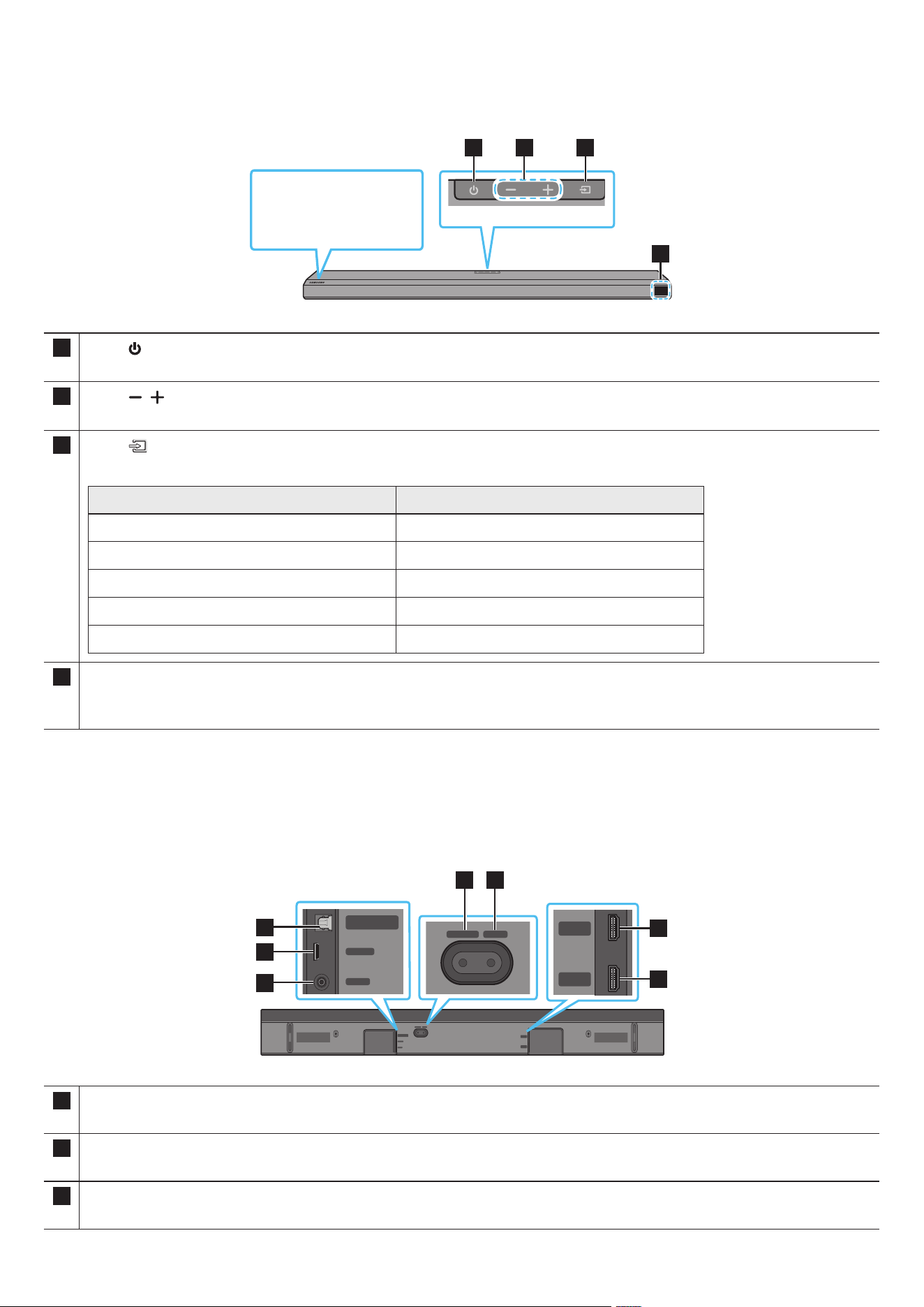
FRA - 7
02 VUE D'ENSEMBLE DU PRODUIT
Panneau frontal/supérieur de la Soundbar
1 2 3
4
Posez le produit de façon à
ce que logo SAMSUNG soit
situé sur le haut.
1
Touche
(Alimentation)
Allume et éteint l'appareil.
2
Touche
(Volume)
Règle le volume.
3
Touche
(Source)
Sélectionne le mode d'entrée de la source.
Mode d'entrée Écran
Entrée numérique optique D.IN
Entrée ARC (sortie HDMI) D.IN → TV ARC (conversion auto)
Entrée HDMI HDMI
Mode Wi-Fi WIFI
Mode BLUETOOTH BT
4 Écran
Afche l'état du produit et le mode actuel.
D.IN → HDMI → Wi-Fi → BT
• Lorsque vous branchez le cordon CA, le bouton d'alimentation commence à fonctionner après 4 à 6 secondes.
• Lorsque vous allumez cette unité, il y a un délai de 4 à 5 secondes avant qu'elle ne produise du son.
• Si vous entendez du son provenant du téléviseur et de la Soundbar, allez dans le menu Paramètres pour l'audio du téléviseur et réglez l'enceinte du
téléviseur sur Enceinte externe.
Panneau arrière de la Soundbar
DIGITAL AUDIO IN
(OPTICAL)
SERVICE
DC 19V
HDMI
NETWORK ID SET
DIGITAL AUDIO IN
(OPTICAL)
SERVICE
NETWORK ID SET
HDMI TO TV
(eARC/ARC)
HDMI IN
HDMI OUT
(TV-ARC)
DIGITAL AUDIO IN
(OPTICAL)
SERVICE
DC 19V
DIGITAL AUDIO IN
(OPTICAL)
SERVICE
DC 19V
HDMI
HDMI TO TV
(eARC/ARC)
DIGITAL AUDIO IN
(OPTICAL)
SERVICE
DC 19V
HDMI
NETWORK ID SET
DIGITAL AUDIO IN
(OPTICAL)
SERVICE
NETWORK ID SET
HDMI TO TV
(eARC/ARC)
HDMI IN
HDMI OUT
(TV-ARC)
DIGITAL AUDIO IN
(OPTICAL)
SERVICE
DC 19V
DIGITAL AUDIO IN
(OPTICAL)
SERVICE
DC 19V
HDMI
HDMI TO TV
(eARC/ARC)
DIGITAL AUDIO IN
(OPTICAL)
SERVICE
DC 19V
HDMI
NETWORK ID SET
DIGITAL AUDIO IN
(OPTICAL)
SERVICE
NETWORK ID SET
HDMI TO TV
(eARC/ARC)
HDMI IN
HDMI OUT
(TV-ARC)
DIGITAL AUDIO IN
(OPTICAL)
SERVICE
DC 19V
DIGITAL AUDIO IN
(OPTICAL)
SERVICE
DC 19V
HDMI
HDMI TO TV
(eARC/ARC)
DIGITAL AUDIO IN
(OPTICAL)
SERVICE
DC 19V
HDMI
NETWORK ID SET
DIGITAL AUDIO IN
(OPTICAL)
SERVICE
NETWORK ID SET
HDMI TO TV
(eARC/ARC)
HDMI IN
HDMI OUT
(TV-ARC)
DIGITAL AUDIO IN
(OPTICAL)
SERVICE
DC 19V
DIGITAL AUDIO IN
(OPTICAL)
SERVICE
DC 19V
HDMI
HDMI TO TV
(eARC/ARC)
1
2
3
4 5
6
7
1 DIGITAL AUDIO IN (OPTICAL)
Connectez la sortie (optique) numérique d'un appareil externe. (Voir page 21)
2 SERVICE
Connectez un appareil de stockage USB pour mettre à jour le logiciel du produit.
3 DC 19V (Entrée d'alimentation)
Connectez l'adaptateur d'alimentation CA/CC. (Voir page 13)

FRA - 8
4 NETWORK
Appuyez pour établir la connexion à un réseau sans l (Wi-Fi) via l'application SmartThings.
5 ID SET
Appuyez pour établir une connexion sans l entre la Soundbar et des enceintes surround et un subwoofer. (Les enceintes surround sont vendues
séparément.)
6 HDMI
Permet l'entrée simultanée de signaux audio et vidéo par l'intermédiaire d'un câble HDMI.
Connectez ce port à la sortie HDMI d’un appareil externe. (Voir page 20)
7 HDMI TO TV (eARC/ARC)
Connectez ce port à la prise jack HDMI d'un téléviseur. (Voir page 16)
• Lorsque vous débranchez le câble d'alimentation de l'adaptateur d'alimentation CA/CC d'une prise de courant murale, retirez la che.
Ne tirez pas sur le câble.
• Ne branchez pas cette unité ou d'autres composants à une prise CA tant que toutes les connexions entre les composants n'ont pas été faites.
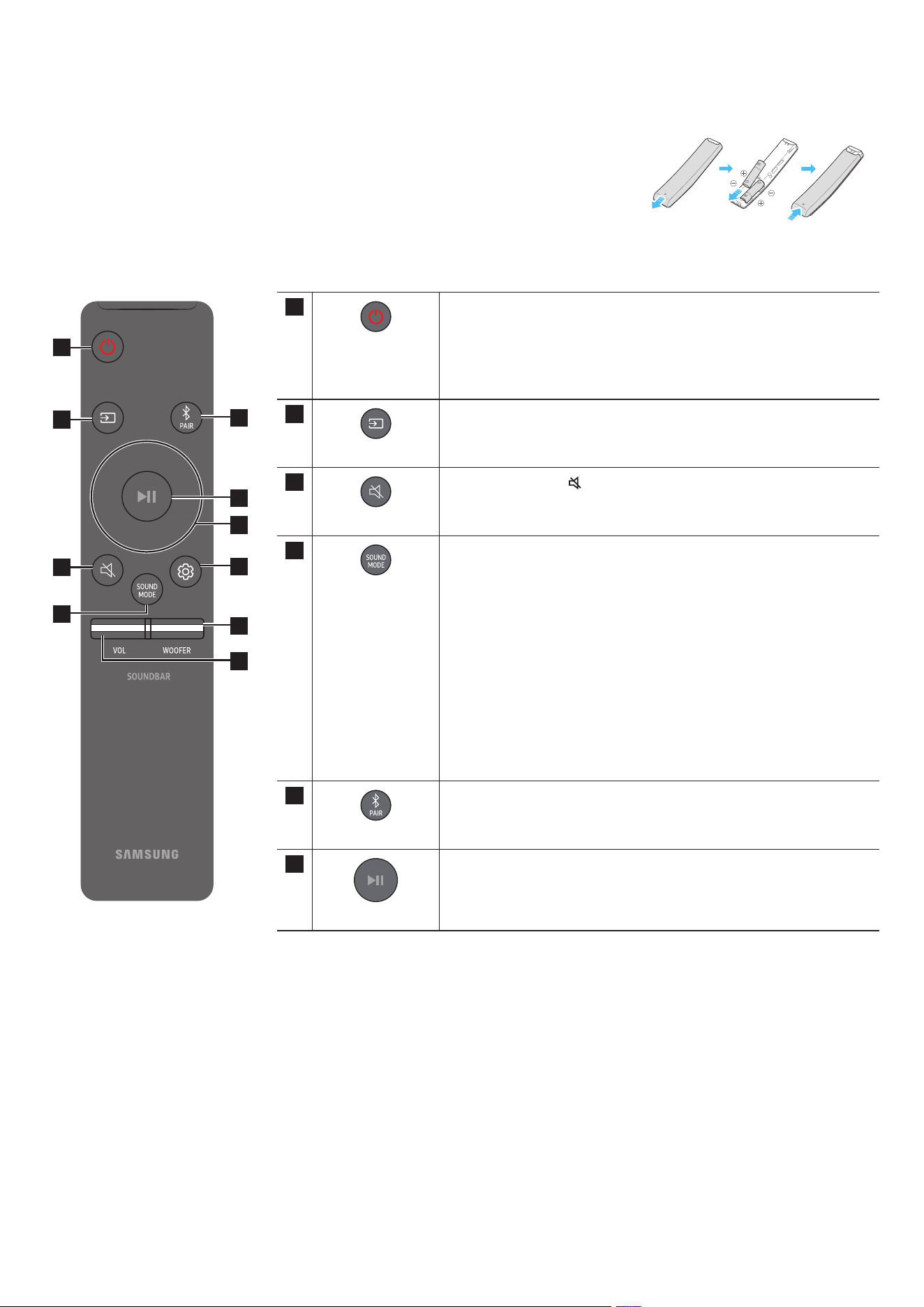
FRA - 9
03 UTILISATION DE LA TÉLÉCOMMANDE DE LA SOUNDBAR
Insertion des piles avant l'utilisation de la télécommande (2 piles AA)
Faites glisser le capot arrière dans le sens de la èche jusqu'à ce qu'il soit complètement retiré. Insérez 2 piles
AA (1,5 V) en respectant l'orientation de leur polarité. Remettez le couvercle en position en le faisant glisser.
Comment utiliser la télécommande
1
2
3
4
5
6
7
8
9
10
1
Marche/Arrêt
Active ou désactive la Soundbar.
• Fonction Auto Power Down
L'appareil s'éteint automatiquement dans les situations suivantes :
• En mode D.IN / HDMI / Wi-Fi / BT en l'absence de signal audio pendant
18 minutes.
2
Source
Appuyez pour sélectionner une source connectée à la Soundbar.
3
Silence
Appuyez sur la touche
(Silence) pour couper le son.
Appuyez de nouveau sur cette touche pour réactiver le son.
4
SOUND MODE
Vous pouvez sélectionner le mode de son souhaité en choisissant STANDARD,
SURROUND, GAME PRO ou ADAPTIVE SOUND.
• STANDARD
Émet le son original.
• SURROUND
Fournit un champ sonore plus large que la norme.
• GAME PRO
Fournit un son stéréoscopique vous permettant une immersion dans
l'action pendant le jeu.
• ADAPTIVE SOUND
Analyse le contenu en temps réel et fournit automatiquement le champ
sonore optimal sur la base des caractéristiques du contenu.
5
Bluetooth PAIR
Faites passer la Soundbar en mode de jumelage Bluetooth. Appuyez sur
la touche et attendez que l'écran « BT PAIRING » se connecte à un nouvel
appareil Bluetooth.
6
Lecture / Pause
Vous pouvez également lire ou mettre en pause la musique en appuyant sur
cette touche.
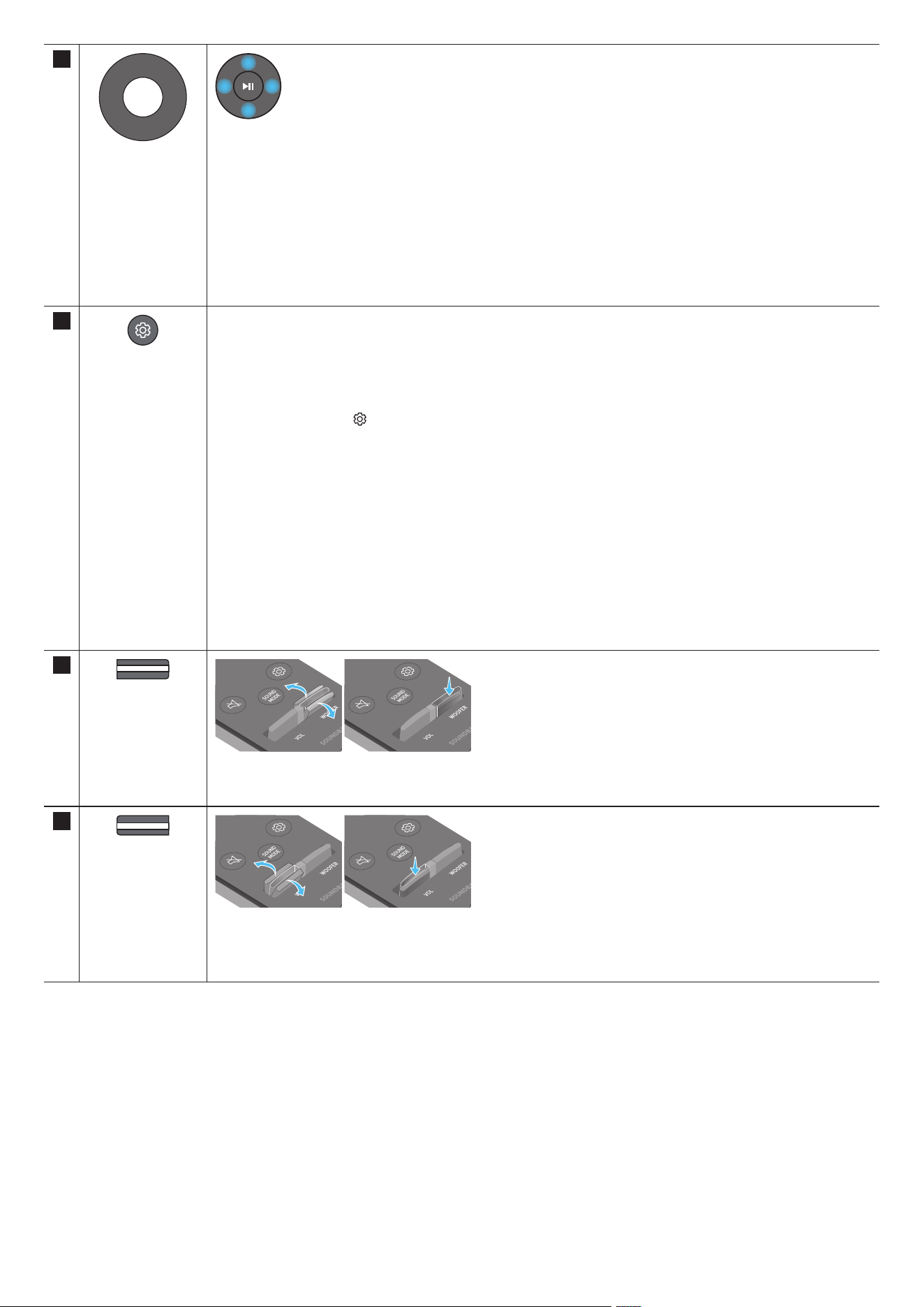
FRA - 10
7
Haut/Bas/Gauche/
Droite
Appuyez sur les zones indiquées pour sélectionner Haut/Bas/Gauche/Droite.
Appuyez sur Haut/Bas/Gauche/Droite sur la touche pour sélectionner ou paramétrer les fonctions.
• Changement de titre
Appuyez sur la touche Droite pour sélectionner le titre suivant. Appuyez sur la touche Gauche pour sélectionner le titre
précédent.
• ID SET
Utilisez cette option lorsque le subwoofer et les enceintes surround ne sont pas connectés ou nécessitent d'être
connectés à nouveau.
Pendant que l'appareil est éteint, appuyez sur la touche Haut pendant 5 secondes pour exécuter l'opération ID SET.
(Voir page 14.)
8
Réglages audio
Lorsque vous appuyez sur cette touche, les options de réglage telles que TREBLE, BASS, SYNC, CENTER LEVEL, FRONT
TOP LEVEL et VIRTUAL ON/OFF s'afchent successivement. Il est possible de régler l'élément souhaité à l'aide des touches
Haut/Bas.
• Pour régler le volume des aigus et des graves, sélectionnez TREBLE ou BASS dans les paramètres audio, puis réglez le
volume, de -6 à +6, à l'aide des touches Haut/Bas.
• Appuyez sur la touche
(Réglages audio) pendant environ 5 secondes an de régler le son pour chaque bande de
fréquences. Les fréquences 150 Hz, 300 Hz, 600 Hz, 1,2 kHz, 2,5 kHz, 5 kHz et 10 kHz peuvent être sélectionnées à l'aide
des touches Gauche/Droite et chacune peut être réglée entre -6 et +6 à l'aide des touches Haut/Bas.
(Assurez-vous que le mode son est réglé sur « STANDARD ».)
• Pour régler le volume de chaque enceinte, sélectionnez CENTER LEVEL ou FRONT TOP LEVEL dans les paramètres
audio, puis réglez le volume de -6 à +6 à l'aide des touches Haut/Bas.
• Si l'image du téléviseur et le son de la Soundbar ne sont pas synchronisés, sélectionnez SYNC dans Réglages audio, puis
réglez le décalage audio de 0 à 300 millisecondes à l'aide des touches Haut/Bas.
• SYNC n'est prise en charge que par certaines fonctions.
• Si les enceintes Surround sont connectées, sélectionnez REAR LEVEL, REAR TOP LEVEL, puis utilisez les touches Haut/
Bas pour régler le volume de -6 à +6.
• La fonction d'enceinte virtuelle VIRTUAL peut être activée/désactivée (ON/OFF) à l'aide des touches Haut/Bas.
9
NIVEAU WOOFER
(BASS)
Appuyez sur le bouton vers le haut ou le bas pour régler le niveau du caisson de basse (graves) sur -12 ou de -6 à +6. Pour
régler le volume du caisson de basse (graves) sur 0, appuyez sur la touche.
10
VOLUME
Appuyez sur les touches haut ou bas pour régler le volume.
• Silence
Appuyez sur la touche VOL pour couper le son. Appuyez de nouveau sur cette touche pour réactiver le son.
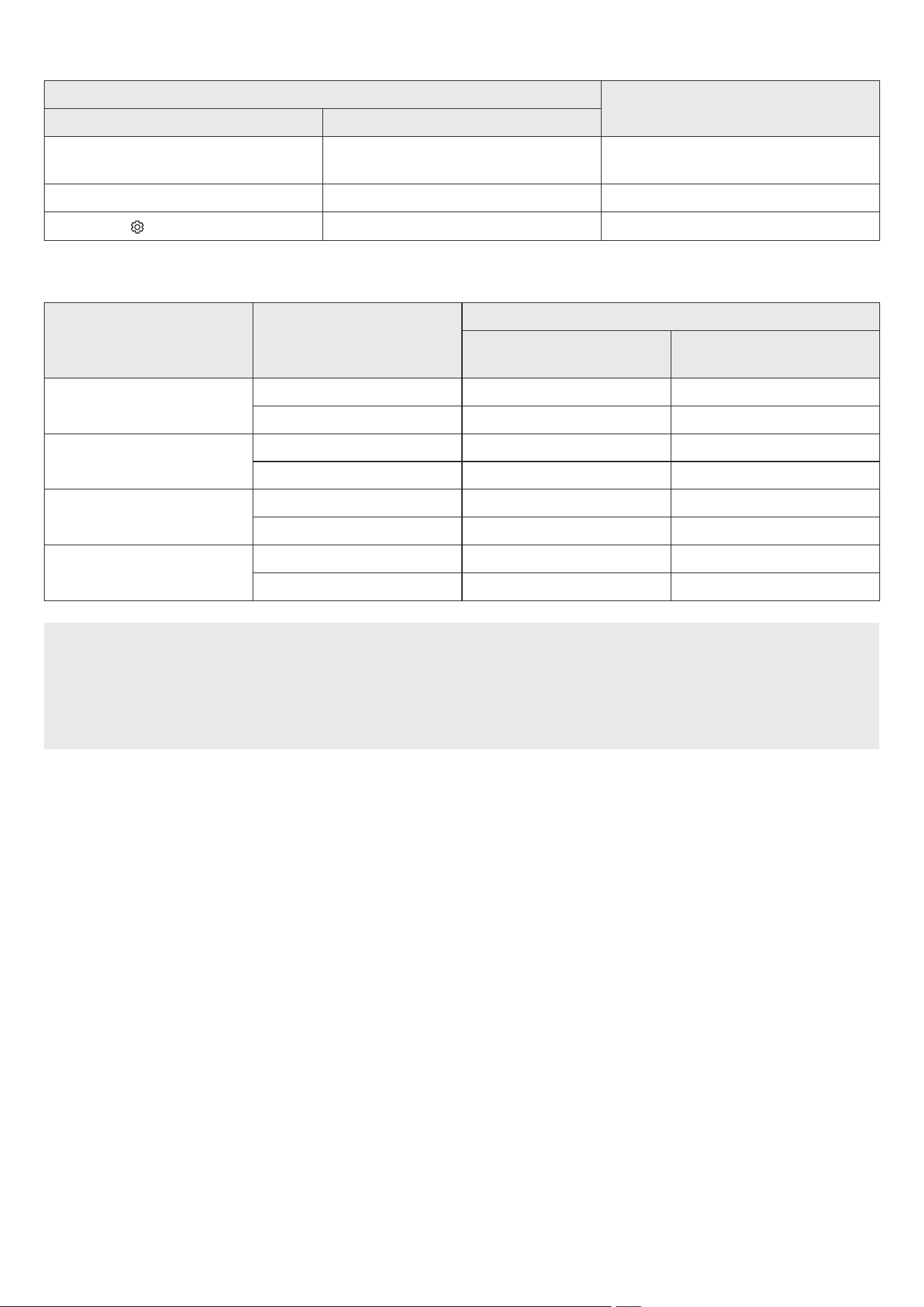
FRA - 11
Utilisation des touches dissimulées (Touches avec plus d'une fonction)
Touche dissimulée
Page de référence
Touche de télécommande Fonction
WOOFER (Haut)
Télécommande du téléviseur activée/désactivée
(Veille)
page 12
Haut ID SET page 14
(Réglages audio)
ÉG bande 7 page 10
Spécications de sortie pour les différents modes d'effets sonore
Effet Entrée
Sortie
Avec le subwoofer uniquement
Avec le kit d'enceintes arrière sans
l et le subwoofer uniquement
STANDARD
2.0 canaux 2.1 canaux 2.1 canaux
5.1 canaux 3.1 canaux 5.1 canaux
SURROUND
2.0 canaux 3.1.2 canaux 5.1.4 canaux
5.1 canaux 3.1.2 canaux 5.1.4 canaux
GAME PRO
2.0 canaux 3.1.2 canaux 5.1.4 canaux
5.1 canaux 3.1.2 canaux 5.1.4 canaux
ADAPTIVE SOUND
2.0 canaux 3.1.2 canaux 5.1.4 canaux
5.1 canaux 3.1.2 canaux 5.1.4 canaux
• Lorsque la source d'entrée est Dolby Atmos®, DTS:X, la conguration du caisson de basse uniquement offre un signal audio 3.1.2, alors que la
conguration du caisson de basse et du kit d'enceinte arrière sans l offre un signal audio 5.1.4.
• Le kit d'enceinte arrière sans l de Samsung peut être acheté séparément. Pour acheter un kit ou le subwoofer, contactez le vendeur chez qui vous
avez acheté la Soundbar.
• Les enceintes Surround ne produisent pas de son pour 2 canaux de sortie si le mode STANDARD est utilisé. Pour activer le son pour les enceintes
Surround, passez en mode d'effet SURROUND.
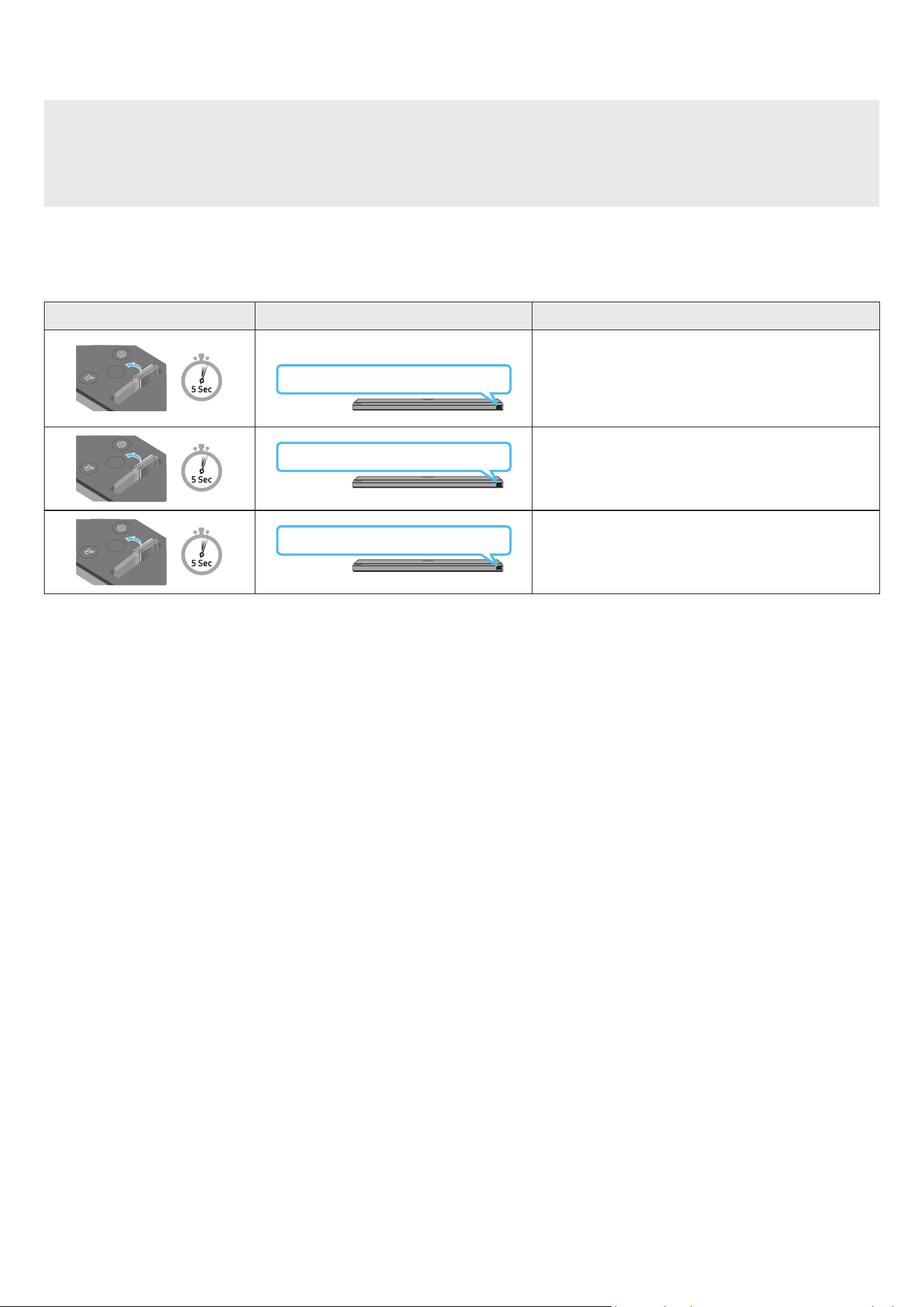
FRA - 12
Réglage du volume de la Soundbar avec une télécommande de téléviseur
Réglez le volume de la Soundbar en utilisant la télécommande du téléviseur.
• Cette fonction ne peut être utilisée qu'avec une télécommande à infrarouge. Les télécommandes Bluetooth (qui nécessitent un jumelage) ne sont pas
prises en charge.
• Réglez les enceintes du téléviseur sur Enceinte externe pour utiliser cette fonction.
• Fabricants prenant en charge cette fonction :
VIZIO, LG, Sony, Sharp, PHILIPS, PANASONIC, TOSHIBA, Hisense, RCA
1. Éteignez la Soundbar.
2. Poussez vers le haut la touche WOOFER pendant 5 secondes.
Chaque fois que vous poussez la touche WOOFER pendant 5 secondes, le mode change dans l'ordre suivant : « OFF-TV REMOTE » (mode par défaut),
« SAMSUNG-TV REMOTE », « ALL-TV REMOTE ».
Touche de télécommande Écran État
SOUND
MODE
VOL
WOOFER
SOUNDBAR
(Mode par défaut)
OFF-TV REMOTE
Désactive la télécommande de téléviseur.
SOUND
MODE
VOL
WOOFER
SOUNDBAR
SAMSUNG-TV REMOTE
Active la télécommande à infrarouge d'une TV Samsung.
SOUND
MODE
VOL
WOOFER
SOUNDBAR
ALL-TV REMOTE
Active toute autre télécommande de téléviseur à infrarouge.
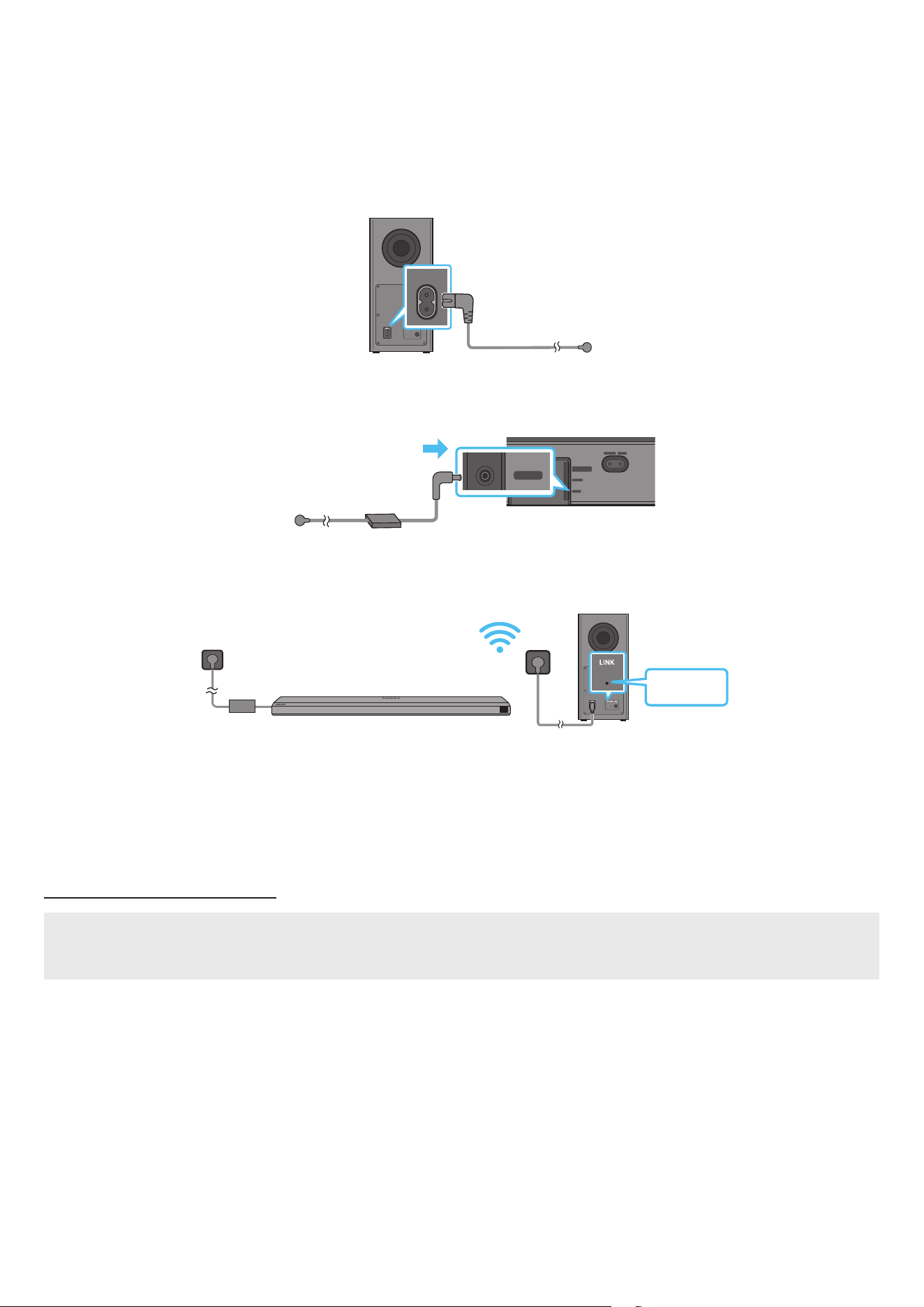
FRA - 13
04 CONNEXION DE LA SOUNDBAR
Connexion de l'alimentation et des unités
Utilisez les composants d'alimentation pour brancher le caisson de basse et la Soundbar à une prise électrique, dans l'ordre suivant :
• Pour plus d’informations sur l’alimentation électrique requise et la consommation d’énergie, reportez-vous à l’étiquette collée sur le produit. (Étiquette :
située à l'arrière de l'unité principale Soundbar)
1. Connectez un cordon d'alimentation au subwoofer.
POWER
Arrière du subwoofer
Cordon d'alimentation
2. Connectez d'abord le câble d'alimentation à l'adaptateur CA/CC.
Connectez l'adaptateur CA/CC (avec le câble d'alimentation) à la Soundbar.
DIGITAL AUDIO IN
(OPTICAL)
SERVICE
DC 19V
HDMI
NETWORK ID SET
DIGITAL AUDIO IN
(OPTICAL)
SERVICE
NETWORK ID SET
HDMI TO TV
(eARC/ARC)
HDMI IN
HDMI OUT
(TV-ARC)
DIGITAL AUDIO IN
(OPTICAL)
SERVICE
DC 19V
DIGITAL AUDIO IN
(OPTICAL)
SERVICE
DC 19V
HDMI
HDMI TO TV
(eARC/ARC)
DIGITAL AUDIO IN
(OPTICAL)
SERVICE
DC 19V
HDMI
NETWORK ID SET
DIGITAL AUDIO IN
(OPTICAL)
SERVICE
NETWORK ID SET
HDMI TO TV
(eARC/ARC)
HDMI IN
HDMI OUT
(TV-ARC)
DIGITAL AUDIO IN
(OPTICAL)
SERVICE
DC 19V
DIGITAL AUDIO IN
(OPTICAL)
SERVICE
DC 19V
HDMI
HDMI TO TV
(eARC/ARC)
DC 19V
Arrière de l’unité principale Soundbar
Adaptateur CA/CC
Cordon d'alimentation
3. Connectez l'alimentation à la Soundbar et au subwoofer. Le subwoofer est automatiquement connecté lorsque la Soundbar est allumée.
Voyant bleu
allumé
REMARQUE
• Connectez l'alimentation du subwoofer avant d'établir la connexion avec la Soundbar.
Le subwoofer est connecté automatiquement à la Soundbar au moment où celle-ci est allumée.
• Si vous débranchez, puis rebranchez le cordon d'alimentation alors que le produit est allumé, la Soundbar s'allume automatiquement.
• Veillez à poser l’adaptateur CA/CC à plat sur une table ou sur le sol. Si l'adaptateur CA/CC pend et que l'entrée du cordon CA est située face vers le haut, de
l'eau ou d'autres substances étrangères risquent de pénétrer dans l'adaptateur et d'entraîner des dysfonctionnements.
Connexion manuelle du subwoofer
Avant de réaliser la procédure de connexion manuelle du subwoofer décrite ci-dessous :
• Vériez que les câbles d'alimentation de la Soundbar et du subwoofer sont correctement connectés.
• Vériez que la Soundbar est éteinte.
1. Éteignez l’unité principale de la Soundbar.
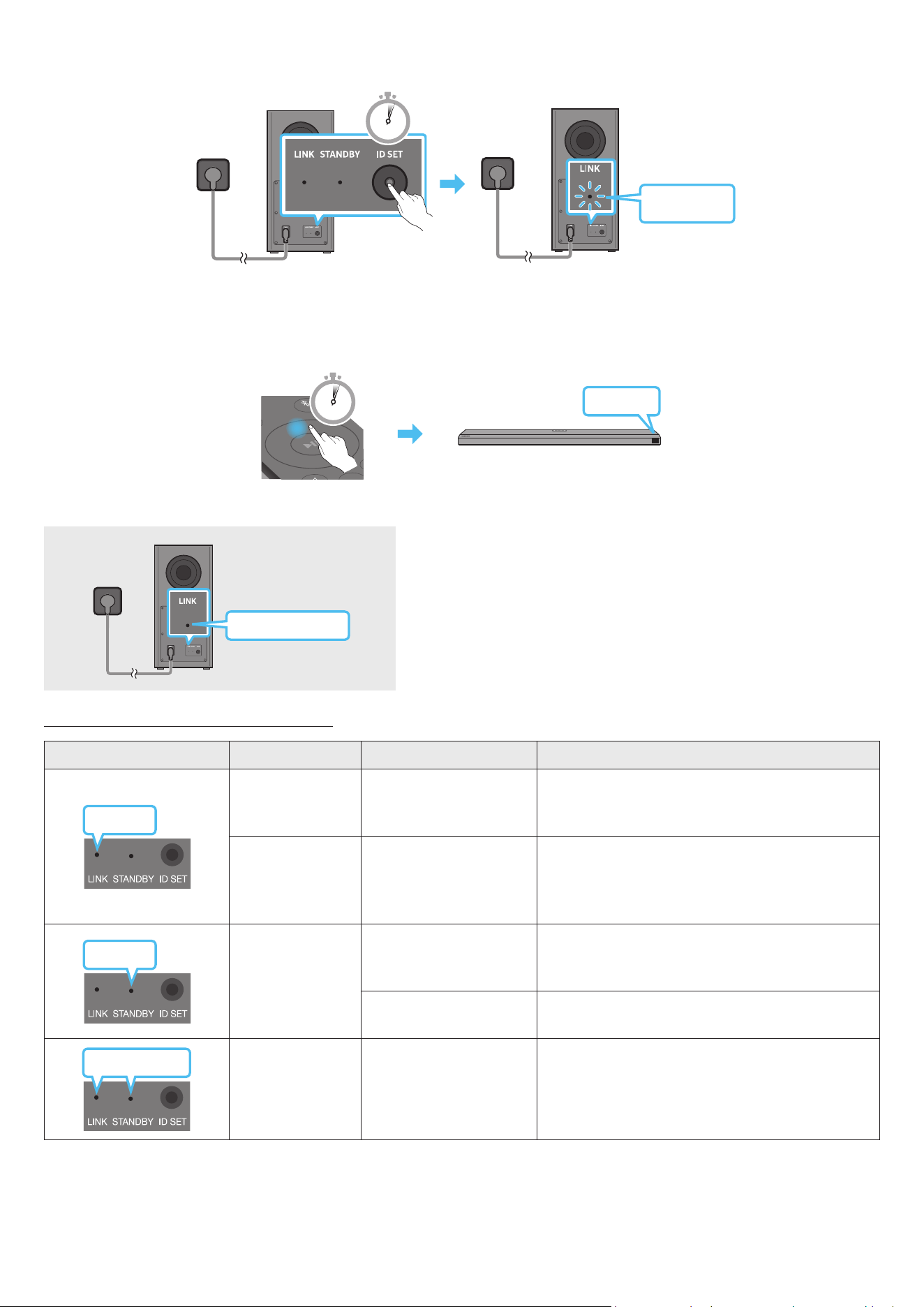
FRA - 14
2. Maintenez la touche ID SET située à l'arrière du caisson de basse enfoncée pendant au moins 5 secondes.
• L'indicateur rouge à l'arrière du subwoofer s'éteint et l'indicateur bleu clignote.
5 Sec
Clignotement
rapide en bleu
Arrière du subwoofer Arrière du subwoofer
3. Appuyez sur la touche Haut de la télécommande pendant 5 secondes.
• Le message ID SET apparaît sur l'écran de la Soundbar pendant quelques instants, puis disparaît.
• La Soundbar s'allume automatiquement lorsque l'opération ID SET est terminée.
SOUND
MODE
PAIR
5 Sec
ID SET
4. Vériez que le voyant LED LINK brille en bleu de manière stable (connexion terminée).
Voyant bleu allumé
Le voyant LED LINK arrête de clignoter et s'éclaire en bleu de manière stable
lorsqu'une connexion est établie entre la Soundbar et le subwoofer sans l.
Voyants LED situés à l'arrière du subwoofer
LED État Description Résolution
Bleu
Activé
Connexion réussie
(fonctionnement à l'état
normal)
-
Clignotement
Récupération de la connexion
en cours
Vériez que le câble d'alimentation xé à l'unité principale
Soundbar est connecté correctement ou attendez environ 5
minutes. Si le clignotement persiste, essayez de connecter
manuellement le subwoofer. Voir page 13.
Rouge
Activé
Veille (lorsque l'unité
principale Soundbar est
éteinte)
Vériez que le câble d'alimentation xé à l'unité principale
Soundbar est connecté correctement.
Échec de la connexion
Rétablissez la connexion. Consultez les instructions relatives
à la connexion manuelle à la page 13.
Rouge et bleu
Clignotement Dysfonctionnement
Consultez les coordonnées du Centre de service Samsung
fournies dans ce manuel.
REMARQUE
• Si l'unité principale est hors tension, le caisson de basse sans l entre en mode veille et le voyant STANDBY à l'arrière du caisson s'allume en rouge après
avoir clignoté en bleu plusieurs fois.
• Si vous utilisez un appareil qui exploite la même fréquence que la Soundbar près de celle-ci, des interférences peuvent provoquer des coupures de son.

FRA - 15
• La distance de transmission maximale du signal sans l de l'unité principale est d'environ 10 m, mais peut varier en fonction de votre environnement. Si
un mur en béton armé ou métallique se trouve entre l'unité principale et le caisson de basse sans l, le système risque de ne pas fonctionner du tout car
le signal sans l ne peut pas traverser le métal.
ATTENTION
• Les antennes de réception sans l sont intégrées au subwoofer sans l. N'exposez pas l'appareil à la pluie ni à l'humidité.
• Pour des performances d'écoute optimales, assurez-vous que la zone autour du caisson de basse sans l et du module récepteur sans l (vendu
séparément) ne présente pas d'obstacles.
Connexion d'un kit SWA-9500S (vendu séparément) à votre Soundbar
Passez au vrai son Surround sans l en connectant votre kit d'enceintes arrière sans l Samsung (SWA-9500S, vendu séparément) à votre Soundbar.
Pour plus d'informations concernant les connexions, veuillez consulter le manuel du Kit d'enceinte arrière sans l Samsung.
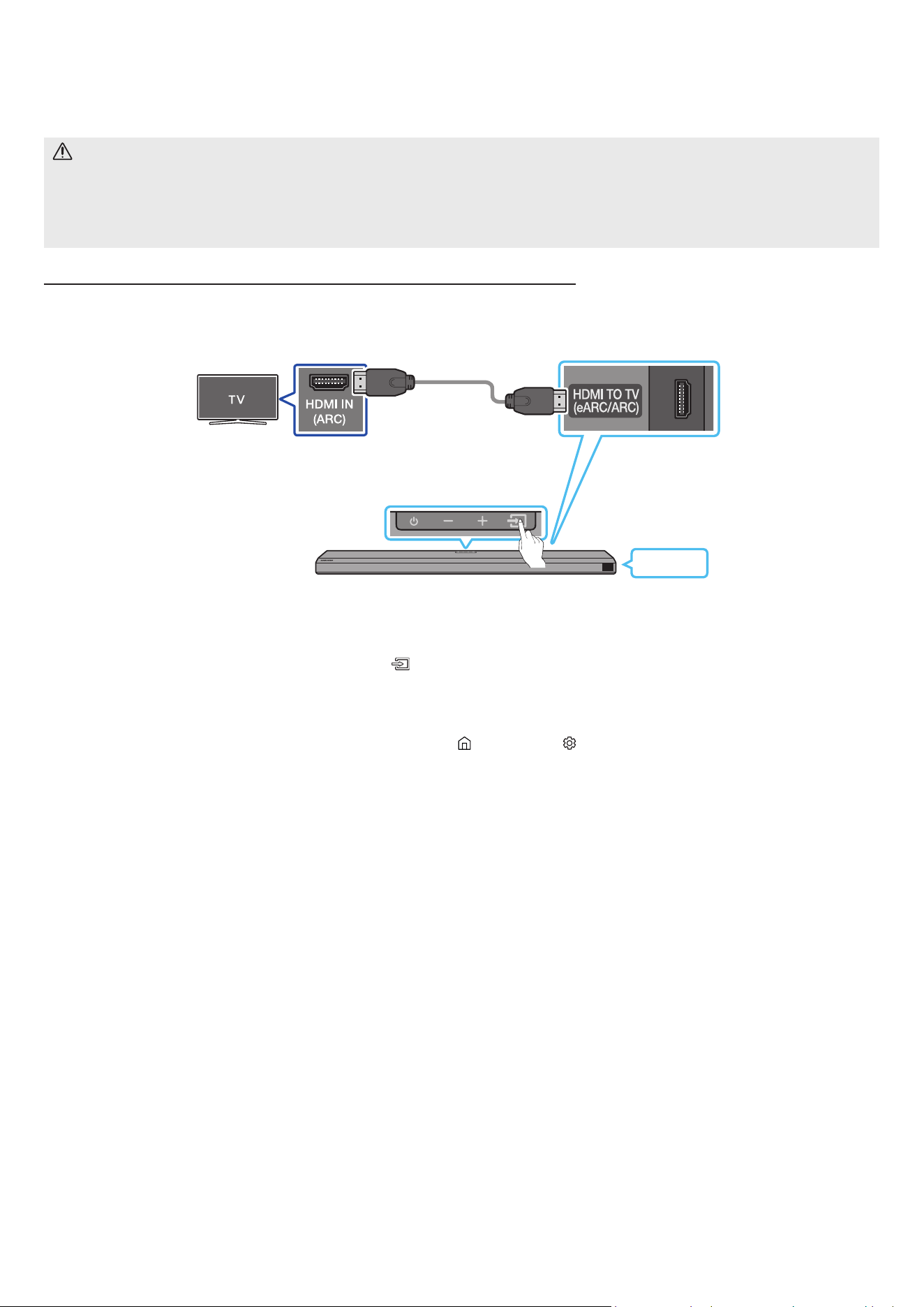
FRA - 16
05 CONNEXION FILAIRE AVEC LE TÉLÉVISEUR
Méthode 1. Connexion par HDMI
ATTENTION
• Lorsqu'un câble HDMI et un câble optique sont connectés simultanément, le signal HDMI est reçu en priorité.
• Pour raccorder le téléviseur et la Soundbar à l'aide du câble HDMI, veillez à utiliser les bornes marquées ARC. Dans le cas contraire, le son du téléviseur
ne sera pas émis.
• Il est recommandé d'utiliser un High Speed HDMI Cable with Ethernet.
Connexion à un téléviseur qui prend en charge HDMI ARC (canal de retour audio)
TV ARC
Connectez au port
HDMI TO TV (eARC/ARC) sur
l'unité principale Soundbar.
Dessus de la Soundbar
Connectez au port HDMI IN
(ARC) de votre téléviseur.
Câble HDMI
Arrière de la Soundbar
1. Vériez que le téléviseur et la Soundbar sont éteints, plus connectez le câble HDMI comme indiqué sur la gure.
2. Allumez la Soundbar et le téléviseur.
3. « TV ARC » apparaît sur la fenêtre d'afchage de l'unité principale Soundbar et le son du téléviseur est émis.
• Si le son du téléviseur est inaudible, appuyez sur la touche
(Source) de la télécommande ou de la partie supérieure de la Soundbar pour passer en
mode « D.IN ». Dans la fenêtre d'afchage « D.IN » et « TV ARC » apparaissent successivement et le son du téléviseur est émis.
• Lors de la connexion d'un téléviseur qui prend en charge la fonction eARC, « eARC » s'afche à l'écran et le son est émis.
• Pour une connexion avec eARC, la fonction eARC doit être activée dans le menu du téléviseur. Consultez le manuel utilisateur du téléviseur pour plus
de détails concernant ce réglage. (p. ex. sur une TV Samsung : Accueil ( ) → Paramètres ( ) → Son → Réglages expert→ Mode HDMI eARC (Auto))
• Si « TV ARC » n'apparaît pas dans la fenêtre d'afchage de l'unité principale Soundbar, vériez que le câble HDMI est connecté au bon port.
• Utilisez les touches de volume de la télécommande du téléviseur pour changer le volume de la Soundbar.
REMARQUE
• Lorsque vous connectez le téléviseur qui prend en charge HDMI ARC (Audio Return Channel ou canal de retour audio) à la Soundbar à l'aide d'un câble
HDMI, vous pouvez transmettre les données vidéo et audio numériques sans qu'il ne soit nécessaire de connecter un câble optique séparé.
• Nous recommandons l'utilisation d'un câble HDMI sans noyau, si possible. Si vous utilisez un câble avec un noyau, choisissez-en un de diamètre inférieur
à 14 mm.
• Cette fonction n'est pas disponible si le câble HDMI ne prend pas en charge ARC.
• Lorsque le son d'un canal de diffusion est encodé en Dolby Digital et que le format audio de la sortie numérique (« Digital Output Audio Format ») de
votre téléviseur est réglé sur PCM, nous vous recommandons d'ajuster le réglage sur Dolby Digital. Modier ce réglage sur le téléviseur vous permettra
d'obtenir un son de meilleure qualité. (Il est possible que le menu TV utilise différents mots pour Dolby Digital et PCM en fonction du fabricant du
téléviseur.)
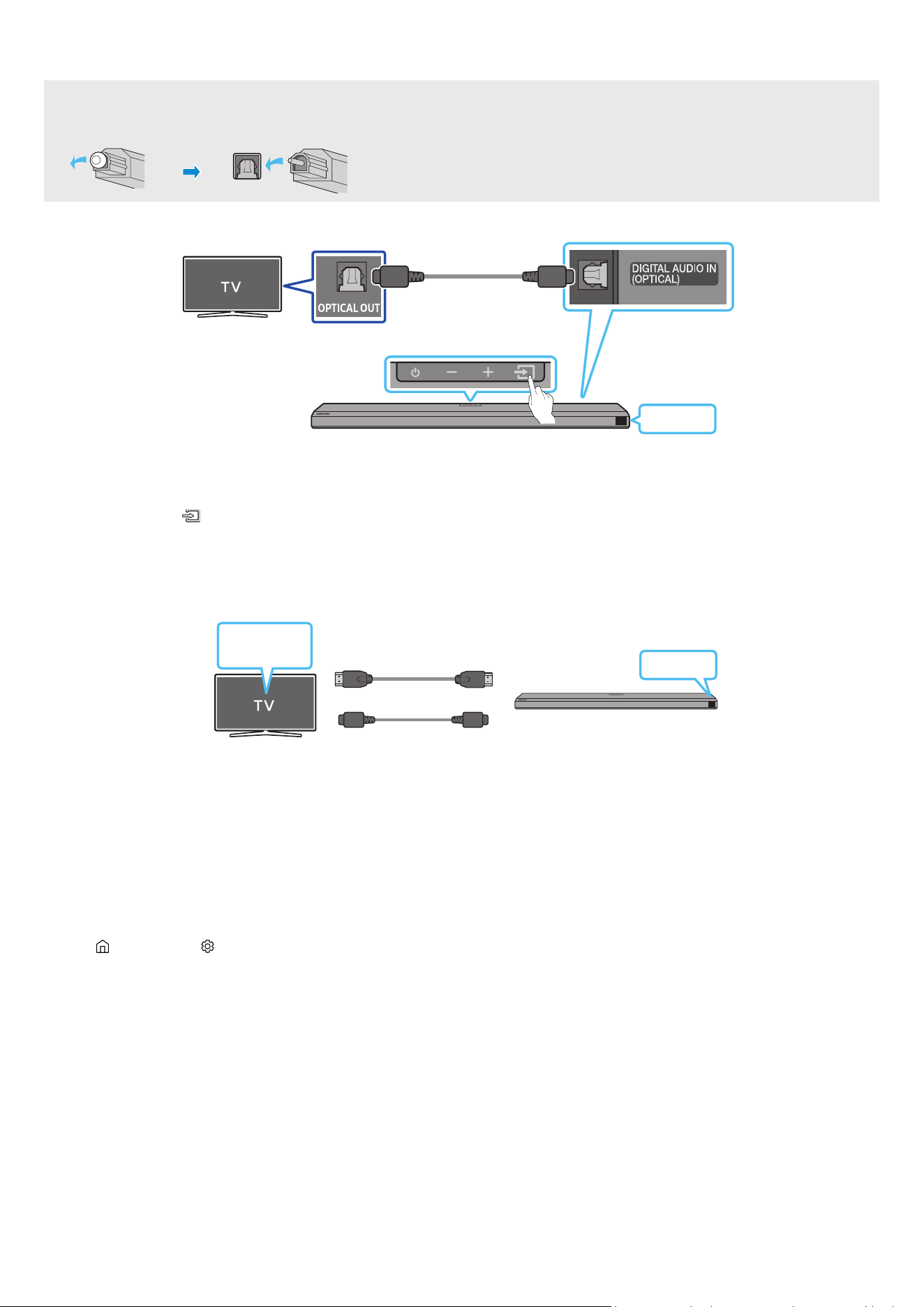
FRA - 17
Méthode 2. Connexion à l'aide d'un câble optique
Liste de vérications préalables à la connexion
• Lorsqu'un câble HDMI et un câble optique sont connectés simultanément, le signal HDMI est reçu en priorité.
• Lorsque vous utilisez un câble optique et que les bornes sont dotées d’un cache, veillez à retirer les caches.
D.IN
Arrière de la Soundbar
Dessus de la Soundbar
Câble optique (non fourni)
1. Vériez que le téléviseur et la Soundbar sont éteints, puis connectez le port DIGITAL AUDIO IN (OPTICAL) au port de sortie OPTICAL OUT du téléviseur à
l'aide du câble optique (non fourni), comme indiqué sur la gure.
2. Allumez la Soundbar et le téléviseur.
3. Appuyez sur la touche
(Source) du panneau supérieur ou de la télécommande, puis sélectionnez le mode « D.IN ».
4. Le son du téléviseur est émis par la Soundbar.
Utilisation de la fonction Q-Symphony
Avec la fonction Q-Symphony, la Soundbar se synchronise avec une TV Samsung pour diffuser le son via deux périphériques pour un effet surround optimal.
Quand la Soundbar est connectée, le menu « TV+Soundbar » apparaît dans le menu Sortie audio du téléviseur. Sélectionnez le menu correspondant.
Câble optique (non fourni)
Câble HDMI
OU
D.IN
Menu TV
• Exemple de menu TV : TV + [AV] Nom de série de la Soundbar [HDMI]
REMARQUE
• Le produit peut fonctionner selon le Codec pris en charge par le téléviseur.
• Cette fonction n’est prise en charge que lorsque le câble HDMI ou le câble optique (non fourni) est connecté.
• Cette fonction est disponible sur certaines TV Samsung et certains modèles de Soundbar.
Utilisation du son Spacet
Offre une qualité sonore optimisée en analysant les espaces d'écoute.
Pour activer cette fonction, activez le mode Adaptive Sound+ via le menu de votre TV Samsung.
(Accueil ( ) → Paramètres ( ) → Général → Paramètres de mode intelligent→ Adaptive Sound+)
REMARQUE
• Le mode sonore sur votre Soundbar passe automatiquement sur Adaptive Sound+ si vous activez le mode Adaptive Sound+ sur votre téléviseur.
• Cette fonction est active si la Soundbar se connecte à certaines TV Samsung.
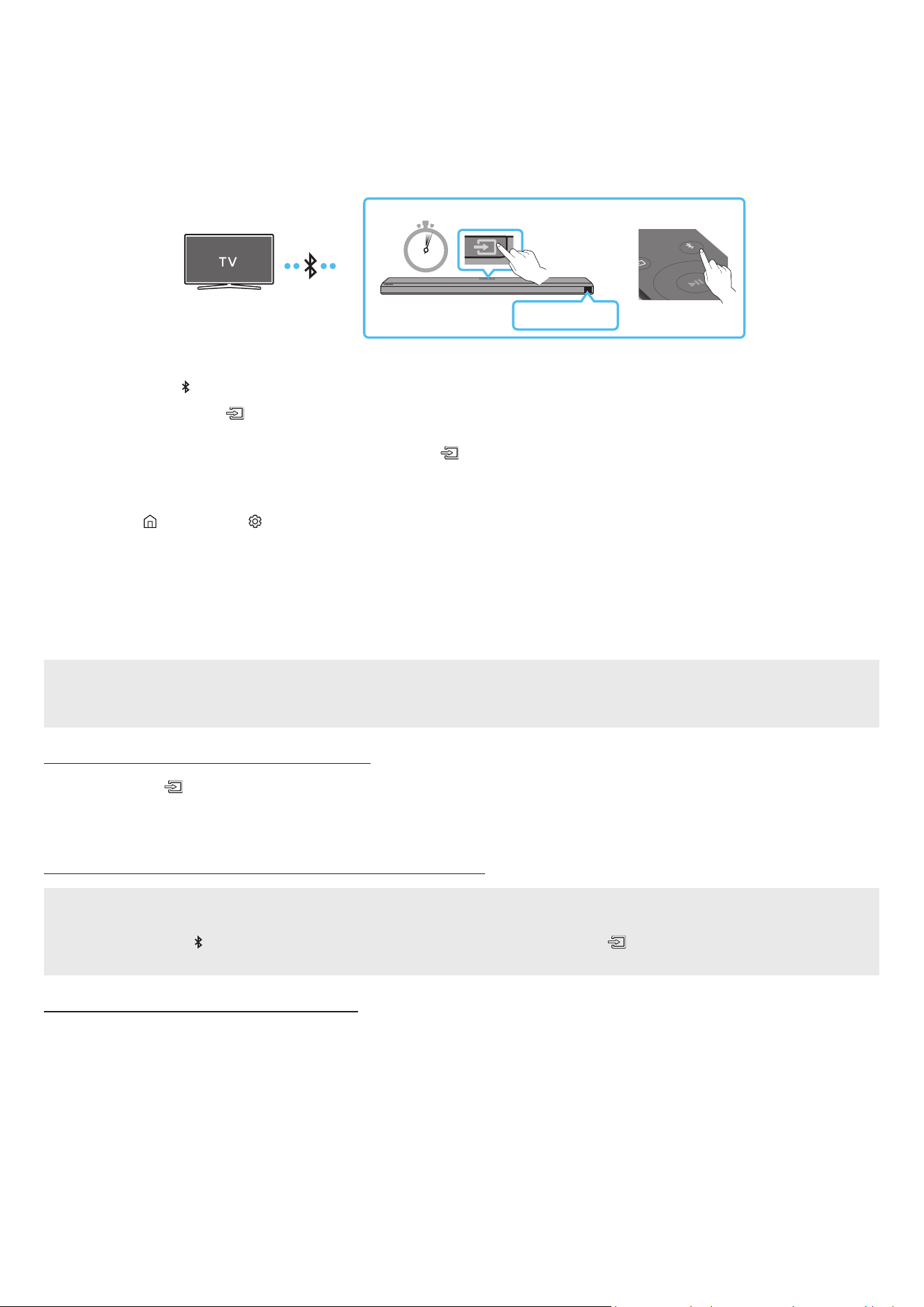
FRA - 18
06 CONNEXION SANS FIL AVEC LE TÉLÉVISEUR
Méthode 1. Connexion via Bluetooth
Lorsqu'une TV Samsung est connecté via Bluetooth, vous pouvez proter d'un son stéréo sans le casse-tête du câblage.
• Une seule TV Samsung peut être connectée à la fois.
• Seule une TV Samsung prenant en charge la fonction Bluetooth peut être connectée. Vériez les spécications de votre téléviseur.
5 Sec
SOUND
MODE
PAIR
Dessus de la Soundbar
OU
BT PAIRING
Connexion initiale
1. Appuyez sur la touche PAIR de la télécommande de la Soundbar pour passer en mode « BT PAIRING ».
(OU)
a. Appuyez sur la touche
(Source) située sur le panneau supérieur, puis sélectionnez « BT ».
« BT » passe automatiquement sur « BT PAIRING » en quelques secondes ou sur « BT READY » si une connexion est déjà enregistrée.
b. Lorsque « BT READY » apparaît, maintenez enfoncée la touche (Source) située sur le panneau supérieur de la Soundbar pendant plus de
5 secondes jusqu'à ce que le message « BT PAIRING » apparaisse.
2. Sélectionnez le mode Bluetooth sur la TV Samsung.
(p. ex. Accueil (
) → Paramètres ( ) → Son → Sortie audio → Liste des enceintes Bluetooth → [AV] Samsung Soundbar Q700A (Bluetooth))
3. Sélectionnez « [AV] Samsung Soundbar Q700A » dans la liste à l'écran du téléviseur.
Pour toute Soundbar disponible, le message « Appariement nécessaire » ou « Apparié » apparaît sur la liste des appareils Bluetooth du téléviseur. Pour
connecter la TV Samsung à la Soundbar, sélectionnez le message, puis établissez une connexion.
• Lorsque la TV Samsung est connectée, [Nom de la TV] → « BT » apparaît sur l'écran frontal de la Soundbar.
4. Vous pouvez à présent proter du son de la TV Samsung à partir de la Soundbar.
• Une fois que vous avez connecté votre Soundbar à votre TV Samsung pour la première fois, utilisez le mode « BT READY » pour vous reconnecter.
Si la connexion avec l'appareil échoue
• S'il y a déjà une Soundbar (p. ex. [AV] Samsung Soundbar Q700A) dans la liste des enceintes afchée à l'écran de la TV Samsung, supprimez-la.
• Ensuite, répétez les étapes 1 à 3.
Déconnexion de la Soundbar et de la TV Samsung
Appuyez sur la touche (Source) du panneau supérieur ou de la télécommande et activez l’un des modes, à l’exception du mode « BT ».
• La déconnexion prend un certain temps, car la TV Samsung doit recevoir une réponse de la part de la Soundbar.
(Le temps requis peut varier selon le modèle de la TV Samsung)
Quelle est la différence entre les modes BT READY et BT PAIRING ?
• BT READY : dans ce mode, vous pouvez reconnecter n'importe quel TV Samsung ou appareil mobile qui a déjà été connecté par le passé.
• BT PAIRING : dans ce mode, vous pouvez connecter un nouvel appareil à la Soundbar.
(Appuyez sur la touche PAIR de la télécommande de la Soundbar ou maintenez enfoncée la touche (Source) située sur la partie supérieure de la
Soundbar pendant plus de 5 secondes lorsque cette dernière est en mode « BT ».)
Remarques concernant la connexion Bluetooth
• Placez un nouvel appareil à une distance inférieure à 1 m de la Soundbar pour établir la connexion par le biais de la communication Bluetooth.
• Si un code d'identication personnel vous est demandé lors de la connexion d'un nouvel appareil Bluetooth, saisissez <0000>.
• La Soundbar s'éteint automatiquement après 18 minutes passées en mode Prêt.
• Il est possible que la Soundbar n'effectue aucune recherche Bluetooth ou n'établisse aucune connexion sous certaines circonstances :
‒ En présence d'un fort champ électromagnétique autour de la Soundbar.
‒ Si plusieurs appareils Bluetooth ou plus sont jumelés simultanément avec la Soundbar.
‒ Si l'appareil Bluetooth est éteint, déplacé ou qu'un dysfonctionnement survient.
• Les appareils électroniques peuvent causer des interférences radio. Les appareils qui génèrent des ondes électromagnétiques doivent être conservés à
distance de l'unité principale Soundbar (par ex. des micro-ondes, des appareils LAN sans l, etc.).

FRA - 19
Méthode 2. Connexion via Wi-Fi
Liste de vérications préalables à la connexion
• La connexion Wi-Fi n'est disponible que sur les TV Samsung.
• Vériez si le routeur sans l (Wi-Fi) est activé et si le téléviseur est connecté au routeur.
• Le téléviseur et la Soundbar doivent être connectés au même réseau sans l (Wi-Fi).
• Si votre routeur sans l (Wi-Fi) utilise un canal DFS, vous ne pourrez pas établir de connexion Wi-Fi entre le téléviseur et la Soundbar. Contactez votre
fournisseur de service Internet pour plus de détails.
• Les menus pouvant varier selon l'année de fabrication, reportez-vous au manuel de votre téléviseur.
• Pour connecter le téléviseur à la Soundbar par Wi-Fi, connectez d'abord la Soundbar au routeur sans l. Pour plus de détails sur l'établissement d'une
connexion Wi-Fi, voir page 23.
1. Pour plus d'informations sur la connexion Wi-Fi à la Soundbar, voir page 23, « Méthode 2. Connexion via Wi-Fi (Réseau sans l) ».
2. Changez la source d'entrée du téléviseur en utilisant le menu Audio de la Soundbar.
• TV Samsung sorties en 2017 ou ultérieurement
Accueil (
) → Paramètres ( ) → Son → Sortie audio → [AV] Samsung Soundbar Q700A (Wi-Fi)
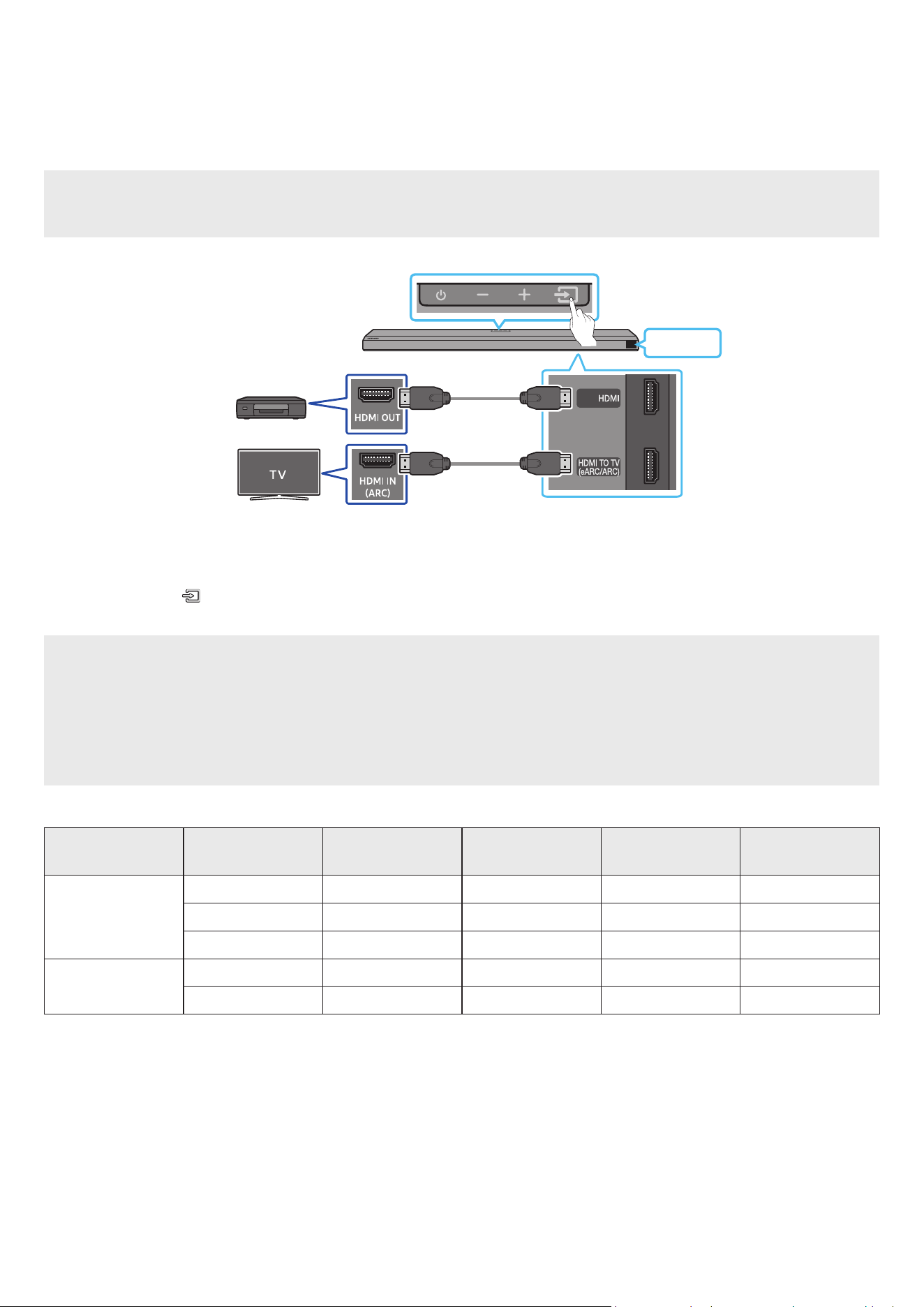
FRA - 20
07 CONNEXION D'UN APPAREIL EXTERNE
Méthode 1. Connexion à l'aide d'un câble HDMI (prise en charge du décodage et de la lecture
Dolby Atmos)
Liste de vérications préalables à la connexion
• Si les options de sortie audio comprennent un ux audio secondaire, assurez-vous que ce dernier est réglé sur « Off ».
• Assurez-vous que le contenu prend en charge Dolby Atmos®.
Dessus de la Soundbar
HDMI
Câble HDMI
Appareil externe
Câble HDMI
1. Utilisez un câble HDMI pour relier le port HDMI OUT de l'appareil externe au port HDMI qui se trouve à l'arrière de la Soundbar.
2. Utilisez un câble HDMI pour relier le port HDMI IN du téléviseur au port HDMI TO TV (eARC/ARC) qui se trouve à l'arrière de la Soundbar.
3. Allumez la Soundbar, le téléviseur et l'appareil externe.
4. Appuyez sur la touche
(Source) du panneau supérieur ou de la télécommande, puis sélectionnez « HDMI ».
5. L'écran de la Soundbar indique que le mode « HDMI » est actuellement sélectionné et la Soundbar commence à diffuser du son.
REMARQUE
• Lorsque vous utilisez Dolby Atmos® : Si la source d'entrée est Dolby Atmos®, des sorties canal 3.1.2 sont émises.
• Lorsque Dolby Atmos® est activé, « DOLBY ATMOS » apparaît sur l'écran frontal.
• Conguration de Dolby Atmos® sur votre lecteur BD ou autre appareil
Ouvrez les options de sortie audio dans le menu des paramètres de votre lecteur BD ou autre appareil et assurez-vous que « Pas d'encodage » est
sélectionné pour le ux binaire. Par exemple, sur un lecteur BD Samsung, allez dans Accueil → Son → Sortie numérique, puis sélectionnez Bitstream
(non traité).
Spécication des signaux UHD pris en charge (3840 x 2160p)
Fréquence d'images
(i/s)
Intensité de couleur RVB 4:4:4 YCbCr 4:4:4 YCbCr 4:2:2 YCbCr 4:2:0
< 60
8 bits O O O O
10 bits - - O O
12 bits - - O O
120
8 bits - - - -
10 bits - - - -
• La spécication prise en charge peut varier en fonction de l'appareil externe connecté ou des conditions d'utilisation.
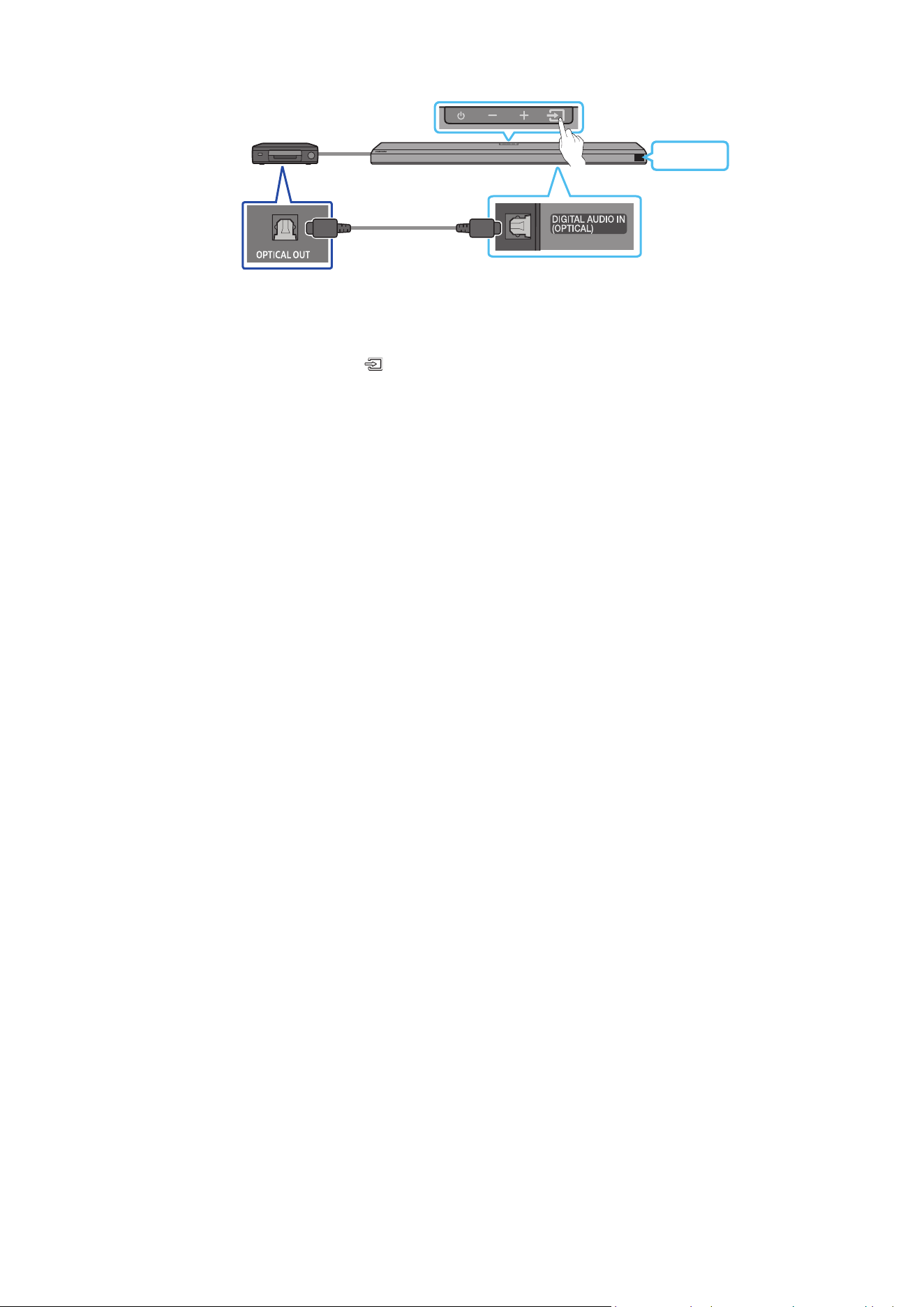
FRA - 21
Méthode 2. Connexion à l'aide d'un câble optique
Dessus de la Soundbar
Lecteur BD / DVD /
décodeur / console de jeu
D.IN
Arrière de la Soundbar
Câble optique
(non fourni)
1. Utilisez un câble optique (non fourni) pour connecter l'entrée numérique optique DIGITAL AUDIO IN (OPTICAL) de l'unité principale de la Soundbar et la
sortie optique OPTICAL OUT sur l'appareil externe.
2. Allumez la Soundbar et l'appareil externe.
3. Sélectionnez le mode « D.IN » en appuyant sur la touche
(Source) située sur le panneau supérieur ou sur la télécommande.
4. Votre Soundbar produira des sons depuis l'appareil externe.
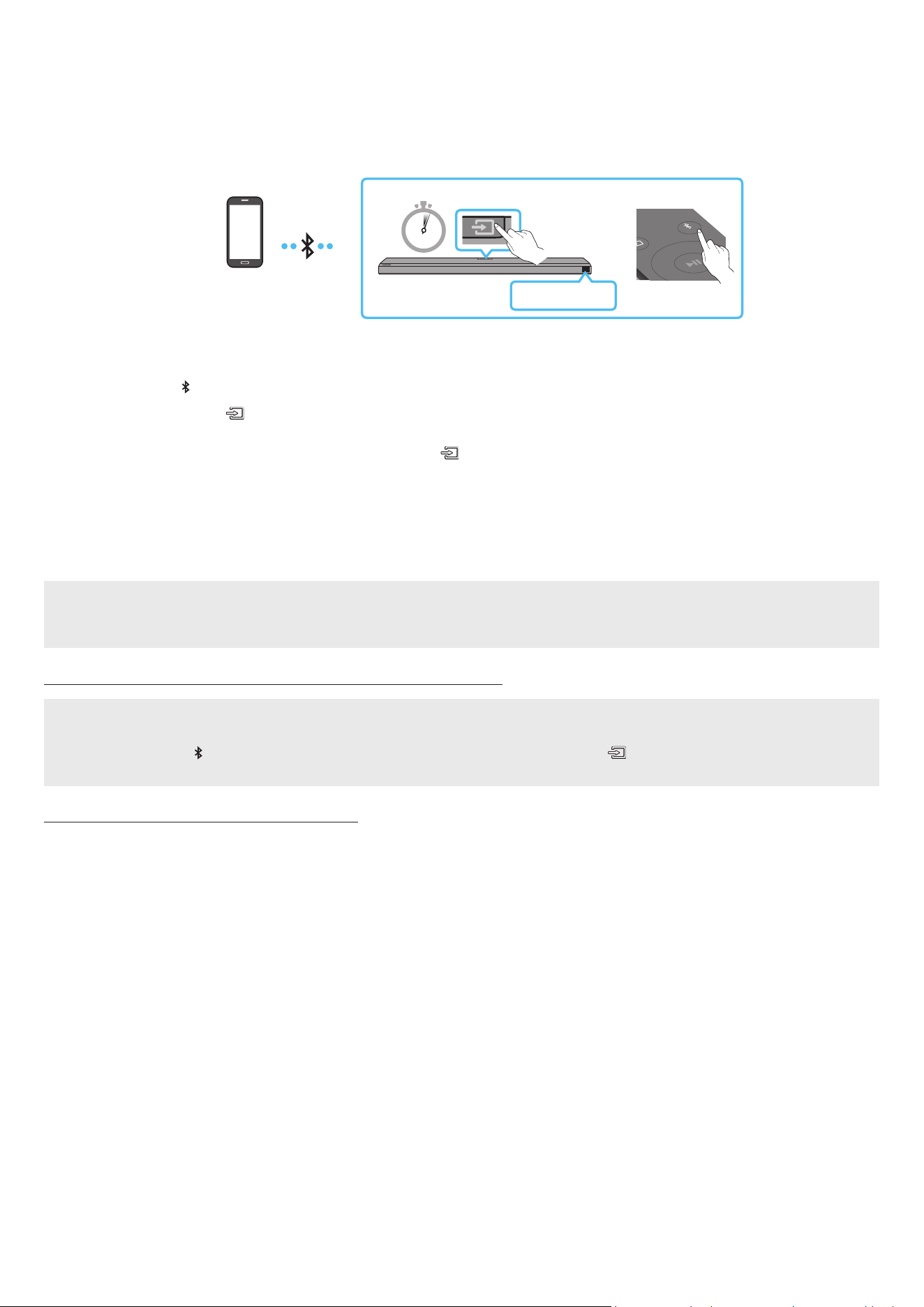
FRA - 22
08 CONNEXION D'UN APPAREIL MOBILE
Méthode 1. Connexion via Bluetooth
Lorsqu'un appareil mobile est connecté via Bluetooth, vous pouvez proter d'un son stéréo sans le casse-tête du câblage.
• Lorsque vous connectez un appareil Bluetooth déjà jumelé et que la Soundbar est éteinte, celle-ci s'allume automatiquement.
5 Sec
SOUND
MODE
PAIR
Appareil mobile
Dessus de la Soundbar
OU
BT PAIRING
Connexion initiale
• Lorsque vous établissez la connexion avec un nouvel appareil Bluetooth, veillez à ce que l'appareil soit à une distance inférieure à 1 m de la Soundbar.
1. Appuyez sur la touche PAIR de la télécommande de la Soundbar pour passer en mode « BT PAIRING ».
(OU)
a. Appuyez sur la touche
(Source) située sur le panneau supérieur, puis sélectionnez « BT ».
« BT » passe automatiquement sur « BT PAIRING » en quelques secondes ou sur « BT READY » si une connexion est déjà enregistrée.
b. Lorsque « BT READY » apparaît, maintenez enfoncée la touche (Source) située sur le panneau supérieur de la Soundbar pendant plus de
5 secondes jusqu'à ce que le message « BT PAIRING » apparaisse.
2. Sur votre appareil, sélectionnez « [AV] Samsung Soundbar Q700A » dans la liste qui s'afche.
• Lorsque la Soundbar est connectée à l'appareil mobile, [Nom de l'appareil mobile] → « BT » apparaît sur l'écran frontal.
3. Lisez des chiers musicaux sur l'appareil connecté via Bluetooth à partir de la Soundbar.
• Une fois que vous avez connecté votre Soundbar à votre appareil mobile pour la première fois, utilisez le mode « BT READY » pour vous reconnecter.
Si la connexion avec l'appareil échoue
• S'il y a déjà une Soundbar (p. ex. « [AV] Samsung Soundbar Q700A ») dans la liste des enceintes afchée à l'écran de l'appareil mobile, supprimez-la.
• Répétez les étapes 1 et 2.
Quelle est la différence entre les modes BT READY et JUMELAGE BT ?
• BT READY : dans ce mode, vous pouvez reconnecter n'importe quel TV Samsung ou appareil mobile qui a déjà été connecté par le passé.
• BT PAIRING : dans ce mode, vous pouvez connecter un nouvel appareil à la Soundbar.
(Appuyez sur la touche PAIR de la télécommande de la Soundbar ou maintenez enfoncée la touche (Source) située sur la partie supérieure de la
Soundbar pendant plus de 5 secondes lorsque cette dernière est en mode « BT ».)
Remarques concernant la connexion Bluetooth
• Placez un nouvel appareil à une distance inférieure à 1 m de la Soundbar pour établir la connexion par le biais de la communication Bluetooth.
• Si un code d'identication personnel vous est demandé lors de la connexion d'un nouvel appareil Bluetooth, saisissez <0000>.
• La Soundbar s'éteint automatiquement après 18 minutes passées en mode Prêt.
• Il est possible que la Soundbar n'effectue aucune recherche Bluetooth ou n'établisse aucune connexion sous certaines circonstances :
‒ En présence d'un fort champ électromagnétique autour de la Soundbar.
‒ Si plusieurs appareils Bluetooth ou plus sont jumelés simultanément avec la Soundbar.
‒ Si l'appareil Bluetooth est éteint, déplacé ou qu'un dysfonctionnement survient.
• Les appareils électroniques peuvent causer des interférences radio. Les appareils qui génèrent des ondes électromagnétiques doivent être conservés à
distance de l'unité principale Soundbar (par ex. des micro-ondes, des appareils LAN sans l, etc.).
• La Soundbar prend en charge les données SBC (44,1 kHz, 48 kHz).
• Ne connectez qu'un appareil Bluetooth prenant en charge la fonction A2DP (AV).
• Vous ne pouvez pas connecter la Soundbar à un appareil Bluetooth ne prenant en charge que la fonction HF (mains libres).
• Lorsque vous connectez la Soundbar à un appareil Bluetooth, placez-les le plus près possible l'un de l'autre.
• Plus la Soundbar et l'appareil Bluetooth sont éloignés, plus la qualité du son sera mauvaise.
La connexion Bluetooth peut se rompre lorsque les appareils sont hors de portée.
• La connexion Bluetooth peut ne pas fonctionner comme prévu dans les zones où la réception est mauvaise.
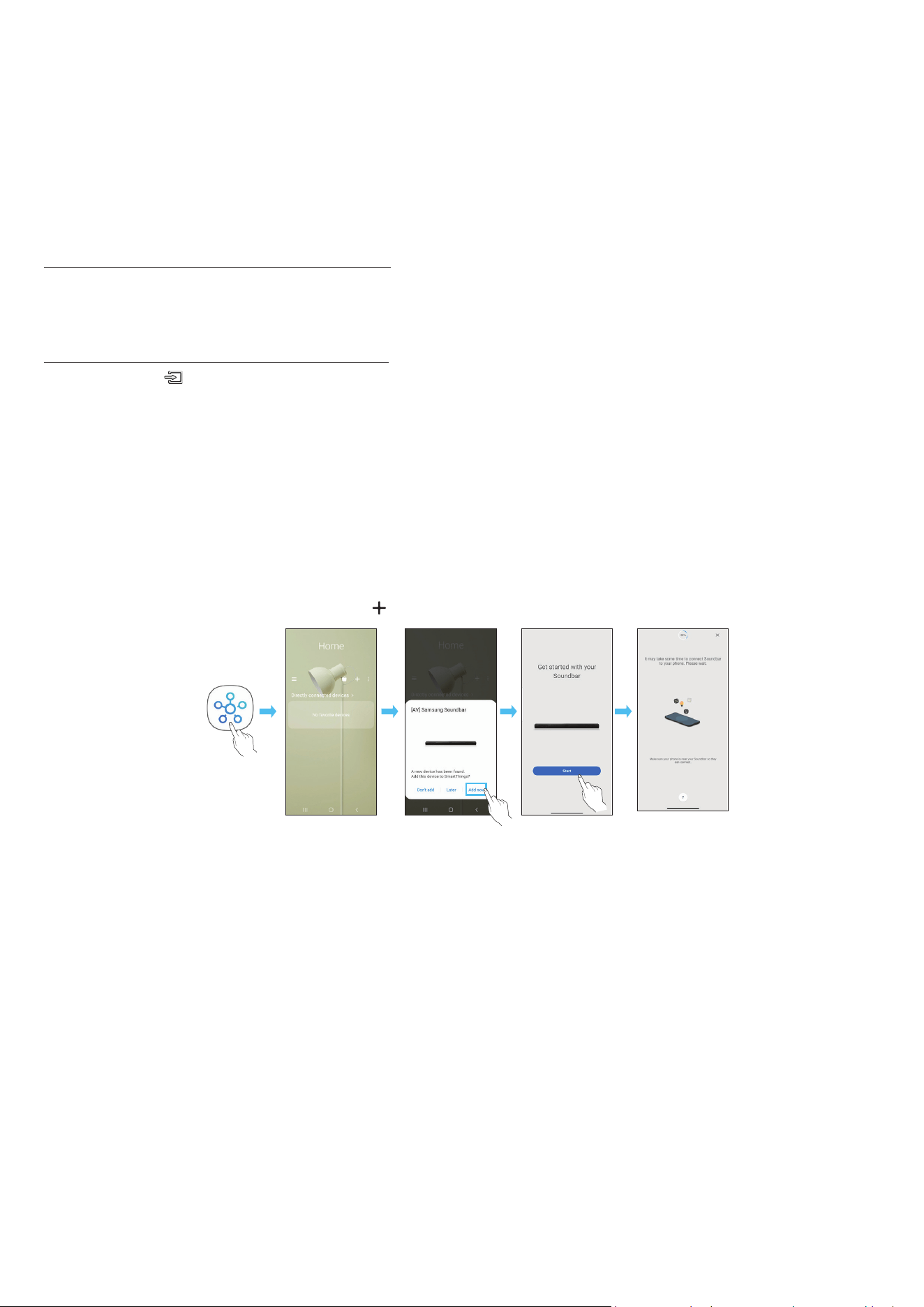
FRA - 23
• Un appareil Bluetooth peut produire du bruit ou connaître un dysfonctionnement dans les conditions suivantes :
‒ Quand le corps est en contact avec l'émetteur-récepteur de signaux de l'appareil Bluetooth ou de la Soundbar
‒ Dans les coins ou lorsqu'il y a un obstacle à proximité, tel qu'un mur ou une cloison, où des changements électriques peuvent se produire.
‒ Lorsqu'il est exposé à des interférences radio par d'autres produits fonctionnant sur les mêmes plages de fréquences, tels que des équipements
médicaux, des fours à micro-ondes et des dispositifs LAN sans l.
‒ Des obstacles tels que des portes et des murs peuvent aussi avoir un impact sur la qualité du son même lorsque les appareils se trouvent à portée
effective.
• Si un code d'identication personnel vous est demandé lors de la connexion d'un nouvel appareil Bluetooth, saisissez <0000>.
• Notez que la Soundbar ne peut pas être jumelée avec d'autres appareils Bluetooth pendant l'utilisation de l'option Bluetooth.
• Cet appareil sans l peut causer des interférences électriques lors de son fonctionnement.
Déconnexion de l'appareil Bluetooth de la Soundbar
Vous pouvez déconnecter un appareil Bluetooth de la Soundbar. Pour les instructions, consultez le manuel utilisateur de l'appareil Bluetooth.
• La Soundbar se déconnecte.
• Lorsque la Soundbar est déconnectée de l'appareil Bluetooth, elle afche « BT DISCONNECTED » sur l'écran frontal.
Déconnexion de la Soundbar de l’appareil Bluetooth
Appuyez sur la touche (Source) située sur le panneau supérieur ou la télécommande, puis activez l'un des modes, à l’exception du mode « BT ».
• La déconnexion prend un certain temps l'appareil Bluetooth doit recevoir une réponse de la part de la Soundbar. (Le délai de déconnexion peut varier
selon l'appareil Bluetooth)
• Lorsque la Soundbar est déconnectée de l'appareil Bluetooth, elle afche « BT DISCONNECTED » sur l'écran frontal
Méthode 2. Connexion via Wi-Fi (Réseau sans l)
Pour connecter une Soundbar à un appareil mobile via un réseau sans l (Wi-Fi), il est nécessaire de disposer de l'application SmartThings.
Connexion initiale
1. Installez et lancez l'application SmartThings sur votre appareil mobile (smartphone ou tablette).
2. Sur l'application, suivez les instructions à l'écran pour ajouter la Soundbar.
• Le message contextuel automatique (deuxième illustration ci-dessous) peut ne pas s'afcher sur certains appareils.
Si la fenêtre contextuelle n'apparaît pas, appuyez sur « » dans l'écran Home. La Soundbar est ajoutée à l'application.
Lancer
l'application
Message
contextuel
automatique
Ajouter
l'appareil
Application
SmartThings
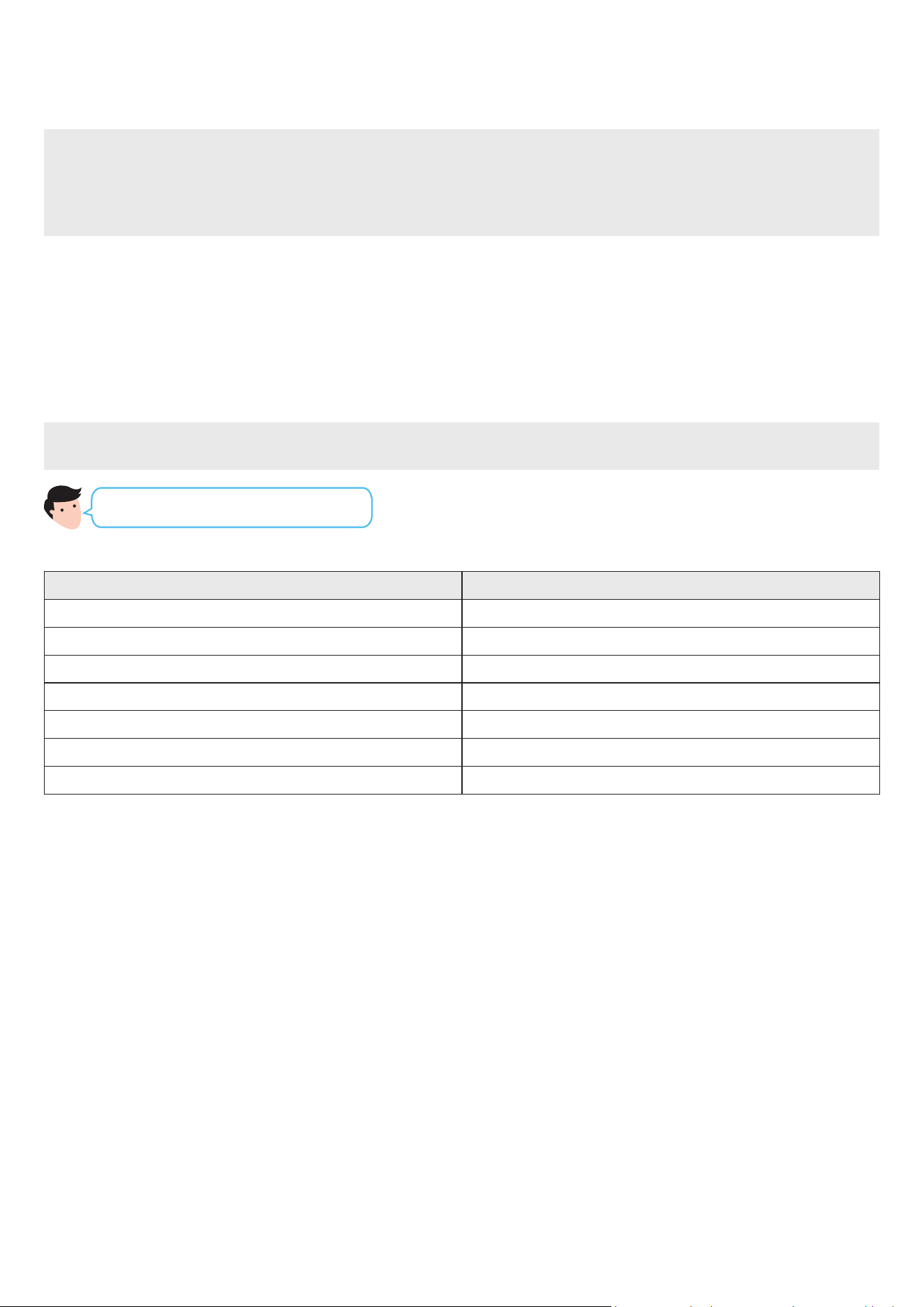
FRA - 24
09 PREMIERS PAS AVEC ALEXA SUR UN PRODUIT AMAZON
(COMPATIBLE AVEC ALEXA)
• Cette fonction peut ne pas être prise en charge suivant le modèle et la zone géographique.
• Cette fonction prend en charge uniquement certaines langues et les fonctions prises en charge peuvent différer selon la zone géographique.
• Pour connaître les spécications ou la compatibilité du produit, rendez-vous sur le site Web de Samsung (www.samsung.com).
• Ce service est fourni par Amazon et peut être interrompu à tout moment. Samsung n'assume pas la responsabilité de la disponibilité du service.
• L'écran de l'application Amazon Alexa est sujet à changement sans préavis.
Connexion et utilisation avec un produit Amazon (Amazon Echo)
Utilisez un produit Amazon Echo pour contrôler votre Soundbar et proter des services de musique fournis par Amazon Echo.
Pour utiliser Amazon Alexa et connecter la Soundbar en réseau, un compte Amazon est requis.
1. Installez l’application SmartThings sur votre appareil mobile, puis démarrez-la.
2. Connectez-vous à votre compte Alexa en suivant les instructions de l’application, puis connectez-vous au service.
Utilisez les commandes vocales pour contrôler la Soundbar
• Le service Amazon Echo que vous pouvez utiliser avec votre Soundbar est limité à la musique. D'autres services fournis par Amazon Echo, tels que les
actualités et la météo, peuvent être consultés uniquement sur votre produit Amazon Echo.
Déclencheur + Commande + Nom de l'enceinte
* Pour utiliser les commandes vocales pour la Soundbar appelée « salon »
Action Commande vocale
Pour régler le volume à 5 « Alexa règle le volume à 5 dans le salon »
Pour augmenter le volume « Alexa mets le volume plus fort dans le salon »
Pour couper le son « Alexa muet dans le salon »
Pour écouter une station radio appelée KISS FM « Alexa mets Kiss FM dans le salon »
Pour écouter la chanson suivante « Alexa musique suivante dans le salon »
Pour arrêter l'audio « Alexa stop dans le salon »
Pour éteindre l'audio « Alexa éteints dans le salon »
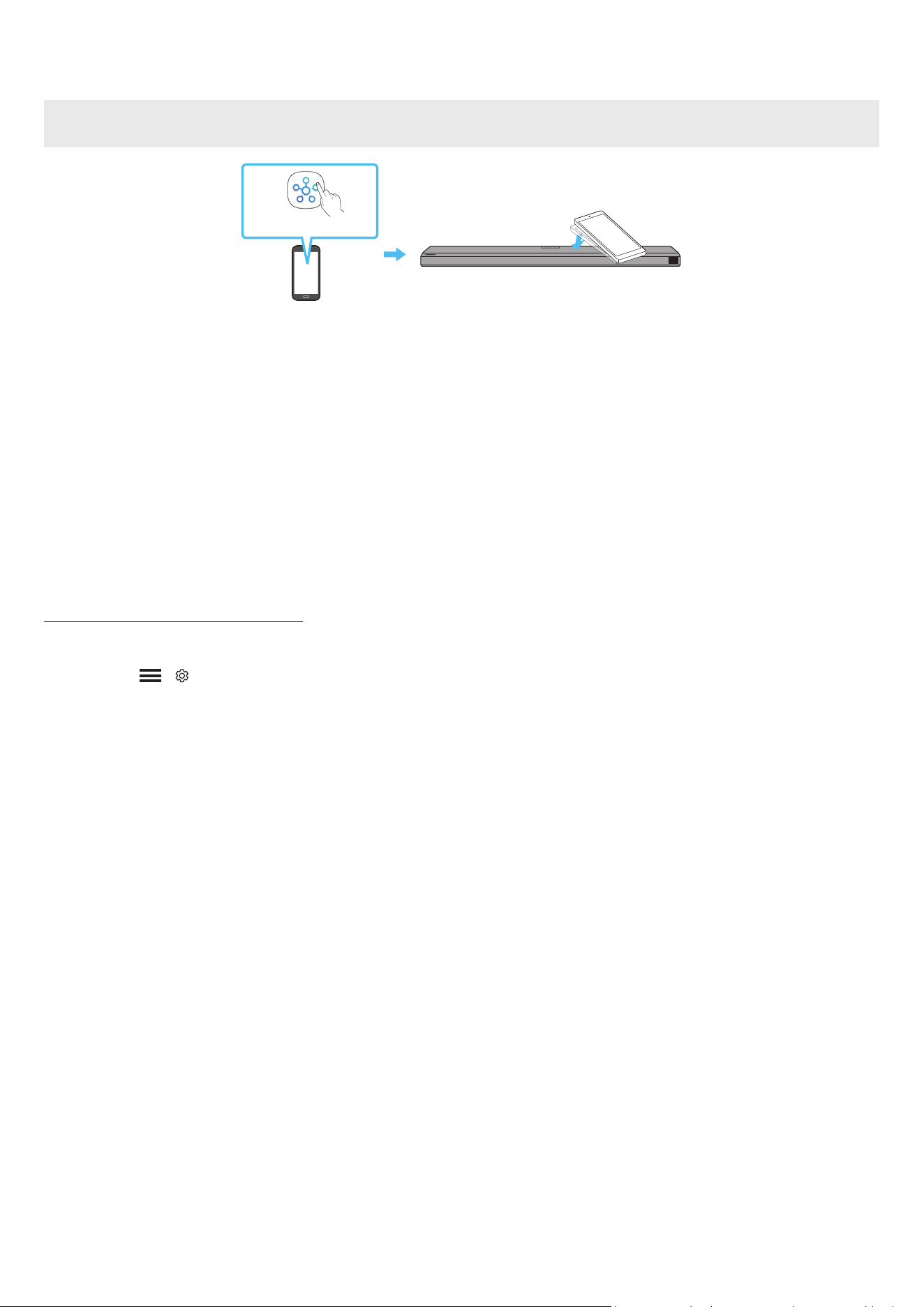
FRA - 25
Utilisation de la fonction Tap Sound
Appuyez sur la Soundbar avec votre appareil mobile pour lire le son du contenu de l'appareil mobile via la Soundbar.
• Il se peut que cette fonction ne soit pas prise en charge, selon l'appareil mobile.
• Cette fonction est uniquement compatible avec les appareils mobiles Samsung sous Android 8.1 ou supérieur.
Dessus de la Soundbar
Appareil mobile
Application SmartThings
1. Activez la fonction Tap Sound sur votre appareil mobile.
• Pour des détails sur l'activation de la fonction, reportez-vous à la section « Conguration de la fonction Tap Sound » ci-après.
2. Appuyez sur la Soundbar avec votre appareil mobile. Sélectionnez « Start now » dans la fenêtre de message afchée.
Une connexion est établie entre l'appareil mobile et la Soundbar via Bluetooth.
3. Lisez le son du contenu de l'appareil mobile via la Soundbar.
• Cette fonction permet de connecter un appareil mobile à la Soundbar via Bluetooth en détectant les vibrations qui se produisent lorsque l'appareil
touche la Soundbar.
• Assurez-vous que l'appareil mobile ne touche pas un angle saillant de la Soundbar. La Soundbar ou l'appareil mobile risquerait d'être rayé ou
endommagé.
• Il est recommandé de recouvrir l'appareil mobile d'une housse protectrice. Appuyez légèrement sur la zone large de la partie supérieure de la
Soundbar, sans forcer.
• Pour utiliser cette fonction, mettez à jour l'application SmartThings à la dernière version.
Il se peut que cette fonction ne soit pas prise en charge, selon la version de l'application.
Conguration de la fonction Tap Sound
Utilisez l'application SmartThings pour activer la fonction Tap View, Tap Sound.
1. Sur l'appareil mobile, exécutez l'application SmartThings.
2. Sélectionnez ( → ) dans l'écran de l'application SmartThings qui s'est afché sur l'appareil mobile.
3. Placez « Tap View, Tap Sound » sur Activé pour permettre à la fonction de se mettre en marche lorsqu'un appareil mobile est en mouvement à proximité
de la Soundbar. La fonction est activée.
REMARQUE
• Lorsque l'appareil mobile est en mode d'économie d'énergie, la fonction Tap Sound ne se met pas en marche.
• La fonction Tap Sound pourrait ne pas fonctionner si des appareils situés à proximité de la Soundbar provoquent des interférences radio, comme par
exemple, des appareils électriques. Assurez-vous que les appareils susceptibles de provoquer des interférences radio sont placés à une distance
sufsante de la Soundbar.

FRA - 26
10 CONNEXION À APPLE AIRPLAY 2
Cette fonctionnalité peut ne pas être disponible dans certains pays.
Connexion et utilisation avec un produit Apple
• AirPlay 2 vous permet de contrôler le système audio de votre domicile depuis votre iPhone, iPad, HomePod ou Apple TV.
• Cette Soundbar Samsung prend en charge AirPlay 2 et nécessite iOS 11.4 ou version ultérieure.
REMARQUE
• Conrmez que la Soundbar est connectée au Wi-Fi. (Voir section Méthode 2. Connexion via Wi-Fi (Réseau sans l))
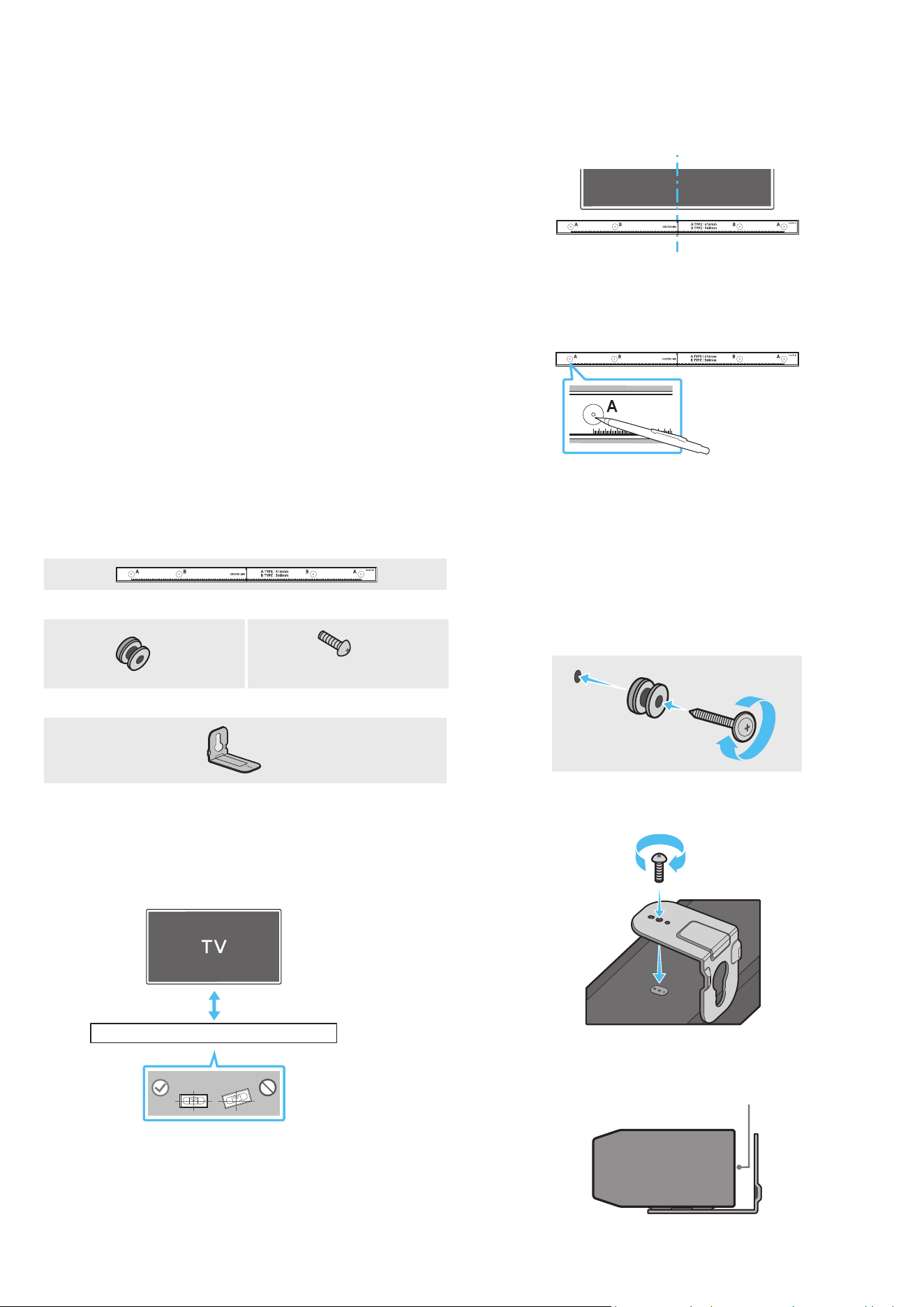
FRA - 27
11 INSTALLATION DE LA
FIXATION MURALE
Précautions d'installation
• Installez uniquement la Soundbar sur un mur vertical.
• N'installez pas la Soundbar dans un endroit chaud ou humide.
• Vériez que le mur est assez résistant pour soutenir le poids du produit.
Si ce n'est pas le cas, consolidez le mur ou choisissez un autre point
d'installation.
• Achetez et utilisez uniquement des vis de xation et des dispositifs
d'ancrage adaptés au type de mur que vous avez choisi (mur en plâtre,
en acier, en bois, etc.). Si possible, xez les vis du support dans les
montants du mur.
• Achetez des vis de xation murale adaptées au type et à l'épaisseur du
mur sur lequel vous souhaitez installer la Soundbar.
‒ Diamètre : M5
‒ Longueur : 35 mm ou plus selon nos recommandations.
• Branchez les câbles de l'unité aux appareils externes avant de procéder
à l'installation murale de la Soundbar.
• Veillez à ce que l'unité soit éteinte et débranchée avant de procéder à
l'installation. Dans le cas contraire, il existe un risque d'électrocution.
Composants de xation murale
Guide de xation murale
x 2
x 2
(M4 x L10)
Vis de xation Vis
x 2
Support de xation murale
1. Placez le guide de xation murale contre le mur.
• Le guide de xation murale doit être de niveau.
• Si votre téléviseur est xé au mur, installez la Soundbar au moins
5 cm sous celui-ci.
5 cm ou plus
2. Alignez la ligne centrale du guide de xation murale avec le centre de
votre téléviseur (si vous xez la Soundbar sous votre téléviseur), puis
xez le guide de xation murale au mur avec du ruban adhésif.
• Si vous ne xez pas la Soundbar sous un téléviseur, placez la ligne
centrale au centre de la zone d'installation.
Ligne centrale
3. Appuyez avec la pointe d'un stylo ou d'un crayon bien taillé au centre
des images A-TYPE à chaque extrémité du guide pour marquer les trous
des vis de xation, puis retirez le guide de xation murale.
4. À l'aide d'une mèche appropriée, faites un trou dans le mur au niveau de
chaque marque.
• Si les marques ne correspondent pas aux positions des poteaux
muraux, veillez à insérer les ancrages ou les chevilles à expansion
approprié(e)s dans les trous avant d'insérer les vis de xation. Si vous
utilisez des ancrages ou des chevilles Molly, pensez à percer des
trous sufsamment larges pour les accueillir.
5. Insérez une vis (non fournie) dans chaque bague-support, puis vissez
fermement chaque vis dans un trou pour vis portante.
6. Installez les 2 crochets de xation murale à l'arrière de la Soundbar, en
veillant à bien les positionner, en utilisant 2 vis.
• Lors du montage, veillez à ce que la partie verticale des crochets de
xation murale se trouve derrière l'arrière de la Soundbar.
Arrière de la Soundbar
Extrémité droite de la Soundbar
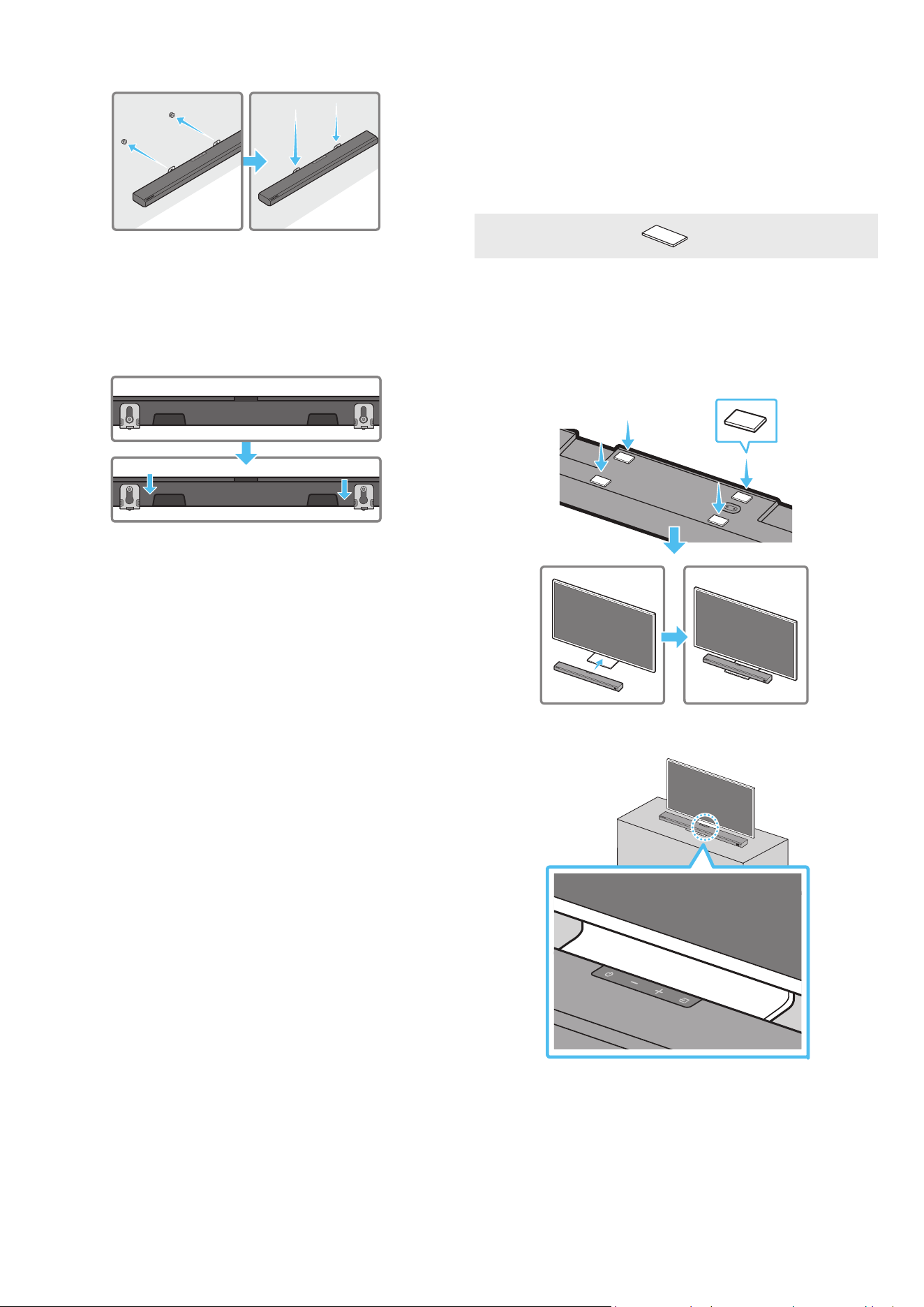
FRA - 28
7. Installez la Soundbar sur laquelle sont xés les crochets de xation
murale en accrochant ces crochets sur les bagues-supports au mur.
8. Faites glisser la Soundbar vers le bas, comme indiqué ci-dessous, an
que les crochets de xation murale reposent fermement sur les bagues-
supports.
• Insérez les bagues-supports dans la partie large (inférieure) des
crochets de xation murale, puis faites glisser ces crochets vers le
bas an qu'ils reposent fermement sur les bagues-supports.
12 INSTALLATION DE LA
SOUNDBAR AU-DESSUS
D'UN SOCLE DE TÉLÉVISEUR
Composant
x 4
Pied en caoutchouc
Pour l'installation, xez les pieds en caoutchouc sous la Soundbar avant de
la placer au-dessus du socle de téléviseur. Assurez-vous de xer les pied en
caoutchouc de sorte qu'ils ne dépassent pas du socle de la TV. Reportez-
vous à la gure ci-dessous.
Pied en caoutchouc
Placez la Soundbar sur un socle de téléviseur.
Comme indiqué sur l'illustration, alignez le centre de la Soundbar avec le
centre du téléviseur, en plaçant avec précaution la Soundbar sur le socle du
téléviseur.
REMARQUE
• Veillez à ce que la Soundbar soit placée sur une surface plane et stable.
• Un écart insufsant par rapport au téléviseur peut entraîner un
problème acoustique.
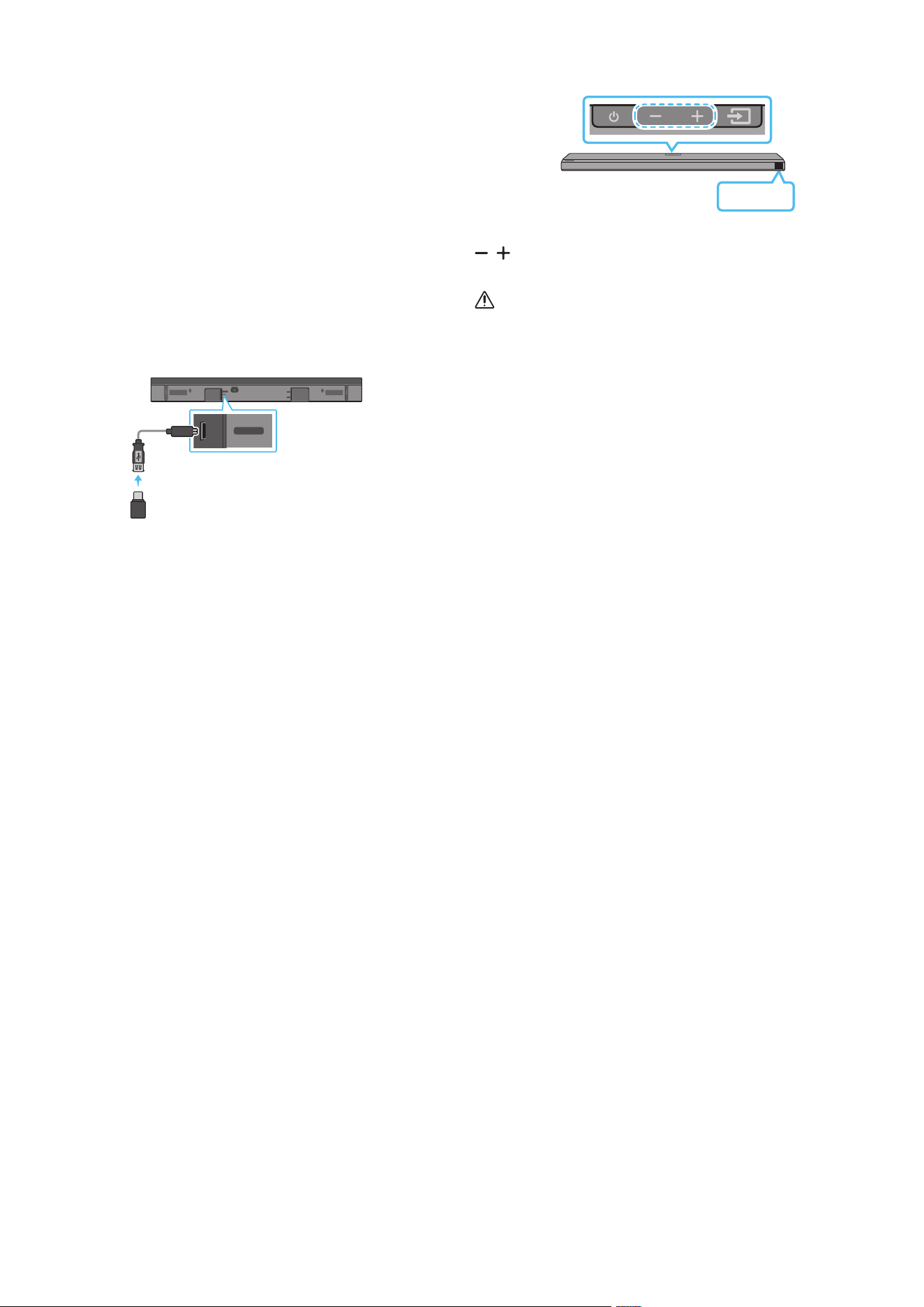
FRA - 29
13 MISE À JOUR DU LOGICIEL
Mise à jour automatique
Lorsque la Soundbar est connectée à internet, le logiciel est
automatiquement mis à jour, même lorsque la Soundbar est éteinte.
• Pour utiliser la fonction de mise à jour automatique, la Soundbar doit
être connectée à internet.
La connexion Wi-Fi à la Soundbar prend n si le cordon d'alimentation
de la Soundbar est débranché ou si l'alimentation est coupée. Si
l'alimentation a été coupée, lorsque l'alimentation revient ou quand
vous rebranchez le cordon d'alimentation, allumez la Soundbar, puis
reconnectez-la à internet.
Mise à jour par USB
DIGITAL AUDIO IN
(OPTICAL)
SERVICE
DC 19V
HDMI
NETWORK ID SET
HDMI TO TV
(eARC/ARC)
HDMI IN
HDMI OUT
(TV-ARC)
DIGITAL AUDIO IN
(OPTICAL)
SERVICE
DC 19V
Arrière de la Soundbar
Câble adaptateur Micro-USB vers USB
(non fourni)
Il est possible qu'à l'avenir, Samsung propose des mises à jour du
micrologiciel du système de la Soundbar.
Lorsqu'une mise à jour est disponible, vous pouvez mettre à jour la
Soundbar en connectant un lecteur USB contenant la mise à jour du
micrologiciel au port SERVICE de la Soundbar.
1. Rendez-vous sur le site Samsung (www.samsung.com) → recherchez le
nom du modèle en passant par le menu Assistance.
• Pour plus d'informations sur les mises à jour, reportez-vous au guide
des mises à jour.
2. Téléchargez le chier de mise à jour (type USB).
3. Décompressez le chier pour créer un dossier avec le nom du chier.
4. Stockez le chier créé dans une clé USB puis connectez-la à la Soundbar.
5. Allumez la Soundbar. L'appareil est ensuite mis à jour en 3 minutes et
afche le message « UPDATE ».
• Pendant la mise à jour, n'éteignez pas l'appareil et ne retirez pas la
clé USB.
• Si le message « UPDATE » n'apparaît pas sur l'écran, débranchez le
cordon d'alimentation de la Soundbar, puis rebranchez-le.
• Lorsque la dernière version est installée, aucune mise à jour n'est
effectuée.
• Selon le type de clé USB utilisée, la mise à jour peut ne pas être prise
en charge.
Initialisation
Dessus de la Soundbar
INIT
Alors que la Soundbar est allumée, appuyez simultanément sur les boutons
(Volume) situés sur le boîtier pendant au moins 5 secondes. « INIT »
s'afche à l'écran et la Soundbar s'initialise.
ATTENTION
• Tous les réglages de la Soundbar sont initialisés. Veillez à n'effectuer
cette opération que lorsque l'initialisation est nécessaire.

FRA - 30
14 DÉPANNAGE
Avant de contacter l'assistance, vériez les éléments suivants.
La Soundbar ne s'allume pas
• Vériez que le cordon d'alimentation de la Soundbar est correctement
inséré dans la prise.
La Soundbar fonctionne par intermittence
• Retirez le cordon d'alimentation, puis insérez-le à nouveau.
• Débranchez le cordon d'alimentation de l'appareil externe et
réessayez.
• En l’absence de signal, la Soundbar s’éteint automatiquement après un
certain temps. Activez l'alimentation. (Voir page 9.)
Si la télécommande ne fonctionne pas
• Pointez la télécommande directement vers la Soundbar.
• Remplacez les piles de la télécommande par des piles neuves.
La Soundbar n'émet aucun son
• Le volume de la Soundbar est trop bas ou a été mis en sourdine. Réglez
le volume.
• Si un appareil externe (STB, appareil Bluetooth, appareil mobile, etc.)
est connecté, réglez le volume de l'appareil externe.
• Sélectionnez la Soundbar comme sortie du son du téléviseur. (TV
Samsung : Accueil (
) → Paramètres ( ) → Son → Sortie audio →
Sélectionnez la Soundbar)
• La connexion du câble à la Soundbar peut ne pas être desserrée.
Débranchez le câble et connectez-le de nouveau.
• Débranchez complètement le cordon d'alimentation, reconnectez-le,
puis allumez l'alimentation.
• Initialisez l'appareil et réessayez. (Voir page 29.)
Le caisson de basse n'émet aucun son
• Vériez si le voyant LED situé à l'arrière du subwoofer est allumé en
bleu. Reconnectez la Soundbar et le caisson de basse si le voyant
clignote en bleu ou devient rouge. (Voir page 13.)
• Vous pouvez rencontrer un problème s'il y a un obstacle entre la
Soundbar et le subwoofer. Déplacez les appareils vers une zone sans
obstacle.
• Les signaux de fréquence radio envoyés par d'autres appareils à
proximité peuvent interrompre la connexion.
Gardez l'enceinte éloignée de ces appareils.
• Débranchez puis reconnectez la che d'alimentation.
Le volume du subwoofer est trop faible
• Le volume original du contenu que vous écoutez peut être faible.
Essayez de régler le niveau du caisson de basse. (Voir page 10.)
• Rapprochez l'enceinte subwoofer de vous.
Si le téléviseur n’est pas connecté via HDMI TO TV (eARC/ARC)
• Vériez si le câble HDMI est correctement connecté à la borne ARC.
(Voir page 16.)
• La connexion peut être rendue impossible par l'appareil externe
connecté (décodeur, console de jeu, etc.). Connectez directement la
Soundbar.
• Il est possible que HDMI-CEC ne soit pas activé sur le téléviseur.
Activez CEC sur le menu TV. (TV Samsung : Accueil ( ) →
Réglages ( ) → Général → Gestionnaire d'appareil externe → Anynet+
(HDMI-CEC) ON)
• Pour une connexion avec eARC, la fonction eARC doit être activée dans
le menu du téléviseur. (TV Samsung : Accueil ( ) → Paramètres ( )
→ Son → Réglages expert → Mode HDMI eARC (Auto))
Il n'y a aucun son lors de la connexion au téléviseur en mode
HDMI TO TV (eARC/ARC)
• Votre appareil est incapable de lire le signal d'entrée. Changez la
sortie audio du téléviseur sur PCM ou Dolby Digital. (Pour une TV
Samsung : Accueil (
) → Paramètres ( ) → Son → Réglages expert→
Format audio de la sortie numérique)
La Soundbar ne se connecte pas en Bluetooth.
• Lors de la connexion d'un nouvel appareil, passez en mode
« BT PAIRING » pour établir la connexion. (Maintenez enfoncée la
touche
PAIR de la télécommande ou la touche (Source) sur le
boîtier de la Soundbar pendant au moins 5 secondes.)
• Si la Soundbar est connectée à un autre appareil, déconnectez d'abord
cet appareil pour changer d'appareil.
• Supprimez la liste des enceintes Bluetooth sur l’appareil à connecter,
puis reconnectez-le. (TV Samsung : Accueil ( ) → Réglages ( ) →
Son → Sortie audio → Liste des enceintes Bluetooth)
• La connexion automatique au téléviseur peut être désactivée. Lorsque
la Soundbar afche « BT READY », appuyez sur la touche de la
télécommande de la Soundbar pendant 5 secondes pour sélectionner
ON-TV CONNECT. Si OFF-TV CONNECT s'afche, appuyez à nouveau
sur la touche pendant 5 secondes pour changer la sélection.
• Débranchez puis reconnectez la che d'alimentation, et réessayez.
• Initialisez l'appareil et réessayez. (Voir page 29.)
Le son se coupe lors d'une connexion via Bluetooth
• Certains appareils peuvent générer des interférences radio s'ils sont
placés trop très de la Soundbar (p. ex. les micro-ondes, les routeurs
sans l, etc.).
• Si votre appareil connecté via Bluetooth est trop éloigné de la
Soundbar, il est possible que le son soit coupé. Rapprochez l'appareil
de la Soundbar.
• Si une partie de votre corps est en contact avec l'émetteur-récepteur
Bluetooth ou si le produit est installé sur un meuble en métal, il se
peut que le son coupe. Vériez l'environnement d'installation et les
conditions d'utilisation.
Connexion impossible en Wi-Fi
• Vériez si votre routeur sans l est allumé.
• Éteignez le routeur, rallumez-le, puis réessayez.
• La Soundbar ne peut pas se connecter si le signal sans l est trop
faible. Placez le routeur plus près de la Soundbar ou éliminez tout
obstacle entre celle-ci et le routeur, dans la mesure du possible.
• Si votre routeur sans l est neuf, vous devrez congurer de nouveau les
paramètres réseau de l'enceinte.
La Soundbar ne s'allume pas automatiquement avec le téléviseur.
• Éteindre la Soundbar alors que vous regardez le téléviseur entraîne la
désactivation de la synchronisation de l'alimentation du téléviseur et
de la Soundbar. Commencez par éteindre le téléviseur.
FRA - 31
15 LICENCE
Dolby, Dolby Atmos, and the double-D symbol are registered
trademarks of Dolby Laboratories Licensing Corporation. Manufactured
under license from Dolby Laboratories. Condential unpublished works.
Copyright © 2012-2020 Dolby Laboratories. All rights reserved.
For DTS patents, see http://patents.dts.com. Manufactured under license
from DTS, Inc. (for companies headquartered in the U.S./Japan/Taiwan)
or under license from DTS Licensing Limited (for all other companies).
DTS, DTS:X Pro, DTS:X, and the DTS:X logo are registered trademarks or
trademarks of DTS, Inc. in the United States and other countries. © 2020
DTS, Inc. ALL RIGHTS RESERVED.
The terms HDMI and HDMI High-Denition Multimedia Interface,
and the HDMI Logo are trademarks or registered trademarks of HDMI
Licensing Administrator, Inc. in the United States and other countries.
• Utilisez votre téléphone, votre tablette ou votre ordinateur comme
une télécommande pour contrôler Spotify. Accédez à spotify.com/
connect pour en savoir plus.
• Le logiciel Spotify est soumis à des licences tierces disponibles ici :
https://www.spotify.com/connect/third-party-licenses.
* Cette fonction peut ne pas être prise en charge suivant le modèle et la
région.
• Apple, AirPlay, iPhone, iPad, HomePod, and Apple TV are trademarks
of Apple Inc., registered in the U.S. and other countries.
• Use of the Works with Apple badge means that an accessory has
been designed to work specically with the technology identied
in the badge and has been certied by the developer to meet Apple
performance standards.
16 AVIS CONCERNANT LES
LICENCES LIBRES
Pour toute demande ou question liée aux logiciels libres, contactez
Samsung Open Source (http://opensource.samsung.com)
17 REMARQUES IMPORTANTES
RELATIVES AU SERVICE
Les gures et les illustrations de ce manuel utilisateur sont fournies à
titre de référence uniquement et ne constituent pas nécessairement une
représentation dèle du produit.

FRA - 32
18 SPÉCIFICATIONS ET GUIDE
Caractéristiques techniques
Nom du modèle HW-Q700A
Poids 3,6 kg
Dimensions (L x H x P) 980,0 x 60,0 x 115,0 mm
Plage de température de fonctionnement +5 °C à +35 °C
Plage d’humidité de fonctionnement 10 % ~ 75 %
HAUTS-PARLEURS
Puissance nominale de sortie ((30 W x 4) + (20 W x 2) + 10 W) + 160 W
Formats de lecture pris en charge
Dolby 5.1ch / Dolby Digital Plus / Dolby TRUE HD / Dolby ATMOS
DTS 5.1ch / DTS HD / DTS-HD Master Audio / DTS:X / LPCM 8Ch
Nom du subwoofer PS-WA75B
Poids 5,9 kg
Dimensions (L x H x P) 205,0 x 353,0 x 302,0 mm
HAUTS-PARLEURS
Puissance nominale de sortie 160 W
REMARQUE
• Samsung Electronics Co., Ltd se réserve le droit de modier les caractéristiques techniques sans préavis.
• Le poids et les dimensions sont donnés à titre approximatif.
Précaution : La Soundbar redémarre automatiquement si vous activez/désactivez le Wi-Fi.
Wi-Fi
Méthode de désactivation du port
Appuyez sur la touche ID SET sur le panneau inférieur de la Soundbar et maintenez-la enfoncée
pendant 30 secondes pour activer/désactiver le Wi-Fi.
Bluetooth
Méthode de désactivation du port
Appuyez sur la touche NETWORK sur le panneau inférieur de la Soundbar et maintenez-la
enfoncée pendant 30 secondes pour activer/désactiver le Bluetooth.
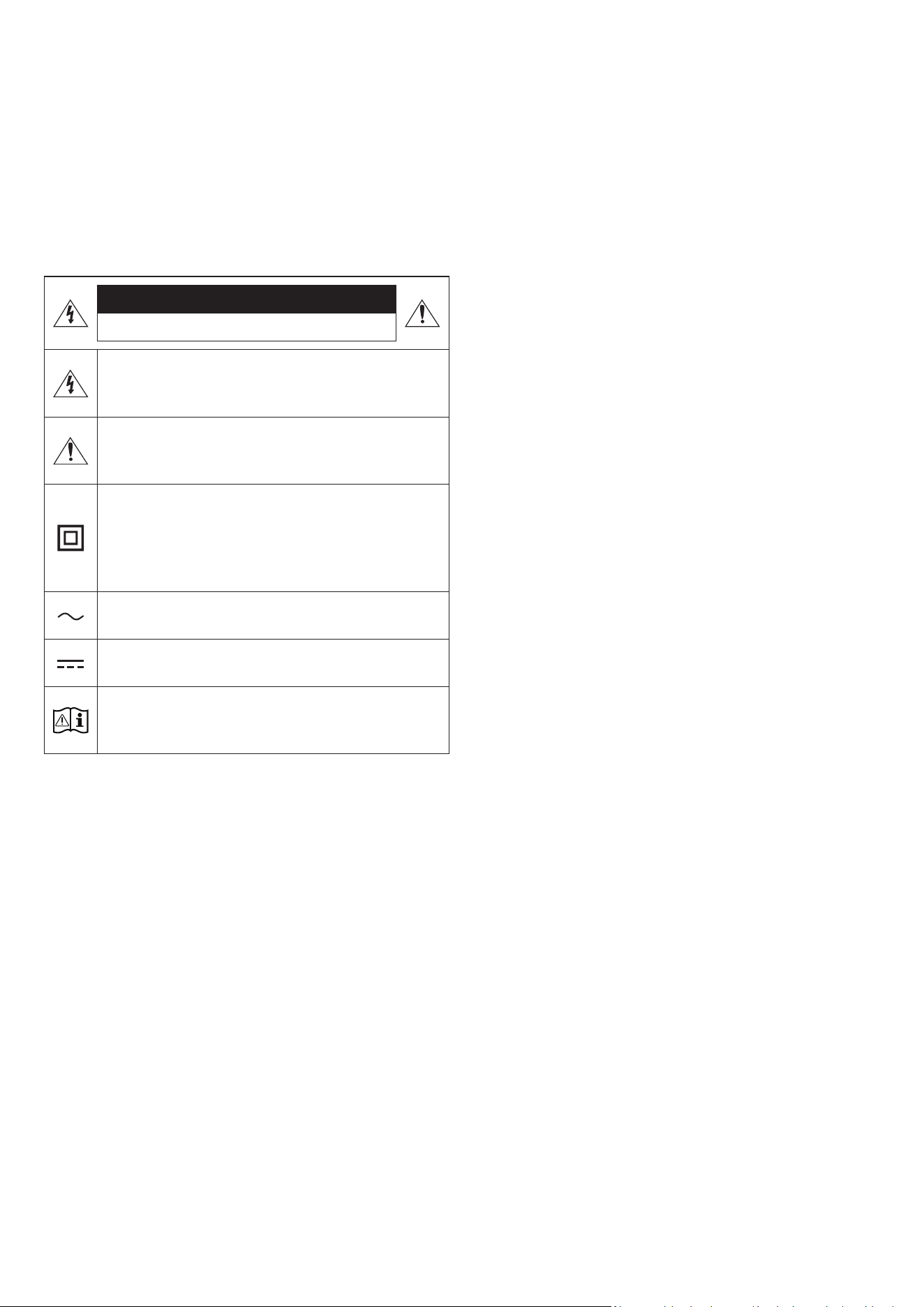
POR - 2
INFORMAÇÕES DE SEGURANÇA
AVISOS DE SEGURANÇA
PARA REDUZIR O RISCO DE CHOQUE ELÉTRICO, NÃO RETIRAR A TAMPA
(OU A PARTE POSTERIOR).
NÃO EXISTEM PEÇAS NO INTERIOR QUE POSSAM SER REPARARAS PELO
UTILIZADOR. A MANUTENÇÃO DEVE SER DEIXADA A CARGO DE PESSOAL
QUALIFICADO DE SERVIÇOS DE ASSISTÊNCIA.
Consulte a tabela abaixo para uma explicação dos símbolos que poderão
estar no seu produto Samsung.
CUIDADO
RISCO DE CHOQUE ELÉTRICO. NÃO ABRIR.
Este símbolo indica a presença de alta tensão no interior do
produto. É perigoso estabelecer qualquer tipo de contacto
com as peças existentes no interior do produto.
Este símbolo indica a existência de documentação importante
relativa ao funcionamento e manutenção deste produto
(fornecida com o mesmo).
Produto de classe II: este símbolo indica que não é necessária
uma ligação elétrica à terra de segurança.
Se este símbolo não se encontrar num produto com um cabo
de alimentação, o produto DEVERÁ possuir uma ligação de
proteção segura à terra.
Tensão CA: a tensão nominal indicada por este símbolo
corresponde à tensão CA.
Tensão CC: a tensão nominal indicada por este símbolo
corresponde à tensão CC.
Cuidado. Consultar as instruções de utilização: este símbolo
aconselha o utilizador a consultar o manual do utilizador
quanto a informações de segurança.
AVISO
• Para reduzir o risco de incêndio ou choque elétrico, não exponha este
aparelho a chuva ou humidade.
CUIDADO
• PARA PREVENIR CHOQUES ELÉTRICOS, INSIRA TOTALMENTE A FICHA
FAZENDO CORRESPONDER O PINO MAIS LARGO COM O ORIFÍCIO MAIS
LARGO.
• Este aparelho deve estar sempre ligado a uma cha CA com uma ligação
de proteção à terra.
• Para desligar o aparelho da rede elétrica, puxe a cha da tomada, por
isso, a tomada deve estar facilmente acessível.
• Não exponha o aparelho a gotas ou salpicos. Não coloque objetos com
líquidos, como jarros, sobre o aparelho.
• Para desligar completamente este aparelho, tem de retirar a cha da
tomada. Por isso, a tomada deve estar sempre fácil e prontamente
acessível.

POR - 3
PRECAUÇÕES
1. Certique-se de que a fonte de alimentação CA da sua residência está
em conformidade com os requisitos elétricos indicados no autocolante
de caraterísticas na parte inferior do produto. Instale o produto na
horizontal, numa base adequada (mobília), com espaço suciente à
volta para ventilação (7 a 10 cm). Certique-se de que as ranhuras
de ventilação não estão cobertas. Não coloque a unidade sobre
amplicadores ou outro equipamento que possa car quente. A unidade
foi concebida para utilização contínua.
Para desligar a unidade completamente, desligue a cha CA da tomada
de parede. Se não pretender utilizar a unidade durante um longo
período de tempo, desligue-a retirando a respetiva cha da tomada.
2. Durante tempestades, desligue a cha CA da tomada. Os picos de
tensão provocados pela trovoada podem danicar a unidade.
3. Não exponha a unidade a luz solar direta ou outras fontes de calor. Isto
pode originar sobreaquecimento e provocar avaria na unidade.
4. Proteja o produto da humidade (ou seja, jarros) e do calor excessivo (por
ex., uma lareira) ou de equipamentos que criem campos magnéticos
ou elétricos fortes. Se a unidade se avariar, desligue o cabo de
alimentação da tomada de parede CA. O produto não foi concebido para
utilização industrial. É apenas para utilização pessoal. Se o produto for
armazenado a baixas temperaturas, poderá ocorrer condensação. Se
transportar a unidade durante o inverno, espere aproximadamente 2
horas, até a unidade ter alcançado a temperatura ambiente, antes de a
utilizar.
5. As pilhas utilizadas com este produto contêm químicos que são
prejudiciais para o ambiente. Não elimine as pilhas no lixo geral
doméstico. Não exponha as pilhas a calor excessivo, luz solar direta nem
fogo. Não provoque um curto-circuito, não desmonte nem sobreaqueça
as pilhas.
CUIDADO: risco de explosão se as pilhas forem substituídas
incorretamente. Substitua apenas por pilhas do mesmo tipo ou
equivalente.

POR - 4
ÍNDICE
01 Vericar os componentes 6
02 Descrição geral do produto 7
Painel frontal/Painel superior do Soundbar. . . . . . . . . . . . . . . . . . . . . . . . . . . . . . . . . . . . . . . . . . . . . . . . . . . . . . . . . . . . . . . . . . . . . . . . . . . . . . . . . . . . . . . . . . . . . . . . . 7
Painel inferior do Soundbar. . . . . . . . . . . . . . . . . . . . . . . . . . . . . . . . . . . . . . . . . . . . . . . . . . . . . . . . . . . . . . . . . . . . . . . . . . . . . . . . . . . . . . . . . . . . . . . . . . . . . . . . . . . . . . . . 7
03 Utilizar o controlo remoto do Soundbar 9
Inserir as pilhas antes de utilizar o controlo remoto (X 2 pilhas AA) . . . . . . . . . . . . . . . . . . . . . . . . . . . . . . . . . . . . . . . . . . . . . . . . . . . . . . . . . . . . . . . . . . . . . . . . . . . 9
Como utilizar o controlo remoto . . . . . . . . . . . . . . . . . . . . . . . . . . . . . . . . . . . . . . . . . . . . . . . . . . . . . . . . . . . . . . . . . . . . . . . . . . . . . . . . . . . . . . . . . . . . . . . . . . . . . . . . . . . 9
Utilizar os botões escondidos (botões com mais de uma função) . . . . . . . . . . . . . . . . . . . . . . . . . . . . . . . . . . . . . . . . . . . . . . . . . . . . . . . . . . . . . . . . . . . . . . . . . . . . 11
Especicações de saída para diferentes modos de efeitos sonoros. . . . . . . . . . . . . . . . . . . . . . . . . . . . . . . . . . . . . . . . . . . . . . . . . . . . . . . . . . . . . . . . . . . . . . . . . . . 11
Ajustar o volume do Soundbar com o telecomando de uma TV . . . . . . . . . . . . . . . . . . . . . . . . . . . . . . . . . . . . . . . . . . . . . . . . . . . . . . . . . . . . . . . . . . . . . . . . . . . . . . 12
04 Ligar o Soundbar 13
Ligar a alimentação e as unidades . . . . . . . . . . . . . . . . . . . . . . . . . . . . . . . . . . . . . . . . . . . . . . . . . . . . . . . . . . . . . . . . . . . . . . . . . . . . . . . . . . . . . . . . . . . . . . . . . . . . . . . . 13
‒ Ligar o Subwoofer manualmente . . . . . . . . . . . . . . . . . . . . . . . . . . . . . . . . . . . . . . . . . . . . . . . . . . . . . . . . . . . . . . . . . . . . . . . . . . . . . . . . . . . . . . . . . . . . . . . . . . . . . . 13
‒ Indicadores LED na parte de trás do Subwoofer . . . . . . . . . . . . . . . . . . . . . . . . . . . . . . . . . . . . . . . . . . . . . . . . . . . . . . . . . . . . . . . . . . . . . . . . . . . . . . . . . . . . . . . . . 14
Ligar um SWA-9500S (vendido em separado) ao Soundbar. . . . . . . . . . . . . . . . . . . . . . . . . . . . . . . . . . . . . . . . . . . . . . . . . . . . . . . . . . . . . . . . . . . . . . . . . . . . . . . . . . 15
05 Usar uma ligação com os ao televisor 16
Método 1. Ligar com um cabo HDMI . . . . . . . . . . . . . . . . . . . . . . . . . . . . . . . . . . . . . . . . . . . . . . . . . . . . . . . . . . . . . . . . . . . . . . . . . . . . . . . . . . . . . . . . . . . . . . . . . . . . . . . 16
‒ Ligar uma TV compatível com HDMI ARC (canal de retorno de áudio) . . . . . . . . . . . . . . . . . . . . . . . . . . . . . . . . . . . . . . . . . . . . . . . . . . . . . . . . . . . . . . . . . . . . . 16
Método 2. Ligar com cabo ótico . . . . . . . . . . . . . . . . . . . . . . . . . . . . . . . . . . . . . . . . . . . . . . . . . . . . . . . . . . . . . . . . . . . . . . . . . . . . . . . . . . . . . . . . . . . . . . . . . . . . . . . . . . . 17
06 Usar uma ligação sem os ao televisor 18
Método 1. Ligar através de Bluetooth. . . . . . . . . . . . . . . . . . . . . . . . . . . . . . . . . . . . . . . . . . . . . . . . . . . . . . . . . . . . . . . . . . . . . . . . . . . . . . . . . . . . . . . . . . . . . . . . . . . . . . 18
Método 2. Ligar através de Wi-Fi . . . . . . . . . . . . . . . . . . . . . . . . . . . . . . . . . . . . . . . . . . . . . . . . . . . . . . . . . . . . . . . . . . . . . . . . . . . . . . . . . . . . . . . . . . . . . . . . . . . . . . . . . . 19
07 Ligar a um dispositivo externo 20
Método 1. Ligar através de um cabo HDMI (compatível com descodicação e reprodução Dolby Atmos) . . . . . . . . . . . . . . . . . . . . . . . . . . . . . . . . . . . . . . . . 20
Método 2. Ligar com cabo ótico . . . . . . . . . . . . . . . . . . . . . . . . . . . . . . . . . . . . . . . . . . . . . . . . . . . . . . . . . . . . . . . . . . . . . . . . . . . . . . . . . . . . . . . . . . . . . . . . . . . . . . . . . . . 21
08 Ligar a um dispositivo móvel 22
Método 1. Ligar através de Bluetooth. . . . . . . . . . . . . . . . . . . . . . . . . . . . . . . . . . . . . . . . . . . . . . . . . . . . . . . . . . . . . . . . . . . . . . . . . . . . . . . . . . . . . . . . . . . . . . . . . . . . . . 22
Método 2. Ligar através de Wi-Fi (Rede sem os) . . . . . . . . . . . . . . . . . . . . . . . . . . . . . . . . . . . . . . . . . . . . . . . . . . . . . . . . . . . . . . . . . . . . . . . . . . . . . . . . . . . . . . . . . . . 23
09 Introdução à Alexa com um Produto Amazon (Funciona com a Alexa) 24
Ligar e utilizar com um produto Amazon (Amazon Echo) . . . . . . . . . . . . . . . . . . . . . . . . . . . . . . . . . . . . . . . . . . . . . . . . . . . . . . . . . . . . . . . . . . . . . . . . . . . . . . . . . . . . 24
Utilizar comandos de voz para controlar o Soundbar. . . . . . . . . . . . . . . . . . . . . . . . . . . . . . . . . . . . . . . . . . . . . . . . . . . . . . . . . . . . . . . . . . . . . . . . . . . . . . . . . . . . . . . . 24
Utilizar o Tap Sound. . . . . . . . . . . . . . . . . . . . . . . . . . . . . . . . . . . . . . . . . . . . . . . . . . . . . . . . . . . . . . . . . . . . . . . . . . . . . . . . . . . . . . . . . . . . . . . . . . . . . . . . . . . . . . . . . . . . . . 25
10 Ligar ao Apple AirPlay 2 26
Ligar e utilizar com um produto Apple. . . . . . . . . . . . . . . . . . . . . . . . . . . . . . . . . . . . . . . . . . . . . . . . . . . . . . . . . . . . . . . . . . . . . . . . . . . . . . . . . . . . . . . . . . . . . . . . . . . . . 26
11 Instalar o suporte de parede 27
Precauções de instalação. . . . . . . . . . . . . . . . . . . . . . . . . . . . . . . . . . . . . . . . . . . . . . . . . . . . . . . . . . . . . . . . . . . . . . . . . . . . . . . . . . . . . . . . . . . . . . . . . . . . . . . . . . . . . . . . . 27
Componentes do suporte de parede. . . . . . . . . . . . . . . . . . . . . . . . . . . . . . . . . . . . . . . . . . . . . . . . . . . . . . . . . . . . . . . . . . . . . . . . . . . . . . . . . . . . . . . . . . . . . . . . . . . . . . . 27

POR - 5
12 Instalar o Soundbar por cima do suporte do televisor 28
Componente . . . . . . . . . . . . . . . . . . . . . . . . . . . . . . . . . . . . . . . . . . . . . . . . . . . . . . . . . . . . . . . . . . . . . . . . . . . . . . . . . . . . . . . . . . . . . . . . . . . . . . . . . . . . . . . . . . . . . . . . . . . . 28
13 Atualização do Software 29
Atualização automática . . . . . . . . . . . . . . . . . . . . . . . . . . . . . . . . . . . . . . . . . . . . . . . . . . . . . . . . . . . . . . . . . . . . . . . . . . . . . . . . . . . . . . . . . . . . . . . . . . . . . . . . . . . . . . . . . . 29
Atualização por USB . . . . . . . . . . . . . . . . . . . . . . . . . . . . . . . . . . . . . . . . . . . . . . . . . . . . . . . . . . . . . . . . . . . . . . . . . . . . . . . . . . . . . . . . . . . . . . . . . . . . . . . . . . . . . . . . . . . . . 29
Inicialização. . . . . . . . . . . . . . . . . . . . . . . . . . . . . . . . . . . . . . . . . . . . . . . . . . . . . . . . . . . . . . . . . . . . . . . . . . . . . . . . . . . . . . . . . . . . . . . . . . . . . . . . . . . . . . . . . . . . . . . . . . . . . 29
14 Resolução de problemas 30
15 Licença 31
16 Aviso de Licença de Código Aberto 31
17 Notas importantes sobre a assistência 31
18 Especicações e guia 32
Características técnicas . . . . . . . . . . . . . . . . . . . . . . . . . . . . . . . . . . . . . . . . . . . . . . . . . . . . . . . . . . . . . . . . . . . . . . . . . . . . . . . . . . . . . . . . . . . . . . . . . . . . . . . . . . . . . . . . . . 32
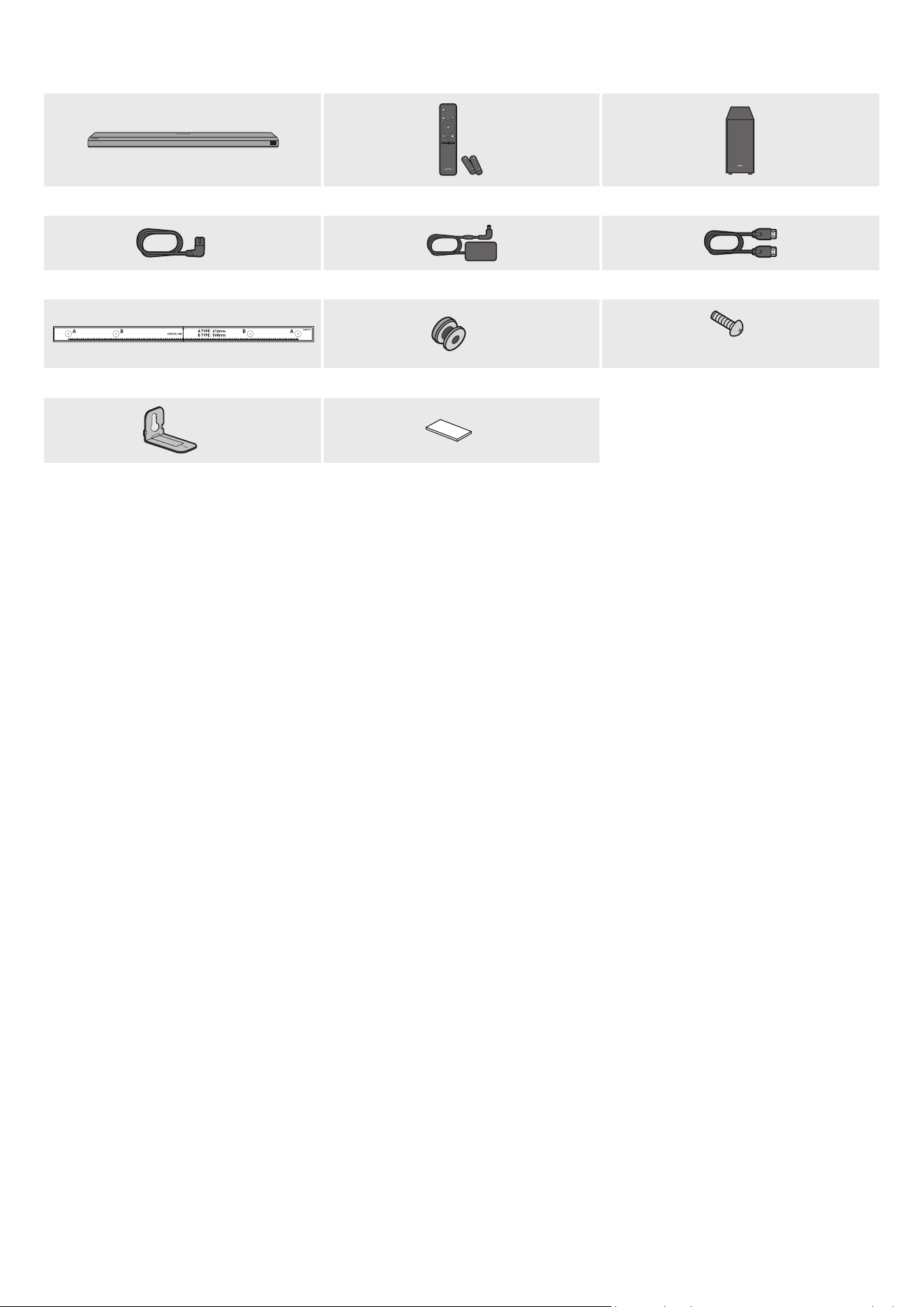
POR - 6
01 VERIFICAR OS COMPONENTES
VOL WOOFER
SOUNDBAR
SOUND
MODE
PAIR
Unidade principal do Soundbar Controlo remoto/pilhas do Soundbar Subwoofer
X 2
Cabo de alimentação (Subwoofer, Soundbar) Transformador de CA/CC (Soundbar) Cabo HDMI
X 2
X 2
(M4 x L10)
Guia do suporte de parede Parafuso de xação Parafuso
X 2
X 4
Suporte de parede Borracha de base
• Para obter mais informações sobre a fonte de alimentação e o consumo de energia, consulte a etiqueta no produto. (Etiqueta: Parte inferior da unidade
principal do Soundbar)
• Para adquirir componentes adicionais ou cabos opcionais, entre em contacto com o Centro de assistência ou com o Atendimento ao cliente da Samsung.
• Para mais informações sobre o suporte de parede ou a borracha de base, consulte as páginas 27~28.
• A conceção, as especicações e o ecrã da aplicação estão sujeitos a alteração sem aviso prévio.
• O aspeto dos acessórios pode ser ligeiramente diferente das ilustrações acima.
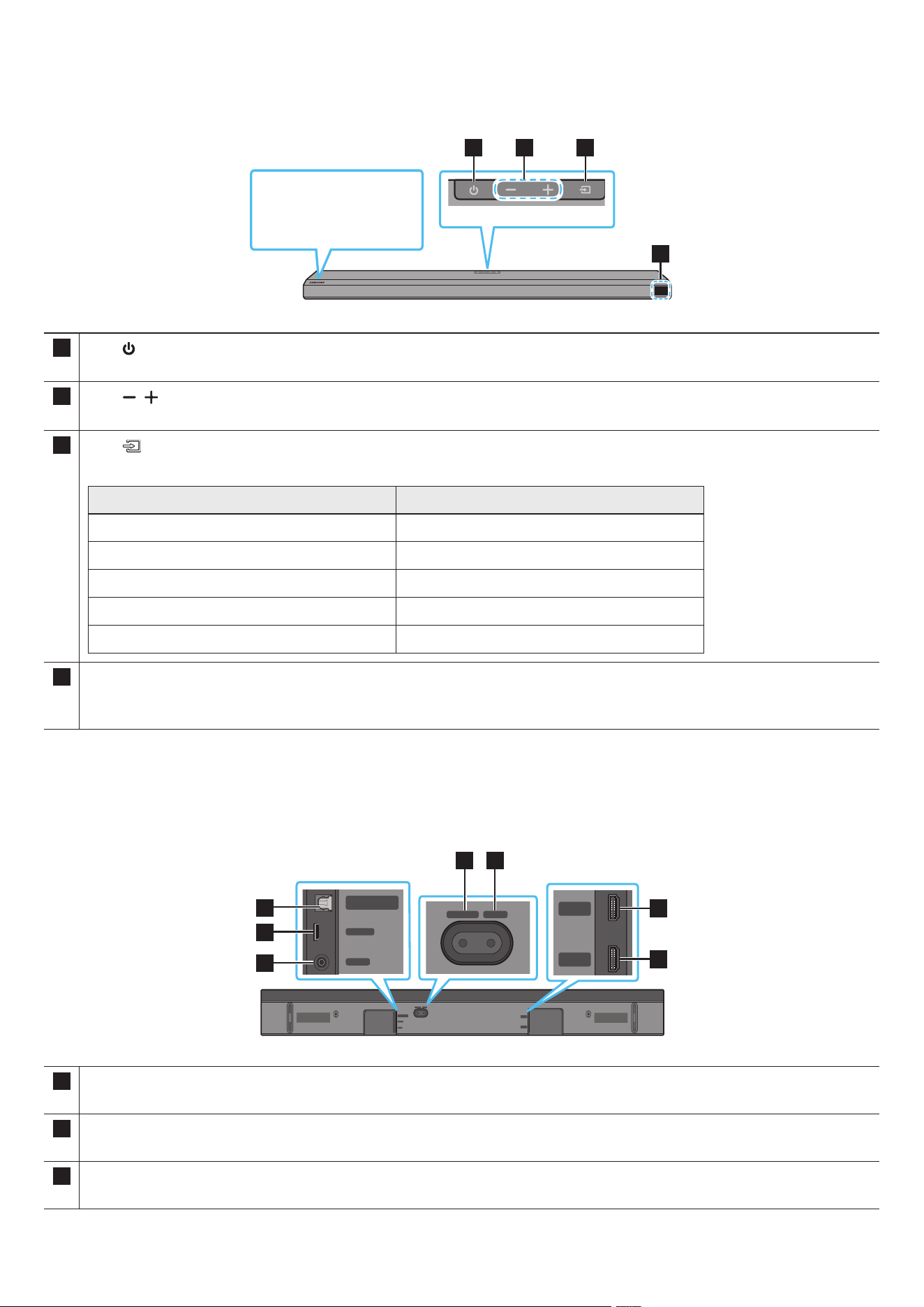
POR - 7
02 DESCRIÇÃO GERAL DO PRODUTO
Painel frontal/Painel superior do Soundbar
1 2 3
4
Posicione o produto de modo
que o logótipo SAMSUNG
que na parte superior.
1
Botão
(Alimentação)
Permite ligar e desligar o dispositivo.
2
Botão
(Volume)
Ajusta o volume.
3
Botão
(Fonte)
Permite selecionar o modo de entrada da fonte.
Modo de entrada Ecrã
Entrada Digital Ótica D.IN
Entrada ARC (HDMI OUT) D.IN → TV ARC (Conversão automática)
Entrada HDMI HDMI
Modo Wi-Fi WIFI
Modo BLUETOOTH BT
4 Ecrã
Apresenta o modo atual e o estado do produto.
D.IN → HDMI → Wi-Fi → BT
• Ao ligar o cabo CA, o botão Ligar/Desligar começa a funcionar dentro de 4 a 6 segundos.
• Ao ligar esta unidade, há um atraso de 4 a 5 segundos antes de esta reproduzir som.
• Se ouvir sons provenientes da TV e do Soundbar, aceda ao menu Denições para o áudio da TV e mude o altifalante da TV para Altifalante externo.
Painel inferior do Soundbar
DIGITAL AUDIO IN
(OPTICAL)
SERVICE
DC 19V
HDMI
NETWORK ID SET
DIGITAL AUDIO IN
(OPTICAL)
SERVICE
NETWORK ID SET
HDMI TO TV
(eARC/ARC)
HDMI IN
HDMI OUT
(TV-ARC)
DIGITAL AUDIO IN
(OPTICAL)
SERVICE
DC 19V
DIGITAL AUDIO IN
(OPTICAL)
SERVICE
DC 19V
HDMI
HDMI TO TV
(eARC/ARC)
DIGITAL AUDIO IN
(OPTICAL)
SERVICE
DC 19V
HDMI
NETWORK ID SET
DIGITAL AUDIO IN
(OPTICAL)
SERVICE
NETWORK ID SET
HDMI TO TV
(eARC/ARC)
HDMI IN
HDMI OUT
(TV-ARC)
DIGITAL AUDIO IN
(OPTICAL)
SERVICE
DC 19V
DIGITAL AUDIO IN
(OPTICAL)
SERVICE
DC 19V
HDMI
HDMI TO TV
(eARC/ARC)
DIGITAL AUDIO IN
(OPTICAL)
SERVICE
DC 19V
HDMI
NETWORK ID SET
DIGITAL AUDIO IN
(OPTICAL)
SERVICE
NETWORK ID SET
HDMI TO TV
(eARC/ARC)
HDMI IN
HDMI OUT
(TV-ARC)
DIGITAL AUDIO IN
(OPTICAL)
SERVICE
DC 19V
DIGITAL AUDIO IN
(OPTICAL)
SERVICE
DC 19V
HDMI
HDMI TO TV
(eARC/ARC)
DIGITAL AUDIO IN
(OPTICAL)
SERVICE
DC 19V
HDMI
NETWORK ID SET
DIGITAL AUDIO IN
(OPTICAL)
SERVICE
NETWORK ID SET
HDMI TO TV
(eARC/ARC)
HDMI IN
HDMI OUT
(TV-ARC)
DIGITAL AUDIO IN
(OPTICAL)
SERVICE
DC 19V
DIGITAL AUDIO IN
(OPTICAL)
SERVICE
DC 19V
HDMI
HDMI TO TV
(eARC/ARC)
1
2
3
4 5
6
7
1 DIGITAL AUDIO IN (OPTICAL)
Ligue a uma saída digital (ótica) de um dispositivo externo. (Consulte a página 21)
2 SERVICE
Ligue um dispositivo de armazenamento USB para atualizar o software do produto.
3 DC 19V (Entrada da fonte de alimentação)
Ligue o transformador de CA/CC. (Consulte a página 13)

POR - 8
4 NETWORK
Prima para ligar a uma rede sem os (Wi-Fi) através da aplicação SmartThings.
5 ID SET
Prima para ligar, sem os, o Soundbar aos altifalantes surround e a um subwoofer. (O altifalante surround é vendido em separado.)
6 HDMI
Permite a entrada simultânea de sinais de áudio e vídeo digitais através de um cabo HDMI.
Ligue à saída HDMI de um dispositivo externo. (Consulte a página 20)
7 HDMI TO TV (eARC/ARC)
Ligue à tomada fêmea HDMI num televisor. (Consulte a página 16)
• Ao desligar o cabo de alimentação do transformador de CA/CC de uma tomada elétrica, puxe a cha.
Não puxe o cabo.
• Não ligue esta unidade ou outros componentes a uma tomada de CA até que todas as ligações entre os componentes estejam concluídas.
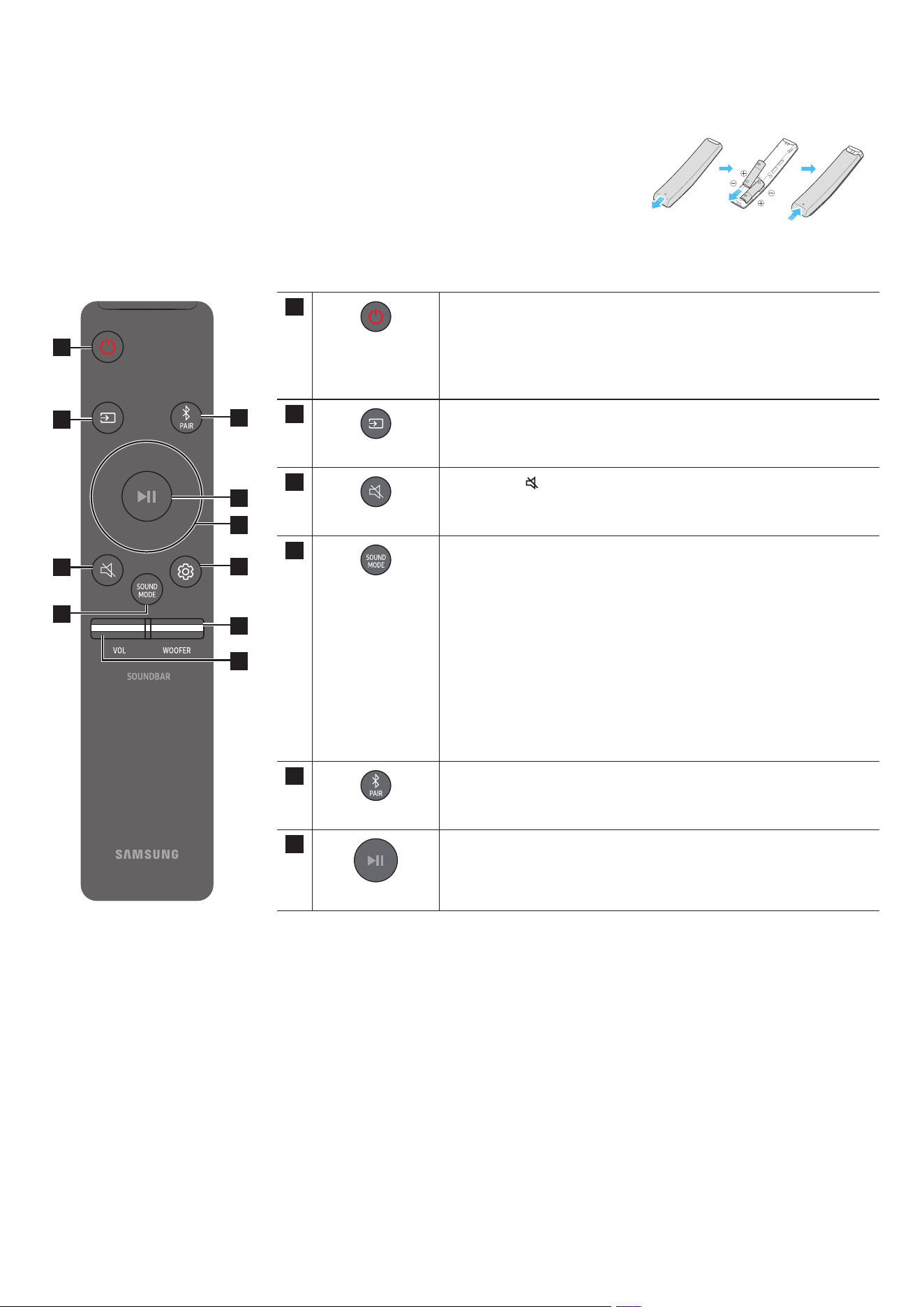
POR - 9
03 UTILIZAR O CONTROLO REMOTO DO SOUNDBAR
Inserir as pilhas antes de utilizar o controlo remoto (X 2 pilhas AA)
Faça deslizar a tampa posterior na direção da seta até ser totalmente removida. Insira 2 pilhas AA (1,5 V)
orientadas corretamente em função das suas polaridades. Deslize a tampa das pilhas de volta à sua posição.
Como utilizar o controlo remoto
1
2
3
4
5
6
7
8
9
10
1
Ligar/Desligar
Liga e desliga o Soundbar.
• Função Desligar automático
Esta unidade desliga-se automaticamente nas seguintes situações:
• Em modo D.IN/HDMI/Wi-Fi/BT, se não existir sinal de áudio durante
18 minutos.
2
Fonte
Prima para selecionar uma fonte ligada ao Soundbar.
3
Sem som
Prima o botão
(Sem som) para colocar no silêncio.
Prima-o novamente para repor o som.
4
SOUND MODE
Pode escolher o modo de som desejado selecionando STANDARD, SURROUND,
GAME PRO ou ADAPTIVE SOUND.
• STANDARD
Emite o som original.
• SURROUND
Oferece um campo sonoro mais amplo do que o padrão.
• GAME PRO
Oferece som estereoscópico para mergulhar na ação durante os videojogos.
• ADAPTIVE SOUND
Analisa o conteúdo em tempo real e fornece automaticamente o campo
sonoro ótimo com base nas características do conteúdo.
5
Bluetooth PAIR
Mude o Soundbar para modo de emparelhamento por Bluetooth. Prima o botão
e aguarde pelo ecrã “BT PAIRING” para ligar a um novo dispositivo Bluetooth.
6
Reproduzir/Pausar
Pode também reproduzir ou pausar música premindo o botão.
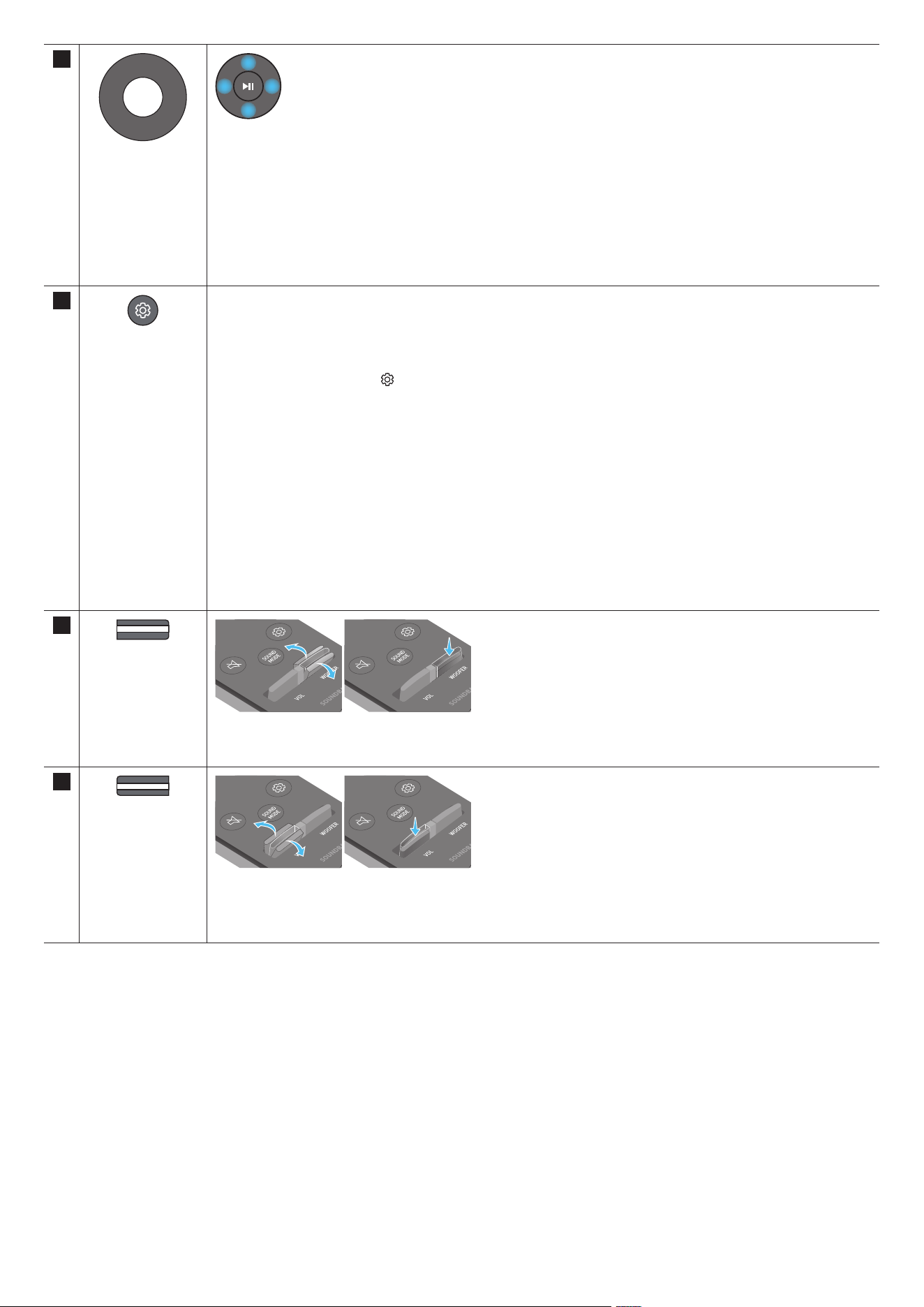
POR - 10
7
Cima/Baixo/
Esquerdo/Direito
Prima as áreas indicadas para selecionar Cima/Baixo/Esquerdo/Direito.
Prima Cima/Baixo/Esquerda/Direita no botão para selecionar ou denir funções.
• Saltar música
Prima o botão Direito para selecionar o cheiro de música seguinte. Prima o botão Esquerdo para selecionar o cheiro
de música anterior.
• DEFINIÇÃO DE ID
Utilize esta opção se o Subwoofer ou as Colunas Surround não estiverem ligados ou se for necessário voltar a ligar.
Enquanto estiverem desligados, mantenha premido o botão Cima durante 5 segundos para executar a ID SET. (Consulte
a página 14.)
8
Controlo de som
Quando premidos, os itens de conguração como TREBLE, BASS, SYNC, CENTER LEVEL, FRONT TOP LEVEL e VIRTUAL ON/
OFF são apresentados em sequência. Pode ajustar o item desejado ao usar os botões Cima/Baixo.
• Para controlar o volume de sons agudos ou graves, selecione TREBLE ou BASS em Denições de som e dena o nível
entre -6 e +6 com os botões Cima/Baixo.
• Mantenha premido o botão
(Controlo de som) durante cerca de 5 segundos para ajustar o som a cada banda de
frequência. Pode selecionar 150 Hz, 300 Hz, 600 Hz, 1,2 kHz, 2,5 kHz, 5 kHz e 10 kHz com os botões Esquerdo/Direito e
cada opção pode ser ajustada para uma denição entre -6 e +6 com os botões Cima/Baixo.
(Certique-se de que o modo de som está denido como “STANDARD”.)
• Para controlar o volume de cada altifalante, selecione CENTER LEVEL ou FRONT TOP LEVEL nas Denições de som e
dena o nível entre -6 e +6 com os botões Cima/Baixo.
• Se o vídeo na TV e o áudio no Soundbar não estiverem sincronizados, selecione SYNC em Controlo de som e dena o
atraso de áudio para um valor entre 0 e 300 milissegundos com os botões Cima/Baixo.
• SYNC só é suportado em algumas funções.
• Se tiver Altifalantes Surround ligados, selecione REAR LEVEL, REAR TOP LEVEL e utilize os botões Cima/Baixo para
ajustar o volume dentro do intervalo -6 a +6.
• O Altifalante VIRTUAL pode ser ligado ou desligado ON/OFF com os botões Cima/Baixo.
9
NÍVEL DO WOOFER
(BASS)
Prima o botão para cima ou para baixo para ajustar o nível do woofer (graves) para -12 ou entre -6 e +6. Para denir o
volume do woofer (graves) para 0 (padrão), prima o botão.
10
VOLUME
Prima o botão para cima ou para baixo para ajustar o volume.
• Sem som
Prima o botão VOL para colocar no silêncio. Prima-o novamente para repor o som.
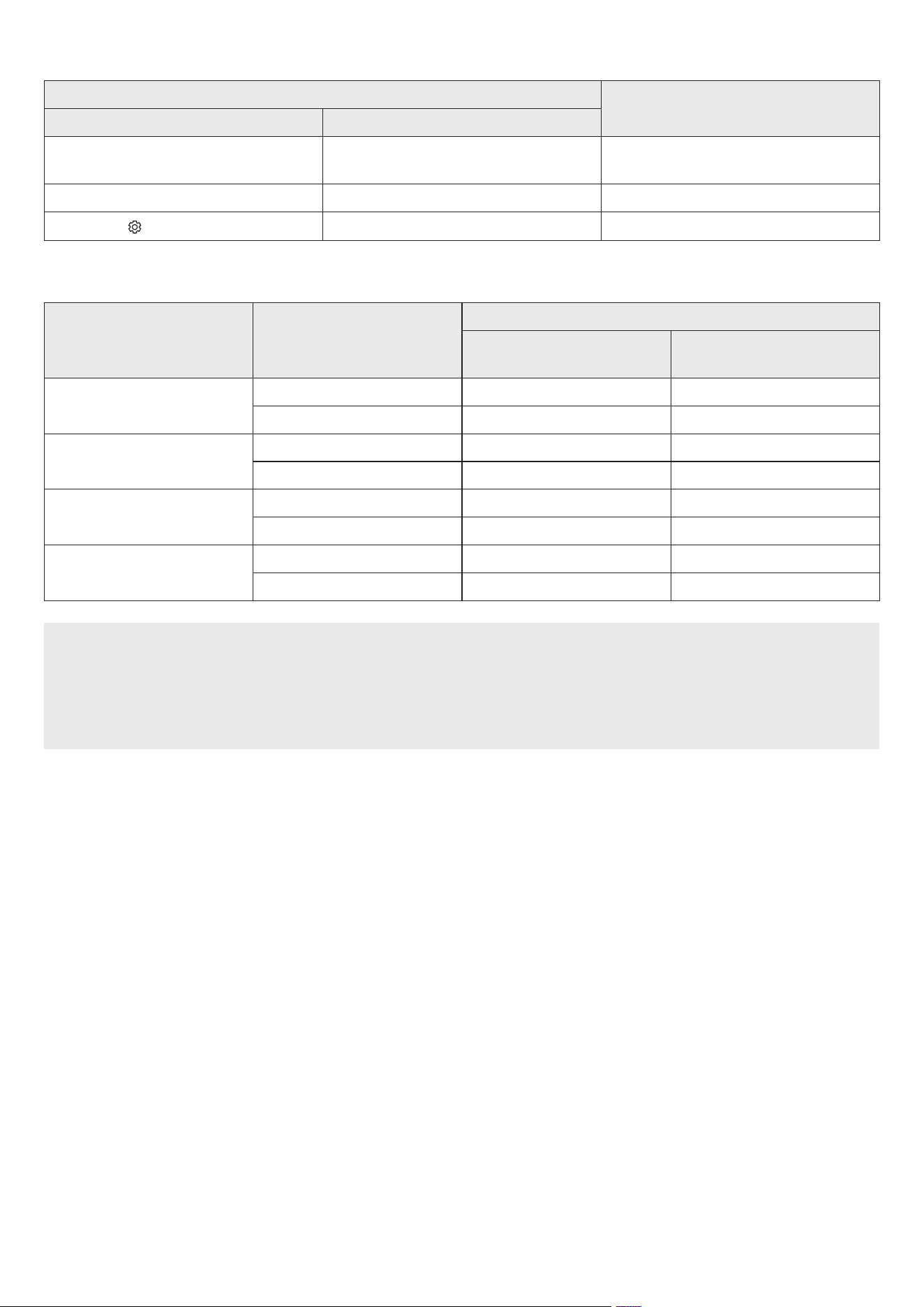
POR - 11
Utilizar os botões escondidos (botões com mais de uma função)
Botão escondido
Página de referência
Botão do controlo remoto Função
WOOFER (cima)
Ligar/desligar (em espera) do controlo remoto
do televisor
página 12
Cima DEFINIÇÃO DE ID página 14
(Controlo de som)
Equilíbrio de 7 bandas página 10
Especicações de saída para diferentes modos de efeitos sonoros
Efeito Entrada
Potência
Apenas com o Subwoofer
Com Subwoofer e kit de colunas
traseiras sem os
STANDARD
2.0 canais 2.1 canais 2.1 canais
5.1 canais 3.1 canais 5.1 canais
SURROUND
2.0 canais 3.1.2 canais 5.1.4 canais
5.1 canais 3.1.2 canais 5.1.4 canais
GAME PRO
2.0 canais 3.1.2 canais 5.1.4 canais
5.1 canais 3.1.2 canais 5.1.4 canais
ADAPTIVE SOUND
2.0 canais 3.1.2 canais 5.1.4 canais
5.1 canais 3.1.2 canais 5.1.4 canais
• Se a fonte de entrada for Dolby Atmos®, DTS:X, a conguração Apenas Subwoofer fornece um áudio de 3.1.2 canais, enquanto a conguração Kit de
altifalantes traseiros sem os e Subwoofer fornece um áudio de 5.1.4 canais.
• O Kit de altifalantes traseiros sem os Samsung pode ser comprado em separado. Para comprar o kit ou o subwoofer, contacte o fornecedor onde
comprou o Soundbar.
• Os Altifalantes Surround não emitem qualquer som para saídas de 2 canais enquanto o modo STANDARD estiver a ser utilizado. Para ativar o som dos
Altifalantes Surround, altere o modo de efeitos para SURROUND.
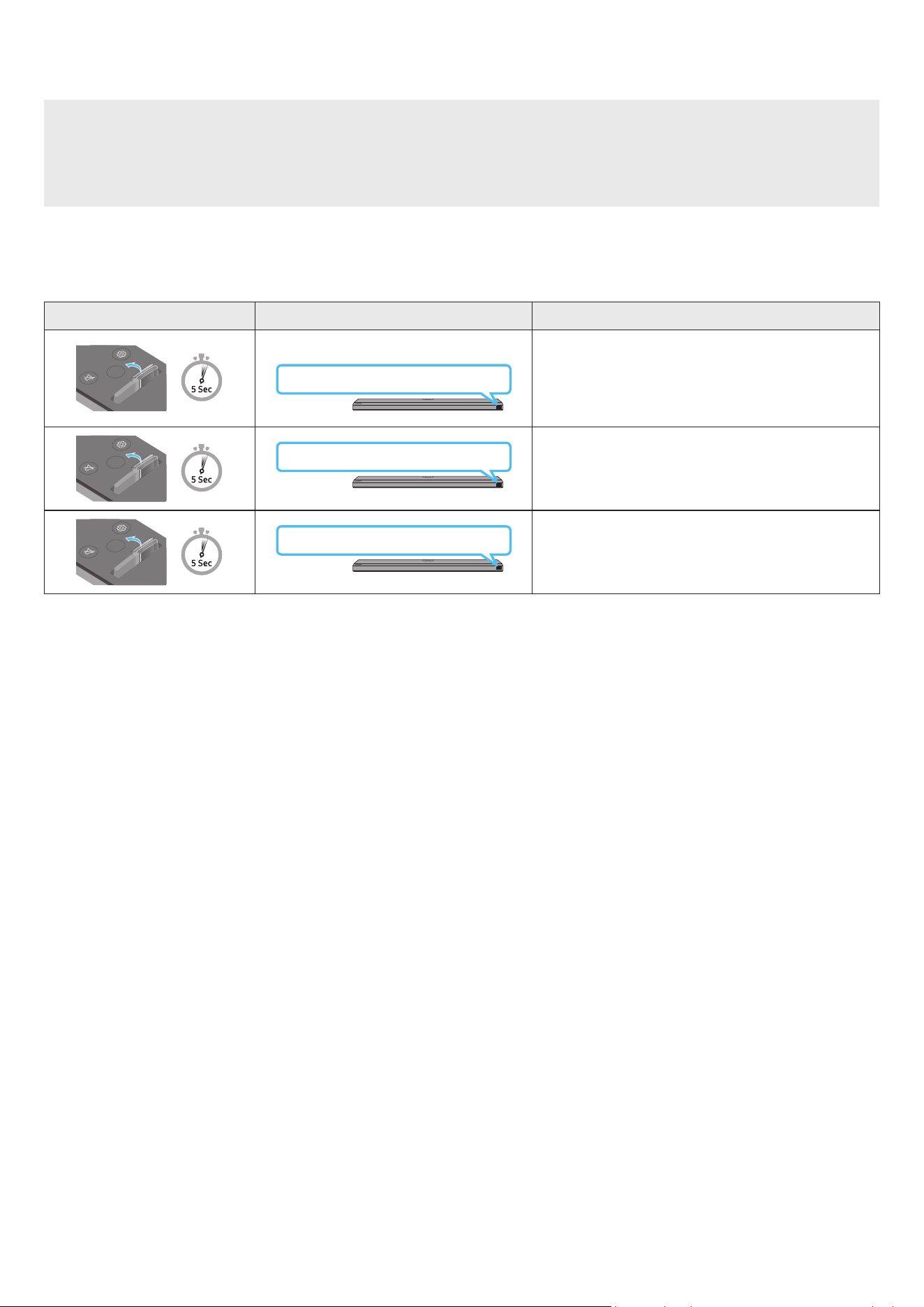
POR - 12
Ajustar o volume do Soundbar com o telecomando de uma TV
Ajuste o volume do Soundbar com o controlo remoto do televisor.
• Esta função só pode ser utilizada com telecomandos por infravermelhos. Os controlos remotos Bluetooth (controlos remotos que requerem
emparelhamento) não são suportados.
• Dena o altifalante da TV para Altifalante externo para utilizar esta função.
• Fabricantes que suportam esta função:
VIZIO, LG, Sony, Sharp, PHILIPS, PANASONIC, TOSHIBA, Hisense, RCA
1. Desligue o Soundbar.
2. Mantenha premido o botão WOOFER durante 5 segundos.
Cada vez que mantiver premido o botão WOOFER durante 5 segundos, o modo muda pela seguinte ordem: “OFF-TV REMOTE” (Modo predenido),
“SAMSUNG-TV REMOTE”, “ALL-TV REMOTE”.
Botão do controlo remoto Ecrã Estado
SOUND
MODE
VOL
WOOFER
SOUNDBAR
(Modo predenido)
OFF-TV REMOTE
Desative o controlo remoto do televisor.
SOUND
MODE
VOL
WOOFER
SOUNDBAR
SAMSUNG-TV REMOTE
Ative o controlo remoto por infravermelhos de um televisor
Samsung.
SOUND
MODE
VOL
WOOFER
SOUNDBAR
ALL-TV REMOTE
Ative o controlo remoto por infravermelhos de um televisor
de terceiros.
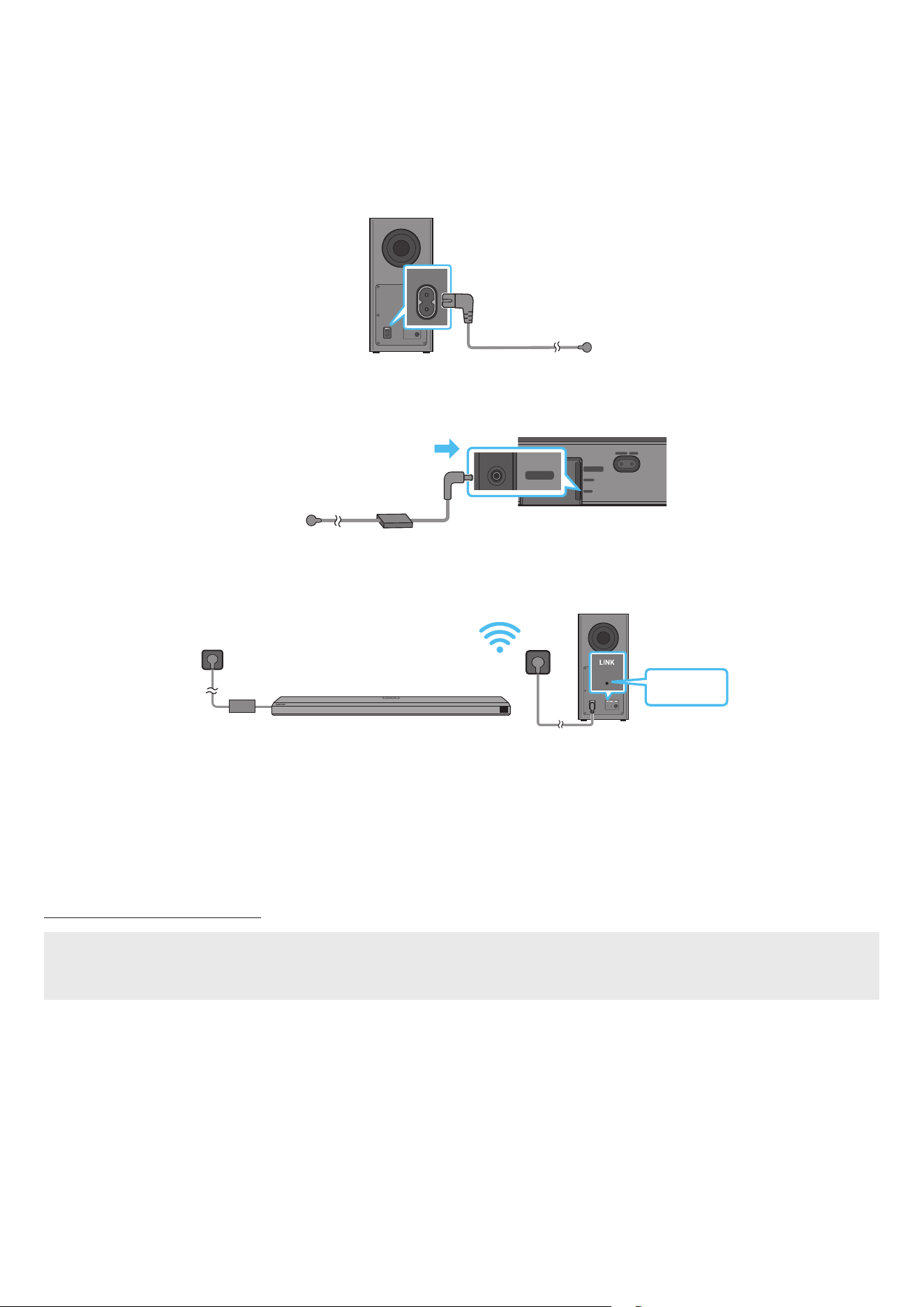
POR - 13
04 LIGAR O SOUNDBAR
Ligar a alimentação e as unidades
Utilize os componentes elétricos para ligar o Subwoofer e o Soundbar a uma tomada elétrica pela seguinte ordem:
• Para mais informações sobre a potência elétrica necessária e o consumo de energia, consulte a etiqueta no produto. (Etiqueta: Parte inferior da unidade
principal do Soundbar)
1. Ligue o cabo de alimentação ao Subwoofer.
POWER
Parte de trás do Subwoofer
Cabo de alimentação
2. Primeiro, ligue o cabo de alimentação ao transformador de CA/CC.
Ligue o transformador de CA/CC (com o cabo de alimentação) ao Soundbar.
DIGITAL AUDIO IN
(OPTICAL)
SERVICE
DC 19V
HDMI
NETWORK ID SET
DIGITAL AUDIO IN
(OPTICAL)
SERVICE
NETWORK ID SET
HDMI TO TV
(eARC/ARC)
HDMI IN
HDMI OUT
(TV-ARC)
DIGITAL AUDIO IN
(OPTICAL)
SERVICE
DC 19V
DIGITAL AUDIO IN
(OPTICAL)
SERVICE
DC 19V
HDMI
HDMI TO TV
(eARC/ARC)
DIGITAL AUDIO IN
(OPTICAL)
SERVICE
DC 19V
HDMI
NETWORK ID SET
DIGITAL AUDIO IN
(OPTICAL)
SERVICE
NETWORK ID SET
HDMI TO TV
(eARC/ARC)
HDMI IN
HDMI OUT
(TV-ARC)
DIGITAL AUDIO IN
(OPTICAL)
SERVICE
DC 19V
DIGITAL AUDIO IN
(OPTICAL)
SERVICE
DC 19V
HDMI
HDMI TO TV
(eARC/ARC)
DC 19V
Parte inferior da unidade
principal do Soundbar
Transformador de CA/CC
Cabo de alimentação
3. Ligue a alimentação ao Soundbar e ao Subwoofer. O Subwoofer é automaticamente ligado quando o Soundbar é ligado.
Azul aceso
NOTA
• Ligue o Subwoofer antes de o ligar ao Soundbar.
O Subwoofer será automaticamente ligado quando ligar o Soundbar.
• Se desligar e voltar a ligar o cabo de alimentação quando o produto estiver ligado, o Soundbar liga-se automaticamente.
• Certique-se de que coloca o transformador de CA/CC na posição horizontal sobre uma mesa ou no chão. Se posicionar o transformador de CA/CC de
forma a que este que suspenso com a entrada do cabo CA voltada para cima, poderá entrar água ou outras substâncias desconhecidas no transformador
e provocar uma avaria no mesmo.
Ligar o Subwoofer manualmente
Antes de executar o procedimento de ligação manual em baixo:
• verique se os cabos de alimentação do Soundbar e do subwoofer estão devidamente ligados.
• Certique-se de que o Soundbar está desligado.
1. Desligue a unidade principal do Soundbar.
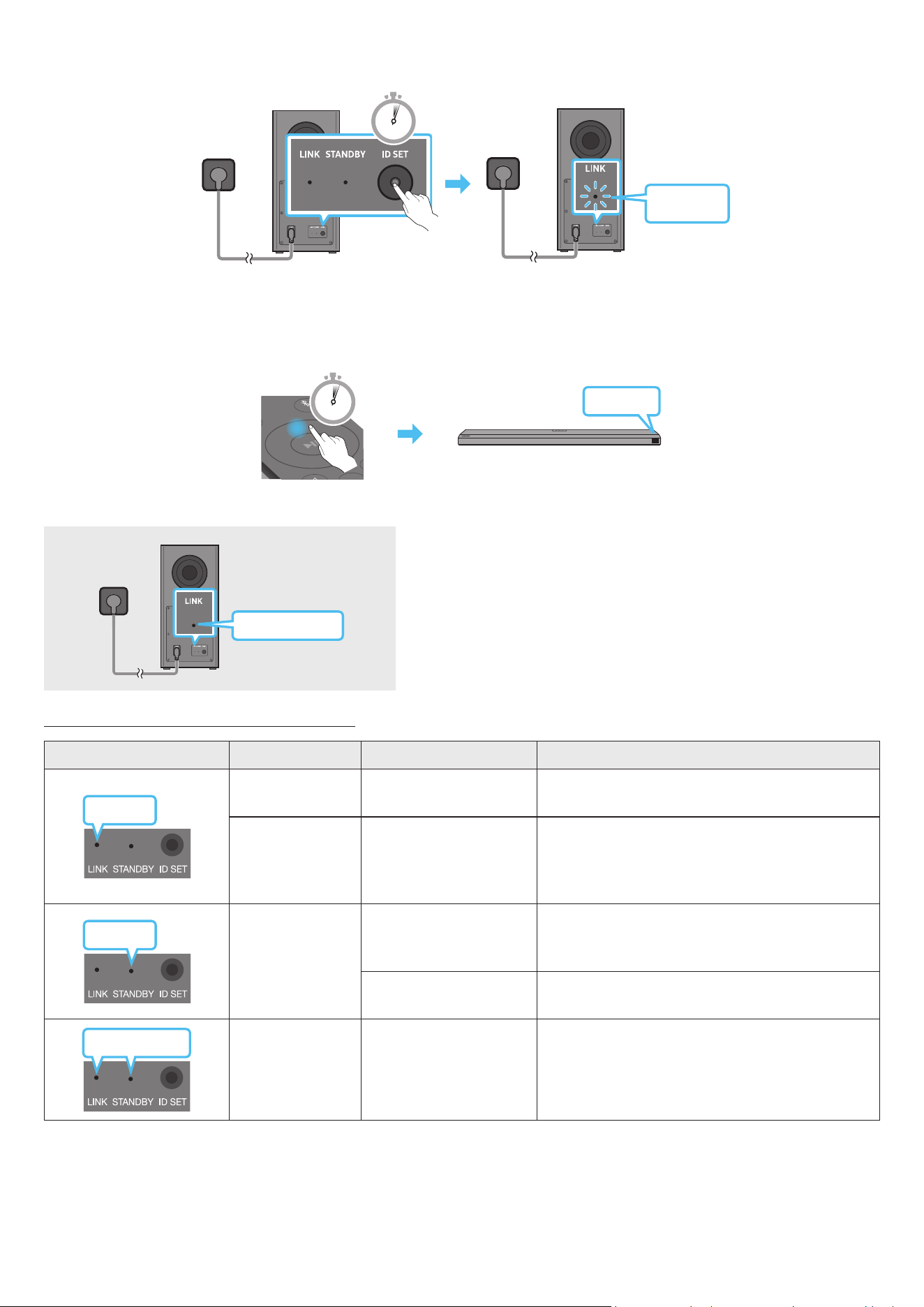
POR - 14
2. Mantenha premido o botão ID SET na parte de trás do subwoofer durante pelo menos 5 segundos.
• O indicador vermelho na parte de trás do Subwoofer apaga-se e o indicador azul pisca.
5 Sec
Azul a piscar
rápido
Parte de trás do Subwoofer Parte de trás do Subwoofer
3. Mantenha o botão Para cima do telecomando premido durante 5 segundos.
• A mensagem ID SET é apresentada no ecrã do Soundbar brevemente e depois desaparece.
• O Soundbar liga-se automaticamente quando a ID SET estiver concluída.
SOUND
MODE
PAIR
5 Sec
ID SET
4. Verique se o LED LINK está aceso continuamente a azul (ligação concluída).
Azul aceso
O indicador LED LINK para de piscar e ca aceso continuamente a azul quando se
estabelece uma ligação entre o Soundbar e o Subwoofer sem os.
Indicadores LED na parte de trás do Subwoofer
LED Estado Descrição Resolução
Azul
Ligado
Ligado com sucesso
(funcionamento normal)
-
A piscar A recuperar a ligação
Verique se o cabo de alimentação está devidamente
ligado à unidade principal do Soundbar ou aguarde cerca
de 5 minutos. Se o indicador continuar a piscar, tente ligar o
subwoofer manualmente. Consulte a página 13.
Vermelho
Ligado
Modo de espera (com
a unidade principal do
Soundbar desligada)
Verique se o cabo de alimentação está devidamente ligado
à unidade principal do Soundbar.
Falha ao ligar
Estabeleça uma nova ligação. Consulte as instruções
relativas à ligação manual na página 13.
Vermelho e azul
A piscar Ocorreu uma avaria
Consulte as informações de contacto do Centro de
Assistência Samsung presentes neste manual.
NOTA
• Se a unidade principal estiver desligada, o subwoofer sem os entrará em modo de espera e o LED STANDBY na parte traseira do subwoofer cará
vermelho após piscar a azul várias vezes.
• Se utilizar um dispositivo que utilize a mesma frequência do Soundbar perto deste, as interferências podem causar algumas interrupções de som.

POR - 15
• A distância de transmissão máxima do sinal sem os da unidade principal é de cerca de 10 m, mas pode variar consoante o ambiente de funcionamento.
Se existir uma parede de aço e betão ou uma parede metálica entre a unidade principal e o subwoofer sem os, o sistema pode não funcionar de todo
porque o sinal sem os não consegue penetrar metal.
CUIDADO
• Estão integradas antenas recetoras sem os no subwoofer sem os. Mantenha a unidade longe da água e da humidade.
• Para um desempenho de audição otimizado, certique-se de que a área em torno do subwoofer sem os e do Módulo de recetor sem os (vendido em
separado) está livre de quaisquer obstáculos.
Ligar um SWA-9500S (vendido em separado) ao Soundbar
Obtenha um verdadeiro som surround sem os ao ligar o Kit de altifalantes traseiros sem os Samsung (SWA-9500S, vendido em separado) ao Soundbar.
Para obter informações detalhadas sobre as ligações, consulte o manual do Kit de altifalantes traseiros sem os Samsung.
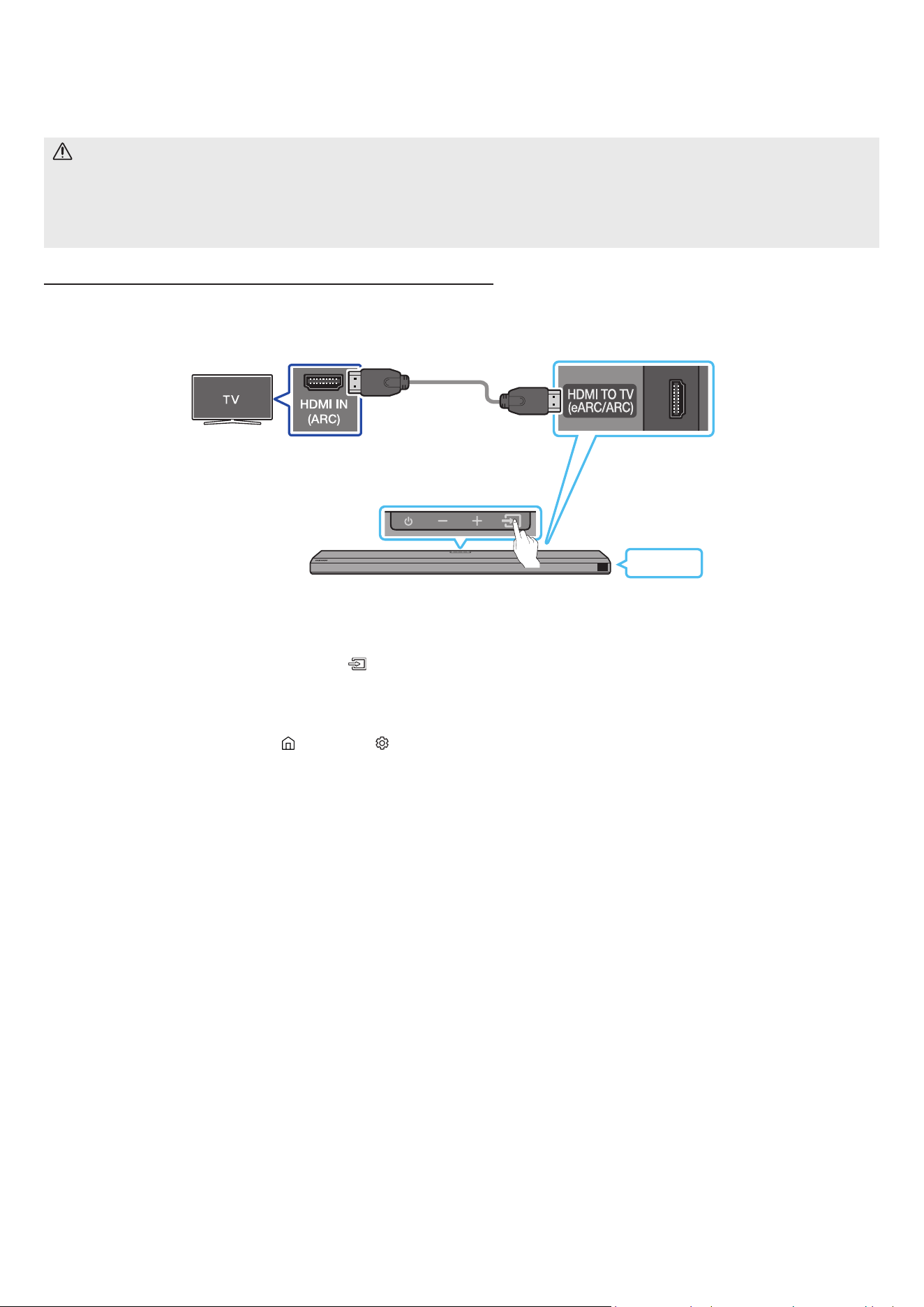
POR - 16
05 USAR UMA LIGAÇÃO COM FIOS AO TELEVISOR
Método 1. Ligar com um cabo HDMI
CUIDADO
• Quando o cabo HDMI e o cabo ótico estão ambos ligados, o sinal HDMI é recebido primeiro.
• Para ligar o cabo HDMI entre o televisor e o Soundbar, certique-se de que liga os terminais assinalados com ARC. Caso contrário, o som do televisor
pode não reproduzir.
• O cabo recomendado é um High Speed HDMI Cable with Ethernet.
Ligar uma TV compatível com HDMI ARC (canal de retorno de áudio)
TV-ARC
Ligue à porta HDMI TO TV
(eARC/ARC) da unidade
principal do Soundbar.
Parte superior do Soundbar
Ligue à porta HDMI IN (ARC)
do seu televisor.
Cabo HDMI
Parte inferior do Soundbar
1. Com o Soundbar e o televisor desligados, ligue o cabo HDMI conforme indicado na gura.
2. Ligue o Soundbar e o televisor.
3. “TV ARC” surge no ecrã da unidade principal do Soundbar e o som da TV é reproduzido pelo Soundbar.
• Se não conseguir ouvir o som da TV, prima o botão
(Fonte) no telecomando ou na parte superior do Soundbar para mudar para o modo “D.IN”. O
ecrã exibe a mensagem “D.IN” e “TV ARC” sequencialmente e o som da TV é reproduzido.
• Quando liga uma TV compatível com a função eARC, é apresentada a mensagem “eARC” no ecrã e é reproduzido um som.
• Para ligar com eARC, a função eARC no menu da TV deve estar ligada. Consulte o manual do utilizador da TV para obter mais informações sobre a
denição. (p. ex., TV Samsung: Home ( ) → Denições ( ) → Som → Denições Especializadas → Modo HDMI-eARC (Auto))
• Se a mensagem “TV ARC” não surgir no ecrã da unidade principal do Soundbar, verique se o cabo HDMI está ligado à porta correta.
• Utilize os botões do volume no controlo remoto do televisor para mudar o volume no Soundbar.
NOTA
• Quando ligar o televisor que suporta HDMI ARC (Canal de retorno de áudio) ao Soundbar com um cabo HDMI, pode transmitir dados de áudio e vídeo
digital sem precisar de ligar um cabo ótico diferente.
• Recomendamos que utilize um cabo HDMI sem núcleo, se possível. Se utilizar um cabo HDMI com núcleo, utilize um cujo diâmetro seja inferior a 14 mm.
• Esta função não está disponível se o cabo HDMI não suportar ARC.
• Se o áudio numa emissão estiver codicado como Dolby Digital e o “Formato de saída de áudio digital” do televisor estiver denido como PCM,
recomendamos que altere a denição para Dolby Digital. Se a conguração do televisor for alterada, terá uma melhor qualidade de som. (O menu do
televisor poderá utilizar expressões diferentes para Dolby Digital e PCM em função do fabricante do televisor.)
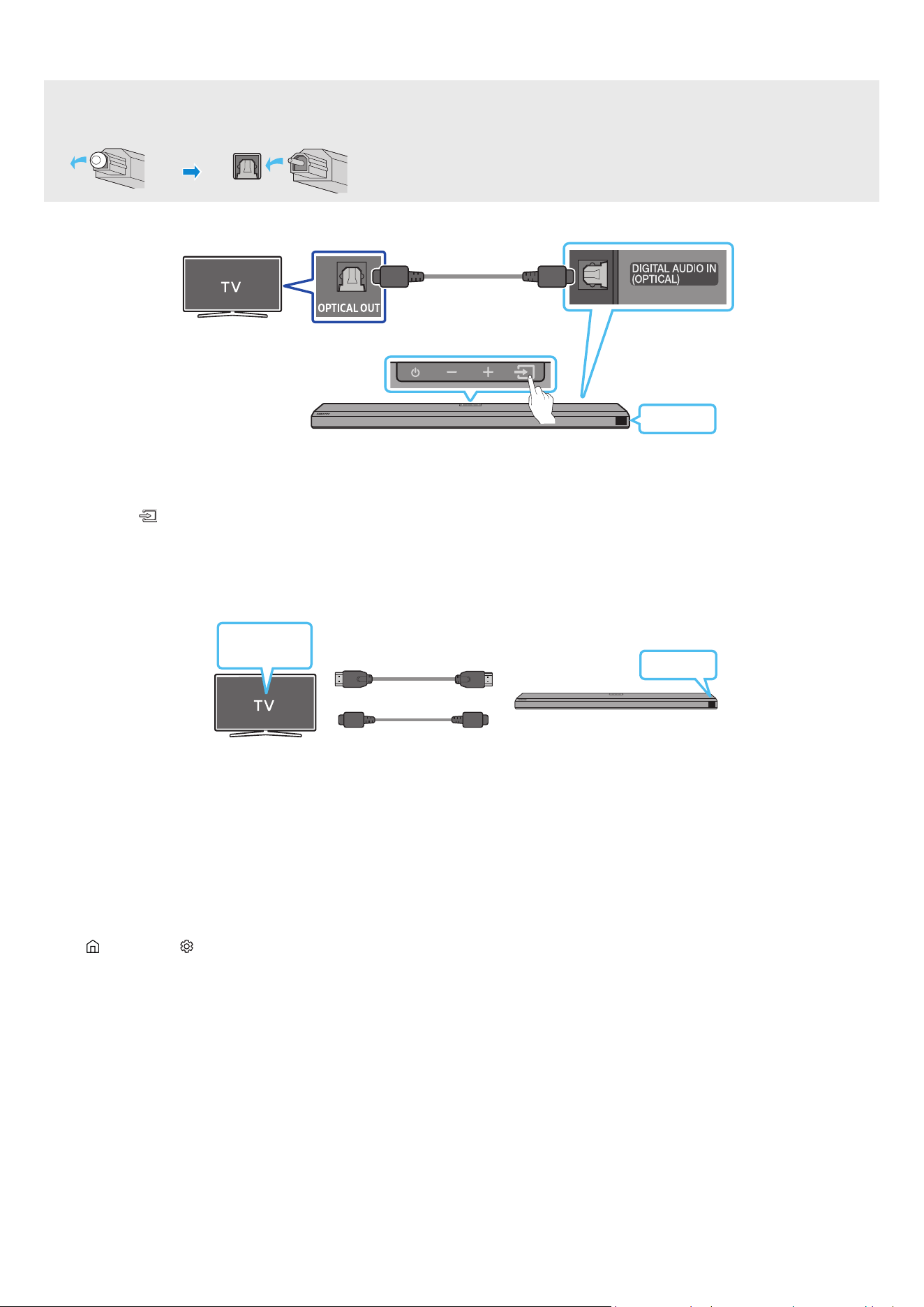
POR - 17
Método 2. Ligar com cabo ótico
Lista de vericação pré-ligação
• Quando o cabo HDMI e o cabo ótico estão ambos ligados, o sinal HDMI é recebido primeiro.
• Quando utilizar um cabo ótico e os terminais estiverem tapados, certique-se de que remove as tampas.
D.IN
Parte inferior do Soundbar
Parte superior do Soundbar
Cabo ótico (não fornecido)
1. Com a TV e o Soundbar desligados, ligue a porta DIGITAL AUDIO IN (OPTICAL) no Soundbar e a porta de saída OPTICAL na TV com o cabo ótico (não
fornecido), como ilustrado na gura.
2. Ligue o Soundbar e o televisor.
3. Prima o botão
(Fonte) no painel superior ou no telecomando e, em seguida, selecione o modo “D.IN”.
4. O som do televisor é emitido a partir do Soundbar.
Utilizar a função Q-Symphony
Para a Q-Symphony, o Soundbar sincroniza com a TV Samsung para a saída de som através de dois dispositivos para um ótimo efeito surround. Quando o
Soundbar está ligado, o menu, “TV+Soundbar” aparece por baixo do menu Saída de som da TV. Selecione o menu correspondente.
Cabo ótico (não fornecido)
Cabo HDMI
OU
D.IN
Menu da TV
• Exemplo do menu da TV: TV + [AV] Nome de série do Soundbar [HDMI]
NOTA
• Pode funcionar conforme o Codec suportado pela TV.
• Esta função é suportada apenas quando o cabo HDMI ou o cabo ótico (não fornecido) está ligado.
• Esta função está disponível em algumas TV Samsung e em alguns modelos de Soundbar.
Utilizar o som Spacet
Fornece uma qualidade de som otimizada ao analisar os espaços de escuta.
Para ativar esta função, ative o modo Adaptive Sound+ no menu da TV Samsung.
(Home ( ) → Denições ( ) → Geral → Denições do modo inteligente → Adaptive Sound+)
NOTA
• O modo de som do Soundbar será automaticamente alterado para Adaptive Sound+ se ativar o modo Adaptive Sound+ na TV.
• Esta função funciona quando o Soundbar estabelece ligação com alguma das suas TV Samsung.
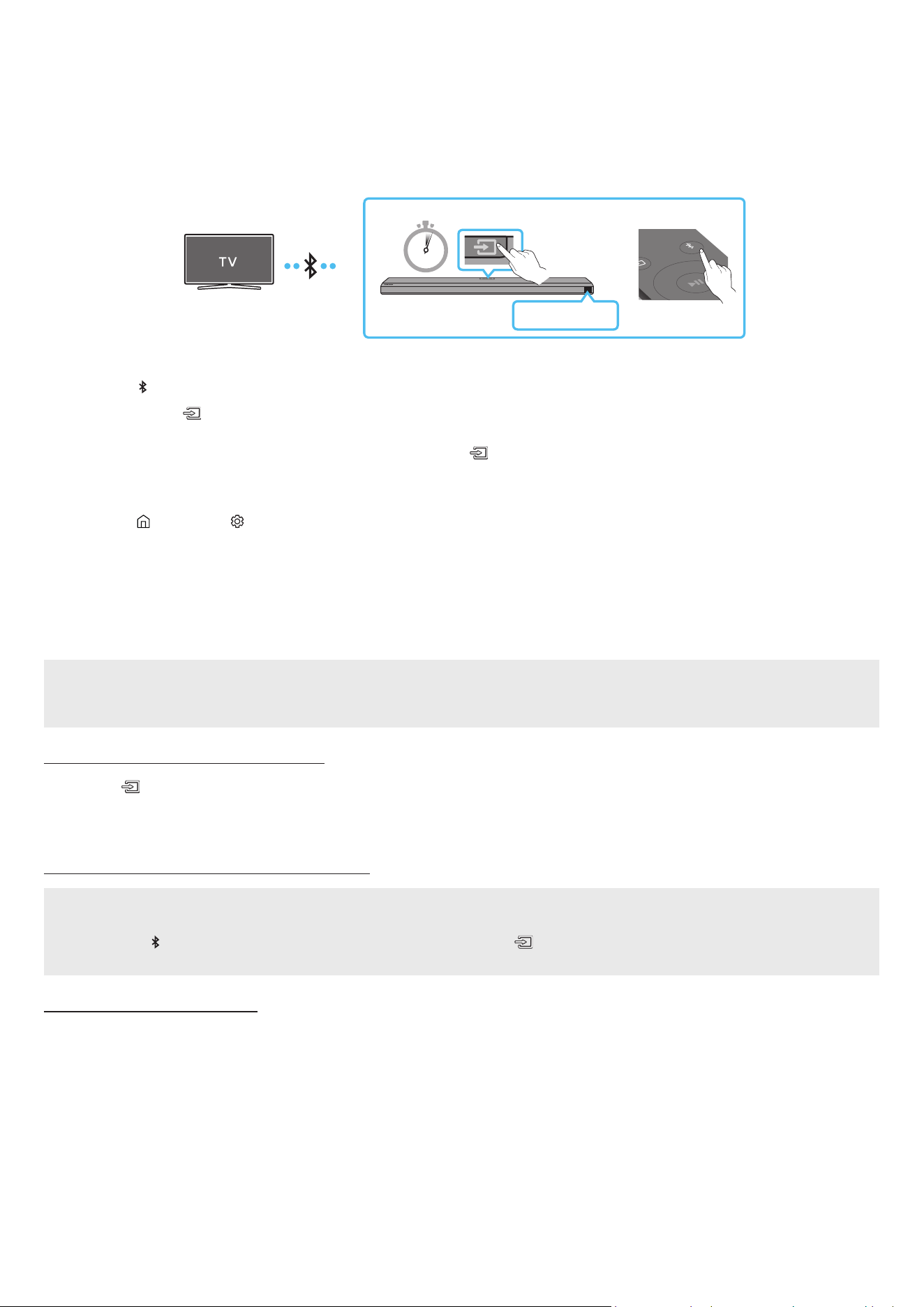
POR - 18
06 USAR UMA LIGAÇÃO SEM FIOS AO TELEVISOR
Método 1. Ligar através de Bluetooth
Quando um televisor Samsung é ligado através de Bluetooth, pode ouvir som estéreo sem ter de utilizar cabos incómodos.
• Apenas pode ser ligado um televisor Samsung de cada vez.
• Pode ser ligado um televisor Samsung que suporte Bluetooth. Verique as especicações do seu televisor.
5 Sec
SOUND
MODE
PAIR
Parte superior do Soundbar
OU
BT PAIRING
A ligação inicial
1. Prima o botão PAIR no telecomando do Soundbar para aceder ao modo “BT PAIRING”.
(OU)
a. Prima o botão
(Fonte) no painel superior e, em seguida, selecione “BT”.
“BT” muda automaticamente para “BT PAIRING” em alguns segundos ou para “BT READY” se existir um registo de ligação.
b. Quando surgir a mensagem “BT READY”, mantenha premido o botão (Fonte) no painel superior do Soundbar durante mais de 5 segundos
para que seja exibida a mensagem “BT PAIRING”.
2. Selecione o modo Bluetooth no televisor Samsung.
(p. ex., Home (
) → Denições ( ) → Som → Saída de som → Lista de altifalantes Bluetooth → [AV] Samsung Soundbar Q700A (Bluetooth))
3. Selecione “[AV] Samsung Soundbar Q700A” a partir da lista apresentada no ecrã da TV.
Os Soundbar disponíveis são identicados pela mensagem “A emparelhar” ou “Emparelhado” na lista de dispositivos Bluetooth da TV. Para ligar o
televisor Samsung ao Soundbar, selecione a mensagem e estabeleça uma ligação.
• Quando a TV Samsung estiver ligada, a mensagem [Nome do televisor] → “BT” surgirá no ecrã frontal do Soundbar.
4. Poderá então ouvir o som do televisor Samsung a partir do Soundbar.
• Após ligar o Soundbar à TV Samsung pela primeira vez, utilize o modo “BT READY” para voltar a ligar.
Se ocorrer uma falha ao ligar o dispositivo
• Se já tiver um Soundbar (p. ex., [AV] Samsung Soundbar Q700A) na lista de altifalantes da TV Samsung, remova-o.
• Depois, repita os passos 1 a 3.
Desligar o Soundbar do televisor Samsung
Prima o botão (Fonte) no painel superior ou no telecomando e mude para qualquer modo exceto “BT”.
• Desligar demora algum tempo porque o televisor Samsung tem de receber uma resposta do Soundbar.
(O tempo necessário para tal poderá variar em função do modelo do televisor Samsung.)
Qual é a diferença entre BT READY e BT PAIRING?
• BT READY: neste modo, pode voltar a ligar qualquer dispositivo móvel ou TV Samsung que tenha sido ligado antes.
• BT PAIRING : neste modo, pode ligar um novo dispositivo ao Soundbar.
(Prima o botão PAIR no telecomando do Soundbar ou mantenha premido o botão (Fonte) na parte superior do Soundbar durante mais de
5 segundos enquanto o Soundbar está no modo “BT”.)
Notas sobre a ligação Bluetooth
• Localize um novo dispositivo ao alcance de 1 m para ligar via comunicação Bluetooth.
• Se lhe for pedido para introduzir um código PIN quando estiver a ligar um dispositivo Bluetooth, introduza <0000>.
• O Soundbar desliga-se automaticamente após 18 minutos quando está no modo Bluetooth Pronto.
• O Soundbar poderá não realizar corretamente a pesquisa ou a ligação Bluetooth nas seguintes circunstâncias:
‒ se existir um campo elétrico forte em redor do Soundbar.
‒ Se forem emparelhados vários dispositivos Bluetooth em simultâneo com o Soundbar.
‒ Se o dispositivo Bluetooth estiver desligado, não estiver no devido lugar ou não funcionar corretamente.
• Os dispositivos eletrónicos podem provocar interferências rádio. Os dispositivos que geram ondas eletromagnéticas devem ser mantidos afastados da
unidade principal do Soundbar - por exemplo, micro-ondas, dispositivos LAN sem os, etc.

POR - 19
Método 2. Ligar através de Wi-Fi
Lista de vericação pré-ligação
• Apenas a TV Samsung tem ligações Wi-Fi disponíveis.
• Verique se o router sem os (Wi-Fi) está ligado e se a TV está ligada ao router.
• A TV e o Soundbar têm de estar ligados à mesma rede sem os (Wi-Fi).
• Se o router sem os (Wi-Fi) utilizar um canal DFS, não conseguirá estabelecer uma ligação Wi-Fi entre a TV e o Soundbar. Contacte o seu fornecedor de
serviços de Internet para obter mais detalhes.
• Dado que os menus podem variar consoante o ano de fabrico, consulte o manual da TV.
• Para ligar a TV ao Soundbar através de Wi-Fi, ligue primeiro o Soundbar ao router sem os. Consulte a página 23 para obter mais informações sobre
como estabelecer uma ligação Wi-Fi.
1. Para obter mais informações sobre a ligação Wi-Fi ao Soundbar, consulte a página 23, “Método 2. Ligar através de Wi-Fi (Rede sem os)”.
2. Mude a fonte de entrada da TV, utilizando o menu Áudio para Soundbar.
• TVs Samsung lançadas em 2017 ou depois
Home (
) → Denições ( ) → Som → Saída de som → [AV] Samsung Soundbar Q700A (Wi-Fi)
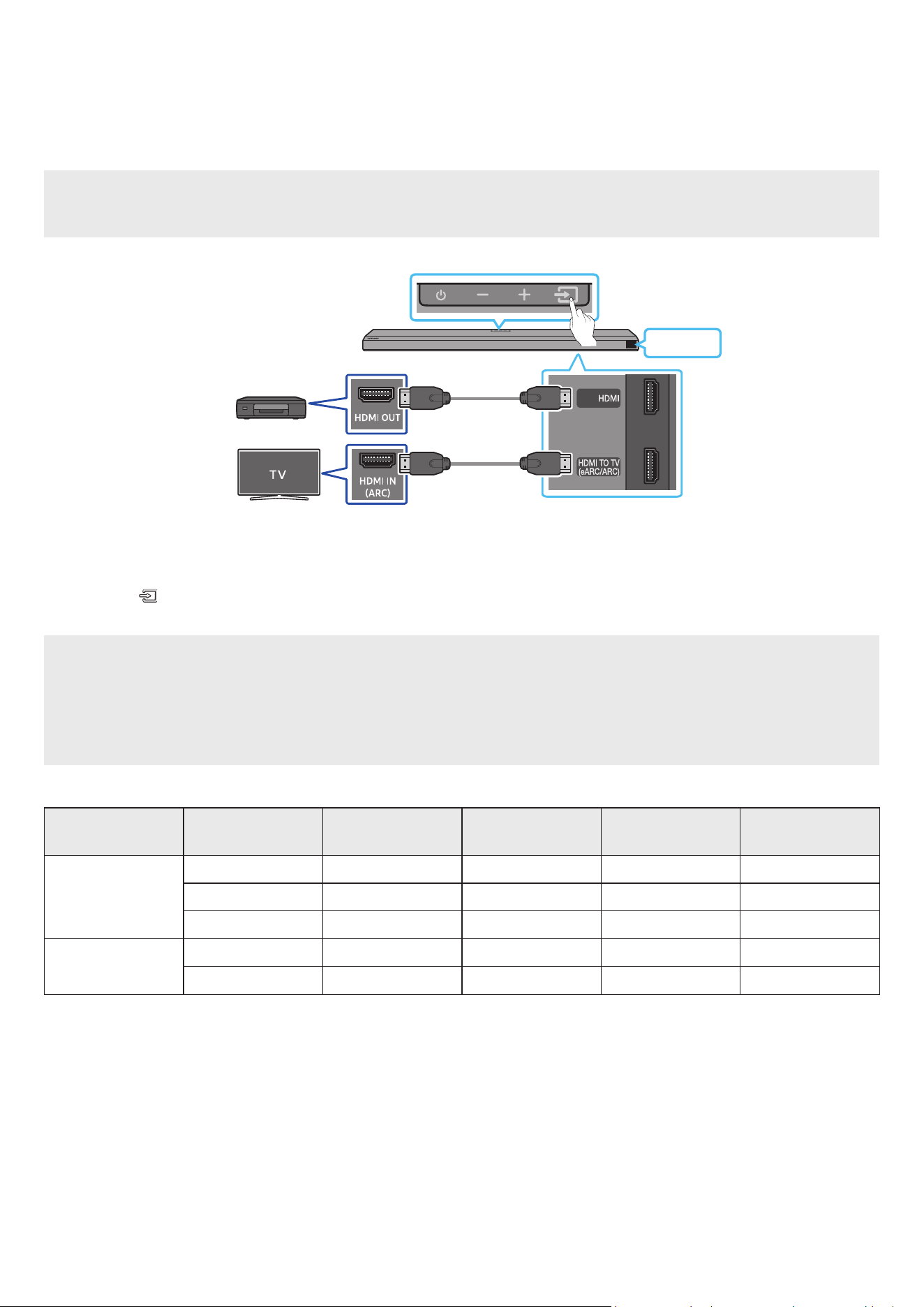
POR - 20
07 LIGAR A UM DISPOSITIVO EXTERNO
Método 1. Ligar através de um cabo HDMI (compatível com descodicação e reprodução Dolby
Atmos)
Lista de vericação pré-ligação
• Se as opções de Saída de áudio incluírem Áudio secundário, certique-se de que o Áudio secundário está desligado.
• Certique-se de que o conteúdo suporta Dolby Atmos®.
Parte superior do Soundbar
HDMI
Cabo HDMI
Dispositivo externo
Cabo HDMI
1. Utilize um cabo HDMI para ligar a porta HDMI OUT do dispositivo externo à porta HDMI na parte inferior do Soundbar.
2. Utilize um cabo HDMI para ligar a porta HDMI IN da TV à porta HDMI TO TV (eARC/ARC) na parte inferior do Soundbar.
3. Ligue o Soundbar, a TV e o dispositivo externo.
4. Prima o botão
(Fonte) no painel superior ou no telecomando e, em seguida, selecione “HDMI”.
5. O ecrã do Soundbar indica que o modo “HDMI” está selecionado e o Soundbar começará a reproduzir sons.
NOTA
• Quando utiliza o Dolby Atmos®: Se a fonte de entrada for Dolby Atmos®, a saída será de 3.1.2 canais.
• Quando o Dolby Atmos® é ativado, “DOLBY ATMOS” é exibido no ecrã frontal.
• Congurar o Dolby Atmos® no leitor Blu-Ray ou noutro dispositivo
Abra as opções de saída áudio no menu de denições do leitor Blu-Ray, ou outro dispositivo, e certique-se de que “Sem Codicação” está selecionado
para o uxo de bits. Por exemplo, num leitor Blu-Ray Samsung, vá até Menu inicial → Áudio → Saída digital e selecione Bitstream (não processado).
Especicação de sinais UHD compatíveis (3840 x 2160p)
Velocidade de
fotogramas (fps)
Profundidade de cor RGB 4:4:4 YCbCr 4:4:4 YCbCr 4:2:2 YCbCr 4:2:0
< 60
8 bit O O O O
10 bit - - O O
12 bit - - O O
120
8 bit - - - -
10 bit - - - -
• A especicação compatível pode variar dependendo do dispositivo externo ligado ou das condições de utilização.
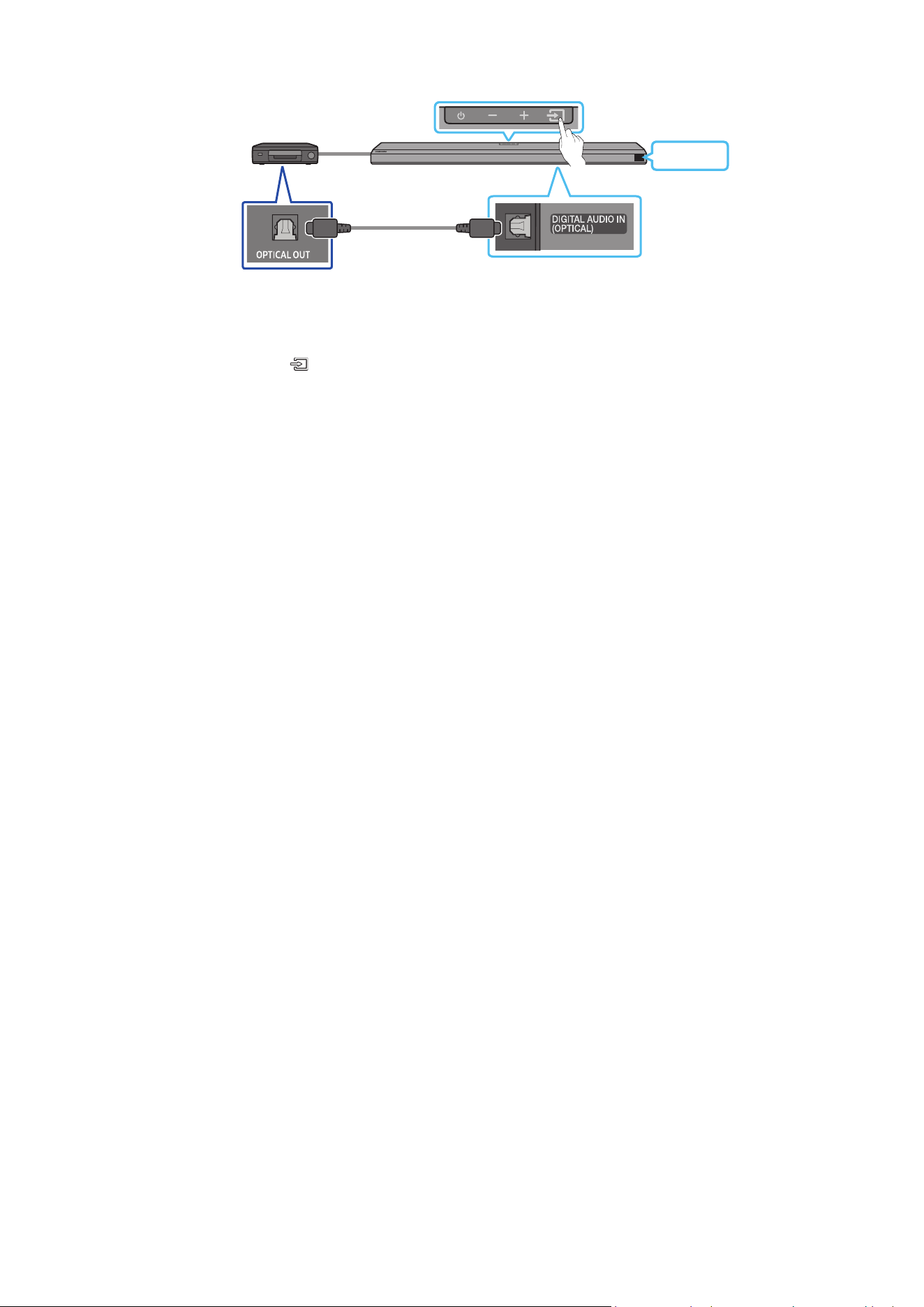
POR - 21
Método 2. Ligar com cabo ótico
Parte superior do Soundbar
Leitor de DVD ou Blu-Ray
/ Descodicador / Consola
de jogos
D.IN
Parte inferior do Soundbar
Cabo ótico
(não fornecido)
1. Utilize um cabo ótico (não fornecido) para ligar a DIGITAL AUDIO IN (OPTICAL) na unidade principal do Soundbar e a porta OPTICAL OUT no dispositivo
externo.
2. Ligue o Soundbar e o dispositivo externo.
3. Selecione o modo “D.IN” premindo o botão
(Fonte) no painel superior ou no telecomando.
4. O seu Soundbar irá reproduzir sons a partir do dispositivo externo.
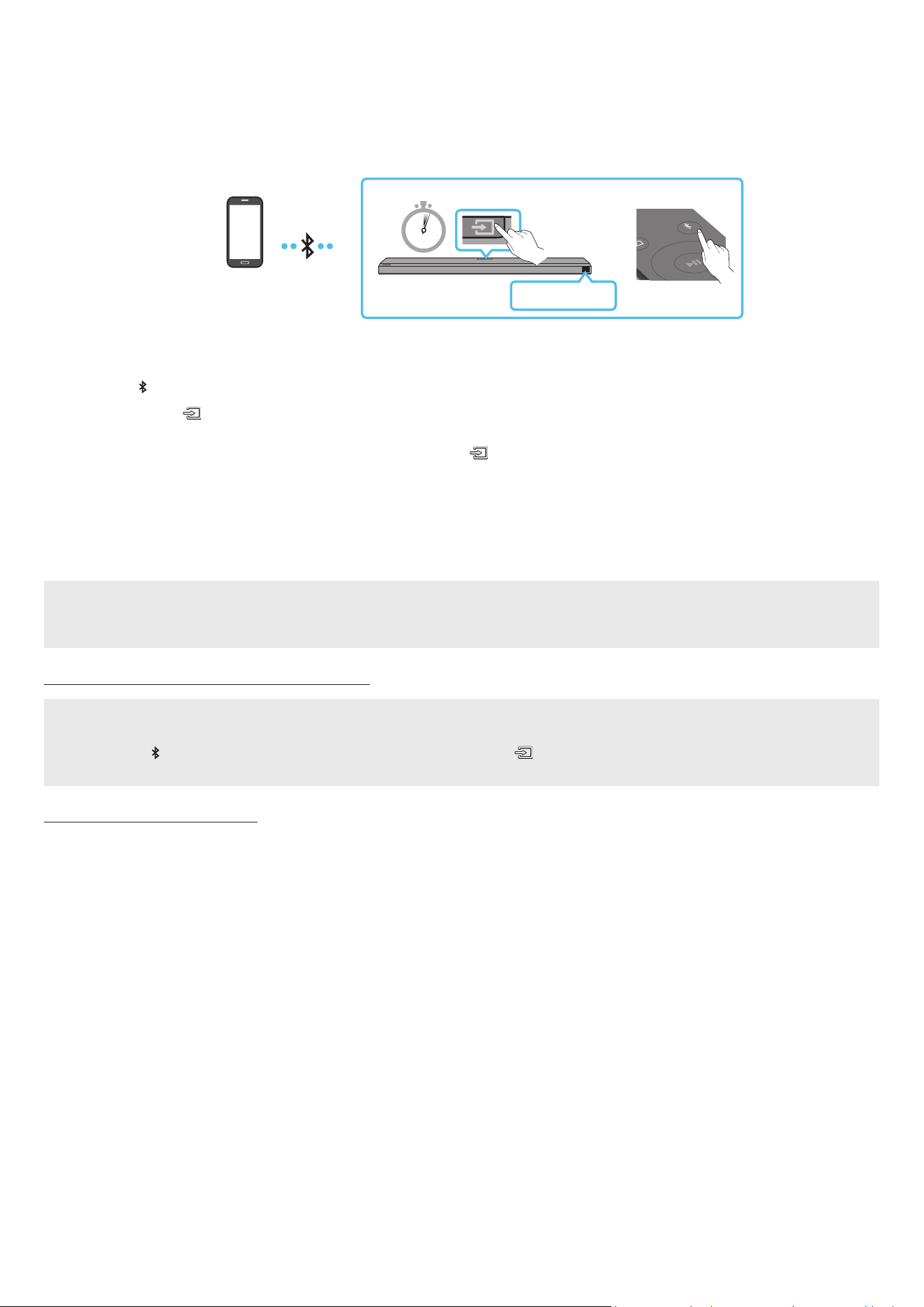
POR - 22
08 LIGAR A UM DISPOSITIVO MÓVEL
Método 1. Ligar através de Bluetooth
Quando um dispositivo móvel é ligado através de Bluetooth, pode ouvir som estéreo sem ter de utilizar cabos incómodos.
• Quando liga um dispositivo Bluetooth emparelhado com o Soundbar desligado, o Soundbar liga-se automaticamente.
5 Sec
SOUND
MODE
PAIR
Dispositivo móvel
Parte superior do Soundbar
OU
BT PAIRING
A ligação inicial
• Quando ligar a um novo dispositivo Bluetooth, certique-se de que o dispositivo está a menos de 1 m de distância.
1. Prima o botão PAIR no telecomando do Soundbar para aceder ao modo “BT PAIRING”.
(OU)
a. Prima o botão
(Fonte) no painel superior e, em seguida, selecione “BT”.
“BT” muda automaticamente para “BT PAIRING” em alguns segundos ou para “BT READY” se existir um registo de ligação.
b. Quando surgir a mensagem “BT READY”, mantenha premido o botão (Fonte) no painel superior do Soundbar durante mais de 5 segundos
para que seja exibida a mensagem “BT PAIRING”.
2. No dispositivo, selecione “[AV] Samsung Soundbar Q700A” na lista apresentada.
• Quando o Soundbar estiver ligado ao dispositivo móvel, a mensagem [Nome do Dispositivo móvel] → “BT” surgirá no ecrã frontal.
3. Reproduza os cheiros de música a partir do dispositivo que está ligado via Bluetooth através do Soundbar.
• Após ligar o Soundbar ao dispositivo móvel pela primeira vez, utilize o modo “BT READY” para voltar a ligar.
Se ocorrer uma falha ao ligar o dispositivo
• Se já tiver um Soundbar (p. ex., “[AV] Samsung Soundbar Q700A”) na lista de altifalantes do dispositivo móvel, remova-o.
• Repita os passos 1 e 2.
Qual é a diferença entre BT READY e BT PAIRING?
• BT READY: neste modo, pode voltar a ligar qualquer dispositivo móvel ou TV Samsung que tenha sido ligado antes.
• BT PAIRING : neste modo, pode ligar um novo dispositivo ao Soundbar.
(Prima o botão PAIR no telecomando do Soundbar ou mantenha premido o botão (Fonte) na parte superior do Soundbar durante mais de
5 segundos enquanto o Soundbar está no modo “BT”.)
Notas sobre a ligação Bluetooth
• Localize um novo dispositivo ao alcance de 1 m para ligar via comunicação Bluetooth.
• Se lhe for pedido para introduzir um código PIN quando estiver a ligar um dispositivo Bluetooth, introduza <0000>.
• O Soundbar desliga-se automaticamente após 18 minutos quando está no modo Bluetooth Pronto.
• O Soundbar poderá não realizar corretamente a pesquisa ou a ligação Bluetooth nas seguintes circunstâncias:
‒ se existir um campo elétrico forte em redor do Soundbar.
‒ Se forem emparelhados vários dispositivos Bluetooth em simultâneo com o Soundbar.
‒ Se o dispositivo Bluetooth estiver desligado, não estiver no devido lugar ou não funcionar corretamente.
• Os dispositivos eletrónicos podem provocar interferências rádio. Os dispositivos que geram ondas eletromagnéticas devem ser mantidos afastados da
unidade principal do Soundbar - por exemplo, micro-ondas, dispositivos LAN sem os, etc.
• O Soundbar suporta dados SBC (44,1 kHz, 48 kHz).
• Ligue apenas a um dispositivo Bluetooth que suporte a função A2DP (AV).
• Não poderá ligar o Soundbar a um dispositivo Bluetooth que apenas suporte a função HF (mãos livres).
• Ao ligar o Soundbar a um dispositivo Bluetooth, coloque-os o mais perto possível um do outro.
• Quanto maior a distância entre o Soundbar e o dispositivo Bluetooth, menor será a qualidade do som.
A ligação Bluetooth poderá ser quebrada se os dispositivos estiverem fora do alcance.
• A ligação Bluetooth poderá não funcionar conforme pretendido em áreas com má receção.
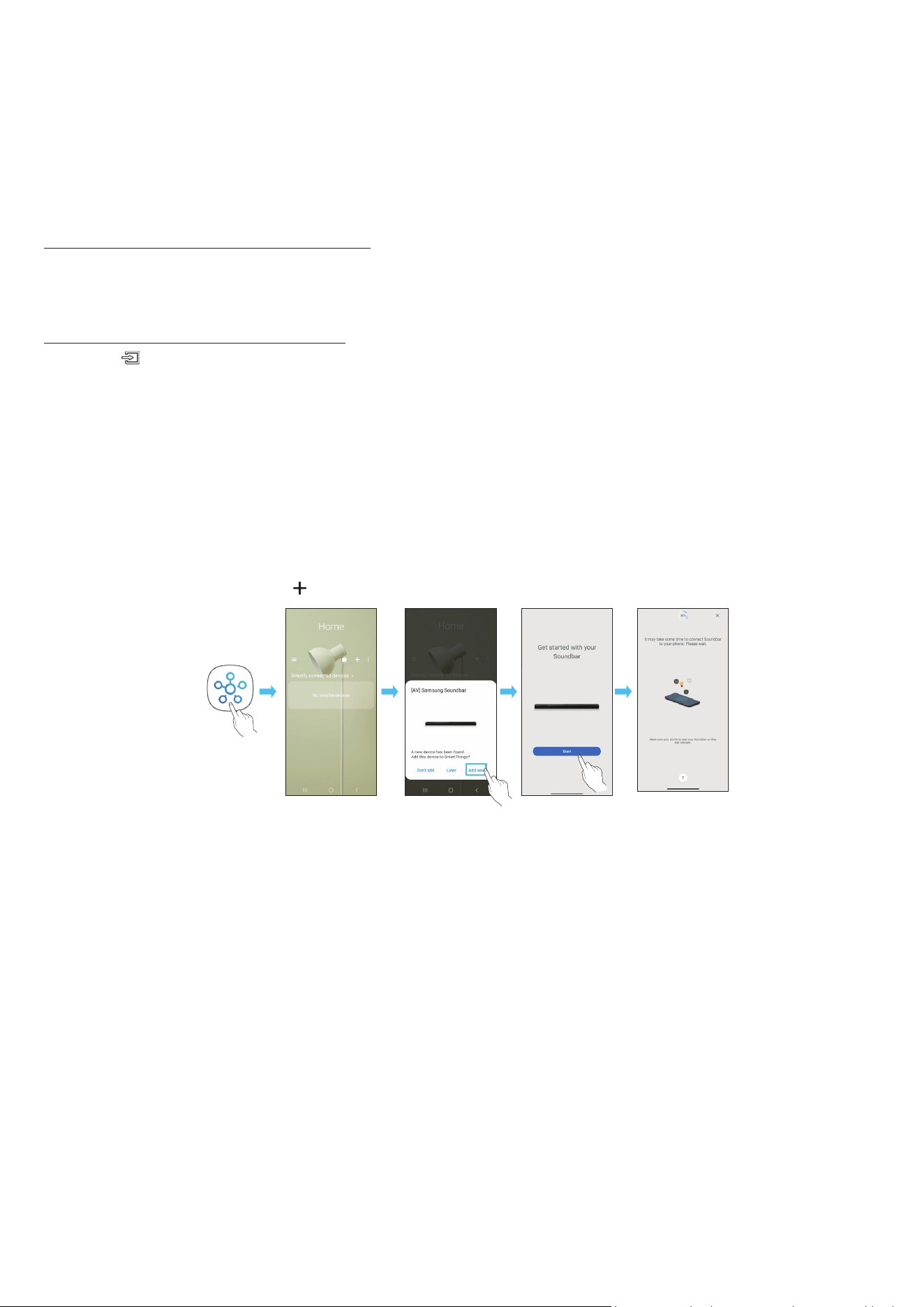
POR - 23
• Um dispositivo Bluetooth poderá experienciar ruído ou uma avaria sob as seguintes condições:
‒ Quando o corpo está em contacto com o transmissor de sinal no dispositivo Bluetooth ou Soundbar
‒ Em cantos ou quando existe um obstáculo nas proximidades, tais como uma parede ou uma divisória, onde possam ocorrer alterações elétricas.
‒ Quando exposto a interferências por rádio por outros produtos em funcionamento nas mesmas gamas de frequências, como equipamentos médicos,
micro-ondas e dispositivos LAN sem os.
‒ Obstáculos como portas e paredes poderão ainda inuenciar a qualidade do som, mesmo que os dispositivos se encontrem dentro do alcance.
• Se lhe for pedido para introduzir um código PIN enquanto se estiver a ligar um dispositivo Bluetooth, introduza <0000>.
• Tenha em consideração que se a opção de Bluetooth estiver a ser utilizada, não é possível emparelhar o Soundbar com outro dispositivo Bluetooth.
• Este dispositivo sem os pode causar interferência elétrica durante a utilização.
Desligar o dispositivo Bluetooth de um Soundbar
Pode desligar um dispositivo Bluetooth de um Soundbar. Para obter instruções, consulte o manual do utilizar do dispositivo Bluetooth.
• O Soundbar será desligado.
• Quando o Soundbar for desligado do dispositivo Bluetooth, o Soundbar apresentará “BT DISCONNECTED” no ecrã dianteiro.
Desligar o Soundbar do dispositivo Bluetooth
Prima o botão (Fonte) no painel superior ou no telecomando e, em seguida, mude para qualquer modo exceto “BT”.
• Desligar demora algum tempo porque o dispositivo Bluetooth tem de receber uma resposta do Soundbar. (O tempo necessário para desligar poderá
variar em função do dispositivo Bluetooth)
• Quando o Soundbar for desligado do dispositivo Bluetooth, o Soundbar apresentará “BT DISCONNECTED” no ecrã dianteiro
Método 2. Ligar através de Wi-Fi (Rede sem os)
Para ligar o Soundbar a um dispositivo móvel através da rede sem os (Wi-Fi), precisa da aplicação SmartThings.
A ligação inicial
1. Instale e inicie a aplicação SmartThings a partir do dispositivo móvel (smartphone ou tablet).
2. Na aplicação, siga as instruções no ecrã para adicionar o Soundbar.
• O pop-up automático (a segunda captura de ecrã abaixo) poderá não aparecer em alguns dispositivos móveis.
Se a janela pop-up não aparecer, prima “ ” no ecrã Home. O Soundbar é adicionado à aplicação.
Iniciar aplicação Pop-up
automático
Adicionar
dispositivo
Aplicação
SmartThings
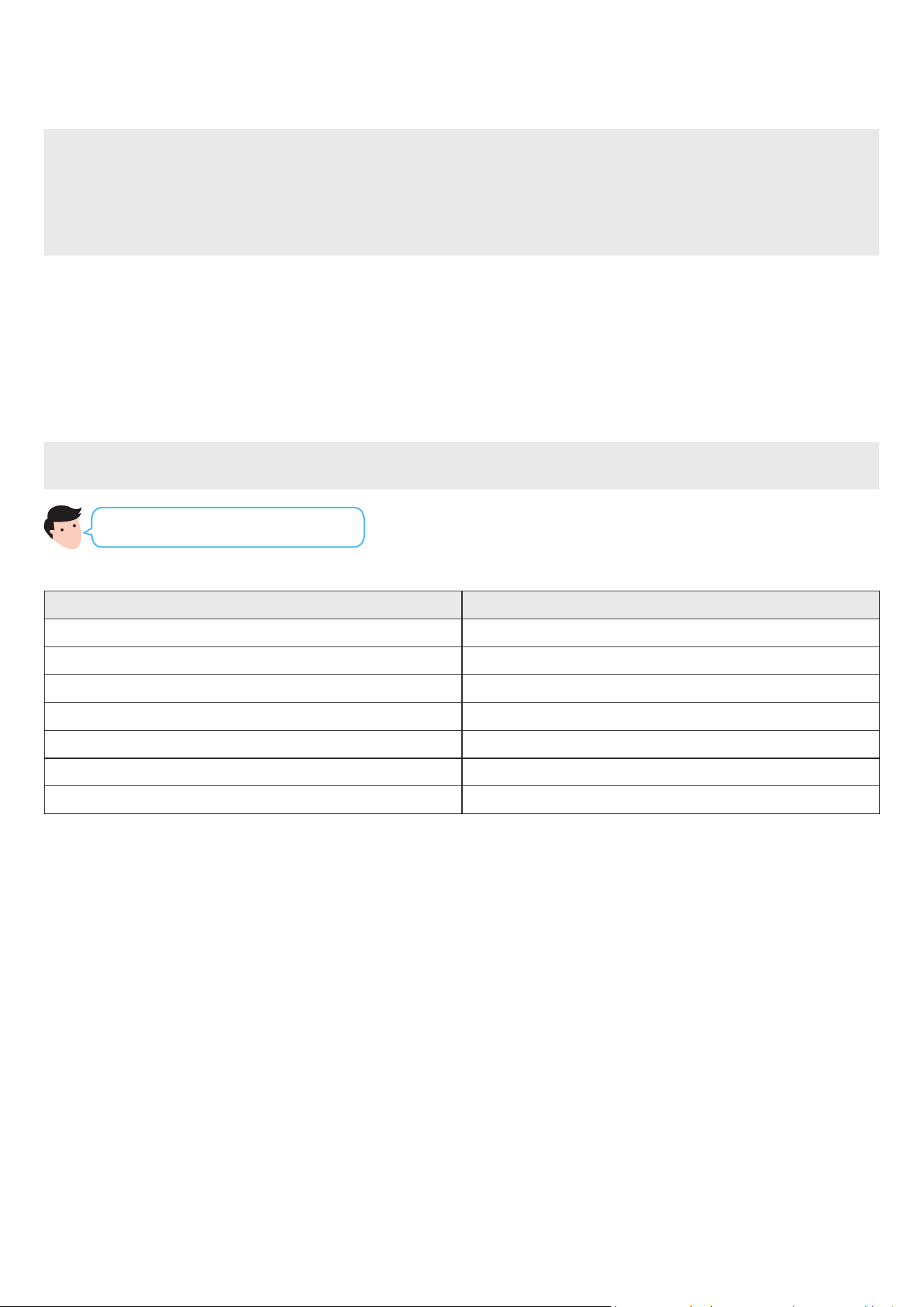
POR - 24
09 INTRODUÇÃO À ALEXA COM UM PRODUTO AMAZON
(FUNCIONA COM A ALEXA)
• Dependendo do modelo ou da área geográca onde se encontra, esta função poderá não ser suportada.
• Esta função suporta apenas alguns idiomas e as funções suportadas podem diferir dependendo da zona geográca.
• Para obter mais informações sobre a compatibilidade ou as especicações do produto, consulte o website da Samsung (www.samsung.com).
• Este serviço é fornecido pela Amazon e pode terminar a qualquer momento. A Samsung não assume a responsabilidade pela disponibilidade do
serviço.
• O ecrã da aplicação Amazon Alexa está sujeito a alteração sem aviso prévio.
Ligar e utilizar com um produto Amazon (Amazon Echo)
Utilize um produto Amazon Echo para controlar o seu Soundbar e desfrutar dos serviços de música oferecidos pelo Amazon Echo.
Para utilizar a Amazon Alexa, é necessária uma conta Amazon para ligar o Soundbar através da rede.
1. Instale a aplicação SmartThings no dispositivo móvel e inicie-a.
2. Siga as instruções na aplicação para introduzir a conta da Alexa e, em seguida, inicie sessão no serviço.
Utilizar comandos de voz para controlar o Soundbar
• O seu Soundbar só suporta o serviço de música da Amazon Echo. Outros serviços fornecidos pela Amazon Echo, tais como notícias e meteorologia, só
podem ser acedidos através do seu produto Amazon Echo.
Acionador + Comando + Nome do altifalante
* Para utilizar comandos de voz para o Soundbar com o nome “Sala de estar”
Ação Comando de Voz
Para denir o nível de volume para 5 “Alexa, ajusta o volume para 5 na Sala de estar”
Para aumentar nível de volume “Alexa, aumenta o volume na Sala de estar”
Para desativar o som “Alexa, desativa o som na Sala de estar”
Para ouvir uma estação de rádio com o nome KISS FM “Alexa, reproduz a Kiss FM na Sala de estar”
Para reproduzir a música seguinte “Alexa, reproduz a música seguinte na Sala de estar”
Para parar o áudio “Alexa, para o áudio na Sala de estar”
Para desativar o áudio “Alexa, desativa o áudio na Sala de estar”
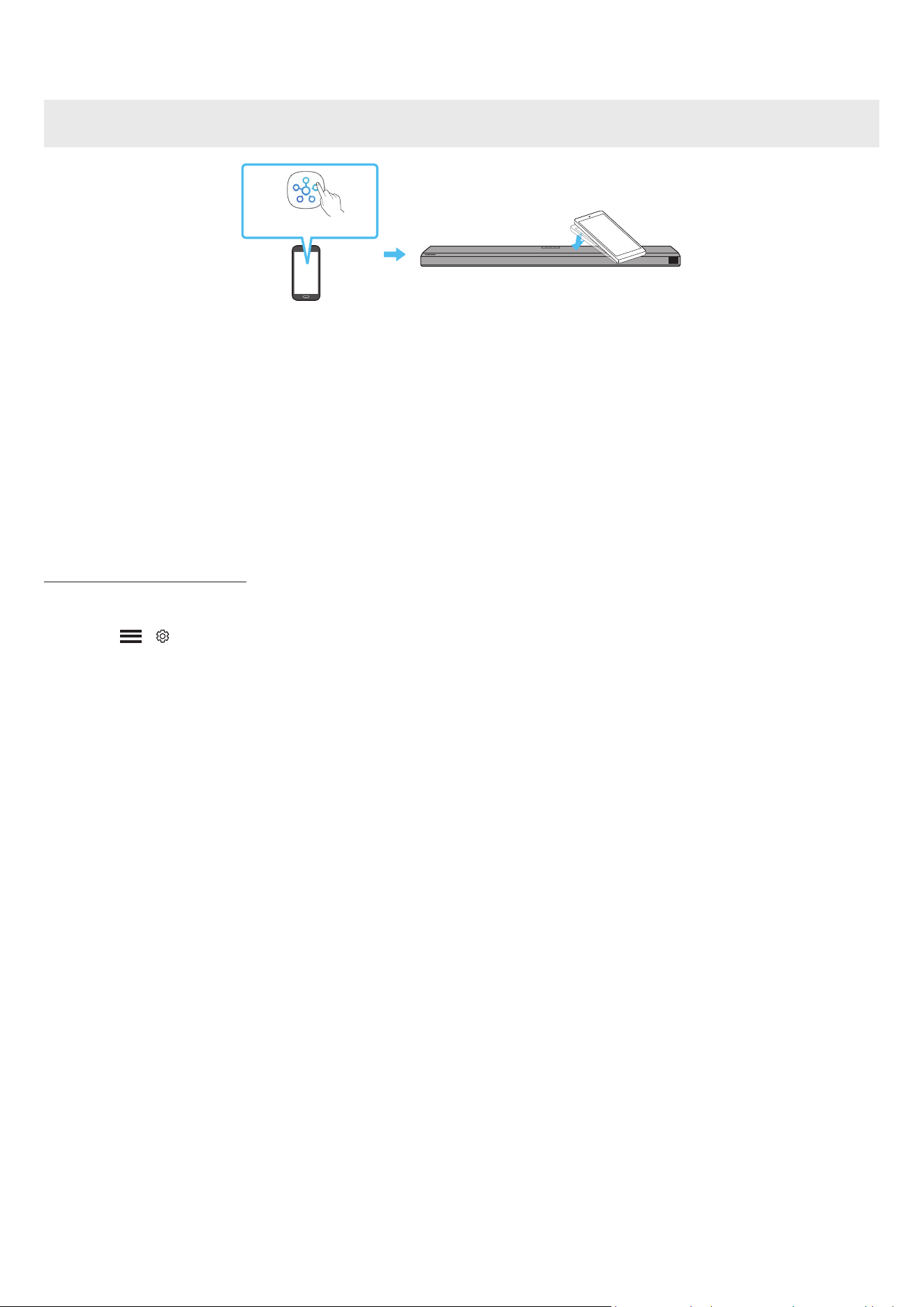
POR - 25
Utilizar o Tap Sound
Toque no Soundbar com o seu dispositivo móvel para reproduzir o som do conteúdo do dispositivo móvel no Soundbar.
• Dependendo do dispositivo móvel utilizado, esta função poderá não ser suportada.
• Esta função só é compatível com dispositivos móveis Samsung com Android 8.1 ou posterior.
Parte superior do
Soundbar
Dispositivo móvel
Aplicação SmartThings
1. Ative a função Tap Sound no seu dispositivo móvel.
• Para obter detalhes sobre como ativar a função, consulte “Congurar a função Tap Sound” abaixo.
2. Toque no Soundbar com o dispositivo móvel. Selecione “Start now” na janela da mensagem que é apresentada.
É estabelecida uma ligação via Bluetooth entre o dispositivo móvel e o Soundbar.
3. Reproduza o som do conteúdo do dispositivo móvel através do Soundbar.
• Esta função liga um dispositivo móvel ao Soundbar através de Bluetooth ao detetar a vibração que ocorre quando o dispositivo toca no Soundbar.
• Tenha cuidado para que o dispositivo não toque nas arestas do Soundbar. Poderá riscar ou danicar o Soundbar ou o dispositivo móvel.
• Recomendamos que o dispositivo móvel seja protegido com uma capa. Toque ligeiramente na parte plana da parte superior do Soundbar, sem utilizar
força excessiva.
• Para utilizar esta função, atualize a aplicação SmartThings com a versão mais recente.
Dependendo da versão da aplicação, esta função poderá não ser suportada.
Congurar a função Tap Sound
Utilize a aplicação SmartThings para ativar a função Tap View, Tap Sound.
1. Execute a aplicação SmartThings no dispositivo móvel.
2. Selecione ( → ) no ecrã da aplicação SmartThings no dispositivo móvel.
3. Ative “Tap View, Tap Sound” para ativar a função quando um dispositivo móvel se aproximar do Soundbar. A função é ativada.
NOTA
• A função Tap Sound não funciona se o dispositivo móvel estive no modo de poupança de energia.
• A função Tap Sound poderá não funcionar se houver dispositivos que causem interferências rádio, tais como dispositivos elétricos, perto do Soundbar.
Certique-se de que os dispositivos que podem causar interferência rádio são colocados a uma distância adequada do Soundbar.

POR - 26
10 LIGAR AO APPLE AIRPLAY 2
Esta funcionalidade pode não estar disponível em alguns países.
Ligar e utilizar com um produto Apple
• Com o AirPlay 2, pode controlar o sistema de áudio de casa a partir do iPhone, iPad, HomePod ou da Apple TV.
• Este Soundbar da Samsung é compatível com o AirPlay 2 e requer o iOS 11.4 ou posterior.
NOTA
• Conrme se o Soundbar está ligado à rede Wi-Fi. (Consulte Método 2. Ligar através de Wi-Fi (Rede sem os))
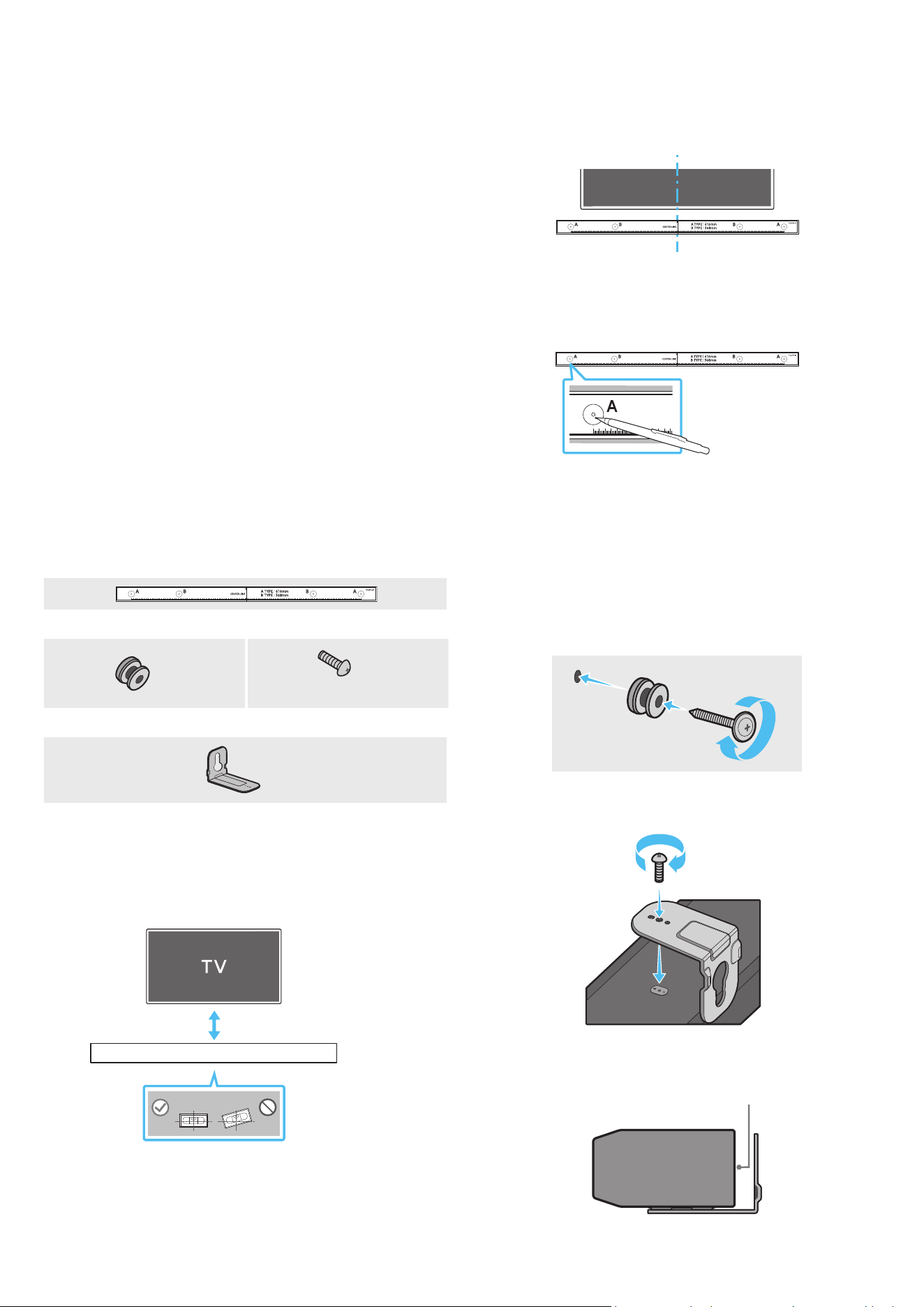
POR - 27
11 INSTALAR O SUPORTE DE
PAREDE
Precauções de instalação
• Instale apenas em paredes verticais.
• Não instale em locais expostos a altas temperaturas ou a uma elevada
percentagem de humidade.
• Verique se a parede é sucientemente resistente para suportar o peso
do produto. Caso não seja, deve reforçar a parede ou optar por outro
local para instalar o produto.
• Compre e utilize os parafusos de xação ou buchas adequados para o
tipo de parede em questão (pladur, placa de ferro, madeira, etc.). Caso
seja possível, xe os parafusos de suporte em montantes de parede.
• Compre parafusos próprios para a montagem em parede de acordo com
o tipo e a espessura da parede onde pretende instalar o Soundbar.
‒ Diâmetro: M5
‒ Comprimento: 35 mm ou maiores, preferencialmente.
• Ligue os cabos da unidade aos dispositivos externos antes de instalar o
Soundbar na parede.
• Antes da instalação, deve garantir que a unidade está desligada e que
a respetiva cha está desligada da tomada. Caso contrário, esta poderá
provocar um choque elétrico.
Componentes do suporte de parede
Guia do suporte de parede
X 2
X 2
(M4 x L10)
Parafuso de xação Parafuso
X 2
Suporte de parede
1. Coloque o Guia de suporte de parede encostado à superfície da parede.
• O Guia de suporte de parede tem de car nivelado.
• Se a TV estiver montada na parede, instale o Soundbar, pelo menos,
5 cm abaixo da TV.
5 cm ou mais
2. Alinhe a Linha central do guia de suporte de parede com o centro da TV
(se estiver a montar o Soundbar por baixo da TV) e, em seguida, xe o
Guia de suporte de parede à parede com ta adesiva.
• Se não estiver a montar por baixo da TV, coloque a Linha central no
centro da área de instalação.
Linha central
3. Utilize a ponta de uma caneta ou um lápis aado para furar o centro
das imagens de TIPO A, em cada extremidade do Guia, para assinalar os
orifícios dos parafusos de suporte e remova o Guia de suporte de parede.
4. Faça um orifício na parede em cada marca com uma ferramenta de
perfuração de dimensão apropriada.
• Se as marcações não corresponderem às posições dos pinos,
certique-se de que insere os suportes ou parafusos Molly nos
orifícios antes de inserir os parafusos de suporte. Certique-se de
que a dimensão dos orifícios perfurados corresponde às buchas e
parafusos Molly a utilizar.
5. Coloque um parafuso (não fornecido) em cada Parafuso de xação e
aperte cada um rmemente nos orifícios de parafuso de suporte.
6. Instale os 2 suportes de parede na orientação correta na parte inferior
do Soundbar, utilizando 2 Parafusos.
• Durante a montagem, certique-se de que a parte de suporte dos
Suportes de parede está localizada na parte de trás do Soundbar.
Parte de trás do Soundbar
Extremidade direita do Soundbar
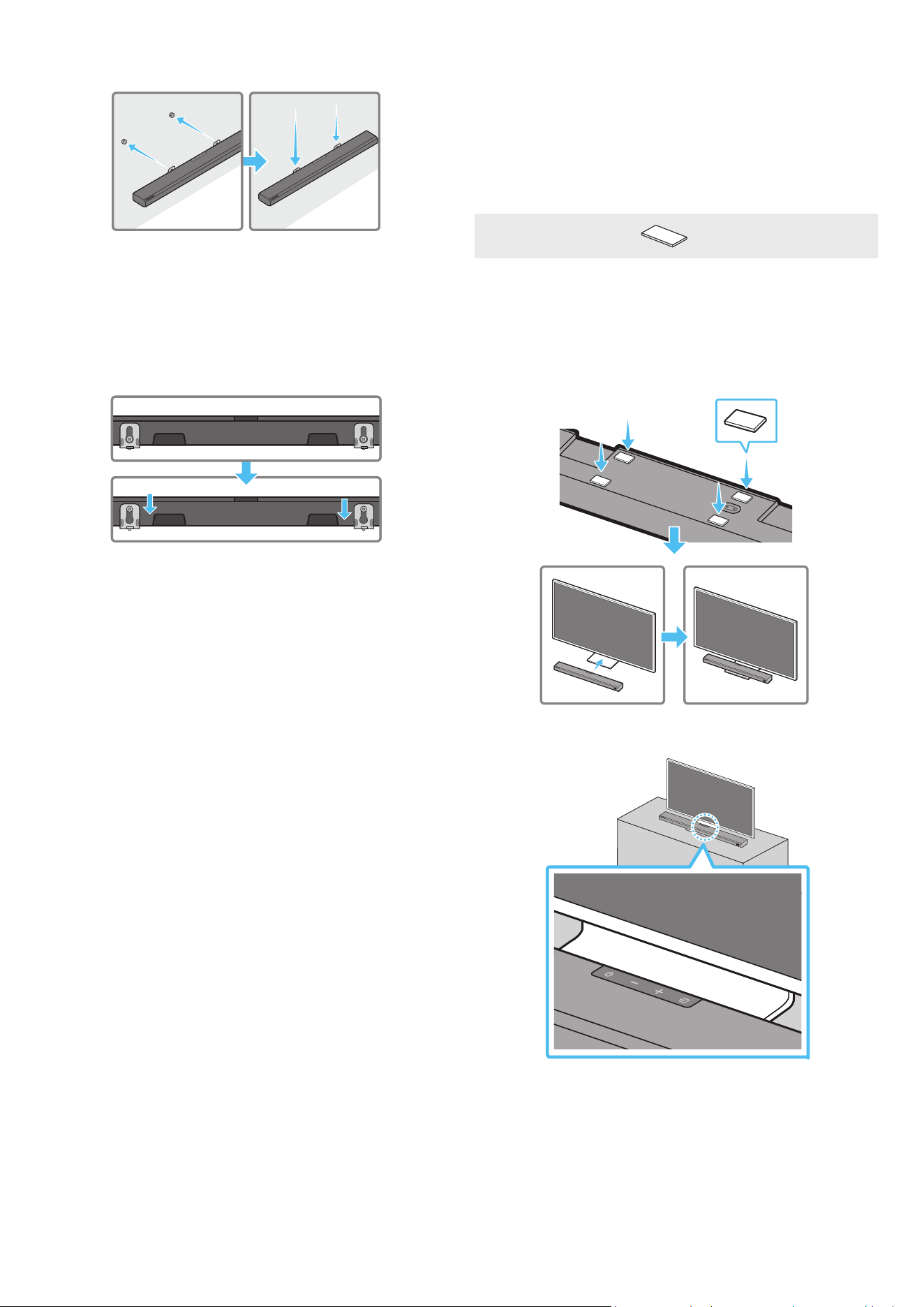
POR - 28
7. Instale o Soundbar com os Suportes de parede ao pendurar os Suportes
de parede nos Parafusos de suporte na parede.
8. Deslize o Soundbar para baixo, tal como indicado abaixo, para que os
Suportes de Parede quem apoiados de forma segura nos Parafusos de
Suporte.
• Introduza os Parafusos de suporte na parte larga (inferior) dos
Suportes de parede e, em seguida, deslize os Suportes de parede
para baixo de forma a xar os Suportes de parede rmemente nos
Parafusos de suporte.
12 INSTALAR O SOUNDBAR
POR CIMA DO SUPORTE DO
TELEVISOR
Componente
X 4
Borracha de base
Para instalar, xe as Borrachas de base à parte inferior do Soundbar
antes de o colocar por cima do suporte da TV. Certique-se de que xa as
Borrachas de base de modo a que não ultrapassem as extremidades do
suporte da TV. Consulte a gura abaixo.
Borracha de base
Coloque o Soundbar sobre o suporte do televisor.
Alinhe o centro do Soundbar com o centro da TV, conforme ilustrado na
imagem, e coloque cuidadosamente o Soundbar no suporte da TV.
NOTA
• Certique-se de que o Soundbar é colocado sobre uma superfície plana
e sólida.
• Caso não esteja sucientemente afastado da TV, podem ocorrer
problemas acústicos.
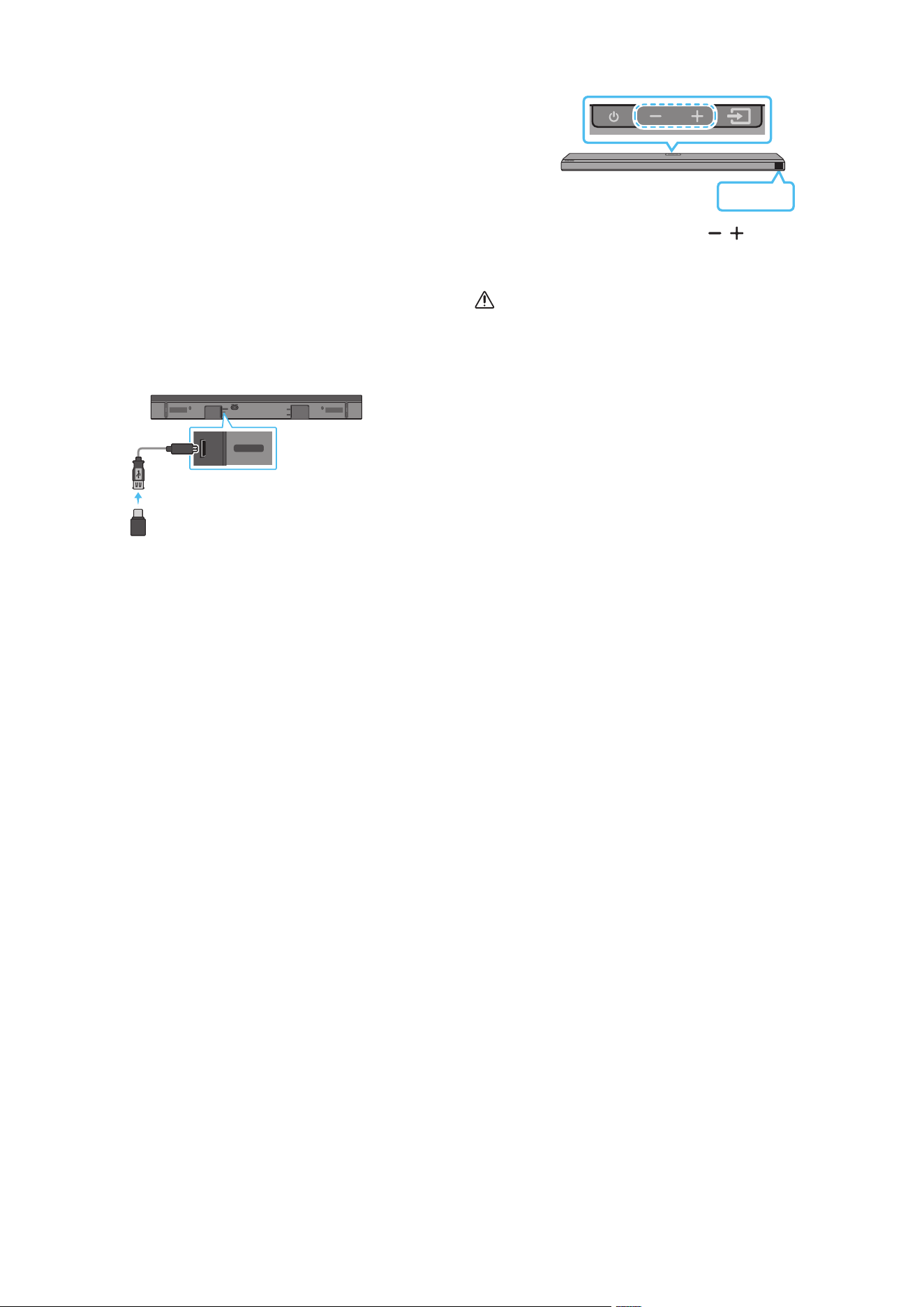
POR - 29
13 ATUALIZAÇÃO DO
SOFTWARE
Atualização automática
Quando o Soundbar está ligado à Internet o software é atualizado
automaticamente, mesmo quando o Soundbar está desligado.
• Para utilizar a função de atualização automática, o Soundbar tem de
estar ligado à Internet.
A ligação Wi-Fi do Soundbar é cortada se o cabo de alimentação do
Soundbar for desligado ou se houver uma falha de energia. Se ocorrer
uma falha de energia, quando a energia voltar ou quando voltar a ligar o
cabo de alimentação, ligue o Soundbar e volte a ligá-lo à Internet.
Atualização por USB
DIGITAL AUDIO IN
(OPTICAL)
SERVICE
DC 19V
HDMI
NETWORK ID SET
HDMI TO TV
(eARC/ARC)
HDMI IN
HDMI OUT
(TV-ARC)
DIGITAL AUDIO IN
(OPTICAL)
SERVICE
DC 19V
Parte inferior do Soundbar
Cabo adaptador micro USB para USB
(não fornecido)
A Samsung poderá disponibilizar atualizações do rmware do sistema do
Soundbar no futuro.
Quando uma atualização estiver disponível, pode atualizar o Soundbar
ao ligar a unidade USB que contém o rmware da atualização à porta de
SERVICE do Soundbar.
1. Aceda ao site da Samsung (www.samsung.com) → procure o nome do
modelo a partir da opção do menu de apoio ao cliente.
• Para mais informações sobre a atualização, consulte o Guia de
Atualizações.
2. Transra o cheiro de atualização (tipo USB).
3. Extraia o cheiro para criar uma pasta com o nome do cheiro.
4. Guarde a pasta criada num dispositivo USB e, em seguida, ligue-o ao
Soundbar.
5. Ligue o Soundbar. Em seguida, o produto é atualizado em 3 minutos
com indicação da mensagem, “UPDATE”.
• Durante a atualização, não o desligue nem remova o dispositivo USB.
• Se não aparecer “UPDATE” na janela do ecrã, remova o cabo de
alimentação do Soundbar e, em seguida, volte a ligá-lo.
• Se estiver instalada a versão mais recente, não é realizada nenhuma
atualização.
• A atualização poderá não ser suportada, dependendo do tipo de USB.
Inicialização
Parte superior do Soundbar
INIT
Com o Soundbar ligado, prima os botões de (Volume) no corpo,
simultaneamente, durante pelo menos 5 segundos. A mensagem “INIT”
surge no ecrã e o Soundbar é inicializado.
CUIDADO
• Todas as denições do Soundbar são inicializadas. Certique-se de
que efetua esta ação apenas quando é necessário inicializar.

POR - 30
14 RESOLUÇÃO DE
PROBLEMAS
Antes de solicitar assistência, verique o seguinte.
O Soundbar não se liga
• Verique se o cabo de alimentação do Soundbar está corretamente
inserido na tomada.
O Soundbar funciona de forma errática
• Após remover o cabo de alimentação, insira-o de novo.
• Remova o cabo de alimentação do dispositivo externo e tente
novamente.
• Se não existir sinal, o Soundbar desliga-se automaticamente após um
determinado período de tempo. Ligue o Ligar/Desligar. (Consulte a
página 9.)
No caso de o telecomando não funcionar
• Aponte o telecomando diretamente para o Soundbar.
• Troque as pilhas por umas novas.
O Soundbar não emite qualquer som
• O volume do Soundbar está demasiado baixo ou em silêncio. Ajuste o
volume.
• Quando ligar qualquer dispositivo externo (STB, dispositivo Bluetooth,
dispositivo móvel, etc.), ajuste o volume do mesmo.
• Para aceder à saída de som no televisor, selecione Soundbar. (Televisor
Samsung: Home (
) → Denições ( ) → Som → Saída de Som →
Selecionar Soundbar)
• A ligação dos cabos ao Soundbar não pode estar solta. Desligue o cabo
e volte a ligá-lo.
• Remova completamente o cabo de alimentação, volte a ligá-lo e ligue
a alimentação.
• Inicialize o produto e tente novamente. (Consulte a página 29.)
O Subwoofer não emite qualquer som
• Verique se o indicador LED na parte de trás do Subwoofer está ligado
a azul. Volte a ligar o Soundbar e o Subwoofer se o indicador estiver a
piscar a azul ou se tiver passado para vermelho. (Consulte a página 13.)
• Poderá ter problemas se houver um obstáculo entre o Soundbar e o
Subwoofer. Coloque os dispositivos numa zona afastada de obstáculos.
• A ligação pode ser interrompida por outros dispositivos que se
encontrem a emitir sinais de radiofrequência nas proximidades.
Mantenha a sua coluna afastada desses dispositivos.
• Remova o cabo de alimentação e volte a ligá-lo.
O volume do Subwoofer está demasiado baixo
• O volume original do conteúdo que está a reproduzir pode ser baixo.
Tente ajustar o nível do Subwoofer. (Consulte a página 10.)
• Aproxime a coluna do Subwoofer de si.
Caso a TV não esteja ligada via HDMI TO TV (eARC/ARC)
• Verique se o cabo HDMI está corretamente ligado ao terminal ARC.
(Consulte a página 16.)
• A ligação pode não ser estabelecida devido à ligação do dispositivo
externo (descodicador, consola de jogos, etc.). Ligue diretamente o
Soundbar.
• O modo HDMI-CEC pode não estar ativado no televisor. Ligue o CEC no
menu do televisor. (Televisor Samsung: Home ( ) → Denições ( ) →
Geral → Gestor de Dispositivos Externos → Anynet+ (HDMI-CEC) ON)
• Para ligar com eARC, a função eARC no menu da TV deve estar ligada.
(Televisor Samsung: Home ( ) → Denições ( ) → Som → Denições
Especializadas → Modo HDMI-eARC (Auto))
Não há som ao ligar a TV no modo HDMI TO TV (eARC/ARC)
• O seu dispositivo não consegue reproduzir o sinal de entrada. Altere
a saída de áudio do televisor para PCM ou Dolby Digital. (Para um
televisor Samsung: Home (
) → Denições ( ) → Som → Denições
Especializadas → Digital Output Audio Format)
O Soundbar não estabelece ligação através de Bluetooth.
• Ao ligar um novo dispositivo, mude para “BT PAIRING” para
estabelecer ligação. (Prima o botão
PAIR no telecomando ou o botão
(Fonte) no corpo durante, pelo menos, 5 segundos.)
• Se o Soundbar estiver ligado a outro dispositivo, desligue esse
dispositivo primeiro para trocar de dispositivo.
• Ligue-o novamente após remover a lista de altifalantes Bluetooth no
dispositivo a ligar. (Televisor Samsung: Home ( ) → Denições ( ) →
Som → Saída de Som → Lista de Altifalantes Bluetooth)
• A ligação automática do televisor poderá estar desativada. Enquanto o
Soundbar estiver no modo “BT READY”, mantenha premido o botão
no telecomando do Soundbar durante 5 segundos para selecionar ON-
TV CONNECT. Se vir OFF-TV CONNECT, mantenha premido novamente
o botão durante 5 segundos para mudar a seleção.
• Remova o cabo de alimentação, volte a ligá-lo e, em seguida, tente
novamente.
• Inicialize o produto e tente novamente. (Consulte a página 29.)
O som é cortado quando ligado através de Bluetooth
• Alguns dispositivos podem provocar interferências de rádio se
estiverem demasiado perto do Soundbar, como acontece com micro-
ondas, routers sem os, etc.
• Se o seu dispositivo ligado através de Bluetooth se afastar demasiado
do Soundbar, poderá fazer com que o som seja cortado. Aproxime o
dispositivo do Soundbar.
• Se uma parte do seu corpo estiver em contacto com o transmissor de
Bluetooth ou se o produto for instalado em móveis de metal, o som
pode ser cortado. Verique o ambiente de instalação e as condições
para a utilização.
Não é possível ligar à rede Wi-Fi
• Verique se o router sem os está ligado.
• Desligue o router, volte a ligá-lo e, em seguida, tente novamente.
• Não será possível ligar o Soundbar se o sinal sem os for demasiado
fraco. Experimente deslocar o router para um local mais próximo
do Soundbar ou eliminar quaisquer obstáculos que estejam entre o
Soundbar e o router, se possível.
• Se o seu router sem os for novo, será necessário recongurar as
denições de rede da coluna.
O Soundbar não se liga automaticamente com a TV.
• Quando desliga o Soundbar enquanto vê televisão, a sincronização da
energia com o televisor é desativada. Primeiro, desligue o televisor.
POR - 31
15 LICENÇA
Dolby, Dolby Atmos, and the double-D symbol are registered
trademarks of Dolby Laboratories Licensing Corporation. Manufactured
under license from Dolby Laboratories. Condential unpublished works.
Copyright © 2012-2020 Dolby Laboratories. All rights reserved.
For DTS patents, see http://patents.dts.com. Manufactured under license
from DTS, Inc. (for companies headquartered in the U.S./Japan/Taiwan)
or under license from DTS Licensing Limited (for all other companies).
DTS, DTS:X Pro, DTS:X, and the DTS:X logo are registered trademarks or
trademarks of DTS, Inc. in the United States and other countries. © 2020
DTS, Inc. ALL RIGHTS RESERVED.
The terms HDMI and HDMI High-Denition Multimedia Interface,
and the HDMI Logo are trademarks or registered trademarks of HDMI
Licensing Administrator, Inc. in the United States and other countries.
• Apple, AirPlay, iPhone, iPad, HomePod, and Apple TV are trademarks
of Apple Inc., registered in the U.S. and other countries.
• Use of the Works with Apple badge means that an accessory has
been designed to work specically with the technology identied
in the badge and has been certied by the developer to meet Apple
performance standards.
16 AVISO DE LICENÇA DE
CÓDIGO ABERTO
Para enviar dúvidas ou pedidos para questões relacionadas com código
aberto, contacte a Samsung Open Source (http://opensource.samsung.
com)
17 NOTAS IMPORTANTES
SOBRE A ASSISTÊNCIA
As guras e as ilustrações deste Manual do utilizador são fornecidas
apenas para referência e podem ser diferentes do aspeto real do produto.

POR - 32
18 ESPECIFICAÇÕES E GUIA
Características técnicas
Nome do modelo HW-Q700A
Peso 3,6 kg
Dimensões (L x A x P) 980,0 x 60,0 x 115,0 mm
Intervalo de temperatura de funcionamento +5 °C a +35 °C
Intervalo de humidade de funcionamento 10% ~ 75%
AMPLIFICADOR
Potência de saída nominal ((30 W x 4) + (20 W x 2) + 10 W) + 160 W
Formatos de reprodução suportados
Dolby 5.1ch/Dolby Digital Plus/Dolby TRUE HD/Dolby ATMOS
DTS 5.1ch/DTS HD/DTS-HD Master Audio/DTS:X/LPCM 8Ch
Nome do Subwoofer PS-WA75B
Peso 5,9 kg
Dimensões (L x A x P) 205,0 x 353,0 x 302,0 mm
AMPLIFICADOR
Potência de saída nominal 160 W
NOTA
• A Samsung Electronics Co., Ltd reserva-se o direito de alterar as especicações sem aviso prévio.
• Os valores do peso e das dimensões são aproximados.
Precaução: O Soundbar irá reiniciar automaticamente se ligar/desligar o Wi-Fi.
Wi-Fi
Método de desativação da porta
Mantenha premido o botão ID SET no painel inferior do Soundbar durante 30 segundos para
ligar/desligar o Wi-Fi.
Bluetooth
Método de desativação da porta
Mantenha premido o botão NETWORK no painel inferior do Soundbar durante 30 segundos
para ligar/desligar o Bluetooth.

© 2021 Samsung Electronics Co., Ltd. All rights reserved.
Contact SAMSUNG WORLD WIDE
If you have any questions or comments relating to Samsung products, please contact the SAMSUNG customer care Centre.
Country Samsung Service Centre
Web Site
EGYPT
08000-7267864
16580
WhatsApp 010 000 16580
www.samsung.com/eg/support
IRAN
021-8255 [CE]
021-42132 [HHP]
www.samsung.com/iran/support
Israel *6963 www.samsung.com/il/support/
Palestine +970-2-2792447 www.samsung.com/ps/support/
SAUDI ARABIA
8002474357 (800 24/7 HELP) From Inside
Saudi Arabia
+966112974690 From outside Saudi Arabia (May Call
Charges will be applied)
www.samsung.com/sa_en/support (English)
www.samsung.com/sa/support (Arabic)
PAKISTAN 0800-Samsung (7267864) www.samsung.com/pk/support
U.A.E
800-SAMSUNG
(800 - 726 7864)
www.samsung.com/ae/support (English)
www.samsung.com/ae_ar/support (Arabic)
OMAN 800-SAM CS (800-72627)
KUWAIT 183-CALL (183-2255)
BAHRAIN 8000-GSAM (8000-4726)
QATAR 800-CALL (800-2255)
TURKEY 444 77 11 www.samsung.com/tr/support
JORDAN
0800-22273
06 5777444
www.samsung.com/levant/support
Lebanon 1598
Iraq 80010080
ALGERIA 3004
www.samsung.com/n_africa/supportTUNISIA 80 100 012
MOROCCO 080 100 22 55
SOUTH AFRICA 0860 SAMSUNG (726 7864) www.samsung.com/za/support
NAMIBIA 08 197 267 864 www.samsung.com/africa_en/support
ZAMBIA 3434 www.samsung.com/africa_en/support
MAURITIUS 800 5050 www.samsung.com/africa_en/support
REUNION 0262 50 88 80 www.samsung.com/africa_fr/support
MOZAMBIQUE 84 726 7864 www.samsung.com/africa_pt/support
NIGERIA 0800 726 7864 www.samsung.com/africa_en/support
Ghana 0800 100 077 www.samsung.com/africa_en/support
Cote D’Ivoire 8000 0077 www.samsung.com/africa_fr/support
SENEGAL 800 00 0077 www.samsung.com/africa_fr/support
CAMEROON 67095 0077 www.samsung.com/africa_fr/support
KENYA 0800 545 545 www.samsung.com/africa_en/support
UGANDA 0800 300 300 www.samsung.com/africa_en/support
TANZANIA 0800 780 089 www.samsung.com/africa_en/support
RWANDA 9999 www.samsung.com/africa_fr/support
DRC 499 999 www.samsung.com/africa_fr/support
SUDAN 1969 www.samsung.com/eg/support

.Samsung Electronics Co., Ltd. All rights reserved 2021 ©
ملاعلا لوح SAMSUNG ـب لاصتا
.SAMSUNG ـل عباتلا ءمعلا ةمدخ زكرمب لاصتا ىجري ،Samsung تاجتنمب قلعتت تاظحم وأ تاراسفتسا ةيأ كيدل ناك اذإ
دلبلا
Samsung ةمدخ زكرمبيولا عقوم
EGYPT
08000-7267864
16580
WhatsApp 010 000 16580
www.samsung.com/eg/support
IRAN
021-8255 [CE]
021-42132 [HHP]
www.samsung.com/iran/support
Israel*6963 www.samsung.com/il/support/
Palestine+970-2-2792447 www.samsung.com/ps/support/
SAUDI ARABIA
8002474357 (800 24/7 HELP) From Inside
Saudi Arabia
+966112974690 From outside Saudi Arabia (May Call
Charges will be applied)
www.samsung.com/sa_en/support (English)
www.samsung.com/sa/support (Arabic)
PAKISTAN0800-Samsung (7267864) www.samsung.com/pk/support
U.A.E
800-SAMSUNG
(800 - 726 7864)
www.samsung.com/ae/support (English)
www.samsung.com/ae_ar/support (Arabic)
OMAN800-SAM CS (800-72627)
KUWAIT183-CALL (183-2255)
BAHRAIN8000-GSAM (8000-4726)
QATAR 800-CALL (800-2255)
TURKEY444 77 11 www.samsung.com/tr/support
JORDAN
0800-22273
06 5777444
www.samsung.com/levant/support
Lebanon1598
Iraq80010080
ALGERIA3004
www.samsung.com/n_africa/support TUNISIA80 100 012
MOROCCO080 100 22 55
SOUTH AFRICA0860 SAMSUNG (726 7864) www.samsung.com/za/support
NAMIBIA08 197 267 864 www.samsung.com/africa_en/support
ZAMBIA3434 www.samsung.com/africa_en/support
MAURITIUS800 5050 www.samsung.com/africa_en/support
REUNION0262 50 88 80 www.samsung.com/africa_fr/support
MOZAMBIQUE84 726 7864 www.samsung.com/africa_pt/support
NIGERIA0800 726 7864 www.samsung.com/africa_en/support
Ghana0800 100 077 www.samsung.com/africa_en/support
Cote D’Ivoire8000 0077 www.samsung.com/africa_fr/support
SENEGAL800 00 0077 www.samsung.com/africa_fr/support
CAMEROON67095 0077 www.samsung.com/africa_fr/support
KENYA0800 545 545 www.samsung.com/africa_en/support
UGANDA0800 300 300 www.samsung.com/africa_en/support
TANZANIA0800 780 089 www.samsung.com/africa_en/support
RWANDA9999 www.samsung.com/africa_fr/support
DRC499 999 www.samsung.com/africa_fr/support
SUDAN1969 www.samsung.com/eg/support

32 - ARA
18 ليلدلاو تافصاوا
تافصاوا
ليدوا مساHW-Q700A
نزولامجك 3.6
)قمعلا x عافترا x ضرعلا( داعبامم 115.0 × 60.0 × 980.0
ليغشتلا ةرارح ةجرد قاطنةيوئم ةجرد +3 5 إ ةيوئم ةجرد +5 نم
ليغشتلا ةبوطر ةبسن قاطن75 % ~ 10 %
كا
ق
ُ
ا جرخلا ةقاطتاو 160 + )تاو 10 + )2 × تاو 20( + )4 × تاو 30((
ةموعدا ليغشتلا تاقيسنت
Dolby ATMOS / Dolby TRUE HD / Dolby Digital Plus / Dolby 5.1ch
LPCM 8Ch / DTS:X / DTS-HD Master Audio / DTS HD / DTS 5.1ch
توصلا مخضم مساPS-WA75B
نزولامجك 5.9
)قمعلا x عافترا x ضرعلا( داعبامم 302.0 × 353.0 × 205.0
كا
ق
ُ
ا جرخلا ةقاطتاو 160
ةظحم
.راعشإ نود تافصاوا يغت قحلاب Samsung Electronics Co.، Ltd ظفتحت
.ةيبيرقت داعباو نزولا
.هليغشت فاقيإ وأ Wi-Fi ليغشتب تمق اذإ
ً
ايئاقلت Soundbar زاهج ليغشت ةداعإ متتس تاطايتحا
Wi-Fi
ذفنا طيشنت ءاغلإ بولسأ
فاقيإ وأ Wi-Fi ليغشتل ةيناث 30 ةد Soundbar زاهجل ةيلفسلا ةحوللا دوجوا ID SET رزلا ع طغضا
.هليغشت
Bluetooth
ذفنا طيشنت ءاغلإ بولسأ
ةفيظو ليغشتل ةيناث 30 ةد Soundbar زاهجل ةيلفسلا ةحوللا دوجوا Network رز ع طغضا
.اهليغشت فاقيإ وأ Bluetooth
31 - ARA
15 صيخالا
Dolby, Dolby Atmos, and the double-D symbol are registered
trademarks of Dolby Laboratories Licensing Corporation.
Manufactured under license from Dolby Laboratories. Condential
unpublished works. Copyright © 2012-2020 Dolby Laboratories. All
rights reserved.
For DTS patents, see http://patents.dts.com. Manufactured under
license from DTS, Inc. )for companies headquartered in the U.S./
Japan/Taiwan( or under license from DTS Licensing Limited
)for all other companies(. DTS, DTS:X Pro, DTS:X, and the DTS:X
logo are registered trademarks or trademarks of DTS, Inc. in the
United States and other countries. © 2020 DTS, Inc. ALL RIGHTS
RESERVED.
The terms HDMI and HDMI High-Denition Multimedia Interface,
and the HDMI Logo are trademarks or registered trademarks of
HDMI Licensing Administrator, Inc. in the United States and other
countries.
دع
ُ
ب نع مكحت ةدحوك رتويبمكلا زاهج وأ يحوللا رتويبمكلا وأ كفتاه مدختسا
مايقلا ةيفيك ع فرعتلل spotify.com/connect إ لقتنا .Spotify طتل
كلذب
:انه اهیلع روثعلا كنكمیو ،ةیجراخ تاهج صیخارت إ Spotify تایجمرب عضخت
.https://www.spotify.com/connect/third-party-licenses
.ةيفارغجلا ةقطنا وأ زاهجلا زارط بسح كلذو ،ةموعدم غ ةفيظولا هذه نوكت دق *
Apple, AirPlay, iPhone, iPad, HomePod, and Apple TV are
trademarks of Apple Inc., registered in the U.S. and other
countries.
Use of the Works with Apple badge means that an accessory
has been designed to work specically with the technology
identied in the badge and has been certied by the developer
to meet Apple performance standards.
16 ةحوتفم رداصا صيخرت راعشإ
Samsung Open Source ـب لصتا ،ةحوتفا رداصاب ةقلعتا ةلئسا تابلطو تاراسفتسا لاسر
)http://opensource.samsung.com(
17 ةمدخلا لوح ةمهم تاظحم
طقف عجرمك اذه مدختسا ليلد اذه ةدراولا ةيحيضوتلا موسرلاو لاكشا فوت متي
.عفلا جتنا رهظم نع فلتخت دقو

30 - ARA
14 اهحصإو لاطعا فاشكتسا
.ي ام عجار ،ةدعاسا نع ثحبلا لبق
لمعي Soundbar زاهج
حيحص لكشب هلاخدإ مت Soundbar زاهج ءابرهك كلس ناك اذإ امم ققحت
.ذفنا
عطقتم لكشب لمعي Soundbar زاهج
.ىرخأ ةرم هلخدأ ،ءابرهكلا كلس ةلازإ دعب
.ا
ً
ددجم لواحو يجراخلا زاهجلا نع ءابرهكلا كلس دعبأ
ةف دعب ا
ً
يئاقلت Soundbar زاهج ليغشت فاقيإ متي ،ةراشإ دوجو مدع ةلاح
).9 ةحفص عجار( .ةقاطلا ل
غش .ةددحم ةينمز
دع
ُ
ب نع مكحتلا زاهج لمع مدع ةلاح
.ةابم دع
ُ
ب نع مكحتلا زاهج إ Soundbar زاهج ه
جو
.ةديدج ىرخأ تايراطبب تايراطبلا لدبتسا
Soundbar زاهج نم توص يأ جرخي
ىوتسم طبضا .تماص وأ ةياغلل ضفخنم Soundbar زاهج توص ىوتسم
.توصلا
ام وأ لومحم زاهج وأ Bluetooth زاهج وأ STB( يجراخ زاهج يأ ليصوت دنع
.يجراخلا زاهجلا توص ىوتسم طبضا ،)كلذ إ
:Samsung نويزفلت( .Soundbar زاهج ددح ،نويزفلتلا نم توصلا جارخ
ددح ←توصلا جارخإ ←توصلا ← )
( تادادعا ← ) ( ةيسيئرلا ةحفصلا
)Soundbar زاهج
لبكلا لصفا .ةمكحم غ Soundbar زاهجب ةلصتا لبكلا ةلصو نوكت دق
.ىرخأ ةرم هليصوتب مقو
.ةقاطلا لغش مث ،هليصوت دعأو ،ا
ً
مامت ءابرهكلا كلس لصفا
).29 ةحفص عجار( .ا
ً
ددجم لواح مث جتنا نحش ةئيهتب مق
توصلا مخضم نم توص يأ جرخي
لمعي توصلا مخضم نم يفلخلا ءزجلا LED ؤم ناك اذإ امم ققحت
ضموي ؤا ناك اذإ توصلا مخضمو Soundbar ليصوت دعأ .قرزا نوللاب
).13 ةحفص عجار( .رمحا نوللا إ هؤض لوحت وأ قرزا نوللاب
لقنا .توصلا مخضمو Soundbar ب قئاع كانه ناك اذإ ةلكشم كهجاوت دق
.قئاوعلا نع ا
ً
ديعب ناكم إ ةزهجا
عطق لس ددرت تاراشإ لسرت لا ىرخا ةبيرقلا ةزهجا ببستت دق
.لاصتا
.ةزهجا هذه لثم نع تاعامسلا دعبأ
.ىرخا ةرم هليصوت دعأو ابرهكلا رايتلا سباق لصفا
ا
ً
دج ضفخنم توصلا مخضم توص ىوتسم
لواح .ا
ً
ضفخنم هليغشتب موقت يذلا ىوتحملل ا توصلا ىوتسم نوكي دق
).10 ةحفص عجار( .توصلا مخضم ىوتسم طبض
.كنم برقلاب توصلا مخضم تاعامس حا
HDMI TO TV )eARC/ARC( ع نويزفلتلا ليصوت مدع ةلاح
.ARC فرطب حيحص لكشب
ً
صتم HDMI لبك ناك اذإ امم ققحت
).16 ةحفص عجار(
،فشتلا كف زاهج( لصتا يجراخلا زاهجلا ببسب ا
ً
نكمم لاصتا نوكي دق
.ةابم Soundbar زاهج ل
صو .)كلذ إ امو ،باعلا زاهج
.نويزفلتلا ةمئاق CEC ل
غش .نويزفلتلا ع HDMI-CEC طيشنت متي دق
← ماع ← ) ( تادادعا ← ) ( ةيسيئرلا ةحفصلا :Samsung نويزفلت(
Anynet+ )HDMI-CEC( ليغشت( ← يجراخلا زاهجلا ريدم
عضو ع نويزفلتلا ةمئاق eARC ةفيظو طبض بجي ،"eARC" ـب لاصتل
) ( تادادعا ← ) ( ةيسيئرلا ةحفصلا :Samsung نويزفلت( .ليغشتلا
))اقلت( HDMI-eARC عضو ← بخلا تادادعإ ← توصلا ←
HDMI TO TV )eARC / ARC( عضو نويزفلتلاب لاصتا دنع توص دجوي
نويزفلتلا توص جرخ يغتب مق .لاخدا ةراشإ ليغشت ع رداق غ كزاهج
ةحفصلا :Samsung نويزفلتل ةبسنلاب( .Dolby Digital وأ PCM إ
قيسنت ← بخلا تادادعإ ← توصلا ← )
( تادادعا ← ) ( ةيسيئرلا
)يمقرلا توصلا جارخإ
.Bluetooth ع لصتي Soundbar زاهج
ع طغضا( .لاصتل "BT PAIRING" إ ليدبتلاب مق ،ديدج زاهج ليصوت دنع
زاهجلا لكيهب )ردصا(
رز ع طغضا وأ دع
ُ
ب نع مكحتلا زاهج PAIR رز
).لقا ع
ٍ
ناوث 5 ةد
.زاهجلا ليدبتل
ً
وأ زاهجلا اذه لصفا ،رخآ زاهجب لصتم Soundbar زاهج ناك اذإ
.لاصتل زاهجلا ع Bluetooth توص كم ةمئاق ةلازإ دعب هليصوت دعأ
توصلا ← ) ( تادادعا ← ) ( ةيسيئرلا ةحفصلا :Samsung نويزفلت(
Bluetooth توص كم ةمئاق ← توصلا جارخإ ←
عضو Soundbar نوكي امدنع .نويزفلتلل اقلتلا لاصتا لطعتي دق
دع
ُ
ب نع مكحتلا زاهج راسي رز ع رارمتسا عم طغضا،"BT READY"
تيأر اذإ .ON-TV CONNECT ديدحتل ناوث 5 ةد Soundbar زاهجب صاخلا
ليدبتل ناوث 5 ةد راسي رز ع رارمتسا عم طغضا ،OFF-TV CONNECT
.رايتخا
.ا
ً
ددجم لواح مث هليصوت دعأو ابرهكلا رايتلا سباق لصفا
).29 ةحفص عجار( .ا
ً
ددجم لواح مث جتنا نحش ةئيهتب مق
.Bluetooth ع لاصتا دنع توصلا عطقني
نم ا
ً
دج ةبيرق تناك اذإ لس لخادت ثودح ةزهجا ضعب ببستت نأ نكمي
غو ةيكلسلا تاهجواو فيوركياا ةزهجأ لاثا ليبس ع Soundbar زاهج
.كلذ
دقف ،Soundbar زاهج نع ا
ً
دج ا
ً
ديعب Bluetooth ع لصتا كزاهج كرحت اذإ
.Soundbar زاهج نم برقأ زاهجلا لقنا .توصلا عاطقنا كلذ ببستي
لاسرا زاهجل كمسج نم ءزج ةسمم ةلاح توصلا عطقت ثدحي دق
.دعم ثاثأ ع جتنا تيبثت مت وأ Bluetooth ةينقتب لمعي يذلا لابقتساو
.مادختسا طوو تيبثتلا ةئيب نم ققحت
Wi-Fi ـب لاصتا رذعت
.لسلا هجوا لمع نم ققحت
.ا
ً
ددجم لواح مث ىرخا ةرم هلغشو هجوا ليغشت فقوأ
لواح .ةياغلل ةفيعض لسلا ةراشإ تناك اذإ Soundbar زاهج لصتي نل
Soundbar زاهج ب قئاوع يأ ةلازإ وأ Soundbar زاهج نم ه
جوا بيرقت
.نكمأ نإ ه
جواو
ةكبش تادادعإ نيوكت ةداعإ إ جاتحتسف ،ديدج لسلا هجوا ناك اذإ
.ةعامسلا
.نويزفلتلا عم ا
ً
يئاقلت Soundbar زاهج ليغشت متي
ليطعت متي ،نويزفلتلا ةدهاشم ءانثأ Soundbar زاهج ليغشت فاقيإ دنع
.
ً
وأ نويزفلتلا ليغشت فقوأ .نويزفلتلا عم ةقاطلا ةنمازم
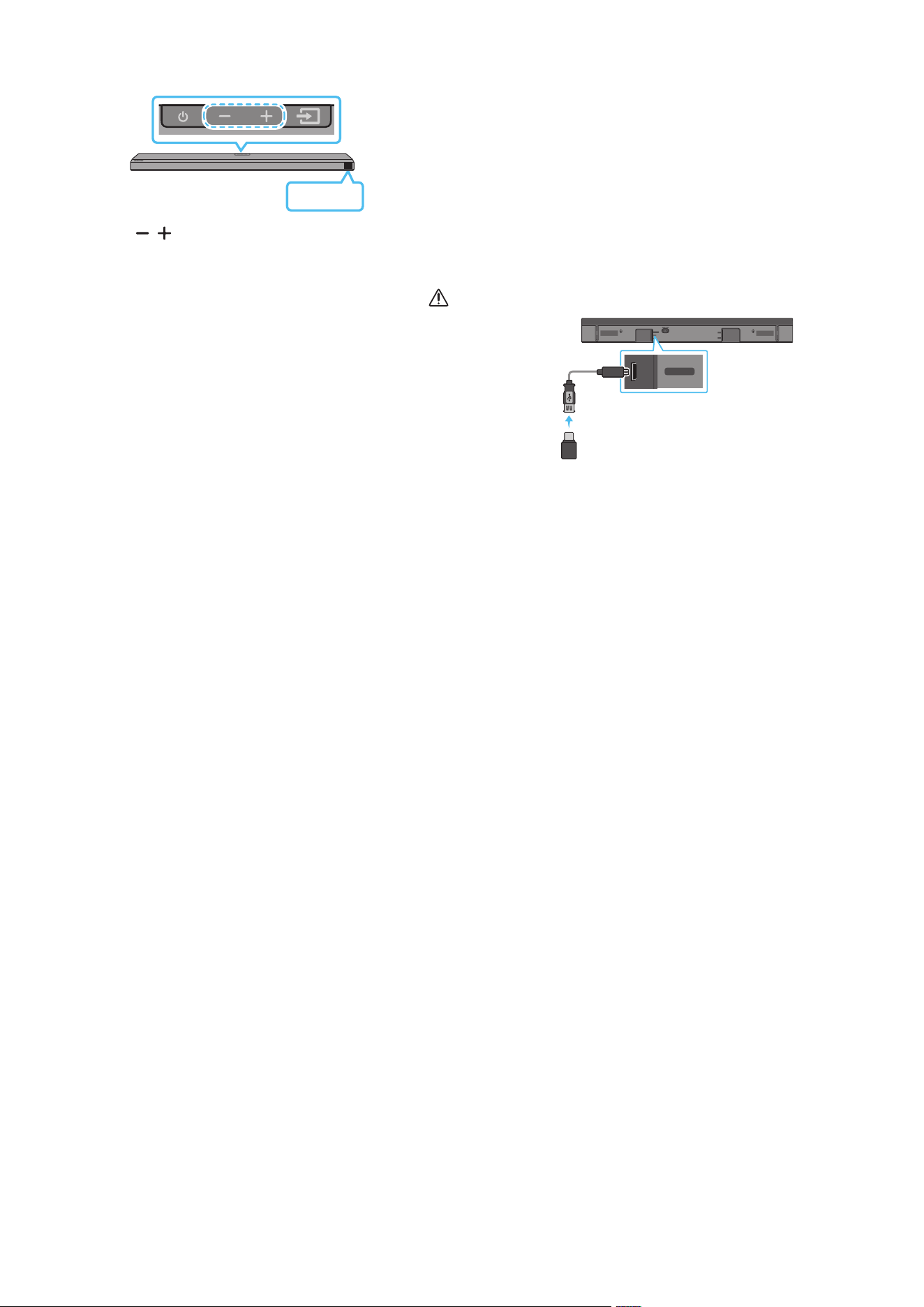
29 - ARA
13 جمانلا ثيدحت
اقلتلا ثيدحتلا
فاقيإ دنع ح ا
ً
يئاقلت جمانلا تاثيدحت تيبثت متي ،تنناب Soundbar زاهج لاصتا دنع
.Soundbar زاهج ليغشت
.تنناب Soundbar زاهج لاصتا بجي ،اقلتلا ثيدحتلا ةفيظو مادختس
زاهج ءابرهك كلس لصف ةلاح Soundbar زاهجب Wi-Fi ةكبش لاصتا ءاهنإ متيسو
زاهج ل
غش ،ابرهكلا رايتلا عاطقنا ةلاح .ابرهكلا رايتلا عاطقنا وأ Soundbar
.تنناب هليصوت د
ِ
عأ مث ءابرهكلا كلس ليصوت د
ِ
عأ وأ هتدوع دنع Soundbar
USB ثيدحت
DIGITAL AUDIO IN
(OPTICAL)
SERVICE
DC 19V
HDMI
NETWORK ID SET
HDMI TO TV
(eARC/ARC)
HDMI IN
HDMI OUT
(TV-ARC)
DIGITAL AUDIO IN
(OPTICAL)
SERVICE
DC 19V
Soundbar زاهج نم فسلا ءزجلا
)د
ّ
وز
ُ
م غ( USB إ Micro USB ل
ّ
وحم لبك
.لبقتسا Soundbar زاهج ماظنل تباثلا جمانلل تاثيدحت Samsung رفوت دق
صارقأ كرحم ليصوت قيرط نع Soundbar زاهج ثيدحت كنكمي ،ام ثيدحت رفوتي امدنع
.Soundbar زاهج SERVICE ذفنمب ثيدحتلل تباثلا جمانلا ع يوتحي يذلا USB
1 . نم زارطلا مسا نع ثحباو ← )www.samsung.com( Samsung عقوم إ لقتنا
.ءمعلا معد ةمئاق رايخ
.ةيقلا ليلد عجار ،ثيدحتلا لوح تامولعا نم ديز
2 ..)USB عون نم( ةيقلا فلم ليتب مق
3 . .فلا مساب دلجم ءاشن فلا طغض كف
4 ..Soundbar ـب لصتا مث USB هؤاشنإ مت يذلا دلجا نزخ
5 . ضرعتسو قئاقد 3 لخ جتنا ثيدحت متيس كل دعب .Soundbar ليغشتب مق
."UPDATE" ،ةلاسرلا
.USB ةلصو عت وأ جتنا ليغشت فقوت ،ثيدحتلا ةيلمع لخ
نم ءابرهكلا كلس لصفاف ،ضرعلا ةذفان ع "UPDATE" ةلاسر رهظت مل اذإ
.ىرخأ ةرم هليصوتب مق مث Soundbar
.ثيدحت يأ ىرجي نل ،رادصإ ثدحأ تيبثت دنع
.USB عونل ا
ً
قفو ،ثيدحتلا معد
ُ
ي دق
ةئيهتلا
Soundbar زاهج نم يولعلا ءزجلا
INIT
)توصلا ىوتسم( يرز ع طغضا ،ليغشتلا ديق Soundbar زاهج نوكي امدنع
ةئيهت أدبتس مث ةشاشلا ع "INIT" رهظتس .
ٍ
ناوث 5 ةد دحاو نآ زاهجلا لكيه ع
.Soundbar زاهج
هيبنت
ةلاح ىوس كلذ ءارجإ مدع نم دكأت .Soundbar زاهج تادادعإ عيمج ةئيهت متت
.ةئيهتلا بلطت
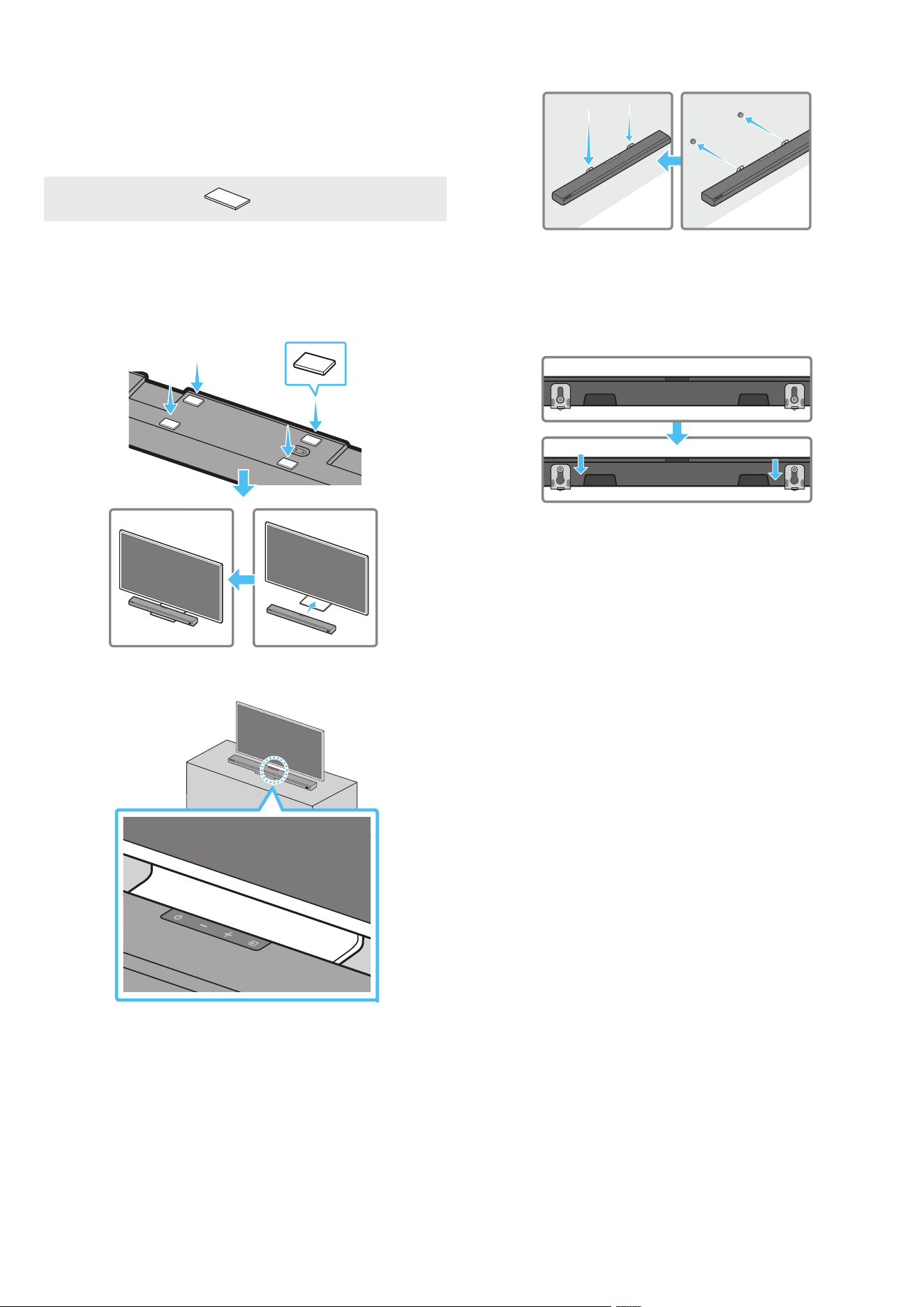
28 - ARA
7 . قيرط نع طئاحلا ع تيبثتلا تاماعد مادختساب Soundbar ـلا ةدحو بيكب مق
.طئاحلا ع لماحلا ماسم ع طئاحلا ع تيبثتلا تاماعد قيلعت
8 . ع بيكلا لماوح رقتست ح هاندأ حضوم وه امك لفسل قلي Soundbar لعجا
.لماحلا ماسم ع ةنمآ ةروصبطئاحلا
،طئاحلا ع بيكلا لماوح نم )يفلخلا( عساولا ءزجلا لماحلا ماسم لخدا
بيكلا لماوح رقتست ح لفس قلت طئاحلا ع بيكلا لماوح لعجا مث
.لماحلا ماسم ع ةنمآ ةروصبطئاحلا ع
12 لماح قوف SOUNDBAR بيكرت
نويزفلت
نوكا
x 4
ةيطاطم قاس
هعضو لبق Soundbar نم فسلا ءزجلابةيطاطا ناقيسلا قافرإ نم دكأت ،هبيكل
فاوحلا ىطختت ثيحبةيطاطا ناقيسلا بيكرت نم دكأت .نويزفلتلا لماح قوف هعضوم
.هاندأ لكشلا عجار .نويزفلتلا لماحل ةيجراخلا
ةيطاطم قاس
.نويزفلت لماح ع Soundbar عض
،نويزفلتلا فصتنم عم Soundbar زاهج فصتنم ةاذاحمب مق ،ةروصلا حضوم وه امك
.نويزفلتلا لماح ع رذحب Soundbar زاهج عض مث
ةظحم
.بلصو وتسم
ٍ
حطس ع Soundbar زاهج عضو نم دكأت
.توصلا ةلكشم ثودح إ نويزفلتلا نم اكلا غ دع
ُ
بلا يدؤي دق
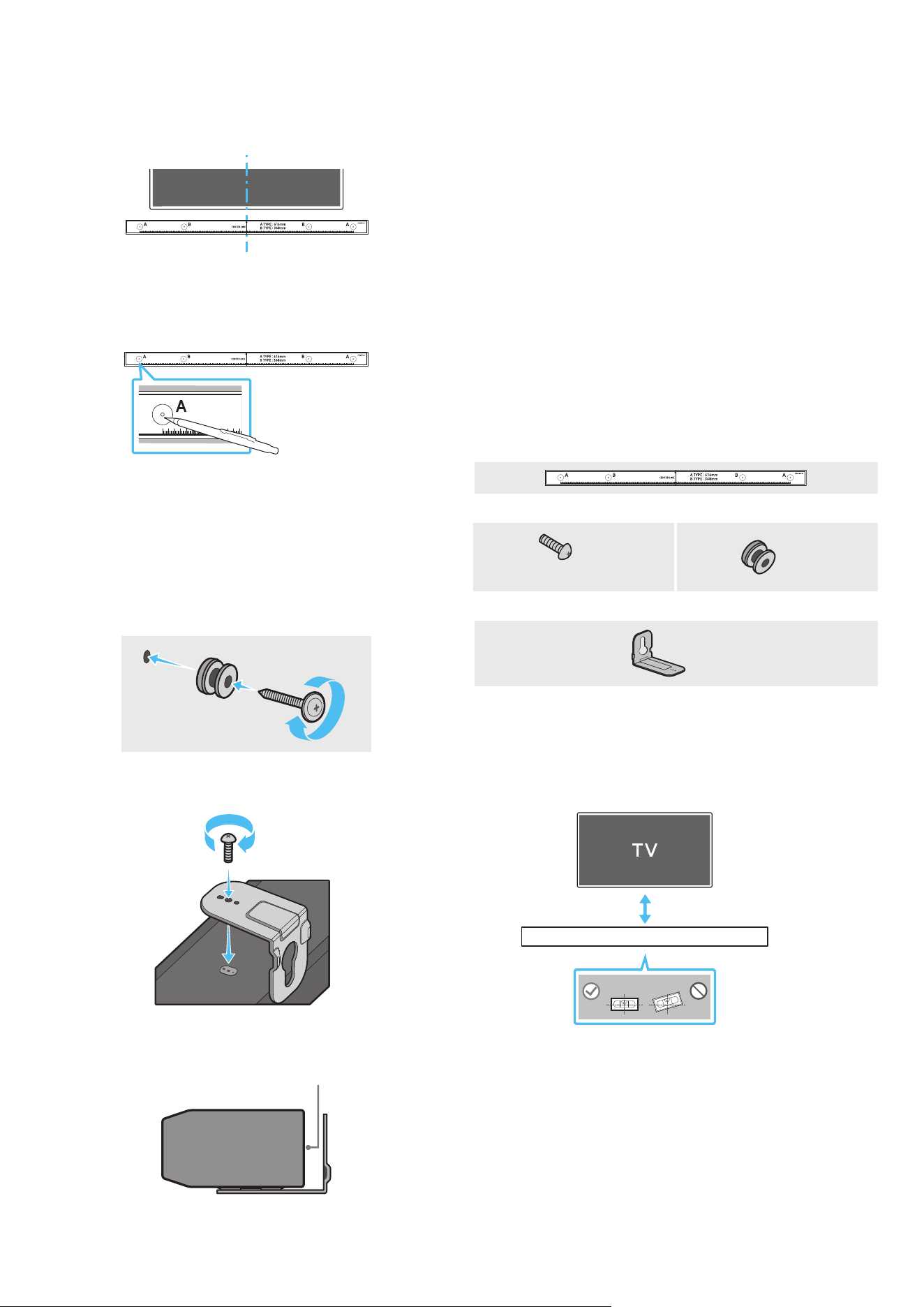
27 - ARA
11 طئاحلا ع تيبثتلا مقط بيكرت
بيكلا تاطايتحا
.أر رادج ع ىوس تيبثتلاب مقت
.ةيلاع ةبوطر وأ ةيلاع ةرارح ةجرد وذ ناكم تيبثتلا بنجت
مقف ،كلذك نكي مل اذإو .جتنا نزو لمحتل اك لكشب ا
ً
يوق طئاحلا ناك اذإ امم ققحت
.ىرخأ تيبثت ةطقن رايتخا وأ طئاحلا زيزعتب
حاولأ( كيدل رفاوتا طئاحلا عونل ةبسانا تيبثتلا تاودأ وأ يغارب مادختساو ءاب مق
معدلا يغارب تيبثتب مق ،نكمأ نإو .)كلذ غ ،بشخلاو ،ديدحلا حاولأو ،سبجلا
.طئاحلا مئاوق
زاهج تيبثت ديرت يذلا رادجلا عونل ا
ً
قفو طئاحلا ع تيبثتلا يغارب ءاب مق
.هكم
ُ
سو Soundbar
‒ M5 :رطقلا
‒ .كأ وأ مم 35 لوطب وي :لوطلا
.طئاحلا ع Soundbar زاهج تيبثت لبق ةيجراخ ةزهجأب ةدحولا نم تبكلا ل
صو
كضرعت كلذ ببستي دق ،إو .اهتيبثت لبق اهلصفو ةدحولا ليغشت فاقيإ نم دكأت
.ةيئابرهك ةمدصل
طئاحلا ع تيبثتلا مقط تانوكم
طئاحلا ع تيبثتلا ليلد
x 2
x 2
)L10 × M4(
لماحلا رامسمرامسم
x 2
طئاحلا ع تيبثتلا ةماعد
1 ..طئاحلا حطس ةهجاوم طئاحلا ع تيبثتلا ةماعد عض
.ةيوتسم طئاحلا ع تيبثتلا ةماعد نوكت نأ بجي
5 ةفاسم ع Soundbar زاهج بيكب مقف ،طئاحلا ع ا
ً
ت
َ
بثم نويزفلتلا ناك اذإ
.نويزفلتلا لفسأ لقا ع مس
كأ وأ مس 5
2 . ( نويزفلتلا زاهج فصتنمب طئاحلا ع تيبثتلا ةماعد فصتنم طخ ةاذاحمب مق
طئاحلا ع تيبثتلا ةماعد تيبثتب مق مث ،)نويزفلتلا لفسأ Soundbar تيبثت ةلاح
.طي مادختساب
فصتنا طخ عضوم ددح ،نويزفلتلا زاهج لفسأ Soundbar تيبثت ةلاح و
.تيبثتلا ةقطنم طسو
فصتنا طخ
3 . فرط لك A عونلا ةروص فصتنم إ ببدم صاصر ملق وأ فاج ملق سأر عفدا
مق مث ،معدلا ماسم تيبثتل ةصصخا بوقثلا ناكم ديدحتل ةماعدلا فارطأ نم
.طئاحلا ع تيبثتلا ةماعد ةلازإب
4 . تامع نم ةمع لك دنع طئاحلا ا
ً
بقث رفحا ،بسانم مجحب باقثم ةشير مادختساب
.ماسا تيبثت
لاخدإ نم دكأتف ،ماسا تيبثت عضاوم عم ةقفاوتم غ تامعلا تناك اذإ
اذإو .معدلا ماسم لاخدإ لبق بوقثلا لخاد ةبسانم تيبثت تاودأ وأ فيطاطخ
ةجردب ةبك اهترفح لا بوقثلا نأ دكأتف ،تيبثت تاودأ وأ فيطاطخ مدختست تنك
.تيبثتلا تاودأ وأ فيطاطخلا مادختساب حمست ةيفاك
5 . بقث ماكحإب رامسم لك طبرا مث لماحلا رامسم )د
وزم غ( تيبثت رامسم عفدا
.معدلا رامسم
6 . ،Soundbar لفسأ حيحصلا هاجتا طئاحلا ع بيكلا لماوح نم نثا بكر
.ماسا نم نثا مادختساب كلذو
فلخ طئاحلا ع بيكلا لماوح ـب صاخلا قيلعتلا ءزج دوجو نم دكأت ،طبرلا دنع
.Soundbar ةدحول يفلخلا ءزجلا
Soundbar زاهج نم يفلخلا ءزجلا
Soundbar نم نميا فرطلا

26 - ARA
10 APPLE AIRPLAY 2 ةينقتب لاصتا
.لودلا ضعب ةرفوتم ةفيظولا هذه نوكت دق
Apple تاجتنم نم جتنم عم مادختساو ليصوتلا
.Apple TV وأ HomePod وأ iPad وأ iPhone نم كلم توصلا ماظن مكحتلا كنكمي ،AirPlay 2 مادختساب
.ثدحأ وأ iOS 11.4 ماظن بلطتيو AirPlay 2 ةينقت Samsung Soundbar زاهج معدي
ةظحم
))ةيكلسلا ةكبشلا( Wi-Fi ع لاصتا .2 ةقيرطلا عجار( .Wi-Fi ةكبشب Soundbar زاهج ليصوت نم ققحت
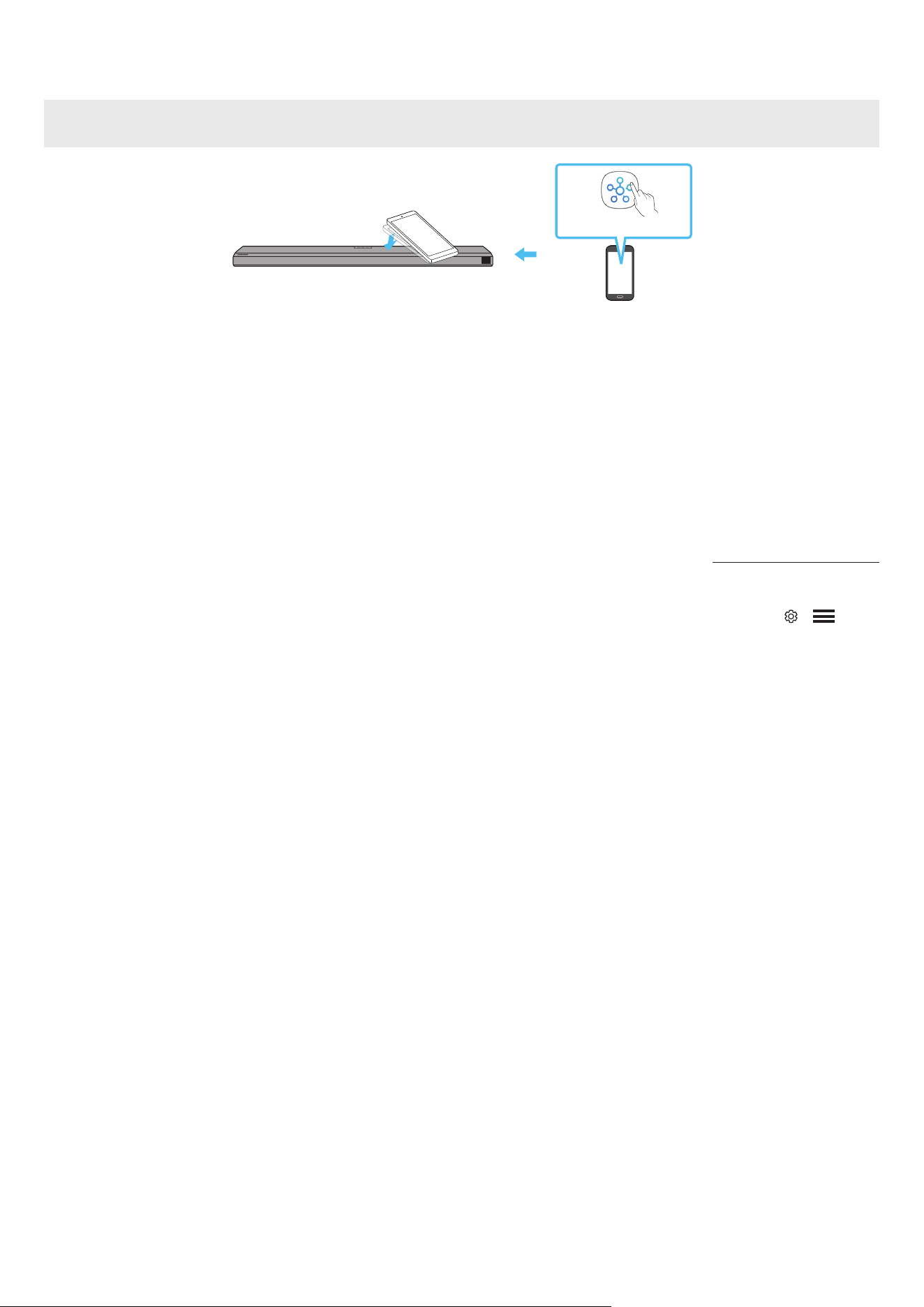
25 - ARA
Tap Sound مادختسا
.Soundbar لخ نم لومحا زاهجلا ع ىوتحا توص ليغشتل لومحا كزاهج مادختساب Soundbar ع طغضا
.لومحا زاهجلا ع
ً
ءانب ةفيظولا هذه معد متي امبر
.ثدحأ وأ 8 . 1 رادصإ Android ماظنب لمعت لا Samsung لومحم ةزهجأ عم طقف ةقفاوتم ةفيظولا هذه
زاهج نم يولعلا ءزجلا
Soundbar
لومحم زاهج
SmartThings قيبطت
1 ..لومحا كزاهج ع ةدوجوا Tap Sound ةفيظو ليغشتب مق
.هاندأ "Tap Sound ةفيظو تادادعإ" عجار ،ةفيظولا ليغشت ةيفيك نع ليصافت ةفرع
2 ..ةضورعا لئاسرلا ةذفان ةدوجوا "Start now" ددح .لومحم زاهج مادختساب Soundbar ع طغضا
.Bluetooth ع Soundbarو لومحا زاهجلا ب لاصتا ءاشنإ مت
3 ..Soundbar لخ نم لومحا زاهجلا ع ىوتحا توص ليغشتب مق
.Soundbar زاهجلا سملي امدنع ثدحي يذلا زاها نع فشكلا لخ نم Bluetooth ع Soundbar زاهجب لومحم زاهج ليصوتب ةفيظولا هذه موقت
.لومحا زاهج وأ Soundbar فلت
ُ
ي وأ شدخ
ُ
ي دق .ةداحلا Soundbar ةيواز ع طغضي لومحا زاهج نأ نم دكأت
.ةطرفم ةوق مادختسا نود Soundbar نم يولعلا ءزجلا ةدوجوا ةعساولا ةقطنا ع قفرب طغضا .بارجب لومحا زاهج ةيطغتب وي
.رادصإ ثدح SmartThings قيبطت ثيدحتب مق ،ةفيظولا هذه مادختس
.قيبطتلا رادصإ ع
ً
ءانب ةفيظولا هذه معد متي امبر
Tap Sound ةفيظو تادادعإ
.Tap Sound, Tap View ةفيظو ليغشتل SmartThings قيبطت مدختسا
1 ..لومحا زاهجلا ع SmartThings قيبطت ليغشتب مق
2 ..لومحا زاهجلا ع ةضورعا SmartThing قيبطت ةشاش ) ← ( ددح
3 ..ةفيظولا ليغشت مت .Soundbar نم لومحم زاهج بقي امدنع لمعلاب ةفيظولل حامسلل ليغشت ع "Tap Sound, Tap View" طبضا
ةظحم
.ةقاطلا ظفح عضو لومحا زاهجلا نوكي امدنع Tap Sound ةفيظو لمعت
لخادت ثودح ببستت دق لا ةزهجا نأ نم دكأت .ةيئابرهكلا ةزهجا لثم ا
يكلس
ً
خادت ببست Soundbar نم ةبيرق ةزهجأ كانه ناك اذإ Tap Sound ةفيظو لمعت امبر
.Soundbar نع ا
ً
ديعب ةيفاك ةفاسم ع اهعضو مت لس
24 - ARA
09 )ALEXA عم لمعي( AMAZON ع ALEXA قيبطت مادختسا ءدبلا
.ةيفارغجلا ةقطنا وأ زاهجلا زارط بسح كلذو ،ةموعدم غ ةفيظولا هذه نوكت دق
.ارغجلا قاطنلا بسح ةموعدا فئاظولا فلتخت دقو ،طقف تاغللا ضعب ةفيظولا هذه معدت
.)www.samsung.com( بيولا ع Samsung عقوم عجار ،قفاوتلا وأ جتنا تافصاوم ع فرعتلل
.ةمدخلا هذه رفاوت نع ةيلوؤسم يأ Samsung لمحتت و .تقو يأ اهفاقيإ نكميو Amazon ةطساوب ةمدخلا هذه فوت متي
.قبسم راعشإ نود يغتلل ةضرع Amazon Alexa قيبطت ةشاش
)Amazon Echo( AMAZON تاجتنم نم جتنم عم مادختساو ليصوتلا
.Amazon Echo اهمدقت لا ىقيسوا تامدخب عتمتو كب صاخلا Soundbar زاهجب مكحتلل Amazon Echo جتنم مدختسا
.ةكبشلا ع Soundbar زاهج ليصوتل Amazon باسح كيدل نوكي نأ بجي ،Amazon Alexa قيبطت مادختس
1 ..هل
غش مث لومحا كزاهج ع SmartThings قيبطت ت
بث
2 ..ةمدخلا إ لوخدلا ل
جس مث قيبطتلا ع ةدوجوا تاميلعتلا عابتاب Alexa قيبطت باسح لخدأ
Soundbar زاهجب مكحتلل ةيتوصلا رماوا مدختسا
لثم ،Amazon Echo اهمدقت لا ىرخا تامدخلل لوصولا نكمي و .ىقيسوا ع تقت كب صاخلا Soundbar زاهج عم اهمادختسا كنكمي لا Amazon Echo ةمدخ
.كب صاخلا Amazon Echo جتنم لخ نم إ سقطلاو رابخا
توصلا كم مسا + رما +لغشا ءدب ةملك
"ةشيعا ةفرغ" ىعدي Soundbar زاهجب ةيتوصلا رماوا مادختس *
ءارجاوصلا رما
5 ع توصلا ىوتسم طبضل"ةشيعا ةفرغ 5 ع توصلا ىوتسم يطبضا Alexa"
توصلا ىوتسم ةدايزل"ةشيعا ةفرغ توصلا ىوتسم يعفرا Alexa"
توصلا متكل"ةشيعا ةفرغ توصلا يمتكا Alexa"
KISS FM ىعدت ويدار ةطحم إ عامتسل"ةشيعا ةفرغ Kiss FM ةعاذإ غش Alexa
ةيلاتلا ةينغا ليغشتل"ةشيعا ةفرغ ةيلاتلا ةينغا غش Alexa"
ويدارلا ةعاذإ ليغشت فاقي"ةشيعا ةفرغ ليغشتلا يفقوأ Alexa"
توصلا ليغشت فاقي"ةشيعا ةفرغ ليغشتلا يفقوأ Alexa"
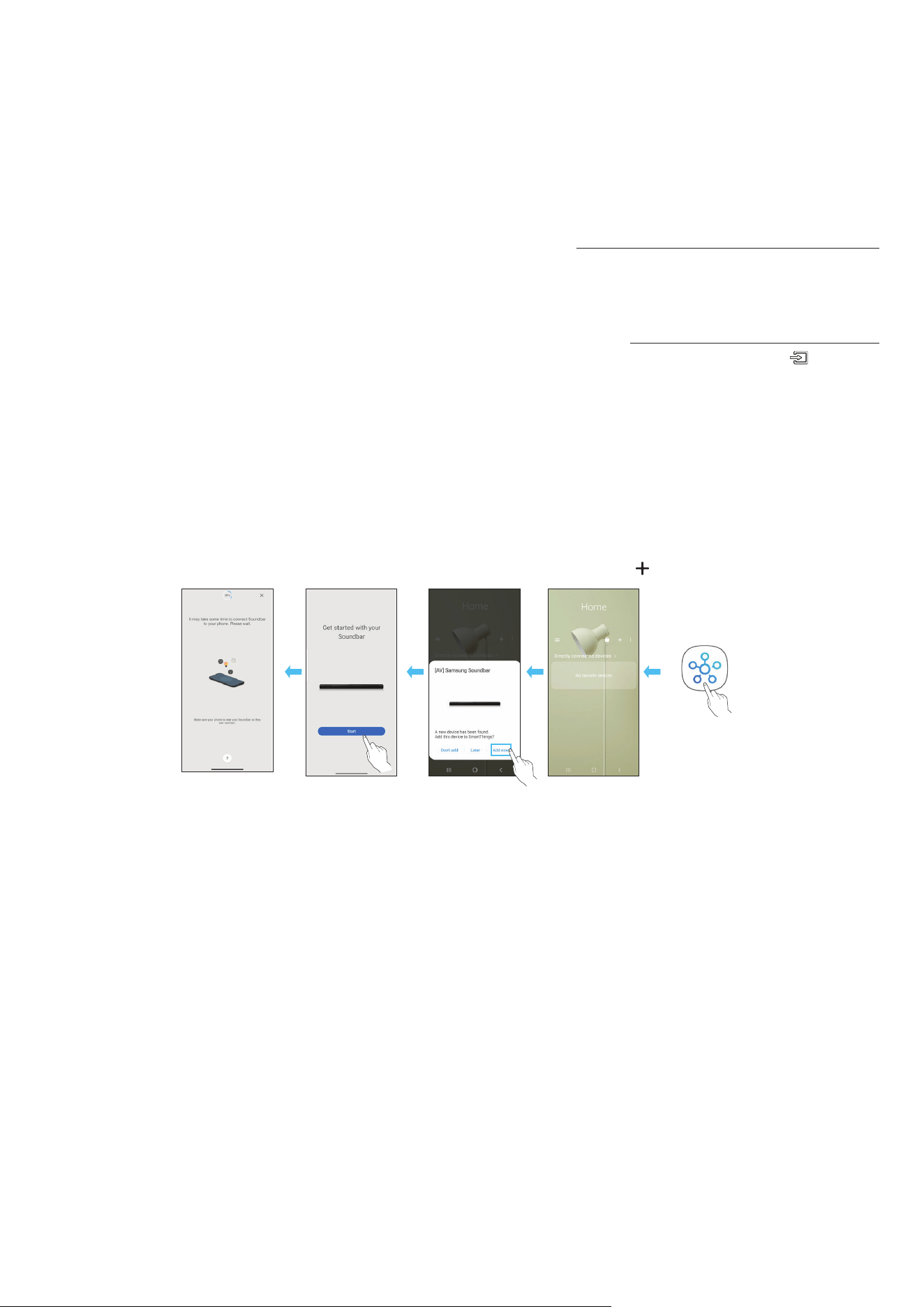
23 - ARA
:ةيلاتلا تاحلا لطع هب ثدحي وأ ءاضوض Bluetooth زاهج ردص
ُ
ي دق
‒ Soundbar وأ Bluetooth زاهج ع دوجوا ةراشا لابقتساو لاسرإ زاهجب لصتم مسجلا نوكي امدنع
‒ .ةيئابرهك تايغت ثدحت دق ثيح ،رادج وأ طئاح لثم ،بيرق قئاع كانه نوكي امدنع وأ اياوزلا
‒ LAN تاكبشب لمعت لا ةزهجاو فيووركيا نارفأو ةيبطلا ةزهجا لثم ،ددلا تاقاطن سفن لمعت ىرخأ تاجتنم ةطساوب ويدارلا تاجوم لخادتل زاهجلا ضرعت دنع وأ
.ةيكلسلا
‒ .لاعفلا ىدا نمض ةزهجا نوكت امدنع ح توصلا ةدوج ع طئاوحلاو باوبا لثم تابقعلا رثؤت دق
.>0000< لخدأف ،Bluetooth زاهجب لاصتا دنع خشلا فيرعتلا مقر زمر كنم بلط اذإ
.Bluetooth رايخ مادختسا ءانثأ ىرخأ Bluetooth ةزهجأب ناقا Soundbar ـل نكمي هنأ ظح
.هليغشت ءانثأ ابرهك لخادت ثودح لسلا زاهجلا اذه ببسي دق
Soundbar ةدحو نم Bluetooth زاهج لاصتا عطق
.Bluetooth زاهجب صاخلا مدختسا ليلد عجار ،تاميلعتلا ع عطل .Soundbar ةدحو نم Blutooth زاهج عطق كنكمي
.Soundbar زاهج لاصتا عطق متي فوس
.ةيماما ةشاشلا ع ”Soundbar ”BT DISCONNECTED ضرعيس ،Bluetooth زاهج نع Soundbar لصف دنع
Bluetooth زاهجب Soundbar لاصتا عطق
.BT ءانثتساب عضو يأ إ يغتلاب مق مث ،دع
ُ
ب نع مكحتلا زاهج وأ ةيولعلا ةحوللا )ردصا( رزلا ع طغضا
)Bluetooth زاهج زارط بسح ق
َ
رغتسا تقولا فلتخي دق( .Soundbar نم
ً
ةباجتسا Bluetooth ـلا زاهج يقلت بوجول ا
ً
رظن ا
ً
تقو لاصتا عطق قرغتسي
.ةيماما ةشاشلا ع ”Soundbar ”BT DISCONNECTED ضرعيس ،Bluetooth زاهج نع Soundbar لصف دنع
)ةيكلسلا ةكبشلا( Wi-Fi ع لاصتا .2 ةقيرطلا
. SmartThings قيبطت رفاوت مزلي ،)Wi-Fi( ةيكلس ةكبش ع لومحم زاهجب Soundbar زاهج ليصوتل
وا ليصوتلا
1 ..)يحول زاهج وأ ذ فتاه( لومحا كزاهج نم SmartThings قيبطت تيبثتب مق
2 ..Soundbar ةفاض ةشاشلا ع ةرهاظلا تاميلعتلا عبتا ،قيبطتلا ع
.ةزهجا ضعب ع )هاندأ ةيناثلا ةشاشلا ةطقل( ةيئاقلتلا ةقثبنا ذفاونلا رفوتت دق
.قيبطتلا ع ا
ً
فاضم Soundbar نوكيسو .Home ةشاشلا دوجوا " " رز ع طغضا ،ةقثبنا ةذفانلا رهظت مل اذإ
ليغشتب مق
قيبطتلا
ةذفان رهظتس
ا
ً
يئاقلت ةقثبنم
زاهج ةفاضإ
قيبطت
SmartThings
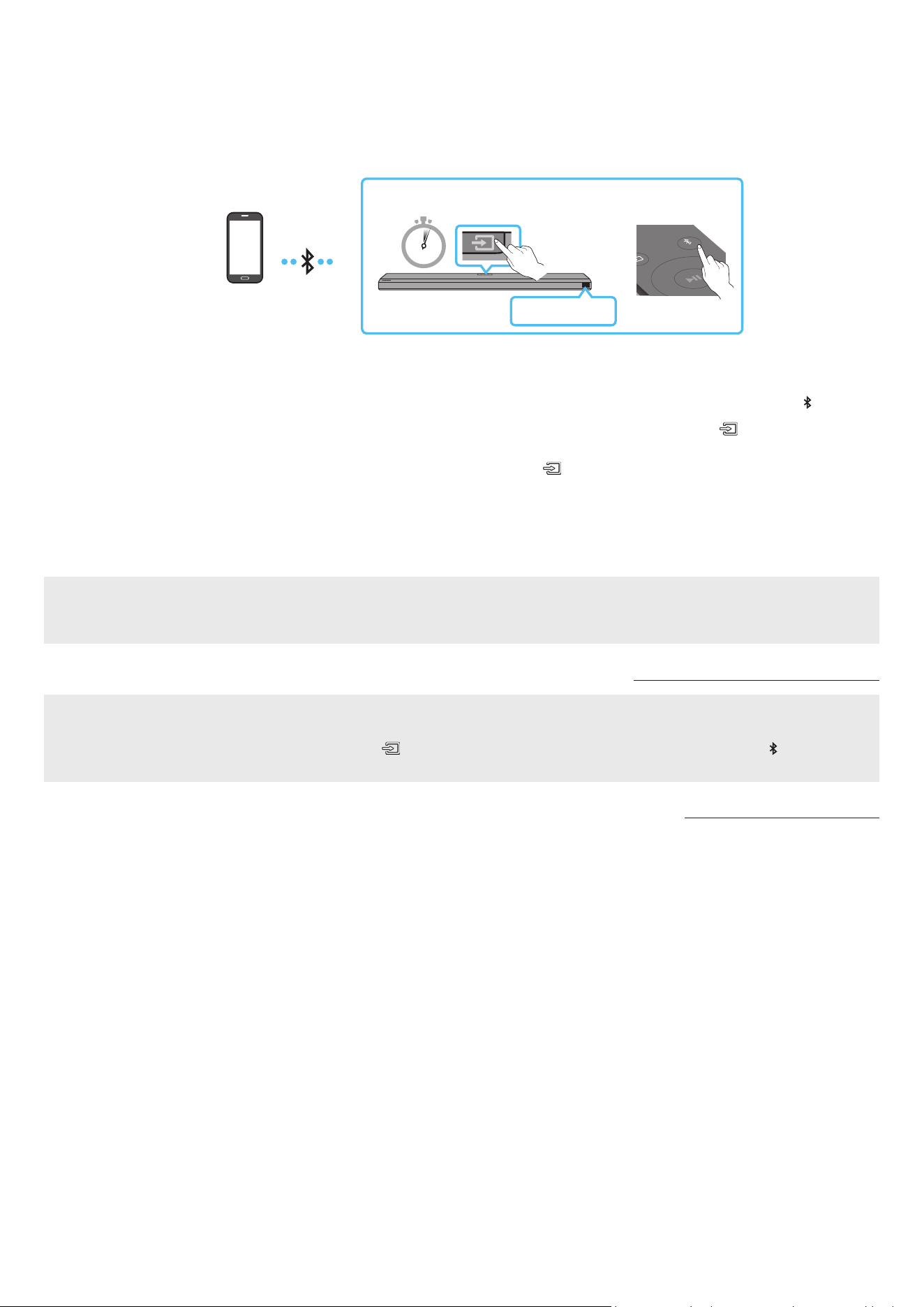
22 - ARA
08 لومحم زاهج ليصوت
Bluetooth ةينقت ع لاصتا .1 ةقيرطلا
.تبكلا كباشت بعاتم نود ويستوص عامس كنكمي ،Bluetooth ةينقت مادختساب لومحم زاهج ليصوت دنع
.ا
ً
يئاقلت Soundbar زاهج ليغشت متي ،ليغشتلا فاقيإ ديق Soundbar زاهجو نقم Bluetooth زاهج ليصوت دنع
5 Sec
SOUND
MODE
PAIR
لومحم زاهج
زاهج نم يولعلا ءزجلا
Soundbar
وأ
BT PAIRING
وا ليصوتلا
.م 1 ةفاسم قاطن زاهجلا دوجو نم دكأت ،ديدج Bluetooth زاهجب لاصتا دنع
1 .. ”BT PAIRING“ عضولا لوخدل Soundbar زاهجل دع
ُ
ب نع مكحتلا زاهج PAIR رزلا طغضا
وأ
a .."BT" ددح مث ةيولعلا ةحوللا )ردصا(
رزلا ع طغضا
.لاصتا لجس دوجو ةلاح "BT READY" إ غتي وأ ا
ً
يئاقلت
ٍ
ناوث عضب نوضغ "BT PAIRING" إ "BT" غتي
b ..BT PAIRING ضرعل
ٍ
ناوث 5 نم ك Soundbar زاهجل ةيولعلا ةحوللا )ردصا( رزلا ع رارمتسا عم طغضا "BT READY" روهظ دنع
2 ..رهظت لا ةمئاقلا نم "[AV[ Samsung SoundbarQ700A" ددح ،كزاهج ع
.ةيماما ةشاشلا "BT" ← [لومحا زاهجلا مسا] رهظي ،لومحا زاهجلاب
ً
صتم Soundbar زاهج نوكي امدنع
3 ..Soundbar زاهج لخ نم Bluetooth ع لصتا زاهجلا نم يقيسوا تافلم ل
غش
.لاصتا ةداع "BT READY" عضو مدختسا ،ةرم لو لومحا كزاهجب Soundbar زاهج ليصوت دعب
زاهجلا لاصتا لشف ةلاح
.هفذحا ،لومحا زاهجلا ع توصلا تاكم ةمئاق )"[AV[ Samsung SoundbarQ700A" ،لاثا ليبس ع( Soundbar زاهج كيدل ناك اذإ
. 2 و 1 توطخلا ررك
؟BT PAIRINGو BT READY ب قرفلا ام
.لبق نم
ً
صتم ناك لومحم زاهج وأ Samsung نويزفلت يأ ليصوت ةداعإ كنكمي ،عضولا اذه : BT READY
.Soundbar زاهجب ديدج زاهج ليصوت كنكمي ،عضولا اذه : BT PAIRING
نع ديزي ا Soundbar زاهج نم يولعلا ءزجلا دوجوا )ردصا( رزلا ع رارمتسا عم طغضا وأ Soundbar زاهج دع
ُ
ب نع مكحتلا زاهجبPAIR رزلا ع طغضا(
)."BT" عضو زاهجلا نوكي امدنع
ٍ
ناوث 5
Bluetooth لاصتا نع تاظحم
.Bluetooth لاصتا ع لاصتل م 1 قاطن ديدج زاهج عقوم ددح
.>0000< ل
ِ
خدأ ،Bluetooth زاهج ليصوت دنع PIN زمر كنم بل
ُ
ط اذإ
.دادعتسا ةلاح ةقيقد 18 دعب ا
ً
يئاقلت Soundbar زاهج ليغشت فاقيإ متي
:ةيلاتلا فورظلا لظ حيحص لكشب
ً
اصتا وأ Bluetooth ثحب Soundbar زاهج يرج
ُ
ي دق
‒ .Soundbar زاهج لوح يوق ابرهك لاجم دوجو ةلاح
‒ .دحاو
ٍ
نآ Soundbar زاهجب Bluetooth ةزهجأ ةدع ناقا ةلاح
‒ .لاطعأ دوجو وأ هناكم هدوجو مدع وأ ،Bluetooth زاهج ليغشت فاقيإ ةلاح
LAN ةزهجأو فيوركياا ةزهجأ ،لاثم ،ةيساسا Soundbar ةدحو نع ةيسيطانغمورهك تاجوم د
ّ
لوت لا ةزهجا داعبإ عتي .ويدارلا تاجوم لخادت ةينوكلا ةزهجا ببستت دق
.كلذ إ امو ةيكلسلا
.)زترهوليك 48و زترهوليك 44,1( SBC تانايب Soundbar معدي
.A2DP )AV( ةفيظو معدي Bluetooth زاهجب طقف لاصتاب مق
.طقف نيديلا رح ةفيظو معدي Bluetooth زاهجب Soundbar ليصوت كنكمي
.ناكما ردق ضعبلا مهضعب نم مهبرق ،Bluetooth زاهجب Soundbar ليصوت دنع
.توصلا ةدوج تضفخنا ،ضعبلا امهضعب نع نيديعب Bluetooth زاهجو Soundbar ناك املك
.لاعفلا يدا جراخ ةزهجا نوكت امدنع Bluetooth لاصتا عطقني دق
.فيعضلا لابقتسا تاذ قطانا بولطا لكشلاب Bluetooth لاصتا لمعي دق
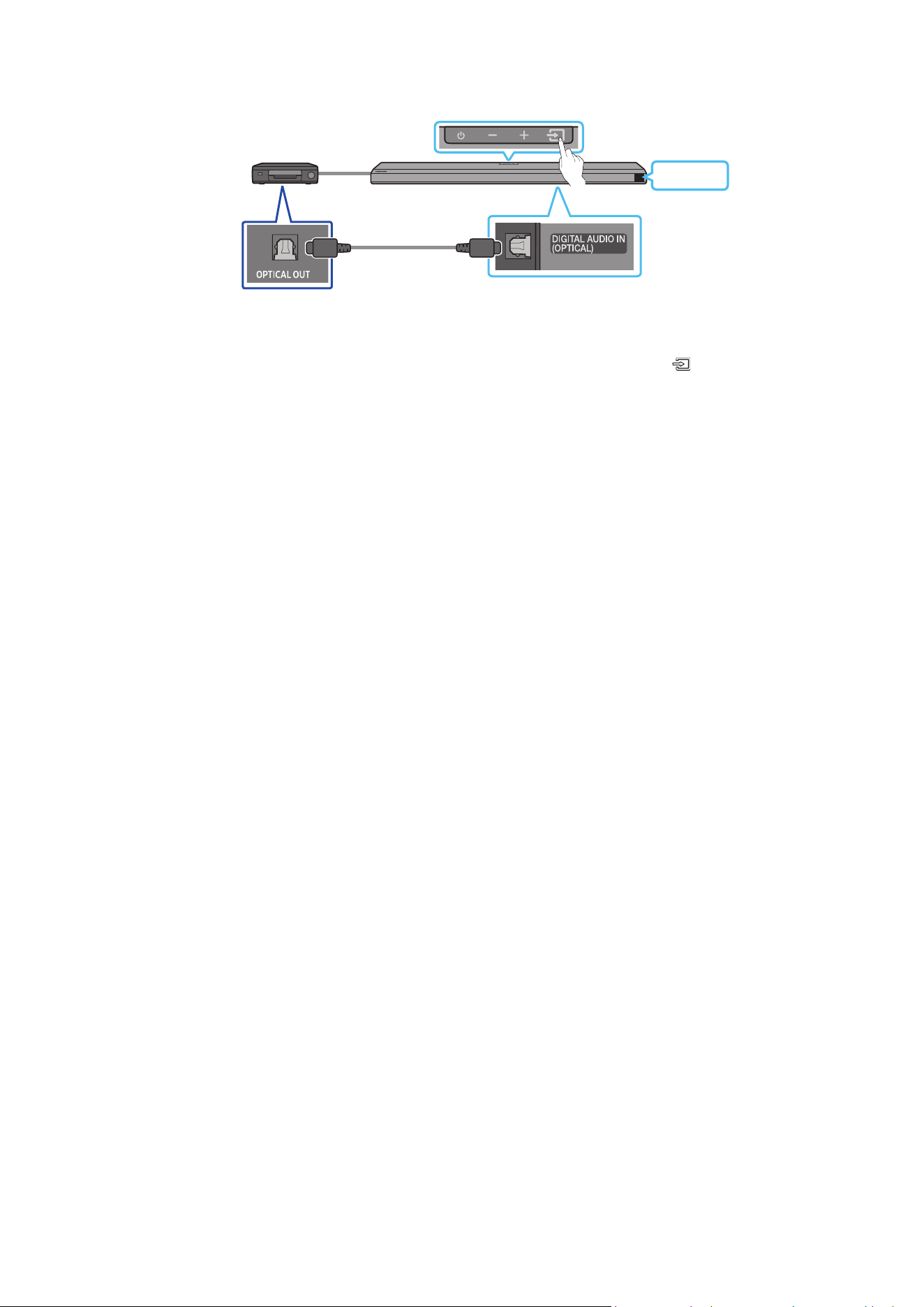
21 - ARA
يب لبك مادختساب ليصوتلا .2 ةقيرطلا
زاهج نم يولعلا ءزجلا
Soundbar
زاهج / BD / DVD لغشم
مكحتلا ةدحو / فشتلا كف
باعلا
D.IN
Soundbar زاهج نم فسلا ءزجلا
)قفرم غ( يب لبك
1 ..يجراخلا زاهجلا ع OPTICAL OUT ذفنمو ةيسيئرلا Soundbar ةدحو ع دوجوا DIGITAL AUDIO IN )OPTICAL( ليصوتل )قفرم غ( يب لبك مدختسا
2 ..يجراخلا زاهجلاو Soundbar ليغشتب مق
3 ..دع
ُ
ب نع مكحتلا زاهج وأ ةيولعلا ةحوللا )ردصا(
رزلا ع طغضلاب "D.IN" عضولا ددح
4 ..يجراخلا زاهجلا نم تاوصأ ليغشتب Soundbar موقيس
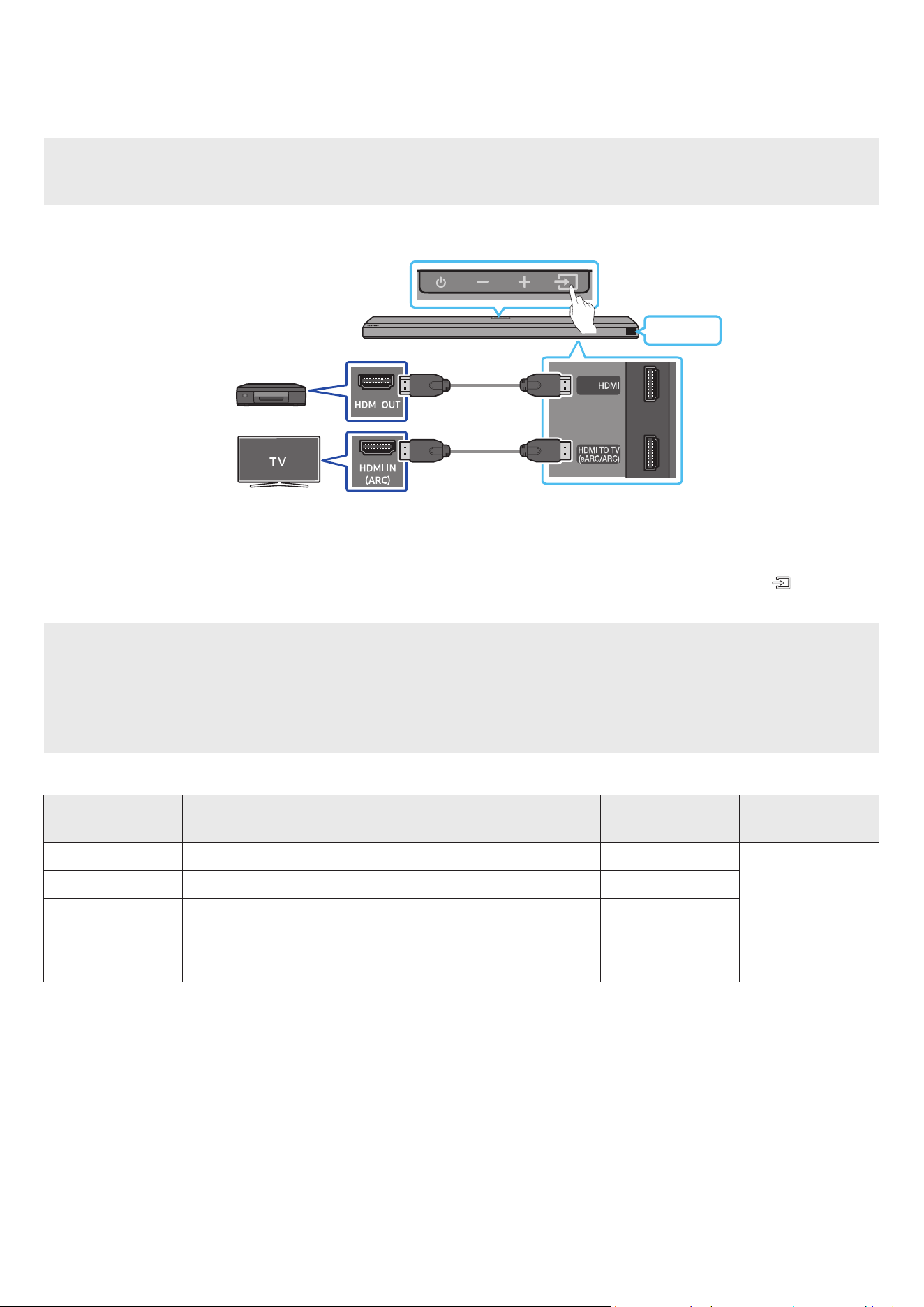
20 - ARA
07 يجراخ زاهج ليصوت
)هليغشتو Dolby Atmos فشت كف ع رداق( HDMI لباك مادختساب ليصوتلا .1 ةقيرطلا
ليصوتلا لبق صحفلا ةمئاق
."ليغشتلا فاقيإ" عضو ع يوناثلا توصلا طبض نم دكأتف ،ا
ً
يوناث ا
ً
توص نمضتت توصلا جارخإ تارايخ تناك اذإ
.Dolby Atmos® ةينقت معدي ىوتحا نأ نم دكأت
زاهج نم يولعلا ءزجلا
Soundbar
HDMI
HDMI لبك
يجراخ زاهج
HDMI لبك
1 ..Soundbar لفسأ دوجوا HDMI ذفنمو يجراخلا زاهجلا ع دوجوا HDMI OUT جرخ ذفنمب لاصتل HDMI لبك مدختسا
2 ..Soundbar لفسأ دوجوا HDMI TO TV )eARC/ARC( ذفنمو نويزفلتلا زاهجل HDMI IN لخد ذفنمب لاصتل HDMI لبك مدختسا
3 ..يجراخلا زاهجلاو ،نويزفلتلاو ،Soundbar ليغشتب مق
4 .."HDMI" ددح مث ،دع
ُ
ب نع مكحتلا زاهج وأ ةيولعلا ةحوللا )ردصا(
رزلا ع طغضا
5 ..تاوصا ليغشت أدبتس Soundbar نأو ا
ً
يلاح ددح
ُ
م ”HDMI“ عضو
ّ
نأ إ Soundbar ةشاش ش
ُ
ت
ةظحم
. 3 . 1 . 2 تاونق جارخإ متيسف ،Dolby Atmos® وه لاخدا ردصم ناك اذإ : Dolby Atmos® مدختست م
.ةيماما ةشاشلا ع "DOLBY ATMOS" ضرع متيس ،Dolby Atmos® طيشنت دنع
رخآ زاهج يأ وأ ،BD ل
ّ
غش
ُ
م ع Dolby Atmos® نيوكت
إ لقتنا ،Samsung نم BD ل
ّ
غش
ُ
م ،لثم .تبلا قفدل "مرت نود" ديدحت نم دكأتو رخآ زاهج يأ وأ كتصاخ BD ل
ّ
غش
ُ
تادادعا ةمئاق نم توصلا جارخإ تارايخ حتفا
.)ج
َ
لاعم غ( تبلا قفد ددح مث ةيمقر تاجرخم ← توصلا ← ةيسيئرلا ةمئاقلا
)2160p × 3840( ةموعدا UHD تاراشإ تافصاوم
تاراطا لدعم
)ةيناثلا راطإ(
وللا قمعلاRGB 4:4:4YCbCr 4:4:4YCbCr 4:2:2YCbCr 4:2:0
60 <
تب 8OOOO
تب 10--OO
تب 12--OO
120
تب 8----
تب 10----
. مادختسا فورظ وأ لصتا يجراخلا زاهجلا بسح ةموعدا تافصاوا فلتخت دق

19 - ARA
Wi-Fi لخ نم ليصوتلا .2 ةقيرطلا
ليصوتلا لبق صحفلا ةمئاق
.طقف Samsung نويزفلت ع Wi-Fi لاصتا رفوتي
.هجواب نويزفلتلا ليصوت نمو )Wi-Fi( لسلا هجوا ليغشت نم ققحت
.)Wi-Fi( ةيكلسلا ةكبشلا سفنب Soundbarو نويزفلتلا ليصوت بجي
.ليصافتلا ع لوصحلل كيدل تننا ةمدخ رفومب لصتا .Soundbarو نويزفلتلا ب Wi-Fi لاصتا ءاشنإ نم نكمتت نلف ،DFS ةانق مدختسي )Wi-Fi( لسلا هجوا ناك اذإ
.كب صاخلا نويزفلتلا ليلد عجار ،عينصتلا ةنس بسح فلتخت دق مئاوقلا ن
ً
ارظن
.Wi-Fi لاصتا ءاشنإ ةيفيك لوح ليصافت ةفرع ،23 ةحفصلا عجار .
ً
وأ لسلا هجواب Soundbar ليصوتب مق ،Wi-Fi ع Soundbar ـب نويزفلتلا ليصوتل
1 ..")ةيكلسلا ةكبشلا( Wi-Fi ع لاصتا .2 ةقيرطلا" ،23 ةحفصلا عجار ،Soundbar ـب Wi-Fi لاصتا لوح تامولعا نم ديز
2 ..Soundbar إ توصلا ةمئاق مادختسا قيرط نع نويزفلتلا لخد ردصم يغتب مق
ا
ً
قح وأ 2017 ماع اهرادصإ مت لا Samsung تانويزفلت
[AV] Samsung Soundbar Q700A )Wi-Fi( ← توصلا جارخإ ← توصلا ← )
( تادادعا ← ) ( ةيسيئرلا ةحفصلا
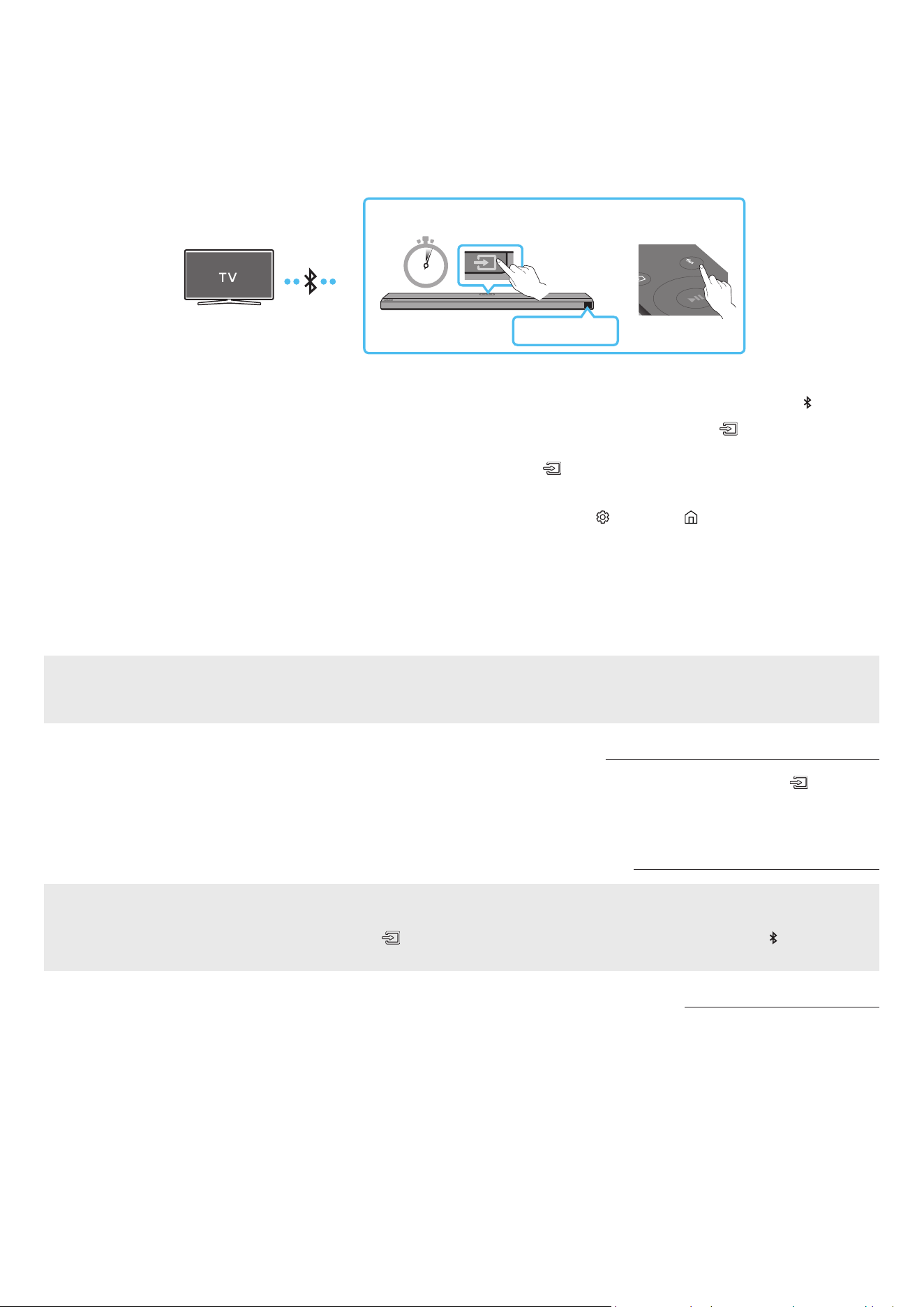
18 - ARA
06 نويزفلتلاب لسلا لاصتا مادختسا
Bluetooth ةينقت ع لاصتا .1 ةقيرطلا
.تبكلا كباشت بعاتم نود ويستوص عامس كنكمي ،Bluetooth ةينقت مادختساب Samsung نويزفلت ليصوت دنع
.ةدحاولا ةرا دحاو Samsung نويزفلت ىوس ليصوت نكمي
.كنويزفلت تافصاوم نم ققحت .Bluetooth ةينقت معدي يذلا Samsung نويزفلت ليصوت نكمي
5 Sec
SOUND
MODE
PAIR
زاهج نم يولعلا ءزجلا
Soundbar
وأ
BT PAIRING
وا ليصوتلا
1 .. ”BT PAIRING“ عضولا لوخدل Soundbar زاهجل دع
ُ
ب نع مكحتلا زاهج PAIR رزلا طغضا
وأ
a .."BT" ددح مث ةيولعلا ةحوللا )ردصا(
رزلا ع طغضا
.لاصتا لجس دوجو ةلاح "BT READY" إ غتي وأ ا
ً
يئاقلت
ٍ
ناوث عضب نوضغ "BT PAIRING" إ "BT" غتي
b ..BT PAIRING ضرعل
ٍ
ناوث 5 نم ك Soundbar زاهجل ةيولعلا ةحوللا )ردصا( رزلا ع رارمتسا عم طغضا "BT READY" روهظ دنع
2 ..Samsung نويزفلت ع Bluetooth عضو ددح
)[AV] Samsung Soundbar Q700A )Bluetooth( ← Blutooth توص تاكم ةمئاق ← توصلا جارخإ ← توصلا ← ) ( تادادعا ← ) ( ةيسيئرلا ةحفصلا لاثا ليبس ع(
3 ..نويزفلتلا ةشاش ع ةرهاظلا ةمئاقلا نم"[AV[ Samsung SoundbarQ700A" ددح
،ةلاسرلا ددح ،Soundbar زاهجب Samsung نويزفلت ليصوتل .نويزفلتلاب ةصاخلا Bluetooth ةزهجأ ةمئاق "نقم" وأ "ناقا إ ةجاحلا" ـب حاتا Soundbar زاهج إ راش
ُ
ي
.لاصتا ءاشنإب مق مث
.Soundbar زاهجل ةيماما ضرعلا ةشاش ع "BT" ← [نويزفلتلا مسا] رهظي ،Samsung نويزفلت ليصوت دنع
4 ..Soundbar زاهج نم Samsung نويزفلت توص عامس نا كنكمي
.لاصتا ةداع"BT READY" عضو مدختسا ،ةرم لو Samsung نويزفيلتب Soundbar زاهج ليصوت دعب
زاهجلا لاصتا لشف ةلاح
.هفذحا ،Samsung نويزفلت ع توصلا تاكم ةمئاق )[AV[ Samsung Soundbar Q700A ،لاثا ليبس ع( Soundbar زاهج كيدل ناك اذإ
.3 إ 1 نم تاوطخلا ررك مث
Samsung نويزفلت نم Soundbar زاهج لصف
."BT" فخب عضو يأ إ ليدبتلاب مقو دع
ُ
ب نع مكحتلا زاهج وأ ةيولعلا ةحوللا )ردصا( رزلا ع طغضا
.Soundbar زاهج نم ةباجتسا Samsung نويزفلت لبقتسي نأ بجي هن ا
ً
رظن تقولا ضعب لصفلا ةيلمع قرغتست
).Samsung نويزفلت زارط بسح ق
َ
رغتسا تقولا فلتخي دق(
؟BT PAIRINGو BT READY ب قرفلا ام
.لبق نم
ً
صتم ناك لومحم زاهج وأ Samsung نويزفلت يأ ليصوت ةداعإ كنكمي ،عضولا اذه : BT READY
.Soundbar زاهجب ديدج زاهج ليصوت كنكمي ،عضولا اذه : BT PAIRING
نع ديزي ا Soundbar زاهج نم يولعلا ءزجلا دوجوا )ردصا( رزلا ع رارمتسا عم طغضا وأ Soundbar زاهج دع
ُ
ب نع مكحتلا زاهجبPAIR رزلا ع طغضا(
)."BT" عضو زاهجلا نوكي امدنع
ٍ
ناوث 5
Bluetooth لاصتا نع تاظحم
.Bluetooth لاصتا ع لاصتل م 1 قاطن ديدج زاهج عقوم ددح
.>0000< ل
ِ
خدأ ،Bluetooth زاهج ليصوت دنع PIN زمر كنم بل
ُ
ط اذإ
.دادعتسا ةلاح ةقيقد 18 دعب ا
ً
يئاقلت Soundbar زاهج ليغشت فاقيإ متي
:ةيلاتلا فورظلا لظ حيحص لكشب
ً
اصتا وأ Bluetooth ثحب Soundbar زاهج يرج
ُ
ي دق
‒ .Soundbar زاهج لوح يوق ابرهك لاجم دوجو ةلاح
‒ .دحاو
ٍ
نآ Soundbar زاهجب Bluetooth ةزهجأ ةدع ناقا ةلاح
‒ .لاطعأ دوجو وأ هناكم هدوجو مدع وأ ،Bluetooth زاهج ليغشت فاقيإ ةلاح
LAN ةزهجأو فيوركياا ةزهجأ ،لاثم ،ةيساسا Soundbar ةدحو نع ةيسيطانغمورهك تاجوم د
ّ
لوت لا ةزهجا داعبإ عتي .ويدارلا تاجوم لخادت ةينوكلا ةزهجا ببستت دق
.كلذ إ امو ةيكلسلا
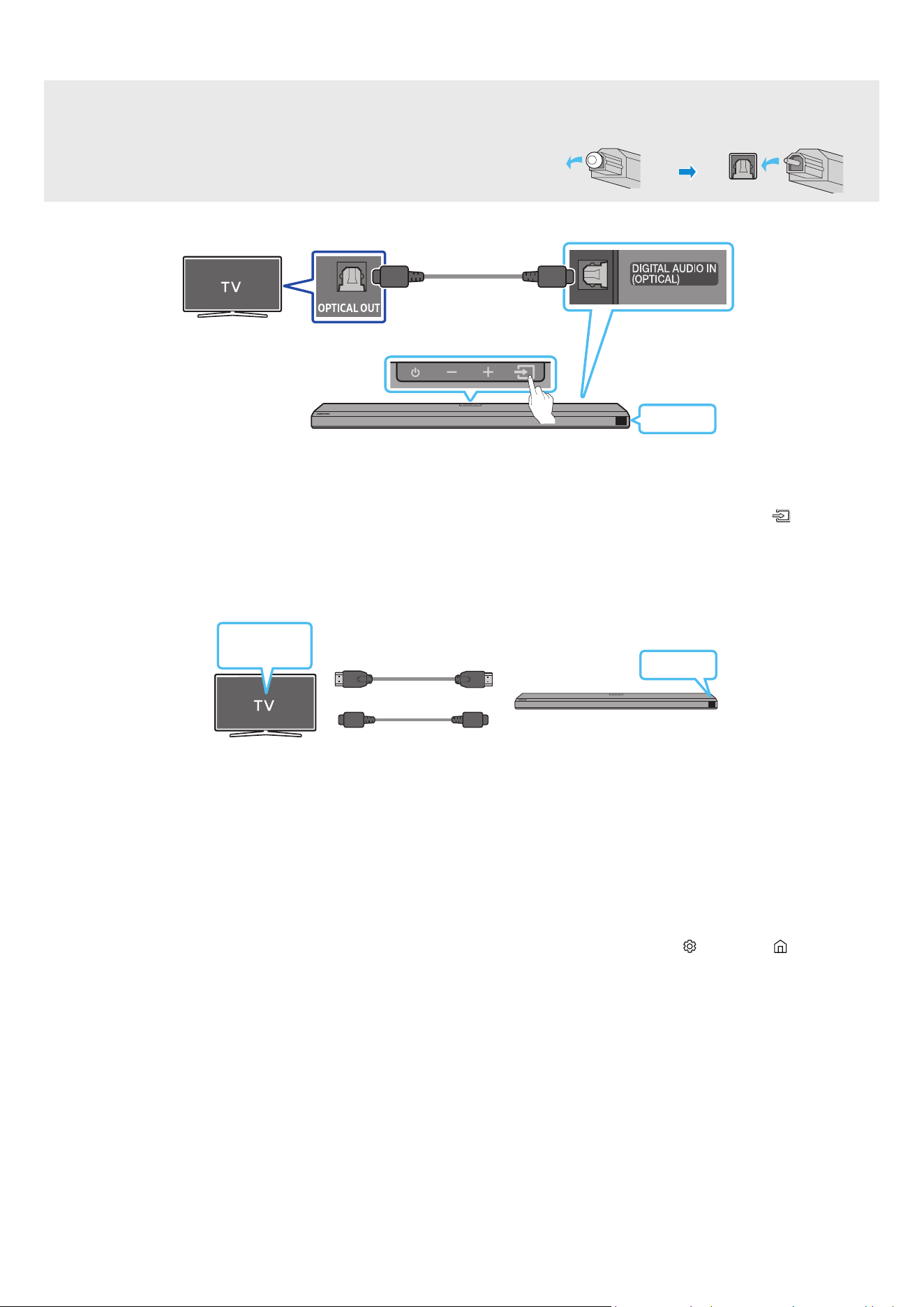
17 - ARA
يب لبك مادختساب ليصوتلا .2 ةقيرطلا
ليصوتلا لبق صحفلا ةمئاق
.
ً
وأ HDMI لبك ةراشإ متسا متي ،يبلا لبكلاو HDMI لبك نم لك ليصوت دنع
.ةيطغا ةلازإ نم دكأت ،فارطا ع ةيطغأ دجوتو ا
ً
يب
ً
بك مدختست امدنع
D.IN
Soundbar زاهج نم فسلا ءزجلا
Soundbar زاهج نم يولعلا ءزجلا
)قفرم غ( يب لبك
1 . مادختساب نويزفلتلاب دوجوا OPTICAL جارخا ذفنمو Soundbar زاهجب دوجوا DIGITAL AUDIO IN )OPTICAL( ذفنم ل
صو ،Soundbar زاهجو نويزفلتلا ليغشت فاقيإ دنع
.لكشلا حضوم وه امك ،)قفرم غ( يبلا لبكلا
2 ..نويزفلتلاو Soundbar زاهج ل
غش
3 .."D.IN" عضولا ددح مث ،دع
ُ
ب نع مكحتلا زاهج وأ ةيولعلا ةحوللا )ردصا(
رزلا ع طغضا
4 ..Soundbar زاهج نم نويزفلتلا توص جارخإ متي
Q-Symphony ةفيظو مادختسا
نمض "TV+Soundbar" ليصوت دنع .يطيحم ثأت لضفأ ع لوصحلل نيزاهج لخ نم توصلا جارخ Samsung نويزفلت عم Soundbar نماي ،Q-Symphony إ ةبسنلاب
.ةلباقا ةمئاقلا ددح .نويزفيلتلا Sound Output ةمئاق
)قفرم غ( يب لبك
HDMI لبك
وأ
D.IN
ةمئاق
نويزفلتلا
]HDMI[ Soundbar ةلسلس مسا + TV :نويزفلتلا ةمئاق ع لاثم
ةظحم
.نويزفلتلا ةطساوب موعدا ملا جمانل ا
ً
قفو هليغشت نكمي
.)قفرم غ( يب لبك وأ HDMI لبك ليصوت دنع طقف ةفيظولا هذه معد
ُ
ت
.Soundbar زرط ضعبو Samsung نويزفلت ةزهجأ ضعب ةفيظولا هذه رفوتت
Spacet توص مادختسا
.عامتسا تاحاسم ليلحت لخ نم ةنسحم توص ةدوج رفوي
.Samsung نويزفيلت ةمئاق دوجوا Adaptive Sound+ عضو ليغشتب مق ،ةفيظولا هذه كمتل
)Adaptive Sound+ ← ذلا عضولا تادادعإ ← ماع ← ) ( تادادعا ← ) ( ةيسيئرلا ةحفصلا(
ةظحم
.كزافلت ع Adaptive Sound+ عضو كمتل Adaptive Sound+ إ ا
ً
يئاقلت Soundbar ع توصلا عضو يغت متي فوس
.Samsung نويزفلت ةزهجأ ضعبب Soundbar لاصتا ةلاح ةفيظولا هذه لمعت
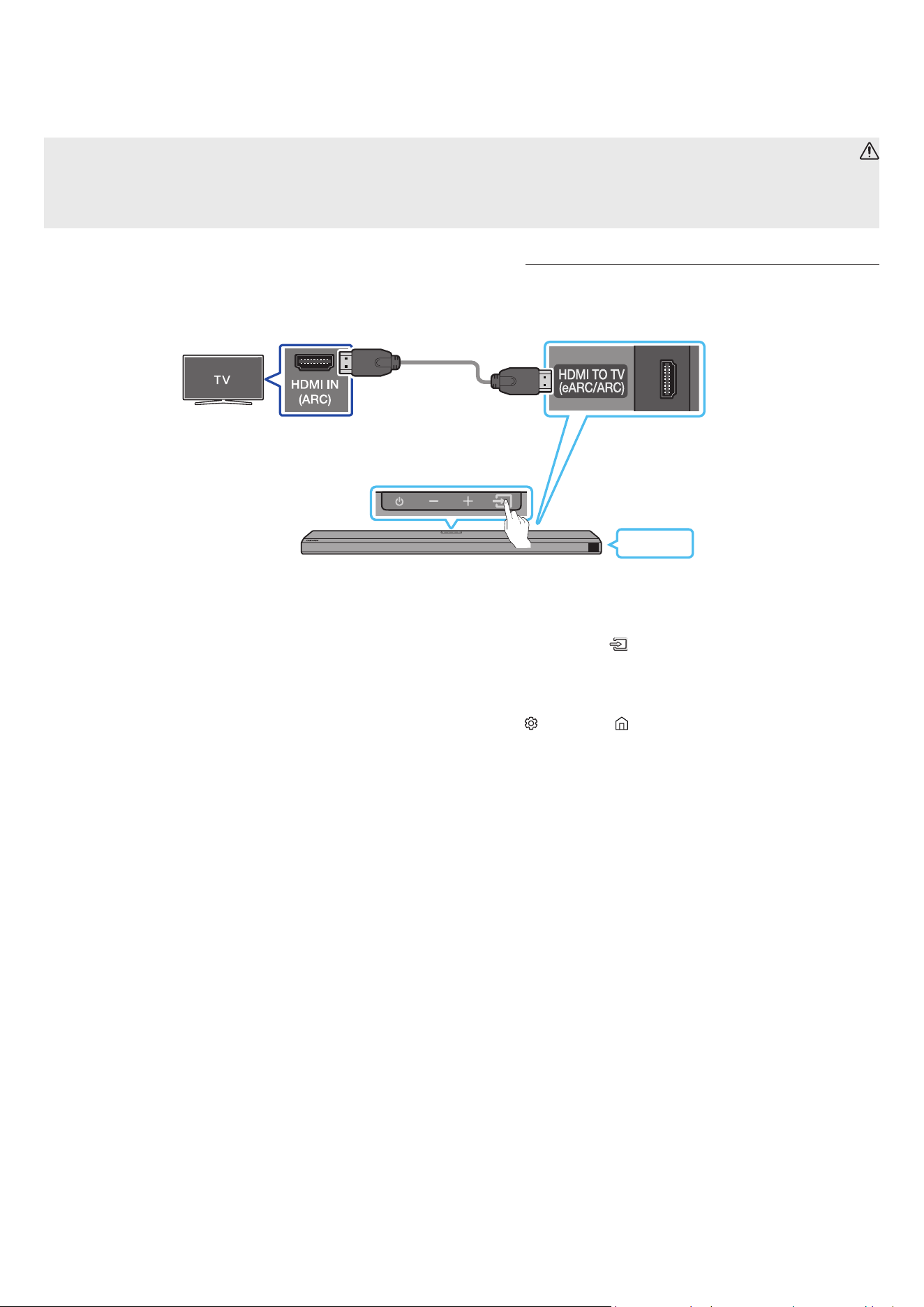
16 - ARA
05 نويزفلتلاب لسلا ليصوتلا مادختسا
HDMI لبك مادختساب ليصوتلا .1 ةقيرطلا
هيبنت
.
ً
وأ HDMI لبك ةراشإ متسا متي ،يبلا لبكلاو HDMI لبك نم لك ليصوت دنع
.نويزفلتلا توص جارخإ متي دق ،إو .ARC فرحاب ةما فارطا ليصوت نم دكأت ،Soundbar زاهجو نويزفلتلا ب HDMI لبك ليصوتل
.High Speed HDMI Cable with Ethernet وه هب وا لبكلا
)توصلا عاجرإ ةانق( HDMI ARC معدي يذلا نويزفلتلا ليصوت
TV ARC
HDMI TO TV )eARC/ARC( ذفنمب ل
صو
.ةيساسا Soundbar ةدحوب
Soundbar زاهج نم يولعلا ءزجلا
HDMI IN )ARC( ذفنمب ل
صو
.نويزفلتلا زاهجب دوجوا
HDMI لبك
Soundbar زاهج نم فسلا ءزجلا
1 ..لكشلا حضوم وه امك HDMI لبك ل
صو ،نويزفلتلاو Soundbar زاهج ليغشت فاقيإ دنع
2 ..نويزفلتلاو Soundbar زاهج ل
غش
3 ..نويزفلتلا توص ليغشتب Soundbar زاهج موقيو ةيساسا Soundbar ةدحو ضرع ةذفان "TV ARC" رهظت
ةشاشلا ضرعت .D.IN عضولا إ ليدبتلل Soundbar زاهج نم يولعلا ءزجلا نم وأ دع
ُ
ب نع مكحتلا زاهج نم )ردصا(
رزلا ع طغضاف ،ا
ً
تفاخ نويزفلتلا توص ناك اذإ
.نويزفلتلا توص ليغشت متيو ،اتتم لكشب ”TV ARC"و "D.IN"
.توصلا عامس متيو ةشاشلا ع "eARCرهظت ،eARC ةفيظو معدي نويزفلت ليصوت دنع
لبس ع ( .تادادعا لوح ليصافت ع لوصحلل نويزفلتلا مدختسم ليلد عجار .)ليغشتلا عضو( On ع نويزفلتلا ةمئاق eARC ةفيظو طبض بجي ،"eARC" ـب لاصتل
))اقلت( HDMI-eARC عضو ← بخلا تادادعإ ← توصلا ← ) ( تادادعا ← ) ( ةيسيئرلا ةحفصلا :Samsung نويزفلت :لاثا
.حيحصلا ذفناب HDMI لبك ليصوت نم ققحت ،ةيساسا Soundbar ةدحو ضرع ةذفان "TV ARC" روهظ مدع ةلاح
.Soundbar زاهج توصلا ىوتسم يغتل نويزفلتلا دع
ُ
ب نع مكحتلا زاهجب نيدوجوا توصلا ىوتسم طبض يرز مدختسا
ةظحم
.لصفنم يب لبك ليصوت نود ةيمقرلا توصلاو ويديفلا تانايب لقن كنكمي ،HDMI لبك مادختساب Soundbar زاهجب )توصلا عاجرإ ةانق( HDMI ARC معدي نويزفلت ليصوت دنع
.مم 14 نع هرطق لقي
ً
بك مدختسا ،موم HDMI لبك مدختست تنك اذإف .نكمأ نإ موم غ HDMI لبك مادختساب كيصون
.)توصلا عاجرإ ةانق( ARC معدي HDMI لبك ناك اذإ ةفيظولا هذه رفوتت
دنعو .Dolby Digital إ دادعا يغتب ون ،PCM ع نويزفلتلا زاهج ع "يمقرلا توصلا جارخإ قيسنت" طبضو Dolby Digital ةينقت مادختساب ام ثب توصلا فشت دنع
).نويزفلتلل ةعنصا ةكلا بسح PCMو Dolby Digital ةينقتل ةفلتخم تاملك نويزفلتلا ةمئاق مدختست دق( .لضفأ توص ةدوجب عتمتتس ،نويزفلتلا ع دادعا يغت

15 - ARA
ب دعم رادج وأ يذوف اسرخ رادج دوجو ةلاح .كب ةصاخلا ليغشتلا ةئيبل ا
ً
عبت فلتخت دق اهنكلو ،ا
ً
م 10 اوح ةيسيئرلا ةدحولل ةيكلسلا ةراشل لاسرإ ةفاسم قأ غلبت
.ندعا قاخا اهنكمي ةيكلسلا ةراشا ن قطا ع ماظنلا لمعي دقف ،لسلا توصلا مخضمو ةيسيئرلا ةدحولا
هيبنت
.ةبوطرلاو ءاا نع ةدحولا دعبأ .لسلا توصلا مخضم ةيكلسلا لابقتسا تايئاوه مضت متي
.قئاوع ةيأ نم ةيلاخ )ةدح ع عابت( لسلا لابقتسا زاهج ةدحوو لسلا توصلا مخضمب ةطيحا ةقطنا ولخ نم دكأت ،اثم عامتسا ءادأ ع لوصحلل
كب صاخلا Soundbar زاهجب )لصفنم لكشب عاب
ُ
ي( SWA-9500S ليصوت
Soundbar زاهجب )لصفنم لكشب عاب
ُ
ت - SWA-9500S( ةيكلسلا ةيفلخلا Samsung تاعامس مقط ليصوت قيرط نع ا
ً
يقيقح حبصيل لسلا يطيحا توصلا زيزعت كنكمي
.كب صاخلا
.Samsung نم ةيكلسلا ةيفلخلا تاعامسلا مقط ليلد عجار تيصوتلا لوح ةيليصفتلا تامولعا نم ديزا ع لوصحلل
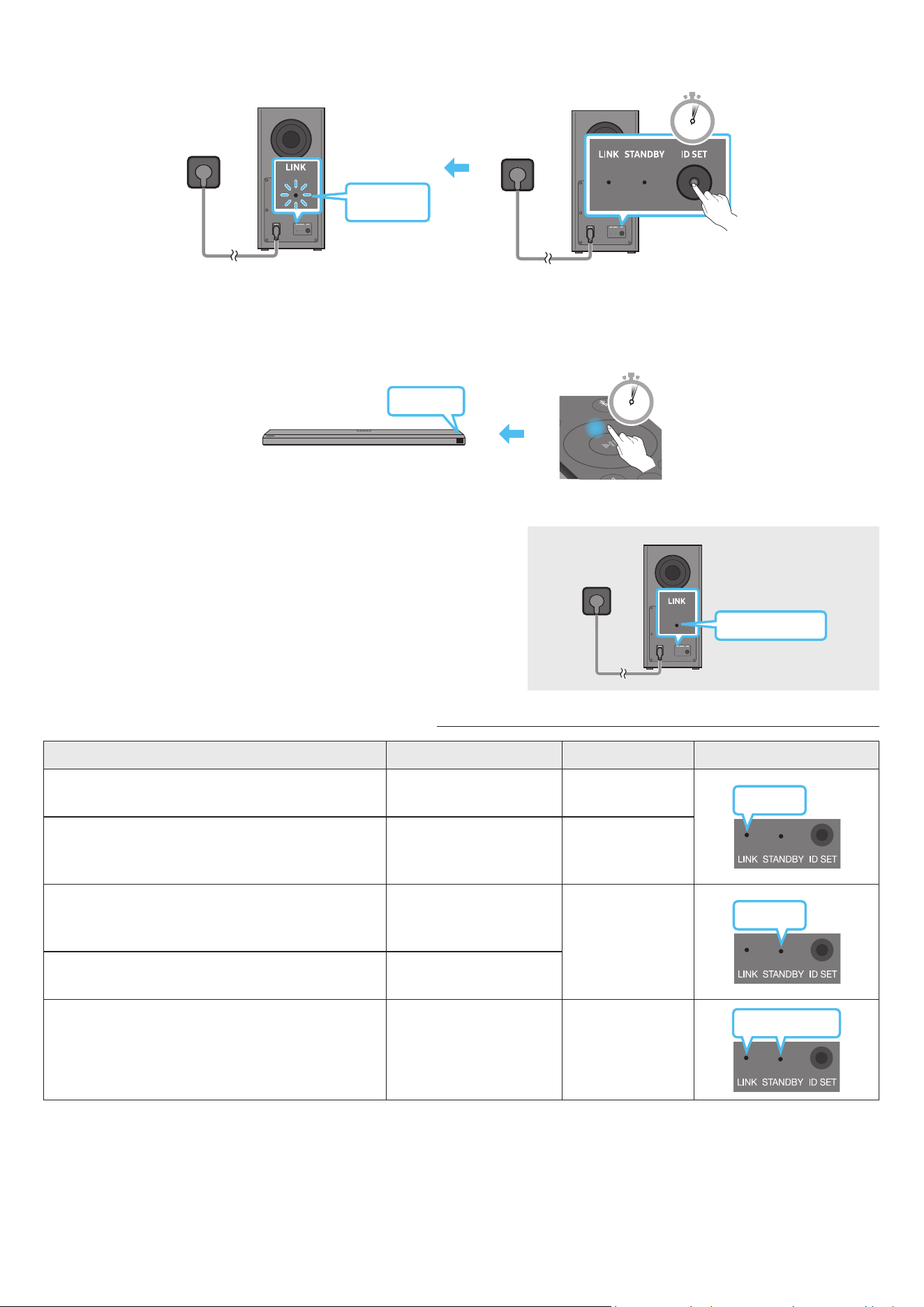
14 - ARA
2 . .لقا ع
ٍ
ناوث 5 ةد توصلا مخضم نم يفلخلا ءزجلا ع ID SET ع رارمتسا عم طغضا
.قرزا نوللاب ما ؤا ضمويسو تاعامسلا فلخ دوجوا رمحا نوللاب ما ؤا ةءاضا نع فقوتيس
5 Sec
ةعب ضموي
قرزا نوللاب
توصلا مخض يفلخلا ءزجلا
توصلا مخض يفلخلا ءزجلا
3 ..
ٍ
ناوث 5 ةد دع
ُ
ب نع مكحتلا زاهج ع رزلا ع طغضا
.يفتخت مث ةصق ةينمز ةد Soundbar زاهج ةشاش ع ID SET ةلاسرلا رهظت
. ID SET لامتكا دنع ا
ً
يئاقلت Soundbar زاهج لمعيس
SOUND
MODE
PAIR
5 Sec
ID SET
4 ..)ليصوتلا لمتكا( تباث قرزأ نولب طابترا LED ؤم نأ ققحت
ليغشتلا ديق قرزا ؤا
زاهج ب لاصتا ءاشنإ دنع تباثلا قرزا نوللاب ءيو ضيمولا نع طابترا LED ؤم فقوتي
.لسلا توصلا مخضمو Soundbar
مسجا توصلا تاكم وأ توصلا مخضم فلخ ةدوجوا LED تاؤم ءاوضأ
LED ؤمةلاحلافصولاةقدلا
قرزأ
ليغشت
حاجنب لصتم
)ةيداع ليغشت ةيلمع(
-
ضيموليصوتلا ةداعتسا
لكشب ةيساسا Soundbar زاهج ةدحوب ةقاطلا لبك ليصوت نم ققحت
لواح ،ضيمولا رارمتسا ةلاح .ا
ً
بيرقت قئاقد 5 ةد رظتنا وأ حيحص
.13 ةحفص عجار .ا
ً
يودي توصلا مخضم ليصوت
رمحأ
ليغشت
ليغشت فاقيإ عم( دادعتسا
زاهجل ةيسيئرلا ةدحولا
)Soundbar
لكشب ةيساسا Soundbar زاهج ةدحوب ةقاطلا لبك ليصوت نم ققحت
.حيحص
ليصوتلا لشف
ةدراولا يوديلا ليصوتلا تاميلعت عجار .ىرخأ ةرم ليصوتلاب مق
.13 ةحفص
قرزأو رمحأ
ضيموللخ.ليلدلا اذه ةدراولا Samsung ةمدخ زكرمب لاصتا تامولعم عجار
ةظحم
توصلا كم نم يفلخلا ءزجلا دوجواو دادعتسا عضول وضلا ؤا لوحتيو دادعتسا عضو إ لسلا توصلا مخضم لقتنيس ،ةيساسا ةدحولا ليغشت فاقيإ مت اذإ
.تارم ةدع قرزا نوللاب ضيمو دعب رمحا نوللا إ يعرفلا
.توصلاب عاطقنا ثودح لخادتلا ببستي دقف ،Soundbar زاهج نم برقلاب Soundbar زاهج لثم ددلا سفن مدختسي ا
ً
زاهج مدختست تنك اذإ
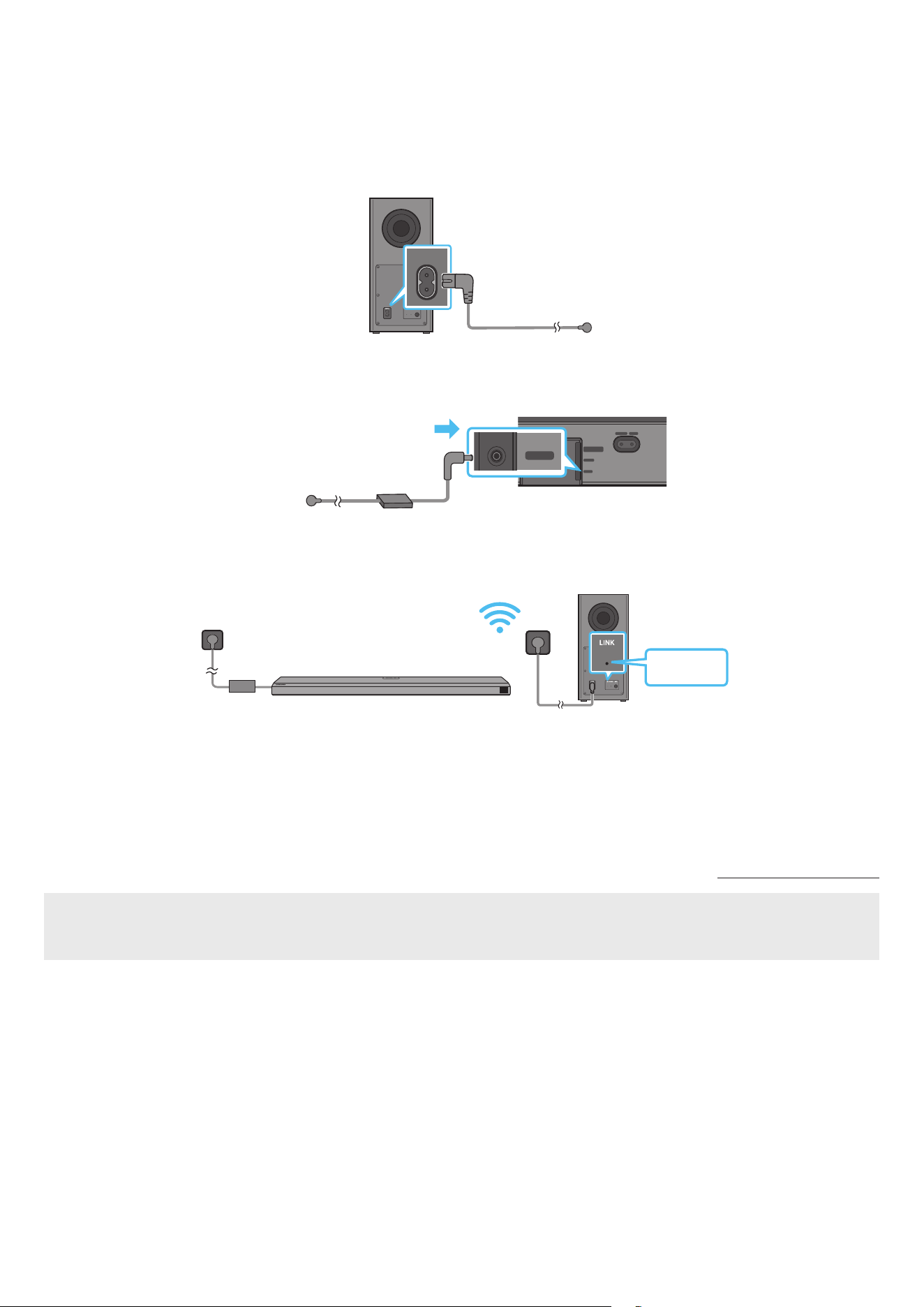
13 - ARA
04 SOUNDBAR زاهج ليصوت
تادحولاو ابرهكلا رايتلا ليصوت
:اتلا بيتلاب ابرهك ذخأمب Soundbarو توصلا مخضم ليصوتل ةقاطلا تانوكم مدختسا
)ةيساسا Soundbar ةدحو نم فسلا ءزجلا :قصلا( .جتنا عم قفرا قصلا عجار ،ةقاطلا كهتساو ةبولطا ةيئابرهكلا ةقاطلا نع تامولعا نم ديز
1 ..توصلا مخضمب ءابرهكلا كلس ليصوتب مق
POWER
توصلا مخض يفلخلا ءزجلا
ابرهك رايت كلس
2 ..رمتسم رايت/ددم رايت لوحمب ةقاطلا لبك ليصوتب
ً
وا مق
.Soundbar زاهجب )ةقاطلا لبك عم( رمتسا رايتلا/ددا رايتلا لوحم ليصوتب مق
DIGITAL AUDIO IN
(OPTICAL)
SERVICE
DC 19V
HDMI
NETWORK ID SET
DIGITAL AUDIO IN
(OPTICAL)
SERVICE
NETWORK ID SET
HDMI TO TV
(eARC/ARC)
HDMI IN
HDMI OUT
(TV-ARC)
DIGITAL AUDIO IN
(OPTICAL)
SERVICE
DC 19V
DIGITAL AUDIO IN
(OPTICAL)
SERVICE
DC 19V
HDMI
HDMI TO TV
(eARC/ARC)
DIGITAL AUDIO IN
(OPTICAL)
SERVICE
DC 19V
HDMI
NETWORK ID SET
DIGITAL AUDIO IN
(OPTICAL)
SERVICE
NETWORK ID SET
HDMI TO TV
(eARC/ARC)
HDMI IN
HDMI OUT
(TV-ARC)
DIGITAL AUDIO IN
(OPTICAL)
SERVICE
DC 19V
DIGITAL AUDIO IN
(OPTICAL)
SERVICE
DC 19V
HDMI
HDMI TO TV
(eARC/ARC)
DC 19V
ةدحو نم فسلا ءزجلا
ةيساسا Soundbar
ددا رايتلا/رمتسا رايتلا لوحم
ابرهك رايت كلس
3 ..Soundbar ليغشت دنع ا
ً
يئاقلت توصلا مخضم ليصوت متي .توصلا مخضمو Soundbar زاهجب ابرهكلا رايتلا ليصوتب مق
قرزا ؤا
ليغشتلا ديق
ةظحم
.Soundbar زاهجب هليصوت لبق توصلا مخضم ةقاط ل
صو
.Soundbar زاهج ليغشت دنع ا
ً
يئاقلت توصلا مخضم ليصوت متيس
.ا
ً
يئاقلت Soundbar زاهج ليغشت متيس ،جتنا ليغشت دنع هليصوت ةداعإو ءابرهكلا كلس لصفب تمق اذإ
رايتلا كلس لاخدإ ةهج نوكتو ا
ً
قلعم نوكي ثيحب رمتسا رايتلا/ددا رايتلا لوحم عضو ةلاح و .ضرا ع وأ ةلواط ع ا
ً
يوتسم رمتسا رايتلا/ددا رايتلا لوحم ءاقب نم دكأت
.ل
ّ
وحا لطعت ببسي امم ،ل
ّ
وحا لخاد ةبيرغ داوم يأ وأ ءاا بتي نأ نكمي ،ع هجتت ددا
ا
ً
يودي توصلا مخضم ليصوت
:هاندأ دراولا يوديلا ليصوتلا ءارجإ ذيفنت لبق
.حيحص لكشب توصلا مخضمو Soundbar زاهجب صاخلا ةقاطلا بك ليصوت نم ققحت
.Soundbar زاهج ليغشت فاقيإ نم دكأت
1 ..ةيساسا Soundbar ةدحو ليغشت فقوأ
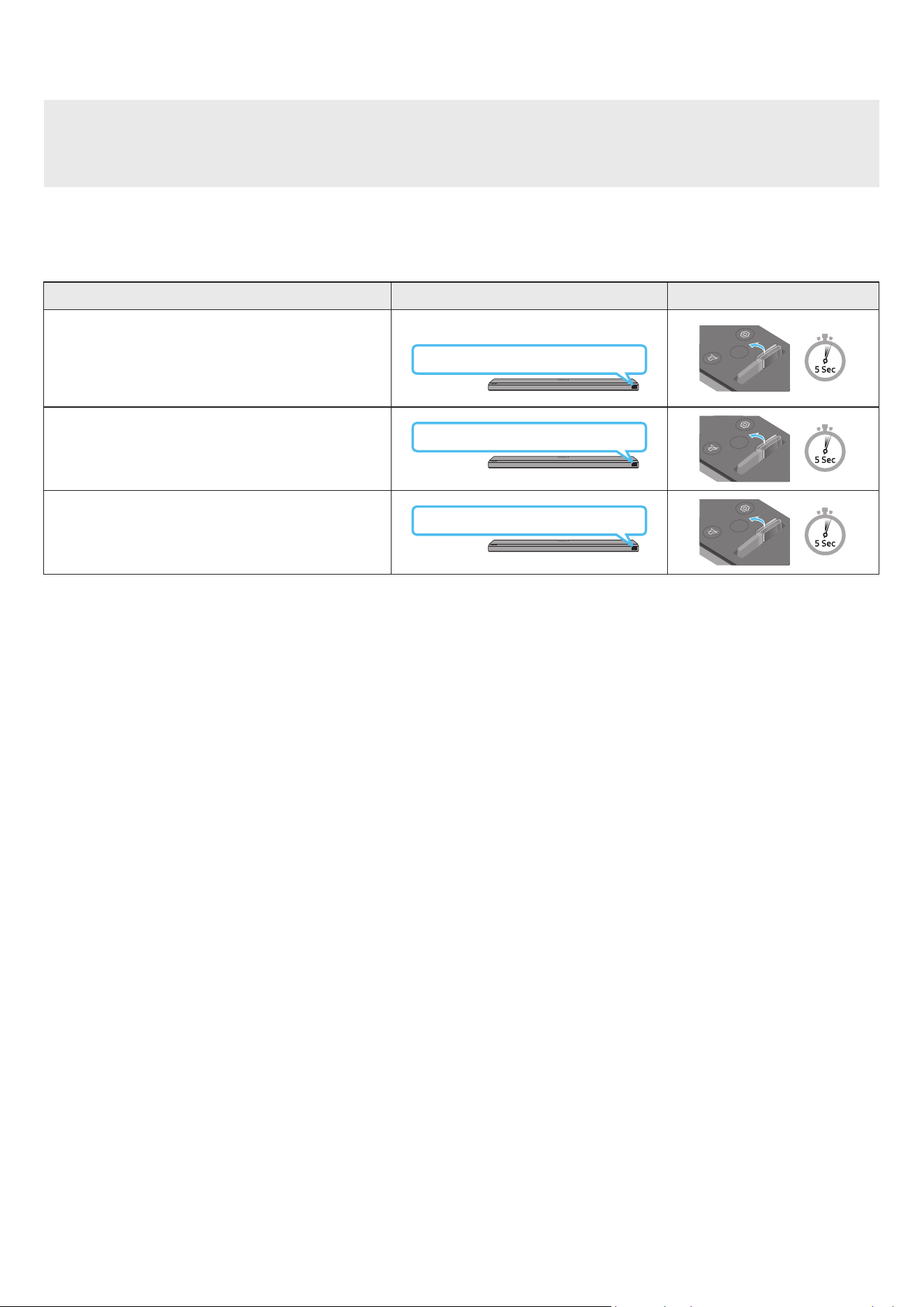
12 - ARA
نويزفلتلاب صاخلا دعب دنع مكحتلا زاهج مادختساب Soundbar زاهج توص ىوتسم طبض
.نويزفلتلاب صاخلا دعب دنع مكحتلا زاهج مادختساب Soundbar توص ىوتسم طبض
.ةموعدم غ )نارقا بلطتت لا مكحتلا ةزهجأ( ثوتولبلاب دعب نع مكحتلا ةزهجأ .طقف ءارمحلا تحت ةعشاب دع
ُ
ب نع مكحتلا ةزهجأ عم ةفيظولا هذه مادختسا نكمي
.ةفيظولا هذه مادختس ةيجراخلا ةعامسلا ع نويزفلتلا توص كم طبضا
:يه ةفيظولا هذه معدت لا ةع
ّ
نصا تاكلا
RCAو Hisenseو TOSHIBAو PANASONICو PHILIPSو Sharpو Sony و LGو VIZIO
1 ..Soundbar ليغشت فاقيإب مق
2 ..ناوث 5 ةد WOOFER رزلا ع رارمتسا عم طغضا
,”SAMSUNG-TV REMOTE“ ,)افا عضو( ”OFF-TV REMOTE“ :اتلا بيتلاب عضولا لدبتي ،ناوث 5 ةد رارمتسا عم ع WOOFER رزلا عفدت ةرم لك
.”ALL-TV REMOTE“
دع
ُ
ب نع مكحتلا ةدحو رزضرعلا ةشاشةلاحلا
SOUND
MODE
VOL
WOOFER
SOUNDBAR
)افا عضولا(
OFF-TV REMOTE
.نويزفلتلاب صاخلا دعب نع مكحتلا زاهج ليطعتب مق
SOUND
MODE
VOL
WOOFER
SOUNDBAR
SAMSUNG-TV REMOTE
صاخلا ءارمحلا تحت ةعشاب دعب دنع مكحتلا زاهج ليعفتب مق
.Samsung نويزفلتب
SOUND
MODE
VOL
WOOFER
SOUNDBAR
ALL-TV REMOTE
صاخلا ءارمحلا تحت ةعشاب دعب دنع مكحتلا زاهج ليعفتب مق
.ىرخا ةهج جاتنإ نم نويزفلتب
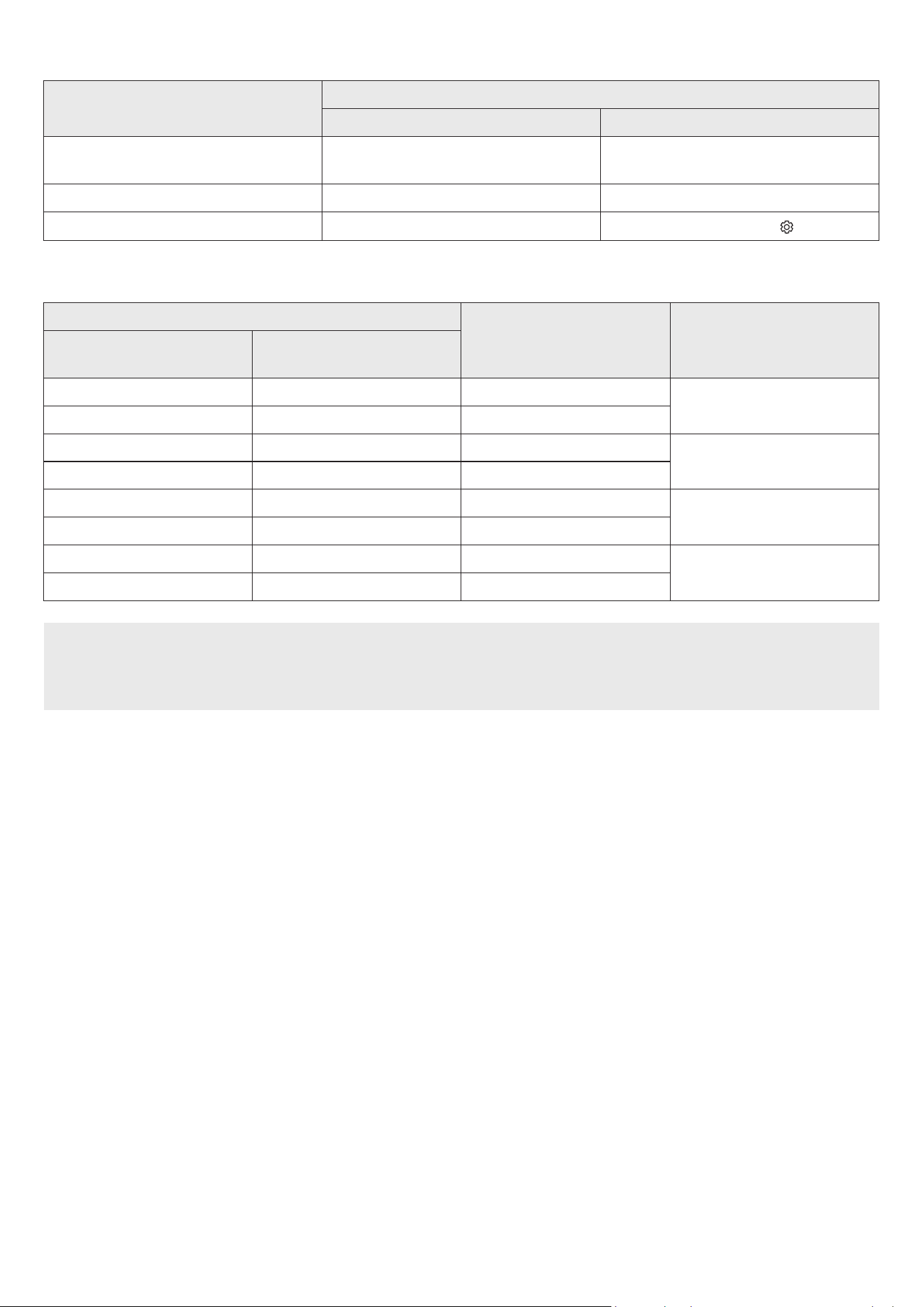
11 - ARA
)ةفيظو نم كأ اهل رارزأ( ةيفخا رازا مادختسا
يفخا رزلا
عجرا ةحفص
دع
ُ
ب نع مكحتلا ةدحو رزةفيظولا
)عأ( توصلا مخضم
نويزفلتلا دع
ُ
ب نع مكحتلا زاهج ليغشت فاقيإ/ليغشت
)دادعتسا(
12 ةحفص
عأID SET14 ةحفص
)توصلا مكحتلا(
تاقاطن 7 نم توصلا لداعم 10 ةحفص
ةفلتخا وصلا ثأتلا عاضو ذفنا تافصاوم
ثأتلاخدإ
جرخلا
طقف لسلا توصلا مخضمب
ةيفلخلا تاعامسلاو توص مخضم مقطب
ةيكلسلا
STANDARD
ةانق 2.0ةانق 2.1ةانق 2.1
ةانق 5.1ةانق 3.1ةانق 5.1
SURROUND
ةانق 2.0ةانق 3.1.2ةانق 5.1.4
ةانق 5.1ةانق 3.1.2ةانق 5.1.4
GAME PRO
ةانق 2.0ةانق 3.1.2ةانق 5.1.4
ةانق 5.1ةانق 3.1.2ةانق 5.1.4
ADAPTIVE SOUND
ةانق 2.0ةانق 3.1.2ةانق 5.1.4
ةانق 5.1ةانق 3.1.2ةانق 5.1.4
ةعامسلا تاودأ ةعومجمو توصلا مخضم دادعإ رفوي امنيب ،ةانق توص 3.1.2 طقف توصلا مخضم دادعإ رفوي ،DTS:X, Dolby Atmos® وه لاخدا ردصم نوكي امدنع
.ةانق توص 5.1.4 ةيكلسلا ةيفلخلا
.هنم Soundbar زاهج ءاب تمق يذلا عئابلا عم لصاوت ،توص مخضم وأ مقط ءال .لصفنم لكشب ةيكلسلا ةيفلخلا ةعامسلا تاودأ ةعومجم ءا نكمي
.SURROUND إ ثأتلا عضو يغتب مق ،يطيحا توصلا تاكم كمتل . STANDARD عضولا مادختسا ءانثأ تانق جارخ ا
ً
تاوصأ ةيطيحا توصلا تاكم ردصت نل
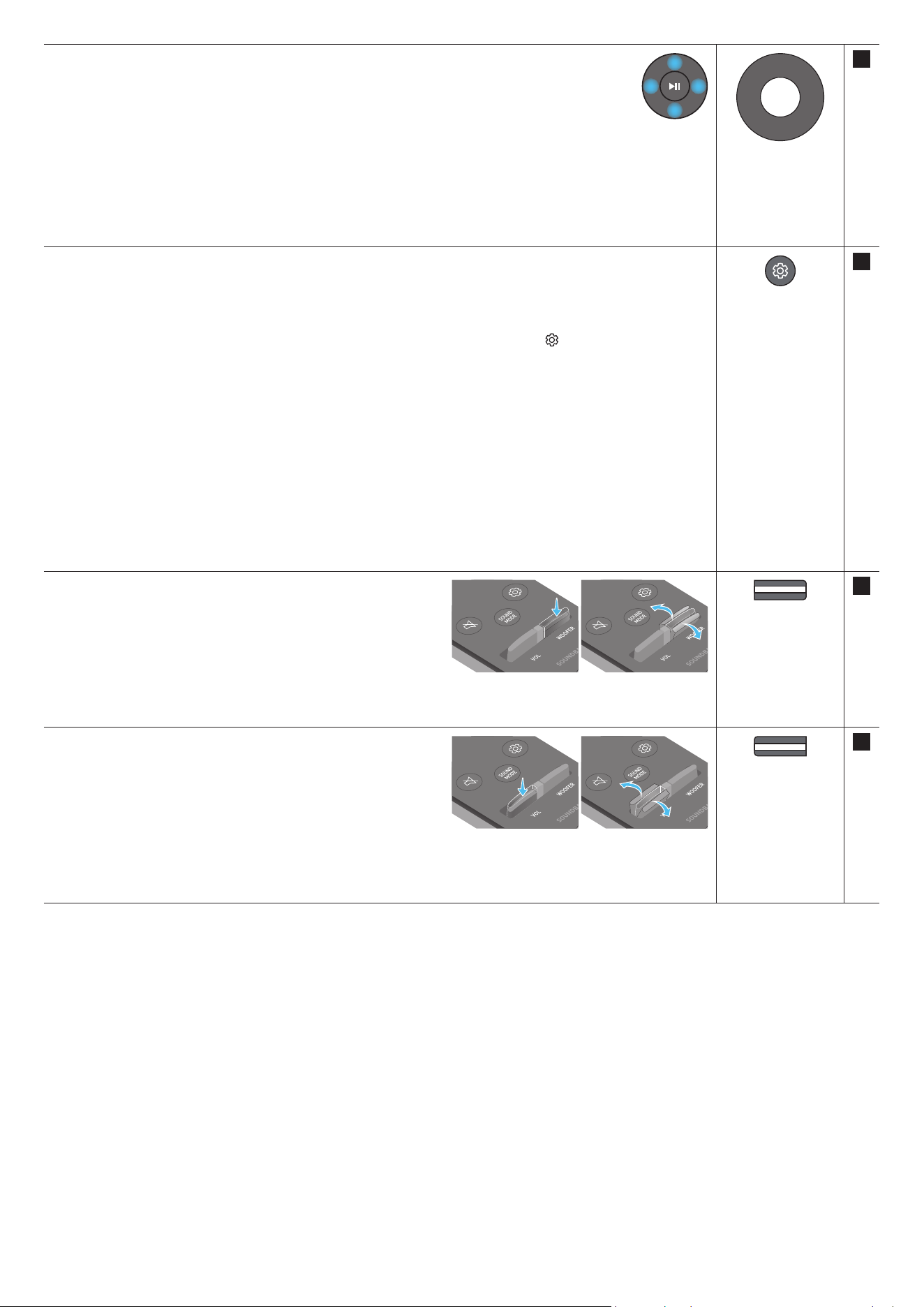
10 - ARA
7
/راسي/لفسأ/عأ
مي
.ميلل/راسيلل/لفس/ع هاجتا ديدحتل اهيلإ راش
ُ
ا قطانا ع طغضا
.اهطبض وأ فئاظولا ديدحتل رزلا ع ميلا/راسيلا/لفسا/عا هاجتاب طغضا
يقيسوا عطقا زواجت
.قباسلا ىقيسوا فلم ديدحتل راسيلا رزلا ع طغضا .اتلا ىقيسوا فلم ديدحتل ميلا رزلا ع طغضا
ID SET
.ليصوت ةداعإ اوجاتحي وأ لصتم غ ةمسجا تاعامسلا وأ توصلا مخضم نوكي امدنع رايخلا اذه مدختسا
).14 ةحفص عجار( .ID SET ذيفنتل ناوث 5 ةد ع رزلا ع رارمتسا عم طغضا ،ليغشتلا فاقيإ ءانثأ
8
توصلا مكحتلا
و FRONT TOP LEVELو CENTER LEVELو SYNCو BASSو TREBLE لثم دادعا انع ضرع متي ، طغضلا دنع
.لفس/ع نيرزلا مادختساب بوغرا نعلا طبض نكميو .لسلستلاب VIRTUAL ON/OFF
مادختساب +6 ~ -6 ب توصلا ىوتسم طبضا مث ،توصلا تادادعإ BASS وأ TREBLE ددح ،هجلا وأ ثلا توصلا ىوتسم مكحتلل
.لفس/ع رارزا
،زتره 300و ،زتره 150 ديدحت نكمي .ددرت قاطن لكل توصلا طبضل ناوث 5 نم ب
ُ
رقي ا )توصلا مكحتلا(
رزلا ع رارمتسا عم طغضا
إ اهنم ةدحاو لك طبض نكميو مي/راسي نيرزلا دحأ مادختساب زتره وليك 10و ،زتره وليك 5و ،زتره وليك 2.5و ،زتره وليك 1.2و ،زتره 600و
. لفس/ع نيرزلا دحأ مادختساب +6 إ -6 ب ام دادعإ
).”STANDARD“ إ توصلا عضو يعت نم دكأت(
ىوتسم طبضا مث ،توصلا تادادعإ FRONT TOP LEVEL وأ CENTER LEVEL ددح ،توص كم لكل توصلا ىوتسم مكحتلل
.لفس/ع نيرزلا دحأ مادختساب +6و -6 ب توصلا
300 ~ 0 ب توصلا خأت طبضا مث ،توصلا مكحتلا SYNC ددحف ، Soundbar نم توصلاو نويزفلتلا ع ويديفلا نماي مل اذإ
.لفس/ع نيرزلا دحأ مادختساب ةيناث لم
.طقف فئاظولا ضعب SYNCةيصاخ معدت
ىوتسم طبضل لفس/ع نيرزلا مدختسا مث REAR TOP LEVEL وأ REAR LEVEL ددحف ،ةلصتم مسجا توصلا تاكم تناك اذإ-
.+6و -6 ب قاطن توصلا
.لفس/ع نيرزلا دحأ مادختساب VIRTUAL تاعامسلا ةفيظو ON/OFF ليغشت فاقيإ/ليغشت نكمي
9
WOOFER )BASS(
LEVEL
توصلا مخضم توص ىوتسم طبضل .+6 إ -6 ب وأ -12 ع )هجلا( توصلا مخضم توص ىوتسم طبضل لفسل وأ عل رزلا عفدا
.رزلا ع طغضا ،)افا دادعا( 0 إ )هجلا(
10
توصلا ىوتسم
.توصلا ىوتسم طبضل لفسل وأ عل رزلا عفدا
توصلا متك
.توصلا متك ءاغل ا
ً
ددجم طغضا .توصلا متكل VOL رزلا ع طغضا
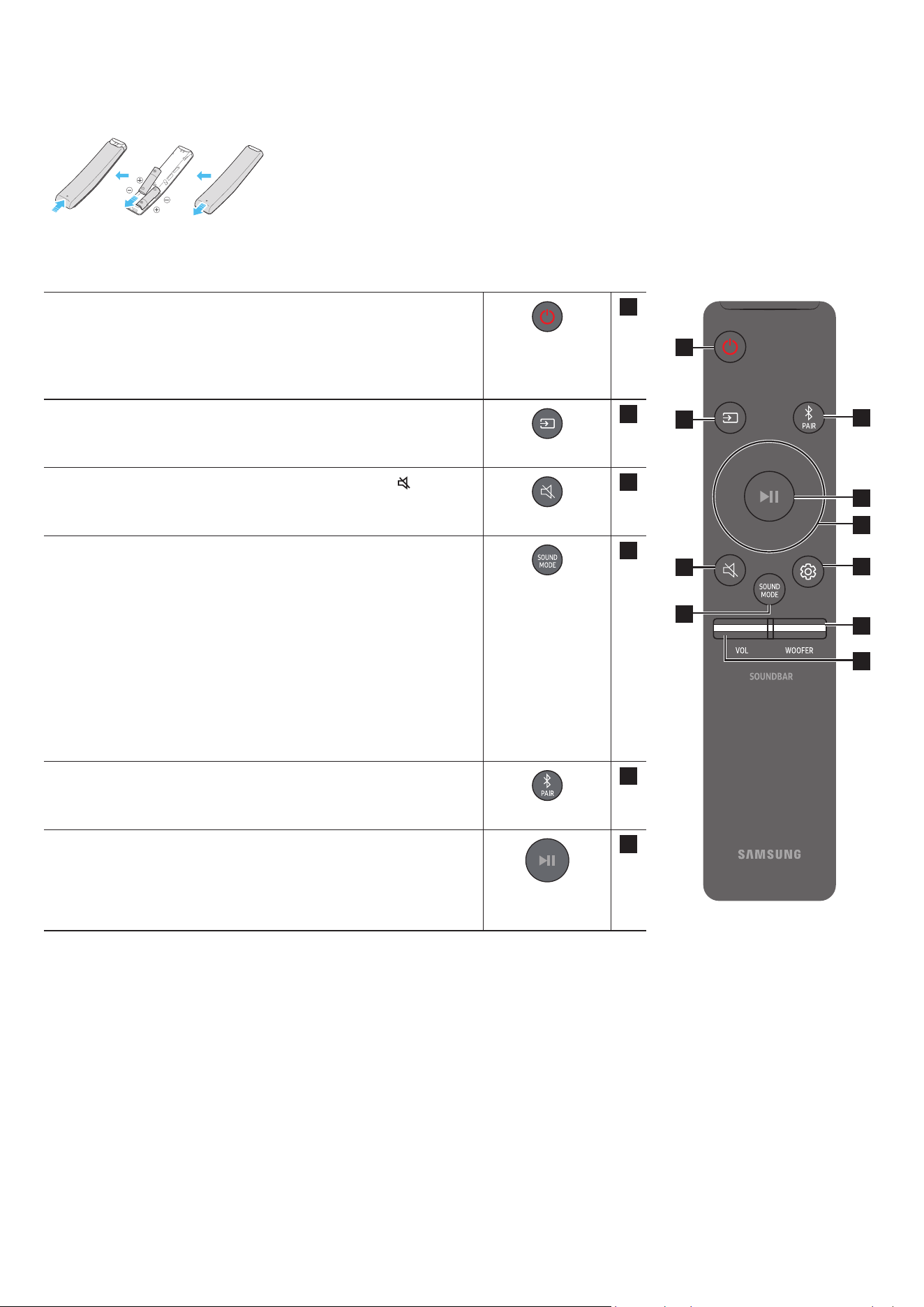
9 - ARA
03 SOUNDBAR زاهج دع
ُ
ب نع مكحتلا زاهج مادختسا
)AA ناتيراطب( دع
ُ
ب نع مكحتلا زاهج مادختسا لبق تايراطبلا لاخدإ
نوكت ثيحب حيحصلا هاجتا )تلوف 1.5 ةوقب( AA تيراطبلا لخدأ .ا
ً
مامت هتلازإ متت ح مهسلا هاجتا يفلخلا ءاطغلا ك
رح
.هناكم حبصي ح ءارولل قلي ةيراطبلا فغ لعجا مث نمو .ةحيحص ةيبطقلا
دع
ُ
ب نع مكحتلا زاهج مادختسا ةيفيك
1
2
3
4
5
6
7
8
9
10
1
ةقاطلا
.هليغشت فاقيإو Soundbar زاهج ليغشتب موقي
ا
ً
يئاقلت ليغشتلا فاقيإ ةفيظو
:ةيلاتلا تاحلا ا
ً
يئاقلت ةدحولا ليغشت فاقيإ متي
18 ةد ةيتوص ةراشإ دوجو مدع ةلاح BT / Wi-Fi / HDMI / D.IN عاضوا
.ةقيقد
2
ردصا
.Soundbar زاهجب لصتم ردصم ديدحتل طغضا
3
توصلا متك
.توصلا متكل )توصلا متك(
رز ع طغضا
.توصلا متك ءاغل ا
ً
ددجم طغضا
4
SOUND MODE
, SURROUND , STANDARD رايتخا قيرط نع دارا توصلا عضو ديدحت كنكمي
.ADAPTIVE SOUND وأ ,GAME PRO
STANDARD
.صا توصلا جارخإب موقي
SURROUND
.داتعا نم عسوأ ا
ً
يتوص
ً
اجم رفوي
GAME PRO
.ةبعللا ءاوجأ سمغنتل ا
ً
مسجم ا
ً
توص رفوي
ADAPTIVE SOUND
صئاصخ ع
ً
ءانب لثما توصلا لاجم ا
ً
يئاقلت رفويو عفلا تقولا ىوتحا للحي
.ىوتحا
5
Bluetooth PAIR
لاصتا حل رظتناو رزلا ع طغضا .Bluetoothـب ناقا عضو إ Soundbar زاهج ليوحت
.ديدج Bluetooth زاهجب"BT PAIRING" ةشاش
6
فاقيا / ليغشتلا
ا
ً
تقؤم
.رزلا ع طغضلاب ا
ً
تقؤم اهفاقيإ وأ ىقيسوا ليغشت ا
ً
ضيأ كنكمي

8 - ARA
4NETWORK
.SmartThings قيبطت ع )Wi-Fi( ةيكلس ةكبشب لاصتل طغضا
5ID SET
).لصفنم لكشب مسجا توصلا كم عاب
ُ
ي( .لسلا توصلا مخضمو مسجا توصلا كمب Soundbar زاهج ليصوتل طغضا
6HDMI
.HDMI لبك مادختساب ا
ً
عم ةيمقرلا ويديفلاو توصلا تاراشإ لاخدإ
)20 ةحفص عجار( .يجراخ زاهجل HDMI جرخمب هل
صو
7HDMI TO TV )eARC/ARC(
)16 ةحفص عجار( .نويزفلتلا زاهجب دوجوا HDMI سبقمب هل
صو
.طئاحلاب دوجوا رهكلا رايتلا ذفنم نم ددا رايتلا/رمتسا رايتلا لوح رهكلا رايتلا لبك لصف دنع سبقا بحسا
.لبكلا بحس بنجت
.تانوكا ب تيصوتلا ةفاك لمتكت ح ددا رايتلا ذفنمب تانوكم ةيأ وأ ةدحولا هذه ليصوتب مقت
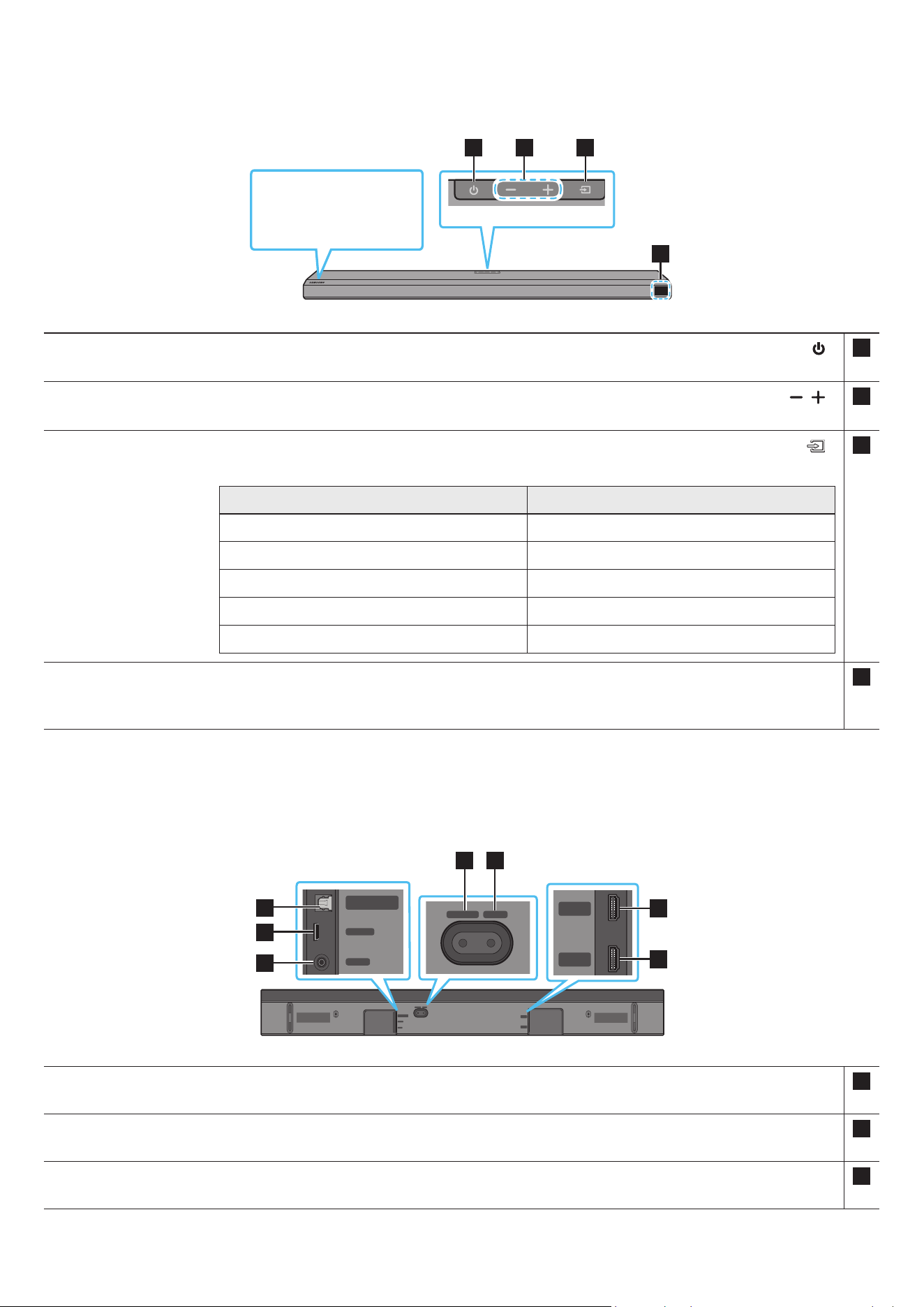
7 - ARA
02 جتنا نع ةماع ةرظن
Soundbar زاهجل ةيولعلا ةحوللا / ةيماما ةحوللا
1 2 3
4
نوكي ثيحب جتنا عضوم طبضا
ءزجلا SAMSUNG راعش
.يولعلا
1
)ةقاطلا(
رز
.ليغشتلا فاقيإو ليغشتلل
2
)توصلا ىوتسم(
رز
.توصلا ىوتسم طبضل
3
)ردصا(
رز
.ردصا لخد عضو ددح
لاخدا عضوضرعلا ةشاش
يبلا يمقرلا لاخداD.IN
ARC ـب صاخلا )HDMI OUT( لاخدإ)اقلتلا ليوحتلا( TV ARC ← D.IN
HDMI لاخدإHDMI
Wi-Fi عضوWIFI
BLUETOOTH عضوBT
4ضرعلا ةشاش
.احلا عضولاو جتنا ةلاح ضرعي
BT ← Wi-Fi ← HDMI ← D.IN
.
ٍ
ناوث 6 إ 4 لخ لمعلا ةقاطلا رز أدبيس ،ددا رايتلا كلس ليصوت دنع
.ا
ً
توص ردصت نأ لبق ناوث 5 إ 4 نم رخأتتس ،ةدحولا هذه ليغشت دنع
.ةيجراخلا ةعامسلا إ نويزفلتلا تاعامس يغتلو نويزفلتلا توصل تادادعا ةمئاق إ لقتنا ،Soundbarو نويزفلتلا نم تاوصأ تعمس اذإ
Soundbar زاهجل ةيلفسلا ةحوللا
DIGITAL AUDIO IN
(OPTICAL)
SERVICE
DC 19V
HDMI
NETWORK ID SET
DIGITAL AUDIO IN
(OPTICAL)
SERVICE
NETWORK ID SET
HDMI TO TV
(eARC/ARC)
HDMI IN
HDMI OUT
(TV-ARC)
DIGITAL AUDIO IN
(OPTICAL)
SERVICE
DC 19V
DIGITAL AUDIO IN
(OPTICAL)
SERVICE
DC 19V
HDMI
HDMI TO TV
(eARC/ARC)
DIGITAL AUDIO IN
(OPTICAL)
SERVICE
DC 19V
HDMI
NETWORK ID SET
DIGITAL AUDIO IN
(OPTICAL)
SERVICE
NETWORK ID SET
HDMI TO TV
(eARC/ARC)
HDMI IN
HDMI OUT
(TV-ARC)
DIGITAL AUDIO IN
(OPTICAL)
SERVICE
DC 19V
DIGITAL AUDIO IN
(OPTICAL)
SERVICE
DC 19V
HDMI
HDMI TO TV
(eARC/ARC)
DIGITAL AUDIO IN
(OPTICAL)
SERVICE
DC 19V
HDMI
NETWORK ID SET
DIGITAL AUDIO IN
(OPTICAL)
SERVICE
NETWORK ID SET
HDMI TO TV
(eARC/ARC)
HDMI IN
HDMI OUT
(TV-ARC)
DIGITAL AUDIO IN
(OPTICAL)
SERVICE
DC 19V
DIGITAL AUDIO IN
(OPTICAL)
SERVICE
DC 19V
HDMI
HDMI TO TV
(eARC/ARC)
DIGITAL AUDIO IN
(OPTICAL)
SERVICE
DC 19V
HDMI
NETWORK ID SET
DIGITAL AUDIO IN
(OPTICAL)
SERVICE
NETWORK ID SET
HDMI TO TV
(eARC/ARC)
HDMI IN
HDMI OUT
(TV-ARC)
DIGITAL AUDIO IN
(OPTICAL)
SERVICE
DC 19V
DIGITAL AUDIO IN
(OPTICAL)
SERVICE
DC 19V
HDMI
HDMI TO TV
(eARC/ARC)
1
2
3
4 5
6
7
1DIGITAL AUDIO IN )OPTICAL(
)21 ةحفص عجار( .يجراخ زاهجل )يب( يمقر جرخمب هل
صو
2SERVICE
.جتنا جمانرب ةيقل USB نيزخت زاهج ل
صو
3)ةقاطلا ردصم لخدم( DC 19V
)13 ةحفص عجار( .رمتسا رايتلا/ددا رايتلل ءابرهكلا لوحم ل
صو
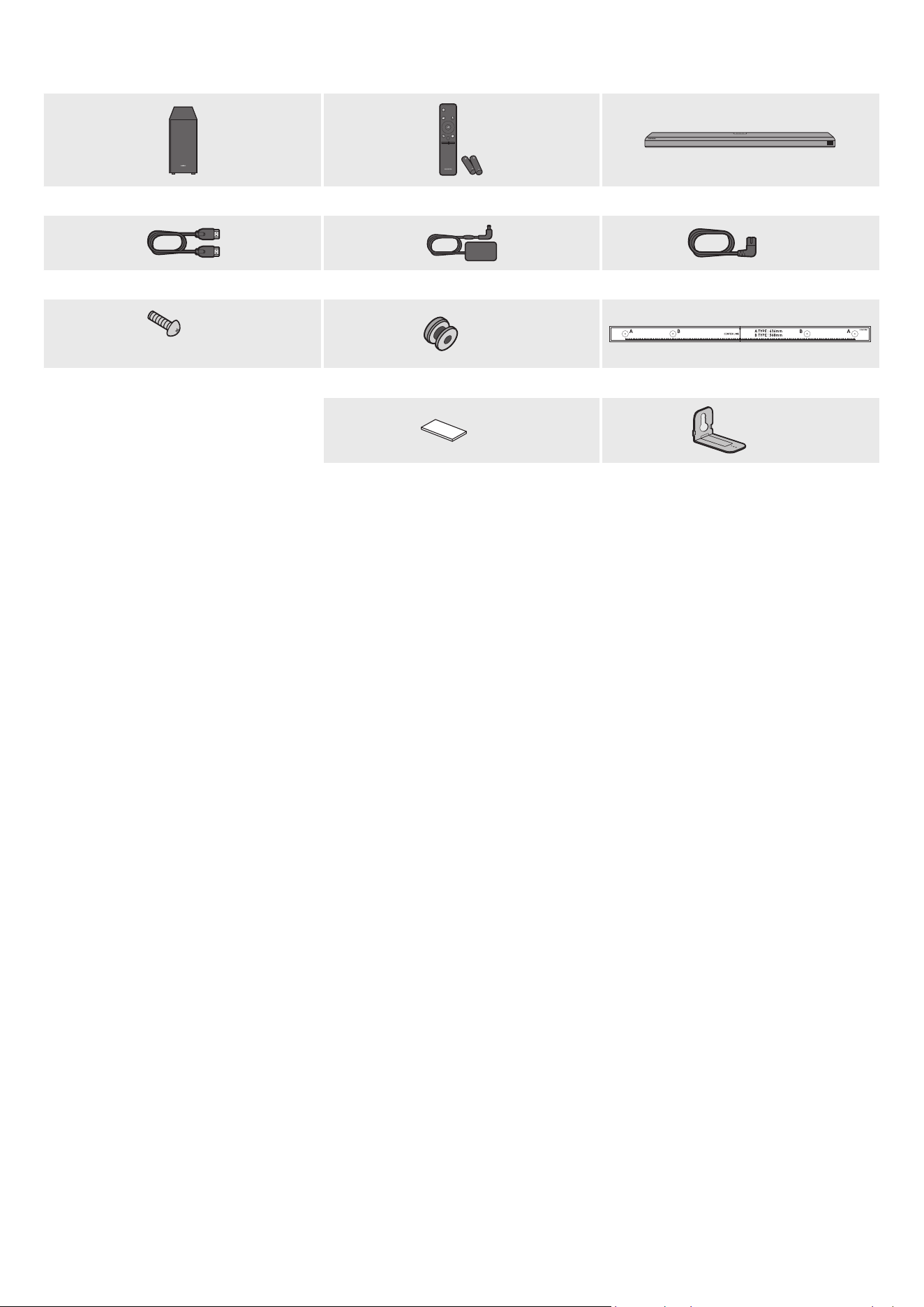
6 - ARA
01 تانوكا نم ققحتلا
VOL WOOFER
SOUNDBAR
SOUND
MODE
PAIR
ةيساسا Soundbar ةدحوتايراطبلا / Soundbar زاهج دع
ُ
ب نع مكحتلا زاهجتوصلا مخضم
x 2
)Soundbar زاهج ،توصلا مخضم( ةقاطلا كلس)Soundbar زاهج( رمتسا رايتلا/ددا رايتلا لوحمHDMI لبك
x 2
x 2
)L10 × M4(
طئاحلا ع تيبثتلا ليلدلماحلا رامسمرامسم
x 2
x 4
طئاحلا ع تيبثتلا ةماعدةيطاطم قاس
)ةيساسا Soundbar ةدحو نم فسلا ءزجلا :قصلا( .جتنا عم قفرا قصلا عجار ،اهكهتساو ةقاطلا ردصم نع تامولعا نم ديز
.Samsung ءمع ةمدخ وأ Samsung ةمدخ زكرمب لصتا ،ةيرايتخا تبكلا وأ ةيفاضا تانوكا ءال
.28~27 تاحفصلا عجار ،ةيطاطا قاسلا وأ طئاحلا ع تيبثتلا لماح نع تامولعا نم ديز
.قبسم راعشإ نود يغتلل ةضرع قيبطتلا ةشاشو تافصاواو ميمصتلا
.هعأ ةيحيضوتلا روصلا نع
ً
يلق تاقحلا لكش فلتخي دق

5 - ARA
12 28 نويزفلت لماح قوف Soundbar بيكرت
28. . . . . . . . . . . . . . . . . . . . . . . . . . . . . . . . . . . . . . . . . . . . . . . . . . . . . . . . . . . . . . . . . . . . . . . . . . . . . . . . . . . . . . . . . . . . . . . . . . . . . . . . . . . . . . . . . . . . . . . . نوكا
13 29 جمانلا ثيدحت
29. . . . . . . . . . . . . . . . . . . . . . . . . . . . . . . . . . . . . . . . . . . . . . . . . . . . . . . . . . . . . . . . . . . . . . . . . . . . . . . . . . . . . . . . . . . . . . . . . . . . . . . . . . . . . . . . .اقلتلا ثيدحتلا
29. . . . . . . . . . . . . . . . . . . . . . . . . . . . . . . . . . . . . . . . . . . . . . . . . . . . . . . . . . . . . . . . . . . . . . . . . . . . . . . . . . . . . . . . . . . . . . . . . . . . . . . . . . . . . . . . . . . USB ثيدحت
29. . . . . . . . . . . . . . . . . . . . . . . . . . . . . . . . . . . . . . . . . . . . . . . . . . . . . . . . . . . . . . . . . . . . . . . . . . . . . . . . . . . . . . . . . . . . . . . . . . . . . . . . . . . . . . . . . . . . . . . . ةئيهتلا
14 30 اهحصإو لاطعا فاشكتسا
15 31 صيخالا
16 31 ةحوتفم رداصا صيخرت راعشإ
17 31 ةمدخلا لوح ةمهم تاظحم
18 32 ليلدلاو تافصاوا
32. . . . . . . . . . . . . . . . . . . . . . . . . . . . . . . . . . . . . . . . . . . . . . . . . . . . . . . . . . . . . . . . . . . . . . . . . . . . . . . . . . . . . . . . . . . . . . . . . . . . . . . . . . . . . . . . . . . . . تافصاوا

4 - ARA
تايوتحا
01 6 تانوكا نم ققحتلا
02 7 جتنا نع ةماع ةرظن
7 . . . . . . . . . . . . . . . . . . . . . . . . . . . . . . . . . . . . . . . . . . . . . . . . . . . . . . . . . . . . . . . . . . . . . . . . . . . . . . . . . . . . . . . . Soundbar زاهجل ةيولعلا ةحوللا / ةيماما ةحوللا
7 . . . . . . . . . . . . . . . . . . . . . . . . . . . . . . . . . . . . . . . . . . . . . . . . . . . . . . . . . . . . . . . . . . . . . . . . . . . . . . . . . . . . . . . . . . . . . . . . . . . . .Soundbar زاهجل ةيلفسلا ةحوللا
03 9 Soundbar زاهج دع
ُ
ب نع مكحتلا زاهج مادختسا
9 . . . . . . . . . . . . . . . . . . . . . . . . . . . . . . . . . . . . . . . . . . . . . . . . . . . . . . . . . . . . . . . . . . . . . . . . . . . .)AA ناتيراطب( دع
ُ
ب نع مكحتلا زاهج مادختسا لبق تايراطبلا لاخدإ
9 . . . . . . . . . . . . . . . . . . . . . . . . . . . . . . . . . . . . . . . . . . . . . . . . . . . . . . . . . . . . . . . . . . . . . . . . . . . . . . . . . . . . . . . . . . . . . . . . . . .دع
ُ
ب نع مكحتلا زاهج مادختسا ةيفيك
11 . . . . . . . . . . . . . . . . . . . . . . . . . . . . . . . . . . . . . . . . . . . . . . . . . . . . . . . . . . . . . . . . . . . . . . . . . . . . . . . . . . . . . . . . . . .)ةفيظو نم كأ اهل رارزأ( ةيفخا رازا مادختسا
11 . . . . . . . . . . . . . . . . . . . . . . . . . . . . . . . . . . . . . . . . . . . . . . . . . . . . . . . . . . . . . . . . . . . . . . . . . . . . . . . . . . . . . . . . . . . ةفلتخا وصلا ثأتلا عاضو ذفنا تافصاوم
12 . . . . . . . . . . . . . . . . . . . . . . . . . . . . . . . . . . . . . . . . . . . . . . . . . . . . . . . . . . . نويزفلتلاب صاخلا دعب دنع مكحتلا زاهج مادختساب Soundbar زاهج توص ىوتسم طبض
04 13 Soundbar زاهج ليصوت
13 . . . . . . . . . . . . . . . . . . . . . . . . . . . . . . . . . . . . . . . . . . . . . . . . . . . . . . . . . . . . . . . . . . . . . . . . . . . . . . . . . . . . . . . . . . . . . . . . . . . . . تادحولاو ابرهكلا رايتلا ليصوت
‒ 13 . . . . . . . . . . . . . . . . . . . . . . . . . . . . . . . . . . . . . . . . . . . . . . . . . . . . . . . . . . . . . . . . . . . . . . . . . . . . . . . . . . . . . . . . . . . . . . . . . . . . .ا
ً
يودي توصلا مخضم ليصوت
‒ 14 . . . . . . . . . . . . . . . . . . . . . . . . . . . . . . . . . . . . . . . . . . . . . . . . . . . . . . . . . . . . . . . .مسجا توصلا تاكم وأ توصلا مخضم فلخ ةدوجوا LED تاؤم ءاوضأ
15 . . . . . . . . . . . . . . . . . . . . . . . . . . . . . . . . . . . . . . . . . . . . . . . . . . . . . . . . . . . . . . . . . . . . . كب صاخلا Soundbar زاهجب )لصفنم لكشب عاب
ُ
ي( SWA-9500S ليصوت
05 16 نويزفلتلاب لسلا ليصوتلا مادختسا
16 . . . . . . . . . . . . . . . . . . . . . . . . . . . . . . . . . . . . . . . . . . . . . . . . . . . . . . . . . . . . . . . . . . . . . . . . . . . . . . . . . . . . . . . . . . . . . HDMI لبك مادختساب ليصوتلا .1 ةقيرطلا
‒ 16 . . . . . . . . . . . . . . . . . . . . . . . . . . . . . . . . . . . . . . . . . . . . . . . . . . . . . . . . . . . . . . . . . . . . . . . . . . . .)توصلا عاجرإ ةانق( HDMI ARC معدي يذلا نويزفلتلا ليصوت
17 . . . . . . . . . . . . . . . . . . . . . . . . . . . . . . . . . . . . . . . . . . . . . . . . . . . . . . . . . . . . . . . . . . . . . . . . . . . . . . . . . . . . . . . . . . . . . . يب لبك مادختساب ليصوتلا .2 ةقيرطلا
06 18 نويزفلتلاب لسلا لاصتا مادختسا
18 . . . . . . . . . . . . . . . . . . . . . . . . . . . . . . . . . . . . . . . . . . . . . . . . . . . . . . . . . . . . . . . . . . . . . . . . . . . . . . . . . . . . . . . . . . . . . . Bluetooth ةينقت ع لاصتا .1 ةقيرطلا
19 . . . . . . . . . . . . . . . . . . . . . . . . . . . . . . . . . . . . . . . . . . . . . . . . . . . . . . . . . . . . . . . . . . . . . . . . . . . . . . . . . . . . . . . . . . . . . . . . . Wi-Fi لخ نم ليصوتلا .2 ةقيرطلا
07 20 يجراخ زاهج ليصوت
20. . . . . . . . . . . . . . . . . . . . . . . . . . . . . . . . . . . . . . . . . . . . . . . . . . . . . . . . . )هليغشتو Dolby Atmos فشت كف ع رداق( HDMI لباك مادختساب ليصوتلا .1 ةقيرطلا
21 . . . . . . . . . . . . . . . . . . . . . . . . . . . . . . . . . . . . . . . . . . . . . . . . . . . . . . . . . . . . . . . . . . . . . . . . . . . . . . . . . . . . . . . . . . . . . . يب لبك مادختساب ليصوتلا .2 ةقيرطلا
08 22 لومحم زاهج ليصوت
22 . . . . . . . . . . . . . . . . . . . . . . . . . . . . . . . . . . . . . . . . . . . . . . . . . . . . . . . . . . . . . . . . . . . . . . . . . . . . . . . . . . . . . . . . . . . . . . Bluetooth ةينقت ع لاصتا .1 ةقيرطلا
23. . . . . . . . . . . . . . . . . . . . . . . . . . . . . . . . . . . . . . . . . . . . . . . . . . . . . . . . . . . . . . . . . . . . . . . . . . . . . . . . . . . . . . . .)ةيكلسلا ةكبشلا( Wi-Fi ع لاصتا .2 ةقيرطلا
09 24 ) Alexa عم لمعي( Amazon ع Alexa قيبطت مادختسا ءدبلا
24 . . . . . . . . . . . . . . . . . . . . . . . . . . . . . . . . . . . . . . . . . . . . . . . . . . . . . . . . . . . . . . . . . . . . . )Amazon Echo( AMAZON تاجتنم نم جتنم عم مادختساو ليصوتلا
24 . . . . . . . . . . . . . . . . . . . . . . . . . . . . . . . . . . . . . . . . . . . . . . . . . . . . . . . . . . . . . . . . . . . . . . . . . . . . . . . . . . . . . . . Soundbar زاهجب مكحتلل ةيتوصلا رماوا مدختسا
25. . . . . . . . . . . . . . . . . . . . . . . . . . . . . . . . . . . . . . . . . . . . . . . . . . . . . . . . . . . . . . . . . . . . . . . . . . . . . . . . . . . . . . . . . . . . . . . . . . . . . . . . . . . . Tap Sound مادختسا
10 26 Apple AirPlay 2 ةينقتب لاصتا
26 . . . . . . . . . . . . . . . . . . . . . . . . . . . . . . . . . . . . . . . . . . . . . . . . . . . . . . . . . . . . . . . . . . . . . . . . . . . . . . . . . . . . . . . Apple تاجتنم نم جتنم عم مادختساو ليصوتلا
11 27 طئاحلا ع تيبثتلا مقط بيكرت
27 . . . . . . . . . . . . . . . . . . . . . . . . . . . . . . . . . . . . . . . . . . . . . . . . . . . . . . . . . . . . . . . . . . . . . . . . . . . . . . . . . . . . . . . . . . . . . . . . . . . . . . . . . . . . . . . .بيكلا تاطايتحا
27 . . . . . . . . . . . . . . . . . . . . . . . . . . . . . . . . . . . . . . . . . . . . . . . . . . . . . . . . . . . . . . . . . . . . . . . . . . . . . . . . . . . . . . . . . . . . . . . . . . . . طئاحلا ع تيبثتلا مقط تانوكم

3 - ARA
تاطايتحا
1 . قصلمب ةجرد
ُ
ا ةقاطلا تابلطتم عم قفاوتي كلم ددا رايتلا ةقاط ردصم نأ دكأت
)ثاثأ( ةدعاق ع ،ا
ً
يقفأ كب صاخلا جتنا بيكب مق .جتنا لفسأ دوجوا فيرعتلا
نم دكأت .)مس 10 إ 7 نم( ةيوهتلل هلوح ةيفاك ةحاسم دوجو ةاعارم عم ،ةبسانم
دق ىرخأ تادعم وأ توص تاكم ع ةدحولا عضت .ةيوهتلا ذفانم ةيطغت مدع
.رمتسا مادختسل ةدحولا هذه تمم
ُ
ص .ةنخاس حبصت
لبك لزنا .طئاحلا ذخأم نم ددا رايتلا سبقم لصفا ،لماكلاب ةدحولا ليغشت فاقي
.نمزلا نم ةليوط ةفل مادختسا نود هكرت يونت تنك اذإ جتناب صاخلا رهكلا رايتلا
2 . يدؤي نأ نكمي .ةيدعرلا فصاوعلا ءانثأ ،.طئاحلا ذخأم نم ددا رايتلا سبقم لصفا
.جتنا فلت إ قلا ببسب هتورذل رهكلا دهجلا لوصو
3 . .ةرارحلا رداصم نم اهغل وأ ةابا سمشلا ةعش ض
ّ
رعم ناكم ةدحولا عضت
.لطعلل اهضرعتو ةدحولا ةنوخس ةدايز إ يدؤي دق اذهف
4 . لا تادعا وأ )دقوا لثم( ةدئازلا ةرارحلاو )تايرهزا لثم( ةبوطرلا نم جتنا
ِ
محا
سبقم نم ابرهكلا رايتلا لبك لصفا .ةيوق ةيئابرهك وأ ةيسيطانغم تاجم د
لو
ُ
ت
مادختسل دع
ُ
م غ كب صاخلا جتنا اذه .ةدحولا تلطعت اذإ طئاحلاب ددا رايتلا
جتنا نيزخت لاح ف
ّ
ثكت ثدحي دق .طقف خشلا مادختسل وهف .يعانصلا
ح ا
ً
بيرقت تعاس رظتناف ،ءاتشلا لصف ءانثأ ةدحولا لقن مت اذإ .ةدراب ةرارح تاجرد
.مادختسا لبق ةفرغلا ةرارح ةجردل ةدحولا لصت
5 . صلختت .ةئيبلاب ةراض ةيئايميك داوم ع جتنا اذه عم ةمدختسا ةيراطبلا يوتحت
وأ ةدئاز ةرارح ةجردل ةيراطبلا ض
رع
ُ
ت .ةماعلا ةيلا تمها ةلس ةيراطبلا نم
ككفت وأ ،ةيبرهكلا ةرئادلا قت أ يغبني .ةرارحلا رداصم وأ ةابا سمشلا ةعشأ
.ةدئازلا ةنوخسلل اهضرعت وأ ةيراطبلا
لدبتسا .حيحص غ لكشب ةيراطبلا لادبتسا ةلاح راجفنا رطخ كانه نوكي دق :هيبنت
.طقف لثامم عون نم وأ عونلا سفن نم ىرخأب تايراطبلا
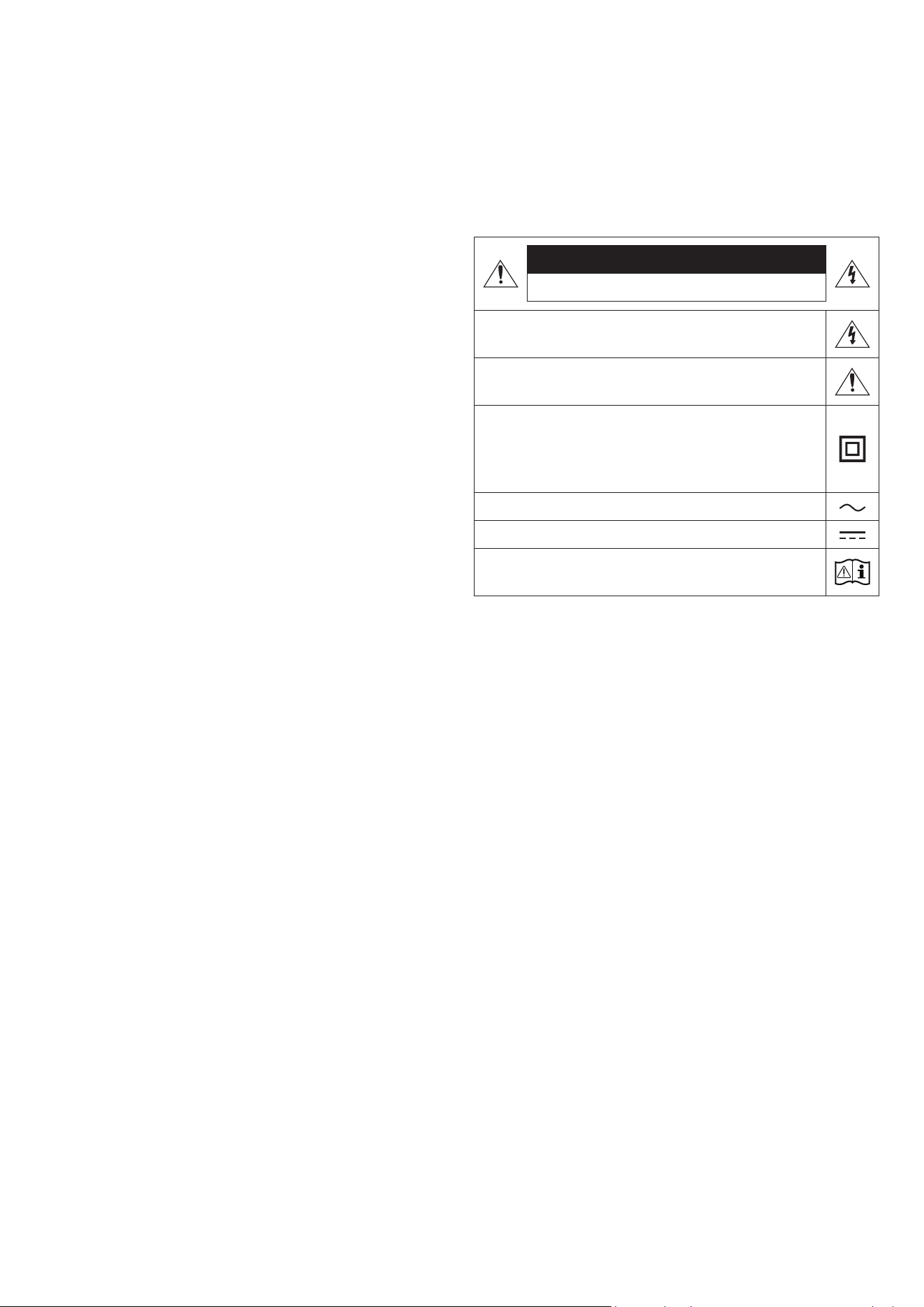
2 - ARA
ةمسلا تامولعم
ةمسلا تاريذحت
.)يفلخلا ءزجلا وأ( ءاطغلا ةلازإب مقت ،ةيئابرهك ةمدصل ضرعتلا رطخ نم دحلل
مايقلا لهؤا دارفا نم بلطا .مدختسا لب
ِ
ق نم ةنايصلل ةلباق ةيلخاد ءازجأ دجوت
.ةنايصلا لامعأ عيمجب
نم كجتنم ع ةدوجوم نوكت دق لا زومرلا حيضوتل هاندأ حضوا لودجلا عجار
.Samsung
هيبنت
.هحتفت .ةيئابرهك ةمدصل ضرعتلا رطخ
ءزج يأ سمت نأ رطخلا نمف .لخادلاب
ٍ
لاع دهج دوجو إ زمرلا اذه شي
.لاكشا نم لكش يأب جتنا اذهب خاد
ليغشتلاب قلعتت ةمهم تاداشرإ مضت مت دق هنأ إ زمرلا اذه شي
.جتنا اذه عم ةنايصلاو
ا
ً
نمآ اصتا بلطتي هنأ إ زمرلا اذه شي :ةيناثلا ةجردلا نم جتنم
.)ضيرأتلا( ضراب ءابرهكلل
نأ بجيف ،ابرهك رايت كلسب د
وزم جتنم ع دوجوم غ زمرلا اذه ناك اذإ
.)ضيرأت( ةيقاو ضرأب نومأم لاصتاب جتنا عتمتي
.ددا رايتلا دهج وه زمرلا اذهب موسوا قا دهجلا :ددا رايتلا دهج
.رمتسا رايتلا دهج وه زمرلا اذهب موسوا قا دهجلا :رمتسا رايتلا دهج
مدختسا ليلد ةءارق إ زمرلا اذه شي :مادختسا تاميلعت عجار .هيبنت
.ةمسلاب ةقلعتا تامولعا نم ديز
ريذحت
.ةبوطرلا وأ رطملل زاهجلا اذه ضرع
ُ
ت ،ةيئابرهك ةمدص وأ قيرح بوشن رطاخم ليلقتل
هيبنت
،ةضيرعلا ةحتفلا عم ةضيرعلا سبقا ةرفش ةقباطمب مق ،ةيئابرهك ةمدص ثودح عن
.لماكلاب اهلخدأ
.ةيقاو ضيرأت ةلصو عم ددم رايت ذخأمب ا
ً
مئاد زاهجلا اذه ليصوت بجي
يئرلا ردصا سبقم نم سباقلا ةلازإ بجي ،يئرلا ردصاب زاهجلا لاصتا عطقل
.ليغشتلل لباق يئرلا ردصا سباق نوكي ثيحب
،لئاوسلاب ةءولمم
ً
ءايشأ عضت .اهب هشر وأ لئاوسلا تارطقل زاهجلا اذه ض
ّ
رعت
.زاهجلا ع ،تايرهزا لثم
،اذل .طئاحلا سبقم نم ابرهكلا رايتلا سباق بحس بجي ،ا
ً
يلك زاهجلا اذه ءافط
.تاقوا عيمج هيلإ لوصولا لهس ابرهكلا رايتلا سباق نوكي نأ بجي

لماكلا ليلدلا
HW-Q700A
تامتحا ليخت
.اذه Samsung جتنم كئال ا
ً
ركش
ع كجتنم ليجست ىجر
ُ
ي ،
ً
امتكا كأ ةمدخ ع لوصحلل
www.samsung.com/register