USER MANUAL
DISPLAY COOLER
Models:
KM- MDR- 1GD- 8C | KM- MDR- 1GD- 10C
KoolMore
Commercial Glass Door Display Cooler

Stay informed with the latest information
for your KoolMore KoolGriddle Appliance.
If you need any assistance or have questions, our customer
support team is here to help.
Updated October 2023
Version: 1.0

SAFETY
Dear Customer,
Thank you for choosing our product. Enclosed in this manual, you will find essential information on
the product's functionality, user guidelines, fault diagnosis, and troubleshooting procedures. For
optimal use and understanding of the product, we recommend that you familiarize yourself with
this manual thoroughly.
Important Safety Instructions:
• Operate the appliance within a voltage range of 97V~130V to avoid electrical damage. Utilize
a voltage stabilizer for the compressor if the supply is below 97V or above 130V, especially
for appliances over 500W, to safeguard the cooler.
• The appliance must be connected to a dedicated single-phase socket with a reliable earth
connection. Do not ground the appliance to water pipes or gas lines.
• Avoid storage of combustible, acidic, or corrosive substances in the cooler; these materials
can cause deterioration and pollution.
• Handle the cooler and its electrical components with care to prevent damage and corrosion.
• If the cooler is not in use for an extended period, disconnect it from power and perform
cleaning maintenance before reuse.
• Should the power cord become damaged, replace it with a specific type from the
manufacturer or an authorized service representative.
• Disconnect the appliance from power before cleaning or when exchanging parts.
• Ensure that the sound pressure level of emitted noise is below 60dB(A).
• Do not store items with flammable propellants inside the appliance.
• Dispose of the appliance in accordance with local environmental regulations. Remove doors
to ensure children cannot become trapped.
Caution:
• Be vigilant of fire risks when storing flammable materials; avoid ignition sources.
• Maintain clear ventilation openings in and around the appliance to prevent overheating.
• Refrain from using unapproved mechanical devices for defrosting.
• Avoid damaging the refrigerant circuit.
• Only use manufacturer-approved electrical devices inside the cooler compartments.
• Operate the cooler within the recommended ambient temperature and humidity levels
specified in the product specifications.
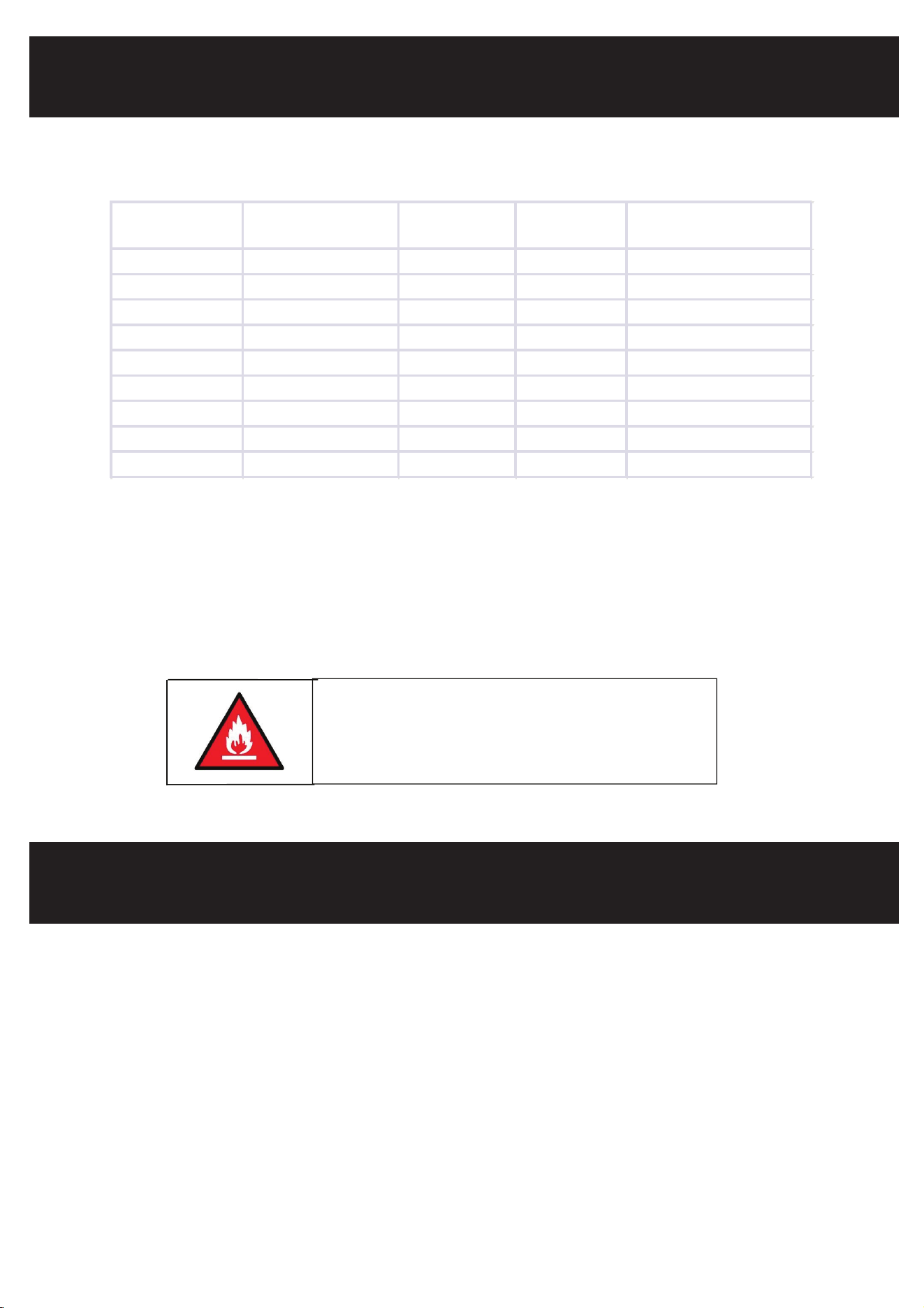
Refrigerant class A3 per ANSI/ASHRAE 34
TEMPERATURE PARAMETERS
TRANSPORTATION
Test room
climate class
Dry bulb
temperature (°F)
Relative
Humidity (%)
Dew point
(°C)
Water vapor mas s in
dry air (gr/lb)
0 68 50 9.3 16.09
1 60.8 80 12.6 20.06
2 73.4 55 14.3 23.81
3 71.6 65 15.2 26.46
4 77 60 16.7 28.22
5 86 55 20 32.63
6 80.6 75 21.1 34.83
7 95 45 23.9 41.45
8 104 70 30 60.19
NOTE: the water vapor mass in dry air is one of the main points influencing the performance and
the energy consumption of the coolers. Therefore, the order of the climate class in the table is
based on the water vapor mass column.
1. Remove packaging and cleanse the cabinet using warm water mixed with 5% neutral soap.
For cleaning glass parts, opt for specific cleaning products, and avoid using water that
contains lime to prevent residue.
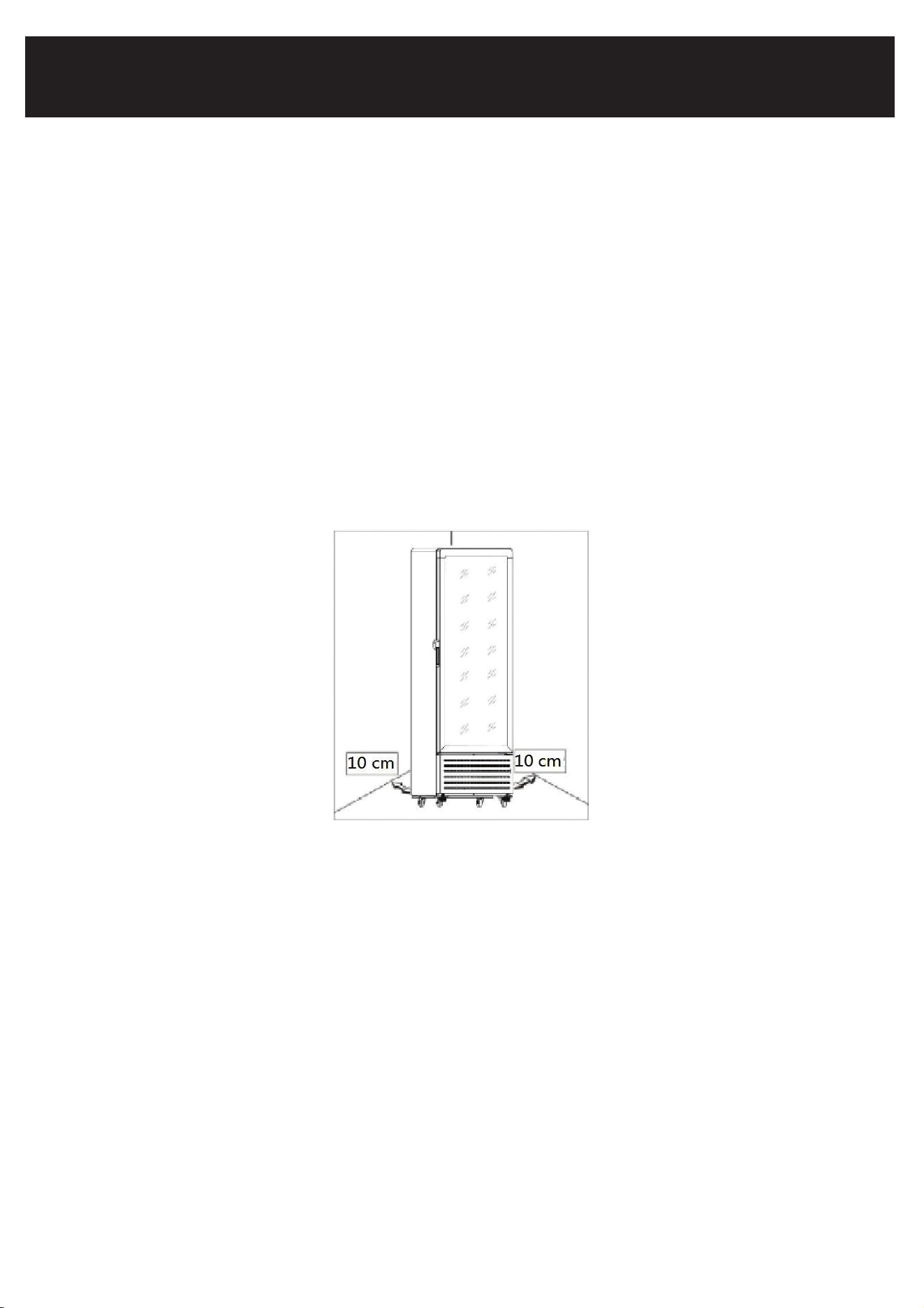
2. Protect the unit from limescale deposits by leaving a gap of at least 10 cm from the wall.
Settle the appliance by adjusting the feet for level stability.
3. Position the cabinet on a completely flat surface, well-distanced from any heat sources,
including direct sunlight.
4. Ensure the appliance is placed indoors and sheltered from rain exposure.
Site Selection
The appliance is intended exclusively for indoor use. Given the glass door, environmental factors
significantly influence its performance. To optimize efficiency, adhere to these recommenda-
tions:
• Avoid proximity to heat sources.
• Do not place near or in the path of air currents from ventilation systems or open windows
and doors.
• Refrain from situating the appliance beneath roof-mounted ventilation.
• Ensure there is ample 'breathing' space around the unit, particularly at the back for adequate
air circulation.
• Do not expose the appliance to direct sunlight.
Ventilation and Safety:
• Maintain clear ventilation for the appliance to prevent obstruction. Install the appliance
away from any structures that could impede airflow.
• Installation should be performed exclusively by certified professionals to mitigate fire risks.
Leveling the Appliance:
• For optimal performance, ensure the appliance is level. Use a spirit level to check both
directions.
• It's advisable to place the spirit level on one of the appliance's shelves for accuracy.
• Proper leveling is crucial to prevent ice build-up due to poor drainage of condensation.
• Adjust the feet as needed to facilitate door opening and condensate drainage.
Cautionary Notes:
• Do not store cream or spray containers, particularly those with flammable propellants,
inside the appliance.
• Flammable materials in aerosol cans should never be stored in the appliance due to explo-
sion risk.
Product Highlights:
• The appliance operates efficiently within a broad voltage range and performs optimally even
above room temperature, due to a well-matched cooling system.
• The contents are visible through the elegant, hollow glass door.
• Insulation is provided by a high-quality polyurethane foam, ensuring the interior remains
chilled and conserves energy.
INSTALLATION
1. Remove packaging and cleanse the cabinet using warm water mixed with 5% neutral soap.
For cleaning glass parts, opt for specific cleaning products, and avoid using water that
contains lime to prevent residue.
2. Protect the unit from limescale deposits by leaving a gap of at least 10 cm from the wall.
Settle the appliance by adjusting the feet for level stability.
3. Position the cabinet on a completely flat surface, well-distanced from any heat sources,
including direct sunlight.
4. Ensure the appliance is placed indoors and sheltered from rain exposure.
Site Selection
The appliance is intended exclusively for indoor use. Given the glass door, environmental factors
significantly influence its performance. To optimize efficiency, adhere to these recommenda-
tions:
• Avoid proximity to heat sources.
• Do not place near or in the path of air currents from ventilation systems or open windows
and doors.
• Refrain from situating the appliance beneath roof-mounted ventilation.
• Ensure there is ample 'breathing' space around the unit, particularly at the back for adequate
air circulation.
• Do not expose the appliance to direct sunlight.
Ventilation and Safety:
• Maintain clear ventilation for the appliance to prevent obstruction. Install the appliance
away from any structures that could impede airflow.
• Installation should be performed exclusively by certified professionals to mitigate fire risks.
Leveling the Appliance:
• For optimal performance, ensure the appliance is level. Use a spirit level to check both
directions.
• It's advisable to place the spirit level on one of the appliance's shelves for accuracy.
• Proper leveling is crucial to prevent ice build-up due to poor drainage of condensation.
• Adjust the feet as needed to facilitate door opening and condensate drainage.
Cautionary Notes:
• Do not store cream or spray containers, particularly those with flammable propellants,
inside the appliance.
• Flammable materials in aerosol cans should never be stored in the appliance due to explo-
sion risk.
Product Highlights:
• The appliance operates efficiently within a broad voltage range and performs optimally even
above room temperature, due to a well-matched cooling system.
• The contents are visible through the elegant, hollow glass door.
• Insulation is provided by a high-quality polyurethane foam, ensuring the interior remains
chilled and conserves energy.
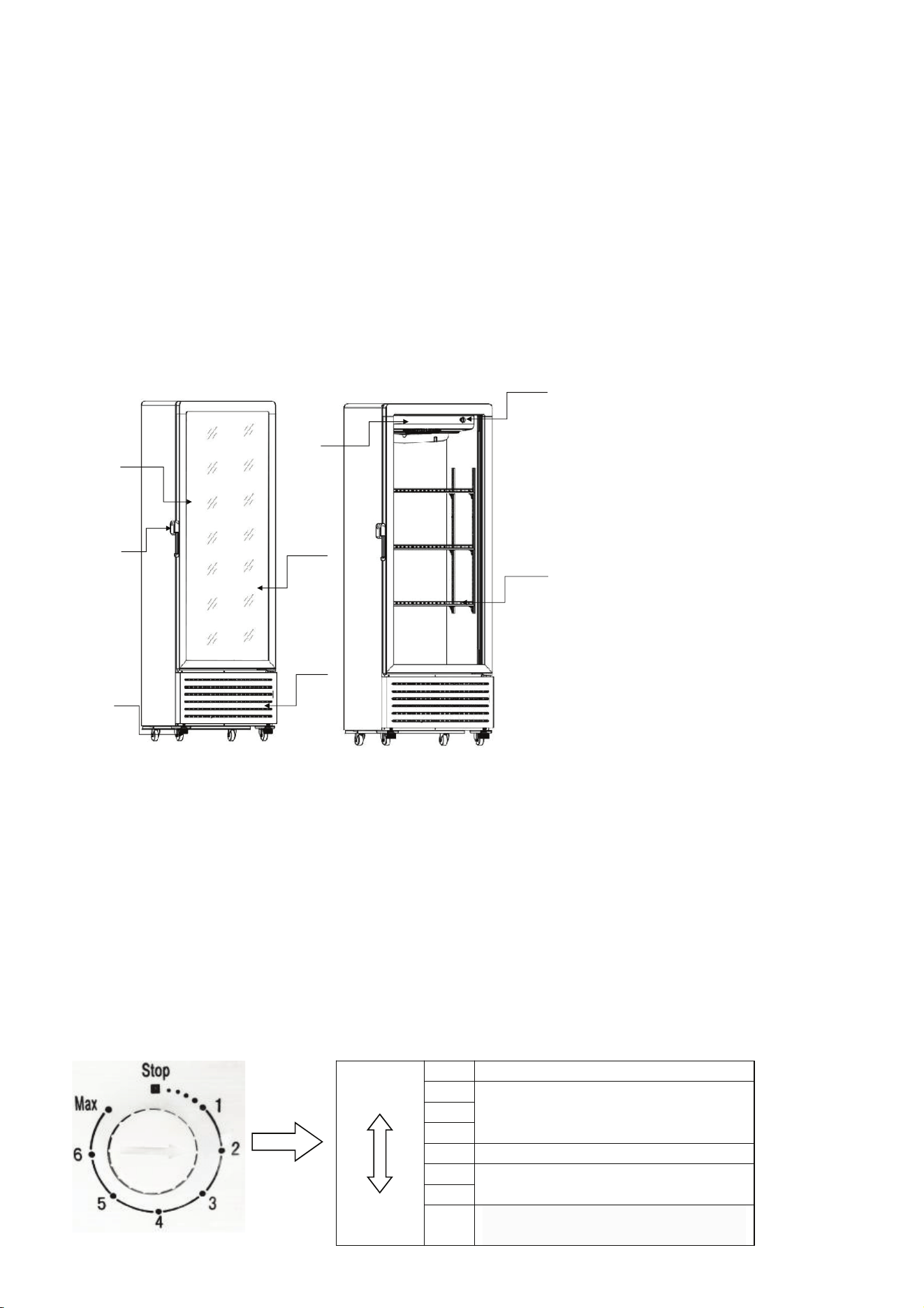
COLD
COLDEST
Stop Product will cease to work
1
When the user does not need a colder
temperature
2
3
4
When in normal use
5
When the user needs a colder
temperature
6
MAX
When the user needs a coldest
temperature
Details of Product
Temperature
control knob
Evaporator
Cabinet
Lock
Glass door
Shelf
Panel
Foot
1. Remove packaging and cleanse the cabinet using warm water mixed with 5% neutral soap.
For cleaning glass parts, opt for specific cleaning products, and avoid using water that
contains lime to prevent residue.
2. Protect the unit from limescale deposits by leaving a gap of at least 10 cm from the wall.
Settle the appliance by adjusting the feet for level stability.
3. Position the cabinet on a completely flat surface, well-distanced from any heat sources,
including direct sunlight.
4. Ensure the appliance is placed indoors and sheltered from rain exposure.
Site Selection
The appliance is intended exclusively for indoor use. Given the glass door, environmental factors
significantly influence its performance. To optimize efficiency, adhere to these recommenda-
tions:
• Avoid proximity to heat sources.
• Do not place near or in the path of air currents from ventilation systems or open windows
and doors.
• Refrain from situating the appliance beneath roof-mounted ventilation.
• Ensure there is ample 'breathing' space around the unit, particularly at the back for adequate
air circulation.
• Do not expose the appliance to direct sunlight.
Ventilation and Safety:
• Maintain clear ventilation for the appliance to prevent obstruction. Install the appliance
away from any structures that could impede airflow.
• Installation should be performed exclusively by certified professionals to mitigate fire risks.
Leveling the Appliance:
• For optimal performance, ensure the appliance is level. Use a spirit level to check both
directions.
• It's advisable to place the spirit level on one of the appliance's shelves for accuracy.
• Proper leveling is crucial to prevent ice build-up due to poor drainage of condensation.
• Adjust the feet as needed to facilitate door opening and condensate drainage.
Cautionary Notes:
• Do not store cream or spray containers, particularly those with flammable propellants,
inside the appliance.
• Flammable materials in aerosol cans should never be stored in the appliance due to explo-
sion risk.
Product Highlights:
• The appliance operates efficiently within a broad voltage range and performs optimally even
above room temperature, due to a well-matched cooling system.
• The contents are visible through the elegant, hollow glass door.
• Insulation is provided by a high-quality polyurethane foam, ensuring the interior remains
chilled and conserves energy.
Note: Innovations in technology may result in slight variations between the actual product and the
descriptions provided in this manual. The specifications listed are consistent with the materials used.
Adjusting the Temperature Control Knob
1. Adjust the interior temperature of the cabinet using the temperature control knob.
2. Normally, the knob should be positioned upright to set the temperature.
3. If the knob is stiff and difficult to turn back to its original setting, a coin or similar tool can be
used to slot into the groove for easier adjustment.
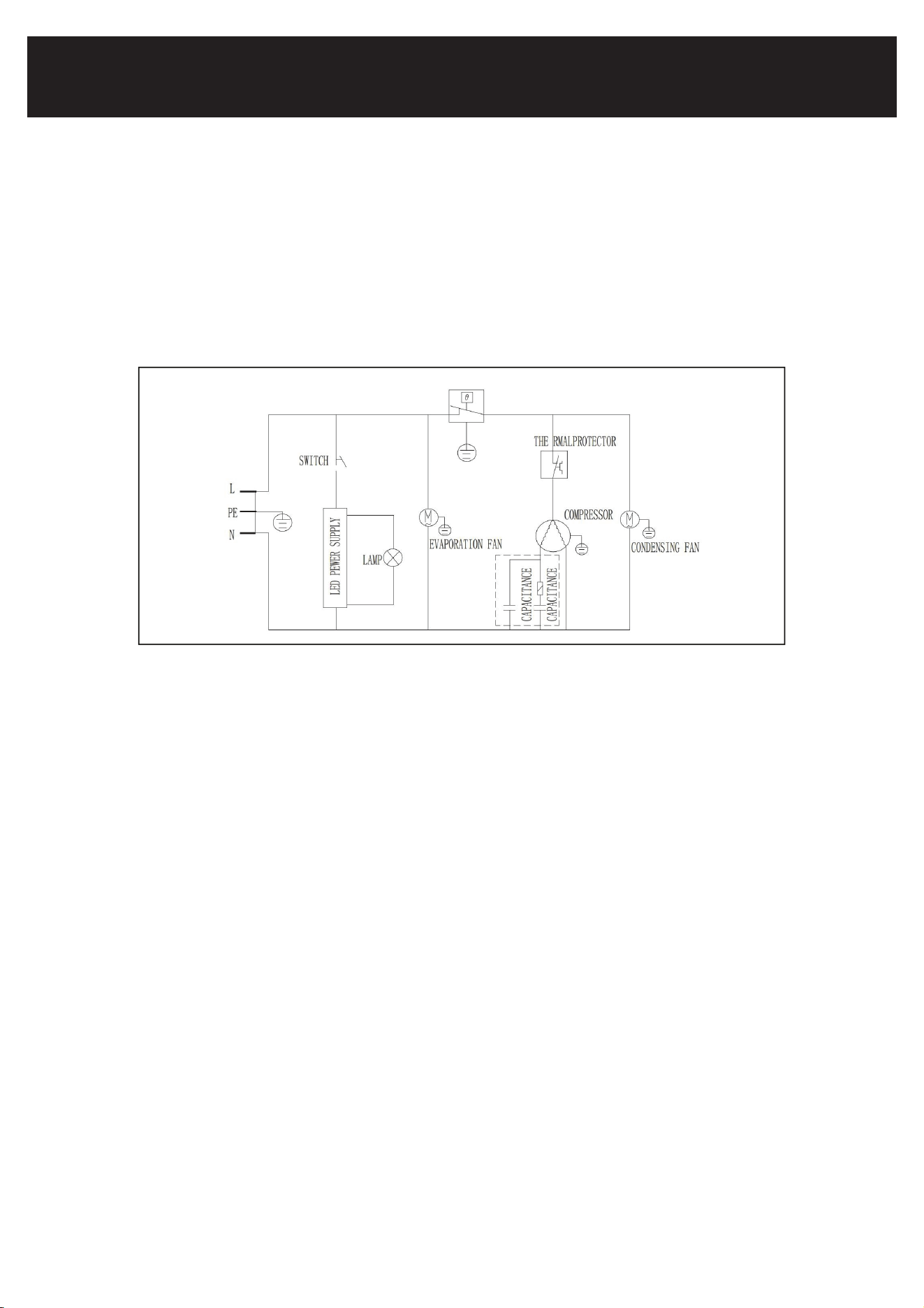
Electronic diagram
ELECTRICAL
Electrical Connection
Note: Limit the cooler's operation in the MAX (coldest) setting to no more than 24 hours
consecutively. Afterwards, turn the knob back to a normal setting.
• Grounding Caution: Never remove or modify the grounding prong of the power cord.
• Inverter Use: This appliance is incompatible with inverters. Secure the power cord to
prevent tripping hazards.
• Unplugging Protocol: Detach the power cord by gripping the plug and pulling it directly from
the outlet, not by tugging on the cord.
• Extension Cord Warning: Refrain from using extension cords. If the power cord does not
reach, seek professional installation of a nearer outlet.
• Damaged Plug Handling: In case of a damaged plug, seek immediate replacement from a
certified service center to prevent electrical shock.
Safety Precautions
• Cooling Circuit Integrity: Avoid damaging the cooling circuit; such damage could
compromise the appliance.
• Internal Use: Do not store electronic devices inside the appliance's food storage
compartments.
• Supervision for Children: The appliance should not be operated by children without adult
guidance.
• Ventilation Maintenance: Ensure adequate ventilation around the appliance to prevent
overheating.
• Building Regulations Compliance: Installation of this appliance should adhere to local
building regulations.
• Proper Installation Space: Install the appliance in a room that satisfies the required
ventilation conditions.

Warning and Safety Guidelines
Open Flame Proximity: The appliance must not be placed in locations where open flames are
used or near ignition sources like active heaters.
Odor-Free Requirement: The refrigerant within should not emit any odor to suggest leakage or
chemical damage.
Mechanical Damage Prevention: Ensure the appliance is safeguarded from mechanical
impacts that could cause refrigerant leaks. Any servicing or repairs must be conducted by a
certified technician with a current valid certificate from an industry-accredited assessment
authority, as per established safety standards.
Servicing and Maintenance
Authorized Servicing: Servicing and refilling of the appliance with refrigerants must be
performed by qualified personnel, following the manufacturer’s guidelines and under the
supervision of someone skilled in handling flammable refrigerants.
Component Replacement: Replace parts only with manufacturer-approved components to
minimize fire risks due to incorrect installation.
Operational Safety
Qualified Technicians: Only individuals certified in handling refrigerants should perform work
on refrigerant circuits to ensure compliance with safety regulations.
Reduced Physical, Sensory, or Mental Capabilities: This appliance should not be used by
individuals with reduced capabilities or a lack of experience and knowledge unless they are
under direct supervision of a responsible adult.
Disposal and Damage
Disposal Instructions: Follow local regulations when disposing of the appliance, especially if it
contains flammable blowing gases.
Cord Damage: If the power cord is damaged, have it replaced by the manufacturer or an
authorized service agent.
Usage Specifications
Intended Use: The appliance is designed for household and similar applications, including
office and working environments, farmhouses, by clients in hotels and motels, and in catering
scenarios.
Standards and Compliance
Installation in Public Areas: Avoid installing the appliance in public corridors or lobbies.
Compliance with Standards: Adhere to the AS/NZS ISO/IEC 17065 standard for refrigeration
appliances.
Operational Checks
Environmental Effects: Regular checks are essential to ensure the appliance is not adversely
affected by environmental factors such as excess heat or moisture.
Technician Briefing: Technicians must be well-informed on all aspects of the appliance prior
to performing any servicing, ensuring all safety protocols are adhered to.
Pre-use Analysis: Prior to using recovered refrigerant, confirm the availability of electrical
power and ensure a complete case analysis has been conducted.
Decommissioning Safety: When decommissioning or servicing, disconnect electrical power
and ensure all personnel follow safety guidelines for handling refrigerants.
Handling Instructions: Adhere to provided instructions for the safe recovery of refrigerants,
including the use of appropriate cylinders for recovery and ensuring proper waste transfer.
Avoid mixing different refrigerants.
Load Limits: Be aware of the maximum refrigerant load per cylinder and adhere strictly to
these limits to ensure safety.
Area Awareness: Those working nearby must be informed about the nature of work and
potential hazards. Confined spaces should be avoided during maintenance.
Fire Prevention: Keep fire-fighting equipment, such as dry chemical or CO2 fire extinguishers,
close to the work area.
Ignition Source Control: When working on refrigeration systems, eliminate potential ignition
sources to prevent fires or explosions. Maintain a well-ventilated area and display 'No
Smoking' signs.
Toxic Substance Precautions: Utilize appropriate refrigerant detectors and ensure the work
area is free from flammable atmospheres and toxic substances. Check for leaks diligently.
Ventilation During Work: Maintain continuous ventilation during any work to disperse any
potentially harmful vapors.
Work Area Setup: Ensure the work area is fit for purpose, with all necessary maintenance and
service guidelines followed. Consult the manufacturer for technical assistance if unsure.
Usage and Maintenance
Safe Operation: Never exceed the appliance's recommended tilt angle when moving it. Ensure
food is not stored until the cooler returns to an upright position and reaches a stable
temperature.
Power Cord Care: Inspect the power cord for damage before use. If damaged, have it replaced
by an authorized service agent.
Environmental Considerations: Consider environmental effects such
as ambient temperature and humidity when placing the cooler, and avoid direct sunlight.
Operational Recommendations: To save energy and maintain cooler efficiency, do not
frequently open and close the door. Additionally, allow sufficient time for the appliance to
achieve the desired temperature before restocking.
Cleaning Guidance: For optimal performance and hygiene, clean the cooler with a soft cloth
moistened with neutral detergent. Allow for a periodic defrost cycle to maintain efficiency.
Before cleaning, always disconnect the unit from the power source to ensure safety.
Cleaning Procedures
To clean the internal plastic parts of the unit, use a mild soap solution mixed with water. Avoid
the use of harsh chemical detergents that could dull the finish or warp the plastic. Similarly,
refrain from using strong chemicals on metallic surfaces as this could damage the paint and
compromise the unit's sanitary condition.
For minor operational issues, consult the provided troubleshooting list. It offers solutions to
common problems that may arise during the use of the unit.

Warning and Safety Guidelines
Open Flame Proximity: The appliance must not be placed in locations where open flames are
used or near ignition sources like active heaters.
Odor-Free Requirement: The refrigerant within should not emit any odor to suggest leakage or
chemical damage.
Mechanical Damage Prevention: Ensure the appliance is safeguarded from mechanical
impacts that could cause refrigerant leaks. Any servicing or repairs must be conducted by a
certified technician with a current valid certificate from an industry-accredited assessment
authority, as per established safety standards.
Servicing and Maintenance
Authorized Servicing: Servicing and refilling of the appliance with refrigerants must be
performed by qualified personnel, following the manufacturer’s guidelines and under the
supervision of someone skilled in handling flammable refrigerants.
Component Replacement: Replace parts only with manufacturer-approved components to
minimize fire risks due to incorrect installation.
Operational Safety
Qualified Technicians: Only individuals certified in handling refrigerants should perform work
on refrigerant circuits to ensure compliance with safety regulations.
Reduced Physical, Sensory, or Mental Capabilities: This appliance should not be used by
individuals with reduced capabilities or a lack of experience and knowledge unless they are
under direct supervision of a responsible adult.
Disposal and Damage
Disposal Instructions: Follow local regulations when disposing of the appliance, especially if it
contains flammable blowing gases.
Cord Damage: If the power cord is damaged, have it replaced by the manufacturer or an
authorized service agent.
Usage Specifications
Intended Use: The appliance is designed for household and similar applications, including
office and working environments, farmhouses, by clients in hotels and motels, and in catering
scenarios.
Standards and Compliance
Installation in Public Areas: Avoid installing the appliance in public corridors or lobbies.
Compliance with Standards: Adhere to the AS/NZS ISO/IEC 17065 standard for refrigeration
appliances.
Operational Checks
Environmental Effects: Regular checks are essential to ensure the appliance is not adversely
affected by environmental factors such as excess heat or moisture.
Technician Briefing: Technicians must be well-informed on all aspects of the appliance prior
to performing any servicing, ensuring all safety protocols are adhered to.
Pre-use Analysis: Prior to using recovered refrigerant, confirm the availability of electrical
power and ensure a complete case analysis has been conducted.
Decommissioning Safety: When decommissioning or servicing, disconnect electrical power
and ensure all personnel follow safety guidelines for handling refrigerants.
Handling Instructions: Adhere to provided instructions for the safe recovery of refrigerants,
including the use of appropriate cylinders for recovery and ensuring proper waste transfer.
Avoid mixing different refrigerants.
Load Limits: Be aware of the maximum refrigerant load per cylinder and adhere strictly to
these limits to ensure safety.
Area Awareness: Those working nearby must be informed about the nature of work and
potential hazards. Confined spaces should be avoided during maintenance.
Fire Prevention: Keep fire-fighting equipment, such as dry chemical or CO2 fire extinguishers,
close to the work area.
Ignition Source Control: When working on refrigeration systems, eliminate potential ignition
sources to prevent fires or explosions. Maintain a well-ventilated area and display 'No
Smoking' signs.
Toxic Substance Precautions: Utilize appropriate refrigerant detectors and ensure the work
area is free from flammable atmospheres and toxic substances. Check for leaks diligently.
Ventilation During Work: Maintain continuous ventilation during any work to disperse any
potentially harmful vapors.
Work Area Setup: Ensure the work area is fit for purpose, with all necessary maintenance and
service guidelines followed. Consult the manufacturer for technical assistance if unsure.
Usage and Maintenance
Safe Operation: Never exceed the appliance's recommended tilt angle when moving it. Ensure
food is not stored until the cooler returns to an upright position and reaches a stable
temperature.
Power Cord Care: Inspect the power cord for damage before use. If damaged, have it replaced
by an authorized service agent.
Environmental Considerations: Consider environmental effects such
as ambient temperature and humidity when placing the cooler, and avoid direct sunlight.
Operational Recommendations: To save energy and maintain cooler efficiency, do not
frequently open and close the door. Additionally, allow sufficient time for the appliance to
achieve the desired temperature before restocking.
Cleaning Guidance: For optimal performance and hygiene, clean the cooler with a soft cloth
moistened with neutral detergent. Allow for a periodic defrost cycle to maintain efficiency.
Before cleaning, always disconnect the unit from the power source to ensure safety.
Cleaning Procedures
To clean the internal plastic parts of the unit, use a mild soap solution mixed with water. Avoid
the use of harsh chemical detergents that could dull the finish or warp the plastic. Similarly,
refrain from using strong chemicals on metallic surfaces as this could damage the paint and
compromise the unit's sanitary condition.
For minor operational issues, consult the provided troubleshooting list. It offers solutions to
common problems that may arise during the use of the unit.

Warning and Safety Guidelines
Open Flame Proximity: The appliance must not be placed in locations where open flames are
used or near ignition sources like active heaters.
Odor-Free Requirement: The refrigerant within should not emit any odor to suggest leakage or
chemical damage.
Mechanical Damage Prevention: Ensure the appliance is safeguarded from mechanical
impacts that could cause refrigerant leaks. Any servicing or repairs must be conducted by a
certified technician with a current valid certificate from an industry-accredited assessment
authority, as per established safety standards.
Servicing and Maintenance
Authorized Servicing: Servicing and refilling of the appliance with refrigerants must be
performed by qualified personnel, following the manufacturer’s guidelines and under the
supervision of someone skilled in handling flammable refrigerants.
Component Replacement: Replace parts only with manufacturer-approved components to
minimize fire risks due to incorrect installation.
Operational Safety
Qualified Technicians: Only individuals certified in handling refrigerants should perform work
on refrigerant circuits to ensure compliance with safety regulations.
Reduced Physical, Sensory, or Mental Capabilities: This appliance should not be used by
individuals with reduced capabilities or a lack of experience and knowledge unless they are
under direct supervision of a responsible adult.
Disposal and Damage
Disposal Instructions: Follow local regulations when disposing of the appliance, especially if it
contains flammable blowing gases.
Cord Damage: If the power cord is damaged, have it replaced by the manufacturer or an
authorized service agent.
Usage Specifications
Intended Use: The appliance is designed for household and similar applications, including
office and working environments, farmhouses, by clients in hotels and motels, and in catering
scenarios.
Standards and Compliance
Installation in Public Areas: Avoid installing the appliance in public corridors or lobbies.
Compliance with Standards: Adhere to the AS/NZS ISO/IEC 17065 standard for refrigeration
appliances.
Operational Checks
Environmental Effects: Regular checks are essential to ensure the appliance is not adversely
affected by environmental factors such as excess heat or moisture.
Technician Briefing: Technicians must be well-informed on all aspects of the appliance prior
to performing any servicing, ensuring all safety protocols are adhered to.
Pre-use Analysis: Prior to using recovered refrigerant, confirm the availability of electrical
power and ensure a complete case analysis has been conducted.
Decommissioning Safety: When decommissioning or servicing, disconnect electrical power
and ensure all personnel follow safety guidelines for handling refrigerants.
Handling Instructions: Adhere to provided instructions for the safe recovery of refrigerants,
including the use of appropriate cylinders for recovery and ensuring proper waste transfer.
Avoid mixing different refrigerants.
Load Limits: Be aware of the maximum refrigerant load per cylinder and adhere strictly to
these limits to ensure safety.
Area Awareness: Those working nearby must be informed about the nature of work and
potential hazards. Confined spaces should be avoided during maintenance.
Fire Prevention: Keep fire-fighting equipment, such as dry chemical or CO2 fire extinguishers,
close to the work area.
Ignition Source Control: When working on refrigeration systems, eliminate potential ignition
sources to prevent fires or explosions. Maintain a well-ventilated area and display 'No
Smoking' signs.
Toxic Substance Precautions: Utilize appropriate refrigerant detectors and ensure the work
area is free from flammable atmospheres and toxic substances. Check for leaks diligently.
Ventilation During Work: Maintain continuous ventilation during any work to disperse any
potentially harmful vapors.
Work Area Setup: Ensure the work area is fit for purpose, with all necessary maintenance and
service guidelines followed. Consult the manufacturer for technical assistance if unsure.
Usage and Maintenance
Safe Operation: Never exceed the appliance's recommended tilt angle when moving it. Ensure
food is not stored until the cooler returns to an upright position and reaches a stable
temperature.
Power Cord Care: Inspect the power cord for damage before use. If damaged, have it replaced
by an authorized service agent.
Environmental Considerations: Consider environmental effects such
as ambient temperature and humidity when placing the cooler, and avoid direct sunlight.
Operational Recommendations: To save energy and maintain cooler efficiency, do not
frequently open and close the door. Additionally, allow sufficient time for the appliance to
achieve the desired temperature before restocking.
Cleaning Guidance: For optimal performance and hygiene, clean the cooler with a soft cloth
moistened with neutral detergent. Allow for a periodic defrost cycle to maintain efficiency.
Before cleaning, always disconnect the unit from the power source to ensure safety.
Cleaning Procedures
To clean the internal plastic parts of the unit, use a mild soap solution mixed with water. Avoid
the use of harsh chemical detergents that could dull the finish or warp the plastic. Similarly,
refrain from using strong chemicals on metallic surfaces as this could damage the paint and
compromise the unit's sanitary condition.
For minor operational issues, consult the provided troubleshooting list. It offers solutions to
common problems that may arise during the use of the unit.
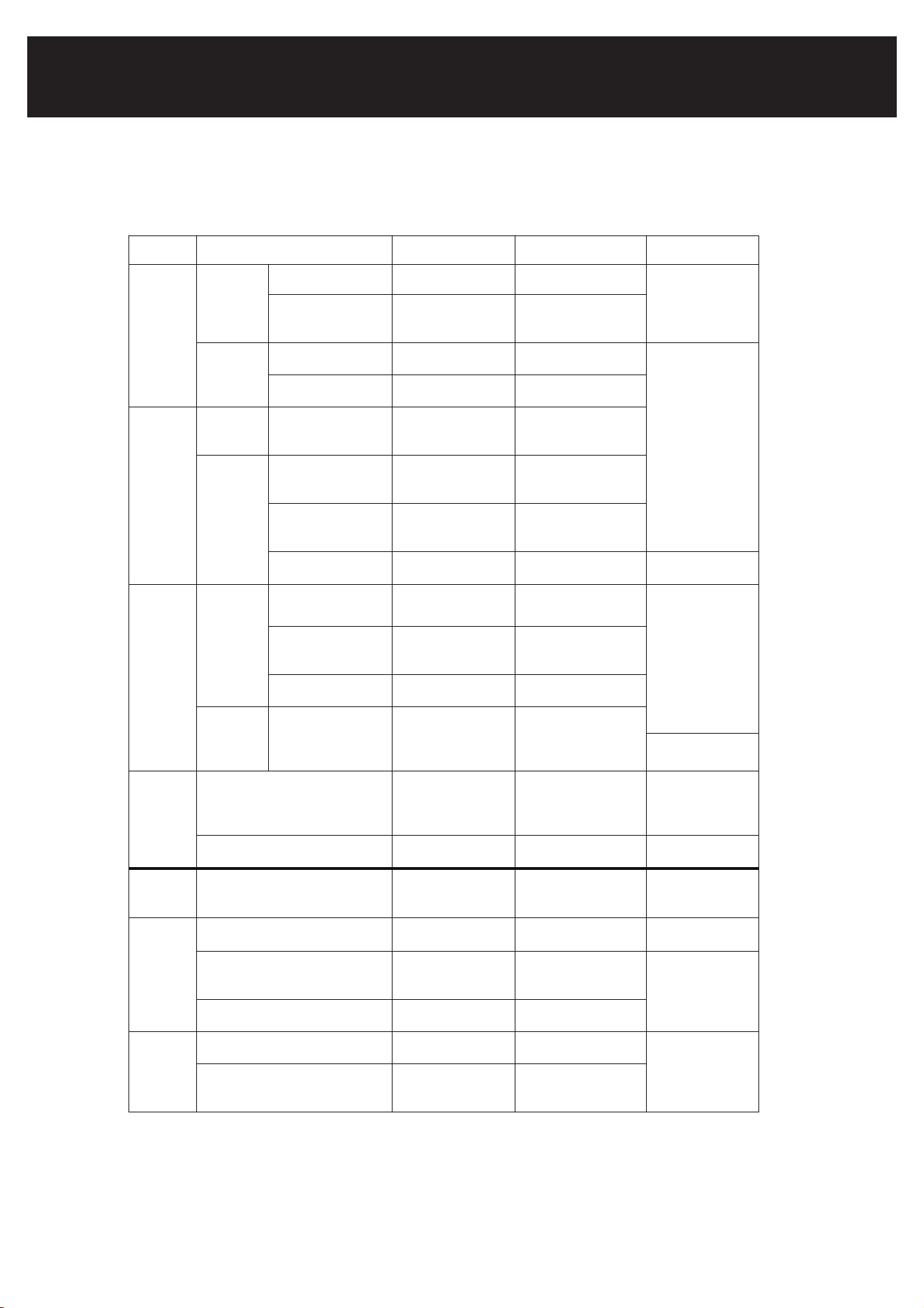
Trouble Reason Check Solution Remark
Lamp
not lighting
No voltage
Fuse breaking off Check fuse Change fuse
Ask professional to
maintain.
Poor conn ection
between the plug and
socket
The connection lease
or not
Repair or change socket
Have voltage
lamp has poor contact
or worn down
Check the circuit and
lamp
Tighten the connection
or change a new lamp
Ask professional to
maintain.
Lamp switch has poor
contact
Check the switch
Tighten the con nection
or change a new switch
Condenser
fan
Not running
Compressor
works
orderly
Condenser fan broken
down
Remove condenser fan Change condenser fan
Compressor
does not
work
Thermostat i s not set
to the work position
Check the position of
the thermostat knob
Revolve the thermostat
knob to the operating
position
Thermostat termina l is
not connected
properly
Check the thermostat
terminal
Reconnect the terminal
The thermostat is
worn down.
Check the thermostat Change the thermostat
Ask professional to
ma
intain.
Continuous
operating
Temperature
is too high
inside of the
cabinet
Open the door too
frequently
/
Open the door as little
as possible
Ask professional to
maintain.
Too much storage
The circulation of
cooling air has been
affected
Take out part of the
storage
Leakage of refrigerant.
/
Repair at a qualified
service center
Temperature
is too low
inside the
cabinet.
Thermostat does n o t
work properly
Check the thermostat Change the thermostat
Ask professional to
mainta
in.
Noise
Cooler isn’t placed levelly
Check if the four
wheels adjusted to the
same level and
touching the ground
Adjust the wheels
Ask professional to
maintain
Fixing screws of compressor or
condenser are loose
Screws f i xed tightly or
not
Tighten the screws
Ask professional to
maintain.
Compressor or fan defective
Check the Compressor
or fan
Ask help of professional
to repair.
Ask help of
professional to
repair.
Condenser
fan is
working, but
the
compressor
doesn’t
operate
The plug of starter or heat relay is
loose
Check the starter and
heat relay
Install the starter or
heat relay
Ask professional to
maintain.
Compressor defective
Check the resistance
of compress o r CSM
terminal
Change new compressor
Ask professional to
maintain.
Voltage is lower than 97V
or higher
than 130V
Check the input
Voltage
Use a voltage stabilizer
Evaporator
fan
Not running
Fan switch defective
Check the resistance
of switch
Change the switch
Ask professional to
maintain
Fan switch terminal is not con nected
properly
Check the circuit of the
fan switch
Connect the switch
terminal or change a
new terminal
TROUBLESHOOTING GUIDE
Warning and Safety Guidelines
Open Flame Proximity: The appliance must not be placed in locations where open flames are
used or near ignition sources like active heaters.
Odor-Free Requirement: The refrigerant within should not emit any odor to suggest leakage or
chemical damage.
Mechanical Damage Prevention: Ensure the appliance is safeguarded from mechanical
impacts that could cause refrigerant leaks. Any servicing or repairs must be conducted by a
certified technician with a current valid certificate from an industry-accredited assessment
authority, as per established safety standards.
Servicing and Maintenance
Authorized Servicing: Servicing and refilling of the appliance with refrigerants must be
performed by qualified personnel, following the manufacturer’s guidelines and under the
supervision of someone skilled in handling flammable refrigerants.
Component Replacement: Replace parts only with manufacturer-approved components to
minimize fire risks due to incorrect installation.
Operational Safety
Qualified Technicians: Only individuals certified in handling refrigerants should perform work
on refrigerant circuits to ensure compliance with safety regulations.
Reduced Physical, Sensory, or Mental Capabilities: This appliance should not be used by
individuals with reduced capabilities or a lack of experience and knowledge unless they are
under direct supervision of a responsible adult.
Disposal and Damage
Disposal Instructions: Follow local regulations when disposing of the appliance, especially if it
contains flammable blowing gases.
Cord Damage: If the power cord is damaged, have it replaced by the manufacturer or an
authorized service agent.
Usage Specifications
Intended Use: The appliance is designed for household and similar applications, including
office and working environments, farmhouses, by clients in hotels and motels, and in catering
scenarios.
Standards and Compliance
Installation in Public Areas: Avoid installing the appliance in public corridors or lobbies.
Compliance with Standards: Adhere to the AS/NZS ISO/IEC 17065 standard for refrigeration
appliances.
Operational Checks
Environmental Effects: Regular checks are essential to ensure the appliance is not adversely
affected by environmental factors such as excess heat or moisture.
Technician Briefing: Technicians must be well-informed on all aspects of the appliance prior
to performing any servicing, ensuring all safety protocols are adhered to.
Pre-use Analysis: Prior to using recovered refrigerant, confirm the availability of electrical
power and ensure a complete case analysis has been conducted.
Decommissioning Safety: When decommissioning or servicing, disconnect electrical power
and ensure all personnel follow safety guidelines for handling refrigerants.
Handling Instructions: Adhere to provided instructions for the safe recovery of refrigerants,
including the use of appropriate cylinders for recovery and ensuring proper waste transfer.
Avoid mixing different refrigerants.
Load Limits: Be aware of the maximum refrigerant load per cylinder and adhere strictly to
these limits to ensure safety.
Area Awareness: Those working nearby must be informed about the nature of work and
potential hazards. Confined spaces should be avoided during maintenance.
Fire Prevention: Keep fire-fighting equipment, such as dry chemical or CO2 fire extinguishers,
close to the work area.
Ignition Source Control: When working on refrigeration systems, eliminate potential ignition
sources to prevent fires or explosions. Maintain a well-ventilated area and display 'No
Smoking' signs.
Toxic Substance Precautions: Utilize appropriate refrigerant detectors and ensure the work
area is free from flammable atmospheres and toxic substances. Check for leaks diligently.
Ventilation During Work: Maintain continuous ventilation during any work to disperse any
potentially harmful vapors.
Work Area Setup: Ensure the work area is fit for purpose, with all necessary maintenance and
service guidelines followed. Consult the manufacturer for technical assistance if unsure.
Usage and Maintenance
Safe Operation: Never exceed the appliance's recommended tilt angle when moving it. Ensure
food is not stored until the cooler returns to an upright position and reaches a stable
temperature.
Power Cord Care: Inspect the power cord for damage before use. If damaged, have it replaced
by an authorized service agent.
Environmental Considerations: Consider environmental effects such
as ambient temperature and humidity when placing the cooler, and avoid direct sunlight.
Operational Recommendations: To save energy and maintain cooler efficiency, do not
frequently open and close the door. Additionally, allow sufficient time for the appliance to
achieve the desired temperature before restocking.
Cleaning Guidance: For optimal performance and hygiene, clean the cooler with a soft cloth
moistened with neutral detergent. Allow for a periodic defrost cycle to maintain efficiency.
Before cleaning, always disconnect the unit from the power source to ensure safety.
Cleaning Procedures
To clean the internal plastic parts of the unit, use a mild soap solution mixed with water. Avoid
the use of harsh chemical detergents that could dull the finish or warp the plastic. Similarly,
refrain from using strong chemicals on metallic surfaces as this could damage the paint and
compromise the unit's sanitary condition.
Notice: The following are not trouble but common phenomena:
• Sound, the refrigerant flows inside the cooler.
• Compressor and condenser become hot.
• If the ambient humidity is high, there may be dewdrop on the surface, please use soft and dry cloth to clean in
time.
For minor operational issues, consult the provided troubleshooting list. It offers solutions to
common problems that may arise during the use of the unit.

LIMITED WARRANTY
Koolmore Supply, Inc. extends a limited warranty to the original purchaser, guaranteeing that this Koolmore
product is free from manufacturing defects in material or workmanship for one year from the date of
purchase.
Should you discover any such defect within the warranty period, Koolmore Supply, Inc., reserves the right to
repair or replace the product without charge, or to cover the cost of replacement parts and repair labor needed
to correct defects present at the time of purchase or resulting from regular usage, when the appliance has been
installed, operated, and maintained as per the instructions provided.
At its sole discretion, Koolmore Supply Inc. may decide to replace the product. In such an event, your replace-
ment appliance will carry the wa
rranty for the remaining term of the original unit's warranty period.
This warranty is valid exclusively to the original purchaser of the product and only applicable within the United
States. The warranty commences from the date of original consumer purchase. Proof of the original purchase
date will be required to obtain service under this warranty.
Under this limited warranty, your sole and exclusive remedy will be product repair, as outlined above. All
services must be provided by a Koolmore-designated service company.
To claim warranty or request repair service:
Email support@koolmore.com. Please include your name, address, phone number, warranty repair request,
and a copy of your proof of purchase receipt. Alternatively, visit koolmore.com and use the contact us
page. A
Koolmore customer service representative will promptly arrange service for your appliance.
We thank you for choosing Koolmore.
WARRANTY EXCLUSIONS
This limited warranty will not cover:
1. Failure of the product to perform during power failures or interruptions,
or due to inadequate electrical service.
2. Damage incurred during transportation or handling.
3. Damage caused by accidents, vermin, lightning, winds, fire, floods, or acts of God.
4. Damage resulting from accidents, alterations, misuse, abuse, improper installation, repair, or mainte-
nance. This includes using any external device that alters or converts the voltage or frequency of
electricity.
5. Unauthorized product modifications, repairs by unauthorized centers, or use of non-approved
replacement parts.
6. Abnormal cleaning and maintenance not aligned with the user's manual.
7. Use of incompatible accessories or components.
8. Any costs associated with repairs or replacements under these excluded circumstances shall be the
responsibility of the consumer.
WARRANTY