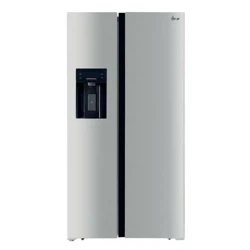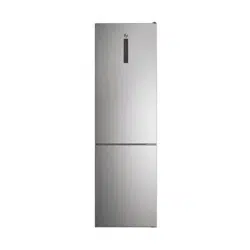
User Instruction
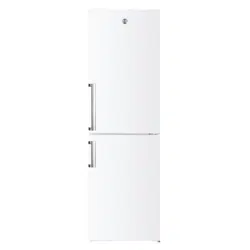
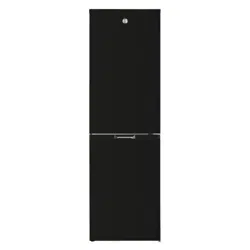
Combi Fridge Freezer
No-Frost
Content
1. Safety Information
Page 1~9
2. Overview
Page 10~11
3. Installation
Page 12~16
4.User Control Panel
Page 17~19
5. Daily Use
Page 20~25
!
"
#$
#
#
%
1
&'
%
(
)
)
&
'
)
&'
)
*
*'
2
)!
&+(,--'
)
(
(
.
/
(
0
(
0
( 0
( (
5
)
(
3
.&
'
34
3
*'
4
6
71
.
1
7
)
8
#
)"
/
/"
.!
)
)
*'
4
("
"
*'
.
+
)""
"
!
*'
*'
*'"
2'(
9
#
#
: 0
;
("(&
'
("(
*'
"("
5
=
)>
)>
<
*'
+!
2'
*'"
2'(
9(((&
'
"
<
)
+
6
.1
5
&('
7
.
1
"
#
)
0
)
0
7
&'0
7
"
?
.
!
&'0
)&'10
)&'0
)!
0
1
=
1
All accessories, such as drawers, shelves
balconies, should be kept there for lower energy
consumption.
8
)
6
6
)
* )
2#
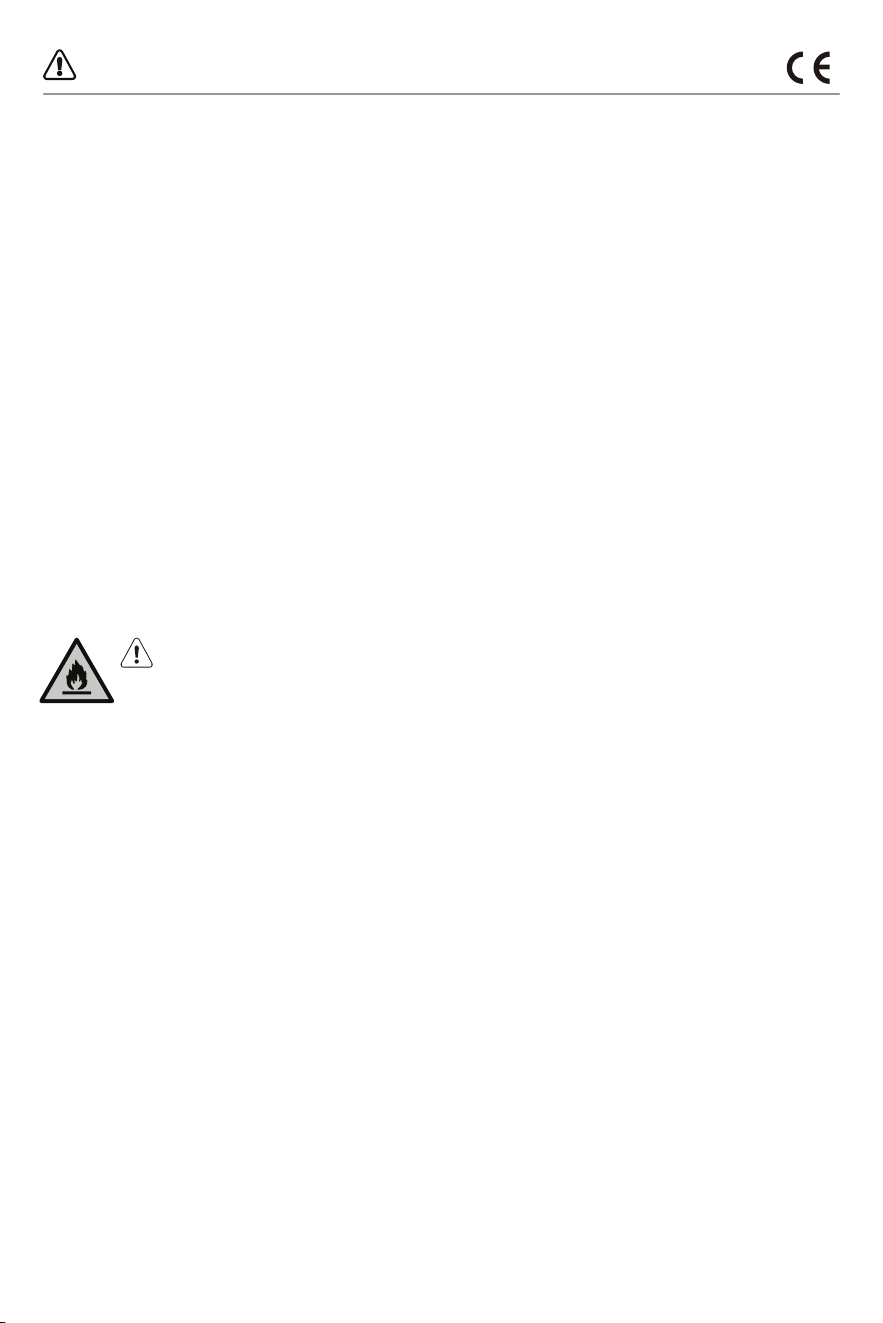
During using, service and
disposal the appliance, please pay attention to
symbol as left side, which is located on
rear of appliance (rear panel or compressor
.
It’s risk of fire warning ymbol. Thereare
flammable materials in refrigerant pipes and
compressor.
Pleasebefar away fire sourceduring using,
service and
disposal.
9
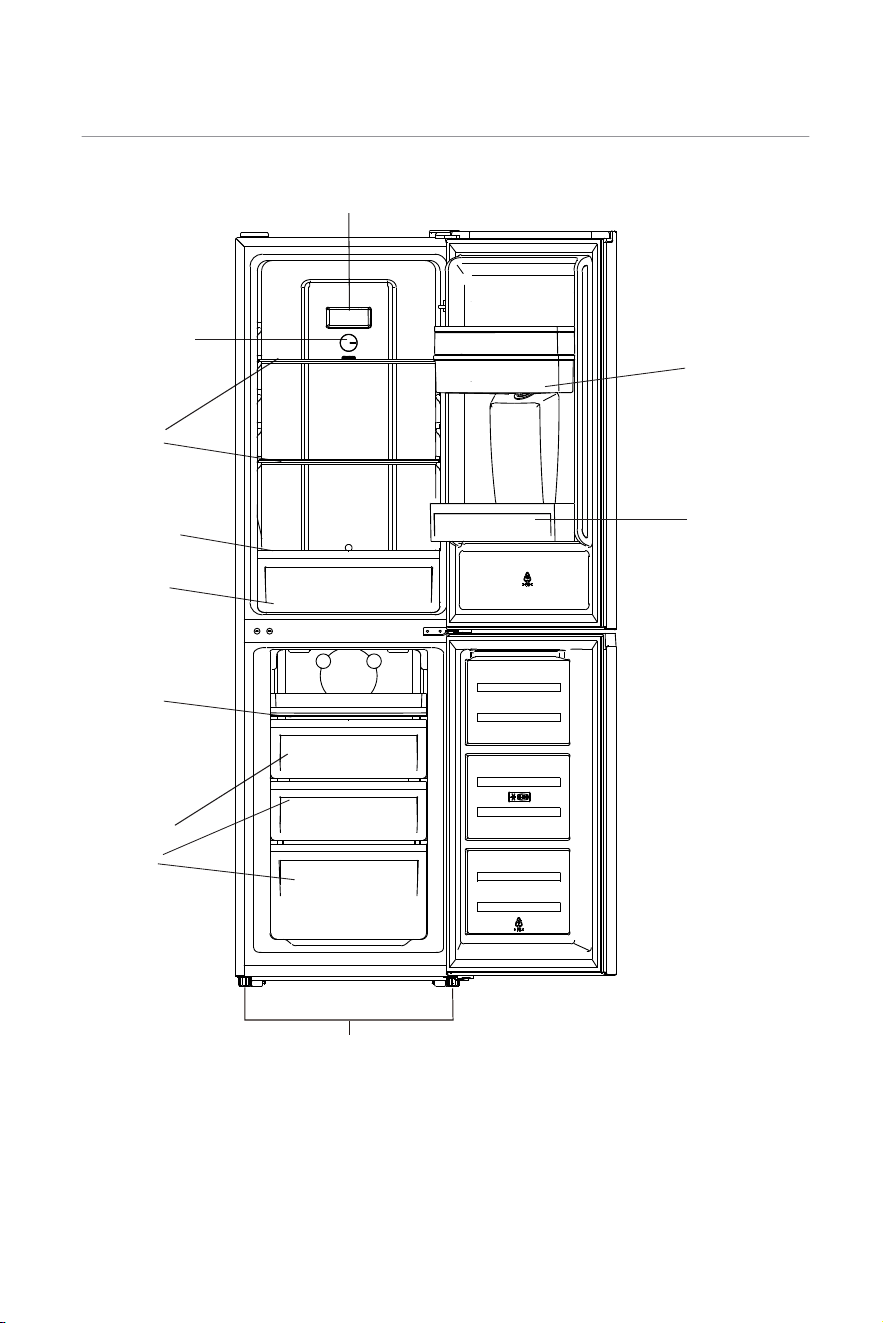
Overview
Note: Above picture is for reference only. Real appliance probably is different.
Freezer
Drawers
Fridge
Balconies
Fridge
Shelves
Crisper
Crisper Cover
Leveling Feet
LED Light
Freezer
Shelves
Temperature
control knob
10
Water Tank
The most energy-saving configuration requires drawers, food box and shelves to be positioned in the product, please refer to the above pictures.
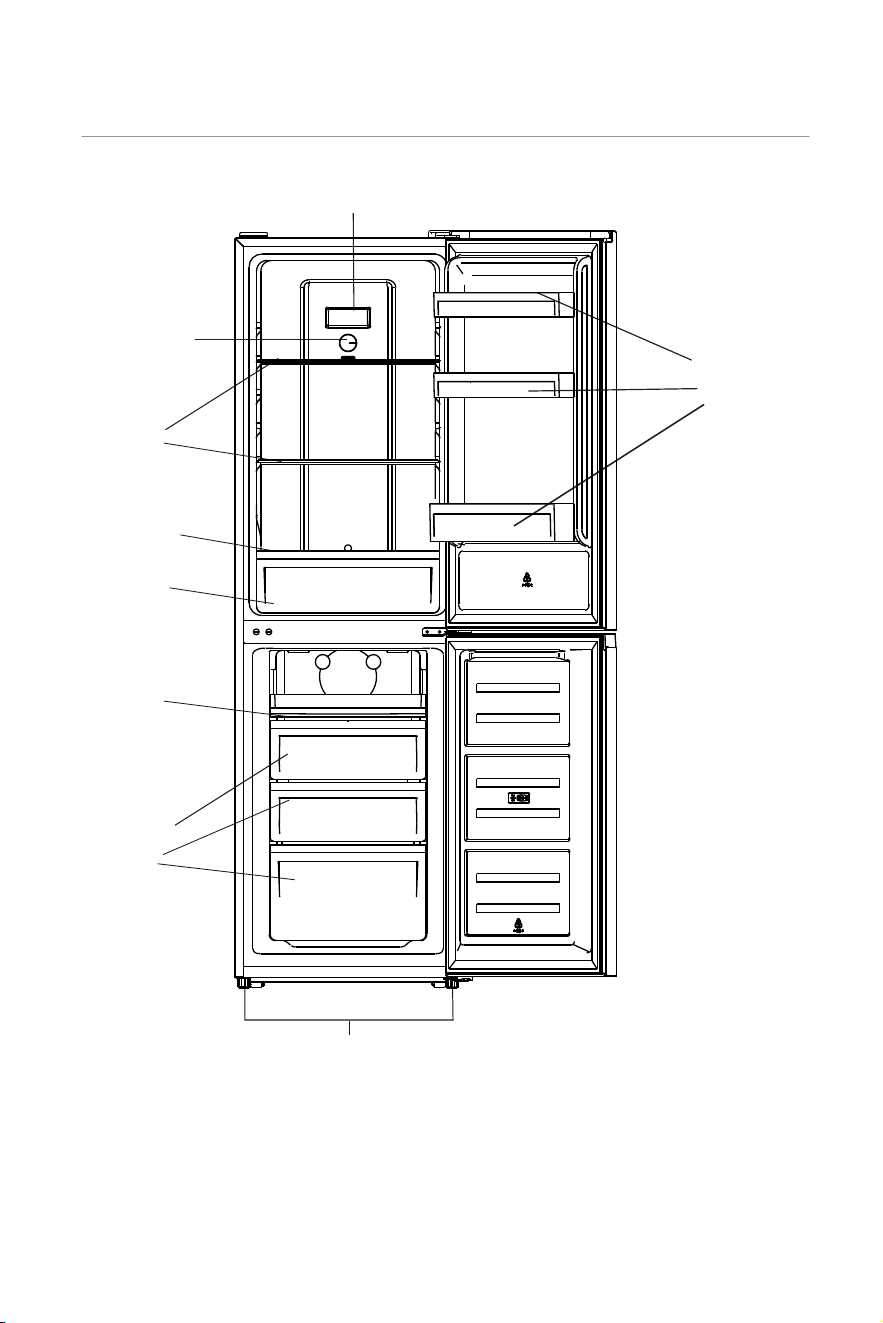
Overview
Note: Above picture is for reference only. Real appliance probably is different.
Freezer
Drawers
Fridge
Balconies
Fridge
Shelves
Crisper
Crisper Cover
Leveling Feet
LED Light
Freezer
Shelves
Temperature
control knob
The most energy-saving configuration requires drawers, food box and shelves to be positioned in the product, please refer to the above pictures.
11
Installation
SpaceRequirement
12
y Select
a location without direct exposure to sunlight;
y Select a location with enough space for the refrigerator doors to open easily;
y Select a location with level (or nearly level) flooring;
y Allow sufficient space to install the refrigerator on a flat surface;
y Allow clearance to the right, left, back and top when installing. This will help
reduce power consumption and keep your energy bills lower.
y Keep at lest 50mm gap at two sides and back.
Positioning
9$$"$%
$ $$$
for refrigerating appliances with climate class:
- extended temperate: this refrigerating appliance is intended to be used at ambient
temperatures ranging from 10 °C to 32 °C;(SN)
- temperate: this refrigerating appliance is intended to be used at ambient
temperatures ranging from 16 °C to 32 °C;(N)
- subtropical: this refrigerating appliance is intended to be used at ambient
temperatures ranging from 16 °C to 38 °C;(ST)
- tropical: this refrigerating appliance is intended to be used at ambient
temperatures ranging from 16 °C to 43 °C;(T)
W
arning! 9%"$"$$$
%$$-$%% ""&
E
lectrical connection
=
$%0%#>%$
$% $%$$&8$$%"&8
$%$$"$%$#$%$&9
$%$$70$$$
$%%0%>%&8
%%$""#$%
"#&8$$$)&)&?&*#&
Location
8$$%"%%0
"0%&)%%%"7
"&8%"$0$$$"
#%0%"$":
%%"50&90#0$$%"
$"#%&!%#%"
<%"""&
This refrigerating appliance is not intended to be used as a built-in appliance.
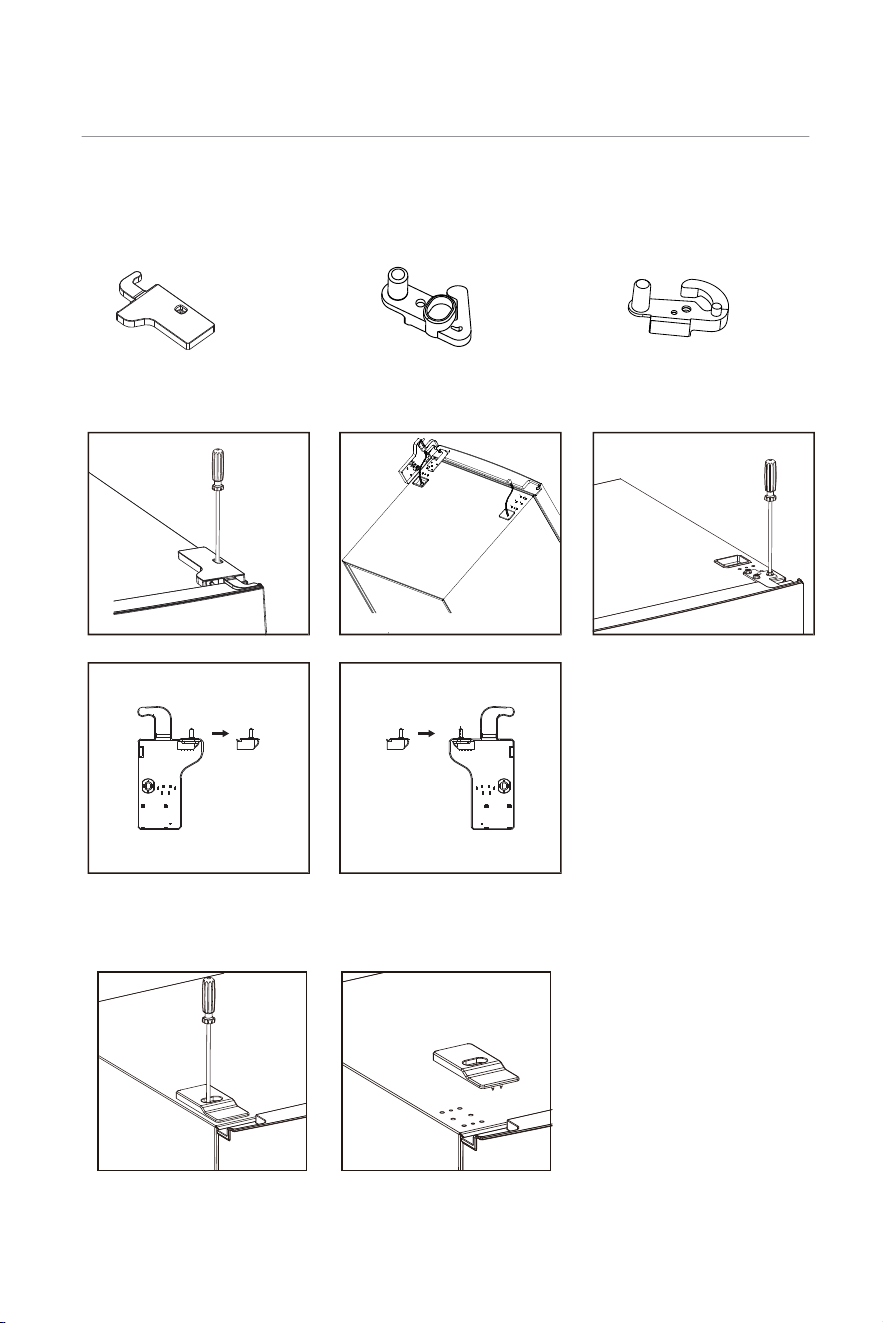
%)&!)%))&
+)!!!!)!!,&
,)%
-$D&
*.
Door Reversibility
'&)!8!
%!,&)%!8
%!8!),!!)&
Left Aid-Closer on Upper Door x 1
Left Aid-Closer on Lower Door x 1
13
Installation
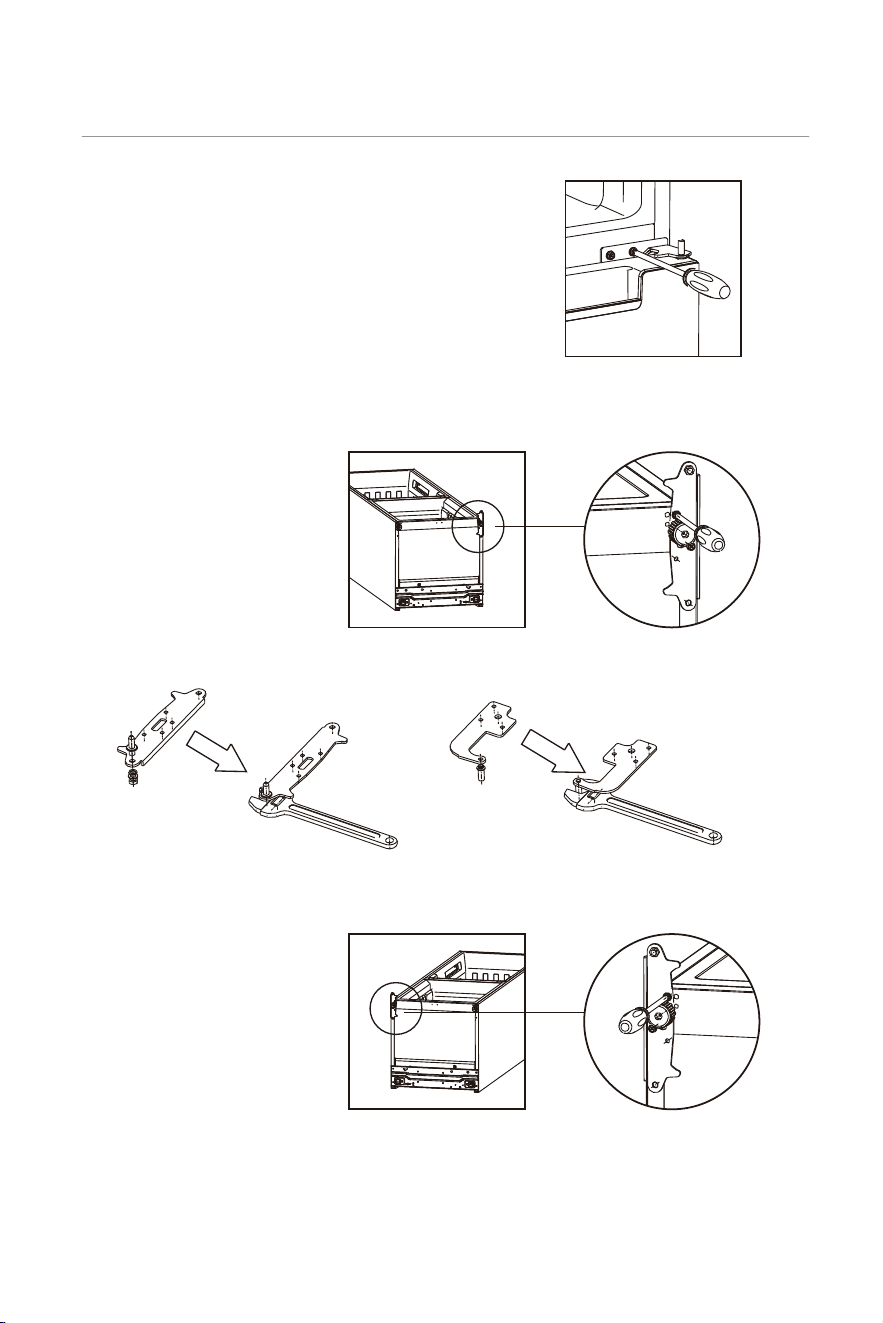
Installation
+9)!89)%,),!!)&%!8
)9)%!
-&!%)&89)!A&%8)9)%)&
%!
!A&))&)%)&!)&
<)%)&!)&9%8%&)!A&8,9
))#
14
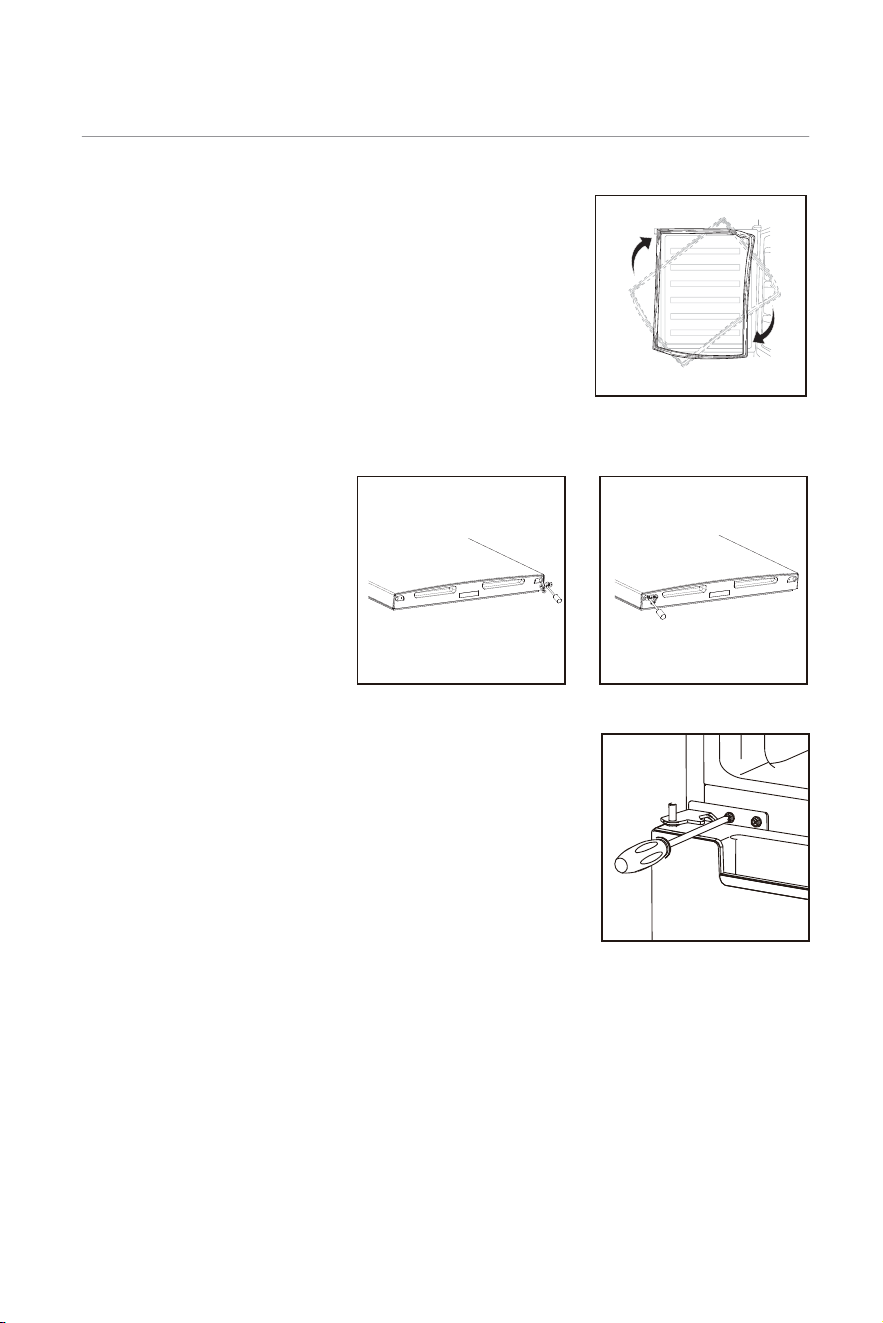
Installation
7# ))5!% !)56!% / !) )), %
9 <)%!8!A!.),!!)&)
8. Remove the original aid-closers from upper and lower door, then install the aid-closers from the internal
bag (with instruction manuals) to the opposite side.
15
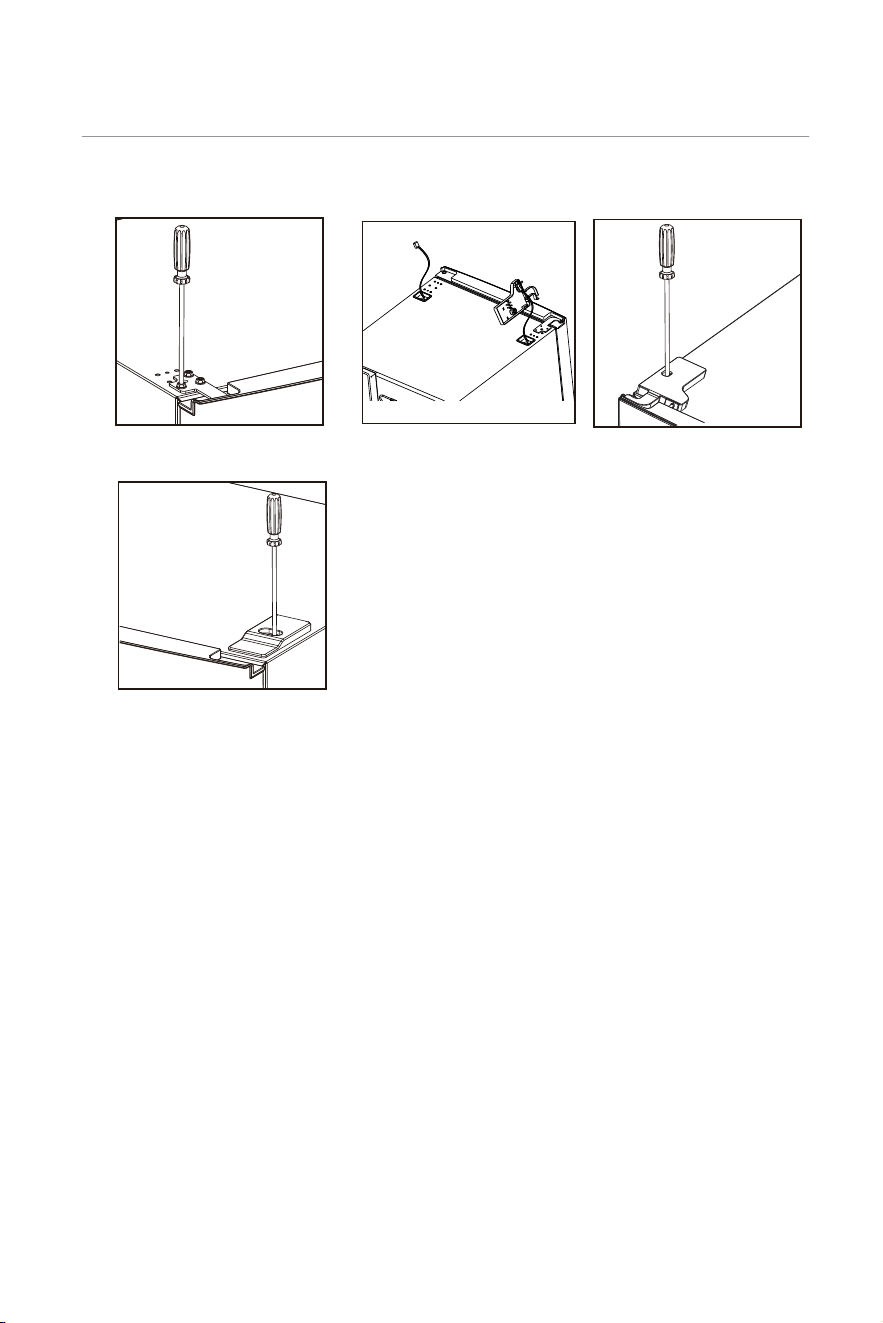
10G)!9?)!&!)#!))
!!&)&))&+)))&!%
)!).)&0&7%
11".)%
,QVWDOODWLRQ
16
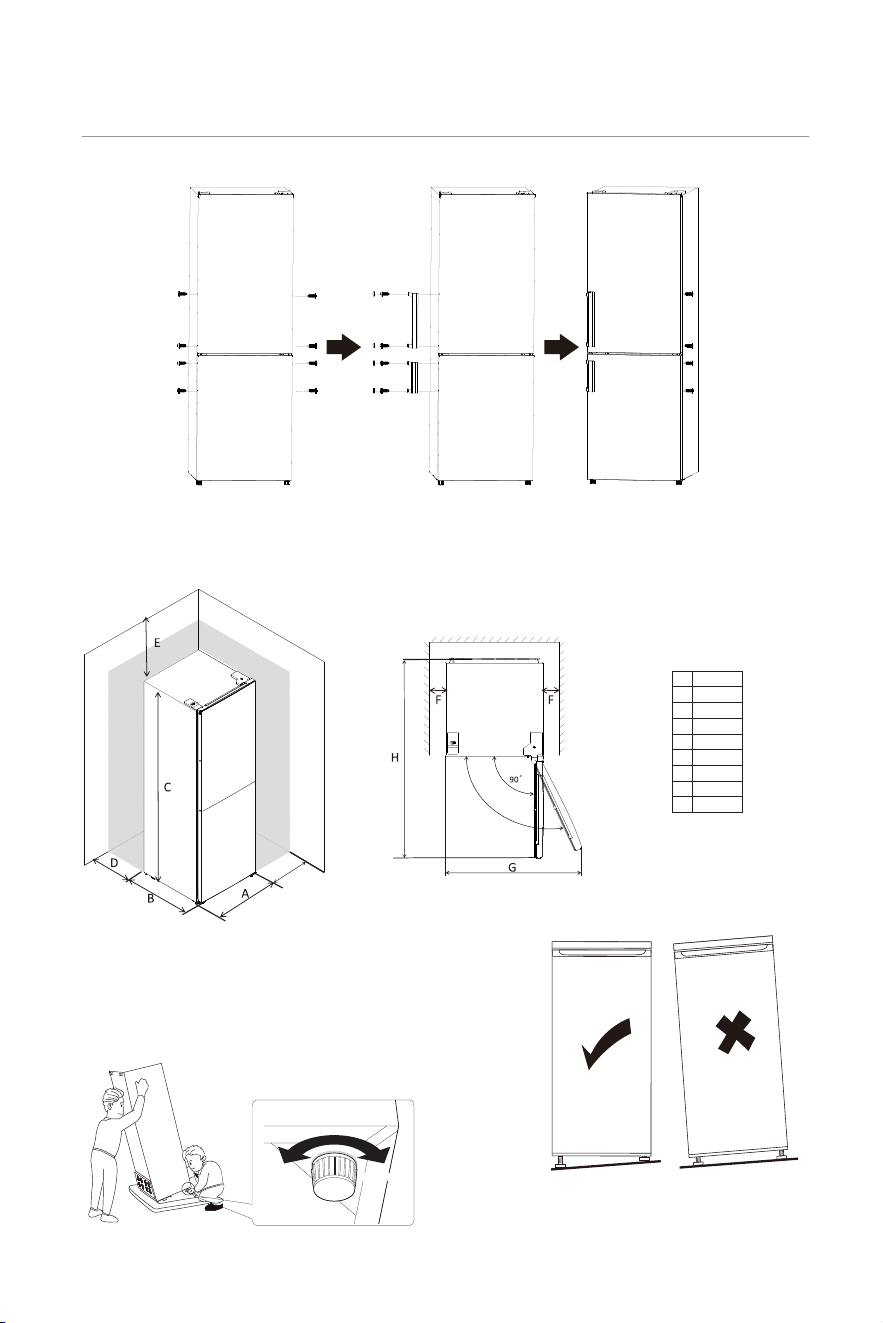
1100
800
585
550
A
B
C
1
D min
=
ϱ0
E min=50
F
G
H
I
ϭ3ϱΣ
min=50
17
,QVWDOODWLRQ
Install
door external handle
0
.)!7
y
y
Sp
ac
e
Requirement
Keep enough space of door open.
Keep at least 50mm gap at two sides and back.
Levellin
g the unit
To do th
is adjust the two levelling feet at front of the unit.
If the unit is not level, the doors and magnetic seal
alignments will not be covered properly.
F
I
1135
Lengthen
Shorten
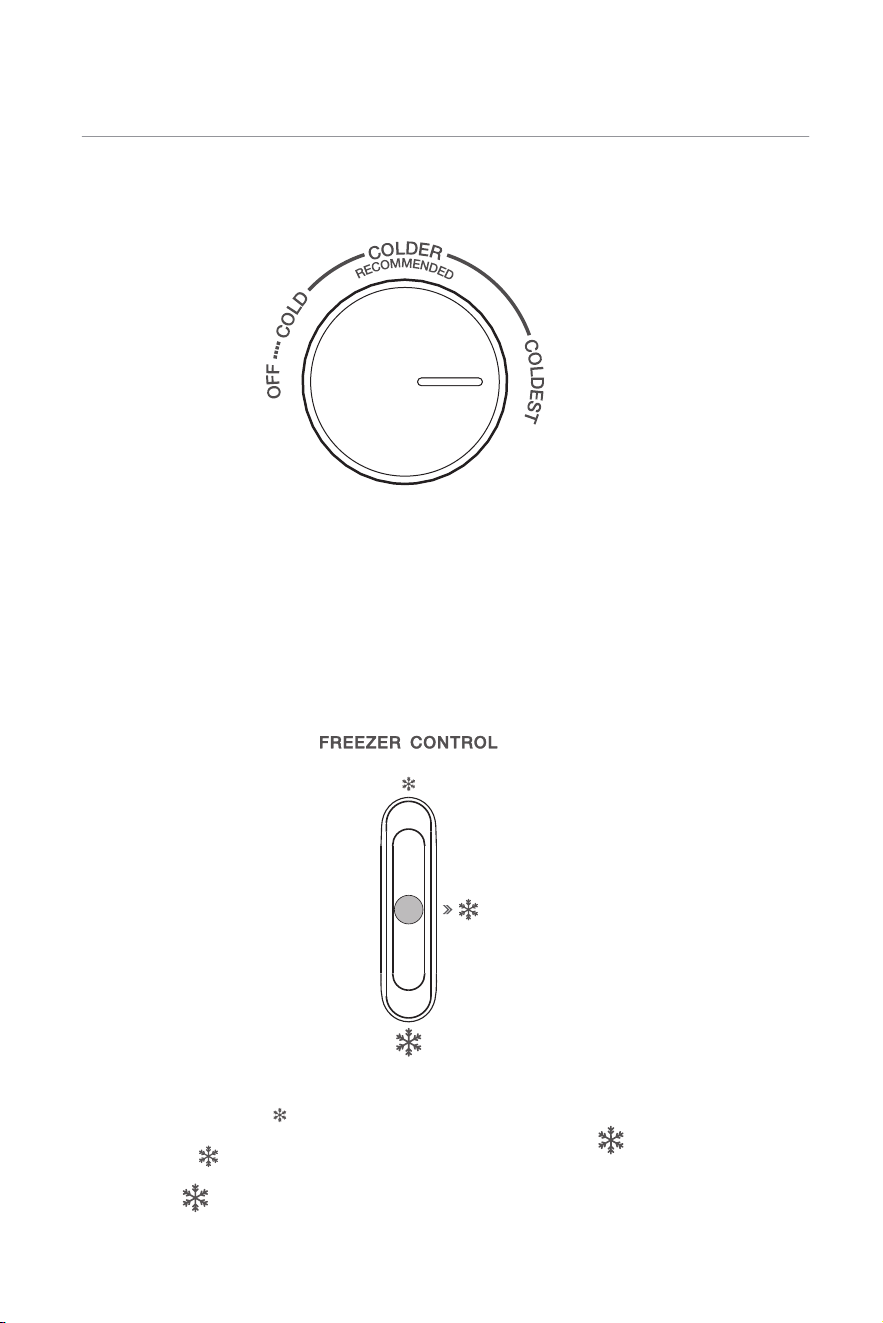
User Control Panel
1. Temperature setting of the Fridge Compartment
The fridge temperature setting knob
● This slider in fridge compartment is used to adjust temperature of freezer compartment.
● Slider is positioned toward ,the temperature in freezer compartment will be higher. Contrarily, the
temperature in freezer compartment will be lower if the slider is moved toward .
● Middle position of slider is advised position for normal using.
● To get lowest temperature in freezer compartment, you can adjust setting knob at coldest and position
the slider at .
● The knob in fridge compartment is used to adjust temperature of fridge compartment.
● The internal temperature is controlled by a sensor. There are 4 settings: OFF, COLD, COLDER and
COLDEST. COLD is warmest setting and COLDEST is coldest setting.
● The appliance may not operate at the correct temperature if it is in aparticularly hot or if you open the
door often.
● Neither fridge, nor freezer compartment works when the setting is OFF.
2. Temperature setting of the Freezer Compartment
The freezer temperature setting slider
18
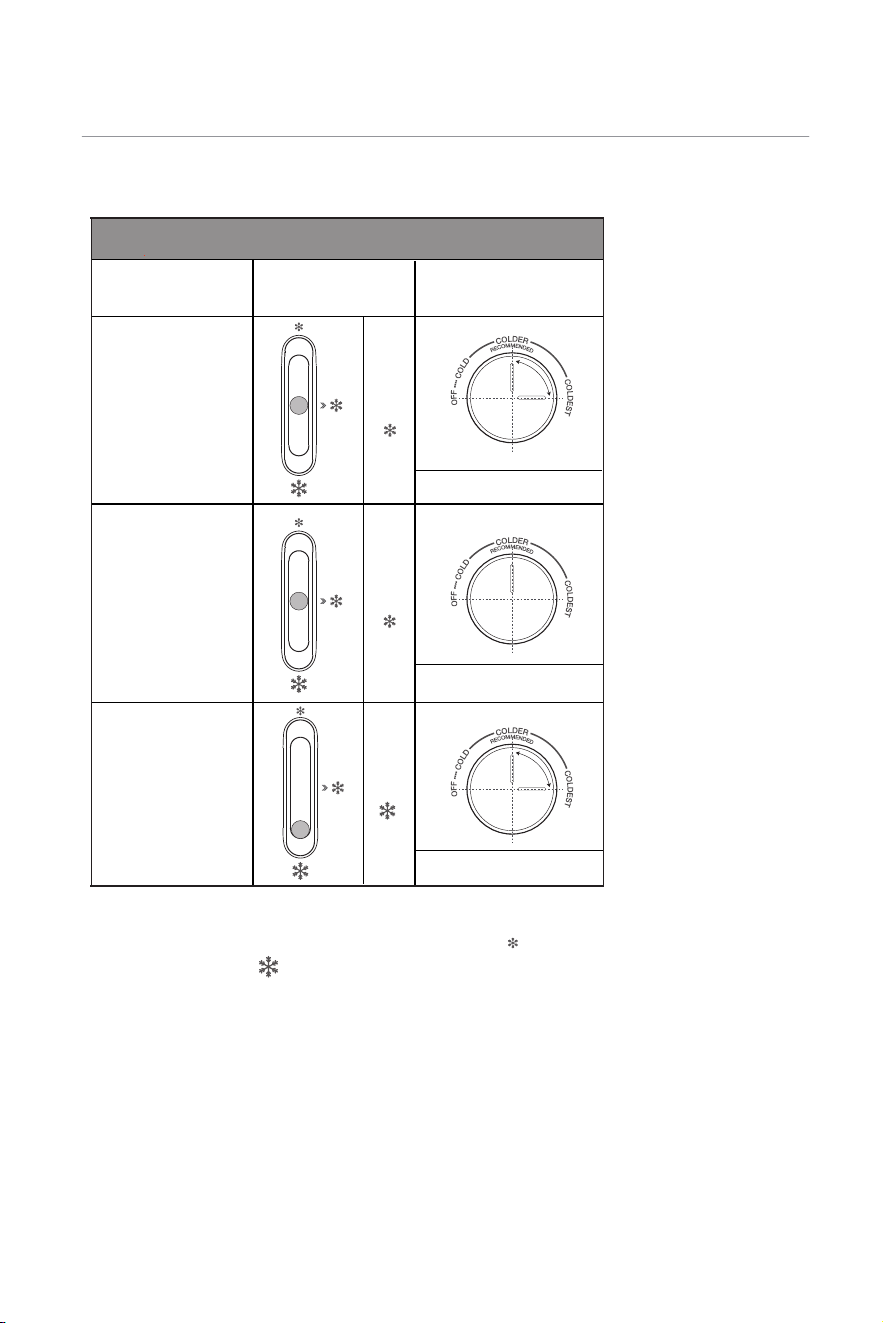
3.Temperature setting recommendation
Environment
Temperature
Freezer
compartment
Fridge
compartment
Set on
Set on colder~coldest
Set on
Set on colder
Set on
S
e
t on colder~coldest
· Information above give users recommendation of temperature setting.
· In winter or temperature below 16℃, users should avoid set on
and cold.
· For energy saving, the
and coldest set only apply to special need(such as quick-freezing
or ice making) ,and need turn back after special need.
Temperature Setting Recommendation
Summer
Normal
W
i
n
ter
19
User Control Panel
Daily Use
Daily Use
First use
Cleaning the interior
Before using the appliance for the first time, wash the interior and all internal accessories with lukewarm
water and some neutral soap so as to remove the typical smell of a brand new product, then dry thoroughly.
Important! Do not use detergents or abrasive powders, as these will damage the finish.
Daily use
Position different food in different compartments according to be below table
Storing frozen food
When first starting-up or after a period out of use. Before putting the product in the compartment let the
appliance run at least 2 hours on the higher settings.
Important! In the event of accidental defrosting, for example the power has been off for longer than
the value shown in the technical characteristics chart under “rising time”, the defrosted food must be
consumed quickly or cooked immediately and then re-frozen (after cooked).
Thawing
Deep-frozen or frozen food, prior to be used, can be thawed in the freezer compartment or at room
temperature, depending on the time available for this operation.
Small pieces may even be cooked still frozen, directly from the freezer. In this case, cooking will take
longer.
Refrigerator compartments
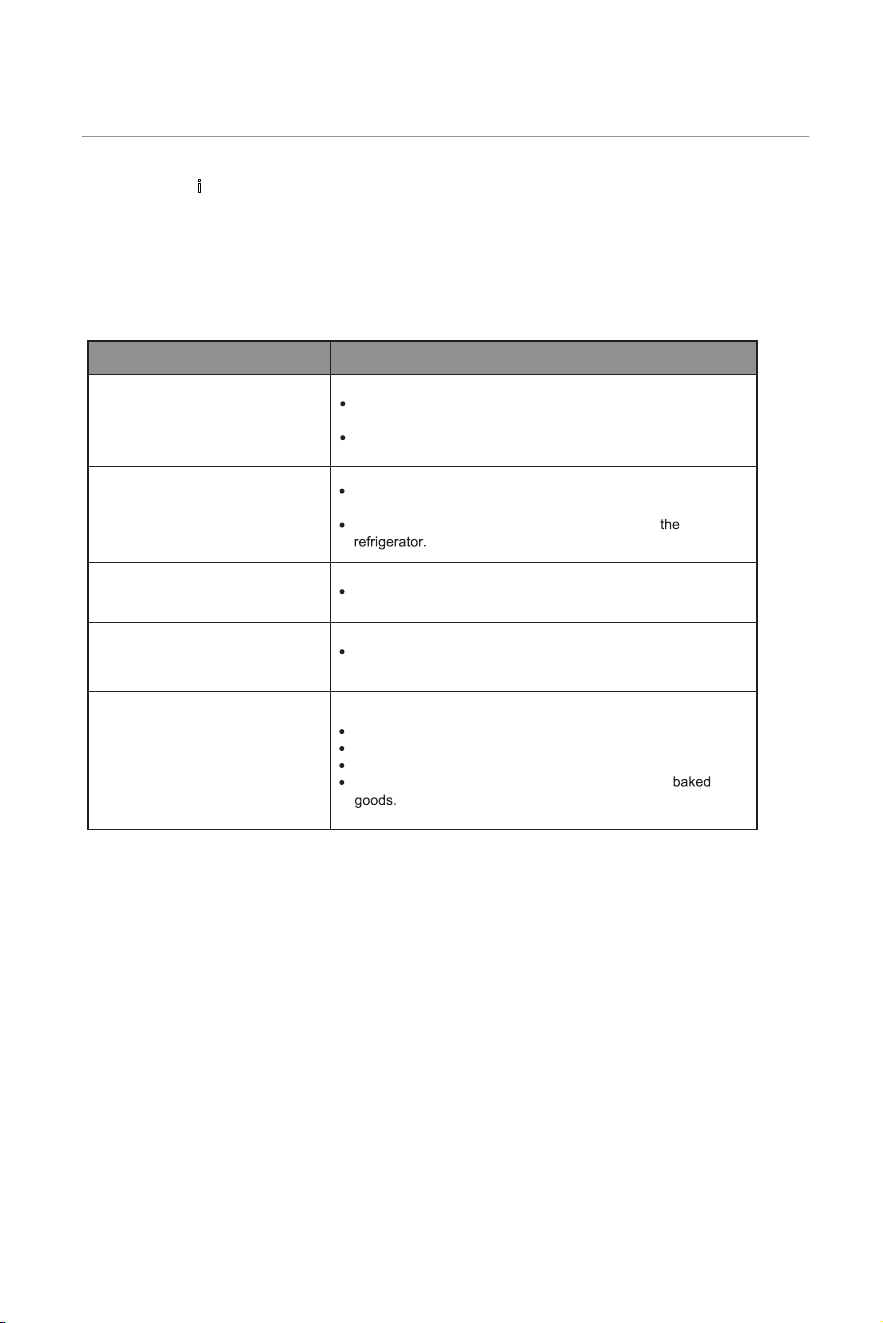
Type of food
Door or
balconies of fridge
compartment
Foods with natural preservatives, such as jams,juices,
drinks, condiments.
Do not s
tore perishable foods.
Fruits, herbs and vegetables should be placed
separately in the crisper bin.
Do not store bananas, onions, potatoes, garlic in
Crisper drawer (salad drawer)
Fridge shelf –
middle
Dairy products, eggs
Fridge shelf – to
p
Foods that do not need cooking, such as ready-to-eat foods,
deli meats, leftovers.
Foods for long-term
storage.
Bottom drawer/shelf for raw meat, poultry, fish.
Middle drawer/shelf for frozen vegetables, chips.
Top drawer/shelf for ice cream, frozen fruit, frozen
Freezer drawer(s)/shelf
Freezing fresh food
y The freezer compartment is suitable for freezing fresh food and storing frozen and deep-frozen food for
a long time.
y
Place the fresh food to be frozen in the bottom compartment.
y
The maximum amount of food that can be frozen in 24 hours is specified on the rating plate.
y The freezing process lasts 24 hours: during this period do not add other food to be frozen.
20
Daily UseDaily Use
?;,#;
2#+#">+#
###;,!
"#,
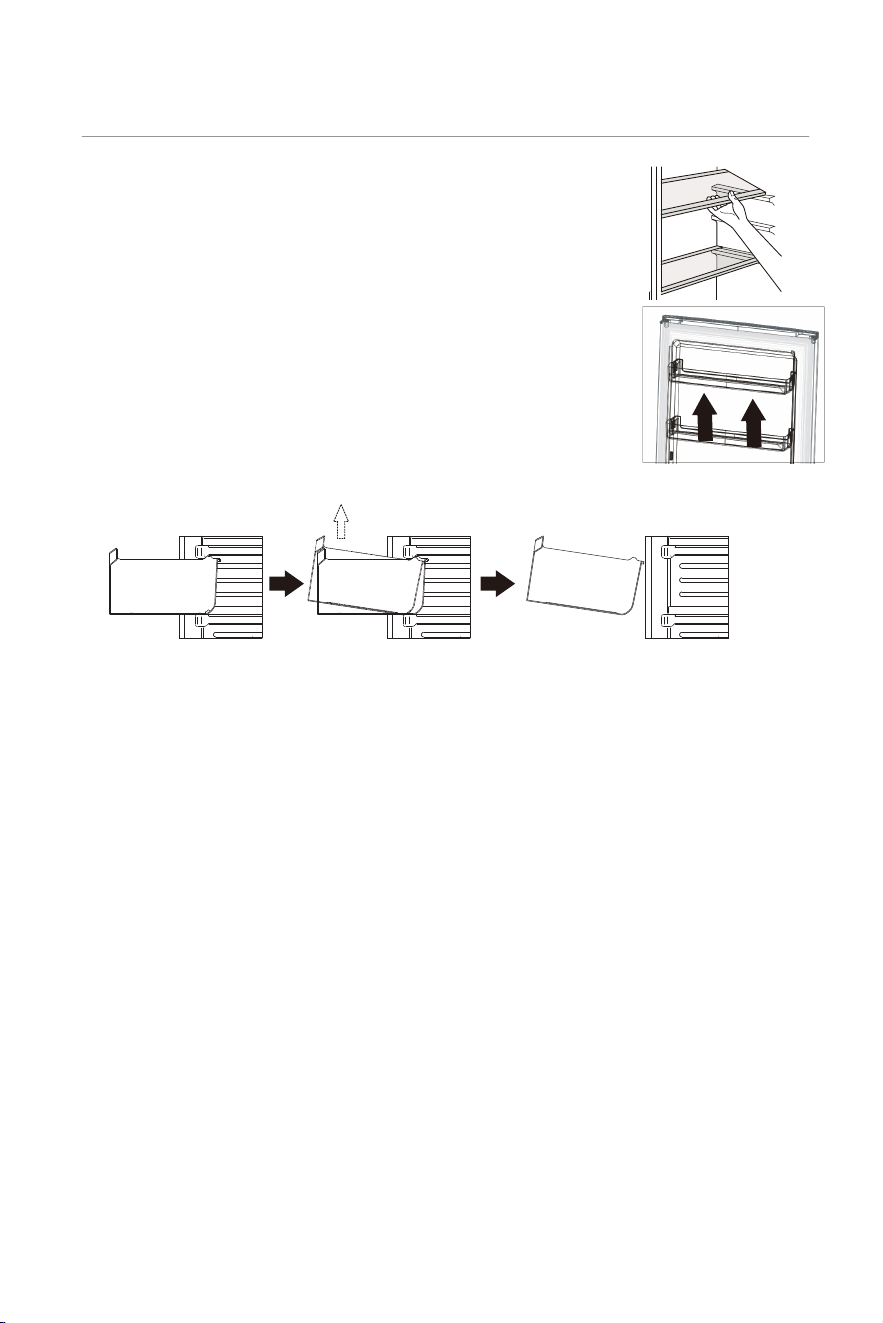
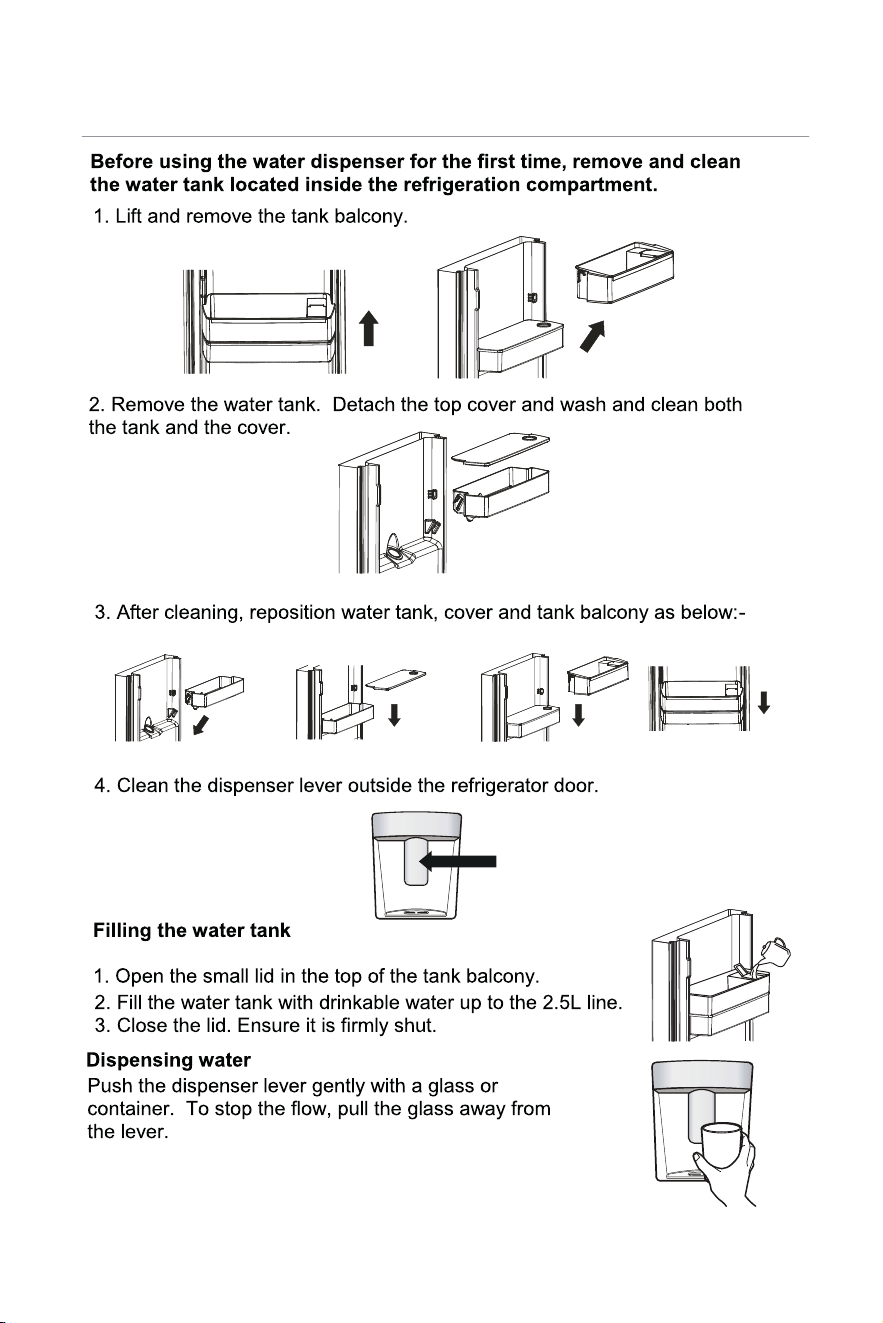
Door balconies can be disassembled for cleaning. To make the disassembling
as follows: gradually pull the balcony in the direction of the arrows until it
comes free, after cleaning, reposition it.
Disassemble the bottom drawer
1.Pull out the bottom drawer to stopper position.
2.Lift up the front of drawer.
3.Pull out the bottom drawer.
21
22
Daily UseDaily Use
Cleaning
For hygienic reasons the appliance interior, including interior accessories, should be cleaned regularly.
Caution! The appliance may not be connected to the mains during cleaning. Danger of electrical
shock! Before cleaning switch the appliance off and remove the plug from the mains, or switch off or
turn out the circuit breaker or fuse. Never clean the appliance with a steam cleaner. Moisture could
accumulate in electrical components, danger of electrical shock! Hot vapors can lead to the damage
of plastic parts. The appliance must be dry before it is placed back into service.
Important! Ethereal oils and organic solvents can attack plastic parts, e.g. lemon juice or the juice form
orange peel, butyric acid, cleanser that contain acetic acid.
Hints for storage of frozen food
To obtain the best performance from this appliance, you should:
make sure that the commercially frozen foodstuffs were adequately stored by the retailer;
be sure that frozen foodstuffs are transferred from the food store to the freezer in the shortest possible
time;
not open the door frequently or leave it open longer than absolutely necessary.
Once defrosted, food deteriorates rapidly and cannot be refrozen.
Do not exceed the storage period indicated by the food manufacture.
Hints for fresh food refrigeration
To obtain the best performance:
y
Do not store warm food or evaporating liquids in the refrigerator
y
Do cover or wrap the food, particularly if it has a strong flavour
Hints for refrigeration
Useful hints:
y Make (all types): wrap in polythene bags and place on the glass shelves above the vegetable drawer.
y For safety, store in this way only one or two days at the most.
y Cooked foods, cold dishes, etc...: these should be covered and may be placed on any shelf.
y Fruit and vegetables: these should be thoroughly cleaned and placed in the special drawer(s) provided.
y butter and cheese: these should be placed in special
airtight containers or wrapped in aluminum foil or
polythene bags to exclude as
much air as possible.
y Milk bottle: these should have a cap and should be stored in the balconies on the door.
y Bananas, potatoes, onions and
garlic, if not packed.
y For energy efficiency ,all drawers,baskets and shelves,must be in right place ,must not be kept in the
fridge.
23
Daily UseDaily Use
y the maximum quantity of food which can be frozen in 24 hrs. is shown on the rating plate;
y
the freezing process takes 24 hours. No further food to be frozen should be added during this period;
y
only freeze top quality, fresh and thoroughly cleaned, foodstuffs;
y
prepare food in small portions to enable it to be rapidly and completely frozen and to make it possible
subsequently to thaw only the quantity required;
y
wrap up the food in aluminium foil or polythene and make sure that the packages are airtight;
y
do not allow fresh, unfrozen food to touch food which is already frozen, thus avoiding a rise in
temperature of the latter;
y
lean foods store better and longer than fatty ones; salt reduces the storage life of food;
y
water ices, if consumed immediately after removal from the freezer compartment, can possibly cause
the skin to be freeze burnt;
y it is advisable to show the freezing in date on each individual pack to enable you removal from the
freezer compartment, can possibly cause the skin to be freeze burnt;
y
it is advisable to show the freezing in date on each individual pack to enable you to keep tab of the
storage time.
Helpful hints and tips
Hints for freezing
To help you make the most of the freezing process, here are some important hints:
y Do not allow such substances to come into contact the
appliance parts.
y Do not use any abrasive cleaners
y Remove the food from the freezer. Store them in a cool place, well covered.
y Switch the appliance off and remove the plug from the mains, or switch off or turn out the circuit breaker
of fuse.
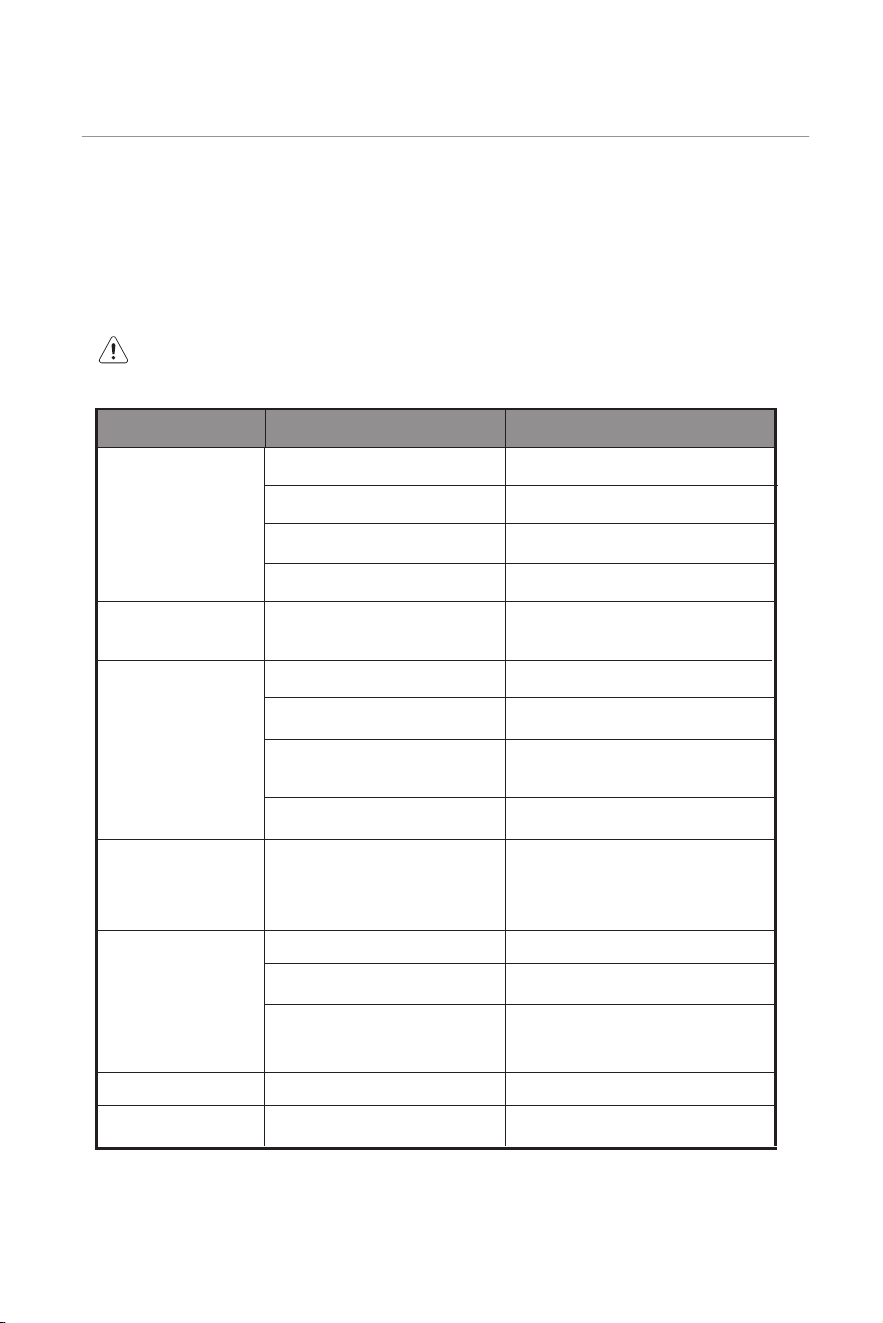
Caution! Before troubleshooting, disconnect the power supply. Only a qualified electrician of
competent person must do the troubleshooting that is not in this manual.
Important! There are some sounds during normal use (compressor, refrigerant circulation).
If the malfunction shows again, contact the Service Center.
These data are necessary to help you quickly and correctly. Write the necessary data here, refer to the
rating plate.
Mains plug is not plugged in
or is loose
Check fuse, replace if necessary.
Socket is defective
Mains malfunctions are to be
corrected by an electrician.
Problem
Solution
Fuse has blown or is defective
Insert mains plug.
Unusual noises
Appliance is not level.
The appliance is touching the
wall or other objects.
Re-adjust the feet.
Move the appliance slightly.
A component, e.g. a pipe, on
the rear of the appliance is
touching another part of the
appliance or the wall.
If necessary, carefully bend the
component out of the way.
Possible cause
Appliance does not
work
Temperature regulation knob is
set at coldest
Set the knob at other switch on the
appliance.
Water drain hole is blocked.
Water on the floor
See the Cleaning and Care section.
Side panels are hot.
It’s normal. Heat exchange
parts are in the sides.
Take gloves to touch sides if needed.
Appliance freezes or
cools too much
Turn the temperature regulator to a
warmer setting temporarily.
Temperature is set too cold or
the appliance runs at coldest.
Temperature is not properly
adjusted.
Please look in the initial
Temperature Setting section.
Door was open for an extended
period.
Open the door only as long as
necessary.
A large quantity of warm food
was placed in the appliance
within the last 24 hours.
Turn the temperature regulation to a
colder setting temporarily.
The food is not frozen
enough.
Please look in the installation
location section.
The appliance is near a heat
source.
Door seal is not air tight.
Heavy build up of
frost on the door
seal.
Carefully warm the leaking sections
of the door seal with a hair dryer (on
a cool setting). At the same time
shape the warmed door seal by
hand such that it sits correctly.
24
Daily UseDaily Use
y Clean the appliance and the interior accessories with a cloth and
lukewarm water. After cleaning wipe
with fresh water and rub dry.
y After everything is dry place appliance back into service.
;
<9 .
y Troubleshooting
Replaceable (LED only) light source by a professional.This product contains a light source of
energy efficiency class F.

Daily UseDaily Use
GUARANTEE
Minimum guarantee is: 2 years for EU Countries, 3 years for Turkey, 1 year for UK, 1 year for Russia, 3 years for
Sweden, 2 years for Serbia, 5 years for Norway, 1 year for Morocco, 6 months for Algeria, Tunisia no legal
warranty required.
AVAILABILITY OF SPARE PARTS
“Thermostats, temperature sensors, printed circuit boards and light sources are available for a minimum period of
seven years after placing the last unit of the model on the market.
Door handles, door hinges, trays and baskets for a minimum period of seven years and door gaskets for a
minimum period of 10 year, after placing the last unit of the model on the market”.
25