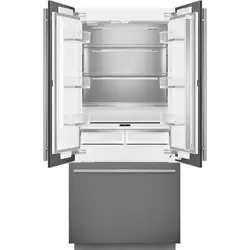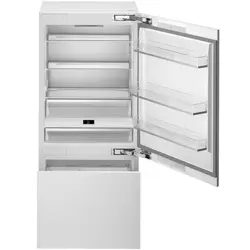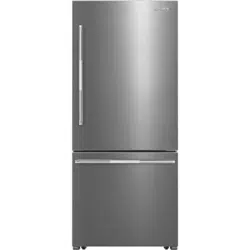
Fridge - Freezer / User ManualEN
RC33KNZA
RC33SNZA
Congelatore - Frigorifero / Manuale per l’usoIT
Réfrigérateur - Congélateur / Guide D’utilisationFR
EN - 2
Thank you for choosing this product.
This user manual contains important information on safety and instructions intended to
assist you in the operation and maintenance of your appliance.
Please take the time to read this user manual before using your appliance and keep this
book for future reference.
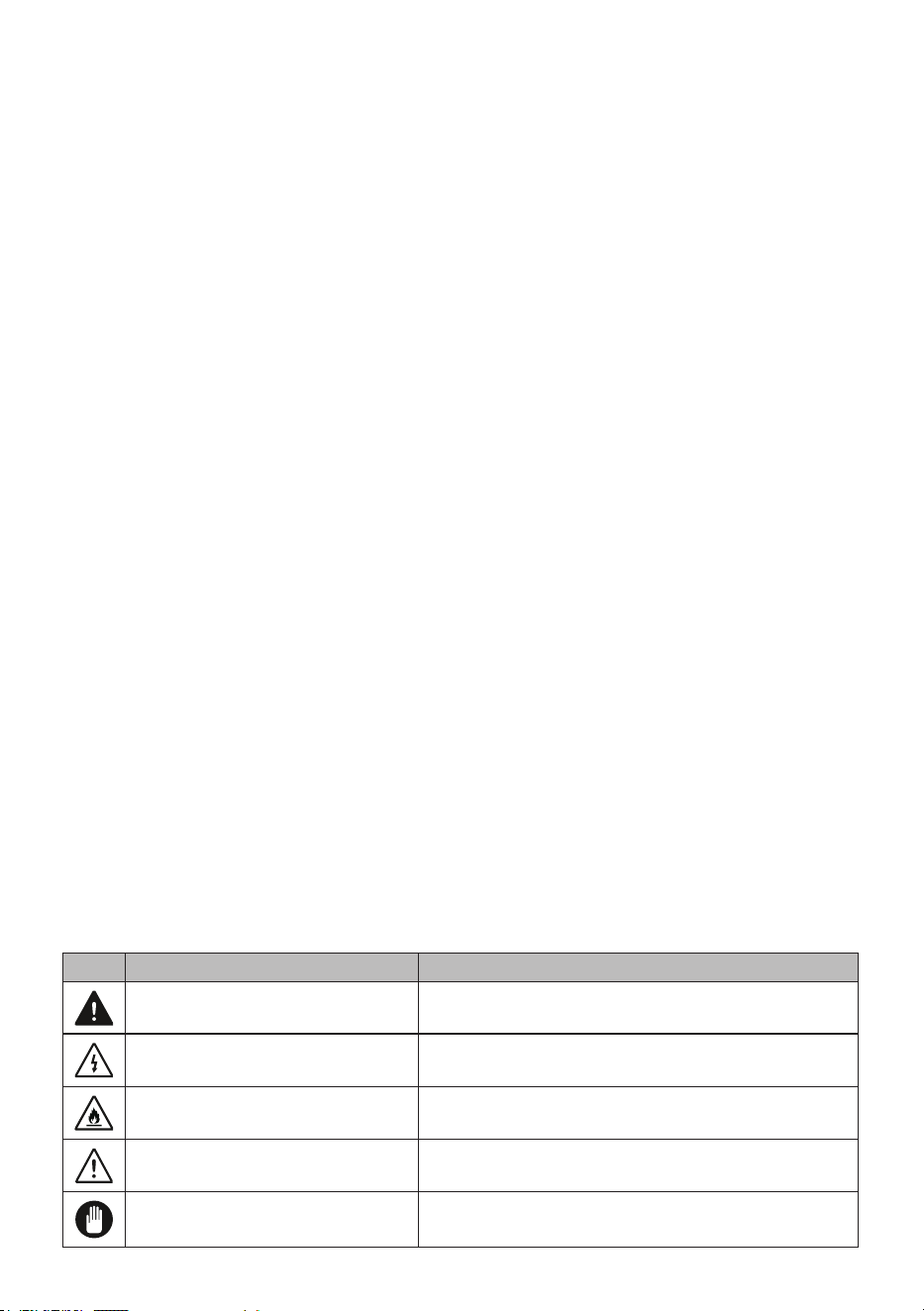
Icon Type Meaning
WARNING Serious injury or death risk
RISK OF ELECTRIC SHOCK Dangerous voltage risk
FIRE Warning; Risk of re / ammable materials
CAUTION Injury or property damage risk
IMPORTANT Operating the system correctly

EN - 3
CONTENTS
1 SAFETY INSTRUCTIONS ............................................................................... 4
1.1 General Safety Warnings ...............................................................................................4
1.2 Installation warnings .......................................................................................................8
1.3 During Usage..................................................................................................................8
2 DESCRIPTION OF THE APPLIANCE .......................................................... 10
2.1 Dimensions ................................................................................................................... 11
3 USING THE APPLIANCE ..............................................................................12
3.1 Information about New Generation Cooling Technology ..............................................12
3.2 Display and Control Panel ............................................................................................12
3.3 Operating your Fridge Freezer .....................................................................................12
3.3.1 Freezer Temperature Settings ...................................................................................12
3.3.2 Cooler Temperature Settings .....................................................................................13
3.3.3 Super Freeze Mode ...................................................................................................13
3.3.4 Door Open Alarm Function ........................................................................................13
3.4 Temperature Settings Warnings ...................................................................................13
3.5 Accessories ..................................................................................................................14
3.5.1 Ice Tray (In some models) .......................................................................................14
3.5.2 The Freezer Box ........................................................................................................14
3.5.3 The Chiller Shelf (In some models) .........................................................................15
3.5.4 The Fresh Dial (In some models) ............................................................................15
3.5.5 Humidity Controler+ (In some models) ......................................................................15
3.5.6 Adjustable Door Shelf (In some models) .................................................................16
3.5.7 Adjustable Glass Shelf (In some models) ................................................................16
3.5.8 Maxi-fresh preserver (If available) .............................................................................17
4 FOOD STORAGE ........................................................................................... 17
4.1 Refrigerator Compartment ............................................................................................17
4.2 Freezer Compartment ..................................................................................................18
5 CLEANING AND MAINTENANCE ................................................................ 21
5.1 Defrosting .....................................................................................................................21
5.2 Transportation and Changing Positioning ....................................................................22
5.3 Repositioning the Door .................................................................................................22
6 BEFORE CALLING AFTER-SALES SERVICE ........................................... 23
7 TIPS FOR SAVING ENERGY ........................................................................25
EN - 4
1 SAFETY INSTRUCTIONS
1.1 General Safety Warnings
Read this user manual carefully.
WARNING: Keep ventilation openings, in the
appliance enclosure or in the built-in structure, clear of
obstruction.
WARNING: Do not use mechanical devices or
other means to accelerate the defrosting process,
other than those recommended by the manufacturer.
WARNING: Do not use electrical appliances inside
the food storage compartments of the appliance,
unless they are of the type recommended by the
manufacturer.
WARNING: Do not damage the refrigerant circuit.
WARNING: When positioning the appliance,
ensure the supply cord is not trapped or damaged.
WARNING: Do not locate multiple portable socket-
outlets or portable power supplies at the rear of the
appliance.
WARNING: In order to avoid any hazards resulting
from the instability of the appliance, it must be xed in
accordance with the instructions.
If your appliance uses R600a as a refrigerant (this
information will be provided on the label of the cooler)
you should take care during transportation and
installation to prevent the cooler elements from being
damaged. R600a is an environmentally friendly and

EN - 5
natural gas, but it is explosive. In the event of a leak
due to damage of the cooler elements, move your
fridge away from open ames or heat sources and
ventilate the room where the appliance is located for a
few minutes.
• While carrying and positioning the fridge, do not
damage the cooler gas circuit.
• Do not store explosive substances such as aerosol
cans with a ammable propellant in this appliance.
• This appliance is intended to be used in household
and domestic applications such as:
– sta kitchen areas in shops, oces and other
working environments.
– farm houses and by clients in hotels, motels and
other residential type environments.
– bed and breakfast type environments;
– catering and similar non-retail applications.
• If the socket does not match the refrigerator plug,
it must be replaced by the manufacturer, a service
agent or similarly qualied persons in order to avoid
a hazard.
• A specially grounded plug has been connected
to the power cable of your refrigerator. This plug
should be used with a specially grounded socket
of 16 amperes. If there is no such socket in your
house, please have one installed by an authorised
electrician.

EN - 6
• This appliance can be used by children aged from
8 years and above and persons with reduced
physical, sensory or mental capabilities or lack of
experience and knowledge if they have been given
supervision or instruction concerning use of the
appliance in a safe way and understand the hazards
involved. Children shall not play with the appliance.
Cleaning and user maintenance shall not be made
by children without supervision.
• Children aged from 3 to 8 years are allowed to load
and unload refrigerating appliances. Children are not
expected to perform cleaning or user maintenance
of the appliance, very young children (0-3 years old)
are not expected to use appliances, young children
(3-8 years old) are not expected to use appliances
safely unless continuous supervision is given, older
children (8-14 years old) and vulnerable people can
use appliances safely after they have been given
appropriate supervision or instruction concerning
use of the appliance. Very vulnerable people are
not expected to use appliances safely unless
continuous supervision is given.
• If the supply cord is damaged, it must be replaced
by the manufacturer, an authorised service agent or
similar qualied persons, in order to avoid a hazard.
• This appliance is not intended for use at altitudes
exceeding 2000 m.

EN - 7
To avoid contamination of food, please respect the
following instructions:
• Opening the door for long periods can cause
a signicant increase of the temperature in the
compartments of the appliance.
• Clean regularly surfaces that can come in contact
with food and accessible drainage systems
• Store raw meat and sh in suitable containers in the
refrigerator, so that it is not in contact with or drip
onto other food.
• Two-star frozen-food compartments are suitable for
storing pre-frozen food, storing or making ice cream
and making ice cubes.
• One-, two- and three-star compartments are not
suitable for the freezing of fresh food.
• If the refrigerating appliance is left empty for long
periods, switch o, defrost, clean, dry, and leave the
door open to prevent mould developing within the
appliance.
EN - 8
1.2 Installation warnings
Before using your fridge freezer for the rst
time, please pay attention to the following
points:
• The operating voltage for your fridge
freezer is 220-240 V at 50Hz.
• The plug must be accessible after
installation.
• Your fridge freezer may have an odour
when it is operated for the rst time. This
is normal and the odour will fade when
your fridge freezer starts to cool.
• Before connecting your fridge freezer,
ensure that the information on the data
plate (voltage and connected load)
matches that of the mains electricity
supply. If in doubt, consult a qualied
electrician.
• Insert the plug into a socket with an
ecient ground connection. If the socket
has no ground contact or the plug does
not match, we recommend you consult a
qualied electrician for assistance.
• The appliance must be connected
with a properly installed fused socket.
The power supply (AC) and voltage at
the operating point must match with
the details on the name plate of the
appliance (the name plate is located on
the inside left of the appliance).
• We do not accept responsibility for any
damages that occur due to ungrounded
usage.
• Place your fridge freezer where it will not
be exposed to direct sunlight.
• Your fridge freezer must never be used
outdoors or exposed to rain.
• Your appliance must be at least 50 cm
away from stoves, gas ovens and heater
cores, and at least 5 cm away from
electrical ovens.
• If your fridge freezer is placed next to a
deep freezer, there must be at least 2
cm between them to prevent humidity
forming on the outer surface.
• Do not cover the body or top of fridge
freezer with lace. This will aect the
performance of your fridge freezer.
• Clearance of at least 150 mm is required
at the top of your appliance. Do not place
anything on top of your appliance.
• Do not place heavy items on the
appliance.
• Clean the appliance thoroughly before
use (see Cleaning and Maintenance).
• Before using your fridge freezer, wipe all
parts with a solution of warm water and
a teaspoon of sodium bicarbonate. Then,
rinse with clean water and dry. Return all
parts to the fridge freezer after cleaning.
• Use the adjustable front legs to make
sure your appliance is level and stable.
You can adjust the legs by turning them
in either direction. This must be done
before placing food in the appliance.
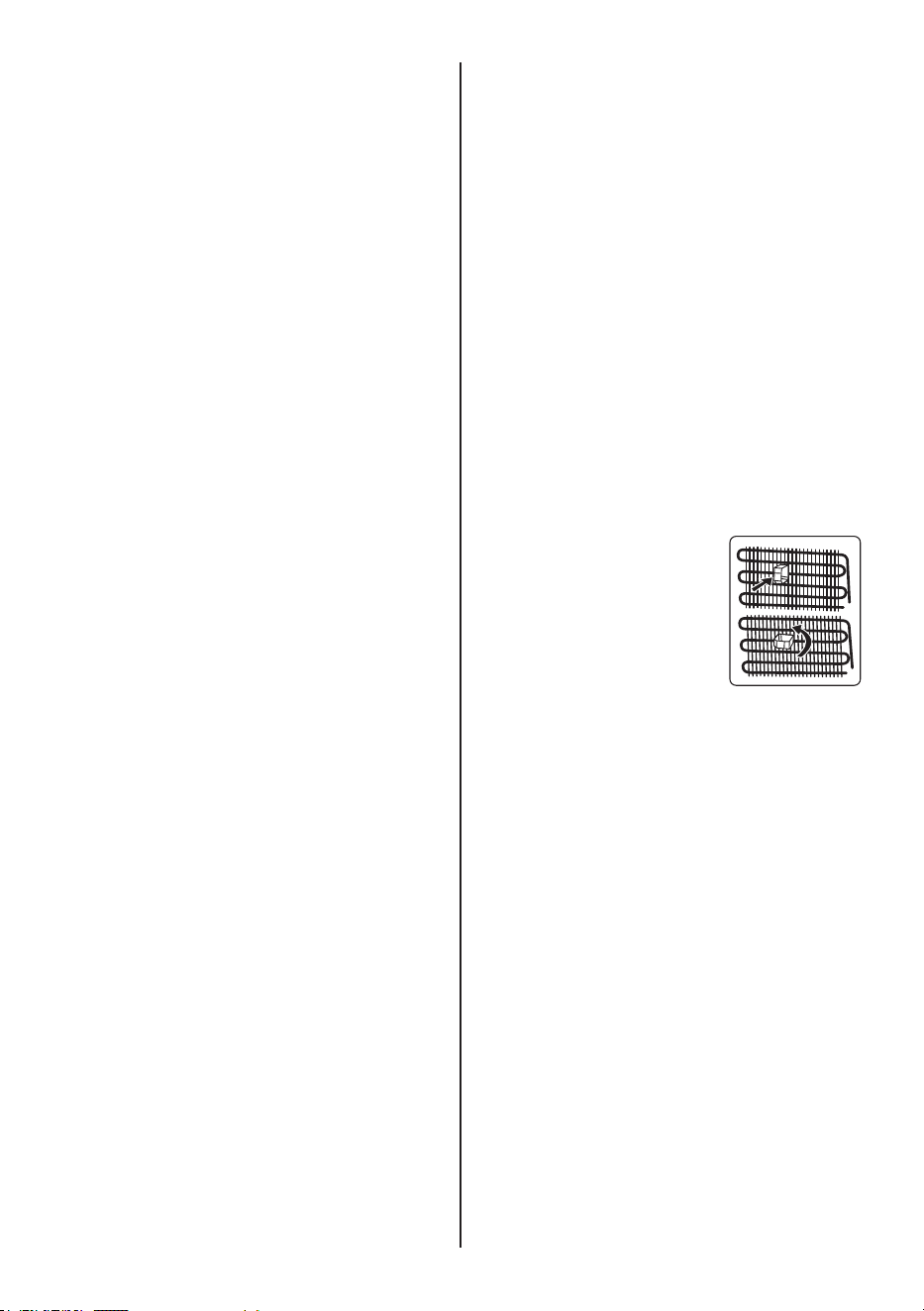
• Install the two plastic distance guides (the
parts on the black vanes
-condenser- at the rear)
by turning it 90° (as
shown in the gure) to
prevent the condenser
from touching the wall.
• The distance between
the appliance and back wall must be a
maximum of 75 mm.
1.3 During Usage
• Do not connect your fridge freezer to
the mains electricity supply using an
extension lead.
• Do not use damaged, torn or old plugs.
• Do not pull, bend or damage the cord.
• Do not use plug adapter.
• This appliance is designed for use by
adults. Do not allow children to play with
the appliance or hang o the door.
• Never touch the power cord/plug with wet
hands. This may cause a short circuit or
electric shock.
• Do not place glass bottles or cans in the
ice-making compartment as they will
burst when the contents freeze.
• Do not place explosive or ammable
material in your fridge. Place drinks with
EN - 9
high alcohol content vertically in the
fridge compartment and make sure their
tops are tightly closed.
• When removing ice from the ice-making
compartment, do not touch it. Ice may
cause frost burns and/or cuts.
• Do not touch frozen goods with wet
hands. Do not eat ice-cream or ice cubes
immediately after they are removed from
the ice-making compartment.
• Do not re-freeze thawed frozen food. This
may cause health issues such as food
poisoning.
Old and Out-of-order Fridges
• If your old fridge or freezer has a
lock, break or remove the lock before
discarding it, because children may
get trapped inside it and may cause an
accident.
• Old fridges and freezers contain
isolation material and refrigerant with
CFC. Therefore, take care not to harm
environment when you are discarding
your old fridges.
CE Declaration of conformity
We declare that our products meet the
applicable European Directives, Decisions
and Regulations and the requirements
listed in the standards referenced.
Disposal of your old appliance
The symbol on the product or on
its packaging indicates that this
product may not be treated as
household waste. Instead it shall
be handed over to the applicable
collection point for the recycling of electrical
and electronic equipment. By ensuring
this product is disposed of correctly,
you will help prevent potential negative
consequences for the environment and
human health, which could otherwise be
caused by inappropriate waste handling
of this product. For more detailed
information about recycling of this product,
please contact your local city oce, your
household waste disposal service or the
shop where you purchased the product.
Packaging and the Environment
Packaging materials protect
your machine from damage that
may occur during transportation.
The packaging materials are
environmentally friendly as they are
recyclable. The use of recycled material
reduces raw material consumption and
therefore decreases waste production.
Notes:
• Please read the instruction manual
carefully before installing and using your
appliance. We are not responsible for the
damage occurred due to misuse.
• Follow all instructions on your appliance
and instruction manual, and keep this
manual in a safe place to resolve the
problems that may occur in the future.
• This appliance is produced to be used
in homes and it can only be used in
domestic environments and for the
specied purposes. It is not suitable for
commercial or common use. Such use
will cause the guarantee of the appliance
to be cancelled and our company will not
be responsible for any losses incurred.
• This appliance is produced to be used
in houses and it is only suitable for
cooling / storing foods. It is not suitable
for commercial or common use and/or
for storing substances except for food.
Our company is not responsible for any
losses incurred by inappropriate usage of
the appliance.
EN - 10
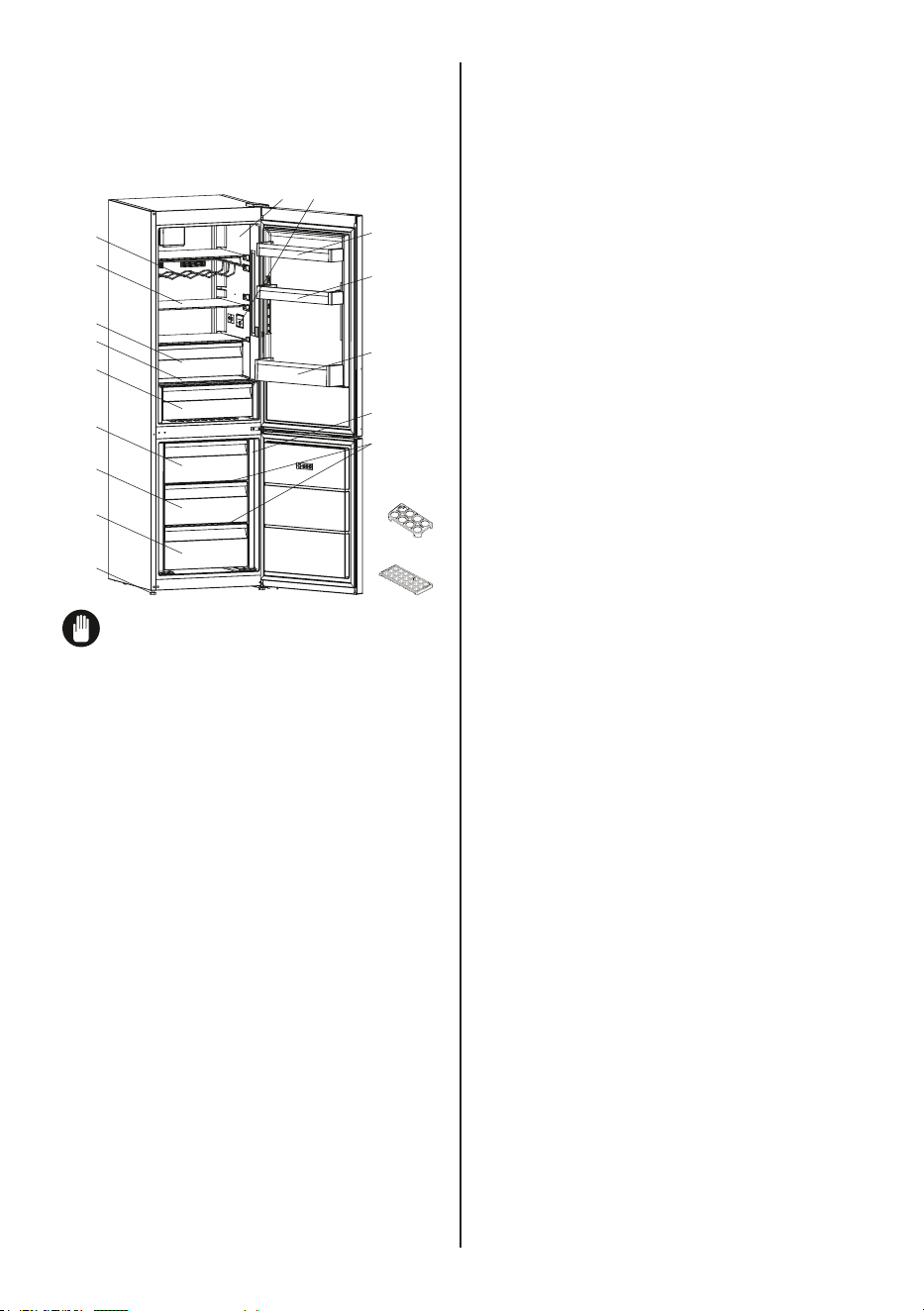
2 DESCRIPTION OF THE
APPLIANCE
This appliance is not intended to be used
as a built-in appliance.
A
1
2
3
4
5
6
7
8
9
10
B
11
12
13
15
16
14
This presentation is only for
information about the parts of the
appliance. Parts may vary according to the
appliance model.
A) Refrigerator compartment
B) Freezer compartment
1) Wine rack *
2) Refrigerator shelves
3) Chiller *
4) Crisper cover
5) Crisper
6) Freezer upper basket
7) Freezer midle basket
8) Freezer bottom basket
9) Levelling feet
10) Freezer glass shelves
11) Bottle shelf
12) Adjustable door shelf * / door shelf
13) Door shelf
14) Thermostat box / Interior display
15) Egg holder
16) Ice box tray
* In some models
General notes:
Fresh Food Compartment (Fridge): Most
ecient use of energy is ensured in the
conguration with the drawers in the bottom
part of the appliance, and shelves evenly
distributed, position of door bins does not
aect energy consumption.
Freezer Compartment (Freezer): Most
Ecient use of energy is ensured in the
conguration with the drawers and bins are
on stock position.
EN - 11
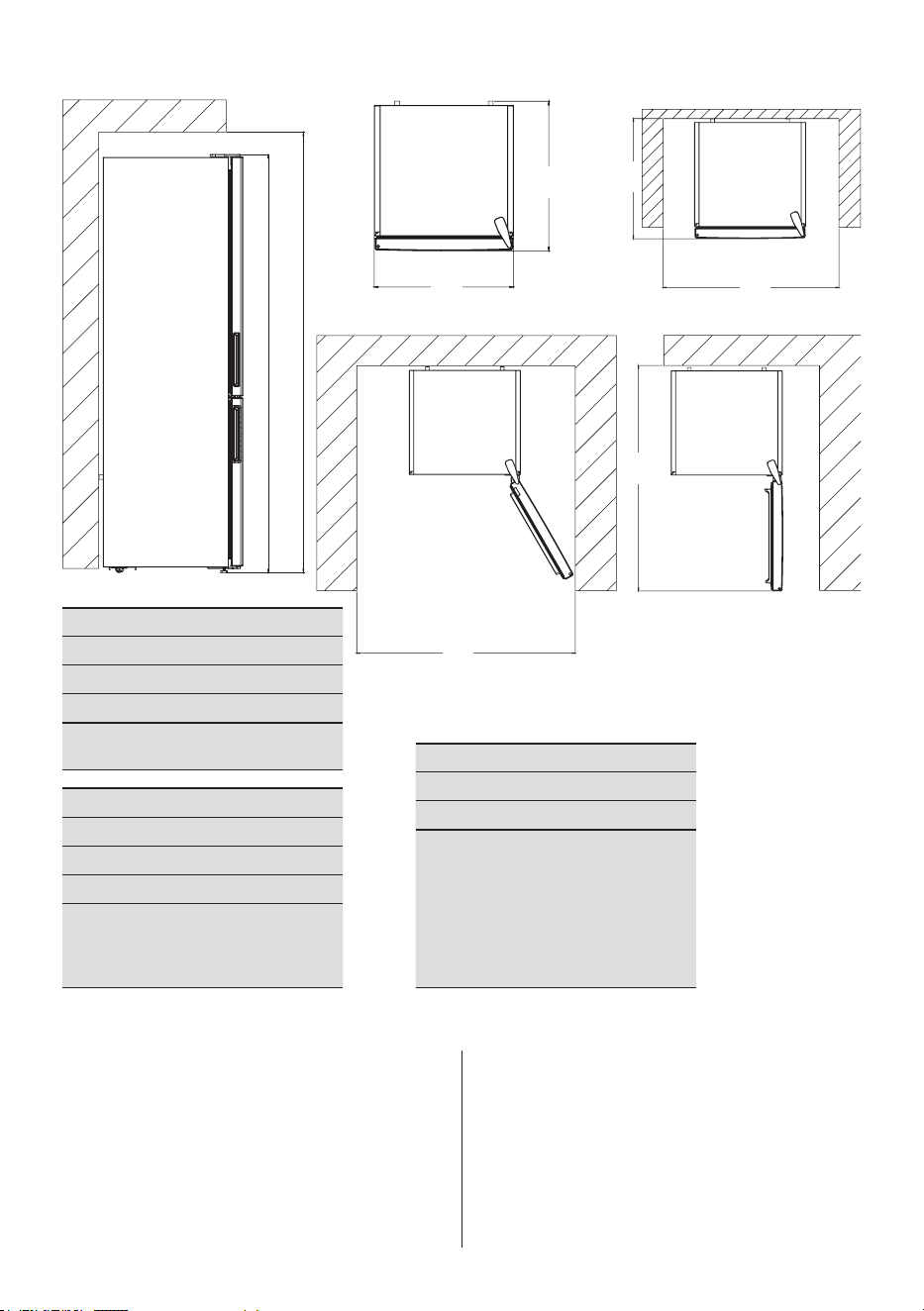
2.1 Dimensions
H1
H2
W2
D2
W1
D1
W3
90
o
D3
Space required in use
2
H2 mm 2010,0
W2 mm 695,0
D2 mm 744,1
2
the height, width and depth of the
appliance including the handle,
plus the space necessary for free
circulation of the cooling air.
Overall space required in use
3
W3 mm 981,6
D3 mm 1243,5
3
the height, width and depth of the
appliance including the handle,
plus the space necessary for free
circulation of the cooling air, plus
the space necessary to allow door
opening to the minimum angle
permitting removal of all internal
equipment.
Overall dimensions
1
H1 mm 1860,0
W1 mm 595,0
D1 mm 650,0
1
the height, width and depth of the
appliance without the handle.
EN - 12
3 USING THE APPLIANCE
3.1 Information about New Generation
Cooling Technology
Fridges with new-generation cooling
technology have a dierent operating
system to static fridges. Other (static)
fridges may experience a build up of ice
in the freezer compartment due to door
openings and humidity in the food. In such
fridges, regular defrosting is required; the
fridge must be switched o, the frozen
food moved to a suitable container and
the ice which has formed in the freezer
compartment removed.
In fridges with new-generation cooling
technology, a fan blows dry cold air
evenly throughout the fridge and freezer
compartments. The cold air cools your food
evenly and uniformly, preventing humidity
and ice build-up.
In the refrigerator compartment, air
blown by the fan, located at the top of
the refrigerator compartment, is cooled
while passing through the gap behind
the air duct. At the same time, the air is
blown out through the holes in the air duct,
evenly spreading cool air throughout the
refrigerator compartment.
There is no air passage between the
freezer and refrigerator compartments,
therefore preventing the mixing of odours.
As a result, your fridge, with new-
generation cooling technology, provides
you with ease of use as well as a huge
volume and aesthetic appearance.
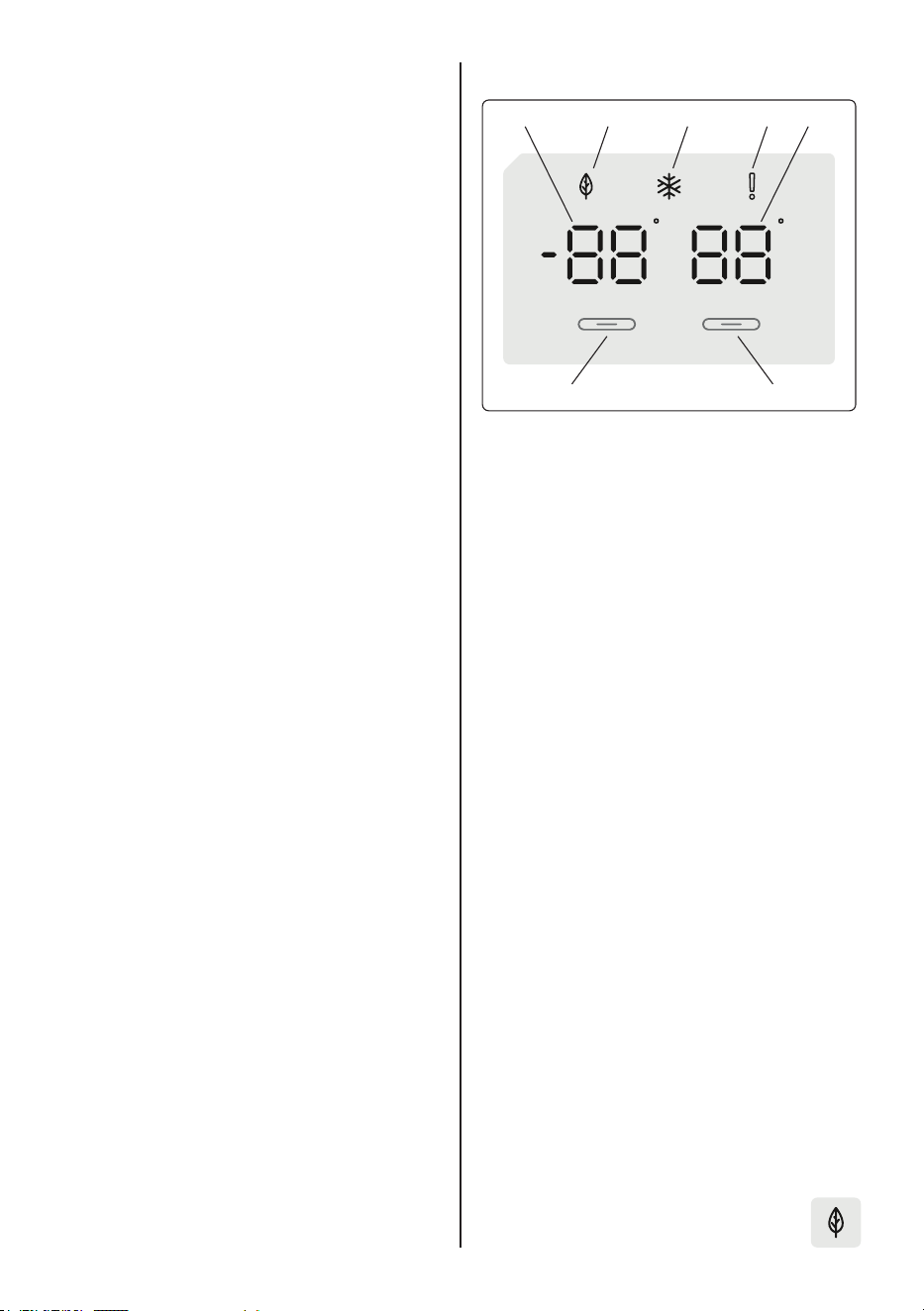
3.2 Display and Control Panel
3 5 6 7 4
1 2
Using the Control Panel
1. Enables the setting of the freezer.
2. Enables the setting of the cooler.
3. Freezer set value screen.
4. Cooler set value screen.
5. Economy mode symbol.
6. Super freeze symbol.
7. Alarm symbol.
3.3 Operating your Fridge Freezer
Lighting (If available)
When the product is plugged in for the
rst time, the interior lights may turn on 1
minute late due to opening tests.
Once you have plugged in the product, all
symbols will be displayed for 2 seconds
and the initial values will be shown as
-18 °C on the freezer adjustment indicator,
and +4 °C on the fridge adjustment
indicator.
3.3.1 Freezer Temperature Settings
• The initial temperature value for the
freezer setting indicator is -18 °C.
• Press the freezer set button once.
When you rst press the button, the
previous value will blink on the screen.
• Whenever you press the same button,
a lower temperature will be set (-16 °C,
-18 °C, -20 °C, -22 °C or -24 °C).
• If you continue to press the button, it will
restart from -16 °C.
NOTE: Eco mode gets activated
EN - 13
automatically when the temperature of the
freezer compartment is set to -18°C.
3.3.2 Cooler Temperature Settings
• The initial temperature value for the
cooler setting indicator is +4 °C.
• Press the cooler button once.
• Whenever you press the button, a lower
temperature will be set (+8 °C, +6 °C,
+5 °C, +4 °C, or +2 °C).
• If you continue to press the button, it will
restart from +8 °C.
3.3.3 Super Freeze Mode
Purpose
• To freeze a large quantity of food that
cannot t on the fast freeze shelf.
• To freeze prepared foods.
• To freeze fresh food quickly to retain
freshness.
How to use
To enable the super freeze
mode, press and hold the freezer
temperature setting button for 3
seconds. Once the super freeze mode
has been set, the super freeze symbol on
the indicator will be lit and the machine
will beep to conrm the mode has been
switched on.
During Super Freeze Mode:
• The temperature of the Cooler may be
adjusted. In this case, Super Freeze
mode will continue.
• Economy mode cannot be selected.
• Super Freeze mode can be cancelled in
the same way it is selected.
Notes:
• The maximum amount of fresh food (in
kilograms) that can be frozen within 24
hours is shown on the appliance label.
• For optimal appliance performance in
maximum freezer capacity, activate super
freeze mode 3 hours before you put fresh
food into the freezer.
Super freeze mode will automatically
cancel after 24 hours, depending on
the environmental temperature or when the
freezer sensor reaches a suciently low
temperature.
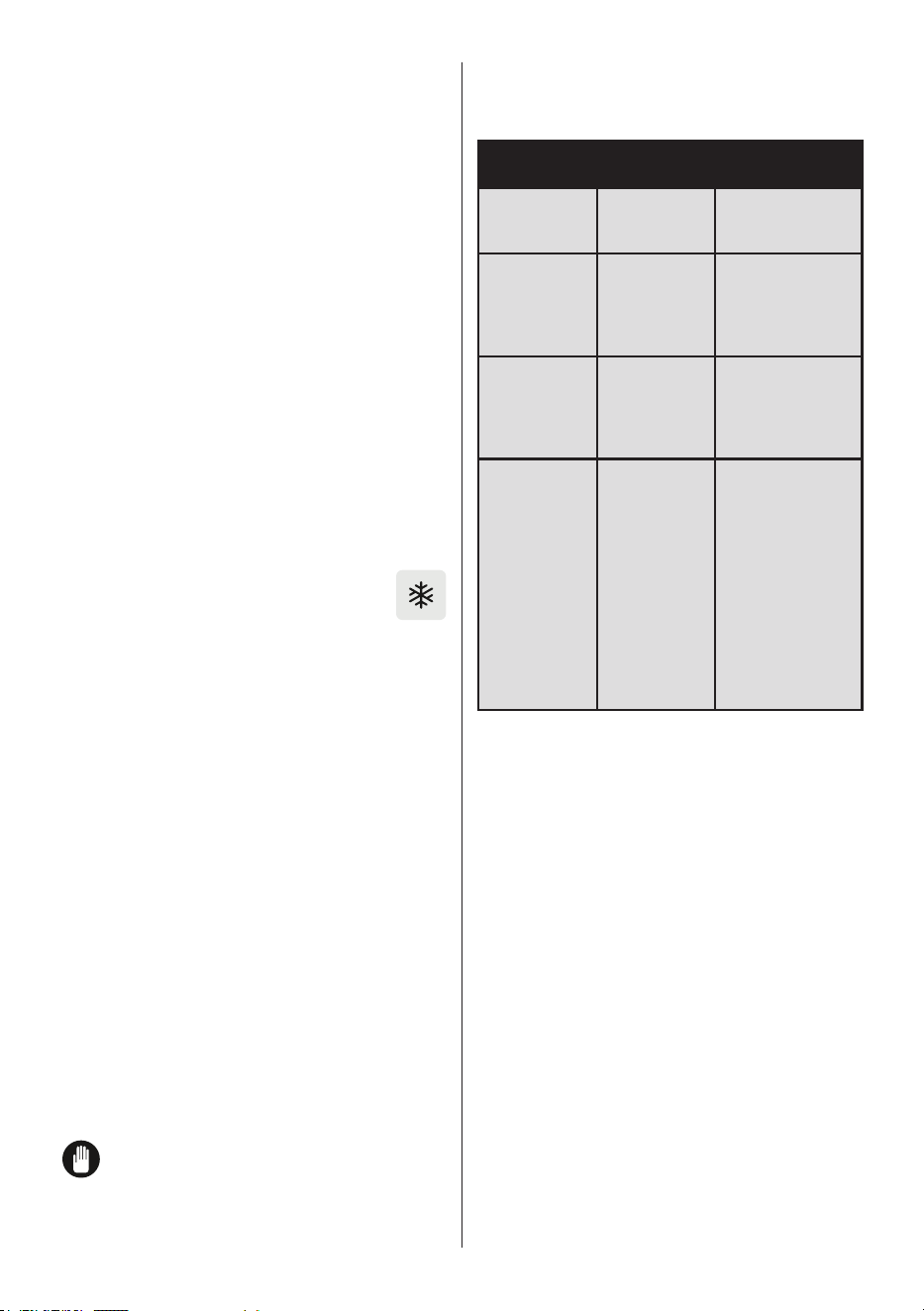
Recommended Settings for the Freezer
and Cooler Compartment Temperature
Freezer
Compartment
Cooler
Compartment
Remarks
-18
o
C 4
o
C
For regular
use and best
performance.
-20
o
C, -22
o
C
or -24
o
C
4
o
C
Recommended
when
environmental
temperature
exceeds 30 °C.
Super Freeze
mode
4
o
C
Must be used
when you wish
to freeze food in
a short period of
time.
-18
o
C, -20
o
C,
-22
o
C or
-24
o
C
2
o
C
These
temperature
settings must be
used when the
environmental
temperature is
high or if you think
the refrigerator
compartment is
not cool enough
becuse the door
is being opened
frequently.
3.3.4 Door Open Alarm Function
If fridge door is opened more than 2
minutes, appliance sounds ‘beep beep’.
3.4 Temperature Settings Warnings
• Your appliance is designed to operate in
the ambient temperature ranges stated
in the standards, according to the climate
class stated in the information label. It
is not recommended that your fridge is
operated in the environments which are
outside of the stated temperature ranges.
This will reduce the cooling eciency of
the appliance.
• Temperature adjustments should be
made according to the frequency of
door openings, the quantity of food kept
inside the appliance and the ambient
temperature in the location of your
appliance.
• When the appliance is rst switched on,
EN - 14
allow it to run for 24 hours in order to
reach operating temperature. During this
time, do not open the door and do not
keep a large quantity of food inside.
• A 5 minute delay function is applied
to prevent damage to the compressor
of your appliance when connecting
or disconnecting to mains, or when
an energy breakdown occurs. Your
appliance will begin to operate normally
after 5 minutes.
Climate class and meaning:
T (tropical): This refrigerating appliance
is intended to be used at ambient
temperatures ranging from 16 °C to 43 °C.
ST (subtropical): This refrigerating
appliance is intended to be used at ambient
temperatures ranging from 16 °C to 38 °C.
N (temperate): This refrigerating appliance
is intended to be used at ambient
temperatures ranging from 16 °C to 32 °C.
SN (extended temperate): This
refrigerating appliance is intended to be
used at ambient temperatures ranging from
10 °C to 32 °C.
Important installation instructions
This appliance is designed to work in
dicult climate conditions and is powered
with ‘Freezer Shield’ technology which
ensures that the frozen food in the
freezer will not defrost even if the ambient
temperature falls as low as -15 °C. So
you may then install your appliance in an
unheated room without having to worry
about frozen food in the freezer being
spoilt. When the ambient temperature
returns to normal, you may continue using
the appliance as usual.
3.5 Accessories
Visual and text descriptions in the
accessories section may vary according
to the model of your appliance.
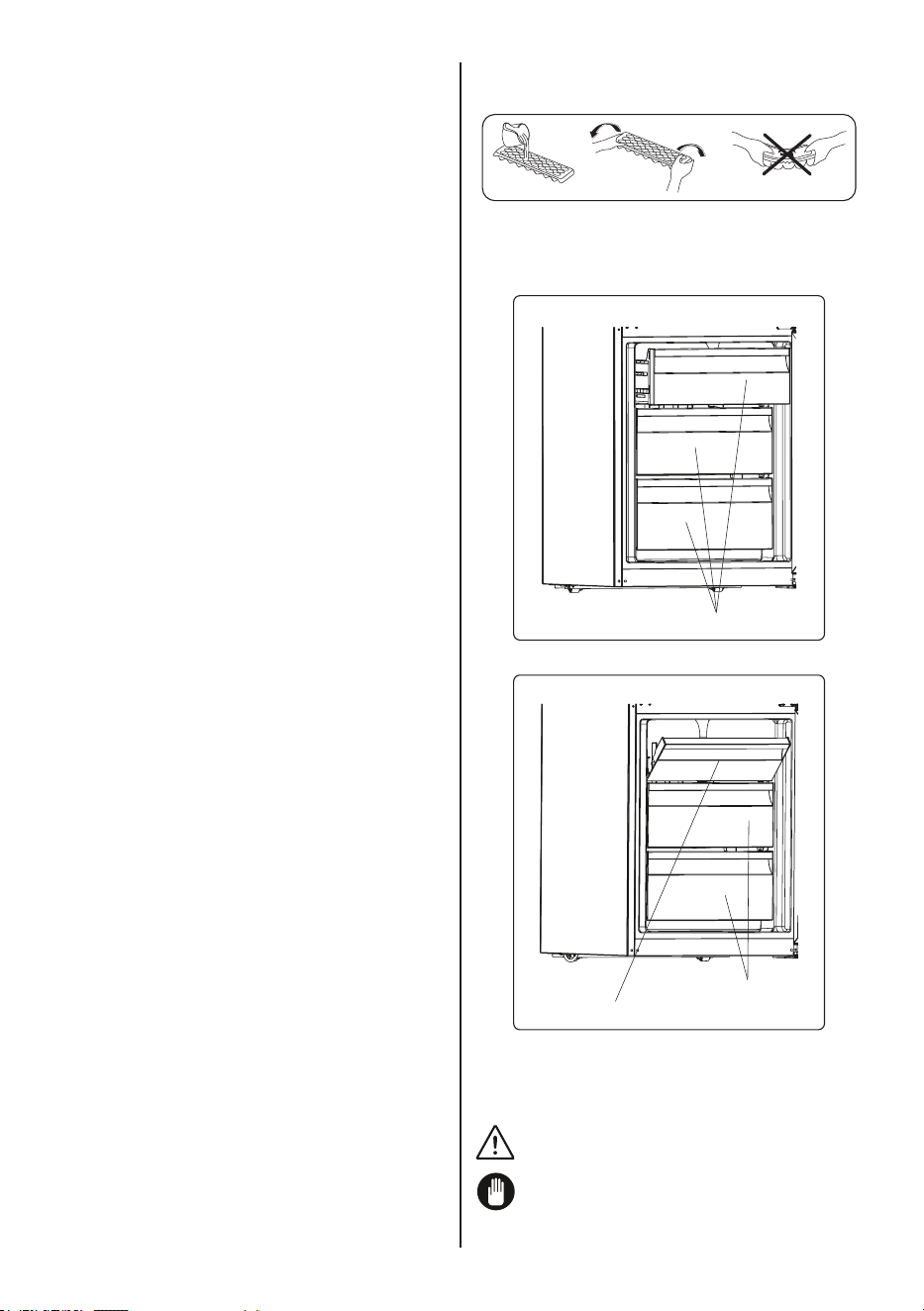
3.5.1 Ice Tray (In some models)
• Fill the ice tray with water and place in
the freezer compartment.
• After the water has completely frozen,
you can twist the tray as shown below to
remove the ice cubes.
3.5.2 The Freezer Box
The freezer box allows food to be accessed
more easily.
(The images are representative)
Freezer boxes
or
Freezer boxes
Freezer upper cover
(The images are representative)
Removing the freezer box:
• Pull the box out as far as possible
• Pull the front of the box up and out
Carry out the opposite of this operation
when retting the sliding compartment.
Always keep hold of the handle of the
box while removing it.
EN - 15
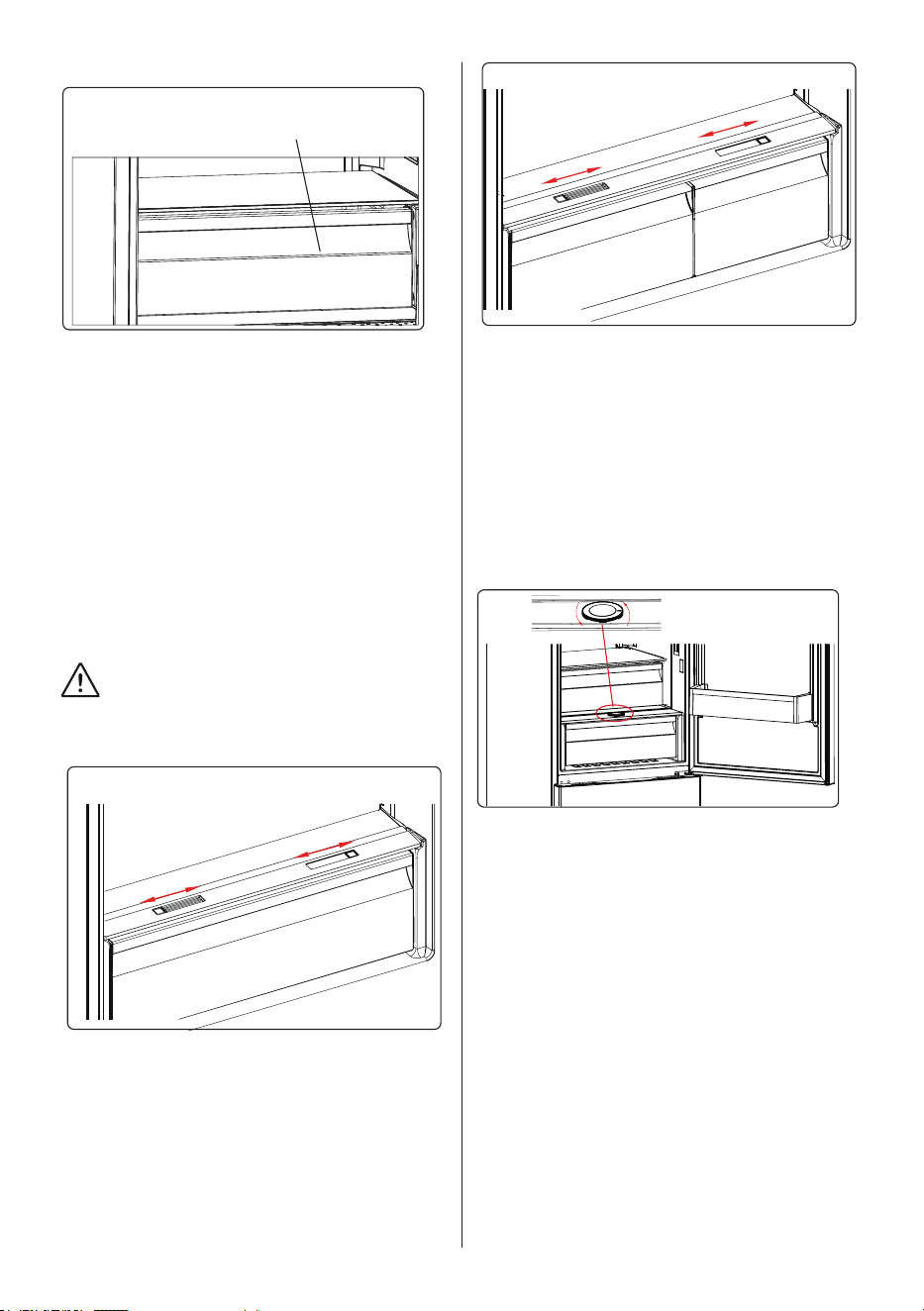
3.5.3 The Chiller Shelf (In some models)
Chiller shelf
(The images are representative)
Keeping food in the Chiller compartment,
instead of the freezer or refrigerator
compartments, allows food to retain
freshness and avour for longer, while
preserving its fresh appearance. When the
Chiller tray becomes dirty, remove it and
wash with water.
(Water freezes at 0°C, but food containing
salt or sugar freezes at temperatures lower
than this).
The Chiller compartment is usually used
for storing foods such as raw sh, lightly
pickled food, rice, and so on.
Do not put food you want to freeze
or ice trays (to make ice) in the
Chiller compartment.
3.5.4 The Fresh Dial (In some models)
(The images are representative)
or
(The images are representative)
If the crisper is full, the fresh dial located
in front of the crisper should be opened.
This allows the air in the crisper and the
humidity rate to be controlled, to increase
the life of food within.
The dial, located behind the shelf, must be
opened if any condensation is seen on the
glass shelf.
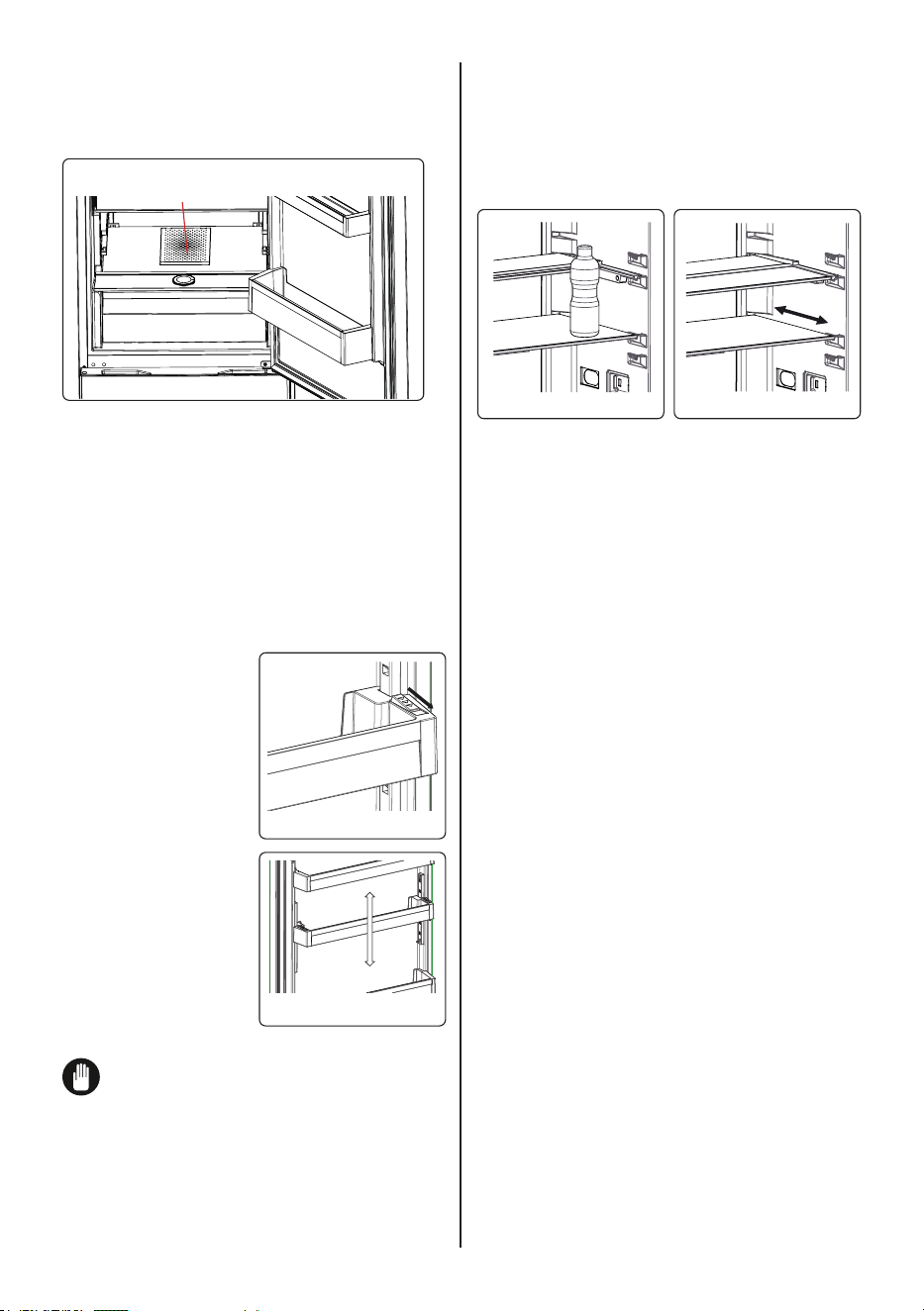
3.5.5 Humidity Controler+ (In some
models)
Humidity Controler+
Thanks to the humidity control + group,
vegetables and fruits may be stored for a
longer period at an environment with ideal
humidity conditions. With the humidity set-
ting system with 3 options in front of your
crisper, you may control the humidity inside
the compartment as per the food you store.
We recommend you to store your food by
selecting vegetable option when you store
vegetables only, fruit option when you store
fruit only and mixed option when you store
mixed food.
We recommend that the vegetables and
fruits shall not be stored in bags to improve
the storage period of the food and to better
benet from the humidity control +.
in particular, are not stored in closed bags.
In situations where contact with other
EN - 16
vegetables is not preferred, use packaging
materials such as paper that has a certain
level of porosity in terms
of hygiene.
There is a membrane lter in this
area that control humidity level.
3.5.6 Adjustable Door Shelf (In some
models)
Six dierent height adjustments can be
made to provide storage areas that you
need by adjustable door shelf.
To change the position of adjustable door
shelf ;
Hold the bottom of the shelf and pull the
buttons on the side of
the door shelf
direction of arrow.
(Fig.1)
Position door shelf
the height you need
by moving up and
down. After you get
the position that you
want the door shelf,
release the buttons on
the side of the door
shelf (Fig.2) Before
releasing the door
shelf, move up down
and make sure the
door shelf is xed.
Note: Before moving door shelf is
loaded, you must hold the shelf by
supporting the bottom. Otherwise, door
shelf could fall o the rails due to the
weight. So damage may occur on the door
shelf or rails.
Fig. 1
Fig. 2
3.5.7 Adjustable Glass Shelf (In some
models)
Adjustable glass shelf mechanism provides
higher storage spaces with a simple
movement. To cover the glass shelf, push
it.
Fig. 1
Fig. 2
You can load your food as you want in the
resulting extra space. To bring the shelf in
its original position, pull it toward you.
EN - 17
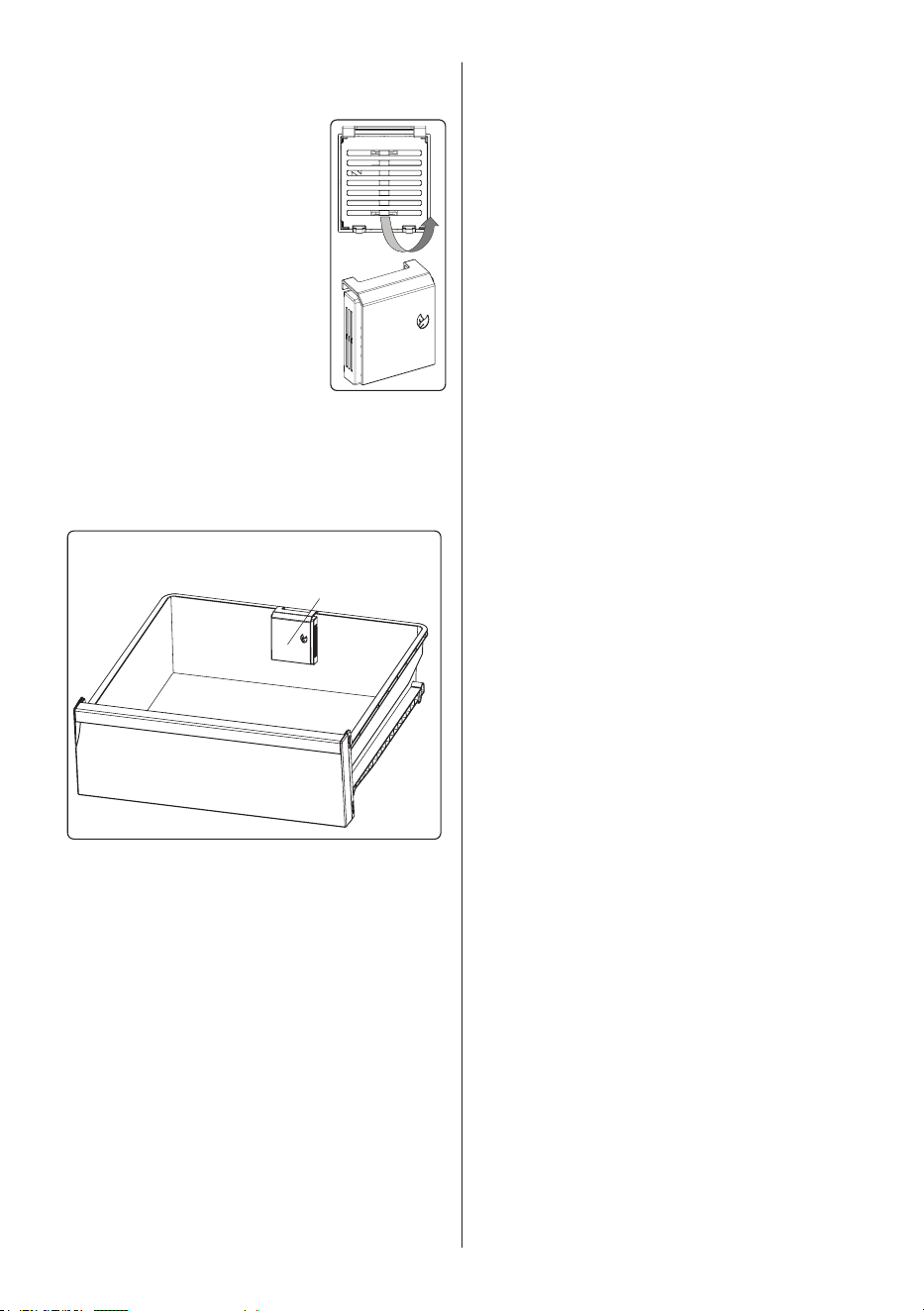
3.5.8 Maxi-fresh preserver (If available)
Maxi Fresh Preserver technology helps to
remove ethylene gas (a
volatile organic compound
released naturally from fresh
foods) and unpleasant odors
from the crisper.
In this way, food stays fresh
for a longer time.
• Maxi Fresh Preserver must
be cleaned once in a year.
The lter should be placed
for 2 hours at 65°C in an
oven
• To clean the lter, please remove the
back cover of the lter box by pulling it in
the direction of the arrow.
• The lter should not be washed with
water or any detergent.
Maxi Fresh Preserver
(In some models)
(The images are representative)
4 FOOD STORAGE
4.1 Refrigerator Compartment
For normal operating conditions, set the
temperature of the cooler compartment to
+4 or +6
o
C.
• To reduce humidity and avoid the
consequent formation of frost, always
store liquids in sealed containers in the
refrigerator. Frost tends to concentrate in
the coldest parts of the evaporating liquid
and, in time, your appliance will require
more frequent defrosting.
• Cooked dishes must remain covered
when they are kept in the fridge.Do
not place warm foods in fridge.Place
them when they are cool, otherwise the
temperature/humidity inside the fridge will
increases, reducing the fridge’s eciency.
• Make sure no items are in direct contact
with the rear wall of the appliance as
frost will develop and packaging will stick
to it. Do not open the refrigerator door
frequently.
• We recommend that meat and clean sh
are loosely wrapped and stored on the
glass shelf just above the vegetable bin
where the air is cooler, as this provides
the best storage conditions.
• Store loose fruit and vegetable items in
the crisper containers.
• Storing fruit and vegetables separately
helps prevent ethylene-sensitive
vegetables (green leaves, broccoli,
carrot, etc.) being aected by ethylene-
releaser fruits (banana, peach, apricot,
g etc.).
• Do not put wet vegetables into the
refrigerator.
• Storage time for all food products
depends on the initial quality of the food
and an uninterrupted refrigeration cycle
before refrigerator storage.
• Water leaking from meat may
contaminate other products in the
refrigerator. You should package meat
products and clean any leakages on the
shelves.
• Do not put food in front of the air ow
passage.
• Consume packaged foods before the
recommended expiry date.
Do not allow food to come into contact with
the temperature sensor, which is located
in the refrigerator compartment, in order
to keep the refrigerator compartment at
optimum temperature.
• For normal working conditions, it will
be sucient to adjust the temperature
setting of your refrigerator to +4 °C.
EN - 18
• The temperature of the fridge
compartment should be in the range
of 0-8 °C, fresh foods below 0 °C are
iced and rotted, bacterial load increases
above 8 °C, and spoils.
• Do not put hot food in the refrigerator
immediately, wait for the temperature
to pass outside. Hot foods increase the
degree of your refrigerator and cause
food poisoning and unnecessary spoiling
of the food.
• Meat, sh, etc. should be store in the
chiller compartment of the food, and the
vegetable compartment is preferred for
vegetables. (if available)
• To prevent cross contamination, meat
products and fruit vegetables are not
stored together.
• Foods should be placed in the refrigerator
in closed containers or covered to
prevent moisture and odors.
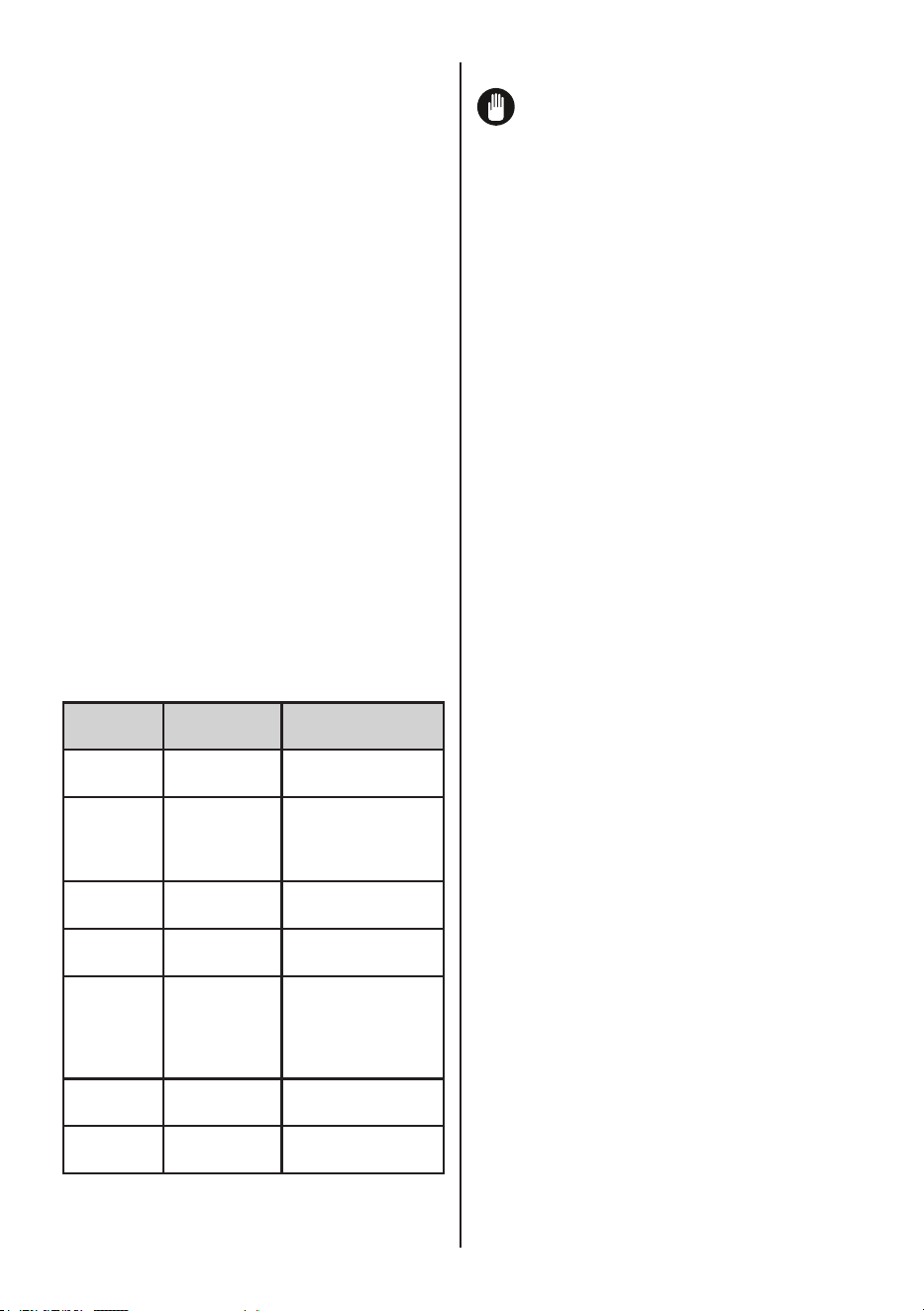
The table below is a quick guide to show
you the most ecient way to store the
major food groups in your refrigerator
compartment.
Food
Maximum
storage time
How and where to
store
Vegetables
and fruits
1 week Vegetable bin
Meat and
sh
2 - 3 days
Wrap in plastic foil,
bags, or in a meat
container and store
on the glass shelf
Fresh
cheese
3 - 4 days
On the designated
door shelf
Butter and
margarine
1 week
On the designated
door shelf
Bottled
products
e.g. milk
and
yoghurt
Until the
expiry date
recommended
by the
producer
On the designated
door shelf
Eggs 1 month
On the designated
egg shelf
Cooked
food
2 days All shelves
NOTE:
Potatoes, onions and garlic should not
be stored in the refrigerator.
4.2 Freezer Compartment
For normal operating conditions, set the
temperature of the freezer compartment to
-18 or -20
o
C.
• The freezer is used for storing frozen
food, freezing fresh food, and making ice
cubes.
• Food in liquid form should be frozen
in plastic cups and other food should
be frozen in plastic folios or bags.For
freezing fresh food; wrap and seal fresh
food properly, that is the packaging
should be air tight and shouldn’t leak.
Special freezer bags, aluminum foil
polythene bags and plastic containers
are ideal.
• Do not store fresh food next to frozen
food as it can thaw the frozen food.
• Before freezing fresh food, divide it into
portions that can be consumed in one
sitting.
• Consume thawed frozen food within a
short period of time after defrosting
• Always follow the manufacturer's
instructions on food packaging when
storing frozen food. If no information is
provided food, should not be stored for
more than 3 months from the date of
purchase.
• When purchasing frozen food, make sure
that it has been stored under appropriate
conditions and that the packaging is not
damaged.
• Frozen food should be transported in
appropriate containers and placed in the
freezer as soon as possible.
• Do not purchase frozen food if the
packaging shows signs of humidity
and abnormal swelling. It is probable
that it has been stored at an unsuitable
temperature and that the contents have
deteriorated.
EN - 19
• The storage life of frozen food depends
on the room temperature, the thermostat
setting, how often the door is opened,
the type of food, and the length of time
required to transport the product from
the shop to your home. Always follow the
instructions printed on the packaging and
never exceed the maximum storage life
indicated.
• If the freezer door has been left open for
a long time or not closed properly, frost
will form and can prevent ecient air
circulation. To resolve this, unplug the
freezer and wait for it to defrost. Clean
the freezer once it has fully defrosted.
• The freezer volume stated on the label is
the volume without baskets, covers, and
so on.
• Do not refreeze thawed food. It may
pose a danger to your health and cause
problems such as food poisoning.
NOTE: If you attempt to open the freezer
door immediately after closing it, you
will nd that it will not open easily. This
is normal. Once equilibrium has been
reached, the door will open easily.
• To use the maximum capacity of the
freezer compartment, use the glass
shelves for the upper and middle section,
and use the lower basket for the bottom
section.
EN - 20
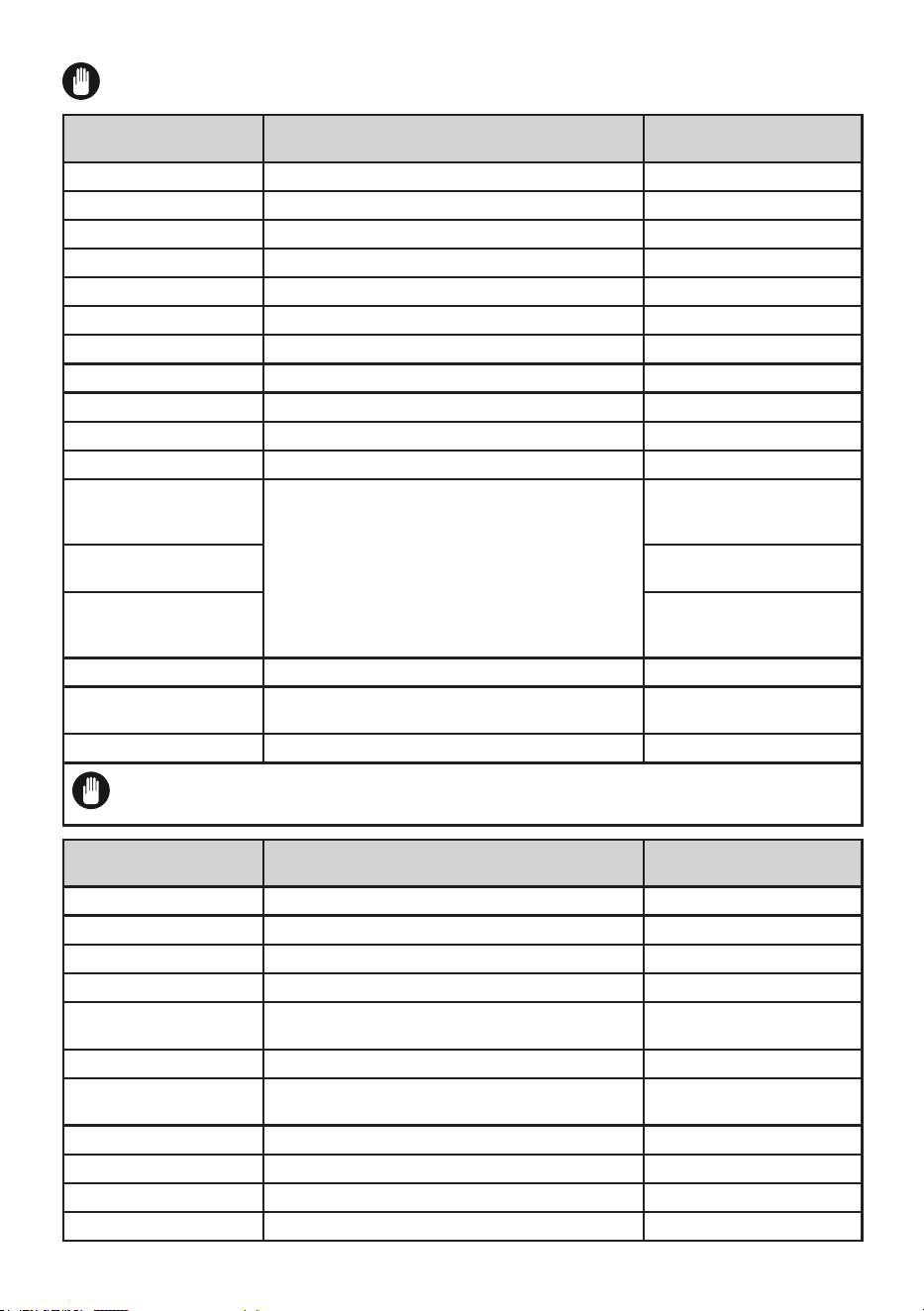
The table below is a quick guide to show you the most ecient way to store the major
food groups in your freezer compartment.
Meat and sh Preparation
Maximum storage time
(months)
Steak Wrap in foil 6 - 8
Lamb meat Wrap in foil 6 - 8
Veal roast Wrap in foil 6 - 8
Veal cubes In small pieces 6 - 8
Lamb cubes In pieces 4 - 8
Minced meat In packaging without using spices 1 - 3
Giblets (pieces) In pieces 1 - 3
Bologna sausage/salami Should be kept packaged even if it has a membrane 1 - 3
Chicken and turkey Wrap in foil 4 - 6
Goose and duck Wrap in foil 4 - 6
Deer, rabbit, wild boar In 2.5 kg portions or as llets 6 - 8
Freshwater sh
(Salmon, Carp, Crane,
Catsh)
After cleaning the bowels and scales of the sh,
wash and dry it. If necessary, remove the tail and
head.
2
Lean sh (Bass, Turbot,
Flounder)
4
Fatty shes (Tuna,
Mackerel, Bluesh,
Anchovy)
2 - 4
Shellsh Clean and in a bag 4 - 6
Caviar
In its packaging, or in an aluminium or plastic
container
2 - 3
Snails In salty water, or in an aluminium or plastic container 3
NOTE: Thawed frozen meat should be cooked as fresh meat. If the meat is not cooked after defrosting, it
must not be re-frozen.
Vegetables and Fruits Preparation
Maximum storage time
(months)
String beans and beans Wash, cut into small pieces and boil in water 10 - 13
Beans Hull, wash and boil in water 12
Cabbage Clean and boil in water 6 - 8
Carrot Clean, cut into slices and boil in water 12
Pepper
Cut the stem, cut into two pieces, remove the core
and boil in water
8 - 10
Spinach Wash and boil in water 6 - 9
Cauliower
Remove the leaves, cut the heart into pieces and
leave it in water with a little lemon juice for a while
10 - 12
Eggplant Cut into pieces of 2cm after washing 10 - 12
Corn Clean and pack with its stem or as sweet corn 12
Apple and pear Peel and slice 8 - 10
Apricot and Peach Cut into two pieces and remove the stone 4 - 6
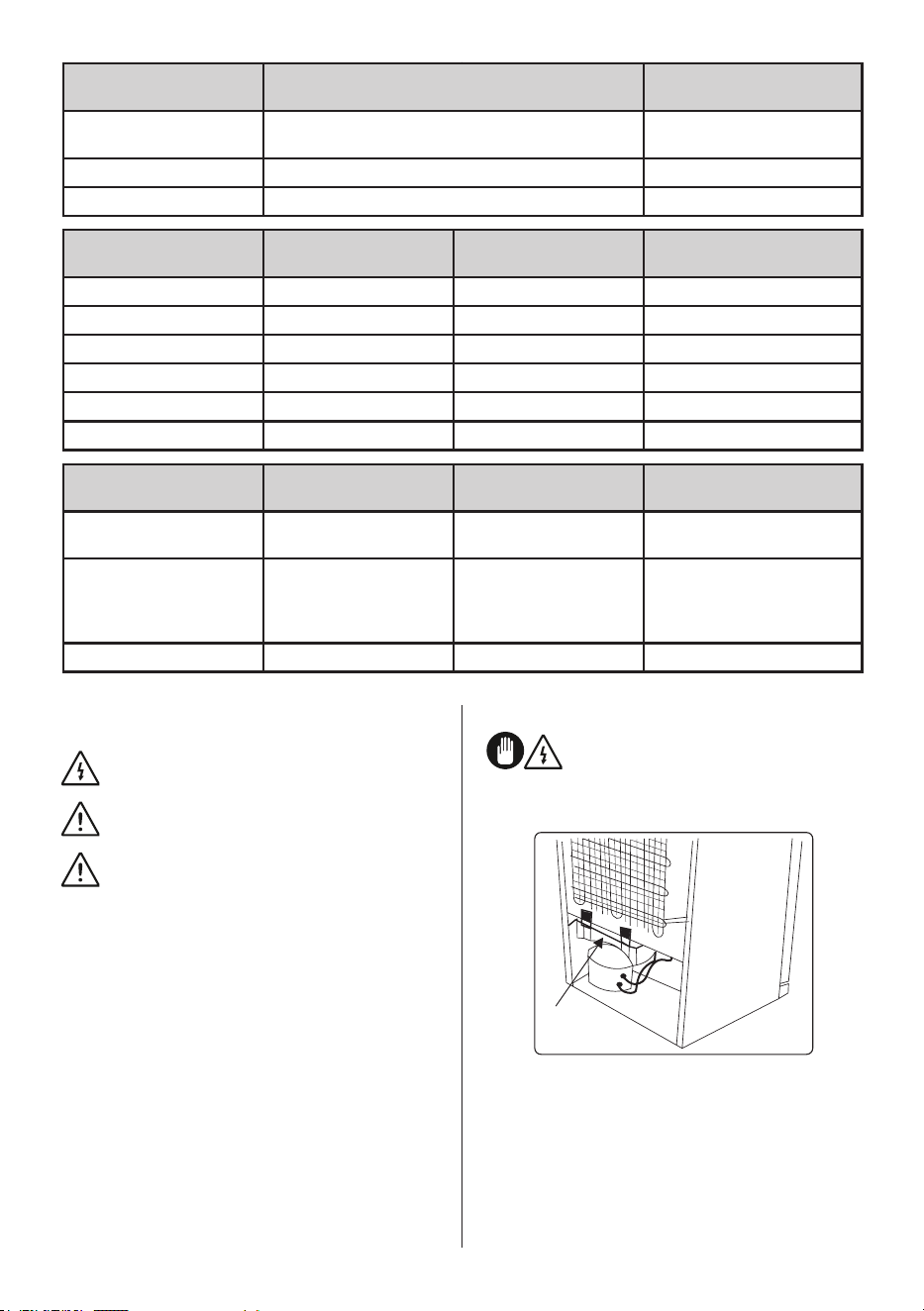
EN - 21
Vegetables and Fruits Preparation
Maximum storage time
(months)
Strawberry and
Blackberry
Wash and hull 8 - 12
Cooked fruits Add 10 % of sugar to the container 12
Plum, cherry, sourberry Wash and hull the stems 8 - 12
Maximum storage time
(months)
Thawing time at room
temperature (hours)
Thawing time in oven
(minutes)
Bread 4 - 6 2 - 3 4-5 (220-225 °C)
Biscuits 3 - 6 1 - 1,5 5-8 (190-200 °C)
Pastry 1 - 3 2 - 3 5-10 (200-225 °C)
Pie 1 - 1,5 3 - 4 5-8 (190-200 °C)
Phyllo dough 2 - 3 1 - 1,5 5-8 (190-200 °C)
Pizza 2 - 3 2 - 4 15-20 (200 °C)
Dairy products Preparation
Maximum storage time
(months)
Storage conditions
Packet (Homogenized)
Milk
In its own packet 2 - 3 Pure Milk – in its own packet
Cheese - excluding
white cheese
In slices 6 - 8
Original packaging may be
used for short-term storage.
Keep wrapped in foil for
longer periods.
Butter, margarine In its packaging 6
5 CLEANING AND MAINTENANCE
Disconnect the unit from the power
supply before cleaning.
Do not wash your appliance by pouring
water on it.
Do not use abrasive products,
detergents or soaps for cleaning the
appliance. After washing, rinse with clean
water and dry carefully. When you have
nished cleaning, reconnect the plug to the
mains supply with dry hands.
• Make sure that no water enters the lamp
housing and other electrical components.
• The appliance should be cleaned regularly
using a solution of bicarbonate of soda and
lukewarm water.
• Clean the accessories separately by
hand with soap and water. Do not wash
accessories in a dish washer.
• Clean the condenser with a brush at least
twice a year. This will help you to save on
energy costs and increase productivity.
The power supply must be
disconnected during cleaning.
5.1 Defrosting
water tray
• Your appliance performs automatic
defrosting. The water formed as a result
of defrosting passes through the water
collection spout, ows into the water tray
behind your appliance and evaporates
there.
EN - 22
• Make sure you have disconnected the
plug of your appliance before cleaning
the water tray.
• Remove the water tray from its position
by removing the screws (if it has screws).
Clean it with soapy water at specic time
intervals. This will prevent odours from
forming.
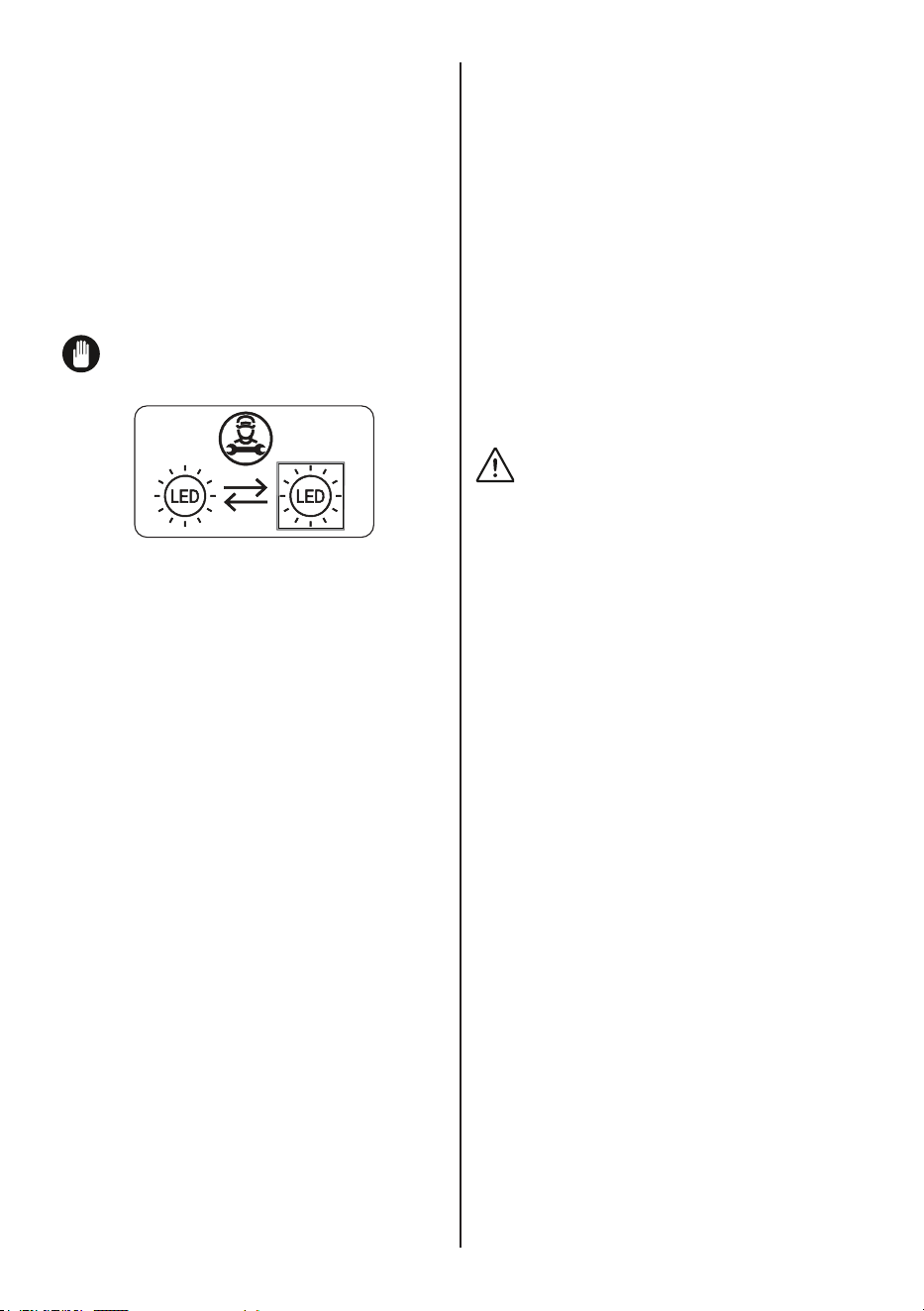
Replacing LED Lighting
To replace any of the LEDs, please contact
the nearest Authorised Service Centre.
Note: The numbers and location of the
LED strips may change according to
the model.
If product equipped with LED lamp
This product contains a light source of
energy eciency class <E>.
If product equipped with LED Strip(s) or
LED card(s)
This product contains a light source of
energy eciency class <F>.
, SHIPMENT AND
REPOSITIONING
5.2 Transportation and Changing
Positioning
• The original packaging and foam may be
kept for re-transportation (optional).
• Fasten your appliance with thick
packaging, bands or strong cords and
follow the instructions for transportation
on the packaging.
• Remove all movable parts or x them
into the appliance against shocks
using bands when re-positioning or
transporting.
Always carry your appliance in the
upright position.
5.3 Repositioning the Door
• It is not possible to change the opening
direction of your appliance door if door
handles are installed on the front surface
of the appliance door.
• It is possible to change the opening
direction of the door on models with
handle on the side of the door or without
handles.
• If the door-opening direction of your
appliance can be changed, contact the
nearest Authorised Service Centre to
change the opening direction.
EN - 23
6 BEFORE CALLING AFTER-SALES SERVICE
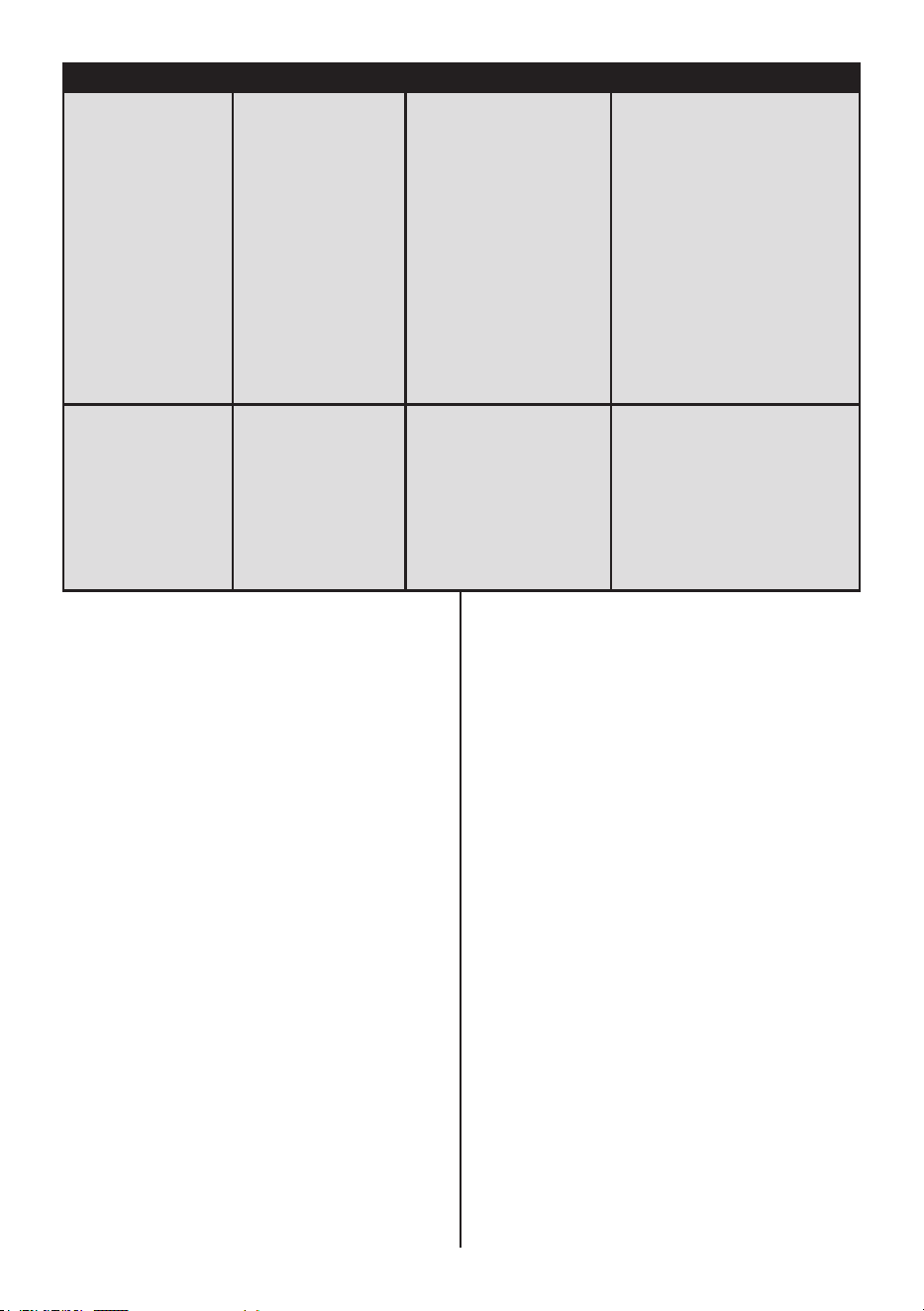
Errors
Your fridge will warn you if the temperatures for the cooler and freezer are at improper
levels or if a problem occurs with the appliance. Warning codes are displayed in the freezer
and cooler indicators.
ERROR TYPE MEANING WHY WHAT TO DO
E01 Sensor warning
Call Service for assistance as
soon as possible.
E02 Sensor warning
Call Service for assistance as
soon as possible.
E03 Sensor warning
Call Service for assistance as
soon as possible.
E06 Sensor warning
Call Service for assistance as
soon as possible.
E07 Sensor warning
Call Service for assistance as
soon as possible.
E08 Low Voltage Warning
Power supply to the device
has dropped to below
170 V.
- This is not a device failure, this
error helps to prevent damages
to the compressor.
- The voltage needs to be
increased back to required
levels
If this warning continues an
authorised technician needs to be
contacted.
E09
Freezer compartment
is not cold enough
Likely to occur after long
term power failure.
1. Set the freezer temperature
to a colder value or set Super
Freeze. This should remove
the error code once the
required temperature has been
reached. Keep doors closed
to improve time taken to reach
the correct temperature.
2. Remove any products which
have thawed/defrosted during
this error. They can be used
within a short period of time.
3. Do not add any fresh produce
to the freezer compartment
until the correct temperature
has been reached and the
error is no longer.
If this warning continues an
authorised technician needs to be
contacted.
EN - 24
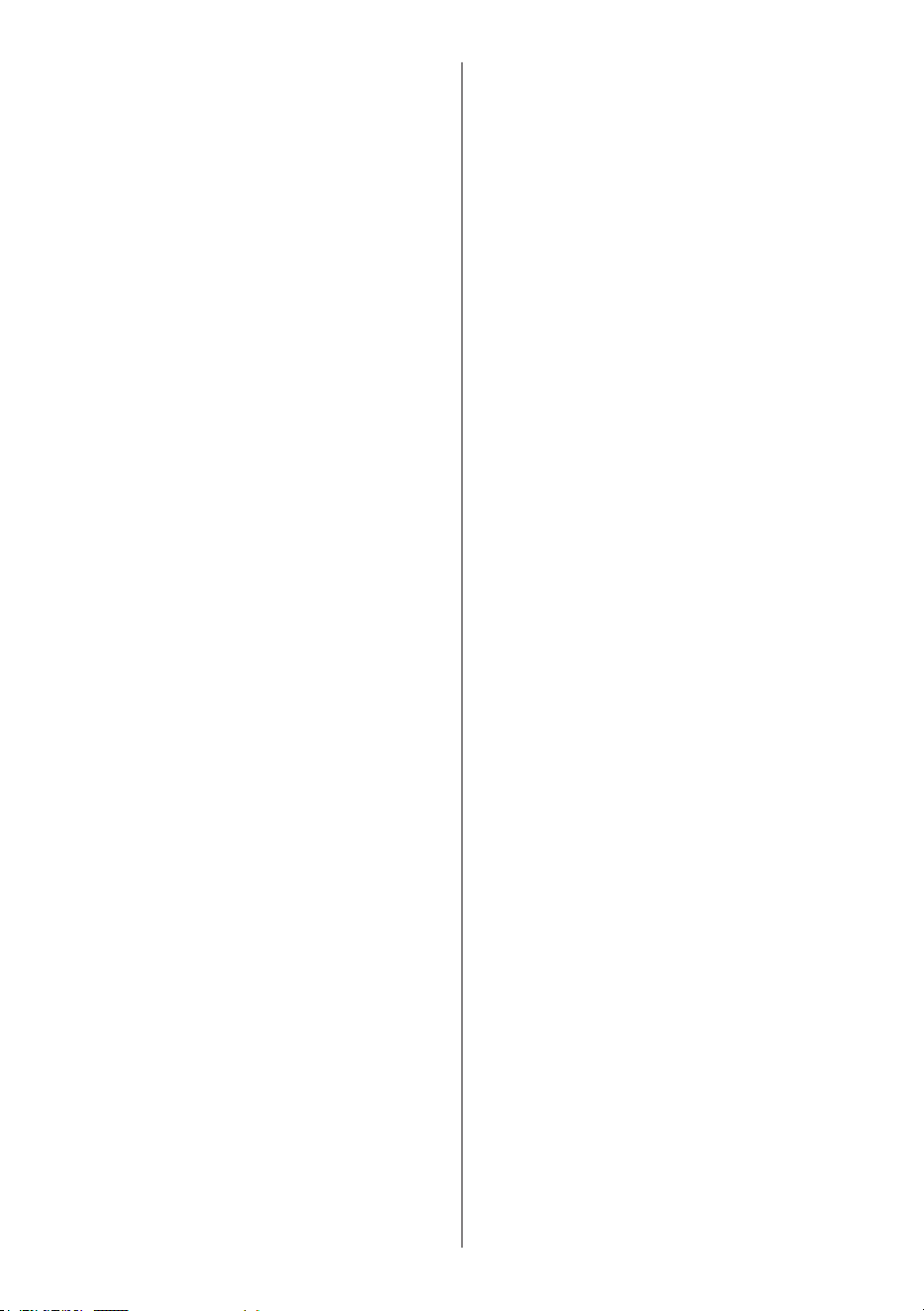
ERROR TYPE MEANING WHY WHAT TO DO
E10
Fridge compartment is
not cold enough
Likely to occur after:
- Long term power failure.
- Hot food has been left in
the fridge.
1. Set the fridge temperature to
a colder value or set Super
Cool. This should remove the
error code once the required
temperature has been reached.
Keep doors closed to improve
time taken to reach the correct
temperature.
2. Please empty the location
at the front area of air duct
channel holes and avoid
putting food close to the
sensor.
If this warning continues an
authorised technician needs to be
contacted.
E11
Fridge compartment is
too cold
Various
1. Check is Super Cool mode is
activated
2. Reduce the fridge
compartment temperature
3. Check to see if vents are clear
and not clogged
If this warning continues an
authorised technician needs to be
contacted.
If you are experiencing a problem with
your appliance, please check the following
before contacting the after-sales service.
Your appliance is not operating
Check if:
• There is power
• The plug is correctly placed in the socket
• The plug fuse or the mains fuse has
blown
• The socket is defective. To check this,
plug another working appliance into the
same socket.
The appliance performs poorly
Check if:
• The appliance is overloaded
• The appliance door is closed properly
• There is any dust on the condenser
• There is enough space near the rear and
side walls.
Your appliance is operating noisily
Normal noises
Cracking noise occurs:
• During automatic defrosting
• When the appliance is cooled
or warmed (due to expansion of
appliance material).
Short cracking noise occurs:
When the thermostat switches the
compressor on/o.
Motor noise: Indicates the
compressor is operating normally. The
compressor may cause more noise for
a short time when it is rst activated.
Bubbling noise and splash occurs:
Due to the ow of the refrigerant in the
tubes of the system.
Water owing noise occurs: Due
to water owing to the evaporation
container. This noise is normal during
defrosting.
Air blowing noise occurs: In some
models during normal operation of the
system due to the circulation of air.
The edges of the appliance in contact
with the door joint are warm
Especially during summer (warm
seasons), the surfaces in contact with the
door joint may become warmer during
the operation of the compressor, this is
normal.
EN - 25
There is a build-up of humidity inside
the appliance
Check if:
• All food is packed properly. Containers
must be dry before being placed in the
appliance.
• The appliance door is opened frequently.
Humidity of the room enters the
appliance when the doors are opened.
Humidity increases faster when the doors
are opened more frequently, especially if
the humidity of the room is high.
The door does not open or close
properly
Check if:
• There is food or packaging preventing the
door from closing
• The door joints are broken or torn
• Your appliance is on a level surface.
Recommendations
• If the appliance is switched o or
unplugged, wait at least 5 minutes before
plugging the appliance in or restarting
it in order to prevent damage to the
compressor.
• If you will not use your appliance for
a long time (e.g. in summer holidays)
unplug it. Clean your appliance according
to chapter cleaning and leave the door
open to prevent humidity and smell.
• If a problem persists after you have
followed all the above instructions,
please consult the nearest authorised
service centre.
• The appliance you have purchased is
designed for domestic use only. It is not
suitable for commercial or common use.
If the consumer uses the appliance in a
way that does not comply with this, we
emphasise that the manufacturer and
the dealer will not be responsible for any
repair and failure within the guarantee
period.
7 TIPS FOR SAVING ENERGY
1. Install the appliance in a cool, well-
ventilated room, but not in direct sunlight
and not near a heat source (such as a
radiator or oven) otherwise an insulating
plate should be used.
2. Allow warm food and drinks to cool
before placing them inside the appliance.
3. Place thawing food in the refrigerator
compartment if available. The low
temperature of the frozen food will
help cool the refrigerator compartment
while the food is thawing. This will save
energy. Frozen food left to thaw outside
of the appliance will result in a waste of
energy.
4. Drinks or other liquids should be
covered when inside the appliance. If
left uncovered, the humidity inside the
appliance will increase, therefore the
appliance uses more energy. Keeping
drinks and other liquids covered helps
preserve their smell and taste.
5. Avoid keeping the doors open for long
periods and opening the doors too
frequently as warm air will enter the
appliance and cause the compressor to
switch on unnecessarily often.
6. Keep the covers of the dierent
temperature compartments (such as the
crisper and chiller if available) closed.
7. The door gasket must be clean and
pliable. In case of wear, replace the
gasket.
52476612