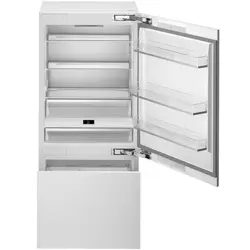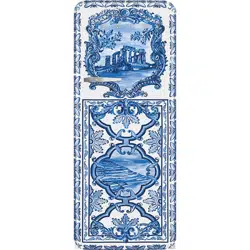
EN
FR
ES
USE & CARE GUIDE
REFRIGERATOR
GUIDE D’UTILISATION ET D’ENTRETIEN
RÉFRIGÉRATEUR
GUÍA DE USO Y CUIDADO
FRIGORÍFICO
ENGLISH
1
Thank you for your trust and for buying this appliance.
We advise you to read this manual carefully, which contains all the instructions for maintaining the
appliance's aesthetic and functional qualities.
FRANÇAIS
1
Nous vous remercions de votre confiance et de l’achat de cet appareil.
Nous conseillons de lire attentivement ce manuel qui contient toutes les indications nécessaires pour
préserver les caractéristiques esthétiques et fonctionnelles de l'appareil acheté.
ESPAÑOL
1
Gracias por la confianza que ha depositado en nosotros con la compra de este aparato.
Aconsejamos leer detenidamente este manual que contiene todas las indicaciones para mantener
inalteradas las cualidades estéticas y funcionales del aparato adquirido.
For further information on the product and get spare parts:
Pour toute information complémentaire concernant le produit et obtenir les pièces de rechange:
Para más información sobre el producto y obtener los recambios:
SMEG USA SMEG MÉXICO SMEG CANADA
FOR SERVICE OR TECHNICAL
INQUIRIES:
Call 1-888-763-4782 and select
the appropriate option.
Email: servi[email protected]
Mail: 590 Belleville Tpke, Building
1, Unit E-F
Kearny NJ, 07032
ATTN: SMEG USA Service
Smeg MX
Teléfono: 800 1117634
Whatsapp: +55 40677705
Mail:
SMEG Canada Service
Phone: 1-800-334-7634
To contact the Service Team
directly,
Email:[email protected]
IMPORTANT:
Save for the local electric
inspector's use
Installer: Leave installation
instructions with the homeowner
Homeowner: Keep installation
instructions for future reference.
IMPORTANT :
Conserver pour l’inspecteur en
électricité
Installateur : Laisser les instructions
pour l’installation au propriétaire
Propriétaire : Garder les
instructions pour l’installation pour
référence future.
IMPORTANTE:
Guardar estas instrucciones para
uso del inspector local de
electricidad
Instalador: Dejar las instrucciones
de montaje al propietario de la casa
Propietario de la casa: Guardar
las instrucciones de montaje para
futura referencia.
Write down the model and serial
numbers before installing the range.
Both numbers are found on the
model/serial ID plate, located on
the oven door frame.
Notez le numéro de modèle et le
numéro de série avant d'installer la
cuisinière.
Les deux numéros se trouvent sur la
fiche signalétique du modèle et du
numéro de série, située sur le cadre
de la porte du four.
Anote el número de modelo y de
serie antes de instalar la cocina.
Ambos números aparecen en la
placa de identificación del
modelo/serie, ubicada en el
marco de la puerta del horno.
Model # / No Modèle / Modelo # _________________________________
Serial # / No Série / Nº de serie # _________________________________
Contents
3
EN
1 Instructions 4
1.1 General Safety 5
1.2 Intended Use 7
1.3 Children's Safety 8
1.4 Hydrocarbon (HC) Warning 8
1.5 For Products with a Water Dispenser/Ice Machine 9
1.6 How to read the user manual 9
2 Description 10
2.1 General Description 10
2.2 Control panel 11
2.3 Parts definition 12
3 Use 14
3.1 Ways to save energy 14
3.2 Recommendations About the Fresh Food Compartment 14
3.3 Initial use 15
3.4 Dual Cooling System 15
3.5 Freezing Fresh Food 15
3.6 Recommendations for Storing Frozen Food 16
3.7 Placing the foodle 16
3.8 Operating temperature 17
3.9 Door bin 17
3.10 Glass shelves 17
3.11 Crisper compartment 18
3.12 Special fridge compartment 19
3.13 Freezer Crisper 19
4 Cleaning and maintenance 20
4.1 Instructions 20
4.2 Avoiding Bad Odors 21
4.3 Protecting the Plastic Surfaces 21
4.4 Cleaning the Inner Surface 22
4.5 Stainless Steel Outer Surfaces 22
4.6 Trouble shooting... 23
We advise you to read this manual carefully, which contains all the instructions for
maintaining the appliance's aesthetic and functional qualities.
For further information on the product: www.smeg.com
Instructions
4
1 Instructions
Important Safety Instructions
WARNING: If the instructions contained in this manual are not followed
precisely, fire or explosion may result causing property damage, personal
injury or loss of life.
READ AND SAVE THESE INSTRUCTIONS - Your safety and the safety of
others are very important.
We have provided many important safety messages throughout this manual and
on the appliance.
Read all the instructions before using the appliance and always obey all safety
messages.
RECOGNIZE SAFETY INFORMATION
This is a safety alert symbol. This symbol alerts you to potential hazards that can
result in severe personal injury or loss of life.
UNDERSTAND SIGNAL WORDS
A signal word - DANGER, WARNING or CAUTION - is used with the safety alert
symbol. DANGER denotes the most serious hazards. It means you could lose your
life or be seriously injured if you do not immediately follow the instructions.
WARNING means you could lose your life or be seriously injured if the instructions
are not followed. CAUTION indicates a potentially hazardous situation which, if
not avoided, could result in minor to moderate injury.
WARNING
• This appliance is intended for use in the home only.
• Use this appliance only for its intended purpose. The
manufacturer cannot be held liable for damage caused by
improper use of this appliance.
• This appliance complies with current safety regulations.
Improper use of this appliance can result in personal injury
and material damage.
• Read all the instructions before installing or using the
appliance for the first time.
• Keep these operating instructions in a safe place and pass
them on to any future user.
Instructions
5
EN
The safety messages will inform you of potential hazards, on how to avoid the risk of injury
and what can occur if the instructions are not followed.
IMPORTANT: Observe all codes and ordinances in force.
Do not store or use gasoline or other flammable vapors, liquids or materials near this or any
other appliance.
1.1 General Safety
• This product can be used by children at
age 8 and above and those people
who have limited physical, sensory or
mental capabilities and people who lack
experience and information on the
condition that they have been given the
instructions about the safe use of the
product, they are supervised and the
risks have been eliminated.
Children should not play with the
product.
Cleaning and care should not be
performed by children unless they are
supervised by an adult.
• Unplug the product if you encounter a
failure during use.
• If the product malfunctions, it must not be
operated until repaired by the
authorized service provider. Risk of
electric shock!
• Plug the product into a grounded socket
protected by a fuse that corresponds to
the value on its nameplate.
Have a qualified electrician ground the
product.
Our company cannot be held
responsible for damages resulting from
the failure to use the product with a
grounded socket pursuant to local
regulations.
WARNING: For your safety, the instructions contained in this manual must be
followed to minimize the risk of fire or explosion and to prevent property damage,
personal injury or loss of life.
NOTE: This appliance is NOT designed for installation in manufactured (mobile)
homes or in recreational vehicles (RVs).
DO NOT install this appliance outdoors.
WARNING
This chapter contains safety information that will help you avoid
the risk personal injury or property damage. Failure to follow
these information shall render any product warranty void.
Instructions
6
• Unplug the product when not in use.
• Never wash the product by spreading or
pouring water onto it! Risk of electric
shock!
• Never touch the plug with wet hands!
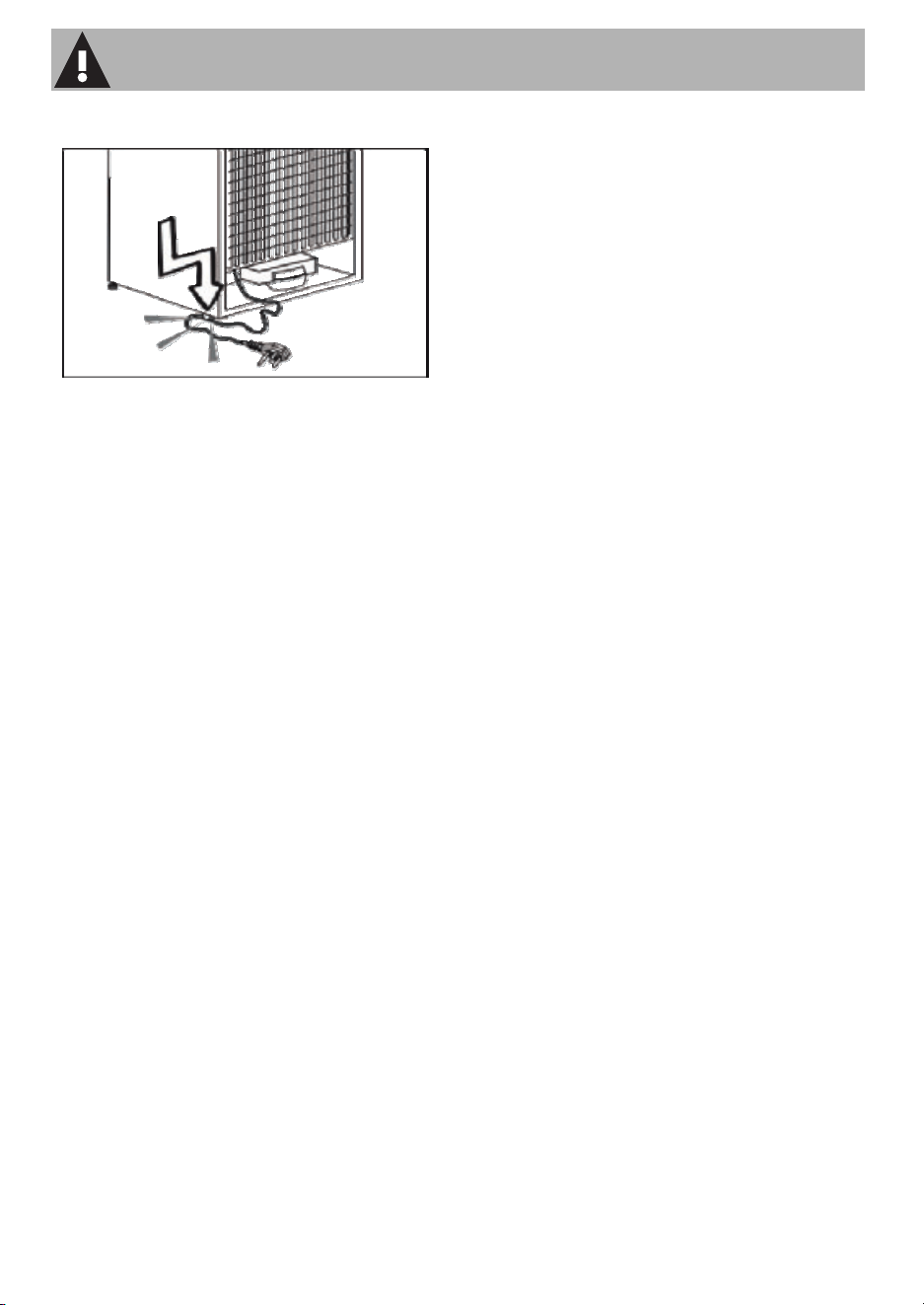
• Never unplug the product by pulling the
cable.
Always pull the plug by holding the
socket.
• Do not plug the refrigerator if the wall
socket is loose.
• Never connect your refrigerator to
energy saving devices.
• Such systems are harmful to your
product.
• Unplug the product during installation,
care, cleaning and repairing
procedures.
• Always have the Authorized Service
Provider install the product and establish
its electrical connections.
The manufacturer cannot be held
responsible for damages caused by
procedures performed by unauthorized
persons.
• Do not eat cone ice cream or ice cubes
immediately after you take them out of
the freezer compartment! This may cause
frostbite in your mouth!
• Do not touch frozen food with wet
hands! They may stick to your hand!
• Do not put bottled or canned liquid
beverages in the freezer compartment.
They may burst!
• Never use steam or steam cleaners to
clean or defrost the refrigerator.
Steam gets into contact with the live parts
in your refrigerator, causing short circuit
or electric shock!
• Do not use mechanical devices or other
means to accelerate the defrosting
process other than those recommended
by the manufacturer.
• Never use the parts in your refrigerator
such as the door and drawer as a means
of support or step.
This may cause the product to tip over or
damage the parts of it.
• Do not damage the parts where the
refrigerant is circulating with drilling or
cutting tools.
The refrigerant that might blow out when
the gas channels of the evaporator, pipe
extensions or surface coatings are
punctured causes skin irritations and eye
injuries.
Instructions
7
EN
• Do not cover or block the ventilation
holes in your refrigerator with any object.
• Place the beverage with higher proofs
tightly closed and vertically.
• Do not use gaseous sprays near the
product since there is the risk or fire or
explosion!
Flammable items or products that contain
flammable gases (e.g. spray) as well as
explosive materials should never be kept
in the appliance.
Do not place vessels filled with liquid
onto the product. Splashing water on an
electrical part may cause electric chock
or the risk of fire.
• Do not store items that need precise
temperature adjustment (such as
vaccines, heat-sensitive medication,
science materials etc.) in the refrigerator.
• If you are not going to use the product
for a long time, unplug it and remove the
food in it.
• If there is a blue light on the refrigerator,
do not look at this light with optical tools.
Exposing the product to rain, snow, sun
or wind is dangerous in terms of
electrical safety.
• In products with mechanical control
(thermostat), wait for 5 minutes to plug in
the product again after unplugging.
• Do not overload the refrigerator. Objects
in the refrigerator may fall down when
the door is opened, causing injury or
damage.
Similar problems may arise if any object
is placed onto the product.
• If the product has a door handle, do not
pull the handle when re-locating the
product. The handle might be loose.
• Be careful not to jam your hand or any
other body part in the moving parts of the
refrigerator.
• Do not put your hand or any other
foreign materials into the ice machine
while it is operating.
1.2 Intended Use
• This product has been designed for
domestic use. It is not suitable for
commercial use and it must not be used
out of its intended use.
• It must be used only for storing food.
• The manufacturer will not take any
responsibility for damages resulting from
improper use or transport.
• Original spare parts will be available for
10 years after the purchase date of the
product.
Instructions
8
1.3 Children's Safety
• If there is a lock on the door of the
product, the key should be kept out of
the reach of children.
• Do not let children play with the product.
1.4 Hydrocarbon (HC) Warning
• If your product's cooling system contains
R-600a.
This gas is flammable.
Therefore, pay attention not to damage
the cooling system or the piping during
use and transportation.
• If damaged, keep the product away
from potential fire sources that may
cause it to catch fire and ventilate the
room where the product is placed.
Before disposing your old
refrigerator or freezer:
• Children may get locked inside.
• Remove the doors.
• Leave the shelves to prevent
children from getting inside the
product easily.
Improper use
Risk of Fire or Explosion
• This product uses flammable refrigerant.
• Do not use mechanical devices to
defrost the refrigerator.
• Do not use chemicals for cleaning.
• Do not pierce the refrigerant pipe.
• If the refrigerant pipe is pierced, it must
be repaired only by licensed service
personnel.
• Please consult the repair/user manual
before cleaning the product.
All safety instructions must be followed.
• Dispose the product according to
federal or local regulations.
If the product is damaged and if
you see gas leak, please keep
away from the gas. It may cause
frostbite when it gets into contact
with the skin (including R134).
Ignore this warning if the cooling
system of your product contains
R134a.
Type of gas used in the product is
stated on the type plate which is
on the left wall inside the
refrigerator.
Never throw the product into fire
for disposal.
Instructions
9
EN
1.5 For Products with a Water
Dispenser/Ice Machine
• Operating pressure for cold water inlet is
between 1-5.5 bars.
If the water pressure exceeds 80 psi (5.5
bars), install a pressure limiting valve to
your mains system.
• If the mains pressure is lower than 1 bar,
you can use an auxiliary pump to
compensate the low pressure.
• If you do not know how to check the
water pressure, please consult a
professional plumber.
• If there is a risk of water impact in your
installation, always use a water impact
protection equipment in that installation.
• Please consult professional plumbers if
you are not sure if there is water impact
in your installation.
• Do not make installation on the hot water
inlet.
• Take the necessary measures against the
freezing risk of the hoses.
• The water temperature operating range
must be 0.6°C (33°F) minimum and
38°C (100°F) maximum.
1.6 How to read the user manual
This user manual uses the following reading
conventions:
1. Use instruction sequence.
• Single use instruction.
SAVE THESE INSTRUCTIONS
Never connect the product to a
cold water mains with a pressure
of 5.5 bars (80 psi) and above.
Instructions
General information on this user
manual, on safety and final
disposal.
Description
Description of the appliance and its
accessories.
Use
Information on the use of the
appliance and its accessories,
cooking advice.
Cleaning and maintenance
Information for proper cleaning and
maintenance of the appliance.
Safety instructions
Information
Advice
Description
10
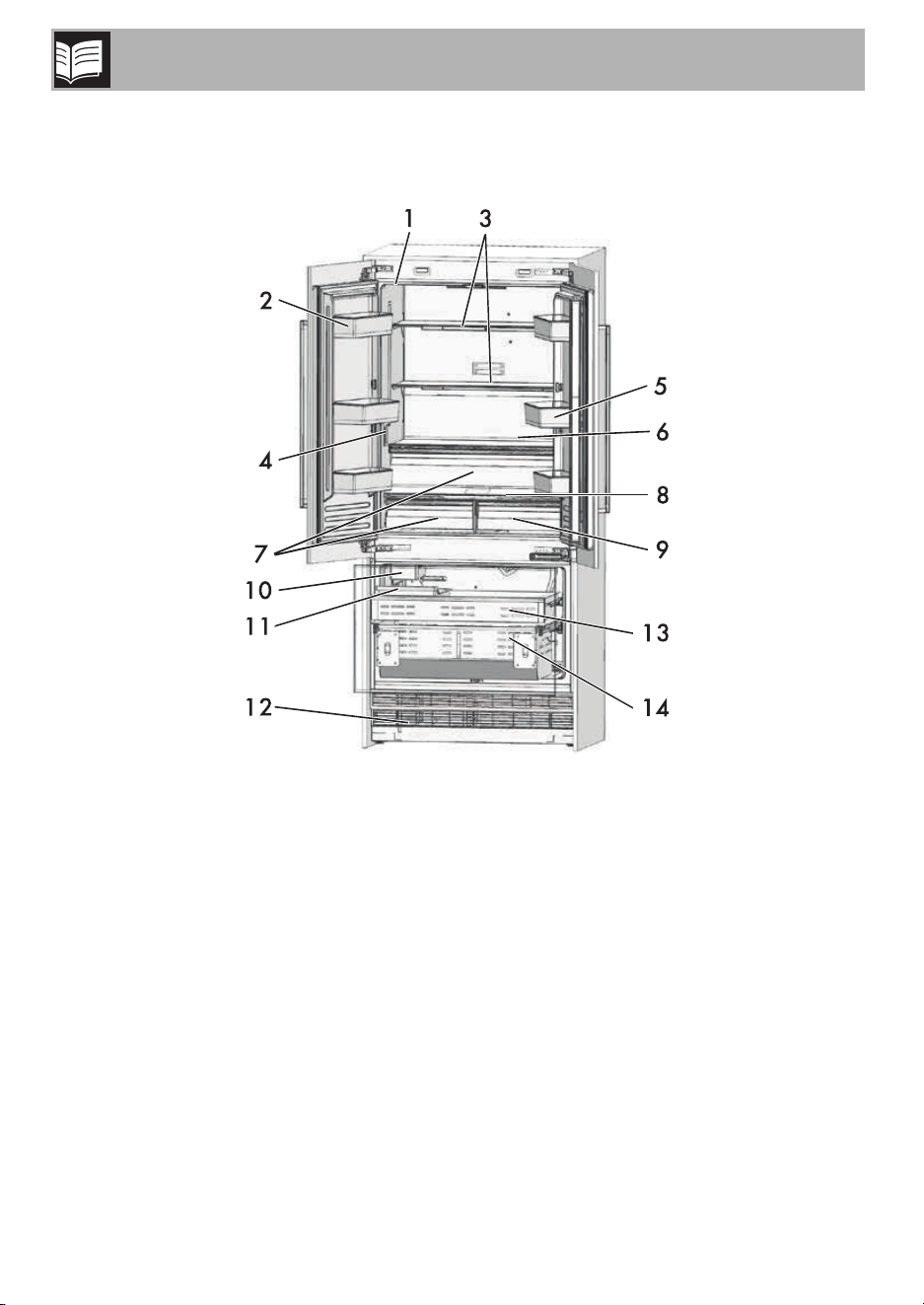
2 Description
2.1 General Description
1 Water filter (if applicable)
2 Door bin
3 Body shelf (adjustable height)
4 Water dispenser
5 Gallon door bin (adjustable height)
6 Odour filter
7 Crisper
8 Control display
9 Special fridge compartment
10 Ice machine (if applicable)
11 Ice box applies to high spec models
12 Condenser
13 Upper drawer
14 Lower drawer
Description
11
EN
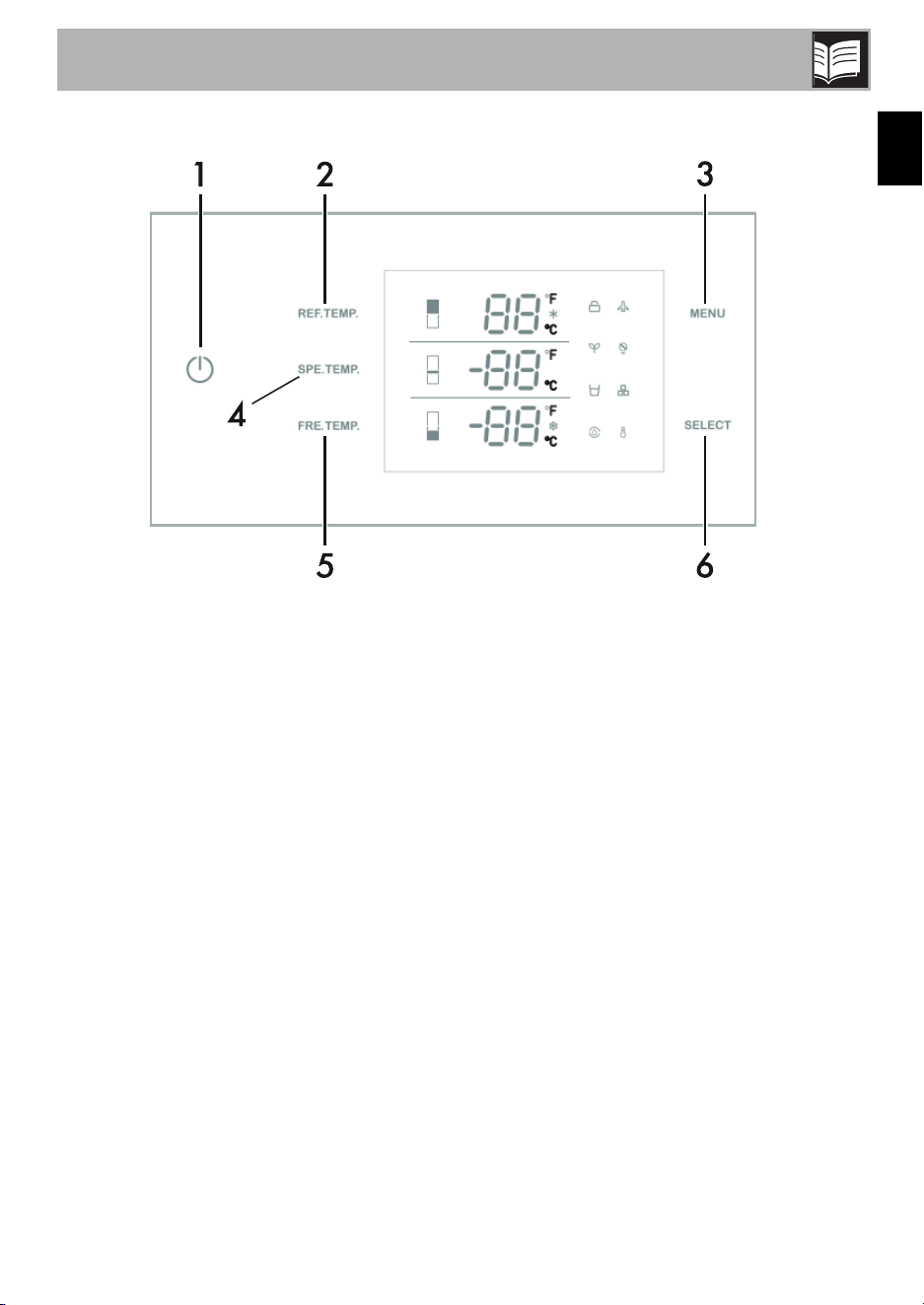
2.2 Control panel
1 On/Off button
2 Refrigerator compartment temperature
adjustment button
3 Function election/Child lock button
4 Special fridge compartment temperature
adjustment button
5 Freezer compartment temperature adjust-
ment button
6 Confirm button
Description
12
2.3 Parts definition
On/Off button
Serves to switch the whole appliance On
and Off.
Press the button to switch on the product,
the product will be switched on in 5
seconds. Press the on/off button for 1.5
seconds to switch off.
Function election / Child lock button
The child lock is a feature for preventing
children from changing the product settings.
By pressing MENU button for 3 seconds,
you may lock/unlock the control panel.
The lock symbol will illuminate on the
display when this function is enabled.
Refrigerator compartment temperature
adjustment button
Press the REF TEMP button to adjust the
temperature from 36°F (2°C) to 46°F
(8°C).
The best temperature for fresh food
compartment is 39°F (4°C).
Special fridge compartment temperature
adjustment button
Press the SPE TEMP button to change the
special fridge compartment temperature
from 30°F (-1°C) to 41°F (5°C).
Freezer compartment adjustment button
Press the FRE TEMP button to change the
freezer compartment temperature from 5°F
(-15°C) to -11°F (-24°C)
* Super freezing function will be enabled if
keep pressing after -11°F (-24°C).
When the snow symbol illuminate on the
display the super freezer function will be
enabled.
Holiday Mode
Press the MENU button till the holiday
symbol illuminates, then press the SELECT
button to enable the function.
When the Holiday Mode function is
enabled, the fridge temperature will be set
at 63°F (17°C) and freezer temperature
set at 0°F (-18°C) automatically.
The defaulted temperature setting
is 41°F (5°C) for fridge
compartment, 36°F (2°C) for
special fridge compartment and
0°F (-18°C) for freezer
compartment.
Do not place food in the fresh food
compartment when Holiday Mode
is enabled.
Description
13
EN
Sabbath Mode
Press the MENU button till the Sabbath
mode symbol illuminates, then press the
SELECT button to enable the function.
When the Sabbath mode function is
enabled, all lights, buzzers, display panels
will be switch off.
Eco Mode
Press the MENU button till the Eco Mode
illuminates, then press the SELECT button to
enable the function. When the Eco Mode
function is enabled, the fridge temperature
will be set at 46°F (8°C) and freezer
temperature set at 5°F (-15°C)
automatically.
Water Dispenser (if applicable)
Press the MENU button till the water
dispenser symbol illuminates, then press the
SELECT button to enable the function.
When the water dispensing function is
enabled, fresh water can be provided from
the dispenser fitted on the internal wall.
Ice Making (if applicable)
Press the MENU button till the ice making
symbol illuminates, then press the SELECT
button to enable the function.
When the ice making function is enabled,
ice maker will be automatically operating,
and the ice cubes will be accumulated in
the ice tray.
Water filter replacement (if applicable)
The water filter symbol flashes and beeps to
advise the user to replace the water filter.
After the replacement is completed, press
the SELECT button for 5 seconds to reset.
The set replacement time is 130 days.
Celsius and Fahrenheit selection
Press the MENU button till the Celsius and
Fahrenheit selection symbol illuminates to
change between Celsius and Fahrenheit.
After that press the SELECT button to
confirm.
Prepare the water filter for use
before using the ice. After
connecting the refrigerator to a
water source or after replacing the
water filter, fill and discard two full
containers of ice.
Use
14
3 Use
3.1 Ways to save energy
• Do not leave the doors of your
refrigerator open for a long time.
• Do not put hot food or drinks in your
refrigerator.
• Do not overload the refrigerator.
Cooling capacity will fall when the air
circulation in the refrigerator is hindered.
• Do not place the refrigerator in places
subject to direct sunlight.
Install the product at least 30 cm away
from heat sources such as hobs, ovens,
heater units and stoves and at least 5 cm
away from electrical ovens.
• Pay attention to store your food in
refrigerator in closed containers.
• You can remove the drawer shelf of the
freezer compartment to fill the freezer
compartment with maximum amount of
food.
The given energy consumption value of
the refrigerator has been determined
with the freezer compartment shelf or the
drawer removed and the refrigerator
filled with maximum amount of food.
There is no harm in using a shelf or
drawer according to the shapes and
sizes of food to be frozen.
• Thawing the frozen foods in the fridge
compartment both saves energy and
reserves the quality of the foods.
3.2 Recommendations About the
Fresh Food Compartment
• Make sure that the food does not touch
the temperature sensor in fresh food
compartment.
To allow the fresh food compartment to
keep its ideal storage temperature, the
sensor must not be hindered by food.
• Do not place hot foods or beverages
inside the product.
Improper use
Risk of damages to the appliance
• Connecting your refrigerator to systems
that save energy is dangerous as they
may cause damage on the product.
Temperature of the room where
your refrigerator is located should
at least be 10°C/50°F.
Operating your refrigerator under
cooler conditions is not
recommended with regard to its
efficiency.
Inside of your refrigerator must be
cleaned thoroughly.
If two coolers are to be installed
side by side, there should be at
least 4 cm distance between them.
Use
15
EN
3.3 Initial use
Before using the product, make sure that all
preparations have been made in
accordance with the instructions given in the
“General Safety” section.
• Clean the interior of the refrigerator as
recommended in the “Cleaning and
maintenance” chapter. Before you start
the refrigerator, make sure that the
interior is dry.
• Plug the refrigerator in a grounded
socket. The interior illumination is lit when
the door of the refrigerator is opened.
• Operate the refrigerator for 6 hours
without placing any food in it anddo not
open its door unless it is necessary.
3.4 Dual Cooling System
Your refrigerator is equipped with two
separate cooling systems to cool the fresh
food compartment and freezer
compartment.
Thus, the air and odor in the fresh food
compartment andthe frozen food
compartment do not get mixed.
Thanks to these two separate cooling
systems, cooling speed is much higher than
that of other refrigerators. Also additional
power saving is provided since the
defrosting is performed separately.
3.5 Freezing Fresh Food
Wrap the foods or place them in a covered
container before putting them in the
refrigerator.
• Hot foods and beverages must cool
down to the room temperature before
you put them in the refrigerator.
• The foodstuff that you want to freeze
must be fresh and in good quality.
• Divided the food into portions according
to your family's daily or meal based
consumption needs.
• Pack the foods in an airtight manner to
prevent them from drying even if they are
going to be stored for a short time.
• Materials to be used for packaging must
be tear-proof and resistant to cold,
humidity, odor, oils and acids and they
must also be airtight.
Moreover, they must be well closed and
they must be made from easy-to-use
materials that are suitable for deep-
freezers.
You will hear a noise when the
compressor starts up. The liquids
and gases sealed within the
refrigeration system may also give
rise to noise, even if the
compressor is not running and this
is quite normal.
Front edges of the refrigerator may
feel warm.
This is normal. These areas are
designed to be warm to avoid
condensation.
Use
16
• Frozen food must be used immediately
after they are thawed and they should
never be refrozen.
• Do not freeze too large quantities of
food at one time.
The quality of the food is best preserved
when it is frozen right through to the core
as quickly as possible.
• Placing warm food into the freezer
compartment causes the cooling system
to operate continuously until the food is
frozen solid.
3.6 Recommendations for Storing
Frozen Food
• Frozen foods you purchase must be
stored according to the conditions and
temperature determined by the food
manufacturer.
• Note the following to ensure that the
high quality achieved by the frozen food
manufacturer and the food retailer is
maintained:
1. Put packages in the freezer as quickly as
possible after purchase.
2. Make sure that the content of the
package is labeled and dated.
3. Check whether the “Use By” or “Best
Before” date on the packaging is
expired or not.
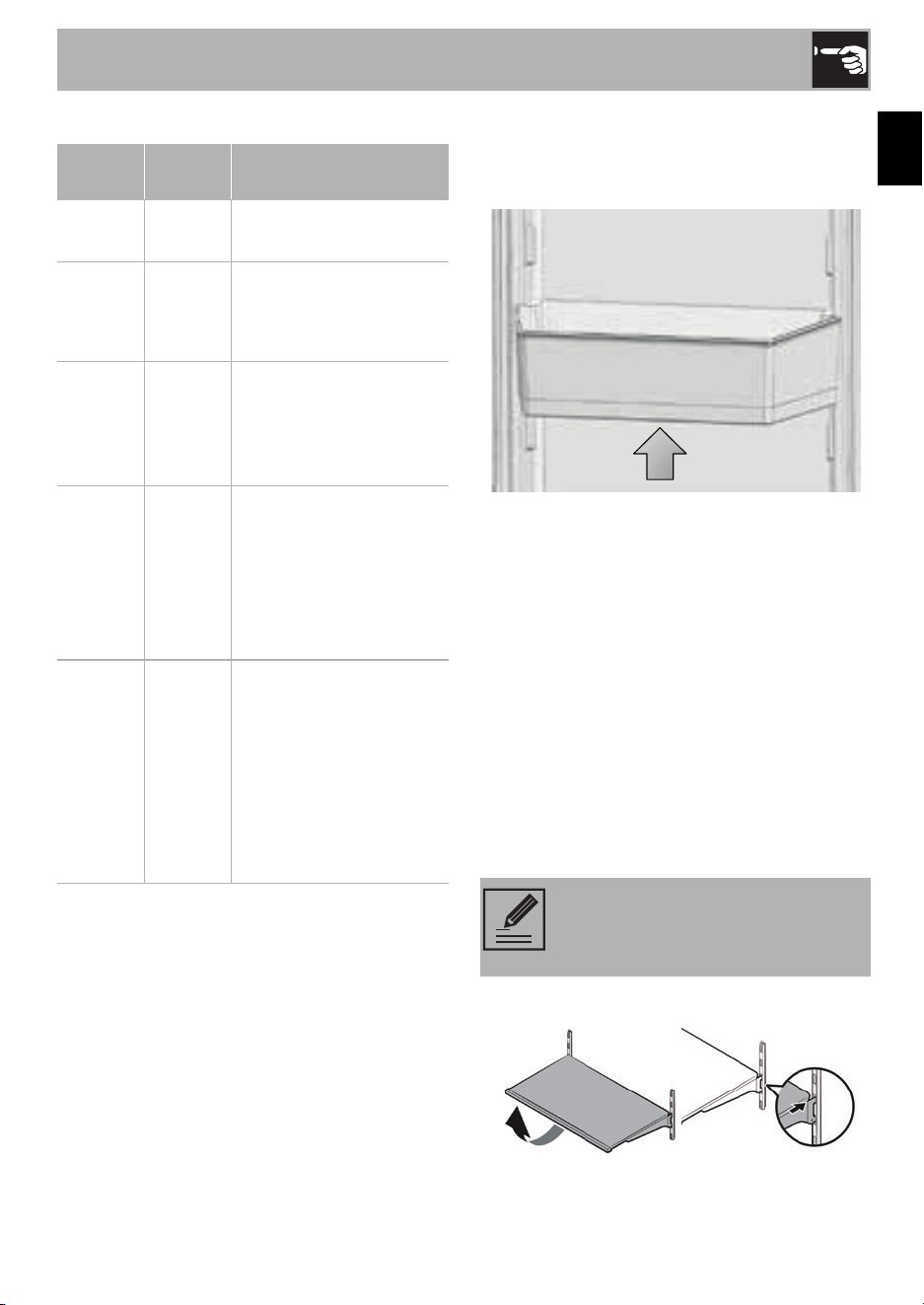
3.7 Placing the foodle
Freezer compartment
shelves
Various frozen food such
as meat, fish, ice cream,
vegetables etc.
Egg tray Eggs
Fridge compartment
shelves
Food in pans, covered
plates and closed
containers
Door shelves of fridge
compartment
Small and packaged
foods or beverages
(such as milk, fruit juice,
beer and etc.)
Crisper Vegetables and fruits
Special fridge
compartment
Delicatessen products
(cheese, butter, salami
etc.)
Use
17
EN
3.8 Operating temperature
Recommended Operating Temperature:
Fridge: 4°C / 39°F
Freezer: -18°C / 0°F
3.9 Door bin
To remove, lift up the door bin and then pull
out straight.
3.10 Glass shelves
To remove a shelf
• Fully open the corresponding door.
• Hold the front of the shelf, and then
gently lift up and slide out.
To reinsert
• Hold the shelf at an angle so the front is
higher than the back, and then insert the
top hook into the top shelf notch.
• Put down the front slightly.
Freezer Fridge Remarks
-18°C/
0°F
4°C/
39°F
This is the recommended
normal setting.
-20°C/
-4°F
3°C/
37°F
These settings are
recommended when the
ambient temperature is
above 30°C/86°F.
Fast
Freezing
4°C/
39°F
Use when you wish to
freeze your food in a short
time. Your refrigerator will
return to its previous mode
when the process is over.
-24°C/
-12°F
2°C/
35°F
Use these settings if you
think that your fridge
compartment is not cold
enough because of the hot
ambient conditions or
frequent opening and
closing of the door.
-18°C/
0°F or
Fast
Cooling
Use this function when you
place too much into the
fridge compartment or
when you need to cool your
food quickly. It is
recommended that you
activate Quick Fridge
function 4-8 hours before
placing the food.
Use care when handling glass
shelves to prevent breakage or
scratching the interior.
Use
18
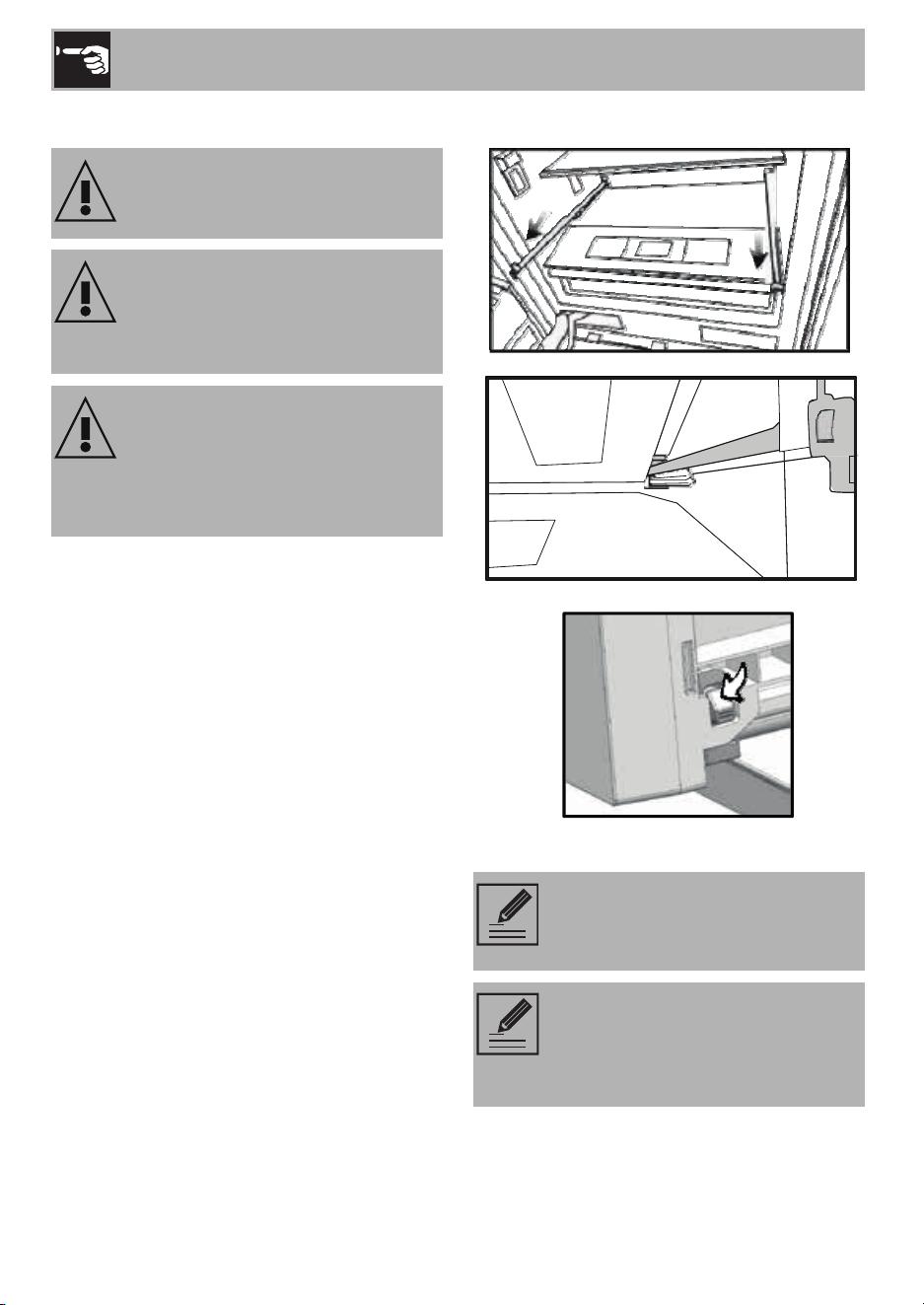
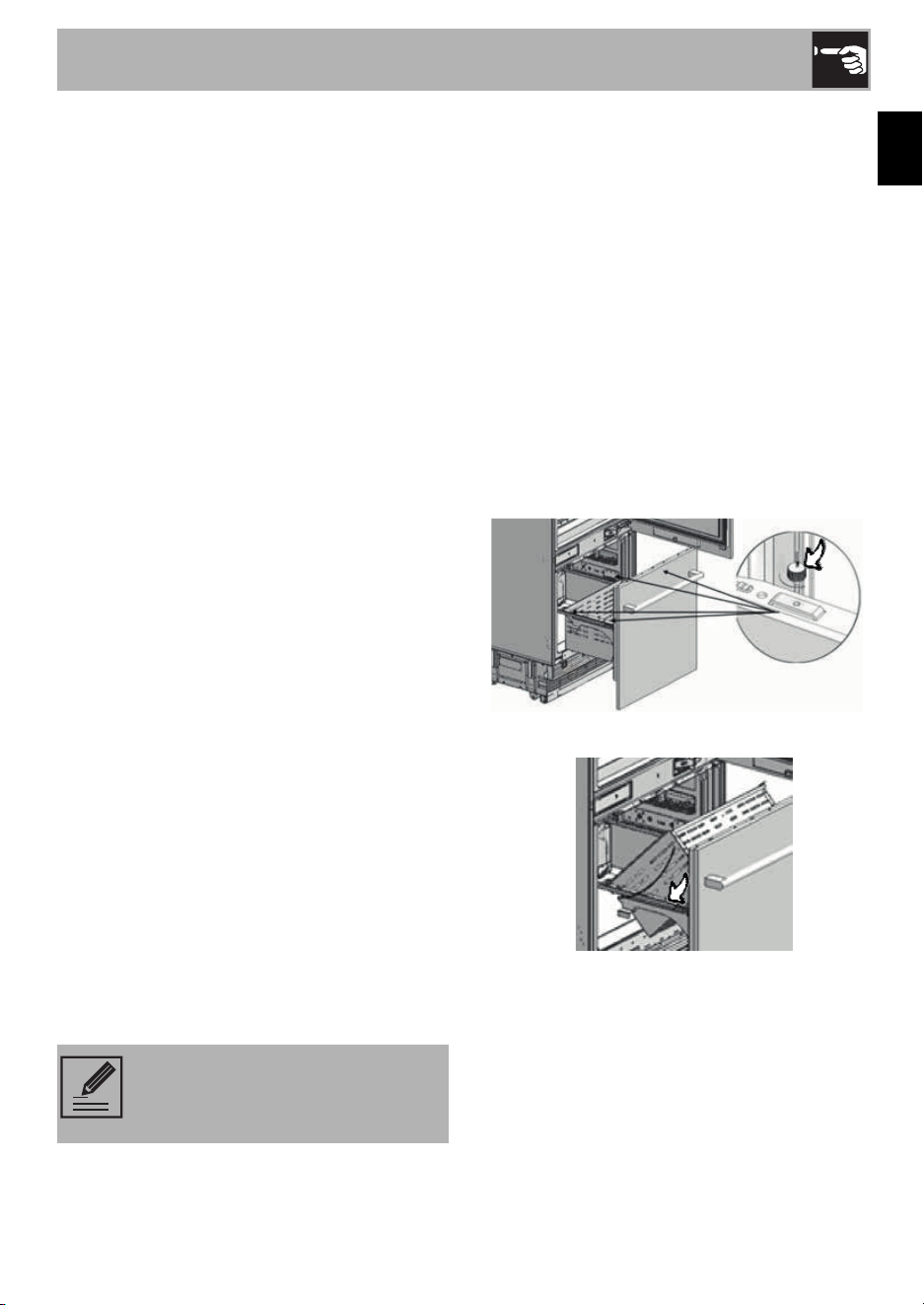
3.11 Crisper compartment
To remove the crisper
• Pull the crisper until it stops.
• Slightly unclip the front section of the
drawer and take it out completely.
To install the crisper
• Pull the rails completely.
• Place the gap at the rear corners of the
crisper to the detail located at the rear
corners of the rails.
• Push the crisper slowly down until you
feel it clip front onto the rails.
Glass shelves must be unloaded.
You must wait for the glass
shelves to reach room
temperature before immersing
them in water for cleaning.
The door may not be closed if the
door shelves are positioned at
the same level as glass shelves.
Make sure than the door is
closed after.
Make sure that the details at the
right and left-hand sides are fixed
when installing the crisper.
Never leave the vegetables in their
plastic bags in the crisper. If they
are left in their plastic bags they will
rot in a short period of time.
Use
19
EN
The crisper compartment preserves the
humidity of your vegetables, allowing you
to store them for a long time without having
to keep them in their bags.
If you do not prefer the vegetables to get
into contact with other vegetables due to
hygienic reasons, you can use perforated
paper, foam or a similar material instead of
plastic bags.
While the vegetables are being replaced,
their specific weights should be taken into
consideration.
Heavy and hard vegetables must be
placed at the bottom of the crisper and light
and soft vegetables must be on the upper
part.
Pears, kiwis, tomatoes, cucumbers, apricots,
peaches, broccolis, lettuces, cabbages,
parsley and spinach are fruits and
vegetables that emit ethylene gas.
Do not place them into the same crisper
with other fruits and vegetables.
The ethylene gas emitted by these foods
cause other fruits and vegetables to ripen
sooner and to rot in a shorter span of time.
Do not remove the main body of the crisper
from the refrigerator separately unless you
have to do so.
3.12 Special fridge compartment
You can control the temperature in this
section to store your food such as fish, meat,
vegetables and delicatessen products for a
longtime.
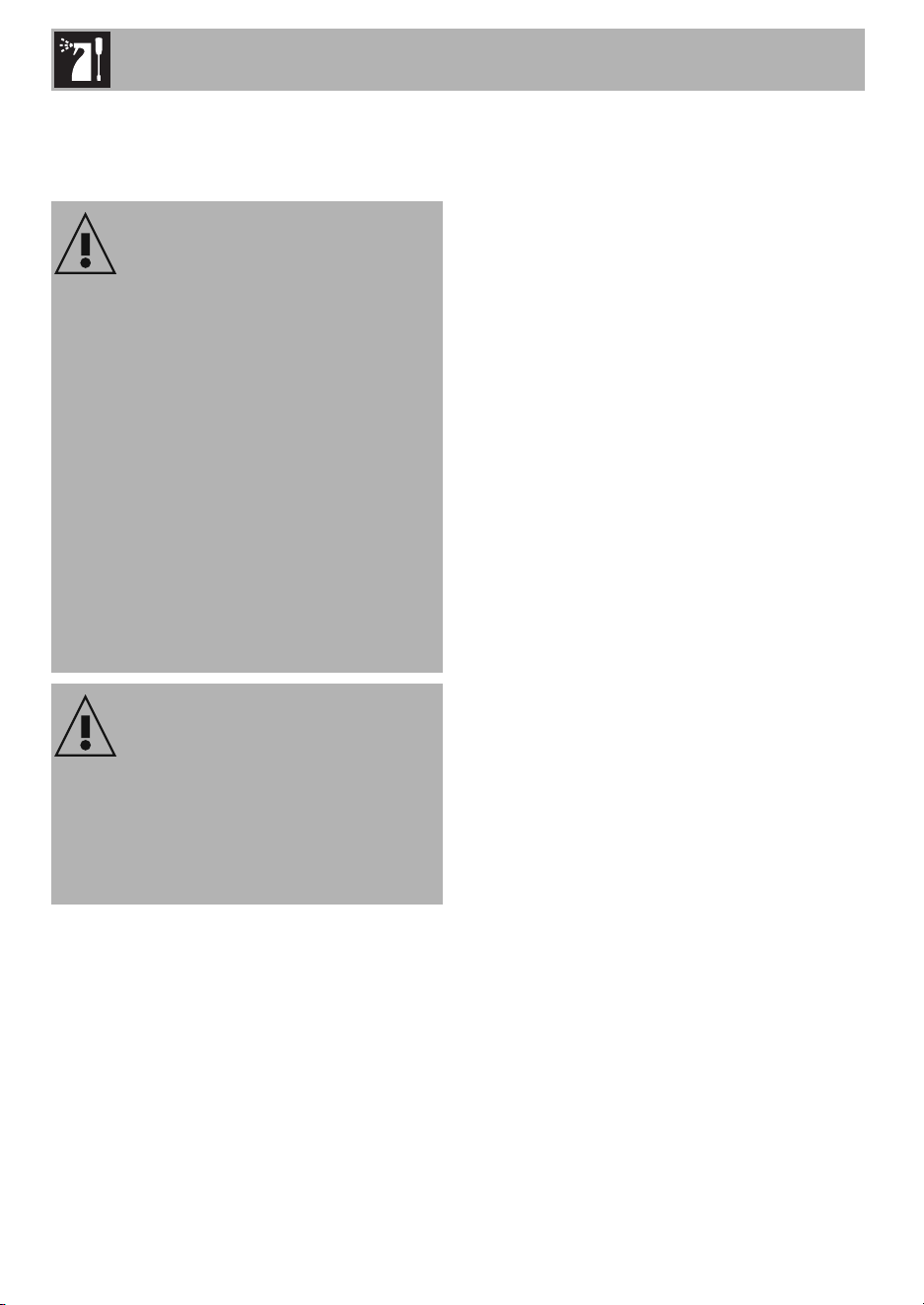
3.13 Freezer Crisper
The freezer compartment store your foods
at a temperature between -24°C and
-18°C to keep them fresh for a long time.
To remove the crisper
• Open the freezer door until it stops.
• Unscrew drawer fixing screw and take it
out carefully.
To install the crisper
• Open the freezer door until it stops.
• The crisper slowly down and screw
drawer fixing bolt.
Removal/installation procedures of
the special fridge compartment are
same as that of the crisper.
Cleaning and maintenance
20
4 Cleaning and maintenance
4.1 Instructions
Service life of the product will extend and
frequently encountered problems will
decrease if the product is cleaned
periodically.
Never use gasoline, benzene or similar
substances for cleaning purposes.
Never use any sharp abrasive instruments,
soap, household cleaners, detergent or
wax polish for cleaning.
Dissolve one teaspoon of carbonate in half
liter of water Soak a cloth in the solution
and wring it thoroughly. Wipe the interior of
the refrigerator with this cloth and the dry
thoroughly.
Make sure that no water enters the lamp
housing or other electrical parts.
If you will not use the refrigerator for a long
time, unplug it, remove all food inside, clean
it and leave the door ajar.
Check regularly that the door gaskets are
clean. If not, clean them.
Take out all items in the product to remove
the door and body shelves.
Remove the door shelves by pulling them
up. Slide the shelves downwards to re-
install them after cleaning.
Never use chloric cleaning agents or water
to clean outer surfaces or chrome-coated
parts of the product. Chlorine causes
abrasion on such metal surfaces.
Improper use
Risk of damage to surfaces
• Do not use steam jets for cleaning the
appliance.
• Do not use cleaning products containing
chlorine, ammonia or bleach on steel
parts or parts with metallic finishes on the
surface (e.g. anodizing, nickel- or
chromium-plating).
• Do not use abrasive or corrosive
detergents on glass parts (e.g. powder
products, stain removers and metallic
sponges).
• Do not use rough or abrasive materials
or sharp metal scrapers.
Power voltage
Danger of electrocution
• Turn off the appliance and unplug it from
the mains before cleaning.
• Do not pull the cable to remove the
plug.
Cleaning and maintenance
21
EN
4.2 Avoiding Bad Odors
Materials that may cause odor are not used
in the production of our refrigerators.
However, odor may be emitted if foods are
stored improperly or if the inner surface of
the product is not cleaned as required.
Please consider the following to avoid this
problem:
It is important that the refrigerator is kept
clean.
Food residuals, stains, etc. can cause odor.
For this reason, clean your refrigerator with
carbonate solved in water every 15 days.
Never use detergents or soap.
Keep your foods in closed vessels.
Microorganisms emitted from vessels
without a cover may cause unpleasant
odors.
Never keep expired or spoiled foods in
your refrigerator.
4.3 Protecting the Plastic Surfaces
Do not put liquid oils or oil-cooked meals in
your refrigerator in unsealed containers as
they damage the plastic surfaces of your
refrigerator.
If oil is spilled or smeared onto the plastic
surfaces, clean and rinse the relevant part
of the surface with warm water immediately.
Switch off the product before
cleaning.
It is recommended to clean the
condenser every six months using
gloves.
You must not use vacuum
cleaners.
Cleaning and maintenance
22
4.4 Cleaning the Inner Surface
To clean the inner surfaces and all
removable parts, wash them with a mild
solution comprising soap, water and
carbonate.
Rinse and dry thoroughly.
Prevent the water from contacting the
lighting means and control panel.
4.5 Stainless Steel Outer Surfaces
Use a stainless steel cleaning agent that is
nonabrasive and apply it with a lint-free,
soft cloth.
For polishing, wipe the surface softly with a
damp microfiber cloth and use dry wash-
leather.
Always follow the strands of the stainless
steel.
Do not use vinegar, rubbing
alcohol or other alcohol-based
cleaning agents on any of the
inner surfaces.
Cleaning and maintenance
23
EN
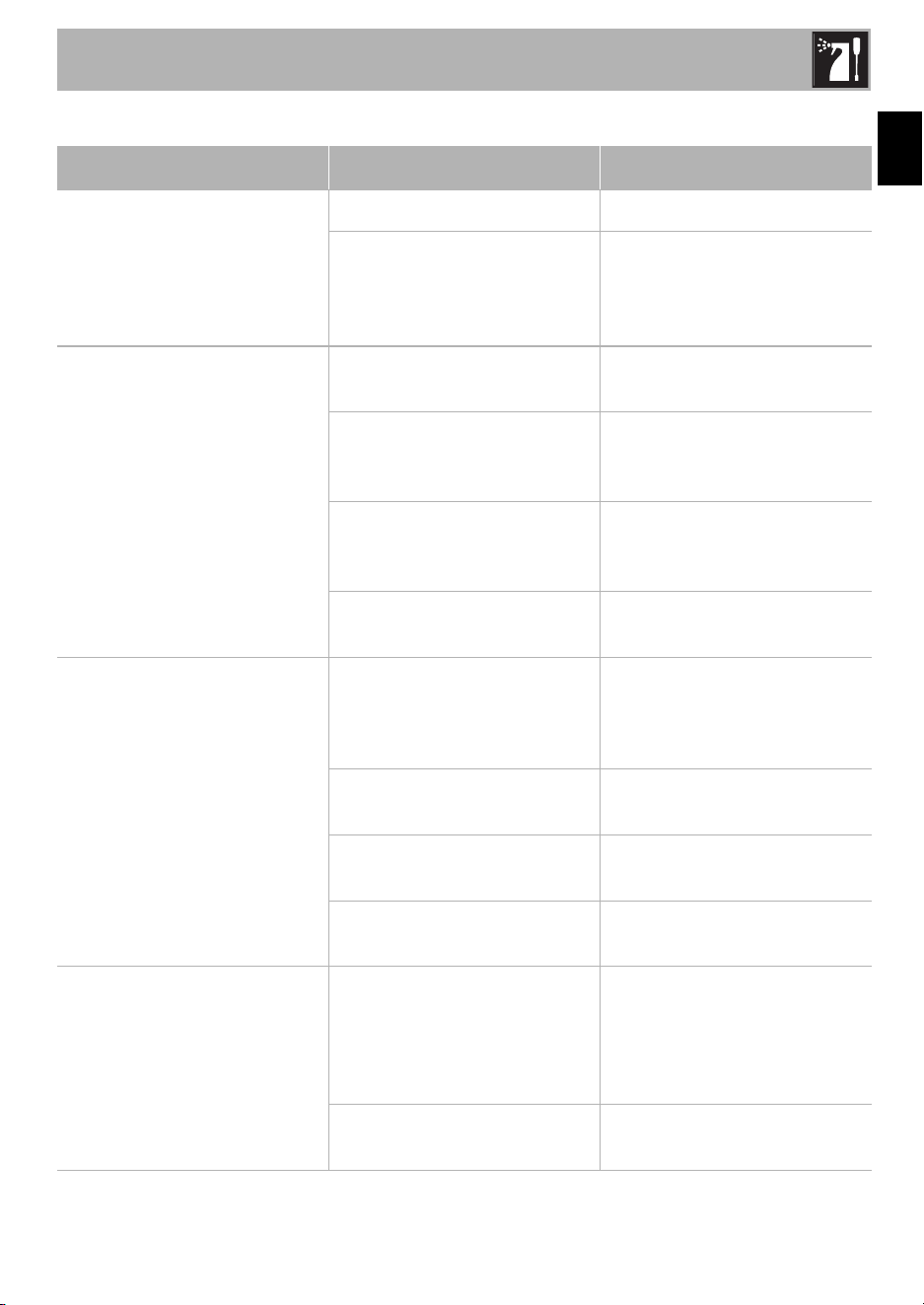
4.6 Trouble shooting...
Problem Possibile cause Solution
The refrigerator is not operating.
It may not be plugged in properly. Plug in the product properly.
The fuse of the socket to which your
refrigerator is connected or the
main fuse may have blown.
Check the fuse.
The condensation on the fridge
compartment.
The door may have been
opened/closed frequently.
Do not open/close the refrigerator
door frequently.
The environment may be too
humid.
Do not install the refrigerator at
locations with a very high level of
humidity.
Foods containing liquid may have
been placed into the refrigerator in
vessels without covers.
Do not place foods containing
liquid into the refrigerator in
unsealed vessels.
Door of the refrigerator may have
been left ajar.
Do not keep the doors of your
refrigerator open for a long time.
The compressor is not operating.
The freezer is in defrosting cycle.
This is normal for a refrigerator that
performs full-automatic defrosting.
Defrosting cycle is performed
periodically.
The refrigerator may not be
plugged in.
Make sure that the plug fits the
socket.
Temperature settings may be
incorrect.
Select the correct temperature
value.
Possible power failure.
The refrigerator will start to operate
normally when power restores.
Vibration or noise.
The floor may not be stable or
level.
If the refrigerator shakes when
moved slightly feed to balance it.
Make sure that the floor is level
and capable of carrying the
refrigerator.
Objects placed onto the
refrigerator may cause noise.
Remove the objects on the
refrigerator.
Cleaning and maintenance
24
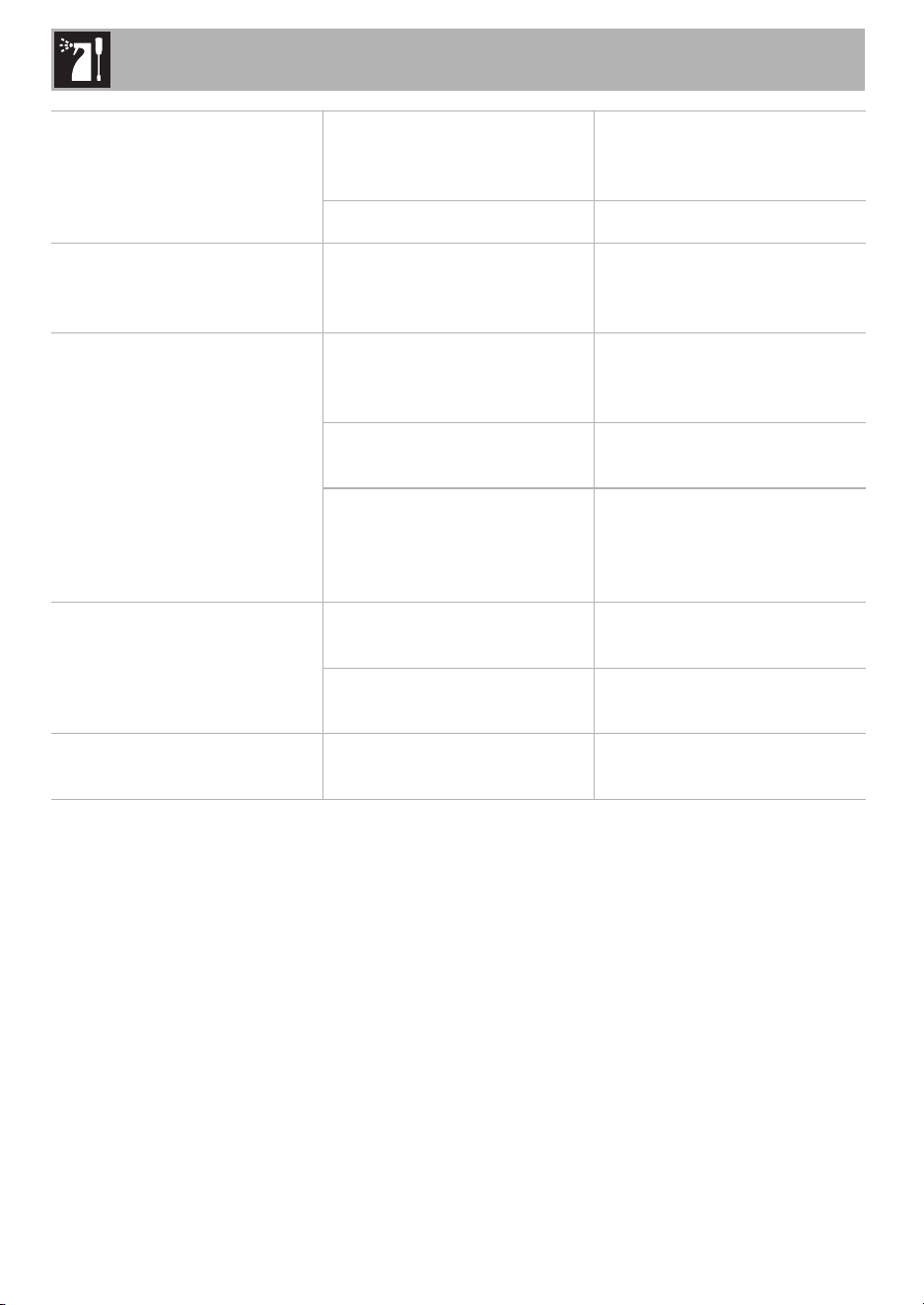
If the malfunction shows again, contact the Service Center.
Damp accumulates on the inner
walls of refrigerator.
The doors may have been opened
frequently or left ajar for a long
time.
Do not open the door frequently.
Close the doors, if open.
The door may have been left ajar. Close the door completely.
Humidity occurs on the outer
surface of the refrigerator or
between the doors.
Air might be humid. This is quite
normal in humid weathers.
Condensation will disappear the
humidity level decreases.
There is a bad odour inside the
refrigerator.
No regular cleaning may have
been performed.
Clean the inside of the refrigerator
sponge, lukewarm water or
carbonated water.
Some vessels or packaging
materials may cause the odour.
Use another vessel, or packaging
materials from another brand.
Foods may have been placed into
the refrigerator in vessels without
covers.
Store the foods in closed vessels.
Microorganisms emitted from
vessels without a cover may cause
unpleasant odors.
The door cannot be closed.
Food packages may be preventing
the door from closing.
Re-locate the packages
obstructing the door.
The refrigerator may be unstable
on the floor.
Adjust the refrigerator feet as requir
the refrigerator in balance.
Crispers are stuck.
Foods may be touching the upper
wall of the crisper.
Re-organise the foods in the
crisper.

The manufacturer reserves the right to make any changes deemed useful for improvement of his products without prior
notice. The illustrations and descriptions contained in this manual are therefore not binding and are merely indicative.
Le constructeur se réserve la faculté d'apporter, sans préavis, toutes les modifications qu'il jugera utiles pour
l'amélioration de ses produits. Les illustrations et les descriptions figurant dans ce manuel ne sont pas contraignantes et
n'ont qu'une valeur indicative.
El fabricante se reserva el derecho a aportar sin aviso previo todas las modificaciones que considere útiles para la
mejora de sus propios productos. Las ilustraciones y las descripciones contenidas en este manual no comprometen,
por tanto, al fabricante y tienen un valor meramente indicativo.
91477B616/A