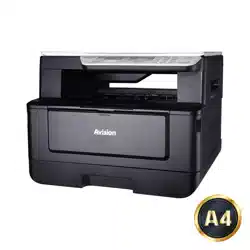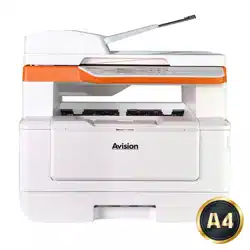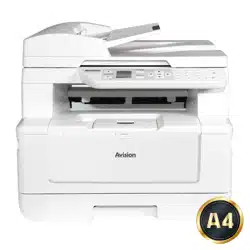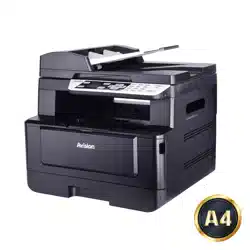
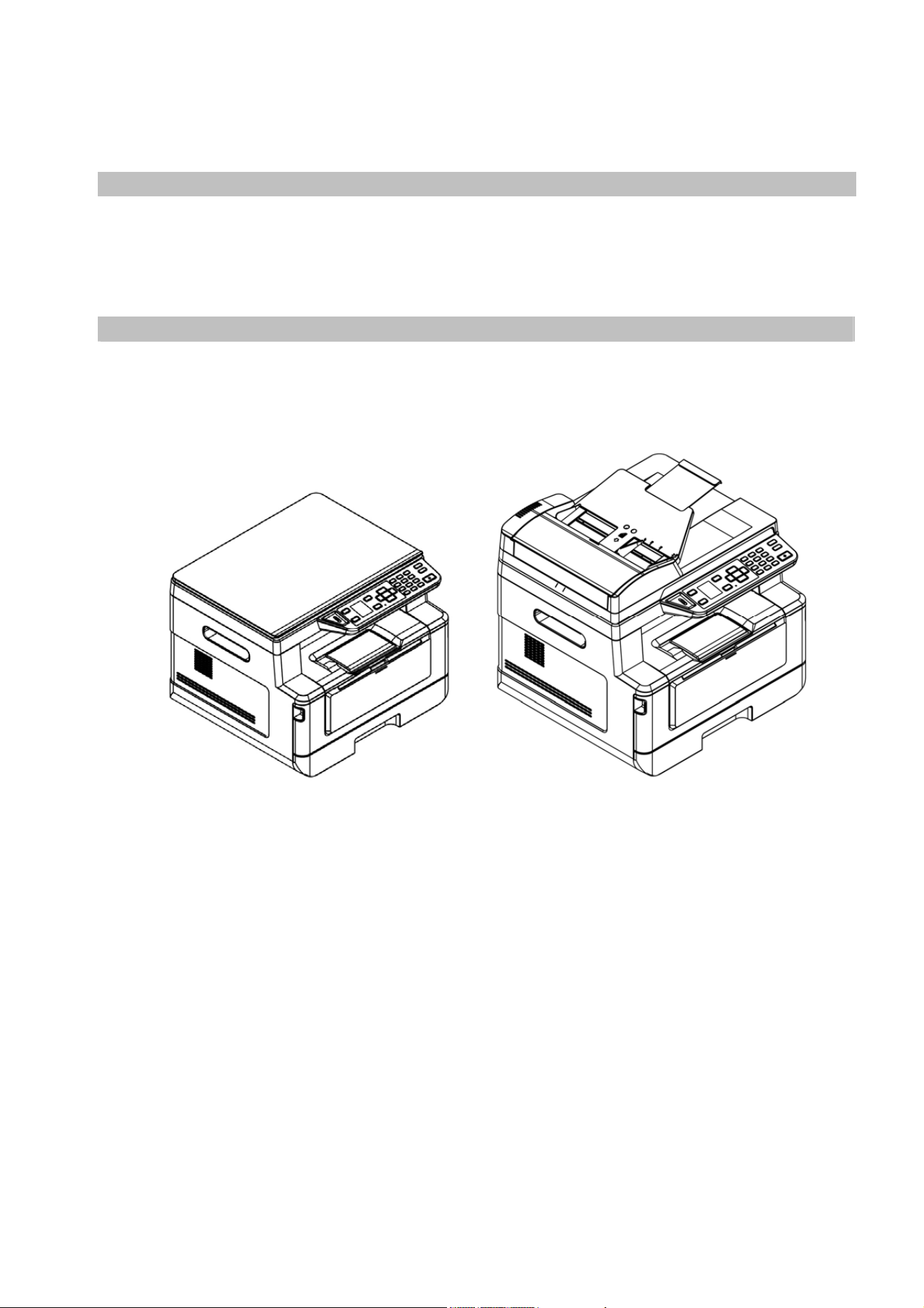
A4 Multi-Function Printer
AM30 Series User’s Manual
Regulatory model:
AM30XX, AM30XXA, AM30XXAF, AM30XXAFP
Avision Inc.

i
i
Trademarks
Microsoft is a U.S. registered trademark of Microsoft Corporation.
Windows, Windows Vista, Windows 7, Windows 8, and Windows 10 are either registered
trademarks or trademarks of Microsoft Corporation in the United States and/or other countries.
Energy Star
®
is a registered trademark of the U.S. government.
IBM, IBM PC are registered trademarks of International Business Machines Corp.
Other brands and product names herein are trademarks or registered trademarks of their
respective holders.
Copyright
All rights reserved. No part of this publication may be reproduced, transmitted, transcribed,
stored in a retrieval system, or translated into any language or computer language, in any
form or by any means, electronic, mechanical, magnetic, optical, chemical, manual, or
otherwise, without the prior written permission of Avision Inc.
Material scanned by this product may be protected by governmental laws and other
regulations, such as copyright laws, the customer is solely responsible for complying with all
such laws and regulations.
Warranty
The information contained in this document is subject to change without notice.
Avision makes no warranty of any kind with regard to this material, including, but not
limited to, the implied warranties of fitness for a particular purpose.
Avision shall not be liable for errors contained herein or for incidental or consequential
damages in connection with the furnishing, performance, or use of this material.

iii
Safety Information
When using this equipment, the following safety precautions should always be followed.
Safety During Operation
In this manual, the following important symbols are used:
WARNING:
Indicates potentially hazardous situations, which if instructions are not followed, could result
in death or serious injury.
CAUTION:
Indicates a potentially hazardous situation which, if instructions are not followed, may result
in minor or moderate injury or damage to property.
Important:
Indicates operational requirements and restrictions. Please read and follow these
instructions to ensure a proper operation and to avoid damage to the machine.
Note:
Indicates further explanation or clarification. Reading this is highly recommended.
WARNING:
To avoid hazardous electric shock or fire, do not remove any covers or screws other than
those specified in this manual.
CAUTION:
To reduce the risk of fire, use only no.26AWG or larger telecommunication line cord.
Disconnect the power plug by pulling the plug, not the cable.

i
v
Precautions
Do not install the equipment near heating or air conditioning units.
Do not install the equipment in a humid or dusty place.
Place the equipment in a separate area with good ventilation.
It is recommended to make good use of recycled paper for copying.
Do not dispose of the toner cartridge. Put the used toner cartridge into the bundled
plastic bag, and then return it to a dealer or service representative. The latter recycles
or deals with the collected toner cartridges in accordance with the relevant regulations.
The equipment is equipped with both the power-saving and standby modes. The
equipment can not achieve zero energy consumption state until it is not connected to
any external power supply.
Retain the box and packing materials for shipping purposes.
Notice
Important
Do not make copies of any item for which copying is prohibited by law.
Copying the following items are normally prohibited by the local law:
Bank bills, revenue stamps, bonds, stock certificates, bank drafts, checks.
Copyrights and Trademarks
Ethernet is a registered trademark of Xerox Corporation.
Microsoft, Windows, Windows NT, Windows XP, and Windows Vista are registered trademarks
of Microsoft Corporation in the United States and/or other countries.
Other product names used herein are for identification purposes only and may be trademarks
of their respective companies. We disclaim any and all rights to those marks.
Warranty
The information contained in this document(s) is subject to change without notice.
The manufacturer makes no warranty of any kind with regard to this material, including, but
not limited to, the implied warranties of fitness for a particular purpose.
The manufacturer shall not be liable for errors contained herein or for incidental or
consequential damages in connection with the furnishing, performance, or use of this
material.

v
Safety Instruction
This printer is a page printer which is operated by means of a LSU (Laser Scanning Unit)
printhead. There is no possibility of danger from the LSU printhead, provided the printer is
operated according to the instructions in this manual. Since radiation emitted by the LSU
printhead is completely confined within protective housings and external covers, the LSU
beams cannot escape from the machine during any phase of user operation.
Do not place a coffee cup, vase, or other liquid-filled container on the machine. Spillage
can damage the machine’s electrical parts and insulation.
Take care not to drop paper clips, staples, or any other metal objects into the machine.
When clearing paper jams, refer to the instructions in this manual.
Before disconnecting the plug, turn the machine off. Make sure your hands are dry.
Hold the plug itself, not its cord, when disconnecting it from the receptacle.
Never attempt to open any fixed cover.
Do not attempt to alter the machine or its parts.
Under normal conditions the small quantities of ozone gas produced by the machine are
harmless. However, if the machine is used for an extended period or within a small room,
you should make sure that the area is adequately ventilated. Also ventilate the room if
you notice the machine smells after a period of frequent or extended use.
Do not modify this product, as a fire, electrical shock, or breakdown could result. If the
product employs a LSU print head, the LSU beam source could cause blindness.
Do not attempt to remove the covers and panels which have been fixed to the product.
Some products have a high-voltage part or a LSU beam source inside that could cause
an electrical shock or blindness.
If this product becomes inordinately hot or emits smoke, or unusual odor or noise,
immediately turn OFF the power switch, unplug the power cord from the power outlet,
and then call your authorized service representative. If you keep on using it as is, a fire
or electrical shock could result.
If this product has been dropped or its cover damaged, immediately turn OFF the power
switch, unplug the power cord from the power outlet, and then call your authorized
service representative. If you keep on using it as is, a fire or electrical shock could
result.
The inside of this product has areas subject to high temperature, which may cause
burns. When checking the inside of the unit for malfunctions such as paper mis-feed, do
not touch the locations (around the fusing unit, etc.) which are indicated by a 「Caution!
Hot Surface」caution label.
Do not store the machine’s consumables in any of these locations:
Where the temperature or humidity may be excessively high.
Where flammable items or liquids are stored.
In direct sunlight.
In
dusty conditions.

v
i
Federal Communications Commission (FCC) compliance information
statement
Part 15
This equipment has been tested and found to comply with the limits for a Class B digital
device, pursuant to Part 15 of the FCC Rules. These limits are designed to provide
reasonable protection against harmful interference in a residential installation. This
equipment generates, uses and can radiate radio frequency energy and, if not installed and
used in accordance with the instructions, may cause harmful interference to radio
communications.
However, there is no guarantee that interference will not occur in a particular installation. If
this equipment does cause harmful interference to radio or television reception, which can be
determined by turning the equipment off and on, the user is encouraged to try to correct the
interference by one of the following measures:
Reorient or relocate the receiving antenna.
Increase the separation between the equipment and receiver.
Connect the equipment into an outlet on a circuit different from that to which the
receiver is connected.
Consult the dealer or an experienced radio/TV technician for help.
This device complies with Part 15 of the FCC Rules. Operation is subject to the following two
conditions: (1) This device may not cause harmful interference, and (2) this device must
accept any interference received, including interference that may cause undesired operation.
European Union Regulatory Notice
Products bearing the CE marking comply with the following EU Directives:
Low Voltage Directive 2014/35/EC
EMC Directive 2014/30/EC
Restriction of the use of certain hazardous substances (RoHS) Directive 2011/65/EU
RED (Radio Equipment Directive) (2014/53/EC)
This product satisfies the Class B limits of EN55022, EN55024, safety requirements of EN
60950 and ROHS requirements of EN50581.
*This machine is certified as Class 1 Laser/LED product.

vii
FCC Caution:
Any changes or modifications not expressly approved by the party responsible for compliance
could void the user’s authority to operate this equipment.
This device is intended only for OEM integrators under the following conditions:
1) The antenna must be installed such that 20 cm is maintained between the antenna and
users.
2) The transmitter module may not be co-located with any other transmitter or antenna.
IMPORTANT NOTICE:
FCC Radiation Exposure Statement:
This equipment complies with FCC radiation exposure limits set forth for an uncontrolled
environment. This equipment should be installed and operated with minimum distance 20cm
between the radiator & your body. To maintain compliance with FCC RF exposure compliance
requirements, please avoid direct contact to the transmitting antenna during transmitting.
IC Notice:
Operation is subject to the following two conditions:
1) This device may not cause interference and
2) This device must accept any interference, including interference that may cause undesired
operation of the device.
IMPORTANT NOTE:
IC Radiation Exposure Statement:
This equipment complies with IC radiation exposure limits set forth for an uncontrolled
environment. End users must follow the specific operating instructions for satisfying RF
exposure compliance. This equipment should be installed and operated with minimum
distance 20cm between the radiator & your body.
This transmitter must not be co-located or operating in conjunction with any other antenna
or transmitter.
Règlementd’ Industry Canada
Les conditions de fonctionnement sont sujettes à deux conditions:
(1) Ce périphérique ne doit pas causer d’interférence et.
(2) Ce périphérique doit accepter toute interférence, y compris les interférences pouvant
perturber le bon fonctionnement de ce périphérique.
Disposal of Waste Equipment by Users in Private Union
This symbol on the product or on its packaging indicates that the product can not be
disposed of with your other household waste. Instead it should be sent to appropriate
facilities for recovery and recycling in an effort to protect human health and the environment.
Fore more information about where you can drop off your waste equipment for recycling,
please contact your local city office, your household waste disposal service or the shop where
you purchased the product.
vii
i
Product Safety Guide
Please clearly read all these instructions, and follow all instructions and warnings before
installing and using the device.
The following indications are used in this document to obviate any chance of accident or
damage to you and/or the device.
WARNING Indicates potentially hazardous situations, which if instructions are
not followed, could result in death or serious injury.
CAUTION Indicates a potentially hazardous situation which, if instructions are
not followed, may result in minor or moderate injury or damage to
property.
WARNING
Use only the USB cable that came with your device and avoid abrasions, cuts, fraying,
crimping, and kinking. Using any other USB cable could cause fire, electrical shock, or
injury.
Place the device close enough to the computer so that the interface cable can easily
reach between the device and the computer.
Do not place or store the device:
Outdoors
Near excessive dirt or dust, water, or heat sources
In locations subject to shocks, vibrations, high temperature or humidity, direct
sunlight, strong light sources, or rapid changes in temperature or humidity
Do not use the device with wet hands.
Never disassemble, modify, or attempt to repair the device or device option by yourself,
except as specifically explained in the device's documentation. This could cause fire,
electrical shock, or injury.
Unplug the device and the USB cable, and refer servicing to qualified service personnel
under the following conditions:
Liquid has entered the device.
Object has entered the device.
The device has been dropped, or the case has been damaged.
The device does not operate normally (i.e. appearance of smoke, strange smell,
odd noise, etc.), or exhibits a distinct change in performance.
Unplug the device and the USB cable before cleaning.
ix
CAUTION:
Do not locate the device on rackety or aslope tables. Do not locate the device on
unstable surface. The device may fall down and this may result in injury.
Do not place heavy objects on the unit. It may cause unbalance and the device may fall
down. This may result in injury.
Store the AC Power cord/USB cable bundled out of the reach of children to avoid the risk
of injury.
Keep plastic bags bundled out of the reach of children to avoid the danger of
suffocation.
If you are not going to use the device for a long period, unplug the USB cable from the
electrical outlet.
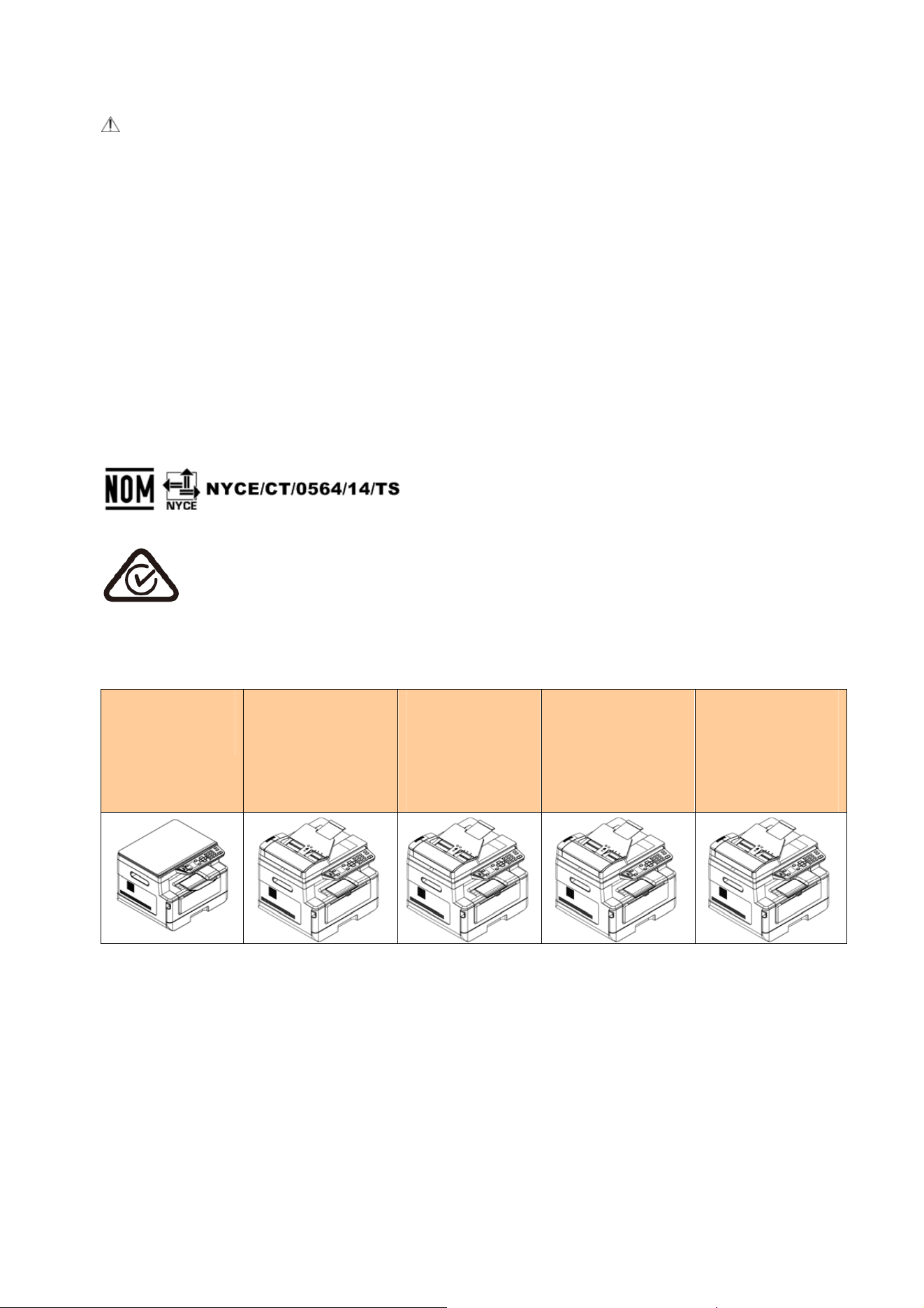
The document is intended to be used for the following models:
AM30XX (A
Flatbed
MFP)
AM30XXA (A
MFP with an
auto document
feeder)
AM30XXAP
(A MFP with
a document
feeder, and
a page
device)
AM30XXAF(A
MFP with an
auto document
feeder, and a
fax module)
AM30XXAFP
(A MFP with a
document
feeder, a fax
module, and a
page device)
1
1. Overview
Introduction
Congratulations on your purchase of Avision’s MFP. This MFP is Avision’s most
innovative product which integrates scan, copy, print, email, and fax functions into
one unit. The product supports document size up to legal size.
In addition, through the network port at the back of the machine, the product is
able to work as a network printer. Through the color LCD screen and the
easy-to-use control panel, making copy is easy just as you normally do on a
regular copier.
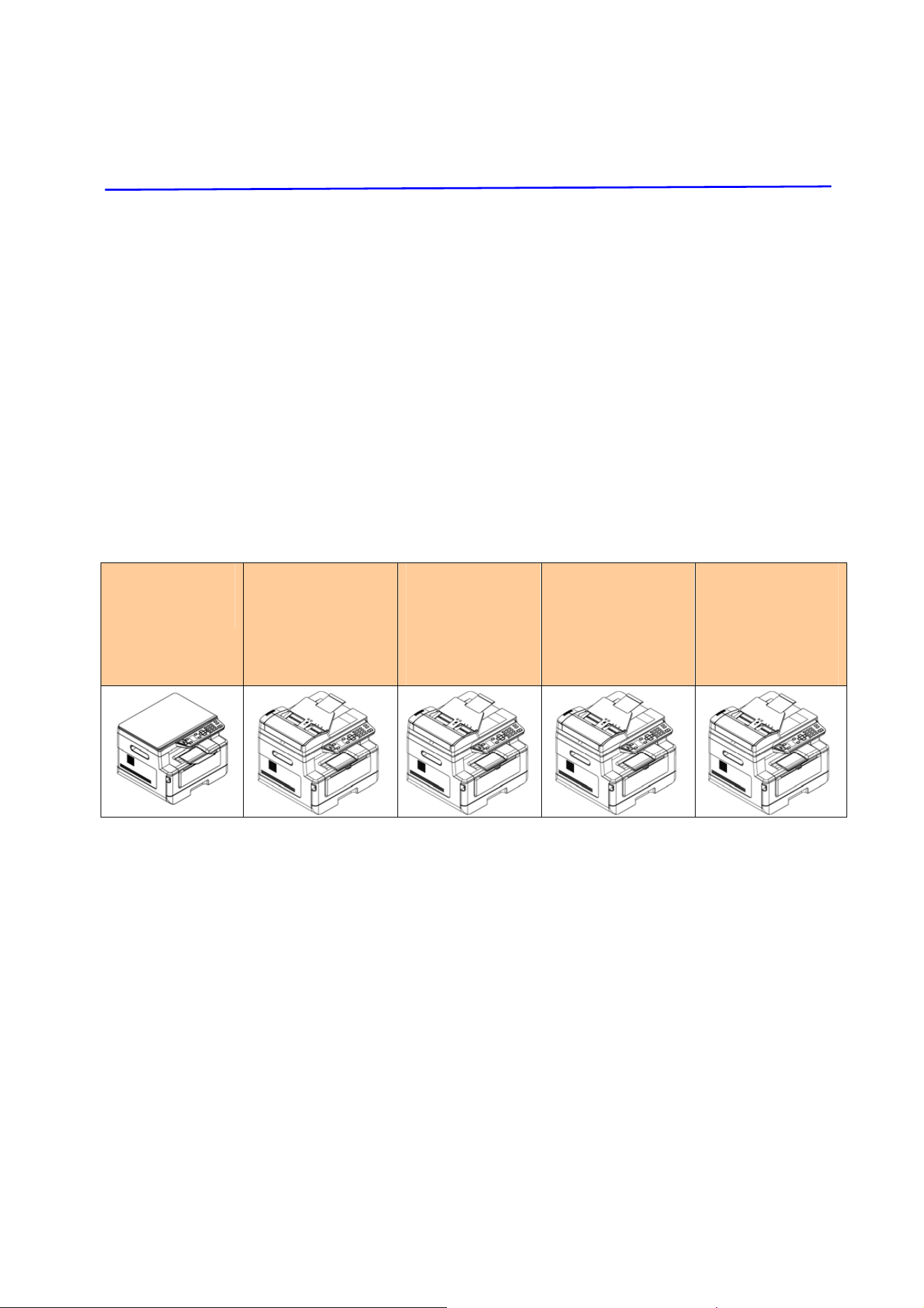
“The product” refers to the following MFP models. The following table shows the
differences between each model:
AM30XX (A
Flatbed
MFP)
AM30XXA (A
MFP with an
auto document
feeder)
AM30XXAP
(A MFP with
a document
feeder, and
a page
device)
AM30XXAF(A
MFP with an
auto document
feeder, and a
fax module)
AM30XXAFP
(A MFP with a
document
feeder, a fax
module, and a
page device)
Auto Document Feeder: Auto Document Feeder allows 1-Sided scanning
and copying for multi-page document.
Fax module: With the optional fax module and a telephone line, the product
allows you to use it as a fax machine to send documents to your recipients.
Wi-Fi : With an external Wi-Fi USB dongle connected to the USB port, the
product allows you to connect your computer through wireless connection.
Plus, if you have installed a MB App on your mobile devices, the product
allows you to scan and receive the scanned image from a mobile device.
Features
Various Advanced Copy Features
The product is designed with various advanced copy features which include ID
card copy, paper saver to copy multi-page document onto a single sheet, etc.

2
Printing:
When the product is connected to a computer through the USB interface or a
network port, it is able to perform 2-Sided printing through a computer on the
network.
Scan-to-e-mail, USB, FTP or CIFS
The product offers an unprecedented document delivery technology, transmitting
paper documents electronically over the internet to various destinations including
e-mail addresses, the MFP’s memory, an USB flash drive (supports partition type
FAT16/FAT32), ftp servers, or someone else’s computer on the network. The new
way to distribute documents is faster, more cost effective, and safer than any
traditional methods such as mail, or courier.
Faxing (for AM30XXF only):
With a built-in fax board and an additional telephone line, the product is able to
transmit your scanned document to a fax machine just like regular fax machine.
Scanning:
When the product is connected to a computer and the scanner driver is installed
onto a connected computer through the USB port, it can be used as a full scanner
to capture photos or documents into your computer.
Remote Device Management through Embedded Web Page
The product provides an embedded web page to let the system administrator
remotely monitor the product by managing an address book, checking the
supplies status of toner cartridge.
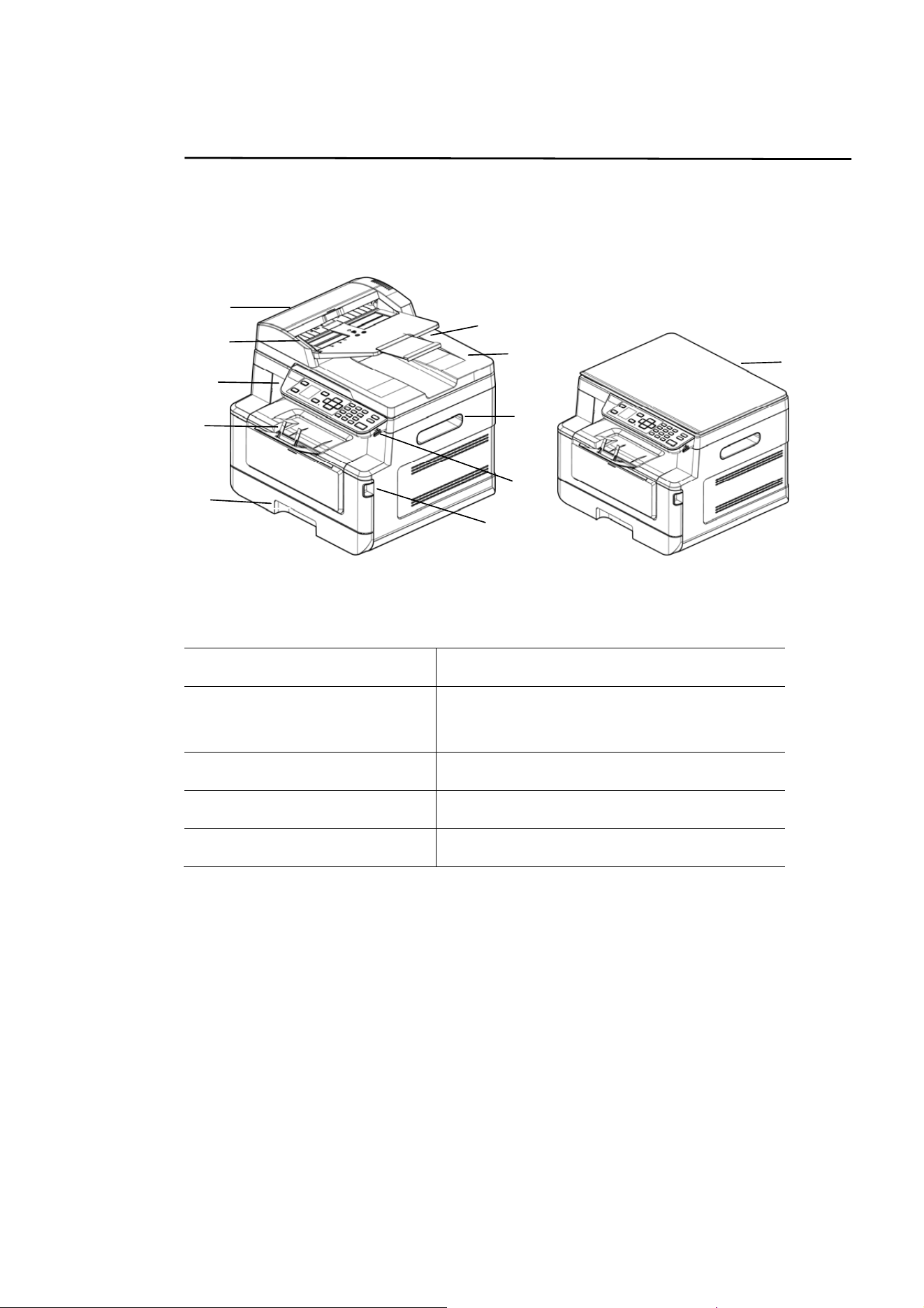
3
The External View
The Front View
A MFP with an Auto Document Feeder A Flatbed MFP
1. Auto Document Feeder
6. Handle of the Front Cover
2. Paper Guide 7. USB Port (USB Flash Drive,
FAT16/FAT32)
3. Control Panel 8. Handle of the Side Cover
4. Paper Stopper 9. Document Cover
5. Main Paper Tray 10. Extension
5
10
7
3
4
1
2
8
9
6
10
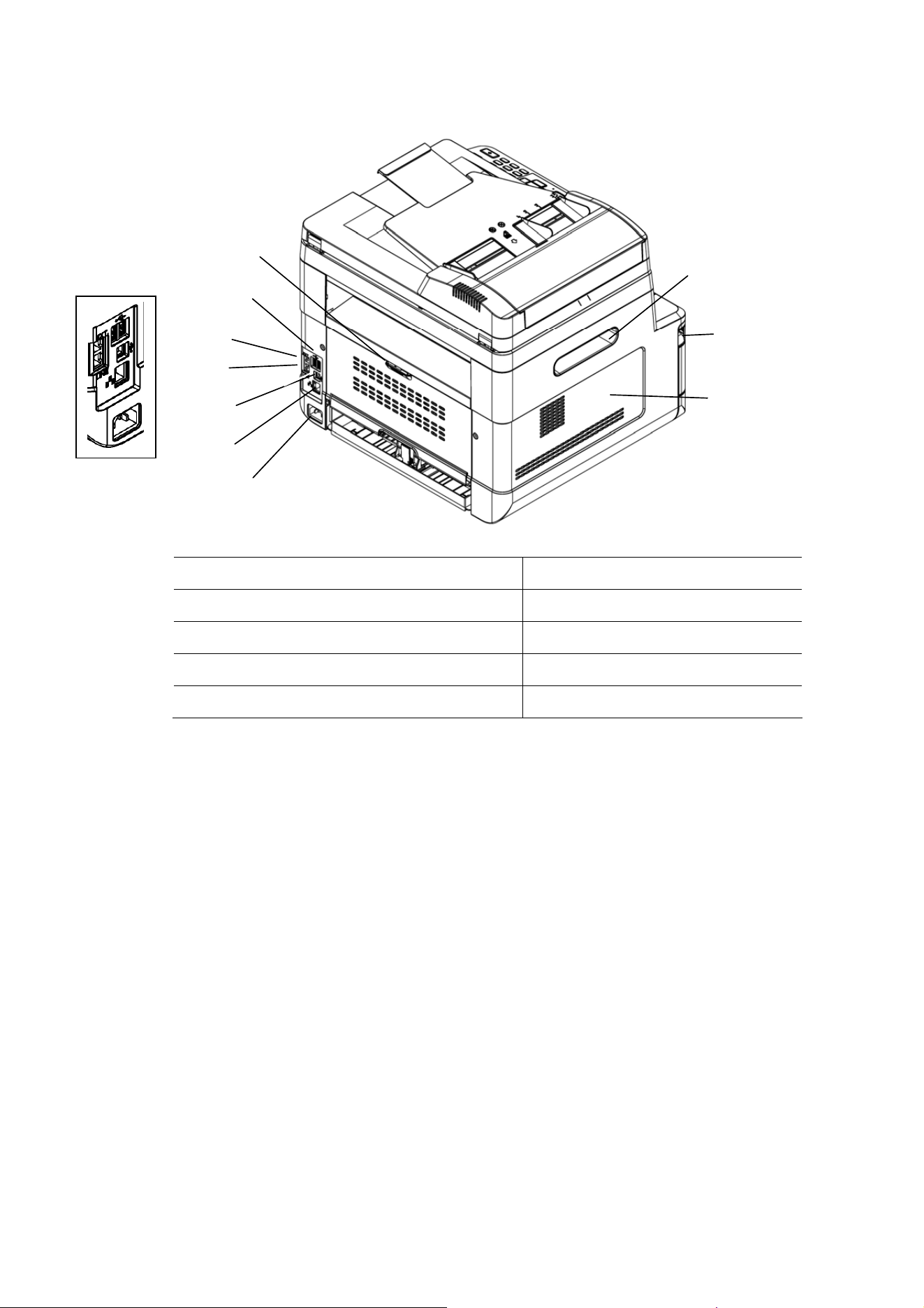
4
The Rear View
1. Handle of the Rear Cover 6. Network Port
2. USB Port (Type A, to USB flash Disk )
7. Power Receptacle
3. Ext (Telephone Set) 8. Handle of the Side Cover
4. Line (Telephone Line) 9. Handle of the Front Cover
5. USB Port (Type B, to PC) 10. Side Cover
8
2
1
4
5
6
9
10
3
7
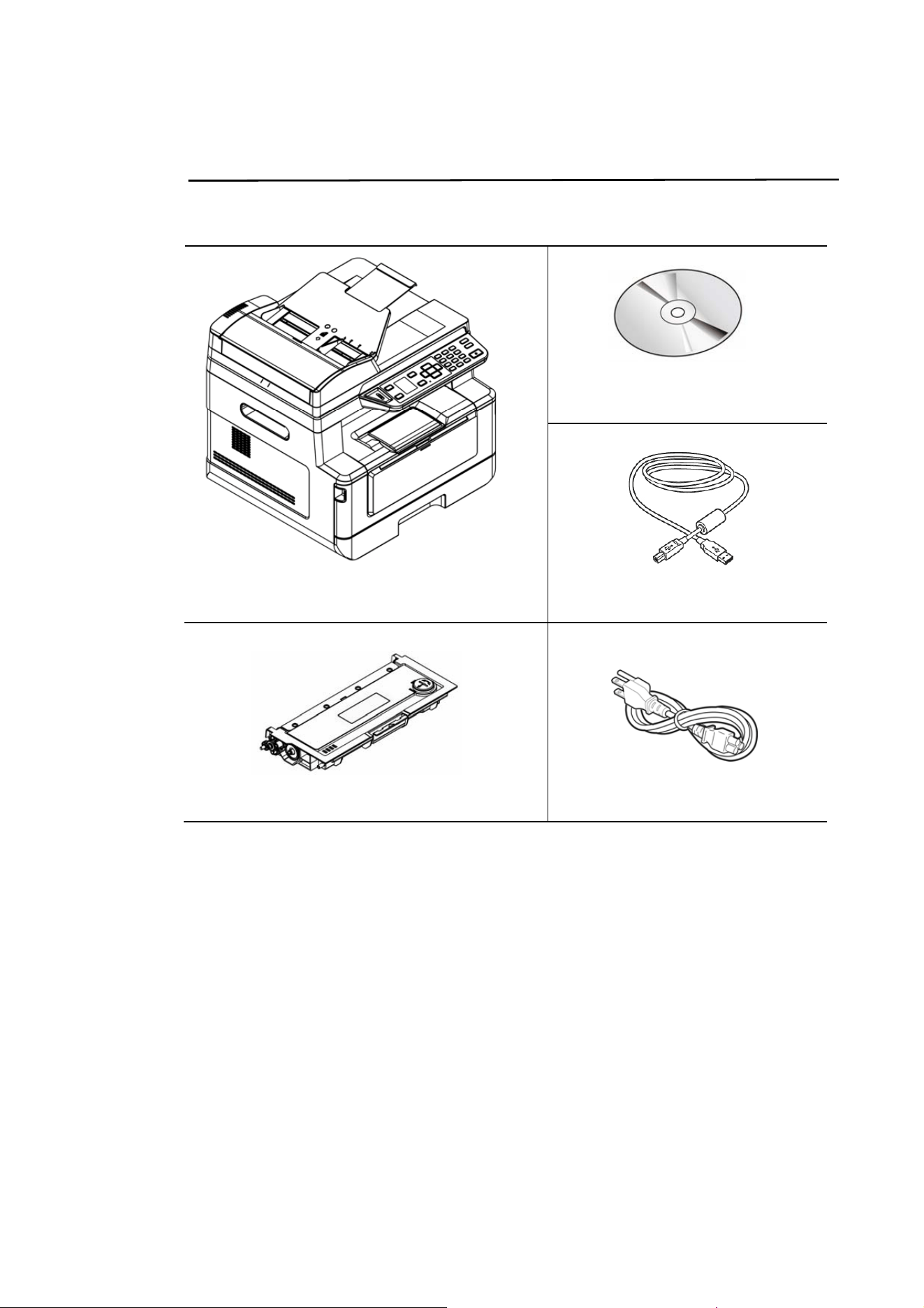
5
Package Contents
CD-ROM (Including Driver, and
User’s Manual)
Main Unit
USB Cable
Toner Cartridge
Power Cord
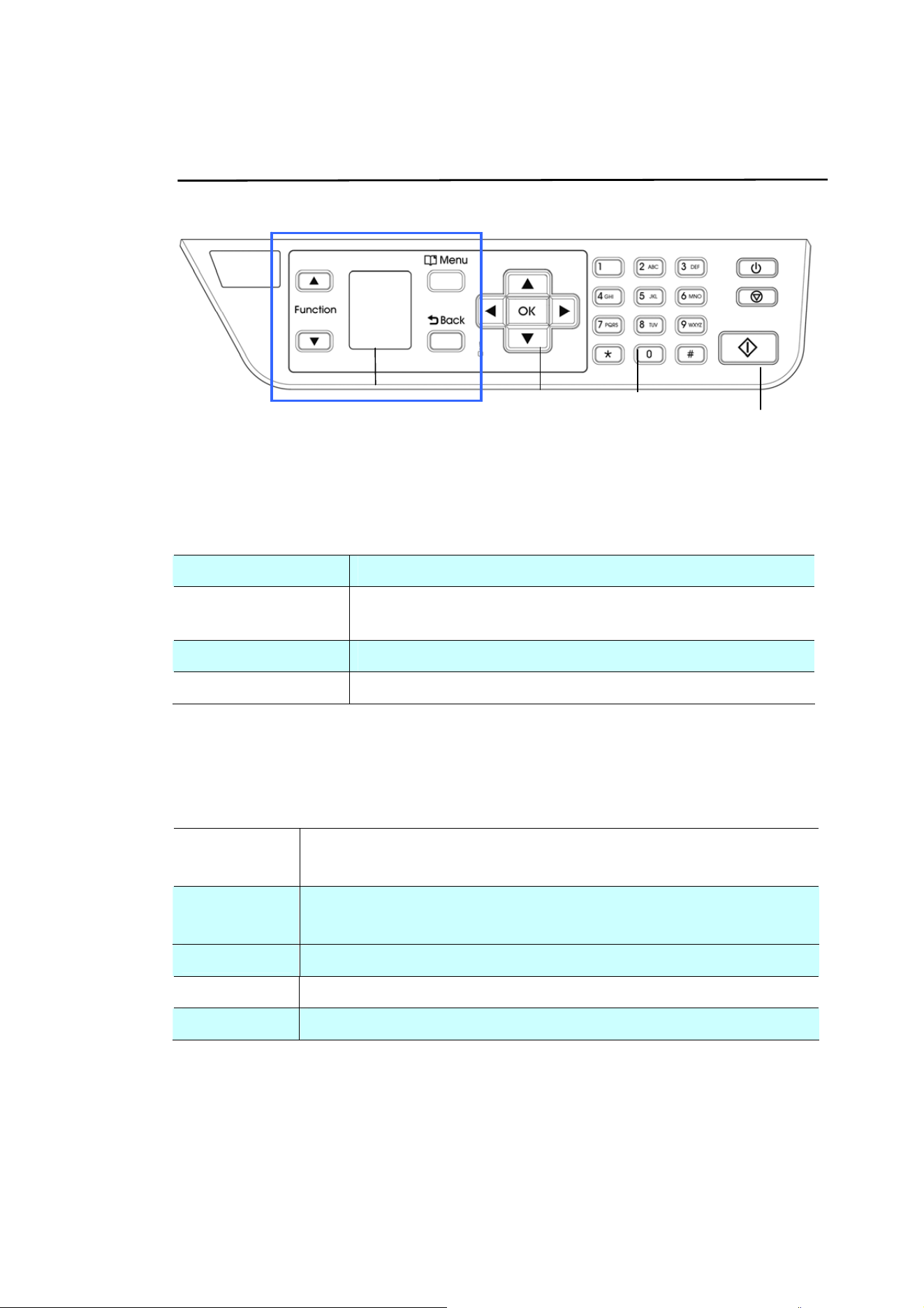
6
Control Panel
Part A:
Function / Used to choose a working mode.
LCD screen Used to display information and provide access to the
product’s functions.
Menu Used to enter the Menu mode.
Back
Used to go back to the previous level.
Part B: Function Keys
◄
Used to scroll backwards through menu selection.
Used to delete text while entering a text.
►
Used to scroll forwards through menu selection.
Used to add a space from the right while entering a text.
OK
Used to confirm a selection in Menu mode.
/ Used to display or select an option.
LED Light Used to indicate the machine’s status.
Part C: Numeric/Character Keypad
Used to enter copy quantity, fax number.
Part A
Part B
Part D
Part C
7
Part D: Start Button & Other Buttons
Used to choose the Start button to perform the copy, scan, fax, e-mail, or filing
function.
Power: Press to turn on the machine.
Stop/Cancel: Press to pause a current job.
Start: Press to start a copy, scan-to, fax, or other job.
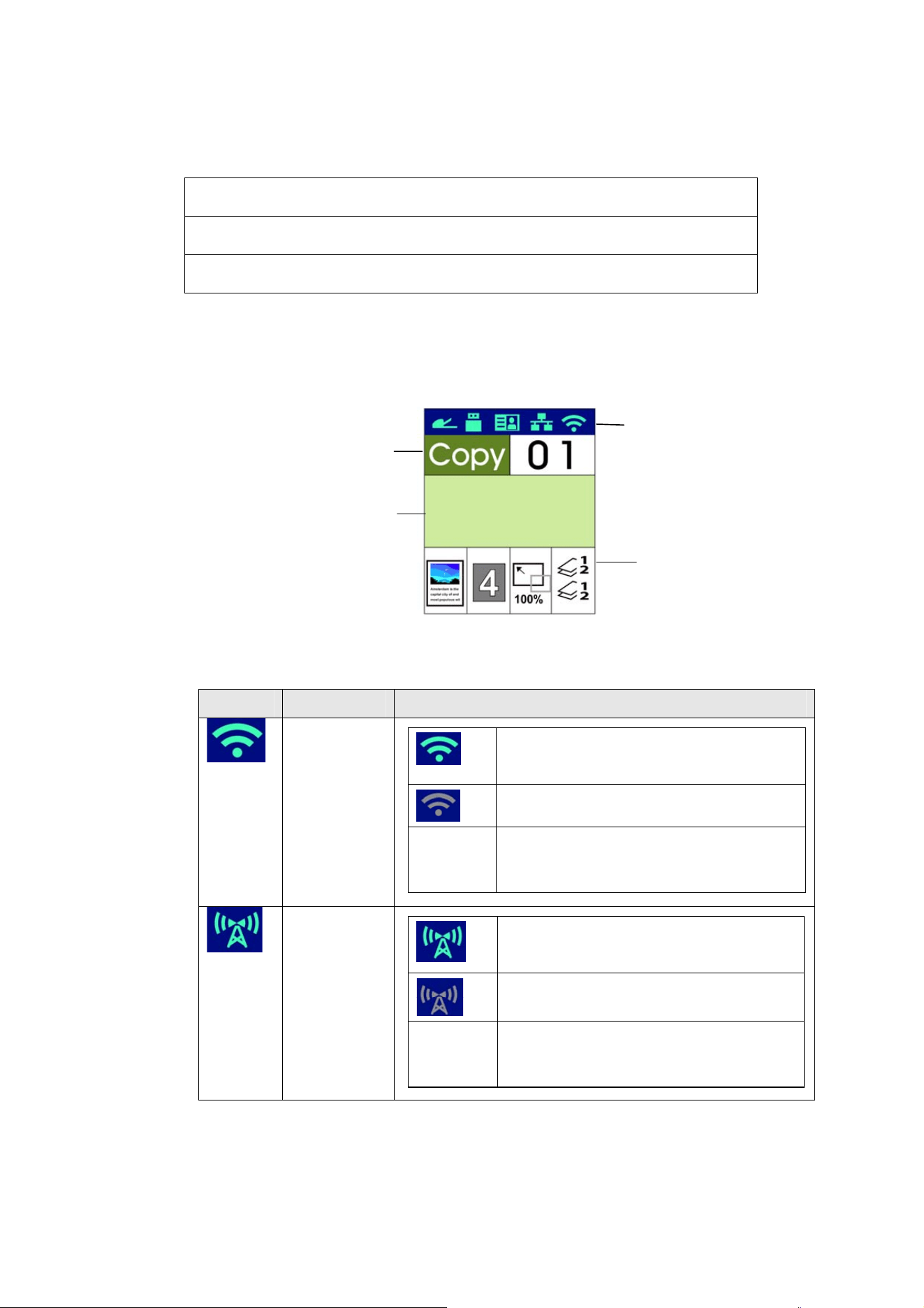
LCD Screen and Status Bar
Status Bar
Icon Name LED Light Color/Status Indication
Wi-Fi Mode
A green icon indicates connection
successful
A gray icon indicates obtaining IP
No
Display
No Wi-Fi USB dongle
Wi-Fi AP
Mode
A green icon indicates connection
successful
A gray icon indicates obtaining IP
No
Display
No Wi-Fi USB dongle
Status Bar
Settings
Function
Name
Status
Indication
Ready
8
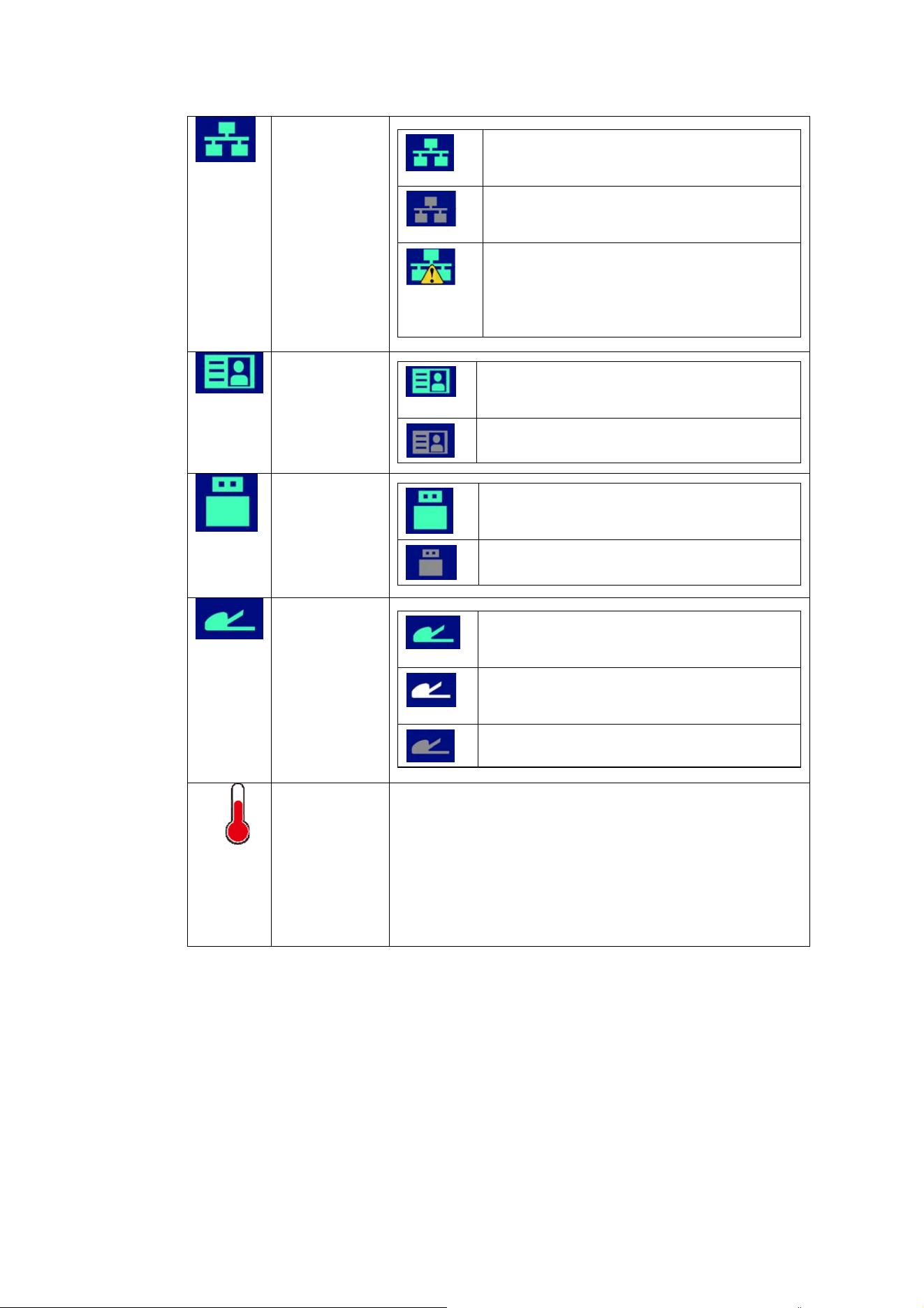
Ethernet
Mode
A green icon indicates connection
successful
A gray icon indicates no connection of
the wired network cable.
An Auto IP address has been given to
the device since DHCP server is not
working. Yet network connection is
only limited to Local Area Network
(LAN).
CSA6 Mode
A green icon indicates connection
successful
A gray icon indicates no connection.
USB Mode
A green icon indicates connection
successful
A gray icon indicates no connection.
Auto
Document
Feeder
Mode
A green icon indicates there is paper
in the Auto Document Feeder.
A white icon indicates no paper in Auto
Document Feeder.
A gray icon indicates no connection.
High
Temperature
Temperature inside the printer is too high. Each
rear-side printing will be stopped for 6 seconds and
then continued printing.
After the machine has been idled for 30 minutes
and the temperature has dropped to normal
degrees, the [High Temperature] icon will then
disappear.
9
2. Installing Your Machine
Precautions
Do not install the equipment near heating or air conditioning units.
Do not install the equipment in a humid or dusty place.
Place the equipment in a separate area with good ventilation.
The equipment is equipped with both the power-saving and standby modes.
The equipment can not achieve zero energy consumption state until it is not
connected to any external power supply.
Be sure to use the correct AC power supply.
Retain the box and packing materials for shipping purposes.
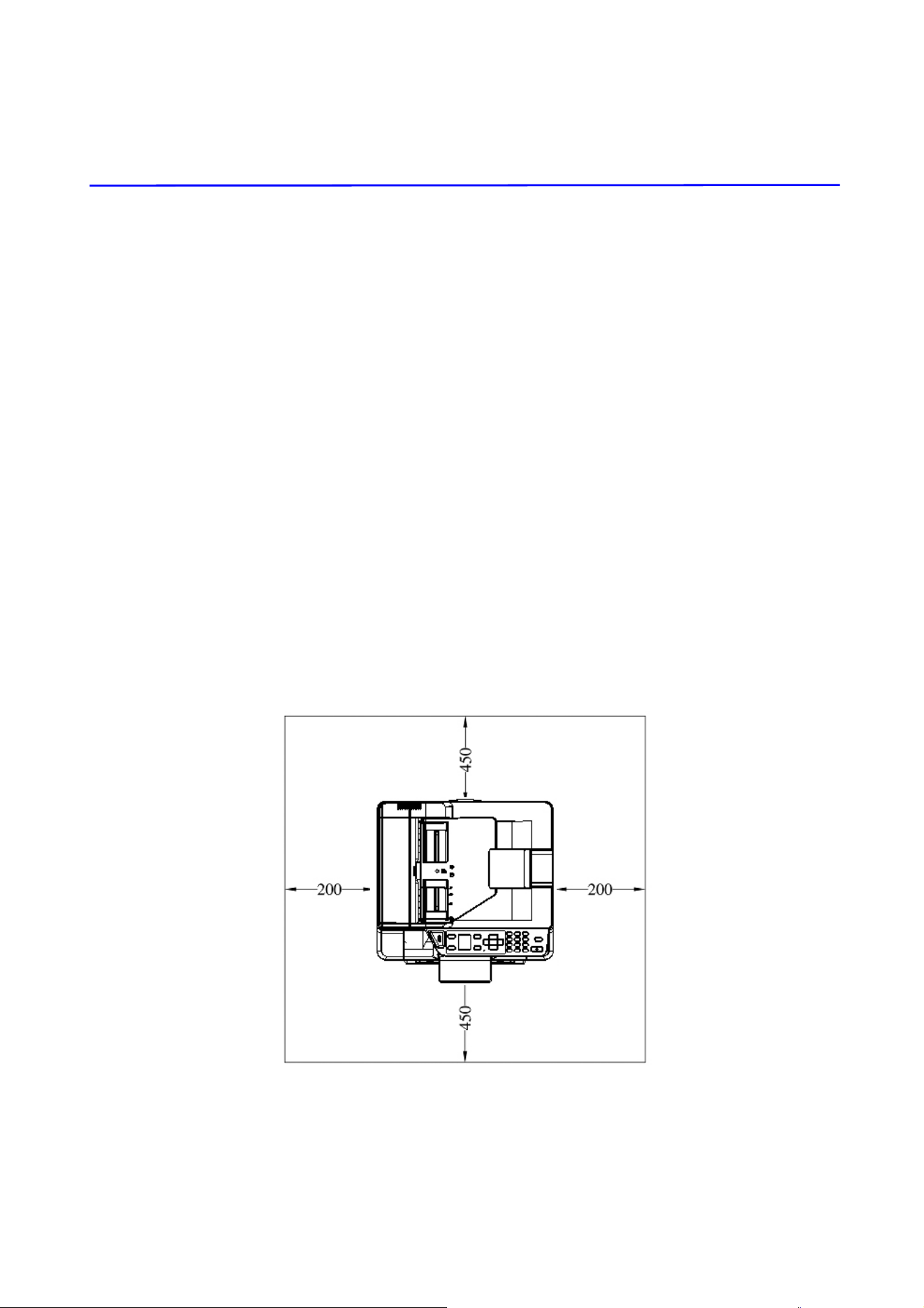
Operational Space
Please reserve the following operation space.
Machine dimension: 402 x 380 x 308 mm (WxDxH) (AM30XX)
Machine dimension: 402 x 380 x 367 mm (WxDxH) (AM30XXA, AM30XXAP,
AM30XXAFP)
Measuring unit: mm
10
Removing the Tapes of the Toner Cartridge
Important!
When you unpack the machine, a toner cartridge has been
packed separately besides the machine. Please remove the
package cushion and tapes on the toner cartridg before using
it.
Installing the Toner Cartridge
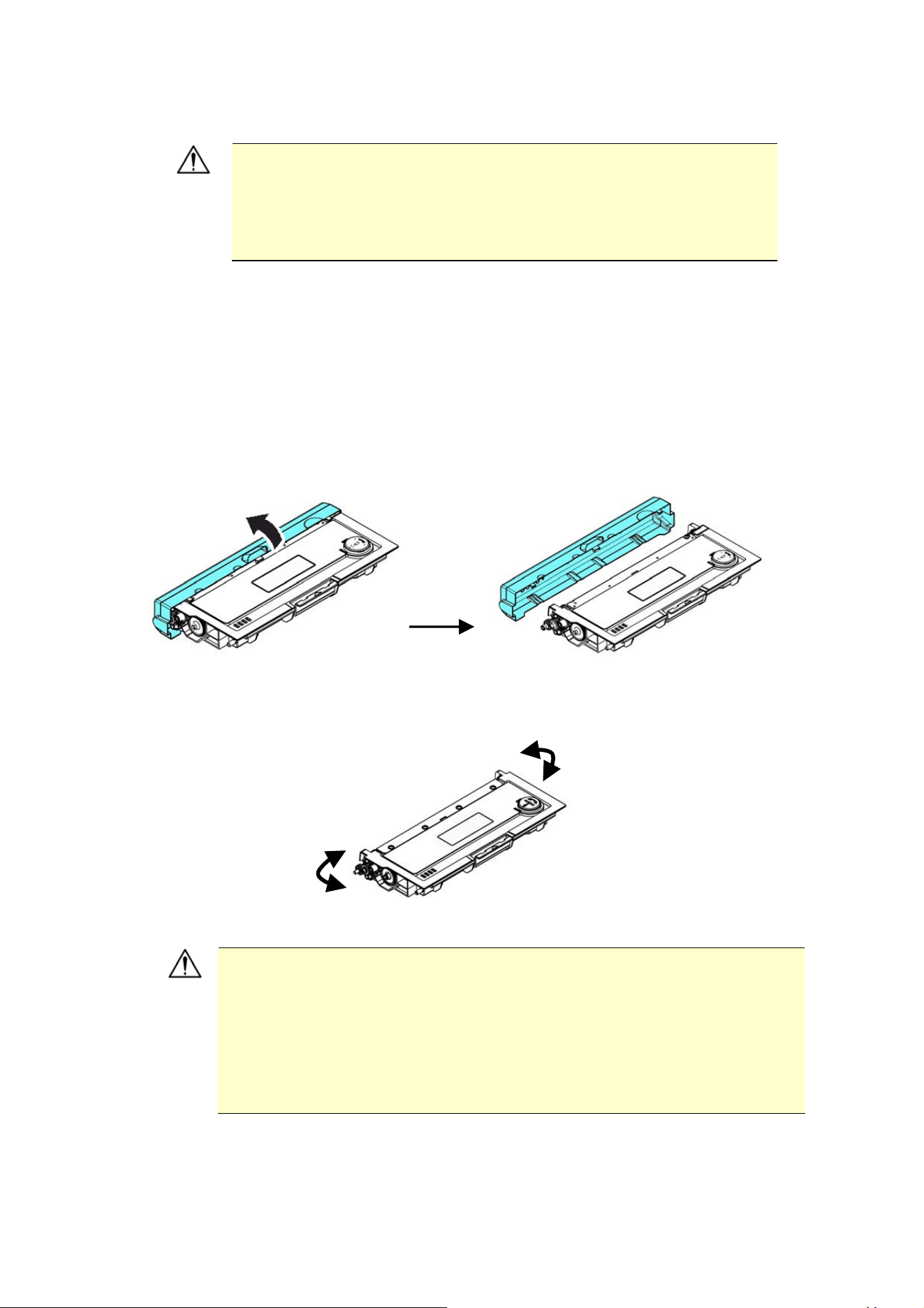
Please follow these steps to install the toner cartridge:
1. Unpack the new toner cartridgeg.
2. Remove the protective cover.
3. Tilt the toner cartridge up and down and then right and left 10 times to distribute
the toner evenly inside the toner cartridge.
Warning!
Be careful not to inhale toner.
If toner gets on your clothing or other fabric, wipe off the toner with
a dry cloth. Wash the items in cold water and air dry.
To avoid print quality problems, DO NOT touch the toner rollers.
To prevent the toner cartridge from damage, do not expose it
more than several minutes.
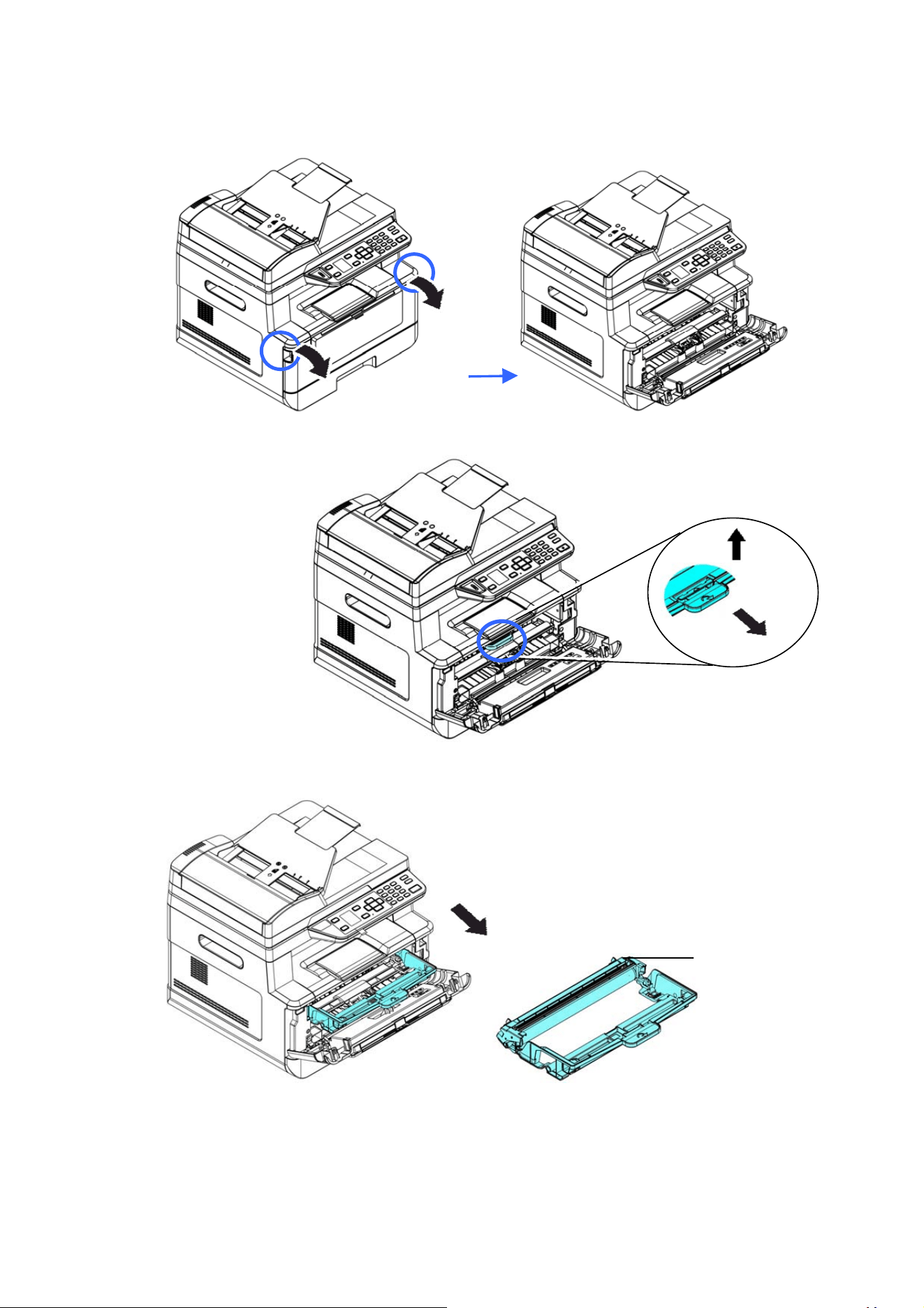
11
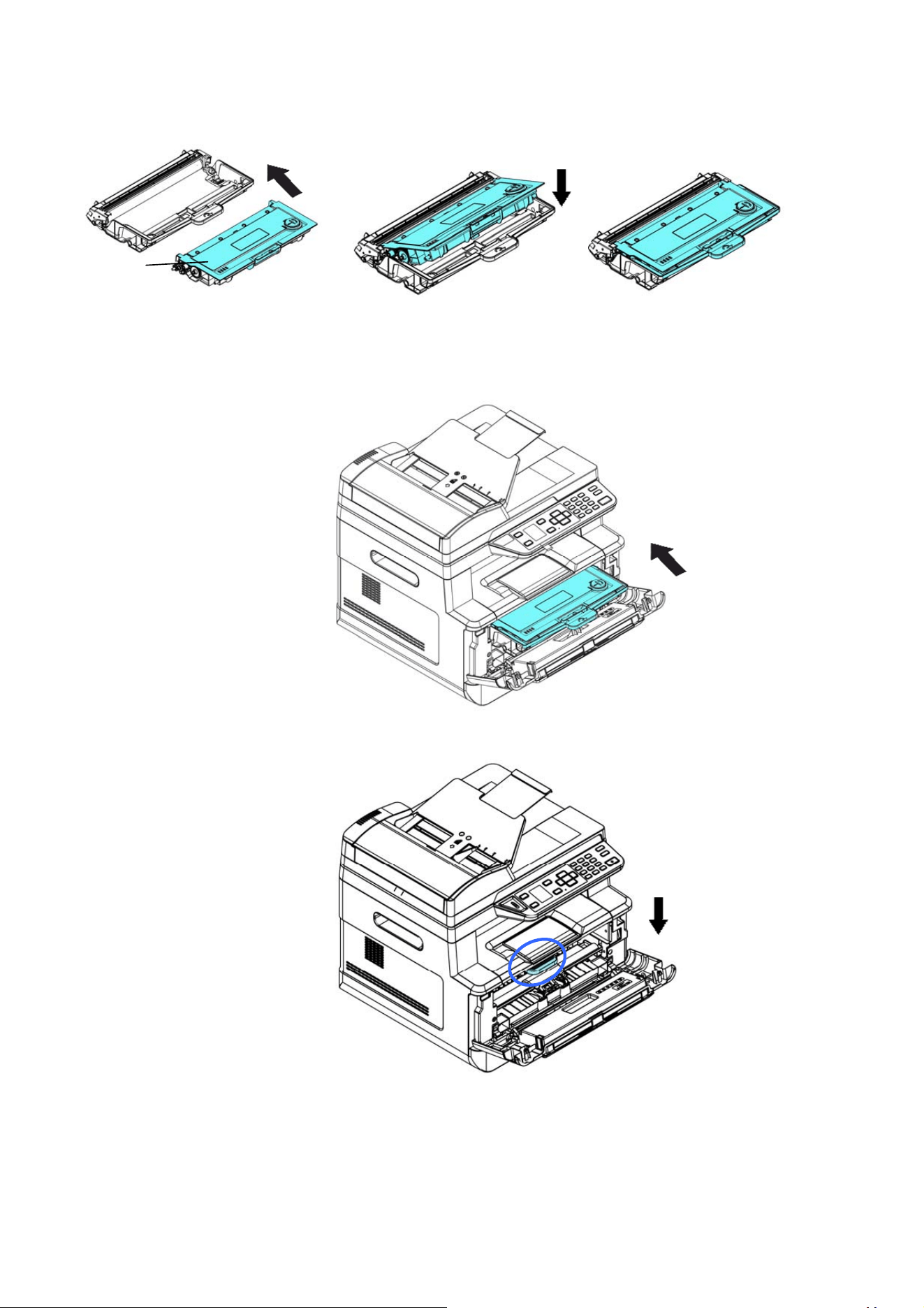
4. Open the front cover by pulling the handles on both sides as shown.
3. Hold the handle of the drum unit and pull it out as shown.
Drum Unit
12
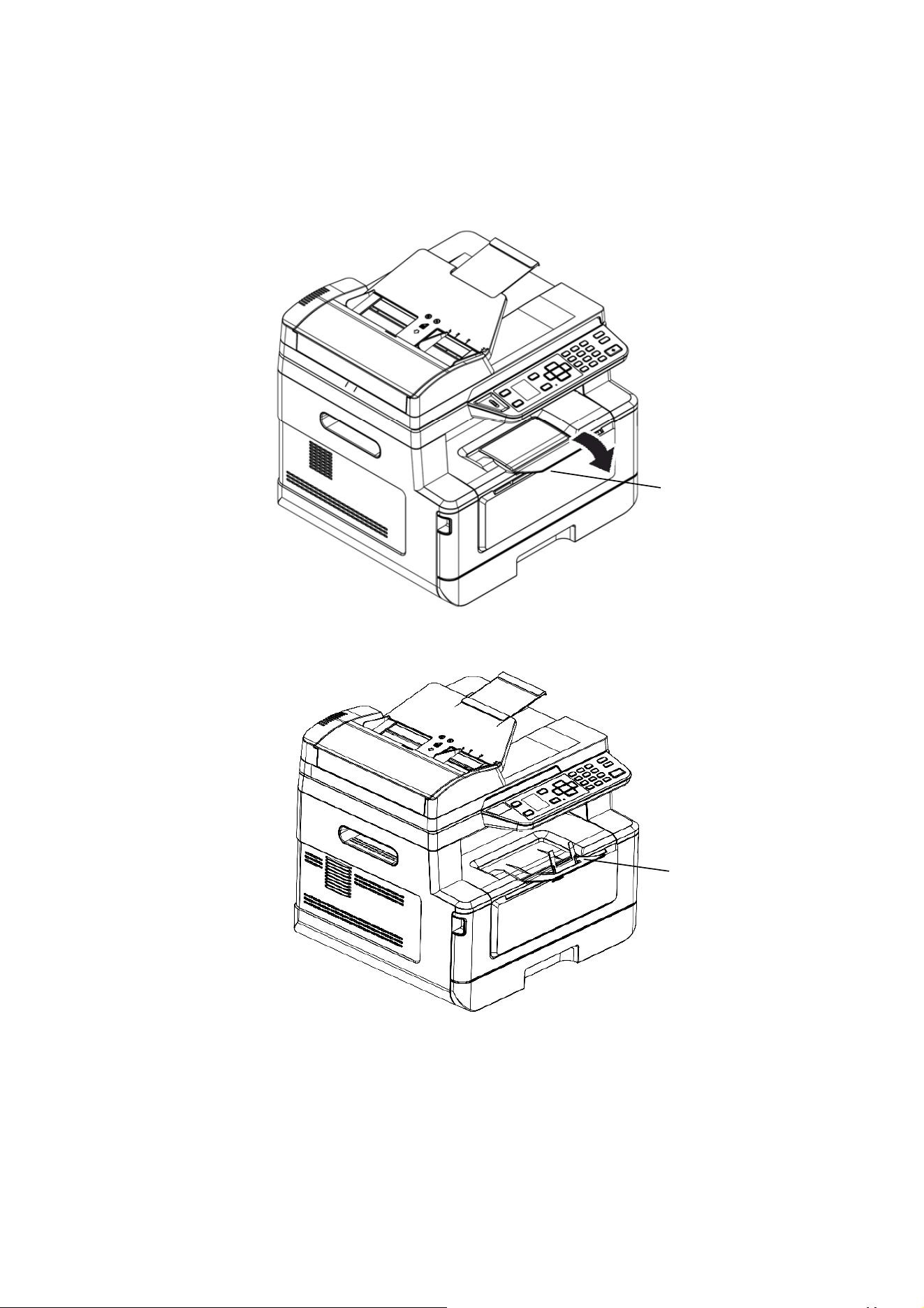
4. Install the toner cartridge to the drum unit.
5. Hold the handle of the drum unit and toner cartridge assembly and insert the
assembly to its original place.
6. Press down the toner cartridge to fix it into place.
7. Close the front cover.
Toner
Cartridge
13
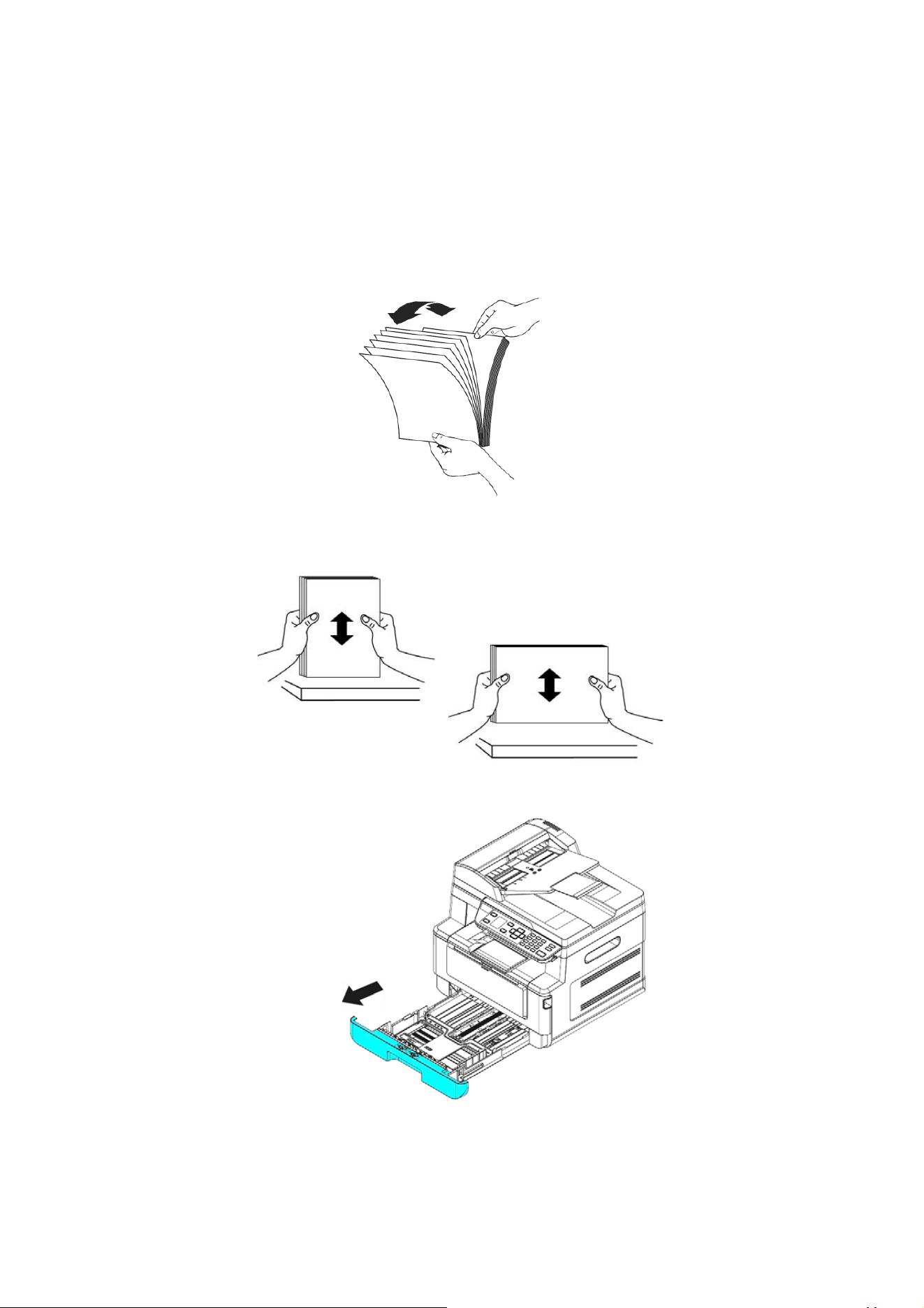
Install the Output Bin
Lift the output bin up to the stuck position.
Output Bin
Paper Stopper
14
Loading The Main Input Tray
To insert paper to the main input tray,
1. Fan your paper first to ensure that the pages do not stick together.
2. Align the edges of the documents by tapping the bottom of the stack against the
table top. Rotate the stack 90 degrees and repeat.
3. Pull the main tray out gently.
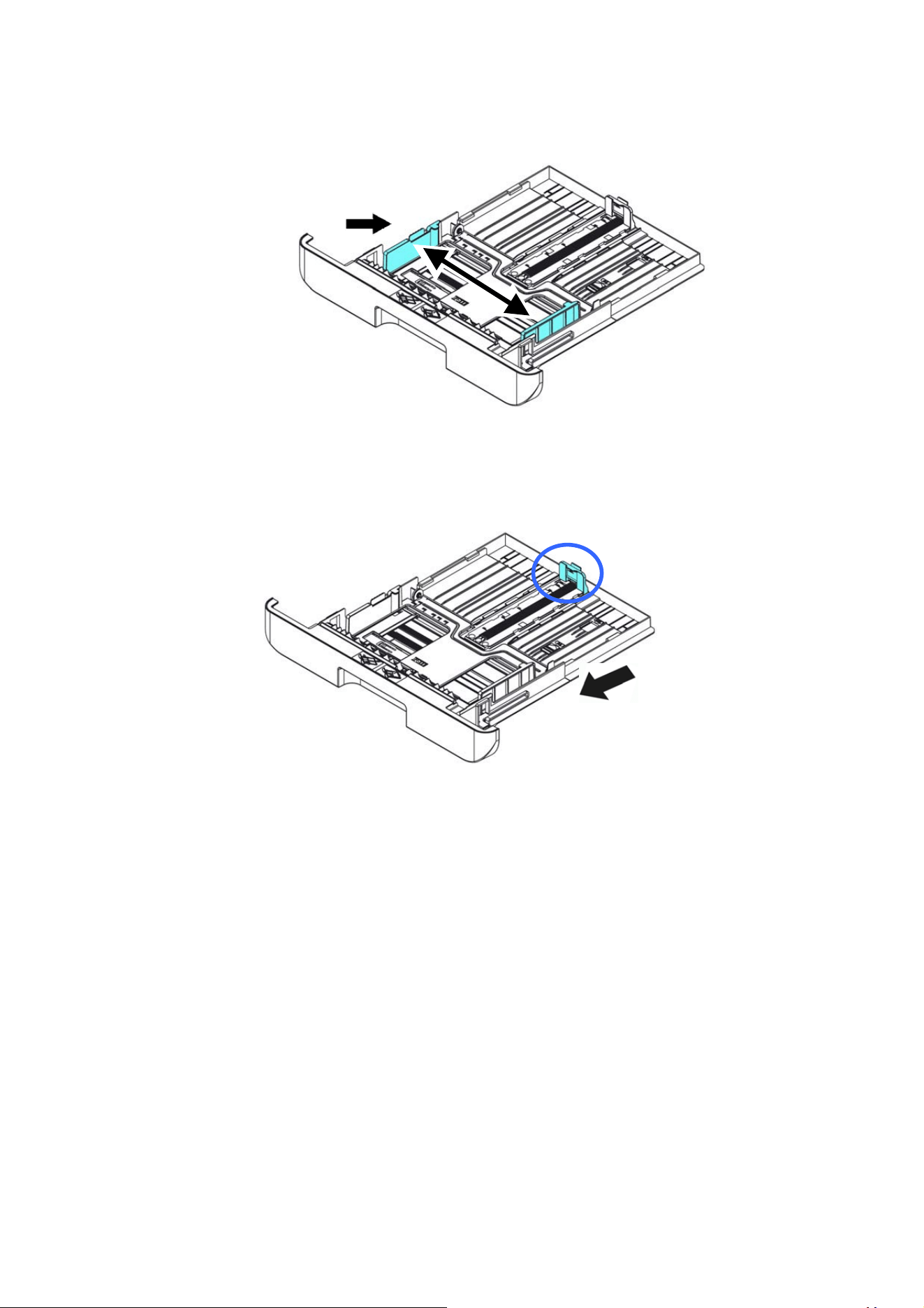
1
5
4. Press the width guide tab (), and then move the width guide () to the correct
position for the paper size being loaded.
5. Unlock the length guide, squeeze the length guide tab inward () as shown, and
slide the guide
() to the correct position for the paper size being loaded.
6. If you wish to load paper larger than A4, press the first length slider () and then
move it to the right (
) to the desired length you wish.
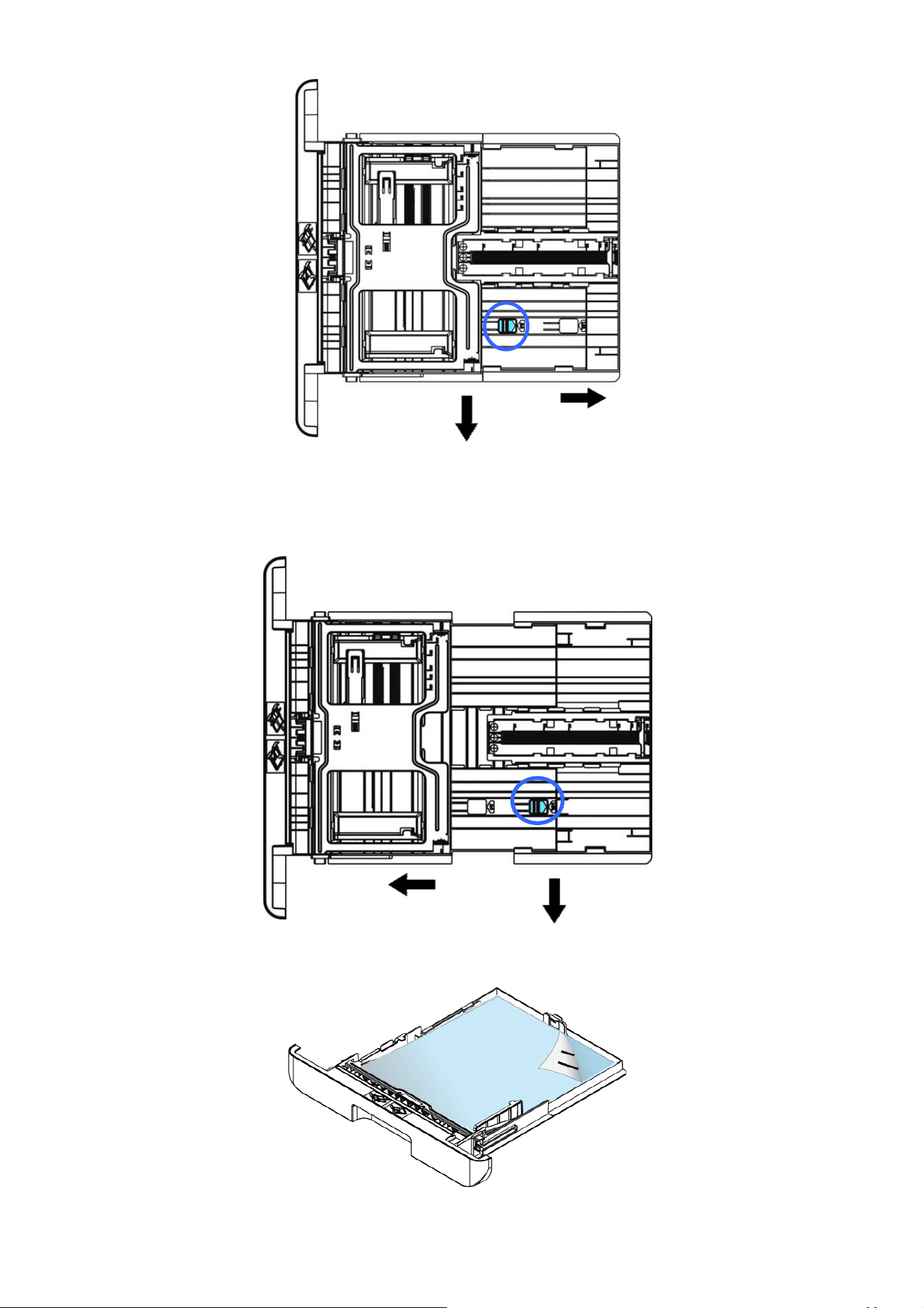
16
To set the length slider back to A4, press the 2
nd
length slider () and then
move it to the left (
).
7. Load the paper stack with the Printing Side FACE DOWN as illustrated.
8. Insert the tray.
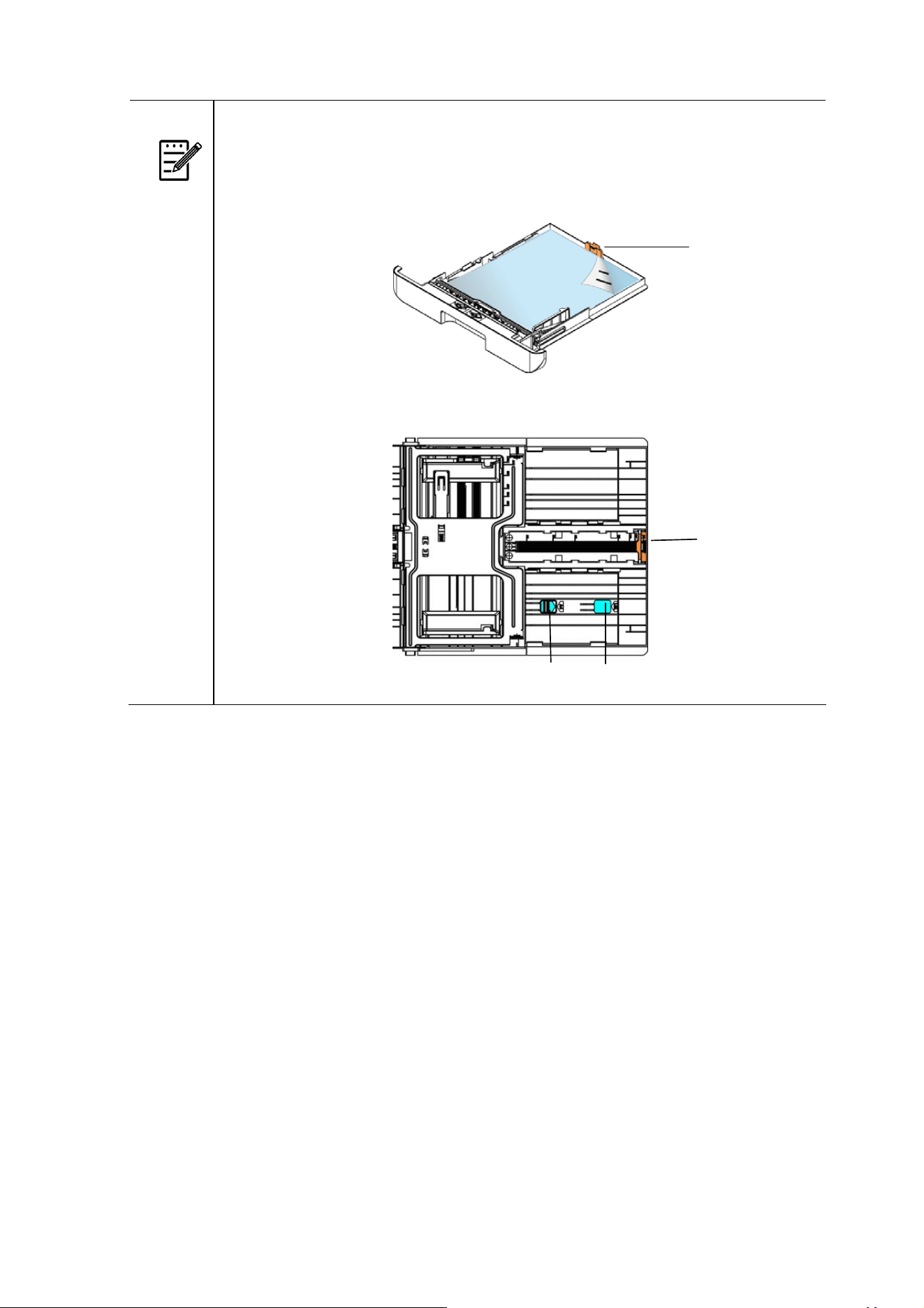
1
7
Note:
To avoid the chance of miss-fed, make sure the length guide tab and
length slider are installed in their proper positions.
Make sure the end of your paper slightly touch the length guide as
indicated in below.
Make sure the length slider is installed in the specified location in either
position A or B as shown in below.
Length
Guide Tab
Length
Guide Tab
Position A Position B
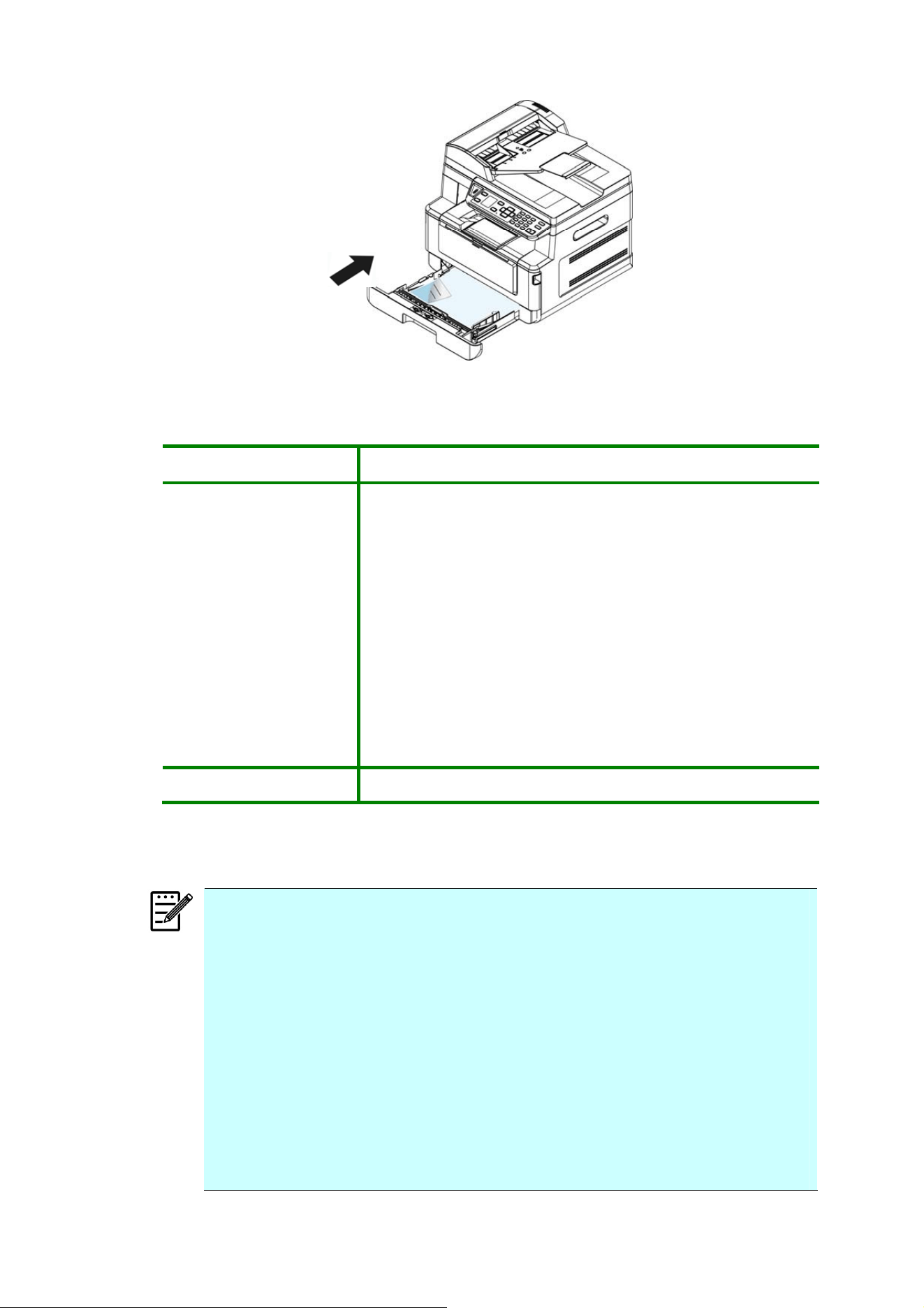
18
Paper sizes and weights used for Main Input Tray
Paper capacity
250 pages(70g/m² plain paper)
Paper size A4 (210 x 297 mm)
A6 (105 x 148 mm)
A5 (148 x 210 mm)
B6 (125 x 176 mm)
B5 (176 x 250 mm)
Letter (216 x 279 mm)
Legal (216 x 356 mm)
Custom Size: 76.2 x 127 mm ~ 216 x 356 mm
(3 x 5 in. ~ 8.5 x 14 in.)
Paper weight 16 ~ 28 lbs (60 ~ 105 g/m²)
* Duplex printing is available only for paper in A4, B5, or letter size.
Note:
To ensure the best quality printing and copying, please use the paper or
media which we have recommended.
Make sure to fan your paper before loading it to the paper tray.
If there are instructions about the printing side on the package of your
paper, please follow the instructions to load your paper properly with
the correct printing side to the paper tray.
If the printing quality is not satisfactory or paper jams are easily to
occur, turn over the paper stack so that the top page is now on bottom
and then reload it to the paper tray.
Pack and seal the remaining paper with the original packaging and store
the paper in a dark and dry location away from the sunshine. Paper
which collects much moisture is easy to cause jam during printing.
19
Loading the Manual Tray
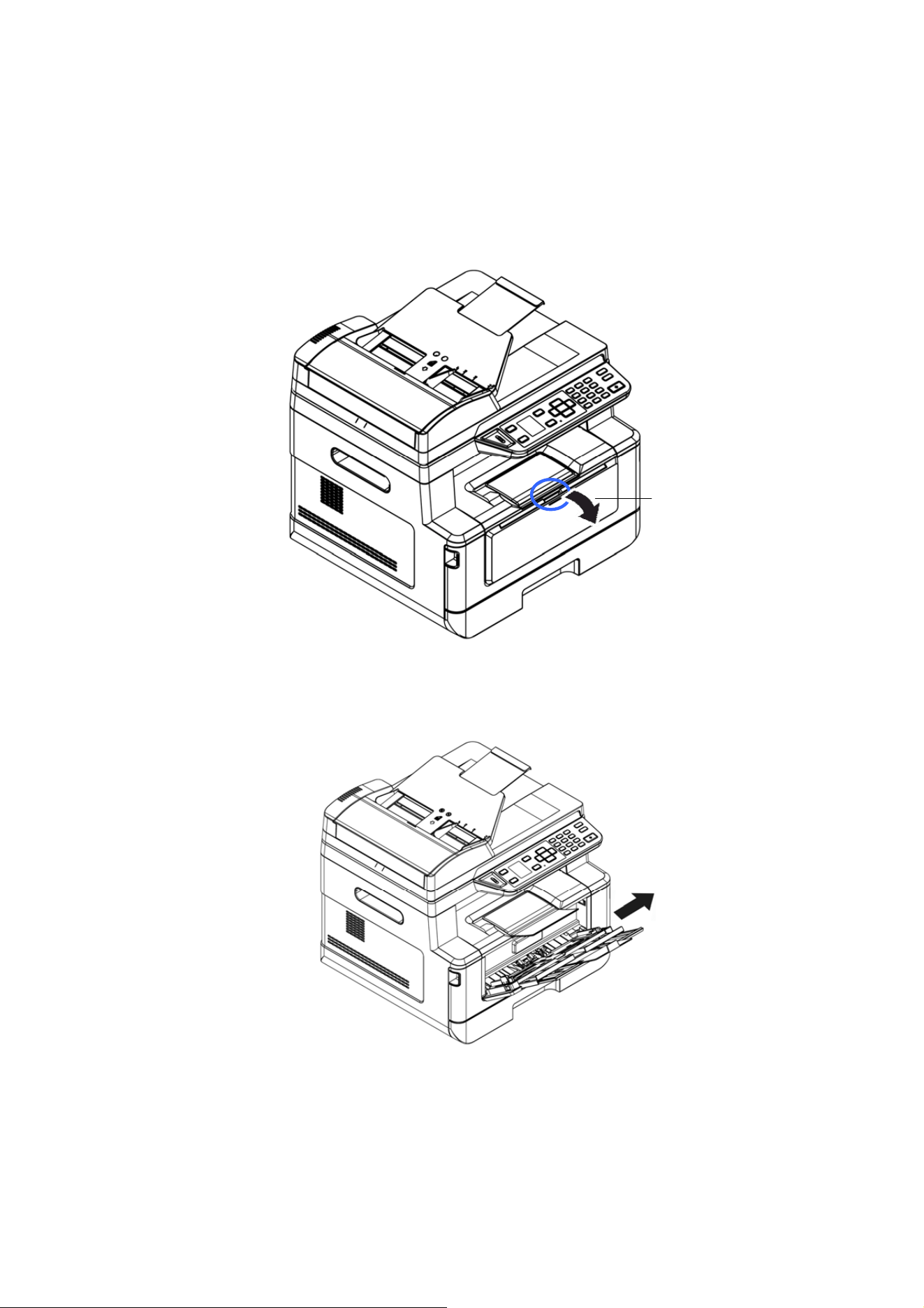
When you need to print different size paper, you can use the manual tray.
1. Open the manual tray by grasping the handle and pull it down.
2. Pull out the manual tray extension to meet your paper size.
Manual Tray
20
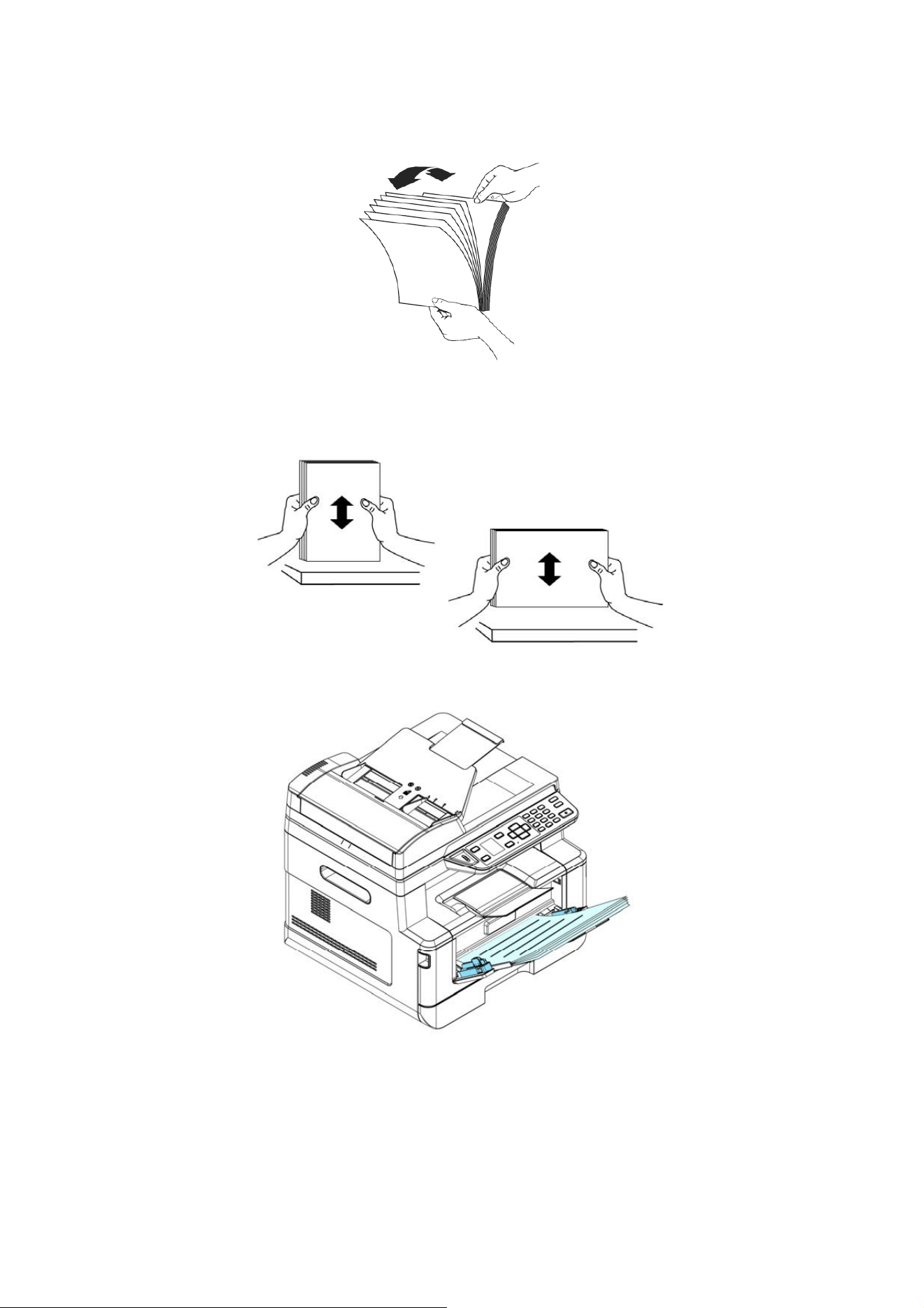
3. Fan your paper first to ensure that the pages do not stick together.
4. Align the edges of the documents by tapping the bottom of the stack against the
table top. Rotate the stack 90 degrees and repeat.
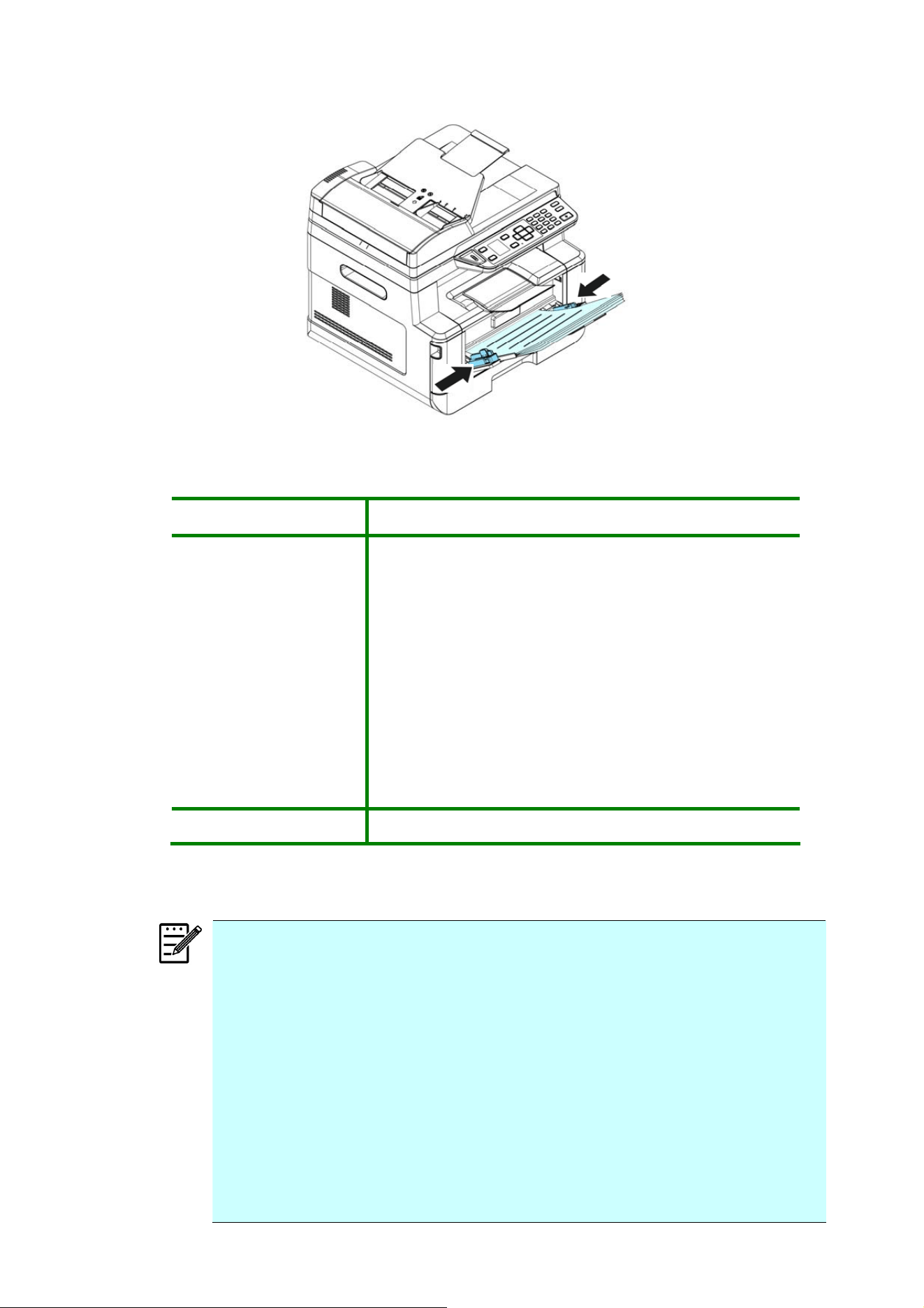
5. Load the paper stack with the Printing Side FACE UP as illustrated.
21
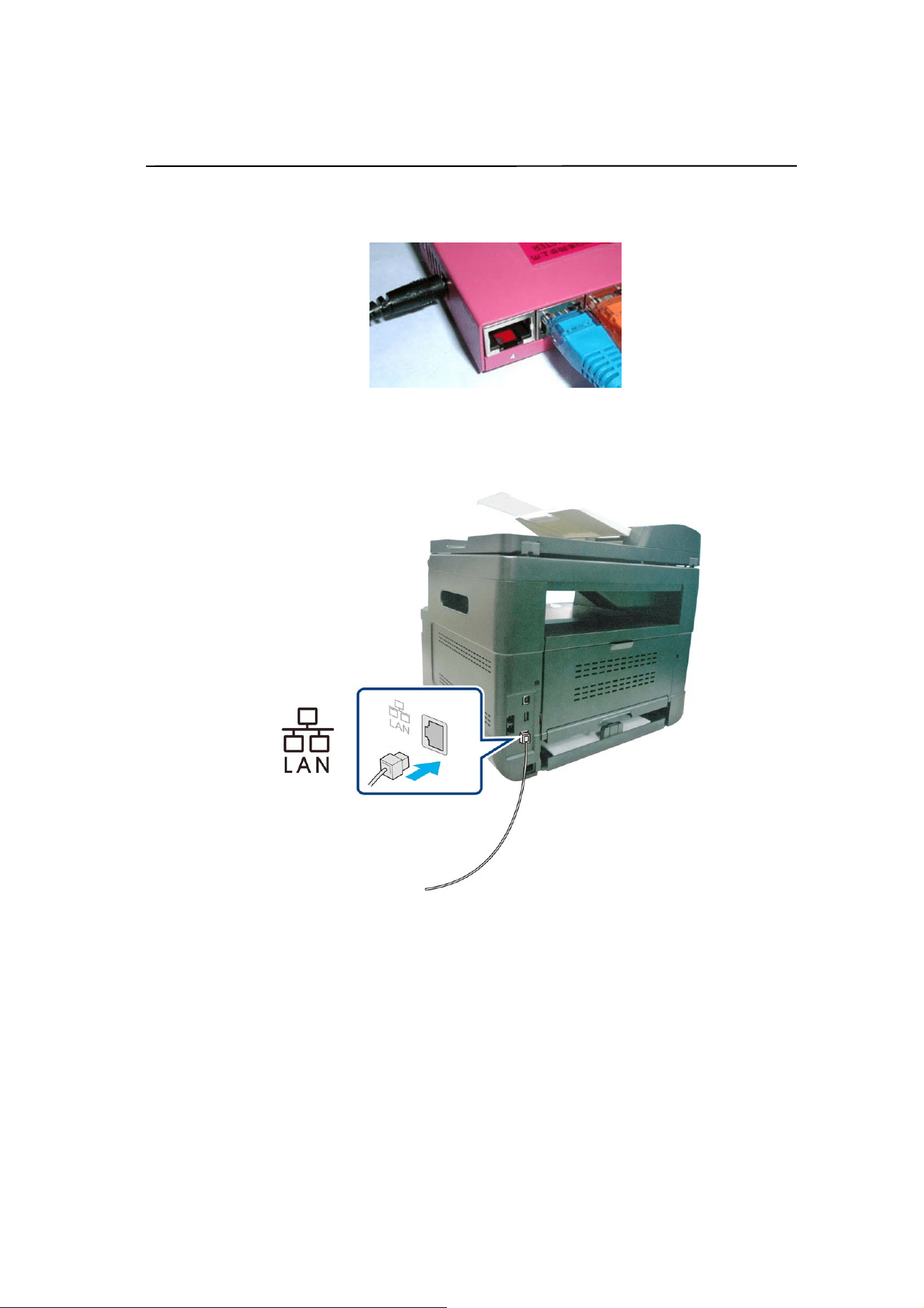
6. Slide the paper guides so that they slightly touch the paper stack.
Paper sizes and weights used for Manual Tray
Paper capacity
10 pages(70g/m² plain paper)
Paper size
A4 (210 x 297 mm)
A6 (105 x 148 mm)
A5 (148 x 210 mm)
B6 (125 x 176mm)
B5 (176 x 250 mm)
Letter (216 x 279 mm)
Legal (216 x 356 mm)
Custom Size: 76.2 x 127 mm ~ 216 x 356 mm
(3 x 5 in. ~ 8.5 x 14 in.)
Paper weight 60 ~ 163 g/m² (16 ~ 43 lbs)
* Duplex printing is available only for paper in A4, B5, or letter size.
Note:
To ensure the best quality printing and copying, please use the paper or
media which we have recommended.
Make sure to fan your paper before loading it to the paper tray.
If there are instructions about the printing side on the package of your
paper, please follow the instructions to load your paper properly with
the correct printing side to the paper tray.
If the printing quality is not satisfactory or paper jams are easily to
occur, turn over the paper stack so that the top page is now on bottom
and then reload it to the paper tray.
Pack and seal the remaining paper with the original packaging and store
the paper in a dark and dry location away from the sunshine. Paper
which collects much moisture is easy to cause jam during printing.
22
Connecting to a Wired Network
1. Connect one end of your network cable to an available port of your Ethernet Hub.
2. Connect the other end to the LAN port at the back of the product as shown.

23
Connecting directly to a Telephone Wall Jack
Connect the machine to a telephone line to send fax (available for AM30XXF only).
1. Make sure you have a telephone cord and a telephone wall jack.
2. Connect one end of the telephone cord into the 「LINE」port of the machine.
3. Connect the other end of the telephone cord into an active telephone wall jack.
EXT
LINE
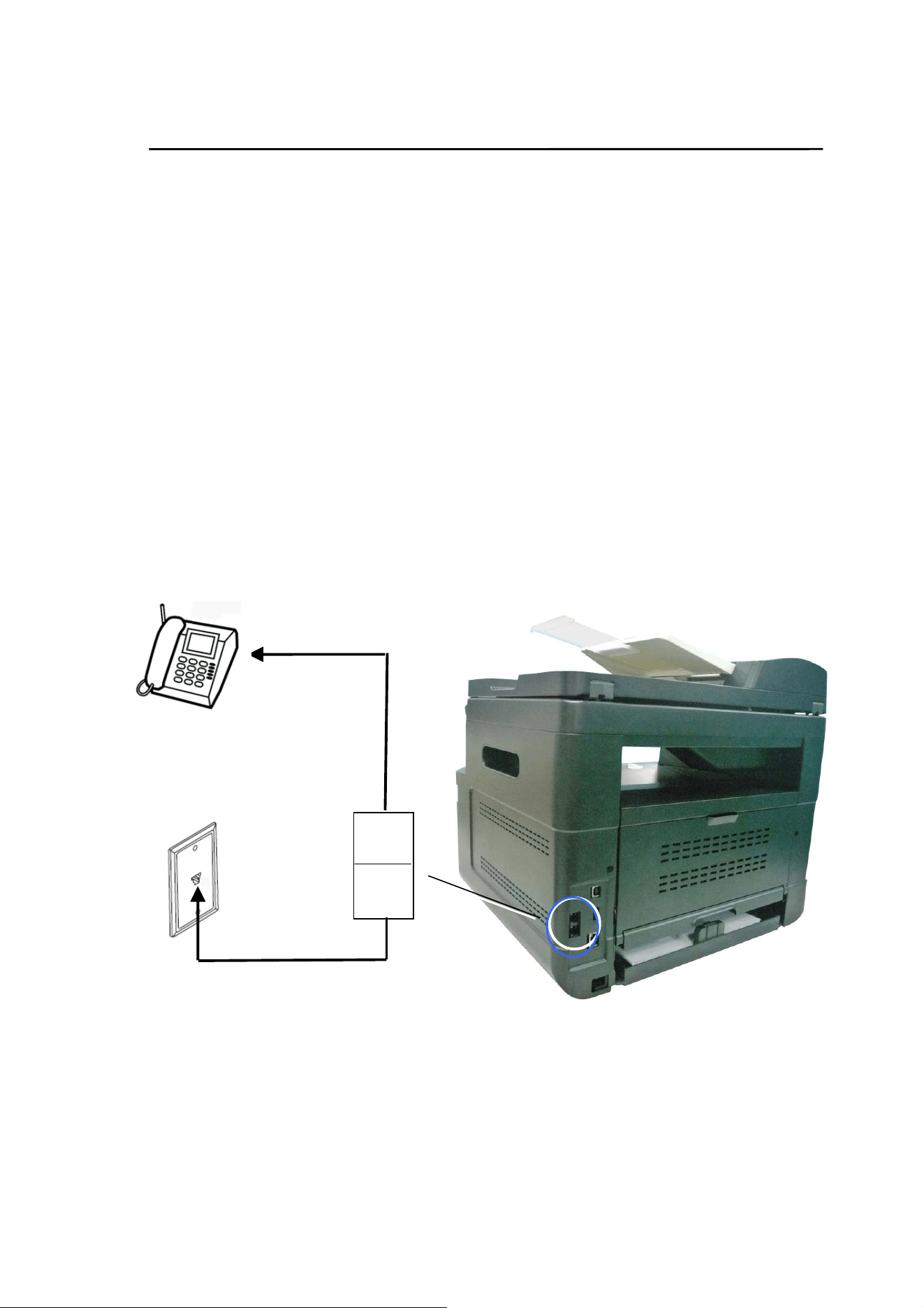
24
Connecting to a Telephone
Connect a telephone to the machine to use the fax line as a normal telephone line if
an optional fax modem is included in the machine.
1. Make sure you have the following:
A telephone
Two telephone cords
A telephone wall jack
2. Connect one telephone cord to the 「LINE」port of the machine, and then plug it
into an active telephone wall jack.
3. Connect the other telephone cord to a telephone, and then plug it into the 「EXT」
port of the machine.
EXT
LINE
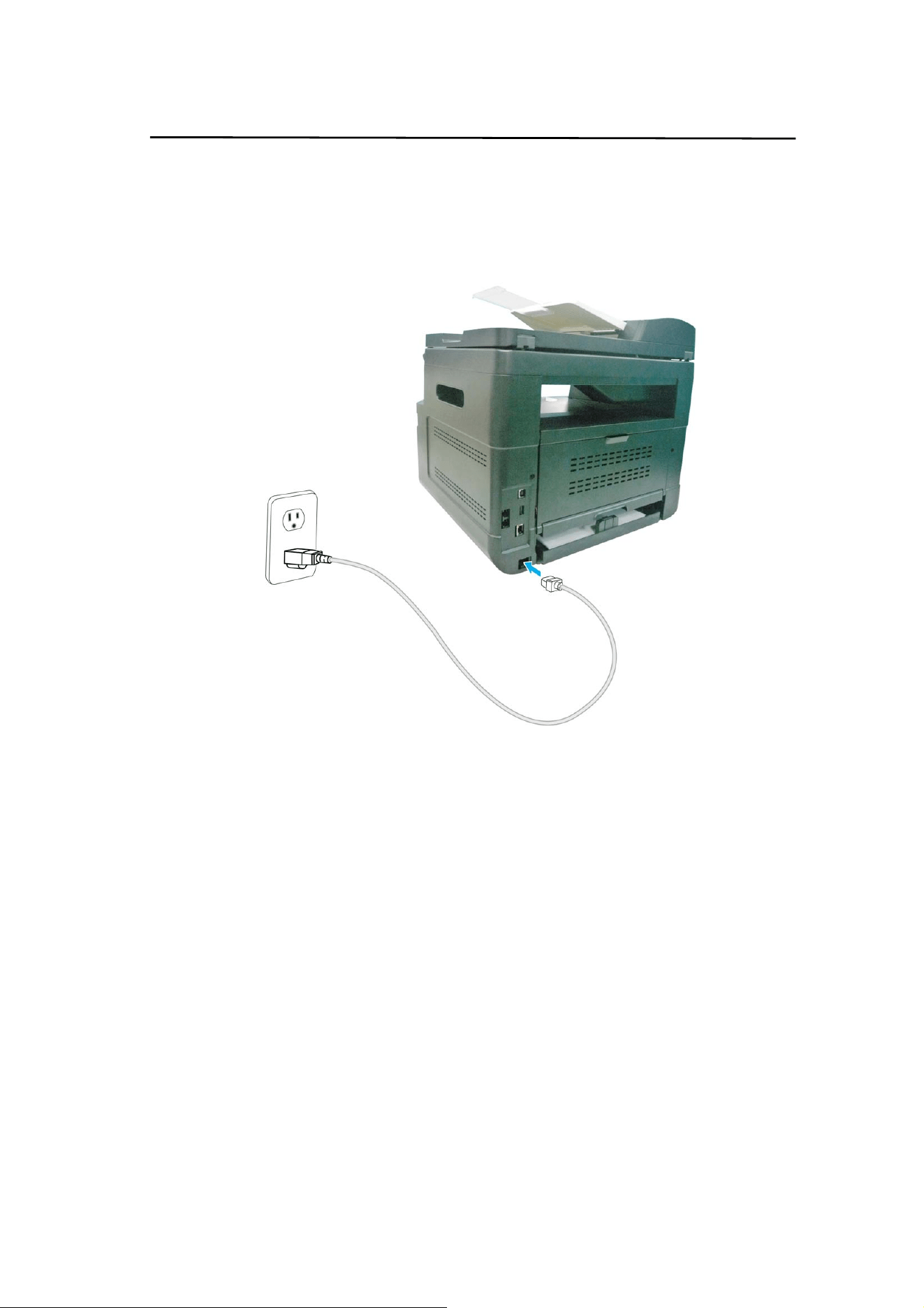
2
5
Connecting to Power
1. Connect the small end of the power cable to the power jack of your product.
2. Connect the other end to an appropriate power outlet.
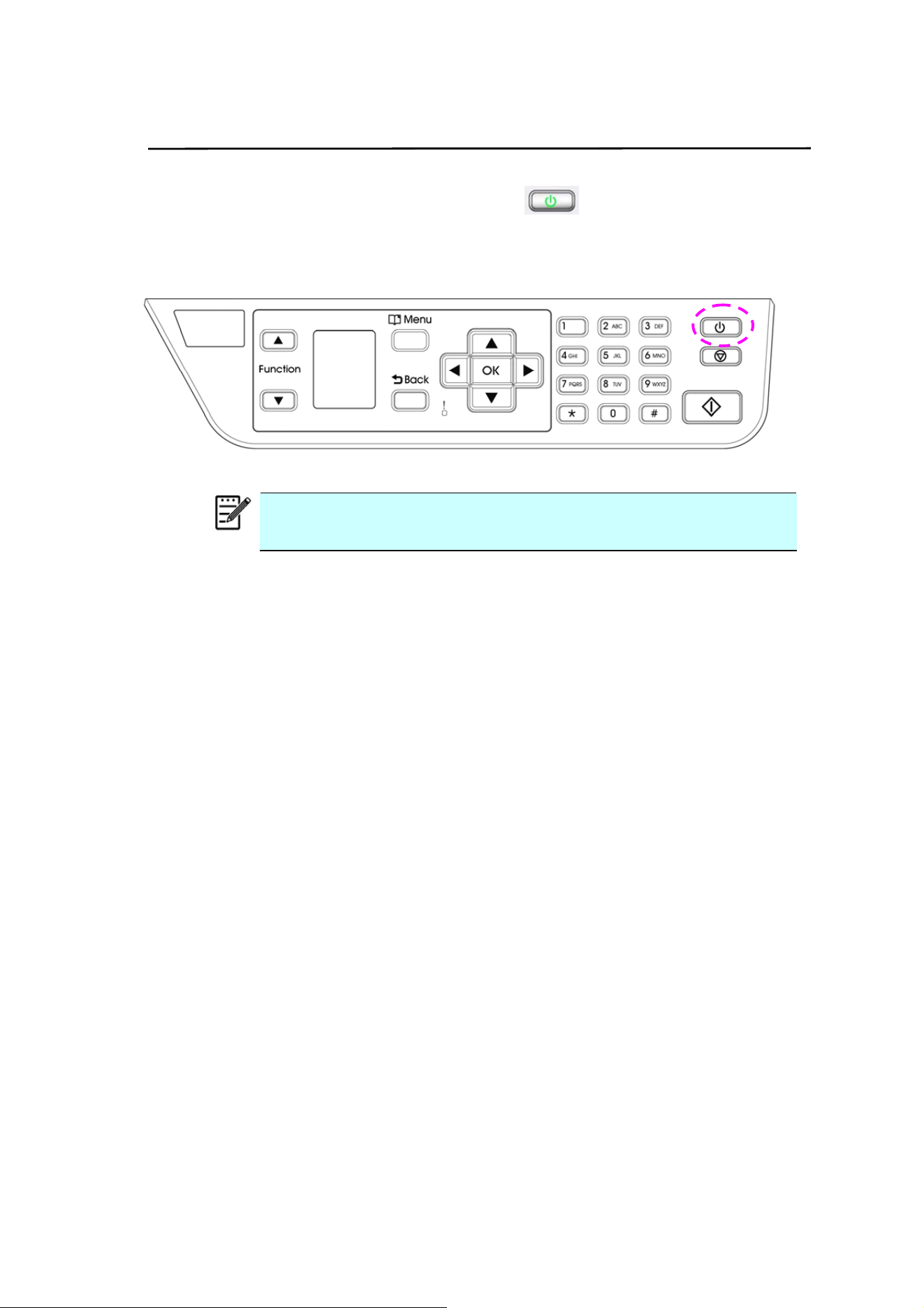
26
Turning On The Machine
To turn on the product, press the Power button
on the control panel, the LED
light will turn solidly on. To turn off the product, hold and press the Power button for
three seconds, the LED light will be off.
Note:
When the product is not in use, be sure to turn off the product
to get a zero power consumption state.

2
7
Specifing Your Country
When the product is turned on for the first time, the following enquiring will be
displayed. Please specify your country to use the optional fax function properly.
Country
USA
Germany
Taiwan
China
Singapore
Malaysia
Thailand
Use the arrow key to select your country and then press [OK] to complete. Choice:
USA, Germany, Taiwan, China, Singapore, Malaysia, Thailand, Indonesia, Korea,
and South Africa.
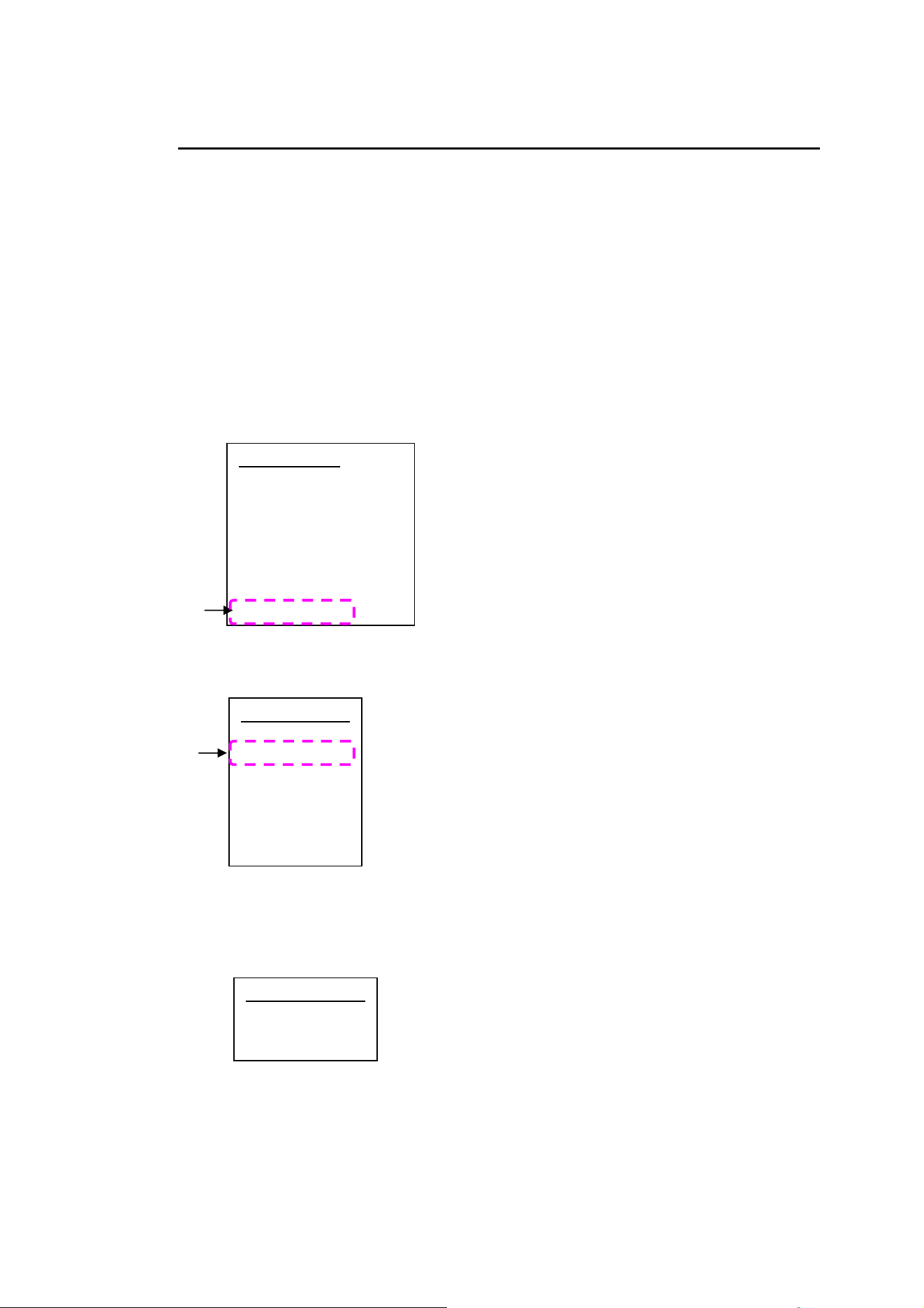
28
Checking the Product’s Default IP Address
If the product has been connected to a network through a Ethernet cable, after
turning on, an IP address will be automatically given by default through the DHCP
server. Follow these steps to check the product’s IP address:
To check the product’s IP address,
1. Turn on the product by pressing the Power button.
2. Press the [Menu] button on the control panel. The following screen will be
prompted.
3. Scroll down to [Information] via the Down Arrow Key ▼ and then press
the [OK] button. The following screen will be prompted.
4. Choose [IP Address] via the Down Arrow Key ▼ and then press the [OK]
button. The IP address from the DHCP server will be prompted. For
example, 10.1.23.81.
Menu
Network
System
Copy
ID Card Copy
Fax
Scan
Report
Information
Information
Host Name
IP Address
SSID
LAN MAC
Wi-Fi MAC
FW Version
Machine SN
IP Address
10.1.23.81
29
Specifying the Product’s Date and Time
To set the product’s date and time,
1. Refer to the preceding section, Checking the Product’s Default IP Address,
to get the product’s IP address from the DHCP server.
2. Open your browser.
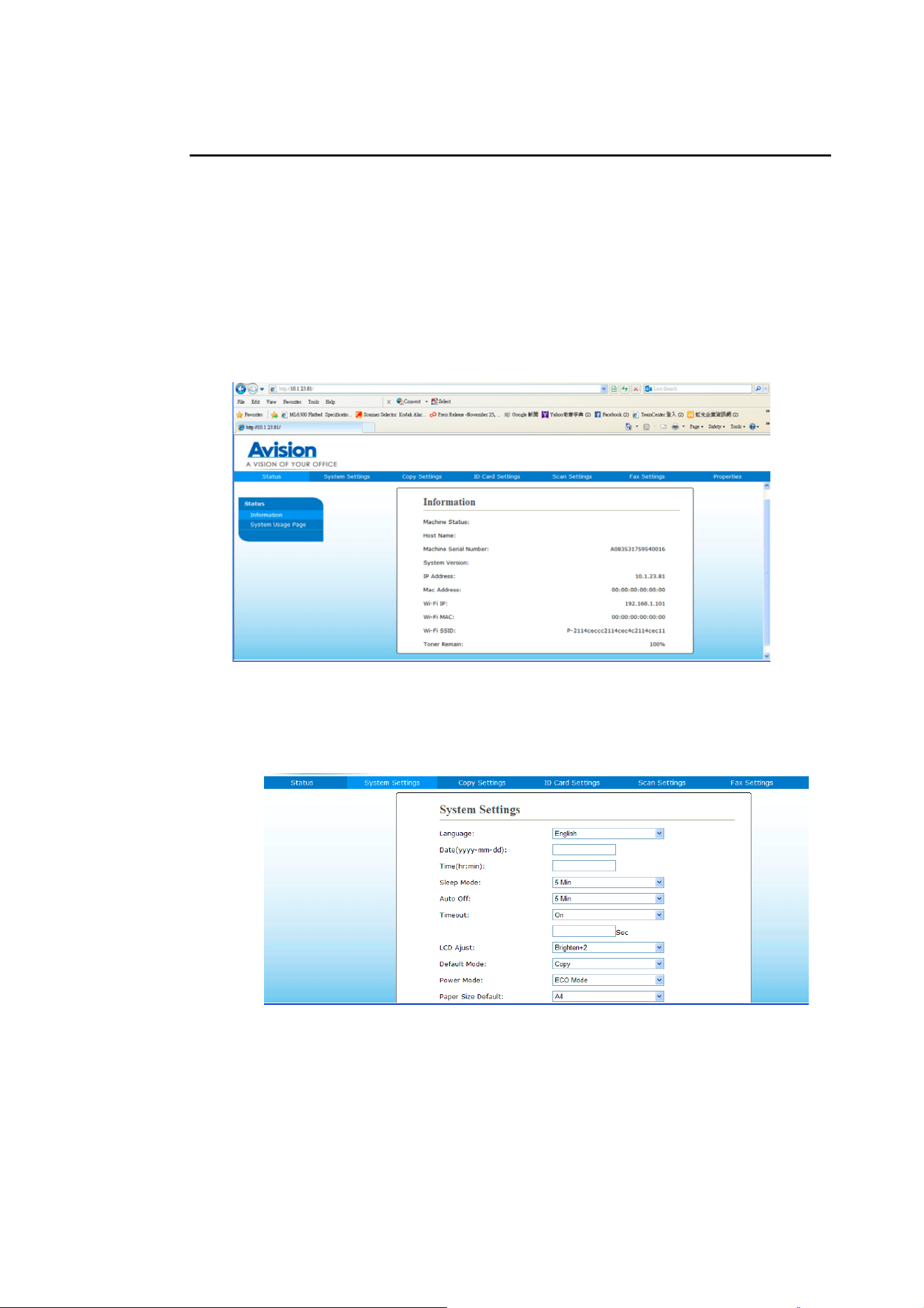
3. Type the product’s IP address on the URL field of your browser. For example,
10.1.20.25. The following embedded web page will be displayed.
4. Select [System Settings] and enter current date and time on the [Date] and
[Time] page. For example, enter [2015-11-21] (yyyy-mm-dd,
year-month-date) as current date. Enter [08:25] (hr:min, hour:minute) as
current time.
4. Click [Update] to save the setting and exit the page.
Ready
30
Installing the Scanner/Printer (Windows)
System Requirement
Windows XP, Windows Server 2003, Windows Vista, Windows 7, Windows 8, Windows
10
For USB Interface Users
Please follow these steps to install the scanner, printer, and fax drivers if this
machine is connected to your computer via a USB cable.
Important!
DO NOT connect the USB cable before installing the scanner,
printer, and fax drivers.
1. Insert the supplied CD into your CD-ROM drive. The installation menu will be
displayed.
2. To install the scanner /printer drivers:
Click 「Install Scanner Driver and Printer Driver」and follow the on-screen
instructions to complete the installation of the program.
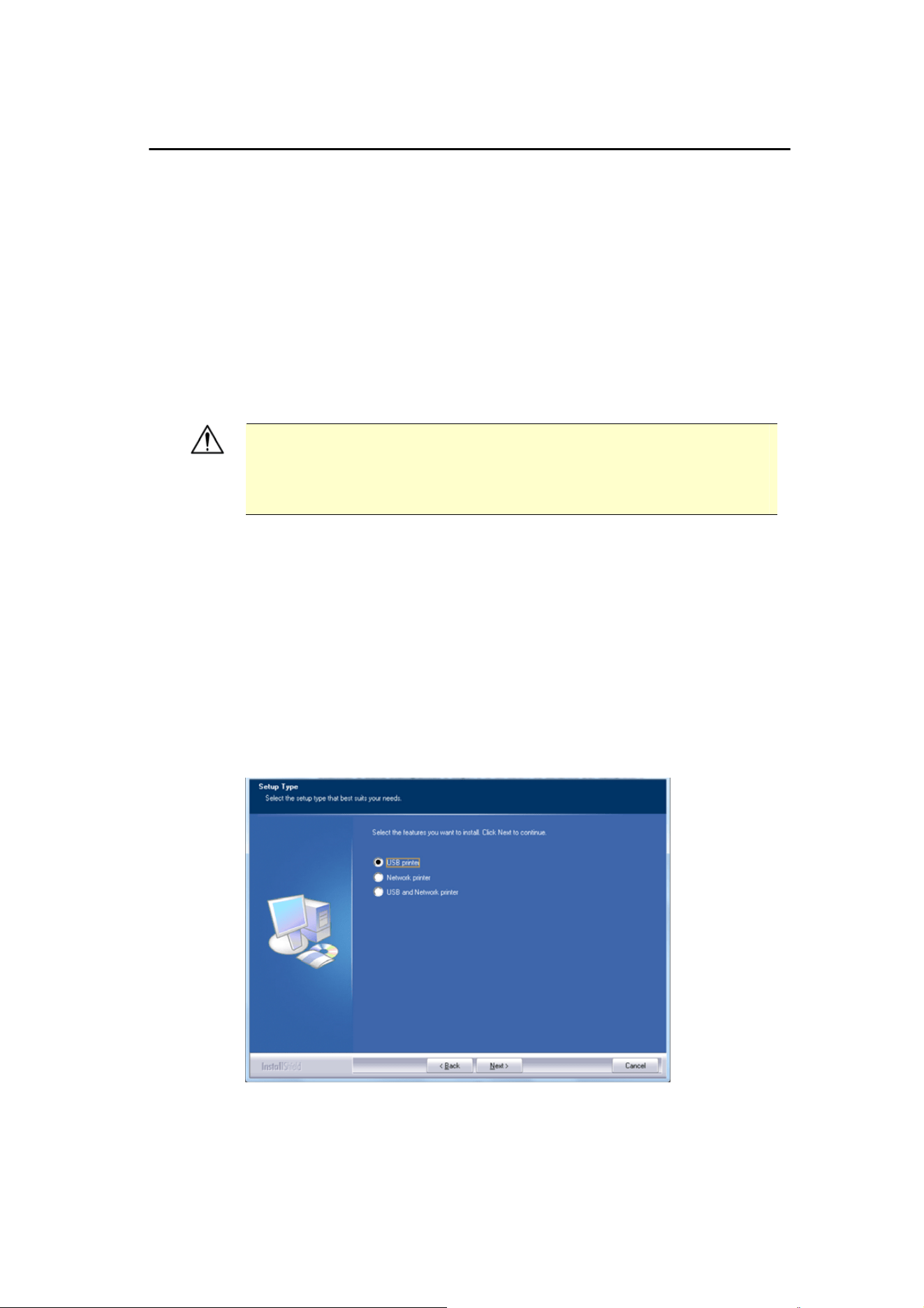
3. When the [Setup Type] dialog box appears, select [USB printer] and then click
[Next].
4. During installation, the [USB Connection] dialog box will be prompted to instruct
you to turn on the MFP and then connect the MFP to your computer with a USB
cable.
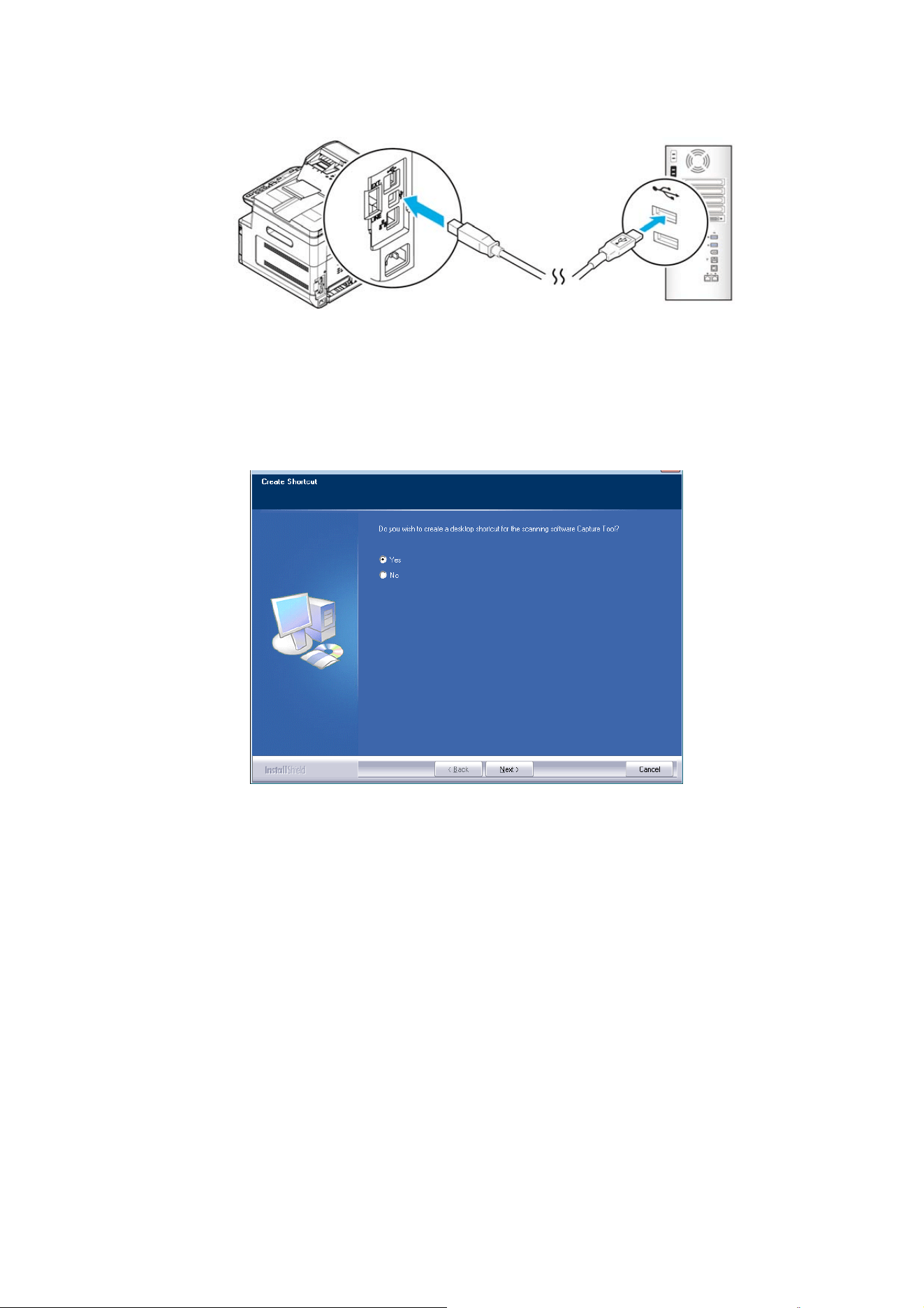
a. Connect one end of the USB cable to your computer.
31
b. Connect the other end to the USB port of your product.
5. When 「Found New Hardware」screen appears, click Next and follow the
on-screen instruction to complete the installation.
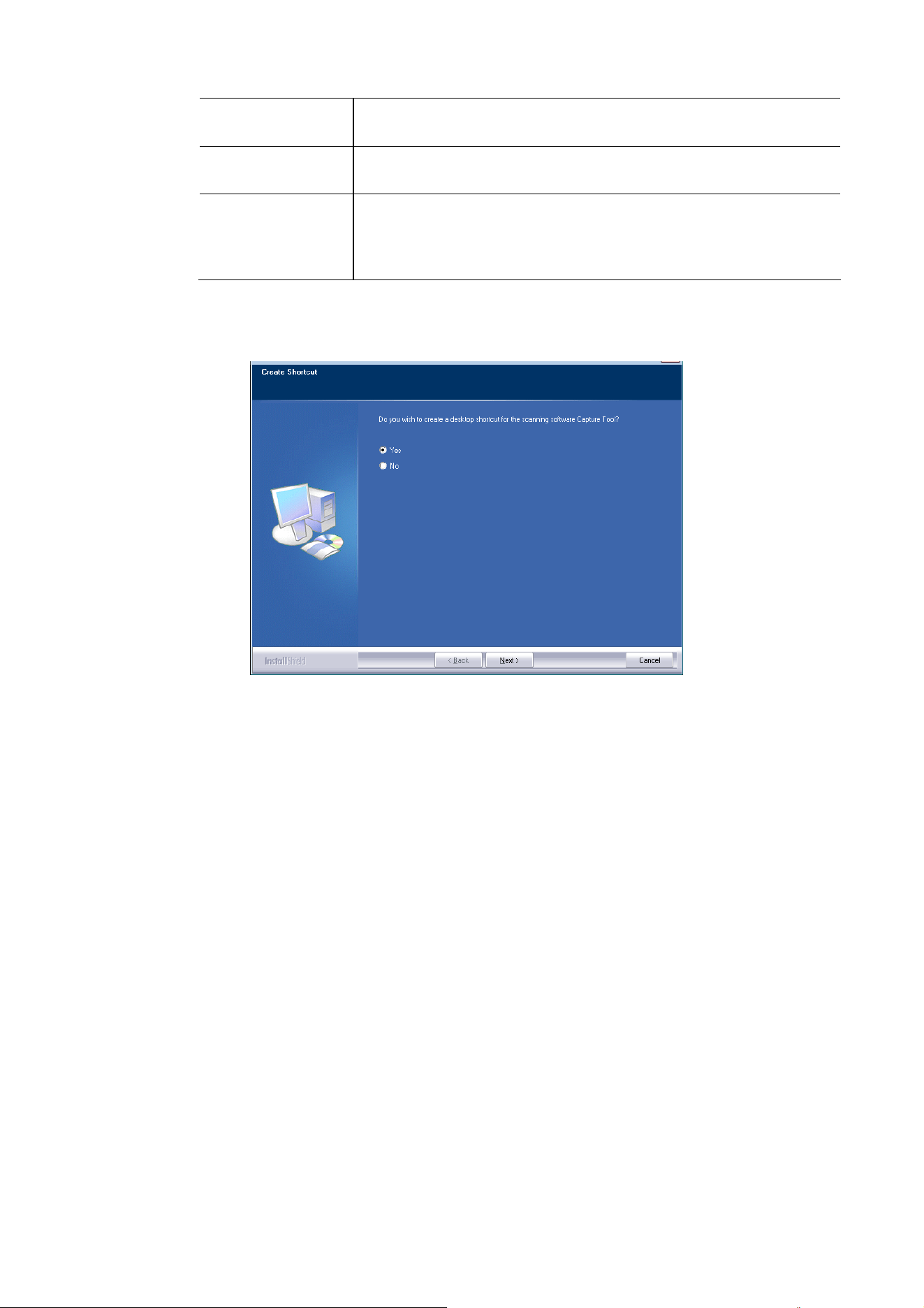
6. When the following dialog box appears, click [Yes] if you wish to create a desktop
shortcut for the scanning software Capture Tool.
7. When the Finish dialog box appears, click Finish to complete.
If you have successfully installed the printer’s driver, you will find a printer,
「AM30XX Printer」, has been added in the 「Printers and Faxes」option from the
Control Panel.
32
For Network Interface Users
Please follow these steps to install the scanner, printer, and fax drivers if this
machine is connected to your computer via a network.
1. Insert the supplied CD into your CD-ROM drive. The installation menu wil be
displayed.
2. To install the scanner driver and printer driver:
Click 「Install Scanner Driver and Printer Driver」and follow the on-screen
instructions to complete the installation of the program.
3. When the Setup Type dialog box appears, check [Network printer] and
click [Next] to continue. If you need to connect the product to a wireless
network, check [USB and Network printer] since the Network Setup Tool is
included in the USB driver and only available when the product is connecting
to your computer through the USB cable.
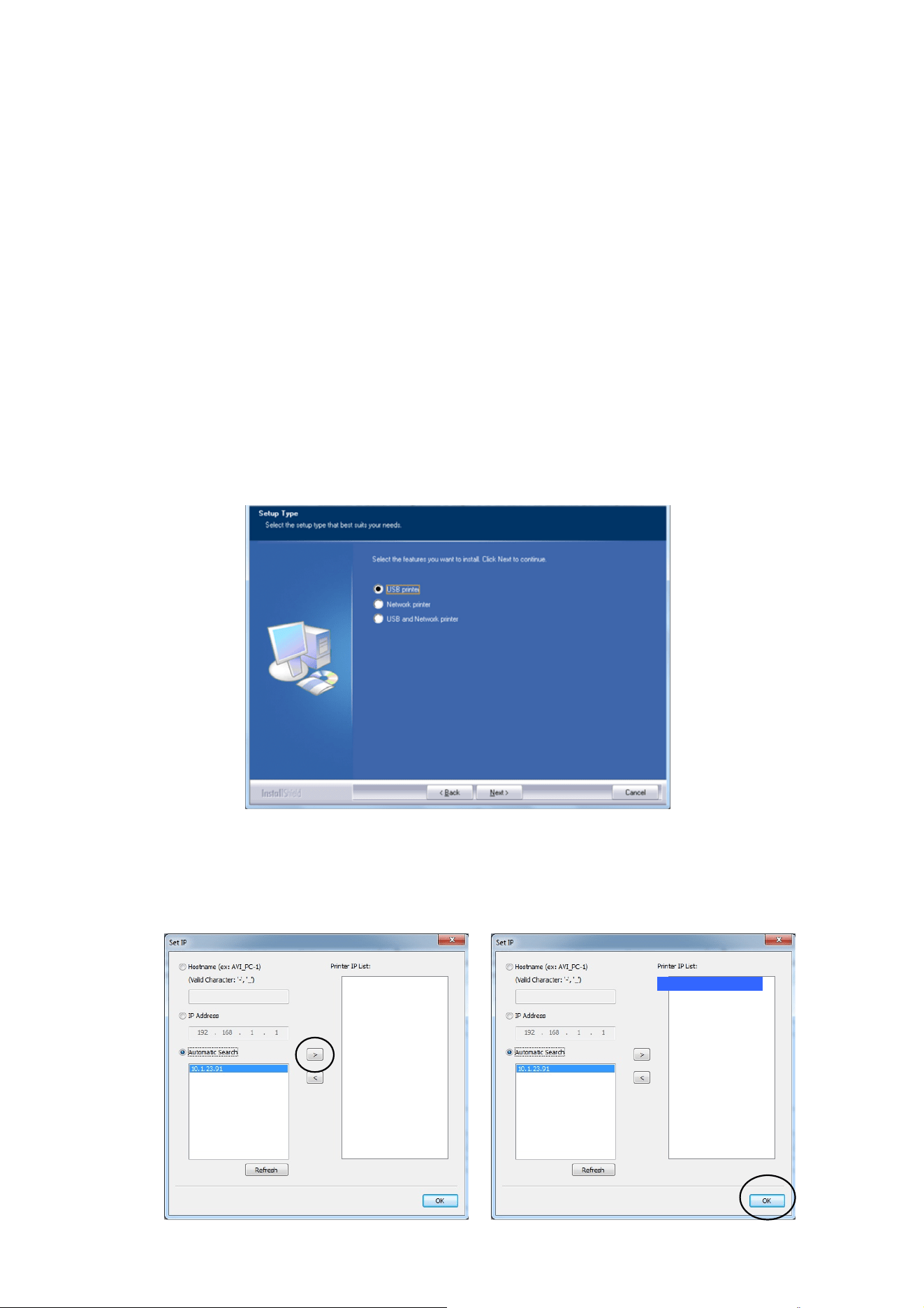
4. When the following Set IP dialog box appears, choose one of the following
options and click [>] to add to the printer list. When the desired option
setting is completed, click [OK]. (Follow the preceding section – Checking
the Product’s Default IP Address to obtain the product’s default IP address.
10.1.23.91
33
Host Name Enter the product’s host name to be connected in the blank
box of the Host Name option.
IP Address Enter the product’s IP address to be connected in the blank
box of the IP Address option.
Auto Search Searches the product’s printers automatically, and all the
product’s host names found in the network will be displayed
in the box of the Automatic Search. Use your mouse to
choose your desired host name to be connected.
5. When the following dialog box appears, click [Yes] if you wish to create a
desktop shortcut for the scanning software Capture Tool.
6. When the Finish dialog box appears, choose 「Finish」to complete.
If you have successfully installed the printer’s driver, you will find a printer,
「AM30XX NetWork」, has been added in the 「Printers and Faxes」option from
the Control Panel.
34
Changing the Product ’s IP Address in a Wired Network
To change the product’s IP address, you need to install the Network Setup Tool.
The Network Setup Tool is included in the USB printer driver. After the installation
of the USB printer driver is completed, the Network Setup Tool is automatically
installed onto your computer. Follow these steps to update the IP address to the
product in a wired network.
You may also choose your network connection type via the web page. (See more
details in the subsequent section Customize the System’s Settings via the Embedded
Web Page in Chapter 5.)
1. Make sure the product is connected to your computer via a USB cable.
2. Start Network Setup Tool by choosing the Start button and then select All
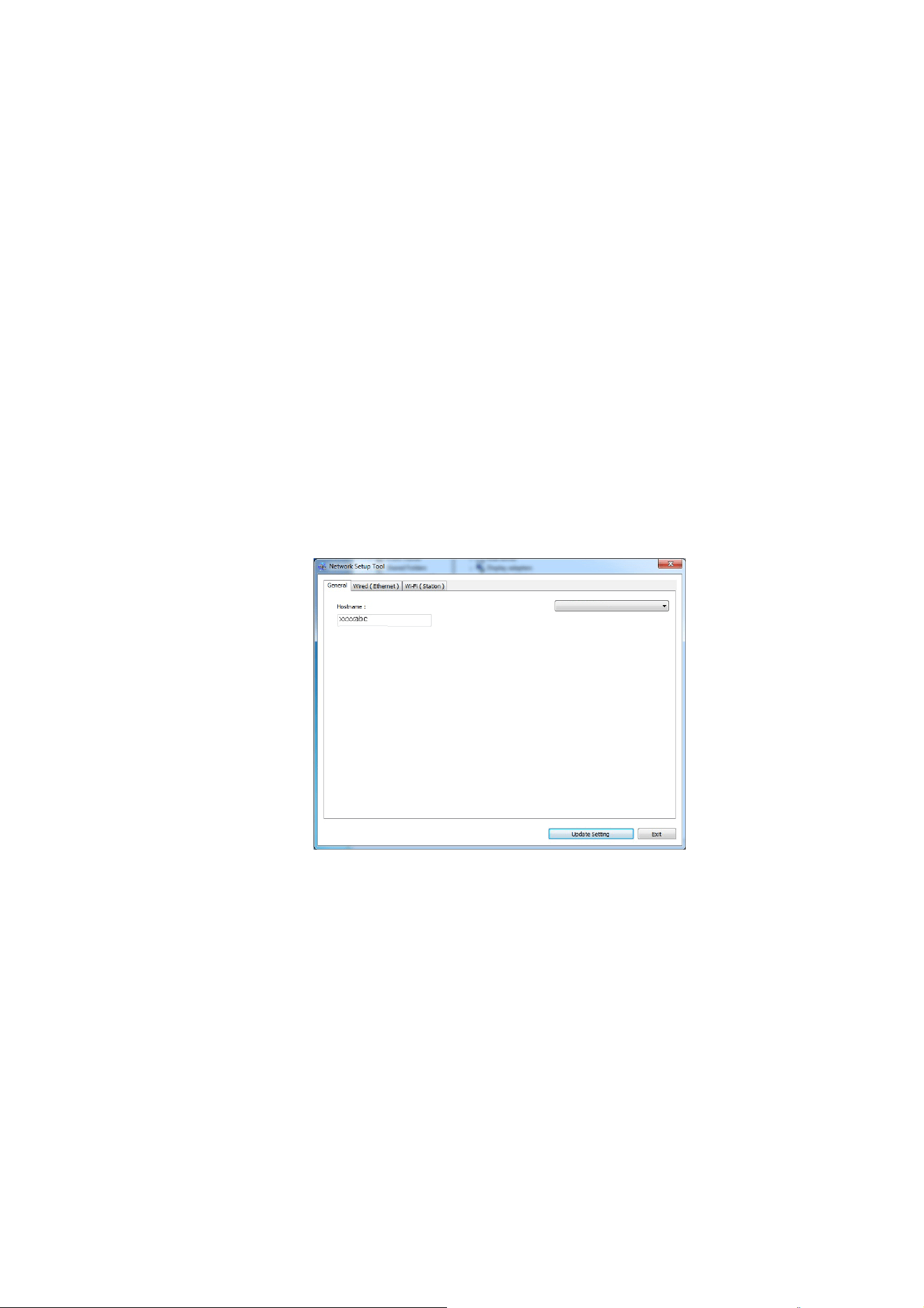
Programs>AM30XX MFP>Network Setup Tool in succession. The following
Network Setup Tool screen will be prompted.
3. On the [General] page, check [Wired (Ethernet)] Network.
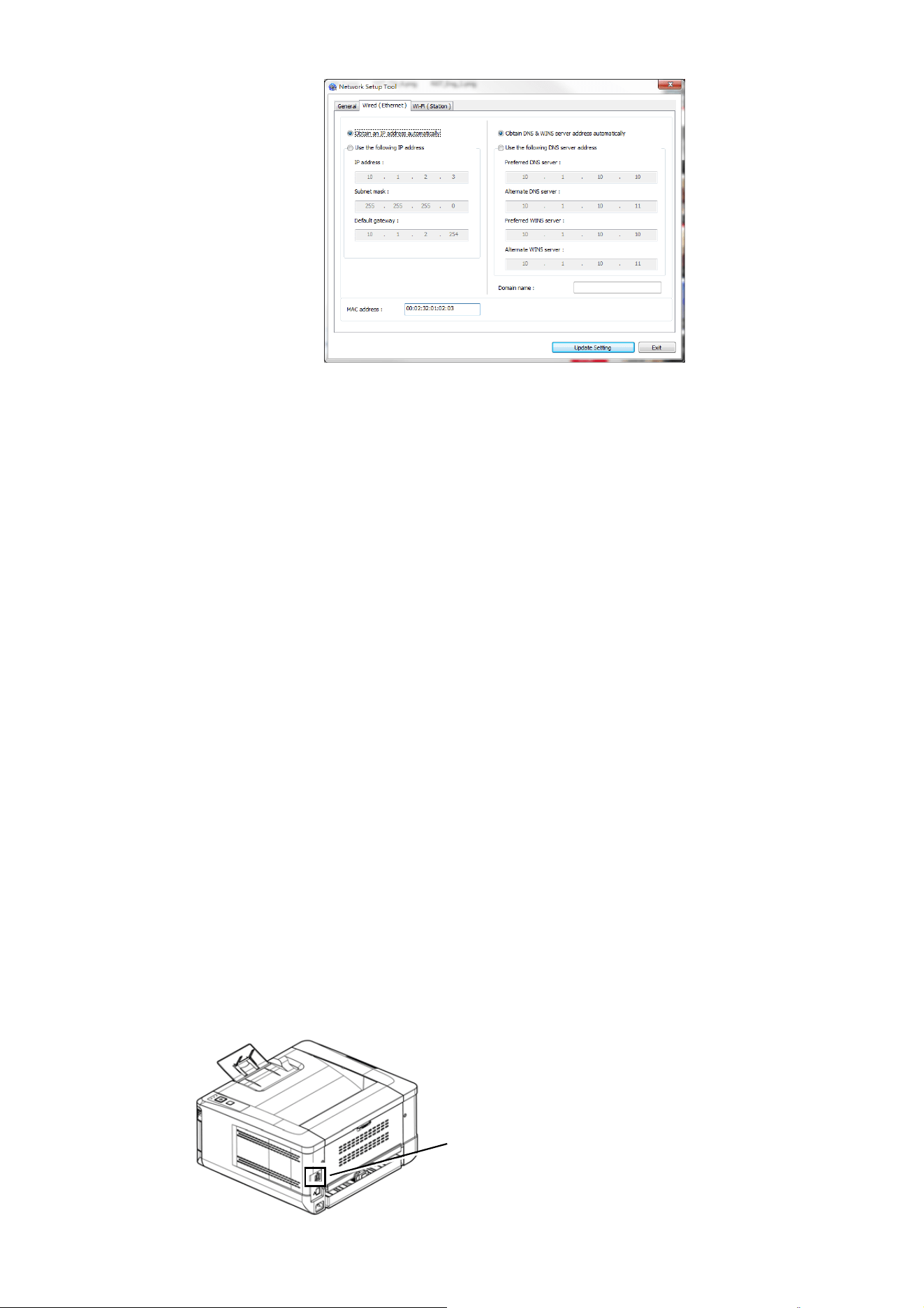
4. Click the [Wired (Ethernet)] tab to prompt the Wired (Ethernet) page.
AM30 Series Printer
3
5
5. Check [Obtain an IP address automatically] to obtain the IP address directly
from the DHCP server or you may enter your static IP on the [IP Address],
[Subnet Mask], and [Gateway] field respectively.
6. If you have assigned a specific IP, enter your domain name server and WINS
server as well and then click [Update Setting] to update the IP information to
the product.
7. If update is successfully, an [Update Device Successfully] message will be
displayed and the Network Setup Tool will be automatically closed.
Setting the Product’s IP Address in a Wireless Network
To set an IP address to the product, you need to install the Network Setup Tool.
The Network Setup Tool is included in the USB printer driver. After the installation
of the USB printer driver is completed, the Network Setup Tool is automatically
installed onto your computer. Follow these steps to set and update the IP address to
the product in a wireless network:
You may also choose your network connection type via the web page. (See more
details in the subsequent section Customize System’s Settings via the Embedded
Web Page in Chapter 5.)
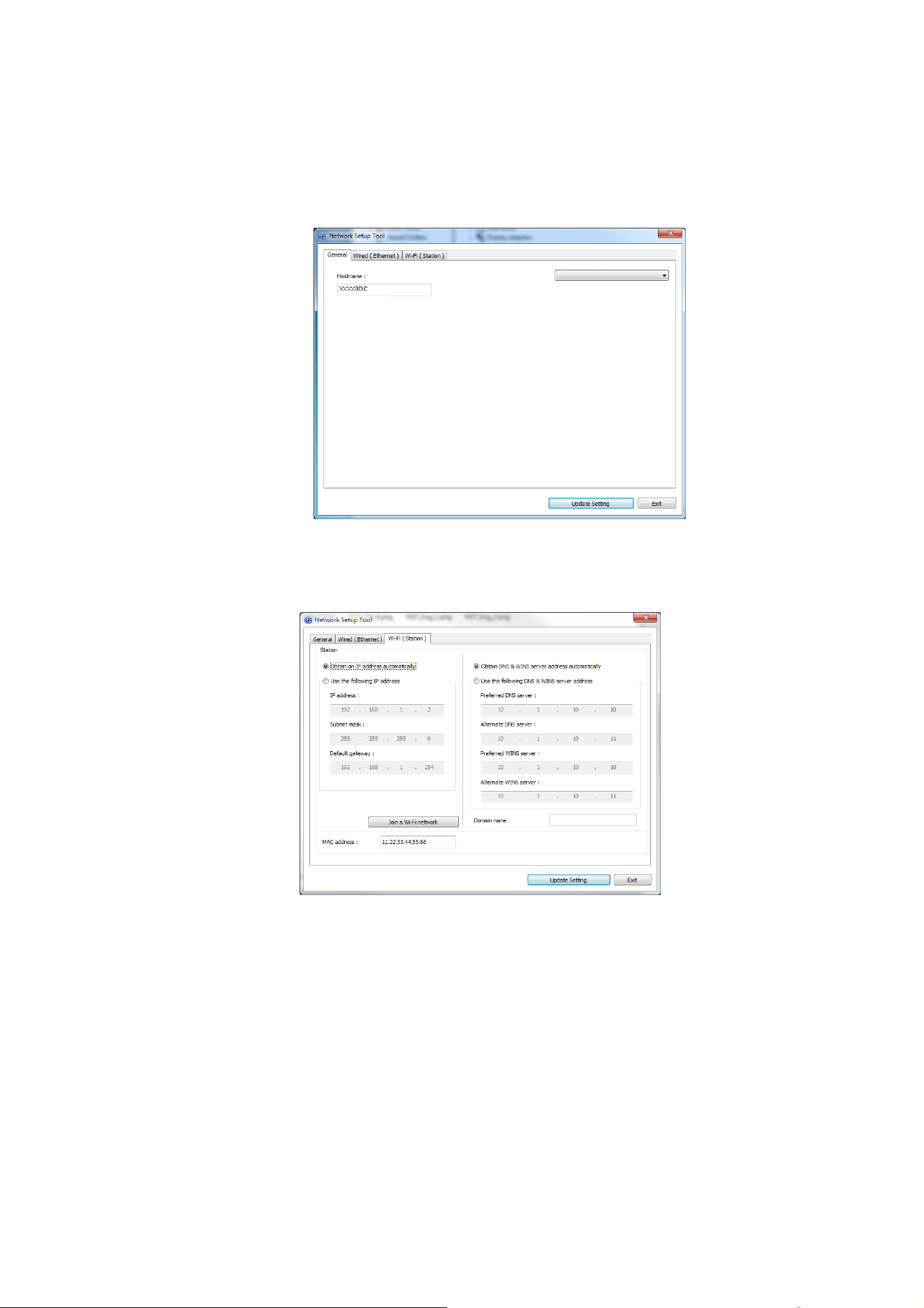
To wirelessly connect the product to a network, you need to install a Wi-Fi dongle to
the product at the back of the USB port.
USB
port
36
1. Make sure the product is connected to your computer via a USB cable.
2. Start the Network Setup Tool by choosing the Start button and then select
All Programs>AM30XX MFP>Network Setup Tool in succession. The
following Network Setup Tool screen will be prompted.
3. On the [General] page, check [Wi-Fi (Station)].
4. Click the [Wi-Fi (Station)] tab to prompt the [Wi-Fi (Station)] page.
5. Check [Obtain an IP address automatically] to obtain the IP address
directly from the DHCP server or you may enter your static IP on the [IP
Address], [Subnet Mask], and [Gateway] field respectively.
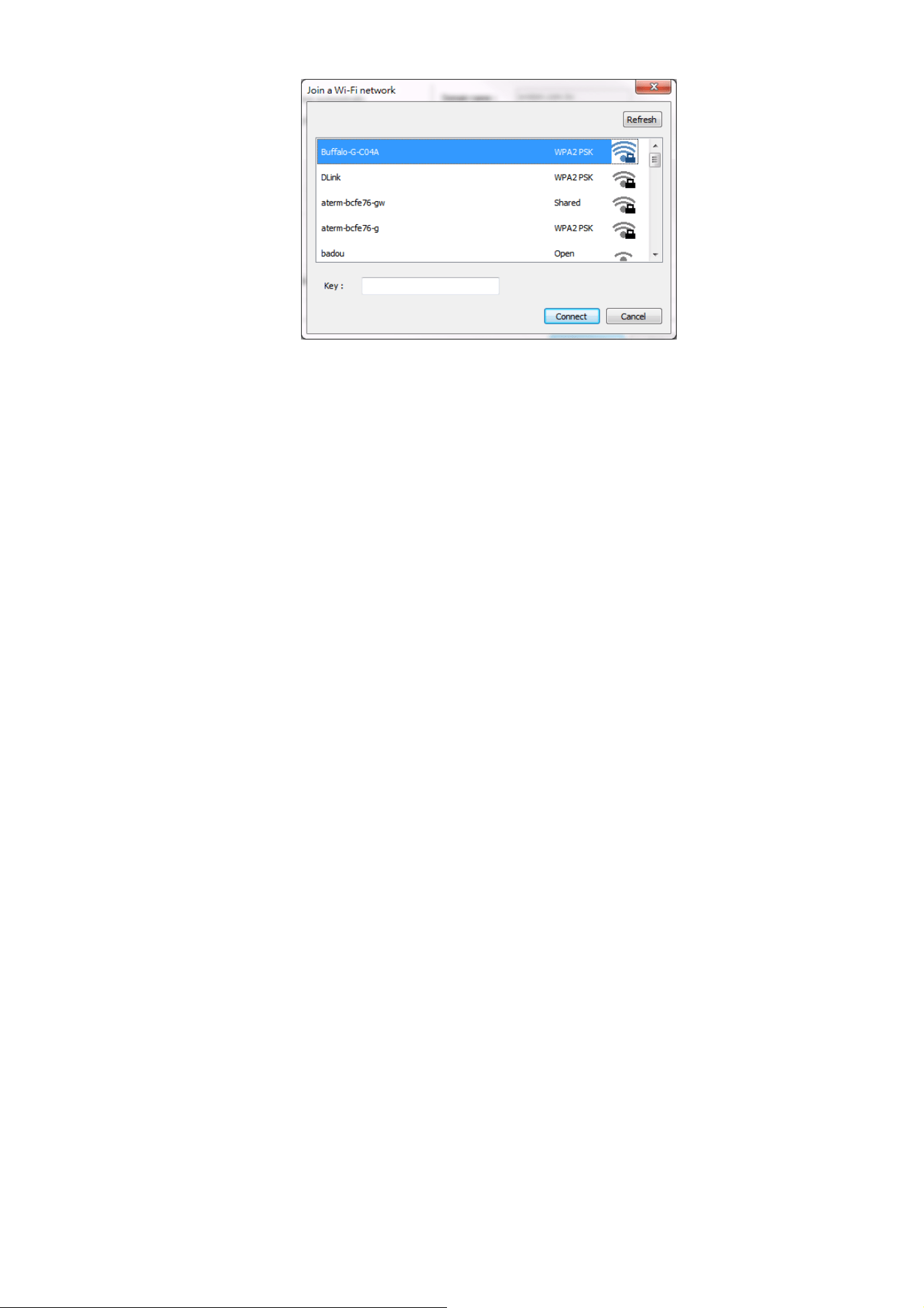
6. Click [Join a Wi-Fi network] and the currently connected wireless networks
will be displayed. Select the wireless network you want to connect and then
enter the security key if required.
AM30 Series Printer
3
7
7. Click [Connect] to start connecting the SSID (wireless network name) and
then update the IP information to the product.
8. If update is successfully, an [Update Device Successfully] message will be
displayed and the Network Setup Tool will be automatically closed.
Uninstalling the Scanner Driver and Printer Driver
1. From the 「Start」menu, select 「All Programs」, 「the AM30 Series MFP」,
and then 「Uninstall Driver」.
Or from the 「Start」menu, select 「Control Panel」, 「Add or Remove
Programs」, 「the AM30 Series MFP」, and then 「Remove」.
2. Follow the instructions on the screen to complete removing the scanner driver
and the printer driver.
Uninstalling the Fax Driver
1.
From the 「Start」menu, select 「All Programs」, 「the AM30 Series fax」,
and then 「Uninstall Driver」.
Or from the 「Start」menu, select 「Control Panel」, 「Add or Remove
Programs」, 「the AM30 Series」, and then 「Remove」.
2. Follow the instructions on the screen to complete removing the fax driver.
38
Installing the Optional Printer Driver (Mac
OS)
System Requirement
Operating System:
Mac OS X 10.11 or later
Computer:
Recommended: Intel
®
Core
TM
Duo Processor 2.4 GHz or higher
Minimum: Intel
®
Core
TM
Duo Processor 1.83 GHz
PowerPC G5 1.6 GHz
Memory:
Recommended: 1 GB or more
Minimum: 512 MB
Turning on the Printer
Press the Power button on the front panel, the Power LED will flash. When it is
finished and ready to scan, the LED indicator will stop flashing and become steadily
on. To turn off the scanner, press the Power button for about 3 seconds, the
Power LED will be off.
Installing the Printer Driver
NOTE: The screens in this section are basically from Mac OS 10.11. The screens on
your Macintosh will vary depending on your operating system.
Follow the procedure to install Avision’s AM30 Series printer driver for Macintosh
computer from the CD-ROM supplied with the printer.
1. Turn your computer on, and log in with an account that has admin rights.
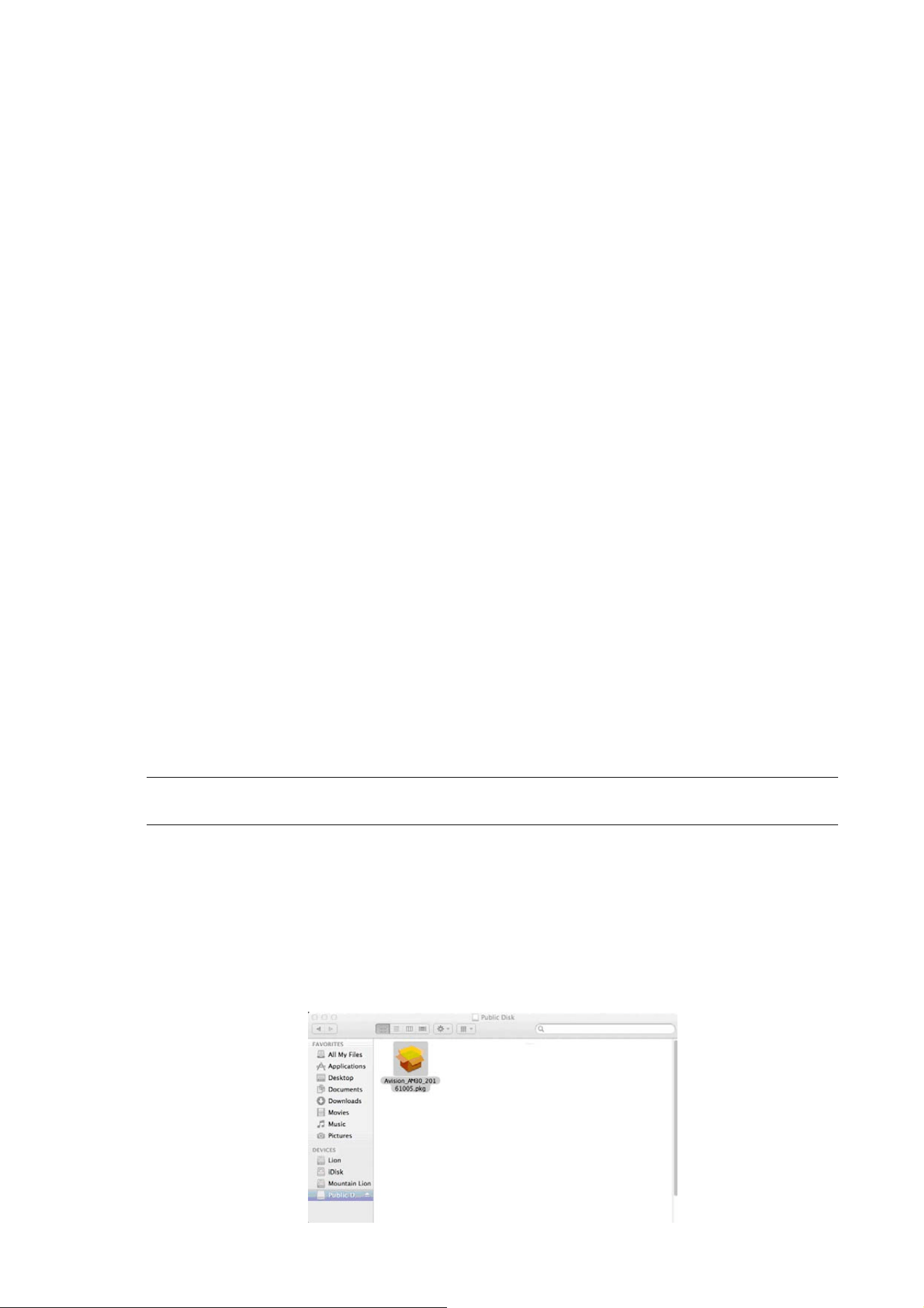
2. Insert the Software CD-ROM into the CD-ROM drive. The printer program -
Avision AM30…pkg will be displayed.
39
3. Double-click the [Avision AM30…] icon.
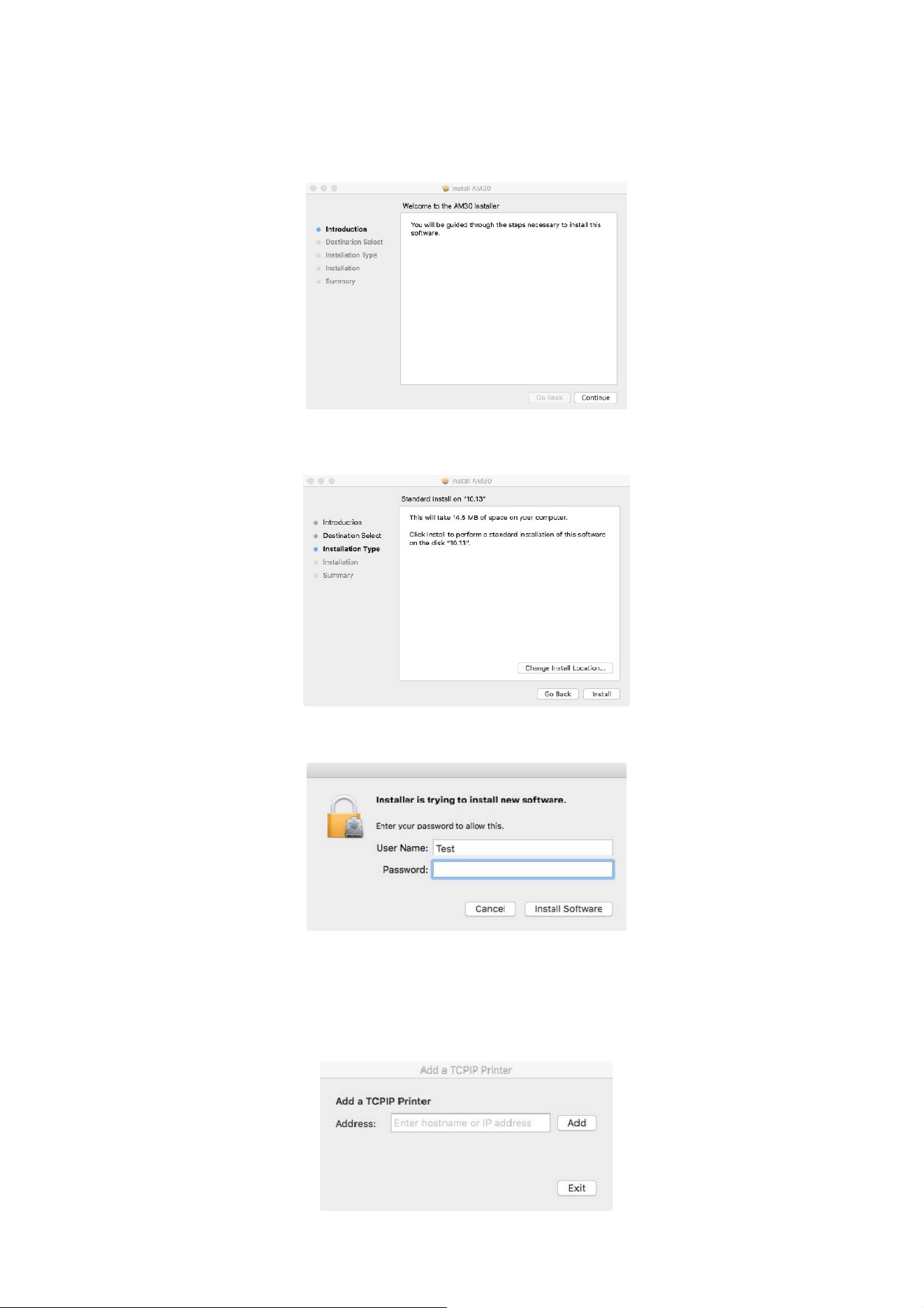
4. Click the [Continue] button on the Welcome window.
5. If you wish to change the default installation disk, click [Change Install
Location…] or click the [Install] button to continue installing the program.
6. Log in with a password that has admin rights and click the [Install Software]
button.
7. The computer begins installing the software.
8. When the following screen is prompted, enter the IP address of the printer and
click [Add]. *If you wish to connect the printer to your computer with a USB
cable, skip the IP address and click [Exit] to continue.
40
9. When [Add Printer AM30_Net Successful] message is displayed, click [Exit]
to continue. (If wish to add more AM30 printer, enter the IP address again and
then click [Add] to continue.)
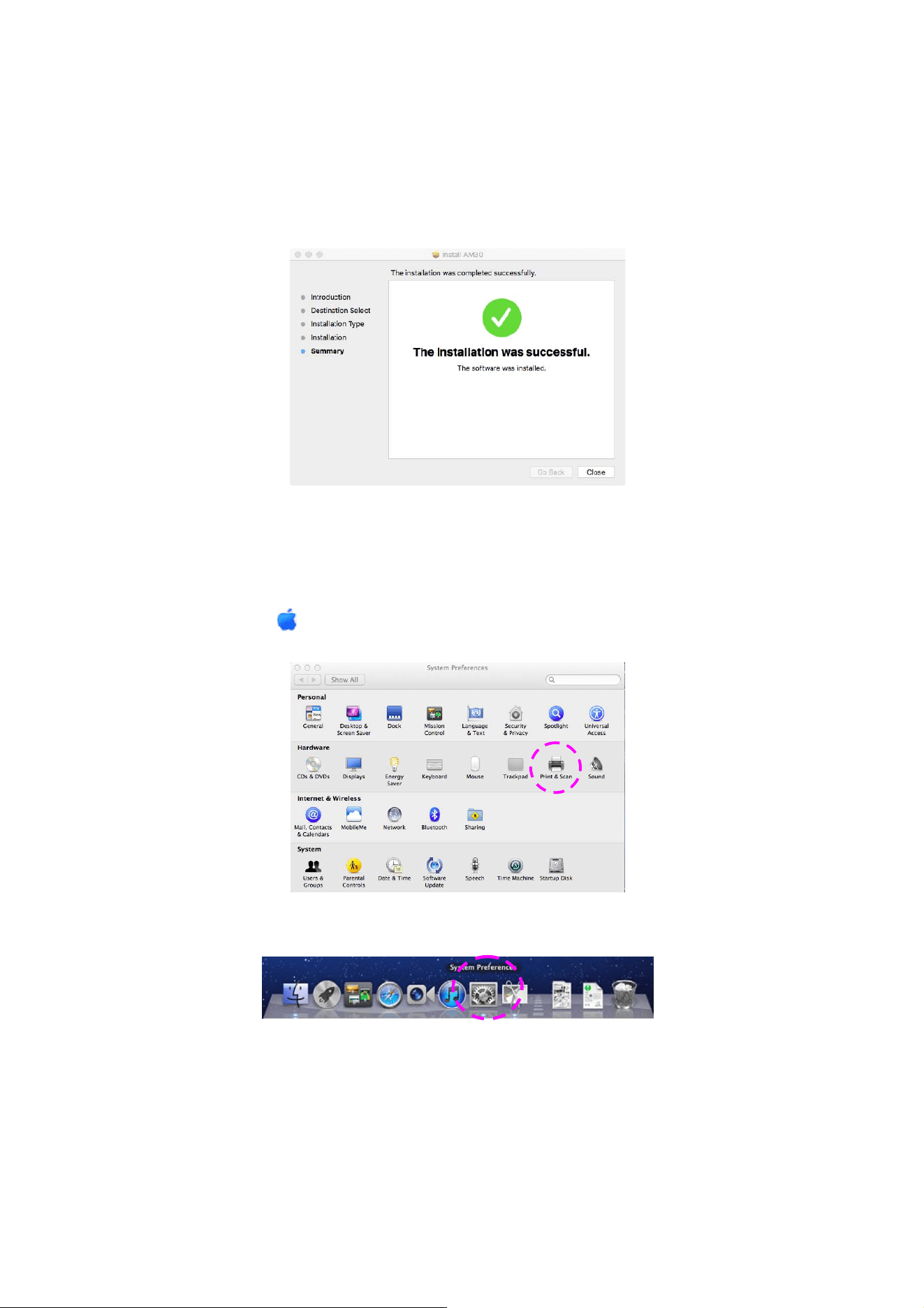
10. When the [The installation was successful] screen appears, click the [Close]
button to close the installation.
11. Remove the Setup CD-ROM from the CD-ROM drive. *If you If you wish to
connect the printer to your computer with a USB cable, connect the printer with
the USB cable now. If you already connect did, unplug and replug the USB
connector again.
12. Select the
Apple icon in the top-left corner, then click [System Preferences]
and then [Print & Scan].
Or click [System Preferences] icon on your dock, and then [Print & Scan].
13. You can find an AM30 printer has been added in your printer list.
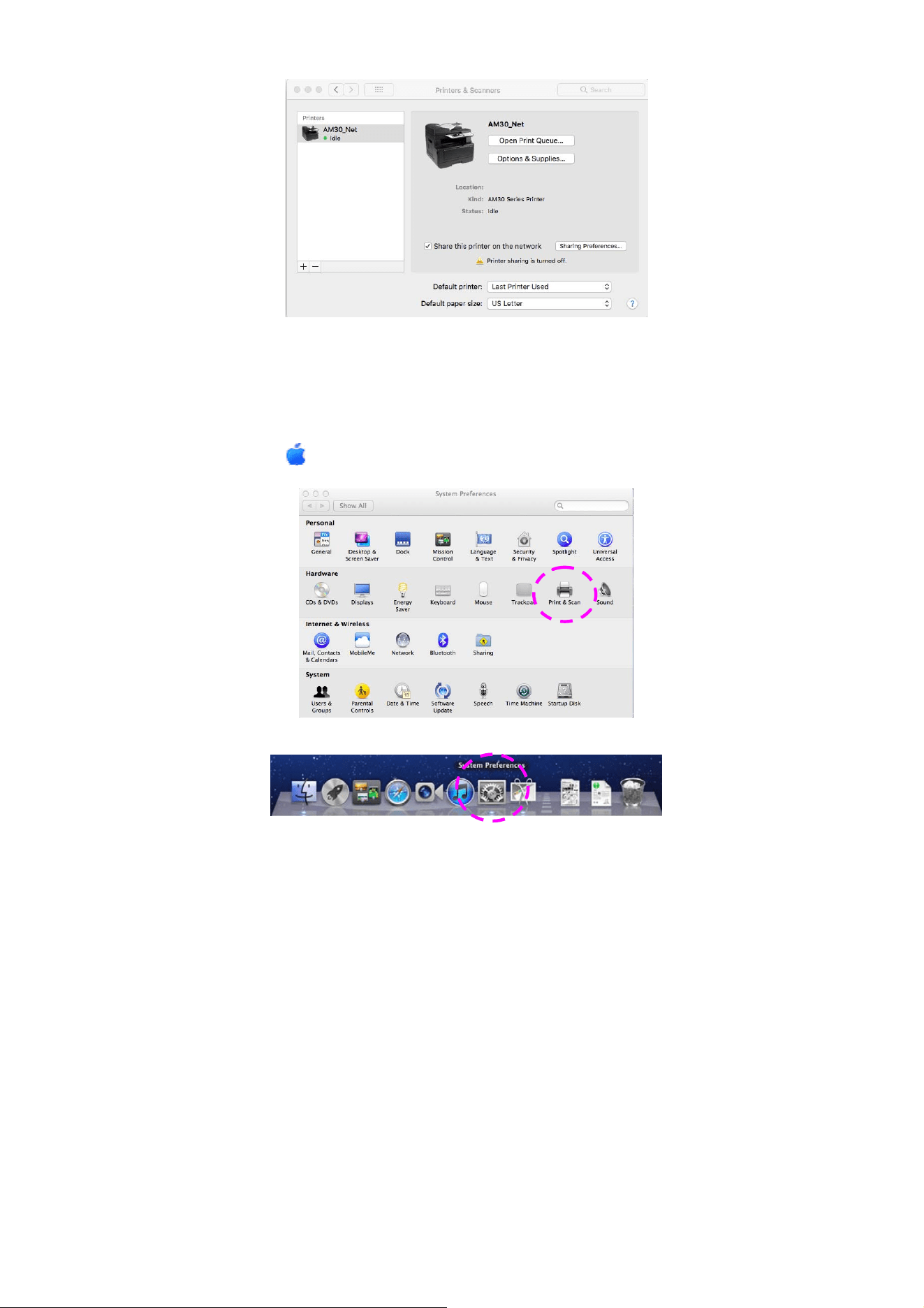
41
Adding a new Printer
You may also add a new printer by following these steps:
1. Select the
Apple icon in the top-left corner, then click [System Preferences]
and then [Print & Scan].
Or click [System Preferences] icon on your dock, and then [Print & Scan].
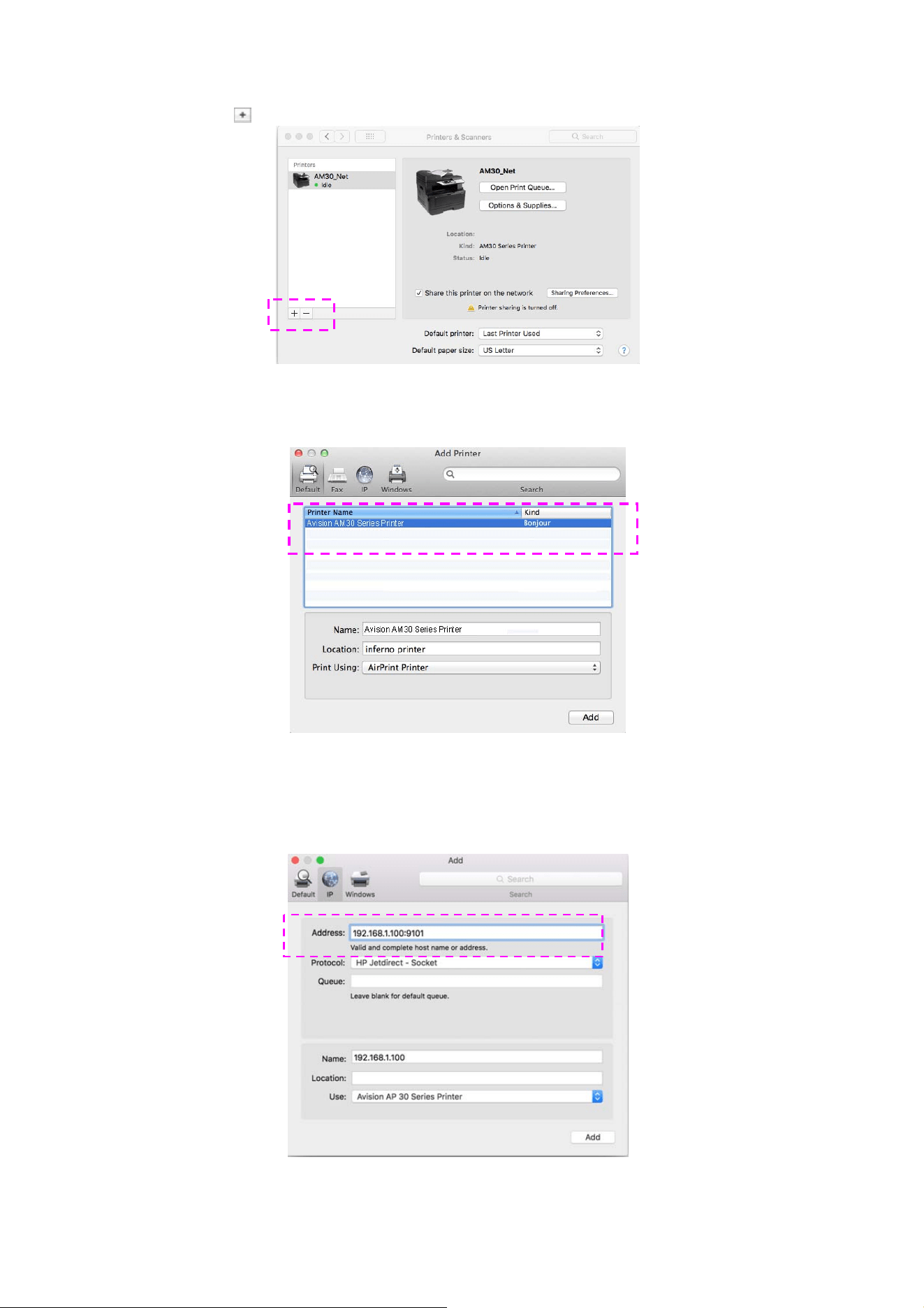
42
2. Click
and then [Add Other Printer or Scanner] to add the printer.
3. A dialog appears listing printers on your local network. It may take a minute or
two for your printer to appear. Select your printer when it appears in the list.
If your printer still doesn’t appear in the list, try adding the printer by its IP
address. While entering the IP address by clicking the IP icon, be sure to include
the address with [:9101], for example, 192.168.1.100:9101.
4. Locate the printer driver by clicking the arrow button of the [Print Using]
option and then select [Select Printer Software].
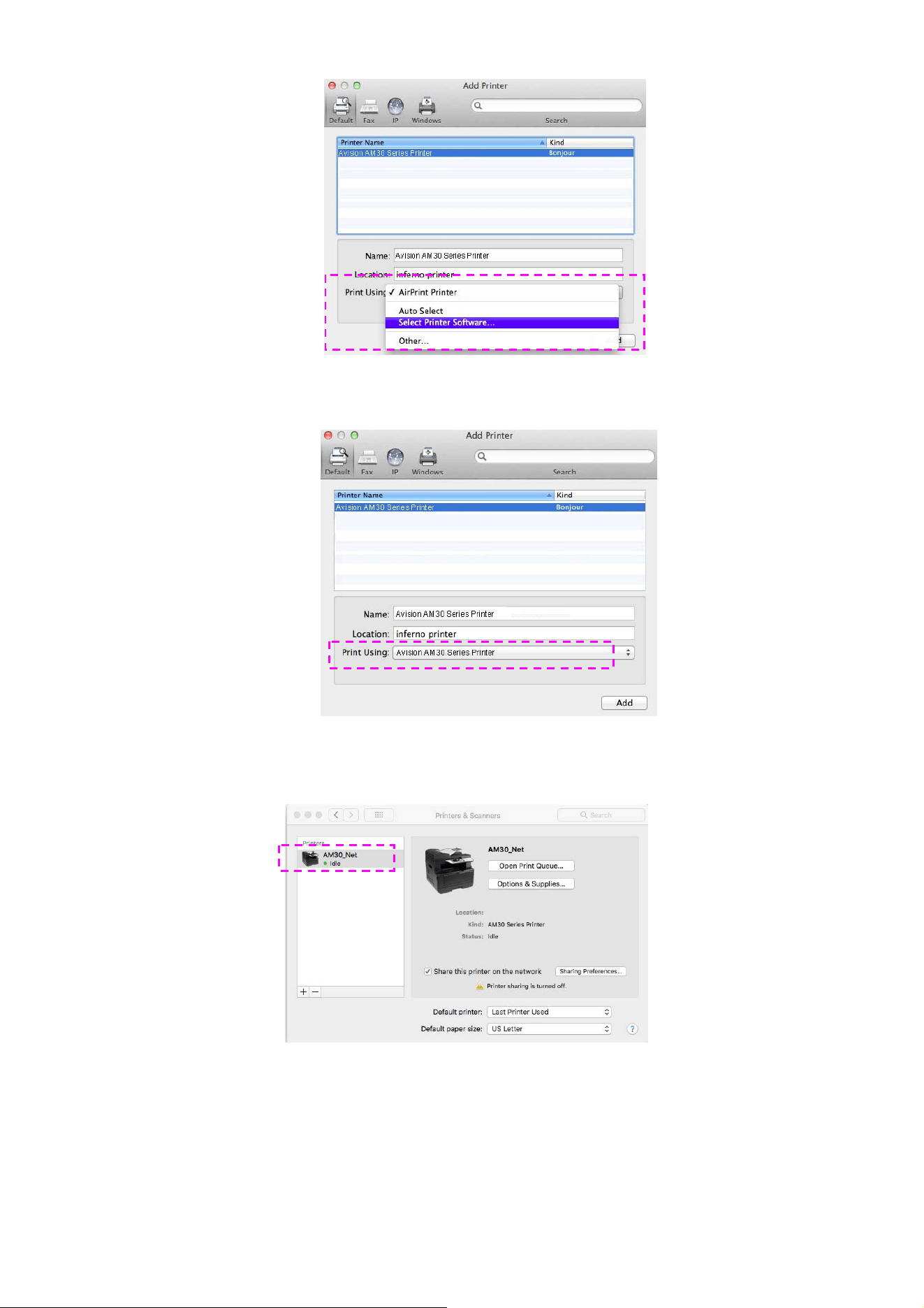
43
5. A dialog appears listing current printer drivers installed on your computer. Select
your printer and click [OK]. Your [Print Using] option will display the printer you
have selected.
6. Click the [Add] button to add the printer. Now your printer will be in the list on
the upper-left corner as shown in below.
7. Close the [Print & Scan] window.
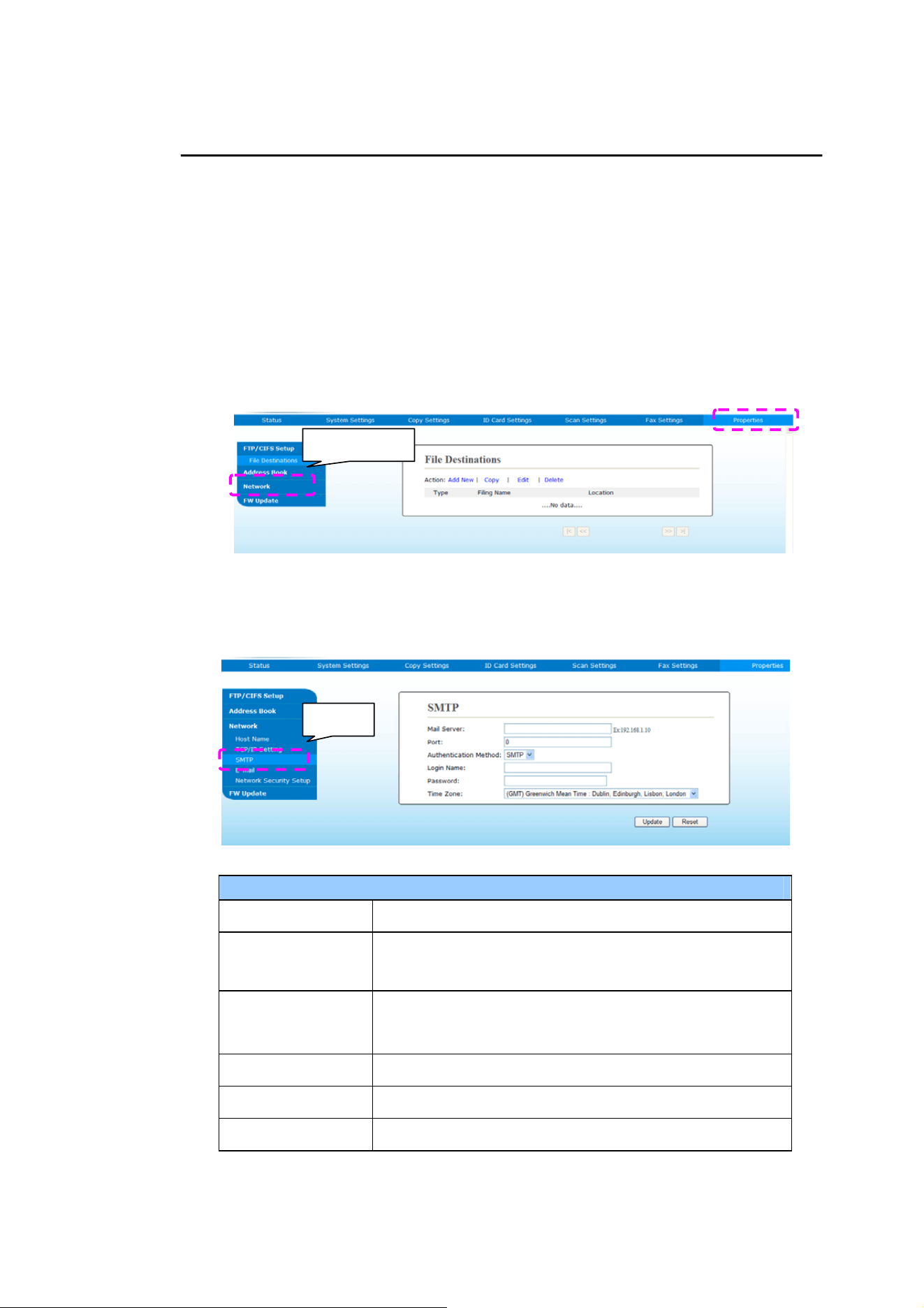
44
Specifying the Product’s SMTP Server
To use the scan-to-email feature, you must specify the product’s SMTP server.
To specify the SMTP server,
1. Refer to the preceding section, Specifying the Product’s Date and Time,
to launch the product’s embedded web page.
2. On the product’s web page, choose [Properties] and then choose
[Network] on the left side as shown in the following:
3. Choose [SMTP] from the Network option. The following SMTP page will be
displayed. Enter your IP address for the SMTP server and the authentication
information if required.
E-mail Server Setting
Mail Server Enter the IP address of your SMTP server.
SMTP Port # Enter the port number of the SMTP server.
* 25
Authentication
Method
Enter the email authentication method.
Choice: *None, SMTP, POP3
Login Name Enter the login name for SMTP authentication.
Password Enter the password for SMTP authentication.
Time Zone Enter the time zone of your location.
SMTP
Network

4
5
Note:
Please check the SMTP server information with your Network
Administrator.
4. Click [Update] to save the setting and exit the page.
Note:
1. The login name is case-sensitive and is up to 32 digits or
characters.
2. The password is case-sensitive and is up to 16 characters.

46
Creating a File Destination on the Network
The product allows you to scan and save the scanned image to a specified destination
including FTP and CIFS server on the network, or a USB flash drive.
Before sending the image files to FTP or CIFS server on the network, you need to
first setup the FTP or CIFS destination through the embedded web page. Please
follow these steps to create a FTP or CIFS destination.
To set FTP or CIFS as your filing destination,
1. Refer to the
preceding section, Specifying the Product’s Date and Time, to
launch the product’s embedded web page.
2. On the product’s web page, choose [Properties] and then choose [FTP/CIFS
Setup] on the left side. The following [File Destination] page will be displayed.
3. Choose [Add New] to prompt the [New Filing Settings] page.
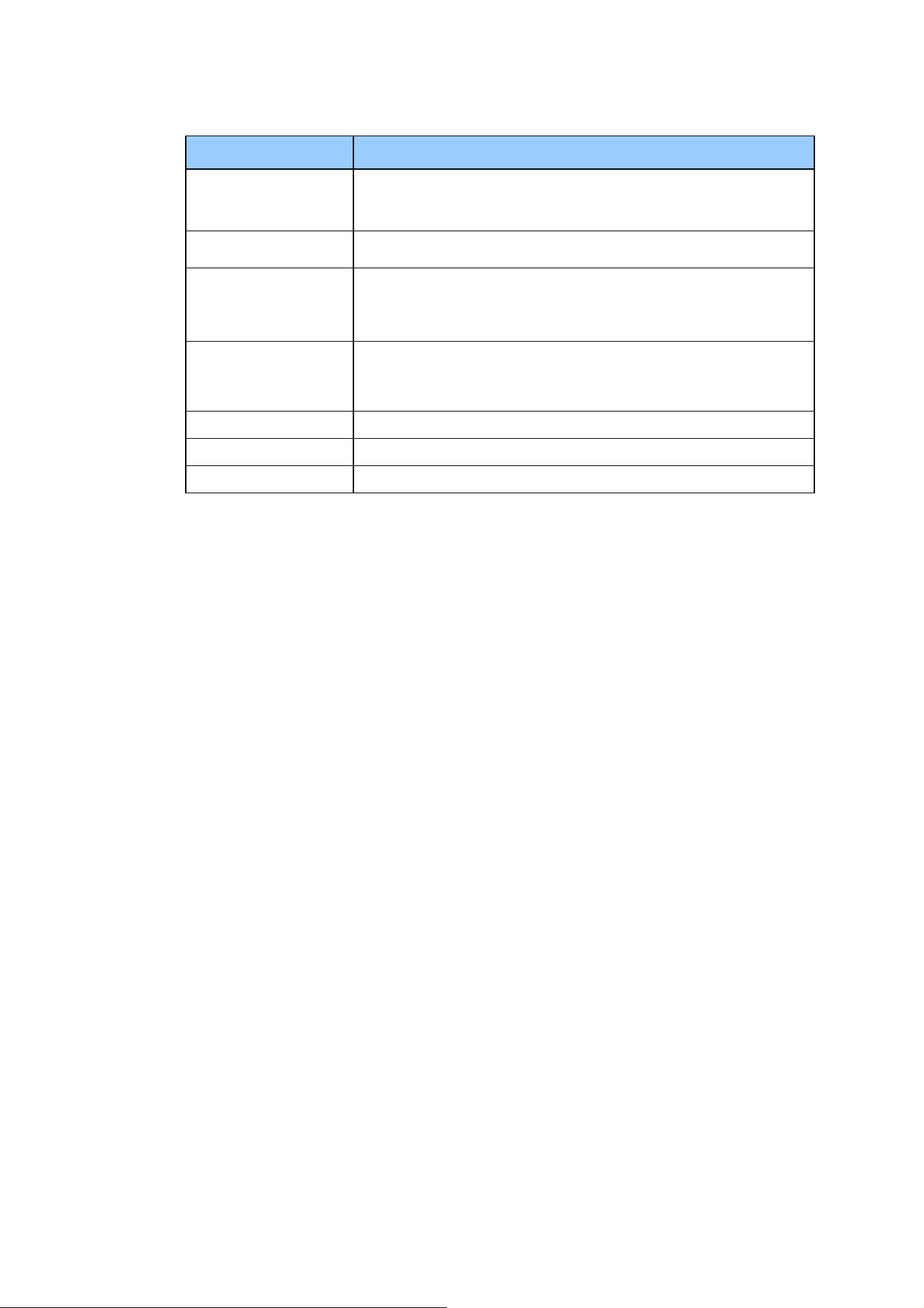
4. Refer to the following table to enter proper settings.
FTP/CIFS Setup
4
7
Item
Description
Filing Name
(Name of
Destination)
Enter the name of the destination. (The name will be
displayed in the destination list.)
Protocol
Choose type of protocol. Choice: CIFS, FTP
URL (Address)
Enter the domain name or IP address for the server. For
example, domainname.com\foldername or
10.1.23.145\foldername.
Port Number
Enter the port number of the server here if your port
number is different with the default setting. Default:
FTP :21, CIFS:139
Login Name Enter the authorized login name to the server.
Password Enter your password to the server.
Retype Password Reenter your password.
5. After completing entering the settings, click「Submit」to finish. The new filing
destination will be displayed in the destination list. This means you have
successfully created a new CIFS or FTP filing destination.
48
Creating Your Address Book
The product allows you to scan and save the scanned image to your recipients via
e-mail or fax. Yet before sending the image files to e-mail or fax, you need to first
setup address book through the embedded web page. Please follow these steps to
create your address book.
To create your address book,
1. Refer to the
preceding section, Specifying the Product’s Date and Time, to
launch the product’s embedded web page.
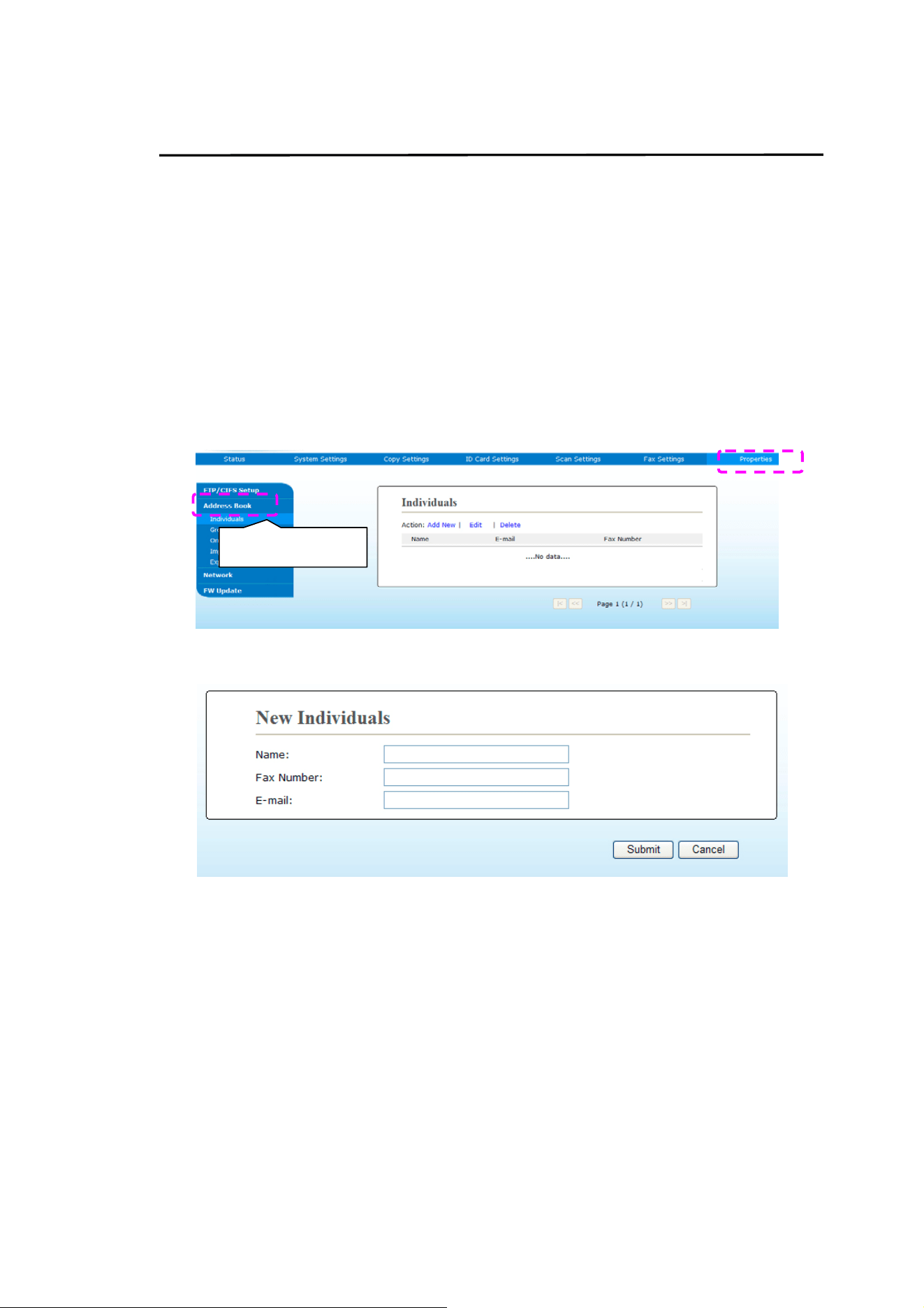
2. On the product’s web page, choose [Properties] and then choose [Address
Book] on the left side. The following page will be displayed.
3. Choose [Add New] to prompt the following page.
4. Enter the name, fax number, and e-mail address for an individual recipient.
5. After completing entering the settings, click「Submit」to finish. The new recipient
will be displayed in the e-mail list. This means you have successfully created an
address book.
Address Book

49
3. Operation
Loading Paper
The product can scan and send document(s) either in the ADF (Automatic
Document Feeder) or on the glass. If you need to send multiple pages,
please load your papers in the ADF. The ADF can hold up to 35 pages (70
g/m
2
, 20 lbs) at one time. If you need to send pages from books,
newspaper clippings, or paper with wrinkles or curls, please place your
paper on the glass.
Notice on Using the ADF
Before using the ADF, please make sure that your paper meets the
following specifications:
Document(s) can range in size from 76.2 x 127 mm (3 x 5 in.) to 216 x
356 mm (8.5 x 14 in.).
Document(s) should be square or rectangular and in good condition
(not fragile or worn).
Document(s) should be free of curl, wrinkle, tears, wet ink, or punch
holes.
Document(s) should be free of staples, paper clips, paper sticky notes.
Keep the glass clean without document placed on it.
Note:
To transmit irregular types of document(s), place the
document(s) on the glass or make a copy first and then
transmit the copy instead.
5
0
Loading Your Document in the ADF Paper Tray
Fanning Your Document
Note:
To avoid occasional multi-feeds or paper jams, please fan your
documents and align the top edges before feeding them into the
scanner.
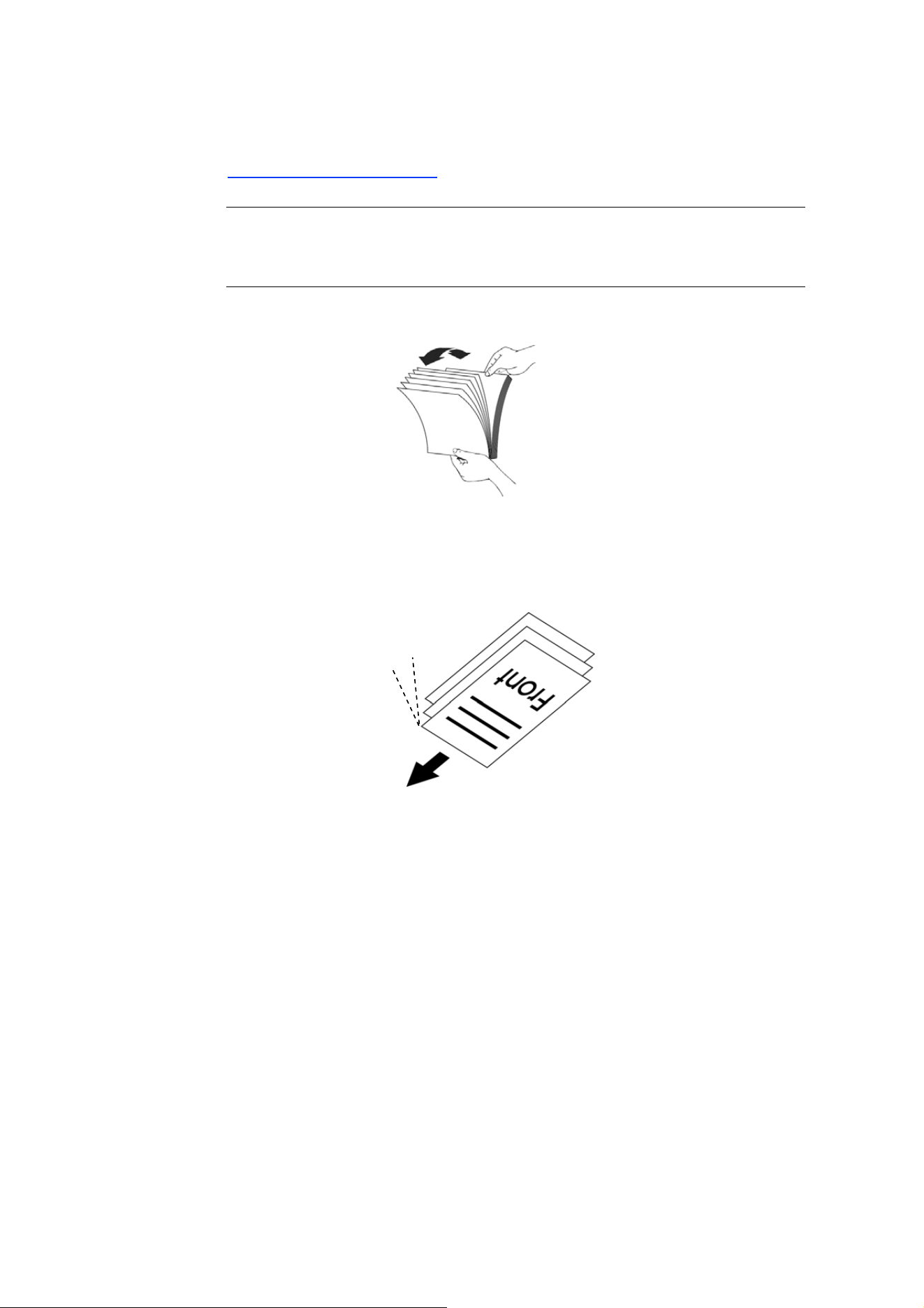
1. Hold both ends of the documents and fan them a few times.
2. Rotate the documents by 90 degrees and fan them in the same
manner.
3. Align the edges of the documents in a step-like pattern (see picture
below).
Step-like
Scanning
Direction
51
Placing Document(s) in the ADF
1. Make sure your document is free of staples, paper clips and is not
torn out.
2. If you have multiple pages, fan your document(s) to avoid occasional
paper jam.
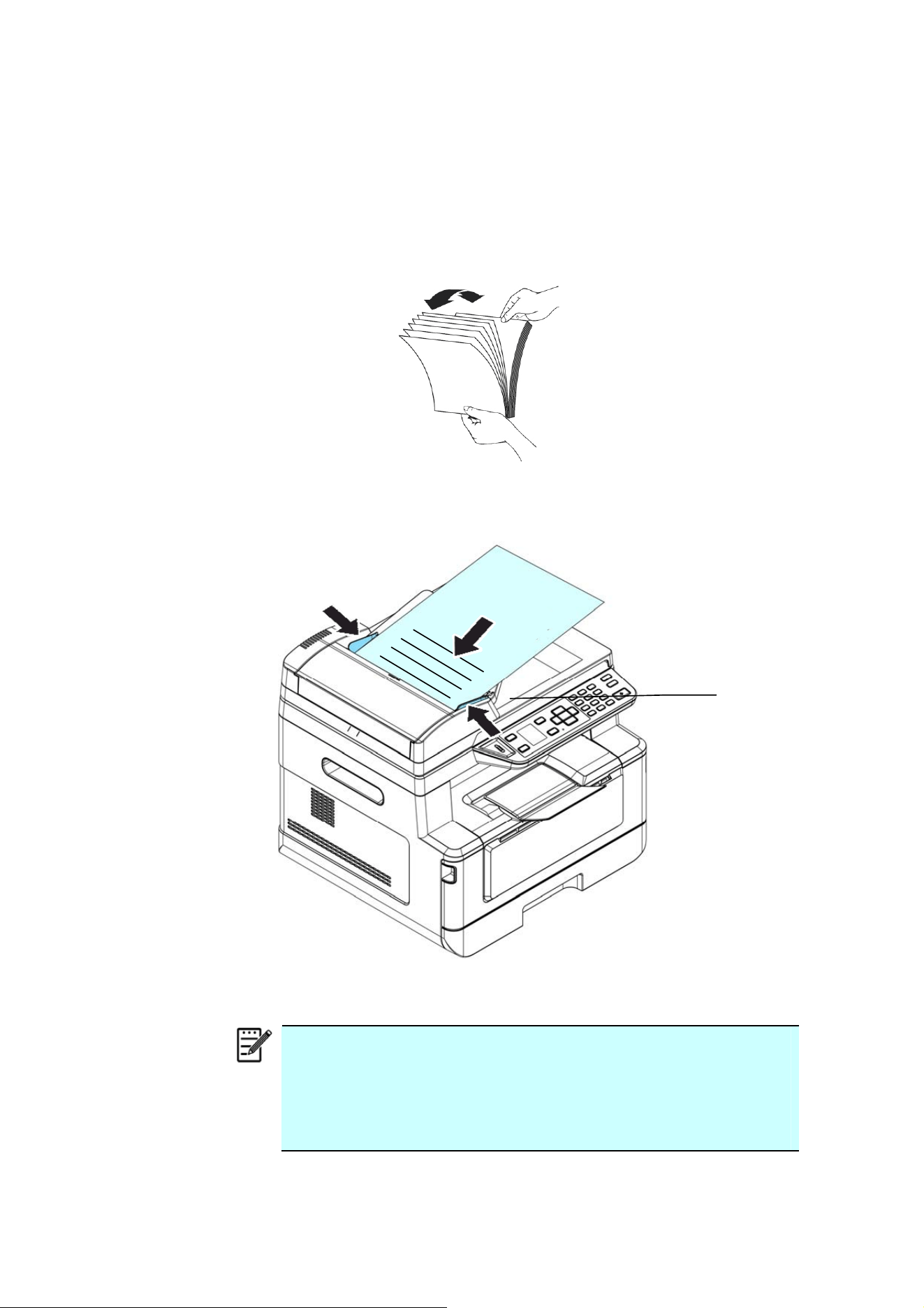
3. Place your document(s) with the text FACE UP in the ADF and make
sure that the top of each page feeds in first.
4. Adjust the Paper Guides to center the document(s) in the ADF.
Note:
If there is no paper in the ADF input tray, the product
considers the scan source is flatbed glass. If there is paper
in the ADF input tray, the product considers the scan source
is ADF input tray.
Paper
Guide
52
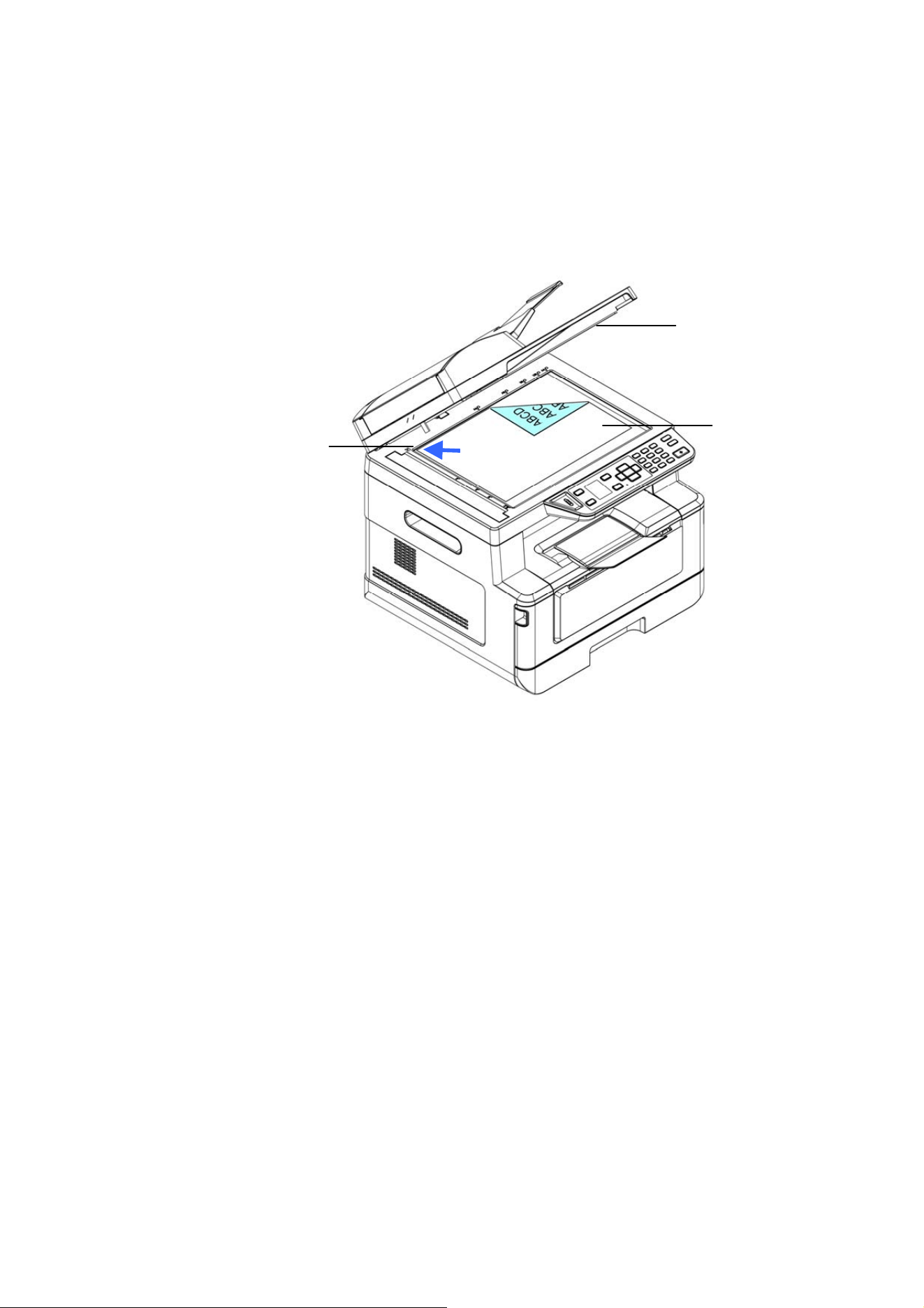
Placing Document(s) on the Glass
1. Open the document(s) cover to reveal the glass.
2. Place your document with the text FACE DOWN on the glass and align
the document in the upper-left corner.
3.
Close the document cover.
Upper-Left
Corner
Document
Cover
Face Down
53
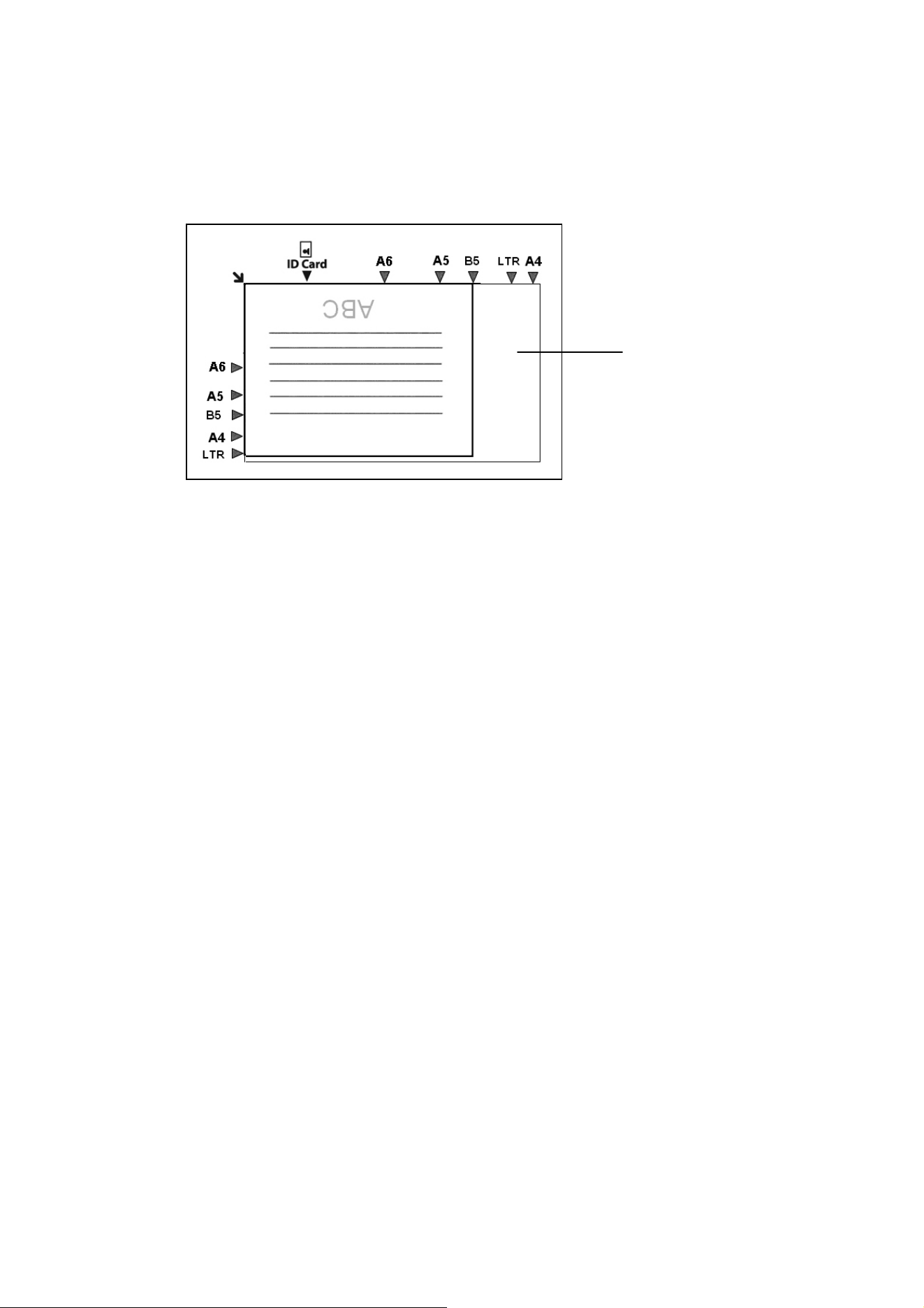
Paper Orientation
Place your A4 or LTR paper vertically on the glass with the text facing down
and align it with the A4 or LTR marks.
Glass
54
Copy
1. Place your multi-page document Face Up, Top First in the auto
document feeder or place your single-page document Face Down on
the document glass.
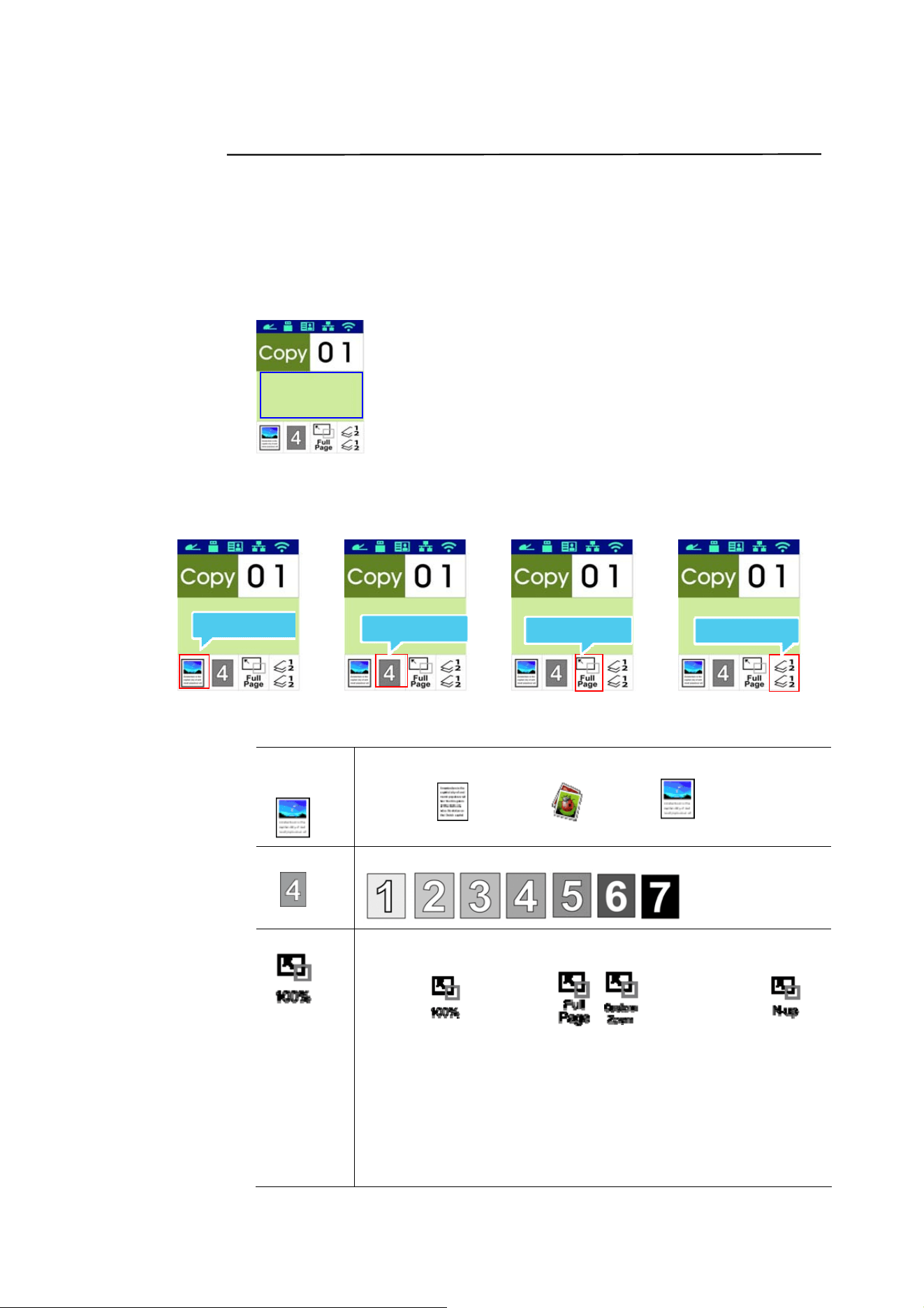
2. Press the Function / key until the following「Copy」mode is shown
in the LCD display. (Copy mode is the default operational mode.)
3. Confirm or change Copy options as desired such as Original, Density,
Paper Supply, and Sort.
Press or to select the setting.
Press or to select the option.
Copy
Mode
Choose your original type.
Choice:
(Text) / (Photo) / (Mixed)
Density
Lighten or darken your image. Choice: 1~7 (default: 4)
Scaling
Resize your document.
Choice:
(100%) , , (25%~400%),
100%: Resize your document according to your original.
Full Page:Resize your document to fit your output paper
size.
Custom Zoom: Resize your document between 25%
and 400% in one percent increment.
N-up: Combine 2 or 4 pages of documents to be printed
on a single side of a sheet.
Copy Mode
Density
Scaling
Collated
Ready
5
5
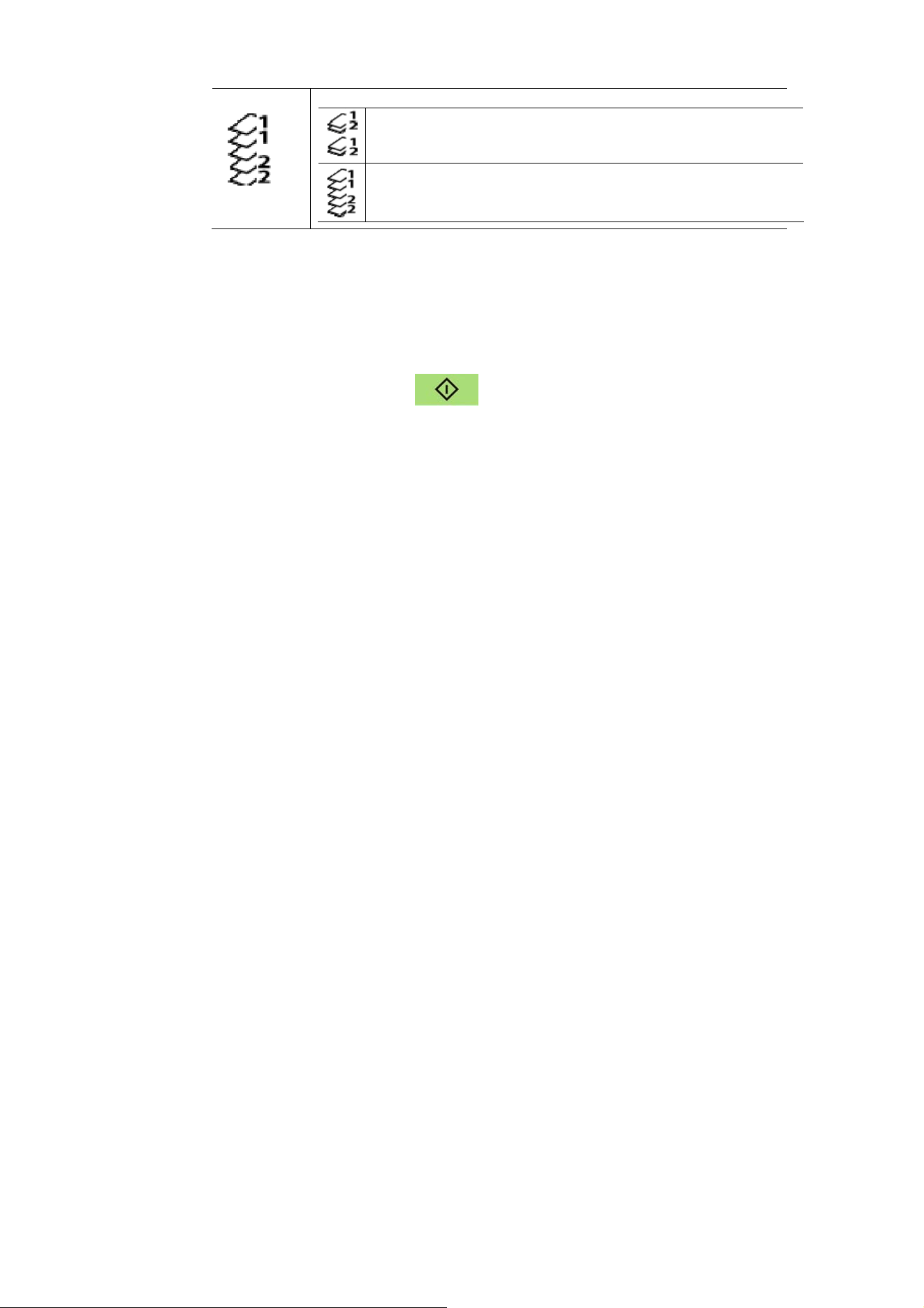
Collated
Collated: Place your copies in 「Sort」order (e.g.
page 1,2,3 /1,2,3 /1,2,3).
Uncollated: Place your copies in 「Stack」order
(e.g. 1,1,1/2,2,2/3,3,3).
* The default settings is displayed in italic bold style.
4. Enter your copy count with the numeric keypad. The copy count will
be displayed.
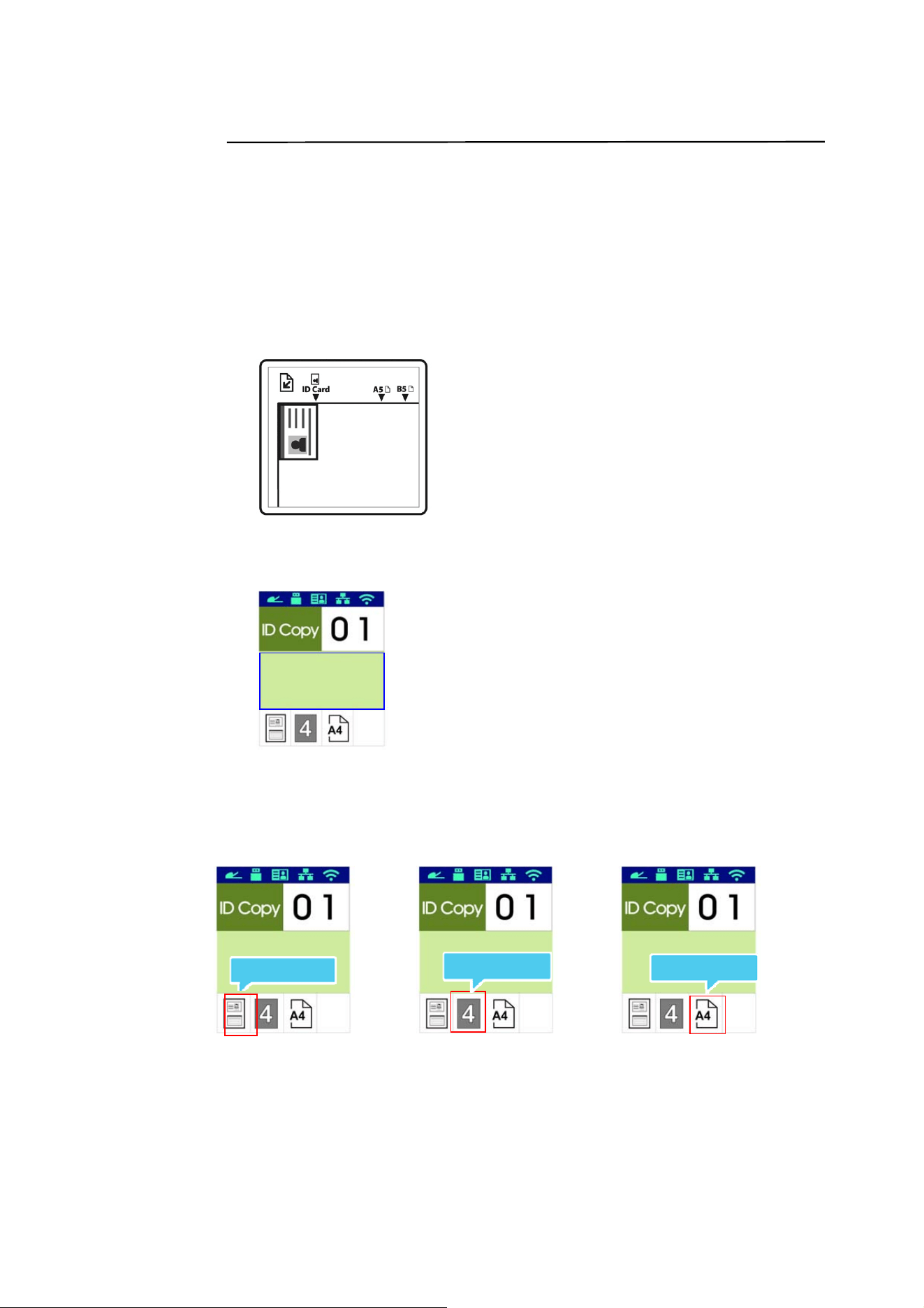
5. Press the [Start] button ( ) on the control panel to start copying
your documents.
56
ID Card Copy
The ID Card Copy function allows you to copy both the front and rear side
of your ID card easily and correctly in a second.
The Operation Steps:
1. Place one side of your ID card FACE DOWN, align it to the 「ID Card」
mark as indicated below:
2.
Press Function / button until the 「ID Card Copy」is displayed on
the screen.
3.
Confirm or change options as desired such as Mode, Density, Paper
Supply, or Paper Size.
Press or to select the setting.
Press or to select the option.
Copy Mode
Density
Paper Size
Ready
5
7
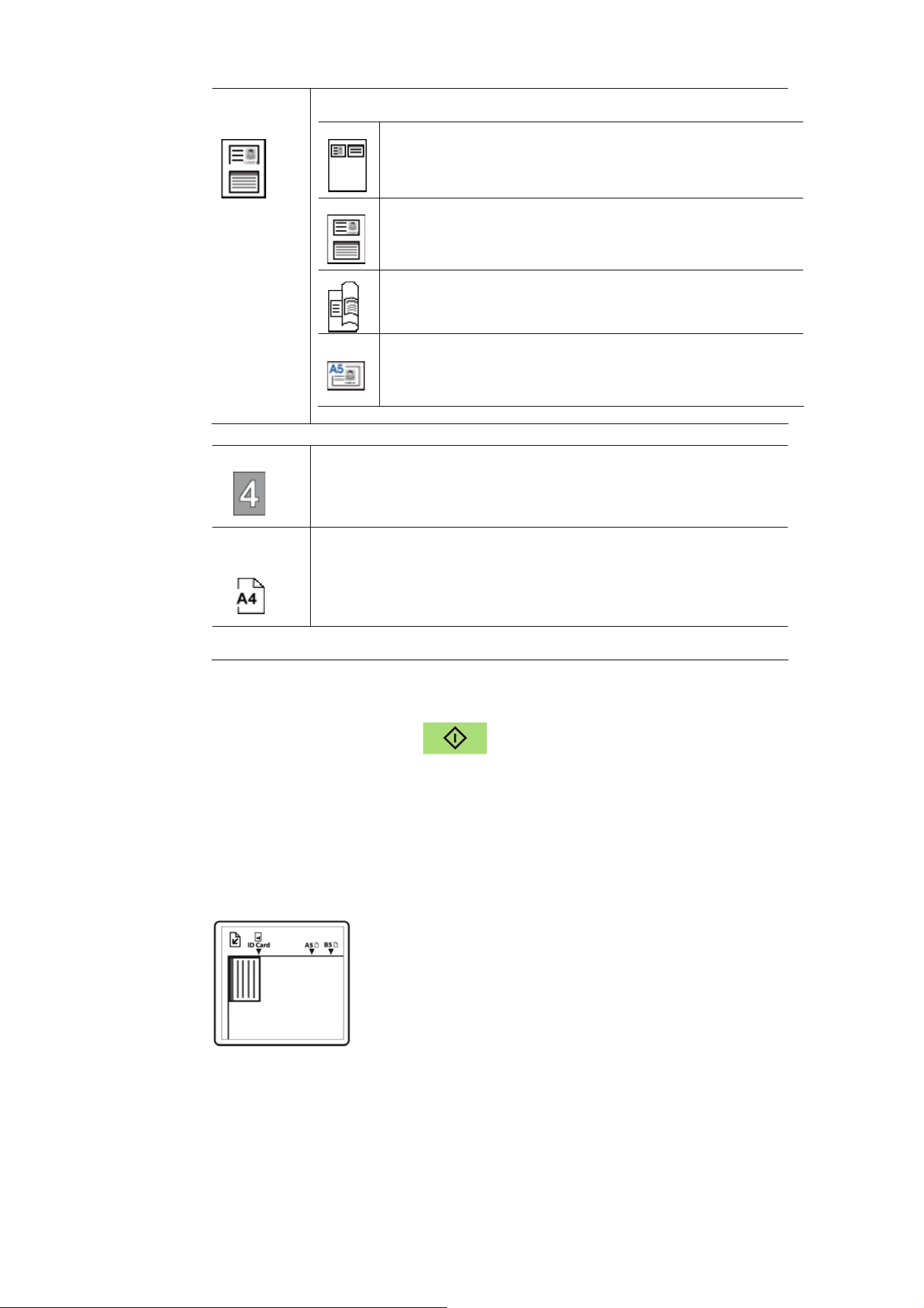
Mode
Choice: *Left/Right, Up/Down, Duplex, Big Card
Left/Right – Copy the left and right side of
your ID card on one side of a sheet.
Up/Down – Copy the front and rear side of
your ID card on the upper and bottom half of
one side of a sheet.
Duplex – Copy the front and rear side of your
ID card on the front and rear side of a sheet.
Multi-card - Copy the front and rear side of
your multiple cards or bigger card on one side of
a sheet.
Density
Lighten or darken your image. Choice: 1~7 (default: 4)
Paper
Size
Select your paper size.
Choice: A4, Letter.
* Default settings in italic bold style.
4.
Enter your copy count. The copy count will be displayed.
5.
Press the [Start] button ( ) on the control panel to start
copying your cards.
6.
After the first side scanning is finished, the「Next:Press 1/
Finish:Press 2 」dialog box will be prompted.
7.
Open the document cover and place the other side of your card, align
to the「ID Card」mark as illustrated.
8.
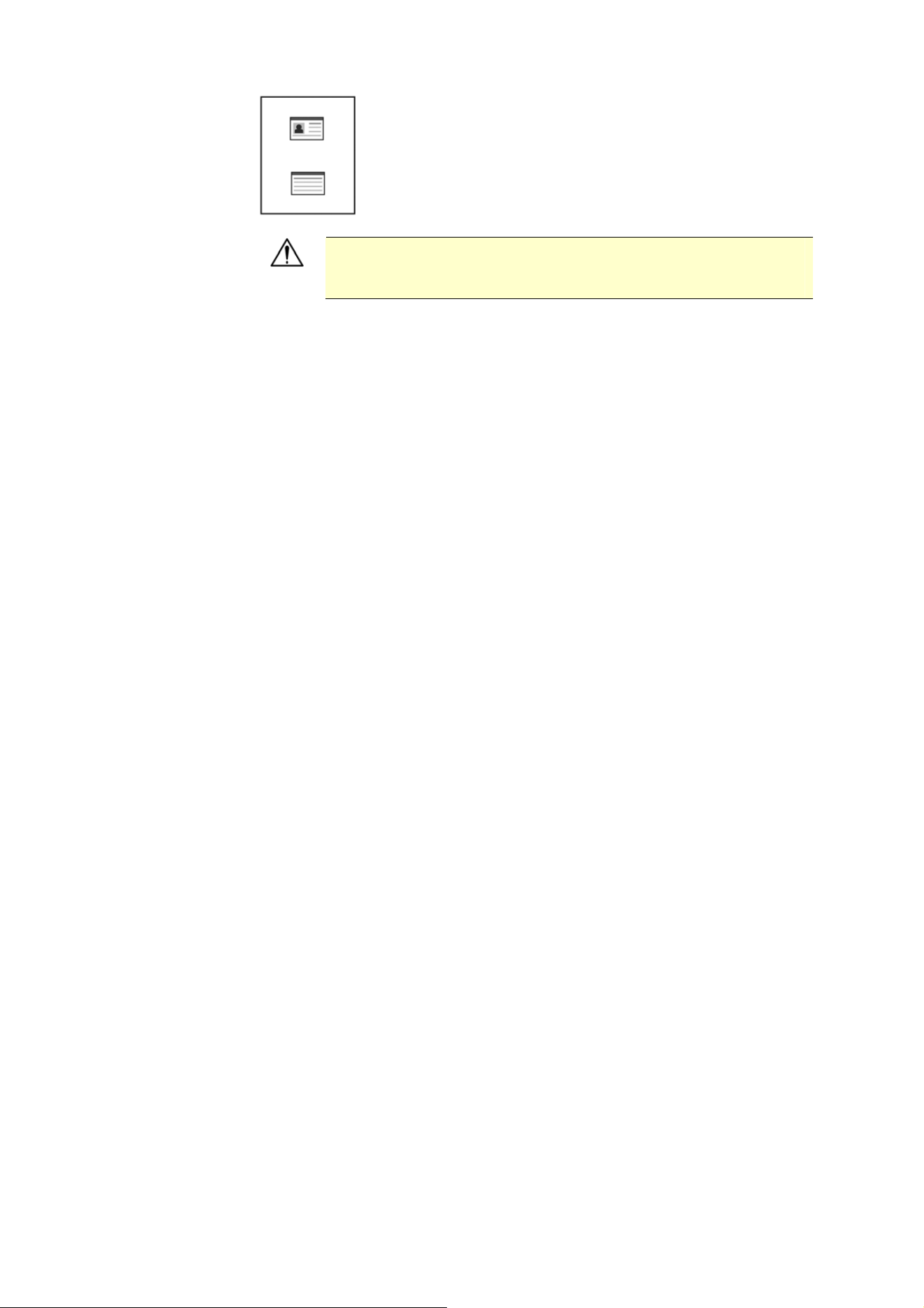
As illustrated by choosing 「ID Card Copy (Up/Down) 」, tap「1」on
the operational panel to continue scanning the other side of your card
or tap [2] to leave the screen. The result is illustrated in below:
58
Important!
The ID Card copy feature does not support loading your
cards from the auto document feeder.
59
Scan to E-mail
The scan function allows you to first scan your documents and then send
the scanned image to a specified e-mail address. To send your scanned
images to an e-mail address, you need to first set the e-mail settings
including the address book through the product’s embedded web page.
The operating steps:
1. Place your multi-page document Face Up, Top First in the auto
document feeder or place your single-page document Face Down on
the document glass.
2.
Press Function /key until the following「Email」mode is shown in
the LCD display.
3.
Press to highlight the Address Book and then press [OK].
4. Select your recipient from the Address Book and then press [OK]. (See
Chapter 4 for more details on how to create your address book)
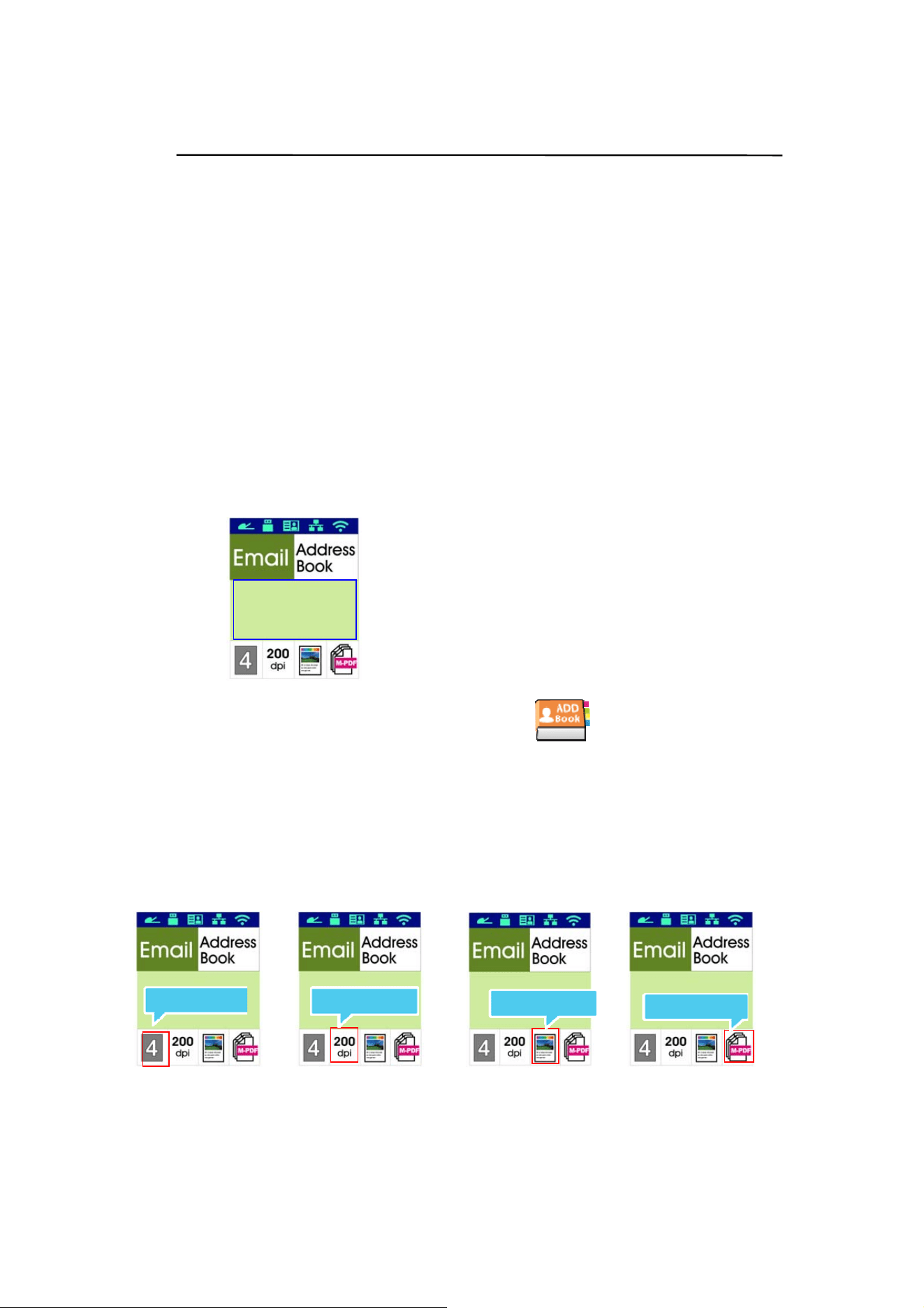
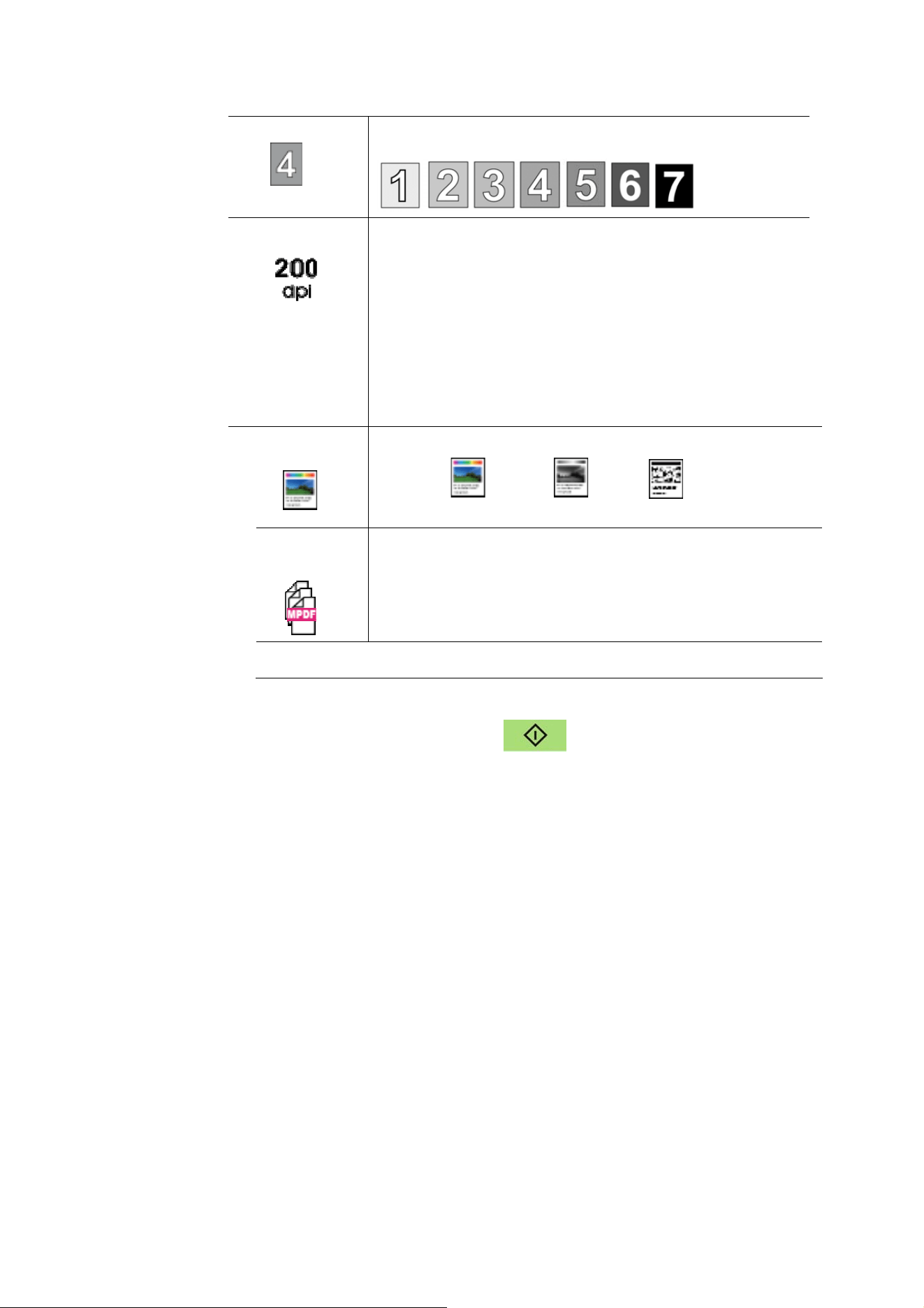
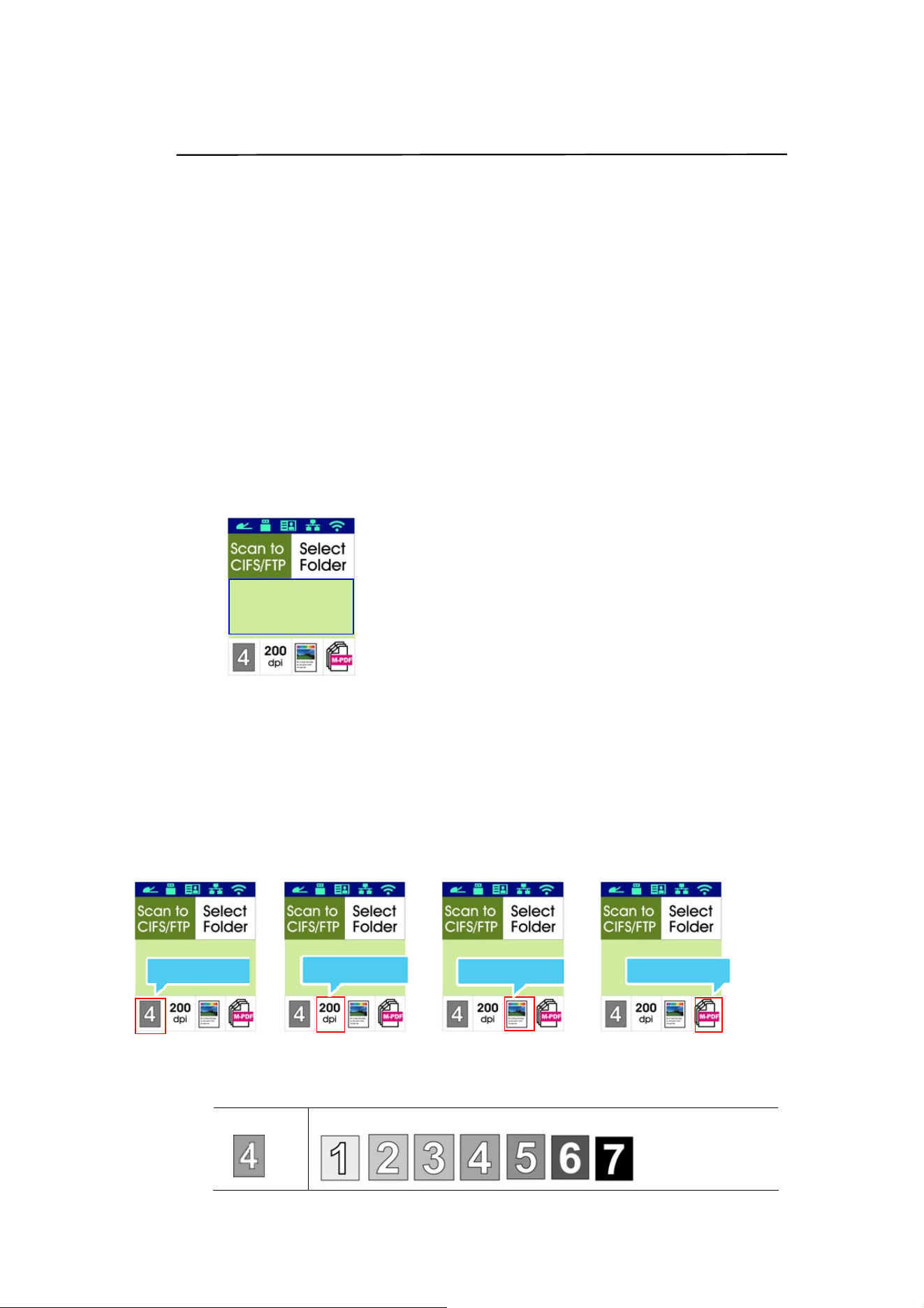
5. Confirm or change options as desired such as Density, Resolution,
Color Mode, or File Format.
Press or to select the setting.
Press or to select the option.
Desnity
Resolution
Scan Mode
File Format
Ready
6
0
Density
Lighten or darken your image. Choice: 1~7 (default:
4)
Resolution
Choose the resolution of the scanned image. The
higher the value, the more details can be reviewed
yet more disk space will be required.
Choice: 150/200/300/600 dpi
150 dpi: Suits to be viewed on the screen.
200 dpi: Suits for most business document.
300 dpi/600 dpi: High quality image helps
increase OCR (optical character recognition)
accuracy.
Color
Mode
Choose your desired color mode.
Choice:
Color、 Gray、 Black and
White
File
Format
Choose your desired file format for the scanned
image.
Choice: MPDF (Multi-Page PDF)、PDF (Single-Page
PDF)、JPEG、TIFF、BMP (for black and white only)。
* Default settings in italic bold style.
6. Press the [Start] button ( ) on the control panel to start
scanning your documents.
61
Scan to CIFS/FTP
The scan function allows you to first scan your documents and then send
the scanned image to a server in the network such as CIFS or FTP servers.
To save your scanned images to the network, you need to first set the CIFS
or FTP settings through the product’s embedded web page.
The operating steps:
1. Place your multi-page document Face Up, Top First in the auto
document feeder or place your single-page document Face Down on
the document glass.
2.
Press Function / key until the following「Scan to CIFS/FTP」
mode is shown in the LCD display.
3.
Press to highlight the file destination and then press [OK].
4. Select your filing destination and then press [OK]. (See Chapter 4 for
more details on how to create your file destinations.)
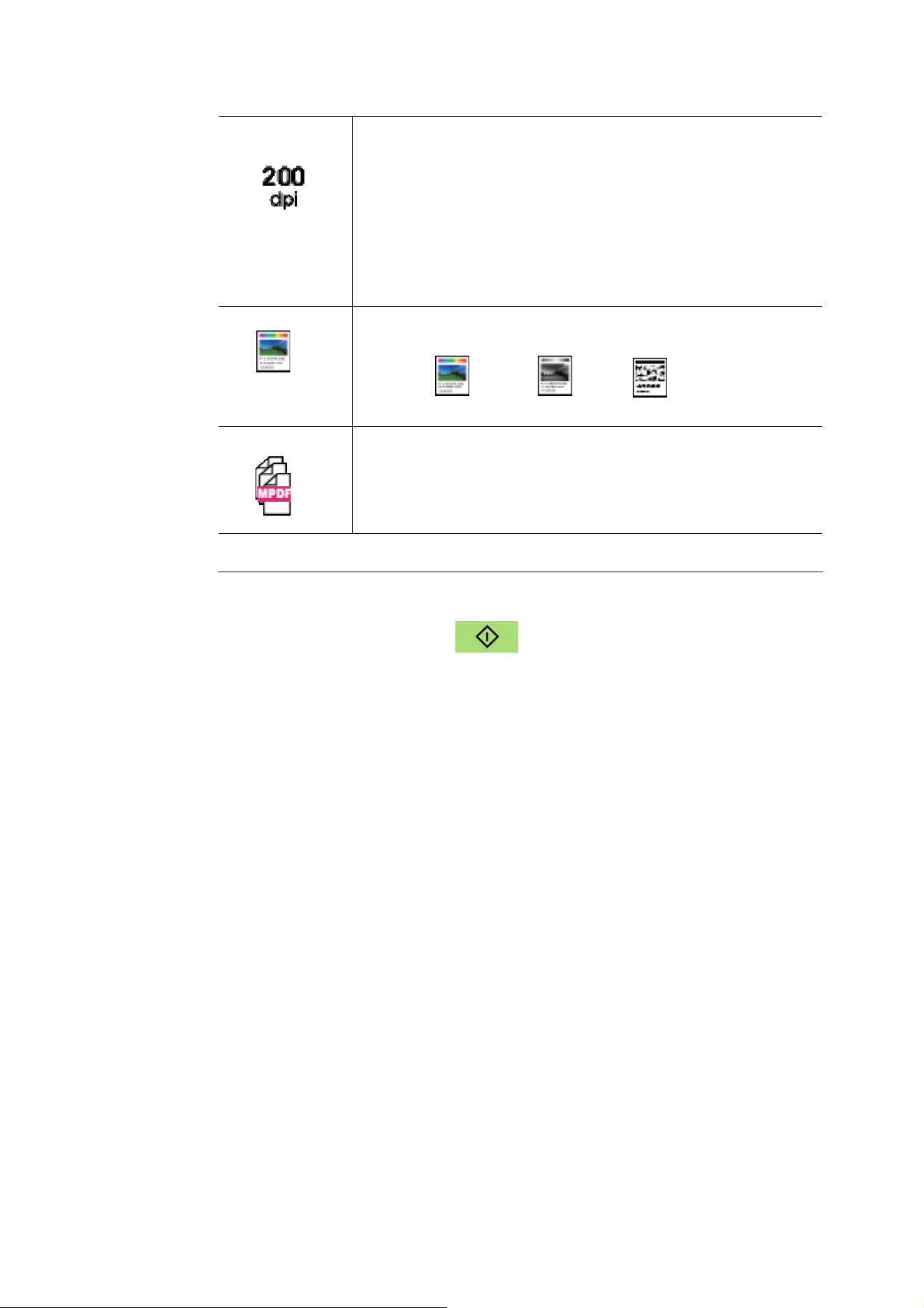
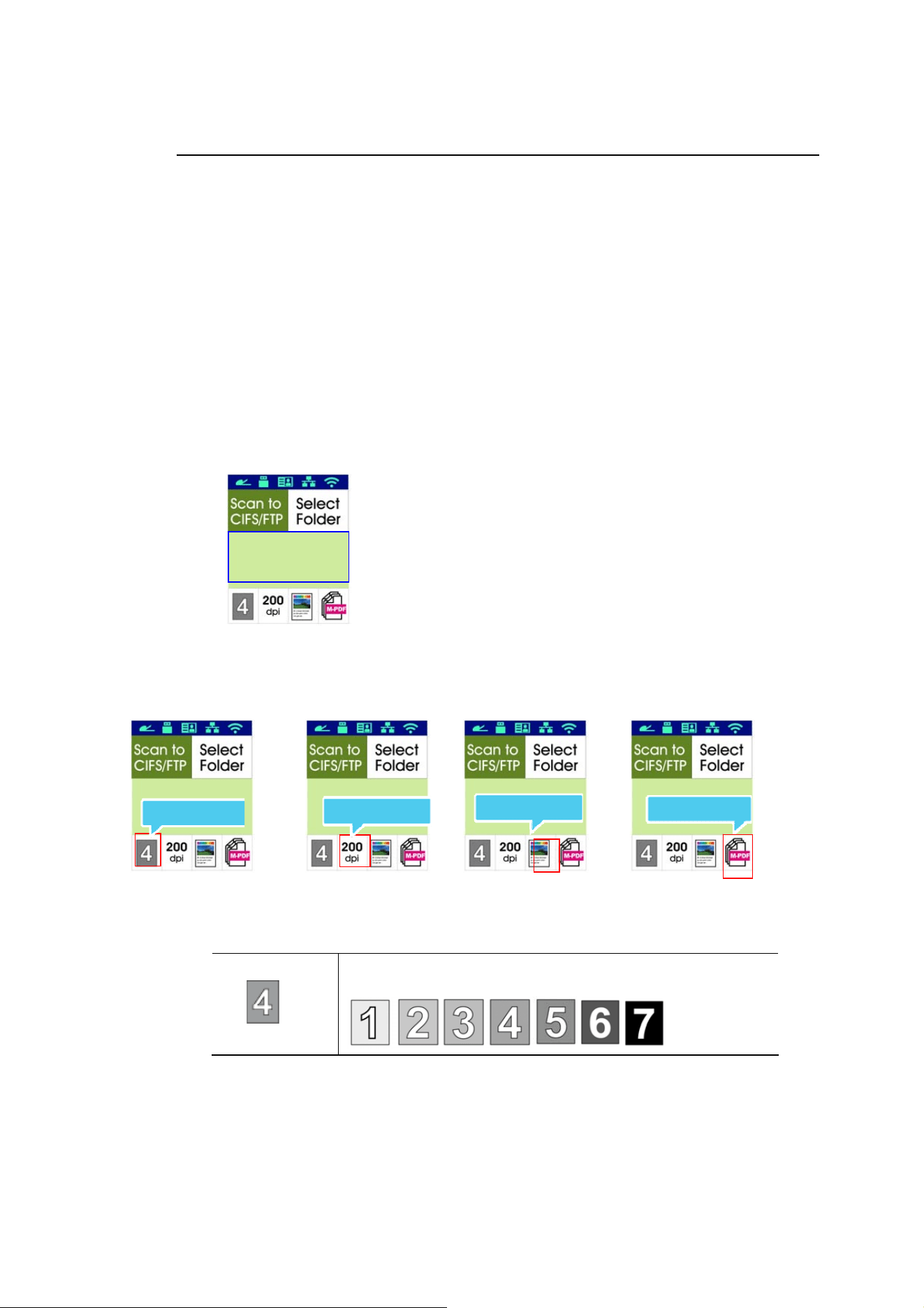
5. Confirm or change options as desired such as Density, Resolution,
Paper Supply, or Paper Size.
Press or to select the setting.
Press or to select the option.
Density
Lighten or darken your image. Choice: 1~7 (default: 4)
Density
Resolution
Scan Mode
File Format
Ready
62
Resolution
Choose the resolution of the scanned image. The
higher the value, the more details can be reviewed yet
more disk space will be required.
Choice: 150/*200/300/600 dpi
150 dpi: Suits to be viewed on the screen.
200 dpi: Suits for most business document.
300 dpi/600 dpi: High quality image helps increase
OCR (optical character recognition) accuracy.
Color Mode
Choose your desired color mode for your scanned
image.
Choice:
Color、 Gray、 Black and
White
File Format
Choose your desired file format for the scanned
image.
Choice: MPDF (Multi-Page PDF)、PDF (Single-Page
PDF)、JPG、BMP、TIFF。
* Default settings in italic bold style.
6. Press the [Start] button ( ) on the control panel to start
scanning your documents.
63
Scan to USB
The scan function allows you to first scan your documents and then send
the scanned image to a USB flash drive inserted to the product.
The operating steps:
1. Place your multi-page document Face Up, Top First in the auto
document feeder or place your single-page document Face Down on
the document glass.
2.
Press Function / key until the following「Scan to USB」mode is
shown in the LCD display.
3.
Confirm or change options as desired such as Density, Resolution, Paper
Supply, or Paper Size.
Press or to select the setting.
Press or to select the option.
Density
Lighten or darken your image. Choice: 1~7 (default:
4)
Desnit
y
Resolution
Scan Mode
File Format
Ready
64
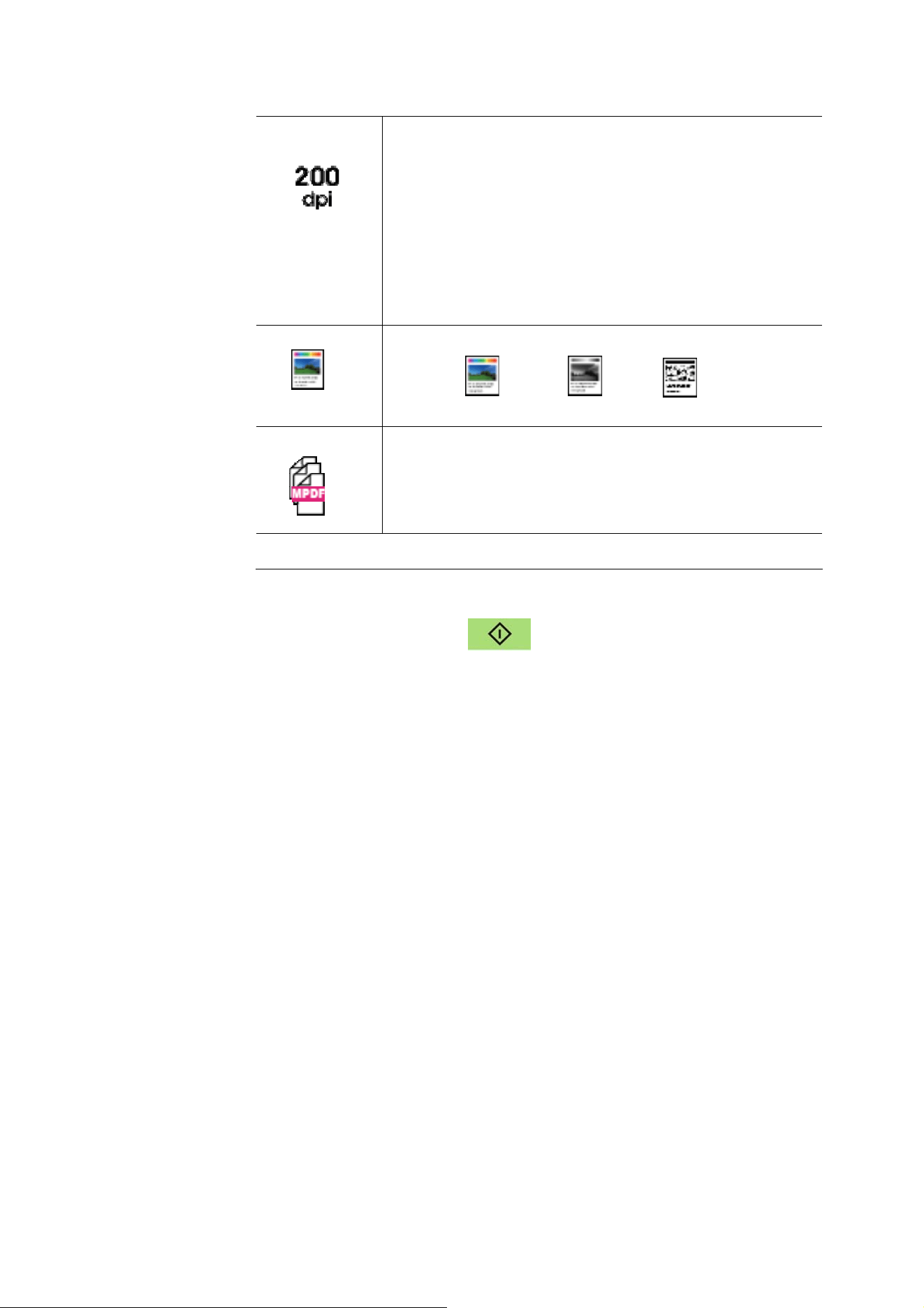
Resolution
Choose the resolution of the scanned image. The
higher the value, the more details can be reviewed
yet more disk space will be required.
Choice: 150/*200/300/600 dpi
150 dpi: Suits to be viewed on the screen.
200 dpi: Suits for most business document.
300 dpi/600 dpi: High quality image helps
increase OCR (optical character recognition)
accuracy.
Color Mode
Choose your desired color mode.
Choice:
Color、 Gray、 Black and
White
File Format
Choose your desired file format for the scanned
image.
Choice: MPDF (Multi-Page PDF)、PDF
(Single-Page PDF)、JPG、BMP、TIFF。
* Default settings in italic bold style.
4. Press the [Start] button ( ) on the control panel to start
scanning your documents.

6
5
Fax
The function which is available for the model of AM30XX allows you to scan
your documents and then send the scanned image to your recipient by fax.
Before using the fax function, be sure you have connected a telephone line
to the machine.
The operating steps:
1. Place your multi-page document Face Up, Top First in the auto
document feeder or place your single-page document Face Down on the
document glass.
2. Press Function / key until the following「Fax」mode is shown in the
LCD display.
3. Press to highlight the Phone Book and then press [OK]. Select the
fax number from the list. (See Chapter 4 for more details on how to
create your phone book.)
Or simply enter the recipient’s fax number by the numeric keypad.
* Note: To manually enter the recipient’s fax number, only one number is
allowed. If you wish to send your document to multiple recipients, you
will have choose them from the Phone Book.
4. Confirm or change Fax options as desired such as Quality, Density,
Show Speed, or Transmission Mode.
Quality
Density
Delay Send
Hook
Ready
66
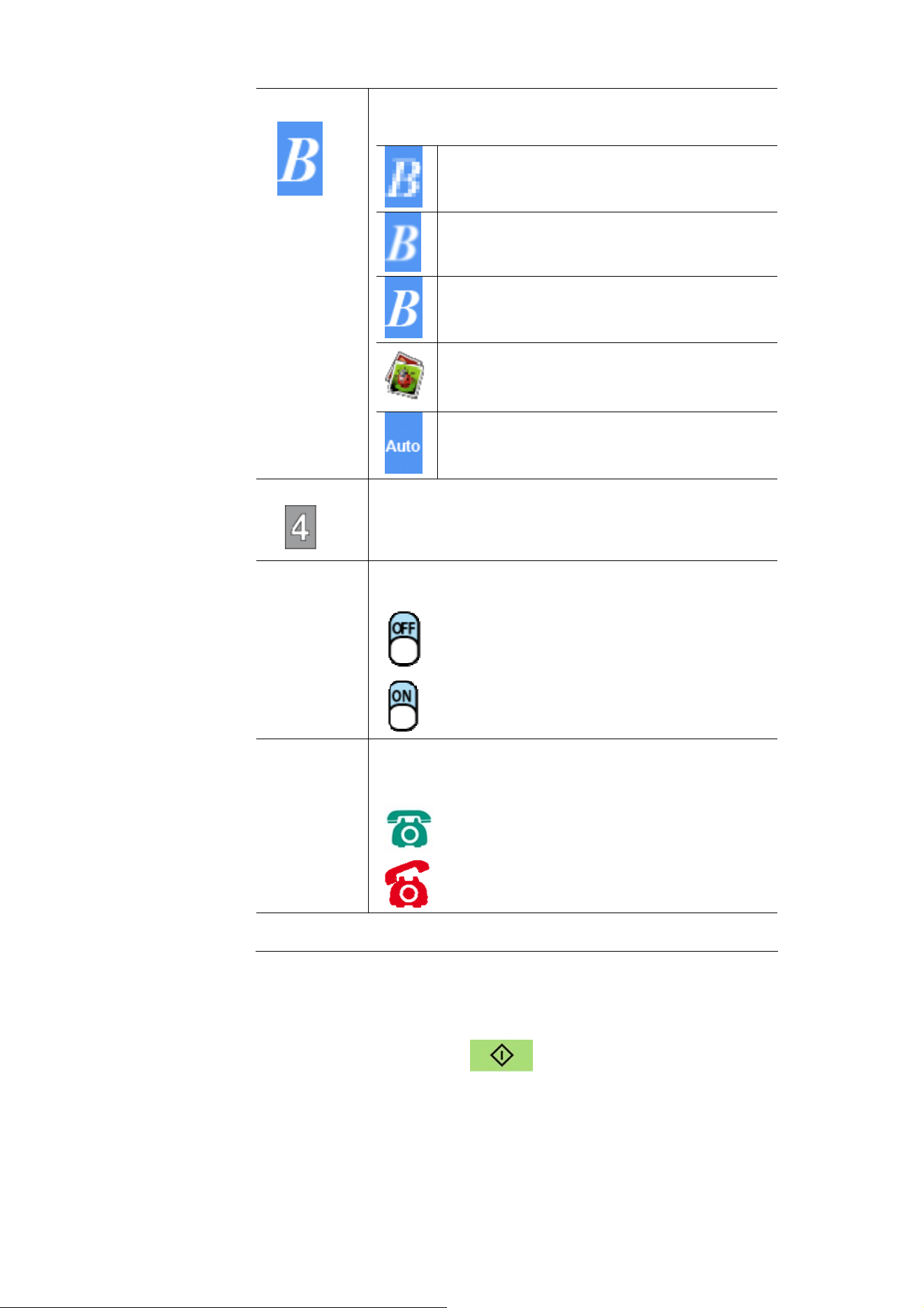
Quality
Choice: *Standard, Fine, Super Fine, Photo,
Auto
Standard
Fine
Super Fine
Photo
Auto
Density
Lighten or darken your image. Choice: 1~7
(default: 4)
Trans-
mission
Mode
Choose if you wish to send the fax later.
Choice: Off/On
Off (no delay send)
Delay Send
Hook
Choose if you wish to use the hook feature –
to use the [manual send] or [manual receive]
feature.
On
Off
* Default settings in italic bold style.
*
The default settings is displayed in italic bold style.
5. Press the [Start] button ( ) on the control panel to start
scanning and faxing your documents.
6
7
Manually Receiving or Sending a Fax
The operating steps:
1. Make sure the device is connected to a working telephone line.
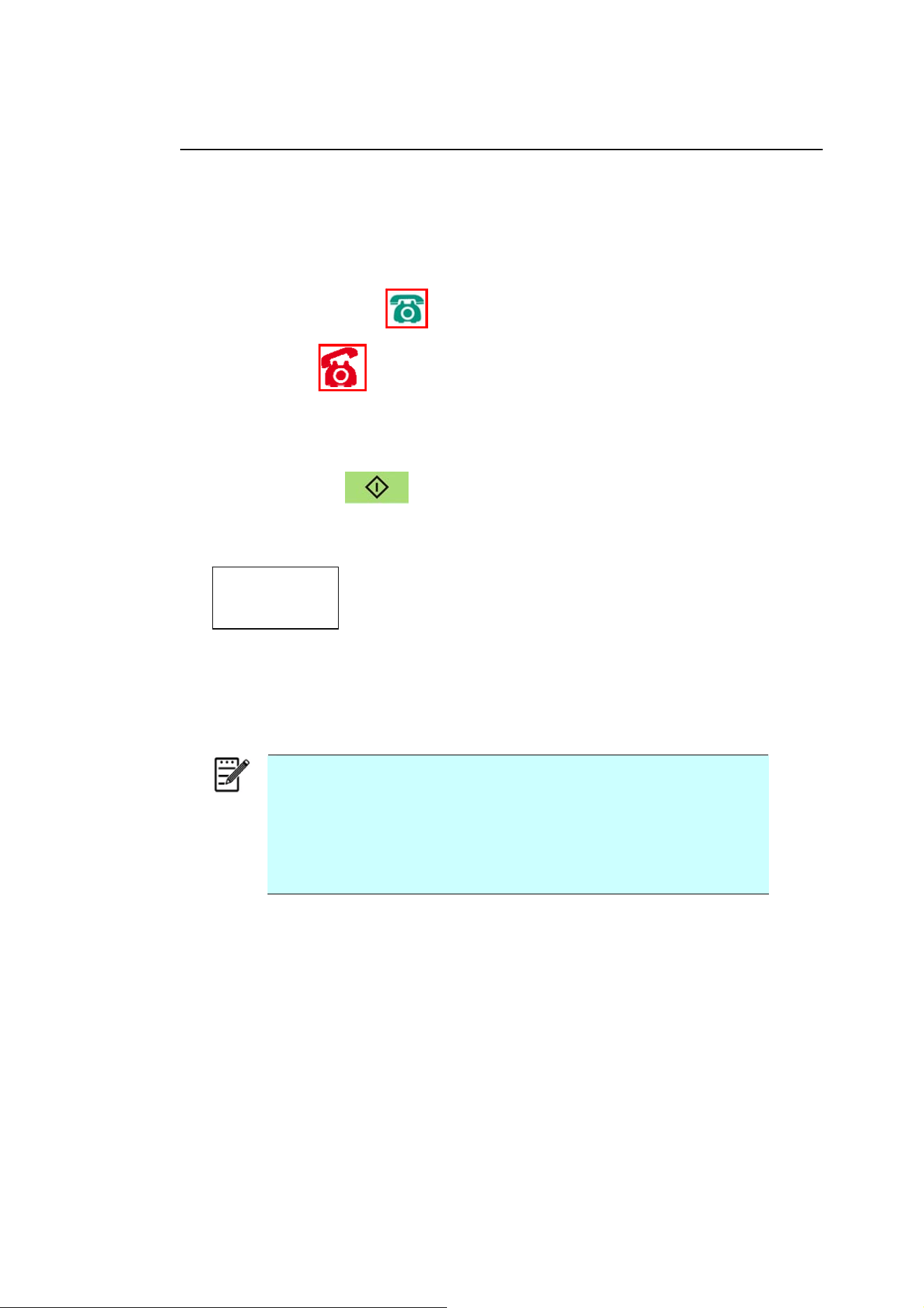
2. Press repeatly until (hook on icon) is highlighted.
3. Press until (hook off icon) appears.
4. Enter the fax number via the numeric keypad.
5. When the line is connected and you hear a high-pitched tone, press the
「Start」button
。
6. LCD displays the following screen.
7. To send fax: press 1, to receive fax: press 2.
8. When the transmission is OK, the LCD screen returns to the ready
status.
Note:
A telephone line has to be installed to use this
function.
The Manual option from Rx Mode must be
selected to receive a fax manually. Tap
[Menu] and select Fax>RX Mode>*Manual.
Send: 1
Receive: 2
68
Speak and then Send a Fax
Important!
It may be possible that faxes will reach unintended recipients due to the
misdialing or incorrect registration of fax/telephone numbers. When you
send important documents, it is recommended that you send them after
speaking on the telephone.
The operating steps to speak and then send a fax:
1. Make sure the device is connected to a working telephone set and that
your receipient’s fax machne is connected with a telephone set.
2.
Pick up the handset and then dial the receipient’s telephone number.
3. When the conversation is over, press the 「Start」button .
4.
LCD displays the following screen.
5. To send fax: press 1, to receive fax: press 2.
6. The receipient choose [Receive] and then hang down the handset.
7. Hang down your handset.
8. When the transmission is OK, the LCD screen returns to the ready
status.
Send: 1
Receive: 2
69
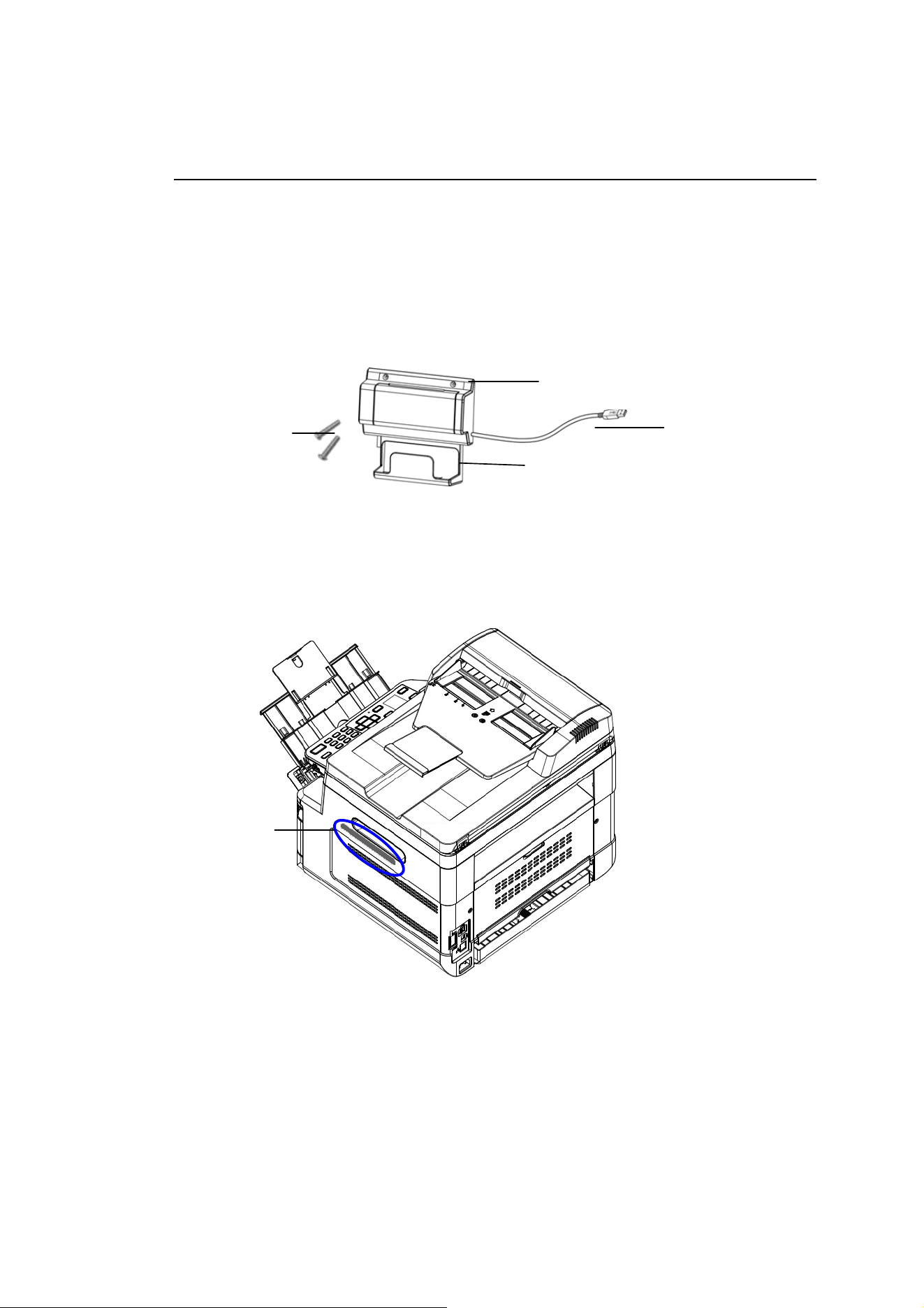
Using the Optional Scan Module (CSA6) for ID
Cards
Simply loading your ID card to the scan module (CSA6), the print can be
started and in a second the front side and rear side of your ID card are
printed in one side of a sheet.
Knowing the Scan Module:
Removing the Mylar:
Locate the mylar for the reserved holes on the side cover and remove it
with a box cutter.
Output Tray
Card Feeder
USB Cable
Fixing
Screws x 2
Mylar

7
0
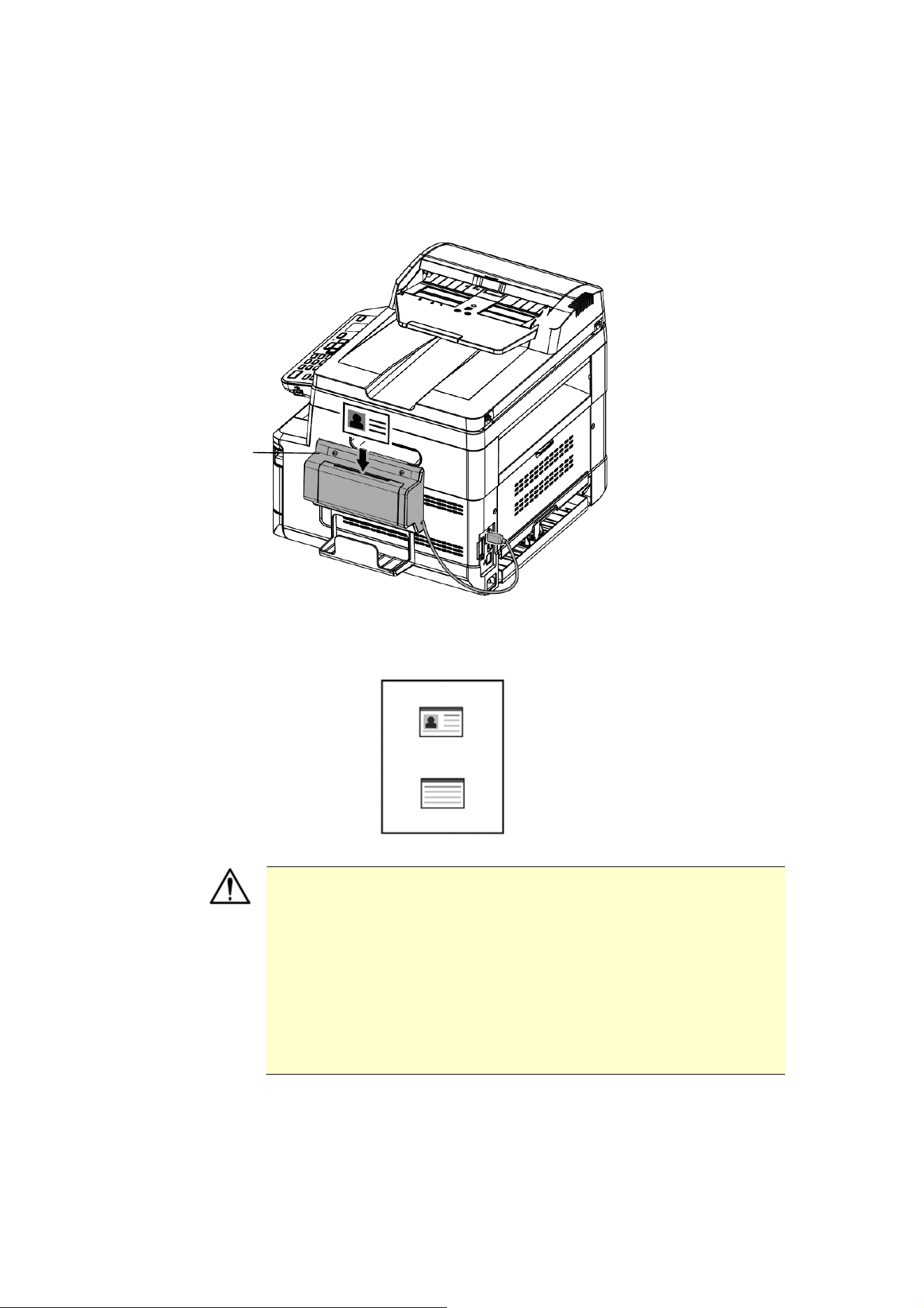
Installing the Scan Module:
1. Note two reserved holes on the side wall beneath the operational panel
and fasten the scanning module with two fixing screws as shown.
2. Connect the USB cable to the USB port on rear side.
3. Turn off and then turn on the product to ensure the machine can
identify the scan module.
USB Port
Fixing
Screws
USB Cable
71
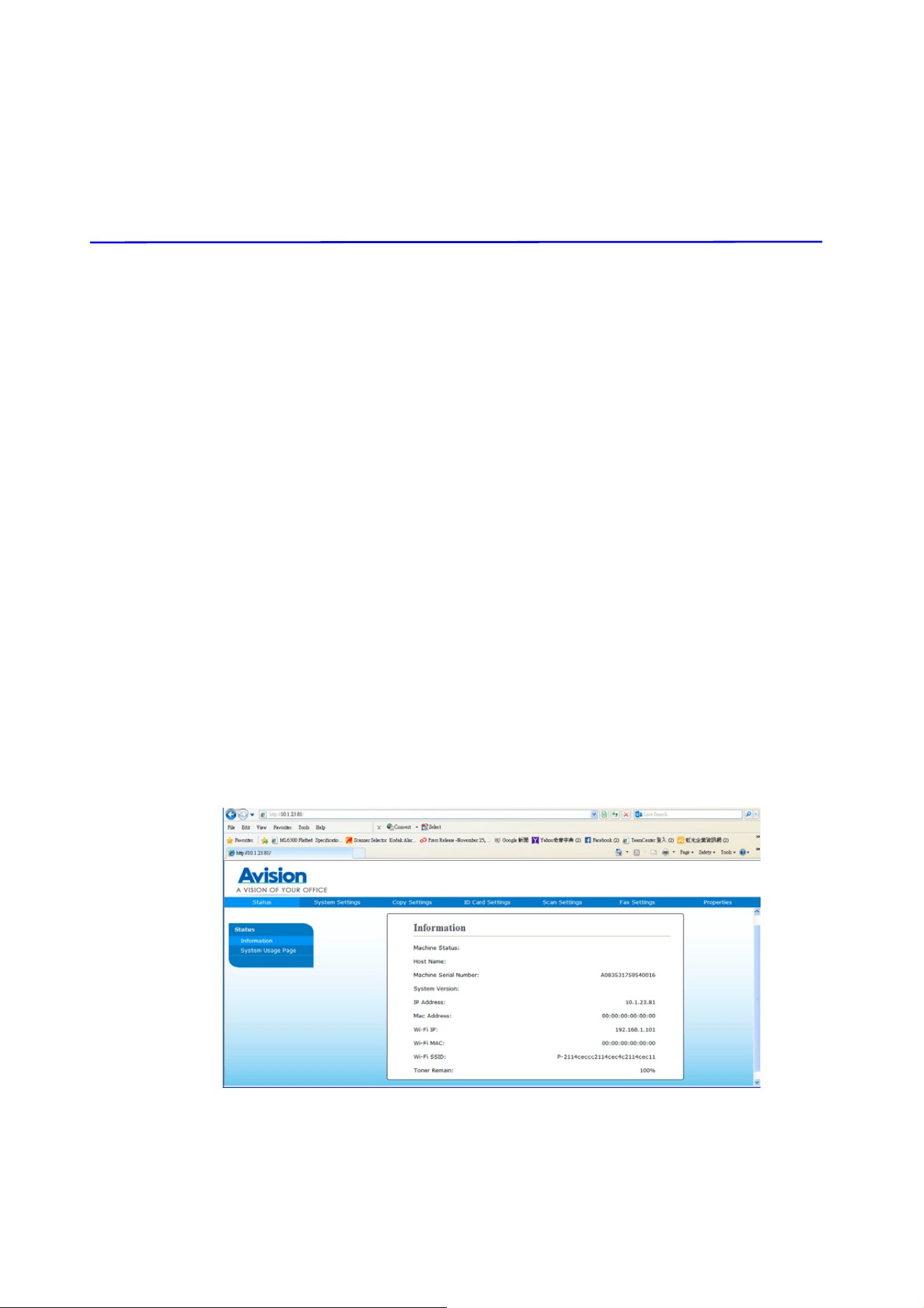
Making ID Card Copy:
1. Insert your card FACE OUTWARD to the card feeder and make sure
the bottom of card feeding first as illustrated.
2. In a second, the front side and the rear side of your ID card will be
copied in one side of a sheet.
Note:
Only one card can be inserted at one time. The scan module
does not allow to be fed more than one card at a time.
Please note the ID card copy settings can also be applied to
CSA6 settings. If desired, you can change your CSA6
settings by changing your ID card copy settings on the
product’s web page or on the control panel as described in
the subsequent section, ID Card Copy Settings on page
74.
Card
Feeder
72
4. Setting up and Managing
Destinations
This section provides procedure for the administrator to setup and manage your
destinations including e-mail addresses or network folders to distribute the scanned
document on the network.
Setting up Your Address Book
This section provides procedure for the administrator on how to setup Address
Book which includes e-mail address and fax number.
Adding a New Member
To add a new member,
1. Obtain the product’s IP address by pressing the [Menu] key on the control
panel and then choose [Information]>[IP Address]. The product’s IP
address will be displayed.
2. Open your browser.
3. Type the product’s IP address on the URL field of your browser. For example,
10.1.20.25. The following embedded web page will be displayed
4. On the product’s web page, choose [Properties] and then choose [Address
Book] on the left side. The following [Address Book] page will be displayed.
Ready

73
5. Choose [Add New] to prompt the following page.
6. Enter the name, fax number, and e-mail address for an individual recipient.
7. After completing entering the settings, click「Submit」to finish. The new
recipient will be displayed in the e-mail list. This means you have successfully
created an address book.
Modifying a Current Member
To modify a current member,
1. Repeat Step 1 to Step 4 from the previous section, Adding a New Member.
The [Address Book] page appears.
2. Choose the member you want to modify from the list and then choose
[Modify] to prompt the [Modify Member] page.
3. Modify your member information. Click [Submit] to save the setting or
[Cancel] to leave the page without saving any setting.
Deleting a Current Member
To modify a current member,
1. Repeat Step 1 to Step 4 from the previous section, Adding a New Member.
The [Address Book] page appears.
2. Choose the address you want to delete from the list and then choose
[Delete] to erase the address. A Confirmation dialog box appears to
confirm your deletion. Click [OK] to confirm or [Cancel] to exit.

74
Adding a New Group
To send multiple recipients simultaneously at one time, you can create groups to
speed up the process. Up to 5 members can be included in one group and a total
of 10 groups can be created.
Follow these steps to create a new group,
1. Repeat Step 1 to Step 4 from the previous section, Adding a New Member.
The [Address Book] page appears.
2. Click [Group] and then choose [New] to prompt the [Add a New Group]
page.
3. Enter your group name.
4. Choose the address from the right side and click to add a member to the
group.
5. Click [Submit] to save the setting or [Cancel] to leave the page without
saving any setting.
Modifying a Current Group
To modify a current e-mail group,
1. Repeat Step 1 to Step 4 from the previous section, Adding a New Member.
The [Address Book] page appears.
2. Click [Group] and choose the group you want to modify from the list and
then choose [Modify] to prompt the [Modify Group] page.
3. Modify your group information. Choose the group member you wish to add
and then click to add the new member or click to delete an old member
from the group.
4. Click [Submit] to save the setting or [Cancel] to leave the page without
saving any setting.

7
5
Deleting a Current Group
To delete a current e-mail group,
1. Repeat Step 1 to Step 4 from the previous section, Adding a New Member.
The [Address Book] page appears.
2. Click [Group] and choose the group you want to delete from the list and then
choose [Delete] to erase the group. A Confirmation dialog box appears to
confirm your deletion. Click [OK] to confirm or [Cancel] to exit.
Adding Your One Touch Key
To speed up the process to send your document, the product provides one touch
key for your frequently used recipients. The one touch key can be either a
member or a group which contains multiple members to allow you retrive all
numbers by simply tapping the key. Up to 10 one touch keys can be set.
Follow these steps to create a new group,
1. Repeat Step 1 to Step 4 from the previous section, Adding a New Member.
The [Address Book] page appears.
2. Click [One Touch] and then choose [New] to prompt the [Add a New
One Touch] page.
3. Enter your one-touch number.
4. Choose the member or group from the right side and click to add a
member or group to the one-touch key.
5. Click [Submit] to save the setting or [Cancel] to leave the page without
saving any setting.
Modifying a Current One Touch Key
To modify a current e-mail group,
1. Repeat Step 1 to Step 4 from the previous section, Adding a New Member.
The [Address Book] page appears.
2. Click [One Touch] and choose the one-touch number you want to modify
from the list and then choose [Modify] to prompt the [Modify One
Touch] page.
3. Modify your group information. Choose the group member you wish to
add and then click to add the new member or click to delete an old
member from the group.
4. Click [Submit] to save the setting or [Cancel] to leave the page without
saving any setting.

76
Deleting a Current One Touch Key
To delete a current e-mail group,
1. Repeat Step 1 to Step 4 from the previous section, Adding a New Member.
The [Address Book] page appears.
2. Click [One Touch] and choose the number you want to delete from the list
and then choose [Delete] to erase the one-touch key. A Confirmation dialog
box appears to confirm your deletion. Click [OK] to confirm or [Cancel] to
exit.
Importing External Address Book
The product allows you to import external address book from other devices in
a .csv format to save your time in typing all the addresses. Before importing
external address book to this product, be sure an address book file in .csv format
has been created in advance.
To import current address book,
1. Repeat Step 1 to Step 4 from the previous section, Adding a New Member.
The [Address Book] page appears.
2. Click [Import Address Book] to prompt the [Import Address Book]
page.
3. Click [Browse] to search the address book file on your computer.
4. Click [Import] to start importing the address book file. In a second, the
imported address book will be added in the product.

7
7
Exporting Current Address Book
The product allows you to export current address book of this device to another
device in a .csv file format.
To export current address book,
1. Repeat Step 1 to Step 4 from the previous section, Adding a New Member.
The [Address Book] page appears.
2. Click [Export Address Book] to prompt the [Export Address Book] page.
3. Click [Export] and then [Browse] to specify the location of your address
book.
4. Click [Apply] and the current address book will be stored in a .csv file.

78
Setting up Your File Destinations
The section provides procedure on how to setup your file destinations to send your
scanned document to a specified network folder.
Adding a New File Destination
To create a new file destination, follow these steps:
1. On the product’s web page, choose [Properties] and then choose
[FTP/CIFS Setup] on the left side. The following [New File Destination]
page will be displayed.
Enter the following information respectively:
Item Description
Destination
Name
Enter the name of your destination. The name will
be shown in the LCD screen.
Protocol Enter the type of protocol of your destination server.
Choice: FTP, FTPS, CIFS
URL Enter the IP address and the shared folder name of
your FTP server.
Port # Enter the port number of the destination server.
* 21 (FTP), 139 (CIFS)
Login Name Enter the user name of the destination server.
Password Enter the password of destination server.
Retype
Password
Choose your desired scan option profile.
2. Click [Submit] to save the setting or [Cancel] to leave the page without
saving any setting.
Modifying a Current File Destination
To modify a current file destination,
1. Repeat Step 1 to Step 2 from the previous section, Adding a New File
Destination. The [New File Destination] page appears.
2. Choose the destination you want to modify from the list and then choose
[Modify] to prompt the [Modify File Destination] page.
3. Modify your destination information.
4. Click [Submit] to save the setting or [Cancel] to leave the page without
saving any setting.

79
Deleting a Current File Destination
To delete a current file destination,
1. Repeat Step 1 to Step 2 from the previous section, Adding a New File
Destination. The [New File Destination] page appears.
2. Choose the destination you want to delete from the list and then choose
[Delete] to erase the destination. A Confirmation dialog box appears to
confirm your deletion. Click [OK] to confirm or [Cancel] to exit.

8
0
5. Customizing the Product’s
Settings
This chapter is specifically targeted to the persons who are responsible for the
administration of the product. It is recommended that the administrator read this
chapter before installing the machine.
The product’s settings can be customized via the control panel or the product’s
embedded web page. How to customize the product’s settings via these two
methods will be described in the following sections.
Note:
When installing the product for the first time, it is recommended that
the Administrator retain the default system settings. The settings can
be customized at a later date once you are familiar with the operation
and functionality.
Customizing System’s Settings via the Control Panel
To change the default settings on the control panel, press the “menu” button on
the control panel. The menu information will be displayed. To navigate the menu
items, the Enter, Up, Down, and Back buttons are provided on the control panel.
You can adjust settings (e.g. set the paper size for Tray 1) or view information
(e.g. IP address, firmware version).
Typical steps in using the menus are as follows:
1. Press the Menu button to access the menu items.
2. Press the Up or Down button repeatedly until the desired menu is
highlighted in the displayed list.
3. Press the [OK] button to select this menu.
4. Press the Up or Down button repeatedly until the desired item is
highlighted.
5. Press the [OK] button to select this item.
6. Press the Back button to go back to the previous screen.
7. Press the Cancel button to leave the menu item.
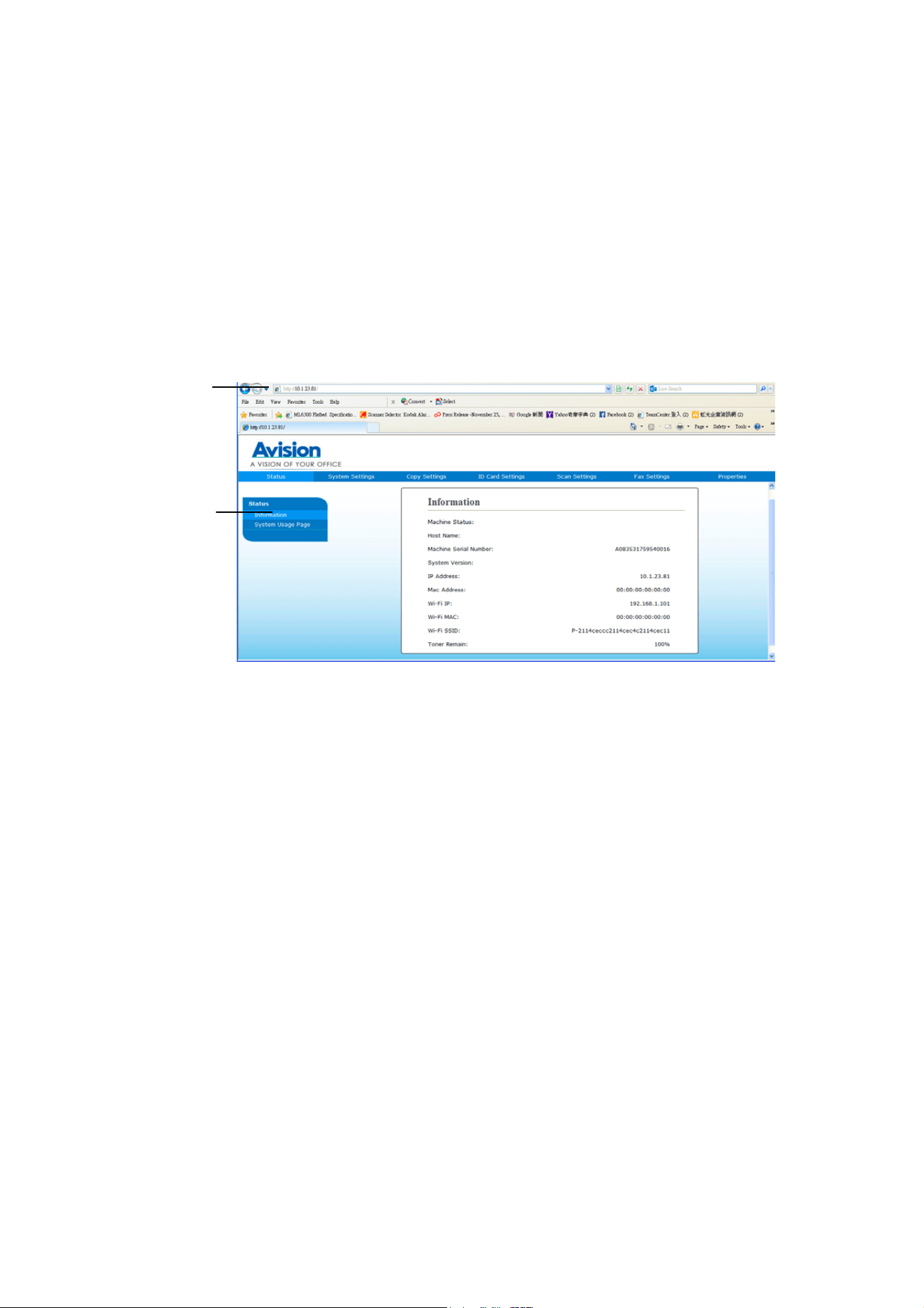
81
Customize System’s Settings via the Embedded Web Page
Note: Any update of the web page requires administrator’s login.
You may choose your network connection type through the webpage.
1. Obtain the product’s IP address by pressing the [Menu] key and select
[Information]>[IP Address]. The IP address will be displayed.
2. Open your browser and type the product’s IP address on the URL address ,
for example, http://10.1.20.80 and press Enter. In a second, the embedded
web page will be displayed
.
3.
Enter your desired setting on your selected items.
Ready
82
Setting Items to be Customized
Status (Available only on the webpage)
Displays the status and basic information of the product.
Item Description
Information Display the following basic information of the product.
Machine Status
Displays the machine status.
Host Name Displays the host name.
Machine SN
Displays the machine’s series number.
System Version
Displays the firmware version.
Homepage
Version
Displays the version of the embedded web page.
Fax Patch Code
Version
Displays the version of the installed fax patch code.
Fax ptt Version
Displays the fax ptt version.
IP Address
Displays the IP address.
Mac Address
Displays the Mac address.
Wi-Fi IP
Displays the Wi-Fi IP address.
Wi-Fi Mac
Displays the Wi-Fi Mac address.
Wi-Fi SSID
Displays the Wi-Fi SSID name.
Toner Remain
Displays the toner remain of the toner cartridge.
Report Selects to print each report.
Config. Choose to print the setting information of the product.
Network Choose to print the network information of the product.
Menu Map Choose to print all the menu items on the LCD screen.
Usage Choose to print the usage report including the number of
copies, toner usage information, EP usage information,
and fuser usage information.
Add. Book Choose to prints the address information of the product.
Fax Log Choose to prints the fax log of the product.
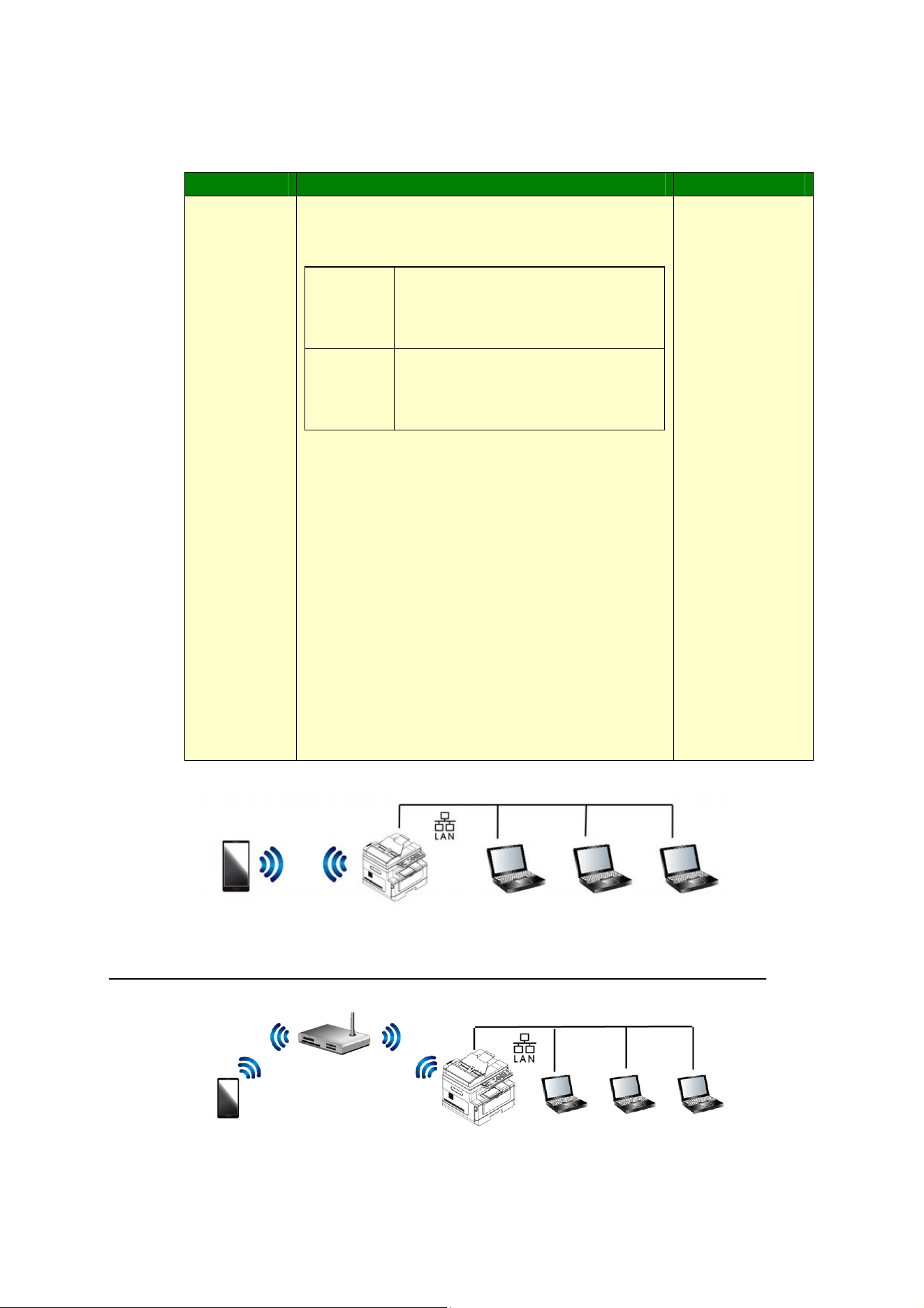
83
Network (Available only on the LCD Screen)
*Factory Default
Item Description Choice
Network
Wi-Fi: Choose to turn on or off Wi-Fi
connection. Choice: Wi-Fi/Wi-Fi WPS
Button/Direct Link
On
Turn on Wi-Fi and enter Wi-Fi
Station Mode. Please go to the
product’s web page to select a
wireless network (SSID).
Direct
Link
Turn on Wi-Fi and go to Wi-Fi
AP (Access Point mode. The
product is now an Wi-Fi AP
itself.
Wi-Fi WPS Button: You may connect the
device to a WPS compatible wireless access
point by selecting [Wi-Fi WPS button]. To
enable the WPS connection of your access
point, please refer to the user’s guide of your
access point.
Network Filter: Specify if you wish to
enable or disable the Network filter
configuration. Once enabled, your can specify
the filter mode to allow some IPs to access
the device or deny some IPs from accesing
the device via the product’s embedded web
page. Choice: Enable/*Disable
Wi-Fi/
Wi-Fi WPS
Button/
Network Filter
Wi‐Fi(APmode)andLANmodecanbeusedatthesametime
Wi‐Fi(Stationmode)andLANmodecannotbeusedatthesametime
Mobile Device AM30XX PC PC PC
Mobile Device AM30XX PC PC PC
84
Wi-Fi Connection:
Wired LAN: If the device is connected to a wired LAN via an ethernet cable,
the Wi-Fi connection will automatically set to to AP mode. A wired LAN and a
wireless network can be working at the same time.
Wireless Network: If SSID has been connected successfully, the wired LAN
will not be working. If the device fails to connect to a wireless network (SSID),
the device will automatically enter Wi-Fi AP mode (the device itself is an AP).
System Settings (Available on the LCD Screen and webpage)
*Factory Default
Item Description Option
Language The language displayed on
the LCD screen
*English /繁體中文/简体中文
/Deutsch
Date/Time Sets up the current date
and time on the product.
The time format is 24-hour
system.
Sleep Mode Choose how long to enter
the energy saving mode
after your last action.
5Min/*15Min/30Min/1Hr/2Hr/4Hr
Auto Off Choose how long to shut
down the product
automatically after your last
action.
*Off/5Min/15Min/30Min/1Hr/2Hr/
4Hr
Schedule
Restart
Enable or disable [Schedule
Restart].
If select on, enter number
of day to restart the device
automatically.
* On/Off
Timeout When the machine has not
been operated for a certain
period of time, the system
will automatically reset all
settings back to the preset
values.
System Timeout Value : 0
~ 300 seconds. Each
selectable interval range is
15 seconds.
* On (60 secs)/Off
Default Mode Set the default operating
mode on the LCD screen.
* Copy, ID Card Copy, Scan to
USB, Scan to CIFS/FTP, Scan to
E-mail, Fax
8
5
Paper Size
Default
Choose default paper size.
*A4/LTR/LGL
Media Type
Choose default media type.
Thin/*Plain/Thick/Envelope/L
aser/Bond/Postcard
Duplex Print
Choose to enable/disable
duplex print.
ON/*Off
Network
Wi-Fi: Choose to turn on Wi-Fi
connection. Choice: Wi-Fi/Wi-Fi WPS
Button/Direct Link
On
Turn on Wi-Fi and enter
Wi-Fi Station Mode.
Please go to the product’s
web page to select a
wireless network (SSID).
Direct
Link
Turn on Wi-Fi and go to
Wi-Fi AP (Access Point
mode. The product is now
an Wi-Fi AP itself.
Wi-Fi WPS Button: You may connect
the device to a WPS compatible wireless
access point by selecting [Wi-Fi WPS
button]. To enable the WPS connection
of your access point, please refer to the
user’s guide of your access point.
Network Filter: Specify if you wish to
enable or disable the Network filter
configuration. Once enabled, your can
specify the filter mode to allow some IPs
to access the device or deny some IPs
from accesing the device via the
product’s embedded web page. Choice:
Enable/*Disable
Wi-Fi/ Wi-Fi WPS
Mode /Direct
Link
86
Management
Factory Def. Reset all settings to factory
default values.
Copy
Calibration
(for LCD screen
only)
Perform copy calibration.
Immediate/ 1 ~ 30 days
Scanner
Calibration
(for webpage
only)
Perform scanner calibration.
Immediate/ 1 ~ 30 days
Reset Count
Choose to reset count for
roller or pad after
replacement. Click
[immediate] to reset count.
ADF Pad/ADF Roller/Tray 1
Pad/Manual Tray Pad
V-Mag
Adjustmnet
Choose to adjust the
vertical magnification
rate of the printer.
-0.4%/-0.2%/*0%
+0.2%/+0.4 %
Password Settings
New Password
Enter a password to enable
modifying the web page.
Password should be 8~32
characters or digits in
length.
Retype
Password
Retype new password.
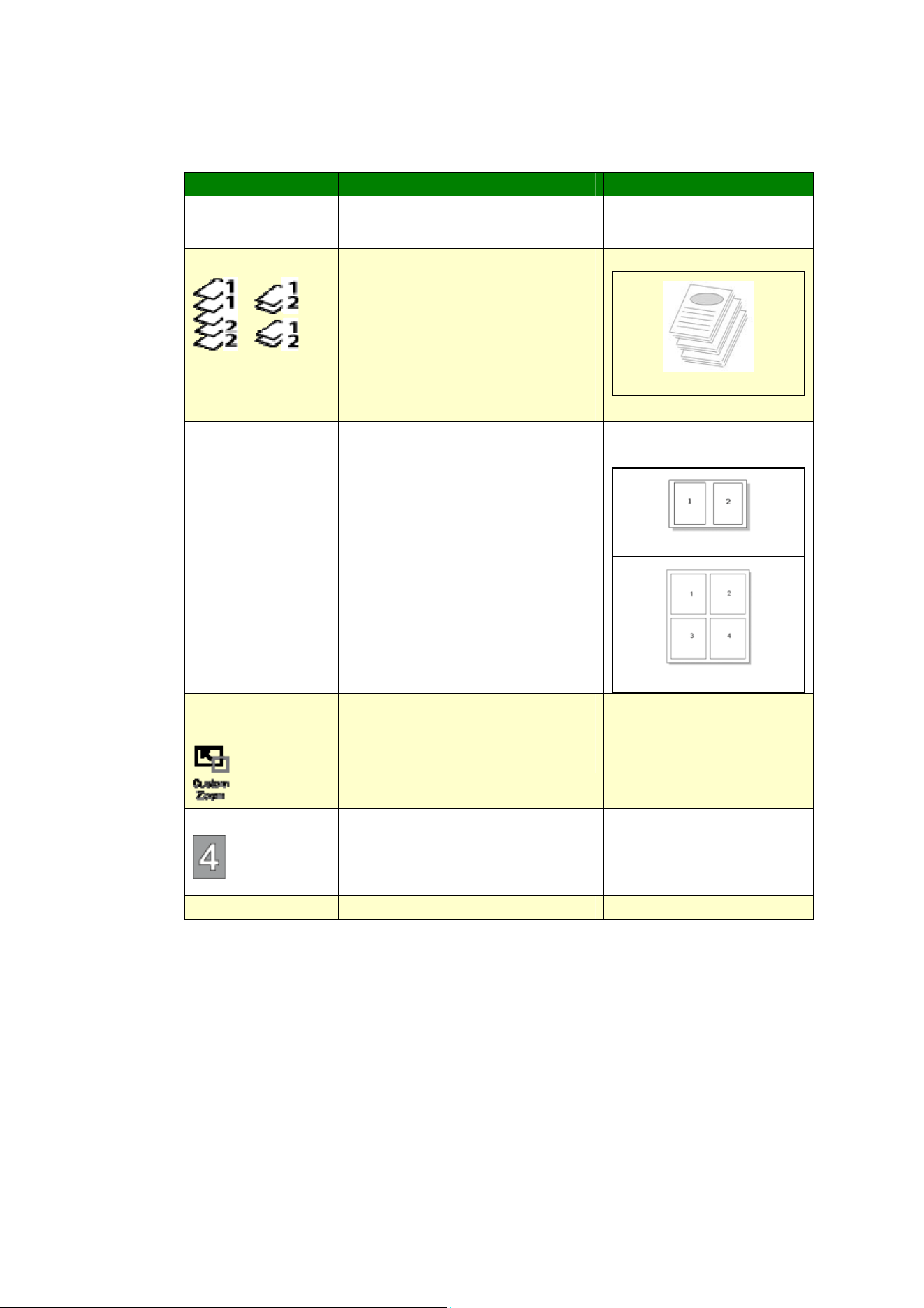
8
7
Copy Settings (Available on the LCD Screen and webpage)
*Factory Default
Item Description Option
Copy Mode
Select your copy mode to
enhance your text or pictures.
*Text/Photo/Mixed
Collate
Selecting On sorts documents
by the order, (1,2,3 / 1,2,3 /
1,2,3).
Selecting Off stacks documents
by the order,
(1,1,1/2,2,2/3,3,3).
On/*Off
Collated
N-up
Selecting 2 to 1 prints 2
original images reduced to fit
onto one sheet of paper.
Selecting 4 to 1 prints 4
original images reduced to fit
onto one sheet of paper.
* 2 to 1/4 to 1
2 to 1
4 to 1
Custom Zoom
Default
Custom Size (25% ~
400%): Resize your
documents from 25% to 400%.
25% ~ 400%
Density
Lighten or darken an image.
1/2/3/*4/5/6/7
Toner Save
Enable or disable Toner Save.
On/*Off
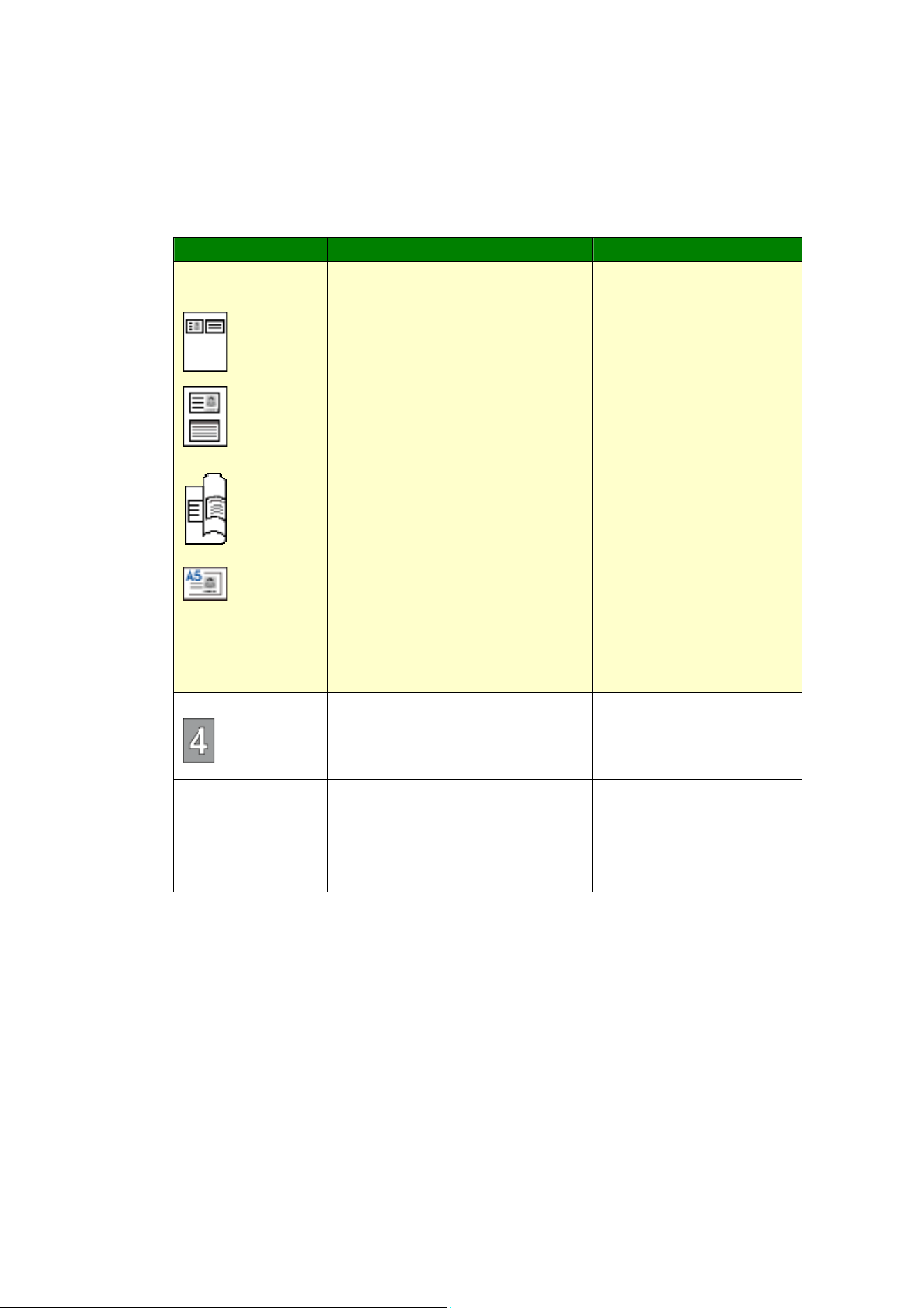
88
ID Card Copy Settings (Available on the LCD Screen and
webpage)
*Factory Default
* This is also the factory default settings if you have installed an optional scan
module for ID card (CSA6). If desired, change your CSA6 setting here.
Item Description Option
Mode
Select an ID Card Copy mode.
Up/Down – Copy the front
and rear side of your ID card
on the upper half and bottom
half on one side of a sheet.
Right/Left –Copy the front
and rear side of your ID card
on the right half and left half
on one side of a sheet.
Front/Rear - Copy the front
and rear side of your ID card
on the front and rear side of a
sheet.
Multi-card – Copy the front
and rear side of ID card in A5
size or multiple cards on one
side of a sheet.
Up/Down
/*Right/Left
/Front/Rear
/Multi-card
Density
Lighten or darken an image.
1/2/3/*4/5/6/7
Vertical
Position
Adjustment
Slighly adjust the vertical
position of the scanned image
of the ID card.
Up/Down(*0~177mm),
Left/Right(*0~355mm),
Front/Rear(*0~177mm)
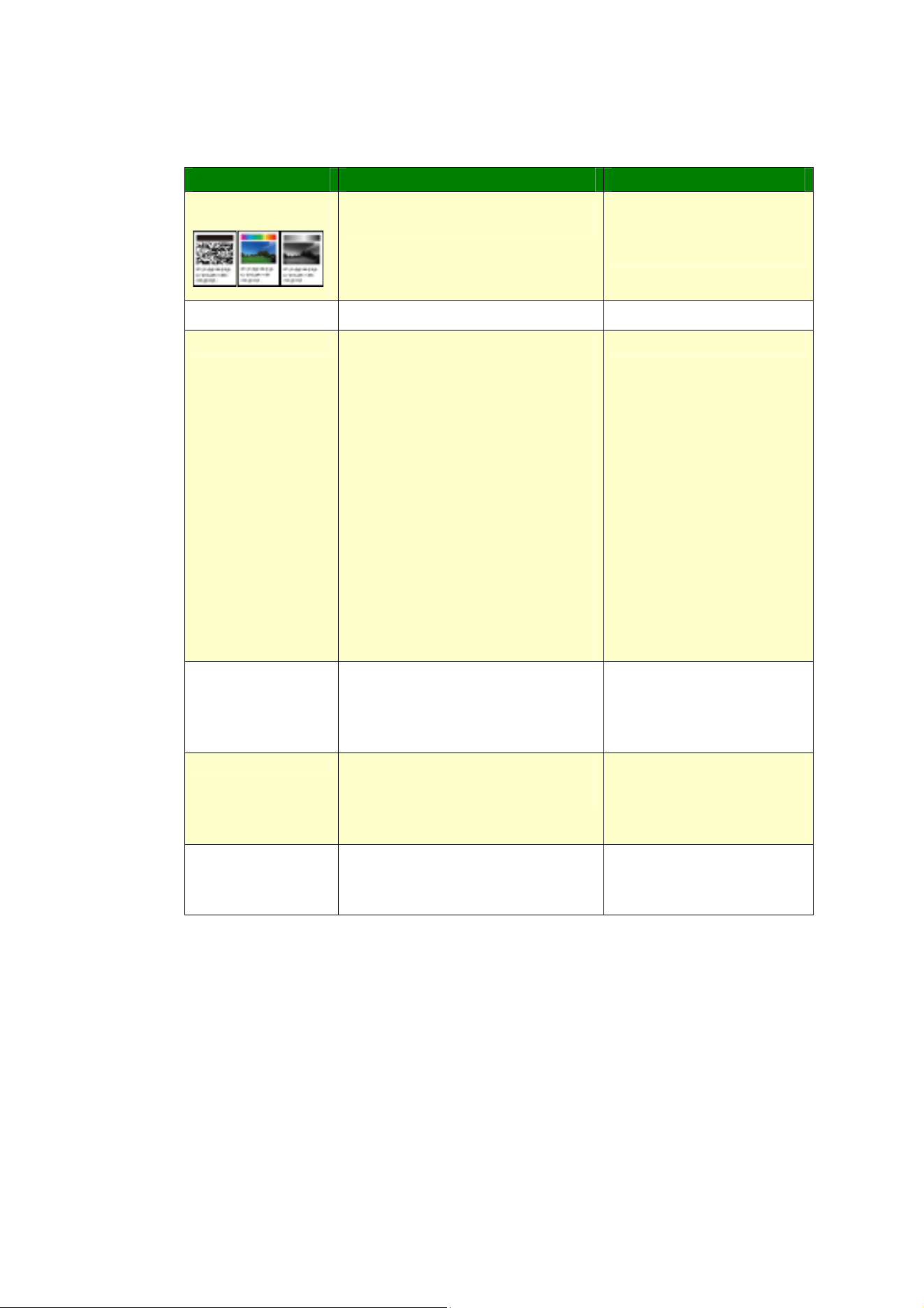
89
Scan Settings (Available on the LCD Screen and webpage)
*Factory Default Setting
Item Description Option
Scan Mode
Choose your Color Mode to
enhance your text or pictures.
B&W/Grayscale/*Color
Density
Lighten or darken an image.
1/2/3/*4/5/6/7
Resolution Choose the resolution of the
scanned image. The higher
the value, the more details
can be reviewed yet more
disk space will be required.
Choice: 150/*200/300/600
dpi
150 dpi: Suits to be viewed
on the screen.
200 dpi: Suits for most
business document.
300 dpi/600 dpi: High quality
image helps increase OCR
(optical character recognition)
accuracy.
150/*200/300/600 dpi
File Name
Choose your default file name.
File Format
Select a file format for the
scanned image.
*MPDF (Multi-page
PDF )、PDF (Single-page
PDF)、JPEG、TIFF
Err Report
Enable to print a transmission
report or print a report only
when errors.
Off/On/*On Error
9
0
Fax Settings (Available for LCD Screen and webpage)
(To access the setting, you need to install a fax module and a telephone line
first.)
*Factory Default
Item Description Option
Quality Select a document quality. *Standard/Fine/Super
Fine/Photo/Auto
Density
Lighten or darken an image.
1/2/3/*4/5/6/7
Header Sets header information for
outgoing faxes.
*Off/On
Footer
Sets ON if you wish to show
footer information for all
outgoing faxes.
*Off/On
Tone / Pulse Sets the product to tone- or
pulse-dialing mode.
*Tone /10 PPS/20 PPS
20 PPS applies only for China.
Tone and 10 PPS apply for any
countries except China.
Volume
Sets ON if you wish to turn
on the speaker during fax
communication.
Off/High/*Medium/Low
Redial
Sets the number of redial
attempts and redial interval
setting if the number dialed
is busy.
Redial Count (0/1/*2)
Interval (1min/*2min/3min)
DialTone Det
Sets ON to allow this product
to wait for and detect dial
tone before proceeding with
dialing.
Off/*On
Connect Time
Sets your connection time
after dialing and before
receiving signal.
30/*60/70/80/90 (Seconds)
Tx Level
Sets the level of
transmission signal.
0 ~ - 15 dBm
(*-13 dBm)
ECM
Choose ON if you wish to
enable the Error Correction
Mode to correct errors in
transmission due to bad
lines.
*Off/On
Starting Rate
Sets the level of starting
rate.
*Super G3/G3/Forced
Info Display
Show speed information
during transmission.
Off/*On
Codec
Specify or Disable Fax Codec
modes (MR、MMR).
*MMR/MR/MH
91
TX Report
Choose if you wish to print
the fax transmission report
or print the error report only.
Off/On/*Error
Protocol Log
Print the protocol
information.
*Off/On/Error
Country
Specify a country name for
fax.
USA/Germany/Taiwan/China/
Singapore/Malaysia/Thailand/
Indonesia/Korea/South Africa
Forward Tx
Sets ON if you wish to
forward all incoming faxes or
emails to another fax
number or email address.
*Off/Fax Number/E-mail
Fax Number:Number/*Local
Print(On/off)
E-mail:From/Subject/ E-mail
Reduce / Split
Choose to scale the entire
contents of your receiving
fax to fit into the paper of
the printer.
Choose to split the entire
contents of your receiving
fax into several pages.
Reduce /*Split
No. of Rings to
receive
Lets you set the number of
times the phone ring before
receiving the fax.
Note: The product’s speaker
does not produce such a ring
tone. It is possible for a user
to hear the ring tone via an
external phone connected to
the product.
1 ~ 10
Default Value: 3
RX Mode
Select “Fax” to receive an
incoming fax automatically.
Select “Manual” to receive an
incoming fax manually.
On how to receive/send
faxes manually, refer to the
section, Receiving or
Sending a Fax Manually.
*Fax/ Manual
Delay Send
Specify the length of time for
delay send.
Hour/Minute
Overseas
Mode
Choose your desired
overseas mode.
Off/Ignore 1
st
DIS/DIS-DCS
Interval (500, 800 ms)/Ignore
1
st
DIS + DIS-DCS Interval
(500, 800 ms)
92
FTP/CIFS Setup (Available on the web page)
To send your scanned document to a specified network folder, you need to setup
your file destination. To create or modify your file destination, please refer to the
preceding section, Setting up Your File Destination, on page 64.
Address Book (Available on the web page)
To send your scanned document to an e-mail address or group, you need to setup
your address book. To create or modify your address book, please refer to the
preceding section, Setting up Your Address Book, on page 58.
Network (Available on the web page)
Displays the network information of the product.
*Factory Default
Item Description Option
Host Name
Host Name Dipslay the host name for the product.
Ethernet Settings
DHCP: Enables DHCP *Off/On
IP Address: Set up an IP
address.
Input the IP address of the product.
Subnet Mask Input the subnet mask number.
Gateway Input the gateway for your IP.
Auto-Obtain WINS/DNS *Off/On
Primary DNS Server Sets up the primary DNS server address for the
product.
Secondary DNS Server Sets up the secondary DNS server address for the
product.
Primary WINS Server Sets up the primary WINS server address for the
product.
Secondary WINS Server Sets up the secondary WINS server address for the
product.
Domain Name Sets up a domain name for the product.
Wi-Fi Settings
Search AP Click [Search AP] and the currently connected
wireless networks will be displayed. Select the
wireless network you want to connect and then
enter the security key if required.
IP Settings Obtain the IP address directly from the DHCP server
or you may enter your static IP on the [IP
Address], [Subnet Mask], and [Gateway] field
respectively.
93
SMTP
Mail Server Enter the IP address of your SMTP server.
SMTP Port # Enter the port number of the SMTP server.
* 25
Authentication Method Enter the email authentication method.
Choice: *None, SMTP, POP3
Login Name Enter the login name for SMTP authentication.
Password Enter the password for SMTP authentication.
Time Zone Enter the time zone of your location.
E-Mail
From Specify sender’s e-mail address. This is a must item
to send images to e-mail address.
Subject
Type the default subject.
Signature Specify the signature file of the sender if necessary.
Reply to
Specify the e-mail address you wish to reply to. If this
item is left blank, the [From] address will be used as
the [Reply to] address.
Message
Type the default’s e-mail message.
Network Security Settings
Security Configuration
Filter
Specify if you wish to enable or
disable the filter configuration.
*Disable/Enable
Filter Mode
Specify your filter mode to
allow some IPs to access the
device or deny some IPs from
accessing the device’s
embedded web page.
Allow/Deny
IP Address Filter
Configuration
IP Address Filter
Configuration- Four types of
Start IP and End IP can be
specified.
Mac Address Filter
Configuration- Up to 10 Mac
address can be specified.
IP Address Filter
Configuration/
Mac Address Filter
Configuration
A
+
Manager Settings
A
+
Manager Settings
Enter the IP address of a specified server to send
the system log file to for quick troubleshooting.
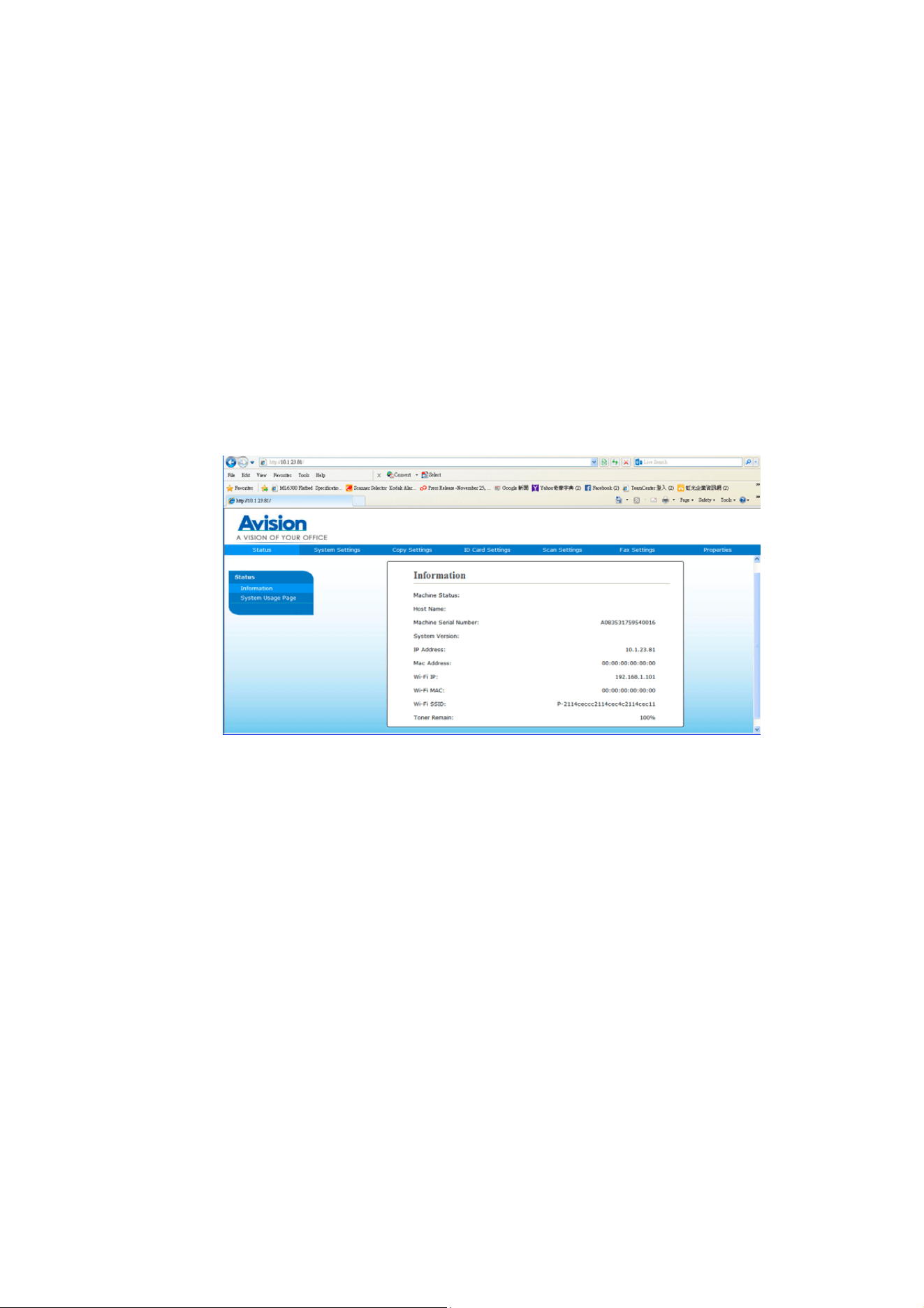
94
Updating The Product’s Firmware
Before updating the product’s firmware, you need to first download the latest
firmware from our web site at www.avision.com onto your computer.
To update the product’s firmware, follow these steps:
1. Refer to the preceding section, Knowing the Product’s Default IP
Address, to get the product’s IP address from the DHCP server.
2. Open your browser.
3. Type the product’s IP address on the URL field of your browser. For example,
10.1.20.25. The following embedded web page will be displayed
4. On the product’s web page, choose [Properties] and then choose [FW
Update] on the left side. The [FW Update] page will be displayed.
5. Choose [Browse] to find the firmware file on your computer.
6. Choose [Update] to begin updating the firmware to the product.
Ready
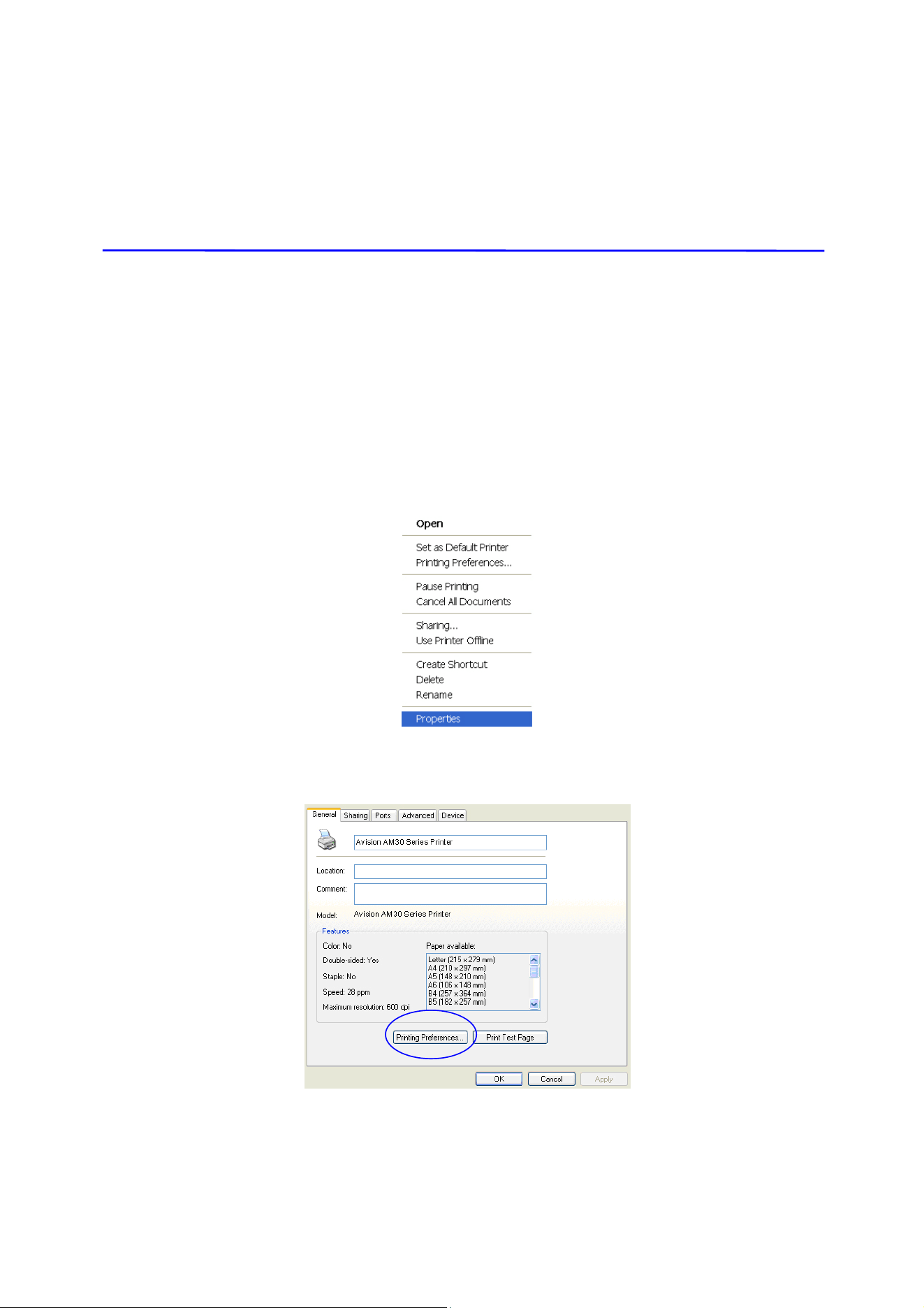
9
5
6. Configuring the Printer
Driver
Displaying the Printer Driver Properties
Dialog Box (Windows)
To display the Printer Driver Properties dialog box,
1. Click Start on the system tray and choose Printers and Faxes.
2. Right-click the product’s printer name and choose Properties.
3. The product’s Printer Properties dialog box appears.
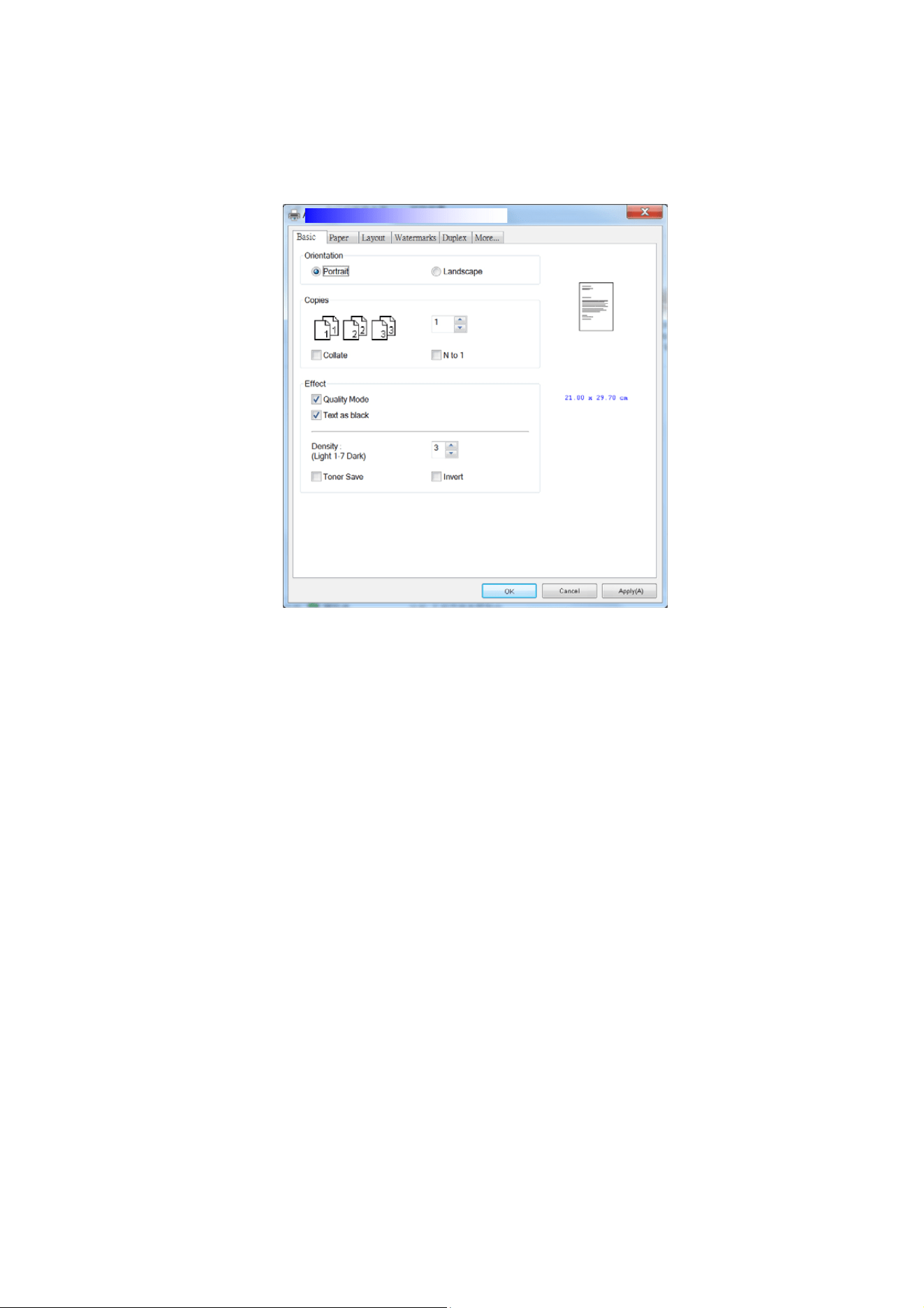
96
4. Click Printing Preferences to prompt the following Printing Preferences
dialog box.
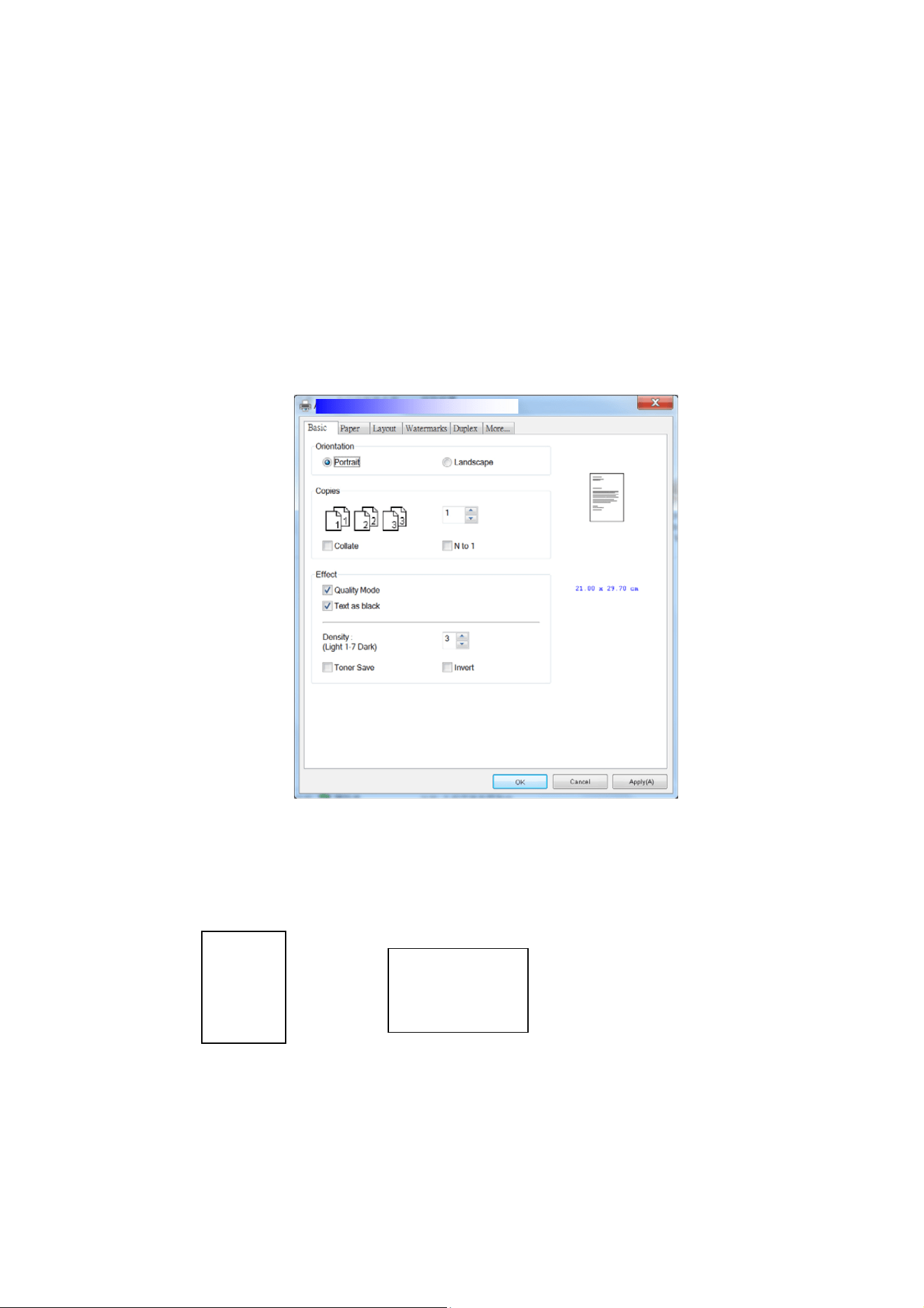
9
7
Configuring Printer Driver Settings
The Printing Preferences dialog box consists of the Basic tab, the Paper tab, the
Layout tab, the Watermark tab, the Duplex tab, and the More tab. The contents
of each tab will be explained in the following sections.
The Basic Tab
The Basic tab contains settings for Orientation, Copies, Effect, Density, Toner Save,
and Invert.
Orientation
Choose your orientation. Choice: Portrait, Landscape
Portrait
Landscape
ABC
ABC
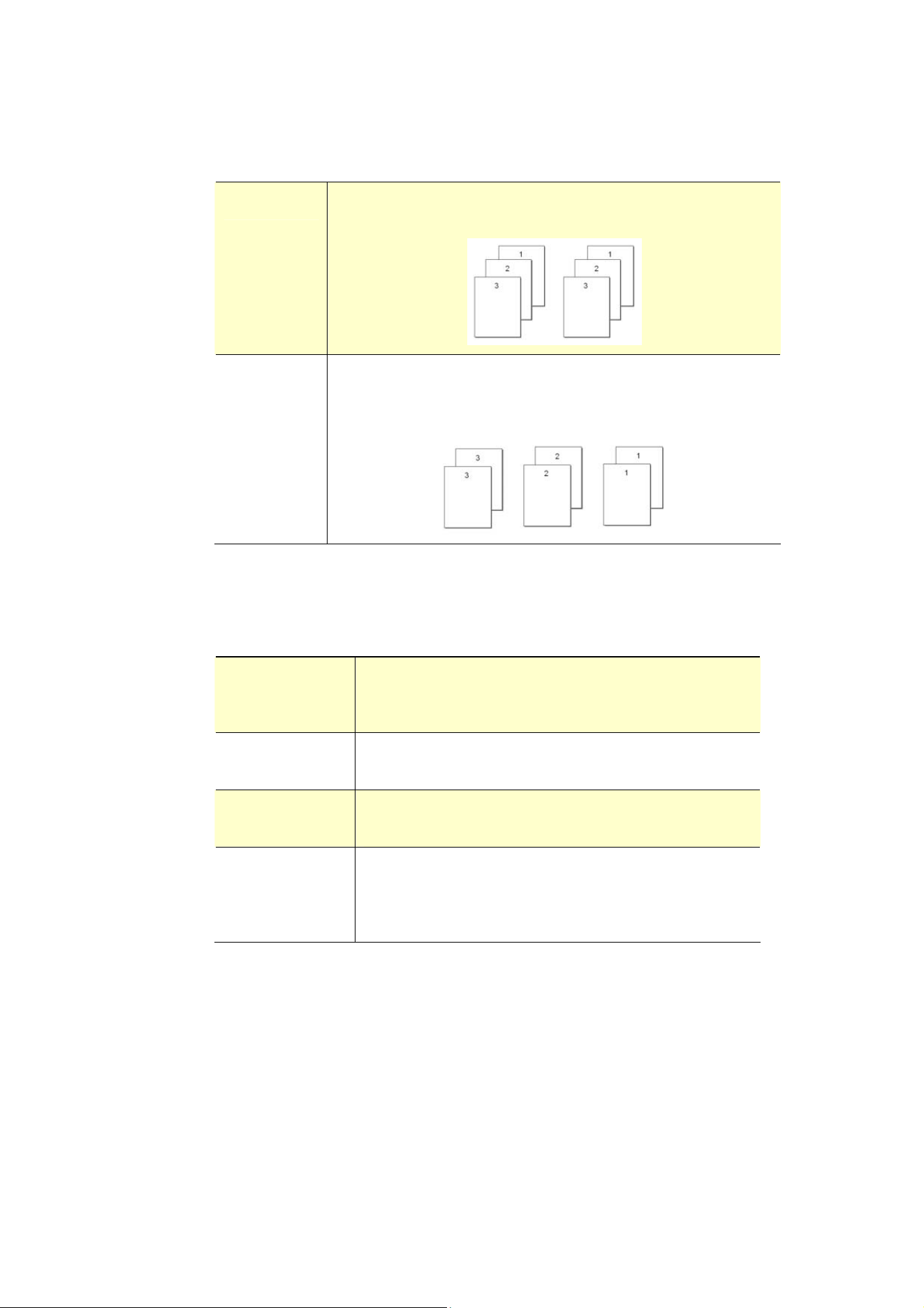
98
Copies
Choose the number of copies to be printed. You can enter up to 999.
Collated: Click to print your document in the page order such as
1/2/3, 1/2/3, 1/2/3.
N to 1: Click to reverse the printing order of your document.
As a result, the last page of your document will be
printed first and vice versa.
Effect
Quality Mode: If the picture in your document does not print
clearly, click Quality Mode to improve its
quality.
Density: Click to lighten or darken your document.
Density level (1~7). Default: 3
Toner Save: Allows you to print your document using the
toner saving mode.
Invert: Invert makes each image pixel inverted to its
complementary color. For example: the original
black text on white background becomes white
text on black background.
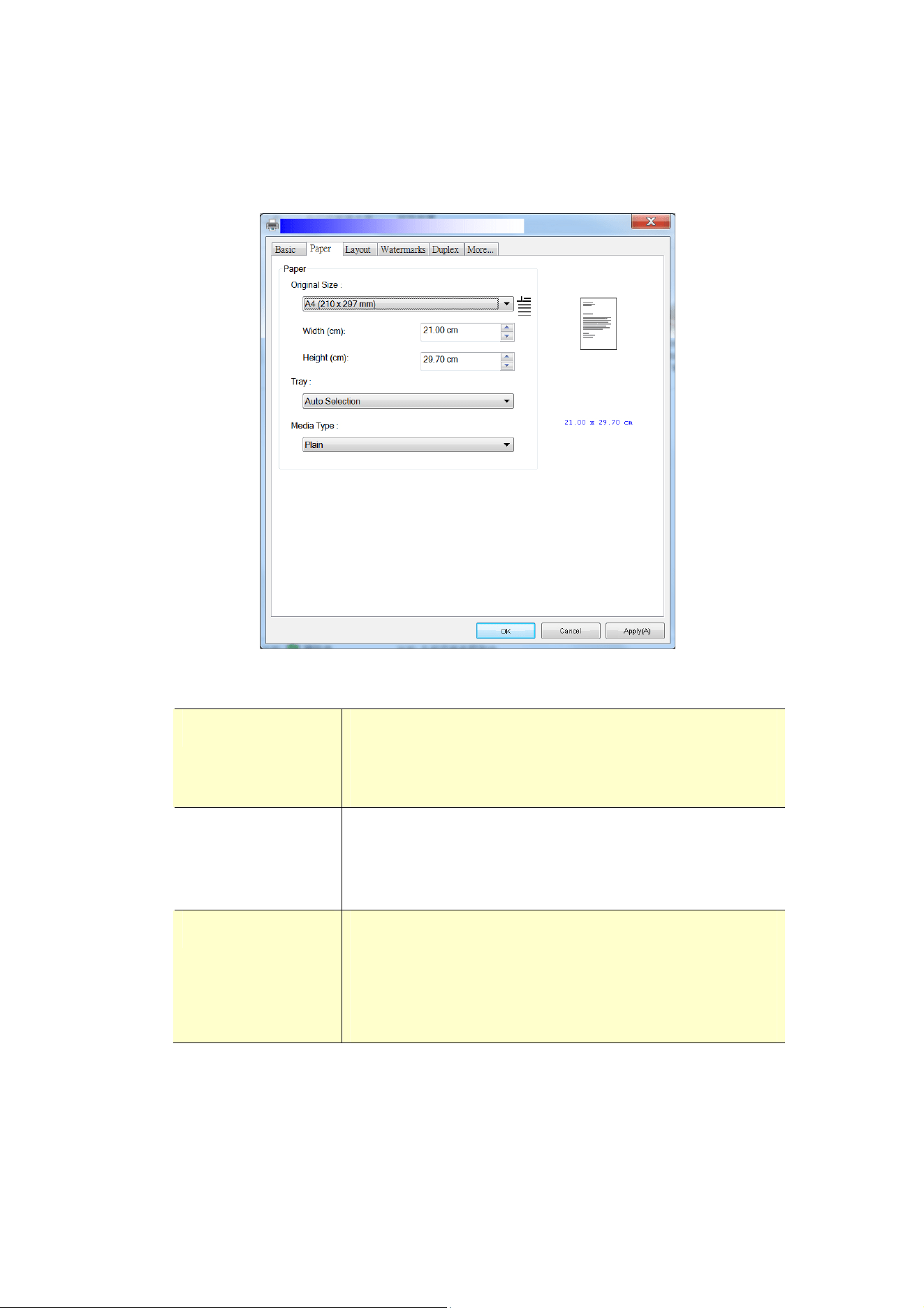
99
The Paper Tab
The Paper tab contains settings for Original Size, Tray, and Media Type.
Paper
Original Size: Choose the size of paper loaded in the designated
tray.
Choice: A4, A5, A6, B5, B6, Legal, Letter, User
Define
Tray: Choose the tray from which your paper should be fed.
Choice: Auto, Manual Tray, Main Tray
Auto means automatically select the paper tray which
is available (priority: 1: manual tray; 2: main tray).
Media Type: Choose the type of media to be used for printing.
Choice: Plain Paper, Thin Paper, Thick Paper,
Laser Paper, *Postcard, *Bond, *Envelope
*: Only available in the manual tray for one-side
printing
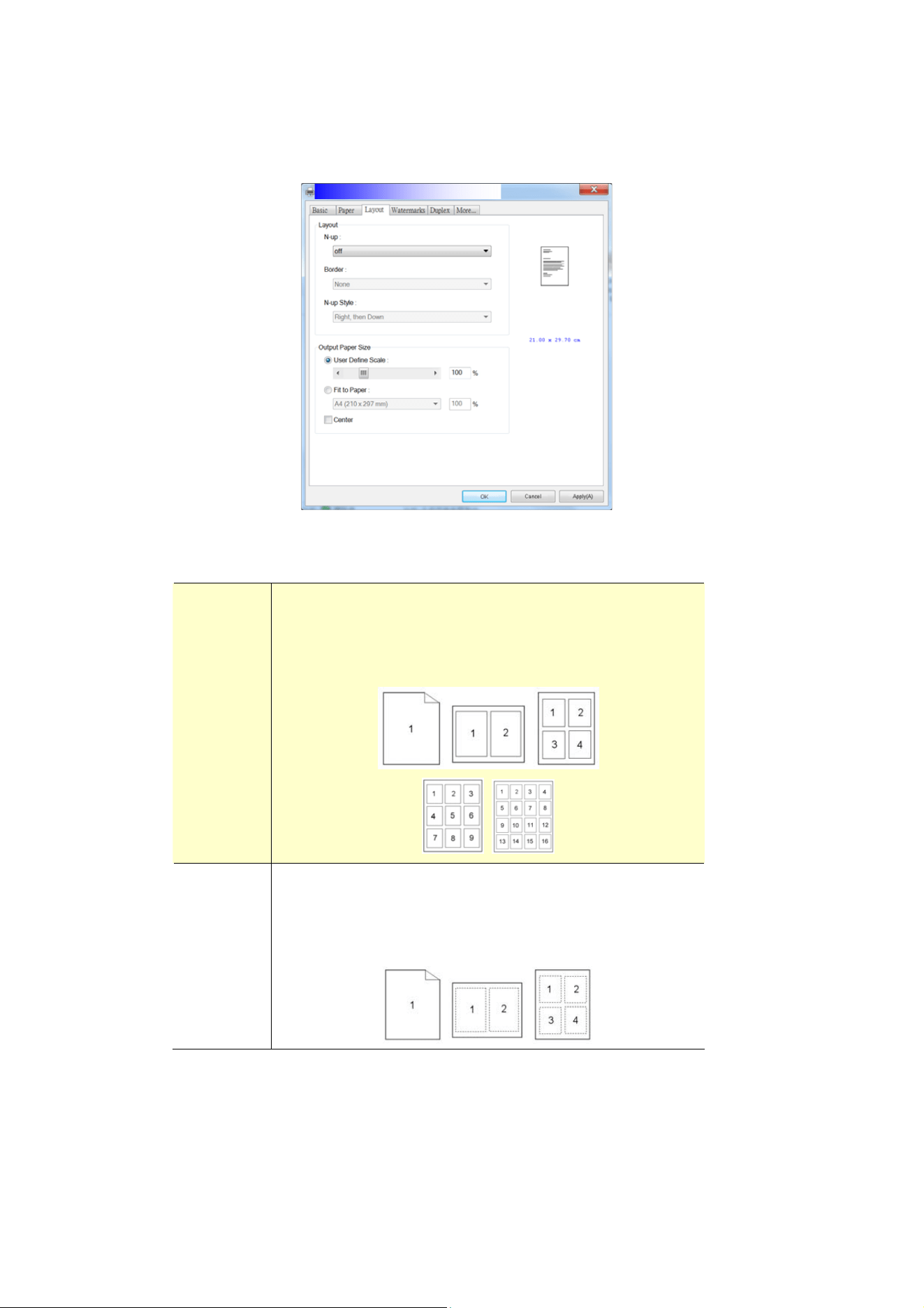
10
0
The Layout Tab
The Layout tab contains settings for N-up, and Output Paper Size.
N-up
N-up: Choose number of pages to be printed on a single
sheet of paper.
Choice: Off, 2up(2-in-1), 4-up(4-in-1),
9-up(9-in-1), 16-up(16-in-1)
Border: Choose if you wish to add border around each page
when printing more than one page on a single sheet
of paper.
Choice: None, Border Line, Dashed Line
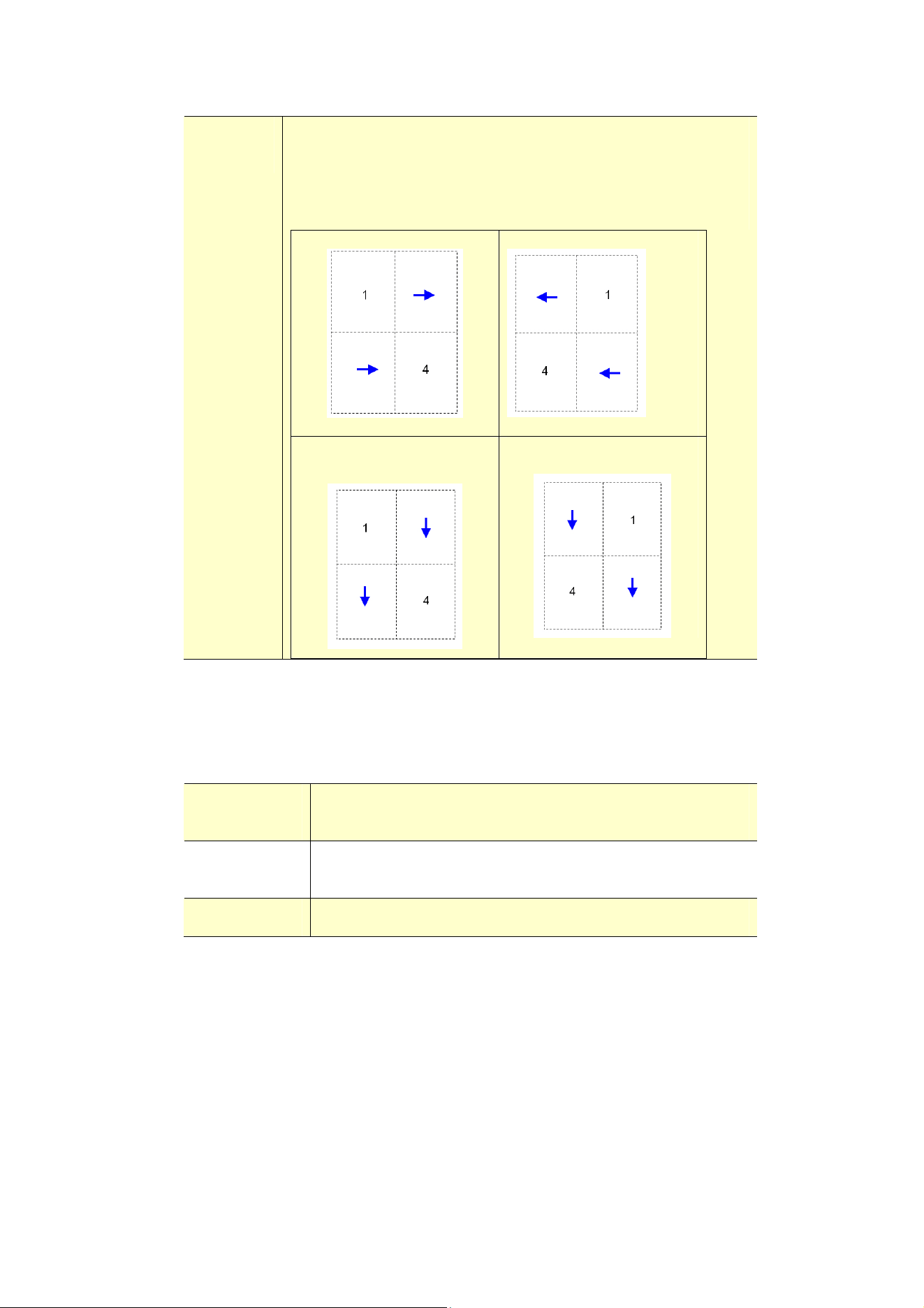
101
N-up
Style:
Choose the style you want when printing multi-page
document on a single sheet.
Choice: Right, then Down/Down, then Right/Left,
then Down/Down, then Left
Right, then Down
Down, then Left
Down, then Right
Left, then Down
Output Paper Size
User Define
Scale
You can reduce or enlarge your printed image using
the Slider Bar. Scaling rate: 25%~400%
Fit to Paper Output the full page of the selected original including
the four margins.
Center Print your image in the center of the output paper.
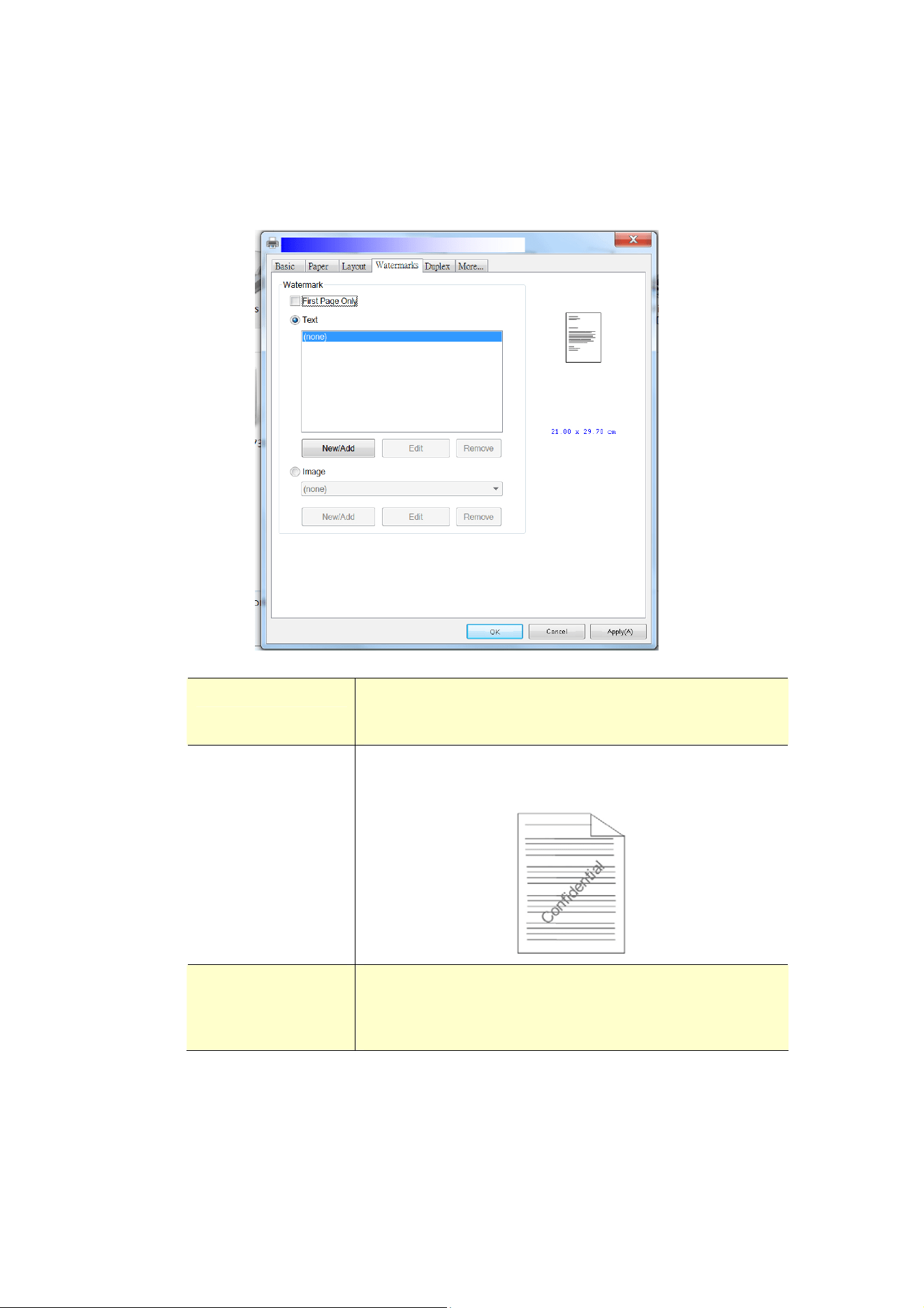
10
2
The Watermark Tab
The Watermark tab allows you to add some text or image (such as
CONFIDENTIAL, IMPORTANT, DRAFT, etc) for your document.
First Page only Check to print watermark only on the first page.
Clear the check box will print watermark on all
pages.
Text Choose and click New/Add to add new watermark
text. Click the Edit button to change or the
Remove button to delete.
Image Choose and click New/Add to add watermark image.
Click the Edit button to change or the Remove
button to delete. You can choose your image in file
format such as BMP, TIFF, or JPEG.
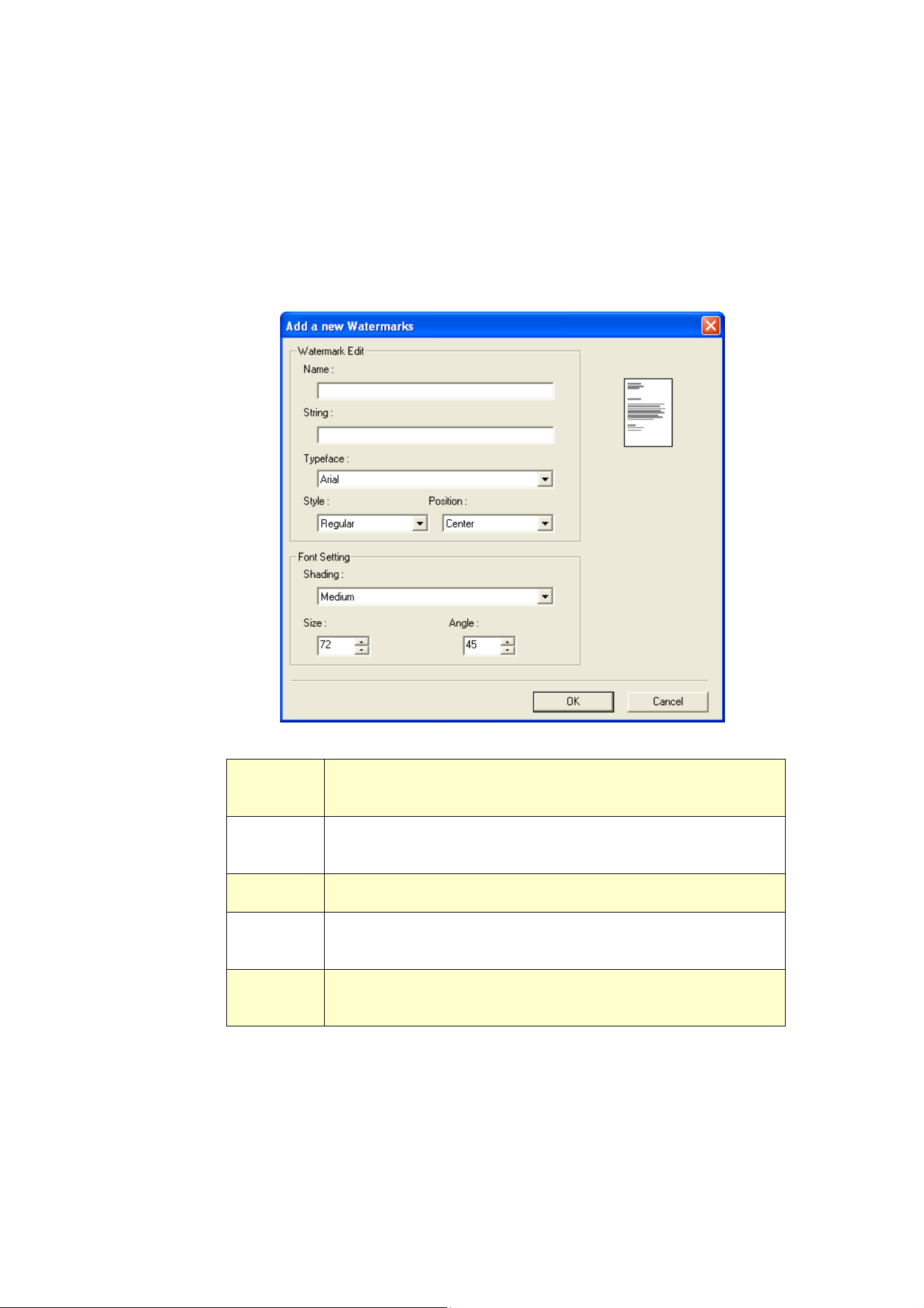
103
Adding a new watermark text
To add a
new watermark text,
1. Choose Text and then click the Add/New button. The following Watermark
dialog box appears.
Name Name your watermark text. This name will be shown in
the Watermark text list.
String Enter your watermark text, such as confidential,
important, and so on.
Typeface Choose your font type for your watermark text.
Style Choose the style of your watermark text. Choice:
Regular, Bold, Italic, Bold Italic.
Position Choose the position of your watermark text. Choice:
Center, Tile.

104
Angle Specify the angle of the watermark text from 0° to 360°
Size Specify the size of your watermark text from 1 to 288.
Shading Specify a relative density for the watermark text.
Choice: Lightest, Light, Medium, Dark, Darkest.
2. Click the OK button to save the settings. If the new watermark text is
created successfully, the watermark name will be shown in the Text list.
Editing a current watermark text
To edit a current water
mark text,
1. Choose the watermark name that you wish to edit from the Text list.
2. Click the Edit button. The Watermark Edit dialog box appears.
3. Change your settings for the selected watermark text and choose OK to
complete.
Removing a current watermark text
To remove a current
watermark text,
1. Choose the watermark name that you wish to remove from the Text list.
2. Click the Remove button. The watermark text will be removed.
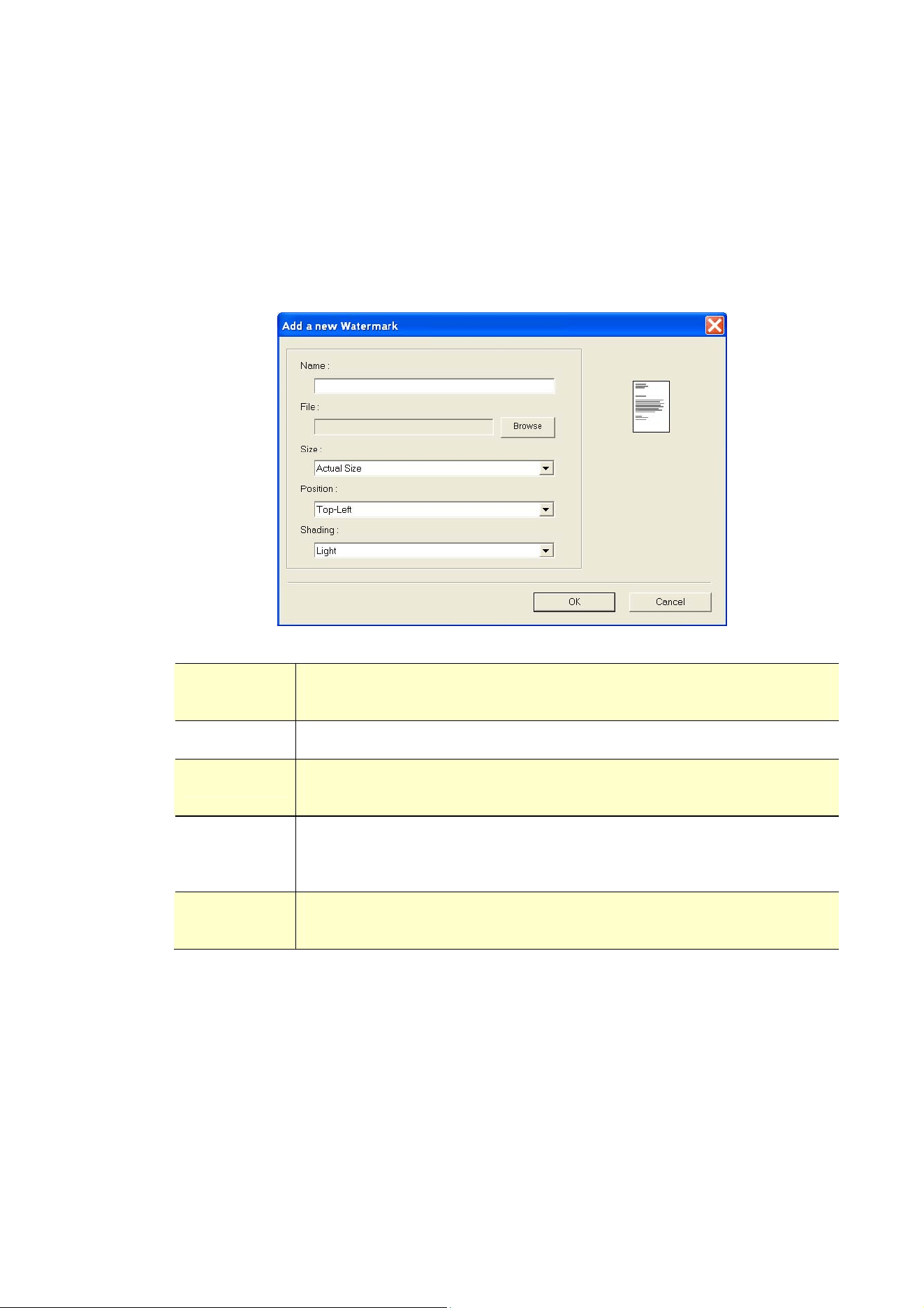
10
5
Adding a new watermark image
To add a
new watermark image,
1. Choose Image and then click the Add/New button. The following
Watermark dialog box appears.
Name Name your watermark image. This name will be shown in the
Watermark image list.
File Click the Browse button to locate your watermark image.
Size Specify the size of your watermark image. Choice: Actural
Size, Fit to Page, Tile.
Position Choose the position of your watermark image. Choice: Top-Left,
Top-Center, Top-Right, Center, Center-Left, Center-Right,
Bottom-Center, Bottom-Right, Bottom-Left.
Shading Specify a relative density for the watermark text. Choice:
Lightest, Light, Medium, Dark, Darkest.
2. Click the OK button to save the settings. If the new watermark image is
created successfully, the watermark name will be shown in the Image list.

10
6
Editing a current watermark image
To edit a current watermark image,
1. Choose the watermark name that you wish to edit from the Image list.
2. Click the Edit button. The Watermark Edit dialog box appears.
3. Change your settings for the selected watermark image and choose OK to
complete.
Removing a current watermark Image
To remove a current
watermark image,
1. Choose the watermark name that you wish to remove from the Image list.
2. Click the Remove button. The watermark image will be removed.
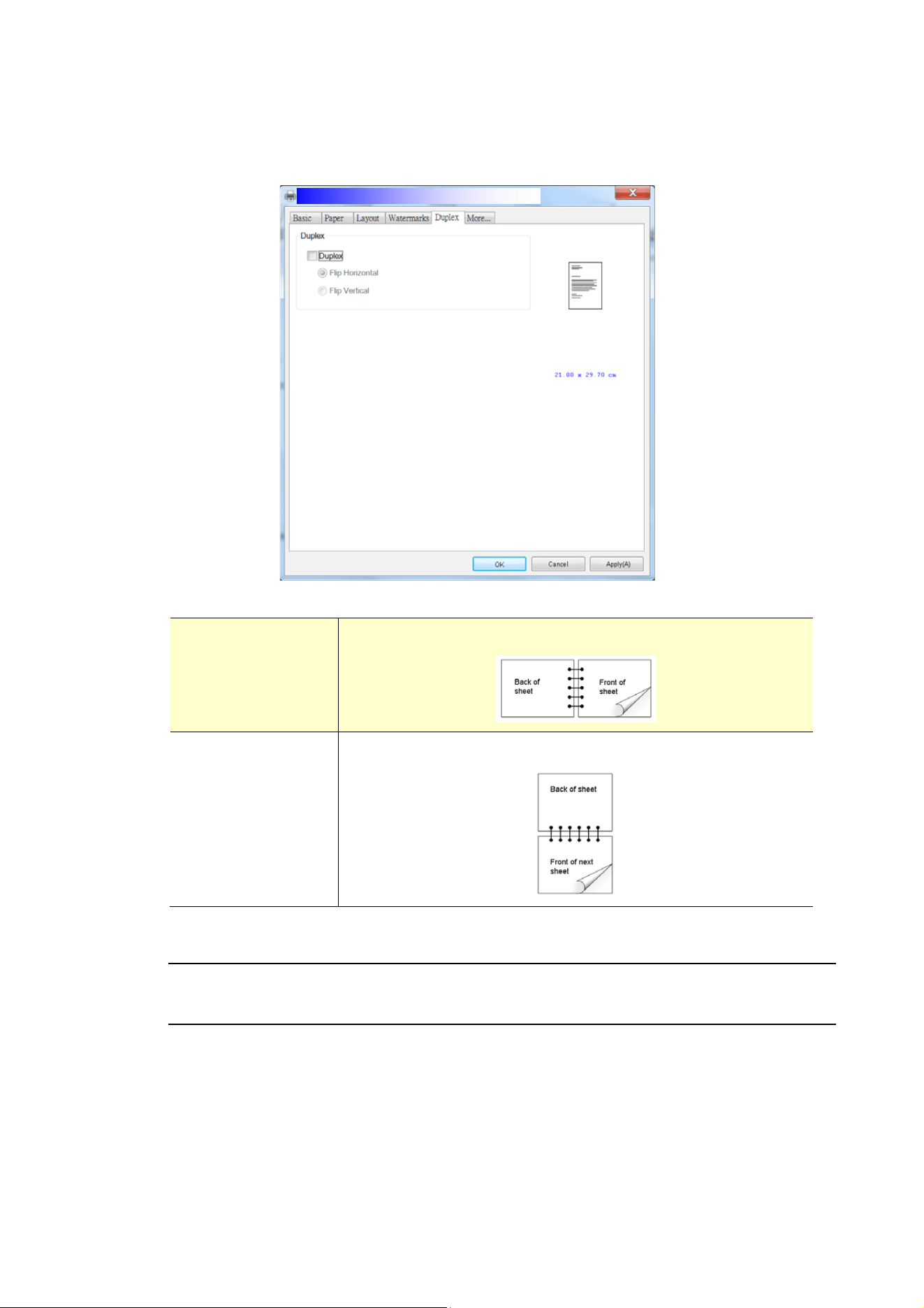
10
7
The Duplex Tab
The Duplex tab allows you to print your document on two sides of the paper.
Flip Horizontal Check to flip the duplex document on the left edge.
Flip Vertical Check to flip the duplex document on the bottom edge.
Note: The duplex feature supports only paper size of A4, B5, or letter in the
paperweight of 60 ~ 105 g/m
2
.
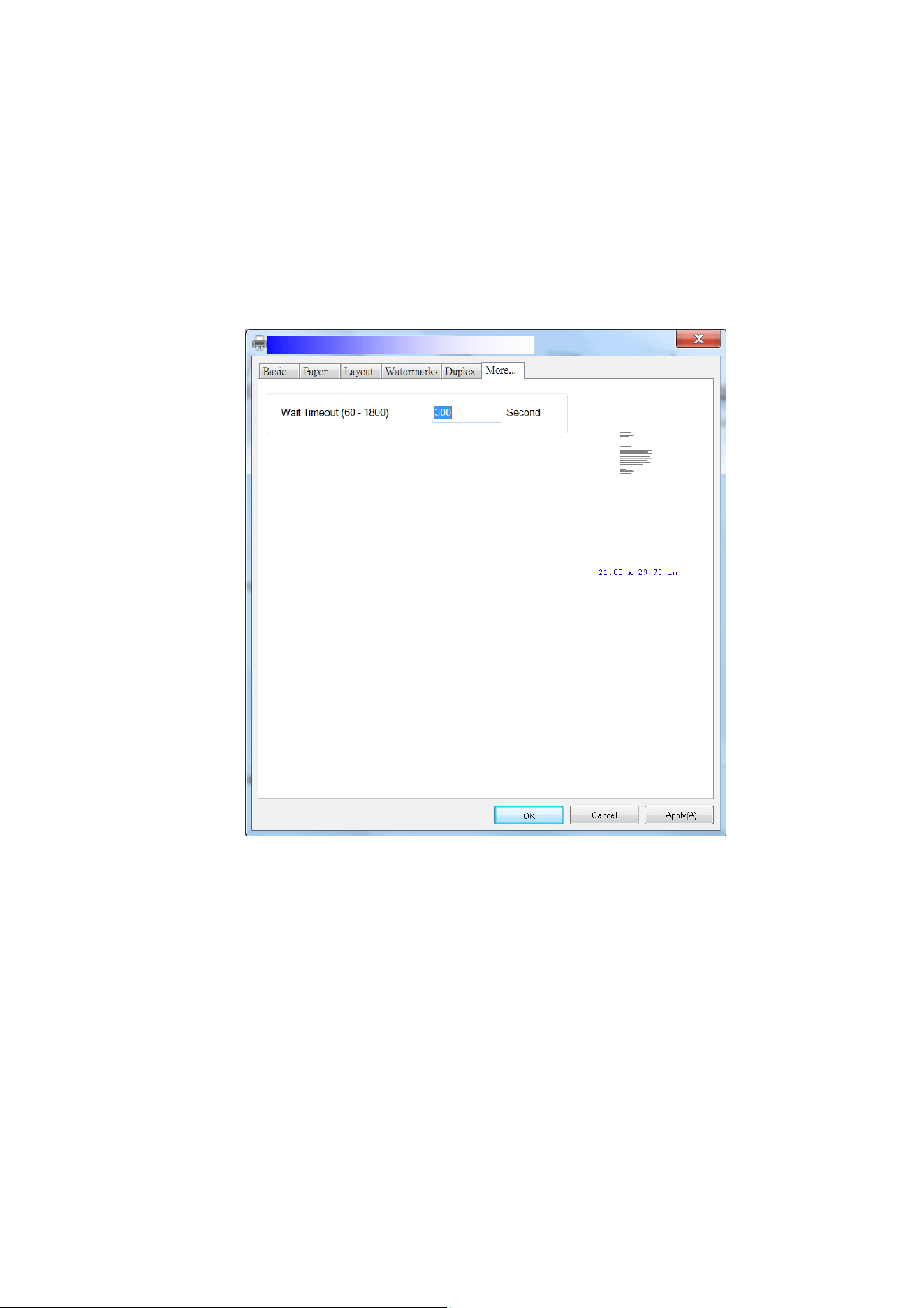
108
The More Tab
On the More tab, a Wait Timeout option is provided to set the amount of time
the MFP waits for data to come from computer during a job. If the data stream
pauses for longer than the specified number of seconds, the job is cancelled.
Permitted timeout values: 60~1800 seconds, default timeout values: 300
seconds
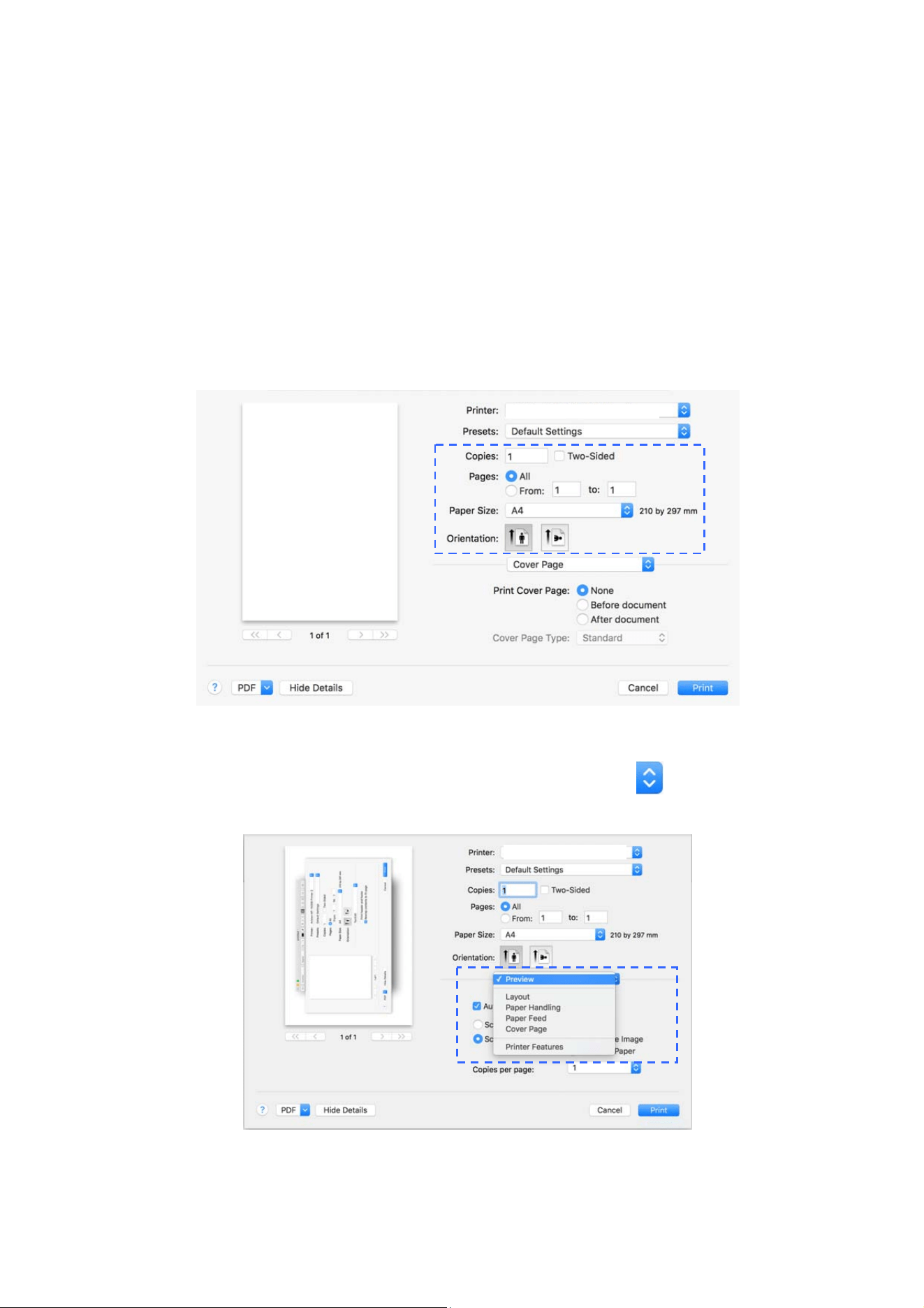
109
Accessing the Features of the Printer Driver (Mac OS)
The Avision AM30 Series Printer provides the following printer features. You can
change the following printer settings when you print from your computer.
Choosing Page Setup Options
Open your document and then click File, then Page. Make sure XXXX Printer
(where XXXX is your model name) is chosen in the Printer pop-up menu. You can
change the settings for Copies, Two-Sided, Paper Size, and Orientation.
Choosing Printing Options
For more page setup options, click the disclosure arrow ( ) on the printer
options.
AM30 Series Printer
AM30 Series Printer
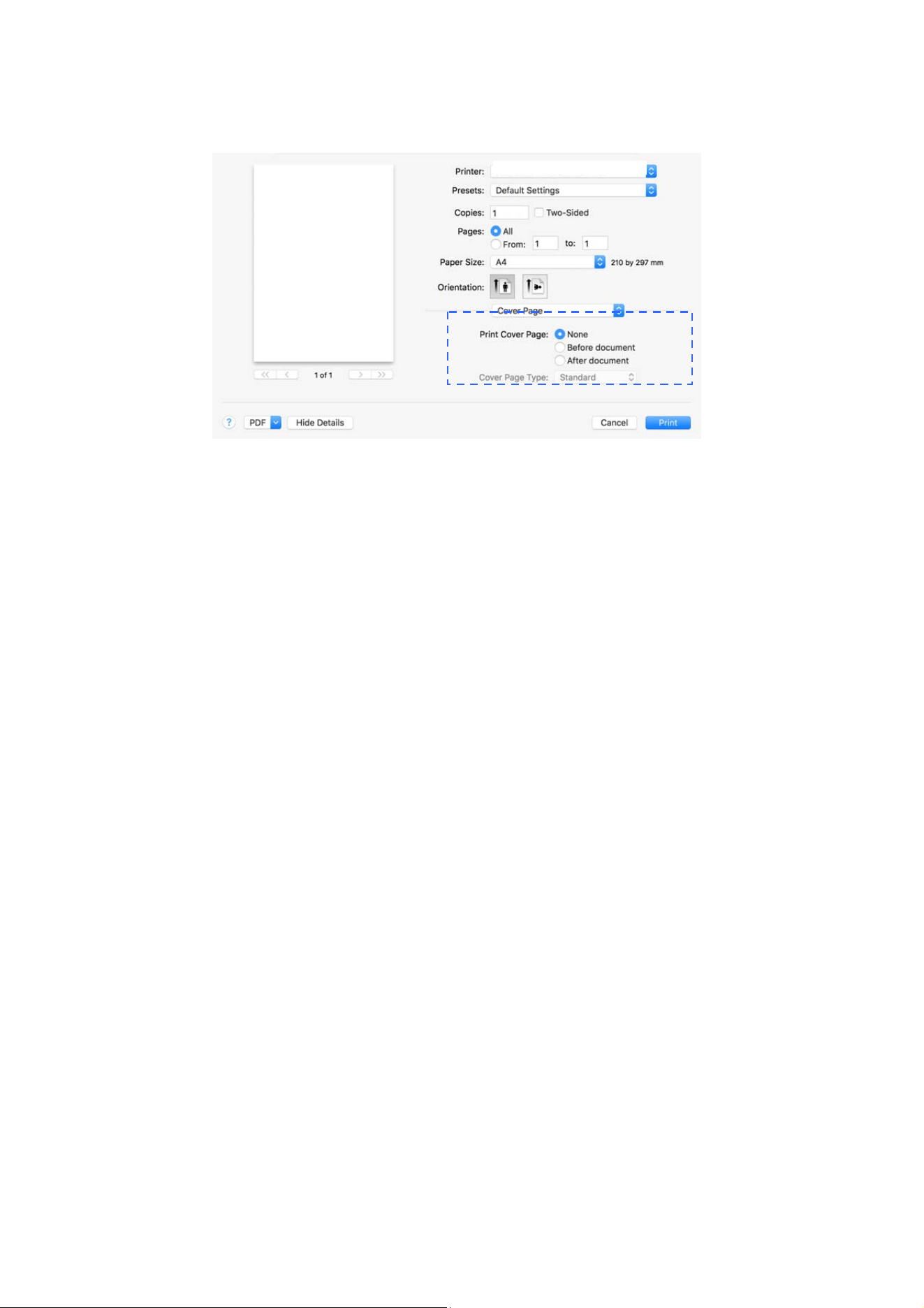
11
0
Cover Page
You can make the following cover page settings:
Print Cover page:
If you want to add a cover page to your document, use
this function.
Choice: None, Before Document, After document
AM30 Series Printer
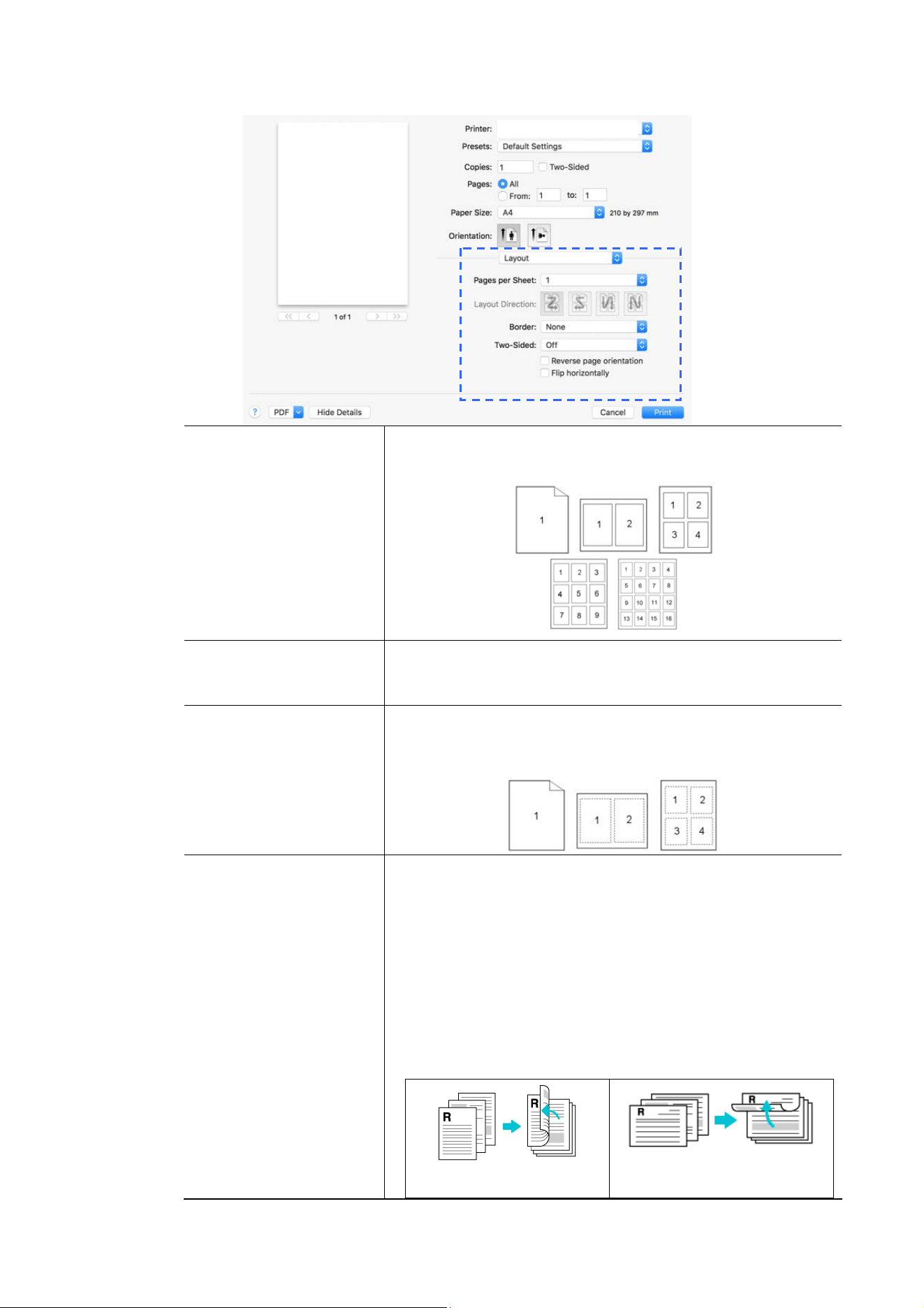
111
Layout
Pages per Sheet:
Choose number of pages to be printed on a single sheet
of paper. Choice: 1, 2 ,4, 6, 9, 16
Layout
Direction:
When you specify the pages per sheet, you can also
specify the direction of the layout.
Border:
If you want to add a border, use this function.
Choice: None, Single hairline, Single Thin Line,
Double Hairline, Double Thin Line
Two-Sided:
Choice: Off, Long-Edge binding, Short-Edge
binding
When using Two-Sided printing, you can select
whether to bind copies on the long-edge or short-edge.
Long-Edge binding will print the pages so that you flip
them like you would do on a book. Short-Edge
binding prints them so that your flip them like you
would do on a calendar.
Long-Edge binding
(Portrait)
Long-Edge binding
(Landscape)
AM30 Series Printer
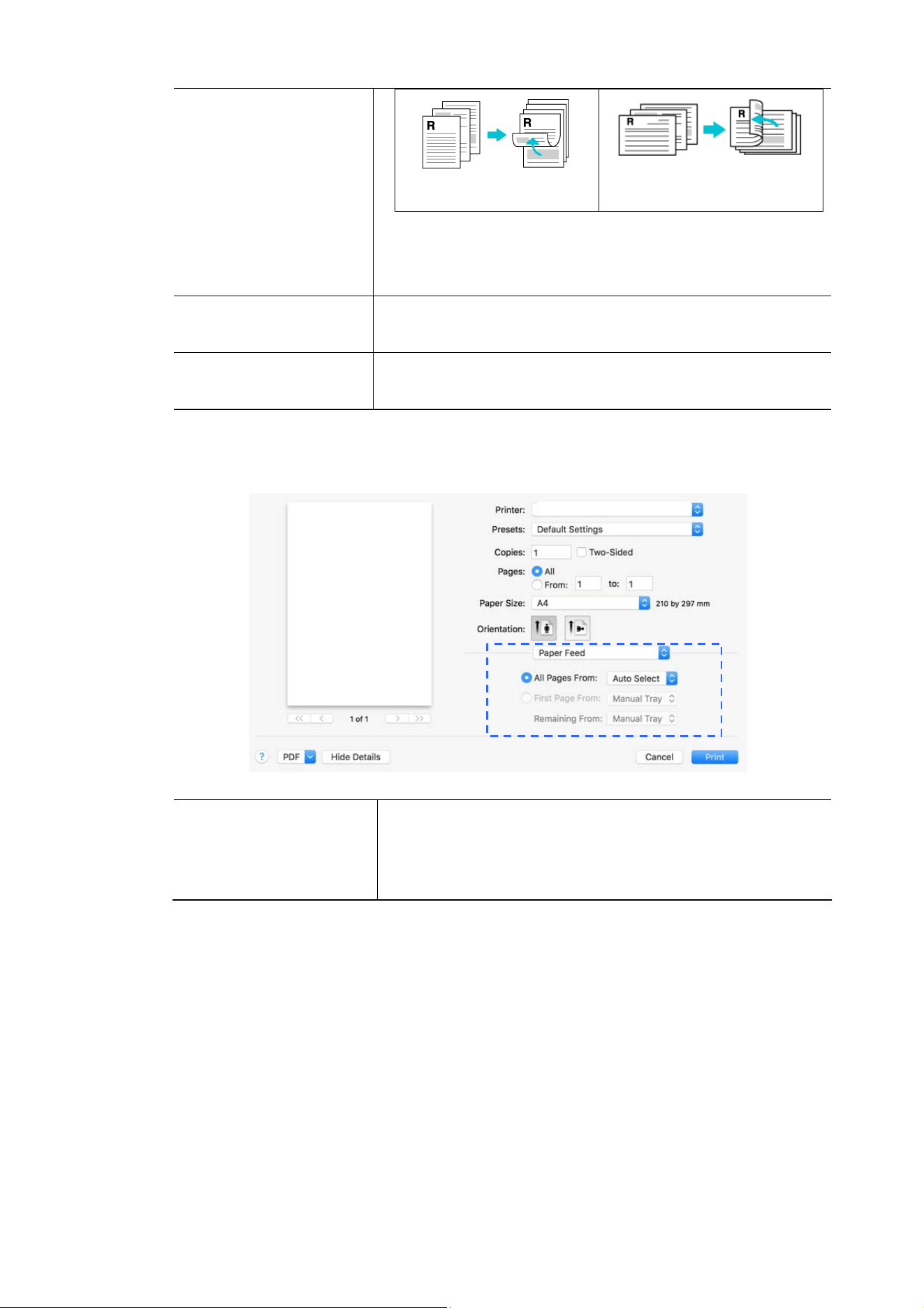
11
2
Short-Edge binding
(Portrait)
Short-Edge binding
(Landscape)
Note: The duplex feature supports only page sizes of
A4, B5, and letter with paper weight between 60g/m
2
and 105g/m
2
.
Reverse Page
Orientation:
Check Reverse Page Orientation to reverse the data
from up to down.
Flip Horizontally:
Check to print the pages so that you flip them like you
would do on a book.
Paper Feed
All pages From:
Choose the tray from which your paper should be fed.
Choice: Auto, Manual Tray, Main Tray
Auto means automatically select the paper tray which
matches the paper size of your document.
AM30 Series Printer
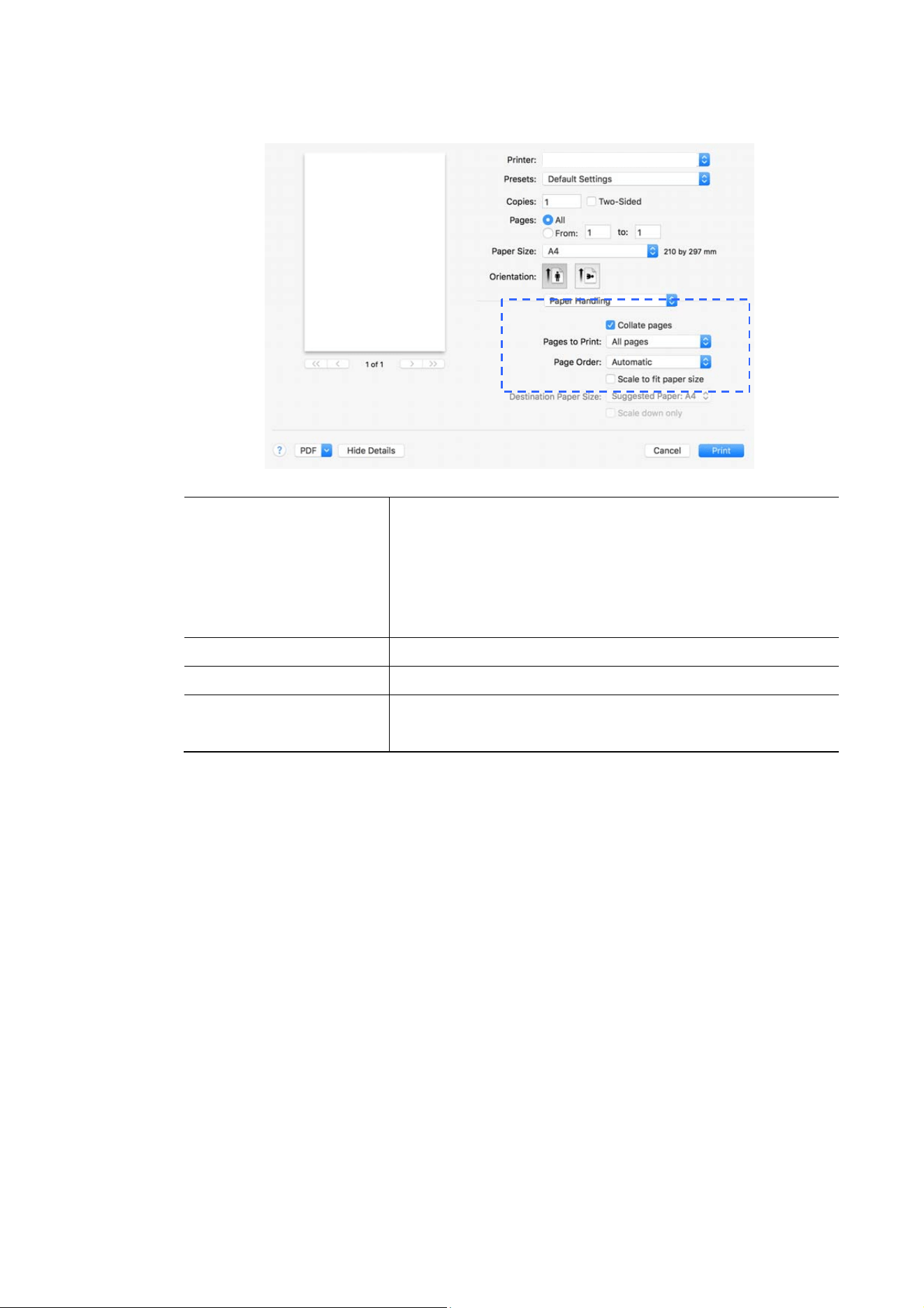
113
Paper Handling
Collate pages:
Your printer can sort multiple copy jobs. For example,
if you print two copies of a three-page document and
you choose not to collate them, the pages print in this
order: 1, 1, 2, 2, 3, 3. If you choose to collate, the
pages print in this order: 1, 2, 3, 1, 2, 3.
Pages to Print:
Select how many pages you wish to print.
Page Order:
Choice: Automatic, Normal, Reverse
Scale to fit paper
size:
Output the full page of the selected original including
the four margins.
AM30 Series Printer
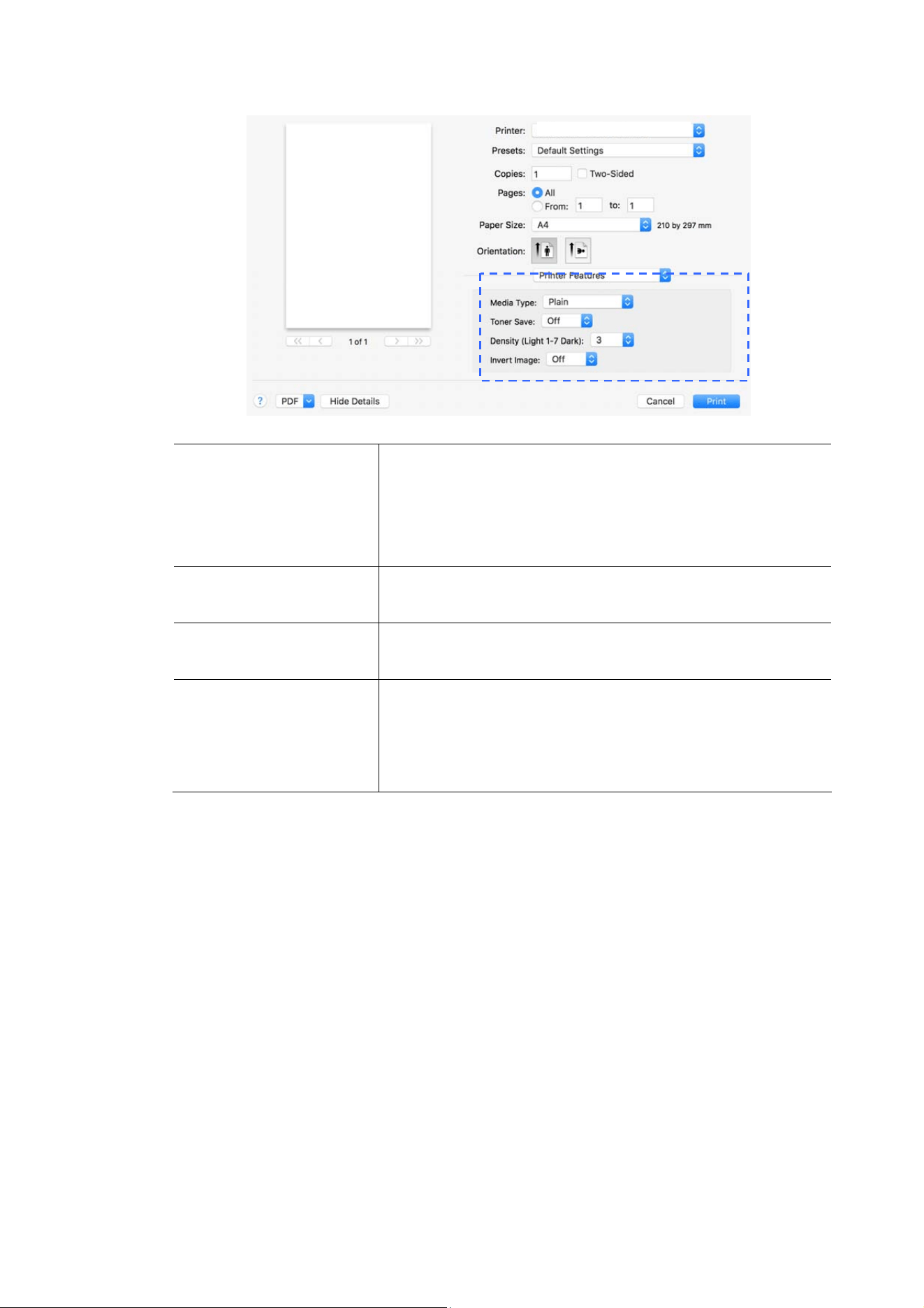
114
Printer Features
Media Type:
Choose the type of media to be used for printing.
Choice: Plain Paper, Thin Paper, Thick Paper,
Laser Paper, *CardStock, *Bond, *Envelope
*: Only available in the manual tray for one-side
printing
Toner Save:
Allows you to print your document using the toner
saving mode.
Density Level
(Light 1~7 Dark)
Click to lighten or darken your document. Choice:
1~7. (Default: 3)
Invert Images:
Invert makes each image pixel inverted to its
complementary color. For example: the original black
text on white background becomes white text on black
background. Choice: *off/On
AM30 Series Printer
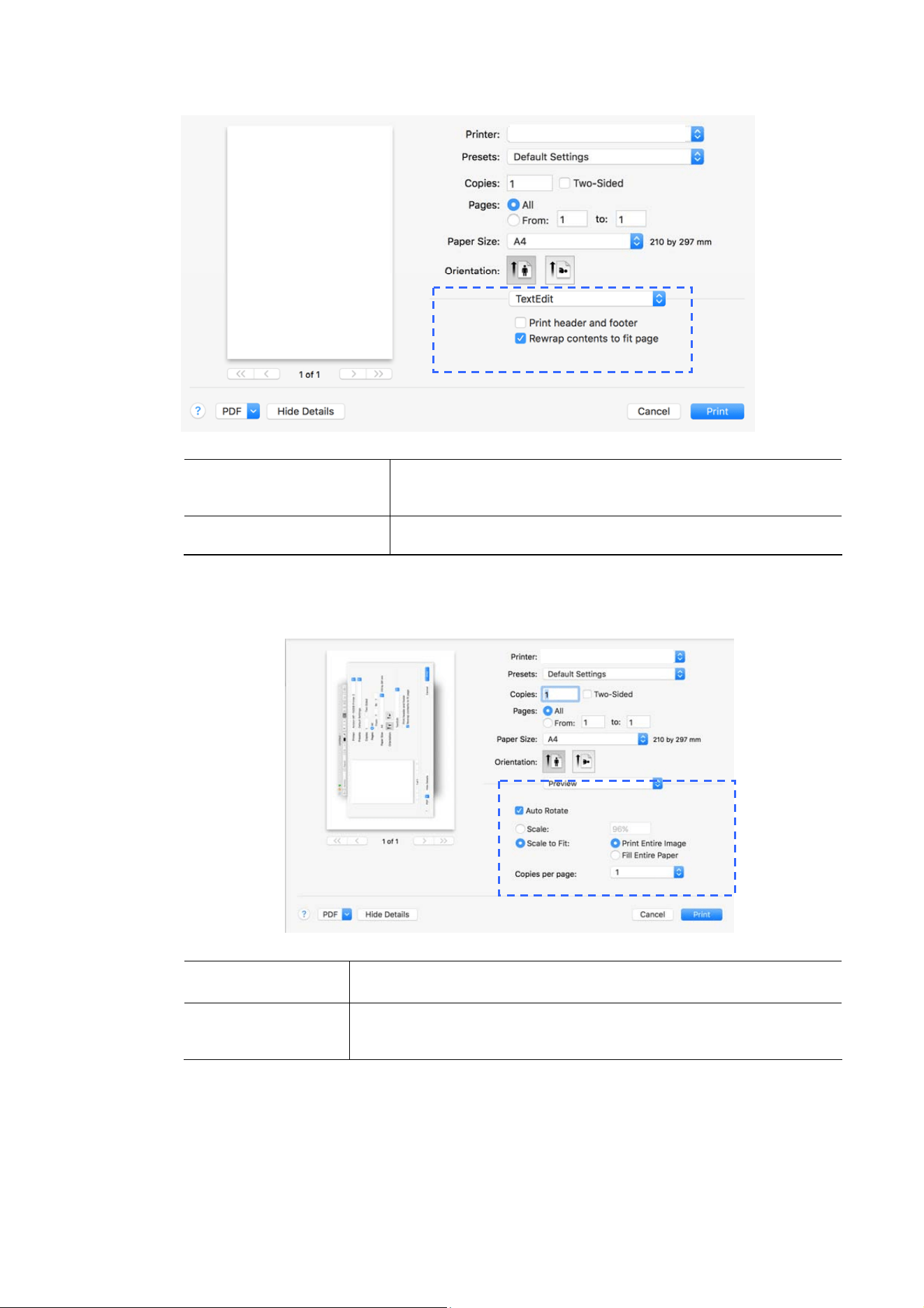
11
5
TextEdit
Print Header and
Footer:
If you wish to print header and footer, use this
function.
Rewarp contents
to fit page:
Adjust contents to fit your page.
Preview
Auto Rotate:
Check to automatically rotate your image to fit your paper.
Scale:
Enlarge or reduce your image.
Choice: Print Entire Image, Fill Entire Paper
AM30 Series Printer
AM30 Series Printer
11
6
7. Printing Documents from a
Mobile Device
By connecting an external USB dongle (Wi-Fi module) to the product and
installing the Mopria™ app on your Android mobile device, the product can be
converted into a wireless device and your mobile device is able to print emails
and documents by simply tapping Print from the menu,.
Making Preparation
To connect the product to a wireless LAN, prepare the followings:
An environment in which a wireless LAN is available
When connecting the scanner to a wireless LAN, you may need information for a
wireless access point such as an SSID (network name) and a security key
(password). For details, contact your Network Administrator or refer to the
manual for the wireless access point.
Attention!
Do not place obstacles that block radio waves (e.g. walls or metal plates) or
devices that cause radio wave interference (e.g. cordless phones) within 100
mm of the product, or near your wireless access point.
Mpria Print Service
The Mopria Print Service (app) can be downloaded from the Google Play Store to
enable print functionality on any Android phone or tablet (Android version 4.4 or
later). Once installed, simply connect your device to the same network as the
printer and your mobile print can be completed.
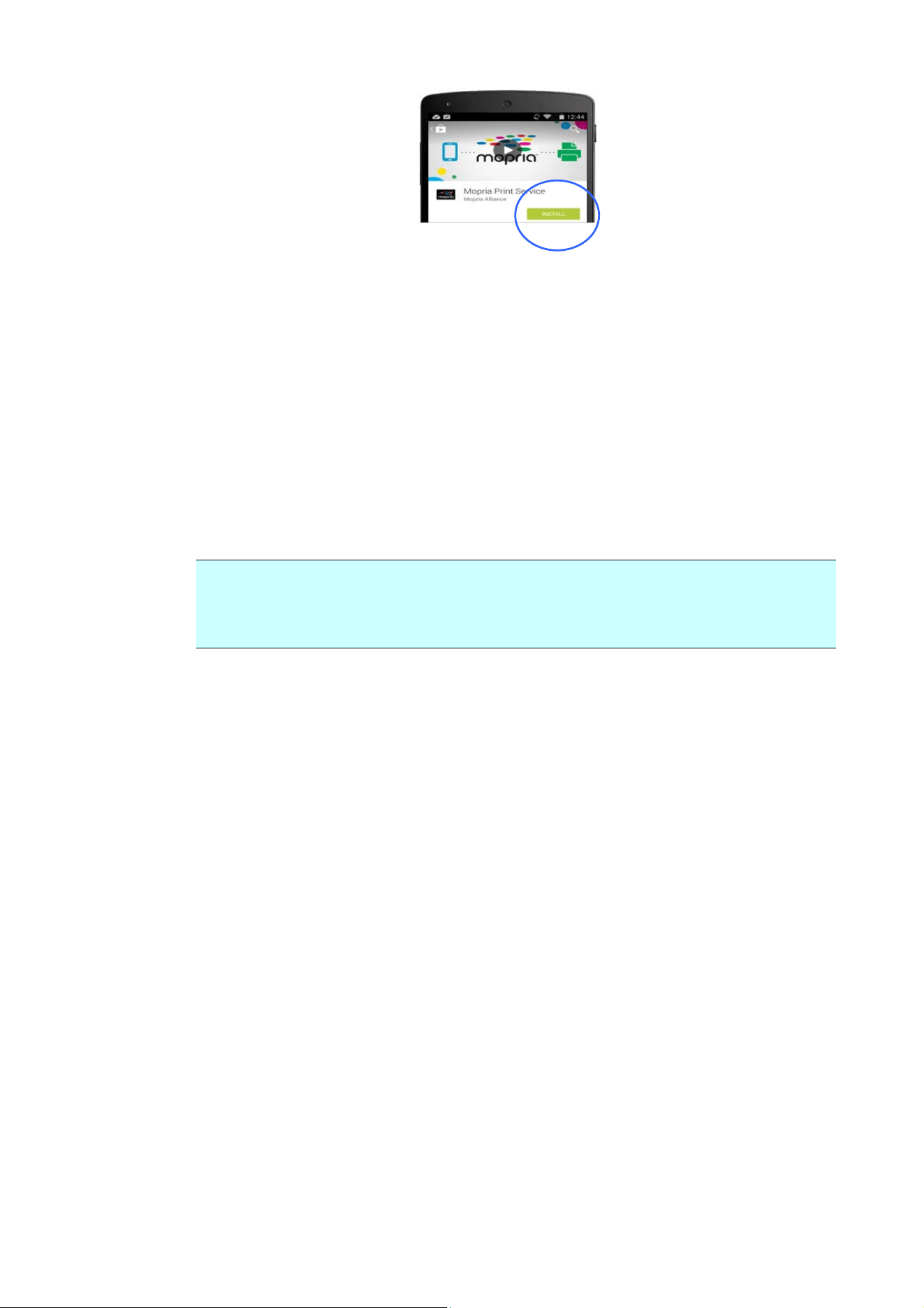
11
7
Connecting a USB dongle
Insert the supplied USB dongle (Wi-Fi Module) to the USB flash port at the back
of the product, and then turn on the product.
Connecting to a Wireless Network via
the Network Setup Tool
Before You Begin!
Make sure the computer has been connected to the product via the USB cable.
Make sure the power adapter has been connected and the product has been
turned on.
The Network Setup Tool is an application to configure the settings required for
connecting the product via wireless LAN. The Network Setup Tool can be used
to configure the following wireless or wired settings:
Connecting the product to a wireless access point
Connecting the product to a wired network
Setting the IP address for the scanner
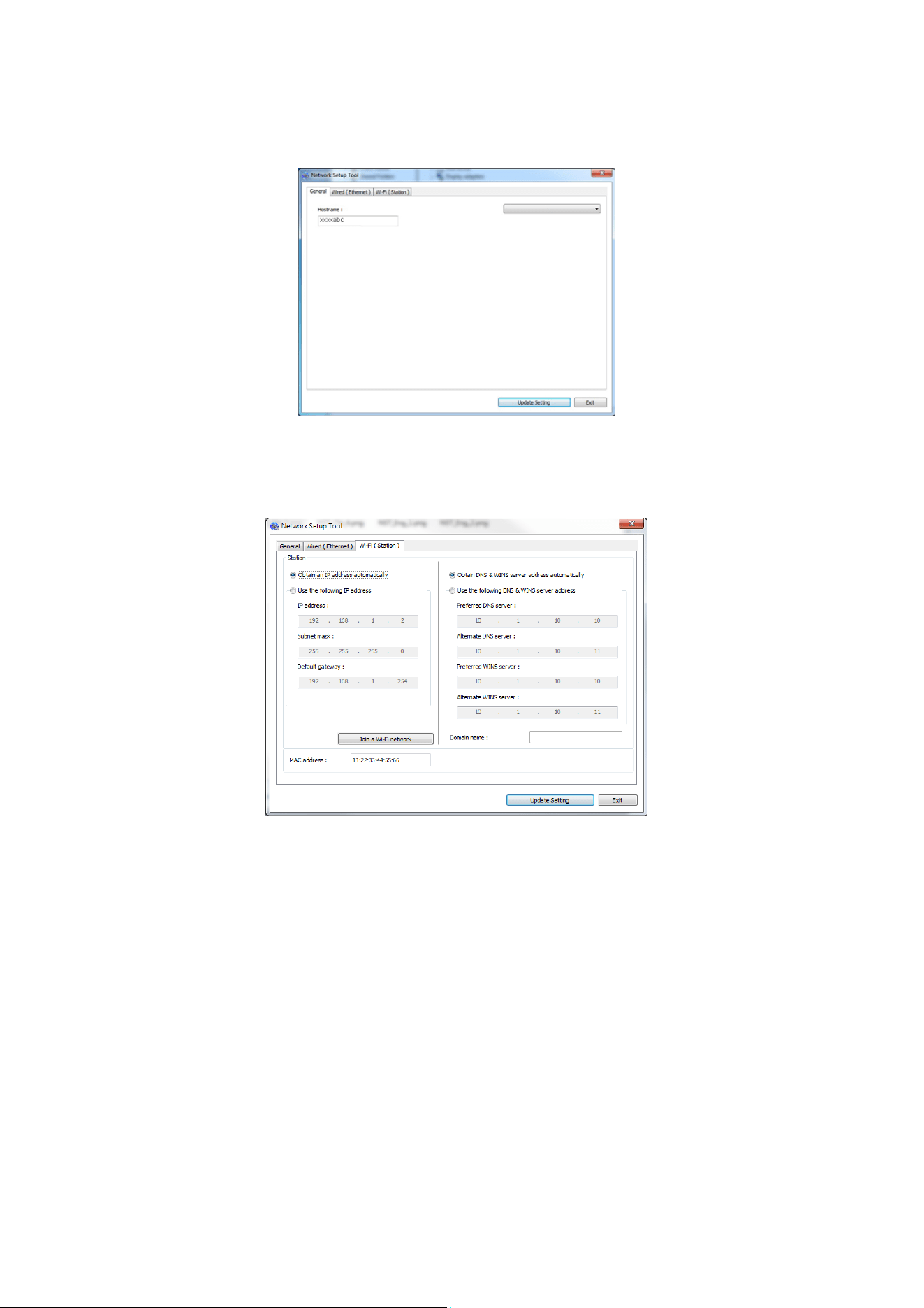
118
1. Launch the program by clicking the Start>All Programs>Avision AM30
Series MFP>Network Setup Tool. The main window appears.
2. On the [General] page, check [Wi-Fi (Station)].
3. Click the [Wi-Fi (Station)] tab to prompt the [Wi-Fi (Station)] page.
4. Check [DHCP] to obtain the IP address directly from the DHCP server or you
may enter your static IP on the [IP Address], [Subnet Mask], and
[Gateway] field respectively.
5. Click [Connect to SSID] and the currently connected wireless networks will
be displayed. Select the wireless network you want to connect and then enter
the security key if required.
AM30 Series Printer
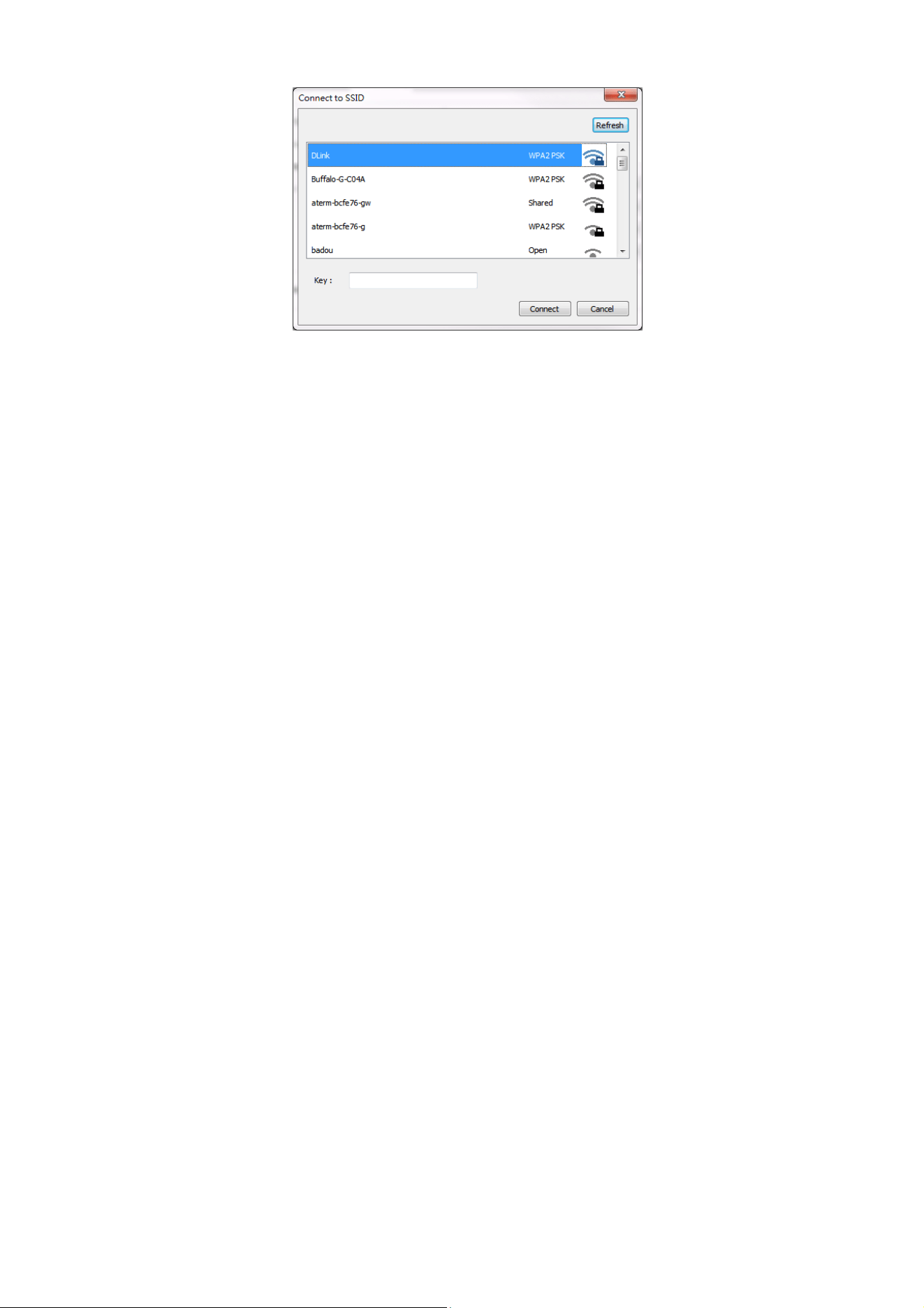
119
6. Click [Connect] to start connecting the SSID (wireless network name) and
then update the IP information to the product.
7. If update is successfully, an [Update Device Successfully] message will be
displayed and the Network Setup Tool will be automatically closed.
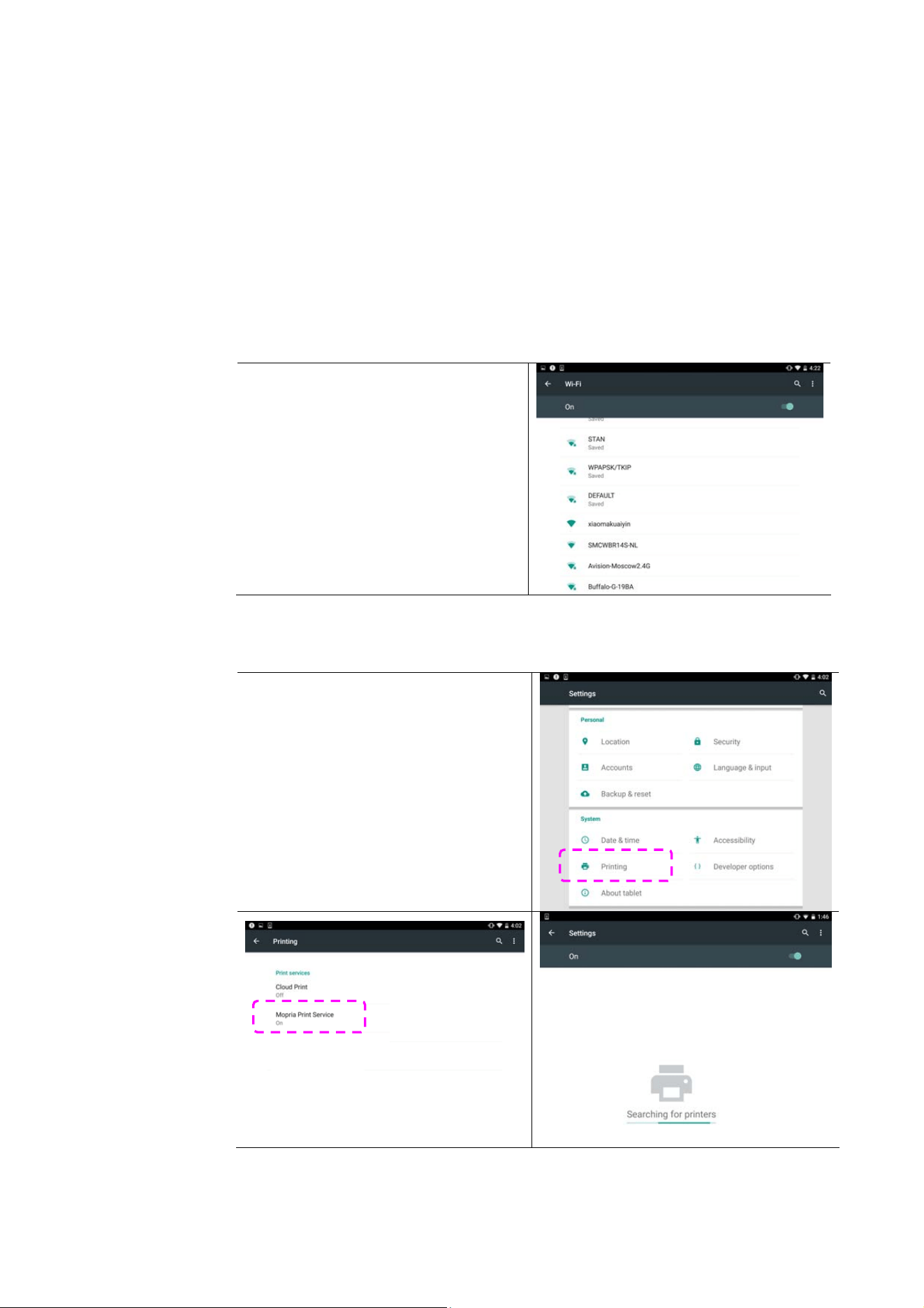
12
0
Printing Your File from a Android Mobile
Device
Make sure that the Mopria Print Service (Print App) has been installed on your
Android mobile device. The Mopria Print App can be purchased for free from
an application store such as Google Play.
1. Select same wireless network as your printer.
On your mobile device, tap
Settings>Wi-Fi and choose the
same network name (SSID) of
your printer.
2. Turn Mopria Print Service on. The device will search available printers.
On your mobile device, tap
Settings>Printing>Mopria Print
Service to turn Mopria Print
Service on. The Device will search
for all available printers.
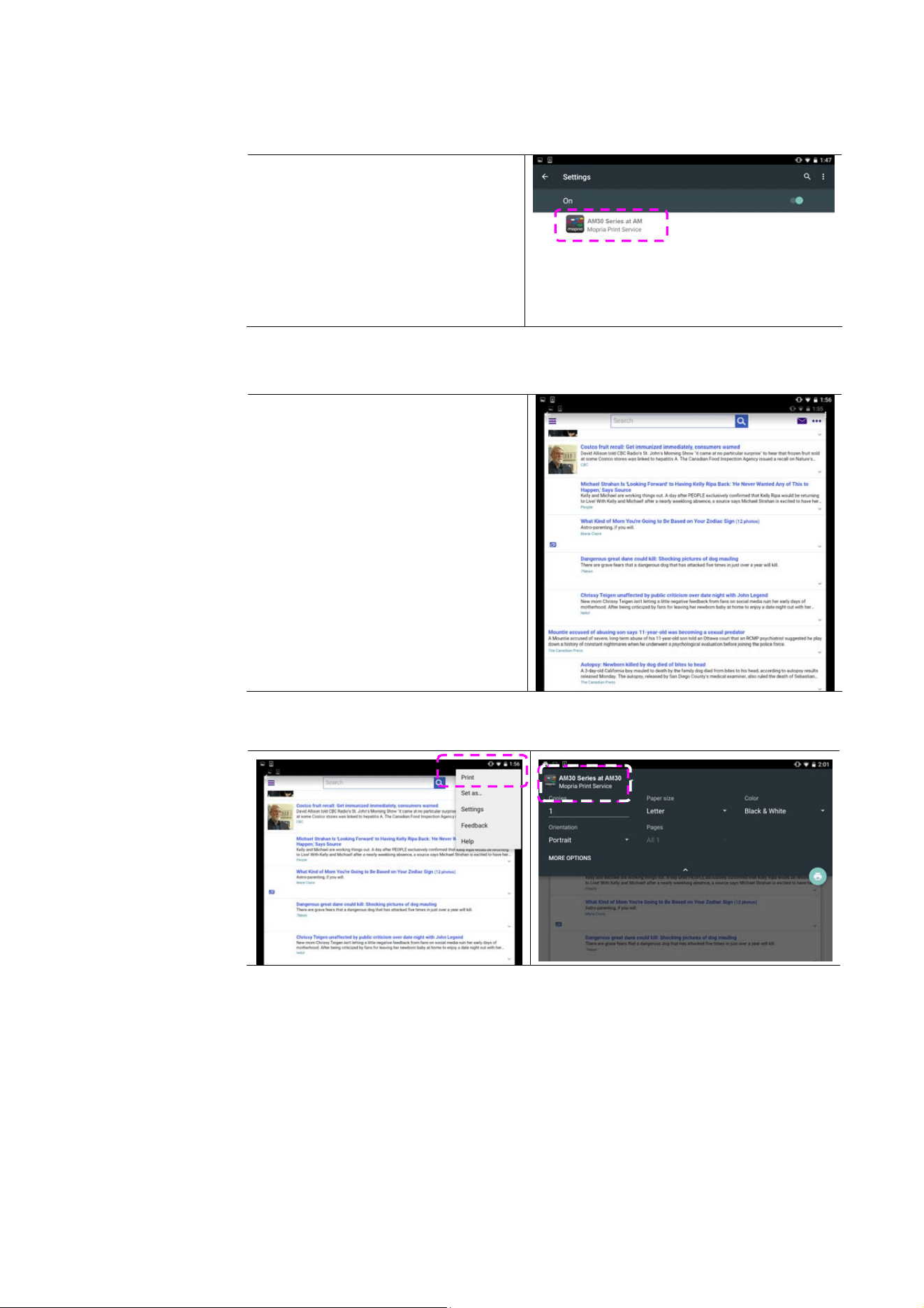
121
3. Select your printer.
Select [AM30 Series at AM30]
from the printer list.
4. Open the file which you want to print.
Open the file you want to print.
5. Choose [Print] from the menu and select your printer.
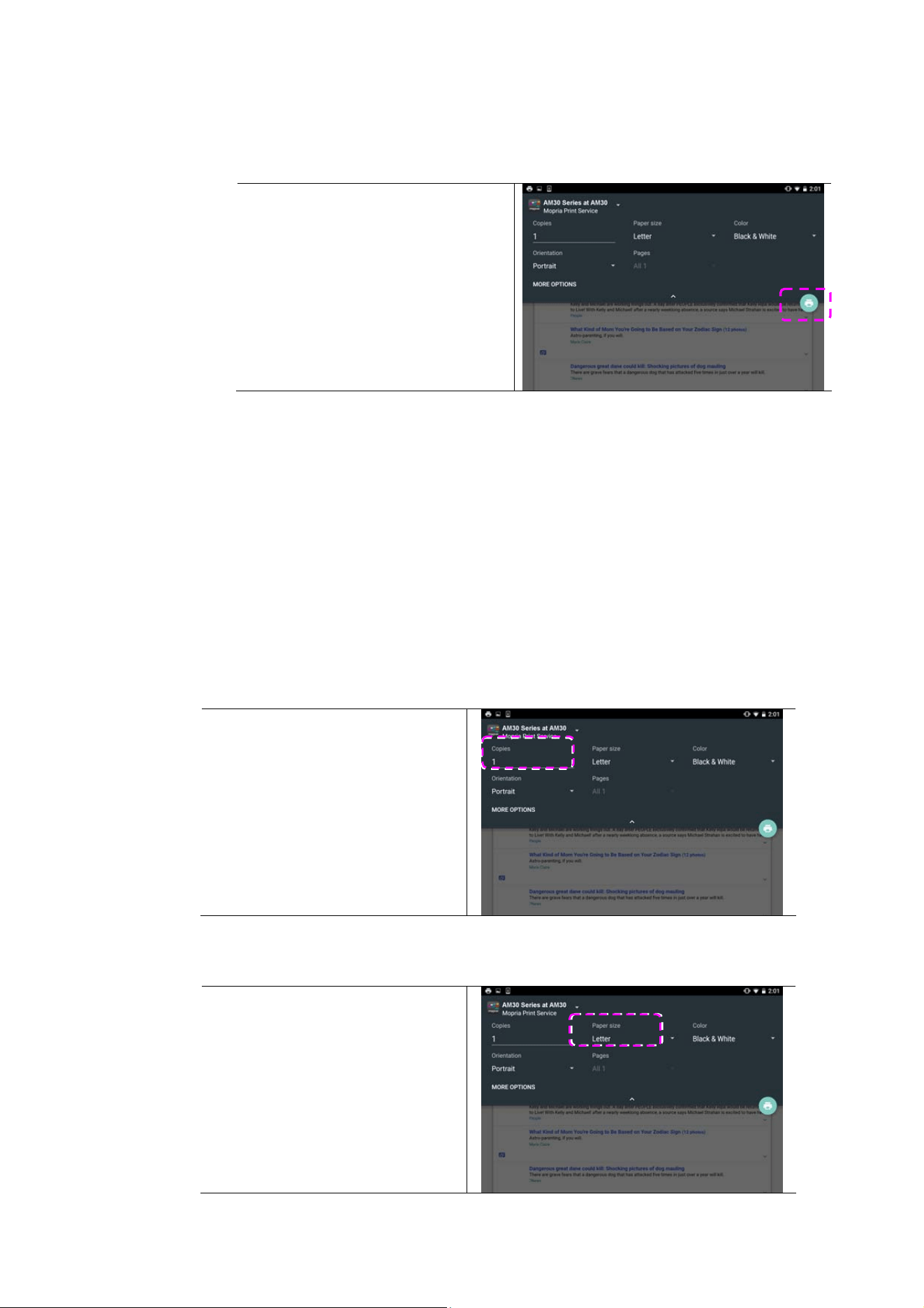
12
2
6. Choose print settings and print.
If you do not need to change
print options, tap Print to
send the print job.
If you need to change print
options, continue to the next
section.
Change the Print Settings
Mopria Print Service allows you to print web pages, documents, emails, photos,
and content from apps that support Android printing. Print settings may vary
depending on the app and printer selected. The following print options may
display:
Number of Printed Copies
Tape [Copies] to enter your
desired copy count if you want
to print more than one copy.
Changing the Paper Size
In the print settings menu, tap
[Paper size], then select the
paper size option from the
menu: Letter, and A4 may be
options offered depending upon
the app or printer.

123
Changing the Orientation
In the print settings menu, tap
[Orientation], then select the
option you prefer. Portrait or
landscape may be options
offered depending upon the
app or printer.
Defining the Page Range
In the print settings menu, to
print multiple pages, tap
[Pages], and then select the
page range that you want to
print. NOTE: Pages will only
display with certain applications
and file types, such as PDFs.
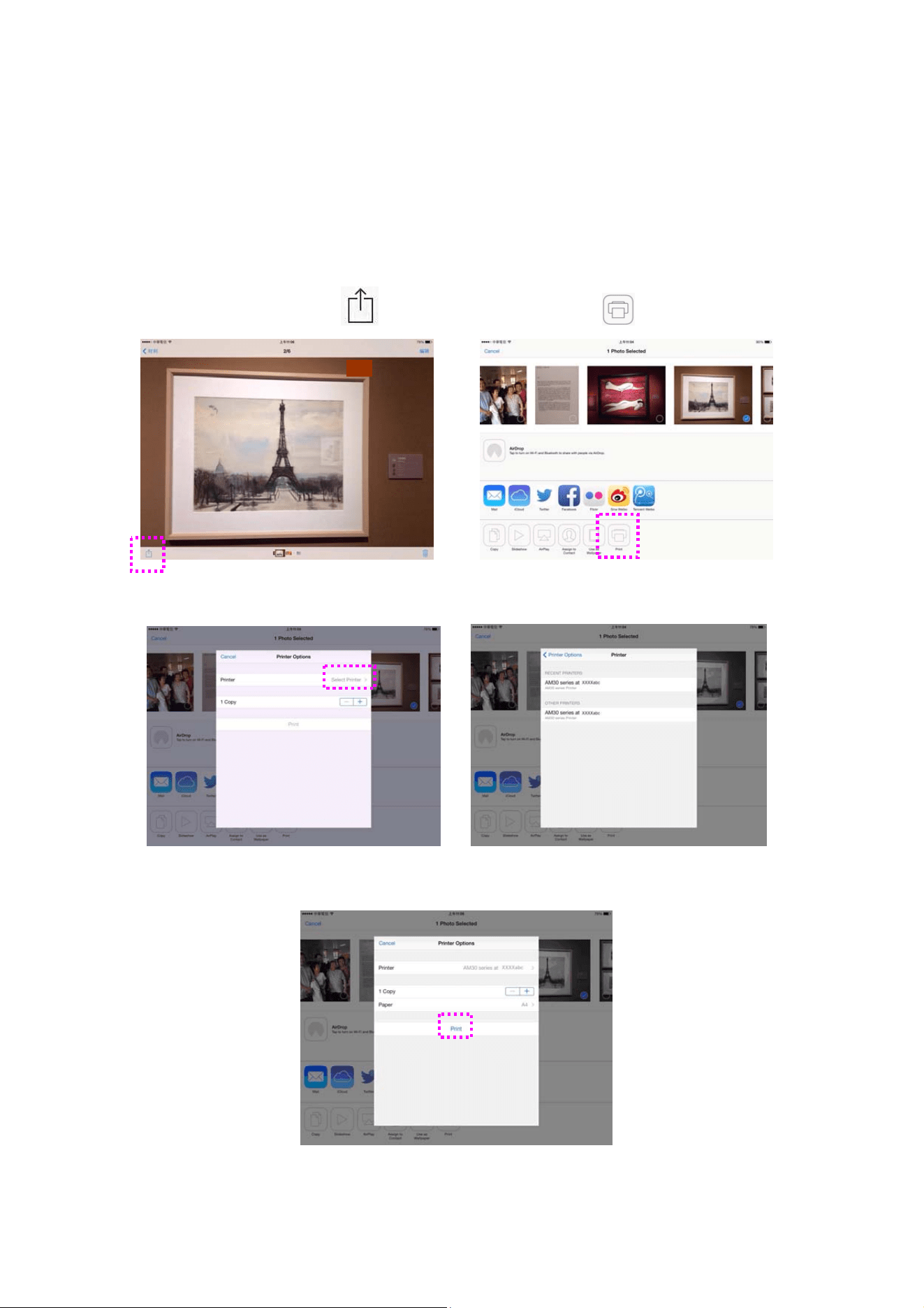
124
Printing Your File from a iOS Mobile
Device
1. Turn on your mobile devices such as iPhone or iPad.
2. Tap 「Settings」 and then open Wi-Fi. Select the network same with
your printer.
3. Open the picture or the document that you want to print. Tape the
Share icon (
) and then the print icon ( )。
4. Tap [Select Printer] and choose your desired printer.
5. Tap [Print] to start printing.

12
5
8. Using the Product as a
Scanner
After installing the scanner driver and connecting the USB cable to your
computer, the product can be used as a fine scanner. You can use various
scanning features to modify your scanned image.
System Requirements
CPU: Intel
®
Core™ 2 Duo or higher
Memory: 32 bit: 1 GB
64 bit: 2 GB
Optical Drive: DVD-ROM Drive
USB Port: USB port 2.0 (compatible with USB 1.1)
Compatible
Operating
System:
Microsoft Windows XP(SP3), Windows Vista
(32-bit/64-bit), Windows 7 (32-bit/64-bit),
Windows 8.x (32-bit/64-bit), Windows 10
(32-bit/64-bit)
Starting a Scan From Capture Tool Application
Capture Tool is a useful test program. With this tool, you can perform simple
scans and view the captured images. In addition, it helps you complete your
scan at a rated speed.
The following procedure describes how to verify your scanner installation. If the
installation is not correct, please review the preceding section to check if the cable
connection and scanner driver have been successfully installed.
Before you begin, be sure the scanner is on.
1. Select Start>Programs>Avision xxx Scanner>Avision Capture Tool. The Select
Scanner Model dialog box will be displayed.
2. Select your driver type and scanner model and click OK. The following Avision
Capture Tool dialog box will be displayed.

12
6
3. Choose your desired file format from the File Format drop down list box.
(Default is JPEG, other choice includes TIFF, MTIFF, PDF, MPDF, GIF, and
BMP.) The supported file formats vary depending on your scanner model.
4. Type your desired folder name and file name in the File Path box. (Default is
C:\Documents and Settings\User Name\My Documents\My Scan\Image.)
NOTE:
If you do not wish to save the scanned image, deselect the Save button
since default is Save Enable. In this case, the thumbnail view will be
disabled. And therefore, after viewing all the scanned images, only the
last one will remain on the screen.
5. Click the Setup button (
) or choose Setup from the File menu to
prompt the Scanner Properties dialog box.
6. From the Image Selection Box, choose your desired image type for your
scanned image. (Default is Front B&W) If you have a duplex scanner,
choose Front and Rear to scan both sides of your document.
7. Click OK to quit the Scanner Properties dialog box. (To learn more details
about the Scanner Properties dialog box, please see the subsequent chapter,
Using the Scanner Properties Dialog Box.)
8. Place your document face down on the document glass or face up in the auto
document feeder.
Image
Selection
Box
Setup
Actual
Size
Fit
Page
Scan
File Format Save
File Path
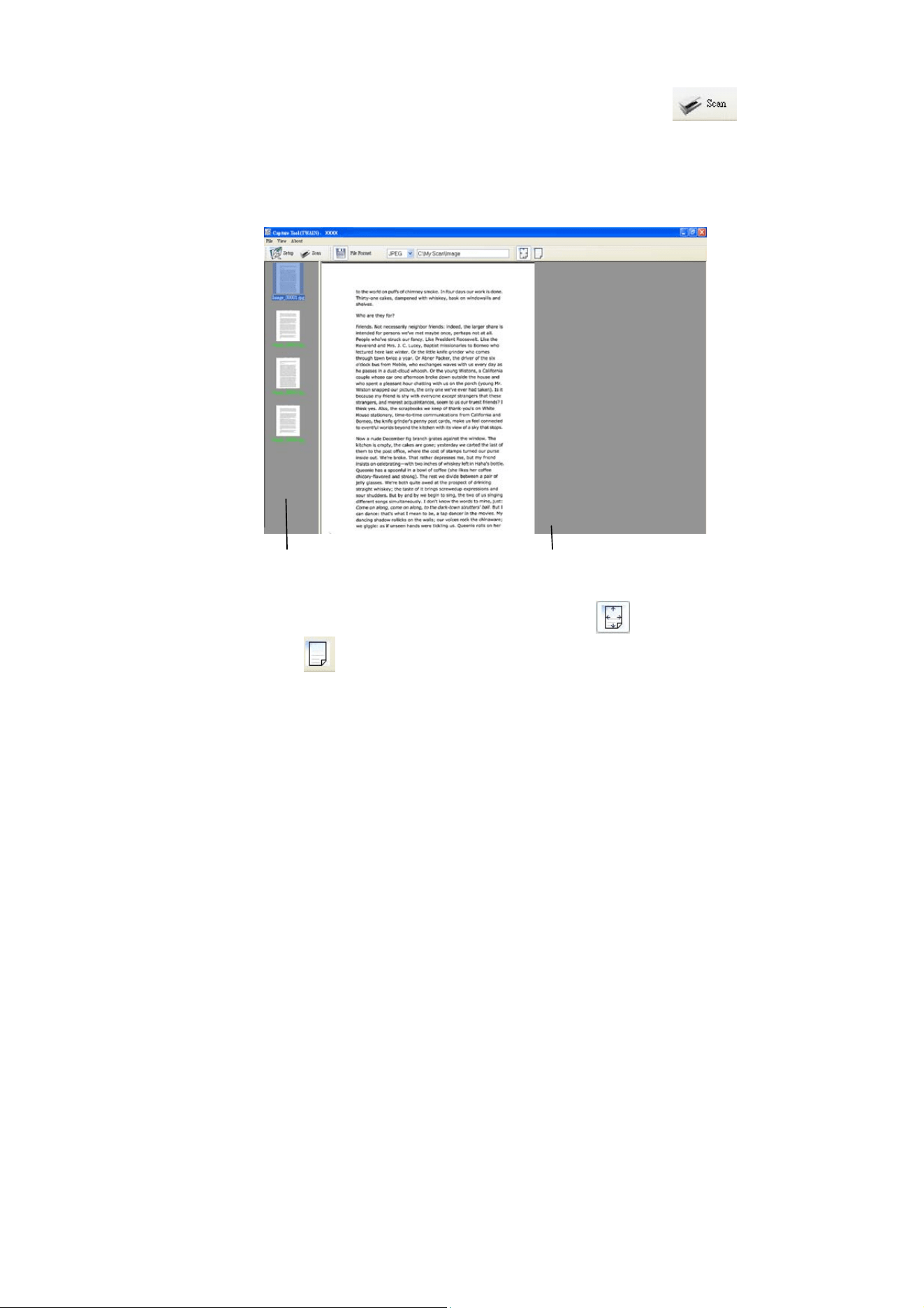
12
7
9. In the Scan Validation dialog box, click the Scan button ( ) or choose
Scan from the File menu.
10. The document will be scanned and displayed in the Scan Validation screen.
After the scanned images have been displayed, your scanner installation
verification is completed.
11. You can view the scanned image in Fit Page (
) or Actual Size (100%)
button (
) from the Viewing toolbars at the right side.
12. Click the Close box or Quit from the File menu to exit the Scan Validation
Tool.
Starting a Scan From Other Image Editing Application
1. Start your image editing application.
2. Pull down the File menu and choose Select Source.
If the Select Source command is not available on the File menu, see your
application’s user’s guide to determine how the TWAIN link is used. A
dialog box with a list of scanning sources appears.
3. Select the model name of your product.
You need to select the source only once, unless you want to choose
another scanner.
4. Place the document FACE DOWN on the flatbed glass.
Display View
Thumbnail View
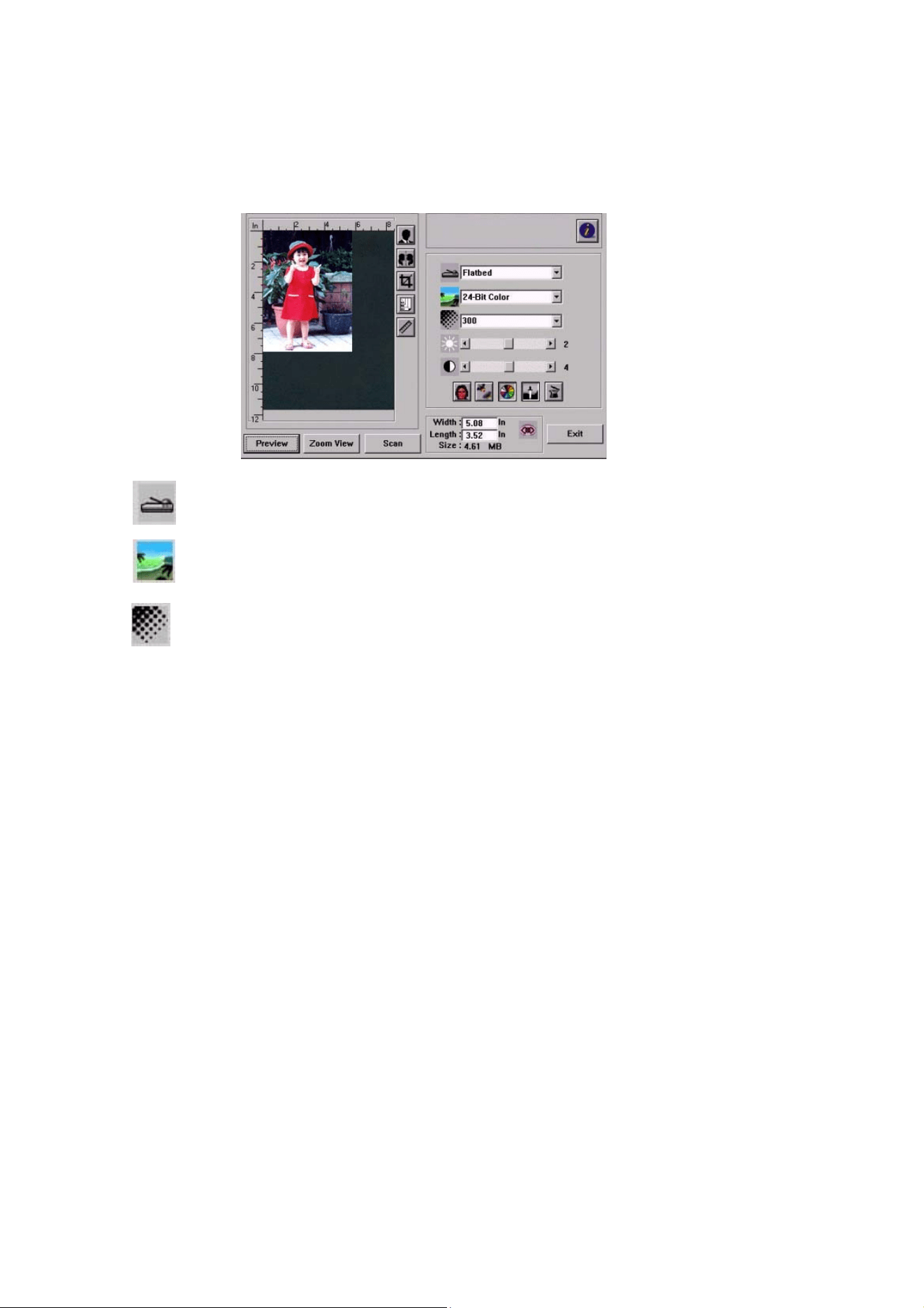
128
5. Pull down the File menu and choose Acquire.
A dialog box containing scanning features appears.
6. Select the scanning method you want to use on the Scan Method
drop-down menu.
7. Select the mode you want to use for your scans on the Image Type
drop-down menu.
8. Select a scanning resolution on the Resolution drop-down menu.
9. Select the setting for the scanning features (e.g. Sharpen, Descreen, etc.)
that you want to use.
10. Click on Preview or Scan to preview or scan you documents.
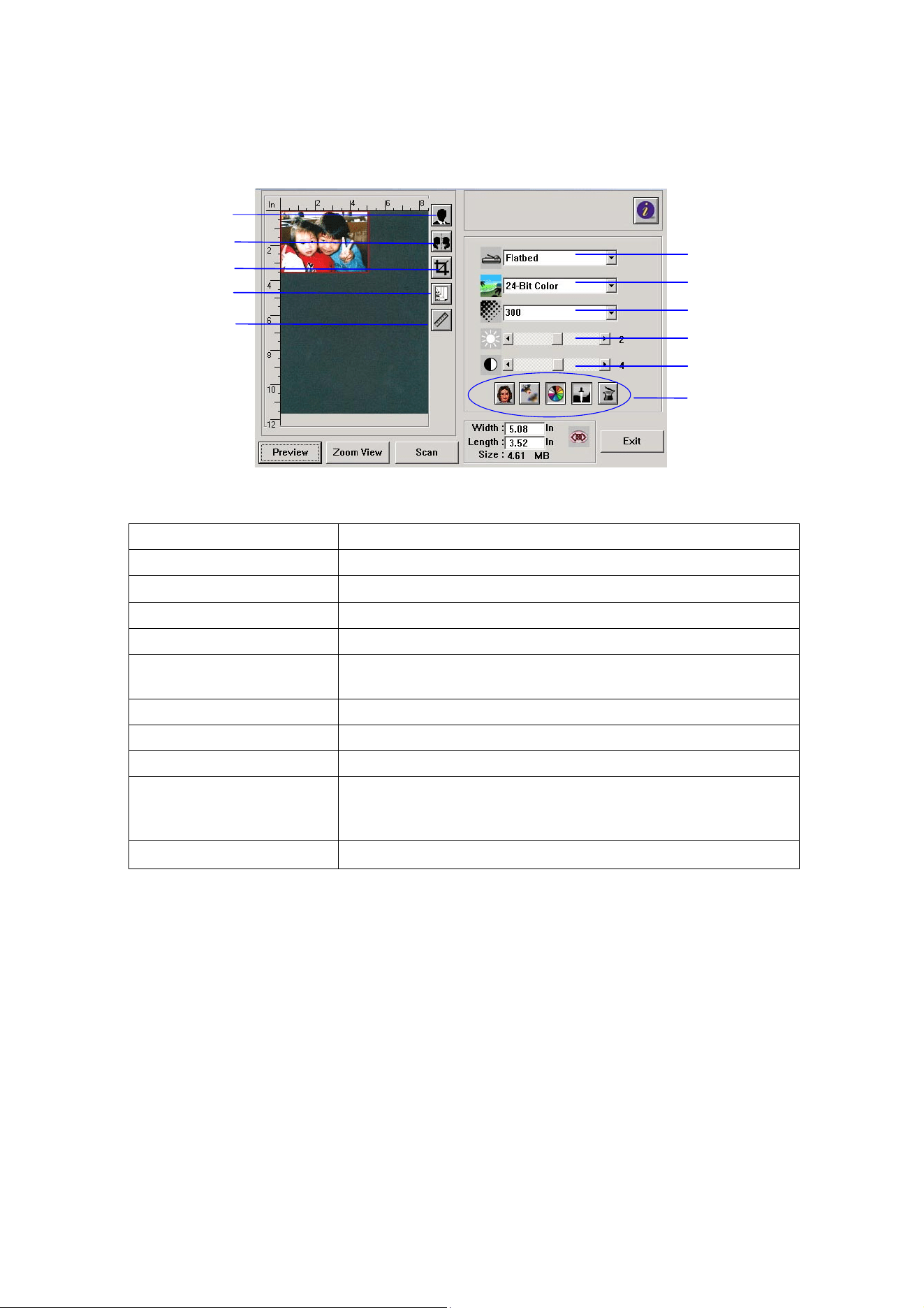
129
A Glance of the User Interface
1. Scan Method Choice: Flatbed, Simplex/Multi-Page, Duplex/Multi-Page
2. Image Type Choice: Black & White, 8-Bit Gray, 24-Bit Color
3. Resolution
Choice: 50, 72, 100, 144, 150, 200, 300, 600 (dpi).
4. Brightness: Adjust the brightness level from –100 to +100.
5. Contrast Adjust the contrast level from –100 to +100.
6. Further Tools Descreen, Sharpen, Color Adjustment, Auto Level,
Advanced Settings (From left to right).
7. Invert Reverse the color of your scanned image.
8. Mirror Function Flap your image.
9. Preview Auto Area Resize your scanned area.
10. Paper Size Select your paper size from Card 4”x2.5”, Photo 5”x3.5”,
Photo 3.5”x5”, Photo 4”x6”, Photo 6”x4”, A5, B5, A4,
Letter, Legal, scanner maximum.
11. Measuring Unit
Choice: cm, inch, and pixel.
1
2
3
4
5
6
7
8
9
10
11
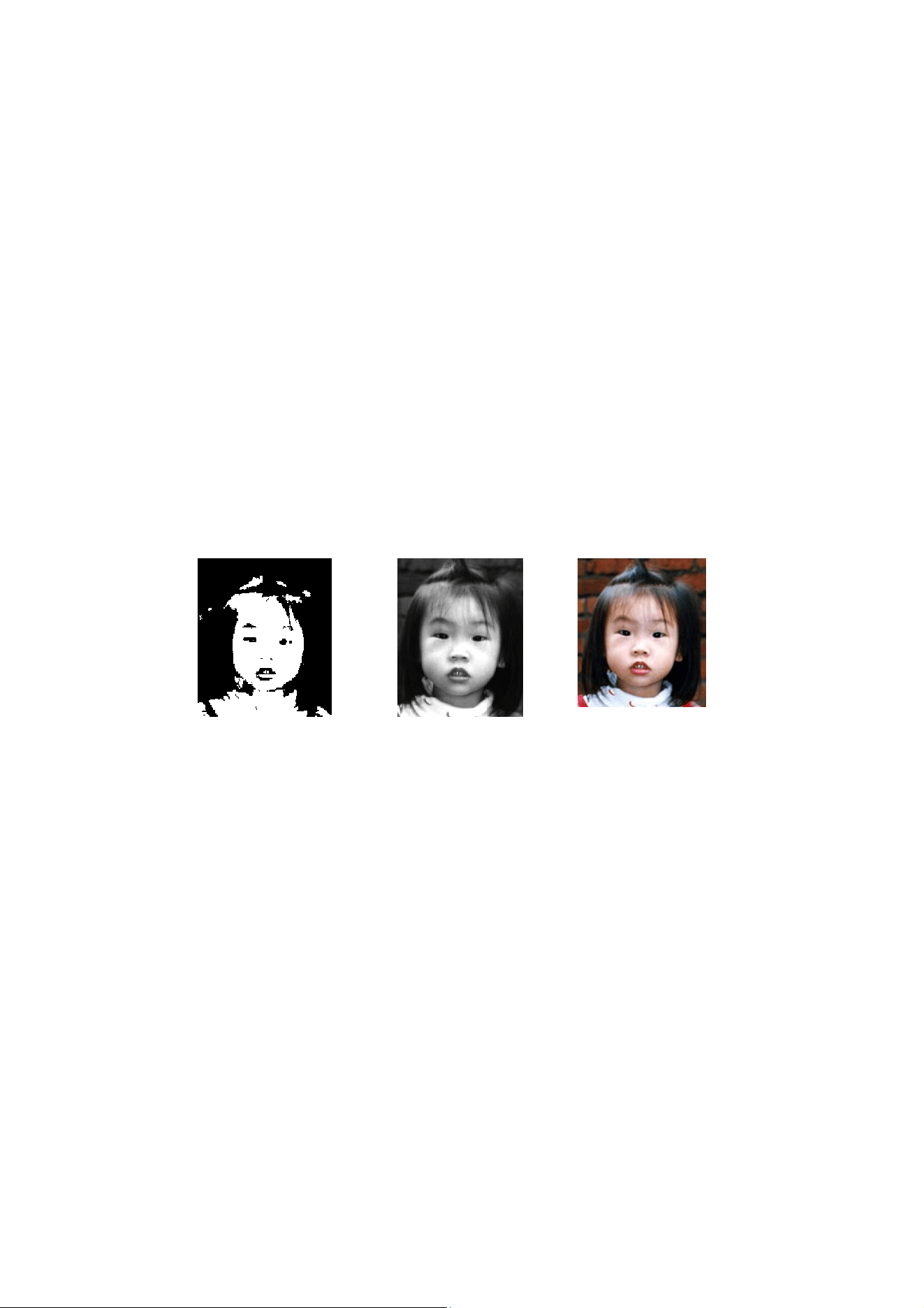
13
0
Using Basic Features
Choosing Scan Method
Choice:
Flatbed: Select this setting if you need to scan a single page from the flatbed.
*Simplex/Multi-Page, Duplex/Multi-Page—use this setting if you are using the
automatic document feeder (ADF) to scan documents at a time.
Selecting Proper Image Type
Black & White
Choose B&W if your original contains only B&W text,
pencil or ink sketch.
8-bit Gray
8-bit Gray images contain actual shades of gray.
24-bit Color
Choose 24-bit Color if you wish to scan a color image.
Black & White Gray 24- bit Color
Determining Proper Resolution
A proper resolution reproduces a clear image with good details. The resolution is
measured by dots per inch (dpi).
Adjusting Brightness And Contrast
1. Brightness
Adjusts the lightness or darkness of an image. The higher the value, the brighter
the image.
2. Contrast
Adjusts the range between the darkest and the lightest shades in the image. The
higher the contrast, the bigger the different grayscale.
Enlarging Previewed Image
Enlarge your previewed image to the max. of the preview window.

131
Note this function only enlarging your preview image. This does not
enlarge your real image.
Inverting And Selecting Your Image
The invert command reverses the brightness and the color in the image. For color
images, each pixel will be changed into its complementary color at the command of
Invert.
Mirror Function
Reverse the right and left side of your image.
Auto Select Image
Automatically set the whole image as your scan area. (Or you may resize the area
by dragging the cursor diagonally.)
Enhancing Your Image
1. Descre
en
Eliminates the
moire patterns* commonly found in printed matter.
2. Sharpen
Sharpen the scanned image.
Before Descreen After Descreen
Before Sharpen
After Sharpen
*Moire pattern: An undesirable pattern in a color printing resulting from incorrect
screen angle of overprinting halftone.
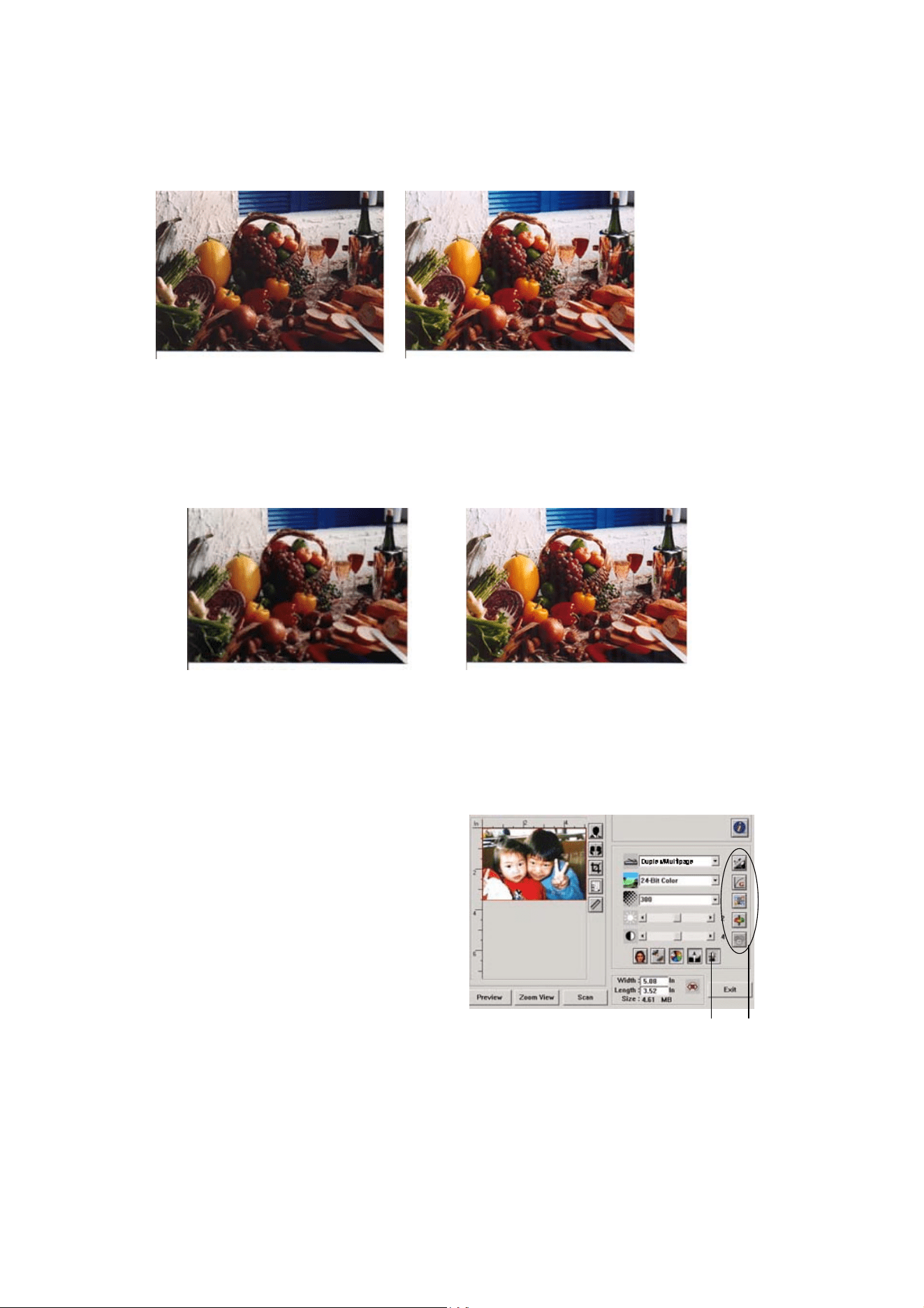
13
2
Color Adjustment
Adjusts the color quality of the image so that it comes close to the original. This
function uses default parameters to adjust the image.
Normal
After Color Matching
Auto Level
Automatically adjusts the highlight and shadow areas of the scanned image to
optimize your image.
Normal
After Auto Level
Using Advanced Features
The Switch button
1. Click the button to pop up the advanced
settings bar at the right side. The
advanced settings include
Highlight/Shadow,
Hue/Saturation/Lightness, Curve, Color
Balance, Color Drop-out.
2. The Advanced Settings bar
1
2
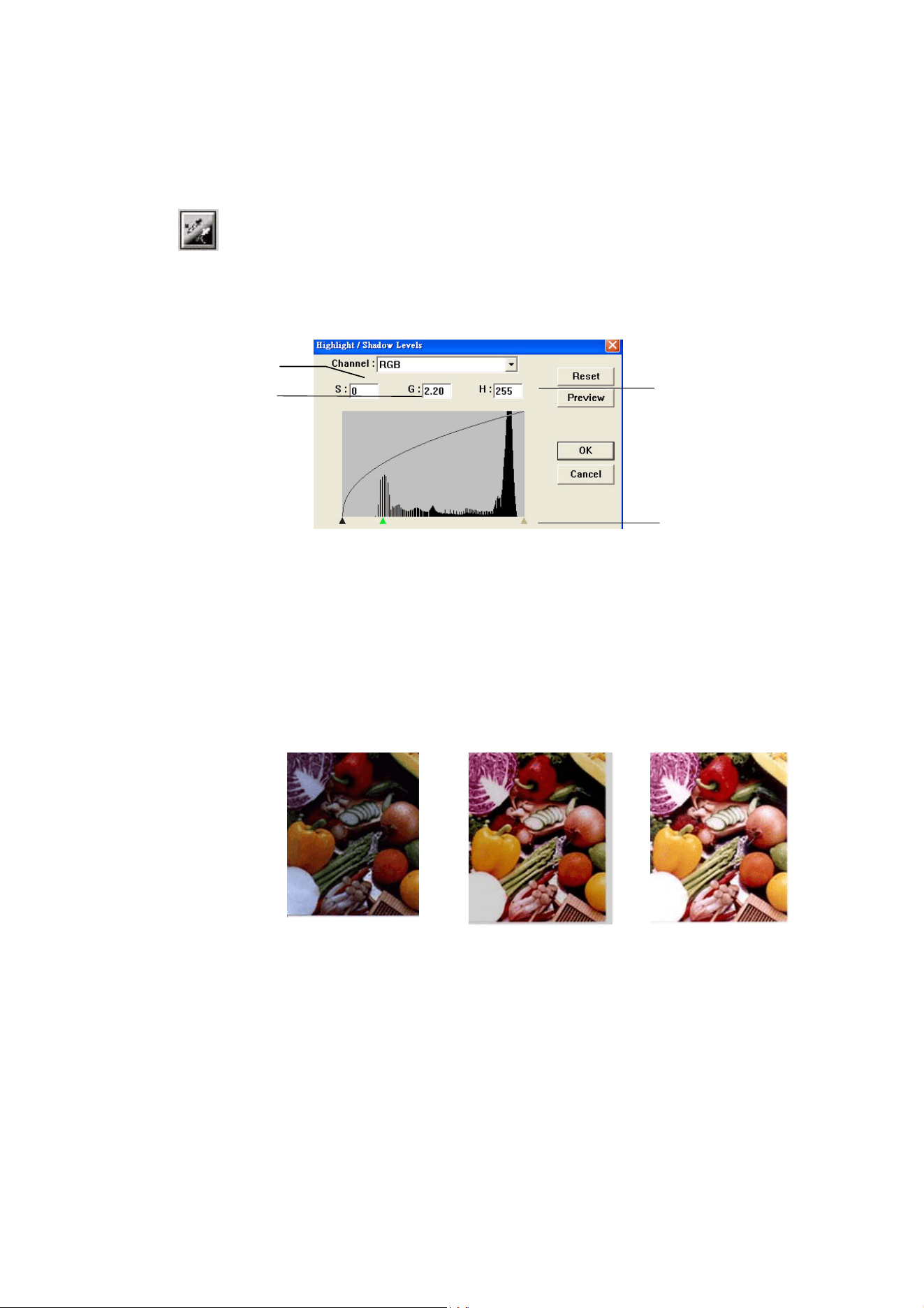
133
Adjusting Highlight/Shadow Levels
Highlight refers the lightest point in a scanned image while shadow
refers the darkest point. Using Highlight and Shadow tool together
allows you to extend the range of color and reveal more details in a
gray or color image.
1. Shadow: The darkest point of an image.
2. Gamma: The midtones of the image.
3. Highlight: The lightest point of an image.
4. Pointer: Move the pointer to change the value.
When the value of gamma changes, the image changes accordingly.
Gamma Value: 1.0
Gamma Value: 1.4
Gamma Value: 2.0
1
2
3
4
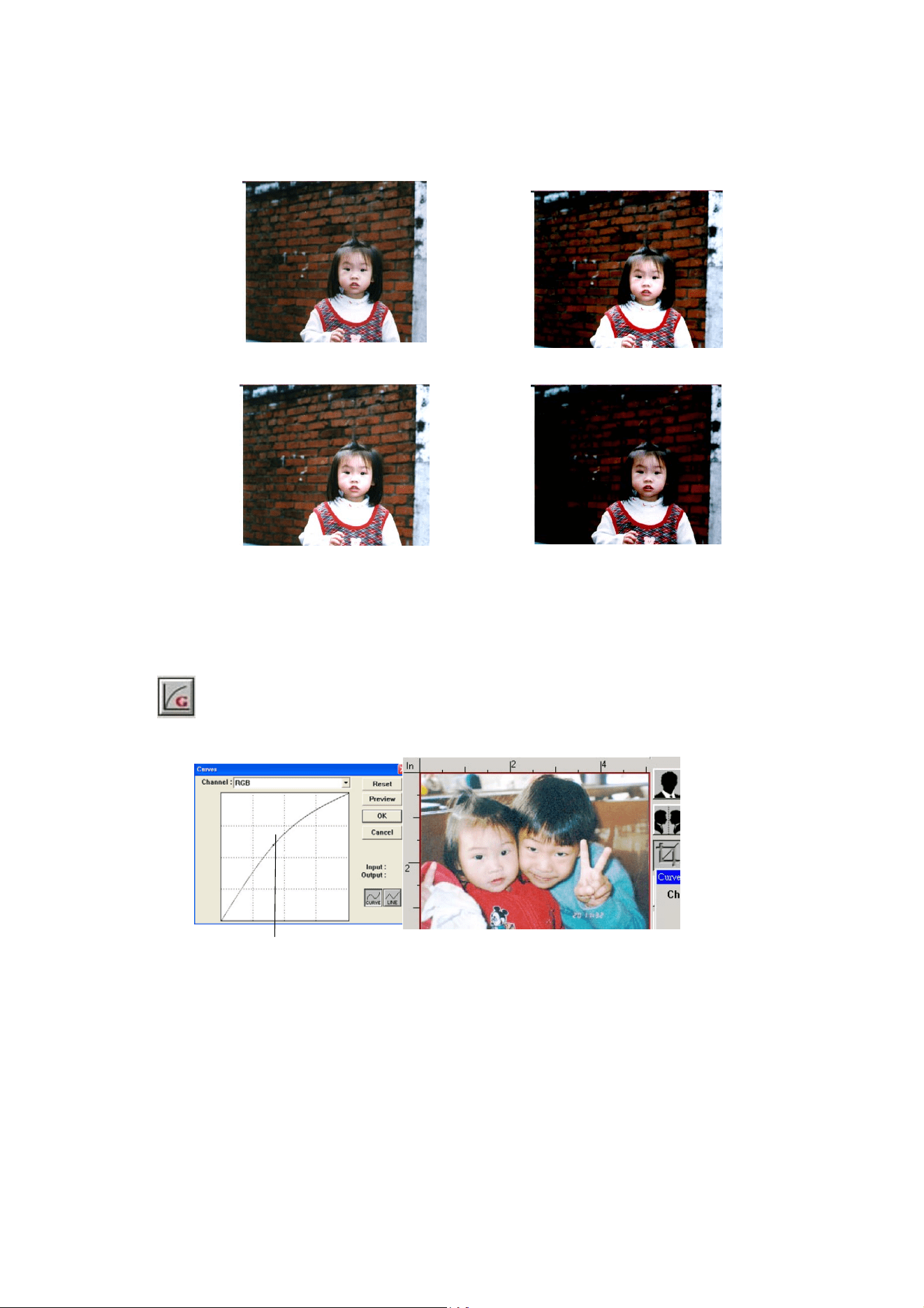
134
When the value of highlight and shadow change, the image changes
accordingly.
Highlight: 255/Shadow: 0(Normal)
Highlight: 210/Shadow:10
Highlight: 200/Shadow:0
Highlight: 255/Shadow: 50
Adjusting the Brightness Curve
Adjusts the midtones of the image without dramatically altering then
lightest and the darkest areas.
When the curve is moved up or down, the
image turns brighter or darker.

13
5
Changing Color Hue/Saturation/Lightness
Improve your image by changing the level of
hue/saturation/lightness.
(1). Hue Adjust the hue by moving the triangle to the right or
left. (Note the level of intensity for the color will be
changed simultaneously when the hue adjustment is
made).
(2). Saturation Move the triangle to the right to increase the saturation
level or to the left to decrease the level. The level of
saturation decides if the color is pale or rich.
(3). Lightness Increase the lightness by moving the triangle to the
right or to the left to decrease the lightness.
(1)
(2)
(3)
Move the Saturation pointer to the right, the
color turns rich.
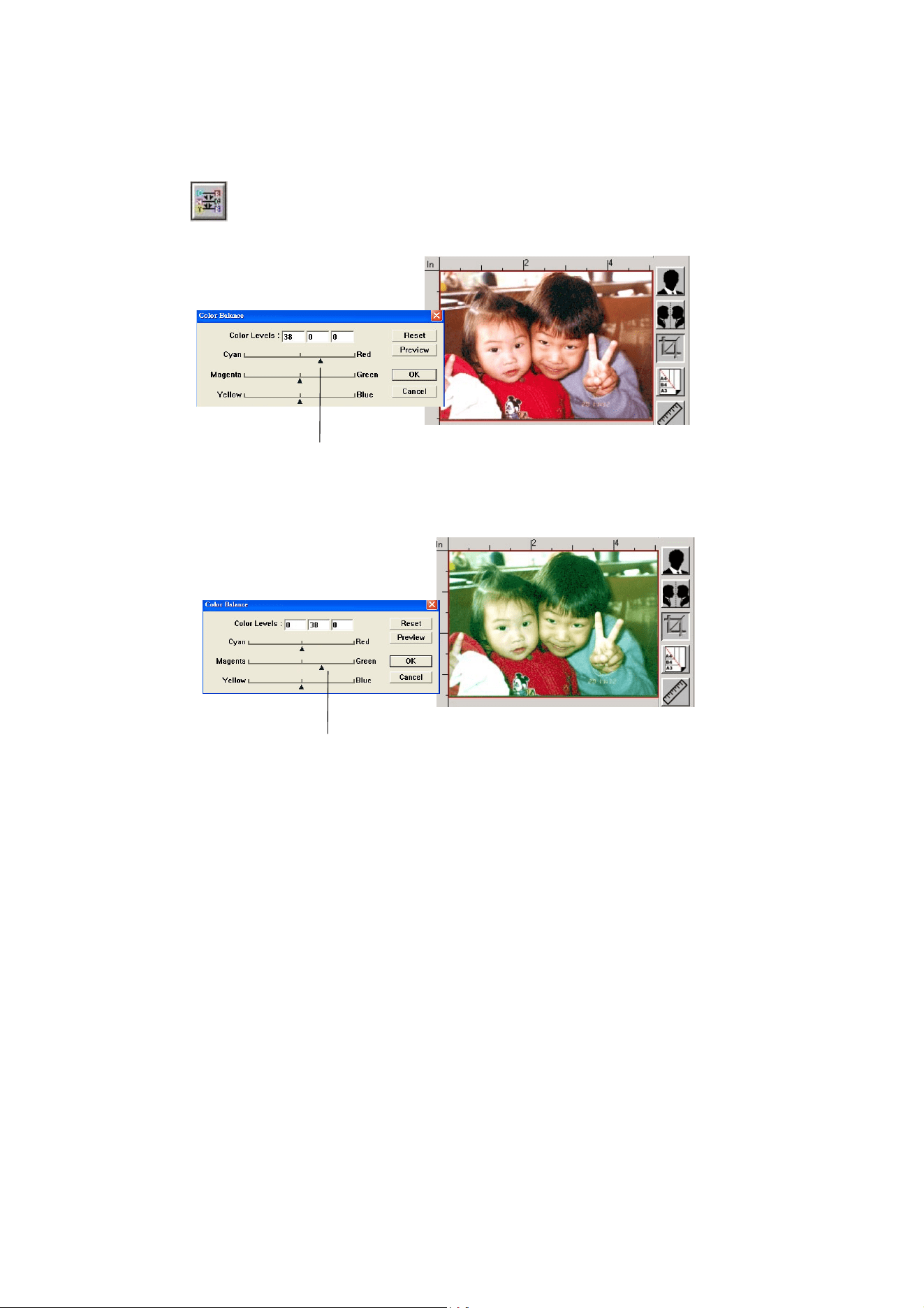
13
6
Using Color Balance
The Color Balance allows you to obtain an optimal image quality.
Move the pointer toward Red, the image turns into a reddish hue.
Move the pointer toward Green, the image turns into a greenish hue.
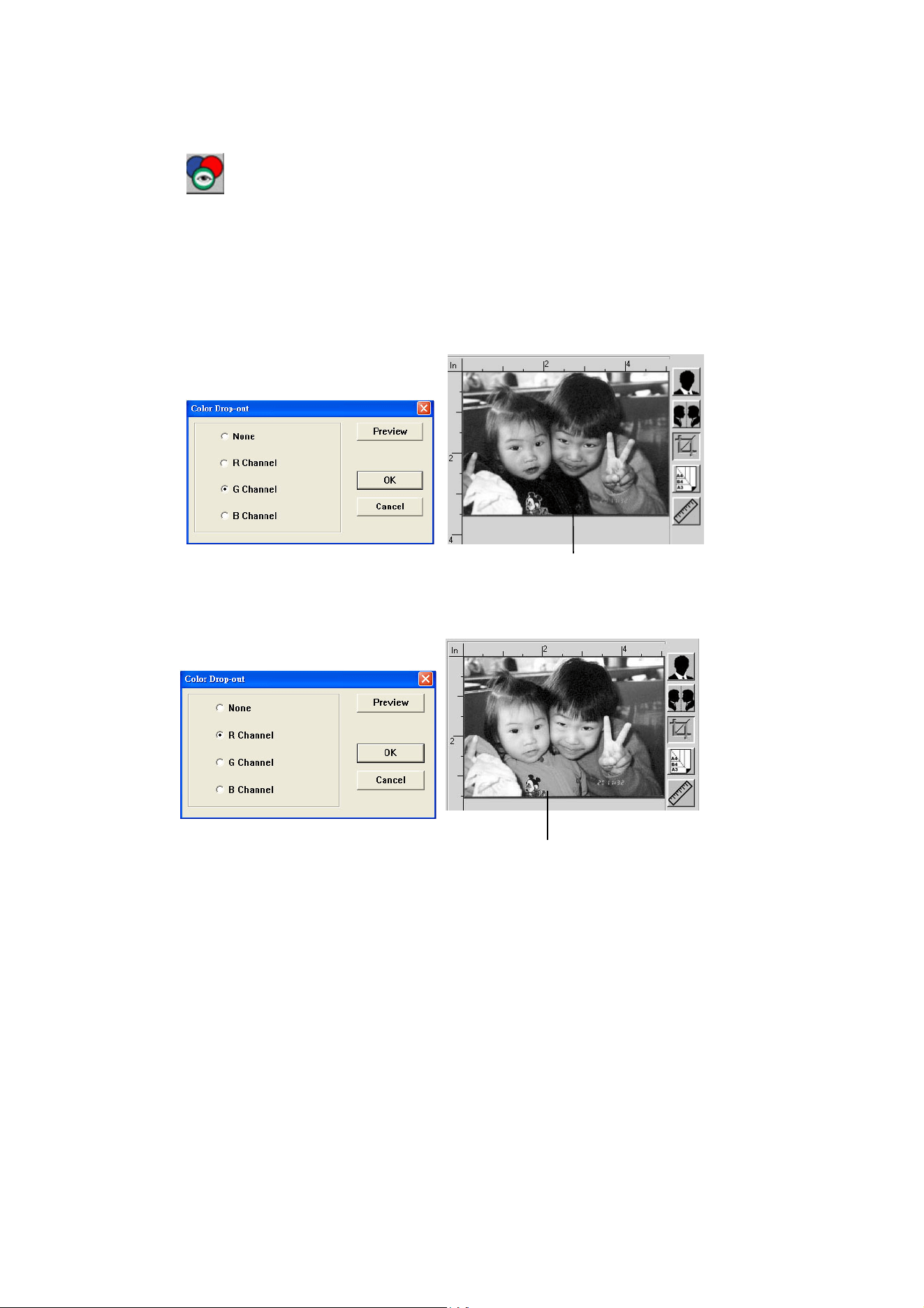
13
7
Color Drop-out
Click the button and a dialog box in below will be displayed. This
dialog allows you to remove one of the R (Red), G (Green), or B
(Blue) color channel. This function is particularly useful when you
need to convert text using OCR software.
Note that this function supports only black & white and gray image.
Therefore, be sure to choose any black & white or gray image type
while applying this function.
The effect on image after removing the G channel
The effect on image after removing the R channel.
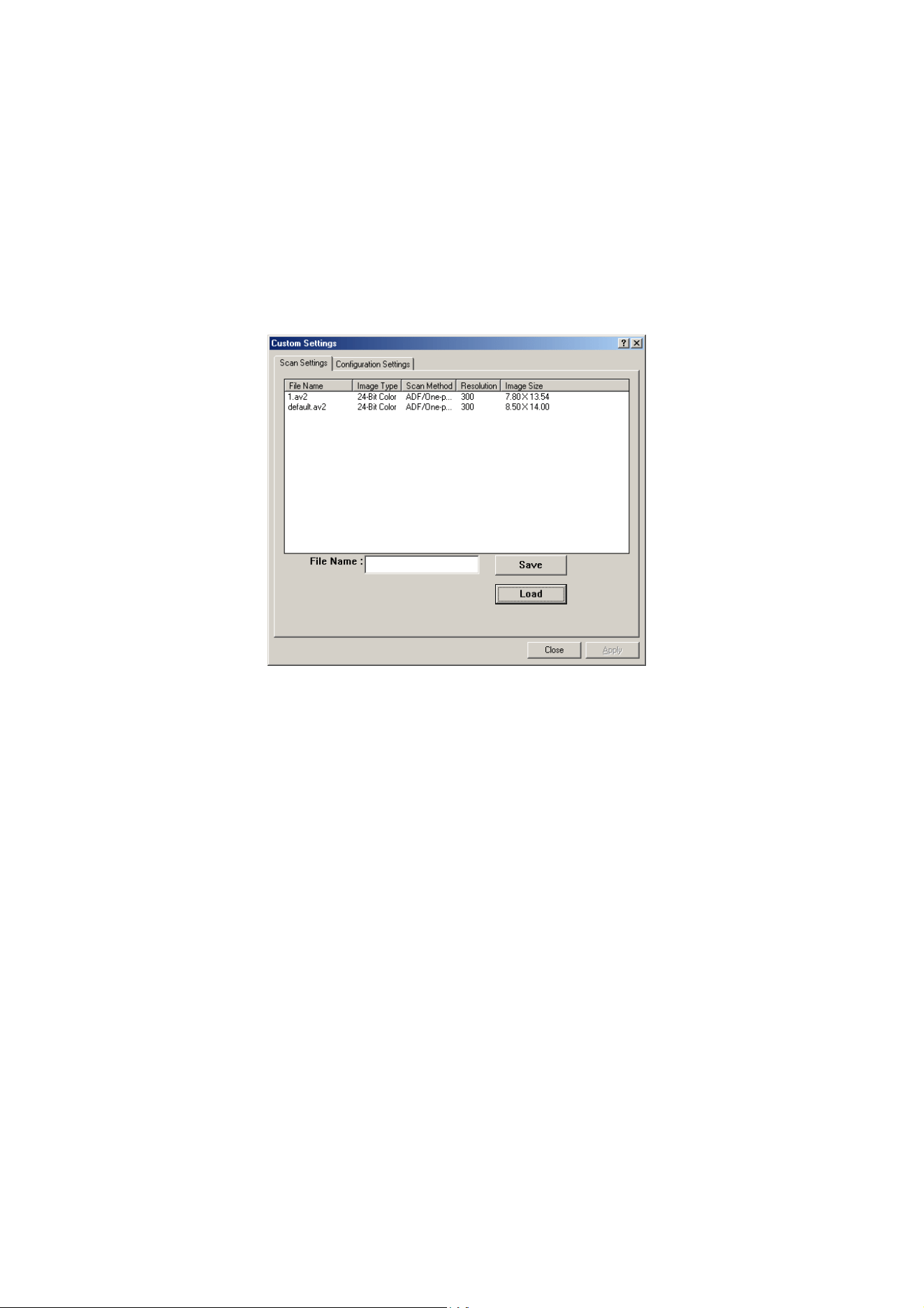
138
Custom Settings
C
lick the Custom Settings button to access a dialog box where you can save your
scan settings and configuration settings. There are two tabs: Scan Settings and
Configuration Settings.
Scan Settings
The Scan Settings tab allows you to save your scanning feature settings in a file,
load an existing file, or delete an existing file.
Saving a scan settings file
Type a name for your settings in the File Name text box and click the Save
button. Your settings will be saved and the file name will appear in the list box.
Using a scan settings file
You can use an existing settings file. Right-click the file name for the settings
you want to use and click the Load button. The settings in the file will
automatically be specified in the scanning features dialog box.
Deleting a scan settings file
Right-clicks a file name and press the Delete button the computer keyboard to
delete the file. Note you cannot delete the default scan settings file default.av2.
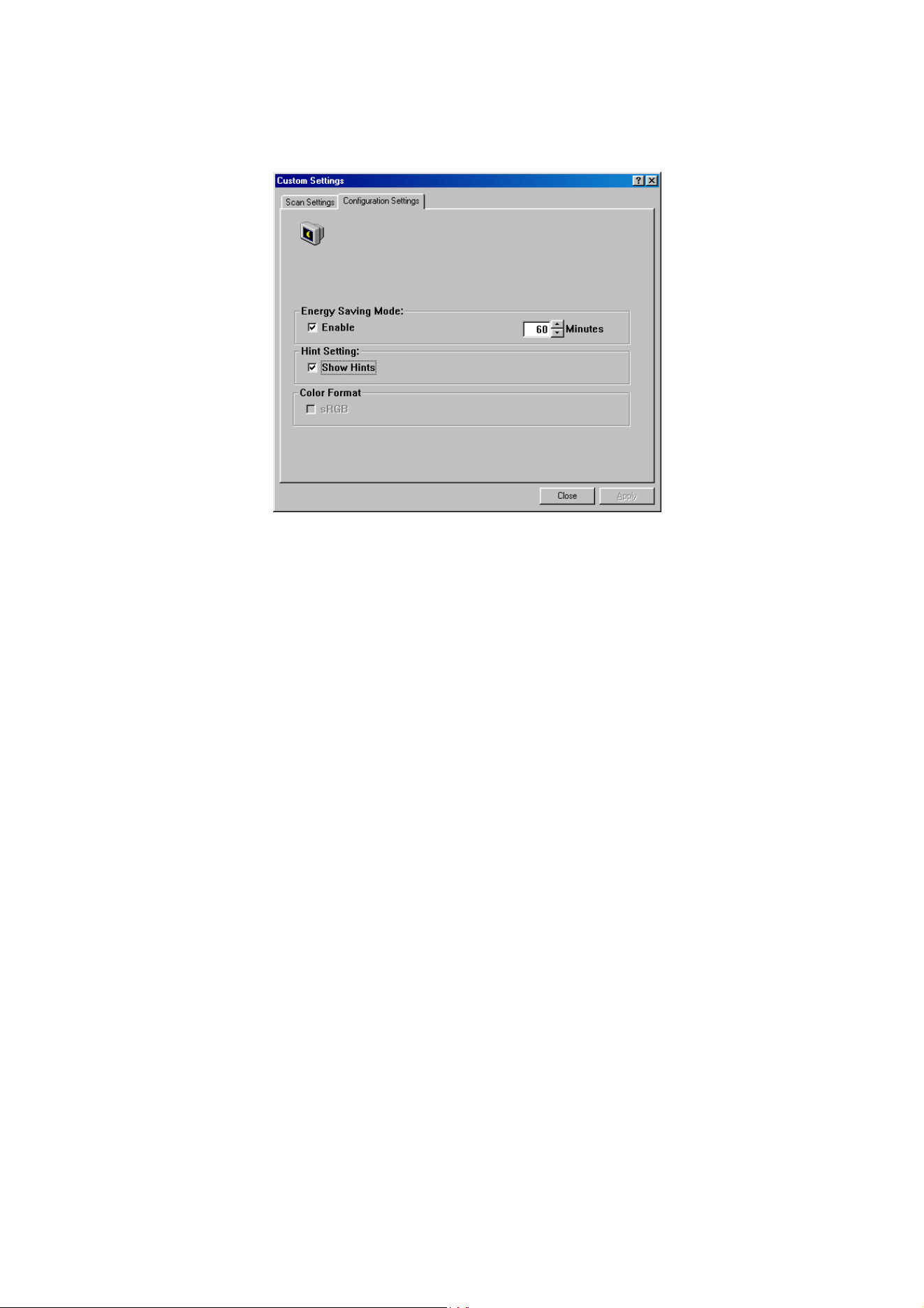
139
Configuration Settings
The Configuration Settings tab allows you to customize configuration settings.
Energy Saving Mode—checks the Enable box to enable energy savings. You can
specify a time delay in the Minutes box. Click the Apply button to save the
changes. The default setting is 15 minutes.
Hint Setting—check the Show Hints box if you wish to show a pop-up menu
when your cursor is placed on an item.
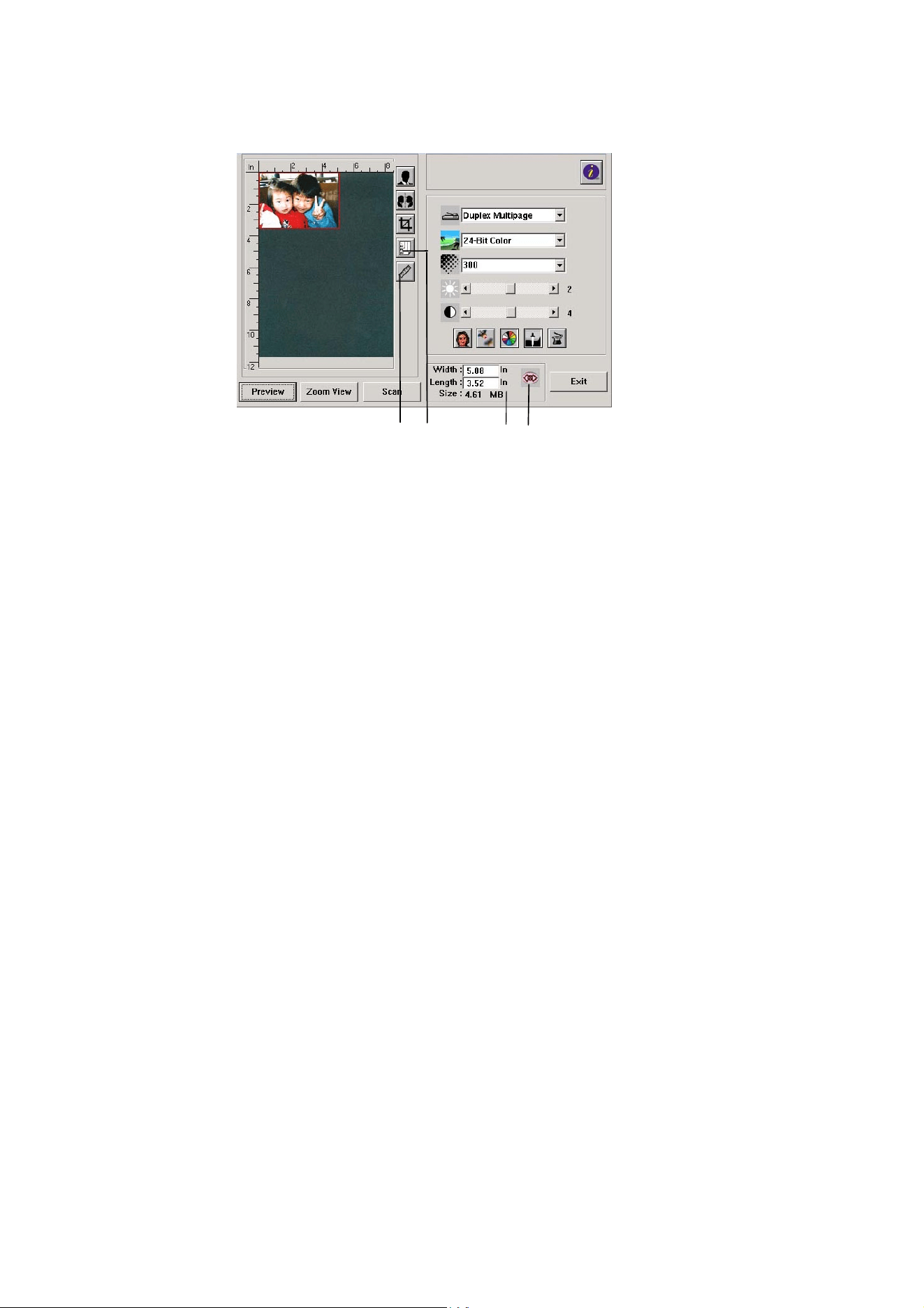
140
Using Other Tools
1. Measuring Unit A reminder of the measuring system in use. By
clicking the button, you can change the measuring
unit.
Choice: Inch, cm, Pixel.
2. Paper Size Provide frequently used scan sizes.
Choice: Card 4x2.5 in., Photo 5x3 in., Photo
6x4 in., B5, A5, A4, Letter, and Scanner
Maximum.
3. Image Size Display image size for the scanned area.
4. Lock Image Fix your output width and height.
1 2
3 4
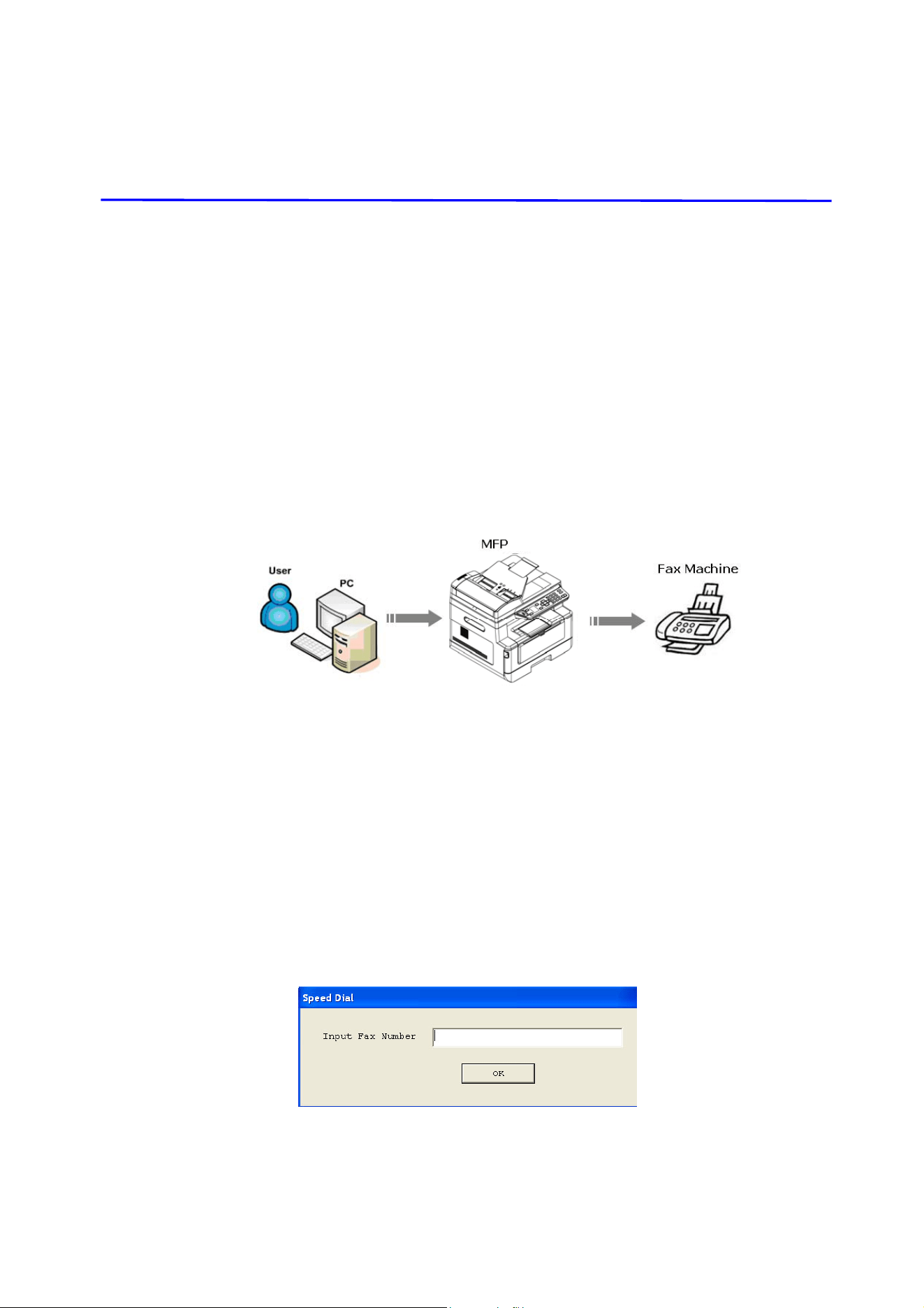
141
9. Using PC-Fax
With the PC-Fax feature, when your computer is connected to the product which
includes an optional fax modem and a telephone line and has been setup
according to the preceding section Installing a telephone line, you are able to
send files to other fax machines through your computer. Simply open your file,
select 「Avision AM30XX Fax」as your printer, and enter the recipient’s fax number
through the AM30XX fax properties dialog box. The fax job is done! Yet before
using the PC-Fax function, make sure that you have successfully installed the
product’s printer driver on your computer.
Sending Faxes through Your Computer
1. Open your file.
2. Choose Print from the File menu.
3. Select AM30XX to be your printer.
4. Press Print.
5. Enter your fax number when a fax number dialog is prompted and press OK
to start sending.
Sending
Sending
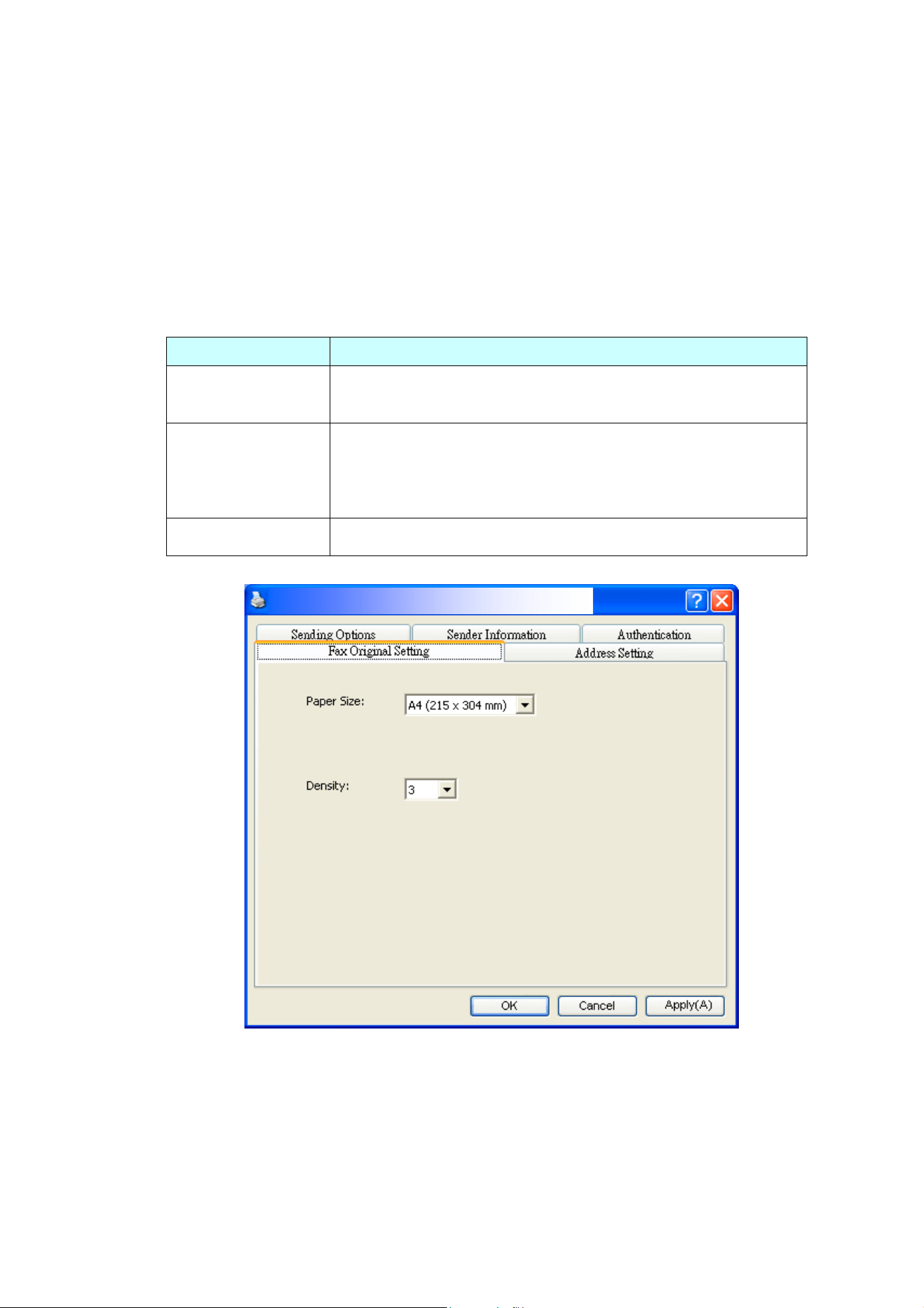
14
2
Accessing the PC-Fax Properties
This PC-Fax Properties dialog box consists of several tabbed window which allows
you to customize your fax settings and create your phone book.
The General Setting Tab
The General Setting tab allows you to choose your output paper size, your desired
fax resolution, and your desired density level.
Item Description
Paper Size Choose your output paper size.
Choice: *A4, B4, and A3.
Density Darken or lighten your original if necessary.
Choice: 1, 2, 3, *4, 5, 6, 7
1 indicates the weakest level while 7 represents the
strongest level.
* Default setting
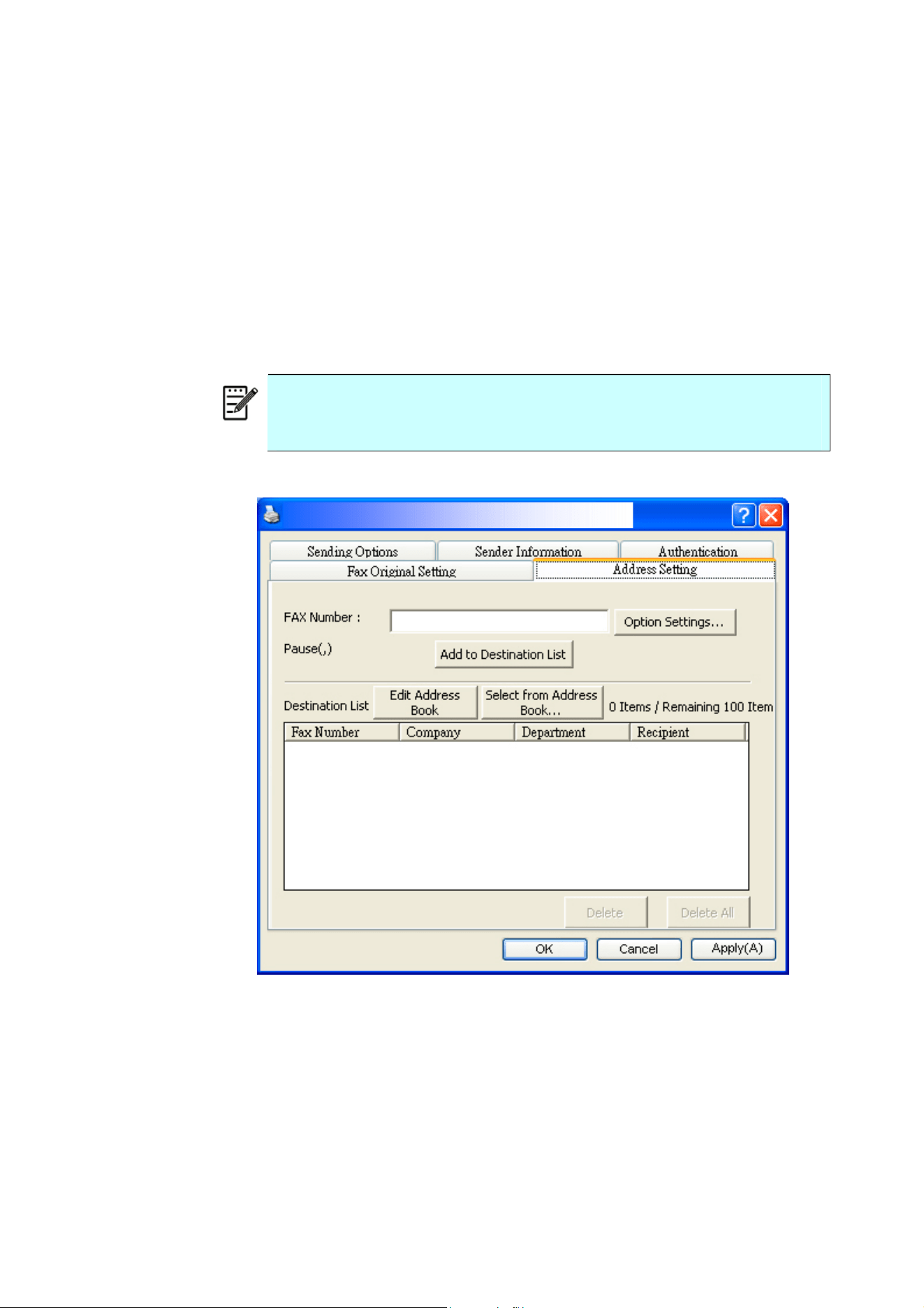
143
The Address Setting Tab
The Address Setting tab allows you to enter your fax number or select your
desired fax numbers from current address book of your Windows system.
Fax number: Enter your recipient’s fax number. You may click the Option
Settings button to enter more information including company, department,
and name of your recipient. The information will be shown in the Destination
List.
Add to Destination List: Click to add to your fax destination list. Up to 100
fax numbers can be entered and broadcasted.
Note:
The Destination List can not be saved and used as your phone book.
The fax numbers are only temporarily saved for one fax
transmission.
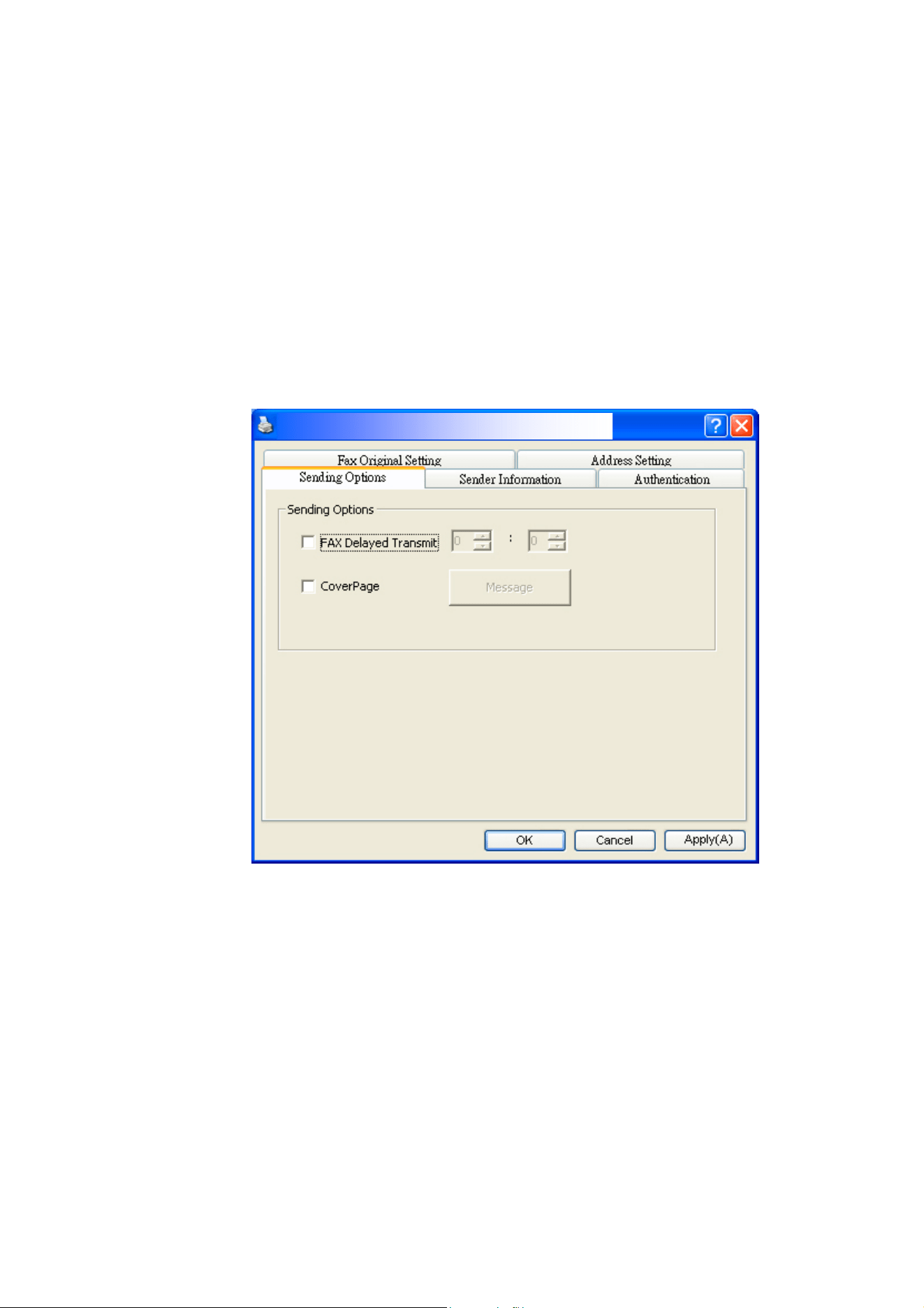
144
The Sending Options Tab
The Sending Options tab allows you to set more options such as delay fax, or
fax message.
FAX Delay Transmit: Enter your desired time in 24-hour format to send the
delayed fax.
Cover Page: Choose Cover Page and then click the Message box. A Message
dialog box appears to let you enter your message. The cover page which
includes the sender information and your message will be sent and printed as
a separate sheet.
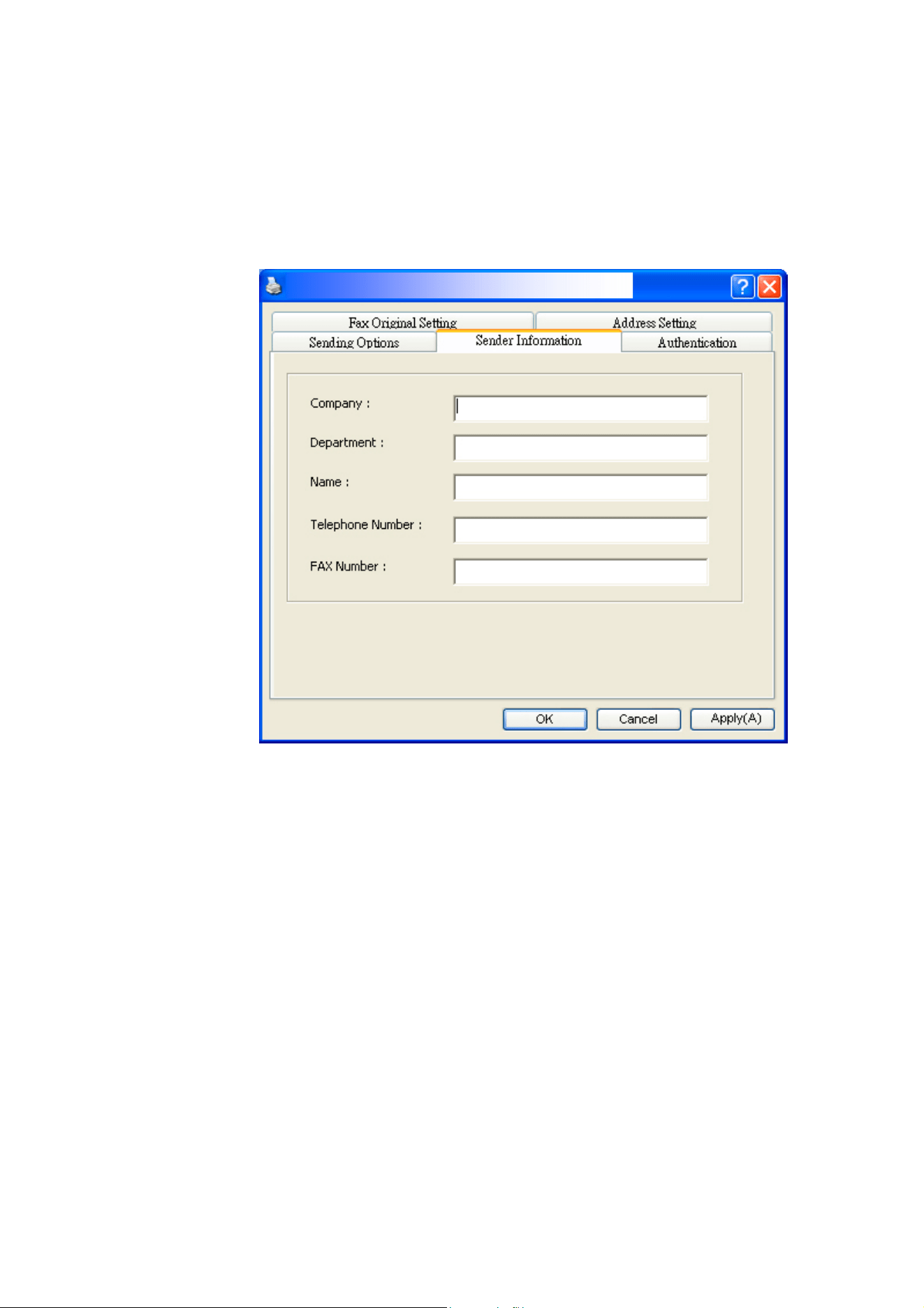
14
5
The Sender Information Tab
The Sender Information tab allows you to enter the sender’s information which
will be included as cover page. The sender’s information includes company
name, department name, recipient’s name, telephone number and fax
number.
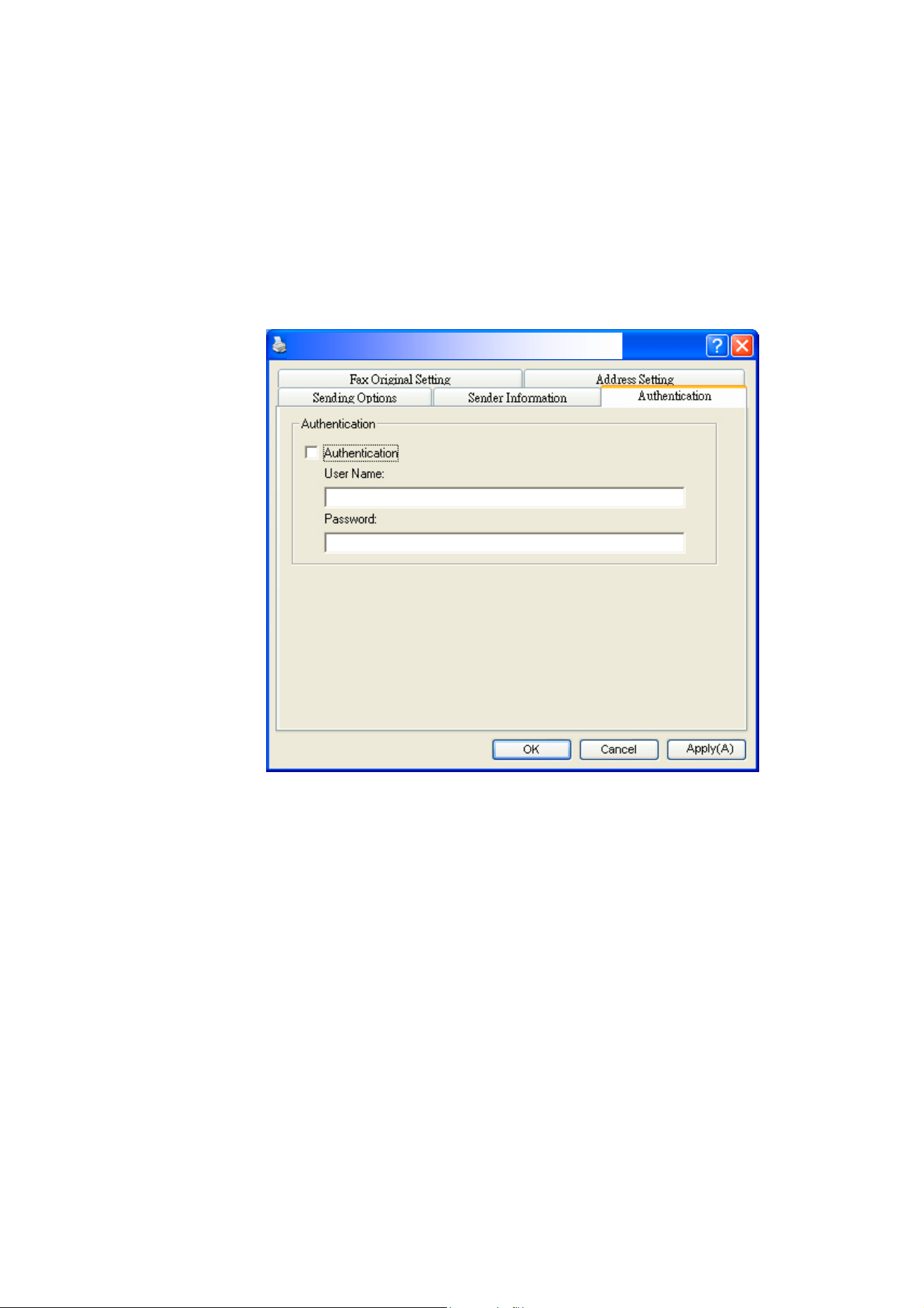
14
6
The Authentication Tab
The product allows the administrator to setup the privilege to use the fax
function through the embedded web page. If so, an authentication is required
in the product’s fax properties dialog box to prevent unauthorized access of the
fax function.
Click the 「Authentication」tab, and then enter the account name and password
the administrator has set through the embedded web page.
User name limitation:
Allowable length: 1~28 characters or symbols:;Allowable symbols: 「.」, 「-」.
「_」, 「@」, 「;」, 「 」.
Password limitation:
Allowable length: 1~28 characters or symbols:, no limitation on symbols.
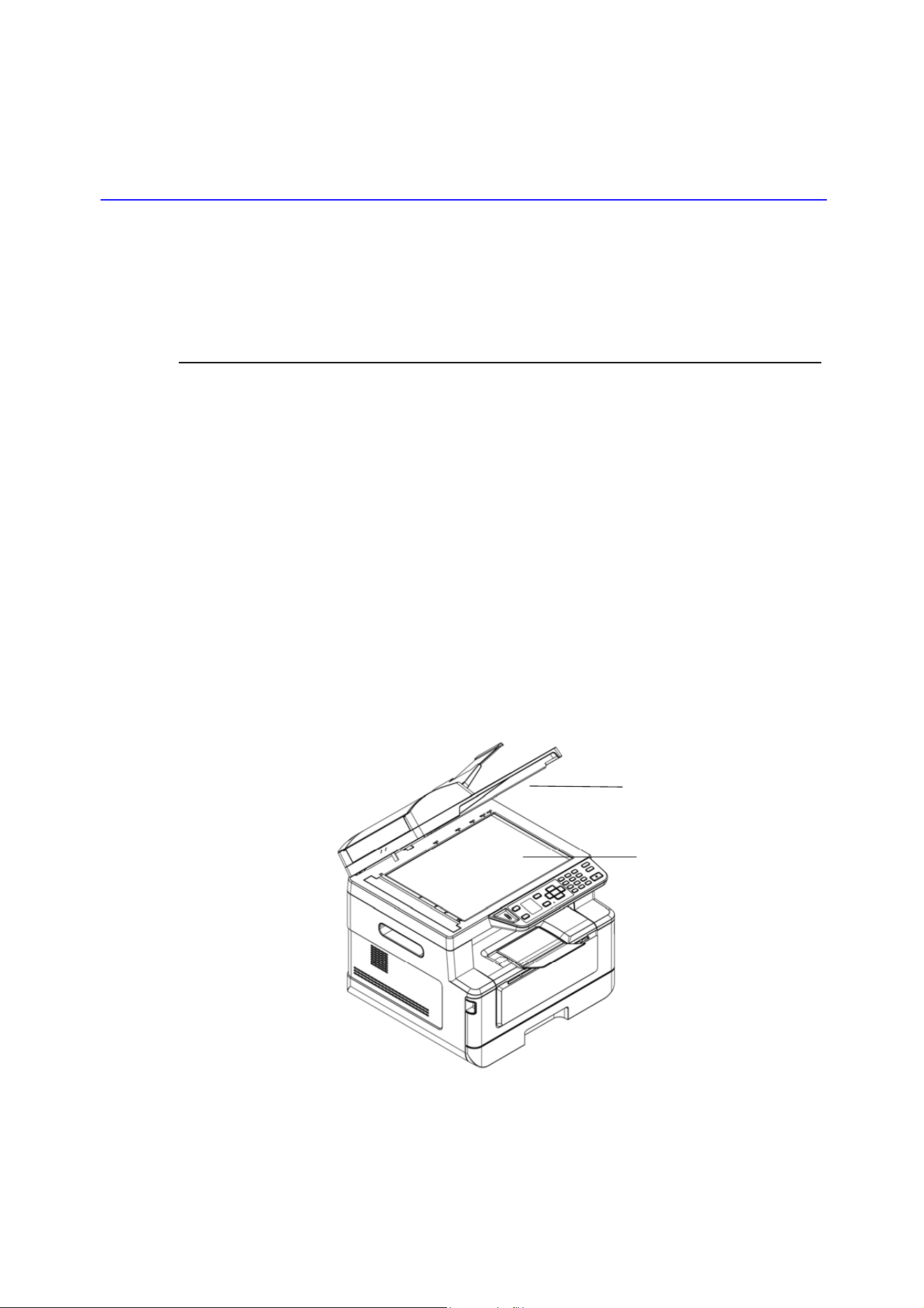
14
7
10. Maintaining the Product
Cleaning The Glass
The product is designed to be almost maintenance-free. However, it still needs to
be cleaned occasionally to ensure optimum image quality and performance.
To clean the glass,
1. Open the document cover as shown below.
2. Dip a soft clean cloth with isopropyl alcohol (95%).
3. Gently wipe the flatbed glass and the white sheet beneath the document
cover to remove the dust or any toner particles.
4. Close the document cover. Your machine is now ready to use.
1. Document Cover
2. Flatbed Glass
1
2
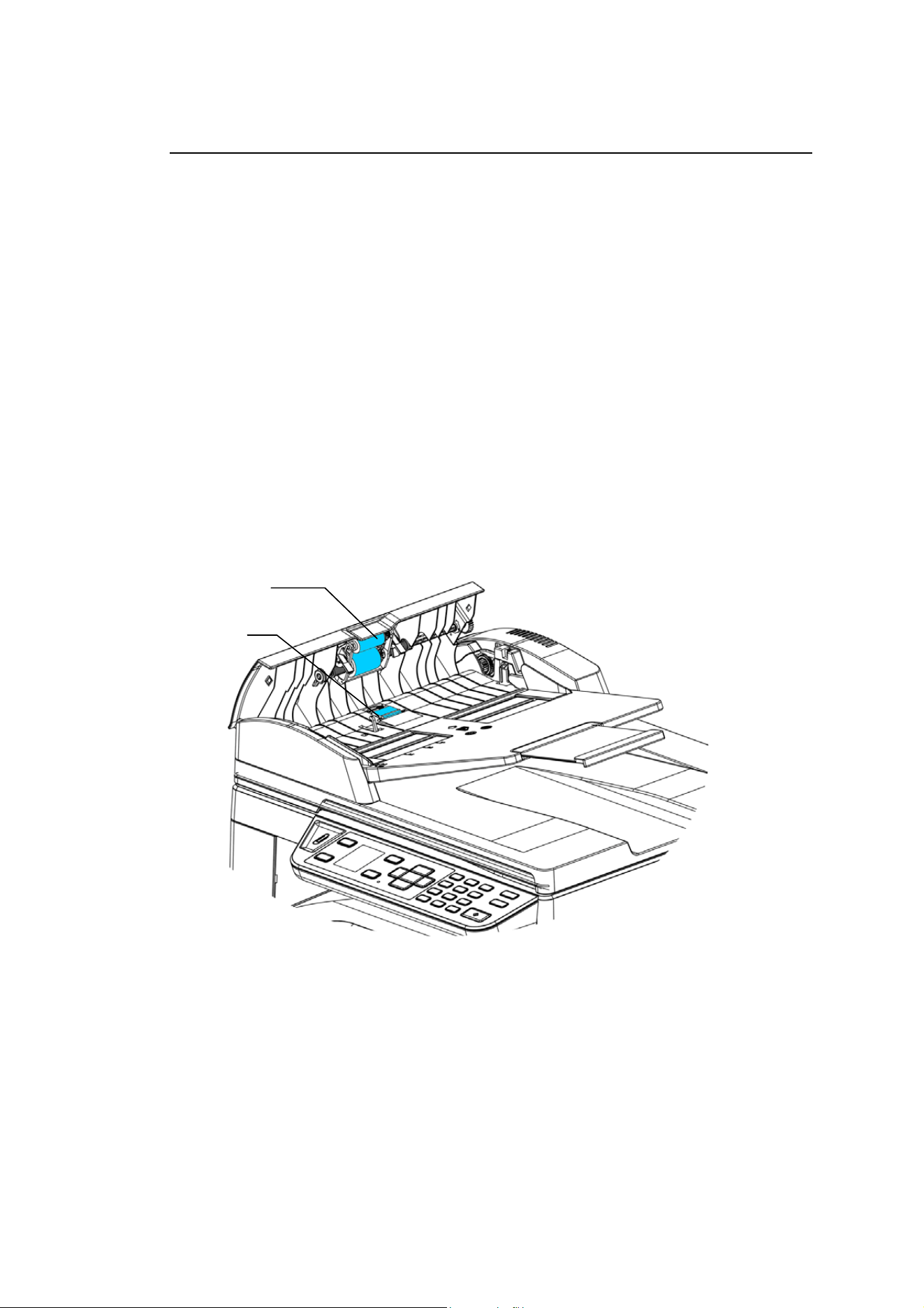
148
Cleaning the ADF
From time to time the pad assembly and feeding rollers may become
contaminated with ink, toner particles or paper dust. In this case the product may
not feed documents smoothly. If this occurs please follow the cleaning procedures
to return your machine to its original state.
1. Moisten a clean lintless cloth with isopropyl alcohol (95%).
2. Gently open the ADF front cover. Wipe the feeding rollers from side to side.
Rotate the rollers forward with your finger and repeat the above cleaning
procedures until the rollers are clean. Be careful not to snag or damage the
pick springs.
3. Wipe the rubber part of the ADF snap-in pad.
4. Close the ADF unit. Your machine is now ready to use.
ADF Pad
ADF Roller
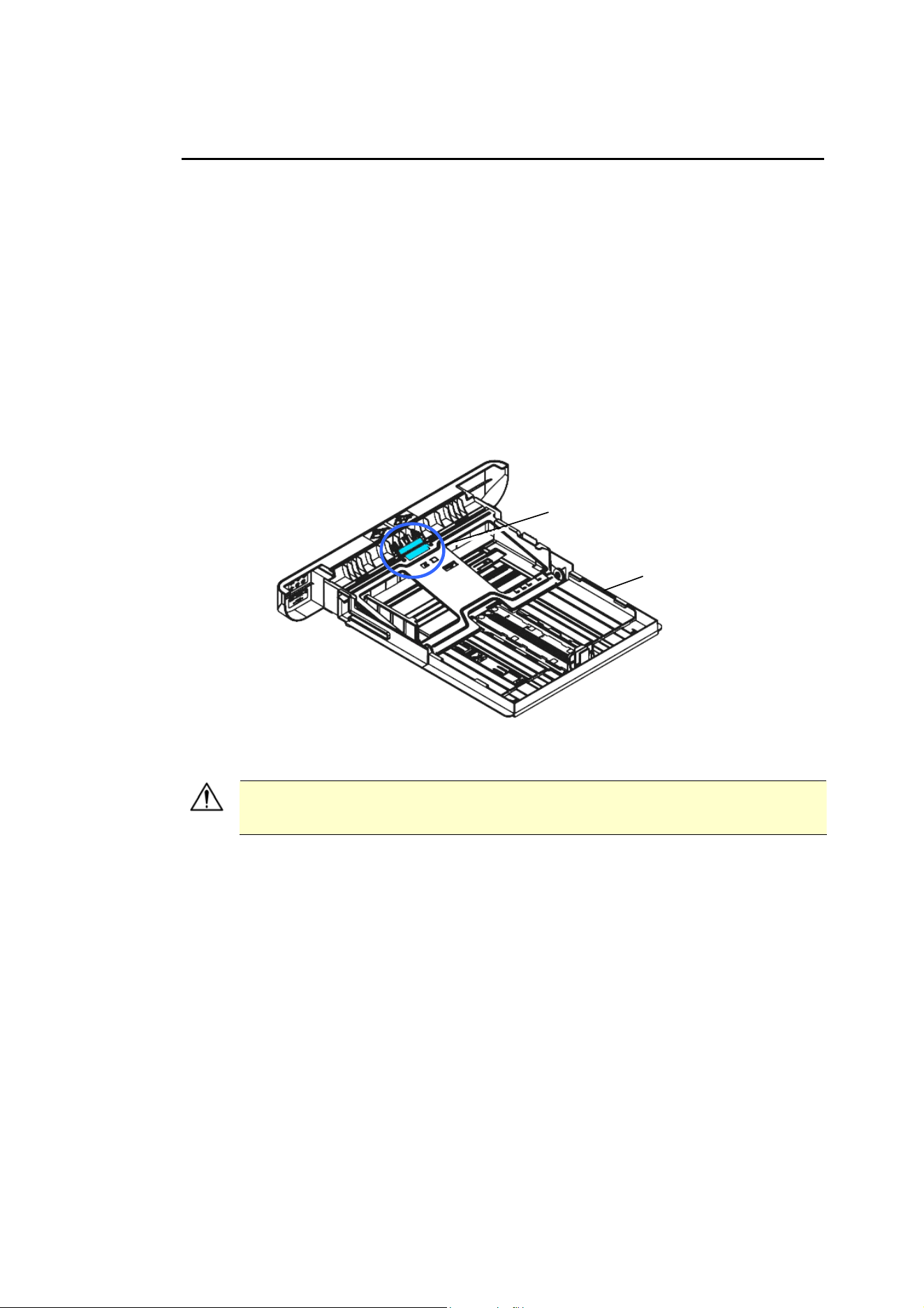
149
Cleaning the Pad in the Cassette
If the Pad in the Cassette is smeared with paper powder or dirt or every 30K
copies, paper may not feed smoothly or noise occurs during paper feeding. Follow
the procedure below to clean the Pad in the Cassette.
You need to prepare: cotton swab
1. Remove all paper in the cassette.
2. Moisten a cotton swab with isopropyl alcohol (95%).
3. Clean the rubber part of the pad.
Important:
After cleaning the smeared Pad, dry it completely.
Cassette
Pad
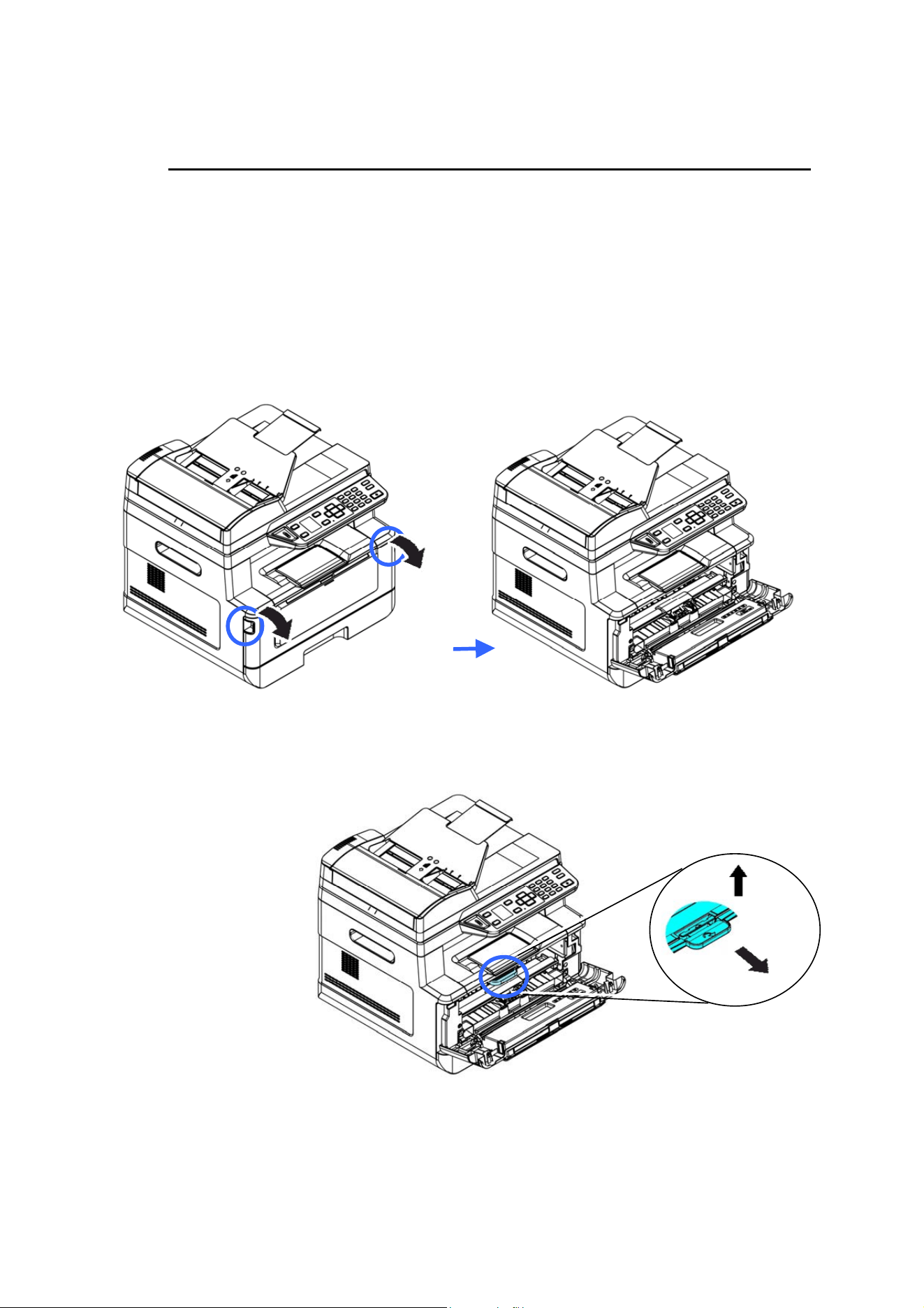
15
0
Cleaning the Drum Unit
If the drum unit is smeared with paper powder or dirt, the print out may appear
defective image of regular interval. Follow the procedure below to clean the drum
unit.
1. Turn off the power and remove the power cord from the power outlet.
2. Open the front cover by pulling the handles on both sides as shown.
3. Lift the handle of the drum unit and toner cartridge assembly and gently
remove the assembly.
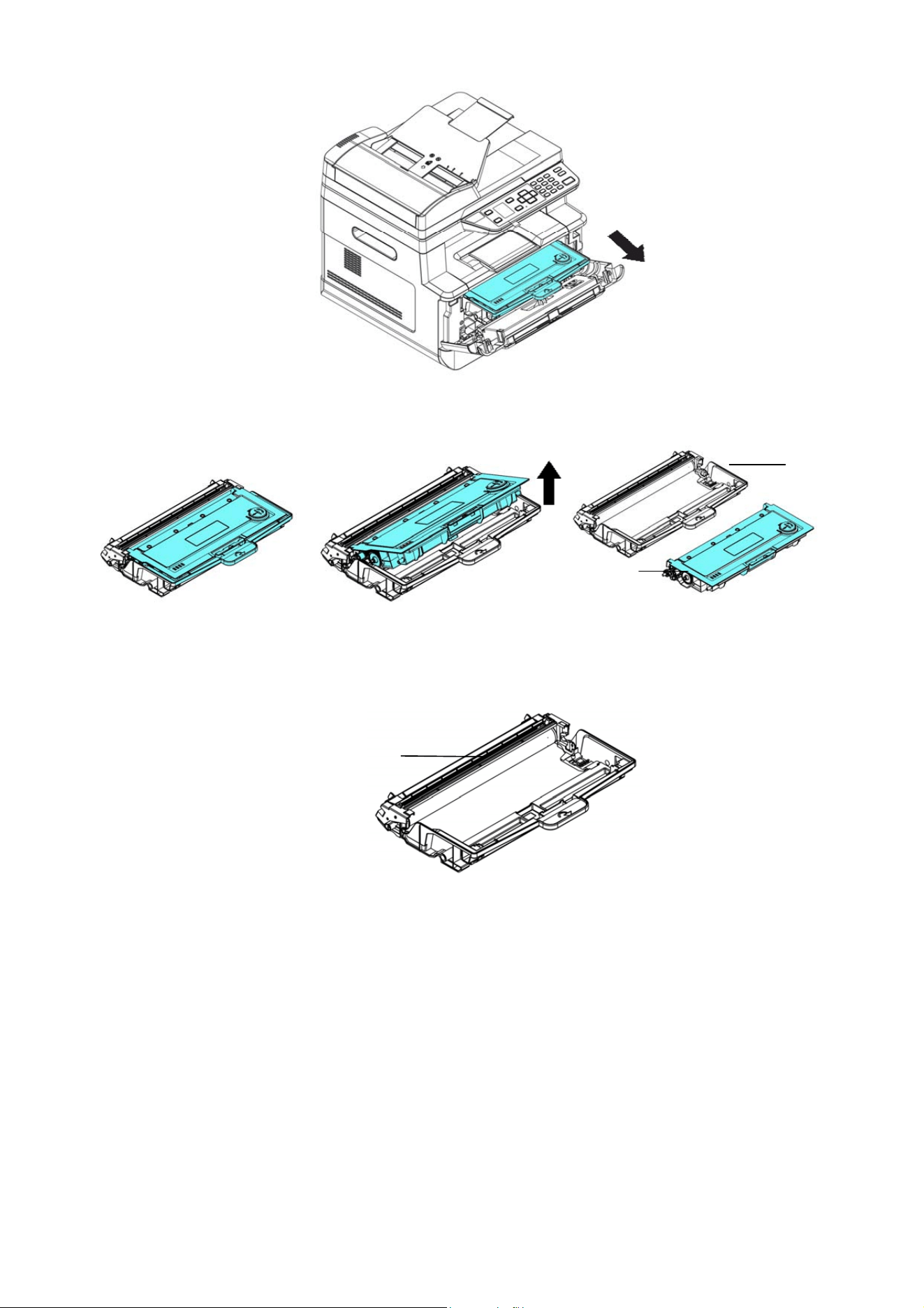
151
4. Remove the toner cartridge from the drum unit as shown.
5. Clean the drum unit with a clean and soft cloth.
Drum
Unit
Toner
Cartridge
Clean this area.
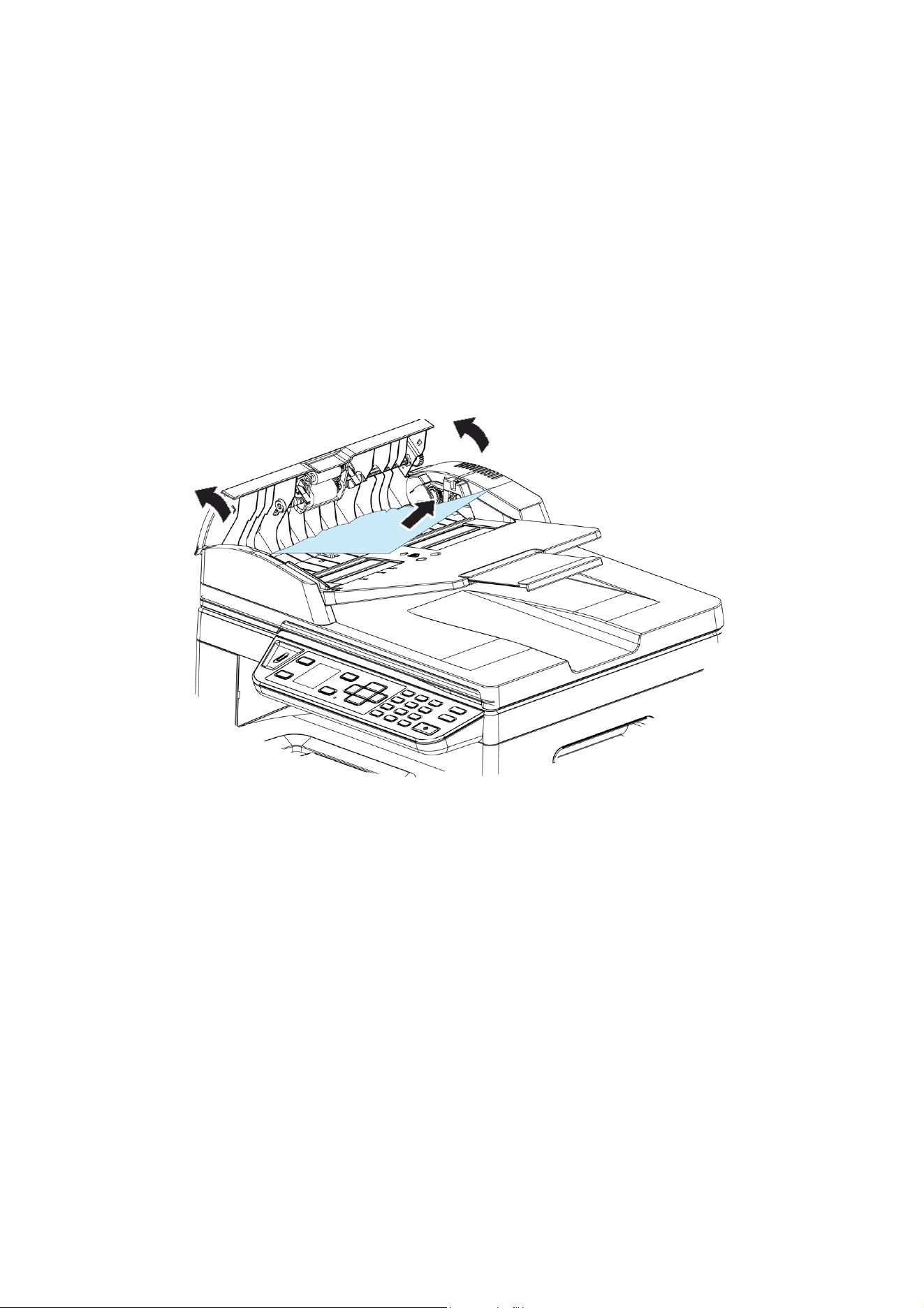
15
2
Clearing the ADF Paper Jam
In the event of a paper jam in the ADF, follow the procedures below to remove the
paper:
1. Gently open the ADF front cover to the left .
2. Carefully pull the paper out of the ADF unit .
3. Close the ADF front cover. Your product is now ready to use.
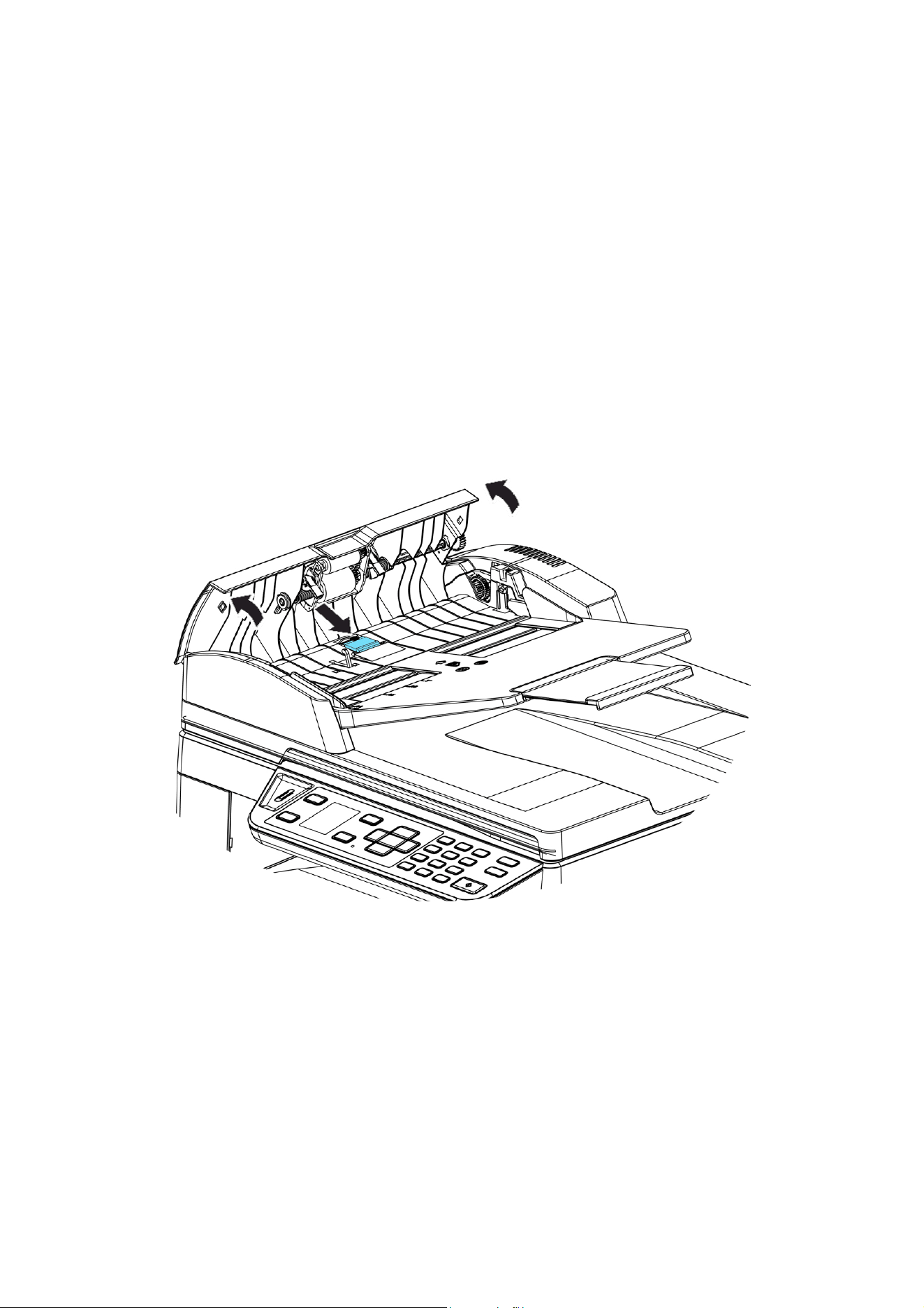
153
Replacing the Snap-in Pad Module
After scanning about 20,000 sheets through the ADF, the pad may be worn out
and you may experience problems with document feeding. In this case, it is highly
recommended to replace the pad module with a new one. For ordering the pad
module, please consult your nearest dealer and follow the procedure below to
replace it.
Disassembling Procedure
1. Gently open the ADF front cover.
1. Remove the ADF snap-in pad module by pressing the lock upward.
Assembling Procedure
1. Gently open the ADF front cover to the left.
2. Remove the ADF pad module from the box.
3. Place it into the holes until it snaps into place.
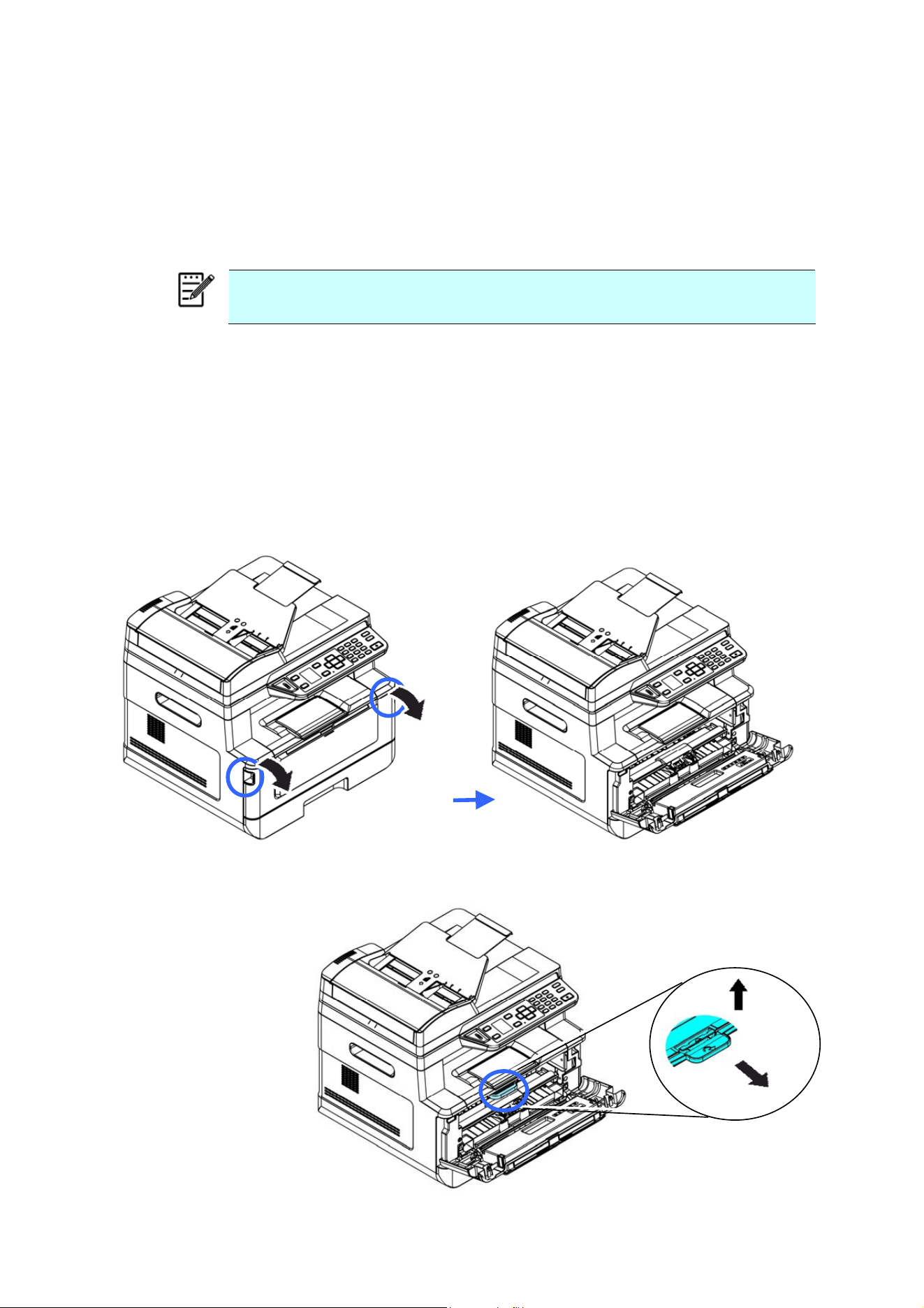
154
Replacing The Toner Cartridge
The toner cartridge that comes with the product needs to be replaced after printing
approximately 3,000 pages. When the toner cartridge is running low, you will be
prompted with a [Toner Low] message. Buy a new toner cartridge and have it
ready before you receive [Replace Toner] message.
Note:
The drum unit and the toner cartridge are two separate parts.
Follow these steps to replace the toner cartridge:
Removing the Toner Cartridge
3. Turn off the power and remove the power cord from the power outlet.
4. Open the front cover by pulling the handles on both sides as shown.
2. Lift the handle of the drum unit and toner cartridge assembly and gently
remove the assembly.
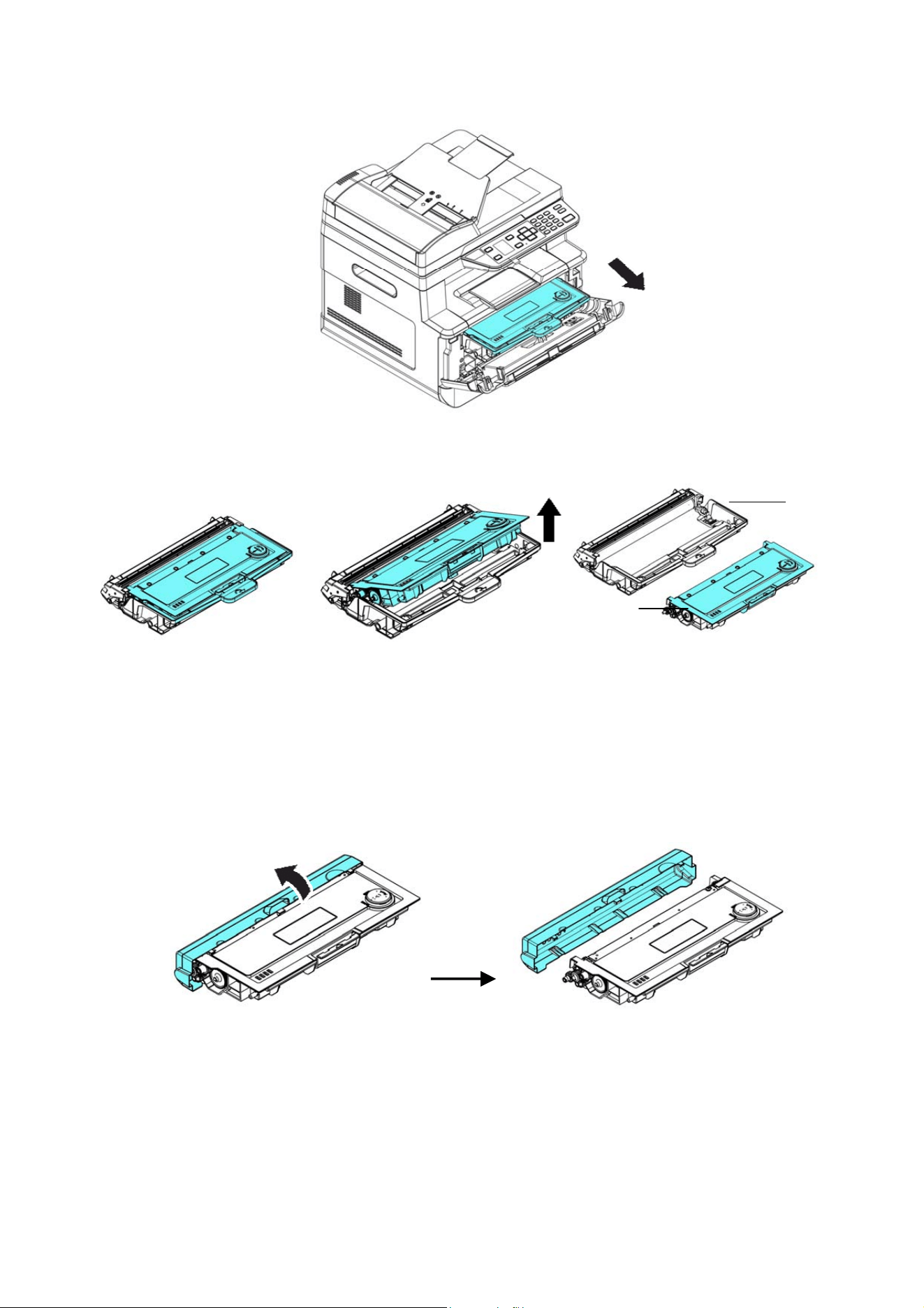
15
5
3. Remove the toner cartridge from the drum unit as shown.
Installing the Toner Cartridge
1. Unpack the new toner cartridge.
2. Remove the protective cover.
3. Tilt the toner cartridge up and down and then right and left 10 times to
distribute the toner evenly inside the toner cartridge.
Drum
Unit
Toner
Cartridge
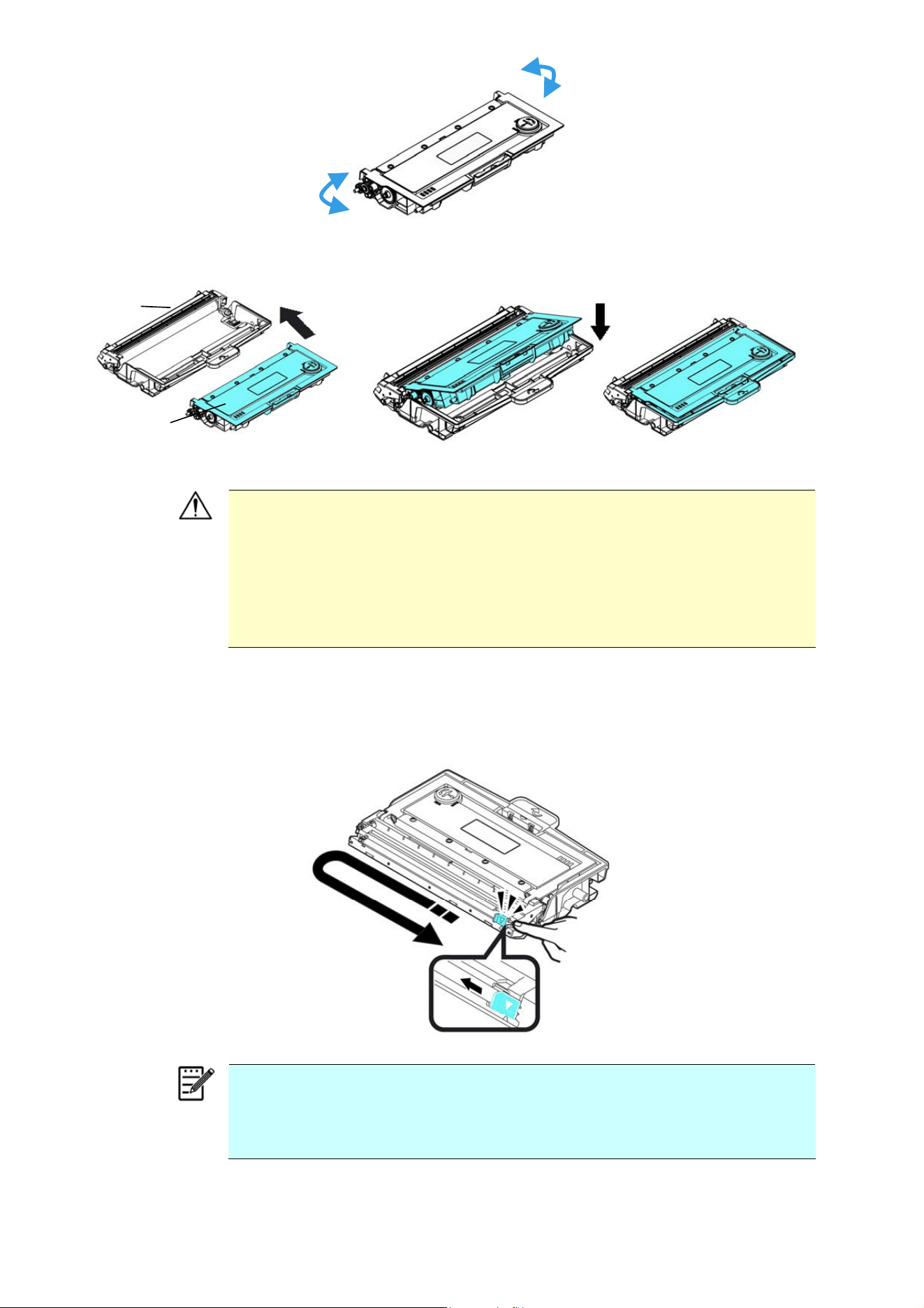
15
6
4. Install the toner cartridge to the drum unit.
Warning!
Be careful not to inhale toner.
If toner gets on your clothing or other fabric, wipe off the toner with
a dry cloth. Wash the items in cold water and air dry.
To avoid print quality problems, DO NOT touch the toner rollers.
To prevent the toner cartridge from damage, do not expose it
more than several minutes.
5. Clean the corona wire inside the drum unit by gently sliding the tab from
left to right and right to left for several times. (After the toner cartridge
has been used for a period of time, some amounts of toner may remain
on the corona wire.)
Note:
Be sure to return the tab to the Home position (▲). The arrow on the
tab must be aligned with the arrow on the drum unit. If it is not,
printed pages may have a vertical stripe.
Drum
Unit
Toner
Cartridge
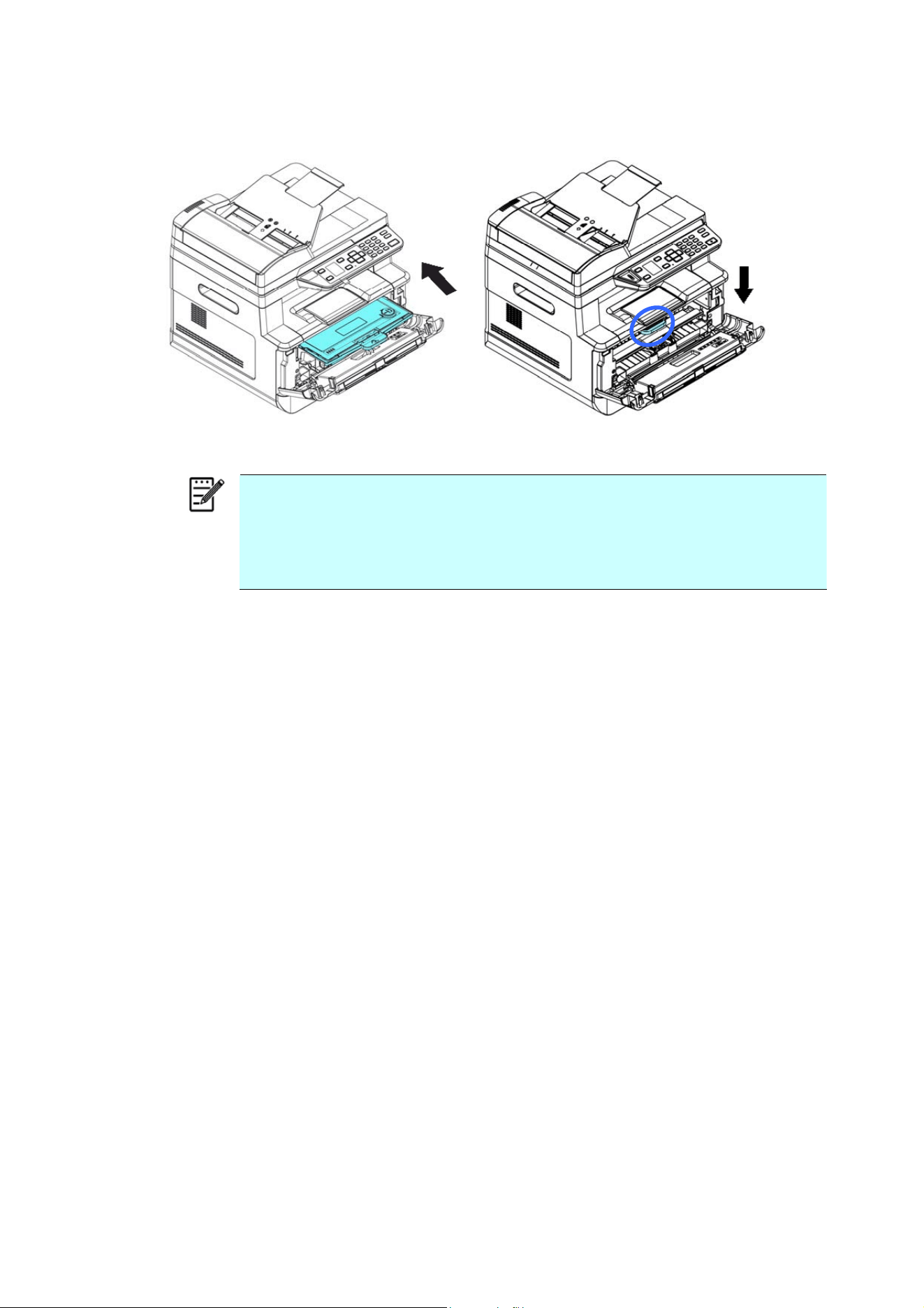
15
7
6. Hold the handle of the toner cartridge assembly and insert the toner
cartridge assembly to its original place. Press the handle to fix it firmly in
place.
Note:
Do not dispose of the toner cartridge. Put the used toner cartridge into
the bundled plastic bag, and then return it to a dealer or service
representative. The latter recycles or deals with the collected toner
cartridges in accordance with the relevant regulations.
7.
Close the front cover.
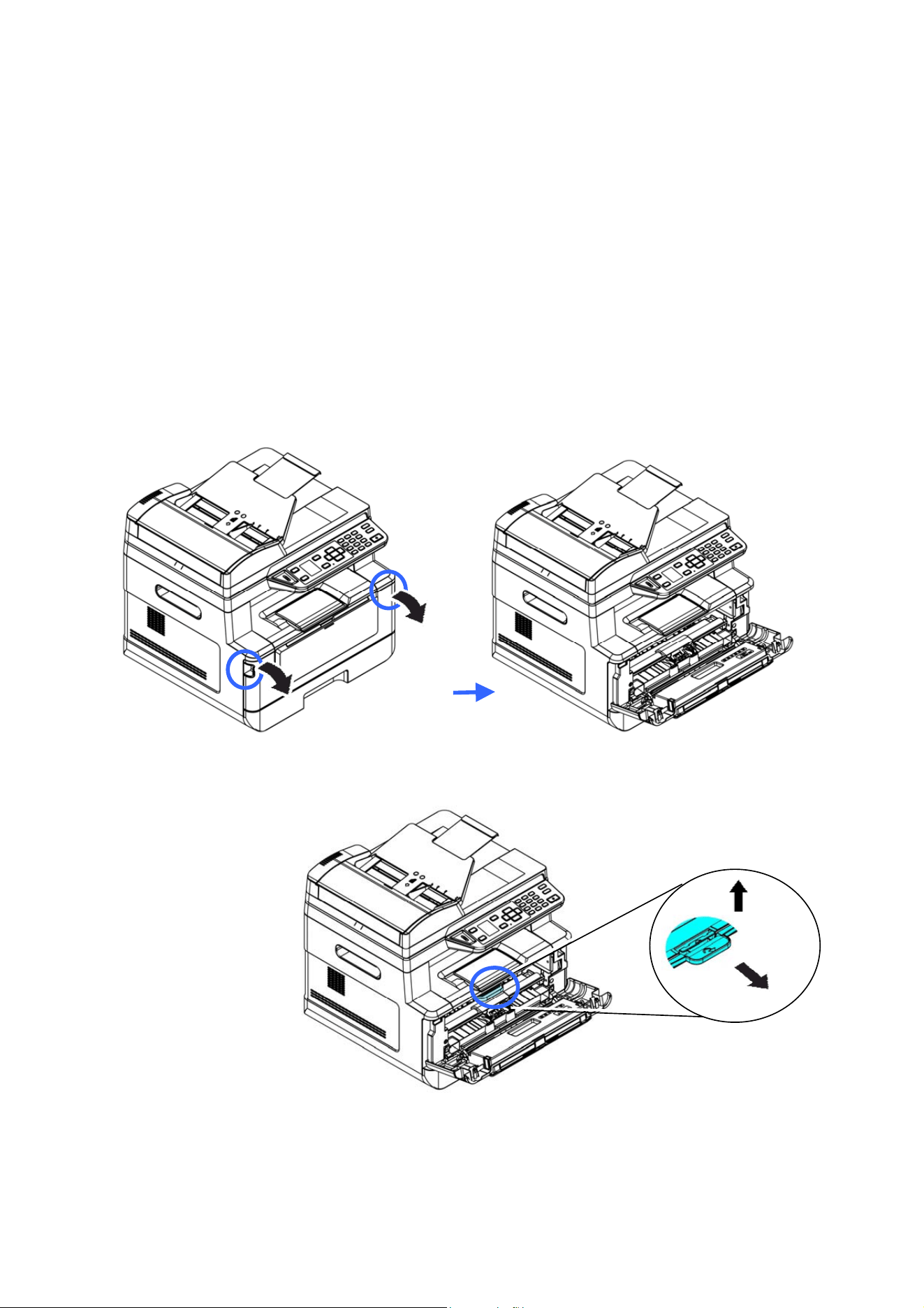
158
Replacing The Drum Unit
The drum unit that comes with the product needs to be replaced after printing
approximately 12,000 pages. When the drum unit is running low, you will be
prompted with a [Drum Low] message. Buy a new toner cartridge and have it
ready before you receive [Replace Drum] message.
Follow these steps to replace the toner cartridge:
Removing the Drum Unit and the Toner Cartridge Assembly
1. Turn off the power and remove the power cable from the power outlet.
2. Open the front cover by pulling the handles on both sides as shown.
3. Lift the handle of the toner cartridge and gently remove the toner cartridge.
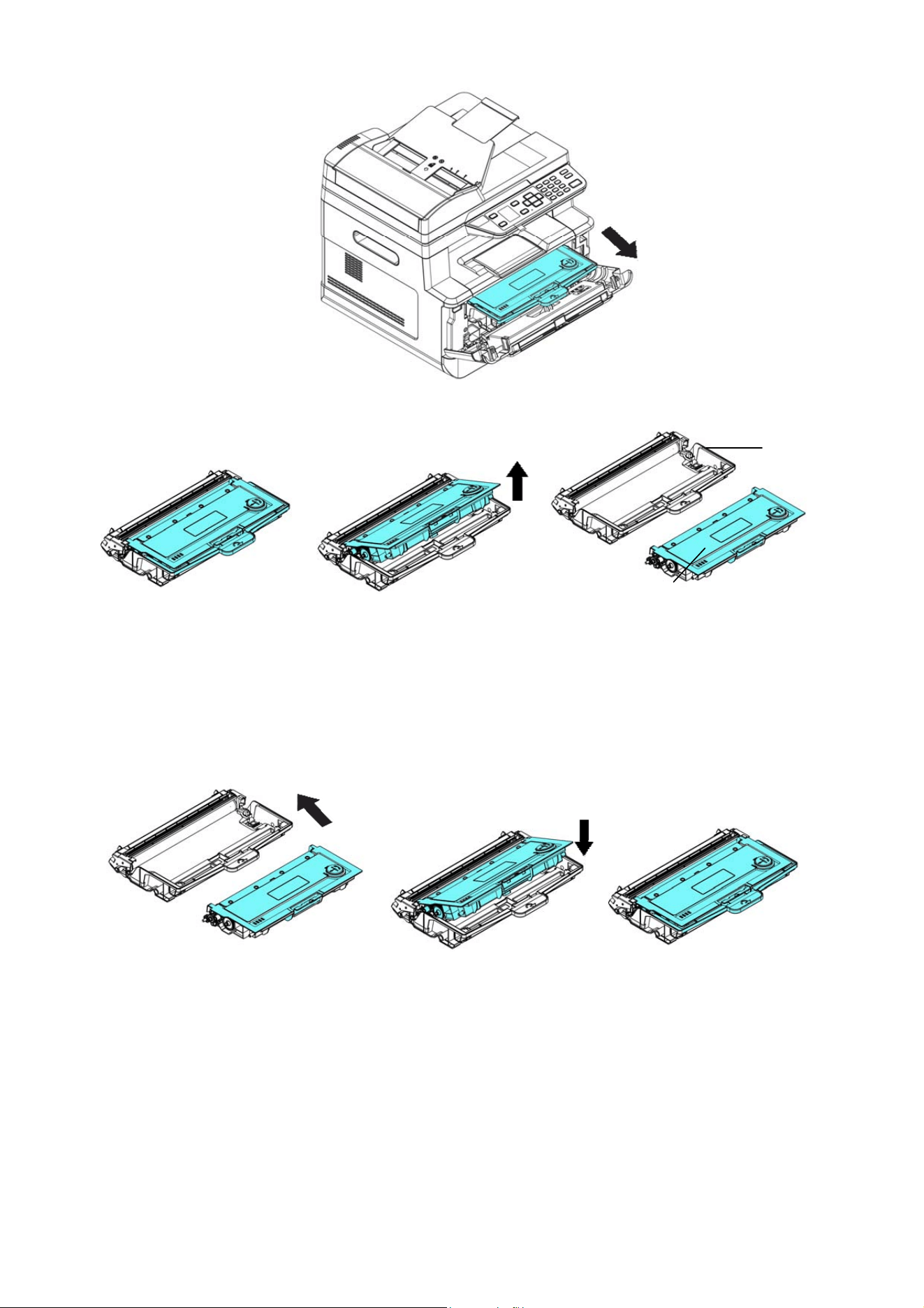
159
4. Remove the toner cartridge from the drum unit as shown.
Installing the Drum Unit
1. Install the toner cartridge to the new drum unit.
2.
Hold the handle of the toner cartridge and insert the toner cartridge to its
original place. Press the handle to fix it firmly in place.
Drum
Unit
Toner
Cartridge
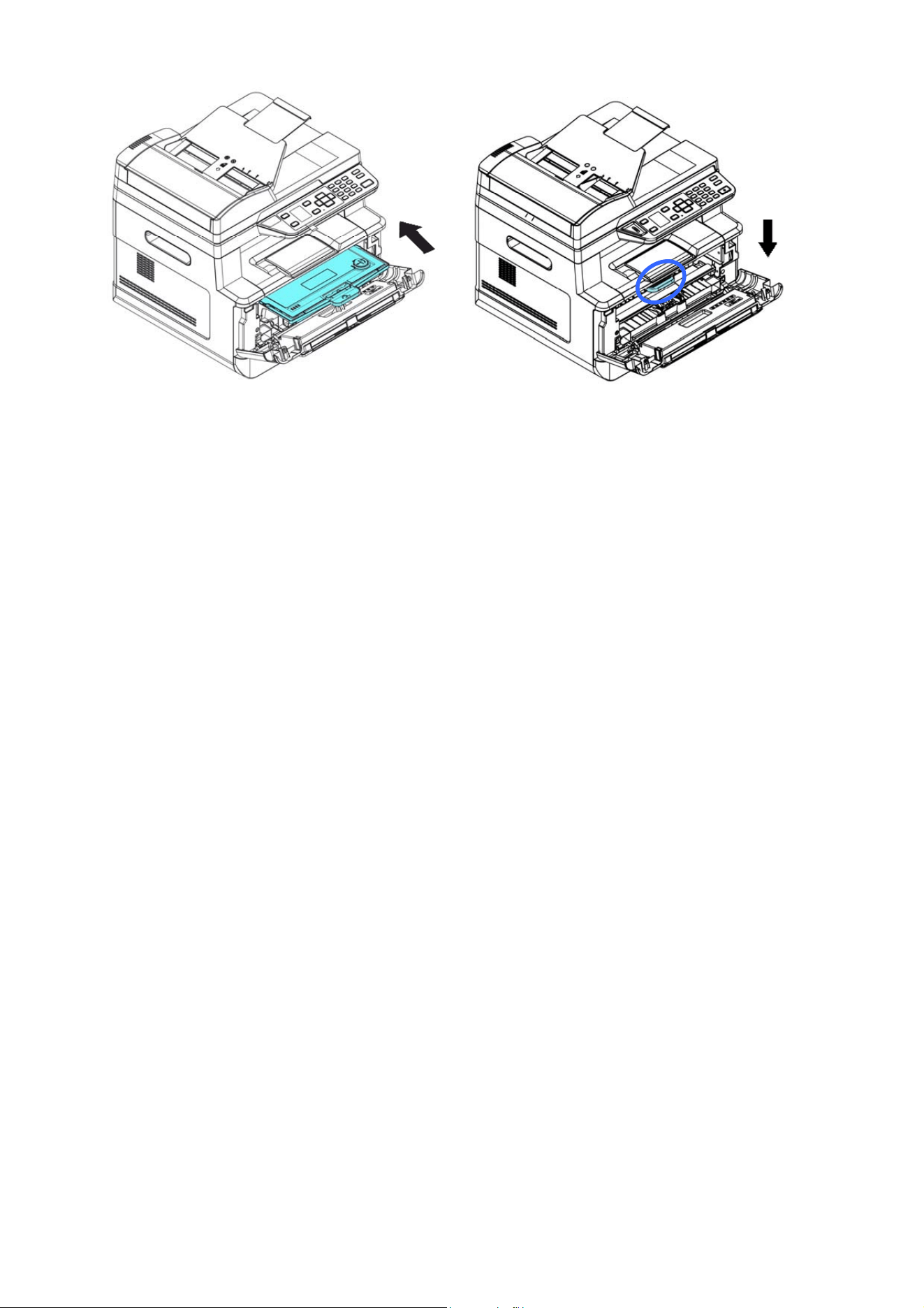
16
0
3.
Close the front cover.
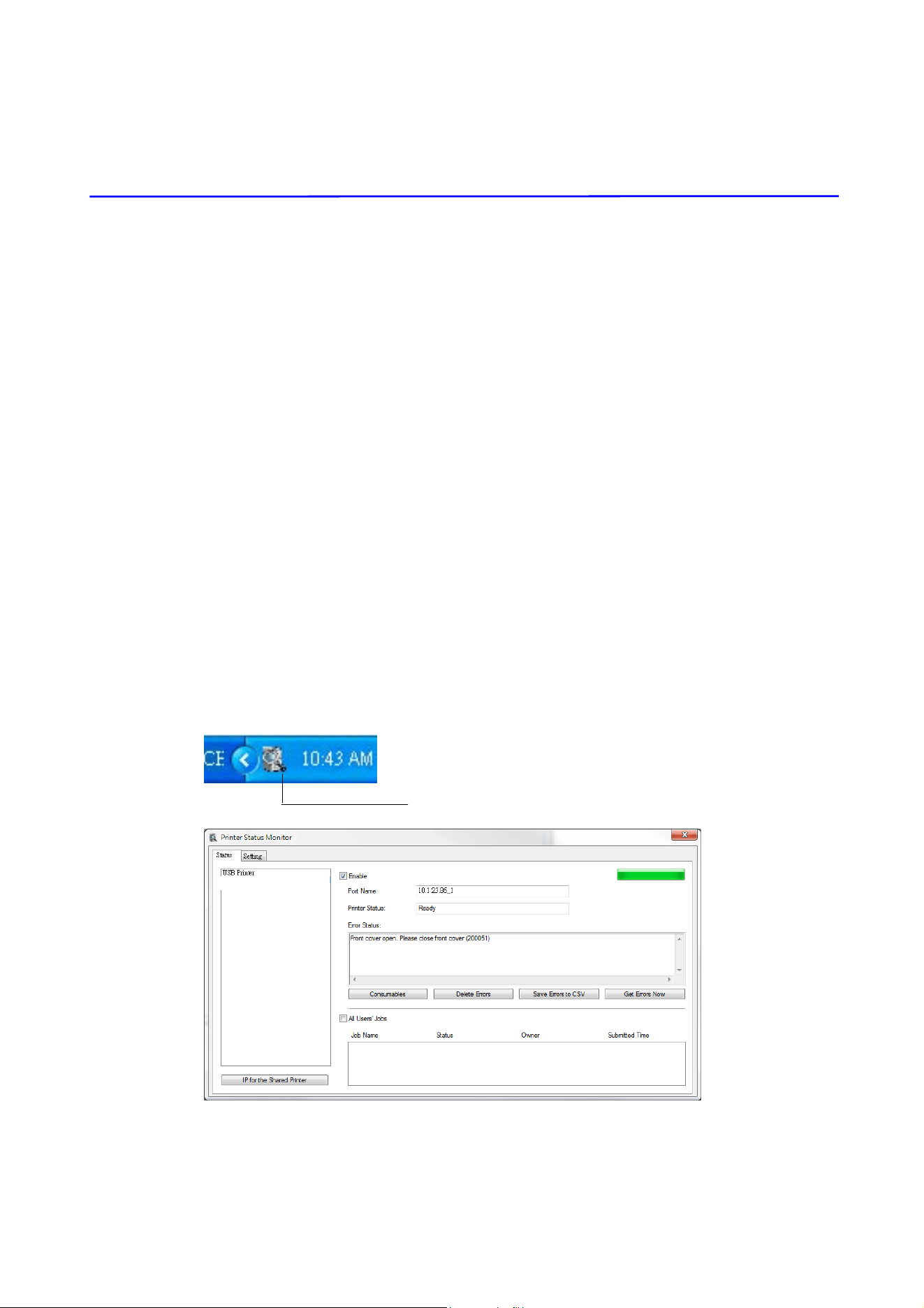
161
11. Troubleshooting
Monitoring Your Printer Using Printer
Status Monitor
Printer Status Monitor allows you to monitor your printer’s status, get
information on consumable parts, and alerts you when printer errors occur.
Printer Status Monitor is available when the printer is connected directly to a
host computer via the USB port or a network port.
Printer Status Monitor is installed when you install the printer driver as
described in the preceding section.
Accessing Printer Status Monitor
Double-click the Printer Status Monitor icon on the system tray. The
following printer status window appears.
Printer Status Window
Printer Status Monitor icon
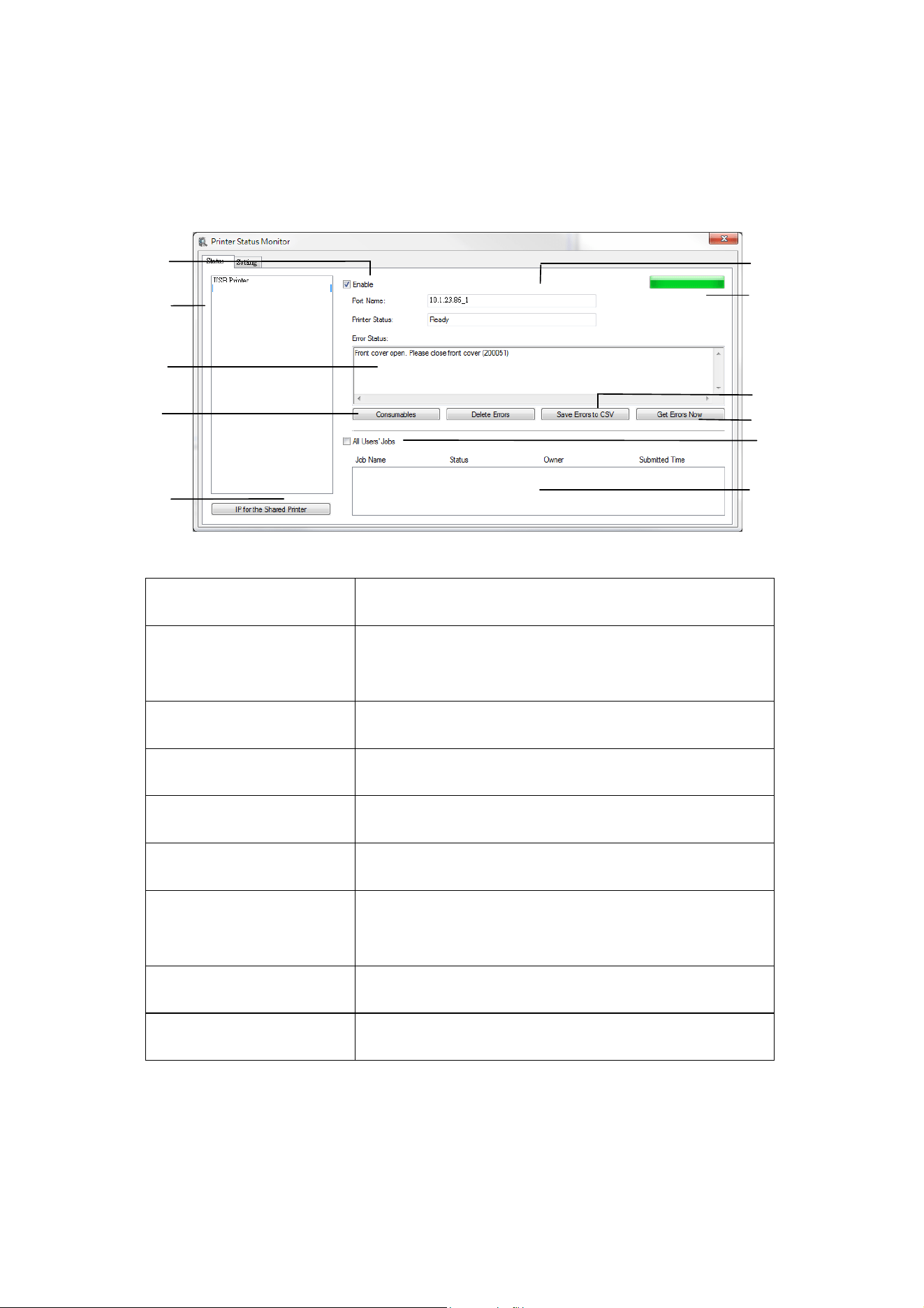
162
Getting Printer Status Details
You can monitor printer status and get information on consumable products
using the Printer Status Monitor dialog box.
a Port Name Port name for the specified printer.
b Progress Bar The progress bar to access the latest data of the
specified printer.
c Delete Errors Delete all the error messages.
d Save Errors to CSV Save error message to a CSV file.
e All Users’ Jobs Check the box to show All users’ jobs.
f Job Box Show all the jobs in queue.
g Enable Check the box to enable accessing the status of a
specified printer.
h Printer Displays connected printers.
i Text Box Displays the current status of the printer.
a
b
c
d
e
f
g
h
i
j
k
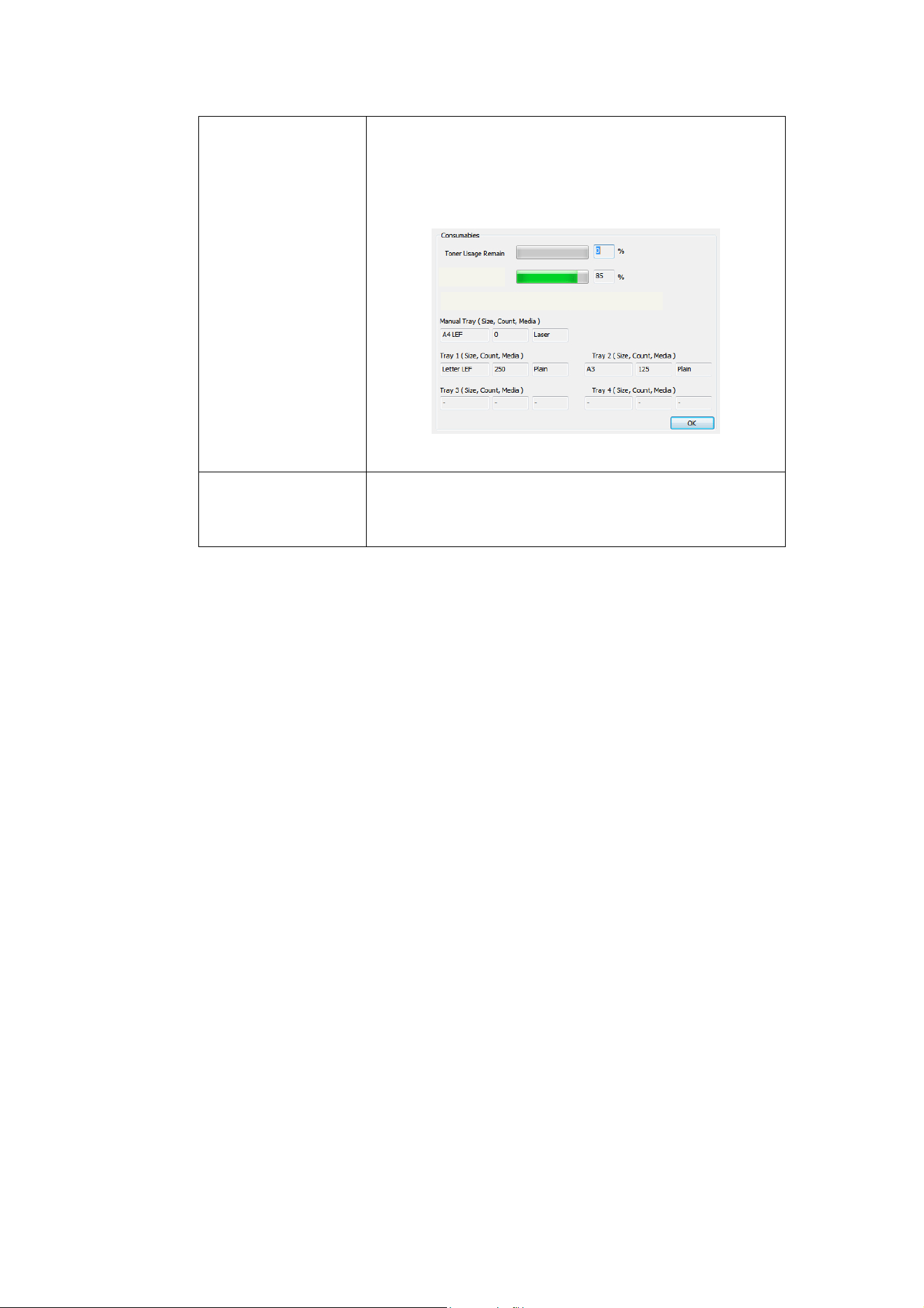
163
j Consumables Click to show the information of the paper tray and
the consumables parts such as Drum, Toner
Cartridge.
The Consumables window
k IP for a
Shared Printer
Click here to enter the IP for a shared printer to
get the printer status.
Drum Usage
Remain
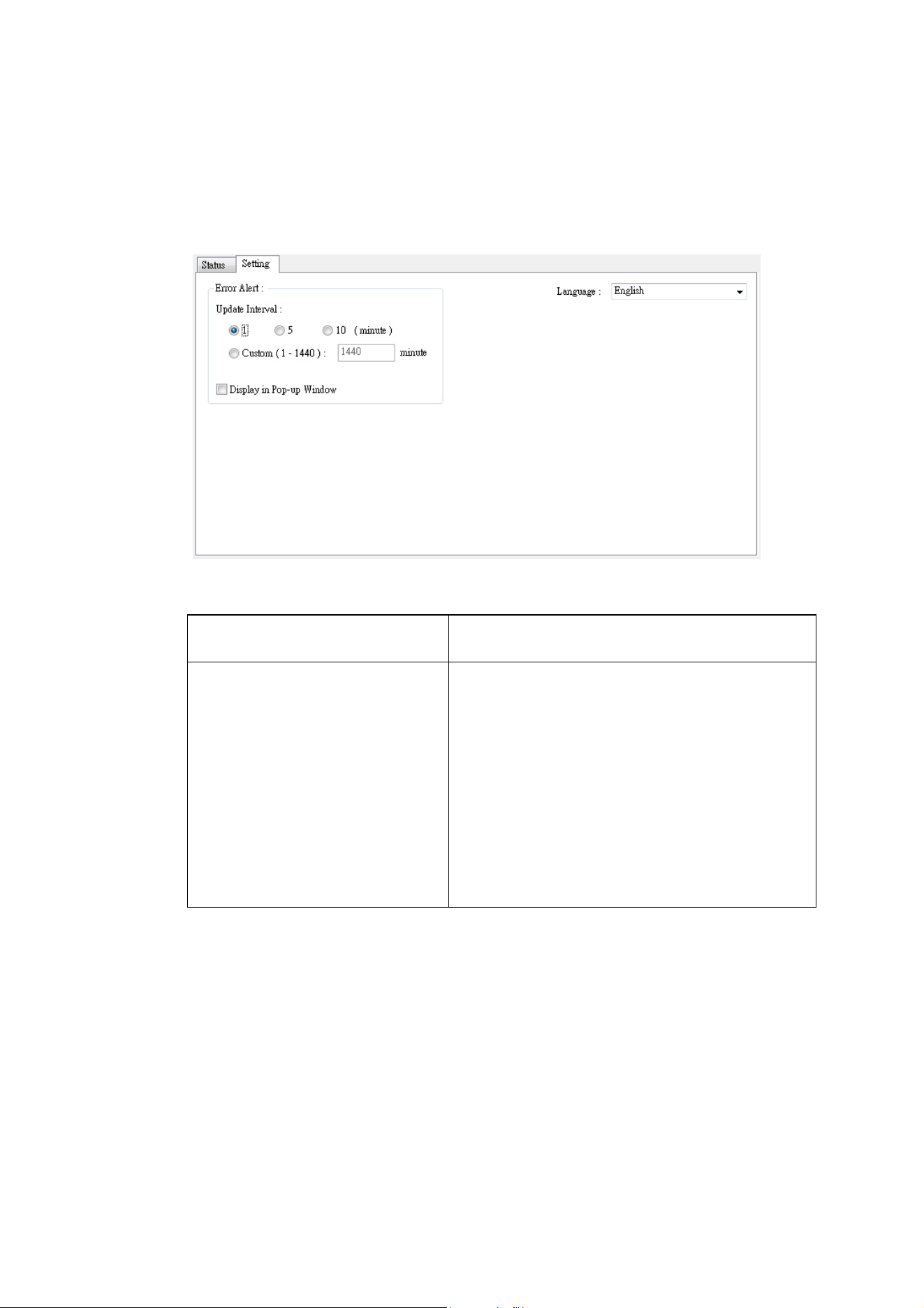
164
Setting Monitoring Preferences
To make specific monitoring settings, click the Setting tab on the Printer Status
Monitor window.
Language
Displays the language of the window.
Status Alert
Update Time
Display in Pop-up Window
Define the interval to refresh the printer
error status.
Choice: 1, 5, 10 (minute), Custom (1 ~
1400 minute)
Check the [Pop-up Window] box to
automatically show the error status in a
pop-up window on the system tray.
16
5
Clearing A Warning or Error Message
If a problem occurs during operation, a warning or error message and QR code
will display on the LCD panel. In addition, the Error LED will be flashing or
solidly lit to indicate a warning or an error status. To solve the problem, please
follow the on-screen instruction and the following table for more detailed
information or use your mobile phone to scan and view the troubleshooting
video.
Warning Message
Message Description or Solution
Auto Temp.
Adjust
(200004)
Auto Temperature Adjustment. Please wait.
The temperature inside the printer is too high. To avoid
damaging the toner, the print job is suspended for a few
minutes. After the temperature returns to the normal
degrees, the warning message will then disappear and
the print job will continue.
Toner low
(200032).
Toner that remains is lower than 10%. The machine
can still perform printing or copying function yet with
poor quality.
Drum unit near
end (200043).
Drum unit that remains is lower than 10%.
Call the service personnel to order and replace the EP.
Toner empty
(200031)
Toner has run out.
Replace a new toner cartridge.
No Drum unit
(200041)
Please install Drum unit and restart MFP.
Drum unit life
ends (200042)
Drum unit life has been exhausted.
Call the service personnel to order and replace the EP
module.
166
Error Message
Error Message and Codes
Possible Causes or Solution
System error
Service code: 100111
Restart MFP. If this error persists, call service
personnel for help.
Scan module error (000113)
Restart MFP or call service.
An unexpected error from scanner parts
occurs.
Restart MFP or call service to replace scanner
parts that fail.
Printer module error.
Please restart MFP or call service
(205000, 205001).
An unexpected error from printer parts
occurs.
Restart MFP or call service personnel to
replace printer parts that fail.
Printer module error.
Please clean corona wire and
restart MFP or call service
(205101).
An unexpected error from printer parts
occurs.
Please clean corona wire and restart MFP or
call service personnel to replace printer parts
that fail.
Fax module error (300000).
Restart MFP or call service
The fax board is not installed or damaged.
Restart MFP or call service to replace the fax
board.
Motor error (000001).
Press # button to erase or call
service.
When MFP is booted, the scanner and printer
engine Initialization fail.
Restart MFP.
Scanner lamp error (002007).
Please close flatbed cover and
Press # button to erase or call
service.
The CIS lamp is damaged or not lit.
Call service personnel to replace the CIS unit.
Fan fails (200090).
Call service personnel to replace the fan.
Front cover opens (200051).
Please close front cover.
Rear cover opens (200054).
Please close rear cover.
Continue feed error (200000).
Please open front cover to clear the paper
and load paper to proper tray.
Fuser error (201600, 201604~5,
201613, 201615~201618,
201621~201623)
Please restart MFP. If the error persists, call
service personnel for help.

16
7
Please open rear cover (200002).
The rear cover has to be opened when bond,
card, or transparency is selected as media
type.
Please load paper in manual tray
(200080).
Paper empty in the manual tray.
Please check tray 1 and press OK
(200003).
Pick up error. Paper empty, paper jam, or
pickup failed in tray 1.
Please load paper to tray1
(200081)
Tray 1 paper empty.
IP conflict (500000).
Please check network settings.
Check your network setting.
Net cable unplugs (500001).
Plug in Cable.
Connect network cable.
DHCP no response (500002).
Please check network settings.
Check network settings.
USB flash disk not found.
Insert USB flash drive to the USB flash port.
USB flash disk connection fails.
Job abort.
Check the connection of USB flash drive.
MFP not ready.
Try again later.
MFP is busy with current job. Wait until
current job is completed.
Buffer full Job abort.
Memory is not enough to process the
scanned images.
Buffer full
Print scanned images:1
Cancel job:2
Memory is not enough to process the
scanned images. Press [1] to print the first
few images which have not exceeded the
memory limit or press [2] to cancel job.
Resetting default settings fails.
Please try again later.
Resetting default settings.
Scanner Calibration fails.
Please try again later.
Please try again by pressing the Menu button
and then choosing
System>Management>Calibration.
Reset count fail.
Please try again later.
Please try again by pressing the Menu button
and then choosing
System>Management>Reset count.
Setting fails.
Please try again later.
Setting the Menu option fails. Check your
setting.
Full page not support N in 1
The Full page feature does not support N in 1
(2 in 1 or 4 in 1).
168
Custom zoom not support N in 1
The Custom Zoom feature does not support
N in 1 (2 in 1 or 4 in 1).
Paper Jam
ADF paper jam (002013).
1. Open ADF cover and clear paper.
2. Close ADF cover.
Paper jam (200301). Please check manual tray.
Paper jam (200302). Please open front cover and tray 1 to clear jam paper.
Paper jam (200324). Please open front cover and tray 1 to clear jam paper.
Paper jam (200325). Please open front cover and pull drum unit out to clear jam
paper.
Paper jam (200326). Please open front cover and pull drum unit out to clear jam
paper.
Paper jam (200327). Please open front cover and pull drum unit out to clear jam
paper.
Paper jam (200328). Please open front cover and pull drum unit out to clear jam
paper.
Paper jam (200329). Please open front cover and pull drum unit out to clear jam
paper.
Paper jam (200330). Please open front cover and rear cover to clear jam paper.
Paper jam (200331). Please open front cover and rear cover to clear jam paper.
Paper jam (200332). Please open front cover and rear cover to clear jam paper.
Paper jam (200333). Please open front cover and rear cover to clear jam paper.
Paper jam (200334). Please check the duplex tray and open front cover and rear
cover to clear the jam paper.
Paper jam (200335). Please check the duplex tray and open front cover and rear
cover to clear the jam paper.
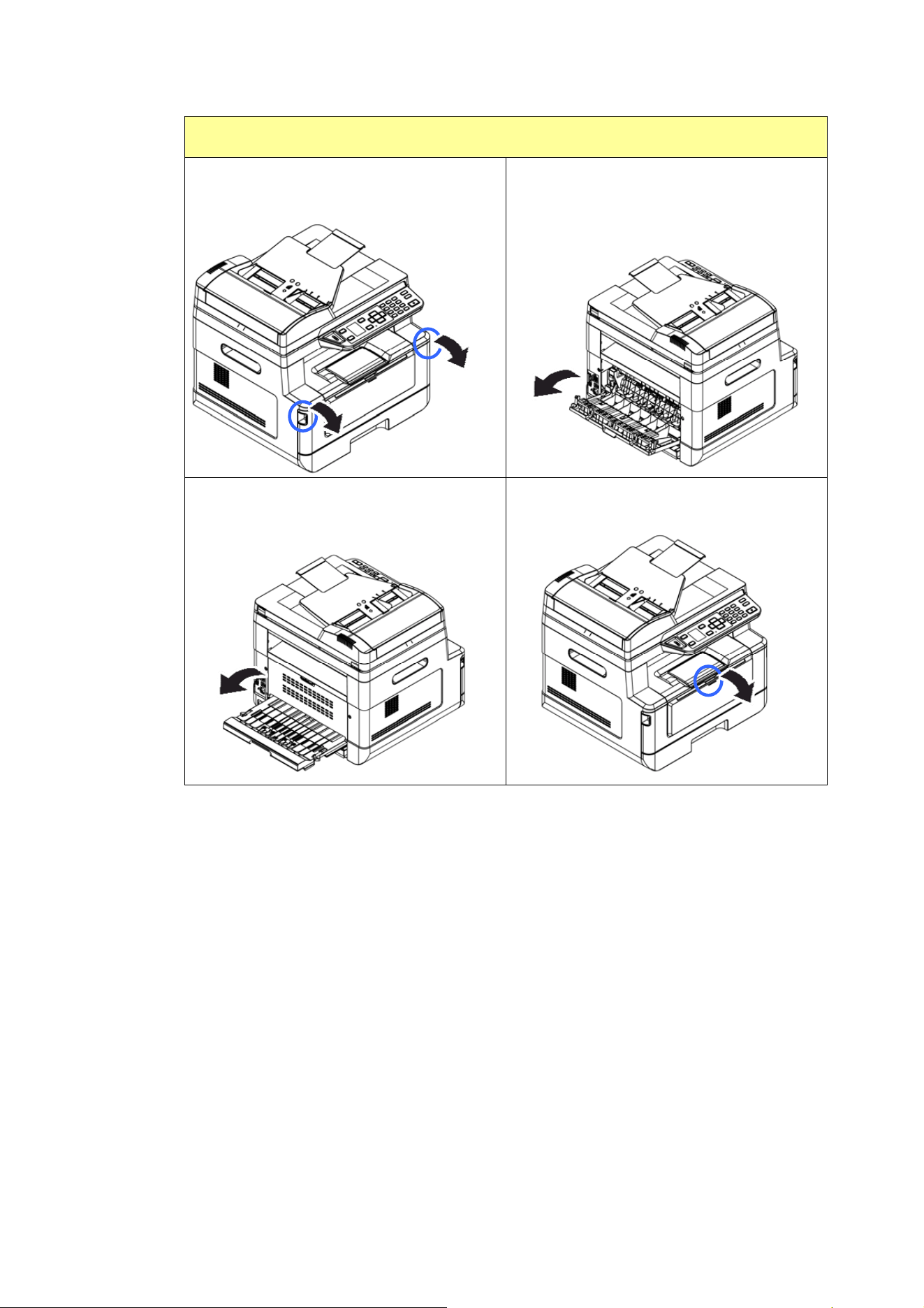
169
Locations of the Jammed Paper
Front Cover: Open the front cover by
pulling the handles of the front cover
on
both sides as illustrated.
Rear Cover: Open the rear cover by
pulling the handle of the rear cover as
shown.
Duplex tray: Pull the duplex tray
beneath the rear cover out of the main
unit.
Manual tray: Open the manual tray by
grasping the handle and pull it down.
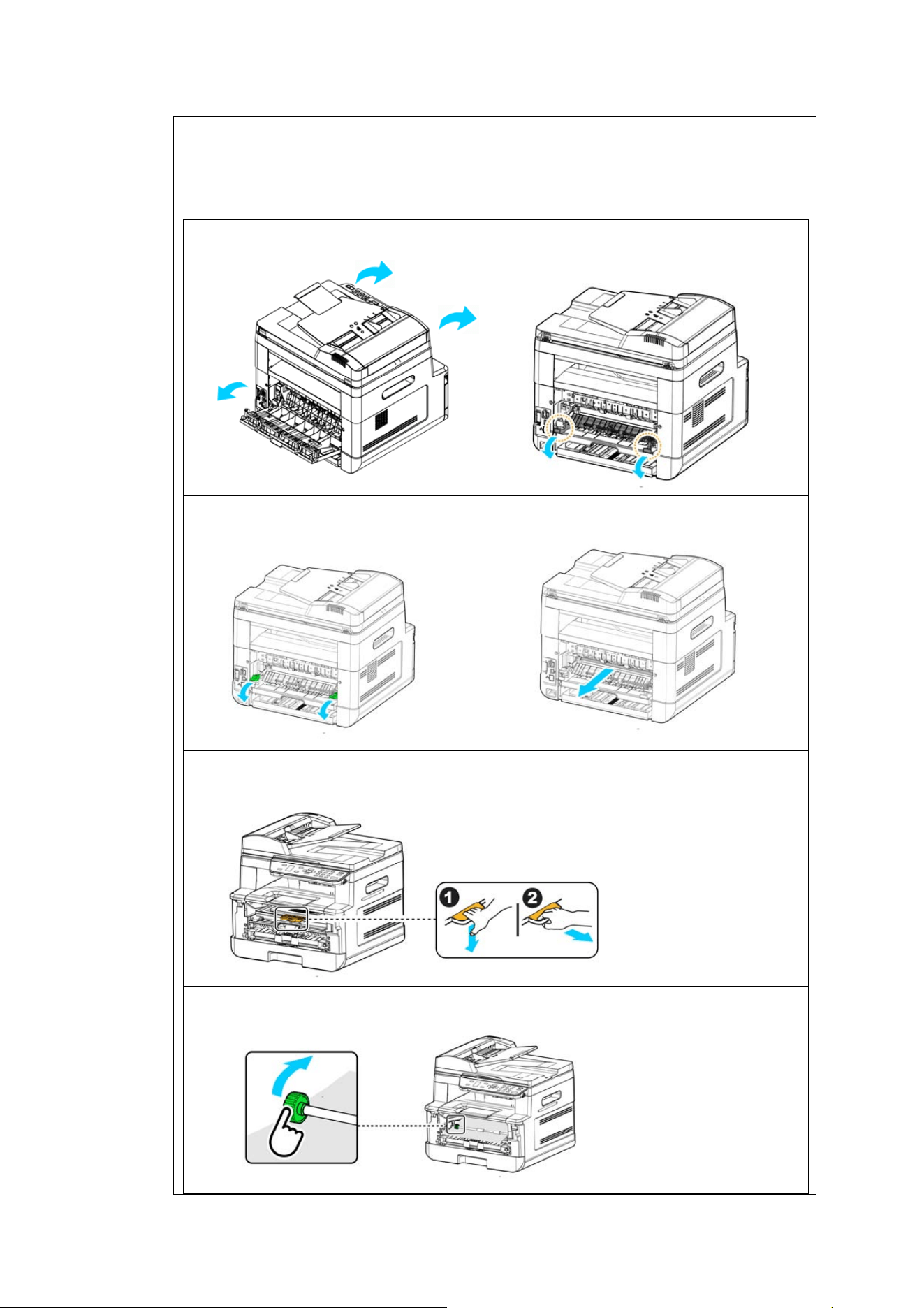
17
0
Fuser:
The area around the fuser is hot. To avoid a burn injury, be careful not to touch
the fuser until it cools down and follow these steps to remove the jammed
paper:
1. Open the Front Cover and the
Rear Cover.
2. Pull down the Fuser Path as
indicated.
3. Pull down the Release Arm on
both sides.
4. Slowly remove the jammed paper.
5. If there is difficulty to pull off the jammed paper, remove the printer
cartridge first.
6. Rotate the Release Wheel to slowly pull out the jammed paper.
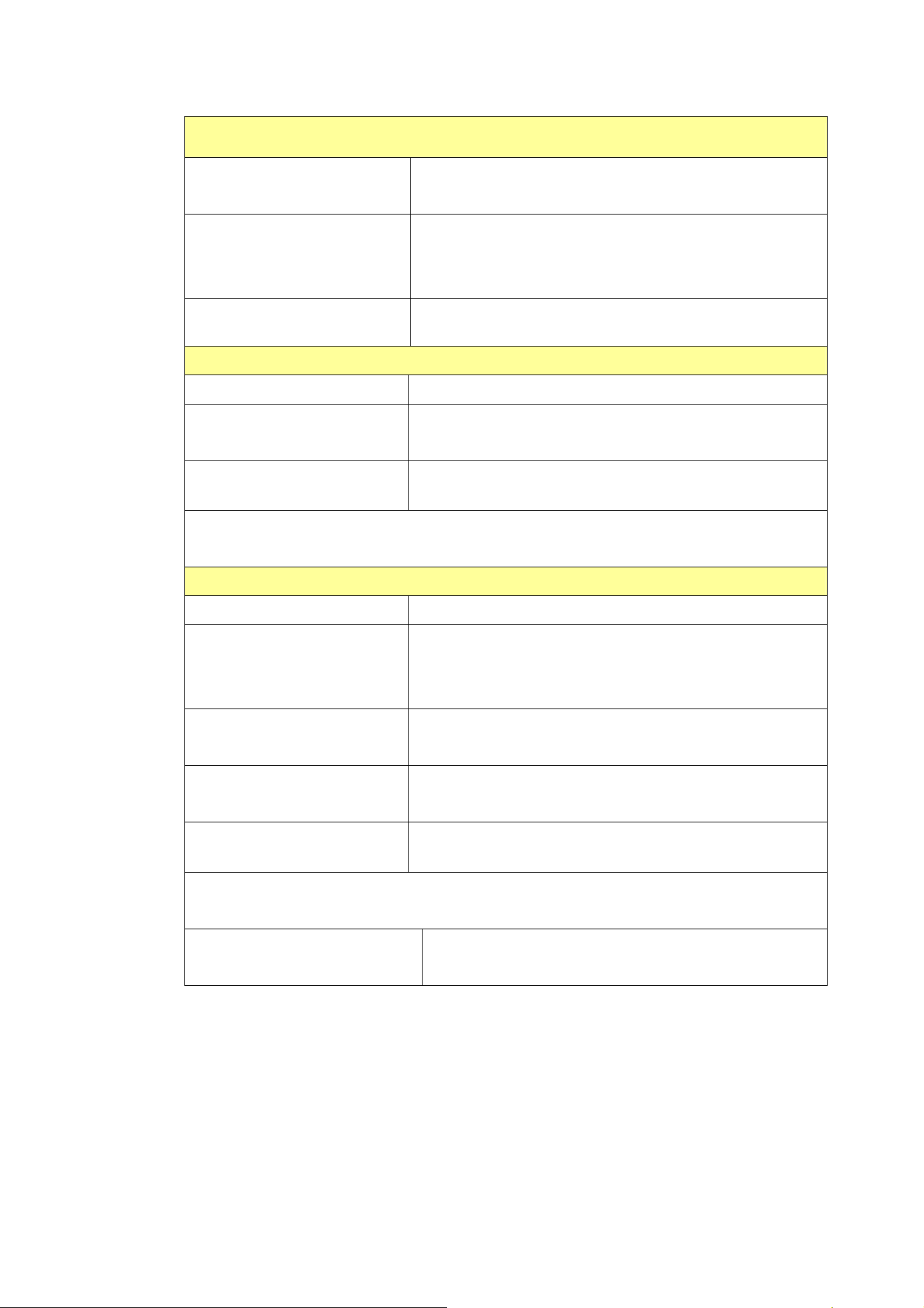
171
Sending to FTP/CIFS Errors
Invalid login name or
password.
Please check your login name or password on the
product’s web page.
Connection failed.
Unable to connect to
server.
Connection fails during scan to FTP/CIFS.
Check network environment or tray again later.
JPEG not support
Black&White
JPEG file format does not support black and white
image mode.
Fax Errors
Exceed max number. Fax recipients exceed max. allowable number (5).
No fax numbers added.
Please add fax number.
No fax number has been entered.
Fax communication error
Fax transmission or receiving fails.
Please try again later.
Line is in use.
Please hang up the phone before leaving the fax function.
E-Mail Errors
Exceed allowable limit. E-mail recipients exceed allowable number (5).
No recipients added.
Please add recipients
before pressing start.
Enter your recipient.
No from address added.
Please add address in the [From] field, before
pressing start.
File name is existed.
Job abort.
File name for the scanned image existed.
Change your file name.
JPEG not support
Black&White
JPEG file format does not support black and white
image mode.
No entries found.
Please modify your search entry.
Unknown error.
Restart MFP. If this error persists, call service
personnel for help.
17
2
Error Message and Codes
Possible Causes or Solution
System error
Error (Number).
Restart MFP. If this error persists, call service personnel for
help.
300100 Printer API_NVRAM_RW_TEST_FAIL
300101 Printer API_NVRAM_WRITE_FAIL
300102 Printer API_NVRAM_READ_FAIL
300200 Printer Flash Error
300201 Printer FLASH_BLOCK_ERASE_FAILED
300202 Printer FLASH_CHIP_ERASE_FAILED
300203 Printer FLASH_PROGRAM_FAILED
201610
Printer LPH Error,LPH cable connection fails.
201650 Printer runtime error.
201651 Firmware error.
201701
Printer MB NVRAM:reading error
201702
Printer MB NVRAM:writing error
201703
Printer MB NVRAM:reading error while comparing
201704
Printer MB NVRAM:comparing error
201711
Printer Drum Unit NVRAM:reading error
201712
Printer Drum Unit NVRAM:writing error
201713
Printer Drum Unit NVRAM:reading error
201714
Printer Drum Unit NVRAM:comparing error
201721
Printer Toner NVRAM:reading error
201722
Printer Toner NVRAM:writing error
201723
Printer Toner NVRAM:reading error while comparing
201724 Printer Toner NVRAM:comparing error
201730 Printer uses wrong NVRAM Address.
302651 Network_INIT_FAIL , network initialization fails.

173
Image Problem Troubleshooting
Problem Image Example
Solution
Paper curls
1. Use paper of standard weight: If
you are using thin paper, try to use
paper of standard weight (80
g/m
2
).
2. Use paper with less moisture: Load
the paper to the paper tray
immediately after removing them
from the packaging. Seal the
remaining paper with the original
packaging to keep from the
moisture absorption.
Light
print(entire
page)
1. Make sure that the toner cartridge
is fully installed.
2. Make sure that the Toner Save
setting is turned off in the printer
driver.
3. Try using a different type of paper.
4. The toner cartridge might be
almost empty. Replace the toner
cartridge.
Light
print(partial
page)
1. Make sure that the toner cartridge
is fully installed.
2. The toner level might be low.
Replace the toner cartridge.
3. The paper might not meet the
printer’s specifications (for
example, the paper is too moist or
too rough).
Vertical white
lines
Call the service personnel for help.
Vertical black
lines
Please clean the EP charger (corona
wire) according to the procedure
described in this manual on page 154.
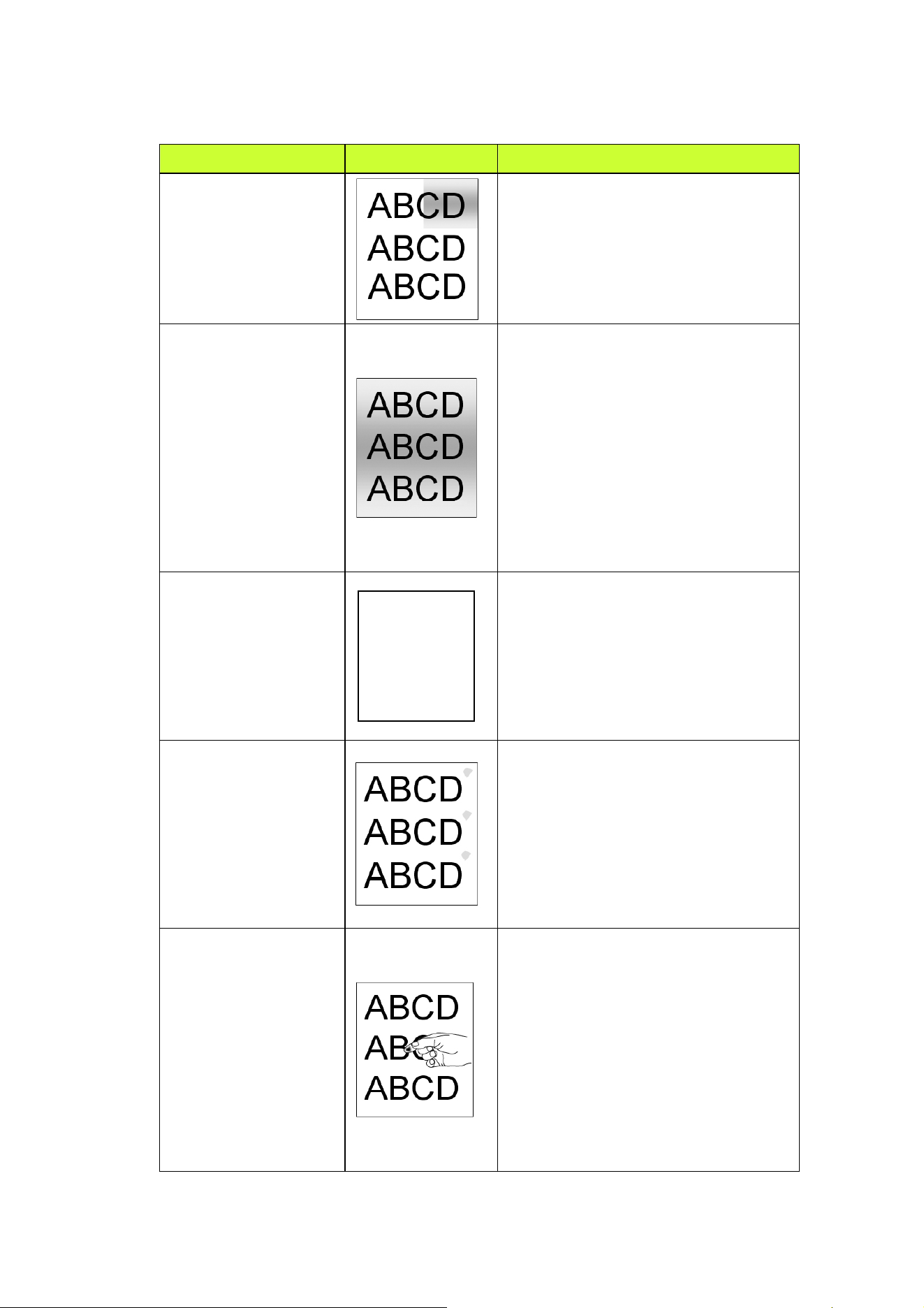
174
Image Problem Troubleshooting
Problem Image Example
Solution
Dirty
background(partial
page)
Check if toner is not leaked from
the toner cartridge. If so, replace
the toner cartridge.
Dirty
background(entire
page)
1. The paper might not meet the
printer’s specifications (for
example, the paper is too thin).
2. Check if there is enough toner
in the toner cartridge. If not,
please replace the toner
cartridge.
3. Call the service personnel for
help.
Print blank page
Check if there is enough toner in
the toner cartridge. If not, please
replace the toner cartridge.
If this error happens again, call
service for help.
Defective image of
regular interval
1. Clean the drum unit with a soft
and clean cloth (See p. 149).
2. If this error hapeens again, call
service for help.
2.
Loose toner
1. If you have observed a rougher
texture on one side of your
paper, try printing on the
smoother side.
2. The paper might not meet the
printer’s specifications (for
example, the paper surface is
not smooth or paper too thick).
3. Media type incorrect. Please
choose proper media type for
your paper.
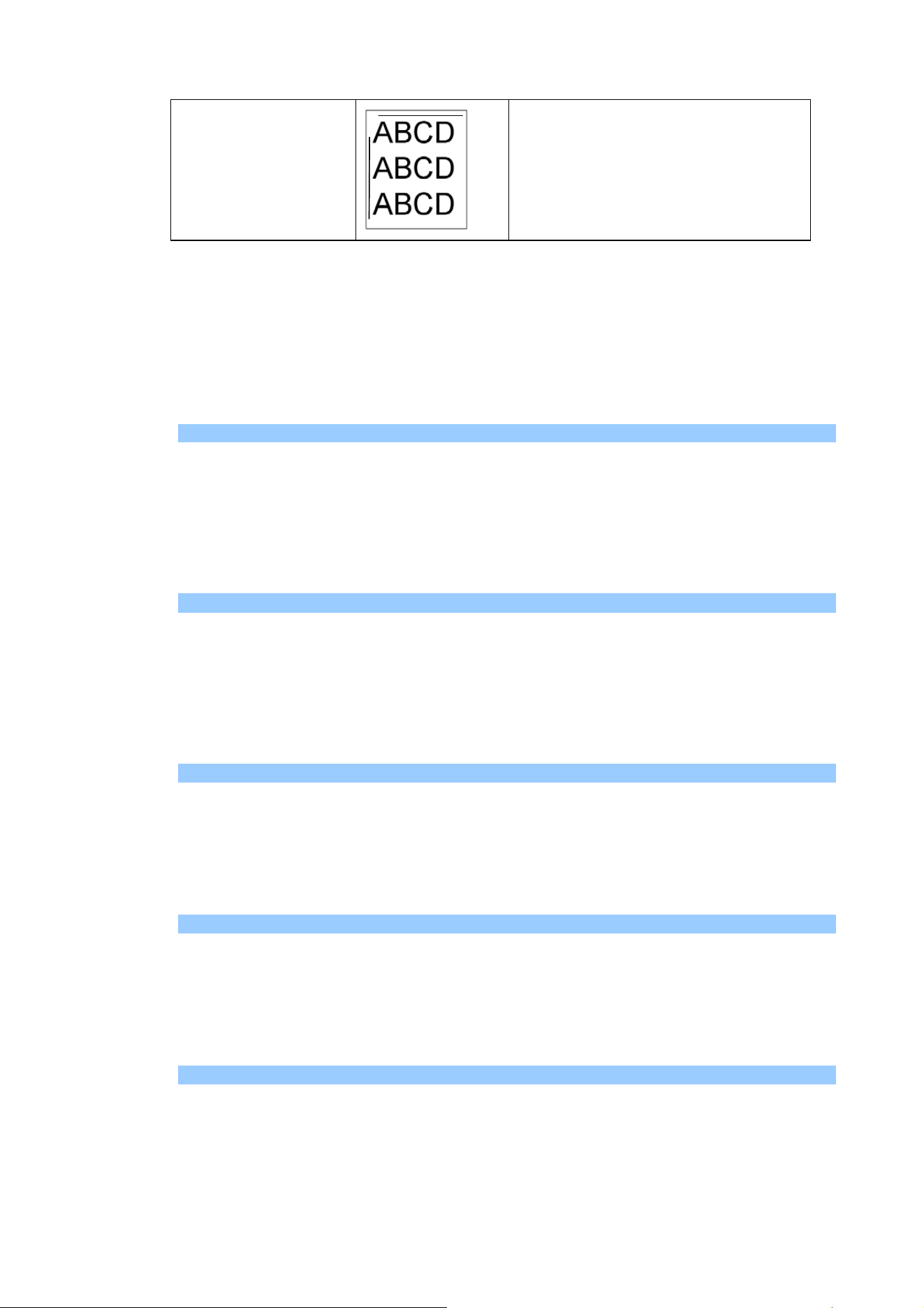
17
5
Black line on edge
The image is slightly skew. Make
sure the edge of your document is
properly aligned and slightly touch
the paper guides in the auto
document feeder.
Technical Support
If your problem still exists after trying the above solution, please contact our
technical support.
Headquarter
Avision Inc.
No. 20, Creation Road I, Science-Based Industrial Park,
Hsinchu 300, Taiwan, ROC
TEL: +886 (3) 578-2388
FAX: +886 (3) 577-7017
E-MAIL: service@avision.com.tw
Web Site: http://www.avision.com.tw
US and Canada Area
Avision Labs, Inc.
6815 Mowry Ave., Newark CA 94560, USA
TEL: +1 (510) 739-2369
FAX: +1 (510) 739-6060
E-MAIL: [email protected]
Web Site: http://www.avision.com
China Area
Shanghai Technical Support Center
7A, No.1010, Kaixuan Road, Shanghai 200052 P.R.C.
TEL :+86-21-62816680
FAX :+86-21-62818856
E-MAIL :[email protected]
Web Site:http://www.avision.com.cn
Europe Area
Avision Europe GmbH
Bischofstr. 101 D-47809 Krefeld Germany
TEL: +49-2151-56981-40
FAX: +49-2151-56981-42
E-MAIL: [email protected]
Web Site: http://www.avision.de
Espaço Brasil
Avision Brasil Ltda.
Avenida Jabaquara, 2958 – Cj. 75 – Mirandópolis –
CEP: 04046-500 – São Paulo, Brasil
TEL: +55-11-2925-5025
E-MAIL: [email protected]
Web Site: http://www.avision.com.br
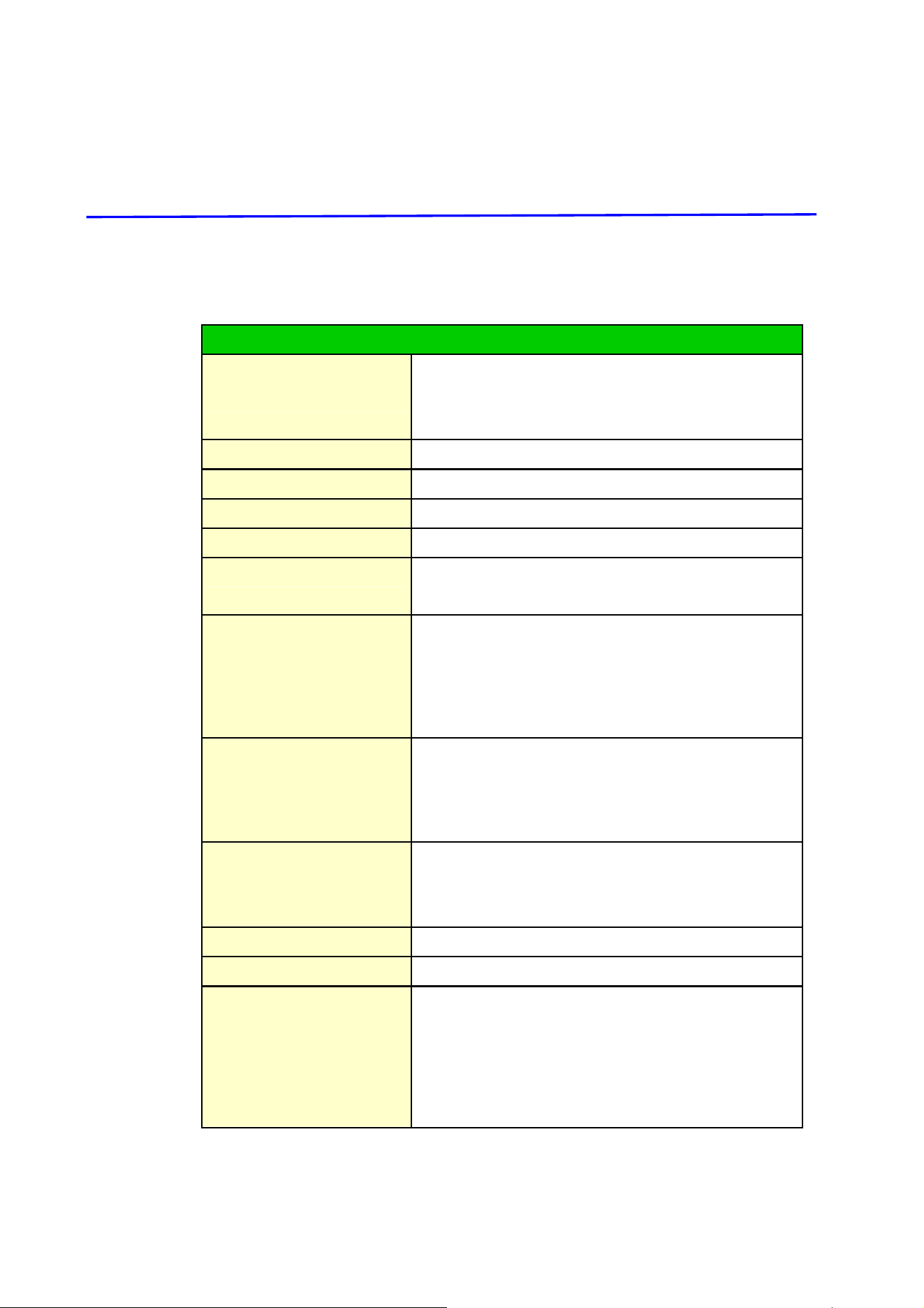
17
6
12. Specifications
All specifications are subject to change without notice. For detailed
specifications, please refer to our web site at http://www.avision.com
General
Regulatory Model
Number
AM30xyzzz(x=0~9,A~Z;
y=1 or 2;
zzz=A/D/blank, P/blank, F/blank)
Type MFP
Functions Copier-Printer-Scanner-E-mail-Fax
CPU 300MHz ARM9MP (build in SOC)
Flash memory 16M
RAM 128M DDR2 SDRAM (AM30XX/AM30XXA)
256M DDR2 SDRAM (AM30XXF/AM30XXAP)
Dimension (WxDxH)
AM30XX
AM30XXA/AM30XXAP/
AM30XXF
404 x 380 x 308 mm
(15,8 x 14,9 x 12 in.)
404 x 380 x 367 mm
(15,8 x 14,9 x 14,4 in.)
Weight
AM30XX
AM30XXA/AM30XXP/
AM30XXF
12 kg (26.4 lb.)
13 kg (28.6 lb.)
Max paper capacity 250 (main tray) (70 g/m
2
)
10 (manual tray) (70 g/m
2
)
35 (Auto Document Feeder) (70 g/m
2
)
Warm up time <25 seconds
LCM 1.7 in. TFT
Connectivity Hi-speed USB 2.0 (Device/Host) (Compatible
with USB 3.0)
10/100 Base-Tx Ethernet
RJ-11 (For AM30XXF)
Wi-Fi: 802.11 b/g/n (Optional)
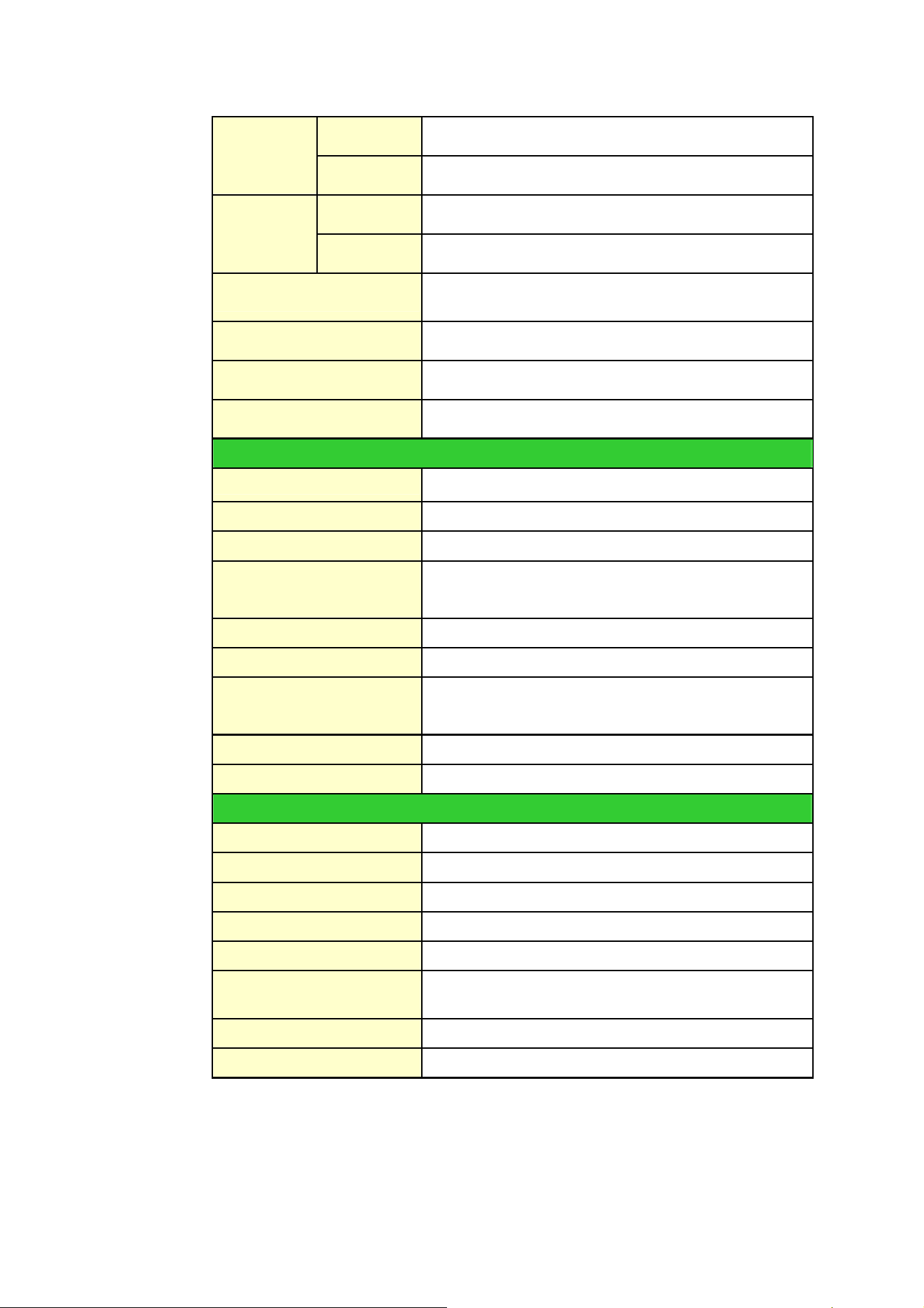
17
7
Temperature
10°C ~ 32 °C
Opearating
Environment
Humidty
15% ~ 80% RH
Temperature
-40°C ~ 65°C
Storing
Environment
Humidty
10% ~ 90% RH
Current consumption
100~127Vac, 50/60Hz,12A
Or 220~240Vac, 50/60Hz, 6.5A
Toner cartridge lifetime 3,000 prints
Drum unit lifetime
12,000 prints
Product Lifetime
60,000 prints
Copy Functions
Copy size
Legal, Letter, A4, A5, B4(ISO), B5(ISO)
Max scanning size Legal (216 x 356 mm (8.5 x 14 in.) (ADF)
Copy resolution 600 x 600dpi
Copy speed 20 cpm (A4, N to N)
30 cpm (A4, 1 to N)
Copy count up to 99, Auto Reset to 1
Zoom 25 ~ 400%
First copy output time
(FCOT)
<14 seconds
N-up copy 2 in1 / 4 in 1 / ID card
Copy mode Text/Photo/Mixed
Print Function
Printing method Mono Laser
Printing speed 30 ppm (A4), 32 ppm (Letter)
Max print size 216 x 356 mm (8 x 14 in.)
Min print size 76.2 x 127 mm (3 x 5 in.)
Resolution 600 x 600dpi
PDLs/Emulations GDI
First print out time <11 seconds
Edge erase 4.3 mm (top, bottom, left, right)
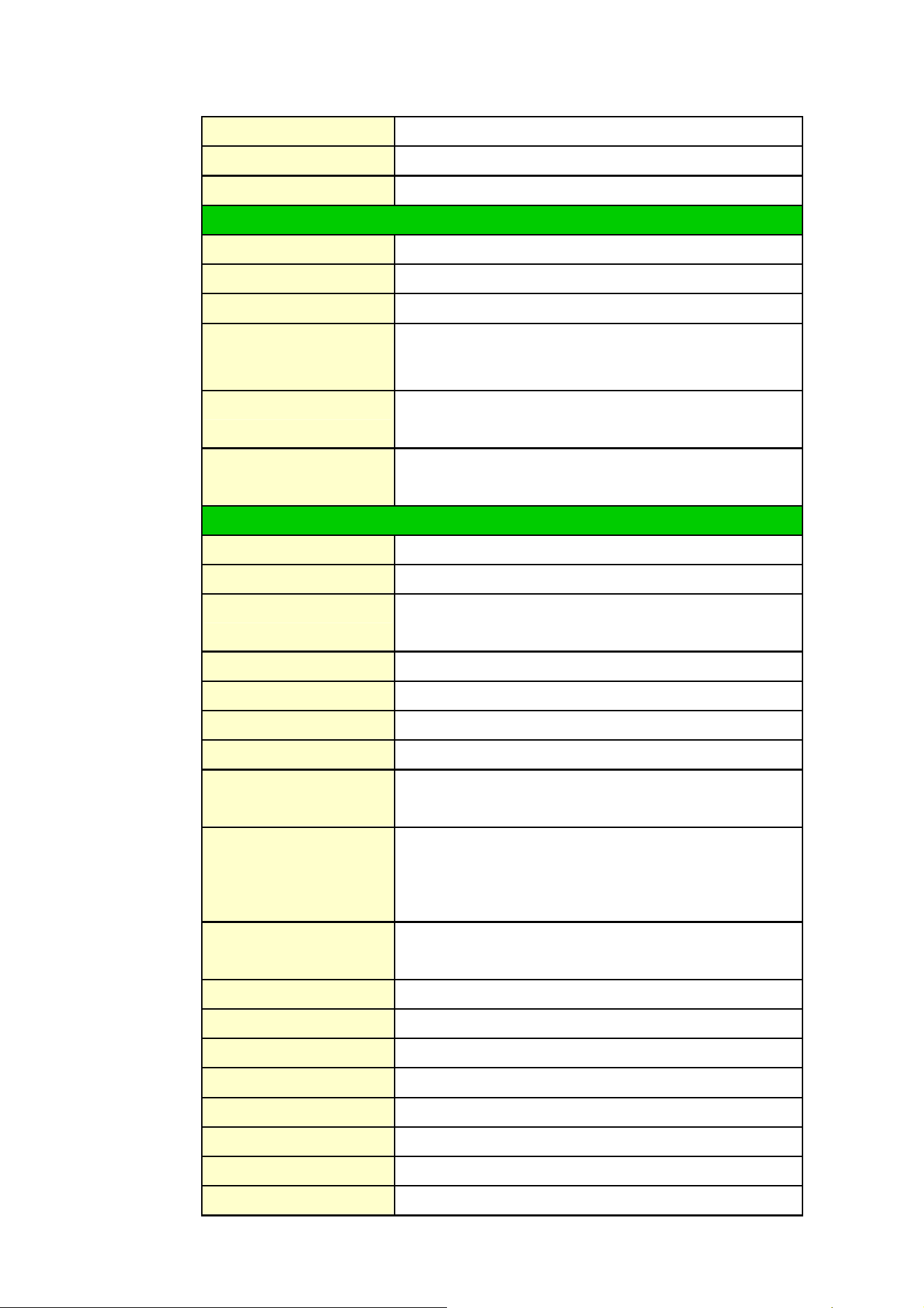
178
Scaling 25 ~ 400%
Duplex print Yes
Network print Yes
Scan Function
Scanner type Flatbed/ADF/CIS type, Color/BW
Max scanning size Legal (216 x 356 mm (8.5 x 14 in.) (ADF)
Optical resolution 1200 x 1200 dpi
Scanning bit depth
Color - 24bit(output)/48bit (input)
Gray - 8bit(output)/16bit (input)
B/W - 1bit
File format Color/Gray - JPEG, MPDF, PDF, TIFF
B/W - PDF, MPDF, TIFF
Scan to Destinations Scan to E-mail, Scan to FTP/CIFS, Scan to USB
flash drive (partition type FAT16/FAT32)
Fax Function (optional)
Quality (Resolution) Up to 200 x 400 dpi
Fax speed 33.6 Kbps
Telephone system PSTN (Public Switch Telephone Network)
PBX (Private Branch eXchange)
Maximum scan area 216 mm X 356 mm (8.5 x 14 in.)
Compatibility ITU Super G3(ECM)
One-touch key 10 (Each one is used as one-touch or group dial)
Group number Up to 10 groups (Up to 5 members in each group)
Broadcast quantity Up to 5 fax members
Receiving in Memory
Maximum approx. 2,000 pages*
* Based on ITU-T (ITU Telecommunication
Standardization Sector) Standard Chart No. 1,
JBIG standard mode.
Operation systems
(PC-Fax)
Windows XP, Windows 7, Windows 8, Windows 10
Interface USB, Network
Tone/Pulse *Tone, 10 PPS, 20 PPS
No. of Rings *1, 2, 3, 4, 5, 6, 7, 8, 9, 10
Header/Footer OFF, *ON
Brightness Light, *Normal, Dark
SPKR Volume OFF, *ON
Tx Report *OFF, ON, Error
Redial Count *0, 1, 2
179
Redial Interval *1 min, 2 min, 3 min
Reduction Rx *OFF, ON
Phone Book One Touch, Speed Dial, Group Dial, Block Fax
Special Fax SFAX Hotkey, Mem. Manage.
SFAX Hotkley: Delay Tx, Broadcast, Polling Rx,
Secure Tx, Secure Rx, Color Fax
Mem. Manage.: Tx Job List, Rx Job List, Job Clear
Wi-Fi Specifications:
Model: GWF-7A05
Standard IEEE 802.11 b/g/n standards compliant
Wireless LAN 1T1R Mode
Frequency Range
2.412 ~ 2.483GHz ( subject to local
regulations)
802.11n: 20MHz/40MHz
Number of Selectable
Channels
802.11b/g: 13 channels
Data Rate
802.11n: up to 150Mbps
802.11b: DSSS 11Mbps
802.11g: OFDM 54Mbps
Transmit Power(EIRP)
802.11b: 18dBm +/-1dB
802.11g: 15dBm +/-1dB
802.11n: 14dBm +/-1dB
Security
64/128-Bit WEP Key, WPA(TKIP with
IEEE802.1x), WPA2(AES with 802.1x),
AES