
CONTENTS
QUICK FIND
Air Filter..................................................
13
Blades.................................................... 12
Contact Honda....................................... 20
Cutting Height .......................................... 6
Find a Dealer..........................................20
Fuel ..........................................................6
Fuel System Maintenance......................19
Maintenance Schedule........................... 11
Oil Change................................................13
Oil Level Check...........................................6
Spark Plug ................................................14
Warranty Coverage...................................21
WELCOME ............................................. 2
FOR YOUR SAFETY.............................. 2
PARTS AND CONTROLS ...................... 3
INITIAL MOWER SETUP........................ 3
List of Parts ......................................... 3
Adjust the Handlebar........................... 3
Add Engine Oil .................................... 4
Assemble the Grass Bag..................... 4
Please Register Your Mower............... 4
Before Using Your Lawn Mower.......... 4
BEFORE EACH OPERATION................ 4
Check Your Mower.............................. 4
Check Your Mowing Area.................... 4
Clip Director®...................................... 5
Rear Shield.......................................... 5
Grass Bag ........................................... 5
Cutting Height Adjustment................... 6
Check the Oil Level ............................. 6
Add Fuel.............................................. 6
OPERATION........................................... 7
Safe Mowing Practices........................ 7
Operating the Controls ........................ 8
Starting the Engine.............................. 8
Stopping the Engine............................ 9
Mowing Tips ........................................ 9
SERVICING YOUR MOWER................ 10
Maintenance Safety........................... 10
Maintenance Schedule...................... 11
Blade Inspection................................ 12
Blade Mounting Bolt Inspection......... 12
Blade Replacement ........................... 12
Oil Change ........................................ 13
Air Filter ............................................. 13
Spark Plug......................................... 14
Spark Arrester (optional part) ............
14
Blade Control Check ......................... 15
TRANSPORTING ................................. 15
STORAGE ............................................ 15
Fuel ................................................... 15
Oil...................................................... 15
Cleaning ............................................ 15
Storage Location ............................... 15
Handlebar.......................................... 16
Removing From Storage ................... 16
TROUBLESHOOTING.......................... 16
Engine Will Not Start ......................... 16
Loss of Power.................................... 16
Vibration ............................................ 16
Mowing and Bagging Problems......... 16
TECHNICAL INFORMATION ................... 17
Serial Number Locations ....................... 17
High Altitude Operation ......................... 17
Emission Control System ...................... 17
Air Index ................................................ 18
Specifications ........................................ 18
AVOIDING FUEL-RELATED PROBLEMS 19
CUSTOMER INFORMATION ................... 20
Parts, Accessories, and Service Items.. 20
Dealer Locator Information.................... 20
How to Contact Honda .......................... 20
Honda Publications ............................... 20
DISTRIBUTOR’S LIMITED WARRANTY.. 21
EMISSION SYSTEM WARRANTY ........... 22
PRODUCT REGISTRATION .................... 23
OWNER’S MANUAL
HRN216VKA
LAWN MOWER
© 2019 American Honda Motor Co., Inc.—All Rights Reserved
QUESTIONS?
Contact your Honda dealer.
There is a dealer locator at
powerequipment.honda.com
00X31VR8 A100
Before operating the mower for the first time, please read this
Owner’s Manual. Even if you have operated other mowers,
take time to become familiar with how this mower works and
practice in a safe area until you build up your skills.

2
WELCOME
Congratulations on your selection of a Honda lawn mower! We are
certain you will be pleased with your purchase of one of the finest
lawn mowers on the market. We want to help you get the best results
from your new mower and to operate it safely. This manual contains
information on how to do that; please read it carefully.
When your mower needs scheduled maintenance, keep in mind that
Honda Power Equipment servicing dealership personnel are specially
trained in servicing Honda lawn mowers and are supported by the
parts and service divisions of American Honda.
Please read the DISTRIBUTOR’S LIMITED WARRANTY on
page 21
and the EMISSION CONTROL SYSTEM WARRANTY on
page 22 to
fully understand what is covered by warranty and your responsibilities
of ownership.
FOR YOUR SAFETY
Your safety and the safety of others are very important. We have
provided important safety messages in this manual and on the mower.
This information alerts you to potential hazards that could hurt you or
others. Please read these messages carefully.
Of course, it is not practical or possible to warn you about all the
hazards associated with operating or maintaining a lawn mower. You
must use your own good judgment.
Safety Instructions
You will find important safety information in a variety of forms:
• Safety Labels – on the lawn mower.
• Instructions – how to use this mower correctly and safely.
• Safety Messages – preceded by a safety alert symbol and one
of three signal words: DANGER, WARNING, or CAUTION.
Each message tells you what the hazard is, what can happen, and
what you can do to avoid or reduce injury.
These signal words mean:
• Damage Prevention Messages – You will also see other important
messages that are preceded by the word NOTICE. This word
means:
Important Message to Parents
The safety of children and adolescents is important to Honda. Lawn
mowers are powerful tools, not toys. As with any equipment, bad
judgments can result in serious injuries. Please ensure before any
child, adolescent, or inexperienced person begins using this device,
they:
• Possess the necessary level of physical strength and have the
mental capability of using the device in a safe manner.
• Can fully operate all controls and understand the safety
instructions and warnings provided.
Honda strongly recommends that all young, inexperienced or first time
users receive initial training and supervision from a competent adult,
in accordance with these instructions.
Safety Label Locations
These labels warn you of potential hazards that can cause serious
injury. Read them carefully. If a label comes off or becomes hard to
read, contact an authorized Honda servicing dealer for a replacement.
DANGER
You WILL be KILLED or
SERIOUSLY HURT if you don't
follow instructions.
WARNING
You CAN be KILLED or
SERIOUSLY HURT if you don't
follow instructions.
CAUTION
You CAN be HURT if you don't
follow instructions.
NOTICE
Your mower, other property, or the environment can
be damaged if you don’t follow instructions.
WARNING:
The engine exhaust from this product contains
chemicals known to the State of California to cause
cancer, birth defects, or other reproductive harm.
Inspect area and remove debris before mowing.
Do not mow when children or others are around. Wear eye protection.
DO NOT OPERATE UNLESS GUARD IS CLOSED OR BAG IS IN PLACE
Follow all instructions in Owner’s Manual.
Keep safety devices(guards, shields, switches, etc.)in place and working.
Avoid steep slopes.
Look down and behind before and while moving backwards.
Do not operate unless properly trained.
AVOID SERIOUS INJURY OR DEATH.
OBJECT THROWN BY BLADE CAN CAUSE SERIOUS INJURY.
Operation of This Equipment May Create Sparks That Can Start Fires Around Dry
Vegetation. A Spark Arrestor May be Required. The Operator Should Contact Local
Fire Agencies For Laws or Regulations Relating to Fire Prevention Requirements.
Per California Public Resources Code 4442.6
DANGER
KEEP HANDS and FEET AWAY

3
PARTS AND CONTROLS INITIAL MOWER SETUP
List of Parts
With help from an assistant, carefully remove the mower and loose
parts from the carton and compare the loose parts against the
following list. Contact the authorized Honda dealer from whom you
purchased the mower if any of the loose parts shown are not included
with your mower.
Adjust the Handlebar
1. With the handlebar adjust knobs in the unlocked position, pull the
blade control lever against the handlebar, and then carefully
raise the handlebar into the mowing position .
2. Align the adjust knobs with one of the two holes on each handle
stay. Setting the adjust knobs in the lowest holes raises the
handlebar to its highest position.
3. Turn the handlebar adjust knobs 90 degrees into the lock
position, making sure both sides are positioned at the same
height.
4. Remove all the cardboard from around the handlebar.
BLADE CONTROL
LEVER
(P. 8)
REAR DISCHARGE
GUARD
(P. 5)
FUEL TANK CAP (P. 7)
MUFFLER
(P. 14)
OIL FILLER CAP
(P. 4)
HANDLEBAR
ADJUST
KNOB (2)
(P. 3)
RECOIL
STARTER GRIP
(P. 8)
FRONT CUTTING
HEIGHT
ADJUSTMENT
LEVER
(P. 6)
GRASS BAG
(P. 4)
AIR FILTER
(P. 13)
SPARK PLUG
CAP
(P. 14)
CARBURETOR
SMART DRIVE
CONTROL
(P. 8)
CLIP DIRECTOR
(P. 5)
FUEL VALVE ON FUEL VALVE OFF
HANDLEBAR
REAR CUTTING
HEIGHT
ADJUSTMENT
LEVER
(P. 6)
Ref. No. Description Qty.
Grass bag 1
Grass bag frame 1
Engine oil 1
Owner’s manual 1
BLADE CONTROL
LEVER
HANDLEBAR
ADJUST KNOBS
UNLOCKED
LOCKED

4
Add Engine Oil
The mower is shipped
WITHOUT OIL in the engine.
Remove the oil filler cap/dipstick
and add the entire contents of
the included bottle of oil into the
oil filler opening.
All Honda engines are run at the
factory prior to packaging. Most
of the oil is removed prior to
shipment; however, some oil
remains in the engine. The
amount of oil left in the engine varies.
If you don’t use the supplied oil, add enough SAE 10W-30 API service
category SJ or later oil to bring the oil level between the upper and
lower limit marks on the dipstick—without screwing the dipstick in
(approximately 12 to 13.5 ounces is required). See
page 6.
Do not overfill the engine with oil. If the engine is overfilled, the
excess oil may get transferred to the air cleaner housing and air filter.
An indication of overfilling is white or blue smoke coming from the
muffler when the engine is running.
After filling the engine with oil, screw the filler/cap dipstick in and
remove the hang tag near the recoil starter grip that says “The engine
has no oil.”
Assemble the Grass Bag
1. Install the assembled frame into the fabric grass bag, keeping the
grass bag handle exposed.
2. Secure the seven plastic clips to attach the bag to the frame.
Please Register Your Mower
Please take a few minutes and register your purchase with Honda.
You can register by completing and mailing the registration card on
the back cover of this book or going online to
powerequipment.honda.com. You can click on the SUPPORT tab,
and then Product Registration, or use the Product Registration link
located at the bottom of the home page.
Before Using Your Lawn Mower
Before using the lawn mower, all mower operators must read the
following sections:
• FOR YOUR SAFETY (page 2)
• BEFORE EACH OPERATION (
page 4)
• OPERATION (
page 7)
• MAINTENANCE SCHEDULE (page 11)
BEFORE EACH OPERATION
Your safety is your responsibility. A little time spent in preparation will
significantly reduce your risk of injury.
Read and understand this manual. Know what the controls do and
how to operate them.
Familiarize yourself with the lawn mower and its operation before you
begin using it. Know how to quickly shut off the lawn mower in case of
an emergency.
Check Your Mower
For your safety, and to maximize the service life of your lawn mower,
it is very important to take a few moments before you operate the lawn
mower to check its condition. Be sure to take care of any problem you
find, or have your servicing dealer correct it, before you operate the
lawn mower.
• Make sure the lawn mower is on a level surface.
• Look around and underneath the lawn mower for signs of oil or
gasoline leaks.
• Look for signs of damage.
• Check each control for proper operation.
• Check the blades for wear. Replace as necessary (
page 12).
• Check that the blade bolts are tight (
page 12).
• Check that all nuts, bolts, and screws are tightened.
• Check the air filter (
page 13) and oil level (page 6).
• Check the fuel level (
page 7). Starting with a full tank will help to
eliminate or reduce operating interruptions for refueling.
Check Your Mowing Area
For your safety and the safety of others, always inspect the area
before operating the lawn mower.
Anything that can be picked up by the blades and thrown is a potential
hazard to you and others. Look for things like stones, sticks, nails, and
wire, and remove them from the lawn area.
People and animals near the lawn area can move into your lawn
mower’s path or into a position where they could be struck by thrown
objects. Clear the area of pets and people, especially children. Their
safety is your responsibility. Use extra care when approaching blind
corners, shrubs, trees, or other objects that may block your view of a
child.
Check the height and condition of the grass. Adjust your lawn mower
cutting height, ground speed, and mowing swath accordingly. See
page 9 for mowing tips and recommendations.
GRASS BAG
GRASS BAG
HANDLE
PLASTIC CLIP (7)
BAG FRAME
WARNING
Improperly maintaining this lawn mower, or failing to correct a
problem before operation, could cause a significant
malfunction.
Some malfunctions can seriously hurt or kill you.
Always perform a pre-operation inspection before each
operation, and correct any problem.

5
Clip Director
®
The Clip Director can be adjusted to either the BAG or MULCH
position to achieve the desired mowing results.
Adjust the Clip Director lever to
either the bag (shutter door fully
open) or mulch (shutter door
fully closed).
To adjust the Clip Director,
release the lock by pulling it
away from the mower toward
the end of the lever, and then
move the lever to the desired
position. Release the lock and
allow it to snap into the groove.
If the Clip Director is difficult to
move or the lever will not lock
fully:
• With the engine OFF, lift the discharge guard and remove the grass
clippings from around the shutter door.
• With a garden hose and nozzle, spray around and under the Clip
Director lever and cover assembly to remove the grass clippings.
See
page 15 for additional mower deck cleaning instructions.
Mulching
Release the lock and then move the Clip Director lever into the
MULCH position .
Some grass accumulation in the discharge opening is normal when
the Clip Director is in the MULCH position. To remove this grass,
close the discharge guard, set the Clip Director to the BAG position,
engage the blade control lever, and start the engine.
Bag or Rear Discharge
Release the lock and then move the Clip Director lever into the
BAG position .
To discharge clippings to
the rear, remove the
grass bag and leave the
Clip Director lever in the
BAG position.
Rear Shield
During normal use, the rear shield is subject to deterioration and
wear. Remove the grass bag and raise the discharge guard to check
the rear shield for cracks or tears. If the rear shield is excessively
worn, have it replaced by your authorized Honda servicing dealer.
Grass Bag
A lawn mower works like a vacuum cleaner; it blows air through the
bag fabric, which traps the grass clippings. Always empty the grass
bag before it becomes filled to the limit of its capacity. Bagging
performance will diminish after the bag becomes about 90% filled.
Also, the bag is easier to empty when it is not packed full.
You can leave the grass bag on the mower during mowing, even
when full mulching is selected.
To minimize dust and fine particles from passing through the grass
bag fabric, it is best to mow grass in the morning when the grass is
damp.
Inspection
During use, the grass bag material is subject to normal wear and tear.
Installing a new grass bag is explained on
page 4.
Pull to release lock.
SHUTTER DOOR
(fully closed)
CLIP DIRECTOR LEVER
AND COVER ASSEMBLY
SHUTTER DOOR
(fully open)
CLIP DIRECTOR LEVER
AND COVER ASSEMBLY
CAUTION
An excessively worn grass bag may allow objects to be thrown
toward the operator.
Thrown objects can hurt you.
Replace a worn grass bag to prevent possible injury.
REAR SHIELD
DISCHARGE GUARD

6
Installation
1. Raise the
discharge guard
and clean out any
grass or debris in
the mounting
channels with
your finger.
2. Hook the grass
bag onto the
mower deck as
shown.
3. Release the
discharge guard
to secure the
grass bag.
Removal
1. Raise the
discharge guard,
grasp the grass
bag handle, and
remove the grass bag.
2. Release the discharge guard.
3. When the grass bag is clear of the discharge guard, you can lift it
through the handlebar opening or remove it to the rear of the
mower below the handlebar.
Cutting Height Adjustment
There are two cutting height adjustment levers found on the left-hand
side of the lawn mower. The lever on the left front wheel adjusts the
height of both front wheels, and the lever on the left rear wheel adjusts
the height for both rear wheels. Both levers can be adjusted to one of
seven settings. The actual height of cut grass will vary with lawn and
soil conditions.
Be sure the engine is not running when adjusting the cutting height.
Move the front and rear adjustment levers to the same position,
forward for tall grass and rearward for short grass.
To adjust the cutting height, move the rear cutting height adjustment
lever first. Grasp the handlebar and lift the mower up slightly, and then
pull the adjustment lever toward the wheel and move it into the
desired height. Adjust the front cutting height adjustment lever to
match the rear height setting.
If you are not sure what cutting height to select, start with a high
setting and check the appearance of the lawn after mowing a small
area. Then readjust the cutting height if necessary. Refer to the
“Mowing Tips” on
page 9 for additional cutting height
recommendations.
Check the Oil Level
1. Unscrew and remove the filler cap/dipstick and wipe it clean.
2. Insert and remove the
dipstick without
screwing it into the
filler neck. Check the oil
level shown on the
dipstick.
3. If the oil level is low, add
oil to reach the upper
limit mark on the dipstick.
Do not overfill. If the
engine is overfilled, the
excess oil may get
transferred to the air
cleaner housing and air
filter. An indication of
overfilling is white or blue
smoke coming from the
muffler when the engine
is running.
Use 10W-30 API Service
category SJ oil for normal
conditions. For additional
oil recommendations,
see page 13.
NOTICE
Running the engine with a low oil level can cause engine
damage.
4. Screw in the filler cap/dipstick securely.
Add Fuel
This engine is certified to operate on regular gasoline with a pump
octane rating of 86 or higher.
Never use stale or contaminated gasoline or an oil/gasoline mixture.
Avoid getting dirt or water in the fuel tank.
You may use regular unleaded gasoline containing no more than 10%
ethanol (E10) or 5% methanol by volume. In addition, methanol must
contain cosolvents and corrosion inhibitors.
Use of fuels with content of ethanol or methanol greater than shown
above may cause starting and/or performance problems. It may also
damage metal, rubber, and plastic parts of the fuel system.
Engine damage or performance problems that result from using a fuel
with percentages of ethanol or methanol greater than shown above
are not covered under warranty.
NOTICE
If your equipment will be used on an infrequent or intermittent basis,
(more than 4 weeks before next use), refer to “AVOIDING
GRASS BAG
HANDLE
BAG
DISCHARGE
GUARD
THE CUTTING HEIGHT FIGURES ARE APPROXIMATE
FRONT CUTTING
HEIGHT
ADJUSTMENT
LEVER
REAR CUTTING
HEIGHT
ADJUSTMENT
LEVER
1 in (27 mm)
1-1/2 in (39 mm)
2 in (51 mm)
2-1/2 in (64 mm)
3 in (76 mm)
3-1/2 in (88 mm)
4 in (100 mm)
WARNING
Gasoline is highly flammable and explosive, and you can be
burned or seriously injured when refueling.
• Stop the engine and allow to cool before refueling.
• Keep heat, sparks, and flame away when refueling.
• Refuel only outdoors
• Wipe up spills immediately
FILLER CAP/
DIPSTICK
LOWER
LIMIT
UPPER
LIMIT

7
FUEL-RELATED PROBLEMS” on
page 19 for information regarding
fuel deterioration.
1. Turn engine off and let cool before refueling.
2. Remove the fuel tank cap.
3. Add fuel into the neck of the fuel tank to the UPPER LIMIT line
(Approx. 2 inches (53 mm) from the top of the fuel filler neck). Do
not overfill. Wipe up any spilled fuel before starting the engine.
4. Tighten the fuel tank cap until it clicks.
Move the mower at least 10 feet (3 meters) away from the fueling
source and site before starting the engine.
NOTICE
Fuel can damage paint and plastic. Be careful not to spill fuel
when filling your fuel tank. Damage caused by spilled fuel is not
covered by the DISTRIBUTOR’S LIMITED WARRANTY
(
page 21).
OPERATION
For your safety, avoid starting or operating the engine in an enclosed
area, such as a garage. Your mower’s exhaust contains poisonous
carbon monoxide gas, which can collect rapidly in an enclosed area
and cause illness or death.
Safe Mowing Practices
Most injuries and property damage with walk-behind mowers can be
prevented if you follow all instructions in this manual and on the
mower. The most common hazards are discussed below, along with
the best way to protect yourself and others.
General
Do not pull the mower backward unless absolutely necessary. Always
look down and behind before and while moving backward.
Operate the mower only in daylight or good artificial light.
Do not operate the mower after consuming alcohol or drugs.
Avoid Rotating Blades
Rotating blades can cause serious cuts and even amputate fingers,
hands, toes, or feet. Keep away from the mower deck whenever the
engine is running. If you need to adjust the cutting height or work
around the deck for any other reason, always shut off the engine.
Wear heavy gloves and disconnect the spark plug cap when you need
to clean the mower deck or handle the blades.
Clear Mowing Area
Mower blades can throw rocks and other objects with enough force to
cause serious injury. Before mowing, carefully inspect the area and
remove all sticks, stones, pieces of wire, and other loose objects.
Never operate the blades over gravel.
NOTICE
Striking objects with the spinning blades can cause severe engine
damage, which is not covered by the DISTRIBUTOR’S LIMITED
WARRANTY.
Keep Shields in Place
Guards and shields are designed to protect you from being hit by
thrown objects and from hot engine parts and moving components.
For your safety and the safety of others, keep all shields in place
when the engine is running.
Refuel With Care
Gasoline is extremely flammable and gasoline vapor can explode.
Refuel only outdoors, in a well-ventilated area, with the engine OFF.
Never smoke near gasoline, and keep other flames and sparks away.
Always store gasoline in an approved container.
Never fill containers inside a vehicle or on a truck or trailer bed with a
plastic liner. Always place containers on the ground away from your
vehicle before filling. Remove gas powered equipment from the truck
or trailer and refuel it on the ground. If this is not possible, then refuel
such equipment with a portable container, rather than from a gasoline
dispenser nozzle.
Wear Protective Clothing
Wearing protective clothing will reduce your risk of injury. Long pants
and eye protection reduce the risk of injuries from thrown objects.
Sturdy shoes with aggressive soles will help protect your feet and give
you better traction on slopes or uneven ground.
Stop the Engine When Not Mowing
If you need to leave the mower for any reason, even just to inspect the
lawn ahead, always stop the engine by releasing the blade control
lever.
WARNING
Exhaust contains poisonous carbon monoxide gas that can
build up to dangerous levels in closed areas.
Breathing carbon monoxide can cause unconsciousness or
death.
Never run the lawn mower in a closed, or even partially closed
area where people may be present.
2 in
(53 mm)
UPPER
LIMIT
DANGER
The blades are sharp and spin at high speed. If you come in
contact with a spinning blade, it will cut you severely and can
amputate fingers and toes.
• Wear protective footwear.
• Keep your hands and feet away from the mower deck while
the engine is running.
• Stop the engine before performing any adjustment,
inspection, or maintenance.

8
Avoid Slopes
Avoid steep slopes of more than 20°.
Mow across slopes, not up and down.
Be careful when changing direction.
Mowing on a slope when the grass is
damp or wet could cause you to slip,
fall, and lose control of the mower.
Never operate the mower in wet grass.
NOTICE
Mowing on steep slopes can starve the
engine of oil, causing engine damage
that is not covered by the
DISTRIBUTOR’S LIMITED
WARRANTY.
Keep all four wheels on the ground, and be careful to avoid losing
your footing and your control of the mower. Keep a firm grip on the
handlebar, and walk, never run, with the mower. Be very careful when
mowing uneven or rough ground. Do not mow near drop offs, ditches,
or embankments. You could lose your footing or balance.
If stuck, do not kick or shove the mower with your foot. Use the
handlebar to control the mower.
Avoid Obstacles
Gravel, loose stones, and landscaping material can be picked up by
the mower and thrown many feet with enough force to cause serious
personal injury and/or property damage. Never direct discharged
material toward anyone. Avoid discharging material against a wall or
obstruction. Material may ricochet back toward the operator. The best
way to prevent potential injury from thrown objects is to release the
blade control lever to stop the blades before reaching areas with
gravel, loose stones, or landscaping material.
Be careful when mowing over obstacles that stick up above the
surface of the lawn such as sprinkler heads, paving, edging, raised
tree roots, etc.
If the blade hits something, or if the mower starts to vibrate, stop the
engine immediately, disconnect the spark plug cap, and check for
damage (
page 12). Striking objects may damage the blades, bend the
crankshaft, and/or break the mower deck or other components.
Vibration usually indicates serious trouble.
The DISTRIBUTOR’S LIMITED WARRANTY (
page 21) does not
cover parts damaged by accidental impact collision.
Operating the Controls
Blade Control Lever
The blade control lever must be
pulled back against the
handlebar to start and run the
engine. The blades start to
rotate when the lever is pulled
back against the handlebar and
the recoil starter grip is pulled.
Continue to hold the lever fully against the handlebar. This will keep
the engine and blades rotating smoothly and prevent premature wear
to the flywheel brake system.
Release the blade control lever to stop the engine and stop blade
rotation whenever you need to leave the mower.
Smart Drive Control
With the engine running
and the blades rotating,
slowly push the Smart
Drive control to propel the
mower forward.
Ground speed will increase
as more pressure is applied
to the Smart Drive control.
After maximum ground speed is obtained, applying additional
pressure will not further increase ground speed. Apply only enough
pressure to achieve the desired speed.
Release the Smart Drive control to disengage the drive when mowing
around trees and other obstacles. Push the mower around obstacles
for better directional control.
Ground speed varies with terrain, grass height, slope, and grass bag
weight. Moving the Smart Drive control allows you to maintain the
desired ground speed under constantly changing mowing conditions.
Release the Smart Drive control to disengage (stop) the rear wheels.
Adjusting the Smart Drive Control
The Smart Drive control can be
adjusted up or down into any one
of five positions for operator
comfort.
Do not attempt to adjust the
position of the Smart Drive
control while the mower is in
motion.
Slide the multi-position adjuster to the left to unlock the control, move
the Smart Drive control up or down into the most comfortable position,
and then release the multi-position adjuster and allow it to engage.
Starting the Engine
The blades turn when you start the
engine. Start the engine in a clear or
mowed area where the blades can
turn freely.
1. Turn the fuel valve to the ON
position (
page 3).
2. Pull back on the blade control lever and hold it against the
handlebar.
3. Pull the starter grip lightly until you feel resistance, and then pull
briskly. Return the starter grip gently.
To ensure easy restarting and maximum performance from the Auto
Choke System, allow the engine to run for at least three minutes after
starting a cold engine before stopping the engine. This minimum run
time will be longer if the temperature is below 70 °F (21 °C).
Continue to hold the blade control lever against the handlebar; the
engine stops when the blade control lever is released.
WARNING
A worn, cracked, or damaged blade can break, and pieces of
the damaged blade can become dangerous projectiles.
Blades thrown from the mower could seriously hurt or kill
someone.
Inspect the blades regularly (see
page 12), and do not operate
the mower with a worn or damaged blade.
BLADE CONTROL LEVER
To prevent thumb fatigue, hold
the Smart Drive control as shown.
MULTI-POSITION
ADJUSTER
BLADE
CONTROL
LEVER

9
Stopping the Engine
1. Release the blade control lever to stop the engine.
2. When you finish mowing, turn the fuel valve OFF.
3. If your mower will not be used for 3 to 4 weeks, we recommend
running the engine’s carburetor out of fuel. You can do this by
leaving the fuel valve OFF, restarting the engine and running it
until the engine stops. See “AVOIDING FUEL-RELATED
PROBLEMS” on
page 19 if you don’t plan to use your mower for
a month or more.
4. Clean your mower after each mowing; refer to “Cleaning” on
page 15.
Mowing Tips
When to Mow
Most grasses should be mowed when they have grown ½ to 1 in
(12 ~ 25 mm) above their recommended height. More frequent
mowing is required for mulching than for bagging. For best mulching
results, you may need to mow the lawn twice a week during the
growing season.
Cutting Height
Consult a local nursery or lawn and garden center for cutting height
recommendations and advice about specific types of grasses and
growing conditions in your area.
Most grass has stems and leaves. If you cut off the leaves, you’ll scalp
the lawn. Let the grass recover between mowings. Your mower will
work better, and your lawn will look better.
Cutting grass that is too tall or mowing the lawn too quickly can clog
the mower deck with grass and may cause the engine to stall. If your
grass gets too tall, cut it once at the highest cutting height setting
using a slow ground speed, then mow again in 2 or 3 days. Don’t take
off more than one third of the total grass height in any one mowing, or
brown patches may develop. Cutting height adjustment is explained
on
page 6.
Cutting Width
For an even lawn finish, overlap each mowing swath by a few inches.
If the grass is very tall or thick, use more overlap and a narrower
mowing swath.
Blade Speed
The blades must spin very fast to cut properly. If engine speed drops,
it could mean the engine is being overloaded by the blades trying to
cut too much grass. Mow a narrower swath, move the mower slower,
use the rear discharge chute, or raise the cutting height.
Blade Sharpness
A sharp blade cuts cleanly. A dull blade tears the grass, leaving
shredded ends that turn brown. When your blades don’t cut cleanly
anymore, have them sharpened or replaced.
Dry Grass
If the ground is too dry, mowing will stir up a lot of dust. Besides being
unpleasant to work in, too much dust will clog the air filter. If dust is a
problem, water your lawn the day before mowing. Mow when the
grass is dry to your touch, but the soil is still moist.
Wet Grass
Wet grass is slippery and can make you lose your footing. Also, wet
grass clippings will clog the mower deck and collect in clumps on the
lawn. Always wait for wet grass to dry before mowing.
Fallen Leaves
When equipped with the grass bag, your mower can be used to pick
up fallen leaves for disposal. If using the mower to bag large amounts
of fallen leaves, and not for mowing, adjust the front cutting height
adjustment lever so the front of the mower deck is one or two settings
higher than the rear.
If you want to mulch fallen leaves into your lawn, don’t let the leaf
cover get too deep before you begin. For best results, start mulching
while grass still shows through the leaf cover. In places where fallen
leaves completely cover the grass, remove the leaves by raking, or
install a grass bag, so your mower can pick them up for disposal.
Clogged Mower Deck
Before clearing a clogged mower deck, stop the engine and turn the
fuel valve to the OFF position. With the spark plug cap disconnected,
tilt the mower so the carburetor side is up.
Clear a clogged deck with a stick, not your hands.
Mowing Patterns
Your Honda mower will work most efficiently if you use the following
mowing patterns as much as possible. Mower deck and equipment
design, and the direction in which the blade rotates, cause these
mowing patterns to provide the best results.
Mulching
Use a counterclockwise mowing
pattern. If the lawn has an
irregular shape, or many
obstacles, divide it into sections
where you can use
counterclockwise patterns.
Bagging
Use a clockwise mowing pattern.
This will give the best bagging
performance, leaving the least
amount of clippings on the lawn.
MULCHING PATTERN
BAGGING PATTERN

10
SERVICING YOUR MOWER
Proper maintenance is essential for safe, economical, and
trouble-free operation. It also helps reduce air pollution.
To help you properly care for your mower, the following pages include
a maintenance schedule, routine inspection procedures, and simple
maintenance procedures using basic hand tools. Other service tasks
that are more difficult or require special tools are best handled by
professionals and are normally performed by a Honda technician or
other qualified mechanic.
The maintenance schedule applies to normal operating conditions. If
you operate your mower under severe conditions, such as sustained
high load, high temperature, or unusually wet or dusty conditions,
consult your servicing dealer for recommendations applicable to your
individual needs and use.
Remember that an authorized Honda servicing dealer knows your
mower best and is fully equipped to maintain and repair it. To ensure
the best quality and reliability, use only new, Honda Genuine parts or
their equivalents for repair and replacement.
Maintenance, replacement, or repair of the emission control
devices and systems may be performed by any engine repair
establishment or individual, using parts that are “certified” to
EPA standards.
Maintenance Safety
Some of the most important safety precautions follow. However, we
cannot warn you of every conceivable hazard that can arise in
performing maintenance. Only you can decide whether or not you
should perform a given task.
Safety Precautions
• Make sure the engine is off before you begin any maintenance or
repairs. This will eliminate several potential hazards:
– Carbon monoxide poisoning from engine exhaust.
Be sure there is adequate ventilation whenever you operate
the engine.
– Burns from hot parts.
Let the engine and exhaust system cool before touching.
– Injury from moving parts.
Do not run the engine unless instructed to do so.
• Read the instructions before you begin, and make sure you have
the tools and skills required.
• To reduce the possibility of fire or explosion, be careful when
working around gasoline. Use only a nonflammable solvent, not
gasoline, to clean parts. Keep cigarettes, sparks, and flames away
from all fuel-related parts.
WARNING
Improperly maintaining this lawn mower, or failing to correct a
problem before operation, could cause a significant
malfunction.
Some malfunctions can seriously hurt or kill you.
Always perform a pre-operation inspection before each
operation, and correct any problem.
WARNING
Improper maintenance can cause an unsafe condition.
Failure to properly follow maintenance instructions and
precautions can cause you to be seriously hurt or killed.
Always follow the procedures and precautions in this manual.

11
Maintenance Schedule
(1) Service more frequently when used in dusty areas.
(2) Change engine oil every 25 hours when used under heavy load or in high outside air temperatures.
(3) These items should be serviced by an authorized Honda servicing dealer unless you have the proper tools and are mechanically
proficient. Refer to the Honda shop manual for service procedures. See “Honda Publications” on
page 20 for ordering information.
Failure to follow this maintenance schedule could result in non-warrantable failures.
Item Action
Before
each use
5hours
of use or
first month
First
25 hours
of use
50 hours
of use or
every
6months
100 hours
of use or
every year
150 hours
of use or
every two
years
See page
Rear shield Check
O
5
Blades Inspect
O
12
Blade mounting bolts Inspect
O
12
Engine oil Check
O
6
Change
O
O
(2)
OO
13
Air filter Check
O
13
Clean
O
(1)
O
(1)
O
(1)
Replace
O
Grass bag Check
OO
5
Blade control operation Check
OO
15
Spark plug Check
O
14
Replace
O
Spark arrester
(optional part)
Clean
O
14
Smart Drive cable Adjust
O
(3)
O
(3)
O
(3)
O
(3)
—
Fuel tank/filter Clean
O
(3)
—
Flywheel brake pad Check
O
(3)
—
Valve clearance Check-
adjust
O
(3)
—
Pinion gears Grease
O
(3)
—
Transmission axle
bearings
Inspect-
replace
O
(3)
—
Fuel lines Check
Check every 2 years and replace if necessary
(3)
—

12
Blade Inspection
1. Turn the fuel valve OFF (
page 3).
2. Disconnect the spark plug cap from the spark plug (
page 14).
3. Tilt the mower to the right side, so the fuel cap side is up. This will
help to prevent fuel leakage and hard starting due to carburetor
flooding.
4. Inspect the blades for damage, cracks, and excessive rust or
corrosion.
A dull blade can be sharpened, but a blade that is excessively worn,
bent, cracked, or otherwise damaged must be replaced.
If a blade is bent, take the lawn mower to an authorized Honda
servicing dealer for inspection.
Blade Mounting Bolt Inspection
Inspect the blade bolts for any signs of damage
or looseness. If they are damaged, they must
be replaced.
If the bolts appear loose, a torque wrench must
be used to accurately tighten the blade bolts to
the required torque. If you do not have a torque
wrench, take your lawn mower to an authorized
dealer to have the bolts replaced and/or
tightened.
Use only Honda Genuine blade bolts and
special washers, since they are specifically
designed for this purpose.
Replacement part numbers are on
page 20.
Blade Replacement
1. Turn the fuel valve OFF (
page 3).
2. Disconnect the spark plug cap from the spark plug (
page 14).
3. Tilt the mower to the right side, so the fuel cap side is up. This will
help to prevent fuel leakage and hard starting due to carburetor
flooding.
4. Remove the blade bolts with a 14 mm (6 point) socket wrench.
Wear thick leather gloves and hold the blades with your hand to
prevent the blades from turning when removing the bolts.
Remove the blades.
5. Inspect the blade holder and blade mounting surface for damage.
If damage is found or the blades have impacted a hard object, the
blade holder should also be replaced.
6. Clean dirt and grass from around the blade mounting area.
7. Install the sharpened or replacement blades using the blade bolts
and special washers as shown.
Always install both blades as a set.
The blade bolts and washers are specially designed for this
application. When replacing the bolts and washers, use only
Honda Genuine replacement parts.
8. Tighten the blade bolts with a torque wrench. Wear thick leather
gloves and hold the blades with your hand to prevent the blades
from turning when tightening the bolts, as shown on
page 13.
Blade bolt torque: 36 ~ 43 ft-lb (49 ~ 59 N·m)
If you do not have a torque wrench, have an authorized Honda
servicing dealer tighten the blade bolts.
WARNING
A worn, cracked, or damaged blade can break, and pieces of
the damaged blade can become dangerous projectiles.
Blades thrown from the mower could seriously hurt or kill
someone.
Inspect the blades regularly, and do not operate the mower
with worn or damaged blades.
BLADE
BOLT (2)
BLADES
NORMAL WORN BENT CRACKED
NORMAL
TRAILING EDGE
EXCESSIVELY WORN
TRAILING EDGE
Inspect the washers
and bolt heads for
looseness and
damage.
UPPER BLADE
LOWER
BLADE
SPECIAL
WASHER (2)
BLADE BOLTS (2)
WASHER (2)
BLADE BOLT (2)
SPECIAL WASHER
DIRECTION
UPPER BLADE
LOWER BLADE

13
Oil Change
Change the oil after the first month or 5 hours of use. Thereafter,
change the oil every 6 months or 50 hours of use. Change the oil
more frequently when used under heavy load or high outdoor
temperatures. See “Engine Oil Recommendations” on this page for
recommended oil properties.
Drain the used oil while the engine is warm. Warm oil drains quickly
and completely.
To reduce the chance of scratching the side of the mower deck or
wheels when tipping, place a piece of cardboard or drop cloth on the
ground. The use of a commercially available siphon pump will save
time and make the oil change easier.
1. Turn the fuel valve OFF (
page 3). This will reduce the possibility
of fuel leakage.
2. Wipe the oil filler area clean, and then remove the oil filler
cap/dipstick.
3. Place a suitable container
next to the mower to catch
the used oil, and then tilt
the mower on its right side.
The used oil will drain
through the filler neck.
Allow the oil to drain
completely.
After draining, take the oil
to your local recycling
center or service station.
Do not throw it in the trash,
pour it on the ground, or
pour it down a drain.
4. Fill with the recommended
oil. Do not overfill. Allow a
couple of minutes for the
oil to settle in the engine,
and then measure the oil
level (
page 6).
Refill amount:
12.0 ~ 13.5 oz.
(0.35 ~ 0.40 L)
NOTICE
Using non-detergent oil
can shorten the engine’s service life, and using 2-stroke oil can
damage the engine.
Engine Oil Recommendations
Oil is a major factor affecting performance and service life. Always
change the oil in accordance with the MAINTENANCE SCHEDULE
(
page 11).
Recommended oil for general use: SAE 10W-30
Other viscosities shown in the chart may be used when the average
temperature in your area is within the recommended range.
The SAE oil viscosity and service category are in the API label on the
oil container. Honda recommends API service category SJ or later oil.
Air Filter
Clean the air filter after the first 25 hours of use. Thereafter, clean the
filter every 6 months or 50 hours of use. Clean the filter more often
when used in dusty areas. Replace the filter every 2 years or 150
hours of use.
A properly maintained air filter will help prevent dirt from entering your
engine. Dirt entering the carburetor can be drawn into small passages
in the carburetor and cause premature engine wear. These small
passages can become blocked, causing starting or running problems.
NOTICE
Operating the engine without an air filter, with a damaged air filter, or
with an improperly installed air filter cover will allow dirt to enter the
engine, causing rapid engine wear. This type of damage is not
covered by the DISTRIBUTOR’S LIMITED WARRANTY (
page 21).
We recommend the use of a Honda Genuine air filter to ensure it
seals and performs as designed. Using a non-Honda air filter can
result in dirt bypassing the filter, causing damage to the engine or fuel
system.
1. Press down on the cover tabs and remove the cover.
WARNING
If the blade bolts are not torqued properly, the blades could
loosen and be thrown from the mower.
Blades thrown from the mower could seriously hurt or kill
someone.
Ensure the blade bolts are torqued properly.
TORQUE
WRENCH
TORQUE:
36 ~ 43 ft-lb
(49 ~ 59 N•m)
Wear thick leather
gloves to hold the
blades with your
hand to prevent the
blades from turning.
-20 20 30 40°C-10 0 10
40 60 100°F80020
30
5W-30 • 10W-30
OUTSIDE AIR TEMPERATURE

14
2. Remove the filter from the air cleaner housing.
3. Inspect the filter; replace if damaged.
4. Clean the filter by tapping it several times on a hard surface to
remove dirt, or blow compressed air (not exceeding 30 psi
[207 kPa]) through the air filter from the inside. Never try to brush
off dirt; brushing will force dirt into the fibers.
5. Wipe dirt from the inside of the air cleaner housing and cover
using a moist rag. Be careful to prevent dirt from entering the air
duct that leads to the carburetor.
6. Reinstall the filter and cover. Be sure both tabs are fully locked in
place.
Spark Plug
Replace the spark plug every 2 years or after 150 hours of use.
Required Spark Plug: NGK - BPR5ES
NOTICE
Using an incorrect spark plug can cause engine damage.
For good performance, the spark plug must be properly gapped and
free of deposits.
1. Allow the engine to cool,
disconnect the spark plug
cap, and remove any dirt
from around the spark
plug area.
2. Remove the spark plug
with a 13/16 in (21 mm)
spark plug wrench.
3. Inspect the spark plug.
Replace it if the
electrodes are worn, or if
the insulator is cracked or
chipped.
4. Measure the spark plug
electrode gap with a
suitable gauge.
Gap: 0.028 ~ 0.031 in
(0.7 ~ 0.8 mm)
Correct the gap, if
necessary, by carefully
bending the side
electrode.
5. Install the spark plug
carefully, by hand, to
avoid cross-threading.
6. After the spark plug seats, tighten with a 13/16 in (21 mm) spark
plug wrench to compress the washer.
If reinstalling the old spark plug, tighten 1/8 to 1/4 turn after the
spark plug seats.
If installing a new spark plug, tighten 1/2 turn after the spark plug
seats.
Spark plug torque: 14 ft-lb (20 N·m)
NOTICE
A loose spark plug can overheat and damage the engine.
Overtightening the spark plug can damage the threads in the
cylinder head.
7. Install the spark plug cap on the spark plug.
Spark Arrester (optional part)
The spark arrester must be serviced every 100 hours to keep it
functioning as designed.
Your lawn mower engine is not factory-equipped with a spark arrester.
In some areas, it is illegal to operate an engine without a spark
arrester. Check local laws and regulations. An optional USDA
approved spark arrester is available from an authorized Honda
servicing dealer. See “Parts, Accessories, and Service Items” on
page 20 for the part number.
1. Allow the engine to cool.
2. Unclip the two red top cover tabs [6] on the muffler side of the
engine, and then slightly lift the red top cover up to expose the
upper muffler shield bolt.
3. Remove the three bolts [1] from the muffler shield [2] using a
10 mm socket wrench.
4. Remove the muffler shield [2].
5. Remove the set screw [4].
6. Remove the spark arrester [3] from the muffler [5].
7. Check for carbon deposits on the spark arrester and the exhaust
port. Brush carbon deposits away. Be careful to avoid damaging
the spark arrester screen.
8. Install the spark arrester into the muffler.
9. Install the muffler components on the engine, and tighten the three
bolts securely.
AIR CLEANER
HOUSING
FILTER
COVER
COVER
TABS
SPARK PLUG
SPARK
PLUG
CAP
0.028 ~ 0.031 in
(0.7 ~ 0.8 mm)
SEALING
WASHER
[4]
[3]
[1] (3)
[2]
[5]
[6]
(red cover shown removed)

15
Blade Control Check
1. Start the engine outdoors.
2. Release the blade control
lever; the engine should stop
quickly.
If it does not, take your
mower to an authorized
Honda servicing dealer for
repair.
TRANSPORTING
If the engine has been running, allow it to cool before loading the
mower on the transport vehicle. A hot engine and exhaust system can
burn you and can ignite some materials.
Turn the fuel valve to the OFF position. This will prevent carburetor
flooding and reduce the possibility of fuel leakage.
If installed, remove the grass bag.
If a suitable loading ramp is not available, two people should lift the
mower on and off the transport vehicle while holding the mower level.
Position the mower so all four wheels are on the bed of the transport
vehicle. Tie the mower down with rope or straps, and block the
wheels. Keep the tie-down rope or straps away from the controls,
adjustment levers, cables, and the carburetor.
Fold the handlebar so the mower will take up less space (
page 16).
STORAGE
Proper storage preparation is essential for keeping your lawn mower
trouble free and looking good. To help keep rust and corrosion from
impairing your lawn mower’s function and appearance, and to make
the engine easier to start after storage, follow the instructions
described in this section to:
• Drain or treat the fuel
• Change the oil and coat the engine cylinder
• Clean the mower, engine, and grass bag
• Choose a storage location
Fuel
See “AVOIDING FUEL-RELATED PROBLEMS” on
page 19 for a list of
recommended procedures to avoid fuel related problems.
The DISTRIBUTOR’S LIMITED WARRANTY (page 21) does not
cover fuel system damage or engine performance problems resulting
from neglected storage preparation.
Oil
Change the engine oil (see page 13).
Add oil in the engine cylinder to prevent rust.
1. Remove the spark plug (
page 14).
2. Pour a teaspoon (5 cc) of clean
engine oil into the cylinder to
keep it from rusting.
3. Pull the starter rope several times
to distribute the oil in the cylinder.
4. Reinstall the spark plug.
5. Pull the starter rope slowly until
resistance is felt, and then return
the starter grip gently. This will
close the valves so moisture
cannot enter the engine cylinder.
Cleaning
Mower Deck
Allow the engine to cool before cleaning or washing.
Before cleaning or washing the underside of the mower deck, stop the
engine and turn the fuel valve to the OFF position. Rest the mower on
its right side, so the fuel cap side is up. This will help to prevent fuel
leakage and hard starting due to carburetor flooding. Wear heavy
gloves to protect your hands from the blades.
Remove any grass clippings from the underside of the mower deck,
paying attention to the areas surrounding the Clip Director shutter
lever and housing.
Be careful to avoid getting water into controls and cables, or
anywhere near the engine air cleaner or muffler opening.
Engine
Allow the engine to cool before washing.
Wash the engine by hand, and be careful to prevent water from
entering the air cleaner and exhaust opening.
NOTICE
Using a garden hose or pressure washing equipment can force water
into the air filter. Water in the air cleaner will soak the paper element
and can enter the carburetor or engine cylinder, causing damage.
Water contacting a hot engine can cause damage. If the engine has
been running, allow it to cool before washing.
Grass Bag
Remove the bag from the mower, and wash it with a garden hose or
pressure washer. Allow the bag to dry completely before storage.
Drying
After washing the lawn mower, wipe dry all accessible surfaces.
Place the mower with its wheels on a level surface. Start the engine
outdoors and let it run until it reaches normal operating temperature to
evaporate any water remaining on the engine.
Stop the engine and allow it to cool.
After the lawn mower is clean and dry, touch up any damaged paint,
and coat other areas that may rust with a light film of oil.
Storage Location
If your mower will be stored with gasoline in the fuel tank and
carburetor, it is important to reduce the hazard of gasoline vapor
ignition. Select a well-ventilated dry storage area away from any
appliance that operates with a flame, such as a furnace, water heater,
or clothes dryer. Also avoid any area with a spark-producing electric
motor, or where power tools are operated.
BLADE CONTROL
LEVER
SPARK
PLUG
HOLE
OIL

16
Make sure the fuel valve is in the OFF position to reduce the
possibility of fuel leakage.
Place the mower with its wheels on a level surface. Tilting can cause
fuel or oil leakage.
With the engine and exhaust system cool, cover the mower to keep
out dust. A hot engine and exhaust system can ignite or melt some
materials. Do not use sheet plastic as a dust cover. A nonporous
cover will trap moisture around the mower, promoting rust and
corrosion.
Handlebar
Remove the grass bag if installed. You can place it on top of the
engine with the bag opening to the front.
1. Turn the handlebar adjust knobs 90 degrees to release the
locating pins .
2. Fold the handlebar forward ; do not pinch or kink the cables.
Removing From Storage
When unfolding the handlebar, be sure to lock the handlebar adjust
knobs to secure the handlebar in the mowing position.
Check your mower as described in BEFORE OPERATION (
page 4).If
the cylinder was coated with oil during storage preparation, the engine
may smoke briefly at startup.
If the cylinder was coated with oil during storage preparation, the
engine may smoke briefly at startup.
TROUBLESHOOTING
Engine Will Not Start
Loss of Power
Vibration
Mowing and Bagging Problems
Possible Cause Correction
Blade control not engaged Hold blade control lever against the
handlebar (
page 3).
Fuel valve OFF Turn the fuel valve ON (page 3).
Out of fuel Refuel (
page 7).
Bad fuel; mower stored
without treating gasoline, or
refueled with bad gasoline
Refuel with fresh gasoline (page 7).
Spark plug faulty, fouled, or
improperly gapped
Gap or replace the spark plug
(page 14).
Spark plug wet with fuel
(flooded engine)
Dry and reinstall the spark plug.
Fuel filter clogged,
carburetor malfunction,
ignition malfunction, valves
stuck, etc.
Take the mower to an authorized
Honda servicing dealer for repair.
Possible Cause Correction
Grass is too tall Raise the cutting height (
page 6), cut
a narrower swath, use a slower
ground speed, or cut more frequently.
Instead of mulching, try rear
discharging or bagging.
Mower deck is clogged Clean out the mower deck (
page 15).
Air filter is clogged Clean or replace the air filter
(
page 13).
Bad fuel; mower stored
without treating gasoline, or
refueled with bad gasoline
Refuel with fresh gasoline (page 7).
Fuel filter clogged,
carburetor malfunction,
ignition malfunction, valves
stuck, etc.
Take the mower to an authorized
Honda servicing dealer for repair.
Possible Cause Correction
Grass and debris lodged
under the mower deck
Clean out the mower deck (
page 15).
Blades loose Tighten loose blade bolts (
page 12).
Blades bent, damaged, or
unbalanced by improper
sharpening
Take the mower to an authorized
Honda servicing dealer for repair.
Mechanical damage, such
as a bent crankshaft
Possible Cause Correction
Mower is moving too fast
for lawn conditions
Apply less pressure to the Smart
Drive paddles.
Mower leaves behind cut
grass when bagging
Grass bag may be full. Empty the
grass bag.
Cutting height adjustment
levers set at different
positions
Set all levers at the same cutting
height position (
page 6).
Grass bag clogged Wash the grass bag (
page 15).
Grass bag full Empty the grass bag.
Mower deck is clogged Clean out the mower deck (page 15).
Blades dull, worn, or
damaged
Sharpen or replace the blades if
necessary (
page 12).
Wrong blades installed Install correct blades (
page 20).

17
TECHNICAL INFORMATION
Serial Number Locations
There are two serial numbers, one for the engine and one for the
mower frame. Record the engine and frame serial numbers in the
space below. You will need these serial numbers when ordering parts
and when making technical or warranty inquiries.
Engine serial number: _________________________________
Frame serial number: __________________________________
Date of purchase: _____________________________________
High Altitude Operation
At high altitudes, the standard carburetor air-fuel mixture will be too
rich. Performance will decrease, and fuel consumption will increase. A
very rich mixture will also foul the spark plug and cause hard starting.
Operation at an altitude that differs from that at which this engine was
certified, for extended periods of time, may increase emissions.
High altitude performance can be improved by specific modifications
to the carburetor. If you always operate your lawn mower at altitudes
above 5,000 feet (1,500 meters), have your servicing dealer perform
this carburetor modification. This engine, when operated at high
altitude with the carburetor modifications for high altitude use, will
meet each emission standard throughout its useful life.
Even with carburetor modification, engine horsepower will decrease
about 3.5% for each 1,000-foot (300-meter) increase in altitude. The
effect of altitude on horsepower will be greater than this if no
carburetor modification is made.
NOTICE
When the carburetor has been modified for high altitude operation,
the air-fuel mixture will be too lean for low altitude use. Operation at
altitudes below 5,000 feet (1,500 meters) with a modified carburetor
may cause the engine to overheat and result in serious engine
damage. For use at low altitudes, have your servicing dealer return
the carburetor to original factory specifications.
Emission Control System
Source of Emissions
The combustion process produces carbon monoxide, oxides of
nitrogen, and hydrocarbons. Control of hydrocarbons and oxides of
nitrogen is very important because, under certain conditions, they
react to form photochemical smog when subjected to sunlight. Carbon
monoxide does not react in the same way, but it is toxic.
Honda utilizes appropriate air/fuel ratios and other emissions control
systems to reduce the emissions of carbon monoxide, oxides of
nitrogen, and hydrocarbons. Additionally, Honda fuel systems utilize
components and control technologies to reduce evaporative
emissions.
U.S. and California Clean Air Acts
U.S. EPA and California require all manufacturers to furnish written
instructions describing the operation and maintenance of emissions
control systems.
The following instructions and procedures must be followed in order to
keep the emissions from your Honda engine within the emissions
standards.
Tampering and Altering
NOTICE
Tampering is a violation of federal and California law.
Tampering with or altering the emissions control system may increase
emissions beyond the legal limit. Among those acts that constitute
tampering are:
• Removal or alteration of any part of the intake, fuel, or exhaust
systems.
• Altering or defeating the speed-adjusting mechanism to cause the
engine to operate outside its design parameters.
Problems That May Affect Emissions
If you are aware of any of the following symptoms, have your engine
inspected and repaired by your servicing dealer.
• Hard starting or stalling after starting
• Rough idle
• Misfiring, backfiring under load, or afterburning
• Black exhaust smoke or high fuel consumption
Replacement Parts
The emissions control systems on your new Honda engine were
designed, built, and certified to conform with EPA and California
emissions regulations. We recommend the use of Honda Genuine
parts whenever you have maintenance done. These original-design
replacement parts are manufactured to the same standards as the
original parts, so you can be confident of their performance. Honda
cannot deny coverage under the emission warranty solely for the use
of non-Honda replacement parts or service performed at a location
other than an authorized Honda dealership; you may use comparable
EPA certified parts, and have service performed at non-Honda
locations. However, the use of replacement parts that are not of the
original design and quality may impair the effectiveness of your
emissions control system.
A manufacturer of an aftermarket part assumes the responsibility that
the part will not adversely affect emissions performance. The
manufacturer or rebuilder of the part must certify that use of the part
will not result in a failure of the engine to comply with emissions
regulations.
Maintenance
As the power equipment engine owner, you are responsible for
completing all required maintenance listed in your owner's manual.
Honda recommends that you retain all receipts covering maintenance
on your power equipment engine, but Honda cannot deny warranty
coverage solely for the lack of receipts or for your failure to ensure
that all scheduled maintenance has been completed.
Follow the MAINTENANCE SCHEDULE on
page 11. Remember this
schedule is based on the assumption that your machine will be used
for its designed purpose. Sustained high-load or high-temperature
operation, or use in unusually wet or dusty conditions, will require
more frequent service.
ENGINE
SERIAL NUMBER
FRAME SERIAL NUMBER
18
Air Index
An Air Index Information hang tag/label is applied to engines certified
to an emission durability time period in accordance with the
requirements of the California Air Resources Board.
The bar graph is intended to provide you, our customer, the ability to
compare the emissions performance of available engines. The lower
the Air Index, the less pollution.
The durability description is intended to provide you with information
relating the engine’s emission durability period. The descriptive term
indicates the useful life period for the engine’s emission control
system. See your EMISSION SYSTEM WARRANTY (
page 22) for
additional information.
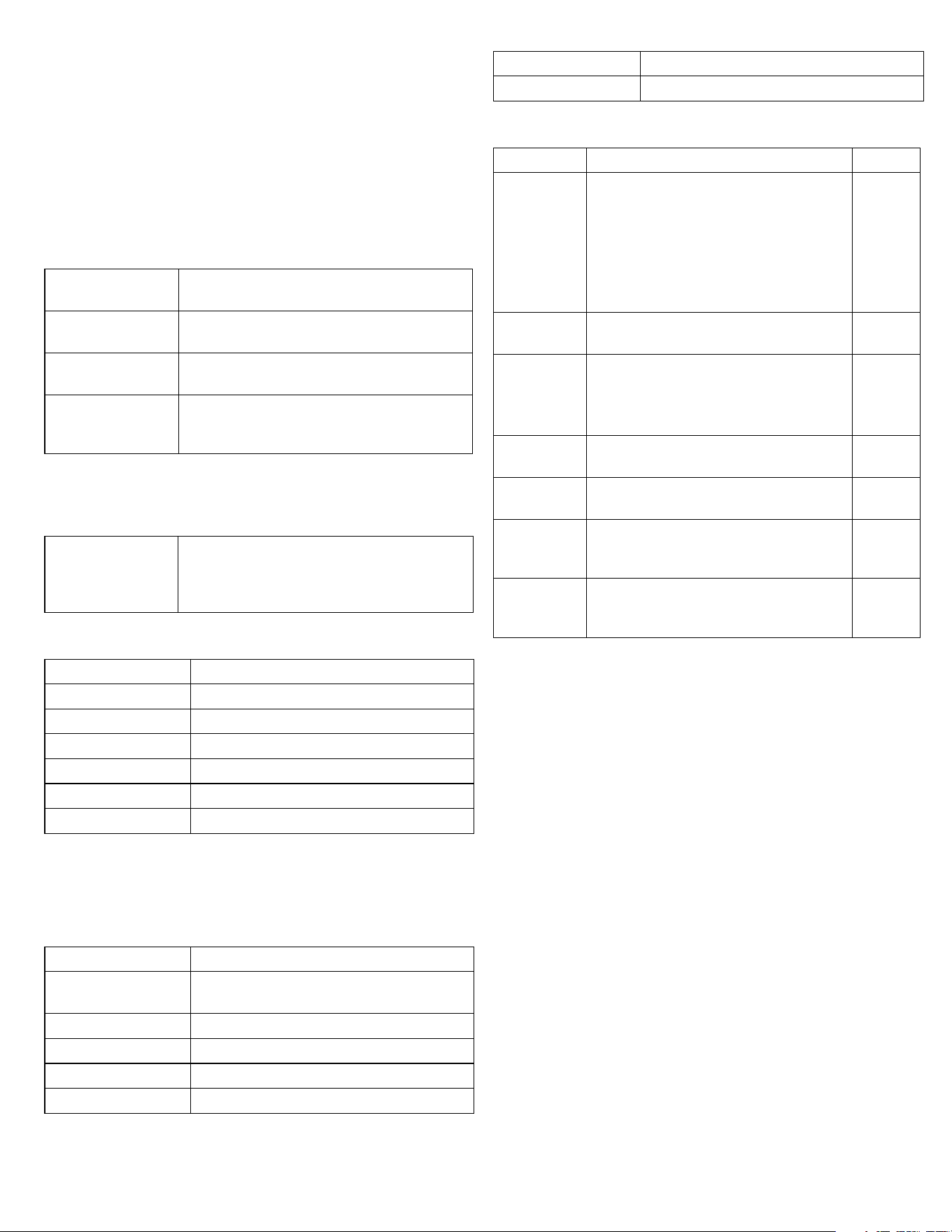
Specifications
Mower Features
Dimensions and Weights
* Cutting height set at 1 in (27 mm) and handlebar set in highest
position.
** Including grass bag
Engine Design and Performance
Transmission Design and Performance
Maintenance
Descriptive Term Applicable to Emissions
Durability Period
Moderate 50 hours (0 ~ 80 cc)
125 hours (greater than 80 cc)
Intermediate 125 hours (0 ~ 80 cc)
250 hours (greater than 80 cc)
Extended 300 hours (0 ~ 80 cc)
500 hours (greater than 80 cc)
1000 hours (225 cc and greater)
HRN216VKA Honda rotary mower, 21-inch mower deck,
3-in-1 Clip Director
®
, Smart Drive variable
speed transmission, flywheel brake, fixed
throttle, Auto Choke System
Length 61.0 in (1,550 mm)
Width 22.6 in (575 mm)
Overall height* 40.8 in (1,037 mm)
Dry mass [weight]** 77.8 lb (35.3 kg)
Cutting width 20.9 in (530 mm)
Cutting heights 1 ~ 4 in (27 ~ 100 mm)
Wheelbase 26.6 in (676 mm)
Model GCV170
Type 4-stroke, overhead-valve,
single-cylinder, air-cooled
Displacement 10.1 cu in (166 cc)
Bore and stroke 2.36 x 2.32 in (60 x 59 mm)
Compression ratio 8.0:1
Ignition system Transistorized magneto
Transmission type Variable speed
Ground speeds 0 ~ 4.11 mph (0 ~ 1.84 m/s)
Item Description Page
Fuel Unleaded gasoline with a pump
octane rating of 86 or higher containing
no more than 10% ethanol by volume
Capacity: 0.24 US gal (0.91 L)
See “AVOIDING FUEL-RELATED
PROBLEMS” on
page 19 to prevent
fuel-related problems
page 6
Blade Bolt
Torq u e
36 ~ 43 ft-lb (49 ~ 59 N•m) page 12
Engine Oil SAE 10W-30, API SJ or later
Capacity: 13.5 oz (0.40 L)
Refill amount: 12.0 ~ 13.5 oz
(0.35 ~ 0.40 L)*
page 13
Spark Plug Type: NGK - BPR5ES
Gap: 0.028 ~ 0.031 in (0.7 ~ 0.8 mm)
page 14
Smart Drive
Cable
Adjust for proper operation. Shop
manual
Maximum
Governed
Speed
2,950 ~ 3,100 rpm ** Shop
manual
Valve
clearance
(cold)
Intake: 0.10 ± 0.02 mm
Exhaust: 0.10 ± 0.02 mm
Shop
manual
* Actual amount will vary due to residual oil in the engine. Always
use the dipstick to confirm the actual level (
page 6).
** Do not try to increase the engine speed above the maximum
governed speed; the blades could fracture and come apart.

19
AVOIDING FUEL-RELATED PROBLEMS
When maintained properly, your Honda lawn mower should provide years of trouble-free operation. This includes the fuel system. However,
gasoline can quickly deteriorate, causing starting or running problems and, in some cases, damage to the fuel system. Most fuel-related
problems can be avoided by following the precautions listed below. Fuel system damage and engine performance problems resulting from
deteriorated fuel are not covered by the DISTRIBUTOR’S LIMITED WARRANTY (see
page 21).
Follow These Precautions to Prevent Most Fuel-Related Problems
During the Normal Mowing Season Reason
Do not use gasoline containing more than 10% ethanol. A high level of ethanol in gasoline attracts water and can corrode or
damage the fuel system and cause performance problems.
Store gasoline in a clean, plastic, sealed container approved for fuel
storage.
Store your fuel supply container away from direct sunlight; if the
container has a vent, keep it closed.
A clean plastic container will prevent rust and metallic contaminants
from entering the fuel system.
Gasoline will deteriorate faster when exposed to air and sunlight.
Purchase only enough gasoline to last for 30 to 60 days.
If you purchase enough gasoline to last for more than 60 days, add
a fuel stabilizer to your storage tank when you fill it.
Gasoline deteriorates with age, so try to avoid storing it for long
periods, especially in summer heat.
Fuel stabilizer will extend the shelf life of gasoline, but it will not
reconstitute stale fuel.
When you finish mowing, turn the fuel valve OFF and fill the
mower’s fuel tank.
If the fuel tank is only partially filled, air in the tank will promote fuel
deterioration.
3 to 4 Weeks Before Next Use Reason
Turn the fuel valve OFF and fill the mower’s fuel tank. If the fuel tank is only partially filled, air in the tank will promote fuel
deterioration.
With the fuel valve off, start the engine and let it run until it runs out
of gas. Running time should be approximately 3 minutes.
The small amount of gasoline in your lawn mower’s carburetor will
deteriorate faster than the fuel in the fuel tank due to its small
volume and heat from the engine.
1 to 3 Months Before Next Use Reason
If you did not add fuel stabilizer to your fuel storage tank when you
filled it up, fill your mower’s fuel tank with fresh gasoline.
If the fuel tank is only partially filled, air in the tank will promote fuel
deterioration.
Add fuel stabilizer to the mower tank according to the stabilizer
manufacturer’s instructions.
Fuel stabilizer will extend the life of gasoline, but it will not
reconstitute stale gasoline.
Run the engine outdoors for 10 minutes. To make sure treated gasoline has replaced untreated gasoline
throughout the fuel system.
Stop the engine and turn the fuel valve OFF. Restart the engine and
let it run until it runs out of gasoline. Running time should be
approximately 3 minutes.
The small amount of gasoline in your lawn mower’s carburetor will
deteriorate faster than the fuel in the fuel tank due to its small
volume and heat from the engine.
More Than 3 Months Before Next Use Reason
Start the engine and let it run long enough to empty all the gasoline
from the entire fuel system, including the fuel tank. Do not allow
gasoline to remain in your lawn mower for more than 3 months of
inactivity.
All fuel stabilizers have a shelf life. It is good practice to empty the
fuel system for long-term inactivity.
We recommend Pro Honda Fuel Stabilizer that has an improved formulation with added corrosion protection (page 20).

20
CUSTOMER INFORMATION
Parts, Accessories, and Service Items
Contact an authorized Honda servicing dealer to purchase any of
these (or other) Honda Genuine items for your lawn mower.
Replacement Parts
Accessories
Service Items
Dealer Locator Information
To find an Authorized Honda Servicing Dealer anywhere in the United
States:
Visit
powerequipment.honda.com and click on Find a Dealer.
How to Contact Honda
Honda Power Equipment dealership personnel are trained
professionals. They should be able to answer any question you may
have. If you encounter a problem that your dealer does not solve to
your satisfaction, please discuss it with the dealership's management.
The Service Manager or General Manager can help. Almost all
problems are solved in this way.
If you are dissatisfied with the decision made by the dealership's
management, contact the Honda Power Equipment Customer
Relations Office. You can write:
American Honda Motor Co., Inc.
Power Equipment Division
Customer Relations Office
4900 Marconi Drive
Alpharetta, GA 30005-8847
Or telephone: (770) 497-6400 M-F, 8:30 a.m. - 7:00 p.m. ET
When you write or call, please give us this information:
• Model and serial numbers (
page 17)
• Name of the dealer who sold the lawn mower to you
• Name and address of the dealer who services your lawn mower
• Date of purchase
• Your name, address, and telephone number
• A detailed description of the problem
Honda Publications
These publications will give you information for maintaining and
repairing your lawn mower.
Owner’s Manual
Keep this owner’s manual handy so you can refer to it at any time.
Consider this owner’s manual a permanent part of the lawn mower;
please give it to the new owner if you resell the lawn mower.
An electronic, color version of the owner’s manual is available for
download by visiting
powerequipment.honda.com and clicking on
SUPPORT and then Owner’s manuals, or you can click the Owners
Manuals link provided at the bottom of the home page.
The information and specifications included in this publication were in
effect at the time of approval for printing. American Honda Motor Co.,
Inc. reserves the right, however, to discontinue or change
specifications or design at any time without notice and without
incurring any obligation whatever. No part of this publication may be
reproduced without written permission.
Shop Manual
This manual covers complete maintenance and overhaul procedures.
It is intended to be used by a skilled technician. Available through
your Honda dealer or visit
powerequipment.honda.com and click on
SUPPORT; then click on Shop Manuals.
Parts Catalog
This manual provides complete, illustrated parts lists for your lawn
mower. Visit
peparts.honda.com for free online access to the parts
catalog. It is also available for purchase in paper form through your
Honda dealer
.
Frequently Asked Questions
The Honda Power Equipment web site provides
additional information for users of Honda power
equipment. Visit powerequipment.honda.com and
click on FAQs or scan the QR code shown.
Item Part Number Notes
Spark plug 98079-55846 NGK (brand) BPR5ES
Air filter 17211-Z8B-901 Paper
Lower blade 72511-VR8-M00 Always use an upper and
lower blade as a set.
Upper blade 72531-VR8-M00
Blade bolt 90105-VA3-J01 2 required, 10 x 25 mm
Spring washer 90502-VG3-000 2 required
Grass bag 81320-VR8-N00 Fabric bag only, no frame
Wheel/tire 44710-VR8-N00 Front
42710-VR8-N00 Rear
Item Part Number Notes
Muffler with
spark arrester
78300-Z9L-800 Spark arrester equipped
muffler with ID mark
Fast funnel 08C25-FST-000 Disposable and spill-free
(3-pack)
Lawn mower
cover
08P59-VE2-000AH Custom fitted, waterproof,
and breathable
Item Part Number Notes
SAE 10W-30
engine oil
08207-10W30 1 quart
NO-SPILL
®
gas cans
06176-1415-C6 1-1/4 gallon
06176-1405-C6 2-1/2 gallon
Fuel stabilizer 08732-0800 8 oz For short and
long term storage
® NO-SPILL is a registered trademark of NoSpill LLC.

21
DISTRIBUTOR’S LIMITED WARRANTY
Honda Power Equipment
This warranty is limited to the following Honda Power Equipment products when
distributed by American Honda Motor Co., Inc., Power Equipment Division, 4900 Marconi
Drive, Alpharetta, Georgia 30005-8847, purchased at retail or placed in rental service on
or after January 1, 2010.
(1)
Private residential: Used in maintaining owner’s primary and/or secondary residence.
Any other use, including but not limited to informal “for hire” use, is considered
commercial/rental/institutional use.
To Qualify for This Warranty:
The product must be purchased in the United States, Puerto Rico, or the U.S. Virgin
Islands from American Honda or a dealer authorized by American Honda to sell
those products. This warranty applies to first retail purchaser and each subsequent
owner during the applicable warranty time period, unless noted otherwise.
What American Honda Will Repair or Replace Under Warranty:
American Honda will repair or replace, at its option, any part that is proven to be
defective in material or workmanship under normal use during the applicable
warranty time period. Warranty repairs and replacements will be made without
charge for parts or labor. Anything replaced under warranty becomes the property of
American Honda Motor Co., Inc. All parts replaced under warranty will be
considered as part of the original product, and any warranty on those parts will
expire coincident with the original product warranty.
To Obtain Warranty Service:
You must, at your expense, take the Honda Power Equipment product, accessory,
replacement part, apparel, or the power equipment on which the
accessory or replacement part is installed, and proof of purchase to any Honda
Power Equipment dealer in the United States, Puerto Rico, or the
U.S. Virgin Islands who is authorized to sell and/or service that product, during the
dealer’s normal business hours. To locate a dealer near you, visit
our web site at PowerEquipment.Honda.com and click on Find a Dealer.
If you are unable to obtain warranty service or are dissatisfied with the warranty
service you receive, contact the owner of the dealership involved;
normally this will resolve the problem. However, if you should require further
assistance, write or call the Power Equipment Customer Relations Department of
American Honda Motor Co., Inc. See “How to Contact Honda” on page 20.
Exclusions:
1. Any damage or deterioration resulting from the following:
- Neglect of the periodic maintenance as specified in this manual
- Improper repair or maintenance
- Operating methods other than those indicated in the product owner’s manual
- Increasing engine speed beyond factory specification
- The use of non-genuine Honda parts, accessories, lubricants, and fluids other
than those approved by Honda
- Exposure of the product to soot and smoke, chemical agents, bird droppings,
sea water, salt or other corrosive environments
- Collision, fuel contamination or deterioration, neglect, unauthorized alteration,
misuse, incorporation or use of unsuitable attachments or parts
- Normal wear and tear (including, but not limited to, normal fading of painted or
plated surfaces, sheet peeling, and other natural deterioration)
2. Consumable parts: Honda does not warrant parts deterioration due to normal
wear and tear. The following parts are not covered by warranty (unless they are
needed as a part of another warranted repair): spark plug, fuel filter, air cleaner
element, clutch disc, tire, wheel bearing, recoil starter rope, cable, belt, cutter
blade, oil, and grease.
3. Cleaning, adjustment, and normal periodic maintenance work (carburetor
cleaning, engine oil draining, blade sharpening, belt and cable adjustments).
4. Any product that has ever been declared a total loss or sold for salvage by a
financial institution or insurer.
5. Auger and paddle assemblies of snow throwers, tiller tines of roto-tillers, mower
blades and mower deck housings, are specifically not warranted against impact
damage, including but not limited to, abrasive damage.
Disclaimer of Consequential Damage and Limitation of Implied
Warranties:
American Honda disclaims any responsibility for loss of time or use of the product,
transportation, commercial loss, or any other incidental or consequential damage.
Any implied warranties are limited to the duration of this written limited warranty.
Some states do not allow limitations on how long an implied warranty lasts and/or
do not allow the exclusion or limitation of incidental or consequential damages, so
the above exclusions and limitations may not apply to you. This warranty gives you
specific legal rights, and you may also have other rights which vary from state to
state.
Honda Parts, Accessories, and Apparel
This warranty is limited to Honda Power Equipment parts, accessories, and apparel when
distributed by American Honda Motor Co., Inc., 4900 Marconi Drive, Alpharetta, Georgia
30005-8847.
To Qualify for This Warranty:
1. The parts, accessories, or apparel must be purchased from American Honda or
a dealer authorized by American Honda to sell those products in the United
States, Puerto Rico, and the U.S. Virgin Islands. Parts and Accessories must be
purchased for installation on original Honda equipment or engines to be eligible
for warranty coverage. Installing parts and accessories on non-Honda products
or engines voids this warranty.
2. You must be the first retail purchaser. This warranty is not transferable to
subsequent owners.
What American Honda Will Repair or Replace Under Warranty:
American Honda will repair or replace, at its option, any Honda Power Equipment
parts, accessories, replacement parts, or apparel that are proven to be defective in
material or workmanship under normal use during the applicable warranty time
period. Anything replaced under warranty becomes the property of American Honda
Motor Co., Inc. The warranty on all parts, accessories, and apparel replaced under
warranty will expire coincident with the original warranty on the replaced parts,
accessories, or apparel.
Parts and accessories installed by a dealer who is authorized by American Honda to
sell them will be repaired or replaced under warranty without charge for parts or
labor. If installed by anyone else, parts and accessories will be repaired or replaced
under warranty without charge for parts, but any labor charges will be the
responsibility of the purchaser.
Apparel will be repaired or replaced under warranty without any charge.
To Obtain Warranty Service:
You must, at your expense, take the Honda Power Equipment part, accessory,
apparel or the Honda Power Equipment on which the part or accessory is installed,
and proof of purchase to any Honda Power Equipment dealer in the United States,
Puerto Rico, or the U.S. Virgin Islands who is authorized to sell that product, during
the dealer's normal business hours. To locate a dealer near you, visit our web site at
PowerEquipment.Honda.com and click on Find a Dealer.
If you are unable to obtain warranty service or are dissatisfied with the warranty
service you receive, contact the owner of the dealership involved; normally this will
resolve the problem. However, if you should require further assistance, write or call
the Power Equipment Customer Relations Department of American Honda Motor
Co., Inc. See “How to Contact Honda” on
page 20.
Exclusions:
This warranty does not extend to parts, accessories, or apparel affected or
damaged by collision, normal wear, use in an application for which the product was
not designed or any other misuse, neglect, incorporation or use of unsuitable
attachments or parts, unauthorized alteration, improper installation, or any causes
other than defects in material or workmanship of the product. Installing parts and
accessories on non-Honda products or engines voids this warranty.
Disclaimer of Consequential Damage and Limitation of Implied
Warranties:
American Honda disclaims any responsibility for loss of time or use of the product,
or the power equipment on which the product is installed, transportation,
commercial loss, or any other incidental or consequential damage. Any implied
warranties are limited to the duration of this written warranty. Some states do not
allow limitations on how long an implied warranty lasts and/or do not allow the
exclusion or limitation of incidental or consequential damages, so the above
exclusions and limitations may not apply to you.
This warranty gives you specific legal rights, and you may also have other rights
which vary from state to state. PWL50623-W
PRODUCTS COVERED
BY THIS WARRANTY
LENGTH OF WARRANTY
(from date of original retail purchase)
PRIVATE
RESIDENTIAL
(1)
COMMERCIAL/
RENTAL/
INSTITUTIONAL
HRN Mowers 36 months 3 months
PRODUCTS COVERED
BY THIS WARRANTY
LENGTH OF WARRANTY
(from date of original retail purchase)
PRIVATE
RESIDENTIAL
COMMERCIAL/
RENTAL/
INSTITUTIONAL
Parts 6 months 3 months
Accessories 12 months 3 months
Apparel 6 months 3 months

22
EMISSION SYSTEM WARRANTY
Your new Honda Power Equipment engine complies with the U.S. EPA, and
State of California (models certified for sale in California only) emission
regulations. American Honda Motor Co., Inc. provides the emission warranty
coverage for engines in the United States and its territories. In the remainder
of this Emission Control System Warranty, American Honda Motor Co., Inc.,
will be referred to as Honda.
YOUR WARRANTY RIGHTS AND OBLIGATIONS:
CALIFORNIA
The California Air Resources Board and Honda are pleased to explain the
emission control system warranty on your 2019 and later Honda Power
Equipment engine. In California, new spark-ignited small off-road equipment
engines must be designed, built, and equipped to meet the state's stringent
anti-smog standards. Specific Honda products that do not meet the California
emissions regulations can be identified by a “Not for sale in California” decal.
OTHER STATES AND U.S. TERRITORIES
In other areas of the United States your engine must be designed, built, and
equipped to meet the U.S. EPA emission standards for spark-ignited engines
at or below 19 kilowatts.
ALL OF THE UNITED STATES
Honda must warrant the emission control system on your power equipment
engine for the period of time listed below, provided there has been no abuse,
neglect, or improper maintenance of your power equipment engine. Where a
warrantable condition exists, Honda will repair your power equipment engine at
no cost to you including diagnosis, parts, and labor.
Your emission control system may include such parts as the carburetor or fuel
injection system, the ignition system, and catalytic converter. Also included
may be hoses, connectors, and other emission-related assemblies (see the
adjacent column for additional covered parts).
OWNER'S WARRANTY RESPONSIBILITY:
As the power equipment engine owner, you are responsible for completing all
required maintenance listed in your owner's manual. Honda recommends that
you retain all receipts covering maintenance on your power equipment engine,
but Honda cannot deny warranty coverage solely for the lack of receipts or for
your failure to ensure that all scheduled maintenance has been completed.
As the power equipment engine owner, you should however be aware Honda
may deny you warranty coverage if your power equipment engine or a part has
failed due to abuse, neglect, improper maintenance, or unapproved
modifications.
You are responsible for presenting your power equipment engine to a Honda
Power Equipment dealer as soon as a problem exists. The emission related
warranty repairs should be completed in a reasonable amount of time, not to
exceed 30 days.
If you have any questions regarding your emission warranty rights and
responsibilities, you should contact the Honda office in your region:
WARRANTY COVERAGE:
Honda power equipment engines sold in the United States are covered by this
warranty for a period of two years from the date of delivery to the original retail
purchaser or the length of the Honda Distributor’s Limited Warranty, whichever
is longer. This warranty is transferable to each subsequent purchaser for the
duration of the warranty period.
If any emission-related part on your engine is defective, the part will be repaired
or replaced by Honda without charge for diagnosis, parts, or labor. All defective
parts replaced under this warranty become the property of Honda. Only Honda
approved replacement parts may be used in the performance of any warranty
repairs and must be provided without charge to the owner. A list of warranted
parts is on the adjacent column of this warranty statement. Normal maintenance
items, such as spark plugs and filters, that are on the warranted parts list are
warranted up to their required replacement interval only.
Honda will also replace other engine components damaged by a failure of any
warranted part during the warranty period.
Honda cannot deny coverage under the emission warranty solely for use of
non-Honda replacement parts or service performed at a location other than an
authorized Honda dealership; however, use of a part that is not functionally
identical to the original equipment part in any respect that may in any way
affect emissions (including durability) could result in denial of coverage. If such
a non-Honda replacement part is used in the repair or maintenance of your
engine, and an authorized Honda dealer determines it is defective or causes a
failure of a warranted part, your claim for repair of your engine may be denied.
If the part in question is not related to the reason your engine requires repair,
your claim will not be denied.
TO OBTAIN WARRANTY SERVICE:
You must, at your own expense, take your Honda Power Equipment engine or
the product on which it is installed, along with your sales registration card or
other proof of original purchase date, to any Honda Power Equipment dealer
who is authorized by Honda to sell and service that Honda product during their
normal business hours. Claims for repair or adjustment found to be caused
solely by defects in material or workmanship will not be denied because the
engine was not properly maintained and used.
If you are unable to obtain emission warranty service or are dissatisfied with
the warranty service you received, contact the owner of the dealership
involved. Normally this should resolve your problem. However, if you require
further assistance, contact the Honda office in your region. Refer to adjacent
column for contact information.
EXCLUSIONS:
Failures other than those resulting from defects in material or workmanship are
not covered by this warranty. This warranty does not extend to emission control
systems or parts that are affected or damaged by owner abuse, neglect,
improper maintenance, misuse, misfueling, improper storage, collision, the
incorporation of, or use of, unsuitable attachments, or the unauthorized
alteration of any part.
This warranty does not cover replacement of expendable maintenance items
made in connection with required maintenance service after the item’s first
scheduled replacement as listed in the maintenance section of the product
owner’s manual, such as: spark plugs and filters.
DISCLAIMER OF CONSEQUENTIAL DAMAGE AND LIMITATION
OF IMPLIED WARRANTIES:
American Honda Motor Co., Inc. disclaims any responsibility for incidental or
consequential damages such as loss of time or the use of the power
equipment, or any commercial loss due to the failure of the equipment; and
any implied warranties are limited to the duration of this written warranty. This
warranty is applicable only where the California or U.S. EPA emission control
system warranty regulation is in effect.
American Honda Motor Co., Inc.
Power Equipment Customer Relations
4900 Marconi Drive
Alpharetta, Georgia 30005-8847
Telephone: (888) 888-3139
Email: [email protected]
SYSTEMS COVERED
BY THIS WARRANTY:
PARTS
DESCRIPTION:
Fuel Metering Carburetor assembly (includes starting enrichment
system), Oxygen sensor, Throttle body, Engine
temperature sensor, Engine control module, Fuel
injector, Fuel regulator, Intake manifold
Evaporative Fuel tank, Fuel cap, Fuel hoses, Vapor hoses,
Carbon canister, Canister mounting brackets,
Fuel strainer, Fuel valve, Fuel pump, Fuel hose joint,
Canister purge hose joint
Exhaust Catalyst, Exhaust pipe, Muffler (with catalyst)
Air Induction Air cleaner case, Air cleaner element*
Ignition Flywheel comp., Flywheel magneto, Ignition pulse
generator, Crankshaft position sensor, Power coil,
Ignition coil assembly, Ignition control module, Spark
plug cap, Spark plug*
Crankcase Emission
Control
Crankcase breather tube, Breather valve assembly, Oil
filler cap
Miscellaneous Parts Tubing, fittings, seals, gaskets, and clamps
associated with these listed systems.
Note: This list applies to parts supplied by Honda and does not cover parts
supplied by the equipment manufacturer. Please see the original
equipment manufacturer’s emissions warranty for non-Honda parts.
* Covered up to the first required replacement only. See the MAINTENANCE
SCHEDULE on
page 11. PWL50975-T

PRODUCT REGISTRATION
Thank you for choosing Honda. To ensure you receive important service information in the event
of a product update or recall, please register your lawn mower within 30 days of purchase.
From time to time, American Honda conducts sales promotions that require you to register your
lawn mower within 30 days of purchase. If you purchased your Honda lawn mower during one
of these promotions, you must register your mower within 30 days.
Your information will remain confidential. It will not be released to any other company or organization.
Failure to register your lawn mower does not diminish your warranty rights.
Please complete and mail the postage paid card or
register online at powerequipment.honda.com
Print your 7-digit serial
number here.
(commercial/rental users)
(check one)
(private, homeowner use) (for-hire use)
Owner's Last Name
Company Name
Address
City
Purchased Via
First Name
Telephone
()
State ZIP Code
Application
Commercial
y
Serial number
(professional use)
* Dealer ZIP code
* Dealer Store number
*If available
E-mail address
Date of Purchase
MONTH YEARDAY
(check one)
In Store Online
Non-commercial Rental
MA NA
(example)

1. Go to PowerEquipment.Honda.com to register your unit.
2. Click on Product Registration.
3. Complete the required information and click Submit.
It’s that simple!
Power Equipment Division
American Honda Motor Co., Inc.
4900 Marconi Dr.
Alpharetta, GA 30005-9956
NO POSTAGE
NECESSARY
IF MAILED
IN THE
UNITED STATES
Product Registration
BUSINESS REPLY MAIL
FIRST-CLASS MAIL ALPHARETTA GAPERMIT NO. 117
POSTAGE WILL BE PAID BY ADDRESSEE
HPE.2019.08
PRINTED IN U.S.A.
EM5
