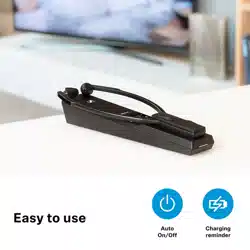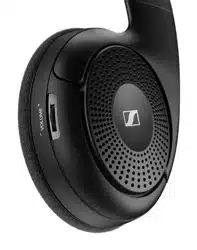
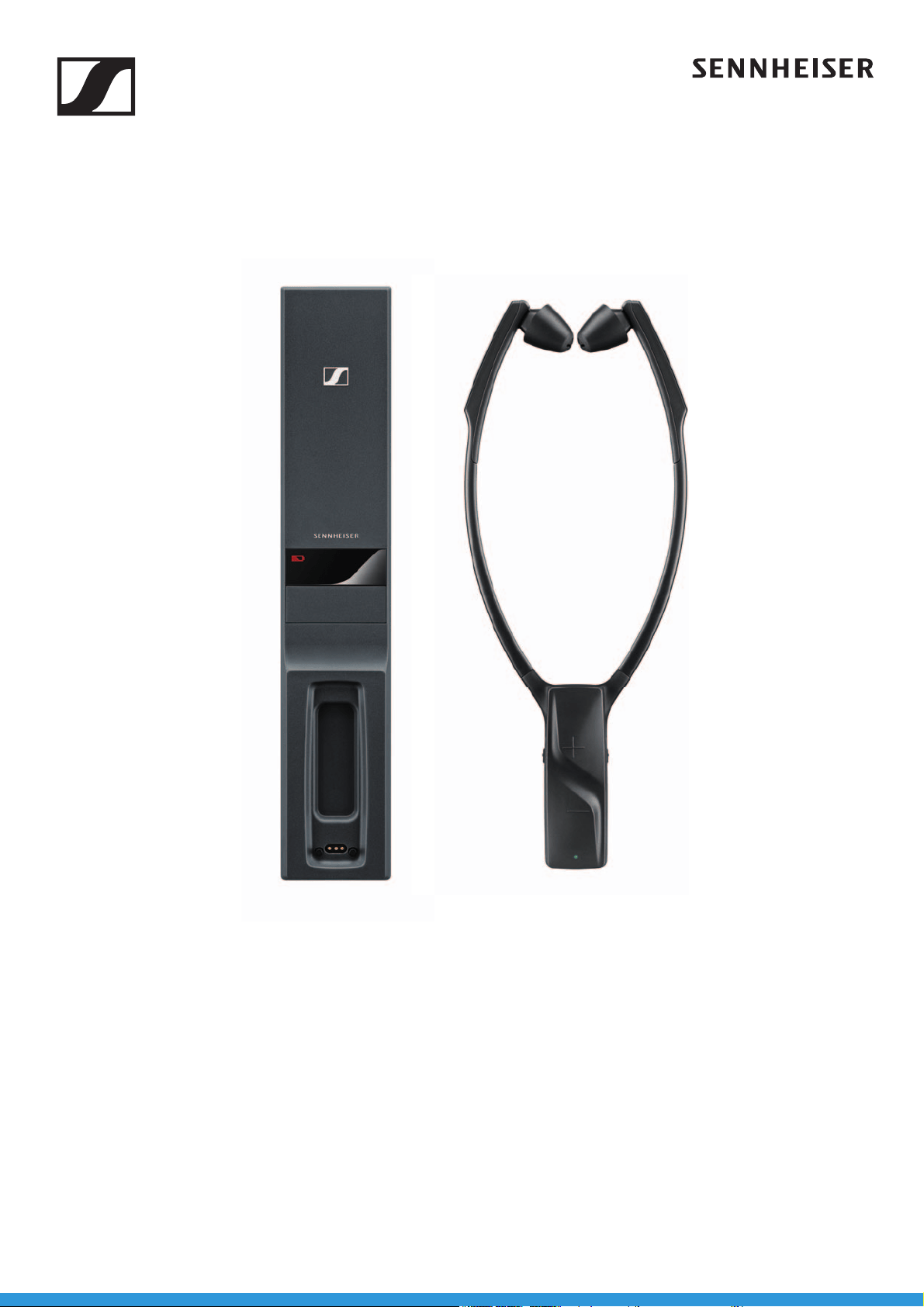
RS 2000
RS 2000
Instruction manual
Wireless TV headphone system

2 | RS 2000
Contents
Important safety instructions ...................................................................... 3
Package contents ........................................................................................... 6
Product overview ........................................................................................... 7
Putting the RS 2000 into operation ............................................................ 9
Setting up the transmitter .......................................................................... 9
Connecting the transmitter to an audio source .................................... 10
Connecting the transmitter to the power supply system ................... 13
Charging the stethoset receiver’s rechargeable battery ..................... 14
Using the RS 2000 ........................................................................................ 15
Switching the wireless headphone system on ...................................... 15
Switching the wireless headphone system off ...................................... 16
Wearing the stethoset receiver ................................................................ 17
Adjusting the volume ................................................................................. 17
Adjusting the balance ................................................................................. 18
Cleaning and maintaining the RS 2000 .................................................... 19
Replacing the stethoset receiver’s rechargeable battery .................... 20
Using additional functions ......................................................................... 21
Pairing the stethoset receiver with the transmitter ............................ 21
Charging the rechargeable battery using the MCA 800
charging adapter ......................................................................................... 22
If a problem occurs ... ................................................................................... 23
Leaving the range of the transmitter ...................................................... 24
Specifications ................................................................................................ 25
Manufacturer Declarations ......................................................................... 27

Important safety instructions
RS 2000 | 3
Important safety instructions
왘 Read this instruction manual carefully and completely before
using the product.
왘 Always include this instruction manual when passing the prod-
uct on to third parties.
왘 Do not use an obviously defective product.
왘 Only use the product in environments where wireless 2.4 GHz
transmission is permitted.
Preventing damage to health and accidents
왘 These headphones allow you to set higher volumes than conven-
tional headphones. Protect your hearing from high volume lev-
els.
Permanent hearing damage may occur when headphones are
used at high volume levels for long periods of time. Sennheiser
headphones sound exceptionally good and provide clear speech
intelligibility at low and medium volume levels.
왘 To prevent hearing damage, set the volume to a low level before
passing the product on to third parties.
왘 Do not use the product in an environment that requires your spe-
cial attention (e.g. in traffic or when performing skilled jobs).
왘 Always keep the headphones/MCA 800 charging adapter at
least 3.94" (10 cm) from cardiac pacemakers or implanted
defibrillators. The headphones/MCA 800 charging adapter con-
tain/s magnets that generate a magnetic field which could cause
interference with cardiac pacemakers and implanted defibrilla-
tors.
왘 Do not use the product near water. To reduce the risk of fire or
electric shock, do not expose the product to rain or moisture.
왘 Keep the product, accessories and packaging parts out of reach
of children and pets to prevent accidents and choking hazards.
왘 Only use the power supply units supplied by Sennheiser.
Preventing damage to the product and malfunctions
왘 Always keep the product dry and do not expose it to extreme
temperatures to avoid corrosion or deformation. The normal
operating temperature is from 5 to 40 °C/41 to 104 °F.
왘 Use the product with care and store it in a clean, dust-free envi-
ronment.
왘 Switch off the product after use to conserve battery power.
왘 Unplug the power supply unit from the wall socket
– to completely disconnect the product from the power source,
– during lightning storms or
– when not using the product for long periods of time.
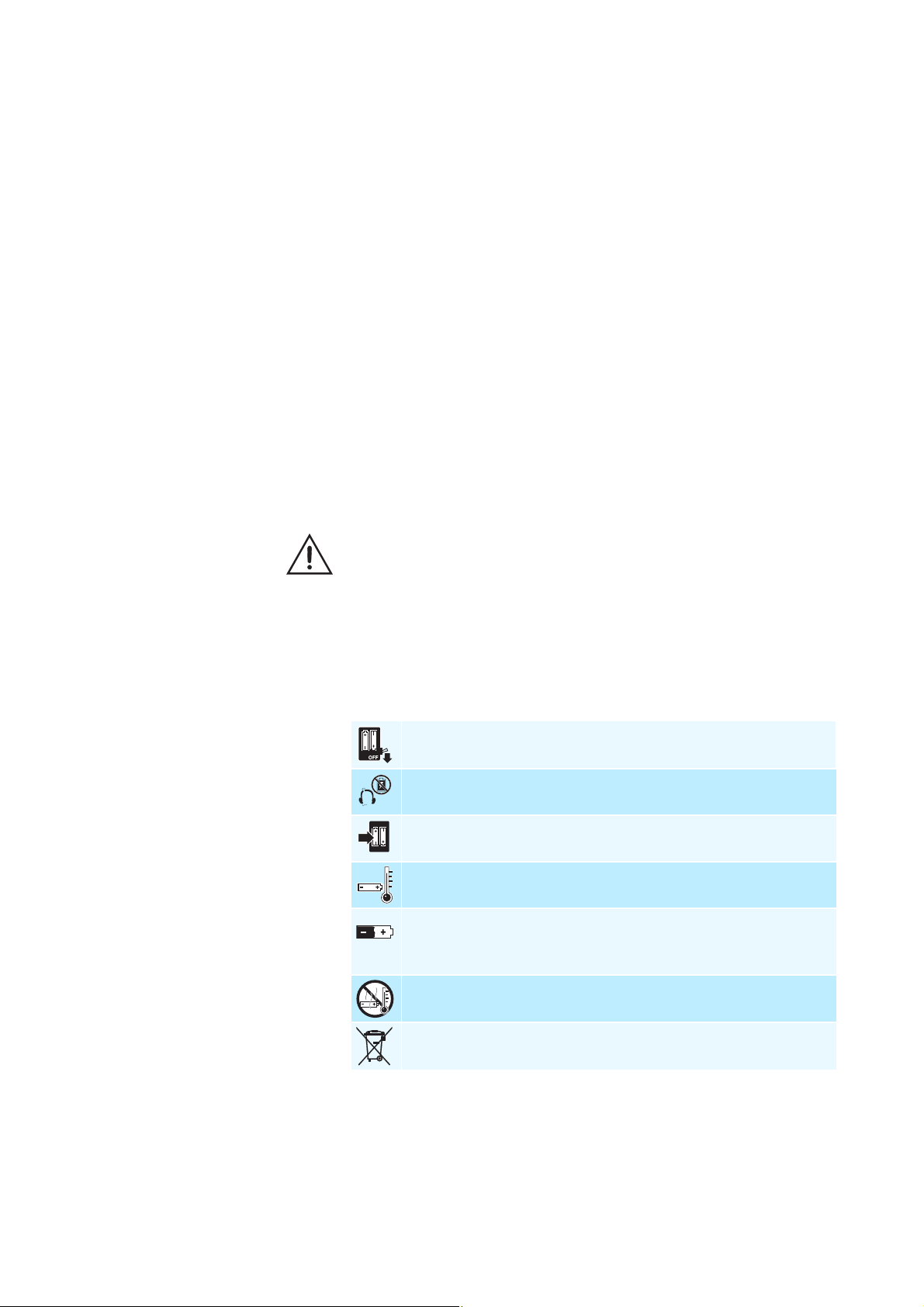
Important safety instructions
4 | RS 2000
왘 Always ensure that the power supply unit is
– in a safe operating condition and easily accessible,
– properly plugged into the wall socket,
– only operated within the permissible temperature range,
–not exposed to direct sunlight for longer periods
of time in
order to prevent heat accumulation.
Switch rechargeable battery-powered products off after
use.
Do not charge a product with a built-in rechargeable
battery if the product is obviously defective.
Only use rechargeable batteries and chargers
recommended by Sennheiser.
Only charge rechargeable batteries at ambient
temperatures between 5 to 40 °C/41 to 104 °F.
When not using rechargeable batteries for extended
periods of time, charge them regularly (about every three
months).
Do not heat above 70 °C/158 °F, e.g. do not expose to
sunlight or throw into a fire.
Dispose of batteries/rechargeable batteries at special
collection points or return them to your specialist dealer.
왘 Varnish or furniture polish may degrade the feet of the transmit-
ter, which could stain your furniture. You should therefore place
the transmitter on a non-slip pad to avoid potential staining of
furniture.
왘 Do not operate the product near heat sources.
왘 Clean the product only with a soft, dry cloth.
왘 Use only attachments/accessories/spare parts supplied or rec-
ommended by Sennheiser.
Safety instructions for lithium polymer
rechargeable batteries
WARNING
If abused or misused, the standa
rd/rechargeable batteries may
leak. In extreme cases, they may even present a risk of
•explosion,
• fire development,
•heat generation,
• smoke or gas development.

Important safety instructions
RS 2000 | 5
Intended use/Liability
This wireless TV headphone system is suitable for use with TV sets,
hi-fi systems, and home cinema systems and can be connected to an
analog audio source.
This product is intended for private domestic use only. It is not suit-
able for commercial use. This product is also not intended to be used
with portable audio devices.
It is considered improper use when the product is used for any appli-
cation not named in the corresponding product documentation.
Sennheiser does not accept liability for damage arising from abuse
or misuse of this product and its attachments/accessories.
Before putting into operation, please observe the respective coun-
try-specific regulations.
Package contents
6 | RS 2000
Package contents
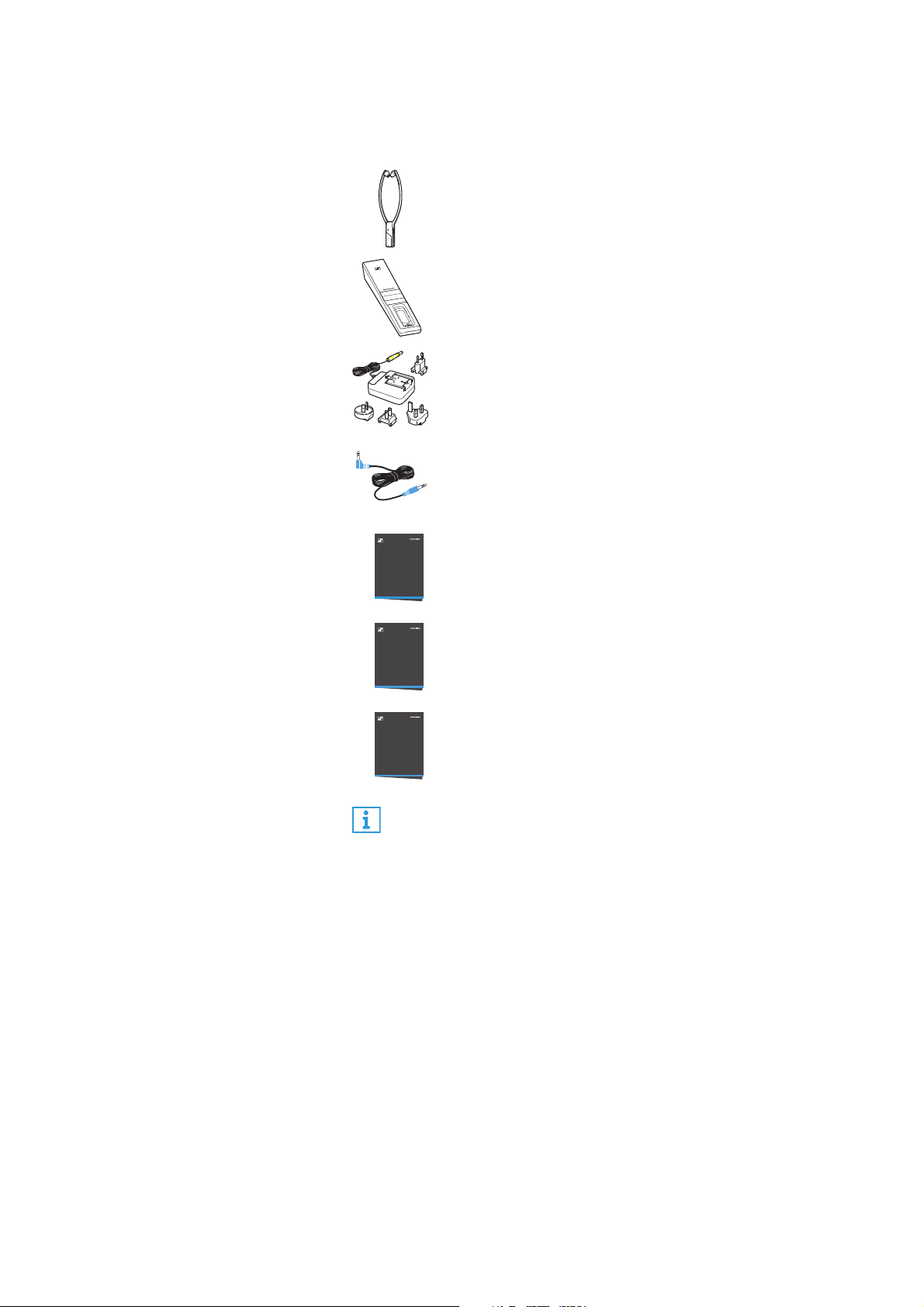
RR 2000 stethoset receiver with
built-in rechargeable battery
TR 2000 transmitter with charging station
NT 5-10AW power supply unit with
multi-country adapters (EU, UK, US, AU)
Stereo audio cable with 3.5 mm jack plugs, 1.5 m
Safety guide
Quick guide
The instruction manual can be downloaded as a
PDF file at www.sennheiser.com/download.
A list of accessories can be found on the RS 2000 product page
at www.sennheiser.com. For information on suppliers, contact
your Sennheiser partner. To find a Sennheiser partner in your
country, search at www.sennheiser.com.
Safety Guide
Quick Guide
Instruction
Manual
Product overview
RS 2000 | 7
Product overview
Overview of the RR 2000 stethoset receiver
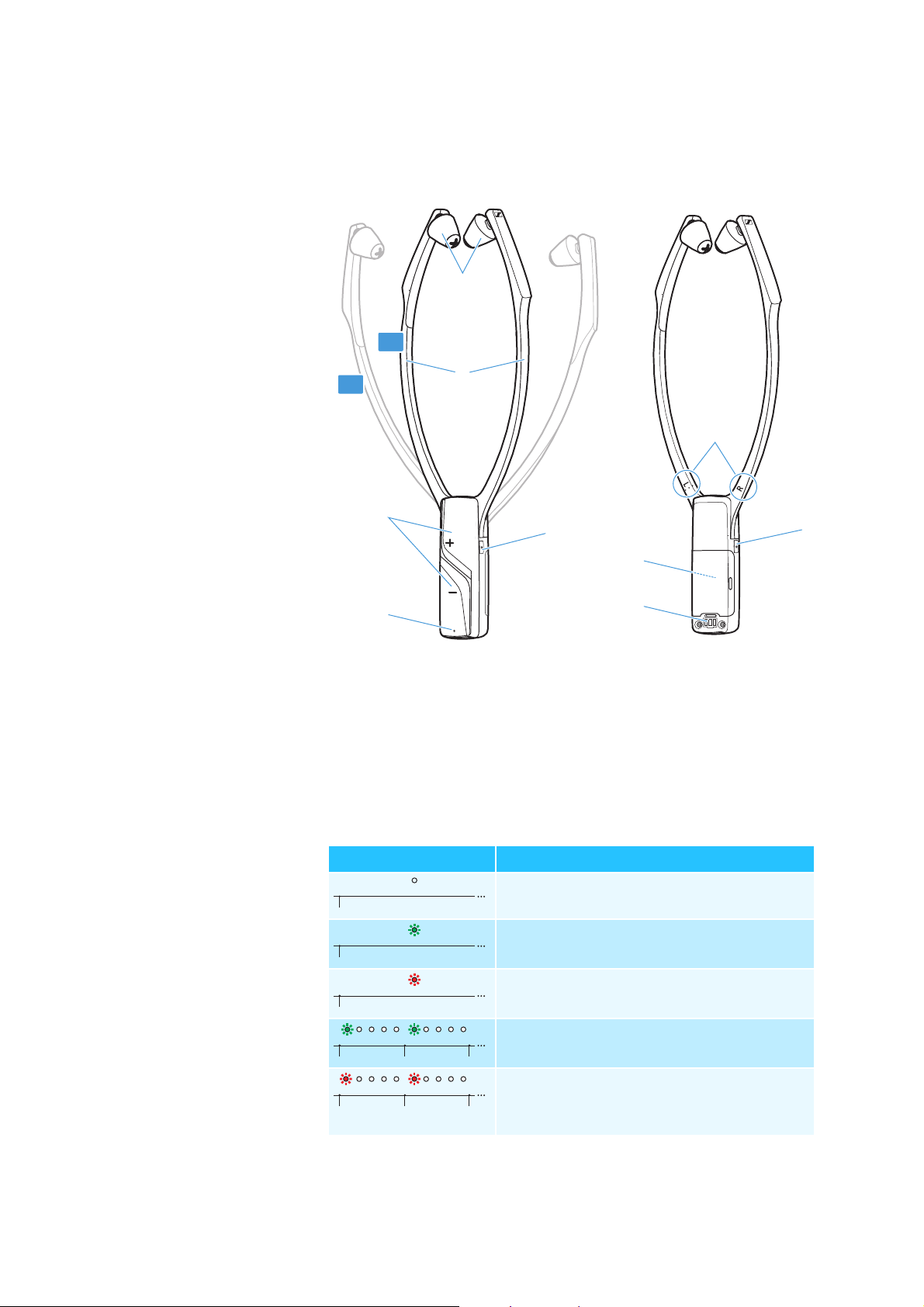
1 Ear pads, replaceable
2 Ear bows with on/off function
3 Volume buttons
+ and –
4
Receiver status
LED
(see below)
5
Balance
buttons for the right
and left ear
6 R marking for the right ear
and
L marking for the left ear
7 Built-in rechargeable battery
8 Charging contacts
Receiver status
LED The stethoset receiver ...
... is switched off.
... is connected to the transmitter.
... is connected to the transmitter, the
rechargeable battery is almost empty.
... is not connected to the transmitter or
cannot connect to the transmitter.
... is not connected to the transmitter or
cannot connect to the transmitter, the
rechargeable battery is almost empty.
2
6
1
3
7
8
4
5
5
On
Off
1s1s
1s1s
Product overview
8 | RS 2000
Overview of the TR 2000 transmitter
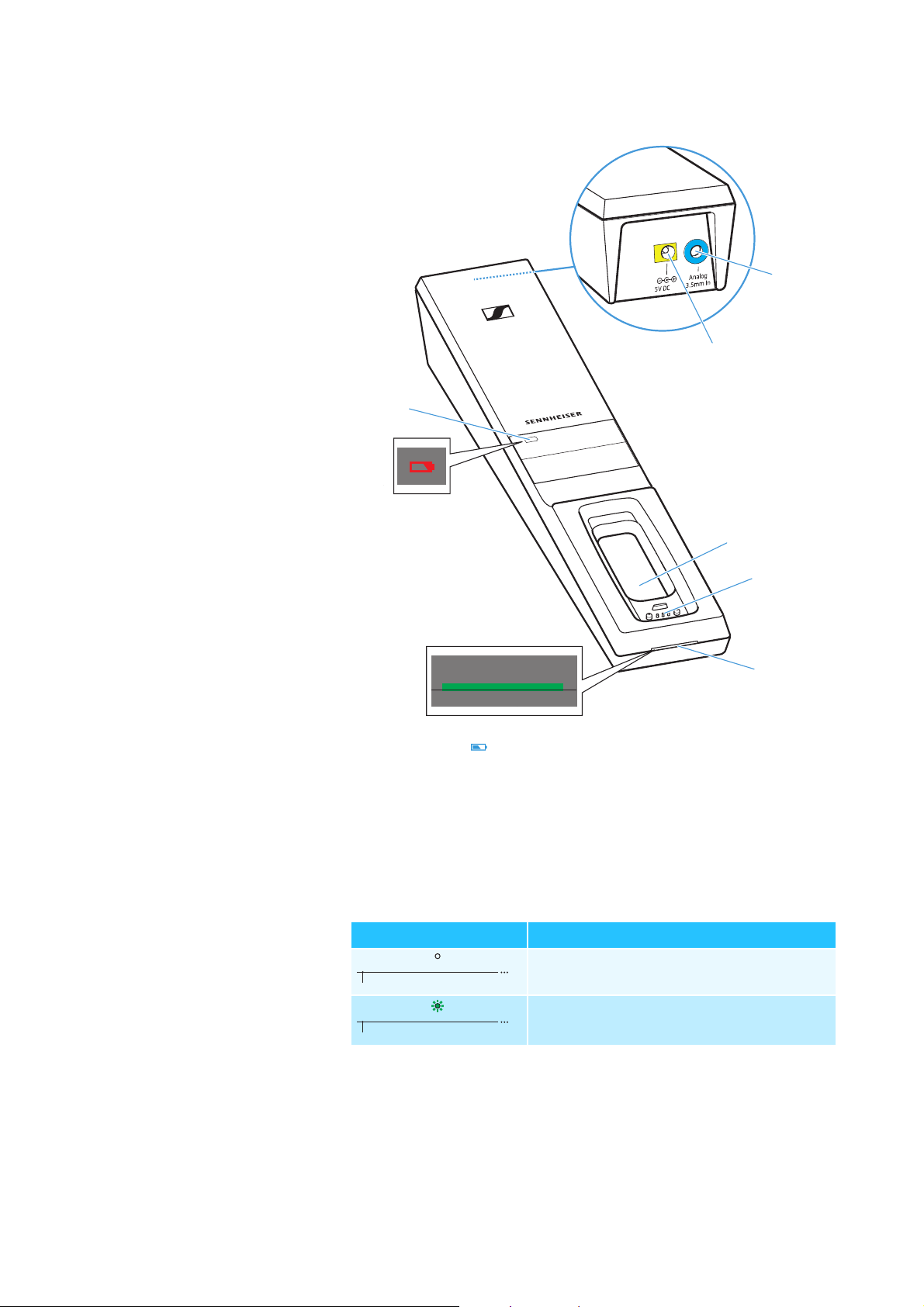
1
Battery
LED
(see page14)
2
Transmitter status
LED
(see below)
3 Charging contacts for
stethoset receiver with
holding magnets
4 Charging compartment for
stethoset receiver
5 DC 5V 1A socket for the power
supply unit, marked yellow
6 Analog 3.5 mm In analog
audio input (3.5 mm jack
socket), marked blue
Transmitter status
LED The transmitter...
... is in standby mode.
... and the stethoset receiver are
connected.
4
3
2
1
6
5
1A
Putting the RS 2000 into operation
RS 2000 | 9
Putting the RS 2000 into operation
Setting up the transmitter
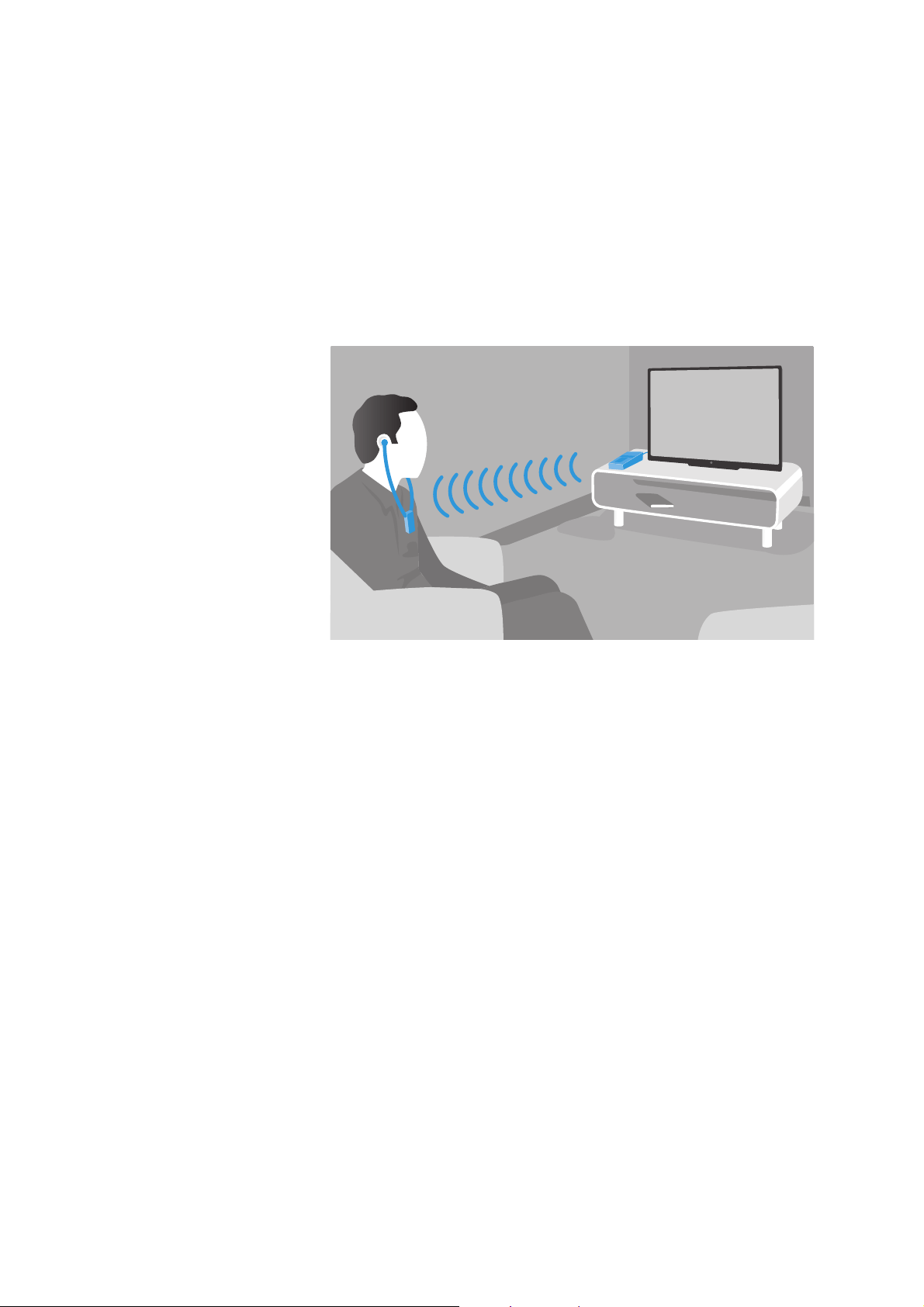
왘 Choose a suitable place near your sound source.
왘 Separate the transmitter from other wireless devices in the room
by at least 50 cm/20" to avoid interference.
왘 Do not place the transmitter close to metal objects such as shelf
bars, reinforced concrete walls, etc. as this can decrease the
transmitter’s range.

Putting the RS 2000 into operation
10 | RS 2000
Connecting the transmitter to an audio source
You can connect the transmitter to an analog audio source (e.g. a TV
or a stereo hi-fi system).
왘 Switch your audio sources off before connecting the transmitter.
왘 Check the connection possibilities of your audio source (audio
output, usually marked “OUT”).
왘 Select the corresponding connection cable and, if necessary, a
suitable adapter
왘 To connect the transmitter to your audio source, refer to the con-
nection diagram suitable for your audio source (see the follow-
ing chapters). Follow the color codings on the transmitter and on
the cables.
You can also refer to the beginner’s video guides on how to
connect your digital wireless headphone system to a TV:
www.sennheiser.com/how-to-videos.
Connection possibilities of
the audio source
Color coding
on the
transmitter
Connection cable
Page
3.5 mm jack
socket (analog)
Stereo audio cable 11
RCA (analog)
Stereo audio cable with RCA adapter
(3.5 mm jack socket to 2 RCA plugs;
optional accessory)
12
SCART (analog)
Stereo audio cable with SCART
adapter (3.5 mm jack socket to
SCART connector; optional
accessory)
12
A
B
C
Accessories and adapters are available from your local Senn-
heiser partner.
Putting the RS 2000 into operation
RS 2000 | 11
Connection possibility A: 3.5 mm jack socket (analog)
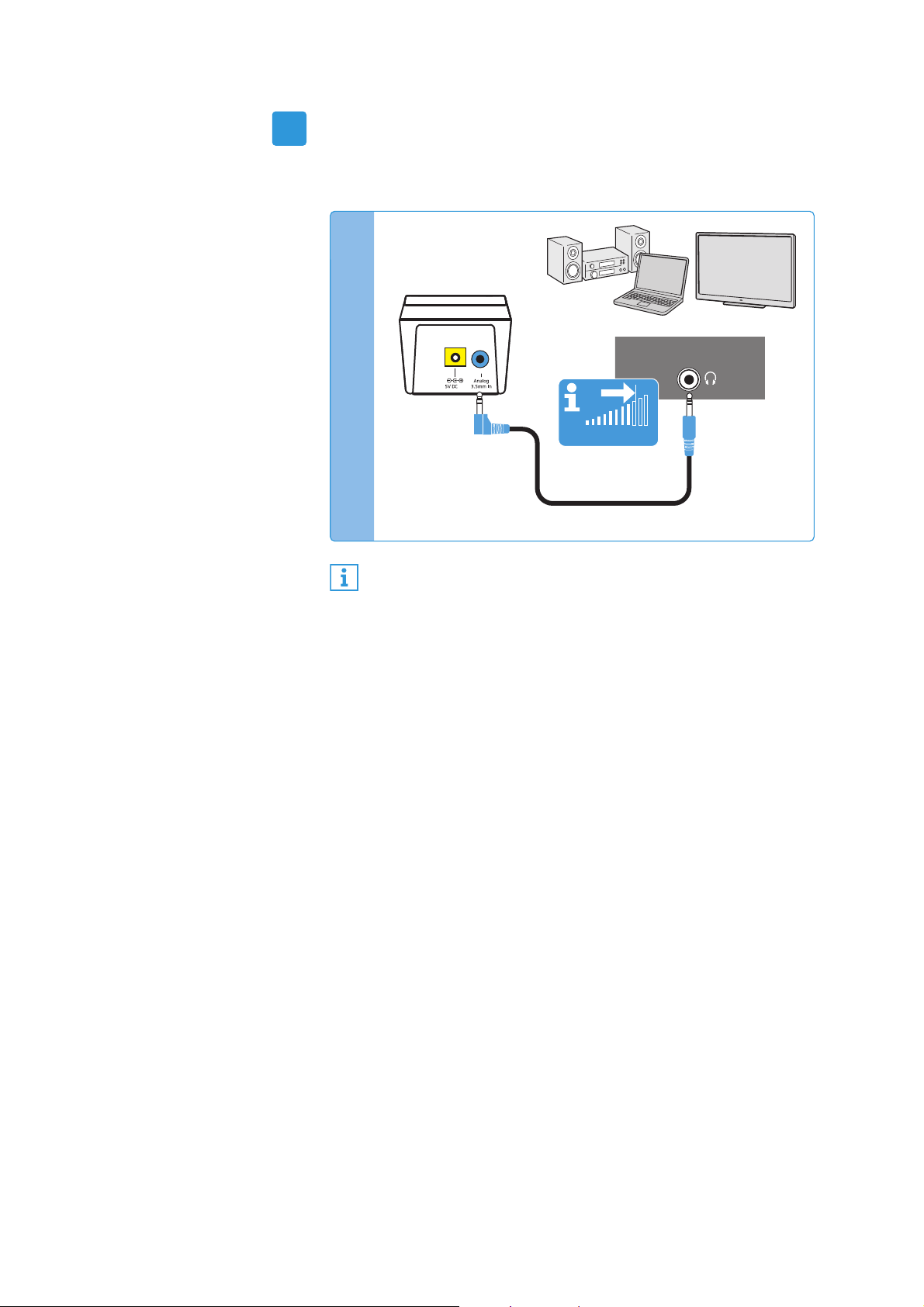
왘 Connect the stereo audio cable to the blue Analog 3.5 mm In
audio input (3.5 mm jack socket) of the transmitter and to the
3.5 mm headphone socket of your audio source.
If the headphones socket on your audio source is a 6.3 mm/¼" jack
socket, you require an adapter (3.5 mm jack plug to 6.3 mm/¼" jack
plug, optional accessory) for the supplied 3.5 mm stereo audio
cable.
Some TV models mute the loudspeakers when you connect the
transmitter to the 3.5 mm headphone socket. Other TV models have
their own menu for adjusting the volume of the headphone socket.
Check the menu of your TV for information on how to deactivate the
muting function or adjust the volume. Alternatively, connect the TV
and the transmitter using a different connection possibility (B or C).
A
Adjust the volume of the headphone socket on your TV/audio
source to at least a medium level.
This improves the quality of wireless audio transmission. For
detailed information, please refer to the instruction manual of
your TV/audio source.
PHONES
TV VOLUME
Analog Audio
1A
Putting the RS 2000 into operation
12 | RS 2000
Connection possibility B: RCA sockets (analog)
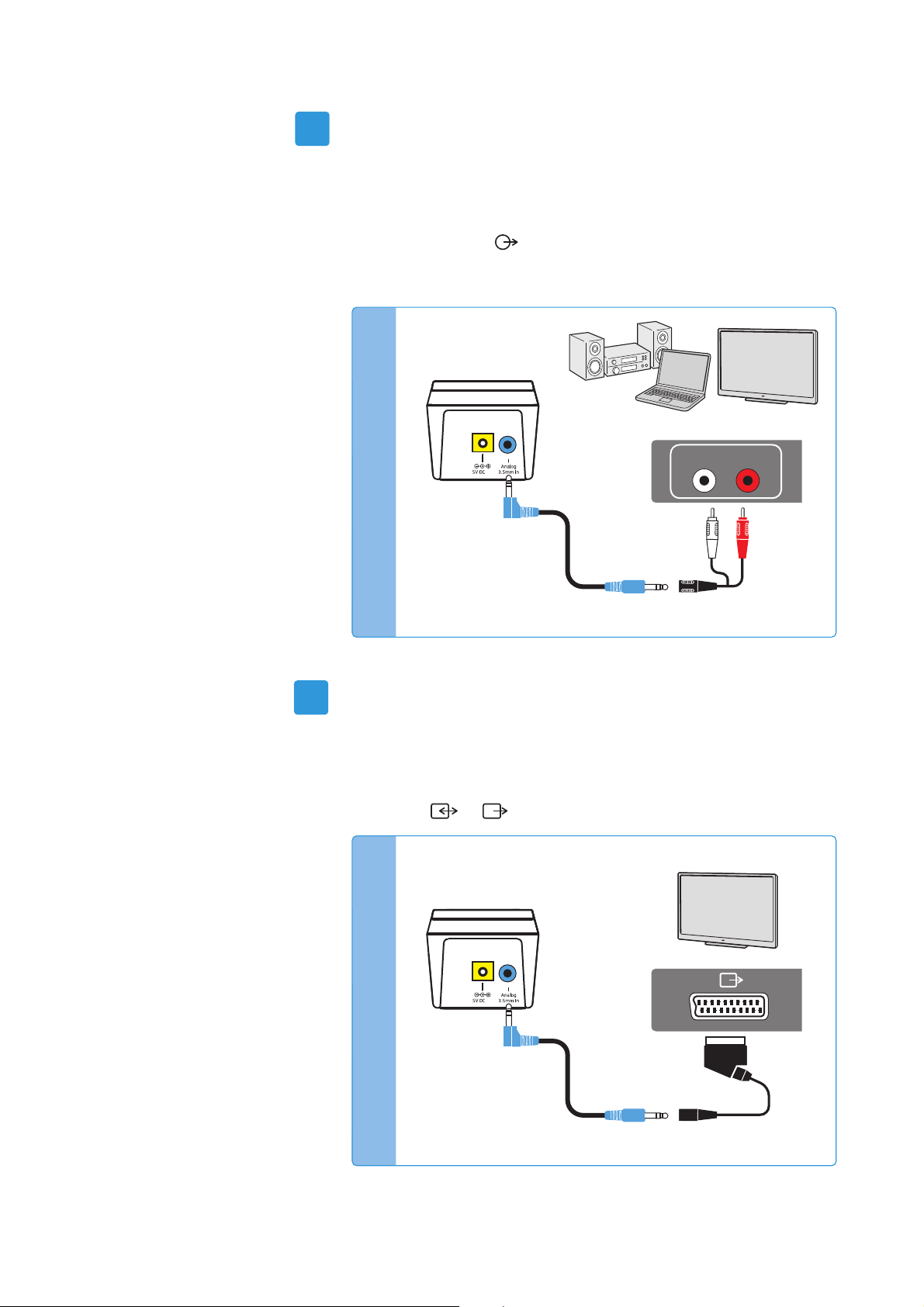
왘 Plug the RCA adapter* onto the stereo audio cable.
왘 Connect the stereo audio cable to the blue 3.5 mm jack socket of
the transmitter.
왘 Connect the RCA connectors to the RCA sockets (mostly labeled
“AUDIO OUT” or ) of your audio source. Connect the red con-
nector to the red RCA socket and the white connector to the
white or black RCA socket.
* optional accessory
Connection possibility C: SCART socket (analog)
왘 Plug the SCART adapter* onto the stereo audio cable.
왘 Connect the stereo audio cable to the blue 3.5 mm jack socket of
the transmitter.
왘 Connect the SCART connector to the SCART socket (mostly
labeled or ) of your audio source.
* optional accessory
B
Analog Audio
AUDIO OUT
LR
*
1A
C
Analog Audio
*
1A
Putting the RS 2000 into operation
RS 2000 | 13
Connecting the transmitter to the power supply
system
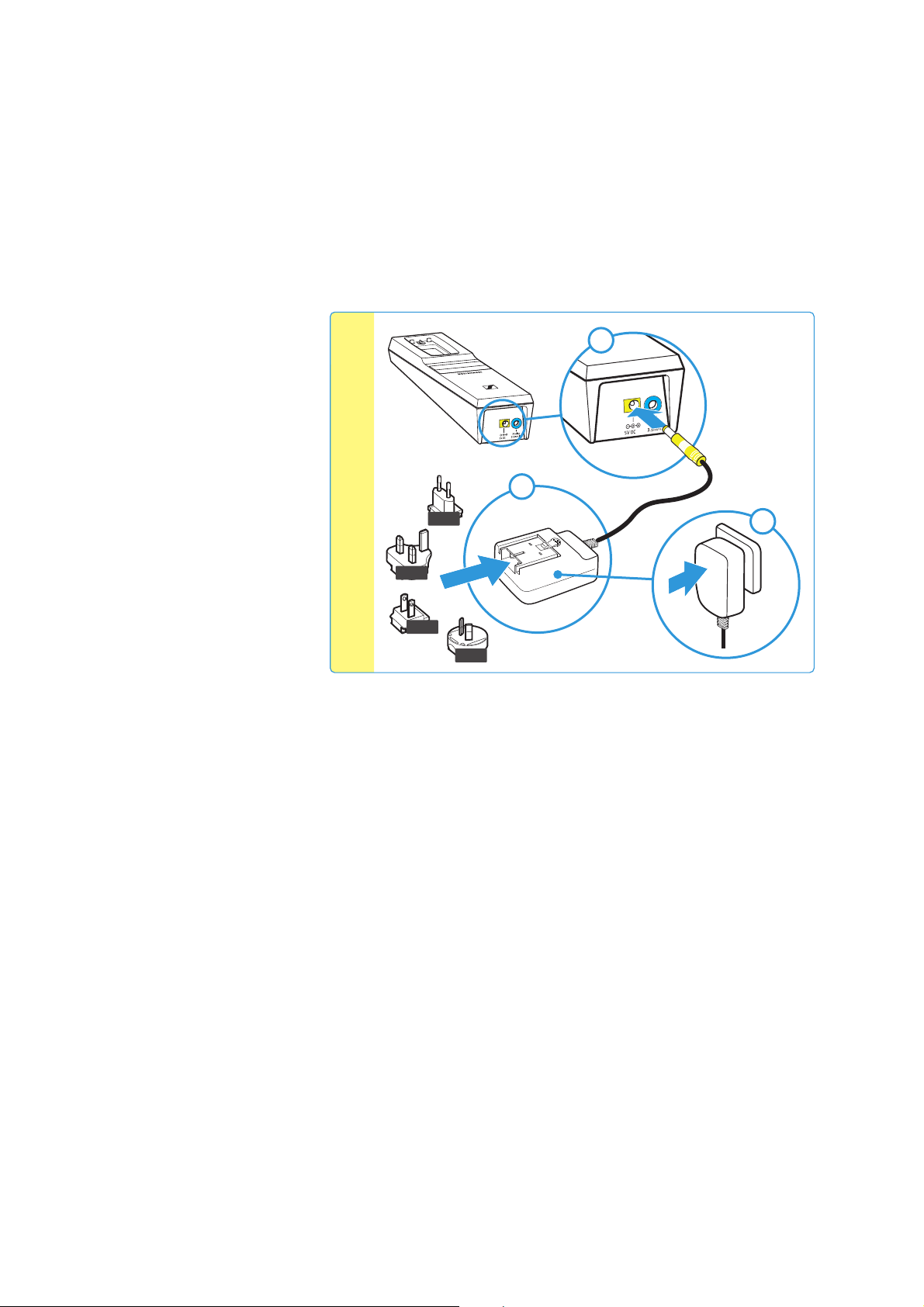
1 Connect the connector of the power supply unit to the yellow
socket of the transmitter.
2 Select a suitable country adapter and slide it onto the power
supply unit until it clicks audibly into place.
3 Plug the power supply unit into the wall socket.
The transmitter is in standby mode.
US
EU
UK
AU
2
1
3
Power
1
A
1A
Putting the RS 2000 into operation
14 | RS 2000
Charging the stethoset receiver’s rechargeable
battery
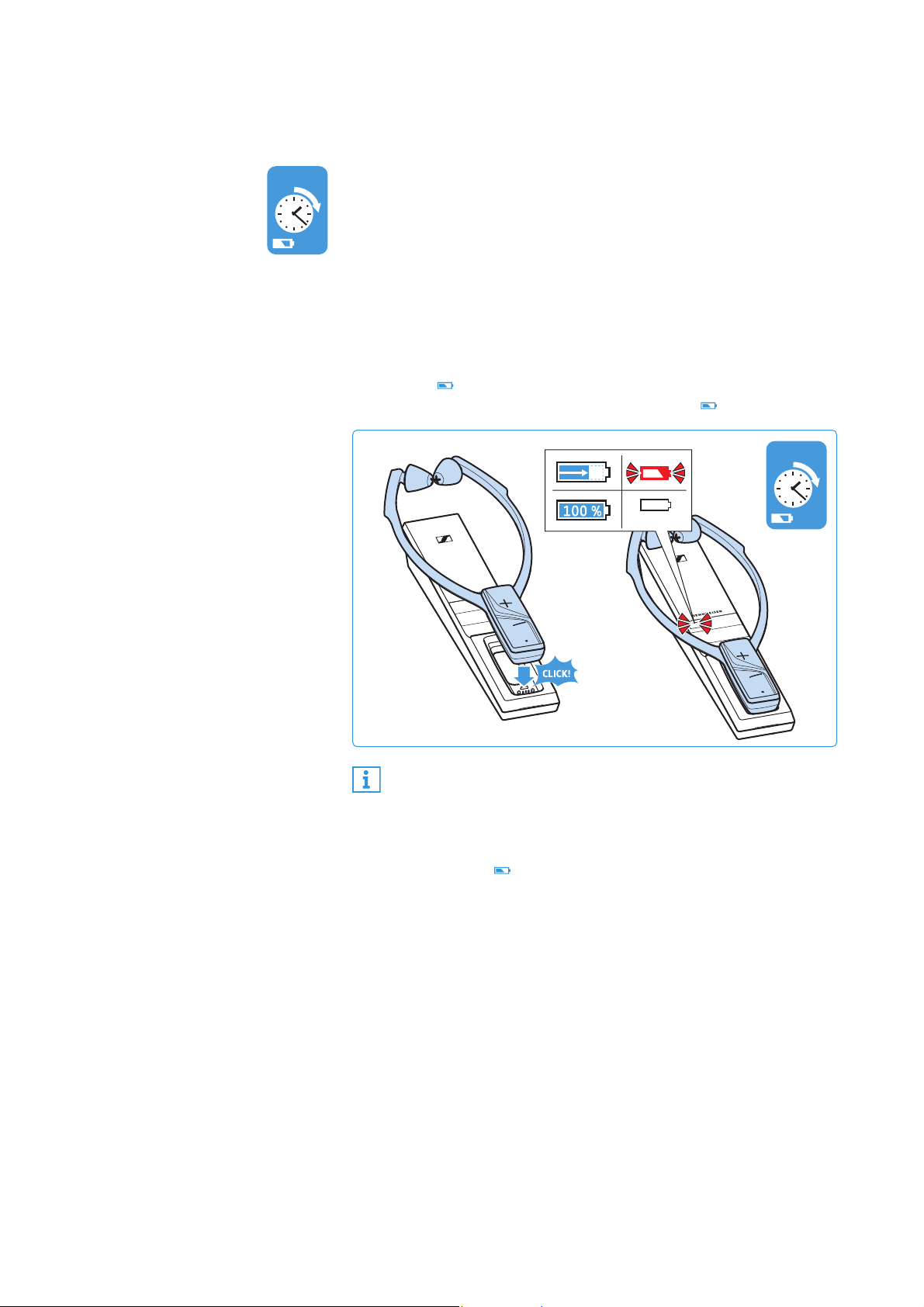
A complete charging cycle takes about 3 hours. Before using the
receiver for the first time, charge its rechargeable battery for a com-
plete charging cycle wit
hout interruption.
When the rechargeable battery is almost empty, the
Receiver status
LED lights up red. The stethoset receiver switches off after a few
minutes.
왘 Place the stethoset receiver into the transmitter’s charging com-
partment so that the volume buttons face upwards. The ste-
thoset receiver is magnetically oriented to the correct position.
The stethoset receiver automatically switches off and the
Bat-
tery
LED on the transmitter lights up red. When the recharge-
able battery is fully charged, the
Battery
LED goes off.
If the
Battery
LED on the transmitter flashes red, a charging
error/battery error has occurred. In this case, remove the stethoset
receiver from the transmitter’s
charging compartment. More infor-
mation on the rechargeable battery can be found on page 20.
3 h
100
%
Always store the stethoset receiver in the transmitter’s
charging compartment to ensure that it is fully charged when
needed. The intelligent battery charging technology prevents
overcharging.
3 h
100
%
O
Using the RS 2000
RS 2000 | 15
Using the RS 2000
Switching the wireless headphone system on
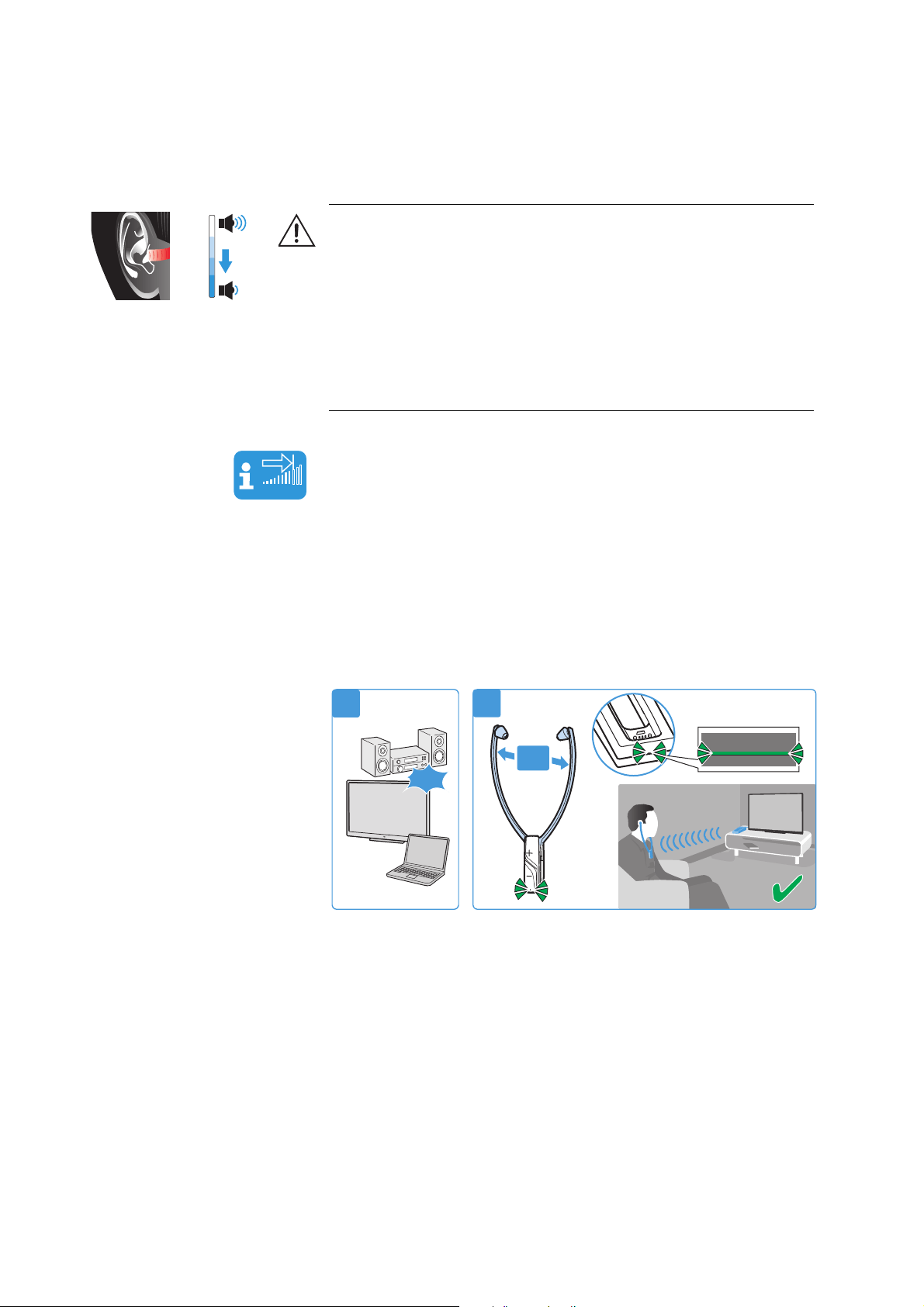
1 Switch your audio source on.
If the transmitter is connected to the headphone socket (see
page 11) of your TV/audio source, adjust the volume of the
headphone socket on your TV/audio source to at least a medium
level.
2 Take the stethoset receiver out of the transmitter’s charging
compartment and pull the ear bows apart so that you can put the
receiver on.
The stethoset receiver automatically switches on when you pull
the ear bows apart. The
Receiver status
LED lights up green. The
transmitter automatically switches on and the
Transmitter sta-
tus
LED lights up green. The audio transmission starts.
WARNING
Danger of hearing damage due to high volumes!
This stethoset receiver allows you to set higher volumes than con-
ventional devices. Constant high-volume use can cause hearing
damage.
왘 Before putting the stethoset receiver on, set the volume on the
receiver to a low level.
왘 Do not expose yourself to high volume levels for extended peri-
ods of time.
Vol +
Vol -
VOLUME
ON
ON
2
1
Using the RS 2000
16 | RS 2000
Switching the wireless headphone system off
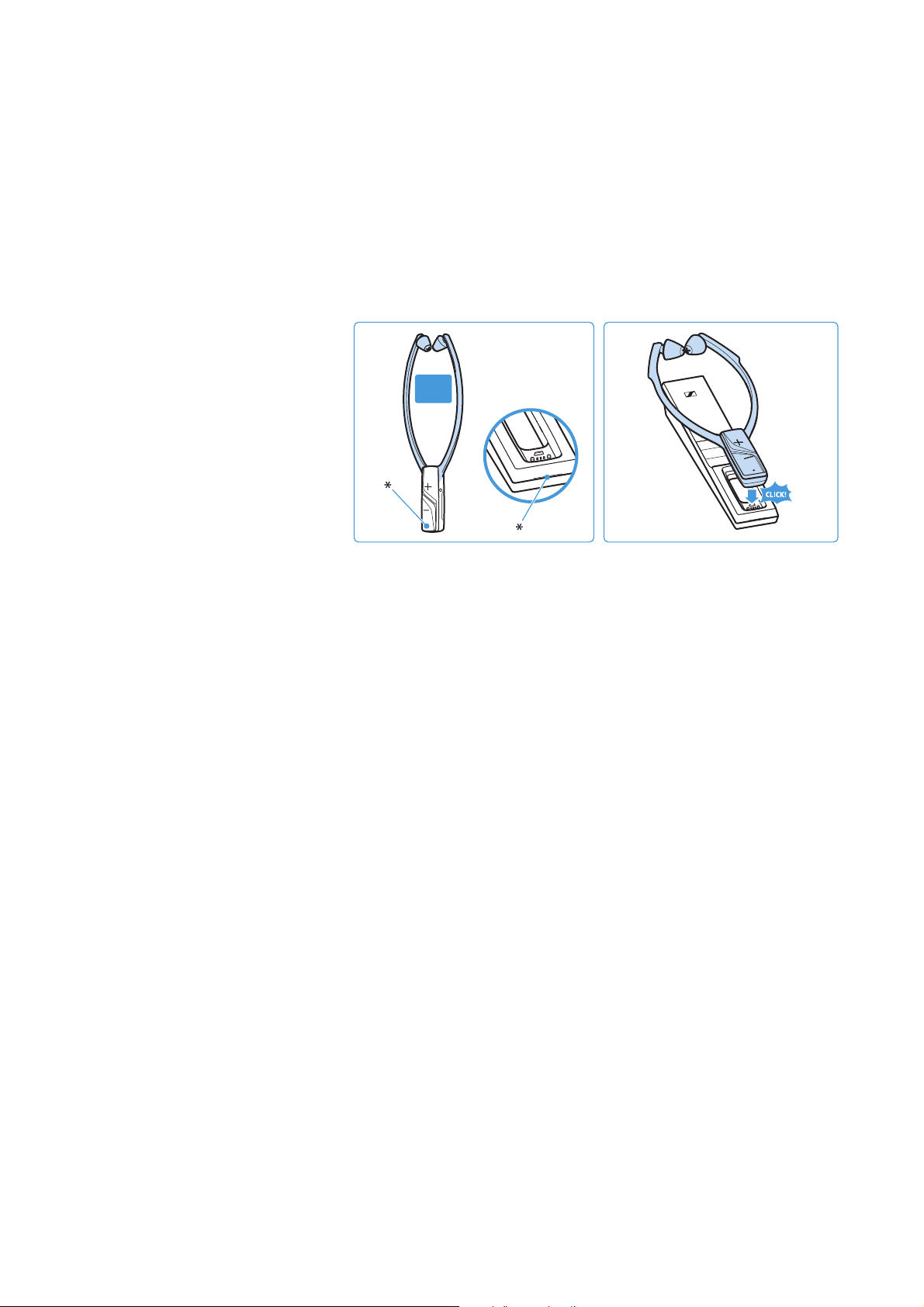
왘 Take the stethoset receiver off so that the ear bows fold inwards.
The stethoset receiver automatically switches off after 3 sec-
onds. The
Receiver status
LED goes off. The transmitter auto-
matically switches off (standby) when there is no stethoset
receiver connected. The
Transmitter status
LED goes off.
왘 Always store the stethoset receiver in the transmitter’s charging
compartment to ensure that it is fully charged when needed.
The charging process starts (see page 14).
* LED goes off
To disconnect the transmitter from the power supply system (e.g.
when you are on holiday):
왘 Unplug the power supply unit from the wall socket.
OFF
Using the RS 2000
RS 2000 | 17
Wearing the stethoset receiver
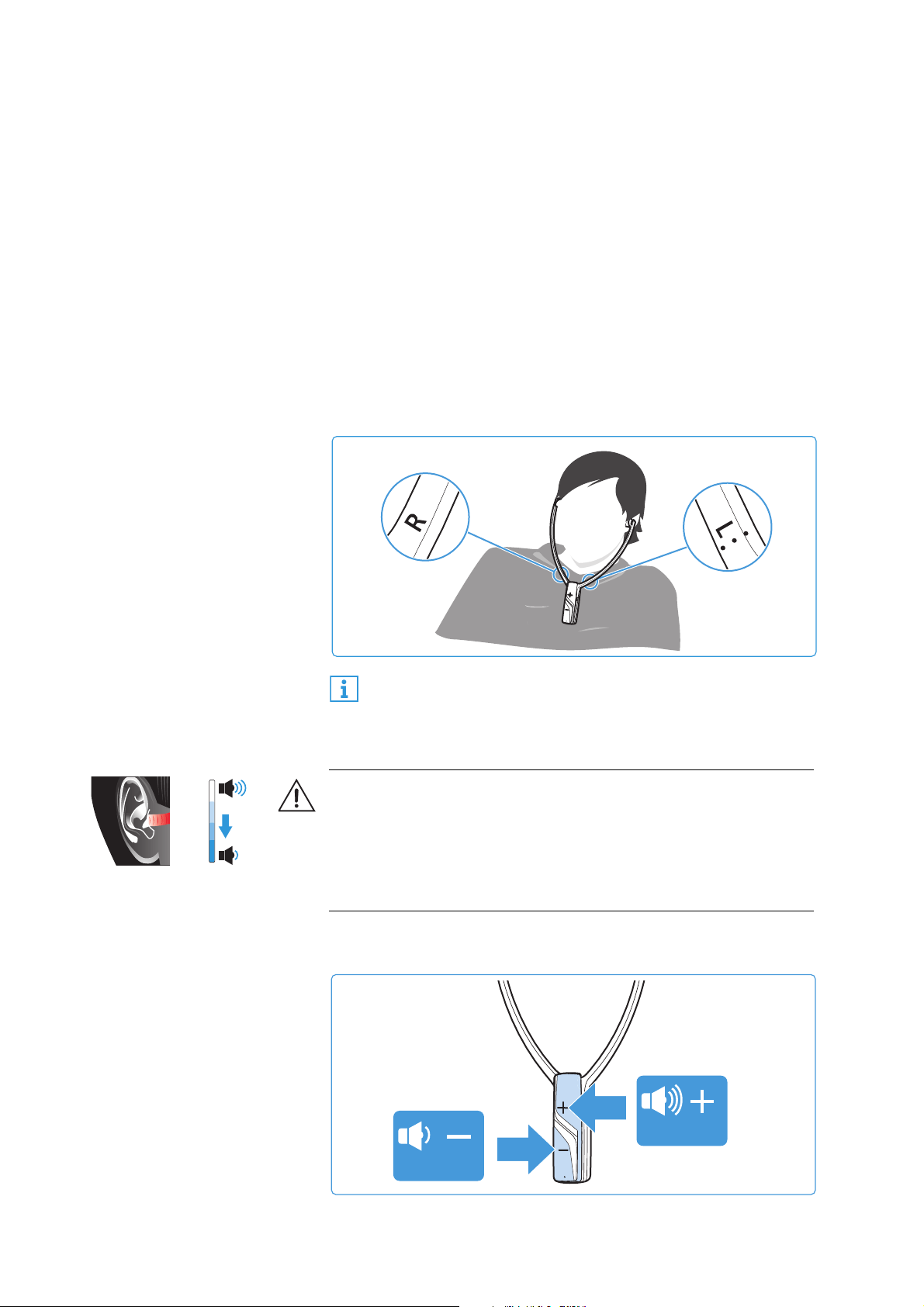
왘 Wear the stethoset receiver so that it hangs freely from your
ears and rests lightly on your chest. When putting the stethoset
receiver on, observe the L (left) and R (right) markings on the
rear of
the ear bows. The volume buttons face away from your
body to facilitate ease of use.
왘 Wear the stethoset receiver so that
– the ear pads are positioned just
in front of your ear canals.
– you feel a gentle pressure on your ears. The ear pads adapt to
your ea
r form. If you find the ear pads uncomfortable, try other
ear pads. Ear pads in different materials and forms are avail-
able as optional accessories from
your Sennheiser partner.
– the stethoset receiver hangs freely from
your ears and rests
lightly on your chest.
Adjusting the volume
Vol +
Vol -
Danger of hearing damage due to high volumes!
왘 Press the volume button + or the volume button – until the
volume is adjusted to a comfortable level.
Spare ear pads in different materials and forms are available
from your Sennheiser partner.
WARNING
왘 Before putting the stethoset receiver on, set the volume on the
receiver to a low level.
왘 Do not expose yourself to high volume levels for extended peri-
ods of time.
VOLUME
VOLUME

Using the RS 2000
18 | RS 2000
Adjusting the balance
The
Balance
buttons allow for left/right volume adjustment. Adjust
the balance so that you hear equally well with both ears.
왘 Press the
Balance
button on the right or left hand side to gradu-
ally increase or reduce the volume for your right or left ear.
To reset the balance setting to the middle setting:
왘 Simultaneously press the
Balance
buttons on the right and left
hand side of the stethoset receiver.
Cleaning and maintaining the RS 2000
RS 2000 | 19
Cleaning and maintaining the RS 2000
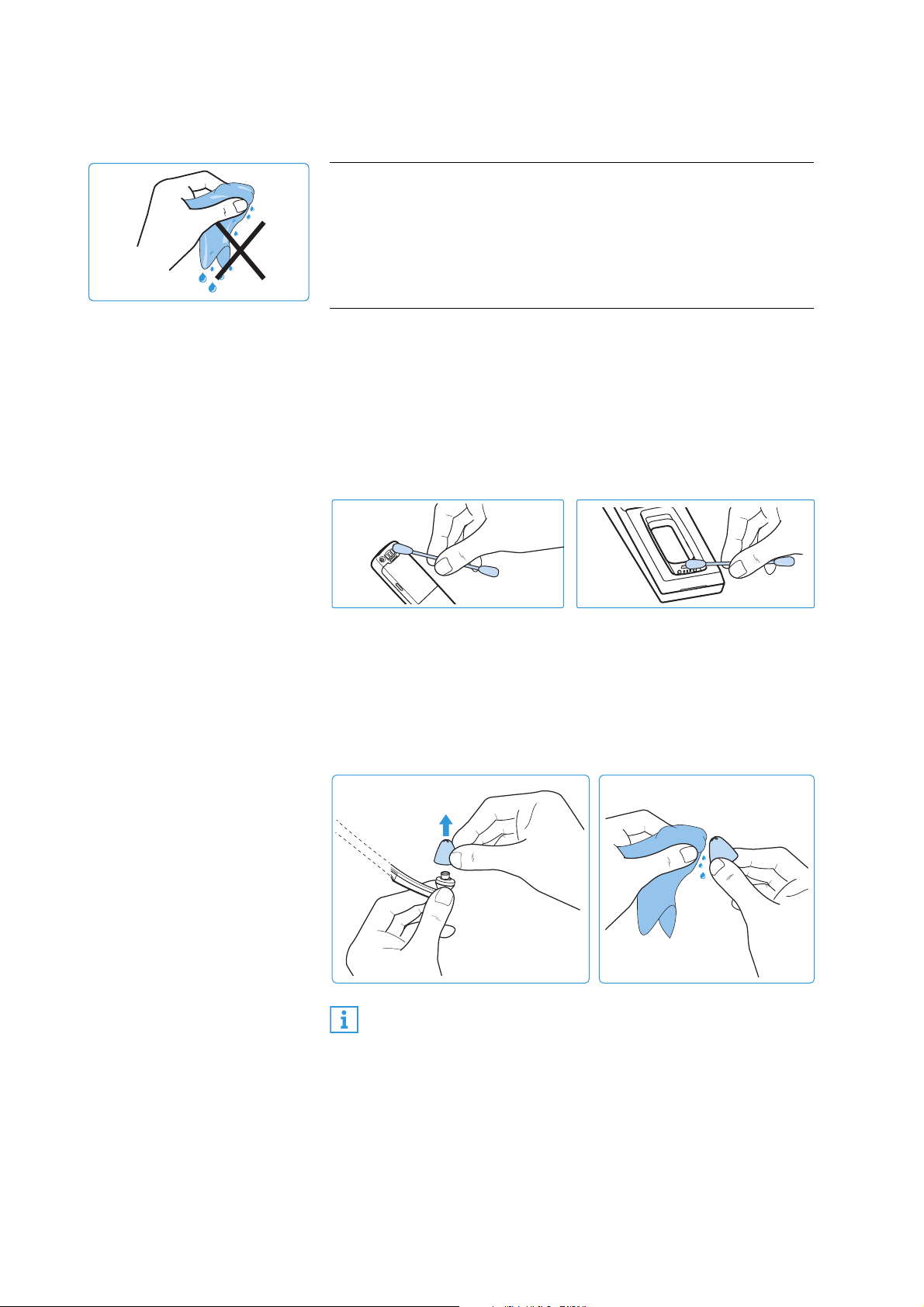
To clean the wireless headphone system:
왘 Switch your wireless headphone system off and disconnect the
transmitter from the socket before cleaning.
왘 Clean the product only with a soft, dry cloth.
왘 Clean the charging contacts on the stethoset receiver and in the
charging compartment from time to time using e.g. a cotton
swab.
To clean the ear pads:
왘 Carefully remove the ear pads from the stethoset receiver.
왘 Clean the ear pads with warm soapy water and rinse thoroughly.
왘 Let the ear pads dry completely at room temperature.
왘 Put the ear pads back on the stethoset receiver.
CAUTION
Liquids can damage the electronics of the product!
Liquids entering the housing of the product can cause a short-circuit
and damage the electronics.
왘 Keep all liquids far away from the product.
왘 Do not use any solvents or cleansing agents.
For reasons of hygiene, you should replace your ear pads from
time to time. Spare ear pads in different materials and forms
are available from your Sennheiser partner.

Cleaning and maintaining the RS 2000
20 | RS 2000
Replacing the stethoset receiver’s rechargeable
battery
The BAP 800 rechargeable battery of the stethoset receiver is com-
pactly built into the receiver housing and does not have to be
replaced or removed.
However, if the operating time of the stethoset receiver decreases
drastically or if a charging error is displayed during charging (see
page
14), the rechargeable battery may be exhausted or defective
and has to be replaced.
Outside the warranty period, the rechargeable batteries may be
replaced or removed by any qualified service center in an appropri
-
ate manner. Instructions on how to replace or remove the batteries
for qualified service centers are available from the Sennheiser ser
-
vice partner.
You need suitable tools for replacement. We therefore recommend
to have the rechargeable battery replaced by your Sennheiser ser
-
vice partner. To find a Sennheiser service partner in your country,
search at www.sennheiser.com.
CAUTION
Danger of damage to the product!
During the warranty period, the rechargeable batteries must only
be replaced by an authorized Sennheiser service partner, otherwise
the warranty will be null and void.
왘 Contact your Sennheiser service partner if the rechargeable bat-
teries need to be replaced or removed.
Using additional functions
RS 2000 | 21
Using additional functions
The following additional functions are not required for normal use,
but allow you to extend the potential use of the wireless headphone
system.
Pairing the stethoset receiver with the transmitter
The stethoset receiver and the transmitter of your wireless head-
phone system are factory pre-paired. The following steps are only
necessary if you want to reestablish the pairing or pair additional
stethoset receivers with the transmitter.
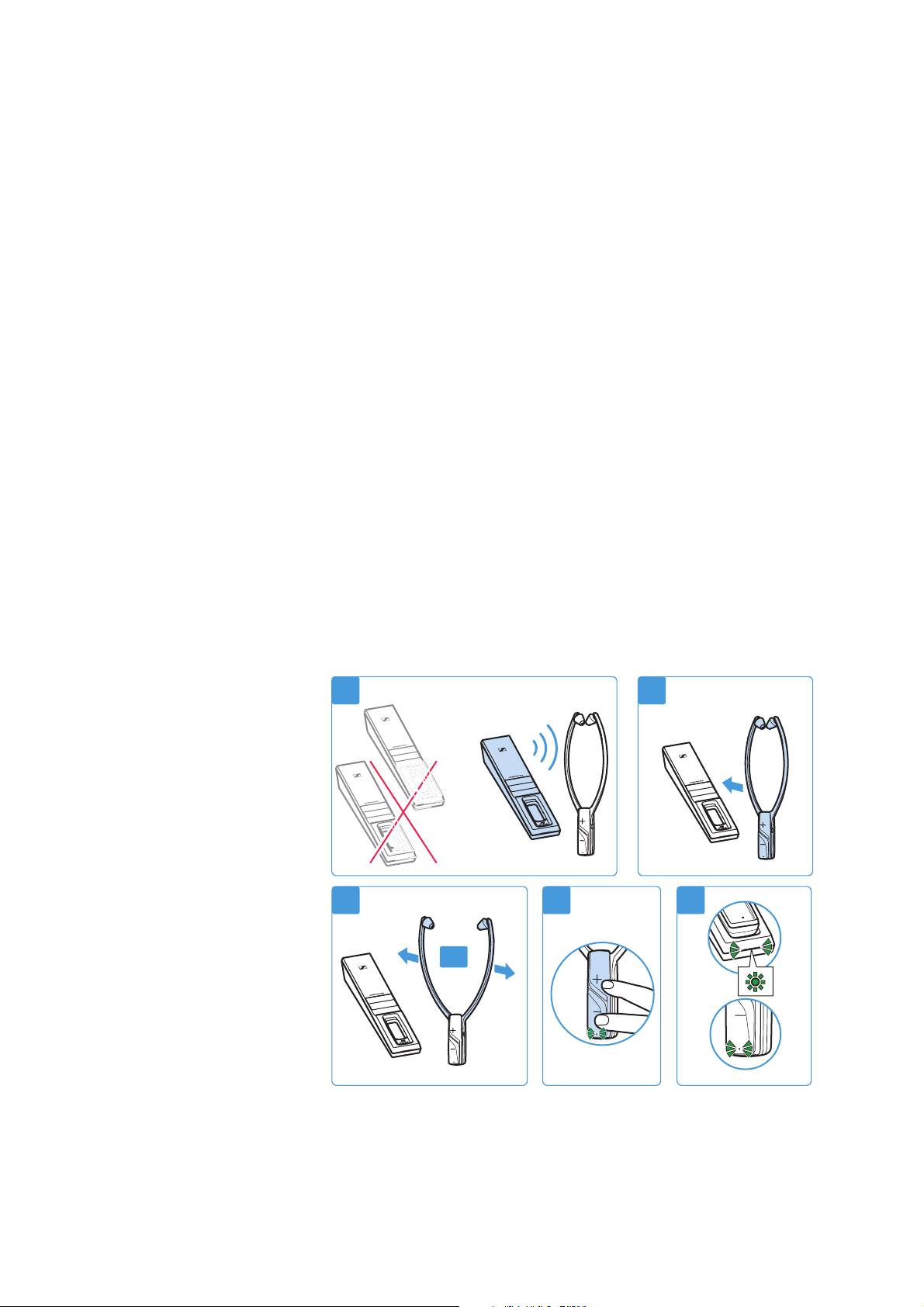
You can simultaneously connect up to 2 paired stethoset receivers
to your transmitter.
1 Make sure that there is only one transmitter within the transmis-
sion range.
2 Place the stethoset receiver as close as possible to the transmit-
ter.
3 Switch the stethoset receiver on by pulling the ear bows apart.
4 Simultaneously press and hold the volume buttons +/- for at
least 5 seconds until the
Receiver status
LED flashes green rap-
idly.
5 Then release the volume buttons +/-.
Once paring is completed, the
Receiver status
LED and the
Trans-
mitter status
LED light up green. The audio transmission starts.
3 4
5
1
ON
2
Using additional functions
22 | RS 2000
Charging the rechargeable battery using the
MCA
800 charging adapter
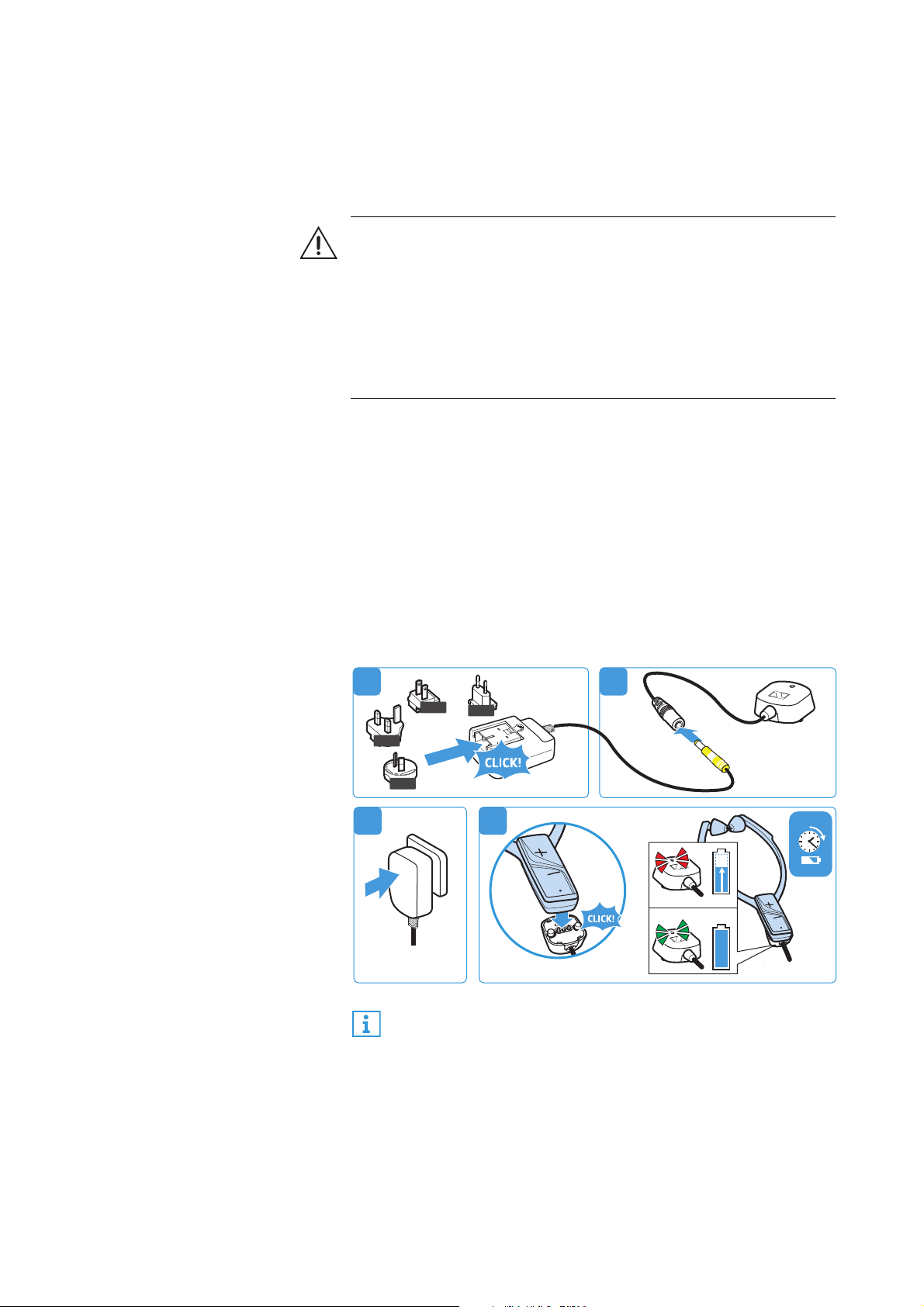
If you have purchased an optional MCA 800 charging adapter, you
can also charge the stethoset receiver using the charging adapter.
1 Select a suitable country adapter and slide it onto the power
supply unit until it clicks audibly into place.
2 Connect the connector of the power supply unit to the connec-
tion socket of the MCA 800 charging adapter.
3 Plug the power supply unit into the wall socket.
4 Connect the charging adapter to the charging contacts on the
stethoset receiver. The charging adapter is magnetically ori-
ented to the correct position.
The rechargeable battery is being charged. The LED on the
charging adapter lights up red. When the rechargeable battery is
fully charged, the LED lights up green.
If the LED on the charging adapter flashes red and green, a charging
error/battery error has occurred. In this case, disconnect the
charging adapter from the stethoset receiver. More information on
the rechargeable battery can be found on page
20.
WARNING
Interference due to magnetic fields!
The MCA 800 charging adapter generates stronger permanent mag-
netic fields that could cause interference with cardiac pacemakers
and implanted defibrillators (ICDs).
왘 Always maintain a distance of at least 3.94” (10 cm) between the
holding magnets of the charging adapter and the cardiac pace-
maker or implanted defibrillator.
You can also use the stethoset receiver during charging.
Please note, however, that the receiver can get slightly warm
during charging.
3 h
100 %
US
EU
UK
AU
21
3 4

If a problem occurs ...
RS 2000 | 23
If a problem occurs ...
Problem Possible cause Possible solution Page
The transmitter
does not switch
on
No connection to the power supply
system.
Check the connections of the power
supply unit.
13
The headphones
cannot be
switched on
The rechargeable battery is empty. Recharge the rechargeable battery.
14
The rechargeable battery is deep
discharged.
Recharge the rechargeable battery for
several hours. If the rechargeable
battery is deep discharged, the
charging process might take a while
to start (up to 1 hour).
No sound
No connection to the power supply
system.
Check the connections of the power
supply unit.
13
The audio plug is not properly
connected.
Check the audio plug connection. 10
The audio source is switched off. Switch the audio source on. –
The volume of the analog audio
source is either set to the minimum
or is on mute.
Increase the volume on the audio
source to at least a medium level/
deactivate the muting function on the
audio source.
–
The audio cable is defective. Replace the audio cable. –
The stethoset receiver is not
correctly paired with the
transmitter (e.g. additional
stethoset receiver).
Pair the stethoset receiver with the
transmitter again.
21
Occasional
sound dropouts
The stethoset receiver is out of the
transmitter’s range.
Reduce the distance between the
stethoset receiver and the
transmitter.
–
The signal is shielded.
Remove obstacles between the
transmitter and the stethoset
receiver.
–
There are interfering devices (e.g.
WiFi router, Bluetooth devices or
microwaves) in the vicinity.
Change the position of the transmitter
or of the receiver.
9
Separate the transmitter from other
wireless devices by at least 50 cm/
20".
Sound too low
The volume on the stethoset
receiver is adjusted to low.
Increase the volume on the stethoset
receiver.
17
The volume of the analog audio
source is adjusted to low.
Increase the volume of the analog
audio source to at least a medium
level (approx. 1 V
rms
).
–
Sound only on
one ear
The balance is misadjusted. Adjust the balance. 18
The audio cable is not properly
connected.
Check the audio plug connection. 10
The TV has only a mono headphone
socket
Use an adapter (mono to stereo jack
socket) to connect the transmitter to
the TV.
–
If a problem occurs ...
24 | RS 2000
If a problem occurs that is not listed in the above table or if the problem cannot be solved with the
proposed solutions, visit the RS 2000 product page at www.sennheiser.com for the most up-to-date
list of frequently asked questions.
You may also contact your local Sennheiser partner for assistance. To find a Sennheiser partner in your
country, search at www.sennheiser.com.
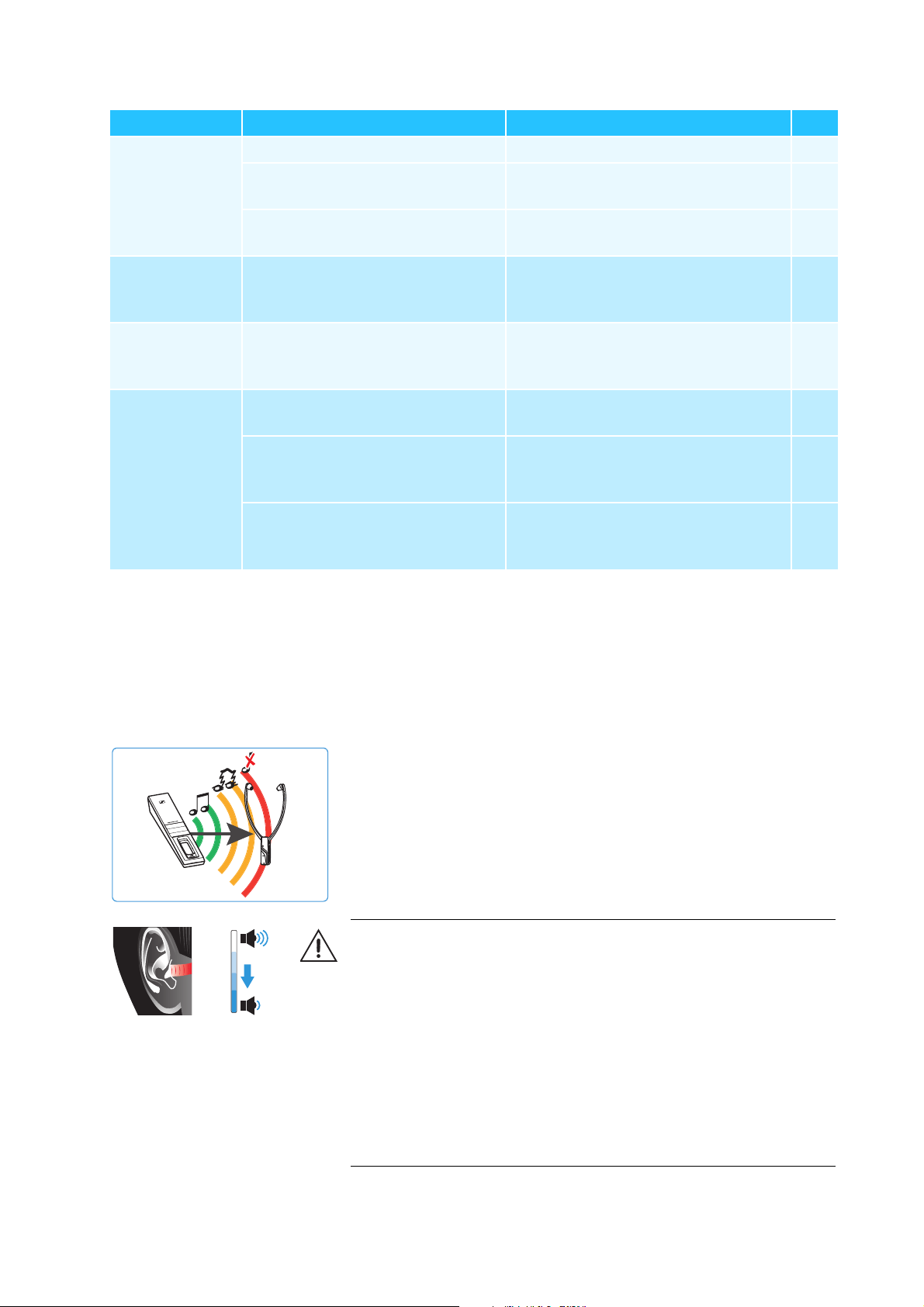
Leaving the range of the transmitter
The range of the transmitter largely depends on environmental con-
ditions such as wall thickness, wall composition etc. If you leave the
range of the transmitter, the audio first cuts out occasionally until
it finally cuts out completely. The
Receiver status
LED on the ste-
thoset receiver flashes green (or red if the rechargeable battery is
almost empty). The transmitter automatically switches off
(standby) when there is no stethoset receiver connected. The
Transmitter status
LED goes off.
If you re-enter the range of the transmitter, the transmitter auto-
matically switches on again and the connection is re-established.
Sound is
distorted
The audio cable is defective. Replace the audio cable. –
The signal of the audio source is
distorted.
Reduce the volume of the audio
source.
–
The volume on the stethoset
receiver is adjusted to high.
Reduce the volume on the stethoset
receiver.
17
The
Receiver
status
LED lights
up red
The rechargeable battery is almost
empty.
Recharge the rechargeable battery. 14
The operating
time decreases
The rechargeable battery is
exhausted.
Have the rechargeable battery
replaced by an authorized Sennheiser
service partner.
20
The stethoset
receiver does
not connect to
the transmitter
The stethoset receiver is not paired
with the transmitter.
Pair the stethoset receiver with the
transmitter.
21
The distance to the transmitter is
too large.
Reduce the distance between the
stethoset receiver and the
transmitter.
–
2 stethoset receivers are currently
connected to the transmitter
Up to 2 stethoset receivers can be
simultaneously used with the
transmitter.
–
Problem Possible cause Possible solution Page
WARNING
Danger of hearing damage due to high volumes!
If you leave the range of the transmitter and the connection is lost,
the stethoset receiver remains switched on. If, in this case, you
increase the volume on the stethoset receiver and then re-enter the
transmitter’s range, the volume will be louder than before the con-
nection loss.
왘 Do not change the volume when you are outside the range of the
transmitter.
왘 Take off the stethoset receiver before re-entering the range of
the transmitter.
Vol +
Vol -

Specifications
RS 2000 | 25
Specifications
RS 2000 system
RR 2000 stethoset receiver
TR 2000 transmitter
Carrier frequency 2.4 to 2.4835 GHz
Modulation 8-FSK Digital
Signal-to-noise ratio
typ. 85 dBA at 1 V
rms
RF output power max. 10 dBm
Audio latency < 60 ms
Range up to 50 m/164 ft line of sight
Number of stethoset receiv-
ers that can be simultane-
ously connected to the trans-
mitter
2
Temperature range
operation: 5 °C to +40 °C
storage: -25 °C to +70 °C
Relative air humidity
(non-condensing)
operation: 10 to 80 %
storage: 10 to 90 %
Type intra-aural, closed
Transducer principle dynamic, neodymium magnets
Ear pad material silicone
Frequency response 15 Hz to 16 kHz
Sound pressure level max. 125 dB at 1 kHz, 3 % THD
THD < 0.5 % at 1 kHz, 100 dB SPL
Operating time up to 9 hours
Charging time of
rechargeable battery
up to 3 hours
Power supply
built-in lithium polymer recharge-
able battery, 3.7 V, 350 mAh
Weight
(incl. rechargeable battery)
approx. 60 g
Dimensions
(switched off, W x H x D)
approx. 102 x 265 x 23 mm
Audio connection
3.5 mm jack socket
input voltage range:
0.15 to 4.0 V
pk
Power supply 5 V , 1 A
Power consumption
operation: typ. 1 W
standby:
0.5 W (without
charging)
Dimensions (W x H x D) approx. 50 x 42 x 270 mm

Specifications
26 | RS 2000
NT 5-10AW power supply unit
Nominal input voltage/
current
100 – 240 V~/
300 mA
Power frequency 50 – 60 Hz
Nominal output voltage 5 V
Nominal output current 1 A
Temperature range
operation: 0 °C to +40 °C
storage: -25 °C to +70 °C
Relative air humidity (non-
condensing)
operation: 10 to 80 %
storage: 10 to 90 %

Manufacturer Declarations
RS 2000 | 27
Manufacturer Declarations
Warranty
Sennheiser electronic GmbH & Co. KG gives a warranty of 24 months
on this product.
For the current warranty conditions, please visit our website at
www.sennheiser.com or contact your Sennheiser partner.
FOR AUSTRALIA ONLY
Sennheiser goods come with guarantees that cannot be excluded
under the Australian Consumer Law. You are entitled to a replace
-
ment or refund for a major failure and compensation for any other
reasonably foreseeable loss or damage. You are also entitled to
have the goods repaired or replaced if the goods fail to be of accept
-
able quality and the failure does not amount to a major failure.
This warranty is in addition to other rights or remedies under law.
Nothing in this warranty excludes, limits or modifies any liability of
Sennheiser which is imposed by law, or limits or modifies any
remedy available to the consumer which is granted by law.
To make a claim under this warranty, contact Sennheiser Australia
Pty Ltd, Unit 3, 31 Gibbes Street Chatswood NSW 2067, Australia;
Phone: (02) 9910 6700, email: [email protected]
All expenses of claiming the warranty will be borne by the person
making the claim.
The Sennheiser International Warranty is provided by Sennheiser
Australia Pty Ltd (ABN 68 165 388 312), Unit 3, 31 Gibbes Street
Chatswood NSW 2067, Australia.
In compliance with the following requirements
EU declaration of conformity
• ErP Directive (2009/125/EC)
• RoHS Directive (2011/65/EU)
Hereby, Sennheiser electronic GmbH & Co. KG declares that the radio
equipment type TR 2000, RR 2000 is in compliance with the Radio
Equipment Directive 2014/53/EU.
The full text of the EU declaration of conformity is available at the
following internet address: www.sennheiser.com/download.
Notes on disposal
• WEEE Directive (2012/19/EU)
• Battery Directive (2006/66/EC & 2013/56/EU)
The symbol of the crossed-out wheeled bin on the product, the bat-
tery/rechargeable battery and/or the packaging indicates that
these products must not be disposed of with normal household
waste, but must be disposed of separately at the end of their ope
-
rational lifetime. For packaging disposal, please observe the legal
regulations on waste segregation applicable in your country.
Further information on the recycling of theses products can be
obtained from your municipal administration, from the municipal
collection points, or from your Sennheiser partner.
Manufacturer Declarations
28 | RS 2000
The separate collection of waste electrical and electronic equip-
ment, batteries/rechargeable batteries and packagings is used to
promote the reuse and recycling and to prevent negative effects
caused by e.g. potentially hazardous substances contained in these
products. Herewith you make an important contribution to the pro
-
tection of the environment and public health.
Statements regarding FCC and Industry Canada
This device complies with Part 15 of the FCC rules and RSS-247 of
Industry Canada. Operation is subject to the following two condi
-
tions: 1) This device may not cause harmful interference, and 2)
This device must accept any interference received, including inter
-
ference that may cause undesired operation.
This equipment has been tested and found to comply with the limits
for a Class B digital device, pursuant to part 15 of the FCC rules and
RSS-247 of Industry Canada. These limits are designed to provide
reasonable protection against harmful interference in a residential
installation. This equipment generates, uses and can radiate radio
frequency energy and, if not installed and used in accordance with
the instructions, may cause harmful interference to radio communi
-
cations. However, there is no guarantee that interference will not
occur in a particular installation. If this equipment does cause harm
-
ful interference to radio or television reception, which can be deter-
mined by turning the equipment off and on, the user is encouraged
to try to correct the interference by one or more of the following
measures:
• Reorient or relocate the receiving antenna.
• Increase the separation between the equipment and receiver.
• Connect the equipment into an outlet on a circuit different from
that to which the receiver is connected.
• Consult the dealer or an experienced radio/TV technician for
help.
Changes or modifications made to this equipment not expressly
approved by Sennheiser electronic Corp. may void FCC authorization
to operate this equipment.
CAN ICES-3 (B)/NMB-3(B)
SENNHEISER
Model No:
FCC Declaration of Conformity (DoC)
We,
Sennheiser Electronic Corporation
One Enterprise Drive • Old Lyme •
CT 06371 • USA
Tel: +1 (860) 434 9190
Fax: +1 (860) 434 1759
declare the above device comply with the requirements of Federal Communications Commission.
This device complies with Part 15 of the FCC rules. Operation is subjected to the following two conditions:
1) This device may not cause harmful interference, and
2) This device must accept any interference received, including interference that may cause undesired operation.
Responsible Party: Michael Lieske
TR 2000, RR 2000, TR 5000, RR 5000, RR Flex

Déclaration requise par la FCC et l’Industrie Canada
Cet appareil est conforme à la Partie 15 des réglementations de la
FCC et à la norme CNR-210 d’Industrie Canada. L’utilisation de
l’appareil doit respecter les deux conditions suivantes : (1) L’appar
-
eil ne doit pas produire d’interférences nuisibles, et, (2) il doit
accepter toutes interférences reçues, y compris celles qui pourraient
avoir des effets non désirés sur son fonctionnement.
CAN ICES-3 (B)/NMB-3(B)
RF Radiation Exposure Information
Since the radiated output power of this device is far below the FCC/
IC radio frequency exposure limits, it is not subjected to routine RF
exposure evaluation as per Section 2.1093 of the FCC rules and RSS-
102 of Industry Canada.
This device meets FCC/IC RF exposure guidelines for an uncontrolled
environment. The transmitter of this device should be installed and
operated at least 20 cm away from the user’s body. Use of other
accessories not verified by the manufacturer may not ensure com
-
pliance with FCC/IC RF exposure guidelines.
This transmitter must not be co-located or operated in conjunction
with any other antenna or transmitter.
Information sur l’exposition aux rayonnements radio fréquence (RF)
La puissance RF rayonnée de cet appareil étant de loin inférieure
aux limites imposées par la FCC/IC, il n’est pas soumis à la réglemen
-
tation sur l’exposition aux RF selon la section 2.1093 de la régle-
mentation FCC et CNR-102 de Industrie Canada.
Cet équipement est conforme aux limites d‘exposition aux rayonne-
ments imposées par la FCC/IC pour un environ- nement non régle-
menté. L‘émetteur de cet équipement doit être installé et utilisé à
une distance minimale de 20 cm du corps de l‘utilisateur. L‘utilisa
-
tion d‘autres accessoires non homologués par le fabricant remet en
cause la conformité des normes imposées par la FCC/IC.
Cet émetteur ne doit pas être positionné à proximité d‘une autre
antenne ou d‘un autre émetteur, ni utilisé avec une autre antenne
ou un autre émetteur.
Trademarks
Sennheiser is a registered trademark of Sennheiser electronic
GmbH
& Co. KG.
Other product and company names mentioned in this instruction
manual may be the trademarks or registered trademarks of their
respective holders.

Manufacturer Declarations
30 | RS 2000
Sennheiser electronic GmbH & Co. KG
Am Labor 1, 30900 Wedemark, Germany
www.sennheiser.com
Publ. 08/17, 570723/A02