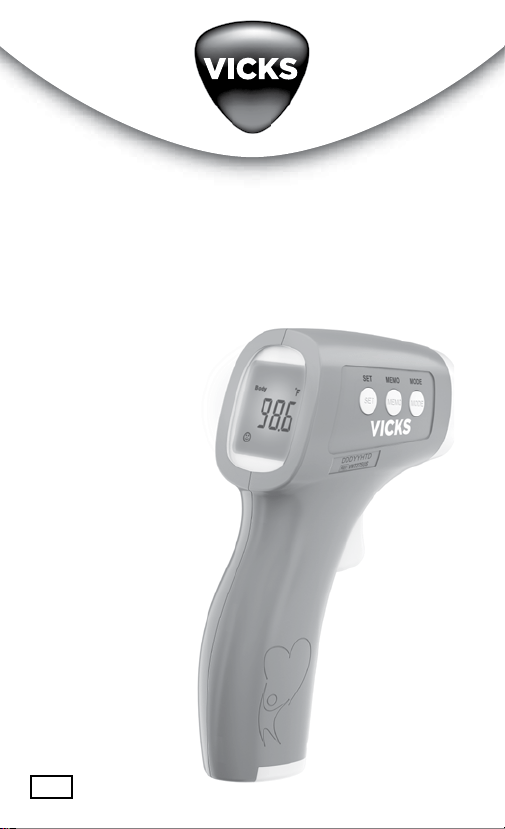
Owner’s Manual
REF VNT275US
NonContact
Infrared Body Thermometer

NON CONTACT INFRARED BODY THERMOMETER .................................................. 2
Owner’s manual
TERMÓMETRO INFRARROJO CORPORAL SIN CONTACTO .....................................17
Manual del Usuario
Contact Us
Questions or Comments?
Call us toll-free at: 1-800-477-0457
Email: ConsumerRelations@HelenofTroy.com
Visit: www.VicksThermometers.com
Please be sure to specify the model number.
© 2020 All rights reserved.
Kaz USA, Inc., a Helen of Troy Company
400 Donald Lynch Blvd., Suite 300
Marlborough, MA 01752
Certain trademarks used under license from The Procter & Gamble Company
or its affiliates.
Made in China:
VNT275US
PN:A005127R2
型 号 :
制造商:
东莞市振海电子科技有限公司
HTD8813C

1
Foreword
The Non Contact Infrared Body Thermometer Operating Instructions intend to provide
the necessary information for proper operation of the VNT275US thermometer.
General knowledge of the Non Contact Infrared Body Thermometer and an
understanding of the features and functions of the VNT275US thermometer are
prerequisites for proper use. The Non Contact Infrared Body Thermometer is a medical
device, and can be used repeatedly for 1 year. Please read the manual before using
the device, if you do not fully understand these instructions for use, do not use the
thermometer.
Do not operate the VNT275US thermometer without completely
reading and understanding these instructions.
NOTICE
Purchase or possession of this device does not carry any express or implied license to
use with replacement parts which would, alone or in combination with this device,
fall within the scope of one of the relating patents.

2
Indications for Use
The Non Contact Infrared Body Thermometer is a non-sterile, reusable thermometer
intended to be used for the intermittent determination of human body temperature by
consumers of all ages in a home-use environment (such as home settings or places of
business as an employee screening tool), in no touch mode, with the forehead as the
measurement site.
Safety Information
This device may only be used for the purposes described in these instructions.
The manufacturer cannot be held liable for damage caused by incorrect application.
Important Safety Instructions:
• The Non Contact Infrared Body Thermometer is intended to be used by consumers in a
home-use environment (such as home settings or places of business as an employee
screening tool).
• Keep out of reach of children under 12 years.
• NEVER use the thermometer for purposes other than those for which it has been
intended. Please follow the general safety precautions when using on children.
• NEVER immerse the thermometer into water or other liquids (not waterproof).
For cleaning, please follow the instructions in the “Care and Cleaning” section.
• DO NOT store this thermometer in temperature below -4°F or over 131°F (extremes below
-20°C or over 55°C) or in excessive humidity (up to 93% non-condensing relative humidity).
• Let the thermometer and individual being measured acclimate to the temperature of
the room for 30 minutes in which the measurement will be taken.
• Before using, allow the thermometer to remain in the room in which it will be used for
30 minutes. The room temperature should be between 59°F - 95°F (15°C to 35°C).
• The individual being measured should be indoors for 20 minutes before taking a
measurement, as external temperature can impact skin temperature.
• In the event that you can’t follow the ambient acclimation guidance due to using this
device as a screening tool, the reading displayed may shift up or down as a result of the
temperature subjects are coming from compared to the temperature they are being
measured in. If that is the case, judge individuals against each other, and any individual
that is reading 1.5°F (0.8°C) higher or lower than the normal, should be measured again
following acclimation.
• DO NOT use the thermometer if there are signs of damage on the scanner or on the
thermometer itself. If damaged, DO NOT attempt to repair the product.
• NEVER insert a sharp object into the scanner area or any other open surface on the
thermometer.

3
• This thermometer consists of high-quality precision parts. DO NOT drop the instrument.
Protect it from severe impact and shock. DO NOT touch the infrared sensor with your
fingers.
• Use of this thermometer is not intended as a substitute for consultation with your
physician.
• Temperature elevation may signal a serious illness, especially in neonates and infants,
or in adults who are old, frail, or have a weakened immune system. Please seek
professional advice immediately when there is a temperature elevation and if you are
taking temperature on:
– Neonates and infants under 3 months (Consult your physician immediately if the
temperature exceeds 99.4 °F [37.4 °C])
– Individuals over 60 years of age (Fever may be blunted or absent in older patients)
– Individuals having diabetes mellitus or a weakened immune system (e.g., HIV
positive, cancer chemotherapy, chronic immunosuppressant treatment, splenectomy)
– Individuals who are bedridden (e.g., nursing home patient, stroke, chronic illness,
paraplegia, quadriplegia, surgical recovery)
– A transplant recipient (e.g., liver, heart, lung, kidney)
• This thermometer is not intended for pre-term babies or small-for-gestational age
babies. Pre-term is defined as baby, born before 37 weeks of pregnancy are completed..
Small-for-gestational-age is defined as a newborn baby (birth to 4 weeks of age), born
at 37 weeks or later, with a weight below the 10th percentile for newborn babies of the
same gestational age.
• This thermometer is not intended to interpret hypothermic temperatures. If the device
displays a temperature of 96.1°F (35.6°C) or less with no LED backlight color, and the
individual is exhibiting atypical symptoms or behaviors, contact your physician or
health care professional.
• DO NOT allow children to take their temperatures unattended.
• Please consult your physician if you see symptoms such as unexplained irritability,
vomiting, diarrhea, dehydration, changes in appetite or activity, seizure, muscle pain,
shivering, stiff neck, pain when urinating, etc., even in the absence of fever.
• Even in the absence of fever, those who exhibit a normal temperature may still need
to receive medical attention. People who are on antibiotics, analgesics, or antipyretics
should not be assessed solely on temperature readings to determine the severity of
their illness.
• DO NOT modify this equipment without the authorization of the manufacturer.
• DO NOT throw batteries into fire. Only use recommended batteries. DO NOT use
rechargeable batteries.
• If measuring human forehead temperature, please select “body” mode; if measuring
objects, liquids, food, or other objects, please select “surface” mode.
4
Section 1: Overview
Description of Non Contact Infrared Body Thermometer
• Device principle and introduction:
The Non Contact Infrared Body Thermometer is a hand-held, reusable, battery operated
device, which can measure human body temperature using the forehead as the
measurement site (the skin temperature on one’s forehead.) The operating principle is based
on Infrared (IR) Sensor technology. When measuring, the IR Sensor acquires infrared energy
from the target forehead. Taking into account the ambient temperature, the thermometer
turns the signal from the IR Sensor to a digital value and displays it on the LCD.
• Description on Controls, Indicators, and Symbols
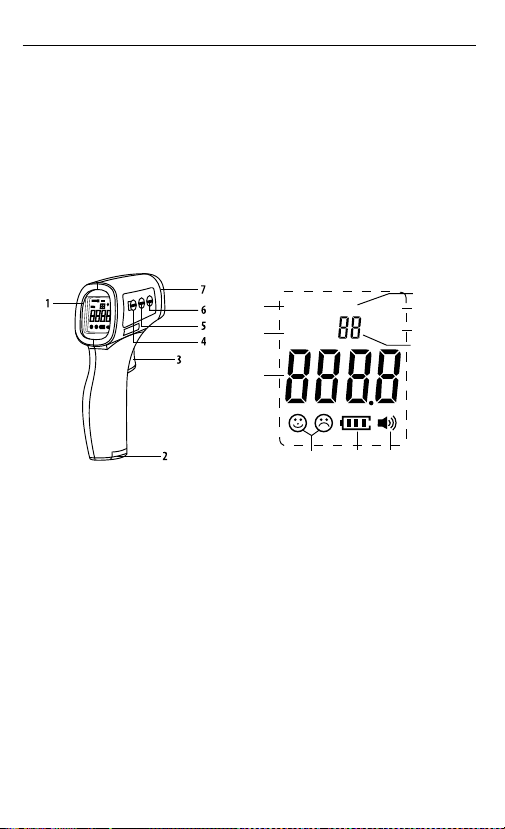
Figure 1: VNT275US Non Contact Infrared Body Thermometer
1. LCD display
2. Battery Cover
3. On (Trigger)
button
1. Surface mode
2. Body mode
3. Digital Display
4. Smile or Cry Indicator
5. Battery indicator
Surface M
Body
°
C
°
F
1
2
3
4 5 6
7
8
9
10
4. SET button
5. MEMO button
6. MODE button
7. IR sensor
6. Voice on/off indicator
7. Memory number
8.°F
9. °C
10. Memory
5
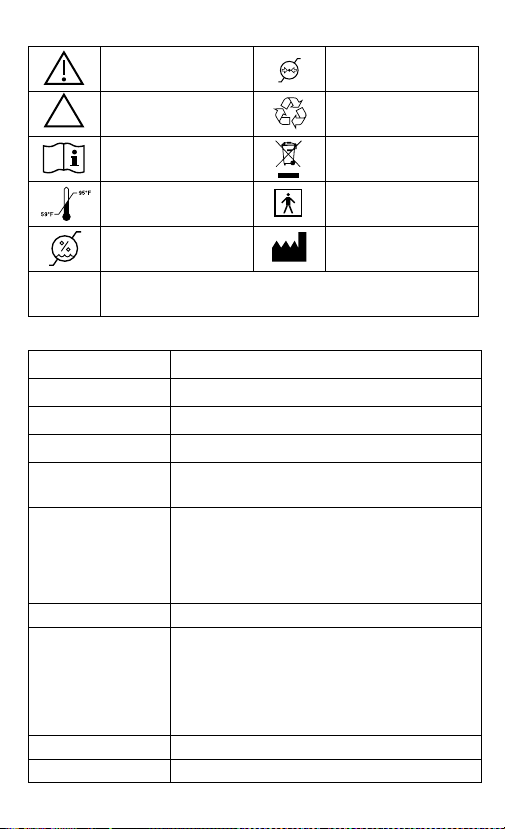
Equipment Symbols
Technical Specifications
Caution Operating atmospheric
pressure
Nonsterile
packaging
Recyclable
Consult Instructions
for Use
Compliance with WEEE
Standard
Operating
Temperature
BF Type applied part
Operating
Humidity
Manufacturer
IP22
IP22: Protected against solid foreign objects greater than 12.5 mm in
diameter and dripping water when tilted at 15º
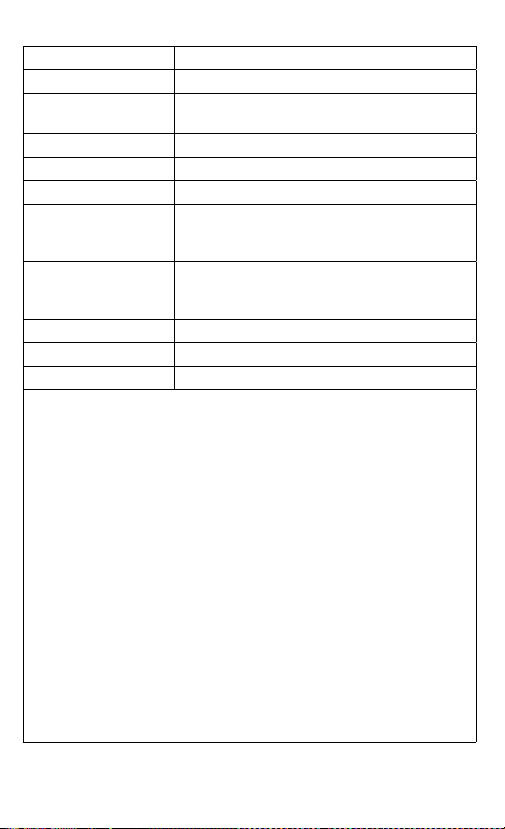
Measurement unit °C/°F
Operating mode Adjusted mode (Body mode) Direct mode (Surface mode)
Measuring site Forehead
Reference body site Axillary
Measuring range Body mode: 93.2°F~109.2°F/34.0°C -42.9°C
Surface mode: 32°F~212°F/0°C~100°C
Laboratory accuracy Body mode:
±0.4°F/±0.2°C for the range 95°F~107.6°F/ 35.0°C -42.0°C
±0.5°F/±0.3°C outside of that range
Surface mode:
±3.6°F/±2.0°C
Display Resolution 0.1°F/0.1°C
Fever InSight (Three-
Color Backlight)
96.2-99.2°F or 35.7-37.3°C: Green Backlight (Normal);
99.3-101.1°F or 37.4-38.4°C: Yellow Backlight (Fever)
>101.1°F or >38.4°C : Red Backlight (High Fever)
Notes: 1. Surface mode always displays temperature with
a Green backlight. 2. In body mode, 93.2-96.1°F (34.0-
35.6°C) will be displayed with a No LED backlight.”
Auto Power Off Time ≤18 seconds
Measuring Time ≤2 seconds
NON
STERILE
70 kPa
106 kPa
0%
93%
6
Technical Specifications
Measuring Distance 0.4 inches to 2 inches (1 cm to 5 cm)
Memory 50
Power Supply
Requirements
Batteries 1.5V (AAA) Alkaline battery x 2 (IEC Type LR03)
Operable Voltage Range 2.6V~3.6V
Environmental
Operating Environment Temperature: 59°F – 95°F (15°C – 35°C), Relative
Humidity≤93% non-condensing, Atmospheric Pressure:
0.7 atm to 1.04 atm (70 kPa to 106 kPa)
Transport and Storage
Environment
Temperature: -4 °F – 131°F (-20°C – -55°C), Relative
Humidity ≤93%, non-condensing Atmospheric Pressure:
0.7 atm – 1.04 atm (70 Kpa – 106 Kpa)
Dimensions and Weight
Weight (without batteries) 3.2 ounces (90g)
Size L: 5.4” x W: 3.7” x H: 1.6” (L:138mm X W:95mm X H:40mm)
This infrared thermometer meets requirements established in ASTM Standard E 1965-98 (for the thermometer
system). Full responsibility for the conformance of the product to the standard is assumed by Kaz USA, Inc.,
a Helen of Troy Company, Health & Home, 400 Donald Lynch Blvd., Suite 300, Marlborough, MA 01752
ASTM laboratory accuracy requirements for the thermometer only in the display range of 36 °C to 39°C (96.8
°F to 102.2 °F) for infrared thermometers is ±0.3 °C (±0.5 °F), whereas for mercury-in-glass and electronic
thermometers, the requirement per ASTM Standards E 667-86 and E 1112-86 is ±0.1 °C (±0.2 °F).
This device conforms to the following standards:
IEC 60601-1: Medical electrical equipment. Part 1: General requirements for basic safety and essential
performance
ASTM E1965-98: Standard Specification for Infrared Thermometers for Intermittent Determination of
Patient Temperature
ISO 80601-2-56: Medical electrical equipment - Requirements for basic safety and essential performance of
clinical thermometers for body temperature measurement
IEC 60601-1-2: Medical electrical equipment – Part 1-2: General requirements for basic safety and
essential performance – Collateral Standard: Electromagnetic disturbances – Requirement and tests
NOTE: DO NOT use this device in the presence of electromagnetic or other interference outside the normal
range specified in IEC 60601-1-2.
IEC 60601-1-11: Medical electrical equipment – Part 1-11: General requirements for basic safety and
essential performance – Collateral standard: Requirements for medical electrical equipment and medical
electrical systems used in the home healthcare environment
ISO 15223-1: Medical devices - Symbols to be used with medical device labels, labeling and information to
be supplied - Part 1: General requirements”
7
Safety classification of ME EQUIPMENT
Protection against electric
shock
Internally powered ME equipment
Applied part Type BF Applied Part
Protection against harmful
ingress of water or
particulate matter
IP22
Mode of operation Continuous operation
Note: Not intended to be sterilized. Not for use in an OXYGEN RICH ENVIRONMENT
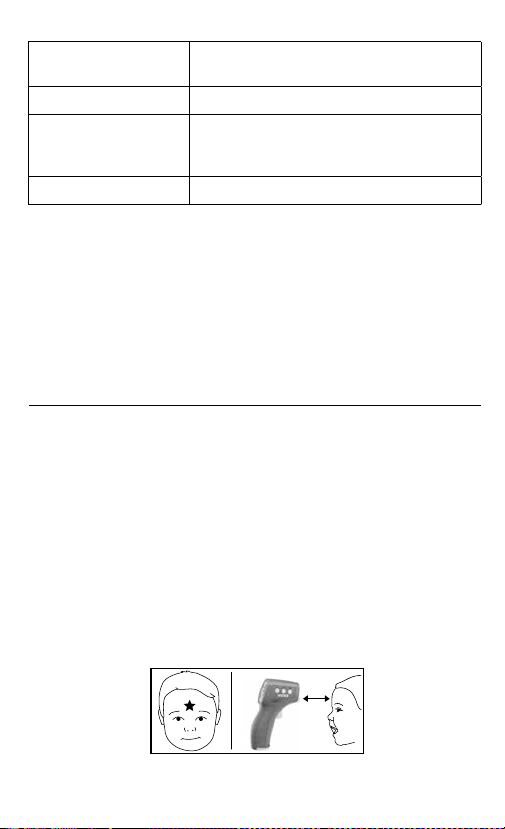
Figure 2-Measuring position and distance
MEDICAL ELECTRICAL EQUIPMENT needs special precautions regarding EMC.
For detailed description of EMC requirements please contact Consumer Relations.
Portable and mobile RF communications equipment can affect MEDICAL ELECTRICAL
EQUIPMENT.
Remove the battery from the instrument if it is not required for extended periods of time
in order to avoid damage to the thermometer resulting from a leaking battery.
2: Operation
2.1 Battery installation
CAUTION: The Non Contact Infrared Body Thermometer does not operate with dead
batteries and does not input outer power. Install new batteries.
1) Pull the battery door out in the direction of the arrow and then lift up to access
the battery compartment.
2) Insert two AAA size batteries according to the “+” and “-”.
3) Close the battery cover.
2.2 How to Operate
Before Applying the Thermometer
Be sure to read and understand all warnings listed on the instructions before use.
• The thermometer should align with the middle of the forehead to measure body
temperature (between and directly above the eyebrows) at a vertical distance.
Press the On (Trigger) button and the temperature will display immediately,
see figure 2.

8
• Before using, allow the thermometer to remain in the room in which it will be used for
30 minutes. The room temperature should be between 59°F and 95°F (15°C and 35°C).
• The ambient temperature around the test person should be stable. DO NOT take human
temperature measurements near air flow from fans, air-conditioning vents, etc.
• When people move from a place of lower temperature a place of higher temperature,
they should remain in the test environment for at least 5 minutes, to be consistent with
the ambient temperature before their temperature is measured.
• In the event that you can’t follow the ambient acclimation guidance due to using this
device as a screening tool, the reading displayed may shift up or down as a result of the
temperature subjects are coming from compared to the temperature they are being
measured in. If that is the case, judge individuals against each other, and any individual
that is reading 1.5°F (0.8°C) higher or lower than the normal, should be measured again
following acclimation.
• Wait at least 1 second for the next measurement. If measuring continuously five times,
it is recommended to wait at least 30 seconds and then continue measurement.
• DO NOT use this thermometer in direct sunlight.
3: General Setup and Use
• Start measuring
Align the device to forehead at a distance of 1-5cm (0.4-2.0 inches), then press the On
(Trigger) button to start the measurement and read the data. The thermometer will
perform a self-test with all segments displayed for 2 seconds.
Note:
1) After full display is over, you will hear a single “beep” for a normal temperature or 4
“double beeps” for an elevated temperature, which means that the measurements have
been completed. The target value of the measured temperature is displayed on the LCD,
while the backlit displays one of three colors red, green, yellow. Green means ready for
the next measurement. If 99.3°F – 101.1°F (37.4°C-38.4°C), yellow is displayed, which
means slight fever warning. Please pay attention to body temperature. When the body
temperature is above 101.1°F, red is displayed, which means high fever. Please take action
to cool down or go to a doctor.
2) To ensure the accuracy of the measurement, wait at least 30 seconds after 5
consecutive measurements.
• Mode conversion
When the device is on, pressing the MODE button to cycle conversion between
“body” mode and “surface” mode.
“body” mode is used for measuring human body temperature, the “surface “ mode is
used to measure the surface temperature. (The factory default is “body” mode).
• Recalling and Erasing Memory Data
The last temperature taken before the thermometer powers off is stored in memory,
up to 50.

9
1) When the thermometer is turned on or off,, press the MEMO button to view the
history of measured values.
2) An empty memory cell shows “----°C” or “----°F”.
3) Temperature readings can be stored in memory. Up to 50 temperature readings can
be stored into the memory cells and automatically overwrite historical data.
4) While the thermometer is on, press the MEMO button until the LCD display “CLR”,
which means that all stored data is cleared completely.
Changing the Temperature Scale – F1
Turn the thermometer on, press and hold the SET button to enter F1, press the “MODE” or
“MEMO” button to switch Celsius and Fahrenheit temperature units, press the trigger to
confirm the unit settings (factory default is Fahrenheit)
Turning the Sound On/Off
While the thermometer is turned on, press the SET button to turn on or off the prompt
sound function.
Advanced Settings:
Warning: The following settings are only meant to be used by professionals.
It is recommended to keep this thermometer at the settings originally
programed on the device.
Fever Alert Set – F2
This setting will change at what point the backlight color of the temperature reading
turns to red. After entering the screen for changing the temperature scale, F1, press
the “SET” button to enter F2. Press the “MODE” button to decrease this value by 0.1°C
(~0.2°F). Press the “MEMO” button to increase this value by 0.1°C (~0.2°F). Press
the “SET” button to save the setting. The factory default and highly recommended
temperature to have this set at is 38.5°C (101.2°F).
Sound Settings – F3
This setting will change the buzzer to be on or off. While in Fever Alert Setting, F2, press
the “SET” button to enter F3. Press the “MODE” or the “MEMO” button to turn the volume
on or off. Press the “SET” button to save this setting. This can also be changed using the
directions outlined in “Turning the Sound On/Off”.
Factory Reset
If at any point you want to return your thermometer to the factory settings ,while
thermometer is turned on, press and hold the “MODE” button until the LCD displays “rst”.
After 2 seconds the factory settings will be restored to the device.
10
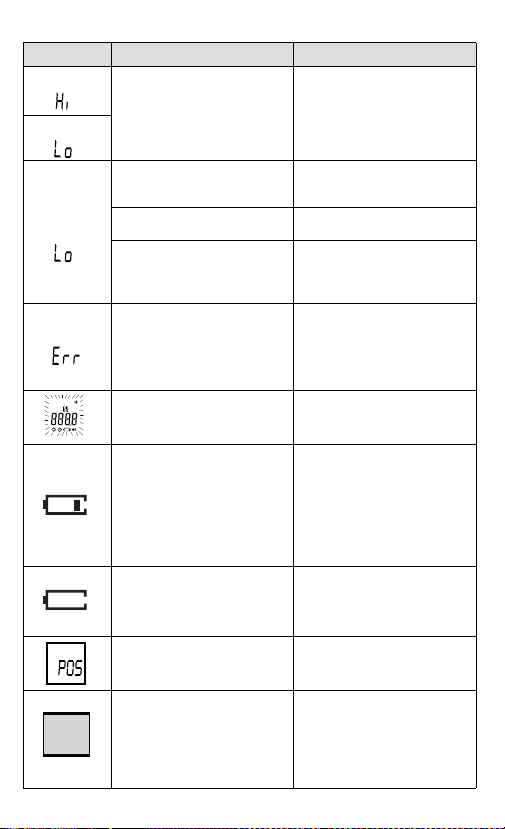
MESSAGE SITUATION SOLUTION
Temperature taken in not within
Typical human temperature range.
(93.2°F~109.2°F or 34.0°C~42.9°C).
Make sure the forehead
thermometer is for forehead
measurement, not another
human body site.
Measured over the distance:
0.4-2in (1-5 cm)
Optimum measurement distance
is .4in (1cm)
Incorrect test position. See figure 2 measuring
Subjects forehead hair,
Antipyretic stickers, head with
sweat, etc.
Have subjects sit quietly 5-10
minutes before the test.
Operating temperature
exceeds the range of specified
temperature.
Move to a room within the
operating range and wait
30 minutes before taking
temperature.
The screen flicker, automatically
turns off.
Replace battery or the product has
been damaged, and needs repairs
Low Battery Warning: When the
battery is running low, the display
flashes the low battery warning
symbol; however, the device can
still work until the battery life
has 0% left
Install a new battery. See
“Replacing the Battery” for
instructions.
Dead Battery Warning: Device
cannot take temperature.
Install a new battery. See
“Replacing the Battery” for
instructions.
Ambient termperature changes
too fast.
Wait until the ambient
temperature is stable.
(1) Power is off.
(2) Improper battery installation.
(3) The battery is exhausted.
(4) Display remains blank.
(
1) Press ON button again.
(2) Check the battery polarity.
(3) Replace with a new battery.
(4) Contact the retailer or service
center.
Troubleshooting
Surface temp
Body
MEMO
Room
Time
°
C
°
F
Body
°
F
Body
°
F
Body
°
F
Body
°
F

11
4: Replacing the Battery
1. Open and release battery cover following indicator on the surface of battery cover.
Before changing the battery be sure the system is powered off.
2. Remove the battery and replace with 2 new ones, type AAA. Make sure to align
properly as indicated inside the battery cover.
4. Slide the battery cover back in until it snaps in place. Do not dispose of used batteries
in household waste. Take them to special local collection sites.
5. In the instance that the system is latched up after changing battery, you may not
follow the process of rule one. Just take off the batteries, wait 30 sec, then load
batteries again.
WARNING
DO NOT recharge, disassemble or dispose of it in fire.
1. The typical service life of the new and unused batteries is 2000 measurements for the
operation time of 18s.
2. Only use the recommended batteries, do not use rechargeable batteries and do not
burn them.
3. Remove the batteries if the thermometer is not to be used for a long period of time.
5: Cleaning, Care and Storage
• The lens is very delicate.
• It is very important to protect the lens from dirt and damage.
• Use a clean, soft cloth to clean the surface of the device and LCD. Do not use solvents or
immerse the device into water or other liquids.
• Always keep the thermometer within the storage temperature range (-4°F to 131°F or
-20°C to 55°C) –and humidity range (≤93% non-condensing).
• It is recommended to store the thermometer in a dry location free from dust. Do not
expose the thermometer to direct sunlight, high temperature/ humidity or any extreme
environments, otherwise the function will be reduced.
• When the ambient temperature of the thermometer changes too much, such as moving
the thermometer from one place of lower temperature to another place of higher
temperature, allow the thermometer to remain in a room for 30 minutes where the
temperature is between 59°F- 95°F (15°C to 35°C)
6: Disposal
1. Used batteries should not be disposed of in the household rubbish. Used Batteries
should be deposited at a collection point.
2. At the end of its life, the appliance should not be disposed of in household rubbish.
Enquire about the options for environment-friendly and appropriate disposal. Take
local regulations into account.

12
7: Warranty
A. This 1 year limited warranty applies to repair or replacement of product found to be
defective in material or workmanship. This warranty does not apply to damage resulting
from commercial, abusive, unreasonable use or supplemental damage. Defects that
are the result of normal wear and tear will not be considered manufacturing defects
under this warranty. KAZ IS NOT LIABLE FOR INCIDENTAL OR CONSEQUENTIAL DAMAGES
OF ANY NATURE, ANY IMPLIED WARRANTY OF MERCHANTABILITY OR FITNESS FOR A
PARTICULAR PURPOSE ON THIS PRODUCT IS LIMITED IN DURATION TO THE DURATION OF
THIS WARRANTY. Some jurisdictions do not allow the exclusion or limitation of incidental
or consequential damages or limitations on how long an implied warranty lasts, so
the above limitations or exclusions may not apply to you. This warranty gives you
specific legal rights, and you also may have other rights which vary from jurisdiction to
jurisdiction. This warranty applies only to the original purchaser of this product from the
original date of purchase.
B. At its option, Kaz will repair or replace this product if it is found to be defective in
material or workmanship.
C. This warranty does not cover damage resulting from any unauthorized attempts to
repair or from any use not in accordance with the instruction manual.
Call us toll-free at 1-800-477-0457 or e-mail: ConsumerRelations@HelenofTroy.com.
Please be sure to specify the reference number. NOTE: IF YOU EXPERIENCE
A PROBLEM, PLEASE CONTACT CONSUMER RELATIONS FIRST OR SEE YOUR
WARRANTY. DO NOT RETURN THE PRODUCT TO THE ORIGINAL PLACE OF PURCHASE.
DO NOT ATTEMPT TO OPEN THE DEVICE HOUSING YOURSELF, DOING SO MAY VOID
YOUR WARRANTY AND CAUSE DAMAGE TO THE PRODUCT OR PERSONAL INJURY.

13
8: Calibration
The thermometer is initially calibrated at the time of manufacture. If this thermometer
is used according to the use instructions, periodic re-adjustment is not required. If at any
time you question the accuracy of temperature measurements, please contact us.
9: EMC Declaration
1. This equipment needs to be installed and put into service in accordance with the
information provided in the ACCOMPANYING DOCUMENTS;
This product needs special precautions regarding EMC and needs to be installed
and put into service according to the EMC information provided, and this unit can
be affected by portable and mobile RF communications equipment.
2. Do not use a mobile phone or other devices that emit electromagnetic fields,
near the unit. This may result in incorrect operation of the unit.
3. This unit has been thoroughly tested and inspected to assure proper performance
and operation.
4. This machine should not be used adjacent to or stacked with other equipment and
that if adjacent or stacked use is necessary, this machine should be observed to verify
normal operation in the configuration in which it will be used.
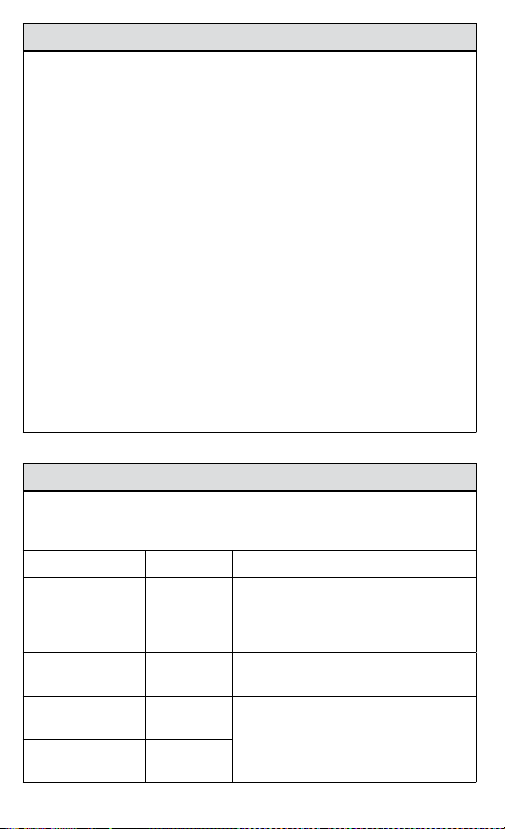
Guidance and manufacturer’s declaration – electromagnetic immunity
The VNT275 is intended for use in the electromagnetic environment specified below.
The customer or the user of the VNT275 should ensure that it is used in such an
environment.
Phenomenon Basic EMC standard
or test method
Immunity Test Levels
Home Healthcare Environment
Electrostatic Discharge IEC 61000-4-2 ±8 kV contact
±2 kV, ±4 kV, ±8 kV, ±15 kV air
Radiated RF EM fields
a
IEC 61000-4-3 10 V/m
f
80 MHz – 2,7 GHz
b
80% AM at 1 kHz
c
Proximity fields from RF
wireless communications
equipment
IEC 6100-4-3 See RF wireless communication
equipment immunity table below
Rated power frequency
magnetic fields
d, e
IEC 6100-4-8 30 A/m
g
50 Hz or 60 Hz
14
Guidance and manufacturer’s declaration – electromagnetic immunity
a) The interface between the PATIENT physiological signal simulation, if used, and the ME
EQUIPMENT or ME SYSTEM shall be located within 0,1 m of the vertical plane of the uniform
field area in one orientation of the ME EQUIPMENT or ME SYSTEM.
b) ME EQUIPMENT and ME SYSTEMS that intentionally receive RF electromagnetic energy for
the purpose of their operation shall be tested at the frequency of reception. Testing may be
performed at other modulation frequencies identified by the RISK MANAGEMENT PROCESS.
This test assesses the BASIC SAFETY and ESSENTIAL PERFORMANCE of an intentional receiver
when an ambient signal is in the passband. It is understood that the receiver might not
achieve normal reception during the test.
c) Testing may be performed at other modulation frequencies identified by the RISK
MANAGEMENT PROCESS.
d) Applies only to ME EQUIPMENT and ME SYSTEMS with magnetically sensitive components
or circuitry.
e) During the test, the ME EQUIPMENT or ME SYSTEM may be powered at any NOMINAL
input voltage, but with the same frequency as the test signal. (see Table 1)
f) Before modulation is applied.
g) This test level assumes a minimum distance between the ME EQUIPMENT or ME SYSTEM
and sources of power frequency magnetic field of at least 15 cm. If the RISK ANAYLSIS
shows that the ME EQUIPMENT or ME SYSTEM will be used closer than 15 cm to sources of
power frequency magnetic field, the IMMUNITY TEST LEVEL shall be adjusted as appropriate
for the minimum expected distance.
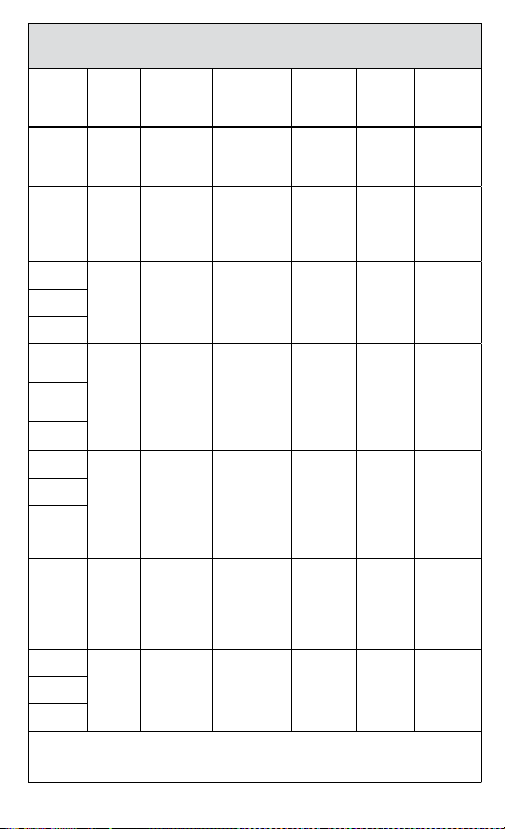
Guidance and manufacturer’s declaration – electromagnetic emissions
The VNT275 equipment is intended for use in the electromagnetic environment specified
below. The customer or the user of the VNT275 should ensure that it is used in such an
environment.
Emissions Test Compliance Electromagnetic environment – guidance
RF Emissions
CISPR 11
Group 1 The ME equipment uses RF energy only for its
internal function. Therefore, its RF emissions
are very low and are not likely to cause any
interference in nearby electronic equipment.
RF Emissions
CISPR 11
Class B
Complies
Harmonic emissions
IEC 61000-3-2
Not
Applicable
The ME equipment is
solely battery powered
Voltage fluctuations/
flicker emissions
Not
Applicable
15
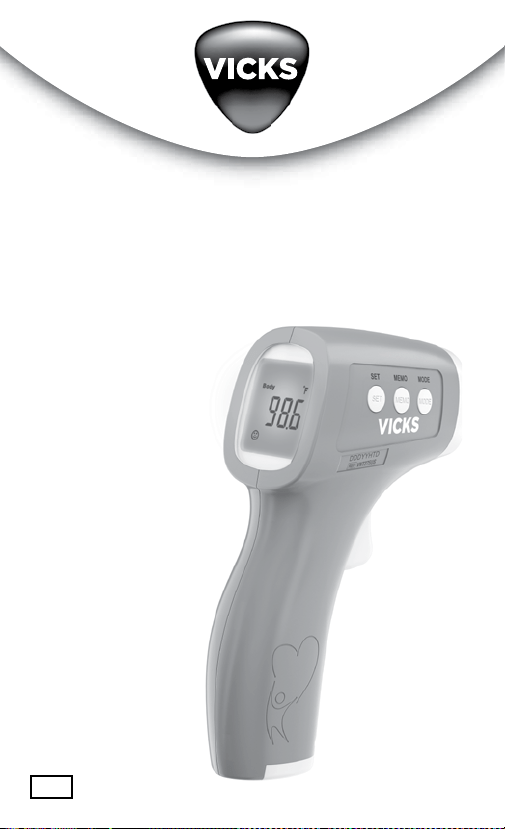
Guidance and manufacture’s declaration –
RF wireless communication equipment immunity
Test
frequency
(MHz)
Band
a
(MHz)
Service
a
Modulation
b
Maximum
power
(W)
Distance
(m)
Immunity
Test Level
(V/m)
385
380 –
390
TETRA 400
Pulse
modulation
b
18 Hz
1,8 0,3 27
450
430 –
470
GMRS 460,
FRS 460
FM
c
±5 kHz
deviation
1 kHz sine
2 0,3 28
710
704 –
787
LTE Band
13, 17
Pulse
modulation
b
217 Hz
0,2 0,3 9745
780
810
800 –
960
GSM
800/900.
TETRA 800,
IDEN 820,
CDMA 850,
LTE Band 5
Pulse
modulation
b
18 Hz
2 0,3 28
870
930
1720
1700 –
1990
GSM 1800,
CDMA 1900,
GSM 1900,
DECT,
LTE Band 1, 3,
4, 25, UMTS
Pulse
modulation
b
217 Hz
2 0,3 28
1845
1970
2450
2400 –
2570
Bluetooth,
WLAN,
802.11 b/g/n,
RFID 2450,
LTE Band 7
Pulse
modulation
b
217 Hz
2 0,3 28
5240
5100 –
5800
WLAN
802.11,
a/n
Pulse
modulation
b
217 Hz
0,2 0,3 95500
5785
a) For some services, only the uplink frequencies are included. b) The carrier shall be modulated using a
50% duty cycle square wave signal. c) As an alternative to FM modulation, 50% pulse modulation at
18 Hz may be used because while it does not represent actual modulation, it would be worst case.

Manual del Usuario
REF VNT275US
Termómetro Infrarrojo
Corporal Sin Contacto

Prólogo
Las Instrucciones de Operación del Termómetro Infrarrojo Corporal Sin Contacto están
diseñadas para proporcionar la información necesaria para la correcta operación del
termómetro VNT275US. El conocimiento general del Termómetro Infrarrojo Corporal
Sin Contacto y el entendimiento de las características y las funciones del termómetro
VNT275US son requisitos previos para un uso adecuado. El Termómetro Infrarrojo
Corporal Sin Contacto es un dispositivo médico y se puede utilizar repetidamente
durante 1 año. Por favor lea el manual antes de utilizar el dispositivo, si no entiende
completamente estas instrucciones de uso, no use el termómetro.
No opere el termómetro VNT275US sin leer y comprender
completamente estas instrucciones.
AVISO
La compra o posesión de este dispositivo no conlleva ninguna licencia explícita
o implícita para utilizar con repuestos que pudieran corresponder, por sí solos o
en conjunto con este dispositivo, estén dentro del ámbito de una de las patentes
relacionadas.

19
Indicaciones de Uso
El Termómetro Infrarrojo Corporal Sin Contacto es un termómetro no estéril y reutilizable
destinado a ser utilizado para la determinación intermitente de la temperatura corporal
humana por consumidores de todas las edades en un entorno de uso doméstico (como el
hogar o lugares de negocios como herramienta de diagnóstico de empleados), en modo
sin contacto, con la frente como lugar de medición.
Información de Seguridad
Este dispositivo sólo se puede utilizar para los fines descritos en estas instrucciones.
El fabricante no se hace responsable de los daños causados por una aplicación incorrecta.
Instrucciones de Seguridad Importantes:
• El Termómetro Infrarrojo Corporal Sin Contacto está diseñado para utilizarse por
consumidores en un entorno de uso doméstico (tales como el hogar o lugares de trabajo
como una herramienta de diagnóstico de empleados).
• Mantenga fuera del alcance de los niños menores de 12 años.
• NUNCA utilice el termómetro para fines distintos a aquellos para los que han sido destinados.
Por favor, siga las precauciones generales de seguridad cuando lo utilice en niños.
• NUNCA sumerja el termómetro en agua u otros líquidos (no es resistente al agua).
Para limpiarlo, por favor siga las instrucciones de la sección “Cuidado y Limpieza”.
• NO almacene este termómetro en una temperatura inferior de -20°C o superior a 55°C (extremas por debajo
de -4°F o más de 131°F) o en humedad excesiva (hasta un 93% de humedad relativa sin condensación).
• Permita que el termómetro y el individuo al que se le está midiendo la temperatura, se aclimaten
a la temperatura de la habitación en donde se tomará la medición durante 30 minutos.
• Antes de usar, permita que el termómetro permanezca en la habitación en la que se utilizará
durante 30 minutos. La temperatura ambiente debe estar entre 15°C y 35°C (59°F - 95°F).
• El individuo al que se mide debe estar en interiores durante 20 minutos antes de tomar
la medición, ya que la temperatura externa puede afectar la temperatura de la piel.
• En caso de no seguir las instrucciones de aclimatación ambiental debido al uso de este
dispositivo como herramienta de diagnóstico, la lectura mostrada puede cambiar hacia
arriba o hacia abajo como resultado de la temperatura de donde los sujetos provienen en
comparación con la temperatura en la que se están midiendo. Si es el caso, evalúe a los
sujetos contra ellos mismos, y cualquier individuo que obtenga una lectura 0.8°C (1.5°F)
más alta o más baja que la normal, debe medirse de nuevo después de la aclimatación.
• NO use el termómetro si hay signos de daño en el escáner o en el termómetro. Si están
dañados, NO intente reparar el producto.
• NUNCA introduzca un objeto afilado en el área del escáner o en ninguna otra superficie
abierta del termómetro.

20
• Este termómetro consta de piezas de precisión de alta calidad. NO deje caer el
instrumento. Protéjalo de impactos y golpes severos. NO toque el sensor de detección
infrarroja con los dedos.
• El uso de este termómetro no pretende ser un sustituto de la consulta con su médico.
• La elevación de la temperatura puede indicar una enfermedad grave, especialmente
en recién nacidos y bebés, o en adultos de la tercera edad, frágiles o con un sistema
inmunológico debilitado. Por favor, busque inmediatamente asesoramiento profesional
cuando haya elevación de temperatura y si está tomando la temperatura en:
– Recién nacidos y bebés menores de 3 meses (Consulte inmediatamente a su médico si
la temperatura excede los 37.4 °C [99.4 °F])
– Individuos mayores de 60 años de edad (La fiebre puede ser baja o ausente en
pacientes de edad avanzada).
– Individuos con diabetes mellitus o un sistema inmunológico debilitado (p. ej., VIH positivo,
quimioterapia contra el cáncer, tratamiento inmunosupresor crónico, esplenectomía).
– Individuos postrados en cama (p. ej., pacientes de asilo de ancianos, con derrame
cerebral, enfermedad crónica, parapléjica, cuadripléjica, en recuperación quirúrgica).
– Receptor de trasplante (p. ej., hígado, corazón, pulmón, riñón).
• Este termómetro no esta diseñado para bebés prematuros o pequeños para la edad
gestacional. Se define como bebés prematuros a los bebés nacidos antes de completar
las 37 semanas de gestación. Se define como bebés pequeños para la edad gestacional
a los bebés (nacimiento a 4 semanas de edad), nacidos a las 37 semanas o después, con
un peso inferior al percentil 10 para bebés de la misma edad gestacional.
• Este termómetro no está diseñado para interpretar temperaturas hipotérmicas. Si
el dispositivo muestra una temperatura de 35.6°C (96.1°F ) o menor sin luz de fondo
LED de color, y el individuo está presentando síntomas o comportamientos atípicos,
contacte a su médico o profesional de la salud.
• NO permita que los niños tomen su temperatura desatendidos.
• Por favor, consulte a su médico si observa síntomas tales como irritabilidad inexplicable,
vómito, diarrea, deshidratación, cambios en el apetito o actividad, convulsiones, dolor
muscular, temblores, rigidez en el cuello, dolor al orinar, etc., incluso con ausencia de fiebre.
• Incluso con ausencia de fiebre, quienes exhiben una temperatura normal puede aún necesitar
recibir atención médica. Las personas que están tomando antibióticos, analgésicos o
antipiréticos no deben evaluarse únicamente en las lecturas de temperatura para determinar
la gravedad de sus enfermedad.
• NO modifique este equipo sin la autorización del fabricante.
• NO tire las pilas en el fuego. Sólo utilice las pilas recomendadas. NO utilice pilas recargables.
• Si mide la temperatura de la frente humana, por favor seleccione el modo “cuerpo”; si
mide objetos, líquidos, alimentos, u otros objetos, seleccione el modo “superficie”.
21
Sección 1: Resumen
Descripción del Termómetro Infrarrojo Corporal Sin Contacto
• Principio e introducción del dispositivo:
El
Termómetro Infrarrojo Corporal Sin Contacto es un dispositivo portátil, reutilizable,
que funciona con pilas, que puede medir la temperatura corporal humana utilizando
la frente como el lugar de medición (la temperatura de la piel en la frente). El
principio de operación se basa en la tecnología de Sensor Infrarrojo (IR). Al medir, el
Sensor IR adquiere energía infrarroja de la frente seleccionada. Teniendo en cuenta
la temperatura ambiente, el termómetro convierte la señal del Sensor IR en un valor
digital y lo muestra en la pantalla LCD
.
• Descripción de Controles, Indicadores, y Símbolos
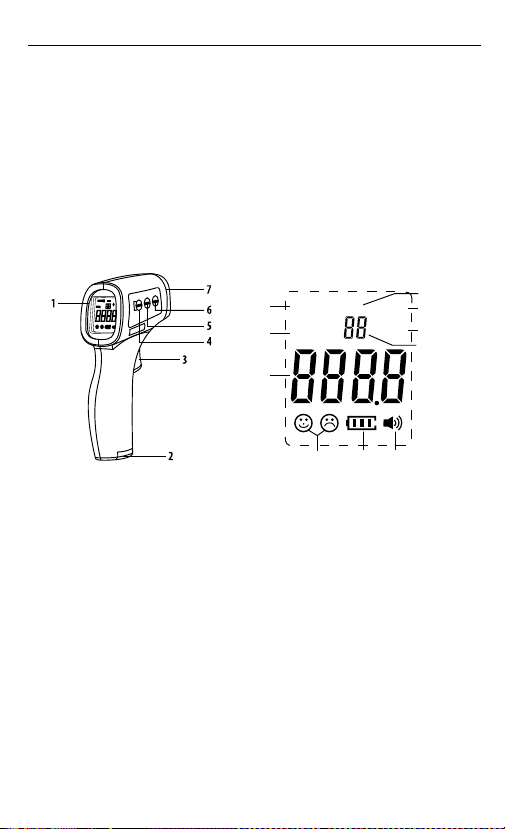
Figura 1: Termómetro Infrarrojo Corporal Sin Contacto VNT275US
1. Pantalla LCD
2. Tapa de la pila
3. Botón de
encendido
(Disparador)
1. Modo superficie
2. Modo cuerpo
3. Pantalla digital
4. Indicador de sonrisa
o llanto
5. Indicador de pila
Surface M
Body
°
C
°
F
1
2
3
4 5 6
7
8
9
10
4. Botón de AJUSTE
5. Botón de MEMO
6. Botón de MODO
7. Sensor IR
6. Indicador de
encendido/apagado
de voz
7. Número de Memoria
8.°F
9. °C
10. Memoria
22
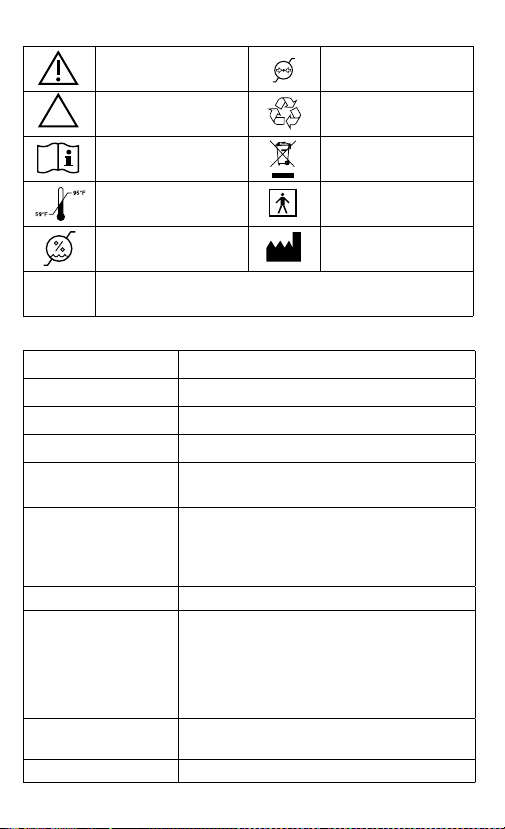
Símbolos del Equipo
Especificaciones Técnicas
Precaución Presión Atmosférica
de Operación
Empaque
No Estéril
Reciclable
Consulte las Instrucciones
de Uso
Cumplimiento con la
Norma RAEE
Temperatura de
Operación
Pieza Aplicada Tipo BF
Humedad de
Operación
Fabricante
IP22
IP22: Protegido contra objetos extraños sólidos más grandes de 12.5
mm de diámetro y goteo de agua cuando se inclina a 15º
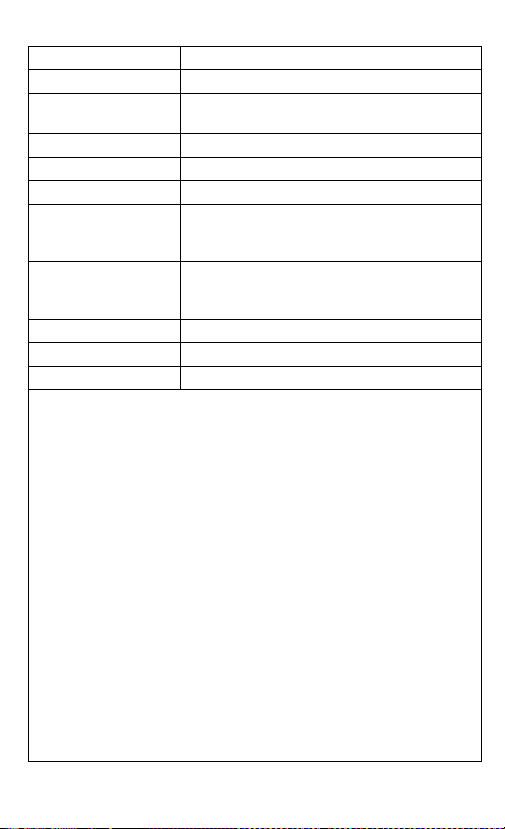
Unidad de Medida °C/°F
Modo de Operación Modo ajustado (Modo cuerpo) Modo directo (Modo superficie)
Lugar de Medición Frente
Lugar de Referencia del Cuerpo Axilar
Rango de Medición Modo cuerpo: 34.0°C -42.9°C / 93.2°F~109.2°F
Modo superficie: 0°C~100°C / 32°F~212°F
Precisión de Laboratorio Modo cuerpo: ±0.4°F/±0.2°C para el rango de 35.0°C
-42.0°C / 95°F~107.6°F
±0.5°F/±0.3°C fuera de ese rango
Modo Superficie: ±3.6°F/±2.0°C
Resolución de Pantalla 0.1°F/0.1°C
Fever InSight (Luz de Fondo
de Tres Colores)
35.7-37.3°C / 96.2-99.2°F : Luz de Fondo Verde (Normal);
37.4-38.4°C / 99.3-101.1°F : Luz de Fondo Amarilla (Fiebre)
>38.4 / >101.1°F : Luz de Fondo Roja (Fiebre Alta)
Notas: 1. El modo superficie siempre muestra la temperatura
con Luz de Fondo Verde. 2. En modo cuerpo, se mostrará
34.0-35.6°C (93.2-96.1°F) sin luz de fondo LED.”
Tiempo de Apagado
Automático
≤18 segundos
Tiempo de Medición ≤2 segundos
NON
STERILE
70 kPa
106 kPa
0%
93%
23
Especificaciones Técnicas
Distancia de Medición 1 cm a 5 cm (0.4 pulgadas a 2 pulgadas)
Memoria 50
Requisitos de la Fuente
de Alimentación
Pilas 2 Pilas Alcalinas AAA de 1.5V (IEC Tipo LR03)
Rango de Voltaje Operable 2.6V~3.6V
Ambiental
Entorno Operativo Temperatura: 15°C – 35°C (59°F – 95°F), Humedad
Relativa ≤93% sin condensación, Presión Atmosférica:
0.7 atm a 1.04 atm (70 kPa a 106 kPa)
Entorno de Transporte y
Almacenamiento
Temperatura: -20°C – -55°C (-4 °F – 131°F), Humedad
Relativa ≤93% sin condensación, Presión Atmosférica:
0.7 atm – 1.04 atm (70 Kpa – 106 Kpa)
Dimensiones y Peso
Peso (sin pilas) 90 gramos (3.2 onzas)
Tamaño L:138mm X A:95mm X A:40mm (L: 5.4” x A: 3.7” x A: 1.6” )
Este termómetro infrarrojo cumple con los requisitos establecidos por el Estándar ASTM Standard E 1965-
98 (para el sistema del termómetro). Completa responsabilidad por la conformidad del producto con el
estándar es asumida por Kaz USA, Inc., una Empresa de Helen of Troy, Health & Home, 400 Donald Lynch
Blvd., Suite 300, Marlborough, MA 01752.
Los requisitos de precisión de laboratorio ASTM para el termómetro sólo en el rango de pantalla de 36
°C a 39°C (96.8 °F a 102.2 °F) para termómetros infrarrojos es ±0.3 °C (±0.5 °F), mientras que para los
termómetros de mercurio en vidrio y electrónicos, el requisito por el Estándar ASTM E 667-86 y E 1112-86
es ±0.1 °C (±0.2 °F).
Este dispositivo cumple con los siguientes estándares:
IEC 60601-1: Equipo Eléctrico Médico. Parte 1: Requisitos generales de seguridad básica y funcionamiento
esencial.
ASTM E1965-98: Especificación Estándar para Termómetros Infrarrojos para la Determinación Intermitente
de la Temperatura del Paciente.
ISO 80601-2-56: Equipo Eléctrico Médico - Requisitos para la seguridad básica y funcionamiento esencial de
los termómetros clínicos para la medición de temperatura corporal.
IEC 60601-1-2: Equipo Eléctrico Médico – Parte 1-2: Requisitos generales de seguridad básica y
funcionamiento esencial - Estándar Colateral: Compatibilidad electromagnética - Requisitos y pruebas.
NOTA: NO use este dispositivo en presencia de interferencias electromagnéticas y otras fuera del rango
normal especificado en IEC 60601-1-2.
IEC 60601-1-11: Equipo Eléctrico Médico – Parte 1-11: Requisitos generales de seguridad y desempeño
esencial - Estándar colateral: Requisitos para los equipos médicos eléctricos y sistemas médicos eléctricos
utilizados en el entorno familiar de atención médica.
ISO 15223-1: Dispositivos Médicos - Símbolos para uso en etiquetas de dispositivos médicos, etiquetado e
información que se suministrará - Parte 1: Requisitos generales”
24
Clasificación de seguridad del EQUIPO ELÉCTRICO MÉDICO
Protección contra descargas
eléctricas
Equipo Eléctrico Médico con alimentación interna
Pieza aplicada Pieza Aplicada Tipo BF
Protección contra la entrada
dañina de agua o partículas
IP22
Modo de operación Operación continua
Nota: No está destinado a ser esterilizado. No utilice en un ENTORNO RICO EN OXÍGENO.
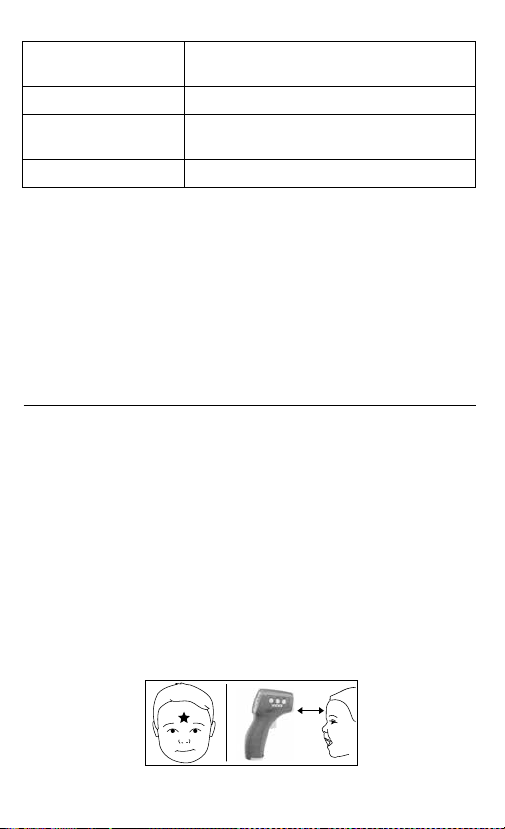
Figura 2-Posición y distancia de medición
El EQUIPO ELÉCTRICO MÉDICO necesita precauciones especiales con respecto a CEM
(Compatibilidad electromagnética).
Para obtener una descripción detallada de los requisitos de CEM, por favor comuníquese
con Servicio al Cliente.
Los equipos de comunicaciones de RF portátiles y móviles pueden afectar el EQUIPO
ELÉCTRICO MÉDICO.
Retire la pila del instrumento si no es necesaria durante largos períodos de tiempo para
evitar daños en el termómetro resultante de una pila con fugas.
2: Operación
2.1 Instalación de la pila
PRECAUCIÓN: El Termómetro Infrarrojo Corporal Sin Contacto no funciona con pilas
descargadas y no acepta energía externa. Instale pilas nuevas.
1) Tire de la tapa de la pila en la dirección de la flecha y luego levante para acceder
al compartimiento de la pila.
2) Inserte dos pilas tamaño AAA de acuerdo con el “+” y “-”.
3) Cierre la tapa de la pila.
2.2 Cómo Operar
Antes de Aplicar el Termómetro
Asegúrese de leer y comprender todas las advertencias enumeradas en las instrucciones
antes de su uso.
• El termómetro debe alinearse con el centro de la frente para medir la temperatura
corporal (entre y directamente por encima de las cejas ) a una distancia vertical.
Presione el botón de Encendido (Disparador) y la temperatura se mostrará
inmediatamente, vea la figura 2.

25
• Antes de usar, deje que el termómetro permanezca 30 minutos en la habitación donde será
utilizado. La temperatura de la habitación debe estar entre 15°C y 35°C (59°F y 95°F).
• La temperatura ambiente alrededor de la persona de prueba debe ser estable. NO realice mediciones de
temperatura humana cerca del flujo de aire de ventiladores, respiraderos de aire acondicionado, etc.
• Cuando las personas se mueven de un lugar de temperatura más baja a otro lugar de temperatura
más alta, deben permanecer en el entorno de prueba durante al menos 5 minutos, para ser
consistentes con la temperatura ambiente después de volver a tomar la medición.
• En caso de no seguir las instrucciones de aclimatación ambiental debido al uso de este dispositivo
como herramienta de diagnóstico, la lectura mostrada puede cambiar hacia arriba o hacia
abajo como resultado de la temperatura de donde los sujetos provienen en comparación con la
temperatura en la que se están midiendo. Si es el caso, evalúe a los sujetos contra ellos mismos,
y cualquier individuo que obtiene una lectura de 0.8°C (1.5°F) más alta o más baja de lo normal,
debe medirse de nuevo después de la aclimatación.
• Espere al menos 1 segundo para la siguiente medición. Si mide continuamente cinco
veces, se recomienda esperar al menos 30 segundos y luego continuar la medición.
• NO utilice este termómetro en la luz solar directa.
3: Uso y Ajuste General
• Empezar a medir
Alinee el dispositivo en la frente a una distancia de 1-5cm (0.4-2.0 pulgadas), luego presione
el botón de Encendido (Disparador) para iniciar la medición y leer los datos. El termómetro
realizará una autoprueba con todos los segmentos mostrados durante dos segundos.
Nota:
1) Después de que se hayan visualizado todos los segmentos, se escuchara un solo “pitido”
para una temperatura normal o 4 “pitidos dobles” para una temperatura elevada, lo que
significa que las mediciones se han terminado. El valor objetivo de la temperatura medida
se muestra en la pantalla LCD, mientras que la luz de fondo muestra uno de los tres colores
rojo, verde, amarillo. Verde significa listo para la siguiente medición. Si 37.4°C-38.4°C (99.3°F
– 101.1°F), se muestra el color amarillo, lo que significa advertencia de fiebre leve. Por favor
preste atención a la temperatura corporal. Cuando la temperatura de su cuerpo sea superior
a 38.4°C (101.1°F), se muestra el color rojo, lo que significa fiebre alta. Por favor, tome
medidas para enfriarse o acudir con un médico.
2) Para garantizar la precisión de la medición, espere al menos 30 segundos después de 5
mediciones consecutivas.
• Conversión de Modo
Cuando el dispositivo esté encendido, presione el botón MODO para alternar la conversión
entre el modo “cuerpo” y el modo “superficie”.
El modo “cuerpo” se utiliza para medir la temperatura corporal humana, el modo “superficie” se utiliza
para medir la temperatura de las superficies. (El ajuste predeterminado de fábrica es el modo “cuerpo”).
• Recuperación y Borrar Datos de la Memoria
La última temperatura tomada antes de que el termómetro se apague, se almacena en
la memoria, hasta 50 lecturas.

26
1) Cuando el termómetro se encienda o se apague, presione el botón de MEMO para
visualizar la historia de los valores medidos.
2) Una celda de memoria vacía muestra “----°C” o “----°F”.
3) Las lecturas de temperaturas se puede almacenar en la memoria. Se pueden almacenar
hasta 50 lecturas de temperatura en las celdas de memoria y automáticamente
sobrescribir los datos históricos.
4) Mientras el termómetro esté encendido, presiones el botón de MEMO hasta que la pantalla LCD
muestre “CLR”, lo que significa que todos los datos almacenados se han borrado por completo.
Cambiar la Escala de Temperatura – F1
Encienda el termómetro, mantenga presionado el botón de AJUSTE para entrar a F1, presione el botón
de “MODO” o “MEMO” para cambiar las unidades de temperatura de Celsius u Fahrenheit, presione el
disparador para confirmar los ajustes de la unidad (el ajuste predeterminado de fábrica es Fahrenheit).
Encendido/Apagado del Sonido
Mientras el termómetro está encendido, presione el botón de AJUSTE para encender o
apagar la función de sonido rápido.
Ajustes Avanzados:
Advertencia: Los siguientes ajustes solo están diseñados para ser utilizados
por profesionales. Se recomienda mantener este termómetro en los ajustes
originalmente programados en el dispositivo.
Ajuste de Alerta de Fiebre – F2
Este ajuste cambiará en el momento en que el color de la luz de fondo de la lectura de temperatura
se haga rojo. Después de entrar en la pantalla para cambiar la escala de temperatura, F1, presione
el botón de “AJUSTE” para entrar a F2. Presione el botón de ‘MODO” para reducir este valor en 0.1°C
(~0.2°F). Presione el botón de “MEMO” para aumentar este valor en 0.1°C (~0.2°F). Presione el
botón de “AJUSTE” para guardar el ajuste. La temperatura predeterminada de fábrica y altamente
recomendada para definir este ajuste es de 38.5°C (101.2°F).
Ajustes de Sonido – F3
Este ajuste cambiará el timbre para que esté encendido o apagado. Mientras esté en el Ajuste de
Alerta de Fiebre, F2, presione el botón de “AJUSTE” para entrar a F3. Presione el botón de “MODO” o de
“MEMO” para encender o apagar el volumen. Presione el botón de “AJUSTE” para guardar este ajuste.
Esto también se puede cambiar utilizando las instrucciones descritas en “Encender/Apagar el Sonido”.
Reinicialización de Fábrica
Si en algún momento desea regresar el termómetro a los ajustes de fábrica, mientras el
termómetro esté encendido, mantenga presionado el botón de “MODO” hasta que la pantalla
LCD muestre “rst”. Después de 2 segundos, los ajustes de fábrica se restaurarán en el dispositivo.
27
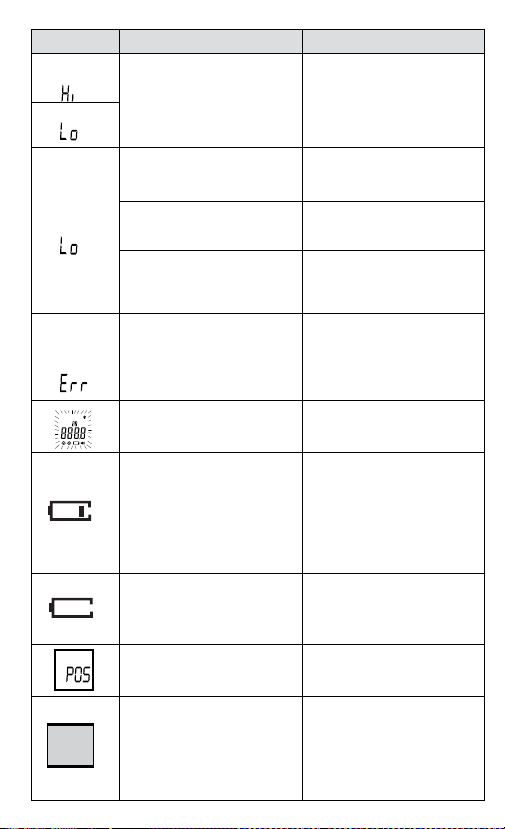
MENSAJE SITUACIÓN SOLUCIÓN
La temperatura tomada no está dentro
de un rango de temperatura humana
normal.
(34.0°C~42.9°C ó 93.2°F~109.2°F).
Asegúrese de que el termómetro
de frente es para la medición en la
frente, no para otro lugar del cuerpo
humano.
Medido más allá de la distancia:
1-5 cm (0.4-2 pulg.)
La distancia óptima de medición es
de 1 cm (0.4 pulg.)
Posición de prueba incorrecta. Vea la figura 2, Posición y Distancia
de la Medición
Cabello en la frente del sujeto,
etiquetas adhesivas antipiréticas,
cabeza con sudor, etc.
Pida al sujeto que se siente en
silencio durante 5-10 minutos antes
de la prueba.
La temperatura de operación
supera el rango de temperatura
especificada.
Muévase a una habitación dentro
del rango de operación y espere
30 minutos antes de tomar la
temperatura.
La pantalla parpadea,
automáticamente se apaga.
Cambie la pila o el producto ha sido
dañado, y necesita reparación.
Advertencia de Pila Baja: Cuando la pila
se está agotando, la pantalla parpadea
el símbolo de advertencia de pila baja;
sin embargo, el dispositivo todavía
puede funcionar hasta que la vida de la
pila tenga 0%.
Instale una pila nueva. Consulte
“Reemplazar la Pila” para obtener
instrucciones.
Advertencia de Pila Descargada:
El dispositivo no puede tomar la
temperatura.
Instale una pila nueva. Consulte
“Reemplazar la Pila” para obtener
instrucciones.
La temperatura ambiente cambia
muy rápido.
Espere hasta que la temperatura
ambiente esté estable.
(1) Está apagado.
(2) Instalación incorrecta de la pila.
(3) La pila está descargada.
(4) La pantalla permanece en blanco.
(
1) Vuelva a presionar el botón de
ENCENDIDO.
(2) Revise la polaridad de la pila.
(3) Reemplace con una pila nueva.
(4) Contacte a la tienda o al centro
de servicio.
Solución de Problemas
Surface temp
Body
MEMO
Room
Time
°
C
°
F
Body
°
F
Body
°
F
Body
°
F
Body
°
F

28
4: Reemplazar la pila
1. Abra y suelte la tapa de la pila siguiendo el indicador en la superficie de la tapa de la
pila. Antes de cambiar la pila asegúrese que el sistema esté apagado.
2. Retire la pila y reemplace con 2 pilas nuevas, tipo AAA. Asegúrese de alinear
correctamente como se indica dentro de la tapa de la pila.
4. Vuelva a colocar la tapa de la pila, deslizándola hasta que encaje en su lugar. No deseche
las pilas usadas en la basura doméstica. Llévelas a lugares especiales de recolección local.
5. En el caso de que el sistema esté bloqueado después de cambiar la pila, no puede
seguir el proceso de la regla uno. Simplemente retire las pilas, espere 30 segundos, y
vuelva a colocarlas.
ADVERTENCIA
NO recargue, desmonte o deseche en el fuego.
1. La vida útil normal de las pilas nuevas y sin usar es de 2000 mediciones por un tiempo
de operación de 18 segundos.
2. Sólo use las pilas recomendadas, no utilice pilas recargables y no las queme.
3. Retire las pilas si el termómetro no se va a utilizar durante un largo período de tiempo.
5: Limpieza, Cuidado y Almacenamiento
• La lente es muy delicada.
• Es muy importante proteger la lente de la suciedad y los daños.
• Use un paño limpio y suave para limpiar la superficie del dispositivo y la pantalla LCD. No
utilice solventes ni sumerja el dispositivo en agua u otros líquidos
• Mantenga siempre el termómetro dentro del rango de temperatura de almacenamiento
(-20°C a 55°C ó -4°F a 131°F) –y un rango de humedad (≤93% sin condensación).
• Se recomienda almacenar el termómetro en un lugar seco, libre de polvo. No exponga el
termómetro a la luz solar directa, altas temperaturas/humedad o a cualquier ambiente
extremo, de lo contrario la función se reducirá.
• Cuando la temperatura ambiente del termómetro cambia demasiado, como mover el
termómetro de un lugar de temperatura más baja a otro lugar de temperatura más
alta, permita que el termómetro permanezca en una habitación durante 30 minutos en
donde la temperatura esté entre 15°C a 35°C (59°F- 95°F)
6: Desecho
1. Las pilas usadas no deben desecharse en la basura doméstica. Las pilas usadas debe
depositarse en un punto de recolección.
2. Al final de su vida útil, el aparato no debe desecharse en la basura doméstica.
Pregunte sobre las opciones para el desecho adecuado y ecológico. Tenga en cuenta las
regulaciones locales.

29
7: Garantía
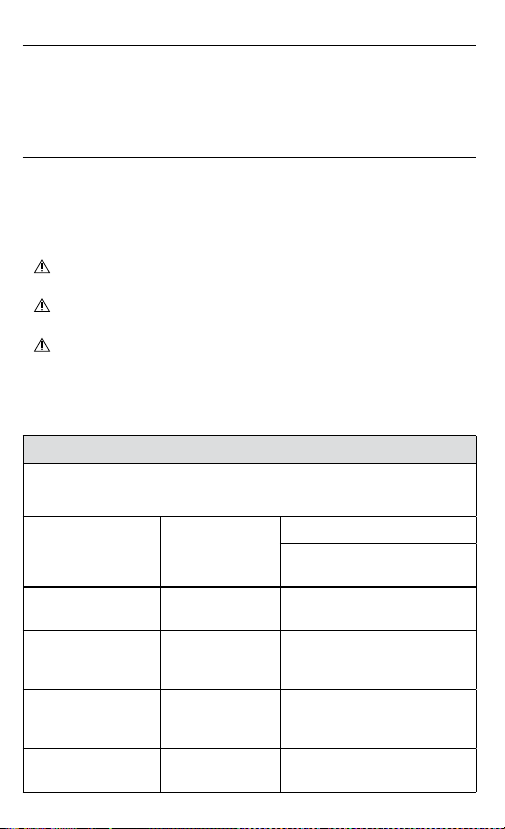
A. La presente garantía limitada de 1 año cubre la reparación o reemplazo del producto
si éste presenta un defecto de fábrica o de mano de obra. Esta garantía excluye todo
daño resultante del uso comercial, abusivo, o inadecuado del producto, o de daños
asociados. Los defectos resultantes del desgaste normal no se consideran defectos de
fábrica en virtud de la presente garantía. KAZ NO SERÁ CONSIDERADA RESPONSABLE
DE DAÑOS FORTUITOS O INDIRECTOS DE NINGUN TIPO. TODA GARANTÍA IMPLÍCITA DE
CALIDAD COMERCIAL O DE CONVENIENCIA CON UN FIN ESPECÍFICO RELACIONADA CON ESTE
PRODUCTO TENDRÁ LA MISMA VIGENCIA QUE LA PRESENTE GARANTÍA. En ciertos lugares
no se permite la exclusión o limitación de daños fortuitos o indirectos, ni los límites
e duración aplicables a una garantía implícita. Por consiguiente, es posible que estas
limitaciones o exclusiones no se apliquen en su caso. Esta garantía le confiere ciertos
derechos legales específicos. Es posible que usted también tenga otros derechos legales,
los que varían según la jurisdicción. La presente garantía solo es válida para el comprador
inicial del producto a partir de la fecha de compra.
B. A su discreción, Kaz reparará o reemplazará el presente producto si se constata que
presenta un defecto de fábrica o de mano de obra.
C. Esta garantía no cubre los daños ocasionados por tentativas de reparación no
autorizadas o por todo uso que no esté en concordancia con el presente manual.
Llámenos lada gratuita al 1-800-477-0457 o envíe un correo electrónico:
ConsumerRelations@HelenofTroy.com.
Por favor, asegúrese de especificar el número de referencia. NOTA: SI TIENE
PROBLEMAS, POR FAVOR LLAME PRIMERO A SERVICIO AL CLIENTE O CONSULTE
SU GARANTÍA. NO DEVUELVA EL PRODUCTO AL LUGAR ORIGINAL DE COMPRA. NO
INTENTE ABRIR EL DISPOSITIVO USTED MISMO, HACERLO PODRÍA ANULAR SU
GARANTÍA Y CAUSAR DAÑOS AL PRODUCTO O DAÑOS CORPORALES.
30
8: Calibración
El termómetro se calibra inicialmente en el momento de la fabricación. Si este termómetro se
utiliza de acuerdo con las instrucciones de uso, no es necesario un reajuste periódico. Si en algún
momento se cuestiona la exactitud de las mediciones de temperatura, por favor contáctenos.
9: Declaración de Compatibilidad Electromagnética (CEM)
1. Este equipo debe instalarse y ponerse en servicio de acuerdo con la información
proporcionada en la DOCUMENTACIÓN ADJUNTA;
Este producto necesita precauciones especiales con respecto a CEM y necesita ser
instalado y puesto en servicio de acuerdo con la información proporcionada de CEM, y esta
unidad puede verse afectada por equipos de comunicaciones de RF portátiles y móviles.
2. No utilice un teléfono móvil u otros dispositivos que emitan campos electromagnéticos
cerca de la unidad. Esto puede dar lugar a una operación incorrecta de la unidad.
3. Esta unidad ha sido probada e inspeccionada a fondo para asegurar el correcto
desempeño y operación.
4. Esta máquina no debe utilizarse adyacente o apilada con otros equipos y que si es
necesario un uso adyacente o apilado, se debe observar esta máquina para verificar la
operación normal en la configuración en la que se utilizará.
Guía y declaración del fabricante – inmunidad electromagnética
El VNT275 está diseñado para utilizarse en el entorno electromagnético que se especifica a
continuación. El cliente o el usuario del VNT275 debe asegurarse de que se utilice en dicho entorno.
Fenómeno Estándar Básico de
EMC o método de
prueba
Niveles de Prueba de Inmunidad
Entorno de Atención Médica en
el Hogar
Descarga Electrostática IEC 61000-4-2 ±8 kV contacto
±2 kV, ±4 kV, ±8 kV, ±15 kV aire
Campos EM de RF
radiado
a
IEC 61000-4-3 10 V/m
f
80 MHz – 2,7 GHz
b
80% AM a 1 kHz
c
Campos de proximidad de
equipos de comunicaciones
inalámbricas por RF
IEC 6100-4-3 Consulte la tabla de inmunidad
de equipos de comunicaciones
inalámbricas por RF a continuacion
Frecuencia energética
del campo magnético
d, e
IEC 6100-4-8 30 A/m
g
50 Hz o 60 Hz
31
Guía y declaración del fabricante – inmunidad electromagnética
a) La interfaz entre la simulación de señal fisiológica del PACIENTE, si se utiliza, y el EQUIPO
ME o el SISTEMA ME se ubicará dentro de los 0,1 m del plano vertical del área de campo
uniforme en una orientación al EQUIPO ME o el SISTEMA ME.
b) El EQUIPO ME y los SISTEMAS ME que reciban intencionalmente energía electromagnética
RF a los efectos de su funcionamiento se probarán a la frecuencia de recepción. Las pruebas
puede realizarse en otras frecuencias de modulación identificadas por el PROCESO DE
GESTIÓN DE RIESGOS. Esta prueba evalúa la SEGURIDAD BÁSICA y el RENDIMIENTO ESENCIAL
de un receptor intencional cuando hay señal ambiental en la banda de paso. Se entiende
que el receptor podría no lograr la recepción normal durante la prueba.
c) Las pruebas pueden realizarse en otras frecuencias de modulación identificadas por el
PROCESO DE GESTIÓN DE RIESGOS.
d) Aplica únicamente a el EQUIPO ME y los SISTEMAS ME con componentes o circuitos
magnéticamente sensibles.
e) Durante la prueba, el EQUIPO ME o el SISTEMA ME pueden alimentarse a cualquier voltaje
de entrada NOMINAL, pero con la misma frecuencia que la señal de prueba. (vea la Tabla 1)
f) Antes de aplicar la modulación.
g) Este nivel de prueba supone una distancia mínima entre el EQUIPO ME o el SISTEMA ME
y las fuentes de campo magnético de la frecuencia de potencia de al menos 15 cm. Si el
ANÁLISIS DE RIEGO demuestra que el EQUIPO ME o el SISTEMA ME se utilizarán con mayor
cercanía de 15 cm de fuentes de campo magnético de la frecuencia de potencia, el NIVEL DE
PRUEBA DE INMUNIDAD se ajustará según corresponda para la distancia mínima esperada.
Guía y declaración del fabricante – emisiones electromagnética
El VNT275 está diseñado para utilizarse en el entorno electromagnético que se especifica a
continuación. El cliente o el usuario del VNT275 debe asegurarse de que se utilice en dicho entorno.
Prueba de Emisiones Cumplimiento Entorno electromagnético – guía
Emisiones RF
CISPR 11
Grupo 1 El equipo ME utiliza energía de RF sólo para su
función interna. Por lo tanto, sus emisiones de
RF son muy bajas y no es probable que causen
interferencias en equipos electrónicos cercanos.
Emisiones RF
CISPR 11
Clase B
Cumple
Emisiones de armónicos
IEC 61000-3-2
No aplica
El equipo ME funciona solo con pilas
Fluctuaciones de tensión/
emisiones de parpadeo
No aplica
32
Guía y declaración del fabricante - Inmunidad de equipos de comunicaciones
inalámbricas por RF
Frecuencia
de Prueba
(MHz)
Banda
a
(MHz)
Servicio
a
Modulación
b
Potencia
Máxima
(W)
Distancia
(m)
Nivel de
Prueba de
Inmunidad
(V/m)
385
380 –
390
TETRA 400
Modulación
por impulsos
b
18 Hz
1,8 0,3 27
450
430 –
470
GMRS 460,
FRS 460
FM
c
±5 kHz
desviación
1 kHz sine
2 0,3 28
710
704 –
787
Banda LTE
13, 17
Modulación
por impulsos
b
217 Hz
0,2 0,3 9745
780
810
800 –
960
GSM
800/900.
TETRA 800,
IDEN 820,
CDMA 850,
Banda LTE 5
Modulación
por impulsos
b
18 Hz
2 0,3 28
870
930
1720
1700 –
1990
GSM 1800,
CDMA 1900,
GSM 1900,
DECT,
LTE Banda 1, 3,
4, 25, UMTS
Modulación
por impulsos
b
217 Hz
2 0,3 28
1845
1970
2450
2400 –
2570
Bluetooth,
WLAN,
802.11 b/g/n,
RFID 2450,
Banda LTE 7
Modulación
por impulsos
b
217 Hz
2 0,3 28
5240
5100 –
5800
WLAN
802.11,
a/n
Modulación
por impulsos
b
217 Hz
0,2 0,3 95500
5785
a) Para algunos servicios, solo se incluyen las frecuencias de enlace ascendente. b) La portadora debe modularse con una señal
de onda cuadrada con ciclo de trabajo del 50%. c) Como alternativa, si no se puede utilizar la modulación FM, se puede
recurrir a la modulación por impulsos del 50% a 18 Hz aunque no represente la modulación real, en el peor de los casos.


34
12JAN21
P/N: A005127R2
Contáctenos
¿Preguntas o Comentarios?
Llámenos lada gratuita al: 1-800-477-0457Correo
Electrónico: ConsumerRelations@HelenofTroy.com
Visite: www.VicksThermometers.com
Por favor asegúrese de especificar el número de modelo.
© 2020 Todos los Derechos Reservados.
Kaz USA, Inc., una Empresa de Helen of Troy
400 Donald Lynch Blvd., Suite 300
Marlborough, MA 01752
Ciertas marcas comerciales utilizadas bajo licencia de
The Procter & Gamble Company o sus filiales.
Hecho en China

35
Brand: Vicks
Category: Thermometer
Model:
VNT275US
Subject: Owners Manual
Artwork Part #: A005127R2
Die Line Part #: N/A
Region: US
Flat Size:
MM: W170 x H147.5
Folded Size:
MM: W85 x H147.5
Material:
Page count: 34
50# Uncoated
Revision: 7
Release Date:
Date:
12JAN21
Scale: 1/1
Rerelease Date:
Colors:
Special Instructions:
Dielines (Do not print)
Cyan
0%
Magenta
0%
Yellow
0%
Black
100%
Helen of Troy
Creative Services
Marlborough, MA 01752 USA
+1 508 490 7000
Quality Requirement of Artwork and Quality
Clarification Process of Artwork Printing:
Meet Eng-QS-06&02
Creative Department
Artwork Specifications
13JAN21