
Table of Contents
3
EN
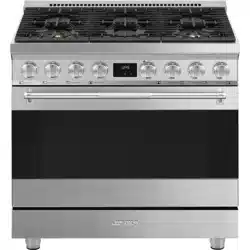
1 Description 13
1.1 General Description 13
1.2 Cooktop 13
1.3 Control panel 14
1.4 Other parts 15
1.5 Available accessories 15
2Use 17
2.1 Instructions 17
2.2 Using the accessories 19
2.3 Using the cooktop 20
2.4 Using the oven 23
2.5 Programming clock 24
2.6 Using the temperature probe 28
2.7 Cooking advice 31
3 Cleaning and maintenance 35
3.1 Instructions 35
3.2 Cleaning the cooktop 36
3.3 Cleaning the door 36
3.4 Cleaning the oven cavity 38
3.5 Steam clean function 39
3.6 Special maintenance 40
WARNING
Never Operate the Top Surface Cooking Section of this Appliance
Unattended.
• Failure to follow this warning statement could result in fire,
explosion, or burn hazard that could cause property damage,
personal injury, or death.
• If a fire should occur, keep away from the appliance and
immediately call your fire department.
DO NOT ATTEMPT TO EXTINGUISH AN OIL/GREASE FIRE
WITH WATER.
We advise you to read this manual carefully, which contains all the instructions for
maintaining the appliance’s aesthetic and functional qualities.
For further information on the product: www.smeg.com
Important Safety Instructions
4
Important Note to the Customer
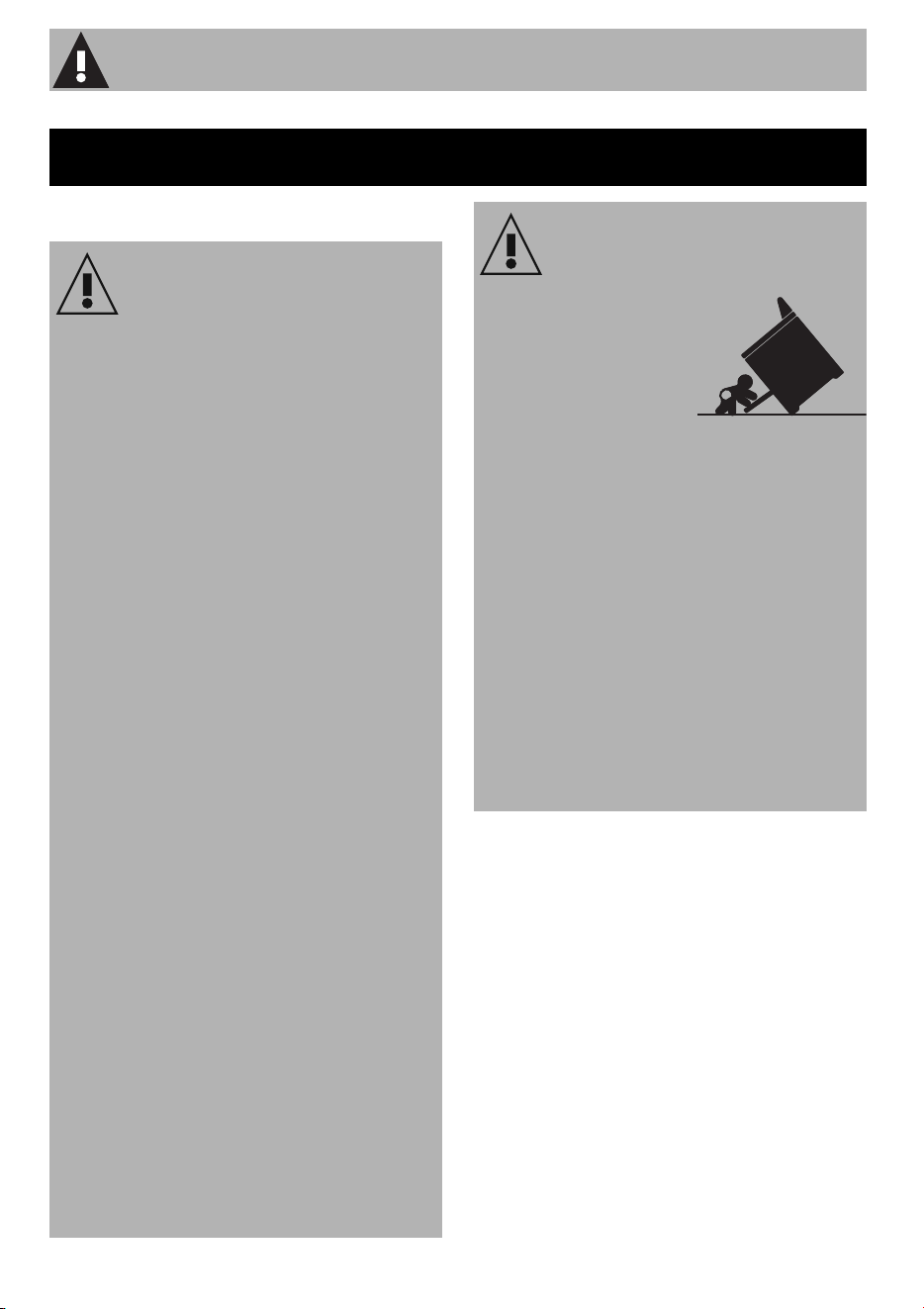
• Check for proper installation and
use of the anti-tip bracket.
Carefully tip the range forward
by pulling it from the back to
ensure that the anti-tip bracket
engages the range leg and
prevents tip-over. The range
should not move more than 1”
(2.5cm).
IMPORTANT SAFETY INSTRUCTIONS
WARNING
If the instructions contained in this
manual are not followed precisely,
a fire or explosion may result
causing property damage,
personal injury or loss of life.
FOR YOUR SAFETY
• Do not store or use gasoline or
other flammable vapors, liquids
or materials near this or any
other appliance.
WHAT TO DO IF YOU SMELL
GAS
• Do not try to light any
appliance.
• Do not touch any electrical
switch.
• Do not use any telephones in
your building.
• Immediately call your gas
supplier from a neighbor's
phone. Follow the gas supplier's
instructions.
• If you cannot reach your gas
supplier, call the fire
department.
• Installation and service must be
performed by a qualified
installer, service company or
gas supplier.
WARNING: Tip Over Hazard
• A child or adult
could tip the
range over and
be killed.
• Verify the anti-tip
device has been properly
installed and engaged.
• Ensure the anti-tip device is re-
engaged when the range is
moved.
• Do not operate the range
without the anti-tip device in
place and engaged.
• Failure to follow these
instructions can result in death or
serious burns to children and
adults.
Important Safety Instructions
5
EN
• Read all instructions before using
this appliance.
• This manual contains important
safety symbols and instructions.
Please pay attention to these
symbols and follow all instructions
given.
• Do not attempt to install or
operate your appliance until you
have read the safety precautions
in this manual. Safety instructions
throughout this manual are
labeled with a WARNING or
CAUTION statement based on
the risk type.
• Warnings and important
instructions appearing in this
guide are not meant to cover all
possible conditions and situations
that may occur. Common sense,
caution, and care must be
exercised with installing,
maintaining or operating your
appliance.
• Keep these instructions with your
owner's guide for future
reference.
Definitions
• This manual contains important
safety symbols and instructions.
Please pay attention to these
symbols and follow all instructions
given.
Unpacking and installation
• Remove all tape and packaging
before using the appliance.
Dispose of the packaging after
unpacking the appliance. Never
allow children to play with
packaging material.
• Remove all temporary labels from
the oven and cooktop.
• Record the Model and Serial
number on Page 2 of this booklet.
The Model and Serial numbers
are on the Cooker ID plate. The
plate is visibly located on the right
side of the oven door frame. THE
ID PLATE MUST NOT BE
REMOVED.
WARNING
This symbol will help alert you to
situations that may cause serious bodily
harm, death or property damage.
CAUTION
This symbol will help alert you to
situations that may cause injury or
property damage.

Important Safety Instructions
6
• Do not leave the packing
materials around the home. Sort
the various items of waste and
take them to the nearest
specialized waste collection
facility.
• Cold temperatures can damage
the electronic control. If this
appliance has not been used for
a long time, make sure that it has
been stored at temperatures
above 32°F (0°C) for at least 3
hours before turning power on.
• Never modify or alter the
construction of the appliance. For
example, do not remove leveling
legs, panels, wire covers or anti-
tip brackets/screws.
• Be sure to have an appropriate
foam-type fire extinguisher
available, clearly visible and
easily accessible located near
the appliance.
• All materials used to make
cabinets, enclosures, and
supports surrounding the product
must have a temperature rating of
above 200°F (94°C).
Grounding instructions
• Fire hazard or electrical shock.
• Failure to follow these instructions
may result in electrical shock or
other personal injury.
• Do not use an adapter.
• Do not use an extension cord.
• For appliances equipped with a
cord and plug, do not cut or
remove the ground prong. It must
be plugged into a matching
grounding type receptacle to
avoid electrical shock, fire,
serious injury, or death. If there is
any doubt as to whether the wall
receptacle is properly grounded,
the customer should have it
checked by a qualified
electrician.
• Installation must conform with
local codes or, in the absence of
local codes, with the National
Fuel Gas Code, ANSI Z223.1/
NFPA 54 or, in Canada, the
Natural Gas and Propane
Installation Code, CSA B149.1.
• The appliance must be electrically
grounded in accordance with
local codes or, in the absence of
local codes, with the National
Electrical Code, NFPA 70 latest
edition or, in Canada, the
Canadian Electric Code, CSA
C22.1-02.
Important Safety Instructions
7
EN
• Install only as per the installation
instructions provided in the
documentation received with this
appliance.
• It is the personal responsibility of
the consumer to have the
appropriate outlet or junction box
with the correct, properly
grounded wall receptacle
installed by a qualified
electrician.
• It is the responsibility and
obligation of the consumer to
contact a qualified installer to
assure that the electrical
installation is adequate and is in
conformance with all local codes
and ordinances.
• See the installation instructions
provided with this appliance for
complete installation and
grounding instructions.
Instructions for using the appliance
• Flammable materials should not
be stored in the oven, near
surface burners or elements, or in
the storage or warmer drawer (if
provided). This includes paper,
plastic, and cloth items, such as
cookbooks, plasticware and
towels, as well as flammable
liquids.
• Do not store explosives, such as
aerosol cans, on or near the
appliance.
• DO NOT LEAVE CHILDREN
UNATTENDED: Children should
not be left alone or unattended in
the area where the appliance is
being used. Never allow children
to sit or stand on any part of the
appliance.
WARNING
Never leave children alone or
unattended in the area where an
appliance is in use. As children grow,
teach them the proper, safe use of all
appliances. Never leave the oven door
open when the cooker is unattended.
CAUTION
Do not store items of interest to children in
cabinets above a cooker or on the
backguard of a cooker - children
climbing on the cooker to reach items
could be seriously injured
Important Safety Instructions
8
• Do not allow children to climb or
play around the appliance. The
weight of a child on an open
oven door may cause the
appliance to tip, resulting in
serious burns or other injury. An
open drawer when hot may
cause burns.
• Do not attempt to repair or
replace any part of this appliance
unless specifically recommended
in this manual. All other servicing
should be done by a qualified
technician.
• For safety reasons and to avoid
damage to your appliance, never
sit, stand or lean on the oven
door.
• PLACE THE OVEN RACKS IN
THE DESIRED POSITION WHILE
THE OVEN IS COOL: If a rack
must be removed while the oven is
hot, do not allow the potholders
to come in contact with the broil.
• USE CAUTION WHEN
OPENING THE OVEN DOOR:
Allow hot air or steam to escape
before removing or placing foods
in the oven.
WARNING
• NEVER cover any slots, holes or
passages in the oven bottom or
cover an entire rack with
materials such as aluminum foil.
Doing so blocks air flow through
the oven and may lead to
carbon monoxide poisoning.
Aluminum foil linings may also
trap heat, causing a fire hazard.
• NEVER use this appliance as a
space or room heater. Doing so
may result in carbon monoxide
poisoning and cause the
appliance to overheat.
• In case of fire or a gas leak, turn
off the main gas shutoff valve.

Important Safety Instructions
9
EN
• Do not leave the packing
materials around the home. Sort
the various items of waste and
take them to the nearest
specialized waste collection
facility.
• Do not obstruct oven vents or
openings for air intake.
• ELECTRICAL GROUNDING IS
REQUIRED. It is the customer’s
responsibility:
• To contact a qualified electrician.
• To ensure that the electrical system
is adequate and in compliance
with the National Electrical Code
ANSI / NFPA 70 Electrical Code
– latest edition – Or the
CANADIAN ELECTRICAL
CODE, C22.11 – 1982 and
C22.2 No. 01982 – or latest
edition – and all local codes and
ordinances.
• Always check that the controls are
in the "zero" (off) position when
the range is not in use.
• Use only pots or pans with a
perfectly smooth, flat bottom on
the range surface burners. NEVER
USE THE RANGETOP AS A
WORK SURFACE.
• Do not attempt to repair or
replace any part of this appliance
unless specifically recommended
in this manual. All other servicing
should be done by a qualified
technician.
• Never use any part of the range
or oven for storage. Flammable
materials can ignite and plastic
items may melt or burst into flame.
• Do not hang articles on any part
of the appliance or place
anything against the oven. Some
fabrics are extremely flammable
and could ignite.
• IMPORTANT: After a spill or
boilover, turn off the burner and
clean around it. After cleaning,
check that the burner functions
properly.
• WARNING: NEVER cover any
slots, holes or passages in the
oven bottom or cover an entire
rack with materials such as
aluminium foil. Doing so blocks air
flow through the oven and may
cause carbon monoxide
poisoning. Aluminium foil linings
may also trap heat, causing a fire
hazard.

Important Safety Instructions
10
• Prevent aluminum foil from
contacting the heating elements.
• Never leave the range
unattended when using high heat
settings. Boilover can cause
smoke and spattered grease can
ignite.
• Not all types of glass, thermally
resistant glass-ceramic, ceramic,
earthenware, or other glazed
cookware are suitable for range
use. This type of cookware can
break with sudden temperature
changes. Use only on low or
medium heat settings in
accordance with the instructions
supplied by the manufacturer.
• DO NOT HEAT UNOPENED
FOOD CONTAINERS: A buildup
of pressure can cause the
containers to burst.
• DO NOT USE FLAMMABLE
PRODUCTS TO CLEAN THE
RANGE.
• Do not clean, rub, damage or
remove the oven door gasket. It is
essential for a good, tight seal
during baking and when the self-
clean cycle is engaged. Replace
the oven door gasket if it
becomes damaged or encrusted
with food residue.
• BEFORE BAKING OR BROILING
FOR THE FIRST TIME, turn on the
oven and broiler to burn off any
dirt, oil or grease remaining from
the manufacturing process. Turn
the oven on and set to 450°F
(230°C) for 20 to 30 minutes.
Cleaning and maintenance
instructions
• Be sure all range burner controls
are turned off and that the
cooktop is cool before using any
type of cleaning product. The
chemical elements in these
products could, in the presence of
heat, ignite or cause corrosion of
metal parts.
• DO NOT USE FLAMMABLE
PRODUCTS TO CLEAN THE
COOKER.
Important Safety Instructions
11
EN
• Do not clean, rub, damage or
remove the oven door gasket. It is
essential for a good, tight seal
during baking and when the self-
clean cycle is engaged. Replace
the oven door gasket if it
becomes damaged or encrusted
with food residues.
• ONLY QUALIFIED SERVICE
PERSONNEL SHOULD
PERFORM REPAIRS. Service
personnel must disconnect the
power supply before servicing this
unit.
• Make sure that your cooker is
properly secured and the anti-tip
device is correctly installed. Refer
to the instructions in the installation
manual.
• Unlike the standard gas cooker,
THIS COOKTOP IS NOT
REMOVABLE. Do not attempt to
remove the cooktop.
• Do not touch the halogen light
bulb directly with your fingers, but
wrap it in insulating material.
This appliance has been tested and
found to comply with the limits for a
class B digital device, pursuant to
Part 18 of the FCC rules (United
States) and ICES-001 (Canada).
These limits are designed to provide
reasonable protection against
harmful interference in a residential
installation. This unit uses and can
radiate radio frequency energy that
may interfere with radio
communications if not installed and
used in accordance with the
instructions manual.
WARNING
Do not repair, replace or remove any
part of the appliance unless specifically
recommended in the manuals. Improper
installation, service or maintenance can
cause injury or property damage. Refer
to this manual for guidance. All other
servicing should be done by an
authorized service provider.
State of California Proposition 65
WARNING
Cancer or Reproductive Harm -
www.P65Warnings.ca.gov
Important Safety Instructions
12
However, there is no guarantee that
interference will not occur in a
particular installation. If this unit does
cause interference to radio or
television reception, which can be
determined by turning the unit off and
on, the user is encouraged to try to
correct the interference by one or
more of the following measures:
• Reorient or relocate the receiving
antennas.
• Increase distance between unit
and receiver.
• Connect the unit into an outlet or a
circuit different from the one to
which the receiver is connected.
How to read the user manual
This user manual uses the following reading
conventions:
1. Use instruction sequence.
• Single use instructions.
SAVE THESE INSTRUCTIONS
Instructions
General information on this user
manual, on safety and final
disposal.
Description
Description of the appliance and its
accessories.
Use
Information on the use of the
appliance and its accessories,
cooking advice.
Cleaning and maintenance
Information for proper cleaning and
maintenance of the appliance.
Safety instructions
Information
Advice
Description
13
EN
1 Description
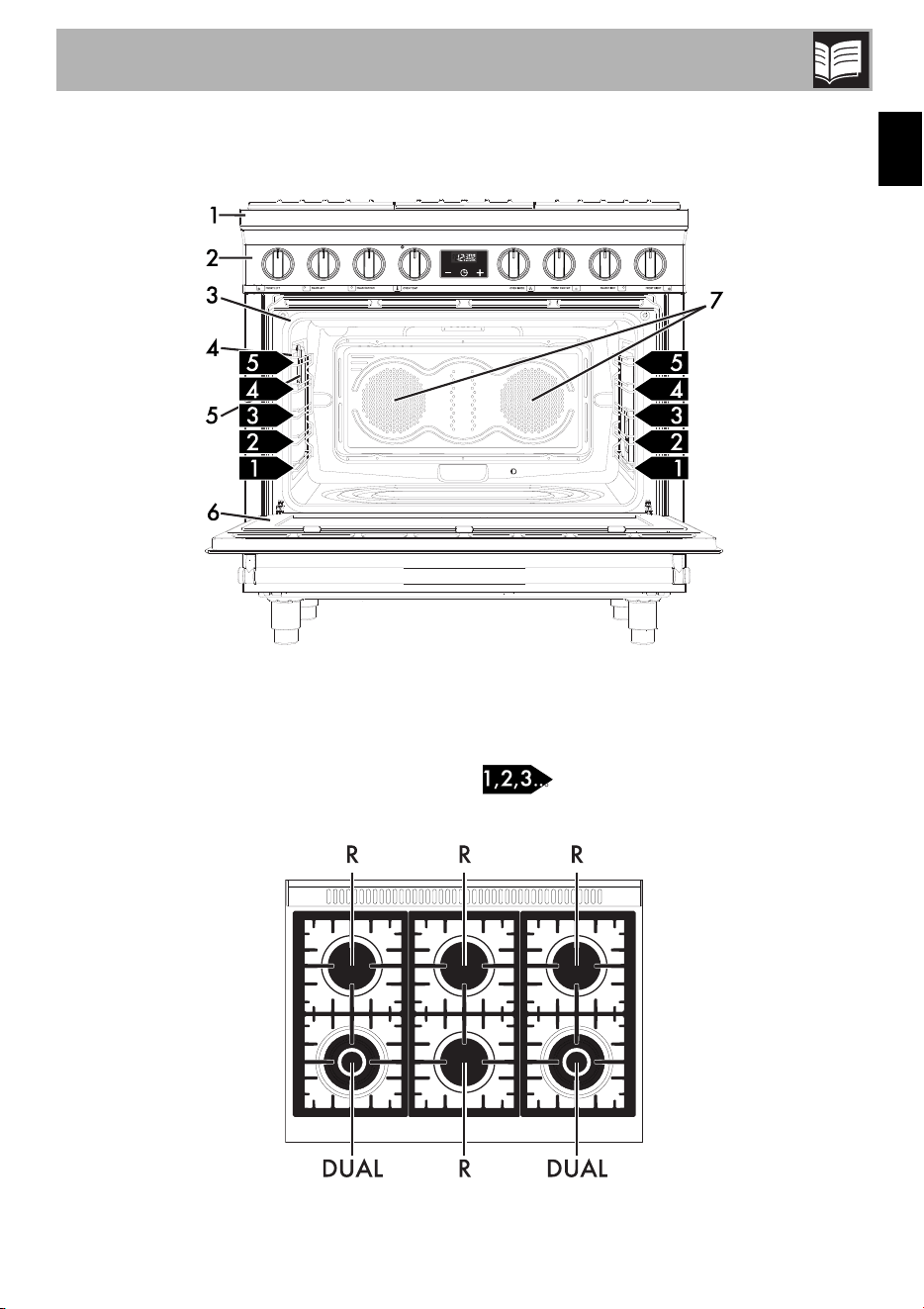
1.1 General Description
1 Cooktop
2 Control panel
3 Seal
4 Temperature probe socket
5 Oven light
6 Door
7 Fan
Rack/tray support frame shelf
1.2 Cooktop
R = Rapid DUAL = Ultra-rapid
Description
14
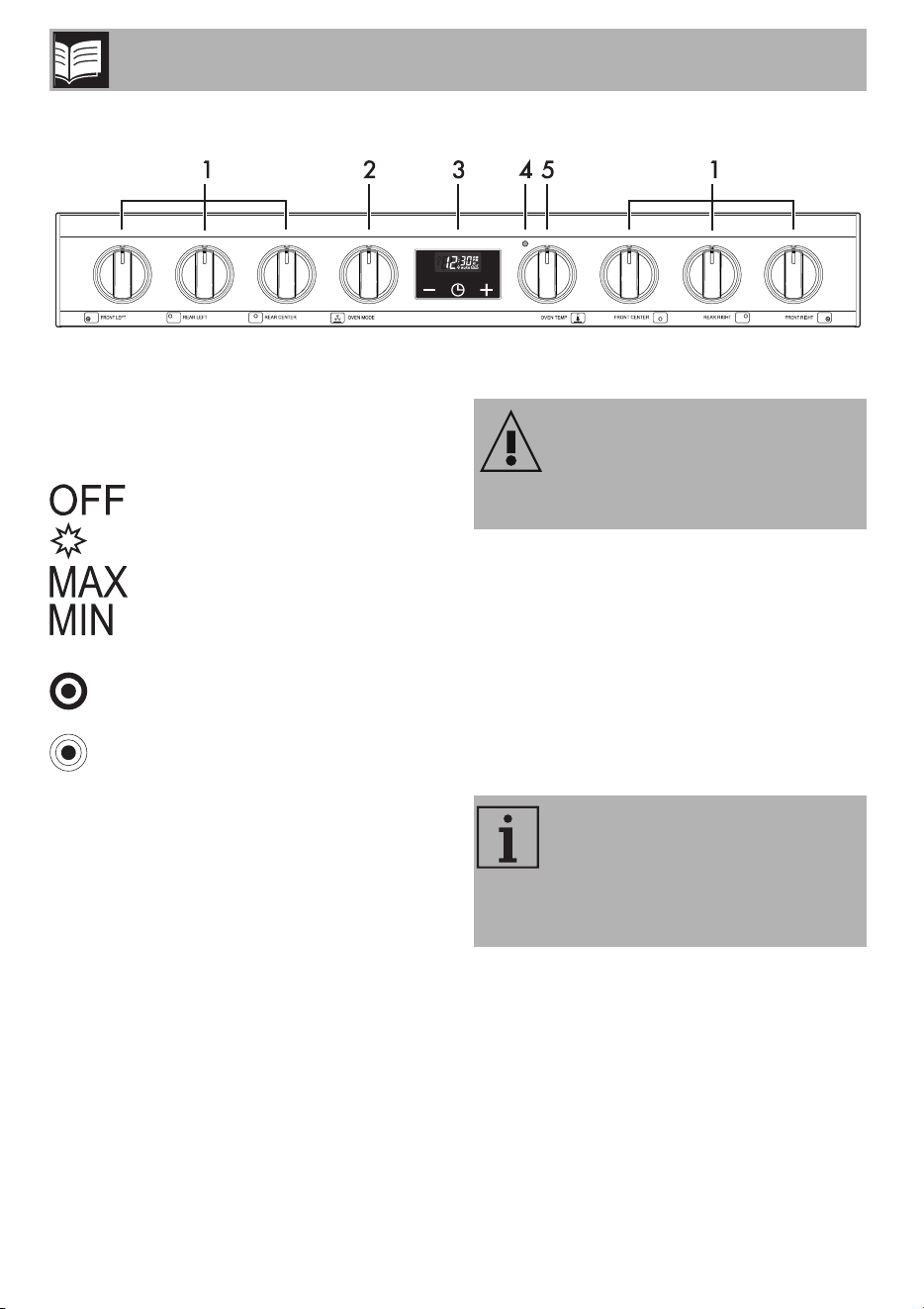
1.3 Control panel
1 Cooktop burner knobs
Used for lighting and adjusting the burners.
The following markings appear on each
cooktop knob:
burner OFF position;
burner electric ignition;
burner MAX flame setting;
burner MIN flame setting.
On the DUAL cooktop knob:
burner outer and inner ring flame
setting;
burner inner ring flame setting.
2 Function knob
The oven's various functions are suitable for
different cooking modes. After selecting the
required function, set the cooking
temperature using the temperature knob.
3 Programmer clock
Used for displaying the current time and
setting the timer.
4 Hot oven indicator light
The indicator light comes on to indicate that
the oven is hot. Each time the indicator light
comes on, the appliance emits an acoustic
signal.
Depending on the set temperature (from
250 to 500°F) it will activate after about
10-12 minutes of operation.
It switches off when the oven cavity has
cooled down.
5 Temperature knob
This knob allows you to select the cooking
temperature. Turn the knob clockwise to the
required value between the minimum and
maximum settings.
CAUTION
High temperature inside the oven.
NOTE: In Broil mode, the indicator
light remains off. It lights up at the
end of the function during the
cooling phase to indicate that the
oven is still hot.
Description
15
EN
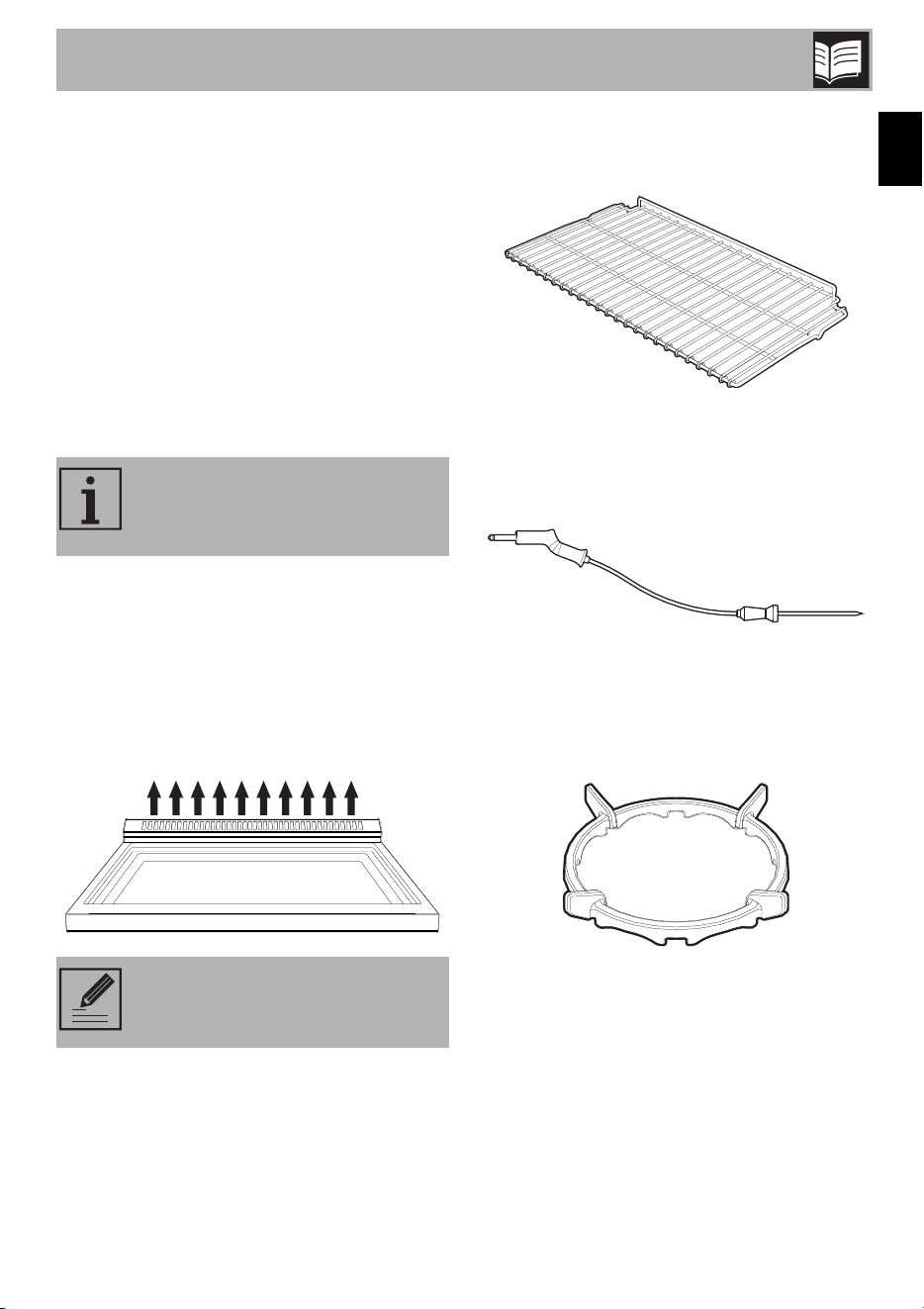
1.4 Other parts
Shelves
The appliance is fitted with shelf supports to
position trays and racks at different heights.
The insertion heights are indicated from the
bottom upwards (see 1.1 General
Description).
Interior lighting
The appliance’s interior lighting comes on:
• When the door is opened.
• When any function is selected.
Cooling fan
The fan cools the oven and comes into
operation during cooking.
The fan causes a steady outflow of air that
exits from the rear of the appliance, which
may continue for a brief period of time even
after the appliance has been turned off.
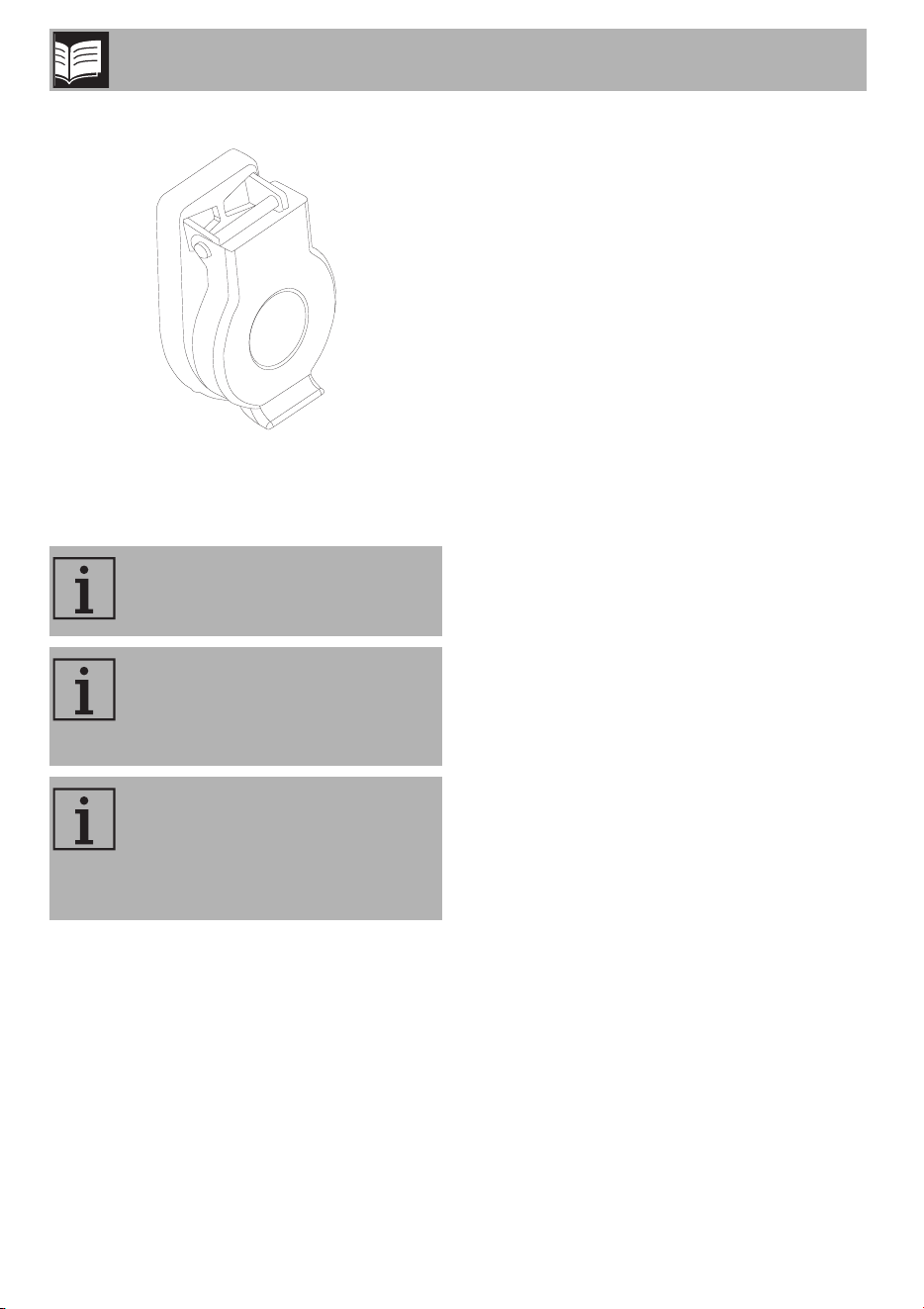
1.5 Available accessories
Rack
Used to hold containers containing food to
be cooked.
Temperature probe
With the temperature probe, you can cook
according to the temperature measured at
the center of the food.
WOK ring (not included)
Useful when using a wok.
NOTE: When the door is open, it
is not possible to turn off the interior
lighting.
NOTE: Do not obstruct ventilation
openings and heat dispersal slots.
Description
16
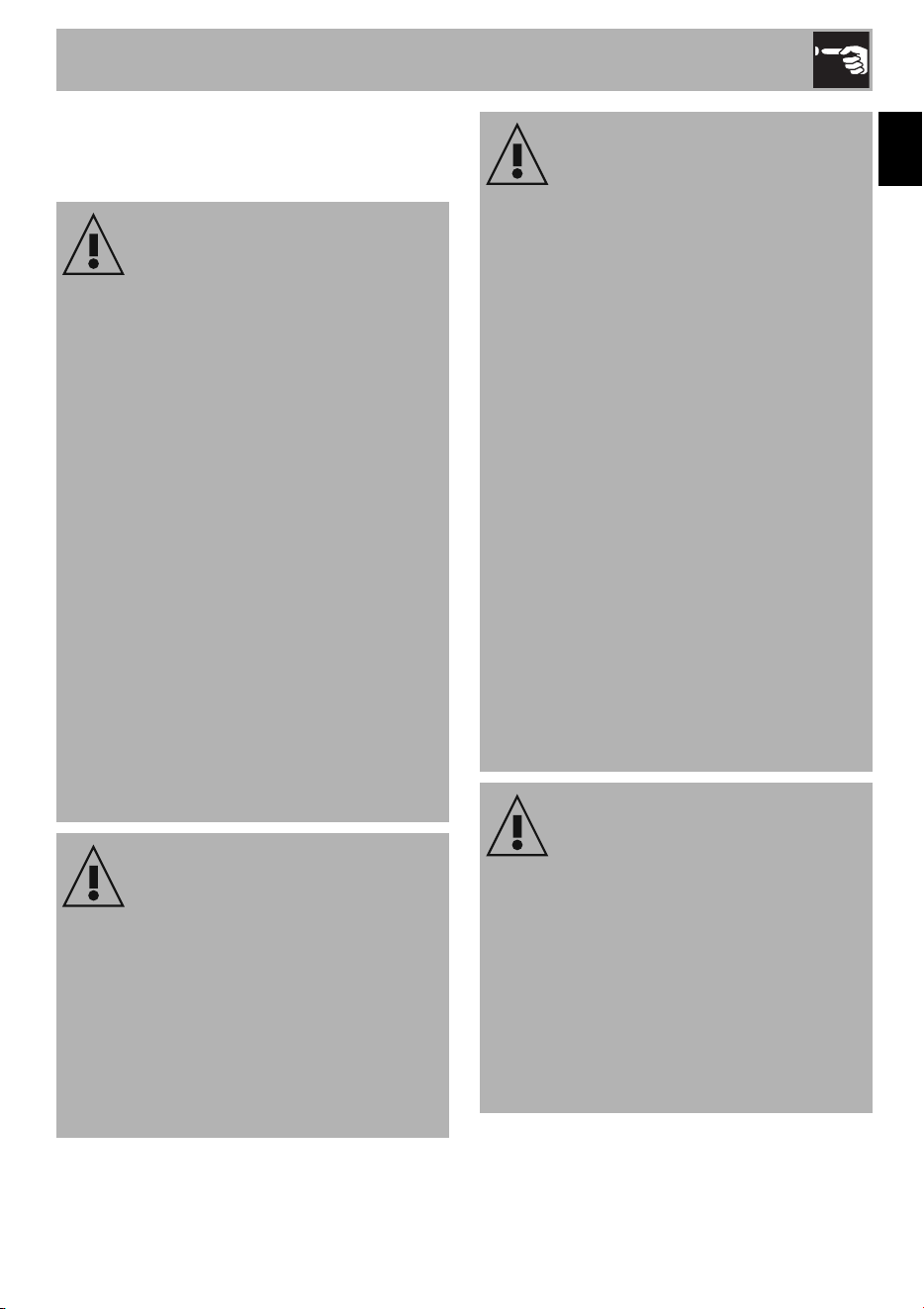
Protective cover
Used to cover and protect the temperature
probe socket when the temperature probe
is not in use.
NOTE: Some models are not
provided with all accessories.
NOTE: The accessories intended
to come into contact with food are
made of materials that comply with
the provisions of current legislation.
NOTE: Supplied and optional can
be requested from Authorized
Assistance Centers. Use only
original accessories supplied by
the manufacturer.
Use
17
EN
2 Use
2.1 Instructions
WARNING
Danger of burns
High temperature inside the oven during
use
• Keep the oven door closed when the
appliance is in use.
• Protect your hands by wearing oven
gloves when moving food inside the
oven.
• Do not touch the heating elements inside
the oven.
• Do not pour water directly onto very hot
trays.
• Keep children under the age of 8 away
from the appliance when it is in use.
• If you need to move food or at the end of
cooking, open the door 5 cm for a few
seconds, let the steam come out, then
open it fully.
WARNING
Danger of burns
Improper use
• Make sure that the flame-spreader
crowns are correctly positioned in their
seats with their respective burner caps.
• Oils and grease could catch fire if
overheated. Be very careful.
CAUTION
Risk of damage to surfaces
Improper use
• Do not cover the bottom of the oven
cavity with aluminum or tin foil sheets.
• If you wish to use greaseproof paper,
place it so that it will not interfere with the
hot air circulation inside the oven.
• Do not place pans or trays directly on the
bottom of the oven cavity.
• Do not use the open door to rest pans or
trays on the internal glass pane.
• Do not pour water directly onto very hot
trays.
• Cooking vessels or griddle plates should
be placed inside the perimeter of the
cooktop.
• All pans must have smooth, flat bottoms.
• If any liquid does boil over or spill,
remove the excess from the cooktop.
WARNING
Danger of burns
High temperature inside the storage
compartment.
• Do not open the storage compartment
when the appliance is on and still hot.
• The items inside the storage compartment
could be very hot after using the
appliance.

Use
18
A gas leak can cause an explosion.
If you smell gas or there are faults in the gas
system:
• Immediately turn off the gas supply or
close the valve on the gas cylinder.
• Extinguish all naked flames and
cigarettes.
• Do not turn on power switches or
appliances and do not remove plugs
from power sockets. Do not use phones
or mobile phones inside the building.
• Open the window in order to ventilate
the room.
• Call customer assistance services or your
gas supplier.
Malfunctions
Any of the following indicate a malfunction
and you should contact a service center.
• Yellowing of the burner plate.
• Damage to kitchen utensils.
• The burners do not ignite properly.
• It is difficult to keep the burners lit.
• The burners go out when the appliance
is in use.
• It is difficult to turn the gas valves.
If the appliance does not work properly,
contact your local Authorized Assistance
Center.
First-time use of the range
1. Remove any protective film from the
outside or inside of the appliance,
including accessories.
2. Remove any labels (apart from the
technical data plate) from the
accessories and from the oven cavity.
3. Remove and wash all the appliance
accessories (see 3 Cleaning and
maintenance).
4. Heat the empty appliance to the
maximum temperature to burn off any
residues left by the manufacturing
process.
WARNING
Danger of fire or explosion
High temperature inside the oven during
use
• Do not spray any products near the
appliance.
• Do not use or leave flammable materials
near the appliance or the storage
compartment.
• Do not use plastic cookware or
containers when cooking food.
• Do not put sealed tins or containers in the
oven.
• Do not leave the appliance unattended
during cooking operations where fats or
oils could be released.
• Remove all trays and racks which are not
required during cooking.
Use
19
EN
2.2 Using the accessories
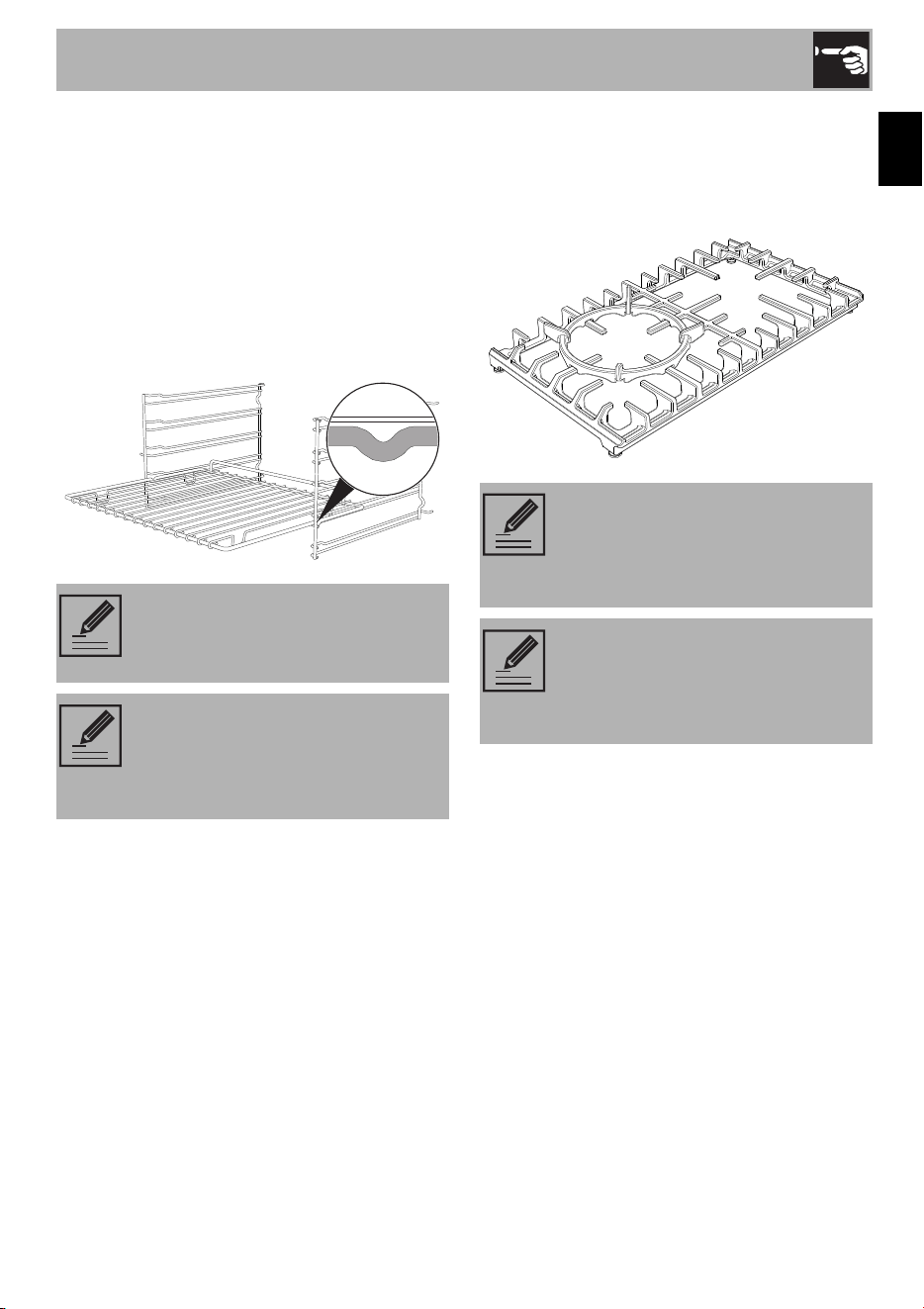
Racks and trays
Racks and trays have to be inserted into the
side guides until they come to a complete
stop.
The mechanical safety locks that prevent the
rack from being taken out accidentally have
to face downwards and towards the oven
back.
WOK ring (not included)
The WOK ring reducer has to be placed
on the cooktop grates. Make sure it is
properly placed.
NOTE: Gently insert racks and
trays into the oven until they come
to a stop.
NOTE: Clean the trays before
using them for the first time to
remove any residues left by the
manufacturing process.
NOTE: For best results, we
recommend using the WOK rack
only on the Ultra-rapid DUAL
burner.
NOTE: If a WOK ring is used on
the Ultra-rapid DUAL burner, the
right rear Reduced-rapid burner
must be left off.
Use
20
2.3 Using the cooktop
All the appliance's control and monitoring
devices are located together on the front
panel. The burner controlled by each knob
is shown next to the knob. The appliance is
equipped with an electronic ignition device.
Simply press the knob and turn it counter-
clockwise to the maximum flame symbol
until the burner lights. If the burner does not
light in the first 15 seconds, turn the knob to
and wait 5 minutes before trying
again.
After lighting, keep the knob pressed in for
a few seconds to allow the thermocouple to
heat up. The burner may go out when the
knob is released: in this case, the
thermocouple has not heated up sufficiently.
Wait a few moments and repeat the
operation. Keep the knob pressed in
longer.
To operate the cooktop burners
1. Press and turn the knobs counter-
clockwise to the value to light the
relative burners.
2. Turn the knobs to the zone between
and to adjust the flame.
3. Return the knobs to the position
to turn off the burners.
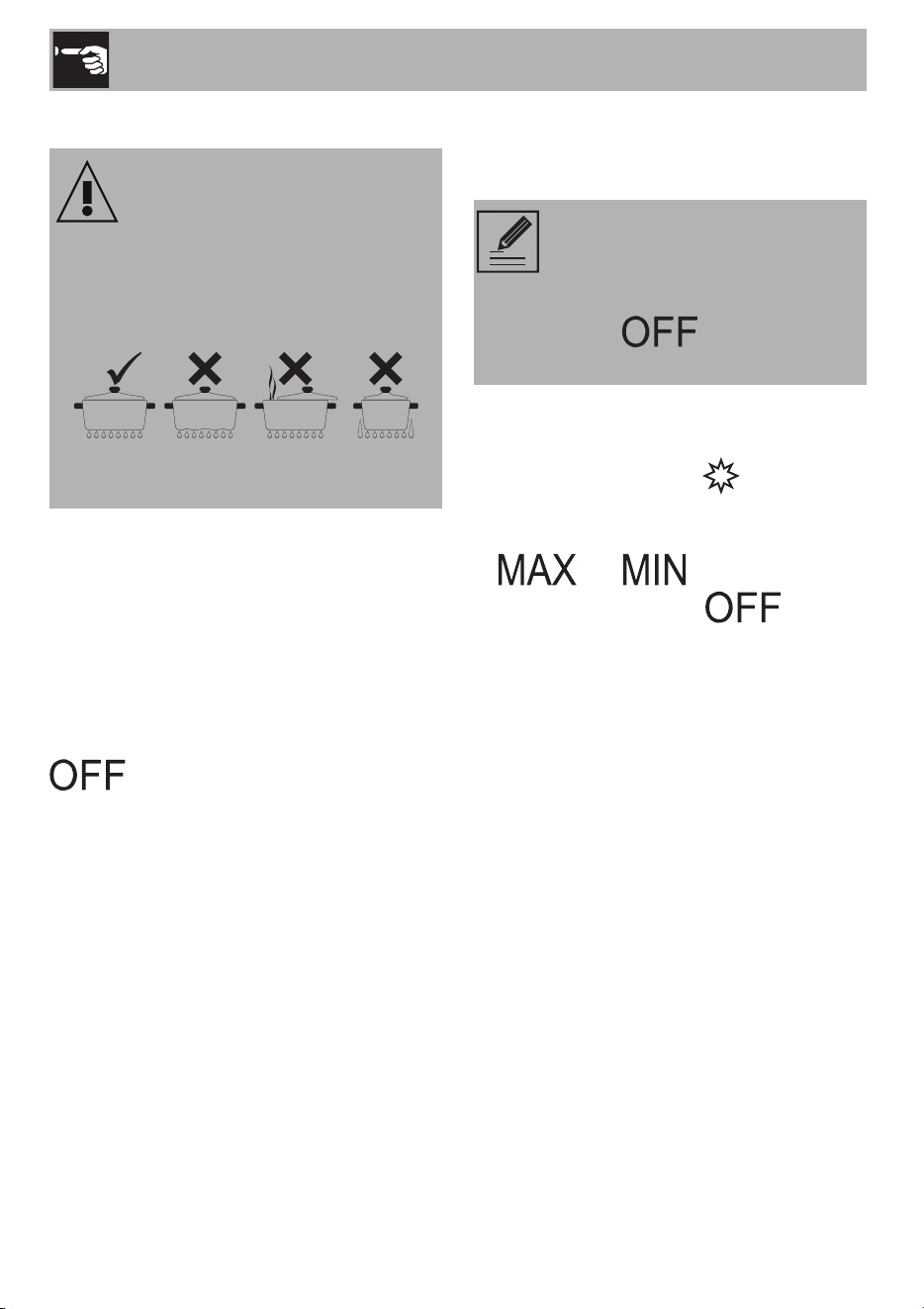
WARNING
Fire Hazard
• For your safety: do not allow the burner
flame to extend beyond the edge of the
pan.
• Turn off all controls when the cooktop is
not in use.
NOTE: If it is turned off by
accident, a safety device will trip,
shutting off the gas supply, even if
the gas tap is open. Return the
knob to and wait at least
5 minutes before lighting it again.
Use
21
EN
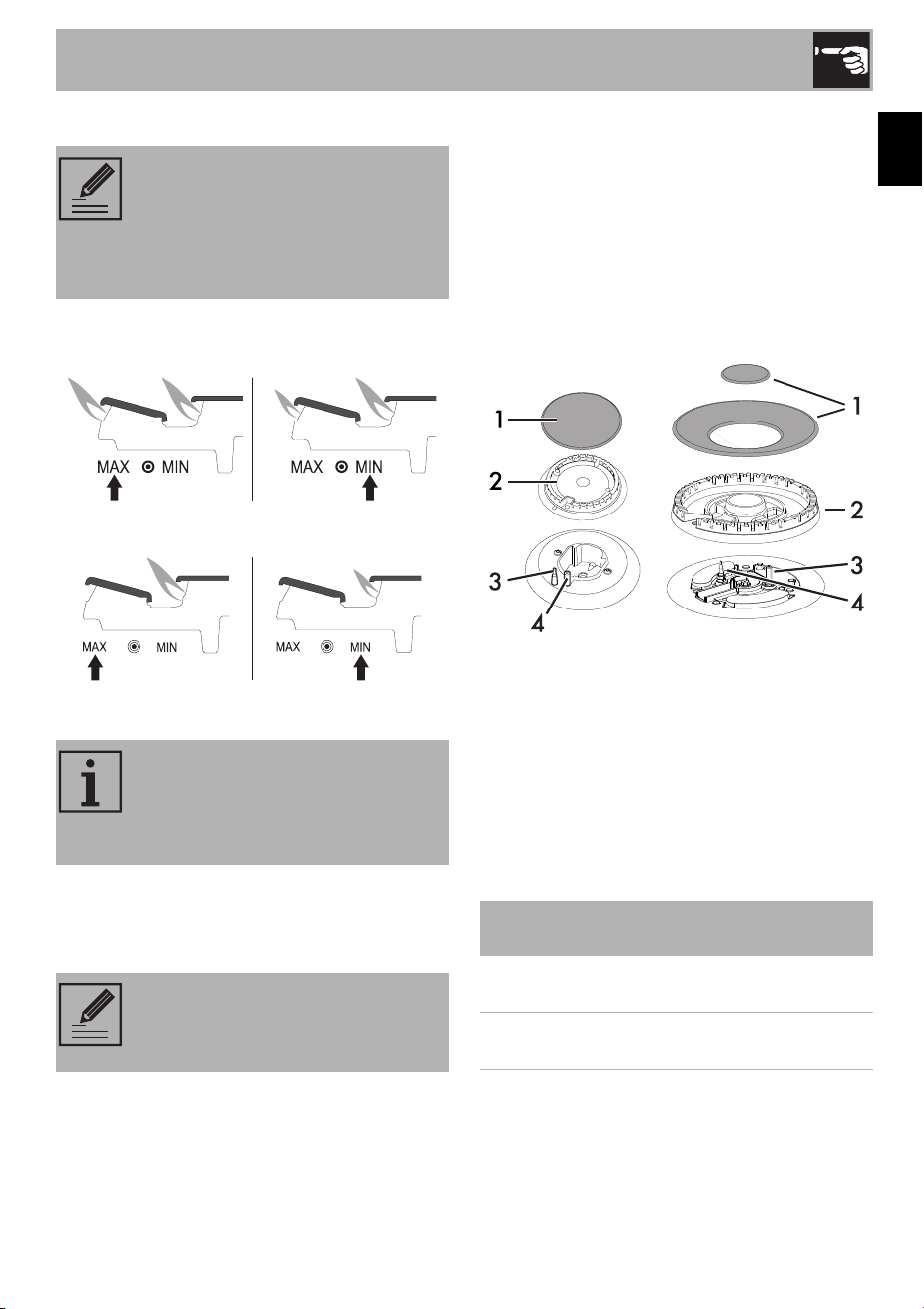
Setting the DUAL flame size
Refer to the following diagrams:
Outer ring
Inner ring
Simmer function
1. Switch on the DUAL burner internal cup.
2. Set the flame to the minimum.
3. Leave the external cup off.
Correct positioning of the flame-
spreader crowns and burner caps
Before lighting the cooktop burners, make
sure that the flame-spreader crowns are
correctly positioned in their seats with their
respective burner caps. Make sure that the
holes 1 of the flame-spreader crowns 2 are
aligned with the thermocouples 3 and
igniters 4.
Practical tips for using the cooktop
For better burner efficiency and to minimize
gas consumption, use pans with lids and of
suitable size for the burner so that the flames
do not reach up the sides of the pan. Once
the contents come to the boil, turn down the
flame far enough to ensure that the liquid
does not boil over.
Cookware diameters
NOTE: The inner ring will be lit
when you light the outer ring on
either high or low flame settings. It
is not possible to light the outer ring
without lighting the inner one.
NOTE: This function is extremely
useful for melting food like butter,
chocolate or similar and for
simmering small quantities of food.
NOTE: If the external cup switches
on at full power, set half power at
least for the internal cup.
Burner
Ø min. - max.
inches cm
R
7
1
/
8
- 9
7
/
16
18 - 24
DUAL
7
1
/
8
- 10
1
/
4
18 - 26

Use
22
Cookware
Ideally, cookware should have a flat
bottom, straight sides, a tight-fitting lid and
medium-to-heavy thickness.
Rough cookware finishes may scratch the
cooktop. Aluminum and copper may be
used in cookware as a core material or for
the base. However, when used as a base
they can leave permanent marks on the
cooktop or grates.
Cookware properties are a factor in how
quickly and evenly heat is distributed, which
affects cooking results. A non-stick finish has
the same characteristics as its base material.
For example, a non-stick finish on aluminum
cookware will take on the properties of
aluminum.
Refer to the following chart as a guide to
the physical properties of cookware.
Aluminum
• Heats quickly and evenly.
• Suitable for all types of cooking.
• Medium or heavy thickness is best for
most cooking tasks.
Cast iron
• Heats slowly and evenly.
• Good for browning and frying.
• Maintains heat for slow cooking.
Ceramic or glass-ceramic
• Follow the manufacturer’s instructions.
• Heats slowly but unevenly.
• Best results with low to medium heat
settings.
Copper
• Heats very quickly and evenly.
Earthenware
• Follow the manufacturer’s instructions.
• Use low heat settings.
Porcelain enameled steel or cast iron
• See stainless steel or cast iron.
Stainless steel
• Heats quickly but unevenly.
• Stainless steel cookware with an
aluminum or copper core or bottom
provides even heating.
Use
23
EN
2.4 Using the oven
To switch on the oven:
1. Select the cooking function using the
function knob.
2. Select the temperature using the
temperature knob.
3. If you wish, you can set the a timed
cooking with the programmer clock. If
you avoid using the programmer clock
and thus setting a manual cooking you
have to stop the oven manually by
turning both the temperature and the
function knobs to the OFF position.
Functions list
WARNING
Fire Hazard
• Keep the oven door closed when the
appliance is in use.
NOTE: If there is no power, the
cooling fan will not work. Do not
try to switch on the oven manually.
BAKE
As the heat comes from above and below
at the same time, this system is particularly
suitable for certain types of food. Traditional
cooking, also known as static cooking, is
suitable for cooking just one dish at a time.
Perfect for all types of roasts, bread and
cakes, and in any case, particularly suitable
for fatty meats such as goose and duck.
CONV BOTTOM
The combination of the fan with just the
bottom heating element allows cooking to
be completed more rapidly. This system is
recommended for sterilizing or for finishing
off the cooking of foods which are already
well-cooked on the surface, but not inside,
which therefore need a little more heat.
Perfect for any type of food.
BROIL
Using the heat released from the central
part of the broil element, this function allows
you to grill small portions of meat and fish
for making kebabs, toasted sandwiches
and any types of grilled vegetable side
dishes
BROIL MAX
The heat coming from the whole broil
element gives perfect grilling results above
all for thin and medium thickness meat and
in combination with the rotisserie (where
fitted) gives the food an even browning at
the end of cooking. This function is perfect
for sausages, ribs and ham. This function
enables large quantities of food,
particularly meat, to be grilled evenly.
CONV BROIL
The airflow produced by the fan softens the
strong heatwave generated by the broil
element, grilling perfectly even very thick
foods. Perfect for large cuts of meat (e.g.
shin of pork).
Use
24
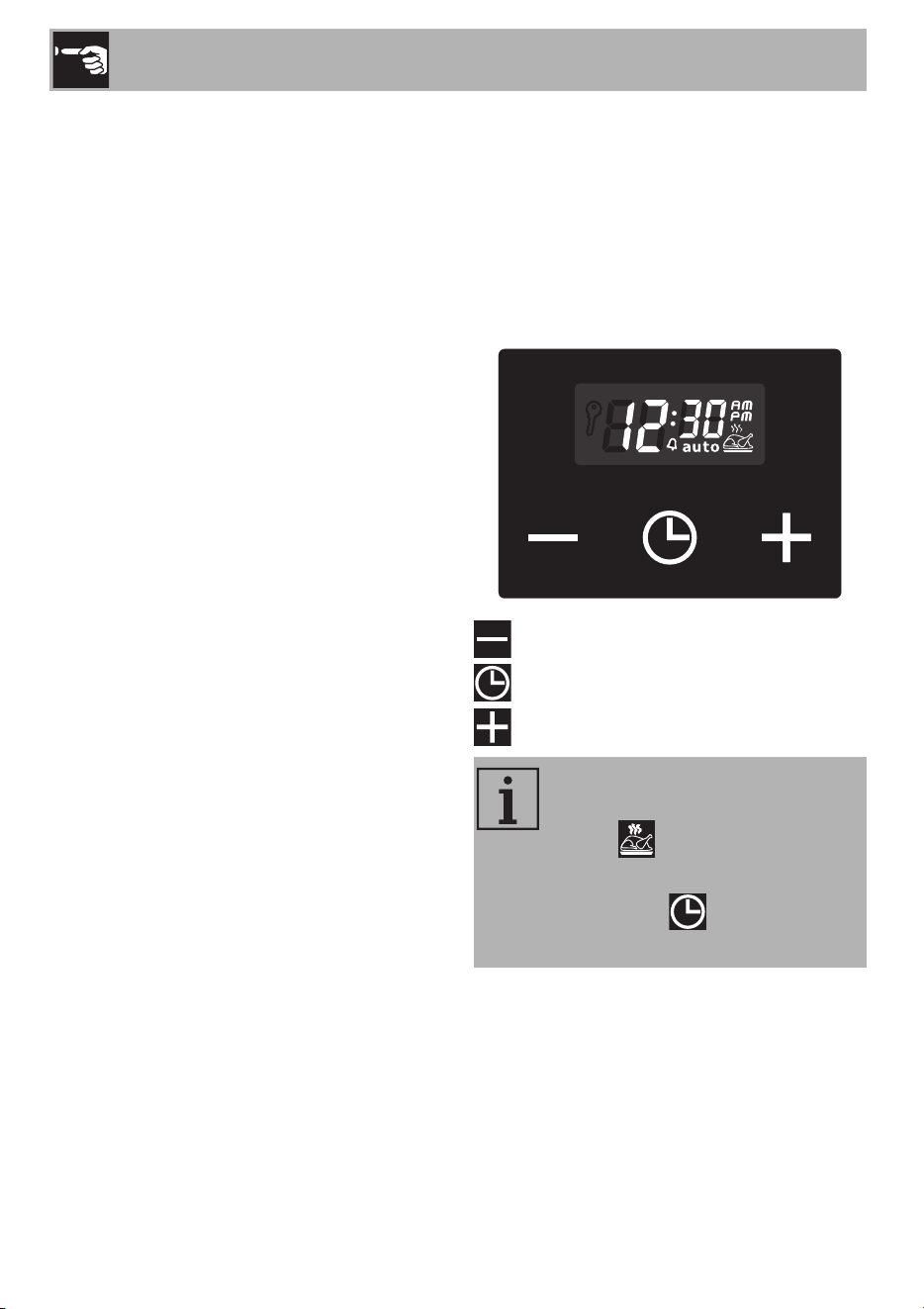
2.5 Programming clock
Value decrease key
Clock key
Value increase key
CONV BAKE
The operation of the fan, combined with
traditional cooking, ensures consistent
cooking even with complex recipes. Perfect
for biscuits and cakes, even when
simultaneously cooked on several levels.
(For multiple-level cooking, we recommend
using the 2nd and 4th shelves)
TRUE CONV
The combination of the fan and the circular
heating element (incorporated in the rear of
the oven) allows you to cook different foods
on several levels, as long as they need the
same temperatures and same type of
cooking. Hot air circulation ensures instant
and even distribution of heat. It will be
possible, for instance, to cook fish,
vegetables and biscuits simultaneously (on
different levels) without odours and flavours
mingling.
STEAM CLEAN
This function makes cleaning easier using
the steam produced by a little quantity of
water poured onto the appropriate groove
placed on the bottom (see “Steam clean
function”).
DEFROST (Rapid)
Rapid defrost is assisted by the activation of
a fan to ensure uniform distribution of room
temperature air inside the oven. This
function can be used for any type of food.
PIZZA
The operation of the fan, combined with the
broil and the bottom heating element,
ensures uniform cooking even with complex
recipes. Perfect not just for pizzas, but also
for biscuits and cakes
Ensure that the programmer clock
shows the cooking duration
symbol , otherwise it will not
be possible to turn on the oven.
Press the key to reset the
programmer clock.
Use
25
EN
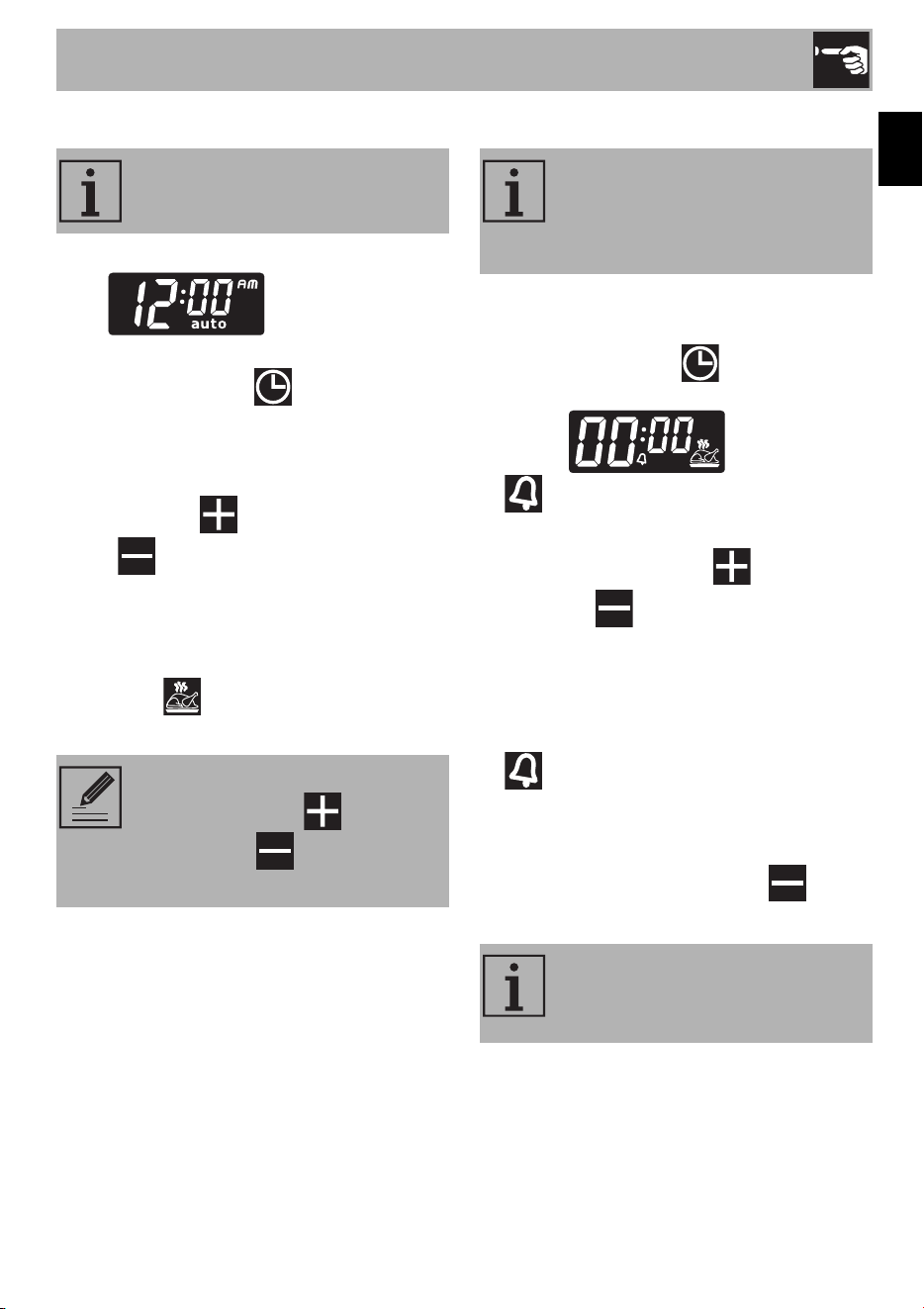
Setting the time
On the first use, or after a power failure, the
digits will be flashing on
the appliance’s display.
1. Keep the clock key for two seconds.
The dot between the hours and the
minutes flashes.
2. The time can be set via the value
increase key and value decrease
key . Keep the key pressed in to
increase or decrease rapidly.
3. Wait 7 seconds. The dot between the
hours and the minutes stops flashing.
The symbol on the display indicates
that the appliance is ready to start cooking.
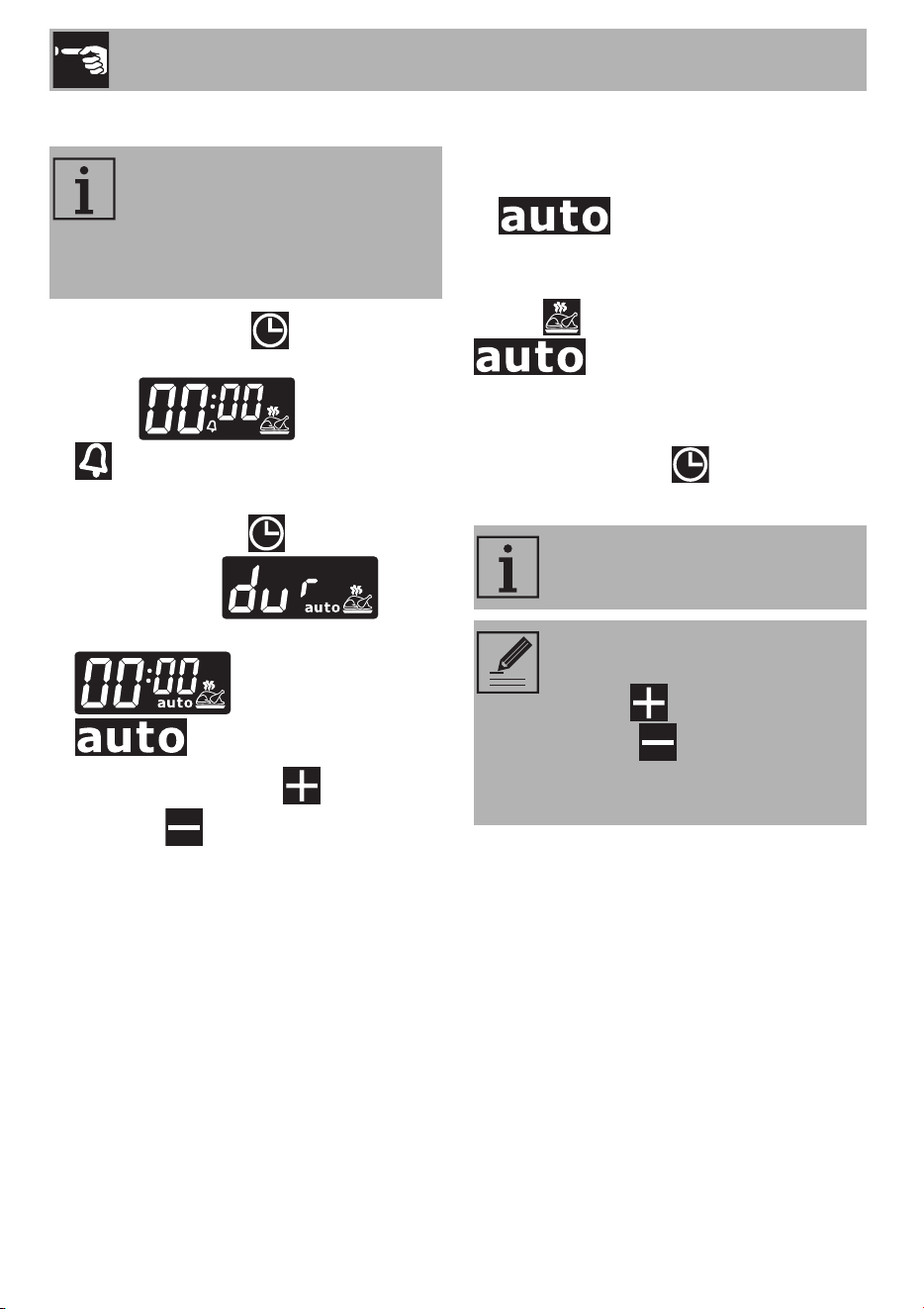
Minute minder timer
The minute minder timer can be activated at
any time.
1. Keep the clock key pressed for a
few seconds. The display shows the
figures and the symbol
flashing between the hours and
minutes.
2. Use the value increase and value
decrease keys to set the number of
minutes required.
3. Wait approx. 5 seconds without pressing
any key to finish setting the minute
minder. The current time and the symbol
appear on the display.
4. A buzzer will sound when the set time is
reached.
5. Press the value decrease key to turn
the buzzer off.
If the time is not set, the oven will
not switch on.
To change the time, hold down the
value increase key and value
decrease key at the same time
for two seconds, then set the time.
The minute minder timer does not
stop the cooking operation but
rather informs the user when the set
time has run out.
The minute minder timer can be set
from 1 minute to a maximum of 23
hours and 59 minutes.
Use
26
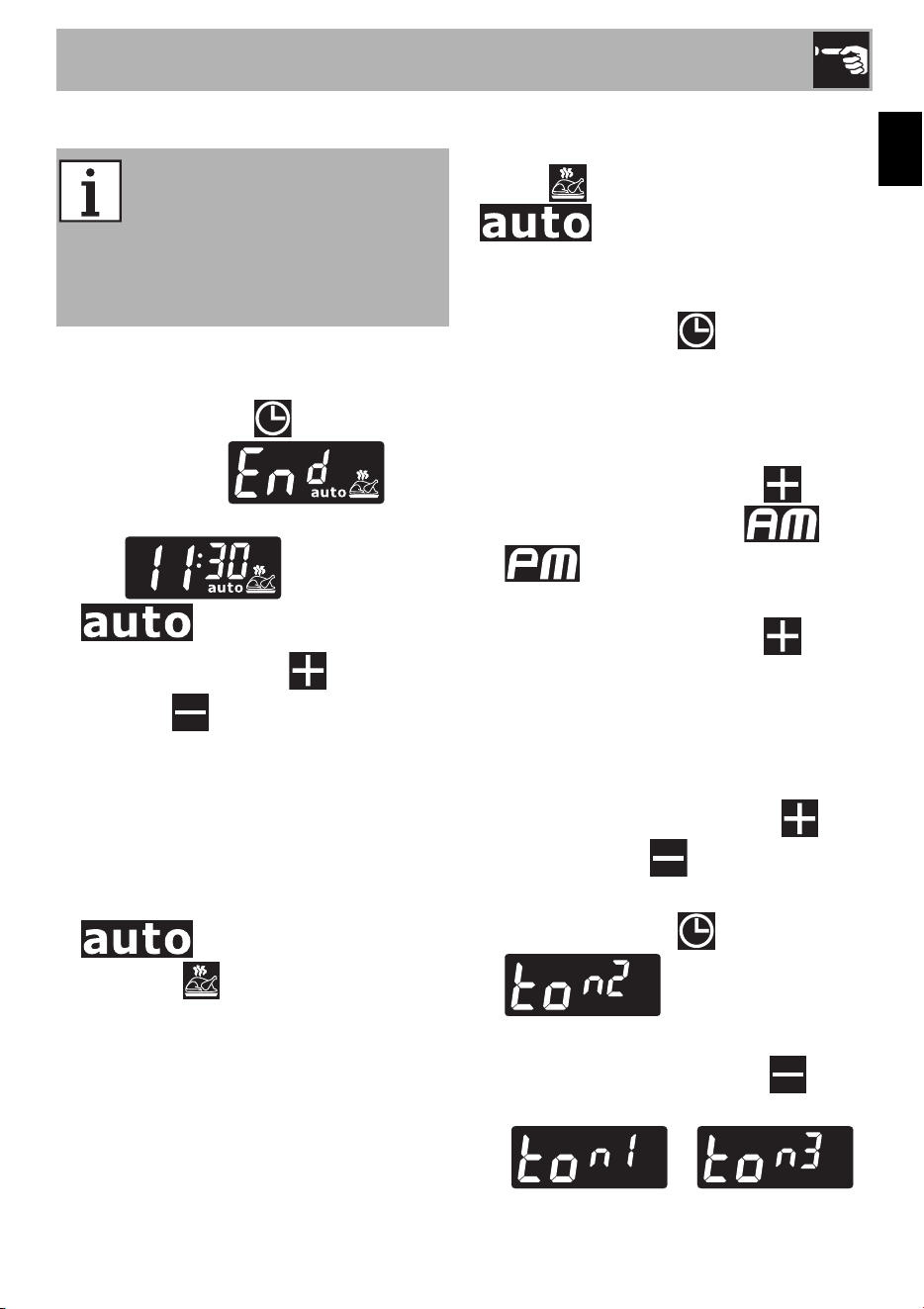
Timed cooking
1. Keep the clock key pressed for a
few seconds. The display shows the
figures and the symbol
flashing between the hours and
minutes.
2. Press the clock key again. On the
display the digit
appear alternating with the digit
and the symbol
flashing under the minutes.
3. Use the value increase and value
decrease keys to set the required
minutes of cooking.
4. Select a function and a cooking
temperature.
5. Wait approx. 5 seconds without pressing
any key in order for the function to
activate. The current time and the symbol
will appear on the display.
At the end of cooking the heating elements
will be deactivated. On the display, the
symbol turns off, the symbol
flashes and the buzzer sounds.
6. To turn the buzzer off, simply press one of
the programmer clock keys.
7. Press the clock key to reset the
programmer clock.
Timed cooking is the function
which allows a cooking operation
to be started and then ended after
a specific length of time set by the
user.
It is not possible to set a cooking
time of more than 10 hours.
To cancel the set programming
press and hold down the value
increase and the value
decrease keys at the same
time and then turn the oven off
manually.
Use
27
EN
Programmed cooking
1. Set the cooking time as described in the
previous point “Timed cooking”.
2. Press the clock key again. On the
display the digit
appear alternating with the current timen
digit and the symbol
flashing under the minutes.
3. Use the value increase and value
decrease to set the cooking end
time.
4. Select a function and a cooking
temperature.
5. Wait approx. 5 seconds without pressing
any key in order for the function to
activate. The current time and the symbol
will appear on the display.
The simbol disappear on the
display.
At the end of cooking the heating elements
will be deactivated. On the display, the
symbol turns off, the symbol
flashes and the buzzer sounds.
6. To turn the buzzer off, simply press one of
the programmer clock keys.
7. Press the clock key to reset the
programmer clock.
12h or 24h format
The default mode is 12h format.
1. Keep the value increase key for a
few seconds. The symbols or
disappear on the display and
24h format is set.
2. Keep the value increase key
pressed for a few seconds to go back to
the 12h format.
Selecting the buzzer
The buzzer can have 3 tones.
1. Hold down the value increase and
value decrease keys at the same
time.
2. Press the clock key . The digit
appears on the
display.
3. Press the value decrease key to
select a different buzzer tone
( or ).
Programmed cooking is the
function which allows a cooking
operation to be started at a set
time and then ended after a
specific length of time set by the
user.
Use
28
2.6 Using the temperature probe
With the temperature probe, roasts, pork
loin and various cuts and sizes of meat can
be cooked to perfection.
The probe, in fact, allows foods to be
cooked to perfection because it accurately
monitors the core temperature of the food.
The core temperature of the food is
measured by a sensor located in the tip of
the probe.
High temperature of the
temperature probe
Danger of burns
• Do not touch the rod or the tip of the
probe after having used it.
• Wear oven gloves when handling the
temperature probe.
Improper use
Risk of damage to surfaces
• Take care not to scratch or damage
enamelled or chrome-plated surfaces
with the tip or the plug of the
temperature probe.
Improper use
Risk of damage to the appliance
• Do not insert the probe into openings
and slots on the appliance.
• When the probe is not in use, make sure
that the protective cover is properly
closed.
Improper use
Risk of injury
• Do not leave the temperature probe
unattended.
• Do not allow children to play with the
probe.
• Take care not to injure yourself on the
sharp parts of the probe.
Improper use
Risk of damage to temperature
probe
• Do not pull the cable to remove the
probe from the socket or from the food.
• Make sure that the probe or its cable do
not get caught in the door.
• No part of the probe should be allowed
to come into contact with the walls of the
oven cavity, the heating elements, the
racks or the trays when they are still hot.
• When not in use, the probe should not
be kept inside the appliance.
• Make sure the plug of the probe is fully
inserted into the socket.
• Do not use the probe to place food into
or to remove it from the oven cavity.
Use
29
EN
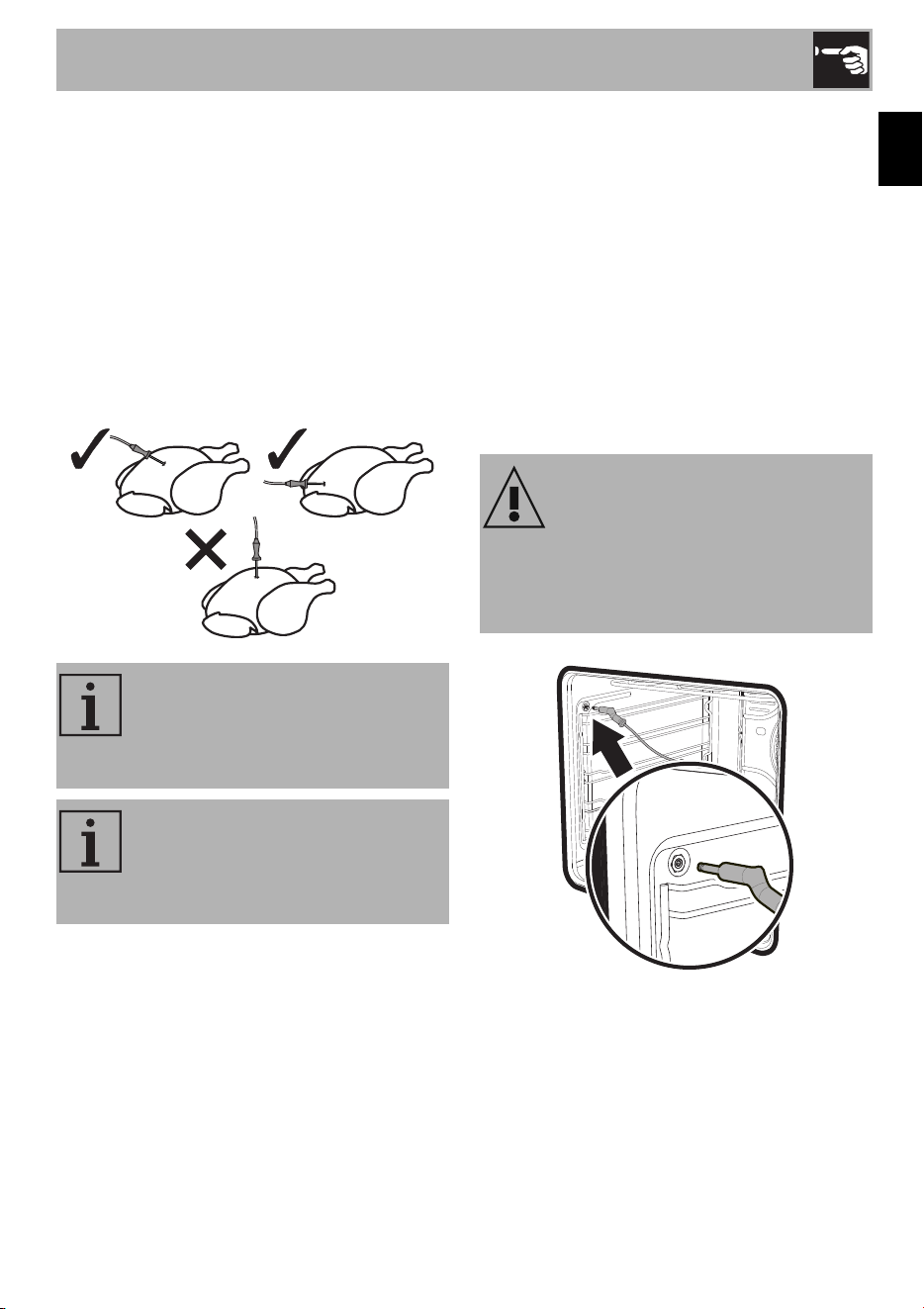
Positioning the probe
1. Place the food on a tray.
2. Insert the tip of the probe into the food
before placing it in the oven.
3. For best results, make sure that the
temperature probe is placed transversely
in the thickest part of the food and for
least 3/4 of its length. Make sure that it
does not touch the tray underneath and
that it does not protrude from the food.
Cooking using the temperature probe
With preheating:
1. Set manual cooking (see “Using the
oven”).
2. After preheating, open the door and
insert the tray onto which the food has
been placed into the appropriate
guides.
3. Insert the plug of the probe into the
socket at the side, using the probe to
open the cover.
In order for the probe to measure
the core temperature of the food
precisely, its tip must not be in
contact with bones or fat.
The minimum recommended oven
temperature when cooking using
the probe is 250°F, unless slow
cooking is used (see Chap. 2.7).
High temperature inside the oven
during use
Danger of burns
• Wear oven gloves when handling the
temperature probe.
Use
30
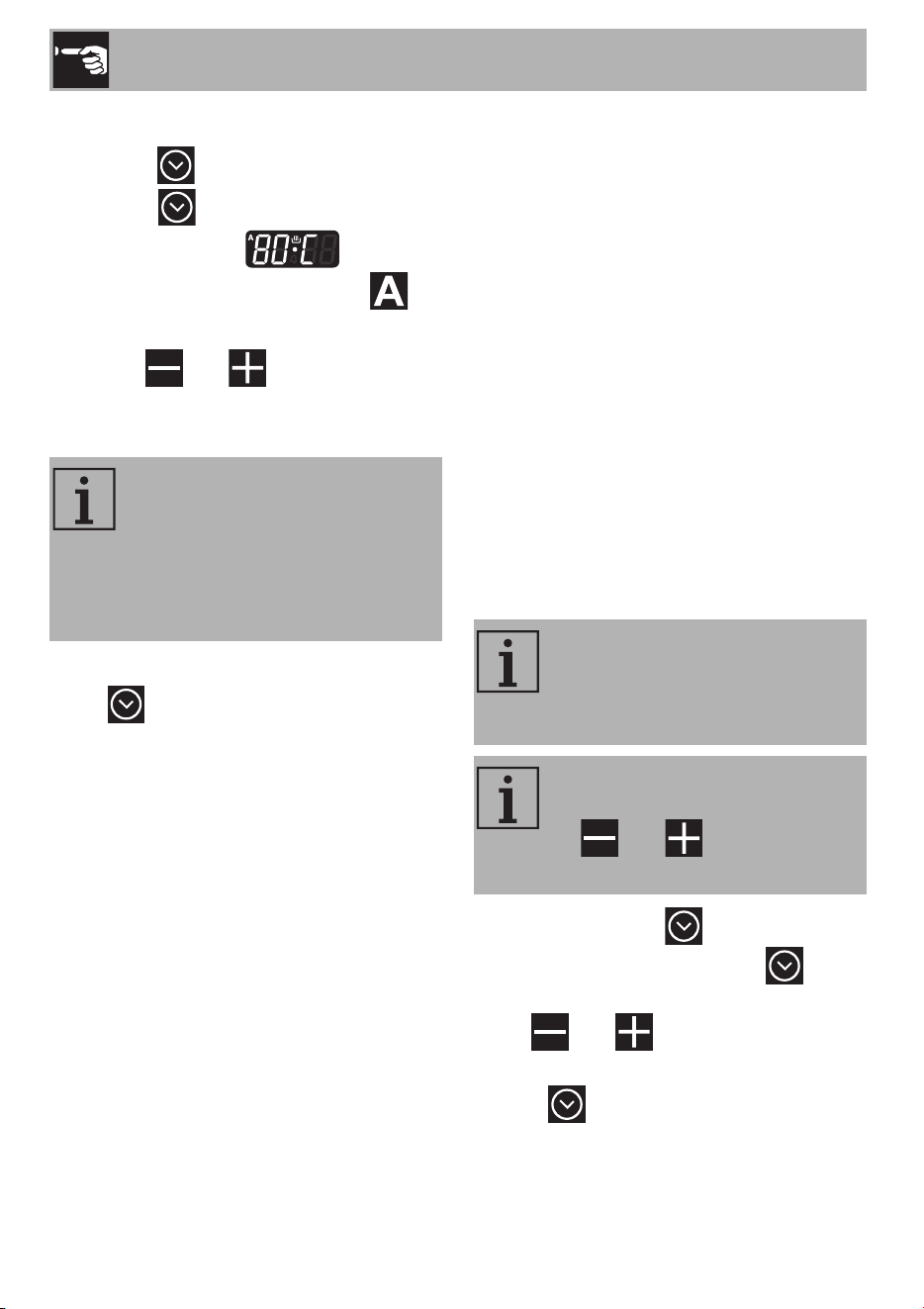
4. Close the door.
5. Press the button for a few seconds;
Press the button again. The default
target temperature (176°F) is
indicated on the display and the
symbol flashes.
6. Use the and buttons to regulate
the target temperature to a value
between the minimum and a maximum.
7. Wait for a few seconds and then press
the button to display the
instantaneous temperature measured by
the probe.
Cooking will now continue until the
instantaneous temperature measured by the
probe is the same as the target temperature
set by the user.
Without preheating:
1. Open the door.
2. Put the tray, on which the food has been
placed with the probe in position, into
the oven.
3. Insert the plug of the probe into the
socket at the side, using the probe to
open the cover.
4. Set the cooking using the probe as
indicated in steps 5, 6 and 7 in the
previous section.
5. Set manual cooking by selecting the
temperature and cooking function (see
“Using the oven”).
When cooking with the temperature
probe is in progress
1. Press and hold the button to activate
the minute minder timer; press again
to display the target temperature and use
the and buttons to adjust it
while cooking is in progress.
2. Press again or wait 5 seconds to
return to cooking mode.
• Minimum target temperature:
corresponds to the instantaneous
temperature measured by the
probe plus 2°C (35°F).
• Maximum target temperature:
99°C (210°F)
When the temperature probe is
used, it is not possible to set
programmed cooking or timed
cooking.
When cooking with the
temperature probe is in progress,
the and buttons are
disabled.

Use
31
EN
At the end of cooking
When the set target temperature for the
temperature probe is reached, the heating
elements are switched off and the
appliance emits a series of beeps.
1. Press a button on the programmer clock
to stop the buzzer.
2. Open the door.
3. Remove the probe from the food and
unplug it from the socket.
4. Remove the food from the oven.
5. Make sure that the protective cover is
properly closed.
2.7 Cooking advice
General advice
• Use pans/trays with a maximum width of
33-35 cm.
• It is not possible to shorten cooking times
by increasing the temperature (the food
could be overcooked on the outside and
undercooked on the inside).
• It is recommended to preheat the oven
before baking.
• Using several ovens at the same time
might affect the final cooking results.
Advice for cooking meat
• Cooking times vary according to the
thickness and quality of the food and to
consumer taste.
• Turn the food to brown both sides.
• Use a meat thermometer when roasting
meat, or simply press on the roast with a
spoon. If it is hard, it is ready; if not, it
needs another few minutes cooking.
Advice for cooking with the Broiler
• Meat can be grilled even when it is put
into a cold oven or into a preheated
oven if you wish to change the effect of
the cooking.
• When using the Broil function, preheat
the oven for 15 minutes before cooking.
Cooking times may vary depending on
the thickness of the food.
• We recommend placing the food at the
center of the rack.
• Foods should be seasoned before
cooking. Foods should also be coated
with oil or melted butter before cooking.
• Use the oven tray on the first bottom shelf
to collect fluids produced by grilling.
Advice for cooking desserts and biscuits
• Temperature and cooking time depend
on the quality and consistency of the
dough.
• To check whether the dessert is cooked
right through, at the end of the cooking
time, put a toothpick into the highest point
of the dessert. If the batter does not stick
to the toothpick, the dessert is done.
• If the dessert collapses when it comes out
of the oven, on the next occasion reduce
the set temperature by about 50°F,
selecting a longer cooking time if
necessary.
• While cooking desserts or vegetables,
excessive condensation may form on the
glass. In order to avoid this, open the
door very carefully a couple of times
while cooking.

Use
32
Tips for cooking on two shelves:
• Use a fan-assisted function to achieve
uniform cooking at several levels. Use
shelves 2 and 4.
• It is recommended to use 2 racks (can
be requested from Authorized Assistance
Centers).
• To facilitate the flow of air, place the
molds/pans in the center of the racks
and make sure that their width/diameter
does not exceed 30 cm.
• Position the racks keeping an empty level
between them.
• Depending on the food and the
increased load in the oven, cooking on
two levels may take a few minutes longer
than on a single shelf.
• The functions indicated for cooking on
two shelves are THERMO-FAN-
ASSISTED and THERMO-FAN-
ASSISTED BASE.
Advice for defrosting and proving
• Place frozen foods without their
packaging in a lidless container on the
first shelf of the oven.
• Avoid overlapping the food.
• To defrost meat, use a rack placed on
the second level and a tray on the first
level. In this way, the liquid from the
defrosting food drains away from the
food.
• The tenderest parts of the food can be
protected with aluminum foil.
• For successful rising, a container of water
should be placed at the bottom of the
oven.
To save energy
• Unless otherwise indicated on the
packaging, defrost frozen food before
placing it in the oven.
• In case of multiple cooking, it is
advisable to cook the products one after
the other to make the most of the already
hot oven.
• Use preferably dark metal molds: they
help to absorb the heat better.
• Remove all trays and racks which are not
required during cooking.
• Stop cooking a few minutes before the
time normally used. Cooking will
continue for the remaining minutes with
the heat that has accumulated inside the
oven.
• Reduce any opening of the door to a
minimum to avoid heat dispersal.
• Keep the inside of the appliance clean at
all times.
Slow cooking with the probe
• This cooking mode is recommended for
tender and lean meat whose core
temperature should not exceed 65°C
(149°F). Set the temperature of the oven
to between 90° (194°F) and 100°C
(212°F). This increases the cooking time,
but maintains the quality of the food and
prevents an excessive reduction in its
volume.
• For a better result, before slow cooking,
brown the meat in a pan over high heat
for 1 or 2 minutes on each side.
Use
33
EN
Cooking information table
Preh = preheating
Runner = position from the bottom
Food Weight (Kg) Runner Function Preh
Temperature
(°F)
Time
(minutes)
MEAT
Roast chicken
1.2 2 - 3
CONV BAKE
Yes 450 65 - 70
Roast loin*
1.5 2 - 3
CONV BAKE
Yes 430 65 - 75
* in a pan on a rack.
DESSERTS
White cake
1
1.0 3
BAKE
Yes 350 28 - 30
Biscuits
2
n.9
55 g each.
2
BAKE
Yes 450 10 - 13
CONV BAKE
Sugar cookies
2
n.9
15 g each.
2
CONV BAKE
Yes 350 7 - 8
Apple pie
3
1.7
1.1 apple
3
BAKE
Yes 350 - 375 55 - 65
0.6 dough
Cupcakes
4
n.12
50 g each.
3
BAKE
Yes 350 - 370 25 - 30
1
in cake mold Ø 26 cm.
2
flat tray 33 cm wide on rack.
3
in cake mold Ø 23/25 cm.
4
in muffin mold on oven rack.
GRILLS
1
st
side 2
nd
side
Hamburger
*
n.4
140 g each.
5
BROIL
15’ - 9 6
thickness 1 cm
Sausages*
n.6
180 g each.
4
BROIL
15’ - 15 9
cut and open in half
*
food on rack with container underneath.
VEGETABLES
Roast potatoes*
0.7 2 - 3
CONV BAKE
Yes 450 45 - 50
*
in aluminum tray 28 x 30.
FRESH DOUGHS
Pizza
*
0.5 - 0.6 2
CONV BAKE
Yes MAX 11 - 14
*
in baking tray with low edge Ø 28/30 cm.
FRESH FISH
Bream*
0.6 2 - 3
CONV BAKE
Yes 400 25 - 30
*
in a pan on a rack.
The times indicated in the table do not include preheating times and are provided as a guide only.
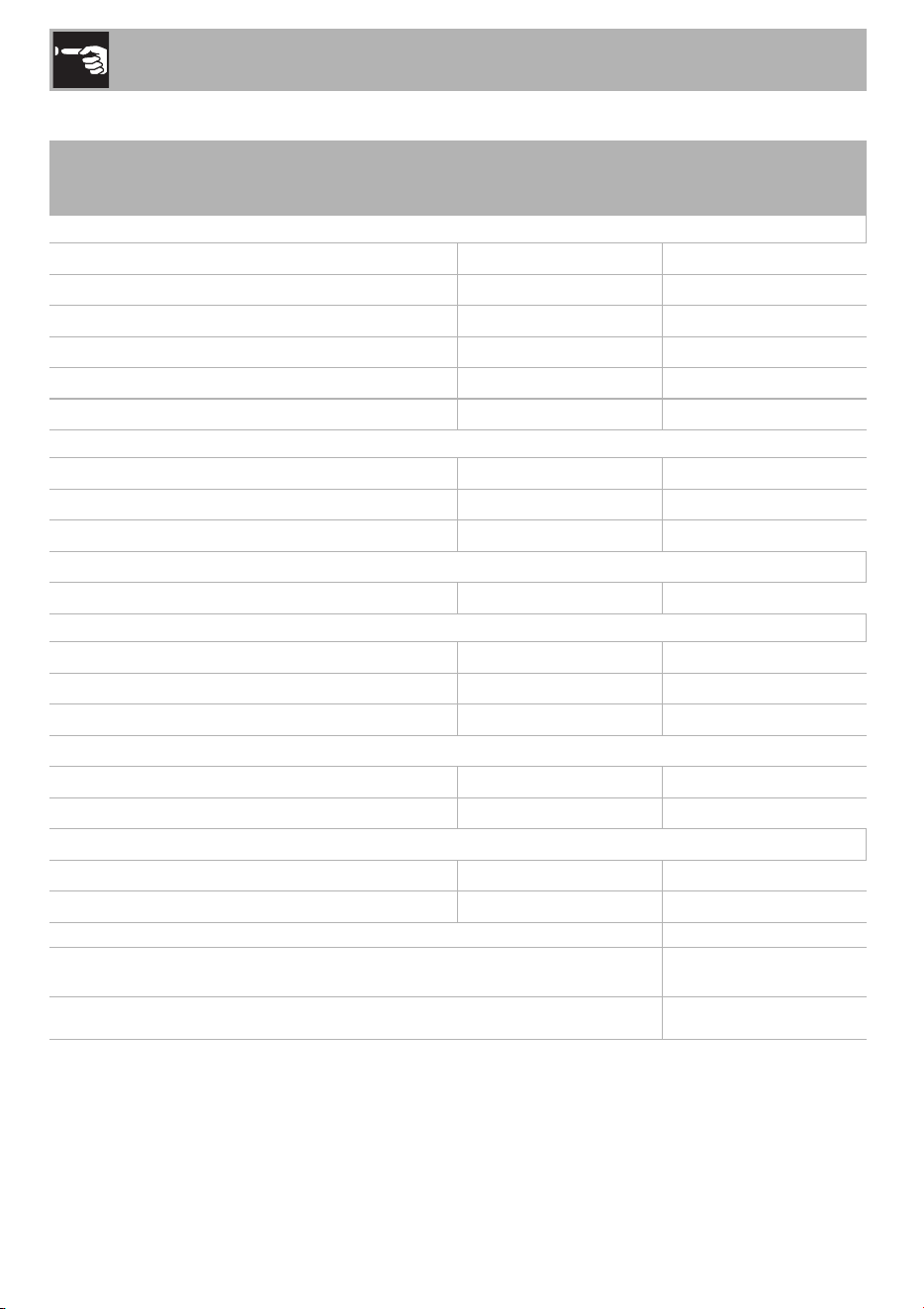
Use
34
Temperature probe-cooking information table
Type and cut of meat
Target temperature
(°C)
Target temperature
(°F)
Beef
Roast beef: rare 50 - 53 122 - 127
Roast beef: medium 55 - 58 131 - 136
Roast beef: well done 65 - 70 149 - 158
Rib of beef: rare* 50 122
Rib of beef: medium* 58 136
Rib of beef: well done* 70 158
Pork
Roast loin 80 - 85 176 - 185
Shoulder 80 - 85 176 - 185
Sausages** 75 - 80 167 - 176
Veal
Veal roast 75 - 80 167 - 176
Poultry
Whole chicken 80 - 85 176 - 185
Whole turkey 80 - 85 176 - 185
Roast turkey (whole or breast) 80 - 85 176 - 185
Lamb
Leg of lamb with bone (rare) 65 149
Leg of lamb with bone (well done) 75 - 80 167 - 176
Slow cooking
Beef / roast beef: rare*** 50 - 54 122 - 129
Beef / roast beef: medium*** 55 - 60 131 - 140
* Cooking times vary according to the thickness of the fillet.
** For sausages, it is recommended to select a suitable function to ensure
they are well grilled externally.
*** It is recommend to brown the meat on each side in a pan for a few
minutes before putting it in the oven.
Cleaning and Maintenance
35
EN
3 Cleaning and maintenance
3.1 Instructions
Recommendations
To keep the surfaces in good condition,
they should be cleaned regularly after use.
Let them cool first.
Regular daily cleaning
Always use only specific products that do
not contain abrasives or chlorine-based
acids.
Pour the product onto a damp cloth and
wipe the surface, rinse thoroughly and dry
with a soft cloth or a microfiber cloth.
Food stains or residues
Do not use metallic sponges or sharp
scrapers as they will damage the surfaces.
Use ordinary non-abrasive products with
the aid of wooden or plastic utensils if
necessary. Rinse thoroughly and dry with a
soft cloth or a microfiber cloth.
Do not allow residues of sugary foods (such
as jam) to set inside the oven. If allowed to
set for too long, sugar residue could pit the
enamel lining of the oven.
Cooktop grates
Remove the grates and clean them with
lukewarm water and non-abrasive
detergent. Take care to remove any
encrustations. Dry thoroughly and place
them back on the cooktop.
WARNING
Electrical Shock Hazard
• Before servicing, disconnect the
appliance from the power supply.
WARNING
Risk of damage to surfaces
Improper use
• Do not use steam jets to clean the
appliance.
• Do not use cleaning products containing
chlorine, ammonia or bleach on steel
parts or parts with metallic finishes on the
surface (e.g. anodizing, nickel- or
chromium-plating).
• Do not use abrasive or corrosive
detergents on glass parts (e.g. powder
products, stain removers and metallic
sponges).
• Do not use rough or abrasive materials
or sharp metal scrapers.
• Do not wash the removable components
such as the cooktop stand support, flame
spreaders and burner caps in a
dishwasher.
• Keep cooktop area clear and free from
combustible materials, gasoline other
flammable vapors and liquids.
• Do not obstruct the flow of combustion
and ventilation air.
NOTE: We recommend the use of
cleaning products distributed by
the manufacturer.
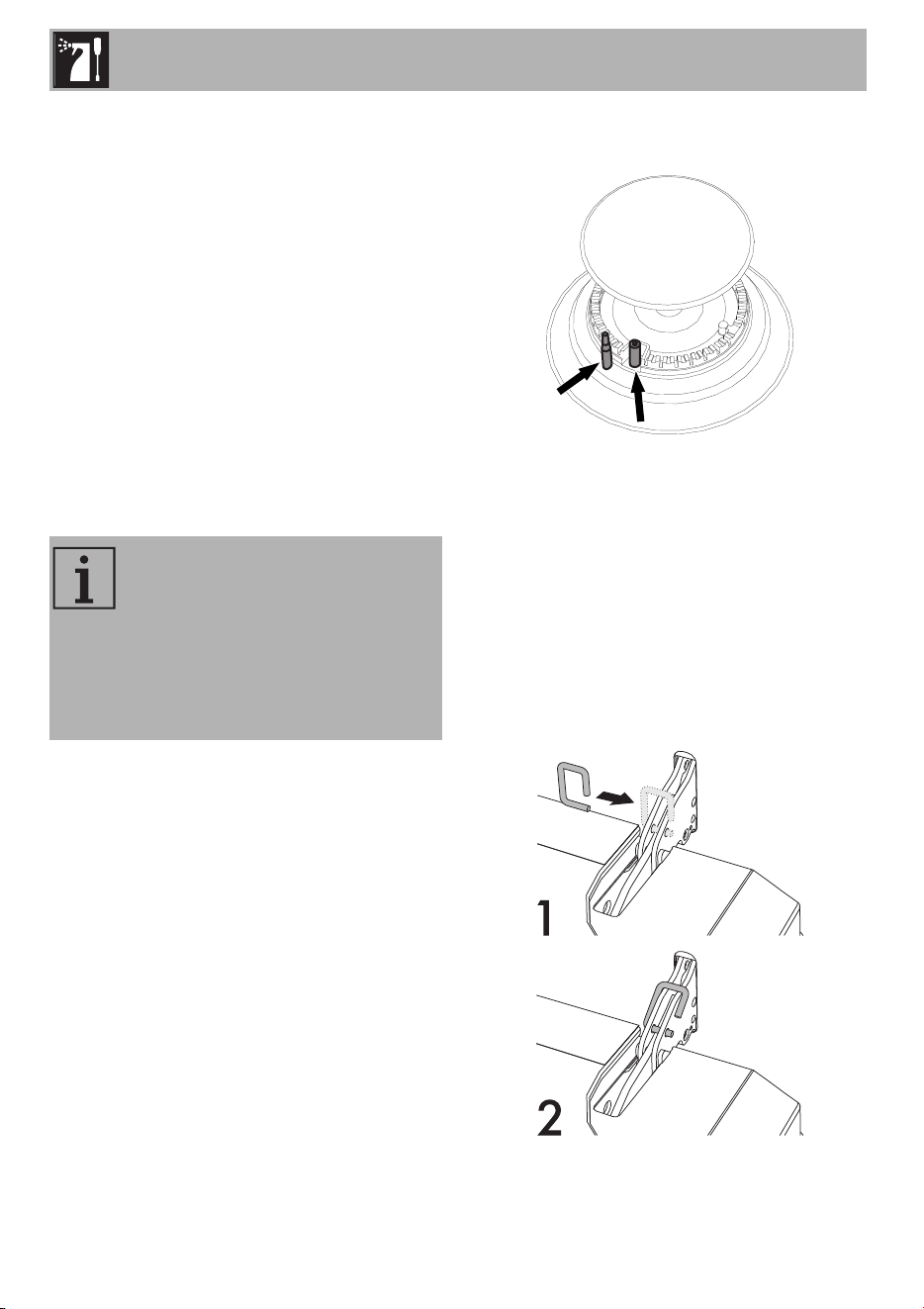
Cleaning and Maintenance
36
3.2 Cleaning the cooktop
1. Pour some non-abrasive detergent on a
damp cloth and wipe the surfaces.
2. Rinse thoroughly.
3. Dry with a soft cloth or a microfiber cloth.
Cleaning cooktop grates, flame-
spreader crowns and burner caps
1. Remove the components from the hob.
2. Clean with lukewarm water and non-
abrasive detergent. Take care to remove
any encrustations.
3. Dry thoroughly with a soft cloth or a
microfiber cloth.
4. Replace the components on the cooktop.
Cleaning the igniters and thermocouples
• If necessary, clean the igniters and
thermocouples with a damp cloth.
• Remove any dry residue with a toothpick
or needle.
3.3 Cleaning the door
Removing the oven door
To facilitate cleaning, we recommend that
you remove the door and place it on a
towel.
To remove the door, proceed as follows:
1. Open the door completely and insert two
pins into the holes in the hinges, as
shown in the image.
NOTE: Continuous contact
between the grates and the flame
can lead to the enamel becoming
modified on the parts exposed to
heat. This is normal and has no
effect on the operation of this
component.
Cleaning and Maintenance
37
EN
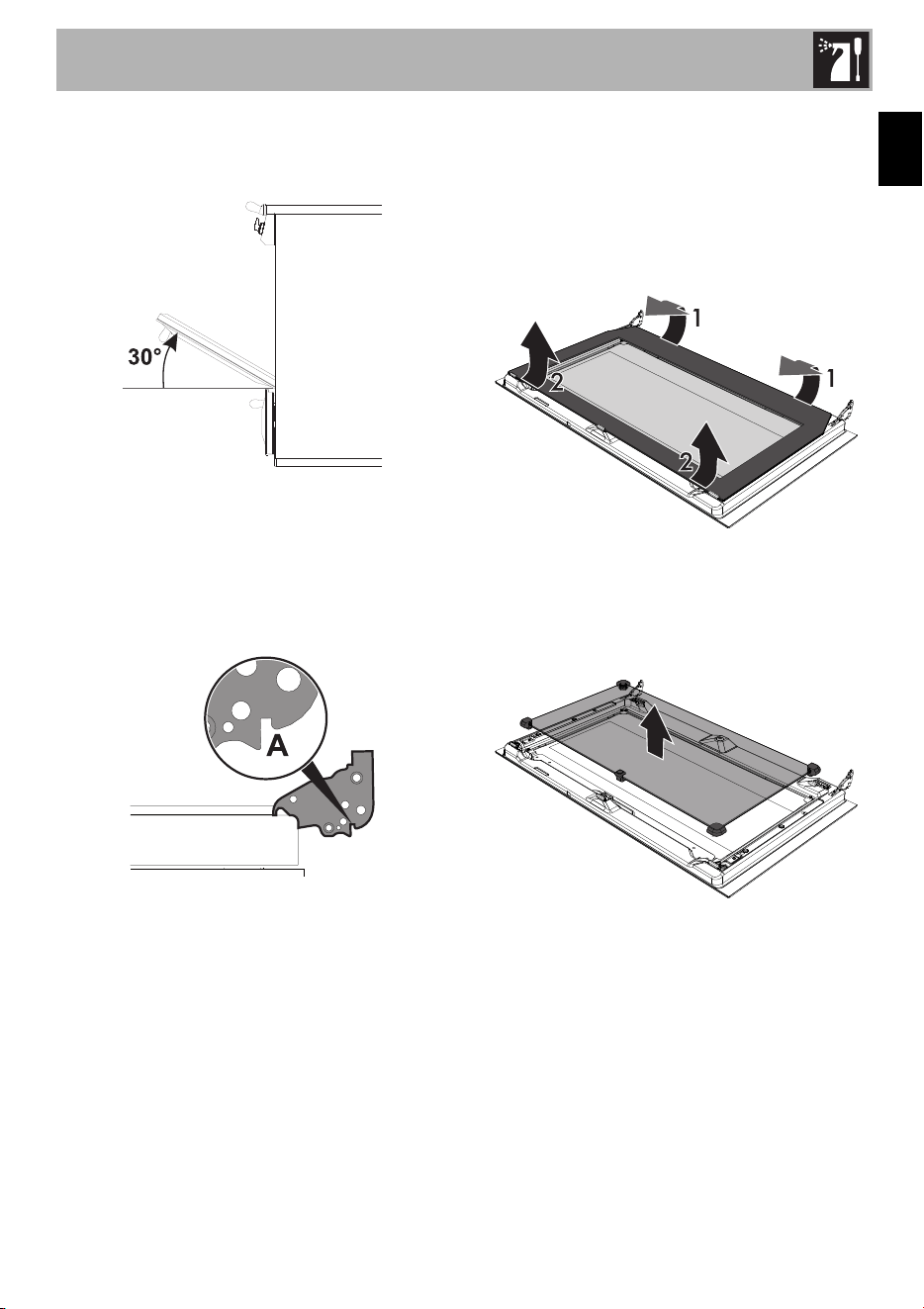
2. Grasp the door on both sides with both
hands, lift it forming an angle of around
30° and remove it.
3. To reassemble the door, put the hinges in
the relevant slots in the oven, making sure
that the grooved sections A are resting
completely in the slots. Lower the door
and once it is in place remove the pins
from the holes in the hinges.
Cleaning the oven door glass
The oven door glass should always be kept
thoroughly clean. Use absorbent kitchen
roll. In case of stubborn dirt, wash with a
damp sponge and an ordinary detergent.
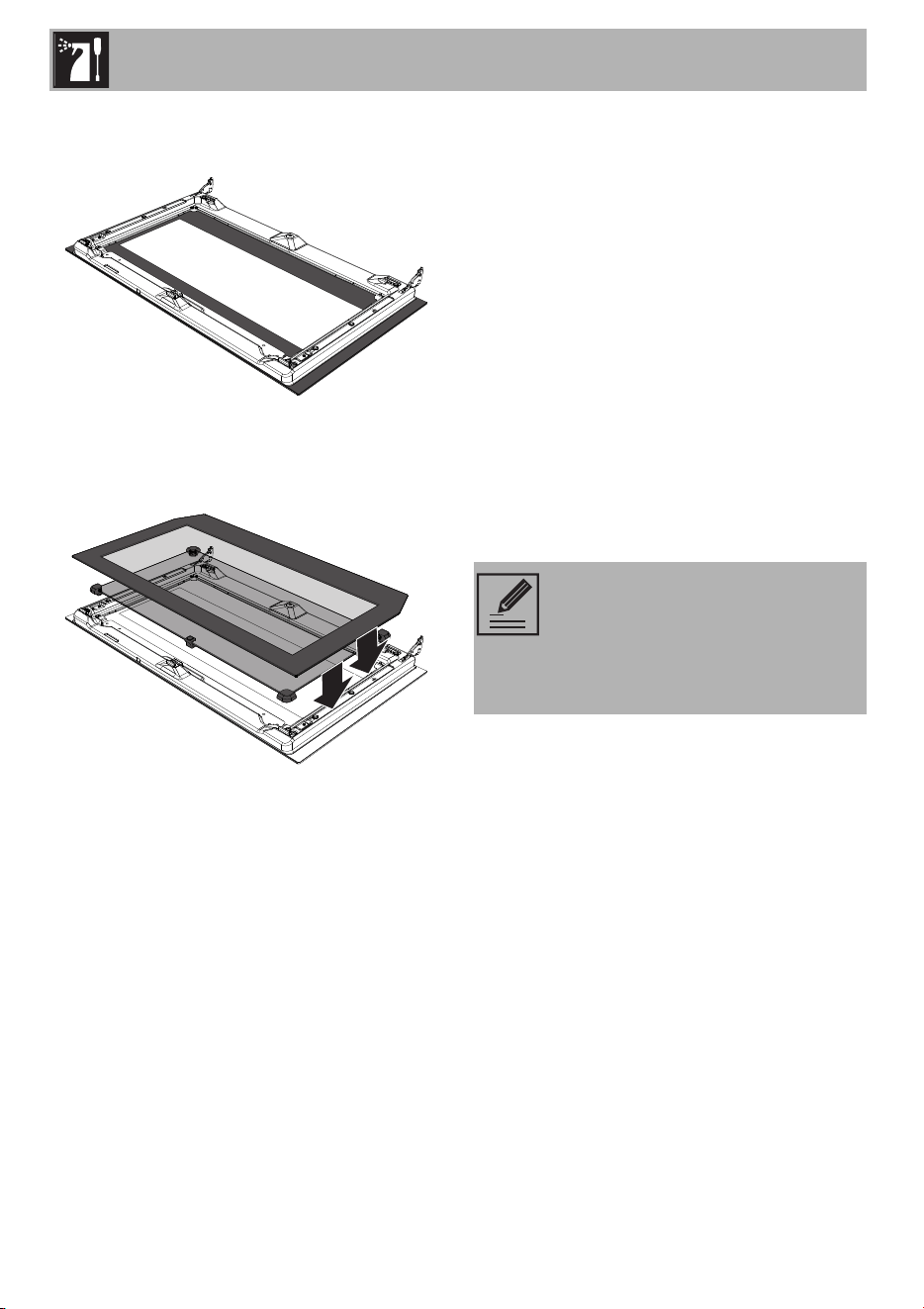
Removing the internal glass panes
To facilitate cleaning, the internal glass
panes of the door can be removed.
1. Pull the rear part of the internal glass
pane gently upwards, following the
movement indicated by the arrows (1).
2. Extract the internal glass pane from the
front strip (2) to remove it from the door.
3. Remove the intermediate glass pane by
lifting it upwards.
4. Clean the external glass pane and the
panes that were previously removed.
Use absorbent kitchen roll. In case of
Cleaning and Maintenance
38
stubborn dirt, wash with a damp sponge
and neutral detergent.
5. When you have finished cleaning, put
back the intermediate glass pane into its
housing in the door.
6. To put back the internal glass pane, slide
the upper part into the door strip and
insert the two rear pins into their seats by
pressing lightly.
3.4 Cleaning the oven cavity
In order to keep your oven in the best
possible condition, clean it regularly after
letting it cool down.
Avoid letting food residue dry inside the
oven cavity, as this could damage the
enamel.
Take out all removable parts before
cleaning.
For easier cleaning, we recommend
removing:
•the door;
• the rack/tray supports;
• removable guides, where fitted;
•the seal.
NOTE: If you use specific cleaning
products, we recommend running
the oven at maximum temperature
for 15-20 minutes in order to
eliminate any residues.
Cleaning and Maintenance
39
EN
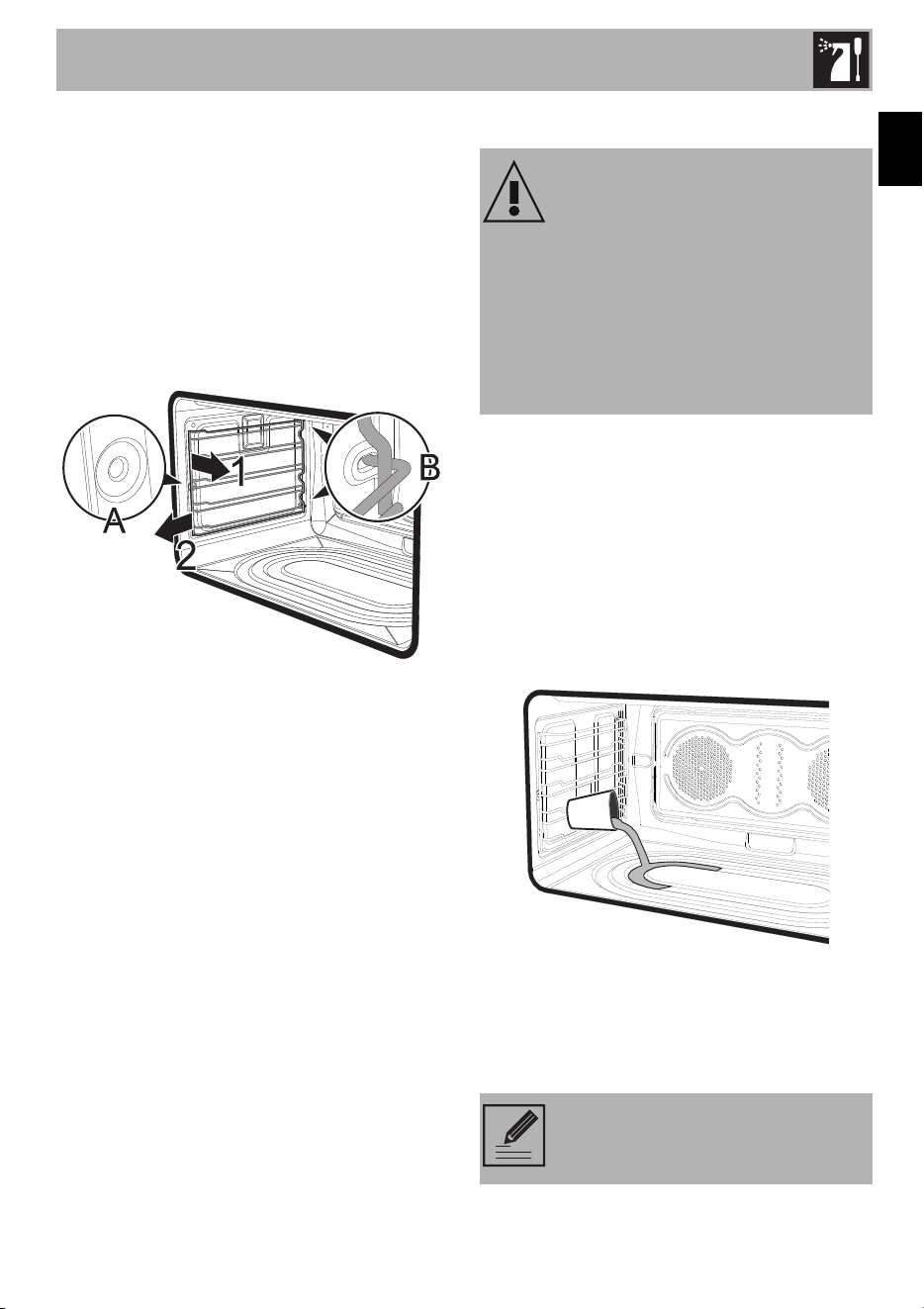
Removal of the rack/tray supports
Removing the guide frames makes it easier
to clean the sides of the oven. This must be
done each time you use the automatic
cleaning cycle (only on some models).
To remove the guide frames:
• Pull the frame towards the inside of the
oven (1) to unhook it from its housing A,
and then slide it out of the grooves (2) at
the back B.
• When you have finished cleaning the
oven, repeat the procedures indicated
above in reverse to replace the guide
frames.
3.5 Steam clean function
Preliminary operations
Before starting the Steam clean function:
1. Completely remove all accessories from
inside the oven. The upper guard can be
left inside the oven.
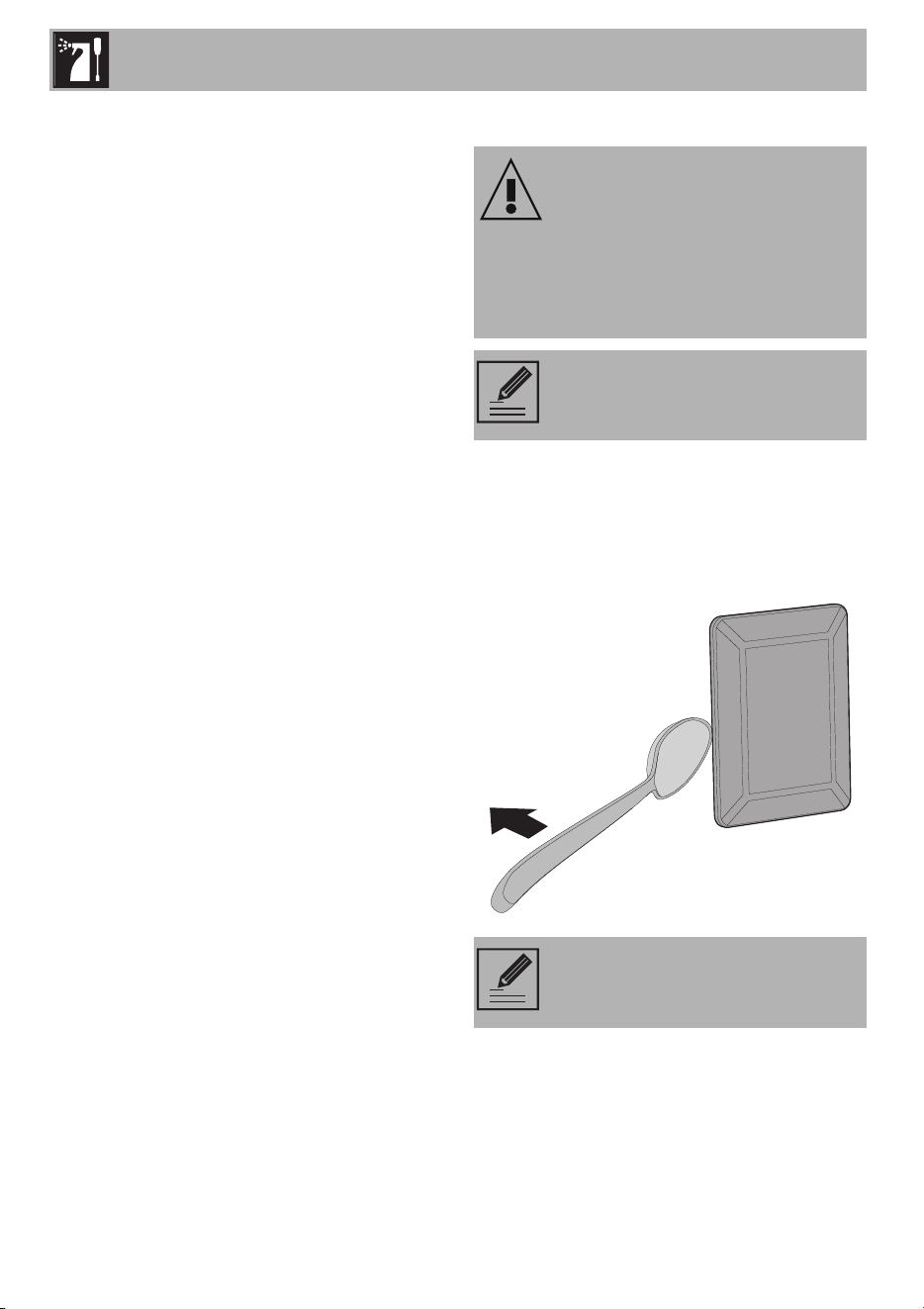
2. Pour approximately 13.5 fl. oz. (400 cc -
1.7 cup) of water onto the bottom of the
oven. Make sure it does not overflow out
of the cavity.
3. Spray a water and washing up liquid
solution inside the oven using a spray
nozzle. Direct the spray towards the side
walls, upwards, downwards and
towards the deflector.
4. Close the door.
CAUTION
Improper use
Risk of damaging the surfaces
• Remove any food residues or large spills
from previous cooking operations from
the inside of the oven.
• Carry out steam assisted oven cleaning
operations only when the oven is cold.
We recommend spraying
approx. 20 times at the most.
Cleaning and Maintenance
40
Steam clean settings
1. Turn the function knob to the STEAM
CLEAN position and the temperature
knob to 150°F (65°C).
2. Set a cooking time of 45 minutes using
the programmer clock.
3. At the end of the cooking time, the timer
will switch the oven heating elements off
and the buzzer will start to sound.
End of the Steam clean function
1. Open the door and wipe away the less
stubborn dirt with a damp cloth.
2. Use a non-scratch sponge with brass
filaments to remove hard deposits.
3. In case of grease residues use specific
oven cleaning products.
4. Remove the water left inside the oven.
For improved hygiene and to avoid food
being affected by any unpleasant odours,
we recommend that the oven is dried using
a convection function at 300°F for
approximately 10 minutes.
3.6 Special maintenance
Seal maintenance tips
The seal should be soft and elastic.
• To clean the seal, use a non-abrasive
sponge and wash with lukewarm water.
Replacing the internal light bulb
1. Completely remove all accessories from
inside the oven.
2. Remove the rack/tray supports.
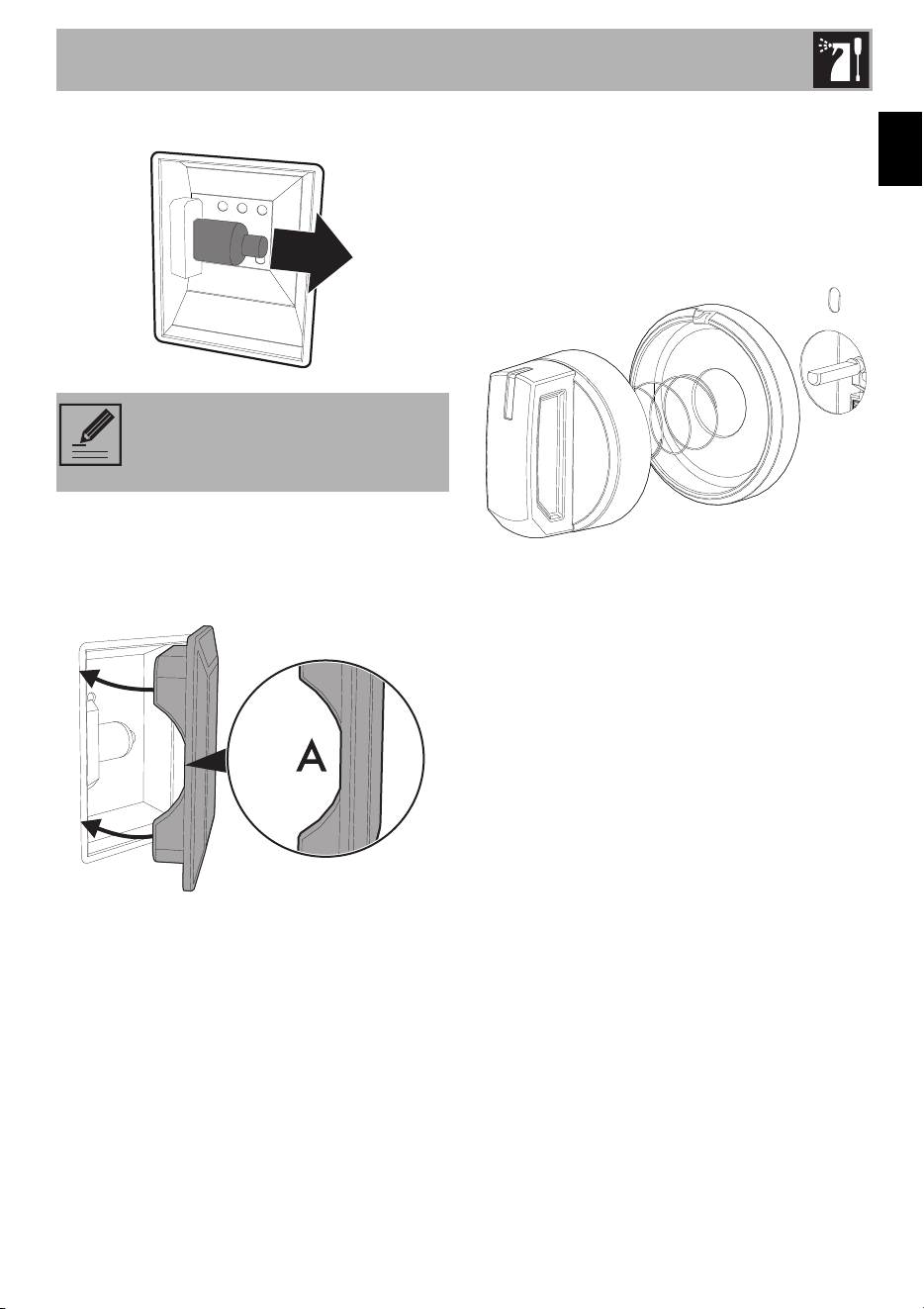
3. Use a tool (e.g. a spoon) to remove the
bulb cover.
WARNING
Danger of electrocution
• Unplug the appliance.
• Use protective gloves.
NOTE: The oven is fitted with one
40W light bulb.
NOTE: Pay attention not to scratch
the oven cavity enamel.
Cleaning and Maintenance
41
EN
4. Loosen and remove the light bulb.
5. Replace the bulb with a similar one
(40 W).
6. Reattach the cover. Leave the inside of
the glass molding (A) facing the door.
7. Press the cover firmly so that it adheres
tightly to the light bulb holder.
Lubricating the surface burner gas valves
Over time, the surface burner gas valves
may become stiff or jam. Clean them
internally and re-lubricate. This operation
must be carried out by a qualified
technician.
Do not touch the halogen bulb with
your fingers; cover it with an
insulating cloth.

PAGE INTENTIONALLY LEFT BLANK