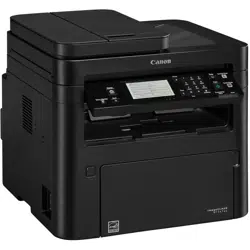

imageCLASS
MF269dw II / MF269dw VP II / MF267dw II / MF264dw II /
MF262dw II
User
's Guide
USRMA-7578-00 2022-10 en Copyright CANON INC. 2022

Contents
About the Machine .......................................................................................................................................
2
Supported Functions ................................................................................................................................................. 3
System Manager ID and PIN ...................................................................................................................................... 5
Measures to Prevent Unauthorized Access ................................................................................................................. 6
Names of Parts and Their Functions ........................................................................................................................... 8
Front Side ............................................................................................................................................................ 9
Back Side ........................................................................................................................................................... 11
Interior .............................................................................................................................................................. 13
Control Panel ..................................................................................................................................................... 14
2-Sided Double Pass Feeder ................................................................................................................................. 19
1-Sided Feeder ................................................................................................................................................... 20
Multi-purpose Tray ............................................................................................................................................. 21
Drawer .............................................................................................................................................................. 22
Usable Paper ........................................................................................................................................................... 23
Precautions When Handling Paper ........................................................................................................................ 26
Specications .......................................................................................................................................................... 27
Basic Specications ............................................................................................................................................. 28
2-Sided Double Pass Feeder Specications ............................................................................................................. 31
1-Sided Feeder Specications ............................................................................................................................... 32
Print Specications ............................................................................................................................................. 33
Scan Specications ............................................................................................................................................. 35
Fax Specications ............................................................................................................................................... 36
Network Specications ........................................................................................................................................ 37
Security and Management Function Specications .................................................................................................. 38
Supported Environment ...................................................................................................................................... 41
Recommended Functions ........................................................................................................................................ 43
Digitizing Documents .......................................................................................................................................... 44
Cost Savings ...................................................................................................................................................... 45
Making Operations More Ecient ......................................................................................................................... 46
Setting Up .......................................................................................................................................................... 49
Conguring the Default Settings (Setup Guide) (Touch Panel Model) ......................................................................... 50
Conguring the Default Settings (Setup Guide) (5 Lines LCD Model) .......................................................................... 53
Setting Up the Network ........................................................................................................................................... 56
Selecting Wired or Wireless LAN ........................................................................................................................... 58
Connecting to a Wired LAN .................................................................................................................................. 60
Connecting to a Wireless LAN ............................................................................................................................... 61
Connecting to a Wireless LAN by Using the Router Button (Push Button Mode) .................................................... 64
Connecting to a Wireless LAN by Entering a PIN Code (WPS PIN Code Mode) ....................................................... 66
Connecting to a Wireless LAN by Searching for a Router (Access Point Setup Method) ........................................... 69
Connecting to a Wireless LAN by Setting the Details (Manual Setup Method) ........................................................ 72
I

Setting IPv4 Addresses
........................................................................................................................................ 77
Setting IPv6 Addresses ........................................................................................................................................ 81
Conguring Your Machine for Your Network Environment ....................................................................................... 83
Manually Conguring the Ethernet Settings ..................................................................................................... 84
Conguring DNS .......................................................................................................................................... 85
Conguring SMB .......................................................................................................................................... 88
Conguring WINS ......................................................................................................................................... 90
Conguring SNMP ........................................................................................................................................ 91
Conguring SNTP ......................................................................................................................................... 94
Checking the Network Status and Settings ............................................................................................................. 96
Conguring the Fax Settings (Fax Setup Guide) ...................................................................................................... 102
Installing Software and Drivers to the Computer .................................................................................................... 106
Basic Operations ........................................................................................................................................ 109
Turning ON and OFF the Machine .......................................................................................................................... 110
Turning ON the Machine ................................................................................................................................... 111
Turning OFF the Machine ................................................................................................................................... 112
Restarting the Machine ..................................................................................................................................... 113
Reducing Power Consumption (Sleep Mode) ........................................................................................................... 114
Using the Control Panel ......................................................................................................................................... 116
Screens Displayed on the Control Panel ............................................................................................................... 117
[Home] Screen ........................................................................................................................................... 120
[Status Monitor] Screen ............................................................................................................................... 124
How to Operate the Control Panel (Touch Panel Model) ......................................................................................... 127
How to Operate the Control Panel (5 Lines LCD Model) .......................................................................................... 129
Entering Characters .......................................................................................................................................... 131
Customizing the [Home] Screen ......................................................................................................................... 135
Logging In to the Machine ..................................................................................................................................... 137
Placing Originals ................................................................................................................................................... 139
Loading Paper ....................................................................................................................................................... 142
Loading Paper in the Drawer .............................................................................................................................. 143
Loading Paper in the Multi-purpose Tray ............................................................................................................. 146
Preparations and Orientation for Loading Envelopes ............................................................................................ 148
Orientation for Loading Paper with a Logo .......................................................................................................... 150
Specifying the Paper Size and Type ..................................................................................................................... 152
Setting the Paper Size and Type for the Drawer .............................................................................................. 153
Setting the Paper Size and Type for the Multi-purpose Tray ............................................................................. 157
Registering a Frequently Used Paper Size and Type for the Multi-purpose Tray .................................................. 160
Registering Non-standard Size Paper (Custom Paper) ..................................................................................... 164
Hiding Unused Paper Sizes .......................................................................................................................... 166
Registering Destinations (Address Book) ................................................................................................................ 168
Address Book Function ...................................................................................................................................... 169
Registering Destinations to the Address Book (Control Panel) ................................................................................ 171
Registering Groups to the Address Book (Control Panel) .................................................................................. 173
Editing and Deleting Destinations in the Address Book (Control Panel) .............................................................. 175
II

Registering Destinations to the Address Book (Remote UI)
.................................................................................... 176
Registering Groups to the Address Book (Remote UI) ...................................................................................... 180
Specifying Destinations ......................................................................................................................................... 182
Specifying Destinations (Address Book) ............................................................................................................... 183
Specifying Destinations (Direct Input) .................................................................................................................. 187
Specifying Destinations (Address Book on a Mobile Device) ................................................................................... 188
Specifying Destinations (TX Job Log) .................................................................................................................... 189
Changing the Default Settings ............................................................................................................................... 190
Adjusting the Volume (For Models with a Fax Function) .......................................................................................... 193
[Volume Settings] Screen ................................................................................................................................... 196
Reducing the Operation Sound (Quiet Mode) .......................................................................................................... 197
Printing .............................................................................................................................................................. 200
Printing Preparations ............................................................................................................................................ 201
Preparing to Print from a Computer .................................................................................................................... 202
Conguring a Printer Port (Windows) ............................................................................................................ 203
Setting Up a Print Server ................................................................................................................................... 206
Preparations for Using Universal Print ................................................................................................................. 209
Registering the Machine to Cloud Service ...................................................................................................... 210
Registering the Machine to the Computer ..................................................................................................... 213
Printing from a Computer ..................................................................................................................................... 214
Registering Non-standard Size Paper to the Computer (Custom Size) ...................................................................... 217
Printing with Universal Print .............................................................................................................................. 219
Canceling Printing ................................................................................................................................................ 220
Viewing the Print Job Status and Log ..................................................................................................................... 223
Scanning ........................................................................................................................................................... 226
Preparations for Scanning ..................................................................................................................................... 228
Preparing to Save Scanned Data to a Computer ................................................................................................... 229
Preparing for a Shortcut Key to Store Scanned Data to a Computer ........................................................................ 231
Preparing to Send Scanned Data by E-mail ........................................................................................................... 235
Conguring the Basic Settings for Sending E-mail (Send Function Setting Tool) .................................................. 236
Using the Downloaded Send Function Setting Tool ................................................................................... 238
Conguring Detailed Information of the E-mail Server (Remote UI) ................................................................... 239
Preparing to Save Scanned Data to a Shared Folder .............................................................................................. 241
Registering a Shared Folder to the Address Book (Send Function Setting Tool) ................................................... 242
Scanning (Saving to a Computer) ........................................................................................................................... 244
Scanning (Sending by E-mail) ................................................................................................................................. 247
Scanning (Saving to a Shared Folder) ..................................................................................................................... 249
Scanning Using the Shortcut Key (Saving to a Computer) ........................................................................................ 251
Scanning from a Computer (Saving to a Computer) ................................................................................................ 254
Starting MF Scan Utility ..................................................................................................................................... 257
Scan Settings (Touch Panel Model) ......................................................................................................................... 258
Canceling Scanning ............................................................................................................................................... 262
III

Checking the Send and Save Status and Log of Scanned Data (Touch Panel Model)
.................................................. 263
Faxing .................................................................................................................................................................. 266
Preparing to Send and Receive Faxes ..................................................................................................................... 267
Preparing to Send Faxes from a Computer ........................................................................................................... 268
Changing Fax RX Mode and Setting the Action when Receiving a Fax ...................................................................... 270
Changing the Fax Number and Unit Name ........................................................................................................... 272
Forwarding Faxes and Conguring the Backup Settings ......................................................................................... 273
Backing Up Sent Faxes ...................................................................................................................................... 274
Auto Forwarding and Backing Up Received Faxes ................................................................................................. 276
Sending Faxes ....................................................................................................................................................... 278
Sending a Fax after a Phone Conversation (Manual Sending) ................................................................................. 280
Sending Faxes from a Computer (PC Faxing) ........................................................................................................... 282
Securely Sending PC Faxes ................................................................................................................................. 285
Fax Original Scan Settings ..................................................................................................................................... 286
Receiving Faxes .................................................................................................................................................... 288
Receiving Faxes via Telephone (Remote RX) ......................................................................................................... 289
Changing the Print Settings for Received Faxes .................................................................................................... 290
Canceling Fax Sending ........................................................................................................................................... 292
Checking the Status and Log for Sent and Received Faxes ....................................................................................... 293
Copying .............................................................................................................................................................. 296
Copy Operations ................................................................................................................................................... 297
Additional Copying Features .................................................................................................................................. 300
Paper Save Copy .................................................................................................................................................... 311
Copying Both Sides of ID Cards onto One Sheet ...................................................................................................... 315
Copying Multiple Passports onto One Sheet ........................................................................................................... 319
Canceling Copy Operations .................................................................................................................................... 323
Checking the Copy Status ...................................................................................................................................... 325
Linking with Mobile Devices ............................................................................................................ 328
Preparations for Linking with Mobile Devices ......................................................................................................... 329
Preparations for Direct Connection ..................................................................................................................... 330
Preparations for Using AirPrint ........................................................................................................................... 333
Connecting a Mobile Device to the Machine ........................................................................................................... 336
Connecting a Mobile Device via Wireless LAN Router (LAN Connection) ................................................................... 337
Connecting a Mobile Device Directly to the Machine (Direct Connection) ................................................................. 338
Using a Dedicated Application to Print and Scan (Canon PRINT Business) ................................................................ 341
Using AirPrint Application to Print and Scan Data and Send Faxes ........................................................................... 342
Printing from an Android Device ............................................................................................................................ 346
Printing from Chromebook or Other Device with Chrome OS .................................................................................. 347
IV

Security .............................................................................................................................................................. 349
Setting the Department ID and PIN for the Administrator ...................................................................................... 350
Protecting the Network ........................................................................................................................................ 353
Setting the Firewall ........................................................................................................................................... 354
Changing the Port Number ................................................................................................................................ 357
Using a Proxy ................................................................................................................................................... 358
Using TLS ........................................................................................................................................................ 360
Using IEEE 802.1X ............................................................................................................................................. 362
Managing and Verifying a Key and Certicate ...................................................................................................... 364
Generating a Key and Certicate .................................................................................................................. 365
Generating a Key and Certicate Signing Request (CSR) and Obtaining and Registering a Certicate .................... 367
Registering a Key and Certicate or CA Certicate Obtained from an Issuing Authority ....................................... 370
Verifying a Received Certicate with OCSP ..................................................................................................... 372
Preventing Sending Data by Mistake and Leaking Information ............................................................................... 373
Limiting Available Destinations ........................................................................................................................... 374
Conrming the Destination before Sending ......................................................................................................... 376
Restricting Fax Sending ..................................................................................................................................... 378
Restricting Use from a Mobile Device .................................................................................................................. 380
Restricting Printing ........................................................................................................................................... 381
Saving Received Documents in the Machine (Memory Lock) ............................................................................. 382
Preventing Unauthorized Use ................................................................................................................................ 385
Restricting Address Book Registration and Editing ................................................................................................ 386
Restricting Use of Remote UI ............................................................................................................................. 388
Preventing Connection to Computer via USB Port ................................................................................................. 391
Conguring LPD, RAW, or WSD ........................................................................................................................... 392
Disabling HTTP Communication ......................................................................................................................... 394
Managing the Machine ........................................................................................................................ 396
Setting the Date and Time ..................................................................................................................................... 397
Managing the Machine from a Computer (Remote UI) ............................................................................................ 398
Starting Remote UI ........................................................................................................................................... 399
Portal Page of Remote UI .................................................................................................................................. 401
Checking Usage and Logs with Remote UI ........................................................................................................... 403
Monitoring the Usage ........................................................................................................................................... 405
Checking the Number of Printed Pages (Check Counter) ........................................................................................ 406
Printing and Viewing Reports and Lists ................................................................................................................ 408
Changing the Report and List Print Settings ................................................................................................... 411
Clearing the Mail Box ............................................................................................................................................ 413
Importing and Exporting the Address Book ............................................................................................................ 414
Updating the Firmware (Touch Panel Model) .......................................................................................................... 416
Updating the Firmware (5 Lines LCD Model) ........................................................................................................... 419
Initializing the Settings and Data .......................................................................................................................... 422
V

Settings Menu Items .............................................................................................................................. 427
[Preferences] ........................................................................................................................................................ 428
[Display Settings] .............................................................................................................................................. 430
[Timer/Energy Settings] ..................................................................................................................................... 434
[Network] ........................................................................................................................................................ 437
[Wireless LAN Settings] ............................................................................................................................... 442
[TCP/IP Settings] ......................................................................................................................................... 444
[External Interface] ........................................................................................................................................... 451
[Accessibility] ................................................................................................................................................... 452
[Volume Settings] ............................................................................................................................................. 454
[Adjustment/Maintenance] ................................................................................................................................... 457
[Adjust Image Quality] ...................................................................................................................................... 458
[Special Processing] .................................................................................................................................... 459
[Maintenance] .................................................................................................................................................. 463
[Function Settings] ................................................................................................................................................ 464
[Common] ....................................................................................................................................................... 465
[Paper Feed Settings] .................................................................................................................................. 466
[Print Settings] ........................................................................................................................................... 467
[Scan Settings] ........................................................................................................................................... 468
[Generate File] ........................................................................................................................................... 469
[Copy] ............................................................................................................................................................. 470
[Printer] .......................................................................................................................................................... 472
[Printer Settings] ........................................................................................................................................ 473
[PDL Selection (Plug and Play)] ..................................................................................................................... 483
[Send] ............................................................................................................................................................. 484
[Common Settings] ..................................................................................................................................... 485
[Scan and Send Settings] ............................................................................................................................. 487
[Fax Settings] ............................................................................................................................................. 493
[Receive/Forward] ............................................................................................................................................. 498
[Common Settings] ..................................................................................................................................... 499
[Fax Settings] ............................................................................................................................................. 501
[Set Destination] ................................................................................................................................................... 505
[Management Settings] ......................................................................................................................................... 506
[User Management] .......................................................................................................................................... 508
[Device Management] ....................................................................................................................................... 509
[Remote UI Settings/Update Firmware] ............................................................................................................... 511
[Remote UI Settings] ................................................................................................................................... 512
[Data Management] .......................................................................................................................................... 513
[Security Settings] ............................................................................................................................................. 514
[Authentication/Password Settings] .............................................................................................................. 515
[Toner Deliv. Set.] or [Toner Delivery Set.] ............................................................................................................... 516
Maintenance ................................................................................................................................................. 518
Cleaning the Machine ........................................................................................................................................... 520
Cleaning the Surface of the Machine ................................................................................................................... 521
VI

Cleaning inside the Machine
.............................................................................................................................. 522
Cleaning the Platen Glass .................................................................................................................................. 525
Cleaning the Feeder .......................................................................................................................................... 526
Cleaning the Fixing Assembly ............................................................................................................................. 530
Replacing Consumables ......................................................................................................................................... 531
Replacing the Toner Cartridge ............................................................................................................................ 532
Replacing the Drum Cartridge ............................................................................................................................ 536
Checking the Remaining Amount of Consumables ................................................................................................ 540
List of Consumables .......................................................................................................................................... 541
Moving the Machine ............................................................................................................................................. 544
Troubleshooting ......................................................................................................................................... 548
Paper Jams ........................................................................................................................................................... 549
Paper Jams inside the Machine and in the Back Side ............................................................................................. 551
Paper Jams in the Feeder ................................................................................................................................... 555
Paper Jams That Occur Repeatedly ..................................................................................................................... 558
Problems with Printing Results .............................................................................................................................. 559
Toner Smudges and Splatters Appear ................................................................................................................. 561
Streaks Appear ................................................................................................................................................. 563
Printing Is Uneven ............................................................................................................................................ 566
Printed Paper Is Blank ....................................................................................................................................... 569
Smudge Marks Appear on the Edge of Printouts ................................................................................................... 570
Text or Images Are Blurry .................................................................................................................................. 571
Printouts Have Ghost Images ............................................................................................................................. 573
Printouts Are Faded .......................................................................................................................................... 574
The Edge of the Page Is Not Printed .................................................................................................................... 577
Printouts Are Entirely or Partially Grayish ............................................................................................................ 578
White Spots Appear .......................................................................................................................................... 581
Smudge Marks Appear on the Back Side of Printouts ............................................................................................ 582
Printouts Are Skewed ........................................................................................................................................ 583
Printed Barcode Cannot Be Read ........................................................................................................................ 584
Paper and Paper Feeding Problems ........................................................................................................................ 585
Paper Creases .................................................................................................................................................. 586
Paper Curls ...................................................................................................................................................... 587
Paper Is Not Fed or Two or More Sheets Are Fed Together ..................................................................................... 588
Setting Up ............................................................................................................................................................ 589
The Machine Connected via WSD Port Is Not Displayed During Driver Installation .................................................... 590
Cannot Connect to Wireless LAN ......................................................................................................................... 591
Network ............................................................................................................................................................... 592
Cannot Switch to Wireless LAN ........................................................................................................................... 593
Cannot Find the Print Server to Connect to .......................................................................................................... 595
Cannot Connect to a Shared Printer .................................................................................................................... 596
Cannot Find the IP Address of the Machine .......................................................................................................... 597
AirPrint Does Not Work ..................................................................................................................................... 598
VII

Printing and Copying
............................................................................................................................................ 599
Cannot Print or Copy ......................................................................................................................................... 600
Cannot Print (Wireless LAN) ......................................................................................................................... 601
Cannot Print (Wired LAN) ............................................................................................................................. 603
Cannot Print (USB Connection) ..................................................................................................................... 605
Cannot Print (via Print Server) ...................................................................................................................... 606
Printing Is Slow ................................................................................................................................................ 607
Scanning .............................................................................................................................................................. 608
Cannot Save Scanned Data to a Computer ........................................................................................................... 609
Cannot Save Scanned Data to a Shared Folder ...................................................................................................... 611
Faxing and Using the Telephone ............................................................................................................................ 613
Cannot Send a Fax ............................................................................................................................................ 614
Cannot Receive a Fax ........................................................................................................................................ 616
Machine Does Not Automatically Switch Between Telephone and Fax ..................................................................... 618
Cannot Send or Receive a Fax via Optical Line ...................................................................................................... 619
Cannot Send a Fax to an International Destination ............................................................................................... 620
Other Party's Telephone or Fax Number Is Not Displayed ...................................................................................... 621
Management Functions and Environment Settings ................................................................................................ 622
Cannot Access Remote UI or Send Function Setting Tool ....................................................................................... 623
Changing the Volume of the Conrmation Sound and Warning Tone ...................................................................... 624
Changing the Time Until Sleep Mode .................................................................................................................. 625
Lost Department ID or PIN for the Administrator .................................................................................................. 626
Checking the Items That Can Be Congured on the Machine and Their Settings ....................................................... 627
A Message Appears ............................................................................................................................................... 628
An Error Code Is Displayed ..................................................................................................................................... 643
If the Problem Persists .......................................................................................................................................... 651
Appendix ........................................................................................................................................................... 653
Manuals of the Machine ........................................................................................................................................ 654
Using the User's Guide .......................................................................................................................................... 655
Operation Examples When Using a Computer ........................................................................................................ 658
Environmental Information, Regulations, and Standards ........................................................................................ 668
Notice .................................................................................................................................................................. 669
Trademarks and Copyrights ................................................................................................................................... 670
Third-party Software ............................................................................................................................................. 672
VIII

About the Machine
About the Machine ............................................................................................................................................
2
Supported Functions ............................................................................................................................................. 3
System Manager ID and PIN ................................................................................................................................. 5
Measures to Prevent Unauthorized Access .......................................................................................................... 6
Names of Parts and Their Functions .................................................................................................................... 8
Front Side ......................................................................................................................................................... 9
Back Side ........................................................................................................................................................ 11
Interior ........................................................................................................................................................... 13
Control Panel .................................................................................................................................................. 14
2-Sided Double Pass Feeder ........................................................................................................................... 19
1-Sided Feeder ................................................................................................................................................ 20
Multi-purpose Tray ......................................................................................................................................... 21
Drawer ............................................................................................................................................................ 22
Usable Paper ........................................................................................................................................................ 23
Precautions When Handling Paper ................................................................................................................. 26
Specications ....................................................................................................................................................... 27
Basic Specications ......................................................................................................................................... 28
2-Sided Double Pass Feeder Specications ..................................................................................................... 31
1-Sided Feeder Specications ......................................................................................................................... 32
Print Specications ......................................................................................................................................... 33
Scan Specications ......................................................................................................................................... 35
Fax Specications ........................................................................................................................................... 36
Network Specications ................................................................................................................................... 37
Security and Management Function Specications ......................................................................................... 38
Supported Environment ................................................................................................................................. 41
Recommended Functions .................................................................................................................................... 43
Digitizing Documents ..................................................................................................................................... 44
Cost Savings ................................................................................................................................................... 45
Making Operations More Ecient .................................................................................................................. 46
About the Machine
1

About the Machine
8W0J-000
Befor
e using the machine, check the basic information of the machine such as the supported functions, names of each
part, and specications of the functions. Also consider the management system of the machine and measures against
security risks.
Basic Information
The supported functions vary depending on the model. Check the list for details.
Supported Functions(P. 3)
Check the names of parts, usable paper, and specications of functions, as needed.
Names of Parts and Their Functions(P. 8)
Usable Paper(P. 23)
Specications(P
. 27)
Information Required for Management Functions
When using the management functions, use the System Manager ID and PIN to log in.
System Manager ID and PIN(P. 5)
When using the machine in a network envir
onment, check the examples of measures to prevent
unauthorized access, and consider implementing these.
Measures to Prevent Unauthorized Access(P. 6)
Useful Tips
Intr
oduces recommended functions useful for digitizing documents, reducing costs, and making operations
more ecient.
Recommended Functions(P. 43)
About the Machine
2
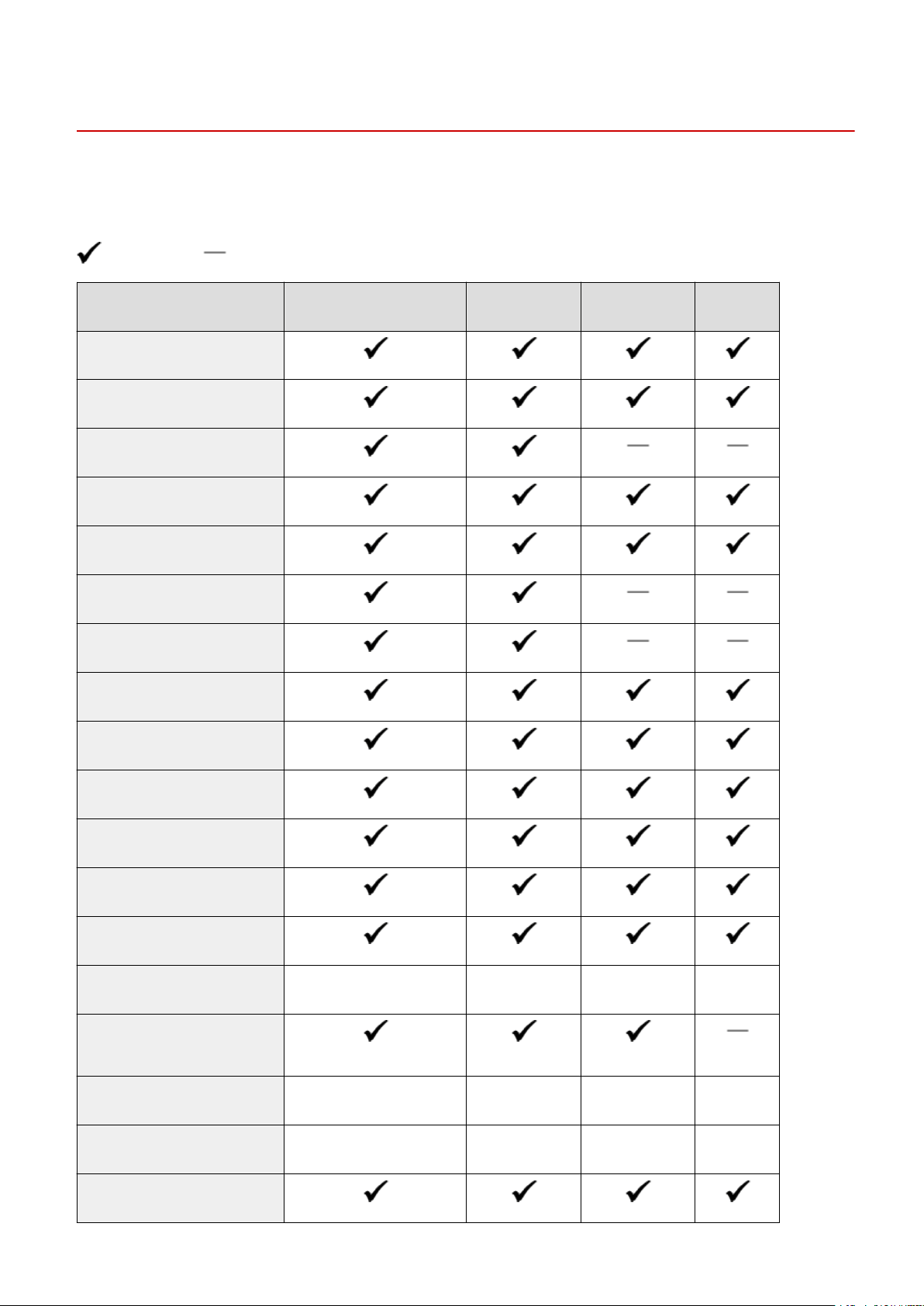
Supported Functions
8W0J-001
User
's Guide (this manual) describes all functions of the model series including the machine. Some of the functions
listed in User's Guide may not be available depending on your model. Use the table below to see which functions are
supported by your model.
: Supported : Not supported
Function MF269dw II / MF269dw VP II MF267dw II MF264dw II MF262dw II
Print
Scan
Fax
Copy
2-sided Printing
Forward received faxes
Send scanned data (e-Mail/SMB)
Wired LAN connection
Wireless LAN connection
USB connection
Remote UI
Keys and certicates
Linking with mobile devices
Display
Touch panel Touch panel 5 Lines LCD 5 Lines LCD
Feeder
(2-sided scanning) (1-sided scanning) (1-sided scanning)
Default System Manager ID
Not specied Not specied Not specied Not specied
Default System Manager PIN
Not specied Not specied Not specied Not specied
Toner Replenishment Service
About the Machine
3

● For details about the types of available drivers, see the Canon website for your country or r
egion, or see the
supplied User Software CD-ROM/DVD-ROM.
https://global.canon/en/support/
About the Machine
4

System Manager ID and PIN
8W0J-002
The machine has a System Manager Mode for vie
wing and changing important settings.
When System Manager ID and System Manager PIN are set, only those users who know this information are able to
log into System Manager Mode.
The System Manager ID and System Manager PIN are not set.
System Manager Mode is disabled, allowing anyone to see and change important settings. Set the System Manager ID
and System Manager PIN to protect the information, and allow only certain administrators of this information.
For details about how to change and set the System Manager ID and System Manager PIN, see the following:
Setting the Department ID and PIN for the Administrator(P. 350)
About the Machine
5

Measures to Prevent Unauthorized Access
8W0J-003
Be sur
e to read this section before using the machine in a network environment.
Printers and multifunction machines can provide various useful functions when connected to a network. However,
because this also creates risks of unauthorized access and eavesdropping over the network, measures against security
risks are essential.
This section provides examples of measures against unauthorized access that you can implement during setup when
using the machine in a network environment.
Using a Private IP Address(P. 6)
Using a PIN to Protect Information(P. 6)
Precautions When Using Remote UI(P. 7)
● Ther
e are additional measures against security risks you can implement on the machine, such as restricting
communication with a rewall and using TLS encrypted communication to prevent eavesdropping and
tampering. Take the necessary measures according to your usage environment.
Security(P. 349)
Using a Private IP Address
Ther
e are two types of IP addresses: a global IP address, which is used for connecting to the Internet, and a private IP
address, which is used in a local area network such as a company LAN.
If a global IP address is assigned to the machine, the machine can be accessed by users on the Internet. Thus, the risk
of information leakage due to unauthorized access from external network increases.
On the other hand, if a private IP address is assigned to the machine, access to the machine is restricted to only users
on your local area network. Therefore, it reduces the risk of unauthorized access compared to an assigned global IP
address.
Basically, assign a private IP address to the machine.
A private IP address is used in one of the following ranges.
Ranges for Private IP Addresses
● From 10.0.0.0 to 10.255.255.255
● From 172.16.0.0 to 172.31.255.255
● From 192.168.0.0 to 192.168.255.255
For details about how to assign and conrm the IP address, see the following:
Setting IPv4 Addresses(P. 77)
Setting IPv6 Addresses(P. 81)
If you want to assign a global IP addr
ess to the machine, you can create an environment to prevent outside access,
such as by using a rewall, to reduce the risk of unauthorized access. Contact your network administrator about how
to implement network security.
Using a PIN to Protect Information
By setting up a PIN to pr
otect the information stored in the machine, you can reduce the risk of information leakage or
unauthorized use if a malicious third party attempts to gain unauthorized access.
You can set a PIN to the functions indicated below. Only users who know the PIN can use these functions and access
the information on the machine.
Remote UI
About the Machine
6

You can require the user to enter the Remote UI Access PIN when using Remote UI.
Setting the PIN to Use for Remote UI(P. 388)
System Manager ID
Y
ou can require the user to enter the System Manager ID and System Manager PIN, when changing any
important settings.
Setting the Department ID and PIN for the Administrator(P. 350)
Addr
ess Book
You can require the user to enter the Address Book PIN when adding new entries and editing existing ones.
Restricting Address Book Registration and Editing by Setting a PIN(P. 386)
Precautions When Using Remote UI
● Do not access other websites when using Remote UI.
● After using Remote UI, be sure to log out and close your browser.
About the Machine
7

Names of Parts and Their Functions
8W0J-004
Fr
ont Side
Check these parts on the front when operating the machine.
Front Side(P. 9)
● Use the contr
ol panel to operate the machine and congure the settings.
Control Panel(P. 14)
● Place the original on the platen glass or in the feeder when scanning, sending a fax, or cop
ying.
2-Sided Double Pass Feeder(P. 19)
1-Sided Feeder(P. 20)
● Load printing and cop
ying paper into the following paper sources:
Multi-purpose Tray(P. 21)
Drawer(P. 22)
Back Side
Check the r
ear parts when installing and connecting the machine and when clearing paper jams.
Back Side(P. 11)
Interior
Open the co
vers and access the interior to replace a toner cartridge or to remove jammed paper.
Interior(P. 13)
About the Machine
8
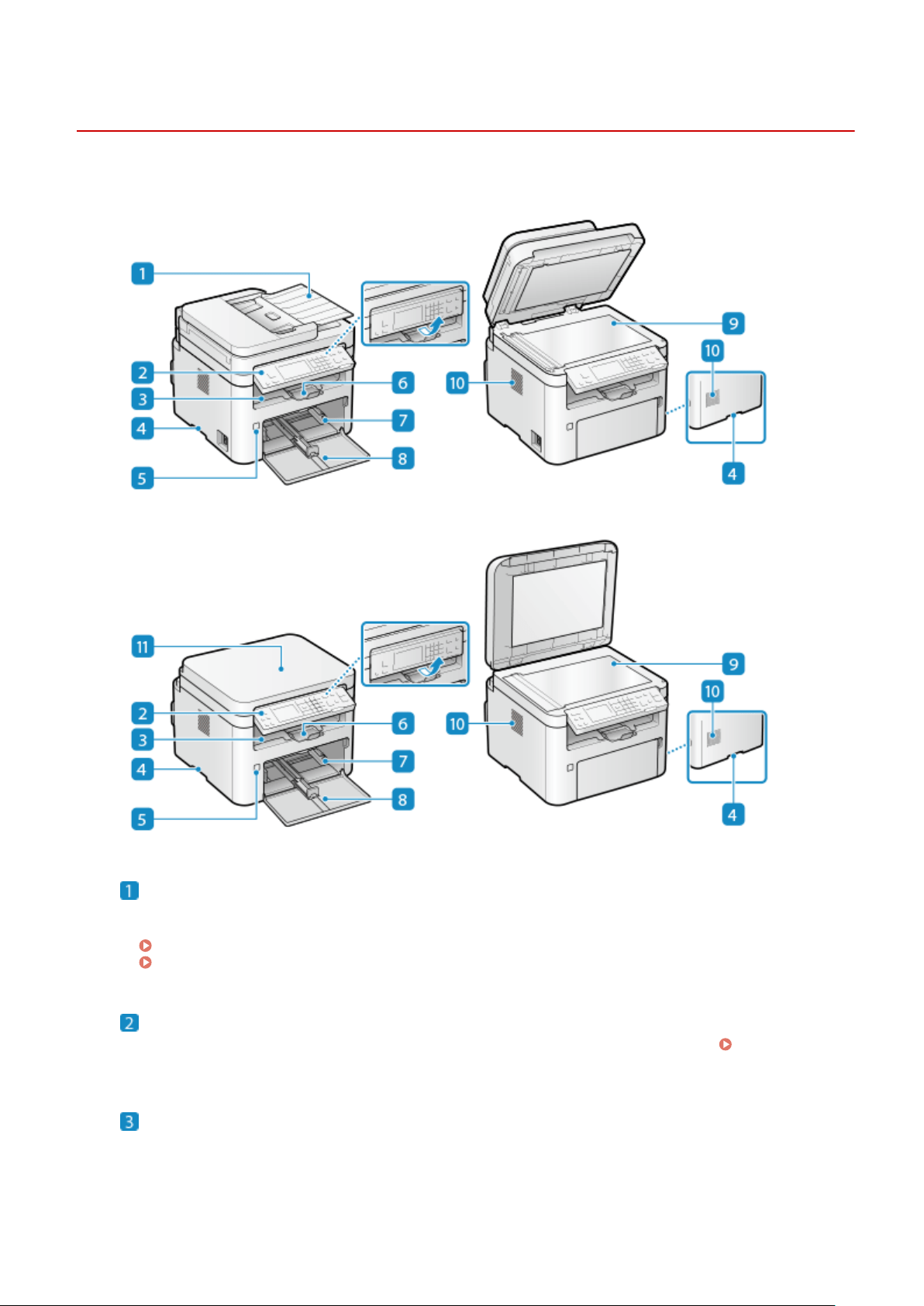
Front Side
8W0J-005
MF269dw II / MF269dw VP II / MF267dw II / MF264dw II
MF262dw II
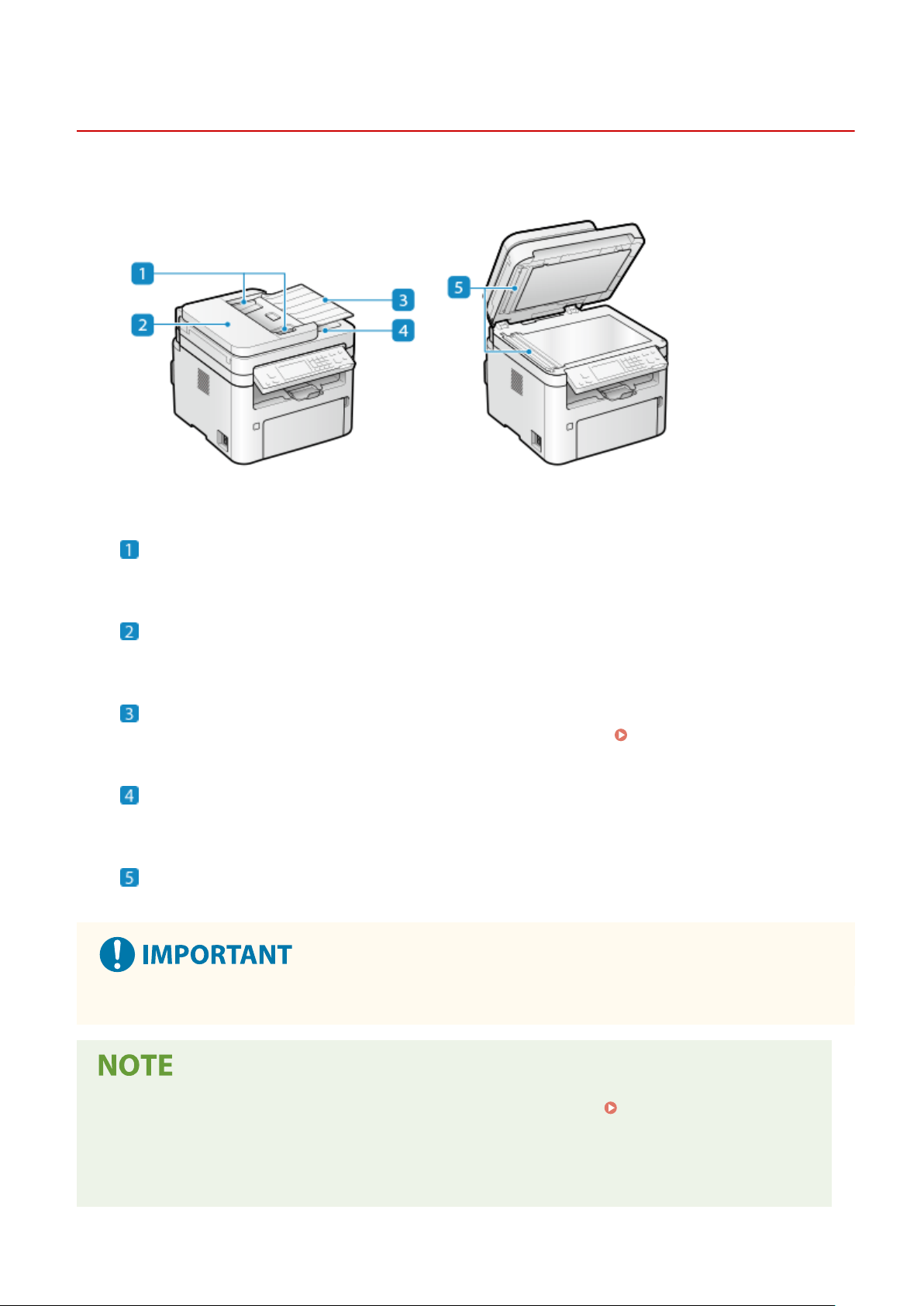
Feeder
Y
ou can place two or more sheets of originals in the feeder. The placed originals are fed and scanned one by
one automatically.
2-Sided Double Pass Feeder(P. 19)
1-Sided Feeder(P. 20)
Control panel
Use the display and k
eys to operate the machine and conrm the operations and status.
Control
Panel
(P. 14)
Output tray
Printed and copied paper is ejected to the output tr
ay.
About the Machine
9
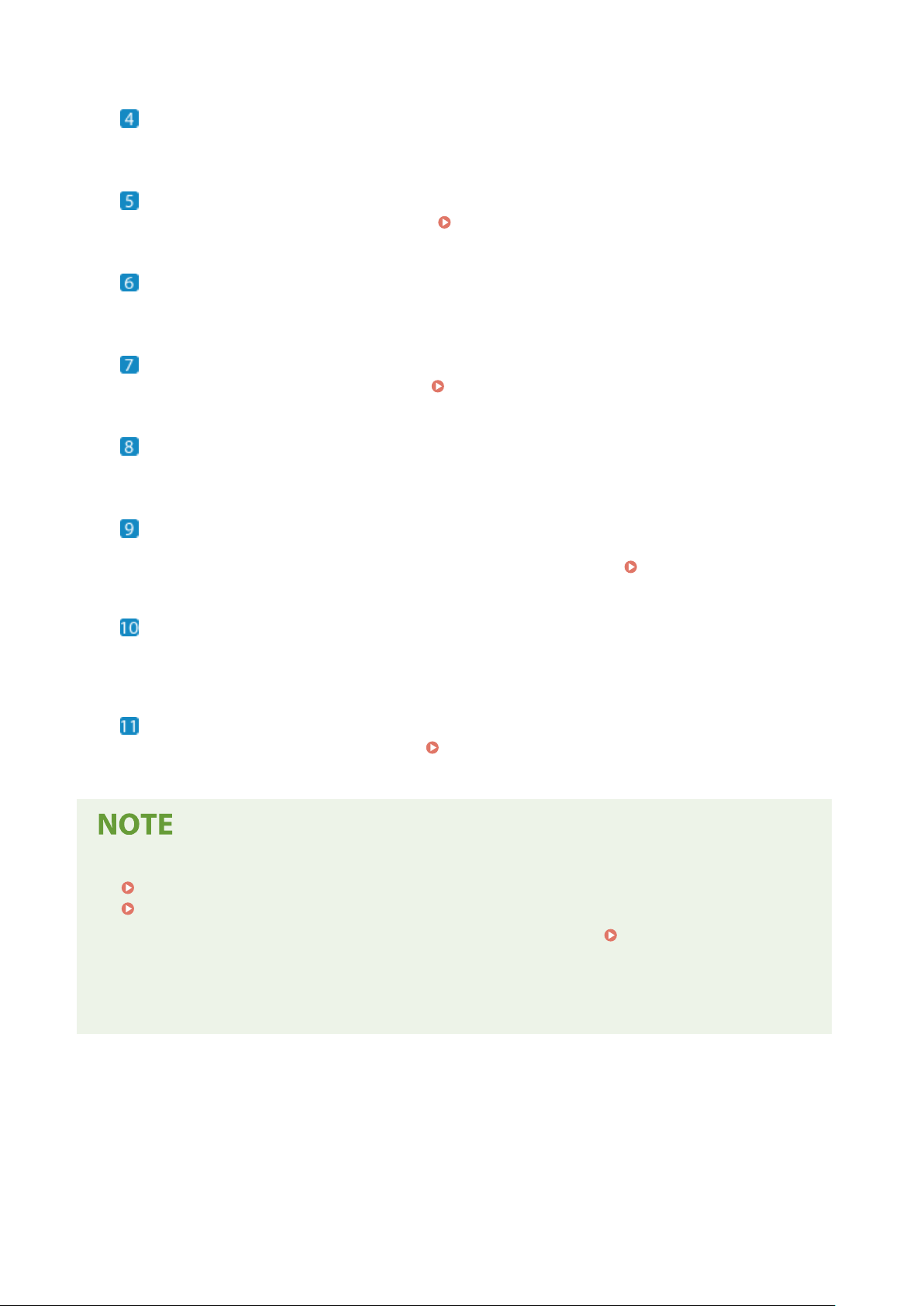
Lift handles
Hold the lift handles when mo
ving the machine.
Power switch
T
urns the power of the machine ON and OFF.
Turning ON and OFF the Machine(P. 110)
Paper stopper
Open the paper stopper to pr
event paper from falling out of the output tray.
Drawer
Load paper you usually use into the Dr
awer.
Drawer(P. 22)
Front cover
Open the fr
ont cover when loading paper.
Platen glass
Place books, thick paper, thin paper, and other originals that cannot be placed in the feeder on the platen
glass to cop
y or scan. The placed originals are scanned in a xed position.
Placing Originals(P. 139)
Ventilation slots
Air inside the machine is r
eleased through the ventilation slots to cool down the inside of the machine.
Do not place objects next to the ventilation slots, as this can prevent ventilation.
Platen cover
Open to place originals on the platen glass. Placing Originals(P. 139)
● T
o ensure ecient use of the machine, regularly clean the surface and platen glass.
Cleaning the Surface of the Machine(P. 521)
Cleaning the Platen Glass(P. 525)
● If the follo
wing symptoms occur when using the feeder, clean the feeder:
Cleaning the Feeder(P. 526)
-
Originals become dirty
- Originals frequently jam
- Printouts appear smudged after scanning, copying, or sending faxes
About the Machine
10
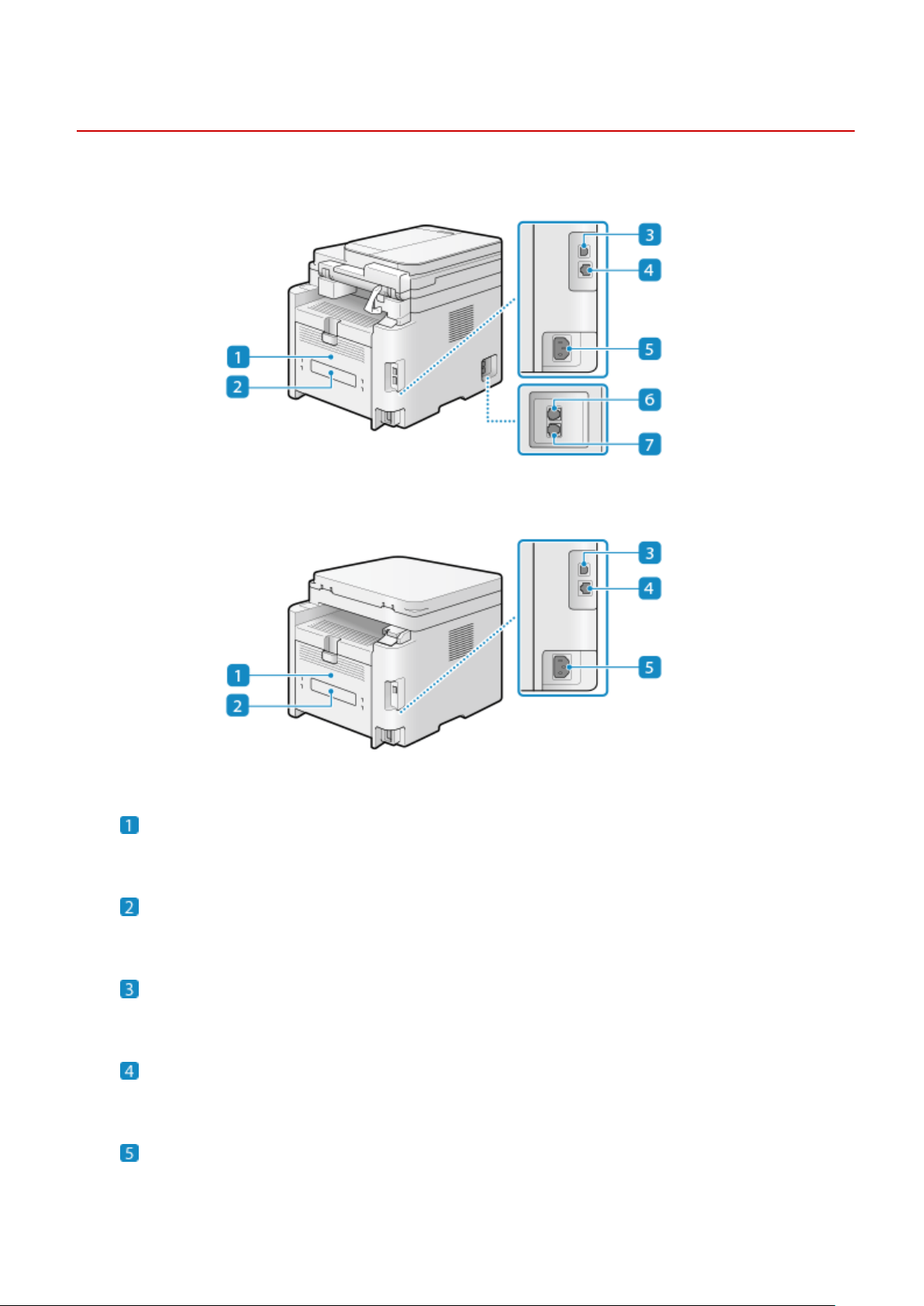
Back Side
8W0J-006
MF269dw II / MF269dw VP II / MF267dw II / MF264dw II
*
The shapes of the feeder partly vary among the models of the machine.
MF262dw II
Back cover
Open the back co
ver when a paper jam occurs inside the machine.
Rating label
This label sho
ws the serial number, which is needed when making inquiries about the machine.
USB port (for computer connection)
Y
ou can connect a computer to the USB port using a commercial USB cable.
LAN port
Y
ou can connect the machine to a wired LAN using a commercial Ethernet cable connected to the LAN port.
Power socket
Connect the po
wer cord to the power socket.
About the Machine
11

External telephone jack (EXT.)
Connect a commer
cial telephone to this jack.
*
MF264dw II is not equipped with this jack.
Telephone line jack (LINE)
Use the supplied telephone cor
d to connect the machine to the telephone line.
*
MF264dw II is not equipped with this jack.
About the Machine
12
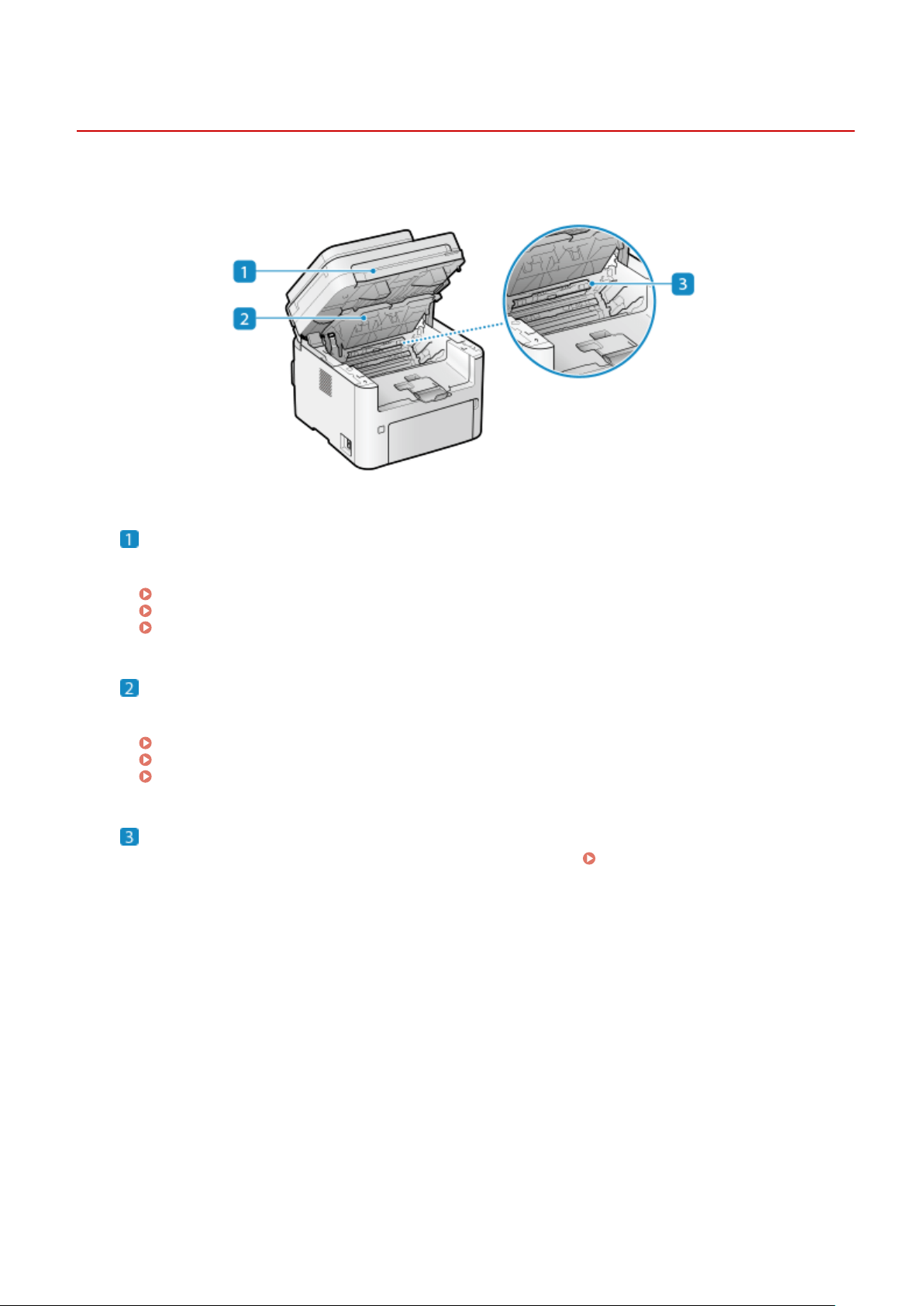
Interior
8W0J-007
Install the toner cartridge and the drum cartridge into the machine.
Control panel
Lift the toner cartridge or the drum cartridge fr
om the slots when removing jammed paper in the interior or
when replacing the toner cartridge or the drum cartridge.
Replacing the Toner Cartridge(P. 532)
Replacing the Drum Cartridge(P. 536)
Paper Jams inside the Machine and in the Back Side(P. 551)
Toner cover
Lift the toner cartridge or the drum cartridge fr
om the slots when removing jammed paper in the interior or
when replacing the toner cartridge or the drum cartridge.
Replacing the Toner Cartridge(P. 532)
Replacing the Drum Cartridge(P. 536)
Paper Jams inside the Machine and in the Back Side(P. 551)
Paper exit guide
Open the paper e
xit guide when paper is jammed at the paper exit.
Paper Jams inside the Machine and
in the Back Side(P
. 551)
About the Machine
13
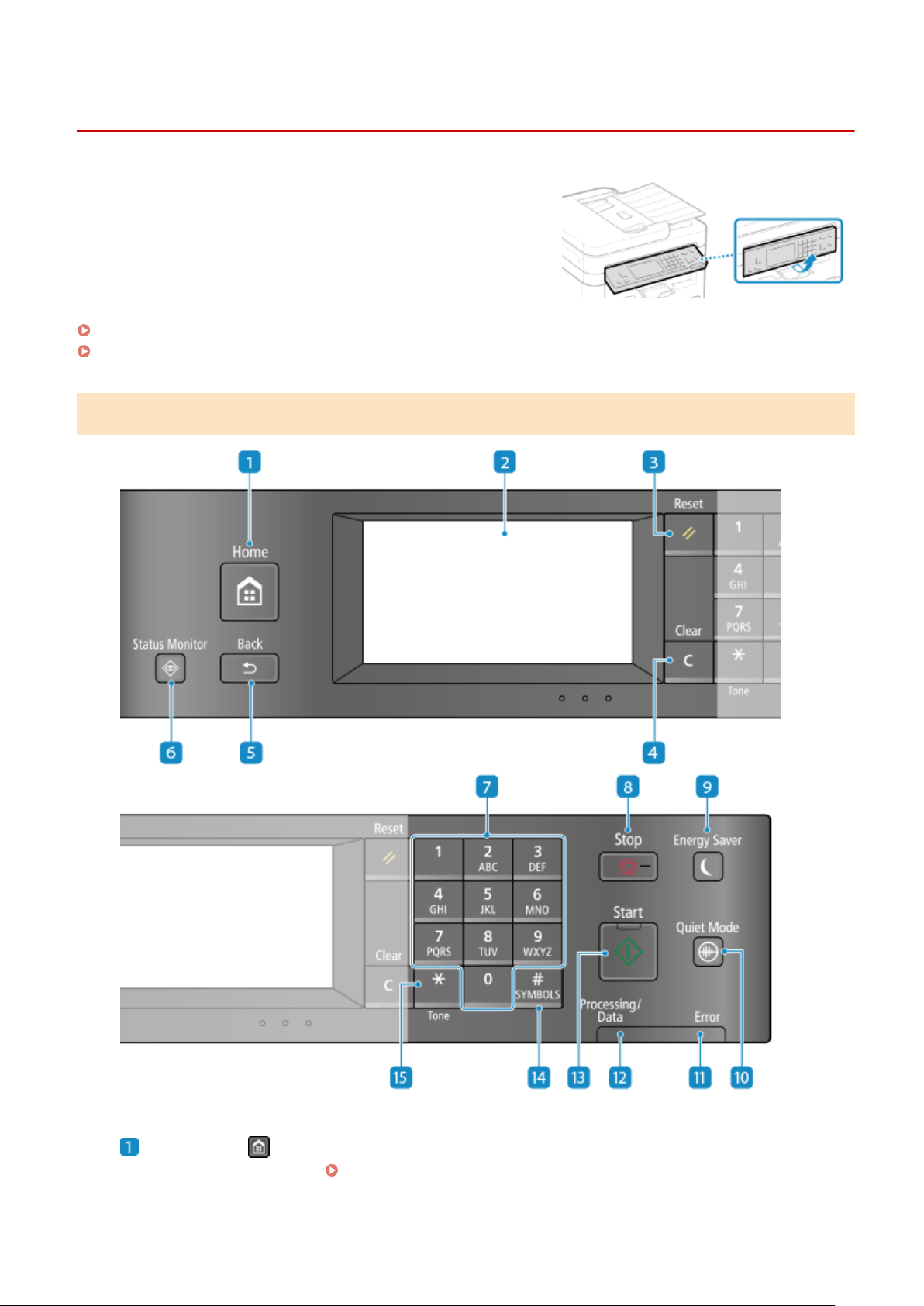
Control Panel
8W0J-008
Use the control panel to operate the machine and congur
e the
settings.
When operating on the control panel, raise the control panel, as
shown on the right.
Control Panel (Touch Panel Model)(P. 14)
Control Panel (5 Lines LCD Model)(P. 16)
Control Panel (Touch Panel Model)
Home key ( )
Displays the [Home] scr
een.
[Home] Screen(P. 120)
About the Machine
14
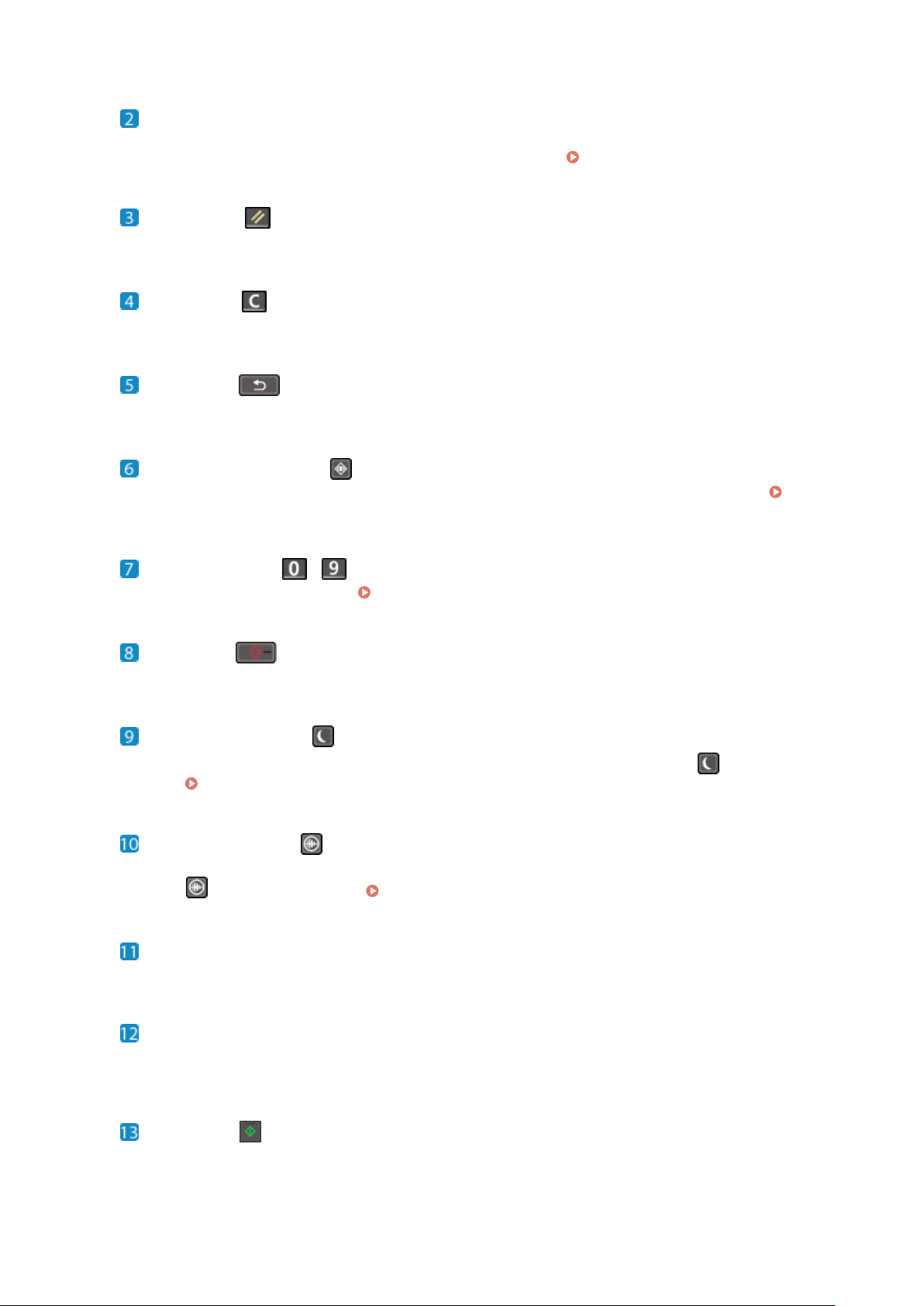
Display
Displays the scr
eens for operating the functions, usage, messages, and other information. This touch panel
can be operated by directly touching the screen with your nger.
Using the Control Panel(P. 116)
Reset key ( )
Pr
ess to cancel the settings and restore the previously specied settings.
Clear key ( )
Pr
ess to delete the entered numbers and text.
Back key ( )
Returns you to the pr
evious screen.
Status Monitor key ( )
Check the information of the machine, usage and logs, network settings, and err
or information.
[Status
Monitor] Scr
een(P. 124)
Numeric keys ( - )
Pr
ess to enter numbers and text.
Entering Characters(P. 131)
Stop key ( )
Cancels printing and other oper
ations.
Energy Saver key ( )
Puts the machine into sleep mode to r
educe power consumption. In the sleep mode,
lights up yellow-
gr
een.
Reducing Power Consumption (Sleep Mode)(P. 114)
Quiet Mode key ( )
Pr
ess to put the machine into quiet mode, which reduces the operation sound of the machine. In the quiet
mode,
lights up yellow-green. Reducing the Operation Sound (Quiet Mode)(P. 197)
Error indicator
Blinks or lights up when an error such as a paper jam occurs.
Processing/Data indicator
Blinks when an oper
ation is being performed, such as during printing, and lights up when data is waiting to
be processed.
Start key ( )
Pr
ess to scan originals.
About the Machine
15
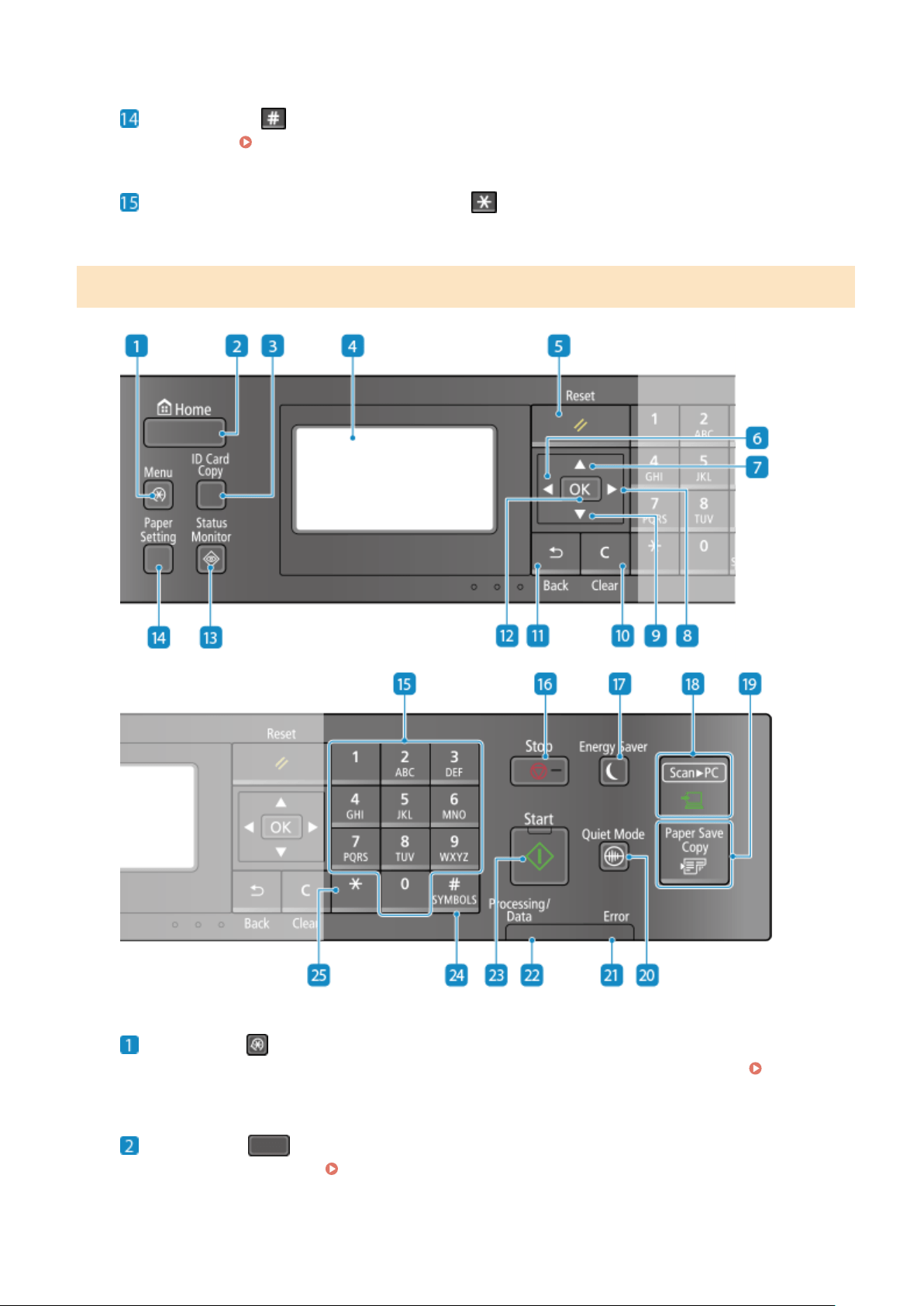
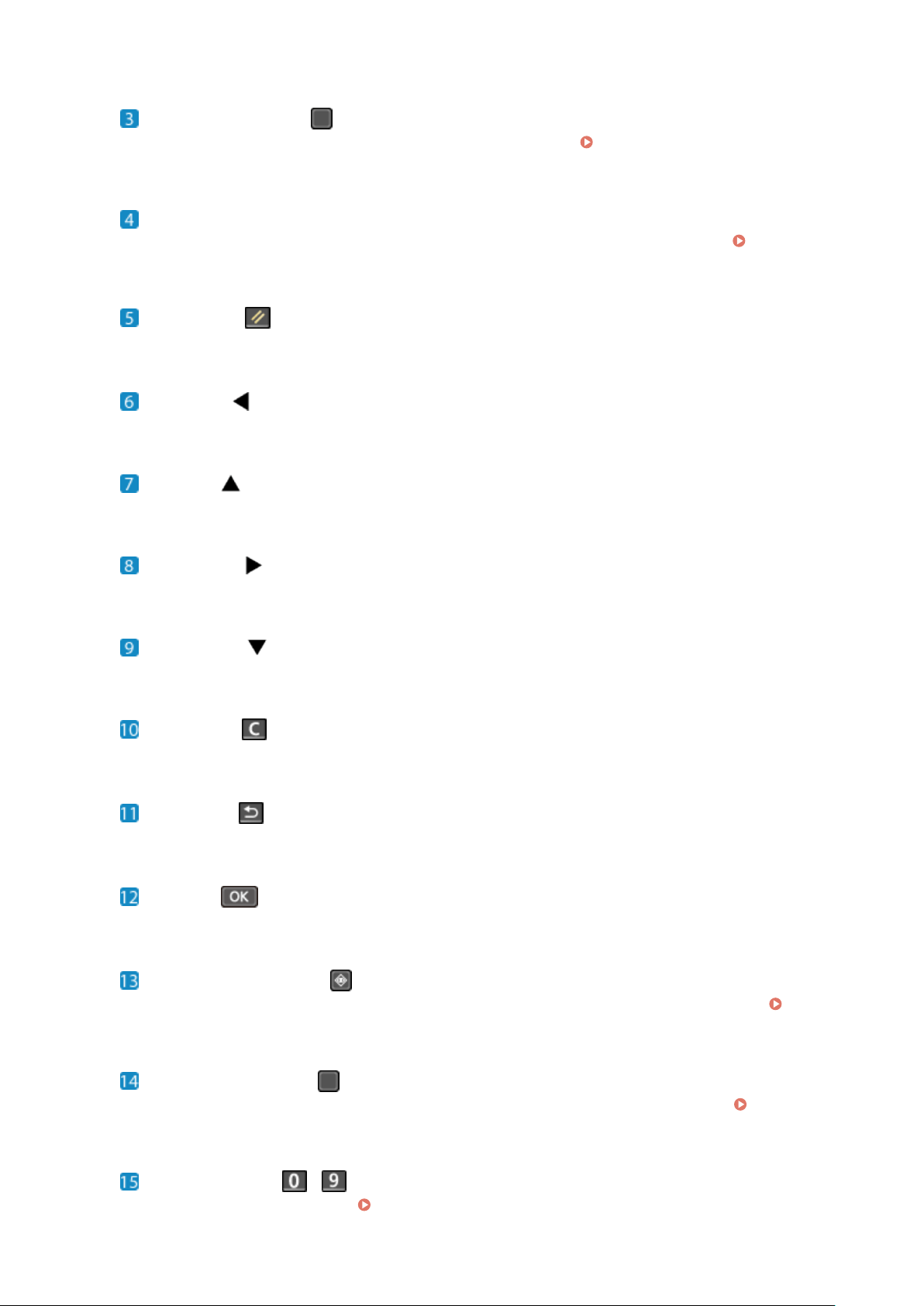
Symbol key ( )
Enter symbols. Entering Characters(P. 131)
Uppercase/lowercase/numeric key ( )
Changes the char
acter type.
Control Panel (5 Lines LCD Model)
Menu key ( )
Pr
ess to specify the settings of the machine, such as the network settings or system settings.
Settings
Menu Items(P
. 427)
Home key ( )
Displays the [Home] scr
een.
[Home] Screen(P. 120)
About the Machine
16
ID Card Copy key ( )
Pr
ess to copy both sides of an ID card onto the same side of paper.
Copying Both Sides of ID Cards onto
One Sheet(P
. 315)
Display
Displays the scr
eens for operating the functions, usage, messages, and other information.
Using the
Contr
ol Panel(P. 116)
Reset key ( )
Pr
ess to cancel the settings and restore the previously specied settings.
Left key ( )
Returns to the pr
evious screen. Press when entering text to move the cursor to the left.
Up key ( )
Selects the item abo
ve and increases the value on a slider.
Right key ( )
Mo
ves to the next screen. Press when entering text to move the cursor to the right.
Down key ( )
Selects the item belo
w and decreases the value on a slider.
Clear key ( )
Pr
ess to delete the entered numbers and text.
Back key ( )
Returns you to the pr
evious screen.
OK key ( )
Conrms the settings and selected details.
Status Monitor key ( )
Check the information of the machine, usage and logs, network settings, and err
or information.
[Status
Monitor] Scr
een(P. 124)
Paper Setting key ( )
Pr
ess to select the paper to print on. Also press to specify the paper size or the paper type.
Specifying the
Paper Size and T
ype(P. 152)
Numeric keys ( - )
Pr
ess to enter numbers and text.
Entering Characters(P. 131)
About the Machine
17
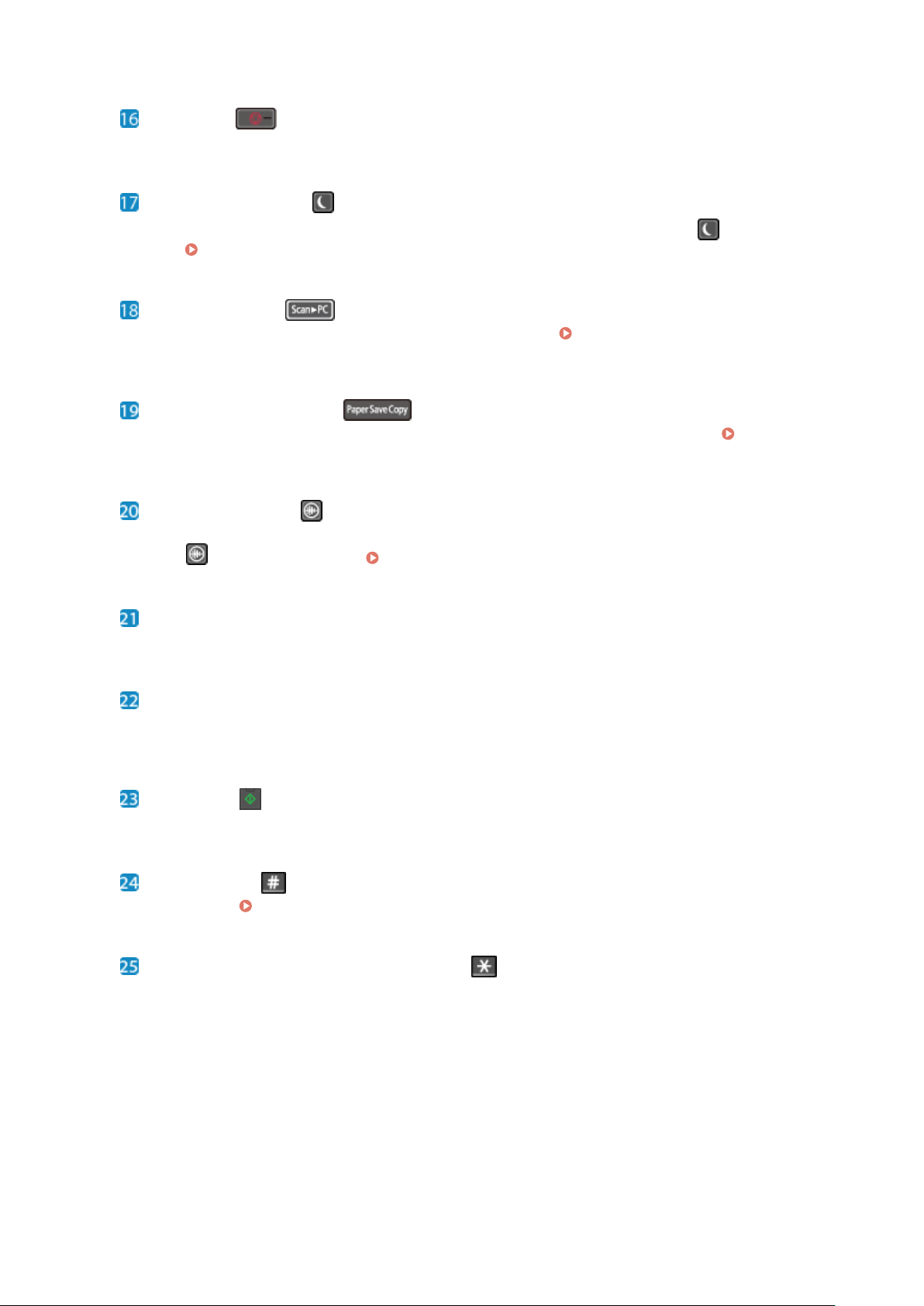
Stop key ( )
Cancels printing and other oper
ations.
Energy Saver key ( )
Puts the machine into sleep mode to r
educe power consumption. In the sleep mode,
lights up yellow-
gr
een.
Reducing Power Consumption (Sleep Mode)(P. 114)
Scan -> PC key ( )
Pr
ess to send the scanned originals to the registered computer.
Scanning Using the Shortcut Key (Saving
to a Computer)(P
. 251)
Paper Save Copy key ( )
Pr
ess to set the machine to perform the N on 1 copy and two-sided copy simultaneously.
Paper Save
Cop
y(P. 311)
Quiet Mode key ( )
Pr
ess to put the machine into quiet mode, which reduces the operation sound of the machine. In the quiet
mode,
lights up yellow-green. Reducing the Operation Sound (Quiet Mode)(P. 197)
Error indicator
Blinks or lights up when an err
or such as a paper jam occurs.
Processing/Data indicator
Blinks when an oper
ation is being performed, such as during printing, and lights up when data is waiting to
be processed.
Start key ( )
Pr
ess to scan originals.
Symbol key ( )
Enter symbols. Entering Characters(P. 131)
Uppercase/lowercase/numeric key ( )
Changes the character type.
About the Machine
18
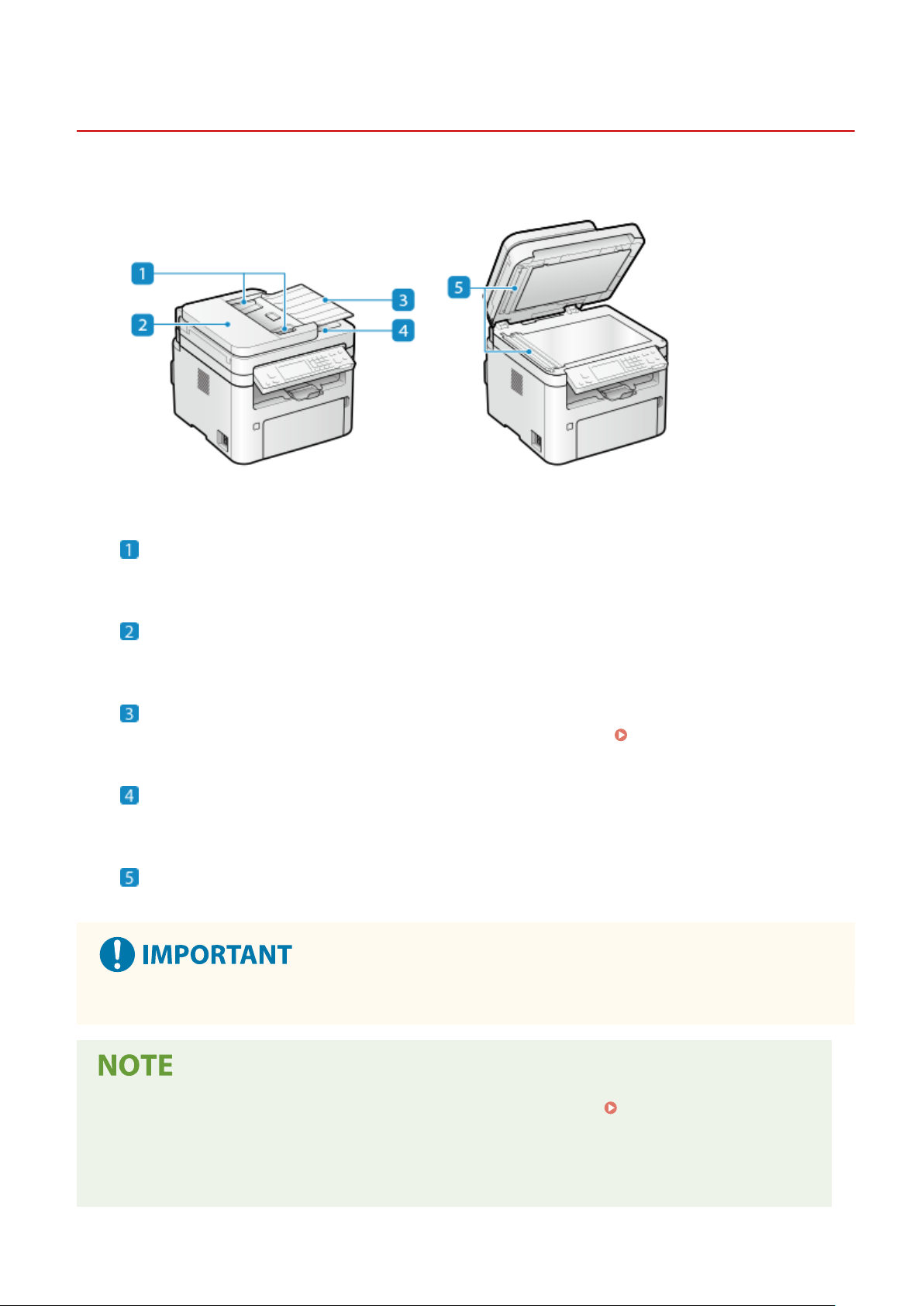
2-Sided Double Pass Feeder
8W0J-009
This pr
oduct is standard-equipped with the MF269dw II / MF269dw VP II.
Slide guides
Align the slide guides against the edges of the originals to pr
operly place the original.
Feeder cover
Open the feeder co
ver when cleaning the inside of the feeder or clearing a paper jam inside the feeder.
Original supply tray
Y
ou can place two or more sheets of originals in the original supply tray.
Placing Originals(P. 139)
Original output tray
Scanned originals ar
e output to the original output tray.
Original scanning area
Originals placed on the feeder ar
e scanned.
● Do not place objects on the original output tr
ay. This can damage the originals.
● If the following symptoms occur when using the feeder, clean the feeder: Cleaning the Feeder(P. 526)
- Originals become dirty
- Originals frequently jam
- Printouts appear smudged after scanning, copying, or sending faxes
About the Machine
19
1-Sided Feeder
8W0J-013
This pr
oduct is standard-equipped with the MF267dw II / MF264dw II.
Slide guides
Align the slide guides against the edges of the originals to pr
operly place the original.
Feeder cover
Open the feeder co
ver when cleaning the inside of the feeder or clearing a paper jam inside the feeder.
Original supply tray
Y
ou can place two or more sheets of originals in the original supply tray.
Placing Originals(P. 139)
Original output tray
Scanned originals ar
e output to the original output tray.
Original scanning area
Originals placed on the feeder ar
e scanned.
● Do not place objects on the original output tr
ay. This can damage the originals.
● If the following symptoms occur when using the feeder, clean the feeder: Cleaning the Feeder(P. 526)
- Originals become dirty
- Originals frequently jam
- Printouts appear smudged after scanning, copying, or sending faxes
About the Machine
20
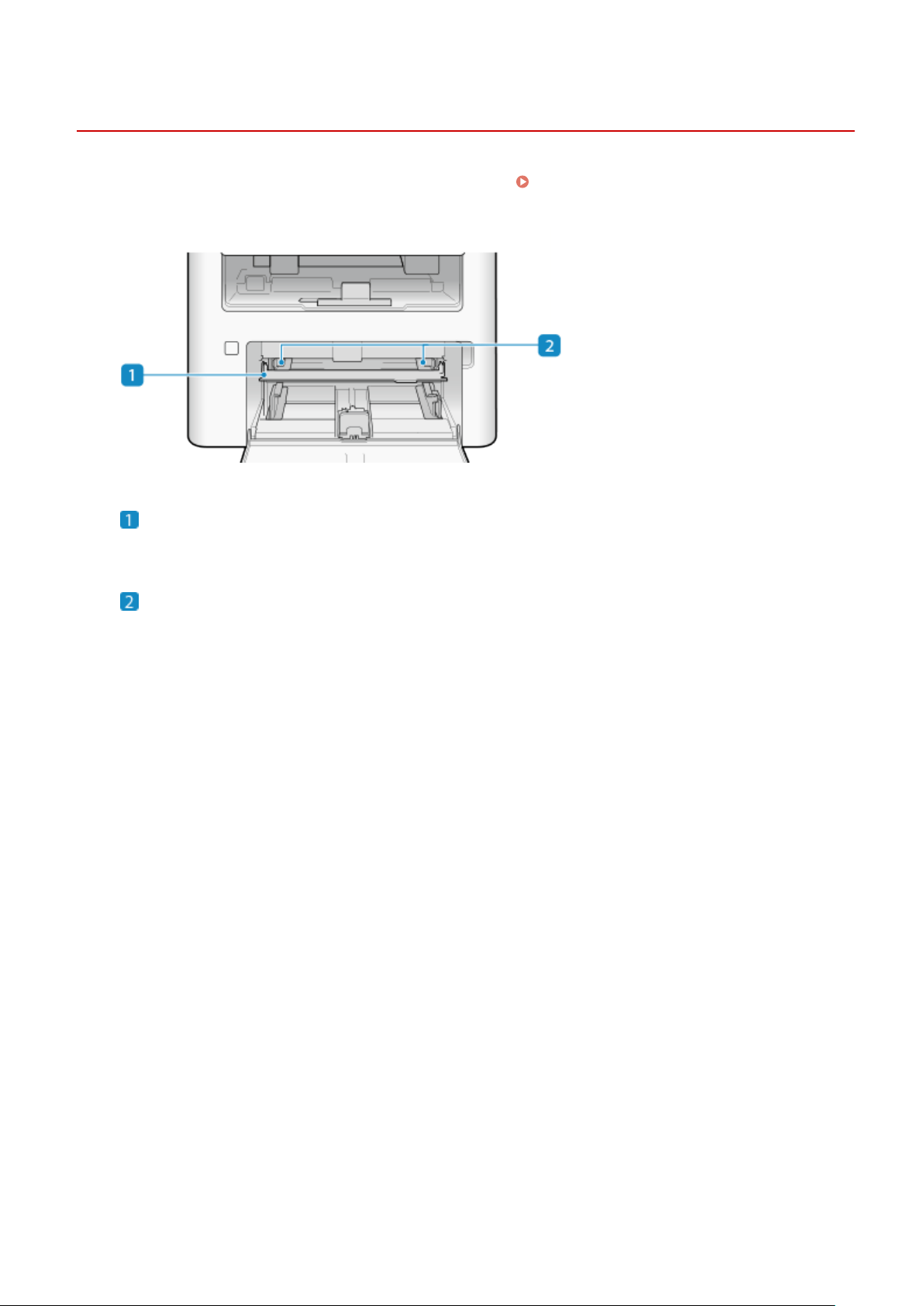
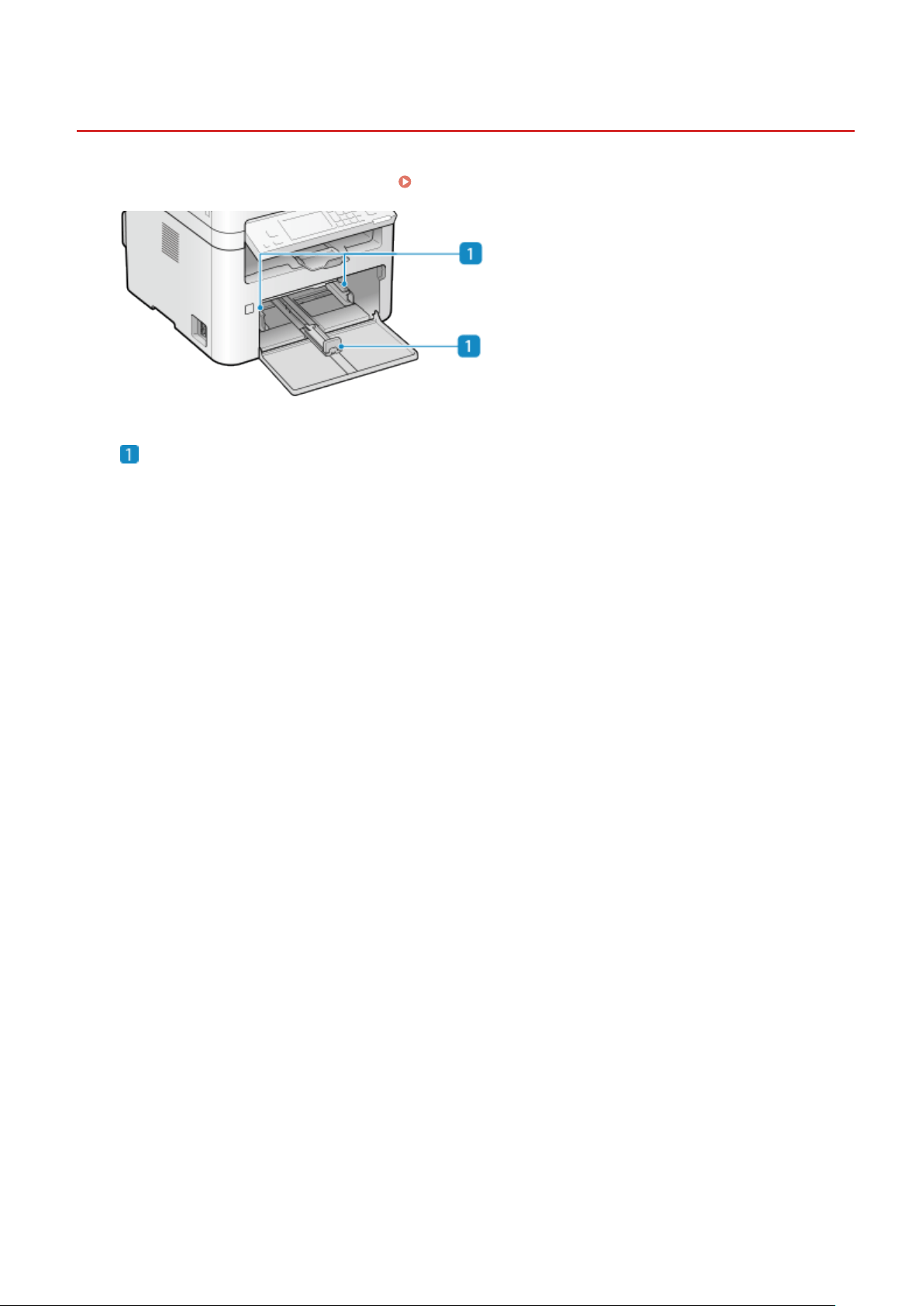
Multi-purpose Tray
8W0J-00A
Load paper that you will tempor
arily use in the multi-purpose tray.
Loading Paper in the Multi-purpose
T
ray(P. 146)
Multi-Purpose tray
Lo
wer the multi-purpose tray when loading paper.
Paper guides
Align the paper guides against the edges of the paper to pr
operly place the paper.
About the Machine
21
Usable Paper
8W0J-00E
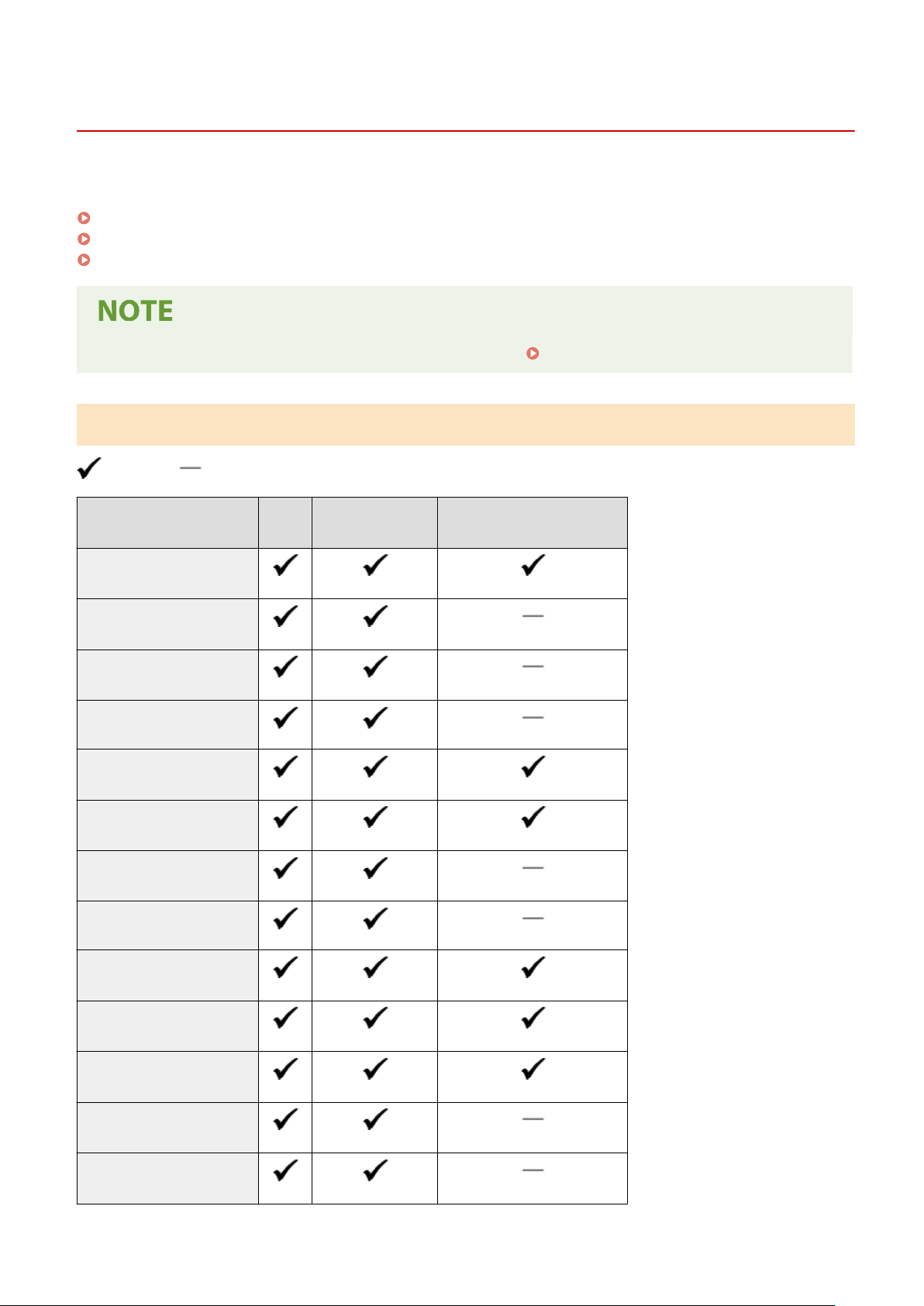
The sizes and types of paper that can be used on the machine ar
e shown below.
Usable Paper Sizes(P. 23)
Usable Paper Types(P. 24)
Unusable Paper(P. 25)
● Pr
ecautions must be taken when handling and storing paper.
Precautions When Handling Paper(P. 26)
Usable Paper Sizes
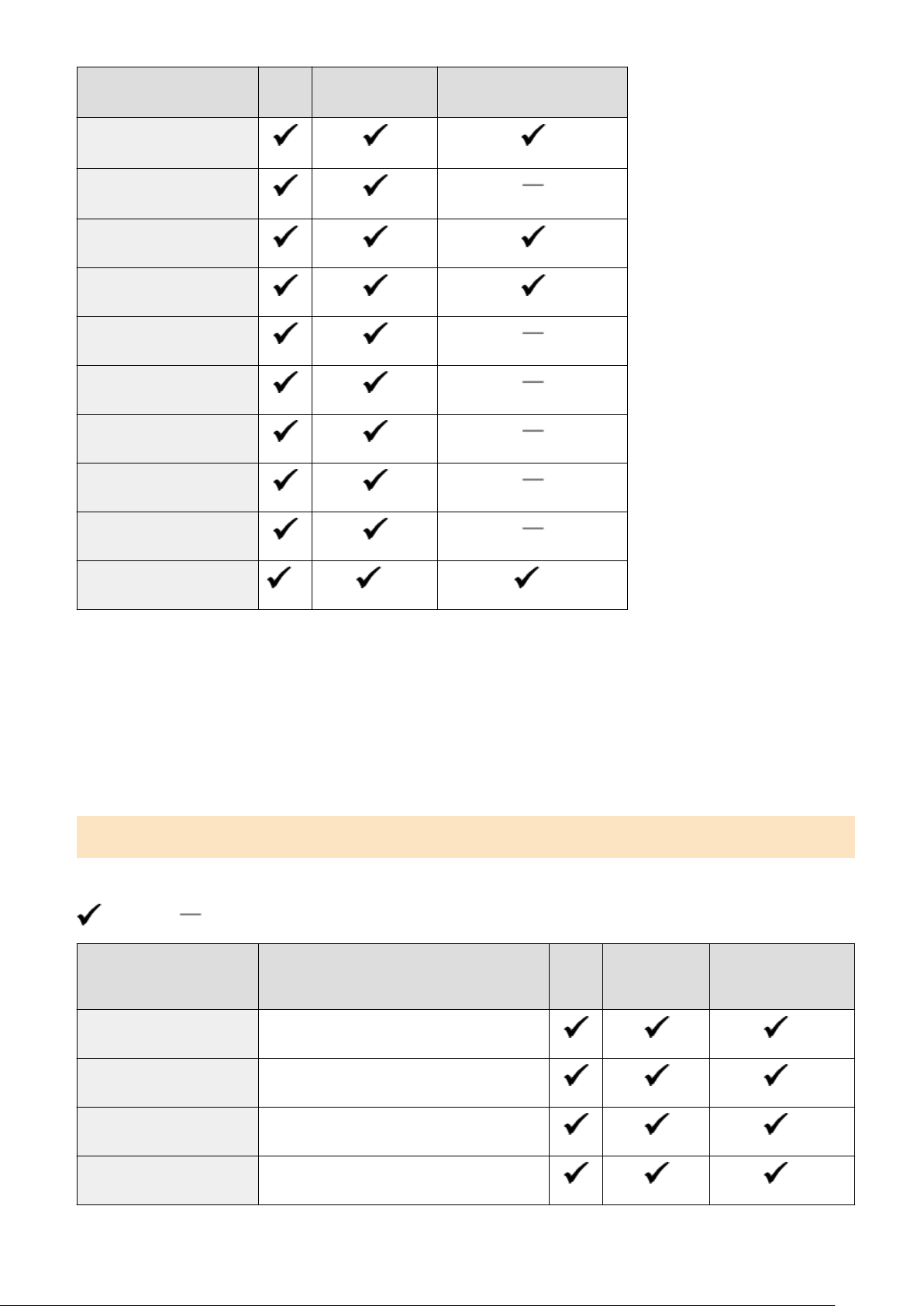
: Usable : Not usable
Paper Size Drawer Multi-purpose Tray
Automatic 2-sided Printing
*1
A4
*2*3
B5
*2
A5
*2*4
A6
Legal (LGL)
*2
Letter (LTR)
*2*3
Statement (STMT)
*2
Executive (EXEC)
Ocio
*2
Ocio (Br
azil)
*2
Ocio (Me
xico)
*2
Letter (Government)
*2
Legal (Government)
*2
About the Machine
23
Paper Size Drawer Multi-purpose Tray
Automatic 2-sided Printing
*1
Foolscap/Folio
*2
Foolscap (Australia)
*2
Legal (India)
F4A
3x5inch
Envelope No.10 (COM10)
Envelope Monarch
Envelope C5
Envelope DL
Custom Paper Size
*5 *5 *6
*1
Automatic 2-sided printing is available without r
eplacing paper.
*2
Allows you to print received fax documents.
*3
Enables printing of reports and lists.
*4
Enables loading of paper in the portrait or landscape orientation.
*5
The custom size ranging from 3" x 5" (76.0 mm x 127.0 mm) to 8 1/2" x 14" (216.0 mm x 356.0 mm) is available.
*6
The custom size ranging from 8 1/4" x 11" (210.0 mm x 279.4 mm) to 8 1/2" x 14" (216.0 mm x 356.0 mm) is available.
Usable Paper Types
Y
ou can use non-chlorine paper.
: Usable : Not usable
Paper Type Paper Weight Drawer Multi-purpose
T
ray
Automatic 2-sided
Printing
*1
Thin 1 16 lb Bond (60 g/m²)
*2
Plain 1 16 lb Bond to 17 lb Bond (61 g/m² to 70 g/m²)
*2
Plain 2 19 lb Bond to 23 lb Bond (71 g/m² to 89 g/m²)
*2
Plain 3 24 lb Bond to 28 lb Bond (90 g/m² to 105 g/m²)
*2
About the Machine
24
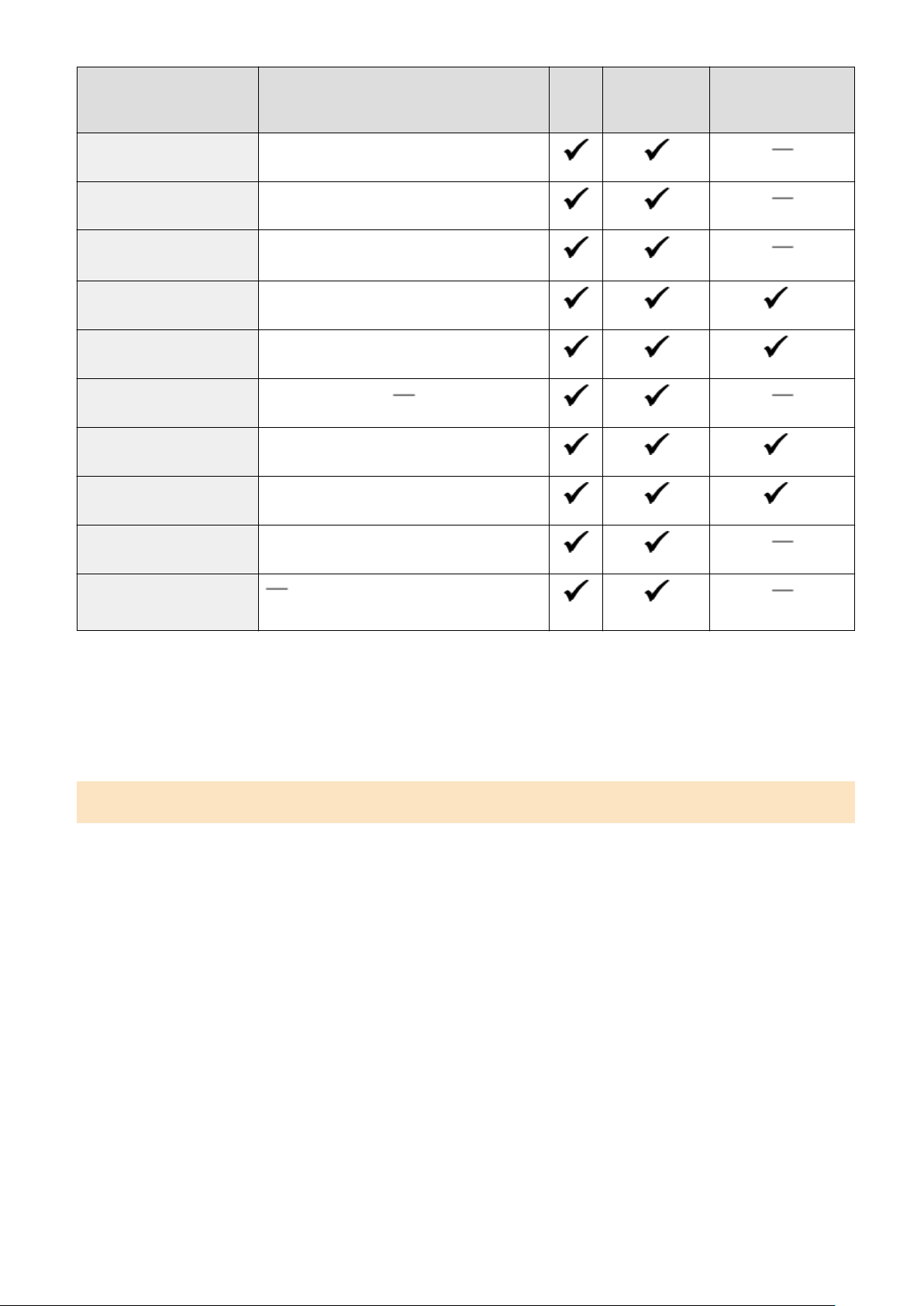
Paper Type Paper Weight Drawer Multi-purpose
T
ray
Automatic 2-sided
Printing
*1
Heavy 1 29 lb Bond to 32 lb Bond (106 g/m² to 120 g/m²)
Heavy 2 33 lb Bond to 60 lb Cover (121 g/m² to 163 g/m²)
Heavy 3
*3
33 lb Bond to 60 lb Cover (121 g/m² to 163 g/m²)
Recycled 1 16 lb Bond to 17 lb Bond (61 g/m² to 70 g/m²)
*2
Recycled 2 19 lb Bond to 23 lb Bond (71 g/m² to 89 g/m²)
*2
Labels
Color 16 lb Bond to 17 lb Bond (61 g/m² to 70 g/m²)
*2
Bond 1 16 lb Bond to 27 lb Bond (60 g/m² to 104 g/m²)
*2
Bond 2 28 lb Bond to 60 lb Bond (105 g/m² to 163 g/m²)
Envelope
*4
*1
Automatic 2-sided printing is available without r
eplacing paper.
*2
Usable paper sizes are A4, Legal, Letter, Ocio, Ocio (Brazil), Ocio (Mexico), Legal (India), F4A, and Foolscap/Folio.
*3
Specify [Heavy 3] if you cannot print properly when [Heavy 2] is specied, such as due to the toner coming off.
*4
Specify [Envelope 2] if you cannot print properly when [Envelope 1] is specied, such as due to the toner coming off.
Unusable Paper
Before printing, check whether the paper to use is suitable. Do not use the following types of paper, as they can
cause paper jams or printing err
ors:
● Wrinkled, creased, curled, torn, or damp paper
*1
● Thin straw paper, very thin paper, coarse paper, glossy paper
● Paper with glue or other adhesive sticking out or label paper whose back side can be easily peeled off
● Paper printed by a thermal transfer printer, back side of paper printed by a thermal transfer printer
*1
Printing on damp paper may cause steam to be emitted fr
om the output area or water droplets to adhere to the
output part, but this does not indicate a malfunction. This is because the water contained in the paper evaporates due to
the heat generated when the toner xes to the paper. This is more likely to occur when the room temperature is low.
About the Machine
25

Precautions When Handling Paper
8W0J-00F
T
o prevent paper jams and other errors and ensure beautiful printing, you must take precautions when handling and
storing paper.
To maintain the quality of printed paper, pay attention when storing and gluing paper.
◼ Handling and Storing Paper
Before printing, check whether the paper to use is suitable. Do not use the following types of paper, as they can
cause paper jams or printing errors:
● Wrinkled, creased, curled, torn, or damp paper
*1
● Thin straw paper, very thin paper, coarse paper, glossy paper
● Paper with glue or other adhesive sticking out or label paper whose back side can be easily peeled off
● Paper printed by a thermal transfer printer, back side of paper printed by a thermal transfer printer
*1
Printing on damp paper may cause steam to be emitted fr
om the output area or water droplets to adhere to the
output part, but this does not indicate a malfunction. This is because the water contained in the paper evaporates due to
the heat generated when the toner xes to the paper. This is more likely to occur when the room temperature is low.
Acclimating the Paper to the Usage Environment
Before using the paper in the machine, be sure to fully acclimate the paper to the environment where the
machine is located. Immediately using paper stored in a location with a different temperature or humidity
can cause paper jams or printing errors.
Storing Paper Before Use
● It is recommended that you use paper as soon as possible after opening the package. Any remaining
paper should be wrapped in the original package and stored on a at surface.
● To protect the paper from moisture or dryness, keep the paper wrapped in its package until use.
● Do not store the paper so that it curls or folds.
● Do not store the paper vertically, and do not stack too much paper.
● Do not store the paper in direct sunlight, or in a place with high humidity, dryness, or a drastically different
temperature or humidity compared to the usage environment.
◼ Storing and Gluing Printed Paper
Storing Paper
● Store the paper on a at surface.
● Do not store the paper together with items made of polyvinyl chloride (PVC) such as a clear folder. The
toner may melt, causing the paper to stick to the PVC material.
● Do not store the paper folded or creased. Toner may peel off.
● Do not store the paper in a place with high temperature.
● When storing the paper for a long period of time (two years or longer), store in a binder or similar item.
● Storing the paper for a long period of time can cause a discoloration of the paper, resulting in a
discoloration of printed images.
Precautions When Gluing Printed Paper
● Always use insoluble adhesives.
● Before applying adhesive, perform a test using an unneeded printout.
● Allow glued paper to fully dry before stacking.
About the Machine
26

Specications
8W0J-00H
Specications ar
e subject to change for product improvement, and the contents may be updated depending on
products released in the future. For details about product information, see the Canon website.
https://global.canon/
Specications of Main Unit
Basic Specications(P
. 28)
2-Sided Double Pass Feeder Specications(P
. 31)
1-Sided Feeder Specications(P
. 32)
Specications of Functions
Print Specications(P
. 33)
Scan Specications(P
. 35)
Fax Specications(P
. 36)
Network Specications(P
. 37)
Security and Management Function Specications(P
. 38)
Operating Environment and Supported Software and Servers
Supported Environment(P. 41)
About the Machine
27

Basic Specications
8W0J-00J
Type Desktop
Color Supported Black and White
Scan Resolution 600 dpi × 600 dpi
Print Resolution 600 dpi × 600 dpi
Number of Tones 256
Copy Original Maximum: 8 1/2" x 11 3/4" (216.0 mm × 297.0 mm)
Sheet/Book
Copy Paper Size Maximum: 8 1/2" x 14" (216.0 mm x 356.0 mm)
Minimum: 3" x 5" (76.0 mm x 127.0 mm)
Mar
gin (when copying)
Top: 1/4" ± 1/8" (5 mm ± 2.0 mm) or less
Left: 1/4" ± 1/8" (5 mm ± 2.0 mm) or less
Paper Type and Weight
Usable Paper(P. 23)
Warm-up time
*1
After powering ON
15.0 seconds or less
* Quick startup may not be available depending on the usage conditions.
After r
ecovering from sleep mode
3.2 seconds or less
First Copy Time
(Letter)
7.5 seconds or less
Continuous Copy Speed
*2
(Letter)
30 sheets/minute
Original Scanning Speed
(Letter)
Full Color: 3.3 seconds/sheet
Black and White: 2.5 seconds/sheet
Magnication 25% to 400% (in 1% increments)
Paper Feeding System and Paper Capacity
*3
Drawer
250 sheets (17 lb Bond (64 g/m²), 21 lb Bond (80 g/m²))
About the Machine
28

Multi-purpose Tray
1 sheet (17 lb Bond (64 g/m²), 21 lb Bond (80 g/m²))
Output System and Output Capacity
*3
Output Tray
100 sheets (20 lb Bond (75 g/m²))
Number of Continuous Copies 999 sheets
Power supply AC 110 V - 127 V, 5.7 A, 60 Hz
Power Consumption
*1
Maximum Power Consumption
1,140 W or less
During Sleep Mode
Appr
ox. average of 0.6 W (USB connection)
Approx. average of 0.7 W (Wired LAN connection)
Approx. average of 0.7 W (Wireless LAN connection)
With Power Turned OFF
0.1 W
Dimensions
(W x D x H)
MF269dw II / MF269dw VP II / MF267dw II / MF264dw II
15 3/8" x 16" x 14 3/4" (390 mm x 405 mm x 375 mm)
MF262dw II
15 3/8" x 16" x 12 7/8" (390 mm x 405 mm x 327 mm)
Weight
(Not including a toner cartridge and a drum cartridge)
MF269dw II / MF269dw VP II
Approx. 28.3 lb (12.84 kg)
MF267dw II / MF264dw II
Approx. 26.3 lb (11.94 kg)
MF262dw II
Approx. 25.1 lb (11.38 kg)
Maximum Occupancy Space MF269dw II / MF269dw VP II
17 1/8" x 24 3/8" x 26 3/8" (435 mm x 620 mm x 670 mm)
MF267dw II / MF264dw II
16 7/8" x 24 3/8" x 25 3/8" (429 mm x 620 mm x 645 mm)
MF262dw II
15 3/8" x 24 3/8" x 25 1/8" (390 mm x 620 mm x 637 mm)
* Pr
ovide a space of at least 4" (100 mm) around the machine.
Memory Capacity RAM: 256 MB
About the Machine
29

Usage Environment Temperature: 50 °F to 86 °F (10 °C to 30 °C)
Humidity: 20% to 80% RH (no condensation)
*1
May vary depending the usage envir
onment and usage conditions.
*2
Copy/print speeds are measured based on internal testing using Letter size paper copied/printed with 100% copy/
print ratio to original on one-sided paper. Internal testing involved continuously copying/printing the same one page of
content on plain paper (copy speed is tested by copying on the platen glass). Copy/print speeds may vary depending on
paper type, paper size or paper feeding direction.
The device may automatically pause or slow down in order to adjust printer condition such as controlling temperature of
a certain unit or limiting impact to image quality during continuous copying/printing.
*3
May vary depending on the installation environment and paper to be used.
About the Machine
30

2-Sided Double Pass Feeder Specications
8W0J-00K
Feeder Type Automatic 2-sided Document Feeder
Original Size and Type
*1
Original Size
Maximum: 8 1/2" x 14" (216.0 mm x 356.0 mm)
Minimum: 5 7/8" x 4 1/8" (148.0 mm x 105.0 mm)
Original W
eight
Multiple sheets: 13 lb Bond to 28 lb Bond (50 g/m² to 105 g/m²)
One sheet: 28 lb Bond to 34 lb Bond (105 g/m² to 128 g/m²)
Original Storage Capacity
(Letter)
35 sheets (21 lb Bond (80 g/m²)) (height 3/8" (8 mm) or less)
Original Scanning Speed
(Letter)
1-sided Scanning
Scanning
*2
Full Color: 15 pages/minute (300 dpi x 300 dpi)
Black and White: 23 pages/minute (300 dpi x 600 dpi)
Cop
ying (300 dpi x 600 dpi)
Black and White: 23 pages/minute
2-sided Scanning
Scanning
*2
Full Color: 5 pages/minute (300 dpi x 300 dpi)
Black and White: 8 pages/minute (300 dpi x 600 dpi)
Copying (300 dpi x 600 dpi)
Black and White: 8 pages/minute
*1
T
o maintain the optimum image quality, it is recommended to scan A6 size original(s) from the platen glass.
*2
May vary depending the usage environment and usage conditions.
About the Machine
31

1-Sided Feeder Specications
8W0J-014
Feeder Type Automatic Document Feeder
Original Size and Type
*1
Original Size
Maximum: 8 1/2" x 14" (216.0 mm x 356.0 mm)
Minimum: 5 7/8" x 4 1/8" (148.0 mm x 105.0 mm)
Original W
eight
Multiple sheets: 13 lb Bond to 28 lb Bond (50 g/m² to 105 g/m²)
One sheet: 28 lb Bond to 34 lb Bond (105 g/m² to 128 g/m²)
Original Storage Capacity
(Letter)
35 sheets (21 lb Bond (80 g/m²)) (height 3/8" (8 mm) or less)
Original Scanning Speed
(Letter)
Scanning
*2
Full Color: 15 pages/minute (300 dpi x 300 dpi)
Black and White: 21 pages/minute (300 dpi x 600 dpi)
Cop
ying (300 dpi x 600 dpi)
Black and White: 21 pages/minute
*1
T
o maintain the optimum image quality, it is recommended to scan A6 size original(s) from the platen glass.
*2
May vary depending the usage environment and usage conditions.
About the Machine
32
Print Specications
8W0J-00L
UFR II Printer Function(P. 33)
PCL Printer Function(P. 33)
UFR II Printer Function
Type Internal
Print Size Usable Paper(P. 23)
Continuous Print Speed Same as "Continuous Copy Speed" for main unit
Basic Specications(P
. 28)
Resolution Data Processing
1,200 dpi × 1,200 dpi, 600 dpi × 600 dpi
Page Description Language (PDL) UFR II
Protocol Supported TCP/IP: LPD, Port9100, IPP, IPPS, WSD
Resident Fonts None
Interface USB
USB 2.0 Hi-Speed
Wir
ed LAN
10Base-T, 100Base-TX (IEEE 802.3 compliant)
Wireless LAN
IEEE 802.11b, IEEE 802.11g, IEEE 802.11n
PCL Printer Function
This function is standard-equipped with the MF269dw II / MF269dw VP II / MF267dw II / MF264dw II.
Type Internal
Print Size Usable Paper(P. 23)
Continuous Print Speed Same as "Continuous Copy Speed" for main unit
Basic Specications(P
. 28)
Resolution Data Processing
About the Machine
33

1,200 dpi x 1,200 dpi, 600 dpi x 600 dpi
Page Description Language (PDL) PCL6, PCL5
Protocol Supported TCP/IP: LPD, Port9100, IPP, IPPS, WSD
Resident Fonts 45 Roman, 10 Bitmap fonts
Interface USB
USB 2.0 Hi-Speed
Wir
ed LAN
10Base-T, 100Base-TX (IEEE 802.3 compliant)
Wireless LAN
IEEE 802.11b, IEEE 802.11g, IEEE 802.11n
About the Machine
34
Scan Specications
8W0J-00R
Type Color Scanner
Original Scan Size Platen Glass
Same as "Cop
y Original" for main unit
Basic Specications(P
. 28)
Feeder
Same as "Original Size and Type" for feeder
2-Sided Double Pass Feeder Specications(P
. 31)
1-Sided Feeder Specications(P
. 32)
Resolution (Maximum) 600 dpi × 600 dpi
Original Scanning Speed Platen Glass
Same as "Original Scanning Speed" for main unit
Basic Specications(P
. 28)
Feeder
Same as "Original Scanning Speed" for feeder
2-Sided Double Pass Feeder Specications(P
. 31)
1-Sided Feeder Specications(P
. 32)
Interface USB
USB 2.0 Hi-Speed
Wired LAN
10BASE-T, 100BASE-TX
Wireless LAN
IEEE 802.11b, IEEE 802.11g, IEEE 802.11n
Protocol Supported
*1
SMB (TCP/IP), SMTP, TCP/IP, USB
Output Format
*1
TIFF, JPEG (Single Page), PDF (Compact)
*1
Some formats ar
e not available depending on the function.
About the Machine
35

Fax Specications
8W0J-00S
Line Used
*1
Public Switched Telephone Network (PSTN), Facsimile Communication Network (F-NET)
Scan Line Density Normal Mode
G3: 8 pels/mm
*2
× 3.85 line/mm
Fine Mode
G3: 8 pels/mm
*2
× 7.7 line/mm
Superne Mode
G3: 8 pels/mm
*2
× 15.4 line/mm
Transmission Speed
*3
SuperG3: 33.6 Kbps
G3: 14.4 Kbps
Compression Method MH, MR, MMR, JBIG
Communication Mode SuperG3, G3
Maximum Sending Original Size Legal
Recording Paper Size
Usable Paper(P. 23)
Transmission Time
Approx. 2.6 seconds
*4
*1
Depending on your telephone line and r
egion, you may not be able to perform data communication, such as when the
sum of the resistance value of the telephone line and that of the machine exceeds 1,700 Ω. In this case, contact your
dealer or service representative.
*2
Pels stands for picture elements (pixels).
*3
With Automatic Fallback function.
*4
Value obtained with Canon original test sheet of A4 size, standard ECM (JBIG) transmission.
About the Machine
36
Network Specications
8W0J-00U
◼ Common
Protocol Supported TCP/IP
Fr
ame type: Ethernet II
Print applications: LPD, Raw, IPP, IPPS, WSD, Mopria, AirPrint, Windows10 Mobile Print,
Windows11 Mobile Print
◼ Wir
ed LAN
Interface 10BASE-T, 100BASE-TX shared (RJ-45)
◼ Wir
eless LAN
Standard IEEE 802.11b, IEEE 802.11g, IEEE 802.11n
Transmission Method IEEE 802.11b (Modulation system: DS-SS)
IEEE 802.11g (Modulation system: OFDM method)
IEEE 802.11n (Modulation system: OFDM method)
Communication Mode Infrastructure Mode
Access Point Mode
Security
(Encryption Method)
Infrastructure Mode
128 (104) / 64 (40) bit WEP
WP
A-PSK (TKIP / AES-CCMP)
WPA2-PSK (TKIP / AES-CCMP)
WPA-EAP (AES-CCMP)
WPA2-EAP (AES-CCMP)
Access Point Mode
WPA2-PSK (AES-CCMP)
Setup Method WPS (Wi-Fi Protected Setup), Manual setup
About the Machine
37
Security and Management Function Specications
8W0J-00W
Firewall(P. 38)
Keys and Certicates(P
. 38)
Denition of "
Weak Encryption"(P. 39)
TLS(P. 39)
Firewall
● Up to 16 IP addresses (or ranges of IP addresses) can be specied for both IPv4 and IPv6.
● Up to 32 MAC addresses can be specied.
Keys and Certicates
The following keys and certicates are supported:
◼ Self-generated Key and Self-signed Certicate or CSR
Public key algorithm (and key length) RSA (512 bits, 1024 bits, 2048 bits, 4096 bits)
ECDSA (P256, P384, P521)
Certicate signatur
e algorithm
RSA: SHA-256, SHA-384
*1
, SHA-512
*1
ECDSA: SHA-256, SHA-384, SHA-512
*1
SHA384-RSA and SHA512-RSA ar
e available only when the RSA key length is 1024 bits or more.
◼ Key and Certicate or CA Certicate for Installation
Format Key
PK
CS#12
*1*2
CA certicate
X.509 DER format/PEM format
*2
File extension Key
".p12" or ".pfx"
CA certicate
".cer
" or ".pem"
Public key algorithm (and key length) RSA (512 bits, 1024 bits, 2048 bits, 4096 bits)
ECDSA (P256, P384, P521)
About the Machine
38
Certicate signatur
e algorithm
RSA: SHA-256, SHA-384
*3
, SHA-512
*3
ECDSA: SHA-256, SHA-384, SHA-512
*1
Requir
ements for the certicate contained in a key are pursuant to CA certicates.
*2
Certicates of more than 2 MB cannot be registered.
*3
SHA384-RSA and SHA512-RSA are available only when the RSA key length is 1024 bits or more.
● The machine does not support use of a certicate r
evocation list (CRL).
Denition of "
Weak Encryption"
When [Prohibit Use of Weak Encryption] in [Encryption Settings] is set to [On], the use of the following algorithms is
prohibited.
[Encryption Settings](P. 514)
Hash MD4, MD5, SHA-1
HMAC HMAC-MD5
Common key encryption RC2, RC4, DES
Public key encryption RSA encryption (512 bits/1024 bits)
RSA signatur
e (512 bits/1024 bits)
DSA (512 bits/1024 bits)
DH (512 bits/1024 bits)
● Even when [Pr
ohibit Key/Cert. with Weak Encryption] in [Encryption Settings] is set to [On], the hash
algorithm SHA-1, which is used for signing a root certicate, can be used.
TLS
The follo
wing combinations of the TLS version and algorithm are usable:
: Usable : Not usable
Algorithm TLS Version
TLS 1.3 TLS 1.2 TLS 1.1 TLS 1.0
Encryption Algorithm
About the Machine
39
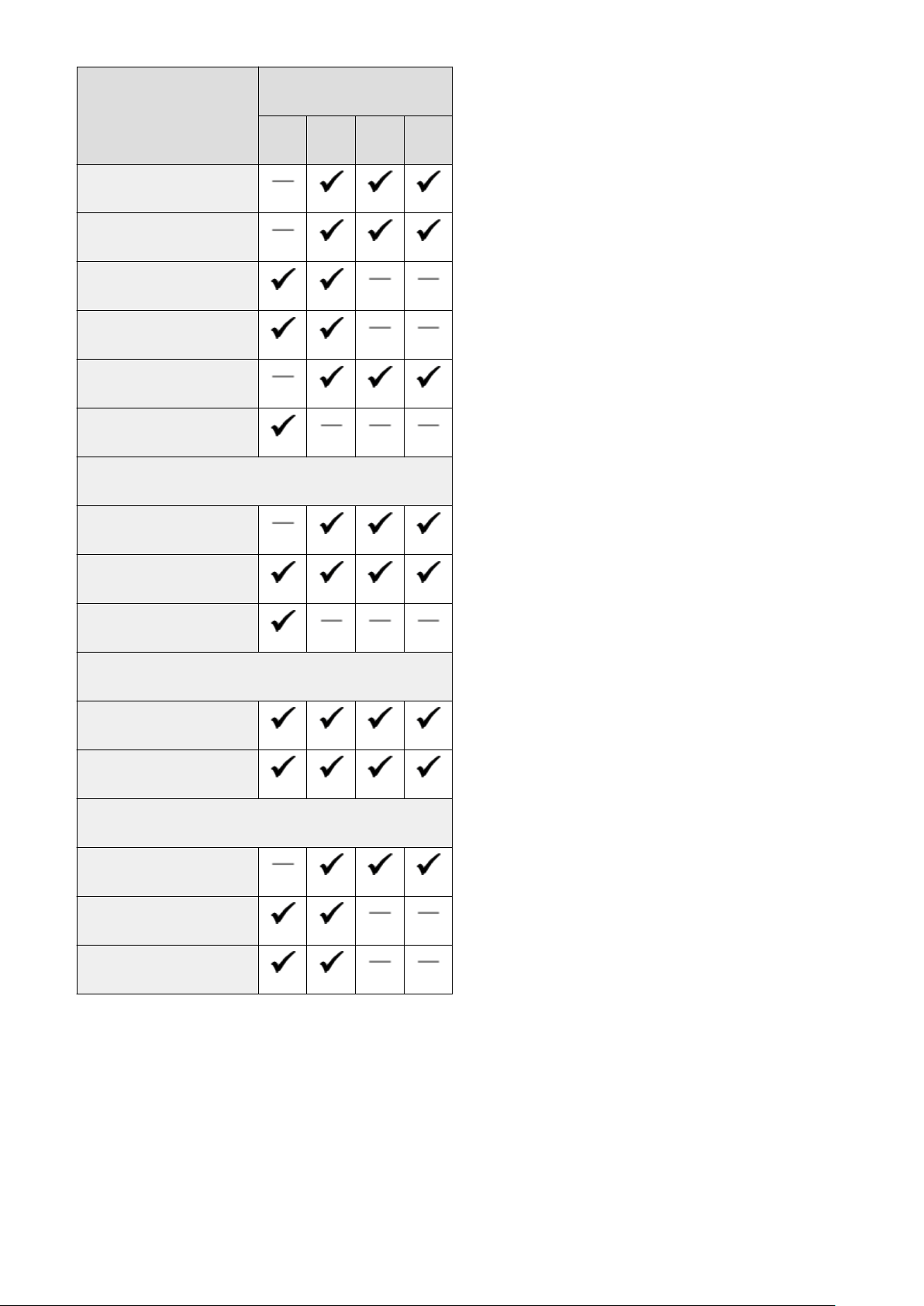
Algorithm TLS Version
TLS 1.3 TLS 1.2 TLS 1.1 TLS 1.0
AES-CBC (256bit)
AES-CBC (128bit)
AES-GCM (256bit)
AES-GCM (128bit)
3DES-CBC
CHACHA20-POLY1305
Key Exchange Algorithm
RSA
ECDHE
X25519
Signature Algorithm
RSA
ECDSA
HMAC Algorithm
SHA1
SHA256
SHA384
About the Machine
40
Supported Environment
8W0J-00X
Operating Environment(P. 41)
Supported Software and Servers(P. 41)
Operating Environment
System Environment for WSD Scan Windows 8.1
Windo
ws 10
Windows 11
Operating Conditions of Send Function Setting Tool Microsoft Edge
Google Chrome
AirPrint Operating Environment
Using AirPrint Application to Print and Scan Data and Send
Fax
es(P. 342)
Remote UI Operating Environment
*1
Windows
Micr
osoft Edge
Google Chrome
macOS
Safari 11
Google Chrome
Android
Google Chrome
UC Browser
iOS
Safari 11
UC Browser
*1
Y
ou must set your Web browser to enable cookies and use JavaScript.
Supported Software and Servers
E-mail Forwarding Server Software Microsoft Exchange Server 2013
Micr
osoft Exchange Server 2016
Microsoft Exchange Server 2019
Sendmail 8.15.2
About the Machine
41

E-mail Receiving Server Software Microsoft Exchange Server 2013
Micr
osoft Exchange Server 2016
Microsoft Exchange Server 2019
Sendmail 8.15.2
File Servers Available for File Transmission SMB
Windows 8.1
Windows 10
Windows 11
Windows Server 2012 / Windows Server 2012 R2
Windows Server 2016
Windows Server 2019
Windows Server 2022
macOS 10.15 / 11.0 / 12.0
CentStream8
About the Machine
42
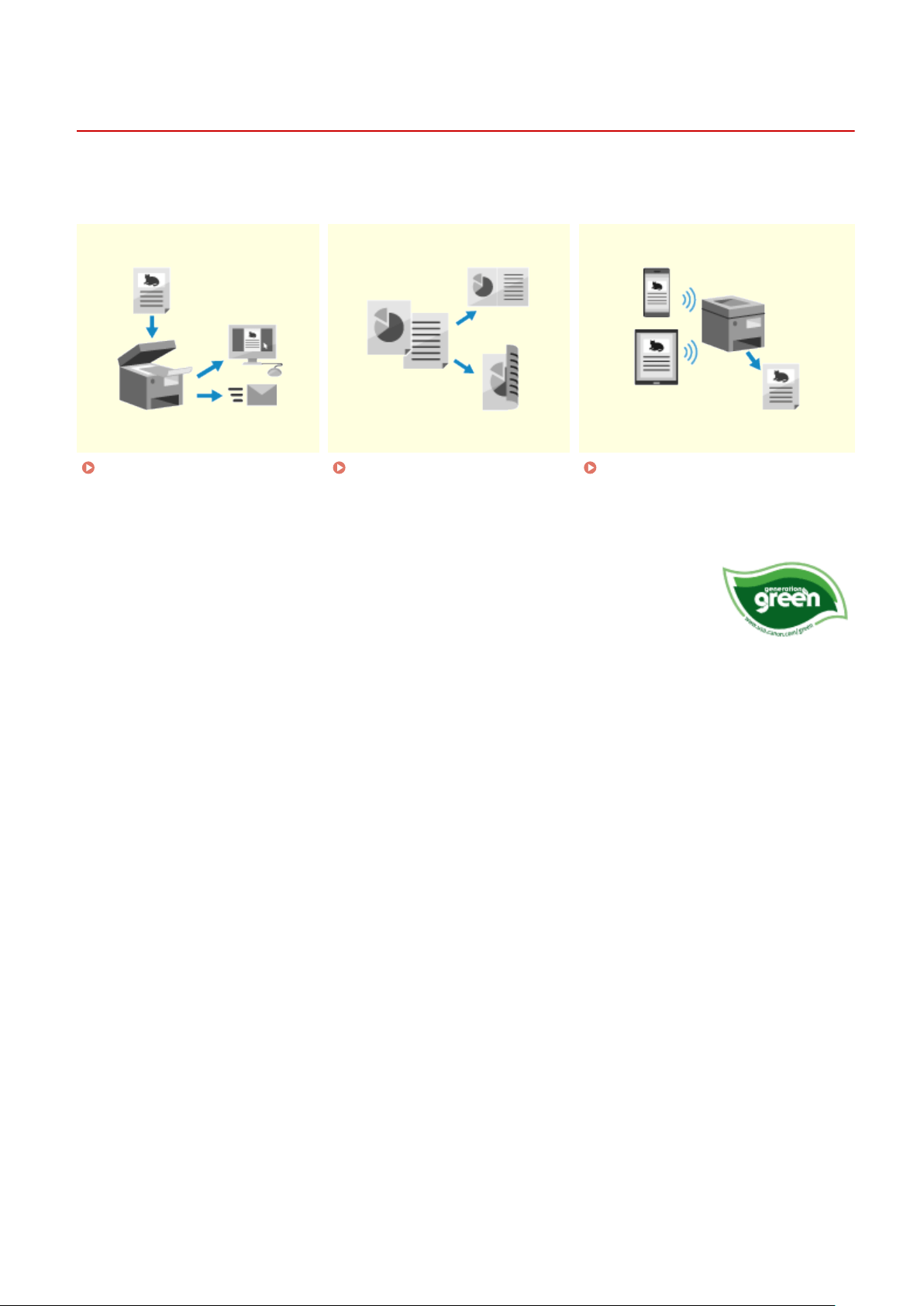
Recommended Functions
8W0J-00Y
This section intr
oduces recommended functions that can be useful for your purpose and help you solve problems,
such as to simplify document management and sharing, save paper and power, and improve operations.
Digitizing Documents(P. 44) Cost Savings(P. 45) Making Operations More
Ecient(P
. 46)
Canon strives to be environmentally and energy conscious in all aspects of its operations.
Click her
e to learn about the ways in which Canon is helping to protect the environment.
About the Machine
43
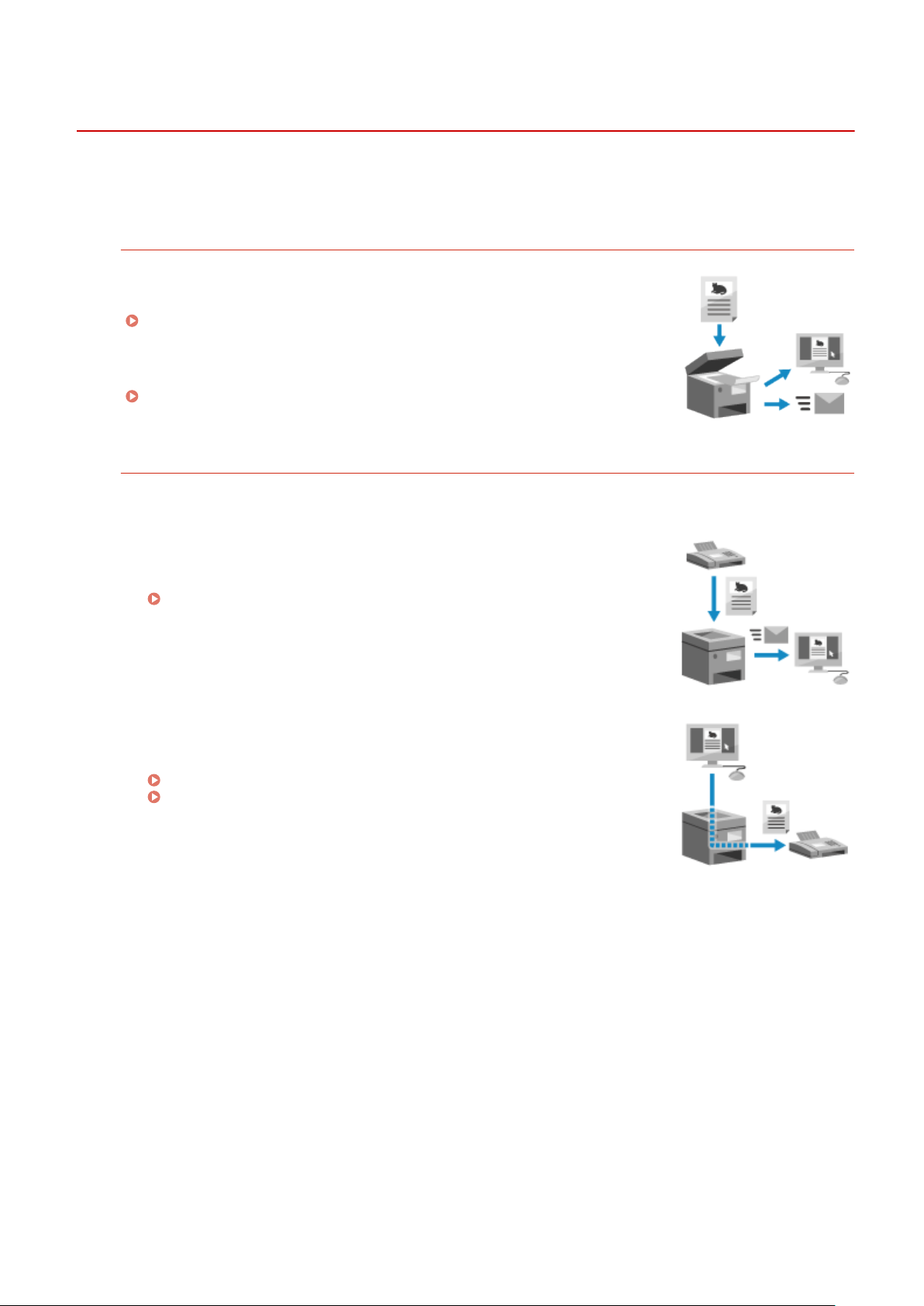
Digitizing Documents
8W0J-010
By digitizing paper documents, you do not have to worry about stor
age space and documents deteriorating, and you
can view and use these documents on a computer or mobile device.
Scanning Paper Documents
You can use the scan function to scan documents and photos into data that can
be saved and sent.
Scanning(P. 226)
Use the scan settings to convert these into data accor
ding to your purpose. You
can reduce the data size, or divide and save the data into pages.
Scan Settings (Touch Panel Model)(P. 258)
Digitizing Fax Documents
You can digitize received faxes and send faxes directly from a computer. You can also send and view faxes in a
timely fashion e
ven if you are away from the machine.
Forwarding and Saving Received Faxes as Data
Received fax
es can be automatically forwarded to a specied computer or
mobile device and saved.
Auto Forwarding and Backing Up Received Faxes(P. 276)
Sending Faxes from a Computer
Y
ou can use a procedure similar to that for printing documents and photos to
send faxes directly from a computer.
Sending Faxes from a Computer (PC Faxing)(P. 282)
Using AirPrint Application to Print and Scan Data and Send
Fax
es(P. 342)
About the Machine
44

Cost Savings
8W0J-011
This machine can help you save costs on paper, po
wer, and fax communication.
Saving Paper
Saving Paper When Printing
Y
ou can print on both sides of the paper, and print multiple pages on one
sheet of paper.
Printing from a Computer(P. 214)
Saving Paper When Faxing
Instead of immediately printing r
eceived faxes, you can temporarily save them in the memory of the
machine and forward them automatically. You can view the faxes and print only those that are needed.
Saving Received Documents in the Machine (Memory Lock)(P. 382)
Auto Forwarding and Backing Up Received Faxes(P. 276)
Y
ou can print received faxes on both sides of the paper.
Changing the Print Settings for Received Faxes(P. 290)
Saving Paper When Copying
Y
ou can copy on both sides of the paper, and copy multiple originals or the front and back of a card on a
sheet of paper.
Additional Copying Features(P. 300)
Copying Both Sides of ID Cards onto One Sheet(P. 315)
Paper Save Copy(P. 311)
Saving Energy
You can congur
e the machine to enter sleep mode when not in use to save energy. The power of the machine
does not turn OFF, so it can quickly resume operations and receive faxes.
Reducing Power Consumption (Sleep Mode)(P. 114)
About the Machine
45
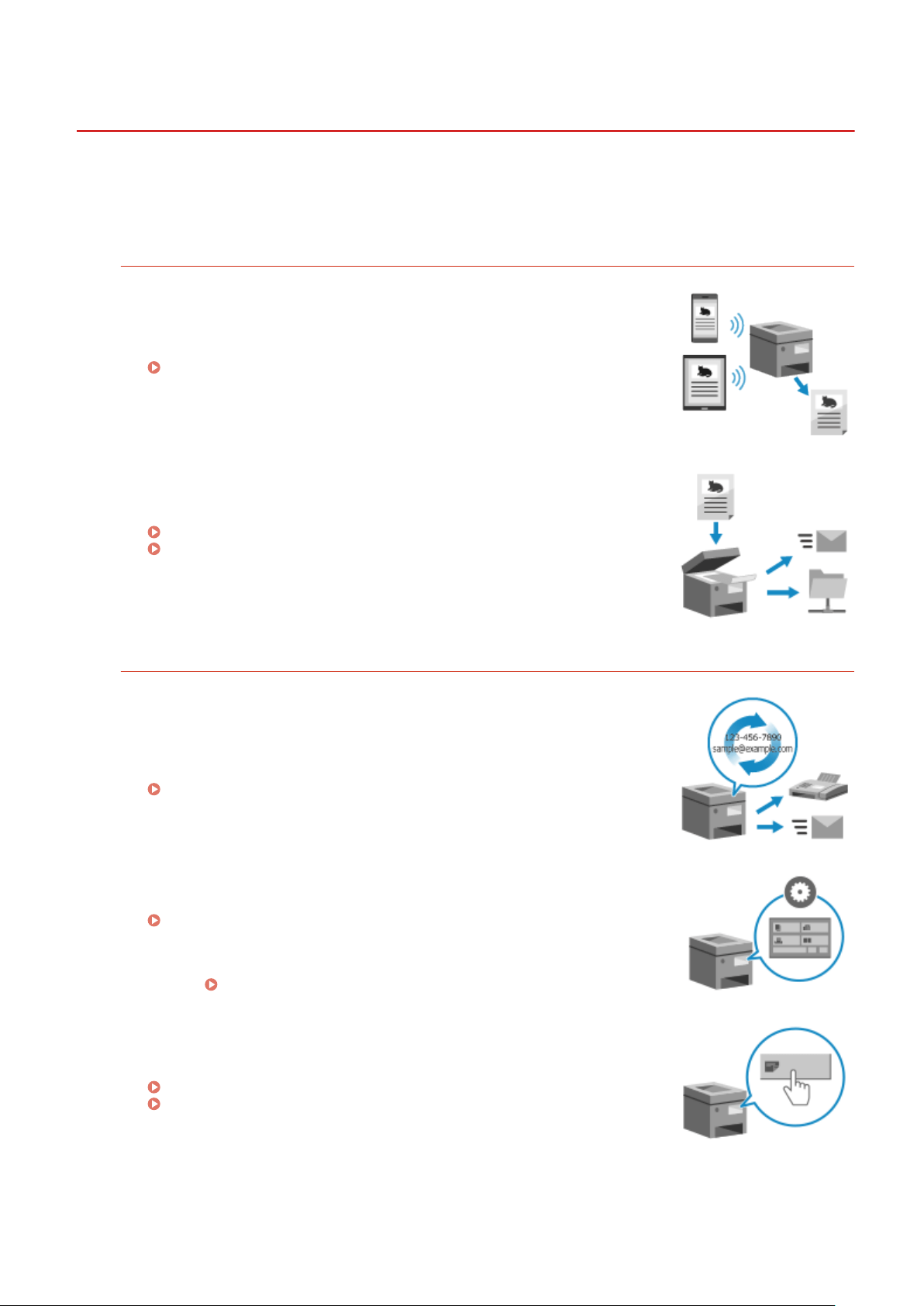
Making Operations More Ecient
8W0J-012
Y
ou can print and share data even in an environment where a computer cannot be used. In addition, you can use the
job logs and customize the control panel to make operations more ecient and reduce the amount of time using the
machine.
Printing and Sharing Data Without Using a Computer
Printing Data from a Smartphone or Tablet
Y
ou can print data from a mobile device connected to the machine while using
an application. The machine supports direct connection for easy connection
setup without having to use a wireless LAN router.
Linking with Mobile Devices(P. 328)
Saving and Sharing Paper Documents as Data
Y
ou can scan a original, send the data by e-mail, and save it to a shared folder.
By just operating the machine, you can save and share data with a computer.
Scanning (Sending by E-mail)(P. 247)
Scanning (Saving to a Shared Folder)(P. 249)
Easy Touch Panel Operations
Using the Job Log to Send Data and Faxes
Y
ou can send scanned data or faxes to destinations specied in the past by
calling up the TX Job Log for scan or fax jobs. In addition to calling up the
destination, you can also call up the past settings to save the trouble of having
to congure the settings again.
Specifying Destinations (TX Job Log)(P. 189)
Customizing the Control Panel for Greater Usability
Y
ou can rearrange the buttons on the [Home] screen for greater usability.
Customizing the [Home] Screen(P. 135)
Y
ou can change the initial settings which are standardly selected
when initiating the Scan/Fax/Copy functions.
Changing the Default Settings(P. 190)
One-touch Operation of Useful Functions
A shortcut button allo
ws you to perform "scanning an original with the same
settings" and "copying with saving paper" by a single press of the button.
Paper Save Copy(P. 311)
Scanning Using the Shortcut Key (Saving to a Computer)(P. 251)
About the Machine
46

Through the toner replenishment service, new toner cartridges are
automatically deliver
ed to you before your existing toner cartridge is used up.
* Use of the toner replenishment service requires prior registration with
select retailers. This service is only available in certain countries.
About the Machine
47

Setting Up
Setting Up .............................................................................................................................................................
49
Conguring the Default Settings (Setup Guide) (Touch Panel Model) ............................................................. 50
Conguring the Default Settings (Setup Guide) (5 Lines LCD Model) ............................................................... 53
Setting Up the Network ...................................................................................................................................... 56
Selecting Wired or Wireless LAN ..................................................................................................................... 58
Connecting to a Wired LAN ............................................................................................................................. 60
Connecting to a Wireless LAN ......................................................................................................................... 61
Connecting to a Wireless LAN by Using the Router Button (Push Button Mode) ...................................... 64
Connecting to a Wireless LAN by Entering a PIN Code (WPS PIN Code Mode) ......................................... 66
Connecting to a Wireless LAN by Searching for a Router (Access Point Setup Method) ............................ 69
Connecting to a Wireless LAN by Setting the Details (Manual Setup Method) .......................................... 72
Setting IPv4 Addresses ................................................................................................................................... 77
Setting IPv6 Addresses ................................................................................................................................... 81
Conguring Your Machine for Your Network Environment ............................................................................. 83
Manually Conguring the Ethernet Settings ............................................................................................ 84
Conguring DNS ...................................................................................................................................... 85
Conguring SMB ...................................................................................................................................... 88
Conguring WINS .................................................................................................................................... 90
Conguring SNMP ................................................................................................................................... 91
Conguring SNTP .................................................................................................................................... 94
Checking the Network Status and Settings ..................................................................................................... 96
Conguring the Fax Settings (Fax Setup Guide) .............................................................................................. 102
Installing Software and Drivers to the Computer ........................................................................................... 106
Setting Up
48

Setting Up
8W0J-015
After installing the machine, congur
e the required settings to enable use of the functions by performing the following
steps.
Steps 1 to 3 are the machine settings.
Step 4 is the setting for using the machine from a computer. Congure this setting for each computer using the
machine.
Step 1
When you turn ON the machine for the rst time, the screen (Setup Guide) for setting the
items required for using the machine is displayed. Congure the settings by following the
instructions on the screen.
Conguring the Default Settings (Setup Guide) (Touch Panel Model)(P. 50)
Conguring the Default Settings (Setup Guide) (5 Lines LCD Model)(P. 53)
Step 2
Congure the network settings not included in the Setup Guide.
If you did not connect to the network using the Setup Guide, do that during this step.
Setting Up the Network(P. 56)
Step 3
Set the items required to perform fax operations by following the instructions on the screen.
Conguring the Fax Settings (Fax Setup Guide)
(P. 102)
Step 4
Install the software required to use the machine and any printer and fax drivers on your
computer.
Installing Software and Drivers to the Computer(P. 106)
◼ See Also
Implementing Measur
es to Prevent Unauthorized Access
It is important to provide measures against security risks when using the machine in a network environment.
Check examples of measures that you can take with the machine.
Measures to Prevent Unauthorized Access(P. 6)
Checking Available Functions
The functions available on the machine vary depending on the model. Check the functions that ar
e available
on your model.
Supported Functions(P. 3)
Conguring the Settings Requir
ed to Use the Functions of the Machine
Additional settings may be required depending on your model. For details about the settings required for
each function, see the following:
Printing Preparations(P. 201)
Preparations for Scanning(P. 228)
Preparations for Linking with Mobile Devices(P. 329)
Importing Settings Data fr
om Another Machine
You can share settings data with other machines to save time on registering and conguring the settings.
You can export data from another machine of the same model to a computer and import that data to the
machine so as to share the settings.
Importing and Exporting the Address Book(P. 414)
Setting Up
49

Conguring the Default Settings (Setup Guide) (T
ouch
Panel Model)
8W0J-016
When you turn ON the machine for the rst time, the scr
een (Setup Guide) for setting the items required for using the
machine is displayed. Congure the settings using the procedure below by following the instructions on the screen.
Step 1: Setting the Display Language and Country or Region(P. 50)
Step 2: Setting the Date and Time(P. 50)
Step 3: Setting Remote UI(P. 51)
Step 4: Connecting to a Wireless LAN(P. 51)
Step 5: Conguring Settings for T
oner Replenishment Service(P. 52)
Step 6: Conrming the Specied Date and Time ar
e Stored(P. 52)
● These settings can only be congur
ed one time using the Setup Guide when starting the machine for the
rst time. To change the settings congured with the Setup Guide at a later time, set the items in Steps 1 to
4 individually. For the details of each setting, see the following.
Setting the Date and Time(P. 397)
Setting the PIN to Use for Remote UI(P. 388)
Connecting to a Wireless LAN(P. 61)
[Home] Screen(P. 120)
Step 1: Setting the Display Language and Country or Region
Set the language displayed on the contr
ol panel screen and reports to be printed. Next, set the country or region
where the machine is used.
1
On the [Language] screen, select the display language.
2
Press [Yes].
➠ The display language is set, and the [Select Country/Region] scr
een is displayed.
Depending on the country or region, the [Select Country/Region] screen is not displayed and the [Time
Zone] screen is displayed. When the [Time Zone] screen is displayed, proceed to "Step 2: Setting the Date
and Time."
Step 2: Setting the Date and Time(P. 50)
3
On the [Select Country/Region] screen, select the country or region.
➠ The country or region is set, and the [Time Zone] screen is displayed.
Step 2: Setting the Date and Time
The date and time ar
e used as the reference for the functions using date and time information, and therefore, they
need to be set accurately.
Setting Up
50

1
On the [Time Zone] screen, select your time zone.
Set the time zone (UTC
*1
) and Daylight Saving Time accor
ding to the region where this machine is installed.
*1 The UTC (Coordinated Universal Time) is a coordinated universal time that is standard for all parts of the
world. Internet-based communication relies on the UTC being set correctly.
2
On the [Current Time Set.] screen, enter the date and time, and press [Apply].
➠ The time and date ar
e set, and the Remote UI conrmation screen is displayed.
Step 3: Setting Remote UI
With Remote UI, you can use a W
eb browser on a computer to check the operation status of the machine, change the
settings, and perform other operations.
Set the Remote UI Access PIN to prevent unauthorized access to the machine.
1
On the Remote UI conrmation scr
een, press [Yes].
To continue without using the Remote UI, select [No] and proceed to "Step 4: Connecting to a Wireless LAN."
Step 4: Connecting to a Wireless LAN(P. 51)
2
On the Congur
e General User Mode screen, press [Yes].
Restrict the use of Remote UI to only those users who know the Remote UI Access PIN.
T
o set the Remote UI Access PIN at a later time, select [No] and proceed to "Step 4: Connecting to a Wireless
LAN."
Step 4: Connecting to a Wireless LAN(P. 51)
3
Enter the Remote UI Access PIN, and press [Apply].
Specify any number. You cannot set a PIN consisting of all zeros, such as "00" or "0000000."
4
Enter the PIN again, and press [Apply].
➠ After the message [Settings applied.] appears, the scr
een for conrming the wireless LAN connection is
displayed.
Step 4: Connecting to a Wireless LAN
Connect to the network using wir
eless local area network (LAN).
1
On the screen for conrming the wir
eless LAN connection, press [Yes].
● If the machine is not connected to a wir
eless LAN, press [No], and proceed to "Step 5: Conguring Settings
for Toner Replenishment Service."
Step 5: Conguring Settings for T
oner Replenishment
Service(P. 52)
● When connecting to a wired LAN, congure the wired LAN connection settings after exiting the Setup Guide.
Selecting Wired or Wireless LAN(P. 58)
2
Select the Wireless LAN connection type, and connect to the Wireless LAN.
Setting Up
51

➠ When the connection to the wir
eless LAN is completed, the Toner Replenishment Service conrmation
screen is displayed.
Depending on your wireless LAN router, the connection type and security standards may vary. Check for a
connection type and security standard that are supported by both the wireless LAN router and the machine,
and then establish a connection according to the connection type. For the standards and procedure, see the
following:
Connecting to a Wireless LAN(P. 61)
Step 5: Conguring Settings for T
oner Replenishment Service
You can congure settings for toner replenishment service. Through toner replenishment service, new toner
cartridges are automatically delivered to you before your existing toner cartridges are used up.
*
Use of the toner replenishment service requires prior registration with select retailers. This service is only available in
certain countries.
*
This service can be set up through [Toner Deliv. Set.] displayed on the [Home] screen.
[Home] Screen(P. 120)
1
On the conrm scr
een of toner replenishment service, press [Next].
2
Press [Accept].
If you press [Do Not Acpt.], the screen for conguring settings for toner r
eplenishment service is skipped and
the Setup Guide proceeds to step 6.
3
Press [Close].
➠ The [Curr
ent Time Set.] screen is displayed.
● If connecting to the server fails, try conguring the settings again through [Connect to Server/Verify
Connection] in [Toner Deliv. Set.].
[Home] Screen(P. 120)
Step 6: Conrming the Specied Date and Time ar
e Stored
1
On the [Current Time Set.] screen, check the instruction on how to specify the date
and time.
2
Press [Close].
➠ The settings congur
ed in the Setup Guide are applied.
When you exit the Setup Guide, the [Home] screen is displayed.
[Home] Screen(P. 120)
Setting Up
52
Conguring the Default Settings (Setup Guide) (5 Lines
L
CD Model)
8W0J-017
When you turn ON the machine for the rst time, the scr
een (Setup Guide) for setting the items required for using the
machine is displayed. Congure the settings using the procedure below by following the instructions on the screen.
Step 1: Setting the Display Language and Country or Region(P. 53)
Step 2: Setting the Date and Time(P. 53)
Step 3: Setting Remote UI(P. 54)
Step 4: Connecting to a Wireless LAN(P. 54)
Step 5: Conguring Settings for T
oner Replenishment Service(P. 55)
Step 6: Conrming the Specied Date and Time ar
e Stored(P. 55)
● These settings can only be congur
ed one time using the Setup Guide when starting the machine for the
rst time. To change the settings congured with the Setup Guide at a later time, set the items in Steps 1 to
4 individually. For the details of each setting, see the following.
Setting the Date and Time(P. 397)
Setting the PIN to Use for Remote UI(P. 388)
Connecting to a Wireless LAN(P. 61)
[Home] Screen(P. 120)
Step 1: Setting the Display Language and Country or Region
Set the language displayed on the contr
ol panel screen and reports to be printed. Next, set the country or region
where the machine is used.
1
On the [Language] screen, select the display language and press
.
2
Select [Yes], and then press .
➠ The display language is set, and the [Select Country/Region] scr
een is displayed.
Depending on the country or region, the [Select Country/Region] screen is not displayed and the [Time
Zone] screen is displayed. When the [Time Zone] screen is displayed, proceed to "Step 2: Setting the Date
and Time."
Step 2: Setting the Date and Time(P. 53)
3
On the [Select Country/Region] screen, select the country or region, and press .
➠ The country or region is set, and the [Time Zone] screen is displayed.
Step 2: Setting the Date and Time
The date and time ar
e used as the reference for the functions using date and time information, and therefore, they
need to be set accurately.
Setting Up
53

1
On the [Time Zone] screen, select your time zone and press .
Set the time zone (UTC
*1
) and Daylight Saving Time accor
ding to the region where this machine is installed.
*1 The UTC (Coordinated Universal Time) is a coordinated universal time that is standard for all parts of the
world. Internet-based communication relies on the UTC being set correctly.
2
On the [Current Time Set.] screen, enter the date and time, and press
.
➠ The time and date ar
e set, and the Remote UI conrmation screen is displayed.
Step 3: Setting Remote UI
With Remote UI, you can use a W
eb browser on a computer to check the operation status of the machine, change the
settings, and perform other operations.
Set the Remote UI Access PIN for using Remote UI to prevent unauthorized access to the machine.
1
On the Remote UI conrmation scr
een, select [<Yes>] and press
.
To continue without using the Remote UI, select [<No>], press , and proceed to "Step 4: Connecting to
a Wir
eless LAN."
Step 4: Connecting to a Wireless LAN(P. 54)
2
Conrm the message press conrm the message select [Yes] press
.
Restrict the use of Remote UI to only those users who know the Remote UI Access PIN.
T
o set the Remote UI Access PIN at a later time, select [No] and proceed to "Step 4: Connecting to a Wireless
LAN."
Step 4: Connecting to a Wireless LAN(P. 54)
3
Enter the Remote UI Access PIN, and press .
Specify any number. You cannot set a PIN consisting of all zeros, such as "00" or "0000000."
4
Enter the PIN again, and press
.
➠ After the message [Settings applied.] appears, the scr
een for conrming the wireless LAN connection is
displayed.
Step 4: Connecting to a Wireless LAN
Connect to the network using wir
eless local area network (LAN).
1
On the screen for conrming the wir
eless LAN connection, select [Yes] and press
.
● If the machine is not connected to a wireless LAN, select [No], press , and proceed to "Step 5:
Conguring Settings for Toner Replenishment Service." Step 5: Conguring Settings for T
oner
Replenishment Service(P. 55)
● When connecting to a wired LAN, congure the wired LAN connection settings after exiting the Setup Guide.
Selecting Wired or Wireless LAN(P. 58)
Setting Up
54

2
Select the Wireless LAN connection type, and connect to the Wireless LAN.
➠ When the connection to the wir
eless LAN is completed, the Toner Replenishment Service conrmation
screen is displayed.
Depending on your wireless LAN router, the connection type and security standards may vary. Check for a
connection type and security standard that are supported by both the wireless LAN router and the machine,
and then establish a connection according to the connection type. For the standards and procedure, see the
following:
Connecting to a Wireless LAN(P. 61)
Step 5: Conguring Settings for T
oner Replenishment Service
You can congure settings for toner replenishment service. Through toner replenishment service, new toner
cartridges are automatically delivered to you before your existing toner cartridges are used up.
*
Use of the toner replenishment service requires prior registration with select retailers. This service is only available in
certain countries.
*
This service can be set up through [Toner Deliv. Set.] displayed on the [Home] screen.
[Home] Screen(P. 120)
1
On the conrm scr
een of toner replenishment service, press
.
2
Press
.
If you press , the screen for conguring settings for toner r
eplenishment service is skipped and the
Setup Guide proceeds to step 6.
3
Press
.
➠ The [Curr
ent Time Set.] screen is displayed.
● If connecting to the server fails, try conguring the settings again through [Connect to Server/Verify
Connection] in [Toner Deliv. Set.].
Step 6: Conrming the Specied Date and Time ar
e Stored
1
On the [Current Time Set.] screen, check the instruction on how to specify the date
and time.
2
Press
.
➠ The settings congur
ed in the Setup Guide are applied.
When you exit the Setup Guide, the [Home] screen is displayed.
[Home] Screen(P. 120)
Setting Up
55

Setting Up the Network
8W0J-018
T
o operate the machine from a computer or to connect to a server, you must connect the machine to a network.
Use the procedure below to connect the machine to a network and congure the settings of the machine according to
the network environment.
Administrator privileges are required to set up the network.
● Connecting the machine to a network without pr
oper security measures may leak information from the
machine to third parties.
Protecting the Network(P. 353)
◼ Pr
eparing to Set Up the Network
● Provide an Ethernet cable and router according to the usage environment of the machine.
● Check the information of the network environment used by the machine and the required network settings. For
details, contact the network administrator.
● Check that the computer and router to be used in the network are properly connected, and complete the network
settings. For details on the connection method, see the manuals of the devices or contact the manufacturer.
◼ Network Settings Procedure
Step 1
Select whether to use wired or wireless LAN and connect to the network.
T
o connect to a Wired LAN
Selecting Wired or Wireless LAN(P. 58)
Connecting to a Wired LAN(P. 60)
T
o connect to a Wireless LAN
Selecting Wired or Wireless LAN(P. 58)
Connecting to a Wireless LAN(P. 61)
Step 2
Set the IP address.
● By default, when the machine connects to a wir
ed or wireless LAN, an IP address is obtained
automatically and set to the machine.
● To use a specic IP address, set this manually.
Setting IPv4 Addresses(P. 77)
Setting IPv6 Addresses(P. 81)
* When setting an IP addr
ess manually, you cannot use the control panel to congure some
IPv6 address settings. It is recommended to use the control panel to set the IPv4 address, and
then use Remote UI to set the IPv6 address.
Step 3
Congure the settings of the machine accor
ding to the network environment, as needed.
Setting Up
56

Conguring Y
our Machine for Your Network Environment(P. 83)
* You cannot use the control panel to congure some of the settings. It is recommended that
you congure the settings using Remote UI in Step 3
◼ Checks after Conguring the Network Settings
Check that the machine is pr
operly connected to the network.
Check the IP address and MAC address of the machine and other information, as needed.
Checking the Network Status and Settings(P. 96)
Setting Up
57

Selecting Wired or Wireless LAN
8W0J-019
Set whether to connect the machine to the network using a wir
ed or wireless LAN.
If you want to switch from wired LAN to wireless LAN, you can make the setting during the procedure for connecting
to wireless LAN.
Connecting to a Wireless LAN(P. 61)
* Y
ou cannot connect to a wired LAN and wireless LAN at the same time.
Use the control panel to congure the settings. You cannot congure the settings using Remote UI from a computer.
Administrator privileges are required.
Touch Panel Model(P. 58)
5 Lines LCD Model(P. 58)
Touch Panel Model
1
On the control panel, press [Menu] in the [Home] screen.
[Home] Screen(P. 120)
2
Press [Preferences] [Network] [Select Wired/Wireless LAN].
➠ The [Select LAN] scr
een is displayed.
If the login screen appears, enter the System Manager ID and PIN, and then press [Log In].
Logging In to
the Machine
(P. 137)
3
Select [Wired LAN] or [Wireless LAN].
➠ The message [Settings applied.] appears.
Ne
xt, connect to the wired or wireless LAN.
Connecting to a Wired LAN(P. 60)
Connecting to a Wireless LAN(P. 61)
When Switching between Wired and Wireless LAN
● Any installed drivers must be uninstalled and then r
einstalled.
For details about uninstalling and installing drivers, see the driver manual at the online manual site.
https://oip.manual.canon/
5 Lines LCD Model
1
Press
On the control panel. Control Panel(P. 14)
2
Press [Preferences]
[Network] [Select Wired/Wireless LAN] .
Setting Up
58

If the login screen appears, enter the System Manager ID and PIN, and then select [<Log In>] and press
. Logging In to the Machine(P. 137)
3
Select [Wired LAN] or [Wireless LAN] and press .
➠ The message [Settings applied.] appears.
Ne
xt, connect to the wired or wireless LAN.
Connecting to a Wired LAN(P. 60)
Connecting to a Wireless LAN(P. 61)
When Switching between Wired and Wireless LAN
● Any installed drivers must be uninstalled and then reinstalled.
For details about uninstalling and installing drivers, see the driver manual at the online manual site.
https://oip.manual.canon/
Setting Up
59
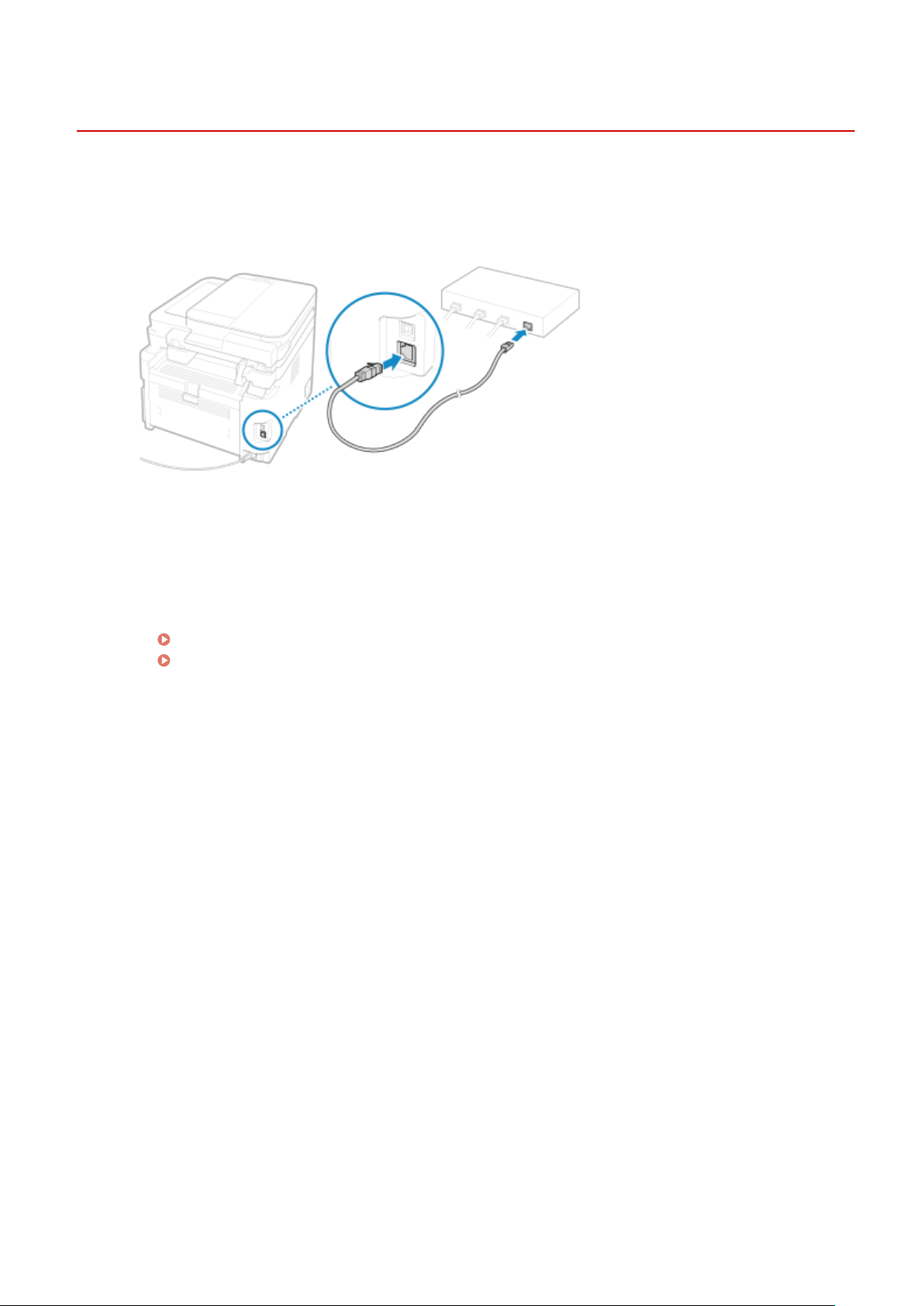
Connecting to a Wired LAN
8W0J-01A
Connect a computer to the machine via a r
outer. Use an Ethernet cable to connect the machine to the router.
1
Connect an Ethernet cable to the machine and router.
Insert the connector all the way into the port until it clicks in place.
2
Wait a few minutes.
➠ By default, the IP addr
ess is set automatically.
To use a specic IP address, set this manually.
Setting IPv4 Addresses(P. 77)
Setting IPv6 Addresses(P. 81)
Setting Up
60

Connecting to a Wireless LAN
8W0J-01C
Connect a computer to the machine via a wir
eless LAN router (access point).
Depending on your wireless LAN router, the connection type and security standards may vary. Check for a connection
type and security standard that are supported by both the wireless LAN router and the machine, and then establish a
connection according to the connection type.
Depending on the connection type, you must enter the security information of the wireless LAN router.
Checking the Connection Types and Security Standards Supported by the Machine(P. 61)
Wireless LAN Router Information Required for Connection(P. 62)
Connect with a Secure Network Environment
● The r
adio waves used for wireless communication can reach beyond walls and other obstructions within a
certain range. Therefore, connecting the machine to a network without proper security measures may leak
personal data and other information to third parties. Connect the machine to a wireless LAN at your own
discretion and responsibility.
Protecting the Network(P. 353)
Reducing Power Consumption
● When Po
wer Save Mode is enabled, the machine regularly enters the power save state according to the
signal transmitted by the wireless LAN router.
[Power Save Mode](P. 443)
Checking the Connection Types and Security Standards Supported by the
Machine
◼ Connection T
ype
Connect using a type that is supported by your wireless LAN router. To specify the authentication, encryption, or other
security method in detail, use the manual setup method to connect.
The following connection types are supported by the machine:
Push Button Mode (WPS)
If the wireless LAN router has the above symbol on the package or the button of the device, you can easily
connect b
y pressing the button.
Connecting to a Wireless LAN by Using the Router Button (Push Button Mode)(P. 64)
WPS PIN Code Mode
If you are using a WPS router that does not support the push button mode, enter the PIN code to connect.
Connecting to a Wireless LAN by Entering a PIN Code (WPS PIN Code Mode)(P. 66)
* If the wir
eless LAN router is set up to use WEP authentication, you may not be able to connect with WPS. In
this case, use the manual setup method to connect.
Setting Up
61

Access Point Setup Method
Search for the wireless LAN router from the machine, and enter the network key manually to connect.
Connecting to a Wireless LAN by Searching for a Router (Access Point Setup Method)(P. 69)
When you connect with the access point setup method, the following authentication and encryption methods
ar
e set:
● WEP authentication method: Open System
● Encryption for WPA/WPA2: AES-CCMP or TKIP is set automatically according to the selected wireless LAN
router.
To specify a different authentication or encryption method, use the manual setup method to connect.
Manual Setup Method
In addition to the SSID and network key, manually enter all the wireless LAN settings such as the authentication
and encryption methods to connect.
Connecting to a Wireless LAN by Setting the Details (Manual Setup Method)(P. 72)
◼ Security Standar
ds
The wireless LAN of the machine supports the security standards below. For details on whether your wireless LAN
router supports these standards, see the manual of the wireless LAN router or contact the manufacturer.
● WEP
● WPA-PSK
● WPA2-PSK
● WPA-EAP
● WPA2-EAP
Wireless LAN Router Information Required for Connection
When connecting with the access point setup method or the manual setup method, you must set the information
below.
This information is listed on the main unit of the wireless LAN router. For details, see the manual of the wireless LAN
router or contact the manufacturer.
SSID
This is the name used to identify the wireless LAN router. This may be listed as the access point name or
network name.
Network Key
This is the keyword used for data encryption or the password used for network authentication. This may be
listed as the encryption key, WEP key, WPA/WPA2 passphrase, or pre-shared key (PSK).
Security Standards
These are required when connecting with the manual setup method. Check the following information:
Security Standards
● WEP
● WPA-PSK
● WPA2-PSK
● WPA-EAP
● WPA2-EAP
WEP Authentication Method
● Open System
Setting Up
62

● Shar
ed Key
Encryption for WPA/WPA2
● TKIP
● AES-CCMP
● IEEE 802.1X Authentication
Setting Up
63

Connecting to a Wireless LAN by Using the Router
Button (Push Button Mode)
8W0J-01E
If your wir
eless LAN router supports WPS push button mode, you can easily set up a connection simply by using the
control panel of the machine and the button on the wireless LAN router.
Administrator privileges are required to connect to a wireless LAN.
Touch Panel Model(P. 64)
5 Lines LCD Model(P. 65)
Touch Panel Model
1
On the control panel, press [Wireless LAN Set.] in the [Home] screen.
[Home]
Scr
een(P. 120)
➠ The [Select Network] scr
een is displayed.
● If the login screen appears, enter the System Manager ID and PIN, and then press [Log In].
Logging In to
the Machine
(P. 137)
● If the message [Enable the wireless LAN?] appears, press [Yes].
● If the message [Cannot nd the access point.] appears, press [Close].
2
Press [Other Connections].
3
Press [WPS Push Button Mode].
➠ The machine starts sear
ching for an access point.
4
After the search for an access point starts, press the button on the wireless LAN
r
outer within two minutes.
Press the button within two minutes. (Depending on the wireless LAN router, you may have to press and hold
the button.)
* For details on ho
w to operate the button, see the manual of your wireless LAN router.
5
When [Connected.] appears on the control panel, wait a few minutes.
➠ When the machine is connected to the wir
eless LAN, [
] appears on the [Home] screen and screen of
each function.
By default, an IP addr
ess is set automatically.
To use a specic IP address, set this manually.
Setting IPv4 Addresses(P. 77)
Setting IPv6 Addresses(P. 81)
Setting Up
64
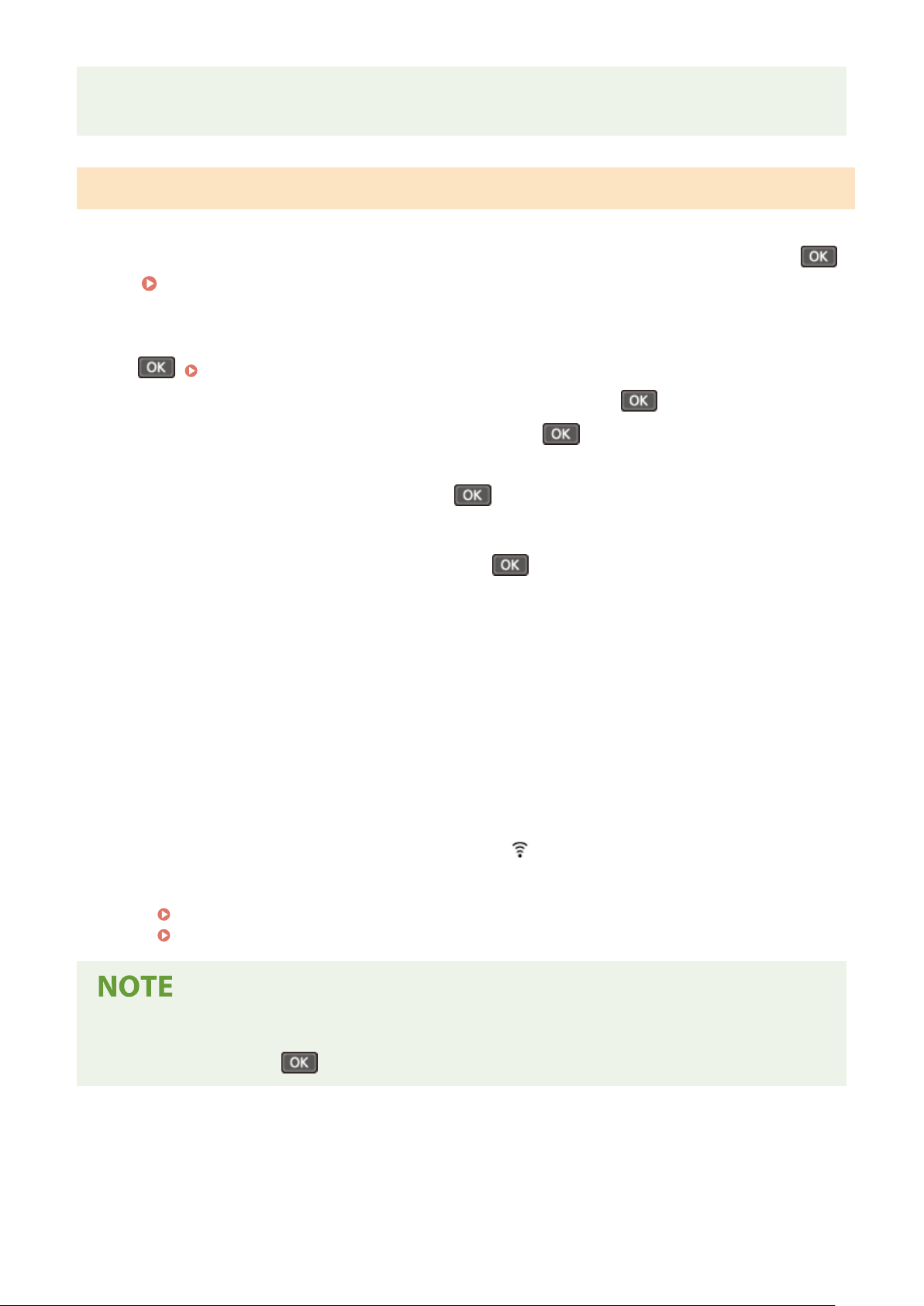
If an Error Message Appears during Operation and a Connection Cannot Be Established
● Pr
ess [Close], and repeat the procedure starting from Step 2.
5 Lines LCD Model
1
On the control panel, select [Wireless LAN Set.] in the [Home] screen and press .
[Home] Screen(P. 120)
➠ The [Select Network] scr
een is displayed.
● If the login screen appears, enter the System Manager ID and PIN, and then select [<Log In>] and press
. Logging In to the Machine(P. 137)
● If the message [Enable the wir
eless LAN?] appears, select [Yes] and press
.
● If the message [Cannot nd the access point.] appears, pr
ess
.
2
Select [Other Connections] and press .
3
Select [WPS Push Button Mode] and press
.
➠ The machine starts sear
ching for an access point.
4
After the search for an access point starts, press the button on the wireless LAN
r
outer within two minutes.
Press the button within two minutes. (Depending on the wireless LAN router, you may have to press and hold
the button.)
* For details on ho
w to operate the button, see the manual of your wireless LAN router.
5
When [Connected.] appears on the control panel, wait a few minutes.
➠ When the machine is connected to the wir
eless LAN, [
] appears on the [Home] screen.
By default, an IP addr
ess is set automatically.
To use a specic IP address, set this manually.
Setting IPv4 Addresses(P. 77)
Setting IPv6 Addresses(P. 81)
If an Error Message Appears during Operation and a Connection Cannot Be Established
● Select [Close] and pr
ess
, and repeat the procedure starting from Step 2.
Setting Up
65
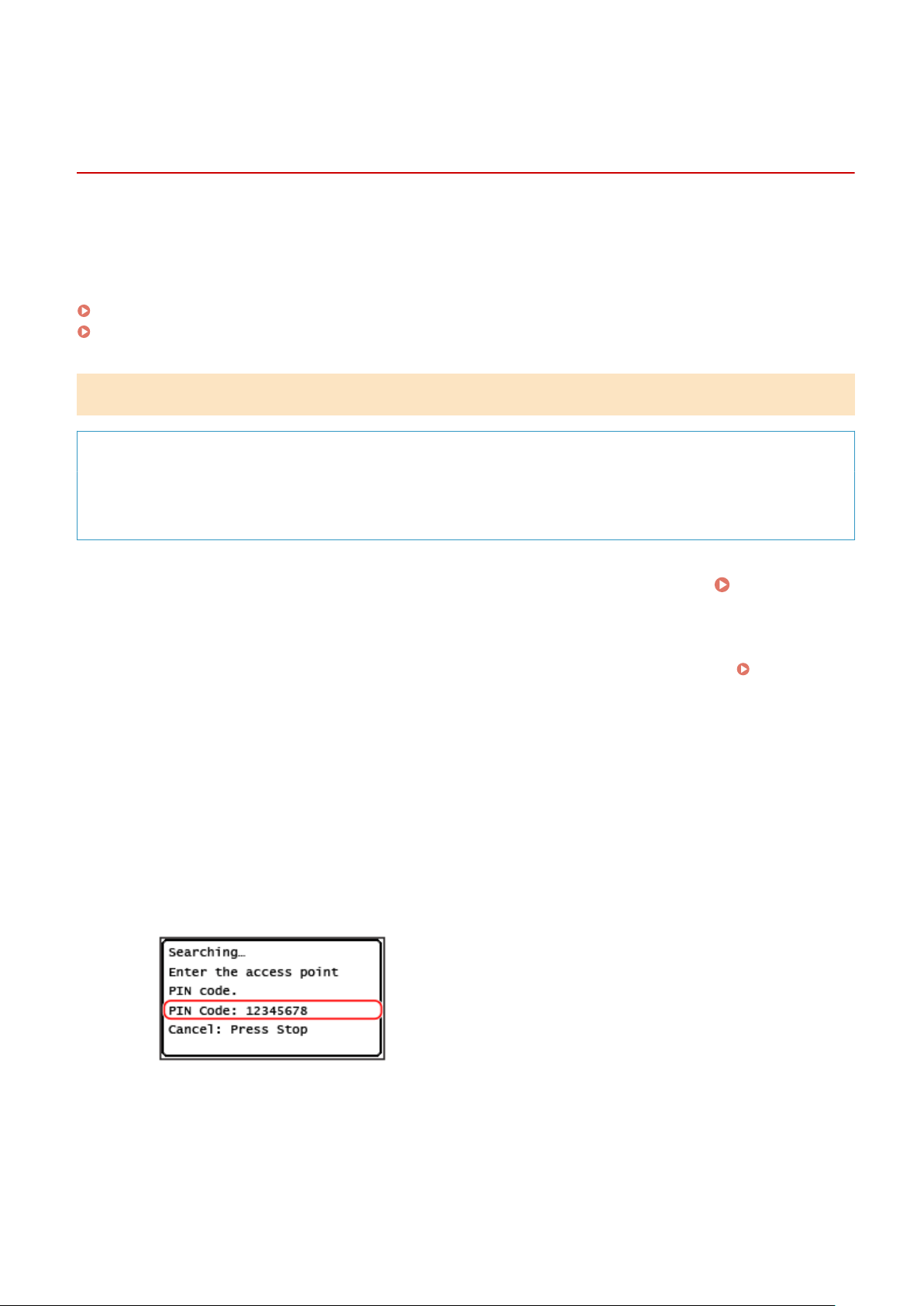
Connecting to a Wireless LAN by Entering a PIN Code
(WPS PIN Code Mode)
8W0J-01F
When the wir
eless LAN router supports WPS PIN code mode, you can establish a connection by registering a PIN code
generated on the machine to the wireless LAN router. Use a computer to register the PIN code.
Administrator privileges are required to connect to a wireless LAN.
Touch Panel Model(P. 66)
5 Lines LCD Model(P. 67)
Touch Panel Model
Required Preparations
● Access the wir
eless LAN router from a computer, and enable registration of a WPS PIN code.
* For details on how to register a WPS PIN code, see the manual of your wireless LAN router.
1
On the control panel, press [Wireless LAN Set.] in the [Home] screen. [Home]
Screen(P. 120)
➠ The [Select Network] screen is displayed.
● If the login screen appears, enter the System Manager ID and PIN, and then press [Log In]. Logging In to
the Machine
(P. 137)
● If the message [Enable the wireless LAN?] appears, press [Yes].
● If the message [Cannot nd the access point.] appears, press [Close].
2
Press [Other Connections].
3
Press [WPS PIN Code Mode].
➠ A PIN code is gener
ated.
Once this screen is displayed, you must register the WPS PIN code to the wireless LAN router within 10
minutes.
4
Access the wireless LAN router from a computer, and register the WPS PIN code to
the r
outer.
Setting Up
66
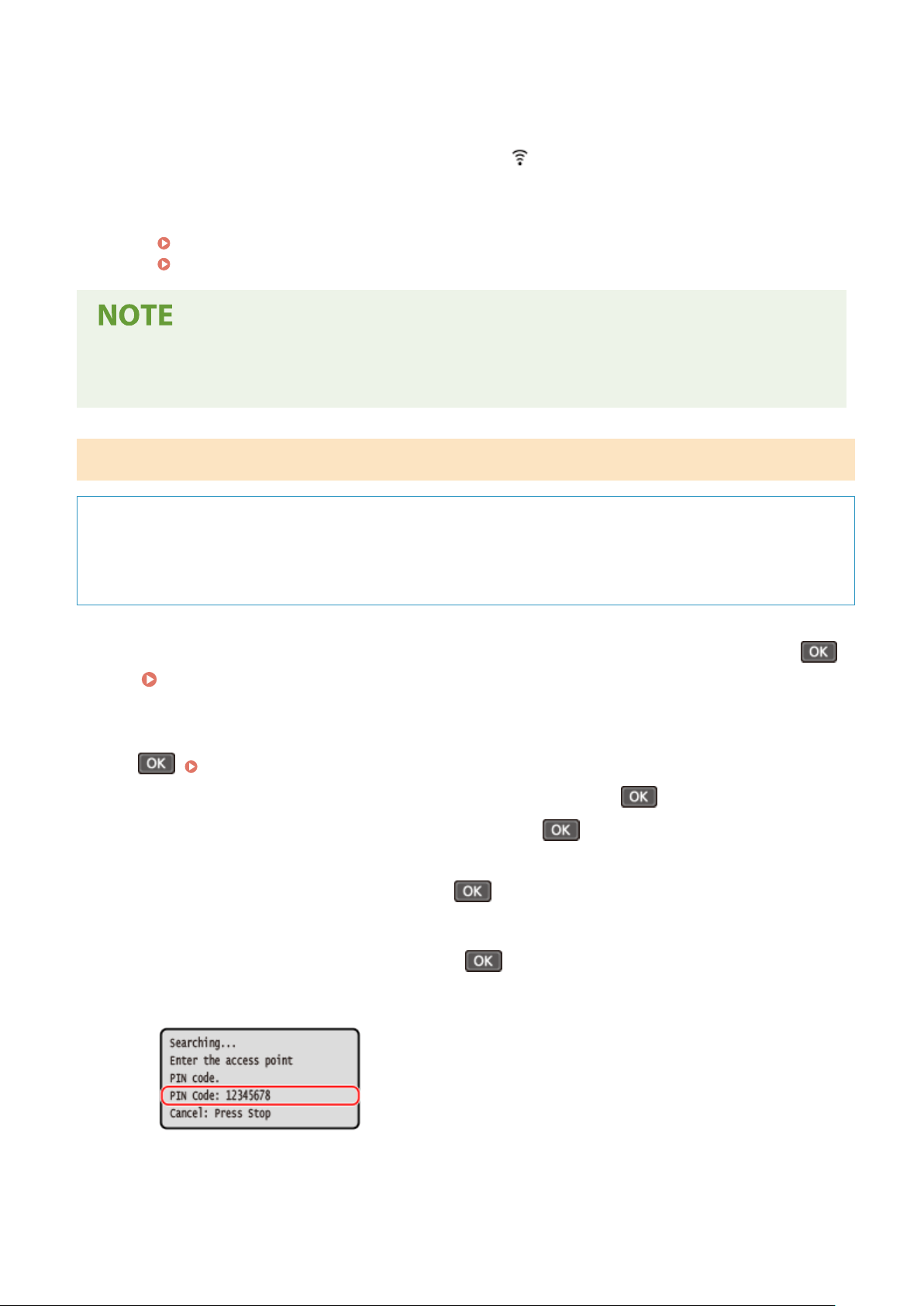
5
When [Connected.] appears on the control panel, wait a few minutes.
➠ When the machine is connected to the wir
eless LAN, [
] appears on the [Home] screen and screen of
each function.
By default, an IP addr
ess is set automatically.
To use a specic IP address, set this manually.
Setting IPv4 Addresses(P. 77)
Setting IPv6 Addresses(P. 81)
If an Error Message Appears during Operation and a Connection Cannot Be Established
● Pr
ess [Close], and repeat the procedure starting from Step 2.
5 Lines LCD Model
Required Preparations
● Access the wir
eless LAN router from a computer, and enable registration of a WPS PIN code.
* For details on how to register a WPS PIN code, see the manual of your wireless LAN router.
1
On the control panel, select [Wireless LAN Set.] in the [Home] screen and press .
[Home] Screen(P. 120)
➠ The [Select Network] scr
een is displayed.
● If the login screen appears, enter the System Manager ID and PIN, and then select [<Log In>] and press
. Logging In to the Machine(P. 137)
● If the message [Enable the wir
eless LAN?] appears, select [Yes] and press
.
● If the message [Cannot nd the access point.] appears, pr
ess
.
2
Select [Other Connections] and press .
3
Select [WPS PIN Code Mode] and press .
➠ A PIN code is gener
ated.
Once this screen is displayed, you must register the WPS PIN code to the wireless LAN router within 10
minutes.
Setting Up
67
4
Access the wireless LAN router from a computer, and register the WPS PIN code to
the r
outer.
5
When [Connected.] appears on the control panel, wait a few minutes.
➠ When the machine is connected to the wir
eless LAN, [
] appears on the [Home] screen.
W
ait a few minutes. By default, an IP address is set automatically.
To use a specic IP address, set this manually.
Setting IPv4 Addresses(P. 77)
Setting IPv6 Addresses(P. 81)
If an Error Message Appears during Operation and a Connection Cannot Be Established
● Select [Close] and pr
ess
, and repeat the procedure starting from Step 2.
Setting Up
68
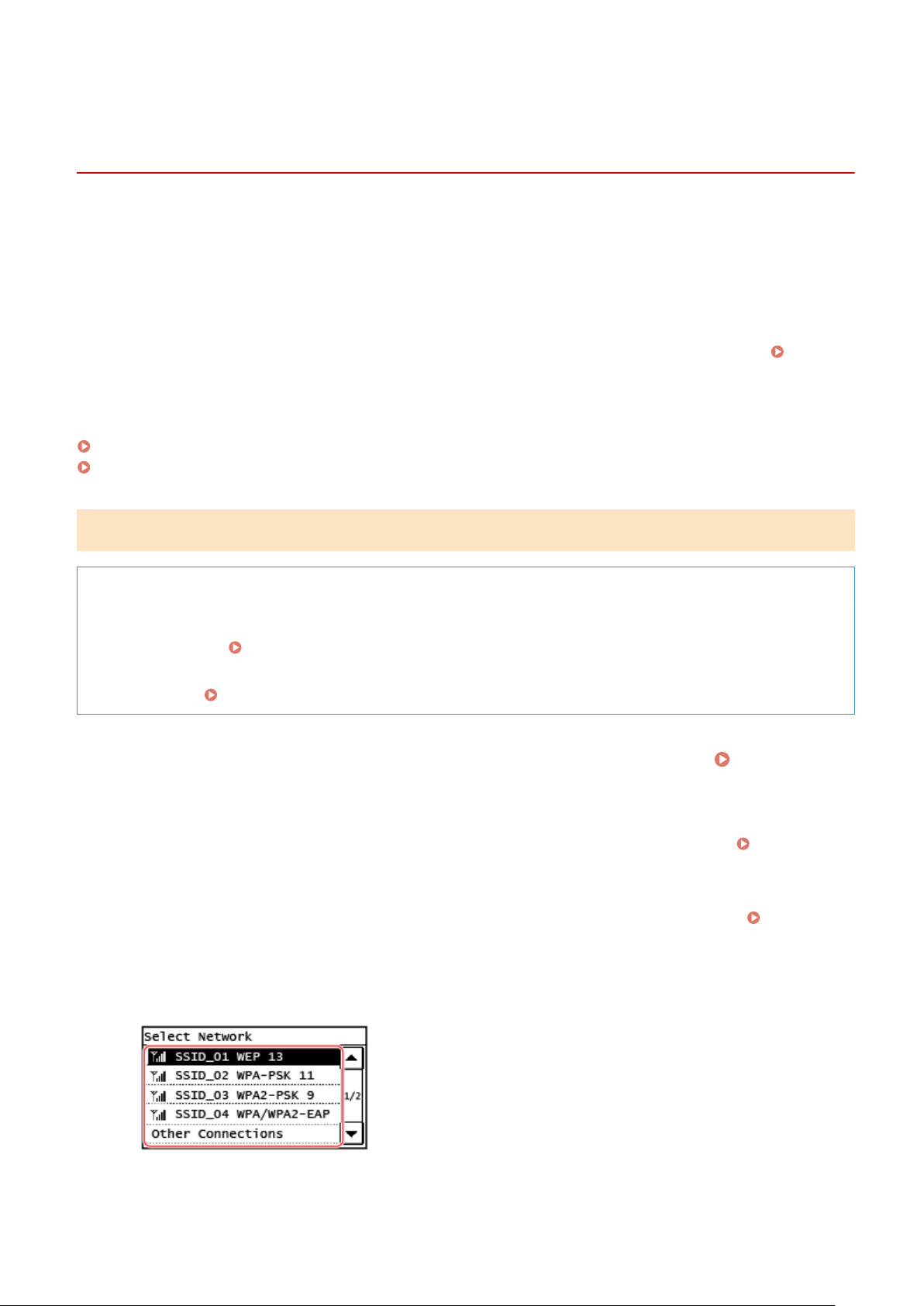
Connecting to a Wireless LAN by Searching for a Router
(Access Point Setup Method)
8W0J-01H
Search for a wireless LAN router (access point) to which to connect, and enter the network key.
When you connect with the access point setup method, the follo
wing authentication and encryption methods are
set:
● WEP authentication method: Open System
● Encryption for WPA/WPA2: AES-CCMP or TKIP is set automatically according to the selected wireless LAN router.
To specify a different authentication or encryption method, use the manual setup method to connect.
Connecting to a Wireless LAN by Setting the Details (Manual Setup Method)(P. 72)
Administrator privileges are required to connect to a wireless LAN.
Touch Panel Model(P. 69)
5 Lines LCD Model(P. 70)
Touch Panel Model
Required Preparations
● Pr
epare the information of the wireless LAN router (SSID or network key) to which you want to connect, and
keep it close by.
Wireless LAN Router Information Required for Connection(P. 62)
● When connecting to a wir
eless LAN router supporting WPA-EAP or WPA2-EAP for the security standard, set
IEEE 802.1X.
Using IEEE 802.1X(P. 362)
1
On the control panel, press [Wireless LAN Set.] in the [Home] screen. [Home]
Screen(P. 120)
➠ The [Select Network] screen is displayed.
● If the login screen appears, enter the System Manager ID and PIN, and then press [Log In]. Logging In to
the Machine
(P. 137)
● If the message [Enable the wireless LAN?] appears, press [Yes].
● If the message [Cannot nd the access point.] appears, check that the router is discoverable.
Cannot
Connect to Wir
eless LAN(P. 591)
2
Select the SSID of the wireless LAN to which you want to connect.
➠ The Network Ke
y input screen is displayed.
Setting Up
69
When selecting the SSID of the wireless LAN router supporting WPA-EAP or WPA2-EAP for the security
standar
d, the message [IEEE 802.1X Settings values will be applied to connect.] appears. Press [OK], and
proceed to Step 4.
If you cannot nd the wireless LAN router to which you want to connect, check that the router is
discoverable.
Cannot Connect to Wireless LAN(P. 591)
3
Enter the network key, and press [Apply].
4
Check the message, and press [Yes].
5
When [Connected.] is displayed on the control panel, wait a few minutes.
➠ When the machine is connected to the wir
eless LAN, [
] appears on the [Home] screen and screen of
each function.
By default, an IP addr
ess is set automatically.
To use a specic IP address, set this manually.
Setting IPv4 Addresses(P. 77)
Setting IPv6 Addresses(P. 81)
If an Error Message Appears during Operation and a Connection Cannot Be Established
● Pr
ess [Close], check the information (SSID or network key) of the wireless LAN router to which you want to
connect, and repeat the procedure starting from Step 2.
5 Lines LCD Model
Required Preparations
● Pr
epare the information of the wireless LAN router (SSID or network key) to which you want to connect, and
keep it close by.
Wireless LAN Router Information Required for Connection(P. 62)
● When connecting to a wir
eless LAN router supporting WPA-EAP or WPA2-EAP for the security standard, set
IEEE 802.1X.
Using IEEE 802.1X(P. 362)
1
On the control panel, select [Wireless LAN Set.] in the [Home] screen and press .
[Home] Screen(P. 120)
➠ The [Select Network] scr
een is displayed.
● If the login screen appears, enter the System Manager ID and PIN, and then select [<Log In>] and press
. Logging In to the Machine(P. 137)
● If the message [Enable the wir
eless LAN?] appears, select [Yes] and press
.
● If the message [Cannot nd the access point.] appears, check that the r
outer is discoverable.
Cannot
Connect to Wireless LAN(P. 591)
Setting Up
70
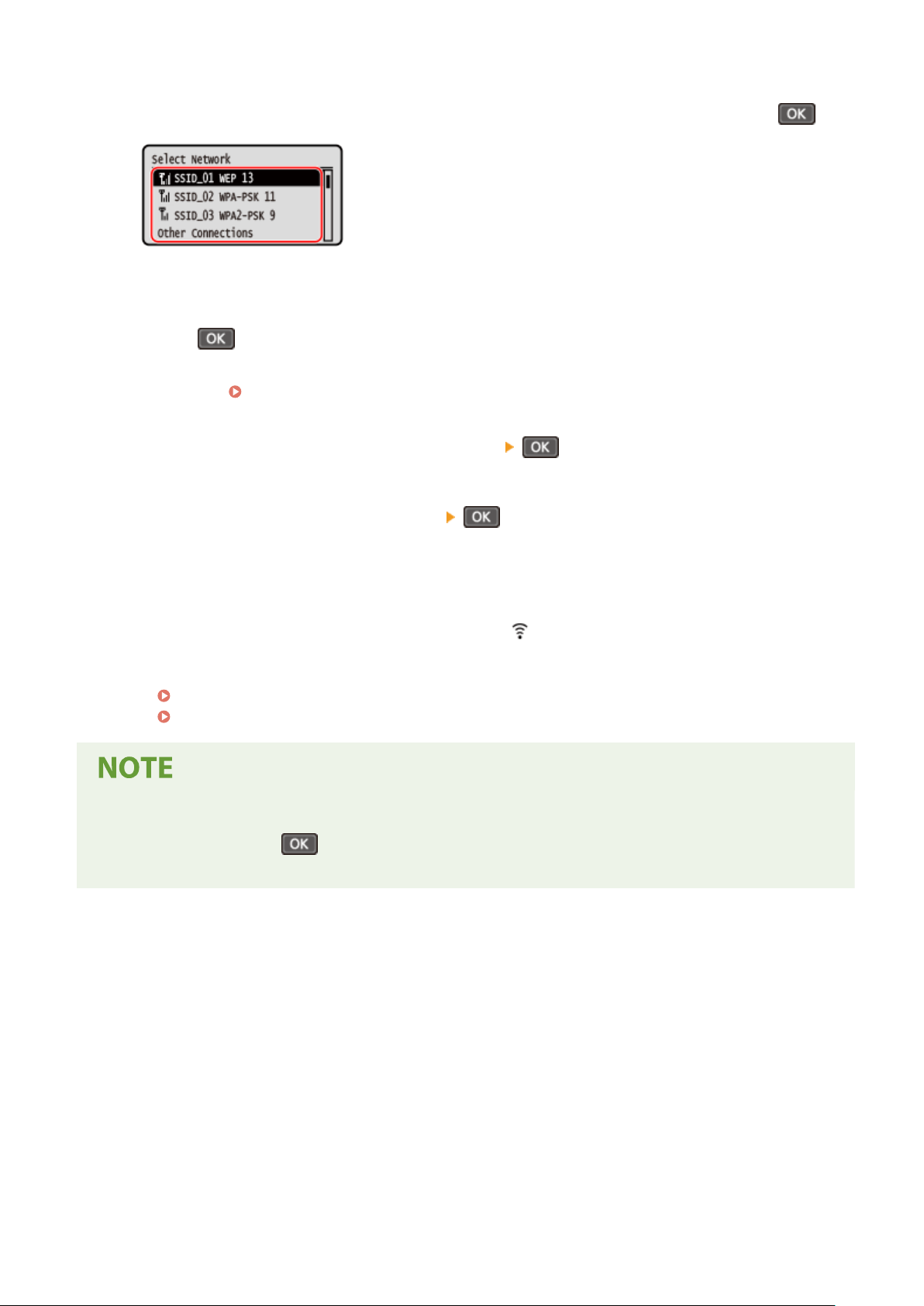
2
Select the SSID of the wireless LAN to which you want to connect, and press .
➠ The Network Ke
y input screen is displayed.
When selecting the SSID of the wireless LAN router supporting WPA-EAP or WPA2-EAP for the security
standard, the message [IEEE 802.1X Settings values will be applied to connect.] appears. Select [OK] and
press
, and proceed to Step 4.
If you cannot nd the wireless LAN router to which you want to connect, check that the router is
discoverable. Cannot Connect to Wireless LAN(P. 591)
3
Enter the network key, and press [<Apply>]
.
4
Check the message, and select [Yes] .
5
When [Connected.] is displayed on the control panel, wait a few minutes.
➠ When the machine is connected to the wir
eless LAN, [
] appears on the [Home] screen.
By default, an IP addr
ess is set automatically.
To use a specic IP address, set this manually.
Setting IPv4 Addresses(P. 77)
Setting IPv6 Addresses(P. 81)
If an Error Message Appears during Operation and a Connection Cannot Be Established
● Select [Close] and pr
ess
, check the information (SSID or network key) of the wireless LAN router to
which you want to connect, and repeat the procedure starting from Step 2.
Setting Up
71

Connecting to a Wireless LAN by Setting the Details
(Manual Setup Method)
8W0J-01J
Y
ou can connect to a wireless LAN router by manually entering all information of the router such as the SSID, network
key, and security settings.
Administrator privileges are required to connect to a wireless LAN.
Touch Panel Model(P. 72)
5 Lines LCD Model(P. 74)
Touch Panel Model
Required Preparations
● Pr
epare the information of the wireless LAN router to which you want to connect, and keep it close by.
Wireless LAN Router Information Required for Connection(P. 62)
● When connecting to a wir
eless LAN router supporting WPA-EAP or WPA2-EAP for the security standard, set
IEEE 802.1X.
Using IEEE 802.1X(P. 362)
1
On the control panel, press [Wireless LAN Set.] in the [Home] screen. [Home]
Screen(P. 120)
➠ The [Select Network] screen is displayed.
● If the login screen appears, enter the System Manager ID and PIN, and then press [Log In]. Logging In to
the Machine
(P. 137)
● If the message [Enable the wireless LAN?] appears, press [Yes].
● If the message [Cannot nd the access point.] appears, press [Close].
2
Press [Other Connections].
3
Press [Manually Enter Network Name].
➠ The SSID input scr
een is displayed.
4
Enter the SSID, and press [Apply].
➠ The [Security Settings] scr
een is displayed.
5
Select the security standard, and set the authentication and encryption.
When using WEP
1
Press [WEP].
Setting Up
72
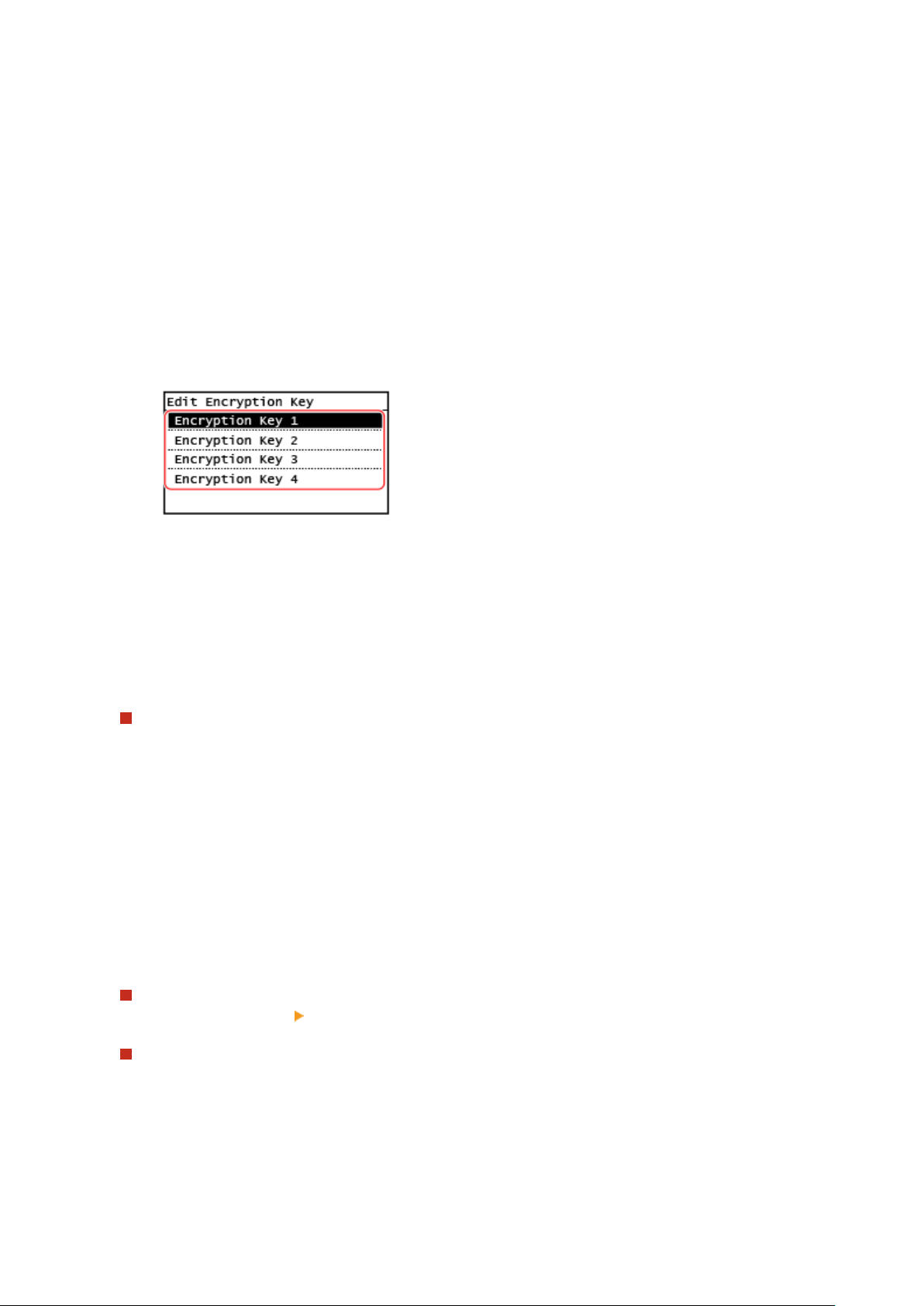
➠ The [802.11 Authentication] scr
een is displayed.
2
Select the authentication method.
[Open System]
Uses open authentication.
* When you select this authentication method, an authentication err
or occurs when connected to a
wireless LAN router that uses a shared key. The machine setting changes to [Shared Key] at this time, and
an attempt to reconnect to the router is made.
[Shared Key]
Uses an encryption key for the password.
3
Press [Edit Encryption Key].
4
Select an encryption key that is not registered.
➠ The encryption k
ey input screen is displayed.
5
Enter the network key, and press [Apply].
➠ The encryption k
ey is registered to the [Encryption Key] screen.
6
Press [Select Encryption Key].
7
Select a registered encryption key.
When Using WPA-PSK or WPA2-PSK
1
Press [WPA/WPA2-PSK].
➠ The [WP
A/WPA2 Encryption] screen is displayed.
2
Select the encryption method.
➠ The encryption k
ey input screen is displayed.
When you select [Auto], AES-CCMP or TKIP is set automatically according to the wireless LAN router to
which you want to connect.
3
Enter the network key, and press [Apply].
When Using WPA-EAP or WPA2-EAP
Pr
ess [WPA/WPA2-EAP]
[OK].
When Not Using a Security Standard
Pr
ess [None].
6
Check the message, and press [Yes].
➠ If the machine is corr
ectly connected to the network, [Connected.] appears.
Setting Up
73
7
Wait a few minutes.
➠ When the machine is connected to the wir
eless LAN, [
] appears on the [Home] screen and screen of
each function.
By default, an IP addr
ess is set automatically.
To use a specic IP address, set this manually.
Setting IPv4 Addresses(P. 77)
Setting IPv6 Addresses(P. 81)
If an Error Message Appears during Operation and a Connection Cannot Be Established
● Pr
ess [Close], check the information of the wireless LAN router to which you want to connect, and repeat the
procedure starting from Step 2.
5 Lines LCD Model
Required Preparations
● Pr
epare the information of the wireless LAN router to which you want to connect, and keep it close by.
Wireless LAN Router Information Required for Connection(P. 62)
● When connecting to a wir
eless LAN router supporting WPA-EAP or WPA2-EAP for the security standard, set
IEEE 802.1X.
Using IEEE 802.1X(P. 362)
1
On the control panel, select [Wireless LAN Set.] in the [Home] screen and press
.
[Home] Screen(P. 120)
➠ The [Select Network] scr
een is displayed.
● If the login screen appears, enter the System Manager ID and PIN, and then select [<Log In>] and press
. Logging In to the Machine(P. 137)
● If the message [Enable the wir
eless LAN?] appears, select [Yes] and press
.
● If the message [Cannot nd the access point.] appears, pr
ess
.
2
Select [Other Connections] and press .
3
Select [Manually Enter Network Name] and press
.
➠ The SSID input scr
een is displayed.
4
Enter the SSID, select [<Apply>], and press
.
➠ The [Security Settings] scr
een is displayed.
Setting Up
74
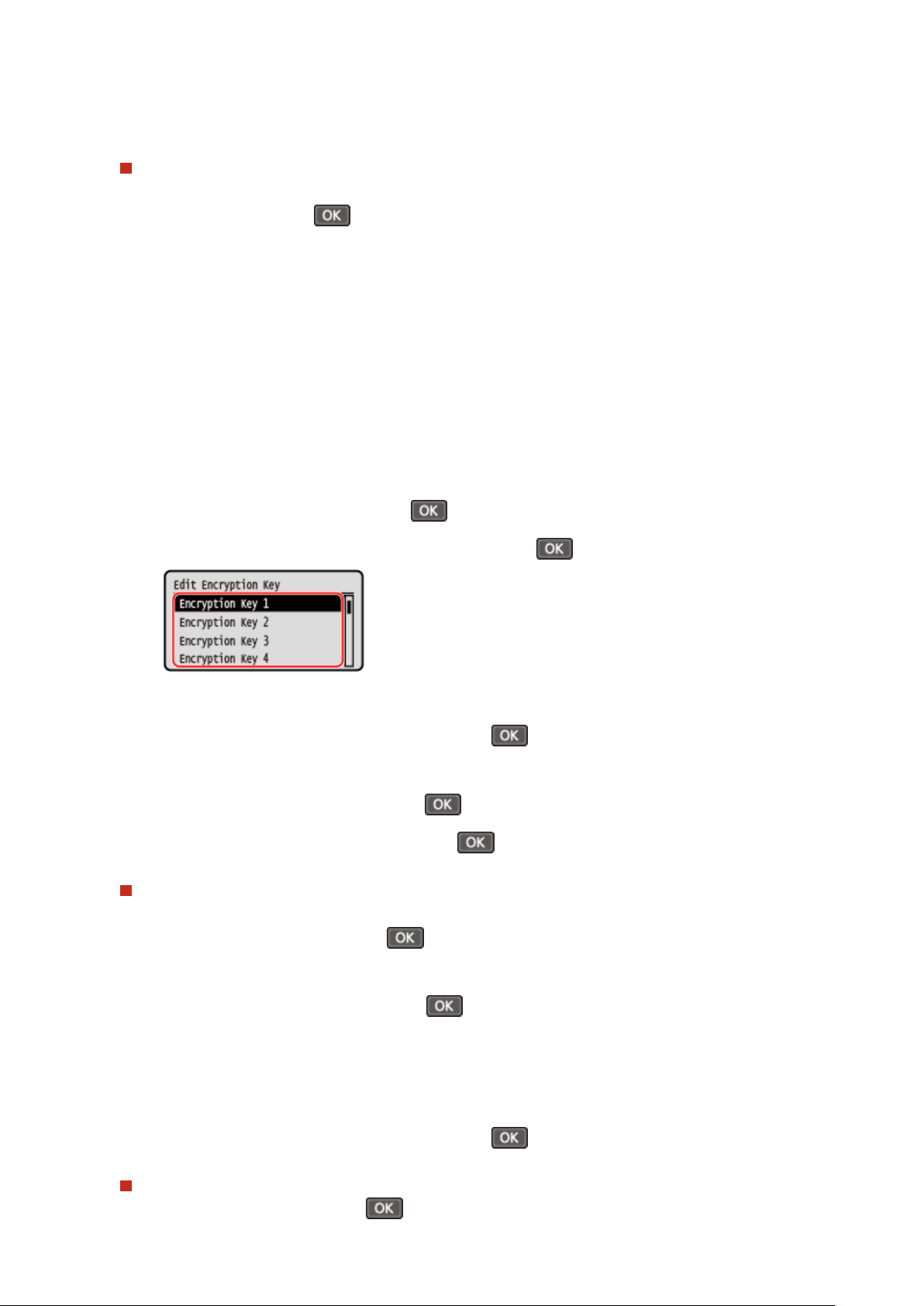
5
Select the security standard, and set the authentication and encryption.
When using WEP
1
Select [WEP] and press
.
➠ The [802.11 Authentication] scr
een is displayed.
2
Select the authentication method.
[Open System]
Uses open authentication.
* When you select this authentication method, an authentication err
or occurs when connected to a
wireless LAN router that uses a shared key. The machine setting changes to [Shared Key] at this time, and
an attempt to reconnect to the router is made.
[Shared Key]
Uses an encryption key for the password.
3
Select [Edit Encryption Key] and press
.
4
Select an encryption key that is not registered, and press .
➠ The encryption k
ey input screen is displayed.
5
Enter the network key, select [<Apply>], and press
.
➠ The encryption k
ey is registered to the [Encryption Key] screen.
6
Select [Select Encryption Key] and press
.
7
Select a registered encryption key, and press .
When Using WPA-PSK or WPA2-PSK
1
Select [WPA/WPA2-PSK] and press
.
➠ The [WP
A/WPA2 Encryption] screen is displayed.
2
Select the encryption method and press
.
➠ The encryption k
ey input screen is displayed.
When you select [Auto], AES-CCMP or TKIP is set automatically according to the wireless LAN router to
which you want to connect.
3
Enter the network key, select [<Apply>], and press
.
When Using WPA-EAP or WPA2-EAP
Select [WP
A/WPA2-EAP] and press
.
Setting Up
75
When Not Using a Security Standard
Select [None] and pr
ess
.
6
Check the message, and select [Yes] and press .
➠ If the machine is corr
ectly connected to the network, [Connected.] appears.
7
Wait a few minutes.
➠ When the machine is connected to the wir
eless LAN, [
] appears on the [Home] screen.
By default, an IP addr
ess is set automatically.
To use a specic IP address, set this manually.
Setting IPv4 Addresses(P. 77)
Setting IPv6 Addresses(P. 81)
If an Error Message Appears during Operation and a Connection Cannot Be Established
● Select [Close] and pr
ess
, check the information of the wireless LAN router to which you want to
connect, and r
epeat the procedure starting from Step 2.
Setting Up
76
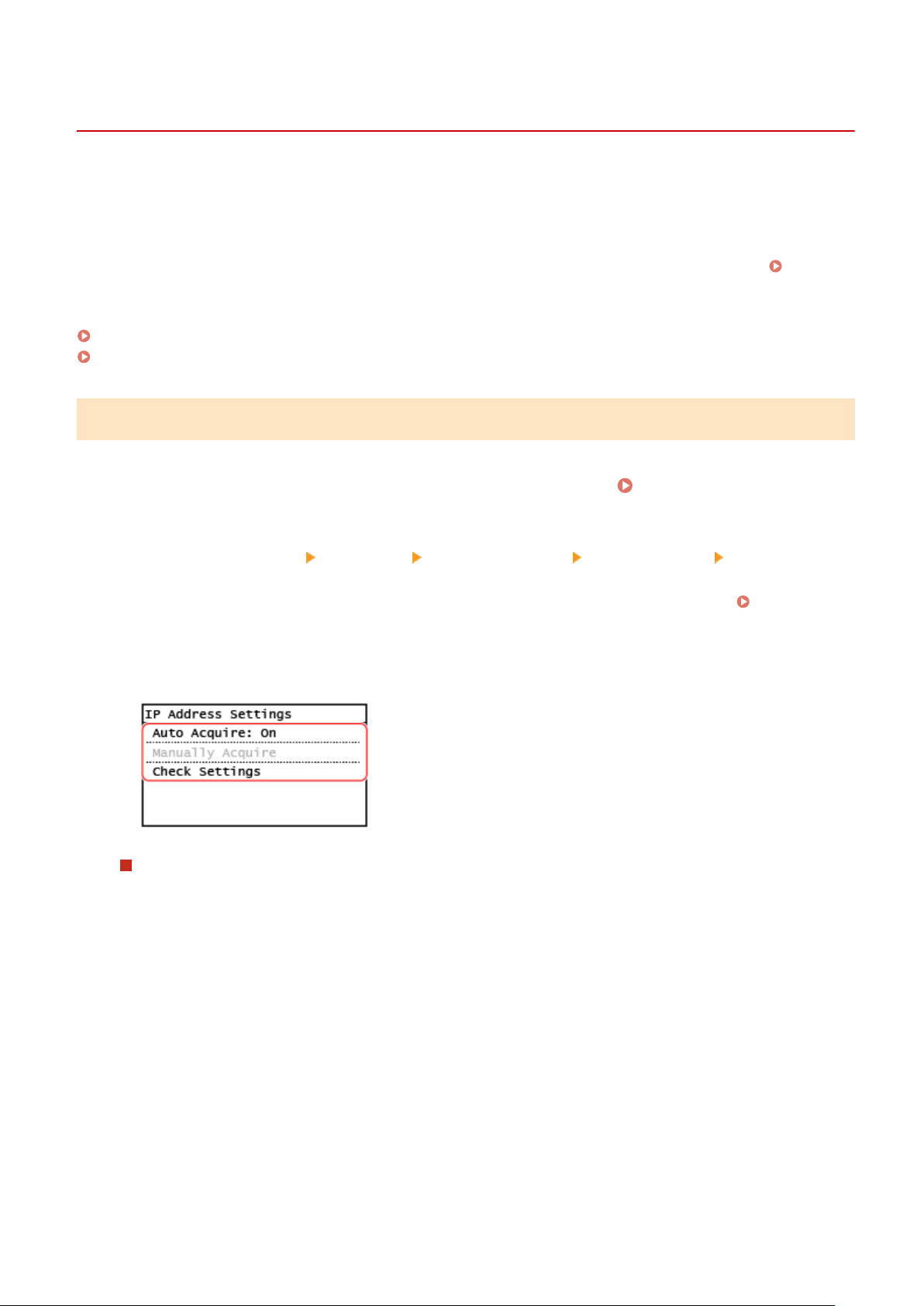
Setting IPv4 Addresses
8W0J-01K
The machine
's IPv4 address can either be assigned automatically using DHCP or entered manually.
By default, the IPv4 address is set automatically when connected to a wired or wireless LAN, but you can set it or
change it manually according to your usage environment and purpose.
This section describes how to congure the settings using the control panel.
You can also set the IPv4 address using Remote UI from a computer after it has been set on the machine.
Managing
the Machine fr
om a Computer (Remote UI)(P. 398)
Administrator privileges are required. The machine must be restarted to apply the settings.
Touch Panel Model(P. 77)
5 Lines LCD Model(P. 78)
Touch Panel Model
1
On the control panel, press [Menu] in the [Home] screen.
[Home] Screen(P. 120)
2
Press [Preferences] [Network] [TCP/IP Settings] [IPv4 Settings] [IP Address
Settings].
If the login screen appears, enter the System Manager ID and PIN, and then press [Log In]. Logging In to
the Machine
(P. 137)
3
Set the IP address.
When Manually Setting the IP Address
1
Press [Auto Acquire].
➠ The [Auto Acquir
e] screen is displayed.
2
Set [Select Protocol] to [Off].
3
Set [Auto IP] to [Off].
4
Press [Apply].
➠ The [IP Addr
ess Settings] screen is displayed.
5
Press [Manually Acquire].
➠ The IP addr
ess input screen is displayed.
6
Enter the IP address, and press [Apply].
7
Enter the subnet mask, and press [Apply].
Setting Up
77
8
Enter the gateway address, and press [Apply].
When Assigning an IP Address Automatically
1
Press [Auto Acquire].
➠ The [Auto Acquir
e] screen is displayed.
2
Congure the Auto Acquir
e setting, as needed.
[Select Protocol]
Normally, set to [DHCP]. However, when [DHCP] is set in an environment where DHCP cannot be used,
the machine will continue to conrm Auto Acquire in the network, creating unnecessary communication.
When not using DHCP, set this to [Off].
[Auto IP]
Normally, set to [On]. Although priority is given to the IP address allocated with DHCP, if there is no
response from DHCP, Auto IP will be used.
3
Press [Apply].
4
Restart the machine.
Restarting the Machine(P. 113)
➠ The settings ar
e applied.
Perform a connection test to check whether the IPv4 address is correctly congured.
Checking the
Network Status and Settings(P
. 96)
Checking the Currently Set IP Address
● On the scr
een in Step 3, press [Check Settings] to check the current IP address setting. If the IP address is
displayed as "0.0.0.0," it is not correctly congured.
If the IP Address Is Changed after Installing the Printer Driver
● In Windows, you must add a new port.
Conguring a Printer Port (Windo
ws)(P. 203)
- If you are using an MFNP port, the connection is maintained as long as the machine and computer belong
to the same subnet, so no action is required on the computer.
- If you are using a standard TCP/IP port, you must add a new port.
Adding a Port(P. 203)
If you do not kno
w which port is being used, see the following:
Viewing the Printer Port(P. 665)
● In macOS, you must r
e-register the machine on the Mac. For details about registering the machine, see the
manual of the driver at the online manual site.
https://oip.manual.canon/
* If you are using DHCP to automatically obtain the IP address of the machine, the IP address may be changed
automatically.
5 Lines LCD Model
1
Press
on the control panel. Control Panel(P. 14)
Setting Up
78
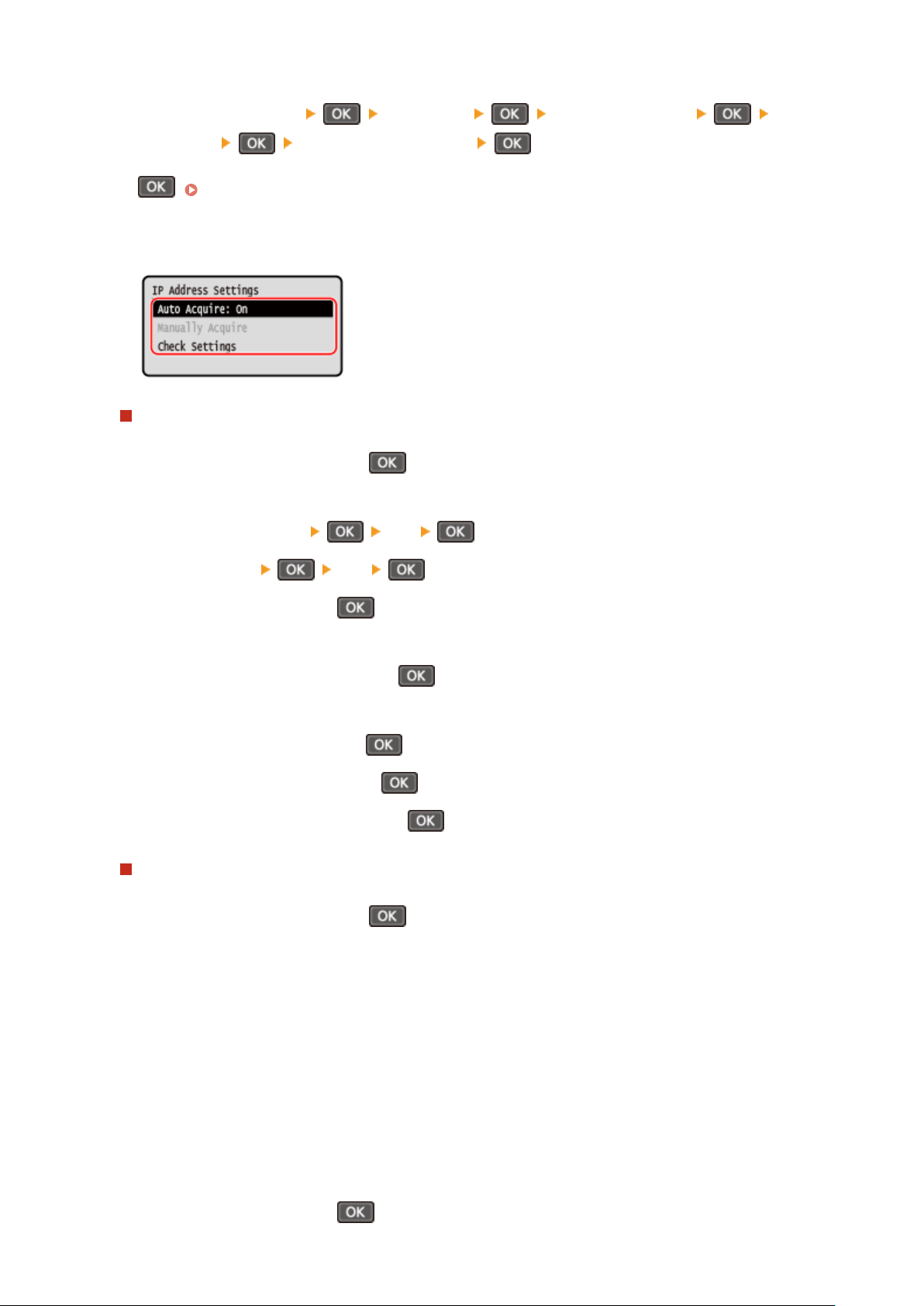
2
Press [Preferences] [Network] [TCP/IP Settings] [IPv4
Settings] [IP Address Settings] .
If the login screen appears, enter the System Manager ID and PIN, and then select [<Log In>] and press
. Logging In to the Machine(P. 137)
3
Set the IP address.
When Manually Setting the IP Address
1
Select [Auto Acquire] and press
.
➠ The [Auto Acquir
e] screen is displayed.
2
Press [Select Protocol]
[Off] .
3
Press [Auto IP] [Off] .
4
Select [<Apply>] and press .
➠ The [IP Addr
ess Settings] screen is displayed.
5
Select [Manually Acquire] and press
.
➠ The IP addr
ess input screen is displayed.
6
Enter the IP address and press
.
7
Enter the subnet mask and press .
8
Enter the gateway address and press .
When Assigning an IP Address Automatically
1
Select [Auto Acquire] and press
.
➠ The [Auto Acquir
e] screen is displayed.
2
Congure the Auto Acquir
e setting, as needed.
[Select Protocol]
Normally, set to [DHCP]. However, when [DHCP] is set in an environment where DHCP cannot be used,
the machine will continue to conrm Auto Acquire in the network, creating unnecessary communication.
When not using DHCP, set this to [Off].
[Auto IP]
Normally, set to [On]. Although priority is given to the IP address allocated with DHCP, if there is no
response from DHCP, Auto IP will be used.
3
Select [<Apply>] and press
.
Setting Up
79
4
Restart the machine.
Restarting the Machine(P. 113)
➠ The settings ar
e applied.
Perform a connection test to check whether the IPv4 address is correctly congured.
Checking the
Network Status and Settings(P
. 96)
Checking the Currently Set IP Address
● On the scr
een in Step 3, select [Check Settings] and press
to check the current IP address setting. If
the IP addr
ess is displayed as "0.0.0.0," it is not correctly congured.
If the IP Address Is Changed after Installing the Printer Driver
● In Windows, you must add a new port.
Conguring a Printer Port (Windo
ws)(P. 203)
- If you are using an MFNP port, the connection is maintained as long as the machine and computer belong
to the same subnet, so no action is required on the computer.
- If you are using a standard TCP/IP port, you must add a new port.
Adding a Port(P. 203)
If you do not kno
w which port is being used, see the following:
Viewing the Printer Port(P. 665)
● In macOS, you must r
e-register the machine on the Mac. For details about registering the machine, see the
manual of the driver at the online manual site.
https://oip.manual.canon/
* If you are using DHCP to automatically obtain the IP address of the machine, the IP address may be changed
automatically.
Setting Up
80
Setting IPv6 Addresses
8W0J-01L
In an IPv6 environment, you can set the following IPv6 addresses and use them at the same time.
● Link-Local Addr
ess
An address that can only be used within the same link. It cannot be used to communicate with devices beyond
a router.
A link-local address is automatically set when usage of IPv6 addresses is enabled.
● Stateless Address
An address that is generated automatically using the network prex provided by the router and the MAC
address of the machine.
This address is discarded when the machine is restarted or turned ON.
● Manual Address
An address that is entered manually by specifying the IP address, prex length, and default router address.
● Stateful Address
An address obtained from a DHCP server using DHCPv6.
This section describes how to congure the settings using Remote UI from a computer.
On the control panel, select [Menu] in the [Home] screen, and then select [Preferences] to congure the settings. You
cannot use the control panel to congure some of the settings.
[IPv6 Settings](P. 446)
Administr
ator privileges are required. The machine must be restarted to apply the settings.
Required Preparations
● Set an IPv4 addr
ess to the machine.
Setting IPv4 Addresses(P. 77)
● In an IPv6 envir
onment, you cannot use the function for scanning originals and saving the data to a
computer.
1
Log in to Remote UI in System Manager Mode.
Starting Remote UI(P. 399)
2
On the Portal page of Remote UI, click [Settings/Registration]. Portal Page of
Remote UI(P
. 401)
3
Click [Network Settings]
[IPv6 Settings] [Edit].
➠ The [Edit IPv6 Settings] scr
een is displayed.
4
In [IP Address Settings], select the [Use IPv6] checkbox.
5
Set the IPv6 address to use.
Setting Up
81
When Using a Stateless Address
Select the [Use Stateless Addr
ess] checkbox.
When Using a Manual Address
Select the [Use Manual Addr
ess] checkbox, and enter the IP address, prex length, and default router
address.
* You cannot enter a multicast address (address starting with "ff").
When Using a Stateful Address
Select the [Use DHCPv6] checkbo
x.
6
Click [OK].
7
Restart the machine.
Restarting the Machine(P. 113)
➠ The settings ar
e applied.
Perform a connection test to check whether the IPv6 address is correctly congured.
Checking the
Network Status and Settings(P
. 96)
If the IP Address Is Changed after Installing the Printer Driver
● Y
ou must add a new port.
Adding a Port(P. 203)
Setting Up
82

Conguring Y
our Machine for Your Network
Environment
8W0J-01R
The size and congur
ation of a network vary depending on the purpose and usage. The machine is equipped with a
variety of technologies to support many environments.
Congure the settings of the machine according to your network environment, as needed.
Manually Conguring the Ethernet Settings(P
. 84)
Conguring DNS(P
. 85)
Conguring SMB
(P. 88)
Conguring WINS
(P. 90)
Conguring SNMP
(P. 91)
Conguring SNTP
(P. 94)
◼ See Also
To reduce the threat of unauthorized access and eavesdropping, it is recommended to congure the security settings
according to your network environment.
Protecting the Network(P. 353)
Using the Machine in a Network with IEEE 802.1X Authentication
● When connecting the machine to a network that uses IEEE 802.1X authentication, you must congur
e the
settings on the machine such as the authentication method managed by the authentication server.
Using
IEEE 802.1X
(P. 362)
Setting Up
83

Manually Conguring the Ethernet Settings
8W0J-01S
By default, when the machine connects to a wir
ed LAN, the Ethernet communication mode and Ethernet type are
detected automatically, and these can be used without changes. Depending on the usage environment, you may have
to change the Ethernet settings to suit the settings of peripheral devices.
This section describes how to congure the settings using Remote UI from a computer.
On the control panel, select [Menu] in the [Home] screen, and then select [Preferences] to congure the settings.
[Ethernet Driver Settings](P. 439)
Administr
ator privileges are required. The machine must be restarted to apply the settings.
1
Log in to Remote UI in System Manager Mode.
Starting Remote UI(P. 399)
2
On the Portal page of Remote UI, click [Settings/Registration]. Portal Page of
Remote UI(P. 401)
3
Click [Network Settings] [Ethernet Driver Settings] [Edit].
➠ The [Edit Ethernet Driver Settings] scr
een is displayed.
4
Clear the [Auto Detect] checkbox.
5
Select the communication mode.
Normally, select [Full Duplex]. When the network router is set to half duplex communication, select [Half
Duple
x].
6
Select the Ethernet type, and click [OK].
7
Restart the machine.
Restarting the Machine(P. 113)
➠ The settings are applied.
Setting Up
84

Conguring DNS
8W0J-01U
When using the machine in an envir
onment with Domain Name System (DNS), congure the DNS server information
and DHCP option settings.
In an environment without DNS, you can congure multicast DNS (mDNS) to use the DNS function. mDNS is used by
Bonjour and other software.
This section describes how to congure the settings using Remote UI from a computer.
On the control panel, select [Menu] in the [Home] screen, and then select [Preferences] to congure the settings. You
cannot use the control panel to congure some of the settings.
[TCP/IP Settings](P. 444)
Administr
ator privileges are required. Depending on the item to be congured, you may have to restart the machine.
Required Preparations
● When conguring DNS for IPv6, congur
e the setting to use an IPv6 address.
Setting IPv6
Addr
esses(P. 81)
1
Log in to Remote UI in System Manager Mode. Starting Remote UI(P. 399)
2
On the Portal page of Remote UI, click [Settings/Registration]. Portal Page of
Remote UI(P
. 401)
3
Click [Network Settings]
[IPv4 Settings] or [IPv6 Settings] [Edit].
➠ The [Edit IPv4 Settings] scr
een or [Edit IPv6 Settings] screen is displayed.
4
In [DHCP Option Settings], congur
e the DHCP option settings.
If you are not conguring the DHCP option settings, pr
oceed to Step 5.
Select the checkboxes of the items to enable.
[Acquir
e Host Name] (IPv4 only)
Obtains a host name (Option 12) from the DHCP server.
[DNS Dynamic Update] (IPv4 only)
The DHCP server automatically updates the information (Option 81) corresponding to the host name in place of
the machine.
[Acquire DNS Server Address]
Obtains a DNS server address (Option 6 for IPv4, Option 23 for IPv6) from the DHCP server.
[Acquire Domain Name]
Obtains a domain name (Option 15 for IPv4, Option 24 for IPv6) from the DHCP server.
[Acquire WINS Server Address] (IPv4 only)
Obtains a WINS server address (Option 44) from the DHCP server.
[Acquire SMTP Server Address] (IPv4 only)
*
Obtains an SMTP server address (Option 69) from the DHCP server.
[Acquire POP Server Address] (IPv4 only)
*
Setting Up
85

Obtains a POP3 server address (Option 70) from the DHCP server.
* This setting is available only for MF269dw II / MF269dw VP II / MF267dw II.
5
In [DNS Settings], set the DNS server information.
● For details about the setting information, contact your pr
ovider or network administrator. You can also refer
to the computer settings.
Viewing the Network Connection Information of the Computer(P. 663)
● If you ar
e not conguring the DNS server information, proceed to Step 6.
[Primary DNS Server Address]
Enter the IP addr
ess of the DNS server.
* For IPv6, you cannot enter a multicast address (address starting with "ff").
[Secondary DNS Server Address]
When using a secondary DNS server, enter the IP address of that server.
* For IPv6, you cannot enter a multicast address (address starting with "ff").
[Use Same Host Name/Domain Name as IPv4] (IPv6 only)
Select the checkbox to use the same host and domain names as in IPv4.
To set the IPv6 host name and domain name individually, clear this checkbox, and enter [Host Name] and
[Domain Name].
[Host Name]
Enter the host name to register in the DNS server using single-byte alphanumeric characters.
[Domain Name]
Enter the domain name to which the machine belongs using single-byte alphanumeric characters.
Input example:
example.com
[DNS Dynamic Update]
Select the checkbox to automatically update the DNS records when the corresponding information of the host
name and IP address is changed in a DHCP environment, for example.
To Specify the Type of Address to Register to the DNS Server (IPv6 only)
Depending on the type of address you want to register, select the [Register Manual Address], [Register
Stateful Address], or [Register Stateless Address] checkbox.
To Specify the Interval between Updates
In [DNS Dynamic Update Interval], enter the interval at which to automatically update this information.
6
In [mDNS Settings], congur
e the mDNS settings.
If you are not conguring the mDNS settings, pr
oceed to Step 7.
For IPv4
T
o use mDNS, select the [Use mDNS] checkbox, and enter the mDNS name.
For IPv6
To use mDNS, select the [Use mDNS] checkbox, and select whether to use the same mDNS name as IPv4.
● To use the mDNS name set with IPv4 also with IPv6, select the [Use Same mDNS Name as IPv4]
checkbox.
● To congure the mDNS name of IPv6 individually, clear the [Use Same mDNS Name as IPv4]
checkbox, and enter the mDNS name.
Setting Up
86


Conguring SMB
8W0J-01W
This machine uses the Server Message Block (SMB) communication pr
otocol to save scanned data to a shared folder,
for example. Depending on the network environment, you may have to set the computer name and workgroup name
of the machine, and congure the SMB client information when connecting to an SMB server.
Setting the Computer Name and Workgroup Name(P. 88)
Conguring an SMB Client(P
. 88)
Setting the Computer Name and Workgroup Name
Set the computer name used to identify the machine in a network and the workgroup name to identify the group that
the machine belongs to.
Congure these settings using Remote UI from a computer. You cannot use the control panel to congure the
settings.
Administrator privileges are required. The machine must be restarted to apply the settings.
1
Log in to Remote UI in System Manager Mode.
Starting Remote UI(P. 399)
2
On the Portal page of Remote UI, click [Settings/Registration]. Portal Page of
Remote UI(P. 401)
3
Click [Network Settings] [Computer Name/Workgroup Name Settings] [Edit].
➠ The [Edit Computer Name/W
orkgroup Name Settings] screen is displayed.
4
Enter the computer name and workgroup name of the machine, and click [OK].
Enter using single-byte alphanumeric characters.
In an Environment with WINS
● Select the [Use NetBIOS] checkbo
x.
● You cannot register names that start with an asterisk (*) to the WINS server.
5
Restart the machine.
Restarting the Machine(P. 113)
➠ The settings ar
e applied.
Conguring an SMB Client
Congure the settings when connecting to an SMB server (such as the computer with the shared folder) and the
version of SMB to use with the SMB client.
* This setting is available only for MF269dw II / MF269dw VP II / MF267dw II.
Congure these settings using Remote UI from a computer. You cannot use the control panel to congure the
settings.
Administrator privileges are required.
Setting Up
88

1
Log in to Remote UI in System Manager Mode.
Starting Remote UI(P. 399)
2
On the Portal page of Remote UI, click [Settings/Registration]. Portal Page of
Remote UI(P
. 401)
3
Click [Network Settings]
[SMB Client Settings] [Edit].
➠ The [Edit SMB Client Settings] scr
een is displayed.
4
Congure the settings when connecting to an SMB server, and click [OK].
[Authentication Type]
Select the checkbo
x according to the authentication protocol of the SMB server.
[Require SMB Signature for Connection]
Select this checkbox to request an SMB packet signature when connecting to the SMB server.
[Require Encryption for Connection]
Select this checkbox to connect only with the SMB server supporting SMB v3.0 encryption communications.
[Timeout]
Enter the wait time until the SMB server responds.
* If the machine times out before saving the scanned data, for example, is completed, lengthen the wait
time.
5
Click [Network Settings]
[Specied SMB Client V
ersions]
[Edit].
➠ The [Edit Specied SMB Client V
ersions] screen is displayed.
6
Select the checkbox of the version of the SMB server to which the machine will
connect.
If [Require Encryption for Connection] is selected in the setting when connecting to the SMB server, select the
[3.0] checkbox.
7
Click [OK].
➠ The settings ar
e applied.
8
Log out from Remote UI.
Setting Up
89

Conguring WINS
8W0J-01X
When using the machine in a network envir
onment that uses both NetBIOS and TCP/IP, congure Windows Internet
Name Service (WINS) to convert the NetBIOS name to an IP address.
To enable WINS, specify the WINS server. WINS cannot be used in an IPv6 environment.
This section describes how to congure the settings using Remote UI from a computer.
On the control panel, select [Menu] in the [Home] screen, and then select [Preferences] to congure the settings.
[WINS Settings](P. 447)
Administr
ator privileges are required. The machine must be restarted to apply the settings.
Required Preparations
● Set the computer name and workgr
oup name.
Setting the Computer Name and Workgroup
Name(P
. 88)
● Prepare the IPv4 address of the WINS server and keep it close by.
1
Log in to Remote UI in System Manager Mode. Starting Remote UI(P. 399)
2
On the Portal page of Remote UI, click [Settings/Registration]. Portal Page of
Remote UI(P
. 401)
3
Click [Network Settings]
[WINS Settings] [Edit].
➠ The [Edit WINS Settings] scr
een is displayed.
4
Select the [WINS Resolution] checkbox.
5
Enter the IPv4 address of the WINS server, and click [OK].
If the IP address of the WINS server is obtained from a DHCP server, the obtained IP address has priority.
Conguring DNS(P
. 85)
6
Restart the machine.
Restarting the Machine(P. 113)
➠ The settings are applied.
Setting Up
90

Conguring SNMP
8W0J-01Y
Simple Network Management Pr
otocol (SNMP) is a protocol for monitoring and controlling communication devices in a
network by accessing a Management Information Base (MIB). Congure these settings according to the purpose of
use and environment of the machine.
The machine supports SNMPv1 and SNMPv3. You can also use both at the same time. Trap notication is not
supported.
When SNMP management software is installed on the network, you can use the software to congure, monitor, and
control the machine remotely from a computer. For more information, see the manual of the software you are using.
SNMPv1
SNMPv1 denes the scope of communication using information called a "community name." As the
community name is sent to the network in plain text, the security of the network is vulnerable. To ensure
network security, disable SNMPv1 and use SNMPv3. When SNMPv1 is disabled, you will not be able to use
some functions such as obtaining information from the machine using the printer driver.
SNMPv3
SNMPv3 communicates using user information for SNMPv3. This protocol enables you to congure the
authentication and encryption in the user information to monitor and control communication devices on the
network with a solid security system.
This section describes how to congure the settings using Remote UI from a computer.
On the control panel, select [Menu] in the [Home] screen, and then select [Preferences] to congure the settings.
However, the control panel can only be used to enable or disable SNMPv1 and SnMPv3.
[SNMP Settings](P. 438)
Administr
ator privileges are required. The machine must be restarted to apply the settings.
Required Preparations
● T
o congure SNMPv3, you must enable TLS. Using TLS(P. 360)
1
Log in to Remote UI in System Manager Mode.
Starting Remote UI(P. 399)
2
On the Portal page of Remote UI, click [Settings/Registration]. Portal Page of
Remote UI(P. 401)
3
Click [Network Settings] [SNMP Settings] [Edit].
➠ The [Edit SNMP Settings] scr
een is displayed.
4
In [SNMPv1 Settings], set SNMPv1.
To Enable SNMPv1
1
Select the [Use SNMPv1] checkbox.
2
Congure the community
.
● You can set MIB Access Permission (permission to read/write to MIB objects) for each community.
● When using both SNMPv1 and SNMPv3, it is recommended to set MIB Access Permission to [Read
Only]. When setting SNMPv1 to [Read/Write] (full-access permission), you can perform nearly all
operations, and therefore, you are not able to use the solid security features of SNMPv3.
Setting Up
91

To Congur
e the Community Name
Select the [Use Community Name 1] or [Use Community Name 2] checkbox, and congure the
community name and MIB Access Permission.
Enter the community name using single-byte alphanumeric characters.
To Congure a Dedicated Community
Dedicated Community is a preset community for Canon Device Management software.
To use Dedicated Community, select the [Use Dedicated Community] checkbox, and congure MIB Access
Permission.
* For details, see the manual of the software you are using.
To Disable SNMPv1
Clear the [Use SNMPv1] checkbo
x.
5
In [SNMPv3 Settings], congur
e SNMPv3.
To Enable SNMPv3
1
Select the [Use SNMPv3] checkbox.
2
In [User Settings 1], [User Settings 2], or [User Settings 3], select the [Enable User] checkbox.
3
Congure the user.
[User Name]
Enter the user name using single-b
yte alphanumeric characters.
[MIB Access Permission]
Set the read/write permission to MIB objects for each specied user.
To allow both read and write, select [Read/Write].
[Security Settings]
Select whether to enable or disable authentication and encryption.
[Authentication Algorithm]
When [Authentication On/Encryption On] or [Authentication On/Encryption Off] is selected in [Security
Settings], select the authentication algorithm according to the usage environment.
To set a password, select the [Set/Change Password] checkbox, and enter the same password in both
[Authentication Password] and [Conrm] using single-byte alphanumeric characters.
[Encryption Algorithm]
When [Authentication On/Encryption On] is selected in [Security Settings], select the encryption algorithm
according to the usage environment.
To set a password, select the [Set/Change Password] checkbox, and enter the same password in both
[Encryption Password] and [Conrm] using single-byte alphanumeric characters.
To Disable SNMPv3
Clear the [Use SNMPv3] checkbo
x.
Setting Up
92
6
In [Printer Management Information Acquisition Settings], select whether to obtain
the printer management information.
To regularly obtain printer management information from the machine, such as protocols and ports, select
the [Acquir
e Printer Management Information from Host] checkbox.
7
Click [OK].
8
Restart the machine.
Restarting the Machine(P. 113)
➠ The settings ar
e applied.
Changing the Port Number
● T
o change the port number of the SNMP server, see the following:
Changing the Port Number(P. 357)
Setting Up
93
Conguring SNTP
8W0J-020
T
o obtain time information from the time server on the network, congure Simple Network Time Protocol (SNTP).
When SNTP is congured, the time server is checked at specied intervals to adjust the time and maintain the correct
time on the machine.
The machine supports both an NTP server (NTPv3) and SNTP server (SNTPv3 and v4).
Congure these settings using Remote UI from a computer. You cannot use the control panel to congure the
settings.
Administrator privileges are required.
Required Preparations
● The time is adjusted based on the UT
C (Coordinated Universal Time), so specify the time zone setting.
Setting the Date and Time(P. 397)
● Pr
epare the IP address of the NTP or SNTP server and keep it close by.
1
Log in to Remote UI in System Manager Mode. Starting Remote UI(P. 399)
2
On the Portal page of Remote UI, click [Settings/Registration]. Portal Page of
Remote UI(P
. 401)
3
Click [Network Settings]
[SNTP Settings] [Edit].
➠ The [Edit SNTP Settings] scr
een is displayed.
4
Select the [Use SNTP] checkbox.
5
In [NTP Server Name], enter the IP address of the NTP/SNTP server.
When using a DNS server, you can enter the host name or FQDN instead of the IP address.
Input e
xample:
ntp.example.com
6
In [Polling Interval], enter the interval at which to check the server and adjust the
time.
7
Click [OK].
➠ The settings ar
e applied.
8
Log out from Remote UI.
Setting Up
94
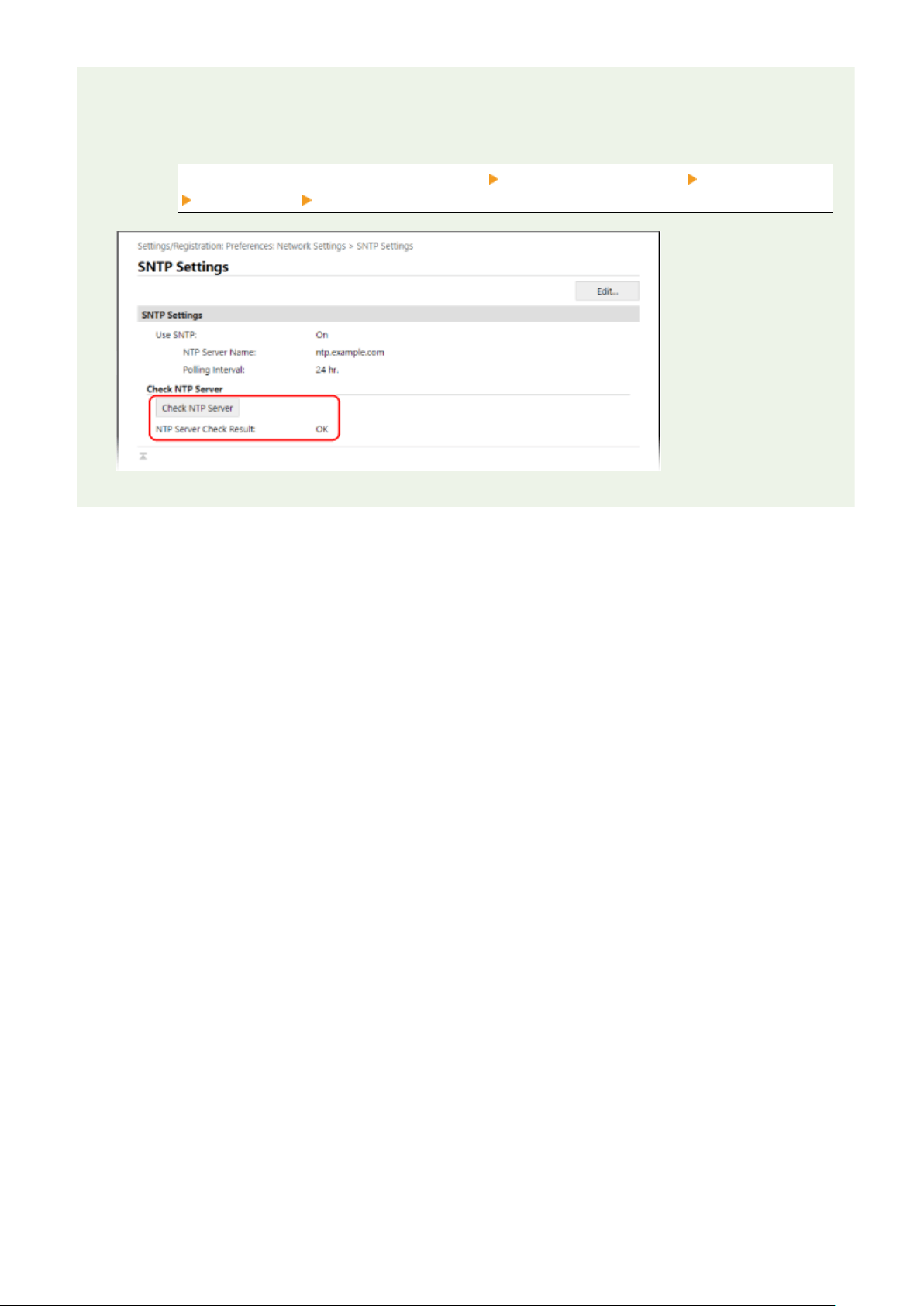
Testing Communication with the NTP or SNTP Server
● T
est communication using the following procedure: If the machine is correctly communicating with the
server, [OK] appears in [NTP Server Check Result].
Log in to Remote UI in System Manager Mode click [Settings/Registration] [Network Settings]
[SNTP Settings] [Check NTP Server].
* This tests the communication status and does not adjust the time.
Setting Up
95
Checking the Network Status and Settings
8W0J-021
Y
ou can perform a connection test with devices in the network to check whether the machine is correctly connected to
the network.
The IP address of the machine and the MAC address information are needed to use Remote UI and congure the
rewall settings. Check these current settings.
Checking Whether the Machine Can Connect to Network Devices(P. 96)
Viewing the IP address set to the machine(P. 97)
Viewing the MAC Address of the Wired LAN(P. 98)
Viewing the MAC Address and Connection Information of the Wireless LAN(P. 99)
● If the IP addr
ess is displayed as "0.0.0.0," it is not correctly congured. Set the IP address again.
Setting IPv4 Addresses(P. 77)
Setting IPv6 Addresses(P. 81)
● Connecting the machine to a switching hub, for e
xample, may prevent connection to the network even when
the IP address is correctly congured. In this case, set a wait time until machine starts communicating and
try connecting again.
[Waiting Time for Connection at Startup](P. 439)
● Y
ou can print the System Manager Data List to view the network settings.
Printing and Viewing Reports
and Lists(P
. 408)
Checking Whether the Machine Can Connect to Network Devices
In the W
eb browser of the computer connected to the network, enter the IPv4 or IPv6 address of the machine. If the
Remote UI login screen is displayed, the machine is properly connected to the network.
Starting Remote UI(P. 399)
When using an IPv4 addr
ess, you can use the following procedure to send a ping command from the control panel to
check whether the machine can connect to a network device.
Administrator privileges are required.
Touch Panel Model(P. 96)
5 Lines LCD Model(P. 97)
◼ T
ouch Panel Model
Required Preparations
● Pr
epare the IPv4 address of a device in the network to which you want to connect and keep it close by.
1
On the control panel, press [Menu] in the [Home] screen.
[Home] Screen(P. 120)
2
Press [Preferences] [Network] [TCP/IP Settings] [IPv4 Settings] [PING
Command].
If the login screen appears, enter the System Manager ID and PIN, and then press [Log In].
Logging In to
the Machine
(P. 137)
Setting Up
96
3
Enter the IPv4 address of a network device, and press [Apply].
➠ If the machine is corr
ectly connected to the network, [Received response from host.] appears.
◼ 5 Lines LCD Model
Required Preparations
● Pr
epare the IPv4 address of a device in the network to which you want to connect and keep it close by.
1
Press
on the control panel. Control Panel(P. 14)
2
Press [Preferences] [Network] [TCP/IP Settings] [IPv4
Settings] [PING Command] .
If the login screen appears, enter the System Manager ID and PIN, and then select [<Log In>] and press
. Logging In to the Machine(P. 137)
3
Enter the IPv4 address of a network device, and press
.
➠ If the machine is corr
ectly connected to the network, [Received response from host.] appears.
Viewing the IP address set to the machine
Y
ou can view the setting of IP address set to the machine such as the IPv4 address and the IPv6 address.
This section describes how to view the IP address using the control panel.
You can also check this information using Remote UI from a computer.
Managing the Machine from a Computer
(Remote UI)
(P. 398)
Touch Panel Model(P. 97)
5 Lines LCD Model(P. 98)
◼ T
ouch Panel Model
1
Press
on the control panel.
➠ The [Status Monitor] scr
een is displayed.
2
Press [Network Information]
[IPv4] or [IPv6].
3
Select the item you want to view.
Setting Up
97
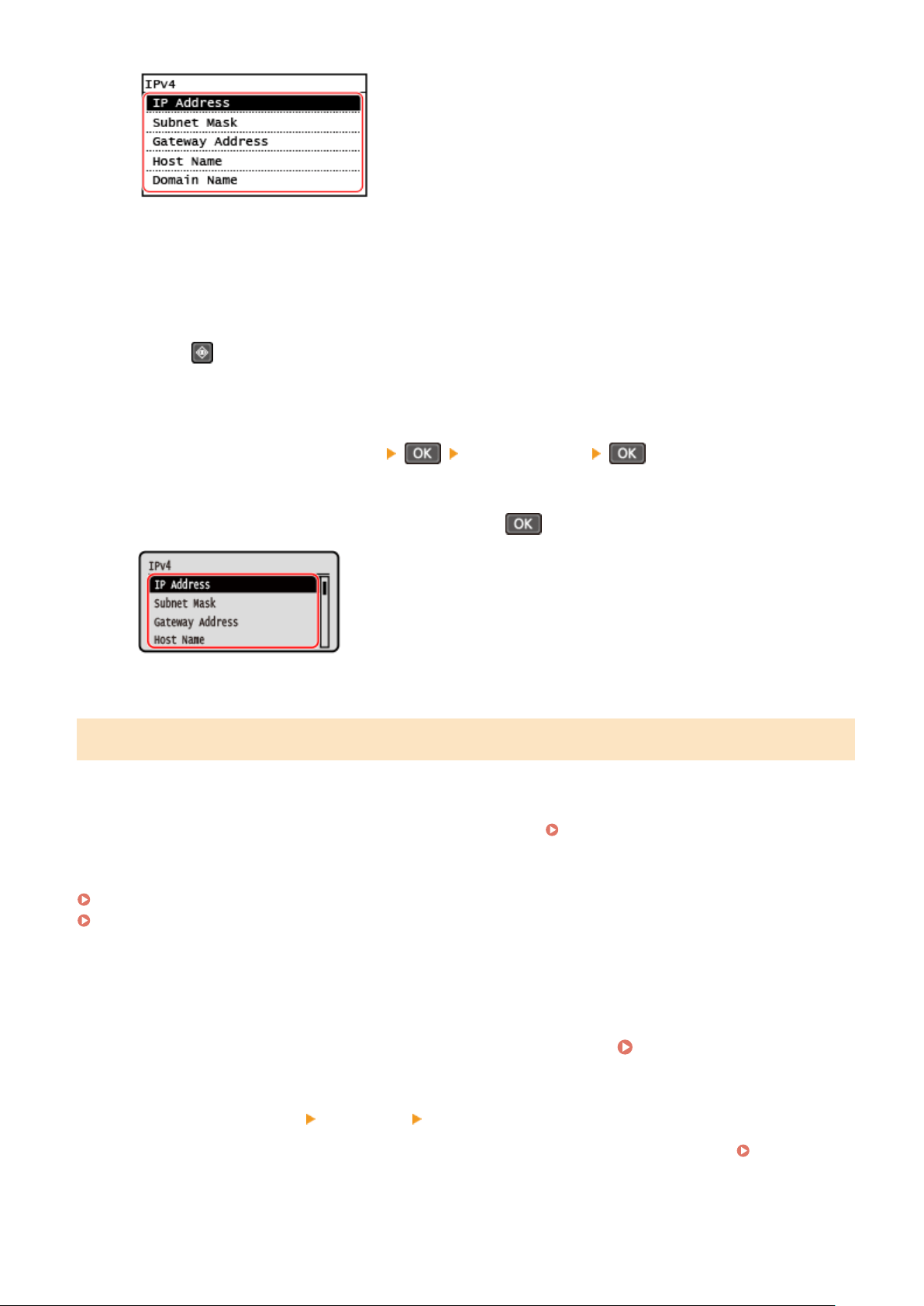
➠ The settings of the selected item ar
e displayed.
◼ 5 Lines LCD Model
1
Press
on the control panel.
➠ The [Status Monitor] scr
een is displayed.
2
Press [Network Information]
[IPv4] or [IPv6] .
3
Select the item you want to view and press
.
➠ The settings of the selected item ar
e displayed.
Viewing the MAC Address of the Wired LAN
Y
ou can view the MAC address set to the machine when the machine is connected to the wired LAN.
This section describes how to view this information using the control panel.
You can also use Remote UI from a computer to view the MAC address.
Managing the Machine from a Computer
(Remote UI)(P. 398)
Administrator privileges are required.
Touch Panel Model(P. 98)
5 Lines LCD Model(P. 99)
◼ Touch Panel Model
1
On the control panel, press [Menu] in the [Home] screen. [Home] Screen(P. 120)
2
Press [Preferences] [Network] [Ethernet Driver Settings].
If the login screen appears, enter the System Manager ID and PIN, and then press [Log In].
Logging In to
the Machine
(P. 137)
Setting Up
98
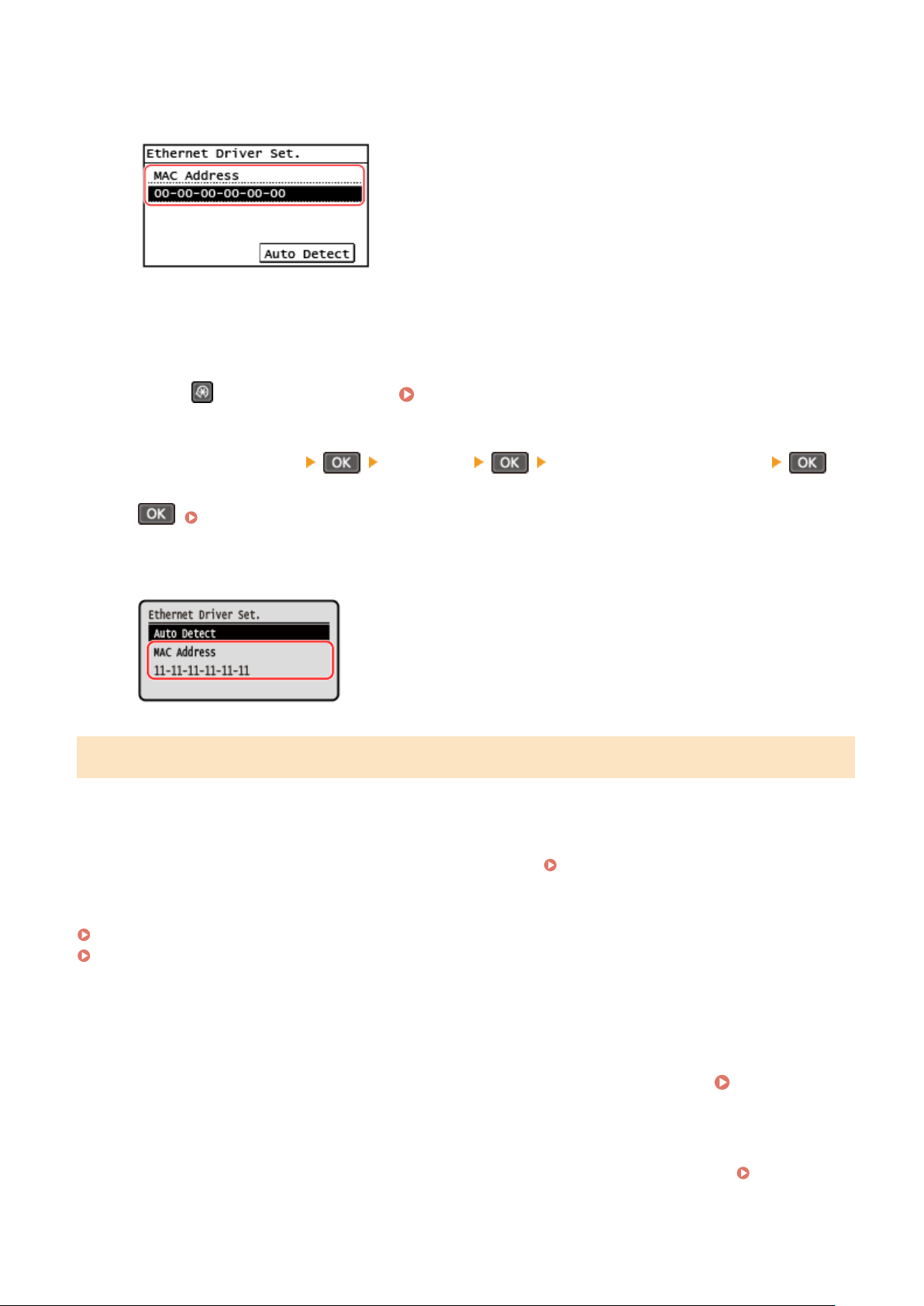
3
View the MAC address.
◼ 5 Lines L
CD Model
1
Press
on the control panel. [Home] Screen(P. 120)
2
Press [Preferences]
[Network] [Ethernet Driver Settings] .
If the login screen appears, enter the System Manager ID and PIN, and then select [<Log In>] and press
. Logging In to the Machine(P. 137)
3
View the MAC address.
Viewing the MAC Address and Connection Information of the Wireless LAN
In addition to the MA
C address and connection information of the wireless LAN when the machine is connected to the
wireless LAN, you can also view the security settings.
This section describes how to view this information using the control panel.
You can also check this information using Remote UI from a computer.
Managing the Machine from a Computer
(Remote UI)
(P. 398)
Administrator privileges are required.
Touch Panel Model(P. 99)
5 Lines LCD Model(P. 100)
◼ T
ouch Panel Model
1
On the control panel, press [Wireless LAN Set.] in the [Home] screen.
[Home]
Scr
een(P. 120)
➠ The [Select Network] screen is displayed.
If the login screen appears, enter the System Manager ID and PIN, and then press [Log In].
Logging In to
the Machine
(P. 137)
Setting Up
99
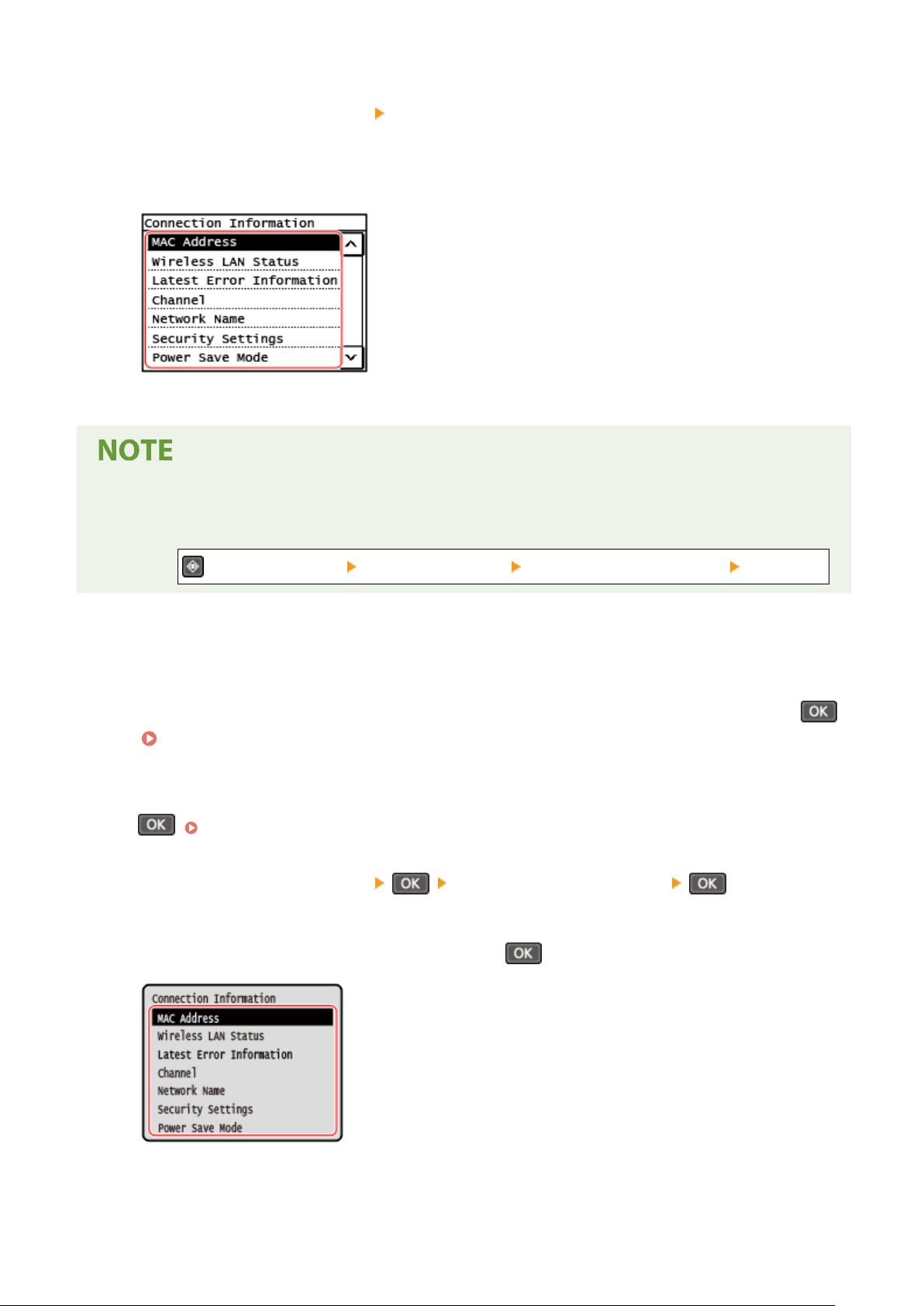
2
Press [Connection Settings]
[Connection Information].
3
Select the item you want to view.
➠ The MA
C address and the settings of the selected item are displayed.
Viewing Information with the [Status Monitor] Screen
● Y
ou can also view the wireless LAN status and error information with the following procedure:
on the control panel [Network Information] [Network Connection Method] [Conn. Info].
◼ 5 Lines L
CD Model
1
On the control panel, select [Wireless LAN Set.] in the [Home] screen and press
.
[Home] Screen(P. 120)
➠ The [Select Network] scr
een is displayed.
If the login screen appears, enter the System Manager ID and PIN, and then select [<Log In>] and press
. Logging In to the Machine(P. 137)
2
Press [Connection Settings] [Connection Information] .
3
Select the item you want to view and press
.
➠ The MA
C address and the settings of the selected item are displayed.
Setting Up
100
Viewing Information with the [Status Monitor] Screen
● Y
ou can also view the wireless LAN status and error information with the following procedure:
on the control panel [Network Information] [Network Connection Method]
[Connection Information] .
Setting Up
101

Conguring the Fax Settings (Fax Setup Guide)
8W0J-022
When you pr
ess [Fax] in the [Home] screen on the control panel for the rst time, the screen (Fax Setup Guide) for
setting the items so as to use the fax is displayed. Congure the fax settings using the procedure below by following
the instructions on the screen.
Step 1: Starting the Fax Setup Guide(P. 102)
Step 2: Registering the Fax Number and Unit Name(P. 102)
Step 3: Setting the RX Mode(P. 103)
Step 4: Connecting to Telephone Line(P. 104)
Step 1: Starting the Fax Setup Guide
1
On the control panel, press [Fax] in the [Home] screen.
[Home] Screen(P. 120)
➠ The [Fax Setup Guide] scr
een is displayed.
When the [Fax Setup Guide] Screen Is Not Displayed
If the [Fax Setup Guide] scr
een is not displayed after pressing [Fax] in the [Home] screen, or to reset the fax
with the Fax Setup Guide, use the following procedure to display the [Fax Setup Guide].
[Home] screen on the control panel [Menu] [Function Settings] [Common] [Fax Setup Guide].
2
Press [Set Up Now] [Next].
➠ The [Register Unit T
el. No.] screen is displayed.
Step 2: Registering the Fax Number and Unit Name
Register the fax number and unit name (name or company name). This information is printed together with the fax
data at the destination.
1
On the [Register Unit Tel. No.] screen, enter the fax number of the machine, and
pr
ess [Apply].
➠ After the message [Settings applied.] appears, the screen guiding you to register the unit name is
displayed.
2
Press [Next].
➠ The [Register Unit Name] scr
een is displayed.
3
Enter the name or company name, and press [Apply].
➠ After the message [Settings applied.] appears, the RX Mode settings scr
een is displayed.
Setting Up
102
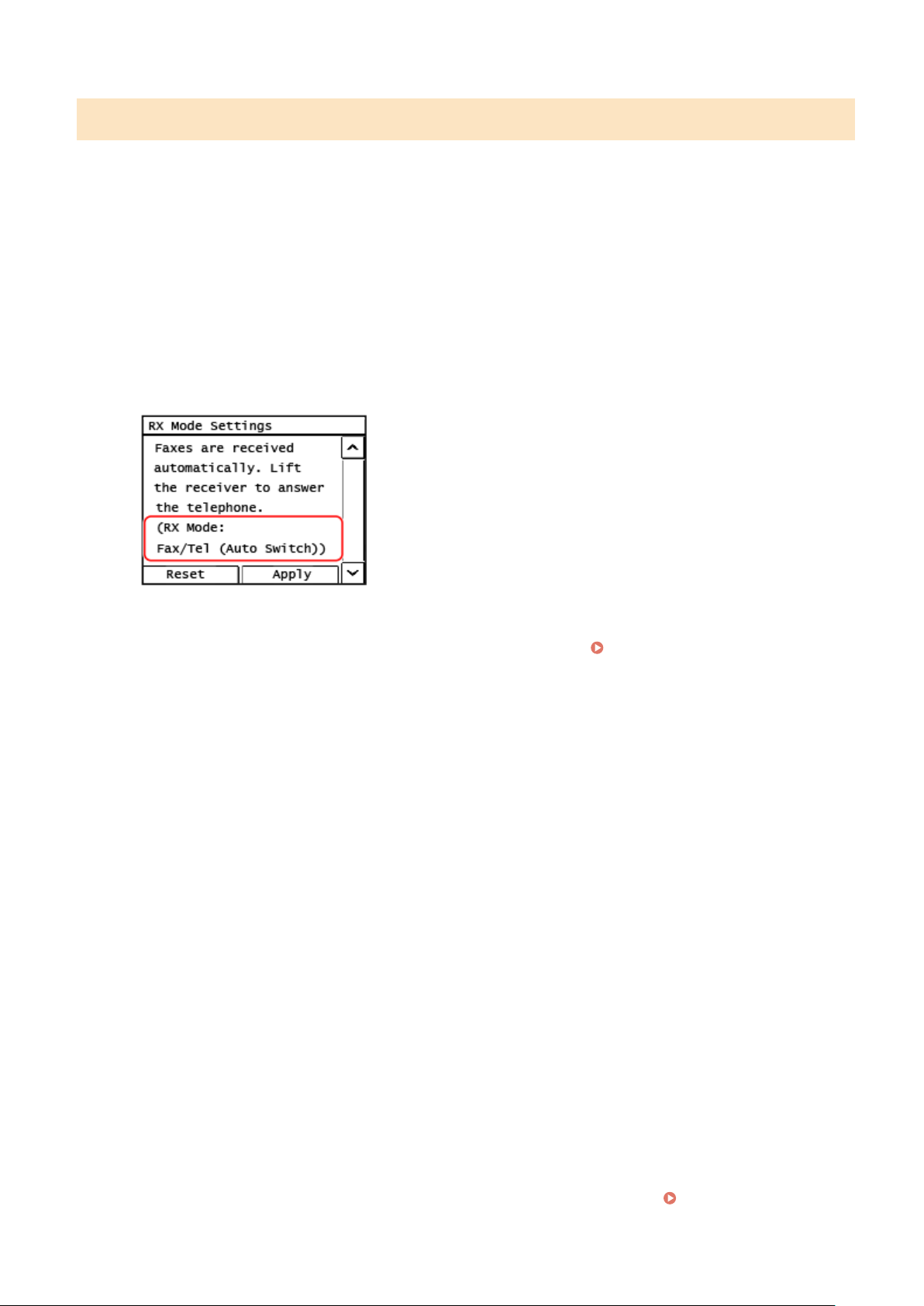
Step 3: Setting the RX Mode
Answer the questions on the screen to select the proper RX mode.
1
On the RX Mode settings screen, press [Next].
2
Answer the questions displayed on the screen by pressing [Yes] or [No].
➠ When you have completed answering all the questions, the selected RX mode is displayed on the scr
een.
3
Check the selected RX mode.
The RX modes operate as follows:
* If you have subscribed to a Distinctive Ring Pattern Detection (DRPD) service provided by your telephone
company, [DRPD: Select Fax] is also available for the receiving mode. Changing Fax RX Mode and Setting
the Action when Receiving a Fax(P. 270)
[Fax/Tel (Auto Switch)]
Enables use of both fax and telephone.
● Faxes are automatically received.
● When a telephone call is received, the machine rings. Pick up the handset to answer the call.
[Auto]
Used for fax only.
● Faxes are automatically received.
● Incoming telephone calls cannot be answered.
[Answering Machine]
Enables use of both fax and phone.
● Faxes are automatically received.
● When a telephone call is received, the answering machine function can be used to record messages. You
can answer the call by picking up the handset before recording starts.
* Set the answering machine so that the recording function activates after the machine rings one or two
times.
* When recording your message, it is recommended that you keep about four seconds of silence, or keep
the entire message within 20 seconds.
[Manual]
Enables use of both fax and phone.
● The machine rings when receiving both fax and phone calls.
● If you hear a fax tone when picking up the handset, receive the fax manually. Receiving Faxes(P. 288)
Setting Up
103
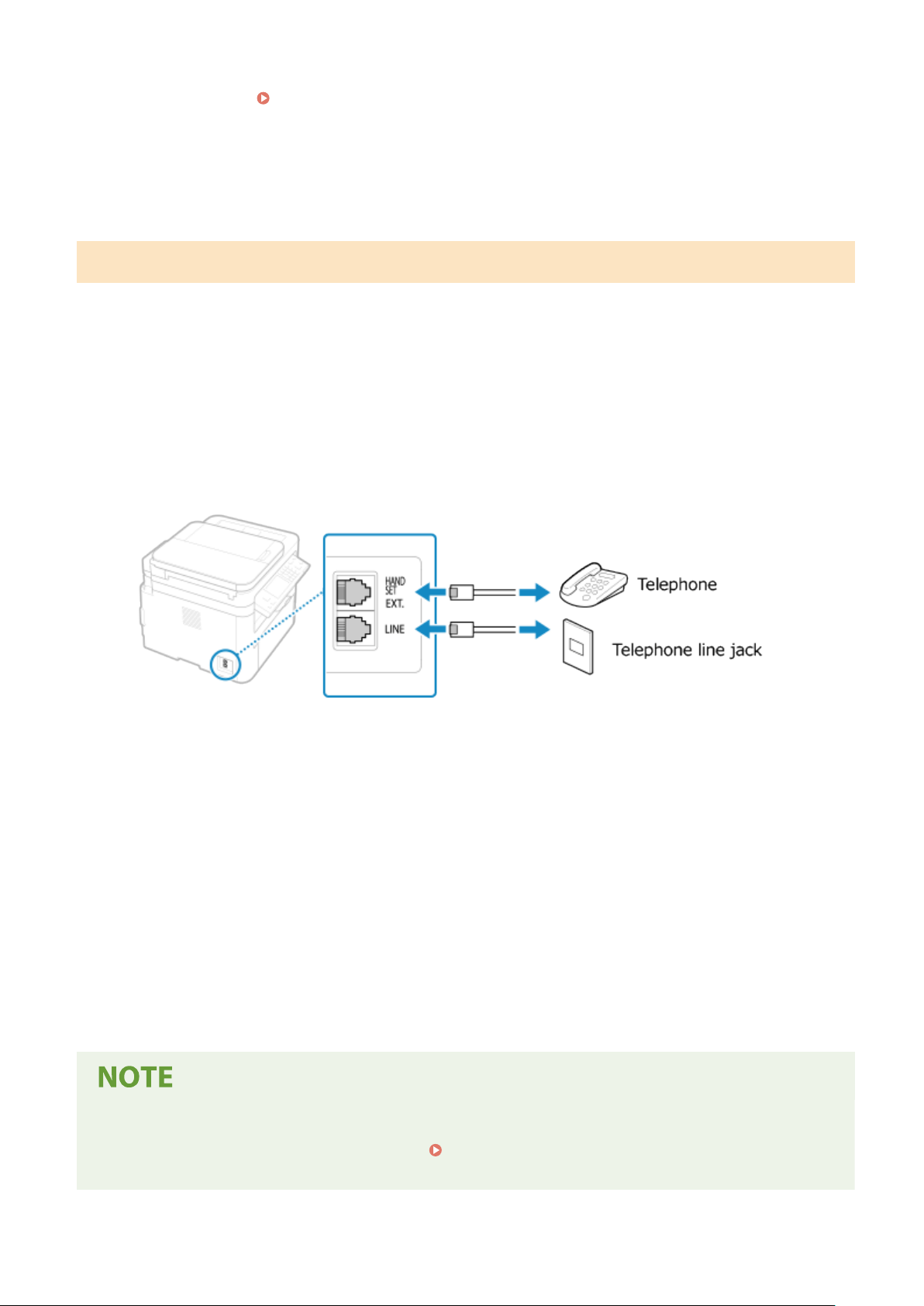
● Y
ou can also congure the setting to receive faxes automatically after the machine rings for a certain
period of time.
[Switch to Auto RX](P. 502)
4
Press [Apply].
➠ The [Connect T
elephone Line] screen is displayed.
Step 4: Connecting to Telephone Line
Use the supplied telephone cor
d to connect the machine to the telephone line.
When using a telephone, connect it to the machine.
1
Press [Next].
➠ The [Connect to sock
et on back of device.] screen is displayed.
2
Connect the supplied telephone cord to the telephone line jack (LINE) on the
machine and the telephone line connector on the wall.
Connect a telephone to the external telephone jack (EXT.) on the machine.
● When connecting a telephone with fax function, be sure to disable the fax auto receive setting on the
telephone.
● Depending on the type of telephone connected to it, the machine may not be able to send or receive faxes
properly.
3
Press [Next].
➠ The scr
een conrming that you want to exit the Fax Setup Guide is displayed.
4
Press [Yes].
➠ The settings congur
ed in the Fax Setup Guide are applied, and the type of telephone line is congured
automatically.
If the Type of Telephone Line Is Not Congur
ed Automatically
● Congure the type of telephone line manually.
[Select Line Type](P. 495)
* If you do not kno
w the type of your telephone line, contact your telephone company.
Setting Up
104

Making an Alert Sound When the Handset Is Not Properly Set on the Cradle
● Y
ou can select whether the machine makes an alert sound when the handset of a telephone connected to
the machine is not properly set on the cradle.
Log in to Remote UI [Settings/Registration] [TX Settings] [Fax TX Settings] [Edit] Select
the [Off-Hook Alarm] checkbo
x and adjust the volume
[OK]
On the control panel, select [Menu] in the [Home] screen, and then select [Function Settings] to congur
e
the settings.
[Off-Hook Alarm](P. 493)
Setting Up
105

Installing Software and Drivers to the Computer
8W0J-023
Install the r
elated software and drivers to the computer that will use the functions of the machine, such as printing,
remote scanning, and PC faxing.
Installation Procedure
Check the operating environment via the Canon website for your country/region, and download and install the
latest softwar
e and drivers.
https://global.canon/en/support/
* If the machine is supplied with a CD/DVD-ROM, you can also use this to install the software and drivers.
For details about the installation method, see the manual of the software or driver at the online manual site.
https://oip.manual.canon/
Precautions and Limitations
Operating Environment
● Depending
on the operating system, your computer may not support some software or drivers. For the
latest information on the supported operating systems, see the Canon website.
https://global.canon/
● Depending on the model and usage environment, some functions of the software or drivers may not be
available.
When the Firewall Settings of the Machine Are Congured
The computer that will be used with the machine must be allowed to communicate with the machine. If the
computer is not allowed to communicate with the machine, you will not be able to install the software and
drivers or use the functions of the machine.
Setting the Firewall(P. 354)
If the IP Addr
ess of the Machine Is Changed after Installing the Printer Driver
● In Windows, the required action depends on the port you are using.
● If you are using an MFNP port, the connection is maintained as long as the machine and computer
belong to the same subnet, so no action is required on the computer.
● If you are using a standard TCP/IP port, you must add a new port.
Adding a Port(P. 203)
If you do not kno
w which port is being used, see the following:
Viewing the Printer Port(P. 665)
● In
macOS, you must re-register the machine on the Mac. For details about registering the machine, see
the manual of the driver at the online manual site.
https://oip.manual.canon/
* If you are using DHCP to automatically obtain the IP address of the machine, the IP address may be
changed automatically.
Using the Functions of the Machine without Installing Software or Drivers (macOS)
● Y
ou can use AirPrint standard equipped in macOS to print and scan data and send faxes from a computer
without installing software or drivers.
Using AirPrint Application to Print and Scan Data and Send
Fax
es(P. 342)
Setting Up
106

Basic Operations
Basic Operations ............................................................................................................................................
109
Turning ON and OFF the Machine .................................................................................................................... 110
Turning ON the Machine .............................................................................................................................. 111
Turning OFF the Machine ............................................................................................................................. 112
Restarting the Machine ................................................................................................................................ 113
Reducing Power Consumption (Sleep Mode) ................................................................................................... 114
Using the Control Panel .................................................................................................................................... 116
Screens Displayed on the Control Panel ....................................................................................................... 117
[Home] Screen ....................................................................................................................................... 120
[Status Monitor] Screen ......................................................................................................................... 124
How to Operate the Control Panel (Touch Panel Model) ............................................................................... 127
How to Operate the Control Panel (5 Lines LCD Model) ................................................................................ 129
Entering Characters ...................................................................................................................................... 131
Customizing the [Home] Screen ................................................................................................................... 135
Logging In to the Machine ................................................................................................................................ 137
Placing Originals ............................................................................................................................................... 139
Loading Paper .................................................................................................................................................... 142
Loading Paper in the Drawer ........................................................................................................................ 143
Loading Paper in the Multi-purpose Tray ...................................................................................................... 146
Preparations and Orientation for Loading Envelopes ................................................................................... 148
Orientation for Loading Paper with a Logo ................................................................................................... 150
Specifying the Paper Size and Type .............................................................................................................. 152
Setting the Paper Size and Type for the Drawer ..................................................................................... 153
Setting the Paper Size and Type for the Multi-purpose Tray .................................................................. 157
Registering a Frequently Used Paper Size and Type for the Multi-purpose Tray .................................... 160
Registering Non-standard Size Paper (Custom Paper) ........................................................................... 164
Hiding Unused Paper Sizes .................................................................................................................... 166
Registering Destinations (Address Book) ........................................................................................................ 168
Address Book Function ................................................................................................................................. 169
Registering Destinations to the Address Book (Control Panel) ..................................................................... 171
Registering Groups to the Address Book (Control Panel) ....................................................................... 173
Editing and Deleting Destinations in the Address Book (Control Panel) ................................................. 175
Registering Destinations to the Address Book (Remote UI) .......................................................................... 176
Registering Groups to the Address Book (Remote UI) ............................................................................ 180
Specifying Destinations .................................................................................................................................... 182
Basic Operations
107

Specifying Destinations (Address Book) ........................................................................................................
183
Specifying Destinations (Direct Input) .......................................................................................................... 187
Specifying Destinations (Address Book on a Mobile Device) ......................................................................... 188
Specifying Destinations (TX Job Log) ............................................................................................................. 189
Changing the Default Settings ......................................................................................................................... 190
Adjusting the Volume (For Models with a Fax Function) ................................................................................ 193
[Volume Settings] Screen .............................................................................................................................. 196
Reducing the Operation Sound (Quiet Mode) .................................................................................................. 197
Basic Operations
108

Basic Operations
8W0J-024
This chapter describes the basic oper
ations common to all functions of the machine and how to understand the screen
layout.
Managing and Saving Power
You can turn OFF the power to conserve energy or when cleaning and restart the machine to apply the
settings.
You can use sleep mode to reduce power consumption.
Turning ON and OFF the Machine(P. 110)
Reducing Power Consumption (Sleep Mode)(P. 114)
Using the Contr
ol Panel
Use the control panel to scan, copy, and perform other functions and to congure the settings of the
machine.
Using the Control Panel(P. 116)
When the login scr
een is displayed, enter the required login information to continue operations.
Logging In to the Machine(P. 137)
Placing Originals and Loading Paper
Place the original on the platen glass or in the feeder when scanning, sending a fax, or cop
ying.
Load printing and copying paper into the drawer or multi-purpose tray according to your usage.
Placing Originals(P. 139)
Loading Paper(P. 142)
Registering and Specifying Destinations
Register destinations for sending and saving scanned data and fax
es to the Address Book of the machine.
In addition to specifying destinations from the Address Book, you can also directly enter them, use the TX Job
Log, and use other methods to specify them.
Registering Destinations (Address Book)(P. 168)
Specifying Destinations(P. 182)
Customizing Functions and Settings
Y
ou can change frequently used settings for each function, allowing you to use the machine easier and more
conveniently.
Changing the Default Settings(P. 190)
Adjusting the Volume (For Models with a Fax Function)(P. 193)
Reducing the Operation Sound (Quiet Mode)(P. 197)
Basic Operations
109

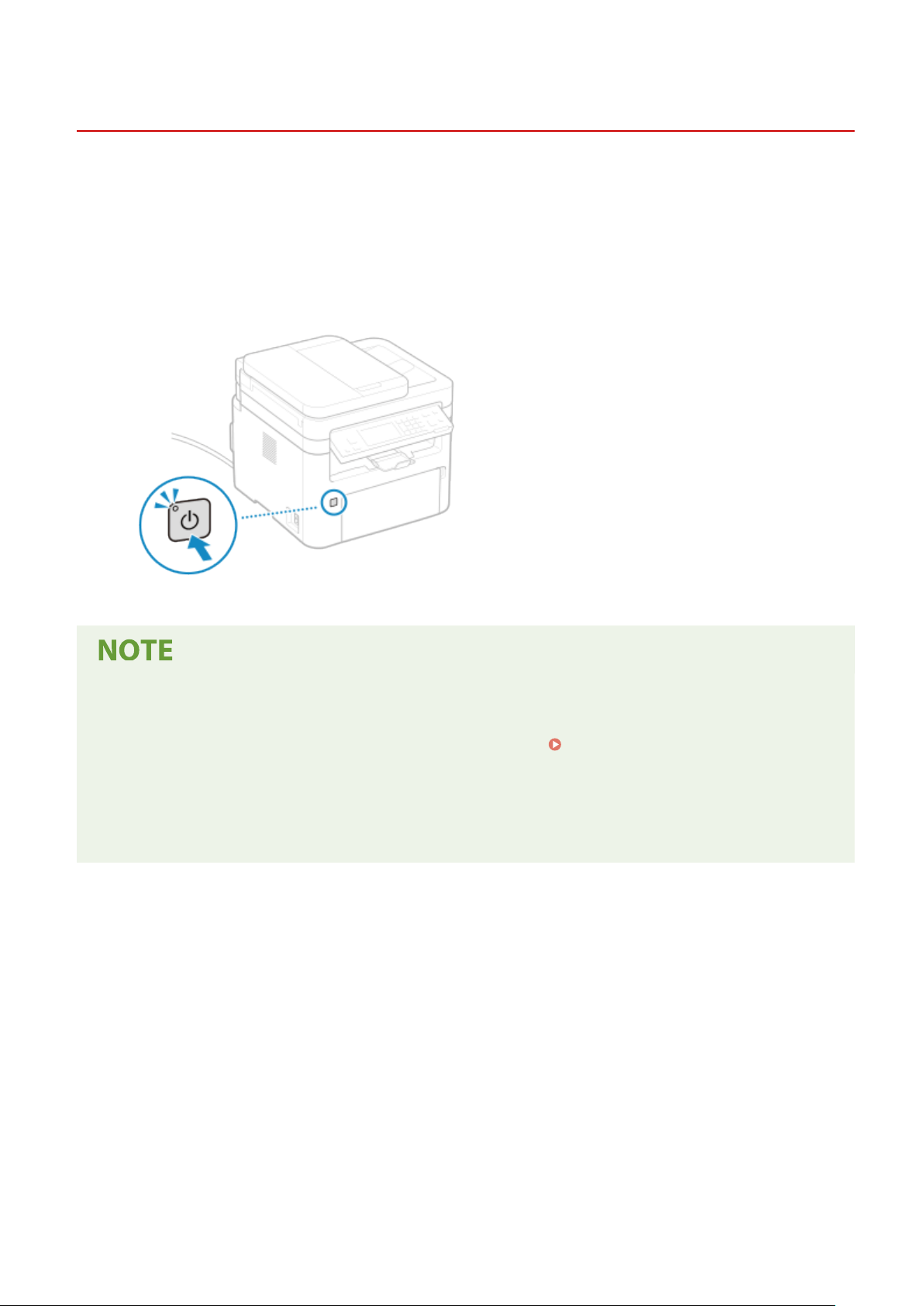
Turning ON the Machine
8W0J-026
T
o turn ON the machine, press the power switch on the front.
1
Make sure that the power plug is inserted into a power outlet.
2
Press the power switch.
➠ The start scr
een is displayed on the control panel.
Changing the Screen that Appears at Startup
● After the po
wer is turned ON and the start screen is displayed, the [Home] screen is displayed by default.
You can congure the setting to display another function screen.
[Default Screen after Startup/
Restoration](P. 430)
Blank Paper is Output
● A blank sheet of paper may be output when you turn ON the power for the rst time. This is not a
malfunction.
Basic Operations
111
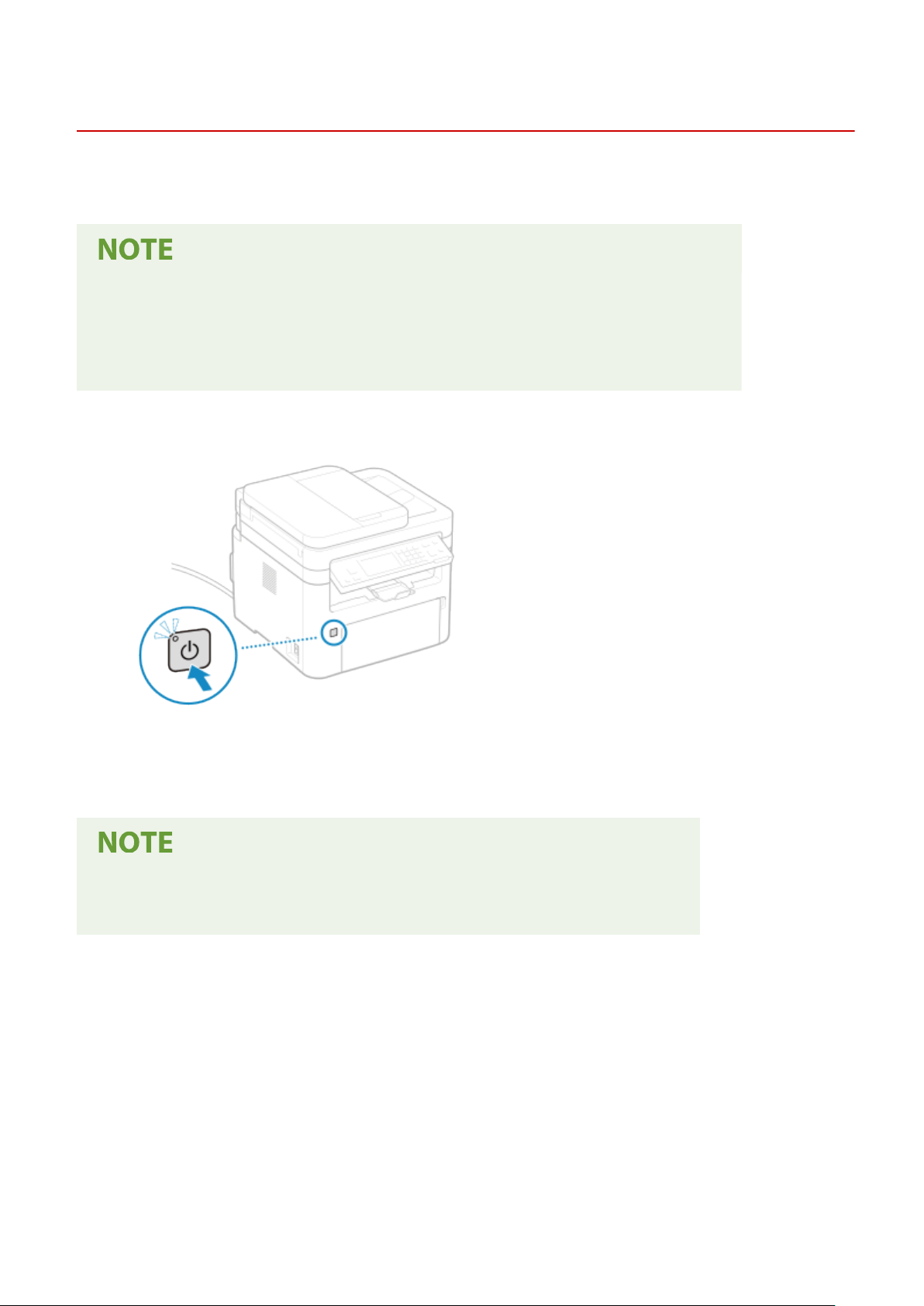
Turning OFF the Machine
8W0J-027
Pr
ess the power switch on the front side of the machine to turn OFF the machine.
When you turn OFF the machine, the data that is waiting to be printed will be erased.
● The follo
wing data remains stored without being deleted even if the machine is turned OFF:
- Received data saved in the memory
- Data waiting to be sent
- Reports to be printed automatically after data is sent or received
1
Press the power switch.
➠ The display turns off, and the po
wer turns OFF.
It may take a few minutes until the power turns OFF. Do not unplug the power cord until the power turns
OFF.
Make sure that the power indicator has gone out.
Turning ON the Machine Again
● W
ait at least 10 seconds after turning OFF the power before turning ON the machine.
Basic Operations
112
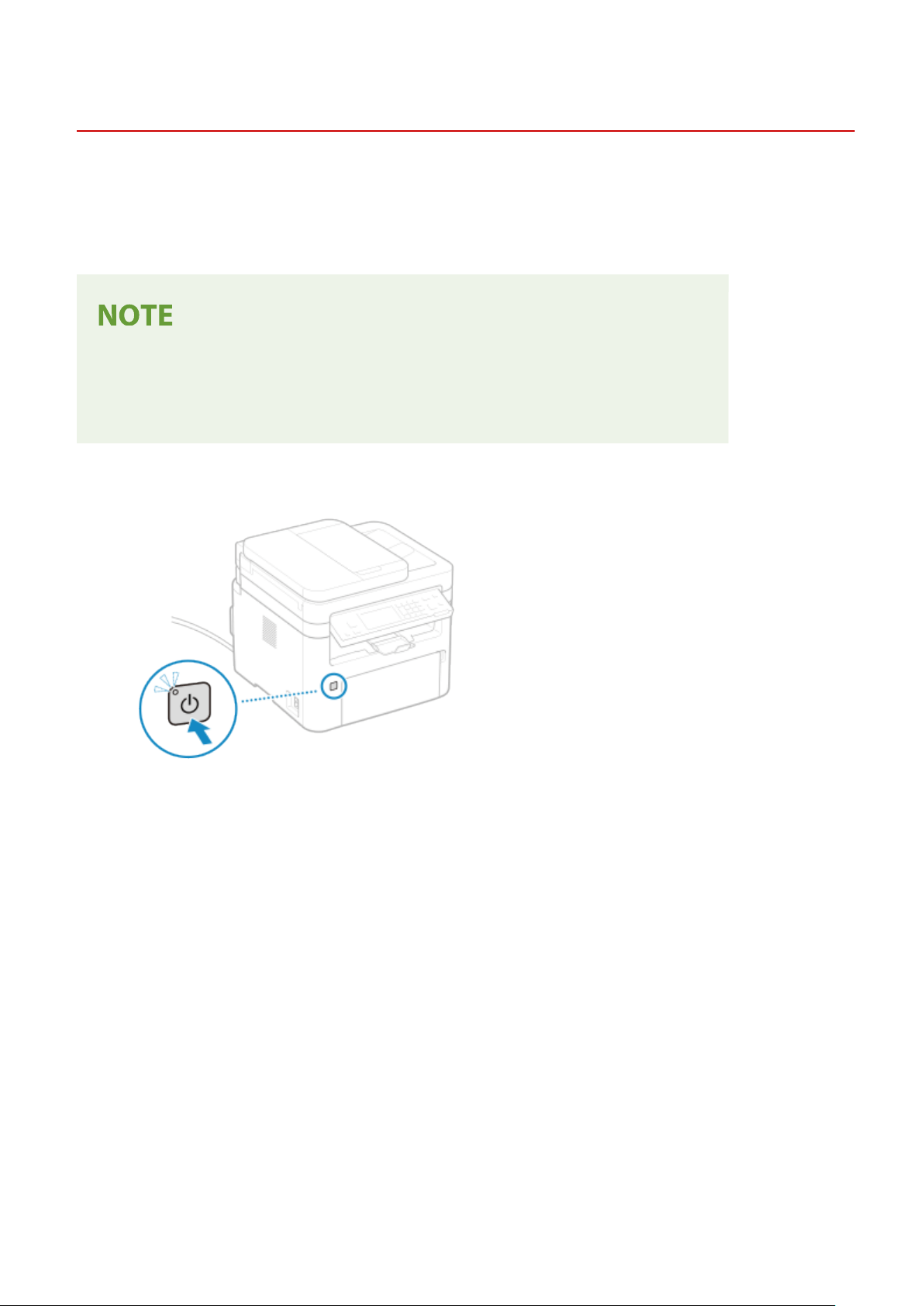
Restarting the Machine
8W0J-028
When you mak
e changes to the settings of the machine, you may have to restart the machine to apply the changes
depending on the setting.
When you change the settings using either the control panel or Remote UI, you can restart the machine using the
power switch.
Restarting the machine deletes any data waiting to be printed.
● The follo
wing data remains stored without being deleted even if the machine is restarted:
- Received data saved in the memory
- Data waiting to be sent
- Reports to be printed automatically after data is sent or received
1
Press the power switch.
➠ The display turns off, and the power turns OFF.
It may take a few minutes until the power turns OFF. Do not unplug the power cord until the power turns
OFF.
Make sure that the power indicator has gone out.
2
Wait at least 10 seconds after turning OFF the power before pressing the power
switch.
➠ The machine starts up.
Basic Operations
113

Reducing Power Consumption (Sleep Mode)
8W0J-029
Sleep mode r
educes power consumption by pausing certain operations inside the machine.
On the control panel, press
to enter sleep mode. Control Panel(P. 14)
When the machine is in sleep mode, lights yellow-green.
◼ Exiting Sleep Mode
Perform any of the following operations:
● Pr
ess any key on the control panel.
● Press the display.
● When a telephone is connected, take the handset off the hook.
◼ Conguring Auto Sleep Time
"
Auto Sleep" is a function which automatically places the machine into sleep mode after a certain period of idle time.
Auto Sleep Time species the duration the idle time.
This section describes how to congure the settings using Remote UI from a computer.
On the control panel, select [Menu] in the [Home] screen, and then select [Preferences] to congure the settings.
[Timer/Energy Settings](P. 434)
1
Log in to Remote UI.
Starting Remote UI(P. 399)
2
On the Portal page of Remote UI, click [Settings/Registration]. Portal Page of
Remote UI(P. 401)
3
Click [Timer Settings] [Edit].
➠ The [Edit Timer Settings] scr
een is displayed.
4
Enter the time in [Auto Sleep Time].
* It is recommended to use the default setting to eciently save po
wer.
[Auto Sleep Time](P. 436)
5
Click [OK].
➠ The settings ar
e applied.
6
Log out from Remote UI.
Basic Operations
114

Press if the machine will not be used for a long period of time, such as overnight
● Put the machine into sleep mode as a safety precaution.
● The machine does not enter sleep mode in the follo
wing cases:
- When the processing/data indicator on the control panel is lit or blinking
Control Panel(P. 14)
-
When the [Menu] screen, a paper jam or other error message
*1
, or Direct Connection SSID or network key
display screen is displayed on the control panel
- When the machine is performing an adjustment, cleaning, or other operation
- When the machine is communicating with another computer, such as for importing or exporting data
- When a phone is connected, the handset is off the hook.
- When the incoming fax ring is turned off
*1
The machine may enter sleep mode depending on the message.
Basic Operations
115

Using the Control Panel
8W0J-02A
Use the contr
ol panel to change the settings of the machine and use the scan, copy, and other functions.
Main Instructions
Check how to use the buttons and items displayed on the control panel, how to enter text, and how to display
the various screens.
Screens Displayed on the Control Panel(P. 117)
How to Operate the Control Panel (Touch Panel Model)(P. 127)
How to Operate the Control Panel (5 Lines LCD Model)(P. 129)
Entering Characters(P. 131)
Making the [Home] Scr
een Easier to Use
You can change the order of the buttons or insert a space.
Customizing the [Home] Screen(P. 135)
Regarding the Handling of the Touch Panel Display
● Do not pr
ess the touch panel display too hard. Doing so may break the touch panel display.
● Do not use an object with a sharp end, such as a mechanical pencil or ballpoint pen. Doing so may scratch
the surface of the touch panel display or break it.
● Placing objects on the display or wiping the display may cause the touch panel to react and lead to a
malfunction.
Basic Operations
116
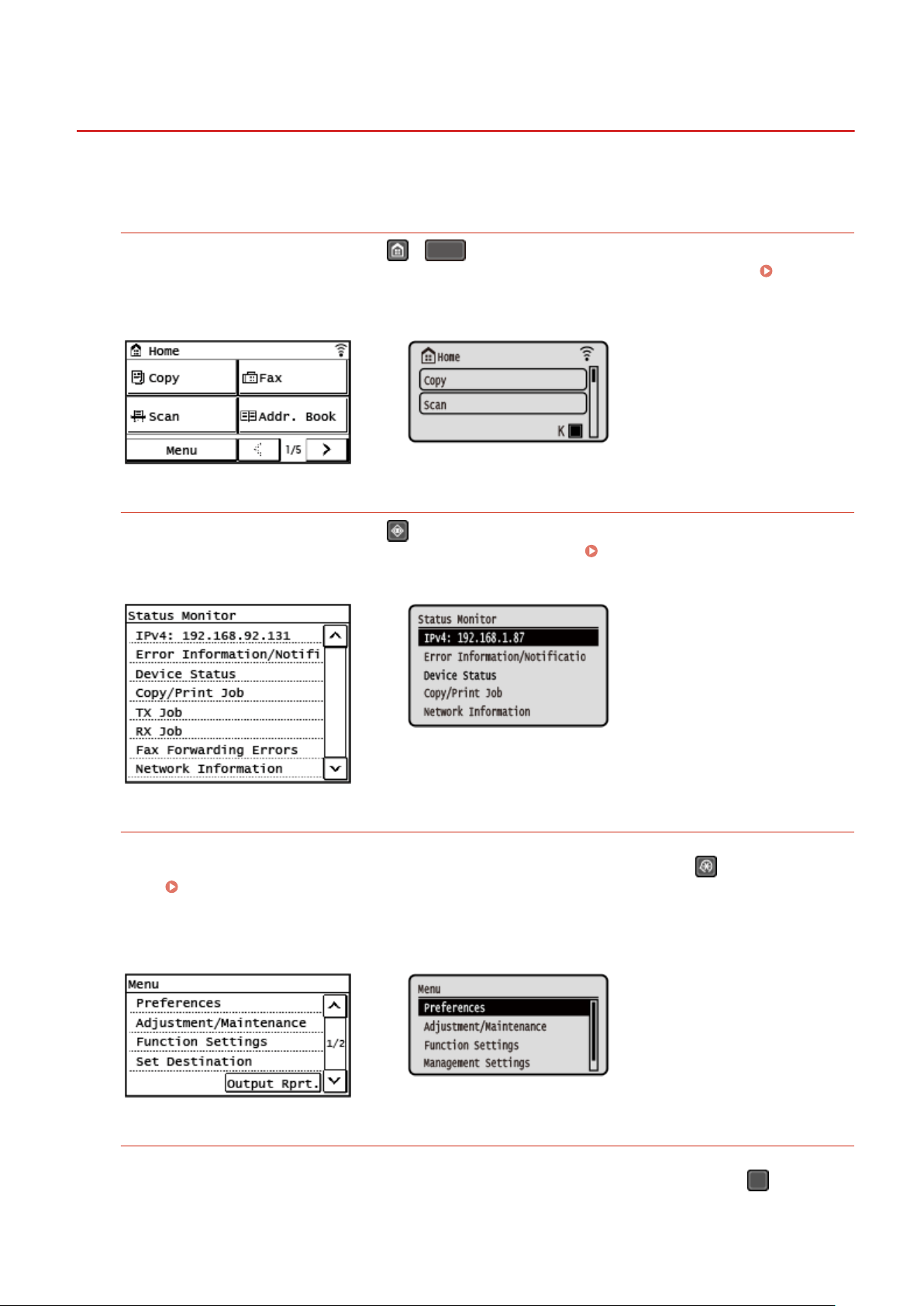
Screens Displayed on the Control Panel
8W0J-02C
The follo
wing are the main screens of the control panel.
[Home] Screen
This screen is displayed when you press / (Home key) on the control panel. By default, the [Home]
scr
een is displayed after the power is turned ON and immediately after the startup screen closes.
[Home]
Scr
een(P. 120)
Touch Panel Model
5 Lines LCD Model
[Status Monitor] Screen
This screen is displayed when you press on the control panel. Use this screen to check the information of
the machine, usage and logs, network settings, and err
or information.
[Status Monitor] Screen(P. 124)
Touch Panel Model
5 Lines LCD Model
[Menu] Screen
This screen is displayed when you press [Menu] on the [Home] screen. Use this screen to congur
e the various
settings of the machine. For the 5 Lines LCD Model, this screen is displayed by pressing
on the control
panel. Settings Menu Items(P. 427)
When the System Manager ID is set, the login scr
een may be displayed when certain items are selected. Only
users who know the System Manager ID and PIN can log in and change the settings.
Touch Panel Model
5 Lines LCD Model
[Paper Settings] Screen
This screen is displayed when you press [Paper Set.] on the [Home] screen. Use this screen to congur
e the
various settings of the machine. For the 5 Lines LCD Model, this screen is displayed by pressing
(Paper
Setting k
ey) on the control panel.
Basic Operations
117
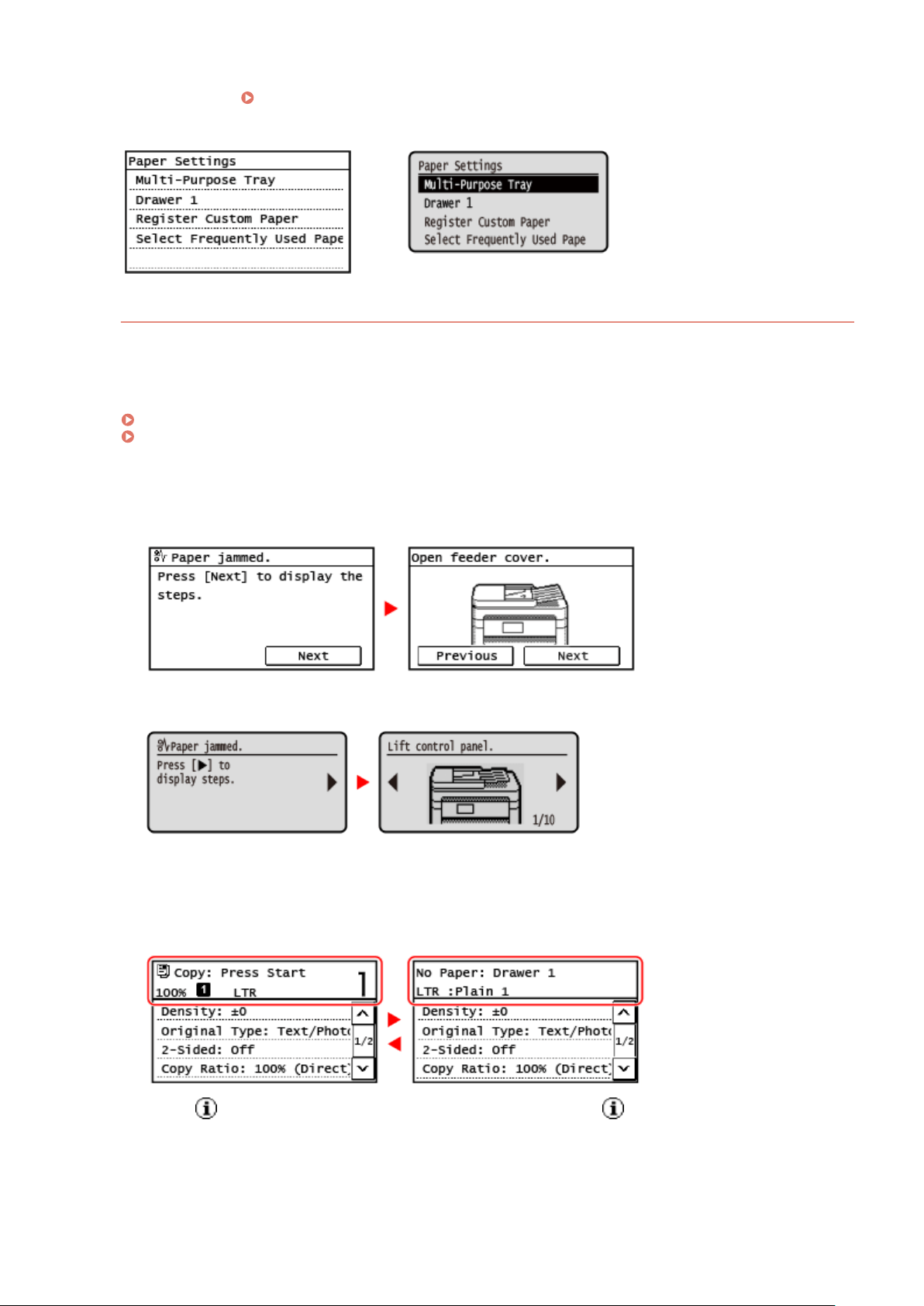
To ensure quality printing and prevent paper jams, the paper size and type must be set correctly according to
the loaded paper. Specifying the Paper Size and Type(P. 152)
Touch Panel Model
5 Lines LCD Model
Message Display
Messages are displayed on the screen when errors occur and the machine is out of paper or toner in the toner
cartridge.
If a tr
oubleshooting solution is displayed, follow the on-screen instructions to solve the problem.
If a troubleshooting solution is not displayed, check the cause and solution by referring to the message or error
code.
A Message Appears(P. 628)
An Error Code Is Displayed(P. 643)
Display example:
● When an Err
or Occurs
Touch Panel Model
5 Lines L
CD Model
● When a Message Appears at the Bottom of the Scr
een
If the message is too long to display at once, it may be separated into smaller segments and displayed
alternately.
Touch Panel Model
When [ ] is displayed on the top side of the screen, you can press [ ] to display and check the
notication.
5 Lines L
CD Model
Basic Operations
118
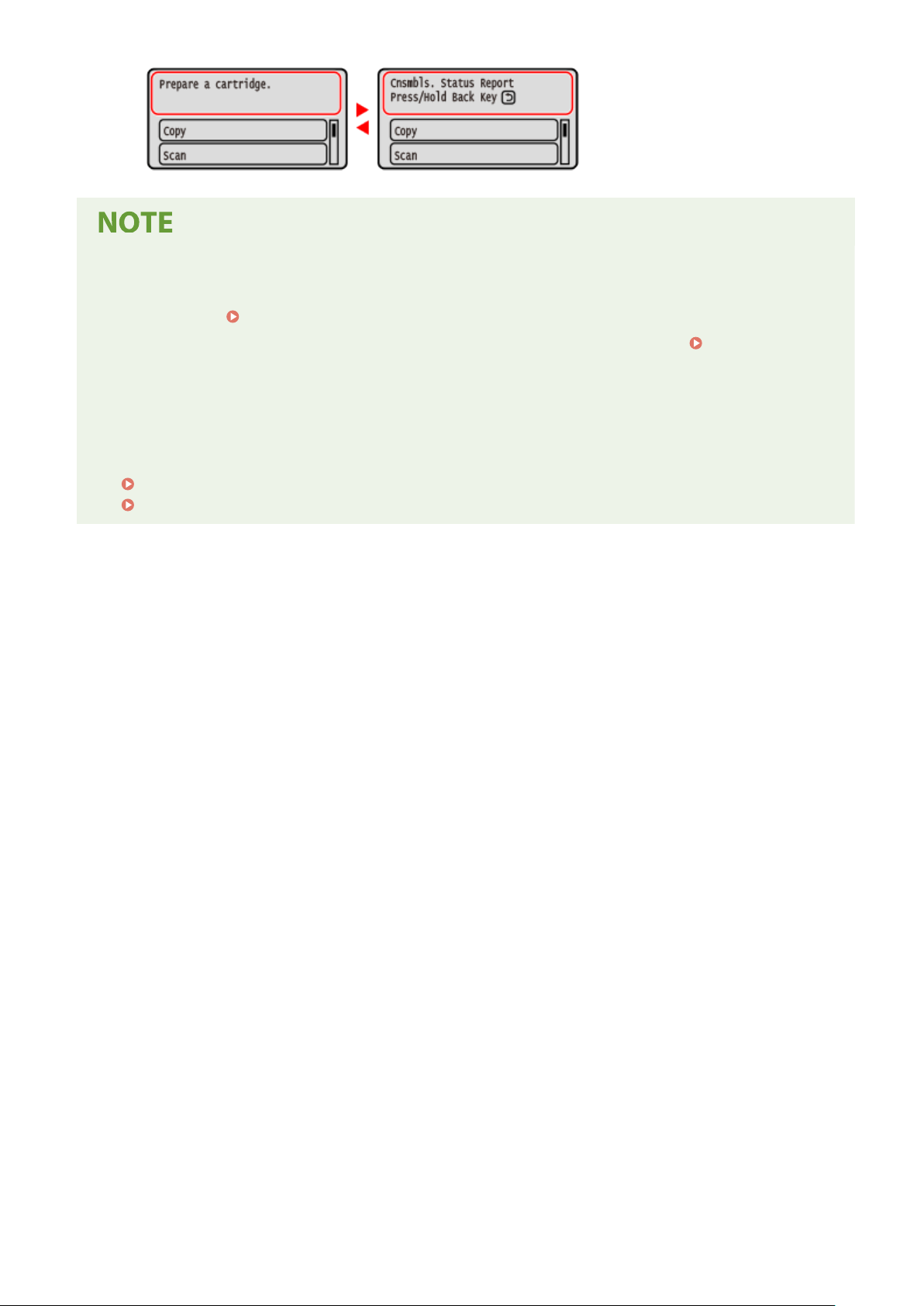
Changing the Screen Display
● Y
ou can change the control panel display such as by changing the display language and units, and show or
hide messages.
[Display Settings](P. 430)
● Y
ou can invert screen colors and adjust the contrast to make the screen easier to view.
[Accessibility]
(P
. 452)
Clearing the Settings Automatically
● By default, if no operations are performed after a certain period of time, the settings being congured on
the screen are cleared, and the [Home] screen is displayed. You can change the time until the settings are
cleared and the screen that is displayed after.
[Auto Reset Time](P. 435)
[Function After Auto Reset](P. 436)
Basic Operations
119
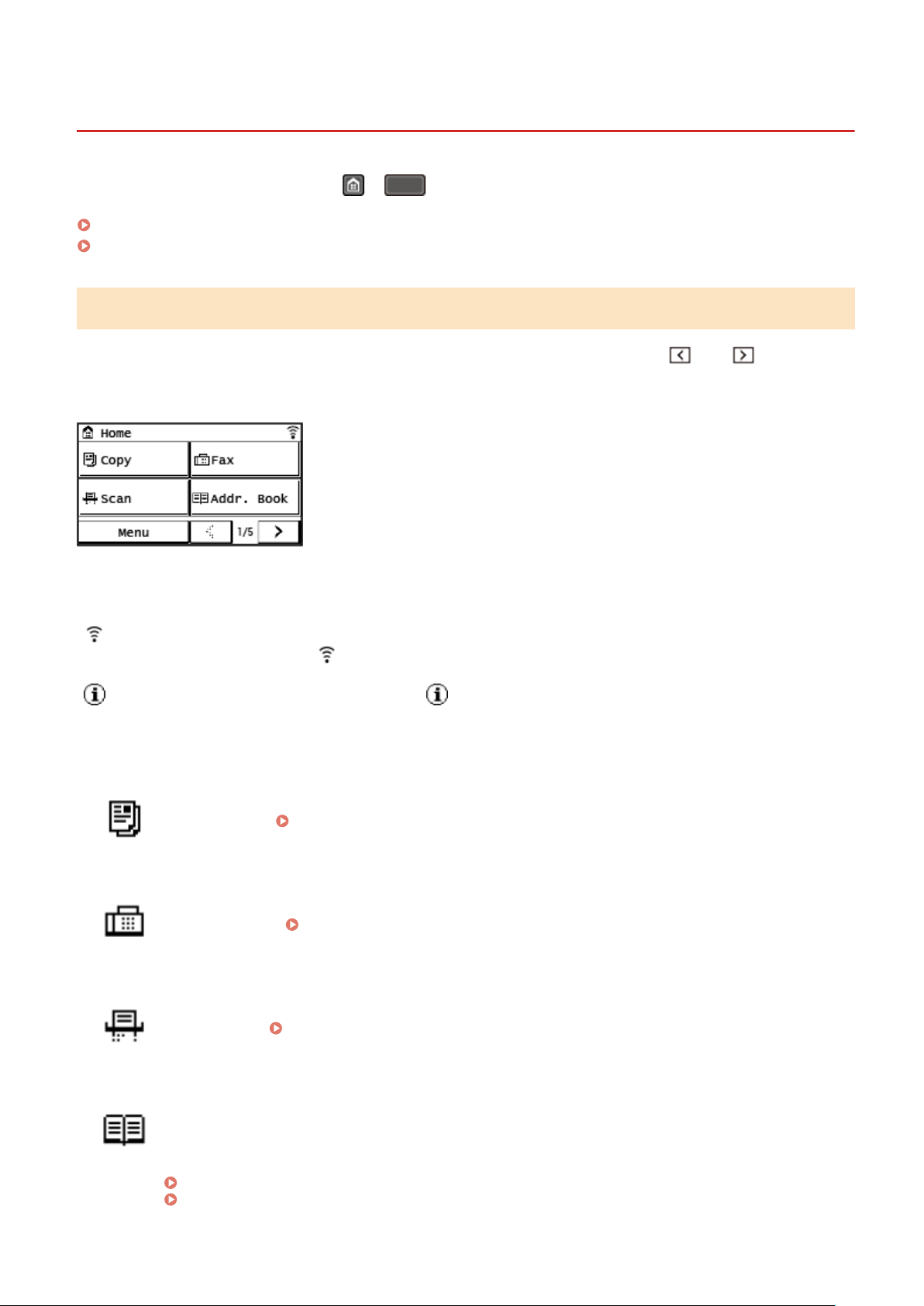
[Home] Screen
8W0J-02E
This scr
een is displayed when you press
/ (Home key) on the control panel.
Touch Panel Model(P. 120)
5 Lines LCD Model(P. 122)
Touch Panel Model
Buttons corresponding to the functions or settings are displayed on the screen. Pressing [ ] or [ ] changes the
displayed buttons of functions or settings. By pr
essing these buttons, you can start the corresponding functions or the
settings. You can also change the order of the buttons.
◼ Status of the Machine Information
[
]
When connected to a wir
eless LAN, [
] is displayed.
[ ] is displayed when there is a notication. Pr
ess [
] to check the notication.
◼ Function and Setting Buttons
[Copy]
Copies originals. Copying(P. 296)
[Fax]
Fax
es documents.
Faxing(P. 266)
[Scan]
Scans originals. Scanning(P. 226)
[Addr. Book]
Register destinations when sending and saving scanned data and fax
es. You can specify destinations
from the Address Book, and call up the send function.
Registering Destinations (Address Book)(P. 168)
Specifying Destinations (Address Book)(P. 183)
Basic Operations
120
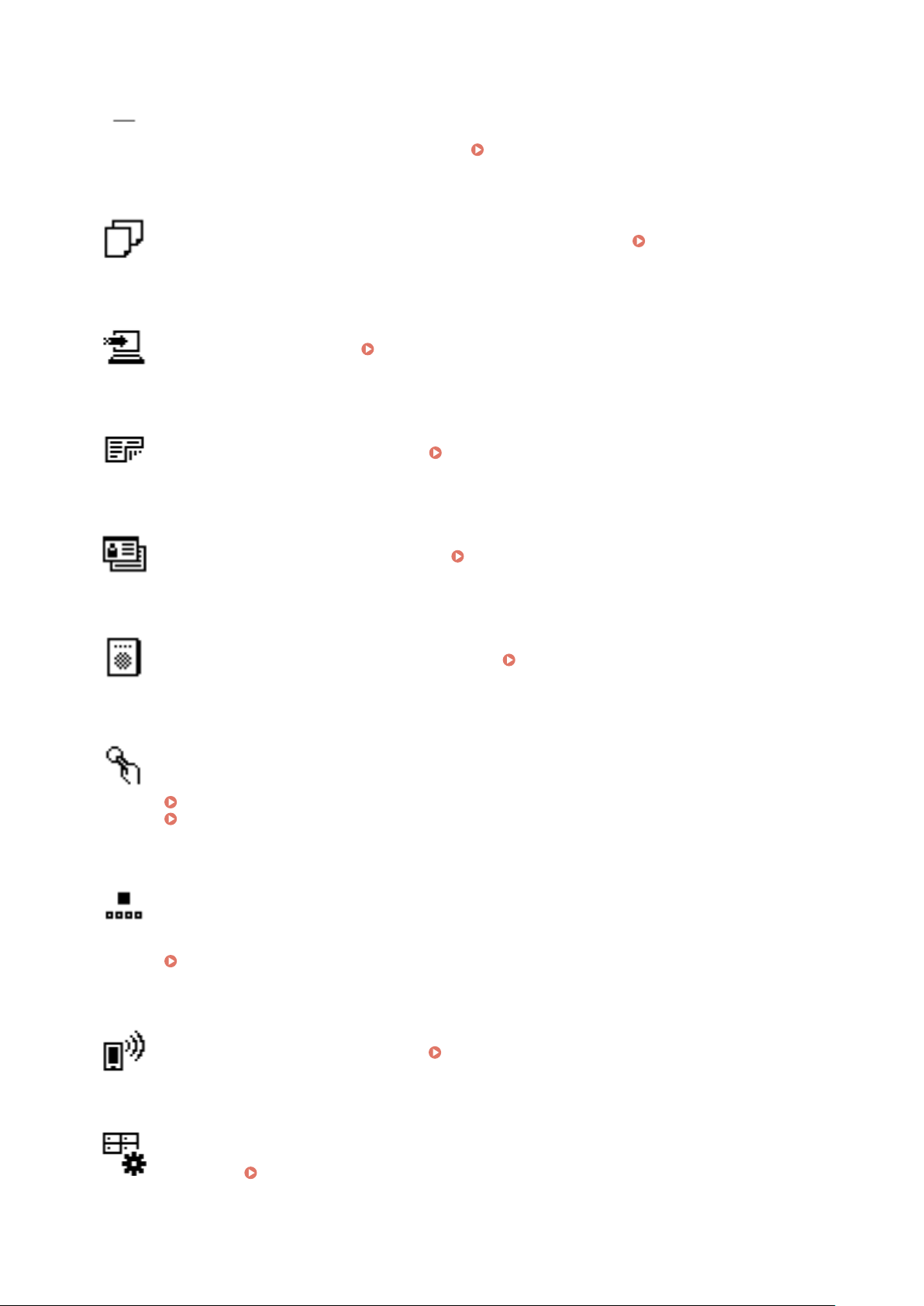
[Menu]
Congur
e the various settings of the machine.
Settings Menu Items(P. 427)
[Paper Set.]
Set the paper size and type to use, and r
egister frequently used paper.
Specifying the Paper Size and
T
ype(P. 152)
[Scan -> PC1] / [Scan -> PC2]
Use a r
egistered scan setting.
Scanning Using the Shortcut Key (Saving to a Computer)(P. 251)
[Paper Save]
Use the cop
y setting which saves paper.
Paper Save Copy(P. 311)
[ID Card Copy]
Copies the fr
ont and back sides of ID cards.
Copying Both Sides of ID Cards onto One Sheet(P. 315)
[Passport Copy]
Copies multiple passports onto one sheet of paper. Copying Multiple Passports onto One
Sheet(P
. 319)
[One-Touch 1] to [One-Touch 4]
Register a fax or e-mail destination.
Registering Destinations (Address Book)(P. 168)
Specifying Destinations (Address Book)(P. 183)
[Coded Dial]
Coded Dial numbers ar
e three-digit numbers which are assigned to an address when the address is
registered in the Address Book. Use the Coded Dial number to perform a corresponding send function.
Registering Destinations (Address Book)(P. 168)
[Mobile Portal]
Connect mobile de
vices to the machine.
Connecting a Mobile Device to the Machine(P. 336)
[Home Set.]
Allo
ws you to change the order of the displayed buttons on the [Home] screen or insert a space instead
of a button.
Customizing the [Home] Screen(P. 135)
Basic Operations
121
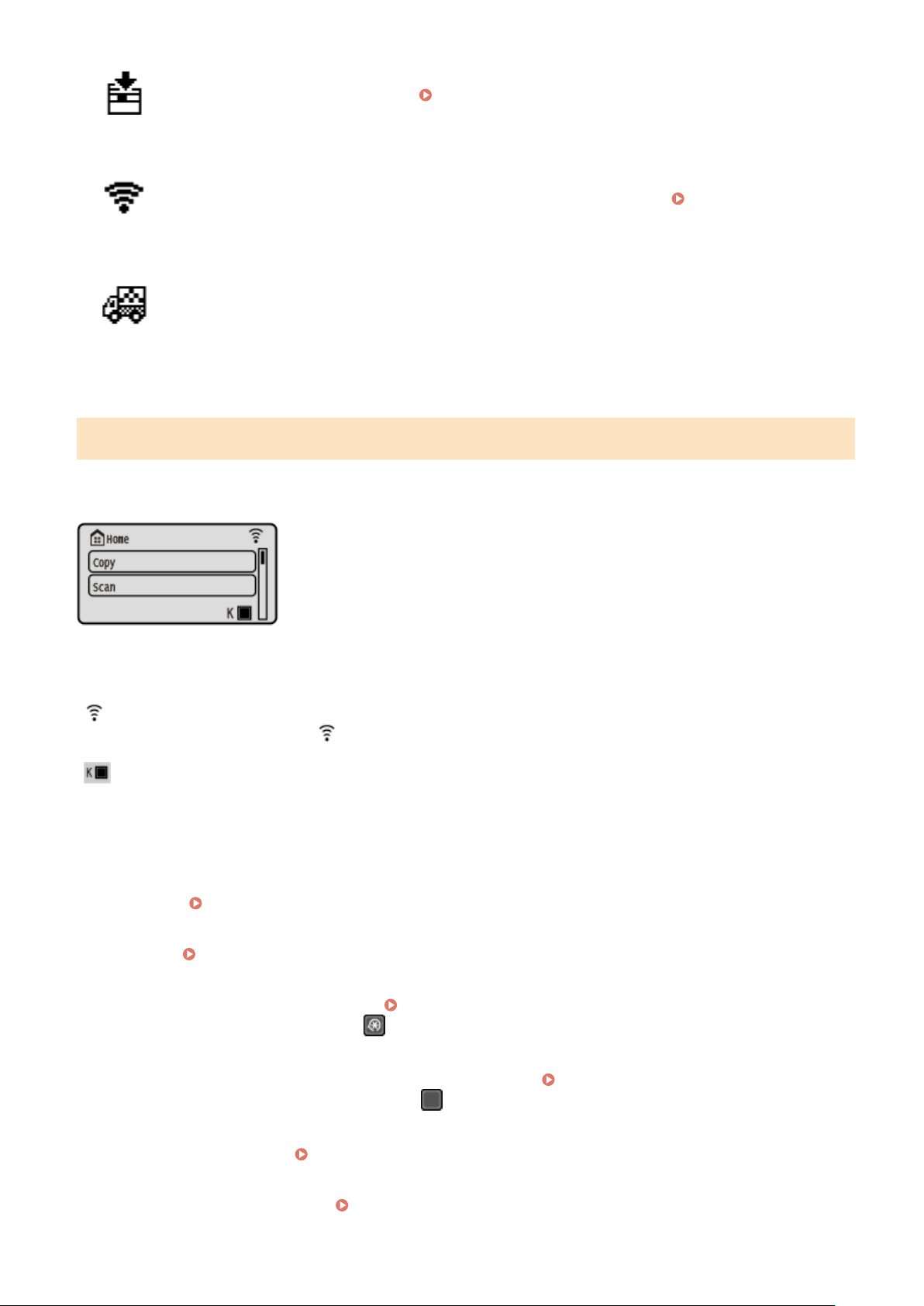
[Update Firmware]
Updates the rmwar
e via the Internet.
Updating the Firmware (Touch Panel Model)(P. 416)
[Wireless LAN Set.]
Connects a computer to the machine via a wir
eless LAN router (access point).
Connecting to a
Wir
eless LAN by Searching for a Router (Access Point Setup Method)(P. 69)
[Toner Deliv. Set.]
Y
ou can congure settings for toner replenishment service. Use of the toner replenishment service
requires prior registration with select retailers. This service is only available in certain countries.
5 Lines LCD Model
The status of the machine is displayed at the top and bottom of the screen for quick viewing and operations, as
needed.
◼ Status of the Machine
[
]
When connected to a wir
eless LAN, [
] is displayed.
[ ]
Displays the r
emaining amount of toner in the toner cartridge.
◼ Function and Setting Buttons
[Copy]
Copies originals.
Copying(P. 296)
[Scan]
Scans originals. Scanning(P. 226)
[Menu]
Congur
e the various settings of the machine.
Settings Menu Items(P. 427)
The [Menu] scr
een is displayed by pressing
on the control panel.
[Paper Settings]
Set the paper size and type to use, and r
egister frequently used paper.
Specifying the Paper Size and Type(P. 152)
The [Paper Settings] scr
een is displayed by pressing
(Paper Setting key) on the control panel.
[Scan -> PC]
Use the r
egistered scan settings.
Scanning Using the Shortcut Key (Saving to a Computer)(P. 251)
[Paper Save Cop
y]
Use the copy setting which save paper.
Paper Save Copy(P. 311)
Basic Operations
122

[Passport Copy]
Copies multiple passports onto one sheet of paper. Copying Multiple Passports onto One Sheet(P. 319)
[Mobile Portal]
Connect mobile de
vices to the machine.
Connecting a Mobile Device to the Machine(P. 336)
[Display Or
der (Home)]
You can change the display order of the items on the [Home] screen.
Customizing the [Home] Screen(P. 135)
[Update Firmwar
e]
Updates the rmware via the Internet.
Updating the Firmware (5 Lines LCD Model)(P. 419)
[Wir
eless LAN Set.]
Connects a computer to the machine via a wireless LAN router (access point).
Connecting to a Wireless LAN by
Sear
ching for a Router (Access Point Setup Method)(P. 69)
[Toner Delivery Set.]
You can congure settings for toner replenishment service. Use of the toner replenishment service requires prior
registration with select retailers. This service is only available in certain countries.
Basic Operations
123
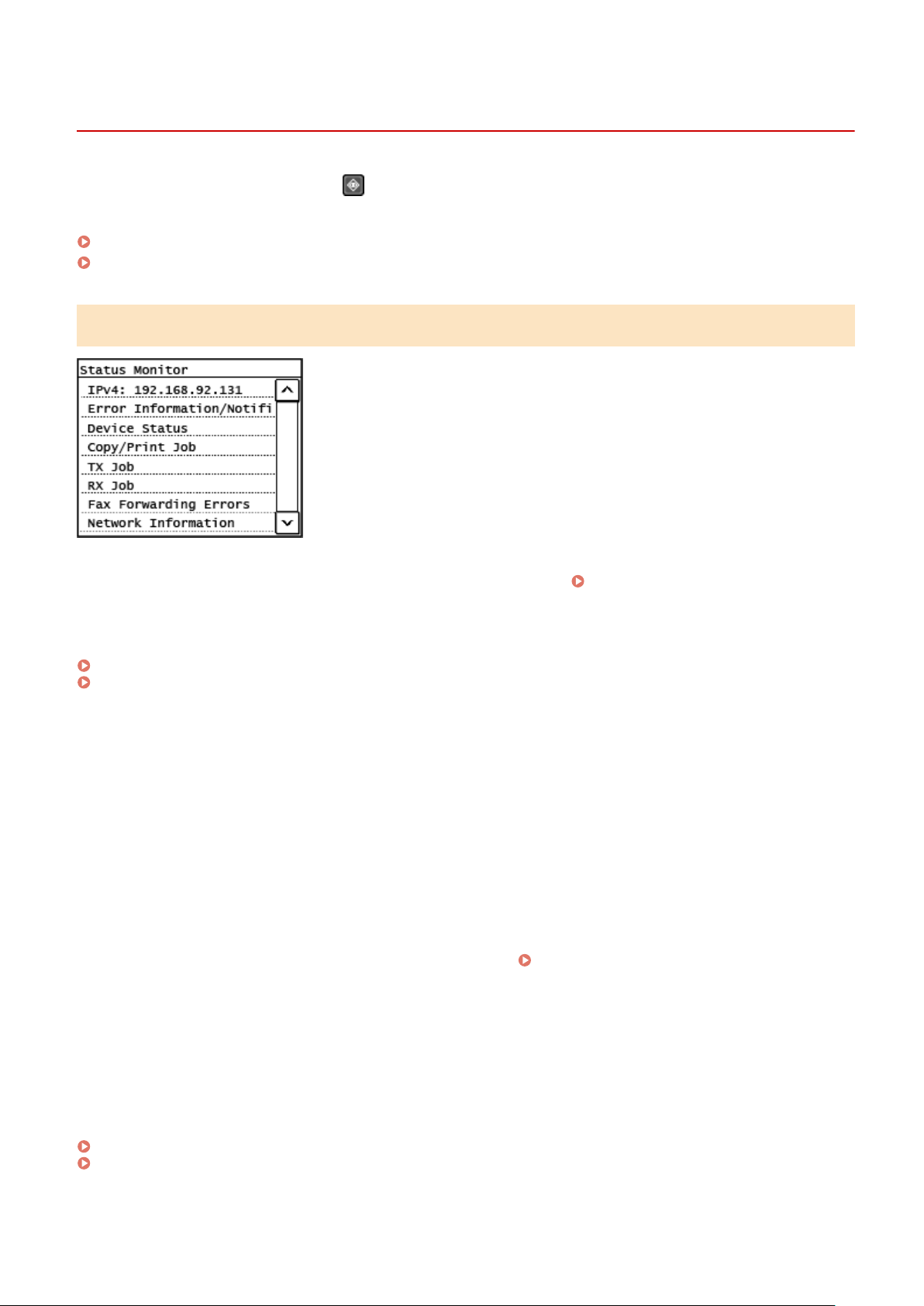
[Status Monitor] Screen
8W0J-02F
This scr
een is displayed when you press
on the control panel.
Use this scr
een to check the information of the machine, usage and logs, network settings, and error information.
Touch Panel Model(P. 124)
5 Lines LCD Model(P. 125)
Touch Panel Model
[IPv4]
Displays the IPv4 addr
ess of the machine by default. You can also hide this.
[Display IP Address](P. 433)
[Err
or Information/Notication]
You can check the information of errors that occur on the machine. Take troubleshooting measures according to the
error details.
A Message Appears(P. 628)
An Error Code Is Displayed(P. 643)
[De
vice Status]
[Paper Information]
Check the remaining amount of paper for each paper source.
[Cartridge Level]
You can check the remaining amount in the toner cartridge or the drum cartridge.
Other internal parts may reach the end of their lifetime before the toner runs out.
[Check Toner Cartridge Name]
You can check the product number of the toner cartridge or the drum cartridge.
[Check Counter]
Check the total number of pages printed, faxed, and copied.
Checking the Number of Printed Pages (Check
Counter)(P
. 406)
[Version Information]
Displays the rmware version information of the machine.
[Serial Number]
Displays the serial number of the machine.
[Copy/Print Job]
Displays the copy or print processing status and log.
Checking the Copy Status(P. 325)
Viewing the Print Job Status and Log(P. 223)
[TX Job]
Basic Operations
124
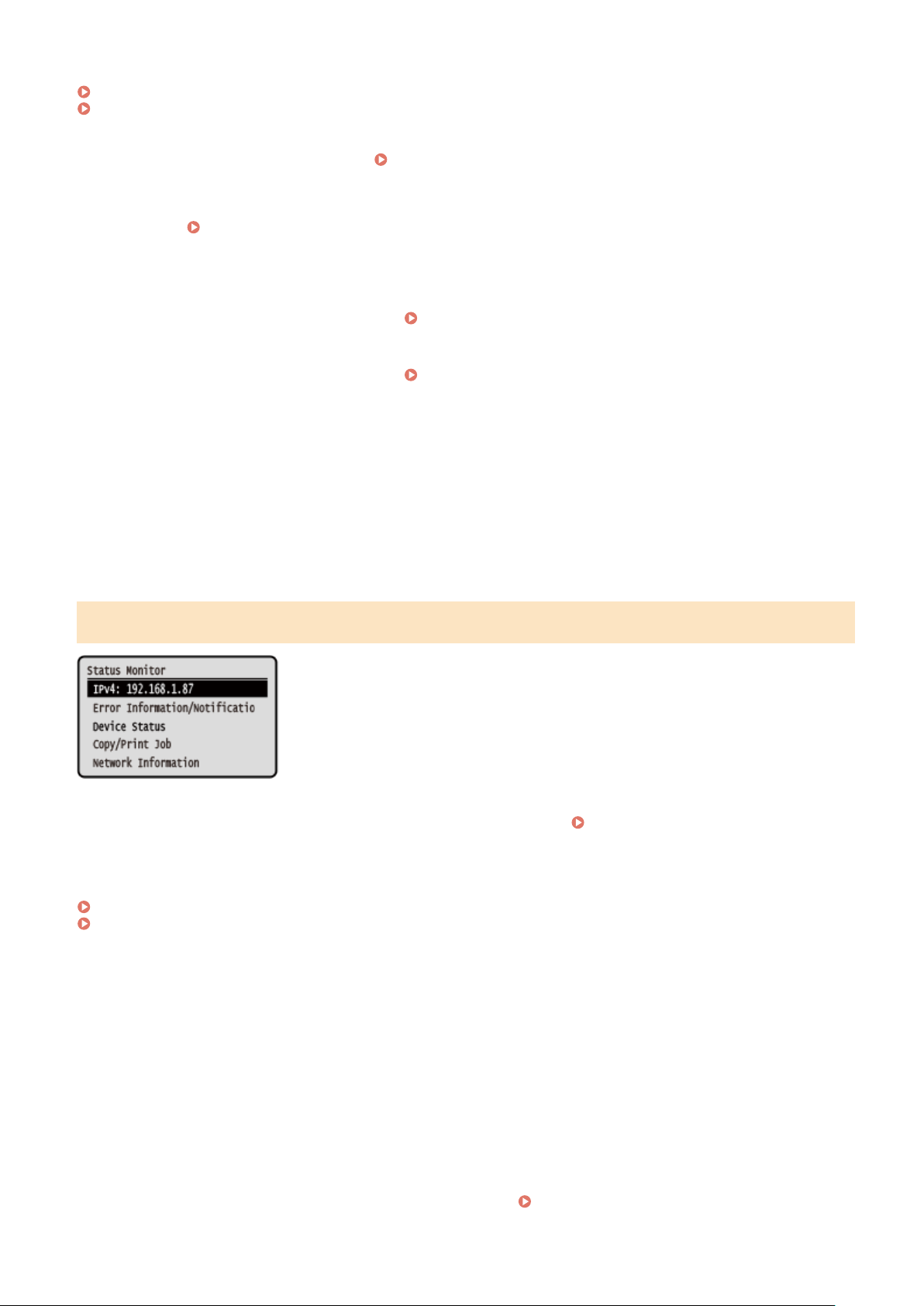
Displays the status and log of sent and saved scanned data and faxes.
Checking the Send and Save Status and Log of Scanned Data (Touch Panel Model)(P. 263)
Checking Sent and Received Faxes(P. 293)
[RX Job]
Displays the status and log of r
eceived faxes.
Checking Sent and Received Faxes(P. 293)
[Fax Forwar
ding Errors]
If a fax could not be forwarded but remains in the memory, you can print it or forward it to a different destination, and
view its content.
Checking Faxes that Failed to Be Forwarded(P. 294)
[Network Information]
[IPv4]
Check the IPv4 addr
ess and other settings.
Setting IPv4 Addresses(P. 77)
[IPv6]
Check the IPv6 addr
ess and other settings.
Setting IPv6 Addresses(P. 81)
[Network Connection Method]
Check whether the machine has a wir
ed or wireless connection.
Displays the connection status and error information when connected by wireless LAN.
[Direct Connection Information]
Displays the connection status when directly connected to a device.
[IEEE 802.1X Error Information]
Displays the details of errors that occur with IEEE 802.1X authentication.
5 Lines LCD Model
[IPv4]
Displays the IPv4 addr
ess of the machine by default. You can also hide this.
[Display IP Address](P. 433)
[Err
or Information/Notication]
You can check the information of errors that occur on the machine. Take troubleshooting measures according to the
error details.
A Message Appears(P. 628)
An Error Code Is Displayed(P. 643)
[De
vice Status]
[Paper Information]
Check the remaining amount of paper for each paper source.
[Cartridge Level]
You can check the remaining amount in the toner cartridge or the drum cartridge.
Other internal parts may reach the end of their lifetime before the toner runs out.
[Check Toner Cartridge Name]
You can check the product number of the toner cartridge or the drum cartridge.
[Check Counter]
Check the total number of pages printed, faxed, and copied.
Checking the Number of Printed Pages (Check
Counter)(P
. 406)
Basic Operations
125

[Version Information]
Displays the rmwar
e version information of the machine.
[Serial Number]
Displays the serial number of the machine.
[Copy/Print Job]
Displays the copy or print processing status and log.
Checking the Copy Status(P. 325)
Viewing the Print Job Status and Log(P. 223)
[Network Information]
[IPv4]
Check the IPv4 addr
ess and other settings.
Setting IPv4 Addresses(P. 77)
[IPv6]
Check the IPv6 addr
ess and other settings.
Setting IPv6 Addresses(P. 81)
[Network Connection Method]
Check whether the machine has a wir
ed or wireless connection.
Displays the connection status and error information when connected by wireless LAN.
[Direct Connection Information]
Displays the connection status when directly connected to a device.
[IEEE 802.1X Error Information]
Displays the details of errors that occur with IEEE 802.1X authentication.
Basic Operations
126
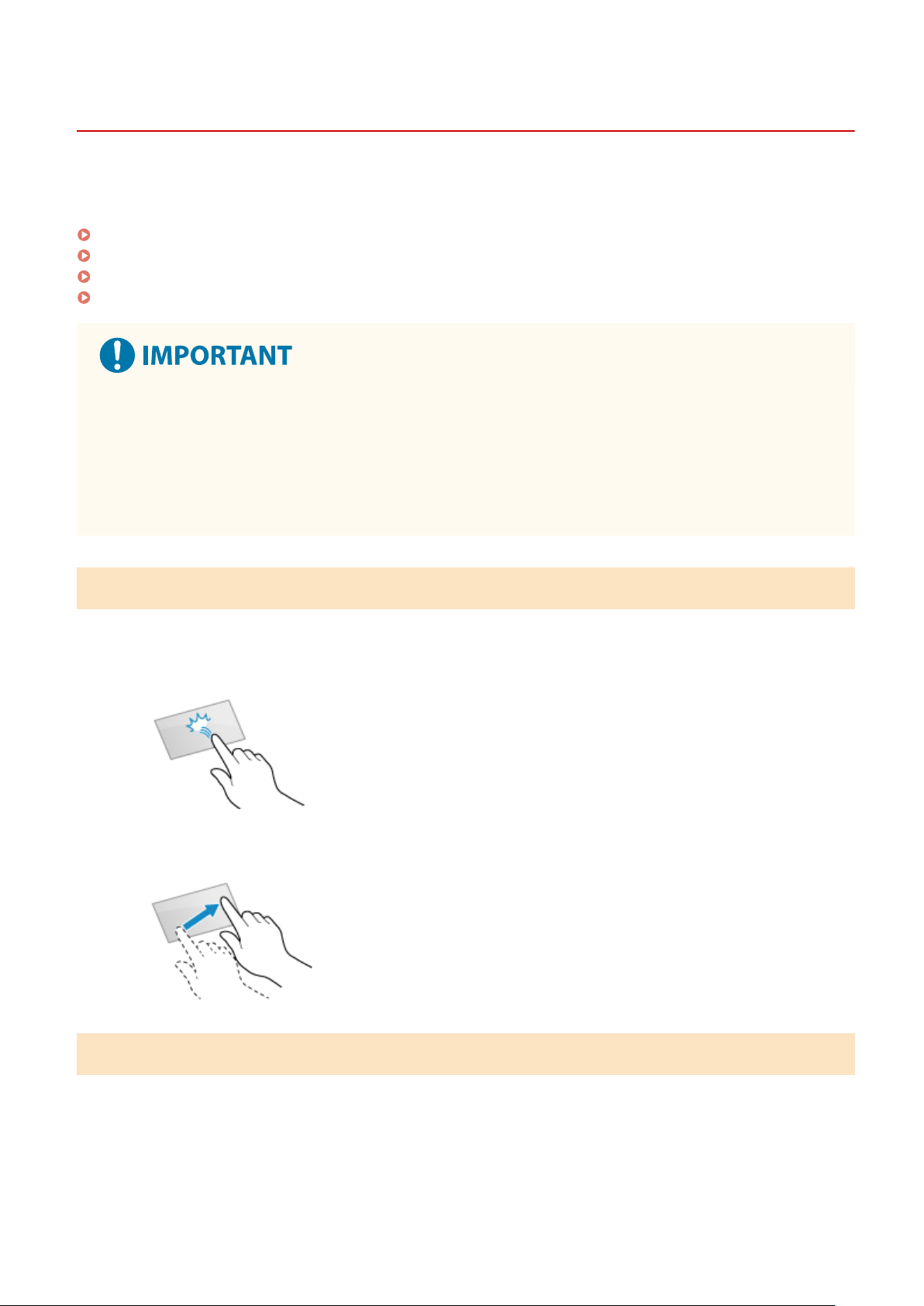
How to Operate the Control Panel (Touch Panel Model)
8W0J-02H
The contr
ol panel uses a touchscreen. Directly touch your nger to the buttons and items displayed on the screen to
operate them.
Basic Touchscreen Operations (Tapping and Dragging)(P. 127)
Selecting Items(P. 127)
Scrolling the Screen(P. 128)
Set the value(P. 128)
To prevent accidental operations or damage to the control panel, avoid the following:
● Pr
essing too hard with your ngers
● Pressing with a sharp tip, such as a ngernail, ballpoint pen, or pencil
● Operating with wet or dirty hands
● Operating with an object on the display
Basic Touchscreen Operations (Tapping and Dragging)
T
apping
Gently touch the screen with your ngertip and quickly release. Do this when selecting items and performing
operations.
In the User's Guide, "press" and "select" refer to the tapping operation.
Dragging
Mo
ve your ngertip while touching the screen, and release it at the desired position. You can scroll lists and
move the area you are touching to a desired position.
Selecting Items
When you tap an item name or button, the item can be selected. The selected scr
een is displayed, or the selected
function is performed.
Basic Operations
127
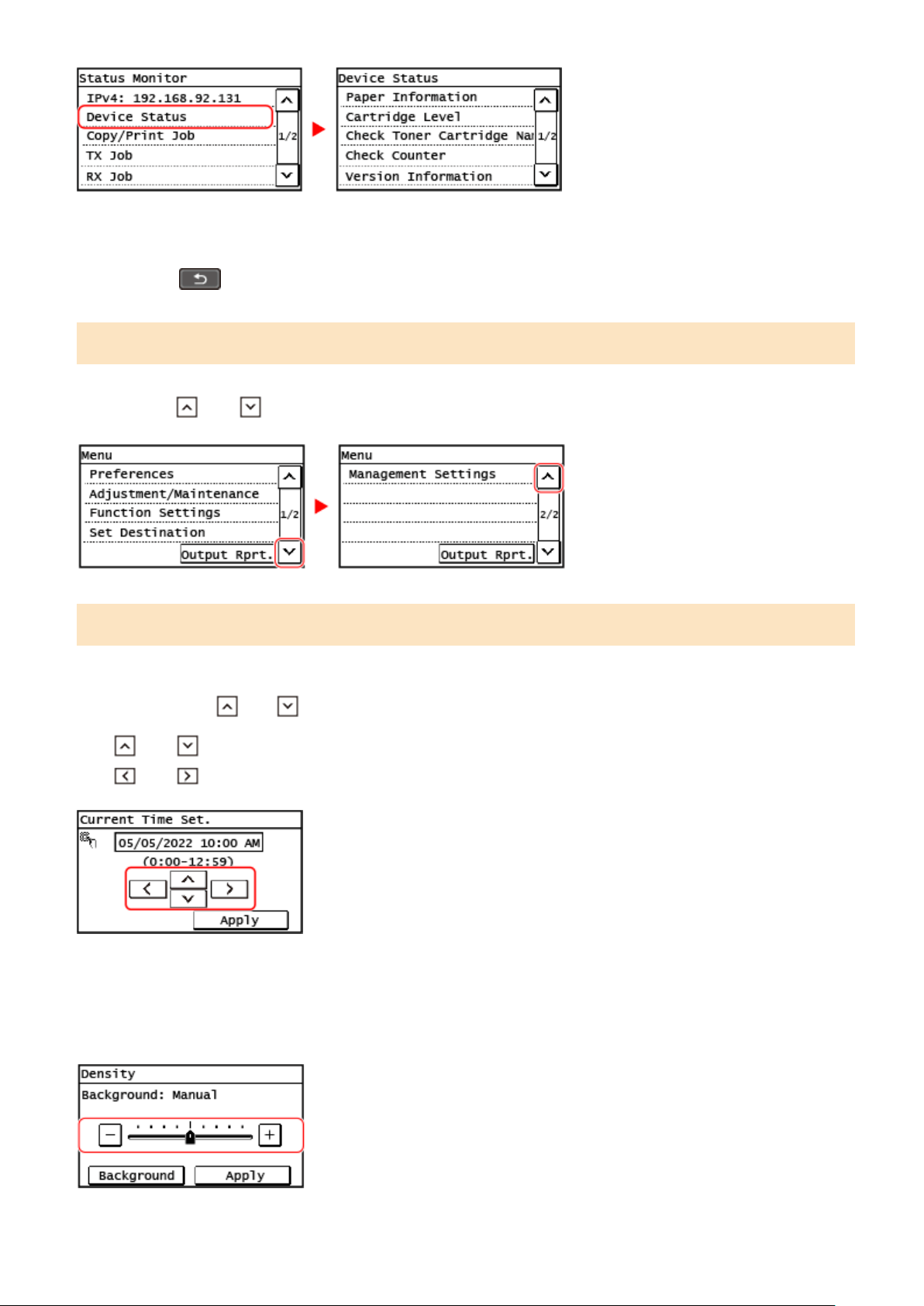
To Cancel a Selection
Dr
ag your ngertip touching the screen away from the selected item or button and release it.
To Return to the Previous Screen
Press
on the control panel.
Scrolling the Screen
When a scroll bar is displayed, this means that there are some items or information which are not displayed on the
screen. Press [ ] or [ ] to scroll the screen toward the pressed direction.
Set the value
◼ Set the value [ ] / [ ] buttons
T
ap [
] or [ ] to specify a value. You can specify the value directly by using the numeric keys.
T
ap [
] or [ ] to move a cursor.
◼ Set the value using the [+] and [-] buttons or the slider
T
ap the [+] and [-] buttons to adjust the value. When the slider is displayed as shown below, you can drag it to the left
or right to adjust the value.
Basic Operations
128
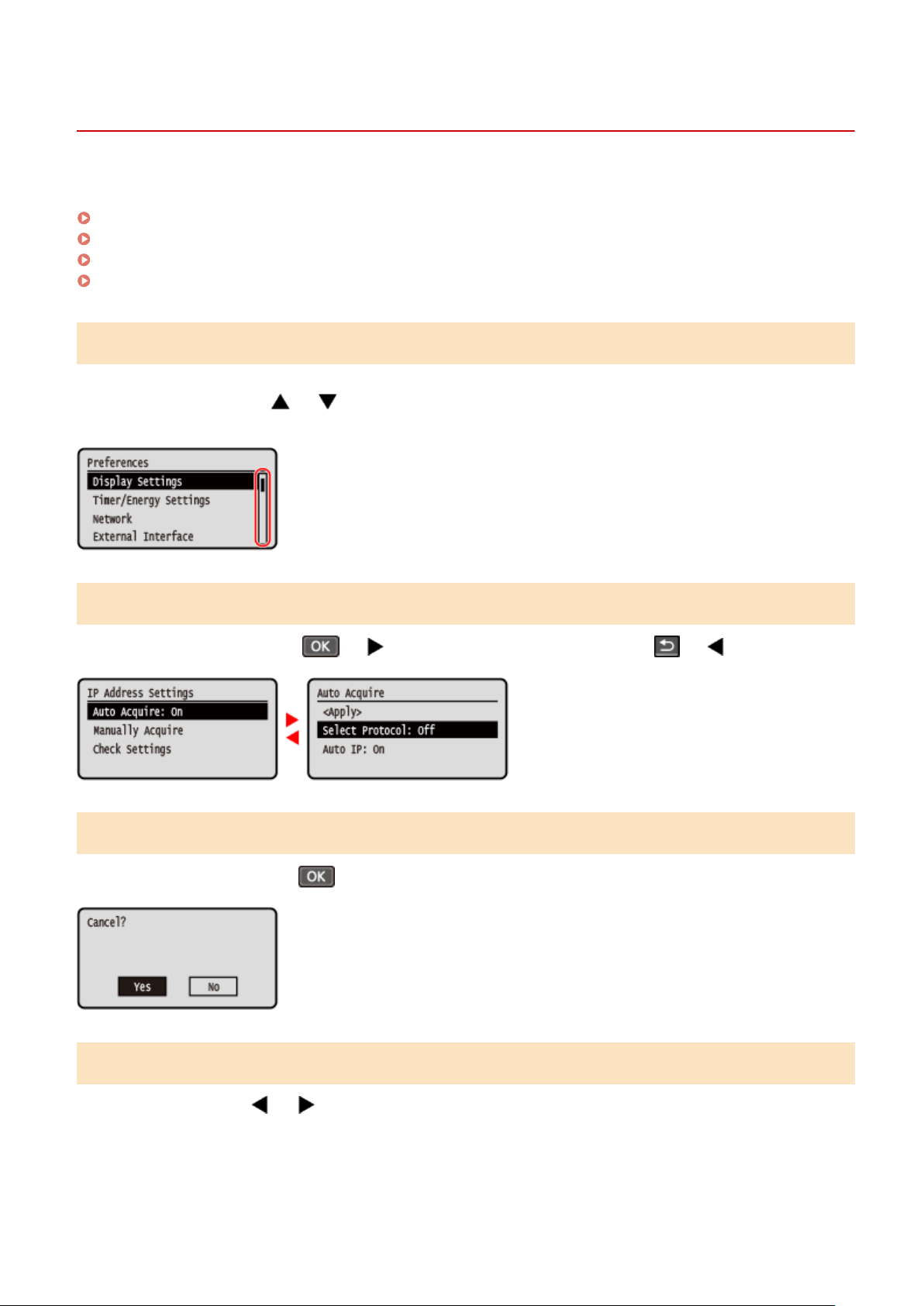
How to Operate the Control Panel (5 Lines LCD Model)
8W0J-02J
Use the k
eys on the control panel to set the various functions and check the settings.
Scrolling the Screen(P. 129)
Moving to the Next or Previous Screen(P. 129)
Conrming a Selected Item
(P. 129)
Using the Slider to Set Values(P. 129)
Scrolling the Screen
When the scroll bar appears on the screen, it indicates that there are items or information that cannot be completely
displayed on the screen. Use or to scroll the screen in the direction pressed. The currently selected item is
inverted.
Moving to the Next or Previous Screen
To move to the next screen, press or . To return to the previous screen, press or .
Conrming a Selected Item
To conrm a selected item, press .
Using the Slider to Set Values
T
o adjust the value, press
or .
Basic Operations
129

Basic Operations
130
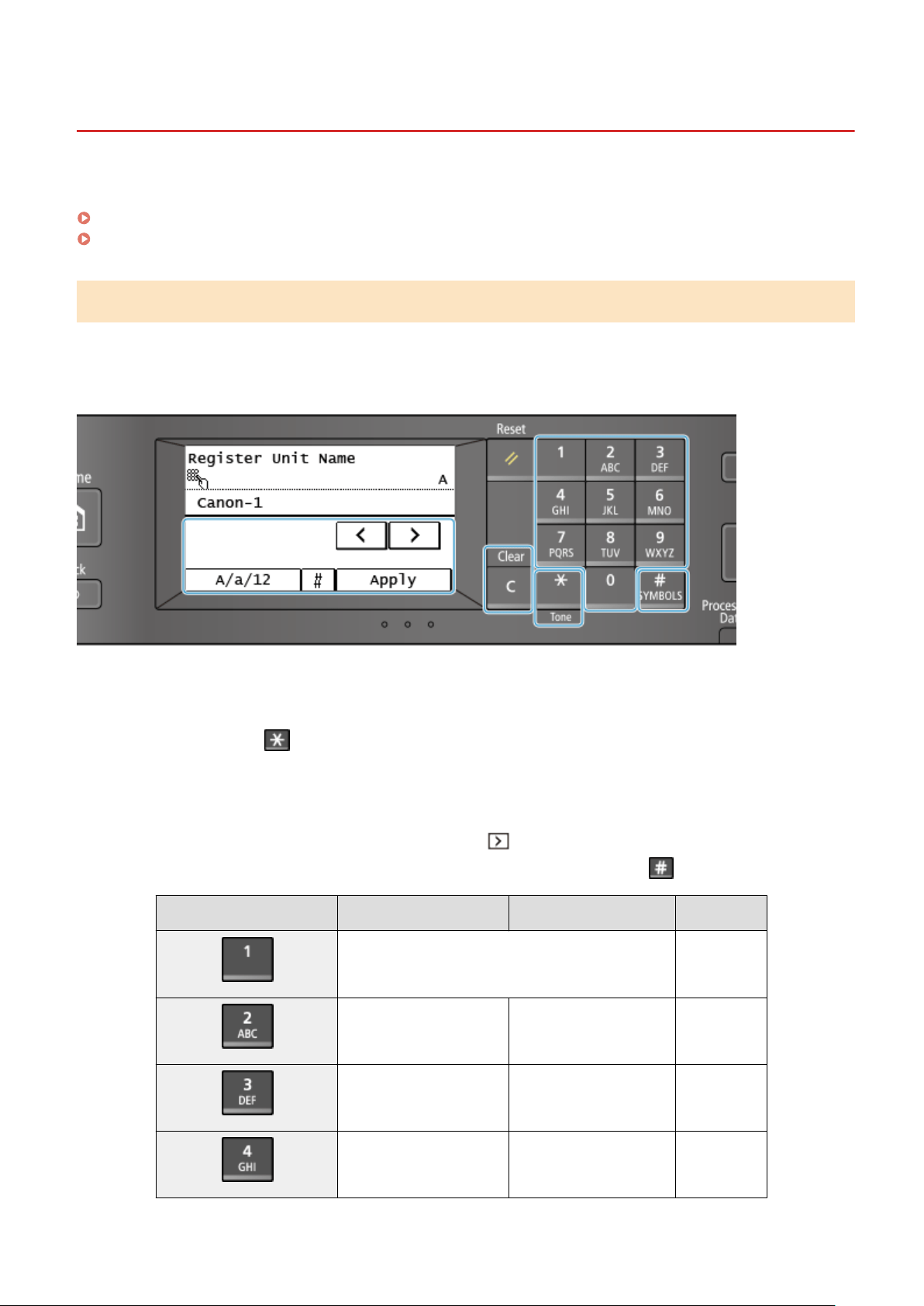
Entering Characters
8W0J-02K
Enter alphanumeric char
acters using the numeric keys on the control panel.
Entering Characters Using the Control Panel (Touch Panel Model)(P. 131)
Entering Characters Using the Control Panel (5 Lines LCD Model)(P. 132)
Entering Characters Using the Control Panel (Touch Panel Model)
You can enter letters, numbers, and symbols using the control panel.
The type of characters that you can enter may be limited depending on the item.
If the value input range is limited, the value that you can enter is displayed in parentheses ( ) next to the input eld.
Changing the Character Type
Pr
ess [A/a/12] to switch the type of character that is entered. The currently selected type of character is
indicated by the "A", "a", or "12" displayed above and to the right of the text input eld.
You can also press
to switch the type of character.
Y
ou cannot change the character type for items whose character type is limited.
Entering Characters and Spaces
You can enter characters and symbols by using the numeric keys and by pressing keys displayed on the
control panel. The keys to enter characters and the characters you can enter are the following.
When you place a cursor after a character and press
, a space is entered.
When the entry mode is set to [a] or [A], a symbol can be enter
ed by pressing
or pressing [#].
Key A a 12
@ . - _ / 1
ABC abc 2
DEF def 3
GHI ghi 4
Basic Operations
131
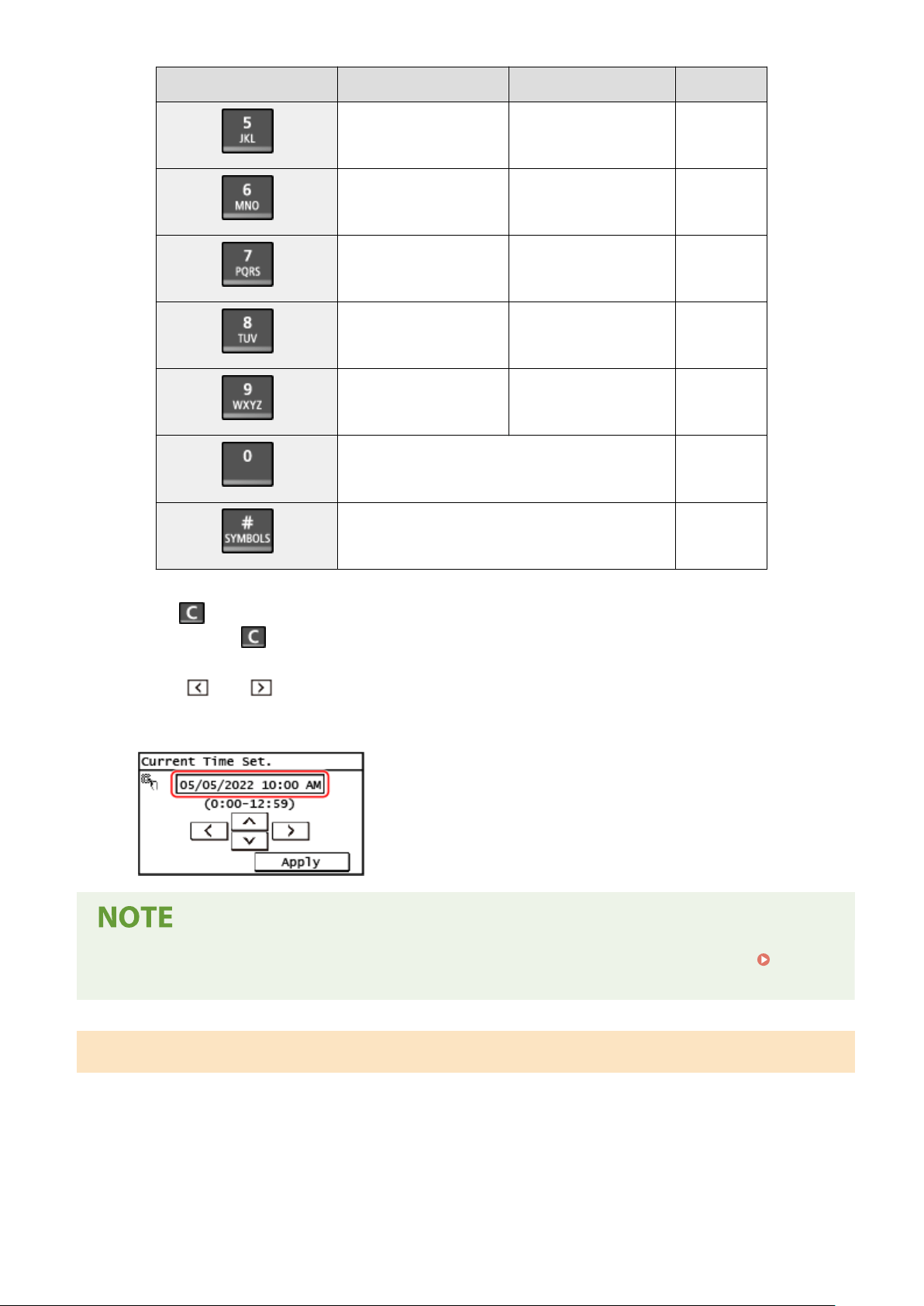
Key A a 12
JKL jkl 5
MNO mno 6
PQRS pqrs 7
TUV tuv 8
WXYZ wxyz 9
(Not available) 0
(space) - . * # ! " , ; : ^ ` _ = / | ' ? $ @ % & + \ ~ ( ) [ ] { } < > (Not available)
Deleting Characters
Pr
ess
to delete one character.
Pr
ess and hold
to continuously delete characters.
Mo
ving the Cursor
Press [
] or [ ].
Entering Numbers
Entering Numbers Using the Numeric Ke
ys.
● When [+] and [-] or a slider appears instead of numeric k
eys, press or drag these to set the value.
Set the
value(P
. 128)
Entering Characters Using the Control Panel (5 Lines LCD Model)
Y
ou can enter letters, numbers, and symbols using the control panel.
The type of characters that you can enter may be limited depending on the item.
If the value input range is limited, the value that you can enter is displayed in parentheses ( ) on the screen.
Basic Operations
132
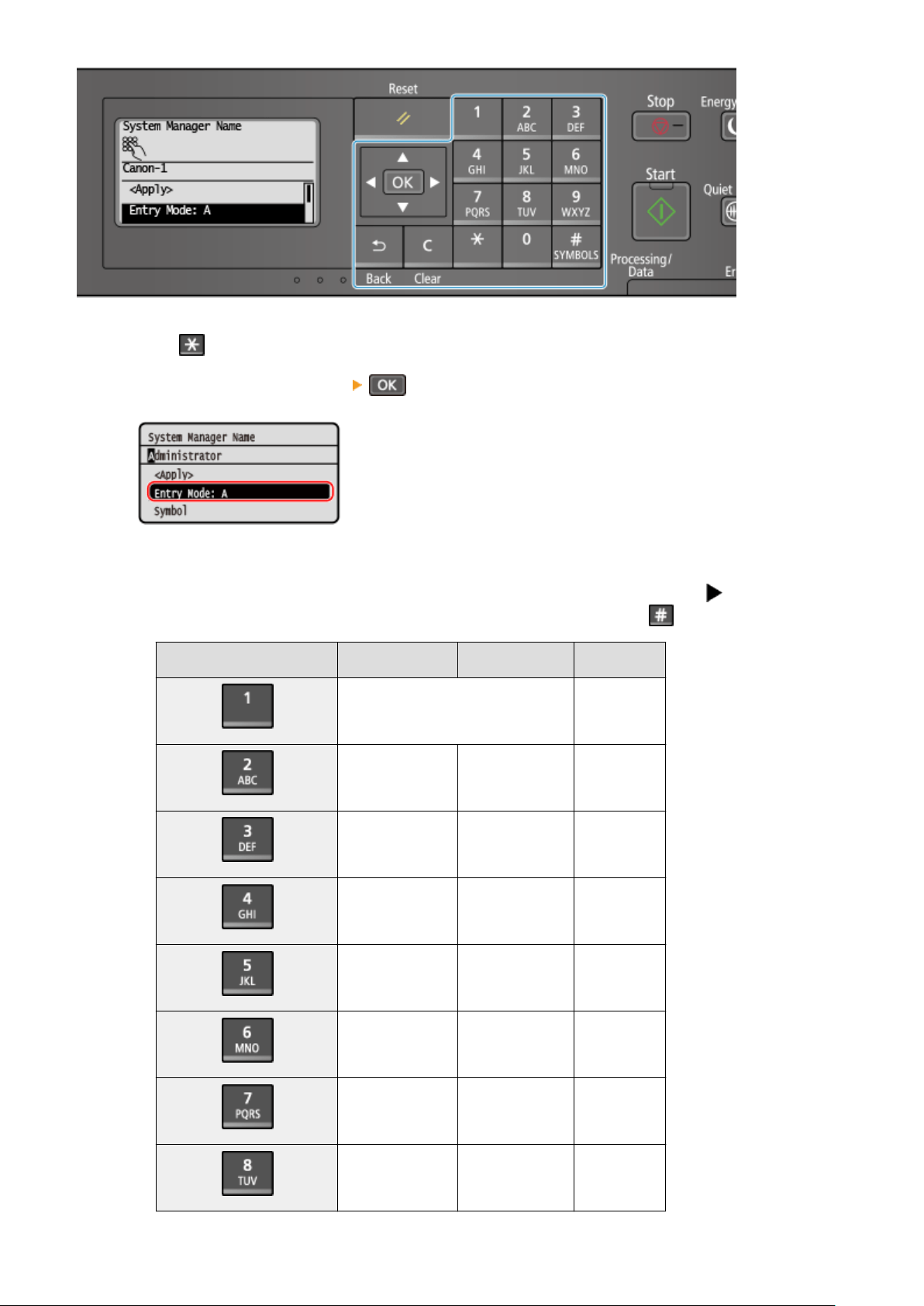
Changing the Character Type
Pr
ess
to change the character type in the order of uppercase letters (A), lowercase letters (a), and
numbers (12).
Y
ou can also press [Entry Mode]
to select the character type.
Y
ou cannot change the character type for items whose character type is limited.
Entering Characters, Spaces, and Symbols
Enter char
acters and symbols using the numeric keys. The following are the usable keys and characters that
can be entered:
You can enter a space by moving the cursor to the end of the characters and pressing
.
When the entry mode is set to [a] or [A], a symbol can be enter
ed by pressing
.
Key A a 12
@ . - _ / 1
ABC abc 2
DEF def 3
GHI ghi 4
JKL jkl 5
MNO mno 6
PQRS pqrs 7
TUV tuv 8
Basic Operations
133
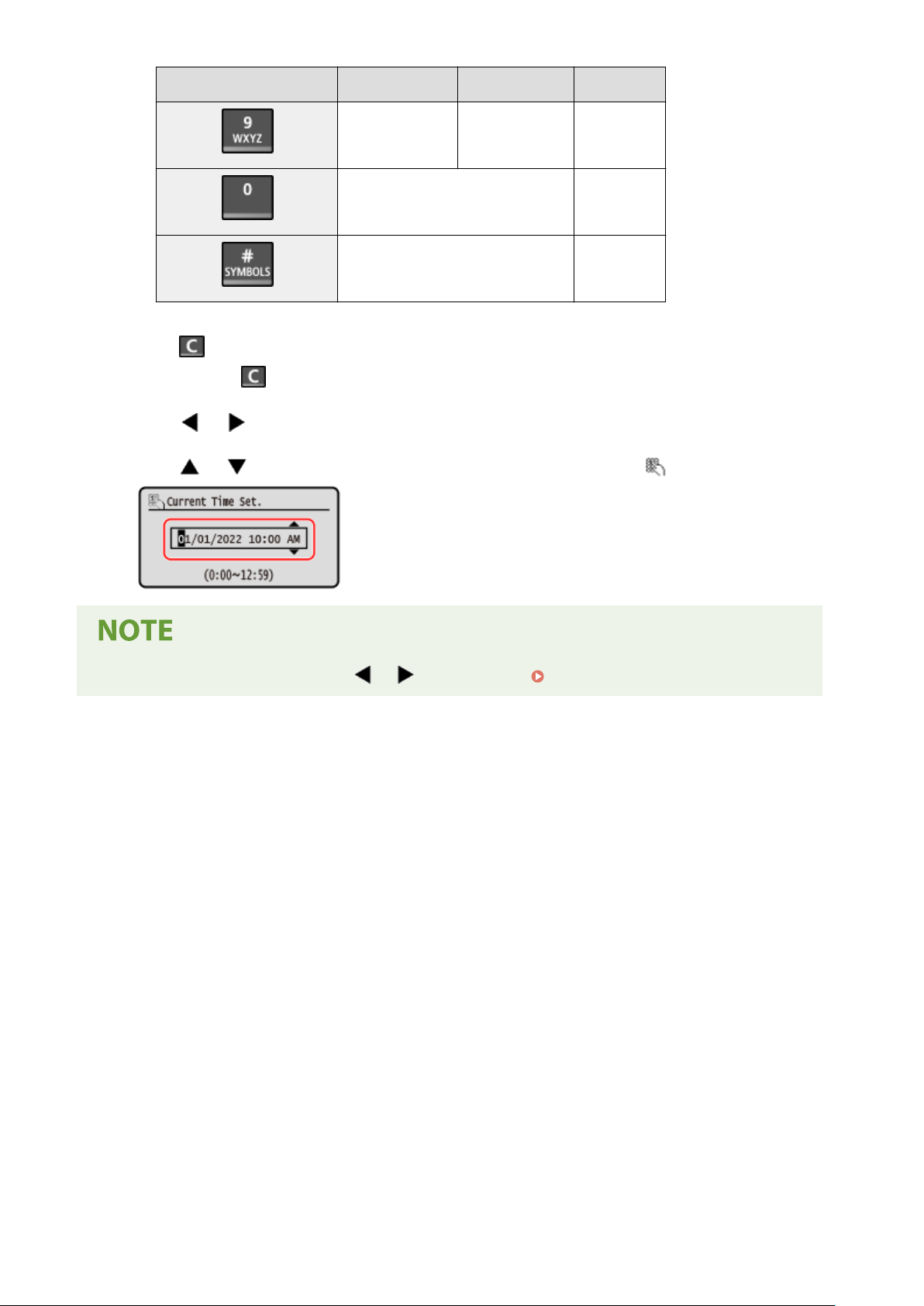
Key A a 12
WXYZ wxyz 9
(Not available) 0
(space) -.*#!",;:^`_=/|'?$@%&+\~()[]{}<> (Not available)
Deleting Characters
Pr
ess
to delete one character.
Pr
ess and hold
to continuously delete characters.
Mo
ving the Cursor
Press
or .
Entering Numbers
Pr
ess
or . You can also use the numeric keys to enter numbers when is displayed on the screen.
● When the slider is displayed, pr
ess
or to set the value. Using the Slider to Set Values(P. 129)
Basic Operations
134
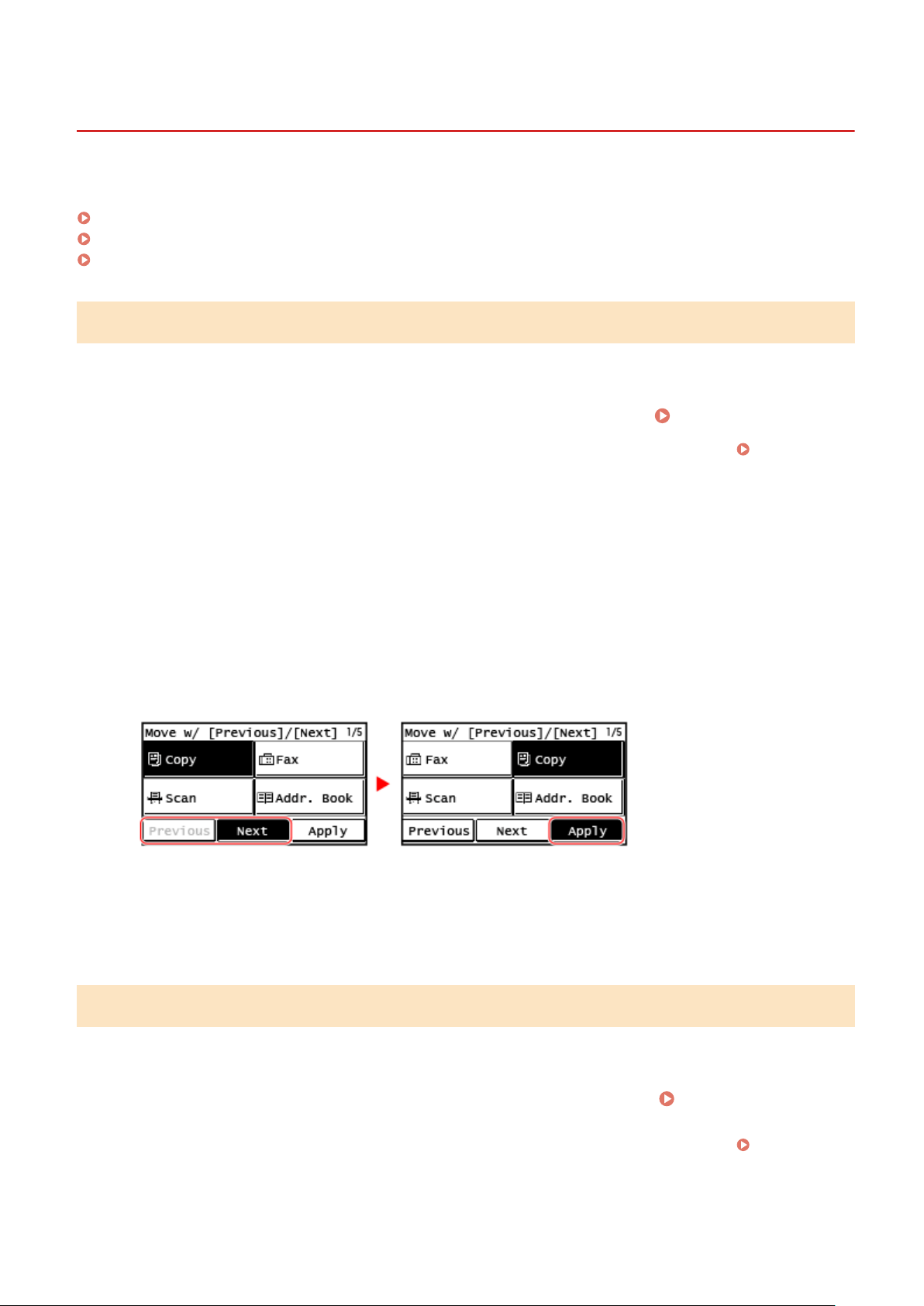
Customizing the [Home] Screen
8W0J-02L
Y
ou can quickly select frequently used functions from the [Home] screen of the control panel.
Rearranging the Buttons (Touch Panel Model)(P. 135)
Inserting a Blank (Touch Panel Model)(P. 135)
Changing the Display Order of the Items (5 Lines LCD Model)(P. 136)
Rearranging the Buttons (Touch Panel Model)
You can rearrange the buttons on the [Home] screen.
1
On the control panel, press [Home Set.] in the [Home] screen.
[Home] Screen(P. 120)
If the login screen appears, enter the System Manager ID and PIN, and then press [Log In]. Logging In to
the Machine
(P. 137)
2
Press [Set Display Order].
3
Select the button to move.
➠ The curr
ently selected item is inverted.
4
Press [Previous] or [Next] to move the button.
5
Press [Apply].
➠ The location of the buttons on the [Home] scr
een is changed.
Inserting a Blank (Touch Panel Model)
Y
ou can insert a space between buttons.
1
On the control panel, press [Home Set.] in the [Home] screen.
[Home]
Scr
een(P. 120)
If the login screen appears, enter the System Manager ID and PIN, and then press [Log In].
Logging In to
the Machine
(P. 137)
Basic Operations
135
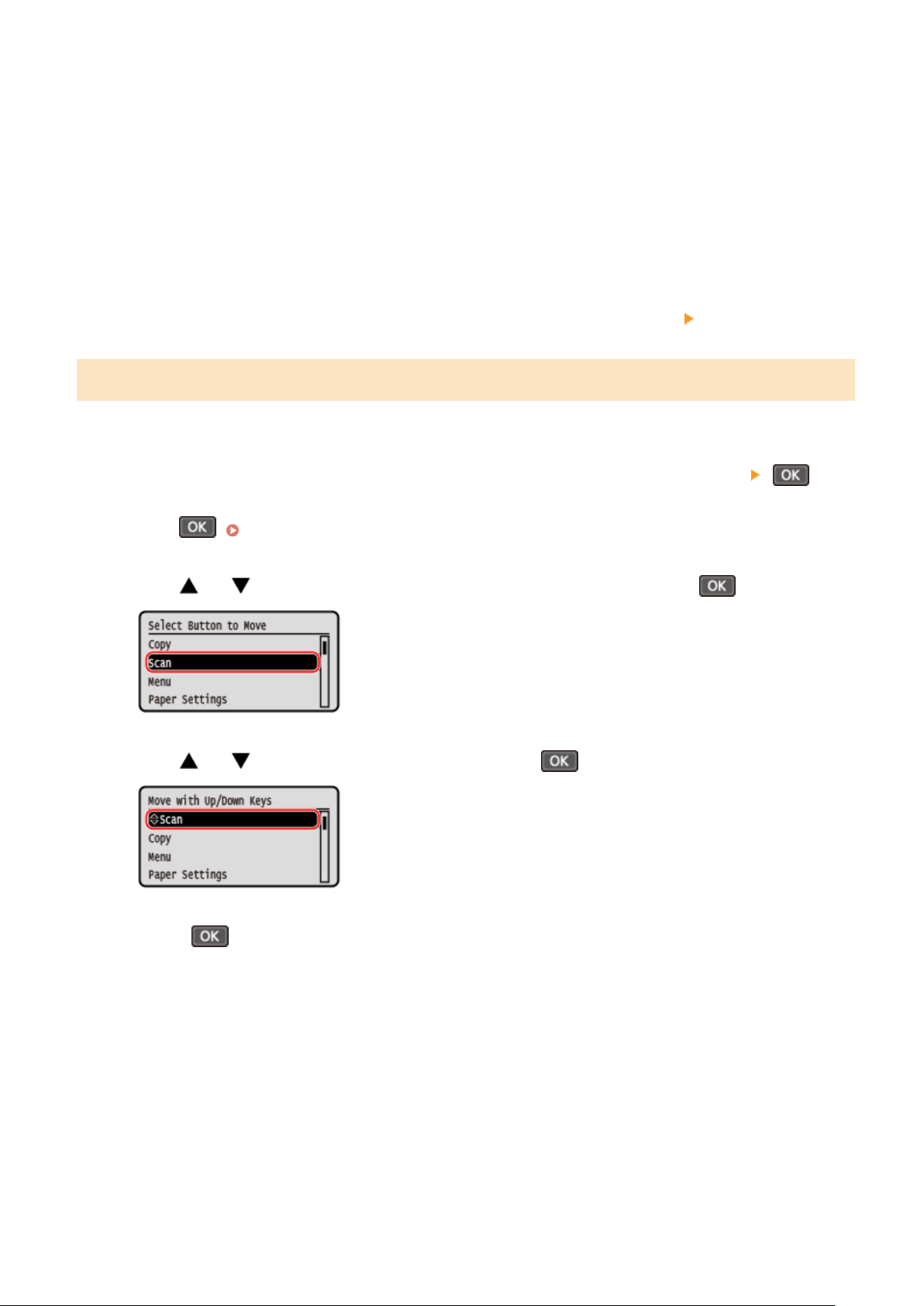
2
Press [Insert and Delete Blank]
3
Select a button before which you want to insert a space and press [Insert].
4
Press [Apply].
➠ A space is inserted right befor
e the selected button.
When you want to delete the inserted space, select the space and press [Delete]
[Apply].
Changing the Display Order of the Items (5 Lines LCD Model)
Rearrange the items on the [Home] screen so that you can operate frequently used items more quickly.
1
On the [Home] screen of the control panel, select [Display Order (Home)] .
If the login screen appears, enter the currently set System Manager ID and PIN, then select [<Log In>] and
pr
ess
. Logging In to the Machine(P. 137)
2
Use or to select the item you want to move, and then press .
3
Use
or to move the item, and then press .
4
Press .
➠ The display or
der of the items on the [Home] screen is changed.
Basic Operations
136
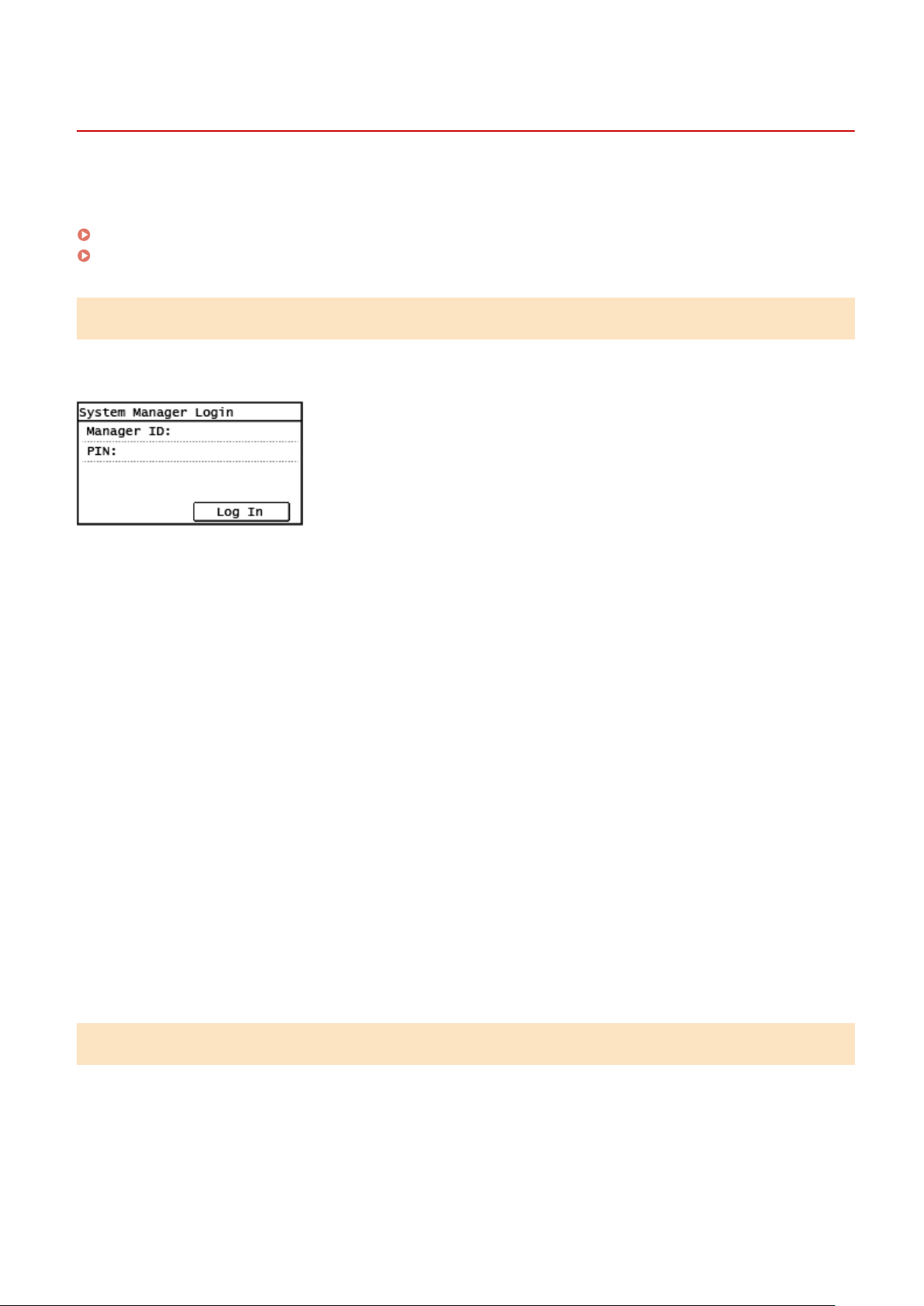
Logging In to the Machine
8W0J-02R
When the login scr
een is displayed on the control panel, enter the required login information to perform
authentication. When authentication is successful, the screen changes, and you can continue operations.
Logging In (Touch Panel Model)(P. 137)
Logging In (5 Lines LCD Model)(P. 137)
Logging In (Touch Panel Model)
When the System Manager ID is set, the login screen is displayed for operations that require administrator privileges.
Enter the System Manager ID and PIN to log in.
1
Press [Manager ID].
➠ [System Manager ID] scr
een is displayed.
2
Enter the System Manager ID, and Press [Apply].
3
Press [PIN].
➠ [System Manager PIN] scr
een is displayed.
If a PIN is not set, you can skip this step. Proceed to Step 5.
4
Enter the System Manager PIN, and Press [Apply].
5
Press [Log In].
➠ When authentication is successful, the scr
een changes.
Logging In (5 Lines LCD Model)
When the System Manager ID is set, the login scr
een is displayed for operations that require administrator privileges.
Enter the System Manager ID and PIN to log in.
Basic Operations
137
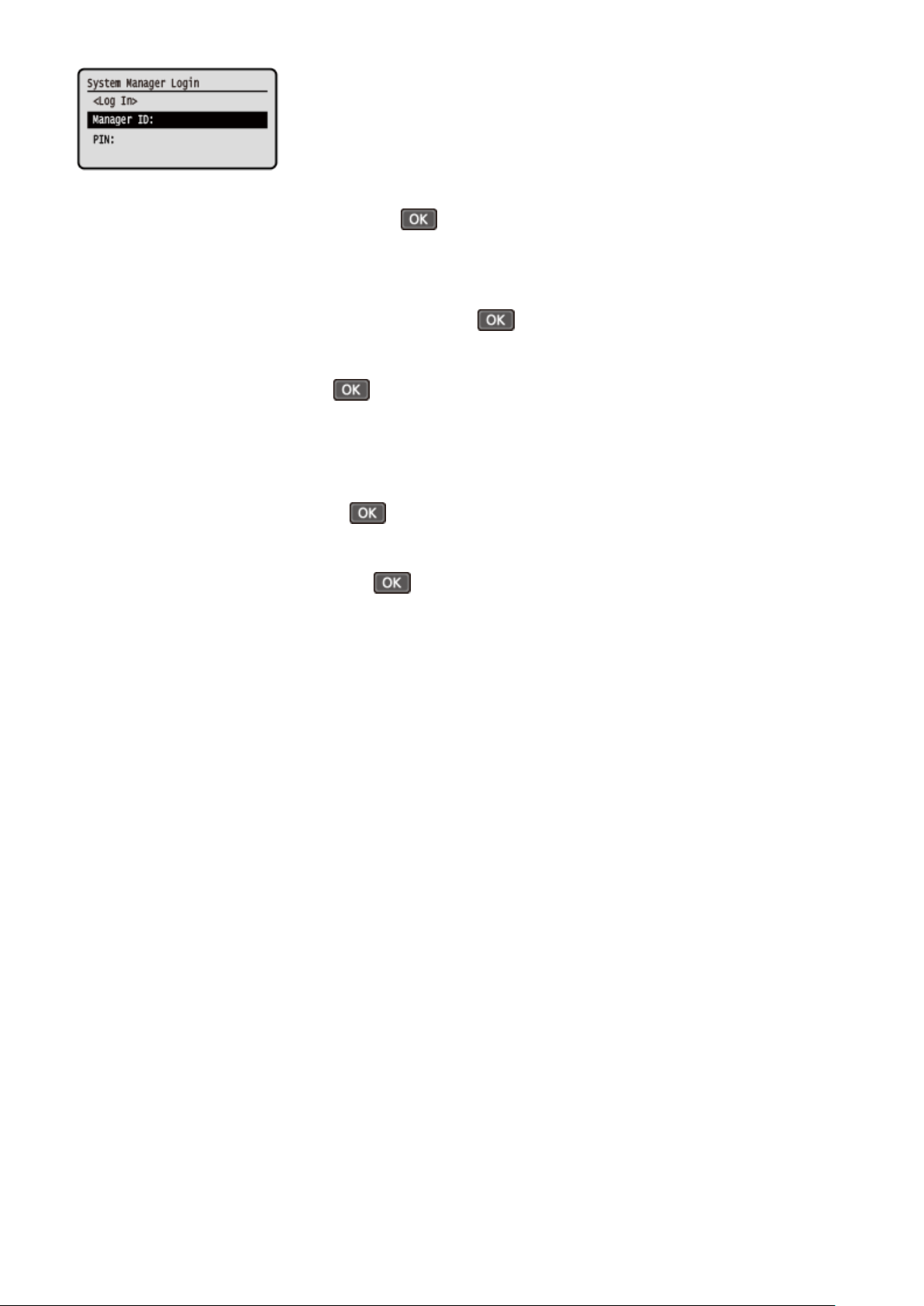
1
Select [Manager ID], and press .
➠ [System Manager ID] scr
een is displayed.
2
Enter the System Manager ID and press
.
3
Select [PIN], and press
.
➠ [System Manager PIN] scr
een is displayed.
If a PIN is not set, you can skip this step. Proceed to Step 5.
4
Enter the PIN, and press
.
5
Select [<Log In>], and press
.
➠ When authentication is successful, the [Home] scr
een or other screen is displayed.
Basic Operations
138
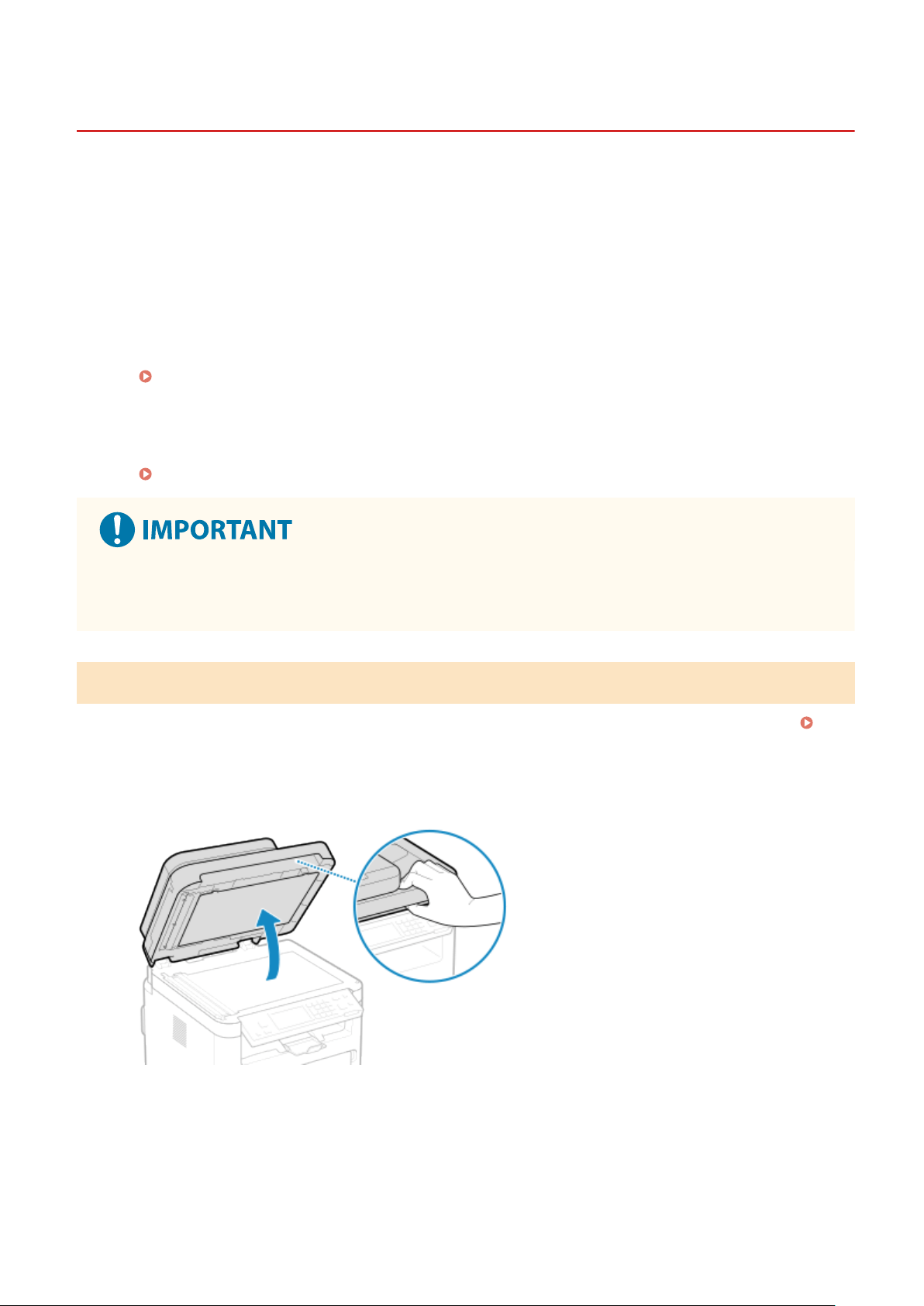
Placing Originals
8W0J-02S
Place documents, photos, and other printed materials ("
originals") to be scanned, faxed, or copied on the platen glass
or in the feeder.
Determine whether to use the platen glass or feeder depending on the document type and usage.
Platen Glass
Scans originals in a xed position. Originals must be placed one at a time, but this ensures highly accurate
scanning.
You can also place the following originals on the platen glass:
● Books, thick paper, thin paper, and other originals that cannot be placed in the feeder
● Tracing paper, transparencies, and other transparent originals
Placing Originals on the Platen Glass(P. 139)
Feeder
Y
ou can place two or more sheets of originals in the feeder. The placed originals are scanned automatically
one sheet at a time.
For MF269dw II / MF269dw VP II, both sides of originals can be scanned automatically.
Placing Originals in the Feeder(P. 140)
Place Dry Originals
● Befor
e placing originals, make sure that any ink, correction uid, or glue on them has completely dried.
Placing Originals on the Platen Glass
For the size of the originals that can be placed on the platen glass, see the basic specications of the machine. Basic
Specications(P
. 28)
1
Open the feeder or the platen cover.
2
Place the side of the original to be scanned face down on the platen glass in the
landscape orientation while aligning the corner of the original with the top left
corner of the platen glass.
Basic Operations
139
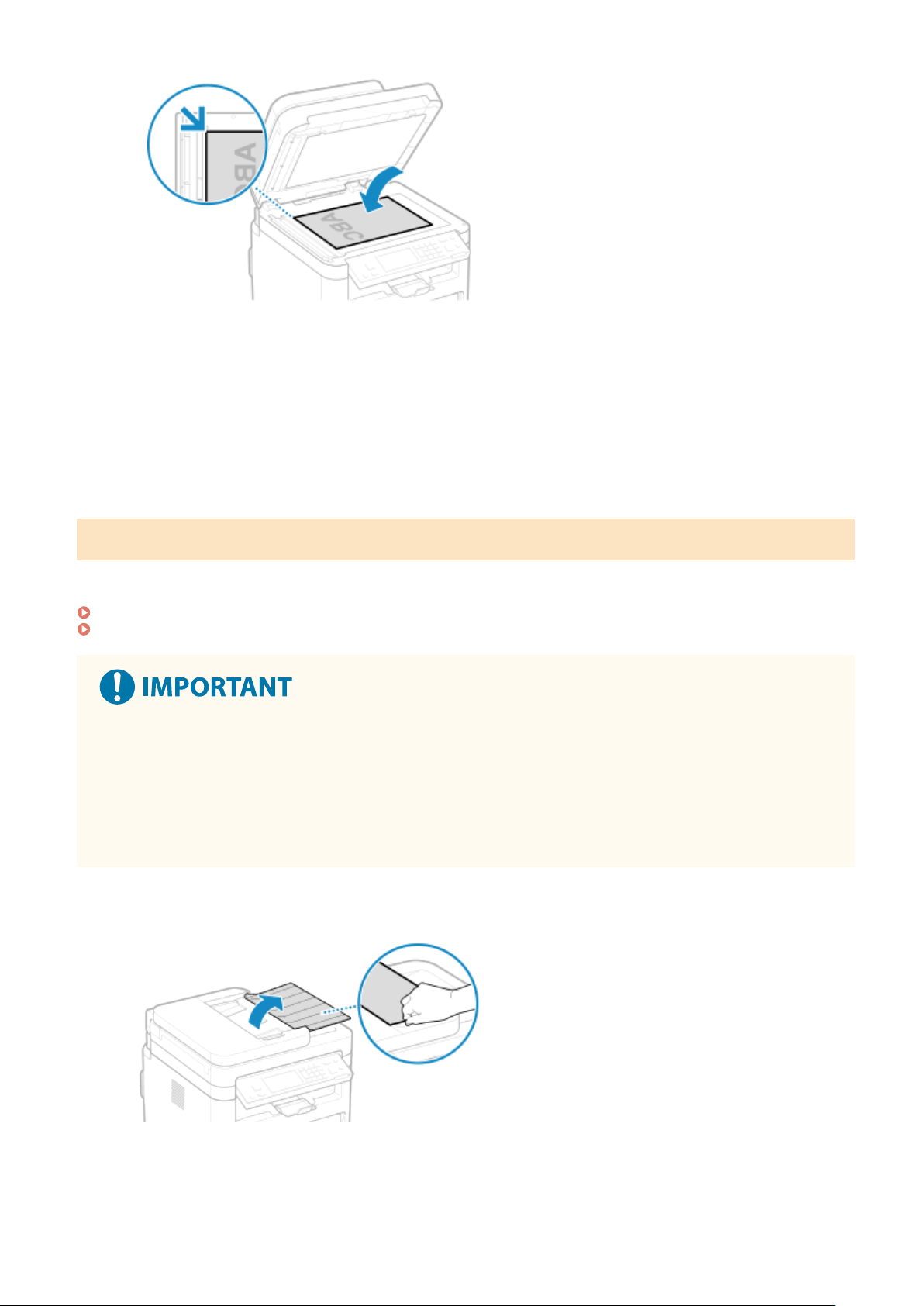
When scanning tracing paper, transparencies, and other transparent originals, place a sheet of plain white
paper on top.
3
Gently close the feeder or the platen cover.
4
When scanning of the original is complete, remove the original from the platen glass.
Placing Originals in the Feeder
When scanning two or mor
e sheets of originals, place only originals of the same size.
For the size of the originals that can be placed in the feeder, see the specications of the feeder.
2-Sided Double Pass Feeder Specications(P
. 31)
1-Sided Feeder Specications(P
. 32)
To prevent paper jams inside the feeder, do not place the following originals:
● W
rinkled, creased, curled, rolled, or torn paper
● Carbon paper, coated paper, thin translucent paper, thin paper, or transparencies
● Stapled or clipped paper
● Paper printed by a thermal transfer printer
1
Open the original supply tray.
2
Spread the slide guides outward until they are slightly farther apart than the width
of the original.
Basic Operations
140
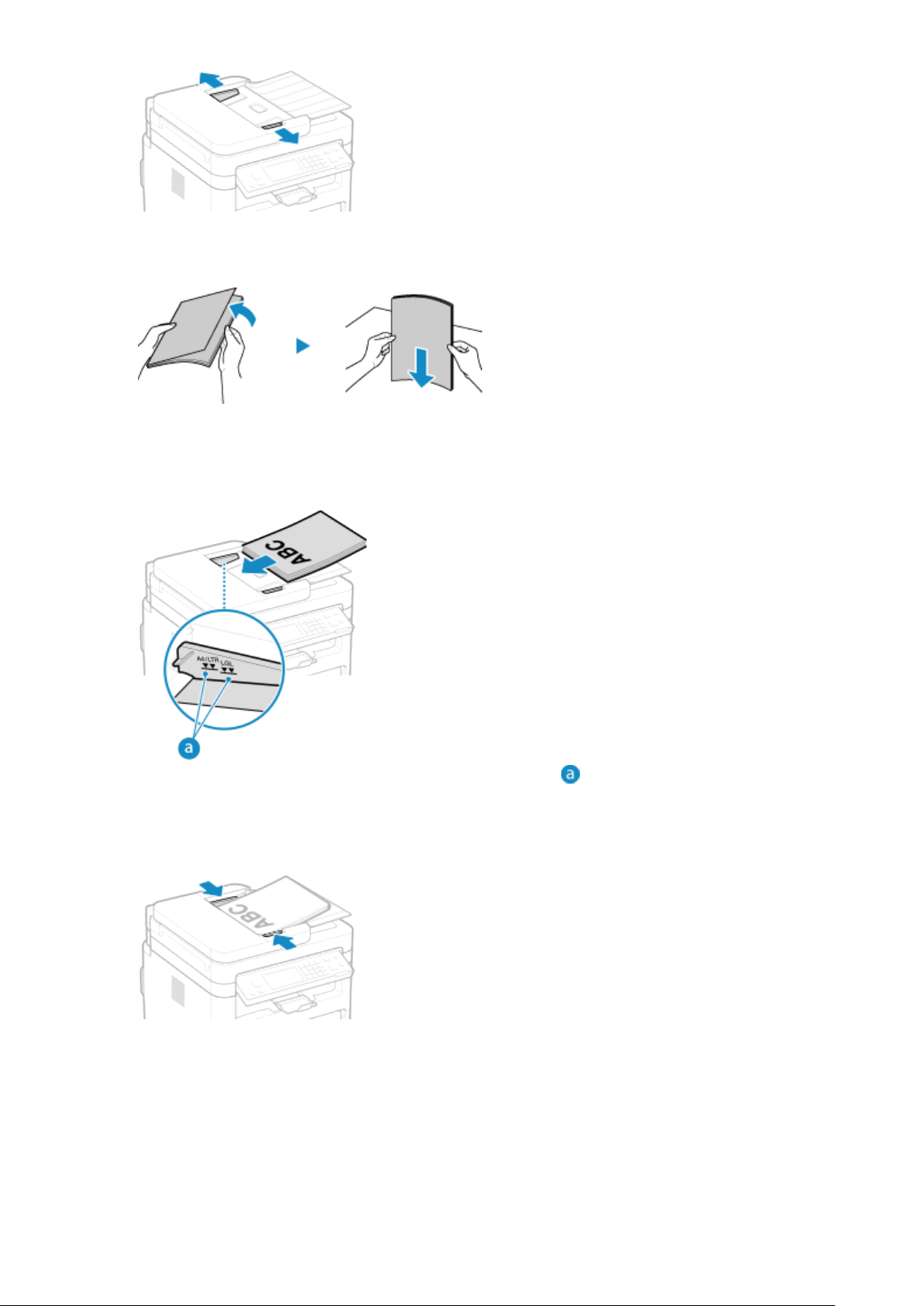
3
Fan the originals and align the edges.
Fan the originals in small batches, and align the edges by tapping the originals on a at surface a fe
w times.
4
Place the sides of the originals to be scanned face up in the feeder in the landscape
orientation.
Make sure the placed originals do not exceed the load limit line ( ). If they exceed the load limit line, there
may be misfeeds or a paper jam.
5
Align the slide guides against the edges of the originals.
Slide guides that are aligned but too loose or too tight can cause misfeeds or a paper jam.
6
When scanning of the originals is complete, remove the ejected originals from below
the feeder.
● Do not add originals or r
emove them during scanning.
● Leaving ejected originals below the feeder may cause a paper jam.
Basic Operations
141

Loading Paper
8W0J-02U
T
o ensure print quality, conrm the usable paper and how to handle and store paper, and prepare the appropriate
paper for use with the machine.
Usable Paper(P. 23) / Precautions When Handling Paper(P. 26)
Load the pr
epared paper in the machine, and then congure the paper size and type settings.
Loading Paper in the Machine
Load paper you usually use into the drawer, which can hold large amounts of paper.
To temporarily use paper not loaded in the drawer, load it in the multi-purpose tray.
Loading Paper in the Drawer(P. 143)
Loading Paper in the Multi-purpose Tray(P. 146)
When using envelopes or paper with logos, be car
eful of the orientation of the loaded paper and which side
is face up.
Preparations and Orientation for Loading Envelopes(P. 148)
Orientation for Loading Paper with a Logo(P. 150)
Paper Settings
T
o ensure quality printing and prevent paper jams, the paper size and type must be set correctly according to
the loaded paper.
Specifying the Paper Size and Type(P. 152)
Basic Operations
142
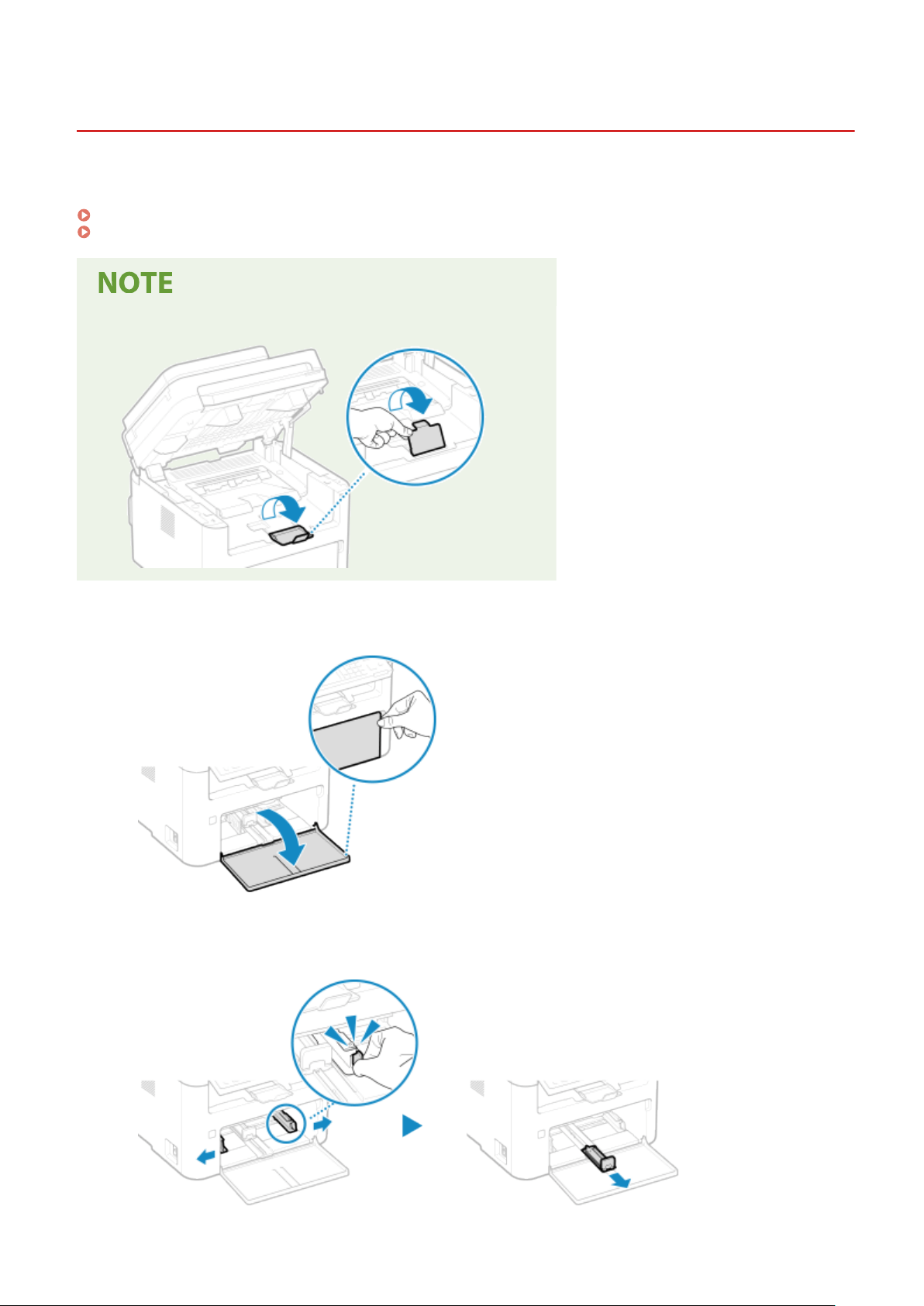
Loading Paper in the Drawer
8W0J-02W
Load paper you usually use into the dr
awer, which can hold large amounts of paper.
When using envelopes or paper with logos, be careful of the orientation of the loaded paper and which side is face up.
Preparations and Orientation for Loading Envelopes(P. 148)
Orientation for Loading Paper with a Logo(P. 150)
● When performing printing, open the paper stopper in advance.
1
Open the front cover.
2
Slide the paper guides to the outside.
Basic Operations
143
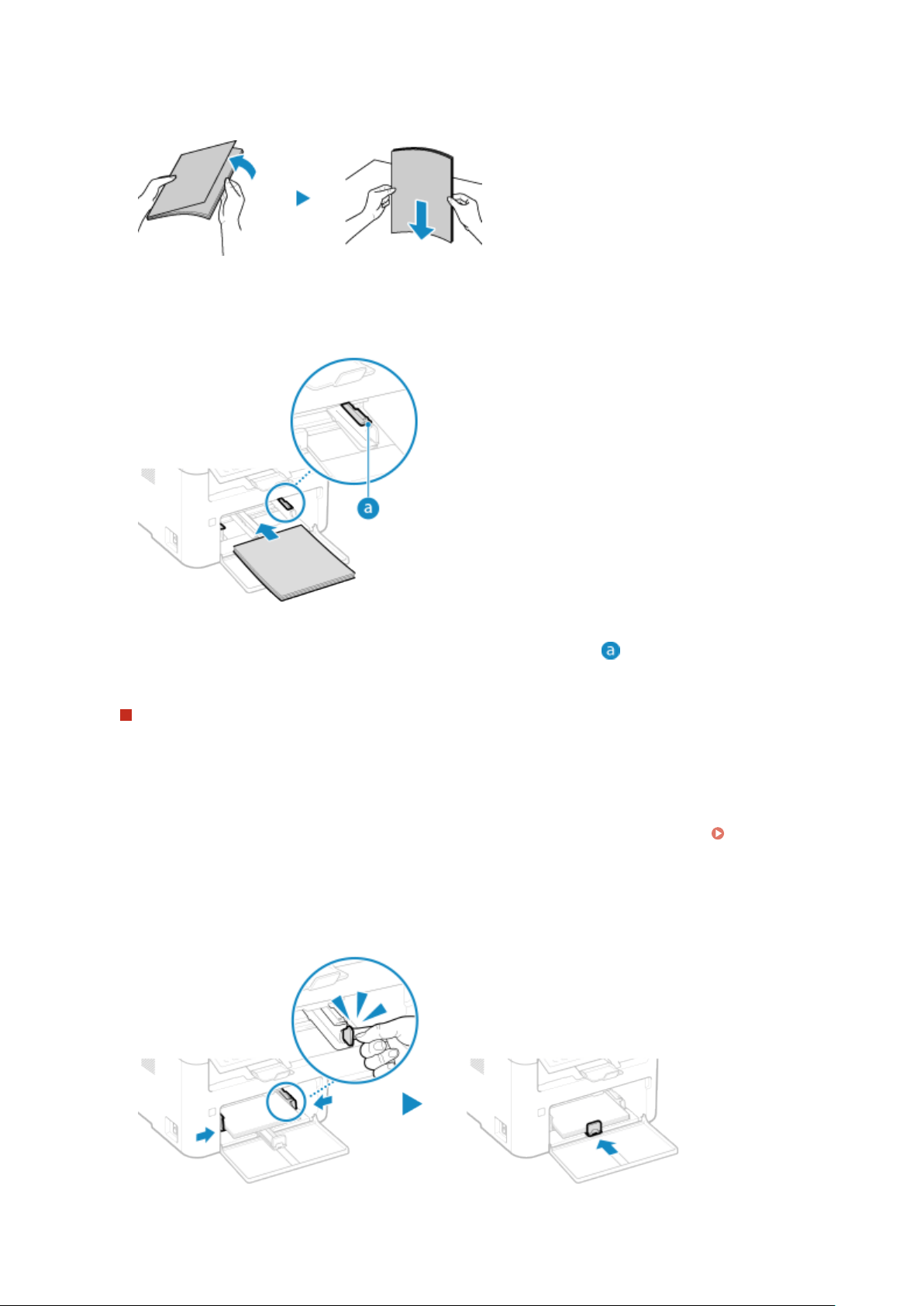
3
Fan the paper and align the edges.
Fan the paper in small batches, and align the edges by tapping the paper on a at surface a fe
w times.
4
Load the paper with the print side face up.
● Insert the paper until the edge of the paper is against the paper tr
ay.
● Make sure the loaded paper does not exceed the load limit guides (
). If it exceeds the load limit guides,
ther
e may be misfeeds or a paper jam.
When Printing on the Back Side of Printed Paper (Manual 2-sided Printing)
Flatten the edge of the paper to remove any curls, and load the paper with the back (unprinted) side face up.
● Y
ou can use only paper printed with this machine.
● You cannot print on a side that has been previously printed on.
● If toner smudges and splatters appear on the back side, adjust the image quality.
[Manual Back Side
Print (2-Sided Only)]
(P. 459)
5
Align the paper guides with the width and length of the paper.
Paper guides that are aligned but too loose or too tight can cause misfeeds or a paper jam.
Basic Operations
144
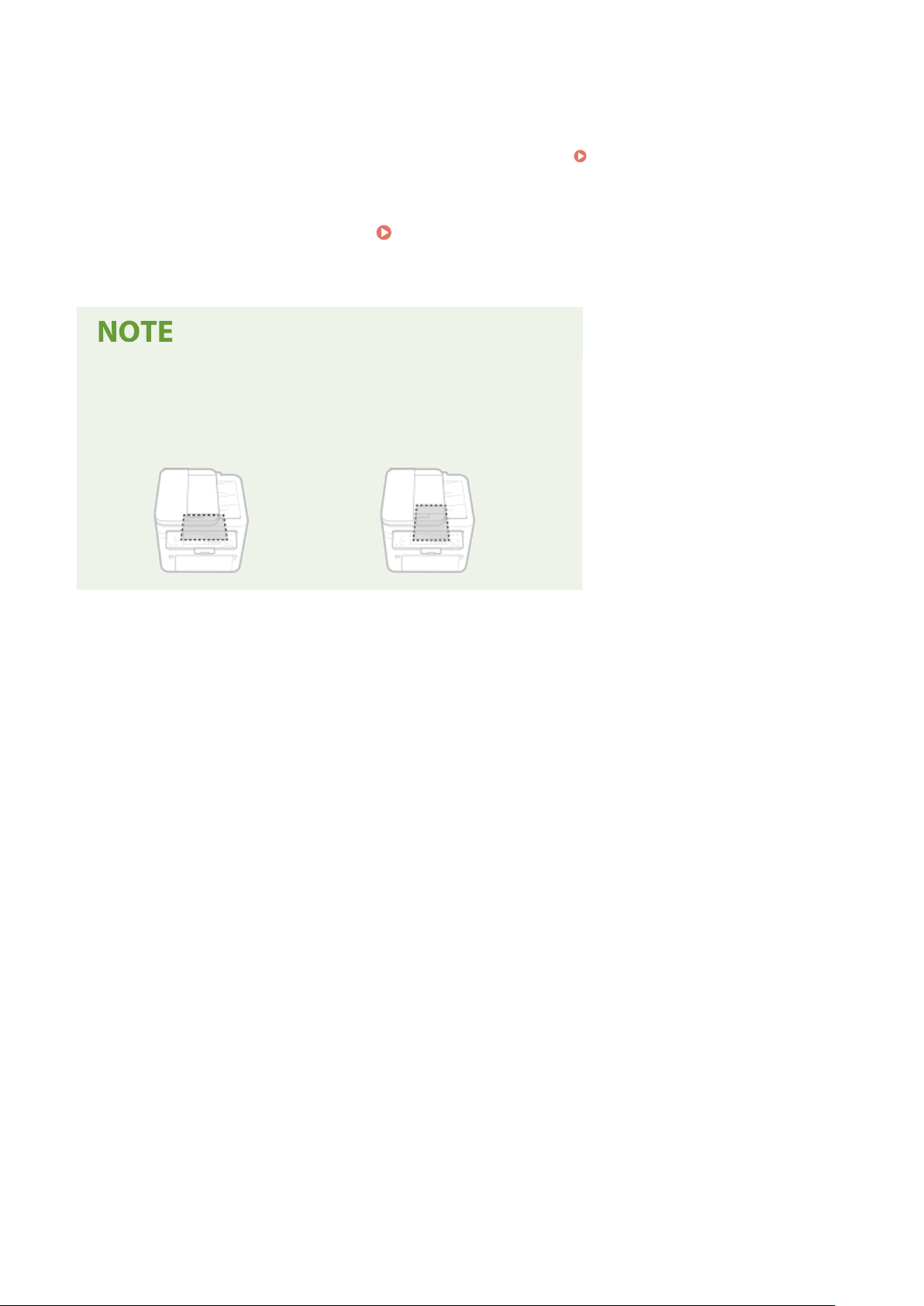
6
Close the front cover.
➠ By default, the Paper Settings conrmation scr
een is displayed.
[Notify to Check Paper Settings]
(P
. 510)
7
Set the paper size and type.
Setting the Paper Size and Type for the Drawer(P. 153)
By default, the paper size and type of the drawer are set to LTR and Plain 2. When paper of a different size or
type is loaded, change the paper settings.
When Loading A5 Size Paper
● Set the paper size accor
ding to the orientation of the loaded paper.
Landscape orientation (A5)
Portrait orientation (A5R)
Basic Operations
145
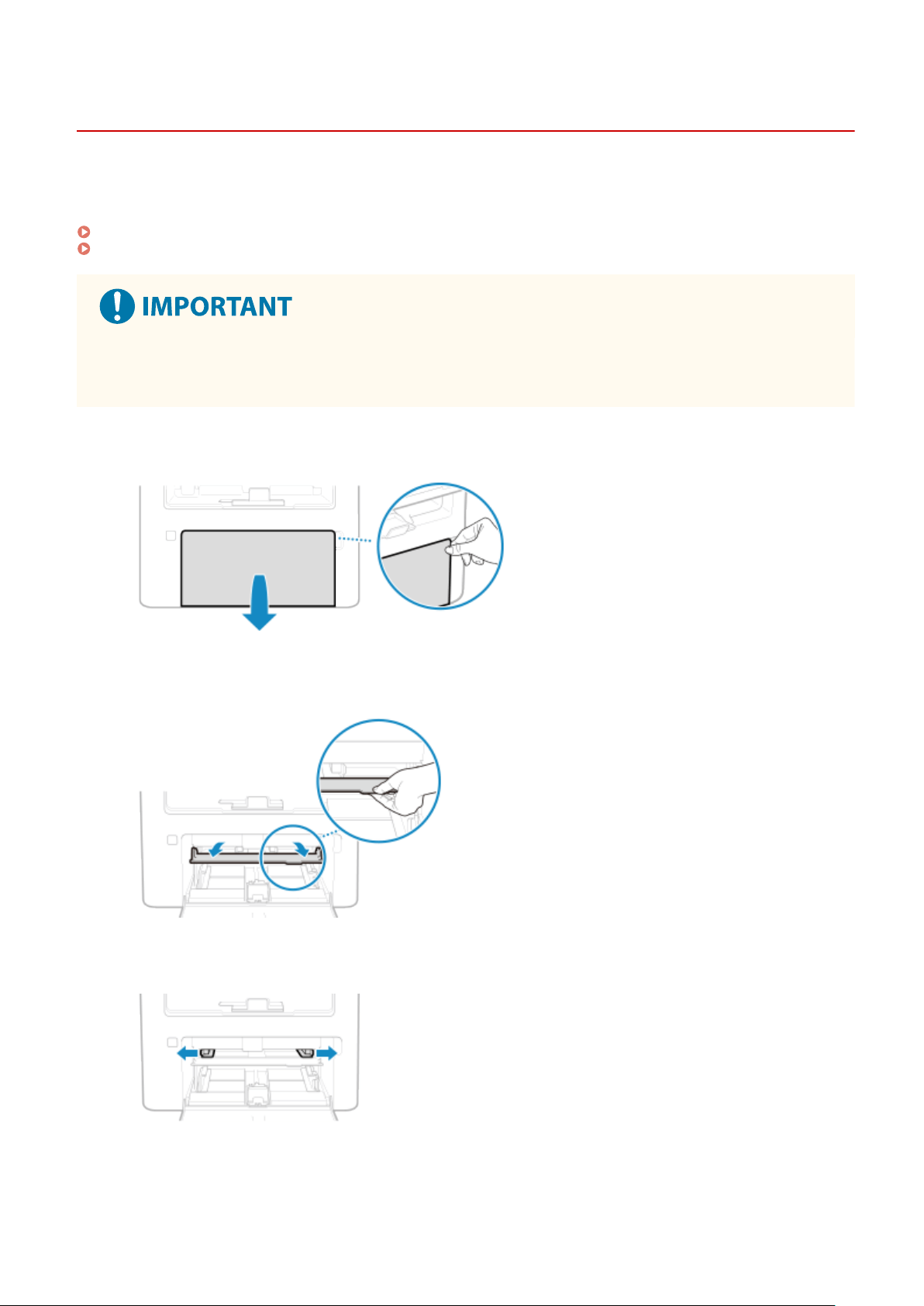
Loading Paper in the Multi-purpose Tray
8W0J-02X
T
o temporarily use paper not loaded in the drawer, load it in the multi-purpose tray.
You can load paper correctly by aligning the paper guides on the multi-purpose tray with the paper.
When using envelopes or paper with logos, be careful of the orientation of the loaded paper and which side is face up.
Preparations and Orientation for Loading Envelopes(P. 148)
Orientation for Loading Paper with a Logo(P. 150)
Load only one sheet of paper at a time
● Only one sheet of paper can be loaded each time you print.
1
Open the front cover.
2
Lower the multi-purpose tray.
3
Spread the paper guides apart.
4
Load the paper with the print side face up.
Basic Operations
146
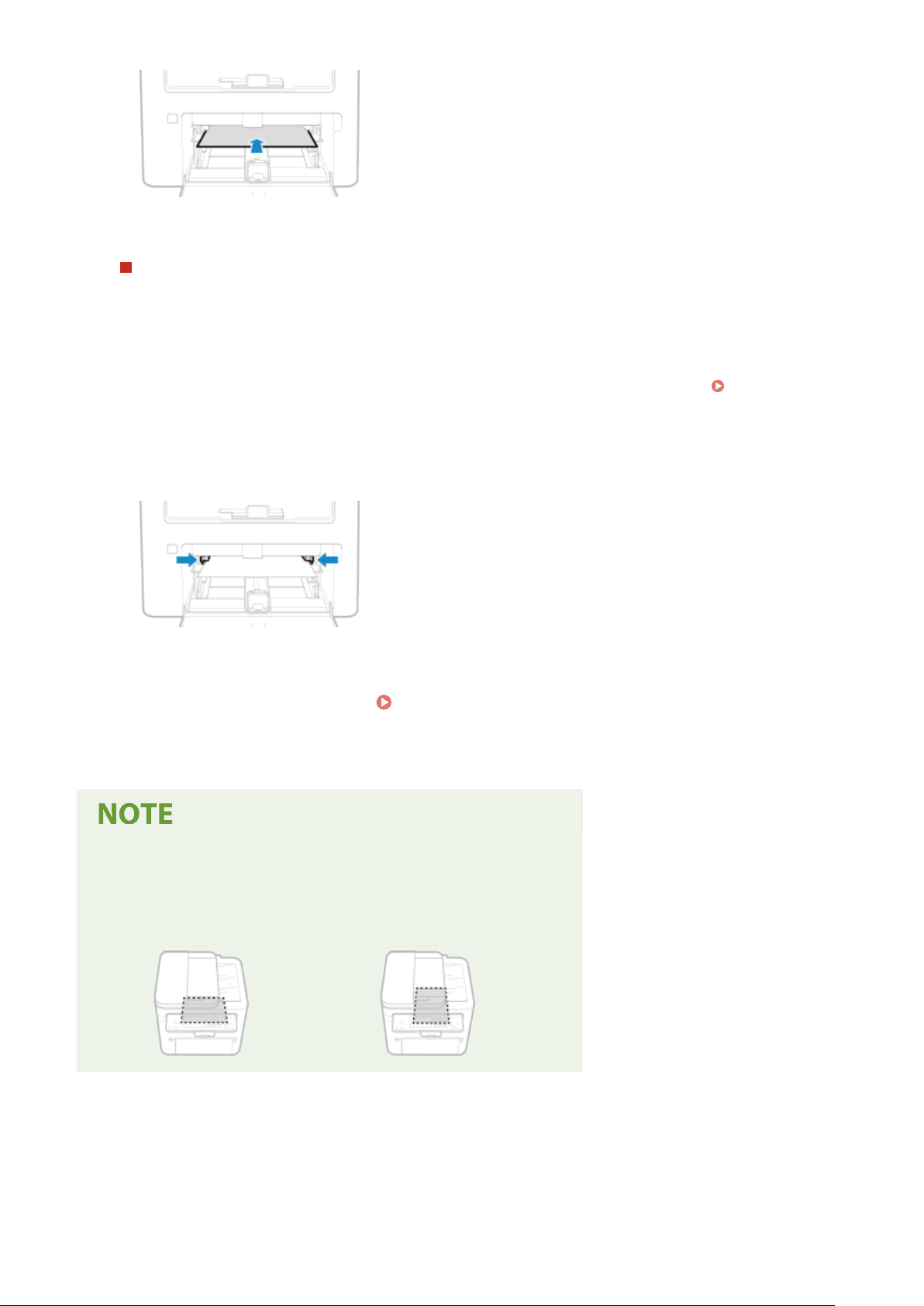
● Insert the paper until the edge of the paper is against the paper tr
ay.
When Printing on the Back Side of Printed Paper (Manual 2-sided Printing)
Flatten the edge of the paper to remove any curls, and load the paper with the back (unprinted) side face up.
● Y
ou can use only paper printed with this machine.
● You cannot print on a side that has been previously printed on.
● If toner smudges and splatters appear on the back side, adjust the image quality.
[Manual Back Side
Print (2-Sided Only)]
(P. 459)
5
Align the paper guides with the width of the paper.
Paper guides that are aligned but too loose or too tight can cause misfeeds or a paper jam.
6
Set the paper size and type. Setting the Paper Size and Type for the Multi-purpose
T
ray(P. 157)
By default, when the machine detects paper loaded in the multi-purpose tray, the screen for setting the
paper size and type is displayed on the contr
ol panel. Set the paper size and type each time you load paper.
When Loading A5 Size Paper
● Set the paper size accor
ding to the orientation of the loaded paper.
Landscape orientation (A5)
Portrait orientation (A5R)
Basic Operations
147
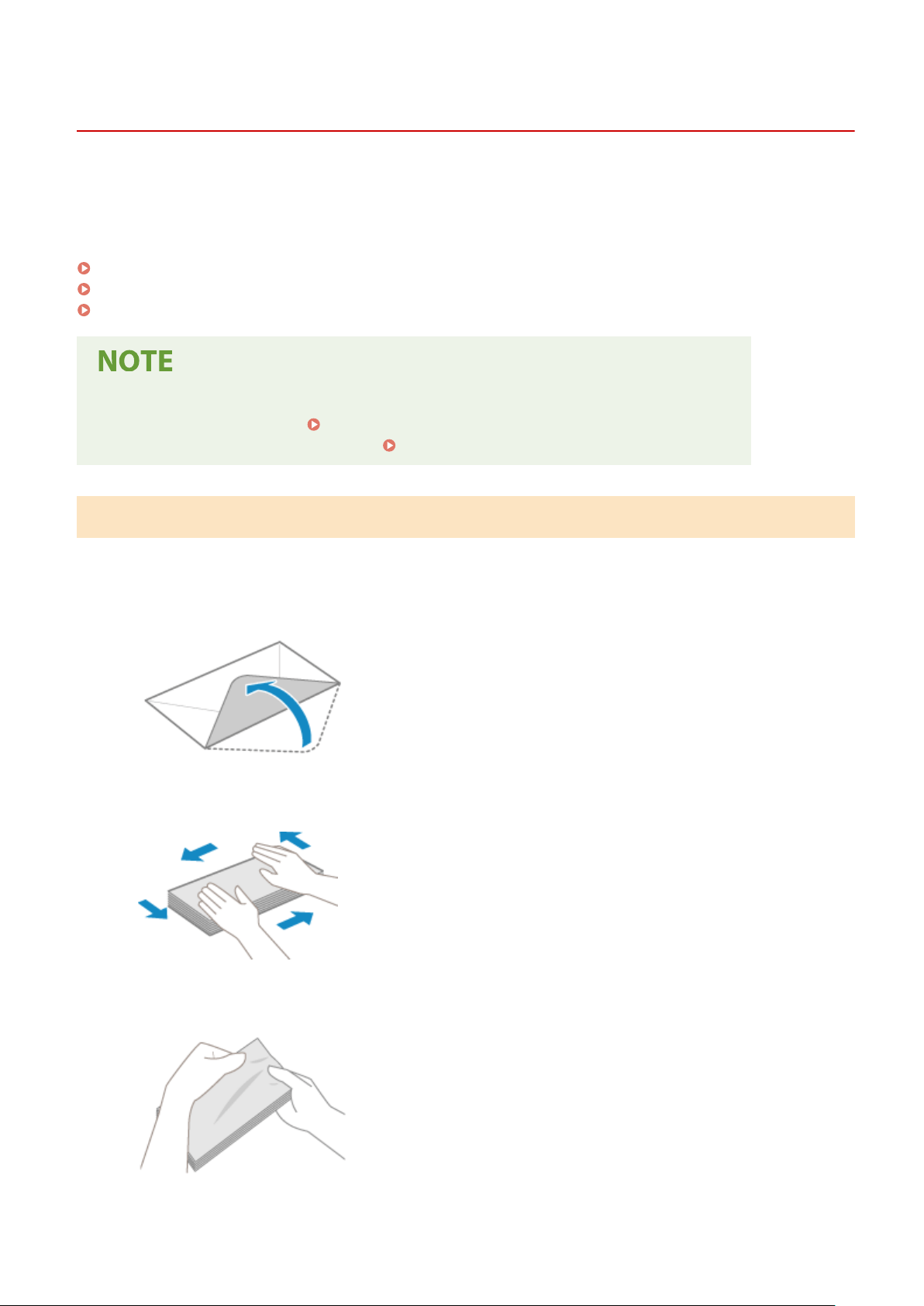
Preparations and Orientation for Loading Envelopes
8W0J-02Y
As envelopes have a differ
ent shape and thickness from regular paper, preparations must be made before loading
envelopes.
Envelopes can be printed only on the front side (non-glued side). When loading envelopes, pay attention to the
orientation and which side is face up.
Preparations before Loading Envelopes(P. 148)
Orientation of Envelopes (Drawer)(P. 149)
Orientation of Envelopes (Multi-purpose Tray)(P. 149)
● For the gener
al procedure of loading envelopes, see the following:
When loading in the drawer
Loading Paper in the Drawer(P. 143)
When loading in the multi-purpose tr
ay
Loading Paper in the Multi-purpose Tray(P. 146)
Preparations before Loading Envelopes
Align the envelopes r
egardless of the number of envelopes to be loaded.
1
Close the ap of each envelope.
2
Flatten them to remove any air, and make sure the edges are pressed tightly.
3
Loosen any stiff corners of the envelopes, and atten any curls.
Basic Operations
148
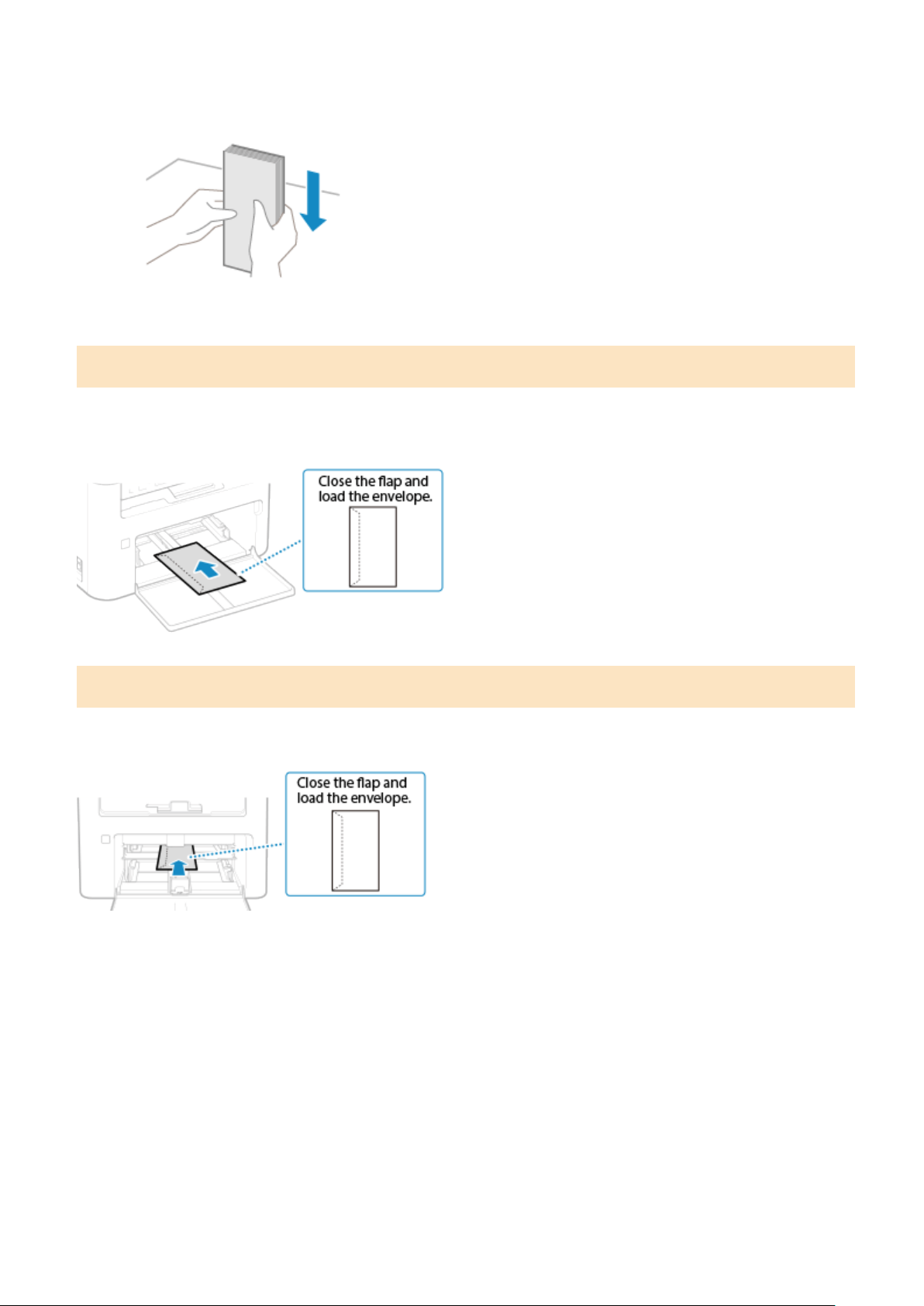
4
Align the edges of the envelopes on a at surface.
➠ The envelopes ar
e ready to be loaded.
Orientation of Envelopes (Drawer)
Load the envelopes No. 10 (C
OM10), Monarch, ISO-C5, or DL in portrait orientation with the front side (non-glued side)
face up and the long side of the envelope parallel with the long side of the drawer. Load the envelope with the ap
closed and on the left side.
Orientation of Envelopes (Multi-purpose Tray)
Insert the envelopes No. 10 (C
OM10), Monarch, ISO-C5, or DL from the short side with the front side (non-glued side)
face up. Insert the envelope with the ap closed and on the left side.
Basic Operations
149
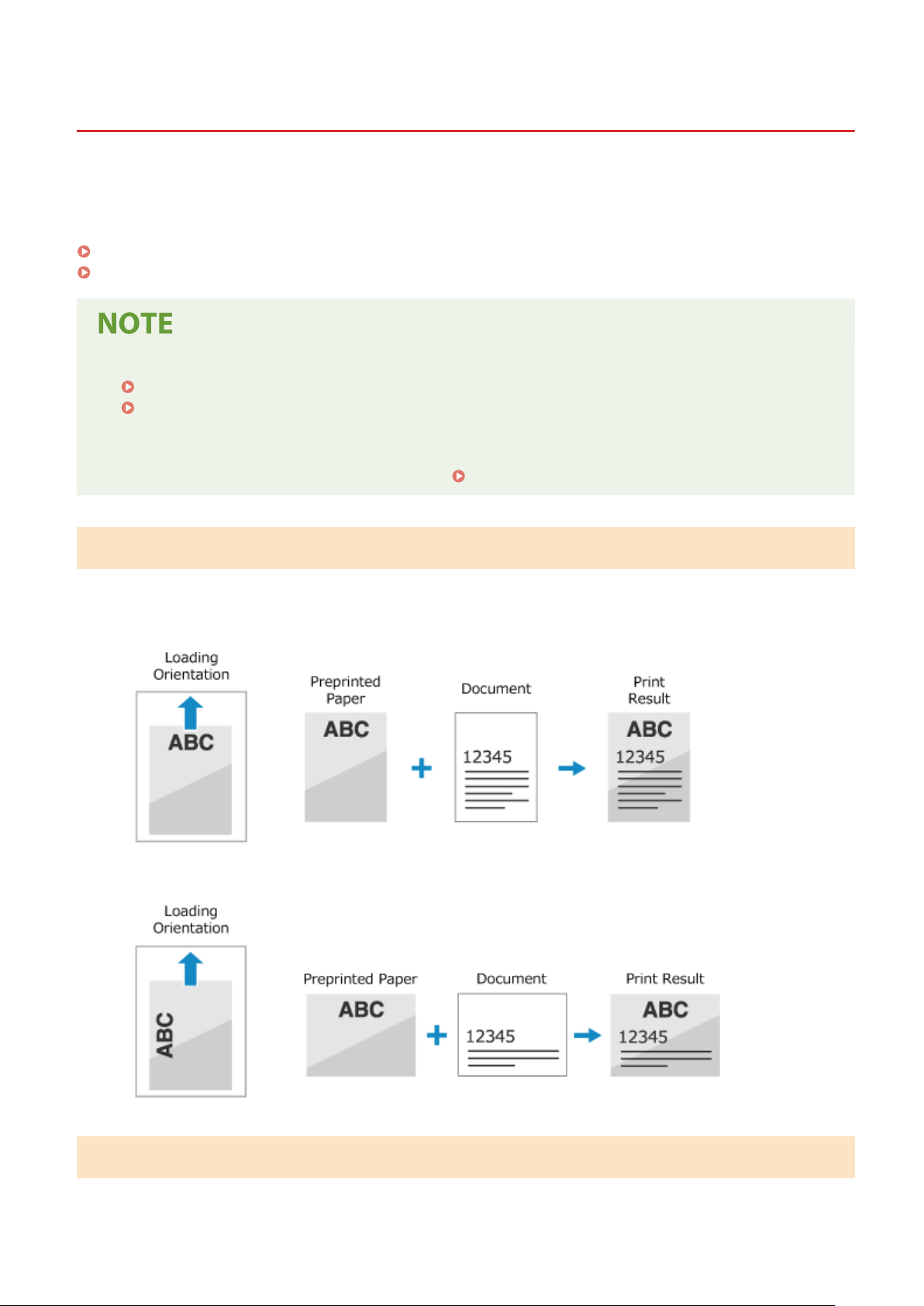
Orientation for Loading Paper with a Logo
8W0J-030
When loading paper with a logo, pay attention to the orientation and which side is face up.
By default, the orientation the paper is to be loaded and the side to print on vary depending on whether you want to
print on one or both sides.
Printing on One Side of Paper with a Logo(P. 150)
Printing on Both Sides of Paper with a Logo(P. 150)
● For the gener
al procedure of loading paper, see the following:
Loading Paper in the Drawer(P. 143)
Loading Paper in the Multi-purpose Tray(P. 146)
● Y
ou can congure the settings so that the orientation the paper is to be loaded and the side to print on do
not change depending on whether you want to print on one or both sides. When this setting is congured,
load the paper using the 2-sided printing method.
[Switch Paper Feed Method](P. 466)
Printing on One Side of Paper with a Logo
Load the paper with the logo side (side to be printed) face up.
Paper with logo in portr
ait orientation
Paper with logo in landscape orientation
Printing on Both Sides of Paper with a Logo
Load the paper with the logo side (side to be printed rst) face do
wn.
Basic Operations
150
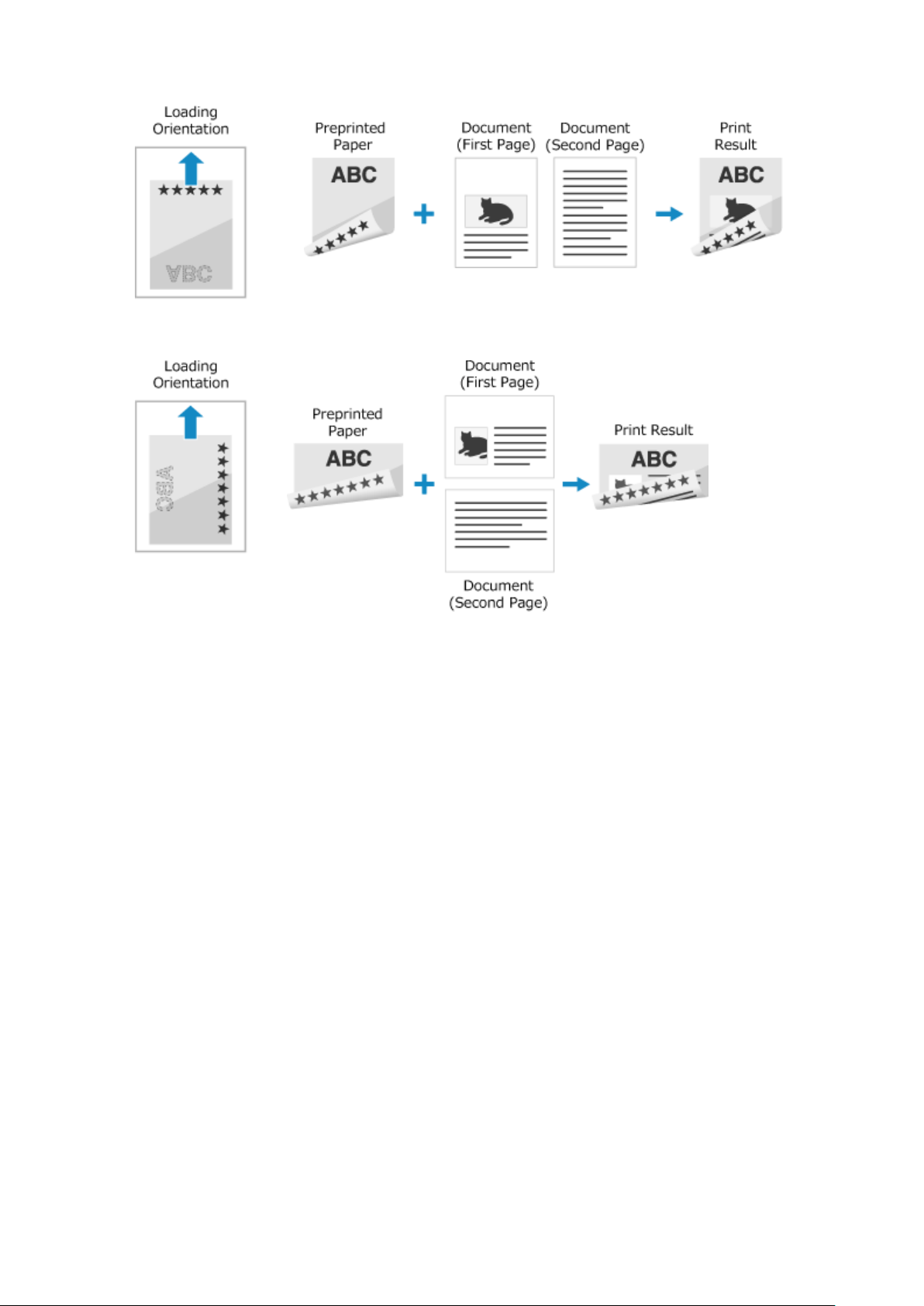
Paper with logo in portrait orientation
Paper with logo in landscape orientation
Basic Operations
151

Specifying the Paper Size and Type
8W0J-031
T
o ensure quality printing and prevent paper jams, the paper size and type must be set correctly according to the
loaded paper.
You can register frequently used paper settings and hide unneeded paper settings to simplify the paper settings.
Settings Required after Loading the Paper
Set the paper size and type according to the loaded paper.
Setting the Paper Size and Type for the Drawer(P. 153)
Setting the Paper Size and Type for the Multi-purpose Tray(P. 157)
If you always use the same paper in the multi-purpose tr
ay, you can register the paper to use so you do not
have to congure the settings each time.
Registering a Frequently Used Paper Size and Type for the Multi-purpose Tray(P. 160)
Simplifying the Paper Settings
Y
ou can register and set the paper size for easier settings.
Registering Non-standard Size Paper (Custom Paper)(P. 164)
Hiding Unused Paper Sizes(P. 166)
Basic Operations
152
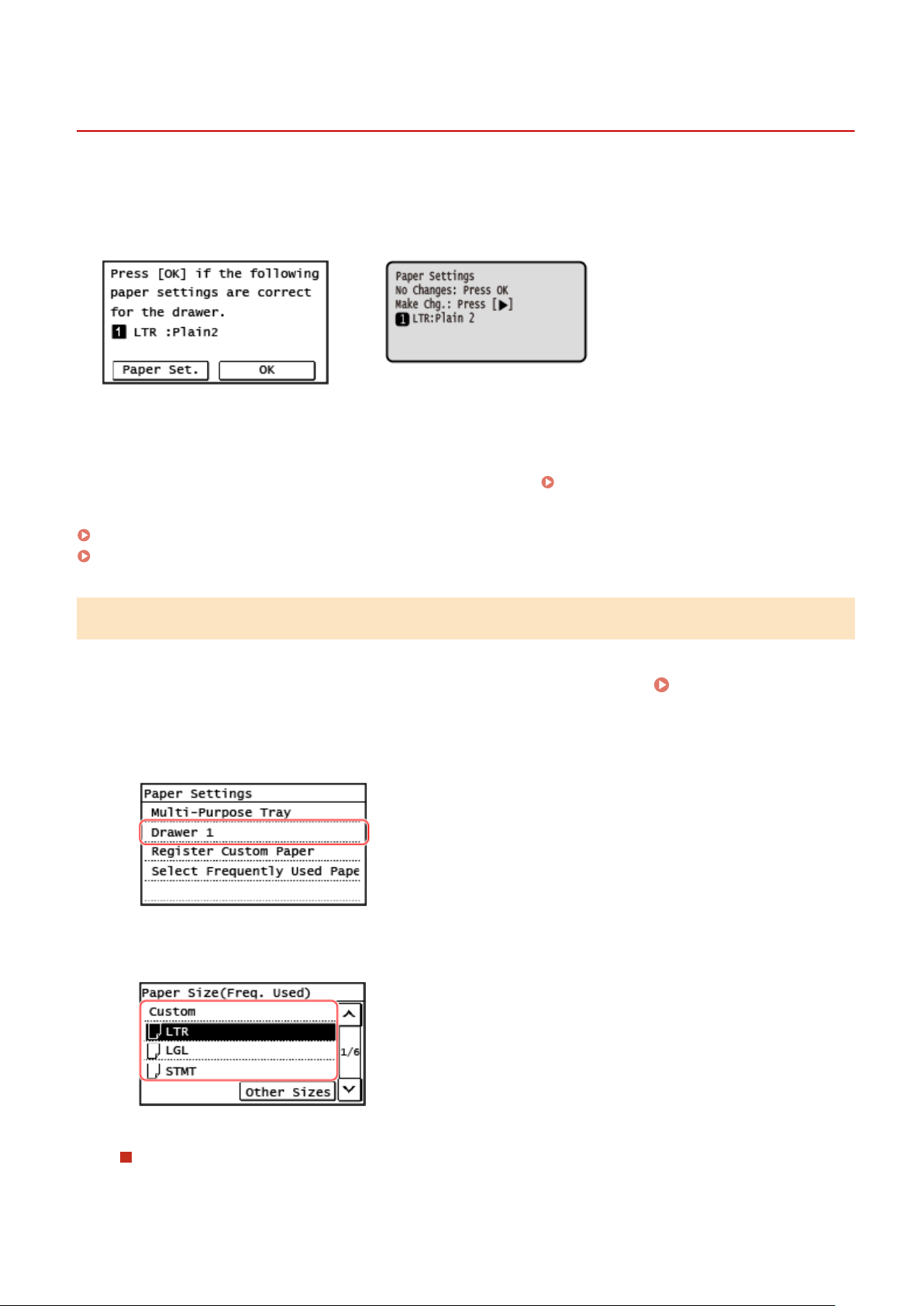
Setting the Paper Size and Type for the Drawer
8W0J-032
By default, the paper size and type of the dr
awer are set to LTR and Plain 2. When paper of a different size or type is
loaded, change the paper settings.
Touch Panel Model
5 Lines LCD Model
When [Notify to Check Paper Settings] is set to [On], the screen above is displayed. If you want to change the settings,
start fr
om [Paper Set.].
This section describes how to congure the settings using the control panel.
You can also congure the settings using Remote UI from a computer.
Managing the Machine from a Computer
(Remote UI)
(P. 398)
Touch Panel Model(P. 153)
5 Lines LCD Model(P. 154)
Touch Panel Model
1
On the control panel, press [Paper Set.] in the [Home] screen.
[Home] Screen(P. 120)
2
Press [Drawer 1].
3
Select the size of the paper loaded in the drawer.
You can scroll the screen to view paper sizes (such as envelopes) not displayed on the screen.
When A5 Size Paper Is Loaded
When paper is loaded in the landscape orientation, select [A5]. When paper is loaded in the portr
ait
orientation, select [A5R].
Basic Operations
153
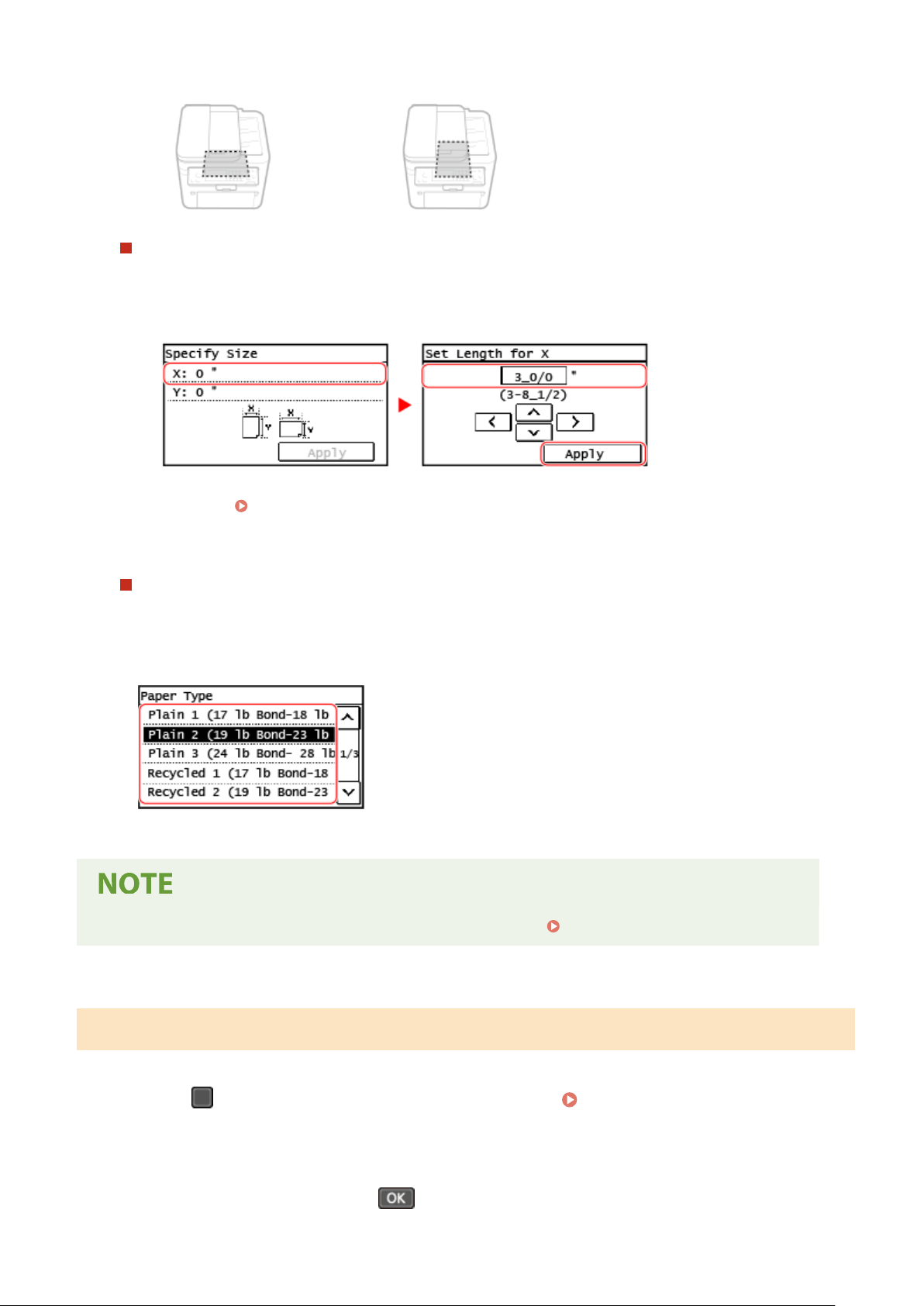
Landscape orientation (A5)
Portrait orientation (A5R)
When Non-standard Size (Custom Size) Paper Is Loaded
1
Press [Custom].
2
Press [X] or [Y] to enter the length and press [Apply].
When frequently-used non-standard paper sizes are registered, the registered size is displayed as the
paper size. Registering Non-standard Size Paper (Custom Paper)(P. 164)
3
Press [Apply].
If a Set Paper Size Is Not Displayed
Pr
ess [Other Sizes], and select the paper size from the displayed list.
4
Select the type of the paper loaded in the drawer.
➠ The paper size and type ar
e set.
● Y
ou can change the paper size displayed on the screen in Step 3.
Hiding Unused Paper Sizes(P. 166)
5 Lines LCD Model
1
Press
(Paper Setting key) on the control panel. Control Panel(P. 14)
➠ [Paper Settings] scr
een is displayed.
2
Select [Drawer 1], and press
.
Basic Operations
154
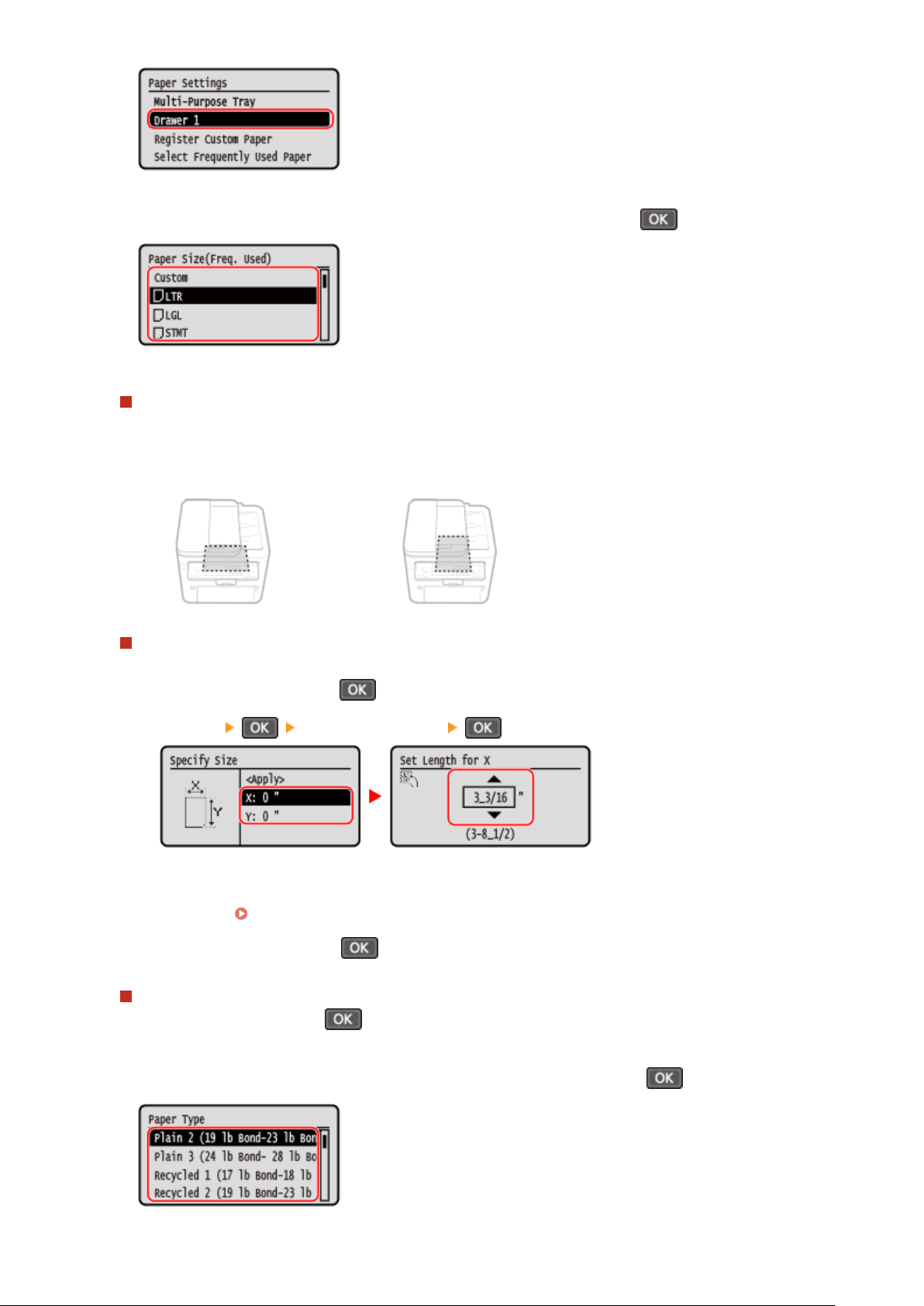
3
Select the size of the paper loaded in the drawer, and press .
You can scroll the screen to view paper sizes (such as envelopes) not displayed on the screen.
When A5 Size Paper Is Loaded
When paper is loaded in the landscape orientation, select [A5]. When paper is loaded in the portr
ait
orientation, select [A5R].
Landscape orientation (A5)
Portrait orientation (A5R)
When Non-standard Size (Custom Size) Paper Is Loaded
1
Select [Custom], and press
.
2
Select [X] enter the values in [X] .
3
Enter the values in [Y] in the same way as [X].
When fr
equently-used non-standard paper sizes are registered, the registered size is displayed as the
paper size.
Registering Non-standard Size Paper (Custom Paper)(P. 164)
4
Select [<Apply>], and press .
If a Set Paper Size Is Not Displayed
Pr
ess [<Other Sizes>], press
, and select the paper size from the displayed list.
4
Select the type of the paper loaded in the drawer, and press .
The paper size and type are set.
Basic Operations
155

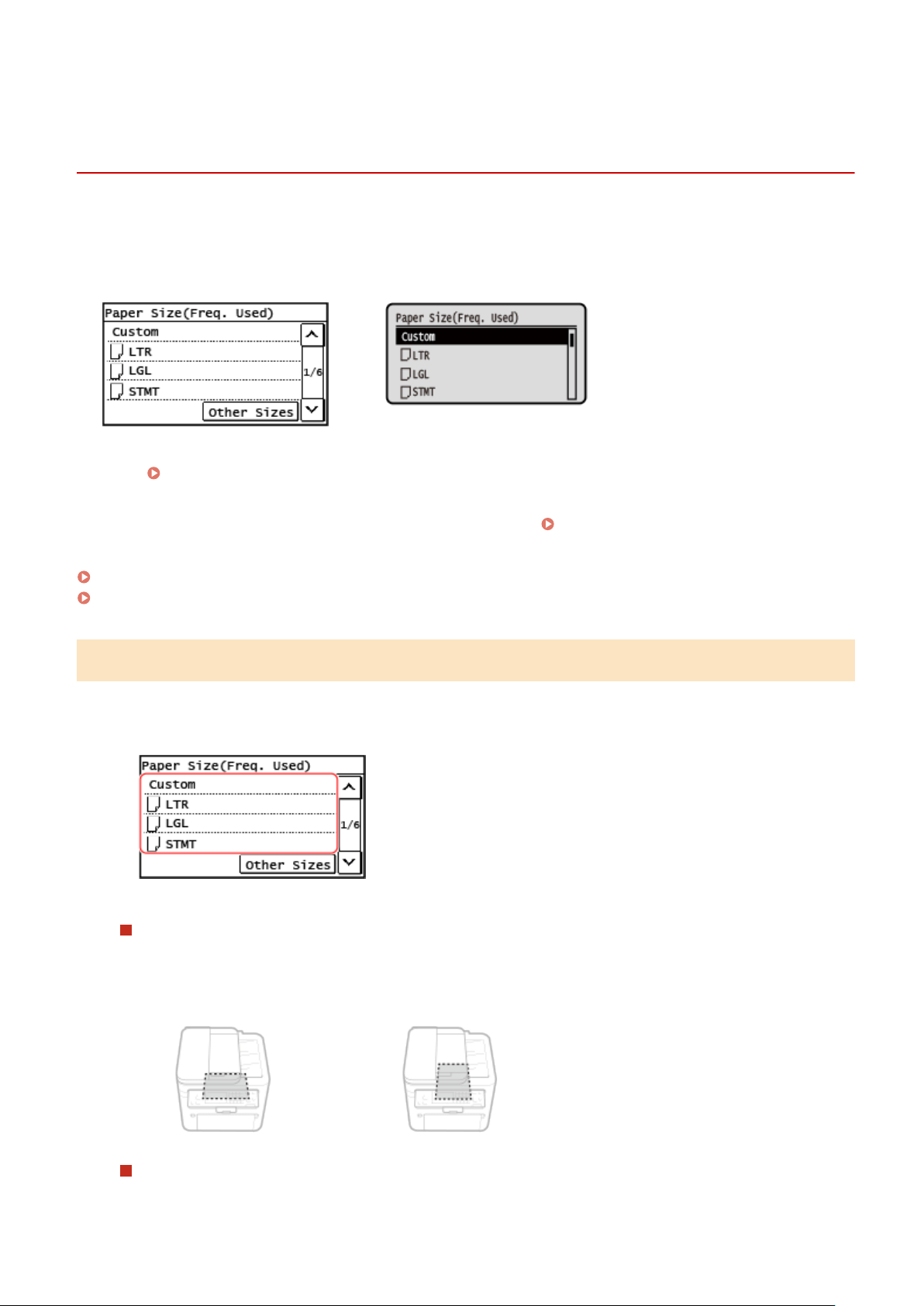
Setting the Paper Size and Type for the Multi-purpose
T
ray
8W0J-0J0
When paper is loaded in the multi-purpose tr
ay, the following screen is displayed on the control panel. Set the paper
size and type according to the loaded paper.
Touch Panel Model
5 Lines LCD Model
* If the paper size and type of the multi-purpose tray have been registered in advance, the above screen is not
displayed. Registering a Frequently Used Paper Size and Type for the Multi-purpose Tray(P. 160)
This section describes ho
w to congure the settings using the control panel.
You can also congure the settings using Remote UI from a computer.
Managing the Machine from a Computer
(Remote UI)
(P. 398)
Touch Panel Model(P. 157)
5 Lines LCD Model(P. 158)
Touch Panel Model
1
Select the size of the paper loaded in the multi-purpose tray.
You can scroll the screen to view paper sizes (such as envelopes) not displayed on the screen.
When A5 Size Paper Is Loaded
When paper is loaded in the landscape orientation, select [A5]. When paper is loaded in the portr
ait
orientation, select [A5R].
Landscape orientation (A5)
Portrait orientation (A5R)
When Non-standard Size (Custom Size) Paper Is Loaded
1
Press [Custom].
Basic Operations
157
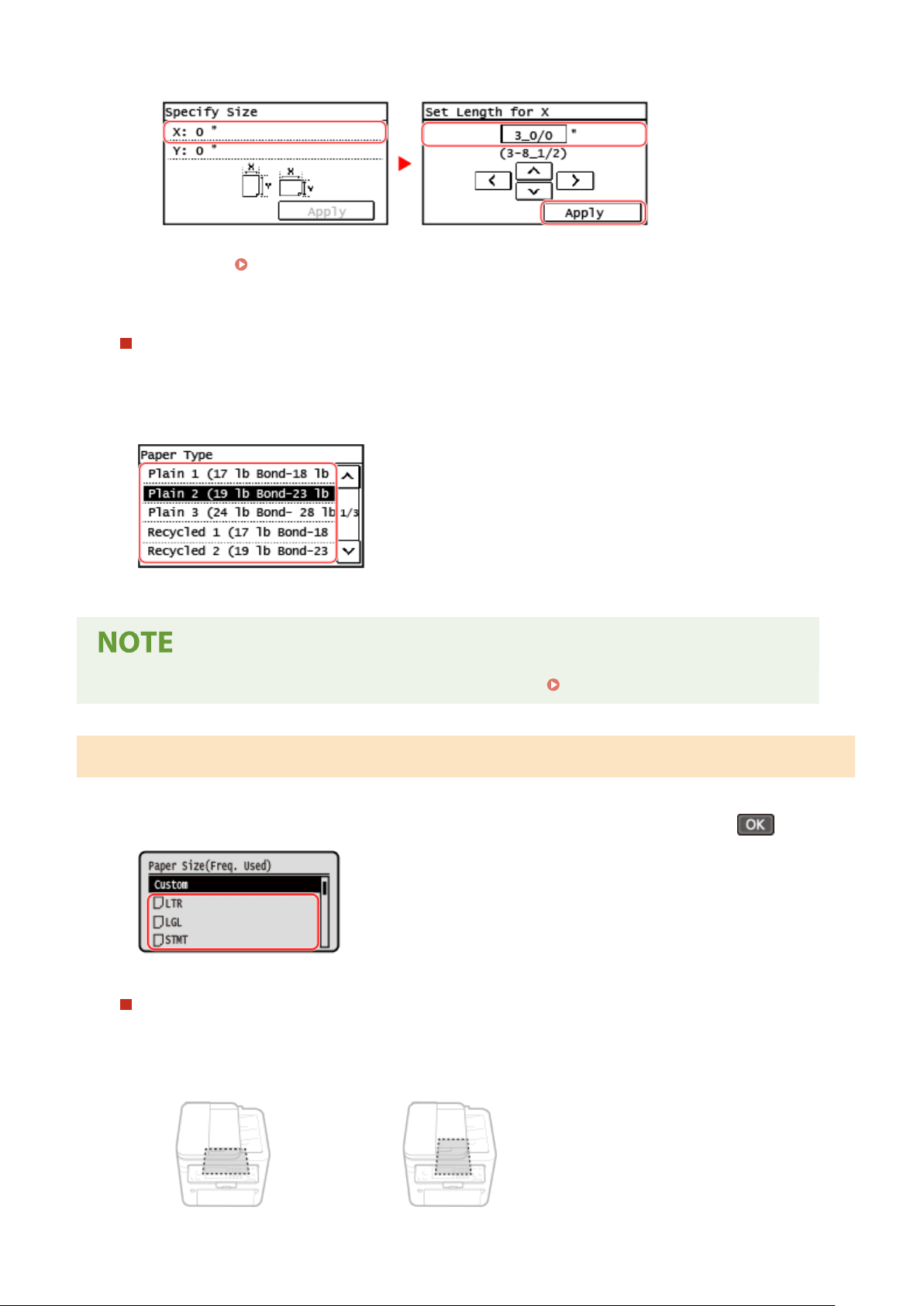
2
Press [X] or [Y] to enter the length and press [Apply].
When frequently-used non-standard paper sizes are registered, the registered size is displayed as the
paper size. Registering Non-standard Size Paper (Custom Paper)(P. 164)
3
Press [Apply].
If a Set Paper Size Is Not Displayed
Pr
ess [Other Sizes], and select the paper size from the displayed list.
2
Select the type of paper loaded in the multi-purpose tray.
➠ The paper size and type ar
e set.
● Y
ou can change the paper size displayed on the screen in Step 1.
Hiding Unused Paper Sizes(P. 166)
5 Lines LCD Model
1
Select the size of the paper loaded in the multi-purpose tray, and press
.
You can scroll the screen to view paper sizes (such as envelopes) not displayed on the screen.
When A5 Size Paper Is Loaded
When paper is loaded in the landscape orientation, select [A5]. When paper is loaded in the portr
ait
orientation, select [A5R].
Landscape orientation (A5)
Portrait orientation (A5R)
Basic Operations
158
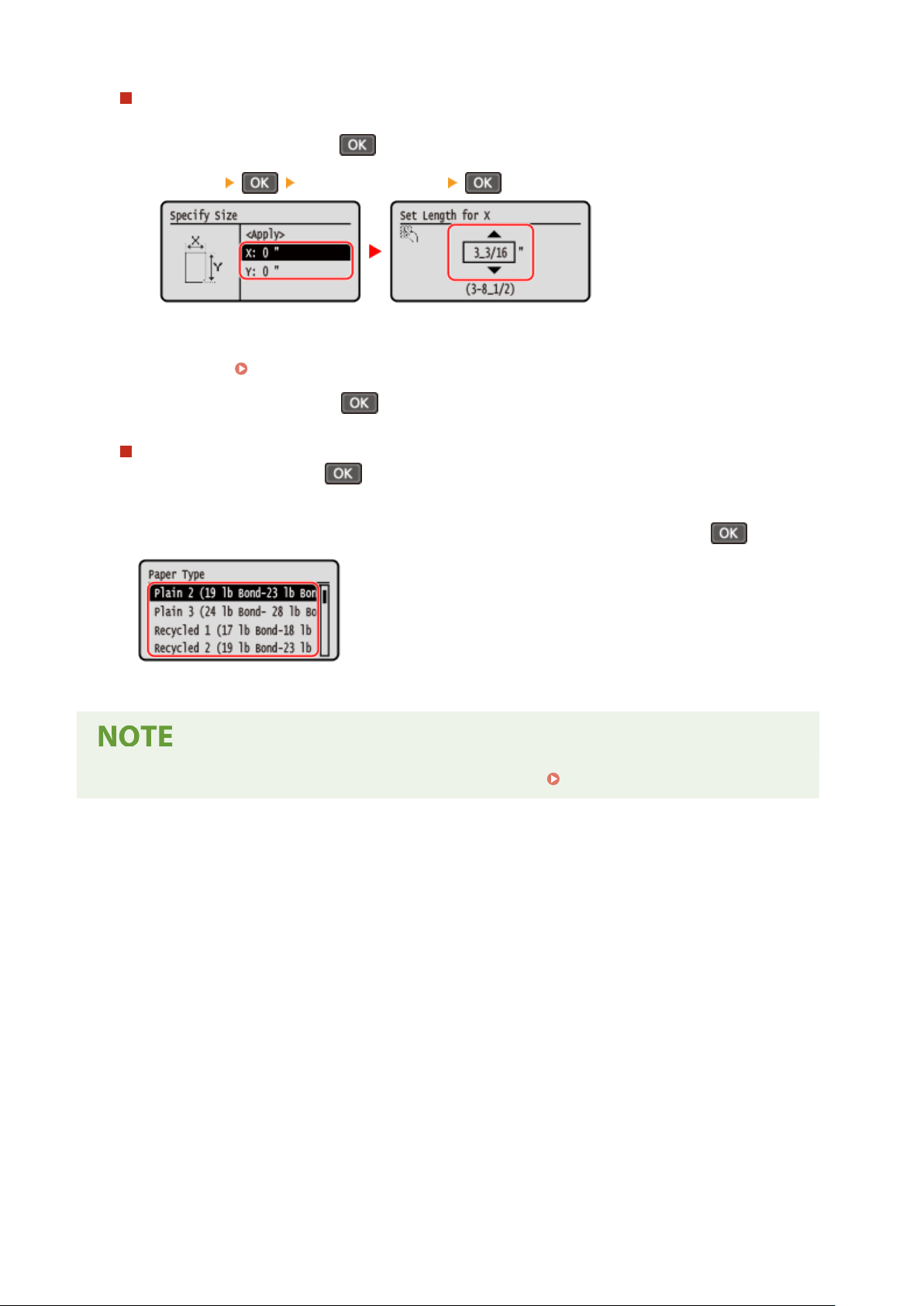
When Non-standard Size (Custom Size) Paper Is Loaded
1
Select [Custom], and press .
2
Select [X] enter the values in [X] .
3
Enter the values in [Y] in the same way as [X].
When fr
equently-used non-standard paper sizes are registered, the registered size is displayed as the
paper size.
Registering Non-standard Size Paper (Custom Paper)(P. 164)
4
Select [<Apply>], and press .
If a Set Paper Size Is Not Displayed
Pr
ess [<Other Sizes>], press
, and select the paper size from the displayed list.
2
Select the type of paper loaded in the multi-purpose tray, and press .
➠ The paper size and type ar
e set.
● Y
ou can change the paper size displayed on the screen in Step 1.
Hiding Unused Paper Sizes(P. 166)
Basic Operations
159
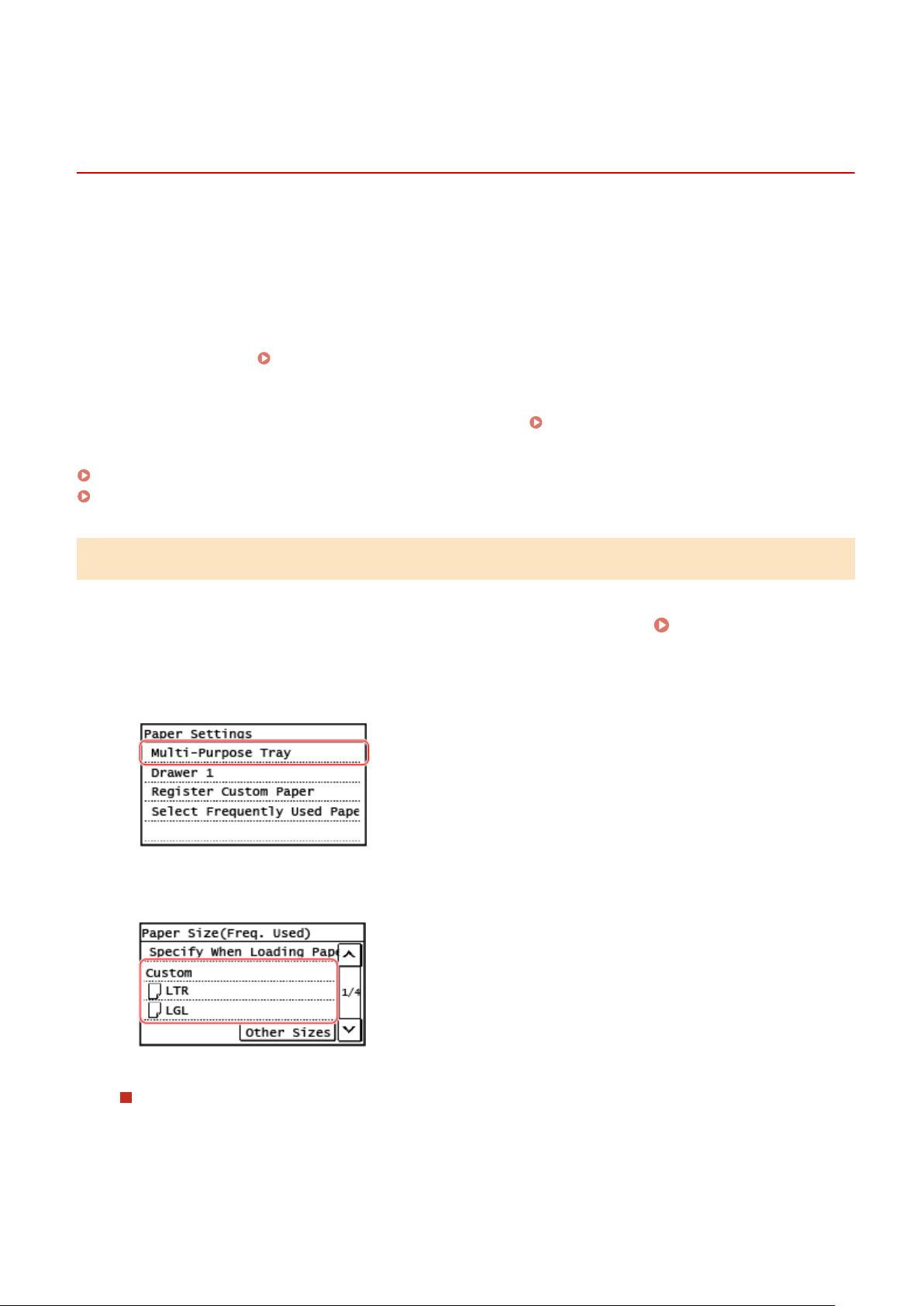
Registering a Frequently Used Paper Size and Type for
the Multi-purpose T
ray
8W0J-034
By default, when paper is loaded in the multi-purpose tr
ay, the screen for setting the paper size and type is displayed
on the control panel.
If you always use the same paper in the multi-purpose tray, you can register the paper size and type. This prevents the
paper settings screen from being displayed, saving you the trouble of conguring the settings.
When Using Paper of a Size or Type Different from the Registered Paper
After canceling the registration in Step 3, load the paper in the multi-purpose tray. When the screen for
setting the paper size and type is displayed on the control panel, congure the settings according to the
paper to be used.
Setting the Paper Size and Type for the Multi-purpose Tray(P. 157)
This section describes ho
w to register the settings using the control panel.
You can also register the settings using Remote UI from a computer.
Managing the Machine from a Computer
(Remote UI)
(P. 398)
Touch Panel Model(P. 160)
5 Lines LCD Model(P. 161)
Touch Panel Model
1
On the control panel, press [Paper Set.] in the [Home] screen.
[Home] Screen(P. 120)
2
Select [Multi-Purpose Tray].
3
Select the paper size to register.
You can scroll the screen to view paper sizes (such as envelopes) not displayed on the screen.
When Registering A5 Size Paper
When paper is loaded in the landscape orientation, select [A5]. When paper is loaded in the portr
ait
orientation, select [A5R].
Landscape orientation (A5)
Portrait orientation (A5R)
Basic Operations
160
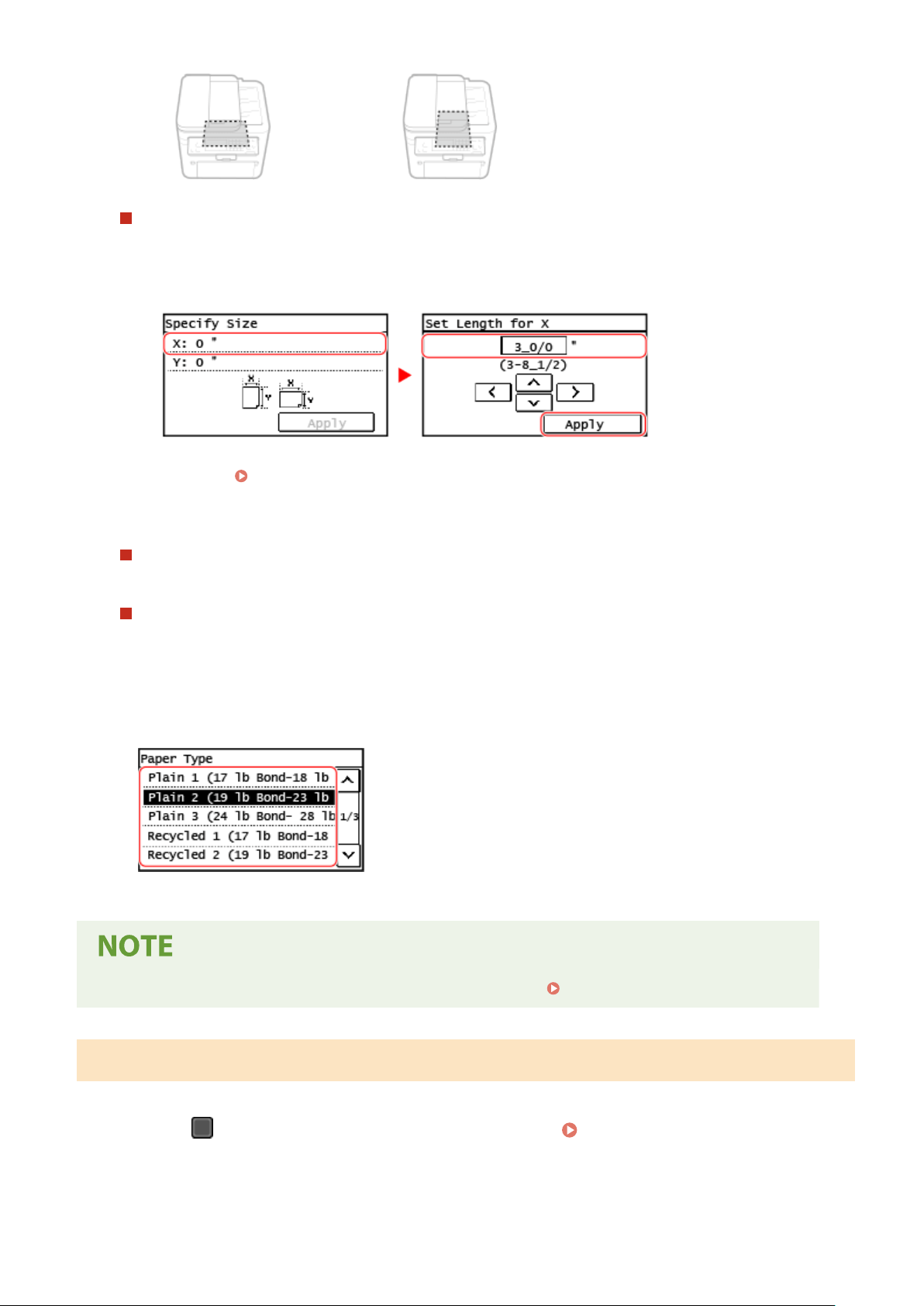
When Registering Non-standard Size (Custom Size) Paper
1
Press [Custom].
2
Press [X] or [Y] to enter the length and press [Apply].
When frequently-used non-standard paper sizes are registered, the registered size is displayed as the
paper size. Registering Non-standard Size Paper (Custom Paper)(P. 164)
3
Press [Apply].
If the Paper Size to Register Is Not Displayed
Pr
ess [Other Sizes], and select the paper size from the displayed list.
To Cancel the Registered Paper
Pr
ess [Specify When Loading Paper]. You do not need to perform Step 4.
When paper is loaded in the multi-purpose tray, the screen for setting the paper size and type is displayed on
the control panel.
4
Select the paper type to register.
➠ The paper size and type ar
e registered.
● Y
ou can change the paper size displayed on the screen in Step 3.
Hiding Unused Paper Sizes(P. 166)
5 Lines LCD Model
1
Press
(Paper Setting key) on the control panel. Control Panel(P. 14)
➠ [Paper Settings] scr
een is displayed.
Basic Operations
161
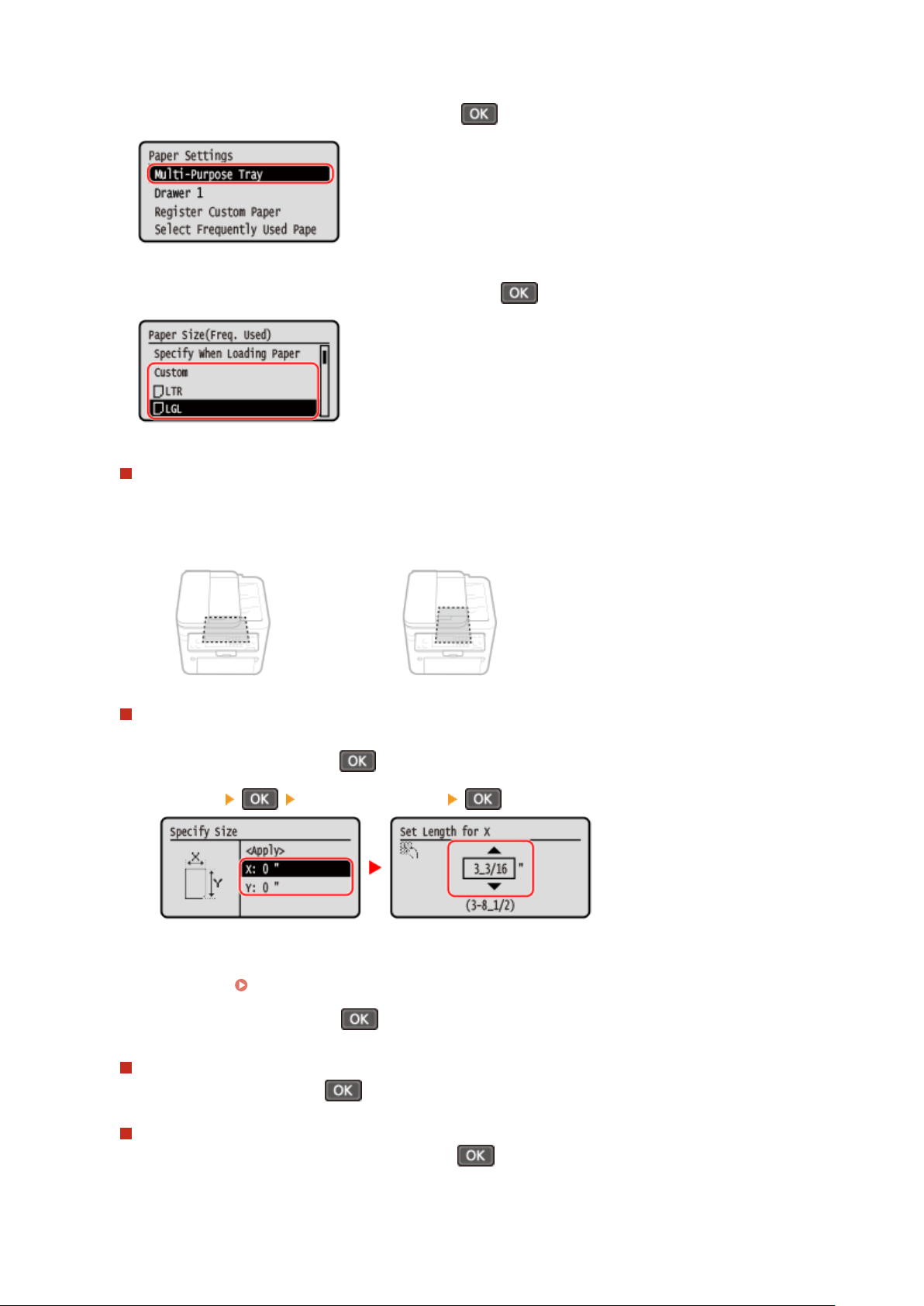
2
Select [Multi-Purpose Tray], and press .
3
Select the paper size to register, and press
.
You can scroll the screen to view paper sizes (such as envelopes) not displayed on the screen.
When A5 Size Paper Is Loaded
When paper is loaded in the landscape orientation, select [A5]. When paper is loaded in the portrait
orientation, select [A5R].
Landscape orientation (A5)
Portrait orientation (A5R)
When Non-standard Size (Custom Size) Paper Is Loaded
1
Select [Custom], and press
.
2
Select [X] enter the values in [X] .
3
Enter the values in [Y] in the same way as [X].
When fr
equently-used non-standard paper sizes are registered, the registered size is displayed as the
paper size.
Registering Non-standard Size Paper (Custom Paper)(P. 164)
4
Select [<Apply>], and press .
If a Set Paper Size Is Not Displayed
Press [<Other Sizes>], press , and select the paper size from the displayed list.
To Cancel the Registered Paper
Select [Specify When Loading Paper] , and press . You do not need to perform Step 4.
When paper is loaded in the multi-purpose tr
ay, the screen for setting the paper size and type is displayed on
the control panel.
Basic Operations
162
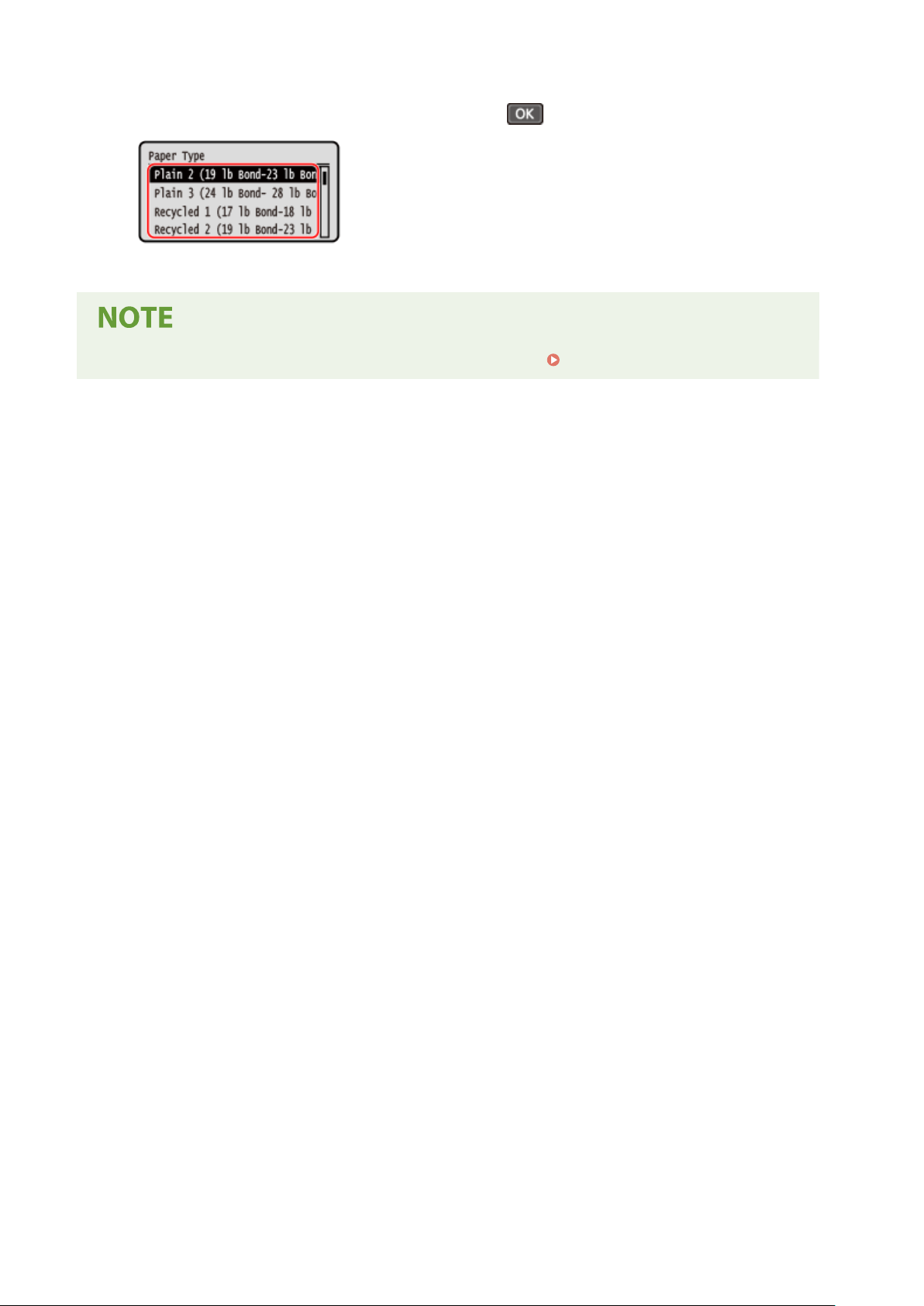
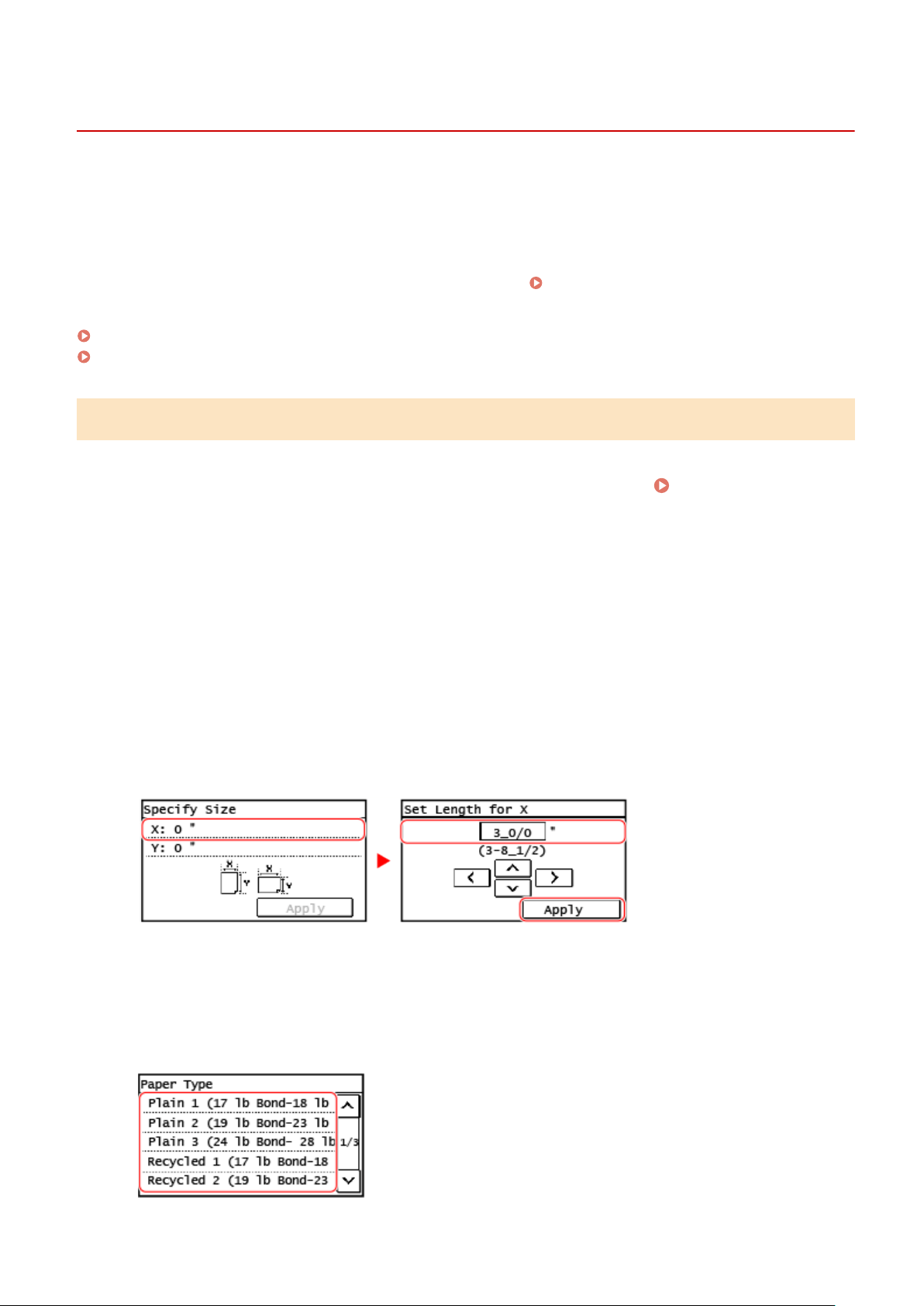
Registering Non-standard Size Paper (Custom Paper)
8W0J-035
Custom paper is non-standar
d size paper whose side lengths can be freely dened within the range supported by the
machine.
It is recommended to register a frequently used non-standard paper size. You can call the registered paper size on the
paper size selection screen, which saves time to entering the paper size. You can register up to three custom sizes.
This section describes how to register the settings using the control panel.
You can also register the settings using Remote UI from a computer.
Managing the Machine from a Computer
(Remote UI)
(P. 398)
Touch Panel Model(P. 164)
5 Lines LCD Model(P. 165)
Touch Panel Model
1
On the control panel, press [Paper Set.] in the [Home] screen.
[Home] Screen(P. 120)
2
Press [Register Custom Paper].
➠ The [Register Custom Paper] screen is displayed.
3
Select the registration number.
The size is registered to the selected number.
If you have selected the r
egistered number, continue on to press [Edit].
4
Press [X] or [Y] to enter the length and press [Apply].
5
Press [Apply].
6
Select the paper type to register.
➠ The custom paper is r
egistered.
Basic Operations
164
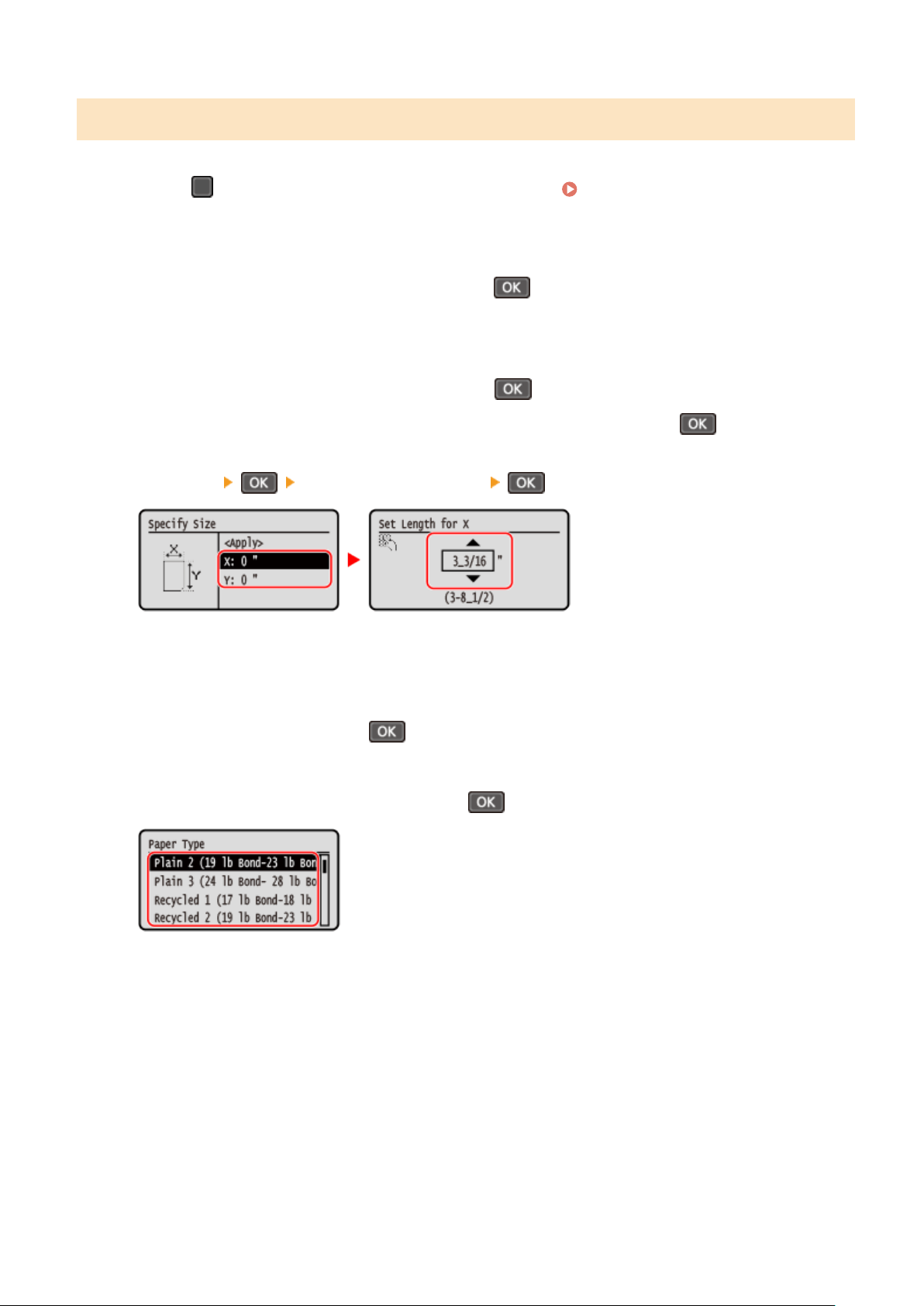
5 Lines LCD Model
1
Press (Paper Setting key) on the control panel. Control Panel(P. 14)
➠ [Paper Settings] scr
een is displayed.
2
Select [Register Custom Paper], and press
.
➠ The [Register Custom Paper] scr
een is displayed.
3
Select the registration number, and press
.
If you have selected the registered number, continue on to select [Edit], and press .
4
Select [X] enter the values in [X] .
5
Enter the values in [Y] in the same way as [X].
6
Select [<Apply>], and press .
7
Select the type of the paper, and press
.
➠ The custom paper is r
egistered.
Basic Operations
165
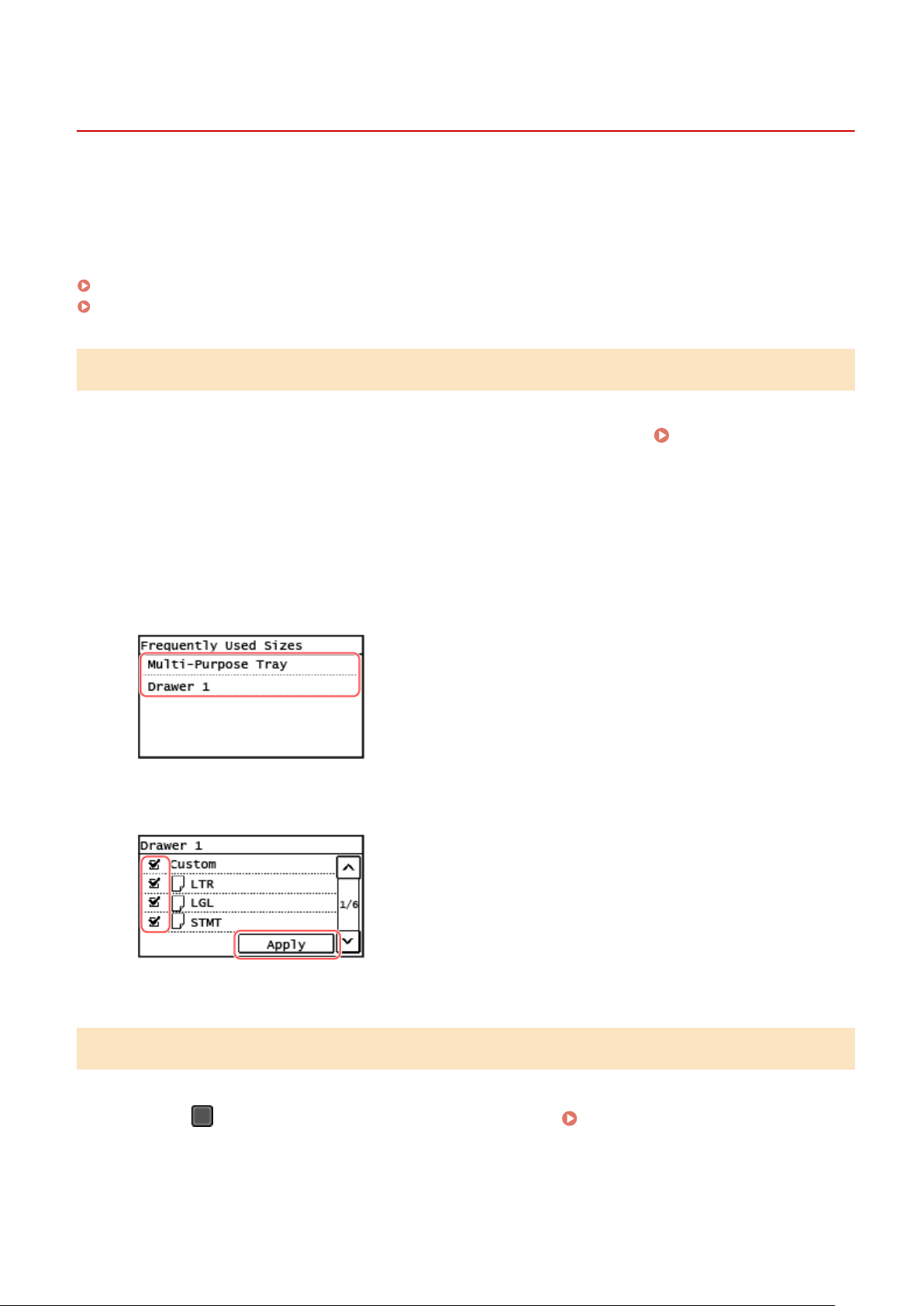
Hiding Unused Paper Sizes
8W0J-036
The paper settings scr
een displays the registered frequently used paper sizes. If unused paper sizes are displayed, you
can hide these for each paper source to make it easier to select a paper size.
To select a hidden paper size, press [Other Sizes] on the paper settings screen.
Use the control panel to congure the settings. You cannot congure the settings using Remote UI from a computer.
Touch Panel Model(P. 166)
5 Lines LCD Model(P. 166)
Touch Panel Model
1
On the control panel, press [Paper Set.] in the [Home] screen.
[Home] Screen(P. 120)
2
Press [Select Frequently Used Paper Sizes].
➠ The [Select Fr
equently Used Paper Sizes] screen is displayed.
3
Select a paper source.
4
Clear the checkboxes of the paper sizes to hide, and press [Apply].
➠ Paper sizes whose checkbo
xes are cleared are not displayed on the paper settings screen.
5 Lines LCD Model
1
Press
(Paper Setting key) on the control panel. Control Panel(P. 14)
➠ [Paper Settings] scr
een is displayed.
Basic Operations
166
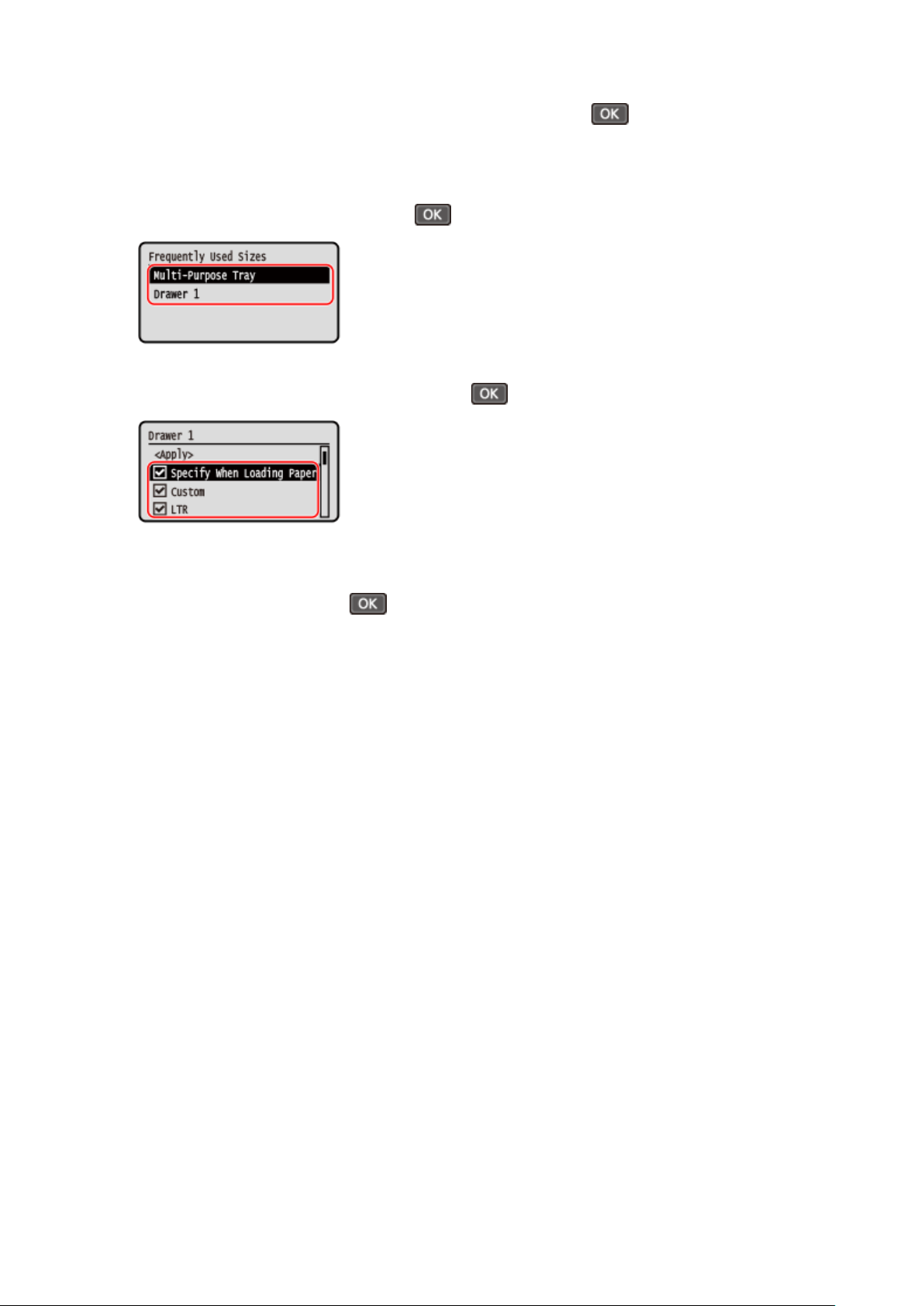
2
Select [Select Frequently Used Paper Sizes], and press .
➠ The [Select Fr
equently Used Paper Sizes] screen is displayed.
3
Select a paper source, and press
.
4
Select the paper size to hide and press
.
➠ The checkbo
xes on the paper sizes are cleared.
5
Select [Apply], and press
.
➠ Paper sizes whose checkbo
xes are cleared are not displayed on the paper settings screen.
Basic Operations
167

Registering Destinations (Address Book)
8W0J-038
Register destinations for sending and saving scanned data and fax
es to the Address Book
*
of the machine.
*
This setting is available only for MF269dw II / MF269dw VP II / MF267dw II.
Address Book Function
By registering destinations to the Address Book, you can save the trouble of entering the information of
destinations each time you send or save data. The Addr
ess Book has a function for easily specifying
destinations. Use this function when displaying the Address Book screen or specifying destinations.
Address Book Function(P. 169)
Destinations that Can Be Register
ed
● E-mail addr
ess
● File save locations (shared folder)
● Fax number
How to Register Destinations
You can register a destination by entering a name, e-mail address, fax number, and other information.
Y
ou can register a destination to the Address Book from the TX Job Log of a scan job or a fax job.
You can register destinations either with the control panel or Remote UI, but the types of destinations that can
be registered and the registration method vary.
Registering Using the Control Panel
Use the control panel to register destinations from the TX Job Log.
You cannot use the control panel to register le save locations (shared folder).
Registering Destinations to the Address Book (Control Panel)(P. 171)
Registering Using Remote UI
Use Remote UI to r
egister le save locations (shared folder).
You cannot use Remote UI to register destinations from the TX Job Log.
Registering Destinations to the Address Book (Remote UI)(P. 176)
◼ See Also
Importing and Exporting the Addr
ess Book
You can share and back up data in the Address Book.
Importing and Exporting the Address Book(P. 414)
Pr
eventing Unauthorized Use of the Address Book
To prevent unauthorized adding of new entries to the Address Book and editing of existing entries, you can
set a PIN and restrict the method for adding new entries.
Restricting Address Book Registration and Editing(P. 386)
Basic Operations
168
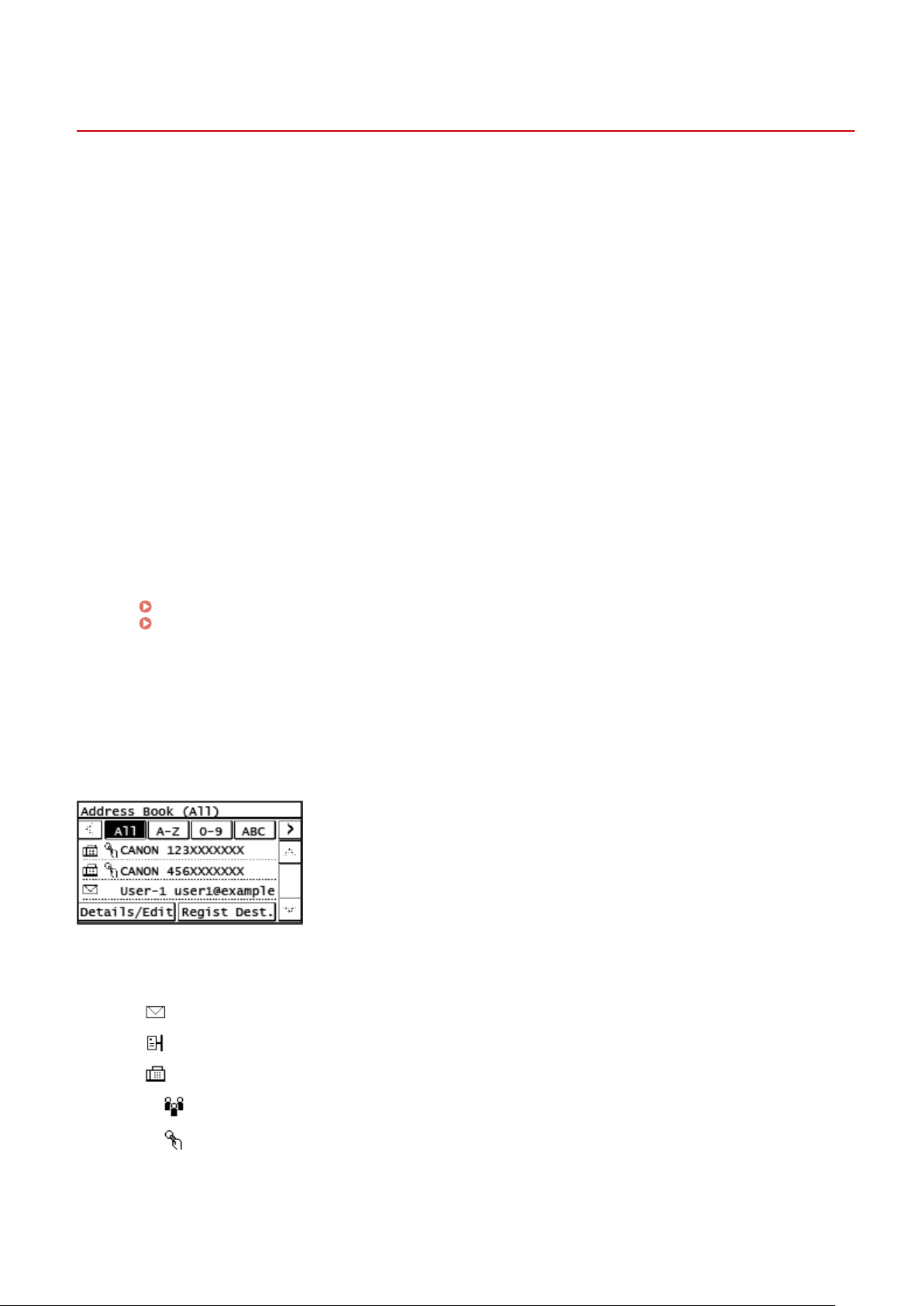
Address Book Function
8W0J-039
Y
ou can specify destinations registered in the Address Book by calling up the Address Book in the [Home] screen or
the scan or fax screen on the control panel.
When registering destinations, select the function to quickly specify the destination.
You can also eciently specify destinations from the Address Book screen, such as by grouping destinations or
displaying them by type.
Function to Quickly Specify a Destination
When registering destinations, select and register either of the following:
● One-Touch
It is very useful to register an especially frequently used destination to a One-Touch button. Any types of
destinations can be registered to a One-Touch button. Register a destination to a One-Touch button on the
[Home] screen.
Up to four one-touch buttons are available.
● Coded Dial
Register a 3-digit number for each destination. You can then directly enter that number to specify a
destination.
You can register up to 100 destinations with Coded Dial numbers.
Registering a Group of Multiple Destinations
You can register multiple registered e-mail address or fax number destinations as a group to One-Touch or
Coded Dial. This saves you the trouble of specifying multiple destinations individually when sending data.
You can register up to 50 groups.
You can register only the same type of destinations for one group.
Registering Groups to the Address Book (Control Panel)(P. 173)
Registering Groups to the Address Book (Remote UI)(P. 180)
Classifying b
y Index
You can display the initials of the names and types of destinations (such as e-mail or fax) set at the time of
registration by classifying them by index.
◼ Address Book Screen
When you call the Address Book from the [Home] screen or scan or fax screen, the following screen is displayed.
List of Registered Destinations
The types of destinations ar
e indicated with the following symbols, and the destination information, such as
the name, e-mail address, and fax number, are displayed:
[
]: E-mail
[ ]: File save location (shared folder)
[ ]: Fax
● [ ] is displayed for group destinations.
● [ ] is displayed next to the destination type symbol for destinations registered to One-Touch.
Inde
x
This is displayed at the top of the screen. You can lter destinations displayed in the list by selecting their
type or the initials of a name.
Basic Operations
169

● Pr
ess [
] or [ ] to change the index display.
● T
o display all destinations registered to the Address Book, select [All].
● When specifying the destinations to be displayed by initials of the name, select [A-Z], [0-9], or [ABC] to [YZ].
Destination Operation Items
These are displayed on the bottom of the screen. Press to register, edit, or delete a destination, or to specify
a destination to which to send or save data.
● When you call the Address Book from the [Home] screen and select a destination address, the scan or fax
screen is displayed with the selected address specied.
Basic Operations
170
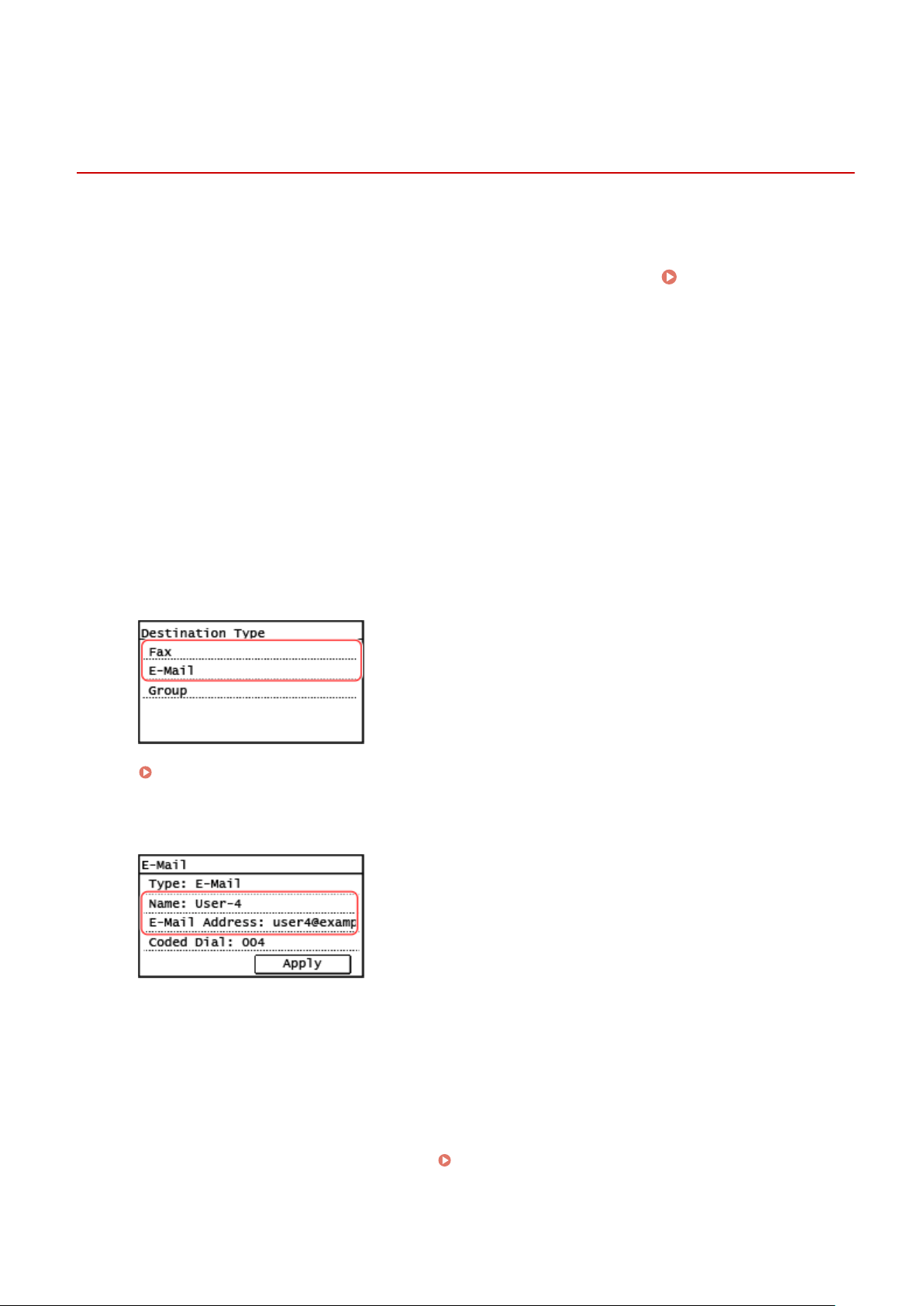
Registering Destinations to the Address Book (Control
Panel)
8W0J-03A
Y
ou can register destinations to the Address Book using the control panel.
1
On the control panel, press [Addr. Book] in the [Home] screen.
[Home]
Scr
een(P. 120)
2
Press [Regist Dest.].
➠ The [Register As] scr
een is displayed.
If the [Address Book PIN] screen is displayed, enter the PIN, and press [Apply].
3
Press [Coded Dial] or [One-Touch].
➠ [Destination T
ype] screen is displayed.
4
Select the destination type.
When registering group destinations, see the following.
Registering Groups to the Address Book (Control Panel)(P. 173)
5
Enter the destination information.
● Pr
ess [Name] and enter the name, and then press [Apply].
● You can register a destination without entering its name, but by entering the name, you can search for it by
its initials when specifying the destination.
● For destination information, press [E-Mail Address] or [Fax Number], enter that information, and then press
[Apply].
● When entering an international destination in [Fax Number], enter the international access number, country
code, and fax number in that order. If you are unable to connect, press [Pause] in between the numbers to
add a pause. You can change the pause time.
[Set Pause Time](P. 494)
Basic Operations
171
6
Set the fax sending details, as needed.
If a fax number was registered in Step 5, set the details when a send error occurs or it takes time to send a
fax to that number.
If you r
egistered something other than a fax number, this step is not required. Proceed to Step 7.
1
Press [Fax Number] [Details].
2
Set the items, and press [Apply].
[ECM TX] *1
When an err
or occurs for an image being sent, the machine corrects the image so as not to send a
distorted image.
[TX Speed] *1
If it takes time to start sending a fax, such as when there is a poor phone line connection, the machine
lowers the communication start speed.
[Long Distance]
If a communication error occurs when sending a fax to an international destination, select [International
(1)]. If the error does not improve, select [International (2)] and [International (3)] in that order.
*1 If this is not set here, the settings that appear when selecting [Menu] in the [Home] screen and then selecting
[Function Settings] are applied.
[ECM TX](P. 494)
[TX Start Speed](P. 495)
7
Press [Apply].
➠ The destination is r
egistered to the Address Book.
When a destination is registered to [One-Touch], the destination is registered to the [One-Touch] button on
the [Home] screen. The name which is entered in [Name] when the destination is registered appears as the
button name.
Registering a Destination from the TX Job Log of a Scan or Fax Job
● Y
ou can register a destination to the Address Book from the TX Job Log of a scan job or a fax job with the
following steps.
on the control panel [TX Job] [Job Log] select the log you want to call up [Reg Adr
Book].
Checking the Send and Save Status and Log of Scanned Data (Touch Panel Model)(P. 263)
Checking the Status and Log for Sent and Received Faxes(P. 293)
Basic Operations
172
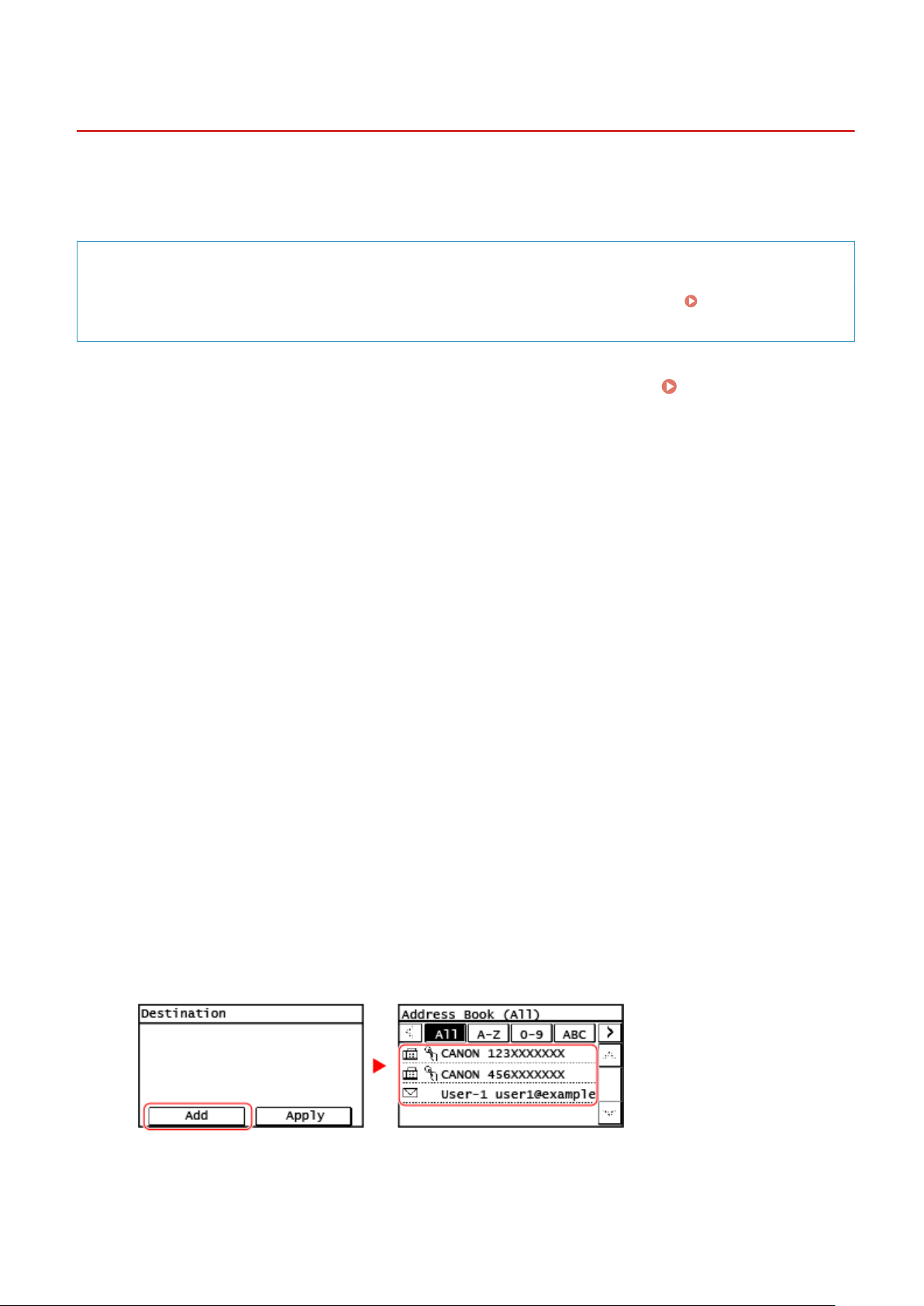
Registering Groups to the Address Book (Control Panel)
8W0J-03C
Y
ou can register a group of multiple destinations to the Address Book using the control panel.
You can register only the same type of destinations for a group. You cannot register le save locations (shared folder)
to a group.
Required Preparations
● Register the destinations to be added to a gr
oup to the Address Book of the machine.
Registering
Destinations to the Addr
ess Book (Control Panel)(P. 171)
1
On the control panel, press [Addr. Book] in the [Home] screen. [Home]
Screen(P. 120)
2
Press [Regist Dest.].
➠ The [Register As] scr
een is displayed.
If the [Address Book PIN] screen is displayed, enter the PIN, and press [Apply].
3
Press [Coded Dial] or [One-Touch].
➠ [Destination T
ype] screen is displayed.
4
Press [Group].
➠ The [Gr
oup] screen is displayed.
5
Press [Name] and enter the name, and then press [Apply].
You can register a destination without entering its name, but by entering the name, you can search for it by
its initials when specifying the destination.
6
Press [Number of Destinations].
7
Press [Add] and select the address you want to add to the group.
● Select the index at the top of the screen of the Address Book to lter and display the destinations.
● Repeat this operation until you register every address you want to add to the group.
Basic Operations
173
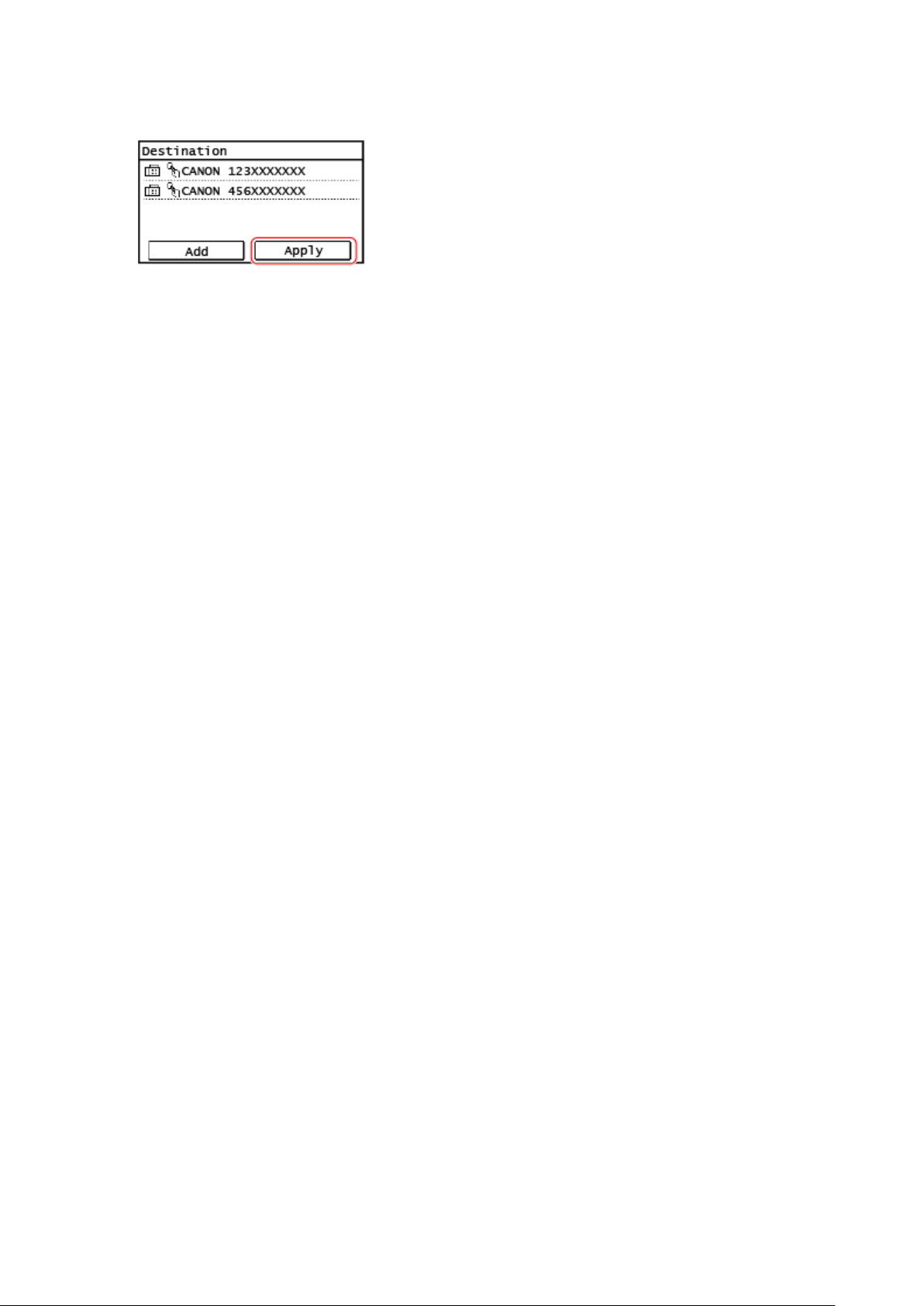
8
Press [Apply].
● Pr
ess the added address to check the information of the added address.
● If you want to remove an address from the group, press the address you want to remove and press
[Remove].
9
Press [Apply].
➠ The destination is r
egistered to the Address Book.
When a destination is registered to [One-Touch], the destination is registered to the [One-Touch] button on
the [Home] screen. The name which is entered in [Name] when the destination is registered appears as the
button name.
Basic Operations
174
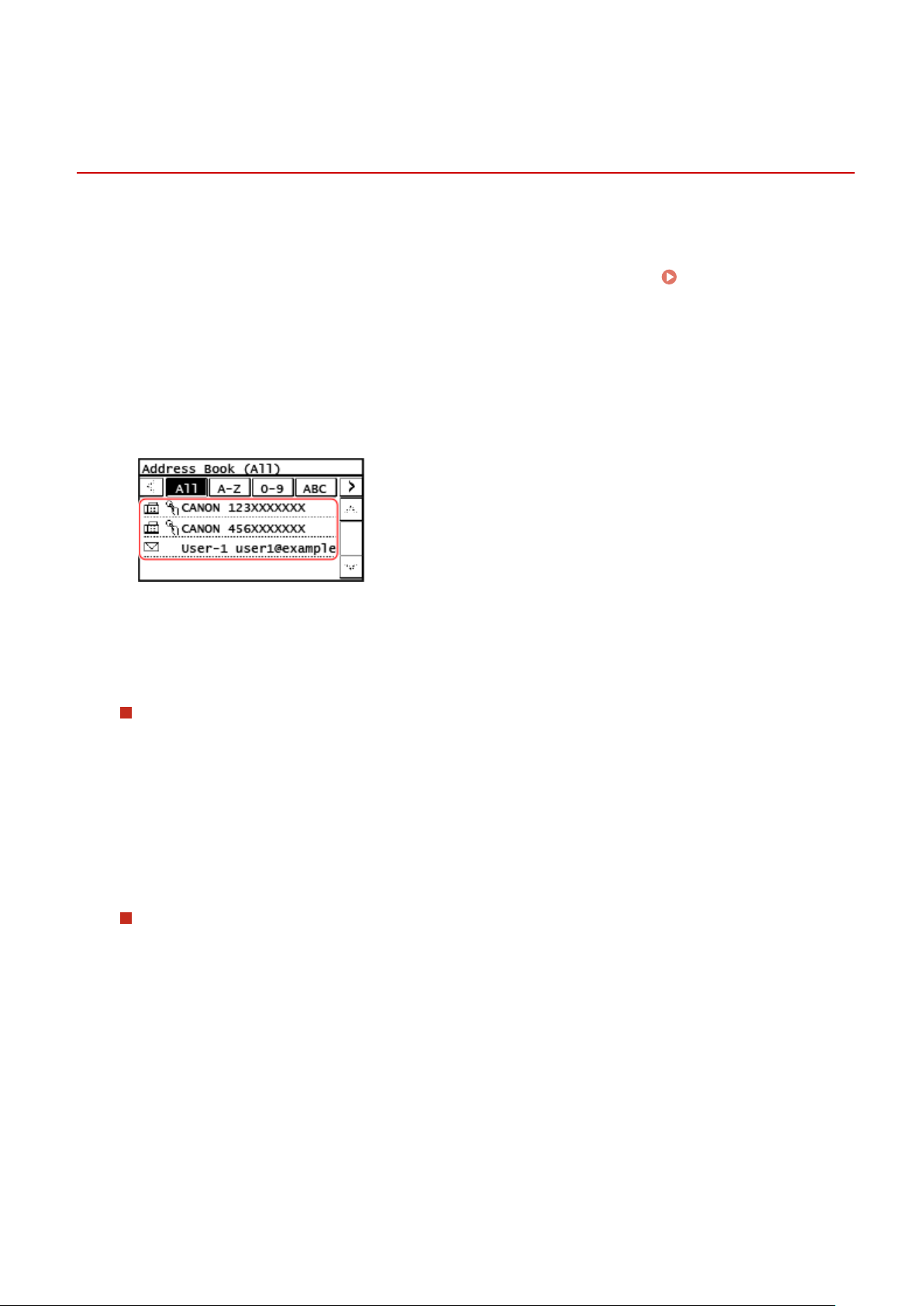
Editing and Deleting Destinations in the Address Book
(Contr
ol Panel)
8W0J-03E
Y
ou can edit information of destinations registered in the Address Book or delete unused destinations.
1
On the control panel, press [Addr. Book] in the [Home] screen.
[Home]
Scr
een(P. 120)
2
Press [Details/Edit].
3
Press the destination you want to edit or delete.
● Select the index at the top of the screen of the Address Book to lter and display the destinations.
4
Edit or delete the destination.
When Editing a Destination
1
Press [Edit].
If the [Addr
ess Book PIN] screen is displayed, enter the PIN, and press [Apply].
2
Select and edit the item you want to edit.
3
Press [Apply].
➠ The edited information is applied.
When Deleting a Destination
1
Press [Delete].
If the [Addr
ess Book PIN] screen is displayed, enter the PIN, and press [Apply].
2
Press [Yes].
➠ The destination is deleted.
Basic Operations
175
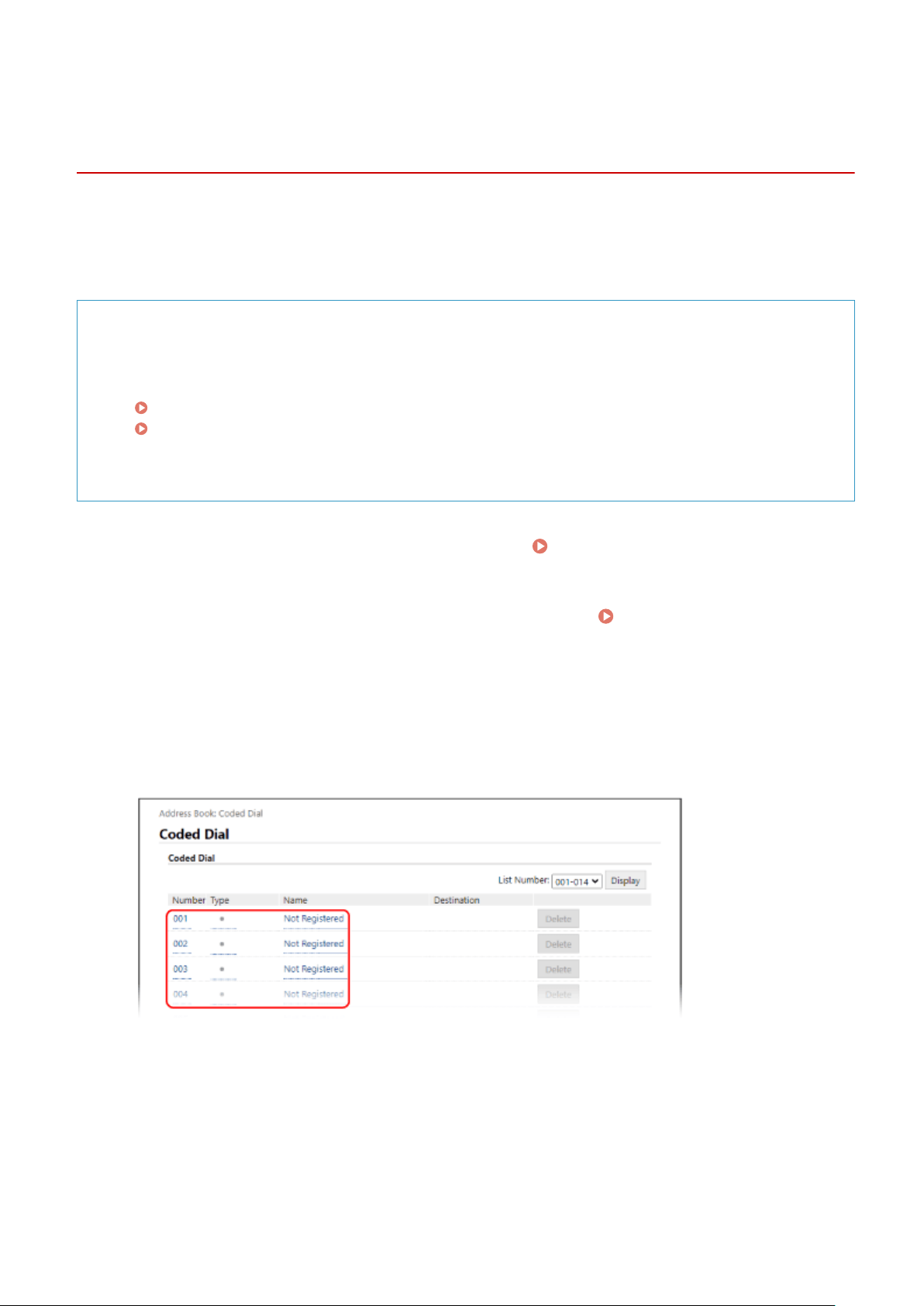
Registering Destinations to the Address Book (Remote
UI)
8W0J-03F
Y
ou can register destinations to the Address Book using Remote UI from a computer.
Use Remote UI to register le save locations (shared folder).
Administrator privileges are required to register destinations using Remote UI.
Required Preparations
● When r
egistering a shared folder as a destination, prepare the following information and keep it close by:
- Name or IP address of the computer with the shared folder
Viewing the System Information of the Computer(P. 661)
Viewing the Network Connection Information of the Computer(P. 663)
-
Path to the shared folder
- User name and password used for accessing the shared folder (if Restrict Access is set)
1
Log in to Remote UI in System Manager Mode. Starting Remote UI(P. 399)
2
On the Portal page of Remote UI, click [Address Book]. Portal Page of Remote
UI(P
. 401)
3
Click [One-Touch] or [Coded Dial].
4
Click an item displayed as [Not Registered].
➠ The [Register Ne
w Destination] screen is displayed.
If the [Enter PIN] screen is displayed, enter the Address Book PIN, and then click [OK].
5
Select the destination type, and click [OK].
Basic Operations
176
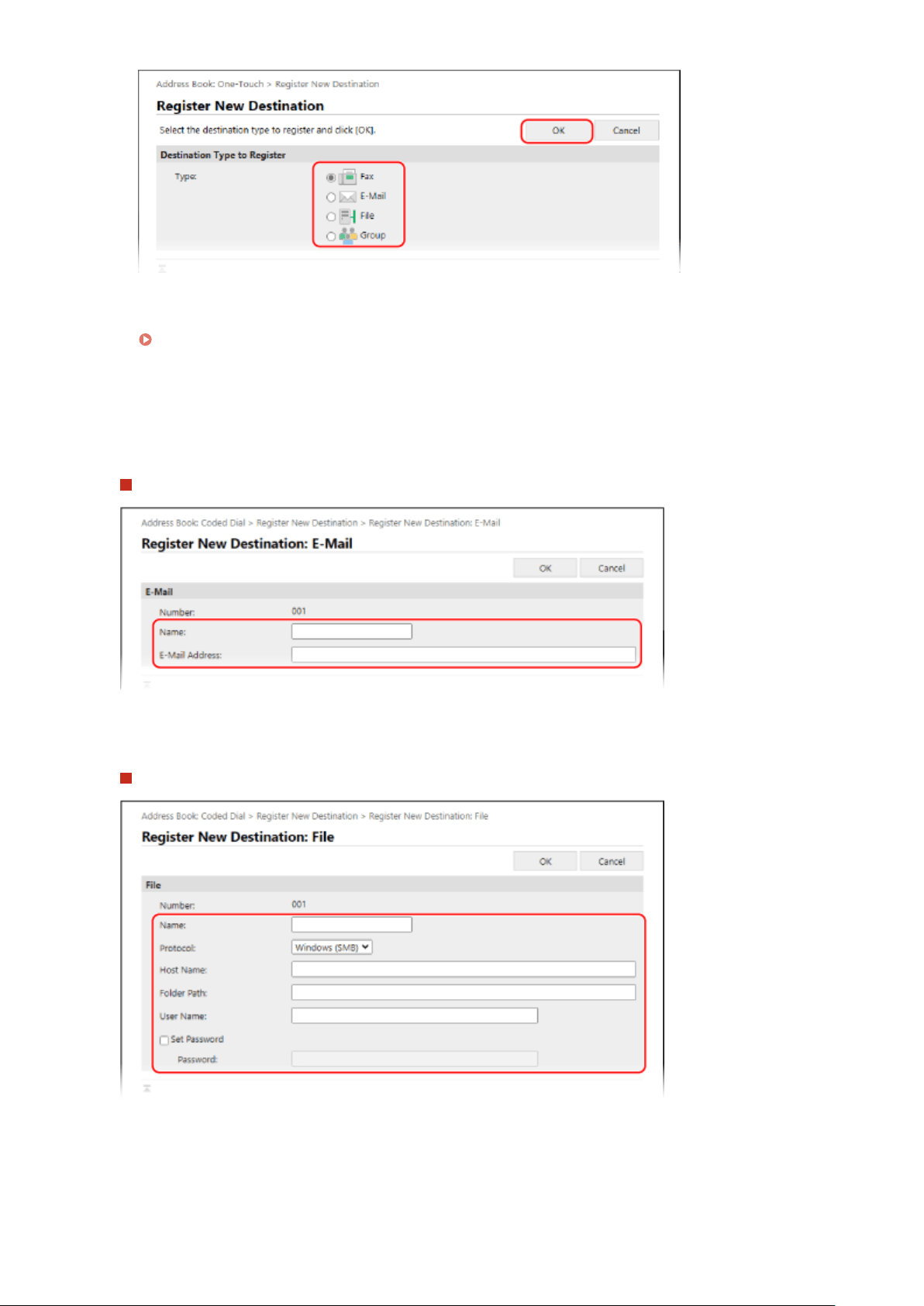
● When r
egistering le save locations (shared folder), select [File].
● When registering group destinations, see the following.
Registering Groups to the Address Book (Remote UI)(P. 180)
6
Set the destination information.
You can register a destination without entering its name, but by entering the name, you can search for it by
its initials when specifying the destination.
When Registering E-Mail Addresses
Enter the name and e-mail address.
When Registering File Save Locations (Shared Folder)
1
Enter the name.
2
Select [Protocol].
When r
egistering a shared folder, select [Windows (SMB)].
Basic Operations
177
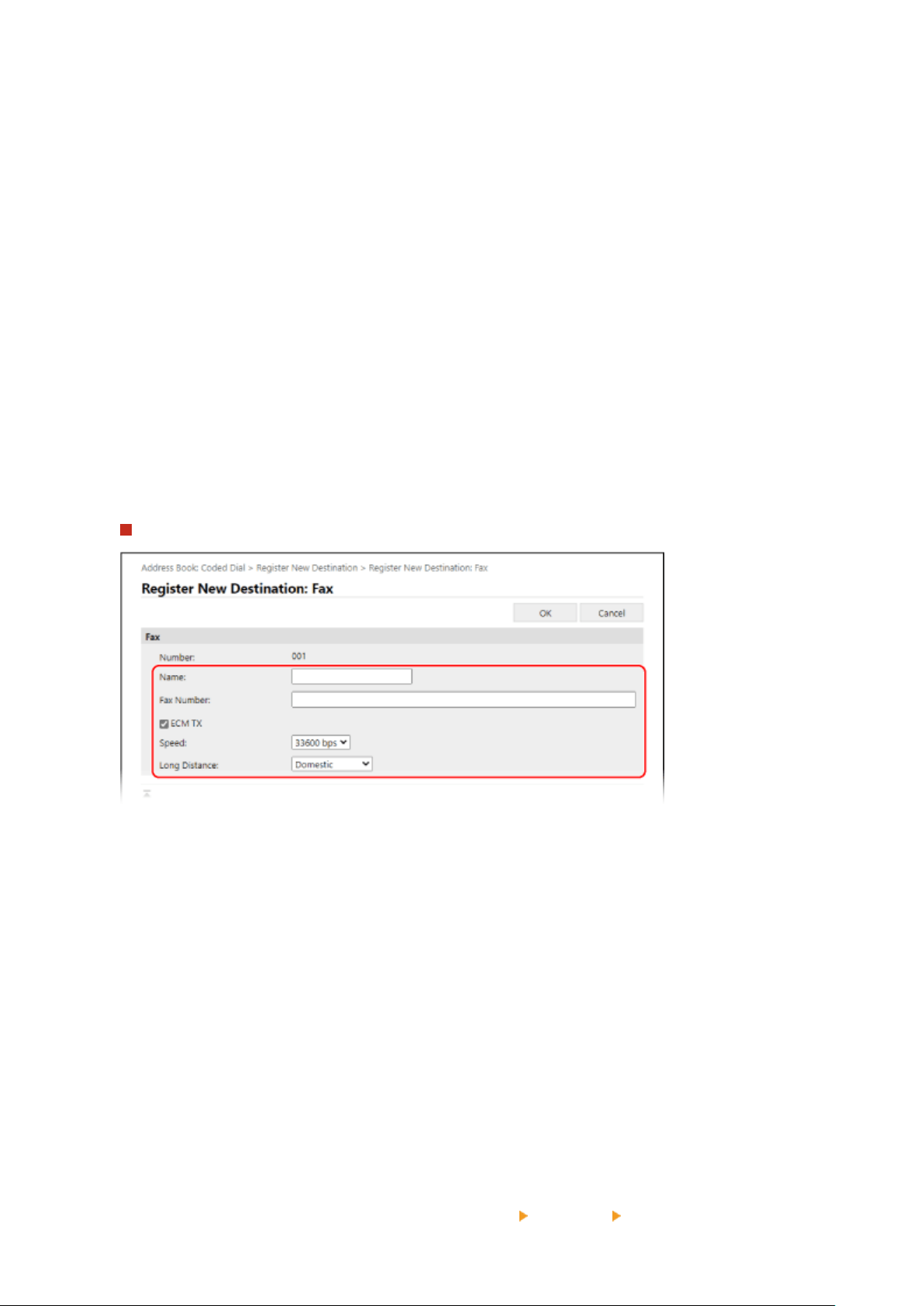
3
In [Host Name], enter the computer name or the IP address of the computer where a shared folder is
located.
* When using a DNS server, you can enter the host name or FQDN instead of the computer name or IP
addr
ess.
4
Enter the path to the folder.
Enter the path to the shared folder. Use "\" as a separator.
Input example: when the shared folder path is C:\users\public\share
users\public\share
If there is no folder at the entered path, a folder with the entered name is created when the le is saved
for the rst time.
* However, if there is no parent folder, or you do not have write permission to the parent folder, a
sending error occurs without a folder being created.
5
Enter the user name and password, as needed.
● If Restrict Access is enabled for the shared folder, enter the user name and password used for
accessing the shared folder.
● To enter a password, select the [Set Password] checkbox, and then enter the password.
When Registering a Fax Number
1
Enter the name and fax number.
2
Set the fax sending details, as needed.
If a send err
or occurs or it takes time to send a fax to a registered fax number, set the fax sending details.
[ECM TX] *1
When this is selected and an error occurs for an image being sent, the machine corrects the image so as
not to send a distorted image.
[Speed] *1
If it takes time to start sending a fax, such as when there is a poor phone line connection, the machine
lowers the communication start speed.
[Long Distance]
If a communication error occurs when sending a fax to an international destination, select [International
(1)]. If the error does not improve, select [International (2)] and [International (3)] in that order.
*1
If this is not set here, the setting in [Settings/Registration]
[TX Settings] [Fax TX Settings] is applied.
Basic Operations
178

[ECM TX](P. 494)
[TX Start Speed](P. 495)
7
Click [OK].
➠ The destination is r
egistered to the Address Book.
8
Log out from Remote UI.
Editing or Deleting Registered Destinations
● If you select a destination and click [Edit] on the screen in Step 4, you can edit the registered information.
● In Step 4, click [Delete] to the right of the destination you want to delete, and the destination will be deleted.
Basic Operations
179
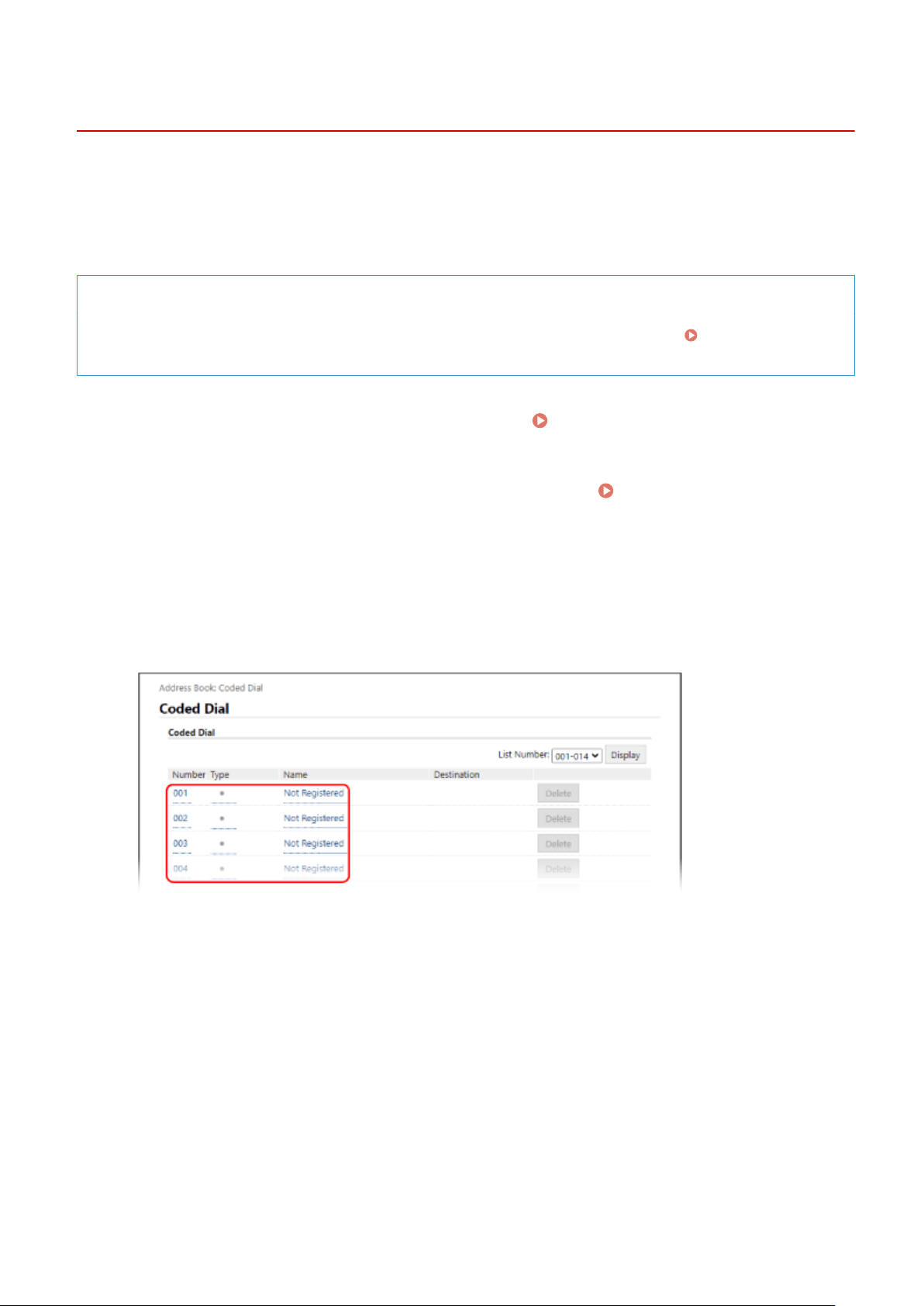
Registering Groups to the Address Book (Remote UI)
8W0J-03H
Y
ou can register a group of multiple destinations to the Address Book using Remote UI from a computer.
You can register only the same type of destinations for a group. You cannot register le save locations (shared folder)
to a group.
Administrator privileges are required to register a group using Remote UI.
Required Preparations
● Register the destinations to be added to a gr
oup to the Address Book of the machine.
Registering
Destinations to the Addr
ess Book (Remote UI)(P. 176)
1
Log in to Remote UI in System Manager Mode. Starting Remote UI(P. 399)
2
On the Portal page of Remote UI, click [Address Book]. Portal Page of Remote
UI(P
. 401)
3
Click [One-Touch] or [Coded Dial].
4
Click an item displayed as [Not Registered].
➠ The [Register Ne
w Destination] screen is displayed.
If the [Enter PIN] screen is displayed, enter the Address Book PIN, and then click [OK].
5
Select [Group], and click [OK].
➠ The [Register Ne
w Destination: Group] screen is displayed.
6
In [Group], enter the group name.
You can register a group without entering its name, but by entering the name, you can search for it by its
initials when specifying the destination.
7
In [Member Settings], click [Select from Address Book].
Basic Operations
180
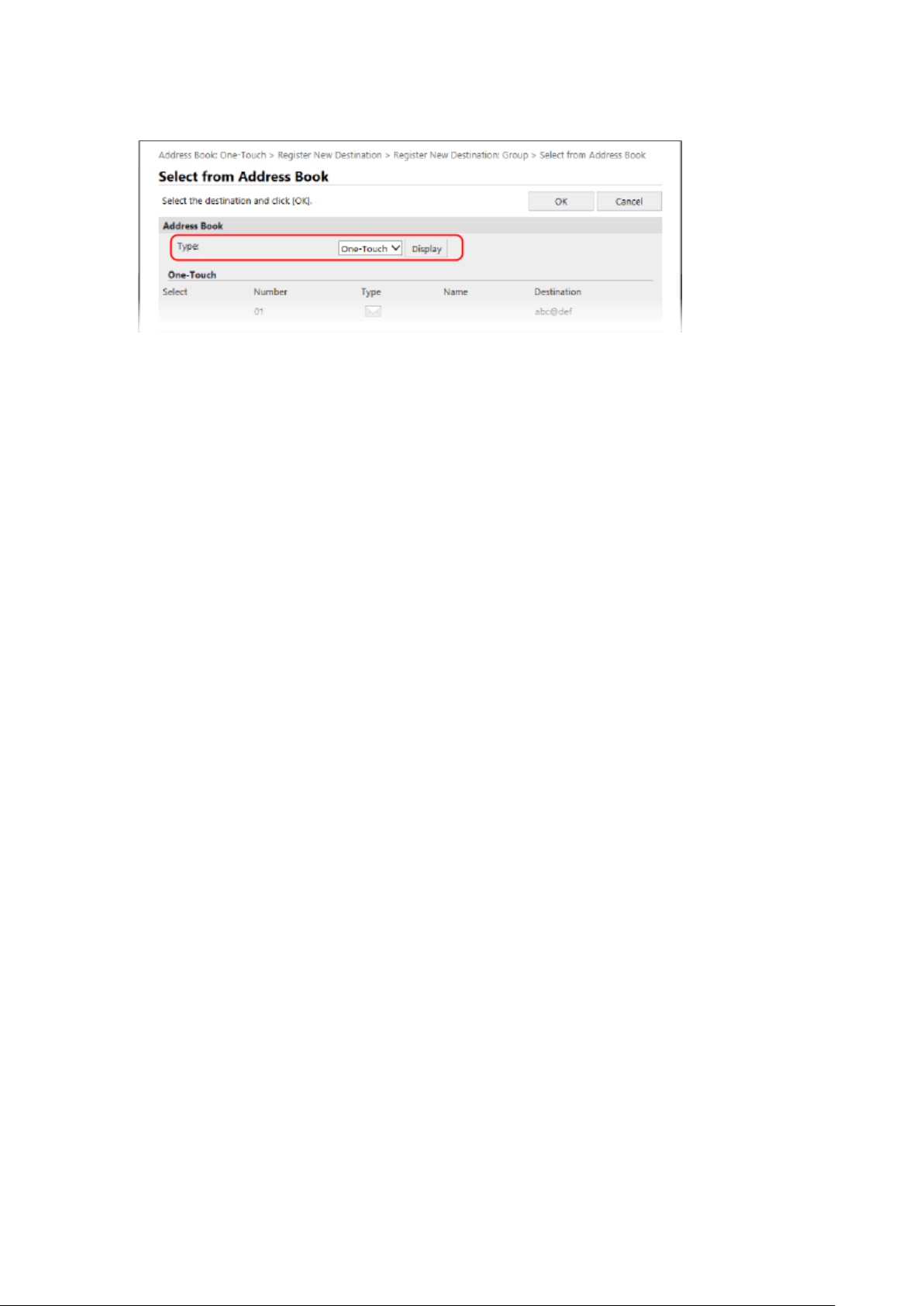
8
Change the display of the Address Book, as needed.
In [Type], select [One-Touch] or [Coded Dial], and click [Display] to change the display of the Address Book.
9
Select the checkboxes of the destinations to add to the group, and click [OK].
➠ The destinations ar
e added to [Member List] on the [Register New Destination: Group] screen.
You can select multiple destinations at the same time.
10
Click [OK].
➠ The gr
oup is registered to the Address Book.
11
Log out from Remote UI.
Basic Operations
181

Specifying Destinations
8W0J-03J
When sending or saving scanned data or fax
es, specify destinations using the method below.
The method of specifying destinations and the number of destinations that can be specied vary depending on the
function and destination.
Specifying Destinations
When sending scanned data by e-mail, you can specify destinations for the Cc and Bcc elds only fr
om the
Address Book.
Using the Address Book
Specify a destination registered to the Address Book of the machine.
Specifying Destinations (Address Book)(P. 183)
Dir
ectly Entering a Destination
Enter the destination using the numeric keys on the control panel.
Specifying Destinations (Direct Input)(P. 187)
Using the Addr
ess Book on a Mobile Device
When sending scanned data by e-mail, you can specify a destination registered to the address book on a
mobile device.
Specifying Destinations (Address Book on a Mobile Device)(P. 188)
Using the TX Job Log
Y
ou can call up the TX Job Log of scan or fax jobs and specify destinations that were specied in the past.
Specifying Destinations (TX Job Log)(P. 189)
Specifying Multiple Destinations
You can specify multiple destinations by repeating the operation of specifying a destination.
Ho
wever, you cannot specify multiple le save locations (shared folder) as destinations.
When Removing a Specic Destination after Specifying Multiple Destinations
Use the following procedure:
On the scan or fax screen, select [Destination] [Conrm/Edit] press the destination or the group you
want to r
emove
[Remove] [Yes].
If you press [Number of Destinations] after pressing a group, you can check the destinations registered to
the gr
oup. You cannot individually remove destinations registered to a group.
Conrming Destinations
The screen for conrming whether a specied destination is corr
ect may be displayed depending on the
settings of the machine.
In addition, the method for specifying destinations may be restricted, and sending may be restricted to only
specic destinations.
Preventing Sending Data by Mistake and Leaking Information(P. 373)
Basic Operations
182
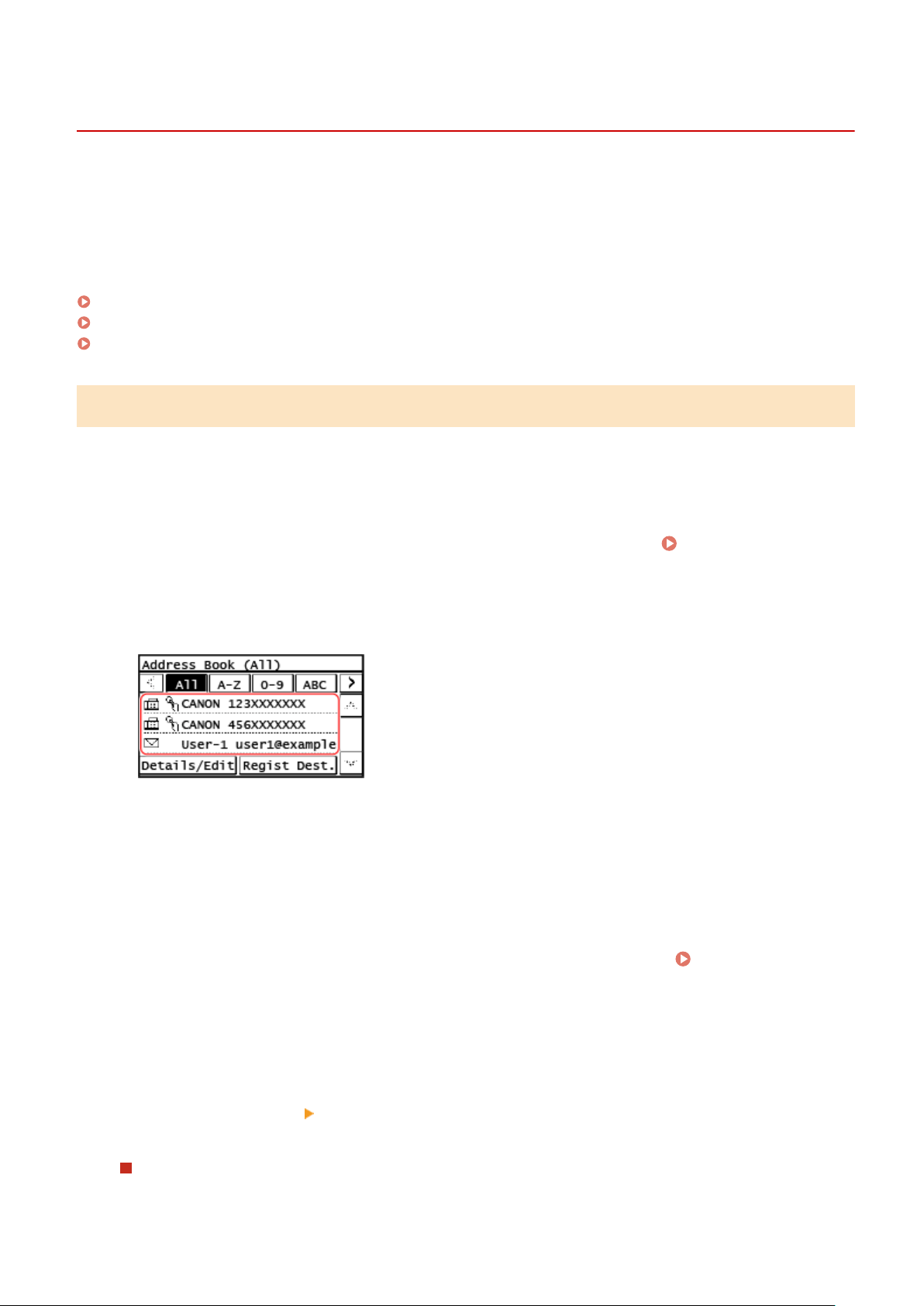
Specifying Destinations (Address Book)
8W0J-03K
When specifying destinations with the Addr
ess Book, use the [Home] screen or the scan or fax screen on the control
panel.
When specifying destinations by calling up the Address Book from the [Home] screen or the scan or fax screen, use the
destination list.
You can specify a destination by entering a three-digit number from [Coded Dial] on the [Home] screen, or you can
specify a destination which is predetermined to a [One-Touch] button.
Specifying Destinations from a List(P. 183)
Specifying Destinations with Coded Dial Numbers(P. 184)
Specifying Destinations with the One-Touch Button(P. 185)
Specifying Destinations from a List
◼ Selecting fr
om the [Home] Screen
1
On the control panel, press [Addr. Book] in the [Home] screen.
[Home]
Scr
een(P. 120)
2
Select a destination.
➠ The scan or fax scr
een is displayed with the specied destinations entered.
Select the index at the top of the screen of the Address Book to lter and display the destinations.
◼ Selecting from the [Scan] or [Fax] Screen
1
On the control panel, press [Scan] or [Fax] in the [Home] screen.
[Home]
Scr
een(P. 120)
2
When you are scanning, press [E-Mail] or [File].
3
Press [Destination]
[Specify from Address Book].
When the To/Cc/Bcc screen is displayed
Select the type (T
o, Cc, or Bcc) of destination to be specied.
Basic Operations
183
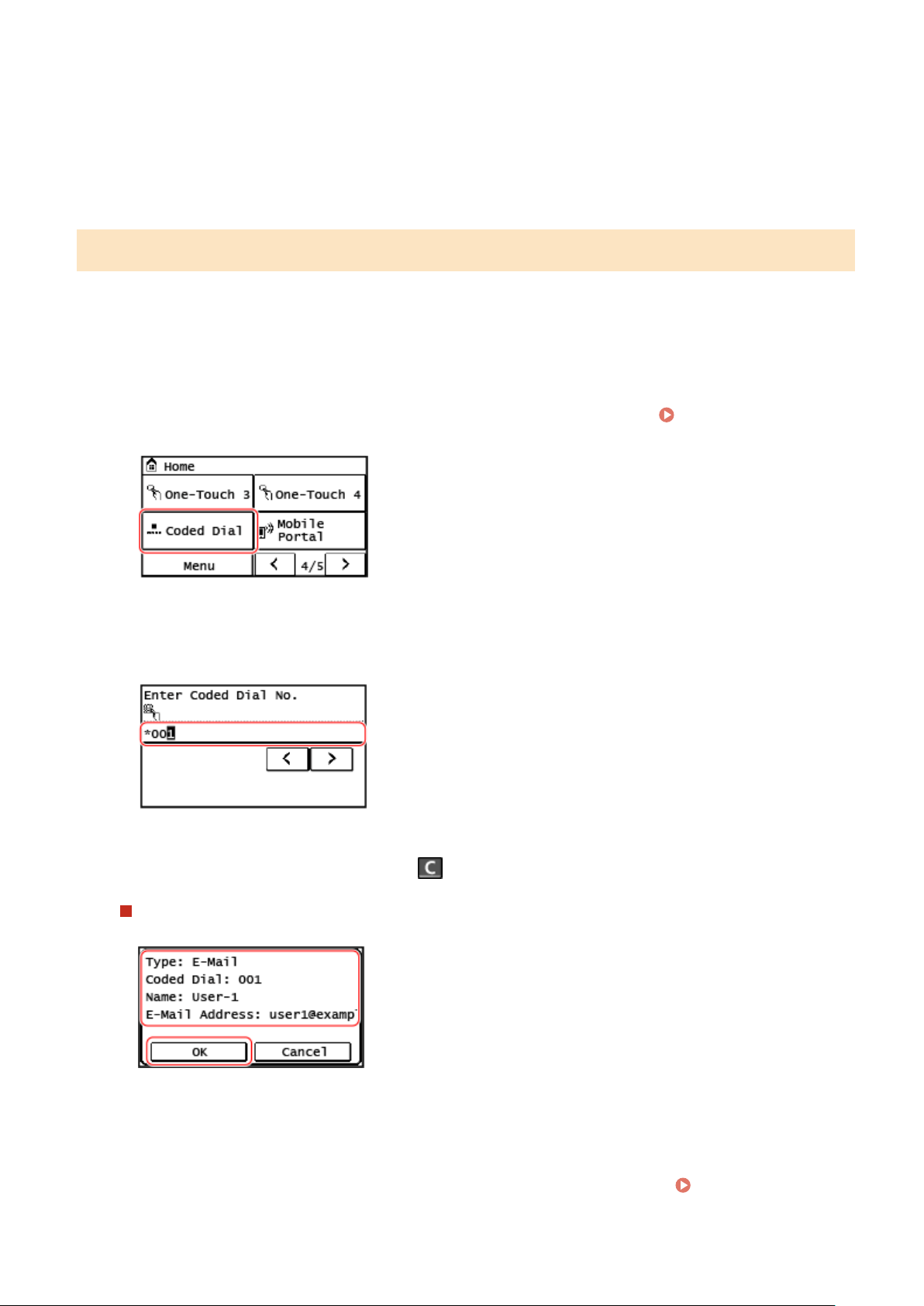
4
Select the destination.
➠ The destinations ar
e specied.
Select the index at the top of the screen of the Address Book to lter and display the destinations.
Specifying Destinations with Coded Dial Numbers
Y
ou can enter a three-digit Coded Dial number to specify a destination.
◼ Selecting from the [Home] Screen
1
On the control panel, press [Coded Dial] in the [Home] screen.
[Home]
Screen(P. 120)
➠ The [Enter Coded Dial No.] scr
een is displayed.
2
Enter a three-digit coded dial.
➠ The destinations ar
e specied.
If you entered an incorrect number, press
to clear the numbers.
When the Conrm Destination Scr
een Is Displayed
Check that the destination is correct, and then press [OK].
◼ Selecting fr
om the [Scan] or [Fax] Screen
1
On the control panel, press [Scan] or [Fax] in the [Home] screen.
[Home]
Scr
een(P. 120)
Basic Operations
184
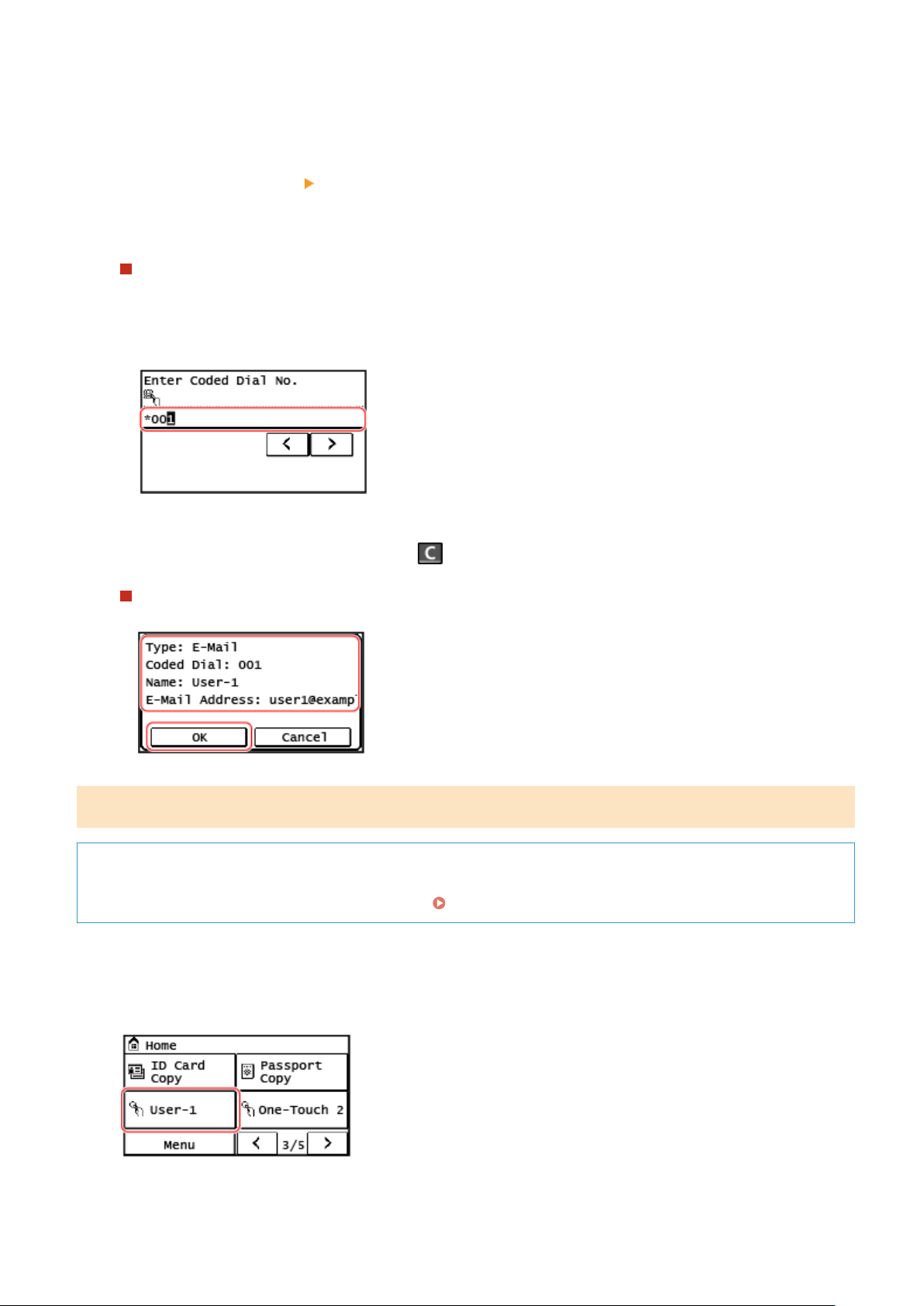
2
When you are scanning, press [E-Mail] or [File].
3
Press [Destination]
[Specify from Coded Dial].
➠ The [Enter Coded Dial No.] scr
een is displayed.
When the To/Cc/Bcc screen is displayed
Select the type (T
o, Cc, or Bcc) of destination to be specied.
4
Enter a three-digit Coded Dial number.
➠ The destination is specied.
If you enter
ed an incorrect number, press
to clear the numbers.
When the Conrm Destination Scr
een Is Displayed
Check that the destination is correct, and then press [OK].
Specifying Destinations with the One-Touch Button
Required Preparations
● Register a destination to a [One-
Touch] button.
Registering Destinations (Address Book)(P. 168)
◼ Selecting fr
om the [Home] Screen
Press a [One-Touch] button on the [Home] screen.
➠ The destinations ar
e specied.
The Scan or Fax screen is displayed with the specied destinations entered.
Basic Operations
185
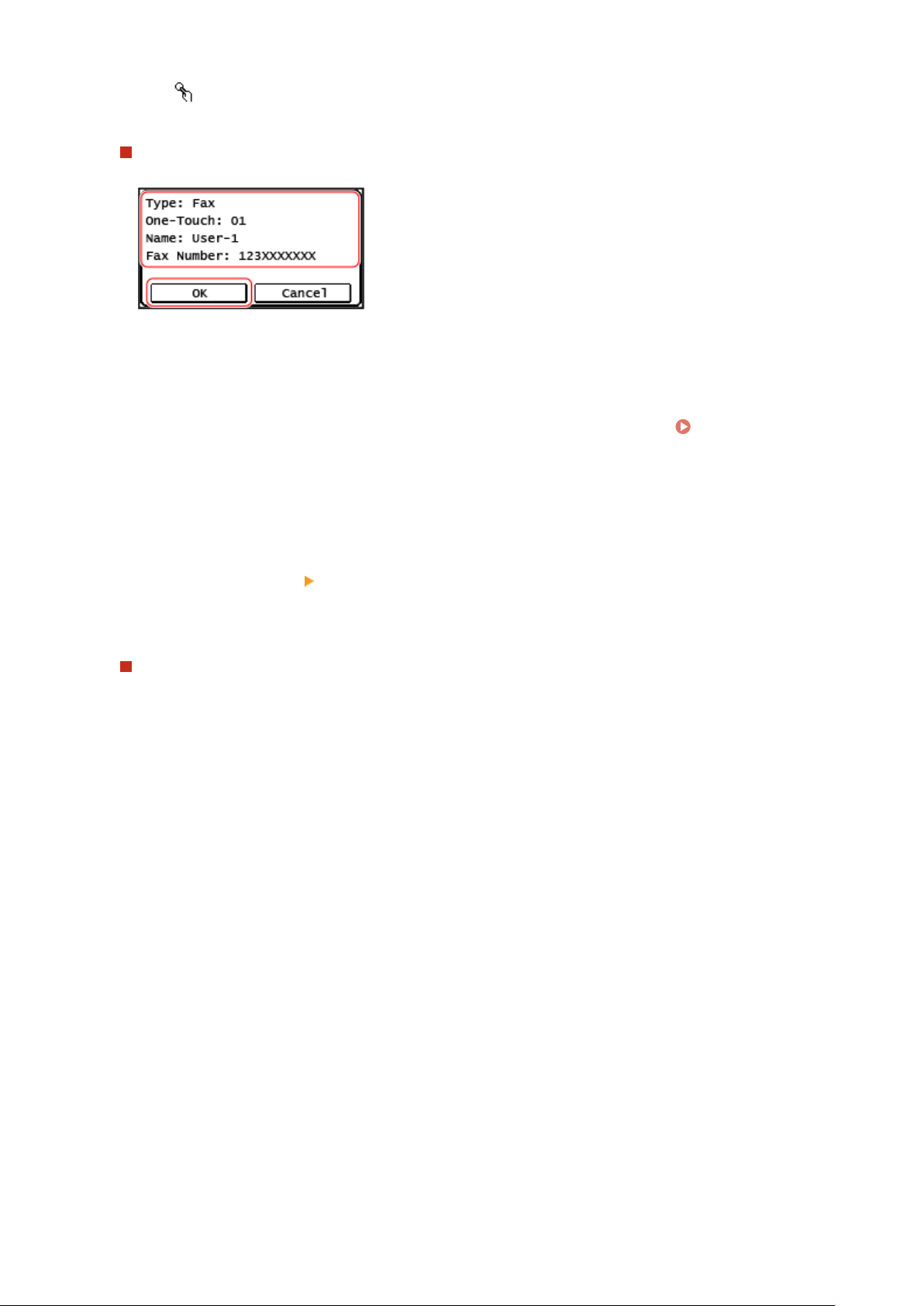
The [ ] icon is assigned to a [One-Touch] button. The name which is entered in [Name] when the
destination is r
egistered appears as the button name.
When the Conrm Destination Scr
een Is Displayed
Check that the destination is correct, and then press [OK].
◼ Selecting fr
om the [Scan] or [Fax] Screen
1
On the control panel, press [Scan] or [Fax] in the [Home] screen.
[Home]
Scr
een(P. 120)
2
When you are scanning, press [E-Mail] or [File].
3
Press [Destination]
[Specify from One-Touch].
➠ Only destinations r
egistered to a One-Touch button are displayed.
When the To/Cc/Bcc screen is displayed
Select the type (T
o, Cc, or Bcc) of destination to be specied.
4
Select the destination.
➠ The destinations ar
e specied.
Basic Operations
186

Specifying Destinations (Direct Input)
8W0J-03L
T
o specify a destination not registered to the Address Book, directly enter the destination using the scan or fax screen
of the control panel.
◼ Using the Scan Screen
1
On the control panel, press [Scan] in the [Home] screen.
[Home] Screen(P. 120)
2
Press [E-Mail].
3
Enter an e-mail address, and press [Apply]. Entering Characters(P. 131)
➠ The destination is specied.
● If you enter
ed an incorrect e-mail address, press
to clear the character.
● Y
ou cannot directly enter a second address. Select a second destination from [Destination].
◼ Using the Fax Screen
1
On the control panel, press [Fax] in the [Home] screen.
[Home] Screen(P. 120)
2
Enter a fax number using the numeric keys and press [Apply].
➠ The destination is specied.
● If you enter
ed an incorrect fax number, press
to clear the number.
● If the [Conrm] scr
een is displayed, enter the fax number again, and press [Apply].
● To enter a second and subsequent destinations, press [Destination]
[Specify Using Numeric Keys].
● When sending a fax to an international destination, enter the international access number, country code, and
fax number in that or
der. If you are unable to connect, press [Pause] in between the numbers to add a
pause. You can change the pause time.
[Set Pause Time](P. 494)
Basic Operations
187

Specifying Destinations (Address Book on a Mobile
De
vice)
8W0J-03S
When sending scanned data b
y e-mail, you can specify destinations registered to the Address Book on a mobile device
using the scan screen of the control panel.
Required Preparations
● Install Canon PRINT Business to the mobile de
vice.
Using a Dedicated Application to Print and Scan
(Canon PRINT Business)
(P. 341)
● Congure the settings to enable the machine to connect to the Address Book on the mobile device.
[Link
Mobile De
vice Address Book](P. 489)
1
On the control panel, press [Scan] in the [Home] screen. [Home] Screen(P. 120)
2
Press [E-Mail].
3
Press [Destination] [Specify from Mobile Portal].
4
Connect to the mobile device.
Connecting a Mobile Device to the Machine(P. 336)
5
Send the destination information from the mobile device to the machine.
● For details about sending, see the Canon PRINT Business manual at the online manual site.
● Y
ou can also send the subject, message, and le name entered on the mobile device to the machine.
6
Conrm the destination information displayed on the scr
een of the machine, and
press [OK].
➠ The destinations ar
e specied.
Basic Operations
188
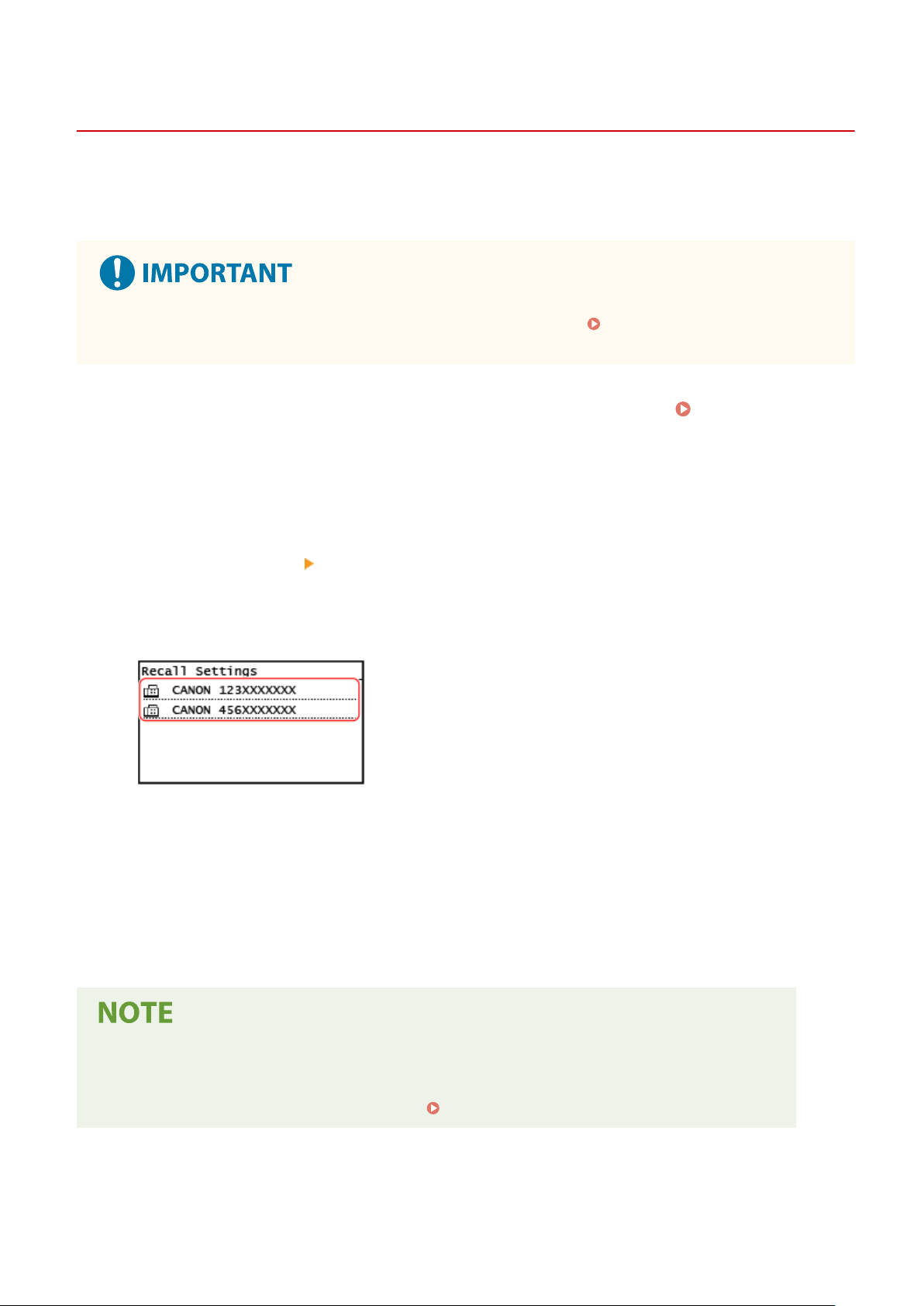
Specifying Destinations (TX Job Log)
8W0J-03U
Y
ou can specify destinations used in the past by calling up the TX Job Log. The scan settings used when the destination
was used are also recalled.
When you call up the TX Job Log, the specied destinations and scan settings are overwritten.
● Y
ou cannot use the TX Job Log when sending from the log is restricted.
Prohibiting the Use of
Destinations in the Send Log(P
. 374)
1
On the control panel, press [Scan] or [Fax] in the [Home] screen.
[Home]
Screen(P. 120)
2
When you are scanning, press [E-Mail] or [File].
3
Press [Destination] [Recall Set.].
4
Select the log you want to call up.
➠ The destinations and scan settings of the selected log ar
e applied.
The Scan or Fax screen is displayed with the specied destinations entered.
When there are multiple destinations in the log, only the rst destination is displayed, but all of the
destinations are applied.
5
Change the destinations and scan settings, as needed.
You can change and send the called up destinations and scan settings.
● The TX Job Log is clear
ed in the following cases:
- When the power is turned OFF
- When entry of new destinations is restricted
Sending Only to Registered Destinations(P. 375)
Basic Operations
189

Changing the Default Settings
8W0J-040
Y
ou can change the default settings for scan, copy, and other functions called up using the control panel.
By conguring the settings as standard or to save paper, for example, you can increase work eciency and reduce
costs.
You can also reset the settings to the settings set here by pressing
on any function screen.
This section describes ho
w to congure the settings using the control panel.
You can also congure the settings using Remote UI from a computer.
Managing the Machine from a Computer
(Remote UI)
(P. 398)
Touch Panel Model(P. 190)
5 Lines LCD Model(P. 191)
Touch Panel Model
1
On the control panel, press [Menu] in the [Home] screen.
[Home] Screen(P. 120)
2
Press [Function Settings].
3
Select the default setting item you want to change.
Select from the following items according to the function you want to change.
Scan (Send E-mail)
[Send] [Scan and Send Settings] [E-Mail Settings] [Change Default Settings]
Scan (Save to Shar
ed Folder)
[Send]
[Scan and Send Settings] [File Settings] [Change Default Settings]
Fax
[Send] [Fax Settings] [Change Default Settings]
Cop
y
[Copy]
[Change Default Settings]
4
Select the setting items to change, and change the default settings.
For details about the setting items of each function, see the following:
● Scan (Send E-Mail) [Change Default Settings](P. 487)
● Scan (Save to Shar
ed Folder)
[Change Default Settings](P. 489)
● Fax [Change Default Settings](P. 493)
● Cop
y
[Change Default Settings](P. 470)
Basic Operations
190
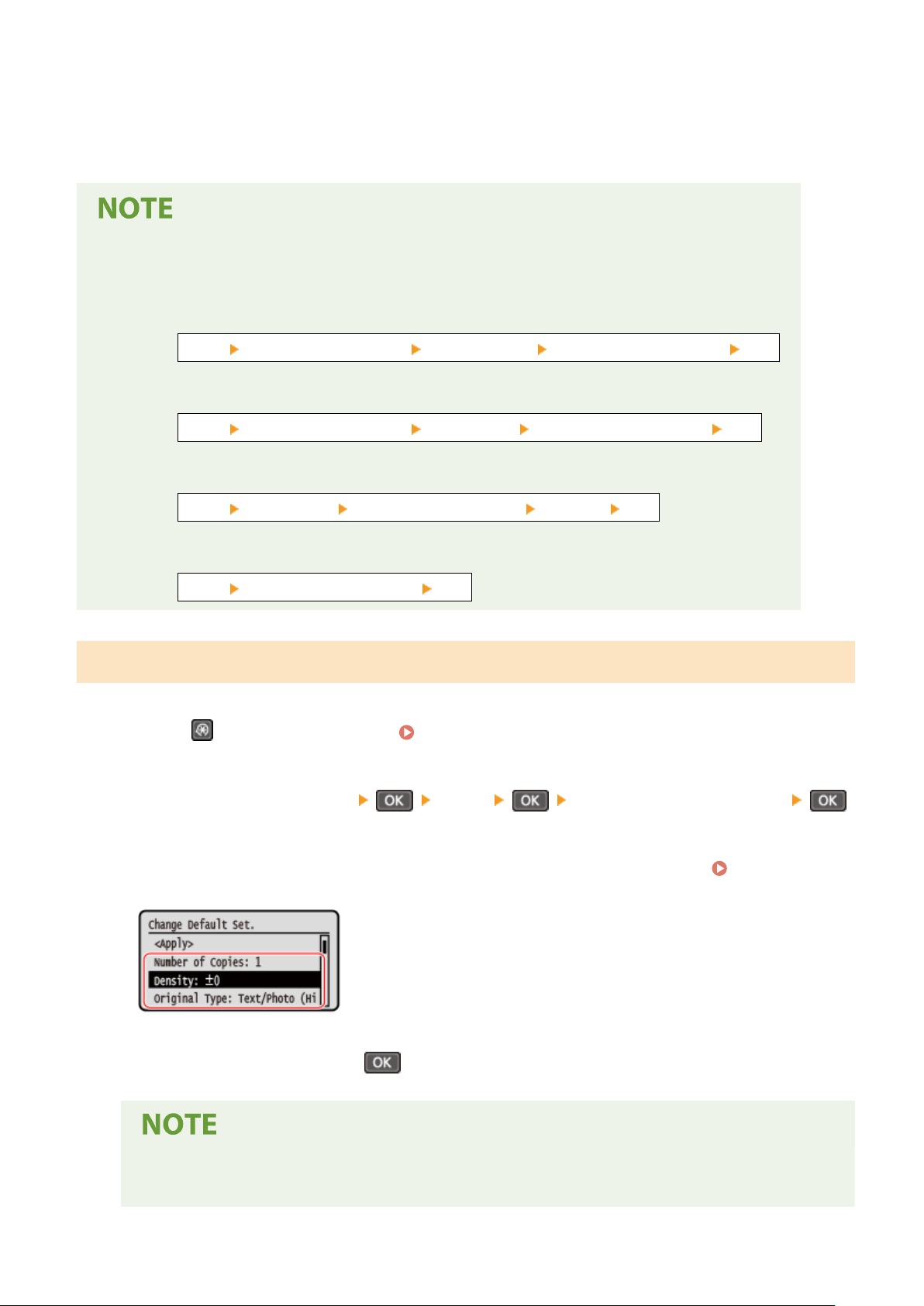
5
Press [Apply].
➠ The default settings ar
e changed.
Restoring Default Settings to the Factory Settings
● Y
ou can perform the following operations from the screen in Step 3.
- Scan (Send E-Mail)
[Send] [Scan and Send Settings] [E-Mail Settings] [Initialize Default Settings] [Yes]
- Scan (Save to Shar
ed Folder)
[Send] [Scan and Send Settings] [File Settings] [Initialize Default Settings] [Yes]
- Fax
[Send] [Fax Settings] [Change Default Settings] [Initialize] [Yes]
- Cop
y
[Copy] [Initialize Default Settings] [Yes]
5 Lines LCD Model
1
Press
on the control panel. Control Panel(P. 14)
2
Select [Function Settings]
[Copy] [Change Default Settings] .
3
Select the setting items to change, and change the default settings. [Change
Default Settings](P. 470)
4
Select [<Apply>] and press
.
Restoring Default Settings to the Factory Settings
● Y
ou can perform the following operations from the screen in Step 2.
Basic Operations
191

Press on the control panel [Function Settings] [Copy]
[Initialize Default Settings] [Yes]
Basic Operations
192
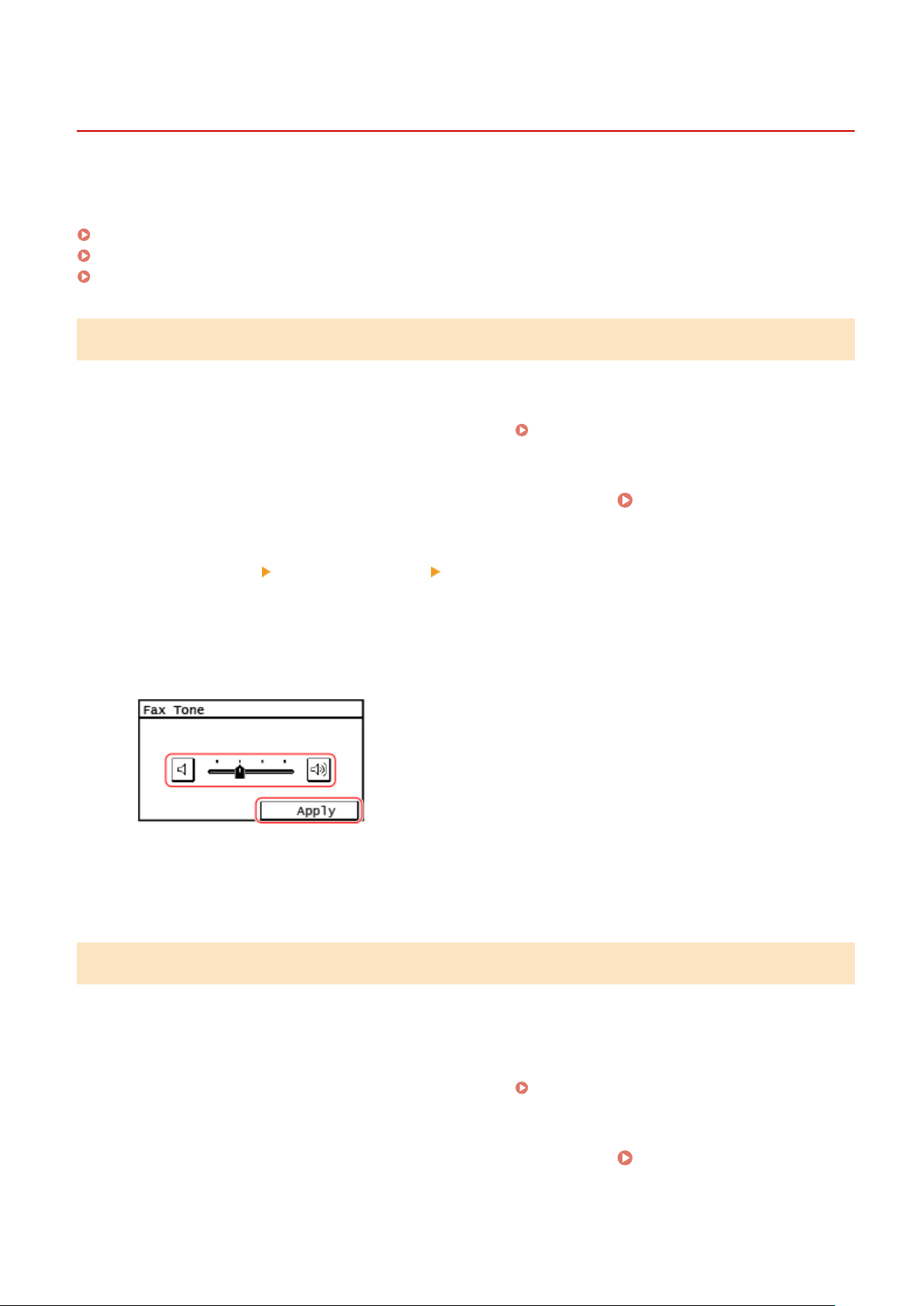
Adjusting the Volume (For Models with a Fax Function)
8W0J-042
Y
ou can adjust the volume of sounds emitted by the machine.
You can also set whether the machine emits sounds notifying you of operations and statuses.
Adjusting the Fax Volume(P. 193)
Adjusting Other Fax Function Sounds(P. 193)
Setting the Notication Sounds for Oper
ations and Statuses(P. 194)
Adjusting the Fax Volume
You can adjust the volume of the tone emitted when sending and receiving faxes.
This section describes how to adjust the volume using the control panel.
You can also adjust the volume using Remote UI from a computer. Managing the Machine from a Computer
(Remote UI)
(P. 398)
1
On the control panel, press [Menu] in the [Home] screen.
[Home] Screen(P. 120)
2
[Preferences] [Volume Settings] [Fax Tone]
➠ The [Fax Tone] screen is displayed.
3
Drag the slider to the left or right to adjust the volume, and press [Apply].
➠ The volume is adjusted.
● Dr
agging the slider to the right increases the volume.
● Dragging the slider to the far left mutes the sound.
Adjusting Other Fax Function Sounds
Y
ou can adjust the volume of the incoming fax sound and the sounds notifying you when faxes are successfully sent
and received, and when originals are successfully scanned.
You can also congure the setting to emit a sound only when an error occurs.
This section describes how to adjust the volume using the control panel.
You can also adjust the volume using Remote UI from a computer.
Managing the Machine from a Computer
(Remote UI)
(P. 398)
1
On the control panel, press [Menu] in the [Home] screen.
[Home] Screen(P. 120)
Basic Operations
193
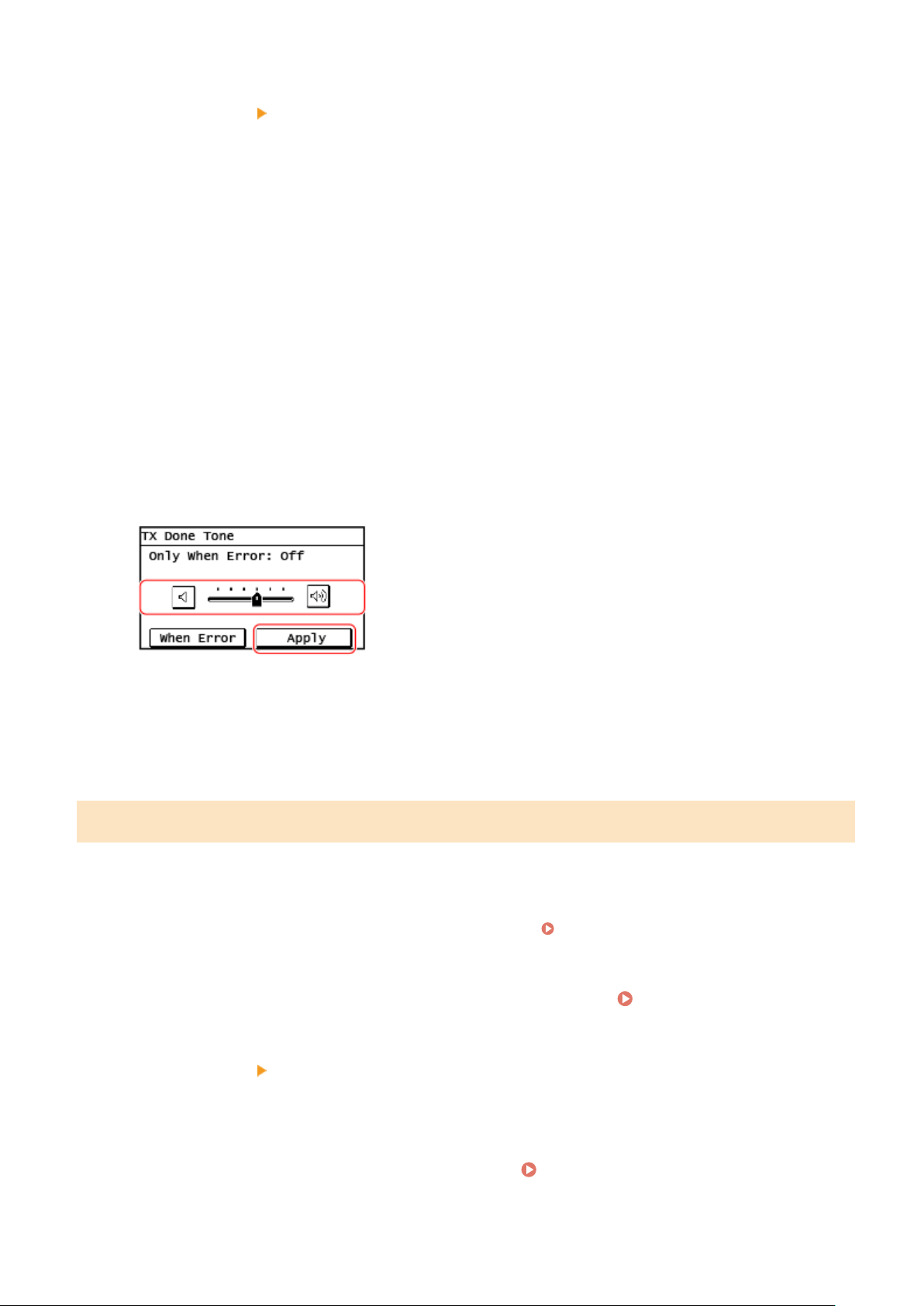
2
[Preferences]
[Volume Settings].
➠ The [V
olume Settings] screen is displayed.
3
Select the item whose volume you want to adjust.
[Ring Tone]
Adjust the volume of the sound notifying you of incoming faxes.
[TX Done Tone]
Adjust the volume of the sound notifying you that sending of a fax is complete.
[RX Done Tone]
Adjust the volume of the sound notifying you that receiving of a fax is complete.
[Scanning Done Tone]
Adjust the volume of the sound notifying you that scanning of a fax original is complete.
4
Drag the slider to the left or right to adjust the volume, and press [Apply].
➠ The volume is adjusted.
● Dr
agging the slider to the right increases the volume.
● Dragging the slider to the far left mutes the sound.
● To emit a completion sound only when an error occurs, press [When Error] and set to [On].
Setting the Notication Sounds for Oper
ations and Statuses
You can also set whether the machine emits sounds notifying you of operations and statuses, such as when operating
the control panel and errors are detected.
This section describes how to congure the settings using the control panel.
You can also congure the settings using Remote UI from a computer.
Managing the Machine from a Computer
(Remote UI)(P. 398)
1
On the control panel, press [Menu] in the [Home] screen.
[Home] Screen(P. 120)
2
[Preferences] [Volume Settings].
➠ The [V
olume Settings] screen is displayed.
3
Set whether notication sounds ar
e emitted. [Volume Settings] Screen(P. 196)
To emit notication sounds, select the item and pr
ess [On].
Basic Operations
194

➠ The volume is adjusted.
Basic Operations
195

[Volume Settings] Screen
8W0J-044
When you pr
ess [Menu]
[Preferences] [Volume Settings] on the [Home] screen of the control panel, the [Volume
Settings] scr
een is displayed.
You can adjust the volume of notication sounds, such as when faxes are successfully sent and received, and set
whether the machine emits sounds notifying you of operations and statuses.
[Fax Tone] / [Ring Tone] / [TX Done Tone] / [RX Done Tone] / [Scanning Done Tone]
Y
ou can adjust the volume of the following notication sounds: When sending fax, when receiving a fax, when fax
sending is complete, when fax receiving is completed, or when scanning fax originals is completed.
[Entry Tone]
Set whether to emit a sound when you press the keys and buttons on the control panel.
[Invalid Entry Tone]
Set whether to emit a sound when an invalid key is pressed, such as when you enter a value outside the setting range.
[Restock Supplies Tone]
Set whether to emit a sound when the toner cartridges are nearing the end of their lifetime.
[Warning Tone]
Set whether to emit a sound when the machine has a paper jam or other malfunction.
[Job Done Tone]
Set whether to emit a sound when the copy, scan, or other operation on the machine is completed.
[Energy Saver Alert]
Set whether to emit a sound when the machine enters and exits sleep mode.
[Original in Feeder Detection Tone]
Set whether to emit a sound when the machine detects an original that has been placed on the feeder.
Basic Operations
196

Reducing the Operation Sound (Quiet Mode)
8W0J-0J1
Quiet Mode is a function which r
educes the operation sound of the machine.
By pressing
on the control panel, the machine enters the quiet mode. Control Panel(P. 14)
When the machine is in the quiet mode, lights in green.
◼ Canceling the Quiet Mode
By pr
essing
on the control panel, turns off.
◼ Specifying the Time
Y
ou can set the machine to enter or exit the quiet mode at a specied time.
This section describes how to congure using the Remote UI from a computer.
On the control panel, congure from [Menu] in the [Home] screen
[Preferences]. [Timer/Energy Settings](P. 434)
1
Log in to Remote UI in System Manager Mode.
Starting Remote UI(P. 399)
2
On the Portal page of Remote UI, click [Settings/Registration]. Portal Page of
Remote UI(P. 401)
3
Click [Timer Settings] [Edit].
➠ The [Edit Timer Settings] scr
een is displayed.
4
Specify the time.
Setting the machine to enter the quiet mode at the specied time
Select [Specify Quiet Mode Time Settings] and enter the time in [Start Time].
When the time is displayed in the 12-hour notation, select [AM] or [PM] after entering the time.
Setting the machine to exit the quiet mode at the specied time
Select [Specify Quiet Mode Time Settings] and enter the time in [End Time].
When the time is displayed in the 12-hour notation, select [AM] or [PM] after entering the time.
5
Click [OK].
➠ The settings ar
e applied.
6
Log out from Remote UI.
● When the machine is in the quiet mode, each function oper
ates slower than usual.
Basic Operations
197


Printing
Printing ................................................................................................................................................................
200
Printing Preparations ....................................................................................................................................... 201
Preparing to Print from a Computer ............................................................................................................. 202
Conguring a Printer Port (Windows) .................................................................................................... 203
Setting Up a Print Server .............................................................................................................................. 206
Preparations for Using Universal Print ......................................................................................................... 209
Registering the Machine to Cloud Service .............................................................................................. 210
Registering the Machine to the Computer ............................................................................................. 213
Printing from a Computer ................................................................................................................................ 214
Registering Non-standard Size Paper to the Computer (Custom Size) .......................................................... 217
Printing with Universal Print ......................................................................................................................... 219
Canceling Printing ............................................................................................................................................. 220
Viewing the Print Job Status and Log ............................................................................................................... 223
Printing
199

Printing
8W0J-045
Y
ou can print documents and photos from a computer.
Printing from a Computer
You can print documents and photos via a printer driver installed on a computer
connected to the machine.
Preparing to Print from a Computer(P. 202)
Printing from a Computer(P. 214)
Setting Up a Print Server
By setting up a print server on a network, you can r
educe the load on the computer that you print from.
In Windows, you can install the printer driver via the print server, which saves you the trouble of
downloading the printer driver to each computer on the network or using a CD/DVD-ROM.
Setting Up a Print Server(P. 206)
Printing with the Standar
d Functions of the Operating System and Cloud Service
You can print without having to install a dedicated application or printer driver.
Windo
ws
You can use Microsoft's cloud service, Universal Print, to print data. The Universal Print driver is standard in
Windows 10, enabling you to also print from a remote location when the machine is connected to the
Internet.
Preparations for Using Universal Print(P. 209)
Printing with Universal Print(P. 219)
macOS
Y
ou can use AirPrint to print data.
Using AirPrint Application to Print and Scan Data and Send
Fax
es(P. 342)
Chrome OS
Use the print function that is standard in the operating system.
Printing from Chromebook or Other
De
vice with Chrome OS(P. 347)
◼ See Also
Printing from a Mobile Device
The machine can be operated from a smartphone, tablet, or other mobile device. By using a compatible
application or service, you can easily print photos or documents from a mobile device.
Linking with Mobile Devices(P. 328)
Printing
200


Preparing to Print from a Computer
8W0J-047
Install the printer driver to the computer that will be used to print. Installing Software and Drivers to the
Computer(P
. 106)
Using a Print Server in Windows
Use a print server to install the printer driver.
Double-click the shared printer on the print server, and follow the instructions on the screen to install the
printer driver.
Displaying a Shared Printer in the Print Server(P. 660)
Changing the Port Type and Number (Windows)
● If the machine is congur
ed not to use LPD or RAW, or if the port number was changed, the settings on the
computer may also have to be changed.
Changing the Port Type and Number(P. 205)
If the IP Addr
ess of the Machine Is Changed after Installing the Printer Driver
● In Windows, the required action depends on the port you are using.
- If you are using an MFNP port, the connection is maintained as long as the machine and computer belong
to the same subnet, so no action is required on the computer.
- If you are using a standard TCP/IP port, you must add a new port.
Adding a Port(P. 203)
If you do not kno
w which port is being used, see the following:
Viewing the Printer Port(P. 665)
● In macOS, you must r
e-register the machine on the Mac. For details about registering the machine, see the
manual of the driver at the online manual site.
https://oip.manual.canon/
* If you are using DHCP to automatically obtain the IP address of the machine, the IP address may be changed
automatically.
Printing
202

Conguring a Printer Port (Windo
ws)
8W0J-048
If the IP addr
ess of the machine changed or a printer has been added in Windows, you may not be able to print from a
computer. In this case, use the printer driver to add a new port.
In addition, you cannot print from a computer when the port type or port number of the printer driver differ from that
of the machine setting. In this case, change the setting on the printer driver to match that of the machine.
Adding a Port(P. 203)
Changing the Port Type and Number(P. 205)
Adding a Port
The machine supports two types of ports: "MFNP Port" and "Standard TCP/IP Port." Select and add the port to use
according to your usage environment.
MFNP Port (only for IPv4 environment)
You can only add this port when a printer driver is installed using the installer. The connection is maintained
as long as the machine and computer belong to the same subnet, even if the IP address of the machine is
changed.
Standard TCP/IP Port
This is a standard Windows port. You must add a new port every time the IP address of the machine is
changed. Select this type of port when you cannot add an MFNP port.
Administrator privileges are required on each computer.
Required Preparations
● Pr
epare the following information and keep it close by.
Checking the Network Status and
Settings(P
. 96)
- When adding an MFNP port: the IP address or MAC address of the machine
- When adding a standard TCP/IP port: the IP address or DNS name (host name) of the machine
1
Log on to the computer using an administrator account.
2
Click [ ] (Start) [ ] (Settings) [Devices] [Printers & scanners].
➠ The [Printers & scanners] screen is displayed.
3
Click the printer driver of the machine [Manage] [Printer properties].
➠ The printer driver pr
operties screen is displayed.
4
On the [Ports] tab, click [Add Port].
➠ The [Printer Ports] scr
een is displayed.
5
Add a new port.
Printing
203
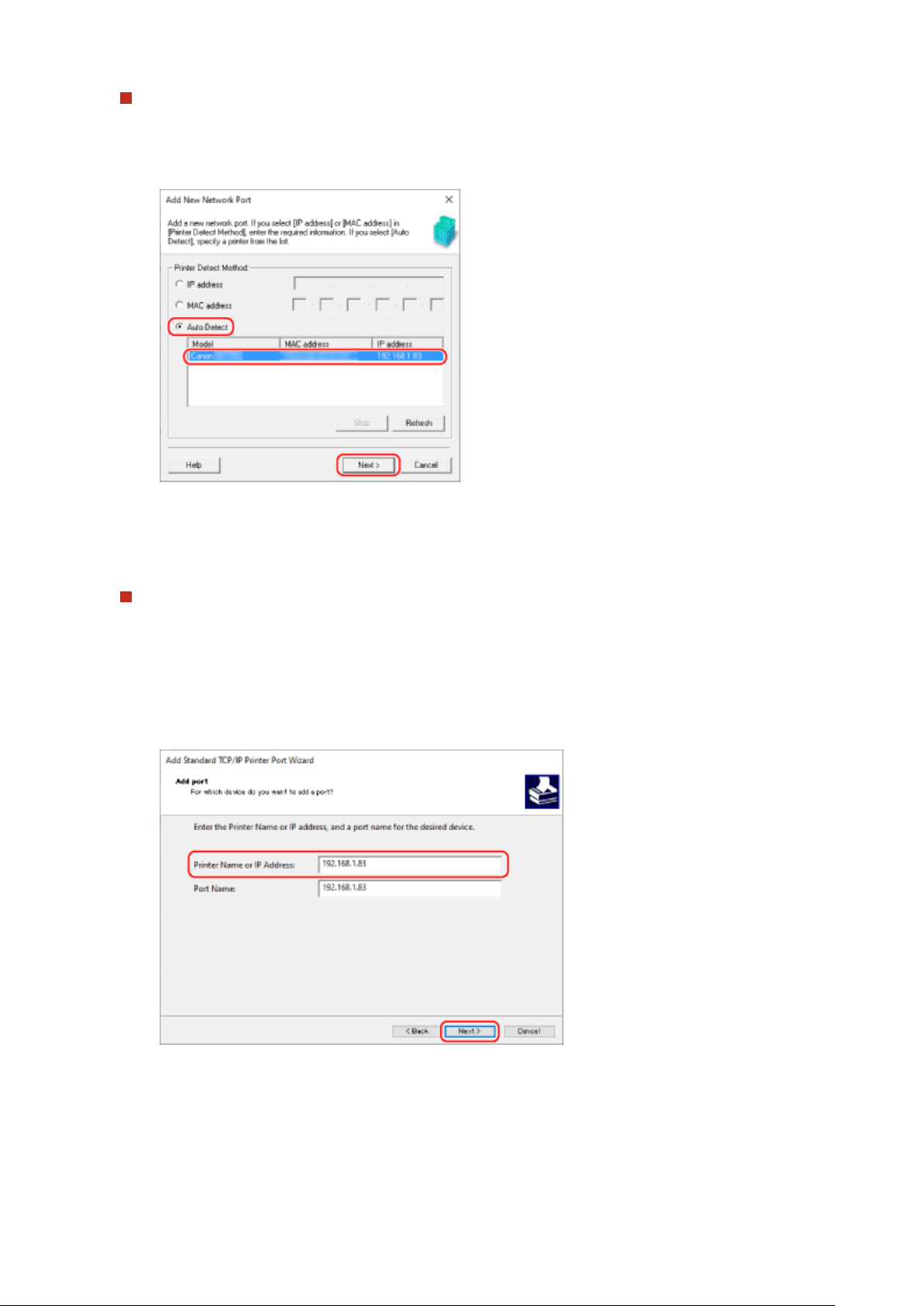
When Adding an MFNP Port
1
Select [Canon MFNP Port], and click [New Port].
2
Select [Auto Detect] and the machine, and click [Next].
If the machine is not displayed, click [Refresh]. If the machine is still not displayed, select [IP address] or
[MA
C address], enter the IP address or MAC address of the machine, and then click [Next].
3
Click [Add].
When Adding a Standard TCP/IP Port
1
Select [Standard TCP/IP Port], and click [New Port].
➠ The [Add Standar
d TCP/IP Printer Port Wizard] screen is displayed.
2
Click [Next].
3
Enter the IP address or DNS name (host name), and then click [Next].
The port name is entered automatically, so change it, as needed.
When [Additional port information r
equired] Appears
Take action following the instructions on the screen. To set [Device Type], select [Canon Network Printing
Device with P9100] in [Standard].
6
Click [Finish].
Printing
204

➠ A ne
w port is added, and the [Printer Ports] screen is displayed.
7
Click [Close]
[Close].
➠ The settings ar
e applied.
Changing the Port Type and Number
If the machine is congur
ed not to use LPD or RAW, you must change the type of port on the computer to a protocol
usable on the machine.
If the LPD or RAW port number was changed, the settings on the computer may have to be changed to match the
settings on the machine.
* You do not need to change the port type or number on the computer for WSD ports.
Administrator privileges are required on each computer.
1
Log on to the computer using an administrator account.
2
Click [
] (Start) [ ] (Settings) [Devices] [Printers & scanners].
➠ The [Printers & scanners] scr
een is displayed.
3
Click the printer driver of the machine
[Manage] [Printer properties].
➠ The printer driver pr
operties screen is displayed.
4
On the [Ports] tab, click [Congur
e Port].
➠ The [Congure Port] screen or [Congure Standard TCP/IP Port Monitor] screen is displayed.
5
Set the port type and number.
For an MFNP Port
In [Pr
otocol Type], select [RAW] or [LPR], and change the port number.
For a Standard TCP/IP Port
In [Pr
otocol Type], select [Raw] or [LPR].
● When [Raw] is selected, change the port number.
● When [LPR] is selected, enter "Ip" for [Queue Name].
6
Click [OK]
[Close].
➠ The settings ar
e applied.
Printing
205
Setting Up a Print Server
8W0J-049
By setting up a print server on the network, you can speed up print oper
ations on a computer, thereby reducing the
load on the computer.
In Windows, you can install the printer driver via the print server to save you the trouble of downloading the printer
driver to each computer on the network or using a CD/DVD-ROM.
To set up a print server, enable the print server to print from the machine, and then congure the settings for sharing
the printer.
To use a print server in a domain environment, consult your network administrator.
Enabling the Print Server to Print from the Machine(P. 206)
Conguring the Settings for Sharing the Printer(P
. 206)
Enabling the Print Server to Print from the Machine
Install the printer driver to the computer that will be the print server, and congure the settings according to your
usage environment. Preparing to Print from a Computer(P. 202)
Conguring the Settings for Sharing the Printer
Congure the printer sharing settings on the computer that will be the print server so that other computers on the
network can use the print server.
When Using Windows(P. 206)
When Using macOS(P. 208)
◼ When Using Windo
ws
Administrator privileges are required on the computer that will be the print server.
Required Preparations
● Check the oper
ating system (32-bit or 64-bit) of the computer that will be the print server and the operating
system of the computer that will use the print server (the client).
Viewing the System Information of the
Computer(P
. 661)
1
Log on to the computer that will be the print server, using an administrator account.
2
Click [ ] (Start) [ ] (Settings) [Devices] [Printers & scanners].
➠ The [Printers & scanners] scr
een is displayed.
3
Click the printer driver of the machine
[Manage] [Printer properties].
➠ The printer driver pr
operties screen is displayed.
Printing
206
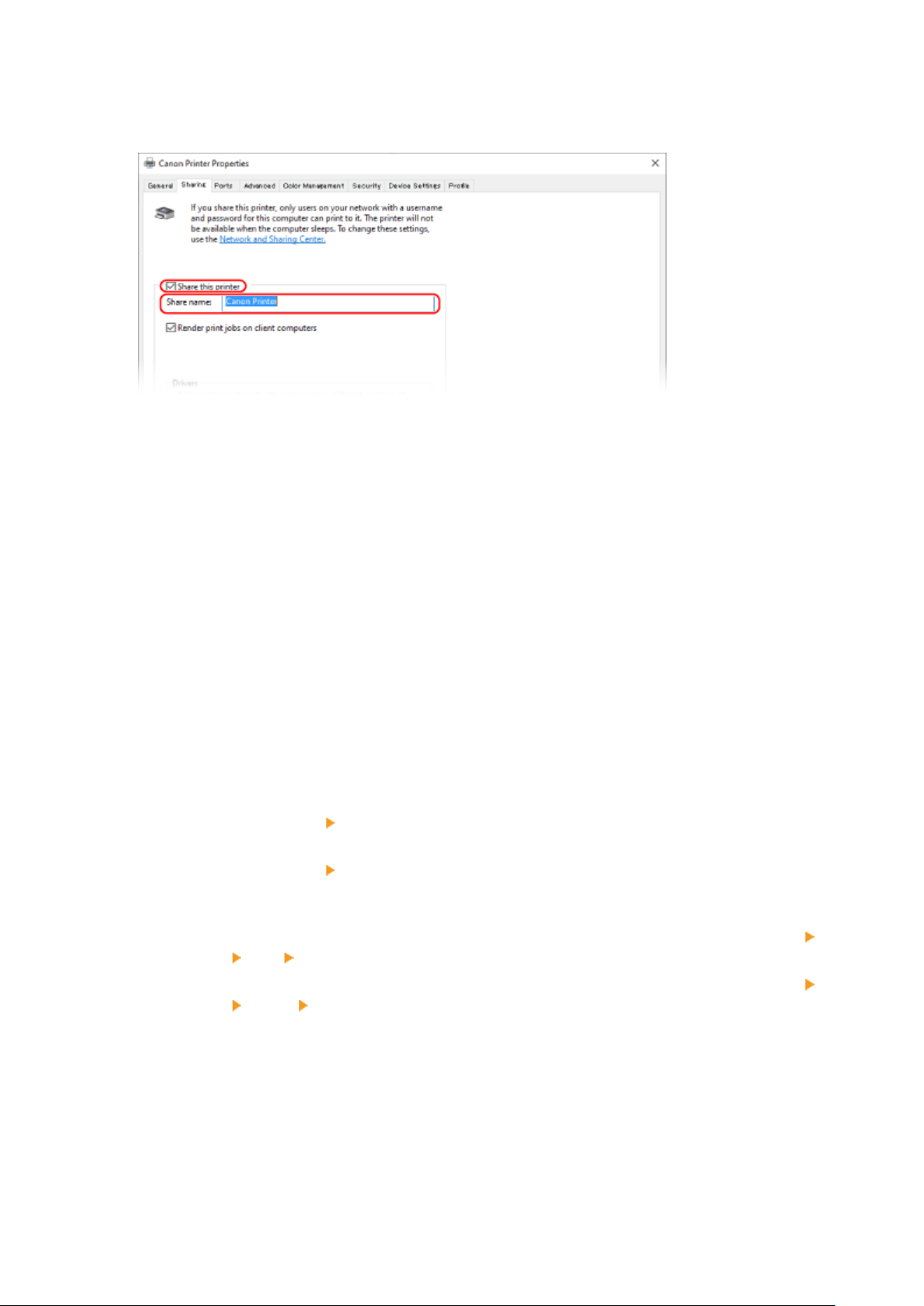
4
On the [Sharing] tab, select the [Share this printer] checkbox, and enter a shared
name.
5
Install an additional driver, as needed.
If the client computer has an operating system (32-bit or 64-bit) that differs from that of the print server,
install an additional driver.
1
Click [Additional Drivers].
➠ The [Additional Drivers] scr
een is displayed.
2
Select the checkbox of the driver to be added, and click [OK].
● If the print server computer has a 32-bit oper
ating system, select the [x64] (driver for 64-bit version)
checkbox.
● If the print server computer has a 64-bit operating system, select the [x86] (driver for 32-bit version)
checkbox.
3
Click [Browse], specify the folder where the driver is located, and click [OK].
When Specifying the Folder of the Downloaded Driver
● If the print server computer has a 32-bit operating system, specify the [x64] folder with the
decompressed driver
[Driver] folder.
● If the print server computer has a 64-bit oper
ating system, specify the [32BIT] folder with the
decompressed driver
[Driver] folder.
When Specifying the Folder in the Supplied CD/D
VD-ROM
● If the print server computer has a 32-bit operating system, specify [intdrv] in the CD/DVD-ROM
[UFRII] [x64] [Driver] folder.
● If the print server computer has a 64-bit oper
ating system, specify [intdrv] in the CD/DVD-ROM
[UFRII] [32BIT] [Driver] folder.
4
Install the additional driver while following the instructions on the screen.
6
Click [OK].
➠ The settings ar
e applied.
Printing
207

◼ When Using macOS
1
Click [
] [System Preferences] [Sharing].
➠ The [Sharing] scr
een is displayed.
2
Select the [Printer Sharing] checkbox.
3
In [Printers], select the checkbox of the machine.
4
Restrict the users that can use the print server, as needed.
By default, all users can use the print server.
T
o enable specic users to use the print server, click [+] under [Users], and select the users who can use the
print server.
5
Close the [Sharing] screen.
➠ The settings ar
e applied.
Printing
208

Preparations for Using Universal Print
8W0J-04A
Congur
e the machine to be able to use Microsoft's cloud service, Universal Print, and register the machine to each
computer that will be used to print.
You must be a registered user of Microsoft 365 and use Azure Active Directory.
Registering the Machine to Cloud Service(P. 210)
Registering the Machine to the Computer(P. 213)
Printing
209

Registering the Machine to Cloud Service
8W0J-04C
Register the machine to the cloud-based authentication and management service, Azur
e Active Directory, and set the
members or groups that will use the machine.
Step 1: Registering the Machine to Azure Active Directory(P. 210)
Step 2: Specifying the Members and Groups to Use the Machine(P. 212)
Step 1: Registering the Machine to Azure Active Directory
Congure this setting using Remote UI from a computer. You cannot use the control panel to congure the
settings.
Administrator privileges are required.
1
Log in to Remote UI in System Manager Mode.
Starting Remote UI(P. 399)
2
On the Portal page of Remote UI, click [Settings/Registration]. Portal Page of
Remote UI(P. 401)
3
Click [Network Settings] [Universal Print Settings].
➠ The [Universal Print Settings] scr
een is displayed.
4
Click [Edit] in [Basic Settings].
5
Select the [Use Universal Print] checkbox, and enter the printer name.
● For the printer name, enter a name to identify the machine, using single-b
yte alphanumeric characters.
● To verify the certicate sent from the server, select the [Verify Server Certicate] checkbox.
To add a Common Name (CN) to the verication items, select the [Add CN to Verication Items] checkbox as
well.
6
Change Application ID and the URL of Azure Active Directory according to usage
envir
onment.
7
Click [OK].
➠ The [Universal Print Settings] scr
een is displayed.
8
Click [Register] in [Registration Status].
➠ The [Information for Registr
ation] screen is displayed.
Printing
210
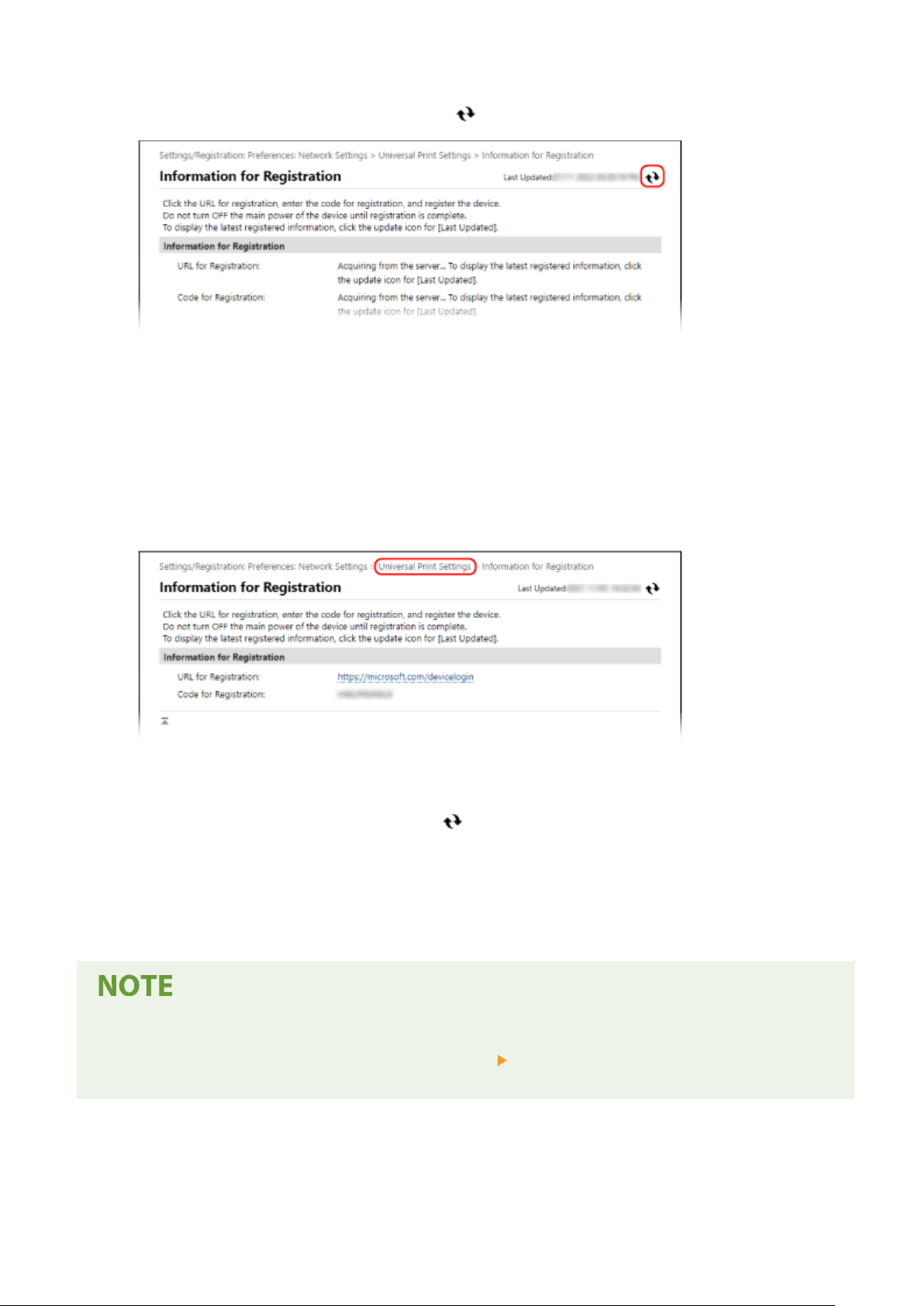
9
Wait several seconds, and then click [ ].
10
Click the link displayed in [URL for Registration].
11
Register the machine according to the instructions on the screen.
12
Click [Universal Print Settings] at the top of the Remote UI screen.
➠ The [Universal Print Settings] scr
een is displayed.
13
Wait a few minutes, and then click [
].
➠ When r
egistration is complete, [Registered] is displayed in [Registration Status].
14
Log out from Remote UI.
Canceling the Registration
● Click [Unr
egister] on the [Universal Print Settings] screen
[OK]. On the Azure Active Directory device
management screen, select the machine and click [Delete].
Printing
211

Step 2: Specifying the Members and Groups to Use the Machine
1
Display the Universal Print management screen of Azure Active Directory in a Web
br
owser on a computer.
2
Select the machine, and click [Share Printer].
To change the name of the machine displayed on the computer, change [Printer Share Name].
3
Click [Members]
[Add].
4
From the list, select the members and groups who will use the printer.
Printing
212
Registering the Machine to the Computer
8W0J-04E
Register the machine, which is r
egistered to Azure Active Directory, to the computer to be used for Universal Print.
Required Preparations
● Register the machine to Azur
e Active Directory.
Registering the Machine to Cloud Service(P. 210)
1
Click [
] (Start) [ ] (Settings) [Accounts].
➠ The [Your info] screen is displayed.
2
Click [Access work or school] [Connect].
3
Follow the on-screen instructions to sign in to your Microsoft 365 account.
4
Click [Home]
[Devices] [Printers & scanners].
➠ The [Printers & scanners] scr
een is displayed.
5
Click [Add a printer or scanner].
➠ The printer list scr
een is displayed.
6
Select the machine and click [Add device].
➠ The machine is r
egistered to the computer.
When Using a Proxy Server
● T
o use Universal Print via a proxy server, you must congure the proxy settings on each computer. For
details, contact the network administrator.
Printing
213
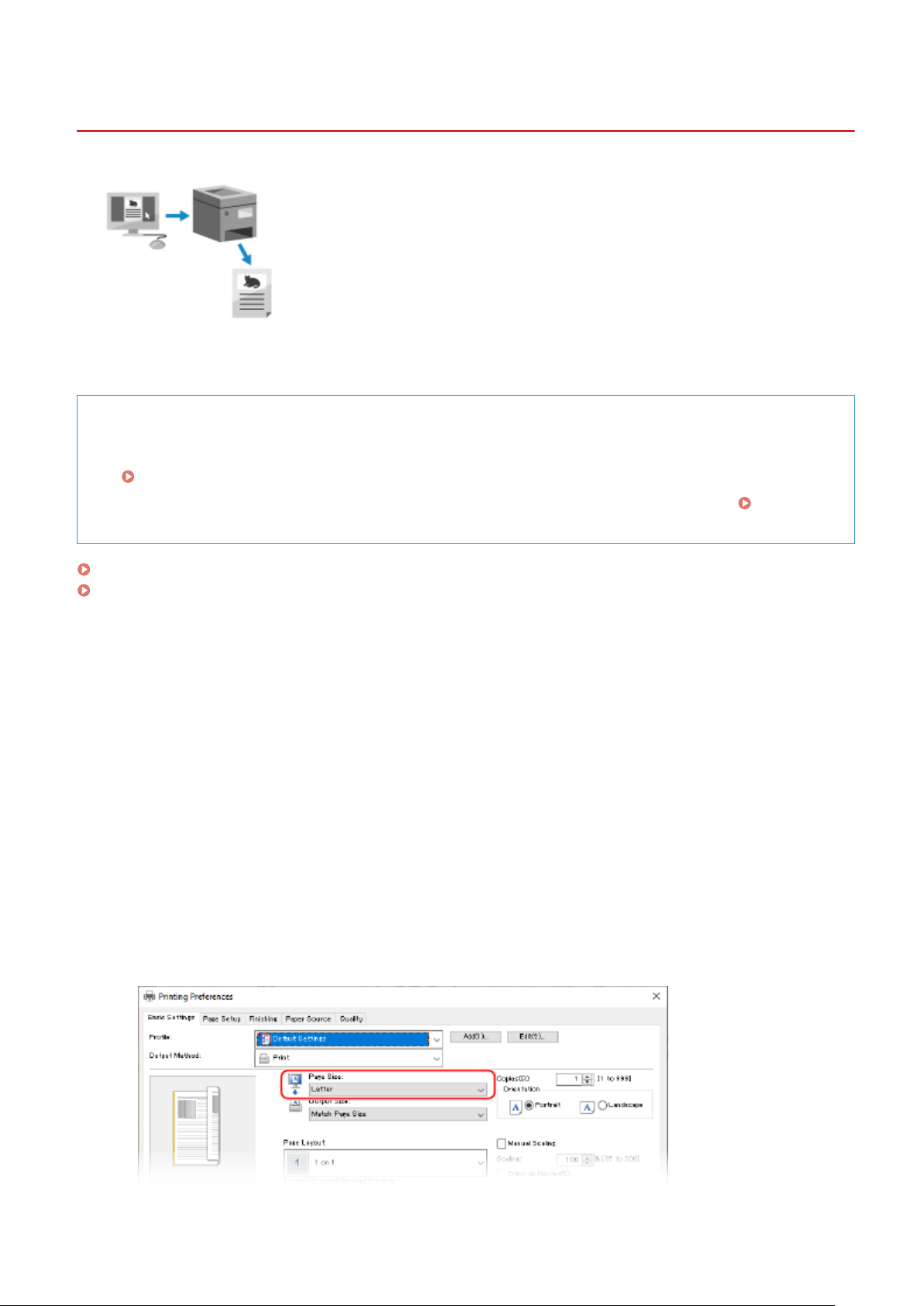
Printing from a Computer
8W0J-04F
You can print documents from a computer using a printer driver.
By changing the settings on the printer driver, you can print accor
ding to the
document and purpose, such as by using 2-sided printing or adjusting the quality.
This section describes the general procedure for this operation. Check the manual of the application you are using for
detailed oper
ations on how to use it.
Required Preparations
● Install the printer driver on the computer, and congur
e the settings according to your usage environment.
Preparing to Print from a Computer(P. 202)
● If the document or paper to print is a non-standar
d size, register the size to the printer driver.
Registering
Non-standar
d Size Paper to the Computer (Custom Size)(P. 217)
When Using Windows(P. 214)
When Using macOS(P. 215)
◼ When Using Windows
1
On your computer, open the document you want to print.
2
In the application used to open the document, select the command to print.
3
Select the printer driver of the machine, and click [Preferences] or [Properties].
➠ The [Printing pr
eferences] screen of the printer driver is displayed.
4
In [Page Size] on the [Basic Settings] tab, select the paper size of the document.
Printing
214
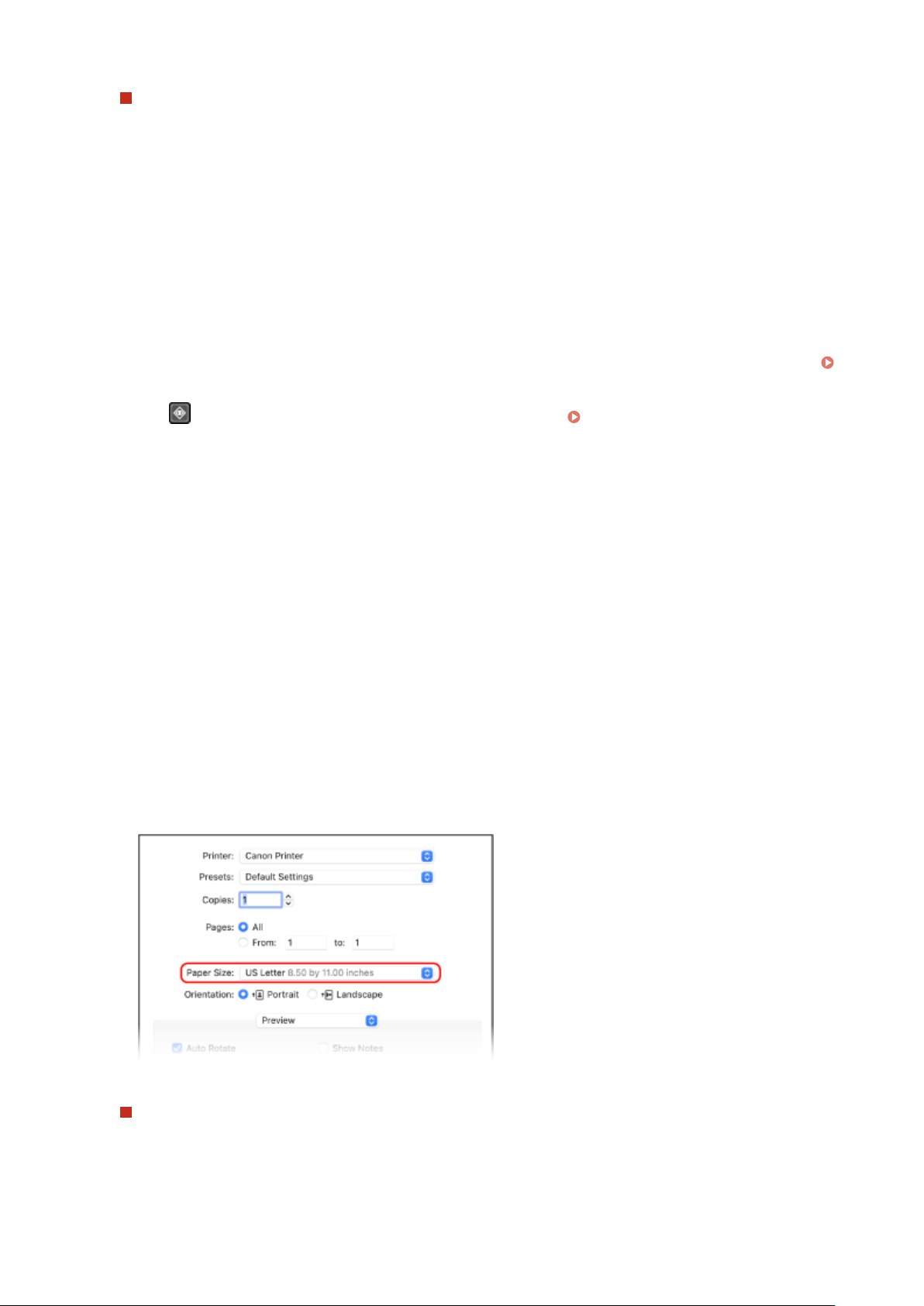
When Printing on Paper of a Size Different from [Page Size]
In [Output Size], select the paper size to print on. The document is enlar
ged or reduced to match the paper
size in [Output Size].
5
Congure the other print settings, as needed.
Congure 2-sided printing and adjust the image quality and other settings to suit your document and
purpose. For mor
e information, click [Help] on the [Printing preferences] screen to display help.
6
Click [OK], and click [Print] or [OK].
➠ Printing starts.
● Y
ou can cancel printing on the printing screen or from the printer icon in the Windows notication area.
Canceling Printing from a Computer(P. 220)
● Use on the control panel to view the print job status and log. Viewing the Print Job Status and
Log(P
. 223)
◼ When Using macOS
1
On your computer, open the document you want to print.
2
From the menu in the application used to open the document, click [Print].
➠ The printing dialog bo
x appears.
3
In [Printer], select the printer driver of the machine.
4
In [Paper Size] of the print options, select the paper size of the document.
If print options are not displayed, click [Show Details] in the printing dialog box.
When Printing on Paper of a Size Different from [Paper Size]
1
From the print options pop-up menu, select [Paper Handling].
Printing
215
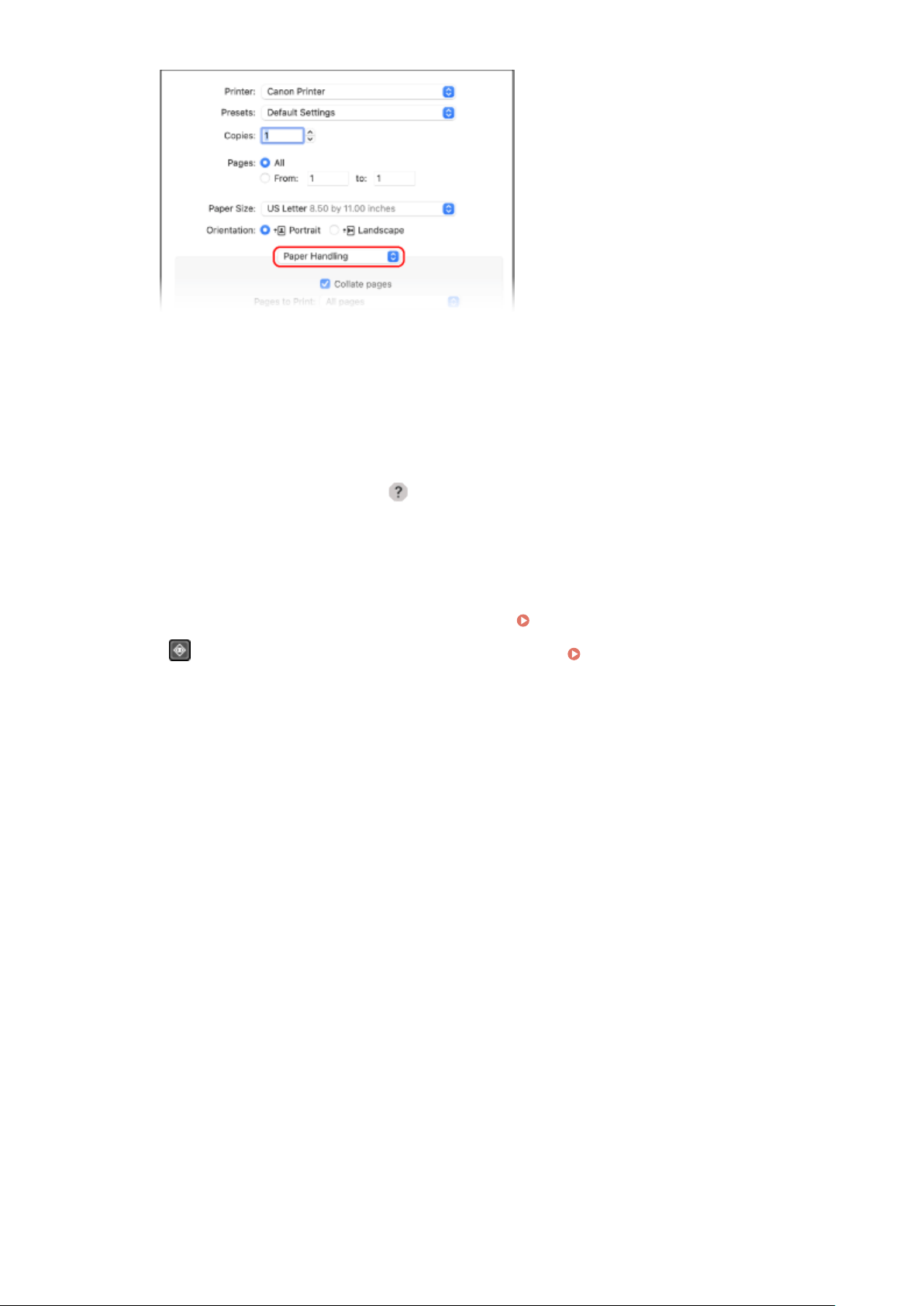
2
Select the [Scale to t paper size] checkbo
x, and in [Destination Paper Size], select the paper size to print
on.
The document is enlarged or reduced to match the paper size in [Destination Paper Size].
5
Congure the other print settings, as needed.
Congure 2-sided printing and adjust the image quality and other settings to suit your document and
purpose. For mor
e information, click [
] in the printing dialog box to display help.
6
Click [Print].
➠ Printing starts.
● Y
ou can cancel printing from the printer icon in the Dock.
Canceling Printing from a Computer(P. 220)
● Use on the control panel to view the print job status and log. Viewing the Print Job Status and
Log(P
. 223)
Printing
216
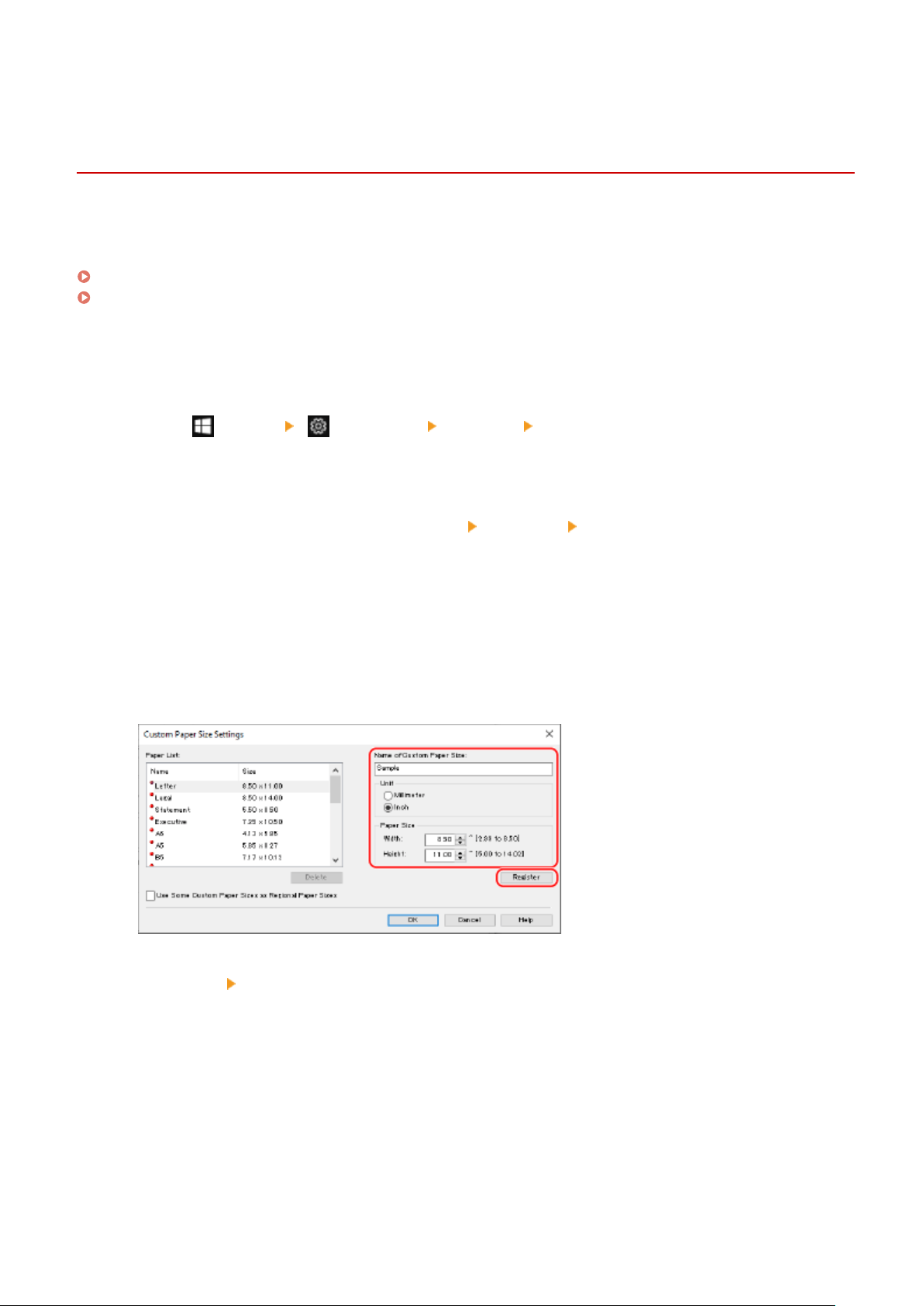
Registering Non-standard Size Paper to the Computer
(Custom Size)
8W0J-04H
Custom size paper is non-standar
d size paper whose side lengths can be freely dened.
If the document or paper to print is a non-standard size, you must register the size to the printer driver in advance.
When Using Windows(P. 217)
When Using macOS(P. 217)
◼ When Using Windo
ws
1
Click [
] (Start) [ ] (Settings) [Devices] [Printers & scanners].
➠ The [Printers & scanners] scr
een is displayed.
2
Click the printer driver of the machine
[Manage] [Printing preferences].
➠ The [Printing pr
eferences] screen of the printer driver is displayed.
3
On the [Page Setup] tab, click [Custom Paper Size].
4
Enter the custom size paper name and paper size, and click [Register].
5
Click [OK]
[OK].
➠ The custom size paper is r
egistered.
◼ When Using macOS
1
On your computer, open the document you want to print.
Printing
217
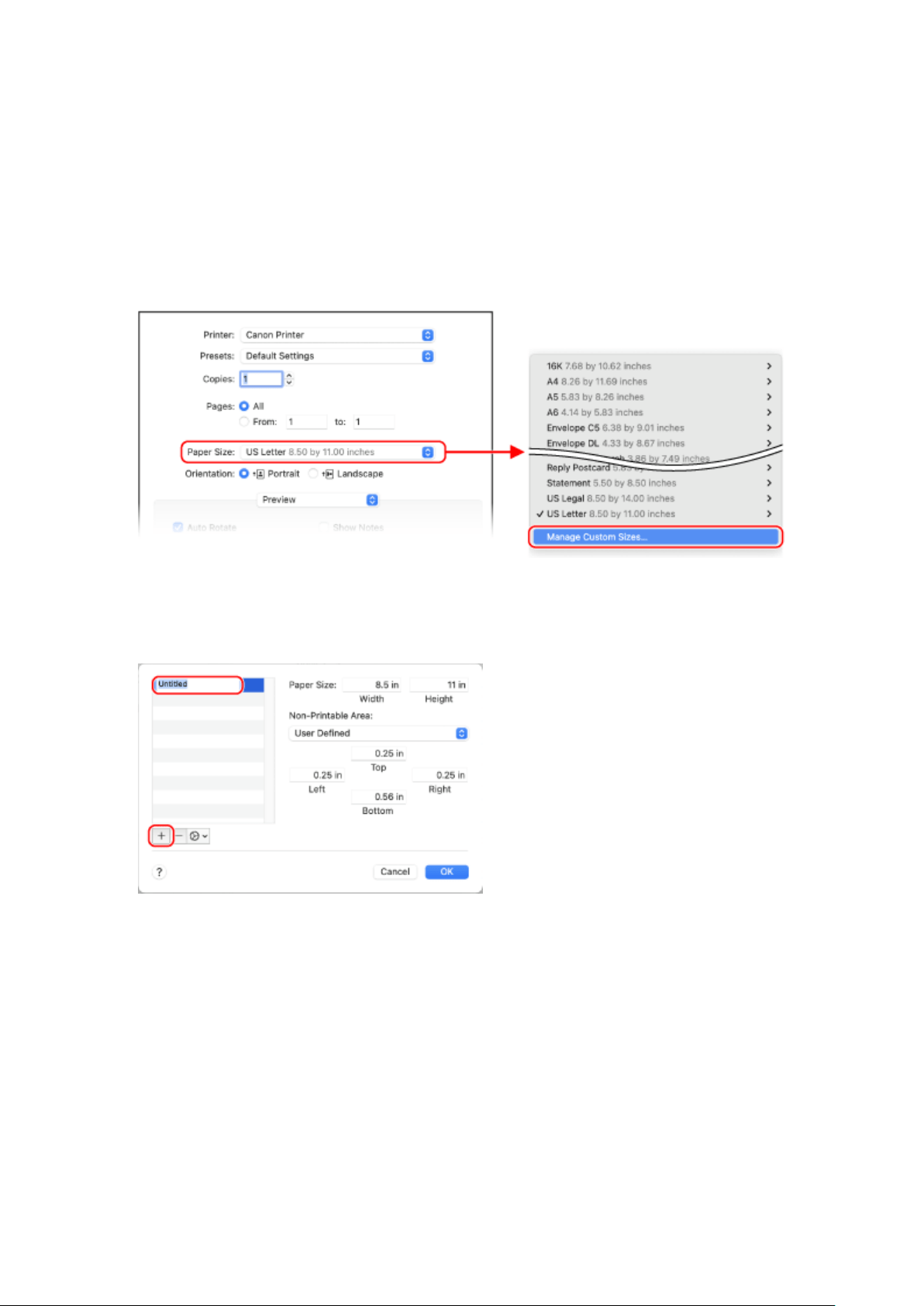
2
From the menu in the application used to open the document, click [Print].
➠ The printing dialog bo
x appears.
3
In [Printer], select the printer driver of the machine.
4
In [Paper Size] of the print options, select [Manage Custom Sizes].
If print options are not displayed, click [Show Details] in the printing dialog box.
5
Click [+] at the bottom left, double-click [Untitled], and enter the custom size paper
name.
6
Enter the paper size, and click [OK].
➠ The custom size paper is r
egistered.
Printing
218
Printing with Universal Print
8W0J-04J
Universal Print is a service for printing documents via the Micr
osoft cloud. The Universal Print driver is standard with
Windows 10, so there is no need to install a printer driver for each computer. If your device is connected to the
Internet, you can print documents when you are away from the machine.
To use Universal Print, you must be a registered user of Microsoft 365 and use Azure Active Directory.
Required Preparations
● Register the machine to Azur
e Active Directory, and set the members or groups that will use the machine.
Registering the Machine to Cloud Service(P. 210)
● T
o each computer that will use Universal Print, register the machine that is registered to Azure Active
Directory.
Registering the Machine to the Computer(P. 213)
For details about how to print with Universal Print and the supported operating systems, see the Microsoft website.
https://docs.micr
osoft.com/
Printing
219
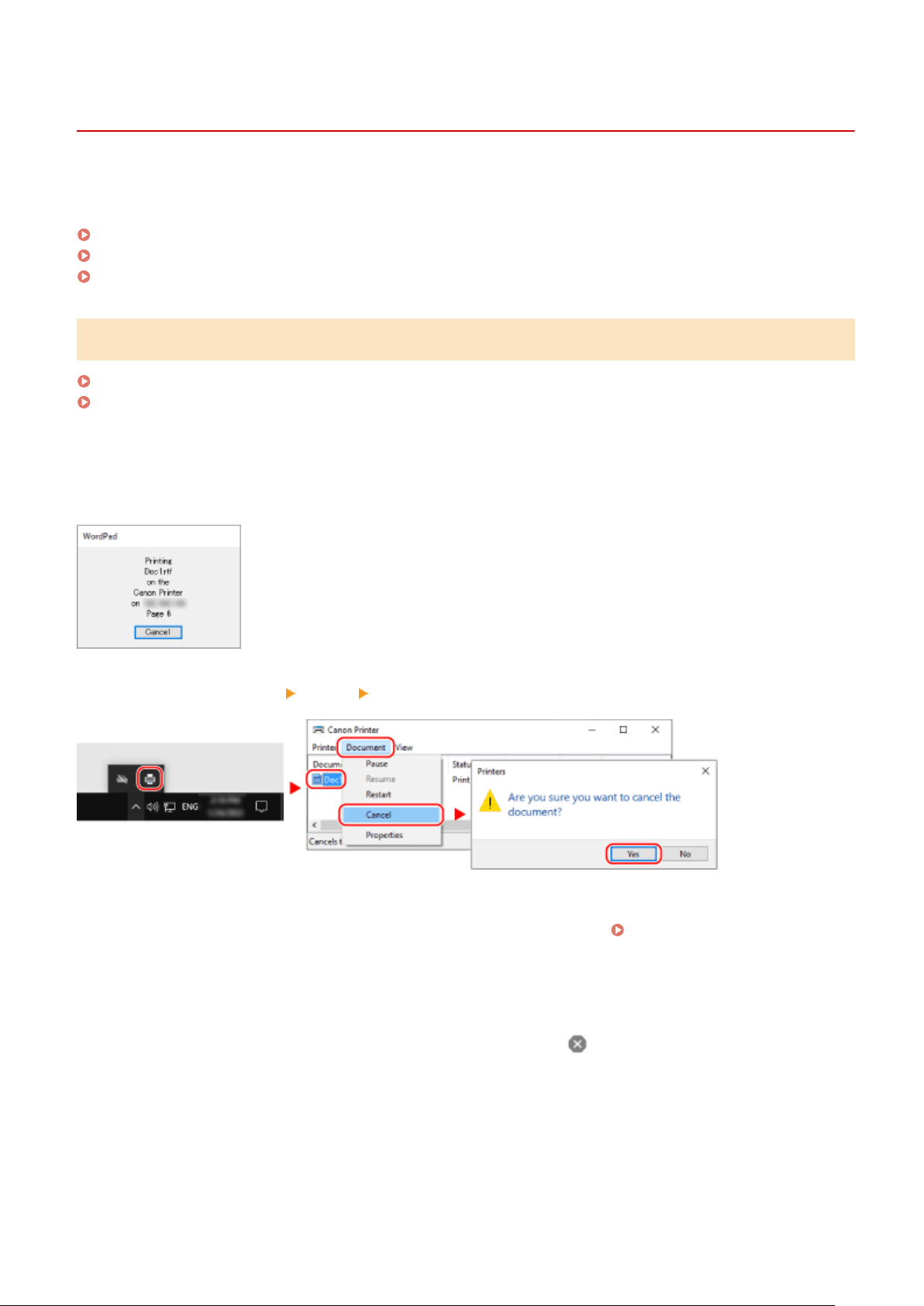
Canceling Printing
8W0J-04K
Y
ou can cancel printing from a computer. To cancel printing after the print data has been sent to the machine, use the
control panel or Remote UI.
Canceling Printing from a Computer(P. 220)
Canceling Printing with the Control panel(P. 221)
Canceling Printing with Remote UI(P. 222)
Canceling Printing from a Computer
When Using Windows(P. 220)
When Using macOS(P. 220)
◼ When Using Windo
ws
If the printing screen is displayed, click [Cancel].
If the above screen is not displayed, double-click the printer icon in the Windows notication ar
ea, select the document
to cancel, and click [Document]
[Cancel] [Yes].
If the printer icon is not displayed in the Windows notication ar
ea or the document to be canceled is not displayed,
the print data is sent to the machine after being processed on the computer.
In this case, cancel printing using the control panel of the machine or Remote UI.
Canceling Printing with the
Contr
ol panel(P. 221)
◼ When Using macOS
Click the printer icon in the Dock, select the document to cancel, and click [
].
Printing
220
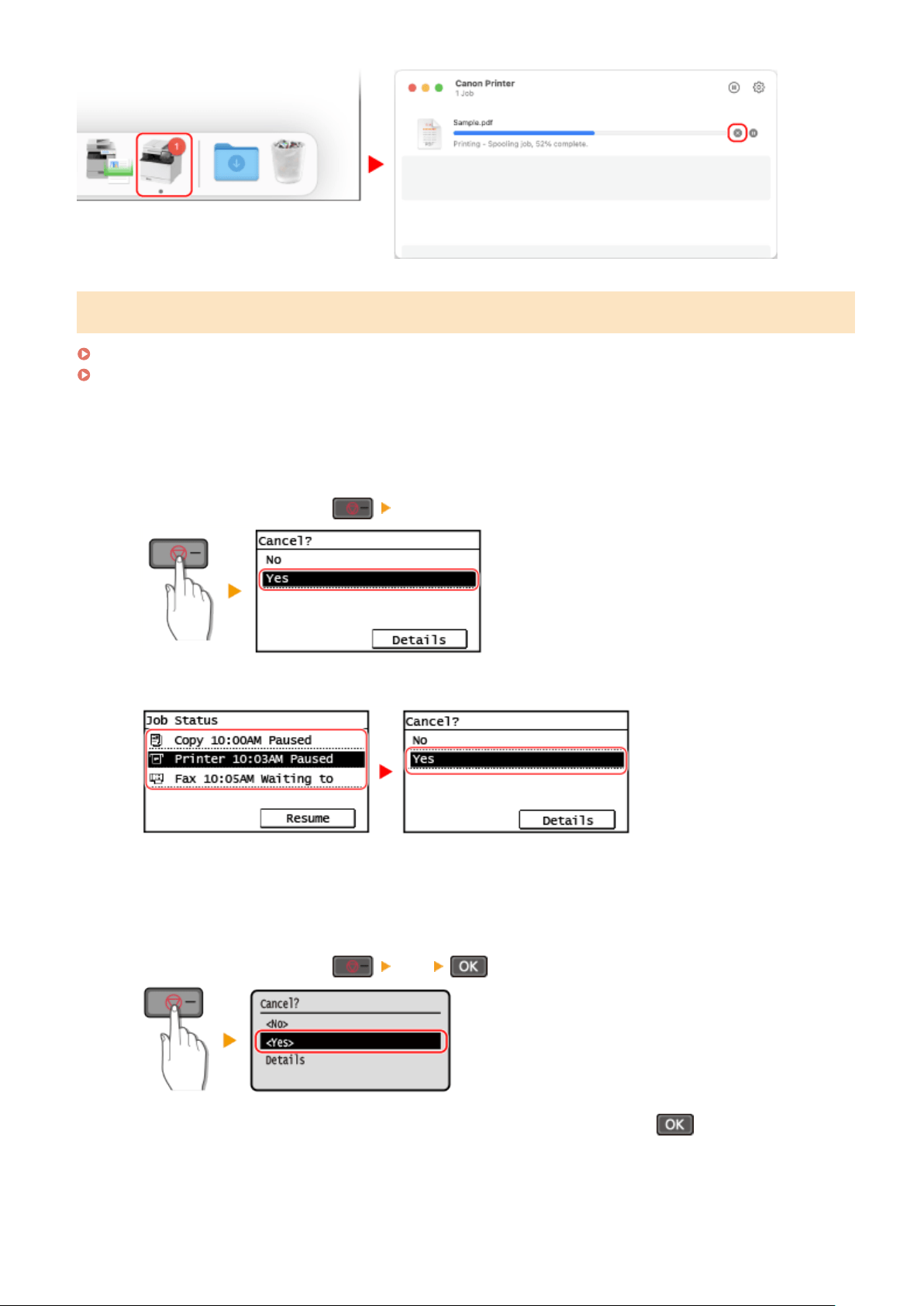
Canceling Printing with the Control panel
Touch Panel Model(P. 221)
5 Lines LCD Model(P. 221)
◼ T
ouch Panel Model
You can cancel printing using the procedure below.
On the control panel, press
[Yes].
If the job list screen is displayed, select the job to cancel, and press [Yes].
◼ 5 Lines L
CD Model
You can cancel printing using the procedure below.
On the control panel, press
[Yes] .
If the job list screen is displayed, select the job to cancel, and select [Yes],press .
Printing
221
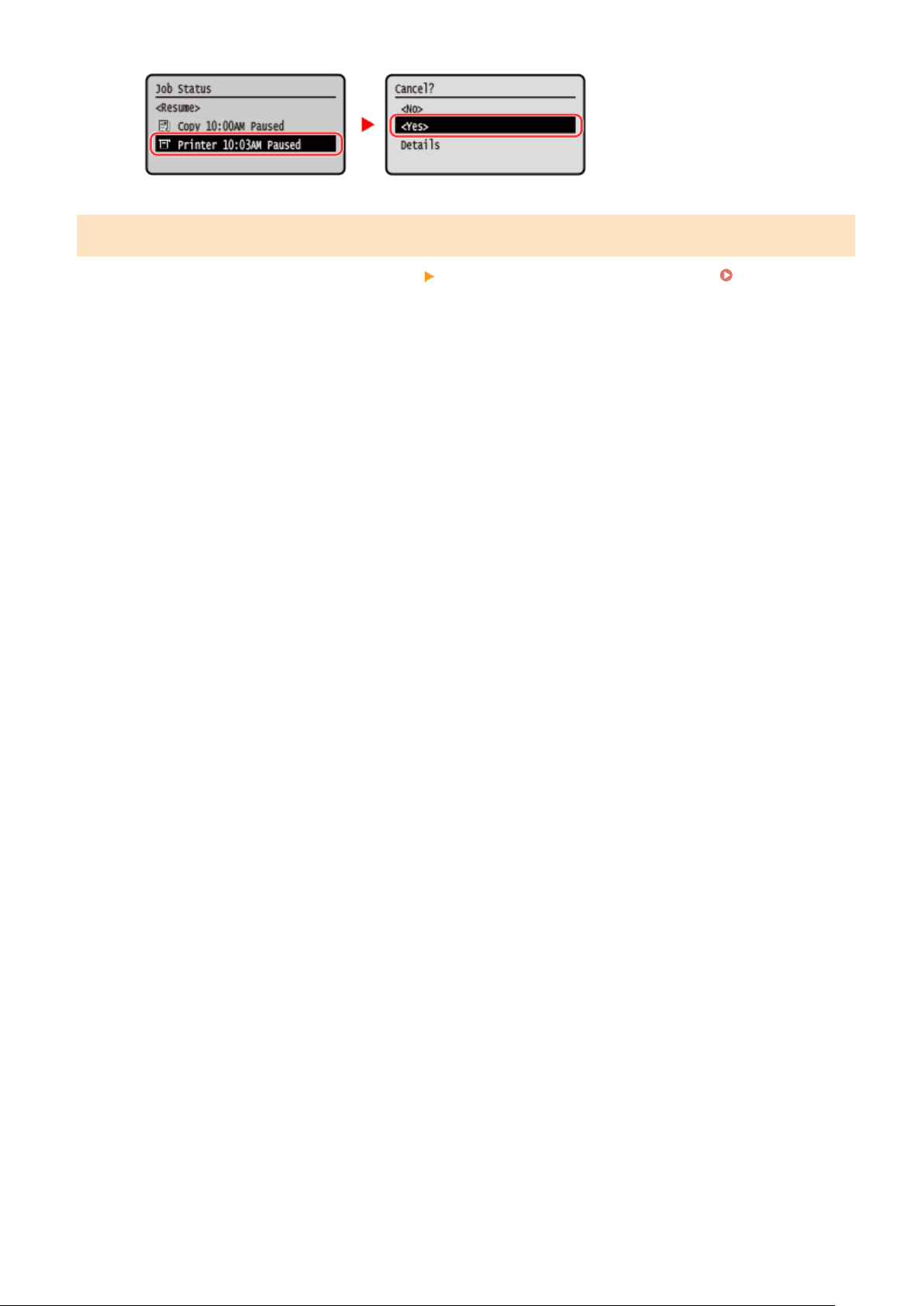

Viewing the Print Job Status and Log
8W0J-04L
Pr
ocesses handled by the machine, including printing, are managed as jobs. By checking the status and log of jobs,
you can determine whether a print job was performed correctly and the cause of errors that occurred.
* If the log is set to not be displayed, you can only check the print job status.
[Display Job Log](P. 509)
This section describes ho
w to view this information using the control panel.
You can also check this information using Remote UI from a computer.
Checking Usage and Logs with Remote
UI(P
. 403)
Touch Panel Model(P. 223)
5 Lines LCD Model(P. 224)
◼ T
ouch Panel Model
1
Press
on the control panel.
➠ The [Status Monitor] scr
een is displayed.
2
Press [Copy/Print Job].
3
Check the job status or the job log.
Viewing the Print Job Status
1
Press [Job Status].
➠ A list of jobs being pr
ocessed or waiting to be processed is displayed.
2
Select a job to view its details.
➠ The job details ar
e displayed.
3
View the le name, user name, and other information.
Depending on the type of char
acters being used, the le name and user name may not be correctly
displayed.
Viewing the Print Job Log
1
Press [Print Job Log].
➠ A list of jobs being pr
ocessed or waiting to be processed is displayed.
2
Select a job to view its details.
➠ The job details ar
e displayed.
3
View the le name, user name, and other information.
Depending on the type of char
acters being used, the le name and user name may not be correctly
displayed.
If Print Job Log Displays Error Information
Printing
223
Printing was canceled, or an error occurred.
If a thr
ee-digit number starting with "#" (error code) is displayed, you can check the cause and solution
using the error code.
An Error Code Is Displayed(P. 643)
◼ 5 Lines L
CD Model
1
Press
on the control panel. Control Panel(P. 14)
➠ The [Status Monitor] scr
een is displayed.
2
Check the job status or the job log.
Viewing the Print Job Status
1
Select [Job Status], press
.
➠ A list of jobs being pr
ocessed or waiting to be processed is displayed.
2
Select a job to view its details and press
.
➠ The job details ar
e displayed.
3
View the le name, user name, and other information.
Depending on the type of char
acters being used, the le name and user name may not be correctly
displayed.
Viewing the Print Job Log
1
Select [Print Job Log], press
.
➠ A list of jobs being pr
ocessed or waiting to be processed is displayed.
2
Select a job to view its details and press
.
➠ The job details ar
e displayed.
3
View the le name, user name, and other information.
Depending on the type of char
acters being used, the le name and user name may not be correctly
displayed.
If Print Job Log Displays Error Information
Printing was canceled, or an error occurred.
If a three-digit number starting with "#" (error code) is displayed, you can check the cause and solution
using the error code.
An Error Code Is Displayed(P. 643)
Printing
224

Scanning
Scanning ..............................................................................................................................................................
226
Preparations for Scanning ................................................................................................................................ 228
Preparing to Save Scanned Data to a Computer ........................................................................................... 229
Preparing for a Shortcut Key to Store Scanned Data to a Computer ............................................................. 231
Preparing to Send Scanned Data by E-mail ................................................................................................... 235
Conguring the Basic Settings for Sending E-mail (Send Function Setting Tool) .................................... 236
Using the Downloaded Send Function Setting Tool ......................................................................... 238
Conguring Detailed Information of the E-mail Server (Remote UI) ...................................................... 239
Preparing to Save Scanned Data to a Shared Folder ..................................................................................... 241
Registering a Shared Folder to the Address Book (Send Function Setting Tool) ..................................... 242
Scanning (Saving to a Computer) ..................................................................................................................... 244
Scanning (Sending by E-mail) ............................................................................................................................ 247
Scanning (Saving to a Shared Folder) ............................................................................................................... 249
Scanning Using the Shortcut Key (Saving to a Computer) .............................................................................. 251
Scanning from a Computer (Saving to a Computer) ....................................................................................... 254
Starting MF Scan Utility ................................................................................................................................ 257
Scan Settings (Touch Panel Model) ................................................................................................................... 258
Canceling Scanning ........................................................................................................................................... 262
Checking the Send and Save Status and Log of Scanned Data (Touch Panel Model) .................................... 263
Scanning
225
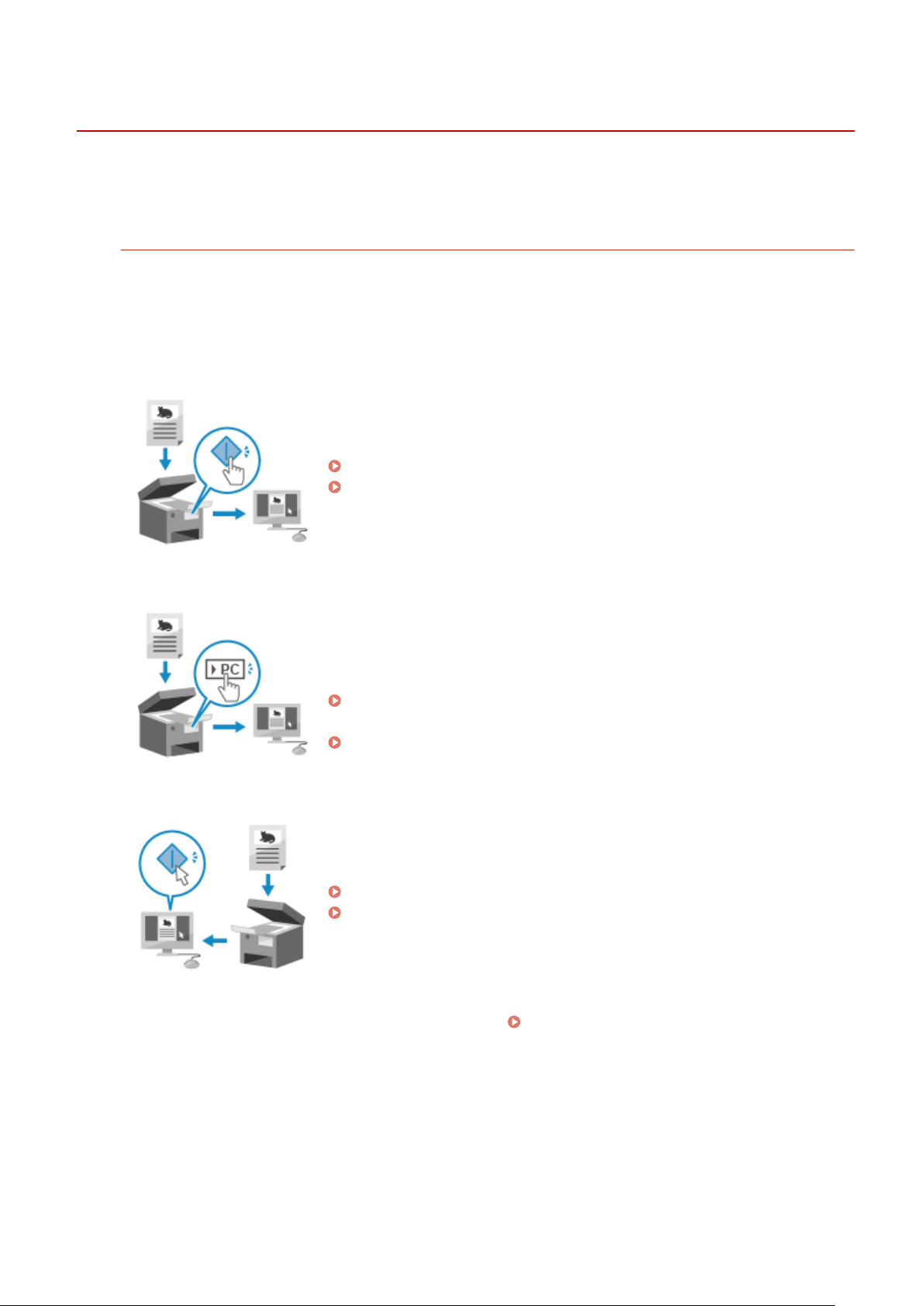
Scanning
8W0J-04R
Y
ou can scan documents, photos, and other printed material ("originals") and convert them into data. This converted
data ("scanned data") can be saved as an image or PDF le and sent using the following methods.
Saving to a Computer
Save scanned data to a computer connected to the machine.
Y
ou can congure the scan settings and save scanned data to a computer using the scanner driver and
application installed on the computer.
The following three methods are available.
Scanning from the Machine
Scan using the format and save destination preset with the application.
This method saves scanned data to a computer b
y just operating the machine
and is convenient when scanning multiple originals.
Preparing to Save Scanned Data to a Computer(P. 229)
Scanning (Saving to a Computer)(P. 244)
Scanning from the Machine with a Single Step
Only pressing a shortcut key allows scanning with predetermined settings to a
designated destination. Y
ou can store scanned data to a specic computer with
a single operation. It is useful to register frequently scanning settings and a
frequently used destination computer.
Preparing for a Shortcut Key to Store Scanned Data to a
Computer(P
. 231)
Scanning Using the Shortcut Key (Saving to a Computer)(P. 251)
Scanning from a Computer
Scan using the format and save destination specied when scanning.
This method lets you see the scanned data immediately on the computer
scr
een so you can check the image quality and make adjustments.
Preparing to Save Scanned Data to a Computer(P. 229)
Scanning from a Computer (Saving to a Computer)(P. 254)
* In macOS, you can use the AirPrint function, which is standard in the OS, to scan data from a computer
without having to install a scanner driver or application.
Using AirPrint Application to Print and Scan
Data and Send Fax
es(P. 342)
Scanning
226
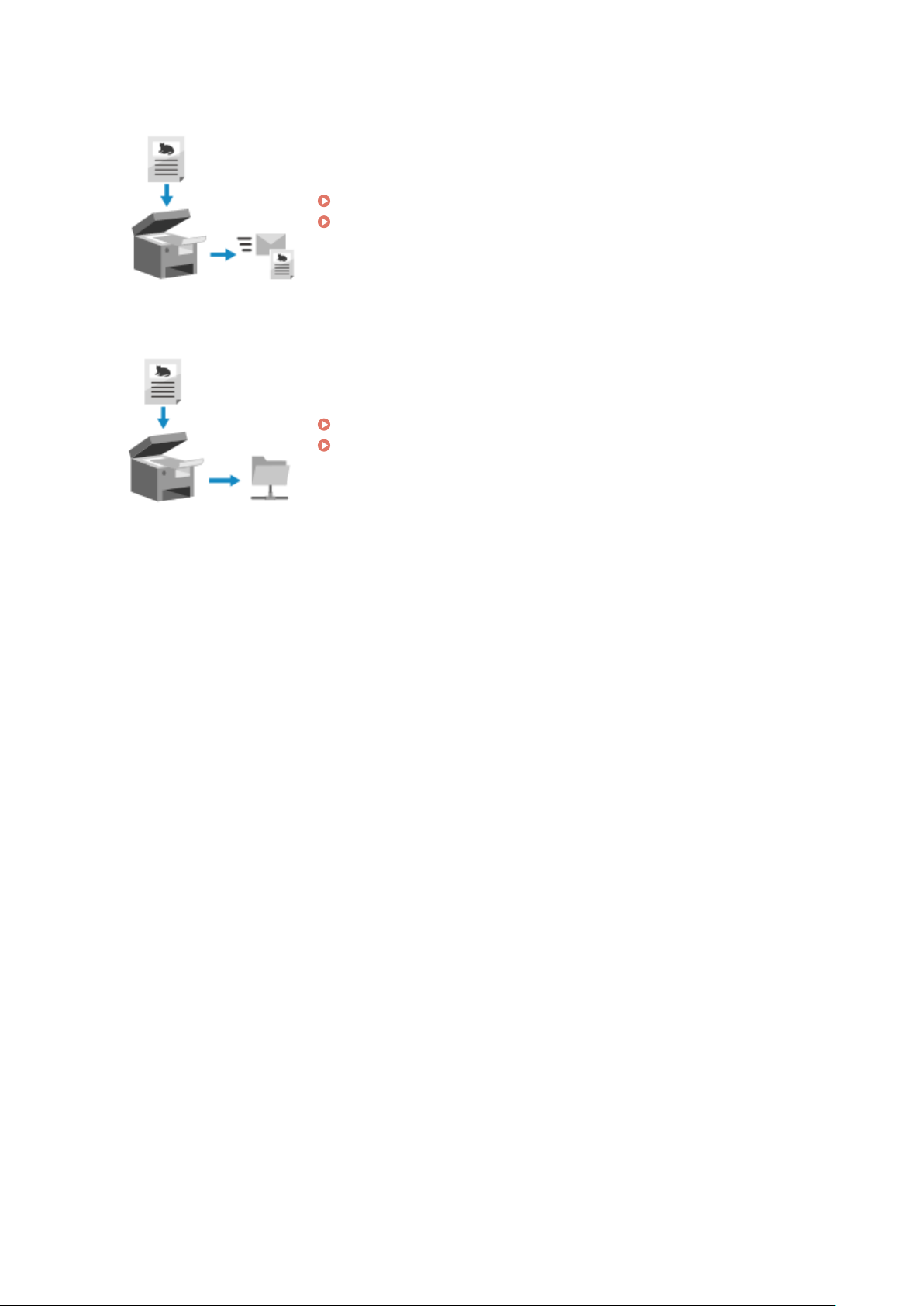
Sending by E-mail
You can send scanned data by e-mail as an attachment.
Just lik
e when sending a regular e-mail, you can add a subject and message and
specify multiple destinations.
Preparing to Send Scanned Data by E-mail(P. 235)
Scanning (Sending by E-mail)(P. 247)
Saving to a Shared Folder
You can save scanned data to a shared folder on a computer.
This is convenient for sharing the scanned data of a paper document on a
network.
Preparing to Save Scanned Data to a Shared Folder(P. 241)
Scanning (Saving to a Shared Folder)(P. 249)
Scanning
227

Preparations for Scanning
8W0J-04S
Y
ou must set the scanned data save destination and sending method before scanning.
Preparing to Save Scanned Data to a Computer(P. 229)
Preparing for a Shortcut Key to Store Scanned Data to a Computer(P. 231)
Preparing to Send Scanned Data by E-mail(P. 235)
Preparing to Save Scanned Data to a Shared Folder(P. 241)
Scanning
228

Preparing to Save Scanned Data to a Computer
8W0J-04U
Mak
e the following preparations for each computer to which to save scanned data.
Step 1: Installing the Driver and Application to the Computer(P. 229)
Step 2: Registering the Machine with a Computer(P. 229)
Step 1: Installing the Driver and Application to the Computer
Install the following driver and application on the computer to which to save scanned data. Installing Software and
Drivers to the Computer(P
. 106)
ScanGear MF
This scanner driver is required to save scanned data to a computer.
When scanning with a computer, you can use this driver to adjust the scan settings while checking the
results.
MF Scan Utility
This is the application for scanning.
Use this to easily scan photos and documents from a computer. You can also change the scan settings for
when performing scanning operations with the machine.
Step 2: Registering the Machine with a Computer
For both of the following cases, you must register the machine with the computer used as the save destination.
● Performing scanning oper
ations with the machine
● Setting a computer connected to a network as the save destination
You do not have to register the machine when scanning from a computer or saving scanned data to a USB-connected
computer.
When Using Windows(P. 229)
When Using macOS(P. 230)
◼ When Using Windo
ws
1
Click [
] (Canon MF Network Scanner Selector) displayed in the Windows
notication ar
ea.
2
Select the checkbox for this machine, and click [OK].
Scanning
229
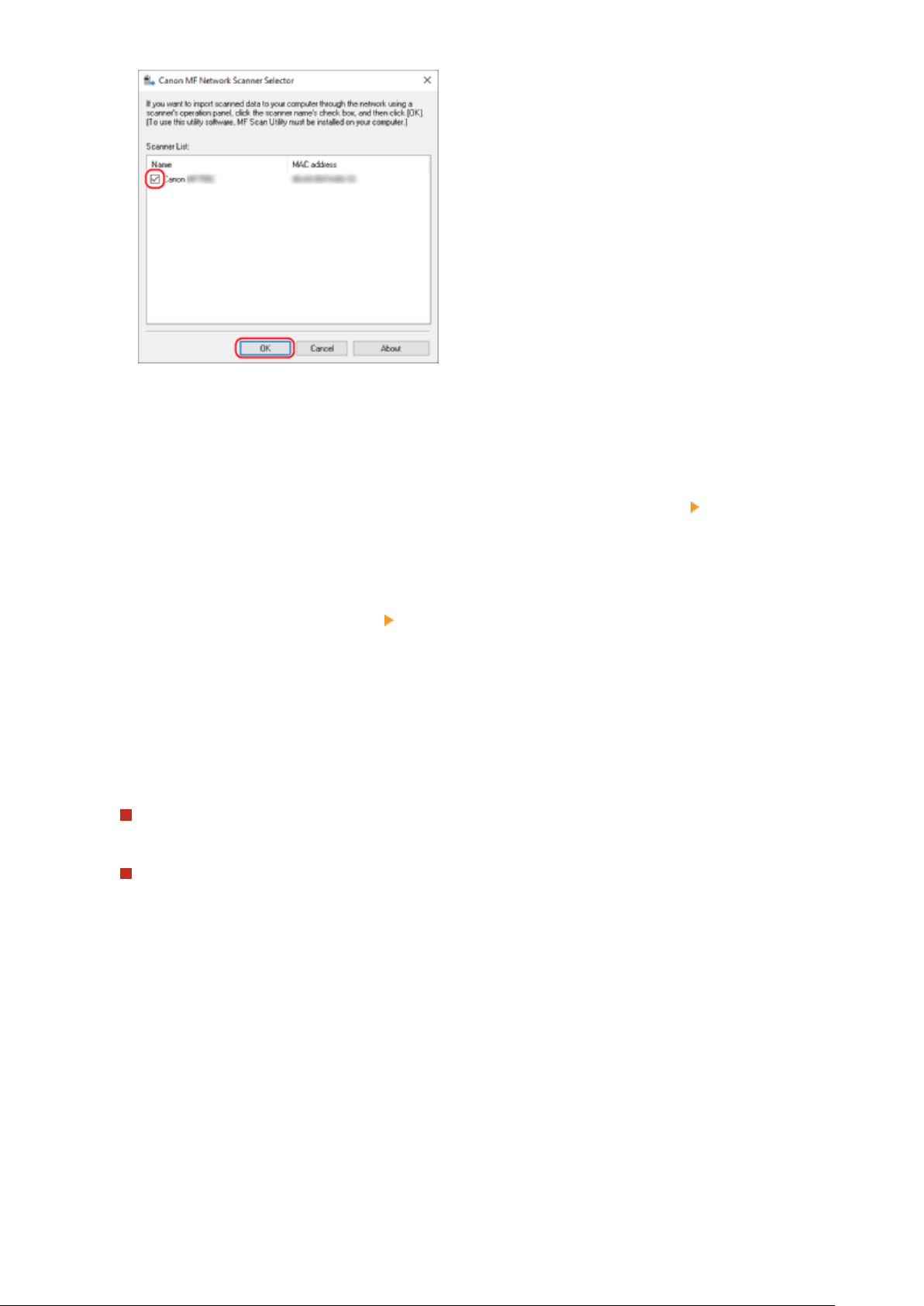
◼ When Using macOS
Use MF Scan Utility to r
egister the machine.
1
From the OS Applications folder, double-click [Canon MF Utilities]
[Canon MF Scan
Utility].
➠ MF Scan Utility starts.
2
Click [Canon MF Scan Utility] [Network Scanner Settings].
3
Click [+] at the bottom left.
4
Add the machine on each tab according to the connection method.
Connecting with Bonjour
On the [Bonjour] tab, select the Bonjour name, and then click [Add].
Connecting with TCP/IP
On the [IP] tab, enter the IP addr
ess of the machine, and then click [Add].
5
Restart MF Scan Utility.
➠ The added machine is displayed in [Pr
oduct Name:] on the [Canon MF Scan Utility] main dialog box.
Scanning
230
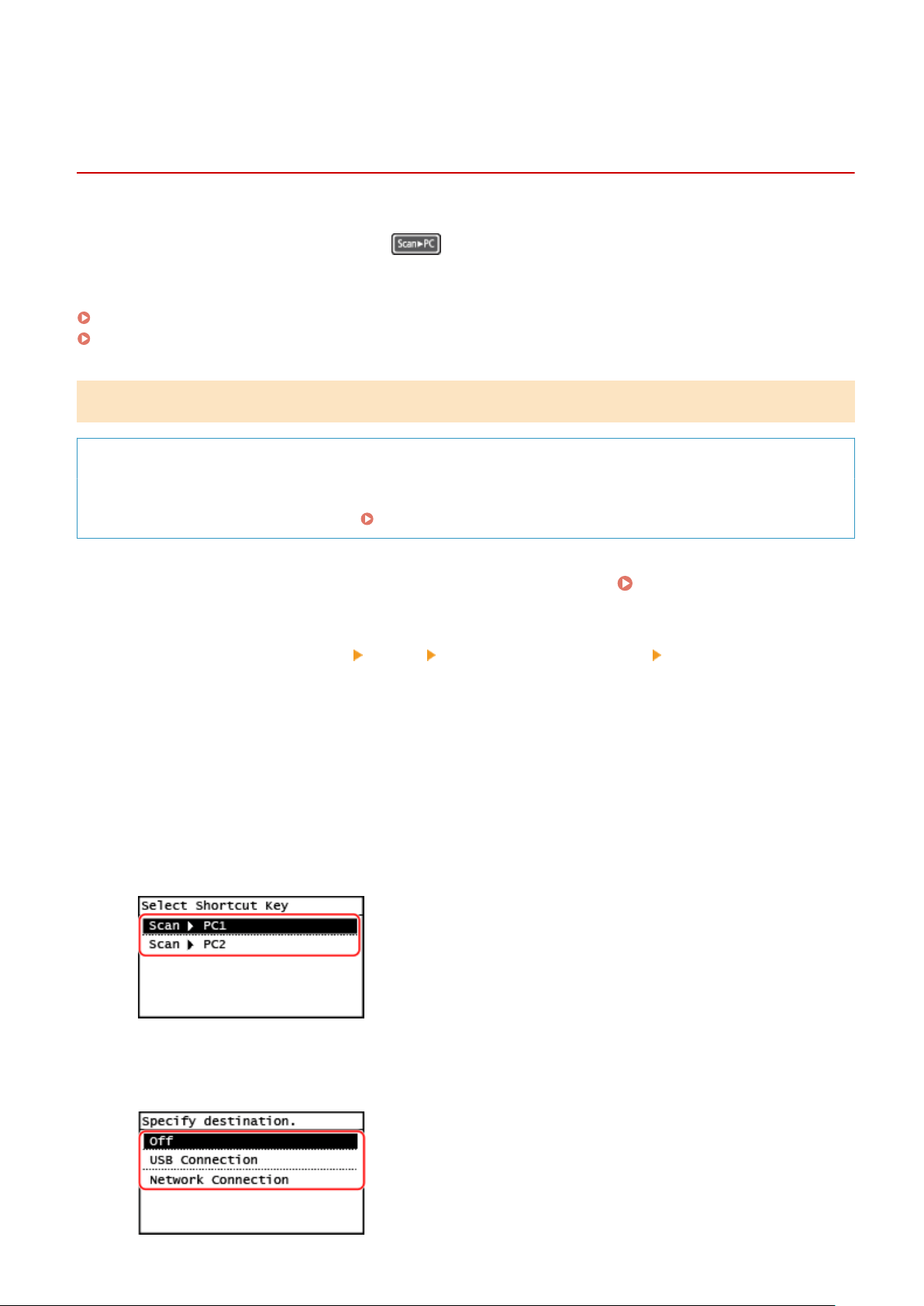
Preparing for a Shortcut Key to Store Scanned Data to a
Computer
8W0J-04W
This section describes ho
w to register the information, such as the computer for storing the scanned data or the scan
settings, to the button on the [Home] screen or
on the control panel.
Use the contr
ol panel to congure the settings. You cannot congure the settings using Remote UI from a computer.
Touch Panel Model(P. 231)
5 Lines LCD Model(P. 232)
Touch Panel Model
Required Preparations
● Mak
e preparations such as installing the scanner driver (ScanGear MF) and application (ScanGear MF) to the
computer used as the save location.
Preparing to Save Scanned Data to a Computer(P. 229)
1
On the control panel, press [Menu] in the [Home] screen. [Home] Screen(P. 120)
2
Press [Function Settings] [Send] [Scan and Send Settings] [Shortcut Key
Settings].
➠ The [Shortcut Ke
y Settings] screen is displayed.
3
Press [Register].
➠ The [Select Shortcut Ke
y] screen is displayed.
4
Select the shortcut key to which you want to register settings.
Select [Scan -> PC1] or [Scan -> PC2].
5
Select the connection method to a computer.
Scanning
231
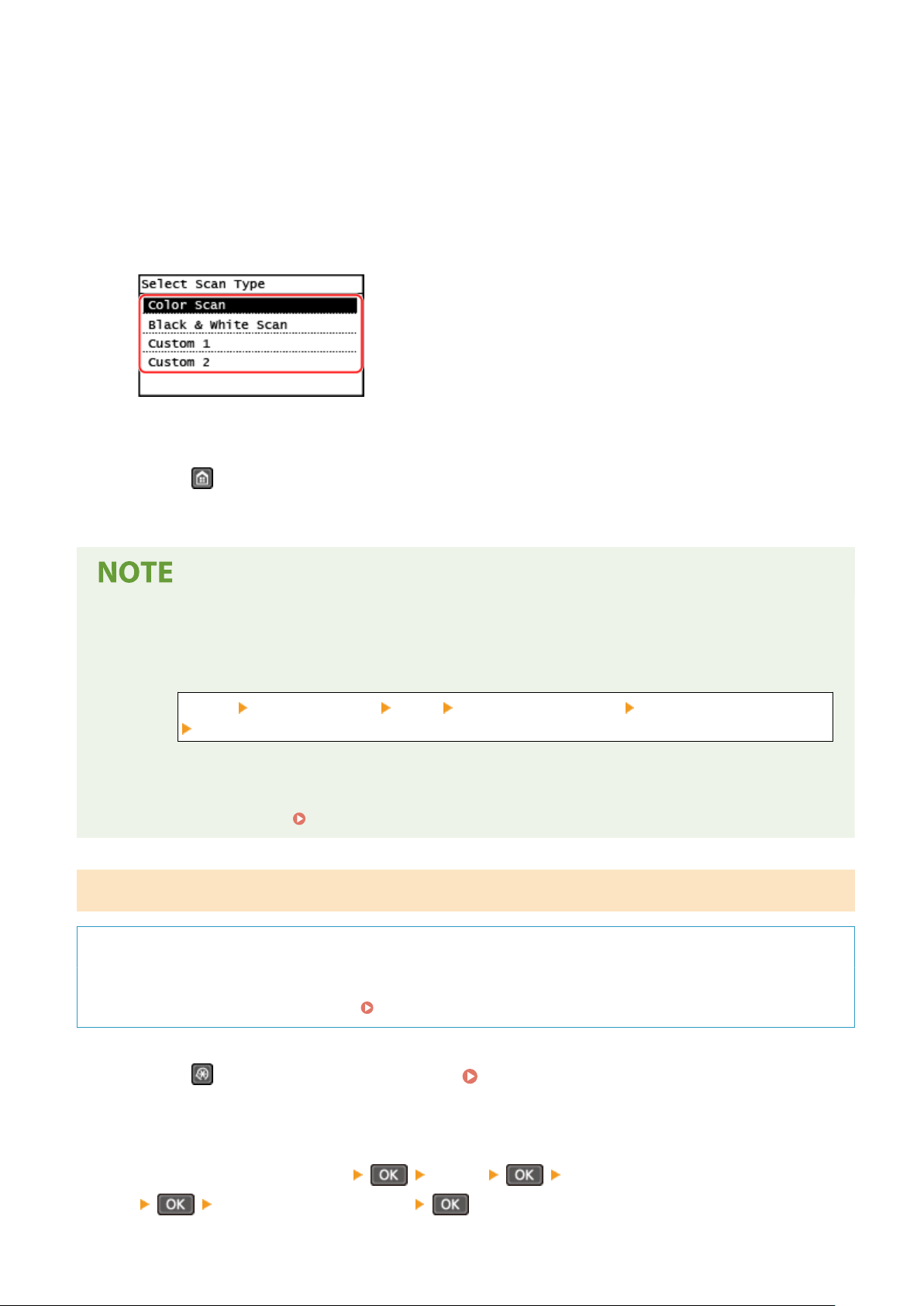
● If [Off] is selected, the shortcut k
ey information registered in Step 4 in canceled.
● When [USB Connection] is selected, go to Step 7.
6
Select the destination computer.
Select from computers on the network where the machine participates.
7
Select the scan type.
➠ The [Shortcut Ke
y Settings] screen is displayed.
8
Press
on the control panel.
➠ The [Home] scr
een is displayed.
Conrming the r
egistered information of the shortcut key
● You can conrm the registered information of the shortcut key selected in Step 4 by selecting the shortcut
key on the screen displayed with the following steps:
[Menu] [Function Settings] [Send] [Scan and Send Settings] [Shortcut Key Settings]
[Conrm Destination] fr
om the [Home] screen
Checking or Changing Scan Setting or Save Location
● Y
ou can check and change the scan setting selected in step 7 by using the MF Scan Utility on the computer
used as the save location.
Starting MF Scan Utility(P. 257)
5 Lines LCD Model
Required Preparations
● Mak
e preparations such as installing the scanner driver (ScanGear MF) and application (ScanGear MF) to the
computer used as the save location.
Preparing to Save Scanned Data to a Computer(P. 229)
1
Press
(Menu) on the control panel. Control Panel(P. 14)
➠ The [Menu] scr
een is displayed.
2
Press [Function Settings]
[Send] [Scan and Send Settings]
[Shortcut Key Settings] .
Scanning
232
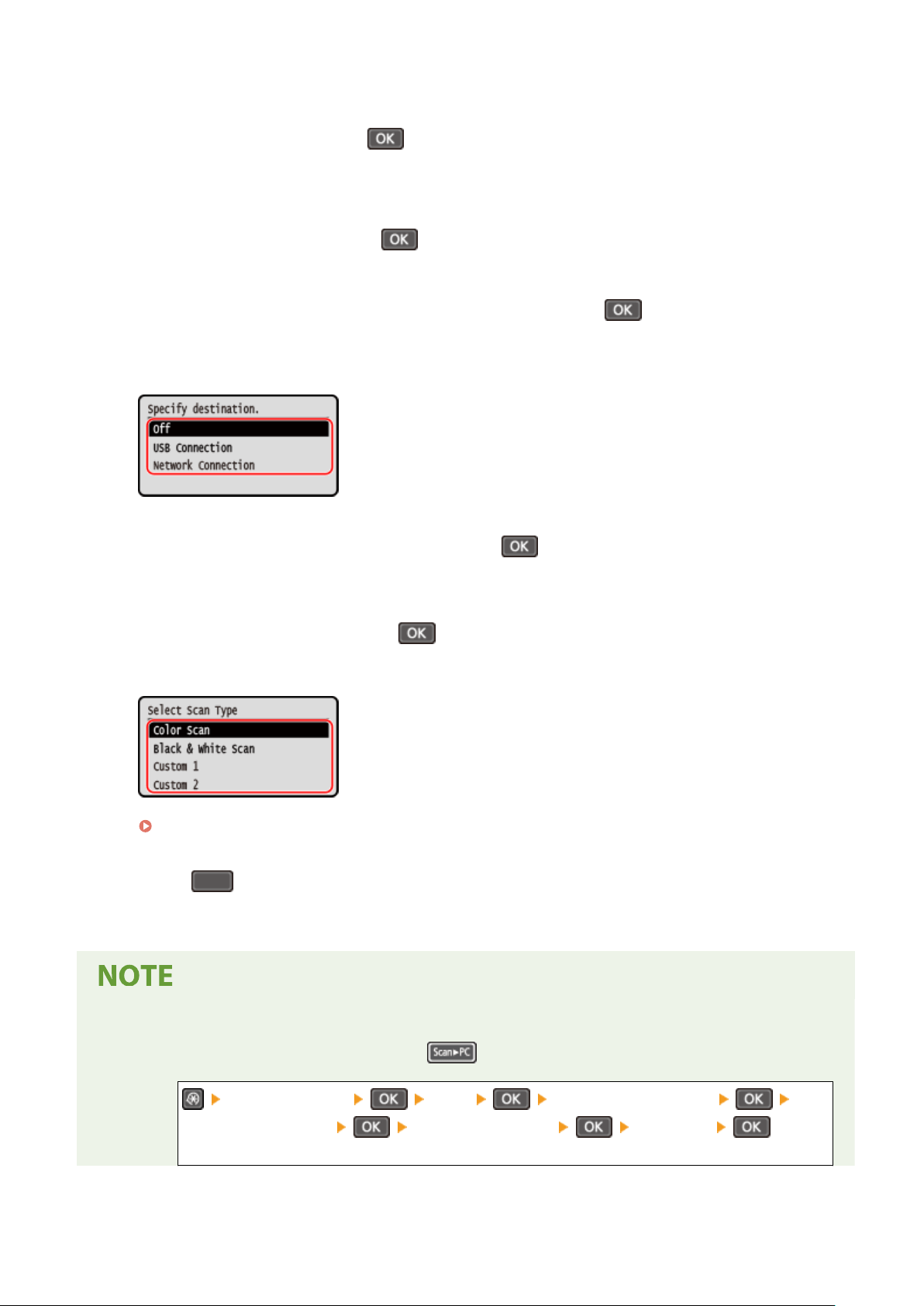
➠ The [Shortcut Ke
y Settings] screen is displayed.
3
Select [Register] and press
.
➠ The [Select Shortcut Ke
y] screen is displayed.
4
Select [Scan -> PC] and press
.
5
Select the connection method to a computer and press
.
● If [Off] is selected, the shortcut key information in canceled.
● When [USB Connection] is selected, go to Step 7.
6
Select the destination computer and press .
Select from computers on the network where the machine participates.
7
Select the scan type and press .
➠ The [Shortcut Ke
y Settings] screen is displayed.
The registered information of the items available here can be conrmed or changed b
y using MF Scan Utility.
Starting MF Scan Utility(P. 257)
8
Press
(Home) on the control panel.
➠ The [Home] scr
een is displayed.
Conrming the r
egistered information of the shortcut key
● You can conrm the information registered to
on the screen displayed with the following steps:
[Function Settings] [Send] [Scan and Send Settings]
[Shortcut Key Settings] [Conrm Destination] [Scan -> PC] from
the [Home] screen
Scanning
233


Preparing to Send Scanned Data by E-mail
8W0J-04X
Congur
e the settings of the e-mail server to be used to send e-mail. Depending on the settings, use either of the
following methods to congure the settings from a computer. You cannot use the control panel to congure the
settings.
Conguring the Basic Settings for Sending E-mail (Windows)
Congure the basic settings of the e-mail server. You can also register destination e-mail addresses to One-
Touch in the Address Book. Use Send Function Setting Tool to congure the settings.
Conguring the Basic Settings for Sending E-mail (Send Function Setting T
ool)(P. 236)
* One-Touch is a list of destinations that can be recalled with [
] in the Address Book or [One-Touch] in the
[Home] Scr
een.
Address Book Function(P. 169)
[Home] Screen(P. 120)
Conguring Detailed Information of the E-mail Server
In addition to the basic information of the e-mail server, you can also congur
e POP authentication before
sending and encryption communication settings. Use Remote UI to congure the settings.
Conguring Detailed Information of the E-mail Server (Remote UI)(P
. 239)
* Register destination e-mail addresses to the Address Book as needed.
Registering Destinations to the Address Book (Control Panel)(P. 171)
Registering Destinations to the Address Book (Remote UI)(P. 176)
Scanning
235

Conguring the Basic Settings for Sending E-mail (Send
Function Setting T
ool)
8W0J-04Y
Fr
om a computer, congure the basic settings of the e-mail server using the Send Function Setting Tool. You can also
register destination e-mail addresses to One-Touch in the Address Book.
* One-Touch is a list of destinations that can be recalled with [
] in the Address Book or [One-Touch] in the [Home]
Scr
een.
Address Book Function(P. 169)
[Home] Screen(P. 120)
Administr
ator privileges are required. The machine must be restarted to apply the settings.
If the SMTP port number of the e-mail server is other than 25, you must change the port number setting.
Changing
the Port Number(P
. 357)
Required Preparations
● Connect the computer you ar
e using to congure the settings to the machine over a network.
● Prepare the following information and keep it close by.
- IP address of the machine
Checking the Network Status and Settings(P. 96)
-
E-mail address to register as a destination
- Setting information of the e-mail server (SMTP server name, authentication setting, user name and
password to be used for authentication)
* For details about the setting information, contact your provider or network administrator. Depending on
the usage environment, you can also refer to the information set in the computer e-mail software.
1
From a Web browser on a computer, access the following URL.
http://<IP address of this machine>/sendsupport_login.html
➠ The [Start Settings] scr
een for the Send Function Setting Tool is displayed.
You can also use the downloaded le to start the Send Function Setting Tool.
Using the Downloaded Send
Function Setting T
ool(P. 238)
When the [Start Settings] Screen of Send Function Setting Tool Is Not Displayed
When a message such as [Cannot continue the settings because the function to perform settings for the
de
vice is restricted.] is displayed and the [Start Settings] screen is not displayed, see the following:
Cannot Access Remote UI or Send Function Setting Tool(P. 623)
2
Click [Start].
If the login screen appears, enter the System Manager ID and PIN, and then click [Logon].
Scanning
236

3
Click [Send to E-mail Settings].
➠ The [Send to E-mail Settings] scr
een is displayed.
If the [Enter Address Book Password] screen appears, enter the PIN, and then click [OK].
4
For [Registration], select a One-Touch number, and enter the name to be displayed in
the Addr
ess Book.
Previously registered One-Touch numbers are not displayed.
5
For [Send Destination Settings], enter the e-mail address to be registered.
6
For [SMTP Server Settings], congur
e the e-mail server information.
[SMTP Server]
Enter the SMTP server name (the host name or IP addr
ess) to be used for sending e-mail, using single-byte
alphanumeric characters.
Input example: Host name
smtp.example.com
[SMTP Authentication]
When using SMTP authentication, select [Set], and enter the user name and password for authentication
using single-byte alphanumeric characters.
7
Click [Next]
[Register].
8
Restart the machine. Restarting the Machine(P. 113)
➠ The settings ar
e applied.
Scanning
237
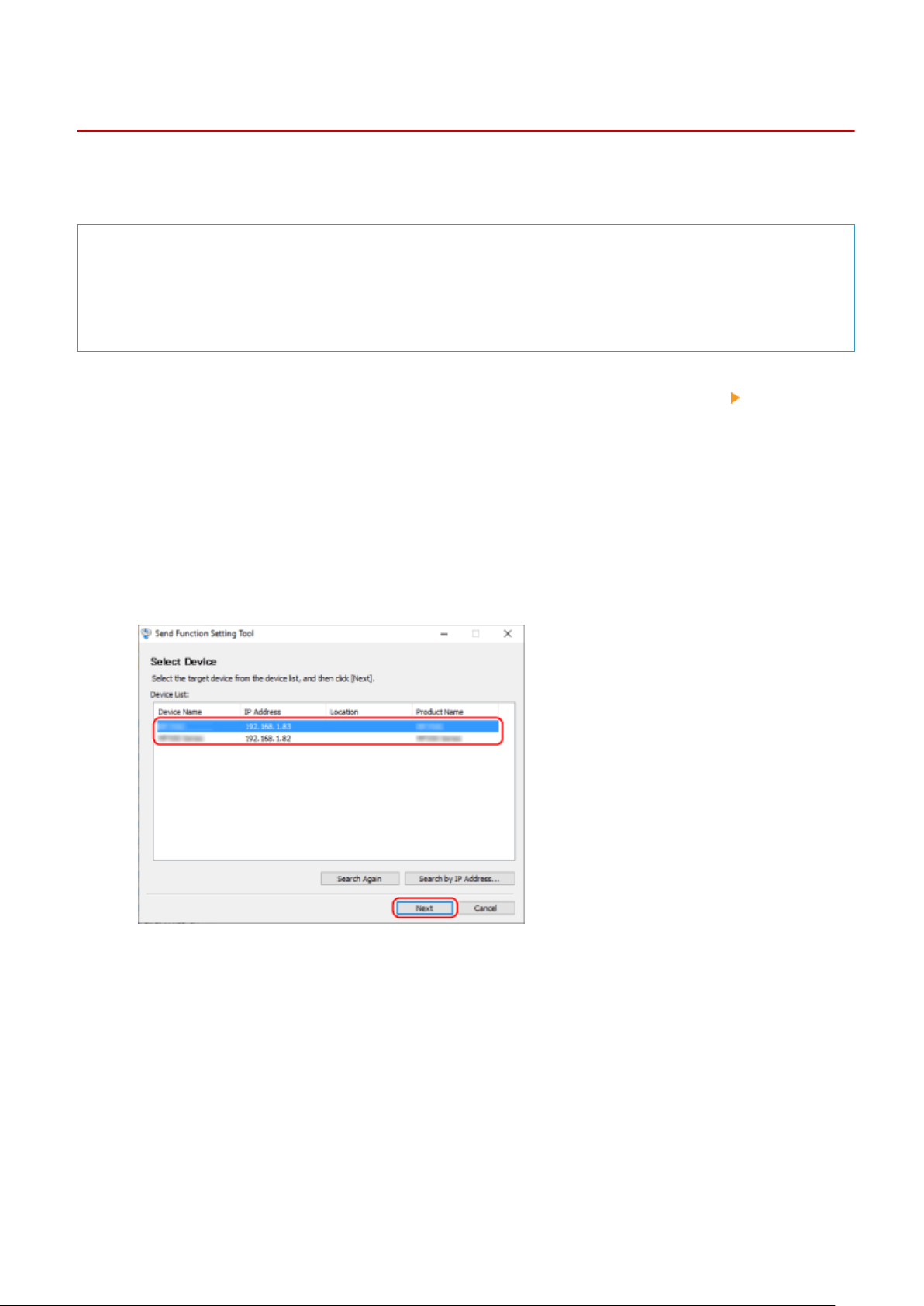
Using the Downloaded Send Function Setting Tool
8W0J-050
Y
ou can use the downloaded Send Function Setting Tool to automatically search for and start the conguration of the
machine.
Required Preparations
● Do
wnload the Send Function Setting Tool from the Canon website for your country/region.
https://global.canon/en/support/
● Double-click the downloaded le to extract the data.
1
In the extracted Send Function Setting Tool folder, open [SendSetting] [english],
and double-click [SendSetting.exe].
➠ A description of the Send Function Setting Tool is displayed.
2
Click [Next].
If a dialog box to cancel the Windows r
ewall appears, click [Yes].
3
From [Device List], select the machine, and click [Next].
If the machine is not displayed in [Device List], click [Search Again]. If the machine is still not displayed, click
[Sear
ch by IP Address], enter the IP address of the machine, and then click [OK].
4
Click [OK].
➠ The [Start Settings] scr
een of the Send Function Setting Tool is displayed.
Scanning
238

Conguring Detailed Information of the E-mail Server
(Remote UI)
8W0J-051
Use Remote UI fr
om a computer to congure the information of the e-mail server to use for sending scanned data by
e-mail. You can also congure POP authentication before sending, SMTP authentication, and encryption
communication settings.
Administrator privileges are required. The machine must be restarted to apply the settings.
If the SMTP port number of the e-mail server is other than 25 and/or the POP3 port number is other than 110, you
must change the port number setting.
Changing the Port Number(P. 357)
Required Preparations
● Connect the computer you ar
e using to congure the settings to the machine over a network.
● Prepare the following information and keep it close by.
- IP address of the machine
Checking the Network Status and Settings(P. 96)
-
E-mail address of the machine
- Setting information of the e-mail server (SMTP/POP3 server name, authentication setting, user name and
password to be used for authentication, encrypted communication setting)
* For details about the setting information, contact your provider or network administrator. Depending on
the usage environment, you can also refer to the information set in the computer e-mail software.
1
Log in to Remote UI in System Manager Mode. Starting Remote UI(P. 399)
2
On the Portal page of Remote UI, click [Settings/Registration]. Portal Page of
Remote UI(P
. 401)
3
Click [TX Settings]
[E-Mail Settings] [Edit].
➠ The [Edit E-Mail Settings] scr
een is displayed.
4
Enter the basic settings of the e-mail server.
[SMTP Server]
Enter the SMTP server name (the host name or IP address) to be used for sending e-mail, using single-byte
alphanumeric characters.
Input example: Host name
smtp.example.com
[E-Mail Address]
Enter the e-mail address of the machine using single-byte alphanumeric characters.
[POP Server]
When using POP authentication before sending (POP before SMTP), enter the POP3 server name (the host
name or IP address) using single-byte alphanumeric characters.
Input example: Host name
pop.example.com
Scanning
239

[User Name]
Enter the user name used for authenticating the POP3 server using single-b
yte alphanumeric characters.
[Set/Change Password]
To set a password to use when authenticating the POP3 server, select this checkbox, and enter the
password using single-byte alphanumeric characters.
5
Congure the authentication and encryption settings for sending e-mail accor
ding to
your usage environment.
When using POP authentication (POP before SMTP) before sending
Select the [Use POP Authentication Befor
e Sending] checkbox.
To use APOP authentication to encrypt password at authentication, also select the [Use APOP Authentication]
checkbox.
When using SMTP authentication
Select the [Use SMTP Authentication (SMTP AUTH)] checkbo
x, and enter the user name to be used for SMTP
authentication using single-byte alphanumeric characters.
To set a password to use for SMTP authentication, select the [Set/Change Password] checkbox, and enter the
password using single-byte alphanumeric characters.
When encrypting communication with the e-mail server
Select the [Use TLS for SMTP TX] and/or [Use TLS for POP] checkbo
xes.
Congure whether to verify a certicate for TLS encryption communication or whether to add a common
name (CN) to the verication items.
6
Click [OK].
By clicking [Check SMTP Connection] or [Check POP Connection], you can check the connection with the
SMTP or POP3 server using the curr
ent settings.
7
Restart the machine.
Restarting the Machine(P. 113)
➠ The settings ar
e applied.
Scanning
240

Preparing to Save Scanned Data to a Shared Folder
8W0J-052
● Cr
eate a shared folder as a save location of the scanned data as needed.
Creating a Shared Folder(P. 658)
● Register the shar
ed folder information to the Address Book
Register the information for accessing the shared folder to the Address Book of the machine. Register from a
computer using either of the following methods. You must register each shared folder that serves as a save
location. You cannot use the control panel to register this information.
Using the Send Function Setting Tool (Windows)
Register the shared folder information to One-Touch in the Address Book.
Registering a Shared Folder to the Address Book (Send Function Setting Tool)(P. 242)
Using Remote UI
Register the shar
ed folder information to One-Touch in the Address Book or Coded Dial.
Registering
Destinations to the Addr
ess Book (Remote UI)(P. 176)
* One-Touch is a list of destinations that can be recalled with [
] in the Address Book or [One-Touch] in the
[Home] Scr
een.
Address Book Function(P. 169)
[Home] Screen(P. 120)
* Coded Dial is a destination with a thr
ee-digit number that can be directly recalled from the Address Book.
Scanning
241
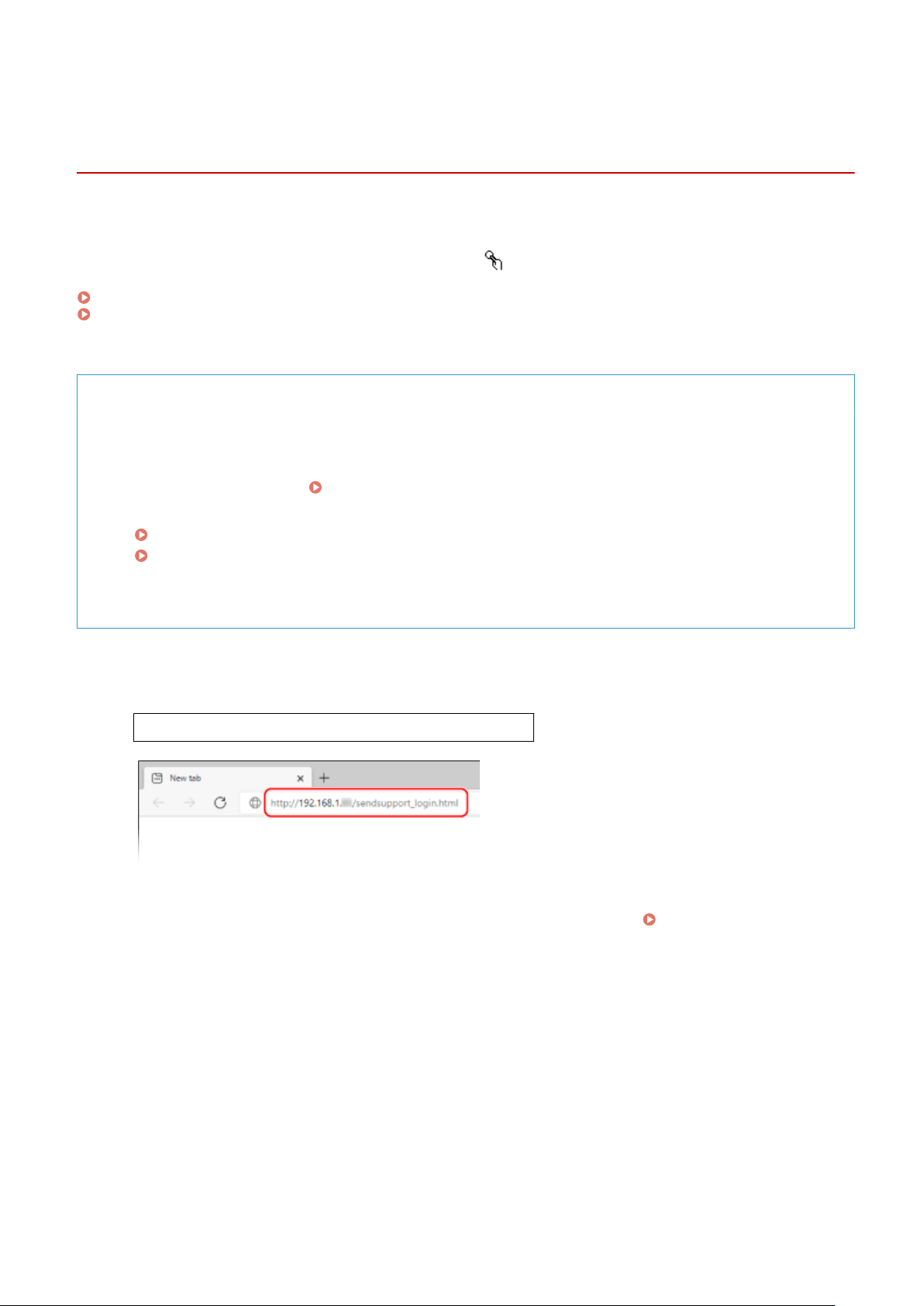
Registering a Shared Folder to the Address Book (Send
Function Setting T
ool)
8W0J-053
Use the Send Function Setting T
ool from a computer to register the shared folder information to One-Touch in the
Address Book.
* One-Touch is a list of destinations that can be recalled with [
] in the Address Book or [One-Touch] in the [Home]
Scr
een.
Address Book Function(P. 169)
[Home] Screen(P. 120)
Administr
ator privileges are required. The machine must be restarted to apply the settings.
Required Preparations
● Connect the computer you ar
e using to congure the settings to the machine over a network.
● Prepare the following information and keep it close by.
- IP address of the machine
Checking the Network Status and Settings(P. 96)
-
Name or IP address of the computer with the shared folder
Viewing the System Information of the Computer(P. 661)
Viewing the Network Connection Information of the Computer(P. 663)
-
Path to the shared folder
- User name and password used for accessing the shared folder (if Restrict Access is set)
1
From a Web browser on a computer, access the following URL.
http://<IP address of this machine>/sendsupport_login.html
➠ The [Start Settings] scr
een of the Send Function Setting Tool is displayed.
You can also use the downloaded le to start the Send Function Setting Tool.
Using the Downloaded Send
Function Setting T
ool(P. 238)
2
Click [Start].
If the login screen appears, enter the System Manager ID and PIN, and then click [Logon].
3
Click [Store to Shared Folder Settings].
➠ The [Stor
e to Shared Folder Settings] screen is displayed.
If the [Enter Address Book Password] screen appears, enter the PIN, and then click [OK].
Scanning
242

4
For [Registration], select a One-Touch number, and enter the name to be displayed in
the Addr
ess Book.
Previously registered One-Touch numbers are not displayed.
5
Enter the shared folder information in [Store Destination Settings].
[Computer Name of Store Destination]
Enter the name or IP address of the computer with the shared folder.
* When using a DNS server, you can enter the host name or FQDN instead of the computer name or IP
address.
[Shared Folder Name on Store Destination Computer]
Enter the path to the shared folder. Use "\" as a separator.
Input example: when the shared folder path is C:\users\public\share
users\public\share
If there is no folder at the entered path, a folder with the entered name is created when scanned data is
saved for the rst time.
* However, if there is no parent folder, or you do not have write permission to the parent folder, a sending
error occurs without a folder being created.
6
In [Status of Settings for Shared Folder], specify whether to enable Restrict Access for
the shar
ed folder.
If Restrict Access is enabled for the shared folder, select [Set], and enter the user name and password used
for accessing the shar
ed folder using single-byte alphanumeric characters.
7
Click [Next]
[Register].
8
Restart the machine.
Restarting the Machine(P. 113)
➠ The settings ar
e applied.
Scanning
243

Scanning (Saving to a Computer)
8W0J-054
You can scan an original and save the scanned data to a computer connected to the
machine. By just oper
ating the machine, you can save scanned data to a computer.
The original is scanned and the data is saved according to the settings of MF Scan
Utility installed on the computer.
Touch Panel Model(P. 244)
5 Lines LCD Model(P. 245)
Touch Panel Model
Required Preparations
● Mak
e preparations such as installing the scanner driver (ScanGear MF) and application (MF Scan Utility) to
the computer used as the save location.
Preparing to Save Scanned Data to a Computer(P. 229)
● If the ScanGear MF scr
een appears on the computer used as the save location, close the screen.
1
Place the original.
Placing Originals(P. 139)
2
On the control panel, press [Scan] in the [Home] screen. [Home] Screen(P. 120)
➠ The scan type selection scr
een is displayed.
3
Press [Computer].
➠ The scr
een to select the computer to be used as the save location is displayed.
When you are using the machine only with a USB-connected computer, the scan screen is displayed.
Proceed to step 5.
4
Select the computer to be used as the save location.
5
Select the scan setting, and press
on the control panel.
➠ Scanning of the original starts.
Scanning
244
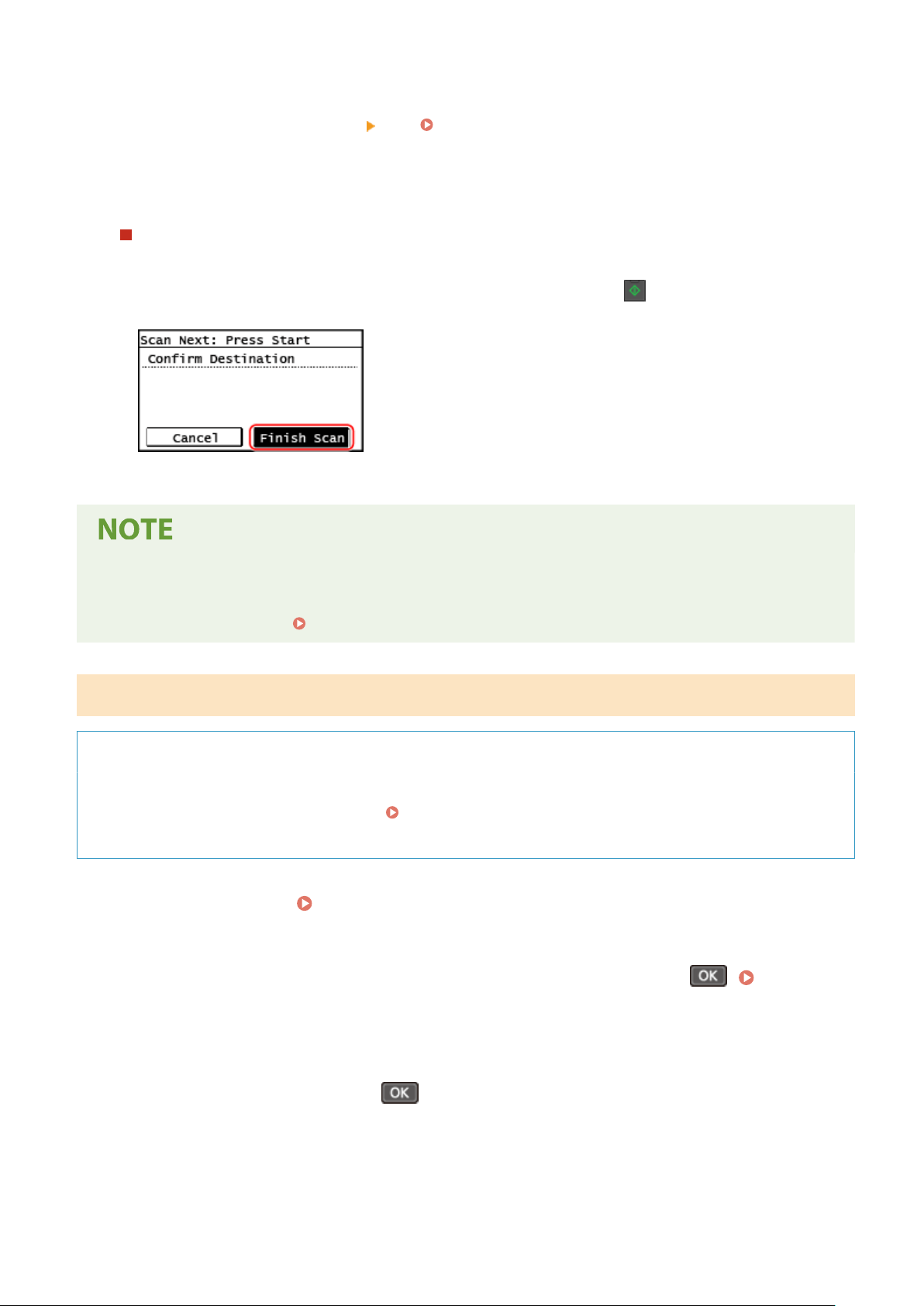
● The scanned data format, save location on the computer, and other settings ar
e set for each scan setting.
The original is scanned according to the selected scan setting.
● To cancel scanning, press [Cancel]
[Yes]. Canceling Scanning(P. 262)
● When scanning is completed, the destination folder is displayed on the scr
een of the selected computer.
* By default, a subfolder with the scanning date is created in the [Documents] folder (Windows) or the
[Pictures] folder (macOS), and the scanned data is saved to that folder.
When [Scan Next: Press Start] appears
When an original is placed on the platen glass and is scanned, the scr
een for scanning additional originals is
displayed.
To continue scanning originals, place them on the platen glass, and press
on the control panel.
Pr
ess [Finish Scan] to save the scanned data.
* If the size of the original is different, part of the image may be missing, or the image may be scanned
smaller.
Checking or Changing Scan Setting or Save Location
● Y
ou can check and change the scan setting selected in step 5 by using the MF Scan Utility on the computer
used as the save location.
Starting MF Scan Utility(P. 257)
5 Lines LCD Model
Required Preparations
● Mak
e preparations such as installing the scanner driver (ScanGear MF) and application (MF Scan Utility) to
the computer used as the save location.
Preparing to Save Scanned Data to a Computer(P. 229)
● If the ScanGear MF scr
een appears on the computer used as the save location, close the screen.
1
Place the original. Placing Originals(P. 139)
2
On the control panel, press [Scan] in the [Home] screen and press . [Home]
Scr
een(P. 120)
➠ The scan type selection scr
een is displayed.
3
Select [Computer] and press
.
➠ The scr
een to select the computer to be used as the save location is displayed.
When you are using the machine only with a USB-connected computer, the scan screen is displayed.
Proceed to step 5.
Scanning
245
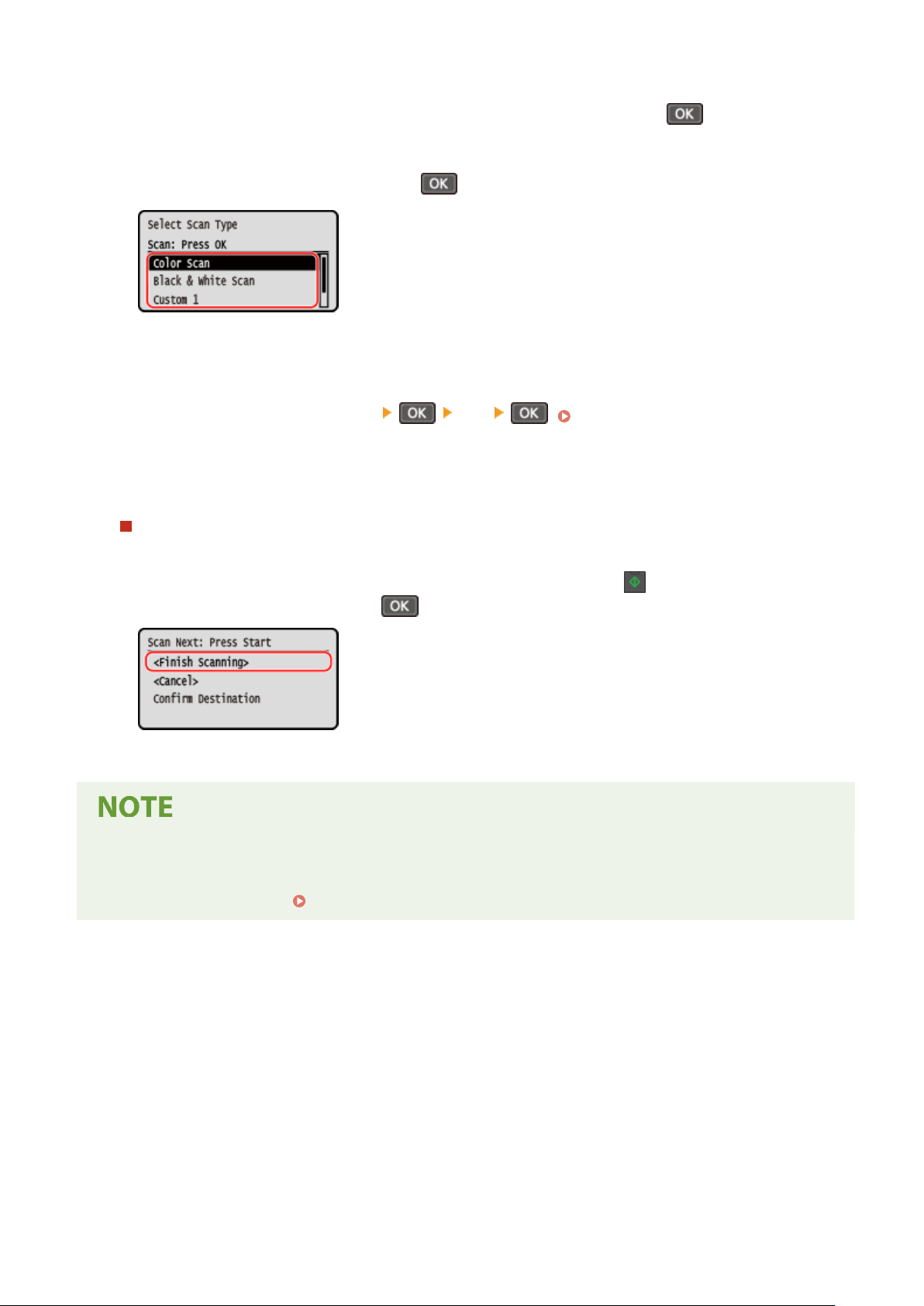
4
Select the computer to be used as the save location, and press .
5
Select the scan setting and press
.
➠ Scanning of the original starts.
● The scanned data format, save location on the computer, and other settings ar
e set for each scan setting.
The original is scanned according to the selected scan setting.
● To cancel scanning, press [<Cancel>]
[Yes] . Canceling Scanning(P. 262)
● When scanning is completed, the destination folder is displayed on the scr
een of the selected computer.
* By default, a subfolder with the scanning date is created in the [Documents] folder (Windows) or the
[Pictures] folder (macOS), and the scanned data is saved to that folder.
When [Scan Next: Press Start] appears
When an original is placed on the platen glass and is scanned, the scr
een for scanning additional originals is
displayed.
To continue scanning originals, place them on the platen glass, and press
on the control panel.
Select [<Finish Scanning>] and pr
ess
to save the scanned data.
* If the size of the original is different, part of the image may be missing, or the image may be scanned
smaller.
Checking or Changing Scan Setting or Save Location
● Y
ou can check and change the scan setting selected in step 5 by using the MF Scan Utility on the computer
used as the save location.
Starting MF Scan Utility(P. 257)
Scanning
246
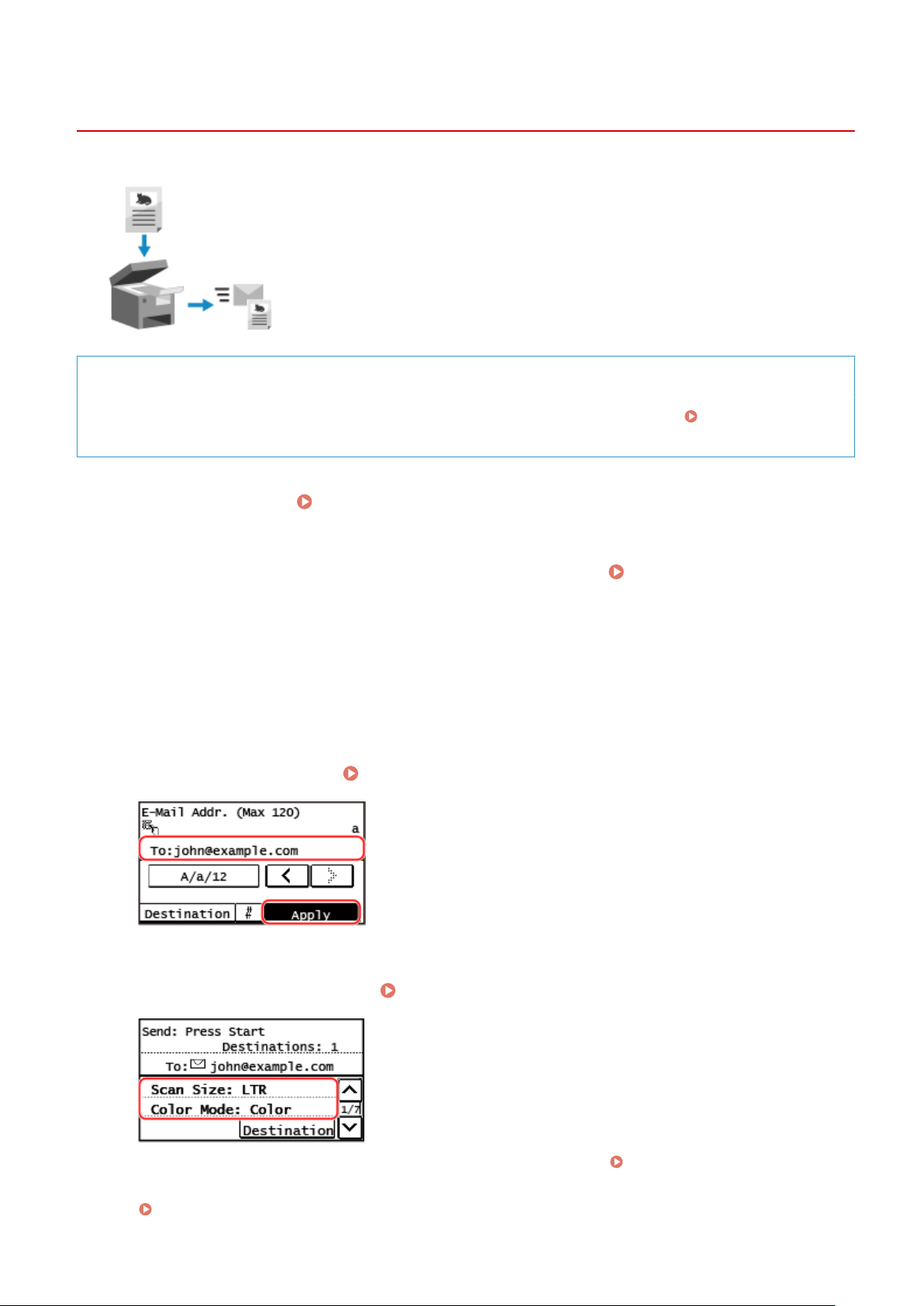
Scanning (Sending by E-mail)
8W0J-055
You can scan an original and send the scanned data by e-mail as an attachment.
Just lik
e when sending a regular e-mail, you can add a subject and message and
specify multiple destinations.
Required Preparations
● On the machine, congur
e the settings of the e-mail server to be used to send e-mail.
Preparing to Send
Scanned Data b
y E-mail(P. 235)
1
Place the original.
Placing Originals(P. 139)
2
On the control panel, press [Scan] in the [Home] screen. [Home] Screen(P. 120)
➠ The scan type selection scr
een is displayed.
3
Press [E-Mail].
➠ The scan scr
een is displayed.
4
Specify the destination. Specifying Destinations(P. 182)
Use [Specify from Address Book] or [Specify from Coded Dial] to specify the Cc and Bcc destinations.
5
Congure the scan settings. Scan Settings (Touch Panel Model)(P. 258)
● Y
ou can also set the subject and main body of the e-mail on this screen.
E-mail Settings(P. 260)
● Scanned data is sent with the follo
wing le name. You can also specify a custom string and add it to the start.
Setting File / Division(P. 260)
Scanning
247
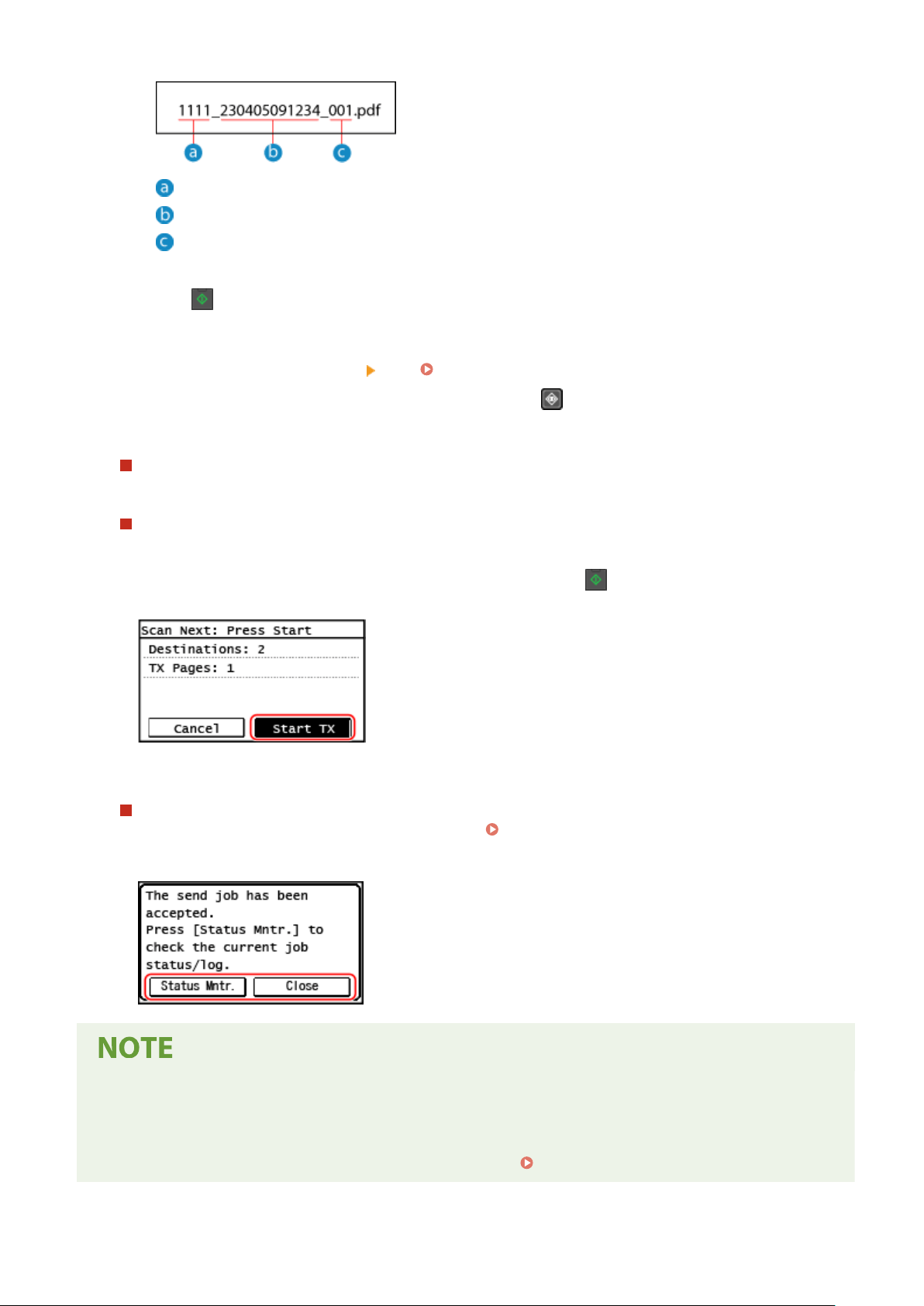
Communications management number
Date sent (in this example, "April 5, 2023, 9:12:34 AM")
File sequence number (if one le, then "001")
6
Press on the control panel.
➠ Scanning of the original starts.
● T
o cancel scanning, press [Cancel]
[Yes]. Canceling Scanning(P. 262)
● When scanning is completed, the scanned data is sent. Pr
ess
on the control panel to view the sending
status and log.
When [Conrm Destination] appears
Check that the destination is corr
ect, and then press [Start Scan].
When [Scan Next: Press Start] appears
After the original is placed on the platen glass and is scanned in PDF or TIFF format, the scr
een for scanning
additional originals is displayed.
To continue scanning originals, place on the platen glass, and press
.
When scanning of all originals is completed, pr
ess [Start TX].
* If the size of the original is different, part of the image may be missing, or the image may be scanned
smaller.
When [Status Mntr.] appears
T
o view the save status and log, press [Status Mntr.].
Checking the Send and Save Status and Log of
Scanned Data (T
ouch Panel Model)(P. 263)
Pressing [Close] displays the scan screen.
When a Sending Error Occurs
● Depending on the e-mail server settings, a notication e-mail may be sent to the e-mail addr
ess set on the
machine when a sending error occurs. If notication e-mails are left in the server, the mailbox may become
full, so it is recommended to periodically empty the mailbox.
Clearing the Mail Box(P. 413)
Scanning
248
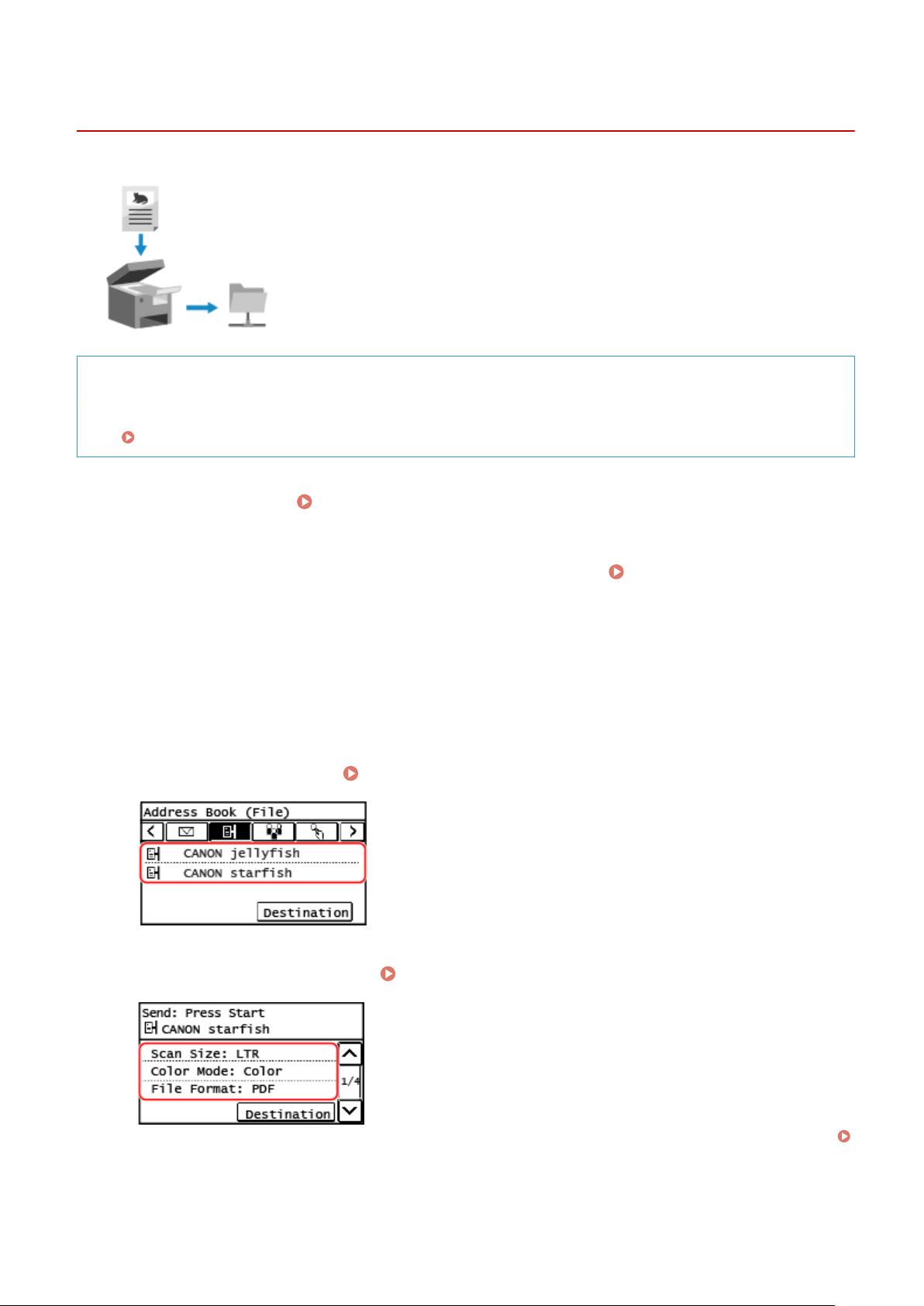
Scanning (Saving to a Shared Folder)
8W0J-056
You can scan an original and save the scanned data to a shared folder on a
computer.
This is convenient for sharing the scanned data of a paper document on a network.
Required Preparations
● Register the information for accessing the shar
ed folder to the Address Book of the machine.
Preparing to Save Scanned Data to a Shared Folder(P. 241)
1
Place the original.
Placing Originals(P. 139)
2
On the control panel, press [Scan] in the [Home] screen. [Home] Screen(P. 120)
➠ The scan type selection scr
een is displayed.
3
Press [File].
➠ The scan scr
een is displayed.
4
Specify the destination. Specifying Destinations(P. 182)
5
Congure the scan settings. Scan Settings (Touch Panel Model)(P. 258)
Scanned data is saved with the following le name. Y
ou can also add a specied custom string to the start.
Setting File / Division(P. 260)
Scanning
249
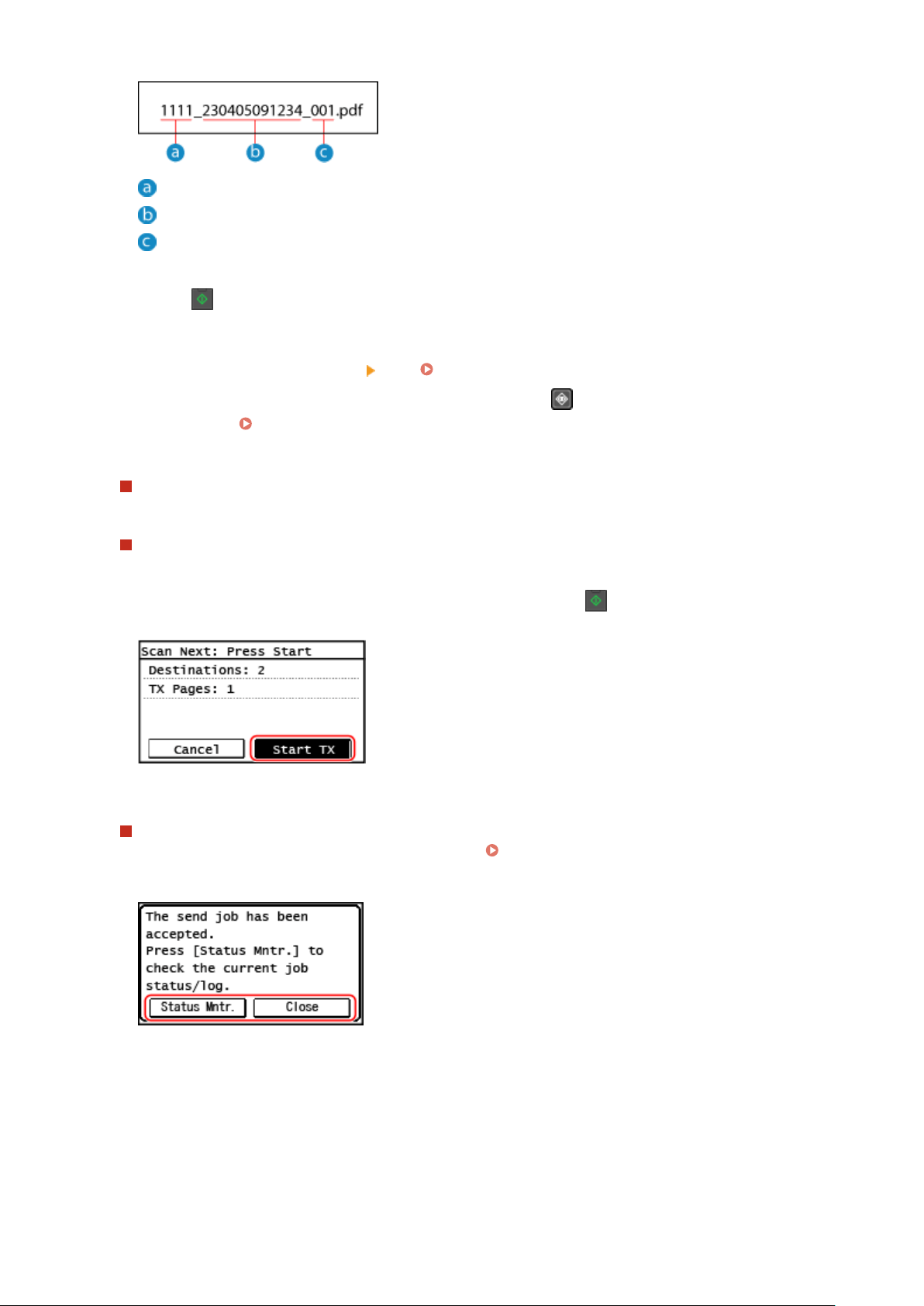
Communications management number
Date saved (in this example, "April 5, 2023, 9:12:34 AM")
File sequence number (if one le, then "001")
6
Press on the control panel.
➠ Scanning of the original starts.
● T
o cancel scanning, press [Cancel]
[Yes]. Canceling Scanning(P. 262)
● When scanning is completed, the scanned data is saved. Pr
ess
on the control panel to view the save
status and log. Checking the Send and Save Status and Log of Scanned Data (Touch Panel Model)
(P
. 263)
When [Conrm Destination] appears
Check that the destination is corr
ect, and then press [Start Scan].
When [Scan Next: Press Start] appears
After the original is placed on the platen glass and is scanned in PDF or TIFF format, the scr
een for scanning
additional originals is displayed.
To continue scanning originals, place on the platen glass, and press
on the control panel.
When scanning of all originals is completed, pr
ess [Start TX].
* If the original has different size pages, part of the image may be missing, or the image may be scanned
smaller.
When [Status Mntr.] appears
T
o view the save status and log, press [Status Mntr.].
Checking the Send and Save Status and Log of
Scanned Data (T
ouch Panel Model)(P. 263)
Pressing [Close] displays the scan screen.
Scanning
250
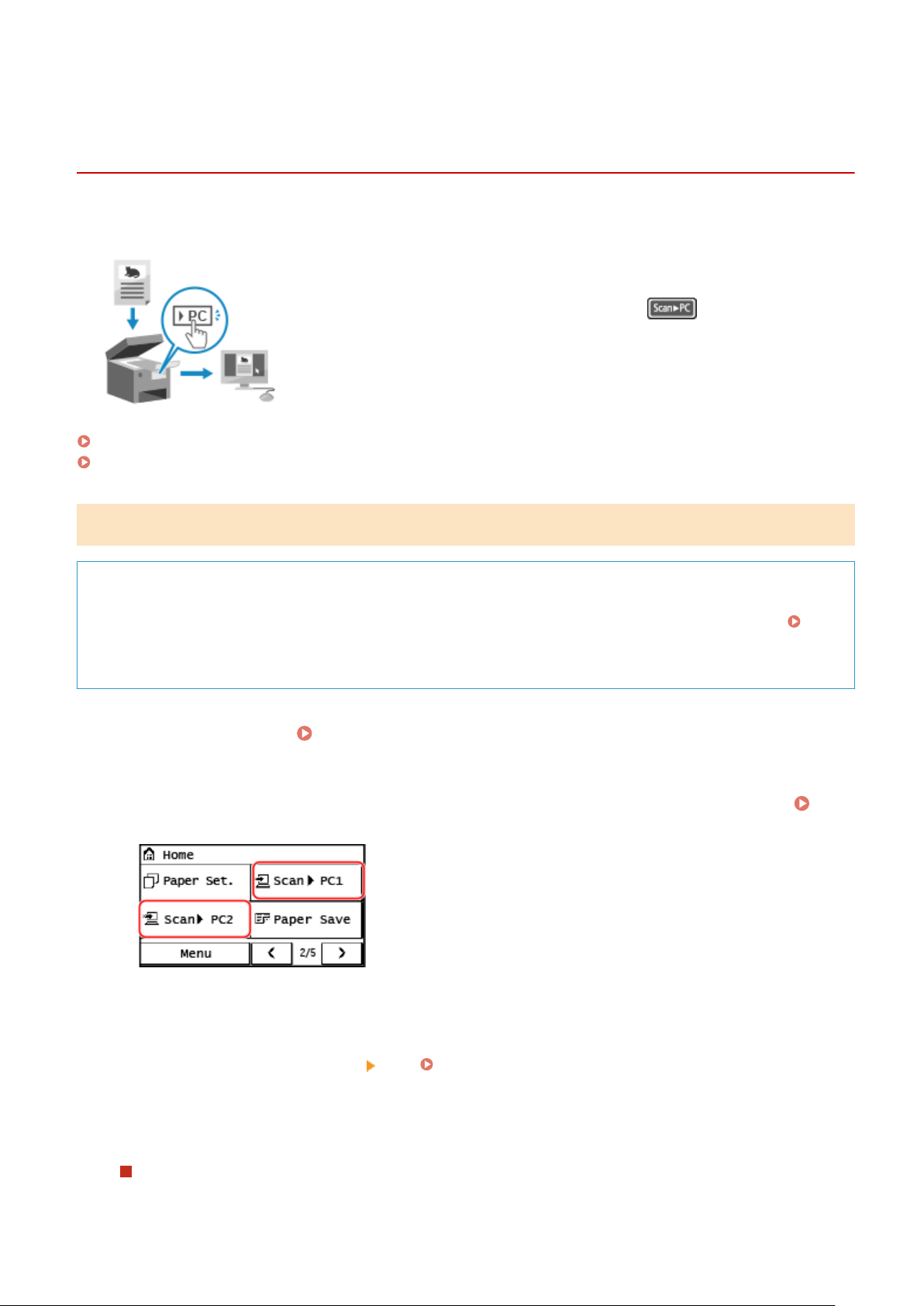
Scanning Using the Shortcut Key (Saving to a
Computer)
8W0J-05E
Scanning Using the Shortcut Ke
y (Saving to a Computer)
You can scan an original and store the scanned data to a computer connected to the
machine. Y
ou only have to operate on the machine. According to the settings
registered to the shortcut key on the [Home] screen or
on the control panel,
the scanned data is stor
ed to a computer designated beforehand.
Touch Panel Model(P. 251)
5 Lines LCD Model(P. 252)
Touch Panel Model
Required Preparations
● T
o the shortcut key, you need to register the destination computer and the scan settings beforehand.
Preparing for a Shortcut Key to Store Scanned Data to a Computer(P. 231)
● If the ScanGear MF scr
een appears on the computer used as the save location, close the screen.
1
Place the original.
Placing Originals(P. 139)
2
On the control panel, press [Scan -> PC1] or [Scan -> PC2] in the [Home] screen.
[Home] Screen(P. 120)
➠ Scanning of the original starts.
● The scan data format and the destination computer ar
e registered to each shortcut key. Scanning is
performed according to the settings registered to a selected shortcut key.
● To cancel scanning, press [Cancel]
[Yes]. Canceling Scanning(P. 262)
● When scanning is completed, the destination folder is displayed on the scr
een of the selected computer.
* By default, a subfolder with the scanning date is created in the [Documents] folder (Windows) or the
[Pictures] folder (macOS), and the scanned data is saved to that folder.
When [Scan Next: Press Start] appears
When an original is placed on the platen glass and is scanned, the scr
een for scanning additional originals is
displayed.
Scanning
251
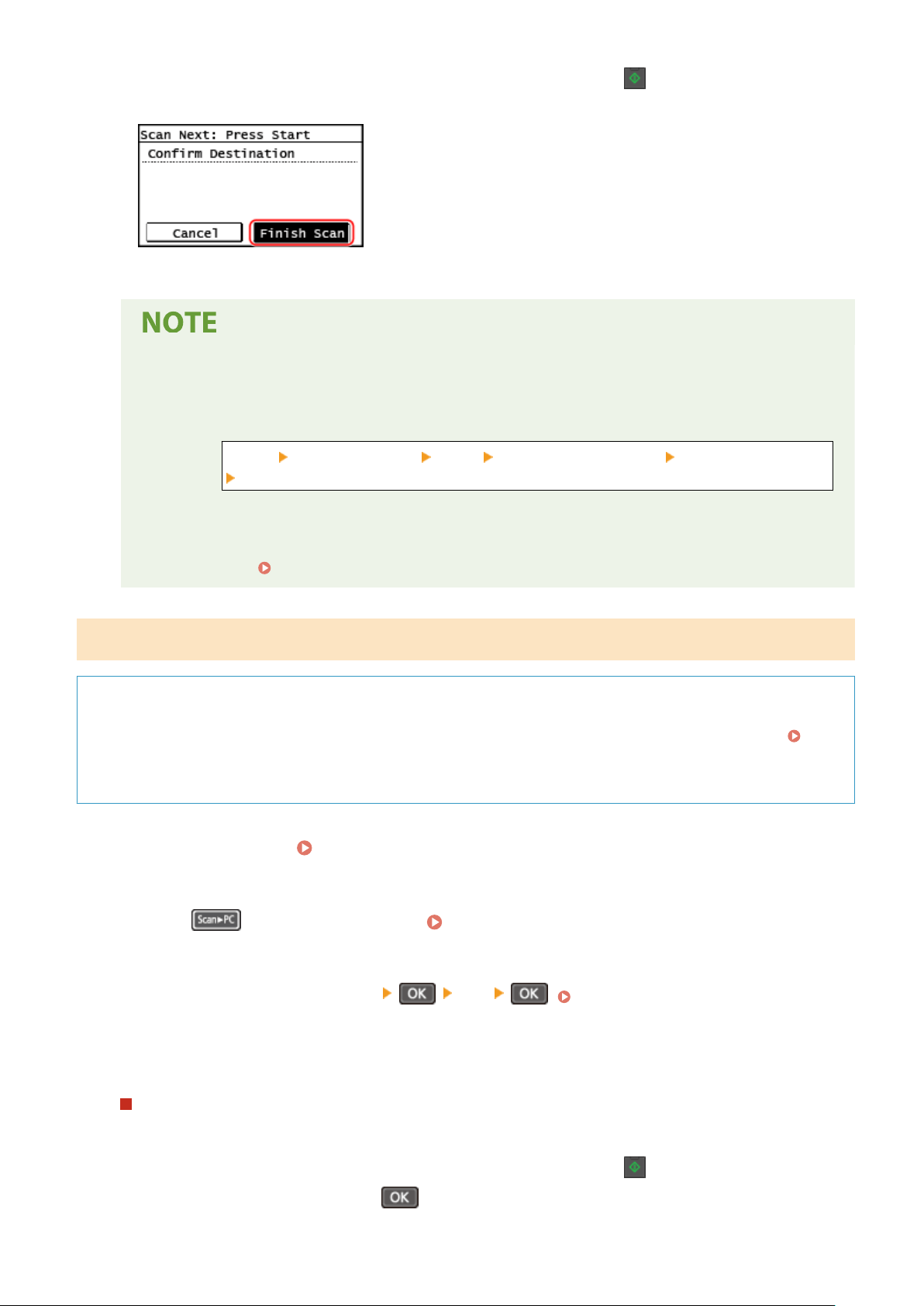
To continue scanning originals, place them on the platen glass, and press on the control panel.
Pr
ess [Finish Scan] to save the scanned data.
* If the size of the original is different, part of the image may be missing, or the image may be scanned
smaller.
Conrming the r
egistered information of the shortcut key
● You can conrm the registered information of the shortcut key selected in Step 2 by selecting the
shortcut key on the screen displayed with the following steps:
[Menu] [Function Settings] [Send] [Scan and Send Settings] [Shortcut Key Settings]
[Conrm Destination] fr
om the [Home] screen
Checking or Changing Scan Setting or Save Location
● Y
ou can check and change the scan setting by using the MF Scan Utility on the computer used as the
save location.
Starting MF Scan Utility(P. 257)
5 Lines LCD Model
Required Preparations
● T
o the shortcut key, you need to register the destination computer and the scan settings beforehand.
Preparing for a Shortcut Key to Store Scanned Data to a Computer(P. 231)
● If the ScanGear MF scr
een appears on the computer used as the save location, close the screen.
1
Place the original. Placing Originals(P. 139)
2
Press
on the control panel. Control Panel(P. 14)
➠ Scanning of the original starts.
● T
o cancel scanning, press [<Cancel>]
[Yes] . Canceling Scanning(P. 262)
● When scanning is completed, the destination folder is displayed on the scr
een of the selected computer.
* By default, a subfolder with the scanning date is created in the [Documents] folder (Windows) or the
[Pictures] folder (macOS), and the scanned data is saved to that folder.
When [Scan Next: Press Start] appears
When an original is placed on the platen glass and is scanned, the scr
een for scanning additional originals is
displayed.
To continue scanning originals, place them on the platen glass, and press
on the control panel.
Select [<Finish Scanning>] and pr
ess
to save the scanned data.
Scanning
252
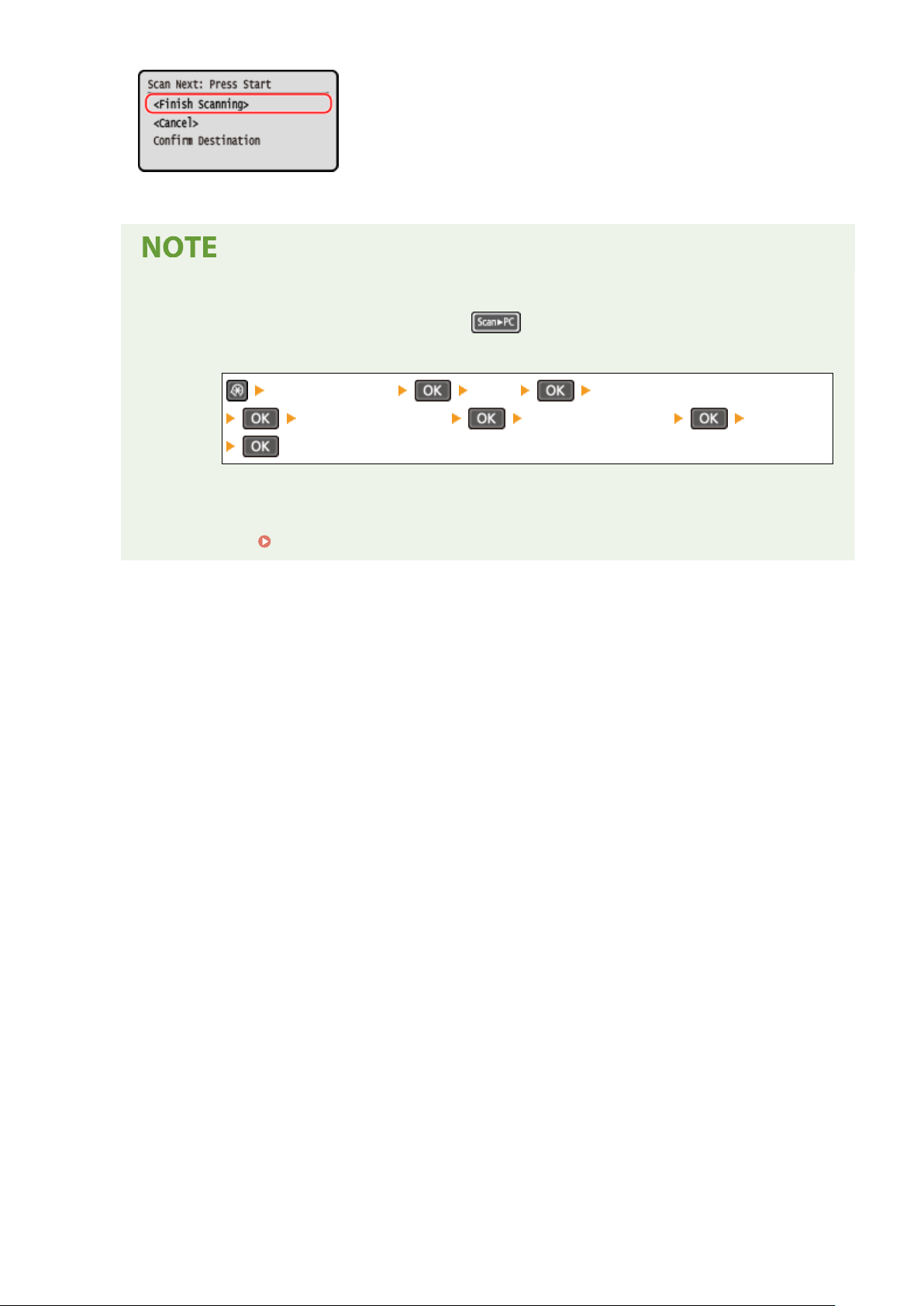
* If the size of the original is different, part of the image may be missing, or the image may be scanned
smaller.
Conrming the r
egistered information of the shortcut key
● You can conrm the information registered to
on the screen displayed with the following
steps:
[Function Settings] [Send] [Scan and Send Settings]
[Shortcut Key Settings] [Conrm Destination] [Scan -> PC]
from the [Home] screen
Checking or Changing Scan Setting or Save Location
● Y
ou can check and change the scan setting by using the MF Scan Utility on the computer used as the
save location.
Starting MF Scan Utility(P. 257)
Scanning
253
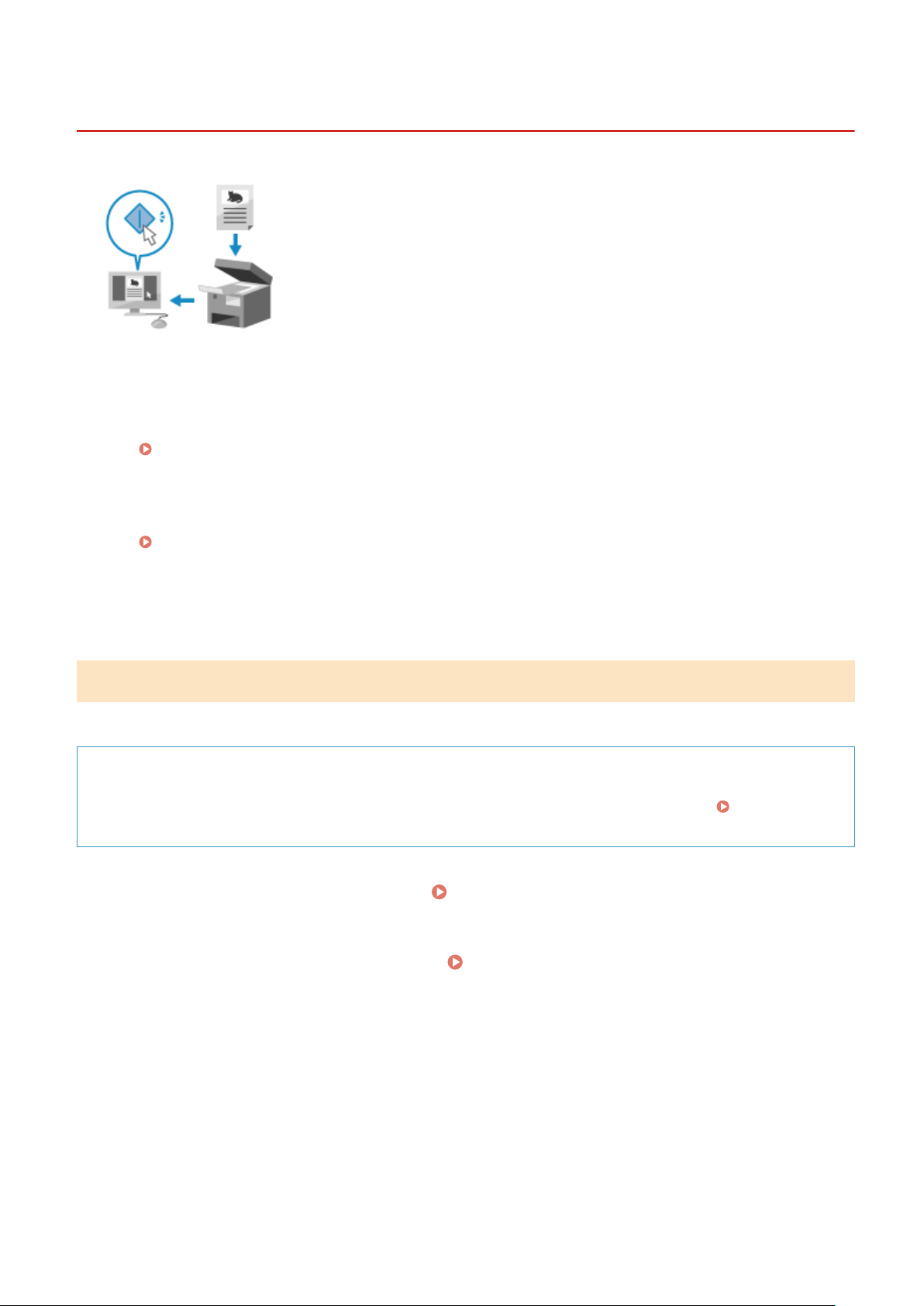
Scanning from a Computer (Saving to a Computer)
8W0J-057
You can scan an original and save the scanned data to a computer connected to the
machine. Y
ou can set the format and save location when scanning from a computer.
This method lets you see the scanned data immediately on the computer screen so
you can check the image quality and make adjustments.
Use either of the following applications to perform scanning.
Dedicated application (MF Scan Utility)
Scan easily using the setting to suit your purpose. Send scanned data to a specied application to display it
and send it b
y e-mail. You can also use the ScanGear MF screen to congure advanced settings.
Using a Dedicated Application to Perform Scanning - MF Scan Utility(P. 254)
Other TW
AIN- and WIA-supported Applications
You can also use image processing software, document software, and other applications that support
TWAIN
*1
or WIA
*2
. Scanned data is imported directly to the application for immediate editing and processing.
Check the manual of the application you are using to see if it supports TWAIN or WIA.
Scanning Using Other TWAIN- and WIA-supported Applications(P. 255)
*1
TW
AIN is a standard for connecting a scanner or other image input device to a computer.
*2
WIA is a function that comes standard in Windows.
Using a Dedicated Application to Perform Scanning - MF Scan Utility
After placing an original on the machine, scan using MF Scan Utility on a computer.
Required Preparations
● Install the scanner driver (ScanGear MF) and application (MF Scan Utility) on the computer.
Installing
Softwar
e and Drivers to the Computer(P. 106)
1
Place the original on the machine. Placing Originals(P. 139)
2
Start MF Scan Utility on a computer. Starting MF Scan Utility(P. 257)
3
For [Product Name], select the machine.
4
Click the button corresponding to the original type and purpose to start scanning.
Scanning
254
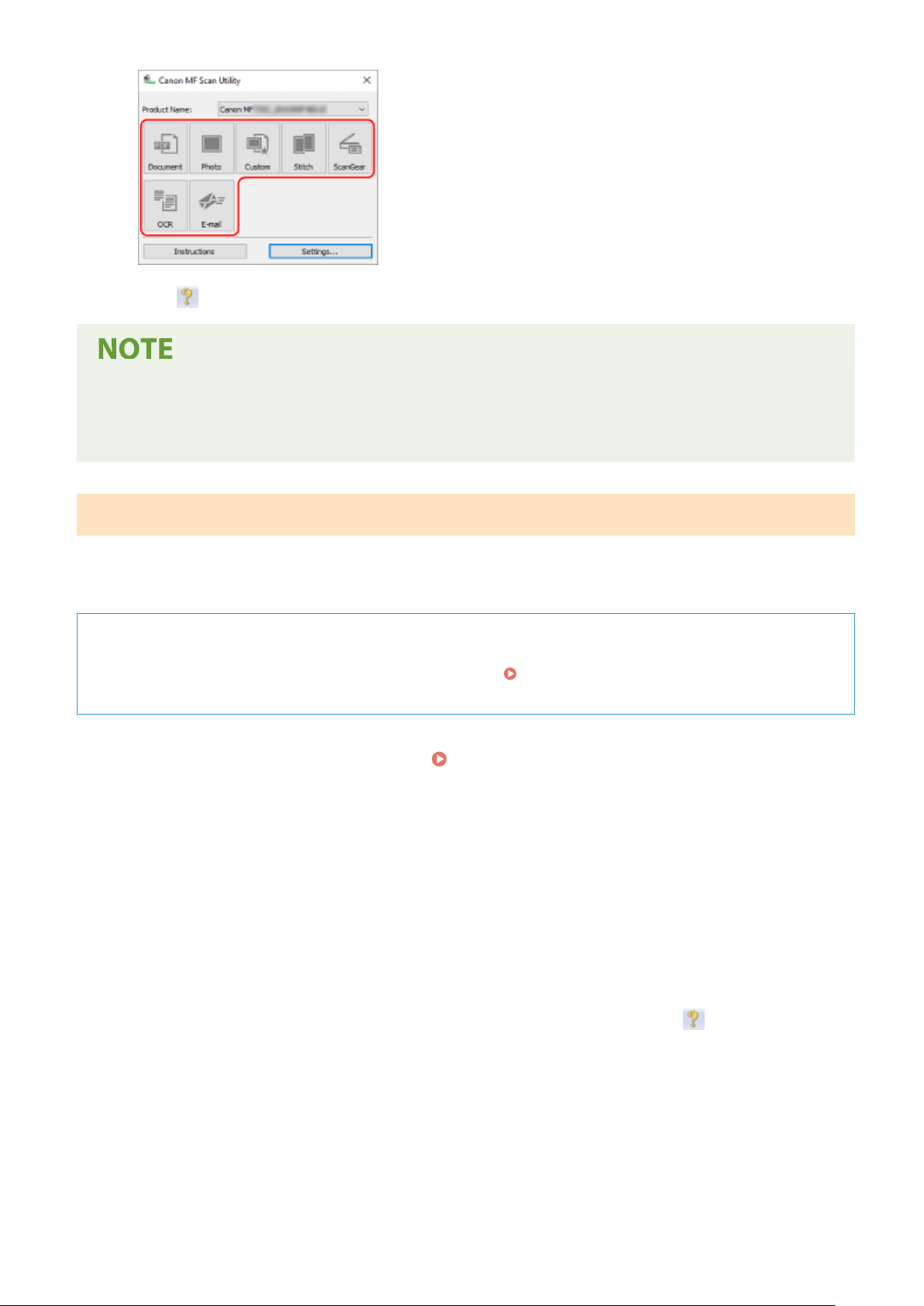
Click [ScanGear] to display ScanGear MF and congur
e the advanced scan settings. For more information,
click [
] on ScanGear MF to display help.
When Scanning Cannot Be Performed
● The machine may not be online (scan standb
y mode). On the control panel, select [Scan] in the [Home]
screen, and press [Remote Scanner] to turn the machine online, and then repeat the operation.
Scanning Using Other TWAIN- and WIA-supported Applications
After placing an original on the machine, scan using other TW
AIN- and WIA-supported application on your computer.
This section describes the general procedure for this operation. Check the manual of the application you are using for
detailed operations on how to use it.
Required Preparations
● Install the scanner driver (ScanGear MF) on the computer.
Installing Software and Drivers to the
Computer(P
. 106)
1
Place the original on the machine. Placing Originals(P. 139)
2
On the computer, start the application used to import the scanned data.
3
In the application, select the command to start the scanning operation.
4
Select the scanner driver (ScanGear MF or WIA) of the machine, and congur
e the
scan settings.
For more advanced scan settings, select ScanGear MF. For more information, click [
] on ScanGear MF to
display help.
5
Start scanning.
➠ When scanning is completed, the scanned data is imported to the application.
If the ne
xt pages of the original are not scanned or an error message appears after scanning is completed,
place the originals on the machine one at a time and perform scanning.
Scanning
255

When Scanning Cannot Be Performed
● The machine may not be online (scan standb
y mode). On the control panel, select [Scan] in the [Home]
screen, and press [Remote Scanner] to turn the machine online, and then repeat the operation.
Scanning
256
Starting MF Scan Utility
8W0J-058
Start MF Scan Utility installed on the computer.
◼ When Using Windo
ws
Click [
] (Start) [Canon] [MF Scan Utility].
◼ When Using macOS
Fr
om the OS Applications folder, double-click [Canon MF Utilities]
[Canon MF Scan Utility].
● For mor
e information on the operations and settings of MF Scan Utility, click [Instructions] on the MF Scan
Utility screen to display help.
Scanning
257
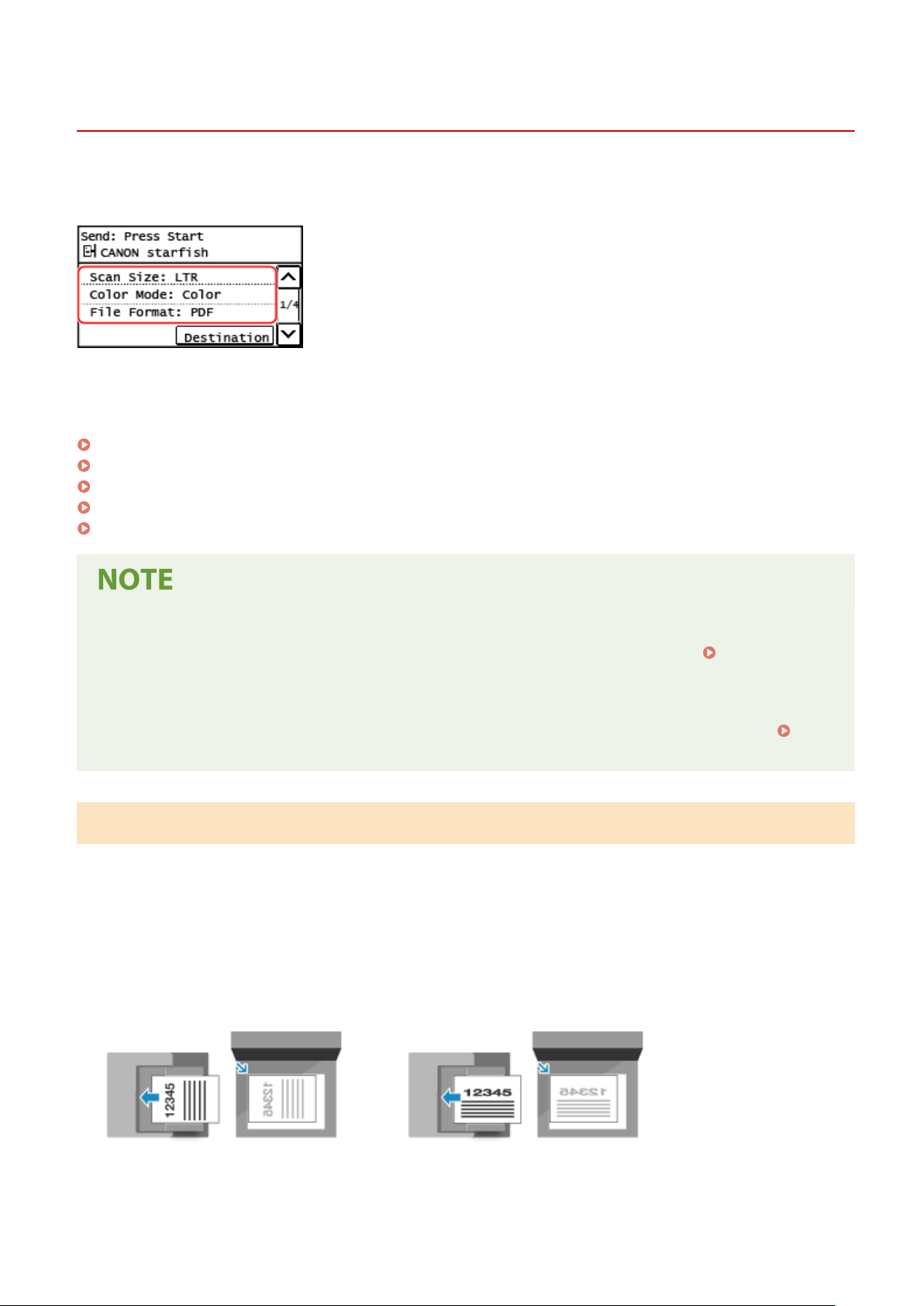
Scan Settings (Touch Panel Model)
8W0J-059
When scanning with the machine, you can use the scanning scr
een to set the original size and adjust the image
quality.
If the scanned data does not appear as expected, you can change the settings and scan again.
* T
o save scanned data to a computer, congure the settings with MF Scan Utility or ScanGear MF installed on the
computer. You cannot use the control panel to congure the settings.
Setting the Original Size and Orientation(P. 258)
Adjusting Image Quality(P. 259)
2-Sided Scan Settings(P. 259)
Setting File / Division(P. 260)
E-mail Settings(P. 260)
Registering the Frequently Used Scan Settings as the Default Settings
● Y
ou can change the default scan settings according to the frequently used scan settings.
Changing the
Default Settings(P
. 190)
Recalling Past Settings - TX Job Log
● You can use the TX Job Log to recall the scan settings used to send or save scanned data in the past.
Specifying Destinations (TX Job Log)(P. 189)
Setting the Original Size and Orientation
Set the size and orientation accor
ding to the original to be scanned.
[Scan Size]
Select the size of the placed original.
[Original Orientation]
Select [Portrait] or [Landscape] to suit the placed original.
[Portrait]
[Landscape]
Scanning
258
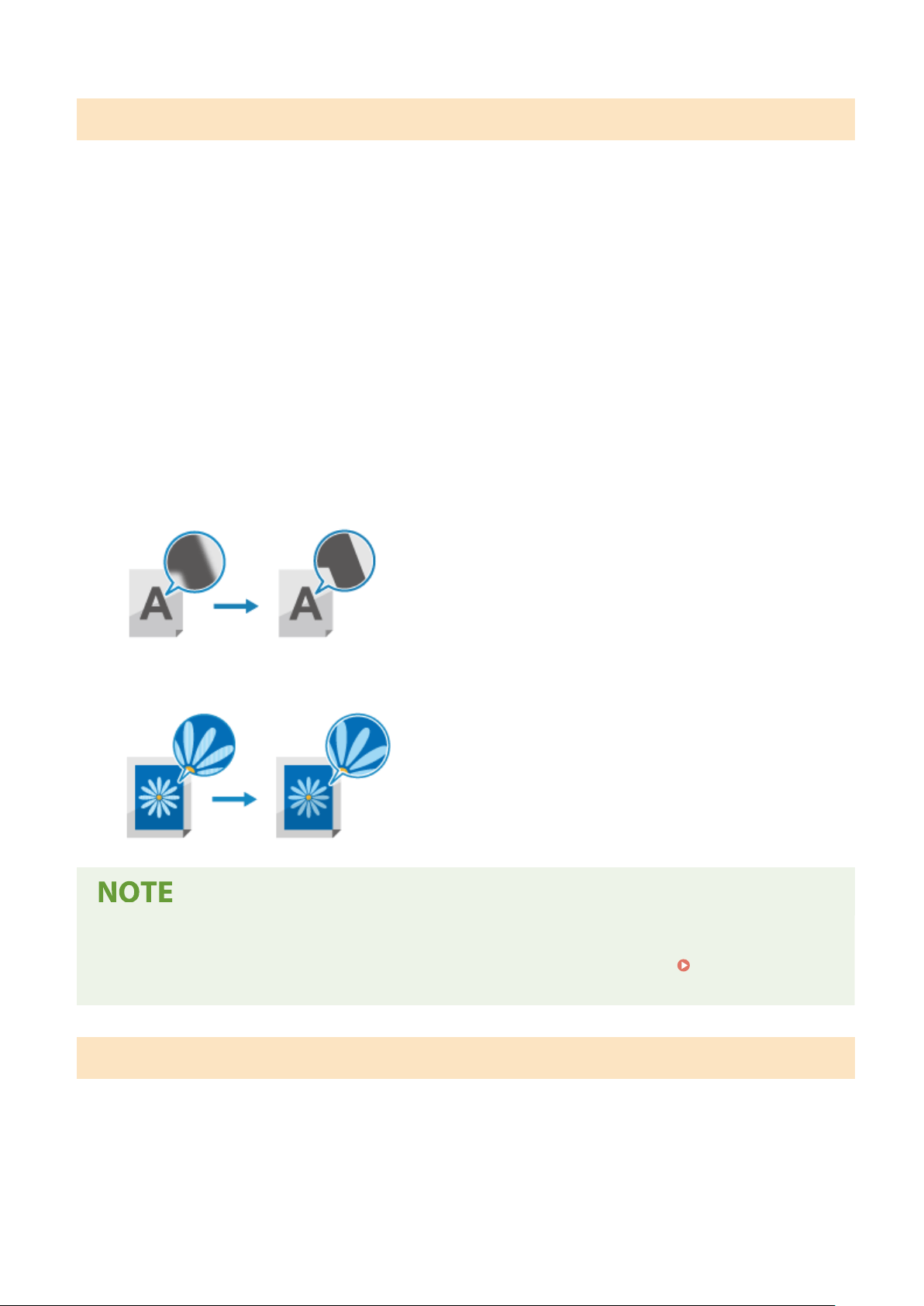
Adjusting Image Quality
You can adjust the image quality such as when the scanned data image is not clear or the text is dicult to read.
[Color Mode]
Select the scanning color mode (Black & White/Color).
[Density]
Adjust the density to suit the original.
Press [+] to increase the density and [-] to lower it.
[Original Type]
Select the original type.
Scanning is performed using the image quality to suit the content of the original.
[Sharpness]
Adjust the sharpness.
Emphasize the contours and lines to make them clearer, or weaken them to make them softer.
Adjustment example:
● T
o make blurry text or shapes clearer
Press [+].
● T
o reduce moire (vertical pattern noise) in pictures
Press [-].
When the File Format of the Scanned Data Is JPEG
● The image quality varies depending on the compr
ession ratio selected in [Data Size].
Setting File /
Division
(P. 260)
2-Sided Scan Settings
When scanning a 2-sided original, place the original on the feeder, and set [2-Sided Original].
* This setting is available only for MF269dw II / MF269dw VP II.
[2-Sided Original]
When scanning a 2-sided original, select [Book T
ype] or [Calendar Type]. Select this according to the top and bottom
orientation of the front and back sides of the placed original.
[Book Type]
[Calendar Type]
Scanning
259

Top and bottom have same orientation
Top and bottom have opposite orientation
To cancel scanning of a 2-sided original, select [Off].
Setting File / Division
Set the scanned data format and le name.
You can compress data and enable recognition of text in an original. You can also combine multiple originals into one
le or create separate les for each original.
[File Format]
Select the scanned data format from PDF, JPEG, or TIFF according to your purpose and environment.
Reducing the Data Size
● When using PDF format
Select [PDF (Compact)].
The data size is reduced, but the image quality and the number of sheets that can be scanned at a time
may also be reduced depending on the original type.
● When using JPEG format
Select [JPEG], and set [Data Size] to [Small: Memory Priority].
Combining Multiple Originals into One File
Select PDF or TIFF format.
Dividing the Original into Separate Files
● When using PDF format or TIFF Format
Select [Set PDF/TIFF Details] select PDF format or TIFF Format press [On] in [Divide into Pages].
● When using JPEG format
Select [
JPEG].
[Data Size]
Select the data size when using JPEG format for the scanned data. The compression ratio varies according to the
selected data size.
[Small: Memory Priority]
Increases the compression ratio but lowers the image quality.
[Large: Image Quality Priority]
Lowers the compression ratio but increases the data size.
[File Name]
Specify a string to add to the start of the le name of the scanned data.
E-mail Settings
Y
ou can congure the e-mail settings when sending scanned data by e-mail.
[Subject/Message]
Set the subject and main body of the e-mail.
[Reply To]
Select an e-mail address (Reply-To) from the Address Book to be used for e-mail recipients to reply to.
If no e-mail address is selected here, the e-mail address of the machine is used as the Reply-To e-mail address.
Scanning
260
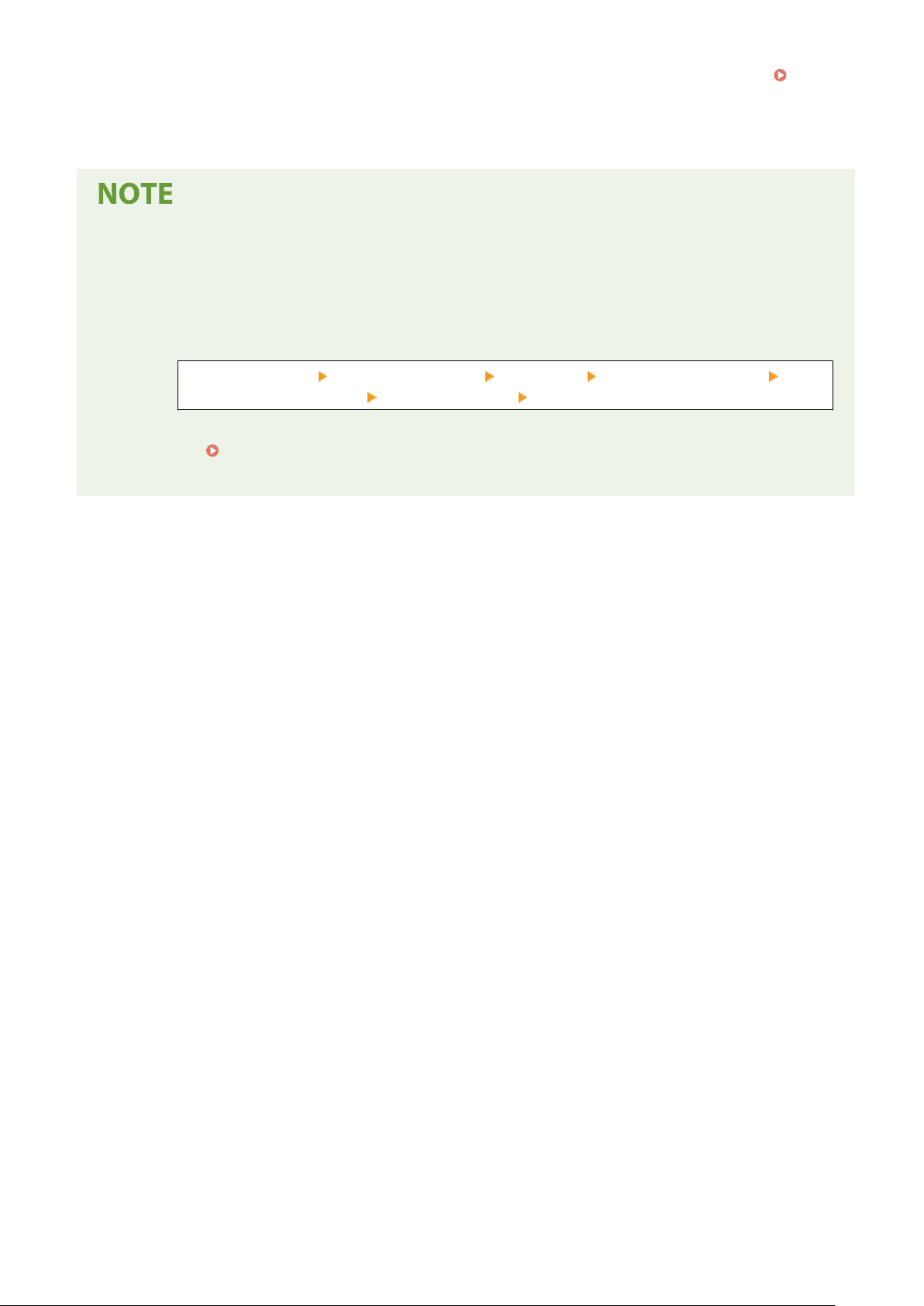
* If the e-mail address you want to use is not registered in the Address Book, register it, and then select it. Address
Book Function
(P. 169)
[Priority]
Select the priority level.
E-mail Sender
● The e-mail addr
ess of the machine becomes the sender e-mail address (From) regardless of the [Reply To]
setting.
● To send the sender's name along with the e-mail address of the machine, use the following procedure to set
the unit name.
Log in to Remote UI [Settings/Registration] [TX Settings] [Scan and Send Settings] [Edit]
under [Unit Name Settings] enter the unit name [OK].
On the control panel, select [Menu] in the [Home] screen, and then select [Function Settings] to congur
e
the settings.
[Register Unit Name (E-Mail)](P. 487)
● The e-mail sender is the setting shar
ed with the machine.
Scanning
261
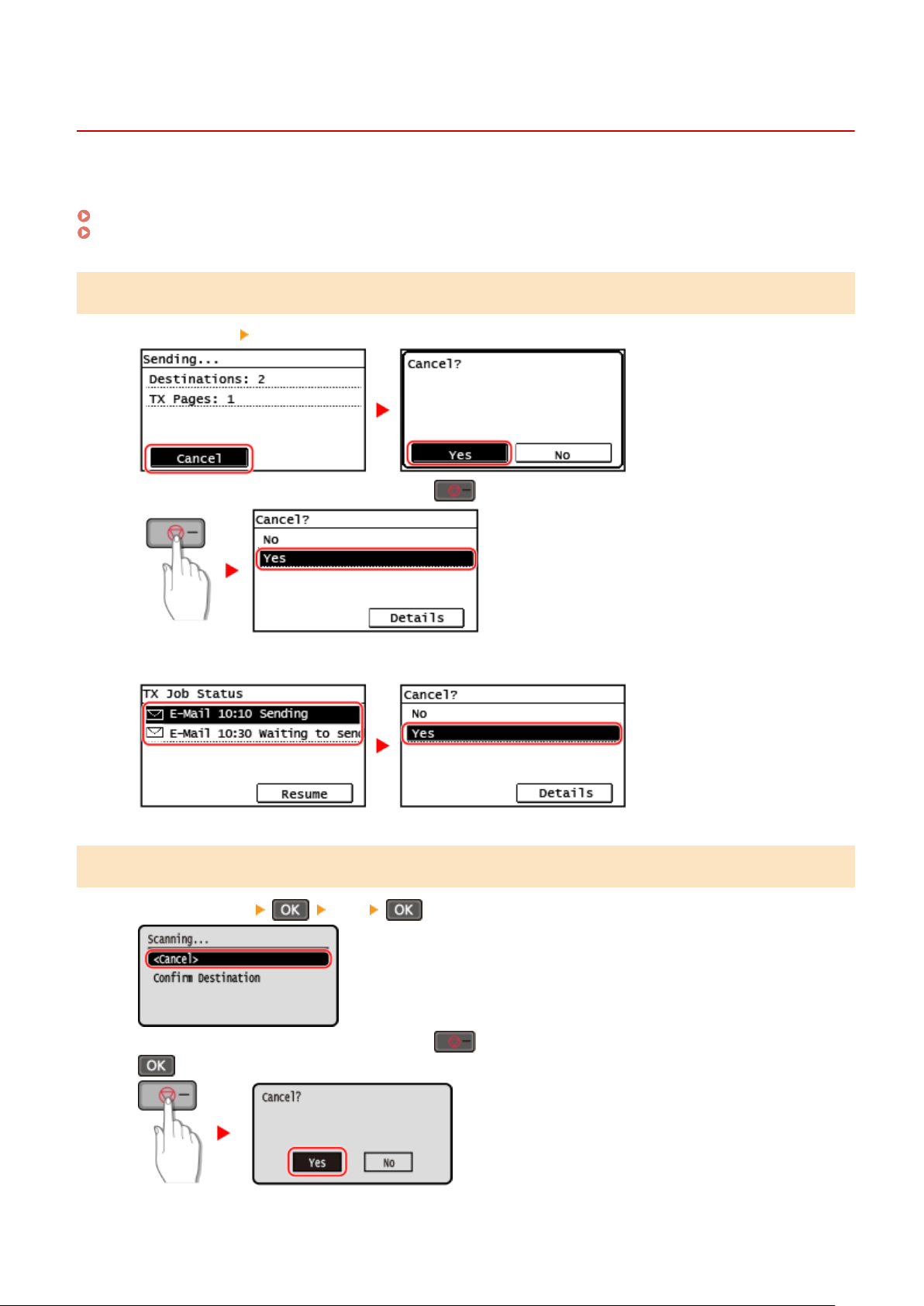
Canceling Scanning
8W0J-05A
Follo
w the instructions on screen to cancel a scanning operation.
Touch Panel Model(P. 262)
5 Lines LCD Model(P. 262)
Touch Panel Model
Press [Cancel] [Yes].
If the above screen is not displayed, press on the control panel, and then press [Yes].
If the job list screen is displayed, select the job to cancel, and press [Yes].
5 Lines LCD Model
Press [<Cancel>] [Yes] .
If the above screen is not displayed, press on the control panel, and then select [Yes] and press
.
Scanning
262

Checking the Send and Save Status and Log of Scanned
Data (T
ouch Panel Model)
8W0J-05C
Y
ou can check the send or save status and log of data scanned with the machine.
Processes handled by the machine, including sending and saving scanned data, are managed as jobs. By checking the
status and log of jobs, you can determine whether a scan job was performed correctly and the cause of errors that
occur.
* If the log is hidden, you can only check the send and save status.
[Display Job Log](P. 509)
This section describes ho
w to check the status and log using the control panel.
You can also use Remote UI from a computer to check the status and log.
Checking Usage and Logs with Remote
UI(P
. 403)
1
Press
on the control panel. Control Panel(P. 14)
➠ The [Status Monitor] scr
een is displayed.
2
Press [TX Job].
3
Check the status and log on the [Job Status] or [Job Log].
Checking the Send and Save Status
1
Press [Job Status], check the job being processed or waiting to be processed.
2
Select a job to view its details.
➠ The job details ar
e displayed.
3
Check the number of pages and the destination.
For jobs with multiple destinations, pr
ess [Number of Destinations] to display the list of destinations.
Checking the Send and Save Log
1
Press [Job Log], check the completed send and save jobs.
2
Select a job to view its details.
➠ The job details ar
e displayed.
3
Check the number of pages and the destination.
For jobs with multiple destinations, pr
ess [Number of Destinations] to display the list of destinations.
If Send or Save Log Displays [Error]
Sending or saving was canceled, or an error occurred.
If a three-digit number starting with "#" (error code) is displayed, you can check the cause and solution
using the error code.
An Error Code Is Displayed(P. 643)
Scanning
263

Registering Destinations to the Address Book
● On the scr
een displaying the job details, press [Reg Adr Book] to register the destination to the Address
Book.
* This operation is not available when there are multiple destinations.
Scanning
264

Faxing
Faxing ...................................................................................................................................................................
266
Preparing to Send and Receive Faxes .............................................................................................................. 267
Preparing to Send Faxes from a Computer ................................................................................................... 268
Changing Fax RX Mode and Setting the Action when Receiving a Fax .......................................................... 270
Changing the Fax Number and Unit Name ................................................................................................... 272
Forwarding Faxes and Conguring the Backup Settings ................................................................................ 273
Backing Up Sent Faxes ................................................................................................................................. 274
Auto Forwarding and Backing Up Received Faxes ........................................................................................ 276
Sending Faxes .................................................................................................................................................... 278
Sending a Fax after a Phone Conversation (Manual Sending) ....................................................................... 280
Sending Faxes from a Computer (PC Faxing) ................................................................................................... 282
Securely Sending PC Faxes ........................................................................................................................... 285
Fax Original Scan Settings ................................................................................................................................ 286
Receiving Faxes ................................................................................................................................................. 288
Receiving Faxes via Telephone (Remote RX) ................................................................................................. 289
Changing the Print Settings for Received Faxes ............................................................................................ 290
Canceling Fax Sending ...................................................................................................................................... 292
Checking the Status and Log for Sent and Received Faxes ............................................................................ 293
Faxing
265
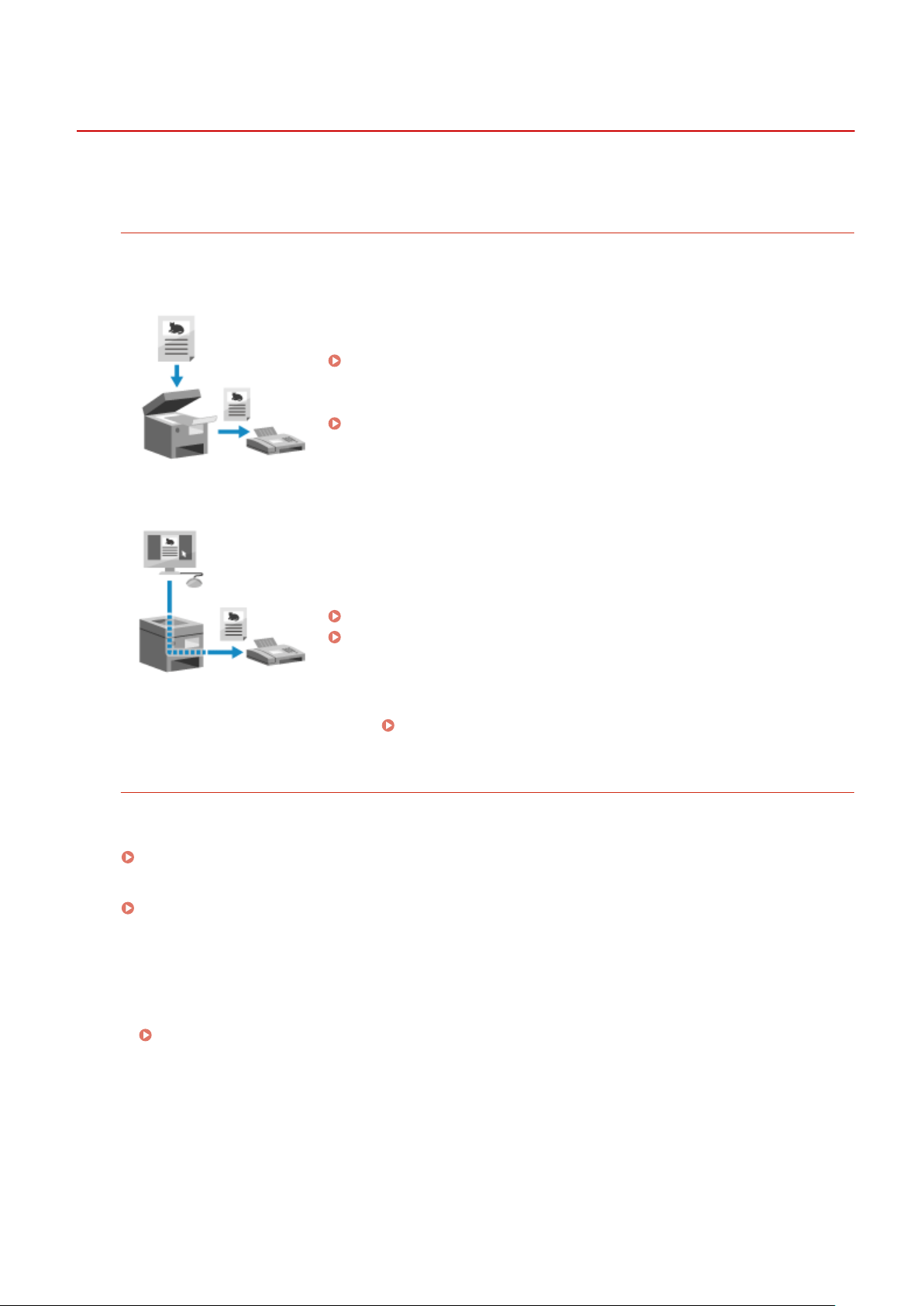
Faxing
8W0J-05F
Faxing is the sending and r
eceiving of documents and photos as black and white images over a telephone line.
Sending Faxes
The following two methods are available:
Sending a Fax fr
om the Machine
You can scan a document, photo, or other printed materials (originals) with the
machine, converting it to a black and white image, and then send it.
Sending Faxes(P. 278)
Sent fax
es can also be forwarded or saved automatically to a specic
destination.
Backing Up Sent Faxes(P. 274)
Sending a Fax from a Computer
You can convert a document or photo to a black and white image and send it
via a fax driver installed on a computer connected to the machine.
Y
ou can send a fax in the same way as printing a document or photo from a
computer. To send a fax, you do not need to prepare printed materials.
Preparing to Send Faxes from a Computer(P. 268)
Sending Faxes from a Computer (PC Faxing)(P. 282)
* In macOS, you can use the AirPrint function that is standard in the OS to send data from a computer
without having to install a fax driver.
Using AirPrint Application to Print and Scan Data and Send
Fax
es(P. 342)
Receiving Faxes
When the machine is set to receive faxes automatically, faxes are received without the incoming ringing. If the
machine rings, you can pick up the handset to determine whether it is a call or a fax. If it is a fax, you can
r
eceive it.
Receiving Faxes(P. 288)
Received fax
es can also be forwarded or saved automatically to a specic destination.
Auto Forwarding and Backing Up Received Faxes(P. 276)
◼ See Also
Restricting Printing of Received Fax
es
You can temporarily save received faxes in the memory of the machine without printing them.
Saving Received Documents in the Machine (Memory Lock)(P. 382)
Faxing
266
Preparing to Send and Receive Faxes
8W0J-05H
T
o send and receive faxes with the machine, you must use the control panel (Fax Setup Guide) to congure the initial
settings. You cannot congure the initial settings using Remote UI from a computer.
Conguring the Fax Settings
(Fax Setup Guide)
(P. 102)
When Sending Faxes from a Computer
You must make the necessary preparations on each computer used to send faxes.
Preparing to Send Faxes from a Computer(P. 268)
T
o Change the Initial Settings
You can change the settings congured with Fax Setup Guide individually.
Changing Fax RX Mode and Setting the Action when Receiving a Fax(P. 270)
Changing the Fax Number and Unit Name(P. 272)
● The sender
's information, including the sent date and time and fax number of the machine, is printed
together with the fax data at the destination. You can change the print position and the mark added to the
fax number or choose to not print this.
[TX Terminal ID](P. 497)
● T
o automatically forward or save sent and received faxes, you must congure separate settings.
Forwarding Faxes and Conguring the Backup Settings(P
. 273)
Faxing
267

Preparing to Send Faxes from a Computer
8W0J-05J
Mak
e the following preparations for each computer used to send faxes.
Step 1: Installing the Driver to the Computer(P. 268)
Step 2: Conguring the Settings for Secur
e Sending(P. 268)
Step 3: Test Fax Sending(P. 269)
Step 1: Installing the Driver to the Computer
Install the fax driver to the computer that will be used to send faxes. Installing Software and Drivers to the
Computer(P
. 106)
Step 2: Conguring the Settings for Secure Sending
While sending faxes from a computer can be convenient, there is a risk of sending them to incorrect numbers. To
reduce this risk, it is recommended that you congure the following settings using the fax driver.
When Using Windows(P. 268)
When Using macOS(P. 268)
◼ When Using Windo
ws
1
Click [
] (Start) [ ] (Settings) [Devices] [Printers & scanners].
➠ The [Printers & scanners] scr
een is displayed.
2
Click the fax driver of the machine
[Manage] [Printing preferences].
➠ The [Printing preferences] screen of the fax driver is displayed.
3
Congure the settings for secur
e sending.
● Enable conrmation of fax number.
● Set an e
xternal connecting number.
● Keep a TX Job Log.
For more information, click [Help] on the [Printing preferences] screen to display help.
◼ When Using macOS
Congure the settings to safely send faxes using the print dialog box (fax driver setting screen).
● Enable conrmation of fax number.
● Set an external connecting number.
Faxing
268


Changing Fax RX Mode and Setting the Action when
Receiving a Fax
8W0J-05K
Y
ou can change the RX mode from the default setting.
When [Fax/Tel (Auto Switch)] is enabled to determine whether the incoming call is a fax, you can also congure
settings such as the ring time.
Use the control panel to congure the settings. You cannot congure the settings using Remote UI from a computer.
1
On the control panel, press [Fax] in the [Home] screen.
[Home] Screen(P. 120)
2
Press [RX Mode].
➠ The [RX Mode] scr
een is displayed.
3
Select the RX mode.
When Using the Machine without Connecting a Telephone
Select [Auto]. Used for fax only
.
● Faxes are automatically received.
● Incoming telephone calls cannot be answered.
When Connecting a Regular Telephone
When Automatically Receiving Fax
es
Select [Fax/Tel (Auto Switch)]. Enables use of both fax and phone.
● Faxes are automatically received.
● When a telephone call is received, the machine rings. Pick up the handset to answer the call.
When Manually Receiving Faxes
Select [Manual]. Enables use of both fax and phone.
● The machine rings when receiving both fax and phone calls.
● If you hear a fax tone when picking up the handset, receive the fax manually.
Receiving Faxes(P. 288)
● You can also congure the setting to receive faxes automatically after the machine rings for a certain
period of time. [Switch to Auto RX](P. 502)
When Connecting an Answering Machine
Select [Answering Machine]. Enables use of both fax and phone.
● Fax
es are automatically received.
● When a telephone call is received, the answering machine function can be used to record messages. You
can answer the call by picking up the handset before recording starts.
* Set the answering machine so that the recording function activates after the machine rings one or two
times.
* When recording your message, it is recommended that you keep about four seconds of silence, or keep
the entire message within 20 seconds.
4
Set the ring time and action when receiving a fax, and press [Apply].
Faxing
270
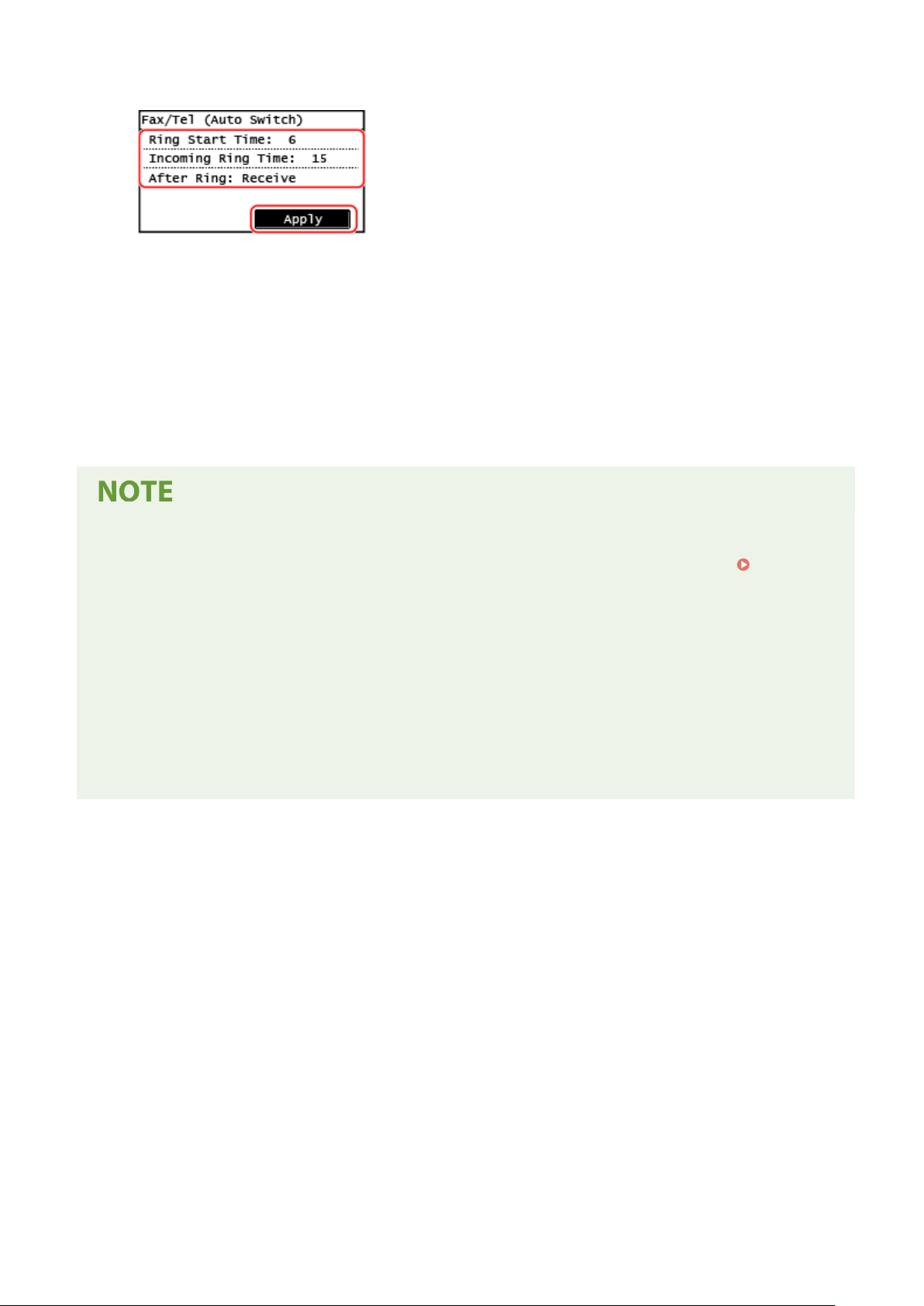
Set this when [Fax/Tel (Auto Switch)] is selected for RX mode. If you selected another RX mode, this step is not
r
equired.
[Ring Start Time]
Specify the time to determine whether an incoming call is a fax or a phone call. The machine does not ring at
this time.
Reception starts when the machine determines that the call is a fax.
[Incoming Ring Time]
Specify the ring time for incoming calls when it is determined that the call is not a fax.
[After Ring]
Select the action to tak
e when the handset is not picked up while ringing.
Select [End] to disconnect the call, or select [Receive] to receive the fax.
Connecting a Telephone
● For details about connecting a telephone, use the pr
ocedure to connect to the telephone line.
Step 4:
Connecting to T
elephone Line(P. 104)
[DRPD: Select Fax]
● If you subscribe to a Distinctive Ring Pattern Detection (DRPD) service provided by your telephone company,
DRPD is also available for the RX mode. This service assigns two or more telephone numbers with distinctive
ring patterns to a single telephone line. You can use one of these numbers for faxes and one for telephone
calls. Select [DRPD: Select Fax], and then select the ring pattern assigned by the telephone company to your
fax number.
● For more information about this service, contact your telephone company.
● You must connect the machine to an external telephone in advance.
Faxing
271

Changing the Fax Number and Unit Name
8W0J-05L
Y
ou can change the information registered to the machine such as when the fax number changes after a move or you
want to change the name notied to the destination.
This section describes how to congure the settings using Remote UI from a computer.
On the control panel, select [Menu] in the [Home] screen, and then select [Function Settings] to congure the settings.
[Set Line](P. 495)
Administr
ator privileges are required.
1
Log in to Remote UI in System Manager Mode.
Starting Remote UI(P. 399)
2
On the Portal page of Remote UI, click [Settings/Registration]. Portal Page of
Remote UI(P
. 401)
3
Click [TX Settings]
[Fax TX Settings] [Edit].
➠ The [Edit Fax TX Settings] scr
een is displayed.
4
Change the fax number and unit name.
● Enter the fax number in [Unit T
elephone Number] in [Set Line].
● Enter the unit name in [Unit Name] in [Basic Settings].
5
Click [OK].
➠ The settings ar
e applied.
6
Log out from Remote UI.
Faxing
272

Forwarding Faxes and Conguring the Backup Settings
8W0J-05R
Fax
es can be forwarded and saved automatically to a specic destination when they are sent and received.
This is convenient when you want to check received faxes from a remote location or you want to back up faxes you
sent or received.
Backing Up Sent Faxes(P. 274)
Auto Forwarding and Backing Up Received Faxes(P. 276)
Forwarding Essential Faxes Only
● Y
ou can also select a specic fax from the RX Job Log and send it to a specic destination.
Checking the
Status and Log for Sent and Received Fax
es(P. 293)
Faxing
273

Backing Up Sent Faxes
8W0J-05S
You can congur
e the settings to automatically forward and save a sent fax to a destination specied in advance.
The following can be specied as forwarding and save destinations:
● Fax number
● E-mail address (e-mail)
● Shared folder on a computer
For destinations other than a fax number, the fax is forwarded or saved as a black and white PDF le.
This section describes how to congure the settings using Remote UI from a computer.
On the control panel, select [Menu] in the [Home] screen, and then select [Function Settings] to congure the settings.
[Archive TX Document](P. 496)
Administr
ator privileges are required.
Required Preparations
● When specifying a backup destination other than a fax number, pr
epare the fax to be sent or saved to that
destination.
- The required preparations are the same as when sending and saving scanned data.
Preparing to Send Scanned Data by E-mail(P. 235)
Preparing to Save Scanned Data to a Shared Folder(P. 241)
● Register the destination to be specied to the Addr
ess Book of the machine.
Registering Destinations
(Addr
ess Book)(P. 168)
1
Log in to Remote UI in System Manager Mode. Starting Remote UI(P. 399)
2
On the Portal page of Remote UI, click [Settings/Registration]. Portal Page of
Remote UI(P
. 401)
3
Click [TX Settings]
[Fax TX Settings] [Edit].
➠ The [Edit Fax TX Settings] scr
een is displayed.
4
In [Communication Management Settings], select the [Archive TX Document]
checkbo
x, and click [Select from Address Book].
➠ The [Select from Address Book] screen is displayed.
5
Select the destination, and click [OK].
➠ The [Edit Fax TX Settings] scr
een reappears.
6
Enter any string in [File Name], as needed.
● If you selected a fax number as the destination, this step is not r
equired. Proceed to Step 7.
Faxing
274
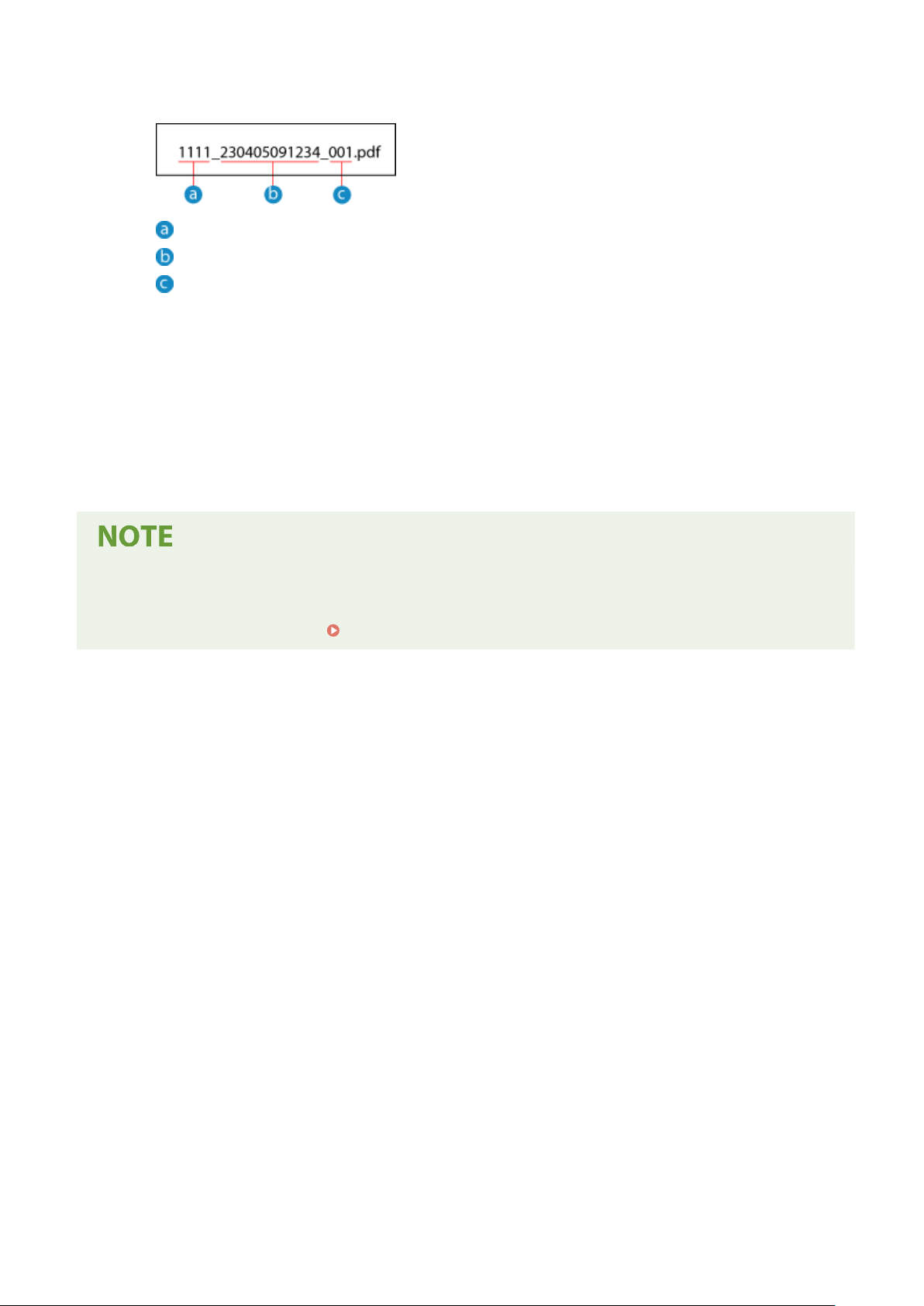
● If you selected a destination other than a fax number, a PDF le is forwar
ded or saved with the following le
name.
Communications management number
Date sent (in this example, "April 5, 2023, 9:12:34 AM")
File sequence number (if one le, then "001")
When you enter a string in [File Name], the specied string is appended to the start of the abo
ve le name.
7
Click [OK].
➠ The settings ar
e applied.
8
Log out from Remote UI.
Backing Up Received Faxes
● The abo
ve section describes the settings for forwarding and saving sent faxes. To back up received faxes,
separate settings are required.
Auto Forwarding and Backing Up Received Faxes(P. 276)
Faxing
275

Auto Forwarding and Backing Up Received Faxes
8W0J-05U
You can congur
e the settings to automatically forward and save a received fax to a destination specied in
advance. You can also specify whether to print the received fax on the machine.
The following can be specied as forwarding and save destinations:
● Fax number
● E-mail address (e-mail)
● Shared folder on a computer
For destinations other than a fax number, the fax is forwarded or saved as a black and white PDF le.
This section describes how to congure the settings using Remote UI from a computer.
On the control panel, select [Menu] in the [Home] screen, and then select [Function Settings] to congure the settings.
[Forwarding Settings](P. 503)
Administr
ator privileges are required.
Required Preparations
● When specifying a forwar
ding or backup destination other than a fax number, prepare the fax to be sent or
saved to that destination.
- The required preparations are the same as when sending and saving scanned data.
Preparing to Send Scanned Data by E-mail(P. 235)
Preparing to Save Scanned Data to a Shared Folder(P. 241)
● Register the destination to be specied to the Addr
ess Book of the machine.
Registering Destinations
(Addr
ess Book)(P. 168)
1
Log in to Remote UI in System Manager Mode. Starting Remote UI(P. 399)
2
On the Portal page of Remote UI, click [Settings/Registration]. Portal Page of
Remote UI(P
. 401)
3
Click [RX/Forwarding Settings]
[Fax RX Settings] [Edit] in [Forwarding Settings].
➠ The [Edit Forwar
ding Settings] screen is displayed.
4
Select the [Use Forwarding Function] checkbox, and click [Select from Address Book].
➠ The [Select fr
om Address Book] screen is displayed.
5
Select the destination, and click [OK].
➠ The [Edit Forwar
ding Settings] screen reappears.
6
Set whether to print faxes or save them in memory.
Faxing
276
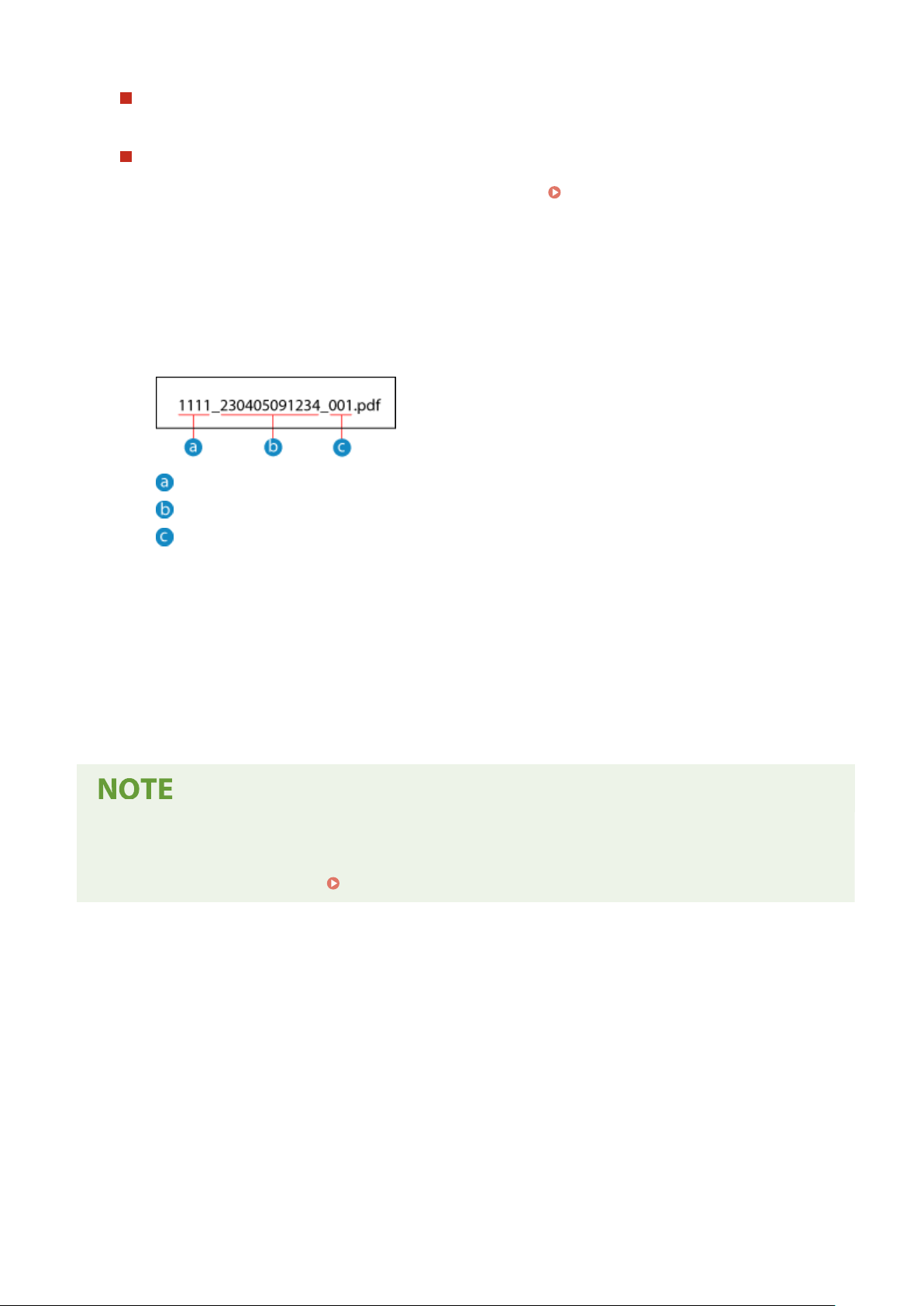
When Printing Faxes on the Machine
In [Print Images], select [On]. T
o print only when forwarding fails, select [Print Only When Error Occurs].
When Saving Faxes that Cannot Be Forwarded to the Memory of the Machine
In [Stor
e Images in Memory], select [Store Only When Error Occurs].
Faxes saved to the memory can be viewed in [Status Monitor].
Checking Faxes that Failed to Be
Forwar
ded(P. 294)
7
Enter any string in [File Name], as needed.
● If you selected a fax number as the destination, this step is not r
equired. Proceed to Step 8.
● If you selected a destination other than a fax number, a PDF le is forwarded or saved with the following le
name.
Communications management number
Date sent (in this example, "April 5, 2023, 9:12:34 AM")
File sequence number (if one le, then "001")
When you enter a string in [File Name], the specied string is appended to the start of the abo
ve le name.
8
Click [OK].
➠ The settings ar
e applied.
9
Log out from Remote UI.
Backing Up Sent Faxes
● The abo
ve section describes the settings for forwarding and saving received faxes. To back up sent faxes,
separate settings are required.
Backing Up Sent Faxes(P. 274)
Faxing
277
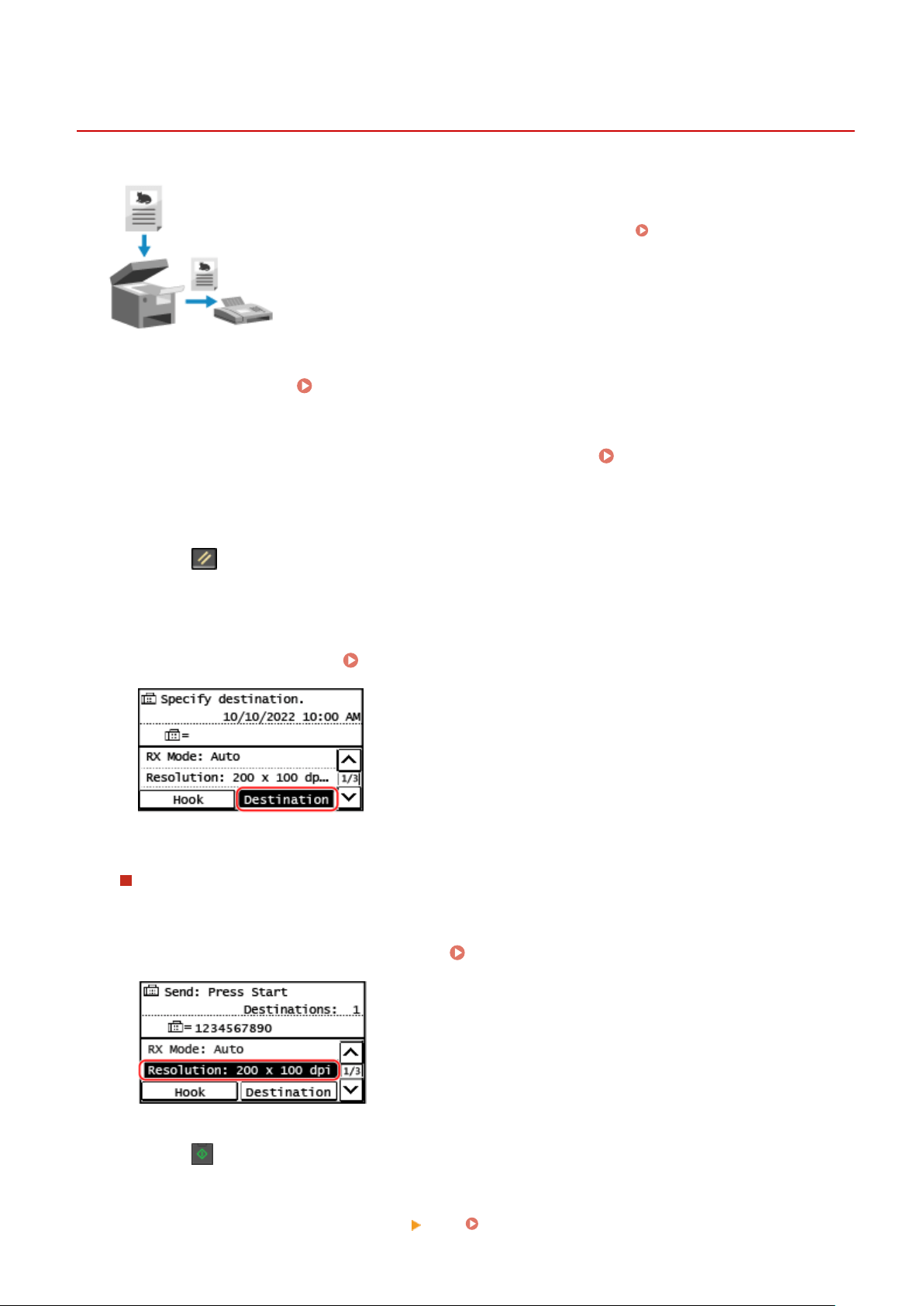
Sending Faxes
8W0J-05W
You can scan a document, photo, or other printed materials (originals) with the
machine, converting it to a black and white image, and then send it.
Y
ou can also send a fax after a phone conversation.
Sending a Fax after a Phone
Conversation (Manual Sending)
(P. 280)
1
Place the original.
Placing Originals(P. 139)
2
On the control panel, press [Fax] in the [Home] screen.
[Home] Screen(P. 120)
➠ The Fax scr
een appears.
3
Press
on the control panel.
If the destination setting for the previously sent fax remains, a fax may be sent to an incorrect destination.
Reset the setting befor
e operating.
4
Specify the destination.
Specifying Destinations(P. 182)
Enter the fax number with the numeric keys, or select the destination registered in the Address Book by
pr
essing [Destination].
When [Conrm] appears
Enter the fax number again, and press [Apply].
5
Congure the original scan settings. Fax Original Scan Settings(P. 286)
6
Press on the control panel.
➠ Scanning of the original starts.
● T
o cancel sending of a fax, press [Cancel]
[Yes]. Canceling Fax Sending(P. 292)
Faxing
278
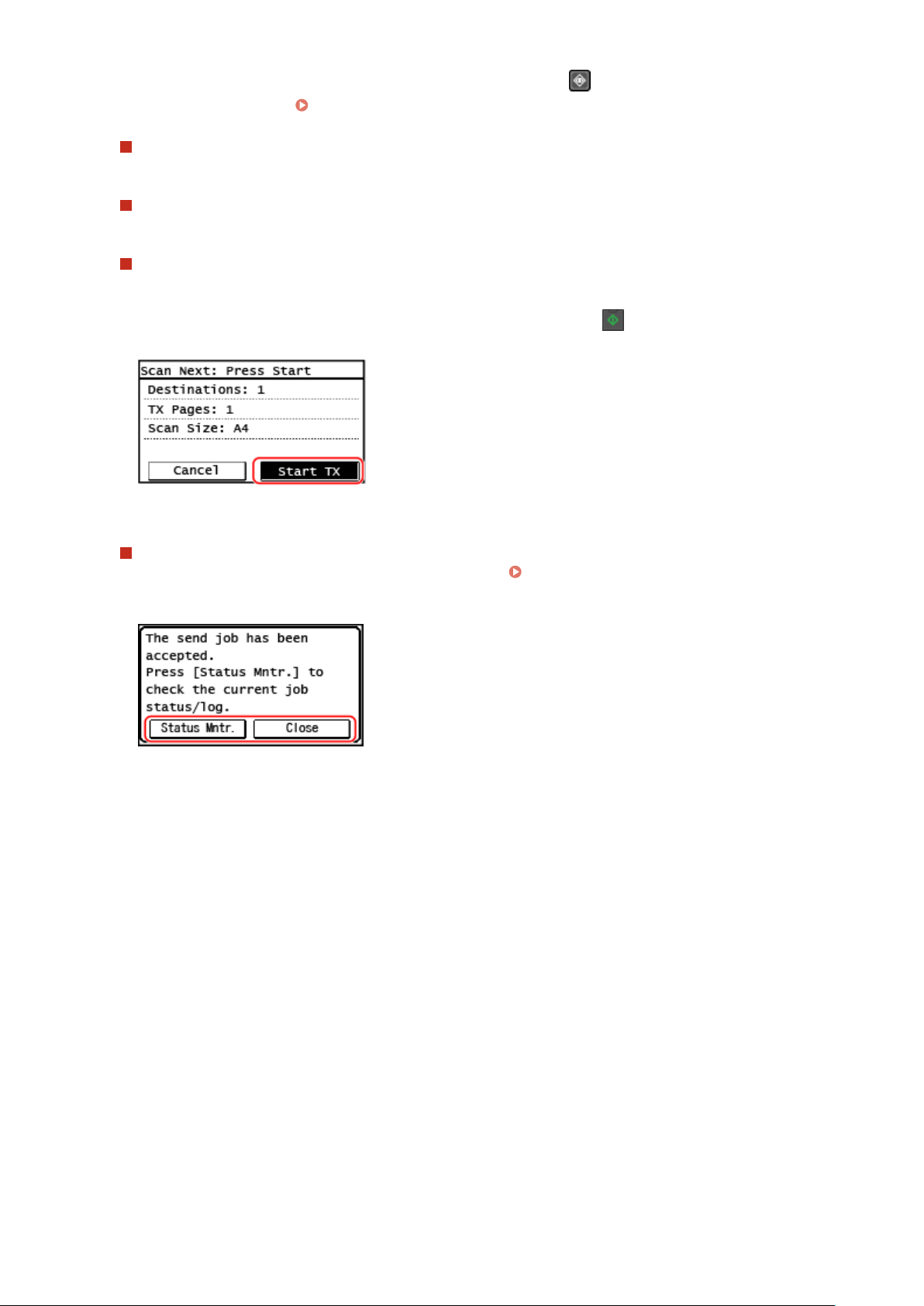
● When scanning of the original is completed, the fax is sent. Pr
ess
on the control panel to view the
sending status and log. Checking the Status and Log for Sent and Received Faxes(P. 293)
When [Conrm Destination] appears
Check that the destination is corr
ect, and then press [Start Scan].
When [Scan Size] appears
Select the size of the placed original.
When [Scan Next: Press Start] appears
When an original is placed on the platen glass and scanned, the scr
een for scanning additional originals is
displayed.
To scan additional originals, place them on the platen glass, and press
on the control panel.
When scanning of all originals is completed, pr
ess [Start TX].
* If the size of the original is different, part of the image may be missing, or the image may be scanned
smaller.
When [Status Mntr.] appears
T
o view the sending status and log, press [Status Mntr.].
Checking the Status and Log for Sent and
Received Fax
es(P. 293)
Pressing [Close] displays the fax screen.
Faxing
279
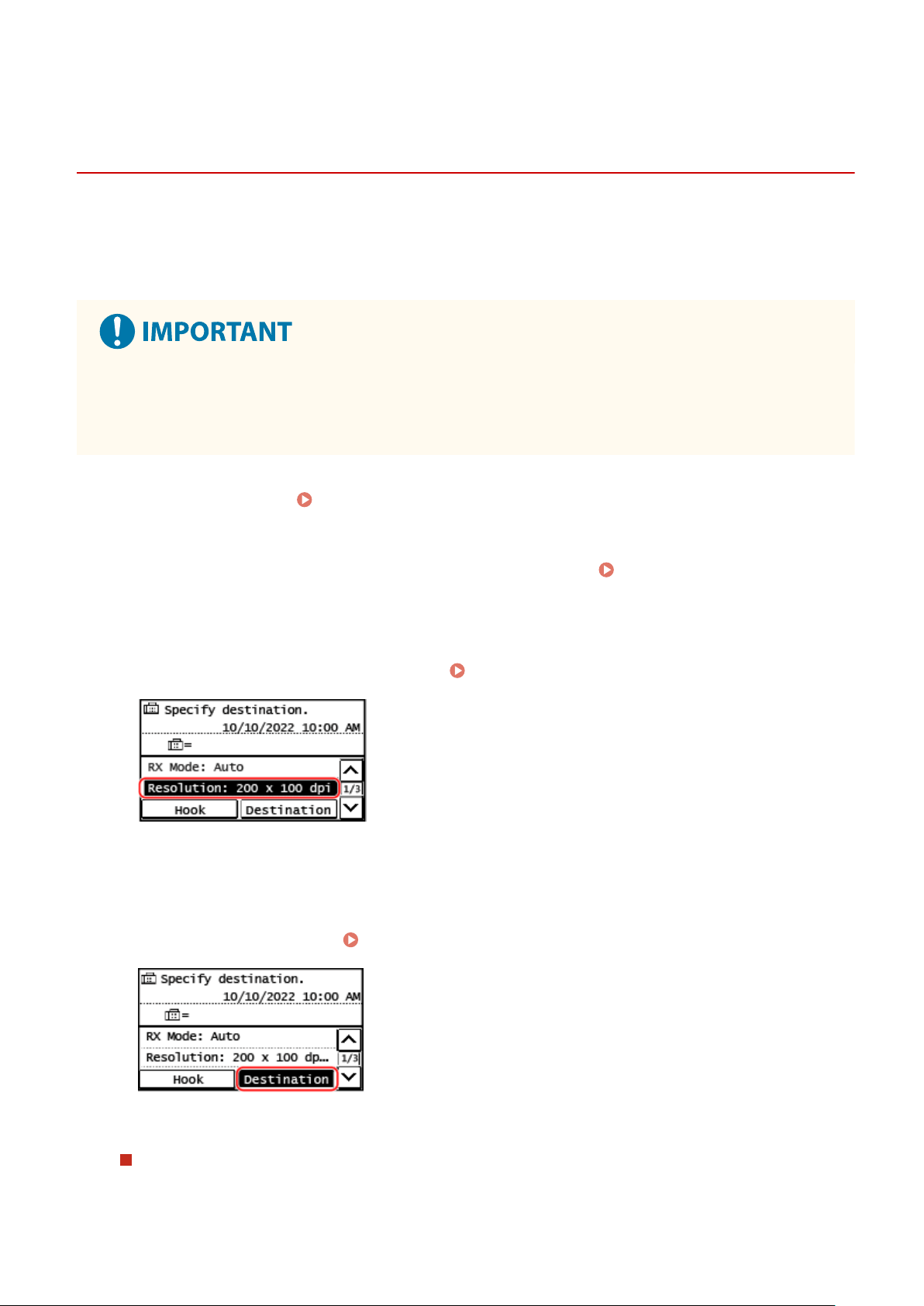
Sending a Fax after a Phone Conversation (Manual
Sending)
8W0J-05X
Y
ou can send a fax after a phone conversation. To make a phone call, an external telephone is required. This section
describes how to send a fax after a phone conversation.
When sending a fax during an incoming call, rst pick up the handset to answer the call, and then perform the steps
below. You do not need to perform Steps 4 and 5 to make a phone call.
● The pages that can be scanned and sent for manual sending ar
e restricted as follows:
- When an original is placed on the feeder, only one side is scanned.
- When an original is placed on the platen glass, only one page of the placed original can be sent.
1
Place the original.
Placing Originals(P. 139)
2
On the control panel, press [Fax] in the [Home] screen. [Home] Screen(P. 120)
➠ The fax scr
een appears.
3
Congure the original scan settings.
Fax Original Scan Settings(P. 286)
4
Pick up the handset.
5
Specify the destination.
Specifying Destinations(P. 182)
Enter the fax number with the numeric keys or select the destination registered in the Address Book by
pr
essing [Destination] to make a phone call.
When [Conrm] appears
Enter the fax number again, and pr
ess [Apply].
Faxing
280
6
After the phone conversation, ask the recipient to set their fax machine to receive
your fax.
7
When you hear a beep, press on the control panel, and hang up the handset.
➠ Scanning of the original starts.
● T
o cancel sending of a fax, press [Cancel]
[Yes]. Canceling Fax Sending(P. 292)
● When scanning of the original is completed, the fax is sent. Pr
ess
on the control panel to view the
sending status and log. Checking the Status and Log for Sent and Received Faxes(P. 293)
When [Scan Size] appears
Select the size of the placed original.
● The destinations and the settings in Manual Sending are not left in the TX Job Log.
Faxing
281
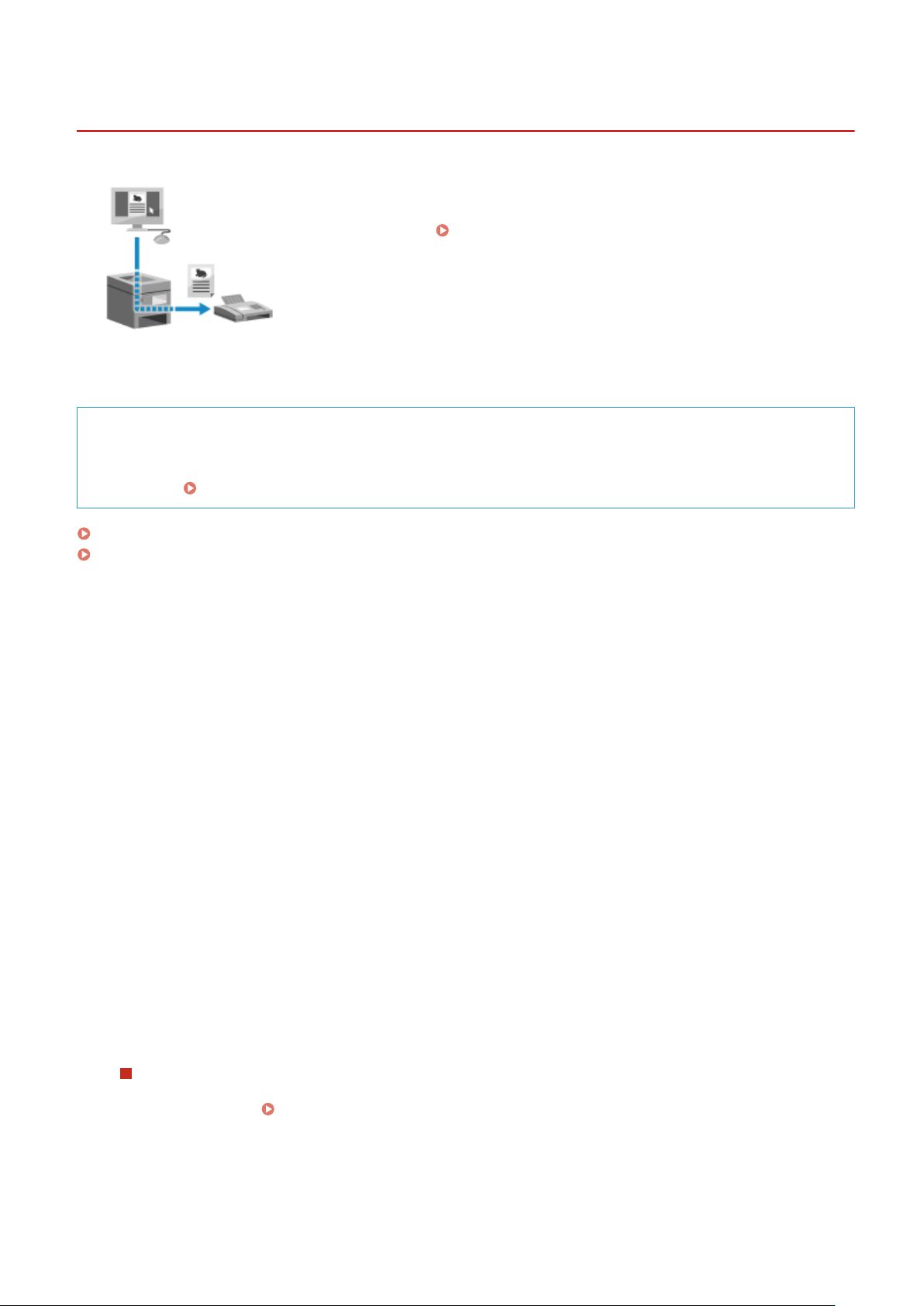
Sending Faxes from a Computer (PC Faxing)
8W0J-05Y
You can send a document as a fax from a computer using a fax driver.
As it is easy to send a document, be sur
e to thoroughly check the item you are
sending beforehand.
Securely Sending PC Faxes(P. 285)
This section describes the general procedure for this operation. Check the manual of the application you are using for
detailed oper
ations on how to use it.
Required Preparations
● Install the fax driver to the computer and congur
e the settings according to your usage environment and
purpose.
Preparing to Send Faxes from a Computer(P. 268)
When Using Windows(P. 282)
When Using macOS(P. 283)
◼ When Using Windows
1
Open the document you are sending on your computer.
2
In the application used to open the document, select the command to print.
3
Select the fax driver of the machine, and click [Print].
➠ The [Fax Sending Settings] scr
een of the fax driver appears.
4
Specify a destination.
● This section describes ho
w to enter a fax number. You can specify a destination registered to the Address
Book from the [Select Destination] tab.
● If an outside line number is required, enter this number before the fax number. If the outside line number
has been set in advance, you do not need to enter it here.
When Entering One Fax Number
On the [Enter Destination] tab, enter a fax number. When [Conrm Fax Number] can be entered, enter the
same fax number. Step 2: Conguring the Settings for Secur
e Sending(P. 268)
Faxing
282
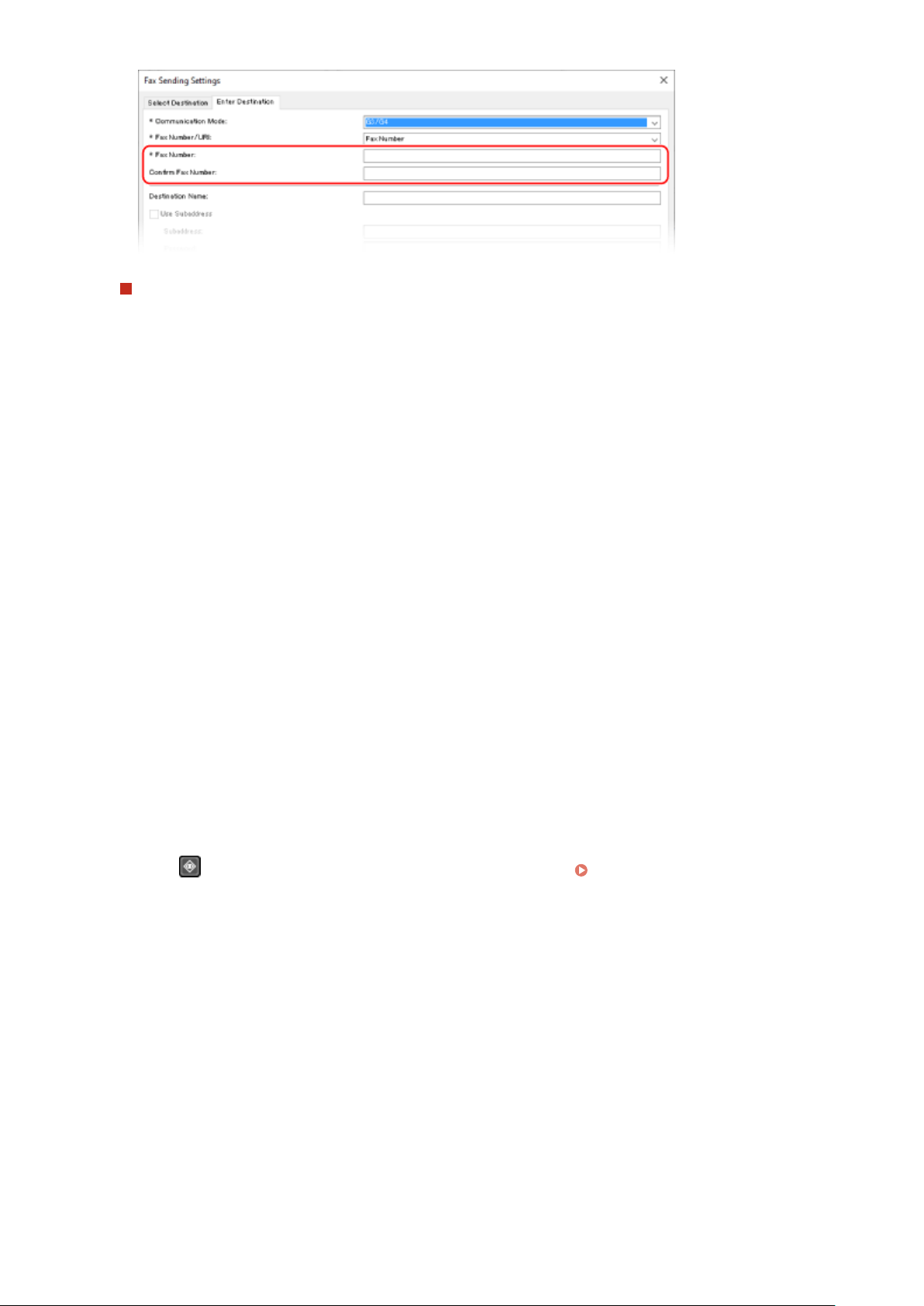
When Entering Multiple Fax Numbers
1
In [Select Destination] tab, click [Add Destination].
➠ The [Add Destination] scr
een is displayed.
2
Enter the destination name and fax number, and click [Add Next Destination].
When [Conrm Fax Number] can be enter
ed, enter the same fax number.
3
Repeat Step 2, and after entering all destinations, click [OK].
5
Congure the co
ver sheet, the setting for saving the TX Job Log, and other fax
setting, as needed.
● T
o congure the cover sheet details, click [Cover Sheet].
● To save the TX Job Log to the computer, select the [Store Sent Fax Information and Image] checkbox.
● For more information about the other fax settings, click [Help] on the [Fax Sending Settings] screen to display
help.
6
Click [Send].
➠ A scr
een conrming the send destination is displayed.
7
Check that the destination is correct, and click [OK].
➠ The fax is sent via the machine.
● Pr
ess
on the control panel to view the sending status and log. Checking the Status and Log for Sent
and Received Fax
es(P. 293)
● When sending a fax with the [Store Sent Fax Information and Image] checkbox selected, you can view the log
also from the [Sent Fax Information and Image] tab of the fax driver.
◼ When Using macOS
1
Open the document you are sending on your computer.
2
In the application used to open the document, click [Print].
➠ The printing dialog bo
x appears.
Faxing
283
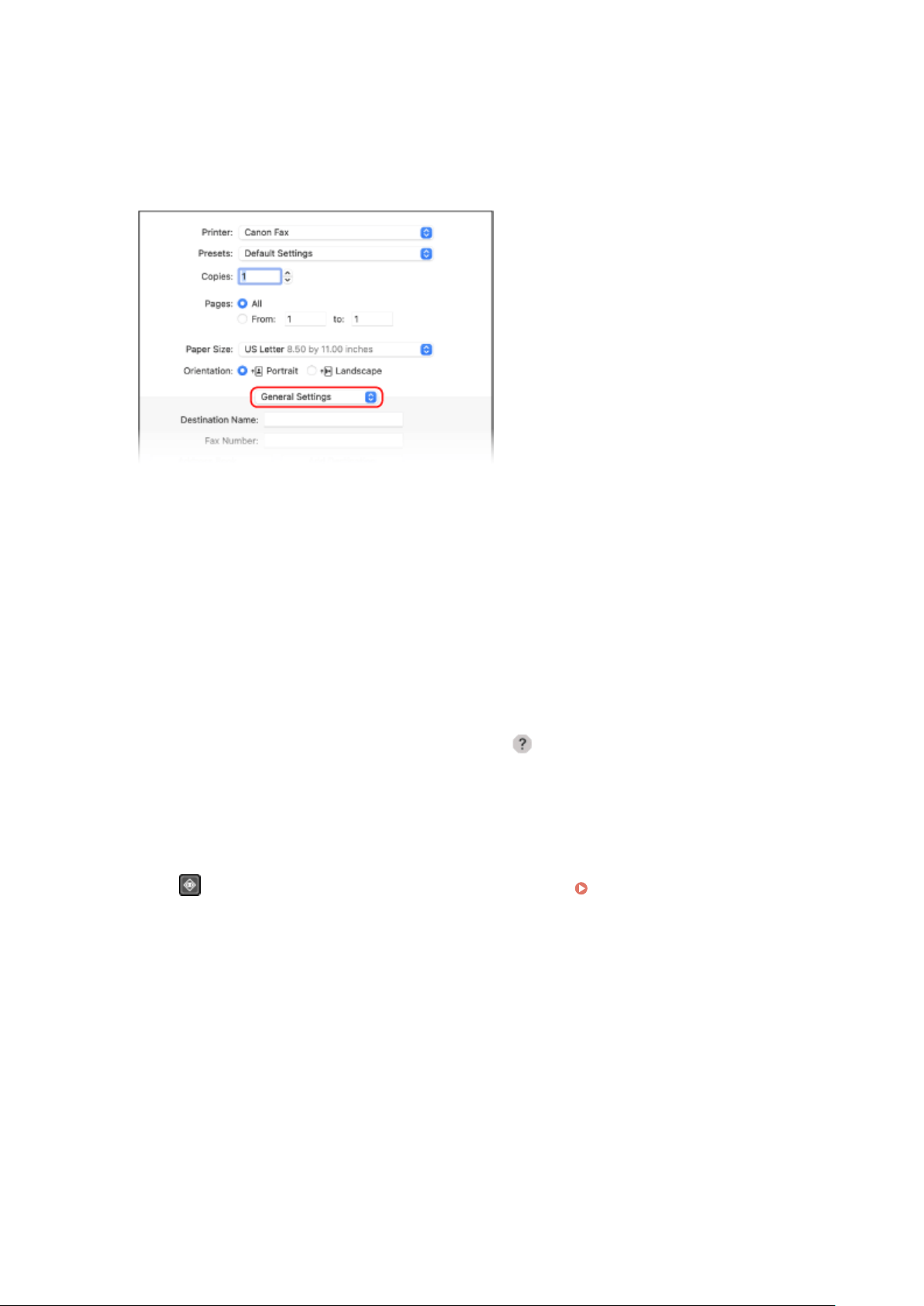
3
In [Printer], select the fax driver of the machine.
4
From the print options pop-up menu, select [General Settings].
If print options are not displayed, click [Show Details] in the printing dialog box.
5
Enter the fax number, and click [Add Destination].
● To specify multiple destinations, repeat this step. You can specify a destination registered to the Address
Book from [Address Book].
● If an outside line number is required, enter this number before the fax number.
6
Congure the co
ver sheet and other fax settings, as needed.
● T
o set the cover sheet details, select [Cover Sheet] from the pop-up menu of the print option.
● For more information about the other fax settings, click [
] in the printing dialog box to display help.
7
Click [Print].
➠ The fax is sent via the machine.
Pr
ess
on the control panel to view the sending status and log. Checking the Status and Log for Sent
and Received Fax
es(P. 293)
Faxing
284

Securely Sending PC Faxes
8W0J-060
While sending fax
es from a computer can be convenient, there is a risk of sending it to an incorrect number. To reduce
this risk, it is recommended that you check the following when sending faxes.
Checking the Content You Are Sending(P. 285)
Conrming the Destination
(P. 285)
Conrming TX Job Log after Sending
(P. 285)
Checking the Content You Are Sending
Unlike when scanning a document and sending it, you can only check the content to be sent on the screen of the
computer. Therefore, check the content before sending the document.
Checking with Preview
Check that the content to be sent is as intended. If the paper size is not appropriate, part of the document
sticking beyond the paper may be divided and sent separately.
Checking with PDF
You can convert the document into a PDF and then send it to reduce the risk of sending unintended sheets in
an Excel le, for example. When you cannot preview the document with the print function of the application
or you want to send only certain pages of the document, you can check the content to be sent before
sending.
Conrming the Destination
Y
ou can require the user to enter the fax number twice when specifying a destination or require the user to conrm
the destination before sending to reduce the risk of sending a fax to an incorrect destination. For details about the
settings to conrm the destination, see the procedures when preparing to send PC faxes.
Step 2: Conguring the
Settings for Secur
e Sending(P. 268)
Conrming TX Job Log after Sending
When the machine is set to save a TX Job Log, you can check the log to conrm whether the intended content was sent
corr
ectly. For details about the settings to conrm the TX job log after sending PC faxes, see the procedures when
preparing to send PC faxes.
Step 2: Conguring the Settings for Secur
e Sending(P. 268)
Faxing
285
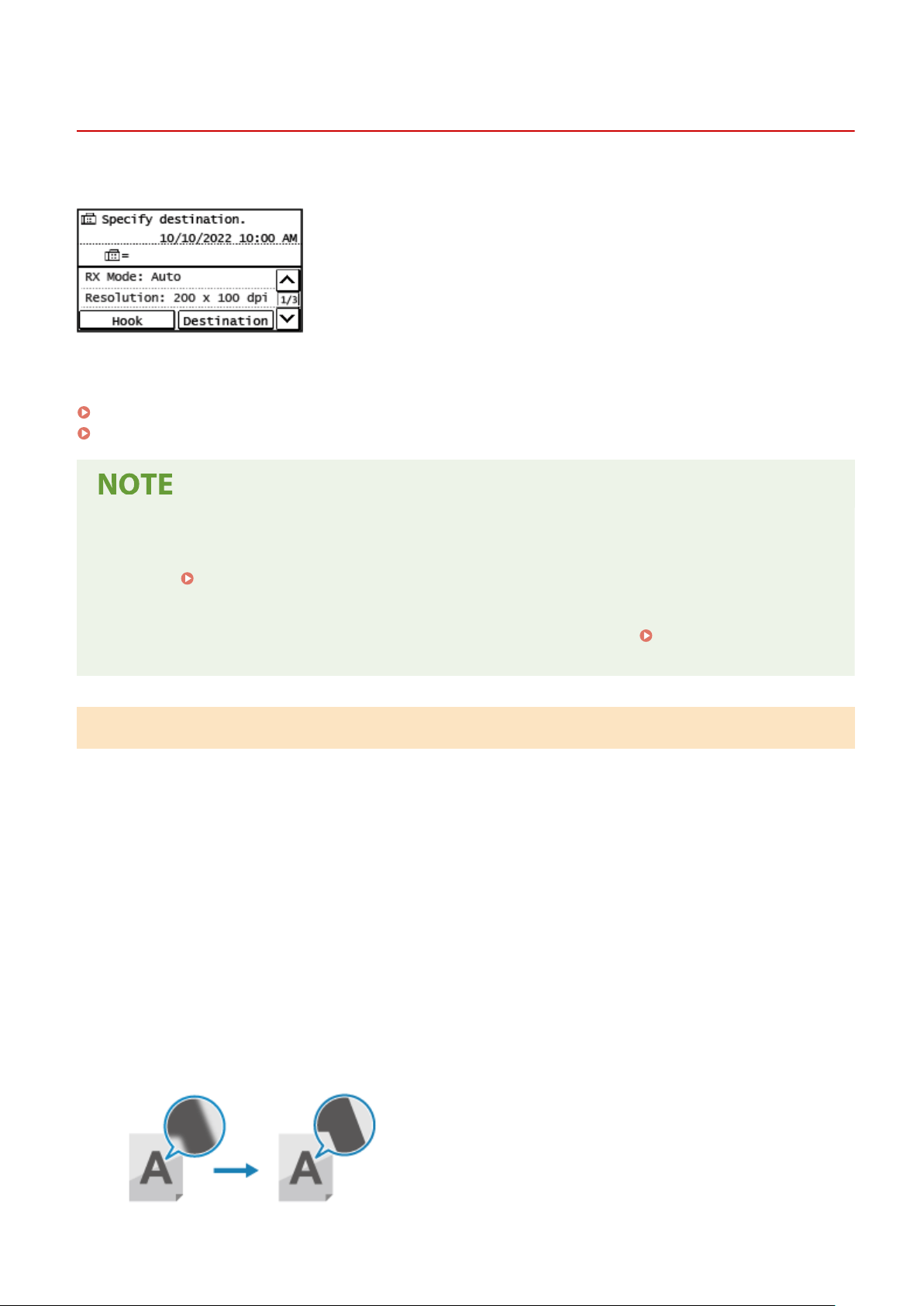
Fax Original Scan Settings
8W0J-061
When sending a fax using the machine, you can adjust the image quality and set 2-sided scanning.
If the recipient cannot read the text or the sent fax was not as intended, the settings can be adjusted and the fax
r
esent.
Adjusting Image Quality(P. 286)
2-sided Scan Settings(P. 287)
Registering the Frequently Used Scan Settings as the Default Settings
● Y
ou can change the default settings for scanning fax originals according to the frequently used scan
settings.
Changing the Default Settings(P. 190)
Recalling Past Settings (TX Job Log)
● Y
ou can use the TX Job Log to recall the settings used to send faxes in the past.
Specifying Destinations
(TX Job Log)
(P. 189)
Adjusting Image Quality
Y
ou can adjust the image quality such as when the fax image is not clear or the text is dicult to read.
[Resolution]
Select the resolution for scanning originals.
The higher the resolution, the sharper the image, but the longer it takes to send the data.
[Density]
Adjust the density to suit the original.
Press [+] to increase the density and [-] to lower it.
[Sharpness]
Adjust the sharpness.
Emphasize the contours and lines to mak
e them clearer, or weaken them to make them softer.
Adjustment example:
● To make blurry text or shapes clearer
Press [+].
Faxing
286
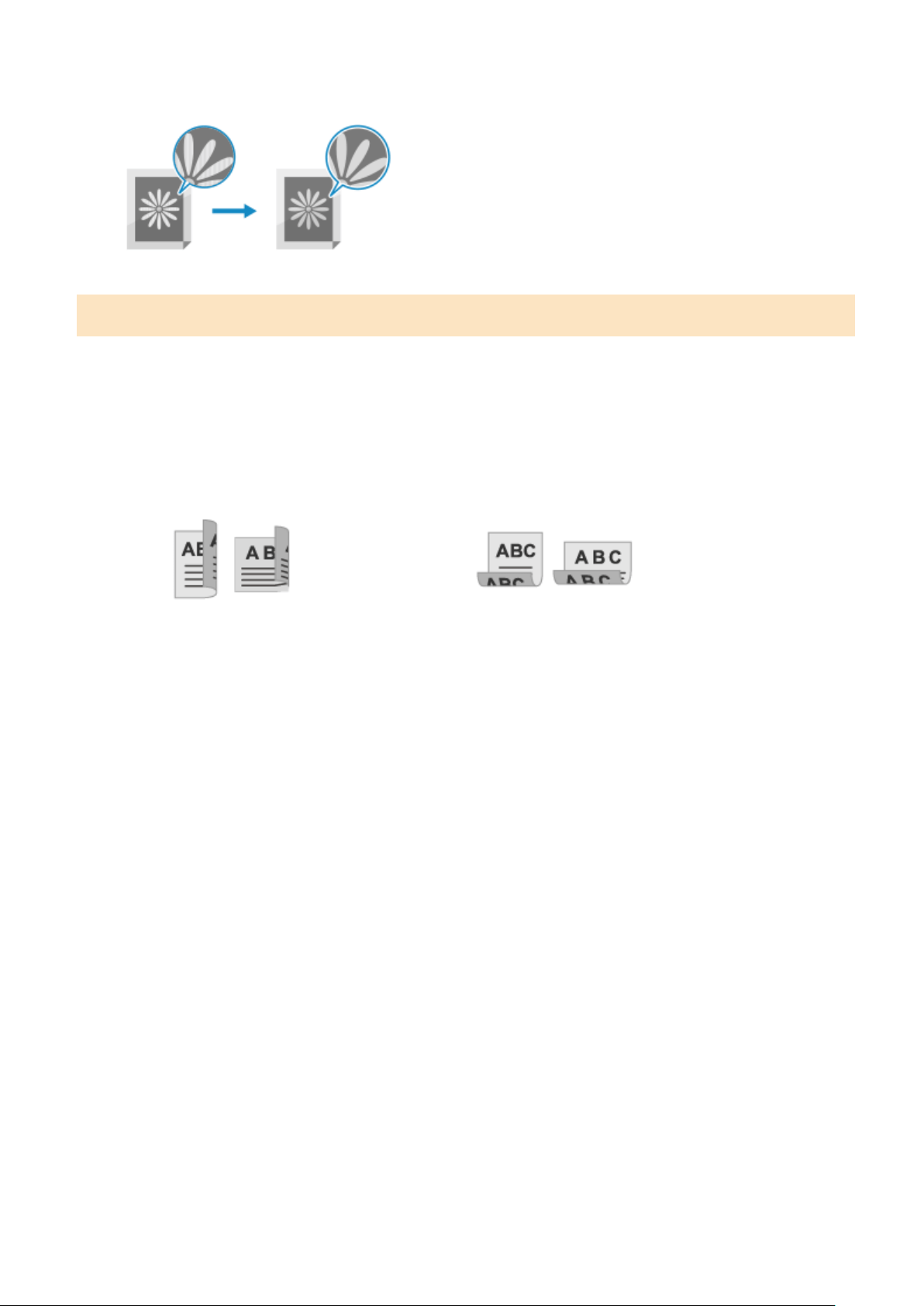
● T
o reduce moire (vertical pattern noise) in photos
Press [-].
2-sided Scan Settings
When scanning a 2-sided original, place the original on the feeder, and set [2-Sided Original].
* This setting is available only for MF269dw II / MF269dw VP II.
* 2-sided scanning is not available when sending a fax after a phone conversation.
[2-Sided Original]
To perform 2-sided scanning, select [Book Type] or [Calendar Type]. Select this according to the top and bottom
orientation of the front and back sides of the placed original.
[Book Type]
[Calendar Type]
Top and bottom have same orientation
Top and bottom have opposite orientation
To cancel scanning of a 2-sided original, select [Off].
Faxing
287

Receiving Faxes
8W0J-062
When the RX mode is set to r
eceive faxes manually, you must perform operations to receive them.
When the RX mode is not set to receive faxes manually, you do not need to perform operations to receive them. When
there is an incoming fax, it is automatically received without ringing and then printed once receiving is completed.
Place A4 or letter size paper in the paper source to prevent the image from being missing or divided.
You can also change the settings to print a received fax on both sides of the paper and print the received date and
time and page number.
Changing the Print Settings for Received Faxes(P. 290)
◼ When the Machine Rings
Receive the fax manually
.
If a telephone is connected to the machine, you can receive the fax by operating the telephone without operating the
machine.
Receiving Faxes via Telephone (Remote RX)(P. 289)
1
When the machine rings, pick up the handset.
If it is a phone call, you can take the call.
2
If you hear a beep, on the control panel, press [Fax] in the [Home] screen.
[Home]
Screen(P. 120)
➠ The fax screen appears.
3
Press on the control panel, and hang up the handset.
➠ The machine starts r
eceiving the fax. When receiving is completed, the fax is printed automatically.
When a Fax Is Not Received or Printed
Cannot Receive a Fax(P. 616)
T
o Not Print a Received Fax
● Save the received fax to the memory of the machine or forward it to a specic destination.
Saving Received Documents in the Machine (Memory Lock)(P. 382)
Auto Forwarding and Backing Up Received Faxes(P. 276)
Faxing
288

Receiving Faxes via Telephone (Remote RX)
8W0J-063
Remote RX allo
ws you to use the numeric keys of the telephone connected to the machine to receive faxes by dialing a
predetermined number (Remote RX ID).
The Remote RX ID is set to [25] by default. You can change this to a custom number.
[Remote RX](P. 502)
1
When the machine rings, pick up the handset of the telephone.
If it is a phone call, you can take the call.
2
When you hear a beep, dial the Remote RX ID using the numeric keys of the
telephone.
➠ The machine starts r
eceiving the fax. When receiving is completed, the fax is printed automatically.
If you do not hear a set of tones when entering the Remote RX ID, press the tone button (*) of the telephone,
and then enter the Remote RX ID again.
3
Hang up the handset.
Faxing
289

Changing the Print Settings for Received Faxes
8W0J-064
Received fax
es are printed on one side of the paper by default. You can change the settings to print on both sides of
the paper, and print the received date and time and page number.
Printing on Both Sides(P. 290)
Printing the Received Date and Time and Page Number(P. 290)
Printing on Both Sides
This section describes how to congure the settings using Remote UI from a computer.
On the control panel, select [Menu] in the [Home] screen, and then select [Function Settings] to congure the settings.
[Print on Both Sides](P. 501)
Administr
ator privileges are required.
1
Log in to Remote UI in System Manager Mode.
Starting Remote UI(P. 399)
2
On the Portal page of Remote UI, click [Settings/Registration]. Portal Page of
Remote UI(P. 401)
3
Click [RX/Forwarding Settings] [Fax RX Settings] [Edit] in [Basic Settings].
➠ The [Edit Basic Settings] scr
een is displayed.
4
Select the [Print on Both Sides] checkbox.
5
Click [OK].
➠ The settings ar
e applied.
6
Log out from Remote UI.
Printing the Received Date and Time and Page Number
Select whether to print the following information at the bottom of received faxes:
● Reception date and time
● Received r
eception number
● Page number
This section describes how to congure the settings using Remote UI from a computer.
On the control panel, select [Menu] in the [Home] screen, and then select [Function Settings] to congure the settings.
[Print RX Page Footer](P. 500)
Administr
ator privileges are required.
Faxing
290

1
Log in to Remote UI in System Manager Mode.
Starting Remote UI(P. 399)
2
On the Portal page of Remote UI, click [Settings/Registration]. Portal Page of
Remote UI(P
. 401)
3
Click [RX/Forwarding Settings]
[Common Settings] [Edit] in [Common Settings].
➠ The [Edit Common Settings] scr
een is displayed.
4
Select the [Add RX Page Footer] checkbox.
5
Click [OK].
➠ The settings ar
e applied.
6
Log out from Remote UI.
Faxing
291
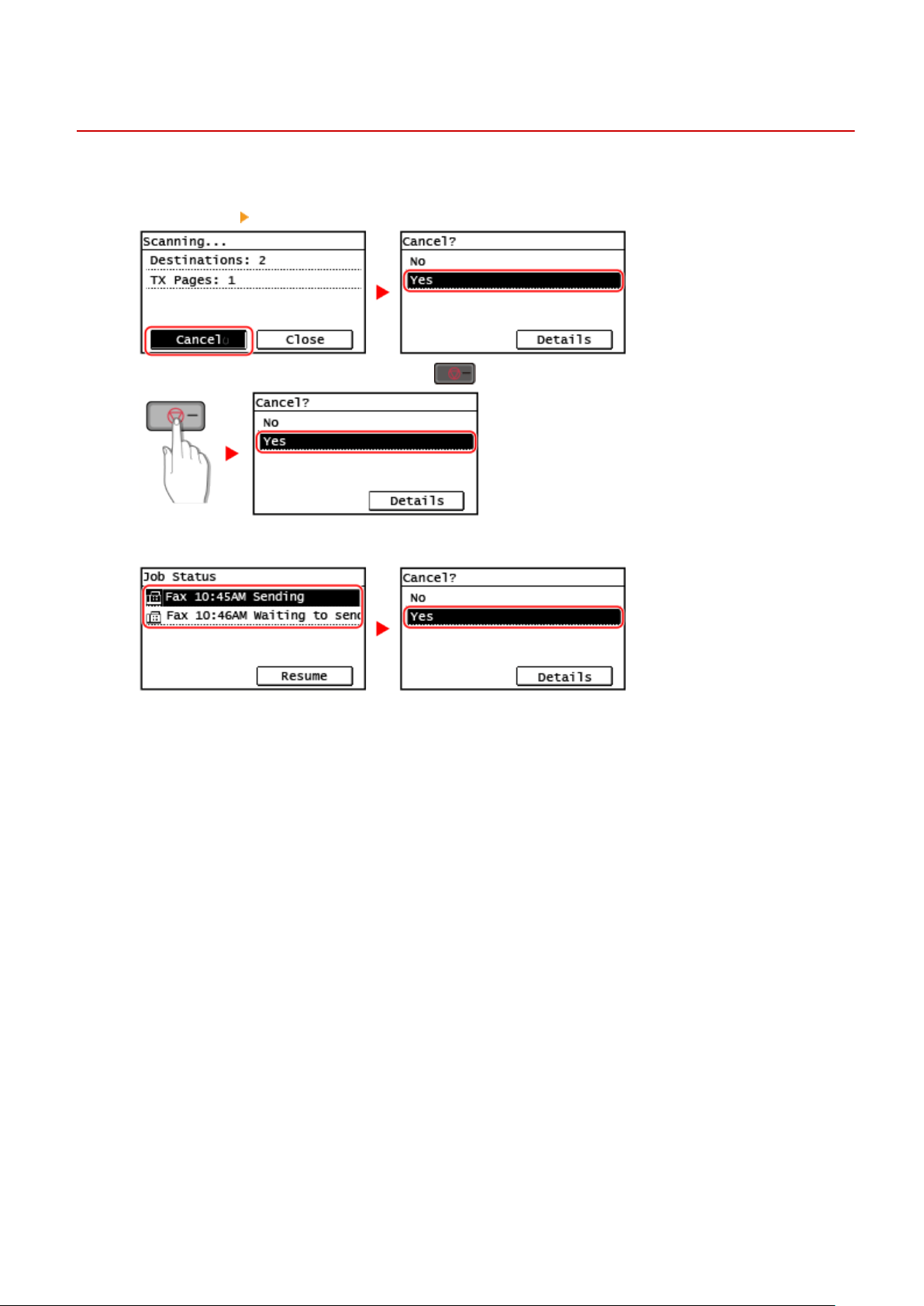
Canceling Fax Sending
8W0J-065
Y
ou can cancel sending of a fax by following the on-screen instructions.
Press [Cancel]
[Yes].
If the above screen is not displayed, press on the control panel, and then press [Yes].
If a job list screen is displayed, select the job to cancel, and press [Yes].
Faxing
292

Checking the Status and Log for Sent and Received
Fax
es
8W0J-066
Pr
ocesses handled by the machine, including sending and receiving faxes, are managed as jobs. By checking the
status and log of jobs, you can determine whether a job was sent or received correctly and the cause of errors that
occur.
When the settings are congured to save faxes that could not be forwarded, these faxes can be printed on the
machine or forwarded to a different destination instead.
* If the log is set to not be displayed, you can only check the send and receive status.
[Display Job Log](P. 509)
Checking Sent and Received Faxes(P. 293)
Checking Faxes that Failed to Be Forwarded(P. 294)
Checking Sent and Received Faxes
You can check the status and log of sent and received faxes.
You can also check the number of pages of the fax and the fax numbers of the destination and sender, and forward
faxes waiting to be received and printed.
This section describes how to check the status and log using the control panel.
You can also use Remote UI from a computer to check the status and log. To print faxes saved in the memory, use
Remote UI. Checking Usage and Logs with Remote UI(P. 403)
1
Press
on the control panel. Control Panel(P. 14)
➠ The [Status Monitor] scr
een is displayed.
2
Press [TX Job] or [RX Job].
3
Check the status and log.
When Checking the Status of Sent and Received Faxes
1
Press [Job Status], and check the jobs being processed or waiting to be processed.
Fax
es saved in the memory are displayed as [Waiting to print].
2
Select a job to view its details.
➠ The job details are displayed.
3
View the number of pages, the fax numbers of the destination and sender, and other information.
● When ther
e are multiple fax destinations, press [Number of Destinations] to display them in a list.
● Press [Forward] to forward faxes waiting to be received or printed to a destination registered in the
Address Book. You cannot forward faxes being received or printed.
When Checking the Log of Sent and Received Faxes
1
Press [Job Log], and check the completed sent and received jobs.
2
Select a job to view its details.
Faxing
293
➠ The job details ar
e displayed.
3
View the number of pages and the fax numbers of the destination and sender.
When ther
e are multiple fax destinations, press [Number of Destinations] to display them in a list.
When the TX/RX Job Log displays [Error]
Sending or receiving was canceled, or an error occurred.
If a three-digit number starting with "#" (error code) is displayed, you can check the cause and solution
using the error code.
An Error Code Is Displayed(P. 643)
Registering Destinations to the Address Book
● On the scr
een displaying the job details, press [Reg Adr Book] to register the destination to the Address
Book.
* This operation is not available when there are multiple destinations.
Checking Faxes that Failed to Be Forwarded
If a fax could not be forwar
ded but remains in the memory, you can print it or forward it to a different destination, and
view its content.
This section describes how to check the fax content using the control panel.
You can also use Remote UI from a computer to check the fax content. To preview the fax content, use the Remote UI.
Checking Usage and Logs with Remote UI(P. 403)
Required Preparations
● Congur
e the settings to save faxes that could not be forwarded in the memory of the machine.
Auto
Forwar
ding and Backing Up Received Faxes(P. 276)
1
Press on the control panel. Control Panel(P. 14)
➠ The [Status Monitor] scr
een is displayed.
2
Press [Fax Forwarding Errors].
➠ A list of jobs of fax
es that could not be forwarded is displayed.
3
Select a job you want to check.
➠ The job details ar
e displayed.
4
Print or forward the fax to a different destination, and view the fax content.
● T
o print with the machine, press [Print/Fwd]
[Print] [Yes].
● T
o send or save the fax to a destination different from the one set as the forwarding destination, press [Print/
Fwd]
[Forward], select the destination from the Address Book.
Faxing
294

Copying
Copying ................................................................................................................................................................
296
Copy Operations ................................................................................................................................................ 297
Additional Copying Features ............................................................................................................................ 300
Paper Save Copy ................................................................................................................................................ 311
Copying Both Sides of ID Cards onto One Sheet .............................................................................................. 315
Copying Multiple Passports onto One Sheet ................................................................................................... 319
Canceling Copy Operations ............................................................................................................................... 323
Checking the Copy Status ................................................................................................................................. 325
Copying
295
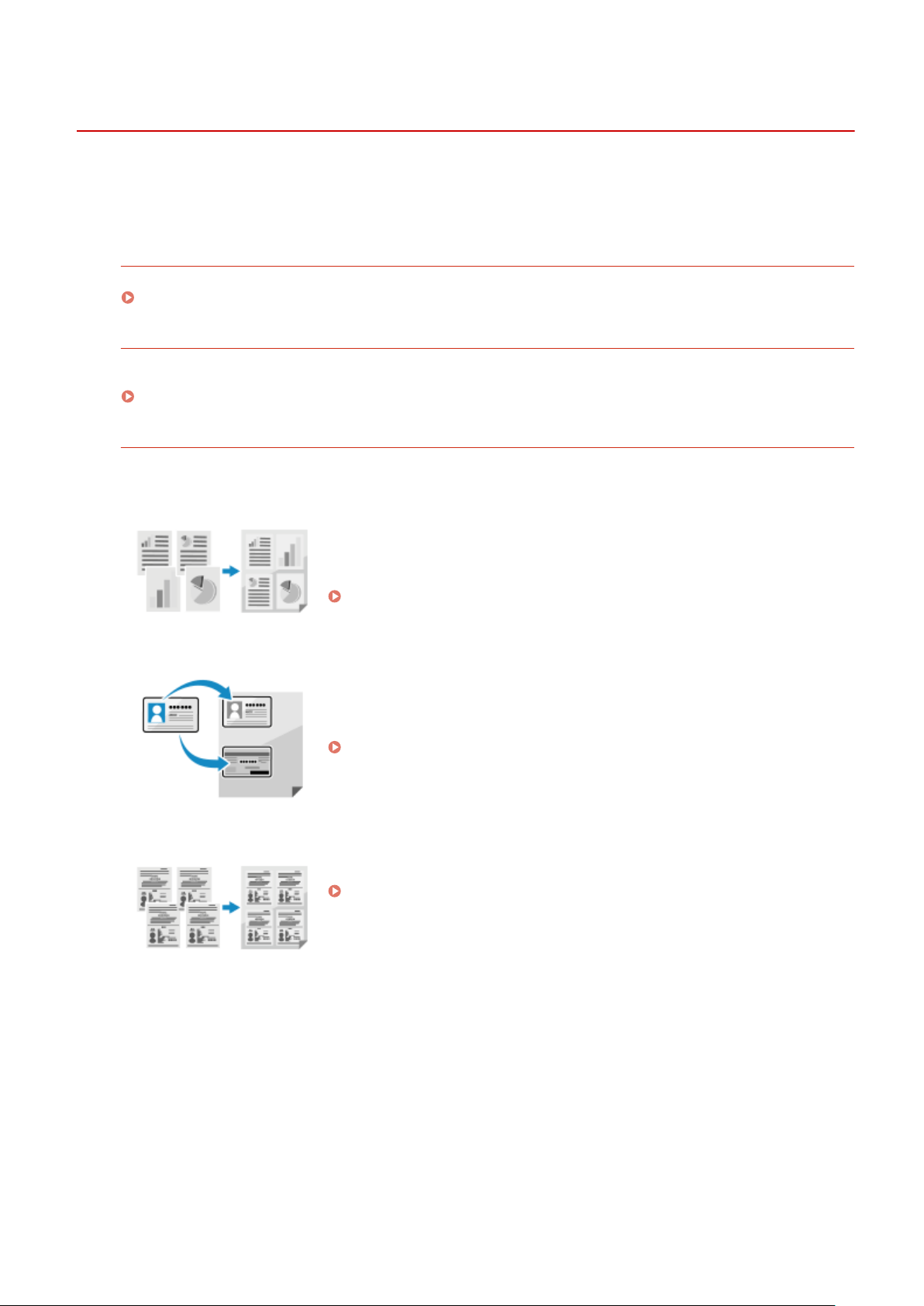
Copying
8W0J-067
Y
ou can easily copy documents, photos, and other printed materials ("originals") using the copy function of the
machine. In addition to basic copy settings, the machine also has settings for copying according to your original and
purpose. Congure these settings when copying for more ecient operations and to save paper.
Basic Copy Operations
You can set the copy ratio (for enlarging or reducing), number of copies, and other basic settings.
Copy Operations(P. 297)
Cop
ying According to Your Original and Purpose
You can perform 2-sided copying and adjust the image quality and other settings to suit your original and
purpose.
Additional Copying Features(P. 300)
Cop
ying for Specic Operations
You can use the following copy functions quickly from the [Home] screen or the control panel.
Paper Save Cop
y
Multiple pages of an original are copied on a single sheet by shrinking several
pages in one side or printing them on both sides. It is useful to save printed
paper.
Paper Save Copy(P. 311)
ID Card Copy
Copies the front and back sides of a driver's license or other ID card on the
same sheet of paper at 100% magnication. This is convenient, for e
xample,
when copying ID cards at reception.
Copying Both Sides of ID Cards onto One Sheet(P. 315)
Passport Copy
Copies multiple passports together onto one sheet of paper.
Copying Multiple Passports onto One Sheet(P. 319)
Copying
296
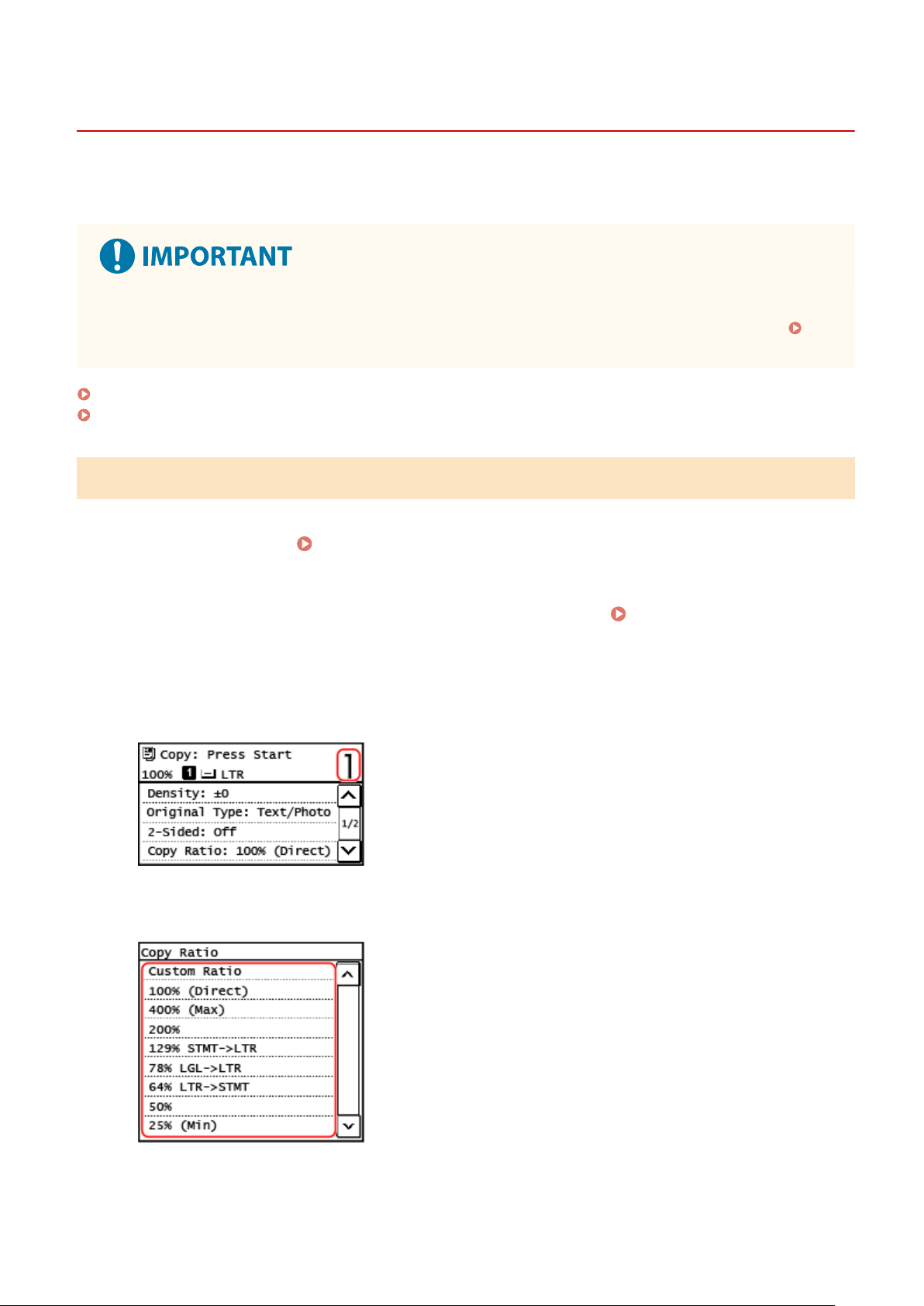
Copy Operations
8W0J-068
This section describes the basic cop
y operations when copying documents, photos, and other printed materials
("originals").
● When cop
ying originals that have text or images extending to the edges without margins, the copy may
printed with an area missing around the edge. For the size of the margin, see the basic specications.
Basic Specications(P
. 28)
Touch Panel Model(P. 297)
5 Lines LCD Model(P. 298)
Touch Panel Model
1
Place the original.
Placing Originals(P. 139)
2
On the control panel, press [Copy] in the [Home] screen. [Home] Screen(P. 120)
➠ The cop
y screen is displayed.
3
Enter the number of copies using the numeric keys.
4
Set the Copy Ratio.
Set the ratio for enlarging or reducing copies.
Select a x
ed copy ratio from the list or select [Custom Ratio] and enter a custom ratio using the numeric
keys.
Copying
297
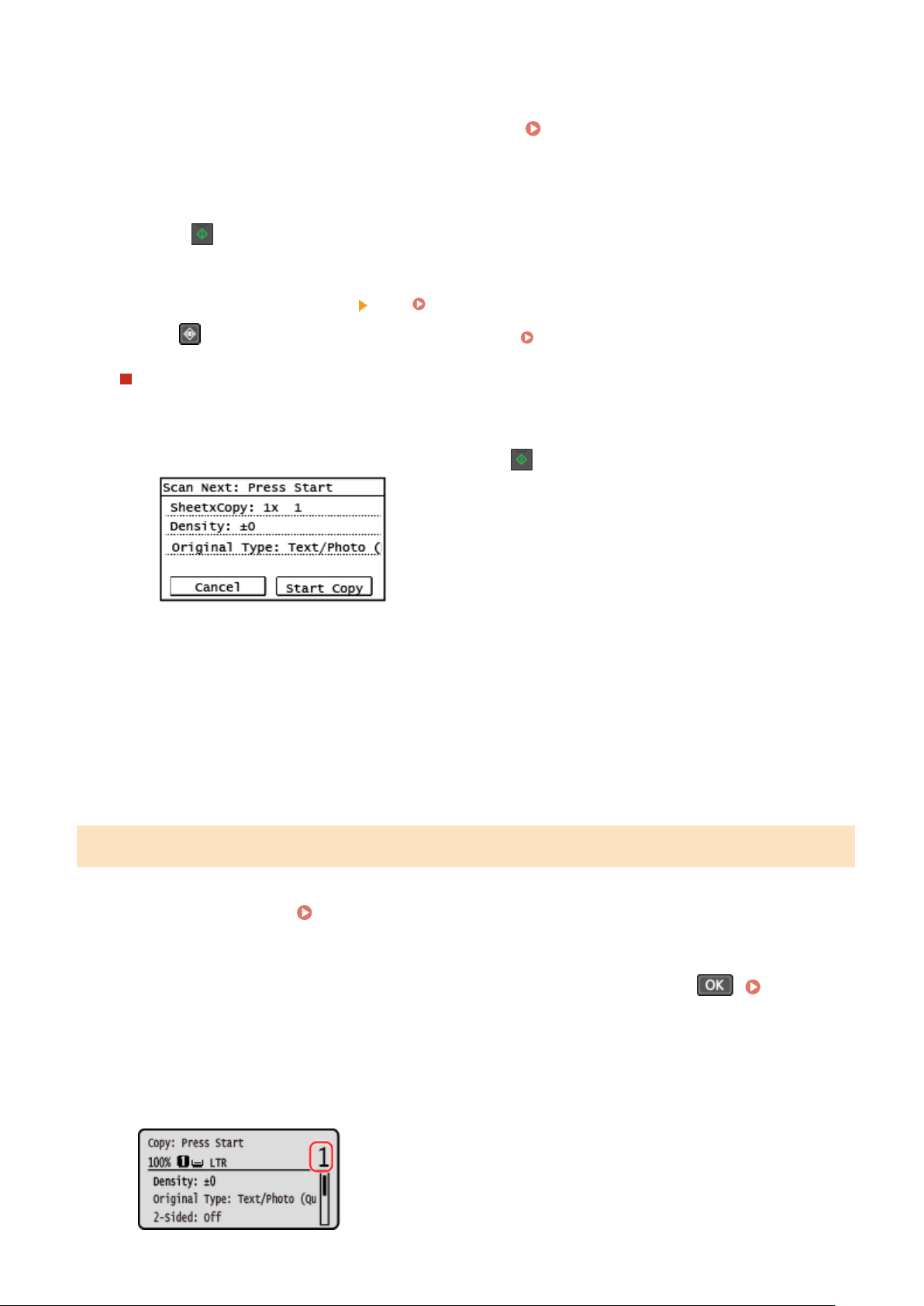
You can specify a value from 25% to 400% in 1% increments.
5
Congure the other cop
y settings, as needed.
Additional Copying Features(P. 300)
You can perform 2-sided copying and adjust the image quality and other settings to suit your original and
purpose.
6
Press
on the control panel.
➠ Cop
ying starts.
● To cancel copying, press [Cancel]
[Yes]. Canceling Copy Operations(P. 323)
● Pr
ess
on the control panel to view the copy job status. Viewing the Print Job Status and Log(P. 223)
When [Scan Next: Press Start] appears
When an original is placed on the platen glass and copied using 2-sided cop
ying or N on 1, the screen is
displayed for scanning the next original.
1
Place the next original on the platen glass, and press
on the control panel.
➠ The ne
xt original is scanned, and the same screen is displayed.
Repeat this process until scanning of all originals is completed.
● You can press [Density] and [Original Type] to change the settings for each original.
● If the size of the original is different, part of the image may be missing, or the image may be printed
smaller on the paper.
2
Press [Start Copy].
➠ The scanned originals are printed.
5 Lines LCD Model
1
Place the original.
Placing Originals(P. 139)
2
On the control panel, select [Copy] in the [Home] screen and press
. [Home]
Scr
een(P. 120)
➠ The cop
y screen is displayed.
3
Enter the number of copies using the numeric keys.
Copying
298
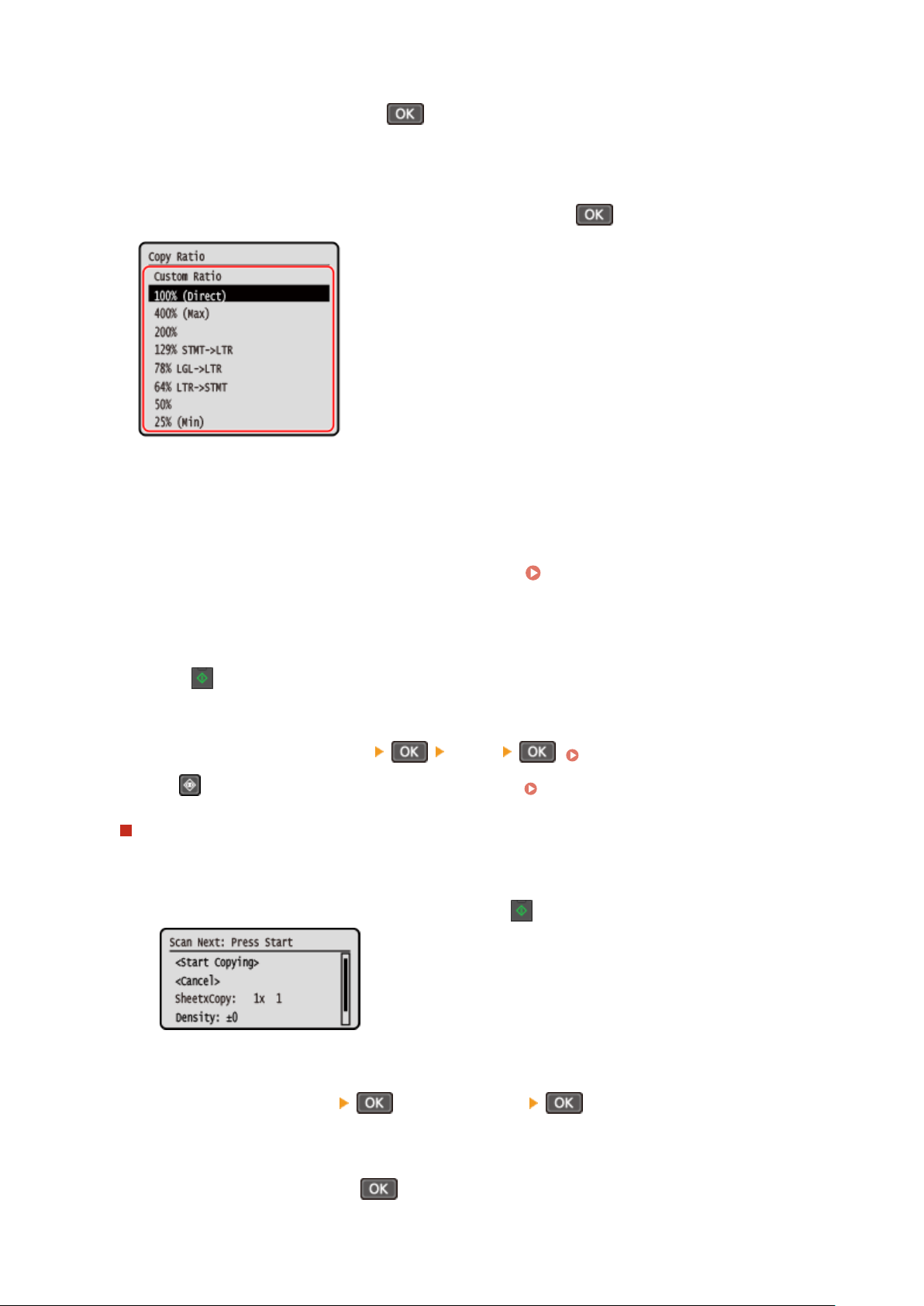
4
Select [Copy Ratio] and press .
➠ The [Cop
y Ratio] screen is displayed.
5
Select the copy ratio to suit your purpose and press
.
Set the ratio for enlarging or reducing copies.
Select a x
ed copy ratio from the list or select [Custom Ratio] and enter a custom ratio using the numeric
keys.
You can specify a value from 25% to 400% in 1% increments.
6
Congure the other cop
y settings, as needed.
Additional Copying Features(P. 300)
You can perform 2-sided copying and adjust the image quality and other settings to suit your original and
purpose.
7
Press
on the control panel.
➠ Cop
ying starts.
● To cancel copying, press [<Cancel>]
[<Yes>] . Canceling Copy Operations(P. 323)
● Pr
ess
on the control panel to view the copy job status. Viewing the Print Job Status and Log(P. 223)
When [Scan Next: Press Start] appears
When an original is placed on the platen glass and copied using 2-sided cop
ying or N on 1, the screen is
displayed for scanning the next original.
1
Place the next original on the platen glass, and press
on the control panel.
➠ The ne
xt original is scanned, and the same screen is displayed.
Repeat this process until scanning of all originals is completed.
● You can press [Density]
and [Original Type] to change the settings for each original.
● If the size of the original is differ
ent, part of the image may be missing, or the image may be printed
smaller on the paper.
2
Select [<Start Copying>] press
.
➠ The scanned originals ar
e printed.
Copying
299
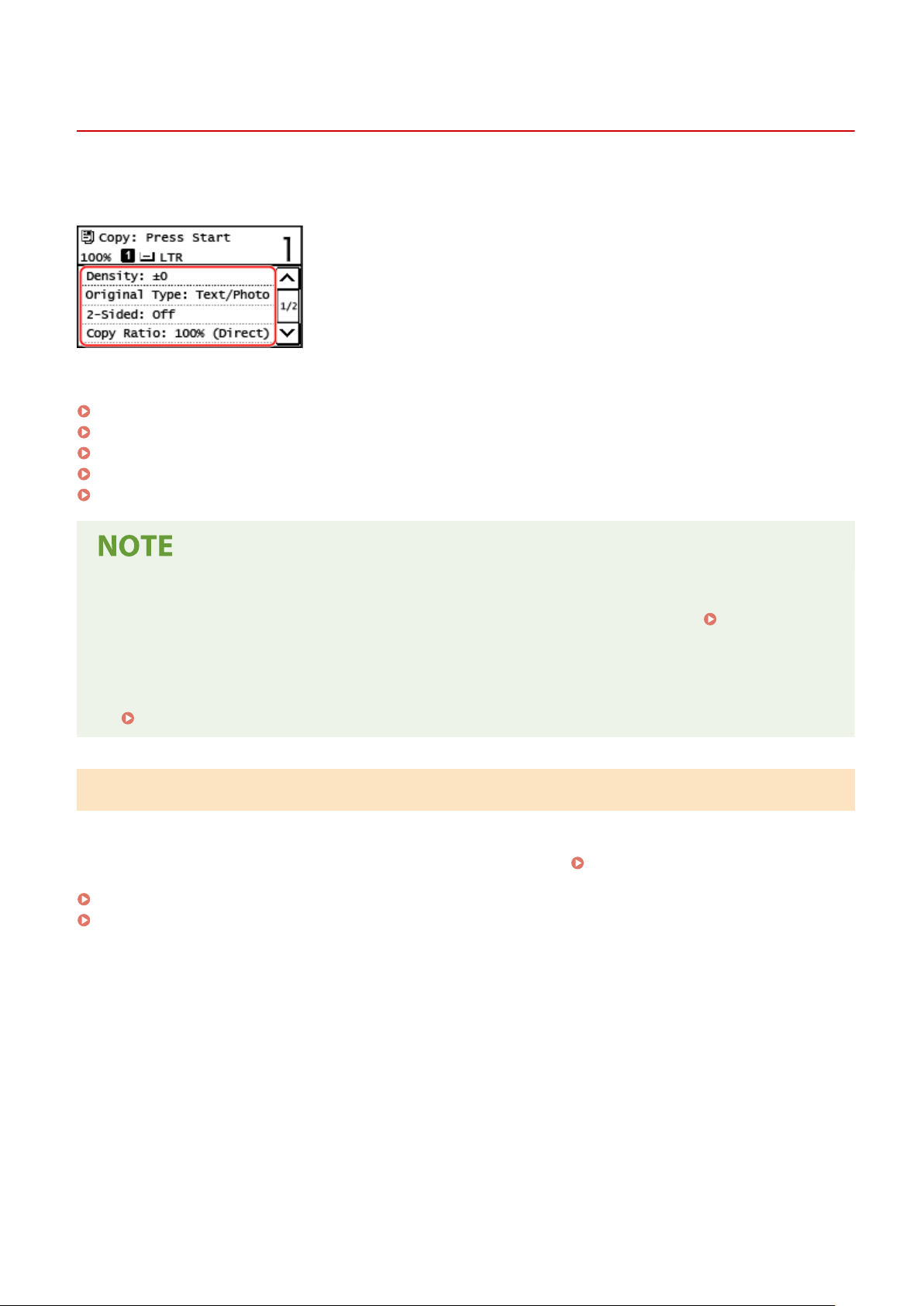
Additional Copying Features
8W0J-069
In addition to basic cop
y settings, the machine also has settings for 2-sided copying, image quality adjustment, and
other settings according to your original and purpose. Use the copy screen to congure these settings.
* To make copies using the ID Card Copy function, you can simply adjust the density and image quality.
Making 2-sided Copies(P. 300)
Copying Multiple Originals onto One Sheet (N on 1)(P. 302)
Collating Copies by Page (Collate)(P. 304)
Adjusting the Density(P. 305)
Adjusting the Image Quality(P. 307)
Registering the Frequently Used Scan Settings as the Default Settings
● Y
ou can change the default copy settings according to the frequently used scan settings.
Changing the
Default Settings(P
. 190)
Basic Copy Operations
● For the basic operations when copying, see the following:
Copy Operations(P. 297)
Making 2-sided Copies
Y
ou can copy two 1-sided originals on both sides of one sheet of paper.
You can also copy a 2-sided original on both sides of one sheet of paper, or on two separate sheets of paper.
* 2-sided copying may not be available with some sizes and types of paper.
Usable Paper(P. 23)
Touch Panel Model(P. 300)
5 Lines LCD Model(P. 301)
◼ T
ouch Panel Model
1
Press [2-Sided] on the copy screen.
➠ The [2-Sided] scr
een is displayed.
2
Select the pattern of 2-Sided copying.
[Off]
Copies 1-sided originals to separate sheets of paper.
Copying
300
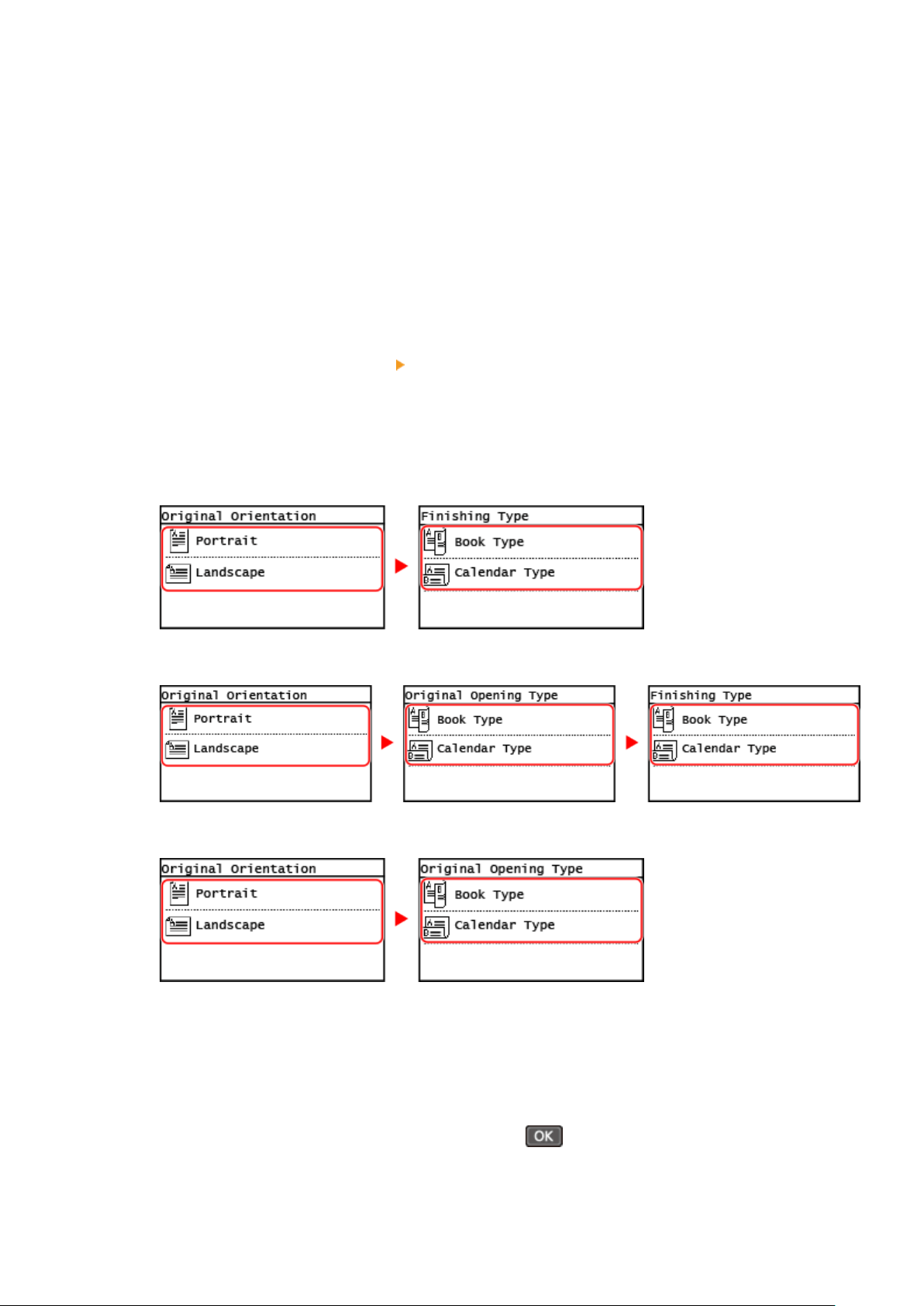
[1->2-Sided]
Copies two 1-sided originals on both sides of one sheet of paper.
[2->2-Sided]
*
Copies the fr
ont and back of 2-sided originals on both sides of one sheet of paper.
[2->1-Sided]
*
Copies the front and back of 2-sided originals on two separate sheets of paper.
*
This setting is available only for MF269dw II / MF269dw VP II.
3
Set the original orientation and opening type, and copy opening type, as needed.
1
On the copy screen, press [2-Sided]
[Original/Finishing Type].
➠ The [Orig./Finishing T
ype] screen is displayed.
2
Select the combination of the 2-Sided settings between an original and a copy, and then specify the
orientation and the opening type of the cop
y.
[1->2-Sided]
[2->2-Sided]
*
[2->1-Sided]
*
*
This setting is available only for MF269dw II / MF269dw VP II.
◼ 5 Lines L
CD Model
1
On the copy screen, select [2-Sided] and press
.
➠ The [2-Sided] scr
een is displayed.
Copying
301
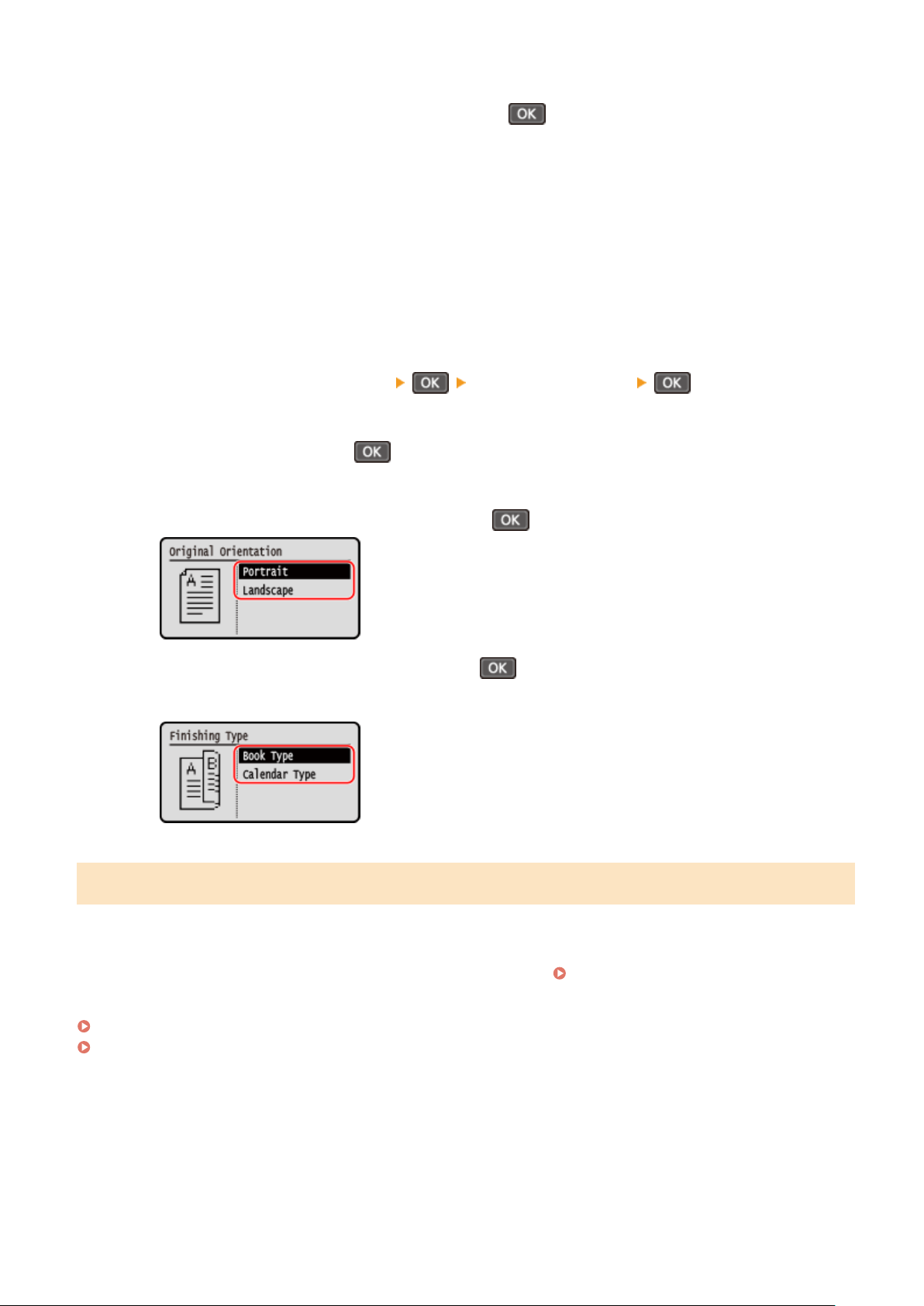
2
Select the way of 2-Sided copying and press .
➠ The cop
y screen is displayed.
[Off]
Copies 1-sided originals to separate sheets of paper.
[1->2-Sided]
Copies two 1-sided originals on both sides of one sheet of paper.
3
Set the original orientation and copy opening type, as needed.
1
On the copy screen, press [2-Sided]
[Original/Finishing Type] .
➠ The [Orig./Finishing T
ype] screen is displayed.
2
Select [1->2-Sided] and press
.
➠ The [Original Orientation] scr
een is displayed.
3
Select the orientation of the set original and press
.
4
Select the nishing type after cop
ying and press
.
➠ The cop
y screen is displayed.
Copying Multiple Originals onto One Sheet (N on 1)
Y
ou can reduce the size of a multiple-page original and arrange the pages on one sheet of paper when copying.
N on 1 is convenient when you want to save paper by copying on fewer sheets of paper than the original.
If you want to save more paper by combining N on 1 copying and 2-Sided copying, Paper Save Copy is useful, allowing
to perform the combination of the copy settings with a single operation.
Paper Save Copy(P. 311)
* This cannot be set at the same time as Erase Frame.
Touch Panel Model(P. 297)
5 Lines LCD Model(P. 298)
◼ T
ouch Panel Model
1
Press [N on 1] on the copy screen.
➠ The [N on 1] scr
een is displayed.
Copying
302
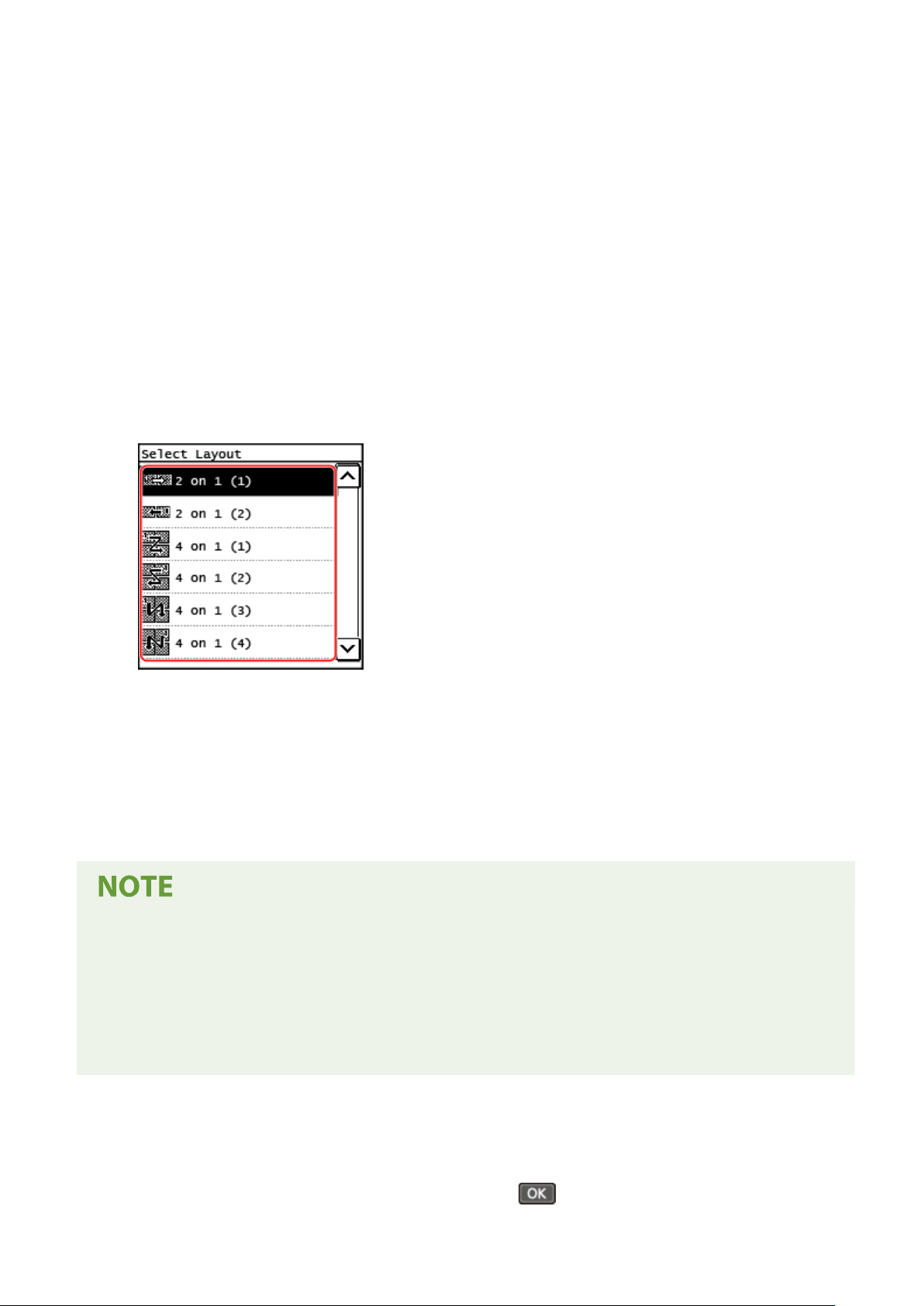
2
Select the number of pages to be combined.
[Off]
Pages ar
e not combined.
[2 on 1]
Combines a 2-page original onto one sheet of paper.
[4 on 1]
Combines a 4-page original onto one sheet of paper.
3
Select the size of the placed original.
4
Congure the layout (page or
der) when combining originals, as needed.
1
Press [N on 1] on the copy screen.
➠ The [N on 1] screen is displayed.
2
Press [Select Layout], and select the page order.
➠ The [Select Layout] scr
een is displayed.
3
Select the size of the placed original.
● When combining pages, the cop
y ratio is set automatically according to the following. You can also change
the copy ratio setting manually.
- Number of pages to be combined
- Original size setting
- Size of paper used for copying
● When pages are combined, a margin may be created around the copied images.
◼ 5 Lines LCD Model
1
On the copy screen, select [N on 1] and press
.
Copying
303
➠ The [N on 1] scr
een is displayed.
2
Select the number of pages to be combined and press
.
[Off]
Pages ar
e not combined.
[2 on 1]
Combines a 2-page original onto one sheet of paper.
[4 on 1]
Combines a 4-page original onto one sheet of paper.
3
Select the size of the placed original.
4
Congure the layout (page or
der) when combining originals, as needed.
1
Select [N on 1] and press
.
➠ The [N on 1] scr
een is displayed.
2
Press [Select Layout], and press
.
➠ The [Select Layout] scr
een is displayed.
3
Select the page order and press
.
4
Select the size of the placed original.
● When combining pages, the cop
y ratio is set automatically according to the following. You can also change
the copy ratio setting manually.
- Number of pages to be combined
- Original size setting
- Size of paper used for copying
● When pages are combined, a margin may be created around the copied images.
Collating Copies by Page (Collate)
When cop
ying multiple copies of a multi-page original, you can collate the copies in the page order of the original. This
is convenient when copying handouts for meetings.
When Copying without Collating
The copies are grouped by the page of the original in the number of specied copies and not collated.
For example, when you are making three copies of a three-page original, the printouts are arranged in the
following order: 1, 1, 1, 2, 2, 2, 3, 3, 3.
Copying
304
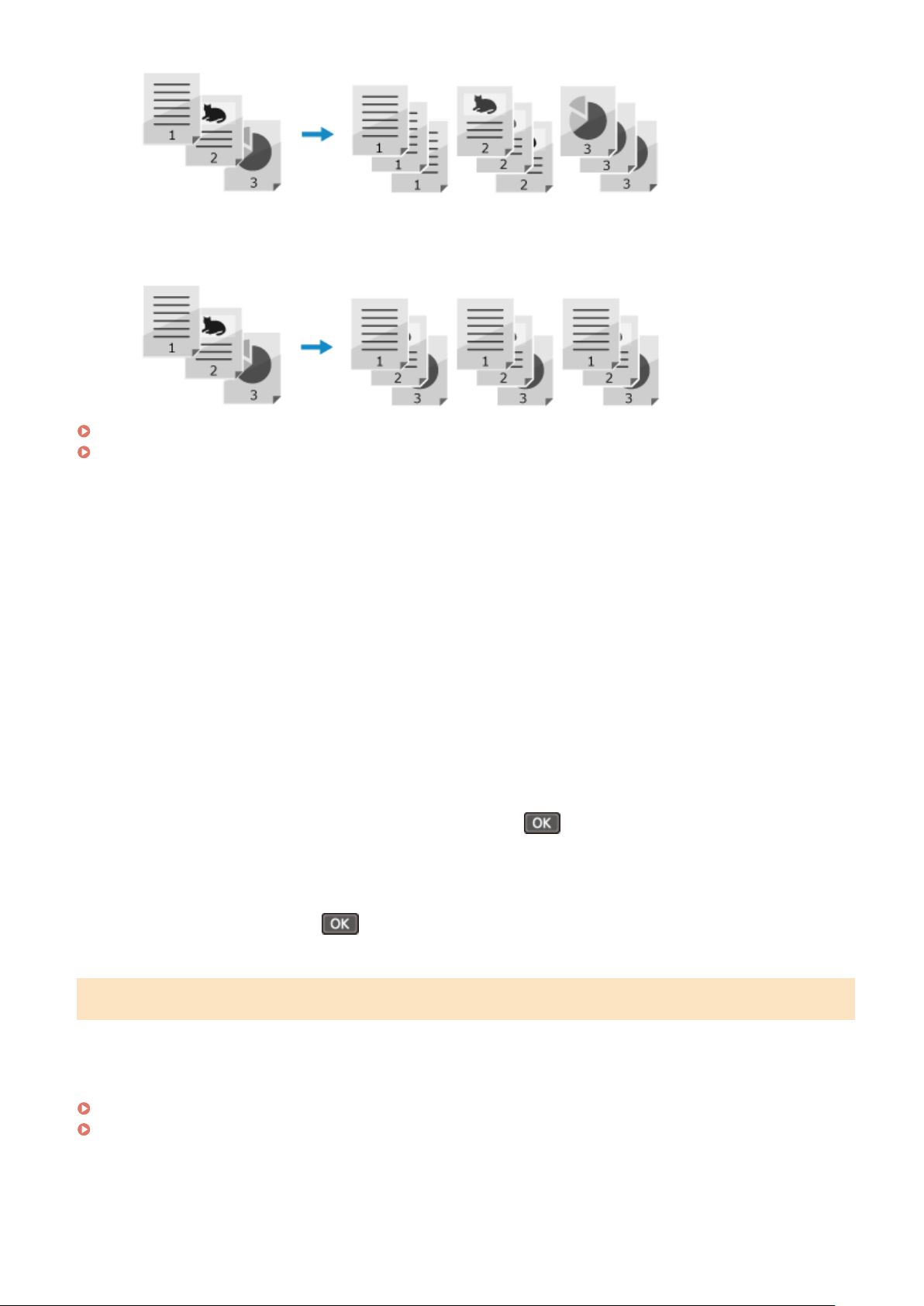
When Copying with Collating
The copies ar
e collated into sets in the page order of the original.
For example, when you are making three copies of a three-page original, the printouts are arranged in the
following order: 1, 2, 3, 1, 2, 3, 1, 2, 3.
Touch Panel Model(P. 305)
5 Lines LCD Model(P. 305)
◼ T
ouch Panel Model
1
Press [Collate] on the copy screen.
➠ The [Collate] scr
een is displayed.
2
Press [On].
◼ 5 Lines L
CD Model
1
On the copy screen, select [Collate] and press
.
➠ The [Collate] scr
een is displayed.
2
Select [On] and press
.
Adjusting the Density
Y
ou can adjust the density to suit the original when copying.
If text or images in the original are too faint or dark, adjust the density of the entire original.
To create clean copies of an original with a colored background or a newspaper, adjust the density of the background.
Touch Panel Model(P. 306)
5 Lines LCD Model(P. 306)
Copying
305

◼ T
ouch Panel Model
1
Press [Density] on the copy screen.
➠ The [Density] scr
een is displayed.
Adjusting the Density of the Entire Original
Dr
ag the slider to the left or right to adjust the density.
Press [+] to increase the density and [-] to lower it.
Adjusting the Density of the Background
1
Press [Background]
[Adjust (Manual)].
➠ The [Adjust] scr
een is displayed.
2
Drag the slider to the left or right to adjust the density.
● Pr
ess [+] to increase the density and [-] to lower it.
2
Press [Apply].
● When you adjust the density of the background, parts other than the background may also be affected.
◼ 5 Lines L
CD Model
1
On the copy screen, select [Density] and press
.
➠ The [Density] scr
een is displayed.
Adjusting the Density of the Entire Original
Mo
ve the slider to the left or right to adjust the density.
On the control panel, press
to increase the density or press to lower it.
Adjusting the Density of the Background
1
On the control panel, press [Background]
[Adjust (Manual)] .
➠ The [Adjust] scr
een is displayed.
2
Move the slider to the left or right to adjust the density.
● On the contr
ol panel, press
to increase the density or press to lower it.
2
Press
.
● When you adjust the density of the background, parts other than the background may also be affected.
Copying
306

Adjusting the Image Quality
You can adjust the image quality such as when the copied image is not clear or the text is dicult to read. You can also
erase dark borders and shadows that appear around the edges of the original.
* Erase Frame is not available when making copies using the ID Card Copy function.
◼ Selecting the Image Quality for the Original Type
Touch Panel Model
1
Press [Original Type] on the copy screen.
➠ The [Original T
ype] screen is displayed.
2
Select the original type.
➠ The cop
y screen is displayed.
When copying an original containing both text and photos with priority to the print
speed
Select [T
ext/Photo (High Speed)].
When copying an original containing both text and photos with priority to the print
quality
Select [T
ext/Photo (Quality)], adjust to make text or photos more visible, and press [Apply].
Copying Photos Containing Halftone Dots such as in Magazines
Select [Photo].
Copying Originals with Large Volumes of Text such as Research Papers
Select [T
ext].
5 Lines LCD Model
1
On the copy screen, select [Original Type] and press .
➠ The [Original T
ype] screen is displayed.
2
Select the original type and press
.
Copying an original containing both text and photos with priority to the copy speed
Select [T
ext/Photo (High Speed)] and press
.
Copying an original containing both text and photos with priority to the print quality
1
Select [Text/Photo (Quality)] and press
.
2
Adjust to make text or photos more visible, and press .
Copying
307

Copying Photos Containing Halftone Dots such as in Magazines
Select [Photo] and pr
ess
.
Copying Originals with Large Volumes of Text such as Research Papers
Select [T
ext] and press
.
◼ Er
asing Dark Borders and Shadows around Edges of the Original (Erase Frame)
This function erases the dark borders and shadows that appear around the edges in the copied image when copying
originals that are smaller than the paper size or thick originals.
* This cannot be set at the same time as N on 1.
Touch Panel Model
1
Press [Erase Frame] on the copy screen.
➠ The [Er
ase Frame] screen is displayed.
2
Press [On].
➠ The scr
een for specifying the frame width to erase is displayed.
3
Enter the frame width to erase, and press [Apply].
➠ The [Scan Size] scr
een is displayed.
When you are copying at an enlarged or reduced size, the function automatically changes the size of the
frame width to erase to match the copy ratio setting.
4
Select the size of the placed original.
5 Lines LCD Model
1
On the copy screen, select [Erase Frame] and press .
➠ The [Er
ase Frame] screen is displayed.
2
Select [On] and press
.
➠ The scr
een for specifying the frame width to erase is displayed.
3
Enter the frame width to erase, and press
.
➠ The [Scan Size] scr
een is displayed.
When you are copying at an enlarged or reduced size, the function automatically changes the size of the
frame width to erase to match the copy ratio setting.
Copying
308
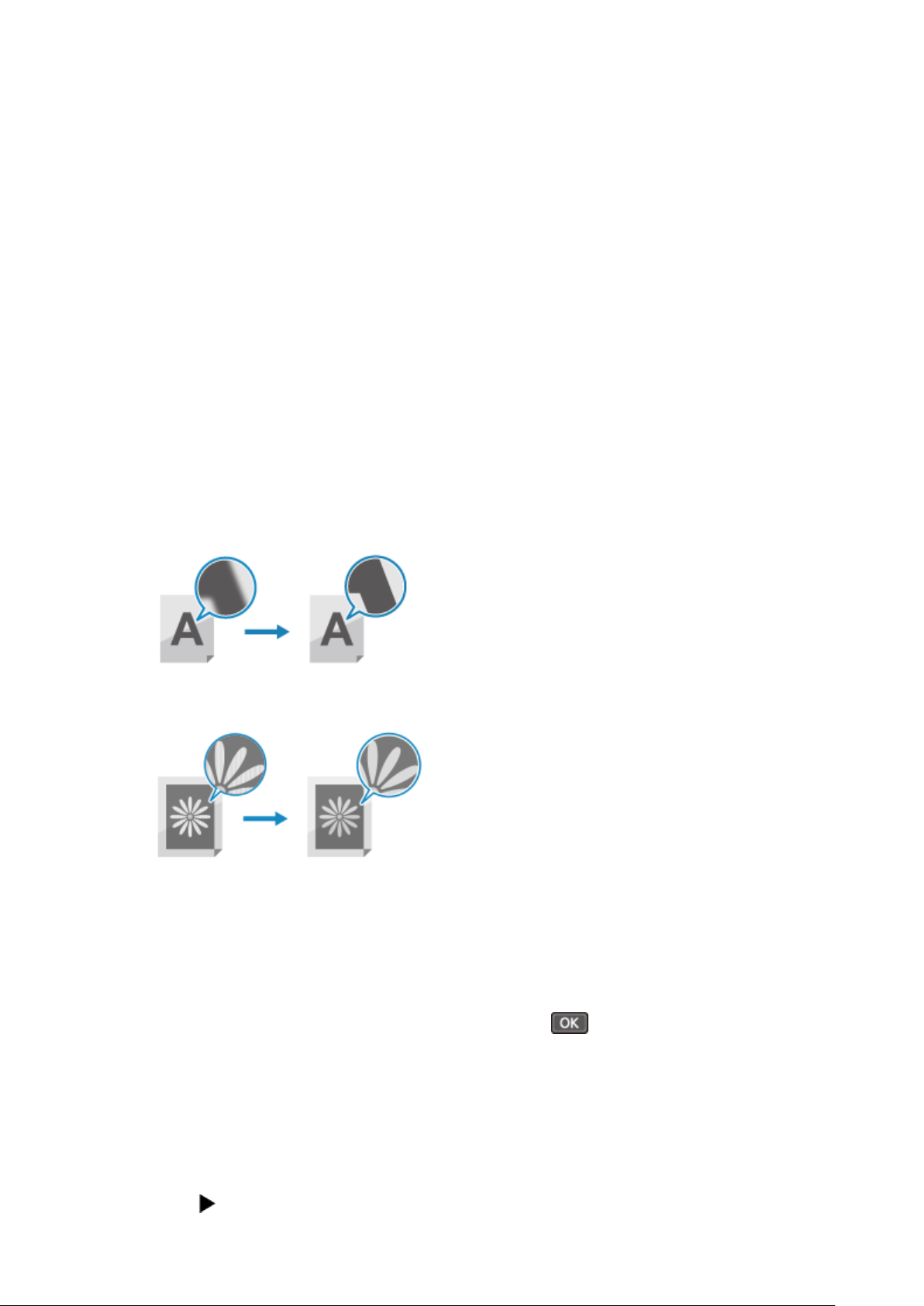
4
Select the size of the placed original.
◼ Adjusting the Sharpness
Y
ou can emphasize the contours and lines to make them clearer in the copied image, or weaken them to make them
softer.
Touch Panel Model
1
Press [Sharpness] on the copy screen.
➠ The [Sharpness] scr
een is displayed.
2
Drag the slider to the left or right to adjust the sharpness.
Adjustment example:
● T
o Make Blurry Text or Shapes Clearer
Press [+].
● T
o reduce moire (vertical pattern noise) in photos
Press [-].
3
Press [Apply].
5 Lines LCD Model
1
On the copy screen, select [Sharpness] and press .
➠ The [Sharpness] scr
een is displayed.
2
Move the slider to the left or right to adjust the sharpness.
Adjustment example:
● To Make Blurry Text or Shapes Clearer
Press
on the control panel.
Copying
309
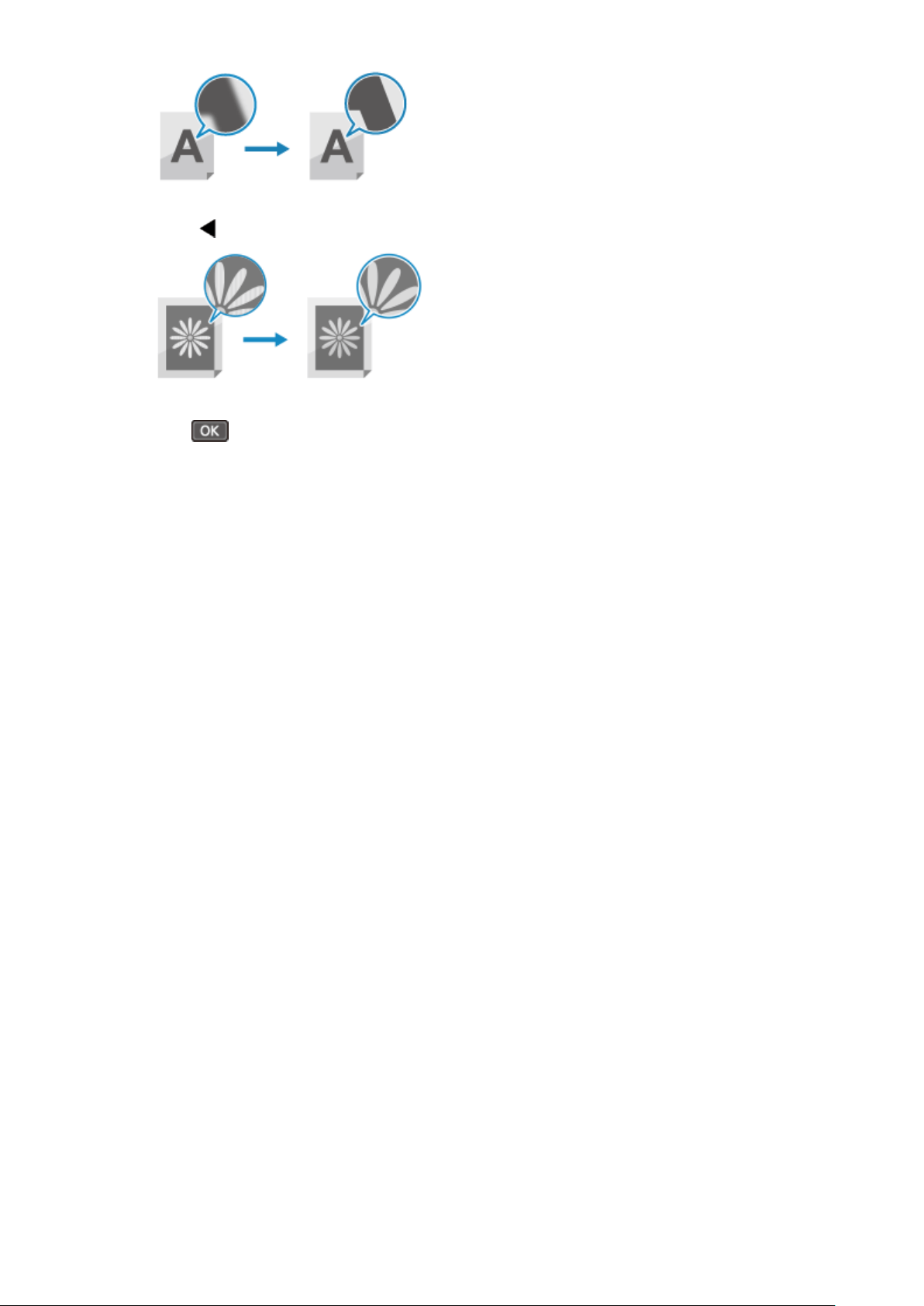
● T
o reduce moire (vertical pattern noise) in photos
Press
on the control panel.
3
Press .
Copying
310
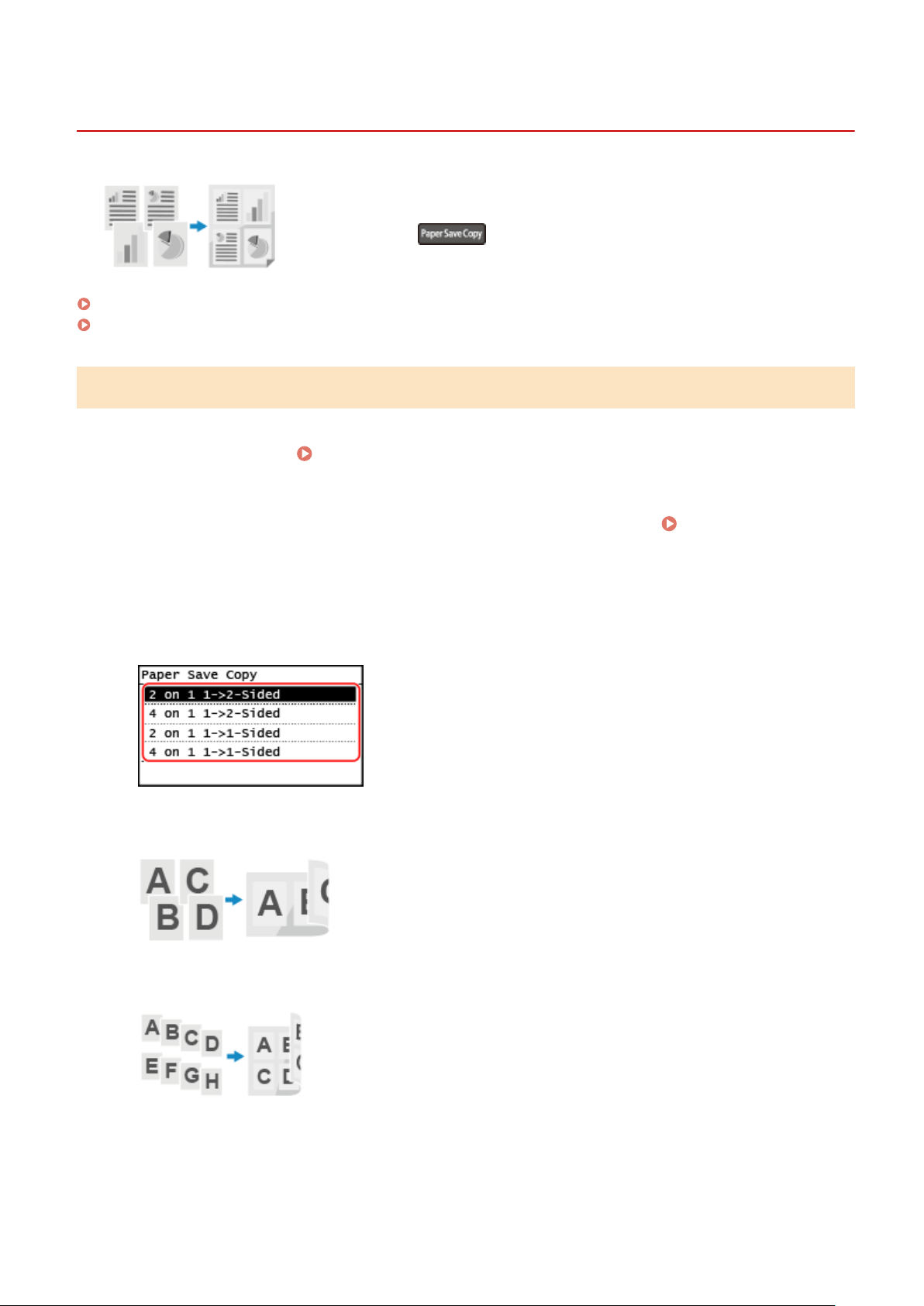
Paper Save Copy
8W0J-06H
If you want to save paper when multiple originals, use the paper save copy function.
Y
ou can perform N on 1 copying and 2-sided copying at the same time from the
[Home] screen or
on the control panel, allowing you to save paper.
Touch Panel Model(P. 311)
5 Lines LCD Model(P. 313)
Touch Panel Model
1
Place the original. Placing Originals(P. 139)
2
On the control panel, press [Paper Save] in the [Home] screen.
[Home]
Scr
een(P. 120)
➠ The [Paper Save Copy] screen is displayed.
3
Select the combination of N on 1 copying and 2-sided copying.
[2 on 1 1->2-Sided]
Four pages of an original ar
e printed on a single sheet with two pages printed on both sides.
[4 on 1 1->2-Sided]
Eight pages of an original ar
e printed on a single sheet with four pages printed on both sides.
[2 on 1 1->1-Sided]
T
wo pages of an original are printed on a single sheet with two pages printed on one side.
Copying
311
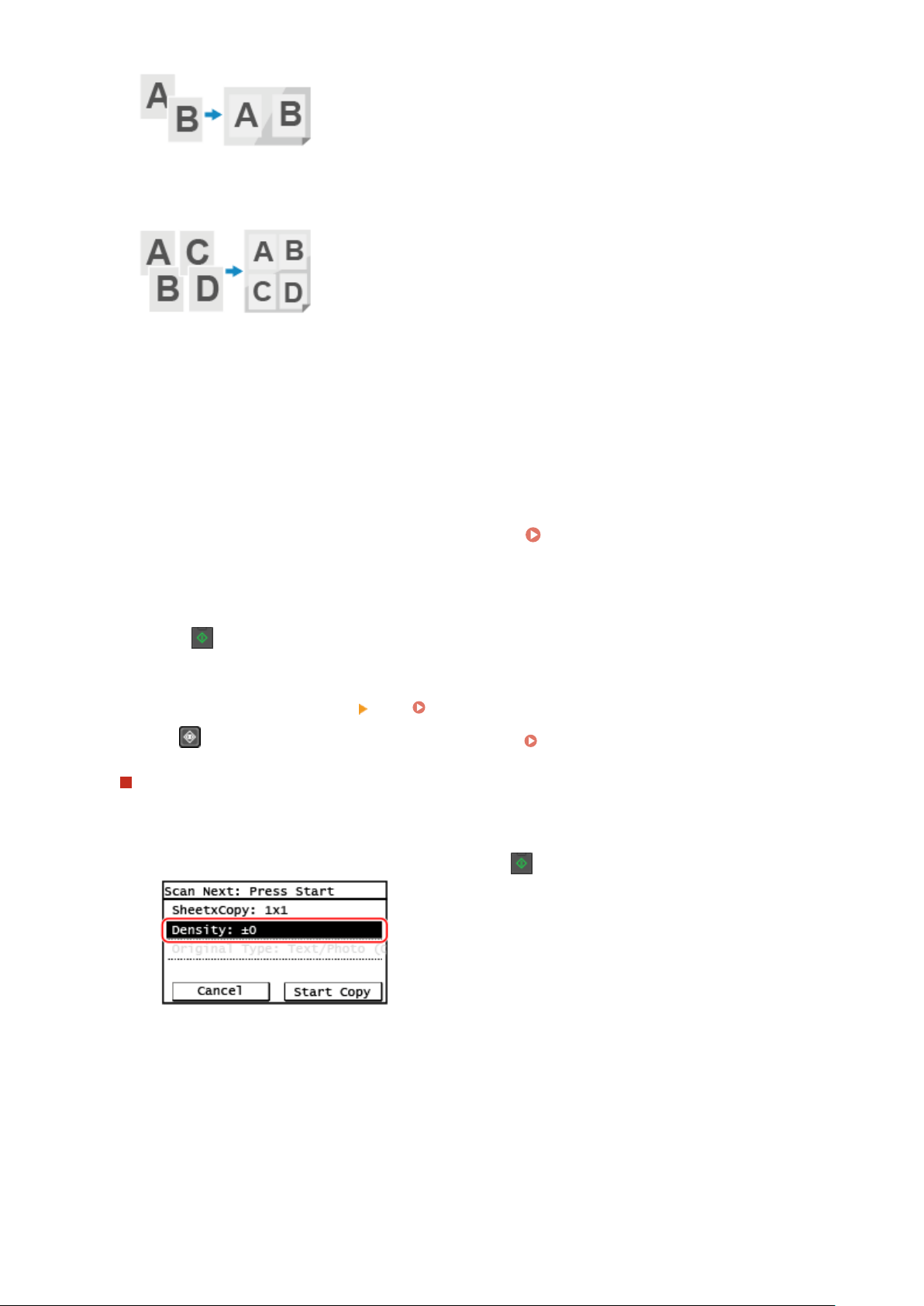
[4 on 1 1->1-Sided]
Four pages of an original ar
e printed on a single sheet with four pages printed on one side.
4
Select the size of the placed original.
➠ The cop
y screen is displayed.
5
Enter the number of copies using the numeric keys.
6
Congure the other cop
y settings, as needed.
Additional Copying Features(P. 300)
➠ Y
ou can adjust the density and image quality and other settings.
7
Press
on the control panel.
➠ Cop
ying starts.
● To cancel copying, press [Cancel]
[Yes]. Canceling Copy Operations(P. 323)
● Pr
ess
on the control panel to view the copy job status. Viewing the Print Job Status and Log(P. 223)
When [Scan Next: Press Start] appears
When an original is placed on the platen glass and copied using 2-sided cop
ying or N on 1, the screen is
displayed for scanning the next original.
1
Place the next original on the platen glass, and press
on the control panel.
➠ The next original is scanned, and the same screen is displayed.
Repeat this process until scanning of all originals is completed.
● You can press [Density] to change the settings for each original.
2
Press [Start Copy].
➠ The scanned originals ar
e printed.
Copying
312

5 Lines LCD Model
1
Place the original.
Placing Originals(P. 139)
2
Press
on the control panel. Control Panel(P. 14)
➠ The [Paper Save Cop
y] screen is displayed.
3
Select the combination of N on 1 copying and 2-sided copying.
[2 on 1 1->2-Sided]
Four pages of an original are printed on a single sheet with two pages printed on both sides.
[4 on 1 1->2-Sided]
Eight pages of an original are printed on a single sheet with four pages printed on both sides.
[2 on 1 1->1-Sided]
Two pages of an original are printed on a single sheet with two pages printed on one side.
[4 on 1 1->1-Sided]
Four pages of an original are printed on a single sheet with four pages printed on one side.
4
Select the size of the placed original, and press
.
➠ The cop
y screen is displayed.
Copying
313
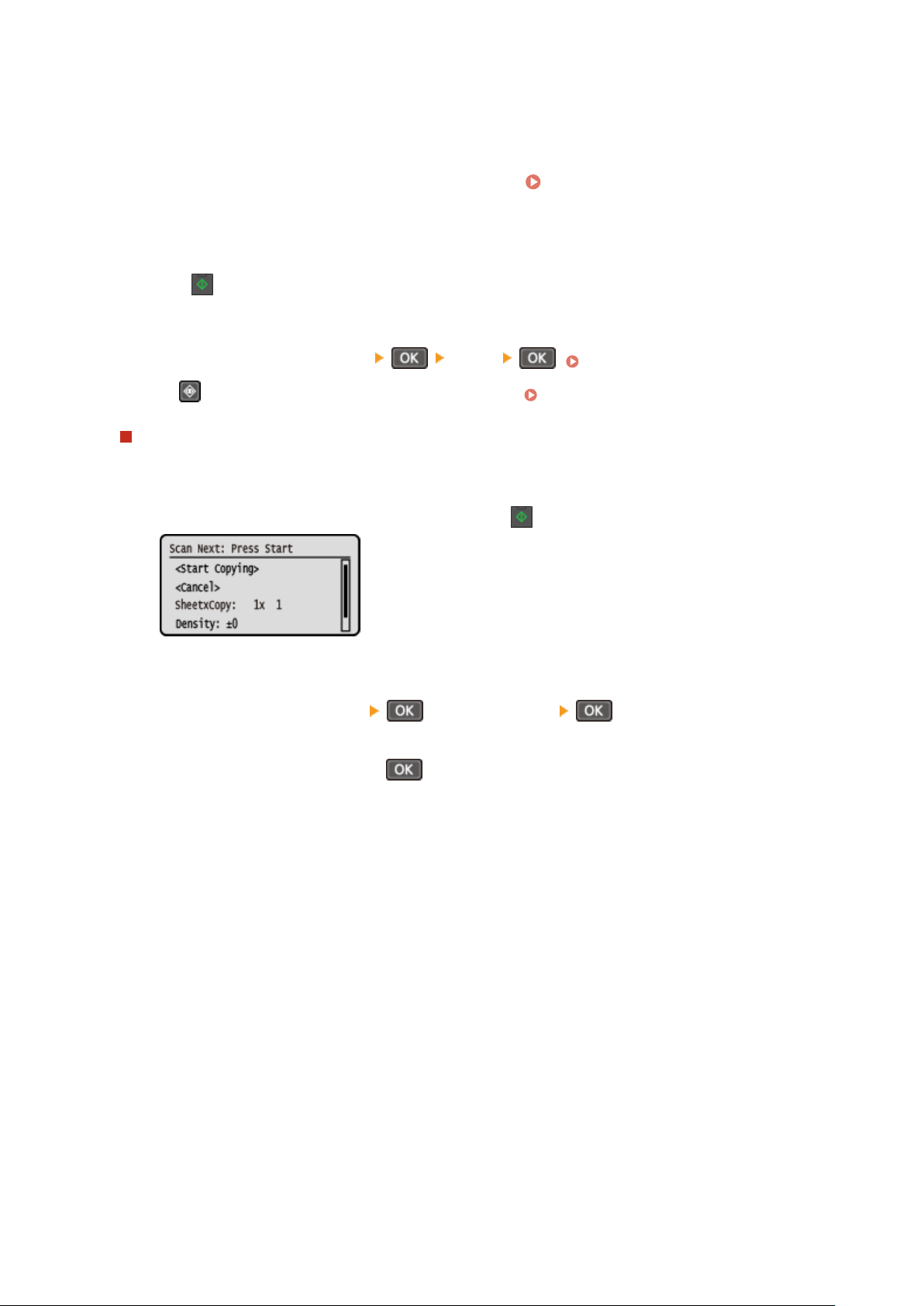
5
Enter the number of copies using the numeric keys.
6
Congure the other cop
y settings, as needed.
Additional Copying Features(P. 300)
➠ Y
ou can adjust the density and image quality and other settings.
7
Press
on the control panel.
➠ Cop
ying starts.
● To cancel copying, press [<Cancel>]
[<Yes>] . Canceling Copy Operations(P. 323)
● Pr
ess
on the control panel to view the copy job status. Viewing the Print Job Status and Log(P. 223)
When [Scan Next: Press Start] appears
When an original is placed on the platen glass and copied using 2-sided cop
ying or N on 1, the screen is
displayed for scanning the next original.
1
Place the next original on the platen glass, and press
on the control panel.
➠ The ne
xt original is scanned, and the same screen is displayed.
Repeat this process until scanning of all originals is completed.
● You can also press [Density]
and [Original Type] to change the settings for each
original.
2
Press [<Start Copying>] and press .
➠ The scanned originals are printed.
Copying
314
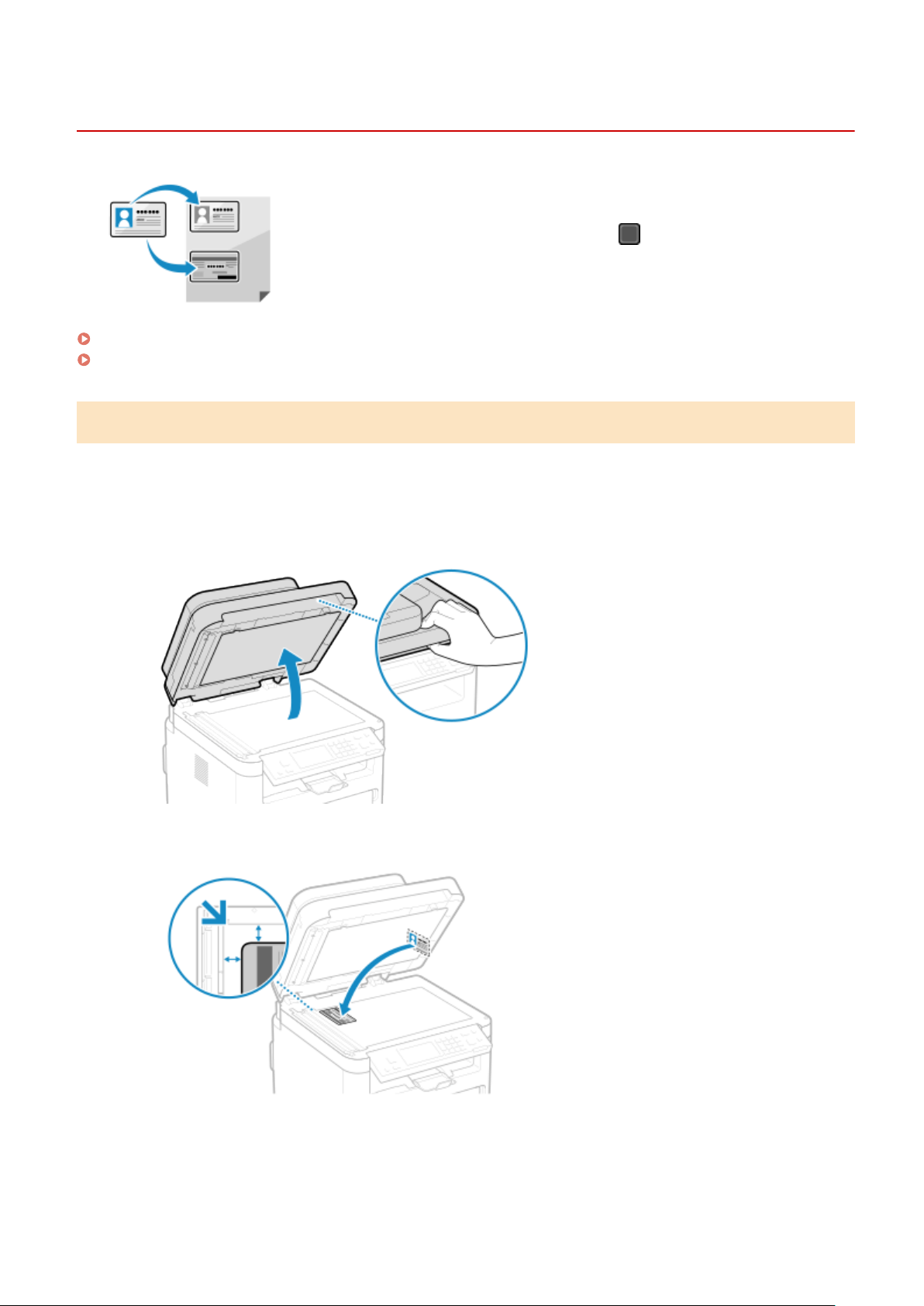
Copying Both Sides of ID Cards onto One Sheet
8W0J-06A
You can use the ID Card Copy function to copy the front and back sides of a driver's
license or other ID car
d on the same sheet of paper at 100% magnication. This can
be quickly performed from the [Home] screen or
(ID Card Copy key) on the
contr
ol panel and is convenient, for example, when copying ID cards at reception.
Touch Panel Model(P. 315)
5 Lines LCD Model(P. 317)
Touch Panel Model
1
Place the ID card on the platen glass.
1
Open the feeder.
2
Place the front of the ID card face down on the platen glass in the portrait orientation while aligning the
corner of the ID car
d with the top left corner of the platen glass.
Place the ID card slightly away from the edge of the platen glass.
3
Gently close the feeder.
Copying
315
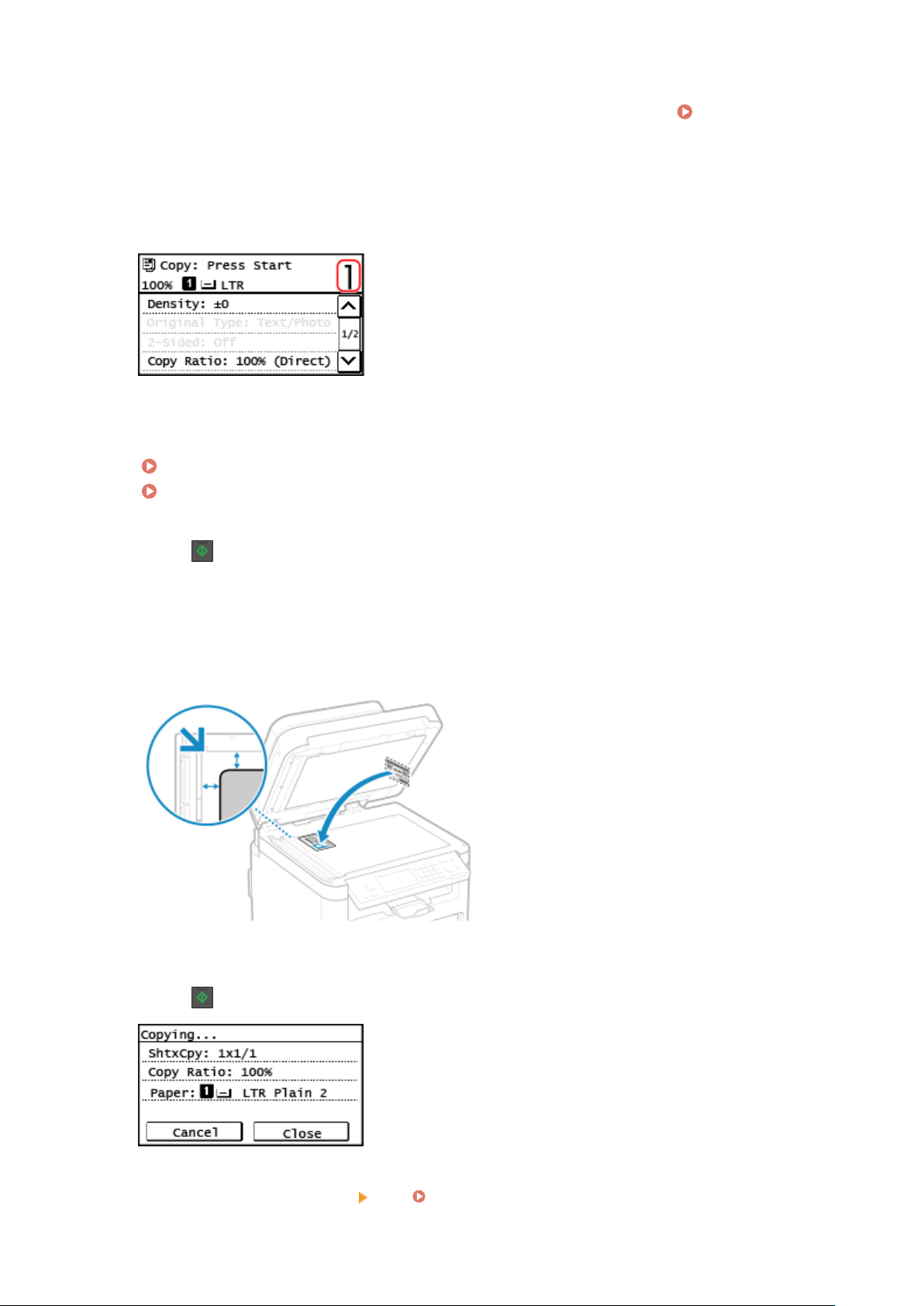
2
On the control panel, press [ID Card Copy] in the [Home] screen.
[Home]
Scr
een(P. 120)
➠ The copy screen is displayed.
3
Enter the number of copies using the numeric keys.
* When you make copies using the ID Card Copy function, the copy ratio is x
ed at 100%.
4
Adjust the density and image quality, as needed.
Adjusting the Density(P. 305)
Adjusting the Image Quality(P. 307)
5
Press on the control panel.
➠ The fr
ont of the ID card is scanned.
6
When [Scan Next: Press Start] is displayed, turn over the ID card and place it on the
platen glass.
Place the back of the ID card face down in the same way as the front.
7
Press
on the control panel.
➠ The back of the ID car
d is scanned and copying starts.
● To cancel copying, press [Cancel]
[Yes]. Canceling Copy Operations(P. 323)
Copying
316
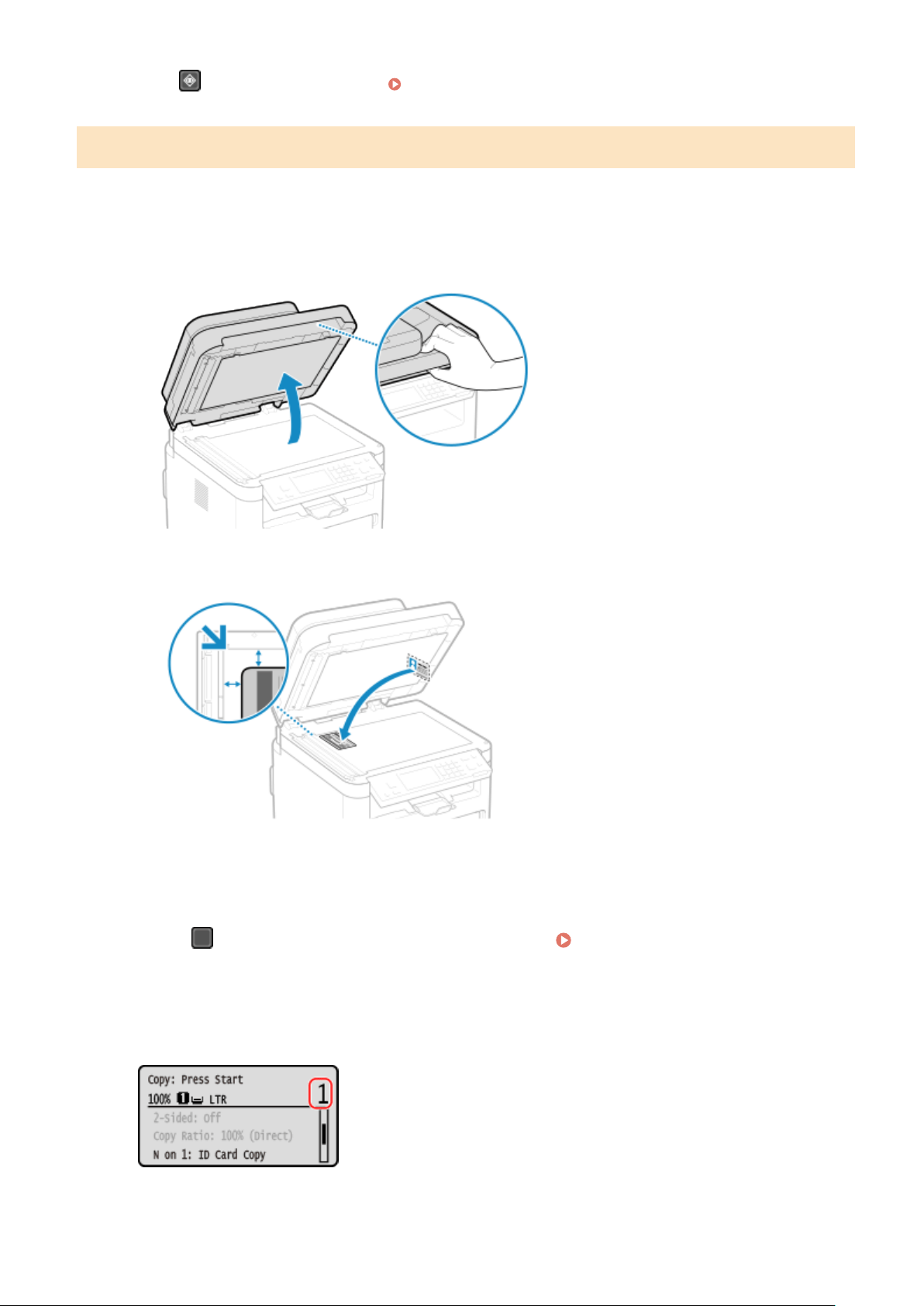
● Pr
ess
to view the copy job status. Viewing the Print Job Status and Log(P. 223)
5 Lines LCD Model
1
Place the ID card on the platen glass.
1
Open the feeder or the platen cover.
2
Place the front of the ID card face down on the platen glass in the portrait orientation while aligning the
corner of the ID car
d with the top left corner of the platen glass.
Place the ID card slightly away from the edge of the platen glass.
3
Gently close the feeder or the platen cover.
2
Press
(ID Card Copy key) on the control panel. Control Panel(P. 14)
➠ The cop
y screen is displayed.
3
Enter the number of copies using the numeric keys.
Copying
317
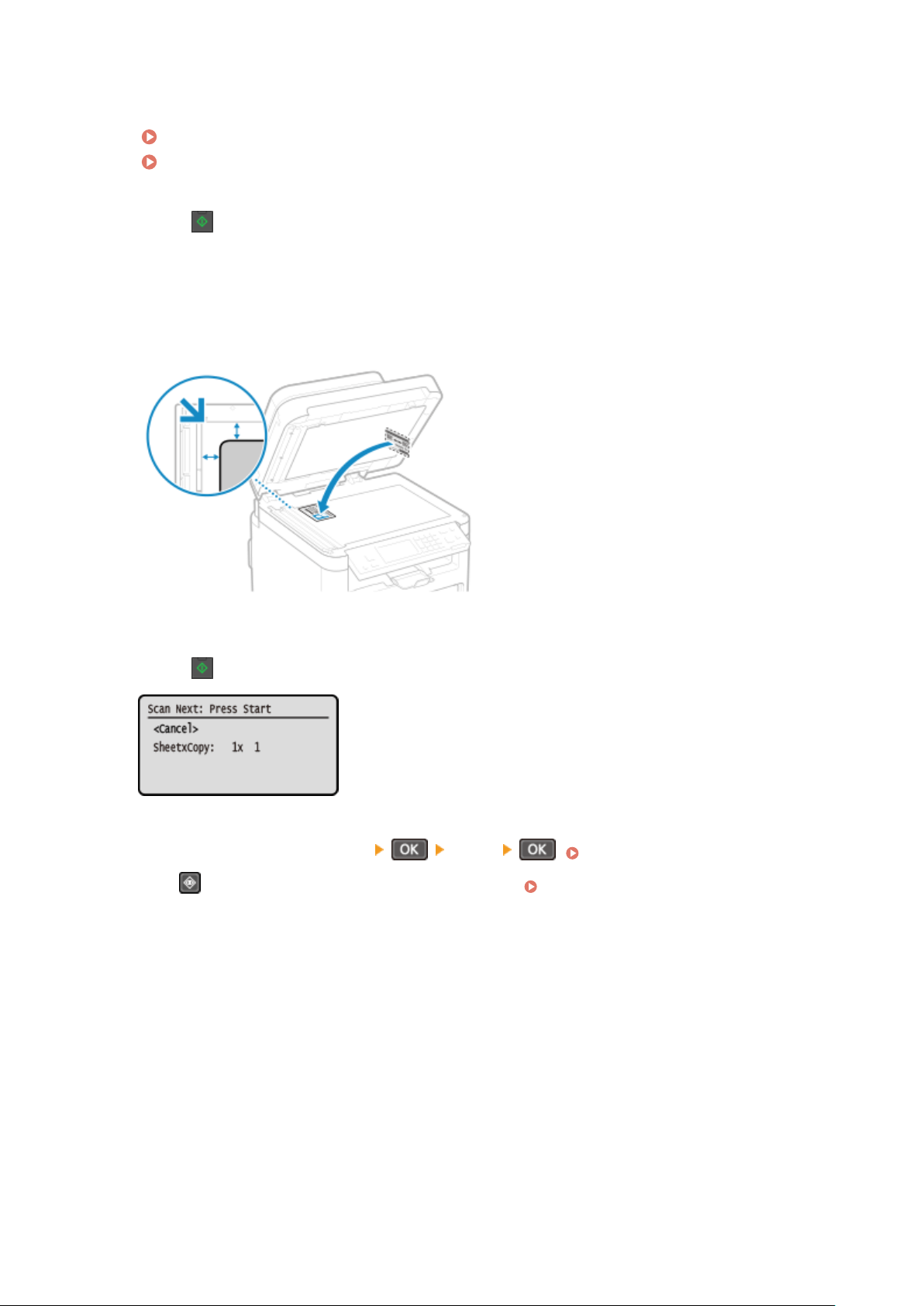
4
Adjust the density and image quality, as needed.
Adjusting the Density(P. 305)
Adjusting the Image Quality(P. 307)
5
Press
on the control panel.
➠ The fr
ont of the ID card is scanned.
6
When [Scan Next: Press Start] is displayed, turn over the ID card and place it on the
platen glass.
Place the back of the ID card face down in the same way as the front.
7
Press
on the control panel.
➠ Cop
ying starts.
● To cancel copying, press [<Cancel>]
[<Yes>] . Canceling Copy Operations(P. 323)
● Pr
ess
on the control panel to view the copy job status. Viewing the Print Job Status and Log(P. 223)
Copying
318
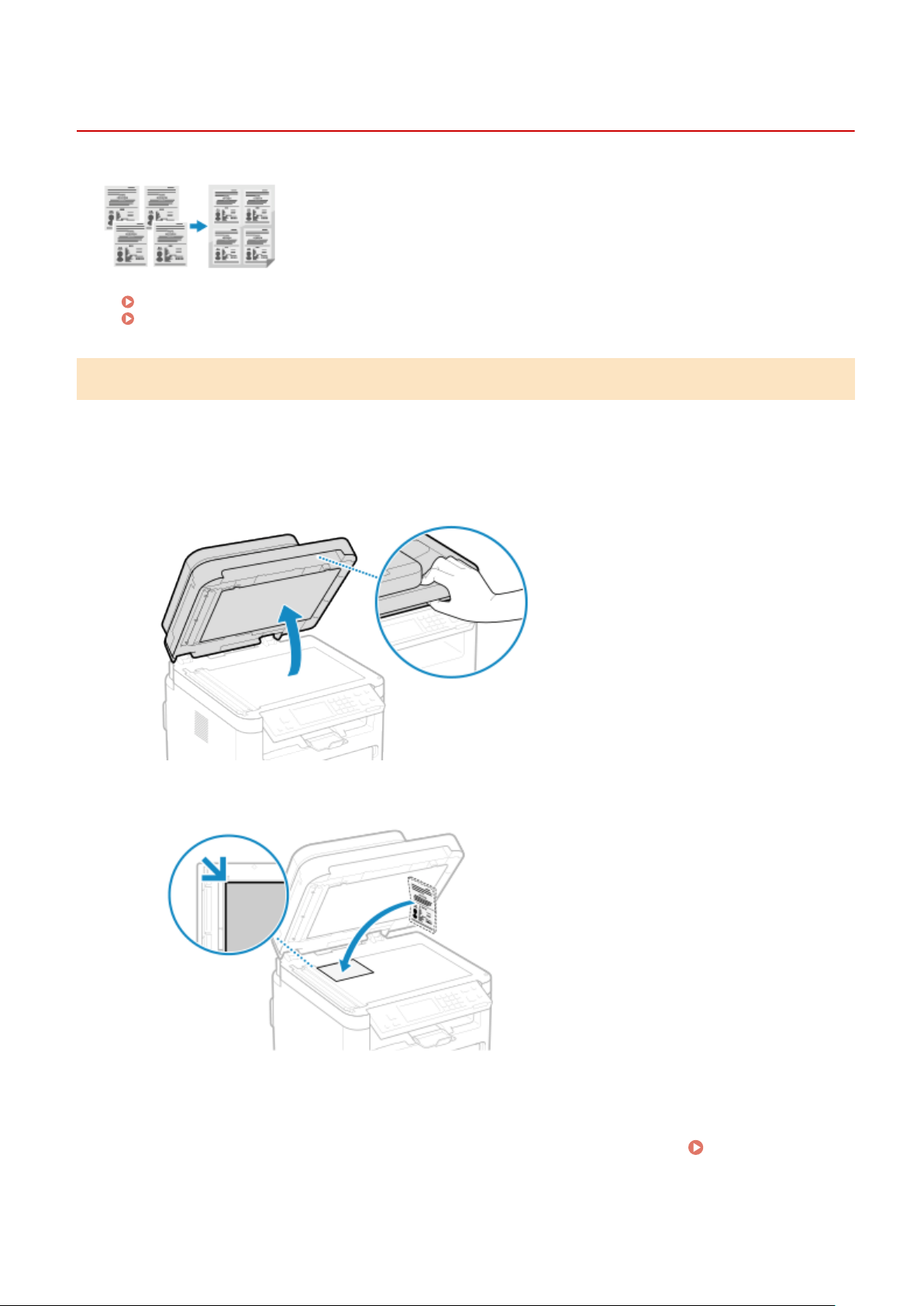
Copying Multiple Passports onto One Sheet
8W0J-06C
You can use the Passport Copy function to copy multiple passports together onto
one sheet of paper. This can be quickly performed fr
om the [Home] screen on the
control panel.
Touch Panel Model(P. 319)
5 Lines LCD Model(P. 321)
Touch Panel Model
1
Place a passport on the platen glass.
1
Open the feeder.
2
Place the page to be scanned face down while aligning the corner of the passport with the top left corner
of the platen glass, as sho
wn.
3
Gently close the feeder.
2
On the control panel, press [Passport Copy] in the [Home] screen.
[Home]
Scr
een(P. 120)
➠ The [Passport Copy] screen is displayed.
Copying
319
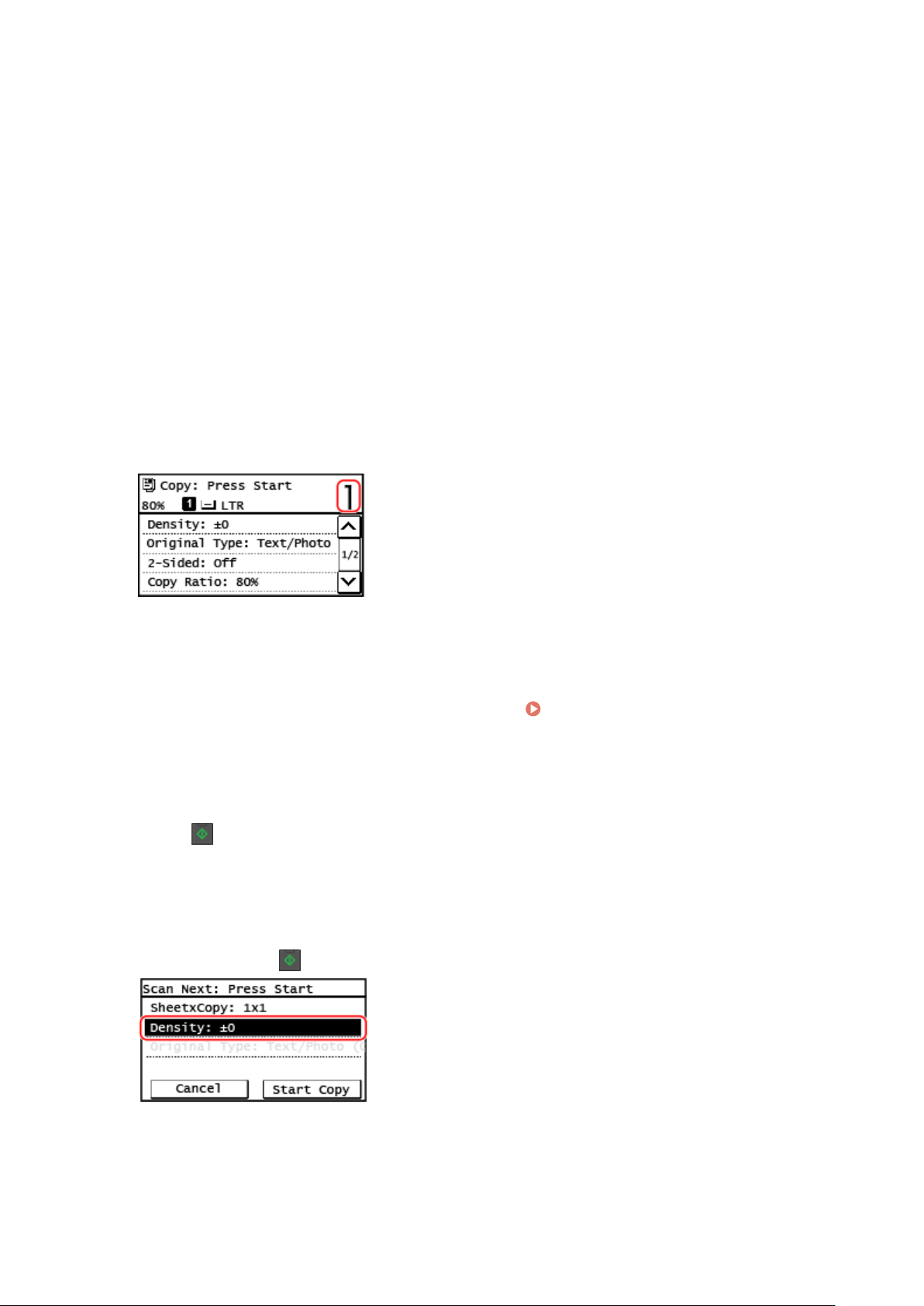
3
Select a combination of the number of passports and whether to use 2-sided
printing.
[2 on 1 (2-Sided)]
Combines two passports onto one side of a sheet of paper b
y copying with 2-sided printing. Copies four
passports onto both sides of a sheet of paper with 2-sided printing.
[4 on 1 (2-Sided)]
Combines four passports onto one side of a sheet of paper by copying with 2-sided printing. Copies eight
passports onto both sides of a sheet of paper with 2-sided printing.
[2 on 1]
Combines two passports onto one side of a sheet of paper.
[4 on 1]
Combines four passports onto one side of a sheet of paper.
4
Enter the number of copies using the numeric keys.
* When you use Passport Copy to make copies, the copy ratio is set automatically according to the size of the
paper used for cop
ying and the number of passports to combine. You can also press [Custom Ratio] to
change the copy ratio manually.
5
Congure the other cop
y settings, as needed.
Additional Copying Features(P. 300)
● Y
ou can adjust the density and image quality.
● You can change the number of passports to combine (N on 1) and the 2-sided copy settings selected in 3.
6
Press
on the control panel.
➠ The rst passport is scanned.
7
When [Scan Next: Press Start] is displayed, place the next passport on the platen
glass, and pr
ess
on the control panel.
➠ The ne
xt passport is scanned, and the same screen is displayed.
Repeat this process until scanning of all passports is completed.
● You can press [Density] to change the settings for each passport.
Copying
320
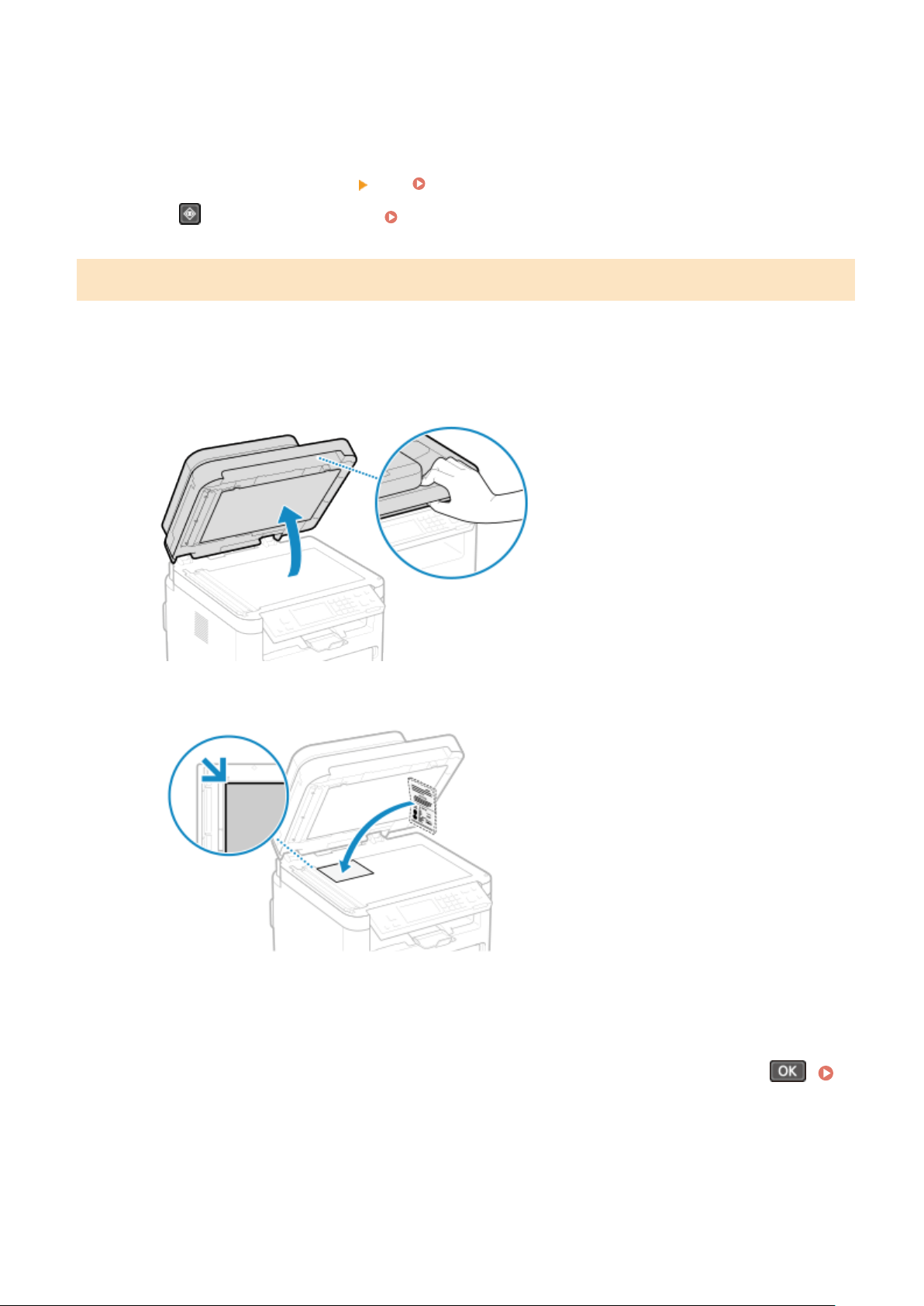
8
Press [Start Copy].
➠ The scanned passports ar
e printed.
● To cancel copying, press [Cancel]
[Yes]. Canceling Copy Operations(P. 323)
● Pr
ess
to view the copy job status. Viewing the Print Job Status and Log(P. 223)
5 Lines LCD Model
1
Place a passport on the platen glass.
1
Open the feeder or the platen cover.
2
Place the page to be scanned face down while aligning the corner of the passport with the top left corner
of the platen glass, as sho
wn.
Place the ID card slightly away from the edge of the platen glass.
3
Gently close the feeder or the platen cover.
2
On the control panel, press [Passport Copy] in the [Home] screen and press
.
[Home] Screen(P. 120)
➠ The [Passport Cop
y] screen is displayed.
3
Select a combination of the number of passports and whether to use 2-sided
printing.
Copying
321
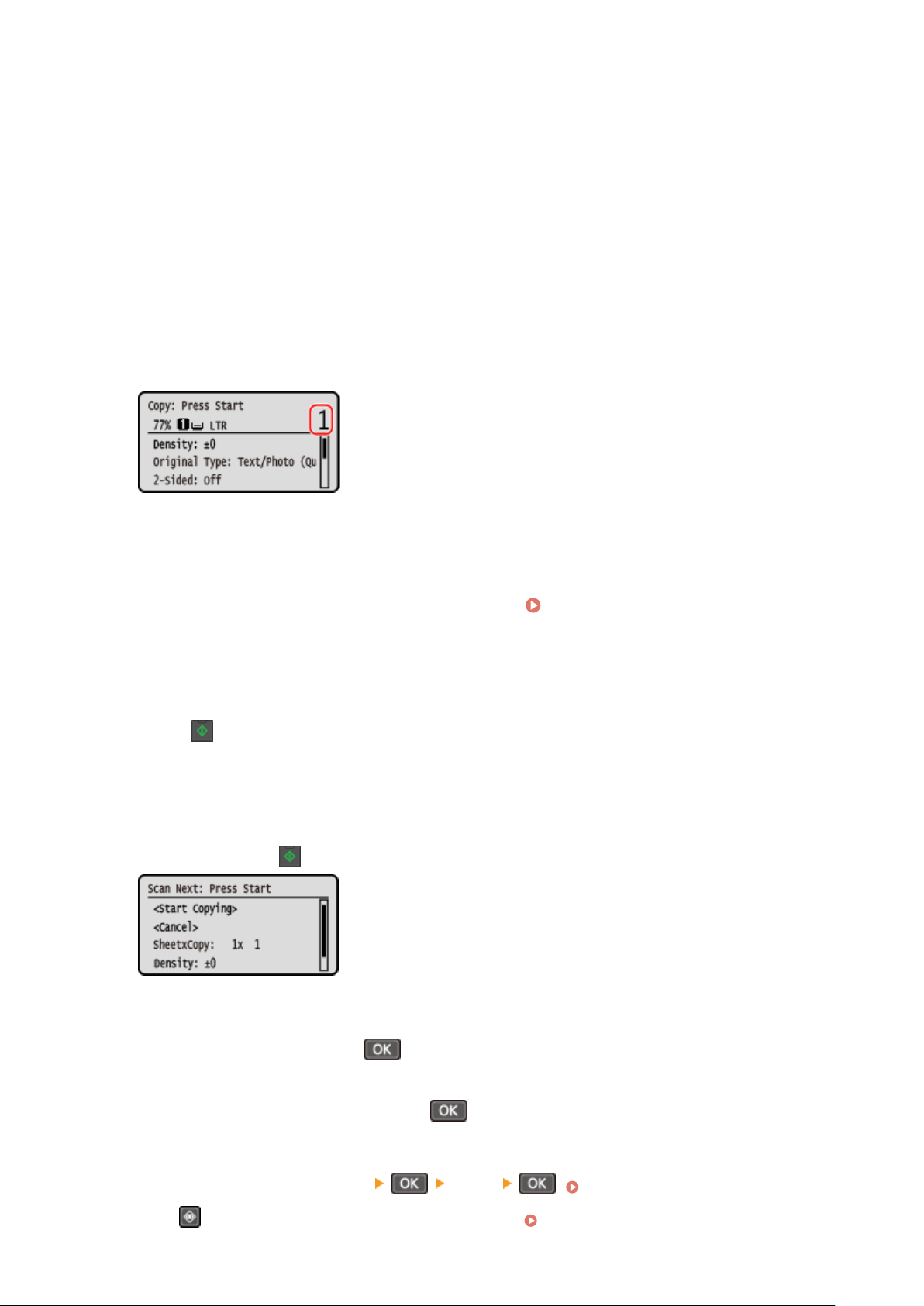
[2 on 1 (2-Sided)]
Combines two passports onto one side of a sheet of paper b
y copying with 2-sided printing. Copies four
passports onto both sides of a sheet of paper with 2-sided printing.
[4 on 1 (2-Sided)]
Combines four passports onto one side of a sheet of paper by copying with 2-sided printing. Copies eight
passports onto both sides of a sheet of paper with 2-sided printing.
[2 on 1]
Combines two passports onto one side of a sheet of paper.
[4 on 1]
Combines four passports onto one side of a sheet of paper.
4
Enter the number of copies using the numeric keys.
* When you use Passport Copy to make copies, the copy ratio is set automatically according to the size of the
paper used for cop
ying and the number of passports to combine. You can also press [Custom Ratio] to
change the copy ratio manually.
5
Congure the other cop
y settings, as needed. Additional Copying Features(P. 300)
● Y
ou can adjust the density and image quality.
● You can change the number of passports to combine (N on 1) and the 2-sided copy settings selected in 3.
6
Press
on the control panel.
➠ The rst passport is scanned.
7
When [Scan Next: Press Start] is displayed, place the next passport on the platen
glass, and pr
ess
on the control panel.
➠ The ne
xt passport is scanned, and the same screen is displayed.
Repeat this process until scanning of all passports is completed.
● You can press [Density] and press
to change the settings for each passport.
8
Select [<Start Copying>] and press .
➠ The scanned passports ar
e printed.
● To cancel copying, press [<Cancel>]
[<Yes>] . Canceling Copy Operations(P. 323)
● Pr
ess
on the control panel to view the copy job status. Viewing the Print Job Status and Log(P. 223)
Copying
322
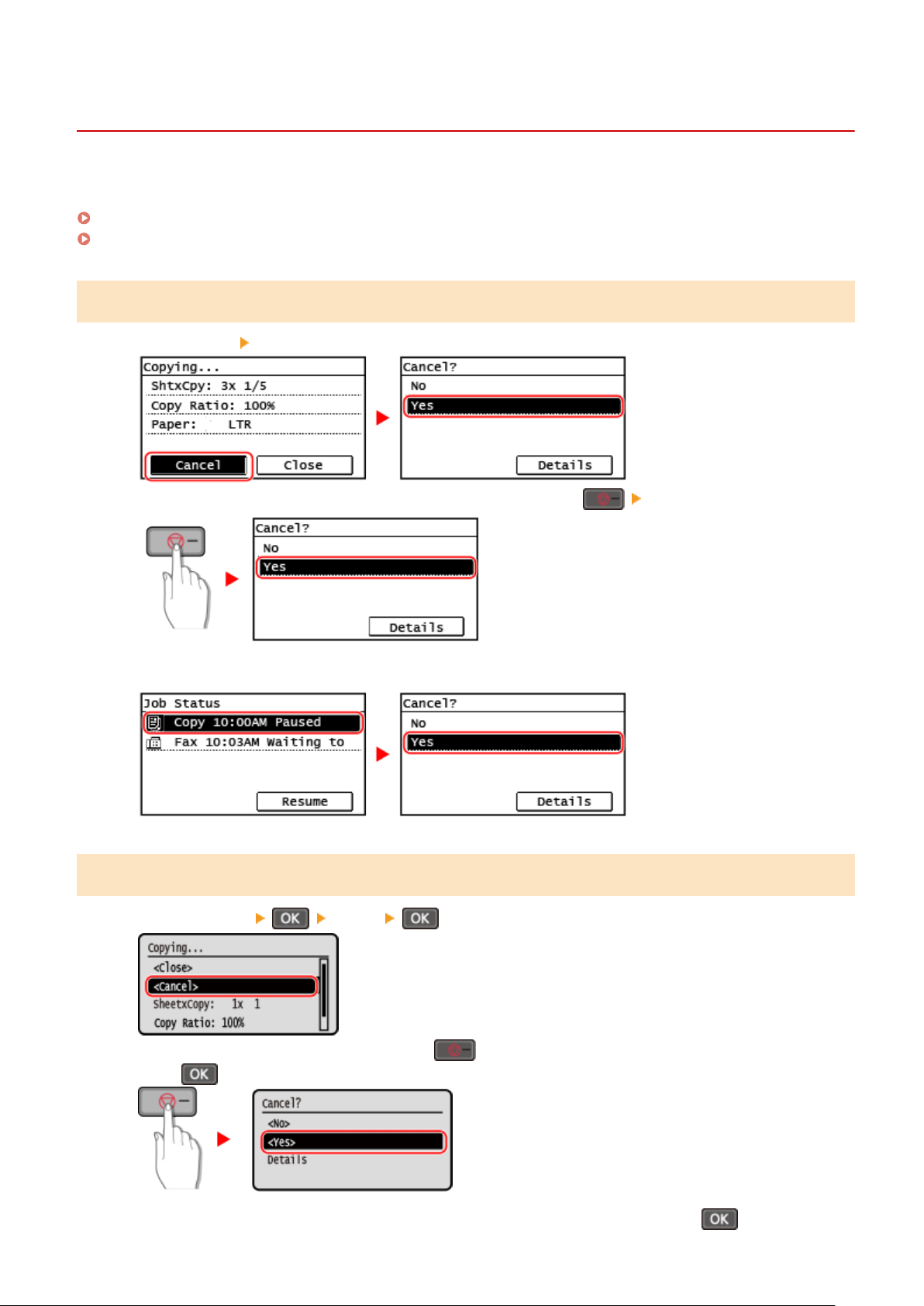
Canceling Copy Operations
8W0J-06E
Follo
w the instructions on screen to cancel a copy operation.
Touch Panel Model(P. 323)
5 Lines LCD Model(P. 323)
Touch Panel Model
Press [Cancel] [Yes].
If the above screen is not displayed, on the control panel, press [Yes].
If the job list screen is displayed, select the job to cancel, and press [Yes].
5 Lines LCD Model
Press [<Cancel>] [<Yes>] .
If the above screen is not displayed, press on the control panel, and then select [<Yes>] and
pr
ess
.
If the job list screen is displayed, select the job to cancel, and select [<Yes>] and press .
Copying
323
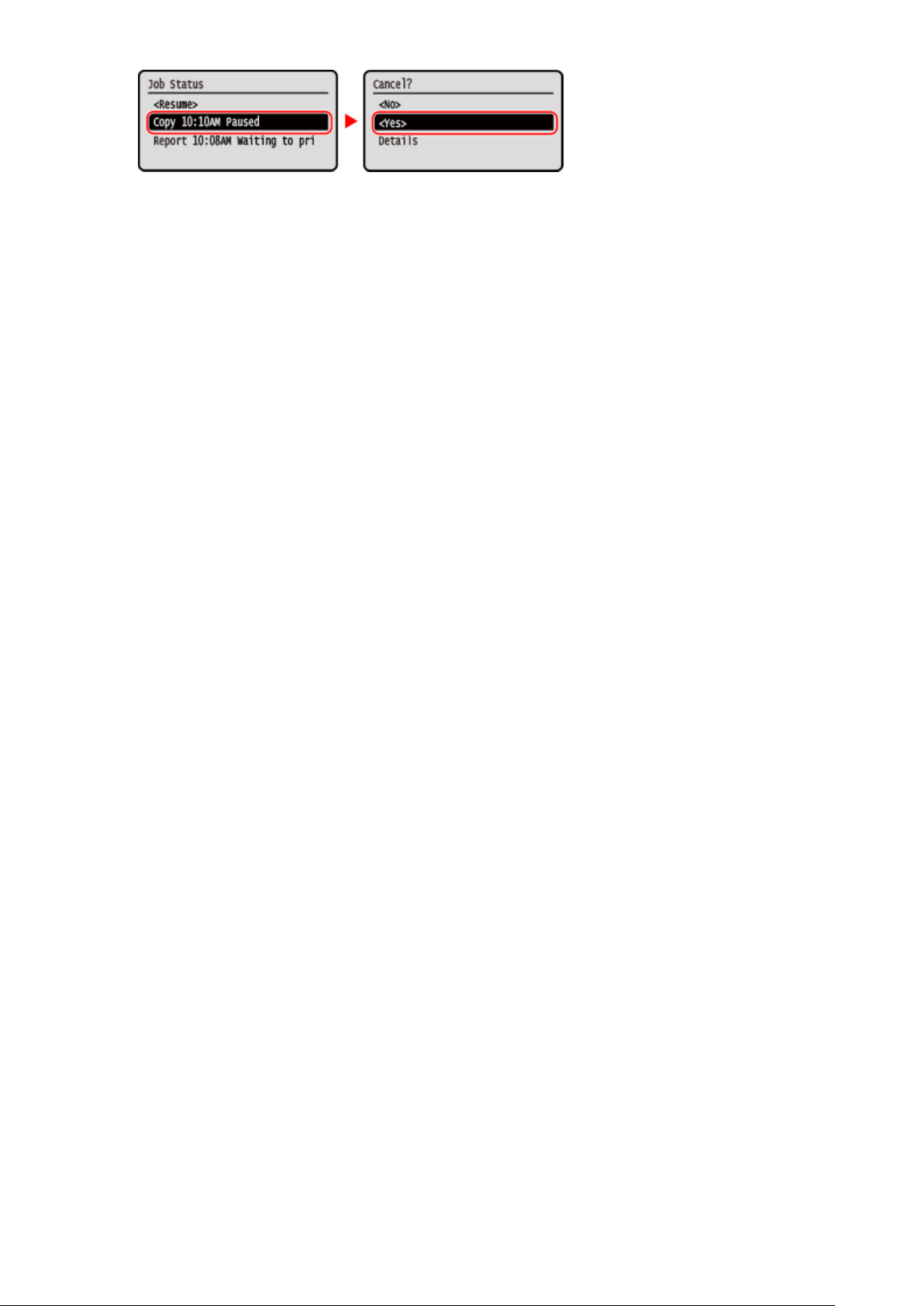
Copying
324

Checking the Copy Status
8W0J-06F
Pr
ocesses handled by the machine, including copying, are managed as jobs. By checking the status of jobs, you can
determine whether a copy job was performed correctly and the cause of errors that occur.
This section describes how to view this information using the control panel.
You cannot check this information using Remote UI from a computer.
Touch Panel Model(P. 325)
5 Lines LCD Model(P. 325)
Touch Panel Model
1
Press on the control panel. Control Panel(P. 14)
➠ The [Status Monitor] scr
een is displayed.
2
Press [Copy/Print Job].
3
Press [Job Status].
➠ Check the job being pr
ocessed or waiting to be processed.
4
Select a job to view its details.
➠ The job details ar
e displayed.
5
Check the number of originals, number of copies, and other settings.
5 Lines LCD Model
1
Press
on the control panel. Control Panel(P. 14)
➠ The [Status Monitor] scr
een is displayed.
2
Press [Copy/Print Job] and press
.
3
Press [Job Status] and press
.
➠ Check the job being pr
ocessed or waiting to be processed.
Copying
325

4
Select a job and press to view its details.
➠ The job details ar
e displayed.
5
Check the number of originals, number of copies, and other settings.
Copying
326

Linking with Mobile Devices
Linking with Mobile Devices ....................................................................................................................
328
Preparations for Linking with Mobile Devices ................................................................................................ 329
Preparations for Direct Connection .............................................................................................................. 330
Preparations for Using AirPrint ..................................................................................................................... 333
Connecting a Mobile Device to the Machine ................................................................................................... 336
Connecting a Mobile Device via Wireless LAN Router (LAN Connection) ....................................................... 337
Connecting a Mobile Device Directly to the Machine (Direct Connection) ..................................................... 338
Using a Dedicated Application to Print and Scan (Canon PRINT Business) ................................................... 341
Using AirPrint Application to Print and Scan Data and Send Faxes ............................................................... 342
Printing from an Android Device ...................................................................................................................... 346
Printing from Chromebook or Other Device with Chrome OS ........................................................................ 347
Linking with Mobile Devices
327
Linking with Mobile Devices
8W0J-06J
The machine can be oper
ated from a smartphone, tablet, or other mobile device. By using a compatible application or
service, you can easily print photos or documents through a mobile device and save data scanned with the machine to
the same device.
The applications and services that are available vary depending on the mobile device you are using.
iPhone, iPad, iPod touch, Mac
Canon PRINT Business (iPhone, iPad only)
Dedicated Canon application. Enables printing and scanning.
Using a Dedicated Application to Print and Scan (Canon PRINT Business)(P. 341)
AirPrint
This function is standar
d in Apple operating systems. You can print from applications that support AirPrint
instead of having to install a dedicated application or driver.
In addition, you can use AirPrint to print from a Mac. You can also scan data and send faxes with a Mac.
Preparations for Using AirPrint(P. 333)
Using AirPrint Application to Print and Scan Data and Send Faxes(P. 342)
Andr
oid Devices
Canon PRINT Business
Dedicated Canon application. Enables printing and scanning.
Using a Dedicated Application to Print and Scan (Canon PRINT Business)(P. 341)
Canon Print Service
Dedicated Canon plugin. Enables printing fr
om any application.
Using a Dedicated Plugin to Print (Canon Print Service)(P. 346)
Mopria
® Print Service
Common plugin for Mopria
®
certied printers and multifunction machines. Enables printing from any
application without having to install a dedicated plugin or application for individual manufacturers.
Using a Common Plugin to Print (Mopria® Print Service)(P. 346)
Chr
omebook or Other Device with Chrome OS
You can use the function standard equipped in the Chrome operating system to print without having to install a
dedicated application or printer driver.
Printing from Chromebook or Other Device with Chrome OS(P. 347)
Using the Address Book on a Mobile Device
● When sending scanned data b
y e-mail with the machine, you can use Canon PRINT Business to specify a
destination registered to the Address Book on a mobile device.
Specifying Destinations (Address Book
on a Mobile Device)(P. 188)
◼ See Also
Managing the Machine fr
om a Mobile Device (Remote UI)
You can use Remote UI from a Web browser on a mobile device. With Remote UI, you can check the
operation status of the machine, change the machine settings, and register destinations to the Address
Book. For details about starting and operating Remote UI, see the instructions for using Remote UI on a
computer.
Managing the Machine from a Computer (Remote UI)(P. 398)
* Some display items ar
e omitted in the mobile version of Remote UI. To check all items, tap [PC Version] at
the bottom of the screen and switch to the computer version of Remote UI.
Linking with Mobile Devices
328


Preparations for Direct Connection
8W0J-06L
Enable the Dir
ect Connection function on the machine. If the machine is not connected to a network, you need to
check the Network Connection Type settings.
*The Direct Connection function is not available for the models which are not equipped with a wireless LAN capability.
Enabling the Direct Connection Function(P. 330)
Checking the Network Connection Type of the Machine(P. 331)
Enabling the Direct Connection Function
This section describes how to congure the settings using Remote UI from a computer.
On the control panel, select [Menu] in the [Home] screen, and then select [Preferences] to congure the settings.
[Direct Connection Settings](P. 437)
Administr
ator privileges are required. The machine must be restarted to apply the settings.
1
Log in to Remote UI in System Manager Mode.
Starting Remote UI(P. 399)
2
On the Portal page of Remote UI, click [Settings/Registration]. Portal Page of
Remote UI(P. 401)
3
Click [Network Settings] [Direct Connection Settings] [Edit].
➠ The [Edit Dir
ect Connection Settings] screen is displayed.
4
Select the [Use Direct Connection] checkbox.
5
Congure the Dir
ect Connection function, as needed.
When connecting multiple mobile devices at the same time, you must specify the SSID and network key.
To Terminate the Connection Automatically
Select the [T
erminate Direct Connection Session] checkbox, and enter the time period of the direct
connection until it is terminated. When multiple mobile devices are connected, they will be disconnected
after the time period elapses since the last started connection.
To Change the IP Address for Connection
In [IP Addr
ess for Direct Connection], enter any IP address.
To specify the SSID and Network Key (When Connecting Multiple Mobile Devices at the
Same Time)
By default, the SSID and network k
ey of the machine are automatically assigned a random character string
each time direct connection is performed.
To specify the SSID and network key manually, in [Access Point Mode Settings], select the [Specify SSID to
Use] or [Specify Network Key to Use] checkbox, and enter an SSID or network key using single-byte
alphanumeric characters.
To Allow Mobile Devices to Always Connect to the Machine
By default, you must use the control panel to put the machine into waiting state when you want to establish
a direct connection.
Linking with Mobile Devices
330

To allow mobile devices to always connect to the machine, in [Access Point Mode Settings], specify the SSID
and network k
ey, and select the [Always Keep Enabled If SSID/Network Key Is Specied] checkbox in [Keep
Connection Enabled].
6
Click [OK].
7
Restart the machine.
Restarting the Machine(P. 113)
➠ The settings ar
e applied.
Checking the Network Connection Type of the Machine
If the machine is not connected to a network (wir
ed or wireless LAN), check that the network connection type is set to
wired LAN.
If the machine is connected to a network, you do not have to check this.
Touch Panel Model(P. 331)
5 Lines LCD Model(P. 331)
◼ T
ouch Panel Model
1
Press
on the control panel. Control Panel(P. 14)
➠ The [Status Monitor] scr
een is displayed.
2
Press [Network Information]
[Network Connection Method].
➠ The [Network Conn. Method] scr
een is displayed.
3
Check that [Wired LAN] is displayed.
If the connection type is set to wired LAN, you can establish a direct connection even if the machine is not
connected to a network.
When [Wireless LAN] Is Displayed in [Network Conn. Method]
When the machine is not connected to a wir
eless LAN, a direct connection cannot be established. Connect
the machine to a wireless LAN or switch the connection type to wired LAN.
Connecting to a Wireless LAN(P. 61)
Selecting Wired or Wireless LAN(P. 58)
◼ 5 Lines L
CD Model
1
Press
on the control panel. Control Panel(P. 14)
➠ The [Status Monitor] scr
een is displayed.
2
Press [Network Information]
[Network Connection Method] .
Linking with Mobile Devices
331

➠ The [Network Conn. Method] scr
een is displayed.
3
Check that [Wired LAN] is displayed.
If the connection type is set to wired LAN, you can establish a direct connection even if the machine is not
connected to a network.
When [Wireless LAN] Is Displayed in [Network Conn. Method]
When the machine is not connected to a wir
eless LAN, a direct connection cannot be established. Connect
the machine to a wireless LAN or switch the connection type to wired LAN.
Connecting to a Wireless LAN(P. 61)
Selecting Wired or Wireless LAN(P. 58)
Linking with Mobile Devices
332

Preparations for Using AirPrint
8W0J-06R
Set the basic information that is r
equired to use AirPrint. Congure the settings related to the functions and security
that will be used, according to your usage and environment.
Setting the Basic Information of AirPrint(P. 333)
Setting the Functions and Security to Be Used with AirPrint(P. 334)
Setting the Basic Information of AirPrint
Congure these settings using Remote UI from a computer. You cannot use the control panel to congure the
settings.
Administrator privileges are required.
1
Log in to Remote UI in System Manager Mode.
Starting Remote UI(P. 399)
2
On the Portal page of Remote UI, click [Settings/Registration]. Portal Page of
Remote UI(P. 401)
3
Click [Network Settings] [AirPrint Settings] [Edit].
➠ The [Edit AirPrint Settings] scr
een is displayed.
4
Select the [Use AirPrint] checkbox, and enter the printer name.
● For the printer name, enter a name to identify the machine, using single-byte alphanumeric characters.
● If mDNS of IPv4 is set, the mDNS name is entered for the printer name. If you change the printer name, the
mDNS name is also changed.
* When you change the set printer name or mDNS name, the Mac that was connected to the machine may
no longer be able to connect to it. In this case, you must register the machine on the Mac.
5
Enter the location and longitude and latitude of the machine, as needed.
If the location of the machine is set in [Settings/Registration]
[Device Management] [Device Information
Settings], the same char
acter string is entered in the location. When you change the location in AirPrint
Settings, the location in Device Information Settings is also changed.
6
Click [OK].
➠ The settings ar
e applied.
7
Log out from Remote UI.
● When the AirPrint function is enabled, the follo
wing network settings are also enabled:
Linking with Mobile Devices
333
- [Use HTTP](P. 449)
- [IPP Print Settings](P. 449)
- [mDNS Settings](P. 445)
- [Network Link Scan Settings](P. 449)
Setting the Functions and Security to Be Used with AirPrint
AirPrint uses the following protocols:
● IPP (printing and sending fax
es)
● Network Link Scan (scanning)
The protocol to use varies with the function. Therefore, you can restrict the available functions by disabling the
protocols. In addition, you can congure the settings to encrypt communication with TLS and congure IPP
authentication when using a protocol.
Congure these settings using Remote UI from a computer. You cannot use the control panel to congure the
settings.
Administrator privileges are required.
Required Preparations
● When encrypting communication with TLS, specify the k
ey and certicate to use for TLS encrypted
communication.
Using TLS(P. 360)
1
Log in to Remote UI in System Manager Mode. Starting Remote UI(P. 399)
2
On the Portal page of Remote UI, click [Settings/Registration]. Portal Page of
Remote UI(P
. 401)
3
Click [Network Settings]
[IPP Print Settings] or [Network Link Scan Settings]
[Edit].
➠ The [Edit IPP Print Settings] scr
een or [Edit Network Link Scan Settings] screen is displayed.
4
Congure the IPP or Network Link Scan settings.
When Restricting the Functions to Use
Clear the [Use IPP Printing] or [Use Network Link Scan] checkbo
xes.
● When you clear the [Use IPP Printing] checkbox, printing and sending faxes with AirPrint are no longer
possible.
● When you clear the [Use Network Link Scan] checkbox, scanning is no longer possible with AirPrint.
When Encrypting Communication with TLS
Select the [Allo
w Only When Using TLS] or [Use TLS] checkbox.
When Setting IPP Authentication
Select the [Use Authentication] checkbo
x, and set the user name to be used for IPP authentication using
single-byte alphanumeric characters.
Linking with Mobile Devices
334

To set a password, select the [Set/Change Password] checkbox, and enter the same password in both
[Passwor
d] and [Conrm] using single-byte alphanumeric characters.
Printing or sending faxes with AirPrint now requires authentication, and only users who know the user name
and password of IPP authentication can use these functions.
5
Click [OK].
➠ The settings ar
e applied.
6
Log out from Remote UI.
Linking with Mobile Devices
335
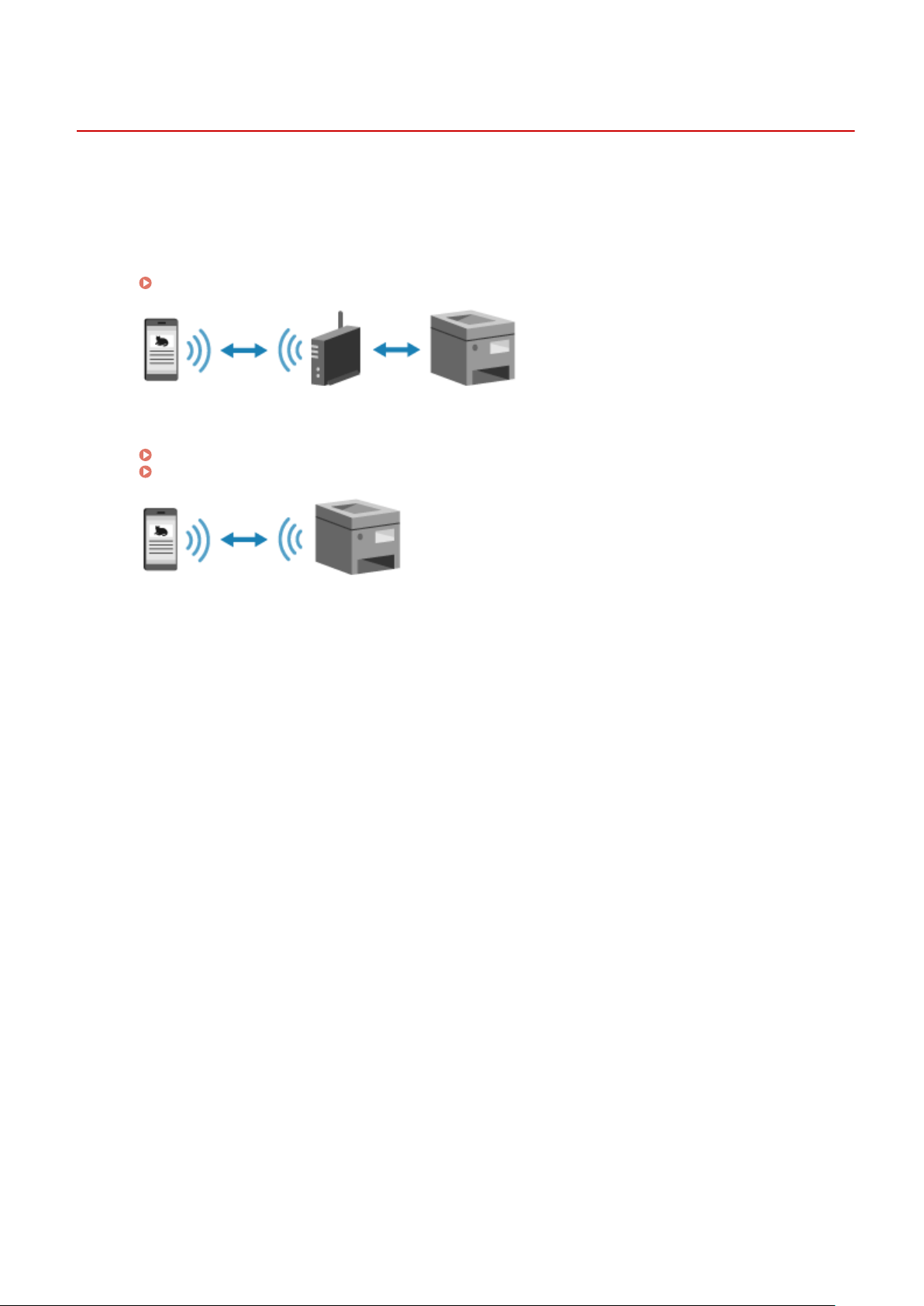
Connecting a Mobile Device to the Machine
8W0J-06S
T
o use the machine from a mobile device, you must connect it to the machine using either of the following methods:
Connecting via Wireless LAN Router (LAN Connection)
Connect a mobile device to the machine via a wireless LAN router in the same way as you connect a
computer to the machine. By conguring a mobile device to connect automatically to the wireless LAN
router, you do not need to manually connect it next time.
Connecting a Mobile Device via Wireless LAN Router (LAN Connection)(P. 337)
Connecting Directly (Direct Connection)
Connect a mobile de
vice directly to the machine via Wi-Fi. You can directly connect to the machine without
using wireless LAN. You must manually connect the mobile device each time you use the machine.
Preparations for Direct Connection(P. 330)
Connecting a Mobile Device Directly to the Machine (Direct Connection)(P. 338)
Linking with Mobile Devices
336
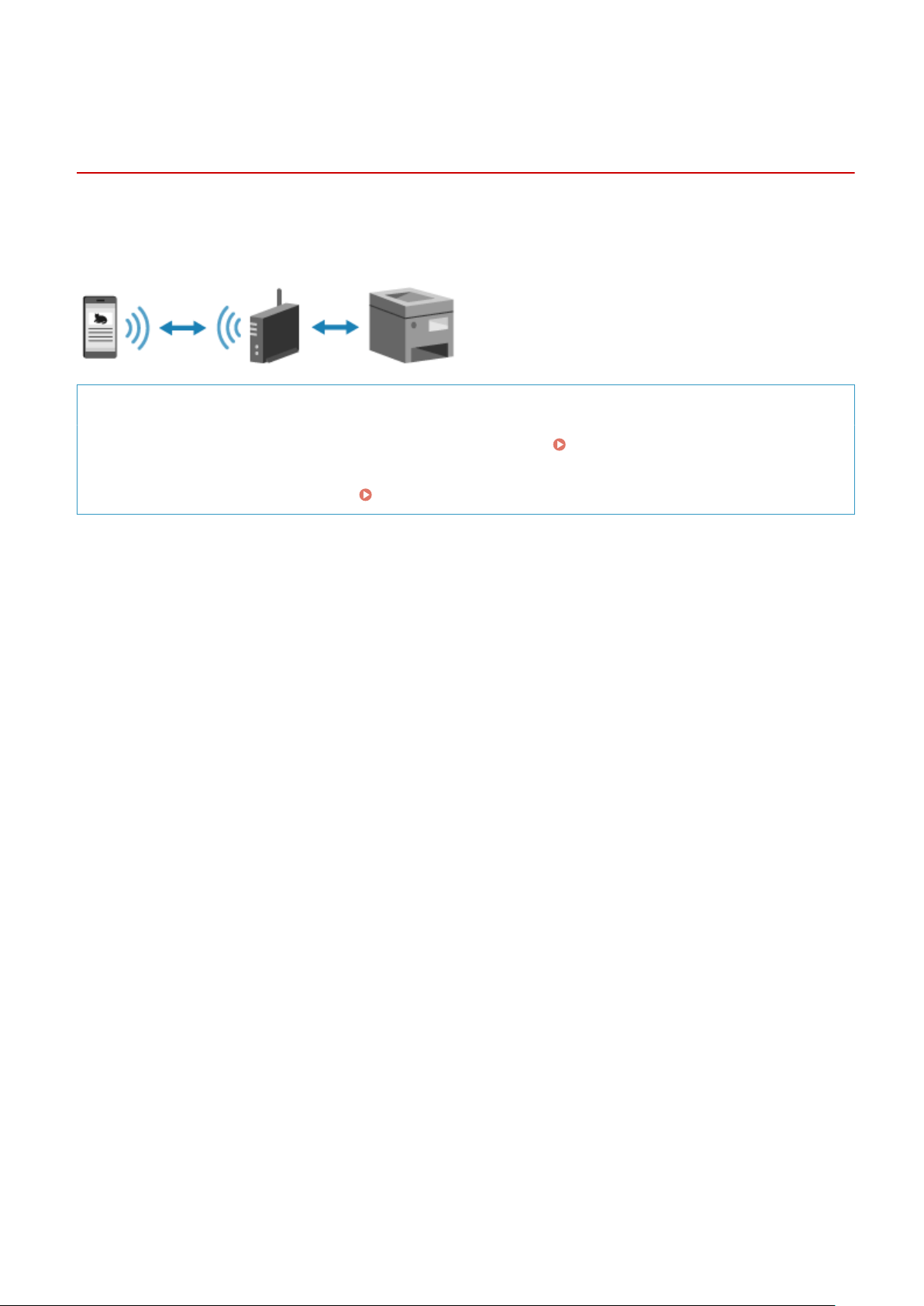
Connecting a Mobile Device via Wireless LAN Router
(LAN Connection)
8W0J-06U
Connect a mobile de
vice to the machine via a wireless LAN router in the same way as you connect a computer to the
machine. By conguring a mobile device to connect automatically to the wireless LAN router, you do not need to
manually connect it next time.
Required Preparations
● Connect the machine to the network using wir
eless or wired LAN.
Setting Up the Network(P. 56)
* When using a wir
ed LAN, check that a wireless LAN router is connected to the same network.
● Set an IPv4 address to the machine.
Setting IPv4 Addresses(P. 77)
Connect the mobile device to either of the following wireless LAN routers:
● A wir
eless LAN router connected to the machine
● (When the machine is connected to a wired LAN) A wireless LAN router on the network connected to the
machine
For details about how to connect a mobile device to a wireless LAN router, see the manual of the mobile device.
Linking with Mobile Devices
337
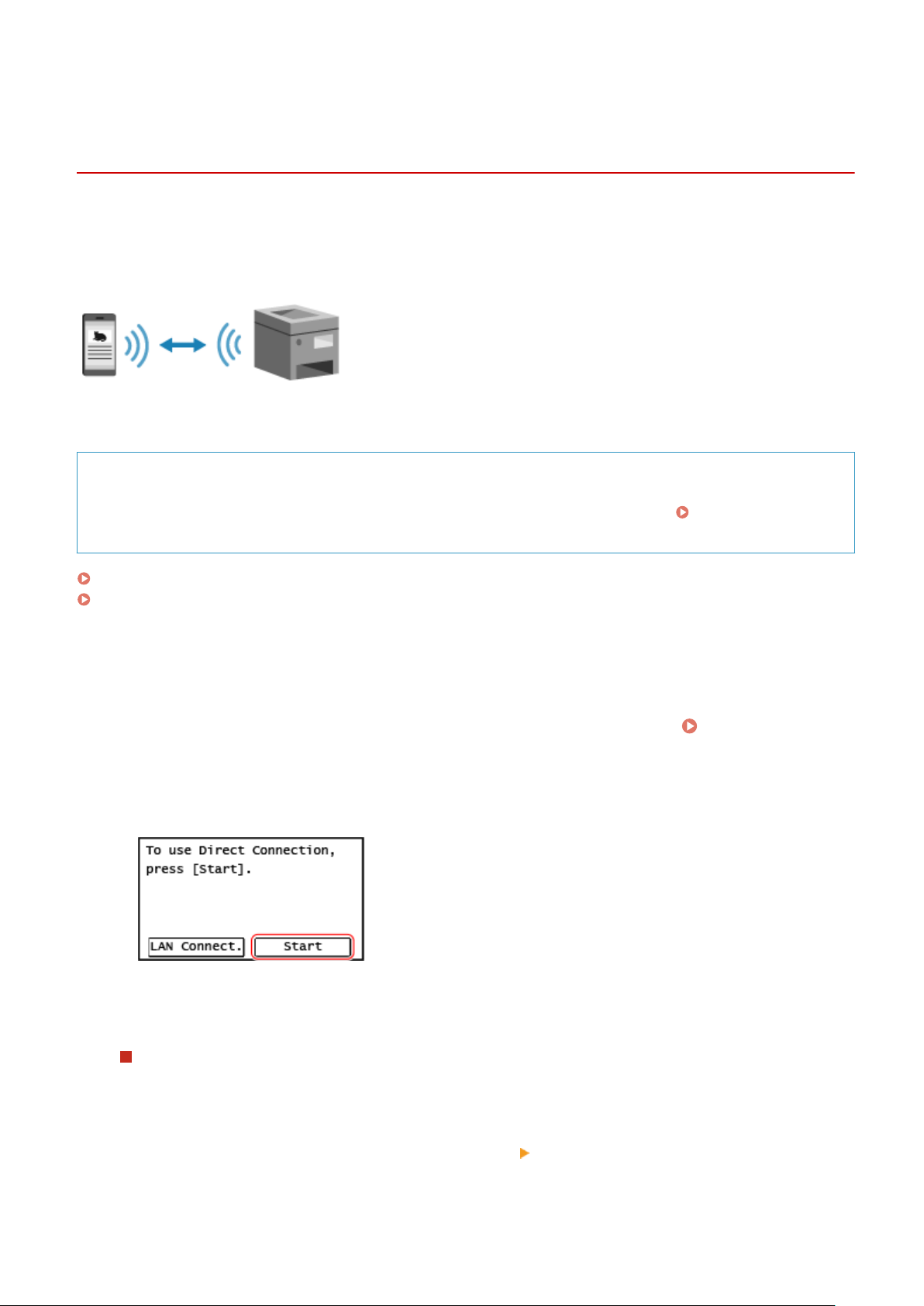
Connecting a Mobile Device Directly to the Machine
(Dir
ect Connection)
8W0J-06W
Connect a mobile de
vice directly to the machine via Wi-Fi. You can directly connect it to the machine without using
wireless LAN. You must manually connect the mobile device each time you use the machine.
By default, only one mobile device can be directly connected to the machine at any one time.
*The Direct Connection function is not available for the models which are not equipped with a wireless LAN capability.
To establish a direct connection, put the machine into waiting state using the control panel, search the machine from a
mobile de
vice, and then connect to the machine by manually entering the network key.
Required Preparations
● Mak
e preparations such as enabling the Direct Connection function on the machine.
Preparations for
Dir
ect Connection(P. 330)
Touch Panel Model(P. 338)
5 Lines LCD Model(P. 339)
◼ T
ouch Panel Model
1
On the control panel, press [Mobile Portal] in the [Home] screen.
[Home]
Screen(P. 120)
2
Press [Start].
➠ The machine enters waiting state for Dir
ect Connection.
Within 5 minutes of pressing [Start], you must directly connect the mobile device.
When [Disconnect] Is Displayed
● Y
ou can skip this step when [Connect from device you want to connect.] is displayed. Proceed to Step 3.
● When [Maximum number of wireless devices connected using Direct Connection has been reached.] is
displayed, you cannot connect a new mobile device until a connected mobile device is disconnected. To
disconnect a connected mobile device, press [Disconnect]
[Yes].
* By default, only one mobile de
vice can be directly connected to the machine at any one time.
Linking with Mobile Devices
338
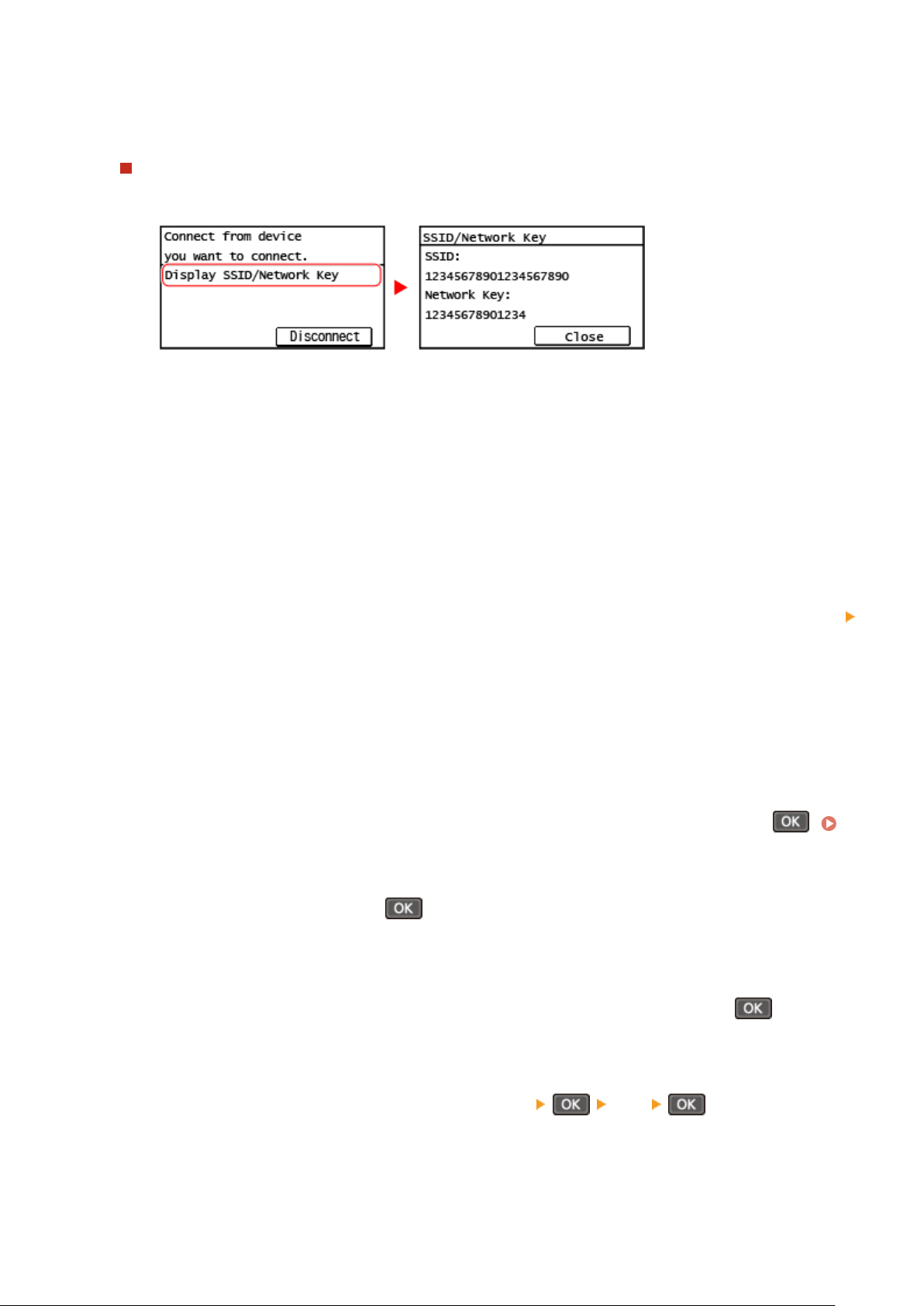
3
Directly connect the mobile device.
Manually Conguring the Wi-Fi Settings
1
Press [Display SSID/Network Key] to check the SSID and the network key of the machine.
2
In the Wi-Fi settings of the mobile device, select the SSID of the machine, and enter the network key.
For details about ho
w to congure the Wi-Fi settings, see the manual of the mobile device.
4
When [Connected.] appears on the control panel, press [Close].
➠ The dir
ect connection screen reappears.
By default, only one mobile device can be directly connected to the machine at any one time. [Maximum
number of wireless devices connected using Direct Connection has been reached.] is displayed on the
screen.
5
When you have completed your operations on the mobile device, press [Disconnect]
[Yes].
➠ The dir
ect connection is terminated.
If multiple mobile devices are connected, all devices are disconnected.
◼ 5 Lines LCD Model
1
On the control panel, select [Mobile Portal] in the [Home] screen, and press
.
[Home] Screen(P. 120)
2
Select [<Connect>] and press
.
➠ The machine enters waiting state for Dir
ect Connection.
● Within 5 minutes of pressing [<Connect>], you must directly connect the mobile device.
● You can skip this step when [Connect from device you want to connect.] is displayed. Press
and
pr
oceed to Step 3.
● When [Maximum number of wireless devices connected using Direct Connection has been reached.] is
displayed, you cannot connect a new mobile device until a connected mobile device is disconnected. To
disconnect a connected mobile device, press [<Disconnect>]
[Yes] .
* By default, only one mobile de
vice can be directly connected to the machine at any one time.
3
Directly connect the mobile device.
Linking with Mobile Devices
339
Manually Conguring the Wi-Fi Settings
1
Check the SSID and network key of the machine.
2
In the Wi-Fi settings of the mobile device, select the SSID of the machine, and enter the network key.
For details about ho
w to congure the Wi-Fi settings, see the manual of the mobile device.
4
When [Connected.] appears on the control panel, press [Close].
➠ The dir
ect connection screen reappears.
By default, only one mobile device can be directly connected to the machine at any one time. [Maximum
number of wireless devices connected using Direct Connection has been reached.] is displayed on the
screen.
5
When you have completed your operations on the mobile device, press
[<Disconnect>]
.
➠ The dir
ect connection is terminated.
If multiple mobile devices are connected, all devices are disconnected.
● Y
ou may not be able to connect to the Internet with Direct Connection depending on the mobile device.
● The power-saving effect of sleep mode decreases when using Direct Connection.
● The IP address of the mobile device is set automatically. If you set the IP address manually, communication
using Direct Connection may not be performed correctly.
Checking a Mobile Device Connected to the Machine
● When using Dir
ect Connection, press [Connection Information] to display the information of the mobile
device connected to the machine with Direct Connection.
If the Direct Connection Is Automatically Disconnected
● The direct connection is automatically terminated in the following cases:
- When the Direct Connection Termination is set
- When no data is sent or received between the mobile device and the machine for a while
- When the wireless LAN connection of the machine is terminated
Linking with Mobile Devices
340

Using a Dedicated Application to Print and Scan (Canon
PRINT Business)
8W0J-06X
Y
ou can use the dedicated Canon application Canon PRINT Business to print and scan.
Compatible Operating Systems and Download Site
See the Canon website.
https://global.canon/gomp/
Usage
● Connect a mobile device to the machine.
Connecting a Mobile Device to the Machine(P. 336)
● Register the machine to Canon PRINT Business.
When the mobile de
vice is connected to the machine via LAN, the IP address information of the machine is
required to register the machine to Canon PRINT Business. You can view the IP address with [Home] screen
[Mobile Portal] [LAN Connect.] [Display Device Name/IP Address].
For the 5 Lines L
CD Model, you can check the IP address from [Mobile Portal] in the [Home] screen
[LAN Connection] [Display Device Name/IP Address] .
● If you want to scan, select [Menu] in the [Home] scr
een
[Management Settings] [Device Management]
set [Scan with Canon PRINT Business] to [On].
For the 5 Lines L
CD Model, select
on the control panel [Management Settings] [Device
Management] set [Scan with Canon PRINT Business] to [On].
● For details about r
egistering the machine, printing, and scanning, see the Help menu item in the application.
Linking with Mobile Devices
341
Using AirPrint Application to Print and Scan Data and
Send Fax
es
8W0J-06Y
AirPrint is a print function standar
d in Apple operating systems. You can print from applications that support AirPrint
instead of having to install a dedicated application or driver.
In addition, you can use AirPrint to print from a Mac. You can also scan data and send faxes with a Mac.
When Using an iPhone, iPad, or iPod touch(P. 342)
When Using a Mac(P. 343)
When Using an iPhone, iPad, or iPod touch
Use AirPrint to print fr
om an iPhone, iPad, or iPod touch connected to the machine via LAN or direct connection.
Operating Environment
You can use AirPrint with the following iPhone, iPad, and iPod touch models:
● iPhone: 3GS or later
● iPad: All models
● iPod touch: Third generation or later
Required Preparations
● Set the machine to enable use of AirPrint.
Preparations for Using AirPrint(P. 333)
● Connect the machine to an iPhone, iPad, or iPod touch. Connecting a Mobile Device to the
Machine(P
. 336)
1
Open the data to be printed on the iPhone, iPad, or iPod touch.
2
In the application with the data to be printed open, tap [ ].
➠ The menu options ar
e displayed.
3
Tap [Print].
➠ The print options ar
e displayed.
If print options are not displayed, the application does not support AirPrint. In this case, you cannot use
AirPrint to print data.
Linking with Mobile Devices
342
4
Tap [Printer], and select the machine.
5
Congure the print settings.
The available settings and usable paper sizes vary depending on the application you are using.
6
Tap [Print].
➠ Printing starts.
Y
ou can check the print status or the print log by pressing
on the control panel. Viewing the Print Job
Status and Log(P
. 223)
When Using a Mac
Y
ou can use AirPrint to print and scan data and send faxes from a Mac connected to the network on the same LAN as
the machine or a Mac connected to the machine via USB.
Operating Environment
You can use AirPrint on a Mac with the following operating systems installed:
● Printing: OS X 10.7 or later
*1
● Scanning: OS X 10.9 or later
*2
● Sending faxes: OS X 10.9 or later
*1
When printing fr
om a Mac connected to the machine via USB, OS X 10.9 or later.
*2
When scanning with TLS encrypted communication, OS X 10.11 or later.
Required Preparations
● Set the machine to enable use of AirPrint.
Preparations for Using AirPrint(P. 333)
● Connect the machine to a Mac. Setting Up the Network(P. 56)
When connecting via USB
, connect to the USB port for computer connection on the back of the machine with
a USB cable.
Back Side(P. 11)
● In [System Pr
eferences]
[Printers & Scanners] on the Mac, click [+] to register the machine.
Using AirPrint to Print Data(P. 343)
Using AirPrint to Scan Data(P. 344)
Using AirPrint to Send Faxes(P. 345)
◼ Using AirPrint to Print Data
1
Open the document you want to print on your Mac.
2
In the application used to open the document, click [Print].
➠ The printing dialog bo
x appears.
Linking with Mobile Devices
343

3
In [Printer], select the machine.
4
Congure the print settings.
The available settings and usable paper sizes vary depending on the application you are using.
5
Click [Print].
➠ Printing starts.
Y
ou can check the print status or the print log by pressing
on the control panel. Viewing the Print Job
Status and Log(P
. 223)
◼ Using AirPrint to Scan Data
1
Place the original on the machine.
Placing Originals(P. 139)
2
On your Mac, Click [System Preferences]
[Printers & Scanners].
➠ The [Printers & Scanners] scr
een is displayed.
3
Select the machine.
4
On the [Scan] tab, click [Open Scanner].
➠ The [Scanner] scr
een is displayed.
5
Congure the scan settings.
6
Click [Scan].
➠ Scanning starts.
When Scanning Cannot Be Performed
● The machine may not be online (scan standb
y mode). On the control panel, select [Scan] in the [Home]
screen, and press [Remote Scanner] to turn the machine online, and then repeat the operation.
For the 5 Lines LCD Model, repeat the procedure again after turning the machine online from [Scan] on the
[Home] screen
[Remote Scanner] .
Linking with Mobile Devices
344

◼ Using AirPrint to Send Fax
es
1
Open the document you are sending on your Mac.
2
From the menu in the application used to open the document, click [Print].
➠ The printing dialog bo
x appears.
3
In [Printer], select the machine.
Select the printer whose name ends with "Fax."
4
In [To], enter the fax number.
5
Click [Fax].
➠ The fax is sent via the machine.
Y
ou can check the sending status or the sending log by pressing
on the control panel. Checking the
Status and Log for Sent and Received Fax
es(P. 293)
Linking with Mobile Devices
345

Printing from an Android Device
8W0J-070
Install a plugin on a mobile de
vice to enable printing from an application that has a print function.
This machine supports Canon plugins as well as Mopria
®
, which is supported by various manufacturers.
Using a Dedicated Plugin to Print (Canon Print Service)(P. 346)
Using a Common Plugin to Print (Mopria® Print Service)(P. 346)
Using a Dedicated Plugin to Print (Canon Print Service)
Y
ou can use the dedicated Canon plugin Canon Print Service to print from any application.
Compatible Operating Systems and Download Site
See the Canon website.
https://global.canon/psmp/
Usage
● Connect a mobile device to the machine.
Connecting a Mobile Device to the Machine(P. 336)
● Register the machine to Canon Print Service.
When the mobile device is connected to the machine via LAN, the IP address information of the machine is
required to register the machine to Canon Print Service. You can view the IP address with [Home] screen
[Mobile Portal] [LAN Connect.] [Display Device Name/IP Address].
For the 5 Lines LCD Model, you can view the IP address with [Mobile Portal] on the [Home] screen
[LAN Connection] [Display Device Name/IP Address] .
● For
details about registering the machine and the printing method, see the Canon Print Service manual in
"Mobile Apps" at the online manual site.
https://oip.manual.canon/
Using a Common Plugin to Print (Mopria
®
Print Service)
The machine supports Mopria
®
Print Service, a plugin that enables printing fr
om any application on a Mopria
®
certied printer or multifunction machine.
You can print on a Mopria
®
certied printer available from various manufacturers, which is convenient when printing
on the go, without having to install a dedicated application or plugin.
Usage
● Connect a mobile de
vice to the machine.
Connecting a Mobile Device to the Machine(P. 336)
● For details about ho
w to print and Mopria
®
certied printers, see the following website:
https://mopria.org/
● By using Mopria
®
Scan, you can dir
ectly import scanned data to an Android device.
Linking with Mobile Devices
346

Printing from Chromebook or Other Device with
Chr
ome OS
8W0J-071
Y
ou can use a Chromebook or other device equipped with Chrome OS to print without having to install a dedicated
application or printer driver.
Printing from a Chrome OS Device
● Printing fr
om a Chrome OS device may not be supported depending on your country or region.
Usage
● Connect a Chromebook to the machine.
Connecting a Mobile Device via Wireless LAN Router (LAN Connection)(P. 337)
When
connecting via USB, connect to the USB port for computer connection on the back of the machine
with a USB cable.
Back Side(P. 11)
● For details about ho
w to print using the Chromebook, see Chromebook Help.
https://support.google.com/chromebook/answer/7225252
Linking with Mobile Devices
347

Security
Security ................................................................................................................................................................
349
Setting the Department ID and PIN for the Administrator ............................................................................ 350
Protecting the Network .................................................................................................................................... 353
Setting the Firewall ....................................................................................................................................... 354
Changing the Port Number .......................................................................................................................... 357
Using a Proxy ............................................................................................................................................... 358
Using TLS ...................................................................................................................................................... 360
Using IEEE 802.1X ......................................................................................................................................... 362
Managing and Verifying a Key and Certicate .............................................................................................. 364
Generating a Key and Certicate ........................................................................................................... 365
Generating a Key and Certicate Signing Request (CSR) and Obtaining and Registering a Certicate ... 367
Registering a Key and Certicate or CA Certicate Obtained from an Issuing Authority ........................ 370
Verifying a Received Certicate with OCSP ............................................................................................. 372
Preventing Sending Data by Mistake and Leaking Information .................................................................... 373
Limiting Available Destinations .................................................................................................................... 374
Conrming the Destination before Sending ................................................................................................. 376
Restricting Fax Sending ................................................................................................................................ 378
Restricting Use from a Mobile Device ........................................................................................................... 380
Restricting Printing ....................................................................................................................................... 381
Saving Received Documents in the Machine (Memory Lock) .................................................................. 382
Preventing Unauthorized Use .......................................................................................................................... 385
Restricting Address Book Registration and Editing ....................................................................................... 386
Restricting Use of Remote UI ........................................................................................................................ 388
Preventing Connection to Computer via USB Port ........................................................................................ 391
Conguring LPD, RAW, or WSD ..................................................................................................................... 392
Disabling HTTP Communication ................................................................................................................... 394
Security
348

Security
8W0J-072
This machine is an information de
vice that uses communication functions and handles various data. Therefore, it is
important to provide measures to prevent unauthorized access when using the machine in a network environment
and measures against security risks such as sending data by mistake and leaking information.
This machine is equipped with various functions and settings to reduce these threats and vulnerabilities. Congure the
settings and use them appropriately according to your usage environment and conditions for safer operation of the
machine.
Creating an Administrator System
Use an administrator account to manage the machine and congure the settings. Operate the machine using
a system in which only a specic administrator(s) knows the ID and PIN.
Setting the Department ID and PIN for the Administrator(P. 350)
Network Settings
Applying the network security settings accor
ding to the usage environment can reduce the threat of
unauthorized access and eavesdropping.
Protecting the Network(P. 353)
Managing Usage Status
When using the function to send a fax or scanned data, measur
es are needed to prevent sending data by
mistake or leaking information. In addition, using a PIN and setting usage restrictions can help prevent
unauthorized use of the Address Book and Remote UI. Implementing measures that include operations
according to usage status of the machine can improve security.
Preventing Sending Data by Mistake and Leaking Information(P. 373)
Preventing Unauthorized Use(P. 385)
Security
349

Setting the Department ID and PIN for the
Administr
ator
8W0J-073
Set the System Manager ID and System Manager PIN to cr
eate an administrator account.
By creating an administrator account, only those users who know these credentials can log in to System Manager
Mode to view and change important settings.
System Manager ID and PIN(P. 5)
This section describes ho
w to congure the settings using the control panel.
You can also congure the settings using Remote UI from a computer after the System Manager ID and PIN have been
set on the machine.
Managing the Machine from a Computer (Remote UI)(P. 398)
Administr
ator privileges are required.
Touch Panel Model(P. 350)
5 Lines LCD Model(P. 351)
Touch Panel Model
1
On the control panel, press [Menu] in the [Home] screen.
[Home] Screen(P. 120)
2
Press [Management Settings] [User Management] [System Manager Information
Settings].
➠ The [Sys. Manager Info Set.] screen is displayed.
If the login screen appears, enter the currently set System Manager ID and PIN, and then press [Log In].
Logging In to the Machine(P. 137)
3
Press [System Manager ID and PIN]
4
Enter the System Manager ID, and press [Apply].
Specify any number. You cannot set a System Manager ID consisting of all zeros, such as "00" or "0000000."
5
Enter the System Manager PIN, and press [Apply].
Specify any number other than "7654321." You cannot set a PIN consisting of all zeros, such as "00" or
"0000000."
6
Enter the PIN again, and press [Apply].
➠ The settings ar
e applied.
● Do not for
get the System Manager ID and PIN. If you forget your System Manager ID and PIN, contact your
dealer or service representative.
If the Problem Persists(P. 651)
Security
350
Setting the System Manager Information
● On the [Sys. Manager Info Set.] scr
een, press [System Manager Name] to set the name of the system
manager.
● You can also congure the e-mail address and other system manager information by using Remote UI from
a computer.
- The set information is displayed in [Status Monitor/Cancel]
[Device Information] of Remote UI.
Checking Usage and Logs with Remote UI(P. 403)
-
The set e-mail address becomes the destination that is selected by clicking [Mail to System Manager] on
the Portal page of Remote UI.
Portal Page of Remote UI(P. 401)
Clearing the System Manager ID and PIN Settings
● Clear the enter
ed values of the System Manager ID and PIN, and then press [Apply] with the elds left
empty.
5 Lines LCD Model
1
Press
on the control panel. Control Panel(P. 14)
2
Press [Management Settings] [User Management] [System
Manager Information Settings] .
➠ The [Sys. Manager Info Set.] scr
een is displayed.
If the login screen appears, enter the currently set System Manager ID and PIN, then select [<Log In>] and
press
. Logging In to the Machine(P. 137)
3
Select [System Manager ID and PIN] and press
.
4
Enter the System Manager ID, and press
.
Specify any number. You cannot set a System Manager ID consisting of all zeros, such as "00" or "0000000."
5
Enter the System Manager PIN, and press .
Specify any number other than "7654321." You cannot set a PIN consisting of all zeros, such as "00" or
"0000000."
6
Enter the PIN again, and press
.
➠ The settings ar
e applied.
Security
351
● Do not for
get the System Manager ID and PIN. If you forget your System Manager ID and PIN, contact your
dealer or service representative.
If the Problem Persists(P. 651)
Setting the System Manager Information
● On the [Sys. Manager Info Set.] scr
een, press [System Manager Name] to set the name of the system
manager.
● You can also congure the e-mail address and other system manager information by using Remote UI from
a computer.
- The set information is displayed in [Status Monitor/Cancel]
[Device Information] of Remote UI.
Checking Usage and Logs with Remote UI(P. 403)
-
The set e-mail address becomes the destination that is selected by clicking [Mail to System Manager] on
the Portal page of Remote UI.
Portal Page of Remote UI(P. 401)
Clearing the System Manager ID and PIN Settings
● Clear the enter
ed values of the System Manager ID and PIN, and then press
with the elds left
empty
.
Security
352

Protecting the Network
8W0J-07C
Connecting the machine to a network allo
ws you link it to computers and mobile devices for more convenient
operations. However, this also creates risks of unauthorized access and eavesdropping over the network.
By conguring the security settings according to your network environment, you can reduce these risks to ensure
safer use of the machine.
Filtering Using the Firewall Settings
Allows communications only with devices that have a specic IP address or MAC address to prevent
unauthorized access.
Setting the Firewall(P. 354)
Port Contr
ol
If the port number being used by a communicating device, such as a computer or server, is changed, change
the setting on the machine too. In addition, if it is clear that there is an unneeded protocol, use of the
protocol is prohibited on the machine and that port is closed to prevent intrusion from the outside.
Changing the Port Number(P. 357)
Using a Pr
oxy Server
Using a proxy server to connect the machine to a network not only facilitates managing communication with
external networks but blocks unauthorized access and consolidates anti-virus protection for enhanced
security.
Using a Proxy(P. 358)
Encryption of Communication Using TLS
Y
ou can use TLS to encrypt communication when using Remote UI. This reduces the risks of data
eavesdropping and tampering during communication.
Using TLS(P. 360)
Using the Machine in a Network with IEEE 802.1X Authentication
When connecting the machine to a network that uses IEEE 802.1X authentication, you must congur
e the
settings on the machine such as the authentication method managed by the authentication server.
Using IEEE 802.1X(P. 362)
Managing and V
erifying the Key and Certicate
You can generate a key and certicate used to encrypt communication and register a key and certicate
obtained from a certication authority. By conguring the settings to check the revocation status of a
certicate (using OCSP), you can check to see if a certicate received from a certication authority has been
revoked.
Managing and Verifying a Key and Certicate(P. 364)
◼ See Also
For the network settings at setup, see the following.
Conguring Your Machine for Your Network Environment(P. 83)
Security
353

Setting the Firewall
8W0J-07E
Set up the pack
et-ltering rewall to prevent unauthorized access.
First, as a prerequisite, set whether to allow or block communication with other devices. Next, specify the IP addresses
or MAC addresses of devices you want to block or allow as exceptions.
For the number of addresses that can be specied and the protocols whose communication can be restricted, see the
rewall specications.
Firewall(P. 38)
Setting IP Address Filtering(P. 354)
Setting MAC Address Filtering(P. 355)
● MA
C address ltering is not available when connecting the machine to a wireless LAN.
● Multicast and broadcast addresses are not restricted even when the setting is congured to block the
sending of data from the machine to other devices.
Setting IP Address Filtering
Set IPv4 addr
ess ltering or IPv6 address ltering according to your usage environment.
This section describes how to congure the settings using Remote UI from a computer.
On the control panel, select [Menu] in the [Home] screen, and then select [Preferences] to congure the settings.
However, the control panel can only be used to enable or disable the lter.
[Firewall Settings](P. 440)
Administr
ator privileges are required. The machine must be restarted to apply the settings.
● If you set an incorr
ect IP address, you will no longer be able to access Remote UI. If this happens, use the
control panel to disable the rewall settings, and then use Remote UI to set the IP address again.
1
Log in to Remote UI in System Manager Mode.
Starting Remote UI(P. 399)
2
On the Portal page of Remote UI, click [Settings/Registration]. Portal Page of
Remote UI(P
. 401)
3
Click [Network Settings]
[Firewall Settings].
➠ The [Fir
ewall Settings] screen is displayed.
4
Click [Edit] for the IP address send or receive lter.
● T
o restrict sending of data from the machine to other devices, click [Edit] for the send lter.
● To restrict receiving of data from other devices, click [Edit] for the receive lter.
Security
354

5
Select the [Use Filter] checkbox.
➠ The IP addr
ess is enabled.
6
In [Default Policy], set the ltering pr
erequisites.
As a ltering pr
erequisite, select whether to allow or block communication with other devices.
7
Register [Exception Addresses].
● In [Addr
ess to Register], enter an IP address, and then click [Add].
● You can also specify a range of IP addresses by using a hyphen (-) or prex length.
Input example:
● One IPv4 address
192.168.0.10
● One IPv6 address
fe80::10
● Specifying a range
192.168.0.10-192.168.0.20
192.168.0.32/27
fe80::1234/64
8
Click [OK].
9
Restart the machine.
Restarting the Machine(P. 113)
➠ The settings ar
e applied.
Setting MAC Address Filtering
This section describes ho
w to congure the settings using Remote UI from a computer.
On the control panel, select [Menu] in the [Home] screen, and then select [Preferences] to congure the settings. You
cannot use the control panel to congure some of the settings.
[Firewall Settings](P. 440)
Administr
ator privileges are required. The machine must be restarted to apply the settings.
● If you set an incorr
ect MAC address, you will no longer be able to access Remote UI. If this happens, use the
control panel to disable the rewall settings, and then use Remote UI to set the MAC address again.
1
Log in to Remote UI in System Manager Mode.
Starting Remote UI(P. 399)
2
On the Portal page of Remote UI, click [Settings/Registration]. Portal Page of
Remote UI(P
. 401)
Security
355

3
Click [Network Settings]
[Firewall Settings].
➠ The [Fir
ewall Settings] screen is displayed.
4
Click [Edit] for the MAC address send or receive lter.
● To restrict sending of data from the machine to other devices, click [Edit] for the send lter.
● To restrict receiving of data from other devices, click [Edit] for the receive lter.
5
Select the [Use Filter] checkbox.
➠ The MA
C address is enabled.
6
In [Default Policy], set the ltering pr
erequisites.
As a ltering pr
erequisite, select whether to allow or block communication with other devices.
7
Register [Exception Addresses].
● In [Addr
ess to Register], enter a MAC address, and then click [Add].
● Enter MAC addresses without separating with hyphens (-) or colons (:).
Input example:
123A456B789C
8
Click [OK].
9
Restart the machine.
Restarting the Machine(P. 113)
➠ The settings ar
e applied.
Security
356

Changing the Port Number
8W0J-07F
T
ypically, conventional port numbers are used for major protocols, but these port numbers may be changed to
enhance security. As the port numbers must be the same on communicating devices, such as a computer or server,
when the port number is changed, the setting on the machine also needs to be changed.
This section describes how to congure the settings using Remote UI from a computer.
On the control panel, select [Menu] in the [Home] screen, and then select [Preferences] to congure the settings.
[Port Number Settings](P. 449)
Administr
ator privileges are required. The machine must be restarted to apply the settings.
1
Log in to Remote UI in System Manager Mode.
Starting Remote UI(P. 399)
2
On the Portal page of Remote UI, click [Settings/Registration]. Portal Page of
Remote UI(P. 401)
3
Click [Network Settings] [Port Number Settings] [Edit].
➠ The [Edit Port Number Settings] scr
een is displayed.
4
Change the port number of the protocol, and click [OK].
5
Restart the machine.
Restarting the Machine(P. 113)
➠ The settings ar
e applied.
Protocol Settings
● For the protocol settings and settings of the functions using the protocol, see the following:
LPD/RAW/WSD Conguring LPD
, RAW, or WSD(P. 392)
HTTP
Disabling HTTP Communication(P. 394)
POP3/SMTP Conguring Detailed Information of the E-mail Server (Remote UI)(P
. 239)
SNMP
Conguring SNMP(P
. 91)
Changing the Port Number of the Proxy Server
● To change the port number of the proxy server, see the following:
Using a Proxy(P. 358)
Changing the Port Number of the Printer Driver (Windo
ws)
● When the port number of the print protocol (LPD or RAW) is changed on the machine, change the port
number setting on the computer too.
Conguring a Printer Port (Windo
ws)(P. 203)
Security
357

Using a Proxy
8W0J-07H
Using a pr
oxy server to connect to a network not only facilitates managing communications with external networks
but blocks unauthorized access and consolidates anti-virus protection for enhanced security.
Congure these settings using Remote UI from a computer. You cannot use the control panel to congure the
settings.
Administrator privileges are required.
Required Preparations
● Pr
epare the address, port number, and authentication information of the proxy server.
1
Log in to Remote UI in System Manager Mode. Starting Remote UI(P. 399)
2
On the Portal page of Remote UI, click [Settings/Registration]. Portal Page of
Remote UI(P
. 401)
3
Click [Network Settings]
[Proxy Settings] [Edit].
➠ The [Edit Pr
oxy Settings] screen is displayed.
4
Select the [Use Proxy] checkbox.
5
Enter the address and port number of the proxy server.
● In [HT
TP Proxy Server Address], enter the IP address and host name.
● In [HTTP Proxy Server Port Number], enter the port number.
6
Set the applicable range and authentication information according to your usage
envir
onment.
When using a proxy server also specied for communication with de
vices on the same
domain
Select the [Use Proxy within Same Domain] checkbox.
When authentication is required to connect to a proxy server
Select the [Use Pr
oxy Authentication] checkbox, and enter the user name to be used for authentication using
single-byte alphanumeric characters.
To set a password to use for authentication, select the [Set/Change Password] checkbox, and enter the
password using single-byte alphanumeric characters.
7
Click [OK].
➠ The settings ar
e applied.
Security
358

8
Log out from Remote UI.
Security
359

Using TLS
8W0J-07J
T
ransport Layer Security (TLS) is a mechanism for encrypting data sent or received over the network. Encrypting
communication with TLS when using Remote UI reduces the risks of data eavesdropping and tampering during
communication.
To use TLS encrypted communication for Remote UI, specify the key and certicate (server certicate) you want to use,
and then enable TLS on Remote UI.
This section describes how to congure the settings using Remote UI from a computer.
On the control panel, select [Menu] in the [Home] screen, and then select [Management Settings] to congure the
settings. However, the control panel can only be used to enable or disable TLS on Remote UI.
[Use Remote UI]
(P
. 512)
Administrator privileges are required. The machine must be restarted to apply the settings.
Required Preparations
● Pr
epare the key and certicate to use for TLS encrypted communication.
Managing and Verifying a Key
and Certicate(P
. 364)
1
Log in to Remote UI in System Manager Mode. Starting Remote UI(P. 399)
2
On the Portal page of Remote UI, click [Settings/Registration]. Portal Page of
Remote UI(P
. 401)
3
In [Network Settings], click [TLS Settings].
➠ The [TLS Settings] scr
een is displayed.
4
Specify the key and certicate to use for TLS encrypted communication.
1
In [Key and Certicate Settings], click [Ke
y and Certicate].
➠ The [Key and Certicate Settings] screen is displayed.
2
To the right of the key and certicate to use, click [Register Default Ke
y].
● When you click the key name (or certicate icon), the certicate details appear.
● On the certicate details screen, click [Verify Certicate] to verify that the certicate is valid.
5
Set the TLS version and algorithm.
1
Click [TLS Details]
[Edit].
➠ The [Edit TLS Details] scr
een is displayed.
2
Set the usable version and algorithm, and click [OK].
Some combinations of versions and algorithms cannot be used. For the supported combinations of
versions and algorithms, see the TLS specications.
TLS(P. 39)
[Allo
wed Versions]
Security
360

Specify the maximum and minimum versions of TLS.
[Algorithm Settings]
Select the checkbo
x of the algorithm to use for TLS.
6
Enable TLS on Remote UI.
1
Click [License/Other]
[Remote UI Settings] [Edit].
➠ The [Edit Remote UI Settings] scr
een is displayed.
2
Select the [Use TLS] checkbox, and click [OK].
7
Restart the machine.
Restarting the Machine(P. 113)
➠ The settings ar
e applied.
When a Warning Message Appears at Remote UI Startup
● A warning message about the security certicate may appear when starting up Remote UI with TLS enabled.
If ther
e are no problems with the certicate or TLS settings, you can continue operations.
Using TLS to Encrypt Sent and Received E-mails
● If the SMTP server and POP3 server support TLS, TLS can be used for communication with these servers.
Conguring Detailed Information of the E-mail Server (Remote UI)(P. 239)
Security
361

Using IEEE 802.1X
8W0J-07L
In a network envir
onment with IEEE 802.1X authentication, only client devices (supplicants) authenticated by the
authentication server (RADIUS server) are allowed to connect to the network via the LAN switch (authenticator),
thereby blocking unauthorized access. When connecting the machine to a network that uses IEEE 802.1X
authentication, you must congure the settings on the machine such as the authentication method managed by the
authentication server.
IEEE 802.1X Authentication Methods(P. 362)
Setting IEEE 802.1X(P. 362)
IEEE 802.1X Authentication Methods
The follo
wing IEEE 802.1X authentication methods are supported:
TLS
The machine and authentication server authenticate each other by mutually verifying their certicates. This
cannot be used together with another authentication method.
TTLS
This authentication method uses a user name and password for machine authentication and a CA certicate
for the server authentication. MSCHAPv2 or PAP can be selected as the internal protocol, and TTLS can be
used together with PEAP.
PEAP
The required settings are almost the same as those for TTLS, with MSCHAPv2 used as the internal protocol.
Setting IEEE 802.1X
First enable IEEE 802.1X, and then set the authentication method.
This section describes ho
w to congure the settings using Remote UI from a computer.
On the control panel, select [Menu] in the [Home] screen, and then select [Preferences] to congure the settings.
However, the control panel can only be used to enable or disable IEEE 802.1X.
[IEEE 802.1X Settings](P. 440)
Administr
ator privileges are required. The machine must be restarted to apply the settings.
Required Preparations
● When using TLS as the authentication method, pr
epare the key and certicate issued by the certicate
authority and used for authentication of the machine. Managing and Verifying a Key and
Certicate(P. 364)
* A preinstalled CA certicate or a CA certicate installed from Remote UI is used for server authentication.
● When using TTLS or PEAP as the authentication method, TLS-encrypt communication using Remote UI.
Using TLS(P. 360)
1
Log in to Remote UI in System Manager Mode.
Starting Remote UI(P. 399)
2
On the Portal page of Remote UI, click [Settings/Registration]. Portal Page of
Remote UI(P. 401)
3
Click [Network Settings] [IEEE 802.1X Settings] [Edit].
Security
362

➠ The [Edit IEEE 802.1X Settings] scr
een is displayed.
4
Select the [Use IEEE 802.1X] checkbox, and enter the login name.
For the login name, enter a name to identify the user (EAP Identity) using single-byte alphanumeric
char
acters.
When verifying the certicate of an authentication server
Select the [V
erify Authentication Server Certicate] checkbox.
When verifying the common name of the certicate, select the [Verify Authentication Server Name] checkbox,
and enter the name of the authentication server to which the user is registered.
5
Congure the settings accor
ding to the authentication method to be used.
When using TLS
1
Select the [Use TLS] checkbox.
2
In [Name of Key to Use], click [Key and Certicate].
➠ The [Ke
y and Certicate Settings] screen is displayed.
3
To the right of the key and certicate to use, click [Register Default Ke
y].
● Click the key name (or certicate icon) to display the certicate details.
● On the certicate details screen, click [Verify Certicate] to verify that the certicate is valid.
When using TTLS or PEAP
1
Select the [Use TTLS] or [Use PEAP] checkbox.
When using T
TLS, select the internal protocol to be used.
2
Use [Use Login Name as User Name] to specify whether to use the login name of IEEE 802.1X
authentication for the user name.
3
In [User Name/Password Settings], click [Change User Name/Password].
➠ The [Change User Name/Password] screen is displayed.
4
Set the user name and password, and select the [OK] checkbox.
● Enter the user name using single-b
yte alphanumeric characters.
● To set a password, select the [Change Password] checkbox, and enter the same password in both
[Password] and [Conrm] using single-byte alphanumeric characters.
6
Click [OK].
7
Restart the machine.
Restarting the Machine(P. 113)
➠ The settings ar
e applied.
Security
363

Managing and Verifying a Key and Certicate
8W0J-07R
T
o encrypt communication with TLS when using Remote UI, or to use TLS as the IEEE 802.1X authentication method, a
key and certicate are required In addition, depending on the communicating device, encrypted communication using
a specied certicate may be requested, thereby requiring a key and certicate.
Managing a Key and Certicate
You can prepare a key and certicate using the follo
wing methods:
Generating a Key and Certicate on the Machine
Generate the key and certicate required for TLS on the machine. You can immediately communicate where
self-signed certicates are allowed.
Generating a Key and Certicate(P
. 365)
Registering a Certicate Issued by a Certicate Authority in a Self-generated Key
When a key is generated on the machine, generate a Certicate Signing Request (CSR), have the certicate
authority issue a certicate, and then register that certicate in the key.
Generating a Key and Certicate Signing Request (CSR) and Obtaining and Registering a
Certicate(P
. 367)
Registering a Key and Certicate or CA Certicate Obtained from an Issuing Authority
Register a key and certicate obtained from an issuing authority or a CA certicate issued by a certicate
authority, without self-generating the key and certicate. You can use a digital certicate that matches the
communicating device and authentication level.
Registering a Key and Certicate or CA Certicate Obtained fr
om an Issuing Authority(P. 370)
Verifying a Certicate
You can congur
e the settings to verify the validity of a certicate that the machine receives from a certicate
authority, using the Online Certicate Status Protocol (OCSP).
Verifying a Received Certicate with OCSP(P
. 372)
Security
364

Generating a Key and Certicate
8W0J-07S
Gener
ate the key and certicate required for TLS-encrypted communication on the machine. A self-signed certicate is
used for the self-generated key.
For the algorithm of the keys and certicates that can be generated with this machine, see the specications of the
self-generated key and self-signed certicate.
Keys and Certicates(P
. 38)
Generate a key and certicate using Remote UI from a computer. You cannot use the control panel to generate a key
and certicate.
Administrator privileges are required.
1
Log in to Remote UI in System Manager Mode.
Starting Remote UI(P. 399)
2
On the Portal page of Remote UI, click [Settings/Registration]. Portal Page of
Remote UI(P. 401)
3
Click [Device Management] [Key and Certicate Settings] [Generate Key].
➠ The [Gener
ate Key] screen is displayed.
4
Select [Network Communication], and click [OK].
➠ The [Gener
ate Network Communication Key] screen is displayed.
5
In [Key Settings], enter the name of the key, and select the signature and key
algorithm.
● Enter the k
ey name using single-byte alphanumeric characters.
● For the key algorithm, select [RSA] or [ECDSA], and select the key length from the pulldown menu. The longer
the key length, the better the security, but this slows down communication processing.
6
In [Certicate Settings], set the certicate information.
[Validity Start Date (YYYY/MM/DD)]/[Validity End Date (YYYY/MM/DD)]
Enter the start and end dates of the certicate validity period.
[Country/Region]
Select [Select Country/Region], and then select the country or r
egion from the pulldown menu, or select
[Enter Internet Country Code], and enter the country code.
[State]/[City]/[Organization]/[Organization Unit]
Enter the items as needed using single-byte alphanumeric characters.
[Common Name]
Enter the name of the certicate subject as needed using single-byte alphanumeric characters. This
corresponds to the Common Name (CN).
7
Click [OK].
Security
365

➠ The gener
ated key and certicate are added to [Registered Key and Certicate] on the [Key and Certicate
Settings] screen.
8
Log out from Remote UI.
Viewing and Verifying Detailed Information of a Generated Certicate
● When you click the k
ey name (or certicate icon) in [Registered Key and Certicate] on the [Key and
Certicate Settings] screen, the certicate details appear.
● On the certicate details screen, click [Verify Certicate] to verify that the certicate is valid.
When the Key and Certicate Cannot Be Deleted
● You cannot delete a key and certicate being used. Disable the function being used, or delete these after
switching to another key and certicate.
Security
366

Generating a Key and Certicate Signing Request (CSR)
and Obtaining and Registering a Certicate
8W0J-07U
As a certicate gener
ated on the machine does not have a signature from a certicate authority, the machine may not
be able to communicate depending on the communicating device. In this case, registering a signed certicate issued
by a certicate authority to the key enables communication even with a self-generated key.
For the certicate authority to issue a signed certicate, you must make a request attached with a Certicate Signing
Request (CSR). The machine generates a CSR at the same time it generates a key.
For more information about the keys that can be generated by the machine and the CSR algorithm, see self-generated
key and CSR specications.
Keys and Certicates(P
. 38)
Generating a Key and CSR(P. 367)
Registering a Certicate Issued b
y a Certicate Authority to a Key(P. 368)
Generating a Key and CSR
Generate a key and CSR using Remote UI from a computer. You cannot use the control panel to generate a key and
CSR.
Administrator privileges are required.
1
Log in to Remote UI in System Manager Mode.
Starting Remote UI(P. 399)
2
On the Portal page of Remote UI, click [Settings/Registration]. Portal Page of
Remote UI(P. 401)
3
Click [Device Management] [Key and Certicate Settings] [Generate Key].
➠ The [Gener
ate Key] screen is displayed.
4
Select [Key and Certicate Signing Request (CSR)], and click [OK].
➠ The [Gener
ate Key and Certicate Signing Request (CSR)] screen is displayed.
5
In [Key Settings], enter the name of the key, and select the signature algorithm and
k
ey algorithm.
● Enter the k
ey name using single-byte alphanumeric characters.
● For the key algorithm, select [RSA] or [ECDSA], and select the key length from the pulldown menu. The longer
the key length, the better the security, but this slows down communication processing.
6
In [Certicate Signing Request (CSR) Settings], set the CSR information.
[Country/Region]
Select [Select Country/Region], and either select the country or r
egion from the pulldown menu, or select
[Enter Internet Country Code] and enter the country code.
[State]/[City]/[Organization]/[Organization Unit]
Security
367

Enter the items as needed using single-byte alphanumeric characters.
[Common Name]
Enter the name of the certicate subject as needed using single-b
yte alphanumeric characters. This
corresponds to the Common Name (CN).
7
Click [OK].
➠ The [Ke
y and Certicate Signing Request (CSR) Details] screen is displayed.
8
Click [Store in File] to save the CSR le to a computer.
9
Log out from Remote UI.
10
Submit the application with CSR le attached to the certicate authority
.
● When the CSR is gener
ated, the key is registered to the machine, but it cannot be used until the certicate
issued by the certicate authority is registered.
Registering a Certicate Issued b
y a Certicate Authority to a Key
Register the certicate using Remote UI from a computer. You cannot use the control panel to register it.
Administrator privileges are required.
1
Log in to Remote UI in System Manager Mode.
Starting Remote UI(P. 399)
2
On the Portal page of Remote UI, click [Settings/Registration]. Portal Page of
Remote UI(P
. 401)
3
Click [Device Management]
[Key and Certicate Settings].
➠ The [Ke
y and Certicate Settings] screen is displayed.
4
Click the key name (or certicate icon) to which to r
egister the certicate.
Security
368
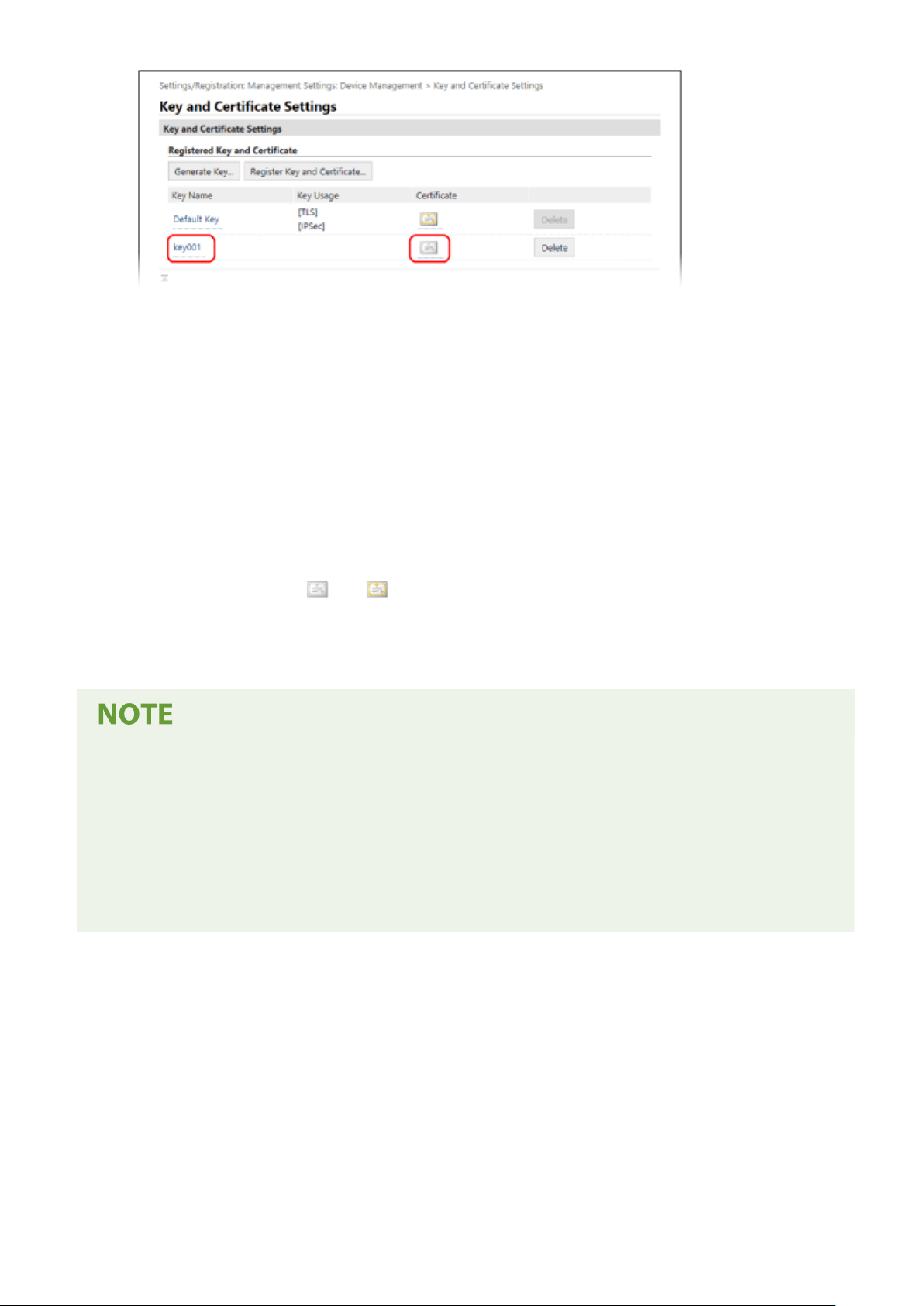
➠ The [Ke
y and Certicate Signing Request (CSR) Details] screen is displayed.
5
Click [Register Certicate].
6
In [Specify File], click [Browse], and specify the le of the certicate issued b
y the
certicate authority.
7
Click [Register].
➠ The icon of the certicate displayed in [Register
ed Key and Certicate] on the [Key and Certicate Settings]
screen changes from [
] to [ ].
8
Log out from Remote UI.
Viewing and Verifying Detailed Information of a Registered Certicate
● Click the key name (or certicate icon) in [Registered Key and Certicate] on the [Key and Certicate Settings]
screen to display the certicate details.
● On the certicate details screen, click [Verify Certicate] to verify that the certicate is valid.
When the Key and Certicate Cannot Be Deleted
● You cannot delete a key and certicate being used. Disable the function being used, or delete these after
switching to another key and certicate.
Security
369

Registering a Key and Certicate or CA Certicate
Obtained fr
om an Issuing Authority
8W0J-07Y
Install and r
egister a key and certicate or CA certicate obtained from a digital certicate issuing authority to the
machine before starting to use them.
Register the key and certicate or CA certicate using Remote UI from a computer. You cannot use the control panel to
register these.
Administrator privileges are required.
Required Preparations
● Check the conditions of the k
ey and certicate or CA certicate usable with the machine.
Keys and
Certicates(P
. 38)
● When registering a key and certicate, check the password for the private key set in the le.
1
Log in to Remote UI in System Manager Mode. Starting Remote UI(P. 399)
2
On the Portal page of Remote UI, click [Settings/Registration]. Portal Page of
Remote UI(P
. 401)
3
Click [Device Management]
[Key and Certicate Settings] or [CA Certicate
Settings].
➠ The [Ke
y and Certicate Settings] screen or [CA Certicate Settings] screen is displayed.
4
Click [Register Key and Certicate] or [Register CA Certicate].
➠ The [Register Ke
y and Certicate] screen or [Register CA Certicate] screen is displayed.
5
Install the key and certicate le or CA certicate le.
1
Click [Install].
2
Click [Browse] in [Specify File], and specify the le to be installed.
3
Click [Start Installation].
➠ The installed le is added to [Installed Ke
y and Certicate] on the [Register Key and Certicate] screen
or [Installed CA Certicate] on the [Register CA Certicate] screen.
6
Registering the key and certicate or CA certicate.
When registering a key and certicate
1
To the right of the key and certicate le to r
egister, click [Register].
Security
370
➠ The [Enter Private Ke
y Password] screen is displayed.
2
Enter the key name password using single-byte alphanumeric characters, and click [OK].
➠ The r
egistered key and certicate are added to [Registered Key and Certicate] on the [Key and
Certicate Settings] screen.
When registering a CA certicate
T
o the right of the CA certicate le to register, click [Register].
➠ The registered CA certicate is added to [Registered CA Certicate] on the [CA Certicate Settings] screen.
7
Log out from Remote UI.
Viewing and Verifying Detailed Information of a Registered Certicate
● When you click the k
ey name (or certicate icon) in [Registered Key and Certicate] on the [Key and
Certicate Settings] screen, the certicate details appear.
● On the certicate details screen, click [Verify Certicate] to verify that the certicate is valid.
Viewing and Verifying Detailed Information of a Registered CA Certicate
● When you click the issued to location in [Registered CA Certicate] on the [CA Certicate Settings] screen, the
CA certicate details appear.
● On the CA certicate details screen, click [Verify Certicate] to verify that the CA certicate is valid.
When the Key and Certicate or CA Certicate Cannot Be Deleted
● You cannot delete a key and certicate being used. Disable the function being used, or delete these after
switching to another key and certicate.
● A preinstalled CA certicate cannot be deleted. If a preinstalled CA certicate is not required, click [Disable]
to the right of the CA certicate.
Security
371

Verifying a Received Certicate with OCSP
8W0J-080
Online Certicate Status Pr
otocol (OCSP) is a protocol for inquiring to an OCSP responder (server that supports OCSP)
about the revocation status of a certicate received from a certicate authority.
You can congure the settings to verify the validity of a certicate that the machine receives from a certicate
authority, using the OCSP.
Congure these settings using Remote UI from a computer. You cannot use the control panel to congure the
settings.
Administrator privileges are required.
1
Log in to Remote UI in System Manager Mode.
Starting Remote UI(P. 399)
2
On the Portal page of Remote UI, click [Settings/Registration]. Portal Page of
Remote UI(P. 401)
3
Click [Device Management] [OCSP (Online Certicate Status Pr
otocol) Settings]
[Edit].
➠ The [Edit OCSP (Online Certicate Status Pr
otocol) Settings] screen is displayed.
4
Select the [Use OCSP (Online Certicate Status Pr
otocol)] checkbox.
5
Set the certicate verication le
vel and the OCSP responder.
[Certicate V
erication Level]
Set whether to validate the certicate even if its revocation status cannot be conrmed, such as when the
machine is unable to connect to an OCSP responder.
[OCSP Responder Settings]
Specify the URL of the OCSP responder.
[Custom URL]
When [Use Custom URL] or [Use Certicate URL (Use Custom URL If Certicate URL Cannot Be Retrieved)] is
selected, enter the URL of the OCSP responder.
[Communication Timeout]
Enter the time from search start to timeout in seconds.
6
Click [OK].
➠ The settings ar
e applied.
7
Log out from Remote UI.
Security
372

Preventing Sending Data by Mistake and Leaking
Information
8W0J-081
Unintentionally sending a fax to the wr
ong destination or leaving a received fax document on the machine poses a risk
of information leakage. In addition, while sending a fax from a computer and using mobile devices are easy and
convenient, these can lead to operation errors and information theft.
You can take measures to prevent sending data by mistake and leaking information, according to the usage status of
the function, to ensure safer use of the machine.
Restricting and Conrming the Destination
You can restrict the destinations to which scanned data and faxes are sent and have a screen conrming the
destination displayed when sending these.
Limiting Available Destinations(P. 374)
Conrming the Destination befor
e Sending(P. 376)
Appropriately Restricting Functions
You can restrict access to part or all of a function when sending a fax or using mobile devices.
Restricting Fax Sending(P. 378)
Restricting Use from a Mobile Device(P. 380)
Pr
eventing Unattended Printed Documents and Information Theft
You can store received faxes on the machine without printing them immediately.
Restricting Printing(P. 381)
Security
373

Limiting Available Destinations
8W0J-082
Y
ou can prevent sending faxes or scanned data by mistake and leaking data by not allowing users to use destinations
in the send function log and by limiting send destinations to those registered in the Address Book.
Prohibiting the Use of Destinations in the Send Log(P. 374)
Sending Only to Registered Destinations(P. 375)
You cannot limit destinations for faxes sent by computer.
● Even when the use of ne
w destinations or destinations from the send function log is prohibited, users can
send faxes from a computer (PC faxing) to a destination of their choice. To more strictly limit the available
destinations, you must also prohibit the sending of faxes from the computer.
Prohibit Fax Sending from
a Computer(P
. 378)
Prohibiting the Use of Destinations in the Send Log
Pr
event specifying destinations in the TX Job Log of scan or fax jobs.
This section describes how to congure the settings using Remote UI from a computer.
On the control panel, select [Menu] in the [Home] screen, and then select [Function Settings] to congure the settings.
[Restrict Resending from Log](P. 485)
Administr
ator privileges are required.
1
Log in to Remote UI in System Manager Mode.
Starting Remote UI(P. 399)
2
On the Portal page of Remote UI, click [Settings/Registration]. Portal Page of
Remote UI(P
. 401)
3
Click [TX Settings]
[Common Settings] [Edit].
➠ The [Edit Common Settings] scr
een is displayed.
4
In [Common Settings], select the [Restrict Resending from Log] checkbox.
5
Click [OK].
➠ The settings ar
e applied.
6
Log out from Remote UI.
Security
374

Sending Only to Registered Destinations
This limits the available send destinations to the following:
● Destinations in the Addr
ess Book.
When this function is enabled, users cannot enter a destination using the numeric keys or register or edit the Address
Book. In addition, the TX Job Log recorded before enabling this function is deleted, leaving only the aforementioned
available destinations in the TX Job Log.
This section describes how to congure the settings using Remote UI from a computer.
On the control panel, select [Menu] in the [Home] screen, and then select [Function Settings] to congure the settings.
[Restrict New Destinations](P. 485)
Administr
ator privileges are required.
1
Log in to Remote UI in System Manager Mode.
Starting Remote UI(P. 399)
2
On the Portal page of Remote UI, click [Settings/Registration]. Portal Page of
Remote UI(P. 401)
3
Click [TX Settings] [Restrict New Destinations] [Edit].
➠ The [Edit Settings for Ne
w Destinations Restrictions] screen is displayed.
4
Select the [Restrict New Destinations] checkbox.
5
Click [OK].
➠ The settings ar
e applied.
6
Log out from Remote UI.
Security
375

Conrming the Destination befor
e Sending
8W0J-083
Congur
e the settings to display a screen conrming the destination before an e-mail or fax is sent. Conrm that there
are no mistakes in the specied destination and entered information to prevent sending by mistake.
Choosing When to Display the Conrmation Screen
● When specifying a destination with a coded dial number or one-touch dial
When a destination is specied with a coded dial number or one-touch dial, the registered destination and
destination name are displayed on the conrmation screen. When a group is registered to a coded dial
number or one-touch dial, the group name and number of destinations are displayed.
● When sending an e-mail or fax
When you press
to
send an e-mail or fax a screen conrming the destination is displayed. Set whether
to display this only when sending to multiple destinations (Sequential Broadcast) or whenever sending a
fax or e-mail.
● When entering a fax number using the numeric keys
When you enter a fax number using the numeric keys and press
, a screen appears prompting you to
enter
the number again. When you enter a second and subsequent destinations, they are displayed before
the next destination is entered.
This section describes how to congure the settings using Remote UI from a computer.
On the control panel, select [Menu] in the [Home] screen, and then select [Function Settings] to congure the settings.
[Common Settings](P. 485) /
[Conrm Enter
ed Fax Number](P. 496)
Administrator privileges are required.
1
Log in to Remote UI in System Manager Mode.
Starting Remote UI(P. 399)
2
On the Portal page of Remote UI, click [Settings/Registration]. Portal Page of
Remote UI(P. 401)
3
Click [TX Settings].
➠ The [TX Settings] scr
een is displayed.
4
Congure the setting so that the scr
een conrming the destination is displayed.
To display the screen when specifying the destination using a coded dial number or
one-touch dial
1
Click [Common Settings]
[Edit].
➠ The [Edit Common Settings] scr
een is displayed.
2
In [Common Settings], select the [Conrm When Using One-
Touch/Coded Dial TX] checkbox.
3
Click [OK].
Security
376

To display the screen when sending an e-mail or fax
1
Click [Common Settings] [Edit].
➠ The [Edit Common Settings] scr
een is displayed.
2
In [Common Settings], select the [Conrm Destination Befor
e Sending] checkbox, and select the item to
display.
3
Click [OK].
To display the screen when entering a fax number using the numeric keys
1
Click [Fax TX Settings] [Edit].
➠ The [Edit Fax TX Settings] scr
een is displayed.
2
In [Basic Settings], select the [Conrm Enter
ed Fax Number] checkbox.
3
Click [OK].
5
Log out from Remote UI.
Security
377

Restricting Fax Sending
8W0J-084
Y
ou can prohibit fax sending from a computer (PC faxing) and the function for collectively sending a fax to multiple
destinations (Sequential Broadcast) to prevent information leakage via fax.
Prohibit Fax Sending from a Computer(P. 378)
Prohibiting Fax Sending to Multiple Destinations(P. 378)
Prohibit Fax Sending from a Computer
You can prohibit users from sending a fax from a fax driver, thereby disabling PC faxing.
This section describes how to congure the settings using Remote UI from a computer.
On the control panel, select [Menu] in the [Home] screen, and then select [Function Settings] to congure the settings.
[Allow Fax Driver TX](P. 496)
Administr
ator privileges are required.
1
Log in to Remote UI in System Manager Mode.
Starting Remote UI(P. 399)
2
On the Portal page of Remote UI, click [Settings/Registration]. Portal Page of
Remote UI(P. 401)
3
Click [TX Settings] [Fax TX Settings] [Edit].
➠ The [Edit Fax TX Settings] scr
een is displayed.
4
In [Basic Settings], clear the [Allow Fax Driver TX] checkbox.
5
Click [OK].
➠ The settings ar
e applied.
6
Log out from Remote UI.
Prohibiting Fax Sending to Multiple Destinations
This section describes ho
w to congure the settings using Remote UI from a computer.
On the control panel, select [Menu] in the [Home] screen, and then select [Function Settings] to congure the settings.
[Restrict Sequential Broadcast](P. 496)
Administr
ator privileges are required.
1
Log in to Remote UI in System Manager Mode.
Starting Remote UI(P. 399)
Security
378

2
On the Portal page of Remote UI, click [Settings/Registration].
Portal Page of
Remote UI(P
. 401)
3
Click [TX Settings]
[Fax TX Settings] [Edit].
➠ The [Edit Fax TX Settings] scr
een is displayed.
4
In [Basic Settings], set [Restrict Sequential Broadcast] to [Reject Sequential
Br
oadcast].
5
Click [OK].
➠ The settings ar
e applied.
6
Log out from Remote UI.
Security
379

Restricting Use from a Mobile Device
8W0J-086
The machine supports the Mopria
®
plugin, which is supported by various manufacturers.
Mopria
®
enables printing from any application, such as on a smartphone, or a device equipped with Chrome OS
without having to install a dedicated Canon plugin.
Printing from a mobile device can be easy and convenient, but it can also lead to information leakage. You can also
prohibit use of Mopria
®
.
Congure this setting using Remote UI from a computer. You cannot use the control panel to congure the setting.
Administrator privileges are required.
1
Log in to Remote UI in System Manager Mode.
Starting Remote UI(P. 399)
2
On the Portal page of Remote UI, click [Settings/Registration]. Portal Page of
Remote UI(P
. 401)
3
Click [Network Settings]
[Mopria Settings] [Edit].
➠ The [Edit Mopria Settings] scr
een is displayed.
4
Clear the [Use Mopria] checkbox, and click [OK].
➠ The settings ar
e applied.
5
Log out from Remote UI.
● When the Mopria
®
setting is enabled, the HT
TP, IPP printing, mDNS (IPv4/IPv6) network settings, and
Network Link Scan settings are also enabled.
-
[TCP/IP Settings](P. 444)
Security
380


Saving Received Documents in the Machine (Memory
Lock)
8W0J-089
Memory Lock tempor
arily saves received faxes in the memory of the machine without printing them immediately.
Faxes saved in the memory can be printed later, thereby preventing unattended printed documents and information
theft. In addition, unneeded faxes can be deleted without printing to help save paper.
Setting Memory Lock(P. 382)
Viewing and Printing Faxes Saved in the Memory(P. 383)
Setting Memory Lock
This section describes how to congure the settings using Remote UI from a computer.
On the control panel, select [Menu] in the [Home] screen, and then select [Function Settings] to congure the settings.
[Fax Memory Lock Settings](P. 499)
Administr
ator privileges are required.
1
Log in to Remote UI in System Manager Mode.
Starting Remote UI(P. 399)
2
On the Portal page of Remote UI, click [Settings/Registration]. Portal Page of
Remote UI(P. 401)
3
In [RX/Forwarding Settings], click [Common Settings].
➠ The [Common Settings] scr
een is displayed.
4
In [Memory Lock Settings], click [Edit].
➠ The [Edit Memory Lock Settings] scr
een is displayed.
5
Select the [Use Memory Lock] checkbox.
6
Congure the functions r
elated to Memory Lock, as needed.
To enable fax preview
Select the [Use Fax Pr
eview] checkbox.
You can preview the fax on Remote UI. When you enable preview, you can also see the details of the fax and
print with the Memory Lock setting enabled.
* This cannot be set at the same time as [Specify Memory Lock Time].
To print an RX Result Report to provide notication of Memory Lock
Select the [Print Report] checkbox.
* To use this function, RX Result Report must be enabled. Printing and Viewing Reports and Lists(P. 408)
To enable Memory Lock only at a specied time period
Select the [Specify Memory Lock Time] checkbo
x and enter a start and end time.
Security
382

7
Click [OK].
➠ The settings ar
e applied.
8
Log out from Remote UI.
● When Memory Lock is disabled, all fax
es saved in the memory are printed automatically. Memory Lock is
disabled in the following cases:
- When the [Use Memory Lock] checkbox is cleared
- When the end time of [Specify Memory Lock Time] has been reached
Viewing and Printing Faxes Saved in the Memory
When you enable pr
eview in Memory Lock, you can see the details of the fax and print with the Memory Lock setting
enabled.
This section describes how to view this information and print using Remote UI from a computer.
On the control panel, press
to view this information. You cannot use the control panel to view some items. In
addition, you cannot use the control panel to print documents. Checking the Status and Log for Sent and
Received Fax
es(P. 293)
Administrator privileges are required.
1
Log in to Remote UI in System Manager Mode.
Starting Remote UI(P. 399)
2
On the Portal page of Remote UI, click [Status Monitor/Cancel].
Portal Page of
Remote UI(P
. 401)
3
In [RX], click [Job Status].
➠ The [RX: Job Status] scr
een is displayed.
4
View or print the fax.
● When you click the job number, the [
Job Details] screen is displayed. You can view the reception time and
number of pages, and preview the fax.
Security
383

● When you click [Print All], all fax
es saved in the memory are printed.
5
Log out from Remote UI after viewing the information or printing.
Security
384

Preventing Unauthorized Use
8W0J-08A
The machine handles a variety of information including the Addr
ess Book and print data. It also provides various
settings to ensure ecient management and operation. While this information and the settings provide convenience,
they can also lead to information leakage and other security issues if the information and settings can be accessed by
anyone.
You can take measures to restrict access and disable functions according to the usage status of the function, to ensure
safer use of the machine.
Restricting Access to Information and Settings
Restricting users and operations accessing information and settings on the machine can help prevent
unauthorized use and protect condential information.
Restricting Address Book Registration and Editing(P. 386)
Restricting Use of Remote UI(P. 388)
Disabling Unused Functions
Y
ou can disable unused functions to prevent intrusion from the outside.
Preventing Connection to Computer via USB Port(P. 391)
Conguring LPD
, RAW, or WSD(P. 392)
Disabling HTTP Communication(P. 394)
◼ See Also
For details about the administr
ator account and how to manage users and groups with access to the machine, see the
following.
Setting the Department ID and PIN for the Administrator(P. 350)
Security
385

Restricting Address Book Registration and Editing
8W0J-08C
T
o prevent unauthorized adding of new entries in the Address Book and editing of existing entries, you can set a PIN
and restrict the method for adding new entries.
Restricting Address Book Registration and Editing by Setting a PIN(P. 386)
Prohibiting Registering Fax Sending Log Destinations to Address Book(P. 387)
● T
o better prevent sending data by mistake and information leakage, allow to send only to registered
destinations, and prohibit the adding and editing of entries in the Address Book.
Limiting Available
Destinations
(P. 374)
Restricting Address Book Registration and Editing by Setting a PIN
Y
ou can require the entry of PIN to add a new entry to the Address Book or edit existing entries.
This section describes how to congure the settings using Remote UI from a computer.
On the control panel, select [Menu] in the [Home] screen, and then select [Set Destination] to congure the settings.
[Address Book PIN](P. 505)
Administr
ator privileges are required.
1
Log in to Remote UI in System Manager Mode.
Starting Remote UI(P. 399)
2
On the Portal page of Remote UI, click [Settings/Registration].
Portal Page of
Remote UI(P
. 401)
3
Click [Address Book PIN]
[Edit].
➠ The [Edit Addr
ess Book PIN] screen is displayed.
4
Select the [Set/Change PIN] checkbox, and set a PIN.
Enter the same number in [Address Book PIN] and [Conrm].
* Y
ou cannot set a PIN consisting of all zeros, such as "00" or "0000000."
5
Click [OK].
➠ The settings ar
e applied.
6
Log out from Remote UI.
Security
386

Clearing the PIN Setting
● Clear the enter
ed values of [Address Book PIN], and then click [OK] with the elds left empty.
Prohibiting Registering Fax Sending Log Destinations to Address Book
Y
ou can restrict the registration of destinations in the fax sending log to Address Book.
This section describes how to congure the settings using Remote UI from a computer.
On the control panel, select [Menu] in the [Home] screen, and then select [Function Settings] to congure the settings.
[Register Log Dest to Addr Book](P. 497)
Administr
ator privileges are required.
1
Log in to Remote UI in System Manager Mode.
Starting Remote UI(P. 399)
2
On the Portal page of Remote UI, click [Settings/Registration].
Portal Page of
Remote UI(P
. 401)
3
Click [TX Settings]
[Fax TX Settings] [Edit].
➠ The [Edit Fax TX Settings] scr
een is displayed.
4
Select the [Restrict Registration of Log Destinations to Address Book] checkbox.
5
Click [OK].
➠ The settings ar
e applied.
6
Log out from Remote UI.
Security
387

Restricting Use of Remote UI
8W0J-08E
While Remote UI is convenient for oper
ating the machine from a computer, it also poses a risk of third-party access to
the machine.
You can congure the setting to require users to enter a PIN (Remote UI Access PIN) when using Remote UI to prevent
unauthorized access by a third party.
If you do not use Remote UI, it is recommended that you disable the function.
Setting the PIN to Use for Remote UI(P. 388)
Disabling Remote UI(P. 389)
Setting the PIN to Use for Remote UI
Y
ou can restrict the use of Remote UI to only those users who know the Remote UI Access PIN.
This section describes how to congure the settings using the control panel.
You can also congure the settings using Remote UI from a computer after the Remote UI Access PIN has been set on
the machine.
Managing the Machine from a Computer (Remote UI)(P. 398)
Administr
ator privileges are required.
Touch Panel Model(P. 388)
5 Lines LCD Model(P. 389)
◼ T
ouch Panel Model
1
On the control panel, press [Menu] in the [Home] screen.
[Home] Screen(P. 120)
2
Press [Management Settings] [Remote UI Settings/Update Firmware] [Remote UI
Settings] [Remote UI Access Security Settings].
➠ The [RUI Access Security] screen is displayed.
If the login screen appears, enter the System Manager ID and PIN, and then press [Log In]. Logging In to
the Machine
(P. 137)
3
Press [On].
4
Enter the Remote UI Access PIN, and press [Apply].
5
Enter the same number, and press [Apply].
➠ The settings ar
e applied.
Security
388
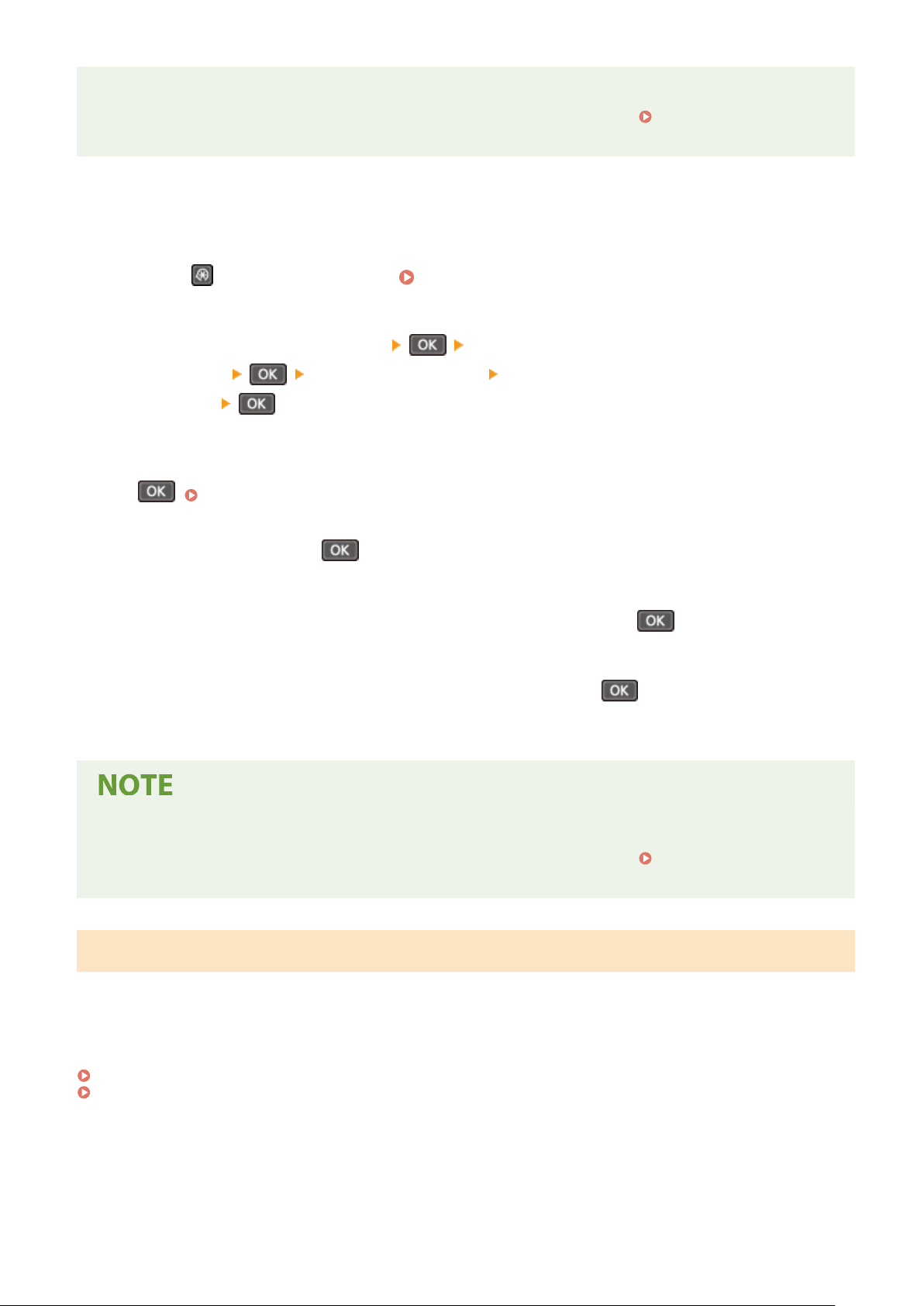
When [Management Settings] of the Settings Menu Is Initialized
● Use the settings menu on the contr
ol panel to reset the Remote UI Access PIN.
[Remote UI Access
Security Settings](P
. 512)
◼ 5 Lines L
CD Model
1
Press
on the control panel. Control Panel(P. 14)
2
Press [Management Settings]
[Remote UI Settings/Update
Firmwar
e]
[Remote UI Settings] [Remote UI Access Security
Settings] .
➠ The [RUI Access Security] scr
een is displayed.
If the login screen appears, enter the System Manager ID and PIN, and then select [<Log In>] and press
. Logging In to the Machine(P. 137)
3
Select [On] and press
.
4
Enter the Remote UI Access PIN, select [<Apply>] and press
.
5
Enter the same number, and press [<Apply>] and press
.
➠ The settings ar
e applied.
When [Management Settings] of the Settings Menu Is Initialized
● Use the settings menu on the contr
ol panel to reset the Remote UI Access PIN.
[Remote UI Access
Security Settings](P
. 512)
Disabling Remote UI
Y
ou can disable Remote UI to reduce the risk of unauthorized access to the machine via the network.
Use the control panel to congure the settings. You cannot congure the settings using Remote UI from a computer.
Administrator privileges are required. The machine must be restarted to apply the settings.
Touch Panel Model(P. 390)
5 Lines LCD Model(P. 390)
Security
389
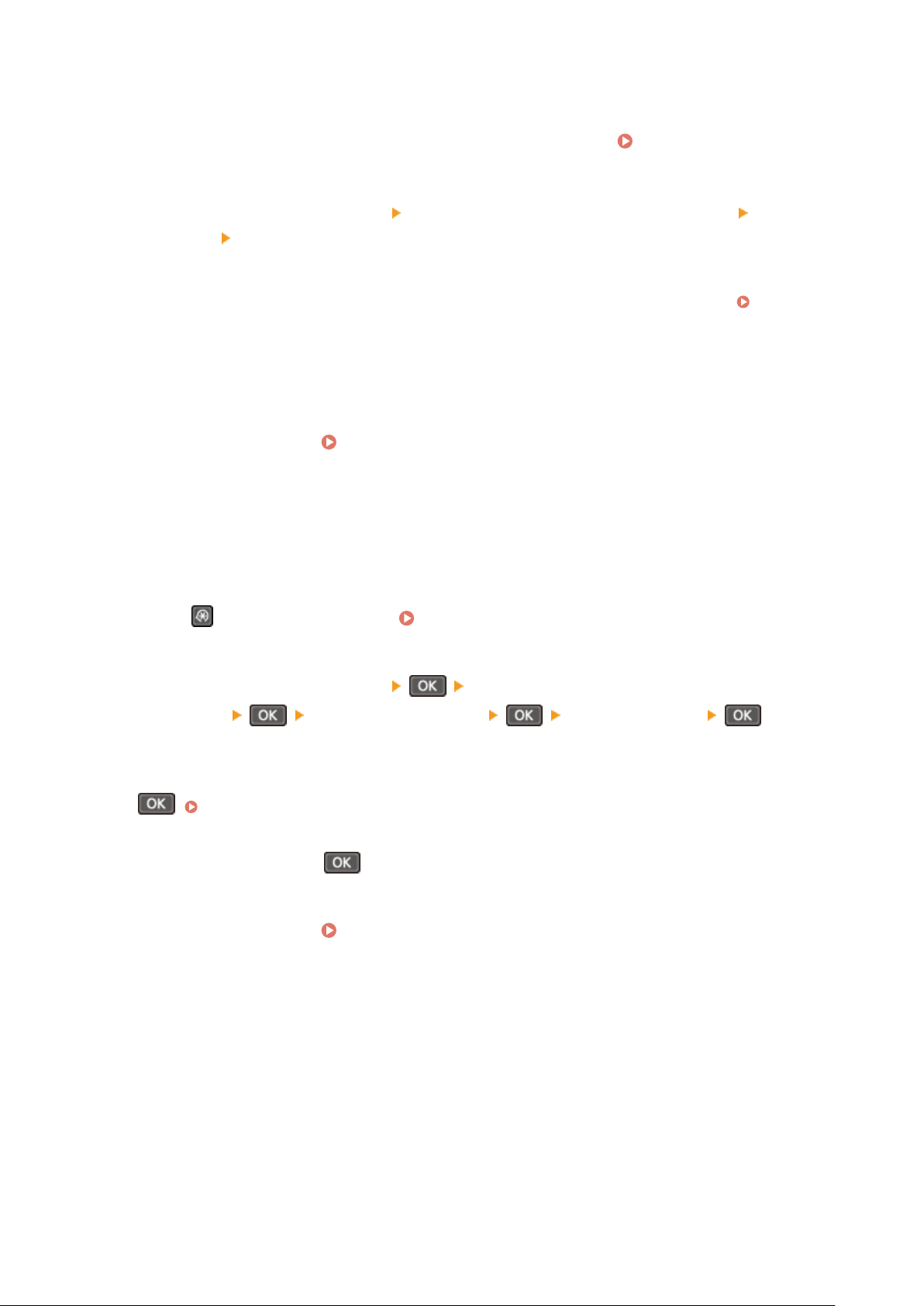
◼ T
ouch Panel Model
1
On the control panel, press [Menu] in the [Home] screen.
[Home] Screen(P. 120)
2
Press [Management Settings] [Remote UI Settings/Update Firmware] [Remote UI
Settings] [Use Remote UI].
➠ The [Use Remote UI] scr
een is displayed.
If the login screen appears, enter the System Manager ID and PIN, and then press [Log In].
Logging In to
the Machine
(P. 137)
3
Press [Off].
4
Restart the machine.
Restarting the Machine(P. 113)
➠ The settings ar
e applied.
◼ 5 Lines LCD Model
1
Press
on the control panel. Control Panel(P. 14)
2
Press [Management Settings]
[Remote UI Settings/Update
Firmware] [Remote UI Settings] [Use Remote UI] .
➠ The [Use Remote UI] screen is displayed.
If the login screen appears, enter the System Manager ID and PIN, and then select [<Log In>] and press
. Logging In to the Machine(P. 137)
3
Select [Off] and press .
4
Restart the machine. Restarting the Machine(P. 113)
➠ The settings ar
e applied.
Security
390

Preventing Connection to Computer via USB Port
8W0J-08F
Y
ou can disable the USB port for computer connection on the back of the machine to reduce the risk of an external
connection without going through a network with security measures.
This section describes how to congure the settings using Remote UI from a computer.
On the control panel, select [Menu] in the [Home] screen, and then select [Preferences] to congure the settings.
[USB Settings](P. 451)
Administr
ator privileges are required. The machine must be restarted to apply the settings.
1
Log in to Remote UI in System Manager Mode.
Starting Remote UI(P. 399)
2
On the Portal page of Remote UI, click [Settings/Registration]. Portal Page of
Remote UI(P
. 401)
3
Click [External Interface Settings]
[Edit].
➠ The [Edit External Interface Settings] scr
een is displayed.
4
Clear the [Use as USB Device] checkbox, and click [OK].
5
Restart the machine.
Restarting the Machine(P. 113)
➠ The settings ar
e applied.
Security
391

Conguring LPD
, RAW, or WSD
8W0J-08H
Select whether to use any of the pr
otocols below on the machine when printing or scanning documents from a
computer.
You are recommended to disable any protocols you will not be using.
When using LPD or RAW, you can congure the time until reception of print data is canceled.
LPD
This protocol is not dependent on the hardware, operating system, or other platform. It is commonly used in
TCP/IP network environments.
RAW
This is Windows' proprietary print data type protocol. It is used as standard in a Windows environment.
WSD
This protocol enables automatic detection of network-connected printers and scanners in a Windows
environment.
This section describes how to congure the settings using Remote UI from a computer.
On the control panel, select [Menu] in the [Home] screen, and then select [Preferences] to congure the settings.
[TCP/IP Settings](P. 444)
Administr
ator privileges are required. The machine must be restarted to apply the settings.
1
Log in to Remote UI in System Manager Mode.
Starting Remote UI(P. 399)
2
On the Portal page of Remote UI, click [Settings/Registration]. Portal Page of
Remote UI(P
. 401)
3
Click [Network Settings].
4
Congure LPD
, RAW, or WSD.
When Conguring LPD
1
Click [LPD Settings]
[Edit].
➠ The [Edit LPD Settings] scr
een is displayed.
2
Set whether to use LPD.
When not using LPD
, clear the [Use LPD Printing] checkbox, and proceed to step 5.
3
Enter the time in [RX Timeout].
Enter the time in minutes from the start of reception standby, after print data reception is canceled, to
the timeout.
When Conguring RA
W
1
Click [RAW Settings] [Edit].
➠ The [Edit RAW Settings] screen is displayed.
2
Set whether to use RAW.
Security
392

When not using RAW, clear the [Use RAW Printing] checkbox, and proceed to step 5.
3
Enter the time in [RX Timeout].
Enter the time in minutes fr
om the start of reception standby, after print data reception is canceled, to
the timeout.
When Conguring WSD
1
Click [WSD Settings]
[Edit].
➠ The [Edit WSD Settings] scr
een is displayed.
2
Set whether to use WSD for each function.
When not using WSD
, clear the checkbox of the function for restricting use of WSD.
Using WSD to Print Data
Select the [Use WSD Printing] checkbox.
The [Use WSD Browsing] checkbox is selected automatically, and WSD is used to obtain the information
of the machine from the computer.
Using WSD to Scan Data
Select the [Use WSD Scanning] checkbox. You can perform scanning from a computer without having to
install a scanner driver.
To be able to specify a computer connected via WSD as the store location when scanning from the
machine, also select the [Use Computer Scanning] checkbox.
When Responding to a Search Request of the Machine by Multicast Discovery
Select the [Use Multicast Discovery] checkbox.
To keep the machine in sleep mode without responding to received multicast discovery packets, clear the
checkbox.
5
Click [OK].
6
Restart the machine.
Restarting the Machine(P. 113)
➠ The settings are applied.
Adding a WSD Network Device
● Click [ ] (Start) [ ] (Settings) [Devices] [Printers & scanners] [Add printers & scanners], and
perform the oper
ations following the instructions on the screen.
● For details about installing the driver via a WSD network, see the manual of the driver at the online manual
site.
https://oip.manual.canon/
Changing the Port Number
● To change the port number of each protocol, see the following:
Changing the Port Number(P. 357)
Security
393
Disabling HTTP Communication
8W0J-08J
It is r
ecommended to disable HTTP communication when using only the USB connection or when not using functions
that require HTTP communication, such as Remote UI, WSD printing, and AirPrint.
This section describes how to congure the settings using the control panel.
You can also congure the settings using Remote UI from a computer.
Managing the Machine from a Computer
(Remote UI)
(P. 398)
Administrator privileges are required.
Touch Panel Model(P. 394)
5 Lines LCD Model(P. 394)
Touch Panel Model
1
On the control panel, press [Menu] in the [Home] screen.
[Home] Screen(P. 120)
2
Press [Preferences] [Network] [TCP/IP Settings] [Use HTTP].
➠ The [Use HTTP] screen is displayed.
If the login screen appears, enter the System Manager ID and PIN, and then click [Log In]. Logging In to
the Machine
(P. 137)
3
Press [Off]
[Yes].
5 Lines LCD Model
1
Press
on the control panel. Control Panel(P. 14)
2
Press [Preferences]
[Network] [TCP/IP Settings] [Use
HT
TP]
.
➠ The [Use HT
TP] screen is displayed.
If the login screen appears, enter the currently set System Manager ID and PIN, then select [<Log In>] and
press
. Logging In to the Machine(P. 137)
3
Select [Off] and press .
4
Select [Yes] and press
.
Security
394

Managing the Machine
Managing the Machine ...............................................................................................................................
396
Setting the Date and Time ................................................................................................................................ 397
Managing the Machine from a Computer (Remote UI) ................................................................................... 398
Starting Remote UI ....................................................................................................................................... 399
Portal Page of Remote UI ............................................................................................................................. 401
Checking Usage and Logs with Remote UI ................................................................................................... 403
Monitoring the Usage ....................................................................................................................................... 405
Checking the Number of Printed Pages (Check Counter) .............................................................................. 406
Printing and Viewing Reports and Lists ........................................................................................................ 408
Changing the Report and List Print Settings .......................................................................................... 411
Clearing the Mail Box ........................................................................................................................................ 413
Importing and Exporting the Address Book .................................................................................................... 414
Updating the Firmware (Touch Panel Model) .................................................................................................. 416
Updating the Firmware (5 Lines LCD Model) ................................................................................................... 419
Initializing the Settings and Data .................................................................................................................... 422
Managing the Machine
395

Managing the Machine
8W0J-08R
This section describes the management functions that ar
e required to operate the machine.
Monitoring the Operation Status and Usage of the Machine, and Conguring the
Settings
Setting the Date and Time
Set the date and time for the machine. The date and time ar
e used as the reference for the functions using
date and time information, and therefore, they need to be set accurately.
Setting the Date and Time(P. 397)
Checking the Oper
ation Status and Changing the Settings (Remote UI)
You can use a Web browser on a computer to check the operation status of the machine, change the
machine settings, and register destinations to the Address Book. You can manage the machine from a
remote location and eciently perform time-consuming settings and registration on your computer.
Managing the Machine from a Computer (Remote UI)(P. 398)
Monitoring the Usage (Contr
ol Panel)
You can use the control panel of the machine to check the total number of printed pages and print
communication results, settings, and other reports and lists.
Monitoring the Usage(P. 405)
Managing Servers, V
arious Data, and Firmware
Clearing the Server Mail Box
Delete mail fr
om the server mail box as needed so that the mail box does not become full with notication
mail sent to the e-mail address of the machine.
Clearing the Mail Box(P. 413)
Managing the Addr
ess Book and Settings
You can use the import and export functions to regularly back up the Address Book. In addition, you can
share the Address Book with other devices to save time on registering destinations and conguring the
settings.
Importing and Exporting the Address Book(P. 414)
Updating the Firmware
Update the rmware to add new functions to the machine and to x bugs. By updating to the latest
rmware, you can use the machine with more stable and comfortable operations.
Updating the Firmware (Touch Panel Model)(P. 416)
Updating the Firmware (5 Lines LCD Model)(P. 419)
Initializing the Settings and Data
You can initialize all settings and data when replacing or disposing of the machine. Initializing the machine
prevents access to condential information and unauthorized use by third parties.
Initializing the Settings and Data(P. 422)
◼ See Also
For the settings required to operate the machine, such as the network settings and fax settings, see the following:
Setting Up(P. 49)
Managing the Machine
396

Setting the Date and Time
8W0J-08S
Set the date and time for the machine. The date and time set her
e are used as the reference for the functions using
date and time information, and therefore, they need to be set accurately.
This section describes how to congure the settings using Remote UI from a computer.
On the control panel, select [Menu] in the [Home] screen, and then select [Preferences] to congure the settings.
[Timer/Energy Settings](P. 434)
1
Log in to Remote UI.
Starting Remote UI(P. 399)
2
On the Portal page of Remote UI, click [Settings/Registration]. Portal Page of
Remote UI(P
. 401)
3
Click [Timer Settings]
[Edit].
➠ The [Edit Timer Settings] scr
een is displayed.
4
Enter the current date and time.
5
Set the time zone according to the region where the machine is used.
Communicating over the Internet is premised on setting the UTC (Coordinated Universal Time) correctly. The
UT
C is a coordinated universal time that is standard for all parts of the world. There is a time difference
depending on the country or region where the machine is used.
6
Set daylight saving time as needed.
● Select the [Use Daylight Saving Time] checkbo
x if the machine is in a country or region with daylight saving
time, and then set the start and end dates.
7
Click [OK].
➠ The settings ar
e applied.
8
Log out from Remote UI.
Managing the Machine
397

Managing the Machine from a Computer (Remote UI)
8W0J-08U
With Remote UI, you can use a W
eb browser on a computer to check the function operation status of the machine,
change the machine settings, and register destinations to the Address Book. You can manage the machine from a
remote location and eciently perform time-consuming settings and registration on your computer.
Remote UI has the following two modes. The functions available with Remote UI vary depending on the mode you
logged in to.
● System Manager Mode
You can use all functions of Remote UI.
● General User Mode
You can monitor usage, view logs, cancel printing, and change some settings.
Starting Remote UI(P. 399)
Portal Page of Remote UI(P. 401)
Checking Usage and Logs with Remote UI(P. 403)
◼ See Also
It is r
ecommended that you set up the following functions to prevent unauthorized use of Remote UI by a third party:
System Manager ID
Set the System Manager ID, which is the exclusive administrator account, so that only users with the ID can
log in to System Manager Mode.
Setting the Department ID and PIN for the Administrator(P. 350)
Remote UI Access PIN
Congur
e this setting to require PIN entry when logging in to Remote UI so that only users with the PIN can
use Remote UI.
Setting the PIN to Use for Remote UI(P. 388)
Managing the Machine
398
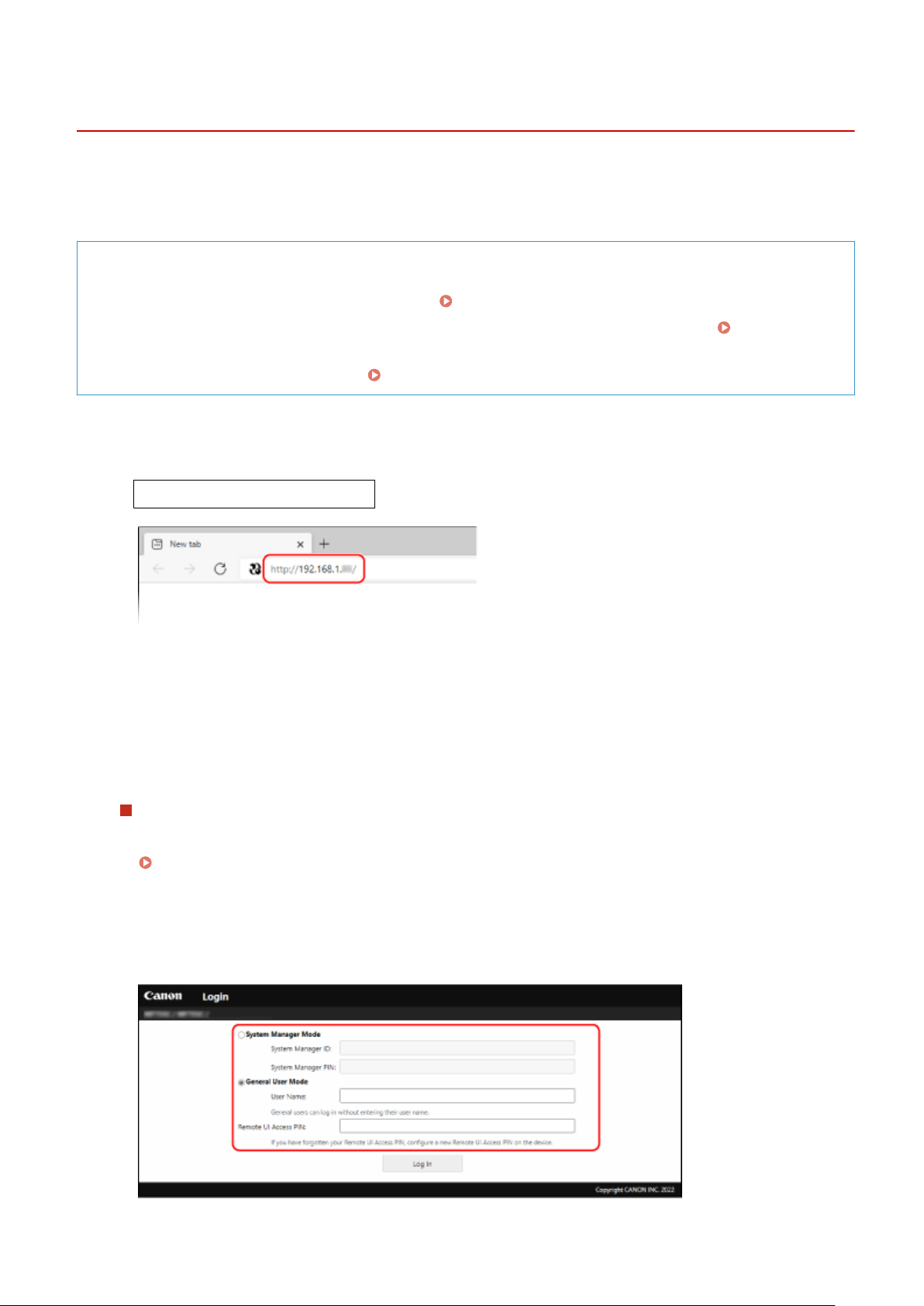
Starting Remote UI
8W0J-08W
T
o use Remote UI, enter the IP address of the machine into a Web browser on a computer, and log in with System
Manager Mode or General User Mode. The functions available with Remote UI vary depending on the mode you
logged in to.
Required Preparations
● Check the oper
ating environment of Remote UI.
Supported Environment(P. 41)
● Connect the computer you ar
e using to operate Remote UI to the machine over a network.
Setting Up the
Network(P
. 56)
● Check the IP address of the machine.
Checking the Network Status and Settings(P. 96)
1
From a Web browser on a computer, access the following URL.
http://<IP address of the machine>/
➠ The Remote UI login screen appears.
When Remote UI communication is encrypted, a warning message about the security certicate may
appear. If there are no problems with the certicate or TLS settings, you can continue operations.
When entering an IPv6 address, enclose the IP address in brackets [ ].
Example:
http://[fe80:2e9e:fcff:fe4e:dbce]/
If the Remote UI Login Screen Is Not Displayed
When a message such as [Cannot access Remote UI.] is displayed and the login scr
een is not displayed, see
the following:
Cannot Access Remote UI or Send Function Setting Tool(P. 623)
2
Enter the items required for login.
Select [System Manager Mode] or [General User Mode], and enter the required items according to the setting
status.
Managing the Machine
399
[System Manager Mode]
When the System Manager ID is set, enter the System Manager ID and System Manager PIN. System
Manager ID and PIN(P
. 5)
* When logging in with System Manager Mode, you must change the System Manager PIN from the default
setting.
Setting the Department ID and PIN for the Administrator(P. 350)
[Gener
al User Mode]
You can log in without entering a user name, but enter a print user name when checking and canceling jobs
waiting to be printed.
* If a user name is not set in the printer driver, the logon user name of the computer that sent the print data
is set automatically.
[Remote UI Access PIN]
When the Remote UI Access PIN is set, enter the PIN.
3
Click [Log In].
➠ The Portal page of Remote UI appears.
Portal Page of Remote UI(P. 401)
4
When you have completed your operations, click [Log Out].
➠ The login scr
een appears after logging out from Remote UI.
● Do not access other websites when using Remote UI.
Setting the Time Until the User Is Automatically Logged Out
● The user is automatically logged out fr
om Remote UI if no operations are performed for a certain period of
time. Use the following procedure to set the time until the user is logged out.
Log in to Remote UI in System Manager Mode [Settings/Registration] [Network Settings]
[Session Settings] [Edit] enter the time until the user is logged out [OK]
Managing the Machine
400
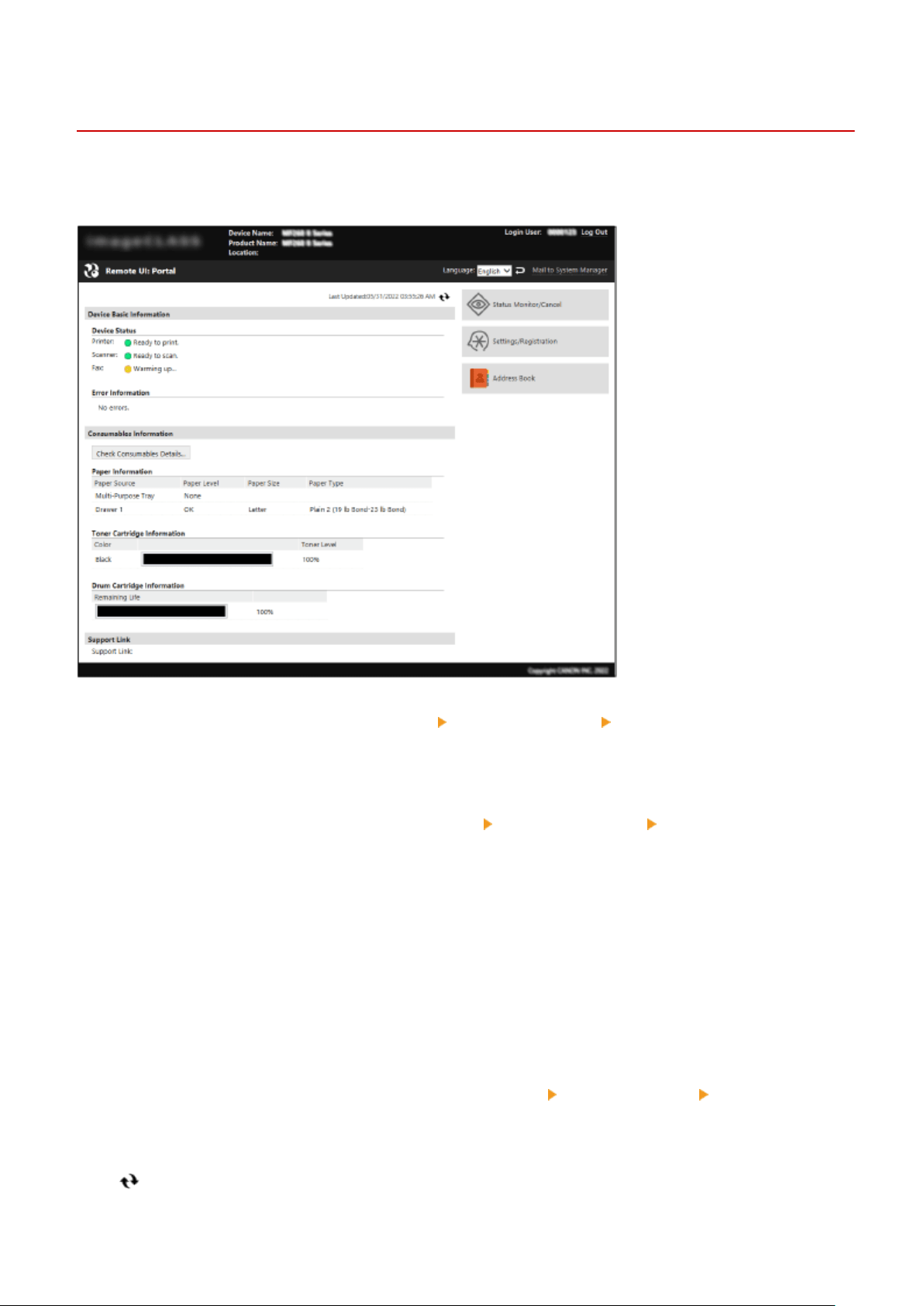
Portal Page of Remote UI
8W0J-08X
When you log in to Remote UI, the Portal page (Remote UI top page) appears. Fr
om here you can check the operations
status of the machine, view various information, and change the settings with button operations.
[Device Name]
Displays the de
vice name set in [Settings/Registration]
[Device Management] [Device Information Settings].
[Pr
oduct Name]
Displays the product name of the machine.
[Location]
Displays the installation location set in [Settings/Registration]
[Device Management] [Device Information
Settings].
[Login User]
Displays the information of the logged in user.
[Log Out]
Y
ou are logged out of Remote UI, and the login screen is displayed.
[Language]
You can change the display language of Remote UI.
* The display languages of the computer and Remote UI must be the same. If the display languages are not the same,
the entered information may not be displayed correctly, or you may not be able to reference a folder, server, or other
specied destination.
[Mail to System Manager]
Creates e-mail for the administrator indicated in [Settings/Registration]
[User Management] [System Manager
Information].
[Last Updated]
Displays the date and time that the information displayed on the Portal page was last updated.
Click [ ] to the right of the date and time to update these.
Managing the Machine
401
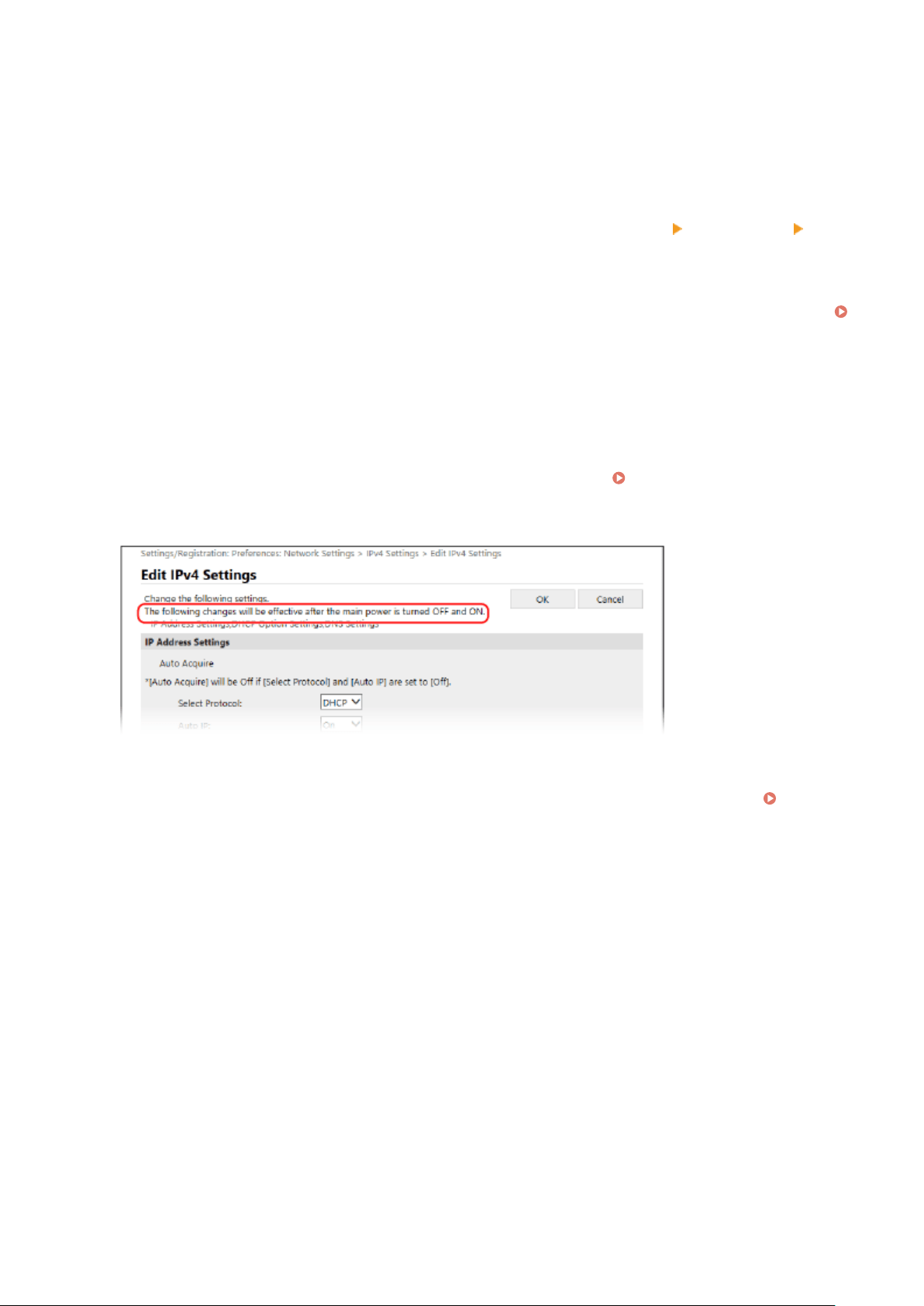
[Device Basic Information]
Displays the curr
ent status and error information of the machine.
When an error occurs, this displays a link to the error information screen.
[Consumables Information]
Displays the paper source information and the remaining amount in the toner cartridge or the drum cartridge.
Click [Check Consumables Details] to display the toner cartridge name and the drum cartridge name.
[Support Link]
Displays a link to support information for this machine that is set in [Settings/Registration]
[License/Other]
[Support Link].
[Status Monitor/Cancel]
Click this to display the [Status Monitor/Cancel] scr
een.
From here, you can check the status and logs of a function, operation status of the machine, and error information.
Checking Usage and Logs with Remote UI(P. 403)
[Settings/Registration]
Click this to display the [Settings/Registr
ation] screen.
If you logged in with System Manager Mode, you can change any settings and perform operations such as saving
and importing data.
● The items that can be set in the [Settings/Registration] screen are nearly the same as those of the control panel,
but some items can only be set with either the control panel or Remote UI.
Settings Menu Items(P. 427)
● Depending
on the item, you may have to restart the machine for the settings to be applied. If a restart is
required, a message appears at the top of the screen.
[Address Book]
Click this to display the [Addr
ess Book] screen.
If you logged in with System Manager Mode, you can register and edit destinations in the Address Book.
Registering Destinations to the Address Book (Remote UI)(P. 176)
Managing the Machine
402
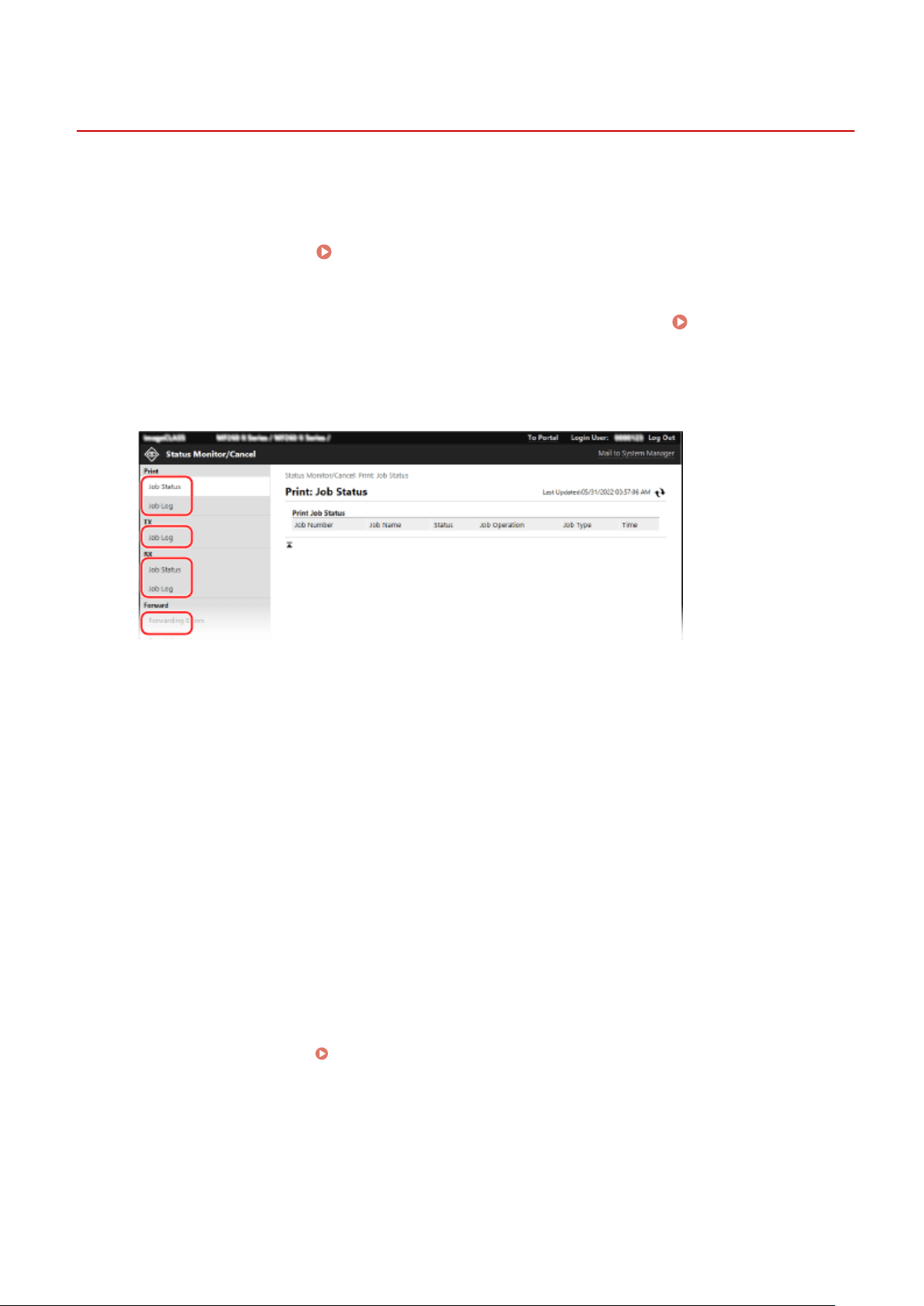
Checking Usage and Logs with Remote UI
8W0J-08Y
Fr
om Status Monitor/Cancel in Remote UI, you can check the status and logs of a function, operation status of the
machine, and error information.
1
Log in to Remote UI.
Starting Remote UI(P. 399)
2
On the Portal page of Remote UI, click [Status Monitor/Cancel]. Portal Page of
Remote UI(P
. 401)
3
Select an item to view the status or log.
[Print]
[Job Status]
Displays the status (Printing or Waiting) of printed data.
When you log in Remote UI using the System Manager Mode, the status of all print jobs is displayed.
If you entered your user name in [User Name] when you logged in with General User Mode, only the print
job status for that user is visible.
● Click [Cancel] in [Job Operation] to delete the print data for jobs that are printing or waiting.
[Job Log]
Displays the print job log.
[TX]
[Job Log]
Displays the TX job log for scan and fax jobs.
[RX]
[Job Status]
Displays the RX job status for fax jobs.
With preview in Memory Lock enabled, you can view the fax details and print the fax when logged in with
System Manager Mode. Saving Received Documents in the Machine (Memory Lock)(P. 382)
[
Job Log]
Displays the RX job log for fax jobs.
[Forward]
[Forwarding Errors]
Displays information of the data being forwarded that ended with an error.
Managing the Machine
403

With preview in Memory Lock enable, you can perform the following operations when logged in with
System Manager Mode. Saving Received Documents in the Machine (Memory Lock)(P. 382)
● Click [
Job Number] to view details and a preview of the data to be forwarded.
● Click [Delete] to delete the data to be forwarded.
* If data cannot be forwarded but remains in the memory, it can be printed.
Checking Faxes that
Failed to Be Forwar
ded(P. 294)
[Error Information]
Displays information of errors occurring on the machine.
* You can view the same information by clicking the link displayed in [Error Information] on the Portal page.
[Consumables]
Displays the paper size and type of each paper source, the toner cartridge name and the drum cartridge
name.
* You can view the same information by clicking [Check Consumables Details] on the Portal page.
[Device Features]
Displays the specications of the machine and the status of optional equipment.
[Device Information]
Displays information of the machine, such as the product name and serial number, as well as the rmware
version and system manager information.
● [Device Name] and [Location] display the information set in [Settings/Registration]
[De
vice
Management]
[Device Information Settings].
● [System
Manager Information] displays the information set in [Settings/Registration]
[User
Management] [System Manager Information].
[Check Counter]
Displays the total number of pages copied and printed to date. Checking the Number of Printed Pages
(Check Counter)
(P. 406)
[Cartridge Log]
Displays a usage record for the toner cartridge or the drum cartridge.
To change the displayed cartridge, select the cartridge from the pulldown menu, and click [Display].
[Eco Information]
Displays the average number of sheets output and average power consumption per month.
You can change the settings of the following items in [Device Settings Status] to save paper and power.
● [N on 1 in Copy Settings]
● [2-Sided in Copy Settings]
● [Use Fax Preview in Memory Lock Settings]
Saving Received Documents in the Machine (Memory
Lock)(P
. 382)
4
Log out from Remote UI after viewing the usage.
Managing the Machine
404

Monitoring the Usage
8W0J-090
Y
ou can use the control panel of the machine to check the total number of copied and printed pages and print
communication results, settings, and other reports and lists.
Checking the Number of Printed Pages (Check Counter)(P. 406)
Printing and Viewing Reports and Lists(P. 408)
◼ See Also
Y
ou can also check the counter using Remote UI from a computer. In Remote UI, you can also check the status and
logs of a function, operation status of the machine, and error information.
Checking Usage and Logs with Remote UI(P. 403)
Managing the Machine
405
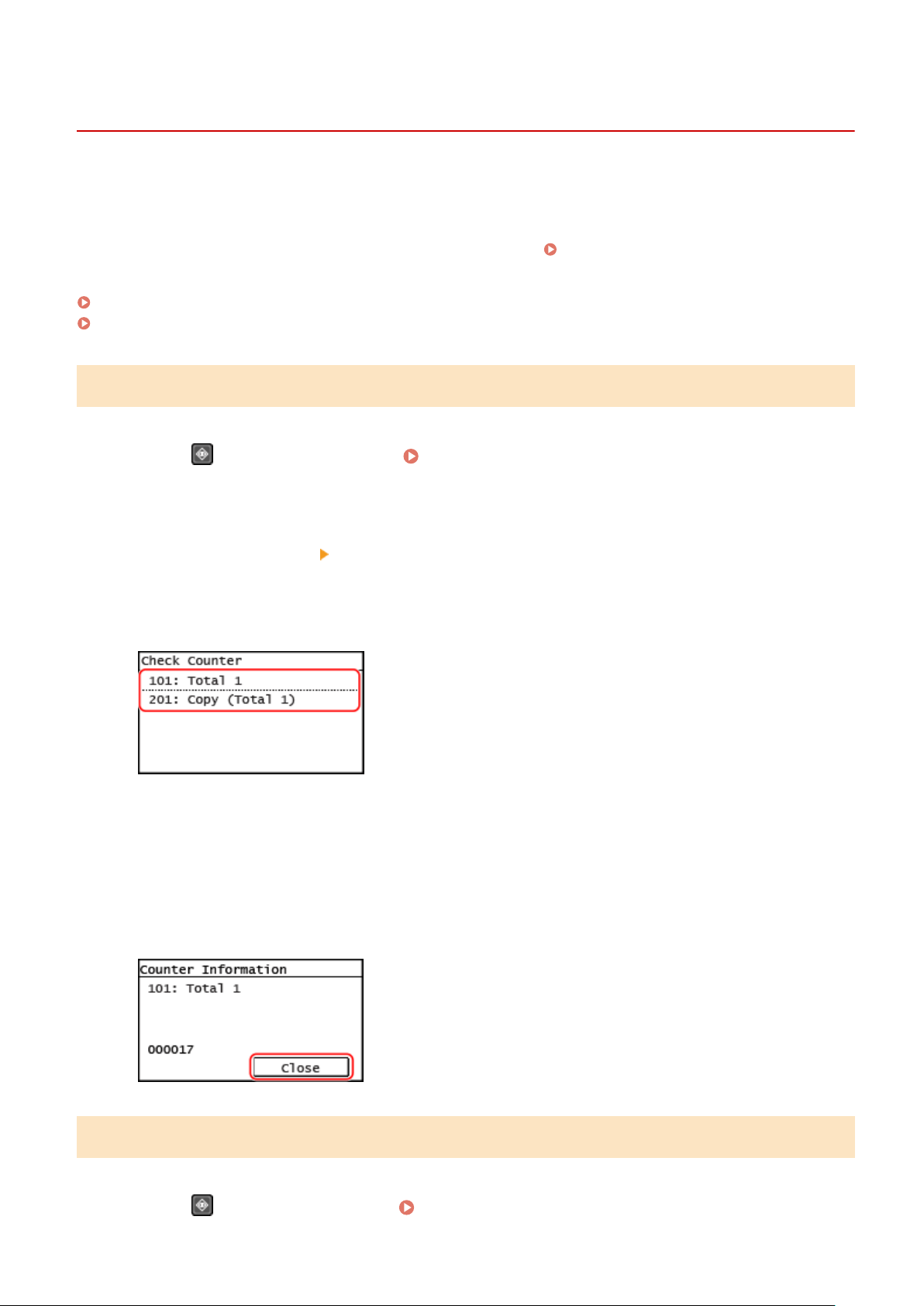
Checking the Number of Printed Pages (Check Counter)
8W0J-091
Y
ou can display a counter showing the total number of pages copied and printed.
The number of printed pages includes received faxes and printed reports and lists.
This section describes how to check the number of printed pages using the control panel.
You can also check this information using Remote UI from a computer.
Checking Usage and Logs with Remote
UI(P
. 403)
Touch Panel Model(P. 406)
5 Lines LCD Model(P. 406)
Touch Panel Model
1
Press on the control panel. Control Panel(P. 14)
➠ The [Status Monitor] scr
een is displayed.
2
Press [Device Status]
[Check Counter].
3
Select the counter to check.
[101: Total 1]
Displays the total number of pages copied and printed.
[201: Copy (Total 1)]
Displays the total number of pages copied.
4
Check the number of printed pages, and press [Close].
5 Lines LCD Model
1
Press
on the control panel. Control Panel(P. 14)
Managing the Machine
406
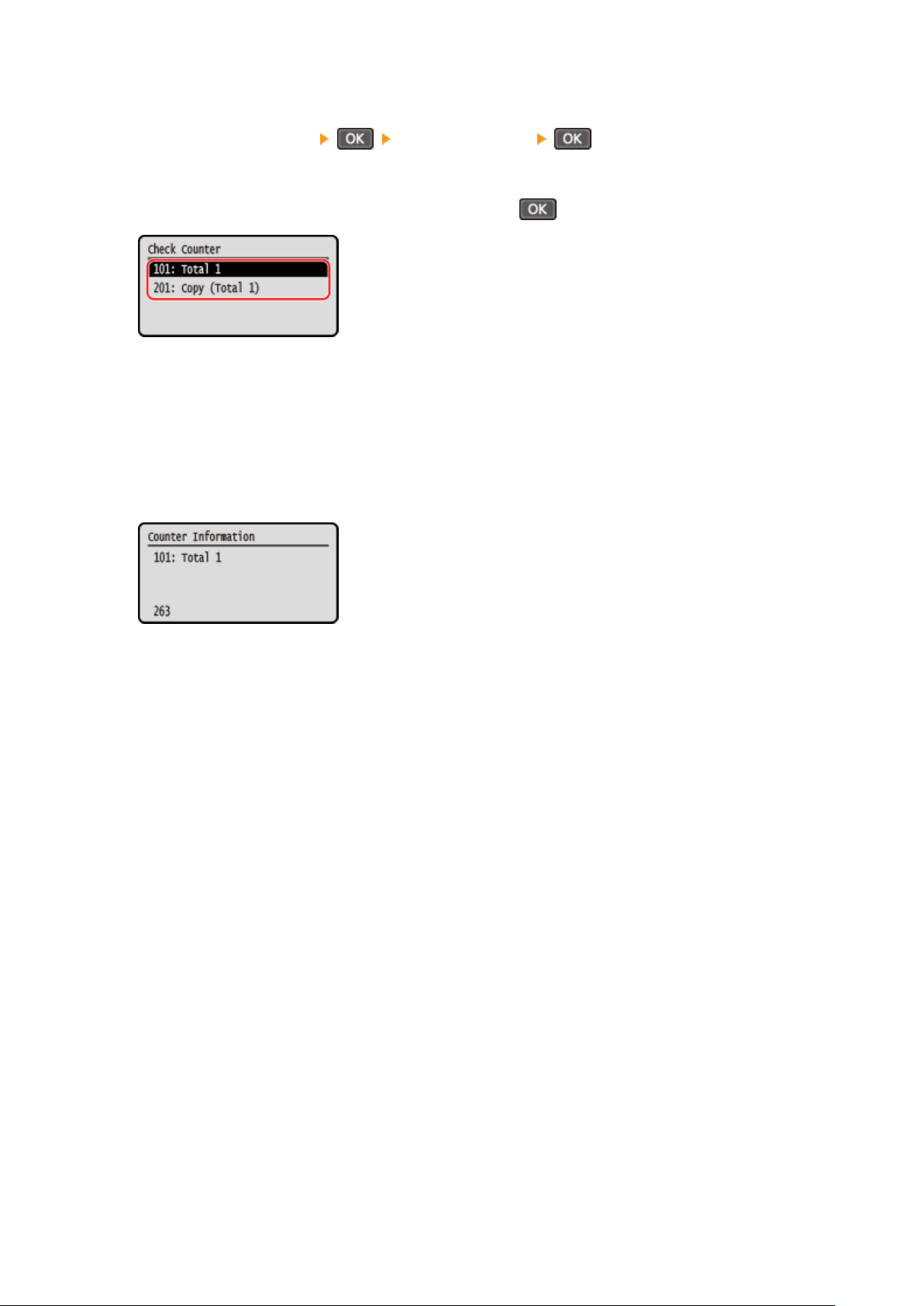
➠ The [Status Monitor] scr
een is displayed.
2
Press [Device Status]
[Check Counter] .
3
Select the item you want to check, and press
.
[101: Total 1]
Displays the total number of pages copied and printed.
[201: Cop
y (Total 1) ]
Displays the total number of pages copied.
4
Check the number of printed pages.
Managing the Machine
407

Printing and Viewing Reports and Lists
8W0J-092
Y
ou can print and view reports and lists including machine usage, communication results, and settings.
Types of Reports and Lists(P. 408)
Printing Reports and Lists(P. 409)
2-Sided Printing of Reports and Lists
● Reports and lists ar
e printed on paper on one side by default. You can change the setting to print on both
sides.
Changing the Report and List Print Settings(P. 411)
Types of Reports and Lists
Machine Usage Reports
Y
ou can print and view the following reports related to usage of the machine including power consumption
and status of consumables:
● Eco Report
Displays the number of printed pages and power consumption per month. You can see how to save paper
and power based on this information.
● Consumables Status Report
Displays the status of consumables installed in the machine.
● Cartridge Log Report
Displays a log of toner cartridge usage.
Communication Results Reports
You can print and view the following reports related to communication results including sending and
receiving results and saving results.
With the exception of communication management reports, communication results reports cannot be
printed manually. You must congure the settings in advance to print the reports automatically.
Changing
the Report and List Print Settings(P
. 411)
● Communication Management Report
Displays all communication results for faxes and scanned data.
By default, this is printed automatically after every 40 communication events.
You can also congure the settings to print sending and saving results and receiving results in a different
format.
● Fax TX Result Report
Displays the fax sending results.
By default, this is printed automatically only when an error occurs.
This can be set to print part of the original in the report.
* The results reports do not include sending results of faxes sent from a computer.
● E-mail, File Sending Result Report
Displays the sending results of e-mails and the saving results of the shared folder.
By default, this is printed automatically only when an error occurs.
* When an error occurs during sending or saving, the error code is not displayed in the e-mail or le
sending result report. To view the error code, print a communication management report.
● RX Result Report
Displays the receiving results for faxes.
By default, this is not printed automatically.
Settings Lists
Managing the Machine
408

You can print and view the following lists that summarize the registration information and settings of the
machine:
● Addr
ess Book List
Displays the destination information registered in the Address Book by [Coded Dial], [One-Touch], and
[Group].
● User Data List
Displays the serial number and other machine information as well as the settings that do not require
administrator privileges.
● System Manager Data List
Displays the serial number and other machine information as well as the settings that require
administrator privileges.
Printing Reports and Lists
Print reports and lists using the control panel. You cannot print these using Remote UI from a computer.
Administr
ator privileges are required to print the following reports and lists:
● System Manager Data List
Touch Panel Model(P. 409)
5 Lines LCD Model(P. 409)
◼ T
ouch Panel Model
1
On the control panel, press [Menu] in the [Home] screen.
[Home] Screen(P. 120)
2
Press [Output Rprt.] [Print List].
➠ The [Print List] screen is displayed.
3
Select the report or list to print.
➠ A scr
een conrming the paper available for printing is displayed.
If the login screen appears, enter the System Manager ID and PIN, and then press [Log In].
Logging In to
the Machine(P. 137)
To Print Address Book List
Select [Addr
ess Book List], and select the items to print.
4
Check that printable paper is set in the machine, and press [OK]
[Yes].
➠ The r
eport or list is printed.
◼ 5 Lines LCD Model
1
Press
on the control panel. Control Panel(P. 14)
Managing the Machine
409

2
Press [Output Reports] [Print List] .
➠ The [Print List] scr
een is displayed.
3
Select the report or list to print, and press
.
➠ A scr
een conrming the paper available for printing is displayed.
If the login screen appears, enter the System Manager ID and PIN, then select [<Log In>] and press
.
Logging In to the Machine(P. 137)
4
Check that printable paper is set in the machine, and press [OK]
[Yes]
.
➠ The r
eport or list is printed.
Managing the Machine
410

Changing the Report and List Print Settings
8W0J-093
Reports and lists ar
e printed on paper on one side by default. You can change the setting to print on both sides. You
can also change the setting to automatically print communication results reports.
*1
*1
For the 5 Lines LCD Model, the reports of communication results are not available.
Use the control panel to congure the settings. You cannot congure the settings using Remote UI from a computer.
Touch Panel Model(P. 411)
5 Lines LCD Model(P. 412)
Touch Panel Model
1
On the control panel, press [Menu] in the [Home] screen.
[Home] Screen(P. 120)
2
Press [Output Rprt.] [Report Settings].
➠ The [Report Settings] scr
een is displayed.
3
Change the report and list print settings.
To Print Reports and Lists on Both Sides
1
Press [Default Settings for Report Output] [2-Sided Printing].
➠ The [2-Sided Printing] scr
een is displayed.
2
Press [On].
To Change the Communication Management Report Settings
1
Press [Communication Management Report].
➠ The [Comm. Mngt. Report] scr
een is displayed.
2
Congure the r
eport settings.
● To print automatically after every 40 communication events, press [Auto Print (40 Transmissions)]
[On].
● T
o congure the settings to print sending and saving results and receiving results in a different
format, press [Separate TX/RX]
[On].
To Change the Fax TX Result Report Settings
1
Press [Fax TX Result Report].
➠ The [Fax TX Result Report] scr
een is displayed.
Managing the Machine
411

2
Select whether to print this report automatically.
● T
o print automatically after each send job, select [On]. To print automatically only when an error
occurs, select [Only When Error Occurs].
● When [On] or [Only When Error Occurs] is selected, in [Include TX Image], select whether to print part
of the original on the report.
To Change the E-mail or File Sending Result Report Settings
1
Press [E-Mail/File TX Result Report].
➠ The [E-Mail/File TX Report] scr
een is displayed.
2
Select whether to print this report automatically.
T
o print automatically after each send or save job, select [On]. To print automatically only when an error
occurs, select [Only When Error Occurs].
To Change the RX Result Report Settings
1
Press [RX Result Report].
➠ The [RX Result Report] scr
een is displayed.
2
Select whether to print this report automatically.
T
o print automatically after each receive job, select [On]. To print automatically only when an error
occurs, select [Only When Error Occurs].
5 Lines LCD Model
1
Press
on the control panel. Control Panel(P. 14)
2
Press [Only When Error Occurs]
[Report Settings] .
➠ The [Report Settings] scr
een is displayed.
3
Select [Default Settings for Report Output] and press
.
➠ The [Default Settings for Report Output] scr
een is displayed.
4
Press [2-Sided Printing]
[On] .
Managing the Machine
412

Clearing the Mail Box
8W0J-094
When scanned data is sent b
y e-mail and a send error occurs, the mail server may send an error notication e-mail to
the e-mail address of the machine. Delete all mail from the server mail box, as needed, so that the mail box does not
become full with notication mail.
Clear the mail box using Remote UI from a computer. You cannot use the control panel to clear the mail box.
Administrator privileges are required.
● When the mail bo
x is cleared, all mail in the e-mail inbox of the server is deleted. Be careful not to delete
needed unread mail.
1
Log in to Remote UI in System Manager Mode.
Starting Remote UI(P. 399)
2
On the Portal page of Remote UI, click [Settings/Registration]. Portal Page of
Remote UI(P
. 401)
3
Click [TX Settings]
[E-Mail Settings].
➠ The [E-Mail Settings] scr
een is displayed.
4
In [Clear Mail Box], click [Clear].
5
Click [OK].
➠ All mail in the mail bo
x on the server is deleted.
6
Log out from Remote UI.
Managing the Machine
413

Importing and Exporting the Address Book
8W0J-095
Y
ou can write the Address Book to les and save (export) them to a computer. You can also load an exported le and
apply (import) the Address Book to the machine.
You can use the import and export functions to back up the Address Book in case of an accident.
In addition, an exported le can be imported to another device
*1
to enable sharing of the Address Book with another
device without having to register destinations.
*1
Some models may not be able to import the Address Book saved from this machine.
Exporting the Address Book(P. 414)
Importing the Address Book(P. 415)
Do Not Turn OFF the Machine until the Import or Export Is Complete.
● It may tak
e a few minutes until the process is completed. Turning OFF the machine during processing may
cause data corruption or damage the machine.
Do Not Operate the Machine during Import or Export.
● Before import or export, check that the machine is not printing or performing other operations.
Exporting the Address Book
W
rite the Address Book to a le.
Congure these settings using Remote UI from a computer. You cannot use the control panel to congure the
settings.
Administrator privileges are required.
1
Log in to Remote UI in System Manager Mode.
Starting Remote UI(P. 399)
2
On the Portal page of Remote UI, click [Settings/Registration]. Portal Page of
Remote UI(P
. 401)
3
Click [Data Management]
[Export].
➠ The [Export] scr
een is displayed.
4
Click [Start Exporting] to save the exported data as a le to a computer.
➠ The Addr
ess Book is exported as a Canon Address Book le (*.abk).
If a PIN is set for the Address Book, enter the Address Book PIN.
5
Log out from Remote UI.
Managing the Machine
414

Importing the Address Book
Specify the exported Address Book le.
File formats for import
● Canon Address Book le (*.abk)
Congure these settings using Remote UI from a computer. You cannot use the control panel to congure the
settings.
Administrator privileges are required.
1
Log in to Remote UI in System Manager Mode.
Starting Remote UI(P. 399)
2
On the Portal page of Remote UI, click [Settings/Registration]. Portal Page of
Remote UI(P
. 401)
3
Click [Data Management]
[Import].
➠ The [Import] scr
een is displayed.
4
Click [Browse] in [File Path], and specify the le to be imported.
5
Click [Start Importing]
[OK].
➠ The selected le is imported to the machine.
If a PIN is set for the Addr
ess Book, enter the Address Book PIN.
6
When the screen indicating that importing has completed appears, click [OK].
7
Log out from Remote UI.
Managing the Machine
415
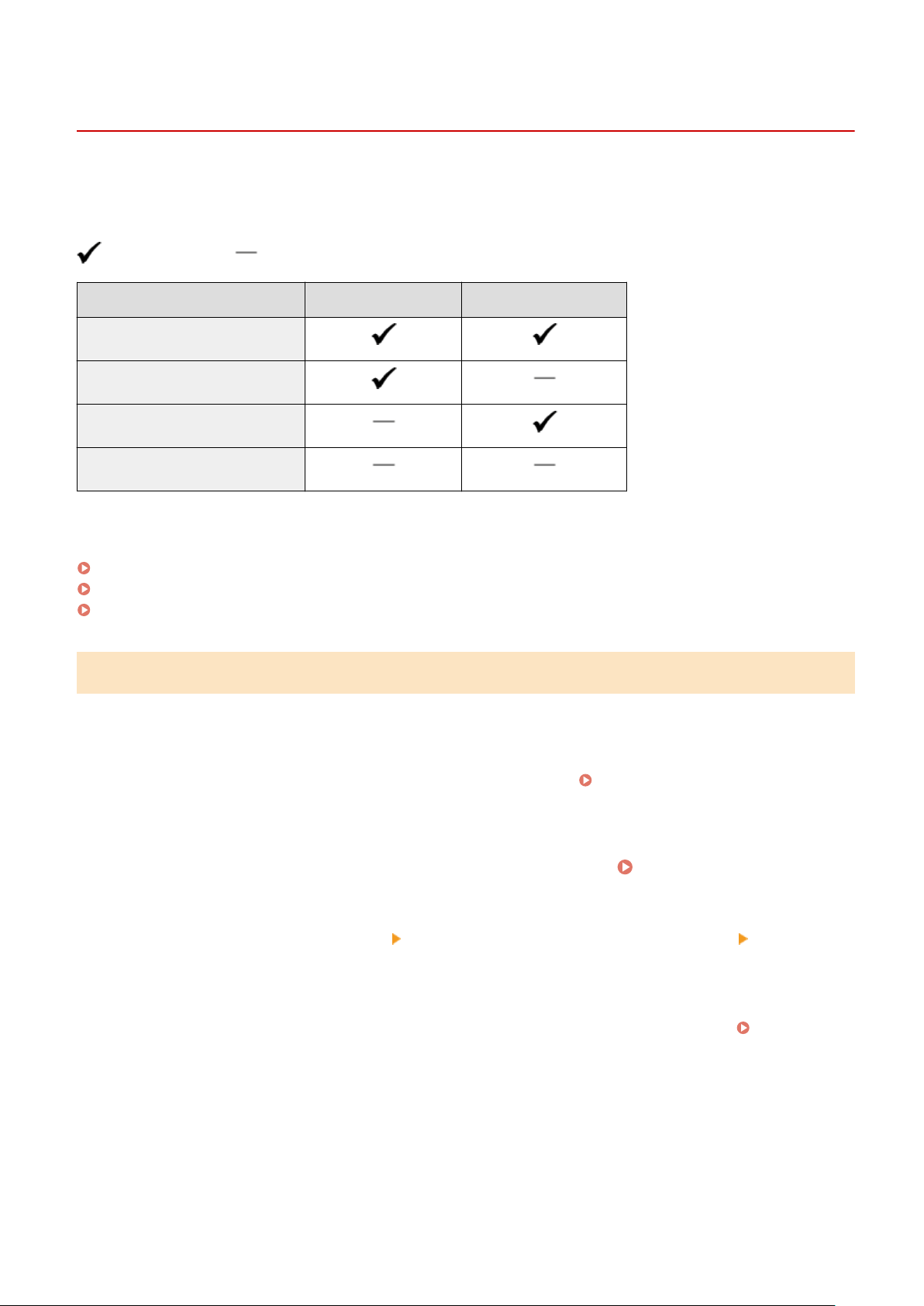
Updating the Firmware (Touch Panel Model)
8W0J-096
When functions ar
e added or the software version is upgraded, the rmware of the machine is updated.
Check the version of the rmware, and update the rmware via the Internet or a computer according to the usage
environment of the machine.
: Can be updated : Cannot be updated
Usage environment of the machine Connection via Internet Connection via computer
Wired LAN connection
Wireless LAN connection
USB connection
Use IPv6
* You cannot update the rmwar
e in an IPv6 Environment. Connect the machine to a computer via USB, and update
from the computer.
Checking the Firmware Version(P. 416)
Updating the Firmware via the Internet(P. 417)
Updating the Firmware via a Computer(P. 417)
Checking the Firmware Version
Check the current version of the rmware before updating it, and then check the version after updating to see if the
update was performed correctly.
This section describes how to check the rmware version using the control panel.
You can also use Remote UI from a computer to check the rmware version. Managing the Machine from a
Computer (Remote UI)(P
. 398)
Administrator privileges are required.
1
On the control panel, press [Menu] in the [Home] screen.
[Home] Screen(P. 120)
2
Press [Management Settings] [Remote UI Settings/Update Firmware] [Update
Firmware].
➠ The [Update Firmware] screen is displayed.
If the login screen appears, enter the System Manager ID and PIN, and then press [Log In]. Logging In to
the Machine
(P. 137)
3
Select [Version Information].
➠ Displays the curr
ent version of the rmware.
Managing the Machine
416
Updating the Firmware via the Internet
Use the control panel to update the rmware via the Internet. You cannot update it using Remote UI from a computer.
Administrator privileges are required. When the rmware has been updated, the machine restarts automatically.
Required Preparations
● Connect the machine to the Internet.
Setting Up the Network(P. 56)
1
On the control panel, press [Update Firmware] in the [Home] screen. [Home]
Screen(P. 120)
➠ The machine accesses the Canon server to see if new rmware is available.
When [This is the latest rmware version.] appears, no update is available.
If the login screen appears, enter the System Manager ID and PIN, and then press [Log In]. System
Manager ID and PIN(P. 5)
2
Press [Yes].
3
In the licensing screen, press [Accept].
➠ The rmwar
e update conrmation screen is displayed.
4
Press [OK].
➠ Do
wnloading of the rmware starts.
When the download is complete, the machine restarts automatically, and the rmware is updated.
● Do not turn OFF the machine until the r
estart is complete.
Updating the Firmware via a Computer
Update the rmwar
e from a computer connected to the machine via wired LAN or USB.
Required Preparations
● Do
wnload the latest rmware from the Canon website for your country/region to the computer performing
the update.
https://global.canon/en/support/
◼ Ho
w to Update from a Computer
See the "User Support Tool Operation Guide" included with the rmware.
Managing the Machine
417

◼ T
o Put the Machine into Update Waiting State (Download Mode)
Use the following procedure.
Use the control panel to perform this operation. You cannot perform this operation using Remote UI from a computer.
Administrator privileges are required.
1
On the control panel, press [Menu] in the [Home] screen.
[Home] Screen(P. 120)
2
Press [Management Settings] [Remote UI Settings/Update Firmware] [Update
Firmwar
e].
➠ The [Update Firmware] screen is displayed.
If the login screen appears, enter the System Manager ID and PIN, and then press [Log In].
Logging In to
the Machine
(P. 137)
3
Press [Via PC]
[Yes].
➠ Switches the machine to do
wnload mode and puts it into update waiting state.
Managing the Machine
418
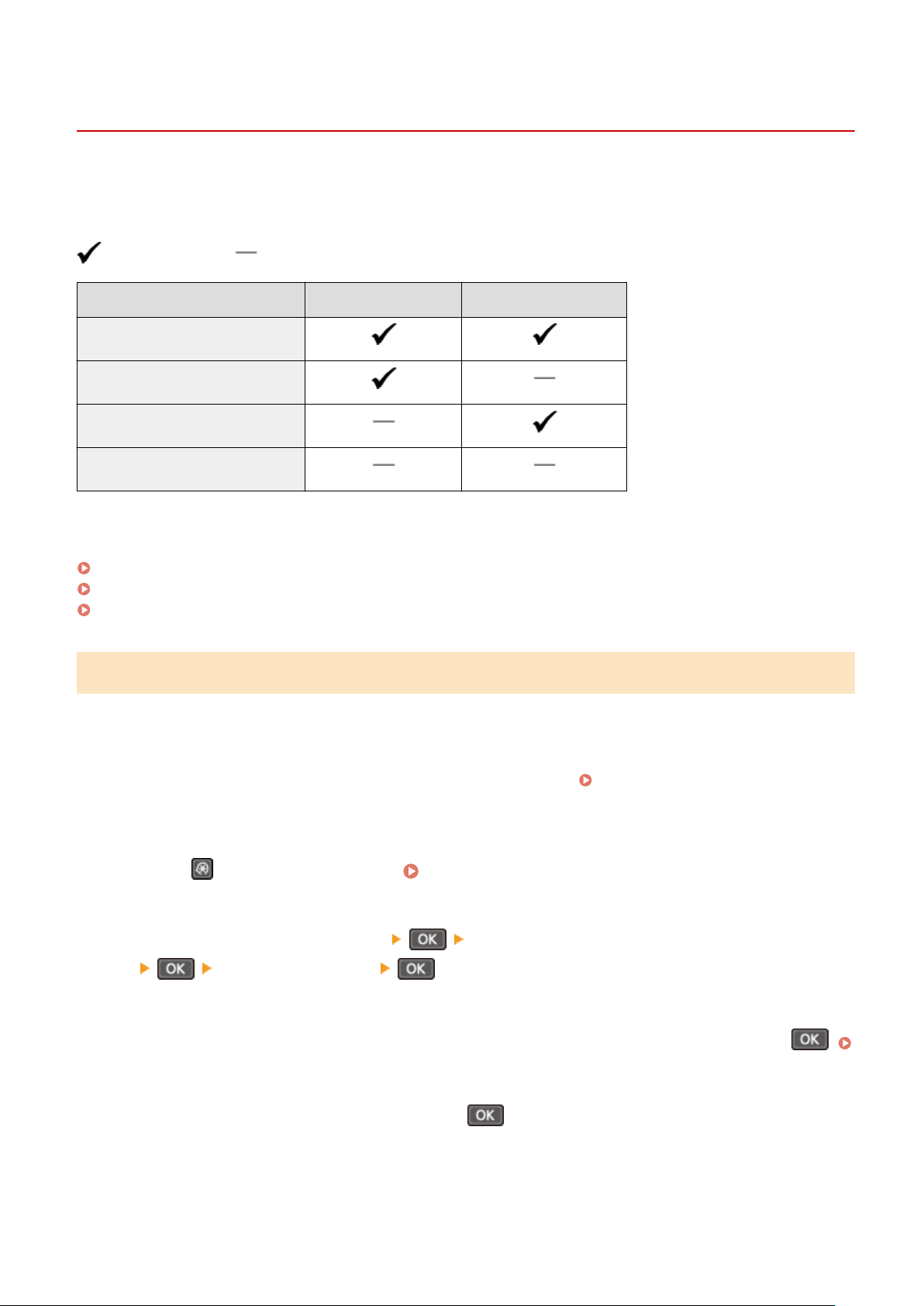
Updating the Firmware (5 Lines LCD Model)
8W0J-097
When functions ar
e added or the software version is upgraded, the rmware of the machine is updated.
Check the version of the rmware, and update the rmware via the Internet or a computer according to the usage
environment of the machine.
: Can be updated : Cannot be updated
Usage environment of the machine Connection via Internet Connection via computer
Wired LAN connection
Wireless LAN connection
USB connection
Use IPv6
* You cannot update the rmwar
e in an IPv6 Environment. Connect the machine to a computer via USB, and update
from the computer.
Checking the Firmware Version(P. 419)
Updating the Firmware via the Internet(P. 420)
Updating the Firmware via a Computer(P. 420)
Checking the Firmware Version
Check the current version of the rmware before updating it, and then check the version after updating to see if the
update was performed correctly.
This section describes how to check the rmware version using the control panel.
You can also use Remote UI from a computer to check the rmware version. Managing the Machine from a
Computer (Remote UI)(P
. 398)
Administrator privileges are required.
1
Press
on the control panel. Control Panel(P. 14)
2
Press [Management Settings]
[Remote UI Settings/Update Firmware]
[Update Firmware] .
➠ The [Update Firmwar
e] screen is displayed.
If the login screen appears, enter the System Manager ID and PIN, then select [<Log In>] and press
.
Logging In to the Machine(P. 137)
3
Select [Version Information] and press .
➠ Displays the curr
ent version of the rmware.
Managing the Machine
419
Updating the Firmware via the Internet
Use the control panel to update the rmware via the Internet. You cannot update it using Remote UI from a computer.
Administrator privileges are required. When the rmware has been updated, the machine restarts automatically.
Required Preparations
● Connect the machine to the Internet.
Setting Up the Network(P. 56)
1
On the control panel, select [Update Firmware] in the [Home] screen, and press
.
[Home] Screen(P. 120)
➠ The machine accesses the Canon server to see if new rmware is available.
When [This is the latest rmware version.] appears, no update is available.
If the login screen appears, enter the System Manager ID and PIN, then select [<Log In>] and press .
Logging In to the Machine(P. 137)
2
Select [Yes] and press
.
3
In the licensing screen, press .
➠ The rmwar
e update conrmation screen is displayed.
4
Press
.
➠ Do
wnloading of the rmware starts.
When the download is complete, the machine restarts automatically, and the rmware is updated.
● Do not turn OFF the machine until the r
estart is complete.
Updating the Firmware via a Computer
Update the rmwar
e from a computer connected to the machine via wired LAN or USB.
Required Preparations
● Do
wnload the latest rmware from the Canon website for your country/region to the computer performing
the update.
https://global.canon/en/support/
Managing the Machine
420
◼ Ho
w to Update from a Computer
See the "User Support Tool Operation Guide" included with the rmware.
◼ To Put the Machine into Update Waiting State (Download Mode)
Use the following procedure.
Use the control panel to perform this operation. You cannot perform this operation using Remote UI from a computer.
Administrator privileges are required.
1
Press
on the control panel. Control Panel(P. 14)
2
Press [Management Settings]
[Remote UI Settings/Update Firmware]
[Update Firmware] .
➠ The [Update Firmwar
e] screen is displayed.
If the login screen appears, enter the System Manager ID and PIN, then select [<Log In>] and press
.
Logging In to the Machine(P. 137)
3
Press [Via PC] [Yes] .
➠ Switches the machine to do
wnload mode and puts it into update waiting state.
Managing the Machine
421

Initializing the Settings and Data
8W0J-098
Y
ou can initialize the settings and registered data to reset the machine to the factory settings. You can initialize
specied settings and data only or initialize all settings and data.
Initializing Specic Settings and Data
You can initialize the following items separately:
● Settings menu: Initializes the settings of [Menu] in the [Home] screen.
● Key and Certicate: Initializes the settings of the key and certicate as well as CA certicate, and clears
everything except the pre-installed key and certicate.
● Address Book: Clears the destinations registered in the Address Book.
Initializing Specic Settings and Data(P
. 422)
Initializing All Settings and Data
You can reset all settings to the factory settings, and clear all stored data including logs. Initialization is
performed to prevent access to condential information and unauthorized use such as when replacing or
disposing of the machine.
Initializing All Settings and Data(P. 423)
Initializing Specic Settings and Data
This section describes how to initialize settings and data using Remote UI from a computer.
On the control panel, select [Menu] in the [Home] screen, and then perform initialization from [Preferences] or
[Management Settings]. [Initialize Network Settings](P. 441) / [Data Management](P. 513)
Administr
ator privileges are required. Depending on the item to be initialized, you may have to restart the machine.
1
Log in to Remote UI in System Manager Mode.
Starting Remote UI(P. 399)
2
On the Portal page of Remote UI, click [Settings/Registration]. Portal Page of
Remote UI(P
. 401)
3
Click [Data Management].
➠ The [Data Management] scr
een is displayed.
4
Select the item to initialize.
Initializing the Settings Menu
Click [Initialize Menu], and select the setting to be initialized fr
om [Menu to Initialize].
When Initializing a Key and Certicate
Click [Initialize Ke
y and Certicate].
When Initializing the Address Book
Click [Initialize Addr
ess Book].
If the [Enter PIN] screen appears, enter the Address Book PIN, and then click [OK].
5
Click [Initialize]
[OK].
Managing the Machine
422

➠ The specied item is initialized.
6
Log out from Remote UI.
When the Settings Menu Is Initialized
When any of the follo
wing is initialized, restart the machine to apply the initialized settings.
Restarting the
Machine
(P. 113)
● [Preferences]
● [Function Settings]
● [Management Settings]
● [Network Settings]
When Initializing a Key and Certicate
● Functions using a k
ey and certicate such as TLS is disabled. To use these functions again, you must set the
key and certicate, and then enable the function.
When [Management Settings] of the Settings Menu Is Initialized
● This also initializes the Remote UI Access PIN. To use Remote UI, you must set the Remote UI Access PIN
again.
Setting the PIN to Use for Remote UI(P. 388)
Initializing All Settings and Data
Use the contr
ol panel to initialize all settings and data. You cannot initialize these using Remote UI from a computer.
Administrator privileges are required. When these are initialized, the machine restarts automatically.
Touch Panel Model(P. 423)
5 Lines LCD Model(P. 424)
◼ T
ouch Panel Model
● Before initialization, check that there is no data being processed or waiting to be processed. This data is
deleted when the initialization is performed.
1
On the control panel, press [Menu] in the [Home] screen.
[Home] Screen(P. 120)
2
Press [Management Settings] [Initialize All Data/Settings].
➠ The initialization conrmation scr
een is displayed.
If the login screen appears, enter the System Manager ID and PIN, and then press [Log In].
Logging In to
the Machine
(P. 137)
Managing the Machine
423
3
Press [Yes]
[Yes].
➠ All settings and data ar
e initialized.
When initialization is complete, the machine restarts automatically.
◼ 5 Lines LCD Model
1
Press
on the control panel. Control Panel(P. 14)
2
Press [Management Settings]
[Initialize All Data/Settings] .
➠ The initialization conrmation scr
een is displayed.
If the login screen appears, enter the currently set System Manager ID and PIN, then select [<Log In>] and
press
. Logging In to the Machine(P. 137)
3
Press [Yes] [Yes] .
➠ All settings and data ar
e initialized.
When initialization is complete, the machine restarts automatically.
Managing the Machine
424

Settings Menu Items
Settings Menu Items ....................................................................................................................................
427
[Preferences] ...................................................................................................................................................... 428
[Display Settings] .......................................................................................................................................... 430
[Timer/Energy Settings] ................................................................................................................................ 434
[Network] ..................................................................................................................................................... 437
[Wireless LAN Settings] .......................................................................................................................... 442
[TCP/IP Settings] .................................................................................................................................... 444
[External Interface] ....................................................................................................................................... 451
[Accessibility] ................................................................................................................................................ 452
[Volume Settings] ......................................................................................................................................... 454
[Adjustment/Maintenance] .............................................................................................................................. 457
[Adjust Image Quality] .................................................................................................................................. 458
[Special Processing] ............................................................................................................................... 459
[Maintenance] .............................................................................................................................................. 463
[Function Settings] ............................................................................................................................................ 464
[Common] .................................................................................................................................................... 465
[Paper Feed Settings] ............................................................................................................................. 466
[Print Settings] ....................................................................................................................................... 467
[Scan Settings] ....................................................................................................................................... 468
[Generate File] ....................................................................................................................................... 469
[Copy] ........................................................................................................................................................... 470
[Printer] ........................................................................................................................................................ 472
[Printer Settings] .................................................................................................................................... 473
[PDL Selection (Plug and Play)] .............................................................................................................. 483
[Send] ........................................................................................................................................................... 484
[Common Settings] ................................................................................................................................ 485
[Scan and Send Settings] ....................................................................................................................... 487
[Fax Settings] ......................................................................................................................................... 493
[Receive/Forward] ........................................................................................................................................ 498
[Common Settings] ................................................................................................................................ 499
[Fax Settings] ......................................................................................................................................... 501
[Set Destination] ................................................................................................................................................ 505
[Management Settings] .................................................................................................................................... 506
[User Management] ..................................................................................................................................... 508
[Device Management] .................................................................................................................................. 509
Settings Menu Items
425

[Remote UI Settings/Update Firmware] ........................................................................................................
511
[Remote UI Settings] .............................................................................................................................. 512
[Data Management] ..................................................................................................................................... 513
[Security Settings] ......................................................................................................................................... 514
[Authentication/Password Settings] ....................................................................................................... 515
[Toner Deliv. Set.] or [Toner Delivery Set.] ........................................................................................................ 516
Settings Menu Items
426
Settings Menu Items
8W0J-099
This section describes the items available in the settings menu displayed when you pr
ess [Menu] in the [Home] screen
on the control panel.
From the settings menu, you can run functions and modify the settings according to the machine's operating
environment or its usage.
Administrator privileges are required to view or change some settings. Note also that the machine may need to be
restarted for changed settings to take effect.
[Preferences](P. 428)
[Adjustment/Maintenance](P. 457)
[Function Settings](P. 464)
[Set Destination](P. 505)
[Management Settings](P. 506)
[Toner Deliv. Set.] or [Toner Delivery Set.](P. 516)
Menu Route Map (List)
This list sho
ws you the settings menu items and the values set.
Click the icon below to view the corresponding Menu Route Map (PDF).
Touch Panel Model
5 Lines LCD Model
◼ See Also
If a Login Scr
een Appears
If a System Manager ID has been set, a login screen may appear when certain items are selected. Once you
enter the required information and the login is authenticated, you can view or change the settings.
Logging In to the Machine(P. 137)
If the Machine Must be Restarted
After changing the settings, r
estart the machine.
Restarting the Machine(P. 113)
Settings Not Included in the Menus
The Paper Settings items appear when you pr
ess [Paper Set.] or [Paper Settings]
in the [Home]
scr
een.
Specifying the Paper Size and Type(P. 152)
The toner delivery settings scr
een is displayed by pressing [Toner Deliv. Set.] on the [Home] screen or
pressing [Toner Delivery Set.]
on the [Home] screen.
Conguring Settings fr
om Remote UI
The settings menu items can also be specied from a computer using Remote UI. In Remote UI, specify the
settings from [Settings/Registration] in the Portal page.
The items that can be specied in [Settings/Registration] in Remote UI are almost identical to those in the
control panel settings menu, but there are also items that can be specied only from the control panel or
only from Remote UI. Note also that some of the item names differ in Remote UI.
Managing the Machine from a Computer (Remote UI)(P. 398)
Checking the Settings
Y
ou can check a list of the current settings by printing them out.
Printing and Viewing Reports and Lists(P. 408)
Settings Menu Items
427

[Preferences]
8W0J-09A
These ar
e settings used to congure features such as the control panel screen displays and the network settings
according to the environment in which the machine is used.
[Display Settings](P. 428)
[Timer/Energy Settings](P. 428)
[Network](P. 428)
[External Interface](P. 428)
[Accessibility](P. 428)
[Volume Settings](P. 429)
[Display Settings]
[Menu] [Preferences]
Congur
e the control panel screen displays.
[Display Settings](P. 430)
[Timer/Energy Settings]
[Menu] [Preferences]
Set the date and time and specify the Ener
gy Saver settings.
[Timer/Energy Settings](P. 434)
[Network]
[Menu] [Preferences]
Congur
e the network environment for the machine.
[Network](P. 437)
[External Interface]
[Menu] [Preferences]
Congur
e the USB connection.
[External Interface](P. 451)
[Accessibility]
[Menu] [Preferences]
Congur
e control panel screen features such as screen color inversion and message display time to make the screen
easier to see.
[Accessibility](P. 452)
Settings Menu Items
428


[Display Settings]
8W0J-09C
Congur
e the control panel screen displays.
* Values in bold red text are the default settings for each item.
[Default Screen after Startup/Restoration](P. 430)
[Button Display Order on Home Screen](P. 430)
[Language](P. 431)
[Remote UI Language](P. 431)
[Millimeter/Inch Entry Switch](P. 432)
[Gram/Pound Switch](P. 432)
[Displ. Timing for Cartridge Prep. Notif.]
(P
. 432)
[Display IP Address](P. 433)
[Notify to Clean Original Scanning Area]
(P
. 433)
[Default Screen after Startup/Restoration]
[Menu] [Preferences] [Display Settings]
Specify the scr
een displayed after the start screen appears when the machine is turned ON and immediately after an
Auto Reset.
Setting this for the [Status Monitor] enables you to also specify the screen displayed immediately after the [Status
Monitor] screen is closed.
[Home]
[Cop
y]
[Fax]
*1
[Scan]
[Status Monitor]
[Home]
[Copy]
[Fax]
*1
[Scan]
*1
May not be displayed depending on the model, the installed options, and other settings.
[Button Display Order on Home Screen]
[Menu] [Preferences] [Display Settings]
Rearr
ange the buttons so that you can run frequently used functions more quickly from the [Home] screen of the
control panel.
Customizing the [Home] Screen(P. 135)
T
ouch Panel Model
[Set Display Order]
[Insert and Delete Blank]
5 Lines LCD Model
Settings Menu Items
430

[Copy]
[Scan]
[Menu]
[Paper Settings]
[Scan -> PC]
[Paper Save Cop
y]
[Passport Copy]
[Mobile Portal]
[Display Order (Home)]
[Update Firmware]
[Wireless LAN Set.]
[Toner Delivery Set.]
*1
*1 [Toner Delivery Set.] is only displayed when [Select Country/Region] is set to [United States (US)].
[Language]
[Menu] [Preferences] [Display Settings]
Change the language shown on the control panel and used in printed reports.
* Depending on your country or region, the [Language] setting may not be available, or its content or default setting
may be different.
[Deutsch]
[English]
[Español]
[Français]
[Italiano]
[Português]
[日本語]
[中文(繁體)]
[中文(简体)]
[한국어]
[Remote UI Language]
[Menu] [Preferences] [Display Settings]
Change the language shown on Remote UI screens.
* Depending on your country or region, the [Remote UI Language] setting may not be available, or its content or
default setting may be different.
[English]
[
Japanese]
[French]
[Spanish]
[German]
[Italian]
[Portuguese]
[Chinese (Simplied)]
[Chinese (Traditional)]
[Korean]
Settings Menu Items
431

[Millimeter/Inch Entry Switch]
[Menu] [Preferences] [Display Settings]
Change the units sho
wn on the screen for entering length and width.
[Millimeter]
[Inch]
[Gram/Pound Switch]
[Menu] [Preferences] [Display Settings]
Y
ou can change the units displayed such as for the paper weight.
* [Gram/Pound Switch] is only displayed when [Select Country/Region] is set to [United States (US)] or [Canada (CA)].
[Gram]
[Pound]
[Displ. Timing for Cartridge Prep. Notif.]
[Menu] [Preferences] [Display Settings]
When the toner in a toner cartridge runs lo
w or the lifetime of the drum cartridge is close to end, a message appears
notifying you to prepare a new toner cartridge or drum cartridge. To manually specify when this message appears (the
toner level in a cartridge or how much the drum is used), specify the timing in [Custom].
When [Auto] is set, the machine automatically decides when to display the message.
Touch Panel Model
[Toner Cartridge]
[Auto]
[Custom]
20 to 99(%)
[Drum Cartridge]
[Auto]
[Custom]
20 to 99(%)
5 Lines LCD Model
[Toner Cartridge]
[Auto]
[Custom]
2 to 20 to 99(%)
[Drum Cartridge]
[Auto]
[Custom]
2 to 10 to 99(%)
Settings Menu Items
432

[Display IP Address]
[Menu] [Preferences] [Display Settings]
Specify whether to display the machine
's IPv4 address in the [Status Monitor] screen.
[Status Monitor]
Scr
een(P. 124)
[Off]
[On]
[Notify to Clean Original Scanning Area]
[Menu] [Preferences] [Display Settings]
Specify whether a message is displayed to notify you if soiling is detected during feeder use.
* [Notify to Clean Original Scanning Ar
ea] may not be displayed depending on the model, the installed options, and
other settings.
[Off]
[On]
Settings Menu Items
433

[Timer/Energy Settings]
8W0J-09E
Set the date and time and specify the Ener
gy Saver settings.
* Values in bold red text are the default settings for each item.
[Quiet Mode Time](P. 434)
[Current Date/Time Settings](P. 434)
[Date/Time Settings](P. 434)
[Date Format](P. 435)
[Time Format](P. 435)
[Auto Reset Time](P. 435)
[Function After Auto Reset](P. 436)
[Auto Sleep Time](P. 436)
[Quiet Mode Time]
[Menu] [Preferences] [Timer/Energy Settings]
Specify the period of time wher
e the machine enters and exits the quiet mode in order to reduce the operation sound
of the machine.
Reducing the Operation Sound (Quiet Mode)(P. 197)
[Off]
[On]
[Start Time]
0:00 to 12:59 AM/PM
[End Time]
0:00 to 12:59 AM/PM
[Current Date/Time Settings]
[Menu] [Preferences] [Timer/Energy Settings]
Set the date and time for the machine. The date and time set her
e are used as a reference for the functions that use
date and time information.
Setting the Date and Time(P. 397)
Befor
e conguring this setting, check that the correct time zone is selected.
[Date/Time Settings](P. 434)
* The curr
ent date and time cannot be changed for one hour after Daylight Saving Time is set.
[Date/Time Settings]
[Menu] [Preferences] [Timer/Energy Settings]
Set the time zone (UTC
*1
) and Daylight Saving Time accor
ding to the region where the machine is installed.
*1
The UTC (Coordinated Universal Time) is a coordinated universal time that is standard for all parts of the world. Internet-
based communication relies on the UTC being set correctly.
* Depending on your country or region, the [Date/Time Settings] setting may not be displayed, or its content or default
setting may be differ
ent.
Settings Menu Items
434
* When you change the time zone, the current time setting is automatically changed accordingly. [Current Date/
Time Settings](P
. 434) .
* If daylight saving time is enabled, specify the dates from which and to which daylight saving time is in effect.
[Time Zone]
[(UT
C-12:00) International Date Line West] to [(UTC) Coordinated Universal Time] to [(UTC+14:00) Kiritimati Island]
[Daylight Saving Time Settings]
[Off]
[On]
[Start]: Month, Week, Day
[End]: Month, Week, Day
[Date Format]
[Menu] [Preferences] [Timer/Energy Settings]
Set the or
der in which the year, month, and day are displayed.
* Depending on your country or region, the [Date Format] setting may not be available, or its content or default
setting may be different.
[YYYY MM/DD]
[MM/DD/YYYY]
[DD/MM YYYY]
[Time Format]
[Menu] [Preferences] [Timer/Energy Settings]
Set 12 Hour or 24 Hour as the format for displayed time.
[12 Hour (AM/PM)]
[24 Hour]
[Auto Reset Time]
[Menu] [Preferences] [Timer/Energy Settings]
If the contr
ol panel is not used for a set period, a function called "Auto Reset Time" automatically restores the default
settings.
You can specify the amount of time that elapses before Auto Reset is performed.
* You can also change the screen that is displayed after an Auto Reset.
[Function After Auto Reset](P. 436)
0 (Off)
1 to 2 to 9 (min.)
Situations Where Auto Reset is Not Triggered
● When the Err
or lamp on the control panel is ashing
Control Panel(P. 14)
● When the [Menu] scr
een or an error message
*1
is displayed on the control panel
Settings Menu Items
435

● When pr
ocessing of some sort (such as printing or sending and receiving faxes) is in progress
*1
Auto Reset is performed for some messages.
[Function After Auto Reset]
[Menu] [Preferences] [Timer/Energy Settings]
Set the screen displayed after an Auto Reset.
● T
o view the specied screen, specify the screen in [Default Function]. Specify the displayed screen in [Default
Screen after Startup/Restoration].
[Default Screen after Startup/Restoration](P. 430)
● T
o display the screen for the function being used before the Auto Reset, specify the screen in [Selected
Function].
[Default Function]
[Selected Function]
[Auto Sleep Time]
[Menu] [Preferences] [Timer/Energy Settings]
Set the time after which the machine automatically goes into sleep mode. Reducing Power Consumption (Sleep
Mode)(P
. 114)
* Use of the default settings is recommended to achieve the most effective power savings.
1 to 60 (min.)
Settings Menu Items
436
[Network]
8W0J-09F
Specify the settings for the machine
's network environment.
* Values in bold red text are the default settings for each item.
[Select Wired/Wireless LAN](P. 437)
[Wireless LAN Settings](P. 437)
[Direct Connection Settings](P. 437)
[Easy Connection via PC](P. 438)
[TCP/IP Settings](P. 438)
[SNMP Settings](P. 438)
[Dedicated Port Settings](P. 439)
[Dedicated Port Authentication Method](P. 439)
[Waiting Time for Connection at Startup]
(P
. 439)
[Ethernet Driver Settings](P. 439)
[IEEE 802.1X Settings](P. 440)
[Firewall Settings](P. 440)
[RMT-SW](P. 441)
[Initialize Network Settings](P. 441)
[Select Wired/Wireless LAN]
[Menu] [Preferences] [Network]
Set whether to connect the machine to the network using a wir
ed or wireless LAN.
Selecting Wired or Wireless
LAN(P
. 58)
* If you are switching from a wired LAN to a wireless LAN, you can make the change within the procedure for
conguring the wireless LAN.
[Wir
ed LAN]
[Wireless LAN]
[Wireless LAN Settings]
[Menu] [Preferences] [Network]
Specify the settings for connecting the machine to a wir
eless LAN and to save energy while the machine is connected
to a wireless LAN.
[Wireless LAN Settings](P. 442)
[Direct Connection Settings]
[Menu] [Preferences] [Network]
Specify the settings for using a dir
ect connection and for the connection function.
Enabling the Direct Connection
Function
(P. 330)
[Use Direct Connection]
[Off]
[On]
[Time Until Dir
ect Connection Termination]
0 (Off)
1 to 60 (min.)
[Access Point Mode Settings]
[Use Custom SSID]
Settings Menu Items
437

[Off]
[On]
[SSID (1-20 Char
acters)]
[Use Custom Network Key]
[Off]
[On]
[Network Key (10 Char.)]
[Keep Enabled If SSID/Ntwk Key Spcfd]
*1
[Off]
[On]
[IP Address Settings for Direct Conn.]
192.168.22.1
*1
May not be displayed depending on the model, the installed options, and other settings.
[Easy Connection via PC]
[Menu] [Preferences] [Network]
Start cableless setup mode.
T
o congure the network settings using the Canon Laser NW Device Setup Utility, select cableless setup mode.
* You can download the Canon Laser NW Device Setup Utility from the Canon website for your country/region.
https://global.canon/en/support/
[TCP/IP Settings]
[Menu] [Preferences] [Network]
Specify the settings for using the machine on a T
CP/IP network.
[TCP/IP Settings](P. 444)
[SNMP Settings]
[Menu] [Preferences] [Network]
Specify the settings for setting up, monitoring, and contr
olling the machine using SNMP management software.
Conguring SNMP
(P. 91)
To ensure compliance with the protocol's advanced specications (RFC2790) when the machine’s status is being
monitored, set [Format Host Resources MIB to RFC2790] to [On].
[SNMPv1 Settings]
[Off]
[On]
[SNMPv3 Settings]
[Off]
[On]
[Acquir
e Printer Mngt. Info. from Host]
[Off]
Settings Menu Items
438
[On]
[Format Host Resour
ces MIB to RFC2790]
[Off]
[On]
[Dedicated Port Settings]
[Menu] [Preferences] [Network]
Specify whether to use a dedicated port.
Use a dedicated port for tasks such as printing fr
om a computer, scanning using the MF Scan Utility, and conguring
or browsing the machine's settings.
[Off]
[On]
[Dedicated Port Authentication Method]
[Menu] [Preferences] [Network]
Set the authentication method when using a dedicated port.
If you specify [Mode 2], communication via the dedicated port will be limited to secur
e authentication methods only.
This may mean that you cannot connect to the machine from device management software, drivers or other software.
[Mode 1]
[Mode 2]
[Waiting Time for Connection at Startup]
[Menu] [Preferences] [Network]
Set the waiting time until a connection is established when the machine starts up.
If the machine is connected via a de
vice such as a switching hub, you may not be able to connect to the network even
when the setting on the machine is correct. If so, set the waiting time and reconnect.
0 to 300 (sec.)
[Ethernet Driver Settings]
[Menu] [Preferences] [Network]
Set the Ethernet communication method. Manually Conguring the Ethernet Settings(P
. 84)
This also allows you to check the MAC address on a wired LAN.
Viewing the MAC Address of the Wired LAN(P. 98)
T
ouch Panel Model
[MAC Address]
[Auto Detect]
[Off]
[Communication Mode]
[Half Duple
x]
[Full Duplex]
Settings Menu Items
439
[Ethernet Type]
[10B
ASE-T]
[100BASE-TX]
[On]
5 Lines LCD Model
[Auto Detect]
[Off]
[Communication Mode]
[Half Duple
x]
[Full Duplex]
[Ethernet Type]
[10BASE-T]
[100BASE-TX]
[On]
[MAC Address]
[IEEE 802.1X Settings]
[Menu] [Preferences] [Network]
Specify whether to use IEEE 802.1X.
Use Remote UI fr
om a computer to set the IEEE 802.1X authentication method.
Using IEEE 802.1X(P. 362)
* [IEEE 802.1X Settings] may not be displayed depending on the model, the installed options, and other settings.
[Off]
[On]
[Firewall Settings]
[Menu] [Preferences] [Network]
Specify whether to enable an IP addr
ess lter and MAC address lter.
Use Remote UI from a computer to set the default policy for ltering and the exception addresses.
Setting the
Fir
ewall(P. 354)
[IPv4 Address Filter]
[Outbound Filter]
[Off]
[On]
[Inbound Filter]
[Off]
[On]
[IPv6 Addr
ess Filter]
[Outbound Filter]
[Off]
[On]
[Inbound Filter]
[Off]
Settings Menu Items
440

[On]
[MA
C Address Filter]
[Outbound Filter]
[Off]
[On]
[Inbound Filter]
[Off]
[On]
[RMT-SW]
[Menu] [Preferences] [Network]
Normally
, use the machine with this set to [Off].
When your service representative carries out device maintenance remotely, he or she may change this to [On].
[Off]
[On]
[Initialize Network Settings]
[Menu] [Preferences] [Network]
Use this to r
estore the network settings to the factory settings.
Initializing Specic Settings and Data(P
. 422)
Settings Menu Items
441

[Wireless LAN Settings]
8W0J-09H
Specify the settings for connecting the machine to a wir
eless LAN and to save energy while the machine is connected
to a wireless LAN.
* Values in bold red text are the default settings for each item.
[Select Network](P. 442)
[Other Connections](P. 442)
[Connection Settings](P. 443)
[Select Network]
[Menu] [Preferences] [Network] [Wireless LAN Settings]
Select a wir
eless LAN router (access point) from the displayed list and enter the network key to connect.
Connecting
to a Wir
eless LAN by Searching for a Router (Access Point Setup Method)(P. 69)
[Other Connections]
[Menu] [Preferences] [Network] [Wireless LAN Settings]
Connect to the wir
eless LAN by a method other than selecting the wireless LAN router from a list.
[Manually Enter Network Name]
[Menu] [Preferences] [Network] [Wireless LAN Settings] [Other Connections]
Connect to a wir
eless LAN router by manually entering all the router information, such as the SSID, network key
and security settings.
Connecting to a Wireless LAN by Setting the Details (Manual Setup Method)(P. 72)
[Security Settings]
[None]
[WEP]
[Open System]
Encryption k
eys 1 to 4
[Shared Key]
Encryption keys 1 to 4
[WPA/WPA2-PSK]
[Auto]
[AES-CCMP]
[WPA/WPA2-EAP]
[WPS Push Button Mode]
[Menu] [Preferences] [Network] [Wireless LAN Settings] [Other Connections]
Connect to a wir
eless LAN by pressing a button on a LAN router that supports WPS push button mode.
Connecting to a Wireless LAN by Using the Router Button (Push Button Mode)(P. 64)
[WPS PIN Code Mode]
[Menu] [Preferences] [Network] [Wireless LAN Settings] [Other Connections]
Settings Menu Items
442

Connect to a wireless LAN router that supports WPS PIN code mode by registering a PIN code generated by the
machine. Use a computer or similar de
vice to register the PIN code.
Connecting to a Wireless LAN by
Entering a PIN Code (WPS PIN Code Mode)
(P. 66)
[Connection Settings]
[Menu] [Preferences] [Network] [Wireless LAN Settings]
Congur
e the setting to save power when connecting by wireless LAN, and check the wireless LAN connection
information.
[Power Save Mode]
[Menu] [Preferences] [Network] [Wireless LAN Settings] [Connection Settings]
Specify whether to periodically set the machine to Po
wer Save Mode according to signals sent from the wireless
LAN router.
[Off]
[On]
[Connection Information]
[Menu] [Preferences] [Network] [Wireless LAN Settings] [Connection Settings]
Check data such as the security settings, as well as the wir
eless LAN MAC address and other connection
information.
Viewing the MAC Address and Connection Information of the Wireless LAN(P. 99)
[MAC Address]
[Wir
eless LAN Status]
[Latest Error Information]
[Channel]
[Network Name]
[Security Settings]
[Power Save Mode]
Settings Menu Items
443

[TCP/IP Settings]
8W0J-09J
Specify the settings to use the machine on a T
CP/IP network.
* Values in bold red text are the default settings for each item.
[IPv4 Settings](P. 444)
[IPv6 Settings](P. 446)
[WINS Settings](P. 447)
[LPD Settings](P. 448)
[RAW Settings](P. 448)
[WSD Settings](P. 448)
[IPP Print Settings](P. 449)
[Use HTTP](P. 449)
[Network Link Scan Settings](P. 449)
[Port Number Settings](P. 449)
[MTU Size](P. 450)
[IPv4 Settings]
[Menu] [Preferences] [Network] [TCP/IP Settings]
Specify the settings to use the machine in an IPv4 envir
onment.
[IP Address Settings]
[Menu] [Preferences] [Network] [TCP/IP Settings] [IPv4 Settings]
Set the IPv4 addr
ess either automatically or manually.
Setting IPv4 Addresses(P. 77)
[Auto Acquire]
[Select Pr
otocol]
[Off]
[DHCP]
[Auto IP]
[Off]
[On]
[Manually Acquire]
*1
[IP Address]: 0.0.0.0
[Subnet Mask]: 0.0.0.0
[Gateway Address]: 0.0.0.0
[Check Settings]
*1
May not be displayed depending on the model, the installed options, and other settings.
[PING Command]
[Menu] [Preferences] [Network] [TCP/IP Settings] [IPv4 Settings]
Ex
ecute a PING command to check whether the machine can connect to devices on the network.
Checking
Whether the Machine Can Connect to Network De
vices(P. 96)
[DNS Settings]
[Menu] [Preferences] [Network] [TCP/IP Settings] [IPv4 Settings]
Specify the DNS settings when using the machine in an envir
onment with a Domain Name System (DNS)
implemented.
Conguring DNS(P
. 85)
Settings Menu Items
444

[DNS Server Settings]
[Primary DNS Server]: 0.0.0.0
[Secondary DNS Server]: 0.0.0.0
[DNS Host Name/Domain Name Settings]
[Host Name]
[Domain Name]
[DNS Dynamic Update Settings]
[Off]
[On]
[DNS Dyn. Updt. Intrvl.]
0 to 24 to 48 (hr.)
[mDNS Settings]
[Menu] [Preferences] [Network] [TCP/IP Settings] [IPv4 Settings]
Specify the mDNS settings to use DNS functions in an envir
onment such as Bonjour with no DNS installed.
[Off]
[On]
[mDNS Name]
[DHCP Option Settings]
[Menu] [Preferences] [Network] [TCP/IP Settings] [IPv4 Settings]
Specify the settings for using a DHCP server in an IPv4 envir
onment with a Domain Name System (DNS)
implemented.
Conguring DNS(P
. 85)
[Acquire Host Name]
[Off]
[On]
[DNS Dynamic Update]
[Off]
[On]
[Acquir
e DNS Server Address]
[Off]
[On]
[Acquire Domain Name]
[Off]
[On]
[Acquire WINS Server Address]
[Off]
[On]
[Acquire SMTP Server Address]
*1
[Off]
Settings Menu Items
445
[On]
[Acquir
e POP Server Address]
*1
[Off]
[On]
*1
May not be displayed depending on the model, the installed options, and other settings.
[IPv6 Settings]
[Menu]
[Preferences] [Network] [TCP/IP Settings]
Specify the settings for using the machine in an IPv6 envir
onment.
You can set multiple IPv6 addresses and use them at the same time.
Setting IPv6 Addresses(P. 81)
[Use IPv6]
[Menu] [Preferences] [Network] [TCP/IP Settings] [IPv6 Settings]
Congur
e whether to use IPv6.
[Off]
[On]
[Check Settings]
[Stateless Address Settings]
[Menu] [Preferences] [Network] [TCP/IP Settings] [IPv6 Settings]
Congur
e whether to use a stateless address.
[Off]
[On]
[Check Settings]
[Use DHCPv6]
[Menu] [Preferences] [Network] [TCP/IP Settings] [IPv6 Settings]
Congur
e whether to use a stateful address obtained from a DHCP server using DHCPv6.
[Off]
[On]
[Check Settings]
[DNS Settings]
[Menu] [Preferences] [Network] [TCP/IP Settings] [IPv6 Settings]
Specify the DNS settings when using the machine in an envir
onment with a Domain Name System (DNS)
implemented.
Conguring DNS(P
. 85)
[DNS Host Name/Domain Name Settings]
[Off]
[Host Name]
[Domain Name]
[On]
Settings Menu Items
446

[DNS Dynamic Update Settings]
[Off]
[On]
[Register Manual Addr
ess]
[Off]
[On]
[Register Stateful Address]
[Off]
[On]
[Register Stateless Address]
[Off]
[On]
[DNS Dynamic Update Interval]
0 to 24 to 48 (hr.)
[mDNS Settings]
[Menu] [Preferences] [Network] [TCP/IP Settings] [IPv6 Settings]
Specify the mDNS settings to use DNS functions in an envir
onment such as Bonjour with no DNS installed.
[Off]
[On]
[Use IPv4 Name for mDNS]
[Off]
[mDNS Name]
[On]
[DHCP Option Settings]
[Menu] [Preferences] [Network] [TCP/IP Settings] [IPv6 Settings]
Specify the settings for using a DHCP server in an IPv4 envir
onment with a Domain Name System (DNS)
implemented.
Conguring DNS(P
. 85)
[Acquire DNS Server Address]
[Off]
[On]
[Acquir
e Domain Name]
[Off]
[On]
[WINS Settings]
[Menu] [Preferences] [Network] [TCP/IP Settings]
Congur
e WINS (Windows Internet Name Service) when using the machine in a network environment that uses both
NetBIOS and TCP/IP.
Conguring WINS(P
. 90)
[WINS Resolution]
[Off]
[On]
Settings Menu Items
447
[WINS Server Address]: 0.0.0.0
[LPD Settings]
[Menu] [Preferences] [Network] [TCP/IP Settings]
Specify whether to use the LPD pr
otocol.
Conguring LPD
, RAW, or WSD(P. 392)
If the LPD protocol is used, you can also set the time from the start of reception standby, after print data reception is
canceled, to the timeout.
[LPD Print Settings]
[Off]
[On]
[RX Timeout]
1 to 5 to 60 (min.)
[RAW Settings]
[Menu] [Preferences] [Network] [TCP/IP Settings]
Specify whether to use the RA
W protocol.
Conguring LPD
, RAW, or WSD(P. 392)
If the RAW protocol is used, you can also set the time from the start of reception standby, after print data reception is
canceled, to the timeout.
[RAW Print Settings]
[Off]
[On]
[RX Timeout]
1 to 5 to 60 (min.)
[WSD Settings]
[Menu] [Preferences] [Network] [TCP/IP Settings]
Specify whether to use the WSD pr
otocol. You can specify this setting for each of the functions that use the WSD
protocol.
Conguring LPD
, RAW, or WSD(P. 392)
[WSD Print Settings]
[Use WSD Print]
[Off]
[On]
[Use WSD Br
owsing]
[Off]
[On]
[Use Multicast Discovery]
[Off]
[On]
[WSD Scan Settings]
[Use WSD Scan]
Settings Menu Items
448
[Off]
[On]
[Use Computer Scan]
[Off]
[On]
[IPP Print Settings]
[Menu] [Preferences] [Network] [TCP/IP Settings]
Specify whether to use IPP (Internet Printing Pr
otocol). You can use IPP when printing and sending fax with AirPrint.
Setting the Functions and Security to Be Used with AirPrint(P. 334)
When using IPP
, you can also specify whether TLS encryption is used for communication.
[Use IPP Printing]
[Off]
[On]
[Allo
w IPP Printing Only When Using TLS]
[Off]
[On]
[Use HTTP]
[Menu] [Preferences] [Network] [TCP/IP Settings]
Specify whether to use HT
TP.
Disabling HTTP Communication(P. 394)
[Off]
[On]
[Network Link Scan Settings]
[Menu] [Preferences] [Network] [TCP/IP Settings]
Specify whether to use Network Link Scan. Y
ou can use Network Link Scan when scanning documents with AirPrint.
Setting the Functions and Security to Be Used with AirPrint(P. 334)
When using Network Link Scan, you can also specify whether TLS encryption is used for communication.
* Setting [Use Network Link Scan] to [On] enables HT
TP communication.
[Use HTTP](P. 449)
[Use Network Link Scan]
[Off]
[On]
[Use TLS]
[Off]
[On]
[Port Number Settings]
[Menu] [Preferences] [Network] [TCP/IP Settings]
Settings Menu Items
449

Specify the port number for the protocol used in accordance with the port numbers for the computer, server or other
de
vice.
Changing the Port Number(P. 357)
[LPD]
1 to 515 to 65535
[RA
W]
1 to 9100 to 65535
[WSD Multicast Discovery]
1 to 3702 to 65535
[HTTP]
1 to 80 to 65535
[POP3]
*1
1 to 110 to 65535
[SMTP]
*1
1 to 25 to 65535
[SNMP]
1 to 161 to 65535
*1 May not be displayed depending on the model, the installed options, and other settings.
[MTU Size]
[Menu]
[Preferences] [Network] [TCP/IP Settings]
If communication slo
ws down due to the size of the packets sent, use this to change the maximum size for outgoing
packets.
[1300]
[1400]
[1500]
Settings Menu Items
450

[External Interface]
8W0J-09K
Specify the settings for USB connections.
* V
alues in bold red text are the default settings for each item.
[USB Settings](P. 451)
[USB Settings]
[Menu] [Preferences] [External Interface]
Specify the settings for using the USB ports.
Specify whether to use the USB port for connecting to the computer in [Use as USB De
vice].
Preventing
Connection to Computer via USB Port
(P. 391)
[Use as USB Device]
[Off]
[On]
Settings Menu Items
451
[Accessibility]
8W0J-09L
Congur
e control panel screen features such as screen color inversion and message display time to make the screen
easier to see.
* Values in bold red text are the default settings for each item.
[Invert Screen Colors](P. 452)
[Contrast](P. 452)
[Message Display Time](P. 452)
[Scrolling Speed](P. 452)
[Cursor Movement Type](P. 453)
[Invert Screen Colors]
[Menu] [Preferences] [Accessibility]
Specify whether light and dark on the contr
ol panel screen are reversed.
[Off]
[On]
[Contrast]
[Menu] [Preferences] [Accessibility]
Adjust the contr
ast to make the control panel screen easier to view.
7 levels
[Message Display Time]
[Menu] [Preferences] [Accessibility]
Set the number of seconds for which each message is displayed when 2 messages ar
e displayed alternately on the
control panel screen.
1 to 2 to 5 (sec.)
[Scrolling Speed]
[Menu] [Preferences] [Accessibility]
Set the scr
olling speed when operating the screen.
[Slow]
[Standar
d]
[Fast]
Settings Menu Items
452

[Cursor Movement Type]
[Menu] [Preferences] [Accessibility]
Set the cursor oper
ation when entering text.
Set to [Auto] to move the cursor automatically to the next input eld after entering text. When set to [Manual], you
must press
or to move the cursor.
[Auto]
[Manual]
Settings Menu Items
453
[Volume Settings]
8W0J-0J2
Set whether the machine emits sounds notifying you of oper
ations and statuses.
Adjusting the Volume (For
Models with a Fax Function)(P
. 193)
* Values in bold red text indicate the default setting for each item.
* [Volume Settings] may not be displayed depending on the model, the installed options, and other settings.
[Fax Tone](P. 454)
[Ring Tone](P. 454)
[TX Done Tone](P. 454)
[RX Done Tone](P. 454)
[Scanning Done Tone](P. 455)
[Entry Tone](P. 455)
[Invalid Entry Tone](P. 455)
[Restock Supplies Tone](P. 455)
[Warning Tone](P. 456)
[Job Done Tone](P. 456)
[Energy Saver Alert](P. 456)
[Original in Feeder Detection Tone](P. 456)
[Fax Tone]
[Menu] [Preferences] [Volume Settings]
Adjust the volume of the dial tone while sending a fax.
4 levels
[Ring Tone]
[Menu] [Preferences] [Volume Settings]
Adjust the volume of the dial tone while sending a fax.
4 levels
[TX Done Tone]
[Menu] [Preferences] [Volume Settings]
Adjust the volume of the beep to notify when sending a fax is complete. Y
ou can set the machine to beep only when a
sending error is occurred.
4 levels
[When Err
or]
[Off]
[On]
[RX Done Tone]
[Menu] [Preferences] [Volume Settings]
Settings Menu Items
454

Adjust the volume of the beep to notify when receiving a fax is complete. You can set the machine to beep only when a
r
eceiving error is occurred.
4 levels
[When Err
or]
[Off]
[On]
[Scanning Done Tone]
[Menu] [Preferences] [Volume Settings]
Adjust the volume of the beep to notify when r
eceiving a fax is complete. You can set the machine to beep only when a
receiving error is occurred.
4 levels
[When Err
or]
[Off]
[On]
[Entry Tone]
[Menu] [Preferences] [Volume Settings]
Set whether to emit a sound when you pr
ess the keys and buttons on the control panel.
[Off]
[On]
[Invalid Entry Tone]
[Menu] [Preferences] [Volume Settings]
Set whether to emit a sound when an invalid k
ey is pressed, such as when you enter a value outside the setting range.
[Off]
[On]
[Restock Supplies Tone]
[Menu] [Preferences] [Volume Settings]
Set whether to emit a sound when the toner cartridges ar
e nearing the end of their lifetime.
[Off]
[On]
Settings Menu Items
455

[Warning Tone]
[Menu] [Preferences] [Volume Settings]
Set whether to emit a sound when the machine has a paper jam or other malfunction.
[Off]
[On]
[Job Done Tone]
[Menu] [Preferences] [Volume Settings]
Set whether to emit a sound when an oper
ation on the machine is completed, such as copying or scanning.
[Off]
[On]
[Energy Saver Alert]
[Menu] [Preferences] [Volume Settings]
Set whether to emit a sound when the machine enters and e
xits sleep mode.
[Off]
[On]
[Original in Feeder Detection Tone]
[Menu] [Preferences] [Volume Settings]
Set whether the machine beeps when it is detected that an original is loaded in the feeder.
[Off]
[On]
Settings Menu Items
456

[Adjustment/Maintenance]
8W0J-09R
Use this setting to adjust the print quality and when cleaning the machine.
[Adjust Image Quality](P. 457)
[Maintenance](P. 457)
[Adjust Image Quality]
[Menu] [Adjustment/Maintenance]
Use this setting to adjust the image quality and for special pr
ocessing according to the paper used.
[Adjust Image Quality](P. 458)
[Maintenance]
[Menu] [Adjustment/Maintenance]
Carry out maintenance to clean the machine and to contr
ol condensation.
[Maintenance](P. 463)
Settings Menu Items
457

[Adjust Image Quality]
8W0J-09S
Use this setting to adjust the image quality and for special pr
ocessing according to the paper used.
* Values in bold red text are the default settings for each item.
[Toner Save](P. 458)
[Special Processing](P. 458)
[Toner Save]
[Menu] [Adjustment/Maintenance] [Adjust Image Quality]
Y
ou can specify whether to save toner when printing a repot or list of copies or received faxes.
* If you select [On], the print result may be faded or blurred.
[Off]
[On]
[Special Processing]
[Menu] [Adjustment/Maintenance] [Adjust Image Quality]
Use a r
ange of processes to resolve problems that arise due to factors such as the paper type, the material used, or its
condition.
[Special Processing](P. 459)
Settings Menu Items
458

[Special Processing]
8W0J-09W
Use a r
ange of processes to resolve problems that arise due to factors such as the paper type, the material used, or its
condition.
* Values in bold red text are the default settings for each item.
[Special Paper Processing](P. 459)
[High Humidity Mode](P. 460)
[Low Humidity Mode](P. 460)
[Prevent Postcard Fogging](P. 460)
[Talc Paper Mode](P. 460)
[Prevent Image Distortion](P. 461)
[Select Line Width](P. 461)
[Prevent Stains on Printed Images](P. 461)
[Correct Blurry Image for Copy](P. 461)
[Correct Blurry Image](P. 462)
[Special Paper Processing]
[Menu] [Adjustment/Maintenance] [Adjust Image Quality] [Special Processing]
Specify special processing for the paper in the following situations:
● If you ar
e using special paper
- To print on the back of printed paper
- For paper with a rough surface
● If the envelope ap is stuck down
● If the paper curls during printing
[Manual Back Side Print (2-Sided Only)]
[Menu] [Adjustment/Maintenance] [Adjust Image Quality] [Special Processing] [Special Paper
Pr
ocessing]
If you are using paper that has already been printed on, toner smudges and splatters may appear on the back
side. If so, specifying [On] for that paper source may improve the print results.
* When this is set to [On], if some time has passed since the front side of the paper was printed, or depending
on the operating environment humidity, changes in image quality or paper jams may occur.
[Multi-Purpose Tray]
[Off]
[On]
[Dr
awer 1]
[Off]
[On]
[Rough Surface Paper Mode]
[Menu] [Adjustment/Maintenance] [Adjust Image Quality] [Special Processing] [Special Paper
Pr
ocessing]
If you are using paper with a rough surface, printed images may appear faint. If so, specifying [On] for that
paper source may improve the print results.
* Specifying [On] in this setting may lead to slower print speeds or changes in the image quality.
[Multi-Purpose Tray]
Settings Menu Items
459

[Off]
[On]
[Dr
awer 1]
[Off]
[On]
[High Humidity Mode]
[Menu] [Adjustment/Maintenance] [Adjust Image Quality] [Special Processing]
Printing in a high-humidity envir
onment may cause uneven print density. If so, specifying [On] may improve the print
results.
* Specifying [On] in this setting may lead to blurred images and/or text in low-humidity environments.
[Off]
[On]
[Low Humidity Mode]
[Menu] [Adjustment/Maintenance] [Adjust Image Quality] [Special Processing]
Printing in a lo
w-humidity environment may lead to blurred images and/or text. If so, specifying [On] may improve the
print results.
* Specifying [On] in this setting may lead to faint or uneven printing in high-humidity environments.
[Off]
[On]
[Prevent Postcard Fogging]
[Menu] [Adjustment/Maintenance] [Adjust Image Quality] [Special Processing]
The whole surface of a printed postcar
d may appear darkened. If so, specifying [Mode 1] in this setting may improve
the print results. If this does not solve the problem, specify [Mode 2].
* When this setting is enabled, lines may become thinner, ghost images may appear in a blank area, or the print
density may decrease.
[Off]
[Mode 1]
[Mode 2]
[Talc Paper Mode]
[Menu] [Adjustment/Maintenance] [Adjust Image Quality] [Special Processing]
Printing in a high-temper
ature or high-humidity environment may cause white spots on a printed image. If so,
specifying [On] in this setting may improve the print results.
* When you select [On], the print quality may be affected.
[Off]
Settings Menu Items
460

[On]
[Prevent Image Distortion]
[Menu] [Adjustment/Maintenance] [Adjust Image Quality] [Special Processing]
If the whole page is printed gr
ayish, specifying this setting to [On] may improve the quality of the printout.
* Specifying [On] may reduce the print speed.
[Off]
[On]
[Select Line Width]
[Menu] [Adjustment/Maintenance] [Adjust Image Quality] [Special Processing]
If you want to change the width of printed lines, specifying this setting may impr
ove the print result.
*Changing this setting may affect the print density.
[Auto]
[Thin]
[Slightly Thin]
[Slightly Thick]
[Thick]
[Prevent Stains on Printed Images]
[Menu] [Adjustment/Maintenance] [Adjust Image Quality] [Special Processing]
The printed paper may be partially dirty
. If so, specifying [On] in this setting may improve the print results.
* Specifying [On] may reduce the print speed.
[Off]
[On]
[Correct Blurry Image for Copy]
[Menu] [Adjustment/Maintenance] [Adjust Image Quality] [Special Processing]
Depending on the paper type or the usage envir
onment of the machine, there may be blurry stains on the copied
paper. If so, specifying this setting may improve the situation. First, specifying [Mode 1] may correct the problem. If
this does not correct the problem, select [Mode 2] and [Mode 3] in that order.
* When this setting is enabled, the print density may decrease.
[Off]
[Mode 1]
[Mode 2]
[Mode 3]
Settings Menu Items
461

[Correct Blurry Image]
[Menu] [Adjustment/Maintenance] [Adjust Image Quality] [Special Processing]
Depending on the paper type or the usage envir
onment of the machine, there may be blurry stains on the printed
paper. If so, specifying this setting may improve the situation. First, specifying [Mode 1] may correct the problem. If
this does not correct the problem, select [Mode 2], [Mode 3], and [Mode 4] in that order.
* When this setting is enabled, the print density may decrease or the print speed may be slower.
[Off]
[Mode 1]
[Mode 2]
[Mode 3]
[Mode 4]
Settings Menu Items
462
[Maintenance]
8W0J-09X
Carry out maintenance to clean the machine and contr
ol condensation.
* Values in bold red text are the default settings for each item.
[Clean Fixing Assembly](P. 463)
[Control Condensation](P. 463)
[Clean Fixing Assembly]
[Menu] [Adjustment/Maintenance] [Maintenance]
Perform this oper
ation to clean the xing assembly if black streaks appear on printed paper following procedures such
as toner cartridge replacement.
Cleaning the Fixing Assembly(P. 530)
[Control Condensation]
[Menu] [Adjustment/Maintenance] [Maintenance]
In envir
onments subject to sudden temperature changes, condensation may form and cause images and/or text to be
faint or blurred. If so, specifying [On] may improve the print results.
While removing condensation, a blank sheet of paper may be output because printing is not performed properly.
Setting this to [On] saves every received fax to the memory. Or, you can set whether to restrict printing.
* If you set this to [On], you must keep the machine ON to continuously remove the condensation. The Auto Shutdown
Time setting is disabled.
Touch Panel Model
[Off]
[On]
[Use Fax Memory Lock]
[Use Fax Mem. Lock+Do Not Allo
w Job Print]
5 Lines L
CD Model
[Off]
[On]
[Allo
w Job Printing During Process]
[Do Not Allow Job Printing During Process]
Settings Menu Items
463

[Function Settings]
8W0J-09Y
Specify the settings for printing, scanning, faxing, and cop
ying.
[Common](P. 464)
[Copy](P. 464)
[Printer](P. 464)
[Send](P. 464)
[Receive/Forward](P. 464)
[Common]
[Menu] [Function Settings]
Specify the settings for function oper
ation, such as the paper source, printing, and scanning.
[Common](P. 465)
[Copy]
[Menu] [Function Settings]
Specify the settings for cop
ying.
[Copy](P. 470)
[Printer]
[Menu] [Function Settings]
Specify the printer settings.
[Printer](P. 472)
[Send]
[Menu] [Function Settings]
Specify the settings for sending fax
es and scanned data.
[Send](P. 484)
[Receive/Forward]
[Menu] [Function Settings]
Specify the settings for r
eceiving and forwarding e-mails and faxes.
[Receive/Forward](P. 498)
* [Receive/Forwar
d] may not be displayed depending on the model, the installed options, and other settings.
Settings Menu Items
464

[Common]
8W0J-0A0
Specify the settings for function oper
ations, such as the paper source, printing and scanning.
[Paper Feed Settings](P. 465)
[Print Settings](P. 465)
[Scan Settings](P. 465)
[Generate File](P. 465)
[Fax Setup Guide](P. 465)
[Paper Feed Settings]
[Menu] [Function Settings] [Common]
Specify the settings for the paper sour
ce.
[Paper Feed Settings](P. 466)
[Print Settings]
[Menu] [Function Settings] [Common]
Specify the settings for printing.
[Print Settings](P. 467)
[Scan Settings]
[Menu] [Function Settings] [Common]
Specify the settings for scanning.
[Scan Settings](P. 468)
[Generate File]
[Menu] [Function Settings] [Common]
Specify the settings for scan le gener
ation.
[Generate File](P. 469)
[Fax Setup Guide]
[Menu] [Function Settings] [Common]
Congur
e the settings for faxing by following the instructions on the screen.
Conguring the Fax Settings (Fax
Setup Guide)(P
. 102)
* [Fax Setup Guide] may not be displayed depending on the model, the installed options, and other settings.
Settings Menu Items
465
[Paper Feed Settings]
8W0J-0A1
Specify the settings for the paper sour
ce.
* Values in bold red text are the default settings for each item.
[Switch Paper Feed Method](P. 466)
[Switch Paper Feed Method]
[Menu] [Function Settings] [Common] [Paper Feed Settings]
Specify the settings used when printing on paper with a pr
e-printed logo.
Normally, when such paper is used, you need to change the direction in which the paper is loaded and which side
faces up according to whether printing is 1-sided or 2-sided.
If you set [Print Side Priority] as the paper source for the loaded paper, there is no need to change the direction of the
paper loaded or which side faces up. If you specify [Print Side Priority], always load the paper using the method for 2-
sided printing.
Orientation for Loading Paper with a Logo(P. 150)
* If you specify [Print Side Priority] in this setting, 1-sided printing will be slo
wer. If you are using paper without a pre-
printed logo, or if you are not using 2-sided printing for paper with a pre-printed logo, specify [Speed Priority].
[Multi-Purpose Tray]
[Speed Priority]
[Print Side Priority]
[Dr
awer 1]
[Speed Priority]
[Print Side Priority]
● If you specify [Print Side Priority] for a paper sour
ce containing a paper that cannot be used for 2-sided
printing, that setting is disabled and the machine operates using the [Speed Priority] setting.
Settings Menu Items
466

[Print Settings]
8W0J-0A2
Specify the settings for printing.
* V
alues in bold red text are the default settings for each item.
[Auto Delete Suspended Jobs](P. 467)
[Auto Delete Suspended Jobs]
[Menu] [Function Settings] [Common] [Print Settings]
Specify whether to automatically delete the print or cop
y job when an error occurs and printing stops.
If you specify automatic deletion, you can also specify the time before the job is deleted.
[Off]
[On]
[Time Until Auto Delete]
0 to 5
to 240 (min.)
Settings Menu Items
467
[Scan Settings]
8W0J-0A3
Specify the settings for scanning.
* V
alues in bold red text are the default settings for each item.
[Speed/Img. Qlty. Priority for Color Scan](P. 468)
[Auto Online](P. 468)
[Auto Oine](P
. 468)
[Speed/Img. Qlty. Priority for Color Scan]
[Menu] [Function Settings] [Common] [Scan Settings]
Select whether to give priority to speed or print quality when scanning originals.
[Speed Priority]
[Image Quality Priority]
[Auto Online]
[Menu] [Function Settings] [Common] [Scan Settings]
Specify whether the machine automatically goes online (scan standb
y mode) when you are scanning from a computer.
If you specify [Off] in this setting, you must press [Scan]
[Remote Scanner] in the control panel [Home] screen to
bring the machine online befor
e performing the scan.
[Off]
[On]
[Auto Oine]
[Menu] [Function Settings] [Common] [Scan Settings]
Specify the amount of time wher
e the machine remains online (Scan Standby Mode), but no scanning is performed.
After the specied time, the machine is brought oine.
[Auto Oine Time]
0 (Off)
1 to 5 to 60 (min.)
Settings Menu Items
468
[Generate File]
8W0J-0A4
Specify the settings for scan le gener
ation.
* Values in bold red text are the default settings for each item.
[Output File Image Settings](P. 469)
[Output File Image Settings]
[Menu] [Function Settings] [Common] [Generate File]
Specify the gamma value used when a scan le is converted to Y
CbCr for transmission.
Setting a gamma value that matches that of the display used by the recipient ensures that image display is faithful to
the original.
[YCbCr TX Gamma Value]
[Gamma 1.0]
[Gamma 1.4]
[Gamma 1.8]
[Gamma 2.2]
● For information on the display
's gamma value, see the manual for the display.
Settings Menu Items
469

[Copy]
8W0J-0A5
Specify the settings for cop
ying.
* Values in bold red text are the default settings for each item.
[Change Default Settings](P. 470)
[Initialize Default Settings](P. 471)
[Change Default Settings]
[Menu] [Function Settings] [Copy]
Change the default settings for cop
ying.
Changing the Default Settings(P. 190)
The values specied her
e are also restored when you press
on the control panel while the copy screen is
displayed.
[Number of Copies]
1
to 999
[Density]
9 levels
[Background]
[Auto]
[Adjust (Manual)]
9 levels
[Original Type]
[Text]
[Text/Photo (High Speed)]
[Text/Photo (Quality)]
[Photo]
[2-Sided]
[Off]
[1->2-Sided]
[2->2-Sided]
*1
[2->1-Sided]
*1
[Original/Finishing Type]
[Copy Ratio]
[Custom Ratio]
[100% (Direct)]
[400% (Max)]
[200%]
[129% STMT->LTR]
[78% LGL->LTR]
[64% LTR->STMT]
[50%]
[25% (Min)]
Settings Menu Items
470

[N on 1]
[Off]
[2 on 1]
[4 on 1]
[ID Car
d Copy]
[Select Layout]
[Collate]
[Off]
[On]
[Erase Frame]
[Off]
[On]
[Sharpness]
7 levels
*1
May not be displayed depending on the model, the installed options, and other settings.
[Initialize Default Settings]
[Menu] [Function Settings] [Copy]
Use this to r
estore the copy settings to the factory settings.
Settings Menu Items
471

[Printer]
8W0J-0A6
Specify the printer settings.
[Printer Settings](P. 472)
[PDL Selection (Plug and Play)](P. 472)
[Printer Settings]
[Menu] [Function Settings] [Printer]
Specify the settings for printer oper
ation and for processing print data.
[Printer Settings](P. 473)
[PDL Selection (Plug and Play)]
[Menu] [Function Settings] [Printer]
Specify which Page Description Language (PDL) to use when connecting the machine to a computer using Plug and
Play
.
[PDL Selection (Plug and Play)](P. 483)
Settings Menu Items
472
[Printer Settings]
8W0J-0J3
Specify the settings for printer oper
ation and for processing print data.
* Values in bold red text are the default settings for each item.
[Prioritize Driver Settings When Printing](P. 473)
[Copies](P. 474)
[2-Sided Printing](P. 474)
[Default Paper](P. 474)
[Paper Size Override](P. 474)
[Print Quality](P. 474)
[Layout](P. 475)
[Auto Error Skip](P. 477)
[Timeout](P. 477)
[UFR II](P. 477)
[PCL](P. 478)
[Imaging Settings](P. 482)
If the control Panel and Printer Driver Have the Same Settings
● Priority is given to the printer driver settings. The contr
ol panel settings are valid for operating systems such
as UNIX and PCL printing where printer drivers cannot be used and when printing from mobile devices.
[Prioritize Driver Settings When Printing]
[Menu] [Function Settings] [Printer] [Printer Settings]
Specify for each paper sour
ce whether the printer driver settings are given priority over the paper size and type
specied in [Paper Set.] in the [Home] screen.
If you specify [On] in this setting, the machine will print from the paper source specied by the printer driver,
regardless of the paper setting on the machine.
Also, if [On] is specied here and the size of the paper loaded differs markedly from that specied in the printer driver
settings, you can specify whether printing proceeds anyway or printing is stopped and an error message is displayed.
* Note that specifying [On] in this setting when the paper loaded in the machine does not match the paper specied
by the printer driver could lead to paper jams or printing errors.
* Several sheets of paper may be printed even if the machine is congured to cancel printing when an error message
is displayed.
[Multi-Purpose Tray]
[Off]
[On]
[Paper Size and T
ype]
[Force Output]
[Display Error]
[Paper Type Only]
[Drawer 1]
[Off]
[On]
[Paper Size and Type]
[Force Output]
[Display Error]
Settings Menu Items
473

[Paper Type Only]
[Copies]
[Menu] [Function Settings] [Printer] [Printer Settings]
Specify the number of copies to be printed.
1 to 999
[2-Sided Printing]
[Menu] [Function Settings] [Printer] [Printer Settings]
Specify whether to print on both sides of the paper.
[Off]
[On]
[Default Paper]
[Menu] [Function Settings] [Printer] [Printer Settings]
Specify the paper size and type to be used when printing fr
om a mobile device or an OS that does not support the
printer driver.
See below for the papers that can be specied.
Usable Paper(P. 23)
[Paper Size Override]
[Menu] [Function Settings] [Printer] [Printer Settings]
Specify whether the machine substitutes A4 size paper for Letter size paper and vice-versa when printing.
Specifying [On] in this setting means that if, for e
xample, printing on A4 size paper is specied on the computer and
there is only Letter size paper loaded, the job is printed on Letter size paper instead.
* Print settings are specied in an application or printer driver, but this setting can only be specied on the control
panel.
[Off]
[On]
[Print Quality]
[Menu] [Function Settings] [Printer] [Printer Settings]
Adjust print quality settings such as the density and r
esolution according to the document being printed and the
purpose.
[Density]
[Menu] [Function Settings] [Printer] [Printer Settings] [Print Quality]
Adjust the toner density used when printing.
For mor
e precise adjustment, you can adjust the levels of the three density areas in [Density (Fine Adjust)].
Settings Menu Items
474
* Note that you cannot adjust the toner density if [Toner Save] is set to [On]. [Toner Save](P. 475)
* [Density] may not be displayed depending on the model, the installed options, and other settings.
[Density]
17 le
vels
[Density (Fine Adjust)]
[High]/[Medium]/[Low]
17 levels
[Toner Save]
[Menu] [Function Settings] [Printer] [Printer Settings] [Print Quality]
Specify whether to save toner when printing.
Specify [On] in this setting when you only want to check the layout or other nishing prior to the nal print,
such as befor
e printing a very large job.
[Off]
[On]
[Image Renement]
[Menu] [Function Settings] [Printer] [Printer Settings] [Print Quality]
Specify whether to use the smoothing pr
ocess which allows printing outlines of characters or diagrams
smoothly.
[Off]
[On]
[Resolution]
[Menu] [Function Settings] [Printer] [Printer Settings] [Print Quality]
Specify the r
esolution used to process print data.
To print with a higher resolution, specify [1200 dpi] in this setting.
[1200 dpi]
[600 dpi]
[Layout]
[Menu] [Function Settings] [Printer] [Printer Settings]
Specify the gutter dir
ection or margin and the print position.
[Binding Location]
[Menu] [Function Settings] [Printer] [Printer Settings] [Layout]
Specify whether the gutter will be on the long edge or the short edge when the printed document will be
bound using a method such as staples.
Use this setting in conjunction with the [Gutter] setting to adjust the binding position and mar
gins.
[Gutter]
(P
. 476)
● To bind the paper on the long edge, specify [Long Edge] in this setting.
Settings Menu Items
475
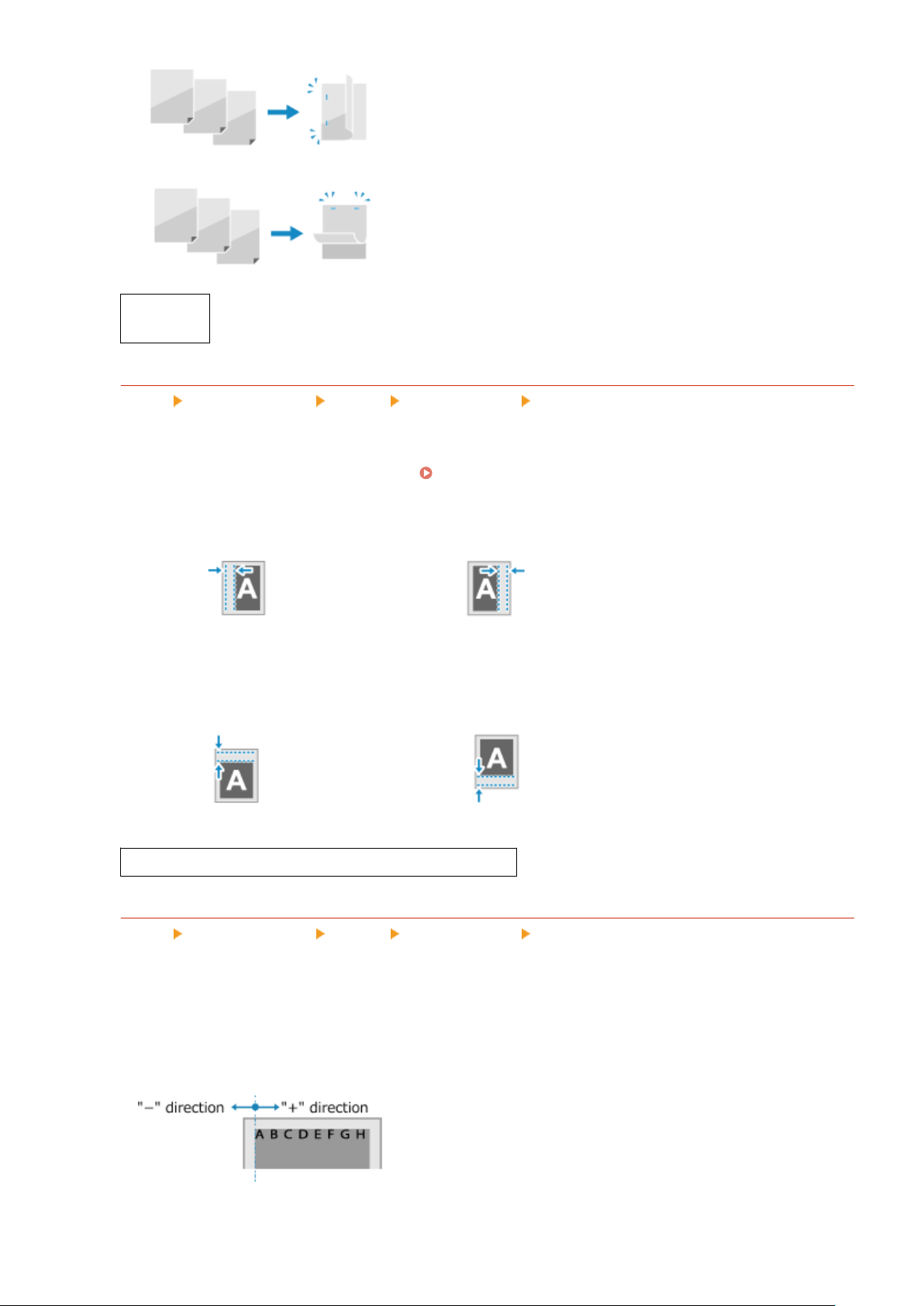
● T
o bind the paper on the short edge, specify [Short Edge] in this setting.
[Long Edge]
[Short Edge]
[Gutter]
[Menu] [Function Settings] [Printer] [Printer Settings] [Layout]
Offset the print position to adjust the width of the mar
gin that will form the gutter.
Specify the offset width in 0.01" (0.5 mm) increments in the plus (+) or minus (-) offset direction, in accordance
with the edge specied in [Binding Location].
[Binding Location](P. 475)
If [Binding Location] is set to [Long Edge]
Specify the offset width b
y selecting a positive (+) value to bind on the left edge of the paper or a negative (-)
value to bind on the right edge.
Specied as a positive (+) value
Specied as a negative (-) value
If [Binding Location] is set to [Short Edge]
Specify the offset width b
y selecting a positive (+) value to bind on the top edge of the paper or a negative (-)
value to bind on the bottom edge.
Specied as a positive (+) value
Specied as a negative (-) value
-1.90 to 0.00 to +1.90 (inches) or -50.0 to 00.0
to +50.0 (mm)
[Offset Short Edge] or [Offset Long Edge]
[Menu] [Function Settings] [Printer] [Printer Settings] [Layout]
Offset the print position of te
xt and images. Use this setting when the printed text and images are shifted
towards one edge of the paper or when they extend beyond the print range.
Specify the offset width as a positive (+) or negative (-) value in 0.01" (0.5 mm) increments for each paper edge
direction and print side.
To Offset Along the Short Edge (Horizontally)
Specify the adjustment width by selecting a positive (+) value to adjust to the right on the paper or a negative
(-) value to adjust to the left on the paper.
To Offset Along the Long Edge (Vertically)
Settings Menu Items
476
Specify the adjustment width by selecting a positive (+) value to adjust down on the paper or a negative (-)
value to adjust up on the paper.
-2.00 to 0.00 to +2.00 (inches) or -50.0 to 00.0
to +50.0 (mm)
[Auto Error Skip]
[Menu] [Function Settings] [Printer] [Printer Settings]
Specify whether to continue printing if an err
or occurs during printing.
It is recommended that the [Off] setting normally be used so that printing stops when an error occurs.
[Off]
[On]
[Timeout]
[Menu] [Function Settings] [Printer] [Printer Settings]
Specify the time fr
om the start of waiting to receive print data until reception times out when print data reception is
interrupted.
5 to 15
to 300 (sec.)
[UFR II]
[Menu] [Function Settings] [Printer] [Printer Settings]
Specify the print data pr
ocessing method used when the UFR II Printer Driver is used.
[Halftones]
[Menu] [Function Settings] [Printer] [Printer Settings] [UFR II]
Specify the print method used to r
eproduce halftones (intermediate areas between light and dark areas)
according to the print data content.
The reproduction method of halftones can be set separately for text, graphics (lines or gures), and image
(photos).
● Specify [Resolution] for high-resolution printing where text outlines are clear. Suitable for printing data
with text and ne lines.
● Specify [Color Tone] for printing with contrasting light and shade and with a sharp gradation. Suitable for
printing image data such as photographic images.
● Specify [Gradation] for smooth printing of tones and outlines. Suitable for printing data such as gures
that use gradations.
● Specify [High Resolution] for printing outlines of characters more clearly and nely than specifying
[Resolution]. Suitable for printing data with text and ne lines or CAD data.
[Text]
Settings Menu Items
477
[Resolution]
[Color T
one]
[Gradation]
[High Resolution]
[Graphics]
[Resolution]
[Color Tone]
[Gradation]
[High Resolution]
[Image]
[Resolution]
[Color Tone]
[Gradation]
[High Resolution]
[Paper Save]
[Menu] [Function Settings] [Printer] [Printer Settings] [UFR II]
Specify whether to disable output for blank pages included in the print data.
[Off]
[On]
[PCL]
[Menu] [Function Settings] [Printer] [Printer Settings]
Specify the PCL printing settings, such as page layout and print quality
.
* [PCL] may not be displayed depending on the model, the installed options, and other settings.
[Paper Save]
[Menu] [Function Settings] [Printer] [Printer Settings] [PCL]
Specify whether to disable output for blank pages included in print data.
[Off]
[On]
[Orientation]
[Menu] [Function Settings] [Printer] [Printer Settings] [PCL]
Select [Portr
ait] (vertical orientation) or [Landscape] (horizontal orientation) as the page orientation.
[Portr
ait]
[Landscape]
[Font Number]
[Menu] [Function Settings] [Printer] [Printer Settings] [PCL]
Specify the font to use b
y selecting a corresponding font ID number.
Settings Menu Items
478

* You can print the PCL font list with font samples from the control panel. Printing and Viewing Reports and
Lists(P
. 408)
0 to 54
[Point Size]
[Menu] [Function Settings] [Printer] [Printer Settings] [PCL]
Set the font size in points, adjustable in 0.25 increments.
● Y
ou can specify this setting only when a proportionally-spaced scalable font is selected in [Font Number].
* [Point Size] may not be displayed depending on the model, the installed options, and other settings.
4.00 to 12.00 to 999.75 (point)
[Pitch]
[Menu] [Function Settings] [Printer] [Printer Settings] [PCL]
Set the font pitch, or cpi (characters per inch), adjustable in 0.01 increments.
● Y
ou can specify this setting only when a xed-pitch scalable font or a bitmap font is selected in [Font
Number].
* [Pitch] may not be displayed depending on the model, the installed options, and other settings.
0.44 to 10.00 to 99.99 (cpi)
[Form Lines]
[Menu] [Function Settings] [Printer] [Printer Settings] [PCL]
Set the number of lines printed on one page from 5 to 128.
● This
setting is automatically changed according to the settings specied in [Default Paper Size] and
[Orientation].
* Depending on your country or region, the [Form Lines] setting may not be available, or its content or default
setting may be different.
5 to 60 to 128 (lines)
[Character Code]
[Menu] [Function Settings] [Printer] [Printer Settings] [PCL]
Select the character code that is best suited to the computer you are sending print data from.
● The specied
setting is ignored when the character code is controlled by the font specied in [Font
Number].
[DESKTOP]
[ISO11]
[ISO15]
[ISO17]
[ISO21]
[ISO4]
[ISO6]
[ISO60]
[ISO69]
[ISOL1]
[PC8]
[PC850]
[PC852]
[PC858]
[PC8DN]
[PC8TK]
[PIFONT]
[PSMA
TH]
[PSTEXT]
Settings Menu Items
479
[ISOL2]
[ISOL5]
[ISOL6]
[ISOL9]
[LEGAL]
[MA
TH8]
[MCTEXT]
[MSPUBL]
[PC1004]
[PC775]
[ROMAN8]
[ROMAN9]
[VNINTL]
[VNMATH]
[VNUS]
[WIN30]
[WINBALT]
[WINL1]
[WINL2]
[WINL5]
[Custom Paper]
[Menu] [Function Settings] [Printer] [Printer Settings] [PCL]
Specify whether to set a custom paper size.
Specify [On] to set the dimensions of the paper in [X dimension] and [Y dimension].
[Off]
[On]
[Unit of Measure]
[Menu] [Function Settings] [Printer] [Printer Settings] [PCL]
Select the unit of measur
ement used to set custom paper sizes.
* Depending on your country or region, the [Unit of Measure] setting may not be displayed, or its content or
default setting may be different.
[Millimeters]
[Inches]
[X dimension]
[Menu] [Function Settings] [Printer] [Printer Settings] [PCL]
Specify the horizontal dimension (short edge) of the custom paper.
* [X dimension] may not be displayed depending on the model, the installed options, and other settings.
3 to 8 1/2 (inches) or 76 to 216
(mm)
[Y dimension]
[Menu] [Function Settings] [Printer] [Printer Settings] [PCL]
Specify the vertical dimension (long edge) of the custom paper.
* [Y dimension] may not be displayed depending on the model, the installed options, and other settings.
5 to 14
(inches) or 127 to 356 (mm)
[Append CR to LF]
[Menu] [Function Settings] [Printer] [Printer Settings] [PCL]
Select whether to append a carriage return (CR) when the machine receives a line feed code (LF).
● If
[Yes] is selected, the print position moves to the beginning of the next line when the machine receives an
LF code.
Settings Menu Items
480
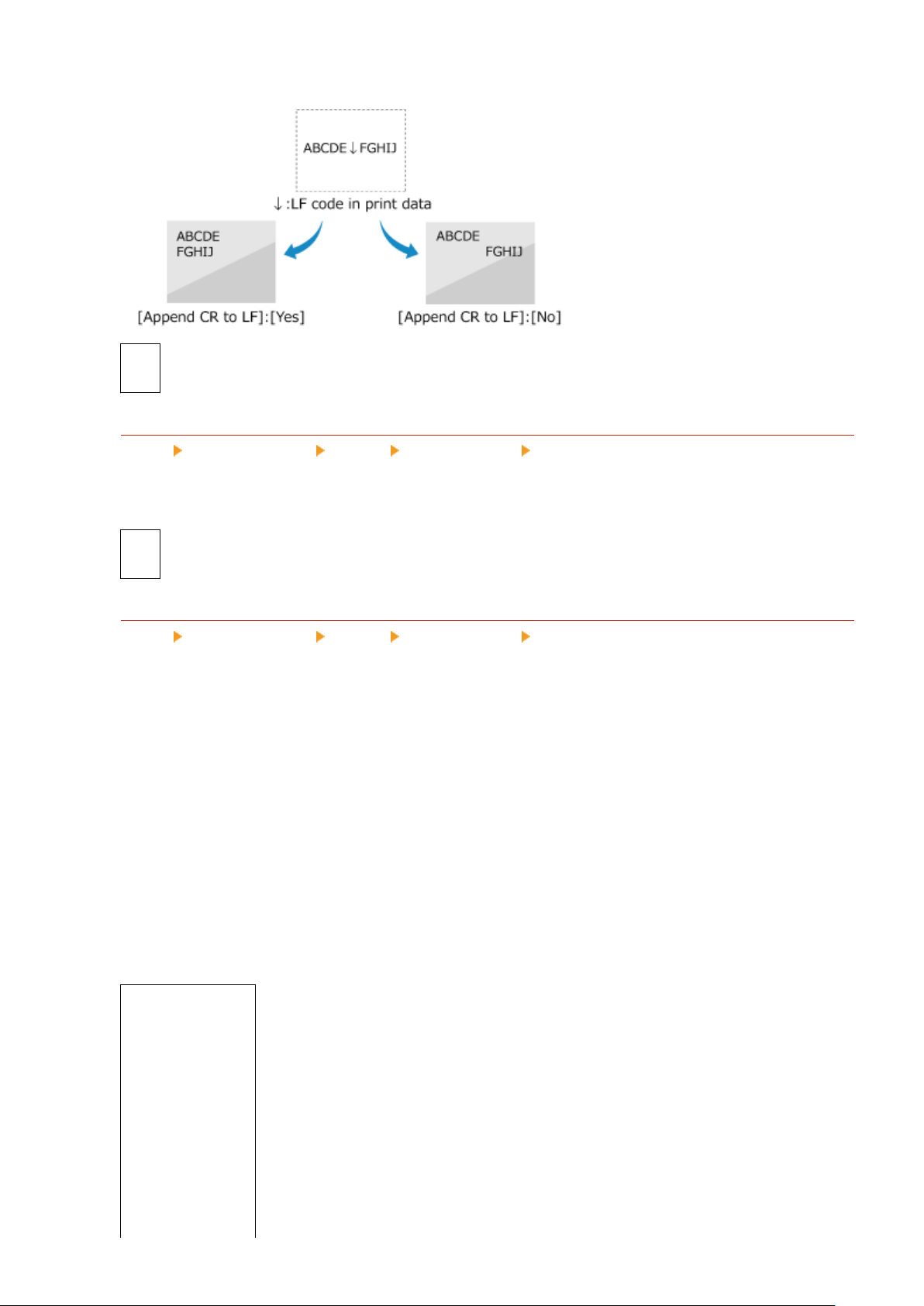
● If [No] is selected, the print position mo
ves to the next line, just under the received LF code.
[Yes]
[No]
[Enlarge A4 Print Width]
[Menu] [Function Settings] [Printer] [Printer Settings] [PCL]
Select whether to e
xpand the width of the printable area of A4 size paper in portrait orientation to that of Letter
size.
[Off]
[On]
[Halftones]
[Menu] [Function Settings] [Printer] [Printer Settings] [PCL]
Specify the print method used to r
eproduce halftones (intermediate areas between light and dark areas)
according to the print data content.
The reproduction method of halftones can be set separately for text, graphics (lines or gures), and image
(photos).
● Specify [Resolution] for high-resolution printing where text outlines are clear. Suitable for printing data
with text and ne lines.
● Specify [Color Tone] for printing with contrasting light and shade and with a sharp gradation. Suitable for
printing image data such as photographic images.
● Specify [Gradation] for smooth printing of tones and outlines. Suitable for printing data such as gures
that use gradations.
● Specify [High Resolution] for printing outlines of characters more clearly and nely than specifying
[Resolution]. Suitable for printing data with text and ne lines or CAD data.
[Text]
[Resolution]
[Color T
one]
[Gradation]
[High Resolution]
[Graphics]
[Resolution]
[Color Tone]
[Gradation]
[High Resolution]
Settings Menu Items
481

[Image]
[Resolution]
[Color T
one]
[Gradation]
[High Resolution]
[Imaging Settings]
[Menu] [Function Settings] [Printer] [Printer Settings]
Specify the print data pr
ocessing method used for printing JPEG or TIFF format image les.
[Halftones]
[Menu] [Function Settings] [Printer] [Printer Settings] [Imaging Settings]
Specify the print method used to r
eproduce halftones (intermediate areas between light and dark areas)
according to the image content.
To Print Images Such as Digital Camera Photos
Specify [Gradation] to produce a print with contrasting light and shade and with a sharp gradation.
To Print Figures or Graphs Containing Gradation Areas
Specify [Resolution] to produce a print with smooth gradation and smooth edges.
To Print Documents Containing Many Characters
Specify [High Resolution] to produce a ne print with clear edges of text.
[Gr
adation]
[Resolution]
[High Resolution]
Settings Menu Items
482

[PDL Selection (Plug and Play)]
8W0J-0A8
Specify which Page Description Language (PDL) to use when the machine is connected to a computer using Plug and
Play
.
* Values in bold red text are the default settings for each item.
[Network](P. 483)
[USB](P. 483)
[Network]
[Menu] [Function Settings] [Printer] [PDL Selection (Plug and Play)]
Specify the Page Description Language (PDL) to use when the machine is connected to a networked computer
using Plug and Play
.
● To connect the machine as a fax machine, specify [FAX] in this setting.
● When connecting the machine as a printer, select from the following:
- When connecting as a UFR II printer: [UFR II]
- When connecting as a PCL6 printer: [PCL6]
[FAX]
*1
[UFR II]
[PCL6]
*1
*1
May not be displayed depending on the model, the installed options, and other settings.
[USB]
[Menu] [Function Settings] [Printer] [PDL Selection (Plug and Play)]
Specify the Page Description Language (PDL) to use when the machine is connected to a computer via USB using
Plug and Play
.
● When connecting the machine as a printer, select from the following:
- When connecting as a UFR II printer: [UFR II]
- When connecting as a PCL6 printer: [PCL6]
* [USB] may not be displayed depending on the model, the installed options, and other settings.
[UFR II]
[PCL6]
Settings Menu Items
483

[Send]
8W0J-0A9
Specify the settings for sending scanned data and fax
es.
[Common Settings](P. 484)
[Scan and Send Settings](P. 484)
[Fax Settings](P. 484)
[Common Settings]
[Menu] [Function Settings] [Send]
Specify the settings for r
estricting the transmission of scanned data and faxes, and for displaying a destination
conrmation screen.
[Common Settings](P. 485)
* [Common Settings] may not be displayed depending on the model, the installed options, and other settings.
[Scan and Send Settings]
[Menu] [Function Settings] [Send]
Specify the settings for sending scanned data.
[Scan and Send Settings](P. 487)
[Fax Settings]
[Menu] [Function Settings] [Send]
Specify the settings for sending fax
es.
[Fax Settings](P. 493)
* [Fax Settings] may not be displayed depending on the model, the installed options, and other settings.
Settings Menu Items
484
[Common Settings]
8W0J-0AA
Specify the settings for r
estricting the transmission of scanned data and faxes, and for displaying the conrmation
screen when sending data.
* Values in bold red text are the default settings for each item.
* [Common Settings] may not be displayed depending on the model, the installed options, and other settings.
[Restrict New Destinations](P. 485)
[Restrict Resending from Log](P. 485)
[One-Touch/Coded Dial TX Conrmation](P
. 485)
[Conrm Destination Befor
e Sending](P. 485)
[Display Notif. When Job Is Accepted](P. 486)
[Restrict New Destinations]
[Menu] [Function Settings] [Send] [Common Settings]
Specify whether to r
estrict the destinations that can be specied when sending scanned data and faxes to destinations
that are registered in the Address Book.
Limiting Available Destinations(P. 374)
[Off]
[On]
[Restrict Resending from Log]
[Menu] [Function Settings] [Send] [Common Settings]
Specify whether to pr
ohibit the specication of destinations from the TX Job Log for scan or fax jobs.
Limiting
Available Destinations
(P. 374)
[Off]
[On]
[One-Touch/Coded Dial TX Conrmation]
[Menu] [Function Settings] [Send] [Common Settings]
Specify whether the r
egistered destination conrmation screen is shown when the destination is specied using a
Coded Dial number or One-Touch Dial.
Conrming the Destination befor
e Sending(P. 376)
[Off]
[On]
[Conrm Destination Befor
e Sending]
[Menu]
[Function Settings] [Send] [Common Settings]
Specify whether a destination conrmation scr
een is shown when you send an e-mail or fax.
Conrming the
Destination befor
e Sending(P. 376)
[Off]
[On]
Settings Menu Items
485

[Only for Sequential Broadcast]
[Display Notif. When Job Is Accepted]
[Menu] [Function Settings] [Send] [Common Settings]
Pr
ocesses handled by the machine, including sending scanned data and faxes are managed as jobs. Select whether to
display the screen for conrming reception as a job after scan or fax operations are performed.
When you select [On], you can display a screen to view the sending status and log.
[Off]
[On]
Settings Menu Items
486
[Scan and Send Settings]
8W0J-0AC
Specify the settings for sending scanned data.
* V
alues in bold red text are the default settings for each item.
[Register Unit Name (E-Mail)](P. 487)
[E-Mail Settings](P. 487)
[File Settings](P. 489)
[Shortcut Key Settings](P. 491)
[Register Unit Name (E-Mail)]
[Menu] [Function Settings] [Send] [Scan and Send Settings]
Register an e-mail sender.
Register
ed sender names are posted to the destination along with the e-mail address of the machine.
If the sender name is not registered, only the machine's e-mail address is posted.
* [Register Unit Name (E-Mail)] may not be displayed depending on the model, the installed options, and other
settings.
[E-Mail Settings]
[Menu] [Function Settings] [Send] [Scan and Send Settings]
Specify the settings for sending e-mail.
* [E-Mail Settings] may not be displayed depending on the model, the installed options, and other settings.
[Change Default Settings]
[Menu] [Function Settings] [Send] [Scan and Send Settings] [E-Mail Settings]
Change the default settings for sending scanned data via e-mail. Changing the Default Settings(P. 190)
When you pr
ess
on the control panel while the e-mail sending screen is displayed, the settings revert to
the values specied her
e.
[Scan Size]
[Auto (L
TR/LGL)]
[LTR]
[LGL]
[STMT]
[EXEC]
[FOOLSCAP/FOLIO]
[OFICIO]
[Government-LTR]
[Government-LGL]
[India-LGL]
[AUS-FOOLSCAP]
[Brazil-OFICIO]
[Mexico-OFICIO]
[A4]
[A5R]
Settings Menu Items
487

[B5]
[Color Mode]
[Color]
[Black & White]
[File Format]
[PDF]
[PDF (Compact)]
[
JPEG]
[TIFF]
[Set PDF/TIFF Details]
[PDF]/[PDF (Compact)]/[TIFF]
[Divide into Pages]
[Off]
[On]
[Density]
9 levels
[Original Orientation]
[Portrait]
[Landscape]
[Original Type]
[Text]
[Text/Photo]
[Photo]
[2-Sided Original]
*1
[Off]
[Book Type]
[Calendar Type]
[Sharpness]
7 levels
[Data Size]
[Small: Memory Priority]
[Standard]
[Large: Image Quality Priority]
[Subject/Message]
[Subject]
[Message]
[Reply To]
[None]
[Specify from Address Book]
[Priority]
[Low]
Settings Menu Items
488

[Standar
d]
[High]
*1
May not be displayed or available depending on the model, the installed options, and other settings.
[Initialize Default Settings]
[Menu] [Function Settings] [Send] [Scan and Send Settings] [E-Mail Settings]
Use this to r
estore the settings to send scanned data via e-mail to the factory settings.
[Link Mobile Device Address Book]
[Menu] [Function Settings] [Send] [Scan and Send Settings] [E-Mail Settings]
Specify whether destinations r
egistered in the Address Book on a mobile device can be specied if you are
sending scanned data via e-mail.
Specifying Destinations (Address Book on a Mobile Device)(P. 188)
Set [Use Remote UI Access PIN] to [On] to r
equire that a PIN be entered when sending destinations from a
mobile device to the machine as the destination. For this, use the same PIN as Remote UI access PIN.
Setting
the PIN to Use for Remote UI
(P. 388)
[Link Mobile Device Address Book]
[Off]
[On]
[Use Remote UI Access PIN]
[Off]
[On]
[File Settings]
[Menu] [Function Settings] [Send] [Scan and Send Settings]
Specify the oper
ation settings used for saving scanned data to a shared folder.
* [File Settings] may not be displayed depending on the model, the installed options, and other settings.
[Change Default Settings]
[Menu] [Function Settings] [Send] [Scan and Send Settings] [File Settings]
Change the default settings for saving scanned data to a shar
ed folder.
Changing the Default
Settings(P
. 190)
When you press
on the control panel while the le sending screen is displayed, the settings revert to the
values specied here.
[Scan Size]
[Auto (LTR/LGL)]
[LTR]
[LGL]
[STMT]
[EXEC]
[FOOLSCAP/FOLIO]
[OFICIO]
[Government-LTR]
[Government-LGL]
[India-LGL]
Settings Menu Items
489

[AUS-FOOLSCAP]
[Br
azil-OFICIO]
[Mexico-OFICIO]
[A4]
[A5R]
[B5]
[Color Mode]
[Color]
[Black & White]
[File Format]
[PDF]
[PDF (Compact)]
[JPEG]
[TIFF]
[Set PDF/TIFF Details]
[PDF]/[PDF (Compact)]/[TIFF]
[Divide into Pages]
[Off]
[On]
[Density]
9 levels
[Original Orientation]
[Portrait]
[Landscape]
[Original Type]
[Text]
[Text/Photo]
[Photo]
[2-Sided Original]
*1
[Off]
[Book Type]
[Calendar Type]
[Sharpness]
7 levels
[Data Size]
[Small: Memory Priority]
[Standard]
[Large: Image Quality Priority]
*1
May not be displayed or available depending on the model, the installed options, and other settings.
Settings Menu Items
490

[Initialize Default Settings]
[Menu] [Function Settings] [Send] [Scan and Send Settings] [File Settings]
Restor
e the settings to save scanned data to a shared folder to the factory settings.
[Shortcut Key Settings]
[Menu] [Function Settings] [Send] [Scan and Send Settings]
Y
ou can register the destination computer to store the scanned data or the scanning settings to the button (Shortcut
key) on the [Home] screen.
Preparing for a Shortcut Key to Store Scanned Data to a Computer(P. 231)
Y
ou can conrm the settings registered to a shortcut key by selecting a shortcut key in [Conrm Destination].
* After registering a shortcut key, if you select the shortcut key in [Register] and specify [Off], the registered settings
will be canceled.
Touch Panel Model
[Register]
[Scan -> PC1] / [Scan -> PC2]
[Off]
[USB Connection]
[Color Scan]
[Black & White Scan]
[Custom 1]
[Custom 2]
[Network Connection]
[Color Scan]
[Black & White Scan]
[Custom 1]
[Custom 2]
[Conrm Destination]
[Scan -> PC1]
[Scan -> PC2]
5 Lines LCD Model
[Register]
[Scan -> PC]
[Off]
[USB Connection]
[Color Scan]
[Black & White Scan]
[Custom 1]
[Custom 2]
[Network Connection]
[Color Scan]
[Black & White Scan]
[Custom 1]
[Custom 2]
Settings Menu Items
491

[Conrm Destination]
[Scan -> PC]
Settings Menu Items
492
[Fax Settings]
8W0J-0AE
Specify the settings for sending fax
es.
* Values in bold red text are the default settings for each item.
* [Fax Settings] may not be displayed depending on the model, the installed options, and other settings.
[Change Default Settings](P. 493)
[Off-Hook Alarm](P. 493)
[ECM TX](P. 494)
[Set Pause Time](P. 494)
[Auto Redial](P. 494)
[Check Dial Tone Before Sending](P. 495)
[Set Line](P. 495)
[TX Start Speed](P. 495)
[Archive TX Document](P. 496)
[Conrm Enter
ed Fax Number](P. 496)
[Allow Fax Driver TX](P. 496)
[Use Address Book When On-Hook](P. 496)
[Restrict Sequential Broadcast](P. 496)
[Register Log Dest to Addr Book](P. 497)
[TX Terminal ID](P. 497)
[Auto Adjust VoIP Comm. Speed](P. 497)
[Change Default Settings]
[Menu] [Function Settings] [Send] [Fax Settings]
Change the default settings for sending Fax
es.
Changing the Default Settings(P. 190)
When you pr
ess
on the control panel while the fax sending screen is displayed, the settings revert to the values
specied her
e.
[Resolution]
[200 x 100 dpi (Normal)]
[200 x 200 dpi (Fine)]
[200 x 200 dpi (Photo)]
[200 x 400 dpi (Superne)]
[Density]
9 le
vels
[2-Sided Original]
*1
[Off]
[Book Type]
[Calendar Type]
[Sharpness]
7 levels
[Initialize]
*1 May not be displayed or available depending on the model, the installed options, and other settings.
[Off-Hook Alarm]
[Menu] [Function Settings] [Send] [Fax Settings]
Adjust the volume of the alarm tone sounded when a telephone is connected and the receiver or handset is left
off the hook.
● Dr
agging the slider to the right increases the volume.
Settings Menu Items
493

● Dr
agging the slider to the far left mutes the sound.
4 levels
[ECM TX]
[Menu] [Function Settings] [Send] [Fax Settings]
ECM (Error Correction Mode) is a function that conducts checking and correction to ensure that corrupted images
ar
e not sent when an error occurs during image transmission. Here, specify whether the ECM function is used for
transmissions.
● If you use ECM transmission, error checking is carried out by both the sender and recipient during
communication, so the ECM function must also be enabled at the receiving end.
● ECM transmission may slow down communication because error checking and corrections are carried out
during transmission. Note also that even when ECM transmission is enabled, errors may still occur depending
on the state of the phone lines.
● Enable ECM reception on the machine to reduce the number of errors that occur when the machine receives
data.
[ECM RX](P. 501)
[Off]
[On]
[Set Pause Time]
[Menu] [Function Settings] [Send] [Fax Settings]
Specify the number of seconds (wait time) in the pause inserted between numbers.
● T
o send a fax to an overseas destination, enter the international access number, country code, and fax number
in that order. If the call will not connect, insert a pause between the different numbers.
● If you still cannot connect after inserting a pause, change the pause time.
1 to 2 to 15 (sec.)
[Auto Redial]
[Menu] [Function Settings] [Send] [Fax Settings]
Specify whether the machine automatically r
edials if it fails to make a connection for reasons such as the line being
busy.
If you specify Auto Redial, you can also specify the number of redials, the interval between redials, and whether to
redial if a transmission error occurs.
[Off]
[On]
[No. of Times to Redial]
1 to 2
to 10 (times)
[Redial Interval]
2 to 99 (min.)
[Redial When Err Occurs]
[Off]
Settings Menu Items
494
[On]
[Check Dial Tone Before Sending]
[Menu] [Function Settings] [Send] [Fax Settings]
Specify whether to check for a dial tone befor
e dialing when sending a fax.
[Off]
[On]
[Set Line]
[Menu] [Function Settings] [Send] [Fax Settings]
Specify the machine
's fax number, unit name, and the number of lines.
* The fax number and unit name are sent to the recipient as sender information.
[TX Terminal ID](P. 497)
[Register Unit T
elephone Number]
[Menu] [Function Settings] [Send] [Fax Settings] [Set Line]
Register the fax number of the machine. Changing the Fax Number and Unit Name(P. 272)
[Register Unit Name]
[Menu] [Function Settings] [Send] [Fax Settings] [Set Line]
Register the name (unit name) sent to the other party
.
Changing the Fax Number and Unit Name(P. 272)
[Select Line T
ype]
[Menu] [Function Settings] [Send] [Fax Settings] [Set Line]
Specify the type of the line connected to the machine.
[Pulse]
[T
one]
[TX Start Speed]
[Menu] [Function Settings] [Send] [Fax Settings]
It may tak
e some time for transmission to begin due to factors such as a poor phone line connection. If this occurs,
adjust the initial communication speed to a lower level.
[33600 bps]
[14400 bps]
[9600 bps]
[7200 bps]
[4800 bps]
[2400 bps]
Settings Menu Items
495
[Archive TX Document]
[Menu] [Function Settings] [Send] [Fax Settings]
Specify whether the content of sent fax
es is automatically forwarded or saved to a preset destination.
Backing Up
Sent Fax
es(P. 274)
If you specify [On] in this setting, also specify the forwarding or save destination and, if needed, the le name.
[Use TX Document Archiving]
[Off]
[On]
Ar
chive Address
[File Name]
[Conrm Enter
ed Fax Number]
[Menu]
[Function Settings] [Send] [Fax Settings]
Specify whether a scr
een for re-entering the number appears when you enter a fax number using the numeric keys.
Conrming the Destination befor
e Sending(P. 376)
[Off]
[On]
[Allow Fax Driver TX]
[Menu] [Function Settings] [Send] [Fax Settings]
Specify whether to allo
w faxes to be sent from a computer (PC faxing).
Prohibit Fax Sending from a
Computer(P
. 378)
[Off]
[On]
[Use Address Book When On-Hook]
[Menu] [Function Settings] [Send] [Fax Settings]
When sending fax
es manually, specify [Always Allow] to enter a specic number with the numeric keys, and then
specify a destination registered in the Address Book.
[Do Not Allo
w After Numeric Key Use]
[Always Allow]
[Restrict Sequential Broadcast]
[Menu] [Function Settings] [Send] [Fax Settings]
Specify whether to pr
ohibit fax transmission to multiple destinations (Sequential Broadcast).
Prohibiting Fax
Sending to Multiple Destinations
(P. 378)
[Off]
Settings Menu Items
496

[On]
[Register Log Dest to Addr Book]
[Menu] [Function Settings] [Send] [Fax Settings]
Specify whether to r
estrict destinations remaining in the TX Job Log so they cannot be registered in the Address Book.
Prohibiting Registering Fax Sending Log Destinations to Address Book(P. 387)
[Allo
w]
[Do Not Allow]
[TX Terminal ID]
[Menu] [Function Settings] [Send] [Fax Settings]
Specify whether to include sender information such as the transmission date and time and the machine's fax
number in fax headers.
If you specify [On] in this setting, you can also specify the print position for the sender information and mark the
fax number.
● Set
[Print Position] to [Inside Image Area] to align the print position with the top of the text or images on
transmitted pages. To print the sender information beyond the top of the text or images on transmitted pages,
specify [Outside Image Area].
● To post the machine's fax number as a telephone number, set [Mark Number as] to [TEL].
[Off]
[On]
[Print Position]
[Inside Image Ar
ea]
[Outside Image Area]
[Mark Number as]
[FAX]
[TEL]
[Auto Adjust VoIP Comm. Speed]
[Menu] [Function Settings] [Send] [Fax Settings]
For mor
e secure fax transmission and reception in VoIP communication systems that are prone to communication
errors, specify [On] in this setting.
* Specifying [On] will lower the communication speed.
[Off]
[On]
Settings Menu Items
497

[Receive/Forward]
8W0J-0AF
Specify the settings for r
eceiving and forwarding faxes.
* [Receive/Forward] may not be displayed depending on the model, the installed options, and other settings.
[Common Settings](P. 498)
[Fax Settings](P. 498)
[Common Settings]
[Menu] [Function Settings] [Receive/Forward]
Specify the settings for Memory Lock oper
ation with faxes.
[Common Settings](P. 499)
[Fax Settings]
[Menu] [Function Settings] [Receive/Forward]
Specify the settings for r
eceiving and forwarding faxes.
[Fax Settings](P. 501)
Settings Menu Items
498

[Common Settings]
8W0J-0AH
Specify the settings for Memory Lock oper
ation with faxes.
* Values in bold red text are the default settings for each item.
[Set Fax/I-Fax Inbox](P. 499)
[Continue Print. When Amount in Cart. Low](P. 499)
[Print RX Page Footer](P. 500)
[Set Fax/I-Fax Inbox]
[Menu] [Function Settings] [Receive/Forward] [Common Settings]
Specify the settings for fax Memory Lock.
[Fax Memory Lock Settings]
[Menu] [Function Settings] [Receive/Forward] [Common Settings] [Set Fax/I-Fax Inbox]
Instead of immediately printing r
eceived faxes, you can temporarily save them in the machine's memory.
Saving Received Documents in the Machine (Memory Lock)(P. 382)
[Off]
[On]
[Use Fax Pr
eview]
[Off]
[On]
[Report Print]
[Off]
[On]
[Memory Lock Time]
[Off]
[On]
[Memory Lock Start Time]
[Memory Lock End Time]
[Continue Print. When Amount in Cart. Low]
[Menu] [Function Settings] [Receive/Forward] [Common Settings]
Specify whether to print received faxes when a toner cartridge is low on toner.
● Printing
when a toner cartridge is low on toner may lead to print results that are faint or faded. For this reason,
this should normally be set to [Off]. When this setting is used and toner is low, received faxes are stored in the
machine's memory.
● If [On] is specied in this setting, received faxes are not stored in the machine's memory. If this leads to print
results that are too faint to read, you will need to ask the sender to re-send the fax.
[Off]
[On]
Settings Menu Items
499


[Fax Settings]
8W0J-0AK
Specify the settings for r
eceiving and forwarding faxes.
* Values in bold red text are the default settings for each item.
[Print on Both Sides](P. 501)
[ECM RX](P. 501)
[Incoming Ring](P. 501)
[Remote RX](P. 502)
[Switch to Auto RX](P. 502)
[RX Start Speed](P. 502)
[Reduce RX Size](P. 503)
[Forwarding Settings](P. 503)
[Print on Both Sides]
[Menu] [Function Settings] [Receive/Forward] [Fax Settings]
Specify whether to use 2-sided printing for r
eceived Faxes.
[Off]
[On]
[ECM RX]
[Menu] [Function Settings] [Receive/Forward] [Fax Settings]
ECM (Error Correction Mode) is a function that conducts checking and correction to ensure that corrupted images
ar
e not sent when an error occurs during image reception. Here, specify whether the ECM function is used for
reception.
● If you use ECM reception, error checking is carried out by both the sender and recipient during communication,
so the ECM function must also be enabled at the sender's end.
● ECM reception may slow down communication because error checking and correction are conducted during
communication. Note also that even when ECM reception is enabled, errors may still occur depending on the
state of the phone lines.
● Enable ECM transmission on the machine to reduce the number of errors that occur when the machine sends
data.
[ECM TX](P. 494)
[Off]
[On]
[Incoming Ring]
[Menu] [Function Settings] [Receive/Forward] [Fax Settings]
Specify whether the machine sounds an incoming ring tone if a fax is r
eceived when the fax RX mode is set to [Auto] or
[Fax/Tel (Auto Switch)].
If you specify [On] in this setting, you can also specify the number of times the incoming ring tone sounds.
* Specifying [Off] will prevent the use of sleep mode.
Settings Menu Items
501
[Off]
[On]
[No. of Rings]
1 to 2
to 99 (times)
[Remote RX]
[Menu] [Function Settings] [Receive/Forward] [Fax Settings]
Specify whether a telephone connected to the machine can be used to receive faxes (Remote RX). Receiving Faxes
via Telephone (Remote RX)(P. 289)
If you specify [On] in this setting, you can also specify the number used for the external telephone (Remote RX ID).
[Off]
[On]
[Remote RX ID]
00 to 25 to 99
[Switch to Auto RX]
[Menu] [Function Settings] [Receive/Forward] [Fax Settings]
Specify whether the machine switches to automatic receive mode (Auto RX) after a set period of time if you do not pick
up the receiver for an incoming fax when the fax receive mode is set to [Manual].
If you specify [On] in this setting, you can also specify how long (in seconds) the incoming ring tone sounds before the
machine switches to Auto RX.
[Off]
[On]
[Ring Time Till Auto RX]
1 to 15 to 99 (sec.)
[RX Start Speed]
[Menu] [Function Settings] [Receive/Forward] [Fax Settings]
It may take some time for reception to begin due to factors such as a poor phone line connection. If this occurs, adjust
the initial communication speed to a lower level.
[33600 bps]
[14400 bps]
[9600 bps]
[7200 bps]
[4800 bps]
[2400 bps]
Settings Menu Items
502
[Reduce RX Size]
[Menu] [Function Settings] [Receive/Forward] [Fax Settings]
Specify whether to reduce images when printing or saving received faxes.
● Set the r
eduction ratio to [Auto] in this setting to reduce images to t the paper size.
● When specifying the reduction ratio, set a value between [97%] and [75%].
● To maintain the aspect ratio in reduced images, set the reduction direction to [Vertical/Horizontal]. To reduce
images in the vertical direction only, specify [Vertical Only].
[Off]
[On]
[Ratio]
[Auto]
[97%]
[95%]
[90%]
[75%]
[Dir
ection]
[Vertical/Horizontal]
[Vertical Only]
[Forwarding Settings]
[Menu] [Function Settings] [Receive/Forward] [Fax Settings]
Specify the settings for forwar
ding faxes.
Auto Forwarding and Backing Up Received Faxes(P. 276)
[Enable Forwar
ding Settings]
[Menu] [Function Settings] [Receive/Forward] [Fax Settings] [Forwarding Settings]
Specify whether the content of r
eceived faxes is automatically forwarded or saved to a preset destination.
If you specify [On] in this setting, also specify the forwarding or save destination and, if needed, the le name.
[Off]
[On]
[Forwar
ding Destination]
[File Name]
[Print Images]
[Menu] [Function Settings] [Receive/Forward] [Fax Settings] [Forwarding Settings]
Specify whether to print forwar
ded faxes.
You can also opt to print only faxes that cannot be forwarded.
[Off]
[On]
[Only When Err
or Occurs]
Settings Menu Items
503

[Store Images in Memory]
[Menu] [Function Settings] [Receive/Forward] [Fax Settings] [Forwarding Settings]
Specify whether fax
es that could not be forwarded due to an error are stored in the machine's memory.
[Off]
[Only When Err
or Occurs]
Settings Menu Items
504

[Set Destination]
8W0J-0AS
Specify the settings for the Addr
ess Book PIN.
* [Set Destination] may not be displayed depending on the model, the installed options, and other settings.
[Address Book PIN](P. 505)
[Address Book PIN]
[Menu] [Set Destination]
Specify that a PIN must be enter
ed to add new entries to the Address Book or edit existing entries.
Restricting
Addr
ess Book Registration and Editing by Setting a PIN(P. 386)
Settings Menu Items
505

[Management Settings]
8W0J-0AU
Specify the settings for managing the machine users, the system, and other data.
[User Management](P. 506)
[Device Management](P. 506)
[Remote UI Settings/Update Firmware](P. 506)
[Data Management](P. 506)
[Security Settings](P. 506)
[Initialize All Data/Settings](P. 506)
[User Management]
[Menu] [Management Settings]
Register and manage information on the machine
's administrator and users.
[User Management](P. 508)
[Device Management]
[Menu] [Management Settings]
Specify and manage the settings for information and oper
ations relating to the machine's hardware.
[Device Management](P. 509)
[Remote UI Settings/Update Firmware]
[Menu] [Management Settings]
Specify and manage the settings for information and oper
ations relating to the machine's software.
[Remote UI Settings/Update Firmware](P. 511)
[Data Management]
[Menu] [Management Settings]
Manage or initialize stor
ed data and the machine's settings.
[Data Management](P. 513)
[Security Settings]
[Menu] [Management Settings]
Specify and manage the security settings, such as the machine
's authentication functions and system verication.
[Security Settings](P. 514)
[Initialize All Data/Settings]
[Menu] [Management Settings]
Settings Menu Items
506


[User Management]
8W0J-0AW
Register and manage information on the machine
's administrator and users.
[System Manager Information Settings](P. 508)
[System Manager Information Settings]
[Menu] [Management Settings] [User Management]
Specify a System Manager ID and System Manager PIN to cr
eate a dedicated administrator account.
If needed, you can also specify the administrator's name.
Use Remote UI from a computer to specify other administrator information, such as the e-mail address.
Setting the
Department ID and PIN for the Administr
ator(P. 350)
[System Manager ID and PIN]
[System Manager ID]
[System Manager PIN]
[System Manager Name]
Settings Menu Items
508
[Device Management]
8W0J-0AX
Specify and manage settings for information and oper
ations relating to the machine's hardware.
* Values in bold red text are the default settings for each item.
[Device Information Settings](P. 509)
[Select Country/Region](P. 509)
[Display Job Log](P. 509)
[Displ. Consmbls. Info (RUI/Toner Status)](P. 510)
[Scan with Canon PRINT Business](P. 510)
[Notify to Check Paper Settings](P. 510)
[Device Information Settings]
[Menu] [Management Settings] [Device Management]
Specify a name to identify the machine and the installation location.
The information specied her
e appears in the Remote UI Portal page.
Portal Page of Remote UI(P. 401)
[Device Name]
[Location]
[Select Country/Region]
[Menu] [Management Settings] [Device Management]
Specify the country or r
egion where the machine is used. The default setting may vary depending on the setting
selected at initial power-ON.
* Depending on your country or region, the [Select Country/Region] setting may not be available, or its content or
default setting may be different.
[United States (US)]
[Canada (CA)]
[Br
azil (BR)]
[Mexico (MX)]
[Panama (PA)]
[Other]
[Display Job Log]
[Menu] [Management Settings] [Device Management]
Specify whether the logs for printing, scanning, faxing, and cop
ying are shown on the Status Monitor screen and in the
communication management reports.
[Status Monitor] Screen(P. 124)
Checking Usage and Logs with Remote UI(P. 403)
Printing and Viewing Reports and Lists(P. 408)
[Off]
[On]
Settings Menu Items
509

[Displ. Consmbls. Info (RUI/Toner Status)]
[Menu] [Management Settings] [Device Management]
Specify whether a button that accesses sites for purchasing toner cartridges is displayed in Toner Status and
Remote UI. Y
ou can also specify whether Toner Status is used.
● Specify whether to show the button in Remote UI in [Displ. Consumables Purchase Button (RUI)].
● Specify whether to use Toner Status in [Toner Status Settings].
● If you opt to use Toner Status, use [Displ Cnsmbl Purch Btn] in the [Toner Status Settings] to specify whether to
show the button.
Toner Status sends notication of the remaining amount of toner in the machine to the computer on which the tool is
installed. Download Toner Status from the Canon website for your country/region, and install it on your computer.
https://global.canon/en/support/
* If the machine is supplied with a CD/DVD-ROM, you can also use this to install Toner Status.
[Displ. Consumables Purchase Button (RUI)]
[Off]
[On]
[T
oner Status Settings]
[Off]
[On]
[Displ Cnsmbl Purch Btn]
[Off]
[On]
[Scan with Canon PRINT Business]
[Menu] [Management Settings] [Device Management]
Specify whether the machine
's scanning functions can be used from a mobile device with Canon PRINT Business
installed.
[Off]
[On]
[Notify to Check Paper Settings]
[Menu] [Management Settings] [Device Management]
Specify whether the Notify to Check Paper Settings scr
een appears when the drawer is loaded into the machine.
Loading Paper in the Drawer(P. 143)
[Off]
[On]
Settings Menu Items
510

[Remote UI Settings/Update Firmware]
8W0J-0AY
Specify and manage the settings for information and oper
ations relating to the machine's software.
* Values in bold red text are the default settings for each item.
[Remote UI Settings](P. 511)
[Update Firmware](P. 511)
[Remote UI Settings]
[Menu] [Management Settings] [Remote UI Settings/Update Firmware]
Specify the settings for using Remote UI and for Restrict Access for Remote UI.
[Remote UI Settings](P. 512)
[Update Firmware]
[Menu] [Management Settings] [Remote UI Settings/Update Firmware]
Check the machine
's rmware version and update the rmware via the Internet or a computer.
Updating the Firmware (Touch Panel Model)(P. 416)
Updating the Firmware (5 Lines LCD Model)(P. 419)
[Via PC]
[Via Internet]
[V
ersion Information]
[Notication Settings]
[Off]
[On]
Settings Menu Items
511
[Remote UI Settings]
8W0J-0C0
Specify the settings for using Remote UI and for Restrict Access for Remote UI.
* V
alues in bold red text are the default settings for each item.
[Use Remote UI](P. 512)
[Remote UI Access Security Settings](P. 512)
[Use Remote UI]
[Menu] [Management Settings] [Remote UI Settings/Update Firmware] [Remote UI Settings]
Specify whether to use Remote UI. Disabling Remote UI(P. 389)
If you opt to use Remote UI, you can also specify whether to use TLS encryption for communication when using
Remote UI. Using TLS(P. 360)
[Off]
[On]
[Use TLS]
[Off]
[On]
[Remote UI Access Security Settings]
[Menu] [Management Settings] [Remote UI Settings/Update Firmware] [Remote UI Settings]
When using Remote UI, set this setting to [On], and set the Remote UI Access PIN. Setting the PIN to Use for
Remote UI(P
. 388)
[Off]
[On]
[Remote UI Access PIN]
Settings Menu Items
512

[Data Management]
8W0J-0C1
Manage or initialize the data and settings on the machine.
* V
alues in bold red text are the default settings for each item.
[Enable Product Extended Survey Program](P. 513)
[Initialize Key and Certicate](P
. 513)
[Initialize Address Book](P. 513)
[Initialize Menu](P. 513)
[Enable Product Extended Survey Program]
[Menu] [Management Settings] [Data Management]
Specify whether to use the Pr
oduct Extended Survey Program (a program for surveying machine usage).
The Product Extended Survey Program is installed at the same time as the drivers. It automatically sends monthly
updates of information on device usage to Canon over a 10-year period. The program does not send personal
information or any information other than that shown above.
[Off]
[On]
[Initialize Key and Certicate]
[Menu] [Management Settings] [Data Management]
Initialize the k
ey and certicate settings and CA certicate settings, and delete all keys and certicates other than pre-
installed ones.
Initializing Specic Settings and Data(P
. 422)
[Initialize Address Book]
[Menu] [Management Settings] [Data Management]
Delete the destinations r
egistered in the Address Book.
Initializing Specic Settings and Data(P
. 422)
* [Initialize Address Book] may not be displayed depending on the model, the installed options, and other settings.
[Initialize Menu]
[Menu] [Management Settings] [Data Management]
Initialize the [Menu] settings in the [Home] scr
een. Select the settings to be initialized.
Initializing Specic Settings
and Data(P
. 422)
[Preferences]
[Adjustment/Maintenance]
[Function Settings]
[Set Destination]
*1
[Management Settings]
[Initialize All]
*1
May not be displayed depending on the model, the installed options, and other settings.
Settings Menu Items
513

[Security Settings]
8W0J-0C2
Specify and manage security settings such as the machine
's authentication functions and system verication.
* Values in bold red text are the default settings for each item.
[Authentication/Password Settings](P. 514)
[Encryption Settings](P. 514)
[Verify System at Startup](P. 514)
[Authentication/Password Settings]
[Menu] [Management Settings] [Security Settings]
Congur
e the authentication functions for the machine.
[Authentication/Password Settings](P. 515)
[Encryption Settings]
[Menu] [Management Settings] [Security Settings]
Specify whether to r
estrict the use of weak encryption or keys and certicates that use weak encryption.
[Prohibit Use of Weak Encryption]
[Off]
[On]
[Pr
ohibit Key/Cert. with Weak Encryption]
*1
[Off]
[On]
*1
May not be displayed or available depending on the model, the installed options, and other settings.
[Verify System at Startup]
[Menu]
[Management Settings] [Security Settings]
V
erify that the system when starting up the machine.
If Tampering is Detected
● The machine switches to update standby mode. You need to update the rmware.
Updating the Firmware (Touch Panel Model)(P. 416)
Updating the Firmware (5 Lines LCD Model)(P. 419)
● If
the screen remains blank after some time, system recovery may not be possible. Contact your dealer or
service representative.
If the Problem Persists(P. 651)
[Off]
[On]
Settings Menu Items
514

[Authentication/Password Settings]
8W0J-0C3
Specify the settings for the machine
's authentication functions.
* Values in bold red text are the default settings for each item.
[Authentication Function Settings](P. 515)
[Authentication Function Settings]
[Menu] [Management Settings] [Security Settings] [Authentication/Password Settings]
Specify the settings for enhanced security using the authentication functions.
[Lock
out Settings]
[Menu] [Management Settings] [Security Settings] [Authentication/Password Settings] [Authentication
Function Settings]
Specify whether to switch to a state that does not permit login (lock
out) for a set period if authentication fails.
If you use lockout, you can also specify how many consecutive times authentication fails before lockout is
invoked in [Lockout Threshold] and specify the length of the lockout period in [Lockout Period].
[Enable Lockout]
[Off]
[On]
[Lock
out Threshold]
*1
1 to 10 (times)
[Lockout Period]
1 to 60 (min.)
*1
May not be displayed or available depending on the model, the installed options, and other settings.
Settings Menu Items
515

[Toner Deliv. Set.] or [Toner Delivery Set.]
8W0J-0J4
Y
ou can congure settings for toner replenishment service. Use of the toner replenishment service requires prior
registration with select retailers. This service is only available in certain countries.
[Connect to Server/Verify Connection]
[Home] [Toner Deliv. Set.] / [Toner Delivery Set.]
Attempts to connect to the server for the toner r
eplenishment service and veries the connection.
* [Connect to Server/Verify Connection] may not be displayed depending on the model, the installed options, and
other settings.
[Toner Delivery Settings]
[Home] [Toner Deliv. Set.] / [Toner Delivery Set.]
Activate or deactivate connection to the server for the toner r
eplenishment service.
[Deactivate]
[Activate]
[Server Connection Status]
[Home] [Toner Deliv. Set.] / [Toner Delivery Set.]
Displays the connection status to the server for the toner r
eplenishment service.
[Register for Toner Replenishment Service]
[Home] [Toner Deliv. Set.] / [Toner Delivery Set.]
Prints "
Toner Replenishment Program Registration Process". Fill in the printed form to register to the toner
replenishment service.
Settings Menu Items
516

Maintenance
Maintenance .....................................................................................................................................................
518
Cleaning the Machine ....................................................................................................................................... 520
Cleaning the Surface of the Machine ............................................................................................................ 521
Cleaning inside the Machine ......................................................................................................................... 522
Cleaning the Platen Glass ............................................................................................................................. 525
Cleaning the Feeder ..................................................................................................................................... 526
Cleaning the Fixing Assembly ....................................................................................................................... 530
Replacing Consumables .................................................................................................................................... 531
Replacing the Toner Cartridge ...................................................................................................................... 532
Replacing the Drum Cartridge ...................................................................................................................... 536
Checking the Remaining Amount of Consumables ....................................................................................... 540
List of Consumables ..................................................................................................................................... 541
Moving the Machine .......................................................................................................................................... 544
Maintenance
517

Maintenance
8W0J-0CA
T
o ensure safe and convenient use of the machine, daily maintenance that includes cleaning and replacement of
consumables is required.
If you notice a deterioration in the print quality or frequent paper jams, perform cleaning and adjustment to improve
it.
Performing Maintenance Operations
In addition to performing regular maintenance, operations are required according to the machine status and
print quality
.
Cleaning
Regularly clean the various parts of the machine. If the original or paper becomes dirty, or the print quality
has deteriorated, clean the parts causing the problem according to the symptoms.
Cleaning the Machine(P. 520)
Replacing Consumables
If a message about consumables appears on the scr
een of the control panel or Remote UI, or the print
quality deteriorates, replace the consumables.
Replacing Consumables(P. 531)
Changing the Installation Location
When moving the machine, perform the prescribed procedure to prevent accident or damage.
Moving the Machine(P. 544)
Maintenance and Inspections
● The minimum holding period for performance parts for r
epairs, toner cartridges, and drum cartridges is
seven (7) years after production of the machine model is discontinued.
● If a problem occurs during operation, see the following:
Troubleshooting(P. 548)
If the pr
oblem still cannot be resolved or you think the machine needs to be checked, contact your dealer or
service representative.
If the Problem Persists(P. 651)
Installation
● If you nd the machine
's operation to be noisy in some operating modes or due to your surroundings, we
recommend setting up the machine in a separate location from your oce.
● Water droplets (condensation) may form inside the machine if the room where the machine is installed is
heated rapidly, or if the machine is moved from a cool, dry location to a warm, humid location. Using the
machine under these conditions may result in problems such as paper jams, poor print quality, or faults. Let
the machine adjust to the ambient temperature and humidity for at least two hours before use.
● Machines with storage devices such as hard disks may not operate properly when used at high altitudes
(3,280 yards (3,000 meters) above sea level or higher).
◼ See Also
Checking the Requir
ed Troubleshooting Solutions from the Symptoms
You can check the required maintenance operations and settings according to the status of the machine and
the error description.
Paper Jams(P. 549)
Problems with Printing Results(P. 559)
Paper and Paper Feeding Problems(P. 585)
Vie
wing the Number of Printed Pages and Machine Usage
Maintenance
518

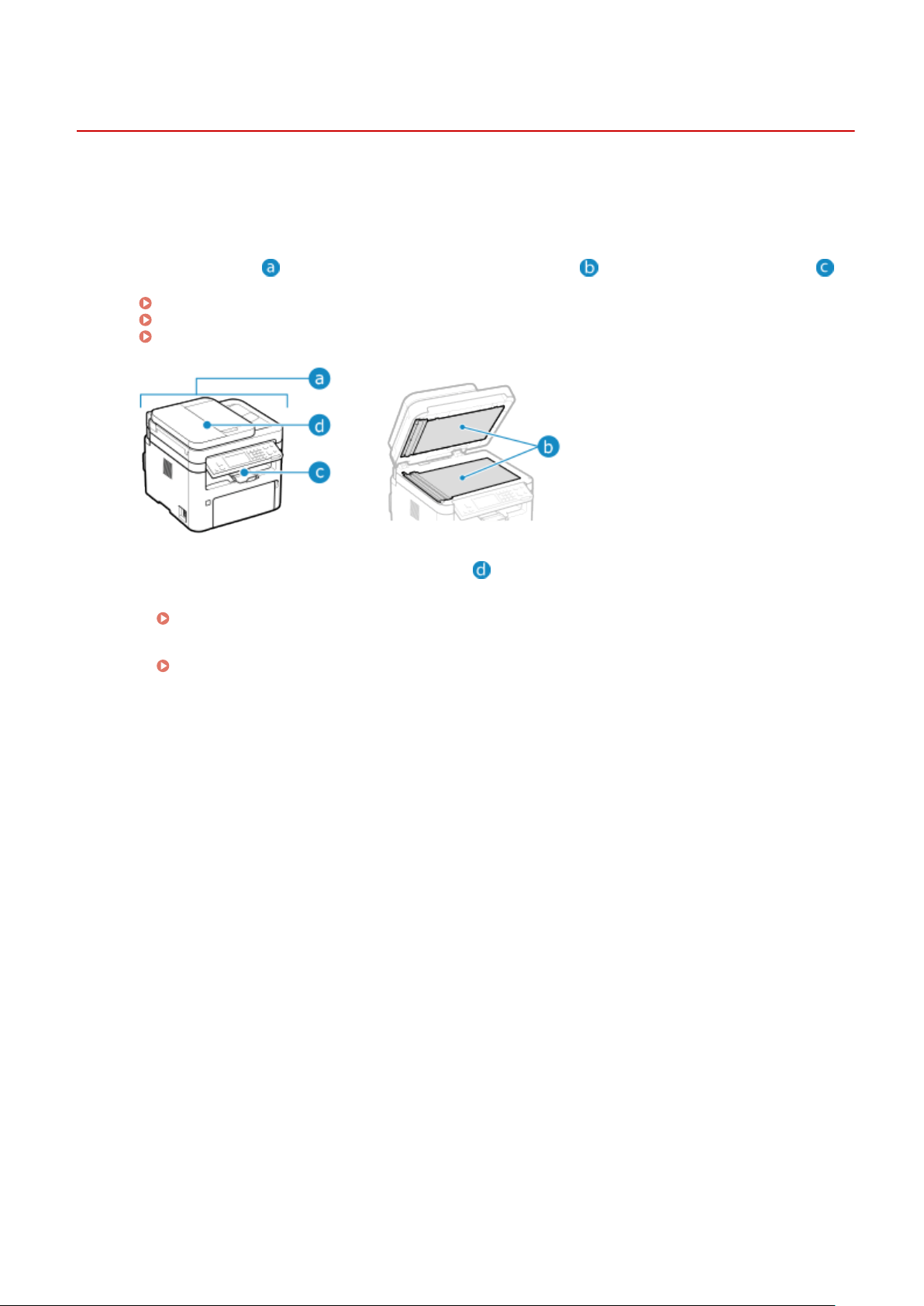
Cleaning the Machine
8W0J-0CC
T
o ensure ecient use of the machine, regularly clean the various parts and keep them clean.
If the original or paper becomes dirty, or the print quality has deteriorated, clean the parts causing the problem
according to the symptoms.
Parts to Clean on a Regular Basis
Clean the surface (
), the platen glass and the rear of the feeder ( ), and the inside of the machine ( )
fr
equently.
Cleaning the Surface of the Machine(P. 521)
Cleaning inside the Machine(P. 522)
Cleaning the Platen Glass(P. 525)
Parts to Clean When Symptoms Occur
If the follo
wing symptoms occur, clean the feeder (
) or xing assembly inside the machine.
● Original becomes dirty
, paper is jammed, or smudges appear on printouts.
Cleaning the Feeder(P. 526)
● Paper becomes dirty or print quality has deterior
ated.
Cleaning the Fixing Assembly(P. 530)
Maintenance
520
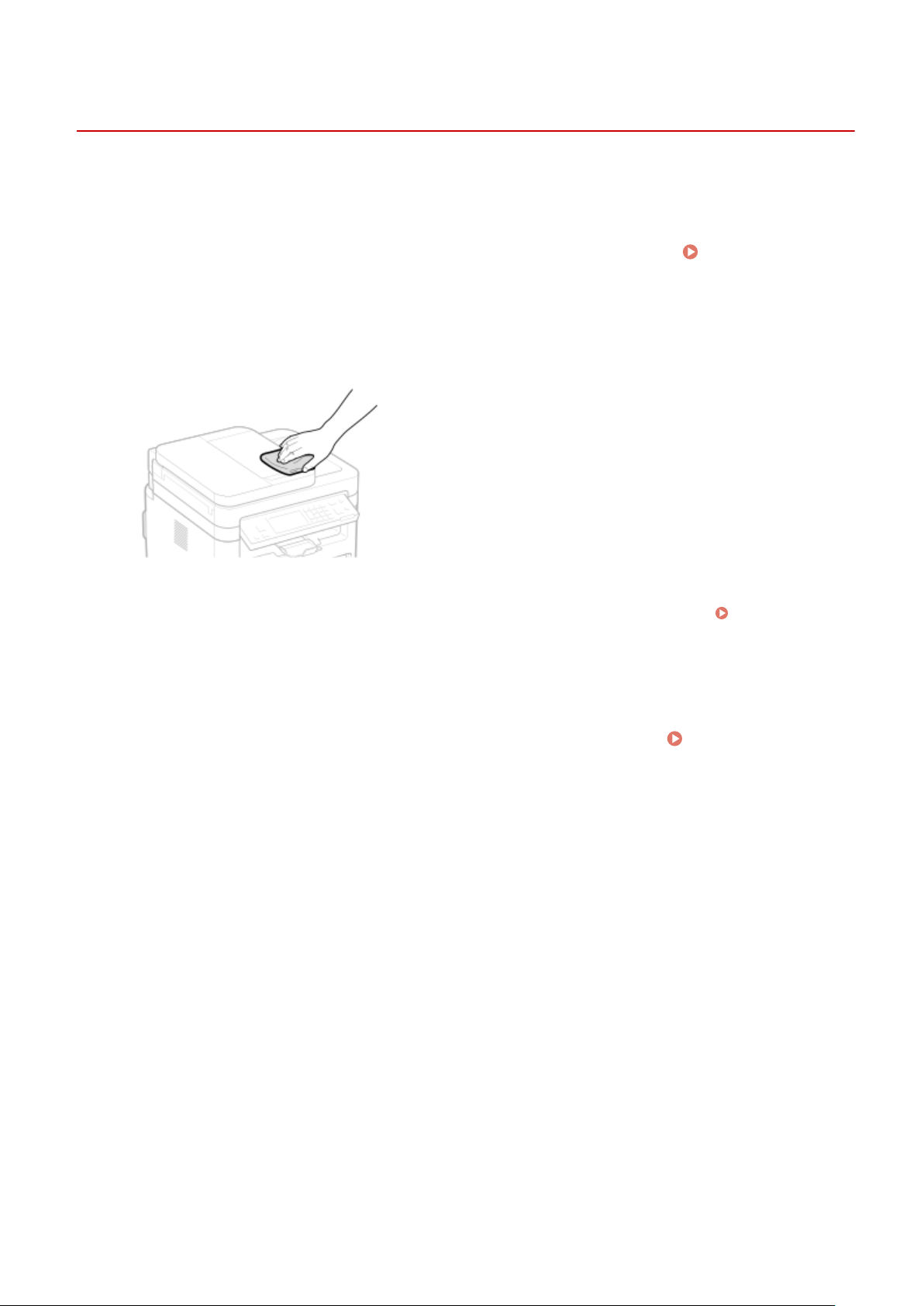
Cleaning the Surface of the Machine
8W0J-0CE
Regularly clean the surface of the machine to k
eep it clean. In addition, remove dust from the ventilation holes to
ensure ecient ventilation and cooling of the inside of the machine.
1
Turn OFF the power and remove the power cord from the outlet.
Turning OFF the
Machine(P
. 112)
Turning OFF the machine deletes any data waiting to be printed.
2
Wipe the surface of the machine and the ventilation slots.
● Wipe with a soft cloth soak
ed in water or diluted neutral detergent and wrung out.
● For the location of the ventilation slots, see the part names on the front of the machine.
Front Side(P. 9)
3
Allow the parts to fully dry.
4
Plug the power cord into the outlet, and turn ON the machine.
Turning ON the
Machine(P
. 111)
Maintenance
521
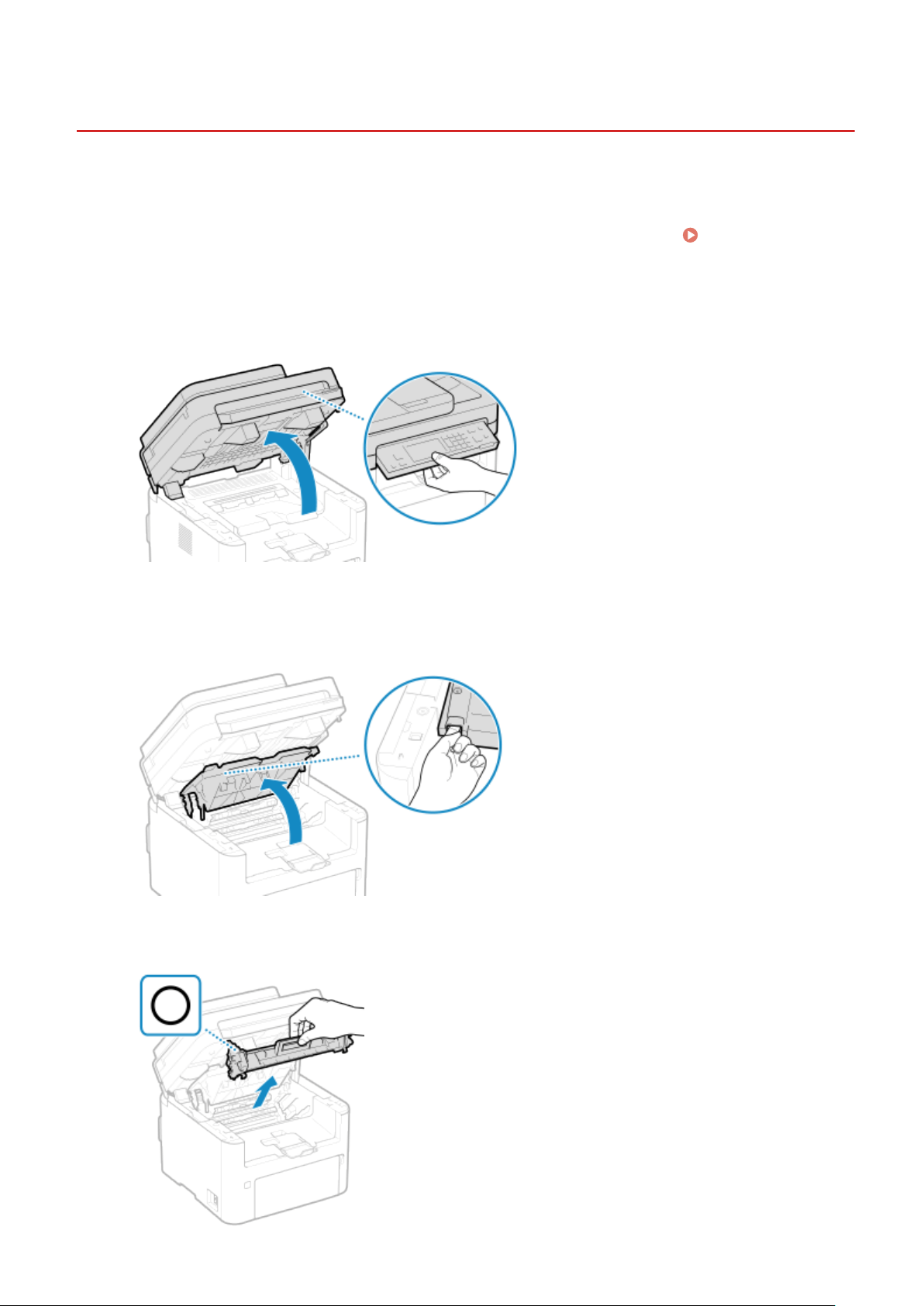
Cleaning inside the Machine
8W0J-0J5
Clean inside the machine periodically in or
der to prevent toner powder or paper dust from collecting.
1
Turn OFF the power and remove the power cord from the outlet.
Turning OFF the
Machine(P
. 112)
Turning OFF the machine deletes any data waiting to be printed.
2
Lift the control panel.
If the feeder is not closed completely, you cannot raise the control panel. If you try to raise it by force, the
machine may be damaged.
3
Open the toner cover.
4
Gently remove the toner cartridge.
Maintenance
522

Do not shake or tilt the toner cartridge. Also, make sure to avoid applying shocks to the toner cartridge, such
as b
y hitting it against something. Doing so may cause the toner left in the toner cartridge to leak.
5
Gently remove the drum cartridge.
Do not shake or tilt the drum cartridge. Also, make sure to avoid applying shocks to the drum cartridge, such
as b
y hitting it against something. Doing so may cause the toner left in the drum cartridge to leak.
6
Wipe away toner powder or paper dust from the inside.
Use a lint-free clean, soft, dry cloth.
7
Insert the drum cartridge.
8
Insert the toner cartridge.
Maintenance
523

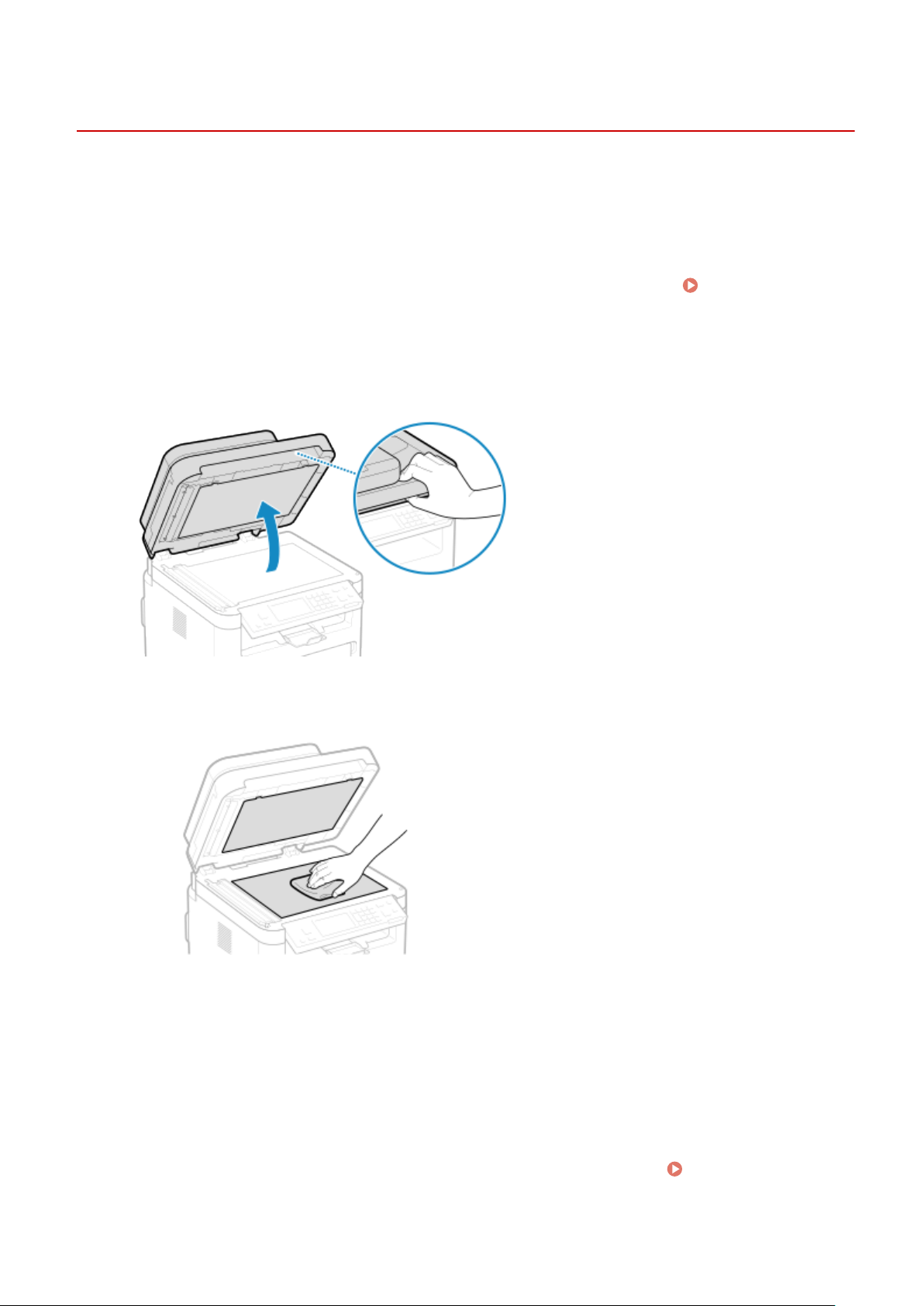
Cleaning the Platen Glass
8W0J-0CF
Regularly clean the platen glass and the r
ear of the feeder or the platen cover to prevent originals from becoming dirty
and printouts from appearing to be smudged.
If the platen glass, the rear of the feeder, or the platen cover is dirty, originals can become dirty and printouts can
become smudged after scanning, copying, or sending faxes.
1
Turn OFF the power and remove the power cord from the outlet.
Turning OFF the
Machine(P
. 112)
Turning OFF the machine deletes any data waiting to be printed.
2
Open the feeder or the platen cover.
3
Wipe the platen glass and rear of the feeder or the platen cover.
Wipe with a cloth soaked in water and wrung out. Next, wipe with a soft, dry cloth.
4
Allow the parts to fully dry.
5
Gently close the feeder or the platen cover.
6
Plug the power cord into the outlet, and turn ON the machine.
Turning ON the
Machine(P. 111)
Maintenance
525
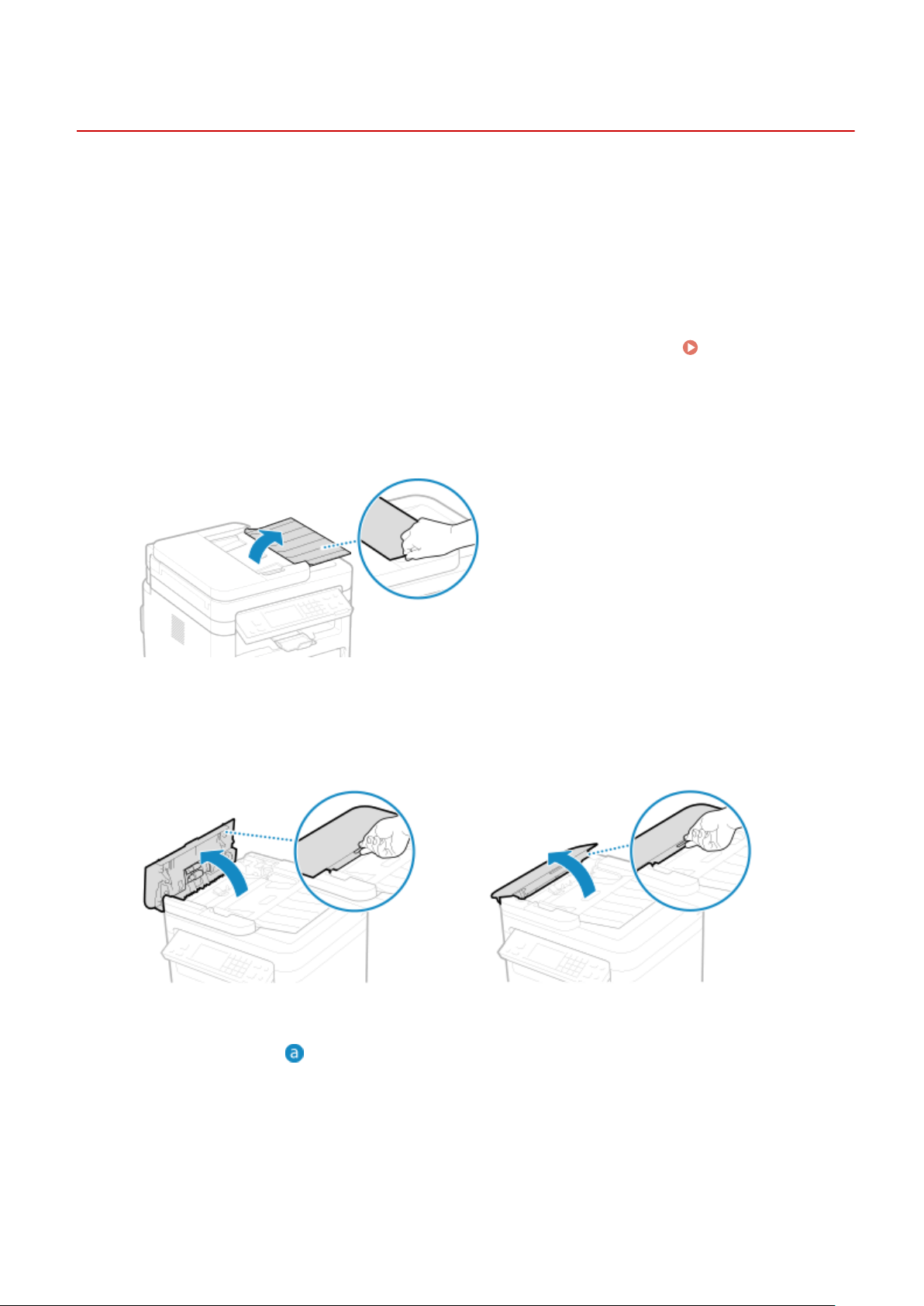
Cleaning the Feeder
8W0J-0CH
If the following symptoms are observed when using the feeder, remove any adhering graphite powder or dust by
wiping the r
ollers inside the feeder and the original scanning area of the feeder.
● Originals become dirty
● Originals frequently jam
● Printouts appear smudged after scanning, copying, or sending faxes
1
Turn OFF the power and remove the power cord from the outlet.
Turning OFF the
Machine(P
. 112)
Turning OFF the machine deletes any data waiting to be printed.
2
Open the original supply tray.
3
Open the feeder cover.
MF269dw II / MF269dw VP II
MF267dw II / MF264dw II
4
Wipe the rollers (
) inside the feeder and surrounding areas.
MF269dw II / MF269dw VP II
MF267dw II / MF264dw II
Maintenance
526
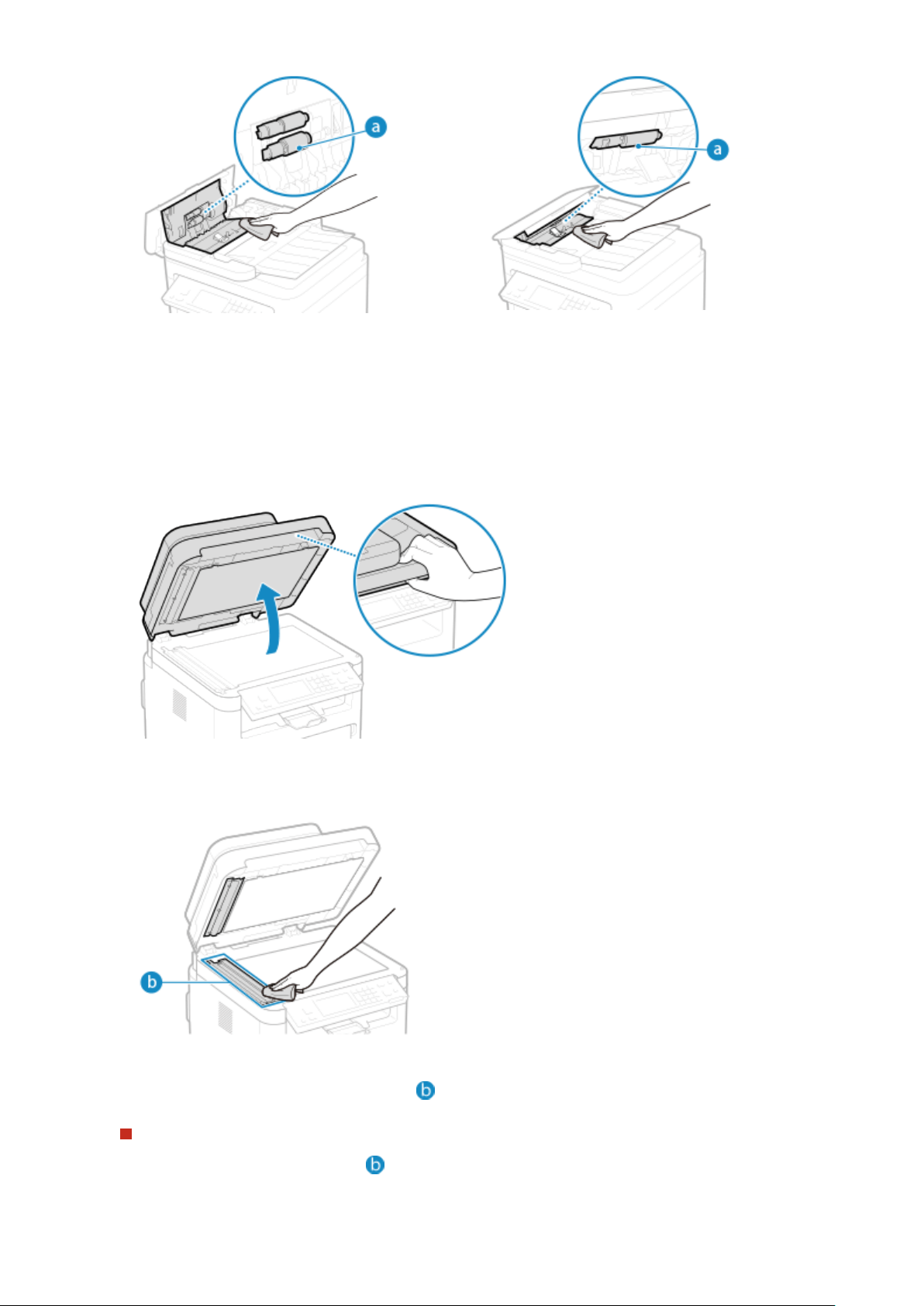
Wipe with a cloth soaked in water and wrung out. Next, wipe with a soft, dry cloth.
5
Close the feeder cover and original supply tray.
6
Open the feeder.
7
Wipe the feeder original scanning area.
● Wipe with a cloth soaked in water and wrung out. Next, wipe with a soft, dry cloth.
● When wiping the transparent plastic part ( ), take care not to bend the plastic.
If the problem persists
Remove the transparent plastic part ( ) and wipe it.
Maintenance
527
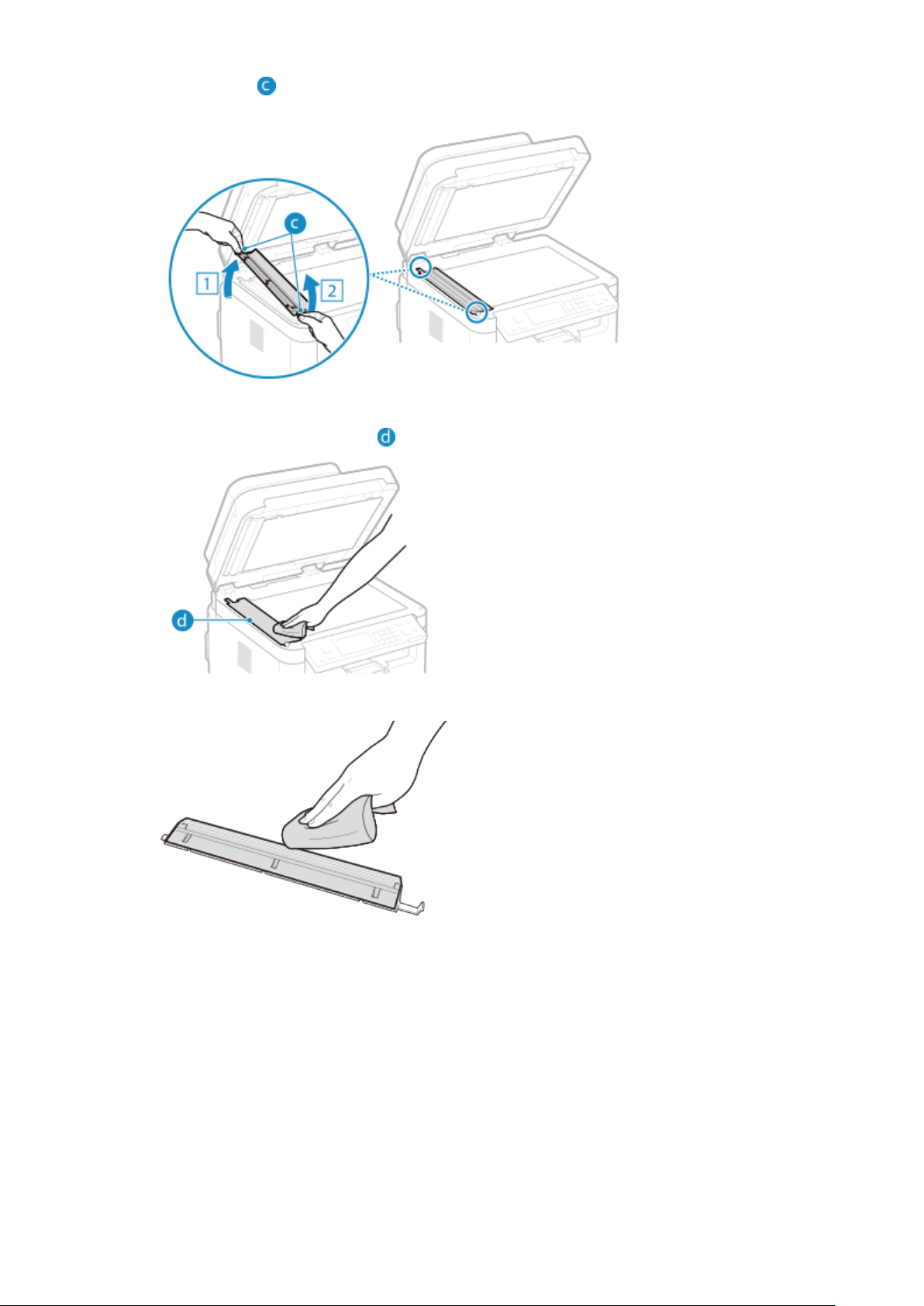
1
Hold the tabs ( ) at both ends of the transparent plastic part, and remove the plastic part by gently
lifting the r
earward end rst.
The plastic part is rather damageable. When removing it, be careful not to bend it.
2
Wipe the original scanning area ( ).
3
Wipe the back side of the transparent plastic part.
4
Allow the parts to fully dry.
5
Place the transparent plastic part back into position.
Mak
e sure of the proper orientation, then hold the tabs and place the plastic part back into position by
gently lowering the frontward end rst.
8
Allow the parts to fully dry.
9
Gently close the feeder.
Maintenance
528

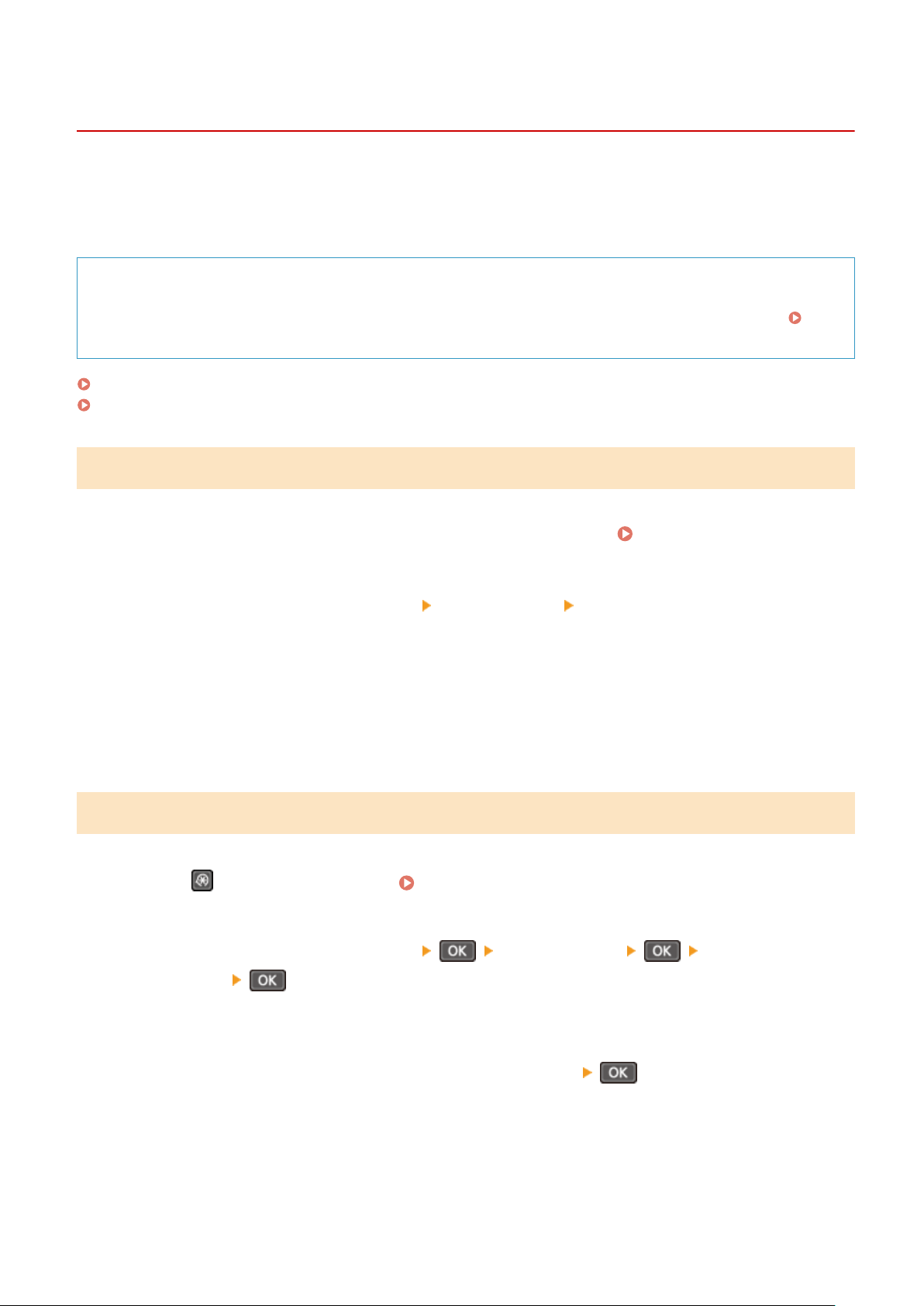
Cleaning the Fixing Assembly
8W0J-0CJ
If the printout is smudged, the xing assembly may be dirty
. In this case, you can clean the xing assembly using
paper.
The xing assembly cannot be cleaned when data is waiting to be printed or when a toner cartridge or drum cartridge
has reached the end of its lifetime.
Required Preparations
● Check that ther
e is enough amount of toner remaining in the toner cartridge and the drum cartridge.
Checking the Remaining Amount of Consumables(P. 540)
Touch Panel Model(P. 530)
5 Lines LCD Model(P. 530)
Touch Panel Model
1
On the control panel, press [Menu] in the [Home] screen.
[Home] Screen(P. 120)
2
Press [Adjustment/Maintenance] [Maintenance] [Clean Fixing Assembly].
➠ The available paper sizes and types ar
e displayed on the conrmation screen.
3
Check that available paper is loaded, and then press [Start].
➠ The paper is fed to the machine, and cleaning starts.
5 Lines LCD Model
1
Press
on the control panel. Control Panel(P. 14)
2
Press [Adjustment/Maintenance]
[Maintenance] [Clean Fixing
Assembly] .
➠ The available paper sizes and types ar
e displayed on the conrmation screen.
3
Check that available paper is loaded, and then press
.
➠ The paper is fed to the machine, and cleaning starts.
Maintenance
530

Replacing Consumables
8W0J-0CL
If a message about consumables appears on the scr
een of the control panel or Remote UI, or the print quality
deteriorates, replace the consumables.
You can view the current remaining amount of consumables on the control panel and Remote UI. For the consumable
item names and number of sheets that can be printed, see the list of consumables.
Replacing the Toner Cartridge(P. 532)
Replacing the Drum Cartridge(P. 536)
Checking the Remaining Amount of Consumables(P. 540)
List of Consumables(P. 541)
Maintenance
531
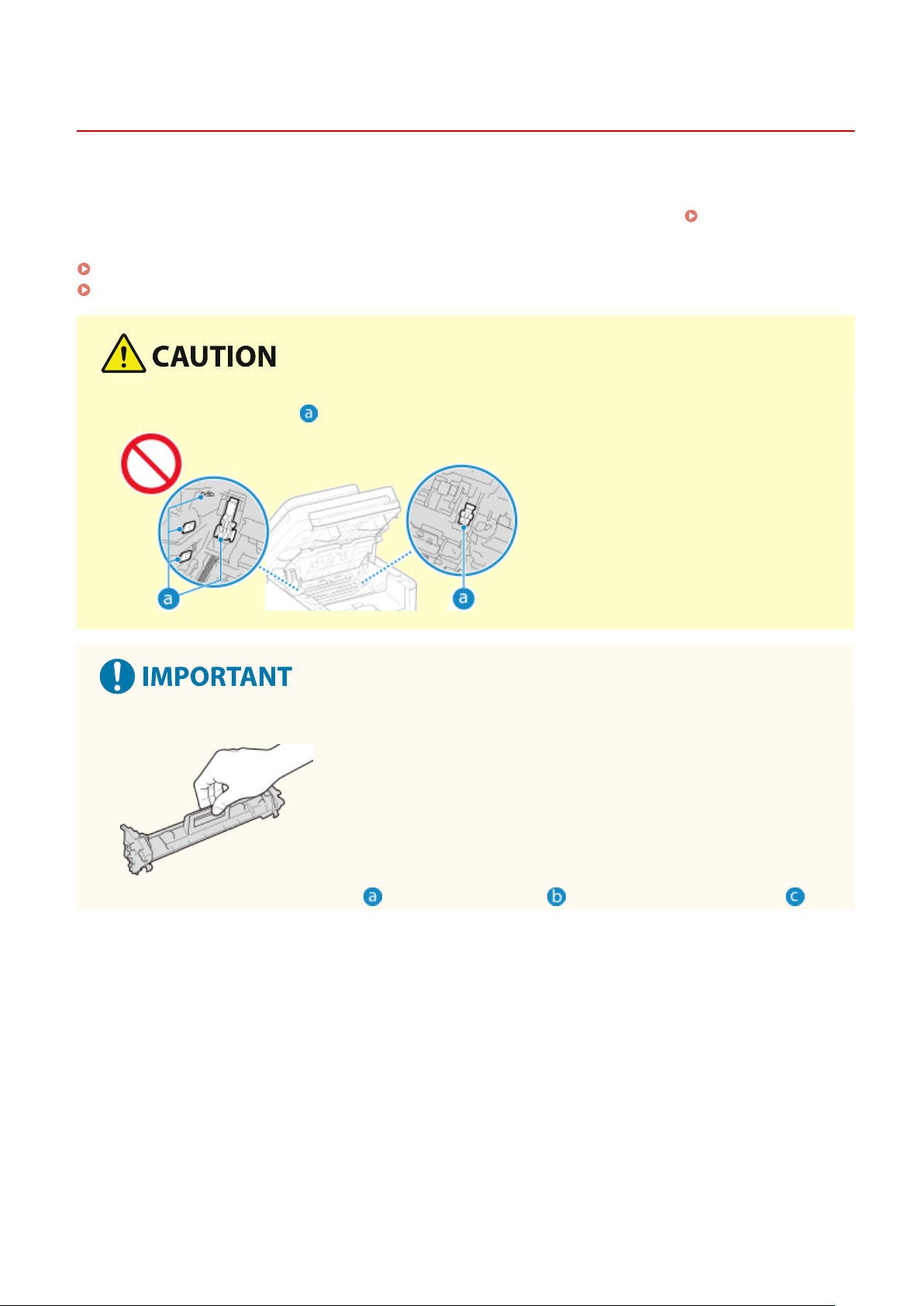
Replacing the Toner Cartridge
8W0J-0CR
Replace the toner cartridge at the appr
opriate time according to messages that appear and a change in print quality.
Before replacing the toner cartridge, check the precautions in Important Safety Instructions.
Manuals of the
Machine(P
. 654)
When to Replace the Toner Cartridge(P. 533)
Replacing Toner Cartridge(P. 533)
● Do not touch the contacts ( ) inside the machine. Doing so may result in a fault.
● Be sur
e to hold the toner cartridge using the handle.
● Do not touch the toner feed section ( ), the electrical contacts ( ) or the toner cartridge memory ( ).
Maintenance
532
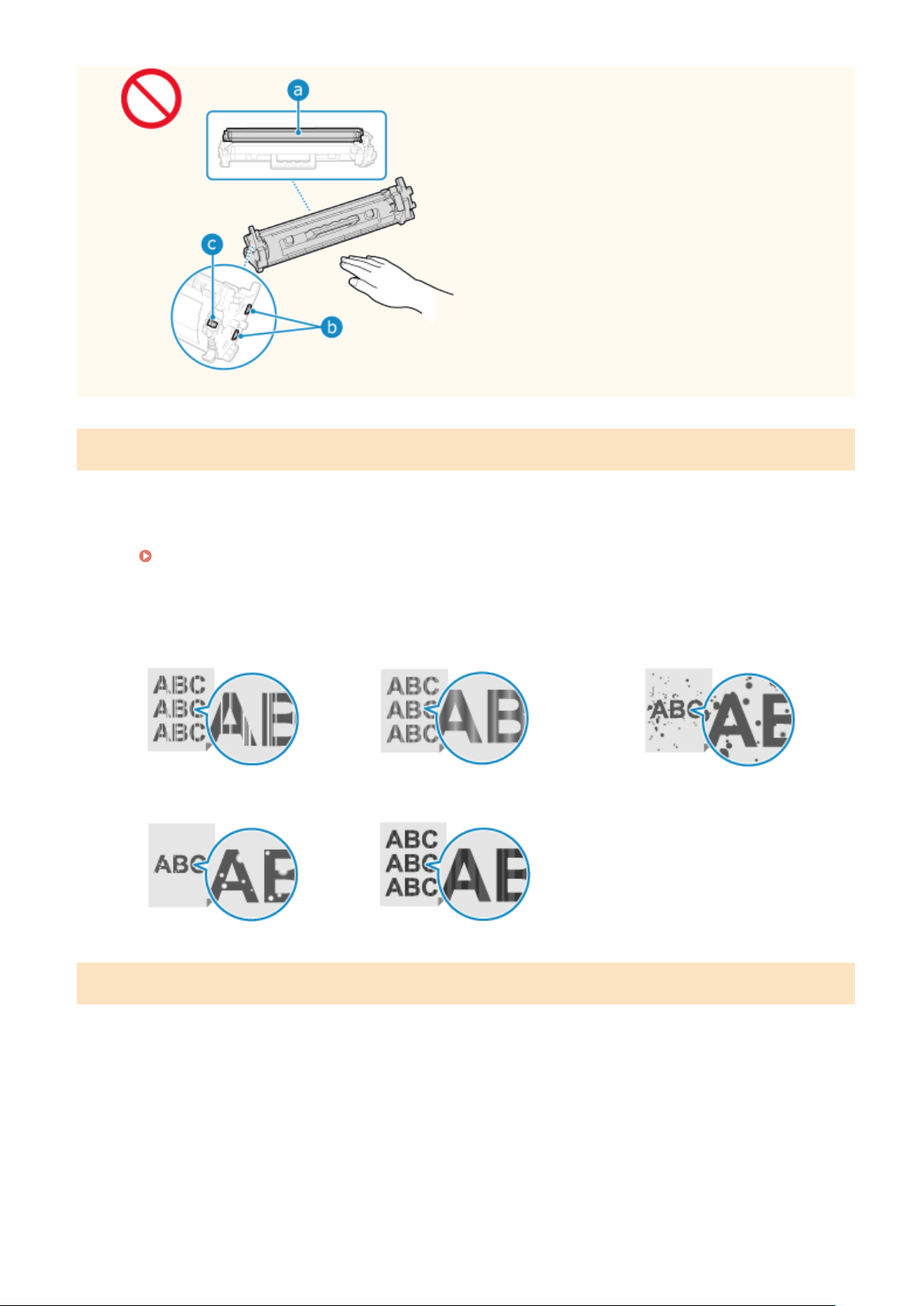
When to Replace the Toner Cartridge
When a Message Appears on the Scr
een of the Control Panel or Remote UI
Follow the message on the screen to prepare a new toner cartridge and replace the old one. Print quality
may suffer if you continue using the toner cartridge without replacing them.
For details about the message and how to resolve it, see the following:
A Message Appears(P. 628)
When Print Quality Deterior
ates
If printouts show any of the symptoms below, the toner cartridge is near the end of their lifetime. It is
recommended to replace the toner cartridge even if a message does not appear.
Streaks appear
Printing is uneven
Toner smudges and splatters appear
White spots appear
Partially faded
Replacing Toner Cartridge
1
Lift the control panel.
Maintenance
533
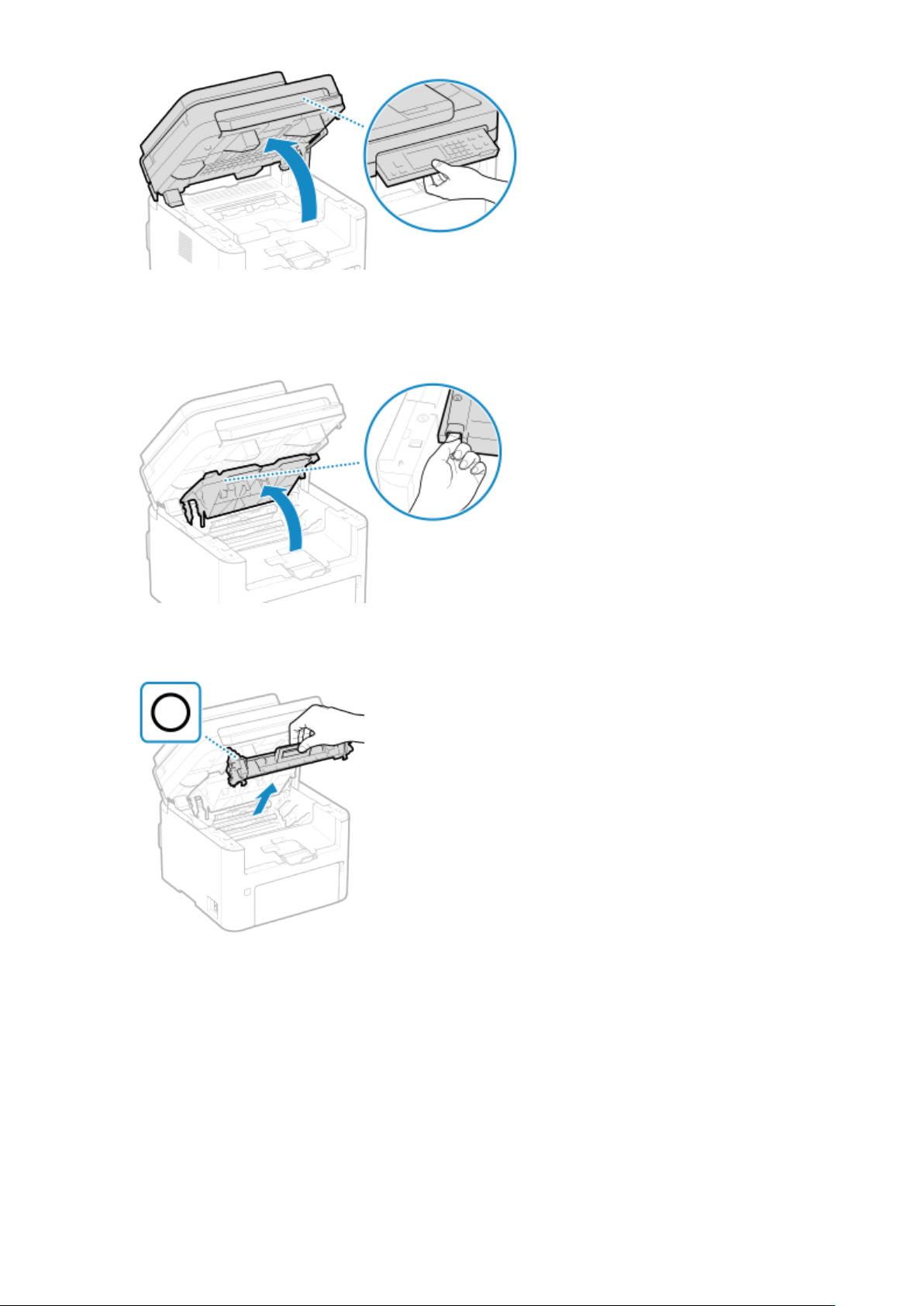
If the feeder is not closed completely, you cannot raise the control panel. If you try to raise it by force, the
machine may be damaged.
2
Open the toner cover.
3
Gently remove the toner cartridge.
Do not shake or tilt the toner cartridge. Also, make sure to avoid applying shocks to the toner cartridge, such
as b
y hitting it against something. Doing so may cause the toner left in the toner cartridge to leak.
4
Remove the toner cartridge from the packing material.
Maintenance
534
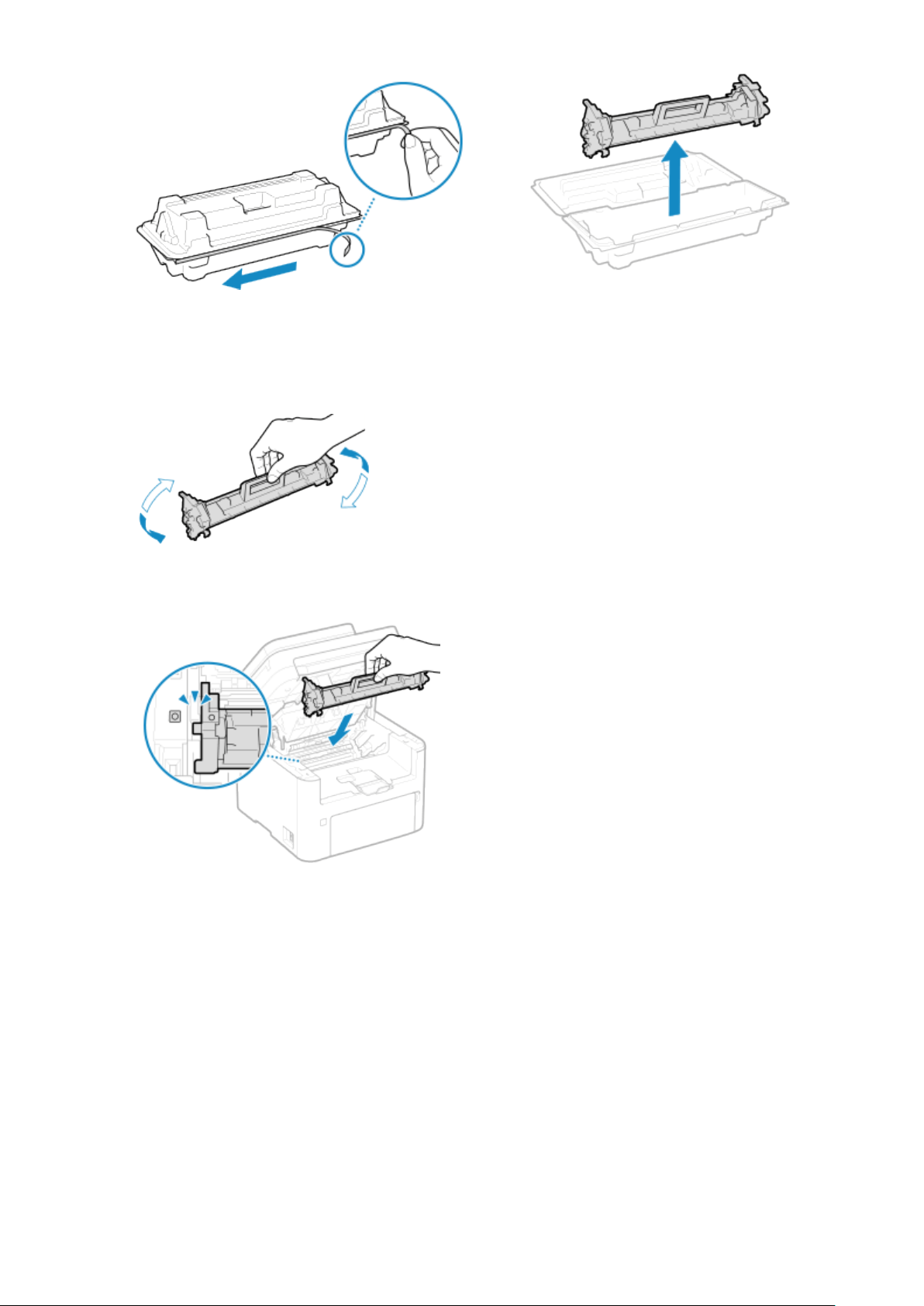
Pull the tab on the package and open the package.
5
Shake the toner cartridge ve or six times to e
venly distribute the toner inside the
cartridge.
6
Replace the toner cartridge.
Install the toner cartridge into the slot with the mark which is the same as the one on the toner cartridge.
7
Close the toner cover and lower the control panel.
Maintenance
535
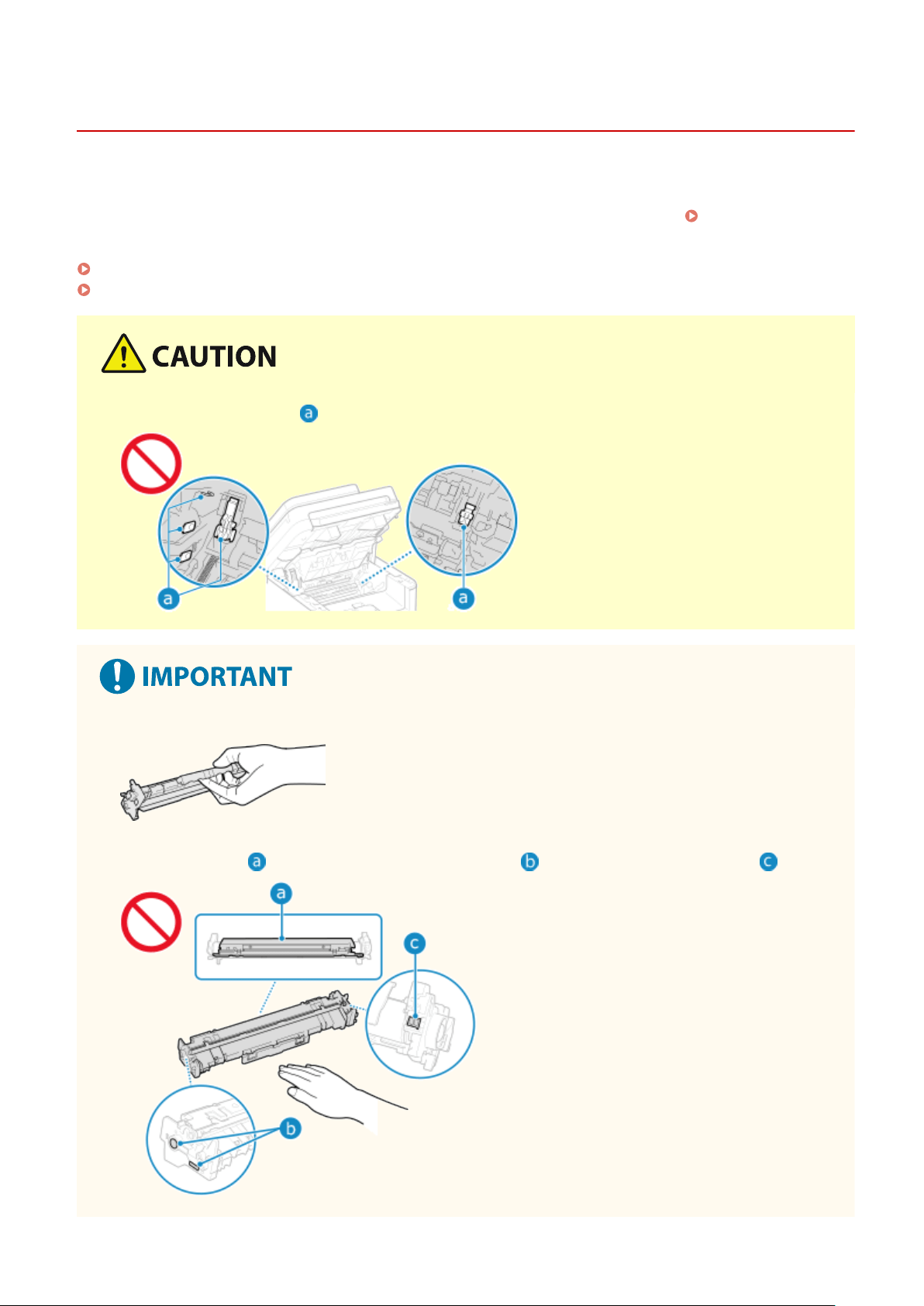
Replacing the Drum Cartridge
8W0J-0J6
Replace the drum cartridge at the appr
opriate time according to messages that appear and a change in print quality.
Before replacing the drum cartridge, check the precautions in Important Safety Instructions.
Manuals of the
Machine(P
. 654)
When to Replace the Drum Cartridge(P. 537)
Replacing Drum Cartridge(P. 537)
● Do not touch the contacts ( ) inside the machine. Doing so may result in a fault.
● Be sur
e to hold the drum cartridge using the handle.
● T
o avoid scratching the surface of the drum inside the machine or exposing it to light, do not open the drum
protective shutter (
). Do not touch the electrical contacts ( ) or the drum cartridge memory ( ).
Maintenance
536
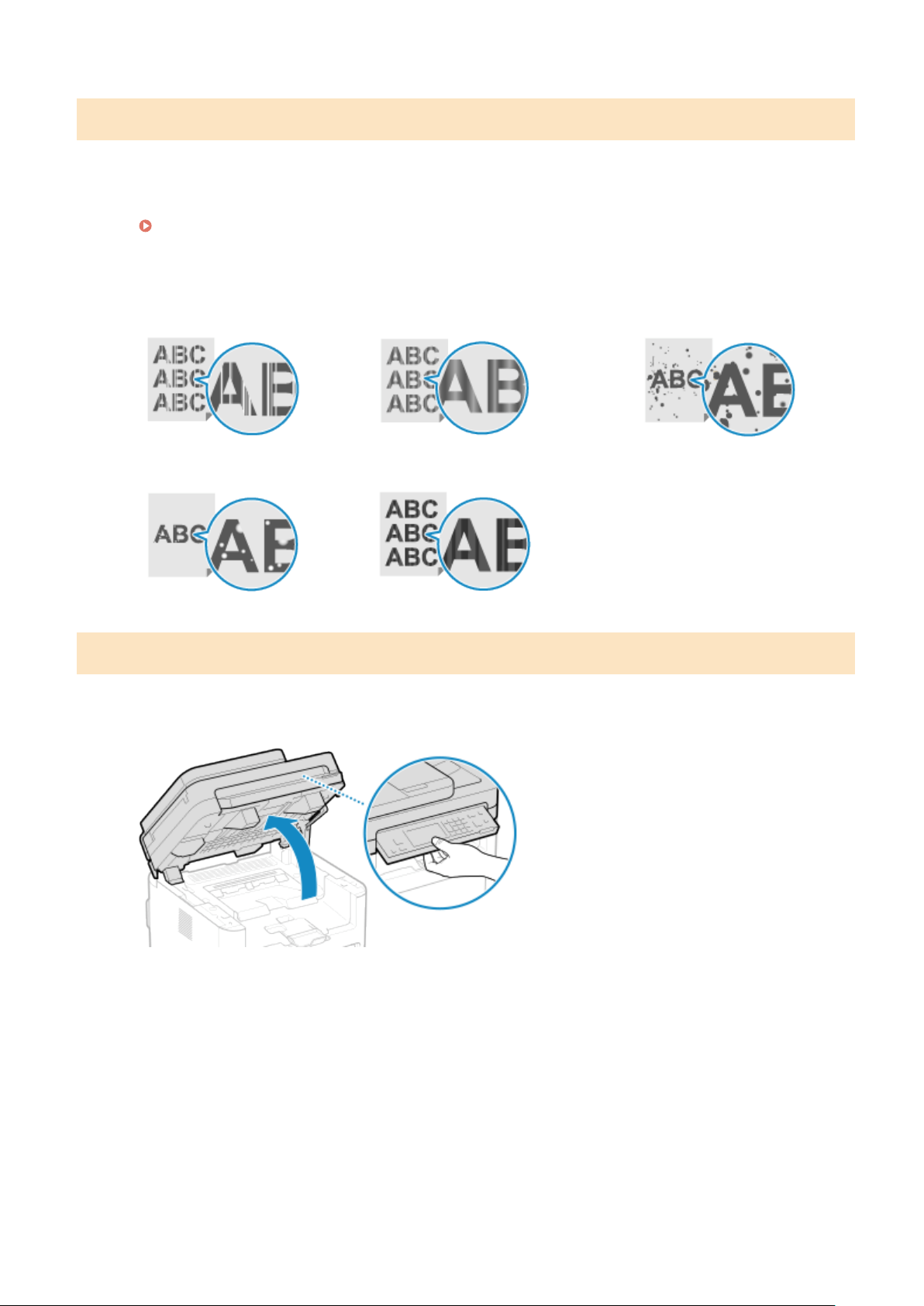
When to Replace the Drum Cartridge
When a Message Appears on the Screen of the Control Panel or Remote UI
Follow the message on the screen to prepare a new drum cartridge and replace the old one. Print quality
may suffer if you continue using the drum cartridge without replacing them.
For details about the message and how to resolve it, see the following:
A Message Appears(P. 628)
When Print Quality Deterior
ates
If printouts show any of the symptoms below, the drum cartridge is near the end of their lifetime. It is
recommended to replace the drum cartridge even if a message does not appear.
Streaks appear
Printing is uneven
Toner smudges and splatters appear
White spots appear
Partially faded
Replacing Drum Cartridge
1
Lift the control panel.
If the feeder is not closed completely, you cannot raise the control panel. If you try to raise it by force, the
machine may be damaged.
2
Open the toner cover.
Maintenance
537
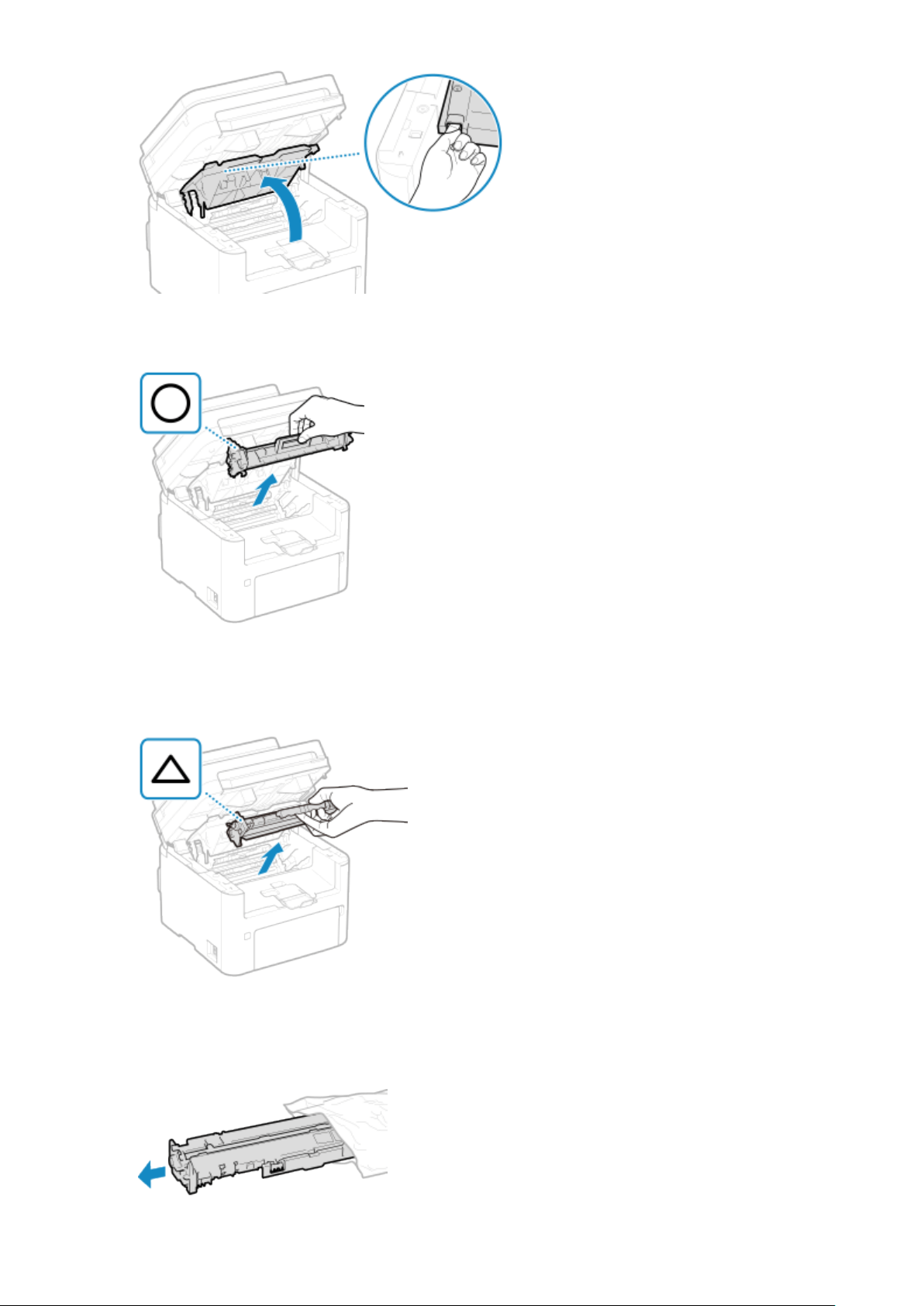
3
Gently remove the toner cartridge.
Do not shake or tilt the toner cartridge. Also, make sure to avoid applying shocks to the toner cartridge, such
as b
y hitting it against something. Doing so may cause the toner left in the toner cartridge to leak.
4
Gently remove the drum cartridge.
Do not shake or tilt the drum cartridge. Also, make sure to avoid applying shocks to the drum cartridge, such
as b
y hitting it against something. Doing so may cause the toner left in the drum cartridge to leak.
5
Remove the drum cartridge from the packing material.
Maintenance
538
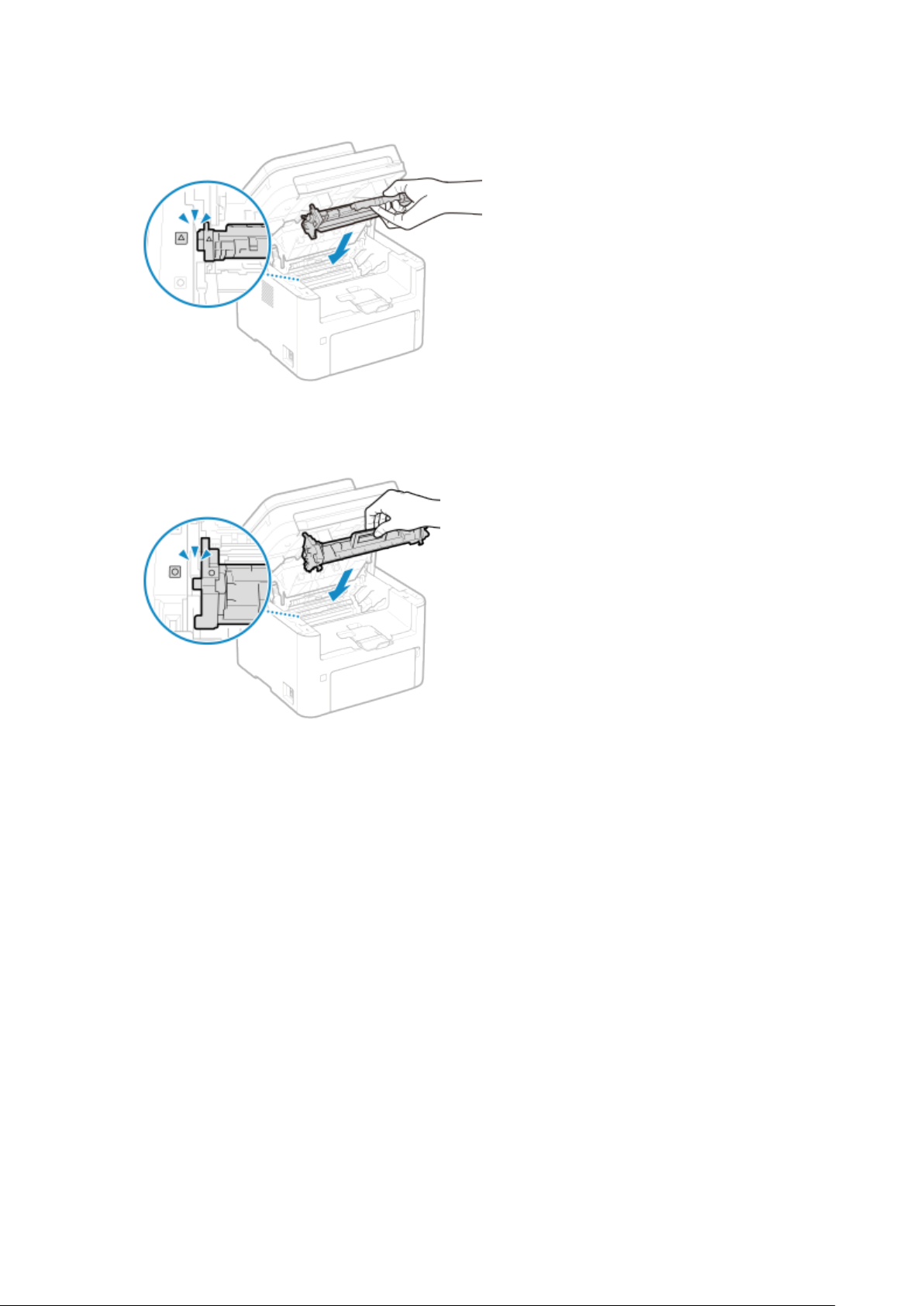
6
Replace the drum cartridge.
Install the drum cartridge into the slot with the mark which is the same as the one on the drum cartridge.
7
Insert the toner cartridge.
Install the toner cartridge into the slot with the mark which is the same as the one on the toner cartridge.
8
Close the toner cover and lower the control panel.
Maintenance
539
Checking the Remaining Amount of Consumables
8W0J-0CS
The r
emaining toner in the toner cartridge or the remaining lifetime of the drum cartridge is displayed in a unit of 10
%. Before printing a large amount of pages, check the remaining amount of the toner cartridge or the drum cartridge
and prepare for a new toner cartridge or a new drum cartridge, if necessary.
* The indicated remaining amounts of the toner cartridge or the drum cartridge can be used only as guide and may
differ from the actual amounts.
This section describes how to view this information using the control panel.
You can also check this information using Remote UI from a computer.
Managing the Machine from a Computer
(Remote UI)
(P. 398)
Touch Panel Model(P. 540)
5 Lines LCD Model(P. 540)
Touch Panel Model
1
Press on the control panel. [Home] Screen(P. 120)
2
Press [Device Status] [Cartridge Level].
➠ The remaining amount of toner in the toner cartridges is displayed.
3
Check the remaining amount of toner in the toner cartridge or the drum cartridge.
5 Lines LCD Model
1
Press
on the control panel. Control Panel(P. 14)
2
Press [Device Status]
[Cartridge Level] .
➠ The r
emaining amount of toner in the toner cartridges is displayed.
3
Check the remaining amount of toner in the toner cartridge or the drum cartridge.
● Y
ou can congure the settings to notify you to prepare a new toner cartridge or a new drum cartridge when
the current toner cartridge or the current drum cartridge reaches a specied amount.
[Displ. Timing for
Cartridge Pr
ep. Notif.](P. 432)
Maintenance
540

List of Consumables
8W0J-0CU
The item names of the machine consumables and number of sheets that can be printed ar
e shown below.
In addition, precautions must be taken when handling and storing consumables. See also "Important Safety
Instructions."
Manuals of the Machine(P. 654)
For optimum print quality, using Canon genuine Toner, Cartridge and Parts is
r
ecommended.
◼ T
oner Cartridges
Supplied Toner Cartridge
The average number of sheets that can be printed
*1
with the supplied toner cartridges is sho
wn below.
*1
The aver
age yield is based on "ISO/IEC 19752" (the global standard related to "Method for the determination of toner
cartridge yield for monochromatic electrophotographic printers and multi-function devices that contain printer
components" issued by ISO [International Organization for Standardization]) when printing A4 size paper with the default
print density setting.
MF269dw VP II
4,100 sheets
MF269dw II / MF267dw II / MF264dw II / MF262dw II
1,700 sheets
Replacement T
oner Cartridges
The Canon genuine toner cartridges for replacement and average number of sheets that can be printed
*1
ar
e
shown below.
For optimum print quality, using Canon genuine toner cartridges is recommended.
*1
The aver
age yield is based on "ISO/IEC 19752" (the global standard related to "Method for the determination of toner
cartridge yield for monochromatic electrophotographic printers and multi-function devices that contain printer
components" issued by ISO [International Organization for Standardization]) when printing A4 size paper with the default
print density setting.
Canon Toner Cartridge 051
1,700 sheets
Canon T
oner Cartridge 051 H
4,100 sheets
Maintenance
541
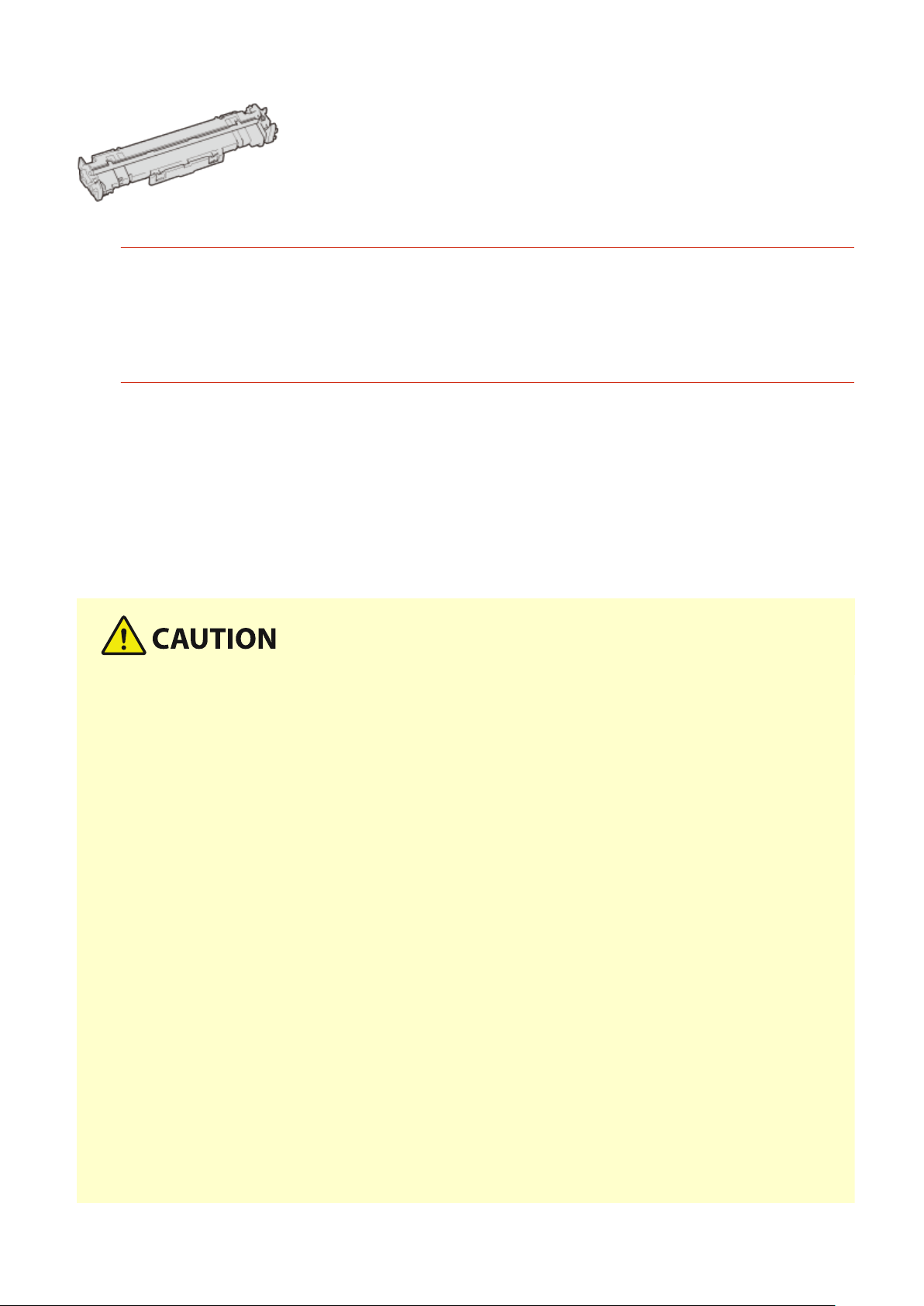
◼ Drum Cartridge
Supplied Drum Cartridge
The average number of sheets that can be printed
*2
with the supplied drum cartridge is 23,000 sheets.
*2
The aver
age yield is on the basis of our evaluation criteria when printing at 2-sheet intervals (2-sheet intermittent) of
plain A4 size paper.
Replacement Drum Cartridge
The Canon genuine drum cartridge for replacement and average number of sheets that can be printed
*2
are
shown below.
For optimum print quality, using Canon genuine drum cartridges is recommended.
*2
The aver
age yield is on the basis of our evaluation criteria when printing at 2-sheet intervals (2-sheet intermittent) of
plain A4 size paper.
Canon Drum Cartridge 051
23,000 sheets
Store a toner cartridge or a drum cartridge as described below. Storing a toner cartridge or a drum cartridge in
an impr
oper location or environment may cause problems such as data loss.
● Store unopened until immediately prior to use.
● Do not store a toner cartridge or a drum cartridge upright or upside down.
● Do not store a toner cartridge or a drum cartridge in the following locations:
- Locations exposed to open ames
- Locations exposed to direct sunlight or bright light for ve minutes or more
- Locations exposed to excessively salty air
- Locations heavily exposed to corrosive gases (e.g. aerosol sprays or ammonia)
- Very hot and/or humid locations
- Locations subject to dramatic changes in temperature and humidity likely to cause condensation
- Very dusty locations
- Locations within the reach of children
- Locations close to products affected by magnetism (e.g. oppy disks or disk drives)
● Store the packaging material safely for future use. It will be needed for situations such as storing the
machine with the toner cartridge or the drum cartridge removed.
● Canon reserves the right to reposition, reshape, add, or remove packaging material without notice.
● Store a toner cartridge or a drum cartridge in the following conditions:
- Storage temperature range: 32 to 95°F (0 to 35°C)
- Storage humidity range: 35% to 85% RH (relative humidity, condensation-free)
*1
Maintenance
542
*1
Even within the appr
oved storage humidity range, water droplets (condensation) may develop inside the toner
cartridge or the drum cartridge if the temperatures inside and outside the toner cartridge or the drum cartridge differ.
Condensation will adversely affect the print quality.
Be careful of counterfeit toner cartridges or drum cartridges
● Please be awar
e that there are counterfeit Canon toner cartridges or Canon drum cartridges in the
marketplace. Use of counterfeit toner cartridge or drum cartridge may result in poor print quality or
machine performance. Canon is not responsible for any malfunction, accident or damage caused by the use
of counterfeit toner cartridge or drum cartridge.
For more information, see https://global.canon/ctc/ .
● The toner cartridge or the drum cartridge may need to be r
eplaced before reaching the average number of
sheets that can be printed depending on the installation environment, paper size to be printed, and original
type.
Maintenance
543
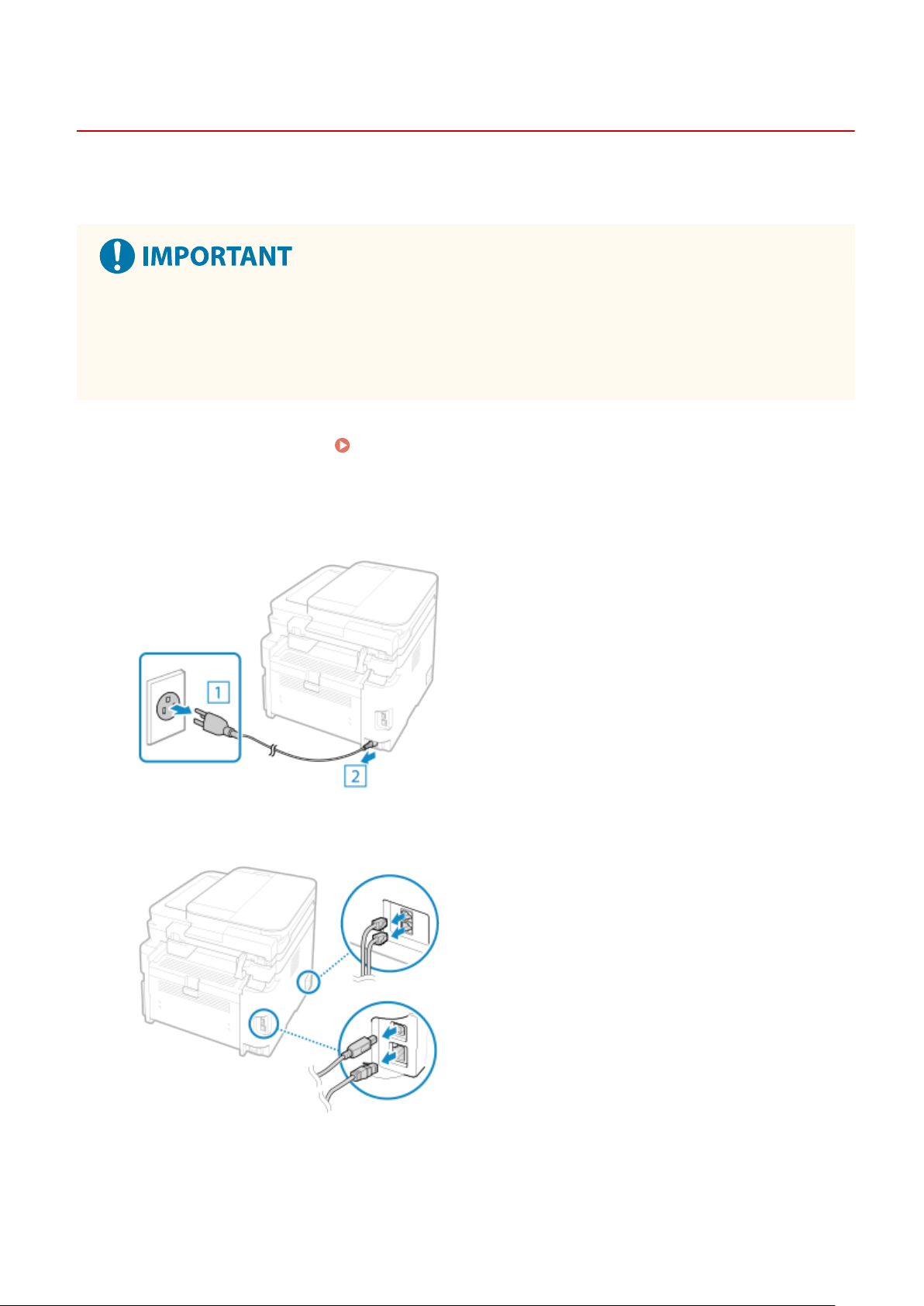
Moving the Machine
8W0J-0E2
The machine is a heavy object. When mo
ving the machine for cleaning or to change locations, be sure to perform the
procedure below to prevent injury, accident, or damage to the machine.
● If the machine is to be tr
ansported for relocation, removals, etc., take the following steps to prevent damage
and faults during transportation:
- Remove the toner cartridge and the drum cartridge.
- Securely pack the machine in the original packaging (box) and packing materials.
1
Turn OFF the machine.
Turning OFF the Machine(P. 112)
Turning OFF the machine deletes any data waiting to be printed.
2
Unplug the power cord in the order shown.
3
Unplug all cables and cords connected to the machine.
* The number of connected cables and cords varies depending on the usage environment.
4
When moving the machine a long distance, remove the toner cartridge and the drum
cartridge to pr
event spilling of toner.
Maintenance
544
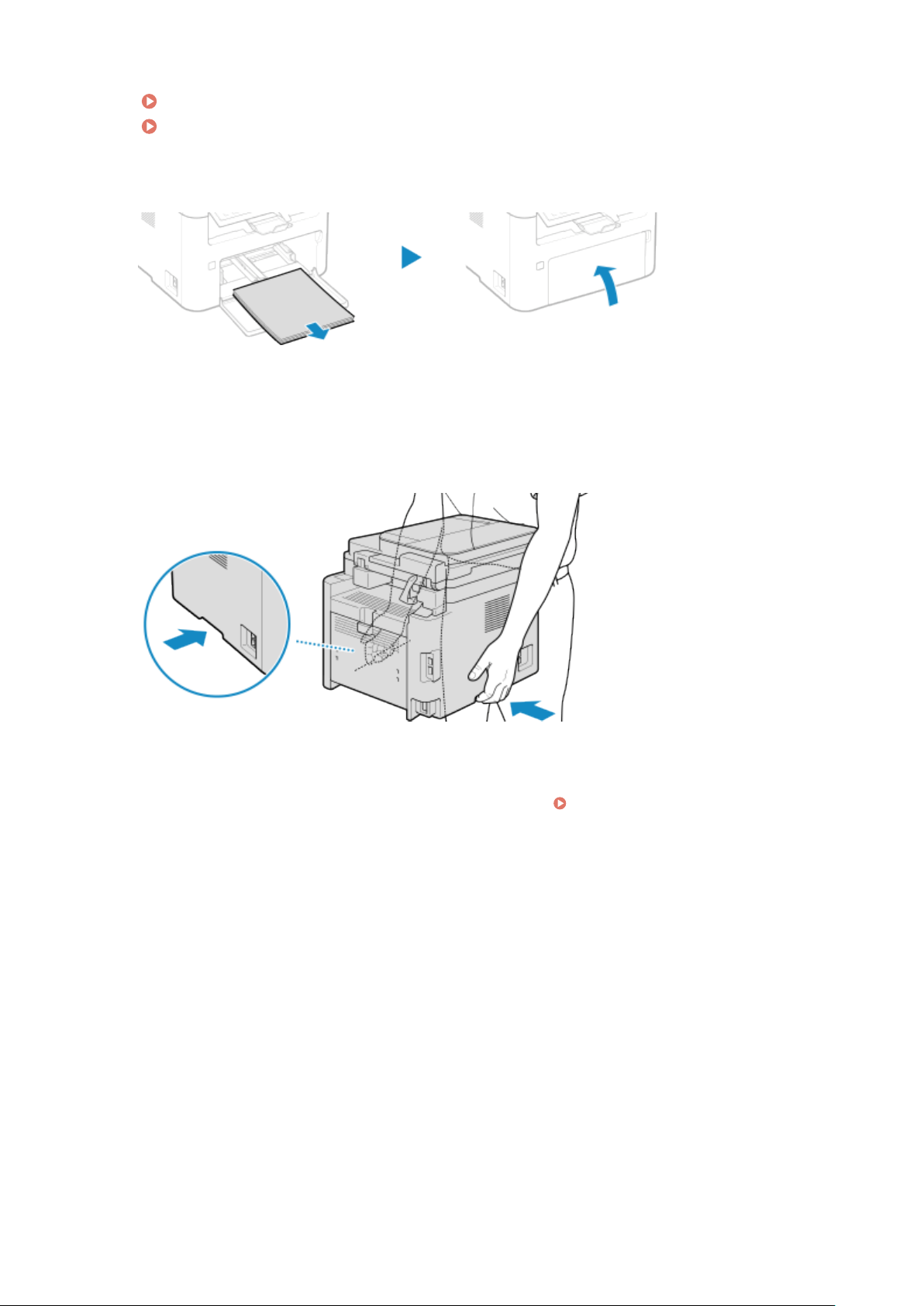
Replacing Toner Cartridge(P. 533)
Replacing the Drum Cartridge(P. 536)
5
Open the front cover and remove any paper.
6
Close the front cover, paper stopper, and any other covers or trays.
7
Grab the lift handles, and lift up the machine to move it.
8
Gently lower the machine.
For the installation procedure after moving, see "Setup Guide." Manuals of the Machine(P. 654)
Maintenance
545

Troubleshooting
Troubleshooting .............................................................................................................................................
548
Paper Jams ......................................................................................................................................................... 549
Paper Jams inside the Machine and in the Back Side .................................................................................... 551
Paper Jams in the Feeder .............................................................................................................................. 555
Paper Jams That Occur Repeatedly ............................................................................................................... 558
Problems with Printing Results ........................................................................................................................ 559
Toner Smudges and Splatters Appear .......................................................................................................... 561
Streaks Appear ............................................................................................................................................. 563
Printing Is Uneven ........................................................................................................................................ 566
Printed Paper Is Blank .................................................................................................................................. 569
Smudge Marks Appear on the Edge of Printouts .......................................................................................... 570
Text or Images Are Blurry ............................................................................................................................. 571
Printouts Have Ghost Images ....................................................................................................................... 573
Printouts Are Faded ...................................................................................................................................... 574
The Edge of the Page Is Not Printed ............................................................................................................. 577
Printouts Are Entirely or Partially Grayish ..................................................................................................... 578
White Spots Appear ...................................................................................................................................... 581
Smudge Marks Appear on the Back Side of Printouts ................................................................................... 582
Printouts Are Skewed ................................................................................................................................... 583
Printed Barcode Cannot Be Read .................................................................................................................. 584
Paper and Paper Feeding Problems ................................................................................................................. 585
Paper Creases ............................................................................................................................................... 586
Paper Curls ................................................................................................................................................... 587
Paper Is Not Fed or Two or More Sheets Are Fed Together .......................................................................... 588
Setting Up .......................................................................................................................................................... 589
The Machine Connected via WSD Port Is Not Displayed During Driver Installation ...................................... 590
Cannot Connect to Wireless LAN .................................................................................................................. 591
Network ............................................................................................................................................................. 592
Cannot Switch to Wireless LAN ..................................................................................................................... 593
Cannot Find the Print Server to Connect to .................................................................................................. 595
Cannot Connect to a Shared Printer ............................................................................................................. 596
Cannot Find the IP Address of the Machine .................................................................................................. 597
AirPrint Does Not Work ................................................................................................................................ 598
Printing and Copying ........................................................................................................................................ 599
Troubleshooting
546

Cannot Print or Copy ....................................................................................................................................
600
Cannot Print (Wireless LAN) ................................................................................................................... 601
Cannot Print (Wired LAN) ....................................................................................................................... 603
Cannot Print (USB Connection) .............................................................................................................. 605
Cannot Print (via Print Server) ................................................................................................................ 606
Printing Is Slow ............................................................................................................................................. 607
Scanning ............................................................................................................................................................ 608
Cannot Save Scanned Data to a Computer ................................................................................................... 609
Cannot Save Scanned Data to a Shared Folder ............................................................................................. 611
Faxing and Using the Telephone ...................................................................................................................... 613
Cannot Send a Fax ........................................................................................................................................ 614
Cannot Receive a Fax .................................................................................................................................... 616
Machine Does Not Automatically Switch Between Telephone and Fax ......................................................... 618
Cannot Send or Receive a Fax via Optical Line .............................................................................................. 619
Cannot Send a Fax to an International Destination ...................................................................................... 620
Other Party's Telephone or Fax Number Is Not Displayed ............................................................................ 621
Management Functions and Environment Settings ....................................................................................... 622
Cannot Access Remote UI or Send Function Setting Tool ............................................................................. 623
Changing the Volume of the Conrmation Sound and Warning Tone .......................................................... 624
Changing the Time Until Sleep Mode ........................................................................................................... 625
Lost Department ID or PIN for the Administrator ......................................................................................... 626
Checking the Items That Can Be Congured on the Machine and Their Settings ......................................... 627
A Message Appears ........................................................................................................................................... 628
An Error Code Is Displayed ................................................................................................................................ 643
If the Problem Persists ...................................................................................................................................... 651
Troubleshooting
547

Troubleshooting
8W0J-0E3
This chapter describes ho
w to troubleshoot problems and answers frequently asked questions.
Select an item to check from the contents or the list below.
You can click [
] at the top of the screen to search for the message or error code (three-digit number starting with #)
that appears on the contr
ol panel, and check how to troubleshoot problems.
◼ Frequently Asked Questions
Lost Department ID or PIN for the Administrator(P. 626)
Cannot Print or Copy(P. 600)
Cannot Send or Receive a Fax via Optical Line(P. 619)
[Memory is full.] Is Displayed on the Control Panel, and the Operation Cannot Be Performed.(P. 638)
Error Code "#801" Is Displayed(P. 647)
◼ Fr
equently Asked Questions about Operations
I Want to Scan an Original.
Make preparations according to the scanned data save destination and sending method, and then scan the
original.
Scanning(P. 226)
I W
ant to Send Scanned Data by E-mail.
You can scan an original and send the scanned data by e-mail as an attachment.
Scanning (Sending by E-mail)(P. 247)
I W
ant to Forward a Received Fax.
Congure the settings to automatically forward received faxes to a computer or other fax machine.
Auto Forwarding and Backing Up Received Faxes(P. 276)
I W
ant to Send a Fax from a Computer.
You can send a document as a fax from a computer using a fax driver.
Sending Faxes from a Computer (PC Faxing)(P. 282)
I W
ant to Print on an Envelope.
Place the envelope in the drawer or multi-purpose tray while paying attention to the orientation and side of
the envelope.
Then, set the paper size and type according to the placed envelope.
Next, use the print driver of the computer to set the paper size of the document and the paper size to print,
and then perform printing.
Preparations and Orientation for Loading Envelopes(P. 148)
Specifying the Paper Size and Type(P. 152)
Printing from a Computer(P. 214)
● If the pr
oblem persists even after trying the troubleshooting methods, contact your dealer or service
representative.
If the Problem Persists(P. 651)
Troubleshooting
548
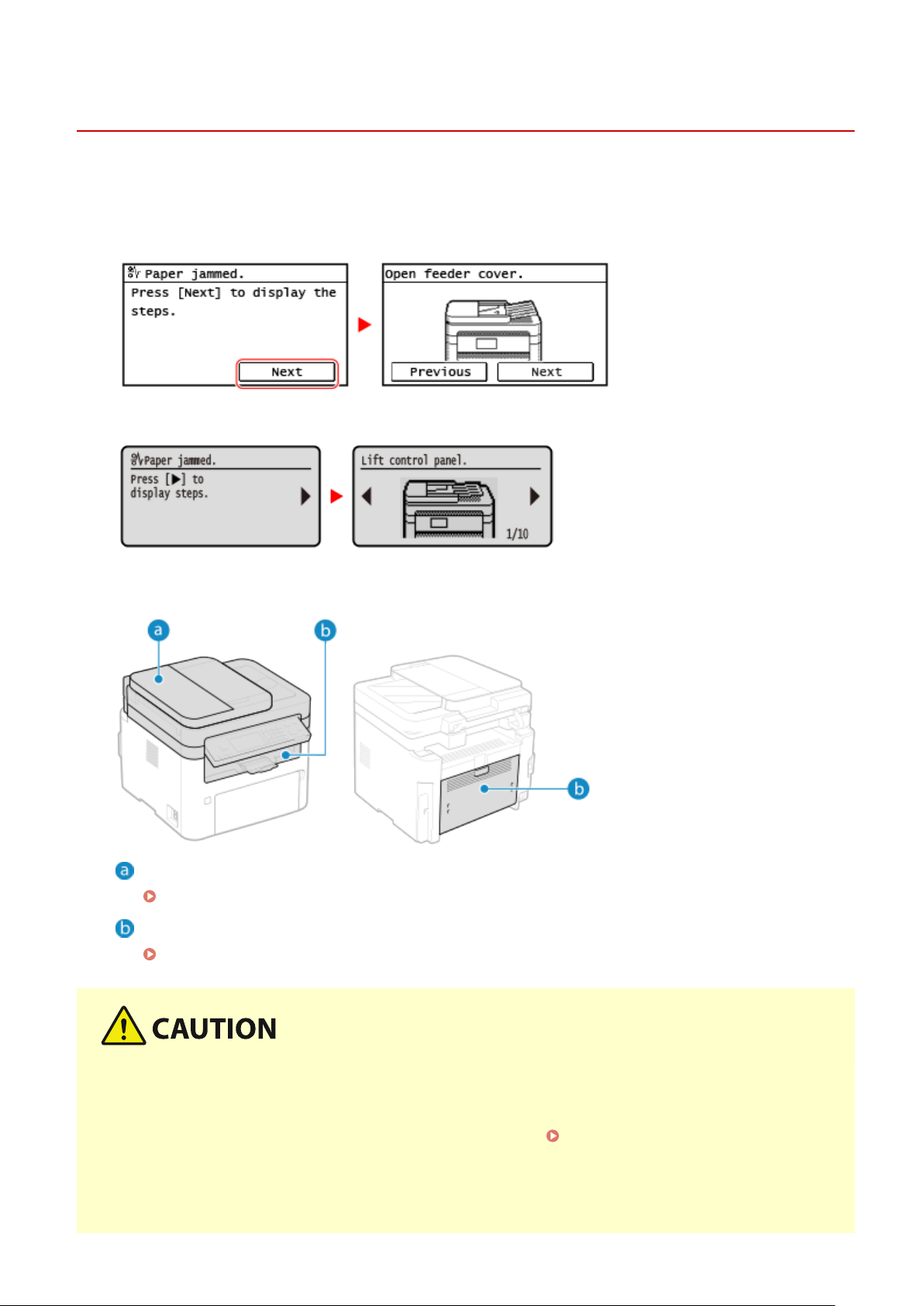
Paper Jams
8W0J-0E4
If paper jams occur in the machine, [Paper jammed.] appears on contr
ol panel. Follow the displayed instructions on
how to clear the paper jam.
Touch Panel Model
5 Lines LCD Model
For details about clearing paper jams from various parts of the machine, see below.
Feeder
Paper Jams in the Feeder(P. 555)
Inside the machine and rear side
Paper Jams inside the Machine and in the Back Side(P. 551)
Do not forcibly remove the jammed paper from the machine.
● For
cibly removing the paper may result in personal injury or damage parts of the machine. If you cannot
remove the paper, contact your dealer or service representative.
If the Problem Persists(P. 651)
When All Paper Jams Have Been Clear
ed
● Immediately remove your hands from the machine so that your clothing and hands do not get caught in the
rollers.
Troubleshooting
549

When clearing paper jams, do not turn the power OFF.
● Data being printed is er
ased when you turn the power OFF.
When the Paper Gets Torn
● Be sure to remove it so that no pieces remain.
Troubleshooting
550
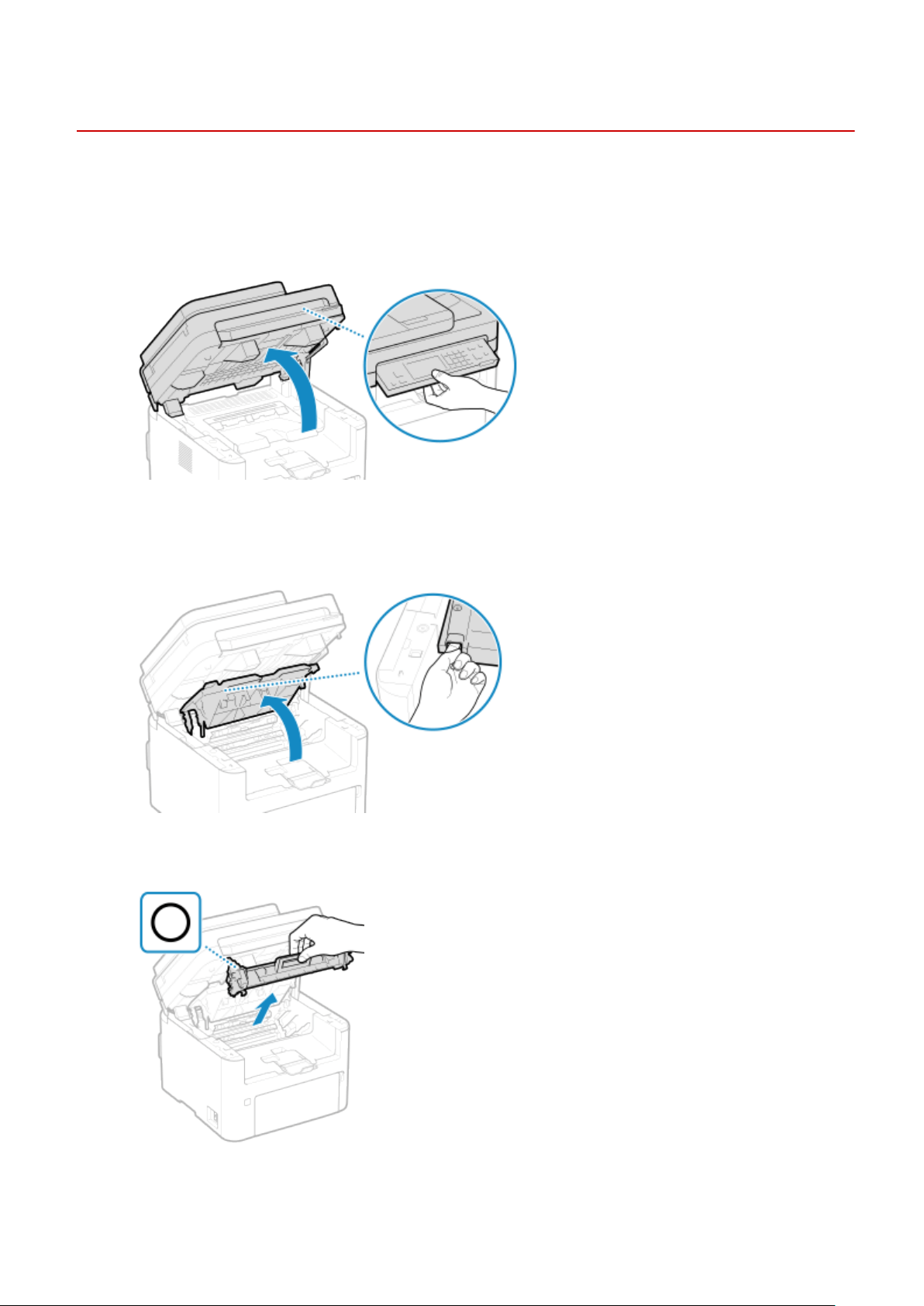
Paper Jams inside the Machine and in the Back Side
8W0J-0E5
Use the pr
ocedure below to check the inside and back side, and to remove any jammed paper. If the paper tears, be
sure to remove the parts so that no pieces remain.
1
Lift the control panel.
If the feeder is not closed completely, you cannot raise the control panel. If you try to raise it by force, the
machine may be damaged.
2
Open the toner cover.
3
Gently remove the toner cartridge.
Do not shake or tilt the toner cartridge. Also, make sure to avoid applying shocks to the toner cartridge, such
as by hitting it against something. Doing so may cause the toner left in the toner cartridge to leak.
Troubleshooting
551
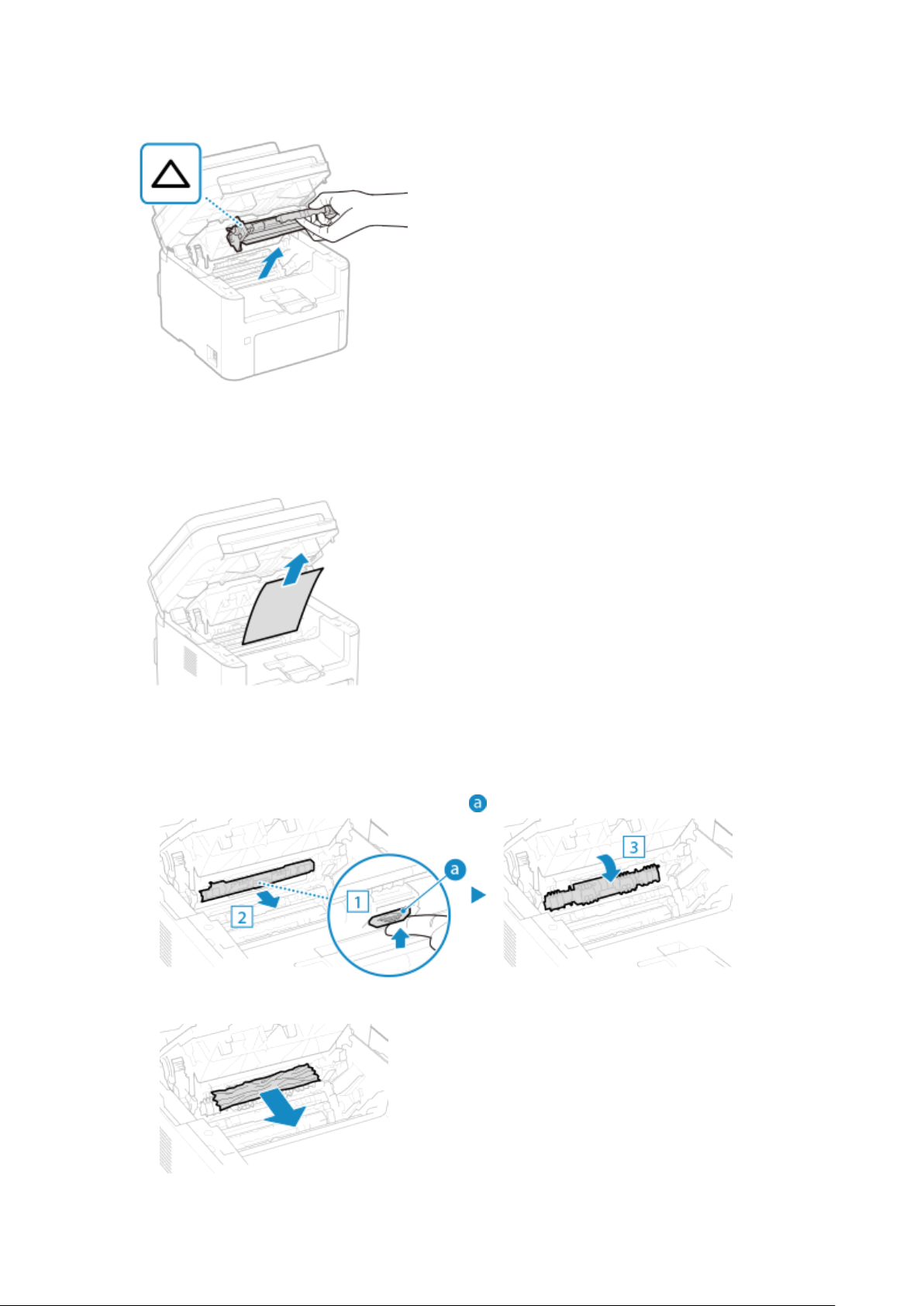
4
Gently remove the drum cartridge.
Do not shake or tilt the drum cartridge. Also, make sure to avoid applying shocks to the drum cartridge, such
as b
y hitting it against something. Doing so may cause the toner left in the drum cartridge to leak.
5
Gently pull out the paper.
6
Check whether paper is jammed inside the paper exit guide.
1
Pull out toward you while pressing the button (
) to open the paper exit guide.
2
Gently pull out the paper.
3
Close the paper exit guide.
Troubleshooting
552
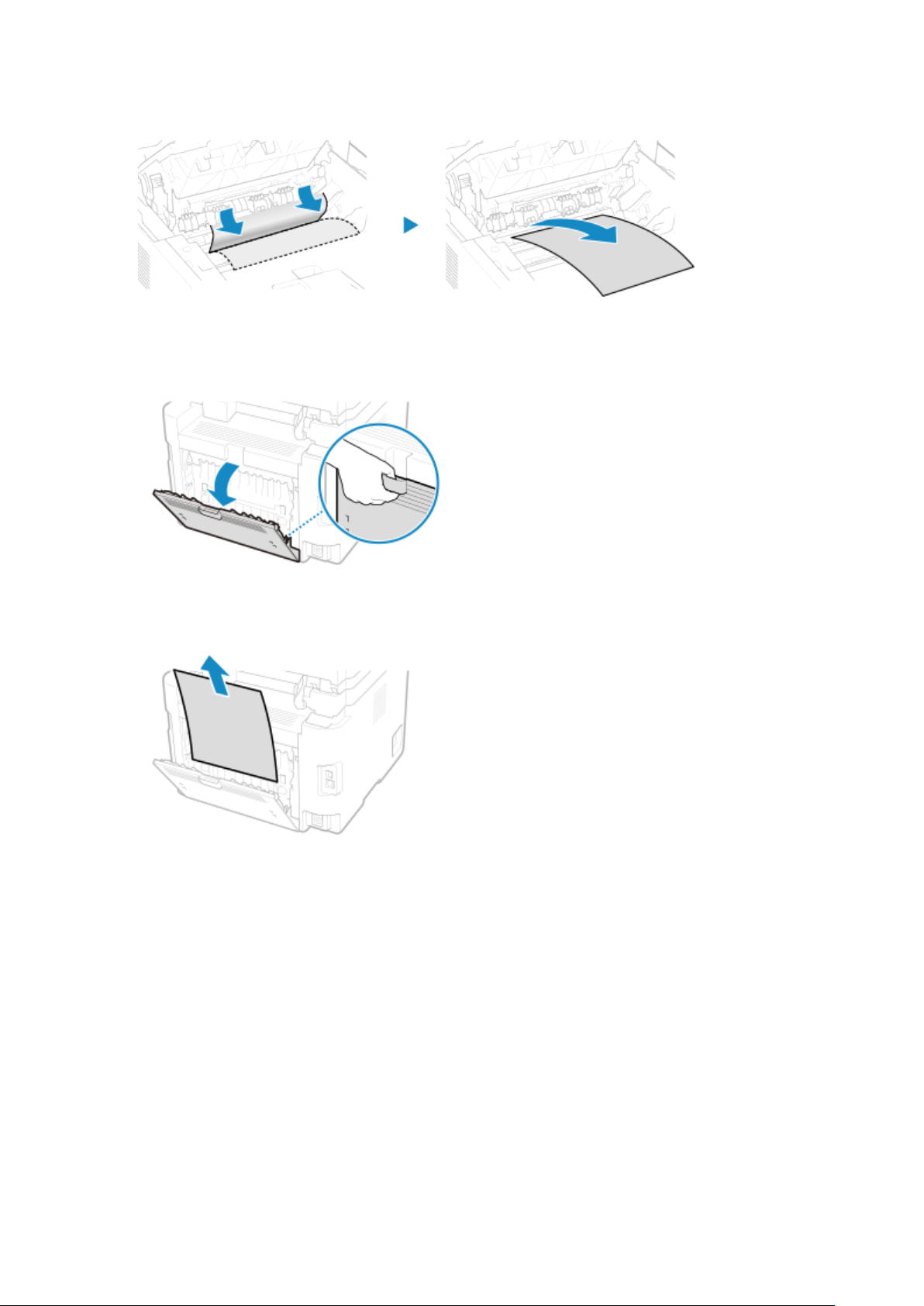
7
Gently pull out the jammed paper inside the machine.
Hold both edges of the paper, pull the leading edge of the paper down, and then pull it out.
8
Open the back cover.
9
Gently pull out the paper.
10
Close the back cover.
11
Insert the drum cartridge.
12
Insert the toner cartridge.
13
Close the toner cover, and lower the control panel.
➠ The message [Paper jammed.] disappears, and printing r
esumes automatically.
If printing does not resume automatically, try printing again.
Troubleshooting
553

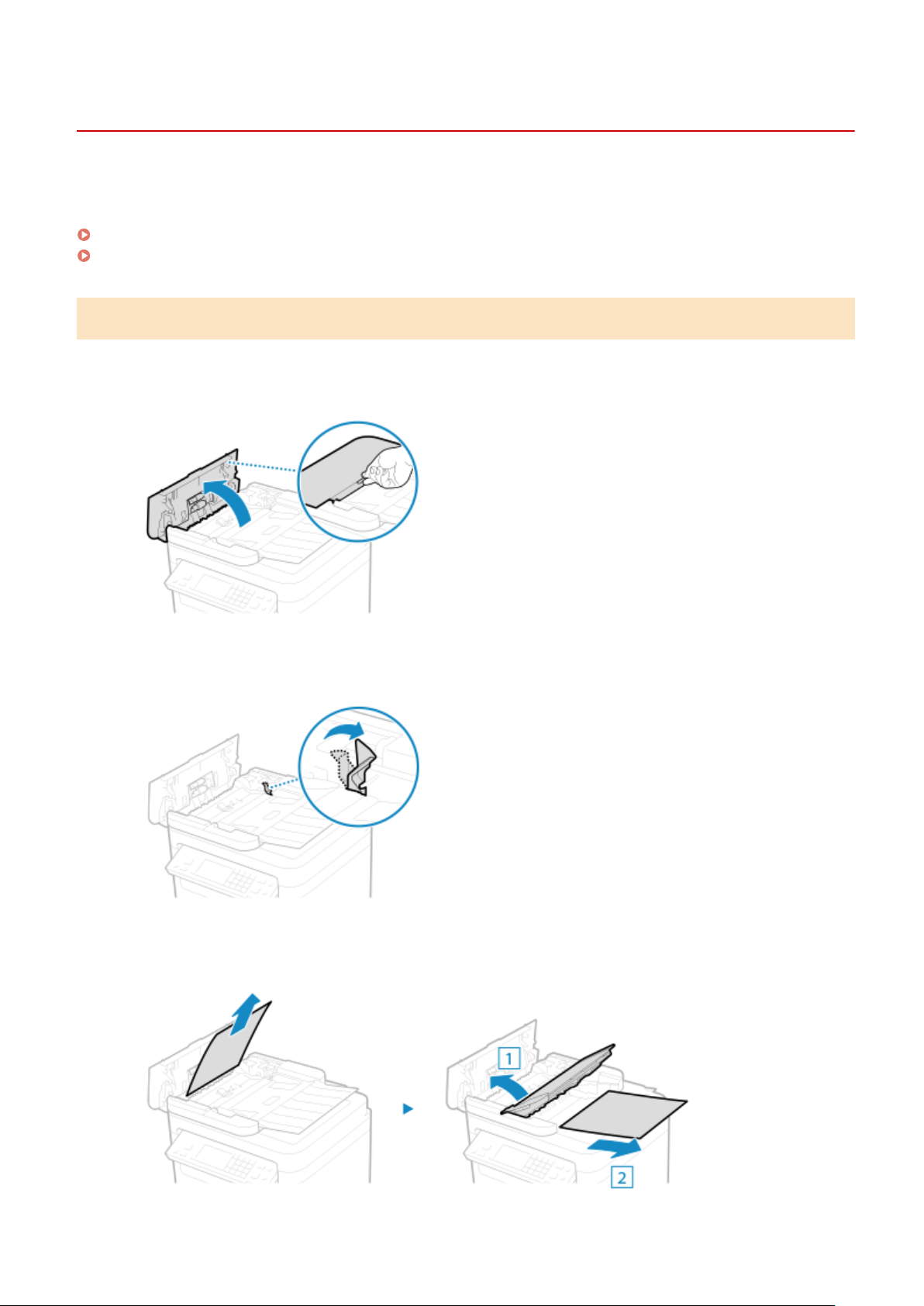
Paper Jams in the Feeder
8W0J-0E7
Remo
ve the original jammed inside or at the rear side of the feeder. If the original tears, be sure to remove the parts
so that no pieces remain.
2-Sided Double Pass Feeder(P. 555)
1-Sided Feeder(P. 556)
2-Sided Double Pass Feeder
1
Open the feeder cover.
2
Move the lever to unlock.
3
Gently pull out the original.
Troubleshooting
555
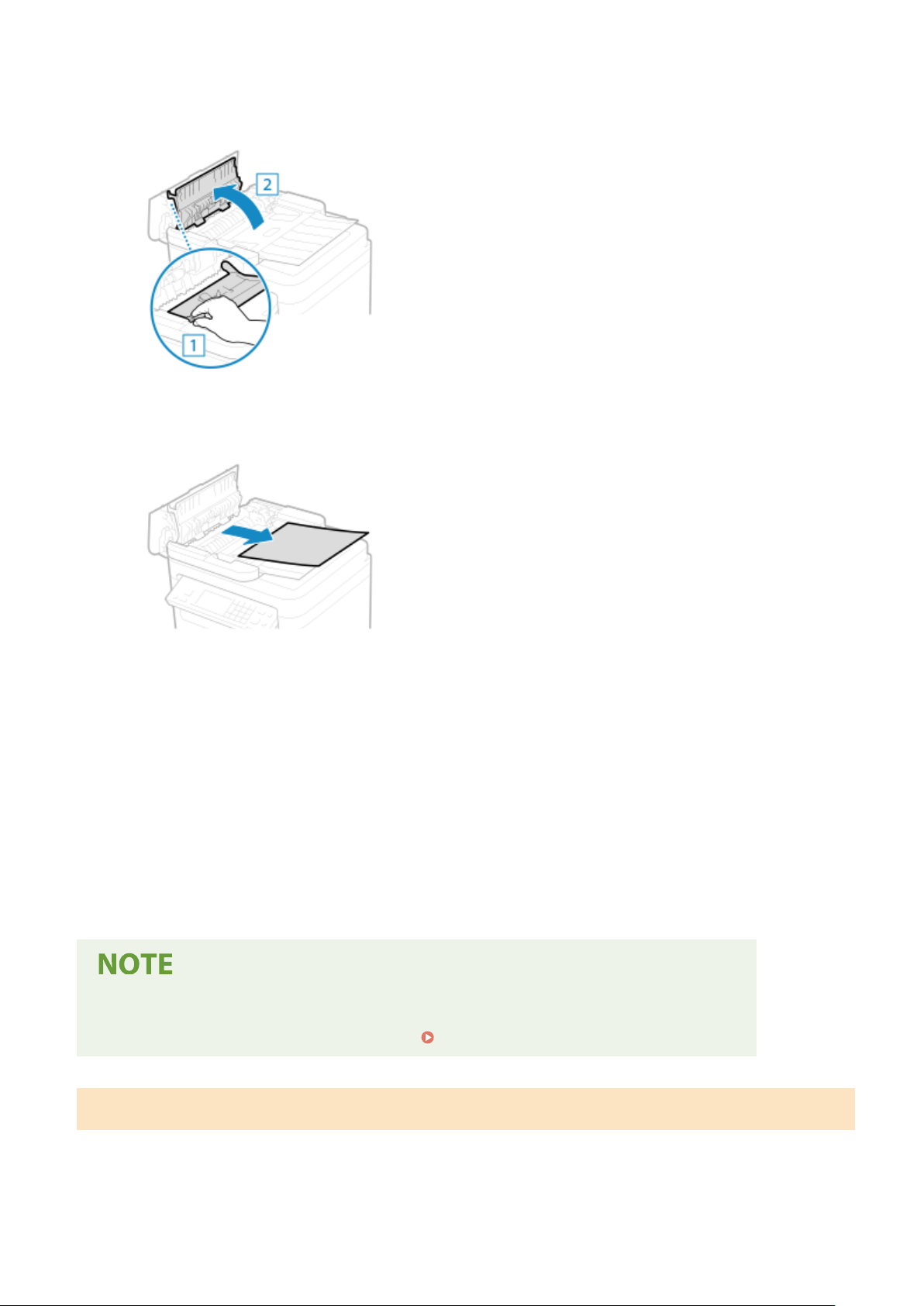
4
Hold the green knob, and open the inner cover.
5
Gently pull out the original.
6
Close the inner cover.
7
Return the lever back in place, and close the feeder cover.
8
Place the original in the feeder again.
➠ The message [Paper jammed.] disappears, and you can scan the original.
Jobs in which an original jammed ar
e canceled automatically. The job does not resume even if you place
the original again, so execute the job again.
If Paper Jams Occur Repeatedly
● Check the status of the machine and original. Paper Jams That Occur Repeatedly(P. 558)
1-Sided Feeder
1
Open the feeder cover.
Troubleshooting
556
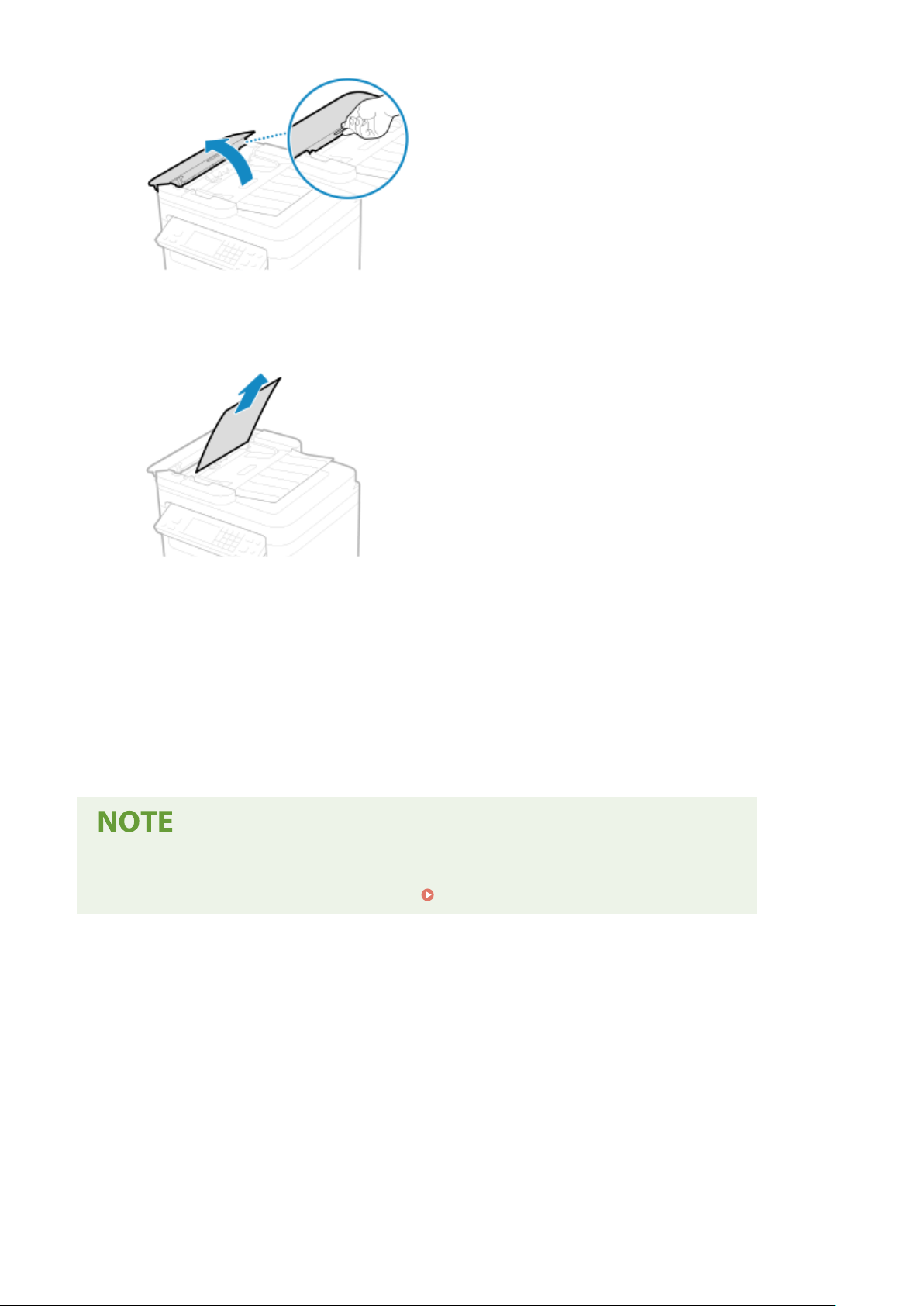
2
Gently pull out the original.
3
Close the feeder cover.
4
Place the original in the feeder again.
➠ The message [Paper jammed.] disappears, and you can scan the original.
Jobs in which an original jammed ar
e canceled automatically. The job does not resume even if you place
the original again, so execute the job again.
If Paper Jams Occur Repeatedly
● Check the status of the machine and original. Paper Jams That Occur Repeatedly(P. 558)
Troubleshooting
557
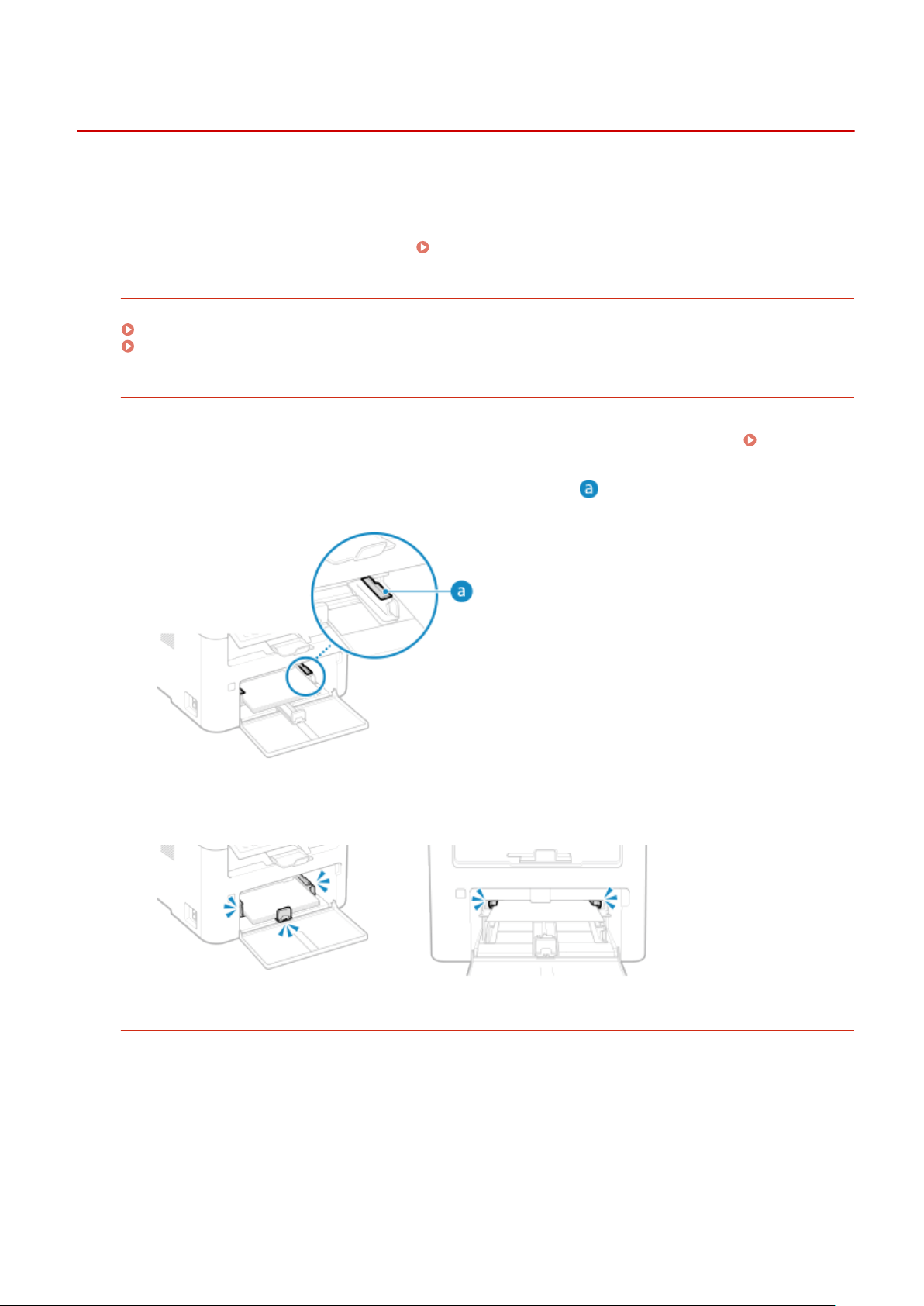
Paper Jams That Occur Repeatedly
8W0J-0E8
T
roubleshoot by checking the items below.
Are There Paper Scraps or Foreign Objects Inside the Machine?
Remove any paper scraps or foreign objects. Paper Jams(P. 549)
Ar
e You Using Appropriate Paper?
Check whether the paper in the machine is usable, and replace it with appropriate paper, as needed.
Usable Paper(P. 23)
Loading Paper(P. 142)
Is Paper Loaded Corr
ectly?
● Fan the paper thor
oughly in small batches so that it is not stuck together.
● Align the edges by tapping the paper on a at surface a few times before loading the paper.
Loading
Paper(P
. 142)
● Make sure the loaded paper does not exceed the load limit guides (
).
● Check that the positions of the paper guides ar
e not too loose or too tight.
Drawer
Multi-purpose Tray
Do Paper Jams Occur When Printing on the Back Side of Printed Paper?
Flatten the edges of the paper to thoroughly remove any curls.
* When printing on the back side of printed paper, you can only use paper printed with this machine. Do not
use paper printed with another printer or multifunction machine, as this can cause paper jams or damage the
machine.
Troubleshooting
558
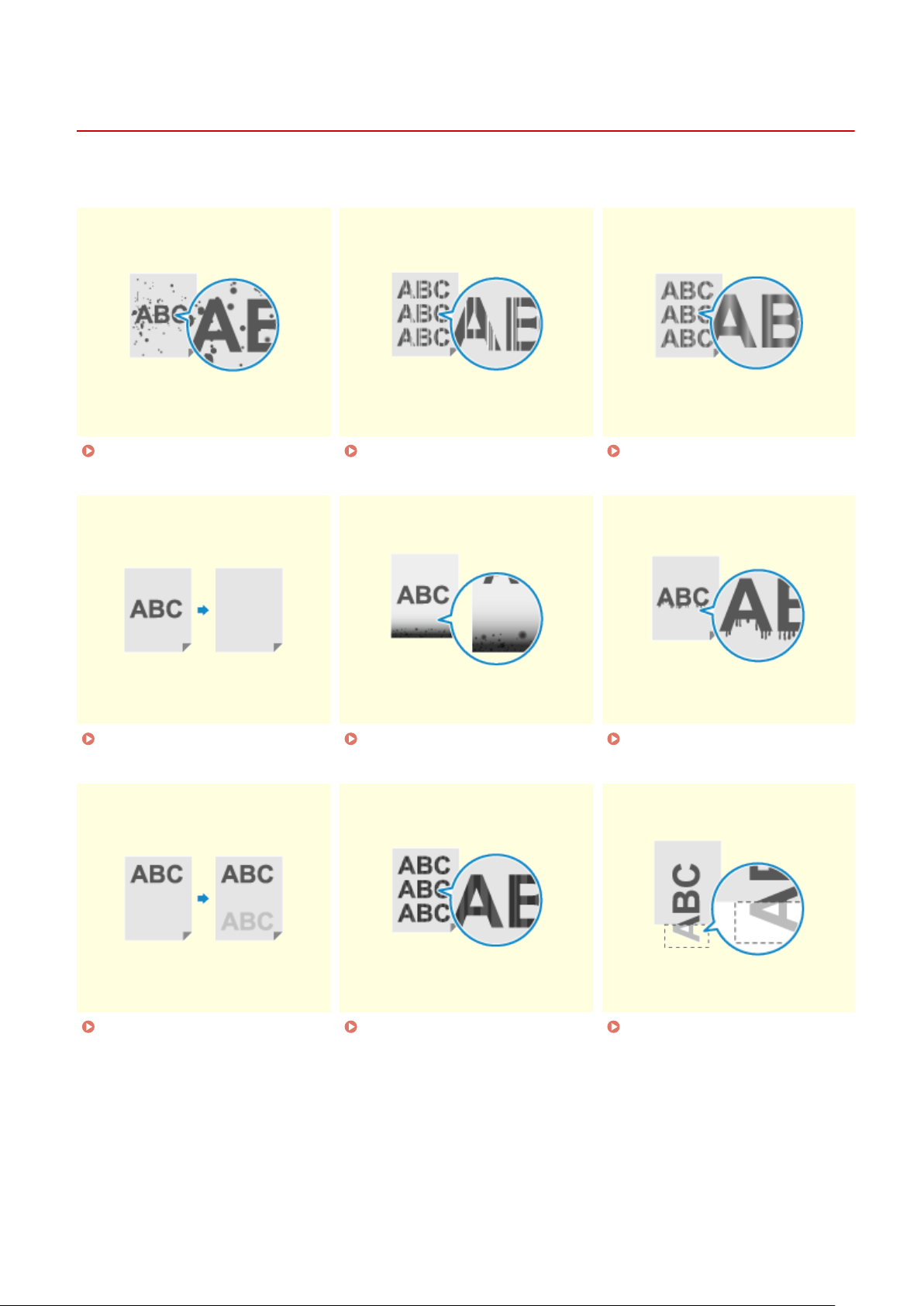
Problems with Printing Results
8W0J-0E9
If printouts sho
w any of the symptoms below, check how to troubleshoot the problem based on the symptom.
Toner Smudges and Splatters
Appear
(P. 561)
Streaks Appear(P. 563) Printing Is Uneven(P. 566)
Printed Paper Is Blank(P. 569) Smudge Marks Appear on the
Edge of Printouts(P
. 570)
Text or Images Are
Blurry(P
. 571)
Printouts Have Ghost
Images(P
. 573)
Printouts Are Faded(P. 574) The Edge of the Page Is Not
Printed(P
. 577)
Troubleshooting
559
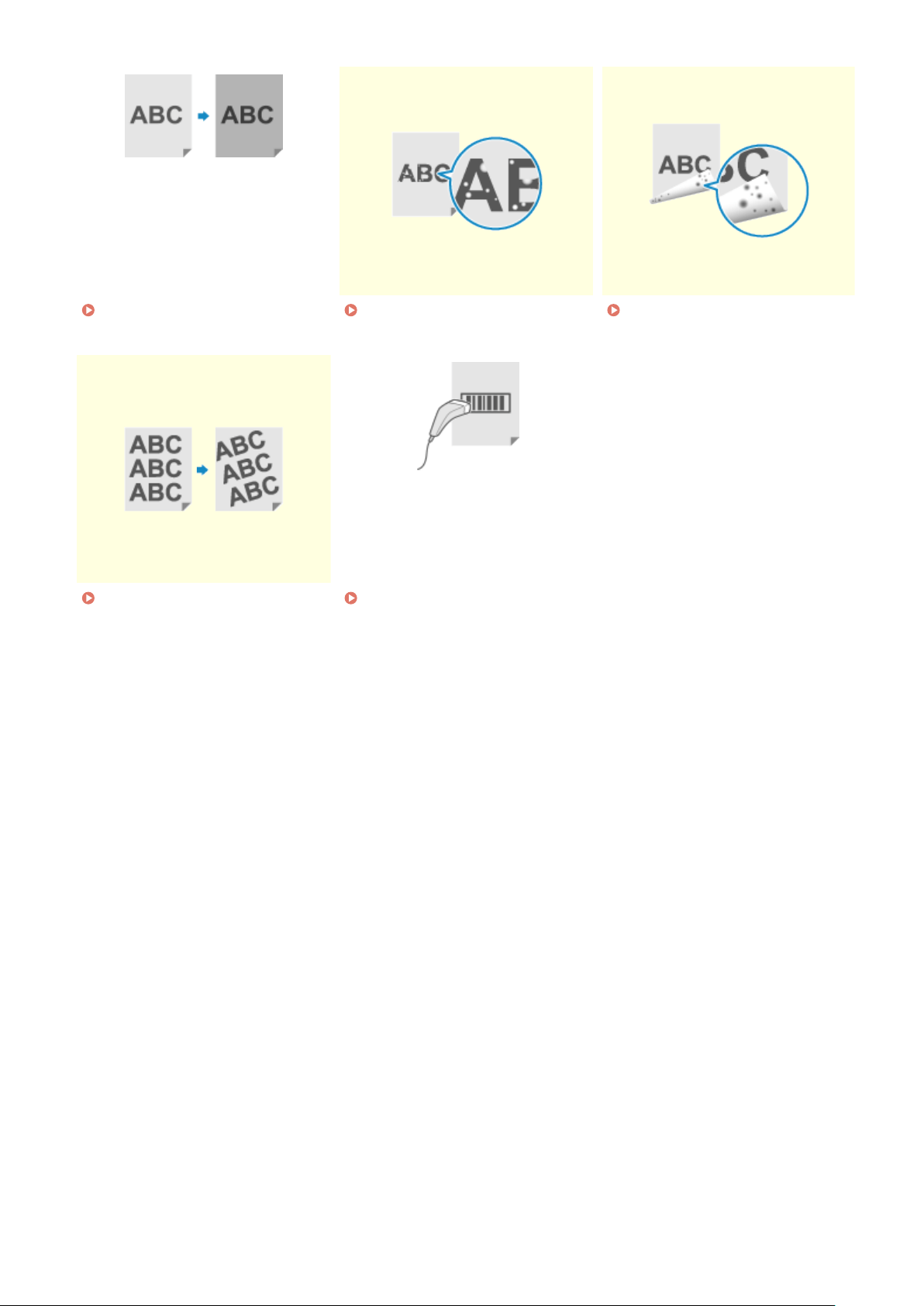
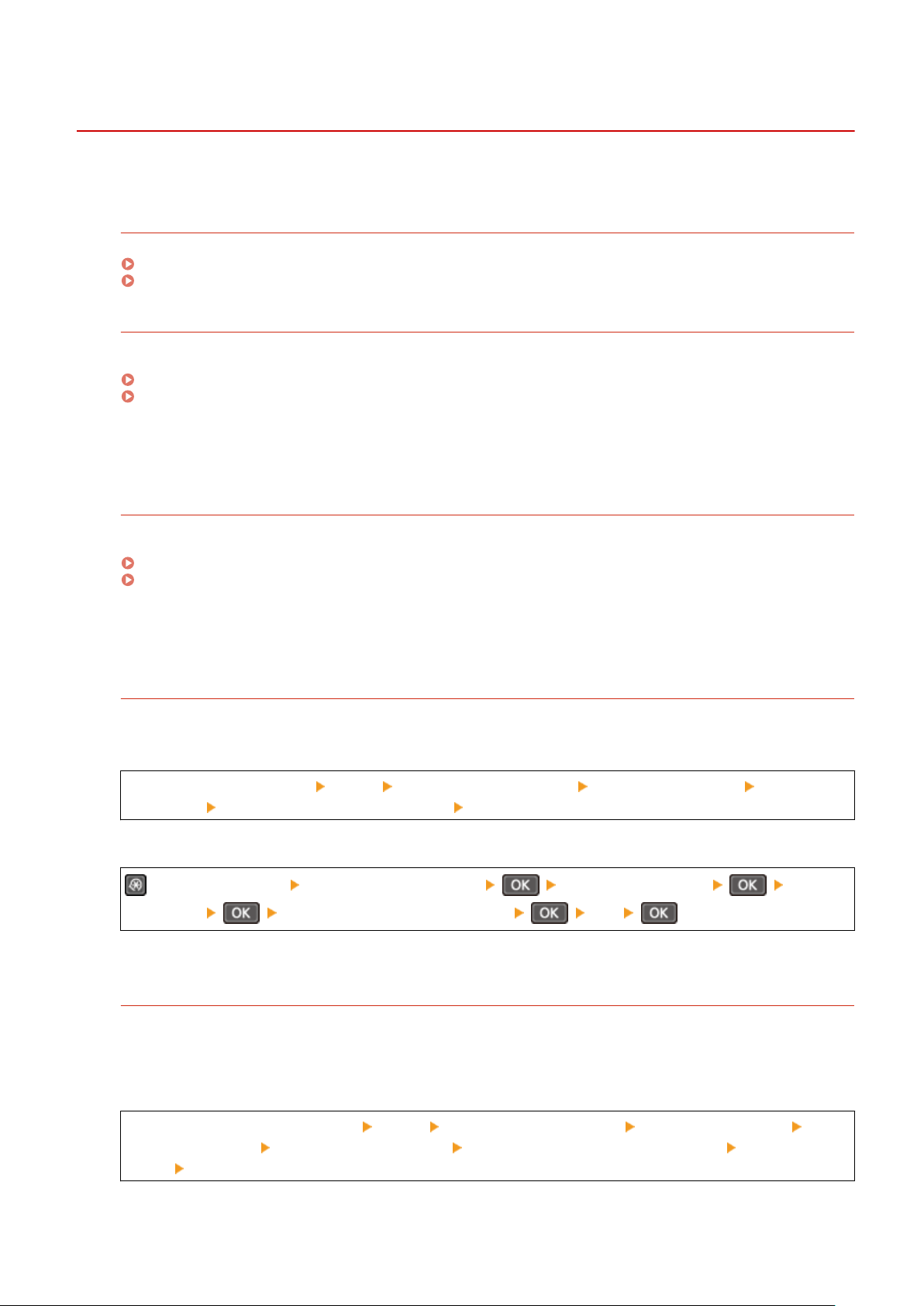
Toner Smudges and Splatters Appear
8W0J-0EA
T
roubleshoot by checking in the following order:
Are You Using Appropriate Paper?
Check whether the paper in the machine is usable, and replace it with appropriate paper, as needed.
Usable Paper(P. 23)
Loading Paper(P. 142)
Check the Remaining Amount of T
oner in the Toner Cartridge.
Check the remaining amount of toner in the toner cartridge. Replace the toner cartridge if the remaining
amount of toner is lo
w.
Checking the Remaining Amount of Consumables(P. 540)
Replacing the Toner Cartridge(P. 532)
* Depending on the usage condition of the machine, the actual r
emaining amount of toner may be lower than
indicated or the parts may be deteriorated (may be damaged or may malfunction). It is recommended to
replace the toner cartridge with a new one.
Check the Remaining Amount of Toner in the Drum Cartridge.
Check the remaining lifetime of the drum cartridge. If the remaining lifetime is short, replace the drum
cartridge.
Checking the Remaining Amount of Consumables(P. 540)
Replacing the Drum Cartridge(P. 536)
* Depending on the usage condition of the machine, the actual r
emaining amount of toner may be lower than
indicated or the parts may be deteriorated (may be damaged or may malfunction). It is recommended to
replace the drum cartridge with a new one.
Perform Countermeasures to Stains on Printed Images.
Setting [Prevent Stains on Printed Images] to [On] may improve the situation.
T
ouch Panel Model
[Home] on the control panel [Menu] [Adjustment/Maintenance] [Adjust Image Quality] [Special
Pr
ocessing]
[Prevent Stains on Printed Images] [On]
5 Lines LCD Model
on the control panel [Adjustment/Maintenance] [Adjust Image Quality] [Special
Pr
ocessing]
[Prevent Stains on Printed Images] [On]
* When you select [On], the printing speed may decrease.
Did Y
ou Print on the Back Side of Already Printed Paper?
If you are using paper that has already been printed on, toner smudges and splatters may appear on the back
side. If so, specifying [Manual Back Side Print (2-Sided Only)] to [On] for that paper sour
ce may improve the
print results.
Touch Panel Model
[Home] screen on the control panel [Menu] [Adjustment/Maintenance] [Adjust Image Quality]
[Special Processing] [Special Paper Processing] [Manual Back Side Print (2-Sided Only)] select the paper
sour
ce
[On]
5 Lines LCD Model
Troubleshooting
561
on the control panel [Adjustment/Maintenance] [Adjust Image Quality] [Special
Pr
ocessing]
[Special Paper Processing] [Manual Back Side Print (2-Sided Only)]
Select the paper source [On]
*
When this is set to [On], if some time has passed since the front side of the paper was printed, or depending
on the operating environment humidity, changes in image quality or paper jams may occur.
Are You Using the Machine in an Environment with Low Humidity?
Setting [Low Humidity Mode] to [On] may solve the problem.
Touch Panel Model
[Home] screen on the control panel [Menu] [Adjustment/Maintenance] [Adjust Image Quality]
[Special Processing] [Low Humidity Mode] [On]
5 Lines LCD Model
on the control panel [Adjustment/Maintenance] [Adjust Image Quality] [Special
Pr
ocessing]
[Low Humidity Mode] [On]
* Setting this to [On] may reduce the density or create fading in a humid environment.
Are You Copying an Original with a Colored or Stained Background or an Original with
Text or Images Showing Through the Back Side?
Adjusting the density of the background may solve the problem.
Touch Panel Model
[Home] screen on the control panel [Copy] [Density] [Background] [Adjust (Manual)] adjust the
background density.
* Parts other than the background may also be affected depending on the color of the original.
5 Lines LCD Model
[Home] screen on the control panel [Copy] [Density] [Background]
[Adjust (Manual)] adjust the background density.
Have You Cleaned the Fixing Assembly?
These symptoms may occur when the xing assembly is dirty. In this case, clean the xing assembly.
Cleaning the Fixing Assembly(P. 530)
Troubleshooting
562
Streaks Appear
8W0J-0EC
T
roubleshoot by checking in the following order:
Are You Using Appropriate Paper?
Check whether the paper in the machine is usable, and replace it with appropriate paper, as needed.
Usable Paper(P. 23)
Loading Paper(P. 142)
Is the Platen Glass Dirty
?
Clean the platen glass or rear side of the feeder if dirty.
Cleaning the Platen Glass(P. 525)
Cleaning the Feeder(P. 526)
Ar
e you using paper containing much paper dust or other dust particles?
If you are using paper containing much paper dust or other dust particles, white spots may appear. If this is the
case, set [T
alc Paper Mode] to [On]. This may solve the problem.
Touch Panel Model
[Home] screen on the control panel [Menu] [Adjustment/Maintenance] [Adjust Image Quality]
[Special Processing] [Talc Paper Mode] [On]
5 Lines LCD Model
on the control panel [Adjustment/Maintenance] [Adjust Image Quality] [Special
Pr
ocessing]
[Talc Paper Mode] [On]
*Setting to [On] may change the print quality.
Ar
e You Using Rough Paper?
If so, specifying [On] for the paper source may improve the print results.
T
ouch Panel Model
[Home] screen on the control panel [Menu] [Adjustment/Maintenance] [Adjust Image Quality]
[Special Processing] [Special Paper Processing] [Rough Surface Paper Mode] select the paper source
[On]
5 Lines LCD Model
on the control panel [Adjustment/Maintenance] [Adjust Image Quality] [Special
Pr
ocessing]
[Special Paper Processing] [Rough Surface Paper Mode] Select
the paper sour
ce
[On]
* Specifying [On] in this setting may lead to slower print speeds or changes in the image quality.
Check the Remaining Amount of T
oner in the Toner Cartridge.
Check the remaining amount of toner in the toner cartridge. Replace the toner cartridge if the remaining
amount of toner is lo
w.
Checking the Remaining Amount of Consumables(P. 540)
Replacing the Toner Cartridge(P. 532)
Troubleshooting
563
* Depending on the usage condition of the machine, the actual remaining amount of toner may be lower than
indicated or the parts may be deterior
ated (may be damaged or may malfunction). It is recommended to
replace the toner cartridge with a new one.
Check the Remaining Amount of Toner in the Drum Cartridge.
Check the remaining lifetime of the drum cartridge. If the remaining lifetime is short, replace the drum
cartridge.
Checking the Remaining Amount of Consumables(P. 540)
Replacing the Drum Cartridge(P. 536)
* Depending on the usage condition of the machine, the actual r
emaining amount of toner may be lower than
indicated or the parts may be deteriorated (may be damaged or may malfunction). It is recommended to
replace the drum cartridge with a new one.
Are You Using the Machine in a Humid Environment?
Setting [High Humidity Mode] to [On] may solve the problem.
T
ouch Panel Model
[Home] screen on the control panel [Menu] [Adjustment/Maintenance] [Adjust Image Quality]
[Special Processing] [High Humidity Mode] [On]
5 Lines LCD Model
on the control panel [Adjustment/Maintenance] [Adjust Image Quality] [Special
Pr
ocessing]
[High Humidity Mode] [On]
* Setting this to [On] may blur images and text in an environment with low humidity.
Ar
e You Using the Machine in an Environment with Sudden Temperature Changes?
Sudden temperature changes can create condensation, which can result in faded or blurry images and text.
Setting [Contr
ol Condensation] to [On] may solve the problem.
Touch Panel Model
[Home] on the control panel [Menu] [Adjustment/Maintenance] [Maintenance] [Control
Condensation] [On]
5 Lines LCD Model
on the control panel [Adjustment/Maintenance] [Maintenance] [Control
Condensation] [On]
* During condensation removal, a blank sheet of paper may be output without being printed correctly. If you
set this to [On], you can set whether to r
estrict printing.
Is the Machine Installed in a Location Subject to Strong Wind Such as from an Air
Conditioner?
If so, adjust the air direction and volume of the air conditioner.
If that does not work, setting [Switch Paper Feed Method] to [Print Side Priority] may impr
ove the problem.
Touch Panel Model
[Home] on the control panel [Menu] [Function Settings] [Common] [Paper Feed Settings] [Switch
Paper Feed Method] select the paper source [Print Side Priority]
5 Lines LCD Model
Troubleshooting
564
on the control panel [Function Settings] [Common] [Paper Feed Settings]
[Switch Paper Feed Method] Select the paper source [Print Side Priority]
* When you select [Print Side Priority], the printing speed for 1-Sided printing will decrease.
Have Y
ou Cleaned the Fixing Assembly?
These symptoms may occur when the xing assembly is dirty
. In this case, clean the xing assembly.
Cleaning the Fixing Assembly(P. 530)
Troubleshooting
565
Printing Is Uneven
8W0J-0EE
T
roubleshoot by checking in the following order:
Are You Using Appropriate Paper?
Check whether the paper in the machine is usable, and replace it with appropriate paper, as needed.
Usable Paper(P. 23)
Loading Paper(P. 142)
Ar
e you using paper containing much paper dust or other dust particles?
If you are using paper containing much paper dust or other dust particles, white spots may appear. If this is the
case, set [T
alc Paper Mode] to [On]. This may solve the problem.
Touch Panel Model
[Home] screen on the control panel [Menu] [Adjustment/Maintenance] [Adjust Image Quality]
[Special Processing] [Talc Paper Mode] [On]
5 Lines LCD Model
on the control panel [Adjustment/Maintenance] [Adjust Image Quality] [Special
Pr
ocessing]
[Talc Paper Mode] [On]
*Setting to [On] may change the print quality.
Ar
e You Using Rough Paper?
If so, specifying [On] for the paper source may improve the print results.
T
ouch Panel Model
[Home] screen on the control panel [Menu] [Adjustment/Maintenance] [Adjust Image Quality]
[Special Processing] [Special Paper Processing] [Rough Surface Paper Mode] select the paper source
[On]
5 Lines LCD Model
on the control panel [Adjustment/Maintenance] [Adjust Image Quality] [Special
Pr
ocessing]
[Special Paper Processing] [Rough Surface Paper Mode] Select
the paper sour
ce
[On]
* Specifying [On] in this setting may lead to slower print speeds or changes in the image quality.
Check the Remaining Amount of T
oner in the Toner Cartridge.
Check the remaining amount of toner in the toner cartridge. Replace the toner cartridge if the remaining
amount of toner is lo
w.
Checking the Remaining Amount of Consumables(P. 540)
Replacing the Toner Cartridge(P. 532)
* Depending on the usage condition of the machine, the actual r
emaining amount of toner may be lower than
indicated or the parts may be deteriorated (may be damaged or may malfunction). It is recommended to
replace the toner cartridge with a new one.
Troubleshooting
566
Check the Remaining Amount of Toner in the Drum Cartridge.
Check the remaining lifetime of the drum cartridge. If the remaining lifetime is short, replace the drum
cartridge.
Checking the Remaining Amount of Consumables(P. 540)
Replacing the Drum Cartridge(P. 536)
* Depending on the usage condition of the machine, the actual r
emaining amount of toner may be lower than
indicated or the parts may be deteriorated (may be damaged or may malfunction). It is recommended to
replace the drum cartridge with a new one.
Are You Using the Machine in a Humid Environment?
Setting [High Humidity Mode] to [On] may solve the problem.
T
ouch Panel Model
[Home] screen on the control panel [Menu] [Adjustment/Maintenance] [Adjust Image Quality]
[Special Processing] [High Humidity Mode] [On]
5 Lines LCD Model
on the control panel [Adjustment/Maintenance] [Adjust Image Quality] [Special
Pr
ocessing]
[High Humidity Mode] [On]
* Setting this to [On] may blur images and text in an environment with low humidity.
Ar
e You Using the Machine in an Environment with Sudden Temperature Changes?
Sudden temperature changes can create condensation, which can result in faded or blurry images and text.
Setting [Contr
ol Condensation] to [On] may solve the problem.
Touch Panel Model
[Home] on the control panel [Menu] [Adjustment/Maintenance] [Maintenance] [Control
Condensation] [On]
5 Lines LCD Model
on the control panel [Adjustment/Maintenance] [Maintenance] [Control
Condensation] [On]
* During condensation removal, a blank sheet of paper may be output without being printed correctly. If you
set this to [On], you can set whether to r
estrict printing.
Is the Machine Installed in a Location Subject to Strong Wind Such as from an Air
Conditioner?
If so, adjust the air direction and volume of the air conditioner.
If that does not work, setting [Switch Paper Feed Method] to [Print Side Priority] may impr
ove the problem.
Touch Panel Model
[Home] on the control panel [Menu] [Function Settings] [Common] [Paper Feed Settings] [Switch
Paper Feed Method] select the paper source [Print Side Priority]
5 Lines LCD Model
Troubleshooting
567

on the control panel [Function Settings] [Common] [Paper Feed Settings]
[Switch Paper Feed Method] Select the paper source [Print Side Priority]
* When you select [Print Side Priority], the printing speed for 1-Sided printing will decrease.
Troubleshooting
568
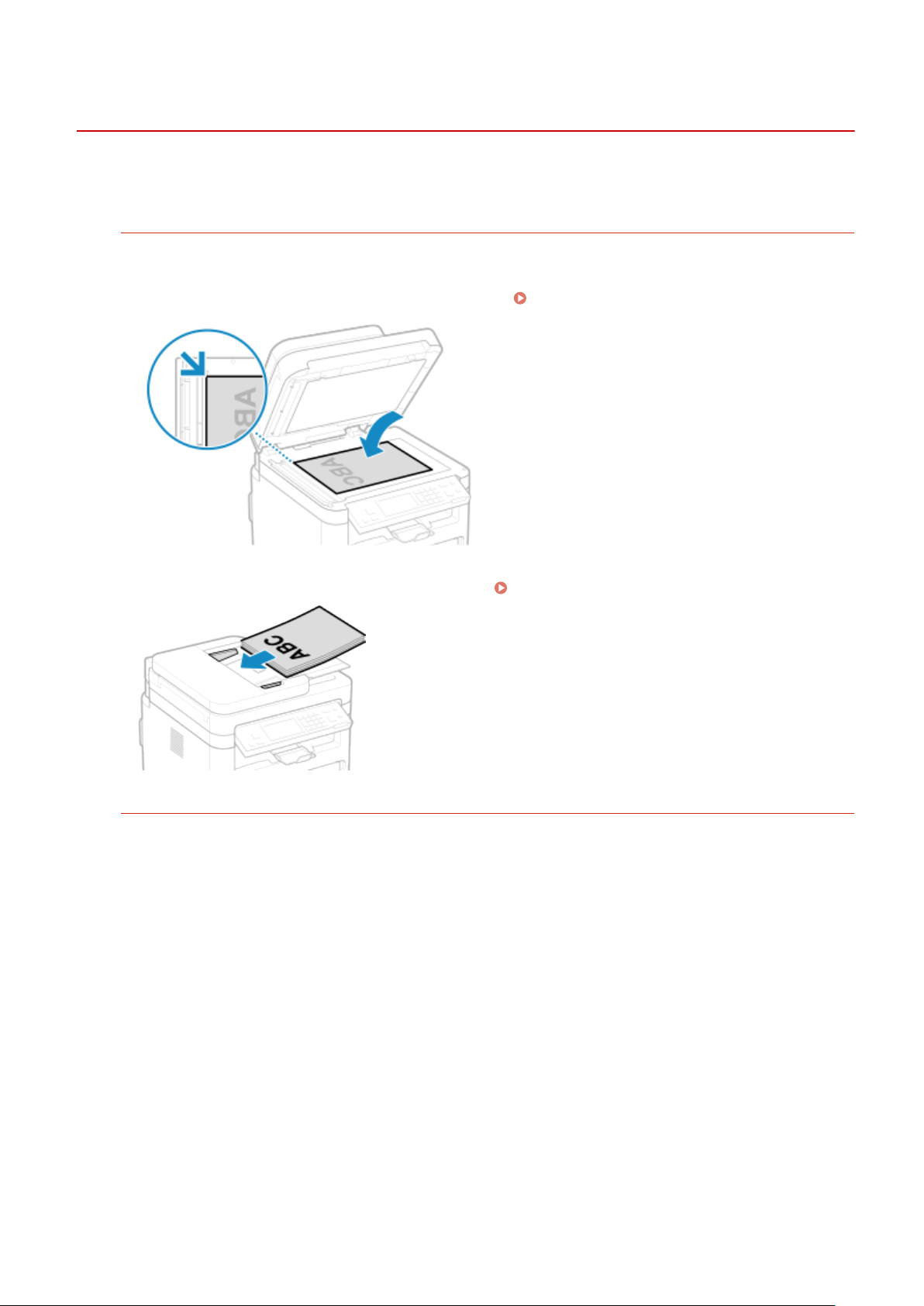
Printed Paper Is Blank
8W0J-0EF
T
roubleshoot by checking the following steps:
Is Original Placed Correctly?
Place the original correctly while paying attention to the orientation of the side to be scanned.
When Placing It on the Platen Glass
Place the original with the side to be scanned face do
wn.
Placing Originals on the Platen Glass(P. 139)
When Placing Originals in the Feeder
Place the original with the side to be scanned face up. Placing Originals in the Feeder(P. 140)
Is Condensation Removal Being Performed?
Check the control panel, and wait for condensation removal to nish.
Troubleshooting
569
Smudge Marks Appear on the Edge of Printouts
8W0J-0EH
T
roubleshoot by checking in the following order:
Are You Using Appropriate Paper?
● Check whether the paper in the machine is usable, and r
eplace it with appropriate paper, as needed.
Usable Paper(P. 23)
Loading Paper(P. 142)
Perform Countermeasur
es to Stains on Printed Images.
Setting [Prevent Stains on Printed Images] to [On] may improve the situation.
T
ouch Panel Model
[Home] on the control panel [Menu] [Adjustment/Maintenance] [Adjust Image Quality] [Special
Pr
ocessing]
[Prevent Stains on Printed Images] [On]
5 Lines LCD Model
on the control panel [Adjustment/Maintenance] [Adjust Image Quality] [Special
Pr
ocessing]
[Prevent Stains on Printed Images] [On]
* When you select [On], the printing speed may decrease.
Ar
e You Printing to the Edge of the Paper Without Margins?
This symptom may occur when the margin is set to none in the printer driver. To print with this machine, a
mar
gin of 1/4" (5 mm) (3/8" (10 mm) at the top and bottom of an envelope) is required.
On the [Printing preferences] screen of the printer driver, congure the following setting to provide a margin.
[Finishing] tab [Advanced Settings] [Expand Print Region and Print] [Off]
Have You Cleaned the Fixing Assembly?
These symptoms may occur when the xing assembly is dirty
. In this case, clean the xing assembly.
Cleaning the Fixing Assembly(P. 530)
Troubleshooting
570
Text or Images Are Blurry
8W0J-0EJ
T
roubleshoot by checking the following steps:
Are You Using Appropriate Paper?
Check whether the paper in the machine is usable, and replace it with appropriate paper, as needed.
Usable Paper(P. 23)
Loading Paper(P. 142)
W
as the blurry image output when you performed copying?
If this is the case, set [Correct Blurry Image for Copy] to [Mode 1]. This may solve the problem. If the problem
persists, try [Mode 2] or [Mode 3] in turn.
T
ouch Panel Model
[Home] screen on the control panel [Menu] [Adjustment/Maintenance] [Adjust Image Quality]
[Special Processing] [Correct Blurry Image for Copy] [Mode 1]
5 Lines LCD Model
on the control panel [Adjustment/Maintenance] [Adjust Image Quality] [Special
Pr
ocessing]
[Correct Blurry Image for Copy] [Mode 1]
* When this setting is enabled, the print density may decrease.
W
as the blurry image output when you performed printing a document or a received
fax document?
Smudges may appear on Printouts. If this is the case, set [Correct Blurry Image] to [Mode 1]. This may solve the
pr
oblem. If the problem persists, try [Mode 2], [Mode 3], or [Mode 4] in turn.
Touch Panel Model
[Home] screen on the control panel [Menu] [Adjustment/Maintenance] [Adjust Image Quality]
[Special Processing] [Correct Blurry Image] [Mode 1]
5 Lines LCD Model
on the control panel [Adjustment/Maintenance] [Adjust Image Quality] [Special
Pr
ocessing]
[Correct Blurry Image] [Mode 1]
* When this setting is enabled, the print density may decrease or the print speed may be slower.
Ar
e You Using the Machine in an Environment with Sudden Temperature Changes?
Sudden temperature changes can create condensation, which can result in faded or blurry images and text.
Setting [Contr
ol Condensation] to [On] may solve the problem.
Touch Panel Model
[Home] on the control panel [Menu] [Adjustment/Maintenance] [Maintenance] [Control
Condensation] [On]
5 Lines LCD Model
Troubleshooting
571

on the control panel [Adjustment/Maintenance] [Maintenance] [Control
Condensation] [On]
* During condensation removal, a blank sheet of paper may be output without being printed correctly. If you
set this to [On], you can set whether to r
estrict printing.
Troubleshooting
572

Printouts Have Ghost Images
8W0J-0EK
T
roubleshoot by checking the following steps:
Are You Using Appropriate Paper?
Check whether the paper in the machine is usable, and replace it with appropriate paper, as needed.
Usable Paper(P. 23)
Loading Paper(P. 142)
Check the Remaining Amount of T
oner in the Toner Cartridge.
Check the remaining amount of toner in the toner cartridge. Replace the toner cartridge if the remaining
amount of toner is lo
w.
Checking the Remaining Amount of Consumables(P. 540)
Replacing the Toner Cartridge(P. 532)
* Depending on the usage condition of the machine, the actual r
emaining amount of toner may be lower than
indicated or the parts may be deteriorated (may be damaged or may malfunction). It is recommended to
replace the toner cartridge with a new one.
Check the Remaining Amount of Toner in the Drum Cartridge.
Check the remaining lifetime of the drum cartridge. If the remaining lifetime is short, replace the drum
cartridge.
Checking the Remaining Amount of Consumables(P. 540)
Replacing the Drum Cartridge(P. 536)
* Depending on the usage condition of the machine, the actual r
emaining amount of toner may be lower than
indicated or the parts may be deteriorated (may be damaged or may malfunction). It is recommended to
replace the drum cartridge with a new one.
Have You Cleaned the Fixing Assembly?
These symptoms may occur when the xing assembly is dirty
. In this case, clean the xing assembly.
Cleaning the Fixing Assembly(P. 530)
Troubleshooting
573
Printouts Are Faded
8W0J-0EL
T
roubleshoot by checking the following steps:
Are You Using Appropriate Paper?
● Check whether the paper in the machine is usable, and r
eplace it with appropriate paper, as needed.
Usable Paper(P. 23)
Loading Paper(P. 142)
● Set the paper size and type corr
ectly according to the loaded paper.
Specifying the Paper Size and
T
ype(P. 152)
Are you using paper containing much paper dust or other dust particles?
If you are using paper containing much paper dust or other dust particles, white spots may appear. If this is the
case, set [T
alc Paper Mode] to [On]. This may solve the problem.
Touch Panel Model
[Home] screen on the control panel [Menu] [Adjustment/Maintenance] [Adjust Image Quality]
[Special Processing] [Talc Paper Mode] [On]
5 Lines LCD Model
on the control panel [Adjustment/Maintenance] [Adjust Image Quality] [Special
Pr
ocessing]
[Talc Paper Mode] [On]
*Setting to [On] may change the print quality.
Ar
e You Using Rough Paper?
If so, specifying [On] for the paper source may improve the print results.
T
ouch Panel Model
[Home] screen on the control panel [Menu] [Adjustment/Maintenance] [Adjust Image Quality]
[Special Processing] [Special Paper Processing] [Rough Surface Paper Mode] select the paper source
[On]
5 Lines LCD Model
on the control panel [Adjustment/Maintenance] [Adjust Image Quality] [Special
Pr
ocessing]
[Special Paper Processing] [Rough Surface Paper Mode] Select
the paper sour
ce
[On]
* Specifying [On] in this setting may lead to slower print speeds or changes in the image quality.
Check the Remaining Amount of T
oner in the Toner Cartridge.
Check the remaining amount of toner in the toner cartridge. Replace the toner cartridge if the remaining
amount of toner is lo
w.
Checking the Remaining Amount of Consumables(P. 540)
Replacing the Toner Cartridge(P. 532)
* Depending on the usage condition of the machine, the actual r
emaining amount of toner may be lower than
indicated or the parts may be deteriorated (may be damaged or may malfunction). It is recommended to
replace the toner cartridge with a new one.
Troubleshooting
574
Check the Remaining Amount of Toner in the Drum Cartridge.
Check the remaining lifetime of the drum cartridge. If the remaining lifetime is short, replace the drum
cartridge.
Checking the Remaining Amount of Consumables(P. 540)
Replacing the Drum Cartridge(P. 536)
* Depending on the usage condition of the machine, the actual r
emaining amount of toner may be lower than
indicated or the parts may be deteriorated (may be damaged or may malfunction). It is recommended to
replace the drum cartridge with a new one.
Are Characters or Lines Fades?
A printed barcode may not be able to be read. Or, lines may not be printed clearly. Specifying [Select Line Width]
may impr
ove the situation.
Touch Panel Model
[Home] screen on the control panel [Menu] [Adjustment/Maintenance] [Adjust Image Quality]
[Special Processing] [Select Line Width] Select the line width
5 Lines LCD Model
on the control panel [Adjustment/Maintenance] [Adjust Image Quality] [Special
Pr
ocessing]
[Select Line Width] Select the line width
*When this setting is enabled, the print density may decrease.
Ar
e You Using the Machine in a Humid Environment?
Setting [High Humidity Mode] to [On] may solve the problem.
T
ouch Panel Model
[Home] screen on the control panel [Menu] [Adjustment/Maintenance] [Adjust Image Quality]
[Special Processing] [High Humidity Mode] [On]
5 Lines LCD Model
on the control panel [Adjustment/Maintenance] [Adjust Image Quality] [Special
Pr
ocessing]
[High Humidity Mode] [On]
* Setting this to [On] may blur images and text in an environment with low humidity.
Ar
e You Using the Machine in an Environment with Sudden Temperature Changes?
Sudden temperature changes can create condensation, which can result in faded or blurry images and text.
Setting [Contr
ol Condensation] to [On] may solve the problem.
Touch Panel Model
[Home] on the control panel [Menu] [Adjustment/Maintenance] [Maintenance] [Control
Condensation] [On]
5 Lines LCD Model
on the control panel [Adjustment/Maintenance] [Maintenance] [Control
Condensation] [On]
* During condensation removal, a blank sheet of paper may be output without being printed correctly. If you
set this to [On], you can set whether to r
estrict printing.
Troubleshooting
575
Is the Machine Installed in a Location Subject to Strong Wind Such as from an Air
Conditioner?
If so, adjust the air direction and volume of the air conditioner.
If that does not work, setting [Switch Paper Feed Method] to [Print Side Priority] may impr
ove the problem.
Touch Panel Model
[Home] on the control panel [Menu] [Function Settings] [Common] [Paper Feed Settings] [Switch
Paper Feed Method] select the paper source [Print Side Priority]
5 Lines LCD Model
on the control panel [Function Settings] [Common] [Paper Feed Settings]
[Switch Paper Feed Method] select the paper source [Print Side Priority]
* When you select [Print Side Priority], the printing speed for 1-Sided printing will decrease.
Troubleshooting
576
The Edge of the Page Is Not Printed
8W0J-0ER
T
roubleshoot by checking in the following order:
Are You Using Appropriate Paper?
Check whether the paper in the machine is usable, and replace it with appropriate paper, as needed.
Usable Paper(P. 23)
Loading Paper(P. 142)
Ar
e the Paper Guides Correctly Aligned with the Paper?
Paper guides that are aligned but too loose or too tight can cause part of the page to not be printed. Check the
paper guides, and align them with the width of the paper. Loading Paper(P. 142)
Ar
e You Printing to the Edge of the Paper Without Margins?
This symptom may occur when the margin is set to none in the printer driver. To print with this machine, a
mar
gin of 1/4" (5 mm) (3/8" (10 mm) at the top and bottom of an envelope) is required.
On the [Printing preferences] screen of the printer driver, congure the following setting to provide a margin.
[Finishing] tab [Advanced Settings] [Expand Print Region and Print] [Off]
Troubleshooting
577
Printouts Are Entirely or Partially Grayish
8W0J-0ES
T
roubleshoot by checking in the following order:
Are You Using Appropriate Paper?
● Check whether the paper in the machine is usable, and r
eplace it with appropriate paper, as needed.
Usable Paper(P. 23)
Loading Paper(P. 142)
● Set the paper size and type corr
ectly according to the loaded paper.
Specifying the Paper Size and
T
ype(P. 152)
Are You Using Paper That Has Absorbed Moisture?
● T
ry the following in the order below:
Precautions When Handling Paper(P. 26)
Loading Paper(P. 142)
● Change the paper type setting to a thinner paper. Specifying the Paper Size and Type(P. 152)
Does the printed postcar
d appear grayish?
The whole surface of the printed postcard may appear darkened. If this is the case, set [Prevent Postcard
Fogging] to [Mode 1]. This may solve the pr
oblem. If the problem persists, try [Mode 2].
Touch Panel Model
[Home] screen on the control panel [Menu] [Adjustment/Maintenance] [Adjust Image Quality]
[Special Processing] [Prevent Postcard Fogging] [Mode 1] or [Mode 2]
5 Lines LCD Model
on the control panel [Adjustment/Maintenance] [Adjust Image Quality] [Special
Pr
ocessing]
[Prevent Postcard Fogging] [Mode 1] or [Mode 2]
* When this setting is enabled, lines may become thinner, ghost images may appear in a blank area, or the print
density may decr
ease.
Are you using paper containing much paper dust or other dust particles?
If you are using paper containing much paper dust or other dust particles, white spots may appear. If this is the
case, set [T
alc Paper Mode] to [On]. This may solve the problem.
Touch Panel Model
[Home] screen on the control panel [Menu] [Adjustment/Maintenance] [Adjust Image Quality]
[Special Processing] [Talc Paper Mode] [On]
5 Lines LCD Model
on the control panel [Adjustment/Maintenance] [Adjust Image Quality] [Special
Pr
ocessing]
[Talc Paper Mode] [On]
* Setting to [On] may change the print quality.
Perform Countermeasur
es to Distorted Images
Setting [Prevent Image Distortion] to [On] may improve the situation.
Troubleshooting
578
Touch Panel Model
[Home] screen on the control panel [Menu] [Adjustment/Maintenance] [Adjust Image Quality]
[Special Processing] [Prevent Image Distortion] [On]
5 Lines LCD Model
on the control panel [Adjustment/Maintenance] [Adjust Image Quality] [Special
Pr
ocessing]
[Prevent Image Distortion] [On]
* When you select [On], the printing speed decrease.
Perform Countermeasur
es to Stains on Printed Images.
Setting [Prevent Stains on Printed Images] to [On] may improve the situation.
T
ouch Panel Model
[Home] on the control panel [Menu] [Adjustment/Maintenance] [Adjust Image Quality] [Special
Pr
ocessing]
[Prevent Stains on Printed Images] [On]
5 Lines LCD Model
on the control panel [Adjustment/Maintenance] [Adjust Image Quality] [Special
Pr
ocessing]
[Prevent Stains on Printed Images] [On]
* When you select [On], the printing speed may decrease.
Has the toner cartridge or the drum cartridge been left in dir
ect sunlight for a long
period of time?
Store the toner cartridge or the drum cartridge in an appropriate location for two to three hours, then try
printing again. This may solve the pr
oblem. If the problem persists, replace the toner cartridge or the drum
cartridge.
Are You Copying an Original with a Colored or Stained Background or an Original with
Text or Images Showing Through the Back Side?
Adjusting the density of the background may solve the problem.
T
ouch Panel Model
[Home] screen on the control panel [Copy] [Density] [Background] [Adjust (Manual)] adjust the
backgr
ound density.
5 Lines LCD Model
[Home] screen on the control panel [Copy] [Density] [Background]
[Adjust (Manual)] adjust the background density.
Are You Using the Machine in an Environment with Low Humidity?
Setting [Low Humidity Mode] to [On] may solve the problem.
T
ouch Panel Model
[Home] screen on the control panel [Menu] [Adjustment/Maintenance] [Adjust Image Quality]
[Special Processing] [Low Humidity Mode] [On]
5 Lines LCD Model
Troubleshooting
579

on the control panel [Adjustment/Maintenance] [Adjust Image Quality] [Special
Pr
ocessing]
[Low Humidity Mode] [On]
* Setting this to [On] may reduce the density or create fading in a humid environment.
Troubleshooting
580
White Spots Appear
8W0J-0EU
T
roubleshoot by checking the following steps:
Are You Using Appropriate Paper?
Check whether the paper in the machine is usable, and replace it with appropriate paper, as needed.
Usable Paper(P. 23)
Loading Paper(P. 142)
Ar
e You Using Paper That Has Absorbed Moisture?
Check the precautions, and replace the paper with dry paper.
Precautions When Handling Paper(P. 26)
Loading Paper(P. 142)
Check the Remaining Amount of T
oner in the Toner Cartridge.
Check the remaining amount of toner in the toner cartridge. Replace the toner cartridge if the remaining
amount of toner is lo
w.
Checking the Remaining Amount of Consumables(P. 540)
Replacing the Toner Cartridge(P. 532)
* Depending on the usage condition of the machine, the actual r
emaining amount of toner may be lower than
indicated or the parts may be deteriorated (may be damaged or may malfunction). It is recommended to
replace the toner cartridge with a new one.
Check the Remaining Amount of Toner in the Drum Cartridge.
Check the remaining lifetime of the drum cartridge. If the remaining lifetime is short, replace the drum
cartridge.
Checking the Remaining Amount of Consumables(P. 540)
Replacing the Drum Cartridge(P. 536)
* Depending on the usage condition of the machine, the actual r
emaining amount of toner may be lower than
indicated or the parts may be deteriorated (may be damaged or may malfunction). It is recommended to
replace the drum cartridge with a new one.
Are You Using the Machine in an Environment with Sudden Temperature Changes?
Sudden temperature changes can create condensation, which can result in faded or blurry images and text.
Setting [Contr
ol Condensation] to [On] may solve the problem.
Touch Panel Model
[Home] on the control panel [Menu] [Adjustment/Maintenance] [Maintenance] [Control
Condensation] [On]
5 Lines LCD Model
on the control panel [Adjustment/Maintenance] [Maintenance] [Control
Condensation] [On]
* During condensation removal, a blank sheet of paper may be output without being printed correctly. If you
set this to [On], you can set whether to r
estrict printing.
Troubleshooting
581
Smudge Marks Appear on the Back Side of Printouts
8W0J-0EW
T
roubleshoot by checking in the following order:
Are You Using Paper That Is Smaller Than the Size of the Print Data?
Replace with paper that is the same size as the print data. Loading Paper(P. 142)
Perform Countermeasur
es to Stains on Printed Images.
Setting [Prevent Stains on Printed Images] to [On] may improve the situation.
T
ouch Panel Model
[Home] on the control panel [Menu] [Adjustment/Maintenance] [Adjust Image Quality] [Special
Pr
ocessing]
[Prevent Stains on Printed Images] [On]
5 Lines LCD Model
on the control panel [Adjustment/Maintenance] [Adjust Image Quality] [Special
Pr
ocessing]
[Prevent Stains on Printed Images] [On]
* When you select [On], the printing speed may decrease.
Have Y
ou Cleaned the Fixing Assembly?
These symptoms may occur when the xing assembly is dirty
. In this case, clean the xing assembly.
Cleaning the Fixing Assembly(P. 530)
Troubleshooting
582
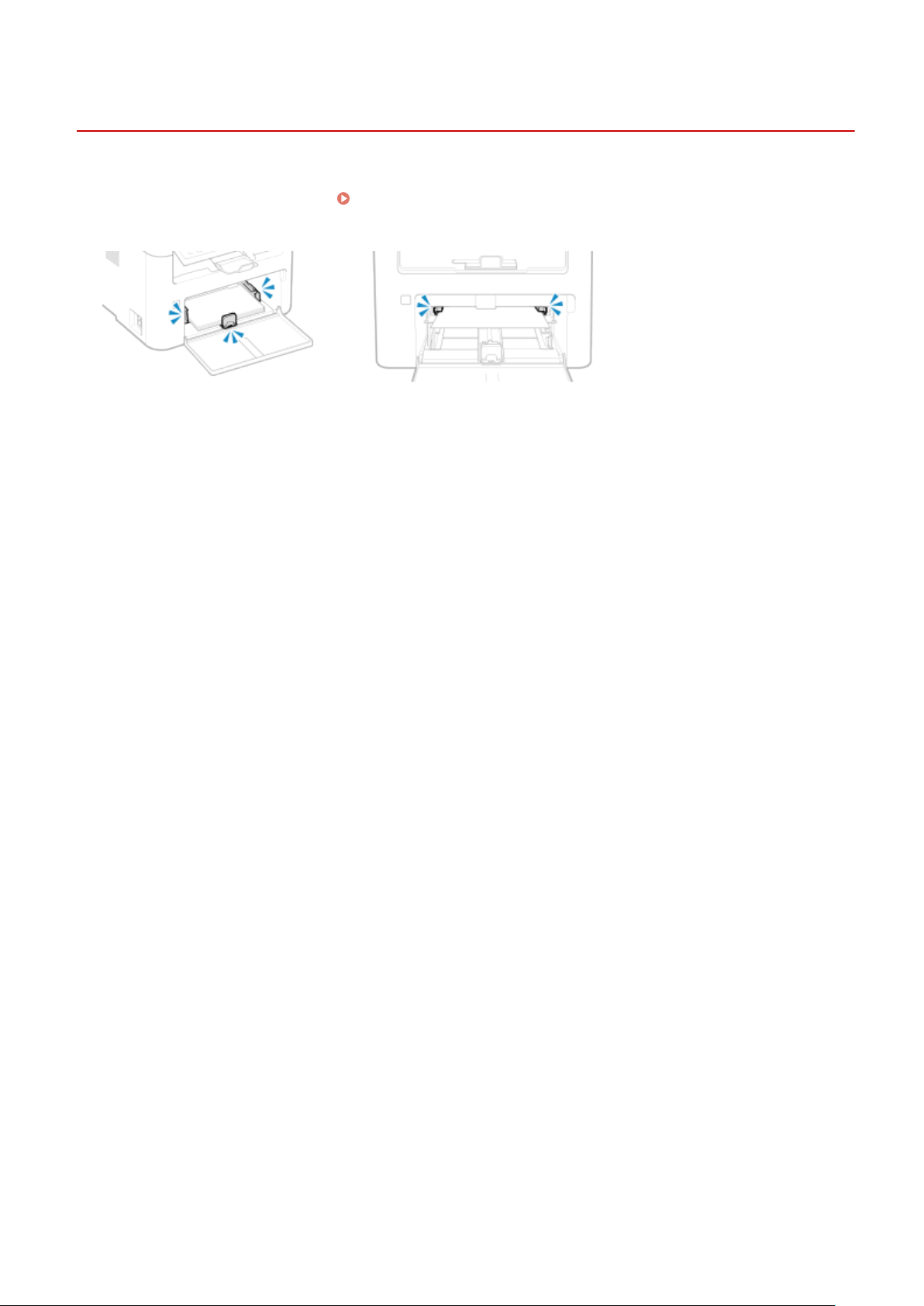
Printed Barcode Cannot Be Read
8W0J-0J7
A printed bar
code may not be able to be read. Or, lines may not be printed clearly. Specifying [Select Line Width]
may improve the situation.
Touch Panel Model
[Home] screen on the control panel [Menu] [Adjustment/Maintenance] [Adjust Image Quality]
[Special Processing] [Select Line Width] Select the line width
5 Lines LCD Model
on the control panel [Adjustment/Maintenance] [Adjust Image Quality] [Special
Pr
ocessing]
[Select Line Width] Select the line width
*When this setting is enabled, the print density may decrease.
Troubleshooting
584

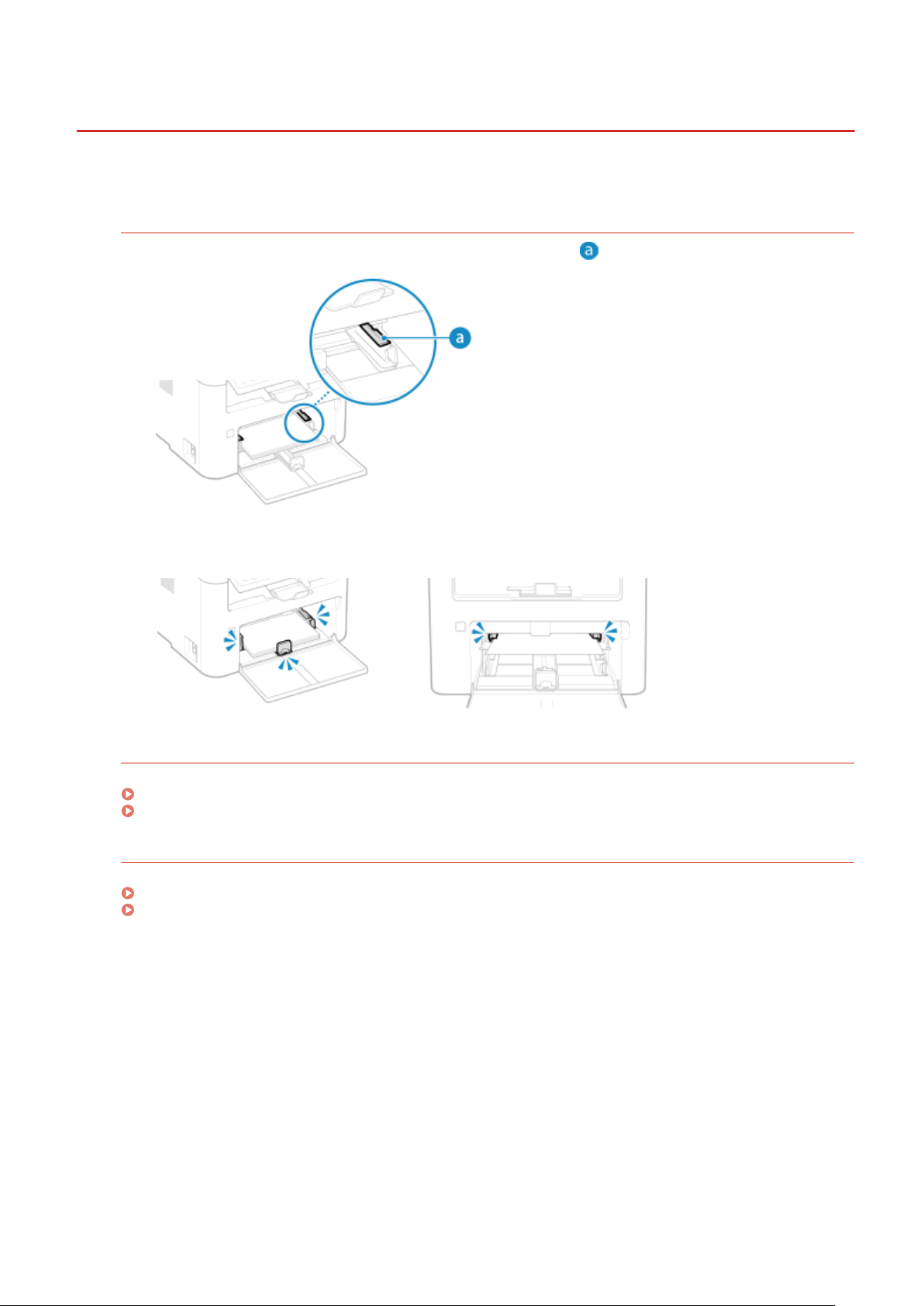
Paper Creases
8W0J-0F0
T
roubleshoot by checking the items below.
Is Paper Loaded Correctly?
● Mak
e sure the loaded paper does not exceed the load limit guides (
).
● Check that the paper guides ar
e aligned with the markings and are not too loose or too tight.
Drawer
Multi-purpose Tray
Are You Using Paper That Has Absorbed Moisture?
Check the precautions, and replace the paper with dry paper.
Precautions When Handling Paper(P. 26)
Loading Paper(P. 142)
Ar
e You Using Appropriate Paper?
Check whether the paper in the machine is usable, and replace it with appropriate paper, as needed.
Usable Paper(P. 23)
Loading Paper(P. 142)
Troubleshooting
586
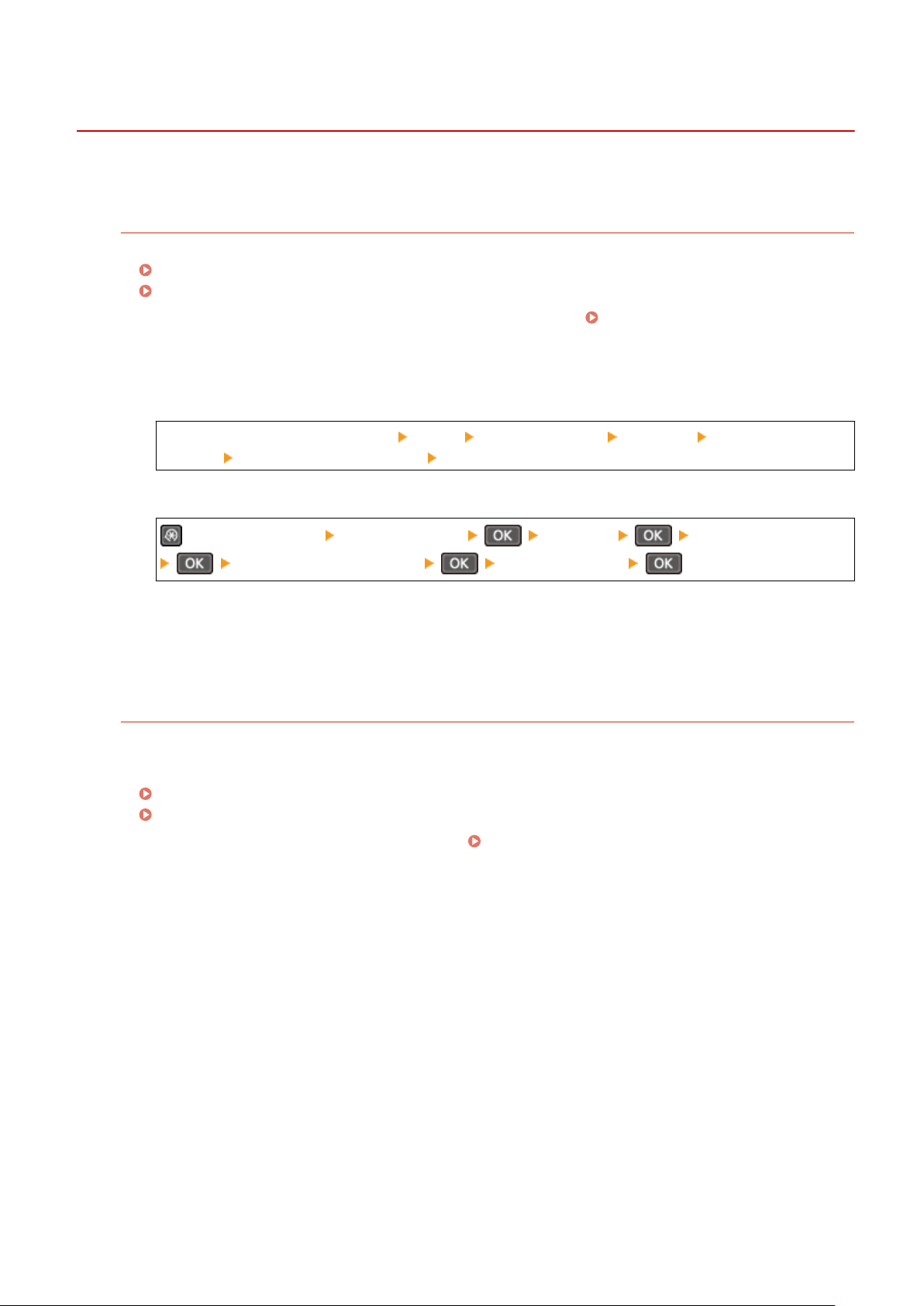
Paper Curls
8W0J-0F1
T
roubleshoot by checking the items below.
Are You Using Appropriate Paper?
● Check whether the paper in the machine is usable, and r
eplace it with appropriate paper, as needed.
Usable Paper(P. 23)
Loading Paper(P. 142)
● Set the paper size and type corr
ectly according to the loaded paper.
Specifying the Paper Size and
T
ype(P. 152)
● Setting [Switch Paper Feed Method] to [Print Side Priority] may improve the problem.
Touch Panel Model
[Home] screen on the control panel [Menu] [Function Settings] [Common] [Paper Feed
Settings] [Switch Paper Feed Method] [Print Side Priority]
5 Lines LCD Model
on the control panel [Function Settings] [Common] [Paper Feed Settings]
[Switch Paper Feed Method] [Print Side Priority]
* When you select [Print Side Priority], the printing speed for 1-Sided printing will decrease.
● Load the paper with the side to be printed (paper fr
ont and back) reversed.
* In rare cases, the symptom may worsen depending on the paper used. In this case, print on the original
side of the paper.
Are You Using Paper That Has Absorbed Moisture?
Try the following in the order below:
● Check the pr
ecautions, and replace the paper with dry paper.
Precautions When Handling Paper(P. 26)
Loading Paper(P. 142)
● Change the paper type setting to a thinner paper. Specifying the Paper Size and Type(P. 152)
Troubleshooting
587

Paper Is Not Fed or Two or More Sheets Are Fed
T
ogether
8W0J-0F2
T
roubleshoot by checking the items below.
Are You Using Appropriate Paper?
Check whether the paper in the machine is usable, and replace it with appropriate paper, as needed.
Usable Paper(P. 23)
Loading Paper(P. 142)
Is Paper Loaded Corr
ectly?
● Fan the paper thor
oughly in small batches so that it is not stuck together.
● Align the edges by tapping the paper on a at surface a few times before loading the paper.
Loading
Paper(P
. 142)
● Do not load paper of different sizes or types together.
Troubleshooting
588

Setting Up
8W0J-0F4
This is a list of pr
oblems that can occur during setup of the machine. Check how to troubleshoot the problem based on
the symptom.
◼ Problems During Driver Installation
The Machine Connected via WSD Port Is Not Displayed During Driver Installation(P. 590)
◼ Pr
oblems with Wireless LAN and Wired LAN Connection
Cannot Connect to Wireless LAN
Check whether the machine can connect to the network.
Cannot Connect to Wireless LAN(P. 591)
Cannot Connect to Wir
ed LAN
The IP address setting may have failed. Set the IP address again.
Setting IPv4 Addresses(P. 77)
Setting IPv6 Addresses(P. 81)
Cannot Connect to Wir
eless LAN and Wired LAN at the Same Time
You cannot connect the machine to a wireless LAN and wired LAN at the same time. You can connect to USB
and wireless LAN or USB and wired LAN at the same time.
◼ Problems with USB Connection
The Computer Cannot Communicate with the Machine
Try the following:
● Replace the USB cable. If the USB cable is long, replace it with a short cable.
● If you are using a USB hub, connect the machine directly to the computer using a USB cable.
Troubleshooting
589
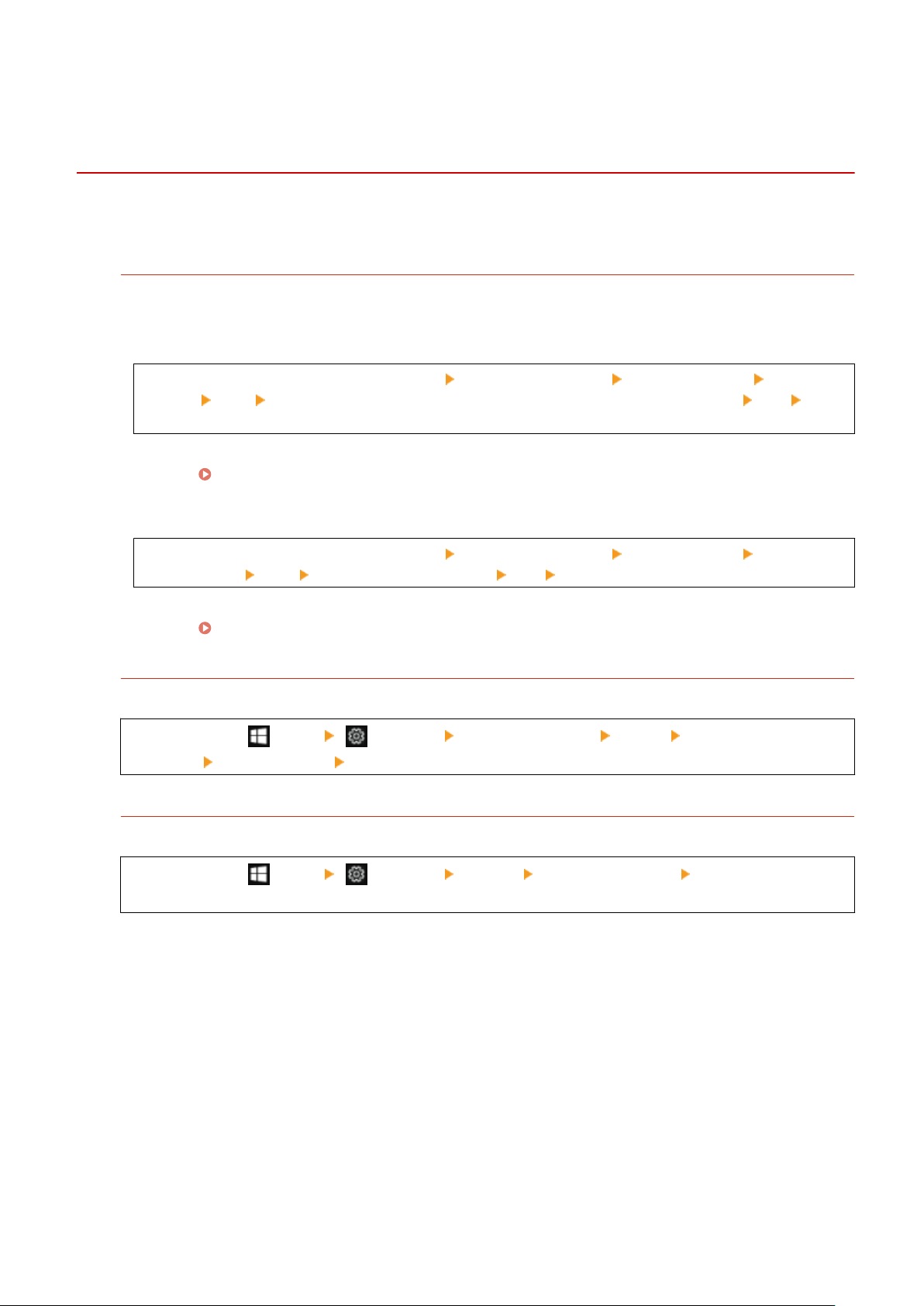
The Machine Connected via WSD Port Is Not Displayed
During Driver Installation
8W0J-0F5
T
roubleshoot by checking the items below.
Check the Settings of the Machine.
Congure the settings belo
w if they have not been congured.
The machine must be restarted to apply the settings.
WSD Printing and Multicast Discovery Settings
Log in to Remote UI in System Manager Mode [Settings/Registration] [Network Settings] [WSD
Settings] [Edit] select the [Use WSD Printing] and [Use Multicast Discovery] checkboxes [OK] restart
the machine.
On the control panel, select [Menu] in the [Home] screen, and then select [Preferences] to congur
e the
settings.
[WSD Settings](P. 448)
Selecting the Page Description Language
Select the page description language (PDL) of the installed driver.
Log in to Remote UI in System Manager Mode [Settings/Registration] [Printer Settings] [PDL Selection
(Plug and Play)] [Edit] select the PDL in [Network] [OK] restart the machine.
On the control panel, select [Menu] in the [Home] screen, and then select [Function Settings] to congur
e the
settings.
[Network](P. 483)
Check the OS Network Settings.
Congure the settings belo
w if they have not been congured.
In Windows, click [ ] (Start) [ ] (Settings) [Network & Internet] [Status] [Change connection
pr
operties]
[Network pr
ole]
[Private]
Check Whether the Driver Is Installed.
Use the following procedure to check whether the driver of the machine is displayed.
In Windows, click [ ] (Start) [ ] (Settings) [Devices] [Printers & scanners] check whether the
driver is displayed.
If the driver is displayed, it is installed. In this case, uninstall the driver, and then reinstall it.
For details about uninstalling and installing drivers, see the driver manual at the online manual site.
https://oip.manual.canon/
Troubleshooting
590
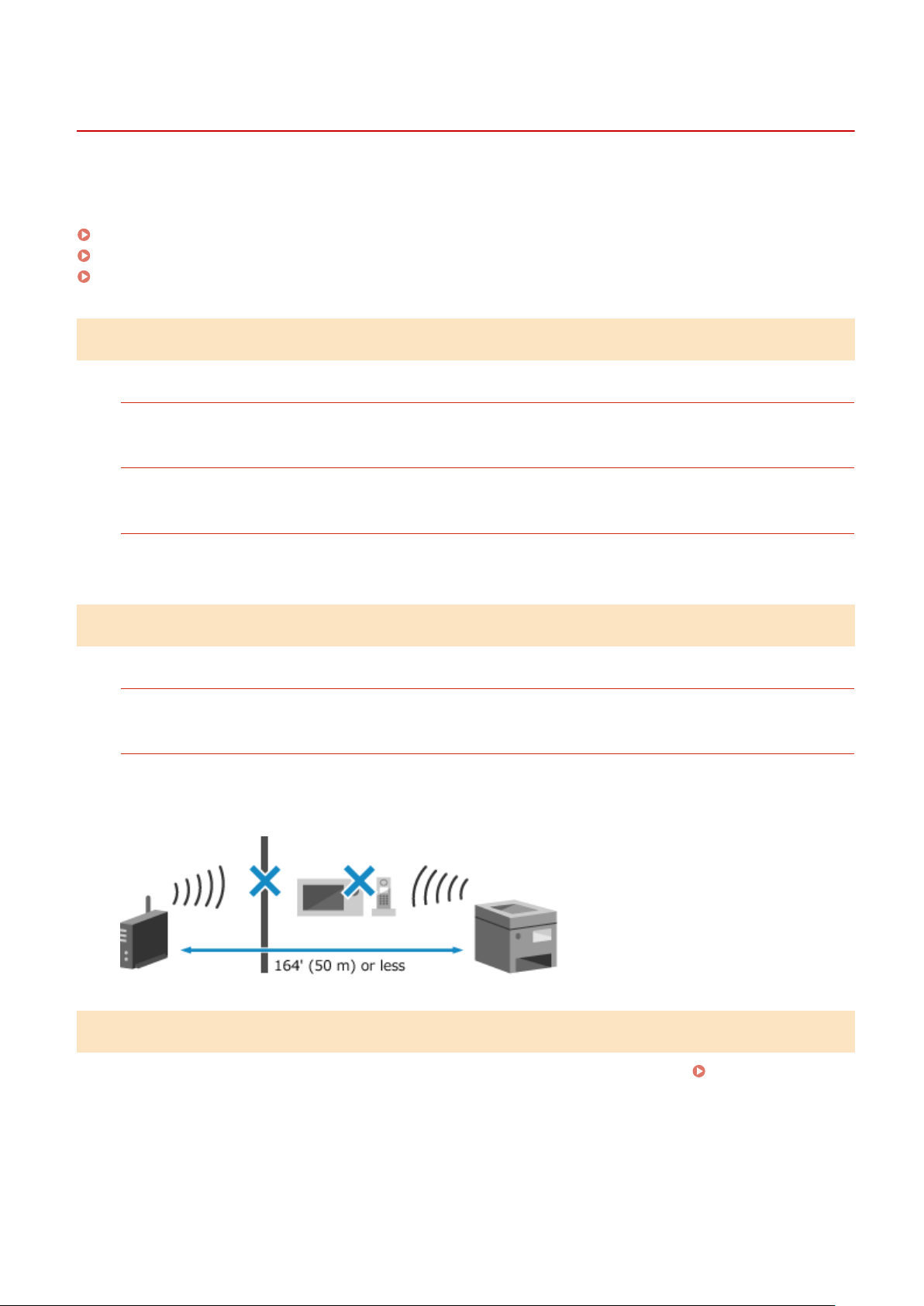
Cannot Connect to Wireless LAN
8W0J-0F6
T
roubleshoot by checking the status of the computer, wireless LAN router (access point), and machine with the steps
below.
Step 1: Checking the Status of the Computer and Wireless LAN Router(P. 591)
Step 2: Checking the Status of the Machine and Wireless LAN Router(P. 591)
Step 3: Reconnecting to a Wireless LAN(P. 591)
Step 1: Checking the Status of the Computer and Wireless LAN Router
Have You Congured the Settings of the Computer and Wireless LAN Router?
Congure the r
equired settings if they have not been congured.
Are the Power Cables and Ethernet Cable Connected Correctly?
If any cables are connected incorrectly or disconnected, connect them correctly.
Is the Po
wer of Wireless LAN Router On?
If you cannot establish a connection even if the power is on, turn off the power of the computer and router and
turn it on again.
Step 2: Checking the Status of the Machine and Wireless LAN Router
Is the Power of the Machine ON?
If the power is ON, turn OFF the power and turn it ON again.
Is the Location Appr
opriate?
● The machine and wir
eless LAN router should be installed in a location without walls or other obstructions
between the devices and within range of 164' (50 m).
● Do not install near a microwave oven, cordless telephone, or other device that generates radio waves.
Step 3: Reconnecting to a Wireless LAN
Connect to the wir
eless LAN using the connection type according to your wireless LAN router.
Connecting to a
Wir
eless LAN(P. 61)
Troubleshooting
591

Network
8W0J-0F7
This is a list of pr
oblems that can occur with the network. Check how to troubleshoot the problem based on the
symptom.
Cannot Switch to Wireless LAN(P. 593)
Cannot Find the Print Server to Connect to(P. 595)
Cannot Connect to a Shared Printer(P. 596)
Cannot Find the IP Address of the Machine(P. 597)
AirPrint Does Not Work(P. 598)
Troubleshooting
592

Cannot Switch to Wireless LAN
8W0J-0F8
Use the network settings to switch fr
om wired LAN connection to wireless LAN connection.
Touch Panel Model(P. 593)
5 Lines LCD Model(P. 593)
◼ T
ouch Panel Model
1
On the control panel, press [Menu] in the [Home] screen.
[Home] Screen(P. 120)
2
Press [Preferences] [Network] [Select Wired/Wireless LAN].
If the login screen appears, enter the System Manager ID and PIN, and then press [Log In]. Logging In to
the Machine
(P. 137)
3
Press [Wireless LAN].
➠ The message [Settings applied.] appears.
4
Connect the machine to the wireless LAN.
Connecting to a Wireless LAN(P. 61)
5
Install the driver to the computer that will use the machine.
When switching the machine from wired LAN connection to wireless LAN connection, any installed drivers
must be uninstalled and then r
einstalled.
For details about uninstalling and installing drivers, see the driver manual at the online manual site.
https://oip.manual.canon/
◼ 5 Lines LCD Model
1
Press
on the control panel. Control Panel(P. 14)
2
Press [Preferences]
[Network] [Select Wired/Wireless LAN] .
➠ The [Select Wired/Wireless LAN] screen is displayed.
If the login screen appears, enter the System Manager ID and PIN, and then press [<Log In>] .
Logging In to the Machine(P. 137)
3
Press [Wireless LAN].
➠ The message [Settings applied.] appears.
Troubleshooting
593

4
Connect the machine to the wireless LAN.
Connecting to a Wireless LAN(P. 61)
5
Install the driver to the computer that will use the machine.
When switching the machine from wired LAN connection to wireless LAN connection, any installed drivers
must be uninstalled and then r
einstalled.
For details about uninstalling and installing drivers, see the driver manual at the online manual site.
https://oip.manual.canon/
Troubleshooting
594

Cannot Find the Print Server to Connect to
8W0J-0F9
T
roubleshoot by checking the items below.
Are the Print Server and Computer Connected Correctly?
● Check the network settings of the print server and computer, and mak
e sure they are connected correctly.
● If they are connected using an Ethernet cable, make sure the cable is connected correctly.
Is the Print Server Started?
Start the print server if it has not been started.
Ar
e there Any Restrictions with Connecting to the Print Server?
Check with the administrator of the print server, and ask for permission, if needed.
Is Network Disco
very Enabled? (Windows)
Enable network discovery if not enabled. Enabling Network Discovery(P. 660)
Troubleshooting
595

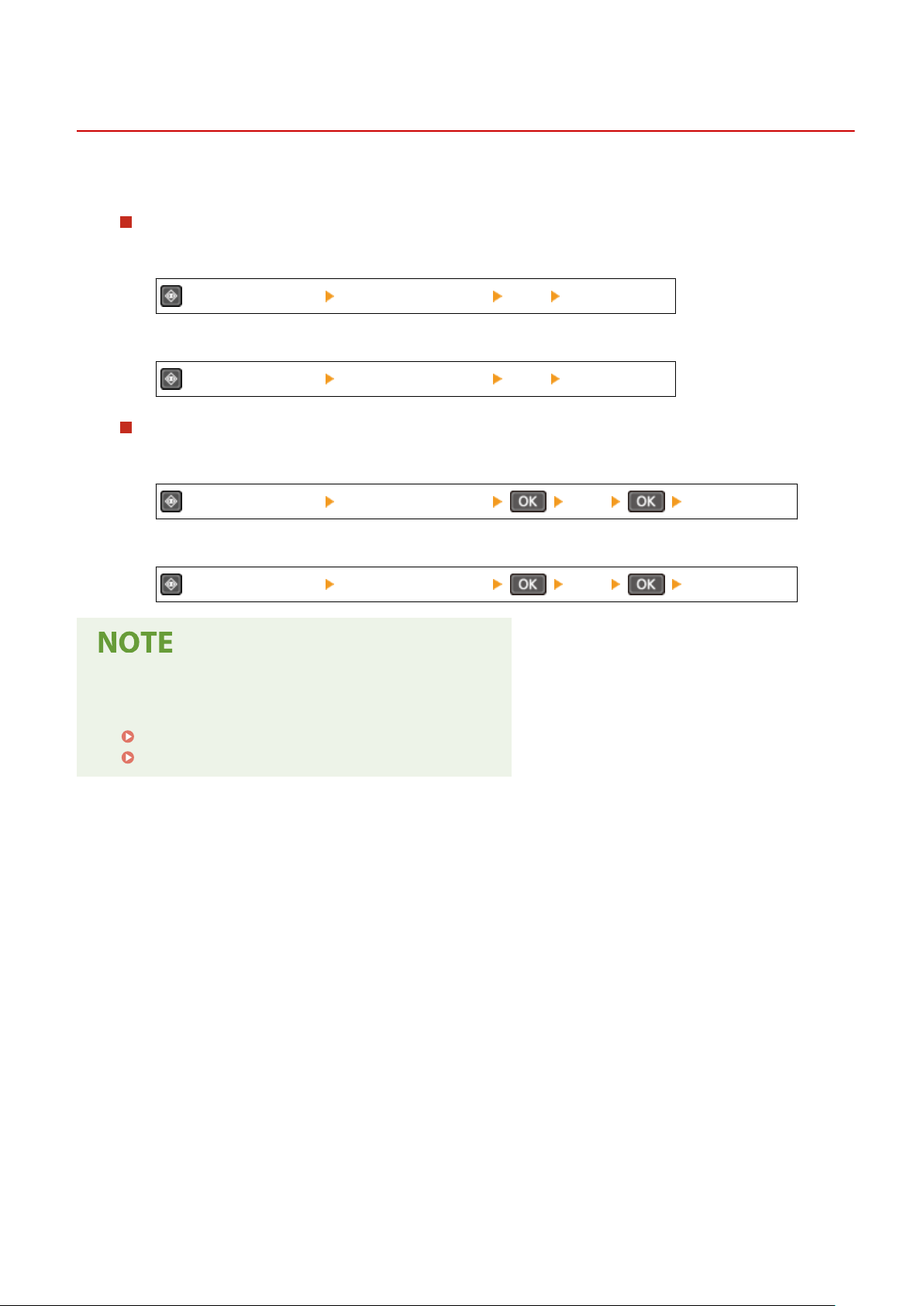
Cannot Find the IP Address of the Machine
8W0J-0FC
Vie
w the IP address using the following procedure:
Touch Panel Model
Vie
wing the IPv4 Address
on the control panel [Network Information] [IPv4] view the setting.
Viewing the IPv6 Address
on the control panel [Network Information] [IPv6] view the setting.
5 Lines LCD Model
Vie
wing the IPv4 Address
on the control panel [Network Information] [IPv4] view the setting.
Viewing the IPv6 Address
on the control panel [Network Information] [IPv6] view the setting.
If the IP Address Is Displayed as "0.0.0.0"
● A suitable IP addr
ess is not set. Set the IP address again.
Setting IPv4 Addresses(P. 77)
Setting IPv6 Addresses(P. 81)
Troubleshooting
597

AirPrint Does Not Work
8W0J-0FE
T
roubleshoot by checking the items below.
Is the Power of the Machine ON?
If the machine is ON, restart the machine, and try AirPrint again. Restarting the Machine(P. 113)
Does an Err
or Message Appear on the Control Panel?
Follow the instructions of the error message on the screen to x the pr
oblem.
A Message Appears(P. 628)
When Using a Mac, Is it Corr
ectly Connected to the Machine?
Connect the Mac to the network on the same LAN as the machine. Setting Up the Network(P. 56)
When connecting via USB
, directly connect the Mac to the USB port for computer connection on the back of the
machine with a USB cable.
Back Side(P. 11)
Have the Functions Usable with AirPrint Been Restricted?
If the protocol (IPP or Network Link Scan) for use with AirPrint has been disabled to restrict functions, cancel
this r
estriction to enable the use of AirPrint.
Setting the Functions and Security to Be Used with
AirPrint(P
. 334)
Is Bonjour Enabled on Your Apple Device?
Enable Bonjour if it is not enabled. For details, see the manual of your Apple device.
Troubleshooting
598

Printing and Copying
8W0J-0FF
This is a list of pr
oblems that can occur when printing and copying. Check how to troubleshoot the problem based on
the symptom.
Cannot Print or Copy(P. 600)
Printing Is Slow(P. 607)
◼ Pr
oblems with Printing Results
If the printing or copying results are not as expected, see the following:
Problems with Printing Results(P. 559)
◼ Fr
equently Asked Questions about Operations
I Want to Print on an Envelope.
Place the envelope in the drawer or multi-purpose tray while paying attention to the orientation and side of
the envelope.
Then, set the paper size and type according to the placed envelope.
Next, use the printer driver of the computer to set the paper size of the document and the paper size to
print, and then perform printing.
Preparations and Orientation for Loading Envelopes(P. 148)
Specifying the Paper Size and Type(P. 152)
Printing from a Computer(P. 214)
Troubleshooting
599

Cannot Print or Copy
8W0J-0FH
T
roubleshoot by checking the items below.
Has an Error Occurred?
Check the print or copy processing status and log, and if a three-digit number starting with "#" (error code) is
displayed, check ho
w to troubleshoot the problem based on the error code.
Viewing the Print Job Status and Log(P. 223)
Checking the Copy Status(P. 325)
An Error Code Is Displayed(P. 643)
Can Y
ou Print a Test Page?
If you can print a test page, check if the print settings of the application are correct.
Printing a Test Page(P. 666)
Check the Network Status and Settings.
Check the required items according to the usage environment.
Cannot Print (Wireless LAN)(P. 601)
Cannot Print (Wired LAN)(P. 603)
Cannot Print (USB Connection)(P. 605)
Cannot Print (via Print Server)(P. 606)
Troubleshooting
600

Cannot Print (Wireless LAN)
8W0J-0FJ
T
roubleshoot by checking the items below.
Check the Wireless LAN Connection Status.
Check the connection status of the machine, and take action according to the status. Viewing the MAC
Addr
ess and Connection Information of the Wireless LAN(P. 99)
If the Machine Is Not Connected to the Wireless LAN
Check the status of the computer and wireless LAN router (access point) and the status of the machine, and
reconnect to the wireless LAN.
Cannot Connect to Wireless LAN(P. 591)
If the Connection Is Poor
Change the follo
wing settings on the wireless LAN router, and try printing:
● Change the channel of the wireless LAN router. If there are multiple wireless LAN routers, separate the
channels by ve or more channels.
● Increase the wireless output of the wireless LAN router if possible.
Are the Machine and Computer Connected to the Same Wireless LAN Router?
● When you ar
e using a computer connected to a wireless LAN, check that the SSID (identier of the wireless
LAN router) of the machine matches that of the computer.
Viewing the MAC Address and Connection Information of the Wireless LAN(P. 99)
Viewing the Network Connection Information of the Computer(P. 663)
● If the SSID of the machine and the computer do not match, congur
e the wireless LAN connection settings
on the machine again, and connect the machine to the SSID to which the computer is connected.
Connecting to a Wireless LAN(P. 61)
Is the Printer Port of the Computer Congur
ed Correctly? (Windows)
Change the settings if they have not been congur
ed correctly. If there is no available port, add a new port.
Viewing the Printer Port(P. 665)
Conguring a Printer Port (Windo
ws)(P. 203)
Can You Access Remote UI?
If you cannot access Remote UI, the r
ewall settings of the machine may be incorrect, preventing
communication with the computer.
Use the following procedure to disable the rewall settings with the control panel, and then use Remote UI to
congure the rewall again.
Administrator privileges are required. The machine must be restarted to apply the settings.
Touch Panel Model
1
Disable the r
ewall settings.
To Disable IPv4 Address Filter
[Home] screen on the control panel [Menu] [Preferences] [Network] [Firewall Settings] [IPv4
Addr
ess Filter]
[Outbound Filter] or [Inbound Filter] [Off] Restart the machine.
To Disable IPv6 Address Filter
[Home] screen on the control panel [Menu] [Preferences] [Network] [Firewall Settings] [IPv6
Addr
ess Filter]
[Outbound Filter] or [Inbound Filter] [Off] Restart the machine.
Troubleshooting
601
To Disable MAC Address Filter
[Home] screen on the control panel [Menu] [Preferences] [Network] [Firewall Settings] [MAC
Addr
ess Filter]
[Outbound Filter] or [Inbound Filter] [Off] Restart the machine.
2
Congure the r
ewall correctly.
Setting the Firewall(P. 354)
5 Lines LCD Model
1
Disable the r
ewall settings.
To Disable IPv4 Address Filter
on the control panel [Preferences] [Network] [Firewall
Settings] [IPv4 Address Filter] [Outbound Filter] or [Inbound Filter]
[Off] Restart the machine.
To Disable IPv6 Address Filter
on the control panel [Preferences] [Network] [Firewall
Settings] [IPv6 Address Filter] [Outbound Filter] or [Inbound Filter]
[Off] Restart the machine.
To Disable MAC Address Filter
on the control panel [Preferences] [Network] [Firewall
Settings] [MAC Address Filter] [Outbound Filter] or [Inbound Filter]
[Off] Restart the machine.
2
Congure the r
ewall correctly.
Setting the Firewall(P. 354)
Reinstall the Printer Driver.
Uninstall the installed driver, and then reinstall it.
For details about uninstalling and installing drivers, see the driver manual at the online manual site.
https://oip.manual.canon/
Ar
e You Using Resident Software?
If you are using resident software, such as security software, disable it and then try printing.
Can Y
ou Print from Another Computer in the Network?
If you cannot print from another computer, contact your dealer or service representative. If the Problem
Persists(P
. 651)
Troubleshooting
602
Cannot Print (Wired LAN)
8W0J-0FK
T
roubleshoot by checking the items below.
Is the Printer Port of the Computer Congured Correctly? (Windows)
Change the settings if they have not been congur
ed correctly. If there is no available port, add a new port.
Viewing the Printer Port(P. 665)
Conguring a Printer Port (Windo
ws)(P. 203)
Can You Access Remote UI?
If you cannot access Remote UI, the r
ewall settings of the machine may be incorrect, preventing
communication with the computer.
Use the following procedure to disable the rewall settings with the control panel, and then use Remote UI to
congure the rewall again.
Administrator privileges are required. The machine must be restarted to apply the settings.
Touch Panel Model
1
Disable the r
ewall settings.
To Disable IPv4 Address Filter
[Home] screen on the control panel [Menu] [Preferences] [Network] [Firewall Settings] [IPv4
Addr
ess Filter]
[Outbound Filter] or [Inbound Filter] [Off] Restart the machine.
To Disable IPv6 Address Filter
[Home] screen on the control panel [Menu] [Preferences] [Network] [Firewall Settings] [IPv6
Addr
ess Filter]
[Outbound Filter] or [Inbound Filter] [Off] Restart the machine.
To Disable MAC Address Filter
[Home] screen on the control panel [Menu] [Preferences] [Network] [Firewall Settings] [MAC
Addr
ess Filter]
[Outbound Filter] or [Inbound Filter] [Off] Restart the machine.
2
Congure the r
ewall correctly.
Setting the Firewall(P. 354)
5 Lines LCD Model
1
Disable the r
ewall settings.
To Disable IPv4 Address Filter
on the control panel [Preferences] [Network] [Firewall
Settings] [IPv4 Address Filter] [Outbound Filter] or [Inbound Filter]
[Off] Restart the machine.
To Disable IPv6 Address Filter
Troubleshooting
603
on the control panel [Preferences] [Network] [Firewall
Settings] [IPv6 Address Filter] [Outbound Filter] or [Inbound Filter]
[Off] Restart the machine.
To Disable MAC Address Filter
on the control panel [Preferences] [Network] [Firewall
Settings] [MAC Address Filter] [Outbound Filter] or [Inbound Filter]
[Off] Restart the machine.
2
Congure the r
ewall correctly.
Setting the Firewall(P. 354)
Reinstalling the Printer Driver
Uninstall the installed driver, and then reinstall it.
For details about uninstalling and installing drivers, see the driver manual at the online manual site.
https://oip.manual.canon/
Ar
e You Using Resident Software?
If you are using resident software, such as security software, disable it and then try printing.
Can Y
ou Print from Another Computer in the Network?
If you cannot print from another computer, contact your dealer or service representative. If the Problem
Persists(P
. 651)
Troubleshooting
604

Cannot Print (USB Connection)
8W0J-0FL
T
roubleshoot by checking the items below.
Check the USB Cable.
● If you ar
e using a long USB cable, replace it with a short USB cable.
● If you still cannot print with a short USB cable, the cable may be damaged. Replace with a new USB cable,
and try printing.
Are You Using a USB Hub?
Connect the machine directly to the computer using a USB cable.
T
ry Using Another USB Port.
Connect the USB cable to another USB port on your computer.
Is the Printer Port of the Computer Congur
ed Correctly? (Windows)
If the printer port is not congur
ed correctly or there is no available port, reinstall the printer driver. When you
reinstall the driver, the correct port is congured automatically.
Viewing the Printer Port(P. 665)
For details about installing the driver, see the manual of the driver at the online manual site.
https://oip.manual.canon/
Is T
wo-way Communication Between the Machine and Computer Enabled? (Windows)
Enable two-way communication if it is not enabled, and restart the computer and machine. Viewing Two-way
Communication
(P. 666)
Is a Setting Preventing the Machine from Establishing a USB Connection to the
Computer?
If usage of the USB port for computer connection on the back of the machine is restricted, cancel this setting.
Preventing Connection to Computer via USB Port(P. 391)
Ar
e You Using Resident Software?
If you are using resident software, such as security software, disable it and then try printing.
Can Y
ou Print via USB Connection from Another Computer?
If you cannot print from another computer, contact your dealer or service representative. If the Problem
Persists(P
. 651)
Troubleshooting
605

Cannot Print (via Print Server)
8W0J-0FR
T
roubleshoot by checking the items below.
Can You Print from the Print Server?
If you can print, check the connection between the computer and the print server. Cannot Find the Print
Server to Connect to(P
. 595)
Reinstall the Printer Driver.
Uninstall the installed driver, and then reinstall it.
For details about uninstalling and installing drivers, see the driver manual at the online manual site.
https://oip.manual.canon/
Installing in Windo
ws
Use a print server to install the printer driver.
Double-click the shared printer on the print server, and follow the instructions on the screen to install the
printer driver.
Displaying a Shared Printer in the Print Server(P. 660)
Ar
e You Using Resident Software?
If you are using resident software, such as security software, disable it and then try printing.
Can Y
ou Print via a Print Server from Another Computer?
If you cannot print from another computer, contact your dealer or service representative. If the Problem
Persists(P
. 651)
Troubleshooting
606

Printing Is Slow
8W0J-0FS
It tak
es time until the rst page is printed. The printing speed may be slower after continuous printing or printing on
narrow paper to allow for adjustments of the temperature or image quality of the machine.
In all other cases, an error may have occurred. Troubleshoot by checking the items below.
Check the Paper Orientation.
This symptom may occur depending on the paper orientation. Change the paper orientation if possible.
Loading Paper(P. 142)
Does the Machine Have Sucient Fr
ee Memory?
Check the faxes received in the memory of the machine, and print or forward them as needed, and delete any
unnecessary fax
es.
Viewing and Printing Faxes Saved in the Memory(P. 383)
Troubleshooting
607

Scanning
8W0J-0FU
If you have pr
oblems when scanning, restart the machine and computer.
If the problem persists even after restarting, check the following troubleshooting methods.
Cannot Save Scanned Data to a Computer(P. 609)
Cannot Save Scanned Data to a Shared Folder(P. 611)
◼ Fr
equently Asked Questions about Operations
I Want to Scan an Original.
Make preparations according to the scanned data save destination and sending method, and then scan the
original.
Scanning(P. 226)
I W
ant to Send Scanned Data by E-mail.
You can scan an original and send the scanned data by e-mail as an attachment.
Scanning (Sending by E-mail)(P. 247)
Troubleshooting
608

Cannot Save Scanned Data to a Computer
8W0J-0FW
Use the follo
wing steps to check the status of the computer used as the store location and the machine:
Step 1: Checking the Occurrence of the Problem(P. 609)
Step 2: Checking the Status of the Computer(P. 609)
Step 3: Checking the Status of the Machine(P. 609)
Step 4: Checking the Store Location of the Scanned Data(P. 610)
Step 1: Checking the Occurrence of the Problem
Check using the following in the order below:
Does the Problem Occur on All Computers?
If so, check the network status and settings of the machine. If the machine is not connected to a network,
r
econgure the network settings.
Checking the Network Status and Settings(P. 96)
Setting Up the Network(P. 56)
Ar
e You Saving Scanned Data to the Computer for the First Time?
If so, make preparations such as installing the scanner driver (ScanGear MF) and application (MF Scan Utility) to
the computer used as the stor
e location.
Preparing to Save Scanned Data to a Computer(P. 229)
On the Scr
een for Selecting the Computer to Be Used as the Store Location, Is the
Computer Displayed? (Only When Scanning from the Machine)
If the computer to be used as the store location is not displayed, scanned data communication may be blocked
due to the security softwar
e settings.
For details about the security software settings, contact the software manufacturer.
Step 2: Checking the Status of the Computer
Did You Install and Update the Security Software?
If so, the security may have been strengthened, preventing communication between the machine and
computer.
For a workar
ound, contact the software manufacturer.
Reinstall the Scanner Driver.
Uninstall the installed driver, and then reinstall it.
For details about uninstalling and installing drivers, see the driver manual at the online manual site.
https://oip.manual.canon/
Step 3: Checking the Status of the Machine
W
as the IP Address of the Machine or Other Device Changed?
If so, check whether the machine and other device have the same IP address. If they have the same IP address,
change it to a differ
ent IP address.
Setting IPv4 Addresses(P. 77)
Setting IPv6 Addresses(P. 81)
Troubleshooting
609

Step 4: Checking the Store Location of the Scanned Data
Check the Attributes of the Store Location (Windows).
On the computer, check that the attributes of the store location are not read only.
1
Right-click the store location, and click [Properties].
➠ The pr
operties screen of the store location is displayed.
2
On the [General] tab, check that the [Read-only] checkbox in [Attributes] is not selected.
3
If the checkbox is selected, clear the [Read-only] checkbox.
Troubleshooting
610

Cannot Save Scanned Data to a Shared Folder
8W0J-0FX
Use the follo
wing steps to check the status of the shared folder of the store location and the machine:
Step 1: Checking the Occurrence of the Problem(P. 611)
Step 2: Checking the Status of the Computer with the Shared Folder(P. 611)
Step 3: Checking the Status of the Machine(P. 611)
Step 4: Checking the Shared Folder(P. 612)
Step 1: Checking the Occurrence of the Problem
Check using the following in the order below:
Does the Problem Occur with All Shared Folders?
If so, check the network status and settings of the machine. If the machine is not connected to a network,
r
econgure the network settings.
Checking the Network Status and Settings(P. 96)
Setting Up the Network(P. 56)
Ar
e You Saving Scanned Data to the Shared Folder for the First Time?
If so, register the information for accessing the shared folder to the Address Book of the machine. Preparing
to Save Scanned Data to a Shar
ed Folder(P. 241)
Step 2: Checking the Status of the Computer with the Shared Folder
Did You Change the Password of the Computer with the Shared Folder?
If so, change the password used to access the shared folder using the information of the shared folder
r
egistered to the Address Book.
Registering Destinations to the Address Book (Remote UI)(P. 176)
Did Y
ou Update Windows?
If so, the security may have been strengthened, preventing communication between the machine and
computer.
If the shar
ed folder on the computer does not have a password, set a password, and register the information
for accessing the shared folder to the Address Book of the machine.
Preparing to Save Scanned Data to a
Shar
ed Folder(P. 241)
Did You Install or Update the Security Software?
If so, the security may have been strengthened, preventing communication between the machine and
computer.
For a workar
ound, contact the software manufacturer.
Step 3: Checking the Status of the Machine
W
as the IP Address of the Machine or Other Device Changed?
If so, check whether the machine and other device have the same IP address. If they have the same IP address,
change it to a differ
ent IP address.
Setting IPv4 Addresses(P. 77)
Setting IPv6 Addresses(P. 81)
Troubleshooting
611

Step 4: Checking the Shared Folder
Do You Have Permission to Access the Shared Folder?
If you do not have permission to access the shared folder, on the computer, change the permission to enable
saving of scanned data.
When Using Windows
1
Right-click the shared folder of the store location, and click [Properties].
➠ The pr
operties screen of the shared folder is displayed.
2
On the [Security] tab, check that [Change] in [Everyone] is set to [Allow].
3
If not, set [Change] in [Everyone] to [Allow].
When Using macOS
1
Click [ ] [System Preferences] [Sharing].
➠ The [Sharing] scr
een is displayed.
2
Select [File Sharing], and in [Shared Folders], select the shared folder of the store location.
3
Check that [Everyone] in [Users] has the access permission of [Read & Write].
4
If not, select [Read & Write] from the [Everyone] pop-up menu.
Check the Attributes of the Shared Folder (Windows).
On the computer, check that the attributes of the shared folder are not read only.
1
Right-click the shared folder of the store location, and click [Properties].
➠ The pr
operties screen of the shared folder is displayed.
2
On the [General] tab, check that the [Read-only] checkbox in [Attributes] is not selected.
3
If the checkbox is selected, clear the [Read-only] checkbox.
Troubleshooting
612

Faxing and Using the Telephone
8W0J-0FY
This is a list of pr
oblems that can occur when faxing and using the telephone. Check how to troubleshoot the problem
based on the symptom.
Cannot Send a Fax(P. 614)
Cannot Receive a Fax(P. 616)
Machine Does Not Automatically Switch Between Telephone and Fax(P. 618)
Cannot Send or Receive a Fax via Optical Line(P. 619)
Cannot Send a Fax to an International Destination(P. 620)
Other Party's Telephone or Fax Number Is Not Displayed(P. 621)
◼ Fr
equently Asked Questions about Operations
I Want to Forward or Save a Received Fax.
Congure the settings to automatically forward or save received faxes to a computer, other fax machine, or
other destination.
Auto Forwarding and Backing Up Received Faxes(P. 276)
I W
ant to Send a Fax from a Computer.
You can send a document as a fax from a computer using a fax driver.
Sending Faxes from a Computer (PC Faxing)(P. 282)
Troubleshooting
613
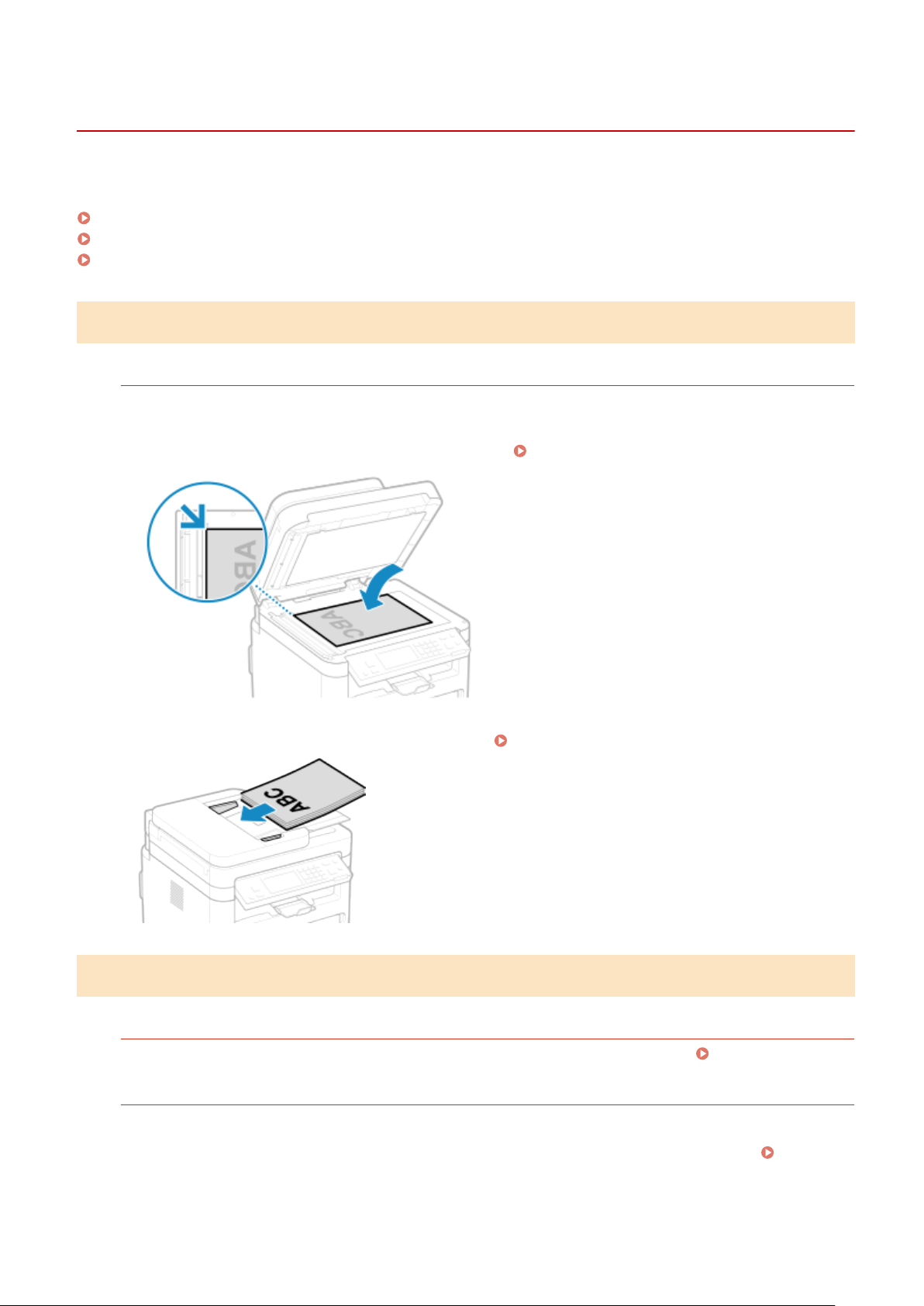
Cannot Send a Fax
8W0J-0H0
T
roubleshoot by checking the following steps:
Step 1: Checking the Original(P. 614)
Step 2: Checking the Status of the Machine(P. 614)
Step 3: Checking the Send Status(P. 615)
Step 1: Checking the Original
Is Original Placed Correctly?
Place the original correctly while paying attention to the orientation of the side to be scanned.
When Placing It on the Platen Glass
Place the original with the side to be scanned face do
wn.
Placing Originals on the Platen Glass(P. 139)
When Placing Originals in the Feeder
Place the original with the side to be scanned face up. Placing Originals in the Feeder(P. 140)
Step 2: Checking the Status of the Machine
Is the Processing/Data Indicator on the Control Panel Lit or Blinking?
If so, data is being processed. Data is sent after the Processing/Data indicator turns off. Control Panel(P. 14)
Is the T
elephone Cord Connected Correctly?
Check that the supplied telephone cord is connected correctly to the telephone line jack (LINE) on the machine
and the telephone line connector on the wall, and x the connection, as needed.
For details about the connection method, see the pr
ocedure for connecting to the telephone line.
Step 4:
Connecting to T
elephone Line(P. 104)
Troubleshooting
614

Are You Talking on a Telephone Connected to the Machine?
Send the fax after the call is completed.
Has an Err
or Occurred?
Check the fax sending status and log, and if a three-digit number (error code) starting with "#" is displayed,
check ho
w to troubleshoot the problem based on the error code.
Checking the Status and Log for Sent and Received Faxes(P. 293)
An Error Code Is Displayed(P. 643)
Is [Memory is full.] Displayed on the Contr
ol Panel?
If so, scanning of the original cannot be performed due to insucient available memory
.
Try the following:
● If there is data waiting to be printed or sent, wait until the processing is completed.
● When sending an original with many pages, divide the original and send it.
● Check the faxes received in the memory of the machine, and print or forward them as needed, and delete
any unnecessary faxes.
Viewing and Printing Faxes Saved in the Memory(P. 383)
● Change the set r
esolution to a lower resolution when scanning the original.
[Home] screen on the control panel [Fax] [Resolution] Select the resolution.
Step 3: Checking the Send Status
Did You Specify a Correct Destination?
A telephone number may have been specied, or the fax number may be incorr
ect. Check that the specied
destination is correct, and send again.
Are You Sending a Fax via Optical Line?
The machine conforms to analog line standards, and sending of faxes via optical line cannot be guaranteed. You
may be able to perform oper
ations via optical line, so see the following.
Cannot Send or Receive a Fax via Optical Line(P. 619)
Is the T
ype of Telephone Line Congured Correctly?
The type of telephone line may not be congur
ed correctly. Congure the type of telephone line manually.
Log in to Remote UI [Settings/Registration] [TX Settings] [Fax TX Settings] [Edit] in [Select Line
T
ype], select the type of telephone line
[OK]
On the control panel, select [Menu] in the [Home] screen, and then select [Function Settings] to congur
e the
settings.
[Select Line Type](P. 495)
* If you do not kno
w the type of telephone line, contact your telephone company.
Did You Specify an Overseas Destination?
If so, you may not have been able to connect correctly to the destination. After entering the international access
number or country code, enter the wait time (pause) and lo
wer the communication start speed before sending
the fax.
Cannot Send a Fax to an International Destination(P. 620)
Is the Send Destination Ready to Receive a Fax?
The power of the receiving device may not be turned on, or the RX Mode may not be congur
ed correctly. Have
the other party check these.
Troubleshooting
615

Cannot Receive a Fax
8W0J-0H1
T
roubleshoot by checking the following steps when [Cannot print RX data.] is displayed on the screen:
Step 1: Checking the Remaining Amount of Toner in the Toner Cartridges(P. 616)
Step 2: Checking the RX Mode Setting(P. 616)
Step 3: Checking the Fax Reception Environment(P. 617)
Step 4: Free Up Memory on the Machine(P. 617)
Step 1: Checking the Remaining Amount of Toner in the Toner Cartridges
If the remaining amount of toner in the toner cartridge is low or the remaining lifetime of the drum cartridge is short,
the received data may be saved to the memory of the machine without being printed to prevent printing text that is
dicult to read or images that are dicult to see.
● Check the remaining amount of toner in the toner cartridge or the remaining lifetime of the drum cartridge.
Replace the toner cartridge or the drum cartridge if the remaining amount is low.
Checking the Remaining Amount of Consumables(P. 540)
Replacing the Toner Cartridge(P. 532)
Replacing the Drum Cartridge(P. 536)
● T
o print the received data even when the amount of toner in the toner cartridges is low, enable [Continue Printing
When Amount in Cartridge Is Low].
Log in to Remote UI [Settings/Registration] [RX/Forwarding Settings] or [RX Settings] [Common
Settings] [Edit] in [Common Settings] select the [Continue Printing When Amount in Cartridge Is Low]
checkbo
x
[OK]
On the control panel, select [Menu] in the [Home] screen, and then select [Function Settings] to congur
e the
settings.
[Continue Print. When Amount in Cart. Low](P. 499)
* When this setting is enabled, the print r
esult may be light or faded. The received data is not saved to the
memory, so if the printed content is illegible, you may have to request the sender to send the data again.
Step 2: Checking the RX Mode Setting
Is the RX Mode Set Appr
opriately?
Check that the RX Mode is set according to your fax purpose, and change the setting, as needed. Changing
Fax RX Mode and Setting the Action when Receiving a Fax
(P. 270)
Is the RX Mode Set to [Answering Machine]?
If so, check the following, and connect the telephone correctly:
● An answering machine is connected to the machine.
● The po
wer is turned on with a message recorded properly.
Is the RX Mode Set to [Manual]?
If so, press [Start Receiving] before hanging up the receiver when receiving a fax. Hanging up the receiver
befor
ehand may end the call.
If a telephone is connected to the machine, you can receive the fax by operating the telephone without
operating the machine.
Receiving Faxes via Telephone (Remote RX)(P. 289)
Troubleshooting
616
Step 3: Checking the Fax Reception Environment
Are You Receiving a Fax via an Optical Line?
The machine conforms to analog line standards, and receiving of faxes via optical line cannot be guaranteed.
Y
ou may be able to perform operations via optical line, so see the following:
Cannot Send or Receive a Fax via Optical Line(P. 619)
Ar
e You Receiving a Fax from a Fax Information Service?
If so, perform the following operations according to the type of telephone line connected to the machine.
When Using a T
one Dialing Line
Congure the type of telephone line manually, and then call your service provider.
Log in to Remote UI [Settings/Registration] [TX Settings] [Fax TX Settings] [Edit] in [Select Line
T
ype], select [Tone]
[OK]
On the control panel, select [Menu] in the [Home] screen, and then select [Function Settings] to congur
e the
settings.
[Select Line Type](P. 495)
When Using a Pulse Dialing Line
After calling your service pr
ovider, press
(Tone) on the numeric keys, and then enter the number to
r
eceive service.
* If you do not know the type of telephone line, contact your telephone company.
Step 4: Free Up Memory on the Machine
Check the fax
es received in the memory of the machine, and print or forward them as needed, and delete any
unnecessary faxes.
Viewing and Printing Faxes Saved in the Memory(P. 383)
Troubleshooting
617
Machine Does Not Automatically Switch Between
T
elephone and Fax
8W0J-0H2
T
roubleshoot by checking the items below.
Is the RX Mode Set Appropriately?
● Check that the RX Mode is set accor
ding to your fax purpose, and change the setting, as needed.
Changing
Fax RX Mode and Setting the Action when Receiving a Fax
(P. 270)
● When a regular telephone is connected, set the RX Mode to [Fax/Tel (Auto Switch)].
Is the Ring Start Time Too Short When the RX Mode Is Set to [Fax/Tel (Auto Switch)]?
If the time until ringing starts after receiving a fax is too short, the machine may not be able to determine that it
is a fax and you may hear an incoming ring when the fax is r
eceived. Check the [Ring Start Time] setting, and
increase the time, as needed.
[Home] screen on the control panel [Fax] [RX Mode] [Fax/Tel (Auto Switch)] [Ring Start Time] enter
a time [Apply]
Is the Line Status of the Sender Good?
If the line status of the sender is poor, the machine may not switch to fax at a fast communication start speed.
Check the [RX Start Speed] setting, and decr
ease the speed, as needed.
Log in to Remote UI in System Manager Mode [Settings/Registration] [RX/Forwarding Settings] [Fax RX
Settings] [Edit] in [Basic Settings] in [RX Start Speed], select the speed [OK]
On the control panel, select [Menu] in the [Home] screen, and then select [Function Settings] to congur
e the
settings.
[RX Start Speed](P. 502)
Does the Machine Have Sucient Fr
ee Memory?
Check the faxes received in the memory of the machine, and print or forward them as needed, and delete any
unnecessary fax
es.
Viewing and Printing Faxes Saved in the Memory(P. 383)
Does the Sender
's Fax Machine Support a Fax Identication Signal (CNG Signal)
*1
?
If it does not support this signal, the machine will not switch automatically to fax receiving mode. Change the
RX Mode to [Manual] to r
eceive faxes manually.
Changing Fax RX Mode and Setting the Action when
Receiving a Fax(P
. 270)
*1
The fax identication signal (CNG signal) is a beeping sound transmitted by the sending fax machine.
Troubleshooting
618
Cannot Send or Receive a Fax via Optical Line
8W0J-0H3
The machine conforms to analog line standar
ds, and sending and receiving of faxes via optical line cannot be
guaranteed. You may be able to perform operations via optical line, so use the following steps:
Check the Optical Line Provider.
Check with the optical line provider that the following two items are guaranteed:
● Call quality equivalent to analog line le
vel
● Guaranteed operation of Super G3 (fax communication standard)
Lower the Communication Start Speed and Check the Sending and Receiving Status.
Use the following procedure to lower the communication start speed in phases and check whether you can
send and r
eceive faxes:
Cannot Send a Fax
Log in to Remote UI in System Manager Mode [Settings/Registration] [TX Settings] [Fax TX Settings]
[Edit] in [TX Start Speed], select the speed [OK]
On the control panel, select [Menu] in the [Home] screen, and then select [Function Settings] to congur
e the
settings.
[TX Start Speed](P. 495)
Cannot Receive a Fax
Log in to Remote UI in System Manager Mode [Settings/Registration] [RX/Forwarding Settings] [Fax
RX Settings] [Edit] in [Basic Settings] in [RX Start Speed], select the speed [OK]
On the control panel, select [Menu] in the [Home] screen, and then select [Function Settings] to congur
e the
settings.
[RX Start Speed](P. 502)
Troubleshooting
619
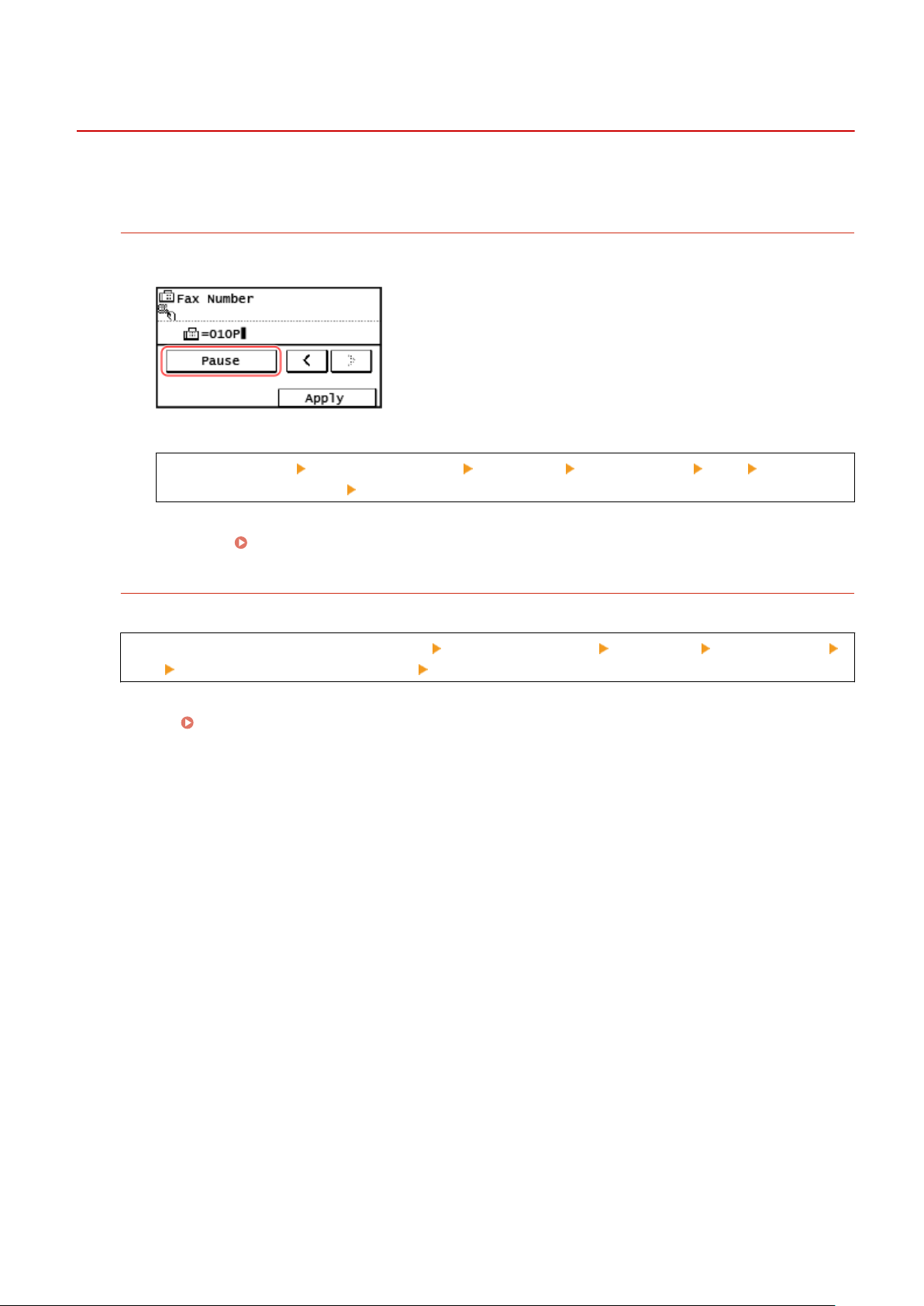
Cannot Send a Fax to an International Destination
8W0J-0H4
T
roubleshoot by checking the items below.
Enter the Wait Time (Pause).
● When sending a fax to an international destination, enter the international access number, country code, and
fax number of the destination in that or
der. Press [Pause] in between the numbers to add a pause.
● If you still cannot send a fax after entering a pause, change the pause time.
Log in to Remote UI [Settings/Registration] [TX Settings] [Fax TX Settings] [Edit] in [Set Pause
Time], enter the pause time [OK]
On the control panel, select [Menu] in the [Home] screen, and then select [Function Settings] to change
the setting. [Set Pause Time](P. 494)
Lo
wer the Communication Start Speed.
Try sending a fax after lowering the communication start speed in phases.
Log in to Remote UI in System Manager Mode [Settings/Registration] [TX Settings] [Fax TX Settings]
[Edit] in [TX Start Speed], select the speed [OK]
On the control panel, select [Menu] in the [Home] screen, and then select [Function Settings] to congur
e the
settings.
[TX Start Speed](P. 495)
Troubleshooting
620

Other Party's Telephone or Fax Number Is Not
Displayed
8W0J-0H5
T
roubleshoot by checking the items below.
Is the Machine Connected to a Telephone That Supports Number Display?
The machine does not support number display. When a telephone that supports number display is connected
to the machine, the other party
's number can be displayed on the display of the telephone.
* The other party's number may not be displayed even if a telephone that supports number display is
connected to the machine. For details, see the manual of the telephone.
Is the RX Mode Set to [Auto] or [Fax/Tel (Auto Switch)]?
If so, when the settings are congur
ed so that the machine rings when receiving a fax, the other party's number
can be displayed on a connected telephone that supports number display while the machine is ringing.
Log in to Remote UI [Settings/Registration] [RX/Forwarding Settings] [Fax RX Settings] [Edit] select
the [Use Incoming Ring] checkbo
x
enter the number of rings [OK]
On the control panel, select [Menu] in the [Home] screen, and then select [Function Settings] to congur
e the
settings.
[Incoming Ring](P. 501)
Troubleshooting
621

Management Functions and Environment Settings
8W0J-0H6
This is a list of fr
equently asked questions about management functions. Check the applicable item.
Cannot Access Remote UI or Send Function Setting Tool(P. 623)
Changing the Volume of the Conrmation Sound and W
arning Tone(P. 624)
Changing the Time Until Sleep Mode(P. 625)
Lost Department ID or PIN for the Administrator(P. 626)
Checking the Items That Can Be Congur
ed on the Machine and Their Settings(P. 627)
Troubleshooting
622
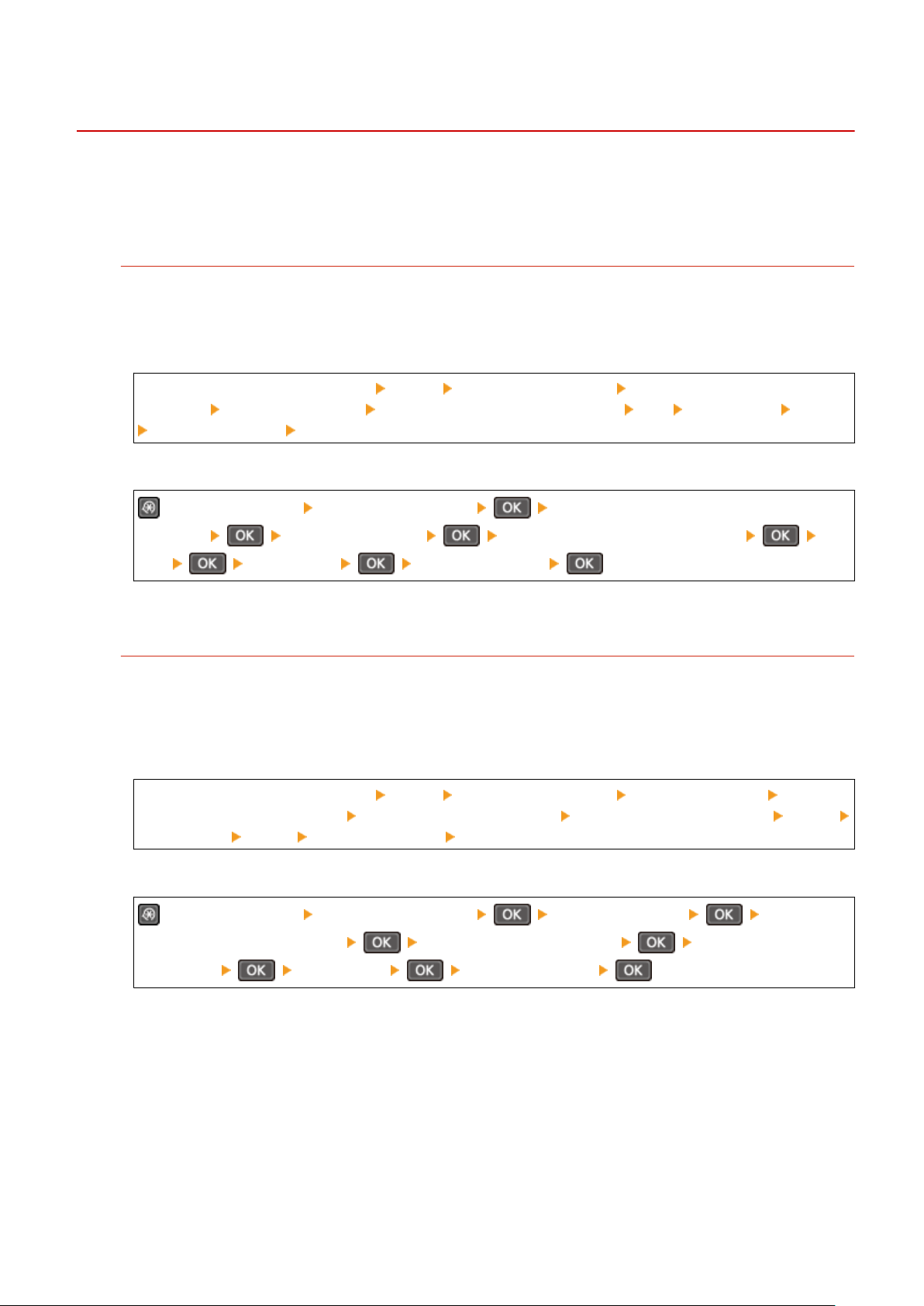
Cannot Access Remote UI or Send Function Setting Tool
8W0J-0H7
If the message [Cannot access Remote UI.] or [Cannot continue the settings because the function to perform settings
for the de
vice is restricted.] appears and you cannot access Remote UI or Send Function Setting Tool, troubleshoot by
checking the items below.
Set the Remote UI Access PIN.
To access the Remote UI and Send Function Setting Tool, you must set the Remote UI Access PIN.
Administr
ator privileges are required to congure the setting.
Touch Panel Model
[Home] screen on the control panel [Menu] [Management Settings] [Remote UI Settings/Update
Firmwar
e]
[Remote UI Settings] [Remote UI Access Security Settings] [On] enter the PIN [Apply]
enter the PIN again [Apply]
5 Lines LCD Model
on the control panel [Management Settings] [Remote UI Settings/Update
Firmwar
e]
[Remote UI Settings] [Remote UI Access Security Settings]
[On] enter the PIN enter the PIN again
* You cannot set a PIN consisting of all zeros, such as "00" or "0000000."
Change the System Manager PIN.
When logging in with System Manager Mode, you must change the System Manager PIN from the default
settings.
Administr
ator privileges are required to change the settings.
Touch Panel Model
[Home] screen on the control panel [Menu] [Management Settings] [User Management] [System
Manager Information Settings] [System Manager ID and PIN] enter the System Manager ID [Apply]
enter the PIN [Apply] enter the PIN again [Apply]
5 Lines LCD Model
on the control panel [Management Settings] [User Management] [System
Manager Information Settings] [System Manager ID and PIN] enter the System
Manager ID enter the PIN enter the PIN again
* You cannot set a System Manager ID or PIN consisting of all zeros, such as "00" or "0000000."
* Only allo
w certain administrators to have access to the System Manager ID and PIN after the settings are
changed.
Troubleshooting
623


Lost Department ID or PIN for the Administrator
8W0J-0HA
Contact the administr
ator to check whether the System Manager ID and System Manager PIN were changed from the
default settings.
* The System Manager ID and System Manager PIN are not set by default. If they have not been changed from the
default settings, change them for enhanced security, and allow only certain administrators to know this information.
Setting the Department ID and PIN for the Administrator(P. 350)
● If you still cannot r
ecover your System Manager ID and PIN even after conrming the above information,
contact your dealer or service representative.
If the Problem Persists(P. 651)
Troubleshooting
626

Checking the Items That Can Be Congur
ed on the
Machine and Their Settings
8W0J-0HC
Y
ou can print the User Data List and System Manager Data List to check the items that can be congured on the
machine and their settings.
Printing and Viewing Reports and Lists(P. 408)
User Data List
Displays the settings that do not r
equire administrator privileges.
System Manager Data List
Displays the settings that require administrator privileges.
Troubleshooting
627

A Message Appears
8W0J-0HE
If a message appears on the contr
ol panel, select the message from the list below, and check how to troubleshoot the
problem.
A counterfeit or non-Canon drum cartridge may be in use. The amount remaining in the cartridge cannot
be displayed corr
ectly.(P. 629)
A counterfeit or non-Canon toner cartridge may be in use. The amount remaining in the cartridge cannot
be displayed corr
ectly.(P. 629)
Cannot analyze the authentication server certicate.(P
. 629)
Cannot change the destination type of any destination that is registered to a group.(P. 630)
Cannot nd the access point.(P
. 630)
Cannot print RX data.(P. 631)
Cannot receive the fax. Make sure the fax was sent correctly by the sender.(P. 631)
Cannot send because more than one destination is specied.(P
. 631)
Cannot specify a group.(P. 631)
Change the authentication password.(P. 632)
Check the authentication settings.(P. 632)
Could not connect using the wireless LAN.(P. 632)
Could not connect using WPS.(P. 632)
Could not connect.(P. 633)
Could not connect. Check the encryption key settings.(P. 633)
Could not connect. Max no. of devices that can connect to access point reached(P. 633)
Could not detect any connections from wireless devices.(P. 633)
Could not perform cleaning.(P. 634)
Could not perform IEEE 802.1X authentication. Cannot analyze the authentication server certicate.
(P
. 634)
Could not perform IEEE 802.1X authentication. Change the authentication password.(P. 634)
Could not perform IEEE 802.1X authentication. Check the authentication settings.(P. 634)
Could not perform IEEE 802.1X authentication. Congur
e the correct authentication information.(P. 634)
Could not perform IEEE 802.1X authentication. Congur
e the information required for authentication.
(P. 634)
Could not perform IEEE 802.1X authentication. No reply from the destination.(P. 635)
Could not perform IEEE 802.1X authentication. The authentication server certicate has e
xpired.(P. 635)
Could not perform IEEE 802.1X authentication. The authentication server certicate is incorr
ect.(P. 635)
Could not perform Shared Key auth. Chk encryp. key set.(P. 635)
Direct Connection terminated.(P. 636)
Drum cart. life end. Replcmt. recommended.(P. 636)
Drum cart. reached end of lifetime.(P. 636)
Easy Conn. via PC ended due to timeout Device will restart.(P. 636)
Encryption key is not set correctly. Check the encryption key settings.(P. 636)
IEEE 802.1X error. Cannot analyze auth. server certicate.(P
. 637)
IEEE 802.1X error. Change the auth. password.(P. 637)
IEEE 802.1X error. Check the auth. settings.(P. 637)
IEEE 802.1X error. Congur
e correct authentication info.(P. 637)
IEEE 802.1X error. Congur
e the info. required for auth.(P. 637)
IEEE 802.1X error. No reply from the destination.(P. 637)
IEEE 802.1X error. The auth. server cert. has expired.(P. 638)
IEEE 802.1X error. The auth. server cert. is incorrect.(P. 638)
Incorrect number of characters/invalid characters entered.(P. 638)
Insert the drum cartridge.(P. 638)
Insert the toner cartridge.(P. 638)
Memory is full.(P. 638)
Troubleshooting
628

No reply from the destination.(P. 639)
No response from host.(P. 639)
Paper jammed.(P. 639)
Preparing a drum cart. is recommended.(P. 639)
Preparing a toner cart. is recommended.(P. 639)
Set the correct authentication information.(P. 640)
Set the information necessary for authentication.(P. 640)
Size/Settings Mismatch(P. 640)
Specifying and registering new destinations is restricted.(P. 641)
The authentication server certicate has e
xpired.(P. 641)
The authentication server certicate is incorr
ect.(P. 641)
The fax number has too many digits.(P. 641)
The memory is full. Scanning will be canceled. Do you want to print?(P. 641)
Toner cart. life end. Replcmt. recommended.(P. 642)
Toner cart. reached end of lifetime.(P. 642)
Use Remote UI to set info. necessary for authentication.(P. 642)
● If the pr
oblem persists even after trying the troubleshooting methods, contact your dealer or service
representative.
If the Problem Persists(P. 651)
A counterfeit or non-Canon drum cartridge may be in use. The amount
r
emaining in the cartridge cannot be displayed correctly.
The remaining amount of drum cartridge is not correctly displayed due to the use of a drum cartridge whose print
quality cannot be guaranteed.
Replace with a New Drum Cartridge.
Replacing the Drum Cartridge(P. 536)
For optimum print quality
, using Canon genuine drum cartridges is recommended.
List of
Consumables
(P. 541)
A counterfeit or non-Canon toner cartridge may be in use. The amount
r
emaining in the cartridge cannot be displayed correctly.
The remaining amount of toner cartridge is not correctly displayed due to the use of a toner cartridge whose print
quality cannot be guaranteed.
Replace with a New Toner Cartridge.
Replacing the Toner Cartridge(P. 532)
For optimum print quality
, using Canon genuine toner cartridges is recommended.
List of
Consumables(P. 541)
Cannot analyze the authentication server certicate.
The certicate of the authentication server may not be corr
ect, or it may be a format unsupported by the machine.
Check the Certicate of the Authentication Server, and Change the Setting, as Needed.
Setting IEEE 802.1X(P. 362)
Troubleshooting
629
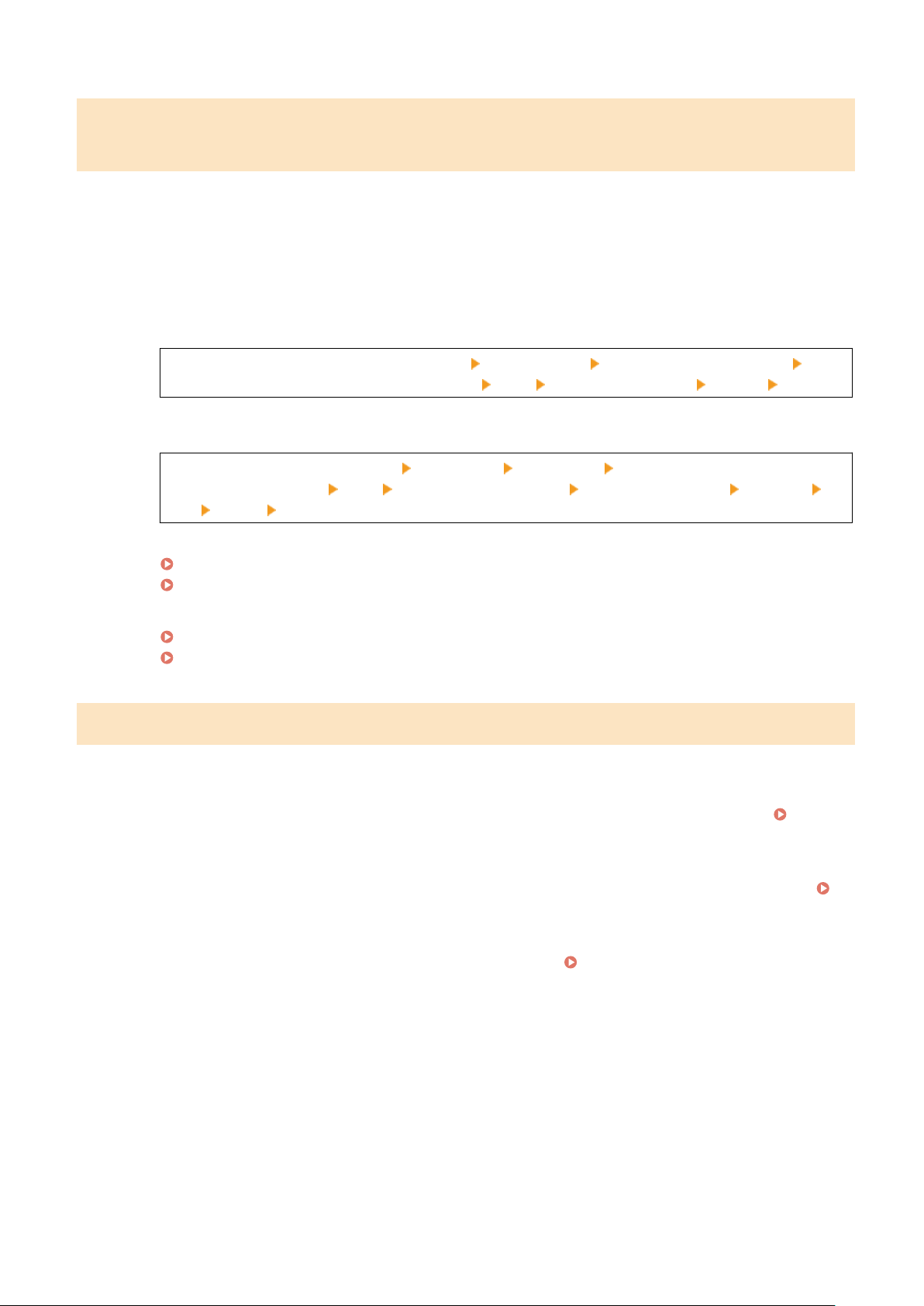
Cannot change the destination type of any destination that is registered to a
group.
The selected destination is registered to a group, so you cannot change the destination type.
Delete the Destination from the Group, Change the Destination Type, and Then Register It to the
Group Again.
1
Delete the destination from the group.
Deleting Using Remote UI
Log in to Remote UI in System Manager Mode [Address Book] [One-Touch] or [Coded Dial] select
the gr
oup to which the destination is registered
[Edit] select the destination [Delete] [OK]
Deleting Using the Control Panel
[Home] screen on the control panel [Addr. Book] [Details/Edit] select the group to which the
destination is r
egistered
[Edit] [Number of Destinations] select the destination [Remove]
[Yes] [Apply] [Apply]
2
Change the destination type.
Registering Destinations to the Address Book (Remote UI)(P. 176)
Editing and Deleting Destinations in the Address Book (Control Panel)(P. 175)
3
Register the destination to the group again.
Registering Groups to the Address Book (Remote UI)(P. 180)
Registering Groups to the Address Book (Control Panel)(P. 173)
Cannot nd the access point.
An error occurred, preventing the machine from detecting the wireless LAN router (access point).
Is Connection Type Congured Correctly?
Select the connection type (WPS) according to the method supported by the wireless LAN router.
Connecting to a Wireless LAN by Using the Router Button (Push Button Mode)(P. 64)
Did Y
ou Connect Within the Fixed Time?
When connecting by pressing a button on the wireless LAN router, set the connection type on the control
panel of the machine, and then press the button on the wireless LAN router within one or two minutes.
Connecting to a Wireless LAN by Using the Router Button (Push Button Mode)(P. 64)
Ar
e the SSID and Network Key Congured Correctly?
When entering the wireless LAN router information manually, check the SSID and network key of the wireless
LAN router, and congure the settings correctly on the machine.
Connecting to a Wireless LAN by
Setting the Details (Manual Setup Method)(P
. 72)
Are the Machine and Wireless LAN Router Located Appropriately?
● The machine and wireless LAN router should be installed in a location without walls or other obstructions
between the devices and within range of 164' (50 m).
● Do not install near a microwave oven, digital cordless telephone, or other device that generates radio
waves.
Troubleshooting
630
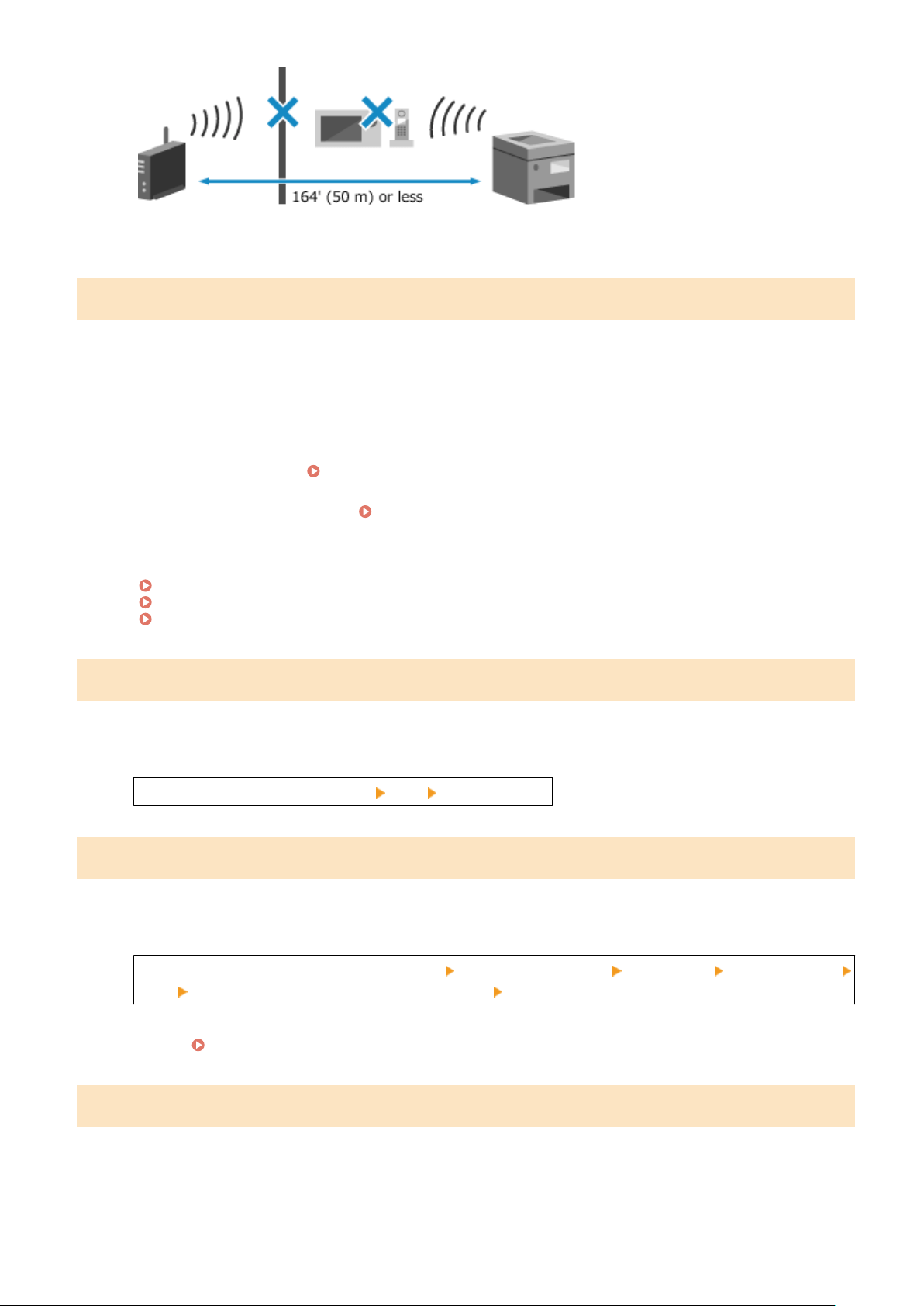
Check the Security Settings of the Wireless LAN Router.
For details, see the manual of the wir
eless LAN router or contact the manufacturer.
Cannot print RX data.
Received data cannot be printed for some r
eason.
Do the Cause and Solution Appear on the Control Panel?
If so, follow the instructions on the screen.
Is the Control Panel, Back Cover, or Toner Cover Open on the Machine?
Close the covers if they are open.
Is Paper Loaded?
Load paper if not loaded.
Loading Paper(P. 142)
Is Paper Jammed?
If so, r
emove any jammed paper.
Paper Jams(P. 549)
Has the T
oner Cartridge or the Drum Cartridge Reached the End of Their Lifetime?
Check the remaining amount in the toner cartridge or the drum cartridge, and replace any of the toner
cartridge or the drum cartridge, as needed.
Checking the Remaining Amount of Consumables(P. 540)
Replacing the Toner Cartridge(P. 532)
Replacing the Drum Cartridge(P. 536)
Cannot receive the fax. Make sure the fax was sent correctly by the sender.
Oper
ations were not performed within the xed time when receiving a fax manually, and the machine timed out.
When You Hear a Beep During Fax Reception, Press [Start Receiving] Within 35 Seconds.
[Home] screen on the control panel [Fax] [Start Receiving]
Cannot send because more than one destination is specied.
Sending of fax
es to multiple destinations is restricted.
To Cancel Restriction, Change the [Restrict Sequential Broadcast] Setting.
Log in to Remote UI in System Manager Mode [Settings/Registration] [TX Settings] [Fax TX Settings]
[Edit] in [Restrict Sequential Broadcast], select [Off] [OK]
On the control panel, select [Menu] in the [Home] screen, and then select [Function Settings] to change the
setting. [Restrict Sequential Broadcast](P. 496)
Cannot specify a group.
If you press [Hook] when sending a fax, you cannot specify a group destination.
Specify the destination without pressing [Hook].
Troubleshooting
631
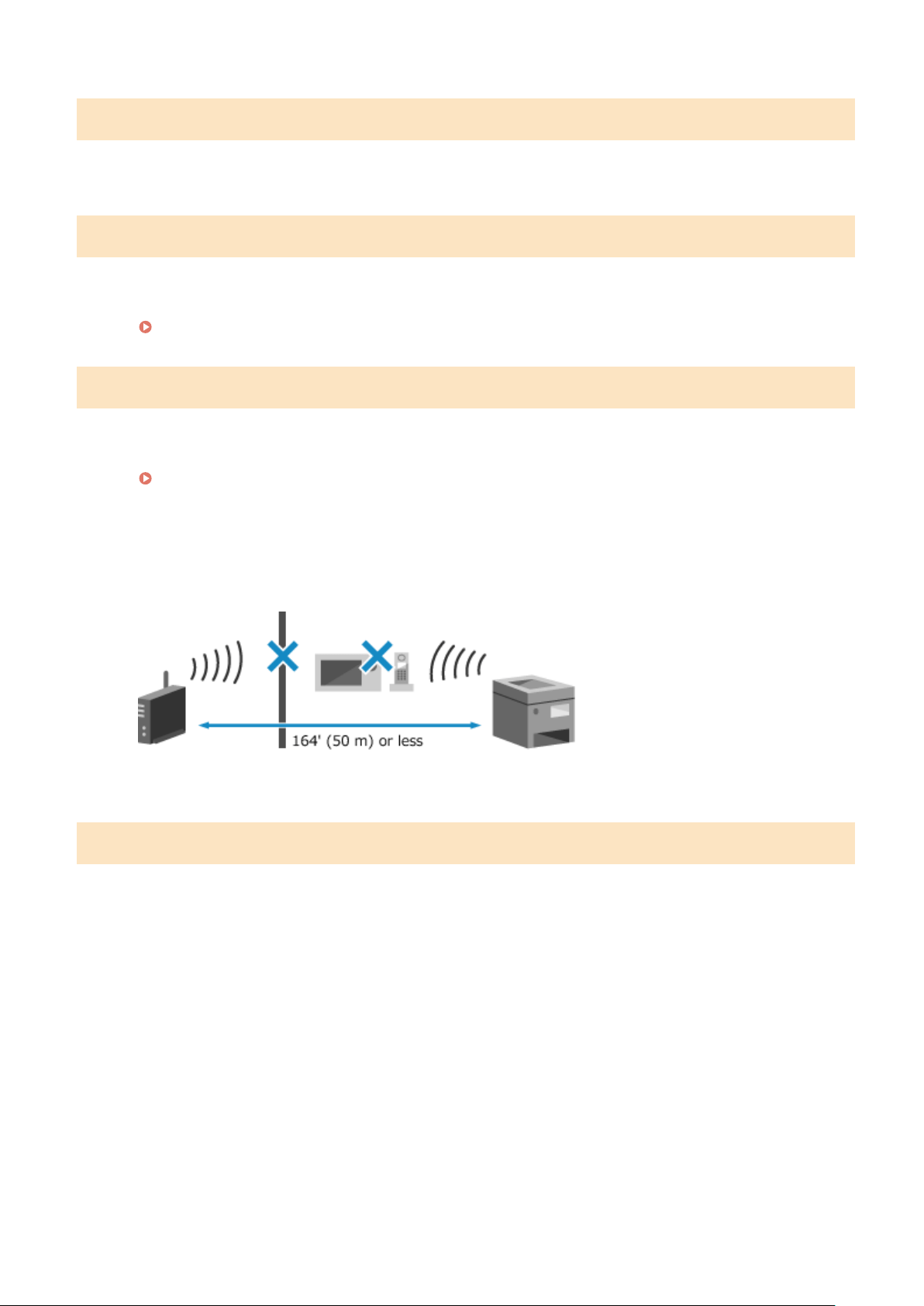
Change the authentication password.
The password has expired.
Set a new password.
Check the authentication settings.
The authentication method set on the machine does not match that set on the RADIUS server.
Check the Authentication Method Set on the RADIUS Server, and Set This Correctly.
Setting IEEE 802.1X(P. 362)
Could not connect using the wireless LAN.
An error occurred, preventing the machine from connecting to the wireless LAN.
Restart the Machine, and Congure the Wireless LAN Connection Again.
Connecting to a Wireless LAN(P. 61)
Ar
e the Machine and Wireless LAN Router (Access Point) Located Appropriately?
● The machine and wireless LAN router should be installed in a location without walls or other obstructions
between the devices and within range of 164' (50 m).
● Do not install near a microwave oven, digital cordless telephone, or other device that generates radio
waves.
Check the Security Settings of the Wireless LAN Router.
For details, see the manual of the wir
eless LAN router or contact the manufacturer.
Could not connect using WPS.
An err
or occurred, preventing the machine from establishing a WPS connection.
Wait a Moment, and Congure the Settings Again.
If you still cannot establish a WPS connection, check whether the wireless LAN router (access point) supports
WPS.
If It Supports WPS
Check that the machine and wireless LAN router are located appropriately.
● The machine and wireless LAN router should be installed in a location without walls or other
obstructions between the devices and within range of 164' (50 m).
● Do not install near a microwave oven, digital cordless telephone, or other device that generates radio
waves.
Troubleshooting
632
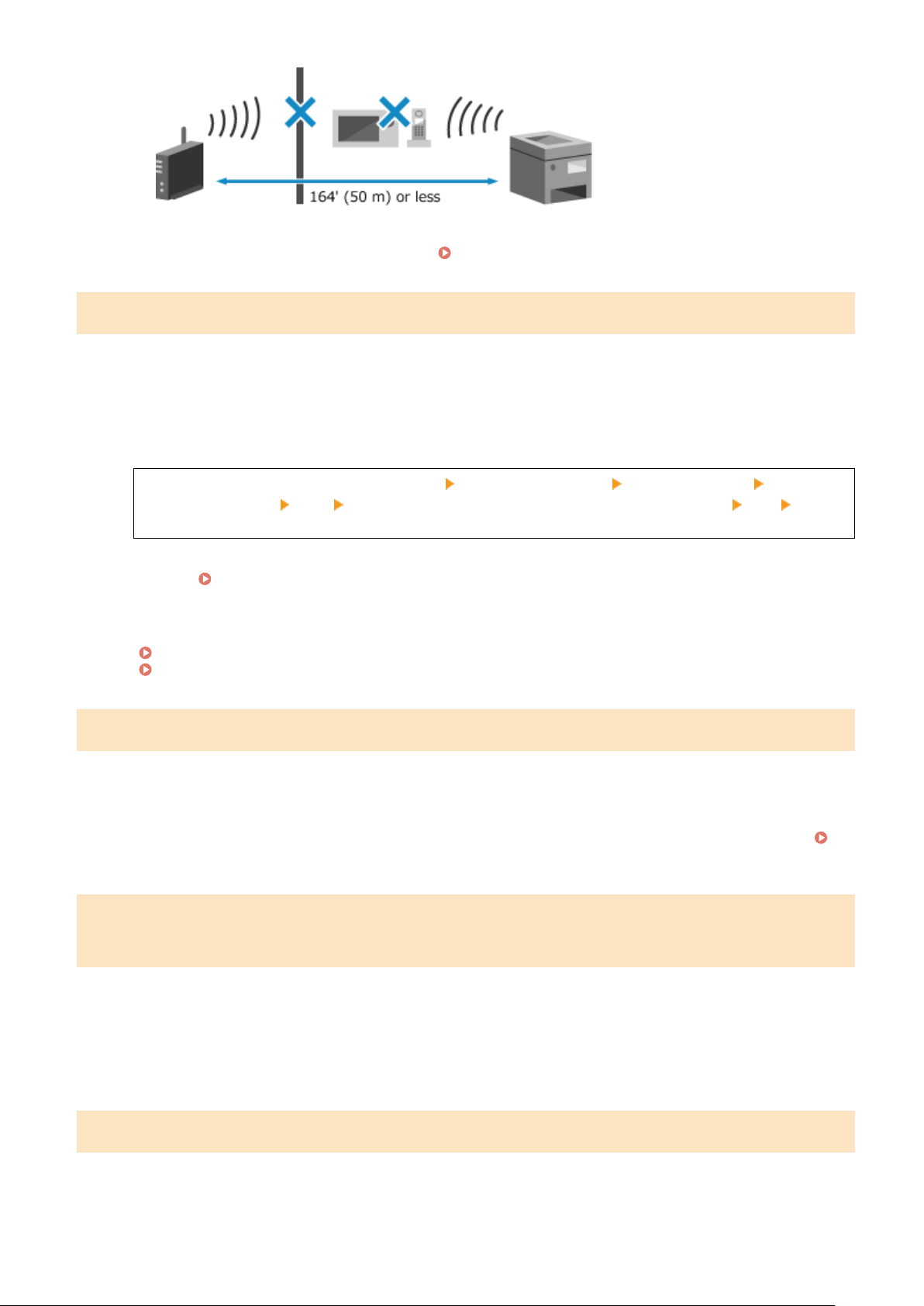
If It Does Not Support WPS
Connect using a differ
ent connection type.
Connecting to a Wireless LAN(P. 61)
Could not connect.
An err
or occurred, preventing the machine from establishing a direct connection.
Wait a Moment, and Try Connecting Again.
If you still cannot establish a connection, restart the machine.
Set the IP Address for Connection to Something Other Than "192.168.22.xx".
The machine must be restarted to apply the settings.
Log in to Remote UI in System Manager Mode [Settings/Registration] [Network Settings] [Direct
Connection Settings] [Edit] in [IP Address for Direct Connection], enter the IP address [OK] restart
the machine
On the control panel, select [Menu] in the [Home] screen, and then select [Preferences] to congur
e the
settings.
[Direct Connection Settings](P. 437)
Is the Subnet Mask Congur
ed Correctly?
Check the IPv4 subnet mask settings. Change the settings if they have not been congured correctly. For
details, contact the network administrator.
Viewing the IP address set to the machine(P. 97)
Setting IPv4 Addresses(P. 77)
Could not connect. Check the encryption key settings.
The network k
ey (encryption key) of the wireless LAN router (access point) is not congured correctly, preventing
connection.
Reset the Network Key.
Check the network key of the wireless LAN router, and congure the settings correctly on the machine.
Connecting to a Wireless LAN(P. 61)
Could not connect. Max no. of devices that can connect to access point
r
eached
The maximum number of devices that can be connected to the wireless LAN router (access point) has been reached,
preventing connection.
Reduce the Number of Devices (Clients) Connected to the Wireless LAN Router.
For the maximum number of connections, see the manual of the wireless LAN router or contact the
manufacturer.
Could not detect any connections from wireless devices.
An err
or occurred, preventing the machine from detecting mobile devices.
Did You Connect Within the Fixed Time?
Connect the mobile device to the machine within ve minutes of the SSID and network key being displayed.
Troubleshooting
633

Could not perform cleaning.
Cleaning could not be performed due to jammed paper, loading of incorrect paper, or another problem.
Load Correct Paper in the Drawer.
Follow the instructions on the control panel during cleaning, and load usable paper. Loading Paper in the
Dr
awer(P. 143)
Is Paper Jammed?
If so, remove any jammed paper.
Paper Jams(P. 549)
Could not perform IEEE 802.1X authentication. Cannot analyze the
authentication server certicate.
Check the certicate of the authentication server, and change the setting, as needed.
Check the Certicate of the RADIUS Server, and Change the Setting, as Needed.
Setting IEEE 802.1X(P. 362)
Could not perform IEEE 802.1X authentication. Change the authentication
password.
The password has expired.
Set a New Password.
Setting IEEE 802.1X(P. 362)
Could not perform IEEE 802.1X authentication. Check the authentication
settings.
The authentication method set on the machine does not match that set on the RADIUS server.
Check the Authentication Method Set on the RADIUS Server, and Set This Correctly.
Setting IEEE 802.1X(P. 362)
Could not perform IEEE 802.1X authentication. Congur
e the correct
authentication information.
The authentication method or authentication information of IEEE 802.1X is not set correctly.
Set the Authentication Method and Authentication Information (Keys and Certicates, Password, CA
Certicate) Correctly.
Setting IEEE 802.1X(P. 362)
Managing and Verifying a Key and Certicate(P
. 364)
Could not perform IEEE 802.1X authentication. Congur
e the information
required for authentication.
The authentication method or authentication information of IEEE 802.1X is not set correctly.
Set the Authentication Method and Authentication Information (Keys and Certicates, Password, CA
Certicate) Correctly.
Troubleshooting
634

Setting IEEE 802.1X(P. 362)
Managing and Verifying a Key and Certicate(P
. 364)
Could not perform IEEE 802.1X authentication. No reply from the
destination.
The network connection may have a problem.
Check the Network Status and Settings.
● Check the Ethernet cable and switch status.
● Check the network key of the wireless LAN router, and congure the settings correctly on the machine.
Could not perform IEEE 802.1X authentication. The authentication server
certicate has expired.
The server certicate sent from the RADIUS server has expired.
Check the Expiry Date of the RADIUS Server.
Setting IEEE 802.1X(P. 362)
Could not perform IEEE 802.1X authentication. The authentication server
certicate is incorrect.
A CA certicate that supports the certicate of the authentication server is not registered to the machine.
Check the Certicate Information of the Authentication Server, and Register a Supported CA
Certicate.
Setting IEEE 802.1X(P. 362)
Registering a Key and Certicate or CA Certicate Obtained fr
om an Issuing Authority(P. 370)
Could not perform Shared Key auth. Chk encryp. key set.
The network key (encryption key) of the wireless LAN router (access point) is not congured correctly, or the WEP
authentication methods of the machine and wireless LAN router do not match, preventing Shared Key Authentication.
Reset the Network Key.
Check the network key of the wireless LAN router, and congure the settings correctly on the machine.
Connecting to a Wireless LAN(P. 61)
Match the WEP Authentication Method on the Machine and Wir
eless LAN Router.
The machine may be set to Shared Key Authentication, and the wireless LAN router may be set to Open
System Authentication. Change the WEP setting according to the authentication method you are using.
When Using Open System Authentication
Connect to the wireless LAN using either of the following methods:
● Connect with the access point setup method.
Connecting to a Wireless LAN by Searching for a
Router (Access Point Setup Method)(P
. 69)
● Using the Manual Setup Method, connect with the WEP authentication method set to [Open System].
Connecting to a Wireless LAN by Setting the Details (Manual Setup Method)(P. 72)
When Using Shar
ed Key Authentication
On the wireless LAN router, change the WEP authentication method to "Shared Key", and connect again.
For the setup method, see the manual of the wireless LAN router or contact the manufacturer.
Troubleshooting
635
Direct Connection terminated.
The connection with a mobile device was terminated.
Directly Connect Again.
Connecting a Mobile Device Directly to the Machine (Direct Connection)(P. 338)
Drum cart. life end. Replcmt. recommended.
The drum cartridge has reached the end of their lifetime.
It Is Recommended to Replace with New Drum Cartridge.
Press [Display Recovery Steps] and replace the drum cartridge while following the instructions on the screen.
Replacing the Drum Cartridge(P. 536)
[Error Information/Noticat
ion]
[Drum Cartridge End of Lifetime] [Display Recovery Steps]
Drum cart. reached end of lifetime.
The drum cartridge has reached the end of their lifetime.
It Is Recommended to Replace with New Drum Cartridge.
Press [Display Recovery Steps] and replace the drum cartridge while following the instructions on the screen.
Replacing the Drum Cartridge(P. 536)
[Error Information/Noticat
ion]
[Drum Cartridge End of Lifetime] [Display Recovery Steps]
Easy Conn. via PC ended due to timeout Device will restart.
30 minutes have elapsed since the start of the cableless setup mode without connecting to the computer.
Restart the Machine, and Start Cableless Setup Mode Again.
Administrator privileges are required.
[Home] on the control panel [Menu] [Preferences] [Network] [Easy Connection via PC] [Yes]
start the settings on the computer
Encryption key is not set correctly. Check the encryption key settings.
The network k
ey (encryption key) of the wireless LAN router (access point) is not congured correctly on the machine.
Alternatively, the WEP authentication method of the machine does not match that of the wireless LAN router.
Reset the Network Key.
Check the network key of the wireless LAN router, and congure the settings correctly on the machine.
Connecting to a Wireless LAN(P. 61)
Match the WEP Authentication Method on the Machine and Wir
eless LAN Router.
The machine may be set to Shared Key Authentication, and the wireless LAN router may be set to Open
System Authentication. Change the WEP setting according to the authentication method you are using.
When Using Open System Authentication
Connect to the wireless LAN using either of the following methods:
● Connect with the access point setup method.
Connecting to a Wireless LAN by Searching for a
Router (Access Point Setup Method)(P
. 69)
Troubleshooting
636

● Using
the Manual Setup Method, connect with the WEP authentication method set to [Open System].
Connecting to a Wireless LAN by Setting the Details (Manual Setup Method)(P. 72)
When Using Shar
ed Key Authentication
On the wireless LAN router, change the WEP authentication method to "Shared Key", and connect again.
For the setup method, see the manual of the wireless LAN router or contact the manufacturer.
IEEE 802.1X error. Cannot analyze auth. server certicate.
Check the certicate of the authentication server, and change the setting, as needed.
Check the Certicate of the RADIUS Server, and Change the Setting, as Needed.
Setting IEEE 802.1X(P. 362)
IEEE 802.1X error. Change the auth. password.
The password has expired.
Set a New Password.
Setting IEEE 802.1X(P. 362)
IEEE 802.1X error. Check the auth. settings.
The authentication method set on the machine does not match that set on the RADIUS server.
Check the Authentication Method Set on the RADIUS Server, and Set This Correctly.
Setting IEEE 802.1X(P. 362)
IEEE 802.1X error. Congure correct authentication info.
The authentication method or authentication information of IEEE 802.1X is not set correctly.
Set the Authentication Method and Authentication Information (Keys and Certicates, Password, CA
Certicate) Correctly.
Setting IEEE 802.1X(P. 362)
Managing and Verifying a Key and Certicate(P
. 364)
IEEE 802.1X error. Congur
e the info. required for auth.
The authentication method or authentication information of IEEE 802.1X is not set correctly.
Set the Authentication Method and Authentication Information (Keys and Certicates, Password, CA
Certicate) Correctly.
Setting IEEE 802.1X(P. 362)
Managing and Verifying a Key and Certicate(P
. 364)
IEEE 802.1X error. No reply from the destination.
The network connection may have a pr
oblem.
Check the Network Status and Settings.
● Check the Ethernet cable and switch status.
● Check the network key of the wireless LAN router, and congure the settings correctly on the machine.
Troubleshooting
637

IEEE 802.1X error. The auth. server cert. has expired.
The server certicate sent from the RADIUS server has expired.
Check the Expiry Date of the RADIUS Server.
Setting IEEE 802.1X(P. 362)
IEEE 802.1X error. The auth. server cert. is incorrect.
A CA certicate that supports the certicate of the authentication server is not registered to the machine.
Check the Certicate Information of the Authentication Server, and Register a Supported CA
Certicate.
Setting IEEE 802.1X(P. 362)
Registering a Key and Certicate or CA Certicate Obtained fr
om an Issuing Authority(P. 370)
Incorrect number of characters/invalid characters entered.
The network key of the wireless LAN router (access point) is not congured correctly on the machine.
Reset the Network Key.
Check the network key of the wireless LAN router, and congure the settings correctly on the machine.
Connecting to a Wireless LAN(P. 61)
Insert the drum cartridge.
The drum cartridge is not installed correctly.
Reinstall the Drum Cartridge.
Replacing the Drum Cartridge(P. 536)
If the message still appears after r
epeatedly reinstalling the drum cartridge, contact your dealer or service
representative.
If the Problem Persists(P. 651)
Insert the toner cartridge.
The toner cartridge is not installed corr
ectly.
Reinstall the Toner Cartridge.
Replacing the Toner Cartridge(P. 532)
If the message still appears after r
epeatedly reinstalling the toner cartridge, contact your dealer or service
representative.
If the Problem Persists(P. 651)
Memory is full. [Memory is full.] Is Displayed on the Control Panel, and the Operation Cannot Be Performed.
Scanning or faxing cannot be performed due to insucient available memory
. If there is data waiting to be printed or
sent, wait until the processing is completed.
Check the Received Faxes Saved in the Memory.
Print or forward them as needed, and delete any unnecessary faxes.
Viewing and Printing Faxes Saved in
the Memory(P
. 383)
When Scanning, Change the Data Size to a Small File Format.
Troubleshooting
638

[Home] screen on the control panel [Scan] select the scan type Enter the destination [File
Format] select the le format.
For details about the le formats, see the follo
wing:
Setting File / Division(P. 260)
When Sending Faxes, Divide the Original or Lower the Resolution.
● When sending an original with many pages, divide the original and send it.
● Change the set r
esolution to a lower resolution when scanning the original.
[Home] screen on the control panel [Fax] [Resolution] select the resolution.
No reply from the destination.
The Ethernet cable may not be connected or there may be a problem with the switch.
Check the Ethernet cable and switch status.
No response from host.
The machine is not connected correctly to the network.
Check the Settings of the Machine and Network, and Connect Again.
When Connected via Wireless LAN
Congure the settings correctly according to your usage environment. Connecting to a Wireless
LAN(P
. 61)
When Connected via Wired LAN
Check that the Ethernet cable is properly connected.
Connecting to a Wired LAN(P. 60)
Paper jammed.
Paper jammed in the machine during printing.
Remo
ve the Jammed Paper, and If Printing Does Not Resume Automatically, Try Printing Again.
Paper Jams(P. 549)
Preparing a drum cart. is recommended.
It is nearing the time to r
eplace the drum cartridge.
Prepare New Drum Cartridge, and Replace the Old Ones, as Needed.
When printing large jobs, it is recommended to replace the drum cartridge.
Replacing the Drum
Cartridge
(P. 536)
Preparing a toner cart. is recommended.
It is nearing the time to r
eplace the toner cartridge.
Prepare New Toner Cartridge, and Replace the Old Ones, as Needed.
When printing large jobs, it is recommended to replace the toner cartridge.
Replacing the Toner
Cartridge
(P. 532)
To Continue Printing, Use the Procedure Below.
When Faxing or Printing an Auto Report
Troubleshooting
639
In the following cases, the data may be saved to the memory of the machine without being printed to
pr
event printing text that is dicult to read or images that are dicult to see:
● When receiving a Fax
● When communication results reports are set to be printed automatically (when a message appears for
the black toner cartridge)
To continue printing, enable [Continue Printing When Amount in Cartridge Is Low].
Log in to Remote UI [Settings/Registration] [RX/Forwarding Settings] [Common Settings] [Edit]
in [Common Settings] select the [Continue Printing When Amount in Cartridge Is Low] checkbox
[OK]
On the control panel, select [Menu] in the [Home] screen, and then select [Function Settings] to congur
e
the settings.
[Continue Print. When Amount in Cart. Low](P. 499)
* When this setting is enabled, the printing r
esults may be light or faded.
● Y
ou can manually specify when this message appears (when toner is low).
[Displ. Timing for Cartridge
Pr
ep. Notif.](P. 432)
Set the correct authentication information.
The authentication method or authentication information of IEEE 802.1X is not set corr
ectly.
Set the Authentication Method and Authentication Information (Keys and Certicates, Password, CA
Certicate) Correctly.
Setting IEEE 802.1X(P. 362)
Managing and Verifying a Key and Certicate(P
. 364)
Set the information necessary for authentication.
The authentication method or authentication information of IEEE 802.1X is not set corr
ectly.
Set the Authentication Method and Authentication Information (Keys and Certicates, Password, CA
Certicate) Correctly.
Setting IEEE 802.1X(P. 362)
Managing and Verifying a Key and Certicate(P
. 364)
Size/Settings Mismatch
The size of the paper loaded in the machine does not match that set on the contr
ol panel or printer driver.
Match the Size of the Loaded Paper with the Paper Size Setting.
When Using the Loaded Paper
● Change the paper size setting on the control panel to match the size of the loaded paper.
Setting the Paper Size and Type for the Drawer(P. 153)
Setting the Paper Size and Type for the Multi-purpose Tray(P. 157)
● When
printing from a computer, change the paper size setting on the printer driver to match the size of
the loaded paper.
Printing from a Computer(P. 214)
When Reloading Paper
Load paper of the size set on the contr
ol panel or printer driver.
Loading Paper(P. 142)
Check that the positions of the paper guides ar
e not too loose or too tight.
Troubleshooting
640
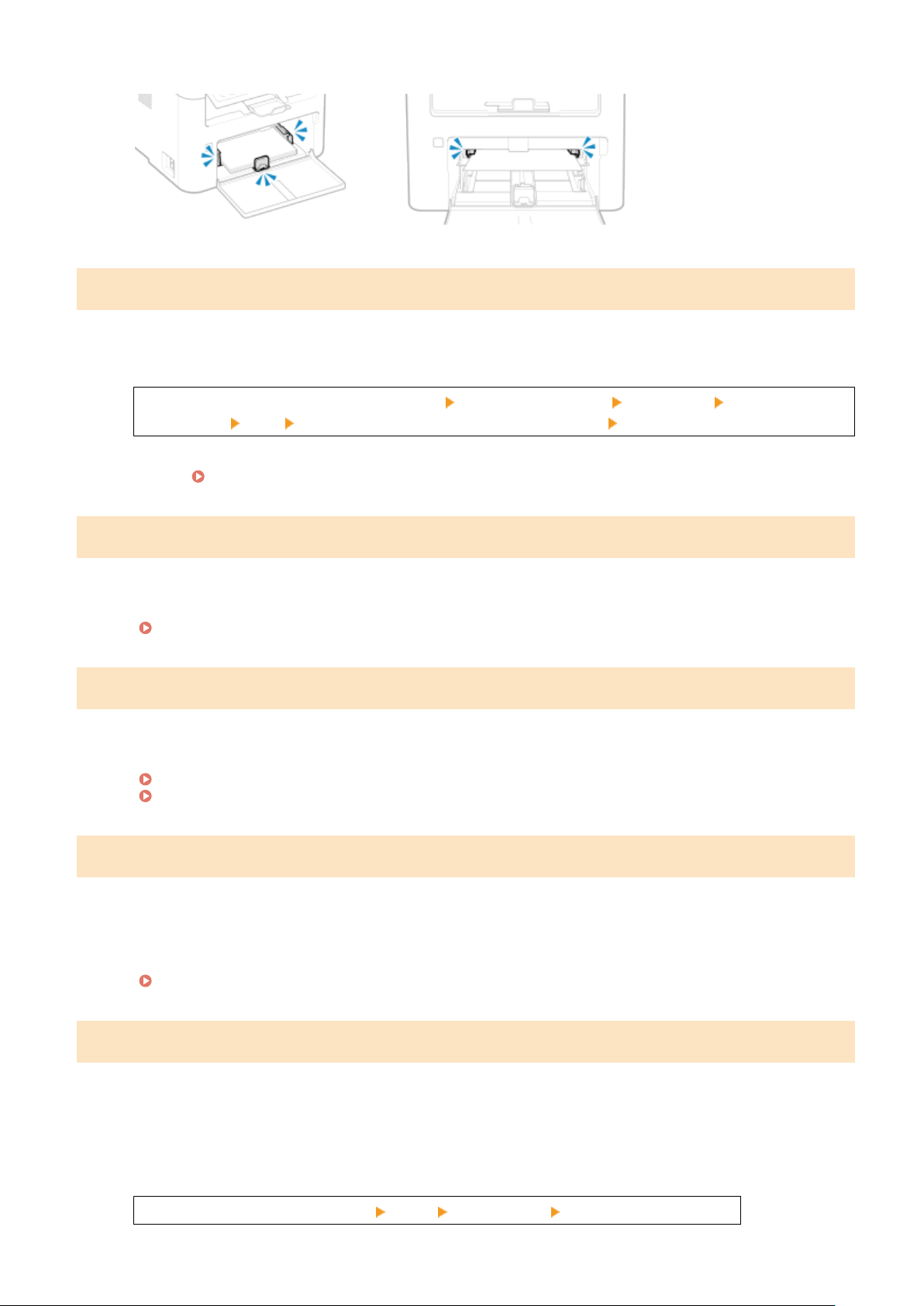
Drawer
Multi-purpose Tray
Specifying and registering new destinations is restricted.
Destinations that can be specied for sending are restricted to those destinations registered in the Address Book.
To Cancel Restriction, Change the [Restrict New Destinations] Setting.
Log in to Remote UI in System Manager Mode [Settings/Registration] [TX Settings] [Restrict New
Destinations] [Edit] clear the [Restrict New Destinations] checkbox [OK]
On the control panel, select [Menu] in the [Home] screen, and then select [Function Settings] to change the
setting. [Restrict New Destinations](P. 485)
The authentication server certicate has expired.
The server certicate sent from the RADIUS server has expired.
Check the Expiry Date of the RADIUS Server.
Setting IEEE 802.1X(P. 362)
The authentication server certicate is incorrect.
A CA certicate that supports the certicate of the authentication server is not registered to the machine.
Check the certicate information of the authentication server, and register a supported CA certicate.
Setting IEEE 802.1X(P. 362)
Registering a Key and Certicate or CA Certicate Obtained fr
om an Issuing Authority(P. 370)
The fax number has too many digits.
Sending of a fax cannot be performed because the specied fax number has too many digits.
Specify a Fax Number That Does Not Ex
ceed the Maximum Number of Digits to Send a Fax.
If the settings are congured to send a fax after entering a designated number before you specify a
destination registered in the Address Book, the maximum number of digits to send a fax may be exceeded.
[Use Address Book When On-Hook](P. 496)
The memory is full. Scanning will be canceled. Do you want to print?
Reading of the original cannot be performed due to insucient available memory
. Alternatively, all the pages could
not be read when sorting and copying.
Divide the Original Before Copying.
Print up to the pages that were read or cancel the job, and then divide the original before copying.
Try Conguring the Setting as Follows.
[Home] screen on the control panel [Copy] [Original Type] [Text/Photo (High Speed)].
Troubleshooting
641
Toner cart. life end. Replcmt. recommended.
The toner cartridge has reached the end of their lifetime.
It Is Recommended to Replace with New Toner Cartridge.
Press [Display Recovery Steps] and replace the toner cartridge while following the instructions on the screen.
Replacing the Toner Cartridge(P. 532)
[Error Information/Noticat
ion]
[Toner Cartridge End of Lifetime] [Display Recovery Steps]
Toner cart. reached end of lifetime.
The toner cartridge has reached the end of their lifetime.
It Is Recommended to Replace with New Toner Cartridge.
Press [Display Recovery Steps] and replace the toner cartridge while following the instructions on the screen.
Replacing the Toner Cartridge(P. 532)
[Error Information/Noticat
ion]
[Toner Cartridge End of Lifetime] [Display Recovery Steps]
Use Remote UI to set info. necessary for authentication.
The authentication method or authentication information of IEEE 802.1X is not set correctly.
Check the IEEE 802.1X Setting, and Set This Correctly.
Check the following, and change the setting, as needed. Setting IEEE 802.1X(P. 362)
● The login name is specied corr
ectly.
● At least one of the following checkboxes is selected: [Use TLS], [Use TTLS], and [Use PEAP].
● When using TLS, a key and certicate are registered.
● When using TTLS or PEAP, the user name and password are set correctly.
Troubleshooting
642
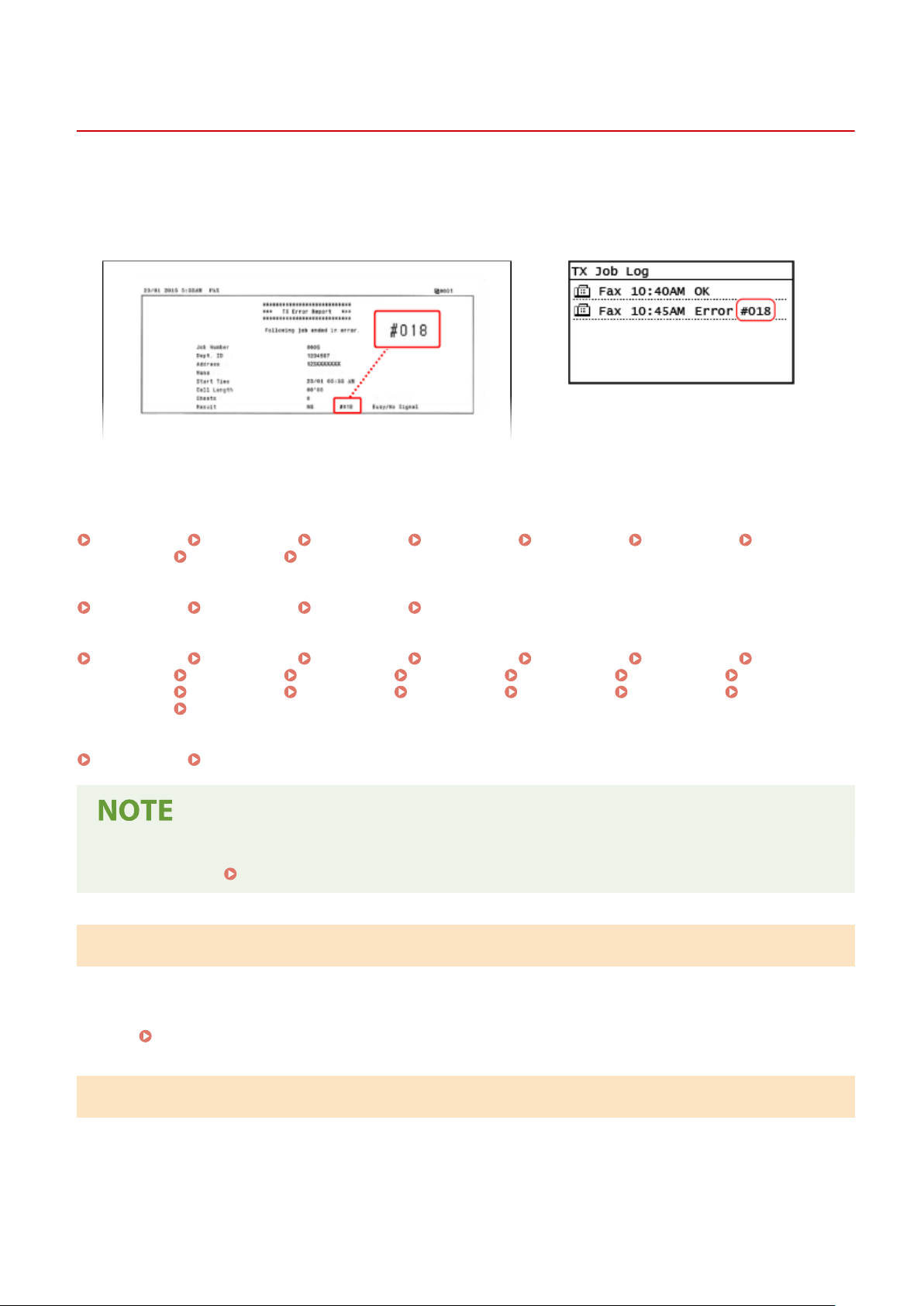
An Error Code Is Displayed
8W0J-0HF
If printing cannot be performed, or scanned data or a fax cannot be sent or r
eceived, or another error occurs, an error
code (three-digit number starting with "#") is displayed in the report or job log.
Report
Job Log
Select the err
or code from the list below, and check how to troubleshoot the problem.
#001 to #099
#001(P. 643) #003(P. 643) #005(P. 644) #012(P. 644) #018(P. 644) #022(P. 644)
#037(P. 645) #054(P. 645) #099(P. 645)
#701 to #799
#703(P. 645) #752(P. 646) #753(P. 646) #755(P. 646)
#801 to #899
#801(P. 647) #802(P. 647) #804(P. 647) #806(P. 647) #809(P. 648) #810(P. 648)
#813(P. 648) #818(P. 648) #819(P. 648) #820(P. 648) #821(P. 648) #827(P. 648)
#829(P. 649) #839(P. 649) #841(P. 649) #844(P. 649) #846(P. 649) #852(P. 650)
#861(P. 650) #863(P. 650)
#901 to #999
#934(P. 650) #995(P. 650)
● If the pr
oblem persists even after trying the troubleshooting methods, contact your dealer or service
representative.
If the Problem Persists(P. 651)
#001
The original is jammed in the feeder.
Remo
ve the Jammed Original.
Paper Jams in the Feeder(P. 555)
#003
The data volume is too lar
ge to send or receive a fax.
Divide the Original or Lower the Resolution.
Cannot Send a Fax
Troubleshooting
643

● When sending an original with many pages, divide the original and send it.
● Change the set r
esolution to a lower resolution when scanning the original.
[Home] screen on the control panel [Fax] [Resolution] select the resolution.
Cannot Receive a Fax
Ask the sender to divide the original or lo
wer the resolution and send the fax again.
#005
There was no response from the other party's device within the time limit.
Did You Specify an Overseas Destination?
You may not have been able to connect correctly to the destination. After entering the international access
number or country code, enter the wait time (pause) or lower the communication start speed before sending
the fax. Cannot Send a Fax to an International Destination(P. 620)
Is the Other Party
's Device Ready to Receive a Fax?
The power of the other party's device may not be turned on, or the RX Mode may not be congured correctly.
Have the other party check these.
#012
The r
eceiving device is out of paper (recording paper).
Have the other party add more paper.
#018
Ther
e was no response from the other party's device due to it being busy or another reason.
Did You Specify an Overseas Destination?
You may not have been able to connect correctly to the destination. After entering the international access
number or country code, enter the wait time (pause) or lower the communication start speed before sending
the fax.
Cannot Send a Fax to an International Destination(P. 620)
Is the Other Party
's Device Ready to Receive a Fax?
The power of the other party's device may not be turned on, or the RX Mode may not be congured correctly.
Have the other party check these.
#022
Sending of fax
es from a computer is restricted. Alternatively, the destination specied as the forwarding destination
may have been deleted from the Address Book.
To Cancel Restriction of Sending Faxes from a Computer, Change the [Fax TX Settings] Setting.
Log in to Remote UI in System Manager Mode [Settings/Registration] [TX Settings] [Fax TX Settings]
[Edit] select the [Allow Fax Driver TX] checkbox [OK]
On the control panel, select [Menu] in the [Home] screen, and then select [Function Settings] to change the
setting. [Allow Fax Driver TX](P. 496)
Register the Forwar
ding Destination to the Address Book.
Registering Destinations to the Address Book (Remote UI)(P. 176)
Check Whether the Fax That Could Not Be Forwar
ded Is Saved in the Memory.
If the fax is saved in the memory, you can try forwarding it again.
Checking Faxes that Failed to Be
Forwar
ded(P. 294)
Troubleshooting
644
#037
Sending of a fax failed due to insucient available memory or the maximum number of destinations to which a fax
can be sent was exceeded. Alternatively, printing could not be performed due to the le size.
If there is data waiting to be printed or sent by fax, wait until the processing is completed.
Check Received Data Saved to the Memory.
Print or forward them as needed, and delete any unnecessary data.
Viewing and Printing Faxes Saved in the Memory(P. 383)
Checking Faxes that Failed to Be Forwarded(P. 294)
When Sending Fax
es, Divide the Original or Lower the Resolution.
● When sending an original with many pages, divide the original and send it.
● Change the set resolution to a lower resolution when scanning the original.
[Home] screen on the control panel [Fax] [Resolution] select the resolution.
When Sending a Fax Using Windows, Are You Trying to Send the Fax to Multiple Destinations?
Sending of the fax may have failed due to the maximum number of destinations that can be specied at a
time was e
xceeded.
Use the following procedure to change the fax driver setting and increase the number of destinations that
can be specied at a time.
1
Log on to the computer using an administrator account.
2
[
] (Start) [ ] (Settings) [Devices] click [Printers & scanners]
➠ The [Printers & scanners] scr
een is displayed.
3
Select the fax driver of the machine
[Manage] click [Printer properties]
➠ The fax driver pr
operties screen is displayed.
4
On the [Device Settings] tab, select the [Set the number of destinations that can be specied at once to
2000] checkbo
x.
5
Click [OK].
When Printing, Reduce the File Size or Divide the File.
Optimize the le to make it smaller, or divide the le and then print it.
#054
The communication could not be established because the specied telephone number or the fax number exceeded 40
digits.
Specify a telephone number or a fax number within 40 digits.
#099
The job was canceled.
This does not indicate a malfunction. Perform the oper
ation again, as needed.
#703
The machine does not have sucient fr
ee memory.
Is Any Other Data Being Sent?
Troubleshooting
645
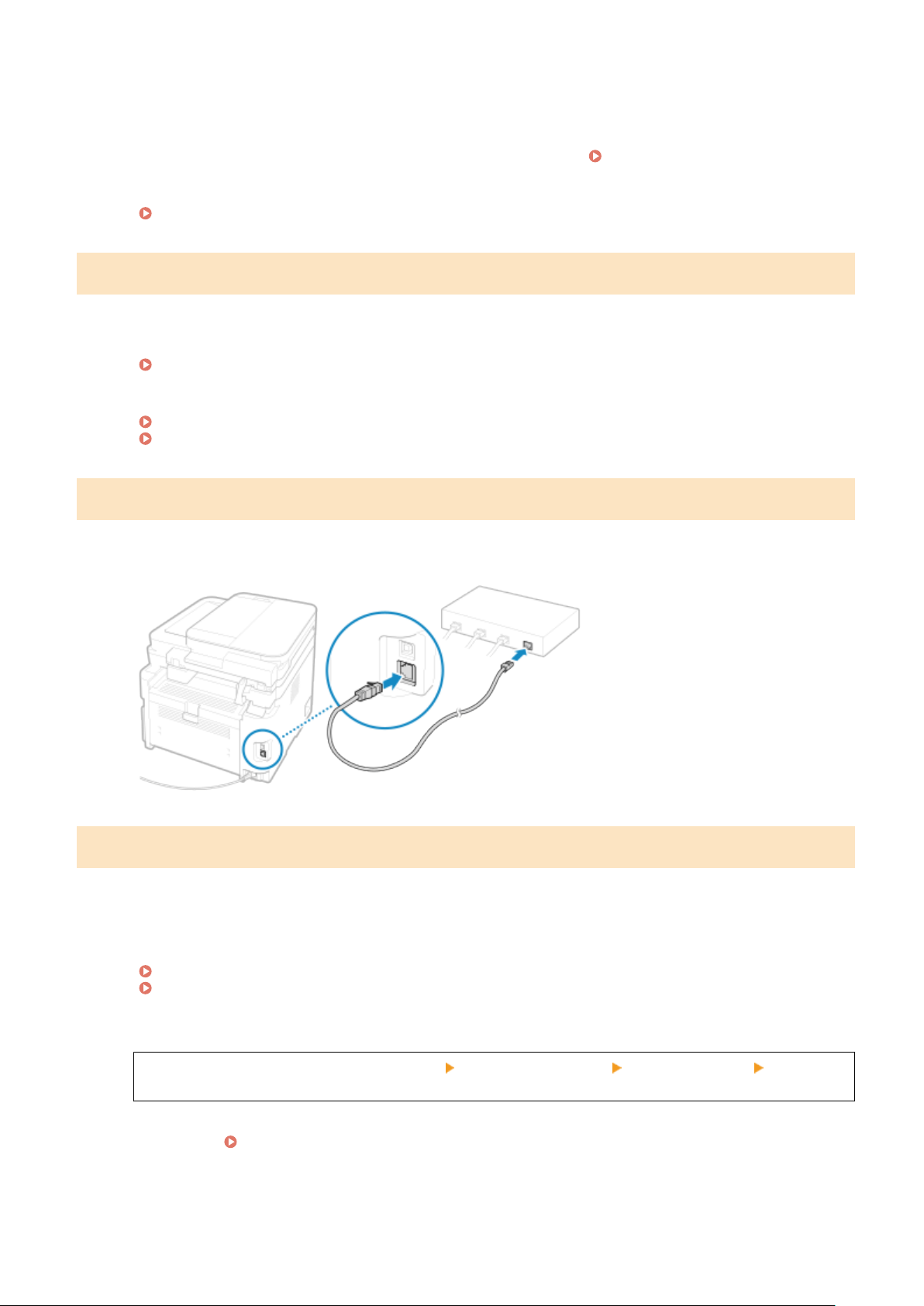
Wait for sending to be completed before sending again.
Ar
e You Sending an Original with Many Pages?
Divide the original and send it.
Check the Received Faxes Saved in the Memory.
Print or forward them as needed, and delete any unnecessary faxes.
Viewing and Printing Faxes Saved in
the Memory(P
. 383)
Restart the Machine, and Then Send or Save the Data Again.
Restarting the Machine(P. 113)
#752
The SMTP/POP3 server name is not congur
ed correctly, or the machine is not connected correctly to the network.
Congure the SMTP or POP3 Server Name Correctly.
Conguring Detailed Information of the E-mail Server (Remote UI)(P
. 239)
Check the Network Status and Settings.
If the machine is not connected to a network, recongure the network settings.
Checking the Network Status and Settings(P. 96)
Setting Up the Network(P. 56)
#753
The machine was unable to connect to the network due to a disconnected Ethernet cable.
Check That the Ethernet Cable Is Properly Connected.
#755
The T
CP/IP is not congured correctly, or the machine was unable to connect to the network due to the set wait time
before connection.
Check the Network Status and Settings.
If the machine is not connected to a network, recongure the network settings.
Checking the Network Status and Settings(P. 96)
Setting Up the Network(P. 56)
Is Ther
e a Set Wait Time Before Connection?
Check whether a wait time is set.
Log in to Remote UI in System Manager Mode [Settings/Registration] [Network Settings] [Waiting
Time for Connection at Startup]
On the control panel, select [Menu] in the [Home] screen, and then select [Preferences] to view this
information. [Waiting Time for Connection at Startup](P. 439)
● If
a wait time is set, a connection cannot be established immediately after turning ON the power of the
machine. Sending starts after the wait time has elapsed.
Troubleshooting
646

● T
o change the wait time, click [Edit] on the above [Waiting Time for Connection at Startup] screen, enter
the wait time, and then click [OK].
#801 Error Code "#801" Is Displayed
The machine cannot connect to the SMTP server, or the information of the SMTP server or shared folder is not set
correctly.
Check the Network Status and Settings.
If the machine is not connected to a network, recongure the network settings.
Checking the Network Status and Settings(P. 96)
Setting Up the Network(P. 56)
Set the information of the SMTP server or shar
ed folder correctly.
When Sending an E-mail
Set the information of the SMTP server correctly.
Conguring Detailed Information of the E-mail
Server (Remote UI)
(P. 239)
When Saving to a Shared Folder
Use Remote UI to display the Address Book, click the applicable destination, and set the information of the
shared folder correctly.
Registering Destinations to the Address Book (Remote UI)(P. 176)
When Sending an E-mail, Check the Status of the SMTP Server.
● If you r
eceive an error message from the SMTP server, check the details and take action.
● Check that the SMTP server is operating properly on the network. For details about the SMTP server
status, contact your provider.
When Saving to a Shared Folder, Check the Status of the Shared Folder and Computer.
Check that both the shared folder and the computer with the shared folder are operating properly.
#802
The SMTP or POP3 server name is not set corr
ectly.
When Sending an E-mail, Correctly Set the SMTP or POP3 Server Name.
Conguring Detailed Information of the E-mail Server (Remote UI)(P
. 239)
#804
Y
ou do not have permission to access the shared folder, or the destination is not set correctly.
Does the Sending User (User Name Registered as a Destination) Have Write Permission for the Store
Location?
If the user does not have permission, grant write permission to the sending user for the store location. For
details, contact the network administrator.
Set the Correct Path to the Shared Folder.
Use Remote UI to display the Address Book, click the applicable destination, and set the server name
correctly.
Registering Destinations to the Address Book (Remote UI)(P. 176)
#806
The user name or passwor
d to be used to access the shared folder is not set correctly. Alternatively, the destination of
the e-mail is not set correctly.
When Saving to a Shared Folder, Correctly Set the User Name and Password to Be Used to Access the
Server.
Use Remote UI to display the Address Book, click the applicable destination, and set the user name and
password correctly.
Registering Destinations to the Address Book (Remote UI)(P. 176)
When Sending an E-mail, Specify a Corr
ect E-Mail Address Before Sending.
Troubleshooting
647

When you are using a destination in the Address Book, check that the e-mail address registered in the
Addr
ess Book is correct.
Registering Destinations (Address Book)(P. 168)
#809
The le could not be saved because a le with the same name already exists on the SMB server.
Delete the le, and scan again.
#810
The machine cannot connect to the POP3 server, or the information of the POP3 server is not set correctly.
Check the Network Status and Settings.
If the machine is not connected to a network, recongure the network settings.
Checking the Network Status and Settings(P. 96)
Setting Up the Network(P. 56)
Set the information of the POP3 server corr
ectly.
Conguring Detailed Information of the E-mail Server (Remote UI)(P
. 239)
Check the Status of the POP3 Server.
Check that the POP3 server is operating properly on the network. For details about the POP3 server status,
contact your provider.
#813
The user name or passwor
d to be used for POP3 server authentication is not set correctly.
Set the User Name and Password Correctly.
Conguring Detailed Information of the E-mail Server (Remote UI)(P
. 239)
#818
The r
eceived data is in a format that cannot be printed.
Have the sender change the le format and resend the le.
#819
The r
eceived data has invalid MIME information and cannot be processed.
Have the sender check the settings and resend the data.
#820
The received data has invalid BASE64 or uuencode data and cannot be processed.
Have the sender check the settings and resend the data.
#821
The r
eceived data has a TIFF analysis error and cannot be processed.
Have the sender check the settings and resend the data.
#827
The r
eceived data includes unsupported MIME information and cannot be processed.
Troubleshooting
648

Have the sender check the settings and resend the data.
#829
The received data exceeds the maximum size that can be received by the machine.
Have the Sender Check and Resend the Data.
The machine prints or saves to memory pages 1 to 999 and deletes page 1,000 and beyond. Have the sender
resend page 1,000 and beyond.
#839
The user name or passwor
d to be used for SMTP authentication is not set correctly.
Set the User Name and Password Correctly.
Conguring Detailed Information of the E-mail Server (Remote UI)(P
. 239)
#841
Communication with the SMTP server is set to be encrypted, but there is no encryption algorithm shared with the
SMTP server, so encrypted communication failed. Alternatively, a verify certicate error occurred.
Check the Algorithms Supported by the SMTP Server and Those Supported by the Machine.
● For details about the algorithms supported by the SMTP server, contact your provider.
● For details about the algorithms supported by the machine, see the following:
Keys and Certicates(P
. 38)
Is an Appropriate CA Certicate Registered?
Check that the CA certicate used for authentication of the SMTP server is registered to the machine.
Registering a Key and Certicate or CA Certicate Obtained fr
om an Issuing Authority(P. 370)
Check the SMTP Server Certicate.
Check that the server certicate is correct and is not a self-signed certicate.
Disable Encryption When Communicating with the SMTP Server
Conguring Detailed Information of the E-mail Server (Remote UI)(P
. 239)
#844
Communication with the POP3 server is set to be encrypted using POP authentication befor
e sending data (POP
before SMTP), but encrypted communication failed. Alternatively, a verify certicate error occurred.
Is an Appropriate CA Certicate Registered?
Check that the CA certicate used for authentication of the POP3 server is registered to the machine.
Registering a Key and Certicate or CA Certicate Obtained fr
om an Issuing Authority(P. 370)
Check the POP3 Server Certicate.
Check that the server certicate is correct and is not a self-signed certicate.
Disable Encryption When Communicating with the POP3 Server
Conguring Detailed Information of the E-mail Server (Remote UI)(P
. 239)
#846
APOP authentication is set to be used to encrypt the passwor
d at authentication using POP authentication before
sending data (POP before SMTP), but APOP authentication failed.
Disable APOP Authentication.
Conguring Detailed Information of the E-mail Server (Remote UI)(P
. 239)
Troubleshooting
649

#852
The power of the machine turned OFF for some reason.
Make sure the power plug is rmly inserted into an outlet.
#861
You are using an unsupported printer driver, or the data you are trying to print is corrupted.
Use the printer driver of the machine, and try printing again.
Printing from a Computer(P. 214)
Is the Data to Be Printed Corrupted?
If the data is corrupted or otherwise damaged, x the data.
#863
An error occurred, preventing printing.
Restart the Machine, and Then Print the Data Again.
Restarting the Machine(P. 113)
#934
The job was deleted b
y the Auto Delete Suspended Jobs function.
Resolve the Error That Caused the Job to Be Suspended.
Resolve the error, and try printing or copying again.
* Disable the Auto Delete Suspended Jobs function, or change the time until the data is automatically
deleted.
[Auto Delete Suspended Jobs](P. 467)
#995
Sending or r
eceiving of a waiting job was canceled.
Try sending or receiving again, as needed.
Troubleshooting
650
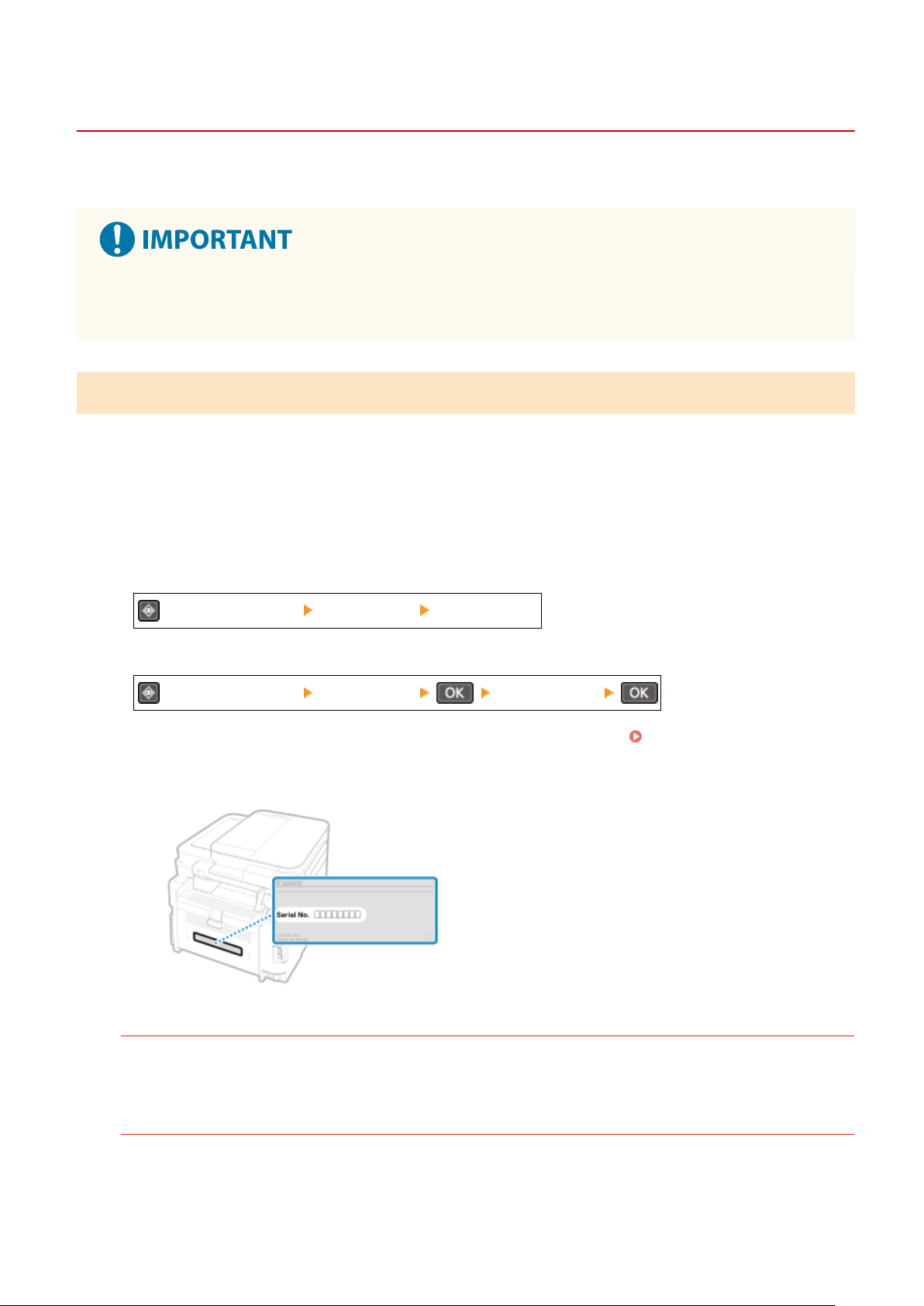
If the Problem Persists
8W0J-0HH
If the pr
oblem persists even after trying the troubleshooting methods, contact your dealer or service representative.
Do not disassemble or repair the machine yourself.
● Disassembling or r
epairing the machine yourself may void the warranty.
Checks Before Contacting Us
● Pr
oduct name (MF269dw II / MF269dw VP II / MF267dw II / MF264dw II / MF262dw II)
● Dealer purchased from
● Details of the problem (such as operation details and their results)
● Serial number
How to Look Up the Serial Number
Touch Panel Model
on the control panel [Device Status] [Serial Number]
5 Lines LCD Model
on the control panel [Device Status] [Serial Number]
● Y
ou can also check this information using Remote UI from a computer.
Managing the Machine from a
Computer (Remote UI)(P
. 398)
● You can also check this information on the label on the back of the machine.
Customer Support (U.S.A.)
If you cannot solve a problem by referring to the information in this chapter, for the fastest resolution, please
r
efer to available support materials (including the Knowledgebase FAQs and How to Video material) for your
product at www.usa.canon.com.
Customer Support (Canada)
If you cannot solve a problem by referring to the information in this chapter, for the fastest resolution, please
r
efer to available support materials (including the Knowledgebase FAQs and How to Video material) for your
product at www.canon.ca/support.
Troubleshooting
651

Appendix
Appendix .............................................................................................................................................................
653
Manuals of the Machine ................................................................................................................................... 654
Using the User's Guide ...................................................................................................................................... 655
Operation Examples When Using a Computer ................................................................................................ 658
Environmental Information, Regulations, and Standards .............................................................................. 668
Notice ................................................................................................................................................................. 669
Trademarks and Copyrights ............................................................................................................................. 670
Third-party Software ......................................................................................................................................... 672
Appendix
652

Appendix
8W0J-0HJ
In this chapter, you can vie
w the manuals of the machine and the basic operations required when using the machine
with a computer.
Manuals of the Machine
Manuals are provided according to your purpose.
Manuals of the Machine(P. 654)
The User
's Guide (this manual) contains information on all functions of the machine and specications as well
as how to maintain the machine. You can search for specic information and change the text size and layout.
Using the User's Guide(P. 655)
Basic Oper
ations When Using with a Computer
You must set up a computer to use the machine from the computer and view information set on the machine
from the computer. The operations are introduced using Windows and macOS operation examples.
Operation Examples When Using a Computer(P. 658)
Other Information
Environmental Information, Regulations, and Standards(P. 668)
Notice(P. 669)
Trademarks and Copyrights(P. 670)
Third-party Software(P. 672)
Appendix
653
Manuals of the Machine
8W0J-0HK
The manuals belo
w are provided with the machine. Use these according to your purpose.
Click on the icon to display the corresponding manual (PDF).
Important Safety Instructions
This contains required information to prevent injury and accidental damage to property.
Setup Guide
This e
xplains the process from unpacking the machine to setting it up so that it is ready to use.
User's Guide (this manual)
This describes all the functions of the machine in detail. It also contains the specications and describes ho
w
to maintain the machine. The User's Guide is displayed in a Web browser.
Using the User's Guide(P. 655)
Send Setting Guide
This describes the pr
eparations and settings for sending scanned data by e-mail and saving it to a shared
folder. The Send Setting Guide is provided on the supplied CD/DVD-ROM.
* You can also display the Send Setting Guide at startup when using the downloaded Send Function Setting
Tool.
● For details about the drivers, softwar
e, and manual of the Application Library, see the online manual site.
https://oip.manual.canon/
Appendix
654
Using the User's Guide
8W0J-0HL
The User
's Guide (this manual) contains information on all functions of the machine and specications as well as how
to maintain the machine.
You can use the User's Guide to nd useful information through the contents and search function.
* Click [
] or [ ] at the top of the screen to change between contents and search keyword display.
Screens and Illustrations(P. 655)
Symbols(P. 655)
Key and Button Indicators(P. 656)
Search Function(P. 656)
Operating Environment(P. 657)
● The User
's Guide describes the various functions of all model series including the machine. You can view a
table indicating which functions are supported for each model.
Supported Functions(P. 3)
Screens and Illustrations
In the User
's Guide, unless otherwise stated, the following are used in the screens and illustrations.
Model
MF269dw II
Computer Operating System
Windows 10
macOS 11
● The screens may vary depending on the model.
● The operations and screens may vary depending on the computer operating system.
● The screens are subject to change due to updates of the drivers and software.
Symbols
The warnings and cautions ar
e also listed in the Important Safety Instructions supplied with the machine. See this for
more information.
Manuals of the Machine(P. 654)
Indicates a warning concerning operations that may lead to death or serious
personal injury if not performed corr
ectly. To ensure that you use the machine
safely, always observe these warnings.
Indicates a precaution for preventing the risk of personal injury or property
damage other than a pr
oduct fault due to improper use of the machine. To
ensure that you use the machine safely, always observe these cautions.
Appendix
655
Indicates an operation that must not be performed. Read these items carefully,
and mak
e sure not to perform the described operations.
Indicates important requirements and restrictions for security and data
pr
otection as well as precautions that should be observed. Be sure to read these
items to avoid malfunction, fault, or property damage due to incorrect operation.
Indicates a clarication of an oper
ation, or contains additional explanations for a
procedure.
Key and Button Indicators
The contr
ol panel keys and buttons displayed on the screen are indicated as follows:
Control Panel Keys
Indicated with an icon.
Example: Home key
Buttons Displayed on the Control Panel and Computer Screen
Enclosed in squar
e brackets [ ].
Example:
[
]
[Cancel] [Yes]
[Settings applied.]
Search Function
1
Click [
] at the top of the screen.
➠ The search keyword input eld is displayed at the top left of the screen.
2
Enter a keyword, and click [ ] or press the [Enter] key on the computer.
● Separ
ate multiple keywords with spaces to search for pages that include all keywords.
● Enclose keywords in double quotation marks (") to search for pages that only contain complete matches
including spaces.
3
Click the search result to view the page.
● Click [
] to show or hide the search results.
● Click [ ] to display the contents.
Appendix
656

Operating Environment
The User's Guide can be viewed in the following operating environments:
Windows
Microsoft Edge
Firefox
Firefox ESR
Chrome
*1
macOS
Safari
Firefox
Chrome
*1
Linux
Firefox
iOS
Safari
*1
Android
Chrome
*1
*1
Only available when vie
wing at the online manual site.
Appendix
657
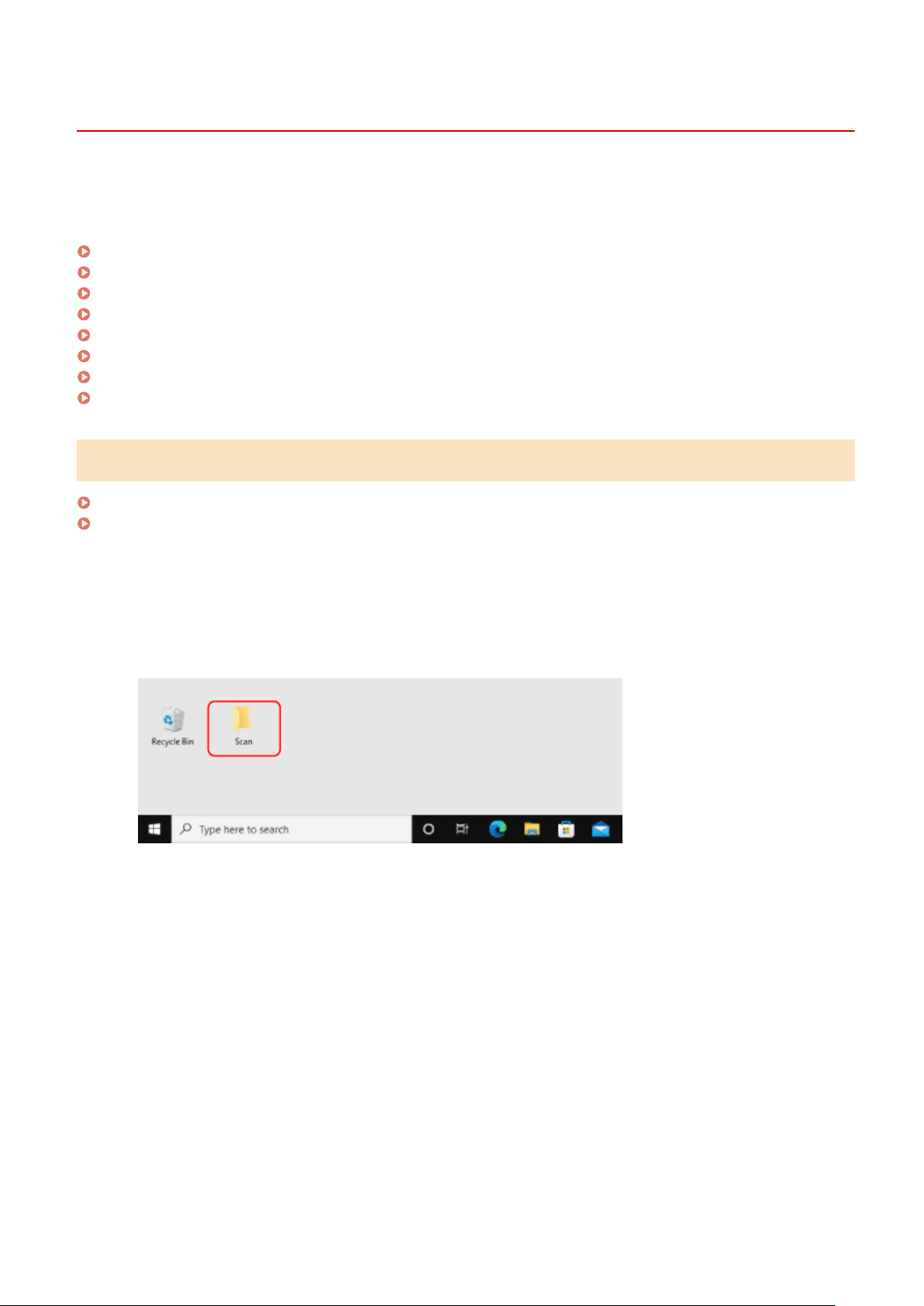
Operation Examples When Using a Computer
8W0J-0HS
When using the machine fr
om a computer, you must congure the settings of the computer according to the function
you are using. In addition, you may need the computer information to view the information set on the machine.
In this case, use the operation examples below to check the required settings and information on the computer.
Creating a Shared Folder(P. 658)
Enabling Network Discovery(P. 660)
Displaying a Shared Printer in the Print Server(P. 660)
Viewing the System Information of the Computer(P. 661)
Viewing the Network Connection Information of the Computer(P. 663)
Viewing the Printer Port(P. 665)
Viewing Two-way Communication(P. 666)
Printing a Test Page(P. 666)
Creating a Shared Folder
When Using Windows(P. 658)
When Using macOS(P. 659)
◼ When Using Windo
ws
1
Create a folder in any location (such as Desktop).
2
Right-click the created folder, and click [Properties].
3
On the [Sharing] tab, click [Advanced Sharing].
➠ The [Advanced Sharing] scr
een is displayed.
4
Select the [Share this folder] checkbox, and click [Permissions].
5
Congure the access privilege.
Appendix
658
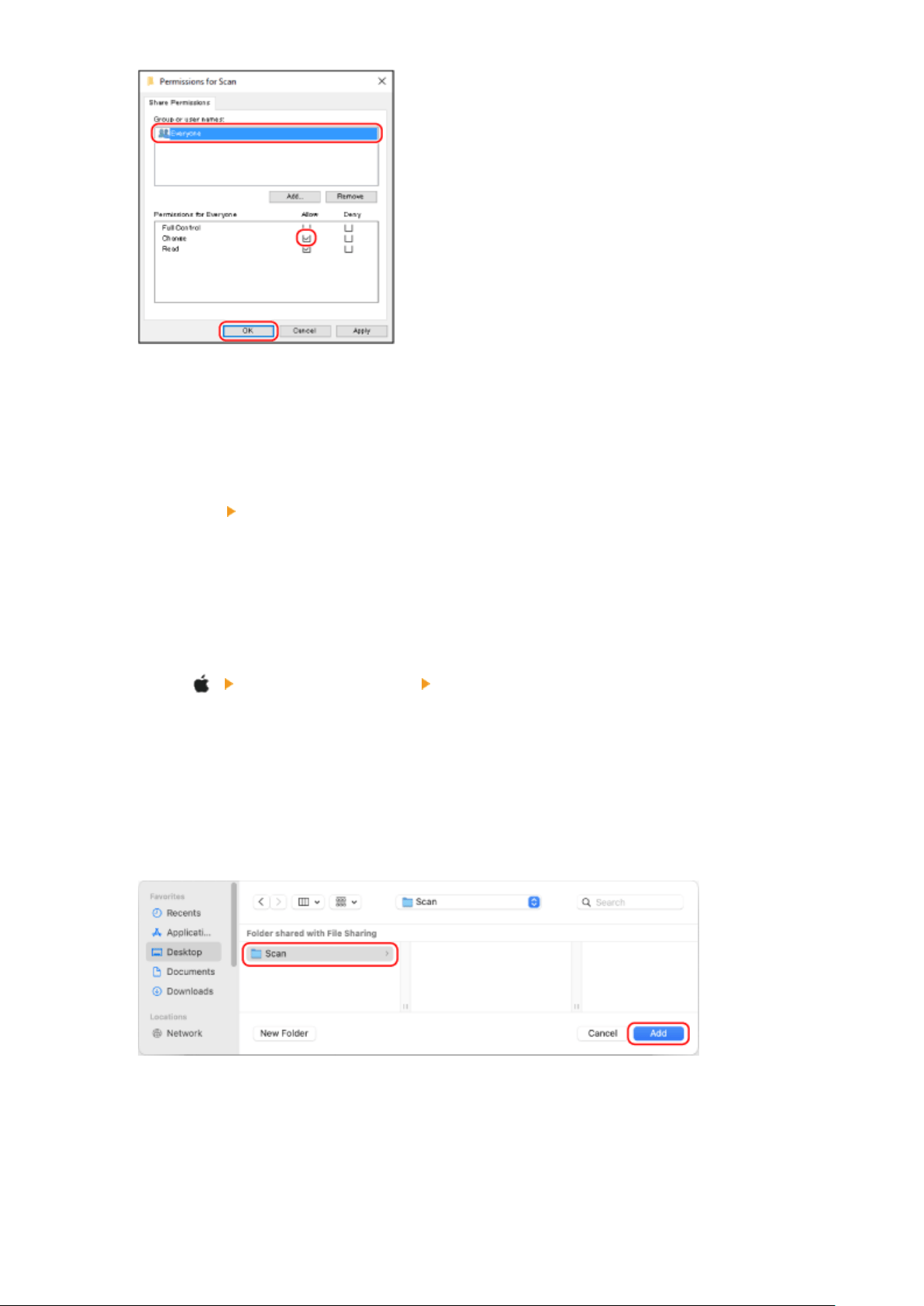
1
In [Group or user names], select [Everyone].
2
In [Permissions], select the [Allow] checkbox in [Change].
3
Click [OK].
6
Click [OK]
[Close].
➠ The cr
eated folder can be used as a shared folder.
◼ When Using macOS
1
Click [
] [System Preferences] [Sharing].
➠ The [Sharing] screen is displayed.
2
Select the [File Sharing] checkbox, and click [+] in [Shared Folders].
3
Create a folder in any location (such as Desktop), and click [Add].
4
Congure the access privilege.
Appendix
659
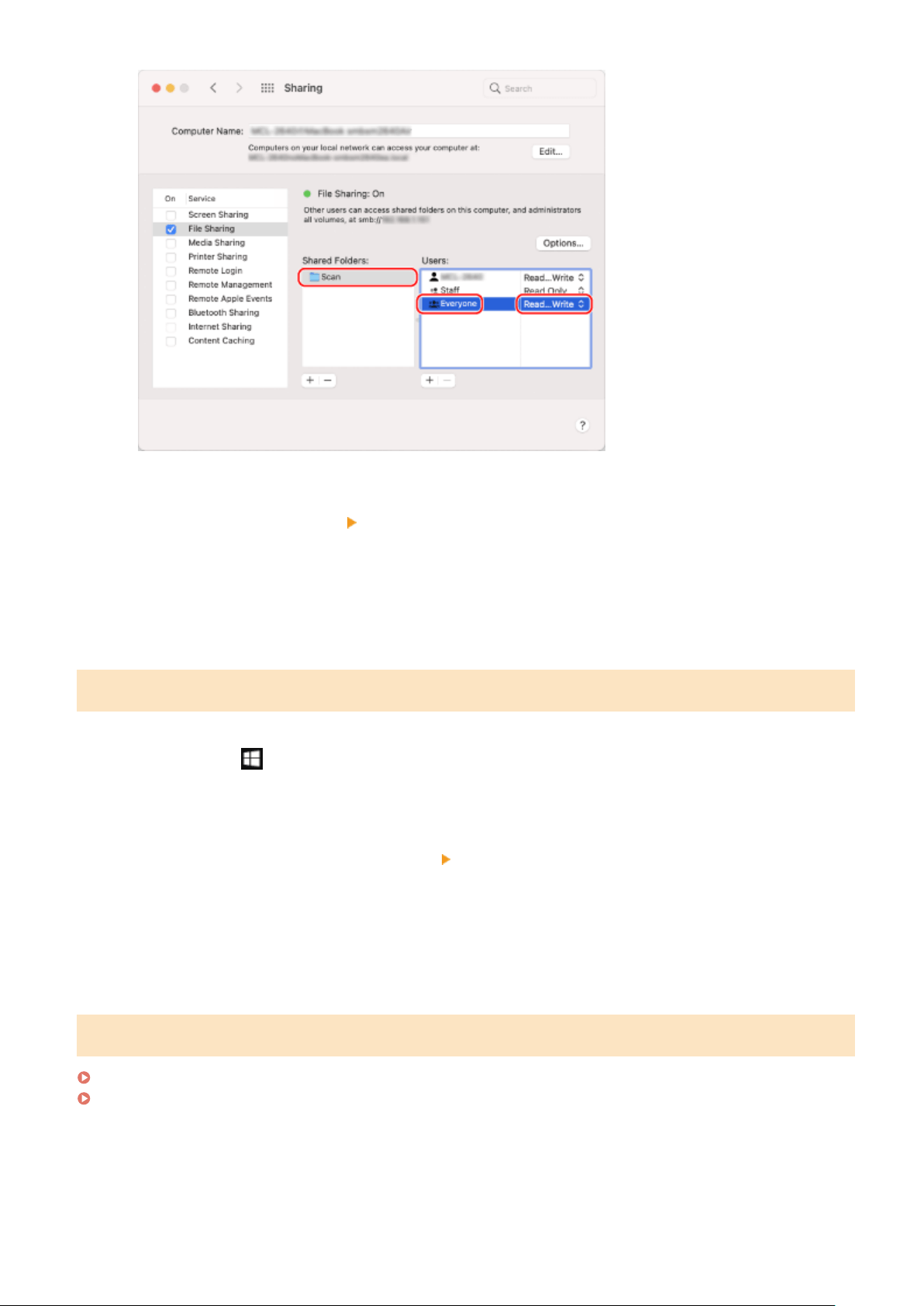
1
In [Shared Folders], select the created folder.
2
In [Users], select [Everyone] [Read & Write].
5
Close the screen.
➠ The cr
eated folder can be used as a shared folder.
Enabling Network Discovery
1
Right-click [
] (Start), and click [Network Connections].
➠ The [Status] scr
een is displayed.
2
Click [Network and Sharing Center]
[Change advanced sharing settings].
➠ The [Advanced sharing settings] scr
een is displayed.
3
In [Network discovery], select [Turn on network discovery], and click [Save changes].
Displaying a Shared Printer in the Print Server
When Using Windows(P. 661)
When Using macOS(P. 661)
Appendix
660
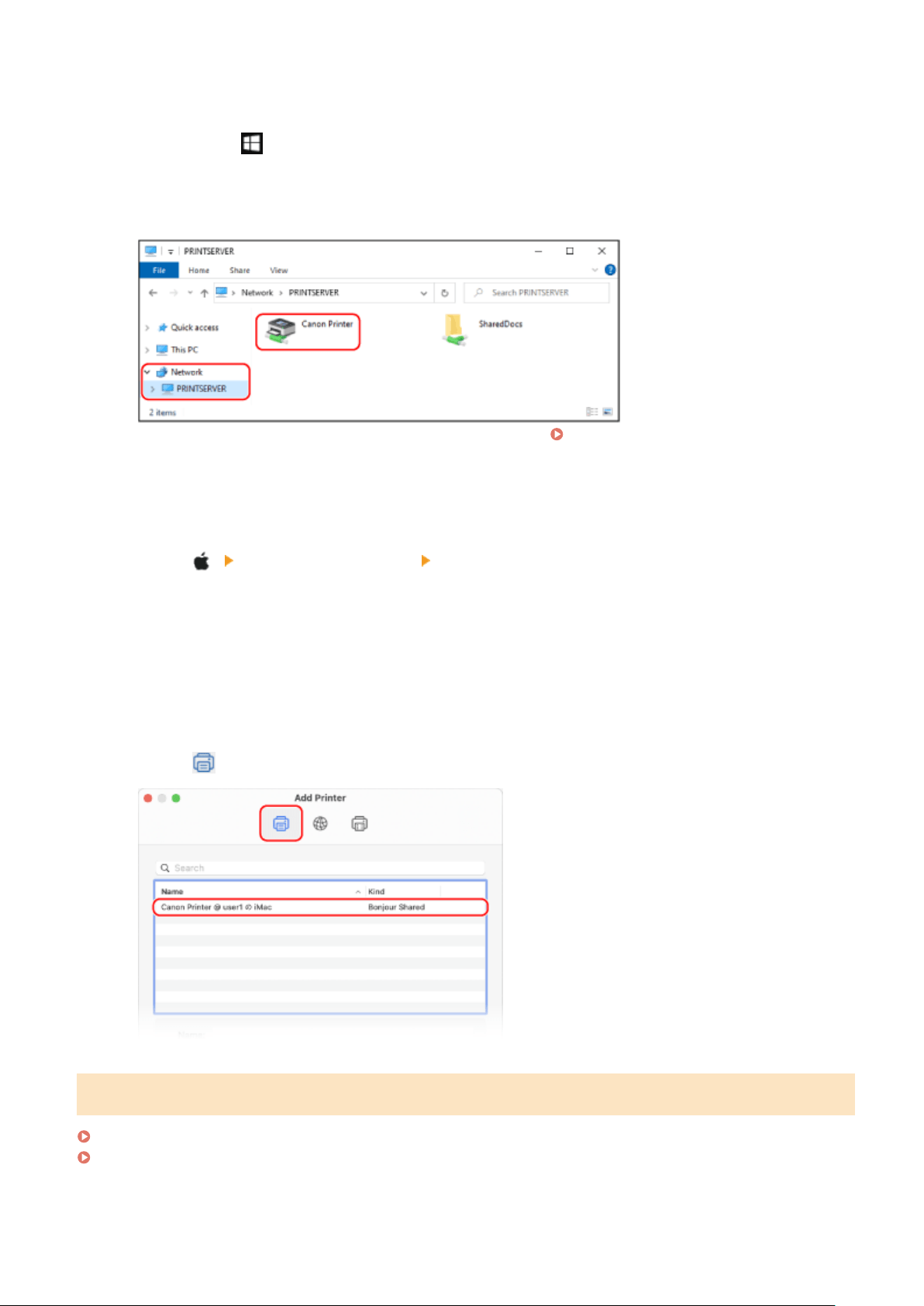
◼ When Using Windo
ws
1
Right-click [
] (Start), and click [File Explorer].
2
In [Network], select the print server to display the shared printer.
If nothing is displayed in [Network], enable network discovery. Enabling Network Discovery(P. 660)
◼ When Using macOS
1
Click [
] [System Preferences] [Printers & Scanners].
➠ The [Printers & Scanners] scr
een is displayed.
2
Click [+] at the bottom left.
➠ The [Add] scr
een is displayed.
3
Click [
], to display the shared printer.
Viewing the System Information of the Computer
When Using Windows(P. 662)
When Using macOS(P. 662)
Appendix
661
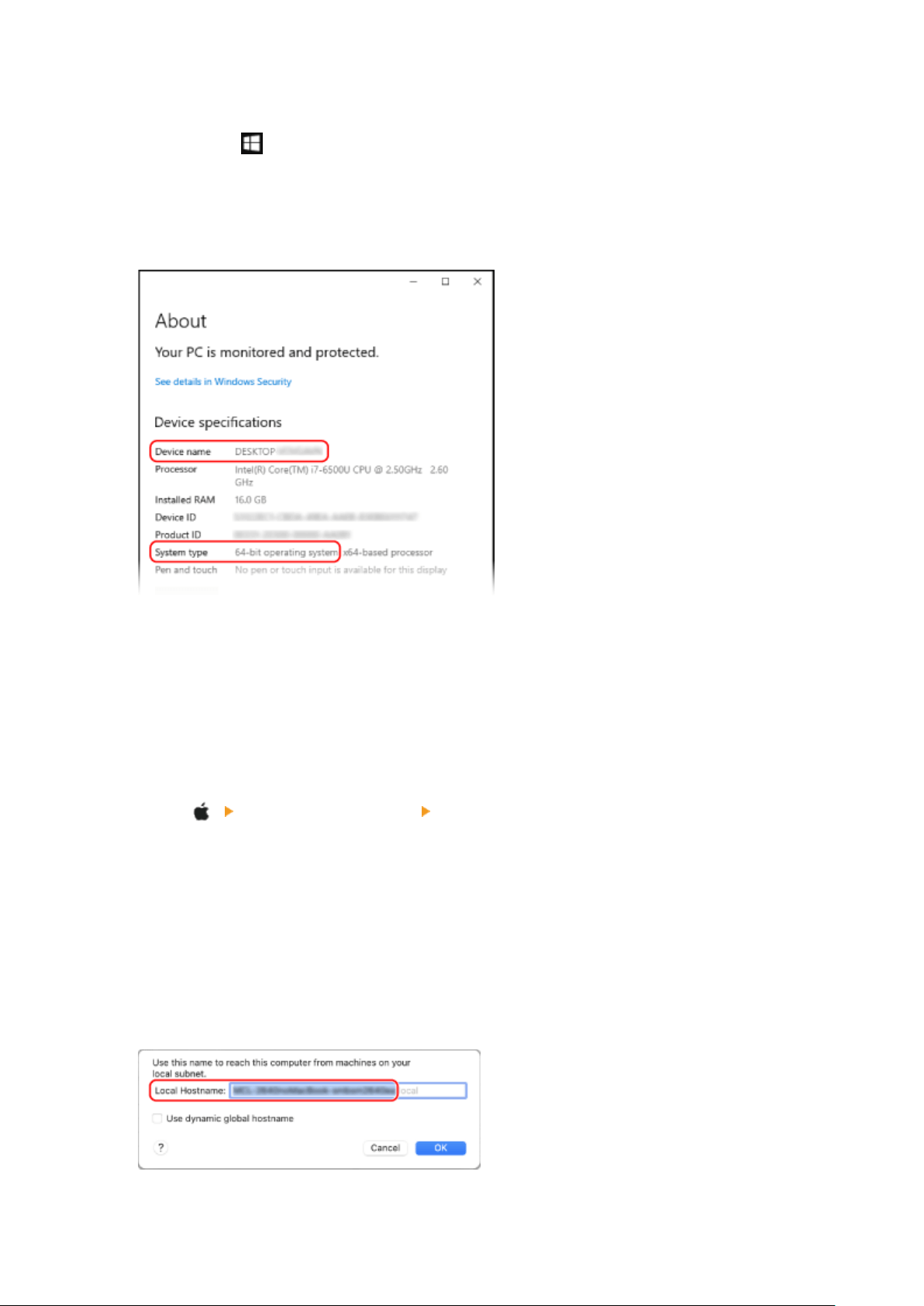
◼ When Using Windo
ws
1
Right-click [
] (Start), and click [System].
➠ The [About] scr
een is displayed.
2
In [Device specications], vie
w the computer name and operating system version.
● The computer name is displayed in [De
vice name].
● The operating system version is displayed in [System type].
If the computer has a 32-bit operating system, "32-bit Operating System" is displayed.
If the computer has a 64-bit operating system, "64-bit Operating System" is displayed.
◼ When Using macOS
1
Click [
] [System Preferences] [Sharing].
➠ The [Sharing] scr
een is displayed.
The name displayed in [Computer Name] on the [Sharing] screen may not be usable on the network. Use
the following procedure to view the computer name used on the network.
2
Click [Edit].
3
In [Local Hostname], view the computer name.
Parts displayed in gray are not included in the computer name.
Appendix
662
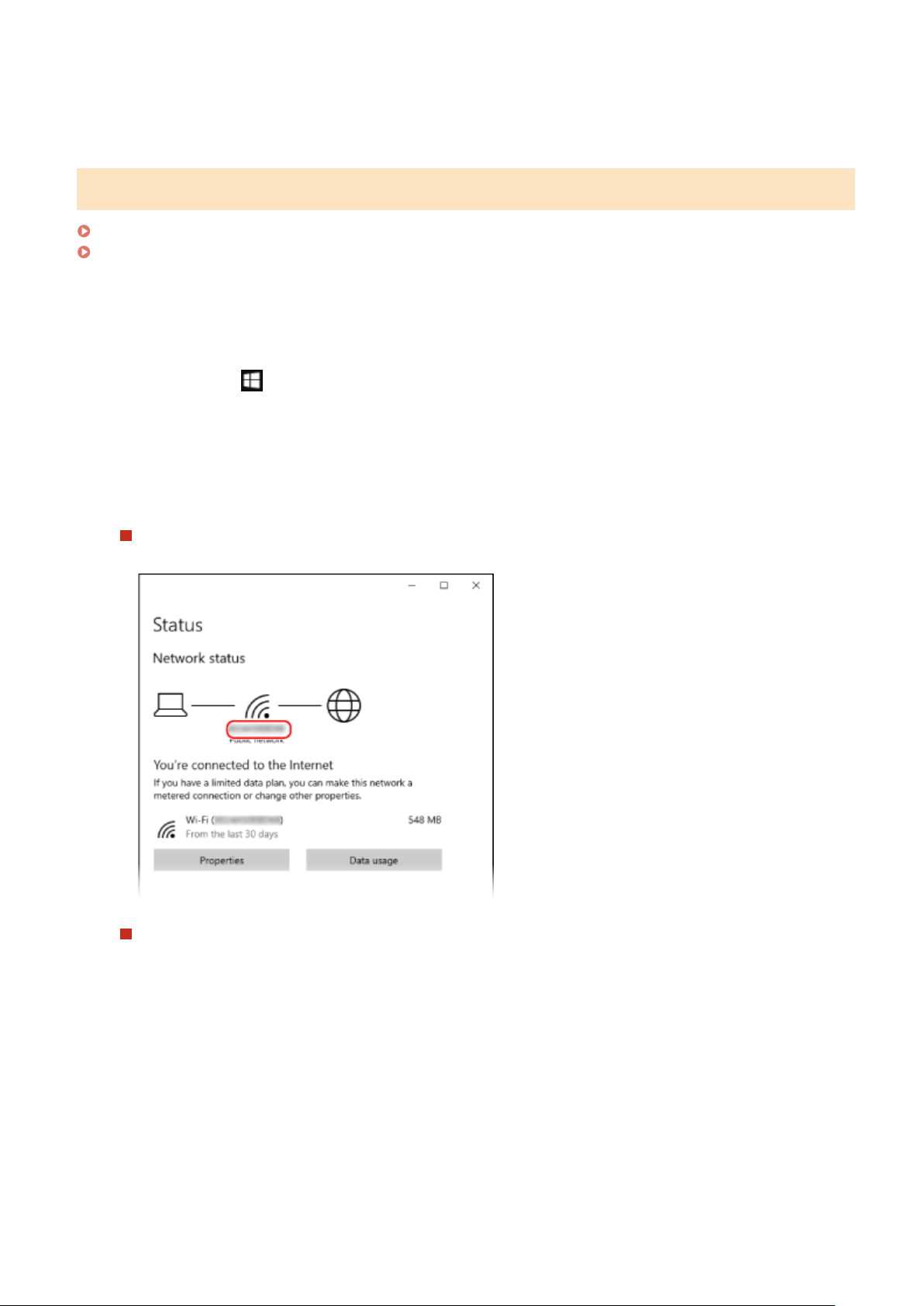
4
Click [Cancel].
Viewing the Network Connection Information of the Computer
When Using Windows(P. 663)
When Using macOS(P. 664)
◼ When Using Windo
ws
1
Right-click [
] (Start), and click [Network Connections].
➠ The [Status] scr
een is displayed.
2
View the network connection information.
Viewing the SSID of the Wired LAN
Vie
w the SSID in [Network status].
Viewing the IP Address and DNS Server
1
Click [Properties] for the connected network.
2
In [Properties], view the IP address and DNS server.
Appendix
663
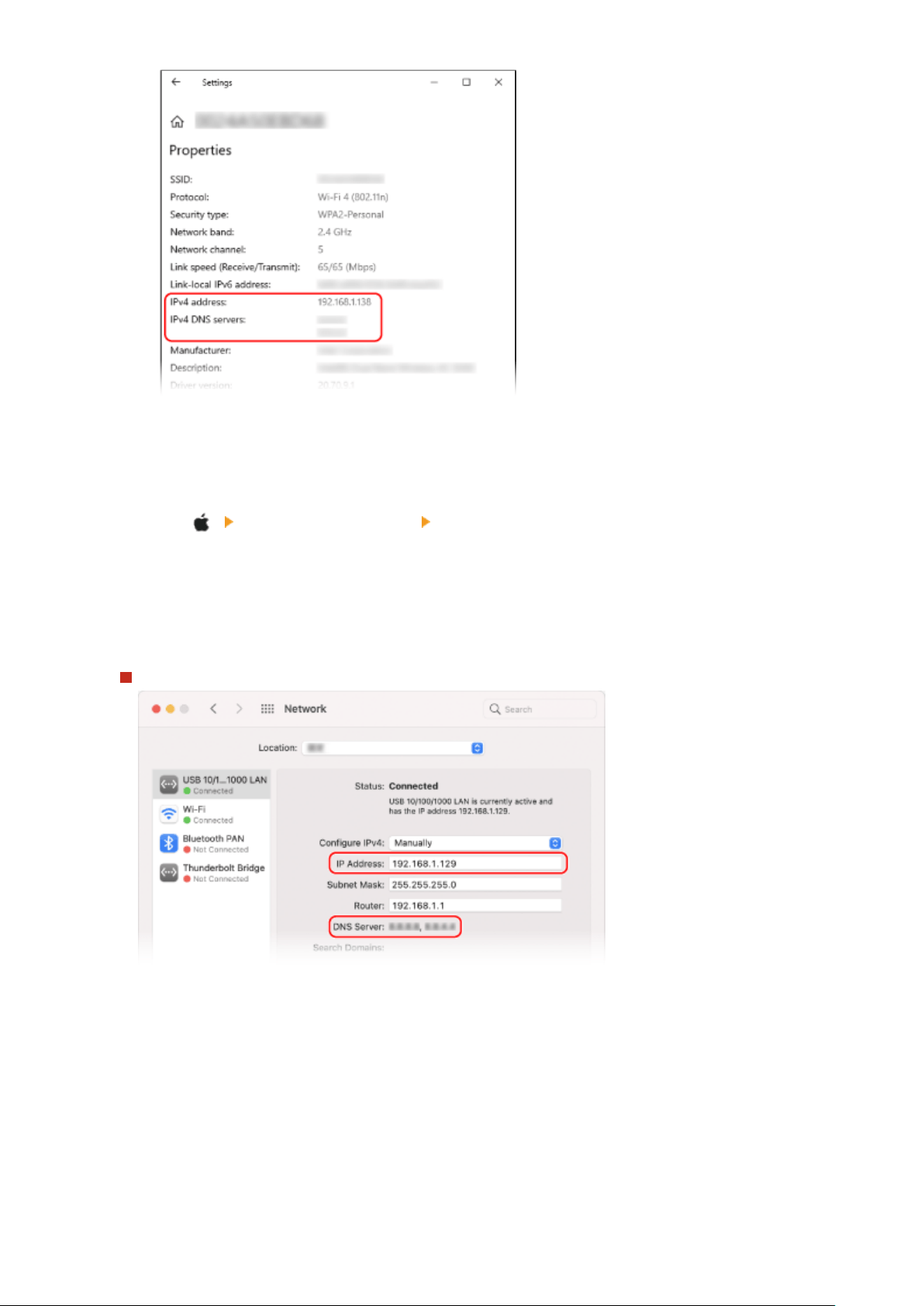
◼ When Using macOS
1
Click [
] [System Preferences] [Network].
➠ The [Network] scr
een is displayed.
2
View the IP address, DNS server, and other information.
For Wired LAN
Appendix
664
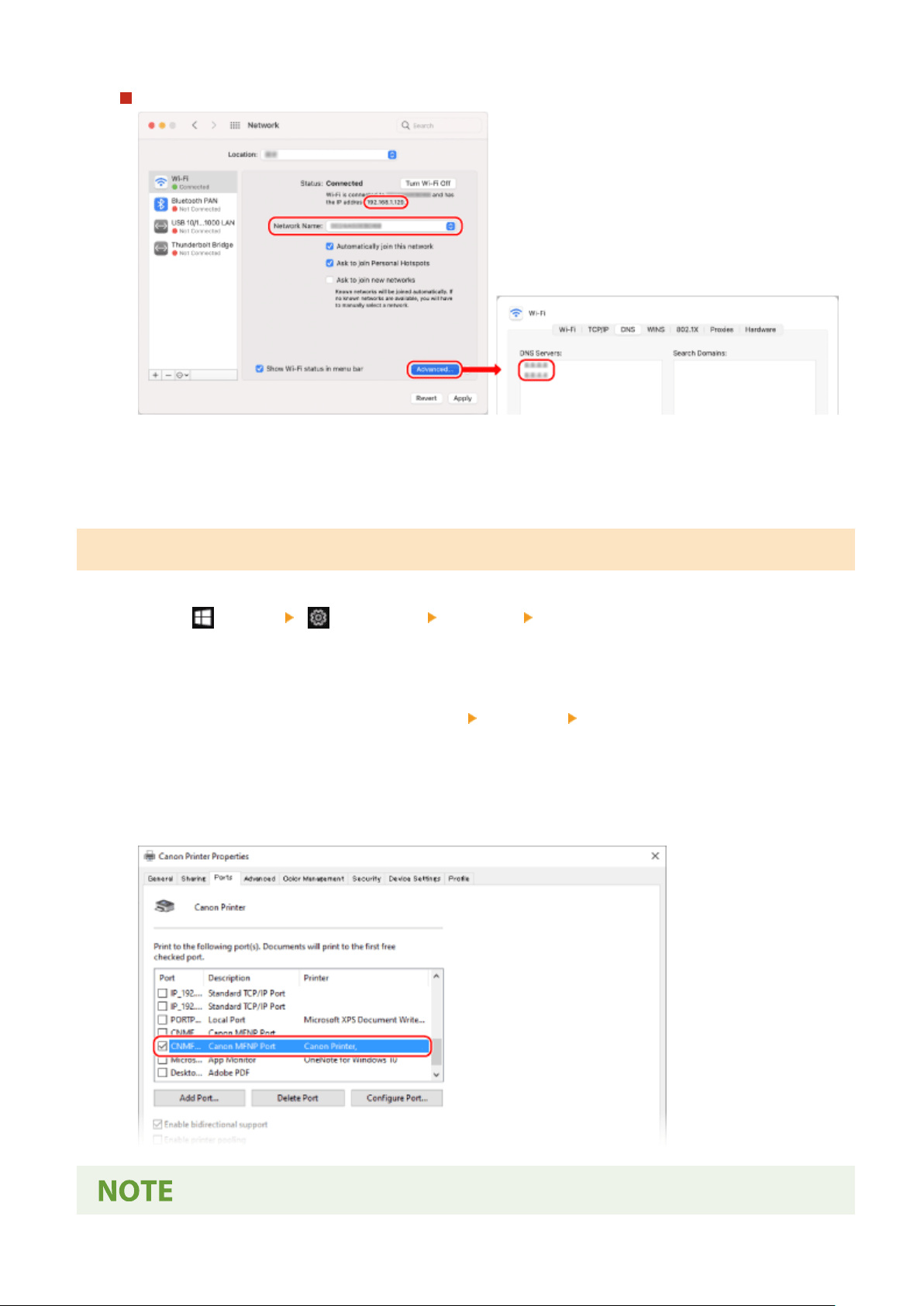
For Wireless LAN
● Vie
w the SSID in [Network Name].
● View the IP address in [Status].
● Click [Advanced], and view the DNS server on the [DNS] tab.
Viewing the Printer Port
1
Click [
] (Start) [ ] (Settings) [Devices] [Printers & scanners].
➠ The [Printers & scanners] scr
een is displayed.
2
Click the printer driver of the machine
[Manage] [Printer properties].
➠ The printer driver pr
operties screen is displayed.
3
On the [Ports] tab, view the port being used.
Appendix
665
If the IP Address of the Machine Is Changed
● The r
equired action depends on the port you are using.
- If [Canon MFNP Port] is displayed in [Description], the connection is maintained as long as the machine
and computer belong to the same subnet, so no action is required on the computer.
- If [Standard TCP/IP Port] is displayed in [Description], you must add a new port.
Adding a Port(P. 203)
Viewing Two-way Communication
1
Click [ ] (Start) [ ] (Settings) [Devices] [Printers & scanners].
➠ The [Printers & scanners] scr
een is displayed.
2
Click the printer driver of the machine
[Manage] [Printer properties].
➠ The printer driver pr
operties screen is displayed.
3
On the [Ports] tab, check that the [Enable bidirectional support] checkbox is selected.
Printing a Test Page
Required Preparations
● Load Letter size paper in the dr
awer.
Loading Paper in the Drawer(P. 143)
When Using Windows(P. 666)
When Using macOS(P. 667)
◼ When Using Windo
ws
1
Click [
] (Start) [ ] (Settings) [Devices] [Printers & scanners].
➠ The [Printers & scanners] scr
een is displayed.
2
Click the printer driver of the machine
[Manage] [Printer properties].
➠ The printer driver pr
operties screen is displayed.
3
On the [General] tab, click [Print Test Page].
➠ When the print data is sent corr
ectly, a test page is printed from the machine.
Appendix
666

◼ When Using macOS
1
Click [
] [System Preferences] [Printers & Scanners].
➠ The [Printers & Scanners] scr
een is displayed.
2
Select the machine, and click [Open Print Queue].
3
From the [Printer] menu, click [Print Test Page].
➠ When the print data is sent corr
ectly, a test page is printed from the machine.
Appendix
667
Environmental Information, Regulations, and
Standar
ds
8W0J-0HU
◼ International ENERGY ST
AR
®
program (for USA and Canada only)
The international ENERGY STAR Program is an international program that promotes energy
savings in computers and other oce equipment. The pr
ogram backs the development and
dissemination of products with functions that effectively reduce energy consumption. It is
an open system in which businesses can participate voluntarily.
◼ IPv6 Ready Logo
The protocol stack included in this product has obtained the IPv6 Ready Logo Phase-2
established b
y the IPv6 Forum.
◼ When disposing of used toner cartridges
● T
o protect the environment and make more effective use of resources, Canon promotes the recovery and recycling
of used toner cartridges. Please cooperate in the recovery of toner cartridges (resource reuse). For details on
resource reuse, see the Canon website:
global.canon/ctc
When disposing of toner cartridges, pack them in their original packaging to prevent toner dispersal and dispose of
the cartridges in accordance with your local government instructions.
Appendix
668

Notice
8W0J-0HW
● The information in this document is subject to change without notice.
● CANON
INC. MAKES NO WARRANTY OF ANY KIND WITH REGARD TO THIS MANUAL, EITHER EXPRESS OR IMPLIED,
EXCEPT AS STIPULATED HEREIN, INCLUDING WITHOUT LIMITATION THEREOF WARRANTIES AS TO MARKETABILITY,
MERCHANTABILITY, FITNESS FOR A PARTICULAR PURPOSE OF USE, OR NON-INFRINGEMENT OF PATENT RIGHTS.
CANON INC. SHALL NOT BE LIABLE FOR ANY DIRECT, INCIDENTAL OR CONSEQUENTIAL DAMAGES OF ANY NATURE,
NOR FOR LOSSES OR EXPENSES RESULTING FROM THE USE OF THIS MANUAL.
● If you are unable to view the manual in PDF format, download Adobe Acrobat Reader from the Adobe Systems
website (https://get.adobe.com/reader/).
Appendix
669

Trademarks and Copyrights
8W0J-0HX
◼ T
rademarks
Adobe, Acrobat and Reader are registered trademarks of Adobe Systems Incorporated in the United States and/or
other countries.
Apple, Bonjour, iPad, iPhone, iPod touch, Safari, Mac, macOS and OS X are trademarks of Apple Inc.
iOS is a trademark or registered trademark of Cisco in the U.S. and other countries and is used under license.
Mopria®, the Mopria® Logo and the Mopria® Alliance logo are registered trademarks and service marks of Mopria
Alliance, Inc. in the United States and other countries. Unauthorized use is strictly prohibited.
Google Chrome, Chrome OS, Chromebook, and Android are trademarks of Google LLC.
This product contains the Universal Font Scaling Technology or UFST® under license from Monotype Imaging, Inc.
UFST® is a trademark of Monotype Imaging, Inc. registered in the United States Patent and Trademark Oce and may
be registered in certain jurisdictions.
UFST: Copyright © 1989 - 1996, 1997, 2003, 2004, 2008, 2014 all rights reserved, by Monotype Imaging Inc.
The PDF logo is a trademark or registered trademark of Adobe Systems Incorporated in the United States and other
countries.
Cop
yright © 2008 Adobe Systems Incorporated. All rights reserved.
Protected by U.S. Patents 6,185,684; 6,205,549; 7,213,269; 7,272,628; 7,278,168; Patents pending in the U.S. and other
countries.
All instances of the name PostScript in the text are references to the PostScript language as dened by Adobe Systems
Incorporated unless otherwise stated. The name PostScript also is used as a product trademark for Adobe Systems'
implementation of the PostScript language interpreter.
Except as otherwise stated, any reference to a "PostScript printing device," "PostScript display device," or similar item
refers to a printing device, display device or item (respectively) that contains PostScript technology created or licensed
by Adobe Systems Incorporated and not to devices or items that purport to be merely compatible with the PostScript
language.
Adobe, the Adobe logo, Adobe LiveCycle® Policy Server, PostScript, the PostScript Logo, and PostScript 3 are either
registered trademarks or trademarks of Adobe Systems Incorporated in the United States and/or other countries.
All other trademarks are the property of their respective owners.
All brand names and product names appearing on this document are registered trademarks or trademarks of their
respective owners.
All other trademarks are the property of their respective owners.
Appendix
670

◼ Cop
yright
Unauthorized reproduction of the contents of this document in whole or in part is prohibited.
V_220405
Appendix
671

Third-party Software
8W0J-0HY
For details about thir
d-party software, click the following icon:
Third-Party Services
Third-Party Software Included in This Manual
Appendix
672

This Font Software is licensed under the SIL Open Font License,
V
ersion 1.1.
This license is copied below, and is also available with a FAQ at:
http://scripts.sil.org/OFL
-----------------------------------------------------------
SIL OPEN FONT LICENSE Version 1.1 - 26 February 2007
-----------------------------------------------------------
PREAMBLE
The goals of the Open Font License (OFL) are to stimulate worldwide
development of collaborative font projects, to support the font
creation efforts of academic and linguistic communities, and to
provide a free and open framework in which fonts may be shared and
improved in partnership with others.
The OFL allows the licensed fonts to be used, studied, modied and
redistributed freely as long as they are not sold by themselves. The
fonts, including any derivative works, can be bundled, embedded,
redistributed and/or sold with any software provided that any reserved
names are not used by derivative works. The fonts and derivatives,
however, cannot be released under any other type of license. The
requirement for fonts to remain under this license does not apply to
any document created using the fonts or their derivatives.
DEFINITIONS
"Font Software" refers to the set of les released by the Copyright
Holder(s) under this license and clearly marked as such. This may
include source les, build scripts and documentation.
"Reserved Font Name" refers to any names specied as such after the
copyright statement(s).
"Original Version" refers to the collection of Font Software
components as distributed by the Copyright Holder(s).
"Modied Version" refers to any derivative made by adding to,
deleting, or substituting -- in part or in whole -- any of the
components of the Original Version, by changing formats or by porting
the Font Software to a new environment.
"Author" refers to any designer, engineer, programmer, technical
writer or other person who contributed to the Font Software.
PERMISSION & CONDITIONS
Permission is hereby granted, free of charge, to any person obtaining
a copy of the Font Software, to use, study, copy, merge, embed,
modify, redistribute, and sell modied and unmodied copies of the
Font Software, subject to the following conditions:
SIL OPEN FONT LICENSE
673

1) Neither the Font Software nor any of its individual components, in
Original or Modied V
ersions, may be sold by itself.
2) Original or Modied Versions of the Font Software may be bundled,
redistributed and/or sold with any software, provided that each copy
contains the above copyright notice and this license. These can be
included either as stand-alone text les, human-readable headers or
in the appropriate machine-readable metadata elds within text or
binary les as long as those elds can be easily viewed by the user.
3) No Modied Version of the Font Software may use the Reserved Font
Name(s) unless explicit written permission is granted by the
corresponding Copyright Holder. This restriction only applies to the
primary font name as presented to the users.
4) The name(s) of the Copyright Holder(s) or the Author(s) of the Font
Software shall not be used to promote, endorse or advertise any
Modied Version, except to acknowledge the contribution(s) of the
Copyright Holder(s) and the Author(s) or with their explicit written
permission.
5) The Font Software, modied or unmodied, in part or in whole,
must be distributed entirely under this license, and must not be
distributed under any other license. The requirement for fonts to
remain under this license does not apply to any document created using
the Font Software.
TERMINATION
This license becomes null and void if any of the above conditions are
not met.
DISCLAIMER
THE FONT SOFTWARE IS PROVIDED "AS IS", WITHOUT WARRANTY OF ANY KIND,
EXPRESS OR IMPLIED, INCLUDING BUT NOT LIMITED TO ANY WARRANTIES OF
MERCHANTABILITY, FITNESS FOR A PARTICULAR PURPOSE AND NONINFRINGEMENT
OF COPYRIGHT, PATENT, TRADEMARK, OR OTHER RIGHT. IN NO EVENT SHALL THE
COPYRIGHT HOLDER BE LIABLE FOR ANY CLAIM, DAMAGES OR OTHER LIABILITY,
INCLUDING ANY GENERAL, SPECIAL, INDIRECT, INCIDENTAL, OR CONSEQUENTIAL
DAMAGES, WHETHER IN AN ACTION OF CONTRACT, TORT OR OTHERWISE, ARISING
FROM, OUT OF THE USE OR INABILITY TO USE THE FONT SOFTWARE OR FROM
OTHER DEALINGS IN THE FONT SOFTWARE.
SIL OPEN FONT LICENSE
674

1
The Software Subjected to Other License Conditions
Please refer to Contents of Software and respective License terms below, for more detail and
corresponding license conditions.
Contents of Software
Names of Software page
1.Adobe PDF Scan Library ............................................................................................................... 2
2.expat ........................................................................................................................................... 5
3.Net-SNMP .................................................................................................................................... 6

2
1.Adobe PDF Scan Library
Portions use software under the following terms:
______________________________________________________________________________________
This product contains either BSAFE and/or TIPEM software by RSA Security Inc.
______________________________________________________________________________________
This product includes software developed by the Apache Software Foundation
(http://www.apache.org/).
Copyright (c) 1998-2000 The Apache Software Foundation. All rights reserved.
Redistribution and use in source and binary forms, with or without modification, are permitted
provided that the following conditions are met:
1. Redistributions of source code must retain the above copyright notice, this list of conditions and
the following disclaimer.
2. Redistributions in binary form must reproduce the above copyright notice, this list of conditions
and the following disclaimer in the documentation and/or other materials provided with the
distribution.
3. The end-user documentation included with the redistribution, if any, must include the following
acknowledgment:
"This product includes software developed by the Apache Software Foundation
(http://www.apache.org/)."
Alternately, this acknowledgment may appear in the software itself, if and wherever such third-
party acknowledgments normally appear.
4. The names "Xerces" and "Apache Software Foundation" must not be used to endorse or promote
products derived from this software without prior written permission. For written permission,
please contact [email protected].
5. Products derived from this software may not be called "Apache", nor may "Apache" appear in
their name, without prior written permission of the Apache Software Foundation.
THIS SOFTWARE IS PROVIDED ``AS IS'' AND ANY EXPRESSED OR IMPLIED WARRANTIES, INCLUDING,
BUT NOT LIMITED TO, THE IMPLIED WARRANTIES OF MERCHANTABILITY AND FITNESS FOR A
PARTICULAR PURPOSE ARE DISCLAIMED. IN NO EVENT SHALL THE APACHE SOFTWARE
FOUNDATION OR ITS CONTRIBUTORS BE LIABLE FOR ANY DIRECT, INDIRECT, INCIDENTAL, SPECIAL,
EXEMPLARY, OR CONSEQUENTIAL DAMAGES (INCLUDING, BUT NOT LIMITED TO, PROCUREMENT OF
SUBSTITUTE GOODS OR SERVICES; LOSS OF USE, DATA, OR PROFITS; OR BUSINESS INTERRUPTION)
HOWEVER CAUSED AND ON ANY THEORY OF LIABILITY, WHETHER IN CONTRACT, STRICT LIABILITY,

3
OR TORT (INCLUDING NEGLIGENCE OR OTHERWISE) ARISING IN ANY WAY OUT OF THE USE OF THIS
SOFTWARE, EVEN IF ADVISED OF THE POSSIBILITY OF SUCH DAMAGE.
This software consists of voluntary contributions made by many individuals on behalf of the Apache
Software Foundation and was originally based on software copyright (c) 1999, International
Business Machines, Inc., http://www.ibm.com. For more information on the Apache Software
Foundation, please see <http://www.apache.org/>.
______________________________________________________________________________________
March 27, 2003
Portions of this product are based on Modifications created from the Original Code known as the
"Sablotron XSLT Processor". The Sablotron XSLT Processor is subject to the Mozilla Public License
Version 1.1 (the "License"). You may obtain a copy of
the License at http://www.mozilla.org/MPL/
Software distributed under the License is distributed on an "AS IS" basis, WITHOUT WARRANTY OF
ANY KIND, either express or implied. See the License for the specific language governing rights and
limitations under the License.
The Original Code is the Sablotron XSLT Processor.
The Initial Developer of the Original Code is Ginger Alliance Ltd. Portions created by Ginger Alliance
are Copyright (C) 2000 Ginger Alliance Ltd. All Rights Reserved.
Pursuant to sections 3.2 and 3.6 of the License, the Modifications created by Adobe Systems
Incorporated are available as Source Code. The Modifications may be downloaded via the Internet
from:
http://partners.adobe.com/asn/tech/xml/sablotron/index.jsp
The Original Code may be downloaded via the Internet from:
https://sourceforge.net/projects/sablotron/
______________________________________________________________________________________
Portions Copyright (c) 1997-1999 Silicon Graphics Computer Systems, Inc.
Permission to use, copy, modify, distribute and sell this software and its documentation for any
purpose is hereby granted without fee, provided that the above copyright notice appear in all copies

4
and that both that copyright notice and this permission notice appear in supporting documentation.
Silicon Graphics makes no representations about the suitability of this software for any purpose. It
is provided "as is" without express or implied warranty.
______________________________________________________________________________________
The Loki Library
Portions Copyright (c) 2001 by Andrei Alexandrescu . This code accompanies the book:
Alexandrescu, Andrei. "Modern C++ Design: Generic Programming and Design Patterns Applied".
Portions Copyright (c) 2001. Addison-Wesley. Permission to use, copy, modify, distribute and sell
this software for any purpose is hereby granted without fee, provided that the above copyright
notice appear in all copies and that both that copyright notice and this permission notice appear in
supporting documentation. The author or Addison-Wesley Longman make no representations
about the suitability of this software for any purpose. It is provided "as is" without express or
implied warranty.
______________________________________________________________________________________
Updated Information/Additional Third Party Code Information available at
http://www.adobe.com/go/thirdparty .
______________________________________________________________________________________

5
2.expat
Copyright (c) 1998, 1999, 2000 Thai Open Source Software Center Ltd
and Clark Cooper
Copyright (c) 2001, 2002, 2003, 2004, 2005, 2006 Expat maintainers.
Permission is hereby granted, free of charge, to any person obtaining a copy of this software and
associated documentation files (the "Software"), to deal in the Software without restriction,
including without limitation the rights to use, copy, modify, merge, publish, distribute, sublicense,
and/or sell copies of the Software, and to permit persons to whom the Software is furnished to do
so, subject to the following conditions:
The above copyright notice and this permission notice shall be included in all copies or substantial
portions of the Software.
THE SOFTWARE IS PROVIDED "AS IS", WITHOUT WARRANTY OF ANY KIND, EXPRESS OR IMPLIED,
INCLUDING BUT NOT LIMITED TO THE WARRANTIES OF MERCHANTABILITY, FITNESS FOR A
PARTICULAR PURPOSE AND NONINFRINGEMENT. IN NO EVENT SHALL THE AUTHORS OR COPYRIGHT
HOLDERS BE LIABLE FOR ANY CLAIM, DAMAGES OR OTHER LIABILITY, WHETHER IN AN ACTION OF
CONTRACT, TORT OR OTHERWISE, ARISING FROM, OUT OF OR IN CONNECTION WITH THE
SOFTWARE OR THE USE OR OTHER DEALINGS IN THE SOFTWARE.

6
3.Net-SNMP
Various copyrights apply to this package, listed in various separate
parts below. Please make sure that you read all the parts.
---- Part 1: CMU/UCD copyright notice: (BSD like) -----
Copyright 1989, 1991, 1992 by Carnegie Mellon University
Derivative Work - 1996, 1998-2000
Copyright 1996, 1998-2000 The Regents of the University of California
All Rights Reserved
Permission to use, copy, modify and distribute this software and its
documentation for any purpose and without fee is hereby granted,
provided that the above copyright notice appears in all copies and
that both that copyright notice and this permission notice appear in
supporting documentation, and that the name of CMU and The Regents of
the University of California not be used in advertising or publicity
pertaining to distribution of the software without specific written
permission.
CMU AND THE REGENTS OF THE UNIVERSITY OF CALIFORNIA DISCLAIM ALL
WARRANTIES WITH REGARD TO THIS SOFTWARE, INCLUDING ALL IMPLIED
WARRANTIES OF MERCHANTABILITY AND FITNESS. IN NO EVENT SHALL CMU OR
THE REGENTS OF THE UNIVERSITY OF CALIFORNIA BE LIABLE FOR ANY SPECIAL,
INDIRECT OR CONSEQUENTIAL DAMAGES OR ANY DAMAGES WHATSOEVER RESULTING
FROM THE LOSS OF USE, DATA OR PROFITS, WHETHER IN AN ACTION OF
CONTRACT, NEGLIGENCE OR OTHER TORTIOUS ACTION, ARISING OUT OF OR IN
CONNECTION WITH THE USE OR PERFORMANCE OF THIS SOFTWARE.
---- Part 2: Networks Associates Technology, Inc copyright notice (BSD) -----
Copyright (c) 2001-2003, Networks Associates Technology, Inc

7
All rights reserved.
Redistribution and use in source and binary forms, with or without
modification, are permitted provided that the following conditions are met:
* Redistributions of source code must retain the above copyright notice,
this list of conditions and the following disclaimer.
* Redistributions in binary form must reproduce the above copyright
notice, this list of conditions and the following disclaimer in the
documentation and/or other materials provided with the distribution.
* Neither the name of the Networks Associates Technology, Inc nor the
names of its contributors may be used to endorse or promote
products derived from this software without specific prior written
permission.
THIS SOFTWARE IS PROVIDED BY THE COPYRIGHT HOLDERS AND CONTRIBUTORS ``AS
IS'' AND ANY EXPRESS OR IMPLIED WARRANTIES, INCLUDING, BUT NOT LIMITED TO,
THE IMPLIED WARRANTIES OF MERCHANTABILITY AND FITNESS FOR A PARTICULAR
PURPOSE ARE DISCLAIMED. IN NO EVENT SHALL THE COPYRIGHT HOLDERS OR
CONTRIBUTORS BE LIABLE FOR ANY DIRECT, INDIRECT, INCIDENTAL, SPECIAL,
EXEMPLARY, OR CONSEQUENTIAL DAMAGES (INCLUDING, BUT NOT LIMITED TO,
PROCUREMENT OF SUBSTITUTE GOODS OR SERVICES; LOSS OF USE, DATA, OR PROFITS;
OR BUSINESS INTERRUPTION) HOWEVER CAUSED AND ON ANY THEORY OF LIABILITY,
WHETHER IN CONTRACT, STRICT LIABILITY, OR TORT (INCLUDING NEGLIGENCE OR
OTHERWISE) ARISING IN ANY WAY OUT OF THE USE OF THIS SOFTWARE, EVEN IF
ADVISED OF THE POSSIBILITY OF SUCH DAMAGE.
---- Part 3: Cambridge Broadband Ltd. copyright notice (BSD) -----
Portions of this code are copyright (c) 2001-2003, Cambridge Broadband Ltd.
All rights reserved.
Redistribution and use in source and binary forms, with or without
modification, are permitted provided that the following conditions are met:
* Redistributions of source code must retain the above copyright notice,

8
this list of conditions and the following disclaimer.
* Redistributions in binary form must reproduce the above copyright
notice, this list of conditions and the following disclaimer in the
documentation and/or other materials provided with the distribution.
* The name of Cambridge Broadband Ltd. may not be used to endorse or
promote products derived from this software without specific prior
written permission.
THIS SOFTWARE IS PROVIDED BY THE COPYRIGHT HOLDER ``AS IS'' AND ANY
EXPRESS OR IMPLIED WARRANTIES, INCLUDING, BUT NOT LIMITED TO, THE
IMPLIED WARRANTIES OF MERCHANTABILITY AND FITNESS FOR A PARTICULAR
PURPOSE ARE DISCLAIMED. IN NO EVENT SHALL THE COPYRIGHT HOLDER BE
LIABLE FOR ANY DIRECT, INDIRECT, INCIDENTAL, SPECIAL, EXEMPLARY, OR
CONSEQUENTIAL DAMAGES (INCLUDING, BUT NOT LIMITED TO, PROCUREMENT OF
SUBSTITUTE GOODS OR SERVICES; LOSS OF USE, DATA, OR PROFITS; OR
BUSINESS INTERRUPTION) HOWEVER CAUSED AND ON ANY THEORY OF LIABILITY,
WHETHER IN CONTRACT, STRICT LIABILITY, OR TORT (INCLUDING NEGLIGENCE
OR OTHERWISE) ARISING IN ANY WAY OUT OF THE USE OF THIS SOFTWARE, EVEN
IF ADVISED OF THE POSSIBILITY OF SUCH DAMAGE.
---- Part 4: Sun Microsystems, Inc. copyright notice (BSD) -----
Copyright (c) 2003 Sun Microsystems, Inc., 4150 Network Circle, Santa Clara,
California 95054, U.S.A. All rights reserved.
Use is subject to license terms below.
This distribution may include materials developed by third parties.
Sun, Sun Microsystems, the Sun logo and Solaris are trademarks or registered
trademarks of Sun Microsystems, Inc. in the U.S. and other countries.
Redistribution and use in source and binary forms, with or without
modification, are permitted provided that the following conditions are met:

9
* Redistributions of source code must retain the above copyright notice,
this list of conditions and the following disclaimer.
* Redistributions in binary form must reproduce the above copyright
notice, this list of conditions and the following disclaimer in the
documentation and/or other materials provided with the distribution.
* Neither the name of the Sun Microsystems, Inc. nor the
names of its contributors may be used to endorse or promote
products derived from this software without specific prior written
permission.
THIS SOFTWARE IS PROVIDED BY THE COPYRIGHT HOLDERS AND CONTRIBUTORS ``AS
IS'' AND ANY EXPRESS OR IMPLIED WARRANTIES, INCLUDING, BUT NOT LIMITED TO,
THE IMPLIED WARRANTIES OF MERCHANTABILITY AND FITNESS FOR A PARTICULAR
PURPOSE ARE DISCLAIMED. IN NO EVENT SHALL THE COPYRIGHT HOLDERS OR
CONTRIBUTORS BE LIABLE FOR ANY DIRECT, INDIRECT, INCIDENTAL, SPECIAL,
EXEMPLARY, OR CONSEQUENTIAL DAMAGES (INCLUDING, BUT NOT LIMITED TO,
PROCUREMENT OF SUBSTITUTE GOODS OR SERVICES; LOSS OF USE, DATA, OR PROFITS;
OR BUSINESS INTERRUPTION) HOWEVER CAUSED AND ON ANY THEORY OF LIABILITY,
WHETHER IN CONTRACT, STRICT LIABILITY, OR TORT (INCLUDING NEGLIGENCE OR
OTHERWISE) ARISING IN ANY WAY OUT OF THE USE OF THIS SOFTWARE, EVEN IF
ADVISED OF THE POSSIBILITY OF SUCH DAMAGE.
---- Part 5: Sparta, Inc copyright notice (BSD) -----
Copyright (c) 2003-2013, Sparta, Inc
All rights reserved.
Redistribution and use in source and binary forms, with or without
modification, are permitted provided that the following conditions are met:
* Redistributions of source code must retain the above copyright notice,
this list of conditions and the following disclaimer.
* Redistributions in binary form must reproduce the above copyright
notice, this list of conditions and the following disclaimer in the
documentation and/or other materials provided with the distribution.

10
* Neither the name of Sparta, Inc nor the names of its contributors may
be used to endorse or promote products derived from this software
without specific prior written permission.
THIS SOFTWARE IS PROVIDED BY THE COPYRIGHT HOLDERS AND CONTRIBUTORS ``AS
IS'' AND ANY EXPRESS OR IMPLIED WARRANTIES, INCLUDING, BUT NOT LIMITED TO,
THE IMPLIED WARRANTIES OF MERCHANTABILITY AND FITNESS FOR A PARTICULAR
PURPOSE ARE DISCLAIMED. IN NO EVENT SHALL THE COPYRIGHT HOLDERS OR
CONTRIBUTORS BE LIABLE FOR ANY DIRECT, INDIRECT, INCIDENTAL, SPECIAL,
EXEMPLARY, OR CONSEQUENTIAL DAMAGES (INCLUDING, BUT NOT LIMITED TO,
PROCUREMENT OF SUBSTITUTE GOODS OR SERVICES; LOSS OF USE, DATA, OR PROFITS;
OR BUSINESS INTERRUPTION) HOWEVER CAUSED AND ON ANY THEORY OF LIABILITY,
WHETHER IN CONTRACT, STRICT LIABILITY, OR TORT (INCLUDING NEGLIGENCE OR
OTHERWISE) ARISING IN ANY WAY OUT OF THE USE OF THIS SOFTWARE, EVEN IF
ADVISED OF THE POSSIBILITY OF SUCH DAMAGE.
---- Part 6: Cisco/BUPTNIC copyright notice (BSD) -----
Copyright (c) 2004, Cisco, Inc and Information Network
Center of Beijing University of Posts and Telecommunications.
All rights reserved.
Redistribution and use in source and binary forms, with or without
modification, are permitted provided that the following conditions are met:
* Redistributions of source code must retain the above copyright notice,
this list of conditions and the following disclaimer.
* Redistributions in binary form must reproduce the above copyright
notice, this list of conditions and the following disclaimer in the
documentation and/or other materials provided with the distribution.
* Neither the name of Cisco, Inc, Beijing University of Posts and
Telecommunications, nor the names of their contributors may
be used to endorse or promote products derived from this software
without specific prior written permission.

11
THIS SOFTWARE IS PROVIDED BY THE COPYRIGHT HOLDERS AND CONTRIBUTORS ``AS
IS'' AND ANY EXPRESS OR IMPLIED WARRANTIES, INCLUDING, BUT NOT LIMITED TO,
THE IMPLIED WARRANTIES OF MERCHANTABILITY AND FITNESS FOR A PARTICULAR
PURPOSE ARE DISCLAIMED. IN NO EVENT SHALL THE COPYRIGHT HOLDERS OR
CONTRIBUTORS BE LIABLE FOR ANY DIRECT, INDIRECT, INCIDENTAL, SPECIAL,
EXEMPLARY, OR CONSEQUENTIAL DAMAGES (INCLUDING, BUT NOT LIMITED TO,
PROCUREMENT OF SUBSTITUTE GOODS OR SERVICES; LOSS OF USE, DATA, OR PROFITS;
OR BUSINESS INTERRUPTION) HOWEVER CAUSED AND ON ANY THEORY OF LIABILITY,
WHETHER IN CONTRACT, STRICT LIABILITY, OR TORT (INCLUDING NEGLIGENCE OR
OTHERWISE) ARISING IN ANY WAY OUT OF THE USE OF THIS SOFTWARE, EVEN IF
ADVISED OF THE POSSIBILITY OF SUCH DAMAGE.
---- Part 7: Fabasoft R&D Software GmbH & Co KG copyright notice (BSD) -----
Copyright (c) Fabasoft R&D Software GmbH & Co KG, 2003
Author: Bernhard Penz <bernhard.pe[email protected]>
Redistribution and use in source and binary forms, with or without
modification, are permitted provided that the following conditions are met:
* Redistributions of source code must retain the above copyright notice,
this list of conditions and the following disclaimer.
* Redistributions in binary form must reproduce the above copyright
notice, this list of conditions and the following disclaimer in the
documentation and/or other materials provided with the distribution.
* The name of Fabasoft R&D Software GmbH & Co KG or any of its subsidiaries,
brand or product names may not be used to endorse or promote products
derived from this software without specific prior written permission.
THIS SOFTWARE IS PROVIDED BY THE COPYRIGHT HOLDER ``AS IS'' AND ANY
EXPRESS OR IMPLIED WARRANTIES, INCLUDING, BUT NOT LIMITED TO, THE
IMPLIED WARRANTIES OF MERCHANTABILITY AND FITNESS FOR A PARTICULAR
PURPOSE ARE DISCLAIMED. IN NO EVENT SHALL THE COPYRIGHT HOLDER BE
LIABLE FOR ANY DIRECT, INDIRECT, INCIDENTAL, SPECIAL, EXEMPLARY, OR
CONSEQUENTIAL DAMAGES (INCLUDING, BUT NOT LIMITED TO, PROCUREMENT OF

12
SUBSTITUTE GOODS OR SERVICES; LOSS OF USE, DATA, OR PROFITS; OR
BUSINESS INTERRUPTION) HOWEVER CAUSED AND ON ANY THEORY OF LIABILITY,
WHETHER IN CONTRACT, STRICT LIABILITY, OR TORT (INCLUDING NEGLIGENCE
OR OTHERWISE) ARISING IN ANY WAY OUT OF THE USE OF THIS SOFTWARE, EVEN
IF ADVISED OF THE POSSIBILITY OF SUCH DAMAGE.
---- Part 8: Apple Inc. copyright notice (BSD) -----
Copyright (c) 2007 Apple Inc. All rights reserved.
Redistribution and use in source and binary forms, with or without
modification, are permitted provided that the following conditions
are met:
1. Redistributions of source code must retain the above copyright
notice, this list of conditions and the following disclaimer.
2. Redistributions in binary form must reproduce the above
copyright notice, this list of conditions and the following
disclaimer in the documentation and/or other materials provided
with the distribution.
3. Neither the name of Apple Inc. ("Apple") nor the names of its
contributors may be used to endorse or promote products derived
from this software without specific prior written permission.
THIS SOFTWARE IS PROVIDED BY APPLE AND ITS CONTRIBUTORS "AS IS" AND
ANY EXPRESS OR IMPLIED WARRANTIES, INCLUDING, BUT NOT LIMITED TO,
THE IMPLIED WARRANTIES OF MERCHANTABILITY AND FITNESS FOR A
PARTICULAR PURPOSE ARE DISCLAIMED. IN NO EVENT SHALL APPLE OR ITS
CONTRIBUTORS BE LIABLE FOR ANY DIRECT, INDIRECT, INCIDENTAL,
SPECIAL, EXEMPLARY, OR CONSEQUENTIAL DAMAGES (INCLUDING, BUT NOT
LIMITED TO, PROCUREMENT OF SUBSTITUTE GOODS OR SERVICES; LOSS OF
USE, DATA, OR PROFITS; OR BUSINESS INTERRUPTION) HOWEVER CAUSED AND
ON ANY THEORY OF LIABILITY, WHETHER IN CONTRACT, STRICT LIABILITY,
OR TORT (INCLUDING NEGLIGENCE OR OTHERWISE) ARISING IN ANY WAY OUT
OF THE USE OF THIS SOFTWARE, EVEN IF ADVISED OF THE POSSIBILITY OF
SUCH DAMAGE.
---- Part 9: ScienceLogic, LLC copyright notice (BSD) -----

13
Copyright (c) 2009, ScienceLogic, LLC
All rights reserved.
Redistribution and use in source and binary forms, with or without
modification, are permitted provided that the following conditions are
met:
* Redistributions of source code must retain the above copyright notice,
this list of conditions and the following disclaimer.
* Redistributions in binary form must reproduce the above copyright
notice, this list of conditions and the following disclaimer in the
documentation and/or other materials provided with the distribution.
* Neither the name of ScienceLogic, LLC nor the names of its
contributors may be used to endorse or promote products derived
from this software without specific prior written permission.
THIS SOFTWARE IS PROVIDED BY THE COPYRIGHT HOLDERS AND CONTRIBUTORS
``AS IS'' AND ANY EXPRESS OR IMPLIED WARRANTIES, INCLUDING, BUT NOT
LIMITED TO, THE IMPLIED WARRANTIES OF MERCHANTABILITY AND FITNESS FOR
A PARTICULAR PURPOSE ARE DISCLAIMED. IN NO EVENT SHALL THE COPYRIGHT
HOLDERS OR CONTRIBUTORS BE LIABLE FOR ANY DIRECT, INDIRECT,
INCIDENTAL, SPECIAL, EXEMPLARY, OR CONSEQUENTIAL DAMAGES (INCLUDING,
BUT NOT LIMITED TO, PROCUREMENT OF SUBSTITUTE GOODS OR SERVICES; LOSS
OF USE, DATA, OR PROFITS; OR BUSINESS INTERRUPTION) HOWEVER CAUSED AND
ON ANY THEORY OF LIABILITY, WHETHER IN CONTRACT, STRICT LIABILITY, OR
TORT (INCLUDING NEGLIGENCE OR OTHERWISE) ARISING IN ANY WAY OUT OF THE
USE OF THIS SOFTWARE, EVEN IF ADVISED OF THE POSSIBILITY OF SUCH
DAMAGE.
---- Part 10: Lennart Poettering copyright notice (BSD-like) -----
Copyright 2010 Lennart Poettering
Permission is hereby granted, free of charge, to any person
obtaining a copy of this software and associated documentation files

14
(the "Software"), to deal in the Software without restriction,
including without limitation the rights to use, copy, modify, merge,
publish, distribute, sublicense, and/or sell copies of the Software,
and to permit persons to whom the Software is furnished to do so,
subject to the following conditions:
The above copyright notice and this permission notice shall be
included in all copies or substantial portions of the Software.
THE SOFTWARE IS PROVIDED "AS IS", WITHOUT WARRANTY OF ANY KIND,
EXPRESS OR IMPLIED, INCLUDING BUT NOT LIMITED TO THE WARRANTIES OF
MERCHANTABILITY, FITNESS FOR A PARTICULAR PURPOSE AND
NONINFRINGEMENT. IN NO EVENT SHALL THE AUTHORS OR COPYRIGHT HOLDERS
BE LIABLE FOR ANY CLAIM, DAMAGES OR OTHER LIABILITY, WHETHER IN AN
ACTION OF CONTRACT, TORT OR OTHERWISE, ARISING FROM, OUT OF OR IN
CONNECTION WITH THE SOFTWARE OR THE USE OR OTHER DEALINGS IN THE
SOFTWARE.
---- Part 11: IETF copyright notice (BSD) -----
Copyright (c) 2013 IETF Trust and the persons identified as authors of
the code. All rights reserved.
Redistribution and use in source and binary forms, with or without
modification, are permitted provided that the following conditions are
met:
* Redistributions of source code must retain the above copyright notice,
this list of conditions and the following disclaimer.
* Redistributions in binary form must reproduce the above copyright
notice, this list of conditions and the following disclaimer in the
documentation and/or other materials provided with the distribution.
* Neither the name of Internet Society, IETF or IETF Trust, nor the
names of specific contributors, may be used to endorse or promote
products derived from this software without specific prior written
permission.

15
THIS SOFTWARE IS PROVIDED BY THE COPYRIGHT HOLDERS AND CONTRIBUTORS ``AS
IS'' AND ANY EXPRESS OR IMPLIED WARRANTIES, INCLUDING, BUT NOT LIMITED
TO, THE IMPLIED WARRANTIES OF MERCHANTABILITY AND FITNESS FOR A
PARTICULAR PURPOSE ARE DISCLAIMED. IN NO EVENT SHALL THE COPYRIGHT OWNER
OR CONTRIBUTORS BE LIABLE FOR ANY DIRECT, INDIRECT, INCIDENTAL, SPECIAL,
EXEMPLARY, OR CONSEQUENTIAL DAMAGES (INCLUDING, BUT NOT LIMITED TO,
PROCUREMENT OF SUBSTITUTE GOODS OR SERVICES; LOSS OF USE, DATA, OR
PROFITS; OR BUSINESS INTERRUPTION) HOWEVER CAUSED AND ON ANY THEORY OF
LIABILITY, WHETHER IN CONTRACT, STRICT LIABILITY, OR TORT (INCLUDING
NEGLIGENCE OR OTHERWISE) ARISING IN ANY WAY OUT OF THE USE OF THIS
SOFTWARE, EVEN IF ADVISED OF THE POSSIBILITY OF SUCH DAMAGE.
---- Part 12: Arista Networks copyright notice (BSD) ----
Copyright (c) 2013, Arista Networks, Inc.
All rights reserved.
Redistribution and use in source and binary forms, with or without
modification, are permitted provided that the following conditions are
met:
* Redistributions of source code must retain the above copyright notice,
this list of conditions and the following disclaimer.
* Redistributions in binary form must reproduce the above copyright
notice, this list of conditions and the following disclaimer in the
documentation and/or other materials provided with the distribution.
* Neither the name of Arista Networks, Inc. nor the names of its
contributors may be used to endorse or promote products derived
from this software without specific prior written permission.
THIS SOFTWARE IS PROVIDED BY THE COPYRIGHT HOLDERS AND CONTRIBUTORS
``AS IS'' AND ANY EXPRESS OR IMPLIED WARRANTIES, INCLUDING, BUT NOT
LIMITED TO, THE IMPLIED WARRANTIES OF MERCHANTABILITY AND FITNESS FOR
A PARTICULAR PURPOSE ARE DISCLAIMED. IN NO EVENT SHALL THE COPYRIGHT
HOLDERS OR CONTRIBUTORS BE LIABLE FOR ANY DIRECT, INDIRECT,

16
INCIDENTAL, SPECIAL, EXEMPLARY, OR CONSEQUENTIAL DAMAGES (INCLUDING,
BUT NOT LIMITED TO, PROCUREMENT OF SUBSTITUTE GOODS OR SERVICES; LOSS
OF USE, DATA, OR PROFITS; OR BUSINESS INTERRUPTION) HOWEVER CAUSED AND
ON ANY THEORY OF LIABILITY, WHETHER IN CONTRACT, STRICT LIABILITY, OR
TORT (INCLUDING NEGLIGENCE OR OTHERWISE) ARISING IN ANY WAY OUT OF THE
USE OF THIS SOFTWARE, EVEN IF ADVISED OF THE POSSIBILITY OF SUCH
DAMAGE.
---- Part 13: VMware, Inc. copyright notice (BSD) -----
Copyright (c) 2016, VMware, Inc.
All rights reserved.
Redistribution and use in source and binary forms, with or without
modification, are permitted provided that the following conditions are met:
* Redistributions of source code must retain the above copyright notice,
this list of conditions and the following disclaimer.
* Redistributions in binary form must reproduce the above copyright
notice, this list of conditions and the following disclaimer in the
documentation and/or other materials provided with the distribution.
* Neither the name of VMware, Inc. nor the names of its contributors
may be used to endorse or promote products derived from this software
without specific prior written permission.
THIS SOFTWARE IS PROVIDED BY THE COPYRIGHT HOLDERS AND CONTRIBUTORS ``AS
IS'' AND ANY EXPRESS OR IMPLIED WARRANTIES, INCLUDING, BUT NOT LIMITED TO,
THE IMPLIED WARRANTIES OF MERCHANTABILITY AND FITNESS FOR A PARTICULAR
PURPOSE ARE DISCLAIMED. IN NO EVENT SHALL THE COPYRIGHT HOLDERS OR
CONTRIBUTORS BE LIABLE FOR ANY DIRECT, INDIRECT, INCIDENTAL, SPECIAL,
EXEMPLARY, OR CONSEQUENTIAL DAMAGES (INCLUDING, BUT NOT LIMITED TO,
PROCUREMENT OF SUBSTITUTE GOODS OR SERVICES; LOSS OF USE, DATA, OR PROFITS;
OR BUSINESS INTERRUPTION) HOWEVER CAUSED AND ON ANY THEORY OF LIABILITY,
WHETHER IN CONTRACT, STRICT LIABILITY, OR TORT (INCLUDING NEGLIGENCE OR
OTHERWISE) ARISING IN ANY WAY OUT OF THE USE OF THIS SOFTWARE, EVEN IF
ADVISED OF THE POSSIBILITY OF SUCH DAMAGE.

17
---- Part 14: USC/Information Sciences Institute copyright notice (BSD) -----
Copyright (c) 2017-2018, Information Sciences Institute
All rights reserved.
Redistribution and use in source and binary forms, with or without
modification, are permitted provided that the following conditions are met:
* Redistributions of source code must retain the above copyright notice,
this list of conditions and the following disclaimer.
* Redistributions in binary form must reproduce the above copyright
notice, this list of conditions and the following disclaimer in the
documentation and/or other materials provided with the distribution.
* Neither the name of Information Sciences Institue nor the names of its
contributors may be used to endorse or promote products derived from
this software without specific prior written permission.
THIS SOFTWARE IS PROVIDED BY THE COPYRIGHT HOLDERS AND CONTRIBUTORS ``AS
IS'' AND ANY EXPRESS OR IMPLIED WARRANTIES, INCLUDING, BUT NOT LIMITED TO,
THE IMPLIED WARRANTIES OF MERCHANTABILITY AND FITNESS FOR A PARTICULAR
PURPOSE ARE DISCLAIMED. IN NO EVENT SHALL THE COPYRIGHT HOLDERS OR
CONTRIBUTORS BE LIABLE FOR ANY DIRECT, INDIRECT, INCIDENTAL, SPECIAL,
EXEMPLARY, OR CONSEQUENTIAL DAMAGES (INCLUDING, BUT NOT LIMITED TO,
PROCUREMENT OF SUBSTITUTE GOODS OR SERVICES; LOSS OF USE, DATA, OR PROFITS;
OR BUSINESS INTERRUPTION) HOWEVER CAUSED AND ON ANY THEORY OF LIABILITY,
WHETHER IN CONTRACT, STRICT LIABILITY, OR TORT (INCLUDING NEGLIGENCE OR
OTHERWISE) ARISING IN ANY WAY OUT OF THE USE OF THIS SOFTWARE, EVEN IF
ADVISED OF THE POSSIBILITY OF SUCH DAMAGE.
