
OWNER’S MANUAL
For Fender Guitars

2

3
4

LANGUAGES
Si necesita acceder a los manuales de
instrucciones de las guitarras en Español,
visite nuestra página web
http://www.fender.com/support
Vous trouverez le mode d’emploi des
guitares Fender
®
en français sur le site Internet
http://www.fender.com/support
Il manuale d’uso delle Chitarre Fender in
Italiano disponibile nel nostro sito web
http://www.fender.com/support
Das Fender Bedienungshandbuch für Gitarren
in Deutsch, finden Sie auf unserer Website
http://www.fender.com/support
Se desejar ler o manual do proprietário
Fender para guitarras em português, por favor,
visite nosso website em
http://www.fender.com/support
日本語のギター用 Fender オー ナ ーズ・マニ
ュ ア ル は 、弊 社 の ウ ェ ブ サ イ ト
http://www.fender.com/support
をご 参照ください。
5
CONGRATULATIONS
… On your new Fender
®
electric instrument.
You’re now part of a worldwide family of
Fender musicians inspired by an expansive
musical future and connected to more than
half a century of heritage. The sound of Fender
is heard everywhere. It’s the culmination of
musical expression that drives the sound of
modern music. You can now contribute your
sound with unlimited musical imagination
and creativity. Pick up your instrument and
let it take you where you want to go.
Connect with us and other Fender players
worldwide by becoming part of the Fender
online community. Create your own profile
and receive updates on music news, new
products, events, promotions and more. Visit
www.fender.com for more information.
Thank you, and enjoy your new Fender instrument!
6
7

8

SINCE 1946...
Your new Fender
®
bass guitar holds more
than half a century of musical history.
Fender was founded in 1946 by Clarence
Leonidas “Leo” Fender, a Southern California
inventor and businessman with a talent and
passion for electronics. He started the company
in his small radio repair shop in Fullerton, Calif.,
building solid amplifiers and lap steel guitars
that were popular with Western swing bands
of the era. A decade later, these modest and
earnest beginnings would lead to an explosive
intersection with the birth of rock ‘n’ roll and
the first of several Fender “golden ages.”
With a tireless and constant commitment to
improved sound and design fueled by direct
and immediate feedback from professional
and influential musicians of the time, Leo and
his staff soon embarked on an extraordinary
creative streak that began in early 1951 with the
world’s first solid-body Spanish-style electric
guitar, the Telecaster
®
(and its single-pickup
version, the Esquire
®
). Later that year, Fender
introduced the world’s first commercially
successful solid-body electric bass guitar, the
Precision Bass
®
, soon followed by its companion
Bassman
®
amp. The Twin Amp
®
appeared in
1952 as the first model in one of the world’s most
acclaimed and enduring guitar amp families.
Fender unveiled perhaps the most popular
and influential electric guitar ever—the
Stratocaster
®
—in 1954. Within a decade, some
of rock’s greatest artists would start wringing
unbelievable sounds from the instrument—
sounds never envisioned by Fender designers,
or anyone else for that matter. Other classics
followed—the Jazzmaster
®
guitar (1958),
the Jazz Bass
®
(1960) the Jaguar® guitar
(1962), and more great amps. By the time it
was sold to CBS in 1965, Fender had grown
from a fledgling California guitar maker to an
industry leader with a stable of acclaimed
instruments and amplifiers that revolutionized
and profoundly transformed music worldwide.
After the CBS years, the modern-era Fender
emerged in the mid 1980s to become the
iconic brand it is today, with worldwide
influence on music and popular culture.
Just as it was when it began, Fender continues
to be driven by continuous innovation,
passion for music and a commitment to
constant input from musicians like you.
Thank you for becoming part of this history,
and enjoy your new Fender instrument.
9

OVER 60 YEARS OF INNOVATION
10

GENERATIONS OF WORLD-CHANGING MUSIC
11

FEATURES, CONTROLS, AND SPECS
12

For details on the features and specifications
of your bass guitar model, visit the Products
section of fender.com, where each individual
guitar listing has a Specs link that provides
complete and comprehensive information.
For wiring diagrams, switch/control function
diagrams and parts lists for your specific model,
visit the Knowledge Base in the Support section
of fender.com, where the Service Diagrams link
presents detailed information on more than 250
Fender instrument models.
For additional support, please contact us
directly by mail, e-mail or telephone at:
Attn: Consumer Relations
Fender Musical Instruments Corp.
Global Headquarters
17600 N. Perimeter Drive, Suite 100
Scottsdale, AZ 85255
(480) 596-7195
consumerrelations@fender.com
13
FACTORY SPECS AND SET UP
Your guitar is solidly built with the best
materials and craftsmanship. As part of its
final assembly, we’ve hand-adjusted it and
set it up to Fender
®
factory specs, which
give you the best possible playing action.
Like all instruments made of wood, your may have
experienced moderate changes brought about by
exposure to different temperatures and humidity
levels. This happens naturally with time and with
changes in your instrument’s geographic location.
The exact condition of the playing action can be affected by:
• Amount of time between final assembly and shipping from Fender.
• Amount of time between shipping from Fender and arrival at shipping destination.
• Method of shipment—e.g., trucking, shipping, airfreight, etc.
• Climate conditions during transportation.
• Climate conditions at shipping destination.
• Climate conditions at dealer before purchase.
14
When you first get your guitar, don’t be alarmed
if the playing action is no longer set to exact
factory specs. It is natural for a guitar’s setup to
change due to the factors just listed. Your guitar
is designed to include many adjustment points
that allow you to compensate for changes that
might have taken place after final assembly but
before you received it, or to simply customize the
instrument to fit your personal preferred playing
style. If the action is higher or lower than you
prefer, for example, this manual describes how to
set up, adjust and maintain your guitar so that its
playing condition is optimal for you. Of course,
if you’d rather not adjust it yourself, you can
always take your guitar to an Authorized
Fender Service Center for help.
Initial standard setup and adjustment of an
instrument and its parts at time of purchase are
considered normal dealer product preparation
and are not covered by the Fender warranty.
On receipt and acceptance of the instrument,
the consumer assumes all responsibility
for setup, adjustment and maintenance.
TAKE NOTE
15
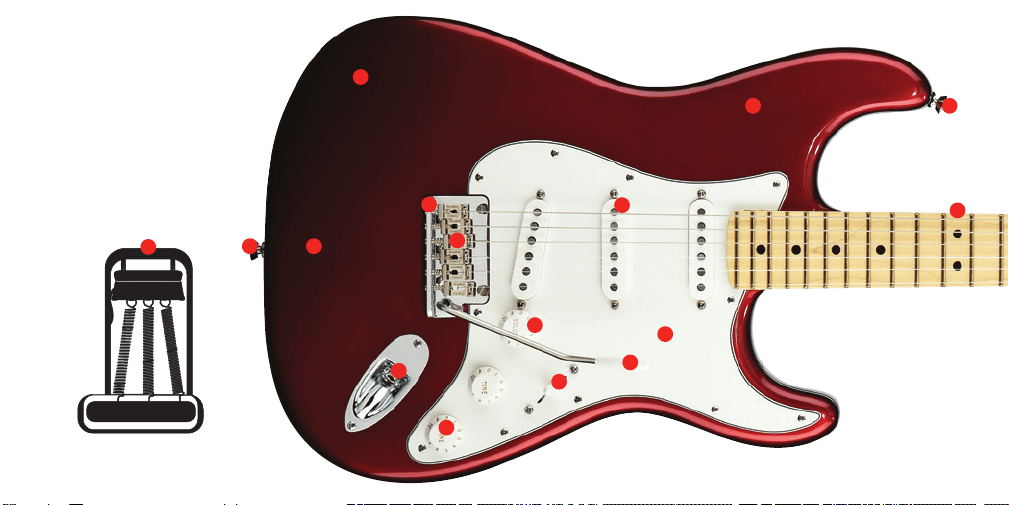
ANATOMY
ON BACK OF GUITAR
1
2 3
4
5
6
7
8
9
10
11
12
13
14 15
16
16
1. TREMELO CAVITY
2. STRAP BUTTON
3. BODY
4. OUTPUT JACK
5. BRIDGE
6. BRIDGE SADDLE
7. TONE CONTROL
8. VOLUME
9. PICKUP SELECTOR
10. TREMELO BAR
11. PICK GUARD
12. PICKUP
13. LOWER BOUT
14. UPPER BOUT
15. STRAP BUTTON
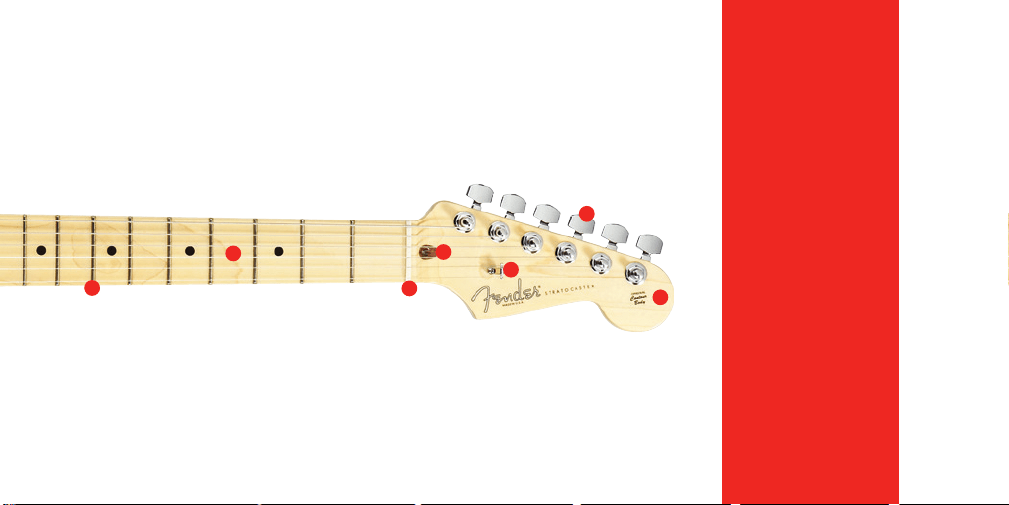
16. 12 FRET MARKER
17. F R E T
18. FRET BOARD
19. N UT
20. TRUSS ROD
21. STRING TREE
22. TUNING KEY
23. HEADSTOCK
17
18
20
19
21
22
23
17

18

19
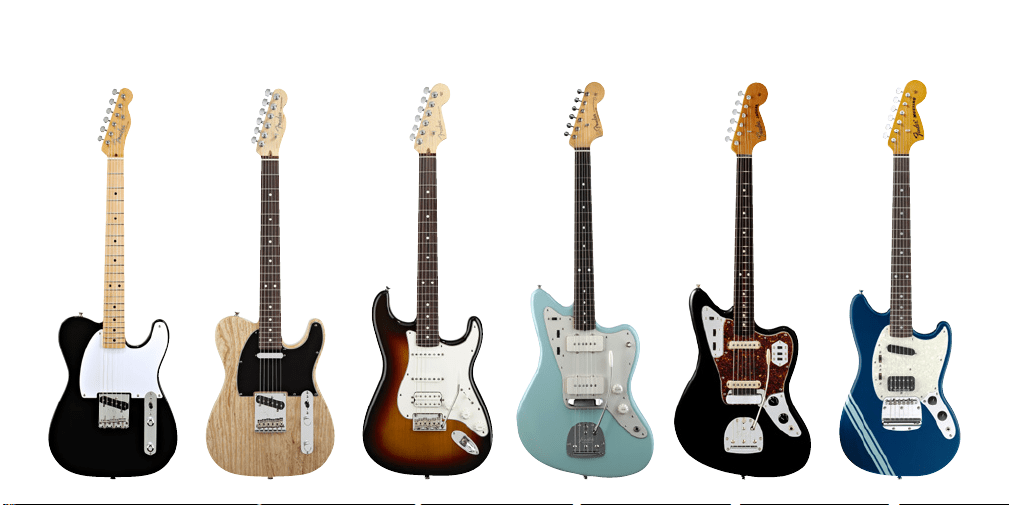
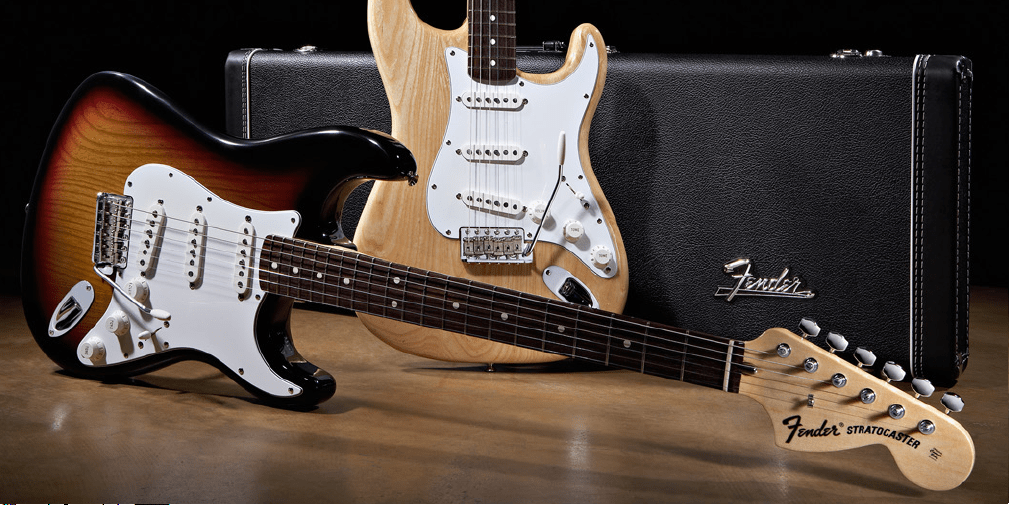
MODELS
ESQUIRE
®
TELECASTER
®
STRATOCASTER
®
JAZZMASTER
®
JAGUAR
®
MUSTANG
®
20
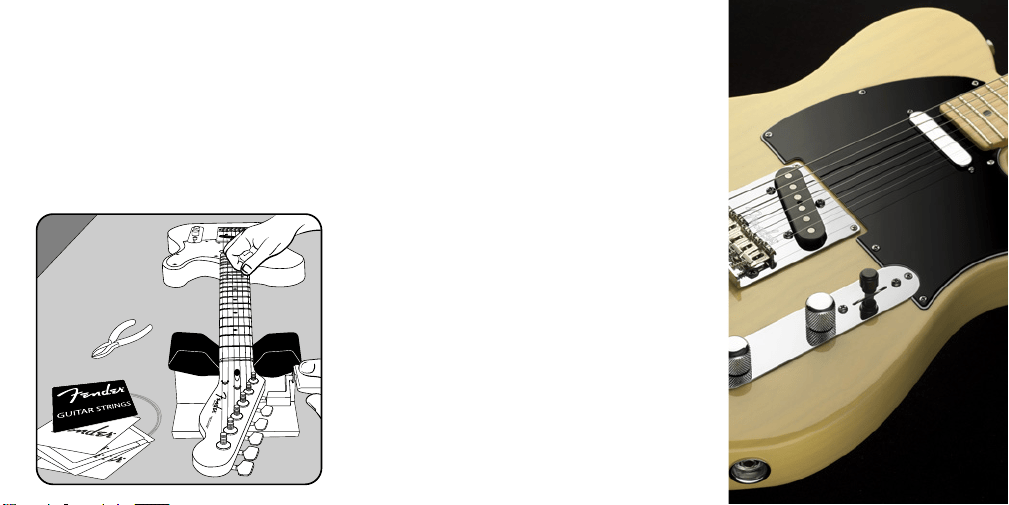
ELECTRIC GUITAR SET-UP
To put your guitar in top playing shape, follow the
five steps presented here. First, you’ll need the
right tools:
• Set of automotive feeler gauges (.002-.025)
• 6” ruler (with 1/64” increments) and tape measure
• Set of Allen wrenches
• Phillips head screwdriver
• Electronic tuner
• Wire cutters
• String winder
• Light machine oil (3-in-1, model train or gun oil)
• Polish and cloth
• Capo
Note: The following factory specifications are median
specs and are meant only as guidelines. They should not
be taken as hard-and-fast rules. If you prefer slightly higher
or lower action, adjust it as you like, but please be aware
that higher action will make the instrument physically more
difficult to play, while lower action may result in excessive
fret buzz, depending on your technique or playing style.
21
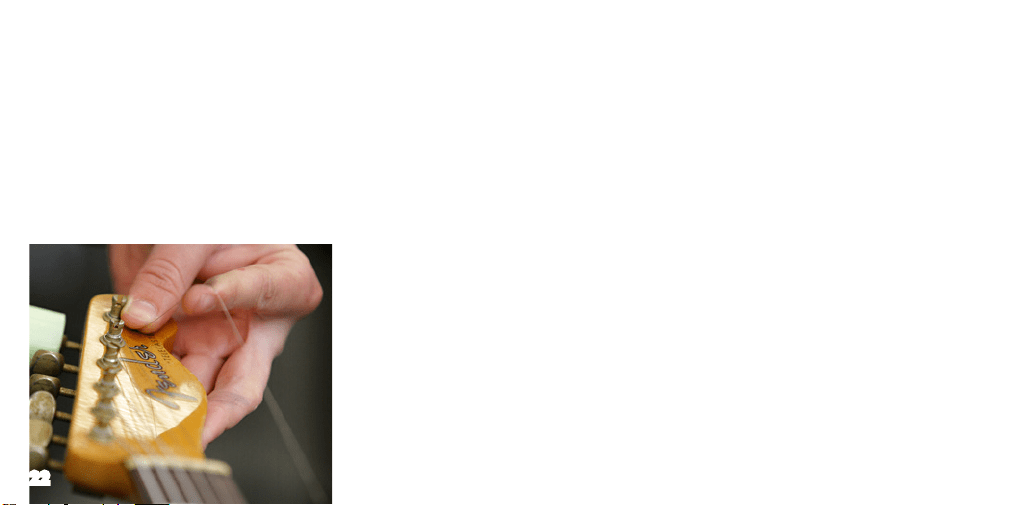
1. CHANGING STRINGS 2. SETTING INTONA TION
There is no better, faster or easier way to
reinvigorate the sound of your guitar than simply
changing the strings. It’s easy to tell when strings
are old, worn or dirty—they sound dull and
lifeless, and they feel rough when you run your
fingers along them. Changing strings isn’t difficult,
but there are several ways to do it depending on
what Fender
®
guitar model you have.
Strings attach at the bridge and to the
headstock at the tuning machines. Fender
guitar models use a variety of bridges and
tuning machines, and different instruments call
for different string replacement instructions.
Please note the way strings are installed on
your guitar before changing the strings.
Whatever bridge type on your guitar, the
main thing is to make sure there’s sufficient
string break angle (at least 30˚) over the
bridge saddles. Bridge adjustments such
as string height and tremolo float are
mostly up to personal preference.
Intonation, however, is a very precise series
of measurements. Fear not, though—you can
easily preset your guitar’s basic intonation.
With a tape measure, find the exact scale
length of your guitar by measuring from
the inside edge of the nut to the center of
the 12th fret (the fret wire itself, not the
fingerboard space). Double that measurement
to determine the scale length of your guitar.
Adjust the first-string bridge saddle to this
scale length, measuring from the inside of the
nut to the center of the bridge saddle. Now
22
T
I
G
H
T
E
N
2. SETTING INTONA TION 3. TRUSS ROD
adjust the distance of the second-string saddle
back from the first saddle, using the gauge
of the second string as a measurement. For
example, if the second string is .011” (0.3
mm), you would move the second-string saddle
back .011” (0.3 mm) from the first saddle.
Move the third saddle back from the second
saddle using the gauge of the third string as a
measurement. The fourth-string saddle should
be set parallel with the second-string saddle.
Proceed with the fifth and sixth saddles with the
same method used for strings two and three.
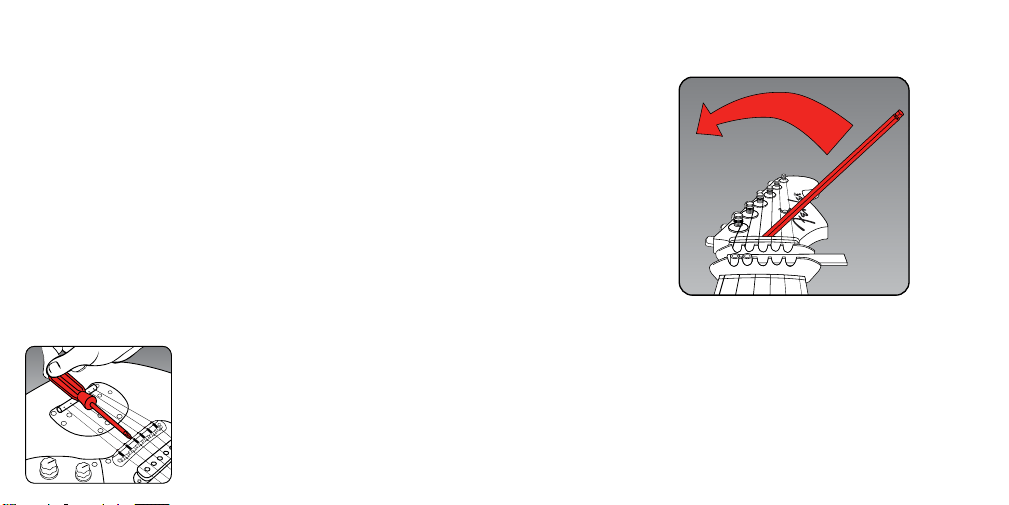
The truss rod is the ingenious unseen
device inside the neck that counteracts the
bending force caused by string tension.
An ideally adjusted neck will have a
moderate amount of relief (curvature) in it
to accommodate the vibrating strings.
To adjust the truss rod, fasten a capo to the
first fret; then fret the sixth string (low E) at
the last fret. Then measure from the bottom
of the string to the top of the 8th fret using the
feeler gauge—the gap should be about .010”.
When you view the neck by sighting down it
from the body end toward the headstock, you
can see whether the neck is straight or bowed.
Fender guitars use two kinds of truss rod
adjustment mechanisms. One is accessible at
the headstock and is adjusted using an Allen
wrench; the other is accessible at the neck
joint and is adjusted using a Phillips head
screwdriver. For both types, here’s what to do:
Adjustment at headstock (Allen wrench):
If the neck curvature is too concave, (the
guitar in playing position, looking up the
neck towards the tuners) turn the truss
rod adjustment nut counterclockwise. If
23
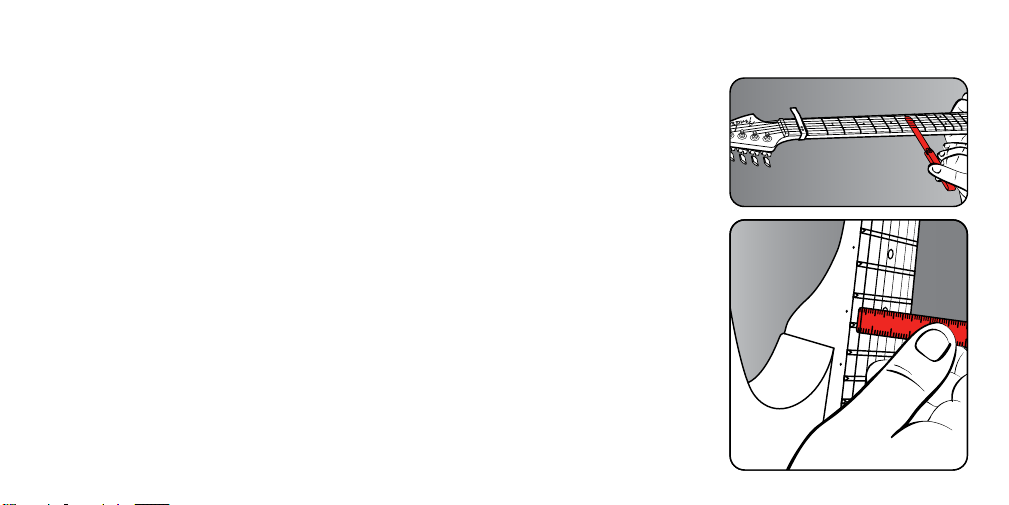
String height is more about personal preference
and playing style than a pre-determined spec.
Check your tuning first, then use a 6” ruler to
measure the distance between the bottom of
each string and the top of the 17th fret. That
distance should be approximately 4/64”, which
is Fender’s recommended spec, so adjust each
bridge saddle accordingly (or the bridge height
screws if the saddles are preset). About 4/64”
on the treble side is suggested, but string height
can be set to whatever feels right for you.
4. STRING HEIGHT
the neck curvature is too convex, turn the
truss rod adjustment nut clockwise.
Adjustment at neck joint (Phillips
screwdriver): If the neck curvature is too
concave, turn the truss rod adjustment
nut clockwise. If the neck curvature is too
convex, turn the truss rod adjustment nut
counterclockwise. Check your tuning; then
check the gap again with the feeler gauge.
You can double-check your adjustments by
sighting down the neck and by measuring the
gap again to make sure it’s around .010”.
If you meet excessive truss rod resistance or if
you’re not comfortable adjusting it yourself, you
can always take your guitar to your Authorized
Fender Service Center.
24
These distances are generally greatest
on the sixth string (low E) at the neck
pickup position, and closest on the
first string (high E) at the bridge pickup
position. Adjust pickup height as preferred
around the measurements indicated,
with the pickup selector switch in the
middle position and the volume and tone
controls at their maximum settings.
PICKUPS BASS SIDE TREBLE SIDE
Texas Special
tm
8/64” (3.6 mm) 6/64” (2.4 mm)
Vintage Style 6/64” (2.4mm) 5/64” (2 mm)
Noiseless™ 8/64” (3.6 mm) 6/64” (2.4 mm)
Standard single-coil 5/64” (2mm) 4/64” (1.6 mm)
Humbucking 4/64” (1.6mm) 4/64” (1.6 mm)
Lace Sensor to preference to preference
Pickups that are set too high can cause many
kinds of sonic variables. To set them correctly, fret
all the strings at the last fret and use a 6” ruler to
measure the distance from the bottom of the first
(high E) and sixth (low E) strings to the top of their
respective pole pieces. The optimal distances you
want will vary depending on what pickups you
have, so use the outside pickup mounting screws
to adjust those distances according to this chart:
5. PICKUP HEIGHT
25
26

CARE AND MAINTENANCE
Your Fender
®
guitar is precisely crafted to give
you years of satisfaction and enjoyment.
Occasional routine maintenance will go
a long way toward keeping it looking,
sounding and playing great for many years.
Several helpful tips are listed here:
Keep it clean. Dirt, dust, sweat, skin oil, smoke
and other pollutants can prematurely age your
bass’s finish and hardware. Wipe the strings,
neck and bridge often with a lint-free cloth
regularly. Use Fender-approved polish on the
finished surfaces, and wipe metal parts clean with
a soft, dry polishing cloth (visit the Accesories
section of fender.com for recommendations).
Oil the fingerboard. The natural oils in unfinished
rosewood, ebony and pau ferro fingerboards
can dry out. Keep these fingerboards beautiful
by periodically hydrating them with lemon oil,
boiled linseed oil or other non silicone-based
wood/furniture oil. Apply with a lint-free
cloth, rub in, let soak, wipe off excess and
let dry. And remember—no oil on finished
surfaces (including maple fingerboards).
Tighten the strap buttons. They do
loosen sometimes. Use a standard
Phillips head screwdriver to periodically
check and tighten strap buttons.
Set up and adjust. Familiarize yourself
with the setup and adjustment procedures
in this manual and on www.fender.com,
or visit your Authorized Fender Service
Center for routine seasonal adjustments.
Avoid climate extremes whenever
possible. Extremes in temperature and
humidity can damage your bass. If such
exposure can’t be helped, however, loosen
the strings to minimize damage, and let a
cold instrument warm up gradually before
opening its case to avoid finish checking.
Lacquer finishes. Lacquer is a natural wood
finish long used on fine furniture and musical
instruments. If your bass has a lacquer finish,
do read the “Lacquer Finishes: Precautions
and Care” card that came with it. Try not to
expose lacquer finishes for very long to plastics,
synthetics and surgical rubber tubing (it’s used
on some guitar stands and straps), all of which
react adversely with lacquer and can mar
the finish. Also note that checking, shrinkage
and discoloration are all natural elements of
the aging process of lacquer finishes. The
lacquer finish on your bass will take on its own
distinctive appearance over time from this
type of wear, and though preferred by some,
it is not covered under the Fender warranty.
CARE AND MAINTENANCE
27

Fender
®
, Bassman
®
, Twin Reverb®, Super-
Sonic
®
, G-DEC
®
, Stratocaster®, Strat
®
,
Telecaster
®
, Tele
®
, Jaguar
®
, Jazzmaster
®
,
Mustang
®
, Precision Bass
®
, P Bass
®
, Jazz
Bass
®
, J Bass
®
and the distinctive headstock
designs commonly found on these guitars are
U.S. registered trademarks of Fender Musical
Instruments Corporation. All rights reserved.
IMPORTADO POR: Instrumentos Musicales
Fender S.A. de C.V., Calle Huerta #
132, Col. Carlos Pacheco, C.P. 228890,
Ensenada, Baja California, Mexico.
RFC: IMF870506R5A Hecho en Mexico.
Servicio de Cliente: 001-8665045875
NOTICE REGARDING USE OF HISTORIC PATENT
NUMBERS/MARKINGS: FENDER
®
is proud to
offer some of the most iconic musical instruments
and amplifiers of the past 60 years. Some
FENDER products are intentional recreations
or reissues of vintage guitars and amplifiers,
and may therefore incorporate markings or text
associated with original patents that have since
expired. Specific examples of such models include
patent numbers on the tremolo plates and decals
of the JAGUAR
®
and JAZZMASTER
®
guitars,
“Pat Pending” on some vintage TELECASTER
®
guitar bridge plates, and “Design and Circuits
Patented” language on the control panels of
certain model amplifiers in FENDER Vintage
Modified, Vintage Reissue and Custom lines.
Such markings are included only for the sake of
historical accuracy, and are not intended to denote
or imply live patents or ongoing patent protection.
30
30

31
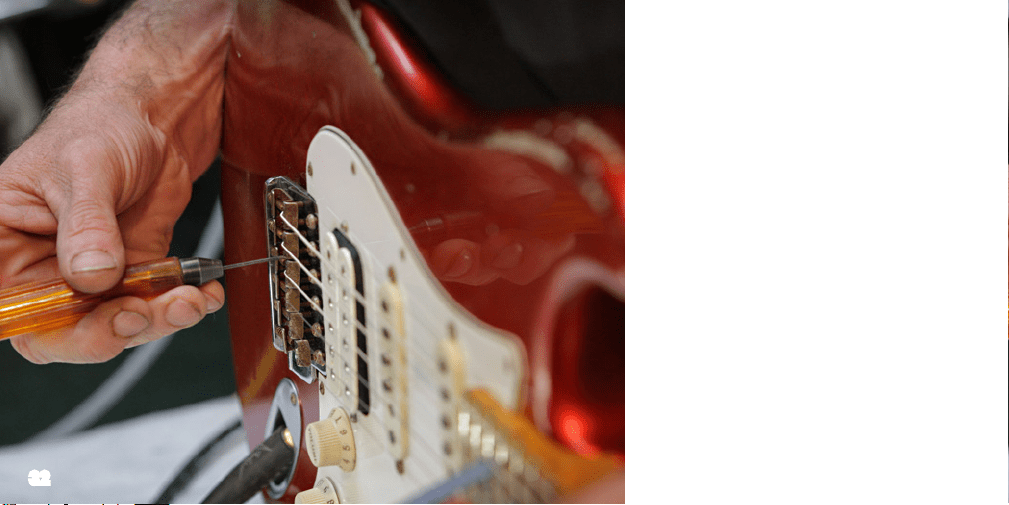
For service in the United States and Canada,
please contact an Authorized Fender Service
Center, which you can find by calling the
Fender Consumer Relations Department
(480) 596-7195 or using the Service and
Repairs link on the Support section of
fender.com.
For service outside the United States and
Canada, please contact your authorized dealer
or the Fender distributor in your country or
region. There is a helpful list of international
distributors online at fender.com/distributors.
SERVICE
32

MODIFIED ACTIVE GUITAR WARNING
WARNING - To maintain product safety:
Batteries and/or the product in which they are
installed, shall not be exposed to excessive
heat such as sunshine, fire, or the like.
• DO NOT replace batteries with rechargeable
types of any kind.
• Replace only with same or equivalent PP3, 9V
type battery.
• There may be a danger of fire or explosion if
the battery is incorrectly connected/replaced.
Replace the Batteries as soon as they are
drained and the power indicator is no longer lit.
ALWAYS UNPLUG YOUR GUITAR
WHEN NOT PLAYING
FOR BEST BATTERY LIFE
If used improperly, batteries
may explode or leak and cause
damage or injury. In the interest
of safety, please read and
observe the following precautions.
• Incorrect handling of batteries can cause
leakage, overheating, fire, or explosion.
• Batteries must never be heated, taken apart, or
thrown in water.
• Make sure you observe the correct polarity
when installing the batteries.
• Avoid using new batteries mixed with used
ones. In addition, avoid mixing different types
of batteries.
• Remove the batteries whenever the unit is to
remain unused fir ab extended period of time.
• If a battery has leaked, use a soft piece of
cloth or paper towel to wipe all remnants of the
discharge from the battery compartment. Then
install new batteries. To avoid inflammation of
the skin, make sure that none of the battery
discharge gets onto your hands or skin.
• Exercise the utmost caution so that none of the
discharge gets near your eyes. Immediately
rinse the affected area with running water if
any of the discharge has entered the eyes.
• Never keep batteries together with metallic
object such as ballpoints, necklaces,
hairpins, etc.
USING THE UNIT SAFELY
• Use a reasonable amount of care when
using the unit’s knobs and other controls;
and when using its jacks and connectors.
Rough handling can lead to malfunctions.
• Do not expose the unit to direct sunlight,
place it near devices that radiate heat, leave
it inside an enclosed vehicle, or otherwise
subject it to temperature extremes.
• Do not allow any objects ( e.g., flammable
materials, coins, pins); or liquids of any kind
(water, soft-drinks, etc.) to penetrate the unit.
33
33
33

34

35

Register your new Fender electric instrument at www.fender.com/prodreg
P/N 0079380000 REV. C