Belling
Freestanding Electric
Induction AU
Users Guide & Installation
Handbook
Part No 083285301 Date 15/03/2013

CONTENTS & OUR WARRANTY
CONTENTS
• INTRODUCTION
• SAFETY
• IGNITION PROCEDURE
• USING THE HOB, GRILL AND
OVEN(S)
• HANDLING BAKING PROBLEMS
• RECOMMENDATIONS AND GOOD
PRACTICES
• USING THE CLOCK PROGRAMMER/
MINUTE MINDER
• CLEANING
• INSTALLATION INSTRUCTIONS
• TECHNICAL DATA
• WIRING DIAGRAMS
• CUSTOMER CARE
INTRODUCTION
Should you need it . . . .
Inside the paperwork which has come
withthisappliance,thereisaleaetand
card explaining the terms of our warranty
andguarantee.Simplyllinthedetailson
the card and post it off, this will register
your appliance.
Glen Dimplex Australia
Unit 2, 205 Abbotts Road
Dandenong South
Victoria 31 75
Australia
Ph: 1300 556 816
Fx: 1800 058 900
Glen Dimplex New Zealand Pty
38 Harris Road, East Tamaki
Auckland
New Zealand
Ph: 09 274 8265
Fx: 09 274 8472
If your appliance is covered by the
warranty and guarantee, you will not be
billed for work undertaken should your
appliance be faulty, terms and conditions
do apply, so please read through the
literature carefully.
Please ensure that you have available
your appliances model number and serial
number, there is a space at the back of
this book for recording that information.
Important Notice
Please note there may be a cooling fan
ttedtothisappliance.Itisanintegral
part of its safety and functionality. When
the appliance is installed care must be
taken that the cooling fans performance
is not impeded by any objects coming
into contact with it. (Installation pipes,
leads etc) Care must also be taken that
thereissufcientairowattherearof
the appliance for the cooling fan to run at
itsoptimumefciency,(particularlybuilt
in appliances) see clearance dimensions
in the installation section of the booklet.
During use the appliance must never be
disconnected from the mains supply as
this will seriously affect the safety and
performance of the appliance, particularly
in relation to surface temperatures
becoming hot and gas operated parts
notworkingefciently.Thecoolingfanis
designed to run on after the control knob
has been switched off to keep the front of
the appliance and the controls cool until
the appliance has naturally cooled itself.

Safety
5.130
BEFORE USING THE PRODUCT
Make sure that you have removed all
packaging and wrapping. Some of the
items inside this appliance may have ad-
ditional wrapping.
It is advised that you turn the ovens and/
or grill on for a short while. This will burn
off any residues left from manufacturing.
There may be a smell which accompanies
this process - but this is nothing to worry
about and is harmless.
It is recommended that you wash the
oven shelves, baking tray, grill pan and
grillpantrivetbeforetheirrstuseinhot
soapy water. This will remove the protec-
tive oil coating.
WARNING! - The
appliance and its
accessible parts become
hot during use. Care
should be taken to
avoid touching heating
elements. Children less
than 8 years of age shall
be kept away unless
continously supervised.
This appliance can
be used by children
aged from 8 years and
above and persons with
reduced physical sensory
or mental capabilities or
lack of experience and
knowledge if they have
been given supervision
or instruction concerning
the use of the appliance
in a safe way and
understand the hazards
involved. Children
shall not play with the
appliance. Cleaning and
user maintenance shall
not be made by children
without supervision.
WARNING! -
Unattended cooking on
a hob with fat or oil can
be dangerous and may
resultinre.
NEVER try to extinguish
arewithwater,but
switch off the appliance
andthencovertheame
with a lid or damp cloth.
WARNING! - Danger of
re:Donotstoreitems
on the cooking surfaces.
WARNING! - Servicing
should be carried out
only by authorised
personnel.

Safety
5.130
WARNING! - The
appliance must never
be disconnected from
the mains supply during
use, as this will seriously
affect the safety and
performance, particularly
in relation to surface
temperatures becoming
hot and gas operated
parts not working
efciently.Thecooling
fan(iftted)isdesigned
to run on after the
control knob has been
switched off.
WARNING! -
Do not spray aerosols
in the vicinity of this
appliance while it is in
operation.
WARNING! - Do not
storeoruseammable
liquids or items in the
vicinity of this appliance.
WARNING! -
Do not modify this
appliance.
WARNING! - Do not
use harsh abrasive
cleaners or sharp
metal scrapers to clean
the oven door glass since
they can scratch the
surface, which may
result in shattering of the
glass.
WARNING! - Do not
operate the appliance
without the glass panel
correctlytted.
WARNING! - There is
a risk of electric shock,
so always make sure
you have turned off
and unplugged your
appliance before
starting. Always allow
the product to cool down
before you change a
bulb.
WARNING! - Accessible
parts may become hot
when the grill is in use.
children should be kept

Safety
5.130
away.
WARNING! - Never
place food, or dishes on
the base of the main
oven, the element is here
and it will cause over
heating.
WARNING! - Do not
modify the outer panels
of this appliance in any
way.
WARNING! - This
appliance must be
earthed.
WARNING! - The top
element gets extremely
hot when in use, so take
care to avoid touching it.
ELECTRIC INDUCTION HOB
WARNING:-
Unattended cooking on
a hob can be dangerous
andmayresultinre.
NEVER try to extinguish
arewithwater,but
switch off the appliance
andthencoverame
e.g. with a lid or a damp
cloth.
Dangerofre:donot
store items on the
cooking surface.
If the surface is cracked,
broken or shattered,
switch off the appliance
to avoid the possibility of
electric shock and call for
a service engineer’s visit.
Metallic objects such as
knives, forks, spoons and
lids should not be placed
on the hob surface since
they can get hot.
Ensure you switch off
the appropriate cook
zone individually or (by
the central on/off key if
touch control) when you
havenishedcooking,
do not rely upon the
automatic pan detection
system as your means
of switching “off” the

Safety
5.130
appliance. This induction
hob complies with the
applicable EMC and EMF
standards. Therefore it
should not interfere with
other electronic units.
Personsttedwitha
pacemaker or any other
electrical implant should
clarify with their doctor
or the producer of the
implant, whether there
implant is adequate and
fail-safe, the pacemaker
must be designed in
compliance with the
appropriate regulations.
Caution: This appliance
is for cooking purposes
only. It must not be used
for other purposes, for
example room heating.
OVEN/GRILL
Do
• Always take care when removing food
from the oven as the area around the
cavity may be hot.
• Always use oven gloves when han-
dling any utensils that have been in
the oven as they will be hot.
• Always make sure that the oven
shelves are resting in the correct po-
sition between two runners. Do not
place the oven shelves on top of the
highest runner, as this is not stable
and can lead to spillage or injury.
AlwaysusetheMinuteMinder(iftted)
if you are leaving the oven unattended -
this reduces the risk of food burning.
Do Not
• Never place items on the door while
it is open.
• Never wrap foil around the oven
shelvesorallowfoiltoblocktheue.
• Never drape tea towels near the oven
whileitison;thiswillcauseare
hazard.
• Never pull heavy items, such as tur-
keys or large joints of meat, out from
the oven on the shelf, as they may
overbalance and fall.
• Never use this appliance to heat any-
thing other than food items and do
not use it for heating the room.
• Do not spray aerosols in the vicinity
of this appliance while it is in opera-
tion.
• Donotstoreoruseammableliquids
or items in the vicinity of this appli-
ance.
• Do not modify this appliance.
GENERAL
Do
• Always ensure that pan bases are
dryandatbeforeusingthemonthe
hob.
• Always position pans over the
centre of the heat zone, and turn

Safety
5.130
the handles to a safe position so
they cannot be knocked or grabbed.
Always use pans which are no smaller
than 100mm (4”), or no larger than
250mm (10”).
• Always match the size of pan to the
size heat zone – do not use large
pans on small zones or vice versa.
• Always lift pans onto and off the
hob, rather than sliding them across
the surface, to avoid marks and
scratches.
Do Not
• If the appliance has a glass hobtop,
never drag pans across the ceramic
surface as this will lead to scratches
and damage.
• Never use double pans, rim-based
pans, old or misshapen pans, or
anypanthatisnotstableonaat
surface.
• Never leave cooking fat, or oil, unat-
tended.
• Never use commercial simmering
aids, or heat diffusers, as they create
excessive heat and can damage the
surface of the hob.
• Never use the hob for any other
purpose than cooking food.
• Never leave plastic cooking utensils
close or on top of the hob as these
can melt due to the warm hob.
• Never leave any cook zone on with-
out a pan covering it. This causes a
rehazard.
• Never leave pans overhanging the
edge of the hob. The surface of the
hob is smooth. If pans are knocked
they may move on the hob top.
• Never leave pans on the hob when
you’re not around - take them off the
cook zone
FIRE SAFETY ADVICE
Mostkitchenresoccurwhenpeopleare
distracted or leave things unattended, so
remember:
If you’re called away from the cooker - by
the phone or someone at the door, either
take pans off the heat, or switch off your
hob.
Don’t let yourself be distracted while
cooking.
Ifyoudohaveareinthekitchen,don’t
take any risks - get everyone out of your
home and call the Fire Brigade.
If a pan catches re:
• Do not move it - it is likely to be
extremely hot.
• Turn off the heat if it’s safe to do so
- but never lean over a pan to reach
the controls.
• Ifyouhaveareblanket,putitover
the pan.
• Ifyouhaveputthereout,leavethe
pan to cool completely.
Deep-fat frying presents more dan-
gers in your kitchen.
• Neverllachippan(orotherdeep-
fat fryer) more than one-third full of
oil
• Donotuseareextinguisherona
pan of oil - the force of the extin-
guishercanspreadthereandcre-
ateareball.
If you have an electrical re in the
kitchen:
• Pull the plug out, or switch off the
power at the fuse box - this may be
enoughtostopthereimmediately
• Smothertherewithareblanket,
or use a dry powder or carbon diox-
ide extinguisher
• Remember:neverusewateronan
electricalorcookingoilre.

USING THE HOB - INDUCTION
USING THE HOTPLATE
• Commercial simmering aids should
not be used as they create excessive
temperatures that can damage the
surface and may cause a hazard.
• Do not place aluminium foil or plastic
utensils on the ceramic glass, as they
may melt and damage the surface.
• Do not use the ceramic glass hotplate
surface for storage.
• When cooking with fat or oil, never
leave unattended.
• Turn pan handles to a safe position,
so they are out of reach of children,
not overhanging the appliance, and
cannot be caught accidentally.
• Position pans over the centre of the
hotplate elements.
• Do not use the hob as a chopping
board or a storage area, as this
increases the likelihood of it be-
ing damaged - e.g.; plastic utensils
placed on a warm hob may melt onto
it, and damage the ceramic glass
surface.
• Be careful when cooking foods in
salted water, or foods containing
large amounts of sugar, syrup or jam
- if they are spilled onto hot areas of
the hob they may damage it.
• Lift pans onto and off the surface,
rather than sliding them across the
surface, to avoid marks and scratch-
es.
• If you use a wet paper towel to
remove spills from a warm heating
area of the hob, be careful to avoid
steam burns.
• Do not use abrasive powder cleaners,
metal wire wool pads, impregnated
plastic pads, detergents, bleaches,
bath stain removers, or chemical
oven cleaners; all these types of
products will damage the ceramic
glass.
• pans should not be allowed to come
into contact with coloured trims dur-
ing use as this may cause discoloura-
tion of the surface
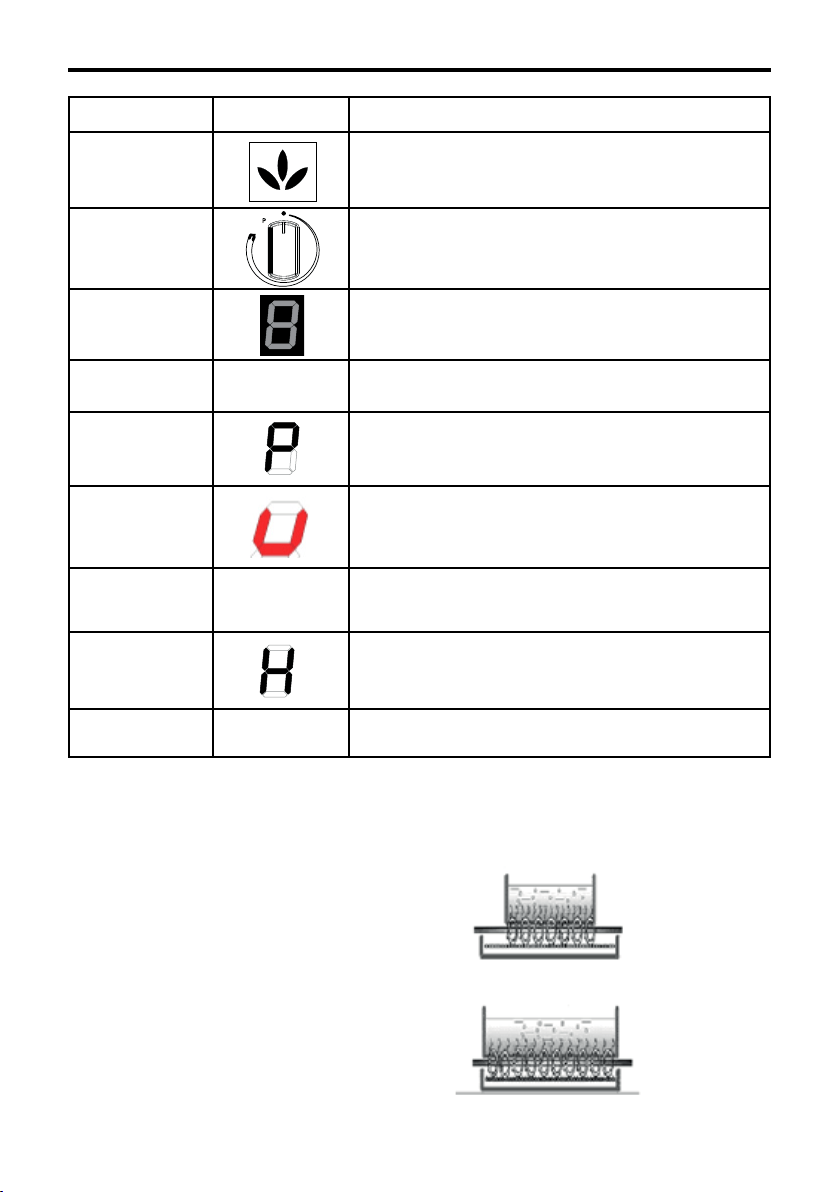
USING THE HOB - INDUCTION
Feature Symbol Description
Eco power
InductionPoweristhemostenergyefcientmeansof
cooking food, providing fast heat up and boiling times
Rotary controls
Simpleknobcontrolwithallthebenetsofinduction
technology
Digital display Secret till “lit” hob display
No. of power
levels
10 Precise and repeatable control settings
Power Boost
Temporarily boost the power to a cook zone by a mas-
sive 25%
Pan Detection
Lets you know if the correct pans are being used and
helps to save energy. When a pan is lifted off the zone,
the power is automatically cut.
Overheat Pan
Detection
Yes
Helps prevent cookware from overheating providing an
additional level of safety not available on other types of
hobs
Residual Heat
Indictators
Warns you against hot surfaces but also indicates that
the residual heat can be used as a temporary warm zone
Holiday Shutdown Yes
Rest assured this hob will eventually turn its self off if
left
About the induction hob
The induction hob provides the most en-
ergyefcienthobtechnologyavailable.
The induction system provides superior
heat up and cool down times for pans -
you get fast, precise, repeatable power
control.
As induction only heats up the pan, there
is no lost heat from the cooking process,
which in turn, limits the heat generated in
the kitchen.
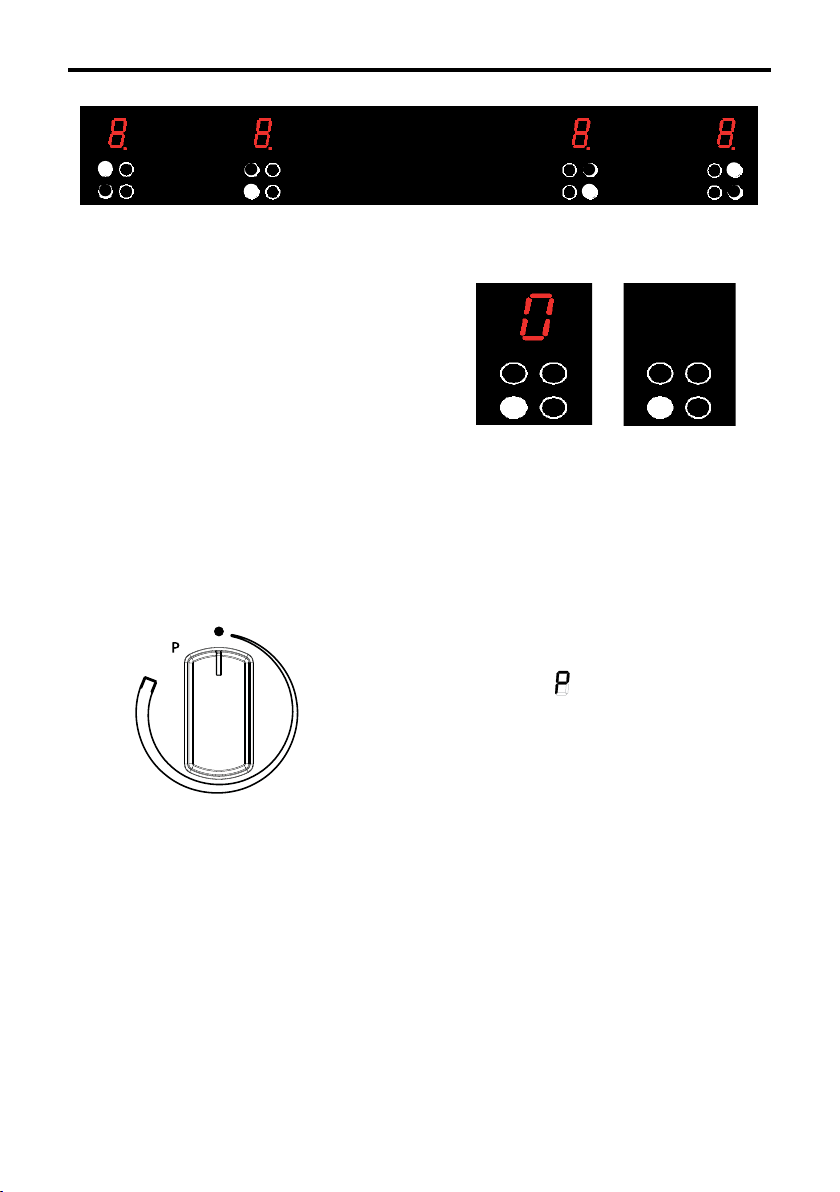
Auto Power Tuning
Induction hobs have a unique power
tuning systems that automatically tunes
the power to the size of the pan base.
ensures energy isn’t wasted.
Small Pan
Large Pan
USING THE HOB - INDUCTION
BASIC HOB FUNCTION
Initial Power up (switching on the
electrical supply to the hob)
After connecting the hob to the mains
electrical supply, all segments of the
displays are illuminated (lit) and a beep
sounds.
The hob then initialises after which, all
displays are deactivated (LEDs go out)
and a beep sounds.
If there is an initialisation problem or if a
control knob is not set to the off position
all displays remain lit, until the initiali-
sation problem is solved or the control
knobs are turned to the off position.
To turn the hob ‘ON’ / ‘OFF’
To turn the hob ‘ON’, turn the control
knob for the required cook zone clockwise
to set the cook zone to the desired power
setting (1 to 9). The power display will
automatically light up and will “beep”.
To turn the hob ‘OFF’ turn the control
knob anti-clockwise to the ‘OFF’ position.
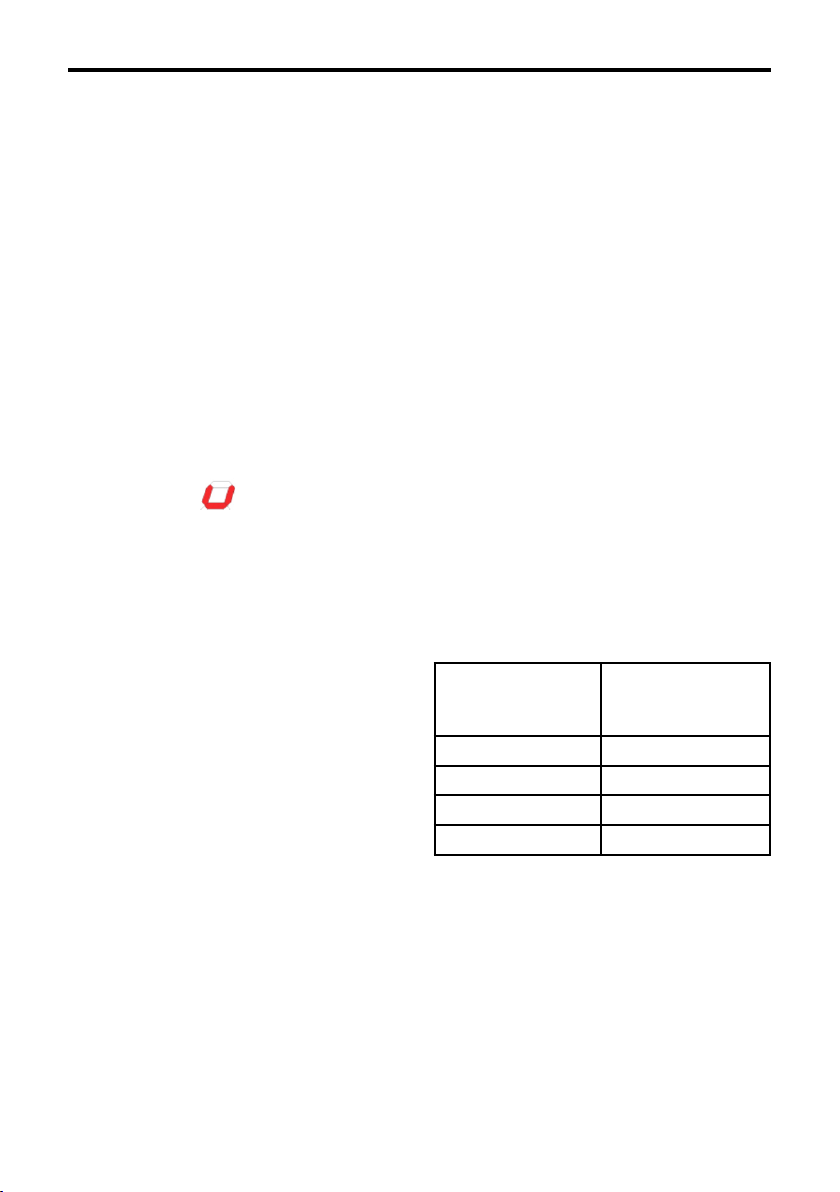
When a cook zone is switched off, a beep
sounds and the corresponding display
shows the power level “0”. 10 seconds
after switching off, a beep sounds and the
corresponding display is switched off (As
Shown below)
Control Knob Safety Feature “o”
If at any time you see the “o” symbol,
it means that a control knob has been
left on and needs to be turned to the off
position (reset) before the hob can be
used. This is to ensure that power isn’t
accidentally switched on to a cook zone
(i.e. turn the control knob off and back on
to continue using).
Power Boost
Temporarily boost the power to a cook
zone by approx 25%. All zones can be
boosted for a period of up to 10 minutes.
When booster is selected, a beep sounds
and the corresponding display shows a
“P” symbol.
The booster function only works for a
limited period. After 10 minutes of boost
power level, the cook zone is automati-
cally deactivated, a beep sounds and the
corresponding display shows a “o”
symbol.
The corresponding control knob has to
be turned back to the off position (reset)
before a new cook zone power level can
be set. (i.e. turn the control knob off and
back on to continue using).
Griddle Zone
Large pans and griddle plates can be
placed across the two left hand zones.
! Dry or empty Griddles and Frying
pans can heat up very quickly on power
settings greater than 5, this can, if not
closely monitored lead to the induction
showing a overheat warning “Shown by a
ashingC”Theinductionunitwillauto-
matically reduce the power used until the
hobhassufcientlycooleddown.Once
cooled down to an acceptable level the
power will automatically be restored and
theashing“C”willstop.Youcancarry
on cooking using the residual heat why
thehobiscoolingdown“ashingC”.
Pan Detection
The above “U” symbol appears when a
zone has been activated but no pan has
been placed on the cook zone.
If the “U” symbol does not disappear
when a pan is placed on the zone it
indicates that the pan is not suitable for
induction cooking.
Note This means the hob only uses
power when a suitable pan is placed on
the zone, this reduces the energy used
during the cooking process, i.e. when
you take your pan off the zone the hob
automatically reduces the power, and only
switches back on when you replace the
pan.
Pans and cookware for induction
hobs.
Pans and Cookware for induction cooking
zones must be made of ferrous mate-
rial such as cast iron and have magnetic
properties. The base must also be of the
correct diameter.
Itisimportantthatgoodquality,atbot-
tomed pans are used.
If a pan creates a large air gap over the
middle of the cooking zone, the accuracy
of the built in temperature sensor can be
effected.
Always ensure that pan bases are dry
before using them on the hob.
To check on the suitability of a pan, place
a magnet onto the base of the pan. If the
magnet does not stick to the pan, it is not
suitable for use on the induction hob.
Beware:- Not all induction pans are of
the same quality due to their construc-
tion. Pans that use enamelled/laminated/
encapsulatedbasescanbedifcultto
detect, especially small pans (e.g. milk
pans)
This problem is not with the induction hob
but with the pan type. They can have
bases which are magnetic but are
not thick enough! If you experience
problems with small pans we recommend
that you to try a larger pan or a pan of a
different construction. Solid cast iron pans
give the best performance.
Pans unsuitable for Induction:
Pans made of copper, stainless steel, alu-
minium, oven proof glass, wood, ceramic
and terra-cotta.
Overheat Pan Protection
The hob is equipped with additional safety
systems that help to prevent cookware
from overheating, providing an additional
level of safety not available on conven-
tional hobs such as gas and ceramic hobs.
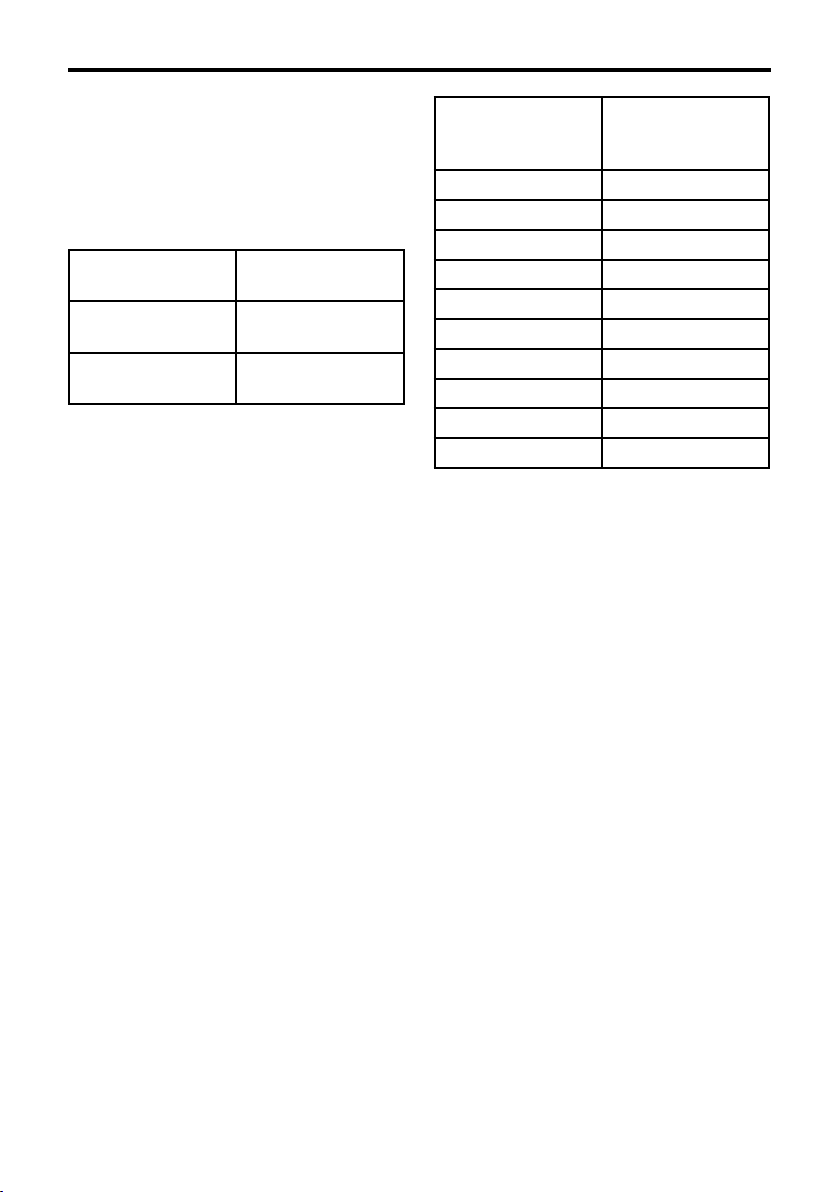
USING THE HOB - INDUCTION
Induction Cook
Zone
Smallest Recom-
mended Diam-
eter (mm)
LHF 150
LHR 120
RHR 150
RHF 120
Thishelpstoreducetheriskofre
through misuse of the hob.
If there is an overheat situation, the hob
will display the appropriate code detailed
in the “hob status codes table” (next
page).
Approx Glass
Temperature
o
C
Hob Action
190
Automatic Power
Reduction
220
Power Automati-
cally Shuts down
Note:-
The safety temperature control of the
pansisonlypossiblewithqualityatbot-
tomed pans suitable for induction cook-
ing; Poor quality pans can create air gaps
between the glass and the pan, which
affects the accuracy of the temperature
control.
Residual Heat Indicators “H”
If the glass surface is above 65
o
C when
the cook zone is switched off, a “H” will
be displayed in the cook zone display until
the glass surface drops below approxi-
mately 55
o
C.
This feature not only warns you against
hot surfaces but also indicates that there
is residual heat which can be used as a
temporary warm zone.
Note:
The cook zone itself does not heat up, but
the ceramic glass does get hot because
of the hot pan conducting heat back onto
the hob glass.
Auto Stand by
The Hob will automatically switch off
if left (with pan) on for an extended
period of time, see maximum run-
ning times below.
Power Level
Maximum
Operation Time
hours
1 10
2 5
3 5
4 4
5 3
6 2
7 2
8 2
9 1
“P” (Power Boost) Max 10 mins
TROUBLESHOOTING
The hob produces a smell the rst
few times it is used.
Heat a pan full of water on each zone for
half an hour.
Pans make a noise during cooking
This is caused by vibration due to the pas-
sage of energy from the hob to the pan.
On a high setting this is quite normal for
certain types of saucepan. It will not dam-
age the hob.
The hob makes a slight clicking
sound
This is caused by the distribution of power
between two heating zones on the same
side of the hob.
The fan keeps working for a few
minutes after the hob has been
turned off
To cool down the electronics.
The hob won’t work, the indicators
don’t come on
The electricity supply is not reaching the
appliance (faulty supply or connection);
Check the fuses and the cut-out switch.
USING THE HOB - INDUCTION
USING THE HOB - INDUCTION
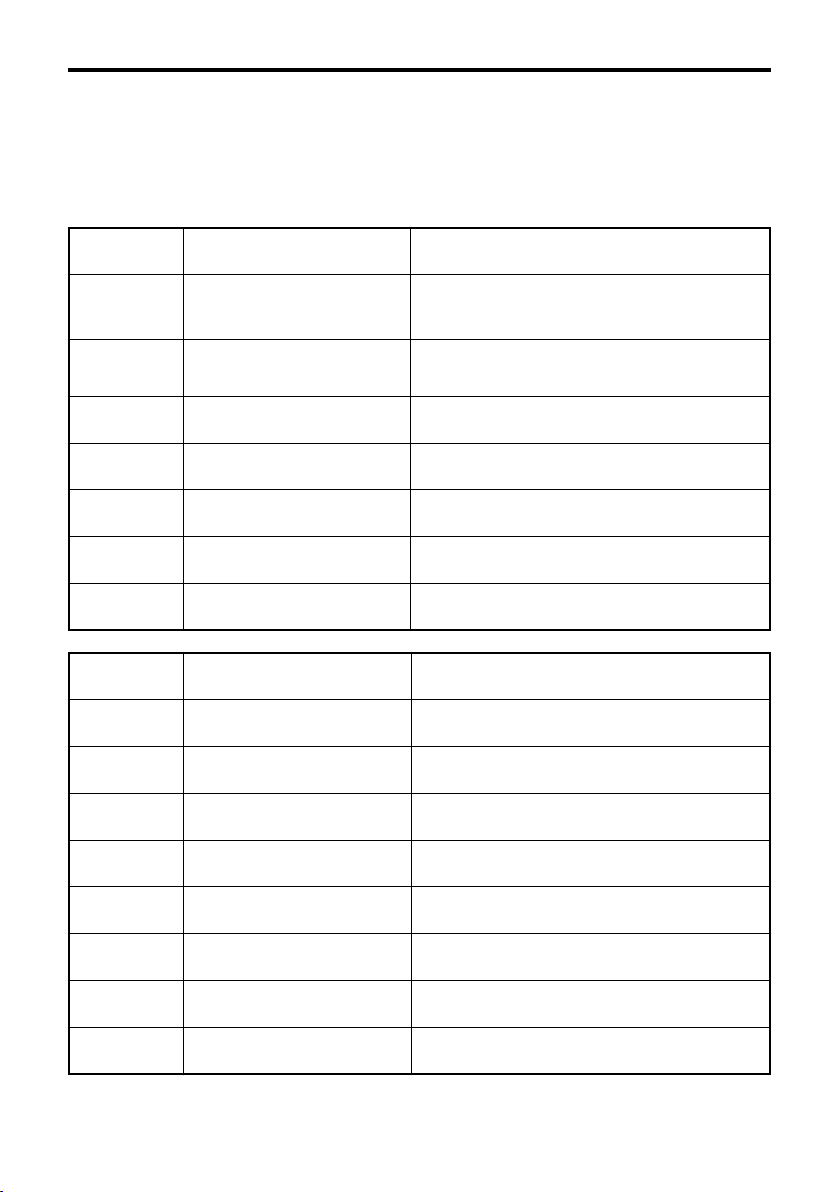
Hob Status Codes Fault Description Action
"r"
Max Power Setting reached (Only on 13 Amp
versions)
Reduce the power settings on other zones
"U"
Indictes no pan or suitable pan on the cook
zone
Ensure the correct pan size is selected and that the pan is suitable for
induction use
"o"
Indicates control knob has been left in th on
position.
Turn the control knob to the off position to reset
"H"
Residual Heater
"H" will switch off when the glass surface drops below 55
o
C
"c" Induction generator over temperature
Check the i
nstallation and free air flow to the hob are as per the installatio
n
instructions, Normal operation will resume when the appliance is cooled
"C"
Induction heater over temperature the product
will automaticlaly reset, indicates a overheated
pan.
Allow hob to cool and normal operation will resume
(8888) In all the
displays
Control knobs not turned on when electrical
supply is switched on at the cooker socket
Turns the controls Off before switching the power on to the appliance.
Refer to Troubleshooting chart. Also try
switching power off/on to the appliance
to reset the electronics, if the problems
persist call, the customer service hotline
for further assistance.
Appliance Errors &
Alarms
Fault Description
F / - Knob control fault
Turn the controls to the off postion and turn the power off and back on to
reset the system
F / L Knob control limits fault
Turn the controls to the off postion and turn the power off and back on to
reset the system
F / E User interface temperature sensor (NTC) error
Allow the hob to cool. Turn the controls to the off postion and turn the
power off and back on to reset the system
F / t User interface temperature se
nsor (NTC) error
Allow the hob to cool. Turn the controls to the off postion and turn the
power off and back on to reset the system
F / c User interface overtemperature Remove hot pans from the display areas and allow the hob to cool
F / H EEPROM error
Allow the hob to cool. Turn the controls to the off postion and turn the
power off and back on to reset the system
F / J Knob control fault
Allow the hob to cool. Turn the controls to the off postion and turn the
power off and back on to res
et the system
F / 0 User interface microcontroller fault
Allow the hob to cool. Turn the controls to the off postion and turn the
power off and back on to reset the system
USING THE HOB - INDUCTION
Heater Errors &
Alarms
Fault Description
Turn the controls to the off postion and turn the power off and back on to
reset the system
F / 5 Communication error
Turn the controls to the off postion and turn the power off and back on to
reset the system
F / 1
Induction heater temperature sensor (NTC)
error
Turn the controls to the off postion and turn the power off and back on to
reset the system
F / 2
Induction heater temperature sensor (NTC)
error
Turn the controls to the o
ff postion and turn the power off and back on to
reset the system
F / 8
Induction heater temperature sensor (NTC)
error
Turn the controls to the off postion and turn the power off and back on to
reset the system
F / 7
Induction heater temperature sensor (NTC)
error
Turn the controls to the off postion and turn the power off and back on to
reset the system
F / 9 Induction generator relay error
Turn the controls to the off postion and turn the power off and back on to
res
et the system
F / 3
Induction generator heatsink temperature
sensor (NTC) error
Turn the controls to the off postion and turn the power off and back on to
reset the system
F / 4
Induction generator heatsink temperature
sensor (NTC) error
Turn the controls to the off postion and turn the power off and back on to
reset the system
F / 6 Mains zero crossing loss
Ask your installer to confirm the correct connection to the power supply,
ensuring the required links are in place.
USING THE GRILL - ELECTRIC
Caution: Accessible parts may be
hot when the grill is used - young
children should be kept away.
If cleaning the grill pan when it is hot, use
oven gloves to move it.
Food for grilling should be positioned
centrally on the trivet.
Using the grill
Important: The grill door must be fully
open when the grill is used.
Open the grill door. Turn the control knob
to the required setting. For best cooking
results, we recommend that you preheat
the dual grill for 3 minutes and the single
grill for 5 minutes.
For grilling small quantities of food, the
centre (economy) grill can be used with
the grill trivet inverted. For large quan-
tites of food, the full grill can be used.
Push the grill pan towards the back of the
shelf, to position it under the grill.
The speed of grilling can be controlled by
adjusting the grill setting or by selecting a
higher or lower shelf position. For toast-
ing, and for grilling foods such as bacon,
sausages or steaks, use a higher shelf
position. For thicker foods such as chops
or chicken joint pieces, use a middle to
low shelf position.
The grill trivet, inside the grill pan, can be
inverted to give a high or low position, or
it may be removed.
To switch off, turn the control knob to the
off position.
Using aluminium foil
Using aluminium foil to cover the grill pan,
or putting items wrapped in foil under the
grillcreatesarehazard.
The cooling fan
When the grill is switched on, the cool-
ing fan comes on to keep the fascia and
control knobs cool during grilling. The fan
may continue to operate for a period after
the grill has been switched off.
During use the fan may cycle on and off,
this is normal.
or
Full grill at 1/4
power
Centre grill at full
power
Full grill area at
full power
7.101

USING THE TOP OVEN - ELECTRIC (if tted)
When you are cooking keep children
away from the vicinity of the oven.
Caution: The top element gets extremely
hot when in use, so take extra care to
avoid touching it.
The top oven is a conventional oven.
Note:Thetopovenisnotcontrolledby
the programmer.
To turn on the top oven
Turn the temperature control knob until
the required temperature is selected.
The red thermostat indicator will come on
until the selected temperature is reached,
and then go off; it will turn on and off
periodically as the thermostat operates to
maintain the selected temperature.
To switch off, return the top oven control
knob to the off position.
Important: Never put items directly on
the base of the oven, or cover the oven
base with foil, as this may cause the ele-
ment to overheat. Always position items
on the shelf.
The cooling fan
When the top oven is switched on, you
will hear the cooling fan come on - this
keeps the fascia and control knobs of the
appliance cool during cooking. The fan
may continue to operate for a period after
the oven control has been switched off.
Preheating
The oven must be preheated when cook-
ing frozen or chilled foods, and we rec-
ommend preheating for yeast mixtures,
batters,soufés,andwhiskedsponges.
Preheat the oven until the indicator light
switchesoffforthersttime,thiswill
take up to 15 minutes depending on the
temperature selected.
If you are not preheating the oven, the
cooking times in the following guide may
need to be extended, as they are based
on a preheated oven.
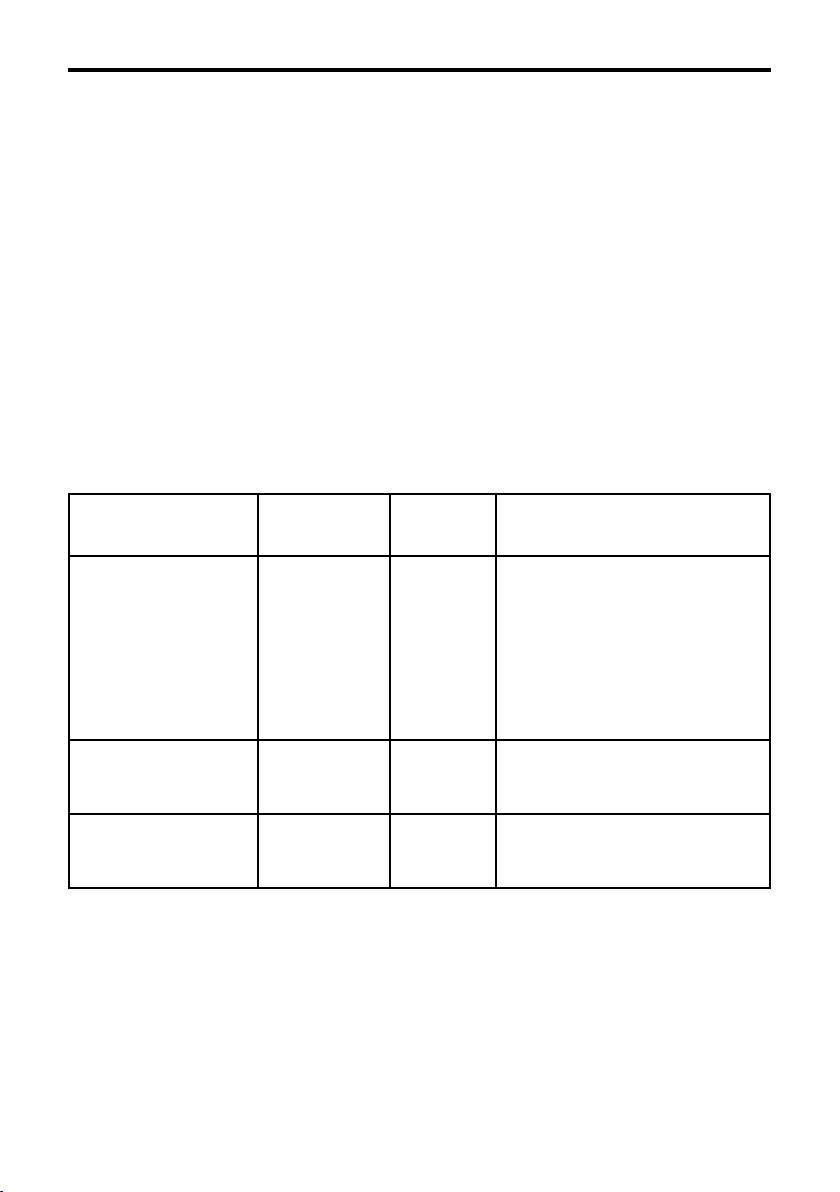
Shelf positions
There are either 3 or 4 shelf positions,
depending on which model you have
purchased. These are counted from the
bottom of the oven upwards, so shelf
position 1 is the lowest.
When cooking frozen or chilled food, use
the highest possible shelf position, while
allowing some clearance between the
food and the top element.
The oven shelf must be positioned with
the up-stand at the rear of the oven and
facing up. Position baking trays and roast-
ing tins on the middle of the shelves, and
leave one clear shelf position between
shelves, to allow for circulation of heat.
When using the top oven
As part of the cooking process, hot air is
expelled through a vent at the top of the
oven(s). When opening the oven door,
care should be taken to avoid any possible
contact with potentially hot air, since this
may cause discomfort to people with sen-
sitive skin. We recommend that you hold
the underneath of the oven door handle.
USING THE TOP OVEN - ELECTRIC (if tted)
TOP OVEN BAKING GUIDE
Cooking times
These times are based on cooking in a
preheated oven.
These cooking times are approximate,
because the size and type of cooking dish
willinuencetimeaspersonalprefer-
ences.
Shelf positions
As a general guide, when cooking frozen
or chilled food, use the highest pos-
sible shelf position, while allowing some
clearance between the food and the top
element. Follow the instructions given on
packaging.
Item Temperature
°C
Shelf
Position
Approximate cooking time
Small cakes
Victoria sandwich
(2 x 180mm / 7”)
Swiss roll
Semi rich fruit cake
(180mm x 7”)
Scones
Meringues
180
160
200
140
215
90 - 100
1
1
1
1
1
1
15 - 20 mins
20 - 25 mins
8 - 12 mins
2¼ - 2¾ hours
10 - 15 mins
2 - 3 hours
Shortcrust pastry
Puff/akypastry
Choux pasrty
200 - 210
200 - 210
200 - 210
1
1
1
Depends on size & type of cook-
ingdish&alsothelling
Biscuits
Sponge pudding
Milk pudding
160 - 200
150
140
3
1
1
10 - 20 mins
30 - 45 mins
2 - 2½ hours
Cooking temperatures
The temperature settings and time given
in the Baking Guides are based on dishes
made with block margarine. If soft tub
margarine is used, it may be necessary
to reduce the temperature setting. If a
recipe gives a different temperature set-
ting to that shown in the guide, the recipe
instruction should be followed.
Because the top oven is more compact,
it may be necessary to reduce cooking
temperaturesspeciedinrecipesbyupto
20°C.
Use the baking guide as a reference for
determining which temperatures to use.

USING THE OVEN/GRILL - mULTI-fUNcTION
MULTIFUNCTION OVEN (IF FITTED)
The multifunction oven may be controlled
by the programmer (see The Program-
mer/Clock for details).
Theprogrammer,ifttedmustbesetto
manual before it can be used, or pro-
grammed.
Switching on the multifunction oven
• Use the function control knob to
select the function you wish to use -
see the functions table for details.
Note:Youcanchangefunctionduring
cooking if you wish, as long as the
oven is in manual mode.
• Turn the temperature control knob to
the temperature you wish to use.
• The thermostat indicator will come on
to show that the oven is heating, and
once the temperature is achieved, it
will go out.
• To switch off the oven, simply turn
thecontrolknobbacktothe‘•‘posi-
tion.
• The cooling fan may come on during
use, and may continue to run for
some time afterwards.
FANNED OVEN (IF FITTED)
Switching on the fanned oven
• Use the main oven control to turn
your oven on, and select your tem-
perature.
• The thermostat indicator will come on
to show that the oven is heating, and
once the temperature is achieved, it
will go out.
• To switch off the main oven, simply
turnthecontrolknobbacktothe‘•‘
position.
• The cooling fan will come on during
use, and may continue to run for
some time afterwards.
i
Important: Never place food, or
dishes on the base of the main oven,
the element is here and it will cause
over heating.
Oven & Grill Functions
Main Oven Func-
tion
Recommended Uses
Oven & Grill Functions
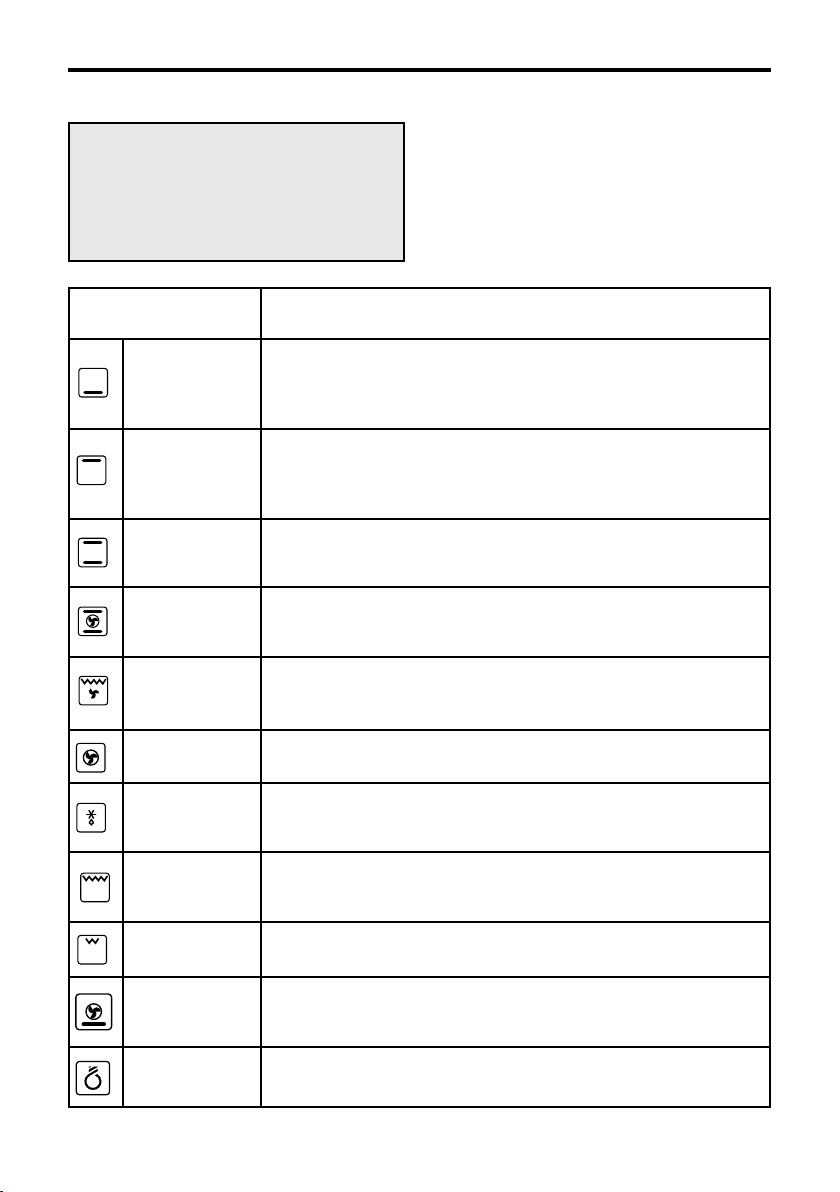
Main Oven Function Recommended Uses
Base Heat Only Used to finish off the bases of food following cooking using the conventional
or fanned modes. The base heat can be used to provide additional
browning for pizzas, pies and quiche. Use this function towards the end of
cooking.
Top Heat Only The heat is ideal from browning off the tops of food as it is not as fierce as
the grill following conventional or fanned cooking. Provides additional
browning for dishes like Lasagna or Cauliflower cheese. Use this function
towards the end of
cooking.
Conventional Oven This function is ideal for traditional roasting. The meat is placed in the
middle of the oven, roast potatoes towards the top.
Intensive Bake Suitable for food with a high moisture content, such as quiche, bread and
cheesecake. It also eliminates the need for baking pastry blind.
Fanned Grill The fan allows the heat to circulate around the food. Ideal for thinner foods
such as bacon, fish and gammon steaks. Foods do not require turning. Use
with the oven door closed.
Fanned Oven The even temperature in the oven makes this function suitable for batch
baking, or batch cooking foods.
Defrost To defrost foods, such as cream cakes/gateaux, use with the oven door
closed. For cooling dishes prior to refrigeration, leave the door open.
Dual Grill This function cooks food from the top and is ideal for a range of food from
toast to steaks. As the whole grill is working, you can cook larger quantities
of food.
Single Grill For smaller quantities of food, but is still ideal for
anything from toast to steaks.
Base Heat with Fan Used to cook open pies (such as mince pies) the base element ensures that
the base is cooked while the fan allows the air to circulate around the filling
- without being too intensive.
Lights only Use when the oven is switched off and cold to aid cleaning the oven cavity.
The chart below details all of the functions which are available. Your oven may
not have all of the functions shown here.
27
Base Heat Only
Usedtonishoffthebasesoffoodfollowingcookingusingthe
conventional or fanned modes. The base heat can be used to
provide additional browning for pizzas, pies and quiche. Use this
function towards the end of cooking.
Oven & Grill Functions
Main Oven Function Recommended Uses
Base Heat Only Used to finish off the bases of food following cooking using the conventional
or fanned modes. The base heat can be used to provide additional
browning for pizzas, pies and quiche. Use this function towards the end of
cooking.
Top Heat Only The heat is ideal from browning off the tops of food as it is not as fierce as
the grill following conventional or fanned cooking. Provides additional
browning for dishes like Lasagna or Cauliflower cheese. Use this function
towards the end of
cooking.
Conventional Oven This function is ideal for traditional roasting. The meat is placed in the
middle of the oven, roast potatoes towards the top.
Intensive Bake Suitable for food with a high moisture content, such as quiche, bread and
cheesecake. It also eliminates the need for baking pastry blind.
Fanned Grill The fan allows the heat to circulate around the food. Ideal for thinner foods
such as bacon, fish and gammon steaks. Foods do not require turning. Use
with the oven door closed.
Fanned Oven The even temperature in the oven makes this function suitable for batch
baking, or batch cooking foods.
Defrost To defrost foods, such as cream cakes/gateaux, use with the oven door
closed. For cooling dishes prior to refrigeration, leave the door open.
Dual Grill This function cooks food from the top and is ideal for a range of food from
toast to steaks. As the whole grill is working, you can cook larger quantities
of food.
Single Grill For smaller quantities of food, but is still ideal for
anything from toast to steaks.
Base Heat with Fan Used to cook open pies (such as mince pies) the base element ensures that
the base is cooked while the fan allows the air to circulate around the filling
- without being too intensive.
Lights only Use when the oven is switched off and cold to aid cleaning the oven cavity.
The chart below details all of the functions which are available. Your oven may
not have all of the functions shown here.
27
Top Heat Only
The heat is ideal from browning off the tops of food as it is not
aserceasthegrillfollowingconventionalorfannedcooking.
Provides additional browning for dishes like Lasagna or Cauli
-
owercheese.Usethisfunctiontowardstheendofcooking.
Oven & Grill Functions
Main Oven Function Recommended Uses
Base Heat Only Used to finish off the bases of food following cooking using the conventional
or fanned modes. The base heat can be used to provide additional
browning for pizzas, pies and quiche. Use this function towards the end of
cooking.
Top Heat Only The heat is ideal from browning off the tops of food as it is not as fierce as
the grill following conventional or fanned cooking. Provides additional
browning for dishes like Lasagna or Cauliflower cheese. Use this function
towards the end of
cooking.
Conventional Oven This function is ideal for traditional roasting. The meat is placed in the
middle of the oven, roast potatoes towards the top.
Intensive Bake Suitable for food with a high moisture content, such as quiche, bread and
cheesecake. It also eliminates the need for baking pastry blind.
Fanned Grill The fan allows the heat to circulate around the food. Ideal for thinner foods
such as bacon, fish and gammon steaks. Foods do not require turning. Use
with the oven door closed.
Fanned Oven The even temperature in the oven makes this function suitable for batch
baking, or batch cooking foods.
Defrost To defrost foods, such as cream cakes/gateaux, use with the oven door
closed. For cooling dishes prior to refrigeration, leave the door open.
Dual Grill This function cooks food from the top and is ideal for a range of food from
toast to steaks. As the whole grill is working, you can cook larger quantities
of food.
Single Grill For smaller quantities of food, but is still ideal for
anything from toast to steaks.
Base Heat with Fan Used to cook open pies (such as mince pies) the base element ensures that
the base is cooked while the fan allows the air to circulate around the filling
- without being too intensive.
Lights only Use when the oven is switched off and cold to aid cleaning the oven cavity.
The chart below details all of the functions which are available. Your oven may
not have all of the functions shown here.
27
Conventional
Oven
This function is ideal for traditional roasting. The meat is placed
in the middle of the oven, roast potatoes towards the top.
Oven & Grill Functions
Main Oven Function Recommended Uses
Base Heat Only Used to finish off the bases of food following cooking using the conventional
or fanned modes. The base heat can be used to provide additional
browning for pizzas, pies and quiche. Use this function towards the end of
cooking.
Top Heat Only The heat is ideal from browning off the tops of food as it is not as fierce as
the grill following conventional or fanned cooking. Provides additional
browning for dishes like Lasagna or Cauliflower cheese. Use this function
towards the end of
cooking.
Conventional Oven This function is ideal for traditional roasting. The meat is placed in the
middle of the oven, roast potatoes towards the top.
Intensive Bake Suitable for food with a high moisture content, such as quiche, bread and
cheesecake. It also eliminates the need for baking pastry blind.
Fanned Grill The fan allows the heat to circulate around the food. Ideal for thinner foods
such as bacon, fish and gammon steaks. Foods do not require turning. Use
with the oven door closed.
Fanned Oven The even temperature in the oven makes this function suitable for batch
baking, or batch cooking foods.
Defrost To defrost foods, such as cream cakes/gateaux, use with the oven door
closed. For cooling dishes prior to refrigeration, leave the door open.
Dual Grill This function cooks food from the top and is ideal for a range of food from
toast to steaks. As the whole grill is working, you can cook larger quantities
of food.
Single Grill For smaller quantities of food, but is still ideal for
anything from toast to steaks.
Base Heat with Fan Used to cook open pies (such as mince pies) the base element ensures that
the base is cooked while the fan allows the air to circulate around the filling
- without being too intensive.
Lights only Use when the oven is switched off and cold to aid cleaning the oven cavity.
The chart below details all of the functions which are available. Your oven may
not have all of the functions shown here.
27
Intensive Bake
Suitable for food with a high moisture content, such as quiche,
bread and cheesecake. It also eliminates the need for baking
pastry blind.
Oven & Grill Functions
Main Oven Function Recommended Uses
Base Heat Only Used to finish off the bases of food following cooking using the conventional
or fanned modes. The base heat can be used to provide additional
browning for pizzas, pies and quiche. Use this function towards the end of
cooking.
Top Heat Only The heat is ideal from browning off the tops of food as it is not as fierce as
the grill following conventional or fanned cooking. Provides additional
browning for dishes like Lasagna or Cauliflower cheese. Use this function
towards the end of
cooking.
Conventional Oven This function is ideal for traditional roasting. The meat is placed in the
middle of the oven, roast potatoes towards the top.
Intensive Bake Suitable for food with a high moisture content, such as quiche, bread and
cheesecake. It also eliminates the need for baking pastry blind.
Fanned Grill The fan allows the heat to circulate around the food. Ideal for thinner foods
such as bacon, fish and gammon steaks. Foods do not require turning. Use
with the oven door closed.
Fanned Oven The even temperature in the oven makes this function suitable for batch
baking, or batch cooking foods.
Defrost To defrost foods, such as cream cakes/gateaux, use with the oven door
closed. For cooling dishes prior to refrigeration, leave the door open.
Dual Grill This function cooks food from the top and is ideal for a range of food from
toast to steaks. As the whole grill is working, you can cook larger quantities
of food.
Single Grill For smaller quantities of food, but is still ideal for
anything from toast to steaks.
Base Heat with Fan Used to cook open pies (such as mince pies) the base element ensures that
the base is cooked while the fan allows the air to circulate around the filling
- without being too intensive.
Lights only Use when the oven is switched off and cold to aid cleaning the oven cavity.
The chart below details all of the functions which are available. Your oven may
not have all of the functions shown here.
27
Fanned Grill
The fan allows the heat to circulate around the food. Ideal for
thinnerfoodssuchasbacon,shandgammonsteaks.Foodsdo
not require turning. Use with the oven door closed.
Oven & Grill Functions
Main Oven Function Recommended Uses
Base Heat Only Used to finish off the bases of food following cooking using the conventional
or fanned modes. The base heat can be used to provide additional
browning for pizzas, pies and quiche. Use this function towards the end of
cooking.
Top Heat Only The heat is ideal from browning off the tops of food as it is not as fierce as
the grill following conventional or fanned cooking. Provides additional
browning for dishes like Lasagna or Cauliflower cheese. Use this function
towards the end of
cooking.
Conventional Oven This function is ideal for traditional roasting. The meat is placed in the
middle of the oven, roast potatoes towards the top.
Intensive Bake Suitable for food with a high moisture content, such as quiche, bread and
cheesecake. It also eliminates the need for baking pastry blind.
Fanned Grill The fan allows the heat to circulate around the food. Ideal for thinner foods
such as bacon, fish and gammon steaks. Foods do not require turning. Use
with the oven door closed.
Fanned Oven The even temperature in the oven makes this function suitable for batch
baking, or batch cooking foods.
Defrost To defrost foods, such as cream cakes/gateaux, use with the oven door
closed. For cooling dishes prior to refrigeration, leave the door open.
Dual Grill This function cooks food from the top and is ideal for a range of food from
toast to steaks. As the whole grill is working, you can cook larger quantities
of food.
Single Grill For smaller quantities of food, but is still ideal for
anything from toast to steaks.
Base Heat with Fan Used to cook open pies (such as mince pies) the base element ensures that
the base is cooked while the fan allows the air to circulate around the filling
- without being too intensive.
Lights only Use when the oven is switched off and cold to aid cleaning the oven cavity.
The chart below details all of the functions which are available. Your oven may
not have all of the functions shown here.
27
Fanned Oven
The even temperature in the oven makes this function suitable
for batch baking, or batch cooking foods.
Oven & Grill Functions
Main Oven Function Recommended Uses
Base Heat Only Used to finish off the bases of food following cooking using the conventional
or fanned modes. The base heat can be used to provide additional
browning for pizzas, pies and quiche. Use this function towards the end of
cooking.
Top Heat Only The heat is ideal from browning off the tops of food as it is not as fierce as
the grill following conventional or fanned cooking. Provides additional
browning for dishes like Lasagna or Cauliflower cheese. Use this function
towards the end of
cooking.
Conventional Oven This function is ideal for traditional roasting. The meat is placed in the
middle of the oven, roast potatoes towards the top.
Intensive Bake Suitable for food with a high moisture content, such as quiche, bread and
cheesecake. It also eliminates the need for baking pastry blind.
Fanned Grill The fan allows the heat to circulate around the food. Ideal for thinner foods
such as bacon, fish and gammon steaks. Foods do not require turning. Use
with the oven door closed.
Fanned Oven The even temperature in the oven makes this function suitable for batch
baking, or batch cooking foods.
Defrost To defrost foods, such as cream cakes/gateaux, use with the oven door
closed. For cooling dishes prior to refrigeration, leave the door open.
Dual Grill This function cooks food from the top and is ideal for a range of food from
toast to steaks. As the whole grill is working, you can cook larger quantities
of food.
Single Grill For smaller quantities of food, but is still ideal for
anything from toast to steaks.
Base Heat with Fan Used to cook open pies (such as mince pies) the base element ensures that
the base is cooked while the fan allows the air to circulate around the filling
- without being too intensive.
Lights only Use when the oven is switched off and cold to aid cleaning the oven cavity.
The chart below details all of the functions which are available. Your oven may
not have all of the functions shown here.
27
Defrost
To defrost foods, such as cream cakes/gateaux, use with the
oven door closed. For cooling dishes prior to refrigeration, leave
the door open.
Oven & Grill Functions
Main Oven Function Recommended Uses
Base Heat Only Used to finish off the bases of food following cooking using the conventional
or fanned modes. The base heat can be used to provide additional
browning for pizzas, pies and quiche. Use this function towards the end of
cooking.
Top Heat Only The heat is ideal from browning off the tops of food as it is not as fierce as
the grill following conventional or fanned cooking. Provides additional
browning for dishes like Lasagna or Cauliflower cheese. Use this function
towards the end of
cooking.
Conventional Oven This function is ideal for traditional roasting. The meat is placed in the
middle of the oven, roast potatoes towards the top.
Intensive Bake Suitable for food with a high moisture content, such as quiche, bread and
cheesecake. It also eliminates the need for baking pastry blind.
Fanned Grill The fan allows the heat to circulate around the food. Ideal for thinner foods
such as bacon, fish and gammon steaks. Foods do not require turning. Use
with the oven door closed.
Fanned Oven The even temperature in the oven makes this function suitable for batch
baking, or batch cooking foods.
Defrost To defrost foods, such as cream cakes/gateaux, use with the oven door
closed. For cooling dishes prior to refrigeration, leave the door open.
Dual Grill This function cooks food from the top and is ideal for a range of food from
toast to steaks. As the whole grill is working, you can cook larger quantities
of food.
Single Grill For smaller quantities of food, but is still ideal for
anything from toast to steaks.
Base Heat with Fan Used to cook open pies (such as mince pies) the base element ensures that
the base is cooked while the fan allows the air to circulate around the filling
- without being too intensive.
Lights only Use when the oven is switched off and cold to aid cleaning the oven cavity.
The chart below details all of the functions which are available. Your oven may
not have all of the functions shown here.
27
Dual Grill
This function cooks food from the top and is ideal for a range of
food from toast to steaks. As the whole grill is working, you can
cook larger quantities of food.
Oven & Grill Functions
Main Oven Function Recommended Uses
Base Heat Only Used to finish off the bases of food following cooking using the conventional
or fanned modes. The base heat can be used to provide additional
browning for pizzas, pies and quiche. Use this function towards the end of
cooking.
Top Heat Only The heat is ideal from browning off the tops of food as it is not as fierce as
the grill following conventional or fanned cooking. Provides additional
browning for dishes like Lasagna or Cauliflower cheese. Use this function
towards the end of
cooking.
Conventional Oven This function is ideal for traditional roasting. The meat is placed in the
middle of the oven, roast potatoes towards the top.
Intensive Bake Suitable for food with a high moisture content, such as quiche, bread and
cheesecake. It also eliminates the need for baking pastry blind.
Fanned Grill The fan allows the heat to circulate around the food. Ideal for thinner foods
such as bacon, fish and gammon steaks. Foods do not require turning. Use
with the oven door closed.
Fanned Oven The even temperature in the oven makes this function suitable for batch
baking, or batch cooking foods.
Defrost To defrost foods, such as cream cakes/gateaux, use with the oven door
closed. For cooling dishes prior to refrigeration, leave the door open.
Dual Grill This function cooks food from the top and is ideal for a range of food from
toast to steaks. As the whole grill is working, you can cook larger quantities
of food.
Single Grill For smaller quantities of food, but is still ideal for
anything from toast to steaks.
Base Heat with Fan Used to cook open pies (such as mince pies) the base element ensures that
the base is cooked while the fan allows the air to circulate around the filling
- without being too intensive.
Lights only Use when the oven is switched off and cold to aid cleaning the oven cavity.
The chart below details all of the functions which are available. Your oven may
not have all of the functions shown here.
27
Single Grill
For smaller quantities of food, but is still ideal for anything from
toast to steaks.
Oven & Grill Functions
Main Oven Function Recommended Uses
Base Heat Only Used to finish off the bases of food following cooking using the conventional
or fanned modes. The base heat can be used to provide additional
browning for pizzas, pies and quiche. Use this function towards the end of
cooking.
Top Heat Only The heat is ideal from browning off the tops of food as it is not as fierce as
the grill following conventional or fanned cooking. Provides additional
browning for dishes like Lasagna or Cauliflower cheese. Use this function
towards the end of
cooking.
Conventional Oven This function is ideal for traditional roasting. The meat is placed in the
middle of the oven, roast potatoes towards the top.
Intensive Bake Suitable for food with a high moisture content, such as quiche, bread and
cheesecake. It also eliminates the need for baking pastry blind.
Fanned Grill The fan allows the heat to circulate around the food. Ideal for thinner foods
such as bacon, fish and gammon steaks. Foods do not require turning. Use
with the oven door closed.
Fanned Oven The even temperature in the oven makes this function suitable for batch
baking, or batch cooking foods.
Defrost To defrost foods, such as cream cakes/gateaux, use with the oven door
closed. For cooling dishes prior to refrigeration, leave the door open.
Dual Grill This function cooks food from the top and is ideal for a range of food from
toast to steaks. As the whole grill is working, you can cook larger quantities
of food.
Single Grill For smaller quantities of food, but is still ideal for
anything from toast to steaks.
Base Heat with Fan Used to cook open pies (such as mince pies) the base element ensures that
the base is cooked while the fan allows the air to circulate around the filling
- without being too intensive.
Lights only Use when the oven is switched off and cold to aid cleaning the oven cavity.
The chart below details all of the functions which are available. Your oven may
not have all of the functions shown here.
27
Base Heat with
Fan
Used to cook open pies (such as mince pies) the base element
ensures that the base is cooked while the fan allows the air to
circulatearoundthelling-withoutbeingtoointensive.
Oven & Grill Functions
Main Oven Function Recommended Uses
Base Heat Only Used to finish off the bases of food following cooking using the conventional
or fanned modes. The base heat can be used to provide additional
browning for pizzas, pies and quiche. Use this function towards the end of
cooking.
Top Heat Only The heat is ideal from browning off the tops of food as it is not as fierce as
the grill following conventional or fanned cooking. Provides additional
browning for dishes like Lasagna or Cauliflower cheese. Use this function
towards the end of
cooking.
Conventional Oven This function is ideal for traditional roasting. The meat is placed in the
middle of the oven, roast potatoes towards the top.
Intensive Bake Suitable for food with a high moisture content, such as quiche, bread and
cheesecake. It also eliminates the need for baking pastry blind.
Fanned Grill The fan allows the heat to circulate around the food. Ideal for thinner foods
such as bacon, fish and gammon steaks. Foods do not require turning. Use
with the oven door closed.
Fanned Oven The even temperature in the oven makes this function suitable for batch
baking, or batch cooking foods.
Defrost To defrost foods, such as cream cakes/gateaux, use with the oven door
closed. For cooling dishes prior to refrigeration, leave the door open.
Dual Grill This function cooks food from the top and is ideal for a range of food from
toast to steaks. As the whole grill is working, you can cook larger quantities
of food.
Single Grill For smaller quantities of food, but is still ideal for
anything from toast to steaks.
Base Heat with Fan Used to cook open pies (such as mince pies) the base element ensures that
the base is cooked while the fan allows the air to circulate around the filling
- without being too intensive.
Lights only Use when the oven is switched off and cold to aid cleaning the oven cavity.
The chart below details all of the functions which are available. Your oven may
not have all of the functions shown here.
27
Lights Only
Use when the oven is switched off and cold to aid cleaning the
oven cavity.
The chart below details all of the
functions which are available. Your
oven may not have all of the functions
shown here.
USING THE OVEN/GRILL - MULTI-FUNCTION
Before you start grilling. . . .
Before you use the grill, make sure you
have placed the grill shelf in the posi-
tion you need as once the grill is on you
may injure yourself if you try to move the
shelf.
FANNED GRILL (IF FITTED)
• This grill function must be used with
the door closed.
• Turn the selector control knob to the
grill setting you require (conventional
or fanned).
• Turn the temperature selector to heat
setting you require in a similar way to
the selecting the oven temperature.
• Note:Donotsetthetemperatureany
higher than 220°C.
DUAL/SINGLE GRILL (IF FITTED)
• This grill function can be used with
the door open, or closed.
• Turn the selector control knob to the
grill setting.
• Turn the grill control knob to either
the dual or single grill setting. Then
select the heat setting.
To switch off, return the control knobs to
the ‘off’ position.
The cooling fan may come on during use,
and may continue to run for some time
afterwards.
To adjust your results, you can turn the
grid over, or remove it altogether.
If your grill is a dual grill:
• The dual grill uses all of the top ele-
ment and is ideal for grilling large
quantities of food.
• The single grill uses part of the ele-
ment only, and is better suited to grill
smaller amounts of food.
• When grilling with the door closed
only the inner part of your grill is
used.
The grill neon
When grilling with the door closed, the
neon will cycle on and off as the tempera-
ture is maintained inside the cavity. If the
door is open, it will not cycle on and off.
i
Warning: Accessible parts may
become hot when the grill is in use.
Children should be kept away.
i
Types of grill
Fixed rategrill:hasafull‘on’setting
and ‘off’.
Variable rategrill:hasadjustableheat
settings
1 (low) to 8 (high) or 5 (high) - de-
pending on the model.
Single grill:hasonegrillelement.The
grill pan trivet MUST be inverted when
using single grill in the main oven.
Dualgrill: has two grill elements which
can be used together, or as a single
grill.
i
Forbestresults:
Pre-heat the single grill for 5 minutes
and the dual grill for 3 minutes.
USING THE OVEN/GRILL - MULTI-FUNCTION
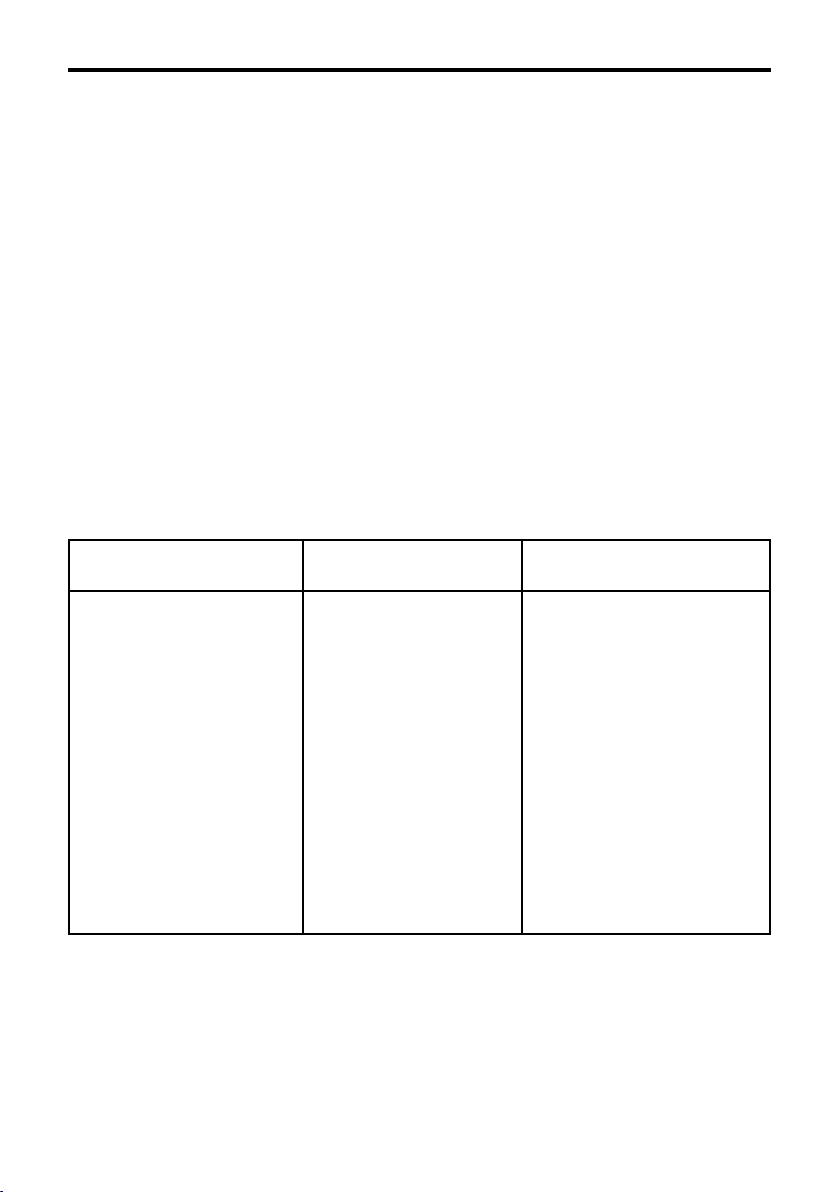
Fanned oven guide
• Some adjustment will have to be
made to conventional cooking tem-
peratures.
• The table below shows conven-
tional cooking temperatures, fanned
temperatures and gas marks. For op-
timum results using the fanned oven
setting, conventional temperatures
need to be converted to the fanned
oven temperatures.
• For example and item which would
cook at 180°C will now cook at the
fanned oven temperature of 160°C.
• Thisisahighefciencyoven,you
may notice an emission of steam
when the door is opened.
• When cooking chilled or frozen foods,
use the recommended cooking times
and temperature on the packaging.
Always make sure the food is piping
hot throughout before serving.
• There are no zones of heat, and no
avourtransferwhenusingafanned
oven - allowing you to cook a greater
variety of foods together.
• If you are cooking on more than
one shelf, you may need to slightly
increase the cooking time.
• Always make sure that there is
enough space between dishes, to
allow food to rise, and to air to
circulate.
Conventional temp (°C)
‘A’ Efciency oven
(°C)
Gas Mark
100
110
130
140
150
160
180 - 190
200
220
230
250
100
110
120
130
140
150
160
170
180
190
200
1/4
1/4
1/2
1
2
3
4 - 5
6
7
8
9
USING THE OVEN/GRILL - MULTI-FUNCTION
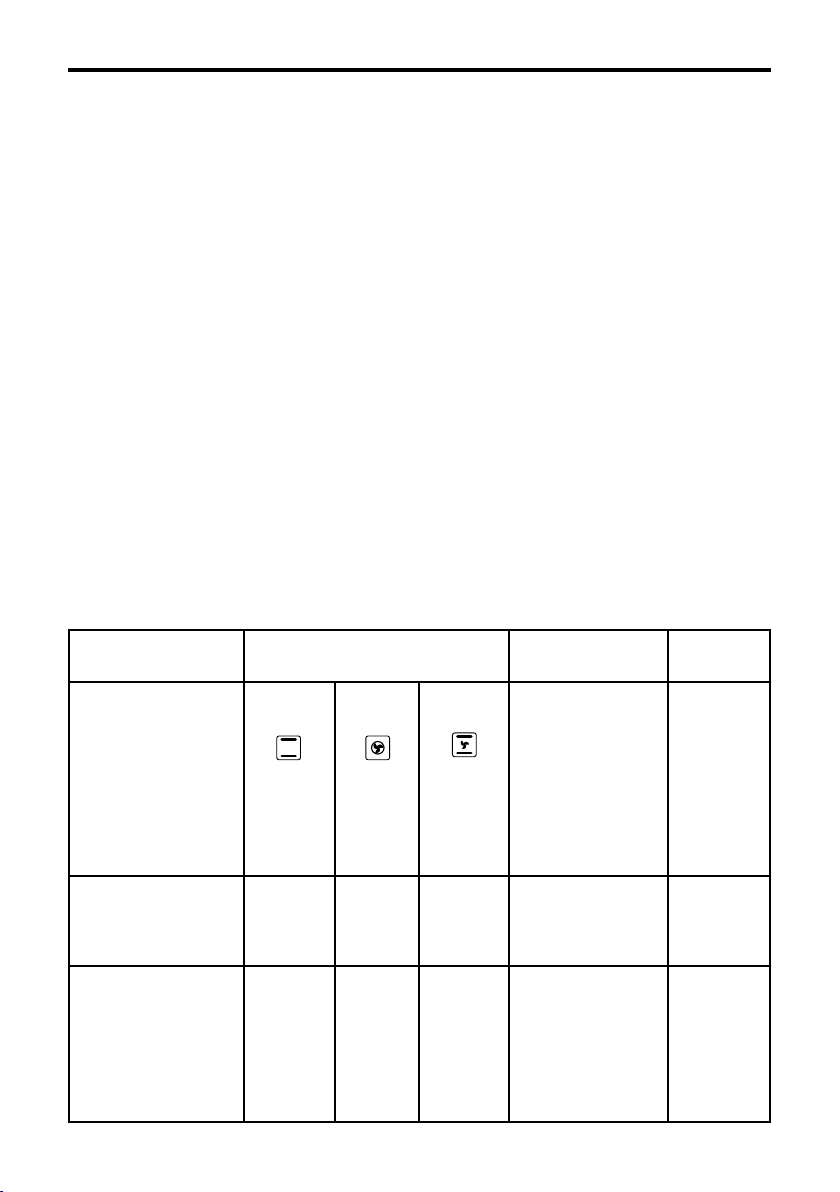
COOKING GUIDE
Pre-heating
To get the best results from your oven,
we recommend pre-heating for around 5
to 15 minutes before placing your dishes
in. This is especially important for items
which are chilled, frozen, batter based,
yeast based or whisked sponges.
If you are using a fanned function, you
should still preheat but for a shorter time.
The items in the cooking guide below are
based on a pre-heated oven, but can be
adjusted to take into account personal
taste.
Oven and bake-ware
Always use high quality trays and tins
for cooking. Poor quality tins and trays
can warp in the oven producing uneven
results.
Never use dishes which are cracked, dam-
aged or not oven proof as heating may
lead to shattering inside the oven.
OVEN FURNITURE
Oven shelves
The oven shelf must be positioned with
the upstand at the rear of the oven and
facing upwards.
Position baking trays and roasting tins on
the middle of the shelves, and leave one
clear shelf position between shelves, to
allow for circulation of heat.
Baking tray and roasting tins
For best cooked results and even brown-
ing, the recommended size baking trays
and roasting tins that should be used are
as follows;
Baking tray 350mm x 250mm
This size of baking tray will hold up to 12
small cakes.
Roasting tin 370mm x 320mm
We recommend that you use good quality
cookware. Poor quality trays and tins may
warp when heated, leading to uneven
baking results.
Food Type Temp. Setting °C Time Approx.
Shelf
Position
Cakes
Small cakes
Victoria sandwich
Semi rich fruit cake
Christmas cake
Conv
Pre-heating
To get the best results from your oven, we recommend
pre-heating for around 5 to 15 minutes before placing
your dishes in. This is especially important for items
which are chilled, frozen, batter based, yeast based or
whisked sponges.
If you are using a fanned function, you should still pre-
heat but for a shorter time.
The items in the cooking guide below are based on a
pre-heated oven, but can be adjusted to take into account
personal taste.
Oven and bakeware
Always use high quality trays and tins for cooking. Poor
quality tins and trays can warp in the oven producing
uneven results.
Never use dishes which are cracked, damaged or not
oven proof as heating may lead to shattering inside the
oven.
Food Type Temp.
Setting ˙C
Time
Approx.
Shelf
Position
Cakes
Small cakes
Victoria sandwich
Semi rich fruit cake
Christmas cake
Conv
190
180
150
150
Fanned
175
160
125
125
Intensive
-
-
-
-
15 - 25
20 - 30
2
1/2
- 3hrs
2
1/2
- 3hrs
7 & 13
7
5
3
Puddings
Bread & butter
pudding
Fruit crumble
170
200
150
175
-
-
45 - 1hr
40 - 1hr
9
9
Miscellaneous
Yorkshire pudding:
large
small
Shortcrust pastry
220
220
200
200
200
180
200
200
180
40 - 45
15 - 20
depends on
filling
11
12
top - middle
e
31
190
180
150
150
Fanned
Pre-heating
To get the best results from your oven, we recommend
pre-heating for around 5 to 15 minutes before placing
your dishes in. This is especially important for items
which are chilled, frozen, batter based, yeast based or
whisked sponges.
If you are using a fanned function, you should still pre-
heat but for a shorter time.
The items in the cooking guide below are based on a
pre-heated oven, but can be adjusted to take into account
personal taste.
Oven and bakeware
Always use high quality trays and tins for cooking. Poor
quality tins and trays can warp in the oven producing
uneven results.
Never use dishes which are cracked, damaged or not
oven proof as heating may lead to shattering inside the
oven.
Food Type Temp.
Setting ˙C
Time
Approx.
Shelf
Position
Cakes
Small cakes
Victoria sandwich
Semi rich fruit cake
Christmas cake
Conv
190
180
150
150
Fanned
175
160
125
125
Intensive
-
-
-
-
15 - 25
20 - 30
2
1/2
- 3hrs
2
1/2
- 3hrs
7 & 13
7
5
3
Puddings
Bread & butter
pudding
Fruit crumble
170
200
150
175
-
-
45 - 1hr
40 - 1hr
9
9
Miscellaneous
Yorkshire pudding:
large
small
Shortcrust pastry
220
220
200
200
200
180
200
200
180
40 - 45
15 - 20
depends on
filling
11
12
top - middle
e
31
175
160
125
125
Intensive
Pre-heating
To get the best results from your oven, we recommend
pre-heating for around 5 to 15 minutes before placing
your dishes in. This is especially important for items
which are chilled, frozen, batter based, yeast based or
whisked sponges.
If you are using a fanned function, you should still pre-
heat but for a shorter time.
The items in the cooking guide below are based on a
pre-heated oven, but can be adjusted to take into account
personal taste.
Oven and bakeware
Always use high quality trays and tins for cooking. Poor
quality tins and trays can warp in the oven producing
uneven results.
Never use dishes which are cracked, damaged or not
oven proof as heating may lead to shattering inside the
oven.
Food Type Temp.
Setting ˙C
Time
Approx.
Shelf
Position
Cakes
Small cakes
Victoria sandwich
Semi rich fruit cake
Christmas cake
Conv
190
180
150
150
Fanned
175
160
125
125
Intensive
-
-
-
-
15 - 25
20 - 30
2
1/2
- 3hrs
2
1/2
- 3hrs
7 & 13
7
5
3
Puddings
Bread & butter
pudding
Fruit crumble
170
200
150
175
-
-
45 - 1hr
40 - 1hr
9
9
Miscellaneous
Yorkshire pudding:
large
small
Shortcrust pastry
220
220
200
200
200
180
200
200
180
40 - 45
15 - 20
depends on
filling
11
12
top - middle
e
31
-
-
-
-
15 - 25
20 - 30
2½ - 3hrs
2½ - 3hrs
2 & 4
3
2
2
Puddings
Bread & butter
pudding
Fruit crumble
170
200
150
175
-
-
45 - 1hr
40 - 1hr
3
3
Miscellaneous
Yorkshirepudding:
large
small
Shortcrust pastry
220
220
200
200
200
180
200
200
180
40 - 45
15 - 20
dependsonlling
4 - 5
4 - 5
4 - 5
USING THE OVEN/GRILL - MULTI-FUNCTION
Roasting Guide
• Roasting times depend on the weight,
shape and texture of the meat and
personal preference. In order to
calculate the roasting time, weigh
the meat or poultry, including the
stufng,andfollowthetimesgiven
below.
• Frozen meat must be thoroughly
thawed before cooking. For large
joints, it is advisable to thaw over-
night.
• Frozen poultry must be thoroughly
thawed before cooking. The time
required depends on the size of the
bird-eg:alargeturkeymaytakeup
to 48 hours to thaw.
• When cooking stuffed meat or poul-
try, calculate the cooking time from
the total weight of the meat plus the
stufng.
• Cooking joints in foil, covered roast-
ers, lidded casseroles, or roasting
bags will help to reduce meat shrink-
age, give a more moist result and
may reduce fat splashing. However,
a slightly longer cooking times will
be required, add 5 - 10 minutes per
450g (1lb) to the calculated cooking
time. When using roasting bags do
not exceed the temperatures recom-
mended by the manufacturer, and do
not allow the roasting bag to touch
the sides or top of the oven.
• Use of a trivet with the roasting tin
will reduce fat splashing during open
roasting, and will help to keep the
oven interior clean.
• The use of a roasting tin larger then
that supplied is not advised, as this
may impair performance and lead to
extended cooking times.
Meat joints (including chicken) should
be roasted at 180 - 200°C Conven-
tional/ 160 - 180°C Fanned for 20 - 30
mins per 450g/1lb, plus 20 minutes on
shelf position 2.
USING THE OVEN/GRILL - MULTI-FUNCTION

Roasting Guide
Roast turkey
• Roasting turkey perfectly involves
cooking two different types of meat -
the delicate light breast meat, which
must not be allowed to dry out, and
the darker leg meat, which takes
longer to cook.
• The turkey must be roasted long
enough for the legs to cook, so
frequent basting is necessary. The
breast meat can be covered once
browned.
• Turkey should be roasted at 180°C -
190°C Conventional / 160°C - 180°C
Fanned for 20 mins per 1lb, plus 20
minutes.
• The turkey can be open roasted,
breast side down, for half of the cook
time, and then turned over for the
remainder of the cooking time.
• If the turkey is stuffed, add 5 minutes
per 1lb to the cooking time.
• If roasting turkey covered with foil,
add 5 minutes per 1lb to the cooking
time.
• To test if the turkey is cooked, push
aneskewerintothethickestpart
of the thigh. If the juices run clear,
the turkey is cooked. If the juices are
still pink, the turkey will need longer
cooking. Always make sure that the
turkey is cooked properly before serv-
ing.
Turkey Roasting times.
Most Turkeys are measured by the
kilogram. Timing should be calculated
ineitheroftheseways:
40 minutes per 1kg plus 10 minutes
per 1/4 kg.
or
20 minutes per 1lb, plus 20 minutes.
The maximum size Turkey for this ap-
plianceis:20lbsapproximately9kgs.
Please do not attempt to roast a
Turkey larger than this, as the results
cannot be guaranteed.
USING THE OVEN/GRILL - MULTI-FUNCTION
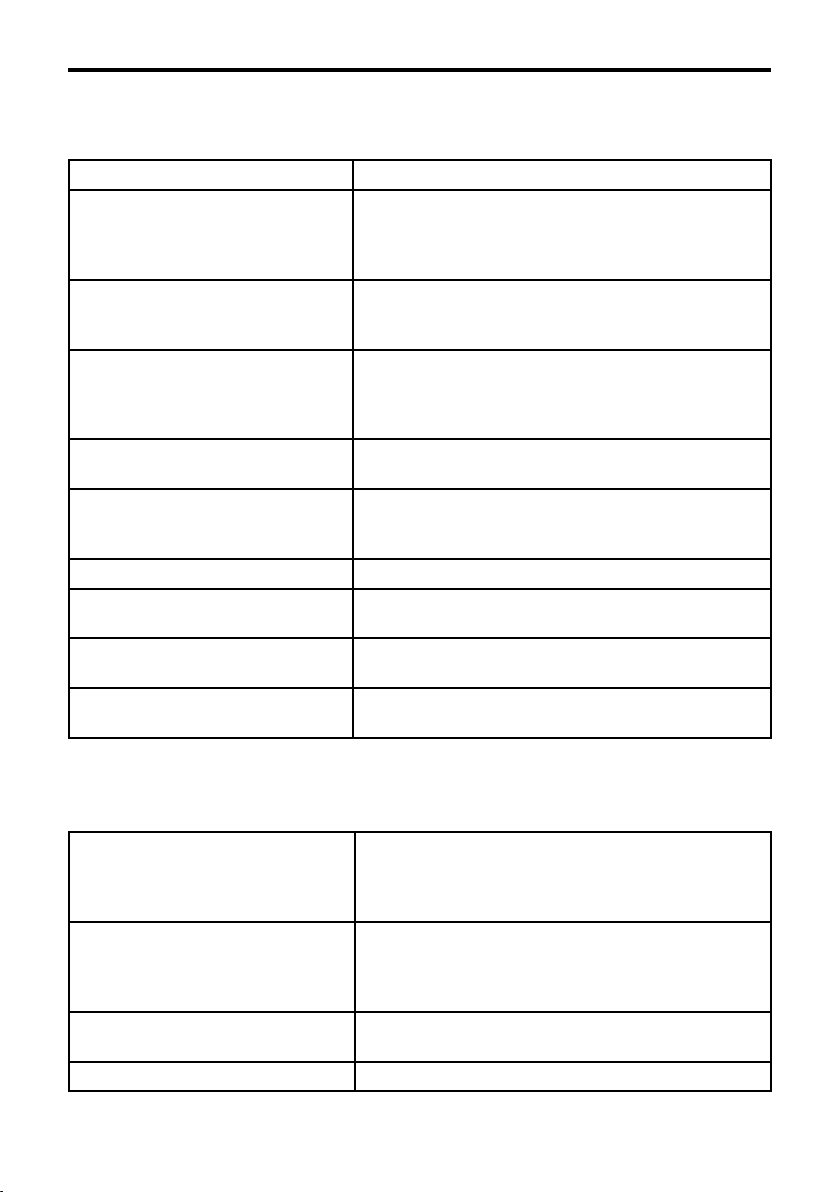
General Baking Guide
Trouble-shooting - fruit cakes
PROBLEM POSSIBLE CAUSE
Fruit sinking to the bottom
Low oven temperature which may cause the cake
to take longer to set, allowing the fruit to sink. Or,
too much liquid, or raising agent. The fruit may
not have been properly washed and dried.
Cake sinking / dipping in the
centre
Too much raising agent in the mixture. Too hot, or
too cool an oven. Or, not enough liquid or insuf-
cientcreaming.
Surface cracks
Too small a tin, or too much mixture in the tin.
Too much raising agent in the mix, plus not
enoughliquidorinsufcientcreaming.Theoven
may be too hot.
Hard outer crust with a damp
patch inside
Oven too hot, therefore the cake baked too
quickly.Toomuchsugar,orinsufcientliquid.
Burnt outside
Oven temperature too high. Oven too small for
thesizeofcake.Insufcientprotectionaroundthe
tin. Cake baked on too high a shelf.
Texture with pronounced holes. Too much raising agent. Flour unevenly mixed.
Texture too close and cake insuf-
cientlyrisen.
Not enough raising agent. Not enough liquid. Too
coolanoven.Insufcientcreaming.
Cake crumbles when cut
Not enough liquid. Baked for too long. Not enough
sugar. Too much baking agent.
Too dry
Overbaking.Insufcienteggorliquid.Toomuch
raising agent.
Trouble-shooting - sponge cakes
Domed top
Insufcientcreamingofmixture.Cakebakedon
too high a shelf position, or at too high a tem-
perature. Paper liners can cause the outer edge
not to rise and the centre to peak.
Hollowed / sunken top
Too much raising agent. Oven temperature too
low, or incorrect shelf position. Cake removed
from oven before it’s cooked. Use of soft tub
margarine.
Very pale, but cooked
Oven temperature too low. Baked too low in the
oven
Overowingtin Tin too small for the amount of mixture
USING THE OVEN/GRILL - MULTI-FUNCTION

Cooling and Defrosting Function
• To cool foods quickly straight after
cooking, but before refrigerating or
freezing, turn the oven control to the
defrost position, and open the door.
• To defrost frozen foods, turn the oven
control to the defrost position, place
the food in the centre of the oven
and close the door.
Defrosting times
• Smallorthinpiecesoffrozenshor
meat-eg;shllets,prawns,and
mince will take approximately 1 - 2
hours. Placing the food in a single
layer will reduce the thawing time.
• A medium sized casserole or stew will
take around 3 - 4 hours.
• A 1½kg / 3lb oven ready chicken
will take around 5 hours, remove the
giblets as soon as possible.
• Always check foods are thoroughly
defrosted before cooking.
Be safe
• Do not defrost stuffed poultry using
this method.
• Do not defrost larger joints of meat
and poultry over 2kg / 4lb using this
method.
• Never place uncooked food for de-
frosting next to cooked food which is
to be cooled, as this can lead to cross
contamination.
• Defrostingmeat,poultryandsh
speeded up using this method,
but make sure they are completely
thawed before cooking thoroughly.
• Place meat and poultry on a trivet in
a meat tin, to catch the juices from
the defrosting process.
USING THE OVEN/GRILL - MULTI-FUNCTION
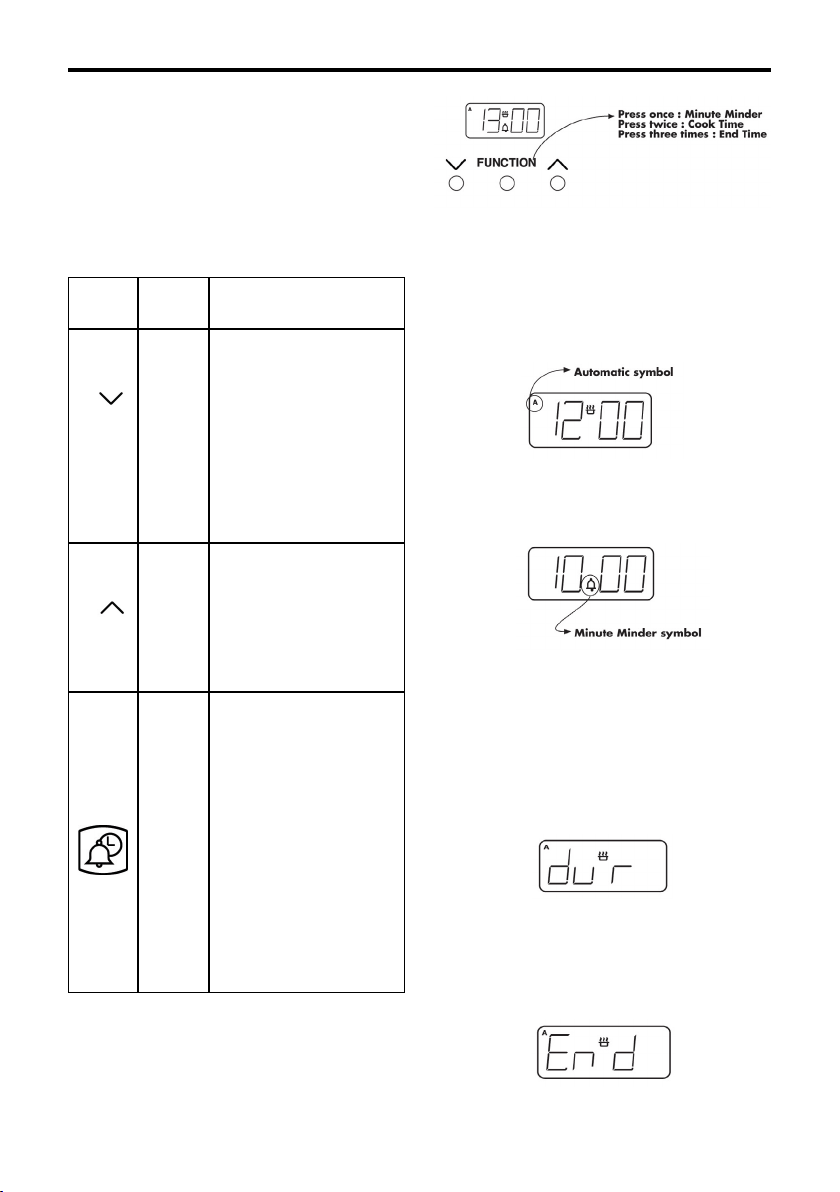
11.100
THE ALTERNATIVE PROGRAMMERS
There are two types of programmer cov-
ered in this section - push button & touch
control. Both programmers have the same
symbol variants & functions but may vary
in their method of operation.
The push button programmer
Sym-
bol
Sym-
bol
What is it?
-
Down/minus
Used to decrease cook
/ end time, remove
minutes from the
minute minder and
adjust the time of day.
Also for listening to
and setting the alarm
tone.
+
Up/plus
Used to increase
cook / end time, add
minutes to the minute
minder and adjust the
time of day.
FUNC-
TION
or
MODE
Function button
Used to select the
functions available on
this timer.
Pressoncefor:Minute
Minder.
Presstwicefor:Cook
time
Pressthreetimesfor:
End time.
How to use these
functions is explained
later on in this sec-
tion.
The ‘function’ button in the centre is used
for setting the minute minder and setting
up the automatic cooking. See below for
details.
Symbols on the LED display.
This ‘A’ symbol appears when either
a semi, or fully automatic program is
selected.Thissymbolwillashwhilea
program is being set.
Once a program is set the symbol will
light up, and remain lit until the alarm
sounds, or the program is cancelled.
This bell symbol appears when the Minute
Minder function has been selected.
While the Minute Minder is being set, the
Bellsymbolashes.Oncethelengthof
time is set, the Bell symbol remains lit
until the time runs down, or the function
is cancelled.
This message and ‘A’ symbol appear when
you are asked to set the length of time
you require the oven to cook automati-
cally for.Using the Up and Down buttons
adjusts this accordingly.
This message
USING THE CLOCK/PROGRAMMER-ELEC(if fitted)
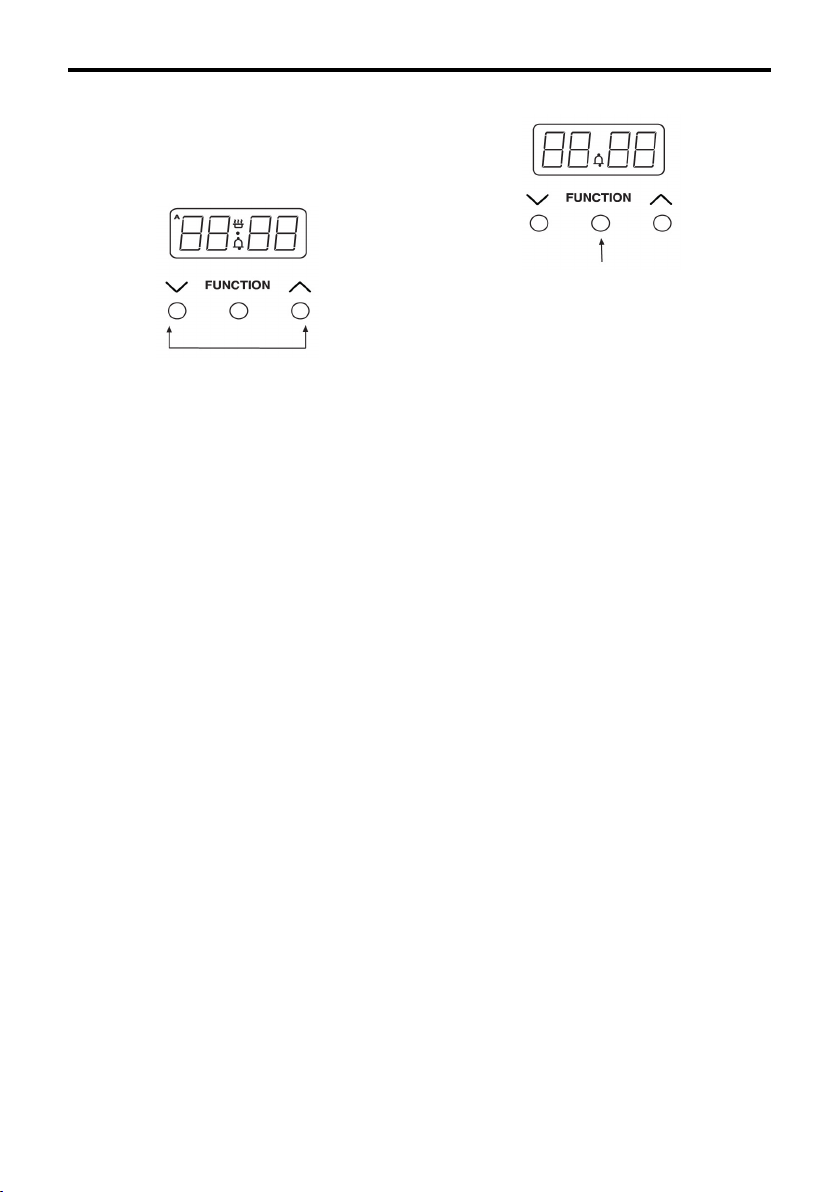
11.100
and ‘A’ symbol appear when you are asked
to enter in an end time, or when you
would like the oven to switch itself off.
To set the time of day
• Press the Up and Down buttons
together for a few seconds, and
release.
• The‘•’inbetweenthenumberson
theLEDDisplaywillbegintoash.
• Whilethe‘•’isashingitispossible
to adjust the time using the Up and
Down buttons. Once the time has
been set, allow approximately 30
seconds before using any of the other
timer functions. This ensures that the
time will remain correct.
To select an alarm tone
There are three tones to choose from.
• Press and hold the down button to
listentothersttone.
• Release the down button and press it
again to listen to the second tone etc.
• Releasing the down button after the
tone has sounded will automatically
select that tone.
Setting the minute minder
• To set the Minute Minder, press the
Function button once. The bell sym-
bolwillappearandstartashing.The
ashingonlylastsfor5secondsso
the time must be set within this time
frame.
• Use the Up and Down button to set
the length of time required. Once this
has been done, the Minute Minder is
set.
• When the desired length of time has
counted down the alarm will sound.
• To cancel the tone, press any of the
buttons.
• To cancel the Minute Minder at any
time, press the Up and Down buttons
together.
USING THE CLOCK/PROGRAMMER-ELEC(if fitted)

11.100
Semi-automatic cooking
There are two types of semi automatic
cooking available on this appliance.
The oven must be switched on, and in use
to use either of these functions success-
fully.
The Duration method allows you to set the
ovenforaspeciclengthoftime.Ifadish
needed 2 hours to cook, then it would be
possible for you to set the oven to turn off
2 hours later. This allows you to be sure
that your food will be cooked for a set
length of time and no longer.
The End Time method allows you to enter
aspecictimewhenyouwouldlikethe
oven to switch off. If you wish to leave the
oven unattended, then it offers peace of
mind that the oven will have turned itself
off at the set time.
However, once the program is set then it
cannot be adjusted. Extra time cannot be
added, nor can the end time be extended.
To cancel the semi automatic programs,
press both the Up and Down buttons
together. This can be done at any time
during the cooking process. Then if neces-
sary, re program.
For the instructions on how to use both of
these functions, please see the following
page.
Fully automatic cooking
This function incorporates both a duration
and an end time and is meant to be used
when you wish to delay the start time.
Werecommendthattherstfewtimes
this function is used you are in the house,
this will familiarise you with your oven and
prevents food from being over cooked or
under cooked.
Care must be taken when selecting foods
for this function, it is not recommended
for certain food items which may spoil, or
are sensitive to being left.
It is also advisable to set the end time to
be as close to your return as possible to
prevent food being left standing.
USING THE CLOCK/PROGRAMMER-ELEC(if fitted)
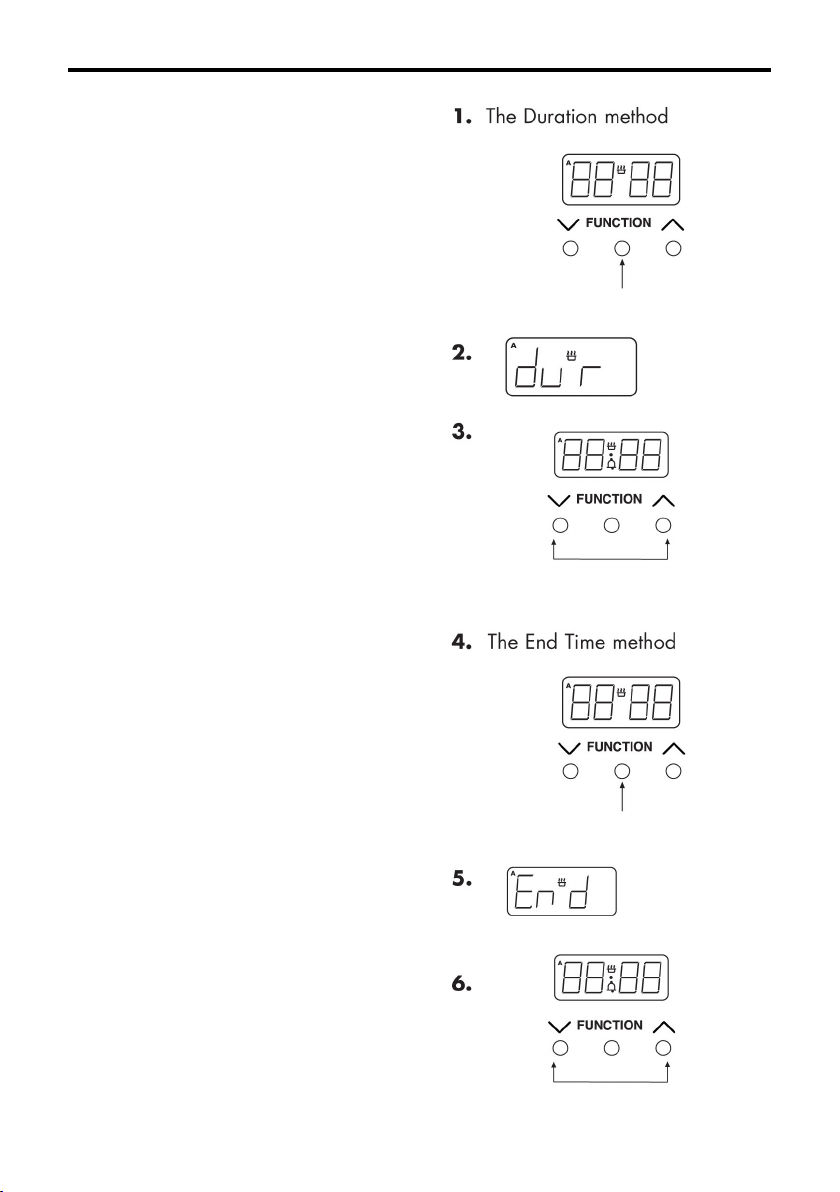
11.100
SEMI-AUTOMATIC COOKING
The duration method
• Press the Function button twice,(1)
which will skip past the Minute
Minder.
• TheLEDdisplaywillashtheword
‘dur’,(2)andthe‘A’willashonthe
left hand side of the display.
• Use the Up and Down buttons to set
the length of time you want to cook
for.(3) This must be done within 5
seconds or the time of day will show
again.
Once this is done the oven will automati-
cally switch off once the time has elapsed,
and the alarm will sound.
To switch off the alarm, press any button.
To view any remaining time press the
function button twice.
The end time method
• Press the Function button three times,
which will skip past the Minute Minder
and the Duration programmer. (4)
• TheLEDdisplaywillashtheword
‘End’andthe‘A’willashontheleft
hand side of the display. (5)
• Use the Up and Down buttons to
select the time the oven is required to
turn off. (6)
Once this is done the oven will turn itself
off at the time you have selected.
To switch off the alarm, press any button.
USING THE CLOCK/PROGRAMMER-ELEC(if fitted)
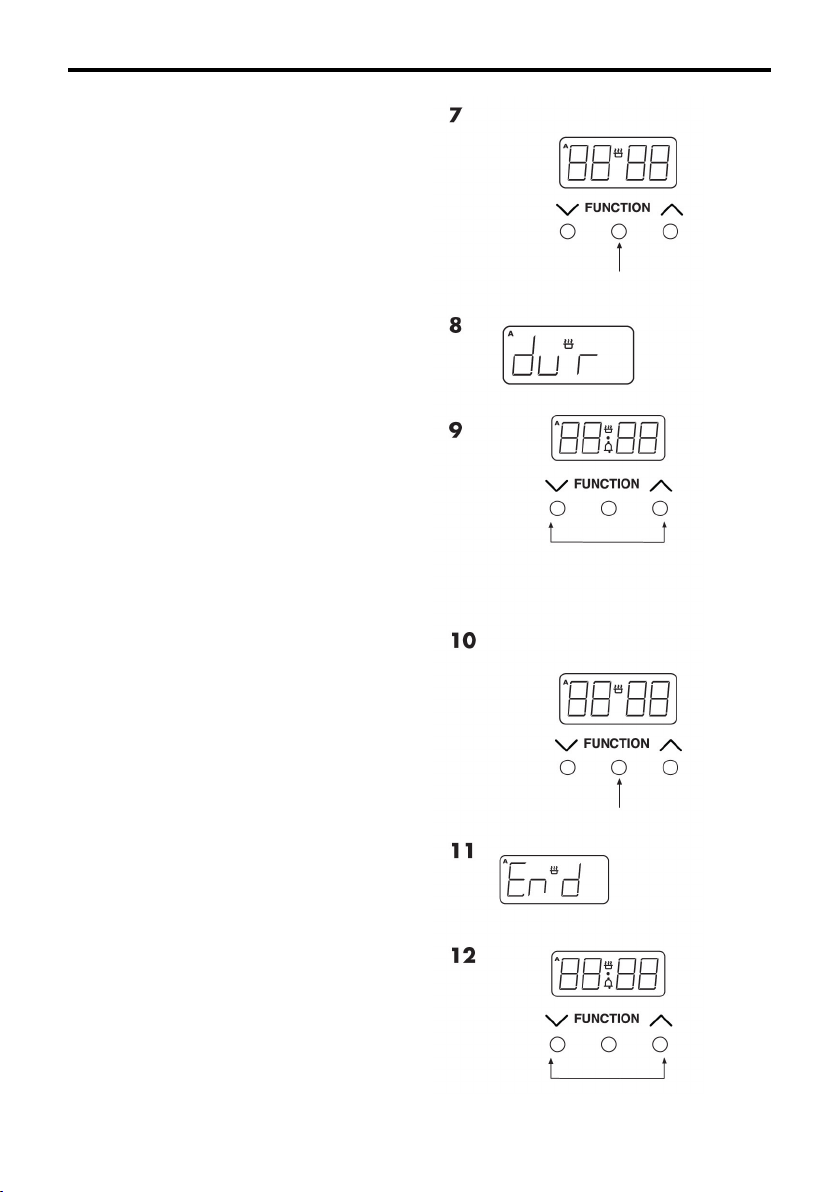
11.100
FULLY AUTOMATIC COOKING (EX-
AMPLE)
This programming method is best suited
for when a delayed start time is required.
Unlike the semi automatic methods this
requires both the duration and the end
time to be entered. The timer will work
out the start time and begin cooking.
• Press the function button twice to
select the length of time your food
will need. (7)
• The‘A’onthelefthandsidewillash
andthe‘dur’messagewillashup.
(8)
• Using the Up and Down buttons set
the time you require within 5 seconds
of the ‘dur’ message. (9)
• Press the function button three times
untilthe‘A’ashesagainandthe
‘End’ messages appears. (10) & (11)
• Using the Up and Down buttons, set
the time you would like the oven to
switch off. (12)
• Set the temperature of the oven and
place the food inside.
While the automatic function is running,
the ‘A’ will appear statically on the display,
with the time.
Try to keep the end time as close to when
you expect to return, this will prevent
cooked food from being left standing in a
warm oven.
The timer will calculate the appropriate
start time.
To switch off the alarm, press any button.
USING THE CLOCK/PROGRAMMER-ELEC(if fitted)
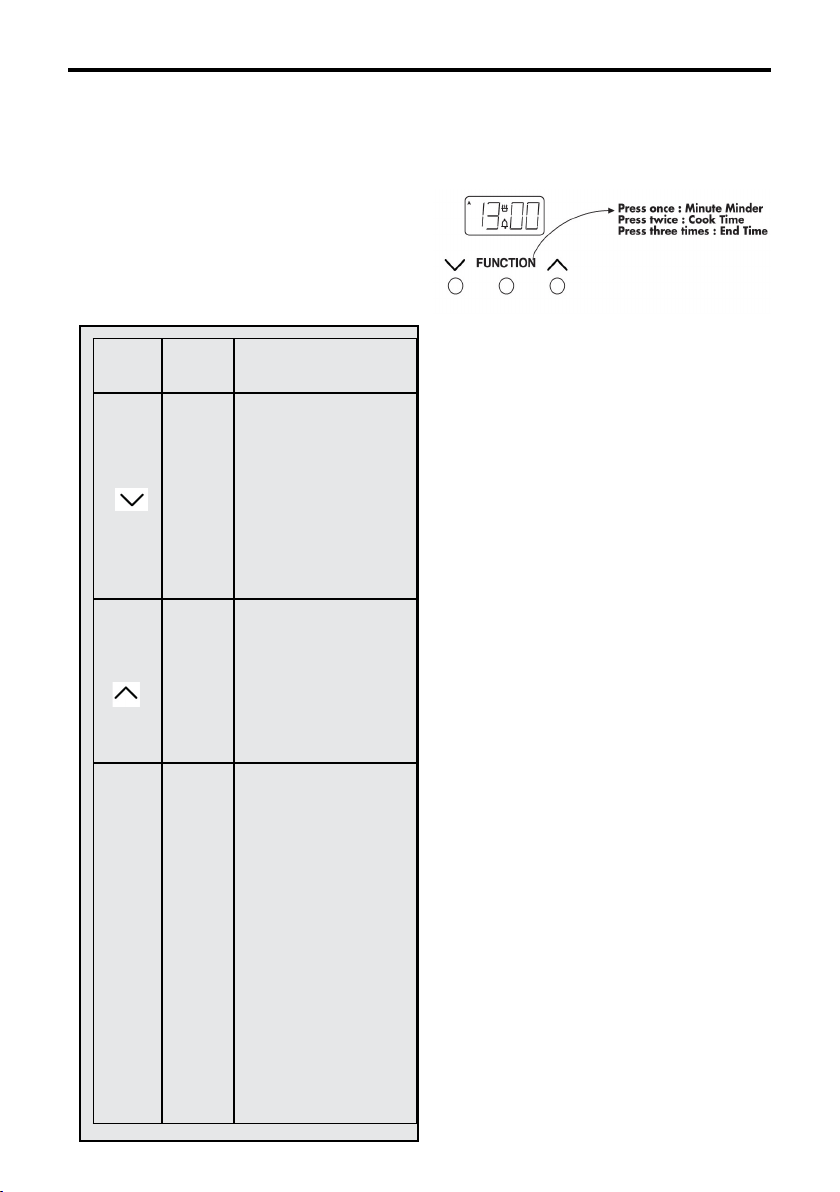
11.100
The touch control programmer
There are three touch control icons for
this timer - the table below shows you
what the symbols look like, depending on
the model type, & their functions.
Note - some functions require you to
‘touch & hold’ an icon for a few seconds,
whilst others require you to just ‘touch’
the icon without holding.
Sym-
bol
Sym-
bol
What is it?
-
Down/minus
Used to decrease
cook / end time, re-
move minutes from
the minute minder
and adjust the time
of day. Also for lis-
tening to and setting
the alarm tone.
+
Up/plus
Used to increase
cook / end time,
add minutes to the
minute minder and
adjust the time of
day.
FUNC-
TION
MODE
Function icon
Used to select the
functions available
on this timer.
Touchoncefor:
Minute Minder.
Touchtwicefor:
Cook time
Touch three times
for:Endtime.
How to use these
functions is ex-
plained later on in
this section.
The ‘function’ icon in the centre is used for
setting the minute minder & setting up the
automatic cooking - see below for details.
Symbols on the LED display.
This ‘A’ symbol appears when either
a semi, or fully automatic program is
selected.Thissymbolwillashwhilea
program is being set.
Once a program is set the symbol will light
up, and remain lit until the alarm sounds,
or the program is cancelled.
This Bell symbol appears when the Minute
Minder function has been selected.
While the Minute Minder is being set, the
Bellsymbolashes.Oncethelengthof
time is set, the Bell symbol remains lit
until the time runs down, or the function
is cancelled.
This message and ‘A’ symbol appear when
you are asked to set the length of time
you require the oven to cook automatically
for. Using the Up and Down icons adjusts
this accordingly.
This message and ‘A’ symbol appear when
you are asked to enter in an end time, or
when you would like the oven to switch
itself off.
USING THE CLOCK/PROGRAMMER-ELEC(if fitted)

11.100
Setting the time of day
Touch & hold the centre (function) icon for
afewsecondsuntilthe●symbolbetween
thenumbersontheLEDdisplayashes.
Whilethe●symbolisashing,youcan
adjust the time of day by touching the
plus&minusicons.Pleasenote:thehours
& minutes adjust quickly.
Important - once the time of day has
been set, allow approximately 30 seconds
before using any of the other programmer
functions. This ensures that the time of
day will remain correct.
Setting an alarm tone
Touch & hold the plus & minus icons
simultaneouslyuntilthe●symbolashes
& you hear a beep - then touch the centre
(function) icon.
Touch the minus icon to select the tone.
You can change the tone by repeatedly
touching the minus icon - there are three
tones to choose from.
Setting the minute minder
To set the minute minder, touch & hold the
centre (function) icon until the bell symbol
appears&beginstoash.Important-the
ashingwilllastforapproximatelyve
seconds, so any setting must be carried
out within this time frame.
Touch the plus & minus icons to set the
length of time required. Once this has
been done, the minute minder is set.
When the desired length of time has
counted down, the alarm will sound. To
cancel the tone, touch & hold any of the
icons.
To cancel the minute minder at any time,
touch & hold the plus & minus icons
together.
Semi-automatic cooking
Method 1 - duration (switch off after
set time period):
Touch & hold the centre (function) icon;
thebellwillash&youwillhearabeep.
Touch the centre (function) icon again
- this will skip past the minute minder
function.
Thedisplaywillashtheword‘dur’&the
‘A’willashonthelefthandofthedisplay.
Use the plus & minus icons to set the
length of time you want to cook for. The
ashingwilllastforapproximatelyve
seconds, so the setting must be done
within this time frame or the time of day
will show again.
Once the duration has been set, the oven
will automatically switch off. When the set
time has elapsed the alarm will sound. To
switch the alarm off, touch any icon.
To view any remaining time, touch & hold
the centre (function) icon & touch again.
To cancel the semi-automatic programme
at any time, touch the plus & minus icons
together.
Method 2 - end time (switch off at a
set end time):
Touch & hold the centre (function) icon;
thebellwillash&youwillhearabeep.
Touch the centre (function) icon again
- twice - this will skip past the minute
minder & duration functions.
Thedisplaywillashtheword‘End’&the
‘A’willashonthelefthandofthedisplay.
USING THE CLOCK/PROGRAMMER-ELEC(if fitted)

11.100
Use the plus & minus icons to select the
time the oven is required to switch off.
Once this is done the oven will switch
itself off at the pre-selected time. To turn
the alarm off, touch any icon.
To cancel the semi-automatic programme
at any time, touch the plus & minus icons
together.
Fully automatic cooking
This function allows the cooker to switch
on & off automatically. It requires both the
duration & the end time to be entered.
The timer will work out the start time &
begin cooking.
Touch & hold the centre (function) icon;
thebellwillash&youwillhearabeep.
Touch the centre (function) icon again
- this will skip past the minute minder
function.
Thedisplaywillashtheword‘dur’&the
‘A’willashonthelefthandofthedisplay.
Use the plus & minus icons to set the
length of time you want to cook for. The
ashingwilllastforapproximatelyve
seconds, so the setting must be done
within this time frame or the time of day
will show again.
Touch the centre (function) icon again -
this skips past the minute minder & dura-
tion functions.
Thedisplaywillashtheword‘End’&the
‘A’willashonthelefthandofthedisplay.
Use the plus & minus icons to select the
time the oven is required to switch off.
Set the temperature of the oven & place
the food inside. The timer will calculate
the start time.
When this is done the oven will turn itself
off at the time you have selected. To
switch off the alarm, touch any icon.
To cancel the automatic programme at
any time, touch the plus & minus icons
together.
USING THE CLOCK/PROGRAMMER-ELEC(if fitted)

cleaning
12.000
General
• It is important to clean the product
regularly as a build up of fat can af-
fect its performance or damage it and
may invalidate your guarantee.
• Always switch off your appliance
and allow it to cool down before you
clean any part of it.
• Do not use undiluted bleaches,
products containing chlorides, wire
wool or abrasive cleaners on alu-
minium, stainless steel, or plastic/
painted parts as they can damage
the appliance. Nylon pads can also be
unsuitable.
• Take extra care when cleaning over
symbols on fascia panels. Excessive
cleaning can lead to the symbols
fading.
• Ifyourproductisttedwithstainless
steel cladded stips. You may notice
a small white residue on the outer
edges, this can be removed with a
non abrasive wipe.
Painted & Plastic parts
• Only use a clean cloth wrung out in
hot soapy water.
• Do not use abrasive cleaners, wire or
nylon cleaning pads on these parts.
Stainless steel & Aluminium surfaces
• Only use a clean cloth wrung out in
hot soapy water, and dry with a soft
cloth.
• Stubborn marks can be removed us-
ing a stainless steel cleaner. Supplies
can be purchased from the Customer
Care Centre.
• Sharp objects can mark the surface
of stainless steel, but will become
less noticeable with time.
• Wipe any spillage immediately, taking
care to avoid burning your hands
• Some foods are corrosive eg; vinegar,
fruit juices and especially salt - they
can mark or damage the metal if they
are left on the surface.
• Baby oil can be used to restore stain-
lesssteelnishes-butonlyusea
few drops. Don’t use cooking oils
as they can contain salts, which will
damage the metal.
• Do not use steam cleaners.
Enamel surfaces & parts
• Clean with warm, soapy water and a
clean cloth.
• If larger splashes of fat do not readily
disappear, you can use a mild cream
cleaner to remove them. More stub-
born marks can be removed using a
soaplledpad.
• Rinse well and dry with a soft clean
towel or cloth.
• Do not use steam cleaners.
Glass parts
WARNING:- Do not use harsh
abrasive cleaners or sharp
metal scrapers to clean the
oven door glass since they can
scratch the surface, which may
result in shattering of the glass.
• Only use a clean cloth wrung out in
hot soapy water, or a specialist glass
cleaner.
Rinse away any excess cleaner and dry
with a soft cloth.
Chrome plated parts
• Useamoistsoaplledpad,orplace
in a dishwasher
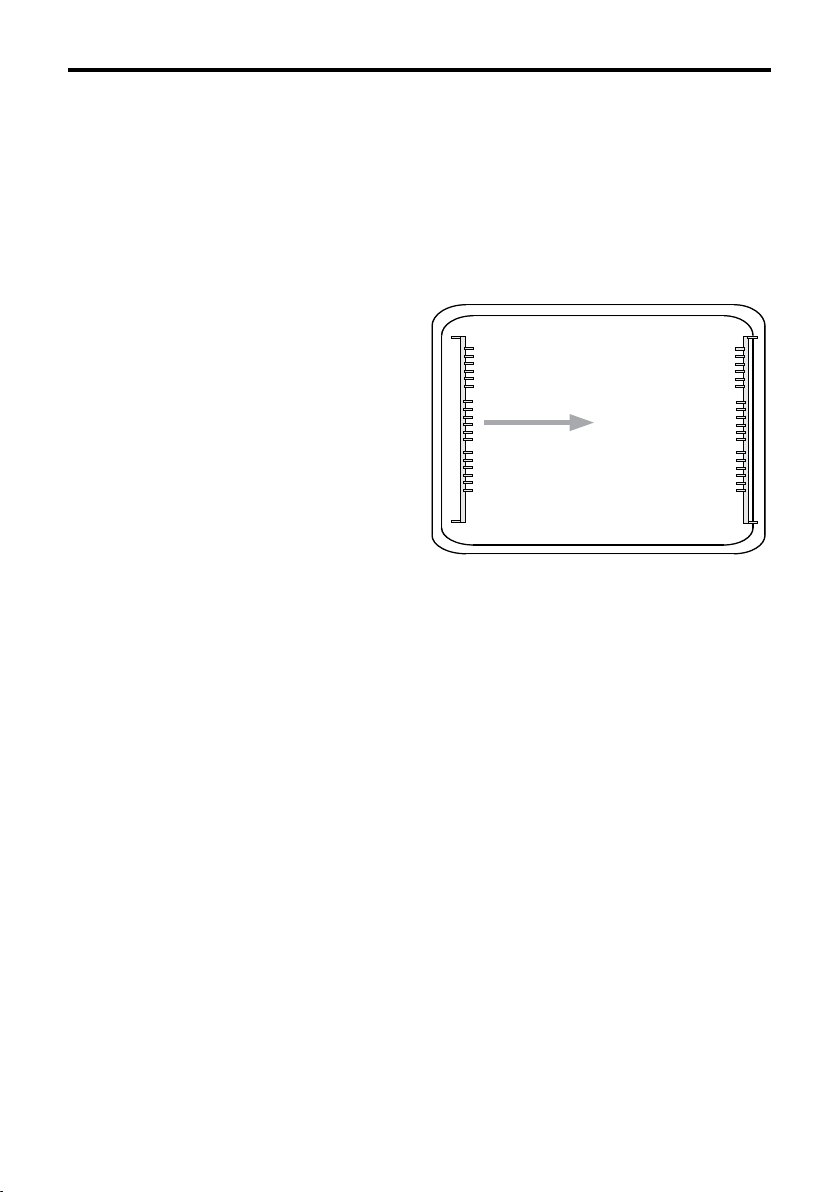
Cleaning
12.100
REMOVING OVEN PARTS FOR
CLEANING
Inner Door Glass (glass doors only)
• The inner door glass panel can be
removed for cleaning but it must be
replaced the right way up. If there is
any writing on the glass, you must be
able to read it clearly when the cavity
doors are open.
• Always make sure that the glass is
pushed fully into the Stop position.
• To remove the glass panel, open the
door wide, hold the top and bottom
edges and slide out.
• Warning: Do not operate
the appliance without the
glasspanelcorrectlytted.
• For your safety, glass door panels are
made of toughened glass. This en-
sures that, in the unlikely event that
a panel breaks, it does so into small
fragments to minimise the risk of in-
jury. Please take care when handling,
using or cleaning all glass panels, as
any damage to the surfaces or edges
may result in the glass breaking
without warning or apparent cause at
a later date. Should any glass panel
be damaged, we strongly recommend
that it is replaced immediately.
Shelf Runners
• Shelf runners can be removed to
enable you to clean them thoroughly.
Make sure they are cool to touch and
then grasp the runners and slide out
of their hanging holes.
Pull out to clean

CLEANING
ELECTRIC HOB
Ceramic glass hobs
• The ceramic hob top can be cleaned
using a clean, damp cloth or kitchen
paper. Do not use a used dishcloth
orspongeastheycanleavealmof
detergent on the surface which can
lead to discoloration. Please ensure
that the elements are cooled fully to
avoid steam burns.
• You can use a specialist ceramic
cleaner to restore the surface, but
use sparingly to avoid coating the
hob top too thickly. Too much cream
cleaner will lead to discolouration.
Use a dry, clean cloth to polish the
surface.
• For stubborn marks, a specialist hob
scraper can be used.
• Do not use steam cleaners or high-
pressure cleaning equipment.
• Regular cleaning will prevent any
salts or minerals from accumulating
on your hob and discolouring the
glass.
• Wipe any spillage as soon as pos-
sible.
• Clean the hob top as regularly as
possible, this will prevent any build
upofgreasewhichmaybeare
hazard.
Solid plate hobs
• Prime and Season - this helps main-
tainthenishoftheelements.
• Use a damp, clean cloth to wipe the
solid plate, making sure that you
follow the circular grooves and avoid
damaging the red spots. Make sure
that you allow the hotplate to dry
before use by switching on the ele-
ments at a low heat.
• You can restore the hotplates by us-
ing a solid plate cleaner but take care
to avoid the red spots on elements.
• Toprime:Switchoneachelementin
turn for a short while (with no pan on
it) at a medium - high setting. This
will harden and burn off the coating.
• Toseason:Heattheelementfor30
seconds at a medium setting then
switch off. Use a minimum amount
of unsalted vegetable oil, on a dry
cloth or paper towel, and apply a thin
coat of oil to the element surface.
Wipe off the excess and heat the ele-
ment for one minute.
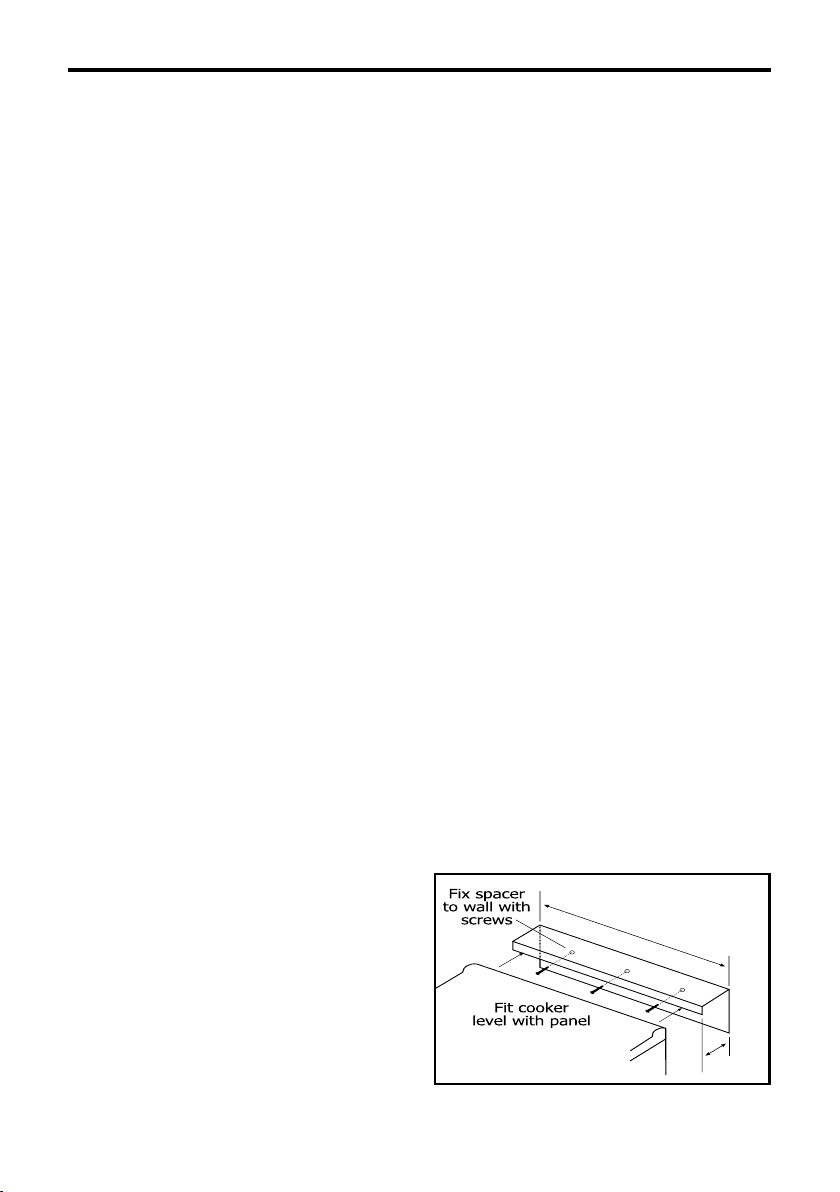
installation instructions - electric
Whilst every care is taken to eliminate
burrs and raw edges from this product,
please take care when handling - we
recommend the use of protective gloves
during installation.
Moving the cooker
Please note that the weight of this appli-
ance is approximately 60kg (unpacked).
Take care if the appliance needs to be
lifted during installation - always use an
appropriate method of lifting.
Do not attempt to move the cooker by
pulling on the doors or handles. Open the
door and grasp the frame of the cooker,
taking care that the door does not shut
onyourngers.
Take care to avoid damage to soft or
unevenoorcoveringswhenmovingthe
appliance.Somecushionedvinyloor
coverings may not be designed to with-
stand sliding appliances without marking
or damage.
Important:Ensurethatyourouteall
mains cables well clear of any adjacent
heat source.
Clearances
Thiscookermaybettedushtobase
units. However, for models with side
opening doors, we recommend a side
clearance of 60mm between the cooker
and any side wall to allow the door to be
opened fully.
The cooker should not be placed on a
base.
No shelf or overhang or cooker hood shall
be closer than a minimum of 650mm, but
check with cooker hood manufacturer’s
recommendations.
The cooker must have a side clearance
above hob level of 90cm up to a height of
400mm.
Dimensions
All sizes are nominal, and some varia-
tion is to be expected. The ‘depth’ of the
cooker, as given below, is to the front
of the door and excluding knobs and
handles.
Depth: 600mm
Width: 500/548/600mm
Height(adjustable):900-915mm
Levelling the cooker
There are four adjustable feet on the
base of the cooker. Turn the feet by hand
to adjust the height of the cooker.
Products with Cast Iron Lid (where
tted)
A 55mm clearance is required from the
back of the hotplate to the rear wall, to
allow the lid to be opened fully. To ensure
thisclearanceismaintained,theinll
piece(supplied)shouldbettedusingthe
instructions below.
Fitting the inll piece between the
rear of the hob and the wall
Fixtheinllpiecetothewall-using
suitablescrewsandwallxings(not
supplied) - and ensure it is level with the
hotplate as shown.
Note:The55mmclearancedimension
should not be reduced.
550mm
55mm
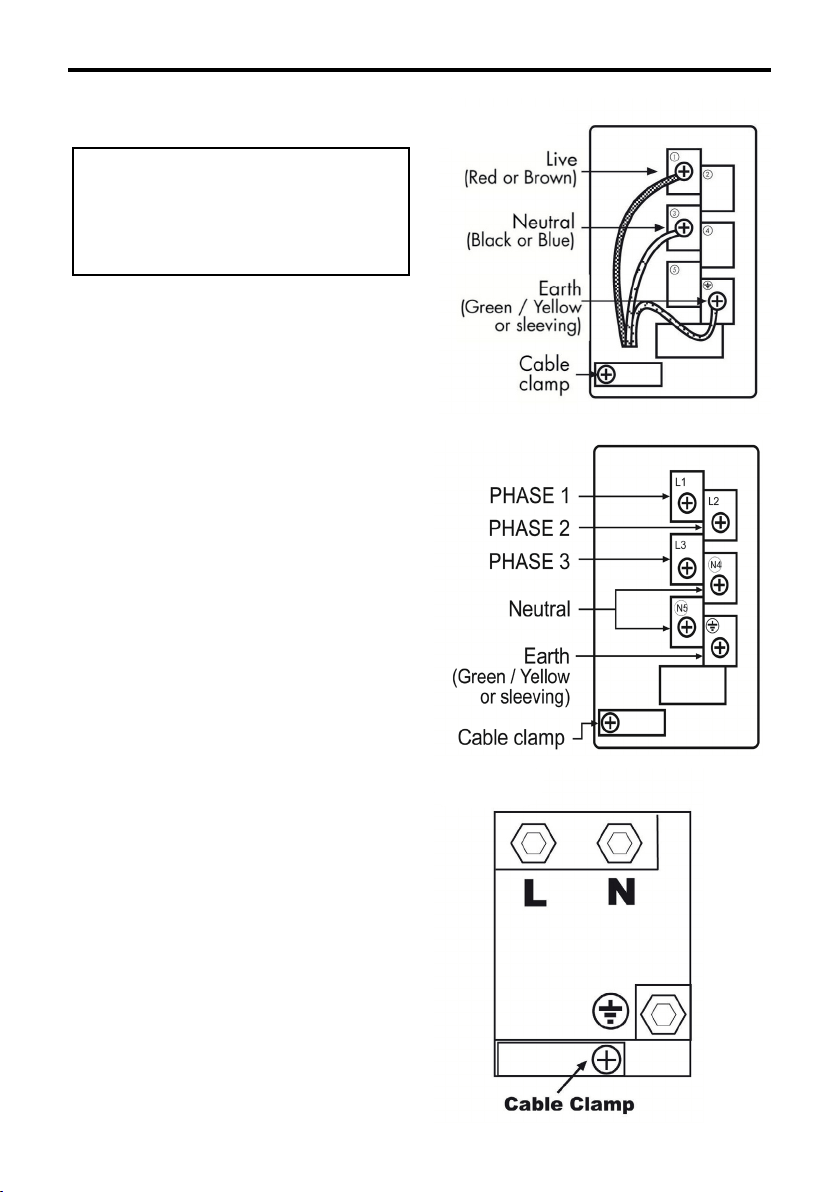
installation instructions - electric
CONNECT TO THE ELECTRICITY
SUPPLY
Yourappliancewillbettedwithoneof
the adjacent terminal blocks, please refer
to the wiring diagrams on the following
pages for phase link connections, to
ensure correct supply cable connection to
your appliance.
Warning:
This appliance must be earthed.
This appliance is not intended to be oper-
ated by means of an external timer or
separate remote control system.
We recommend that the appliance is con-
nected by a competent person who is a
member of a competent persons scheme
using a double pole control unit of 32
ampere minimum capacity with 3mm
minimum contact separation at all poles.
1. Access to the mains terminal is gained
by opening the terminal block cover at
therearoftheappliance(useasmallat-
bladed screwdriver).
2. connection must be made with a suit-
ableexiblecord.
3. First strip the wires, then push the
cable through the cable clamp in the
terminal block cover.
4. Connect the cable to the terminal block
and tighten the cable clamp screw (see
diagram).
5. Close the terminal box, ensuring that
the cover is engaged on the locking tabs.
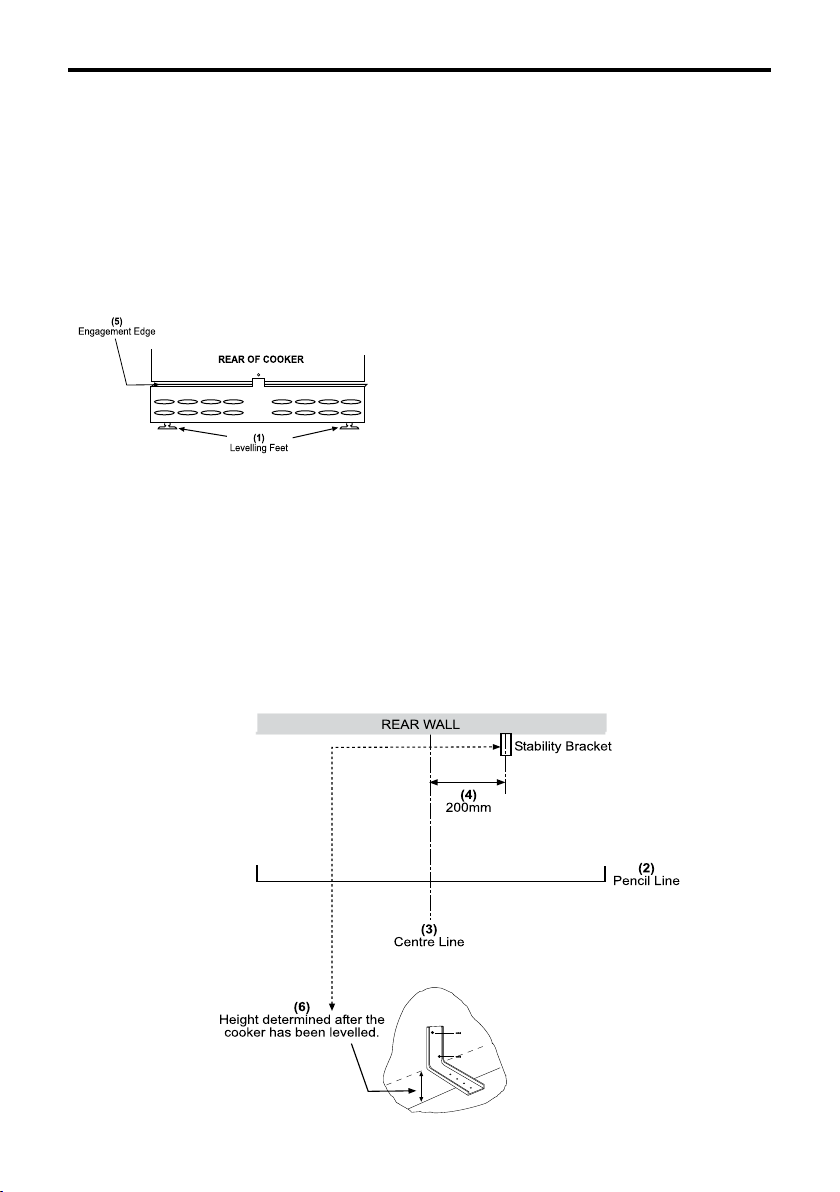
installation instructions - electric
Levelling Your Cooker
Place a spirit level on a baking sheet onto
an oven shelf.
ThecookeristtedwithLEVELLINGFEET
(1). Level your cooker to your desired
height using the levelling feet at the front
and rear of the cooker.
Stability bracket
The stability bracket provided must be
ttedtothebackofthecookerandtted
asfollows:
Place the cooker in position and draw a
PENCIL LINE level with the front edge
(2).
Mark the centre of the cooker to give a
CENTRE LINE (3).
Remove the cooker and mark off 200mm
to the right of the centre line (4) on the
rear wall.
Measure from FLOOR LEVEL to the
ENGAGEMENT EDGE where the stability
bracket will rest and add 2mm (5).
Transfer this dimension to the rear wall
and secure the bracket to the wall at this
height (6) using the two off centre holes
in the single bracket.
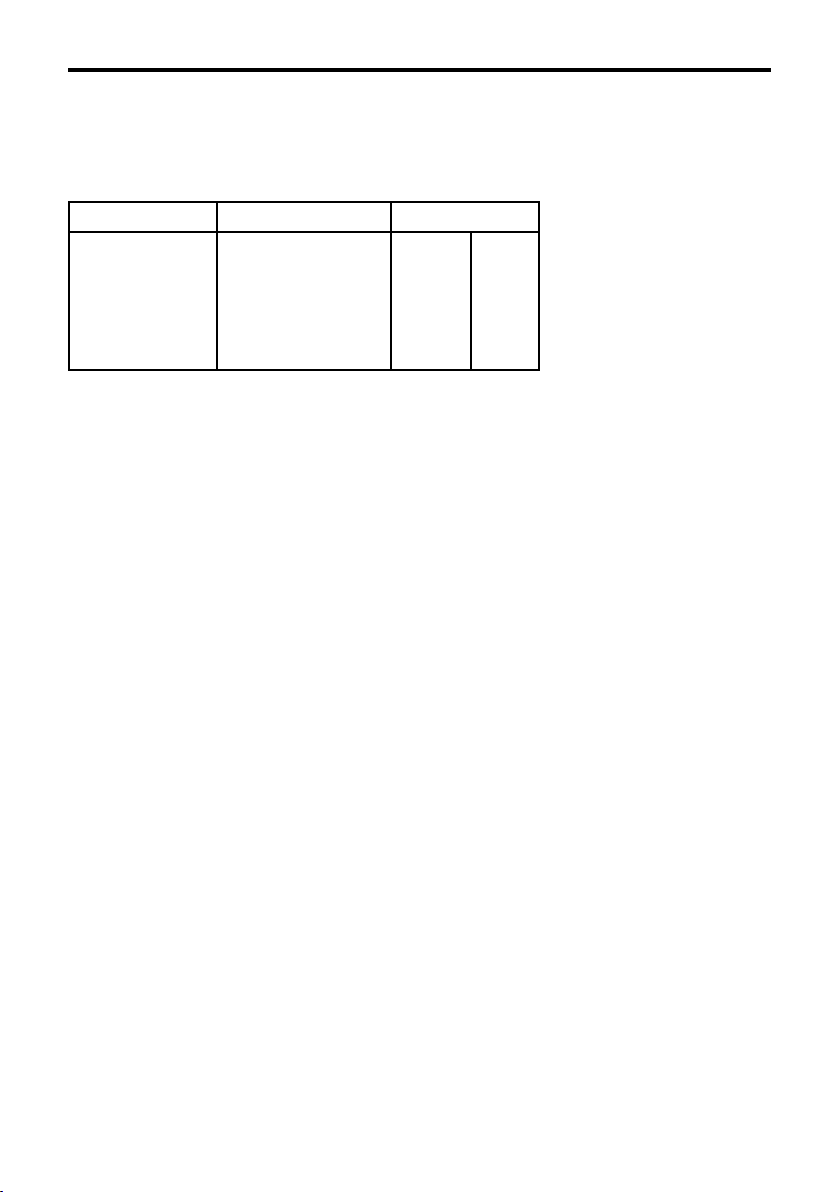
TECHNICAL DATA
Data Badge Position
Lower part of front frame and rear of
product
Products with Induction Hob
Fuel Type Burner Nominal Rate
Electric Hob - small
Hob - medium
Hob - large
Grill
Top oven
Main oven
1400
1900
2300
2800
1400
2000
W
W
W
W
W
W
Maximumelectricloadat240V: 12455W
All electric ratings given at 240V
Countries of Destination
Australia, New Zealand
Electrical supply
240V ~ 50Hz
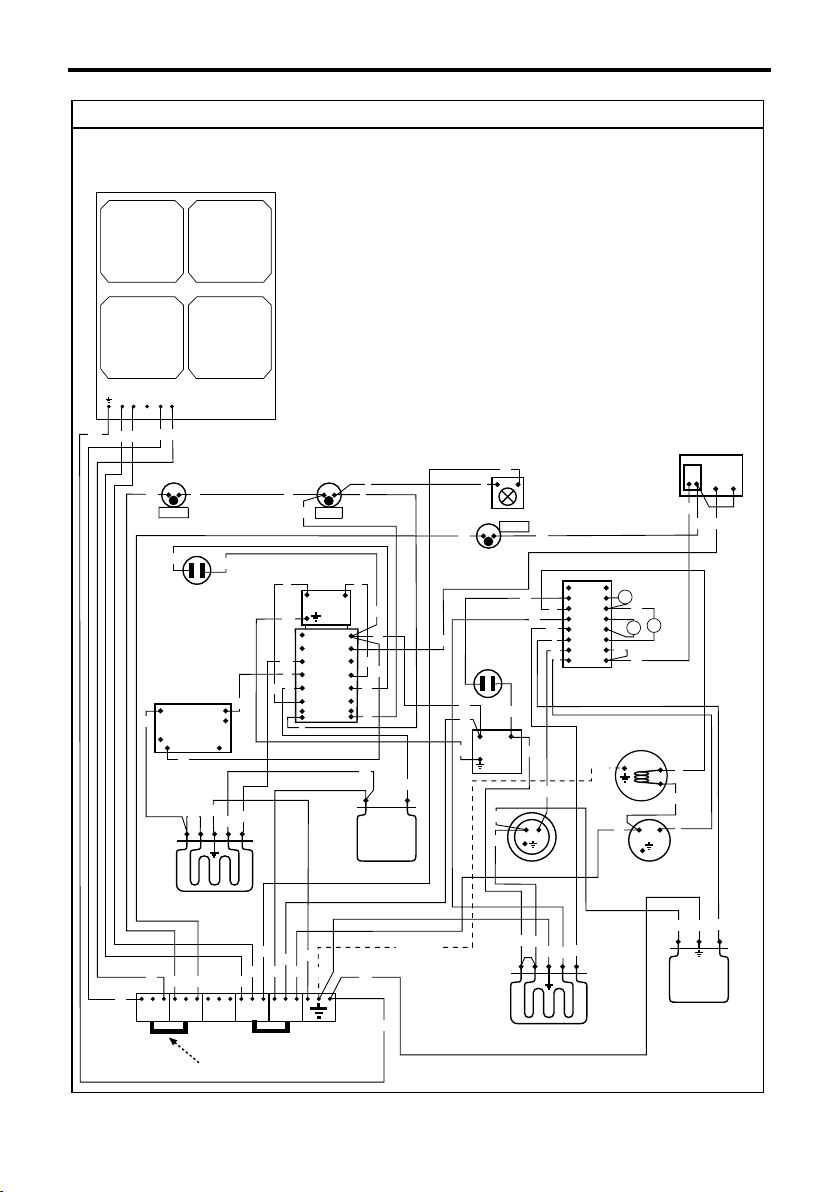
WIRING DIAGRAM
1
2
3
4
5
6
P1
P2
P3
P4
P5
P6
7
P7
Belling FSE 61iS - AU
N
L
THERMAL
CUTOUT
(M.O.)
THERMAL CUTOUT (T.O.)
THERMAL
SWITCH
COOLING
FAN
PROGRAMMER
TOP OVEN
GRILL ELEMENT
TOP OVEN
BASE
ELEMENT
MAIN
OVEN
STAT
FAN ELEMENT
MAIN OVEN
STIR FAN
MAIN OVEN
BASE ELEMENT
MAIN OVEN
GRILL ELEMENT
1
2
3
4
5
6
7
8 P8
P1
P2
P3
P4
P5
P6
P7
MAIN OVEN
SELECTOR
SWITCH
STAT.
NEON
Wiring colour code: Bk - Black, Bn - Brown, Bu - Blue, Gn - Green, Or - Orange, R - Red, W - White, Y - Yellow, V - Violet.
Or
Or
Or
Or
Bk
Bk
Y
Bn
W
Or
Or
Y
Y
R
R
Bk
Bk
Bk
Bk
Bk
Bk
Bn
Gn
Gn
Bn
Or
Or
MAIN OVEN
LAMP
S2
P1
2
P2, 4
TOP OVEN
NEON
TOP OVEN
THERMOSTAT
GRILL
REGULATOR
Bk
Gn
Bk
Bk
Bk
R
Bn
Bn
W
Or
Gn
593
L150C
L120C
F60C
2
1
Gn
Gn
Bk
Y
R
Or
W
Gn
W
Bn
Bn
446
446
Bn
Bk
Bk
Bk
Bk
R
R
R
R
Y
Y
Gn
TOP OVEN
SWITCH
V V
Bk
Bk
Bk
Bk
Bk
V
V
Bk
Bk
Bk
Bu
Bu
V
V
GnGn
Issue E
08 27470 04
24.01.2013
INDUCTION HOB UNIT
Gn
Bu
Bu
Bn
Bn
Bn
Bu
Gn
Bn
Bu
N
N
L
L
E
INLET
TERMINAL
BLOCK
Remove 1-2 Link for Multi-Phase Installations !
1(L)
2 3 4
5(N)
Bk
Gn
IF FITTED
INDUCTION
ELEMENT
INDUCTION
ELEMENT
3 L1L2N5 N4
INDUCTION
ELEMENT
INDUCTION
ELEMENT

customer care
15.010
FAQs
What parts of the appliance can be
washed in a dishwasher?
• Any enamelled parts such as the grill-
pan can be cleaned in a dishwasher,
as can oven shelves and shelf guides.
What parts must NOT be cleaned in a
dishwasher?
• Parts such as burner skirts and caps,
control knobs and any cast iron items
must not be cleaned in a dishwasher,
they should be cleaned with hot
soapy water and a nylon brush once
they are cool enough.
There’s been a power failure and the
product won’t work.
• Switch off the electricity supply.
• When the power returns switch the
electricity supply back on and re-set
any programmer/clock to the correct
time of day.
My oven is a single combined oven
and grill - can I use both functions
together?
• No. You can only use one or the
other.
Why is there condensation on the
doors?
• Condensation is caused by hot, moist
air meeting a cooler surface (i.e. the
oven door). You cannot always pre-
vent it, but you can minimise it when
ithappensbydoingthefollowing:
• Pre-heat the oven at a high tempera-
ture before putting food in the oven,
and cover the food you are cooking
wherever possible.
• Whenever you can, cook wet foods at
higher temperatures.
• Don’t leave food in the oven to cool
down.
• Automatic cooking will normally pro-
duce condensation when the oven is
cooling down with food inside.
Should the cooling fan continue to
run once the appliance has been
switched off?
• Yes. This is to make sure that you
can always touch the control knobs to
make temperature adjustments, and
turn your appliance off.
What is a Multifunction oven?
• A multifunction oven combines a va-
riety of features, which are explained
fullyearlierinthisbook(iftted),
itallowsyoumoreexibilitywhen
cooking.
The neon on my appliance keeps
going out and coming back on again
- is this right?
• Yes.Inmostcasestheneon(iftted)
will cycle on and off to show that
oven is maintaining your temperature
choice.
Call Customer Care for a Service
Engineer’s visit if:
• Youndthattheovenbecomeshot-
ter at a particular temperature - the
thermostat may need replacing.
• The cooling fan fails to work.
customer care
15.040
CUSTOMER CARE
CHANGING LIGHT BULBS
(where tted)
Warning: There is a risk of electric shock, so always make
sure you have turned off and unplugged your appliance before
starting. Always allow the product to cool down before you
change a bulb.
Not all appliances have the same number and type of bulbs. Before replacing your
bulb, open the oven door and see which type you have. Then use the table to help you
change your bulb correctly.
Bulbs can be purchased from hardwarestores (always take the old bulb with you).
Please remember that bulbs are not covered by your warranty.
No of Lamps Instructions
1 Remove the oven shelves.
Remove the loose oven back by unscrewing the 4 securing screws
(oneateachcorner)andremove(Wheretted).
Unscrew the lens cover by turning anticlockwise.
Remove the bulb and replace.
Replace the lens cover and oven back.

Please keep this handbook for future reference, or for anyone else
who may use the appliance.

Please keep this handbook for future reference, or for anyone else
who may use the appliance.

Please keep this handbook for future reference, or for anyone else
who may use the appliance.

CONTACT US
Calling for a service
If you should experience any problems with your cooker please contact your retailer or
place of purchase.
Important note:
Service work is to be conducted by authorised persons only. It is advisable to have
your cooker checked regularly and maintained in good condition. An annual mainte-
nance is recommended.
Always check the instruction book before calling a service agent to make sure you have
not missed anything.
GlenDimplexAustraliaPtyLtdCustomerCare:
Glen Dimplex Australia, Unit 2, 205 Abbotts Road, Dandenong,
South Victoria 3175, Australia
e-mail:[email protected]
web:www.glendimplex.com.au
Tel: Australia 1-300-556-816
New Zealand 09-274-8265
Before you contact a service agent, make sure that you have the following information
tohand:
Model Number
Serial Number
Date of Purchase
Postcode