Fisher & Paykel WD7560P1 Washer
Product's Documents
Below are documents related to this product, you can read online or download:
- Owner's manual - (English) Read Online | Download pdf
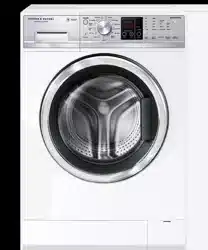
Before you start, it is a good idea to go through the following checklist:
IMPORTANT! You must ensure all 4 transit bolts have been removed from your washer dryer before you start using it. If the transit bolts are not removed, they will damage your washer dryer and YOUR MANUFACTURER’S WARRANTY WILL BE COMPROMISED.
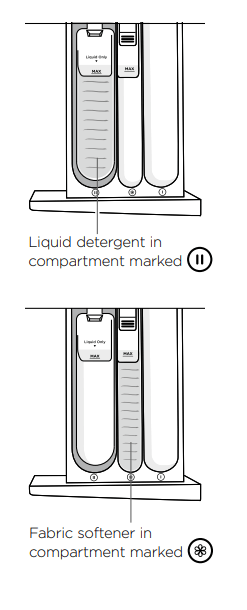
 . If you wish to use powdered detergent you MUST remove the liquid detergent insert by firmly grasping and twisting the left hand side of the internal compartment and pulling upwards. If you are using detergent pods place them at the back of the drum before adding your clothing. For more information on detergent refer to the ‘Detergent and fabric softener’ section.
 . For more information on fabric softener refer to the ‘Detergent and fabric softener’ section.
IMPORTANT! Fabric softener should not be used if you have selected the ‘Quick Wash 30’ cycle.
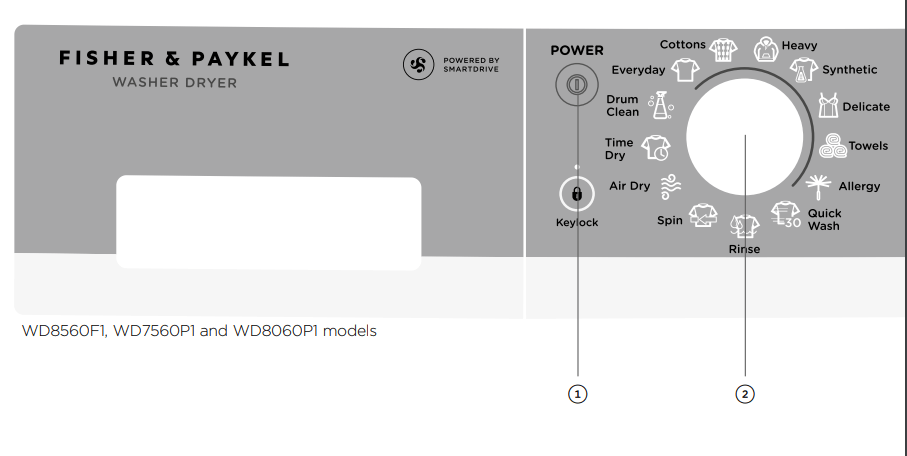
 to start the cycle.
to pause the cycle. There may be a slight delay while the drum comes to a stop, then the door will unlock. Under certain conditions however the door will remain locked for safety reasons (refer to the ‘Safety features’ section). button then select the new cycle. Touch to restart the washer dryer.
to start the cycle.
to pause the cycle. There may be a slight delay while the drum comes to a stop, then the door will unlock. Under certain conditions however the door will remain locked for safety reasons (refer to the ‘Safety features’ section). button then select the new cycle. Touch to restart the washer dryer.IMPORTANT!
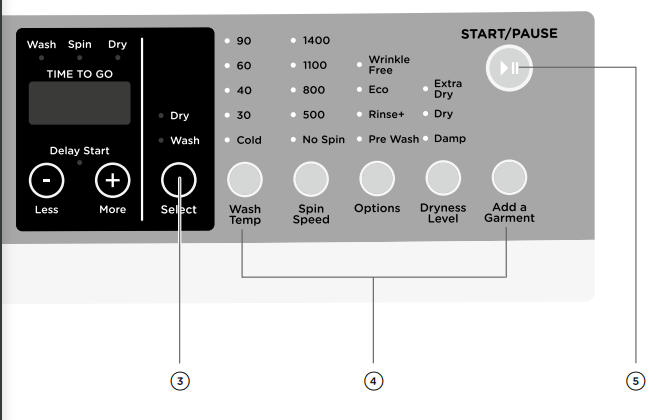
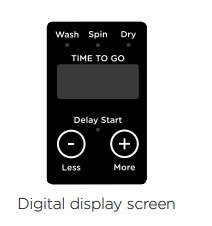
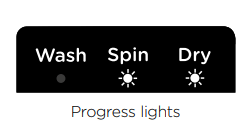
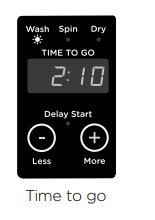
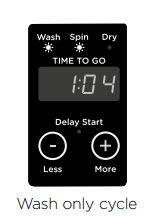
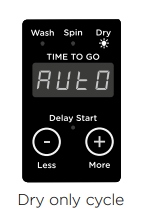
 until the washer dryer has determined the time it will take to dry each specific load. will be replaced by the number of minutes the cycle you are running has remaining. Once your washer dryer has achieved the dryness setting you have selected, it will go into a cool down phase and display
  until the load reaches a safe temperature, and then ends the cycle. In some cases when running a dry only cycle the machine will display and will not calculate a remaining time to go. This is normal and can occur due to a number of different factors, ie running back to back drying cycles. down period is reached and the cycle ends. and recalculate the drying time depending on a number of factors. The estimated time to go will then be displayed until the cool down phase begins.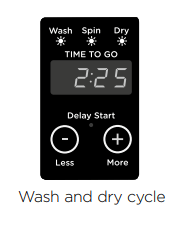
Door lock
until the machine beeps at the end of the cycle, ensuring safety for you and your family while your machine is operating., the machine will pause and the door will automatically unlock if the conditions inside the washer dryer are safe. The button and time to go will flash on the screen while the washer dryer is paused. Close the door and touch to resume the cycle. If items of clothing have been added or removed from your washer dryer the displayed time to go may differ from the actual cycle time. If the machine is in the middle of a wash or dry cycle and you are wanting to add or remove any items please refer to the ‘Add a Garment’ section below.Add a Garment
Opening the door during a power failure
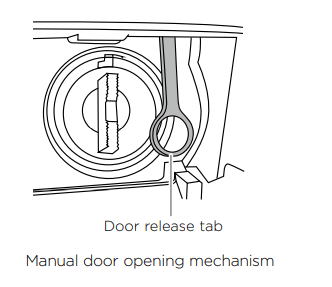
IMPORTANT! Do not attempt to do this if the water level in the drum is above the level of the door. When power is restored you will need to restart your machine by simply pressing ‘POWER’. The washer dryer will remember where in the cycle it was up to.
Your washer also has the following protective measures:
When preparing your washer or dryer load there are some important things to consider:
Sorting
IMPORTANT! Over loading the washer dryer with a dry load above this line on any drying cycle can lead to poor drying performance.
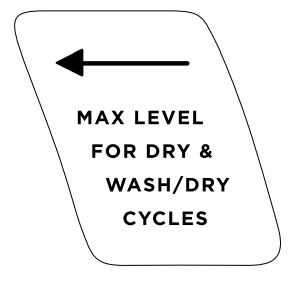
Before you load
Loading
To reduce tangling
To reduce creasing
Lint
| LINT GIVERS | LINT COLLECTORS |
| Towels | Synthetics eg polar fleece |
| Flannelette sheets | Corduroy |
| Nappies | Polyester cottons |
IMPORTANT!
Note: this washer dryer is designed to be used as a washer then a dryer, please keep dry only cycles to a minimum to ensure lint is flushed out of the machine between drying cycles.
When you have finished using your washer dryer

 icon will flash every time you turn your washer dryer on to remind you to do this. If your washer dryer starts to smell this is a sign that you should complete a ‘Drum Clean’ cycle. We recommend that you do not have any items in the washer dryer when you run this cycle.
 ) or use a drum cleaning product specifically designed for front loading washing machines (follow manufacturer’s instructions). to start the cycle (refer to the ‘Wash and dry cycles’ section).
The pump has a filter to trap foreign objects that enter the washer dryer along with clothing. The pump filter can be accessed from the front of the washer dryer.
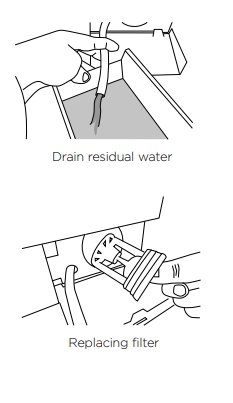
To clean the filter: This should be cleaned out approximately once a month.
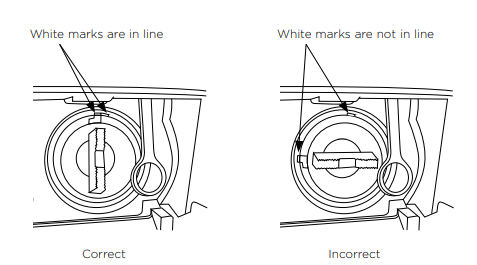
White mark on filter must be in line with white line on pump housing
IMPORTANT!
| PROBLEM | DISPLAYED AS | WHAT TO DO |
| Water is not getting to the machine |  |
Check the tap has been turned on. Check the hose connection. Check the inlet hose filter is not blocked, the hose is not kinked and is attached correctly. Check that the drain hose is not too low or pushed into the standpipe too far. This will cause the water to siphon out of the machine. Check the cold water temperature does not exceed the 35°C temperature requirement. Check the water flow rate. It maybe too low. |
| Wash load is out of balance. |  |
Touch If the out of balance persists, pause the cycle, manually redistribute the load and touch If the problem persists, check the machine is correctly levelled. |
| Too many suds. |  |
Machine will stop and flash Check you are using a suitable detergent. Check you are not overdosing the detergent. Check the standpipe height for the drain does not exceed 1200mm. |
| Machine is too hot. |  |
The temperature in the drum is over 60°C therefore it is not safe to open the door. Wait until the temperature drops below 60°C then the machine will open the door. |
| Door is locked. |  |
The temperature in the drum is over 60°C therefore it is not safe to open the door. Wait until the temperature drops below 60°C. Check the water level in the drum. If the level is above the bottom of the door seal, the door cannot be opened. Use the ‘Add a Garment’ button if you wish to add or remove items. If the drum is still moving, wait for it to stop before attempting to open the door. |
| Door is open. |  |
Close the door fully and touch Try opening and closing the door again. Reposition the load, make sure the load is correctly in the drum and that protruding items are not stopping the door from closing. |
| The pump filter is blocked. |  |
Machine will stop and flash Run a ‘Drum Clean’ cycle to flush out any residue or lint that may be caught in the machine after cleaning out the filter. If this happens often, clean the filter out regularly. |
| Machine is cooling down. | |
The machine is performing a cool down to reduce the temperature inside the drum so it is safe to open. This time can vary depending on a number of factors. Let the machine perform this cool down period so it is safe to access items of clothing.
|
Once you have addressed the user warning try using your washer dryer as per usual. If the symptom persists, call your Fisher & Paykel trained and supported service technician.
When a continuous series of beeps is sounded, all the lights turn off on the control panel and a number appears on the display, a fault has occurred. The washer dryer will automatically enter this mode if a fault occurs. The fault code will be displayed as followed by a number on the digital display. To stop the sound, touch any button and perform the following steps:
If a fault code is being displayed, you can still turn your washer dryer off by pressing ‘POWER’.
The following is a list of problems you may encounter when using this appliance and some suggestions that may help to correct the problem. If you still have problems, please contact your Fisher & Paykel trained and supported service technician.
Solving general operating problems
| PROBLEM | POSSIBLE CAUSES | WHAT TO DO |
| Washer dryer not turning on. |
Electrical cord not plugged into a power socket. |
Plug cord into a power socket. |
| Power not switched on at the wall. | Switch the power on at the wall. Then touch ‘POWER’. | |
| Household power supply not working. | Try plugging another electrical appliance into the same socket. Turn off the power at the power point. Unplug the washer dryer from the power socket. Wait 60 seconds, plug it back in, turn it on and try again. | |
‘Keylock’  may be activated. may be activated. |
Touch and hold the ‘POWER’ button for 2 seconds | |
| Touching does not start filling or drying. | Washer dryer door not closed properly | Open and reclose door. |
| The washer dryer has detected a fault. | Check if a code is being displayed on the panel. | |
| Cold tap turned off. | Check that the cold tap is turned on | |
| Blocked hose filter. | Check the tap end of the inlet hose for blockages. | |
| Inlet hose leaking, twisted or damaged. | Check the inlet hose for leaks or damage. Check that the inlet hose is not twisted. | |
| Faulty water supply. | Check the cold tap is connected to the machine and is working. | |
| ‘Delay Start’ may be set. | Refer to page 35. | |
| Washer dryer is paused. | light is flashing. |
Touch the button to resume the cycle. |
| Washer dryer stops working mid cycle. | The washer dryer has detected a fault. | Refer to pages 40 – 42. |
| Power or water failure. | Check the power and/or water is working correctly. | |
| Washer dryer has been paused. | Touch the button to continue. |
|
| Too many suds. | Washer dryer is waiting for suds to dissolve before continuing the cycle. | |
| Vibrating. | Transit bolts left in place. | Ensure transit bolts are removed prior to use of the product |
| Washer dryer may not be level. | Ensure washer dryer is installed on an appropriate surface and levelled correctly | |
| Load is out of balance. | Wash an average sized load rather than a smaller load or a single item. Washing or drying one item at a time is not recommended as it is difficult for the washer dryer to balance a single item during spin. | |
| Small puddle of water from under the machine. | Inlet hose or drain hose leaking. | Check inlet hose and the drain hose are correctly attached and not damaged. |
| Lots of suds. | Suds may have leaked and then dissolved. | |
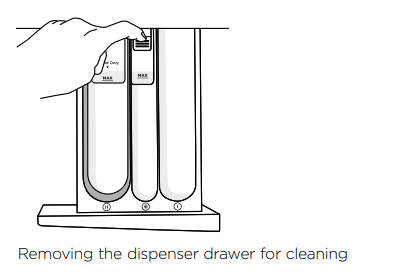
| Detergent dispenser blocked. | Clean detergent dispenser drawer | |
| Detergent dispenser drawer not fully closed. | Close detergent dispenser drawer fully and ensure it remains closed during the cycle. | |
| Damage to door seal. | Check seal inside door for damage. If it sustains any damage it will need to be replaced. | |
| Washer dryer keeps stopping and starting. | The ‘Wrinkle Free’ option has been selected | Refer to page 33 for more information. |
| Not spinning properly | Load has gone out of balance. | Open door and redistribute load, then restart the washer dryer. |
| Machine is not level. | Ensure machine is correctly levelled | |
| Suds build up | Check the amount of detergent used, reduce if necessary | |
| Detergent or fabric softener remaining in detergent dispenser at the end of the cycle | Detergent drawer not properly closed or was opened part way through the cycle. | Ensure the detergent dispenser drawer is fully closed at the start of the cycle and remains closed throughout the cycle. |
| Dirty or blocked detergent dispenser. | Clean the detergent dispenser | |
| Liquid sitting at the ‘Max’ level at the end of the cycle indicates a blockage | Clean the fabric softener dispenser | |
| Dispenser over loaded with detergent. | Clean out remaining detergent (refer to pages 27 – 28 for dosing information). | |
| Black or grey marks on clothes | Correct amount of detergent. | Ensure the correct dose of detergent is used for the load size and soil level |
| Washer dryer needs to be cleaned. | Empty the machine and complete a ‘Drum Clean’ cycle | |
| Tangling | Items not sorted correctly | Separate larger items from smaller items. |
| Washer dryer loaded incorrectly | Load items loosely and individually into the washer dryer (ie not folded). | |
| Incorrect cycle for load type selected. | Use the ‘Synthetic’ cycle to wash shirts | |
| Washer dryer overloaded in terms of its capacity or the cycle selected. | Try washing average to smaller load sizes. | |
| Washer dryer drains while filling. | Drain hose too low. | Ensure the height of the drain hose is at least 800mm from the floor level |
| Drain hose sitting in water. | Clear the drain. | |
| Washer dryer is not draining. | Drain hose blocked. | Clear the drain hose. |
| Pump filter blocked. | Clear the pump filter | |
| Drain hose higher than 1200mm above floor level. | Lower the level of the drain hose | |
| Filling continuously. | Drain hose not connected to standpipe or tub. | Connect drain hose correctly |
| Machine siphoning. | Ensure standpipe or tub is at least 800mm from the floor level. | |
| Poor rinsing. | Incorrect detergent used. | Use low sudsing, front loader detergent only |
| Too much detergent used. | Ensure the correct dose of detergent is used for the load size and soil level | |
| Cycle time longer than usual/Inaccurate time reading/ Adjustment of time remaining during cycle. | The wash and drying time is approximate. | Wash and drying time may be influenced by a number of factors |
| Low water pressure or flow rate. | Ensure that the inlet hose filter is not blocked. | |
| Out of balance or oversudsing. | Recovery from out of balance or oversudsing will extend cycle time | |
| Washing a large load | Be aware that it will take longer for the machine to fill. | |
| Selecting various options | Be aware that some options will extend cycle time. | |
| Dye transfer. | Coloured items not washed separately from white/light coloured items. | Remember to separate whites and colours. |
| New or non-colourfast items not washed separately. | Wash non-colourfast items separately and select ‘Cold’ wash temperature. | |
| Wet items have been left sitting for too long. | Remove items from washer dryer as soon as the cycle is finished, or if items are not to be removed from the washer dryer immediately, select ‘Wrinkle Free’ | |
| Wash temperature. | Consider the wash temperature you select for your coloured items. Lower the temperature if you are concerned. | |
| Too many soap suds. | Incorrect type of detergent used. | Use low sudsing, front loader detergent only |
| Too much detergent used. | Ensure the correct dose of detergent is used for the load size and soil level | |
| Poor soil Removal. | Incorrect wash cycle selected. | Select a wash cycle that is appropriate for the amount of dirt |
| Insufficient detergent. | Ensure the correct dose of detergent is used for the load size and soil level | |
| Washer dryer overloaded. | Ensure the washer dryer is not overloaded in terms of its capacity or the cycle selected | |
| Load was particularly dirty. | Select ‘Pre Wash’ for particularly dirty loads | |
| Items not sorted correctly | Wash heavily and lightly soiled garments separately. | |
| Washer dryer dirty from previous wash or dry cycle. | After washing particularly dirty clothing, we recommend putting the washer dryer through a ‘Rinse’ cycle after the load has been removed, to wash away any remnants of dirt and to prevent it contaminating future wash or dry cycles | |
| Incorrect wash temperature selected in relation to the type of soil. | Select a wash temperature suitable for the type of soil, eg warm for greasy soils, cold for muddy soils. Increasing the wash temperature generally improves soil removal and overall wash performance | |
| Washing very wet at the end of the cycle. | Cycle selected not appropriate. | Particularly short or delicate cycles have shorter spins which can result in wetter washing at the end of the cycle. |
| Incorrect spin speed for load selected. | Select a faster spin speed. | |
| An out of balance load has occurred. | The washer dryer compensates for the out of balance by using a lower spin speed, to reduce noise and potential damage to itself. | |
| Dryer does not heat. | Dryer set to ‘Air Dry’ cycle. | Check what cycle the dryer is set to, change to the preferred cycle |
| The dryer has progressed to cool. | The dryer will progress and display |
|
| Dryer is taking too long/results were not satisfactory. | Drying cycle selected not appropriate for the load. | Select an appropriate cycle for the load |
| ‘Dryness Level’ selected not appropriate for the load. | Select a higher dryness level | |
| Dryer overloaded for the cycle. |
Each cycle has a maximum load size Try dividing the load in two and dry half at a time |
|
| Environmental conditions may be affecting dryer operation. | In hot, humid conditions the dryer will take longer to dry a load and be less efficient. | |
| Dryer not draining water properly | Check the drain hose for blockages or damage. You may need to call for service | |
| Items got wrapped up inside other items. | Try separating items and drying similar items together. Open items out when you place them in the dryer. Do not fold them up. Untangle items, eg pull long sleeves out so they are not stuck/trapped on the inside of the garment | |
| Clothes getting too hot or damaged. | Cycle selected not appropriated for the load. | Ensure the cycle selected is appropriate for items in the load |
| Items removed from dryer before the end of cycle cool down had finished. | Removing items before cool down may damage clothing if it is not spread out and exposed to air to cool once removed from the dryer | |
| Cycle time longer than usual. | Cycle time may be affected by a number of factors and is approximate. | Cycle time is affected by the size and composition of the load, how wet/dry the load was to begin with, the environmental conditions the dryer is operating in, cycle options selected, sensing while drying and any interruptions during the cycle |
| Linting | Washer dryer is overloaded. | Remove some items from the washer dryer, cycles have certain capacity limitations |
| Loads not sorted correctly | Dry lint givers separately from lint receivers. Dry similar colours together eg light coloured items with light coloured items, dark items with dark coloured items | |
| Clothes over dried. | Over drying clothes in the dryer can cause them to attract lint. Use an auto sensing cycle or ensure you check your load if using the ‘Time Dry’ cycles to avoid over drying | |
| New items have been dried in the washer dryer recently. | New towels or flannelette sheets can leave lint in the dryer, which may be picked up by subsequent loads | |
| Fabric damage. | Delicate items not dried on an appropriate cycle | Dry delicate items on a ‘Delicate’ cycle |
| Metal parts on the items or in the load. | Fasten zips and other clasps before placing items in the washer dryer | |
| Items not separated or dried on an appropriate cycle for the fabric type. | Dry similar items together. Ensure an appropriate cycle is selected | |
| ‘Dryness Level’ selected not appropriate for the fabric type. | Ensure the ‘Dryness Level’ selected is appropriate for the fabric type. Refer to the items care label | |
| Instructions on care label not followed. | Follow the instructions on the care label of the items. | |
| Creasing | Washer dryer overloaded. | Do not overload washer dryer. |
| Incorrect cycle for load type. | Use specified cycle for particular load type and add on ‘Wrinkle Free’ option to your cycle. | |
| Spin speed too fast. | Select a slower spin speed. | |
| Wet clothes left in washer dryer or laundry basket. | Laundry left sitting wet is more likely to crease. If not removing clothes from washer dryer immediately at end of cycle, select the ‘Wrinkle Free’ option. Do not leave wet washing sitting in a washing basket. | |
| Wash temperature too hot for load type | Select a lower wash temperature. Check items care label for correct care | |
| Items not sorted correctly | Sort load so that items of similar weight are washed and dried together |


 while waiting for suds to dissipate. The machine will not beep during this time. When the suds have dissipated, the machine will automatically restart. If a suds event has occurred during a cycle the machine will also display this warning at the end of the cycle, to alert you that this has occurred. This may help to explain any reduction in performance.
 if the water is not draining out of the drum. This can be caused by foreign objects or a build up of lint in the pump or filter. Clean the filter, refer to ‘Caring for your washer dryer’ on how to remove the filter (if the machine is in the middle of a cycle and has a drum fill of water a lot of water might come out).