D
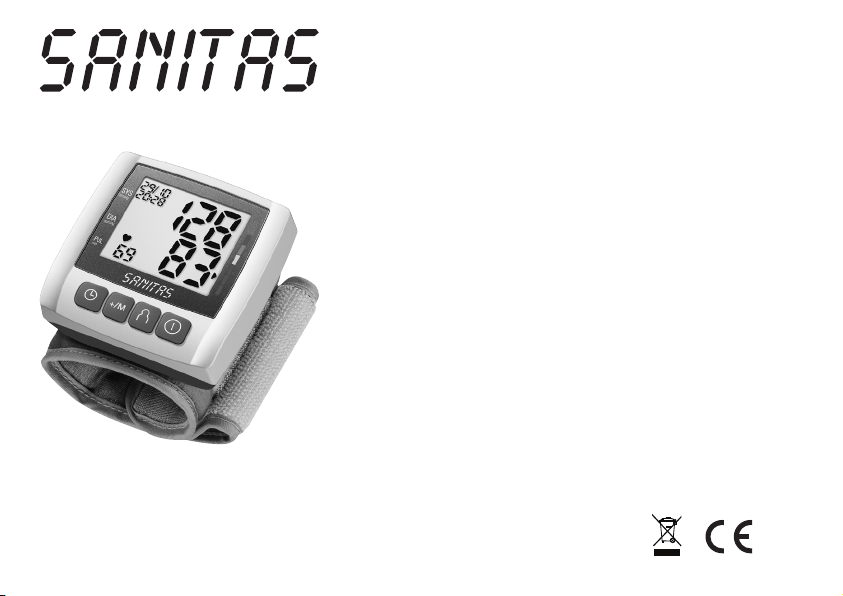
Blutdruckmessgerät
:
Gebrauchsanweisung .............................................. 2 – 11
G
Blood pressure monitor
Instructions for use .............................................. 12 – 20
F
Tensiomètre
Mode d’emploi ......................................................21 – 30
I
Misuratore di pressione
Istruzioni per l’uso .................................................31 – 40
r
Прибор для измерения кровяного
давления на запястье
Инструкция по применению .............................. 41 – 52
Electromagnetic Compatibility Information ............. 53 – 55
SBC 21
0483
2
Bitte lesen Sie diese Gebrauchsanweisung aufmerksam durch,
bewahren Sie sie für späteren Gebrauch auf, machen Sie sie
anderen Benutzern zugänglich und beachten Sie die Hinweise.
1. Kennenlernen
Das Handgelenk-Blutdruckmessgerät dient zur nichtinvasiven
Messung und Überwachung arterieller Blutdruckwerte von er-
wachsenen Menschen. Sie können damit schnell und einfach
Ihren Blutdruck messen und den letzten Messwert anzeigen
lassen.
Bei eventuell vorhandenen Herzrhythmusstörungen werden
Sie gewarnt.
2. Wichtige Hinweise
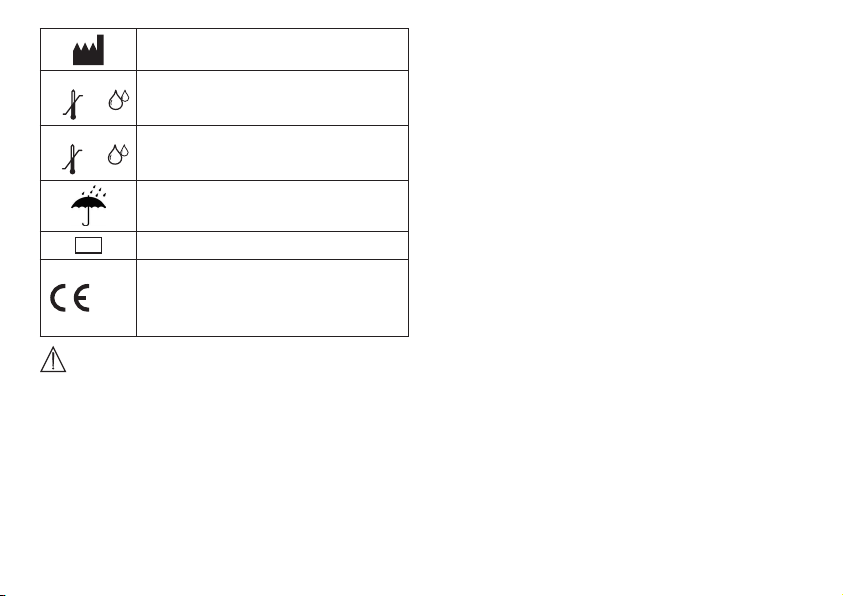
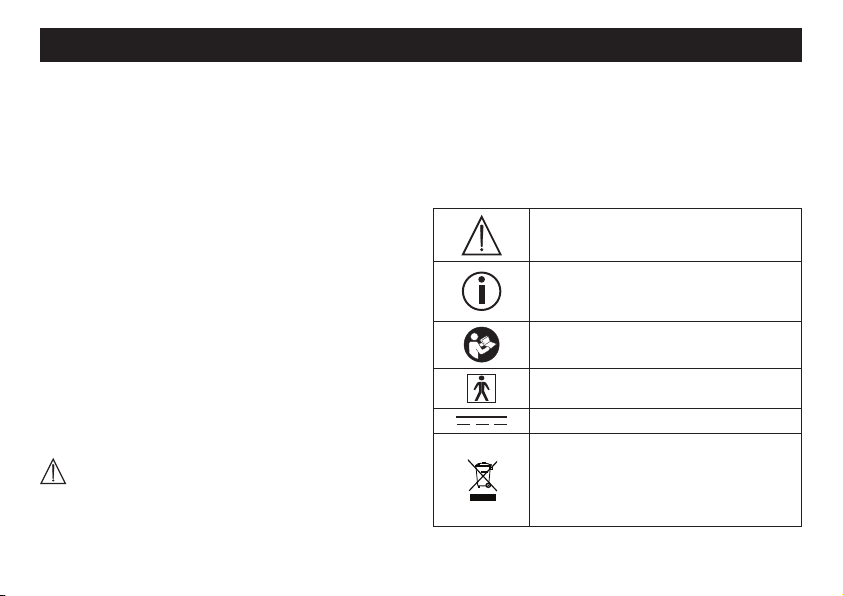
Zeichenerklärung
In der Gebrauchsanweisung, auf der Verpackung und auf dem
Typschild des Geräts und des Zubehörs werden folgende Sym-
bole verwendet:
Vorsicht
Hinweis
Hinweis auf wichtige Informationen
Gebrauchsanweisung beachten
Anwendungsteil Typ BF
Gleichstrom
Entsorgen Sie das Gerät gemäß der Elek-
tro- und Elektronik-Altgeräte EG-Richtlinie
– WEEE (Waste Electrical and Electronic
Equipment).
1. Kennenlernen ...................................................................2
2. Wichtige Hinweise ............................................................2
3. Gerätebeschreibung .........................................................5
4. Messung vorbereiten ........................................................ 6
5. Blutdruck messen ............................................................7
6. Messwerte speichern und abrufen ...................................9
7. Speicherwerte löschen .....................................................9
8. Fehlermeldung/Fehlerbehebung ....................................10
10. Technische Angaben .................................................... 10
11. Garantie ........................................................................11
Inhalt
DEUTSCH
3
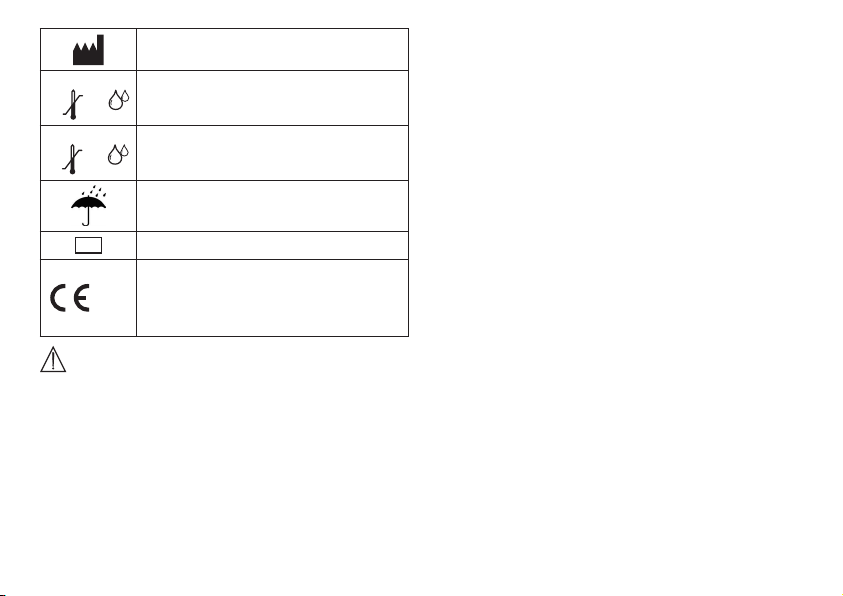
Hersteller
Storage
RH 10-95%
-20°C
60°C
Zulässige Lagerungstemperatur und
- luftfeuchtigkeit
Operating
10°C
40°C
RH 30-85%
Zulässige Betriebstemperatur und
- luftfeuchtigkeit
Vor Nässe schützen
SN
Seriennummer
0483
Die CE-Kennzeichnung bescheinigt die
Konformität mit den grundlegenden An-
forderungen der Richtlinie 93/42/EEC für
Medizinprodukte.
Hinweise zur Anwendung
•
Um eine Vergleichbarkeit der Werte zu gewährleisten, messen
Sie Ihren Blutdruck immer zu gleichen Tageszeiten.
•
Ruhen Sie sich vor jeder Messung ca. 5 Minuten aus!
•
Wenn Sie mehrere Messungen an einer Person durchführen
möchten, warten Sie zwischen den einzelnen Messungen
jeweils 5 Minuten.
•
Mindestens 30 Minuten vor der Messung sollten Sie nicht
essen, trinken, rauchen oder sich körperlich betätigen.
•
Wiederholen Sie die Messung im Falle zweifelhaft gemesse-
ner Werte.
•
Die von Ihnen selbst ermittelten Messwerte können nur zu
Ihrer Information dienen – sie ersetzen keine ärztliche Unter-
suchung!
Besprechen Sie Ihre Messwerte mit dem Arzt, begründen Sie
daraus auf keinen Fall eigene medizinische Entscheidungen
(z.B. Medikamente und deren Dosierungen)!
•
Verwenden Sie das Blutdruckmessgerät nicht bei Neugebo-
renen, Schwangeren und Präeklampsie - Patientinnen.
•
Bei Einschränkungen der Durchblutung an einem Arm auf
Grund chronischer oder akuter Gefäßerkrankungen (unter
anderem Gefäßverengungen), ist die Genauigkeit der Hand-
gelenksmessung eingeschränkt. Weichen Sie in diesem Fall
auf ein am Oberarm messendes Blutdruckmessgerät aus.
•
Dieses Gerät ist nicht dafür bestimmt, durch Personen (ein-
schließlich Kinder) mit eingeschränkten physischen, senso-
rischen oder geistigen Fähigkeiten oder mangels Erfahrung
und/oder mangels Wissen benutzt zu werden, es sei denn,
sie werden durch eine für Ihre Sicherheit zuständige Person
beaufsichtigt oder erhielten von ihr Anweisungen, wie das
Gerät zu benutzen ist. Kinder sollten beaufsichtigt werden,
damit sie nicht mit dem Gerät spielen.
•
Erkrankungen des Herz-Kreislaufsystems können zu Fehl-
messungen bzw. zu Beeinträchtigungen der Messgenauigkeit
führen. Ebenso der Fall ist dies bei sehr niedrigem Blutdruck,
Diabetes, Durchblutungs- und Rhythmusstörungen sowie bei
Schüttelfrost oder Zittern.
•
Das Blutdruckmessgerät darf nicht im Zusammenhang mit
einem Hochfrequenz-Chirurgiegerät verwendet werden.
•
Verwenden Sie das Gerät nur bei Personen mit dem für das
Gerät angegebenen Umfangbereich des Handgelenks.
4
•
B
eachten Sie, dass es während des Aufpumpens zu einer Funkti-
onsbeeinträchtigung des betroffenen Gliedmaßes kommen kann.
•
Die Blutzirkulation darf durch die Blutdruckmessung nicht
unnötig lange unterbunden werden. Bei einer Fehlfunktion
des Gerätes, nehmen Sie die Manschette vom Arm ab.
•
Verhindern Sie einen anhaltenden Druck in der Manschette
sowie häufige Messungen. Eine dadurch resultierende Be-
einträchtigung des Blutflusses kann zu Verletzungen führen.
•
Achten Sie darauf, dass die Manschette nicht an einem Arm
angelegt wird, deren Arterien oder Venen in medizinischer Be-
handlung sind, z.B. intravaskulärer Zugang bzw. eine intravas-
kuläre Therapie oder ein arteriovenöser (A-V-) Nebenschluss.
•
Legen Sie die Manschette nicht bei Personen an, die eine
Brustamputation hatten.
•
Legen Sie die Manschette nicht über Wunden an, da dies zu
weiteren Verletzungen führen kann.
•
Legen Sie die Manschette ausschließlich am Handgelenk
an. Legen Sie die Manschette nicht an anderen Stellen des
Körpers an.
•
Sie können das Blutdruckmessgerät ausschließlich mit Bat-
terien betreiben.
•
Die Abschaltautomatik schaltet das Blutdruckmessgerät zur
Schonung der Batterien aus, wenn innerhalb 2 Minuten keine
Taste betätigt wird.
•
Das Gerät ist nur für den in dieser Gebrauchsanweisung be-
schriebenen Zweck vorgesehen. Der Hersteller haftet nicht für
Schäden, die durch unsachgemäßen oder falschen Gebrauch
verursacht wurden.
Hinweise zur Aufbewahrung und Pflege
•
Das Blutdruckmessgerät besteht aus Präzisions- und Elek-
tronik-Bauteilen. Die Genauigkeit der Messwerte und Lebens-
dauer des Gerätes hängt ab vom sorgfältigen Umgang:
– Schützen Sie das Gerät vor Stößen, Feuchtigkeit, Schmutz,
starken Temperaturschwankungen und direkter Sonnenein-
strahlung.
– Lassen Sie das Gerät nicht fallen.
– Benutzen Sie das Gerät nicht in der Nähe von starken elek-
tromagnetischen Feldern, halten Sie es fern von Funkanla-
gen oder Mobiltelefonen.
•
Drücken Sie nicht auf Tasten, solange die Manschette nicht
angelegt ist.
•
Falls das Gerät über einen längeren Zeitraum nicht benutzt
wird, wird empfohlen die Batterien zu entfernen.
Hinweise zum Umgang mit Batterien
•
Wenn Flüssigkeit aus einer Batteriezelle mit Haut oder
Augen in Kontakt kommt, die betroffene Stelle mit Wasser
auswaschen und ärztliche Hilfe aufsuchen.
•
Verschluckungsgefahr! Kleinkinder könnten Batteri-
en verschlucken und daran ersticken. Daher Batterien für
Kleinkinder unerreichbar aufbewahren!
•
Auf Polaritätskennzeichen Plus (+) und Minus (-) achten.
•
Wenn eine Batterie ausgelaufen ist, Schutzhandschuhe
anziehen und das Batteriefach mit einem trockenen Tuch
reinigen.
•
Schützen Sie Batterien vor übermäßiger Wärme.
5
•
Explosionsgefahr! Keine Batterien ins Feuer werfen.
•
Batterien dürfen nicht geladen oder kurzgeschlossen werden.
•
Bei längerer Nichtbenutzung des Geräts die Batterien aus
dem Batteriefach nehmen.
•
Verwenden Sie nur denselben oder einen gleichwertigen
Batterietyp.
•
Immer alle Batterien gleichzeitig auswechseln.
•
Keine Akkus verwenden!
•
Keine Batterien zerlegen, öffnen oder zerkleinern.
Hinweise zu Reparatur und Entsorgung
•
Batterien gehören nicht in den Hausmüll. Bitte entsorgen
Sie die verbrauchten Batterien an den dafür vorgesehenen
Sammelstellen.
•
Öffnen Sie das Gerät nicht. Bei Nichtbeachten erlischt die
Garantie.
•
Das Gerät darf nicht selbst repariert oder justiert werden.
Eine einwandfreie Funktion ist in diesem Fall nicht mehr ge-
währleistet.
•
Reparaturen dürfen nur vom Kundenservice oder au-
torisierten Händlern durchgeführt werden. Prüfen Sie
jedoch vor jeder Reklamation zuerst die Batterien und
tauschen Sie diese gegebenenfalls aus.
•
Im Interesse des Umweltschutzes darf das Gerät am Ende
seiner Lebensdauer nicht mit dem Hausmüll entfernt
werden. Die Entsorgung kann über entsprechende Sam-
melstellen in Ihrem Land erfolgen. Entsorgen Sie das Gerät
gemäß der Elektro- und Elektronik-Altgeräte EG-Richtlinie
– WEEE (Waste Electrical and Electronic Equipment). Bei
Rückfragen wenden Sie sich an die für die Entsorgung
zuständige kommunale Behörde.
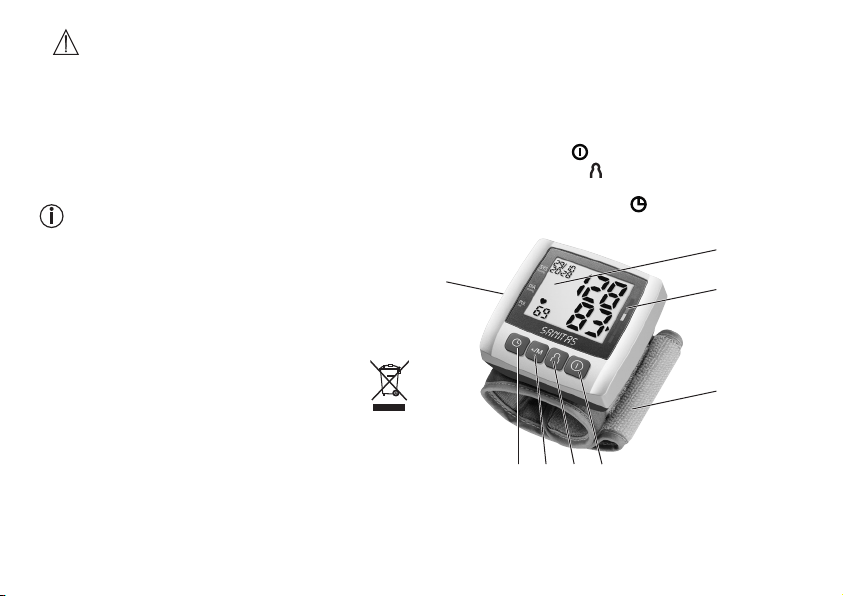
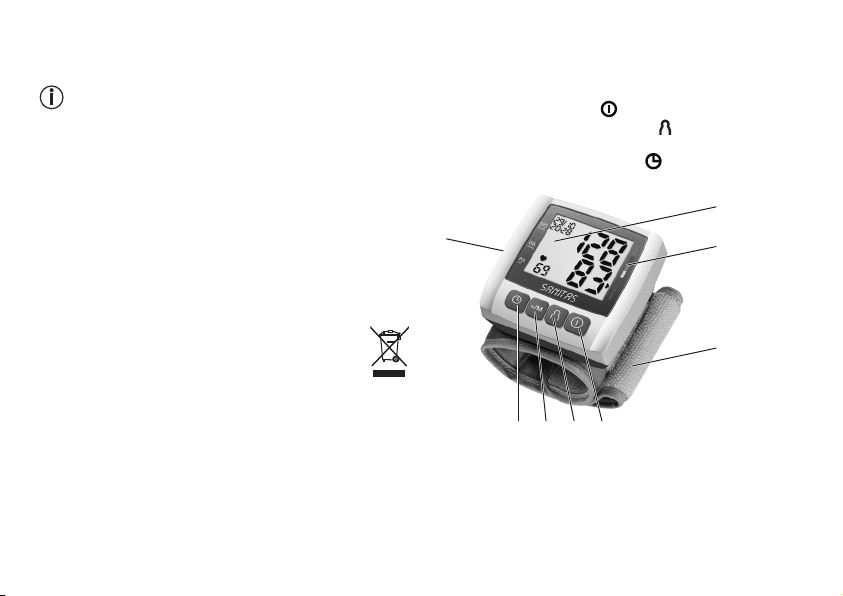
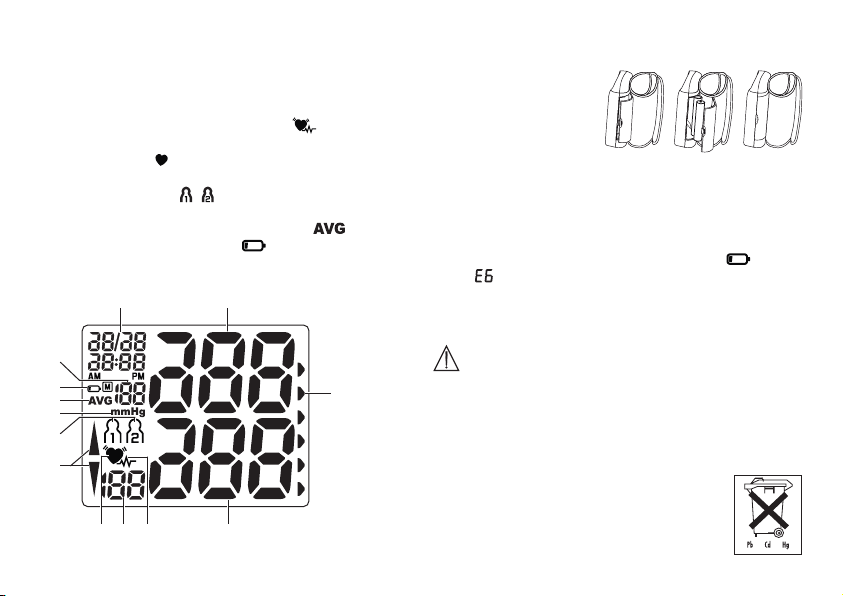
3. Gerätebeschreibung
1. Display
2. Skala zur Einstufung der Messergebnisse
3. Handgelenks manschette
4.
START/STOPP-Taste
5. Taste Benutzerauswahl
6. Speichertaste +/M
7. Taste Datums-/Zeiteinstellung
8. Batteriefach abdeckung
8
1
2
3
4567

6
Anzeigen auf dem Display:
1. Uhrzeit und Datum
2. Systolischer Druck
3. Einstufung der Messergebnisse
4. Diastolischer Druck
5. Symbol Herzrhythmusstörung
6. Ermittelter Pulswert
7. Symbol Puls
8. Aufpumpen, Luft ablassen (Pfeil)
9. Benutzerspeicher /
10. Einheit mmHg
11. Durchschnittswert der letzten 3 Messungen
12. Batterieanzeige
13. Nummer des Speicherplatzes
4. Messung vorbereiten
Batterie einlegen
•
Entfernen Sie den De-
ckel des Batteriefaches
auf der linken Seite des
Gerä tes.
•
Legen Sie zwei Batterien
vom Typ 1,5 V Micro (Alkaline Type LR03) ein.
Achten Sie unbedingt darauf, dass die Batterien entspre-
chend der Kennzeichnung mit korrekter Polung eingelegt
werden. Verwenden Sie keine wiederaufladbaren Akkus.
•
Schließen Sie den Batteriefachdeckel wieder sorgfältig.
Wenn das Symbol Batteriewechsel blinkt und erscheint,
ist keine Messung mehr möglich und Sie müssen alle Batte-
rien erneuern.
Nach dem Einsetzen der Batterien erscheint die Jahreszahl auf
dem Display, nun können Sie Datum und Uhrzeit einstellen.
Batterie Entsorgung
• Die verbrauchten, vollkommen entladenen Batterien müs-
sen Sie über speziell gekennzeichnete Sammelbehälter,
Sondermüllannahmestellen oder über den Elektrohändler
entsorgen. Sie sind gesetzlich dazu verpflichtet, die Batte-
rien zu entsorgen.
• Diese Zeichen finden Sie auf schadstoffhaltigen
Batterien:
Pb = Batterie enthält Blei,
Cd = Batterie enthält Cadmium,
Hg = Batterie enthält Quecksilber.
11
12
13
10
9
8
6 57 4
1 2
3

7
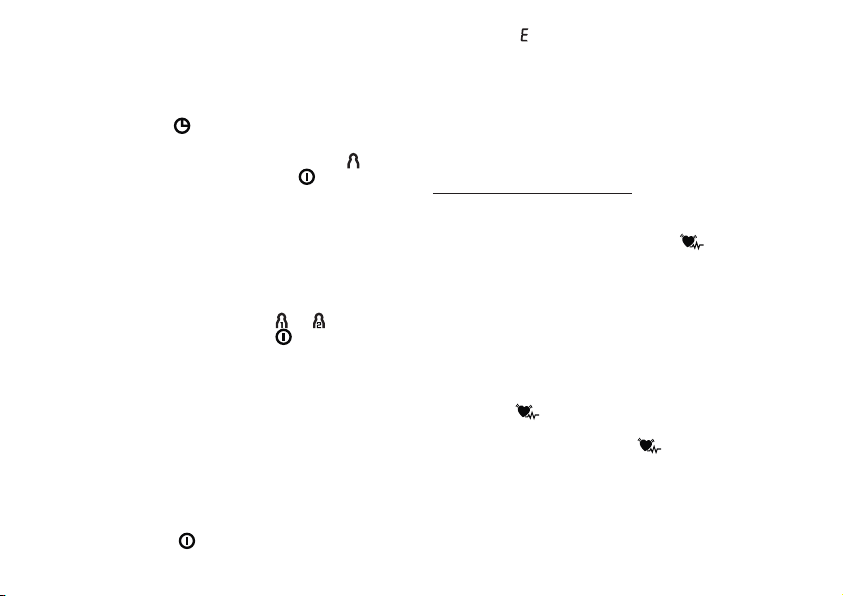
Datum und Uhrzeit einstellen
Sie sollten Datum und Uhrzeit unbedingt einstellen. Nur so kön-
nen Sie Ihre Messwerte korrekt mit Datum und Uhrzeit spei-
chern und später abrufen. Die Uhrzeit wird im 24-Stunden-
Format dargestellt.
Zur Einstellung von Datum und Uhrzeit gehen Sie wie folgt vor:
1. Nach dem Einlegen der Batterien:
•
Nach dem Prüfen des Displays, wobei alle Segmente erschei-
nen, blinkt das Jahr auf dem Display.
•
Mit der Taste +/M können Sie grundsätzlich einzustellende
Werte erhöhen. Stellen Sie also die Jahreszahl ein und be-
stätigen Sie die Eingabe mit der Taste .
•
Stellen Sie nun mit der Taste +/M den Monat ein. Bestätigen
Sie mit der Taste .
•
Stellen Sie Tag/Stunde/Minute ein und bestätigen Sie jeweils
mit der Taste
.
•
Zum Abschalten drücken Sie die Start-/Stopp-Taste .
2. Zu jeder Zeit:
•
Drücken Sie die Taste , Datum/Uhrzeit und der aktuelle
Benutzerspeicher werden angezeigt.
•
Drücken Sie erneut und halten Sie ca. 3 Sekunden lang die
Taste , um in den Einstellmodus „Datum und Uhrzeit“ zu
gelangen.
•
Fahren Sie mit der Einstellung wie oben beschrieben fort.
5. Blutdruck messen
Manschette anlegen
•
Entblößen Sie Ihr linkes Handgelenk. Achten Sie darauf, dass
die Durchblutung des Arms nicht durch zu enge Kleidungs-
stücke oder Ähnliches eingeengt ist.
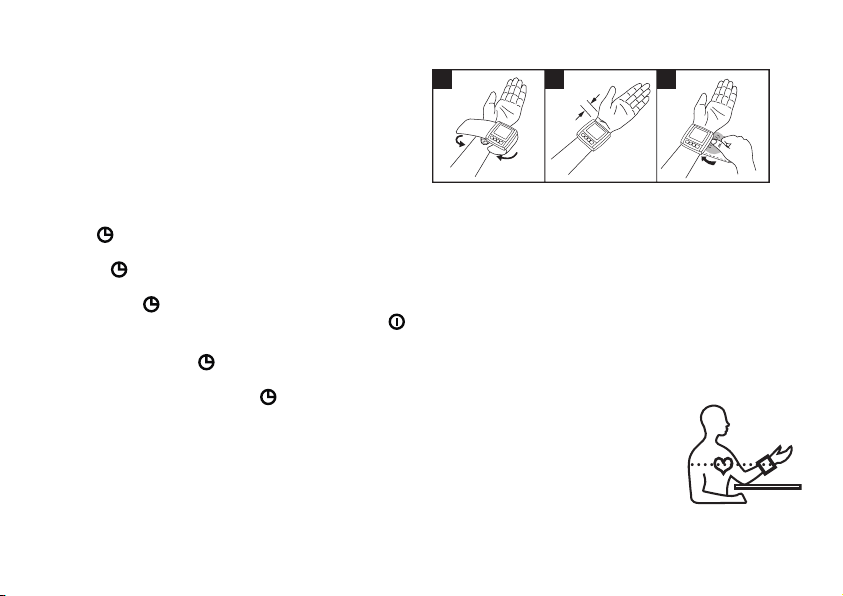
Legen Sie die Manschette auf der Innenseite Ihres Hand-
gelenkes an.
•
Fixieren Sie die Manschette mit dem Klettverschluss so, dass
sich das obere Ende der Anzeige ca.1cm unterhalb Ihres
Handballens befindet.
•
Die Manschette muss eng um das Handgelenk anliegen, darf
aber nicht einschnüren.
Richtige Körperhaltung einnehmen
•
Ruhen Sie sich vor jeder Messung ca. 5 Minuten aus!
Ansonsten kann es zu Abweichungen kommen.
•
Sie können die Messung im Sitzen oder
im Liegen durchführen. Sitzen Sie zur
Blutdruckmessung bequem. Lehnen Sie
Rücken und Arme an. Kreuzen Sie die
Beine nicht. Stellen Sie die Füße flach
auf den Boden. Stützen Sie Ihren Arm
unbedingt ab und winkeln ihn an. Achten
1 2 3
1 cm
8
Sie in jedem Fall darauf, dass sich die Manschette in Herzhöhe
befindet. Ansonsten kann es zu erheblichen Abweichungen
kommen. Entspannen Sie Ihren Arm und die Handflächen.
•
Um das Messergebnis nicht zu verfälschen ist es wichtig,
sich während der Messung ruhig zu verhalten und nicht zu
sprechen.
Speicher wählen
Drücken Sie die Taste , Datum/Uhrzeit und der aktuelle Be-
nutzerspeicher werden angezeigt. Wählen Sie den gewünschten
Benutzerspeicher durch Drücken der Taste Benutzerauswahl .
Bestätigen Sie Ihre Wahl mit der Taste .
Sie haben zwei Speicher á 60 Speicherplätze um die Mess-
ergebnisse von 2 verschiedenen Personen getrennt von-
einander abzuspeichern oder Messungen morgens und abends
separat abzuspeichern.
Blutdruckmessung durchführen
•
Legen Sie, wie zuvor beschrieben, die Manschette an und
nehmen Sie die Haltung ein, in der Sie die Messung durch-
führen wollen.
•
Wählen Sie den Benutzerspeicher oder aus. Starten Sie
den Messvorgang durch Drücken der Taste . Nach dem
Prüfen des Displays, wobei alle Ziffern erscheinen, pumpt sich
die Manschette automatisch auf. Während des Aufpumpens
ermittelt das Gerät bereits Messwerte, die zur Abschätzung
des nötigen Aufpumpdruckes dienen. Sollte dieser Druck
nicht ausreichen, pumpt das Gerät automatisch nach.
•
Dann wird der Druck in der Manschette langsam abgelassen
und der Puls erfasst.
•
Wenn die Messung beendet ist, wird der restliche Luftdruck
sehr schnell abgelassen. Der Puls, der systolische und der
diastolische Blutdruck werden angezeigt.
•
Sie können die Messung jederzeit durch das Drücken der
Taste abbrechen.
•
Das Symbol
_
erscheint, wenn die Messung nicht ordnungs-
gemäß durchgeführt werden konnte. Beachten Sie das Kapi-
tel Fehlermeldung/Fehlerbehebung in dieser Gebrauchsan-
weisung und wiederholen Sie die Messung.
•
Das Gerät schaltet nach 2 Minuten automatisch ab.
Warten Sie vor einer erneuten Messung mindestens 5 Minuten!
Ergebnisse beurteilen
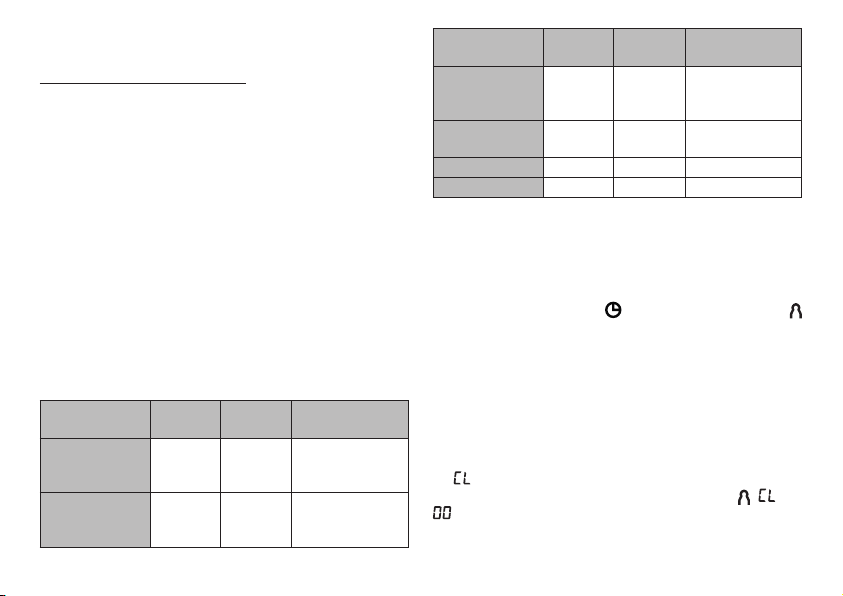
Herzrhythmusstörungen:
Dieses Gerät kann während der Messung eventuelle Störungen
des Herzrhythmus identifizieren und weist gegebenenfalls nach
der Messung mit dem Symbol darauf hin.
Dies kann ein Indikator für eine Arrhythmie sein. Arrhythmie ist
eine Krankheit, bei der der Herzrhythmus aufgrund von Fehlern
im bioelektrischen System, das den Herzschlag steuert, anormal
ist. Die Symptome (ausgelassene oder vorzeitige Herzschläge,
langsamer oder zu schneller Puls) können u.a. von Herzerkran-
kungen, Alter, körperlicher Veranlagung, Genussmitteln im Über-
maß, Stress oder Mangel an Schlaf herrühren. Arrhythmie kann
nur durch eine Untersuchung bei Ihrem Arzt festgestellt werden.
Wiederholen Sie die Messung, wenn das Symbol nach der
Messung auf dem Display angezeigt wird. Bitte achten sie da-
rauf, dass Sie sich 5 Minuten ausruhen und während der Mes-
sung nicht sprechen oder bewegen. Sollte das Symbol oft
erscheinen, wenden Sie sich bitte an Ihren Arzt. Selbst diagnose
9
und -behandlung aufgrund der Messergebnisse können gefähr-
lich sein. Befolgen Sie unbedingt die Anweisungen Ihres Arztes.
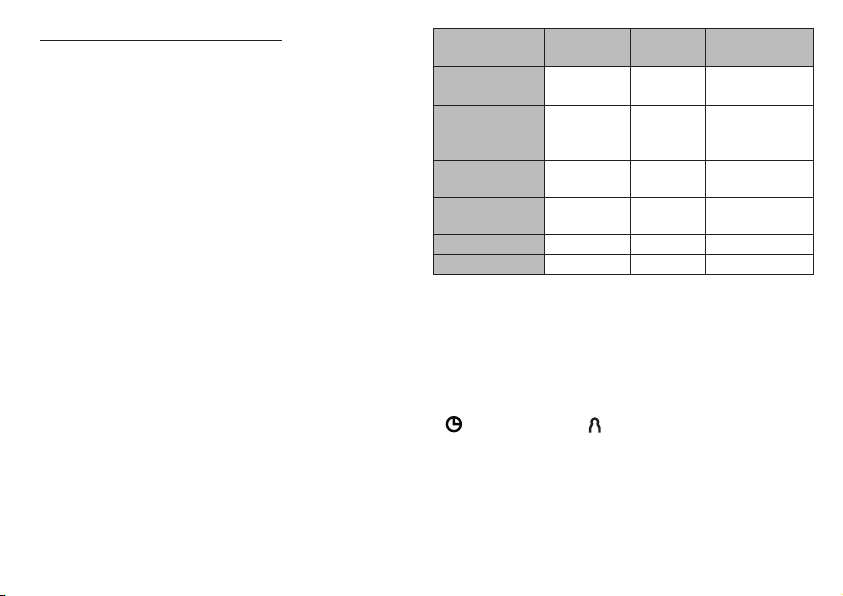
Einstufung der Messergebnisse:
Die Messergebnisse lassen sich gemäß nachfolgender Tabel-
le einstufen und beurteilen.
Diese Standardwerte dienen jedoch lediglich als allgemeine
Richtlinie, da der individuelle Blutdruck bei verschiedenen Per-
sonen und unterschiedlichen Altersgruppen usw. abweicht.
Es ist wichtig, dass Sie Ihren Arzt in regelmäßigen Abständen
zu Rate ziehen. Ihr Arzt teilt Ihnen Ihre individuellen Werte für
einen normalen Blutdruck sowie den Wert mit, ab dem die
Höhe des Blutdrucks als gefährlich einzustufen ist.
Die Einstufung im Display und die Skala auf dem Gerät
geben an, in welchem Bereich sich der ermittelte Blutdruck
befindet. Sollte sich der Wert von Systole und Diastole in
zwei unterschiedlichen Bereichen befinden (z.B. Systole im
Bereich „Hoch Normal“ und Diastole im Bereich „Normal“)
dann zeigt Ihnen die grafische Einteilung auf dem Gerät
immer den höheren Bereich an, im beschriebenen Beispiel
„Hoch Normal“.
Bereich der
Blutdruckwerte
Systole
(in mmHg)
Diastole
(in mmHg)
Maßnahme
Stufe 3:
starke
Hypertonie
≥ 180 ≥ 110
einen Arzt aufsu-
chen
Stufe 2:
mittlere
Hypertonie
160 – 179 100 – 109
einen Arzt aufsu-
chen
Bereich der
Blutdruckwerte
Systole
(in mmHg)
Diastole
(in mmHg)
Maßnahme
Stufe 1:
leichte
Hypertonie
140 – 159 90 – 99
regelmäßige Kon-
trolle beim Arzt
Hoch normal 130 – 139 85 – 89
regelmäßige Kon-
trolle beim Arzt
Normal 120 – 129 80 – 84 Selbstkontrolle
Optimal < 120 < 80 Selbstkontrolle
Quelle: WHO, 1999 (World Health Organization)
6. Messwerte speichern und abrufen
•
Die Ergebnisse jeder erfolgreichen Messung werden zusam-
men mit Datum und Uhrzeit abgespeichert. Bei mehr als 60
Messdaten gehen die jeweils ältesten Messdaten verloren.
•
Wählen Sie mit der Taste und danach mit der Taste
den gewünschten Benutzerspeicher. Durch Drücken der Taste
+/M wird der Durchschnittswert der letzten 3 gespeicherten
Messwerte des Benutzerspeichers angezeigt.
Durch weiteres
Drücken der Speichertaste +/M werden die jeweils letzten
Einzelmesswerte mit Datum und Uhrzeit angezeigt.
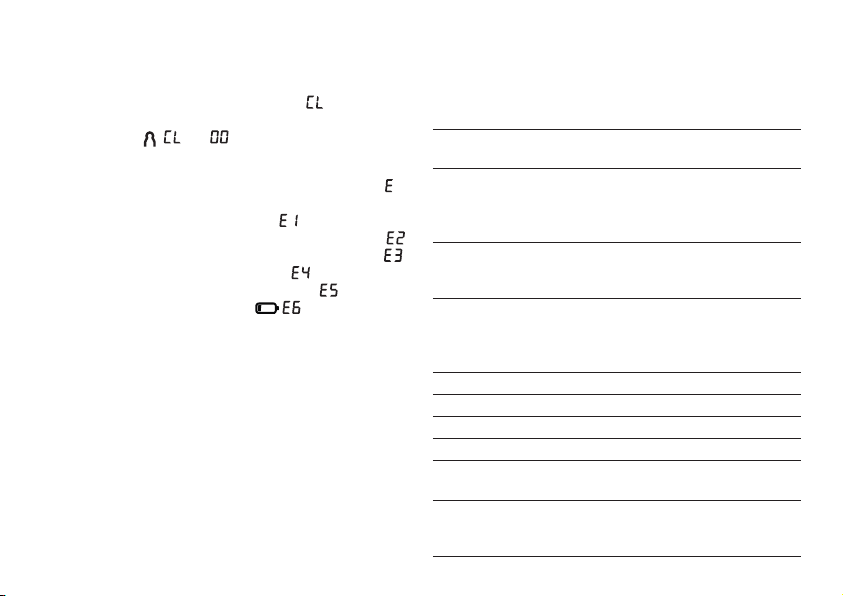
7. Speicherwerte löschen
Um den einzelnen Messwert zu löschen, wählen Sie diesen bitte
zunächst aus. Drücken und halten Sie die Speichertaste +/M
bis auf dem Display erscheint. Anschließend bestätigen Sie
bitte die Löschung mit der Taste Benutzerauswahl ( und
erscheinen auf dem Display).
10
Um Messwerte eines Benutzerspeichers zu löschen, wählen Sie
diesen bitte zunächst aus. Drücken Sie die Taste Speichertas-
te +/M und der Durchschnittswert der letzten 3 gespeicherten
Messwerte wird angezeigt, anschließend drücken und halten
Sie bitte erneut die Speichertaste +/M bis auf dem Dis-
play erscheint. Bestätigen Sie bitte die Löschung mit der Taste
Benutzer auswahl ( und erscheinen auf dem Display).
8. Fehlermeldung/Fehlerbehebung
Bei Fehlern erscheint auf dem Display die Fehlermeldung
_
.
Fehlermeldungen können auftreten, wenn
•
der Puls nicht erfasst werden konnte: ;
•
Sie sich während der Messung bewegen oder sprechen: ;
•
die Manschette zu stark bzw. zu schwach angelegt ist: ;
•
Fehler während der Messung auftreten: ;
•
der Aufpumpdruck höher als 300 mmHg ist: ;
•
die Batterien fast verbraucht sind .
Wiederholen Sie in diesen Fällen die Messung. Achten Sie
da rauf, dass Sie sich nicht bewegen oder reden. Setzen Sie
gegebenenfalls die Batterien neu ein oder ersetzen Sie diese.
9. Gerät und Manschette reinigen und
aufbewahren
•
Reinigen Sie das Gerät und die Manschette vorsichtig nur
mit einem leicht angefeuchteten Tuch.
•
Verwenden Sie keine Reinigungs- oder Lösungsmittel.
•
Sie dürfen Gerät und Manschette auf keinen Fall unter Was-
ser halten, da sonst Flüssigkeit eindringen kann und das
Gerät und die Manschette beschädigt.
•
Wenn Sie Gerät und Manschette aufbewahren, dürfen keine
schweren Gegenstände auf dem Gerät und der Manschette
stehen. Entnehmen Sie die Batterien.
10. Technische Angaben
Modell-Nr. SBC 21
Messmethode Oszillometrisch, nicht invasive Blut-
druckmessung am Handgelenk
Messbereich Manschettendruck 0-300 mmHg,
systolisch 50-250 mmHg,
diastolisch 30-200 mmHg,
Puls 40-180 Schläge /Minute
Genauigkeit der
Anzeige
systolisch ± 3 mmHg,
diastolisch ± 3 mmHg,
Puls ± 5 % des angezeigten Wertes
Messunsicherheit max. zulässige Standardabweichung
gemäß klinischer Prüfung:
systolisch 8 mmHg /
diastolisch 8 mmHg
Speicher 2 x 60 Speicherplätze
Abmessungen L 70 mm x B 72 mm x H 27,5 mm
Gewicht Ungefähr 105 g (ohne Batterien)
Manschettengröße
135 bis 195 mm
Zul. Betriebs-
bedingungen
+10 °C bis +40 °C, 30-85 % relative
Luftfeuchte (nicht kondensierend)
Zul. Aufbewahrungs-
bedingungen
-20 °C bis +60 °C, 10-95 % relative
Luftfeuchte, 700-1050 hPa Umge-
bungsdruck

11
Stromversorgung 2 x 1,5 V AAA Batterien
Batterie-Lebensdauer
Für ca. 300 Messungen, je nach Höhe
des Blutdrucks bzw. Aufpumpdruck
Zubehör Gebrauchsanweisung, 2 x 1,5 V AAA
Batterien, Aufbewahrungsbox
Klassifikation Interne Versorgung, IPX0, kein AP
oder APG, Dauerbetrieb, Anwen-
dungsteil Typ BF
•
Dieses Gerät entspricht der europäischen Norm EN60601-1-2
und unterliegt besonderen Vorsichtsmaßnahmen hinsichtlich
der elektromagnetischen Verträglichkeit. Bitte beachten Sie
dabei, dass tragbare und mobile HF-Kommunikationseinrich-
tungen dieses Gerät beeinflussen können. Genauere Angaben
können Sie unter der angegebenen Kundenservice-Adresse
anfordern oder am Ende der Gebrauchsanweisung nachlesen.
•
Das Gerät entspricht der EU-Richtlinie für Medizinprodukte
93/42/EEC, dem Medizinproduktegesetz und den Normen
EN1060-1 (nicht invasive Blutdruckmessgeräte Teil 1: Allgemei-
ne Anforderungen), EN1060-3 (nicht invasive Blutdruckmessge-
räte Teil 3: Ergänzende Anforderungen für elektromechanische
Blutdruckmesssysteme) und IEC80601-2-30 (Medizinische
elektrische Geräte Teil 2-30: Besondere Festlegungen für die
Sicherheit einschließlich der wesentlichen Leistungsmerkmale
von automatisierten nicht invasiven Blutdruckmessgeräten).
• Die Genauigkeit dieses Blutdruckmessgerätes wurde sorg-
fältig geprüft und wurde im Hinblick auf eine lange nutzbare
Lebensdauer entwickelt.
Bei Verwendung des Gerätes in der Heilkunde sind Mess-
technische Kontrollen mit geeigneten Mitteln durchzuführen.
Genaue Angaben zur Überprüfung der Genauigkeit können
unter der Service-Adresse angefragt werden.
11. Garantie
Wir leisten 2 Jahre Garantie ab Kaufdatum für Material- und
Fabrikationsfehler des Produktes. Die Garantie gilt nicht:
• Im Falle von Schäden, die auf unsachgemäßer Bedienung
beruhen.
• Für Verschleißteile.
• Bei Eigenverschulden des Kunden.
• Sobald das Gerät durch eine nicht autorisierte Werkstatt
geönet wurde.
Die gesetzlichen Gewährleistungen des Kunden bleiben
durch die Garantie unberührt. Für Geltendmachung eines
Garantiefalles innerhalb der Garantiezeit ist durch den
Kunden der Nachweis des Kaufes zu führen. Die Garantie
ist innerhalb eines Zeitraumes von 2 Jahren ab Kaufdatum
gegenüber der Hans Dinslage GmbH, Uttenweiler (Germany)
geltend zu machen.
Bitte wenden Sie sich im Falle von Reklamationen an
unseren Service unter folgendem Kontakt:
Service Hotline:
Tel.: +49 (0) 7374-915766
E-Mail: [email protected]
www.sanitas-online.de
Fordern wir Sie zur Übersendung des defekten Produk-
tes auf, ist das Produkt an folgende Adresse zu senden:
NU Service GmbH
Lessingstraße 10 b
89231 Neu-Ulm
Germany
Irrtum und Änderungen vorbehalten
12
Please read these instructions for use carefully and keep them
for later use, be sure to make them accessible to other users
and observe the information they contain.
1. Getting to know your device
The wrist blood pressure monitor is used to carry out non-
invasive measurement and monitoring of arterial blood pressure
values in human adults. This allows you to quickly and easily
measure your blood pressure and to display the last recorded
measurement.
A warning is issued for anyone suffering from cardiac ar-
rhythmia.
The recorded values are classified and evaluated graphically.
2. Important notes
Signs and symbols
The following symbols are used in these instructions for use,
on the packaging and on the type plate for the device and the
accessories:
Attention
Note
Note on important information
Observe the instructions for use
Application part, type BF
Direct current
Dispose of the device in accordance with EC
Directive – WEEE (Waste Electrical and Elec-
tronic Equipment).
Manufacturer
Storage
RH 10-95%
-20°C
60°C
Permissible storage temperature and
humidity
ENGLISH
1. Getting to know your device ..........................................12
2. Important notes ..............................................................12
3. Unit description ..............................................................15
4. Preparing the measurement ........................................... 16
5. Measuring blood pressure .............................................17
6. Saving and displaying measurements ...........................19
7. Deleting stored values .................................................... 19
8. Error message/troubleshooting ......................................19
9. Cleaning and storing the device and cuff .......................19
10. Technical specifications ............................................... 19
Contents
13
Operating
10°C
40°C
RH 30-85%
Permissible operating temperature and
humidity
Protect from moisture
SN
Serial number
0483
The CE labelling certifies that the product
complies with the essential requirements of
Directive 93/42/EEC on medical products.
Advice on use
•
In order to ensure comparable values, always measure your
blood pressure at the same time of day.
•
Before every measurement, relax for about five minutes.
•
If you want to perform several measurements on the same
person, wait five minutes between each measurement.
•
Do not take a measurement within 30 minutes after eating,
drinking, smoking or exercising.
•
Repeat the measurement if you are unsure of the measured
value.
•
The measurements taken by you are for your information
only – they are not a substitute for a medical examination!
Discuss the measurements with your doctor, and never base
any medical decisions on them (e.g. medicines and their ad-
ministration)!
•
Do not use the blood pressure monitor on newborns, preg-
nant women or patients with preeclampsia.
•
In the case of restricted circulation on the arm as a result of
chronic or acute vascular diseases (including vascular con-
striction), the accuracy of the wrist measurement is limited.
In this case you should avoid using an upper arm blood pres-
sure monitor.
•
This device is not intended for use by people (including chil-
dren) with restricted physical, sensory or mental skills or a
lack of experience and/or a lack of knowledge, unless they
are supervised by a person who has responsibility for their
safety or they receive instructions from this person on how
to use the device. Supervise children around the device to
ensure they do not play with it.
•
Cardiovascular diseases may lead to incorrect measurements
or have a detrimental effect on measurement accuracy. The
same also applies to very low blood pressure, diabetes, circu-
latory disorders and arrhythmias as well as chills or shaking.
•
The blood pressure monitor must not be used in connection
with a high-frequency surgical unit.
•
Only use the unit on people who have the specified wrist
measurement for the device.
•
Please note that when inflating, the functions of the limb in
question may be impaired.
•
During the blood pressure measurement, blood circulation
must not be stopped for an unnecessarily long time. If the
device malfunctions, remove the cuff from the arm.
•
Do not allow sustained pressure in the cuff or frequent meas-
urements. The resulting restriction of the blood flow may
cause injury.
•
Ensure that the cuff is not placed on an arm in which the
arteries or veins are undergoing medical treatment, e.g. in-
travascular access or therapy, or an arteriovenous (AV) shunt.
14
•
Do not use the cuff on people who have undergone a mas-
tectomy.
•
Do not place the cuff over wounds as this may cause further
injury.
•
Place the cu on your wrist only. Do not place the cu on
other parts of the body.
•
The blood pressure monitor can only be operated with batteries.
•
To conserve the batteries, the monitor switches off automati-
cally if no buttons are pressed for two minutes.
•
The device is only intended for the purpose described in
these instructions for use. The manufacturer is not liable for
damage resulting from improper or careless use.
Instructions for storage and maintenance
•
The blood pressure monitor is made from precision and elec-
tronic components. The accuracy of the measurements and
service life of the device depend on its careful handling:
– Protect the device from impacts, humidity, dirt, marked
temperature fluctuations and direct sunlight.
– Do not drop the device.
– Do not use the device in the vicinity of strong electromag-
netic fields and keep it away from radio systems or mobile
telephones.
•
Do not press the buttons before the cuff is placed on the arm.
•
We recommend that the batteries be removed if the device
will not be used for a prolonged period of time.
Notes on handling batteries
•
If your skin or eyes come into contact with battery fluid, flush
out the affected areas with water and seek medical assistance.
•
Choking hazard! Small children may swallow and
choke on batteries. Store the batteries out of the reach of
small children.
•
Observe the plus (+) and minus (-) polarity signs.
•
If a battery has leaked, put on protective gloves and clean
the battery compartment with a dry cloth.
•
Protect the batteries from excessive heat.
•
Risk of explosion! Never throw batteries into a fire.
•
Do not charge or short-circuit batteries.
•
If the device is not to be used for a long period, take the
batteries out of the battery compartment.
•
Use identical or equivalent battery types only.
•
Always replace all batteries at the same time.
•
Do not use rechargeable batteries.
•
Do not disassemble, split or crush the batteries.
Instructions for repairs and disposal
•
Batteries do not belong in household waste. Please dispose
of empty batteries at the collection points intended for this
purpose.
•
Do not open the device. Failure to comply will result in voiding
of the warranty.
•
Do not repair or adjust the device. Proper operation can no
longer be guaranteed in this case.
•
Repairs must only be carried out by Customer Services or
authorised suppliers. Before making a claim, please check
the batteries first and replace them if necessary.
•
For environmental reasons, do not dispose of the device in
the household waste at the end of its useful life. Dispose of

15
the device at a suitable local collection or recycling
point. Dispose of the device in accordance with EC
Directive – WEEE (Waste Electrical and Electronic
Equipment). If you have any questions, please contact the
local authorities responsible for waste disposal.
3. Unit description
1. Display
2. Scale for classifying the measurements
3. Wrist cuff
4.
START/STOP button
5. User selection button
6. Memory button +/M
7. Date/time setting button
8. Battery compartment lid
Information on the display:
1. Time and date
2. Systolic pressure
3. Classification of measurements
4. Diastolic pressure
5. Cardiac arrhythmia symbol
6. Calculated pulse value
7. Pulse symbol
8. Pump up, release air (arrow)
9. User memory /
10. Unit in mmHg
11. Average value of the last three measurements
12. Battery level indicator
13. Memory space number
8
1
2
3
4567
11
12
13
10
9
8
6 57 4
1 2
3

16
4. Preparing the measurement
Insert the batteries
•
Remove the battery
compartment lid on the
left side of the device.
•
Insert two 1.5 V micro
(alkaline type LR03) bat-
teries.
Make sure that the batteries are inserted the correct way
round. Do not use rechargeable batteries.
•
Close the battery compartment lid again carefully.
If the
battery change symbol is flashing and appears,
no more measurements are possible and you must replace
all batteries.
After inserting the batteries, the year appears on the display
and you can then set the date and time.
Battery disposal
• The empty, completely flat batteries must be disposed of
through specially designated collection boxes, recycling
points or electronics retailers. You are legally required to
dispose of the batteries.
• The codes below are printed on batteries
containing harmful substances:
Pb = Battery contains lead,
Cd = Battery contains cadmium,
Hg = Battery contains mercury.
Setting the date and time
You should set the date and time without fail. Otherwise, you
will not be able to save your measured values correctly with
a date and time and access them again later. The time is dis-
played in the 24-hour format.
To set the date and time, proceed as follows:
1. After inserting the batteries:
•
Following the display check, during which all segments ap-
pear, the year flashes on the display.
•
Using the +/M button, you can increase the basic values to be
set. Set the year and confirm the entry using the button.
•
Now set the month using the +/M button. Confirm using the
button.
•
Set the day/hour/minute and confirm each using the
button.
•
To switch off, press the START/STOP button .
2. At any time:
•
Press the button to display the date/time and current user
memory.
•
Press and hold the button again for about 3 seconds to
reach Date and time mode.
•
Set as described above.
17
5. Measuring blood pressure
Attach the cuff
•
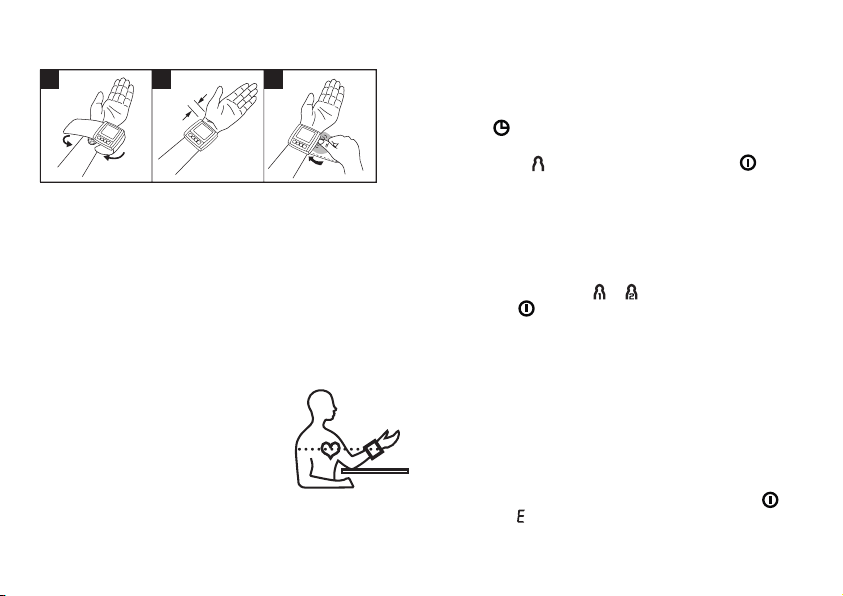
Expose your left wrist. Ensure that the circulation of the arm
is not hindered by tight clothing or similar.
Place the cuff on the inside of your wrist.
•
Fasten the cuff with the hook and loop fastener so that the
upper edge of the monitor is positioned approx. 1 cm below
the ball of your thumb.
•
The cuff must be fitted tightly around the wrist, but must not
constrict.
Adopt the correct posture
•
Before every measurement, relax for about five minutes.
Otherwise deviations can occur.
•
You can perform the measurement while
sitting or lying. To carry out a blood
pressure measurement, make sure you
are sitting comfortably with your arms
and back leaning on something. Do not
cross your legs. Place your feet flat on
the ground. Make sure to rest your arm
and move it. Always make sure that the cuff is at heart level.
Otherwise significant deviations can occur. Relax your arm
and the palm of your hand.
•
To avoid falsifying the measurement, it is important to remain
still during the measurement and not to speak!
Selecting memory
Press the button to display the date/time and current user
memory. Select the desired user memory by pressing the user
selection button . Confirm your selection with the button.
You have 2 memories with 60 memory spaces each to store the
measurements of 2 different people separately or to separate
measurements taken in the morning and at night.
Performing the blood pressure measurement
•
As described above, attach the cuff and adopt the posture
in which you want to perform the measurement.
•
Select the user memory or . Start the measurement by
holding the button. Following the display check, during
which all numbers appear, the cuff inflates automatically.
Whilst the cuff is pumping up, the device already calculates
measurements for estimating the necessary pump pressure.
If this pressure is insufficient, the device automatically pumps
more pressure.
•
Then the pressure in the cuff is slowly released and the pulse
is detected.
•
When the measurement has been taken, the remaining air
pressure dissipates very quickly. The pulse, the systolic and
diastolic blood pressure are displayed.
•
Measuring can be cancelled at any time by pressing .
•
The symbol
_
appears if the measurement could not be per-
formed properly. Take note of the chapter on error messages/
1 2 3
1 cm
18
trouble-shooting in these instructions for use and repeat the
measurement.
•
The device switches off automatically after 2 minutes.
Wait at least 5 minutes before taking another measurement!
Evaluating results
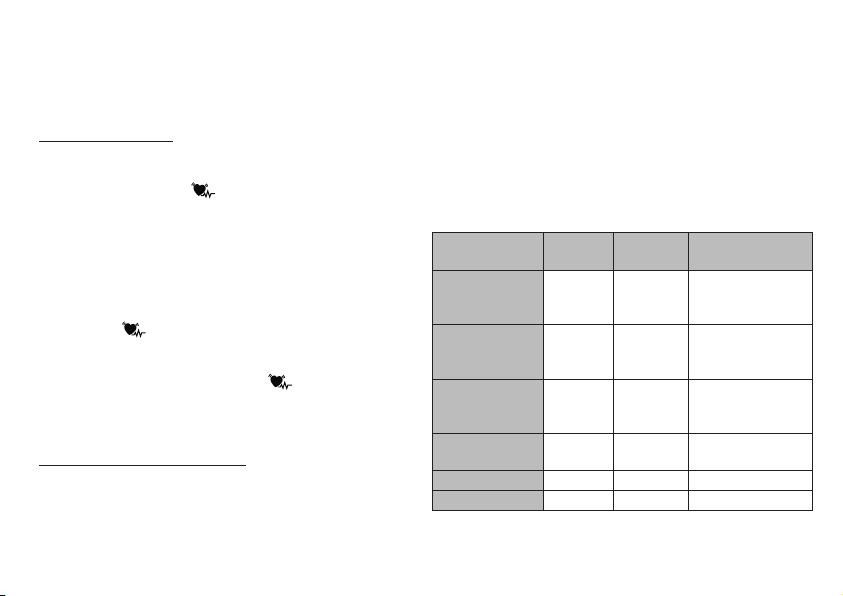
Cardiac arrhythmias:
This unit can identify potential disruption of the heart rhythm
when measuring and if necessary, indicates this after the meas-
urement with the symbol .
This can be an indicator for arrhythmia. Arrhythmia is an illness
in which the heart rhythm is abnormal because of flaws in the
bioelectrical system that regulates the heartbeat. The symptoms
(skipped or premature heart beats, pulse being slow or too fast)
can be caused by factors such as heart disease, age, physical
make-up, excess stimulants, stress or lack of sleep. Arrhythmia
can only be determined through an examination by your doctor.
If the symbol is shown on the display after the measure-
ment has been taken, it should be repeated. Please ensure that
you rest for 5 minutes beforehand and do not speak or move
during the measurement. If the symbol appears frequently,
please consult your doctor. Self-diagnosis and treatment based
on the measurements can be dangerous. Always follow your
GP’s instructions.
Classification of measurements:
The measurements can be classified and evaluated in ac-
cordance with the following table.
However, these standard values serve only as a general
guideline, as the individual blood pressure varies in different
people and different age groups etc.
It is important to consult your doctor regularly for advice.
Your doctor will tell you your individual values for normal
blood pressure as well as the value above which your blood
pressure is classified as dangerous.
The classification on the display and the scale on the unit
show which category the recorded blood pressure values fall
into. If the values of systole and diastole fall into two different
categories (e.g. systole in the ‚High normal‘ category and
diastole in the ‚Normal‘ category), the graphical classifica-
tion on the device always shows the higher category; for the
example given this would be ‚High normal‘.
Blood pressure
value category
Systole
(in mmHg)
Diastole
(in mmHg)
Action
Setting 3:
severe hyper-
tension
≥ 180 ≥ 110
seek medical at-
tention
Setting 2:
moderate hyper-
tension
160 – 179 100 – 109
seek medical at-
tention
Setting 1:
mild hyperten-
sion
140 – 159 90 – 99
regular monitoring
by doctor
High normal 130 – 139 85 – 89
regular monitoring
by doctor
Normal 120 – 129 80 – 84 self-monitoring
Optimal < 120 < 80 self-monitoring
Source: WHO, 1999 (World Health Organization)
19
6. Saving and displaying measurements
•
The results of every successful measurement are stored
together with the date and time. If there are more than 60
measurements, the oldest measurements are lost.
•
Use the button and then the button to select the desired
user memory. Pressing the +/M button displays the average
value of the 3 most recent measurements stored in the user
memory.
If you continue to press the memory button +/M,
the most recent individual measured values are displayed in
turn with the date and time.
7. Deleting stored values
To delete individual measurements, you must first select them.
Press and hold the memory button +/M until appears in the
display. Then confirm the deletion with the user selection button
( and appear on the display).
To delete measurements from a user memory, you must first
select them. Press the memory button +/M and the average
value of the last 3 saved measurements is displayed. Then press
and hold the memory button +/M again until appears in the
display. Confirm the deletion with the user selection button
( and appear on the display).
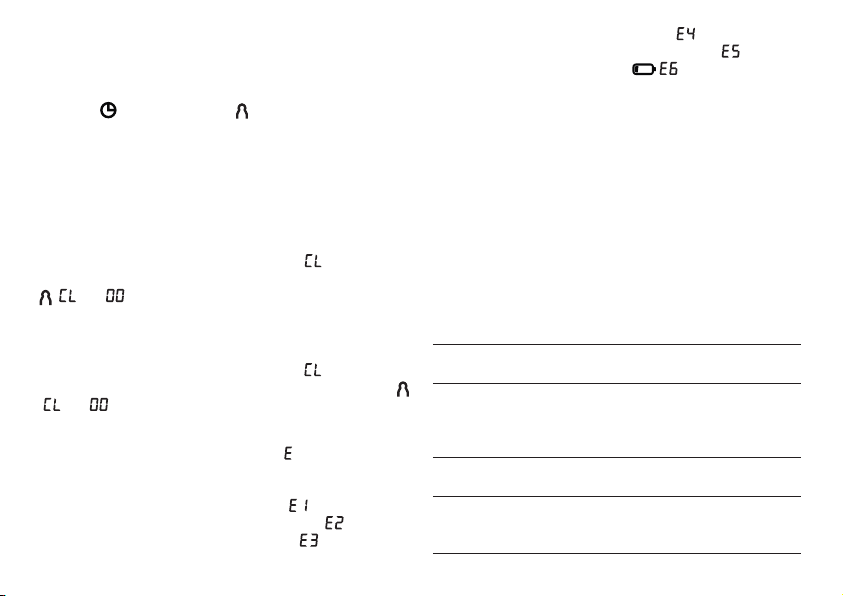
8. Error message/troubleshooting
In the event of errors, the error message
_
appears on the
display.
Error messages may appear if:
•
it was not possible to record the pulse: ;
•
you move or speak during the measurement: ;
•
the cuff is fastened too tightly or loosely: ;
•
errors occur during the measurement: ;
•
the pump pressure is higher than 300mmHg: ;
•
the batteries are almost empty .
In such cases, repeat the measurement. Ensure that you do not
move or speak. If necessary, reinsert or replace the batteries.
9. Cleaning and storing the device and cuff
•
Clean the device and cu carefully using a slightly damp
cloth only.
•
Do not use any cleaning agents or solvents.
•
Under no circumstances hold the device and cu under
water, as this can cause liquid to enter and damage the
device and cu.
•
If you store the device and cu, do not place heavy objects
on the device and cu. Remove the batteries.
10. Technical specifications
Model no. SBC 21
Measurement
method
Oscillometric, non-invasive blood pres-
sure measurement on the wrist
Measurement
range
Cuff pressure 0-300 mmHg,
systolic 50-250 mmHg,
diastolic 30-200 mmHg,
pulse 40-180 beats /minute
Display accuracy Systolic ± 3 mmHg, diastolic ± 3 mmHg,
pulse ± 5 % of the value shown
Measurement
inaccuracy
Max. permissible standard deviation
according to clinical testing:
systolic 8 mmHg / diastolic 8 mmHg

20
Memory 2 x 60 memory spaces
Dimensions L 70 mm x W 72 mm x H 27.5 mm
Weight Approximately 105 g (without batteries)
Cuff size
135 to 195 mm
Permissible operat-
ing conditions
+10 °C to +40 °C, 30-85 % relative hu-
midity (non-condensing)
Permissible storage
conditions
-20 °C to +60 °C, 10-95 % relative hu-
midity, 700-1050 hPa ambient pressure
Power supply 2 x 1.5 V
AAA batteries
Battery life For approx. 300 measurements,
depending on levels of blood pressure
and pump pressure
Accessories Instructions for use, 2 x 1.5 V AAA bat-
teries, storage box
Classification Internal supply, IPX0, no AP or APG,
continuous operation, application part
type BF
• This unit is in line with European Standard EN 60601-1-2 and
is subject to particular precautions with regard to electro-
magnetic compatibility (EMC). Please note that portable and
mobile HF communication systems may interfere with this
unit. More details can be requested from the stated Customer
Services address or found at the end of the instructions for
use.
• This device is in line with the EU Medical Devices Directive
93/42/EEC, the “Medizinproduktegesetz” (German Medi-
cal Devices Act) and the standards EN1060-1 (non-inva-
sive sphygmomanometers, Part 1: General requirements),
EN1060-3 (non-invasive sphygmomanometers, Part3: Sup-
plementary requirements for electro-mechanical blood pres-
sure measuring systems) and IEC80601-2-30 (Medical elec-
trical equipment – Part 2-30: Particular requirements for the
safety and essential performance of automated non-invasive
blood pressure monitors).
• The accuracy of this blood pressure monitor has been care-
fully checked and developed with regard to a long useful life.
If using the device for commercial medical purposes, it must
be regularly tested for accuracy by appropriate means. Pre-
cise instructions for checking accuracy may be requested
from the service address.
Subject to error and change
21
Lisez attentivement cette notice, conservez-la pour un usage
ultérieur, mettez-la à disposition des autres utilisateurs et suivez
les consignes qui y figurent.
1. Présentation
Le tensiomètre de poignet est conçu pour la mesure non inva-
sive et la surveillance des valeurs de tension artérielle des per-
sonnes adultes. Vous pouvez mesurer rapidement et simplement
votre pression artérielle et afficher la dernière valeur mesurée.
L’appareil vous prévient en cas d’arythmie cardiaque éven-
tuelle.
Les valeurs calculées sont classées et évaluées sous forme
graphique.
2. Conseils importants
Symboles utilisés
Les symboles suivants sont utilisés sur le mode d’emploi, sur
l’emballage et sur la plaque signalétique de l’appareil et des
accessoires:
Attention
Remarque
Ce symbole indique des informations
importantes.
Respectez les consignes du mode
d’emploi
Appareil de type BF
Courant continu
Veuillez éliminer l’appareil conformément
à la directive européenne – WEEE (Waste
Electrical and Electronic Equipment) relative
aux appareils électriques et électroniques
usagés.
FRANÇAIS
1. Présentation ...................................................................21
2. Conseils importants .......................................................21
3. Description de l’appareil ................................................24
4. Préparation de la mesure ............................................... 25
5. Mesurer la tension .......................................................... 26
6. Enregistrement et consultation des mesures ................. 28
7. Effacer des valeurs enregistrées .................................... 29
8. Message d’erreur/Résolution des erreurs ...................... 29
9. Nettoyage et rangement de l’appareil et de la manchette 29
10. Caractéristiques techniques ......................................... 29
Sommaire
22
Fabricant
Storage
RH 10-95%
-20°C
60°C
Température et taux d’humidité de stoc-
kage admissibles
Operating
10°C
40°C
RH 30-85%
Température et taux d’humidité d’utilisa-
tion admissibles
Protéger contre l’humidité
SN
Numéro de série
0483
Le sigle CE atteste de la conformité aux
exigences fondamentales de la directive
93/42/EEC relative aux dispositifs médi-
caux.
Remarques relatives à l’utilisation
• Mesurez toujours votre tension au même moment de la jour-
née afin que les valeurs soient comparables.
• Avant toute mesure, reposez-vous environ 5minutes!
• Lorsque vous devez effectuer plusieurs mesures sur une
personne, patientez à chaque fois 5minutes entre chaque
mesure.
• Évitez de manger, boire, fumer ou d’exercer des activités
physiques pendant au moins 30minutes avant la mesure.
• Effectuez une nouvelle mesure si vous avez un doute sur les
valeurs mesurées.
• Les mesures que vous avez établies servent juste à vous tenir
informé de votre état, elles ne remplacent pas un examen
médical!
Parlez-en avec votre médecin, vous ne devez prendre aucune
décision d’ordre médical sur la base de ces seules mesures
(par ex. choix de médicaments et de leurs dosages)!
•
N’utilisez pas le tensiomètre sur des nouveaux-nés, des
femmes enceintes et les patientes atteintes de pré-éclampsie.
•
En cas de limitation de la circulation sanguine dans un bras en
raison de maladies chroniques ou aiguës des vaisseaux (entre
autres vasoconstriction), l’exactitude de la mesure au poignet
est limitée. Dans ce cas, passez à un tensiomètre au bras.
•
Cet appareil n’est pas conçu pour être utilisé par une personne
(y compris les enfants) dont les capacités physiques, senso
-
rielles ou intellectuelles sont limitées, ou n’ayant pas l’expé-
rience et/ou les connaissances nécessaires. Le cas échéant,
cette personne doit, pour sa sécurité, être surveillée par une
personne compétente ou doit recevoir de cette dernière des
recommandations sur la manière d’utiliser l’appareil. Surveillez
les enfants afin de les empêcher de jouer avec l’appareil.
• Les maladies cardio-vasculaires peuvent entraîner des er-
reurs de mesure, plus précisément des mesures imprécises.
Ce problème se pose aussi en cas de tension très basse, de
diabète, de troubles de la circulation et du rythme cardiaque
et de frissons de fièvre ou de tremblements.
• Le tensiomètre ne doit pas être utilisé parallèlement à un
appareil chirurgical haute fréquence.
• Utilisez uniquement l’appareil sur des personnes dont le péri-
mètre du poignet correspond à celui indiqué pour l’appareil.
• Veuillez noter que la fonction du membre concerné peut être
entravée lors du gonflage.
23
• Il ne faut pas bloquer la circulation sanguine plus longtemps
que nécessaire au cours de la prise de tension. Si l’appareil
ne fonctionne pas bien, retirez le brassard du bras.
• Évitez des mesures trop fréquentes ou une pression continue
du brassard. Elles entraînent une réduction de la circulation
sanguine et constituent un risque de blessure.
• Veillez à ne pas placer le brassard sur un bras, dont les ar-
tères ou les veines sont soumises à un traitement médical,
par exemple en présence d’un dispositif d’accès intravas-
culaire destiné à un traitement intravasculaire ou en cas de
shunt artérioveineux.
• N’utilisez pas le brassard sur des personnes qui ont subi une
mastectomie.
• Ne placez pas le brassard sur des plaies, son utilisation peut
les aggraver.
•
Placez la manchette uniquement au niveau du poignet. Ne
placez pas la manchette sur d’autres parties du corps.
• Vous ne pouvez utiliser le tensiomètre qu’avec des piles.
• L’arrêt automatique permet de faire passer le tensiomètre en
mode économie d’énergie lorsqu’aucune touche n’est utilisée
pendant de 2minutes.
• L’appareil est conçu pour l’utilisation décrite dans ce mode
d’emploi. Le fabricant ne peut être tenu pour responsable
des dommages causés par une utilisation inappropriée ou
non conforme.
Consignes de rangement et d’entretien
•
Le tensiomètre est constitué de composants de précision et
électroniques. La précision des valeurs mesurées et la durée
de vie de l’appareil dépendent d’un maniement soigné:
– Protégez l’appareil contre les chocs, l’humidité, les sale-
tés, les fortes variations de température et l’ensoleillement
direct.
– Ne laissez pas tomber l’appareil.
– N’utilisez pas l’appareil à proximité de champs électroma-
gnétiques puissants, tenez-le éloigné des installations de
radio et des téléphones mobiles.
•
N’appuyez sur aucune touche tant que la manchette n’est
pas placée.
•
Si l’appareil n’est pas utilisé pendant une période prolongée,
il est recommandé de retirer les piles.
Remarques relatives aux piles
•
Si du liquide de la cellule de pile entre en contact avec la
peau ou les yeux, rincez la zone touchée avec de l’eau et
consultez un médecin.
•
Risque d‘ingestion! Les enfants en bas âge pour-
raient avaler des piles et s’étouffer. Veuillez donc conserver
les piles hors de portée des enfants en bas âge!
•
Respectez les signes de polarité plus (+) et moins (-).
•
Si la pile a coulé, enfilez des gants de protection et net-
toyez le compartiment à piles avec un chiffon sec.
•
Protégez les piles d’une chaleur excessive.
•
Risque d‘explosion! Ne jetez pas les piles dans le feu.
•
Les piles ne doivent être ni rechargées, ni court-circuitées.
•
En cas de non utilisation prolongée de l’appareil, sortez les
piles du compartiment à piles.
•
Utilisez uniquement des piles identiques ou équivalentes.
24
•
Remplacez toujours l’ensemble des piles simultanément.
•
N’utilisez pas d’accumulateur!
•
Ne démontez, n’ouvrez ou ne cassez pas les piles.
Consignes de réparation et d’élimination
•
Les piles ne doivent pas être jetées avec les ordures ména-
gères. Veuillez jeter les piles usées dans les points de collecte
prévus à cet effet.
•
N’ouvrez pas l’appareil. Le non-respect de cette consigne
annulerait la garantie.
•
Vous ne devez pas réparer ou régler l’appareil vous-même.
Le bon fonctionnement de l’appareil n’est plus garanti si tel
était le cas.
•
Seul le service client ou un opérateur autorisé peut procéder à
une réparation. Cependant, avant toute réclamation, veuillez
contrôler au préalable l’état des piles et les remplacer le cas
échéant.
•
Dans l’intérêt de la protection de l’environnement,
l’appareil ne doit pas être jeté avec les ordu-
res ménagères à la fin de sa durée de service.
L’élimination doit se faire par le biais des points de
collecte compétents dans votre pays. Éliminez l’appareil
conformément à la directive européenne – WEEE (Waste
Electrical and Electronic Equipment) relative aux appareils
électriques et électroniques usagés. Pour toute question,
adressez-vous aux collectivités locales responsables de
l’élimination et du recyclage de ces produits.
3. Description de l’appareil
1. Écran
2. Échelle pour classement des résultats de mesure
3. Manchette de poignet
4.
Touche MARCHE/ARRÊT
5. Touche de sélection de l’utilisateur
6. Touche mémoire +/M
7. Touche de réglage date et heure
8. Couvercle du compartiment à piles
8
1
2
3
4567
25
Données affichées à l’écran:
1. Heure et date
2. Pression systolique
3. Classement des résultats de mesure
4. Pression diastolique
5. Symbole trouble du rythme cardiaque
6. Valeur du pouls mesurée
7. Symbole Pouls
8. Pompage, dégonflage (flèche)
9. Mémoire utilisateur /
10. Unité mmHg
11. Valeur moyenne des 3 dernières mesures
12. Affichage du niveau des piles
13. Numéro de l’emplacement de sauvegarde
4. Préparation de la mesure
Insérer les piles
•
Retirez le couvercle du
compartiment à piles sur
le côté gauche de l’appa-
reil.
•
Insérez deux piles micro
de 1,5V (alcalines de type LR03).
Veillez impérativement à insérer les piles en respectant la
polarité indiquée. N’utilisez pas de batteries rechargeables.
•
Refermez soigneusement le couvercle du compartiment à
piles.
Lorsque le symbole de remplacement des piles clignote
et que apparaît, vous ne pouvez plus effectuer de mesure
et vous devez remplacer les piles.
Après avoir inséré des piles neuves, l’année apparaît sur l’écran,
vous pouvez maintenant régler la date et l’heure.
Élimination des piles
• Les piles usagées et complètement déchargées doivent
être mises au rebut dans des conteneurs spéciaux ou aux
points de collecte réservés à cet usage ou bien déposées
chez un revendeur d’appareils électriques. L’élimination
des piles est une obligation légale qui vous incombe.
• Ces pictogrammes se trouvent sur les piles à
substances nocives:
Pb = pile contenant du plomb,
Cd = pile contenant du cadmium,
Hg = pile contenant du mercure.
11
12
13
10
9
8
6 57 4
1 2
3
26
Régler la date et l’heure
Vous devez impérativement régler la date et l’heure. Ce n’est
qu’ainsi que vous pouvez correctement enregistrer et récupérer
ultérieurement vos mesures avec la date et l’heure. L’heure est
affichée au format 24 heures.
Procédez comme suit pour régler la date et l’heure:
1. Après avoir remplacé les piles:
•
Après le contrôle de l’affichage, où tous les segments s’af-
fichent, l’année clignote à l’écran.
•
La touche +/M vous permet d’augmenter les valeurs lors
du réglage. Réglez l’année et confirmez votre choix avec la
touche .
•
Réglez ensuite le mois avec la touche +/M. Confirmez avec
la touche .
•
Réglez le jour, l’heure, les minutes et confirmez à chaque fois
avec la touche
.
•
La touche Marche/Arrêt vous permet d’éteindre l’appareil .
2. A tous moments:
•
Appuyez sur la touche , la date, l’heure et la mémoire
utilisateur actuelle s’affichent.
•
Appuyez de nouveau sur la touche
et maintenez pendant
3secondes pour accéder au mode de réglage «Date et
heure».
•
Procédez au réglage comme décrit ci-dessus.
5. Mesurer la tension
Positionner la manchette
•
Mettez votre poignet gauche à nu. Faites attention à ce que la
circulation du sang ne soit pas restreinte par des vêtements
trop serrés ou autres.
Placez la manchette sur l’intérieur de votre poignet.
•
Fermez la manchette avec la fermeture auto-agrippante de
manière à ce que le bord supérieur de l'appareil se trouve à
environ 1 cm de la paume de la main.
•
La manchette doit être bien serré autour du poignet sans
l’étrangler.
Adopter une position adéquate
•
Avant toute mesure, reposez-vous environ 5minutes!
Sinon, cela pourrait entraîner des erreurs.
•
La mesure peut se faire en position as-
sise ou allongée. Installez-vous confor-
tablement avant de prendre votre ten
-
sion. Faites en sorte que votre dos et
vos bras soient bien appuyés sur le
dossier et les accoudoirs. Ne croisez
pas les jambes. Posez les pieds bien à
plat sur le sol. Soutenez impérativement votre bras et pliez-le.
Faites attention, dans tous les cas, à ce que la manchette se
1 2 3
1 cm
27
trouve au niveau du cœur. Sinon, cela pourrait entraîner des
erreurs considérables. Détendez votre bras et les paumes.
•
Pour ne pas fausser le résultat, il est important de rester
calme durant la mesure et de ne pas parler.
Sélectionner une mémoire
Appuyez sur la touche , la date, l’heure et la mémoire utilisa-
teur actuelle s’affichent. Sélectionnez l’utilisateur souhaité en
appuyant sur la touche de sélection de l’utilisateur
. Confir-
mez votre choix en appuyant sur la touche
.
Vous disposez de deux mémoires de chacune 60emplace-
ments de sauvegarde pour enregistrer séparément les mesures
de 2personnes différentes ou pour enregistrer séparément les
mesures du matin et du soir.
Mesurer la tension artérielle
•
Positionnez la manchette tel que décrit plus haut et installez-
vous dans la position de votre choix pour effectuer la mesure.
•
Sélectionnez la mémoire utilisateur ou . Démarrez la
mesure en appuyant sur la touche
. Après le contrôle
de l’écran au cours duquel tous les chiffres apparaissent,
la manchette se gonfle automatiquement. Pendant le gon
-
flage, l’appareil indique déjà des valeurs de mesure servant
à évaluer la pression nécessaire. Si cette pression ne suffit
pas, l’appareil continue automatiquement de pomper.
•
Ensuite, la pression dans la manchette diminue lentement et
le pouls est mesuré.
•
Lorsque la mesure est terminée, la pression restante est relâ-
chée très rapidement. Le pouls et les pressions systolique et
diastolique s’affichent.
•
Vous pouvez interrompre la mesure à tout moment en ap-
puyant sur la touche .
•
Le symbole
_
s’affiche lorsque la mesure n’a pas pu être
effectuée correctement. Lisez le chapitre Message d’erreur/
Résolution des erreurs de ce mode d’emploi et recommencez
la mesure.
•
L’appareil s’éteint automatiquement au bout de 2 minutes.
Attendez au moins 5 minutes avant d’effectuer une nouvelle
mesure!
Évaluer les résultats
Troubles du rythme cardiaque:
Cet appareil est capable d’identifier d’éventuels troubles du
rythme cardiaque au cours de la mesure et le signale le cas
échéant après la mesure, par le symbole .
Cela peut indiquer une arythmie. L’arythmie est une maladie qui
se caractérise par une anomalie du rythme cardiaque, en raison
de perturbations du système bioélectrique. Les symptômes (bat-
tements cardiaques en retard ou en avance, pouls plus rapide
ou plus lent) peuvent être induits notamment par une patho-
logie cardiaque, par l’âge, par des prédispositions naturelles,
par une alimentation trop riche, par le stress ou encore par un
manque de sommeil. Une arythmie ne peut être établie que par
une consultation médicale.
Si le symbole s’affiche après la mesure, recommencez-la.
Veillez à vous reposer pendant 5minutes et à ne pas parler ni bou-
ger pendant la mesure. Si le symbole apparaît souvent, veuillez
consulter un médecin. Il peut être dangereux d’effectuer un auto-
diagnostic et une automédication sur la base des résultats de la
mesure. Suivez impérativement les instructions de votre médecin.
28
Classement des résultats de mesure:
Les résultats de mesure sont classés et évalués selon le
tableau suivant.
Ces valeurs ne doivent être utilisées qu’à titre indicatif car la
tension artérielle varie selon les personnes, les âges, etc.
Il est important de consulter votre médecin de manière régu-
lière. Votre médecin vous donnera vos valeurs personnelles
pour une tension artérielle normale et la valeur à laquelle la
tension artérielle est considérée comme dangereuse.
Le classement qui s’affiche ainsi que l’échelle de l’appareil
permettent d’établir la plage dans laquelle se trouve la tension
mesurée. Si les valeurs de systole et de diastole se trou-
vent dans deux plages différentes (par ex. systole en plage
«normale haute» et diastole en plage «normale»), la gra-
duation graphique indique toujours la plage la plus haute sur
l’appareil, à savoir «normale haute» dans le présent exemple.
Plage des va-
leurs de tension
Systole
(en mmHg)
Diastole
(en mmHg)
Mesures
Niveau 3:
forte hypertonie
≥ 180 ≥ 110
consulter un
médecin
Niveau 2:
hypertonie mo-
yenne
160 – 179 100 – 109
consulter un
médecin
Niveau 1:
légère hypertonie
140 – 159 90 – 99
examen régulier
par un médecin
Normale haute 130 – 139 85 – 89
examen régulier
par un médecin
Normale 120 – 129 80 – 84 Auto-contrôle
Optimale < 120 < 80 Auto-contrôle
Source: OMS, 1999 (Organisation Mondiale de la Santé)
6. Enregistrement et consultation des
mesures
•
Le résultat de chaque mesure réussie est enregistré avec la
date et l’heure. Au-delà de 60 valeurs enregistrées, les plus
anciennes sont supprimées.
•
Sélectionnez la mémoire utilisateur souhaitée avec la touche
puis avec la touche . En appuyant sur la touche +/M,
la moyenne des trois dernières mesures enregistrées dans la
mémoire utilisateur s’affiche.
En appuyant encore une fois sur
la touche mémoire +/M, les dernières mesures individuelles
s’affichent accompagnées de la date et de l’heure.
29
7. Effacer des valeurs enregistrées
Pour supprimer une valeur mesurée, veuillez d’abord la sélec-
tionner. Appuyez sur la touche mémoire +/M et maintenez-la
enfoncée jusqu’à ce que s’affiche à l’écran. Confirmez en-
suite la suppression avec la touche de sélection de l’utilisateur
( et s’affichent à l’écran).
Pour supprimer des valeurs mesurées d’une mémoire utilisateur,
veuillez d’abord les sélectionner. Appuyez sur la touche mémoire
+/M et la moyenne des 3 dernières valeurs mesurées enregis-
trées s’affiche, ensuite, appuyez de nouveau sur la touche mé-
moire +/M et maintenez-la enfoncée jusqu’à ce que s’affiche
à l’écran. Confirmez la suppression avec la touche de sélection
de l’utilisateur ( et s’affichent à l’écran).
8. Message d’erreur/Résolution des erreurs
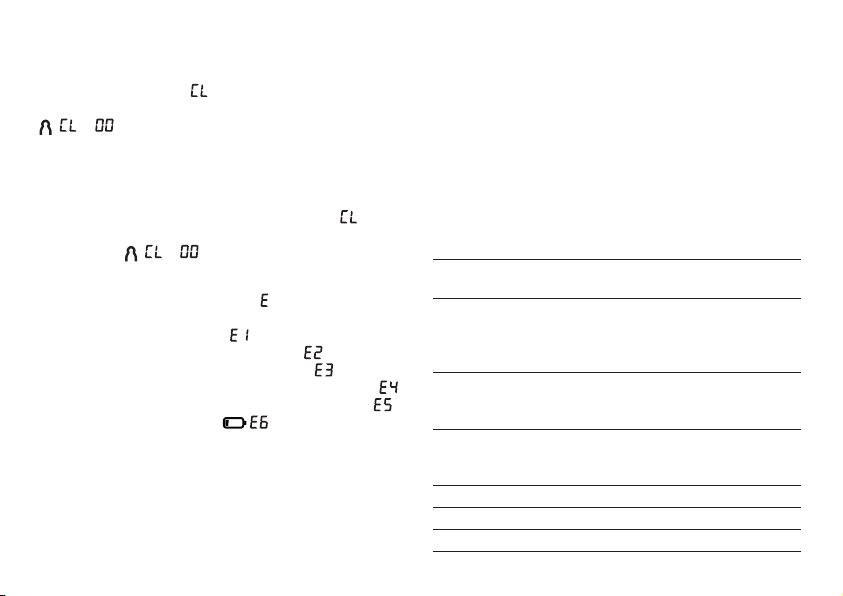
En cas d’erreur, le message d’erreur
_
s’affiche à l’écran.
Des messages d’erreur peuvent s’afficher lorsque
•
le pouls n’a pas pu être pris: ;
•
vous bougez ou parlez durant la mesure: ;
•
la manchette est trop ou pas assez serrée: ;
•
des problèmes surviennent au moment de la mesure: ;
•
la pression de gonflage est supérieure à 300mmHg: ;
•
les piles sont presque vides .
Dans tous ces cas, réitérez la mesure. Veillez à ne pas bouger
ni parler. Le cas échéant, remettez les piles ou remplacez-les.
9. Nettoyage et rangement de l’appareil et de
la manchette
•
Nettoyez soigneusement l’appareil et la manchette, uni-
quement à l’aide d’un chion légèrement humide.
•
N’utilisez pas de détergent ni de solvant.
•
Ne passez jamais l’appareil ni la manchette sous l’eau, qui
pourrait s’infiltrer à l’intérieur de l’appareil ou la manchette
et l’endommager.
•
Ne posez pas d’objets lourds sur l’appareil ni sur la man-
chette lorsqu’ils sont rangés. Retirez les piles.
10. Caractéristiques techniques
Nº du modèle SBC21
Mode de mesure Mesure de la tension artérielle au poignet,
oscillométrique et non invasive
Plage de mesure
Pression dans la manchette 0-300 mmHg,
systolique 50-250 mmHg,
diastolique 30-200 mmHg,
Pouls 40-180pulsations /minute
Précision de
l’indicateur
systolique ± 3 mmHg,
diastolique ± 3 mmHg,
Pouls ± 5 % de la valeur affichée
Incertitude de
mesure
écart type max. admissible selon des
essais cliniques: systolique 8 mmHg /
diastolique 8 mmHg
Mémoire 2 x 60emplacements de mémoire
Dimensions L 70 mm x l 72 mm x H 27,5 mm
Poids Environ 105 g (sans les piles)

30
Taille de la
manchette
de 135 à 195 mm
Conditions de
fonctionnement
admissibles
+10 °C à +40 °C, 30-85 % d’humidité rela-
tive de l’air (sans condensation)
Conditions de
stockage admis-
sibles
-20 °C à +60 °C, 10-95 % d’humidité
relative de l’air, 700-1050 hPa de pression
ambiante
Alimentation
électrique
2 x piles AAA 1,5 V
Durée de vie des
piles
Environ 300mesures, selon l’élévation de
la tension artérielle ainsi que la pression
de gonflage
Accessoires Mode d’emploi, 2 x piles AAA 1,5 V, boîte
de rangement
Classement Alimentation interne, IPX0, pas d’AP ni
d’APG, utilisation continue, appareil de
type BF
• Cet appareil est en conformité avec la norme européenne
EN 60601-1-2 et répond aux exigences de sécurité spéciales
relatives à la compatibilité électromagnétique. Veuillez noter
que les dispositifs de communication HF portables et mo-
biles sont susceptibles d’influer sur cet appareil. Pour des
détails plus précis, veuillez contacter le service après-vente
à l’adresse mentionnée ou vous reporter à la fin du mode
d’emploi.
• Cet appareil est conforme à la directive européenne 93/42/
EEC sur les produits médicaux, à la loi sur les produits
médicaux ainsi qu’aux normes européennes EN1060-1
(tensiomètres non invasifs, partie1: exigences générales),
EN1060-3 (tensiomètres non invasifs, partie 3: exigences
complémentaires sur les tensiomètres électromécaniques)
et EC80601-2-30 (appareils électromédicaux, partie 2-30:
exigences particulières pour la sécurité et les performances
essentielles des tensiomètres non invasifs automatiques).
•
La précision de ce tensiomètre a été correctement testée et sa
durabilité a été conçue en vue d’une utilisation à long terme.
Dans le cadre d’une utilisation médicale de l’appareil, des
contrôles techniques de mesure doivent être menés avec les
moyens appropriés. Pour obtenir des informations précises
sur la vérification de la précision de l’appareil, vous pouvez
faire une demande par courrier au service après-vente.
Sous réserve d’erreur et de modifications
31
La preghiamo di leggere attentamente le presenti istruzioni per
l’uso, conservarle per impieghi futuri, renderle accessibili ad
altri utenti e attenersi alle indicazioni.
1. Introduzione
Il misuratore di pressione da polso consente la misurazione
e il monitoraggio non invasivi dei valori di pressione arteriosa
nelle persone adulte. È possibile misurare la pressione in modo
semplice e rapido e di visualizzare l’ultimo valore misurato. In
presenza di eventuali disturbi del ritmo cardiaco l’apparecchio
emette un avviso.
I valori rilevati vengono classificati e valutati graficamente.
2. Indicazioni importanti
Spiegazione dei simboli
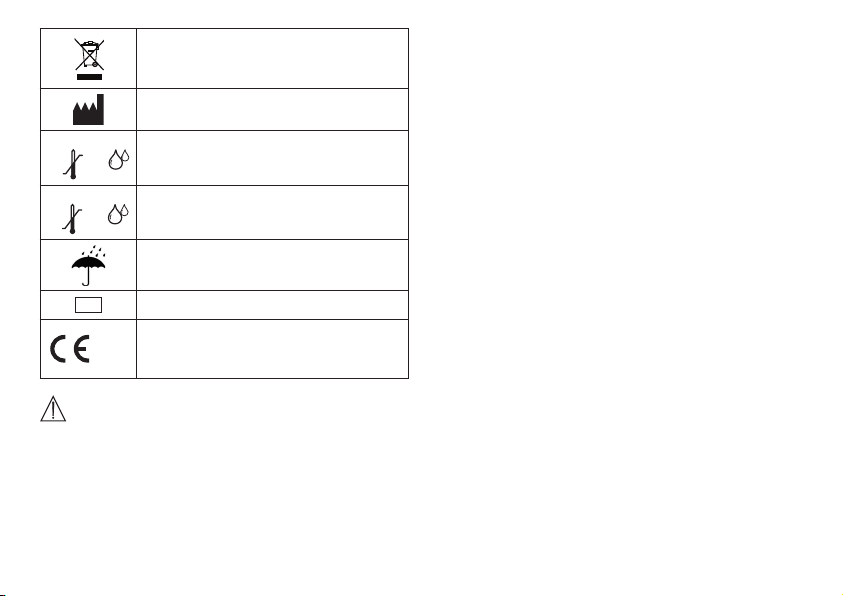
I seguenti simboli sono utilizzati nelle istruzioni per l’uso,
sull’imballo e sulla targhetta dell’apparecchio e degli accessori:
Attenzione
Nota
Indicazione di importanti informazioni
Seguire le istruzioni per l’uso
Parte applicativa tipo BF
Corrente continua
ITALIANO
1. Introduzione ...................................................................31
2. Indicazioni importanti ..................................................... 31
3. Descrizione dell’apparecchio ......................................... 34
4. Preparazione della misurazione ...................................... 35
5. Misurazione della pressione ...........................................36
6. Memorizzazione ricerca dei valori misurati ....................38
7. Cancellare i valori memorizzati ....................................... 38
8. Messaggi di errore/Soluzioni ..........................................38
9. Pulizia e conservazione dell’apparecchio e del manicotto 39
10. Dati tecnici ...................................................................39
Indice
32
Smaltire l’apparecchio secondo la direttiva
europea sui rifiuti di apparecchiature elettri-
che ed elettroniche (RAEE).
Produttore
Storage
RH 10-95%
-20°C
60°C
Temperatura e umidità di stoccaggio
consentite
Operating
10°C
40°C
RH 30-85%
Temperatura e umidità di esercizio con-
sentite
Proteggere dall’umidità
SN
Numero di serie
0483
Il marchio CE certifica la conformità ai
requisiti di base della direttiva 93/42/EEC
sui dispositivi medici
Indicazioni sulla modalità d’uso
•
Misurare la pressione sempre allo stesso orario della giornata,
affinché i valori siano confrontabili.
•
Prima di ogni misurazione rilassarsi per ca. 5 minuti.
•
Per effettuare più misurazioni su una stessa persona, atten-
dere 5 minuti tra una misurazione e l’altra.
•
Evitare di mangiare, bere, fumare o praticare attività fisica
almeno nei 30 minuti precedenti alla misurazione.
•
In caso di valori dubbi, ripetere la misurazione.
•
I valori misurati autonomamente hanno solo scopo informa-
tivo, non sostituiscono i controlli medici.
Comunicare al medico i propri valori, non intraprendere in
alcun caso terapie mediche definite autonomamente (ad es.
impiego di farmaci e relativi dosaggi).
•
Non utilizzare il misuratore di pressione su neonati, gestanti
e pazienti con preeclampsia.
•
In caso di difficoltà di circolazione a un braccio a causa di
patologie vascolari croniche o acute (tra cui vasocostrizioni),
la precisione della misurazione al polso è limitata. In tal caso si
consiglia di optare per un misuratore di pressione da braccio.
•
L’apparecchio non deve essere utilizzato da persone (com-
presi bambini) con ridotte capacità fisiche, percettive o in-
tellettive o non in possesso della necessaria esperienza e/o
conoscenza, se non sotto la supervisione di una persona
responsabile per la loro sicurezza o che fornisca loro le indi-
cazioni per l’uso dell’apparecchio. Controllare che i bambini
non utilizzino l’apparecchio per gioco.
•
In caso di patologie del sistema cardiovascolare possono ve-
rificarsi errori di misurazione o una riduzione della precisione
di misurazione. Gli stessi problemi si possono verificare in
caso di pressione molto bassa, diabete, disturbi della circo-
lazione e del ritmo cardiaco nonché in presenza di brividi di
febbre o tremiti.
•
Non utilizzare il misuratore di pressione insieme ad altri ap-
parecchi chirurgici ad alta frequenza.
•
Utilizzare il misuratore di pressione solo su un polso con
misura compresa nell’intervallo indicato.
•
Tenere conto che durante il pompaggio può verificarsi una
riduzione delle funzioni dell’arto interessato.
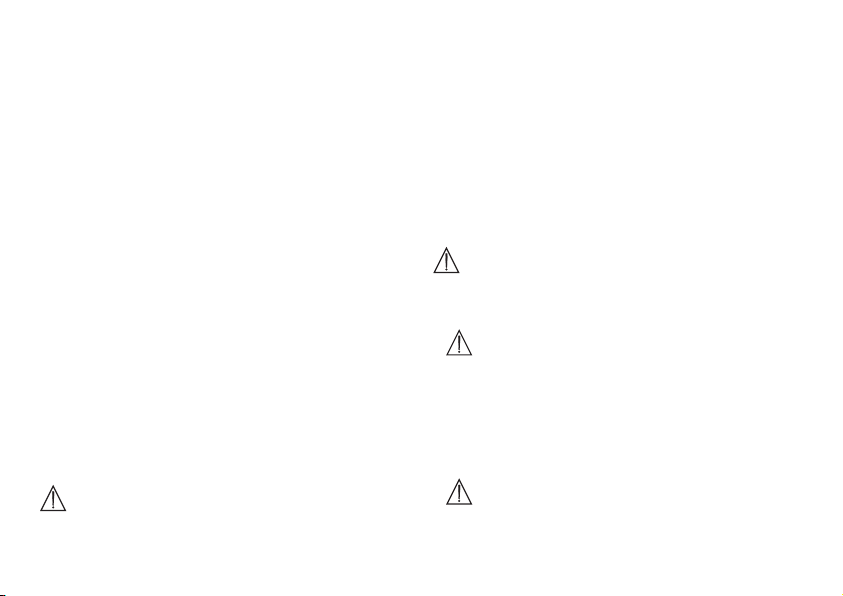
33
•
La misurazione delle pressione non deve impedire la circo-
lazione del sangue per un tempo inutilmente troppo lungo.
In caso di malfunzionamento dell’apparecchio, rimuovere il
manicotto dal braccio.
•
Evitare di mantenere una pressione costante nel manicotto e
di effettuare misurazioni troppo frequenti che causerebbero
una riduzione del flusso sanguigno con il conseguente rischio
di lesioni.
•
Accertarsi che il manicotto non venga applicato su braccia
con arterie o vene sottoposte a trattamenti medici, quali di-
spositivo di accesso o terapia intravascolare o shunt artero-
venoso.
•
Non applicare il manicotto a persone che hanno subito una
mastectomia (asportazione della mammella).
•
Non applicare il manicotto su ferite per evitare rischi di ulte-
riori lesioni.
•
Indossare il manicotto esclusivamente sul polso. Non in-
dossare il manicotto su altre parti del corpo.
•
Il misuratore di pressione può essere utilizzato esclusivamen-
te a batterie.
•
Se per 2 minuti non vengono utilizzati pulsanti, il dispositivo
di arresto automatico spegne l’apparecchio per preservare
le batterie.
•
L’apparecchio è concepito solo per l’uso descritto nelle pre-
senti istruzioni per l’uso. Il produttore non risponde di danni
causati da un uso inappropriato o non conforme.
Indicazioni per la conservazione e la cura
•
Il misuratore di pressione è composto da moduli elettronici
di precisione. La precisione dei valori misurati e la durata
dell’apparecchio dipendono da un utilizzo attento e scrupo-
loso:
– Non esporre l’apparecchio a urti, umidità, sporcizia, forti
sbalzi di temperatura e direttamente alla luce solare.
– Non far cadere l’apparecchio.
– Non utilizzare l’apparecchio in prossimità di forti campi
elettromagnetici, tenerlo lontano da impianti radio o telefoni
cellulari.
•
Non azionare alcun pulsante prima di aver indossato il ma-
nicotto.
•
In caso di non utilizzo dell’apparecchio per lunghi periodi, si
raccomanda di rimuovere le batterie.
Avvertenze sull’uso delle batterie
•
Se il liquido della batteria viene a contatto con la pelle e
con gli occhi, sciacquare le parti interessate con acqua e
consultare il medico.
•
Pericolo d‘ingestione! I bambini possono ingerire le
batterie e soffocare. Tenere quindi le batterie lontano dalla
portata dei bambini!
•
Prestare attenzione alla polarità positiva (+) e negativa (-).
•
In caso di fuoriuscita di liquido dalla batteria, indossa-
re guanti protettivi e pulire il vano batterie con un panno
asciutto.
•
Proteggere le batterie dal caldo eccessivo.
•
Rischio di esplosione! Non gettare le batterie nel fuoco.
•
Le batterie non devono essere ricaricate o mandate in cor-
tocircuito.
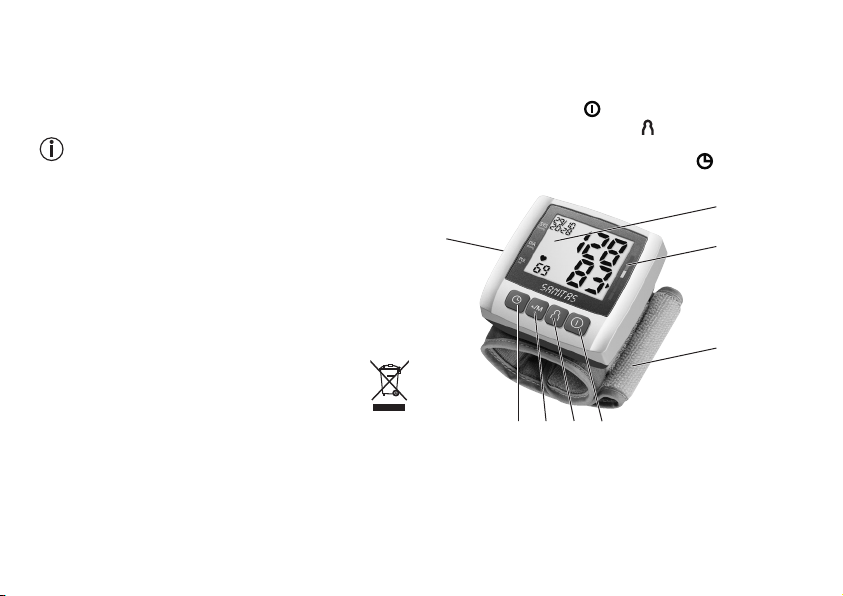
34
•
Qualora l’apparecchio non dovesse essere utilizzato per un
periodo prolungato, rimuovere le batteria dal vano batterie.
•
Utilizzare solo tipologie di batterie uguali o equivalenti.
•
Sostituire sempre tutte le batterie contemporaneamente.
•
Non utilizzare batterie ricaricabili!
•
Non smontare, aprire o frantumare le batterie.
Indicazioni per la riparazione e lo smaltimento
•
Le batterie non sono rifiuti domestici. Smaltire le batterie
esauste negli appositi punti di raccolta.
•
Non aprire l’apparecchio. In caso contrario la garanzia deca-
de.
•
L’apparecchio non deve essere riparato o tarato personal-
mente. In tal caso non si garantisce più il corretto funziona-
mento.
•
Le riparazioni possono essere effettuate solo dal Servizio
clienti o da rivenditori autorizzati. Prima di inoltrare eventuali
reclami, testare le batterie e, se necessario, sostituirle.
•
A tutela dell‘ambiente, al termine del suo utilizzo
l‘apparecchio non deve essere smaltito nei rifiuti
domestici. Lo smaltimento deve essere effet-
tuato negli appositi centri di raccolta. Smaltire
l‘apparecchio secondo la direttiva europea sui rifiuti di ap-
parecchiature elettriche ed elettroniche (RAEE). Per eventu-
ali chiarimenti, rivolgersi alle autorità comunali competenti
per lo smaltimento.
3. Descrizione dell’apparecchio
1. Display
2. Clasificación de los resultados de medición
3. Manicotto da polso
4.
Pulsante START/STOP
5. Pulsante per la selezione utente
6. Pulsante per la memorizzazione +/M
7. Pulsante per l’impostazione di data e ora
8. Sportello vano batterie
8
1
2
3
4567

35
Indicatori sul display:
1. Ora e data
2. Pressione sistolica
3. Classificazione dei risultati di misurazione
4. Pressione diastolica
5. Icona disturbo del ritmo cardiaco
6. Battito cardiaco rilevato
7. Icona battito cardiaco
8. Pompaggio, scarico aria (freccia)
9. Memoria utente /
10. Unità mmHg
11. Media delle ultime 3 misurazioni
12. Indicatore della batteria
13. Numero della posizione di memoria
4. Preparazione della misurazione
Inserimento delle batterie
•
Rimuovere il coperchio
del vano batterie sul lato
sinistro dell’apparecchio.
•
Inserire due batterie Mi-
cro da 1,5 V (tipo alcalino
LR03).
Verificare che le batterie siano inserite correttamente, con i
poli posizionati in base alle indicazioni. Non utilizzare batterie
ricaricabili.
•
Richiudere attentamente il coperchio del vano batterie.
Quando lampeggia l’icona di sostituzione delle batterie
e
compare , non è più possibile effettuare alcuna misurazione
ed è necessario sostituire le batterie.
Una volta inserite le batterie, sul display compare l’anno ed è
quindi possibile impostare data e ora.
Smaltimento delle batterie
• Smaltire le batterie esauste e completamente scariche
negli appositi punti di raccolta, nei punti di raccolta per ri-
fiuti tossici o presso i negozi di elettronica. Lo smaltimento
delle batterie è un obbligo di legge.
• I simboli riportati di seguito indicano che le
batterie contengono sostanze tossiche:
Pb = batteria contenente piombo
Cd = batteria contenente cadmio
Hg = batteria contenente mercurio.
11
12
13
10
9
8
6 57 4
1 2
3
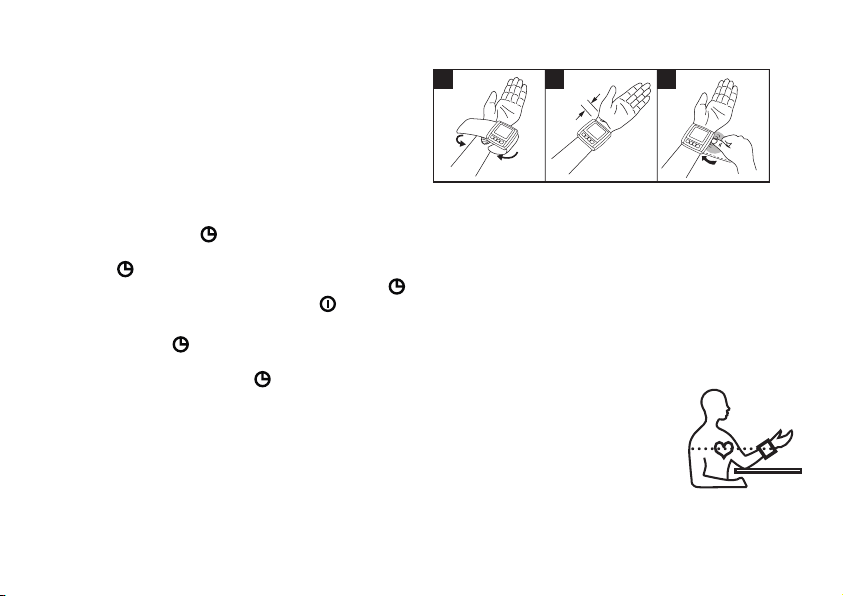
36
Impostazione di data e ora
La data e l’ora devono essere impostate necessariamente. Solo
in questo modo è possibile memorizzare correttamente le mi-
surazioni con data e ora per poter essere richiamate in seguito.
Il formato dell’ora è di 24 ore.
Per impostare data e ora, procedere come segue:
1. Una volta inserite le batterie:
•
Dopo una verifica del display, durante la quale vengono vi-
sualizzati tutti i segmenti, sul display lampeggia l’anno.
•
Il pulsante +/M consente di incrementare i valori da impo-
stare. Impostare quindi la cifra dell’anno e confermare l’im-
missione con il pulsante .
•
Con il pulsante +/M impostare ora il mese. Confermare con
il pulsante
.
•
Impostare giorno/ora/minuti e confermare con il pulsante
.
•
Per spegnere premere il pulsante Start/Stop .
2. In qualsiasi momento:
•
Premere il pulsante per visualizzare sul display data/ora
e la posizione di memoria utente in uso.
•
Premere nuovamente il pulsante e tenerlo premuto per
3 secondi per passare alla modalità di impostazione “Data e
ora”.
•
Per l’impostazione, procedere come sopra descritto.
5. Misurazione della pressione
Applicazione del manicotto
•
Denudare il polso sinistro. Verificare che la circolazione del
braccio non sia costretta da indumenti o simili.
Applicare il manicotto all’interno del polso.
•
Fije el brazalete con el cierre autoadherente de forma que el
borde superior de la pantalla se encuentre aprox.1cm por
debajo de la palma de la mano.
•
Il manicotto deve aderire al polso senza stringere.
Postura corretta
•
Prima di ogni misurazione rilassarsi per ca. 5 minuti. In
caso contrario le misurazioni potrebbero non essere
corrette.
•
La misurazione può essere effettuata
da seduti o da sdraiati. Sedersi in posi-
zione comoda per la misurazione della
pressione. Appoggiare la schiena e le
braccia. Non incrociare le gambe. Ap-
poggiare la pianta dei piedi al pavimen-
to. Il braccio deve essere appoggiato e
piegato ad angolo. Verificare sempre che il manicotto si trovi
all’altezza del cuore. In caso contrario le misurazioni potreb
-
bero essere molto imprecise. Rilassare il braccio e le mani.
1 2 3
1 cm

37
•
Per non falsare l’esito, è importante restare tranquilli e non
parlare durante la misurazione.
Selezione della memoria
Premere il pulsante per visualizzare sul display data/ora e
la posizione di memoria utente in uso. Selezionare la memoria
utente desiderata premendo il pulsante di selezione utente .
Confermare la selezione mediante il pulsante .
Sono disponibili due memorie, ognuna da 60 posizioni, per po-
ter memorizzare separatamente le misurazioni di due persone
diverse o le misurazioni mattutine e serali.
Esecuzione della misurazione della pressione
•
Applicare il manicotto e sistemarsi nella posizione in cui si
desidera eseguire la misurazione.
•
Selezionare la posizione di memoria utente oppure .
Avviare il processo di misurazione premendo il pulsante .
Dopo una verifica del display, durante la quale vengono vi-
sualizzati tutti i numeri, il manicotto si gonfia automaticamen-
te. Durante il pompaggio l’apparecchio rileva già i valori ne-
cessari a determinare la pressione di gonfiaggio necessaria.
Se la pressione risulta insufficiente, l’apparecchio provvede
automaticamente al gonfiaggio.
•
Poi la pressione all’interno del manicotto viene rilasciata len
-
tamente e viene misurato il battito cardiaco.
•
Al termine della misurazione la restante pressione viene rila-
sciata velocemente. Vengono visualizzati il battito cardiaco
e la pressione sistolica e diastolica.
•
La misurazione può essere interrotta in qualsiasi momento
premendo .
•
Se la misurazione non è stata effettuata correttamente, com-
pare l’icona
_
. Consultare il capitolo Messaggi di errore/
Soluzioni delle presenti Istruzioni per l’uso e ripetere la mi-
surazione.
•
L’apparecchio si spegne automaticamente dopo 2 minuti.
Attendere almeno 5 minuti prima di effettuare una nuova mi-
surazione!
Interpretazione dell’esito
Disturbi del ritmo cardiaco
Questo apparecchio è in grado di individuare eventuali disturbi
del ritmo cardiaco durante la misurazione e in tal caso al termi-
ne della misurazione ne segnala la presenza con l’icona .
Può essere un’avvisaglia di aritmia. L’aritmia è una patologia
in cui il ritmo cardiaco è anormale a causa di errori nel siste-
ma bioelettrico, che controlla il battito cardiaco. I sintomi (battiti
cardiaci accelerati o anticipati, polso rallentato o troppo veloce)
possono essere determinati tra l’altro da patologie cardiache, età,
costituzione, sovralimentazione, stress o mancanza di riposo.
Un’aritmia può essere diagnosticata solo dal medico.
Ripetere la misurazione nel caso compaia sul display l’icona
dopo una prima misurazione. Assicurarsi di aver osservato
5 minuti di riposo prima di effettuare l’esame e di non parlare né
muoversi durante la misurazione. Rivolgersi al proprio medico
nel caso l’icona compaia frequentemente. Diagnosi e tera-
pie definite autonomamente in base agli esiti delle misurazioni
possono rivelarsi pericolose. Attenersi sempre alle indicazioni
del proprio medico.
Classificazione dei risultati di misurazione:
I risultati di misurazione possono essere classificati e valutati
in base alla tabella seguente.
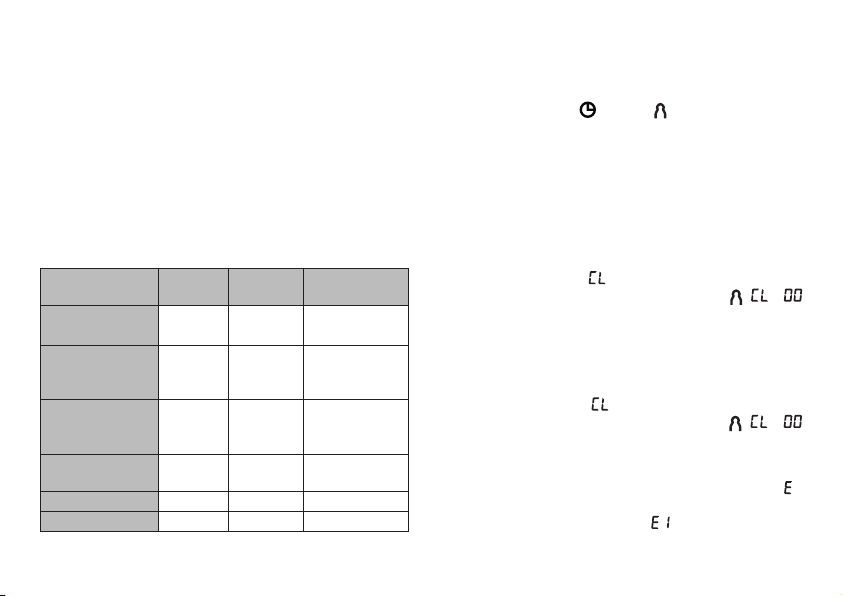
38
Tali valori standard costituiscono tuttavia solo un riferimento
generale in quanto la pressione individuale presenta differen-
ze a seconda della persona e dell‘età.
È importante consultare regolarmente il proprio medico per
sapere qual è la propria pressione normale e il limite superato
il quale il livello di pressione viene considerato pericoloso.
La classificazione sul display e la scala graduata sul misu-
ratore di pressione indicano la classe nella quale rientra la
pressione misurata. Nel caso in cui il valore sistolico e quello
diastolico rientrino in due classi diverse (ad es. sistole nella
classe „Normale alto“ e diastole nella classe „Normale“), la
graduazione grafica dell‘apparecchio indica sempre la classe
più alta, in questo caso „Normale alto“.
Intervallo dei va-
lori di pressione
Sistole
(in mmHg)
Diastole
(in mmHg)
Misura da
adottare
Livello 3:
forte ipertensione
≥ 180 ≥ 110
Rivolgersi a un
medico
Livello 2:
moderata iperten-
sione
160 – 179 100 – 109
Rivolgersi a un
medico
Livello 1:
leggera iperten-
sione
140 – 159 90 – 99
Controlli medici
regolari
Normale alto 130 – 139 85 – 89
Controlli medici
regolari
Normale 120 – 129 80 – 84 Autocontrollo
Ottimale < 120 < 80 Autocontrollo
Fonte: OMS, 1999 (Organizzazione mondiale della sanità)
6. Memorizzazione ricerca dei valori misurati
•
Gli esiti di ogni misurazione corretta vengono memorizzati
con data e ora. Quando i dati misurati superano le 60 unità,
vengono eliminati i dati più vecchi.
•
Premendo il pulsante e quindi selezionare la memo-
ria utilizzatore desiderata. Premendo nuovamente il pulsante
+/M, il sistema visualizza la media delle 3 ultime misurazioni
memorizzate nella posizione di memoria utente.
Premendo
nuovamente il pulsante per la memorizzazione +/M il sistema
visualizza gli ultimi esiti di misurazione con data e ora.
7. Cancellare i valori memorizzati
Per cancellare i singoli valori misurati, selezionarli. Premere e
tenere premuto il pulsante per la memorizzazione +/M finché
viene visualizzato il valore sul display. Quindi confermare la
cancellazione con il pulsante di selezione utente ( e
vengono visualizzati sul display).
Per cancellare i valori misurati di una memoria utente, selezio-
narli. Premendo il pulsante per la memorizzazione +/M viene
visualizzata la media degli ultimi 3 valori misurati. Quindi premere
e tenere premuto il pulsante per la memorizzazione +/M finché
viene visualizzato il valore sul display. Infine confermare la
cancellazione con il pulsante di selezione utente ( e
vengono visualizzati sul display).
8. Messaggi di errore/Soluzioni
In caso di errore sul display compare il messaggio di errore
_
.
I messaggi di errore possono essere visualizzati quando
•
non è possibile misurare il battito: ;
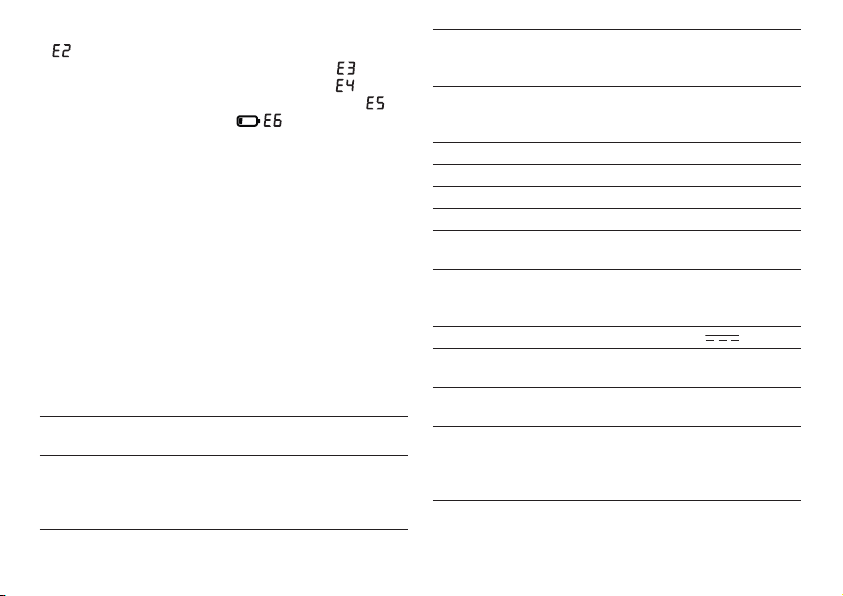
39
•
durante la misurazione la persona si è mossa o ha parlato:
;
•
il manicotto è troppo stretto o troppo allentato: ;
•
si è verificato un errore durante la misurazione: ;
•
la pressione di gonfiaggio è superiore a 300 mmHg: ;
•
le batterie sono quasi esaurite: .
In questi casi ripetere la misurazione. Non muoversi o parlare.
Se necessario reinserire le batterie o sostituirle.
9. Pulizia e conservazione dell’apparecchio e
del manicotto
•
Pulire con attenzione l’apparecchio e il manicotto utilizzan-
do solo un panno leggermente inumidito.
•
Non utilizzare detergenti o solventi.
•
L’apparecchio e il manicotto non devono per nessun motivo
essere immersi nell’acqua, in quanto il liquido potrebbe in-
filtrarsi e danneggiarli.
•
Non posizionare oggetti pesanti sull’apparecchio e sul ma-
nicotto. Rimuovere le batterie.
10. Dati tecnici
Codice SBC21
Metodo di misura-
zione
Misurazione oscillante e non invasiva
della pressione al polso
Range di misura-
zione
Pressione 0-300 mmHg,
sistolica 50-250 mmHg,
diastolica 30-200 mmHg,
pulsazioni 40-180 battiti/minuto
Precisione dell’indi-
cazione
sistolica ± 3 mmHg,
diastolica ± 3 mmHg,
pulsazioni ± 5% del valore indicato
Tolleranza scostamento standard massimo am-
messo rispetto a esame clinico:
sistolica 8 mmHg / diastolica 8 mmHg
Memoria 2 x 60 posizioni di memoria
Ingombro L 70 mm x P 72 mm x A 27,5 mm
Peso Ca. 105 g (senza batterie)
Dimensioni manicotto
Da 135 a 195 mm
Condizioni di funzio-
namento ammesse
+10 °C – +40 °C, 30-85% umidità rela-
tiva (senza condensa)
Condizioni di stoc-
caggio ammesse
-20 °C – +60 °C, 10-95% umidità
relativa, 700-1050 hPa di pressione
ambiente
Alimentazione 2 batterie AAA da 1,5 V
Durata delle batterie Ca. 300 misurazioni, in base alla pres-
sione sanguigna e di pompaggio
Accessori Istruzioni per l’uso, 2 batterie AAA da
1,5 V, custodia
Classificazione Alimentazione interna, IPX0, non fa
parte della categoria AP/APG, funzio-
namento continuo, parte applicativa
tipo BF
• L’apparecchio è conforme alla norma europea EN60601-1-2
e necessita di precauzioni d’impiego particolari per quanto

40
riguarda la compatibilità elettromagnetica. Apparecchiature
di comunicazione HF mobili e portatili possono influire sul
funzionamento di questo apparecchio. Per informazioni più
dettagliate, rivolgersi al Servizio clienti oppure consultare la
parte finale delle istruzioni per l’uso.
• L’apparecchio è conforme alla direttiva CE per i dispositivi
medici 93/42/EEC, alla legge sui dispositivi medici e alle nor-
me europee EM1060-1 (Sfigmomanometri non invasivi Parte
1: Requisiti generali), EN1060-3 (Sfigmomanometri non inva-
sivi Parte 3: Requisiti integrativi per sistemi elettromeccanici
per la misurazione della pressione arteriosa) e IEC80601-2-30
(Apparecchi elettromedicali Parte 2-30: Prescrizioni particolari
relative alla sicurezza fondamentale e alle prestazioni essen-
ziali di sfigmomanometri automatici non invasivi).
• La precisione di questo misuratore di pressione è stata accu-
ratamente testata ed è stata sviluppata per una lunga durata
di vita utile.
Se l’apparecchio viene utilizzato a scopo professionale, è
necessario effettuare controlli tecnici con gli strumenti ade-
guati. Richiedere informazioni dettagliate sulla verifica della
precisione all’indirizzo indicato del servizio assistenza.
Con riserva di errori e modifiche
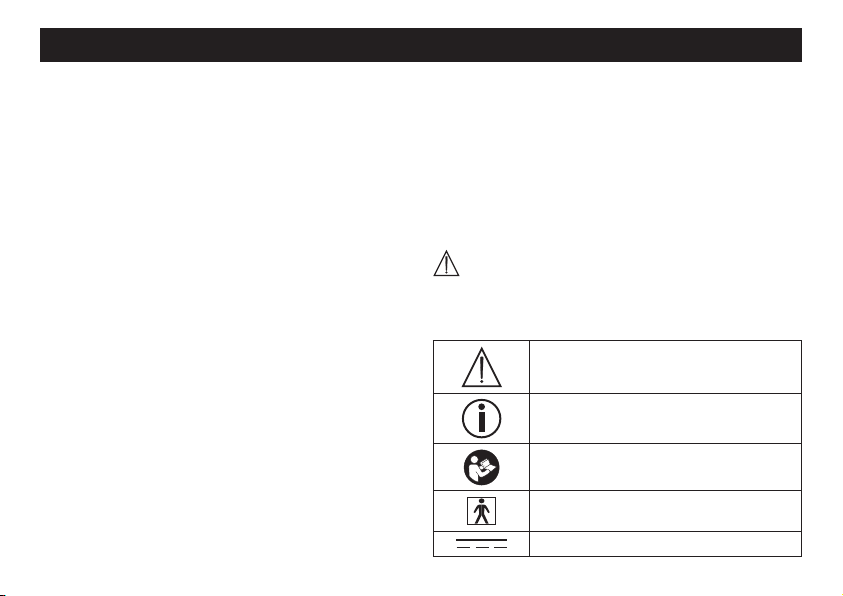
41
Внимательно прочтите данную инструкцию по применению,
сохраните ее для последующего использования, храните ее
в месте, доступном для других пользователей, и следуйте
ее указаниям.
1. Для ознакомления
Прибор для измерения артериального давления на
запястье служит для неинвазивного измерения и контроля
артериального давления взрослого человека. Вы можете с
помощью этого прибора быстро и просто измерить кровя-
ное давление и отобразить последний результат измерения.
Вы будете предупреждены о возможно имеющихся нару-
шениях ритма сердца.
Полученные результаты измерений классифицируются
иотображаются вграфическом виде.
2. Важные указания
Пояснения к символам
В инструкции по применению, на упаковке и на типовой
табличке прибора и принадлежностей используются
следующие символы:
Осторожно!
Указание
Отмечает важную информацию
Соблюдайте инструкцию по
применению
Аппликатор типа BF
Постоянный ток
РУССКИЙ
1. Для ознакомления ........................................................41
2. Важные указания .........................................................41
3. Описание прибора .......................................................45
4. Подготовка к измерению ............................................. 46
5. Измерение артериального давления .......................... 47
6. Сохранение и вызов измеренных значений ..............49
7. Удаление сохраненных данных ................................... 49
8. Сообщение об ошибке/устранение ошибок ..............49
9. Очистка и хранение прибора и манжеты ...................50
10. Технические данные ................................................... 50
11. Гарантия ......................................................................52
Содержание
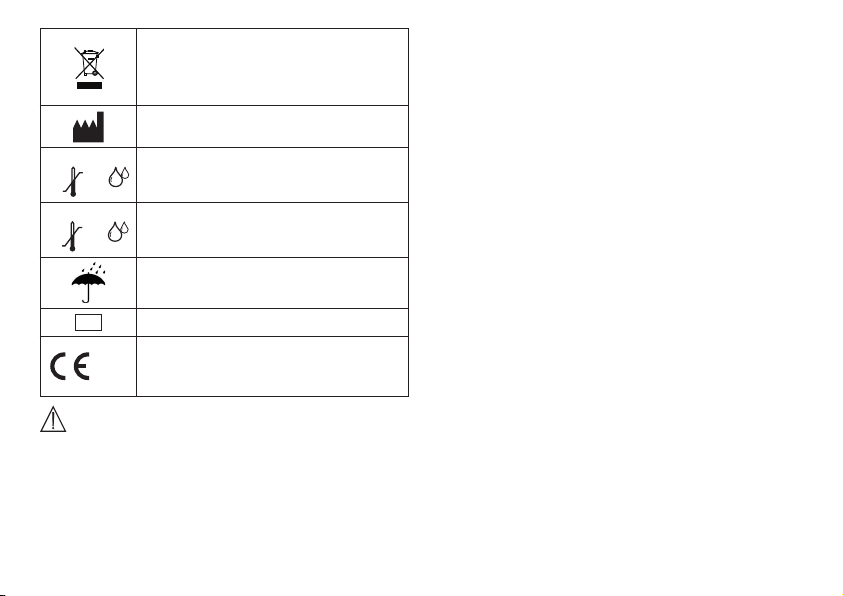
42
Прибор следует утилизировать согласно
Директиве ЕС по отходам электрическо-
го и электронного оборудования – WEEE
(Waste Electrical and Electronic Equipment).
Производитель
Storage
RH 10-95%
-20°C
60°C
Допустимая температура хранения и
влажность воздуха
Operating
10°C
40°C
RH 30-85%
Допустимая рабочая температура и
влажность воздуха
Хранить в сухом месте
SN
Серийный номер
0483
Символ CE подтверждает соответствие
основным требованиям директивы о
медицинских изделиях 93/42/EEC.
Указания к применению
•
Для сравнительного анализа данных всегда измеряйте
свое артериальное давление только в определенные часы.
•
Не занимайтесь активной деятельностью примерно в те-
чение 5 минут перед измерением!
•
При проведении нескольких сеансов измерения у одного
пользователя интервал между измерениями должен со-
ставлять 5 минут.
•
В течение не менее чем 30 минут перед измерением сле-
дует воздерживаться от приема пищи и жидкости, куре-
ния или физических нагрузок.
•
При наличии сомнений относительно полученных резуль-
татов повторите измерение.
•
Результаты измерений, полученные Вами самостоятель-
но, служат исключительно для Вашей информации и не
могут заменить медицинского обследования!
Обсудите измеренные значения с врачом, но ни в коем
случае не принимайте на их основе каких-либо самосто-
ятельных решений относительно лечения (например, по
использованию лекарств и их дозировке)!
•
Не используйте прибор для измерения артериального
давления у новорожденных детей, беременных женщин
и у женщин, страдающих преэклампсией.
•
В случае ограничений кровоснабжения на одной руке в
результате хронических или острых заболеваний крове-
носных сосудов (в том числе сужения сосудов) точность
измерения артериального давления на запястье также
ограничена. В этом случае используйте измерительный
прибор для применения в области предплечья.
•
Данный прибор не предназначен для использования
лицами (включая детей) с ограниченными физическими,
сенсорными или умственными способностями, или лиц
с недостаточными знаниями или опытом, за исключени-
ем случаев, когда за ними осуществляется надлежащий
надзор со стороны ответственного за них лица, либо
они получили от этого лица указания по использованию
прибора. Необходимо следить за детьми и не разре-
шать им играть с прибором.

43
•
Заболевания системы кровообращения могут привести
к неправильным результатам измерения или снижению
точности измерения. Погрешности в результатах изме-
рения также возможны при пониженном артериальном
давлении, диабете, нарушениях кровоснабжения и сер-
дечного ритма, при ознобе или дрожи.
•
Не используйте прибор для измерения артериального
давления вместе с высокочастотным хирургическим при-
бором.
•
Применяйте прибор только для лиц с обхватом запястья,
предусмотренным параметрами прибора.
•
Обратите внимание на то, что во время накачивания может
быть нарушена подвижность соответствующей части тела.
•
Во время измерения кровяного давления не допускается
прерывание циркуляции крови на длительное время. При
сбое в работе прибора снимите манжету с руки.
•
Избегайте длительного давления в манжете и частых из-
мерений. Нарушение кровообращения может привести к
повреждениям.
•
Убедитесь в том, что к кровеносным сосудам руки, на
которую накладывается манжета, не подсоединено ме-
дицинское оборудование (например, оборудование для
внутрисосудистого доступа или внутрисосудистой тера-
пии, а также артериовенозный шунт).
•
Не используйте манжету у женщин, перенесших ампута-
цию груди.
•
Во избежание дальнейших повреждений не накладывайте
манжету на раны.
•
Накладывайте манжету только на запястье. Не накла-
дывайте манжету на другие части тела.
•
Питание прибора осуществляется исключительно от ба-
тареек.
•
В целях экономии энергии батареек прибор для измере-
ния артериального давления отключается автоматически,
если в течение 2 минут не была нажата ни одна кнопка.
•
Допускается использование прибора только в целях, опи-
сываемых в данной инструкции по применению. Изгото-
витель не несет ответственности за ущерб, вызванный
неквалифицированным или неправильным использова-
нием прибора.
Указания по хранению и уходу
•
Прибор для измерения артериального давления состоит
из прецизионных и электронных компонентов. Точность
измерений и срок службы прибора зависят от бережного
обращения с ним:
– Защищайте прибор от ударов, влажности, загрязнения,
сильных колебаний температуры и прямых солнечных
лучей.
– Не роняйте прибор.
– Не используйте прибор вблизи сильных электромагнит-
ных полей, держите его на значительном расстоянии от
радиоустановок или мобильных телефонов.
•
Не нажимайте кнопки до тех пор, пока манжета не на-
ложена на запястье.
•
Если прибор не используется длительное время, извле-
ките батарейки.
44
Обращение с элементами питания
• При попадании жидкости из аккумулятора на кожу или
в глаза необходимо промыть соответствующий участок
большим количеством воды и обратиться к врачу.
•
Опасность проглатывания мелких частей! Ма-
ленькие дети могут проглотить батарейки и подавиться
ими. Поэтому батарейки необходимо хранить в недо-
ступном для детей месте!
• Обращайте внимание на обозначение полярности:
плюс (+) и минус (-).
• Если батарейка потекла, очистите отделение для бата-
реек сухой салфеткой, надев защитные перчатки.
•
Защищайте батарейки от чрезмерного воздействия тепла.
•
Опасность взрыва! Не бросайте батарейки в огонь.
• Не заряжайте и не замыкайте батарейки накоротко.
• Если прибор длительное время не используется, извле-
ките из него батарейки.
• Используйте батарейки только одного типа или равно-
ценных типов.
• Заменяйте все батарейки сразу.
• Не используйте перезаряжаемые аккумуляторы!
•
Не разбирайте, не открывайте и не разбивайте батарейки.
Указания по ремонту и утилизации
•
Не выбрасывайте батарейки в бытовой мусор. Утилизи-
руйте использованные батарейки в предусмотренных для
этого пунктах сбора.
•
Не разбирайте прибор. Несоблюдение этих тре-
бований ведет к потере гарантии.
•
Ни в коем случае не ремонтируйте и не регули-
руйте прибор самостоятельно. В этом случае надежность
функционирования больше не гарантируется.
•
Ремонтные работы должны производиться только сер-
висной службой или авторизованными торговыми пред-
ставителями. Перед предъявлением претензий проверьте
и при необходимости замените батарейки.
•
Винтересах защиты окружающей среды поокончании
срока службы следует утилизировать прибор отдельно
отбытового мусора. Утилизация должна производиться
через соответствующие пункты сбора вВашей стране.
Прибор следует утилизировать согласно Директиве
ЕС поотходам электрического иэлектронного
оборудования – WEEE (Waste Electrical and Electronic
Equipment). Припоявлении вопросов обращайтесь
вместную коммунальную службу, ответственную
заутилизацию отходов.
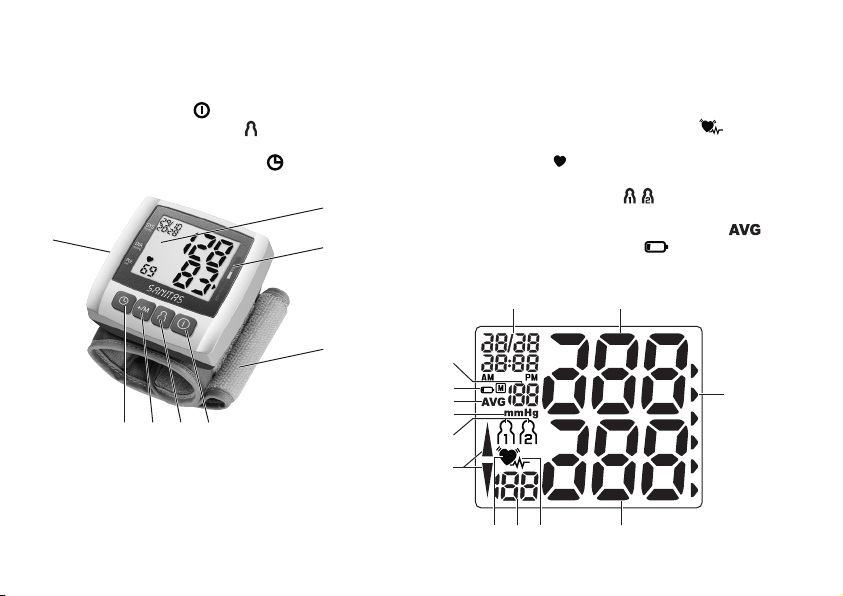
45
3. Описание прибора
1. Дисплей
2. Шкала оценки результатов измерения
3. Манжета на запястье
4.
Кнопка START/STOPP
5. Кнопка выбора пользователя
6. Кнопка сохранения +/M
7. Кнопка настройки даты/времени
8. Крышка отделения для батареек
Индикация на дисплее:
1. Время и дата
2. Систолическое давление
3. Оценка результатов измерений
4. Диастолическое давление
5. Символ нарушения сердечного ритма
6. Измеренное значение пульса
7. Символ пульса
8. Накачивание, выпускание воздуха (стрелка)
9. Пользовательская память /
10. Единица: мм ртутного столба
11. Среднее значение последних 3 измерений
12. Индикатор заряда батарейки
13. Номер ячейки памяти
8
1
2
3
4567
11
12
13
10
9
8
6 57 4
1 2
3
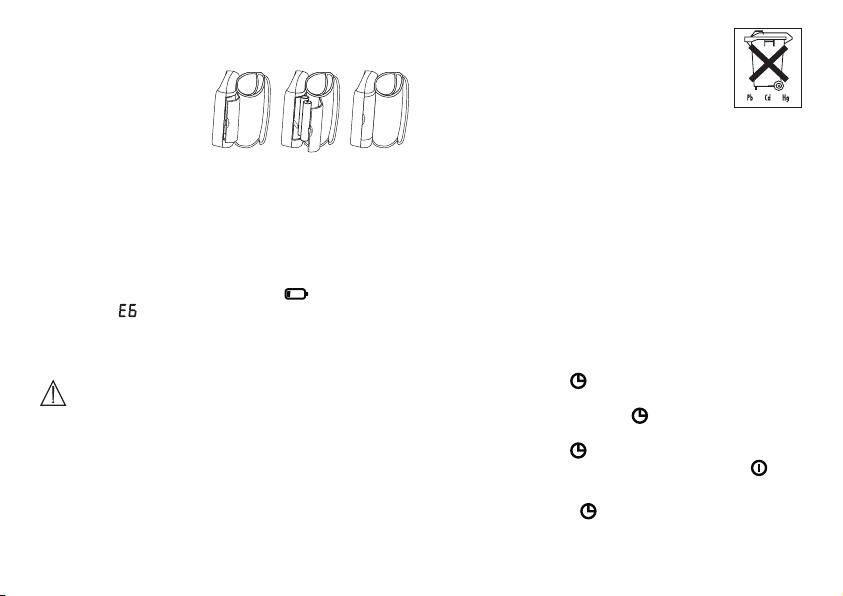
46
4. Подготовка к измерению
Установка батарейки
•
Снимите крышку отде-
ления для батареек с
левой стороны прибора.
•
Вставьте две алкали-
новые батарейки типа
1,5 В Micro (тип LR03).
Обязательно проследите за тем, чтобы батарейки были
установлены с правильной полярностью в соответствии
с маркировкой. Не используйте заряжаемые аккумуля-
торы.
•
Снова тщательно закройте крышку отделения для бата-
реек.
Если мигает символ смены батарейки
или на дисплее
появляется , то проведение измерений невозможно,
следует полностью заменить батарейки.
Когда батарейки вставлены, на дисплее появляется год,
теперь можно настроить дату и время.
Утилизация батареек
• Выбрасывайте использованные, полностью разряжен-
ные батарейки вспециальные контейнеры, сдавайте
впункты приема спецотходов или вмагазины электро-
оборудования. Закон обязывает пользователей обе-
спечить утилизацию батареек.
• Следующие знаки предупреждают о
наличии вбатарейках токсичных веществ:
Pb = свинец,
Cd = кадмий,
Hg = ртуть.
Настройка даты и времени
В обязательном порядке необходимо установить дату
и время. Это позволит правильно сохранять в памяти
результаты измерения с их датой и временем, а затем
выводить их на экран. Время отображается в 24-часовом
формате.
Для настройки даты и времени действуйте следующим
образом:
1. После установки батареек:
•
После проверки дисплея, в ходе которой должны быть
подсвечены все сегменты, на дисплее замигает обозна-
чение года.
•
С помощью кнопки +/M Вы можете увеличивать уста-
навливаемые значения. Настройте год и подтвердите
настройку кнопкой .
•
Теперь настройте месяц с помощью кнопки +/M. Для под-
тверждения нажмите кнопку .
•
Настройте день/час/минуты, каждый раз подтверждая
настройку кнопкой
.
•
Для отключения нажмите кнопку START/STOPP .
2. В любое время:
•
При нажатии кнопки отобразится дата/время и теку-
щая пользовательская память.

47
•
Нажмите и удерживайте кнопку в течение примерно
3 секунд, чтобы получить доступ к настройкам «Дата и
время».
•
Произведите настройки, как описано выше.
5. Измерение артериального давления
Надевание манжеты
•
Оголите левое запястье. Следите за тем, чтобы кровос-
набжение руки не было нарушено из-за слишком узкой
одежды и т.п.
Наложите манжету на внутреннюю сторону запястья.
•
Зафиксируйте манжету с помощью застежки-липучки та-
ким образом, чтобы верхний край индикатора находился
примерно на 1см ниже подушечки у основания большого
пальца руки.
•
Манжета должна плотно облегать запястье, но не стяги-
вать его.
Правильное положение тела
•
Не занимайтесь активной деятельностью примерно в
течение 5 минут перед измерением! В противном слу-
чае возможны отклонения результатов измерения.
• Вы можете проводить измерение в положении сидя или
лежа. Для измерения артериально-
го давления займите удобное
положение сидя. Спина и руки
должны иметь опору. Не
скрещивайте ноги. Поставьте
ступни ровно на пол. Необходимо
подпереть руку и согнуть ее в локте.
Обязательно следите за тем, чтобы манжета
находилась на уровне сердца. В противном случае
возможны значительные отклонения результатов
измерения. Расслабьте руку и ладони.
•
Чтобы избежать искажения результатов измерения, во
время измерения следует вести себя спокойно и не раз-
говаривать.
Выбор памяти
При нажатии кнопки отобразится дата/время и
текущая пользовательская память. Выберите нужную
пользовательскую память, нажав кнопку выбора
пользователя . Подтвердите выбор нажатием кнопки .
Имеется две памяти с 60 ячейками в каждой, чтобы можно
было раздельно сохранять результаты измерения для двух
человек или утренние и вечерние измерения.
Измерение артериального давления
•
Наложите манжету, как описано выше, и займите удобное
для измерения положение.
•
Выберите пользователя или . Чтобы начать изме-
рение давления, нажмите кнопку . После проверки
дисплея, во время которой должны гореть все цифры,
1 2 3
1 cm
• • • • • • • • • • • • •

48
манжета автоматически накачивается. Уже во время
накачивания прибор определяет значения измерения,
которые служат для оценки требуемого давления на-
качивания. Если этого давления недостаточно, прибор
автоматически увеличит его.
•
После этого давление в манжете начинает медленно опу-
скаться и производится подсчет пульса.
•
После окончания измерения остаточное воздушное дав-
ление очень быстро снижается. На дисплее отобража-
ются пульс, систолическое и диастолическое кровяное
давление.
•
Вы можете в любой момент прервать измерение, нажав
кнопку .
•
Символ
_
появляется, если измерение не удалось вы-
полнить правильно. Прочитайте главу «Сообщение об
ошибке/устранение неисправностей» в данной инструк-
ции по применению и повторите измерение.
•
Прибор автоматически выключается через 2 минуты.
Перед очередным измерением выждите не менее 5 минут!
Оценка результатов
Нарушения сердечного ритма:
Данный прибор может идентифицировать возможные
нарушения сердечного ритма во время измерения. При их
наличии после измерения отобразится символ .
Это может указывать на аритмию. Аритмия — это
болезнь, при которой возникает аномальный сердечный
ритм, вызванный ошибками в биоэлектрической системе,
регулирующей биение сердца. Симптомы (неравномерное
или преждевременное сердцебиение, медленный
или слишком быстрый пульс) могут быть вызваны
заболеваниями сердца, возрастом, предрасположенностью
к заболеваниям, чрезмерным употреблением кофе,
никотина и алкоголя, стрессом или недостатком сна.
Аритмия может быть выявлена только в результате
обследования у врача.
Если после первого измерения на дисплее отображается
символ , повторите измерение. Обратите внимание
на то, что в течение 5 минут перед измерением нельзя
заниматься активной деятельностью, а во время измерения
нельзя говорить или двигаться. Если символ появляется
часто, обратитесь к врачу. Самодиагностика и самолечение
на основе результатов измерения могут быть опасны.
Обязательно следуйте рекомендациям своего врача.
Оценка результатов измерений:
Оценку результатов измерений можно провести
спомощью таблицы, представленной ниже.
Однако эти стандартные значения служат только общим
ориентиром, так как индивидуальные значения кровяного
давления уразных людей варьируются взависимости от
принадлежности ктой или иной возрастной группе ит.п.
Важно регулярно консультироваться сврачом. Врач
определит Ваши индивидуальные значения нормального
кровяного давления, атакже значения, выше которых
кровяное давление следует классифицировать как опасное.
Градация на дисплее ишкала на приборе показывают,
вкаком диапазоне находится измеренное давление.
Если значения систолического идиастолического
давления находятся вразных диапазонах (например,
систолическое давление — высокое вдопустимых пределах,

49
адиастолическое — нормальное), то графическое деление на
приборе всегда будет отображать более высокие пределы,
как вописанном примере: высокое вдопустимых пределах.
Диапазон
значений
кровяного
давления
Систолическое
давление
(вммрт.ст.)
Диастолическое
давление
(вммрт.ст.)
Рекомендуемые
меры
Степень3:
тяжелая
гипертония
≥ 180 ≥ 110
обращение
кврачу
Степень2:
пограничная
гипертония
160–179 100–109
обращение
кврачу
Степень1:
слабая
степень
гипертонии
140–159 90–99
регулярное
посещение
врача
Высокое
вдопустимых
пределах
130–139 85–89
регулярное
посещение
врача
Нормальное
120–129 80–84 Самоконтроль
Оптимальное
< 120 < 80 Самоконтроль
Источник: ВОЗ, 1999 (World Health Organization)
6. Сохранение и вызов измеренных
значений
•
Результаты каждого успешного измерения сохраняются
с указанием даты и времени измерения. Когда количе-
ство сохраненных результатов измерения превышает 60,
более ранние данные автоматически удаляются.
•
Нажмите кнопку , а затем кнопку , чтобы выбрать
нужную пользовательскую память. Если нажать кнопку
+/M, отобразится среднее значение из трех последних
сохраненных в данной пользовательской памяти изме-
ренных значений.
При дальнейшем нажатии кнопки со-
хранения +/M будут отображаться последние результаты
отдельных измерений с указанием даты и времени.
7. Удаление сохраненных данных
Чтобы удалить отдельный результат измерения, сначала
выберите его. Нажмите и удерживайте нажатой кнопку
сохранения +/M, до тех пор пока на дисплее не появится
символ . Затем подтвердите удаление нажатием кнопки
выбора пользователя (на дисплее появятся символы
и ).
Чтобы удалить результаты измерений в пользовательской
памяти, сначала выберите его. Нажмите кнопку сохранения
+/M. Появится среднее значение по трем последним
сохраненным результатам измерения. Затем снова нажмите
и удерживайте нажатой кнопку сохранения +/M, пока на
дисплее не появится . Подтвердите удаление нажатием
кнопки выбора пользователя (на дисплее появятся
символы и ).
8. Сообщение об ошибке/устранение
ошибок
При возникновении ошибок на дисплее появляется
сообщение об ошибке
_
.
Сообщения об ошибках появляются, если
•
не удалось измерить пульс: ;
50
•
во время измерения Вы двигаетесь или говорите: ;
•
манжета прилегает слишком сильно или слишком слабо:
;
•
произошли ошибки во время измерения: ;
•
давление накачивания превышает 300 ммрт.ст.: ;
•
батарейки почти разряжены: .
В таких случаях выполните повторное измерение. Помните,
что Вы не должны двигаться или говорить в процессе
измерения. При необходимости установите батарейки на
место заново или замените их.
9. Очистка и хранение прибора и манжеты
•
Производите очистку прибора и манжеты с осторожно-
стью. Используйте только слегка увлажненную салфет-
ку.
•
Не используйте чистящие средства или растворители.
•
Ни в коем случае не опускайте прибор и манжету в воду,
так как попадание воды приведет к повреждению при-
бора и манжеты.
•
При хранении на приборе и манжете не должны стоять
тяжелые предметы. Извлеките батарейки.
10. Технические данные
№ модели SBC 21
Метод измерения Осциллометрическое неинвазивное
измерение артериального давления
на запястье
Диапазон
измерения
Давление манжеты 0–300 ммрт.ст.,
систолическое 50-250 ммрт.ст.,
диастолическое 30-200 ммрт.ст.,
пульс 40–180 ударов в минуту
Точность индикации Систолическое ± 3 ммрт.ст.,
диастолическое ± 3 ммрт.ст.,
пульс ± 5 % от отображенного
значения
Надежность
измерения
Максимально допустимое
стандартное отклонение по
результатам клинических
испытаний:
систолическое 8 ммрт.ст. /
диастолическое 8 ммрт.ст.
Память 2 блока по 60 ячеек памяти
Размеры Д 70 мм x Ш 72 мм x В 27,5 мм
Масса Около 105 г (без батареек)
Размер манжеты
От 135 до 195 мм
Допустимые
условия
эксплуатации
+10 °C – +40 °C, при относительной
влажности воздуха 30–85 % (без
конденсации)

51
Допустимые
условия хранения
-20 °C – +60 °C, при относительной
влажности воздуха 10–95 %,
давление окружающей среды
700–1050 гПА
Электропитание 2 батарейки типа ААА 1,5 В
Срок службы
батареек
Примерно 300 измерений,
в зависимости от высоты
кровяного давления или давления
накачивания
Принадлежности Инструкция по применению, 2
батарейки типа ААА 1,5 В, коробка
для хранения
Классификация Внутреннее питание, IPX0, без
AP или APG, продолжительное
использование, аппликатор типа BF
• Данный прибор соответствует европейскому стандарту
EN 60601-1-2 и является предметом особых мер предо-
сторожности в отношении электромагнитной совмести-
мости. Следует учесть, что переносные и мобильные
высокочастотные коммуникационные устройства могут
повлиять на данный прибор. Более точные данные можно
запросить по указанному адресу сервисной службы или
найти в конце инструкции по применению.
• Прибор соответствует требованиям Директивы ЕС 93/42/
EEC о медицинском оборудовании, закона о медицин-
ском оборудовании, а также европейских стандартов
EN1060-1 (неинвазивные приборы для измерения артери-
ального давления, часть 1: общие требования) и EN1060-3
(неинвазивные приборы для измерения артериального
давления, часть 3: дополнительные требования к элек-
тромеханическим системам измерения артериального
давления) и IEC80601-2-30 (медицинские электрические
приборы, часть 2-30: особые предписания по обеспече-
нию безопасности, включая основные характеристики
мощности автоматизированных неинвазивных приборов
для измерения артериального давления).
• Точность данного прибора для измерения артериального
давления была тщательно проверена, прибор был раз-
работан с расчетом на длительный срок эксплуатации.
При использовании прибора в медицинских учреждениях
необходимо провести измерительную техническую про-
верку с помощью соответствующих средств. Подробные
данные для проверки точности прибора можно запросить
в сервисном центре.

52
11. Гарантия
Мы предоставляем гарантию на дефекты материалов и
изго-
товления этого прибора на срок 24 месяца со дня продажи
через розничную сеть.
Гарантия не распространяется:
- на случаи ущерба, вызванного неправильным исполь-
зованием,
- на быстроизнашивающиеся части (батарейки, манжета),
- на дефекты, о которых покупатель знал в момент покупки,
- на случаи собственной вины покупателя.
Товар подлежит декларированию:
Срок эксплуатации изделия: минимум 5 лет
Фирма изготовитель: Бойрер Гмбх,
Софлингер штрассе 218,
89077-УЛМ, Германия
для фирмы Ханс Динслаге ЛТд
88524 Уттенвайлер, Германия
Фирма-импортер: OOO БОЙРЕР,
109451 г. Москва,
ул. Перерва 62, корп. 2, офис 3
Сервисный центр: 109451 г. Москва,
ул. Перерва 62, корп. 2,
Тел(факс) 495–658 54 90
Дата продажи
Подпись продавца
Штамп магазина
Подпись покупателя
Возможны ошибки и изменения
53
Electromagnetic Compatibility Information
Table 1
For all ME EQUIPMENT and ME SYSTEMS
Guidance and manufacture’s declaration – electromagnetic emissions
The SBC21 is intended for use in the electromagnetic environment specified below. The customer of the user of the SBC21 should assure that it
is used in such and environment.
Emission test Compliance Electromagnetic environment – guidance
RF emissions CISPR 11 Group 1
The
SBC21
uses RF energy only for its internal function. Therefore, its RF emissions are very
low and are not likely to cause any interference in nearby electronic equipment.
RF emission CISPR 11 Class B The
SBC21
is suitable for use in all establishments, including domestic establishments and
those directly connected to the public low-voltage power supply network that supplies buil
-
dings used for domestic purposes.
Table 2
For all ME EQUIPMENT and ME SYSTEMS
Guidance and manufacturer’s declaration – electromagnetic immunity
The SBC21 is intended for use in the electromagnetic environment specified below. The customer or the user of SBC21 should assure that it is
used in such an environment.
Immunity test IEC 60601 test level Compliance level Electromagnetic environment - guidance
Electrostatic discharge (ESD)
IEC 61000-4-2
± 6 kV contact
± 8 kV air
± 6 kV contact
± 8 kV air
Floors should be wood, concrete or ceramic
tile. If floor are covered with synthetic material,
the relative humidity should be at least 30%.
Power frequency (50Hz) magne-
tic field
IEC 61000-4-8
3 A/m 3 A/m Power frequency magnetic fields should be at
levels characteristic of a typical location in a
typical commercial or hospital environment.
54
Table 3
For ME EQUIPMENT and ME SYSTEMS that are not LIFE-SUPPORTING
Guidance and manufacturer’s declaration – electromagnetic immunity
The SBC21 is intended for use in the electromagnetic environment specified below. The customer or the user of SBC21 should assure that it is
used in such an environment.
Immunity test IEC 60601
test level
Compliance
level
Electromagnetic environment - guidance
Portable and mobile RF communications equipment should be used no closer to any part of
the
SBC21
, including cables, than the recommended separation distance calculated from the
equation applicable to the frequency of the transmitter.
Recommended separation distance:
d =
3.5
V
d =
3.5
E
1
80 MHz to 800 MHz
d =
7
E
1
80 MHz to 2.5 GHz
Where P is the maximum output power rating of the transmitter in watts (W) according to the
transmitter manufacturer and d is the recommended separation distance in meters (m).
Field strengths from fixed RF transmitters, as determined by an electromagnetic site survey,
a
should be less than the compliance level in each frequency range
.b
. Interference
may occur in the vicinity of equipment marked with the following symbol:
Conducted RF
IEC 61000-4-6
3 V
rms
150 kHz to
80 MHz
3
Vrms
Radiated RF
IEC 61000-4-3
3 V/m
80 MHz to
2.5 GHz
3
Vrms
NOTE 1 At 80 MHz and 800 MHz, the higher frequency range applies.
NOTE 2 These guidelines may not apply in all situations. Electromagnetic propagation is affected by absorption and reflection from structures,
objects and people.
55
a
Field strengths from fixed transmitters, such as base stations for radio (cellular/cordless) telephones and land mobile radios, amateur radio, AM
and FM radio broadcast and TV broadcast cannot be predicted theoretically with accuracy. To assess the electromagnetic environment due to
fixed RF transmitters, an electromagnetic site survey should be considered. If the measured field strength in the location in which the SBC
21
is
used exceeds the applicable RF compliance level above, the SBC
21
should be observed to verify normal operation. If abnormal performance is
observed, additional measures may be necessary, such as re-orienting or relocating the SBC
21
.
b
Over the frequency range 150 kHz to 80 MHz, field strengths should be less than 3 V/m.
Table 4
For ME EQUIPMENT and ME SYSTEMS that are not LIFE-SUPPORTING
Recommended separation distances between portable and mobile RF communications equipment and the SBC21
The SBC
21
is intended for use in an electromagnetic environment in which radiated RF disturbances are controlled. The customer or the user of the
SBC
21
can help prevent electromagnetic interference by maintaining a minimum distance between portable and mobile RF communications equip-
ment (transmitters) and the SBC
21
as recommended below, according to the maximum output power of the communications equipment.
Rated maximum output
power of transmitter
W
Separation distance according to frequency of transmitter
(m)
150 kHz to 80 MHz
d =
3.5
V
1
80 MHz to 800 MHz
d =
3.5
E
1
800 MHz to 2.5 GHz
d =
7
E
1
0,01 0.117 0.1167 0.2334
0,1 0.370 0.3689 0.7378
1 1.170 1.1667 2.3334
10 3.700 3.6893 7.3786
100 11.7 11.6667 23.3334
For transmitters rated at a maximum output power not listed above, the recommended separation distance d in meters (m) can be determined
using the equation applicable to the frequency of the transmitter, where P is the maximum output power rating of the transmitter in watts (W)
according to the transmitter manufacturer.
NOTE 1 At 80 MHz and 800 MHz, the separation distance for the higher frequency range applies.
NOTE 2 These guidelines may not apply in all situations. Electromagnetic propagation is affected by absorption and reflection from structures,
objects and people.
56
750.168 - 0616 Irrtum und Änderungen vorbehalten
Hans Dinslage GmbH, Söflinger Str. 28, 88524 Uttenweiler, GERMANY