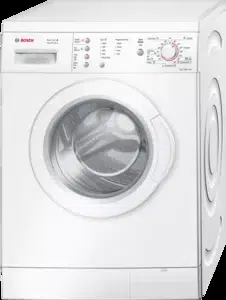
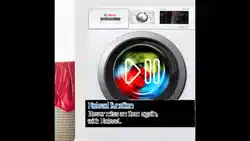
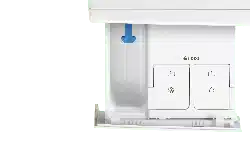
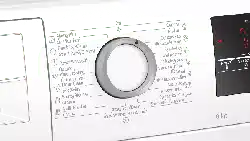
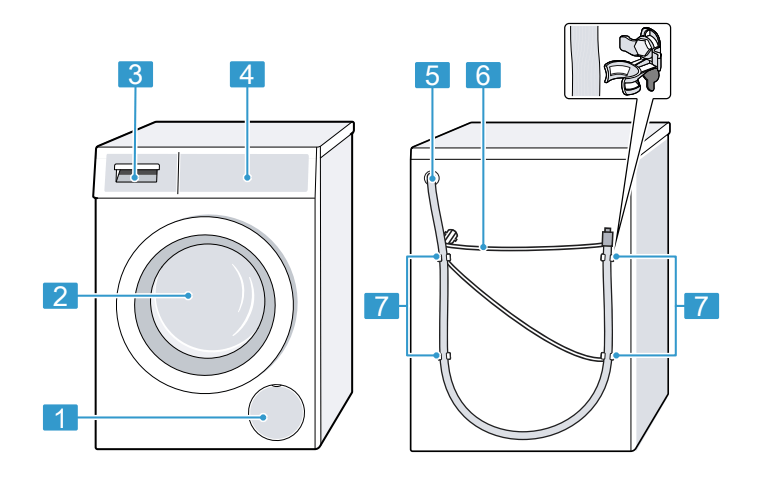
You can find an overview of the parts of your appliance here.
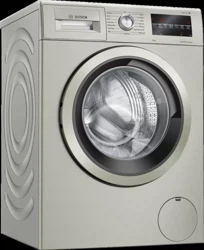
On certain models, specific details such as the colour and shape may differ from those pictured.
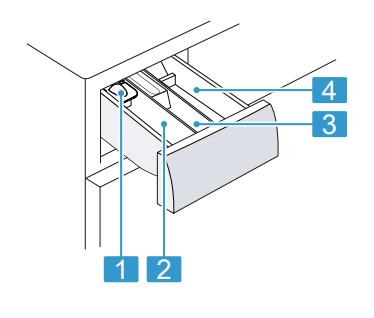
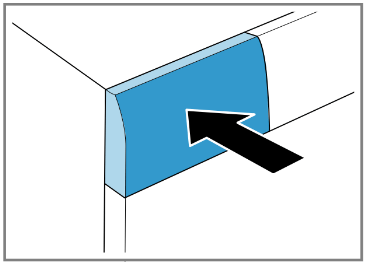
Detergent drawer
1. Measuring aid for liquid detergent → "Using a measuring aid for liquid detergent", Page 35
2. Compartment II:
Detergent for main wash
Water softener
Bleach
Stain remover
3. Compartment :
Fabric softener
Liquid starch
Waterproofing agent
4. Compartment I:
Detergent for prewash
Hygiene detergent
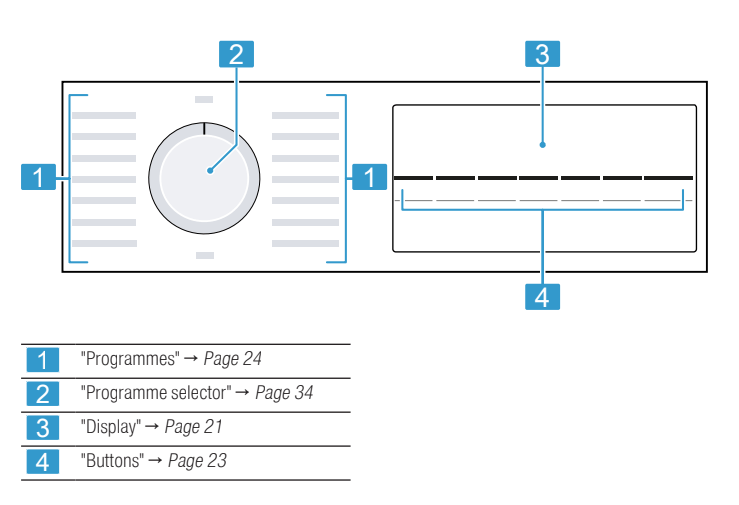
Controls
You can use the control panel to configure all functions of your appliance and to obtain information about the operating status.
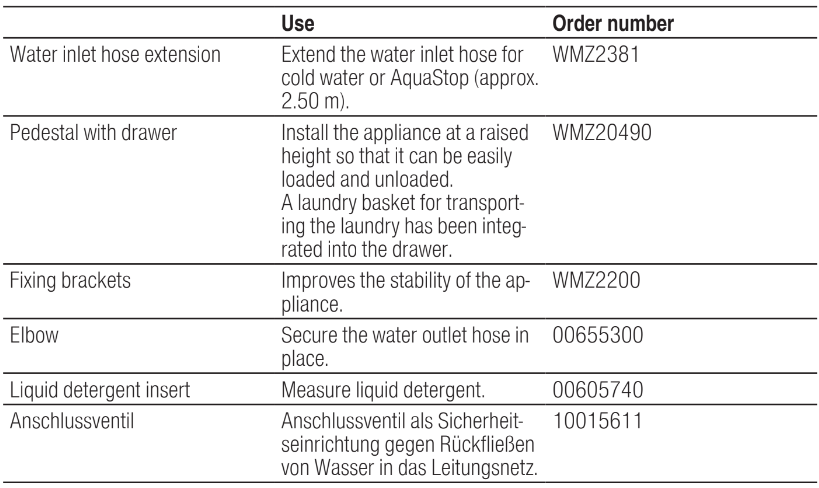
Accessories
Use original accessories. These have been made especially for your appliance.
Before using for the first time
Prepare the appliance for use.
Starting an empty washing cycle
Your appliance was inspected thor-oughly before leaving the factory. To remove any residual water, run the first wash cycle without any laundry.
Note: Please read the information in the "Safety" → Page 4 and "Prevent- ing material damage" → Page 11 sec- tions to ensure that you use the appli- ance safely.
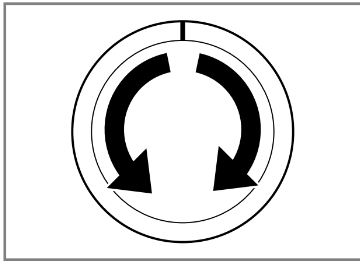
1. Turn the programme selector to Drum Clean.
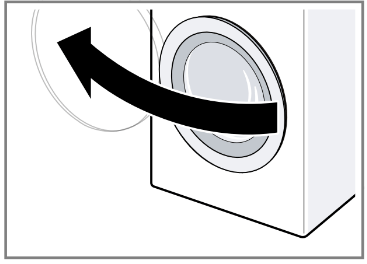
2. Close the door.
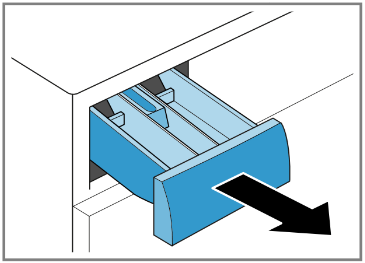
3. Pull out the detergent drawer.
4. Pour washing powder into com- partment II.
To prevent foaming, use only half of the amount of detergent recom- mended by the detergent manufac- turer for light soiling. Do not use detergent suitable for woollens or delicates.
5. Push in the detergent drawer.
6. Press Start/Reload to start the programme.
The display shows the remaining programme duration.
After the programme has ended, the display shows: End.
7. Start the first wash cycle or set the programme selector to Off to switch off the appliance.
→ "Basic operation", Page 34
Laundry
You can wash all items that the man- ufacturer has marked as machine- washable on the care label and fab- rics made from hand-washable wool using your appliance.
Preparing the laundry
ATTENTION!
Objects remaining in the laundry may damage the laundry and the drum.
Remove all items from any pock- ets in your laundry before using the appliance.
To protect your appliance and the laundry, prepare the laundry be- forehand.
Empty all pockets
Brush sand out of all collars and pockets
Close bed covers and cushion covers
Close all zips, Velcro fasteners, hooks and eyes
Tie cloth belts and apron strings together or use a mesh laundry bag
Remove curtain hooks and lead strips or use a mesh laundry bag
Use a mesh laundry bag for small items of laundry such as children's socks
Separate items of laundry and shake them out
Wash large and small items of laundry together
Dab fresh stains with soapy wa- ter (do not rub them)
Some stubborn or dried-in stains can be removed by washing several times
Sorting laundry
Note: Please read the information in the "Safety" → Page 4 and "Prevent- ing material damage" → Page 11 sec- tions to ensure that you use the appli- ance safely.
To improve washing results and prevent discolouration, sort the laundry according to the following criteria before washing.
Type of fabric and fibre type
Whites
Colours : Wash new coloured items separately the first time you wash them.
"Soiling" → Page 32
"Care symbols on the care la- bels" → Page 32
Degrees of soiling
Degree of soiling
Soiling
Examples
Light
No dirt or stains are visible
Laundry has absorbed odours
Light summer clothing or sports clothing that has been worn for a just a few hours
Normal
Dirt or light stains are visible
T-shirts, shirts or blouses are sweat-soaked or have been worn a few times
Towels or bedding that has been used for up to one week
Heavy
Dirt or stains are clearly visible
Tea towels, baby items or work clothing
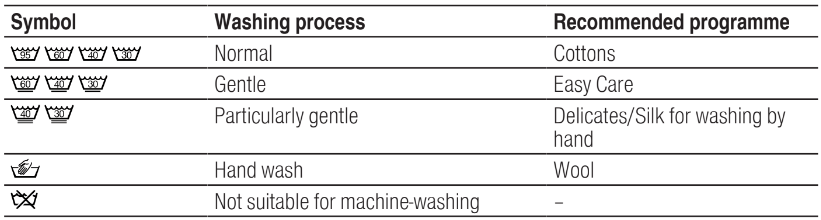
Care symbols on the care labels
The symbols indicate the recommended programme and the numbers in the symbols indicate the maximum recommended washing temperature.
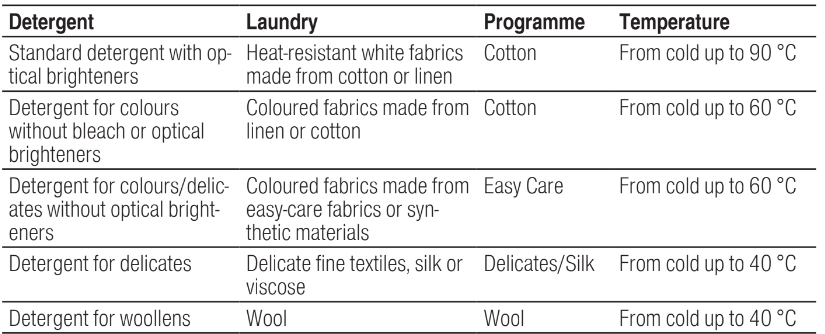
Detergents and care products
You can protect your appliance and your laundry by selecting and using the correct detergents and care products. You can use all detergents and care products which are suitable for domestic washing machines.
Note: Please read the information in the "Safety" → Page 4 and "Prevent- ing material damage" → Page 11 sec- tions to ensure that you use the appli- ance safely.
The manufacturer's instructions for use and dosage can be found on the packaging.
Notes
only use liquid detergents that are self-flowing
Do not mix different liquid deter- gents
Do not mix detergent and fabric softener
Do not use products that have ex- pired or are highly congealed.
Do not use products containing solvents, caustic agents or volatile substances (e.g. bleach)
Use dyes sparingly as salt may damage stainless steel
Do not use bleaching agents in the appliance
Detergent recommendation
Detergent dosage
Use the correct detergent dosage to achieve optimal washing results and save resources.
The detergent dosage depends on:
The amount of laundry
Degree of soiling
Water hardness
You can find out how hard your water is from your local water com- pany or measure it yourself using a water hardness tester.
Water hardness
Example of a manufacturer's instructions for detergent
These example values refer to a standard load of 4–5 kg.
The dosages can be found on the manufacturer's packaging.
Adjust the dosage to the actual load.
Basic operation
Switching on the appliance
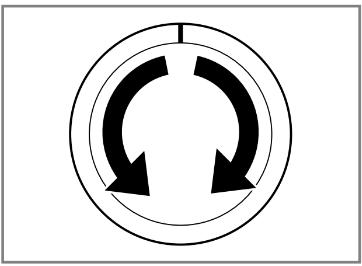
Turn the programme selector to a programme.
Setting a programme
1. Set the programme selector to the required "programme" → Page 24.
2. If necessary, "adjust the pro- gramme settings" → Page 35.
Adjusting the programme set- tings
Depending on the programme and programme progress, you can adjust or activate/deactivate the settings.
Note: Overview of all programme set- tings:→ "Buttons", Page 23
Requirement: A programme has been set.
Adjust the programme settings. The programme settings are not saved permanently for the pro- gramme.
Loading laundry
Notes
Please read the information in the "Safety" → Page 4 and "Preventing material damage" → Page 11 sec- tions to ensure that you use the appliance safely.
To prevent creasing, take note of the maximum load for the relevant programme" → Page 24.
Requirement: Prepare and sort the laundry.
→ "Laundry", Page 31
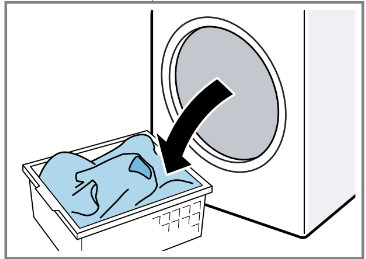
1. Open the door.
2. Ensure that the drum is empty.
3. Separate the laundry and place it in the drum.
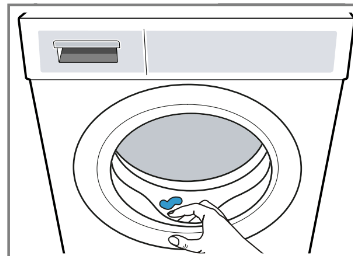
4. Note: Ensure that there is no laun- dry trapped in the door.
Close the door.
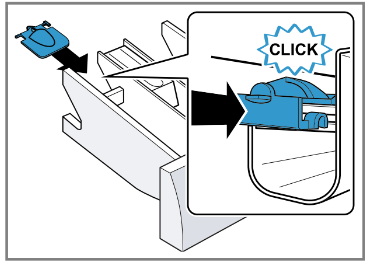
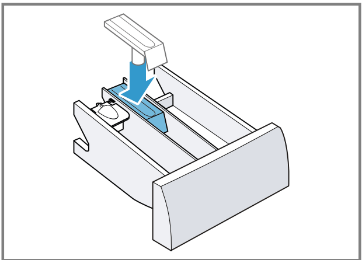
Using a measuring aid for li- quid detergent
If you order the measuring aid as an accessory, you must use the measur- ing aid.
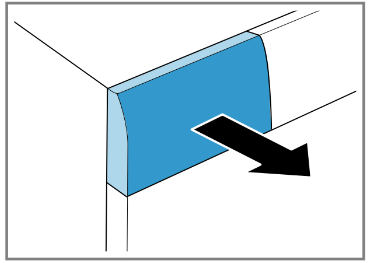
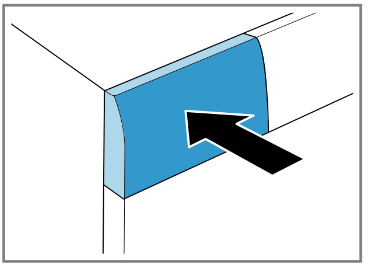
1. Pull out the detergent drawer.
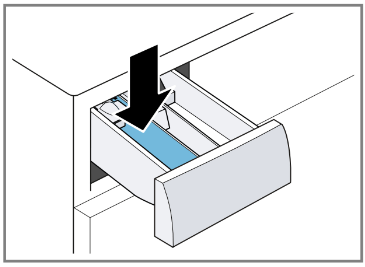
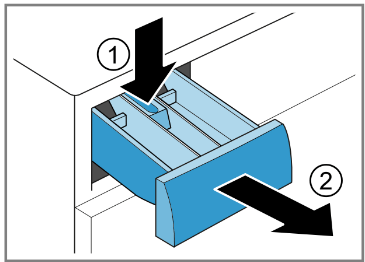
2. Press down on the insert and re- move the detergent drawer.
3. Insert the measuring aid.
4. Insert the detergent drawer.
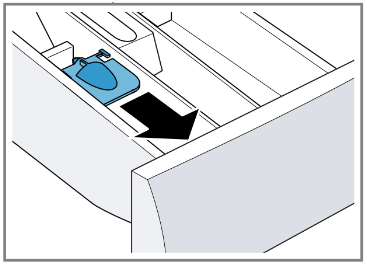
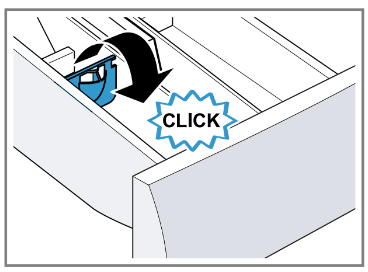
Use the measuring aid for li- quid detergent
To add liquid detergent, you can use a measuring aid in the detergent drawer.
1. Pull out the detergent drawer.
2. Slide the measuring aid forwards.
3. Fold the measuring aid down and click it into place.
4. Push in the detergent drawer.
Adding detergent and care product
Notes
Please read the information in the "Safety" → Page 4 and "Preventing material damage" → Page 11 sec- tions to ensure that you use the appliance safely.
Do not use the measuring aid for liquid detergent for gel detergents, washing powder, or if Prewash or "Ready in" time are activated.
Requirement: Find out the optimum dosage for "detergent and care product." → Page 33
Pull out the detergent drawer.
Pour in detergent. → "Detergent drawer", Page 20
If required, add the care product.
Push in the detergent drawer.
Starting the programme
Note: If you want to change the time until the programme ends, set the "Ready in" time first.
Press Start/Reload.
The drum rotates and load detec- tion takes place. This can take up to 2 minutes, after which water enters the drum.
The display shows either the pro- gramme duration or the "Ready in" time.
After the programme has ended, the display shows: End.
Adjusting the "Ready in" time before the programme starts
You can readjust the selected "Ready in" time before the programme starts.
Press Start/Reload.
Press Finish in repeatedly until the display indicates the desired "Ready in" time.
Press Start/Reload.
Adding laundry
Note: Please read the information in the "Safety" → Page 4 and "Prevent- ing material damage" → Page 11 sec- tions to ensure that you use the appli- ance safely.
1. Press Start/Reload.
The appliance is paused and checks whether it is possible to add or remove laundry. Take note of the programme status.
2. Add or remove laundry.
3. Close the door.
4. Press Start/Reload.
Cancelling the programme
Once the programme has started, you can cancel it at any time.
Note: Please read the information in the "Safety" → Page 4 and "Prevent- ing material damage" → Page 11 sec- tions to ensure that you use the appli- ance safely.
1. Press Start/Reload.
2. Open the door.
The appliance door remains locked for safety reasons if the temperature and water levels are high.
If the temperature is high, start the Rinse programme.
If the water level is high: Start the Spin or Drain programme.
3. Remove the laundry.
Resuming the programme when the programme status is Rinse Hold
Set the Spin or Drain programme.
Press Start/Reload.
Unloading the laundry
Note: Please read the information in the "Safety" → Page 4 and "Prevent- ing material damage" → Page 11 sec- tions to ensure that you use the appli- ance safely.
1. Open the door.
2. Remove the laundry.
Switching off the appliance
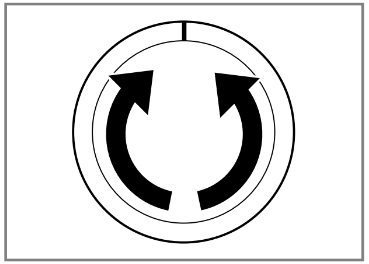
1. Turn the programme selector to Off.
2. Turn off the tap.
3. Wipe the rubber gasket dry and re- move any foreign objects.
4. Leave the door and detergent drawer open so that residual water can evaporate.
Childproof lock
Secure your appliance against being operated unintentionally using the controls.
Activating the childproof lock
Press and hold the two 3 sec. buttons for approx. 3 seconds.
The display shows .
The controls are locked.
The childproof lock remains active even after the appliance has been switched off.
Deactivating the childproof lock
Requirement: To deactivate the childproof lock, the appliance must be switched on.
Press and hold the two 3 sec. buttons for approx. 3 seconds.
goes out in the display.
Basic settings
You can configure the appliance to meet your needs.
Overview of the basic settings
Below is an overview of the basic settings on your appliance.
Changing the basic settings
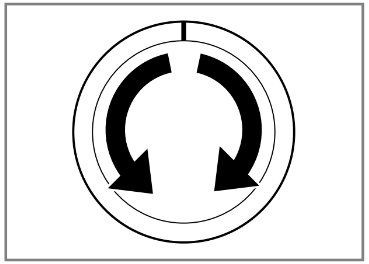
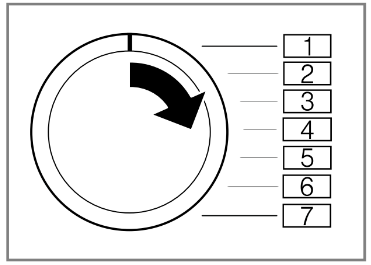
1. Set the programme selector to po- sition 1.
2. Press Spin Speed and, at the same time, turn the programme selector to position 2.
The display shows the current value.
3. Set the programme selector to the required position.
4. To change the value, press Finish in.
5. To save the changes, switch off the appliance.
Cleaning and servicing
To keep your appliance working effi- ciently for a long time, it is important to clean and maintain it carefully.
Tips on appliance care
Follow the tips for appliance care to ensure your appliance works cor- rectly in the long term.
Wipe down the hous- ing and the control panel with nothing but water and a damp cloth.
The appliance parts remain clean and hy- gienic.
Remove all detergent residue, spray residue or other residues im- mediately.
Fresh deposits are easier to remove without leaving any residue.
Keep the appliance door and detergent drawer open after use.
This allows the resid- ual water to dry, redu- cing odours in the ap- pliance.
Cleaning the drum
If you often wash at a washing tem- perature of 40 °C and lower or the appliance has not been used for a long period, clean the drum.
CAUTION
Risk of injury!
Permanently washing at low temper- atures and a lack of ventilation for the appliance may damage the drum and cause injury.
Regularly run a programme for cleaning the drum or wash at tem- peratures of at least 60 °C.
Leave the appliance to dry after every operation with the door open, and leave the detergent drawer to dry.
Run the Drum Clean programme without laundry. Add washing powder.
Cleaning the detergent drawer
Note: Please read the information in the "Safety" → Page 4 and "Prevent- ing material damage" → Page 11 sec- tions to ensure that you use the appli- ance safely.
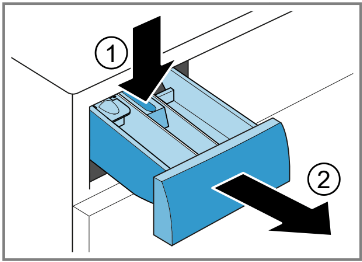
1. Pull out the detergent drawer.
2. Press down on the insert and re- move the detergent drawer.
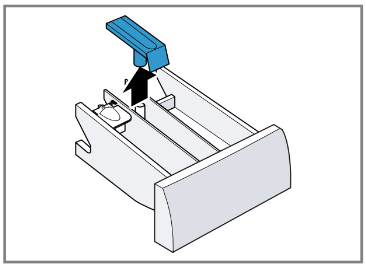
3. Press out the insert upwards from below.
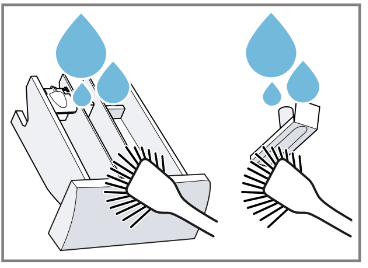
4. Clean the detergent drawer and in- sert with water and a brush, and then dry them.
5. Fit the insert and lock it into place.
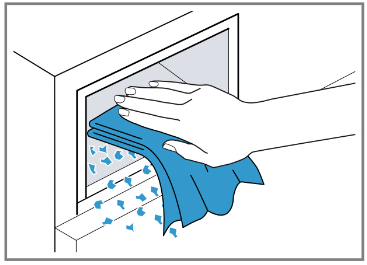
6. Cleaning the opening for the deter- gent drawer.
7. Push in the detergent drawer.
Descaling
If you add detergent correctly, you do not need to descale your appliance.
If you still wish to use descaler, follow the manufacturer's instructions for use.
ATTENTION!
The use of unsuitable descaling agents, e.g. for coffee machines, may damage the appliance.
For this appliance, only use de- scaling agents that are available from the manufacturer's website or our after-sales service.
Cleaning the drain pump
Clean the drain pump in the event of faults, e.g. blockages or rattling noises.
Emptying the drain pump
Note: Please read the information in the "Safety" → Page 4 and "Prevent- ing material damage" → Page 11 sec- tions to ensure that you use the appli- ance safely.
1. Turn off the water tap.
2. Switch off the appliance.
3. Disconnect the appliance's mains plug from the power supply.
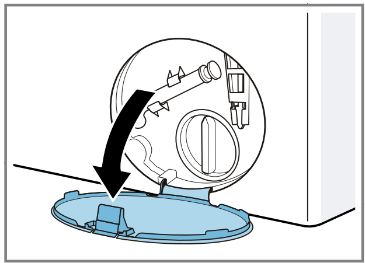
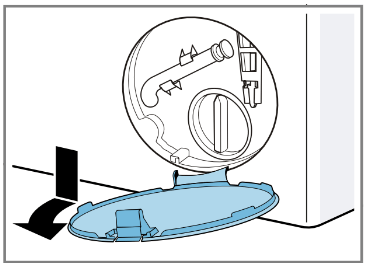
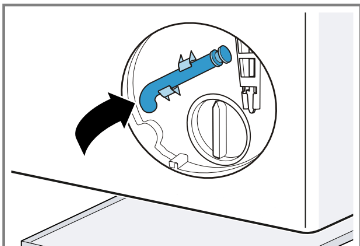
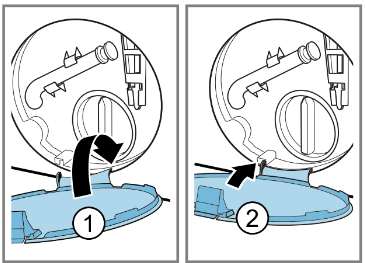
4. Open the maintenance flap.
5. Remove the maintenance flap.
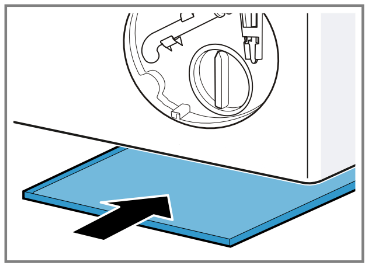
6. Slide a sufficiently large receptacle under the opening.
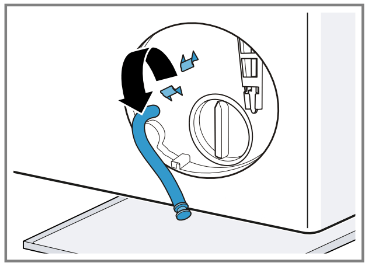
7. Take the drain hose out of the holder.
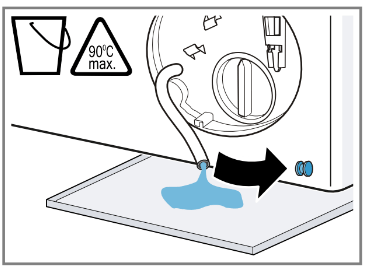
9. CAUTION - Risk of scalding!
When you wash at high temperat- ures, the detergent solution gets hot.
Do not touch the hot detergent solution.
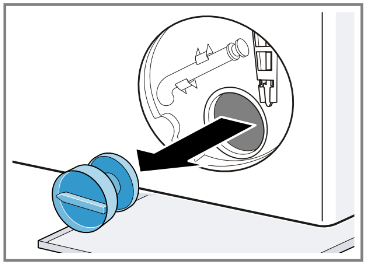
To allow the detergent solution to flow out into the container, remove the sealing cap.
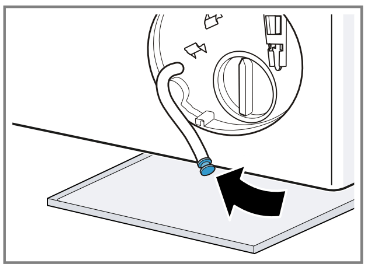
9. Firmly press on the sealing cap.
10. Insert the drain hose into the holder.
Cleaning the drain pump
Note: Please read the information in the "Safety" → Page 4 and "Prevent- ing material damage" → Page 11 sec- tions to ensure that you use the appli- ance safely.
Requirement: "The drain pump is empty." → Page 42
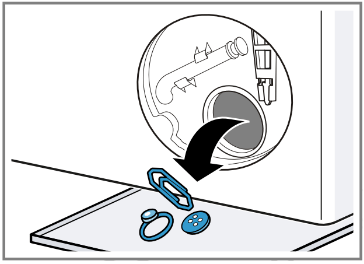
1. Since water may remain in the drain pump, remove the pump cap carefully.
2. Clean the interior, the thread on the pump cap and the pump hous- ing.
3. Make sure that the impeller in the drain pump can be rotated.
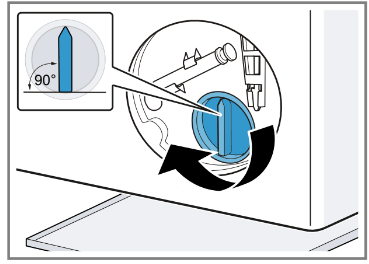
4. Insert the pump cap and screw it on as far as it will go.
The handle on the pump cap must be in a vertical position.
5. Insert the maintenance flap and lock it into place.
6. Close the maintenance flap.
Cleaning the water outlet hose at the siphon
If the water outlet hose at the siphon is dirty or the detergent solution is not being pumped out, you must clean these.
1. Switch off the appliance.
2. Disconnect the appliance's mains plug from the power supply.
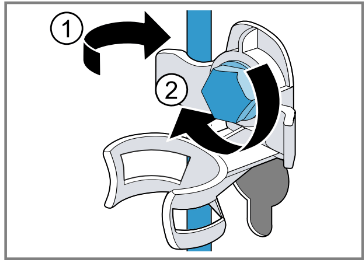
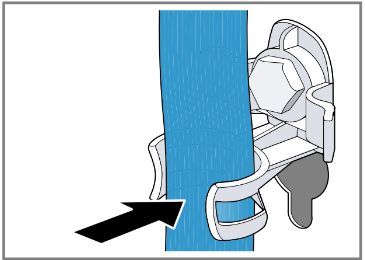
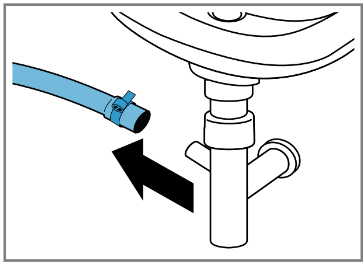
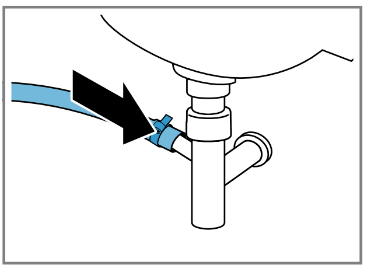
3. Loosen the hose clamp and care- fully remove the water outlet hose.
Residual water may leak out.
4. Clean the water outlet hose and si- phon connecting piece.
5. Reattach the water outlet hose and secure the connection point using the hose clamp.
Clean the water inlet filters.
Clean the filter in the water inlet in the event of blockages or if the water pressure is too low.
Emptying the water inlet hose
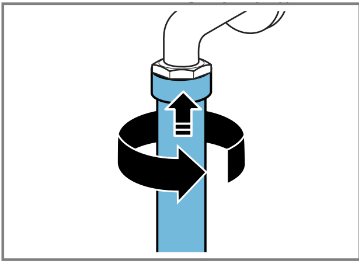
Turn off the tap.
Set a programme, except for Rinse, Spin or Drain.
Start the programme and leave it to run for approx. 40 seconds.
Switch off the appliance.
Disconnect the appliance's mains plug from the power supply.
Cleaning the filter on the tap
Note: Please read the information in the "Safety" → Page 4 and "Prevent- ing material damage" → Page 11 sec- tions to ensure that you use the appli- ance safely.
Requirement: The water inlet hose is empty.
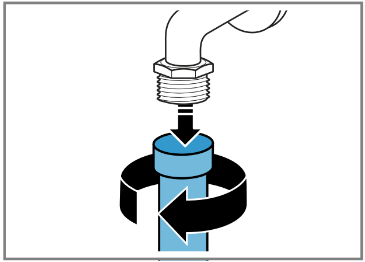
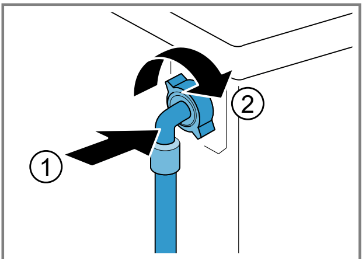
1. Remove the water inlet hose from the tap.
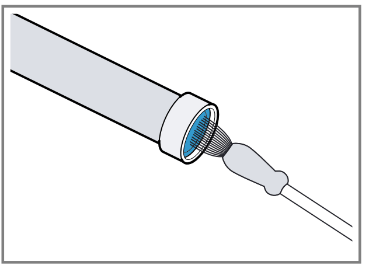
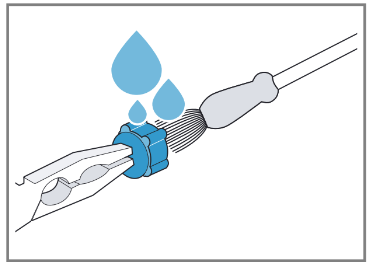
2. Clean the filter with a small brush.
3. Connect the water inlet hose and check for leaks.
Cleaning the filter on the appliance
Note: Please read the information in the "Safety" → Page 4 and "Prevent- ing material damage" → Page 11 sec- tions to ensure that you use the appli- ance safely.
Requirement: The water inlet hose is empty. → "Emptying the water inlet hose", → Page 45
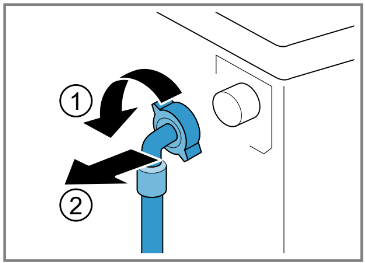
1. Disconnect the hose from the rear of the appliance.
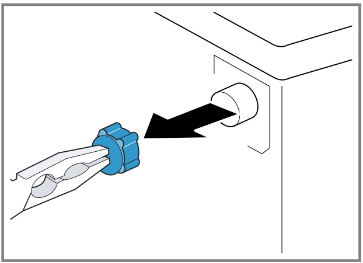
2. Use pliers to remove the filter.
3. Clean the filter with a small brush.
4. Reinsert the filter.
5. Connect the hose and check for leaks.
Troubleshooting
You can rectify minor faults on your appliance yourself. Read the troubleshoot- ing information before contacting after-sales service. This will avoid unneces- sary costs.
WARNING
Risk of electric shock!
Incorrect repairs are dangerous.
Repairs to the appliance should only be carried out by trained specialist staff.
Only use genuine spare parts when repairing the appliance.
If the power cord of this appliance is damaged, it must be replaced by the manufacturer, the manufacturer's Customer Service or a similarly qualified person in order to prevent any risk.
Malfunctions
Fault
Cause
Troubleshooting
The display goes out and Start/Reload flashes.
Energy-saving mode is act-ive
Press any button. The symbol lights up again.
"E:36 / -10"
Drain pipe or water outlet hose is blocked.
Clean the drain pipe and the water outlet hose.
Drain pipe or water drain hose is caught or jammed.
Ensure that the drain pipe and water drain hose are not kinked or trapped.
Drain pump is blocked.
→ "Cleaning the drain pump", Page 42
The water outlet hose is connected too high.
Install the water outlet hose at a maximum height of 1 metre.
Detergent dosage is too high.
Immediate measure: Mix one table- spoon of fabric softener with 0.5 litres of water and pour the mixture into the left-hand compartment (not for outdoor clothing, sportswear or items stuffed with down).
Reduce the amount of detergent for the next washing cycle with the same load.
Unapproved extension in- stalled on the water drain hose.
Remove any unapproved exten- sions from the water hose. Connect- ing the appliance
"E:36 / -25 / -26"
Drain pump is blocked.
→ "Cleaning the drain pump", Page 42
The water pressure is low.
No remedial action possible.
The filters in the water inflow are blocked.
"Clean the filters in the water in- flow" → Page 45.
The tap is turned off.
Turn on the tap.
The water inlet hose is kinked or jammed.
Ensure that the water inlet hose is not kinked or jammed.
flashes.
The automatic voltage control system detects an unauthorised voltage under-usage.
No remedial action possible. Note: If the power supply is stable, the programme continues to run as nor- mal.
Voltage under-usage may cause extension of a pro gramme.
No remedial action possible.
flashes.
Voltage under-usage may cause extension of a pro- gramme.
No remedial action possible.
lights up.
The temperature is too high.
Wait until the temperature has dropped.
→ "Cancelling the programme", Page 37
Water level is too high.
Start the Drain programme.
Laundry is caught in the door.
1. Open the door again.
2. Remove any trapped laundry.
3. Close the door.
4. Press Start/Reload to start the pro- gramme.
flashes.
Door is not closed.
1. Close the door.
2. Press Start/Reload to start the pro-gramme.
All other error codes.
Malfunction
Call the after-sales service. → "Customer Service", Page 57
The appliance is not work- ing.
The mains plug of the power cord is not plugged in.
Connect the appliance to the power supply.
The circuit breaker is faulty.
Check the circuit breaker in the fuse box.
The appliance is not work- ing.
There has been a power cut.
Check whether the lighting in your kitchen or other appliances are working.
The programme does not start.
You have not pressed Start/ Reload.
Press Start/Reload.
Door is not closed.
1. Close the door.
2. Press Start/Reload to start the pro- gramme.
Childproof lock is activated.
Check whether Finish in is activ- ated.
→ "Buttons", Page 23
Laundry is caught in the door.
1. Open the door again.
2. Remove any trapped laundry.
3. Close the door.
4. Press Start/Reload to start the pro- gramme.
The door cannot be opened.
– –– is activated.
Continue the programme by selecting Spin or Drain and pressing Start/Reload. → "Resuming the programme when the programme status is Rinse Hold", Page 37
The temperature is too high.
Wait until the temperature has dropped.
→ "Cancelling the programme", Page 37
Water level is too high.
Start the Drain programme.
Power failure.
Open the door using the emergency release. → "Emergency release", Page 55
The water is not draining.
Drain pipe or water outlet hose is blocked.
Clean the drain pipe and the water outlet hose.
Drain pipe or water drain hose is caught or jammed.
Ensure that the drain pipe and wa ter drain hose are not kinked or trapped.
Drain pump is blocked.
→ "Cleaning the drain pump", Page 42
The water is not draining.
– –– is activated.
Continue the programme by selecting Spin or Drain and pressing Start/Reload. → "Resuming the programme when the programme status is Rinse Hold", Page 37
The water outlet hose is con- nected too high.
Install the water outlet hose at a maximum height of 1 metre.
Detergent dosage is too high.
Immediate measure: Mix one table- spoon of fabric softener with 0.5 litres of water and pour the mixture into the left-hand compartment (not for outdoor clothing, sportswear or items stuffed with down).
Reduce the amount of detergent for the next washing cycle with the same load.
Unapproved extension in- stalled on the water drain hose.
Remove any unapproved exten- sions from the water hose. Connecting the appliance
Water is not flowing in. Detergent is not being dis- pensed.
You have not pressed Start/ Reload.
Press Start/Reload.
The filters in the water inflow are blocked.
"Clean the filters in the water in- flow" → Page 45.
The tap is turned off.
Turn on the tap.
The water inlet hose is kinked or jammed.
Ensure that the water inlet hose is not kinked or jammed.
The spin cycle runs several times.
The unbalanced load detection system eliminates an imbalance by repeatedly redistributing the laundry.
Not a fault – no action required.
Note: When loading, where possible, place large and small items of laundry together in the drum. Different sized items of laundry distribute themselves better during the spin cycle.
The programme duration changes during the wash cycle.
The programme operation is optimised electronically. This may change the pro gramme duration.
Not a fault – no action required.
The unbalanced load detection system eliminates an im balance by repeatedly redistributing the laundry.
Not a fault – no action required.
The programme duration changes during the wash cycle.
Note: When loading, where possible, place large and small items of laundry together in the drum. Different sized items of laundry distribute themselves better during the spin cycle.
Foam detection system switches on a rinse cycle if foam build-up is too high.
Not a fault – no action required.
No water is visible in the drum.
Water is below the visible area.
Not a fault – no action required.
Do not add any extra water to the appliance while it is operating.
Drum jerks after the pro- gramme starts.
This is caused by an internal motor test.
Not a fault – no action required.
Residual water is present in the compartment .
Insert in compartment is blocked.
→ "Cleaning the detergent drawer", Page 40
Vibrations and movement of the appliance whilst spin- ning.
Appliance is not correctly aligned.
Aligning the appliance
The appliance feet are not fixed.
Secure the appliance feet. Aligning the appliance
Transit bolts have not been removed.
Removing the transit bolts
Drum does not turn, water does not flow in.
Load detection is active.
Not a fault – no action required.
Note: The load detection can take up to two minutes.
Heavy foam build-up
High spin speed not reached.
Detergent dosage is too high.
Immediate measure: Mix one table spoon of fabric softener with 0.5 litres of water and pour the mixture into the left-hand compartment (not for outdoor clothing, sportswear or items stuffed with down).
Reduce the amount of detergent for the next washing cycle with the same load.
A low spin speed is selected.
The next time you run a wash cycle, set a higher spin speed.
Reduced Ironing is activated.
Select the programmes that are suitable for the type of fabric. → "Programmes", Page 24
Drain pipe or water outlet hose is blocked.
Clean the drain pipe and the water outlet hose.
Drain pipe or water drain hose is caught or jammed.
Ensure that the drain pipe and water drain hose are not kinked or trapped.
The unbalanced load detection system has interrupted the spin cycle because the laundry is unevenly distributed.
Redistribute the laundry in the drum.
Note: Where possible, mix large and small items in the drum. Different sized items of laundry distribute themselves better during the spin cycle.
Start the Spin programme.
Unbalance load detection system is using a reduced spin speed to eliminate an unbalance.
Redistribute the laundry in the drum.
Note: Where possible, mix large and small items in the drum. Different sized items of laundry distribute themselves better during the spin cycle.
Start the Spin programme.
Detergent residue on the damp washing.
Detergents may contain water-insoluble substances that deposit on the laundry.
Start the Rinse programme.
Detergent residue on the dry laundry.
Detergents may contain water insoluble substances that deposit on the laundry.
Brush out the laundry after washing and drying.
Water is leaking out at the water inlet hose.
Water inlet hose is not correctly/securely connected.
1. Connect the water supply hose correctly. Connecting the water inlet hose
2. Tighten the screw connection.
Water is leaking out at the water outlet hose.
The water outlet hose is damaged.
Replace the damaged water outlet hose.
Water outlet hose is not connected correctly.
Connect the water outlet hose correctly. Water outlet connection types
Odours have formed in the appliance.
Humidity and detergent residue may promote the formation of bacteria.
→ "Cleaning the drum", Page 40
If you are not using the appliance, leave the door and detergent drawer open so that residual water can evaporate.
Emergency release
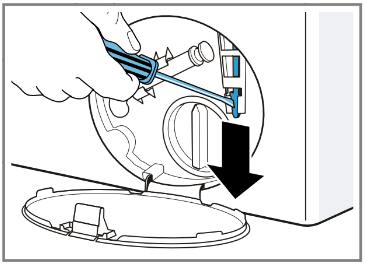
To remove the laundry in the event of a power failure, for example, you can manually release the door.
Releasing the door
Requirement: "The drain pump is empty." → Page 42
1. ATTENTION! Escaping water may cause material damage.
Do not open the door if you can see water through the glass.
Pull the emergency release down- wards with a tool and release.
The door lock is released.
2. Insert the maintenance flap and lock it into place.
3. Close the maintenance flap.
Transportation, storage and disposal
You can find out here how to prepare your appliance for transportation and storage. You will also find out how to dispose of old appliances.
Removing the appliance
1. Turn off the tap.
2. → "Emptying the water inlet hose", Page 45.
3. Switch off the appliance.
4. Unplug the appliance's mains plug.
5. Drain the remaining detergent solution. → "Cleaning the drain pump", Page 42
6. Detach the hoses.
Insert the hose into holder.
Using the appliance again
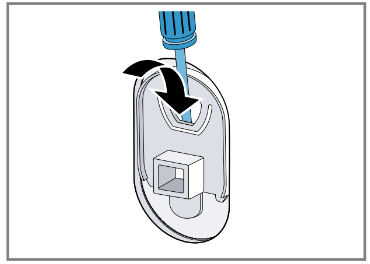
1. Remove the transit bolts.
- If necessary, use a screwdriver to remove the cover caps.
Keep the cover caps.
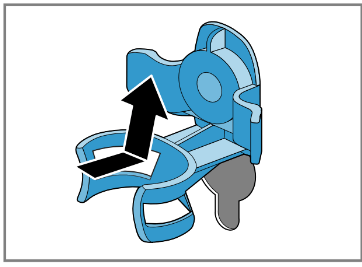
2. Insert the four sleeves.
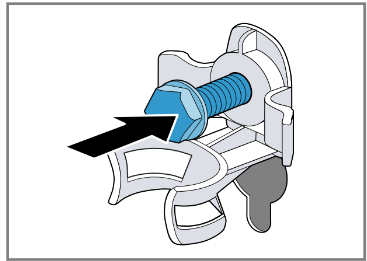
3. Insert all screws into the four transit bolts and tighten slightly.
4. Insert the power cord into the holder and tighten all four screws for the transit bolts with a WAF 13 wrench .
5. Insert the hose into holder.
Customer Service
If you have any queries on use, are unable to rectify faults on the appli- ance yourself or if your appliance needs to be repaired, contact Cus- tomer Service.
You can solve many problems your- self by consulting the information on troubleshooting in these instructions or on our website. If this is not the case, contact our after-sales service.
With any warranty claims, we will make sure that your appliance is re- paired by trained after-sales techni- cians using genuine spare parts, in- cluding after the manufacturer's war- ranty has expired.
Function-relevant genuine spare parts according to the corresponding Eco- design Order can be obtained from
Customer Service for a period of at least 10 years from the date on which your appliance was placed on the market within the European Eco- nomic Area.
Note: Under the terms of the manu- facturer's warranty the use of Cus- tomer Service is free of charge.
Detailed information on the warranty period and terms of warranty in your country is available from our after- sales service, your retailer or on our website.
If you contact Customer Service, you will require the product number (E- Nr.) and the production number (FD) of your appliance. The contact details for Customer Ser- vice can be found in the enclosed Customer Service directory or on our website.
Adjusting the "Ready in" time before the programme starts You can readjust the selected "Ready in" time before the programme starts. 1. Press Start/Reload. 2. Press Finish in repeatedly until the display indicates the desired "Ready in" time. 3. Press Start/Reload
#2 How do I adjust the sound for the signal of the end of the programme. It comes under the section “ basic settings.” which I find very confusing. For example, programme number 2 on the machine is eco 40/60 ? How do I adjust to the basic setting ?
To adjust the signal turn the programme selector to position 1 then press spin speed and, at the same time turn the programme selector to position 2.The display will show the current value. To change the value, press the finish in repeatedly until you see the value you require and switch the appliance off to save the setting.
#3 I have a couple of questions. The specs for this model (WAU28TS1GB) say its Height-adjustable by 1.20. Is this 1.20 mm or cm? Also how is the height adjusted - by adjusting the feet or removing the top and purchasing a height adjustment kit?
You are able to adjust the height of the appliance by adjusting the feet, these are adjustable by 12mm.
 :
:


 3 sec. buttons for approx. 3 seconds.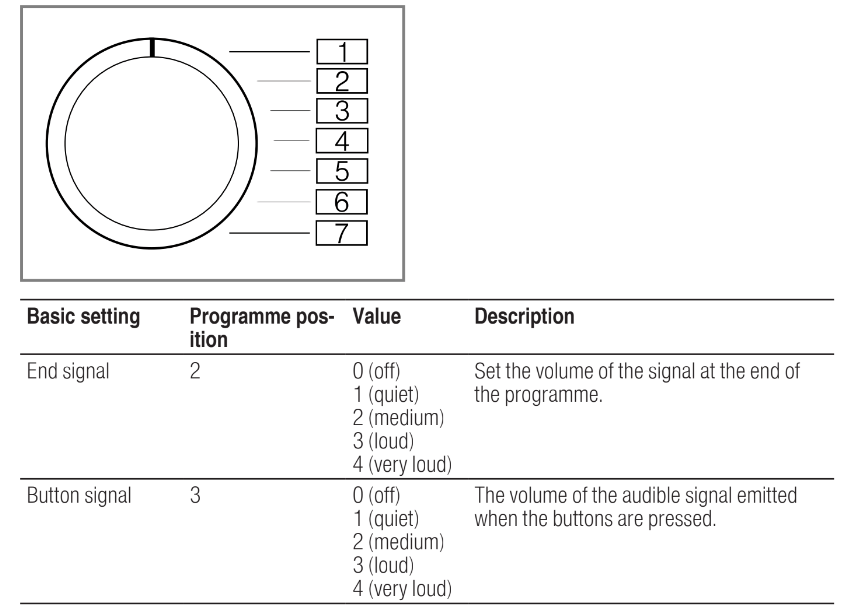

 flashes.
 flashes.
 lights up.
 .
.