Instruction Book
Vented Tumble Dryer
®
English
Français
40003957ENG.qxd 26/09/2005 14:06 Page 1
English. . . . . . . . . . . . . . . . . . . . . . . . . . . . . . . . . . . . . . . . . . . . . 2
Français . . . . . . . . . . . . . . . . . . . . . . . . . . . . . . . . . . . . . . . . . . . 17
Introduction . . . . . . . . . . . . . . . . . . . . . . . . . . . . . . . . . . . . . . . . . . . . . . . 3
Delivery information . . . . . . . . . . . . . . . . . . . . . . . . . . . . . . . . . . . . . . . . . . . . . 3
Unpacking the Product . . . . . . . . . . . . . . . . . . . . . . . . . . . . . . . . . . . 3
Safety reminders . . . . . . . . . . . . . . . . . . . . . . . . . . . . . . . . . . . . . . . . . . 4
Installation . . . . . . . . . . . . . . . . . . . . . . . . . . . . . . . . . . . . . . . . . . . . . . . . . . . . . 4
Use . . . . . . . . . . . . . . . . . . . . . . . . . . . . . . . . . . . . . . . . . . . . . . . . . . . . . . . . . . . 4
The Laundry . . . . . . . . . . . . . . . . . . . . . . . . . . . . . . . . . . . . . . . . . . . . . . . . . . . . 4
Environmental Issues . . . . . . . . . . . . . . . . . . . . . . . . . . . . . . . . . . . . . . . . . . . . . 5
GIAS Service . . . . . . . . . . . . . . . . . . . . . . . . . . . . . . . . . . . . . . . . . . . . . . . . . . . . 5
Installation. . . . . . . . . . . . . . . . . . . . . . . . . . . . . . . . . . . . . . . . . . . . . . . . . 6
Electrical requirements . . . . . . . . . . . . . . . . . . . . . . . . . . . . . . . . . . . . . . . . . . . 6
Adjusting the feet . . . . . . . . . . . . . . . . . . . . . . . . . . . . . . . . . . . . . . . . . . . . . . . 6
Ventilation . . . . . . . . . . . . . . . . . . . . . . . . . . . . . . . . . . . . . . . . . . . . . . . . . 7
Installation of the Discharge Hose. . . . . . . . . . . . . . . . . . . . . . . . . . . . . . . . . . . 7
Preparing the load . . . . . . . . . . . . . . . . . . . . . . . . . . . . . . . . . . . . . . . . 8
Clothes preparation . . . . . . . . . . . . . . . . . . . . . . . . . . . . . . . . . . . . . . . . . . . . . . 8
Sorting the load. . . . . . . . . . . . . . . . . . . . . . . . . . . . . . . . . . . . . . . . . . . . . . . . . 9
Drying advice. . . . . . . . . . . . . . . . . . . . . . . . . . . . . . . . . . . . . . . . . . . . . 10
Do not tumble dry . . . . . . . . . . . . . . . . . . . . . . . . . . . . . . . . . . . . . . . . . . . . . . 10
Energy saving. . . . . . . . . . . . . . . . . . . . . . . . . . . . . . . . . . . . . . . . . . . . . . . . . . 10
Controls and indicators . . . . . . . . . . . . . . . . . . . . . . . . . . . . . . . . . 11
Door and Filter . . . . . . . . . . . . . . . . . . . . . . . . . . . . . . . . . . . . . . . . . . . 12
Opening the door . . . . . . . . . . . . . . . . . . . . . . . . . . . . . . . . . . . . . . . . . . . . . . 12
Filter. . . . . . . . . . . . . . . . . . . . . . . . . . . . . . . . . . . . . . . . . . . . . . . . . . . . . . . . . 12
Filter care indicator . . . . . . . . . . . . . . . . . . . . . . . . . . . . . . . . . . . . . . . . . . . . . 12
Operation . . . . . . . . . . . . . . . . . . . . . . . . . . . . . . . . . . . . . . . . . . . . . . . . . 13
Cleaning and Routine Maintenance. . . . . . . . . . . . . . . . . . . . 14
Cleaning the dryer . . . . . . . . . . . . . . . . . . . . . . . . . . . . . . . . . . . . . . . . . . . . . . 14
Technical specifications . . . . . . . . . . . . . . . . . . . . . . . . . . . . . . . . . . . . . . . . . . 14
Troubleshooting. . . . . . . . . . . . . . . . . . . . . . . . . . . . . . . . . . . . . . . . . . 15
Customer Service. . . . . . . . . . . . . . . . . . . . . . . . . . . . . . . . . . . . . . . . . 16
Spares. . . . . . . . . . . . . . . . . . . . . . . . . . . . . . . . . . . . . . . . . . . . . . . . . . . . . . . . 16
GIAS Service . . . . . . . . . . . . . . . . . . . . . . . . . . . . . . . . . . . . . . . . . . . . . . . . . . . 16
2
40003957ENG.qxd 26/09/2005 14:06 Page 2
Introduction
Please read and follow these instructions
carefully and operate the machine accordingly.
This booklet provides important guidelines for
safe use, installation, maintenance and some
useful advice for best results when using your
machine.
Keep all documentation in a safe place for future
reference or for any future owners
Delivery information
Please check that the following items are
delivered with the appliance:
● Instruction manual
● Guarantee card
● Vent kit and instructions
● Energy label
Remove the machine from its packaging close to
the final location of the machine.
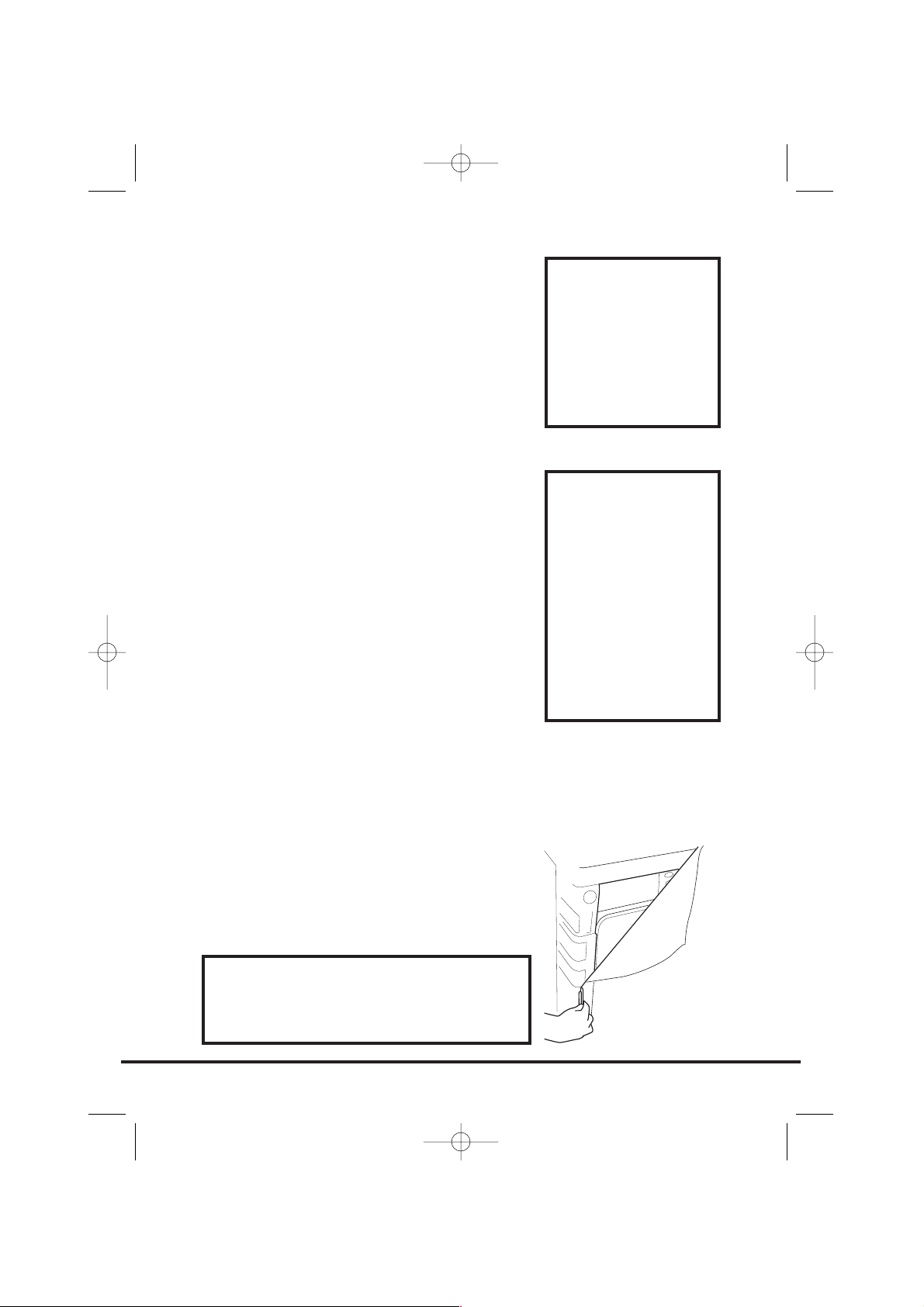
1. Cut carefully around the base of the
packaging and up one corner.
2. Remove the polythene sleeve and lift the
dryer off the polystyrene base.
3
Check that no
damage has
occurred to the
machine during
transit. If it has,
call for service by
GIAS.
Failure to comply
with the above
can compromise
the safety of the
appliance. You
may be charged
for a service call
if a problem with
your machine is
caused by
misuse.
Unpacking the product
Dispose of the packaging safely. Make
sure it is out of the reach of children,
it is a potential source of danger.
40003957ENG.qxd 26/09/2005 14:06 Page 3
Safety reminders
Installation
● Check that the product has no visible signs of damage before use. If
damaged do not use and please call GIAS Service.
● Do not use adapters, multiple connectors and/or extensions.
● This machine should not be installed in a bathroom or shower room.
● Never install the dryer against curtains and be sure to prevent items from
falling or collecting behind the dryer.
Use
● WARNING Misuse of a tumble dryer may create a fire hazard.
● This machine is solely for domestic use, i.e. to dry household textiles and
garments.
● This machine should only be used for its intended purpose as described in
this manual. Ensure that the instructions for installation and use are fully
understood before operating the appliance.
● Do not touch the appliance when hands or feet are damp or wet.
● Do not lean on the door when loading the machine or use the door to
lift or move the machine.
● Do not allow children to play with the machine or its controls.
● WARNING Do not use the product if the fluff filter is not in position or is
damaged; fluff could be ignited.
● WARNING Where the hot surface symbol is located the temperature
rise during operation of the tumble dryer may be in excess of 60 degrees C.
● Remove the plug from the electricity supply. Always remove the plug
before cleaning the appliance.
● Do not continue to use this machine if it appears to be faulty.
● Lint and fluff must not be allowed to collect on the floor around the
outside of the machine.
● The drum inside may be very hot. Always allow the dryer to complete the
cool down period before removing the laundry.
The Laundry
● WARNING Do not tumble dry fabrics treated with dry cleaning fluids.
● WARNING Foam rubber materials can, under certain circumstances, when
heated become ignited by spontaneous combustion. Foam plastic, foam
rubber and rubber-like material are not suitable for tumble drying.
Articles made from these materials MUST NOT be placed in the dryer.
● Always refer to the laundry care labels for directions on suitability for
drying.
● Clothes should be spin dried or thoroughly wrung before they are put
into the tumble dryer. Clothes that are dripping wet should NOT be put
into the dryer.
4
40003957ENG.qxd 13/12/2005 15:51 Page 4
● Lighters and matches must not be left in pockets and NEVER use
flammable liquids near the machine.
● Glass fibre curtains should NEVER be put in this machine. Skin irritation
may occur if other garments are contaminated with the glass fibres.
● Garments treated or contaminated with flammable cleaning sprays or
liquids such as petrol, cooking oil or aerosol sprays MUST NOT be put in
this machine.
Environmental Issues
● All packaging materials used are environmentally-friendly and recyclable.
Please help dispose of the packaging via environmentally-friendly means.
Your local council will be able to give you details of current means of
disposal.
● To ensure safety when disposing of an old tumble dryer disconnect the
mains plug from the socket, cut the mains power cable and destroy this
together with the plug. To prevent children shutting themselves in the
machine break the door hinges or the door lock.
GIAS Service
● To ensure the continued safe and efficient operation of this appliance we
recommend that any servicing or repairs are only carried out by an
authorised GIAS Service engineer.
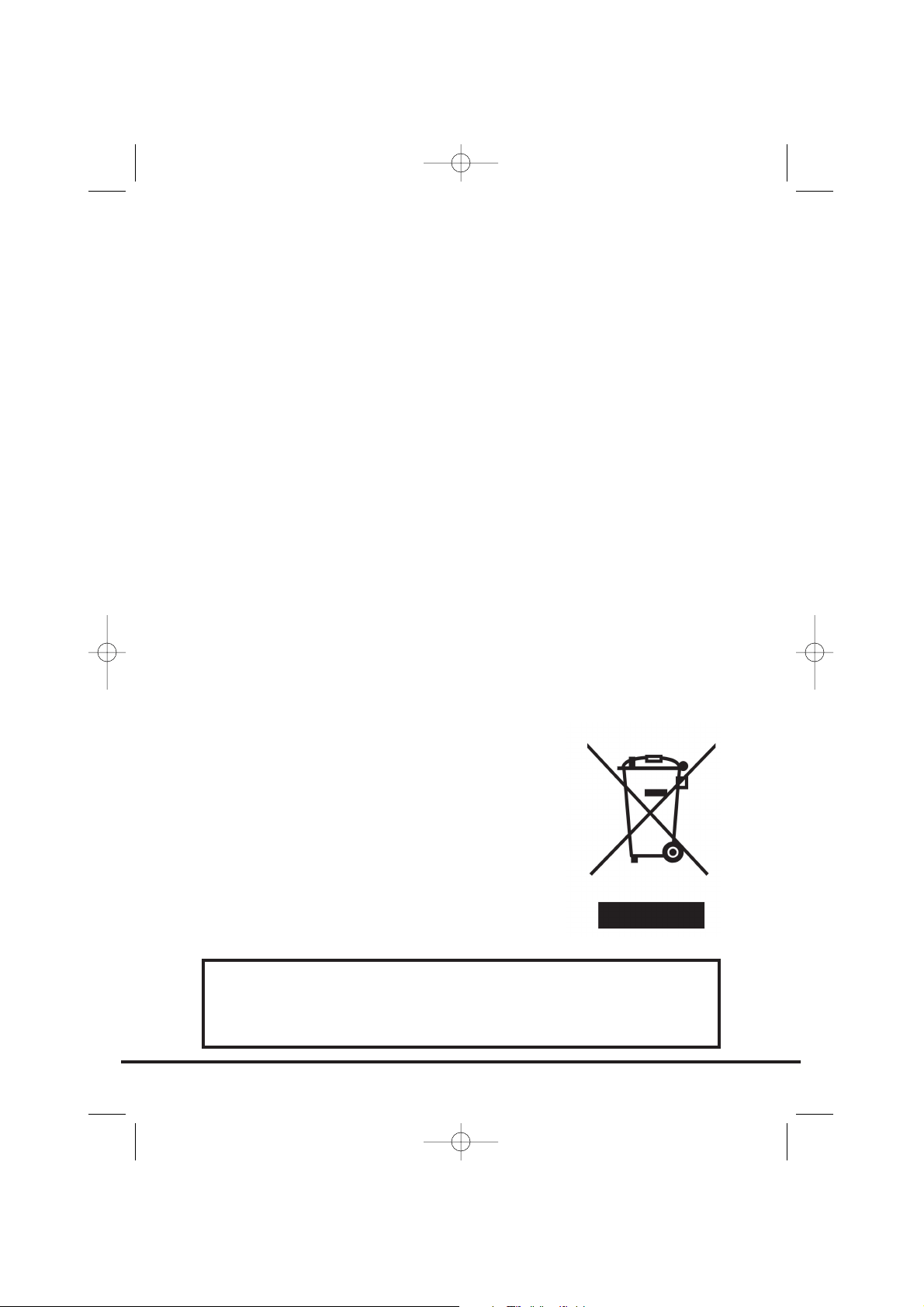
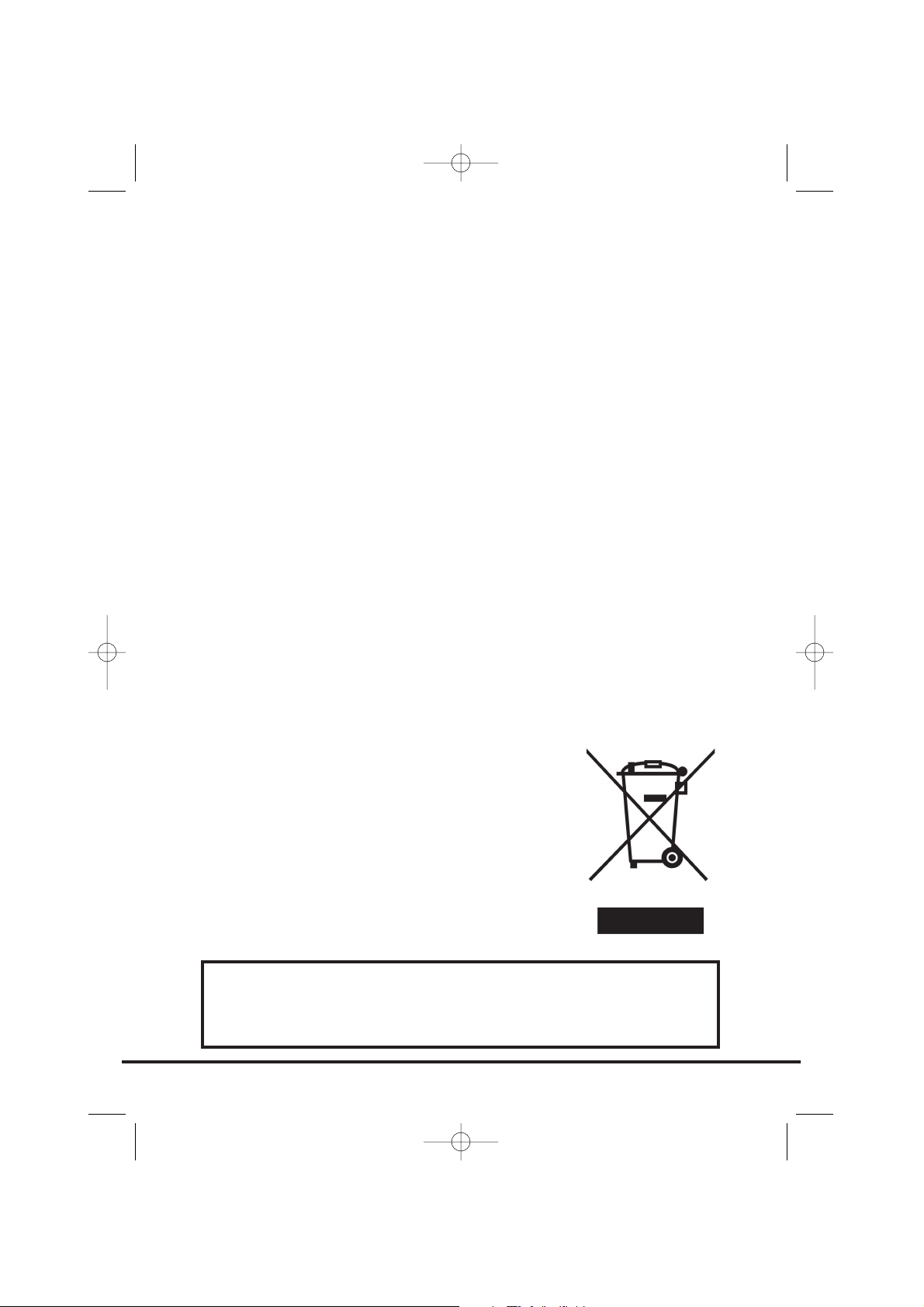
European directive 2002/96/EC
This appliance is marked according to the European directive 2002/96/EC on
Waste Electrical and Electronic Equipment (WEEE).
By ensuring this product is disposed of correctly, you
will help prevent potential negative consequences for
the environment and human health, which could
otherwise be caused by inappropriate waste handling
of this product.
The symbol on the product indicates that this product
may not be treated as household waste. Instead it shall
be handed over to the applicable collection point for
the recycling of electrical and electronic equipment
Disposal must be carried out in accordance with local
environmental regulations for waste disposal.
For more detailed information about treatment,
recovery and recycling of this product, please contact
your local city office, your household waste disposal
service or the shop where you purchased the product.
5
If the appliance is not running properly or breaks down,
switch it off and disconnect the plug from the socket.
Consult GIAS Service for possible repair.
40003957ENG.qxd 13/12/2005 15:52 Page 5
Electrical requirements
Tumble dryers are supplied to operate at a
voltage of 230-240V, 50 Hz single phase. Check
that the supply circuit is rated to at least 10A.
Electricity can be extremely dangerous.
This appliance must be earthed.
The socket outlet and the plug on the appliance
must be of the same type.
Do not use multiple adapters and/or extension
leads.
The plug should be accessible for disconnection
after the appliance has been installed.
The wires in the mains lead are coloured in
accordance with the following codes:
Blue NEUTRAL
Brown LIVE
Green and Yellow EARTH
CE Appliance complies with European Directive
89/336/EEC, 73/23/EEC and subsequent
amendments.
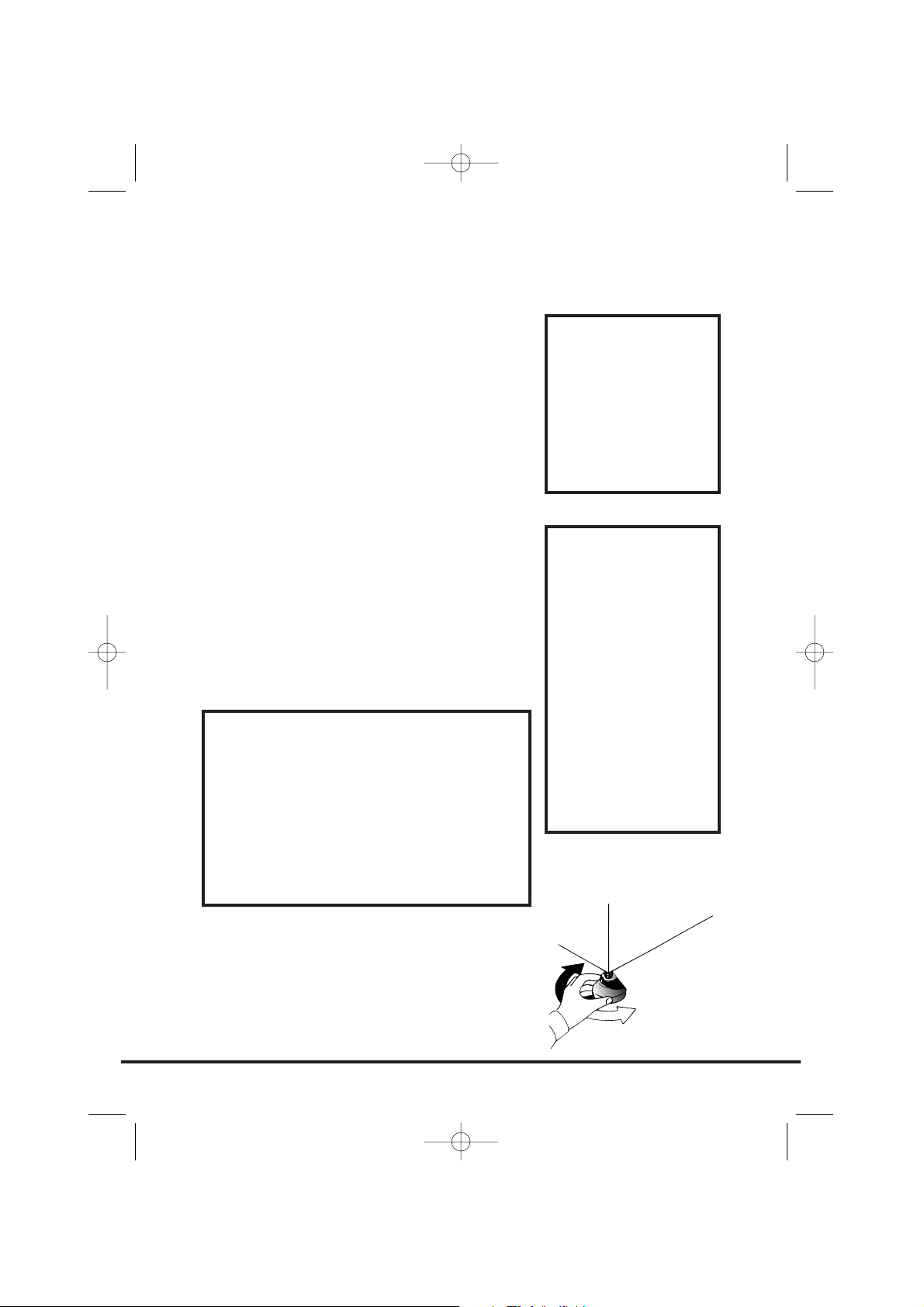
Adjusting the feet
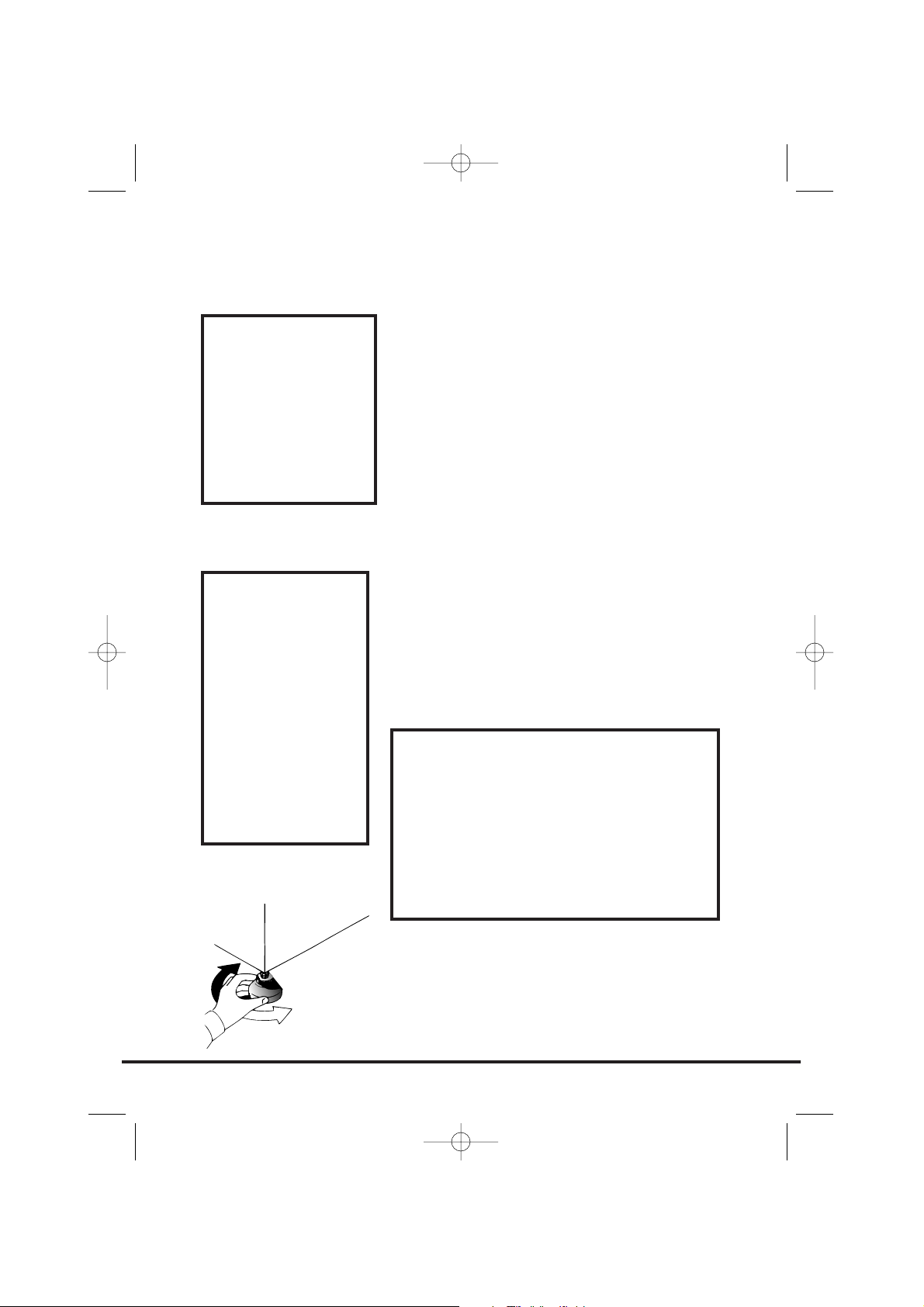
Once the machine is in place the feet should be
adjusted to ensure that the machine is level.
Adjust the four feet to ensure the machine is firm
and level.
6
You may be
charged for a
service call if a
problem with
your machine is
caused by
incorrect
installation.
If the mains cord
on this appliance
is damaged, it
must be replaced
by a special cord
which is ONLY
obtainable from
the GIAS spares
service. It must
be installed by a
competent
person.
Installation
Do not plug the machine in and switch
it on at the mains until the installation
is completed.
For your safety, this dryer must be
correctly installed.
If there is any doubt about installation,
call GIAS Service for advice.
40003957ENG.qxd 26/09/2005 14:06 Page 6
Adequate ventilation must be provided in the
room where the tumble dryer is located to
prevent gases from appliances burning other
fuels, including open fires, being drawn into the
room during operation of the tumble dryer.
● Exhaust air must not be discharged into a
flue which is used for exhausting fumes
from appliances burning gas or other fuels.
● Check regularly that the air flowing through
the dryer is not restricted.
● Check the fluff filter after use, and clean, if
necessary.
● The inlet and outlets should be kept free
from obstructions. To ensure adequate
ventilation the space between the bottom
of the machine and the floor must not be
obstructed. There should be a gap of at
least 12mm between the machine and any
obstructions.
● Prevent items from falling or collecting
behind the dryer as these may obstruct the
air inlet and outlet.
● NEVER install the dryer up against curtains.
Installation of the Discharge Hose
It is essential to use a venting hose to carry the
hot moist air away from the dryer unless the
dryer is situated in a open space with a good air
flow around it. Re-recirculation of the moist air
will prevent the efficient operation of the dryer.
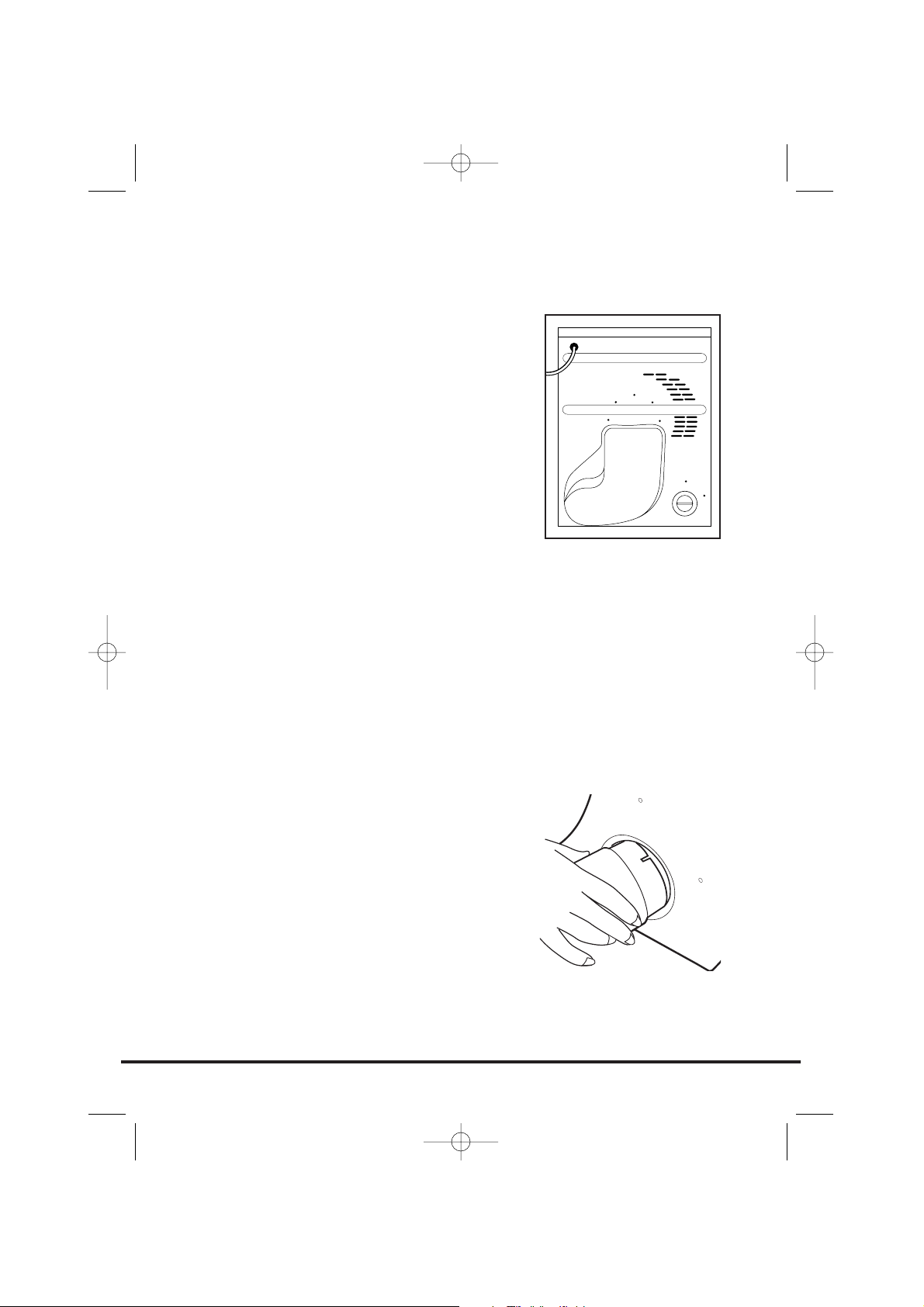
The hose is assembled to the machine as shown
The hose may be fitted through a wall or
through an open door or window. The hose is
110mm in diameter and will extend 1.8 meters.
The following guidelines should be followed
when installing the discharge hose.
● Do not use two hoses joined together as the drying performance will be
reduced.
● Do not restrict the flow of air through the hose e.g. by kinking it or
7
Ventilation
40003957ENG.qxd 26/09/2005 14:06 Page 7
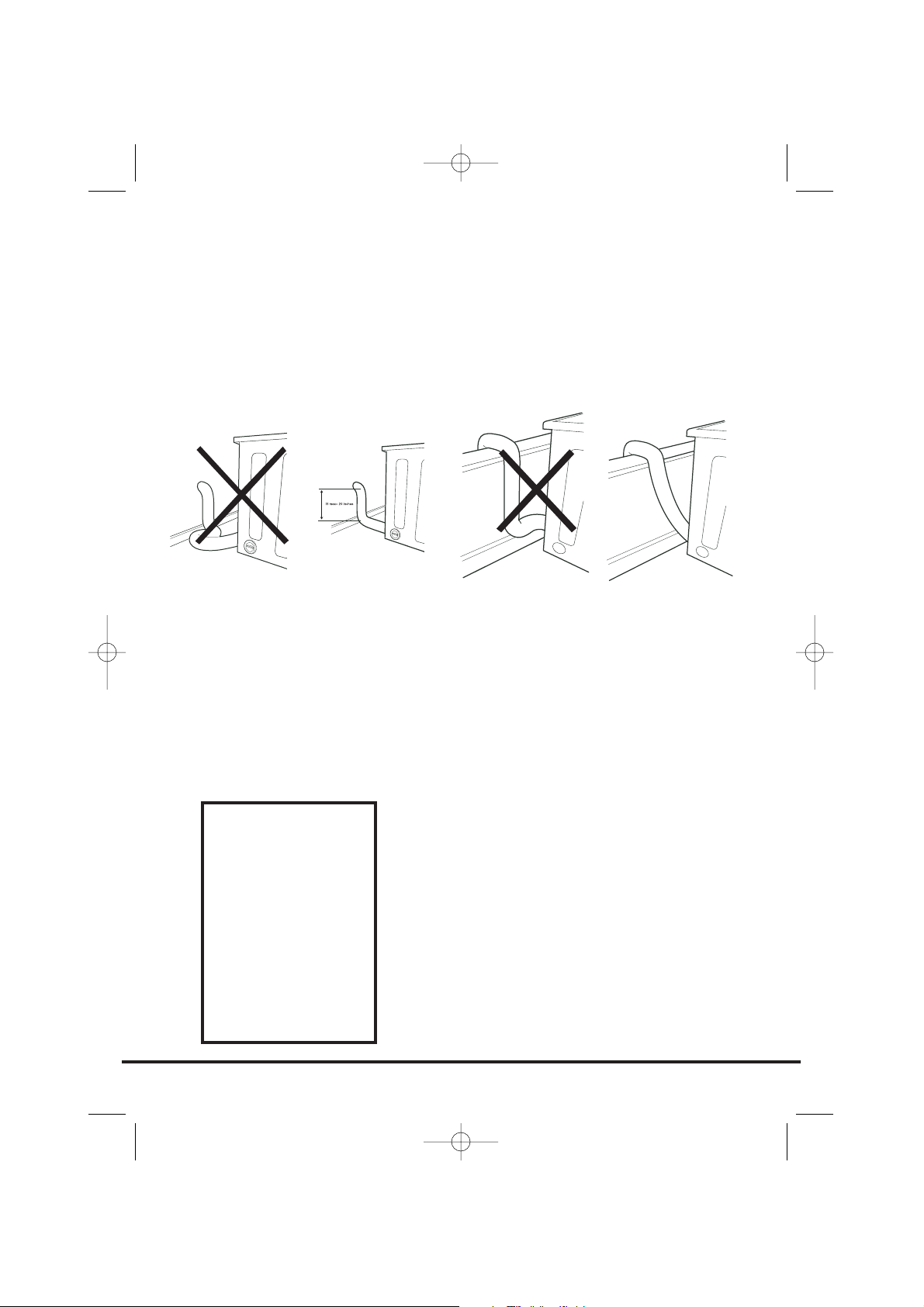
fitting a smaller diameter connector to mount to a wall opening.
● Avoid the hose making U shaped curves as this will restrict the flow of air
and increase the chance that water will collect in the hose.
● Check the hose regularly to remove any build-up of fluff or water that
may have collected in it.
The following diagrams give examples of good and bad installations.
Before using the tumble dryer for the first time:
● Please read this instruction book thoroughly.
● Remove all items packed inside drum.
● Wipe the inside of the drum and door with
a damp cloth to remove any dust which may
have settled in transit.
Clothes preparation
Make sure that the laundry you are going to dry
is suitable for drying in a tumble dryer, as shown
by the care symbols on each item.
Check that all fastenings are closed and that
pockets are empty. Turn the articles inside out.
Place clothes loosely in the drum to make sure
that they don't get tangled.
8
Preparing the load
Do not overload
the drum, large
items when wet
can exceed the
maximum
admissible
clothes load
(for example:
sleeping bags,
duvets).
40003957ENG.qxd 26/09/2005 14:06 Page 8
Maximum drying weight
● Cottons Max. 7 kg
● Synthetics Max. 3.5 kg
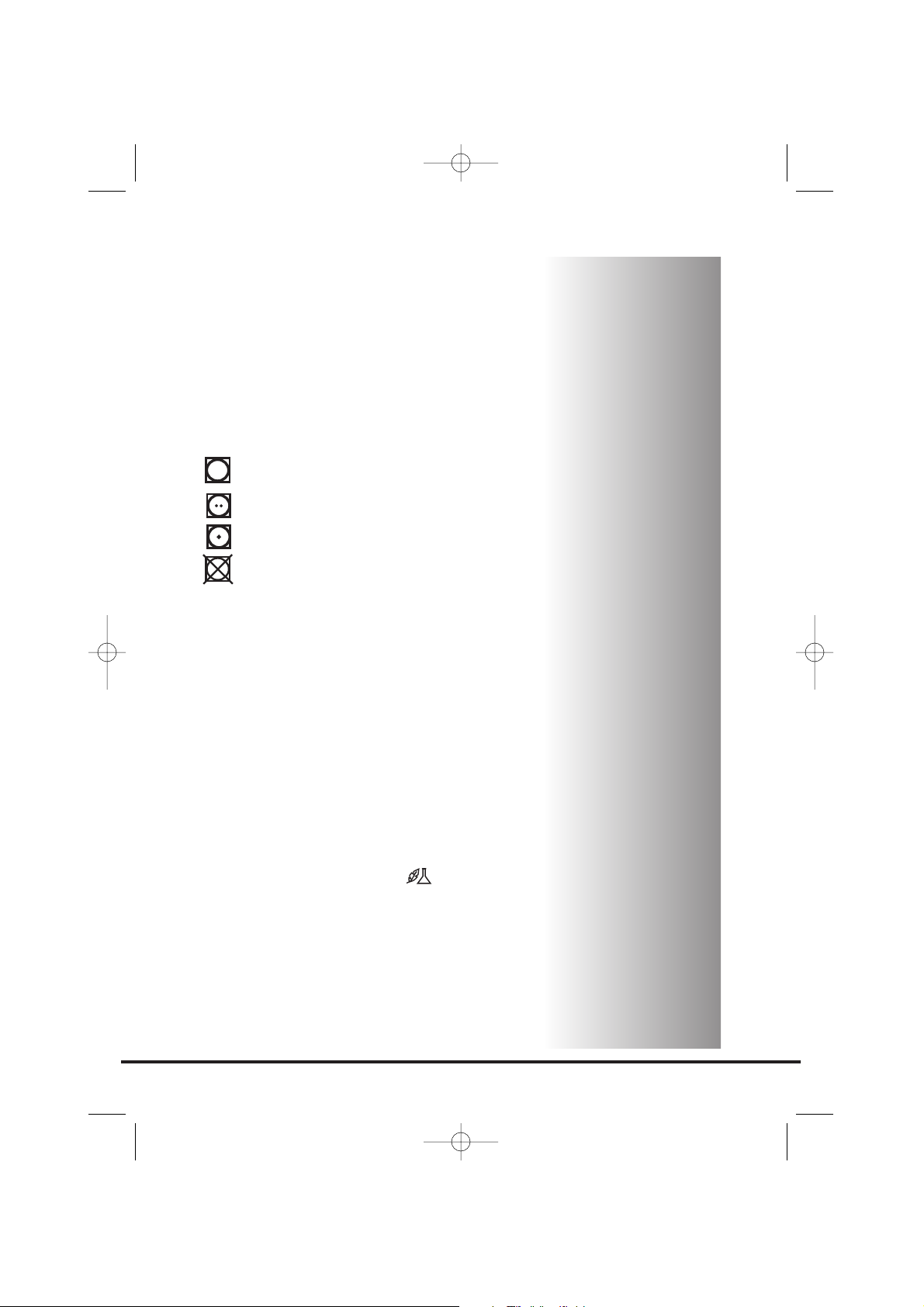
Sort the load as follows:
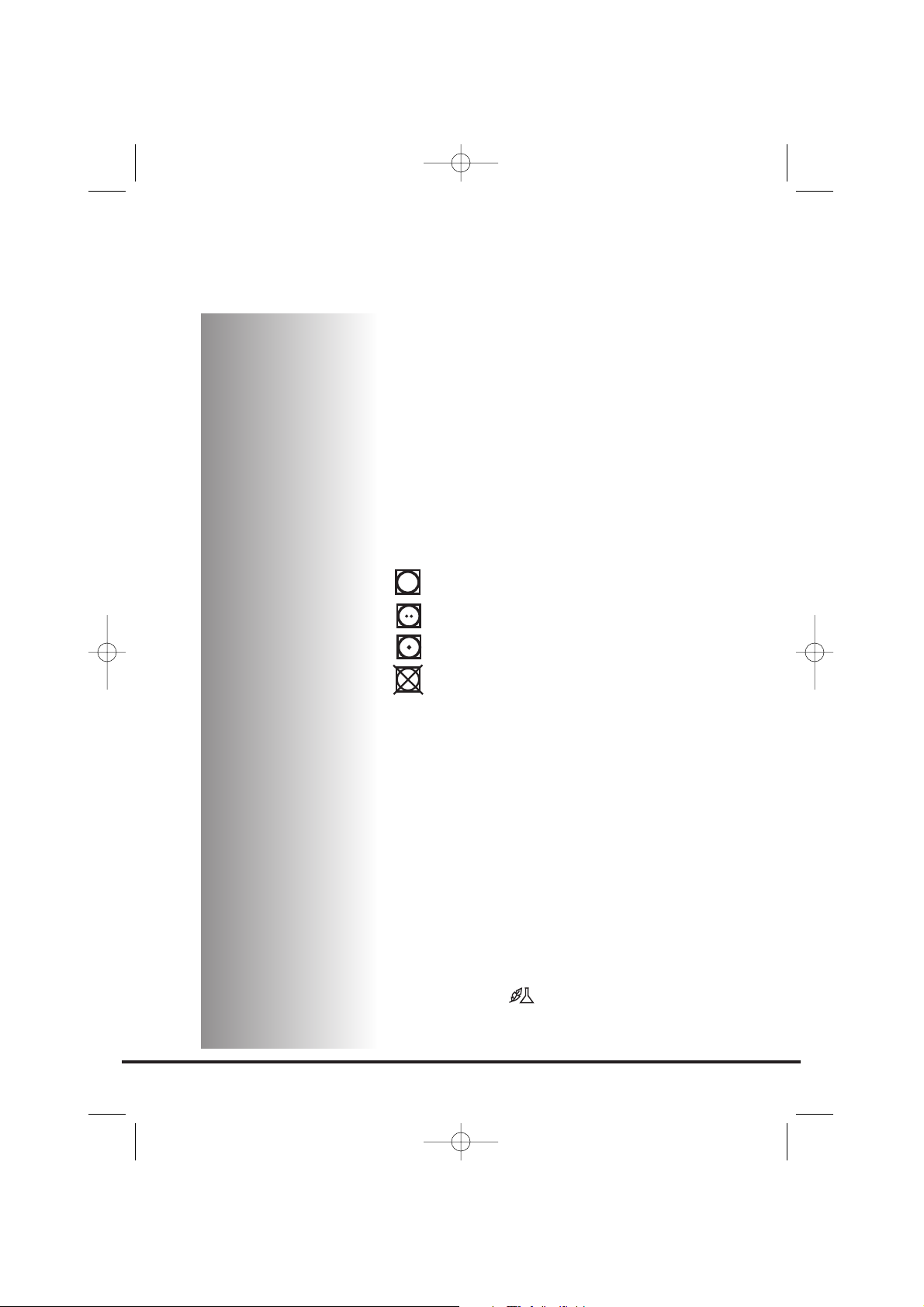
● By care symbols
These can be found on the collar or inside
seam:
Suitable for tumble drying.
Tumble drying at high temperature.
Tumble drying at low temperature only.
Do not tumble dry.
If the item does not have a care label it
must be assumed that it is not suitable
for tumble drying.
● By amount and thickness
Whenever the load is bigger than the dryer
capacity, separate clothes according to
thickness (e.g. towels from thin underwear).
● By type of fabric
Cottons/linen: Towels, cotton jersey, bed and
table linen.
Synthetics: Blouses, shirts, overalls, etc.
made of polyester or polyamid, as well as
for cotton/synthetic mixes.
● By drying level
Sort into: iron dry, cupboard dry, etc. For
delicate articles press the button to
select low drying temperature.
9
40003957ENG.qxd 26/09/2005 14:06 Page 9
Do not tumble dry:
Woollens, silk, delicate fabrics, nylon stockings,
delicate embroidery, fabrics with metallic
decorations, garments with PVC or leather
trimmings, training shoes, bulky items such as
sleeping bags, etc.
Energy saving
Only put into the tumble dryer laundry which has
been thoroughly wrung or spin-dried. The drier
the laundry the shorter the drying time thus
saving electricity.
ALWAYS
● Try to dry the maximum weight of laundry,
this will save time and electricity.
● Check that the filter is clean before every
drying cycle.
NEVER
● Exceed the maximum weight, this will waste
time and electricity.
● Put dripping wet items into the tumble
dryer, this may damage the appliance.
10
Drying advice
IMPORTANT: Do
not dry articles
which have been
treated with a
dry cleaning fluid
or rubber clothes
(danger of fire or
explosion).
During the last
15 minutes the
load is always
tumbled in
cool air.
40003957ENG.qxd 26/09/2005 14:06 Page 10
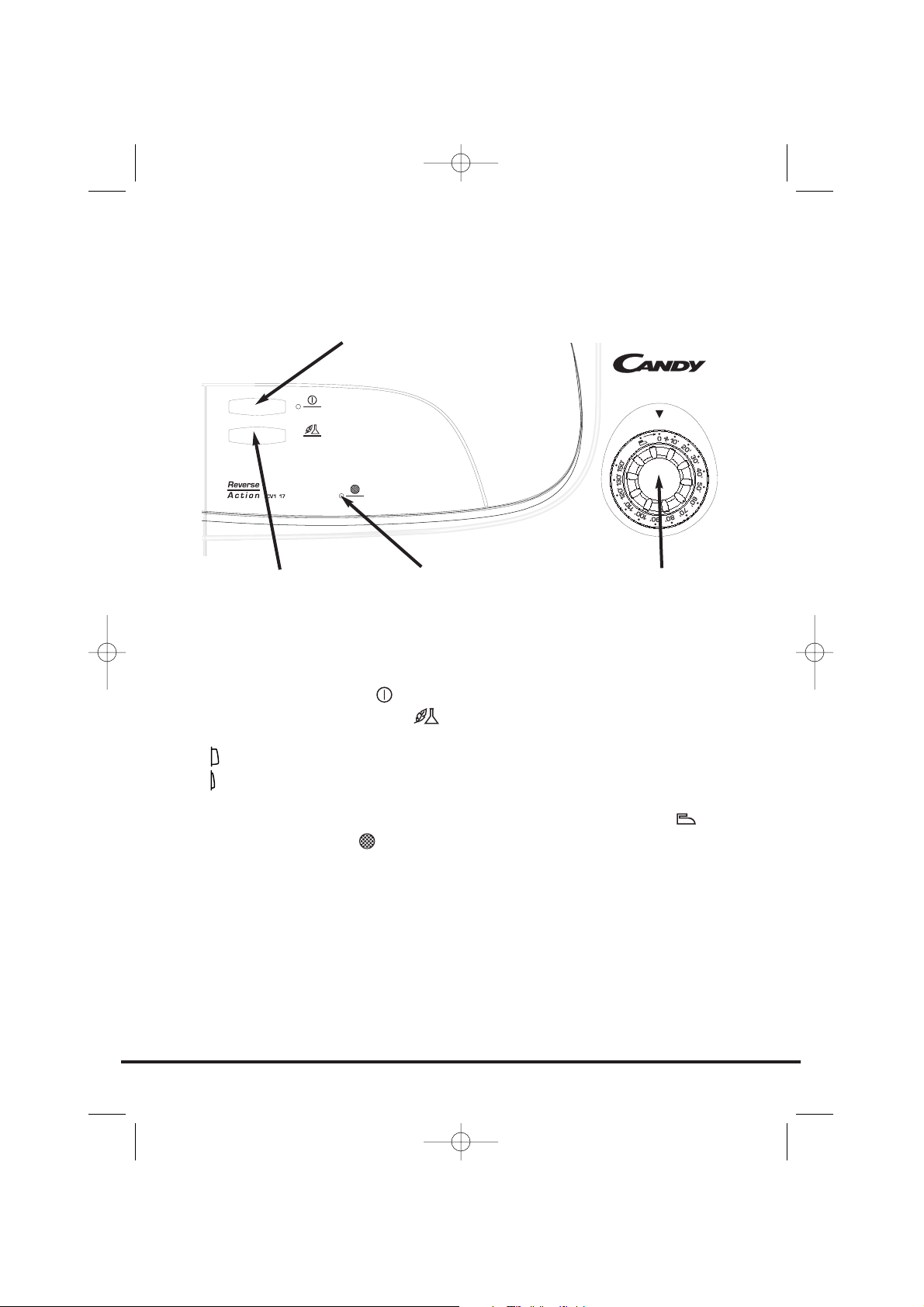
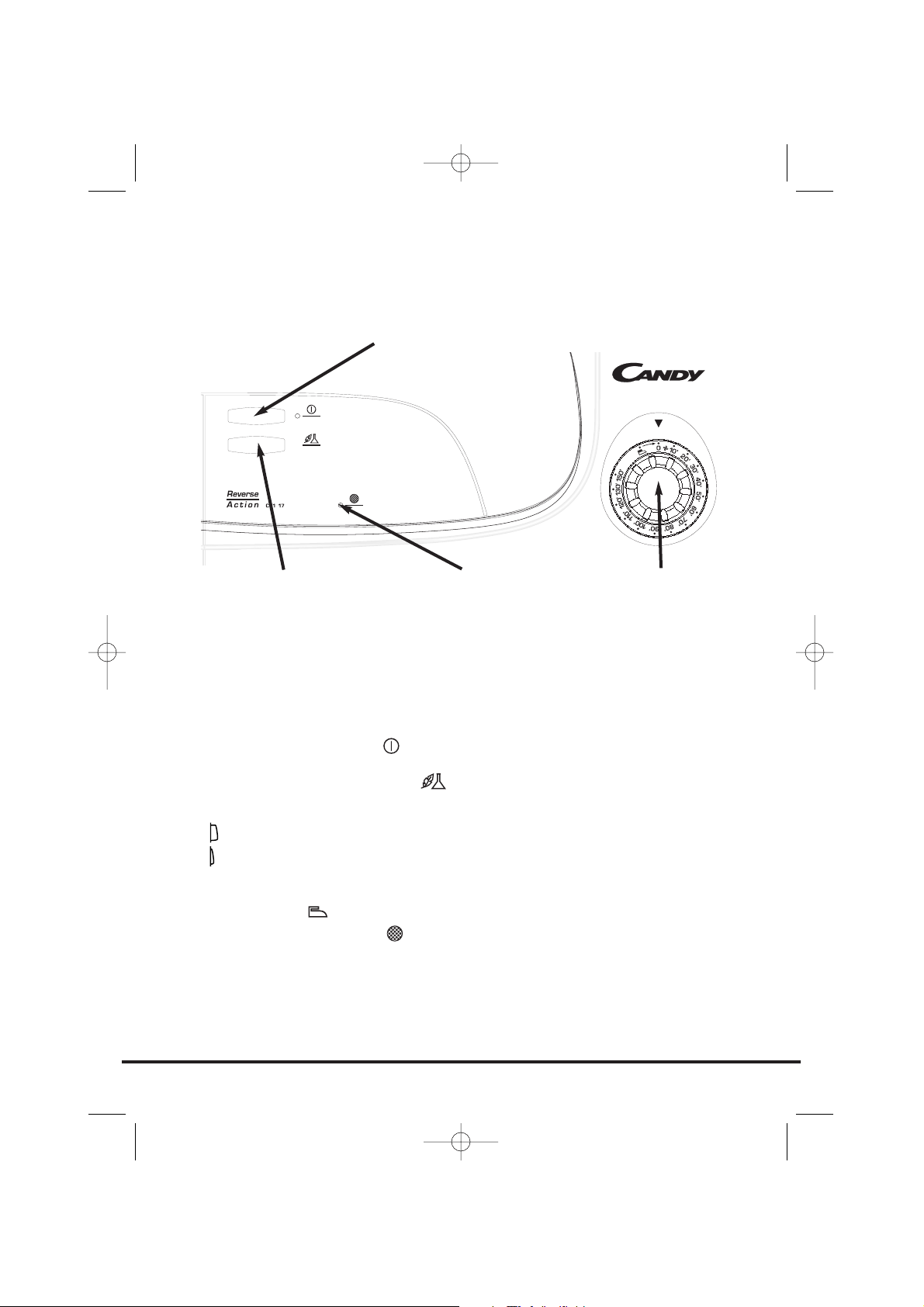
Control panel and indicator lights
'ON' Button and Indicator – press to switch on, the indicator will light.
'ACRYLICS/SYNTHETICS' Button – press to reduce the heat level for
delicate items, press again to select high temperature.
HIGH heat setting
LOW heat setting
'DRYING TIME' Selector – selects the drying time or the Fast Iron option .
'FILTER CARE' Indicator – lights when the filter needs cleaning.
11
Controls and indicators
FILTER CARE
INDICATOR
ON
BUTTON
ACRYLICS/SYNTHETICS
BUTTON
DRYING TIME
SELECTOR
40003957ENG.qxd 26/09/2005 14:06 Page 11
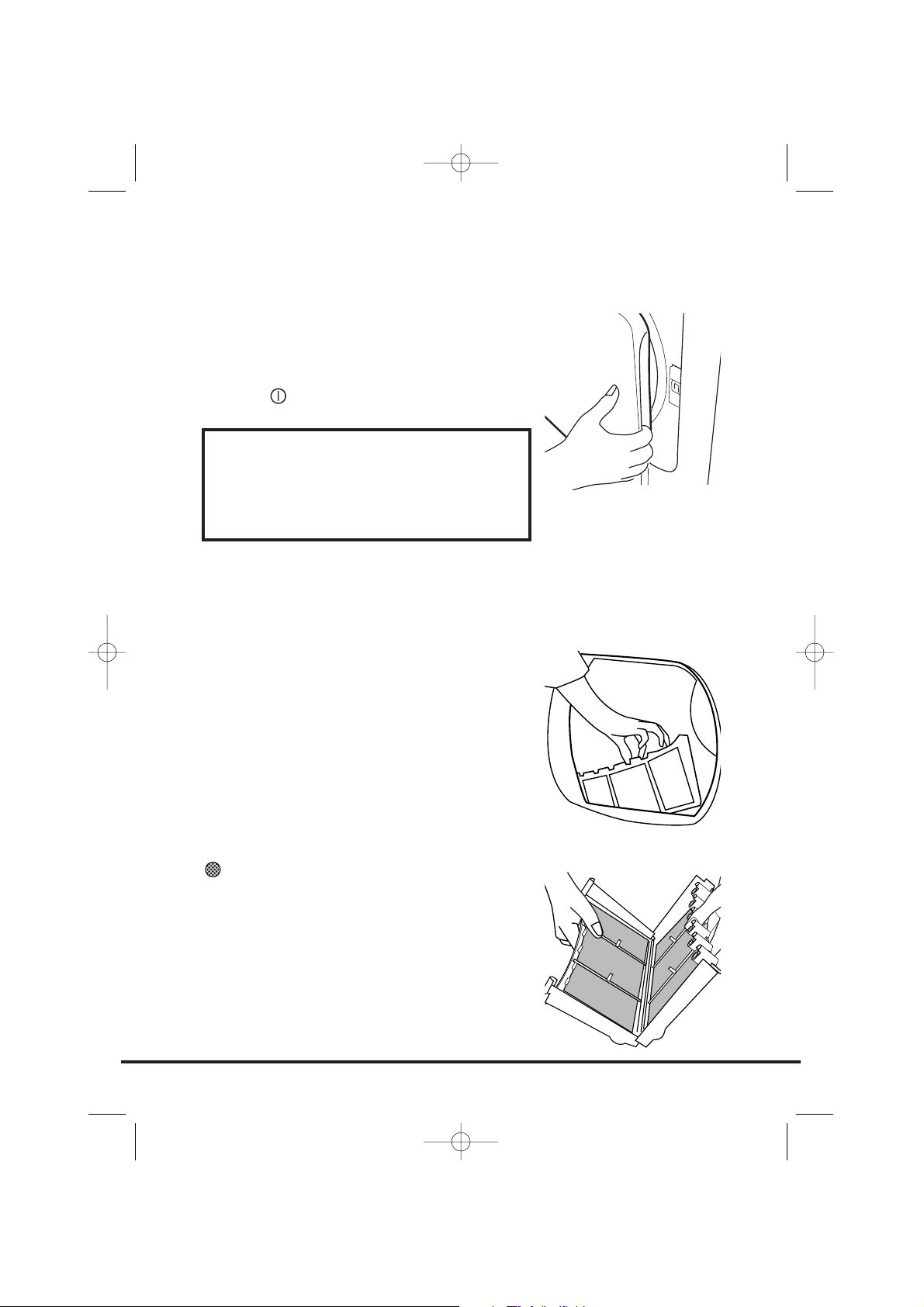
Opening the door
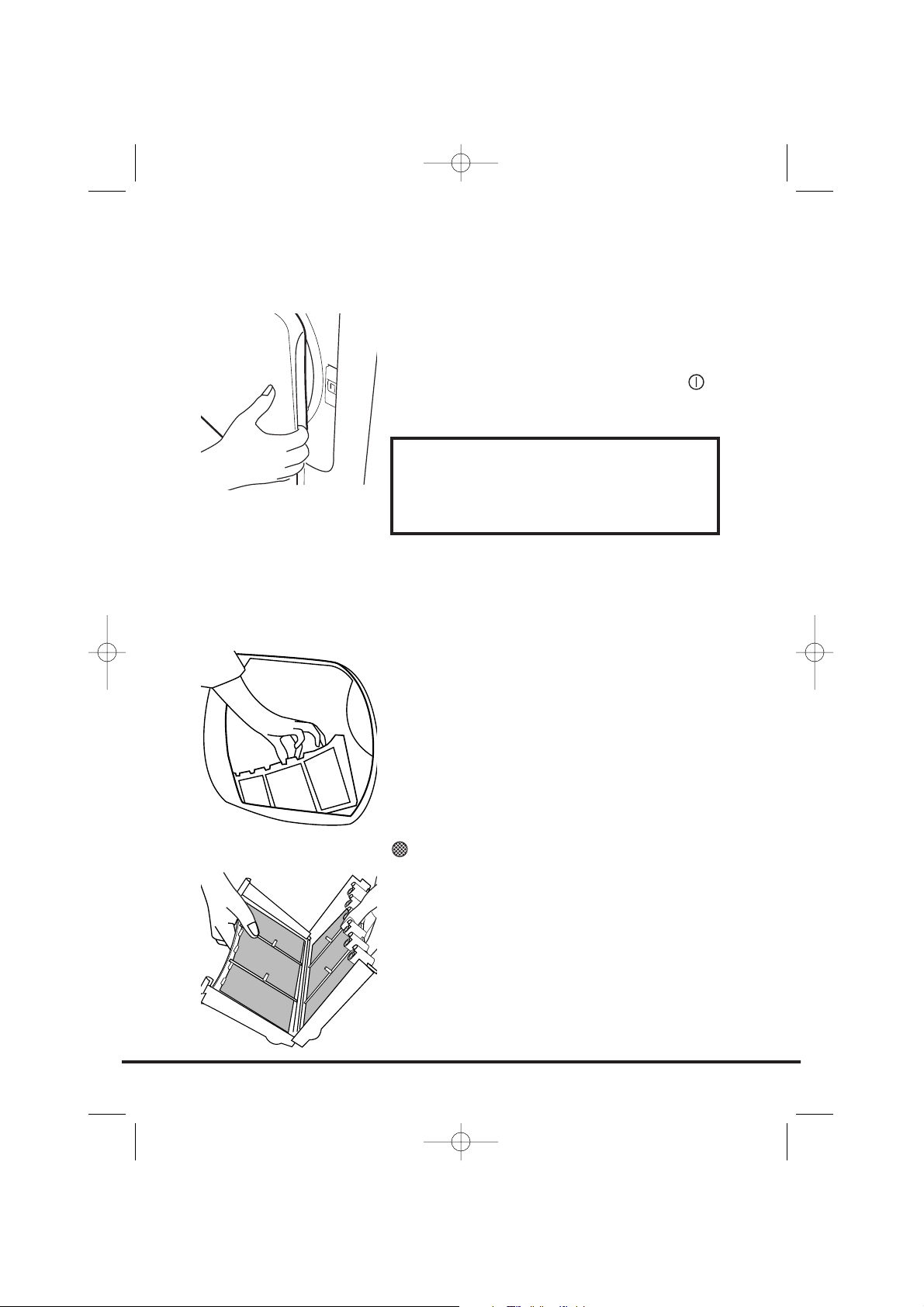
Pull on handle to open the door.
To restart the dryer, close the door and press .
Filter
IMPORTANT: To maintain the efficiency of the
dryer check that the fluff filter is clean before
each drying cycle.
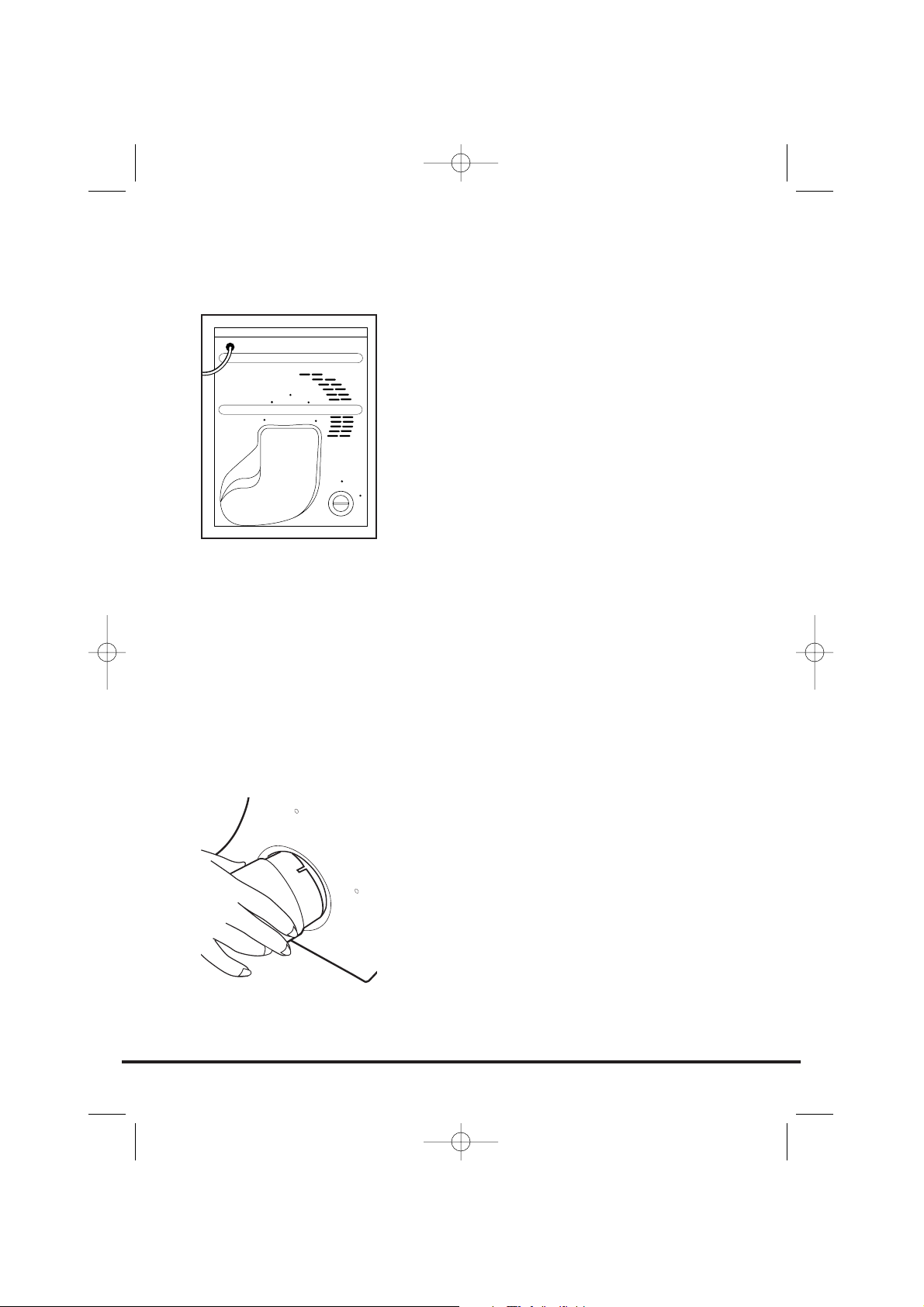
1. Pull the filter upwards.
2. Open filter as shown.
3. Gently remove lint using a soft brush or
your fingertips.
4. Snap the filter together and push back into
place.
Filter Care Indicator
lights when the filter needs cleaning.
If the laundry is not drying check that the filter is
not clogged. The indicator will also light when
the venting hose is blocked or kinked.
12
Door and Filter
WARNING!
When the tumble dryer is in use the
drum and door may be VERY HOT
40003957ENG.qxd 26/09/2005 14:06 Page 12
Refer to the Drying guide table or the fabric
labels to select the most suitable programme.
● Open the door and load the drum with
laundry. Ensure that garments do not hinder
closure of the door.
● If drying delicate items press the button
to reduce the heat level. Press again on
completion, to select high temperature.
HIGH heat setting
LOW heat setting
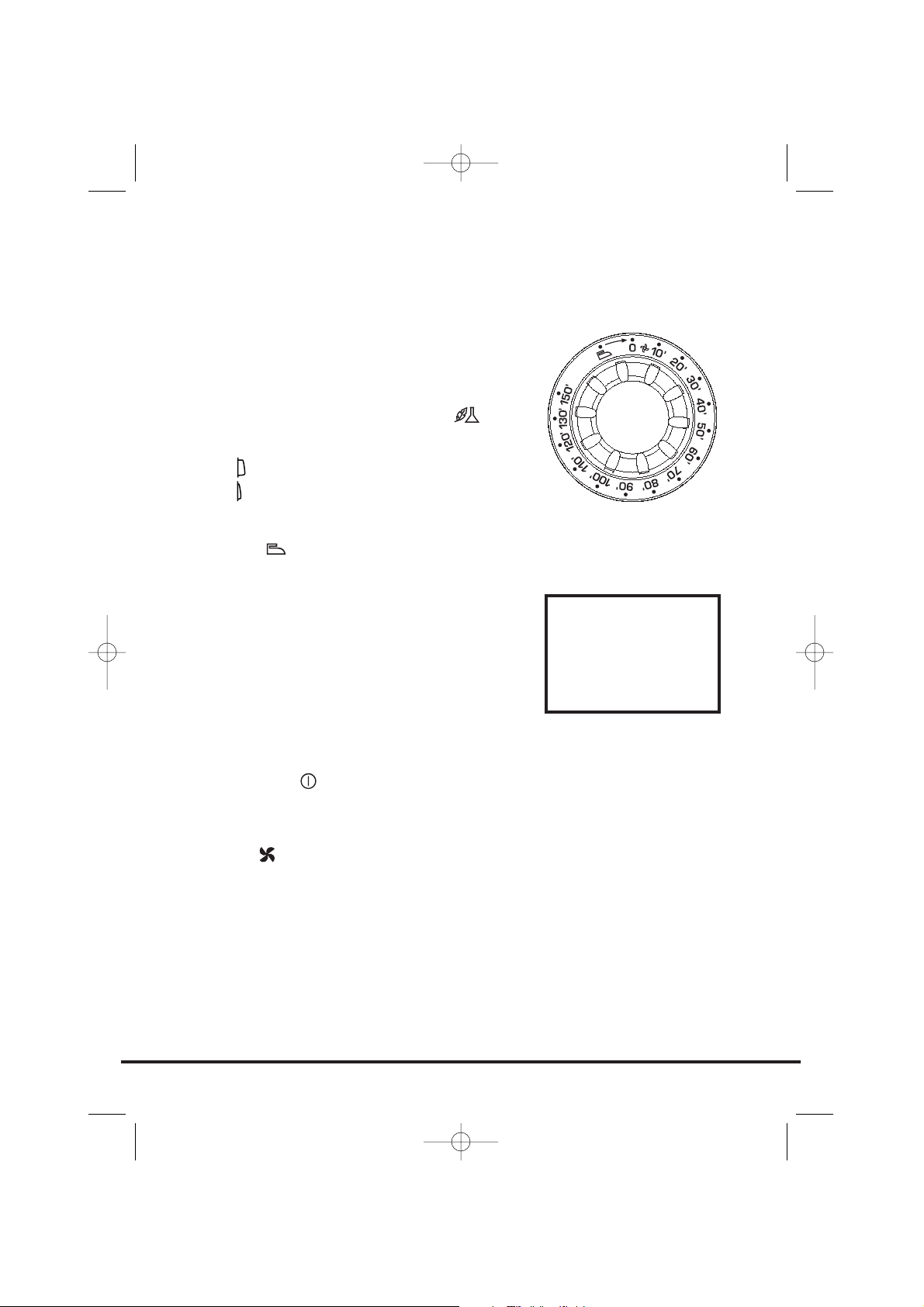
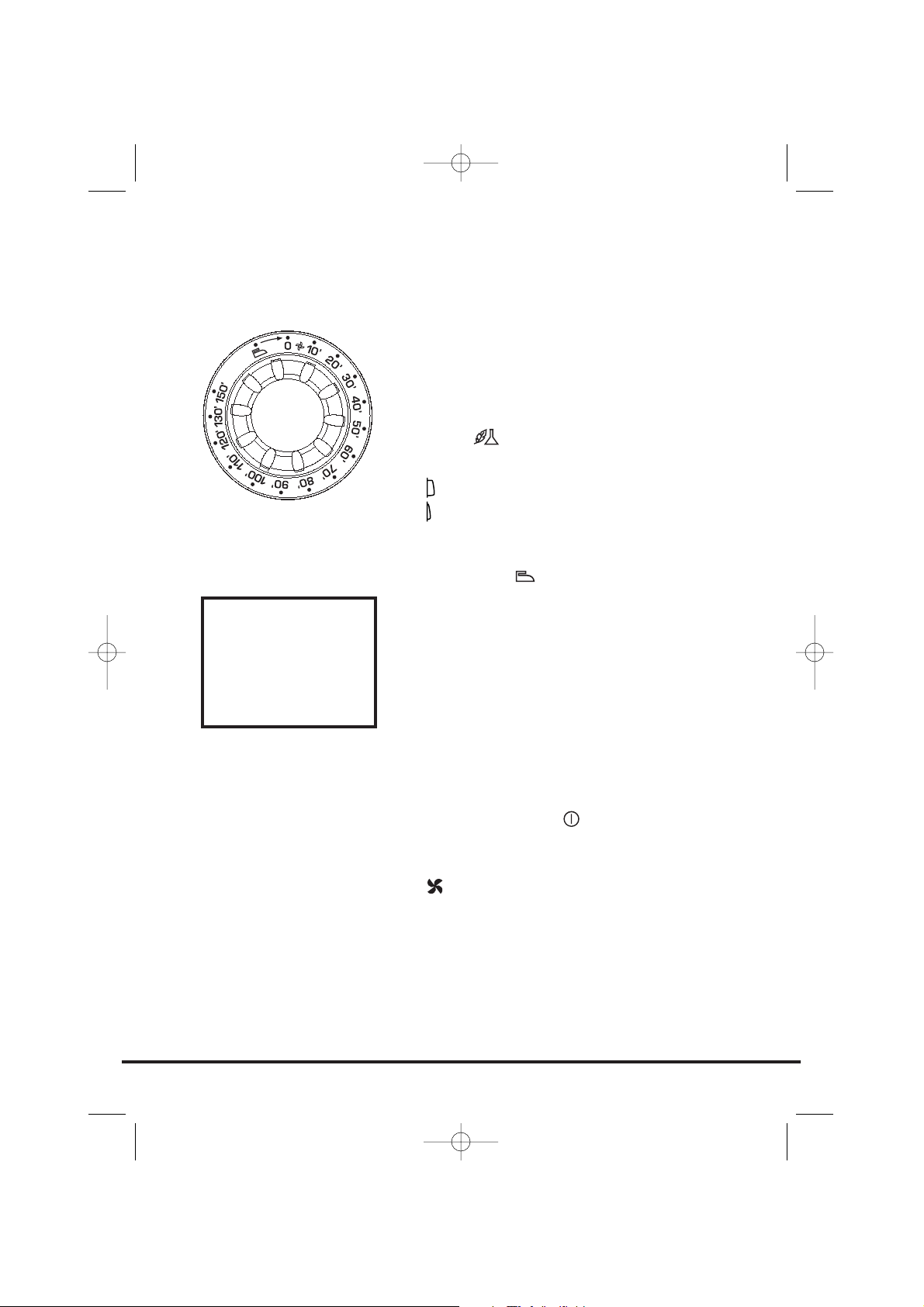
● Turn the 'DRYING TIME' Selector until the
required drying time aligns with the dial.
● The programme provides a conditioning
and anti-crease function. The dryer will heat
the load for 8 minutes followed by a 2
minute cool down period and is especially
good for garments which may have been
left for some time prior to ironing, in a linen
basket for example. Garments may also
become stiffened when dried outside on a
washing line or inside on radiators. This
process relaxes the creases in the fabric
making ironing quicker and easier.
● Gently close the door pushing it slowly until
you hear the door 'click' shut.
● Press the button. The indicator will light
and the drying cycle begins.
● The load is dried by tumbling in
thermostatically controlled warm air. Cool
air is used for the last 15 minutes to
reduce creasing and cool the load ready for
handling.
● When the program is fully completed the
drum will stop rotating and the dial will
point to 0.
● Open the door and remove the load.
● Clean the filter after every drying cycle to
ensure maximum dryer efficiency.
13
Operation
WARNING!
The drum, door
and load may be
very hot.
40003957ENG.qxd 26/09/2005 14:06 Page 13
Cleaning the dryer
● Clean the filter after every drying cycle.
● After each period of use, wipe the inside of
the drum and leave the door open for a
while to allow circulation of air to dry it.
● Wipe the outside of the machine and the
door with a soft cloth.
● DO NOT use abrasive pads or cleaning
agents.
● To prevent the door sticking or the build up
of fluff periodically clean the inner door and
gasket with a damp cloth.
Technical specifications
Drum capacity 115 litres
Maximum load 7 kg
Height 85cm
Width 60cm
Depth 60cm
Energy Label Band C
14
IMPORTANT
Always switch
off and remove
the plug from
the electricity
supply before
cleaning this
appliance.
For electrical data
refer to the
rating label on
the front of the
dryer cabinet
(with the door
open).
Cleaning and Routine Maintenance
40003957ENG.qxd 26/09/2005 14:06 Page 14
What might be the cause of...
Defects you can remedy yourself
Before calling GIAS Service for technical advice please run through the
following checklist. A charge will be made if the machine is found to be
working or has been installed incorrectly or used incorrectly. If the problem
persists after completing the recommended checks, please call GIAS Service,
they may be able to assist you over the telephone.
Drying time is too long/clothes are not dry enough…
● Have you selected the correct drying time/programme?
● Were the clothes too wet? Were the clothes thoroughly wrung or spin-
dried?
● Does the filter need cleaning?
● Is the dryer overloaded?
● Is the venting hose kinked or blocked?
● Has the option been selected from a previous cycle?
The dryer does not operate…
● Is there a working electricity supply to the dryer? Check using another
appliance such as a table lamp.
● Is the plug properly connected to the mains supply?
● Is there a power failure?
● Has the fuse blown?
● Is the door fully closed?
● Is the dryer switched on, both at the mains supply and at the machine?
● Has the drying time or the programme been selected?
● Has the machine been switched on again after opening the door?
The dryer is noisy…
● Switch off the dryer and contact GIAS Service for advice.
The Filter Care Indicator is on…
● Does the filter need cleaning?
● Is the venting hose kinked or blocked?
15
Troubleshooting
40003957ENG.qxd 26/09/2005 14:06 Page 15
Should there still be a problem with your dryer
after completing all the recommended checks,
please call GIAS Service for advice. They may be
able to assist you over the telephone or arrange
for a suitable appointment for an engineer to call
under the terms of your guarantee. However, a
charge may be made if any of the following
applies to your machine:
● Is found to be in working order.
● Has not been installed in accordance with
the installation instructions.
● Has been used incorrectly.
Spares
Always use genuine spares, available direct from
GIAS Service.
GIAS Service
For service and repairs call your local GIAS
Service engineer.
The manufacturer declines all responsibility in the
event of any printing mistakes in this booklet.
The manufacturer also reserves the right to make
appropriate modifications to its products without
changing the essential characteristics.
16
Customer Service
40003957ENG.qxd 26/09/2005 14:06 Page 16
Introduction . . . . . . . . . . . . . . . . . . . . . . . . . . . . . . . . . . . . . . . . . . . . . . 18
Informations sur la livraison . . . . . . . . . . . . . . . . . . . . . . . . . . . . . . . . . . . . . . 18
Déballage du produit . . . . . . . . . . . . . . . . . . . . . . . . . . . . . . . . . . . . 18
Rappels de sécurité . . . . . . . . . . . . . . . . . . . . . . . . . . . . . . . . . . . . . . 19
Installation . . . . . . . . . . . . . . . . . . . . . . . . . . . . . . . . . . . . . . . . . . . . . . . . . . . . 19
Utilisation. . . . . . . . . . . . . . . . . . . . . . . . . . . . . . . . . . . . . . . . . . . . . . . . . . . . . 19
Le linge . . . . . . . . . . . . . . . . . . . . . . . . . . . . . . . . . . . . . . . . . . . . . . . . . . . . . . 19
Protection de l’environnement . . . . . . . . . . . . . . . . . . . . . . . . . . . . . . . . . . . . 20
Service GIAS . . . . . . . . . . . . . . . . . . . . . . . . . . . . . . . . . . . . . . . . . . . . . . . . . . . 20
Installation. . . . . . . . . . . . . . . . . . . . . . . . . . . . . . . . . . . . . . . . . . . . . . . . 21
Besoins électriques. . . . . . . . . . . . . . . . . . . . . . . . . . . . . . . . . . . . . . . . . . . . . . 21
Ajustement des pieds. . . . . . . . . . . . . . . . . . . . . . . . . . . . . . . . . . . . . . . . . . . . 21
Ventilation . . . . . . . . . . . . . . . . . . . . . . . . . . . . . . . . . . . . . . . . . . . . . . . . 22
Installation du tuyau d'évacuation . . . . . . . . . . . . . . . . . . . . . . . . . . . . . . . . . 22
Préparation de la charge . . . . . . . . . . . . . . . . . . . . . . . . . . . . . . . . 23
Préparation des vêtements . . . . . . . . . . . . . . . . . . . . . . . . . . . . . . . . . . . . . . . 23
Tri de la charge . . . . . . . . . . . . . . . . . . . . . . . . . . . . . . . . . . . . . . . . . . . . . . . . 24
Conseils de séchage. . . . . . . . . . . . . . . . . . . . . . . . . . . . . . . . . . . . . . 25
Ne séchez pas en machine . . . . . . . . . . . . . . . . . . . . . . . . . . . . . . . . . . . . . . . . 25
Économies d’énergie . . . . . . . . . . . . . . . . . . . . . . . . . . . . . . . . . . . . . . . . . . . . 25
Commandes et indicateurs . . . . . . . . . . . . . . . . . . . . . . . . . . . . . 26
Porte et filtre . . . . . . . . . . . . . . . . . . . . . . . . . . . . . . . . . . . . . . . . . . . . . 27
Ouverture de la porte . . . . . . . . . . . . . . . . . . . . . . . . . . . . . . . . . . . . . . . . . . . 27
Filtre. . . . . . . . . . . . . . . . . . . . . . . . . . . . . . . . . . . . . . . . . . . . . . . . . . . . . . . . . 27
Indicateur d’entretien du filtre . . . . . . . . . . . . . . . . . . . . . . . . . . . . . . . . . . . . 27
Fonctionnement. . . . . . . . . . . . . . . . . . . . . . . . . . . . . . . . . . . . . . . . . . 28
Nettoyage et Entretien de Routine . . . . . . . . . . . . . . . . . . . . 29
Nettoyage du sèche-linge . . . . . . . . . . . . . . . . . . . . . . . . . . . . . . . . . . . . . . . . 29
Spécifications techniques. . . . . . . . . . . . . . . . . . . . . . . . . . . . . . . . . . . . . . . . . 29
Dépistage de pannes . . . . . . . . . . . . . . . . . . . . . . . . . . . . . . . . . . . . 30
Service clientèle . . . . . . . . . . . . . . . . . . . . . . . . . . . . . . . . . . . . . . . . . . 31
Pièces de rechange. . . . . . . . . . . . . . . . . . . . . . . . . . . . . . . . . . . . . . . . . . . . . . 31
Service GIAS . . . . . . . . . . . . . . . . . . . . . . . . . . . . . . . . . . . . . . . . . . . . . . . . . . . 31
17
40003957FRE.qxd 26/09/2005 14:21 Page 17
Introduction
Veuillez lire et suivre ces instructions avec soin et
utiliser la machine conformément. Ce livret contient des
instructions importantes sur la sécurité d’utilisation,
l’installation et l’entretien de la machine, ainsi que des
conseils utiles pour obtenir les meilleurs résultats
possibles lors de son utilisation.
Conservez toute la documentation dans un endroit sûr
pour pouvoir vous y reporter à une date ultérieure ou la
transmettre aux prochains propriétaires
Informations sur la
livraison
Vérifiez que les articles suivants ont bien été livrés avec
l’appareil :
● Manuel d’utilisation
● Carte de garantie
● Kit d’évacuation et instructions
● Étiquette d’énergie
Retirez la machine de l’emballage, à proximité de son
emplacement définitif.
1. Coupez délicatement autour de la base de
l’emballage en remontant vers l’angle supérieur.
2. Retirer le manchon en polyéthylène et sortez le
sèche-linge de la base en polystyrène.
18
Vérifiez que la
machine ne s’est
pas détériorée en
transit. Si c’est le
cas, contactez GIAS
pour une opération
de dépannage.
Le non-respect de
ces instructions
peut compromettre
la sécurité de votre
appareil. Un appel
de service peut
vous être facturé si
la défaillance de
votre appareil est
causée par une
mauvaise
utilisation.
Déballage du produit
Mettre l’emballage au rebut en toute
sécurité. Conserver hors de portée des
enfants car il représente une source de
danger potentielle.
40003957FRE.qxd 26/09/2005 14:21 Page 18
Rappels de sécurité
Installation
● Vérifiez que la machine ne présente aucun signe visible de détérioration avant de
l’utiliser. En cas de détérioration, assurez-vous de ne pas l’utiliser et de contacter le
service GIAS.
● N’utilisez pas d’adaptateurs, de multi-prises et/ou de rallonges.
● Cette machine ne doit pas être installée dans une salle de bain ou de douche.
● Veillez à ne pas installer le sèche-linge contre des rideaux et assurez-vous que rien
ne pourra tomber ou s’accumuler derrière le sèche-linge.
Utilisation
● ATTENTION La mauvaise utilisation d’un sèche-linge risque de causer un d’incendie.
● Cette machine est conçue uniquement pour usage domestique, à savoir pour
sécher le linge domestique et les vêtements.
● Cette machine ne doit être utilisée que pour l’emploi auquel elle est destinée et
qui est décrit dans ce manuel. Assurez-vous d’avoir bien compris les instructions
d’installation et d’utilisation avant de faire fonctionner la machine.
● Ne touchez pas la machine si vous avez les mains ou les pieds mouillés ou humides.
● Ne vous appuyez pas sur la porte lorsque vous chargez la machine et n’utilisez pas
la porte pour soulever ou déplacer la machine.
● Ne laissez pas des enfants jouer avec la machine ou avec ses commandes.
● ATTENTION N’utilisez pas cette machine si le filtre à peluches n’est pas en place ou
s’il est endommagé ; les peluches risquent en effet de s’allumer.
● ATTENTION L’augmentation de température pendant le fonctionnement du sèche-
linge peut être supérieure à 60°C là où se trouve le symbole de surface chaude.
● Débranchez du courant de secteur. Retirez toujours la prise avant de nettoyer la
machine.
● Cessez d’utiliser la machine si elle semble défectueuse.
● Veillez à ce que les peluches ne puissent pas s’accumuler sur le sol, à l’extérieur de
la machine.
● Il se peut que l’intérieur du tambour soit très chaud. Veillez à ce que le sèche-linge
termine son cycle de refroidissement avant d’en sortir le linge.
Le linge
● ATTENTION NE séchez PAS les tissus qui ont été traités avec des liquides de
nettoyage à sec.
● ATTENTION Quand elles sont chauffées, les mousses alvéolaires peuvent dans
certains cas brûler par combustion spontanée. Les articles en plastique alvéolaire,
en caoutchouc alvéolaire et en caoutchouc ne conviennent pas au séchage en
machine. Les articles fabriqués à partir de ces matériaux NE DOIVENT PAS être
placés dans le sèche-linge.
● Reportez-vous toujours aux étiquettes d’entretien du linge pour vérifier le mode
de séchage recommandé.
● Les vêtements doivent être essorés en machine ou à la main avant d’être placés
dans le sèche-linge. Les vêtements qui dégoulinent NE DOIVENT PAS être mis dans
19
40003957FRE.qxd 13/12/2005 15:55 Page 19
le sèche-linge.
● Enlevez les briquets et les allumettes des poches et veillez à ne JAMAIS utiliser de
liquides inflammables à proximité de la machine.
● Les rideaux en fibres de verre ne doivent JAMAIS être placés dans cette machine.
La contamination d’autres vêtements par les fibres de verre peut entraîner des
irritations de la peau.
● Les vêtements traités ou contaminés par des produits de nettoyage ou des liquides
inflammables, comme le pétrole, l’huile de cuisson ou les aérosols NE DOIVENT
PAS être placés dans la machine.
Protection de l’environnement
● Tous les matériaux de conditionnement utilisés sont écologiques et recyclables.
Veuillez les éliminer de manière écologique. Votre municipalité pourra vous
donner le détail exact des méthodes d’élimination en vigueur.
● Pour assurer la sécurité lors de l’élimination d’un vieux sèche-linge, veuillez
débrancher la fiche du courant de secteur, couper le câble d’alimentation et le
détruire avec la fiche. Pour empêcher que les enfants ne s’enferment dans la
machine, cassez les charnières de la porte ou son dispositif de verrouillage.
Service GIAS
● Pour veiller au fonctionnement efficace et sans risque de cet appareil, nous vous
recommandons de faire exclusivement appel à un technicien GIAS agréé pour son
entretien ou sa réparation éventuelle.
Directive européenne 2002/96/CE
Cet appareil est commercialisé en accord avec la directive européenne 2002/96/CE sur les
déchets des équipements électriques et électroniques (DEEE).
En vous assurant que ce produit est correctement recyclé,
vous participez à la prévention des conséquences négatives
sur l’environnement et la santé publique qui pourrait être
causé par une mise au rebut inappropriée de ce produit.
Le symbole sur ce produit indique qu’il ne doit pas être traité
comme un déchet ménager. Il doit être rapporté jusqu’à un
point de recyclage des déchets électriques et électroniques.
La collecte de ce produit doit se faire en accord avec les
réglementations environnementales concernant la mise au
rebut de ce type de déchets.
Pour plus d’information au sujet du traitement, de la collecte
et du recyclage de ce produit, merci de contacter votre mairie,
votre centre de traitement des déchets ou le magasin où vous
avez acheté ce produit.
20
Si l’appareil ne fonctionne pas correctement ou s’il tombe en
panne, mettez-le à l’arrêt et débranchez-le du courant de secteur.
Consultez le service GIAS pour prévoir une éventuelle réparation.
40003957FRE.qxd 13/12/2005 15:56 Page 20
Besoins électriques
Les sèche-linges sont prévus pour une tension
monophasée de 230-240 V, 50 Hz. Vérifiez que la
tension nominale du circuit d’alimentation est réglée
sur 10 A minimum.
L’électricité peut être extrêmement dangereuse.
Cet appareil doit être mis à la terre.
La prise de courant et la fiche de la machine doivent
être du même type.
N’utilisez pas de multi-prises et/ou de rallonges.
La fiche doit être accessible pour débrancher l’appareil
une fois qu’il a été installé.
Les fils du câble de secteur sont colorés en fonction des
codes suivants :
Bleu NEUTRE
Marron SOUS TENSION
Vert et jaune TERRE
La machine est conforme aux directives européennes
89/336/EEC, 73/23/EEC et à leurs modifications
ultérieures.
Ajustement des pieds
Lorsque la machine est en place, les pieds doivent être
ajustés pour mettre la machine de niveau.
Ajustez les quatre pieds pour stabiliser la machine et la
mettre de niveau.
21
Un appel de
service peut vous
être facturé si la
défaillance de
votre appareil est
causée par une
installation
incorrecte.
Si le cordon
électrique de cet
appareil est
endommagé, il doit
être remplacé par
un cordon spécial
qui est
UNIQUEMENT
disponible auprès
du service des
pièces de rechange
de GIAS. Il doit être
installé par une
personne
compétente.
Installation
Ne branchez pas l’appareil et ne mettez
pas en marche l’interrupteur de secteur
tant que l’installation n’est pas terminée.
Par mesure de sécurité, veillez à installer
ce sèche-linge correctement.
En cas de doute concernant son
installation, veuillez demander conseil à
GIAS Service.
40003957FRE.qxd 26/09/2005 14:21 Page 21
La pièce où se trouve le sèche-linge doit avoir une
ventilation adéquate de manière à ce que les gaz des
appareils qui brûlent d’autres combustibles, y compris
les cheminées, ne soient pas attirés dans la pièce
pendant que le sèche-linge est en marche.
● L’air d’échappement ne doit pas être évacué par
un conduit qui est également utilisé pour évacuer
les fumées d’échappement d’appareils qui brûlent
du gaz ou d’autres combustibles.
● Vérifiez régulièrement que l’air peut circuler
librement autour du sèche-linge.
● Vérifiez le filtre à peluches après usage, et
nettoyez-le le cas échéant.
● Les entrées et sorties doivent être libres
d’obstructions. Pour veiller à une ventilation
adéquate, l’espace entre le bas de la machine et
le sol ne doit pas être obstrué. Il doit y avoir un
espace d’au moins 12 mm entre la machine et
d’éventuelles obstructions.
● Veillez à ce que rien ne puisse tomber ou
s’accumuler entre les côtés et l’arrière du sèche-
linge, afin de ne pas obstruer l’entrée et la sortie
d’air.
● N’installez JAMAIS le sèche-linge contre des
rideaux.
Installation du tuyau
d'évacuation
Il est essentiel d'utiliser un tuyau de ventilation pour
évacuer l'air chaud humide du sèche-linge sauf si celui-ci
se trouve dans un espace ouvert disposant d'une bonne
circulation d'air. Une reprise de l'air humide réduit
l'efficacité du sèche-linge.
Le tuyau est monté sur la machine comme indiqué sur le
schéma.
Le tuyau peut être installé à travers un mur ou une
porte ou fenêtre ouverte. Le tuyau est d'un diamètre de
110 mm et déroulée d'une longueur de 1,8 m.
Veillez à suivre les instructions ci-après pour installer le
tuyau d'évacuation.
● N'utilisez pas deux tuyaux raccordés car cela
22
Ventilation
40003957FRE.qxd 26/09/2005 14:21 Page 22
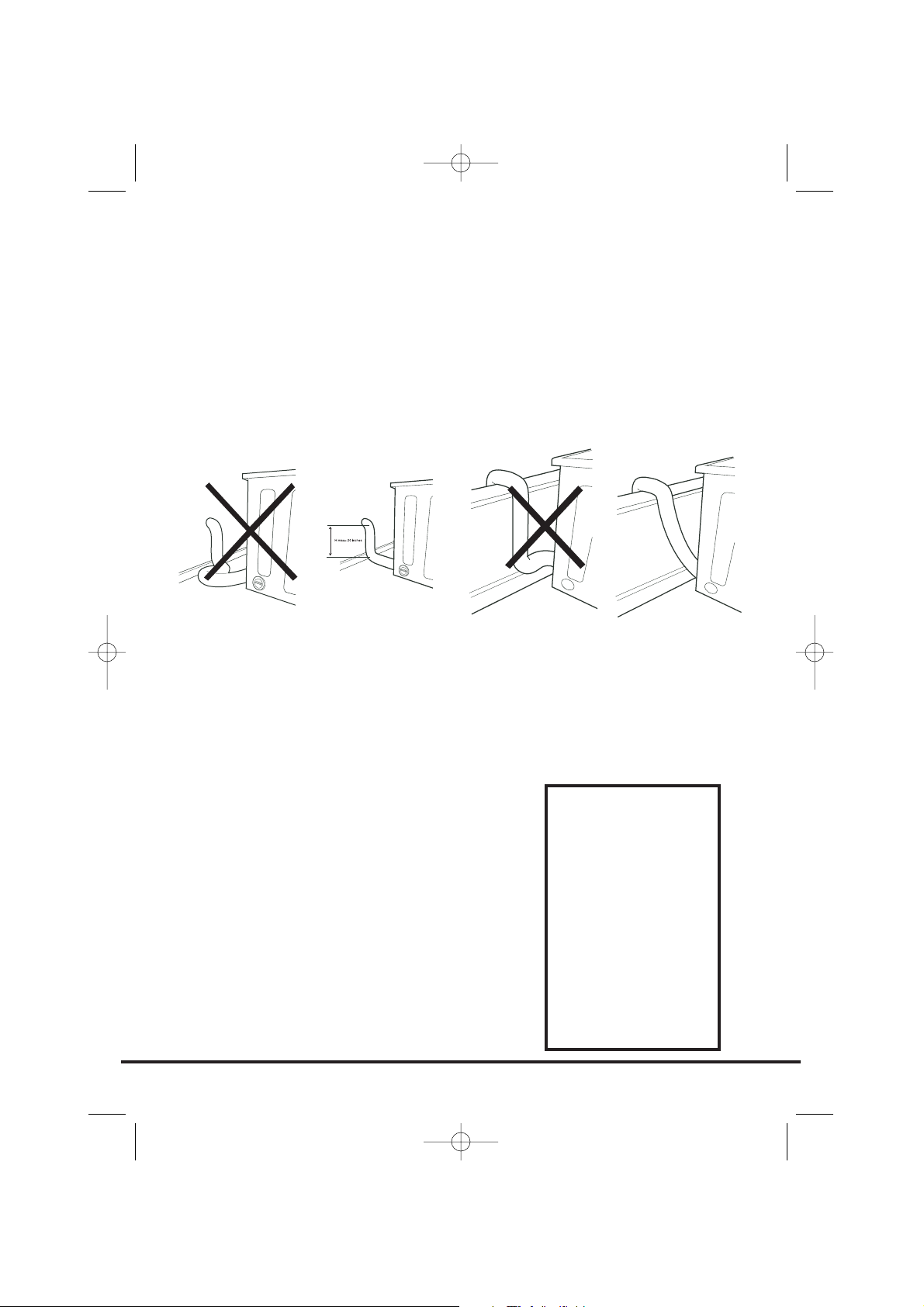
réduirait les performances de séchage.
● N'obstruez pas le flux de l'air dans le tuyau par exemple en le coudant ou en
posant un connecteur d'un diamètre plus faible pour un montage sur une
ouverture pratiquée dans un mur.
● Évitez que le tuyau présente des courbures en U, celles-ci pouvant obstruer le flux
de l'air et accroître le risque d'accumulation d'eau dans le tuyau.
● Vérifiez régulièrement l'état du tuyau et nettoyez toute accumulation d'eau ou de
résidus de poussière qui a pu s'y déposer.
Les schémas ci-après illustrent des exemples de bonnes et de mauvaises installations.
Avant d’utiliser le sèche-linge pour la première fois :
● Veuillez lire ce manuel d’instruction en détail.
● Retirez tous les articles qui se trouvent à l’intérieur du tambour.
● Essuyez l’intérieur du tambour et de la porte avec
un chiffon humide pour éliminer la poussière
éventuelle qui aurait pu s’y infiltrer en transit.
Préparation des
vêtements
Vérifiez sur les étiquettes comportant les symboles
d’entretien que le linge que vous souhaitez sécher
convient au séchage en machine.
Vérifiez que toutes les fermetures sont fermées et que les
poches sont vides. Mettez les articles à l’envers. Placez les
vêtements en vrac dans le tambour en veillant à ce qu’ils
ne s’emmêlent pas les uns avec les autres.
23
Préparation de la charge
Ne surchargez pas
le tambour ;
lorsqu’ils sont
mouillés, les
grands articles
peuvent dépasser
le poids de
maximum
admissible
(ex : sacs de
couchage,
couettes).
40003957FRE.qxd 26/09/2005 14:21 Page 23
Poids de séchage
maximum
● Coton, 7 kg maxi
● Synthétiques, 3,5 kg maxi
Triez la charge comme
suit :
● Par symbole de soin d’entretien
Vous les trouverez sur le col ou la couture
intérieure :
Convient pour séchage en machine.
Séchage à haute température.
Séchage à basse température uniquement.
Ne séchez pas en machine.
Si le vêtement ne comporte aucune étiquette
de conseils de lavage, considérez qu’il ne
convient pas pour le séchage en machine.
● Par quantité et épaisseur
Lorsque la charge est plus importante que la
capacité du sèche-linge, séparez les vêtements
selon leur épaisseur (ex : les serviettes des sous-
vêtements fins).
● Par type de tissu
Coton/toile de lin : Serviettes, jersey en coton,
linge de lit ou de table.
Synthétiques : Chemisiers, chemises, blouses etc.
en polyester ou polyamide, ainsi que pour les
mélanges de coton/synthétique.
● Par degré de séchage
Triez selon : sec pour repassage, sec pour
rangement, etc. Pour les articles délicats, appuyez
sur le bouton pour sélectionner une
température de séchage basse.
24
40003957FRE.qxd 26/09/2005 14:21 Page 24
Ne séchez pas en
machine :
Les lainages, la soie, les tissus délicats, les bas de nylon,
les broderies délicates, les tissus ayant des décorations
métalliques, les vêtements avec des bordures en PVC ou
en cuir, les chaussures de sport, les articles volumineux
comme les sacs de couchage, etc.
Économies d’énergie
Ne mettez que du linge essoré en machine ou à la main
dans le sèche-linge. Plus le linge est sec, plus le temps
de séchage sera court, ce qui économisera de l’énergie.
TOUJOURS
● Essayez de sécher le poids de linge maximum,
pour économiser du temps et de l’électricité.
● Vérifiez que le filtre est propre avant chaque cycle
de séchage.
JAMAIS
● Ne dépassez pas le poids maximum pour ne pas
gaspiller du temps ou de l’électricité.
● Ne mettez pas d’articles dégoulinant d’eau dans le
sèche-linge pour ne pas endommager l’appareil.
25
Conseils de séchage
IMPORTANT : Ne
séchez pas les
articles qui ont été
traités avec un
liquide de
nettoyage à sec ou
les vêtements en
caoutchouc (risque
d’incendie ou
d’explosion).
Pendant les
15 dernières
minutes, la charge
est toujours séchée
dans de l’air froid.
40003957FRE.qxd 26/09/2005 14:21 Page 25
Panneau de commande et témoins
indicateurs
Bouton et indicateur MARCHE – appuyez pour mettre en marche ; l’indicateur
s’allumera.
Bouton ‘ACRYLIQUE/SYNTHETIQUES’ – appuyez pour diminuer le niveau de
chaleur, pour les articles délicats, et appuyez à nouveau pour sélectionner une
température élevée.
Puissance de séchage HAUTE
Puissance de séchage BASSE
Sélecteur de DURÉE DE SÉCHAGE – sélectionne le temps de séchage ou l’option
Repassage rapide .
L’indicateur ‘ENTRETIEN FILTRE’ – s’allume lorsque le filtre a besoin d’être nettoyé.
26
Commandes et indicateurs
BOUTON
ACRYLIQUE/SYNTHÉTIQUES
BOUTON
MARCHE
INDICATEUR
D’ENTRETIEN DU FILTRE
SÉLECTEUR DE DURÉE
DE SÉCHAGE
40003957FRE.qxd 26/09/2005 14:21 Page 26
Ouverture de la porte
Tirez sur la poignée pour ouvrir la porte.
Pour remettre le sèche-linge en marche, fermez la porte
et appuyez .
Filtre
IMPORTANT : Pour assurer l’efficacité du sèche-linge,
vérifiez que le filtre à peluches est propre avant chaque
cycle de séchage.
1. Tirez le filtre vers le haut.
2. Ouvrez le filtre, comme illustré.
3. Retirez doucement les peluches à l’aide d’une
brosse douce ou du bout des doigts.
4. Réenclenchez le filtre et poussez-le en place.
Indicateur d’entretien du
filtre
s’allume lorsqu’il faut nettoyer le filtre.
Si le linge ne sèche pas, vérifiez que le filtre n’est pas
colmaté. L’indicateur s’allume également lorsque le
tuyau de ventilation est bloqué ou coudé.
27
Porte et filtre
ATTENTION !
Lorsque le seche-linge est en cours
d’utilisation, il se peut que le tambour
et la porte soient TRES CHAUDS.
40003957FRE.qxd 26/09/2005 14:21 Page 27
Référez-vous au tableau du guide de séchage ou aux
étiquettes des vêtements pour sélectionner le
programme le plus adapté.
● Ouvrez la porte et chargez le sèche-linge de linge.
Vérifiez qu’aucun vêtement n’entrave la
fermeture de la porte.
● Pour sécher des articles délicats, appuyez sur le
bouton pour baisser la température.
Appuyez à nouveau sur ce bouton à la fin du cycle
pour augmenter la température.
Puissance de séchage HAUTE
Puissance de séchage BASSE
● Tournez le sélecteur de DURÉE DE SÉCHAGE
jusqu’à ce que la durée de séchage voulue s’aligne
sur le cadran.
● Le programme propose une fonction de
conditionnement et anti-froissement. Le sèche-
linge chauffera la charge pendant 8 minutes et le
refroidira ensuite pendant 2 minutes, ce qui est
particulièrement utile pour les vêtements qui ont
été laissés pendant un certain temps avant le
repassage, dans le sac à linge par exemple. Les
vêtements peuvent également raidir lorsqu’ils
sont séchés en plein air sur une corde à linge ou à
l’intérieur sur des radiateurs. Le processus détend
les froissements du tissu pour rendre le repassage
plus rapide et plus facile.
● Fermez doucement la porte en la poussant
lentement jusqu’à ce que vous entendiez un
déclic.
● Appuyez sur le bouton . L’indicateur s’allume
et le cycle de séchage commence.
● La charge est séchée par rotation dans de l’air
chaud contrôlé par un thermostat. De l’air froid
est utilisé au cours des 15 dernières minutes
pour réduire les froissements et pour refroidir la
charge en vue de sa manipulation.
● Lorsque le programme est terminé, le tambour
s’arrête de tourner et le cadran s’arrête sur 0 .
● Ouvrez la porte et retirez la charge.
● Nettoyez le filtre après chaque cycle de séchage
pour assurer une efficacité maximale du sèche-
linge.
28
Fonctionnement
ATTENTION !
Il est possible que
le tambour, la
porte et la charge
soient très chauds.
40003957FRE.qxd 26/09/2005 14:21 Page 28
Nettoyage du sèche-
linge
● Nettoyez le filtre après chaque cycle de séchage.
● Après chaque période d’utilisation, essuyez
l’intérieur du tambour et laissez la porte ouverte
pendant un moment pour qu’il puisse sécher
grâce à la circulation d’air.
● Essuyez l’extérieur de la machine et la porte avec
un chiffon doux.
● N’utilisez PAS de tampons ou d’agents de
nettoyage abrasifs.
● Pour empêcher que la porte n’adhère ou que les
peluches ne s’accumulent, nettoyez régulièrement
la surface intérieure et le joint de la porte avec un
chiffon humide.
Spécifications
techniques
Capacité du tambour 115 litres
Charge maximale 7 kg
Hauteur 85 cm
Largeur 60 cm
Profondeur 60 cm
Bande étiquette d’énergie C
29
IMPORTANT
Coupez toujours le
courant et
débranchez la fiche
de l’alimentation
électrique avant de
nettoyer cet
appareil.
Pour les données
électriques,
veuillez consulter
l’étiquette des
valeurs nominales
qui se trouve à
l’avant de l’armoire
du sèche-linge
(avec la porte
ouverte).
Nettoyage et Entretien de Routine
40003957FRE.qxd 26/09/2005 14:21 Page 29
Quelle pourrait être l’origine de...
Défauts que vous pouvez rectifier vous-même
Avant d’appeler le service GIAS pour obtenir des conseils, veuillez suivre la liste des
vérifications ci-dessous. L’intervention sera facturée si la machine fonctionne
correctement ou si elle a été installée ou utilisée de manière incorrecte. Si le problème
persiste alors que vous avez terminé les vérifications recommandées, veuillez appeler le
service GIAS qui pourra peut-être vous aider par téléphone.
La période de séchage est trop longue/les vêtements
ne sont pas suffisamment secs…
● Avez-vous sélectionné le temps de séchage/le programme qui convient ?
● Les vêtements étaient-ils trop mouillés ? Les vêtements avaient-ils été
adéquatement essorés en machine ou à la main ?
● Le filtre doit-il être nettoyé ?
● Le sèche-linge est-il surchargé ?
● Le tuyau de ventilation est-il coudé ou colmaté ?
● Avez-vous sélectionné le bouton au cours d’un cycle précédent ?
Le sèche-linge ne fonctionne pas…
● Le sèche-linge est-il branché sur une alimentation électrique adéquate ? Vérifiez à
l’aide d’un autre appareil, par exemple une lampe de chevet.
● La fiche est-elle bien branchée sur l’alimentation de secteur ?
● Y a-t-il une panne de courant ?
● Le fusible a-t-il sauté ?
● La porte est-elle bien fermée ?
● Le sèche-linge est-il en position de marche, au niveau du courant de secteur et de
la machine ?
● La période de séchage ou le programme a-t-il été sélectionné ?
● La machine a-t-elle été remise en marche après l’ouverture de la porte ?
Le sèche-linge est bruyant…
● Arrêtez le sèche-linge et contactez le service GIAS pour obtenir des conseils.
L’indicateur d’entretien du filtre est allumé.
● Le filtre doit-il être nettoyé ?
● Le tuyau de ventilation est-il coudé ou colmaté ?
30
Dépistage de pannes
40003957FRE.qxd 26/09/2005 14:21 Page 30
En cas de problème après avoir effectué toutes les
inspections recommandées, veuillez contacter le service
GIAS. Il pourra vous aider par téléphone ou organiser la
visite d’un technicien, en vertu des conditions de votre
garantie. Cependant, vous serez facturé dans l’un des
cas suivants :
● Si la machine est en bon état de marche.
● Si la machine n’a pas été installée conformément
aux instructions d’installation.
● Si la machine a été utilisée incorrectement.
Pièces de rechange
Utilisez toujours des pièces de rechange, disponibles
auprès du service GIAS.
Service GIAS
Pour les entretiens et les réparations, contactez votre
technicien local du service GIAS.
Le constructeur décline toute responsabilité en cas
d’erreurs d’impression dans le présent document. Le
constructeur se réserve le droit d’apporter les
modifications nécessaires à ses produits sans en changer
les caractéristiques de base.
31
Service clientèle
40003957FRE.qxd 26/09/2005 14:21 Page 31
40003957
40003957ENG.qxd 26/09/2005 14:06 Page 17

