
Operating Instructions
Comme
rcial Dishwasher
PG 8061
To prevent accidents and machine
damage, you must r
ead these in‐
structions before installation or use.
en - US, CA
M.-Nr. 09 974 530

Contents
2
Guide to the manual ............................................................................................................ 5
Proper use............................................................................................................................
6
IMPORTANT SAFETY INSTRUCTIONS ..............................................................................
7
Proper installation.................................................................................................................. 7
Technical safety..................................................................................................................... 7
Proper use ............................................................................................................................. 9
Children in the vicinity ......................................................................................................... 10
Accessories ......................................................................................................................... 10
Symbols attached to the commercial dishwasher .............................................................. 11
Disposal of the commercial dishwasher ............................................................................. 11
Appliance description ....................................................................................................... 12
Appliance overview ............................................................................................................. 12
Control panel ....................................................................................................................... 13
Caring for the environment...............................................................................................
14
Disposal of packaging material .......................................................................................... 14
Disposal of your old appliance ............................................................................................ 14
User profiles.......................................................................................................................
15
User groups......................................................................................................................... 15
Daily operators ................................................................................................................ 15
Experienced operators.................................................................................................... 15
Operation tips .................................................................................................................... 16
Display functions ................................................................................................................. 16
Menus.................................................................................................................................. 17
Symbols in the display ....................................................................................................... 19
Commissioning..................................................................................................................
20
Opening and closing the door.......................................................................................... 24
Convenient door lock .......................................................................................................... 24
Opening the door ...........................................................................................................
24
Closing the door .................................................................................................................. 24
Opening the door using the emergency release.................................................................. 25
Filling the salt container....................................................................................................
26
Reactivation......................................................................................................................... 26
Salt refill reminder............................................................................................................ 26
Appliance lock-out due to lack of salt............................................................................. 26
Filling the salt container .................................................................................................. 27
Adding rinse aid.................................................................................................................
29
Rinse aid.............................................................................................................................. 29
Rinse aid reminder .......................................................................................................... 29
Adding rinse aid .............................................................................................................. 30
Application technology .....................................................................................................
31
Preparing the load ............................................................................................................... 31
Upper basket....................................................................................................................... 33
Adjusting the upper basket ................................................................................................. 34
Lower basket ....................................................................................................................... 36

Contents
3
Use of plastic trays.............................................................................................................. 38
Operation............................................................................................................................
40
Adding detergent................................................................................................................. 40
DOS module ........................................................................................................................ 42
Activation............................................................................................................................. 45
Selecting a program ............................................................................................................ 45
Starting a program............................................................................................................... 46
Program end........................................................................................................................ 47
Deactivation......................................................................................................................... 47
Unloading the dishwasher................................................................................................... 47
Interrupting a program......................................................................................................... 48
Cancelling a program .......................................................................................................... 49
Program chart.................................................................................................................... 50
Additional functions ..........................................................................................................
52
Delay start............................................................................................................................ 52
Drying assistance ................................................................................................................ 53
Settings ...........................................................................................................................
54
Menu structure .................................................................................................................... 55
Delay start............................................................................................................................ 56
Drying .................................................................................................................................. 57
Setting the language ........................................................................................................
58
Venting DOS modules ......................................................................................................... 59
Setting the date ................................................................................................................... 60
Date format...................................................................................................................... 60
Set ................................................................................................................................... 60
Setting the clock.................................................................................................................. 61
Set ................................................................................................................................... 61
Display............................................................................................................................. 62
Clock format.................................................................................................................... 62
Regulating the volume......................................................................................................... 63
Keypad tone .................................................................................................................... 63
Buzzer tones.................................................................................................................... 63
Setting the volume .......................................................................................................... 64
Additional settings.............................................................................................................
65
Opening the "Additional settings" menu ............................................................................. 65
Menu structure .................................................................................................................... 67
CODE................................................................................................................................... 69
Release............................................................................................................................ 69
Changing the PIN code................................................................................................... 69
Log book.............................................................................................................................. 71
Temperature unit.................................................................................................................. 72
Move program ..................................................................................................................... 73
Additional functions............................................................................................................. 74
Reset ............................................................................................................................... 74
Increased water level....................................................................................................... 75
Interim rinse..................................................................................................................... 75
DOS dispensing systems ................................................................................................ 76
Temperature / time .......................................................................................................... 79

Contents
4
Main wash / Final rinse.................................................................................................... 80
Final rinse temperature.................................................................................................... 80
Holding time .................................................................................................................... 81
Program release................................................................................................................... 82
Water hardness.................................................................................................................... 83
Settings table .................................................................................................................. 84
Display view......................................................................................................................... 85
Display................................................................................................................................. 86
Contrast........................................................................................................................... 86
Brightness ....................................................................................................................... 87
Switch off after .................................................................................................................... 88
Factory default setting......................................................................................................... 89
Software version.................................................................................................................. 90
Cleaning and care..............................................................................................................
91
Cleaning the control panel................................................................................................... 91
Cleaning the appliance front................................................................................................ 91
Cleaning the wash cabinet .................................................................................................. 91
Cleaning the door and the door seal................................................................................... 92
Cleaning the filters in the wash cabinet............................................................................... 92
Cleaning the spray arms...................................................................................................... 94
Frequently asked questions..............................................................................................
96
Technical problems.............................................................................................................. 96
Unusual behavior of the dishwasher ................................................................................... 98
Noises.................................................................................................................................. 99
Poor cleaning results ......................................................................................................... 100
Frequently asked questions............................................................................................
102
Cleaning the filters in the water inlet ................................................................................. 102
Cleaning the drain pump and non-return valve................................................................. 103
After sales service ...........................................................................................................
105
Installation........................................................................................................................
106
Installation ......................................................................................................................... 106
Floor anchors for free-standing units............................................................................ 108
Moving the dishwasher ..................................................................................................... 108
Electrical connection ......................................................................................................
109
Plumbing........................................................................................................................... 110
Connecting the water supply............................................................................................. 110
Connecting the water drain ............................................................................................... 112
Technical details ..............................................................................................................
113
Guide to the manual
5
Warnings
Informa
tion which is important for safety is highlighted in a thick
framed box with a warning symbol. This alerts you to the potential
danger of injury to people or property.
Read these warning notes carefully and observe the procedural in‐
struc
tions and codes of practice they describe.
Notes
Notes contain information that is particularly important to follow.
They are highlighted by a thick frame.
Additional information and comments
Additional information and comments are highlighted by a thin
fr
ame.
They are not imperative for the operation of the commercial dish‐
washer.
Operating steps
Additional instructions on how to operate the dishwasher are descri‐
bed st
ep by step in a logical sequence.
Each step is introduced using a black square bullet point.
Example:
Open the d
ishwasher door.
Display
Information given via the display of the dishwasher appears in a spe‐
cial display font.
Example:
Select Delay start an
d confirm the entry with the
OK
button.

Proper use
6
Proper use
This commercial dishwasher complies with current safety require‐
men
ts. Inappropriate use can, however, lead to personal injury and
damage to property.
To avoid the risk of accidents and damage to the dishwasher,
please
read these instructions carefully before using it for the first
time. They contain important information on its safety, installation,
use and maintenance. Keep these instructions in a safe place and
pass them on to any future owner.
W
ith its short program running times and powerful cleaning per‐
formance, this Miele commercial dishwasher is intended for commer‐
cial use in the following:
– Guest houses
– School and day care centers, Restaurants and catering
– Nursing homes
– Other, similar commercial environments
This appliance is designed exclusively for use as a "dishwasher"
for cleaning cookware, glassware and cutlery only, as described in
these instructions. Alterations or conversions to the dishwasher, or
using it for purposes other than those for which it is designed, are not
permitted and could be dangerous.
Miele cannot be held liable for damage caused by improper or incor‐
rect use or operation.
This co
mmercial dishwasher is intended only for stationary indoor
use.
The special
inserts are to be used for their specific purpose only.
This co
mmercial dishwasher is not suitable for the cleaning of
medical products or devices.
P
ersons who lack physical, sensory or mental abilities, or experi‐
ence with the appliance should not use it without supervision or in‐
struction by a responsible person.

IMPORTANT SAFETY INSTRUCTIONS
7
Proper installation
Do not insta
ll the commercial dishwasher in areas at risk of explo‐
sion or freezing.
T
o ensure the stability of undercounter commercial dishwashers,
they must only be installed beneath a continuous countertop that is
bolted to the adjacent cabinetry.
In or
der to reduce the risk of damage from condensation, the furni‐
ture in the area around the commercial dishwasher should be de‐
signed for commercial use.
Technical safety
The co
mmercial dishwasher must only be installed, commissioned,
repaired and then maintained by the Miele Service Department or an
authorized Miele Service dealer. Installation, repair and other work by
unqualified persons could be dangerous and Miele will not be held li‐
able.
This co
mmercial dishwasher must only be operated by appropri‐
ately trained personnel. They must be instructed and trained regularly.
Befor
e using the commercial dishwasher, check it for any external‐
ly visible damage. Under no circumstances should you use it if it has
been damaged. It could be dangerous.
In the event of a d
amaged or leaking commercial dishwasher, turn
it off immediately and contact Miele or an authorized Miele Service
dealer.
F
aulty components may only be replaced by genuine Miele original
parts. Only when these parts are fitted can Miele guarantee the safety
standards of the appliance.
The ele
ctrical safety of this commercial dishwasher can only be
guaranteed when it is connected to a correctly installed grounding
conductor system. If in any doubt, please have the electrical installa‐
tion tested by a qualified electrician. Miele cannot be held liable for
the consequences for the lack or interruption of a grounding conduc‐
tor (e.g. electric shock).
Be sur
e to follow the installation instructions in this manual and in
the installation diagram.
Ensure that the connection data on the data plate (voltage, fre‐
quency, and fuse rating) match those of your electrical supply.
Ther
e must be no electrical sockets behind the commercial dish‐
washer since the depth of the installation niche may be too small and
there is a danger of overheating if the dishwasher is pushed up
against a plug (see the "Electrical connection" chapter for more infor‐
mation).

IMPORTANT SAFETY INSTRUCTIONS
8
Do not con
nect the dishwasher to the electrical supply by a multi‐
ple outlet box or an extension cable since they do not guarantee the
required safety of the appliance (e.g. danger of overheating).
Do not open the co
mmercial dishwasher casing under any circum‐
stances. Tampering with electrical connections or components and
mechanical parts is highly dangerous to the user and can cause op‐
erational faults.
The co
mmercial dishwasher must not be used if the connecting
cable is damaged. If the cable is damaged, it must be replaced with a
special connecting cable available from Miele. For safety reasons, this
may only be performed by the Miele Service Department or an au‐
thorized Miele Service dealer.
Before maintenance, disconnect the commercial dishwasher from
the electrical supply.
The plastic ho
using of the water connection contains electrical
components. It must not be dipped in water.
There are live wires in the water inlet hose. Do not shorten the wa‐
ter inlet hose, even if it is too long.
The built-
in waterproof system offers reliable protection against
water damage if the following conditions are met:
– proper installation
– proper maintenance of the dishwasher or exchange of parts in
case of visible damage
– closing of the water valve during longer absences (for example va‐
cation)
The waterproof system will work even if the dishwasher is turned off.
However
, the commercial dishwasher must remain connected to the
electrical supply.

IMPORTANT SAFETY INSTRUCTIONS
9
Proper use
This co
mmercial dishwasher is designed for operation with water
and detergents suitable for use in commercial dishwashers only. Or‐
ganic solvents and flammable liquid agents must not be used.
This could cause an explosion, property damage due to the destruc‐
tion of rubber or plastic, and the resulting leakage of liquids.
Use det
ergents formulated for use in commercial dishwashers. Us‐
ing unsuitable detergents could damage the dishes and the commer‐
cial dishwasher itself.
Do not sit or lea
n on the opened door. This could cause the com‐
mercial dishwasher to tip or become damaged.
Aft
er any plumbing work on the water supply, to the dishwasher
will need to be vented. If this is not done, components can be dam‐
aged.
Please be awar
e that the dishwasher may be operating at high
temperatures. If the door is opened, there is a danger of burning or
scalding. Dishes, cutlery, baskets, and inserts must be allowed to
cool down before they are unloaded. Any water remaining in contain‐
ers could still be very hot. Empty them into the wash cabinet before
taking them out.
The wat
er in the wash cabinet is NOT safe to drink!
The pr
etreatment of items (for example with dishwashing liquid and
other detergents), but also some types of soiling and some deter‐
gents, can cause a build-up of foam in the wash cabinet. Foam can
have an adverse effect on the cleaning result.
F
oam escaping from the wash cabinet can cause damage to the
dishwasher. If foam escapes, the program must be cancelled immedi‐
ately.
When using
detergents and specialized products, it is essential
that the manufacturer's instructions are followed. Detergents must
only be used for the purpose they are designed for and in the situa‐
tion specified, to avoid material damage and serious chemical reac‐
tions (e.g. oxyhydrogen explosion).
Do not inhale or ingest powder detergent. Dishwasher detergents
contain irritant or corrosive ingredients which can cause burning in
the nose, mouth and throat if swallowed, or inhibit breathing. Seek
medical attention immediately if detergent has been swallowed or in‐
haled.
Miele
cannot be held liable for any effect chemical detergents may
have on the material of the items being cleaned. Observe the deter‐
gent manufacturer's instructions with regard to storage conditions,
use, and dosage.

IMPORTANT SAFETY INSTRUCTIONS
10
T
o avoid material damage and corrosion, do not allow any acids or
solutions containing chloride to get into the wash cabinet. Similarly
avoid any materials with a corrosive effect.
Do not wash it
ems soiled with ash, sand, wax, lubricants, or paint
in the dishwasher. These substances could damage the dishwasher.
Do not ho
se down the dishwasher or its direct vicinity to clean it,
e.g. with a water hose or high-pressure cleaner.
Ensur
e that the stainless steel outer casing of the appliance does
not come into contact with solutions or steam containing acid to
avoid any corrosion damage.
Be car
eful when sorting items with sharp pointed ends and posi‐
tioning them in the dishwasher so that you do not hurt yourself or
create a danger for others. Cutlery should be placed in baskets in
such a way that no injuries can occur.
Remove any co
arse food deposits from the items being cleaned
before loading them in the dishwasher.
Children in the vicinity
Super
vise children when they are anywhere near this dishwasher.
Do not let them play with it. There is a danger that children may lock
themselves in the dishwasher.
Children must not be allowed to operate this dishwasher.
K
eep children away from chemical agents. These contain irritant
and corrosive ingredients which can cause burning in the mouth,
nose and throat if swallowed, or inhibit breathing. Keep children away
from the dishwasher when the door is open. There could still be re‐
sidual chemical agent in the cabinet. Seek medical advice immediate‐
ly if a child has swallowed or inhaled chemical agent.
Accessories
Only use genui
ne Miele original spare parts and accessories with
this dishwasher. Miele will provide you with the article designations of
the accessories.
Only use Miele
baskets and inserts with this dishwasher. Using
baskets and inserts made by other manufacturers, or making modifi‐
cations to Miele accessories can cause unsatisfactory cleaning re‐
sults, for which Miele cannot be held liable. Any resultant damage
would not be covered by the guarantee.
IMPORTANT SAFETY INSTRUCTIONS
11
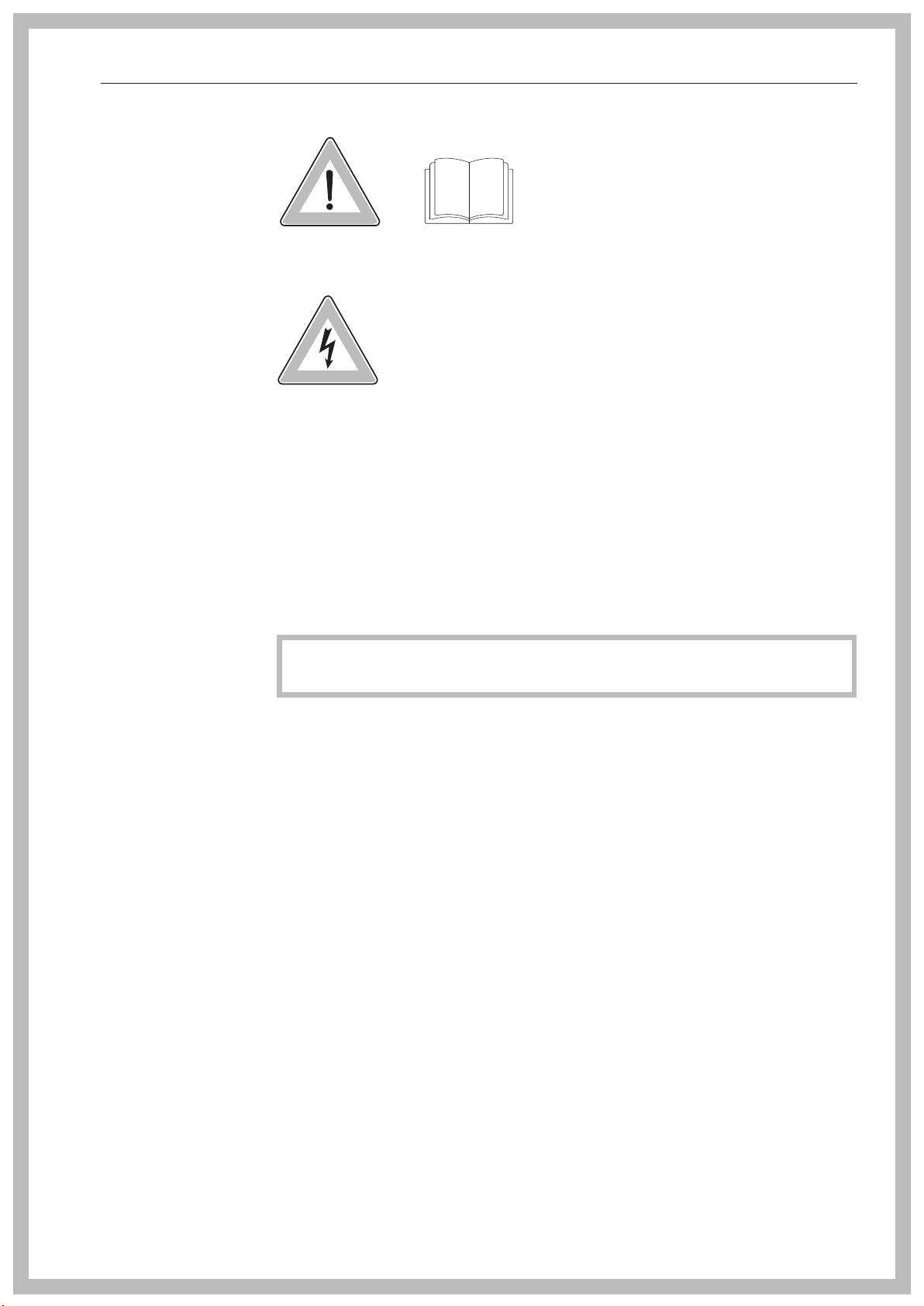
Symbols attached to the commercial dishwasher
Attention:
Obser
ve the operating instructions
Attention:
Danger of electric shock!
Disposal of the commercial dishwasher
For safety and environmental reasons, dispose of all process
chemicals according to the manufacturer's instructions and to safety
regulations. Safety goggles and protective gloves should be worn.
Remove or disable the door lock prior to disposal of the dishwash‐
er, so that children cannot become trapped inside (see "Caring for the
environment").
Miele cannot be held liable for damage caused by failure to comply
with these safety instructions and warnings.
Appliance description
12
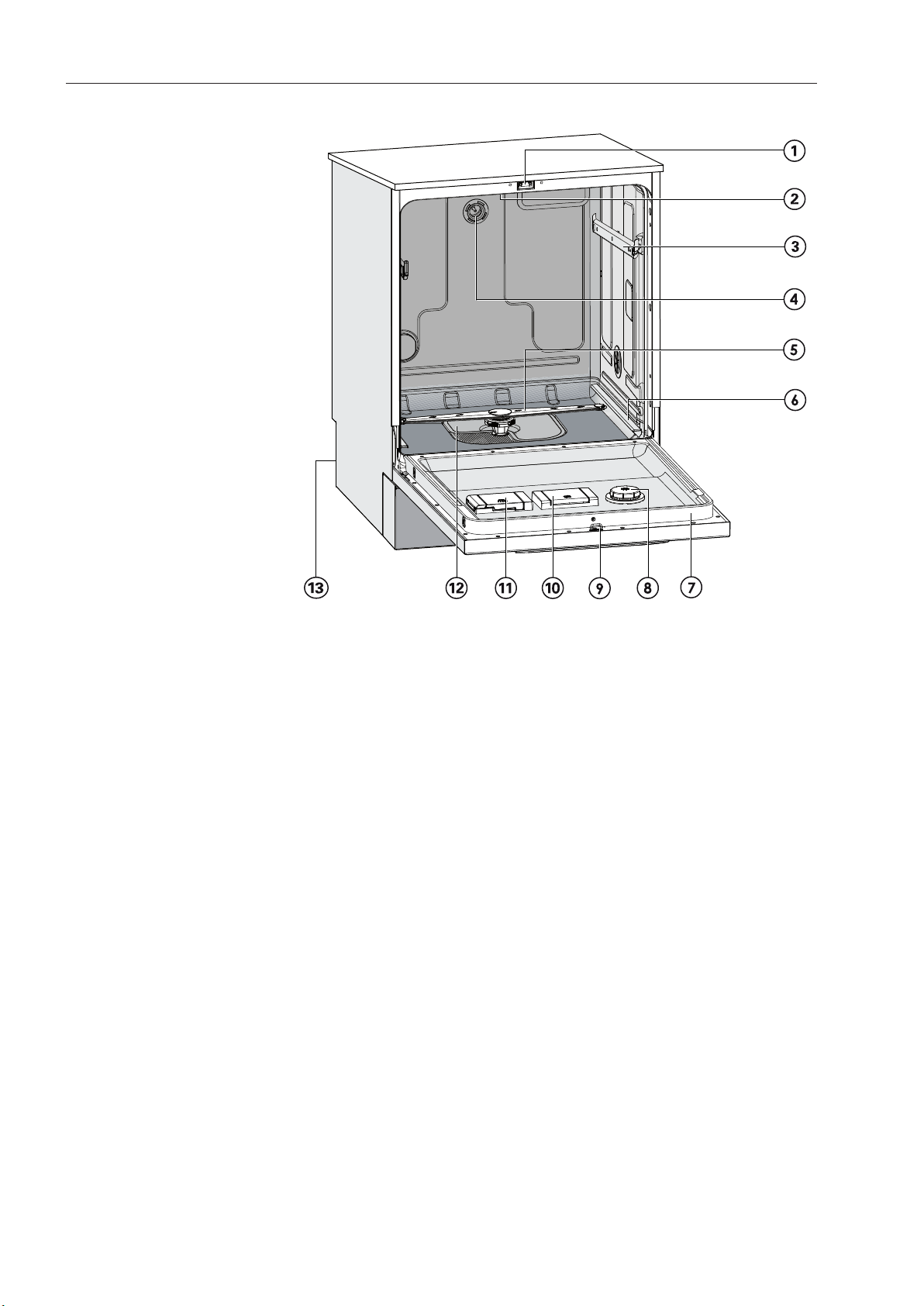
Appliance overview
a
Door lock
b
Upper spray arm (not visible)
c
Runner for upper basket
d
Connection for upper basket spray arm
e
Lower spray arm
f
Runner for lower basket
g
Data plate
h
Rinse aid reservoir
i
Door lock barrel
j
Reservoir for reactivation salt
k
Dispenser for powder detergent
l
Filter combination
m
Back:
Connection for DOS modules
Ext
ernal dispensing pump for liquid detergent (DOS1)
External dispensing pump for rinse aid (DOS4)
Appliance description
13
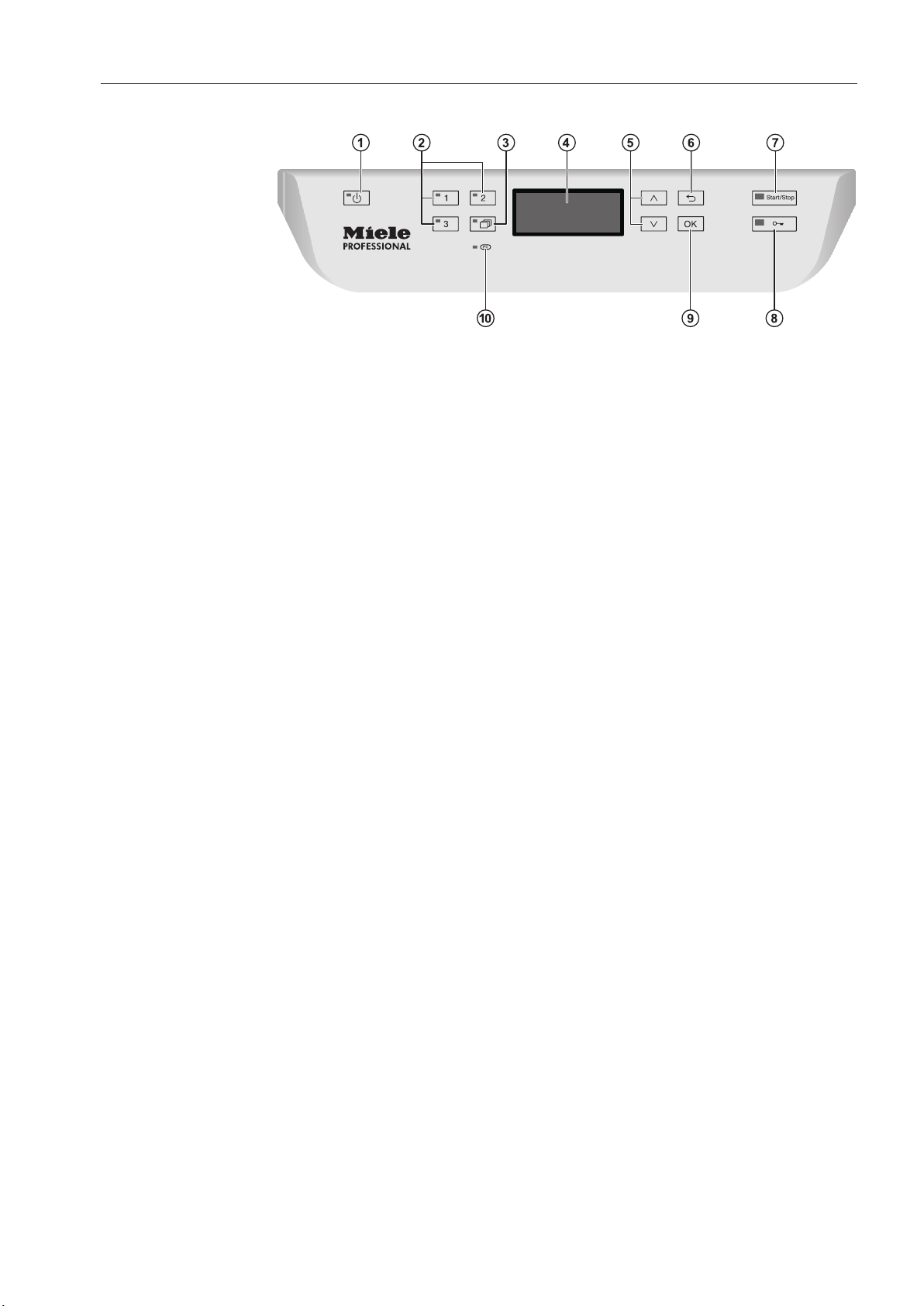
Control panel
a
butt
on (On/Off)
For turning the dishwasher on and off
b
Buttons 1 - 3 (program selection buttons)
Shortcut buttons for storing favorite programs
c
b
utton (additional programs)
For selecting additional programs
d
Display
User interface output
e
and b
utton (arrow buttons)
Navigation in user interface
f
b
utton (cancel or back)
For canceling a process in the user interface
(not for cancel
ing programs)
g
Start/Stop button
For starting or cancelling a program
h
butt
on (door release)
For opening the door or interrupting a program
i
OK butt
on (confirmation)
For selecting or confirming entries in the user interface
j
Optical interface
Testing and transmission point for Miele customer service techni‐
cians.

Caring for the environment
14
Disposal of packaging material
The packaging is designed to protect the dishwasher from damage
during tr
ansportation. The packaging materials used are selected
from materials which are environmentally friendly for disposal and
should be recycled.
Ensure that any plastic wrappings, bags, etc. are disposed of safely
and kept out of the reach of children. Danger of suffocation!
Disposal of your old appliance
Old electrical and electronic appliances often still contain valuable
ma
terials. However, they also contain harmful substances that were
essential for the proper functioning and safe use of the equipment.
Handling these materials improperly or disposing of them in your
household waste can be harmful to your health and the environment.
Therefore, please do not dispose of your old appliance with regular
household waste.
Instead, use your local community waste collection and recycling
cen
ter to dispose of your old electric and electronic appliances. If
necessary, ask your dealer for more information.
Ensure the appliance presents no danger to children while being stor‐
ed for disposal.

User profiles
15
User groups
Users can be divided into two groups:
– Daily operators
– Experienced operators
Access to "Additional settings" can be blocked to general, daily oper‐
at
ors by using a code (see "Additional settings, Code").
Daily operators must be instructed in operating and loading the dish‐
washer and tr
ained regularly to guarantee safe daily use.
Experienced operators can additionally block access to programs,
modify t
emperature and holding times within program cycles, and al‐
ter water levels.
Daily operators
Experienced op‐
er
ators
Operation tips
16
Display functions
The display is not a touch screen.
The following functions can be selected or set with the display:
– The program
– The delay start time
– The settings
The following appears in the display while a program is running:
– The program name
– The program stage / target temperature / actual temperature
– The estimated time left for the program to run
– Any relevant fault messages and information
This dishwasher is operated exclusively via buttons on the control
panel. Arr
anged to the side of the display, the buttons (button fields)
are printed on the stainless steel control panel. They are operated by
pressing gently.
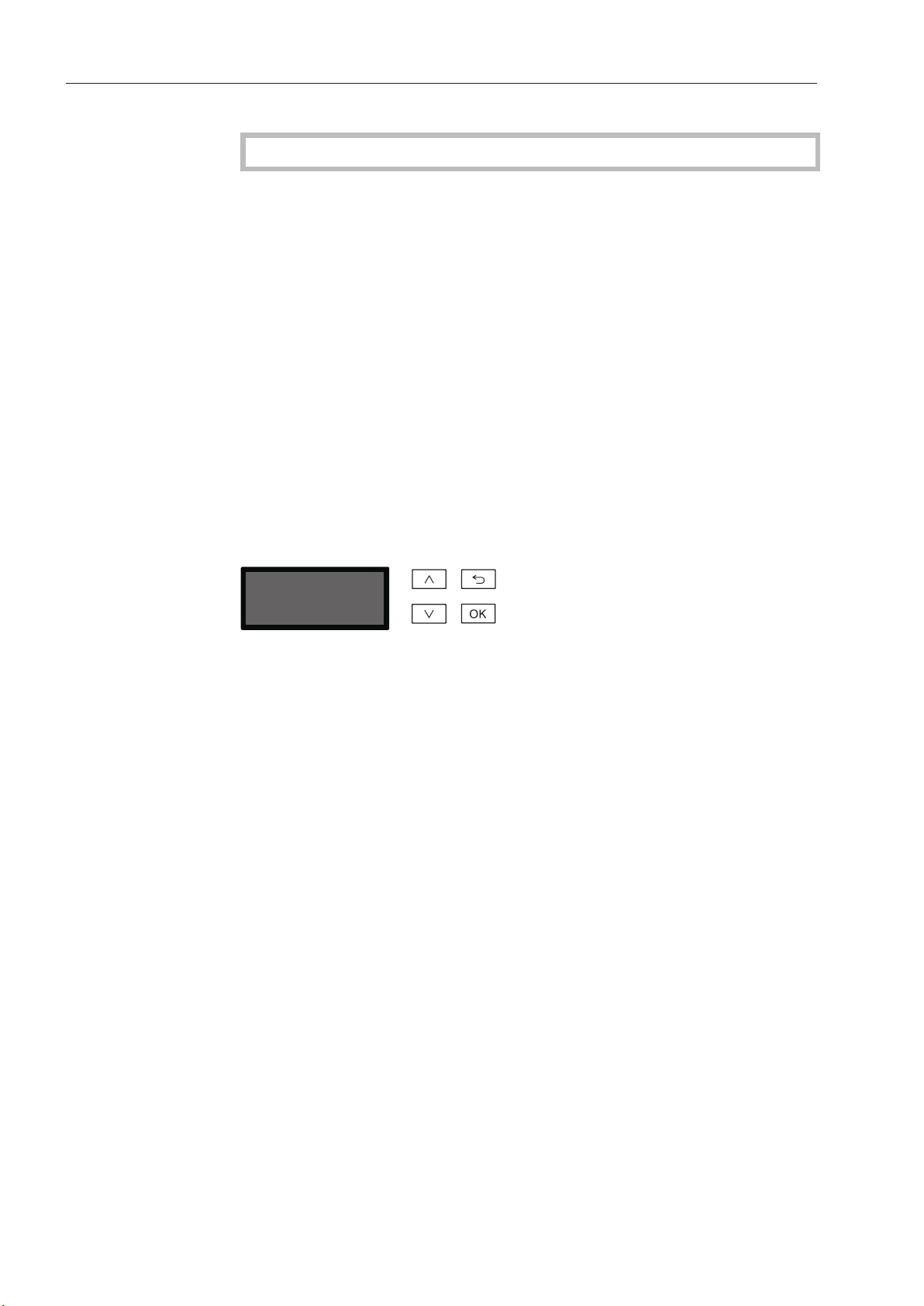
Menu operation is via the keypad to the right of the display.
–
button
For navigating upwards by row within a menu, or increasing the val‐
ue highlighted.
– butt
on (Cancel or back)
For ending a menu early. Any changes to settings are not saved
and the display reverts to the previous menu.
– button
For navigating downwards by row within a menu, or decreasing the
value highlighted.
– OK
button
For confirming a selection or for saving input. The display moves to
the next menu or, when entering values, to the next input position.
The procedure for entering the values is described in the respective
chapter.
Menu operation

Operation tips
17
Menus
The user interface of the commercial dishwasher is divided into me‐
n
us. The menus are displayed in a 3-line display on the control panel.
Example:
Language
,
;
(
english (AU)
deutsch
The name of the menu and a maximum of two options are shown.
The cu
rrently selected option is highlighted.
Delay start
Yes
No
(
The arrow buttons and ar
e used for navigating within the menu.
The highlighted option is selected by pressing the
OK b
utton. Once
selected, the option will have a tick beside it. Other options are au‐
tomatically deselected.
Press the OK butt
on to progress to the next menu, or to the next in‐
put position when confirming values. The procedure for entering the
values is described in the respective chapter. Press the button to
revert to the previous menu without saving the entry.
Release program
Normal
Universal
,
;
9
9
The and arr
ow buttons are used for navigating within the menu.
Several options can be selected in succession within the menu using
the
OK button. Once selected, an option will have a tick beside it.
To save your chosen options, select Accept and confirm with the OK
butt
on.
Simple selection
Multiple selection

Operation tips
18
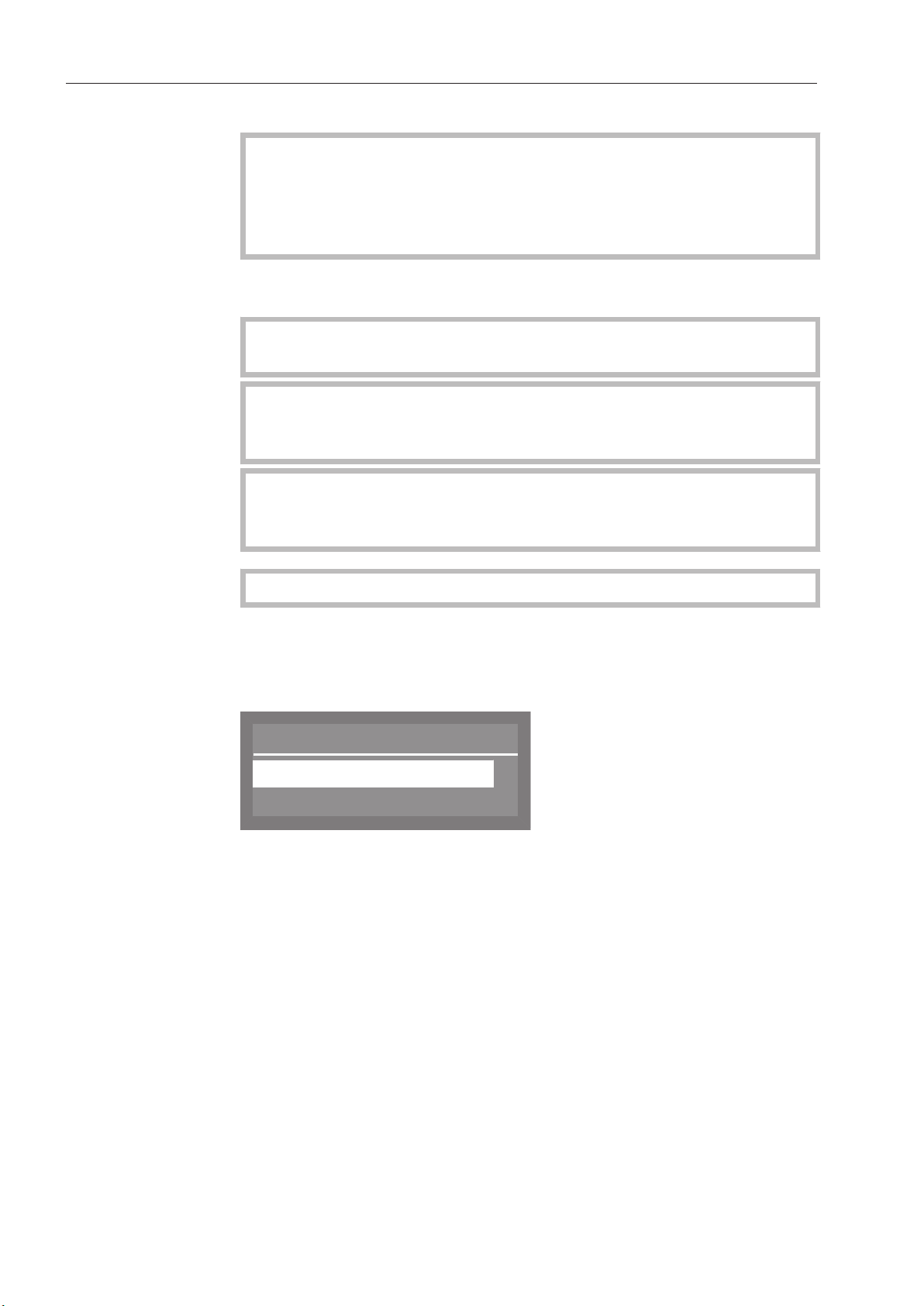
The symbol
denotes system messages. These give information
about current processes and the status of the dishwasher. System
messages are displayed individually at the end of the program. If
there are a number of system messages, subsequent messages can
be displayed by pressing
OK. A sys
tem message can be recalled by
pressing
OK
during a program cycle.
Example:
OK
Refill salt
Automatic switch-off
The dishwasher has an automatic switch-off function. The dishwash‐
er switches itself off aut
omatically after the time set. The display and
all other LEDs are switched off. To switch the dishwasher on press
the On/Off button.
Automatic switch-off can be deactivated (see "Additional settings,
Switch off aft
er"). The display will then remain switched on in standby
mode.
System messages

Operation tips
19
Symbols in the display
If a menu contains more than two options, two navigation arrows are
shown beside the options. The
arrow buttons and can be used
to scroll through the options.
If a menu contains more than two options, the end of the option list is
mark
ed by a dotted line. The last entry appears above the line, the
first entry below it.
If there are several options available, the current setting is marked
with a tick .
Example:
Delay start
Yes
No
(
If drying assistance has been activated, the drying symbol will be dis‐
played t
o the right of the program name.
Example:
Universal
Temperature
Duration
G
55 °C
Min
23
The symbol
denotes system messages and is displayed alternately
with the symbol. If OK appears in the bottom right of the display,
the system message must be confirmed using the
OK b
utton. If OK
does not appear in the display, after a few seconds the display skips
to the next level up.
In the event of a fault, a warning triangle is shown in place of the
symbol. See "F
requently asked questions" for more information.
Navigation arrows
Dotted line -------
Tick
Drying
System messages
Fault messages
Commissioning
20
Commissioning
During commissioning, the following settings must be carried out.
Y
ou will be asked to program settings one after the other automati‐
cally, and currently selected values have a tick beside them. The
commissioning process requires a set period of time which cannot
be interrupted.
The dishwasher will guide you automatically through the steps re‐
quir
ed.
Reactivation is carried out during the first program following com‐
missioning.
If the first program after commissioning is not completed and the
dishwasher is then turned off, the commissioning process must be
carried out again.
The following options (with the exception of "Plumbing connec‐
tio
ns") can be altered retrospectively via the "Settings " menu and
"Additional Settings."
The dishwasher must be connected to the electrical supply.
P
ress the button until the LED on the keypad lights up.
The commissioning process starts automatically with setting the lan‐
guage. You are prompted to set the display language.
Language
,
;
(
english (AU)
deutsch
Use the
and arrow buttons to select the language you want
and confirm your choice using the
OK butt
on.
Activation
Setting the lan‐
guage

Commissioning
21
The display will change to the screen for setting the temperature unit.
Temperature unit
°C
°F
(
Use the
and arrow buttons to select the temperature unit you
want and confirm your selection using the
OK butt
on.
The display will change to the screen for setting the date format.
Date format
DD:MM:YY
MM:DD:YY
(
Use the and arrow buttons to select the date format you want
and confirm your choice using the OK butt
on.
The display will change to the screen for setting the date.
Date
12 . 07 . 2013
U
se the arrow buttons (higher) and (lower) to set the day,
month and year and confirm each entry using the
OK b
utton.
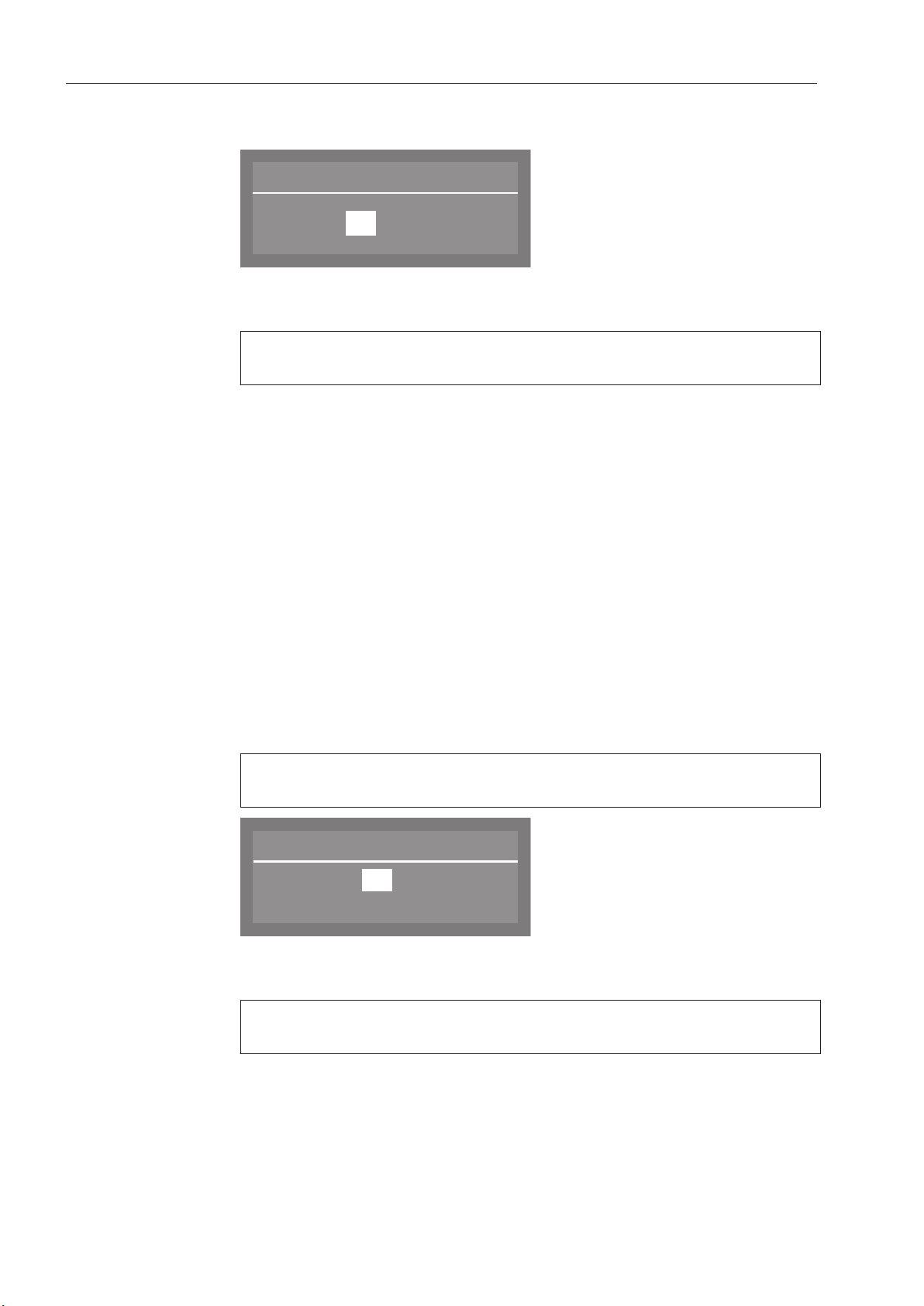
The display will change to the screen for setting the clock format.
Time format
(
24 h
12 h
Use the
and arrow buttons to select the format you want and
confirm your choice using the
OK butt
on.
Setting the tem‐
per
ature unit
Setting the date
format
Setting the date
Setting the clock
format
Commissioning
22
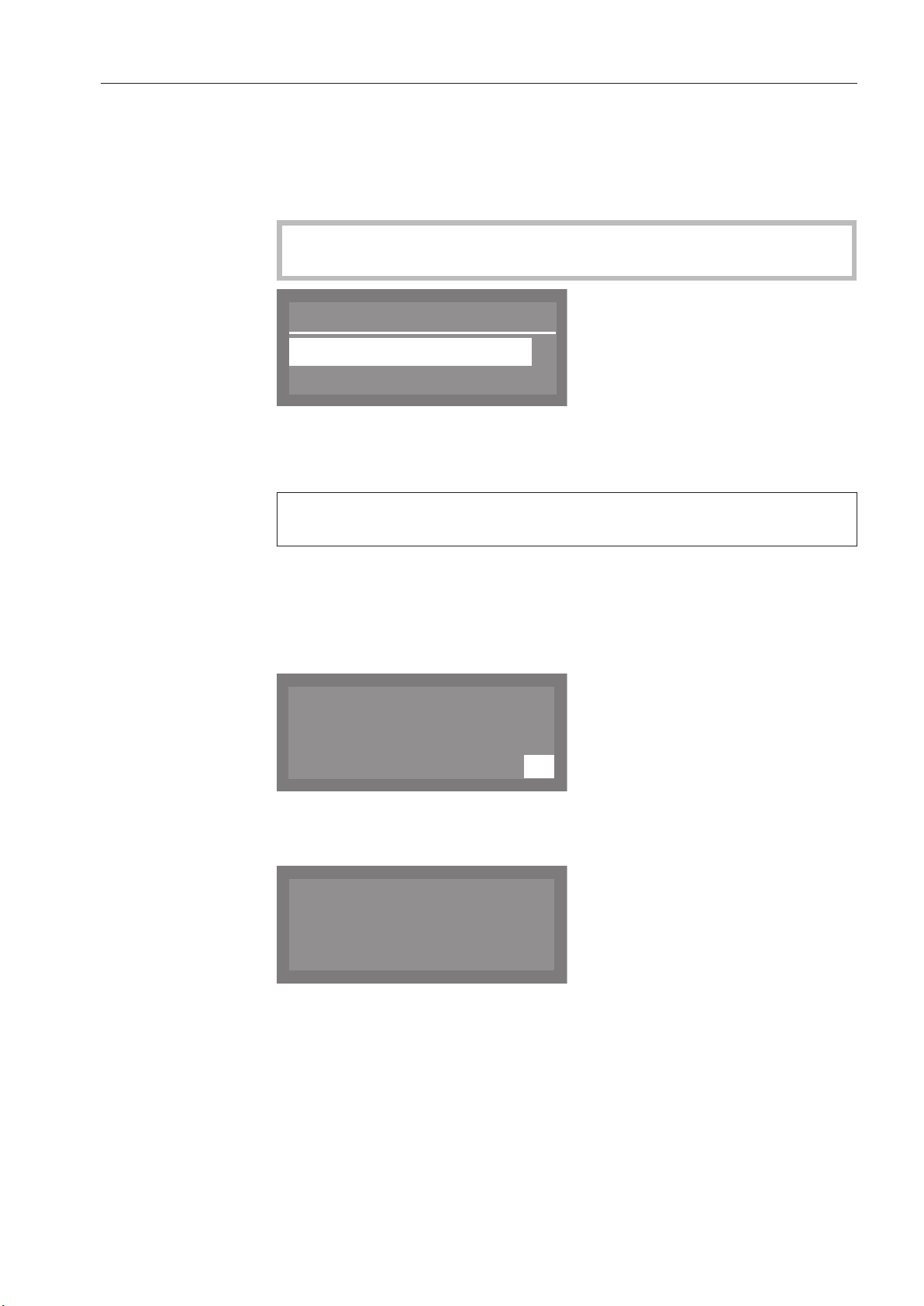
The selected clock display is shown.
Time of day
12 : 00
U
se the arrow buttons (higher) and (lower) to set the hours and
minutes and confirm each entry using the
OK butt
on.
If you have selected 12 h for the clock, "am" or "pm" will appear be‐
side the time.
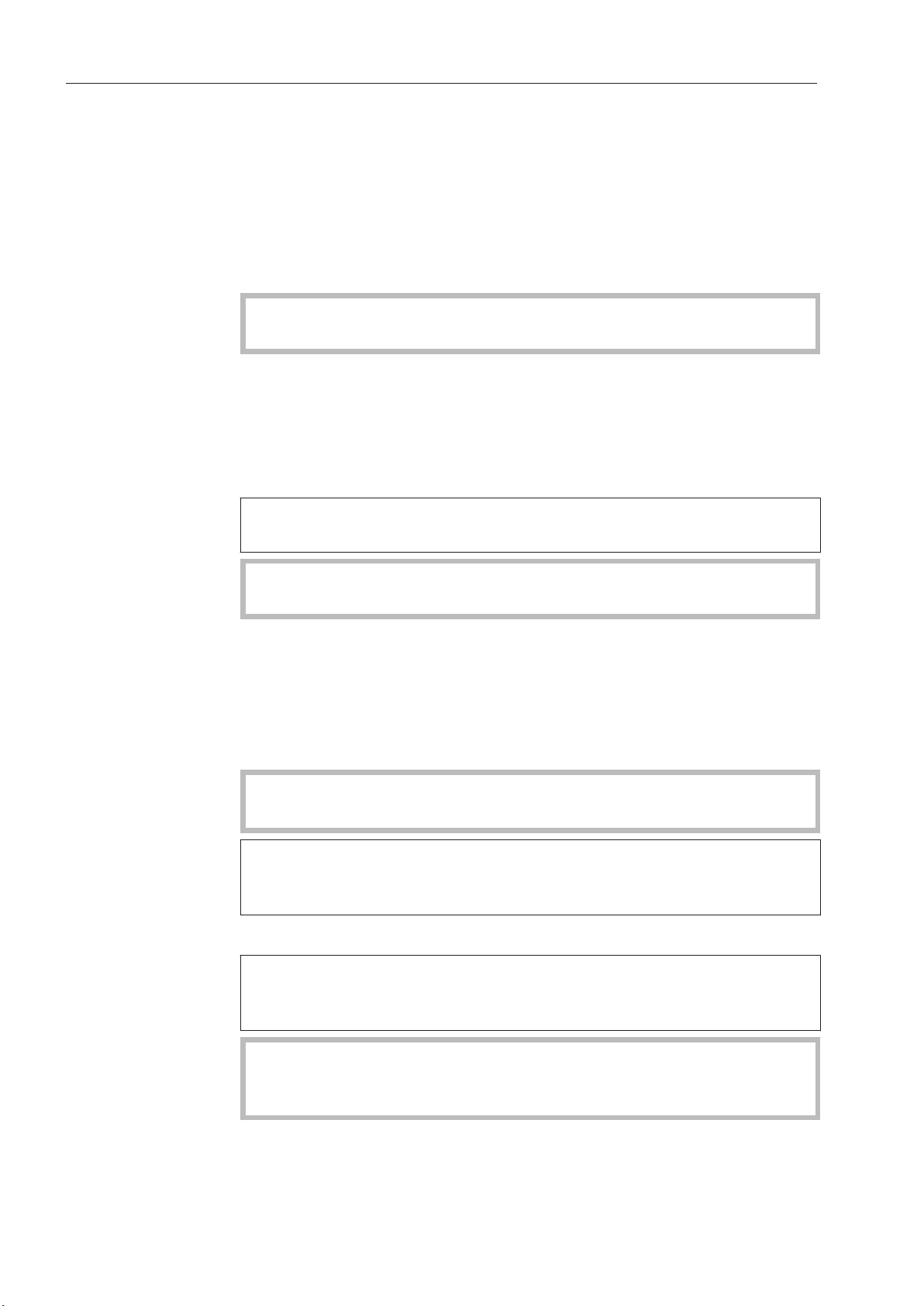
The display changes to the water hardness setting.
The dishwasher must be programmed to exactly match the hardness
of your wat
er.
Y
our local water supplier can tell you the water hardness level in
your area.
Wher
e the water hardness fluctuates (e.g. 16-28 gpg / 15-27°dH),
always program the dishwasher to the higher value (in this example,
28 gpg / 27°dH).
It is useful to know your water hardness so that you can provide the
ser
vice technician with this information in the event of any service
calls.
Ent
er the water hardness below:
____________________ gpg / °dH
The dishwasher is programmed at the factory for a water hardness
level of 20 gpg (19°dH)).
Water hardness
19
(0 70 °dH)
°dH
U
se the arrow buttons (higher) and (lower) to set the water
hardness required and confirm your entry using the
OK
button.
See "Additional settings menu, Water hardness" for more informa‐
tion.
Setting the clock
Setting the water
har
dness level
Commissioning
23
The display will then change to the screen for setting the plumbing
connection.
This setting can be turned off if the dishwasher cannot be connected
to all available plumbing connections.
If individual plumbing connections are turned off, they can only be
r
eactivated by Miele Service.
Plumbing connections
Accept
Cold water
,
;
9
Use the
and arrow buttons to select the plumbing connections
which are not connected and confirm your choice using the
OK but‐
t
on.
The tick will
be removed from the box and the plumbing con‐
nection is now turned off.
Select Accept t
o save your selection and confirm using the
OK but‐
t
on.
Commissioning is successfully completed and the following message
will appear in the display
.
OK
Set up successful
P
ress the
OK butt
on.
The dishwasher is now ready for use.
M
PROFESSIONAL
PG 8061
The start screen is displayed for 3 seconds.
Then the first shortcut button program will appear in the display.
Plumbing connec‐
tions
Commissioning
complet
ed
Opening and closing the door
24
Convenient door lock
This dishwasher is equipped with a convenient door lock.
Thi
s door locking mechanism helps drying by opening the door by a
couple of centimeters at the end of the program (except Reactivation,
Cold and Drain) This function can also be deactivated (see "Settings
, Drying").
Opening the door
The door can only be opened if the dishwasher is connected to the
electrical supply and is turned on (the LED is lit on the
keypad).
The control panel also serves as a door handle.
P
ress the button to open the door. The LED on the keypad turns
off as soon as the door is unlocked.
Grasp the handle underneath the control panel and lower the door
to open.
Pressing the b
utton during operation can interrupt the program
(see "Operation, Interrupting a program").
A program which is already running should only be interrupted if
absol
utely necessary, e.g. if the wash load is moving significantly.
Closing the door
I
nsert the baskets.
Raise th
e door upwards and push it gently until the latch audibly
engages. The door will be drawn automatically into its final closed
position by the closing mechanism.
Do
not touch the door frame.
Risk of injury!
If the door cannot be closed properly by the mechanism because it
is obstruct
ed by cookware or similar, a three-digit error code will ap‐
pear in the display (see "Frequently asked questions").
Re
move the obstruction from the vicinity of the door.
If too much force is used when closing the door, the automatic clos‐
ing
mechanism may not work, which may result in the door not be‐
ing properly closed.
The dishwasher can only be guaranteed as waterproof if the auto‐
mati
c closing mechanism has drawn the door into the final closed
position.
Opening and closing the door
25
Opening the door using the emergency release
T
he emergency release should only be operated when it is no
longer possible to open the door in the usual way.
If the emer
gency release is operated during a program cycle,
hot water can escape.
Danger of scalding and burning.
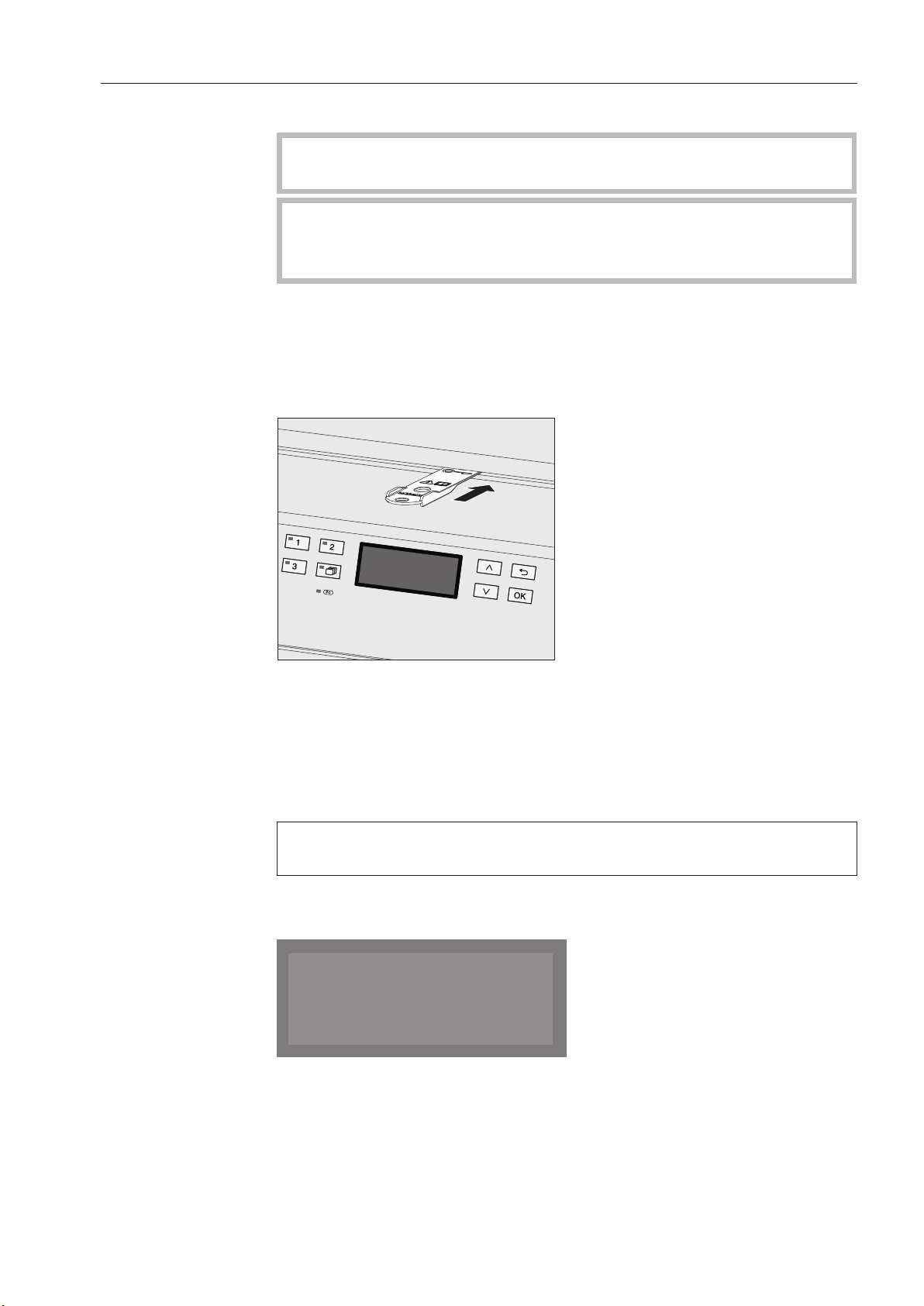
The emergency release mechanism is located on the right beside the
door lock between the door and the lid of the appliance (or the coun‐
t
er, with built-under appliances).
The emergency release is operated using the tool supplied in the ac‐
cessor
y pack with the operating instructions.
Inser
t the tool for the emergency release into the gap between the
lid and the door to the right of the lock. The right hand edge of the
tool should ideally be aligned with the right hand edge of the dis‐
play.
P
ush the slider for the emergency release backwards with the tool
until the door opens slightly.
If you push against the door of the dishwasher at the same time,
less for
ce will be needed to operate the emergency release.
When the door has been opened using the emergency release, the
following message will appear in the display:
Emergency release
Door opened
Confirm the message after the door has been released from the clos‐
ing
mechanism. The last program used will then appear in the display.
Filling the salt container
26
Reactivation
In order to achieve good cleaning results, the dishwasher water
needs
to be softened. The water is softened automatically in the wa‐
ter softener.
Dishwasher salt is required for reactivation and the degree of water
hardness must be set on the dishwasher to ensure problem-free
functioning of the water softener (see "Additional settings, Water
hardness").
If the hardness of your water constantly lies under 4 gpg (4 °dH), no
salt
must be filled in the water softener.
Do
not fill the salt container with dishwasher detergent (even
liquid detergent).
Dishwasher detergent will damage the water softener.
Use only special, coarse-grained reactivation salt or other pure
kitchen salt.
Other types of salt may contain insoluble components which can
damag
e the water softener.
A
t the end of a program, fill the salt reservoir with salt as soon as
the message appears in the display.
Confirm the message with the OK butt
on.
If salt is not added, the symbol indicating a lack of salt will appear
beside the pr
ogram name on the right.
At the end of each program, the lack of salt message appears again.
Refill reminders can be displayed during the program cycle by press‐
ing the OK butt
on.
If there are no additional refill reminders, the symbol in the display
will go out after a few seconds after the salt has been refilled.
The salt refill reminder is deactivated if the dishwasher is set to a
wat
er hardness of 0 - 4 gpg (0 - 4 °dH).
If the refill salt reminder is ignored for several program cycles and the
salt is not r
efilled, the appliance will lock itself against additional use
until it is refilled.
The following message will appear in the display shortly before this
happens:
K
OK
Machine locking
Insufficient salt
Salt refill reminder
Appliance lock-
out d
ue to lack of
salt
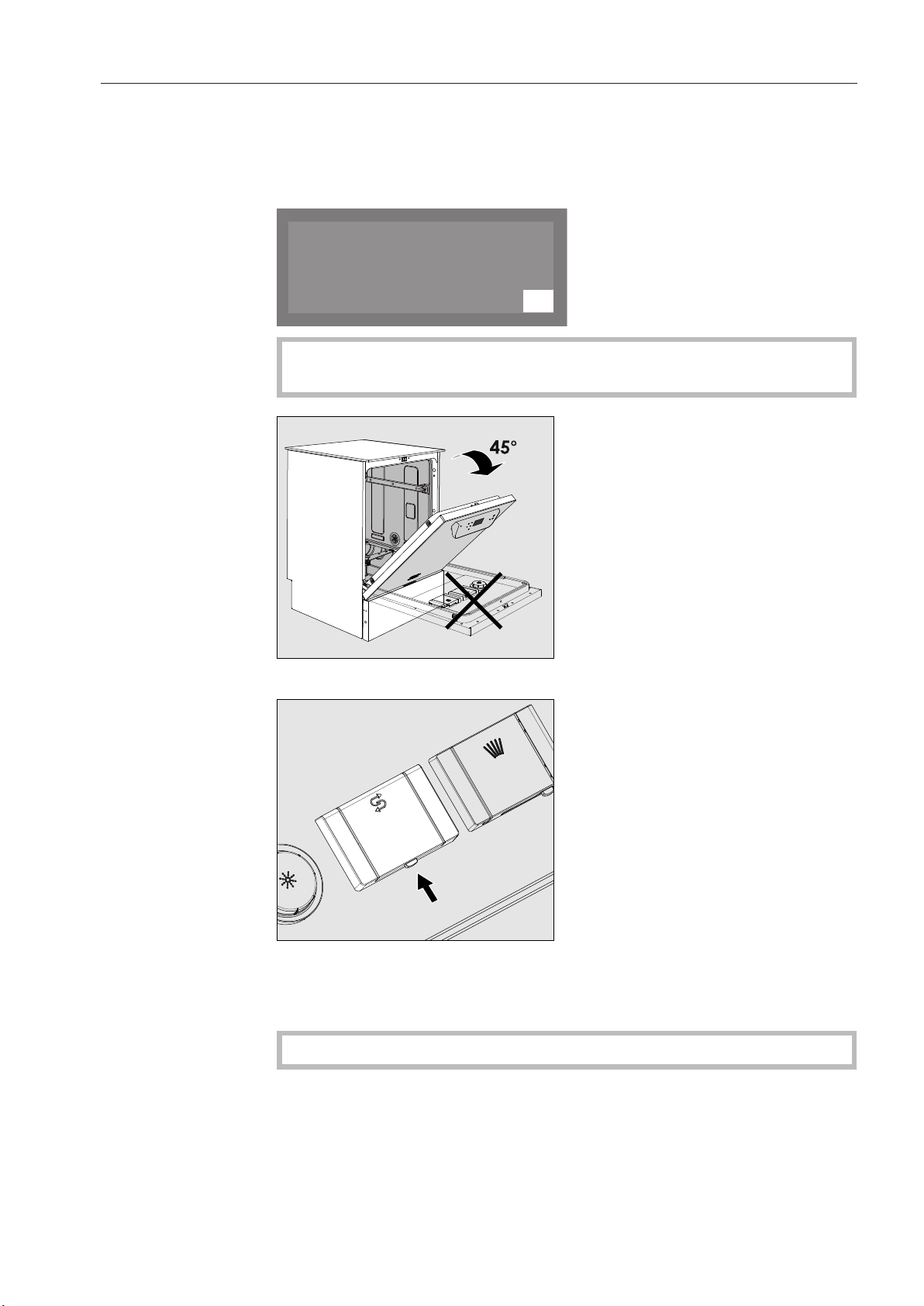
Filling the salt container
27
Only a few more program cycles are possible, depending on the pro‐
gr
am selected and the water hardness set.
The dishwasher is locked against operation if additional program cy‐
cles are run without salt being refilled.
K
OK
Salt container empty,
Program locked
When reactivation salt is added, the appliance will unlock itself af‐
t
er a few seconds.
Only open the door half way when adding salt to avoid spilling it.
P
ress the button on the lid of the salt reservoir in the direction of the
arrow until the flap springs open.
Open the funnel.
Do not fil
l water into the salt reservoir!
Filling the salt
container
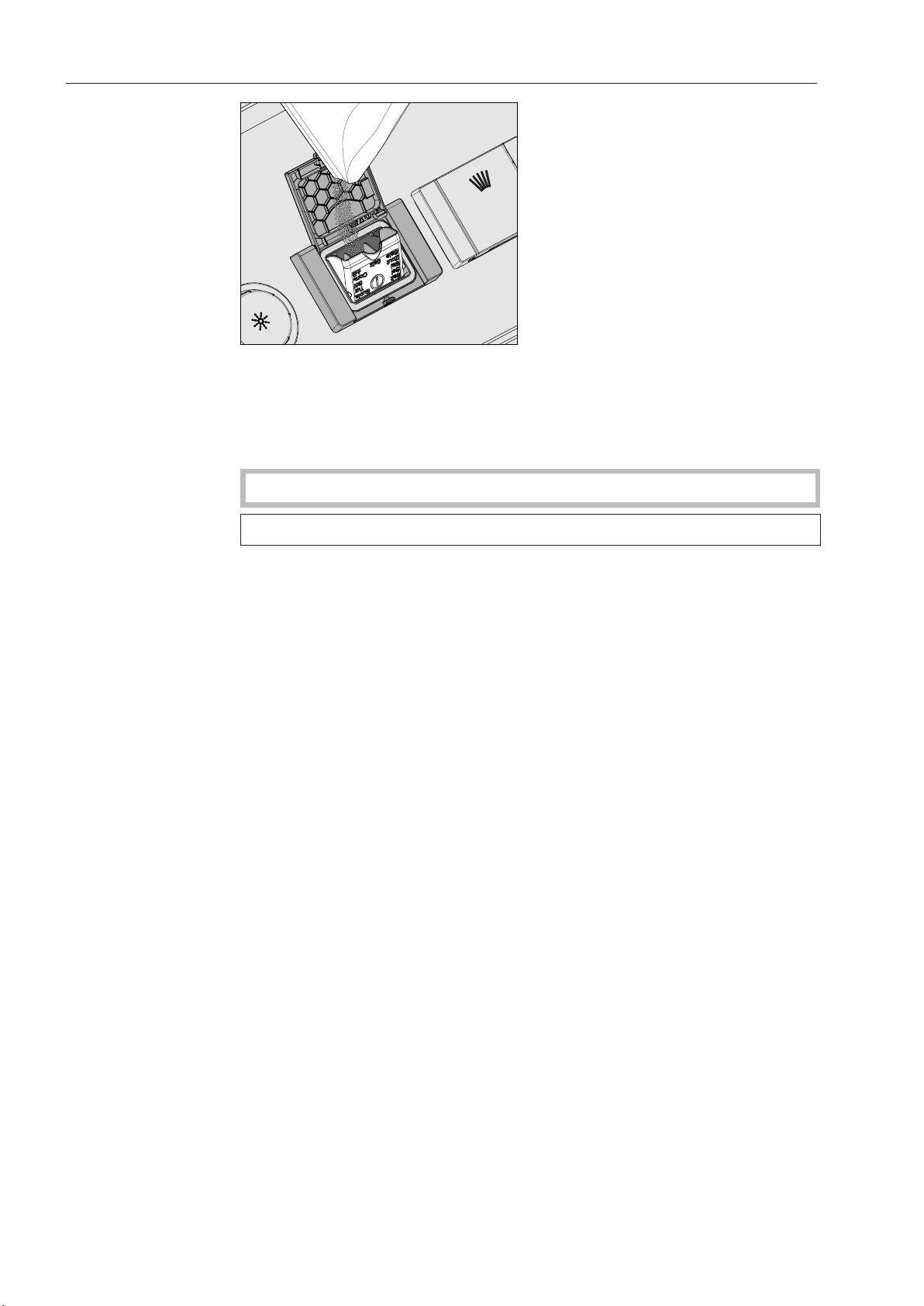
Filling the salt container
28
Add salt only unti
l the funnel of the salt reservoir is full, so that it
can close properly. The salt reservoir will hold approx. 4.4 lbs (2 kg)
of salt on the first fill depending on the degree of coarseness.
Subsequent refills may take less salt, as there may still be salt re‐
maining in the reservoir.
Do not add any more than 4.4 lbs (2 kg) of salt.
Displaced water may run out as the reservoir is being filled.
C
lean any excess salt from around the reservoir opening and the
seal around it, and then close the flap.
Aft
er refilling the salt reservoir, run the Cold program immediately
(without any cookware in the dishwasher) to remove any traces of
salt from the cabinet.
Adding rinse aid
29
Rinse aid
Rinse aid is necessary to ensure water does not cling and leave
marks on co
okware before the drying phase and helps cookware dry
faster after it has been washed.
Rinse aid can be poured into the reservoir in the door or can be dis‐
pensed via an external dispensing DOS module (Optional accessory -
see "DOS module").
Only fill
the rinse aid reservoir with rinse aid. Do not fill it with
detergent (including liquid detergent). This will seriously damage
the reservoir.
Conversion to the external DOS module must be carried out only
by Miele
Service or by an authorized dealer.
Re
fill rinse aid at the end of a program as soon as the message ap‐
pears in the display.
K
OK
Refill rinsie aid
Confirm the message with the OK butt
on.
Universal
Temperature
Duration
:
55 °C
Min
23
If rinse aid is not added, the symbol indicating a lack of rinse aid
will appear beside the p
rogram name on the right.
The refill reminder will be displayed again at the end of every subse‐
quent pr
ogram.
Refill reminders can be displayed during the program cycle by press‐
ing the OK butt
on.
If there are no additional refill reminders, the symbol in the display
will go
out a few seconds after the rinse aid has been refilled.
Rinse aid remind‐
er
Adding rinse aid
30
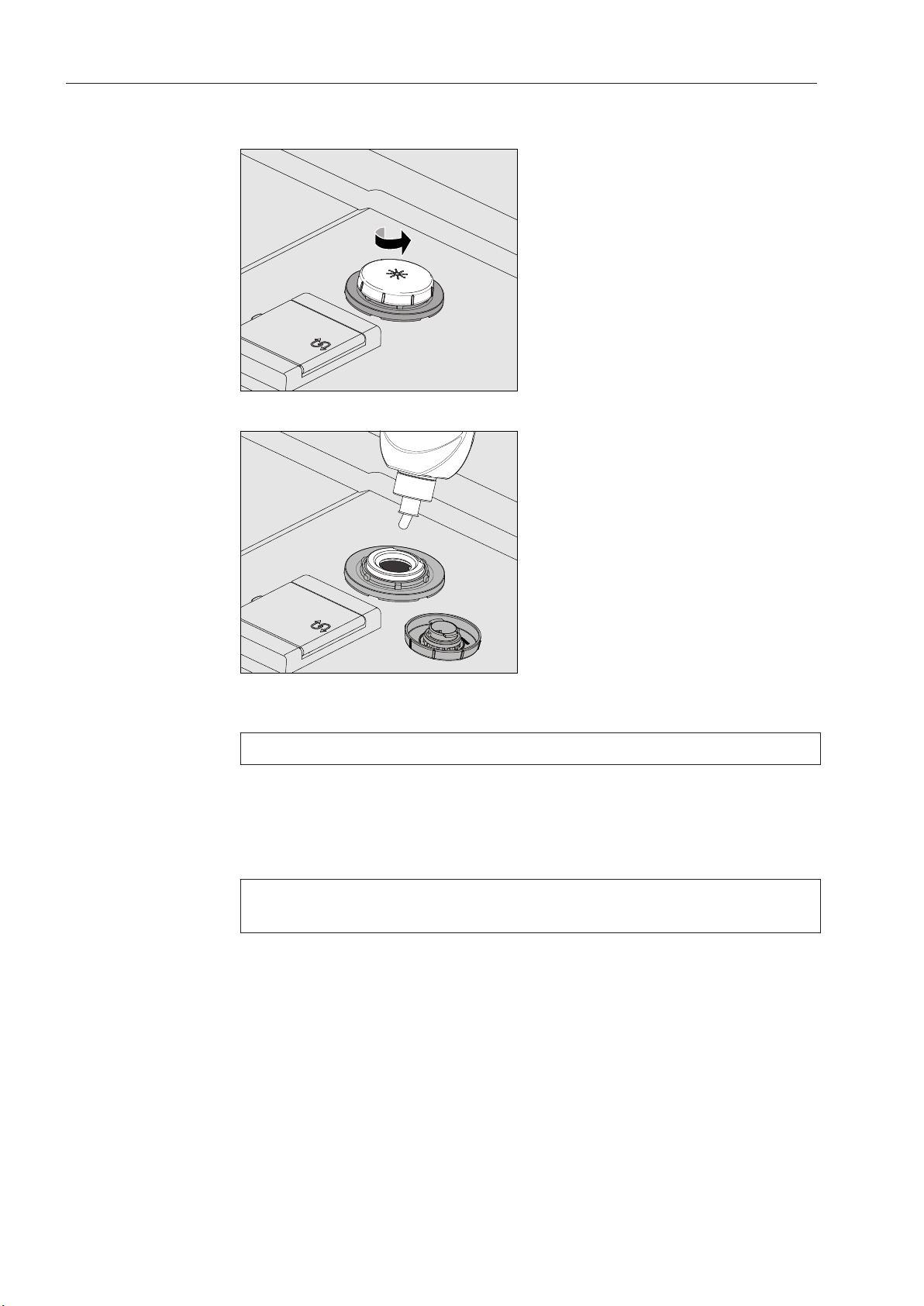
Open the door all the way.
U
nscrew the lid of the rinse aid reservoir.
Add rinse aid only until it is up to the maximum mark on the edge of
the reservoir.
The rinse aid reservoir holds approx. 10 oz (300 ml).
Scr
ew the lid of the rinse aid reservoir back on tightly so that water
cannot get into the reservoir during the wash cycle.
C
lean up any spilled rinse aid. This prevents over-foaming from oc‐
curring during the next program.
You can adjust the dosage of the rinse aid for best results (see "Ad‐
ditional settings, Additional functions").
Adding rinse aid

Application technology
31
Preparing the load
Remove coarse food residues from the dishware.
There is no need to rinse items under running water!
Ensur
e that no acid or solvent residues, especially hydrochloric
acid or chlorides, get inside the machine.
Do
not wash items soiled with ash, sand, wax, grease or paint
in the dishwasher.
These substances will damage the dishwasher.
L
oad the respective cookware and utensil into the appropriate pla‐
ces in the baskets, but observe the following instructions:
L
oad the cookware so that water can access all surfaces. This en‐
sures that they get properly cleaned.
L
oad plates symmetrically in the upper and lower baskets with the
concave surface towards the center of the basket (as shown on the
following pages).
D
o not place dishes or cutlery inside other pieces. They will cover
each other.
M
ake sure that all items are securely positioned.
H
ollow items such as cups, glasses, pans, etc. must be inverted in
the basket.
T
all, narrow, hollow items should be placed in the center of the bas‐
ket if possible to ensure better water coverage.
C
oncave items such as mugs or bowls should be placed at an an‐
gle so that the water can run off.
T
he spray arms must not be blocked by items which are too tall or
hang through the baskets. If in doubt, test for free movement by
manually rotating the spray arms.
M
ake sure that small items cannot fall through the holders in the
baskets. Small items, e.g. lids, should therefore be placed in the
cutlery basket.
Tips:

Application technology
32
– Wooden cutlery and cookware or items with wooden parts: these
may d
iscolor and fade. The glue used in these items is not dish‐
washer-proof and wooden handles may come loose after being
washed in a dishwasher.
– Craft items, antiques, valuable vases and decorative glassware:
such it
ems are not suitable for dishwashers.
– Plastic items which are not heat resistant: the high temperatures in
the d
ishwasher may cause them to melt or lose shape.
– Copper, brass, tin and aluminum items: these may discolor or be‐
come matt.
– Colors painted over a glaze: these may fade after a number of
washes.
– Delicate glassware and glassware containing lead crystal: clouding
may occur over time.
– When purchasing new cookware and cutlery, make sure they are
d
ishwasher-proof.
– Clouding may occur on glasses after frequent washing. If delicate
glasswar
e is washed in the dishwasher ensure that only a special
glass-care program with very low temperatures (see program chart)
is selected and that suitable detergent is used. This will reduce the
risk of clouding.
Silver and aluminum which has been in contact with foods contain‐
ing
sulfur can discolor.
Alu
minum components (e.g. grease filters) must not be cleaned
with caustic alkaline commercial or industrial cleaning agents.
These may damage the material, or in extreme cases, there is a risk
o
f a severe explosive chemical reaction (such as an explosive oxy‐
hydrogen gas reaction).
Items not suitable
for dishwashers:
We recommend
Please note:
Application technology
33
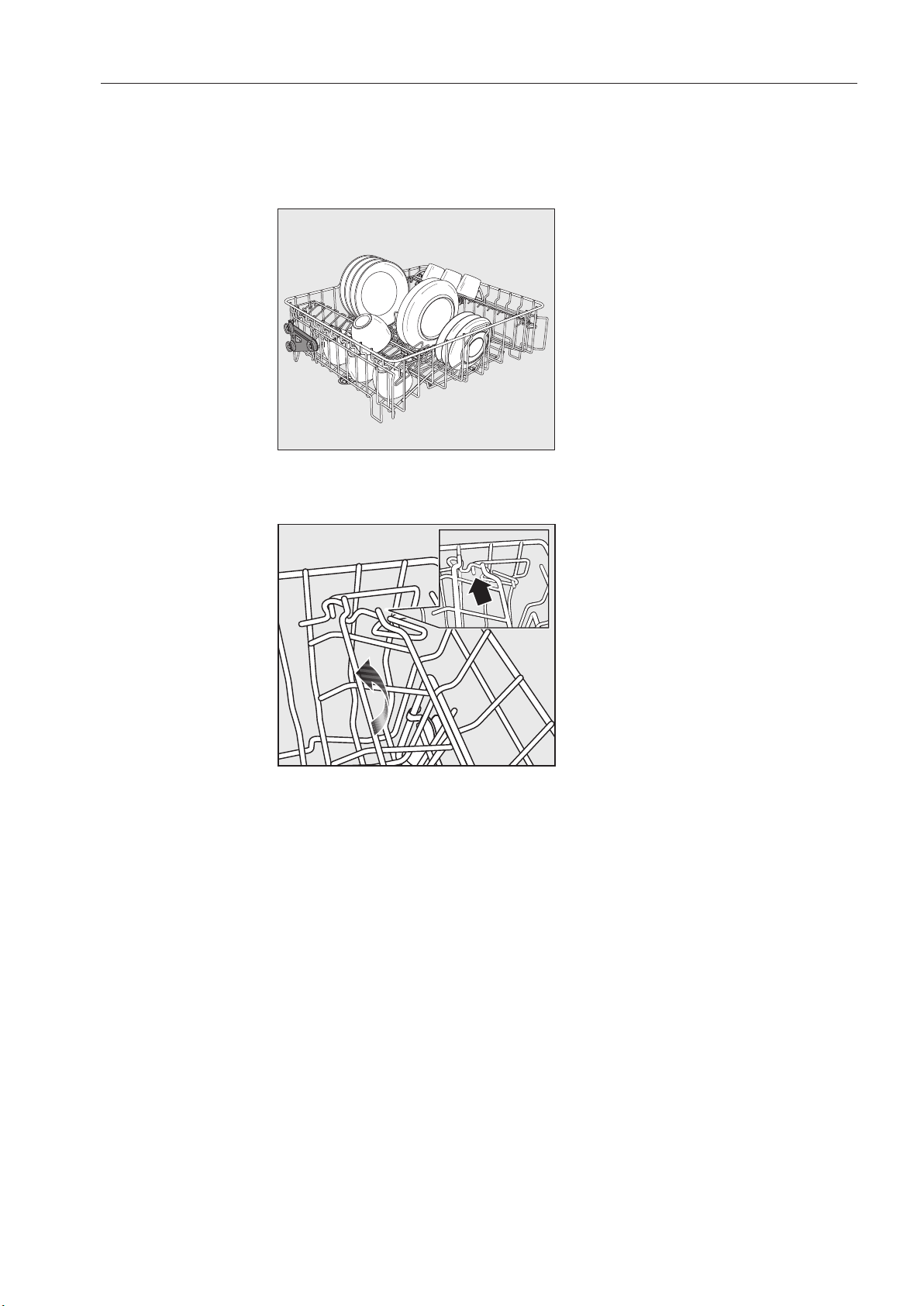
Upper basket
Use the upper basket for small, lightweight and delicate items such
as cups, saucers, glasses, desser
t bowls etc. Light, heat resistant
plastic items can also be loaded in the upper basket.
O 891 upper basket
With insert E 810 for e.g. 20 cups, 33 saucers or 17 dessert plates.
The cup rack can be set at two different widths so that it can also ac‐
commo
date large cups.
P
ull the cup rack upwards and click it back into position at the re‐
quired width.
Cup rack
Application technology
34
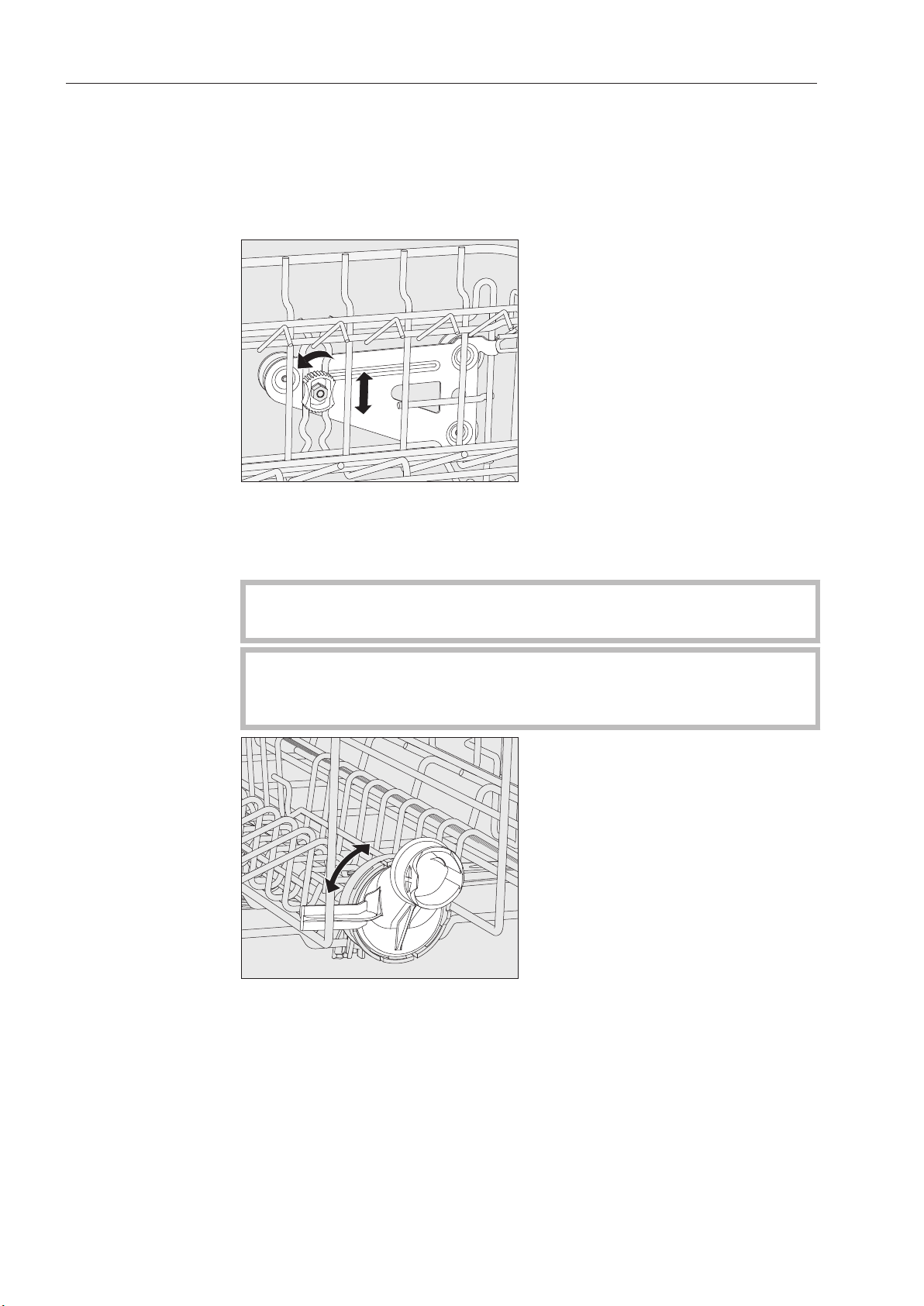
Adjusting the upper basket
In order to gain more space for taller pieces of cookware in the lower
or upper b
asket, the upper basket can be adjusted in between two
positions with 2" (5 cm) between each position.
P
ull the upper basket out.
Unscrew the fixing nuts on both sides.
L
ift or lower the basket into the desired position.
Tighten the fixing nuts again.
T
he upper basket must be level in both positions.
If the basket is not level, the water connection will be blocked.
When changing the height of the upper basket, always adjust
the water connection accordingly before pushing the upper basket
back in.
T
urn the upper basket water connection to the upper or lower posi‐
tion.
The water connection must click audibly into place.

Application technology
35
Depending on the setting of the upper basket, the following plate di‐
mensio
ns can be accommodated: Example upper basket O 891:
Upper basket in posi‐
tion
Upper basket plates
Ø
Lower basket plate Ø
Upper max. 5 1/8" (15 cm) 13" (33 cm) *
Lower max. 7 7/8" (20 cm) 9 3/4" (25 cm)
* Plate insert E 812 required in the lower basket.
Application technology
36
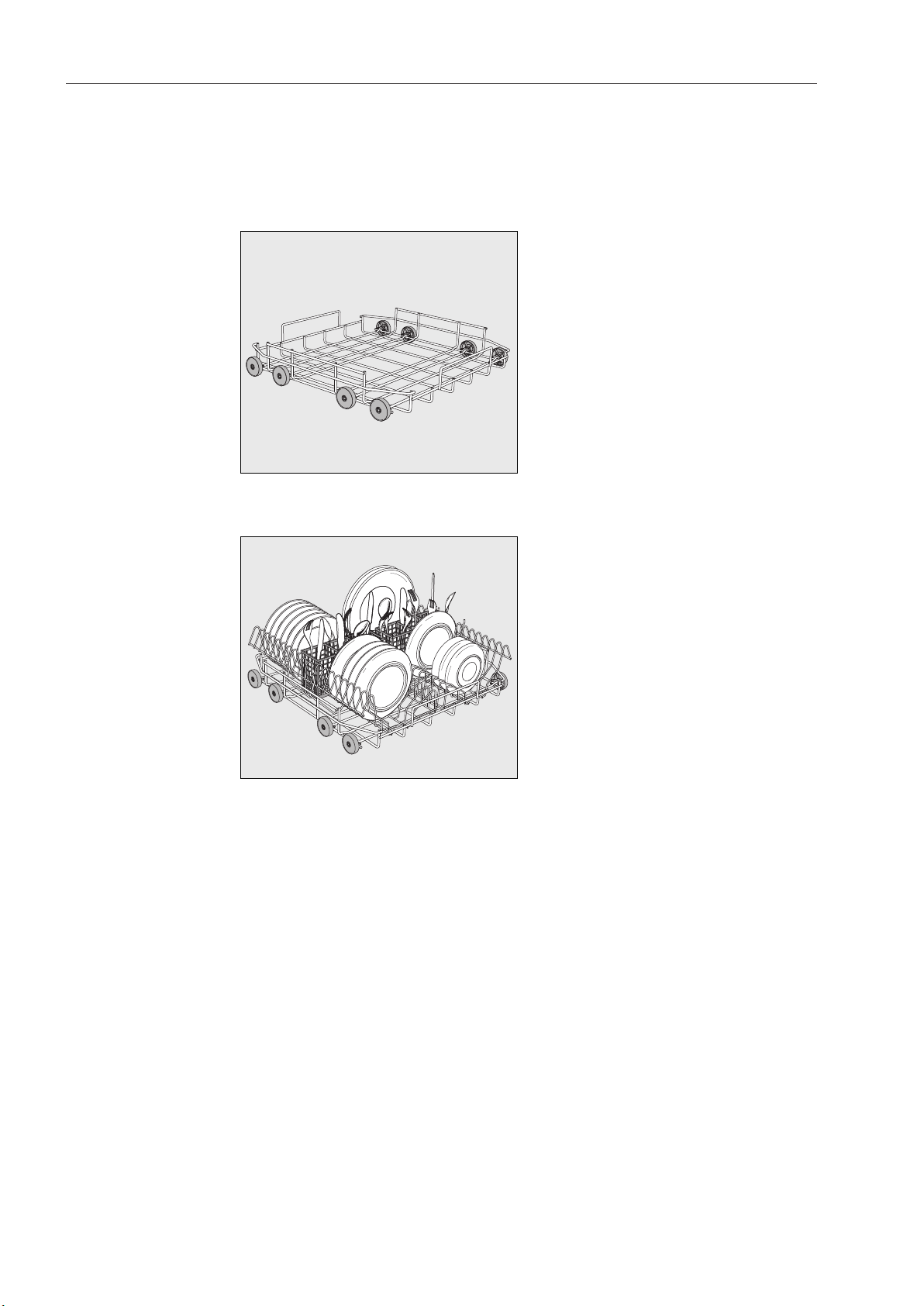
Lower basket
For larger and heavier items such as plates, serving platters, sauce‐
pans, bowls, etc.
Always place thin, delicat
e glassware in the lower basket using a suit‐
able insert or basket.
U 890 lower basket
For plastic trays, various inserts and cutlery inserts.
U 890 lower basket with 2 x E 816 inserts and 2 x E 165 cutlery inserts
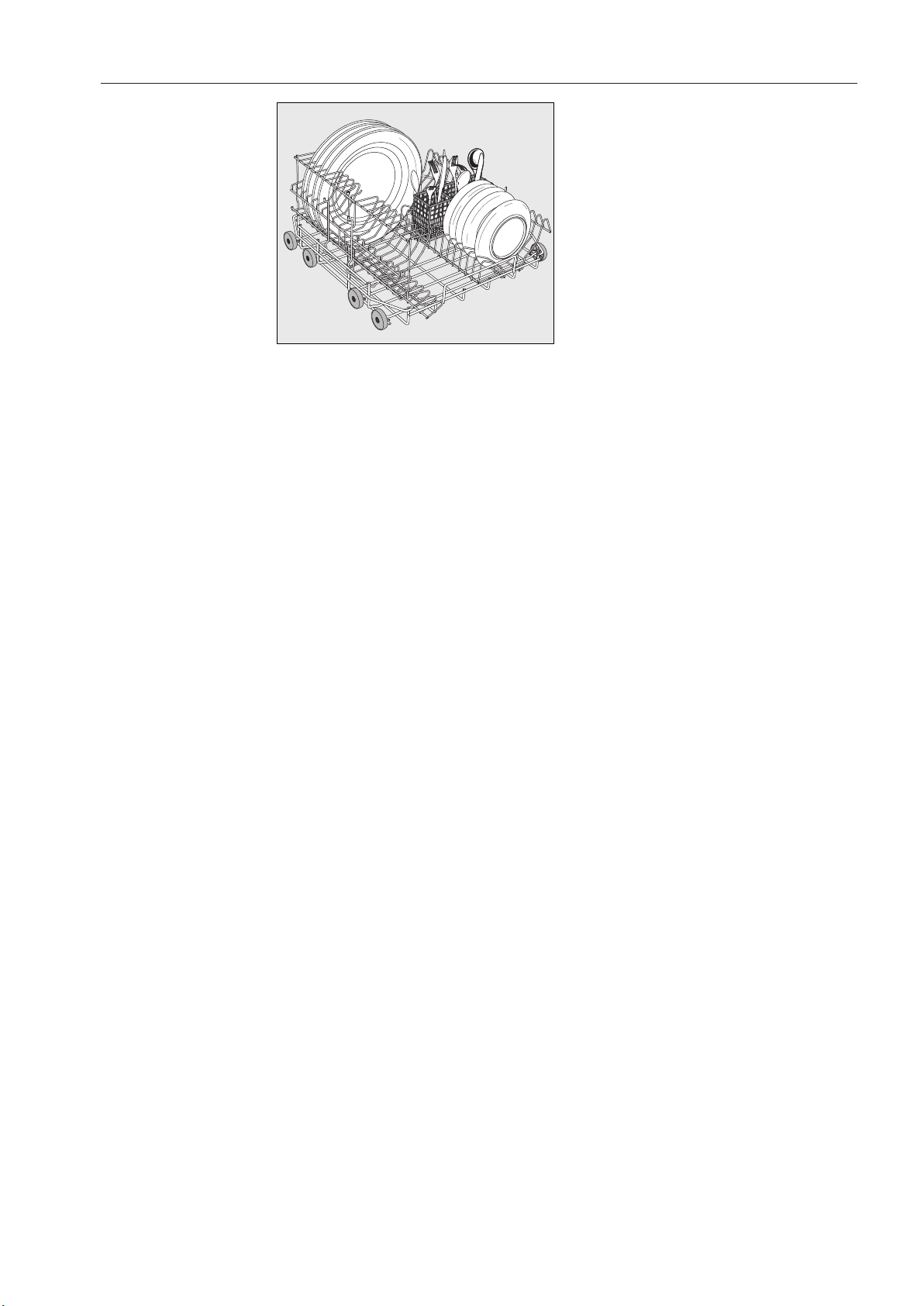
16 plates with Ø 9 3/4" (25 cm) each and various cutlery can be load‐
ed. Without the cutlery inserts, 19 plates with Ø 9 3/4" (25 cm) each
can be loaded into E 816 inserts.
Application technology
37
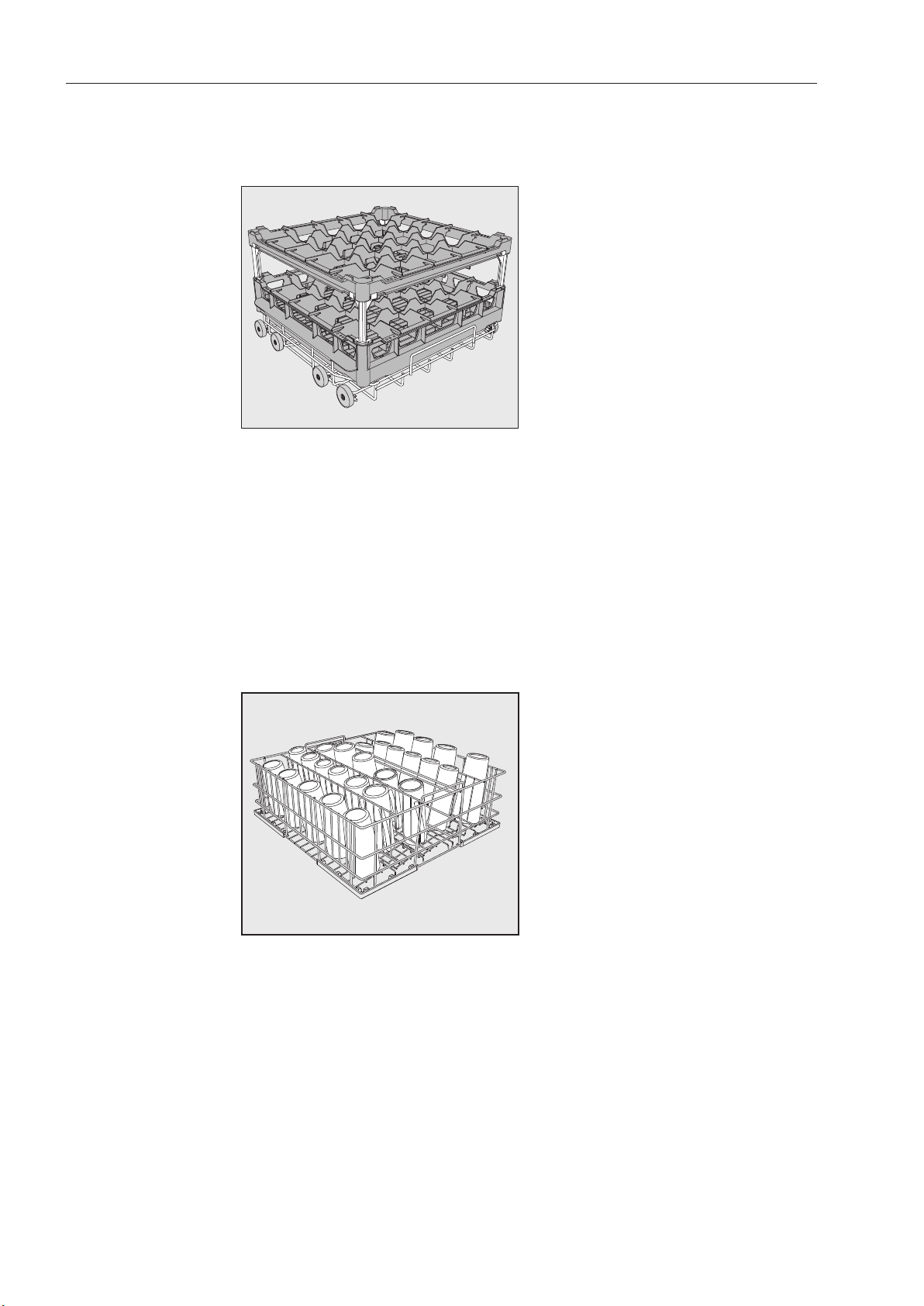
U 890 lower basket with an E 816 insert rotated by 90°
With the E 165 cutlery insert, 16 plates with Ø 13" (33 cm) each and
vario
us cutlery can be loaded. Without the cutlery insert, 19 plates
with Ø 13" (33 cm) each can be loaded into the rotated E 816 insert.
Application technology
38
Use of plastic trays
The U 890 lower basket insert can be loaded with plastic trays meas‐
uring 19 3/4" x 19 3/4" (500 x 500 mm).
The special O 885 upper basket insert is required for loading plastic
tr
ays in the upper basket (max. loading height for items 5 1/8" (130
mm)).
The special U 876 lower basket insert is required for loading taller
it
ems in the lower basket.
The type, shape and size of the items to be washed will determine
which bask
et combination to use.
For additional information on baskets please contact your Miele deal‐
er or the Miele Service.
Examples: (lower baskets)
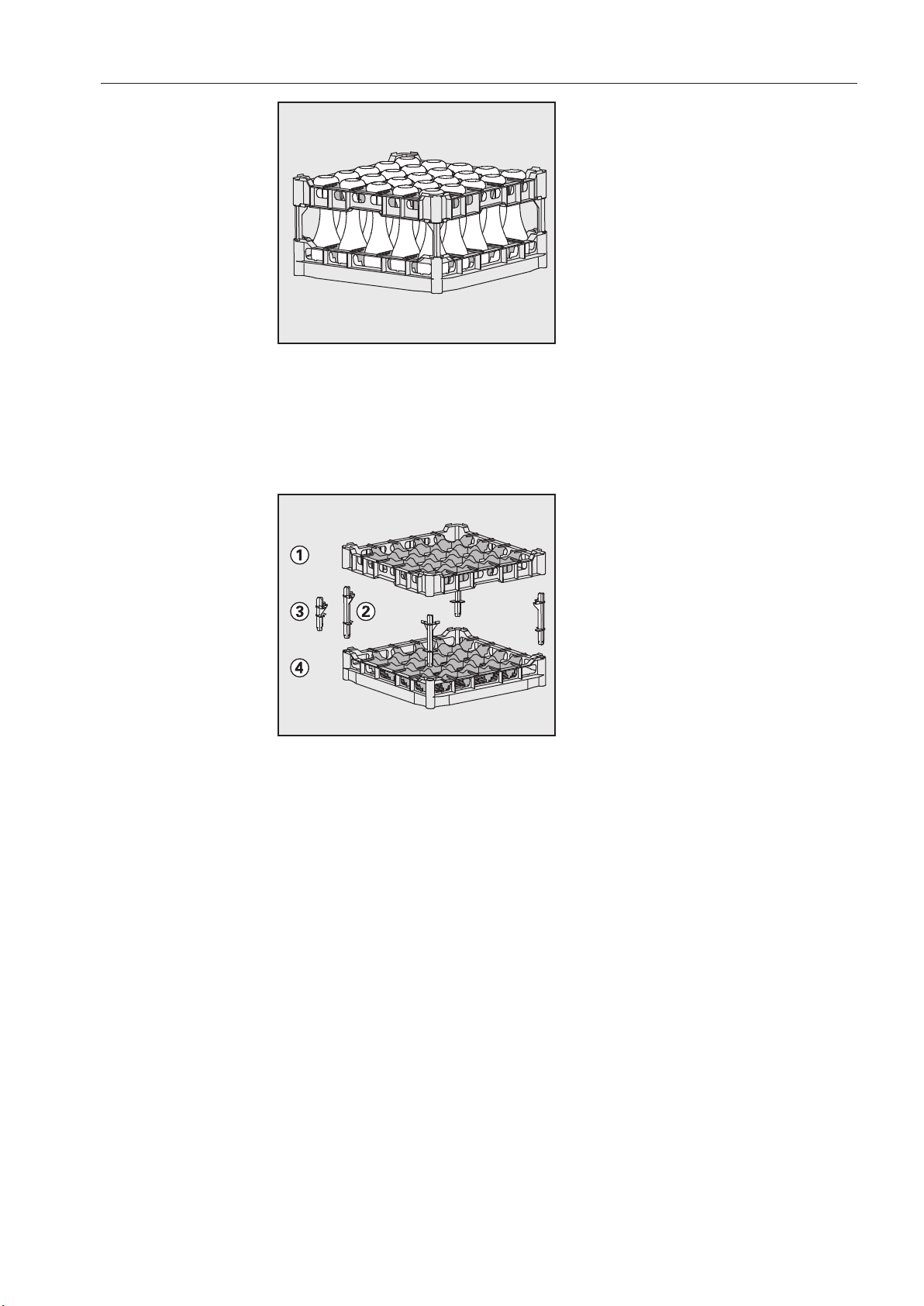
U 525 5-row wire basket
The wire basket can be used for glasses with a maximum diameter of
3 1/8" (8 cm).
Application technology
39
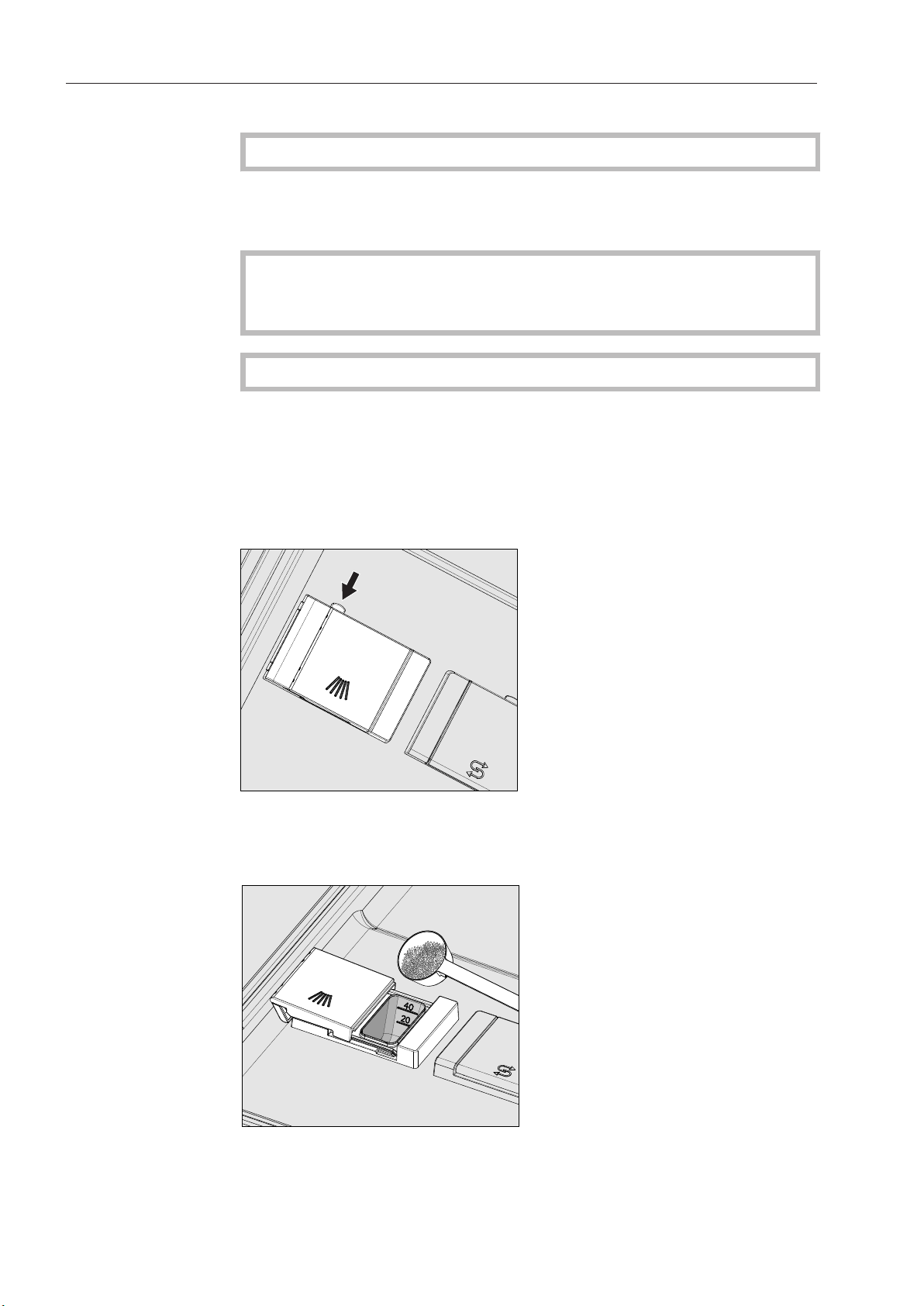
U 534 - U 537 plastic trays with compartments for different glass heights
In this example the plastic tray is connected to the top frame by long
e
xtenders. (for assembly in U 876 lower basket only)
The height of the base basket can be altered by fitting a top frame
t
o the base with long or short extenders.
P
ush all four extenders into the base basket .
P
ress the top frame securely onto the extenders.
Assembling a
plastic tray
Operation
40
Adding detergent
Only use detergent for commercial dishwashers.
The detergent can be dispensed in powder form via the powder de‐
t
ergent dispenser or in liquid form via the G 60 DOS module (Optional
accessory - see "DOS module").
Never use detergent tablets.
The tabs do not dissolve completely during the short program run‐
times.
Only use powder detergent in the door dispenser compartment.
Add powder detergent to the detergent dispenser in the door before
ever
y wash program (except , Cold, Reactivation and Drain). Follow the
tips on the next page.
Add the app
ropriate amount of detergent to the dispenser accord‐
ing to the degree of soiling of the items to be washed (observe the
quantities given in the "Program chart").
P
ress the opening catch on the dispenser in the direction of the ar‐
row. The flap will spring open to the left.
The cover will already be open after a completed wash program.
Add the r
equired amount of powder detergent and close the flap.
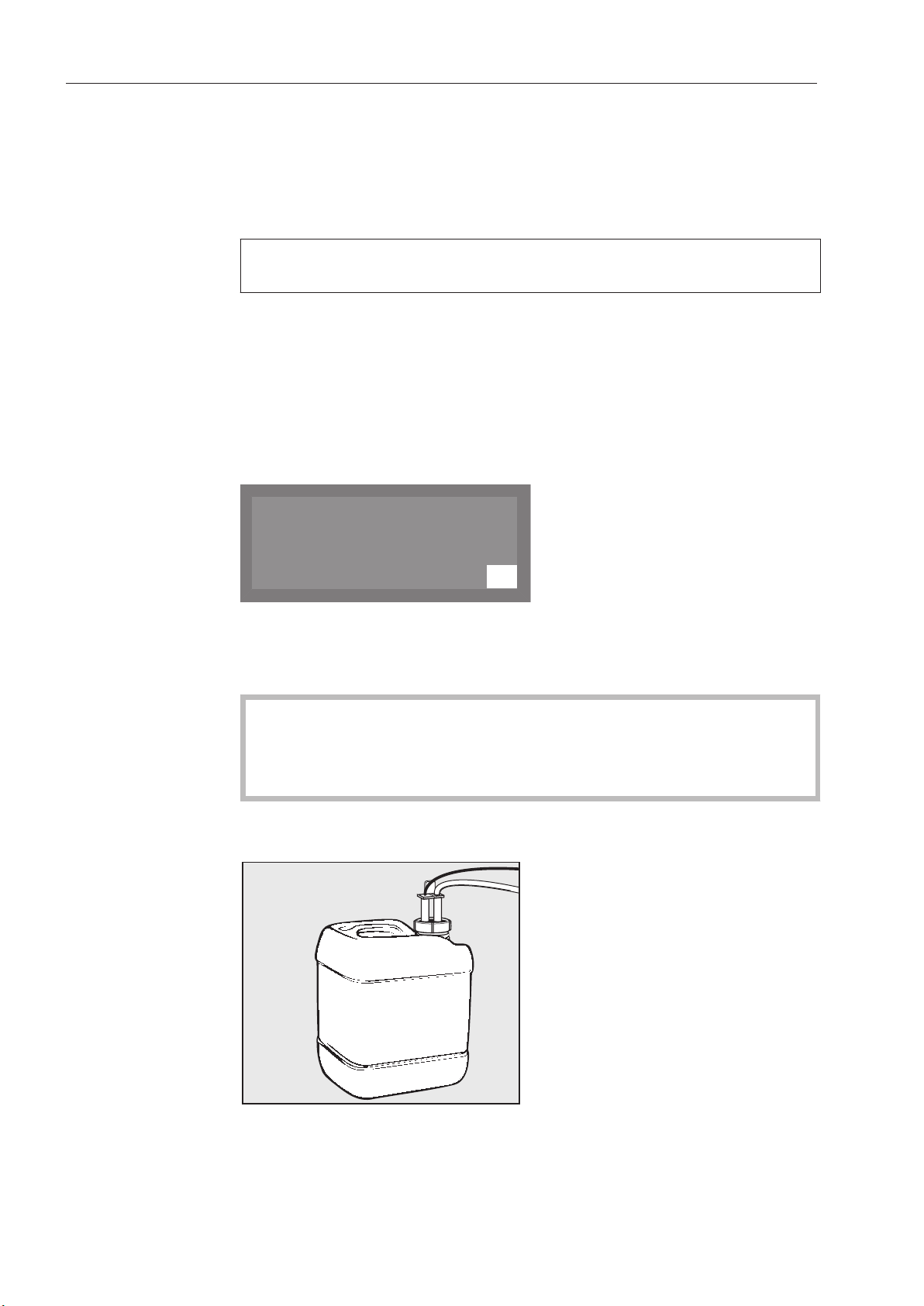
Powder detergent

Operation
41
Al
ways follow the recommendations of the detergent manufacturer.
There are markings to assist with dispensing: 20, 40. The marks indi‐
cat
e a level of approx. 20 or 40 ml (0.7 oz or 1.3 oz) when the door is
open in the horizontal position. They also indicate the approx. level in
grams (depending on the manufacturer and the coarseness of the
agent).
The compartment holds a maximum of 60 ml (2 oz).
Dispensing
Operation
42
DOS module
In addition to the internal dispensing systems, up to two additional
e
xternal dispensing systems (DOS modules) can be connected for
dispensing liquid process chemicals.
The DOS module comes with a separate installation manual.
For more information on Miele DOS modules, please contact your
Mie
le dealer or Miele Service.
The color coding of the siphons helps to ensure correct dispensing.
Miele use and recommend:
Red: for rinse aid
Blue: for det
ergent
The DOS module is equipped with a level indicator which gives a
message
in the display when the level drops below the minimum.
K
OK
Refill DOS
Re
fill the appropriate process chemical at the end of a program as
soon as the message appears in the display.
Confirm the message with the OK butt
on.
Refill the container in time to prevent the dispensing system being
emptied complet
ely.
An empty dispensing system must be vented before starting the
ne
xt program.
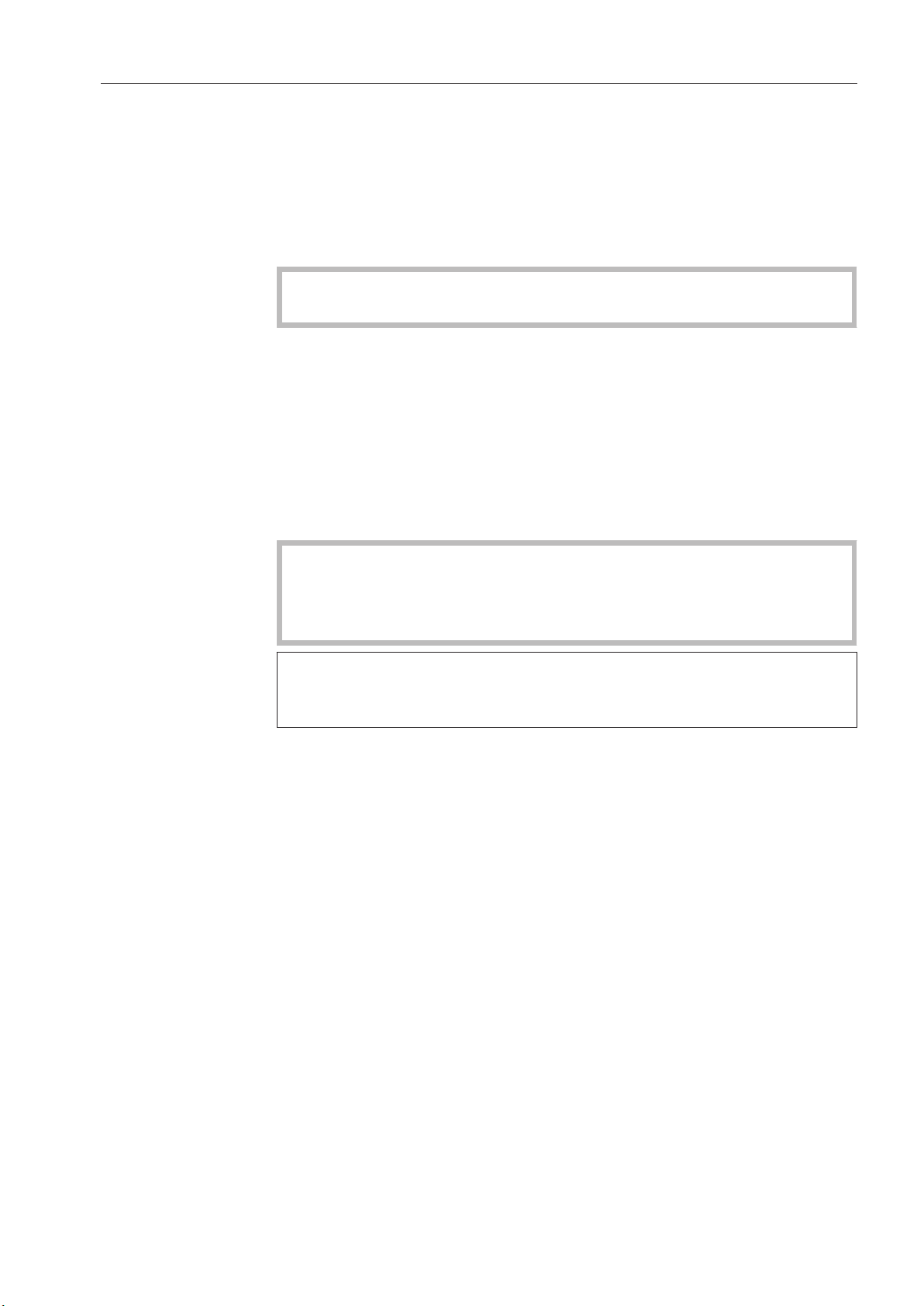
Place the container on the open cabinet door or on a surface which
is easy to clean.
U
nscrew and remove the siphon. Place the siphon on the open
cabinet door.
Re
fill the container or replace it with a full one.
Labelling of the
siphons
Refilling or
changing contain‐
ers
Operation
43
P
ush the siphon into the opening of the container and screw it on
tightly. Observe the color coding.
Wipe up any spilled process chemical thoroughly.
Place the container on the floor beside the dishwasher or in an ad‐
j
acent cupboard.
V
ent the dispensing system if necessary.
To vent the system and adjust the dispensing amount, see "Addi‐
tional settings, Additional functions."
Monitor the amount of process chemicals used by regularly checking
the level
in the container in order to detect any irregularities.
To ensure trouble-free operation, regular maintenance of the DOS
module sho
uld be carried out at specified intervals only by Miele
Service or an authorized Miele dealer.
The DOS G 60 module dispensing hoses must be replaced at 1 - 1
1
/
2
yearly int
ervals.
C
aution when handling liquid agents. They can contain irritant
or corrosive ingredients.
Follow the appropriate safety regulations.
Safety goggles and gloves must be worn.
For cleaning specific types of soiling, and for information on the op‐
timum detergents and additives to use for liquid dispensing, please
contact Miele Service.
Checking con‐
sumption
Dispensing sys‐
t
em maintenance
Operation
44
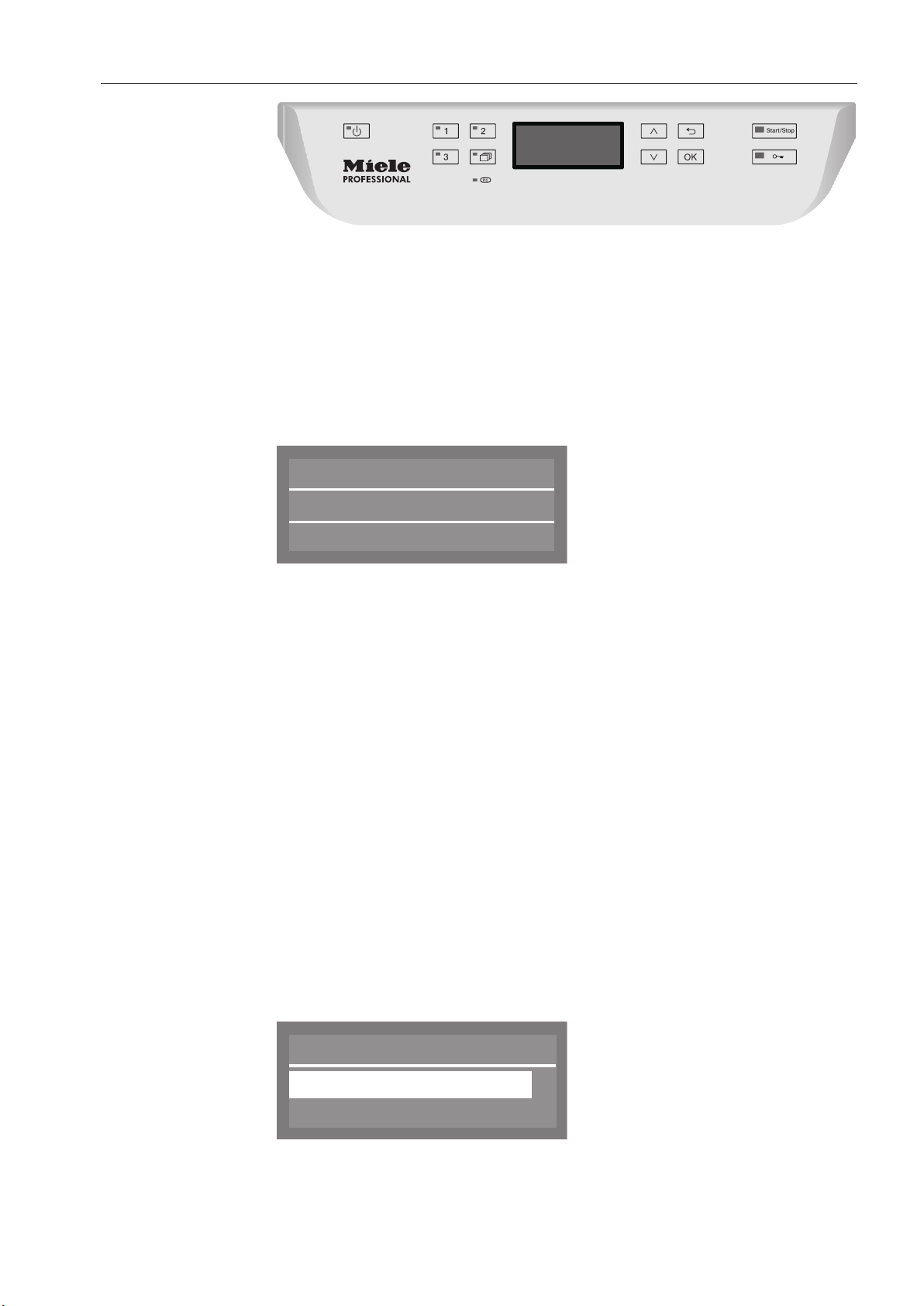
Light-emitting diodes that indicate the status of the dishwasher are
set int
o the keypad.
Except for the
Start/Stop butt
on, which has a green LED in normal
operation, all other LEDs light up yellow.
In the event of a fault the
Start/Stop b
utton flashes red.
Keypad LED Status
butt
on
(On/Off)
ON The dishwasher is turned on.
OFF The dishwasher is turned off.
Button 1-3
(
program
shortcut
buttons)
ON The respective program has been se‐
l
ected. At the end of the program, the
LED will remain lit until a different pro‐
gram is selected.
OFF The program is not selected or the pro‐
g
ram settings are being selected.
butt
on
(additional
programs)
ON A program was selected from the pro‐
g
ram list. At the end of the program, the
LED will remain lit until a different pro‐
gram is selected.
OFF No program has been selected from the
li
st or the program settings are being
selected.
Start/Stop
bu
tton
ON A program is running.
FLASHES
GREEN
A program has been selected, but not
yet
started.
FLASHES
RED
A fault has occurred.
OFF A program has finished.
butt
on
(door but‐
ton)
ON A program has been selected, but not
yet star
ted.
FLASHES A program is finished and the door is
closed.
OFF A program is running.
LEDs in the key‐
pad
Operation
45
Activation
Open the wat
er faucet, if it is closed.
P
ress the button until the LED on the keypad lights up.
Close the door (the LED for the butt
on will light up).
As soon as the dishwasher is ready for operation, the display
chan
ges to show the last selected program,
e.g.:
Universal
Temperature
Duration
G
55 °C
Min
23
Selecting a program
Choose your program according to the type of load and how dirty it
is.
The most regularly used programs can be selected via shortcut but‐
t
ons 1, 2 or 3. These can be adapted to suit individual needs (see
"Additional Settings").
The first three programs from the Program chart are allocated to the
shor
tcut buttons as the factory default.
Sel
ect a program using the shortcut buttons.
The LED for the shortcut button will light up and the LED for the Start/
Stop b
utton will flash.
Programs which cannot be selected via the shortcut buttons can be
select
ed from the program list.
P
ress the button.
The following selection menu appears in the display
Super short
Hygiene plus
,
;
Select program
Sel
ect the program you want using the and buttons and con‐
firm your choice using the
OK b
utton.
Shortcut buttons
Program list

Operation
46
The selected program will be shown in the display, e.g.:
Universal
Temperature
Duration
55 °C
Min
23
G
The LED for the butt
on will light up and the LED for the
Start/Stop
butt
on will flash.
Additional functions can be selected by pressing the OK b
utton (see
"Additional functions").
Starting a program
P
ress the
Start/Stop butt
on.
The LED for the Start/Stop butt
on will light up and the LED for the
button will go out.
A program can no longer be changed after it has been started.
A program can either be interrupted (see "Interrupting a program")
o
r cancelled (see "Cancelling a program").
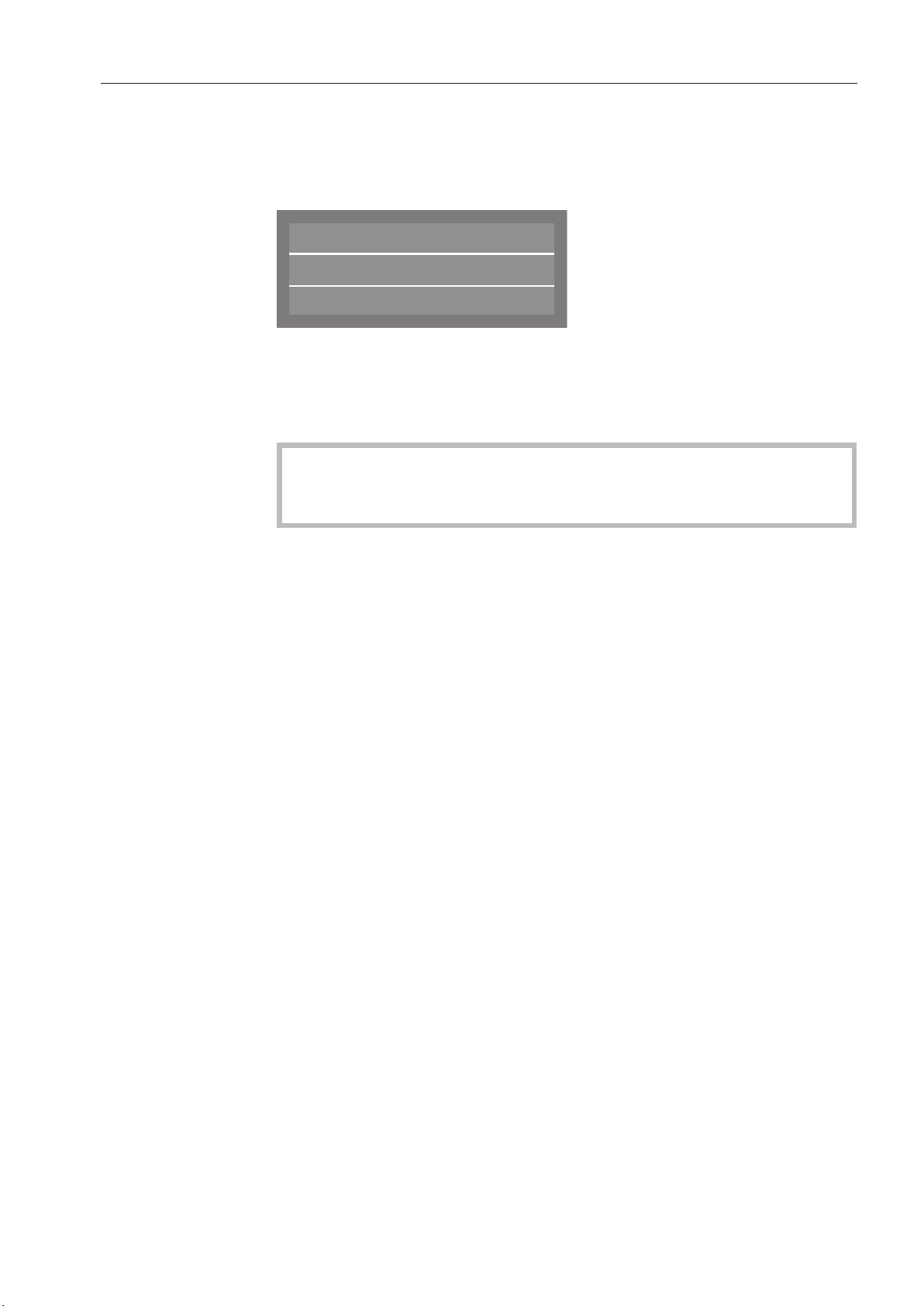
After the start of a program, the wash phase description and, for 10
seconds, Program running ar
e shown in the display.
During the program cycle, the arrow buttons and can be used
to
switch between the wash phase, the target temperature, and the ac‐
tual temperature in the second line of the display.
The time remaining is shown in the third line of the display.
Universal
Main wash 1
Duration
G
Min
23
Program cycle
display
Operation
47
Program end
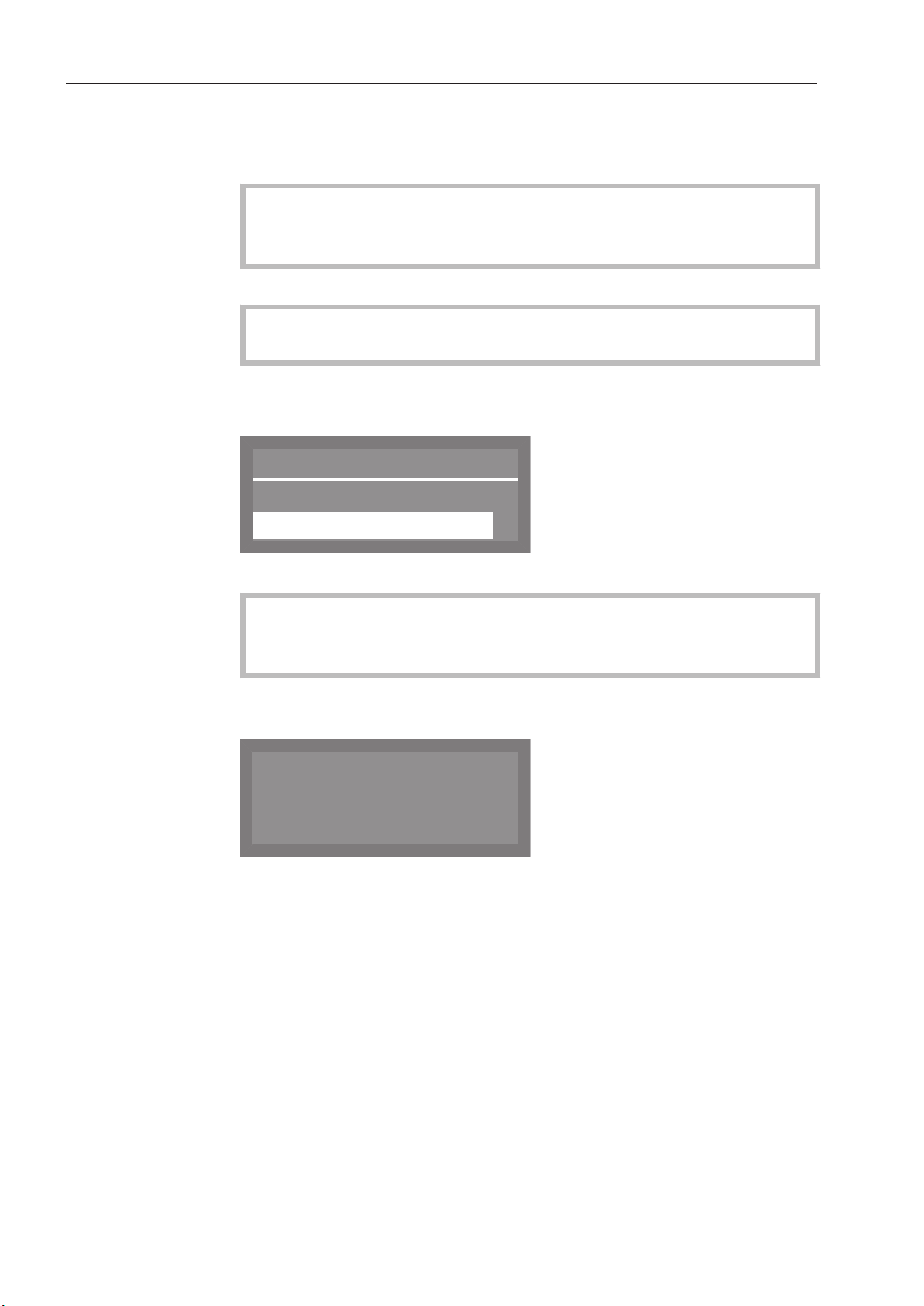
After a program which has ended normally the LED for the Start/Stop
butt
on will turn off and the LED for the button will flash. The mes‐
sage Program finished will appear in the bottom line of the display.
Universal
Temperature
Program finished
55 °C
In addition to this a buzzer will also sound for approx. 3 seconds (fac‐
t
ory default). To alter the buzzer tones see "Settings , Buzzer tones".
If drying assistance has been activated (see "Settings , Dr
ying"), the
door will automatically open a few centimeters.
If the turn-off function is activated, the dishwasher turns itself off
aft
er a short period of time.
Press the button to turn on.
Deactivation
P
ress the button until the LED in the keypad turns off.
If the dishwasher is turned off, the time of day set appears in the dis‐
play
.
You can also alter the time of day display when the dishwasher is
turned off (see "Settings, Time of day, Display").
Unloading the dishwasher
Dishes tend to break and chip more easily when they are hot. Allow
the dishe
s to cool until they are cool enough to handle before unload‐
ing them.
The dishes will cool much faster if you open the door when the pro‐
gr
am has ended.
First unload the lower basket, then the upper basket. This will prevent
water drops from the upper basket falling onto the dishes in the lower
basket.
Operation
48
Interrupting a program
A program which is already running should only be interrupted if ab‐
solu
tely necessary, e.g. if the wash load is moving about significantly.
C
aution! The wash load and the interior of the dishwasher may
be hot.
Danger of scalding and burning.
P
ress the button.
If the t
emperature in the wash cabinet is more than 158°F (70
°C), the warning Wash cabinet too hot will appear in the display.
Confirm the message shown with the OK butt
on.
The following will appear in the display:
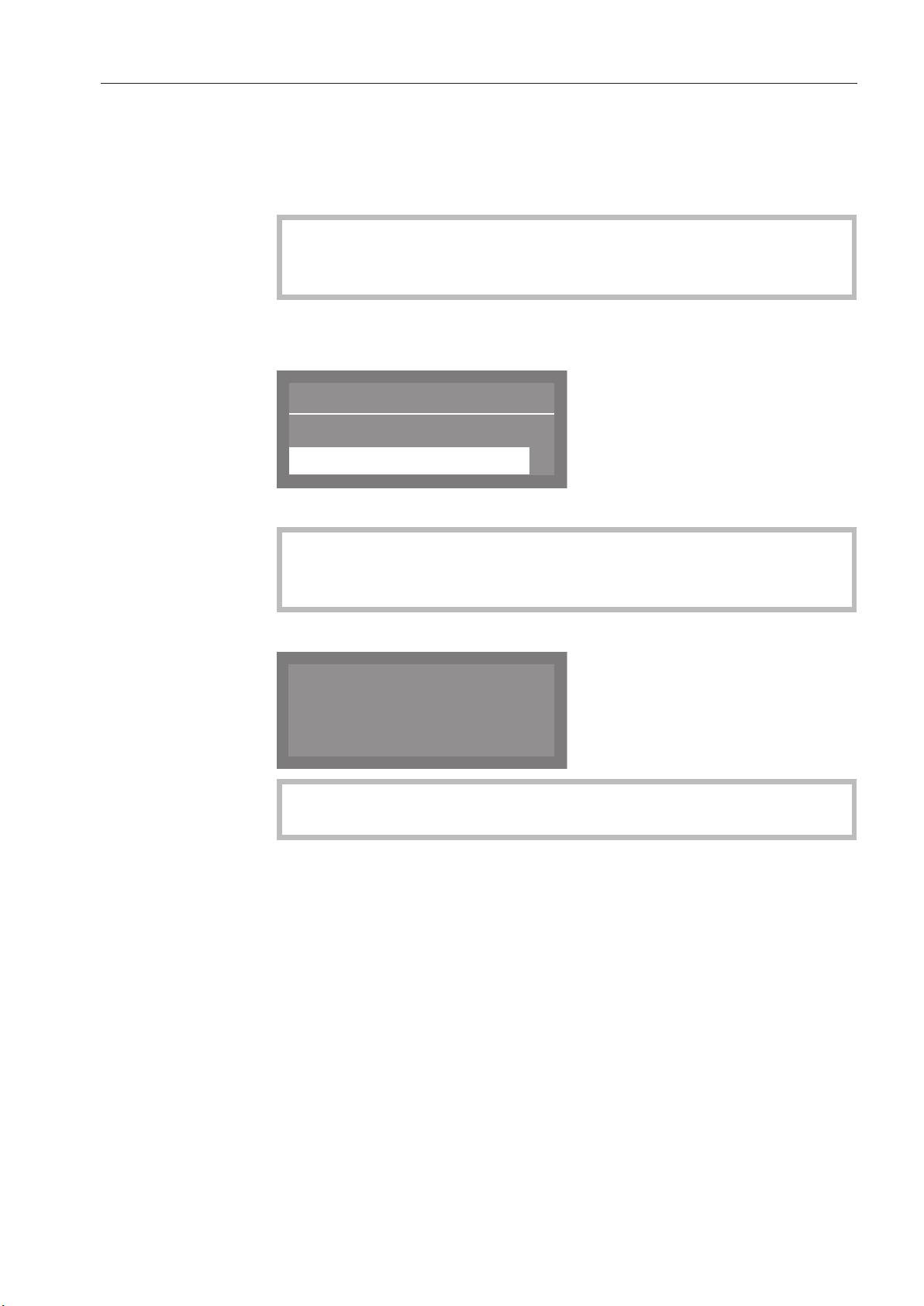
Open door?
Yes
No
(
Select Yes and confirm the entry with the OK button.
The program will only be cancelled when Yes is confirmed.
If there is no additional input 20 seconds after the butt
on has
been pressed, the display will revert to the program cycle.
The door will open and the following message will appear in the dis‐
play:
K
Program interrupted:
Door opened
Re
arrange the items so that they are stable.
C
lose the door.
The program will continue from the point at which it was interrupted.
The display will automatically revert to the program cycle.
Operation
49
Cancelling a program
Only cancel a program which has already started if absolutely neces‐
sar
y, e.g. if you want to change the program.
In the event of a fault, the program will be cancelled automatically.
C
aution! The wash load and the interior of the dishwasher may
be hot.
Danger of scalding and burning.
P
ress the
Start/Stop butt
on.
The following will appear in the display:
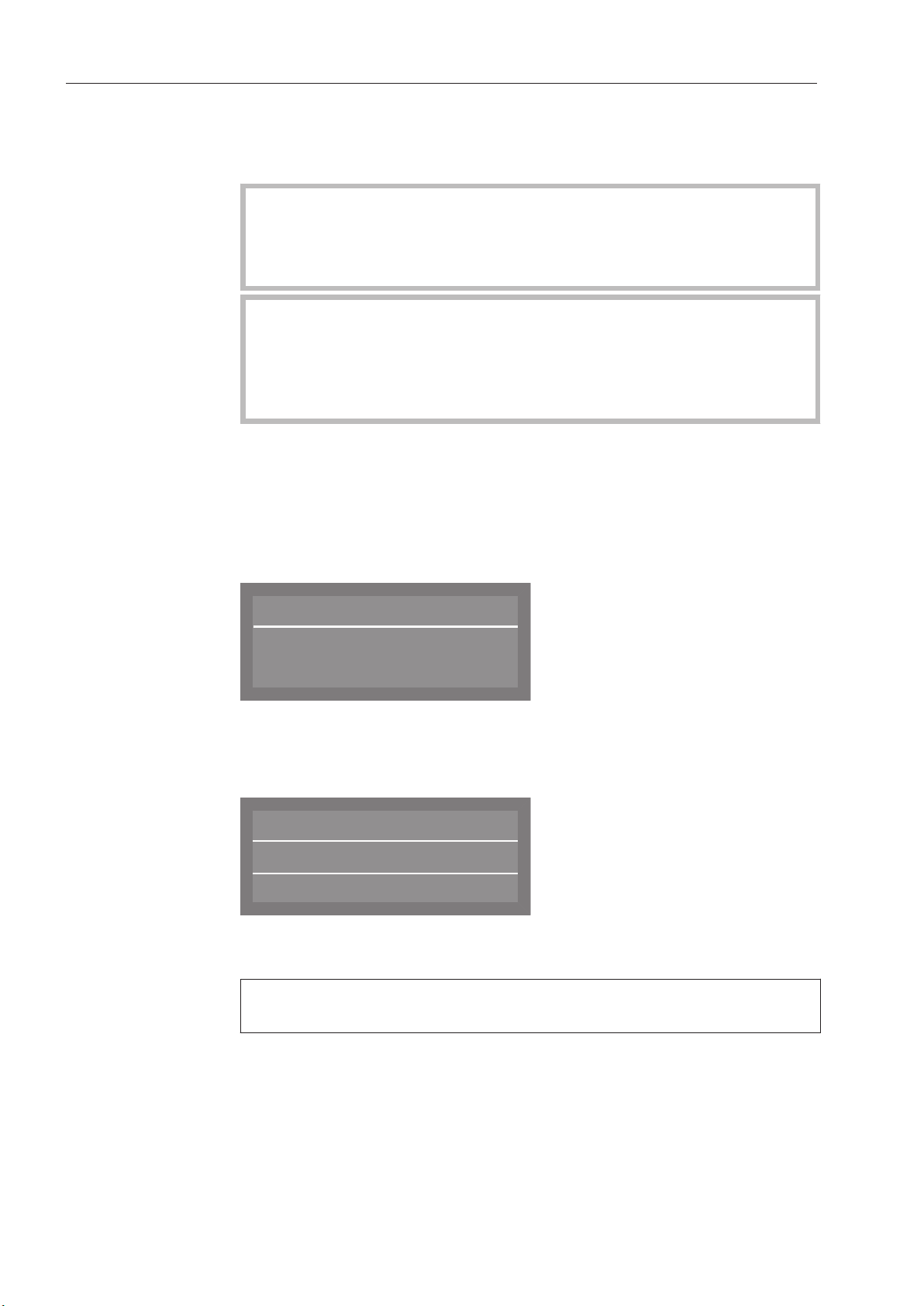
Cancel program
Yes
No
(
Select Yes an
d confirm the entry with the
OK
button.
The program will only be cancelled when Yes is confirmed.
If there is no additional input 20 seconds after the Start/Stop b
utton
has been pressed, the display will revert to the program cycle.
The following message appears in the display:
K
Program cancelled
If you change the program and the detergent compartment flap is
o
pen, add more detergent as necessary.

Program chart
50
Program When to use Powder detergent
(
if liquid detergent is
not dispensed)
Follow the manufacturer's
r
ecommendations
Short
"Quick program" for lightly soiled items with fresh, easily re‐
moved food r
esidues.
20 - 30 g
in the det
ergent dispenser
Universal
For normally soiled items. 20 - 30 g
in the det
ergent dispenser
Intensive
For heavily soiled items. 20 - 30 g
in the det
ergent dispenser
Reactivation
Manual reactivation.
Thi
s can be run to avoid being forced to run a reactivation pro‐
gram during busy periods.
Rinse
Use for rinsing heavily soiled items and to prevent soiling from
dr
ying on the items.
Also used for flushing salt out of the cabinet after refilling the salt
container.
Drain
For pumping away the rinse water when, for example, the pro‐
gr
am has been cancelled.

Program chart
51
Program cycle
1.
P
re-wash
2.
P
re-wash
3.
Main wash
(1) / (2)
4.
Int
erim
rinse
5.
Int
erim
rinse
6.
Final rinse
(1) / (2)
7.
Dr
ying
X X
151°F
(66°C)
1 min
(X) X
185°F
(85°C)
1 min
(X)
X X
151°F
(66°C)
1 min
X (X) X
185°F
(85°C)
1 min
(X)
X X X
151°F
(66°C)
3 min
X (X) X
185°F
(85°C)
1 min
(X)
Reactivation cycle
X
X
X = sections included in a program
(X)
= optional sections which can be selected (see "Additional settings, Additional functions")
(1) Temperature range 86 - 185°F (30 - 85 °C) (see "Additional settings, additional functions").
(2) Holding time
range from 0 - 10 minutes (see "Additional settings, Additional functions").
Additional functions
52
Delay start
The start time of a program can be delayed. A delay start time of be‐
tween 1 minut
e and 24 hours can be selected.
Delay start must be turned on in the Settings menu (see "Settings
, Dela
y start").
If delay start has been turned off, it will not be visible when addi‐
tio
nal functions are called up.
When using the delay start function, make sure that the detergent
co
mpartment is dry before adding detergent. Wipe dry with a cloth
if necessary.
If the compartment is wet, detergent can become lumpy and stick
t
o the dispenser, with the result that it is not fully dispensed.
T
urn the dishwasher on with the button.
Sel
ect the program you require (see "Operation, Selecting a pro‐
gram"). The LED on the
Start/Stop butt
on will flash.
P
ress the
OK butt
on.
Select Delay start and confirm the en
try with the
OK butt
on.
Start time
:
U
se the arrow buttons (higher) and (lower) to set the hours and
minutes and confirm each entry using the
OK butt
on.
When
you have entered the start time, press the
Start/Stop butt
on.
Universal
Temperature
55 °C
12:30Turn on at
G
The selected program, along with the temperature and start time, will
then be displayed.
To cancel a set delay start before it has started, turn the dishwasher
off using the butt
on.
Setting the start
time

Additional functions
53
Drying assistance
To achieve better drying results, the dishwasher door will automati‐
call
y open a few centimeters at the end of the program.
This function cannot be activated for all programs (see "Program
chart").
Drying assistance can be activated or deactivated for the selected
program, even if it is turned on or off permanently under "Settings ,
Drying".
T
urn the dishwasher on with the button.
Select the program you require (see "Operation, Selecting a pro‐
gram"). The LED on the Start/Stop butt
on will flash.
P
ress the
OK butt
on.
Select Drying assistance and confirm the entr
y with the
OK butt
on.
Drying
Yes
No
(
– No
Drying assistance is deactivated for the selected program.
– Yes
Dr
ying assistance is activated for the selected program.
Universal
Temperature
Duration
G
55 °C
Min
23
If drying assistance has been activated, the drying symbol will ap‐
pear in the display to the right of the program name.
If the wash cabinet temperature after the final wash phase is higher
than 153
°F (67°C), an active cooling phase takes place before the
end of the program. The program will only end when the temperature
is lower than 153°F (67°C).
An audible tone sounds, Program finished appears in the display and
the door automatically opens a few centimeters.
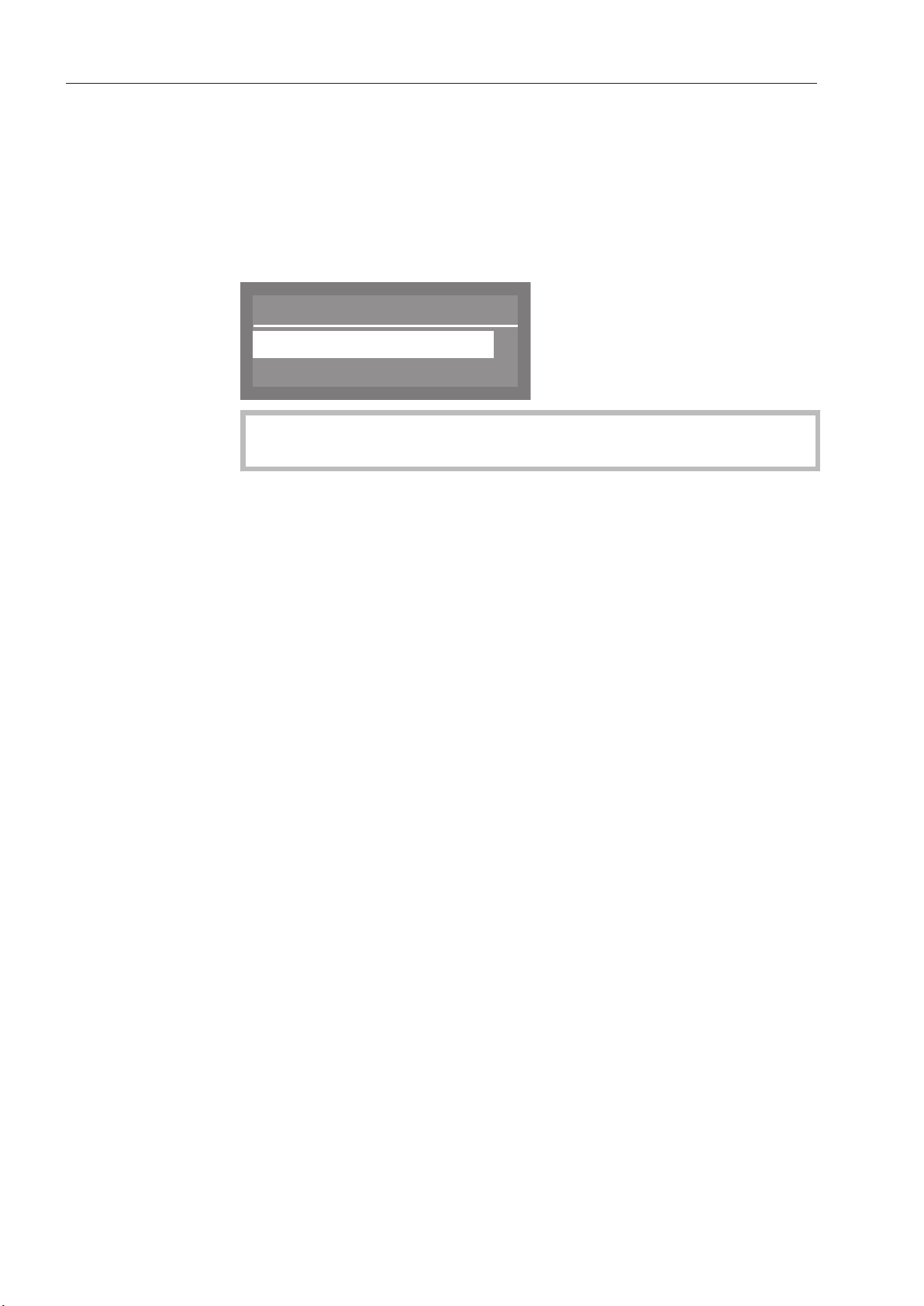
Settings
54
Accessing the "Settings " menu
To open the settings menu:
T
urn the dishwasher off.
P
ress and hold the button and turn the dishwasher back on us‐
ing the button.
After that, the display will show the following, for example:
Menu
Settings
Additional settings
If the b
utton is pressed in this menu, the dishwasher will revert
to normal operation.
Select the Settings option and open the men
u for this by pressing
the
OK button.
– Delay start
T
urn delay start on or off (see "Delay start")
– Drying
Turn drying assistance on or off permanently and adjust drying the
time (see "Drying").
– Language
Select the operating language (see "Set the language")
– DOS priming (
Option is only visible if a DOS module is activated)
Vent dispensing system (see "DOS venting")
– Date
Set the dat
e and date format (see "Set the date")
– Time of day
Set the time and clock format (see "Time of day")
– Volume
Set the volu
me of keypad and buzzer tones (see "Buzzer tones")
Options in the
Settings menu

Settings
55
Menu structure
The factory defaults for the menu structure are shown.
Menu 1. Submenu 2. Submenu
1. Delay start
No
Y
es
2. Drying No
Y
es
3. Language
German
English (US)
etc.
4. DOS venting DOS1
DOS4
5. Date Date format
Set
DD:MM:YY
MM:DD:YY
6. Time of day Set
Display
Clock format
Setting the clock
Do not display
On
"On" for 60 seconds
12 h
24 h
7. Volume Keypad tone
Buzzer tones
Program end
W
arning

Settings
56
Delay start
You can select whether delay start appears in the Additional Func‐
tions menu or not.
Selecting No will r
emove delay start from the Additional Functions
menu for operators.
To be able to delay the start of a program, Yes must be selected in
order for it to be displayed in Additional Functions.
To set the start time see "Additional functions, Delay start".
Select the Settings menu.
Select Delay start and confirm the en
try with the
OK butt
on.
The following options are available:
Delay start
Yes
No
(
– No
De
lay start is turned off and therefore not visible as an additional
function.
– Yes
Delay star
t is turned on.
Select the option you want and confirm your choice with the OK
butt
on.

Settings
57
Drying
You can turn assisted drying on or off for all programs that support
this function.
In Ad
ditional Functions, you can select or deselect drying for individu‐
al programs (see Additional functions, Drying assistance").
Select the Settings menu.
Select Drying and con
firm the entry with the
OK butt
on.
The following options are available:
Drying
Yes
No
(
– No
Dr
ying is turned off.
– Yes
Dr
ying is turned on for those programs which support drying assis‐
tance.

Settings
58
Setting the language
The language set will be used in the display.
The flag
after the word "Language" acts as a guide if a language
which you do not understand has already been set.
If this is the case, keep selecting the option which has a flag after it
until you reach the "Language" submenu.
Select the Settings menu.
Select Language
and confirm the entry with the
OK butt
on.
A list will appear in the display with all the languages available in the
system.
Language
,
;
(
english (AU)
deutsch
Use the and arrow buttons to select the language you want
and confirm your choice using the OK butt
on.
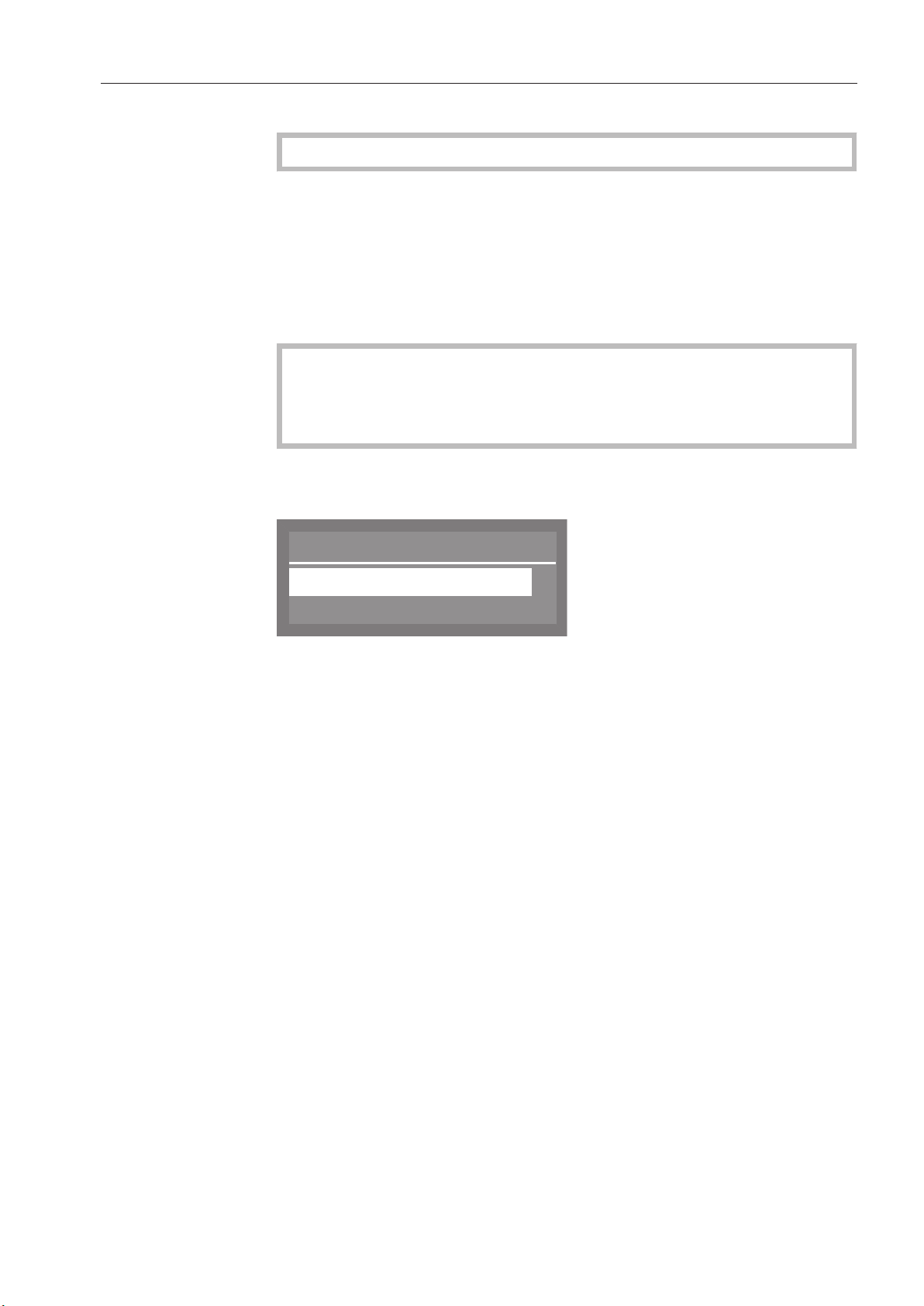
Settings
59
Venting DOS modules
This option is only visible when a DOS module is connected.
The dispensing system for liquid agents can only dispense reliably if
the syst
em has been purged of air.
The DOS system must be vented:
– if it is being used for the first time,
– if the liquid detergent or rinse aid reservoir was not refilled in time
and t
he DOS system was emptied.
T
o avoid damage to the dispensing system, make sure before
venting that the containers for detergent and rinse aid are suffi‐
ciently filled and the dispensing siphons are screwed securely to
the containers.
Select the Settings menu.
Select DOS priming and
confirm the entry with the
OK b
utton.
DOS priming
DOS1
DOS4
Sel
ect the dispensing system to be vented using the and ar‐
rows and confirm your choice with the
OK butt
on.
The dishwasher will then start to vent the selected dispensing system
aut
omatically. As soon as this is completed, Dispensing system suc-
cessfully primed will appear in the display.
Confirm the message with the OK butt
on.

Settings
60
Setting the date
Select the Settings menu.
Select Date and confirm the entr
y with the
OK butt
on.
In the following menu, you can choose between:
Date
Date format
Set
– Date format
Th
is option offers two variations for date format.
– Set
Th
is option is used to set the date in the selected format.
Select Date format and confirm
the entry with the
OK butt
on.
Date format
DD:MM:YY
MM:DD:YY
(
DD stands for day
MM stands for month
YY stands for year
Sel
ect the date format you want and confirm your choice with the
OK butt
on.
Select Set and
confirm the entry with the
OK b
utton.
Date
01 . 06 . 2015
U
se the arrow buttons (higher) and (lower) to set the day,
month and year and confirm each entry using the
OK b
utton.
When day, month and year have been set, the display reverts auto‐
matical
ly to the Date menu.
Date format
Set

Settings
61
Setting the clock
Select the Settings menu.
Select Time of day and confirm the en
try with the
OK butt
on.
In the following menu, you can choose between:
Time of day
Set
Display
,
;
– Set
Set the time of day
.
– Display
T
ime of day displayed when the dishwasher is turned off.
– Time format
Set the clock format.
The dishwasher does not automatically adjust between summer and
wint
er time. This must be done manually by the operator as required.
Select Set and
confirm the entry with the
OK b
utton.
Time of day
12 : 00
U
se the arrow buttons (higher) and (lower) to set the hours and
minutes and confirm each entry using the
OK butt
on.
When hours and minutes have been set, the display reverts automati‐
call
y to the Time of day menu.
Set

Settings
62
If required, the time of day can be displayed when the dishwasher is
turned off.
Select Display and confirm the entry with the OK button.
The following options are available:
Display
Do not display
On
,
;
(
– Do not display
Time of day is not displayed.
– On
Time of day is constantly displayed.
– On for 60 seconds
T
ime of day is displayed for 60 seconds after turning off.
Select the setting you want and confirm your choice with the OK but‐
t
on.
Select Time format
and confirm the entry with the
OK b
utton.
The following options are available for clock format in the display:
Time format
(
24 h
12 h
– 12 h (am / pm)
– 24 h
Select the format you want and confirm your choice with the OK
butt
on.
Display
Clock format

Settings
63
Regulating the volume
The dishwasher has audible tones which sound when buttons on the
k
eypad are pressed, at the end of a program, and when there are sys‐
tem messages.
Select the Settings menu.
Select Volume and confirm the entr
y with the
OK butt
on.
The following options are available:
Volume
Keypad tone
Buzzer tones
– Keypad tone
Set the k
eypad volume.
– Buzzer tones
Set the volume for program end and for warning messages.
Select Keypad tone
and confirm the entry with the
OK
button.
Set the volume you want (see "Setting the volume") and confirm
your choice with the OK butt
on.
Select Buzzer tones and confirm the entr
y with the
OK butt
on.
The following options are available:
Buzzer tones
Program end
Warning
– Program end
Set
the buzzer tone for the end of the program.
– Warning
Set the buzz
er tone for warning messages.
Sel
ect the appropriate option and confirm your choice with the
OK
butt
on.
Set the volume you want (see "Setting the volume") and confirm
your choice with the
OK butt
on.
Keypad tone
Buzzer tones
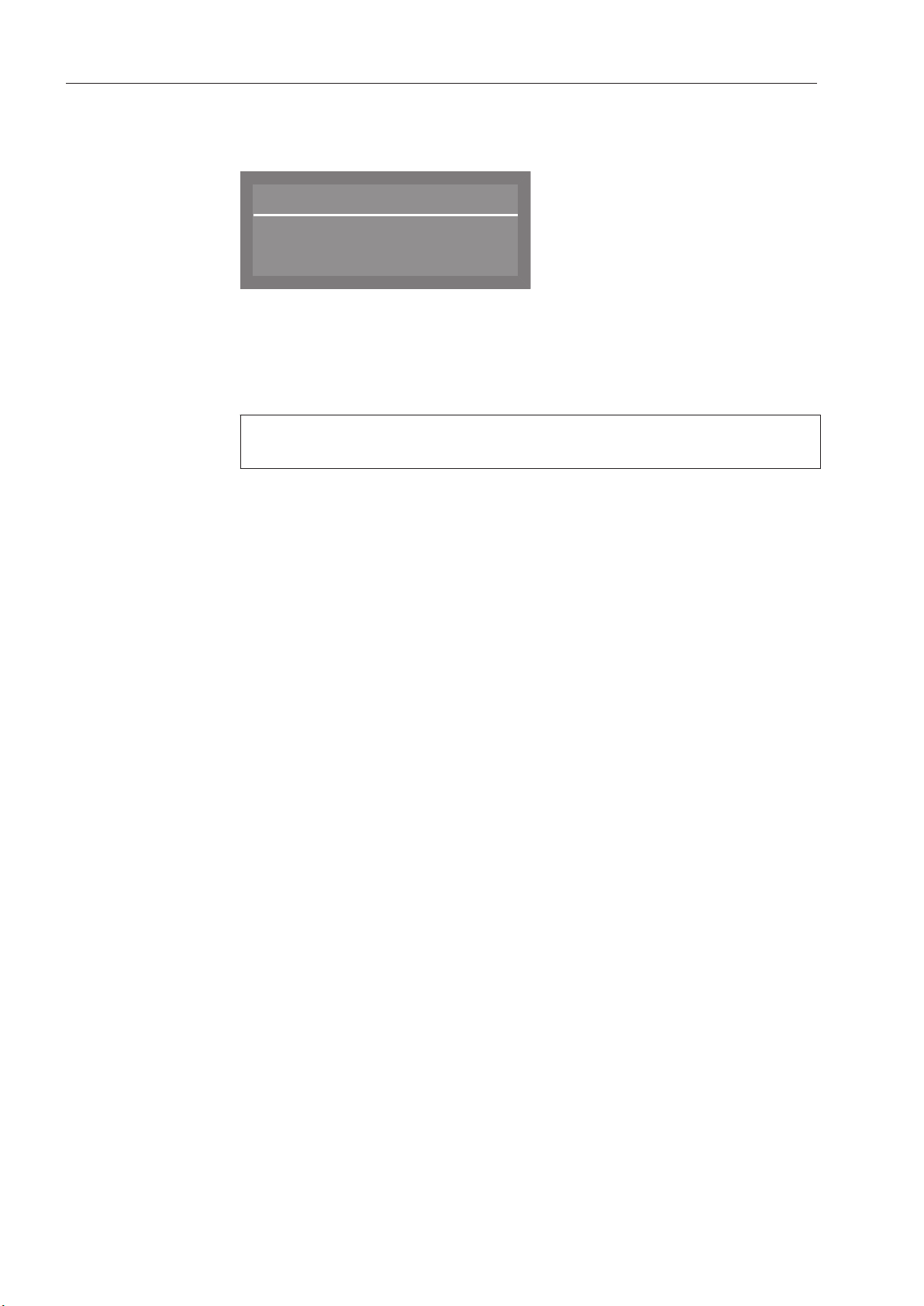
Settings
64
The volume is always set in the same way. The display is also similar,
e.g.:
z
Keypad tone
Quieter Louder
Set the vo
lume using the arrow buttons (louder) and (quieter).
The volume level is represented by a bar graph. On the lowest setting
the t
one is turned off.
Confirm the volume set with the OK butt
on.
If there is no additional input for approx. 15 seconds, the display will
r
evert to the previous menu without saving the setting.
Setting the vol‐
ume
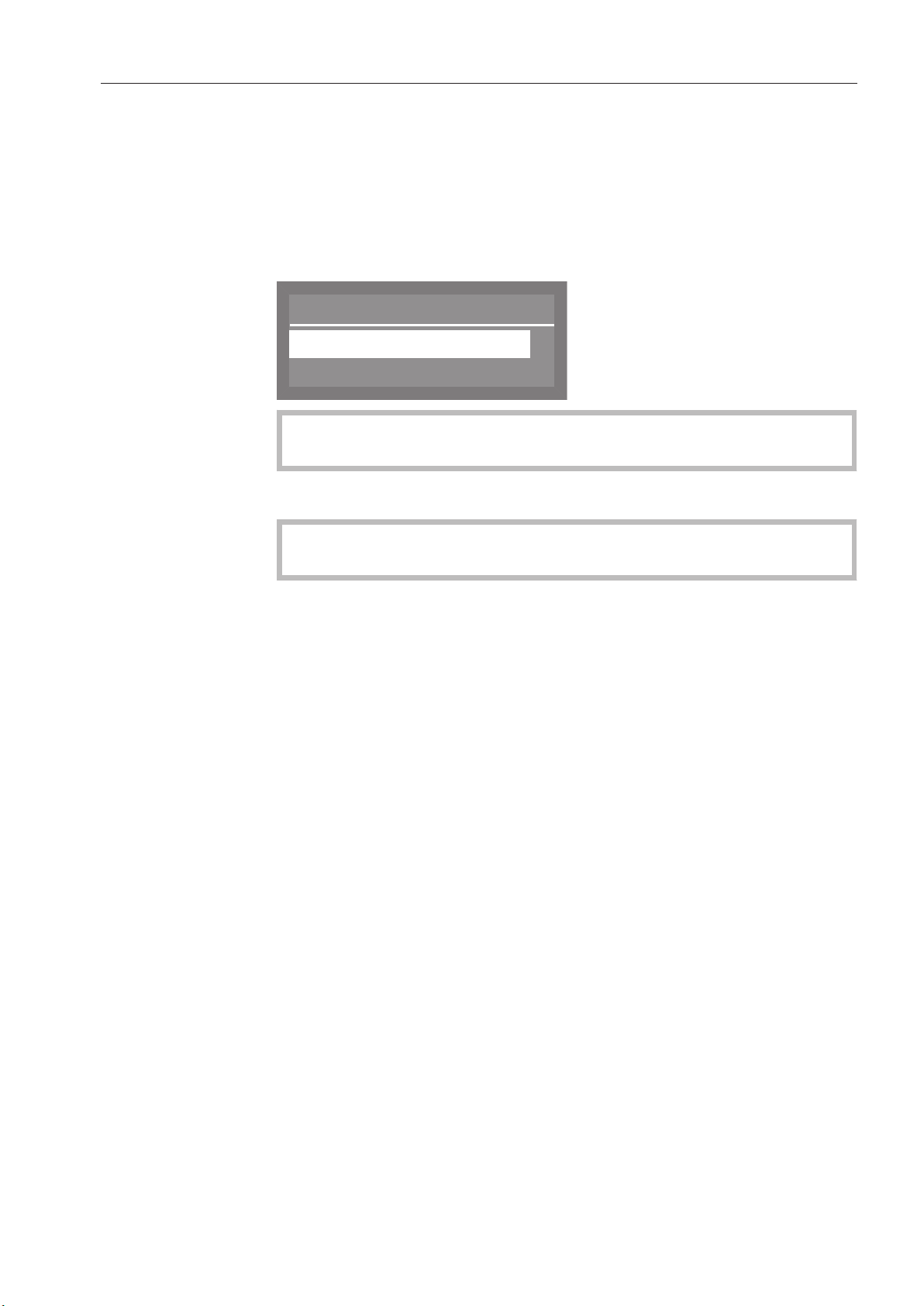
Additional settings
65
Opening the "Additional settings" menu
To open the "Additional settings" menu:
T
urn the dishwasher off.
P
ress and hold the button and turn the dishwasher back on us‐
ing the button.
After that, the display will show the following, for example:
Menu
Settings
Additional settings
If the b
utton is pressed in this menu, the dishwasher will revert
to normal operation.
Select Additional settings an
d press
OK t
o open the relevant menu.
This menu can be protected with a PIN code (see "Additional set‐
tings, Code").
– Code
PIN code assignment and settings (see "Code")
– Log book
Displays co
nsumption levels for agents used and operating hours
(see "Log book")
– Temperature unit
Setting of the t
emperature unit between °C and °F (see "Tempera‐
ture unit")
– Move program
P
rograms can be allocated to the shortcut buttons (see "Move pro‐
gram")
– Additional functions
Adap
tation of program parameters such as water intake, interim
rinses, temperatures, and holding times, as well as detergent con‐
centration levels for the DOS modules (see "Additional functions")
– Release program
Det
ermination of the visibility of individual programs on the display
(see "Program release")
– Water hardness
Settin
g of the water hardness level (see "Water hardness" and "Wa‐
ter softener")
– Display view
Setting of the display between the tar
get and actual temperatures
(see "Display view")
Options in the Ad‐
ditional Settings
menu

Additional settings
66
– Display
Ad
justment of the display contrast and brightness (see "Display")
– Switch off after
Automatic switch-off can be activated or deactivated (see "Switch
off after")
– Factory default
Re
set of all parameters to the factory default settings (see "Factory
default")
– Software version
Display of the softwar
e version (see "Software version")

Additional settings
67
Menu structure
The factory defaults for the menu structure are shown.
Menu 1. Submenu 2. Submenu 3. Submenu
1. PIN code Release
Change PIN code
Additional settings
Ent
er PIN code
Yes
Block
2. Log book Consumption: water
Con
sumption: deter‐
gent
Consumption: rinse
aid
Operating hours
Program cycles
Service interval
3. Temperature unit
°C
°F
4. Move program 1. Short
2. Universal
3. Int
ensive
etc.
5. Additional func‐
tions
Reset
Increased water level
Interim rinse
Dispensing systems
Temperature / time
Yes
No
Yes
No
DOS2 rinse aid
DOS1
DOS4
Short
Universal
Int
ensive
etc.
Active
Inactive
DOS venting
Con
centration
Change name
Reset
Main wash 1
Final rinse 1
6. Program release
All
Selection
Shor
t
Universal
etc.
Accept
7. Water hardness Enter hardness level

Additional settings
68
Menu 1. Submenu 2. Submenu 3. Submenu
8. Display view Actual temperature
T
arget temperature
9. Display Contrast
Brightness
Set the contrast
Set the brightness
10. Switch off after
Yes
No
Set the time
11. Factory default Reset
No
P
rogram settings on‐
ly
All settings
12. Software version EB Id: XXXX
EGL Id: XXXX
EZL Id: XXXX
EFU Id: XXXX
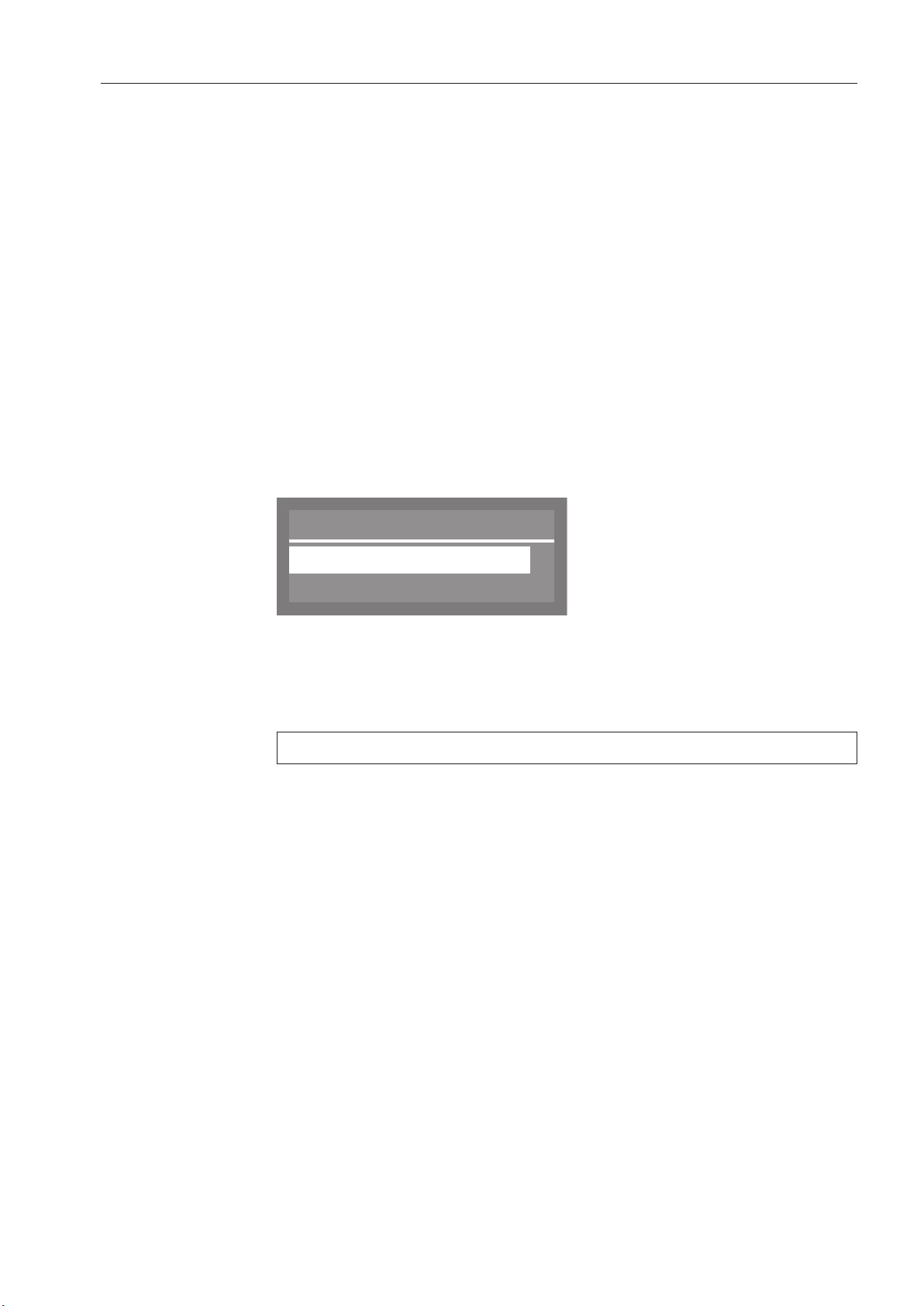
Additional settings
69
CODE
A PIN code can be used to prevent unauthorized access to various
function
s and system settings on the dishwasher.
Select the Additional settings menu.
Select Code an
d press
OK t
o open the relevant menu.
– Release
Re
strict access to the Additional settings menu to users with admin‐
istrative rights only, or allow access to all users.
– Change code
Set a new PIN code.
Select the Release option and confirm your choice with the OK but‐
ton.
Select Additional settings an
d confirm the entry with the
OK
button.
The following settings are available:
Additional settings
Yes
Block
(
– Yes
The menu is available to all users.
– Block
The menu can only be accessed by using a PIN code.
A tick indicat
es the current status.
Sel
ect the appropriate option and confirm your choice with the
OK
butt
on.
Select the Change code option and confirm your choice with the OK
butt
on.
First e
nter the current PIN code (see "Enter code").
Then
enter your new PIN code.
The PIN
code is saved to memory once you have confirmed the last
digit.
Release
Changing the PIN
code
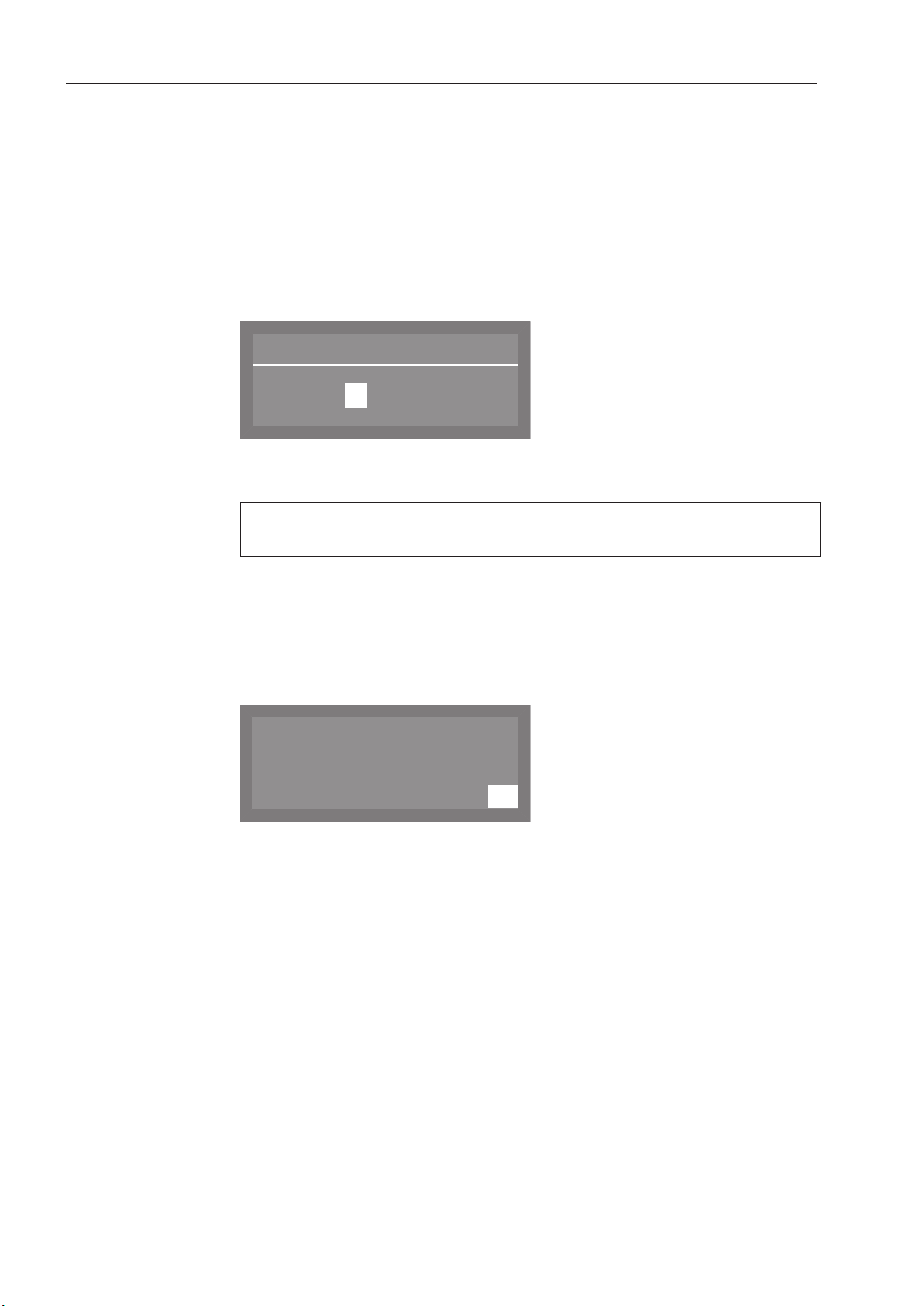
Additional settings
70
If in the Release menu you have
selected the Block option, or if you
have set the Additional settings menu up for access via a PIN code,
you have to enter a PIN code.
Settings within the Additional settings menu can then only be changed
by people with administration rights.
The PIN code is set at the factory to 8 0 0 0 if access in Additional set-
tings is b
locked.
In this instance, the display will show the following message:
Enter code
0 0 0 0
Use the
and arrow buttons to enter the numerical values and
confirm each one with the
OK butt
on.
Each press of the OK b
utton takes the highlighting to the next input
position automatically.
Each digit entered is replaced by an asterisk (*).
The protected settings are released once all digits have been correct‐
ly ent
ered.
If the PIN code is entered incorrectly, the following message will ap‐
pear in the display:
K
OK
Wrong code entered
Confirm the message with the OK butt
on.
The display will then revert to the input menu.
Enter PIN code

Additional settings
71
Log book
The dishwasher controls measure the consumption levels for water,
det
ergent and rinse aid. They also calculate the number of hours the
dishwasher has been run and the number of programs that have been
run and measure the service intervals.
Select the Additional settings menu.
Select Log book and pr
ess
OK t
o open the relevant menu.
The following options are available:
Log book
,
;
Consumption: Water
Consumpt.:Cleaning agent
– Consumption: Water
Display of the t
otal amount of water used in liters
– Consumpt.:Cleaning agent
Display of the t
otal amount of detergent used in liters (only for dish‐
washers using a DOS module)
– Consumpt.: Rinsing aid
Display the t
otal amount of rinse aid used in liters
– Operating hours
Display o
f the total number of operating hours
– Wash programs
Di
splay of the total number of program cycles
– Service interval
Di
splay of the date when the next service is due
Select the option you want and confirm your choice with the OK
butt
on.
The value will then be displayed.
Pressing the OK butt
on takes you to the next level.

Additional settings
72
Temperature unit
The temperature can be shown in the display in degrees Celsius or
degr
ees Fahrenheit.
Select the Additional settings menu.
Select Temperature unit and con
firm the entry with the
OK butt
on.
Temperature unit
°C
°F
(
– °C
The t
emperature is displayed in degrees Celsius
– °F
Th
e temperature is displayed in degrees Fahrenheit
Use the
and arrows to select the option you want and confirm
your choice with the
OK butt
on.
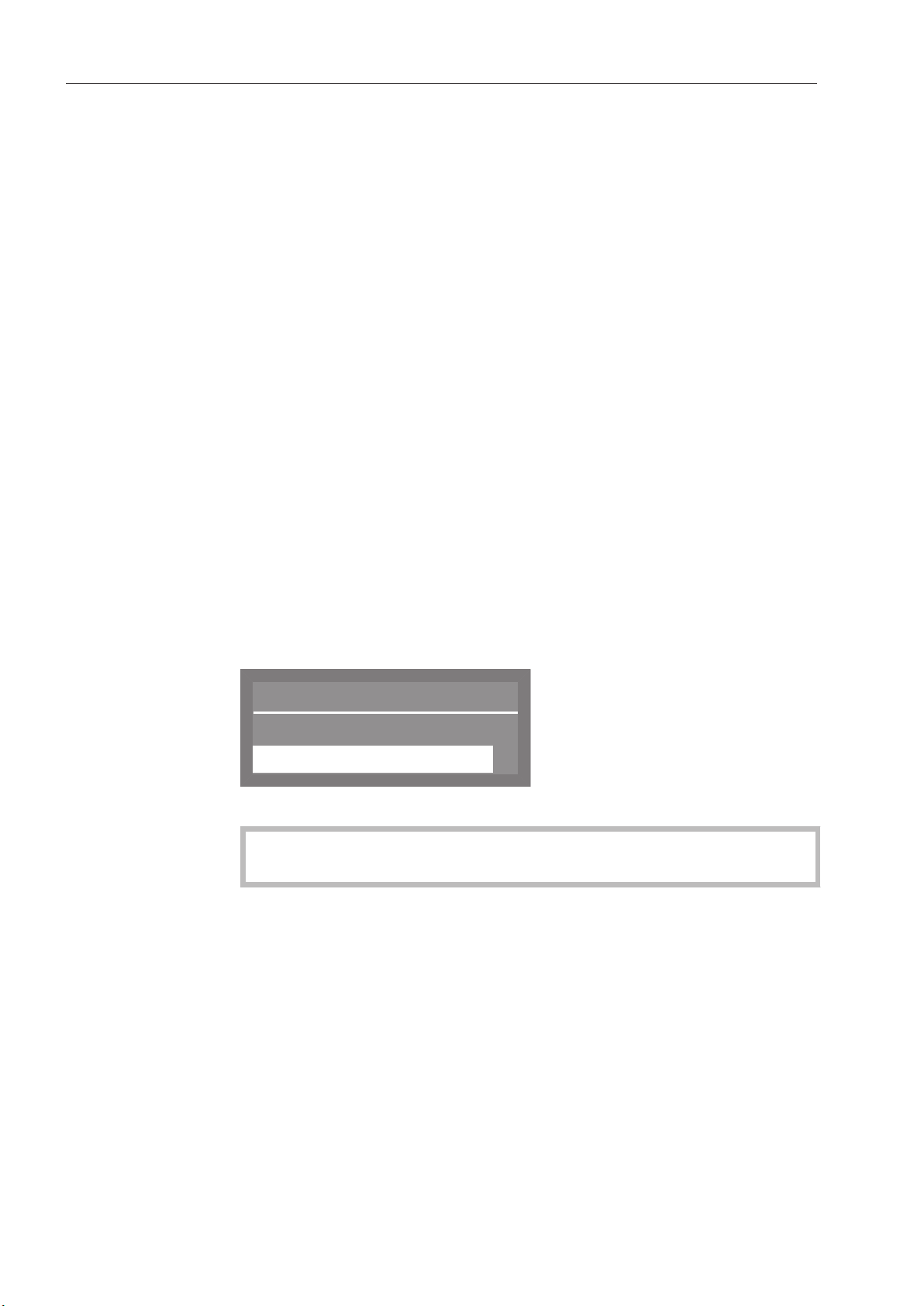
Additional settings
74
Additional functions
It is possible to adapt individual parameters to tailor program cycles
t
o particular types of soiling and to optimize the cleaning result.
Select the Additional settings menu.
Select Additional functions and pr
ess
OK
to open the relevant menu.
In the following menu, you can choose between:
– Reset
Reset of all
parameters changed in Additional Functions to their de‐
fault settings
– Increased water level
Increase in the amount of water used in all wash programs
– Interim rinse
I
ntroduction of an interim rinse to all programs that support this fea‐
ture (see "Program chart")
– Dispensing system
V
enting of the dispensing systems and naming of the DOS modules
– Temperature / Time
Change
in the temperature and holding time for the main wash and
final rinse stages of a wash program
Select the Reset option and confirm your choice with the OK but‐
t
on.
Reset
Yes
No
(
Select the Yes
option and confirm your choice with the
OK b
utton.
All parameters that have been changed under "Additional func‐
tio
ns" will be reset to the factory default setting.
Reset

Additional settings
75
Select the Increased water level option and confirm your choice with
the
OK butt
on.
The amount of water is shown in liters and can be increased in 0.5 li‐
ter increments up to 1.5 liters.
Increased water level
0,0 l
(0,0 1,5 l)
U
se the arrow buttons (higher) and (lower) to select the
amount of water you want and confirm your choice with the
OK
butt
on.
Select the Interim rinse option and confirm your choice with the OK
b
utton.
The following options are available:
Interim rinse
Yes
No
(
– Yes
The additional
interim rinse is activated.
– No
T
he additional interim rinse is not activated.
Select the option you want and confirm your choice with the OK
butt
on.
Increased water
level
Interim rinse
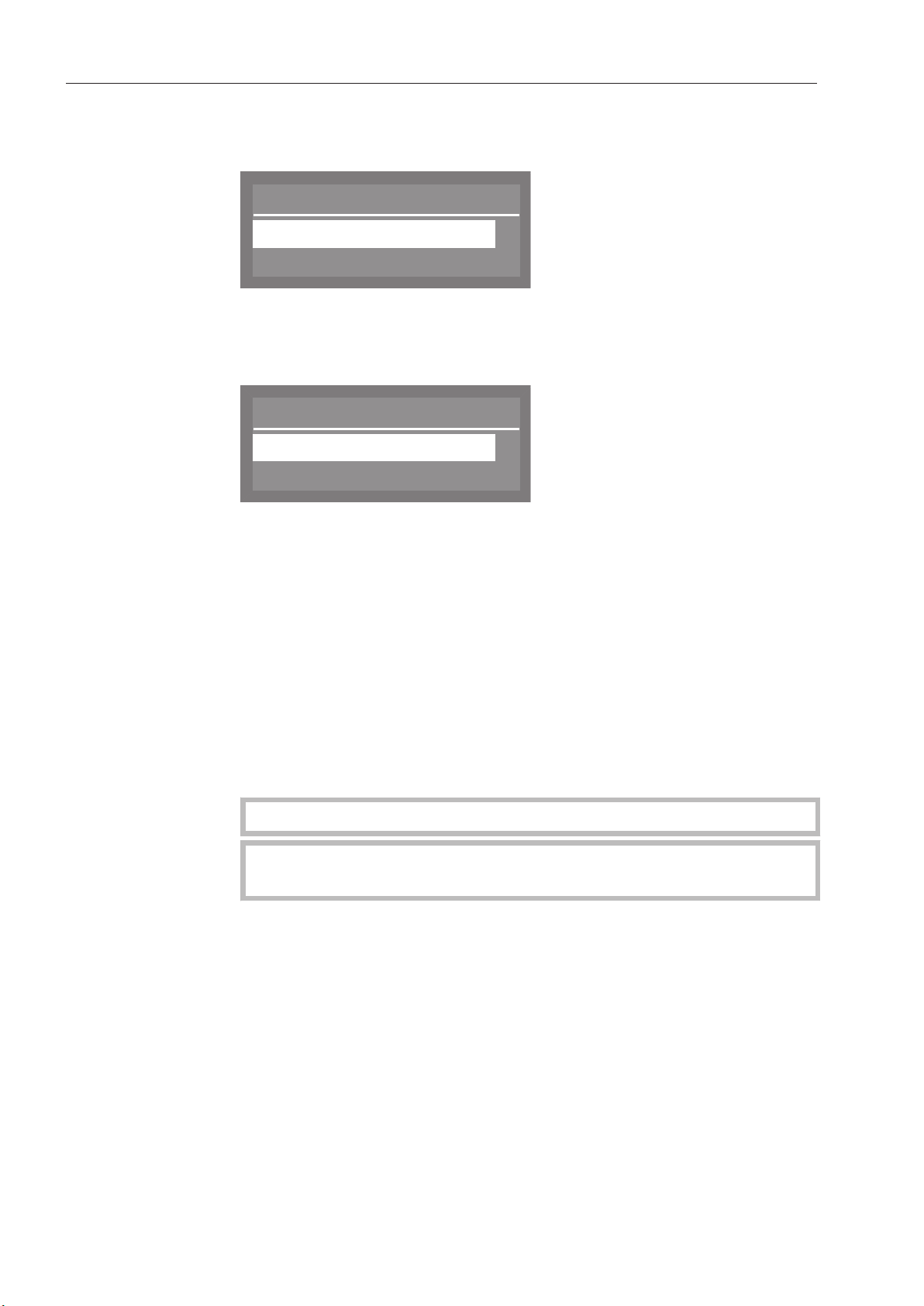
Additional settings
76
Select the Dispensing system option and confirm your choice with
the
OK butt
on.
Dispensing system
DOS1
;
,
DOS 2 Rinsing aid
Sel
ect the dispensing system you want and confirm your choice
with the
OK butt
on.
The following settings are available:
Active
Inactive
,
;
DOS1
– Active
The dispensing syst
em is activated.
– Inactive
The dispensing syst
em is not activated.
– DOS priming
V
enting of the dispensing system to ensure reliable dispensing.
– Concentration
T
he concentration level of detergent and/or rinse aid can be set to
suit requirements.
– Change name
Th
e name of the dispensing system can be changed.
With DOS 2 Rinsing aid, the only option displayed is Concentration.
With DOS1 and DOS4, the options DOS priming, Concentration
and
Change name are only visible if Active has been selected.
DOS dispensing
sys
tems
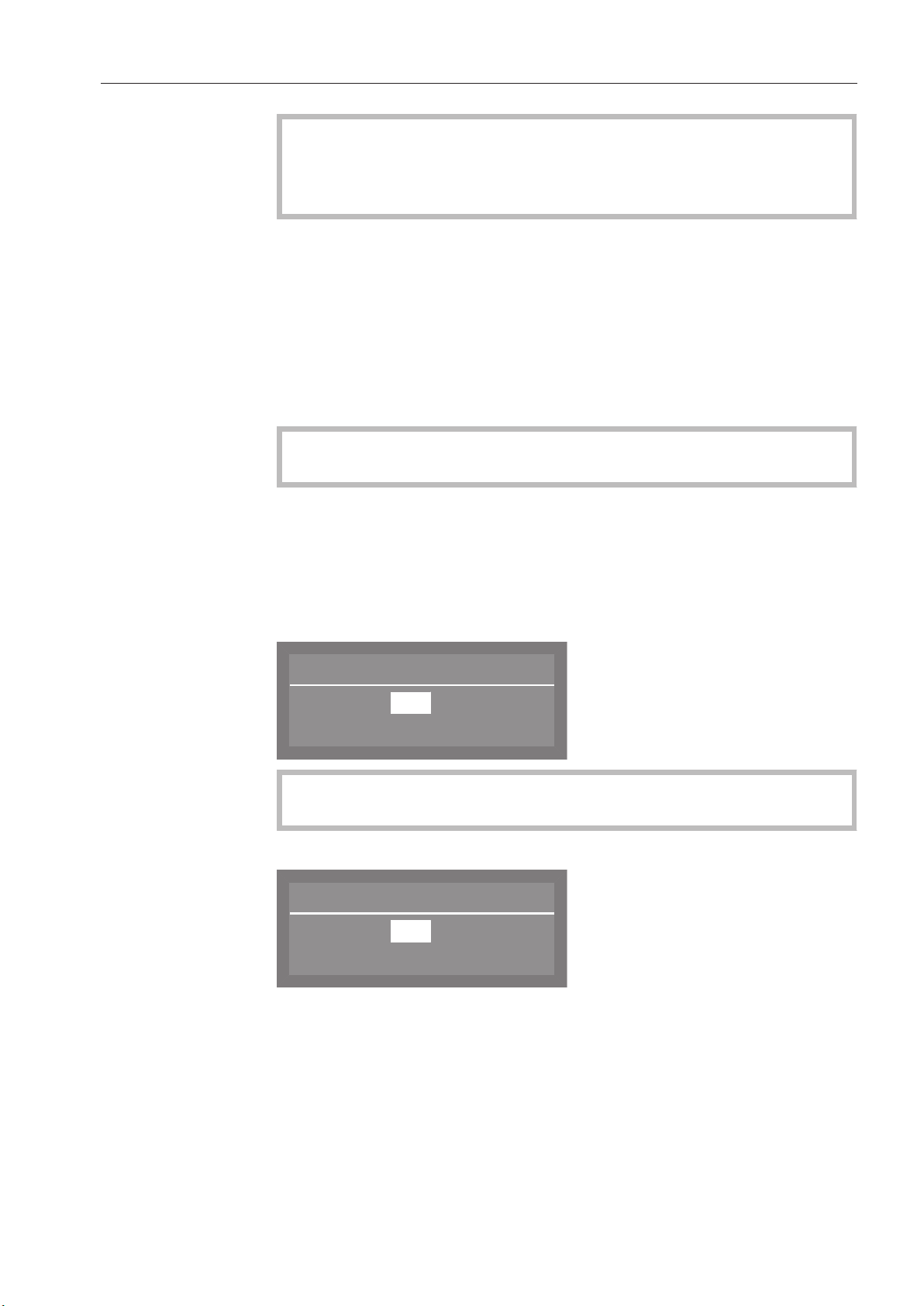
Additional settings
77
T
o avoid damage to the dispensing system, make sure before
venting that the containers for detergent and rinse aid are suffi‐
ciently filled and the dispensing siphons are screwed securely to
the containers.
Select DOS priming and
confirm the entry with the
OK b
utton.
The dishwasher will now start the automatic venting process of the
dispensing
system.
Dispensing system DOS priming will appear in the display.
As soon as the process has finished, Dispensing system successfully
primed will appear in the display
.
Confirm the message with the OK butt
on.
Please observe dispensing recommendations made by the manu‐
factu
rer of the agent.
Select Concentration an
d confirm the entry with the
OK
button.
Concentration levels are given as a percentage and can be set be‐
tween 0.01 and 2.00%.
The concentration level set then applies to all programs.
Display for DOS1:
Concentration
0,30 %
(0,01 2,00 %)
If a DOS G 60 module is connected to the dishwasher, the factory
set co
ncentration level set must be reduced by half.
Display for DOS2 rinse aid and DOS4:
Concentration
0,04 %
(0,01 2,00 %)
U
se the arrow buttons (higher) (lower) to set the concentration
level you want and confirm your choice with the
OK butt
on.
DOS venting
Setting the DOS
conc
entration level

Additional settings
78
Select Change name and confirm the entr
y with the
OK butt
on.
Change name
DOS1
<
_ _ _ _ _ _ _ _ _ _ _
P
OK
#
a
ä b c
.
The current name is shown on the second line of the display. This can
be change
d using the options shown in the bottom line.
DOS is a set part of the name and cannot be changed.
The top line shows which option has been selected.
Navigate using the arrow buttons to shift the cursor to the option
required: (moves to the left) and (moves to the right).
Confirm each option individually with the OK button.
The following options are available:
– Letters from A - Z;
each new word will start with a capital letter.
– Numbers from 0 - 9
– Space characters
– Use the symb
ol to delete the last position in the name displayed.
– Select OK t
o save the name.
– If you do not want to save the name you have given, press the
symbol.
Changing a DOS
name

Additional settings
79
The temperature and holding time for the main wash and final rinse
phases can be alt
ered in some programs (see "Program chart").
Select Temperature / Time and confirm the entry with the OK but‐
ton.
Select program
Normal
Universal
,
;
The following options are available:
Normal
Reset
Main wash 1
,
;
– Reset
Th
is resets values changed in a program back to their factory de‐
fault settings.
– Main wash 1
Th
is is used to adapt the temperature and the holding time in the
main wash.
– Final rinse 1
Th
is is used to adapt the temperature and the holding time in the
final rinse.
Temperature /
time

Additional settings
80
The procedure for altering settings in Main wash 1 and Final rinse 1 is
the same. The display also
looks similar.
Select the Main wash 1 or Final rinse 1 option and confirm the entry
with the OK butt
on.
Normal
Holding time
Final rinse temperature
Sel
ect the wash program you want and confirm your choice with
the
OK butt
on.
The following settings are available:
– Temperature / Final rinse temp.
T
he temperature for the main wash or the final rinse can be
changed.
– Holding time
T
he temperature holding time can be changed.
Select Temperature or Final rinse temp. and confirm your choice with
the
OK butt
on.
The temperature for the main wash or the final rinse can be set from
86 t
o 185°F (30 to 85°C) in 1° increments.
50
°C
(30 85 °C)
Final rinse temperature
U
se the arrow buttons (higher) (lower) to set the temperature
you want and confirm your choice with the
OK
button.
Main wash / Final
rinse
Final rinse tem‐
per
ature

Additional settings
81
Select Holding time and
confirm the entry with the
OK butt
on.
The holding time is set in minutes and can be set between 0 and 10
minu
tes in 1 minute increments.
Holding time
1 Min
(0 10 Min)
U
se the arrow buttons (higher) (lower) to set the holding time
you want and confirm your choice with the
OK
button.
Holding time

Additional settings
82
Program release
Individual programs can be blocked so that they cannot be used.
All pr
ograms are released for use as default.
Select the Additional settings menu.
Release program
All
Selection
(
Select Release program and p
ress
OK t
o open the relevant menu.
The following settings are available:
– All
All pr
ograms are released for use.
– Selection
Selec
tion possibility for determining which individual programs can
be blocked.
Select Selection and confi
rm the entry with the
OK butt
on.
Release program
Normal
Universal
,
;
9
9
Sel
ect the programs that you want to block and press the
OK but‐
t
on.
The tick will
be removed from the box and the program can then
not be used.
T
o save your selection, select Accept at the end of the program list
and confirm your choice with the
OK butt
on.
Blocking pro‐
gr
ams
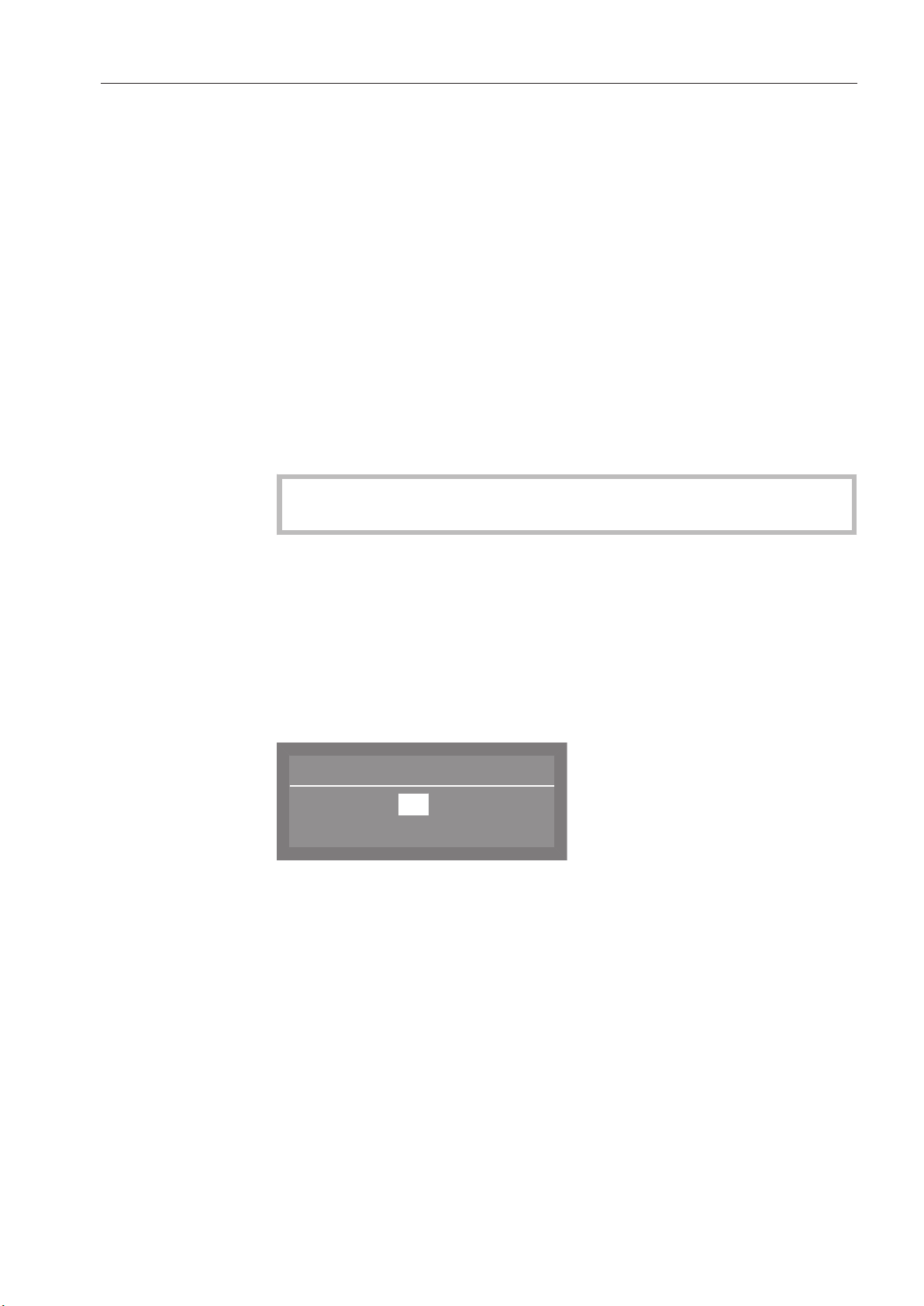
Additional settings
83
Water hardness
In order to achieve good cleaning results, the dishwasher needs to
oper
ate with soft (low in calcium deposits) water. Hard water results
in a build-up of calcium deposits on cookware and in the dishwasher.
Water with a hardness level higher than 4 °dH needs to be softened.
This takes place automatically in the integrated water softener. The
water softener in the dishwasher is suitable for a water hardness level
of up to 70 °dH (12.6 mmol/l).
The water softener in the dishwasher has to be set to the hardness
level
of your water supply.
Y
our local water supplier can tell you the water hardness level in
your area.
Wher
e the water hardness fluctuates (e.g. 16-28 gpg / 15-27°d), al‐
ways program the dishwasher to the higher value (in this example,
28 gpg / 27°d).
If the hardness of your water constantly lies under 4 gpg (4 °dH), no
sal
t must be filled in the water softener.
It is useful to know your water hardness so that you can provide the
ser
vice technician with this information in the event of any service
calls.
Enter the water hardness below:
____________________ gpg (°dH)
Select the Additional settings menu.
Select Water hardness an
d confirm the entry with the
OK
button.
Water hardness
19
(0 70 °dH)
°dH
The factory default for the water softener is set to a hardness of 20
gpg (19°dH).
When makin
g the setting, please observe the following table.
U
se the arrow buttons (higher) and (lower) to set the water
hardness required and confirm your entry using the
OK
button.
Additional settings
84
°dH gpg mmol/l Display °dH gpg mmol/l Display
1 1 0.2 1 36 36 6.5 36
2 2 0.4 2 37 37 6.7 37
3 3 0.5 3 38 38 6.8 38
4 4 0.7 4 39 39 7.0 39
5 5 0.9 5 40 40 7.2 40
6 6 1.1 6 41 41 7.4 41
7 7 1.3 7 42 42 7.6 42
8 8 1.4 8 43 43 7.7 43
9 9 1.6 9 44 44 7.9 44
10 10 1.8 10 45 45 8.1 45
11 11 2.0 11 46 46 8.3 46
12 12 2.2 12 47 47 8.5 47
13 13 2.3 13 48 48 8.6 48
14 14 2.5 14 49 49 8.8 49
15 15 2.7 15 50 50 9.0 50
16 16 2.9 16 51 51 9.2 51
17 17 3.1 17 52 52 9.4 52
18 18 3.2 18 53 53 9.5 53
19 19 3.4 19 *) 54 54 9.7 54
20 20 3.6 20 55 55 9.9 55
21 21 3.8 21 56 56 10.1 56
22 22 4.0 22 57 57 10.3 57
23 23 4.1 23 58 58 10.4 58
24 24 4.3 24 59 59 10.6 59
25 25 4.5 25 60 60 10.8 60
26 26 4.7 26 61 61 11.0 61
27 27 4.9 27 62 62 11.2 62
28 28 5.0 28 63 63 11.3 63
29 29 5.2 29 64 64 11.5 64
30 30 5.4 30 65 65 11.7 65
31 31 5.6 31 66 66 11.9 66
32 32 5.8 32 67 67 12.1 67
33 33 5.9 33 68 68 12.2 68
34 34 6.1 34 69 69 12.4 69
35 35 6.3 35 70 70 12.6 70
*) Factory default setting
Settings table

Additional settings
85
Display view
During a program, the actual or target temperature can be shown in
the second lin
e of the display.
Select the Additional settings
menu.
Display view
Actual temperature
Required temperature
(
Select Display view and pr
ess
OK
to open the relevant menu.
The following settings are available:
– Actual temperature
Di
splay of the actual temperature during a program (this value will
vary during the course of the program).
– Required temperature
Specification of the set temperature for the main wash or the final
rinse program block
(the maximum value is displayed as a static value. It will change
from one program block to the next).
Select the option you want and confirm your choice with the OK
butt
on.

Additional settings
86
Display
The display menu can be used for altering the display contrast and
brightness.
Select the Additional settings menu.
Display
Contrast
Brightness
Select Display and p
ress
OK t
o open the relevant menu.
The following settings are available:
– Contrast
Set the contr
ast.
– Brightness
Set the brightness.
Select the Contrast option and confirm your choice with the OK
butt
on.
The contrast range is shown as a bar graph in the display.
{
Contrast
Lower Higher
Use the
arrow buttons (higher) (lower) to set the contrast you
want and confirm your choice with the
OK butt
on.
Contrast

Additional settings
87
Select the Brightness option and confirm your choice with the OK
butt
on.
The brightness range is shown as a bar graph in the display.
Brightness
{
Darker Brighter
Use the
arrow buttons (brighter) (darker) to set the brightness
you want and confirm your choice with the
OK butt
on.
Brightness

Additional settings
88
Switch off after
When not in use, the dishwasher will turn itself off to save energy.
Select the Additional settings menu.
Select Switch off after and pr
ess
OK
to open the relevant menu.
The following options are available:
Switch off after
Yes
No
(
– Yes
The "Sw
itch Off After" option is active and you can specify a dura‐
tion after which the appliance switches off.
– No
T
he "Switch Off After" option is not active.
Select the Yes
option and confirm your choice with the
OK b
utton.
The "switch off after" duration is set to 60 minutes ex works. It can be
adjust
ed in 5 minute increments from 5 to 60 minutes.
Switch off after
60 Min
(5 60 Min)
U
se the arrow buttons (higher) (lower) to set the "switch off af‐
ter" duration and confirm your choice with the
OK
button.
Setting the
"s
witch off after"
duration

Additional settings
89
Factory default setting
The factory default setting can be used to reset all changed parame‐
t
ers in the dishwasher back to their default settings or just values that
have been changed for programs.
Select the Additional settings menu.
Factory default
Reset
Select Factory default
and press
OK t
o open the relevant menu.
The following options are available:
Reset
No
Program settings only
,
;
(
– No
Al
tered parameters will not be reset to their default settings.
– Program settings only
O
nly values that have been altered in programs will be reset to their
default settings.
– All settings
Al
l parameters that have been altered in the dishwasher will be re‐
set to their default settings.
Select the option you want and confirm your choice with the OK
butt
on.

Additional settings
90
Software version
Display of the versions of the individual software components.
Select the Additional settings menu.
Select Software version
and press
OK t
o open the relevant menu.
Software version
EB Id: XXXX
EGL Id: XXXX
,
;
Software for individual units is displayed. XXXX denotes the version.
– EB Id: XXXX
Th
e software version of the control and display elements.
– EGL Id: XXXX
The softwar
e version of the control board.
– EZL Id: XXXX
Th
e software version of the relay board.
– EFU Id: XXXX
The software version of the frequency converter.
Alterations and updates to software can only be carried out by an
au
thorized Miele service technician.
Cleaning and care
91
Re
move any soiling from the control panel and from the front of
the appliance straight away.
Otherwise the surfaces can become discolored or changed.
All
surfaces are susceptible to scratches.
Contact with unsuitable detergents can alter or discolor the exter‐
na
l surfaces.
Cleaning the control panel
C
lean the control panel with a clean sponge and a solution of dish‐
washing liquid and hot water or with a clean damp microfiber cloth.
Dry the control panel with a soft cloth afterwards.
Do
not use abrasive detergents!
These can damage the control panel.
Cleaning the appliance front
T
o clean the stainless steel front, use a damp cloth with a solution
of dishwashing liquid and hot water or with a non-abrasive cleaning
agent for use on stainless steel.
To help prevent re-soiling (fingerprints, etc.), a suitable stainless steel
conditi
oner can be used after cleaning (e.g., Neoblank, which can be
obtain from Miele Service).
Do not use cleaning agents containing ammonia or thinners!
These agents can damage the surface material.
Do
not hose down the dishwasher or its direct vicinity to clean
it, e.g. with a water hose or high-pressure cleaner.
Cleaning the wash cabinet
The wash cabinet is largely self-cleaning, provided that the correct
amou
nt of detergent is always used.
If, despite this, lime scale or grease deposits accumulate in the cabi‐
net, these ca
n be removed with a proprietary dishwasher cleaner
(available from Miele).
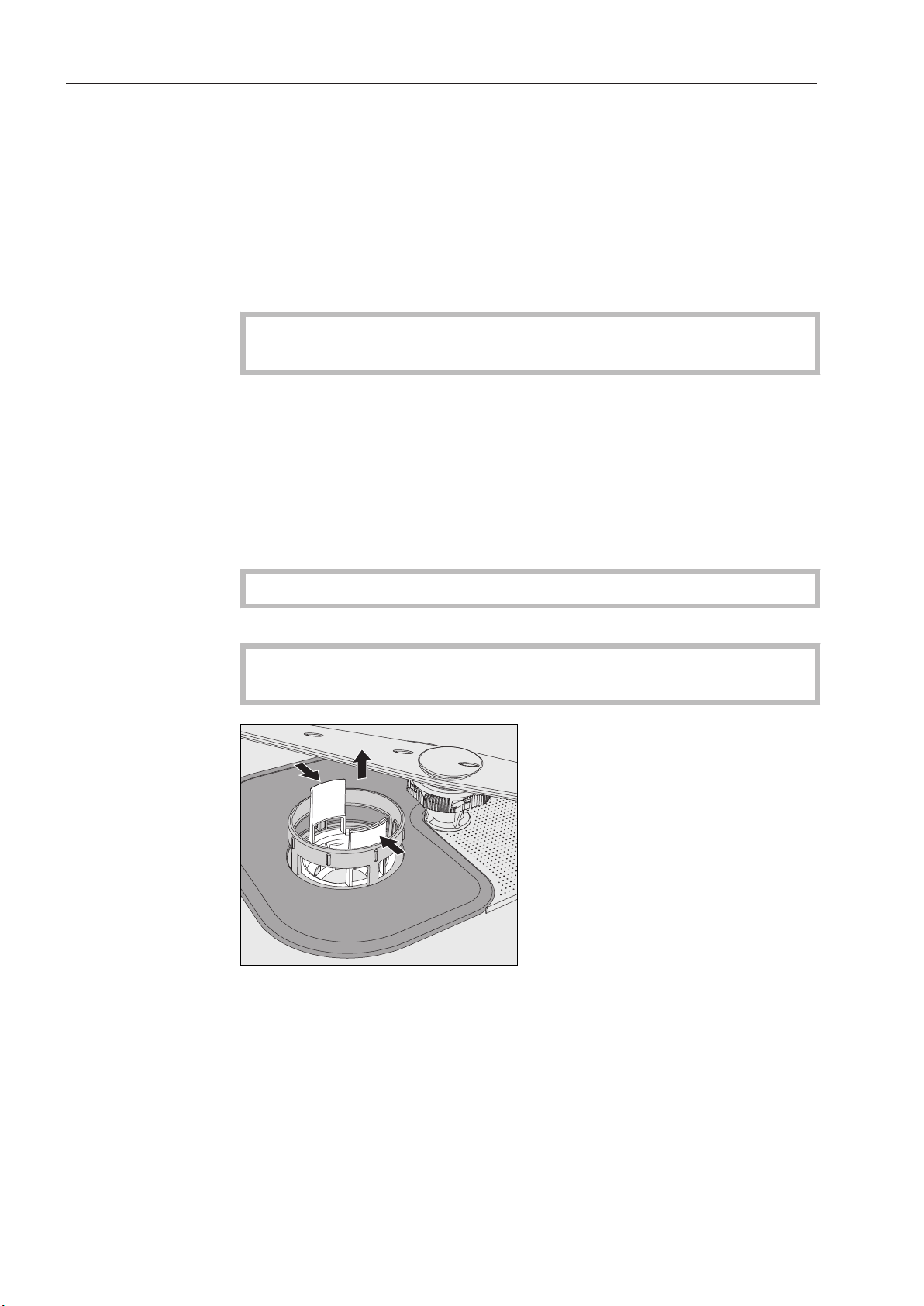
Cleaning and care
92
Cleaning the door and the door seal
W
ipe the door seal and the area beneath the door regularly with a
damp cloth to remove food deposits.
W
ipe away any spillages of food and beverages from the sides of
the dishwasher and from the hinges.
W
ith freestanding dishwashers that have a base facing, please re‐
move spillages of food and beverages from the channel that runs
below the door.
Be cautious of sharp edges when cleaning.
Danger of cutting yourself.
These surfaces are outside the wash cabinet and are not accessed
by w
ater from the spray arms. If soiling is not removed, mold can de‐
velop.
Cleaning the filters in the wash cabinet
The filter combination in the base of the wash cabinet retains coarse
soil
from the suds solution, preventing it accessing the circulation
system and causing blockages in the spray arms.
This dishwasher must not be used without all the filters in place!
The filters must be checked regularly and cleaned when necessary.
C
aution!
Danger of injury on glass splinters.
Press the catches towards each other and remove the coarse filter.
Ri
nse the filter thoroughly under running water. If necessary use a
soft washing-up brush to remove soiling.
Re
place the filter making sure it engages correctly.
Cleaning the
c
oarse filter
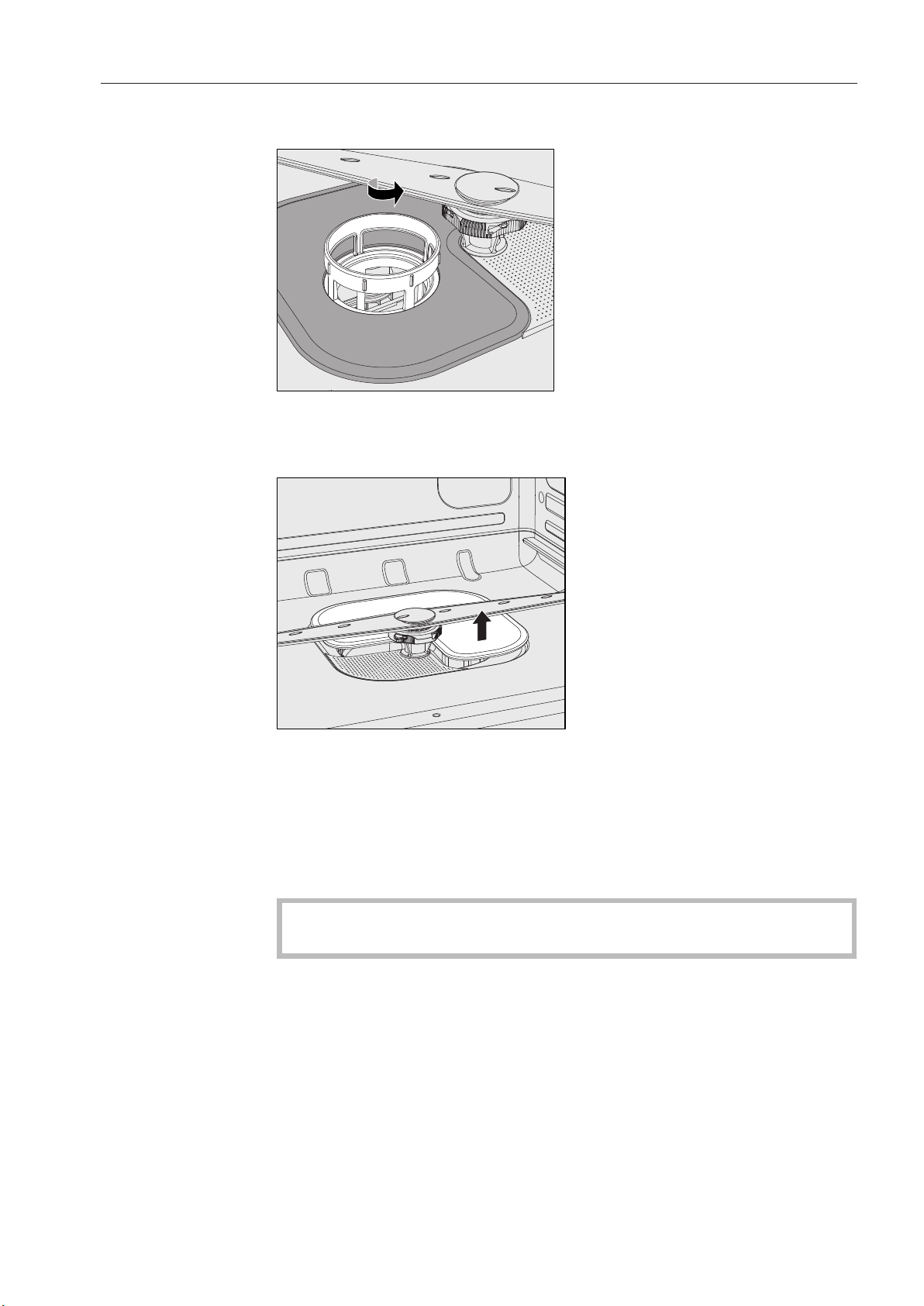
Cleaning and care
93
Re
move the coarse filter.
Gr
asp the micro-fine filter by the upper rim and turn it in the direc‐
tion of the arrow to release it.
Then lift it out.
Re
move the flat filter.
Rinse the filters thoroughly under running water. If necessary use a
soft washing-up brush to remove soiling.
Replace the filter combination in the reverse order, turning the micro-
fine filt
er to the left to re-engage it.
The flat filter must lie flat in the bottom of the wash cabinet.
The spray arms will get blocked if the filters are not replaced cor‐
r
ectly.
Cleaning the flat
and
micro-fine fil‐
ters
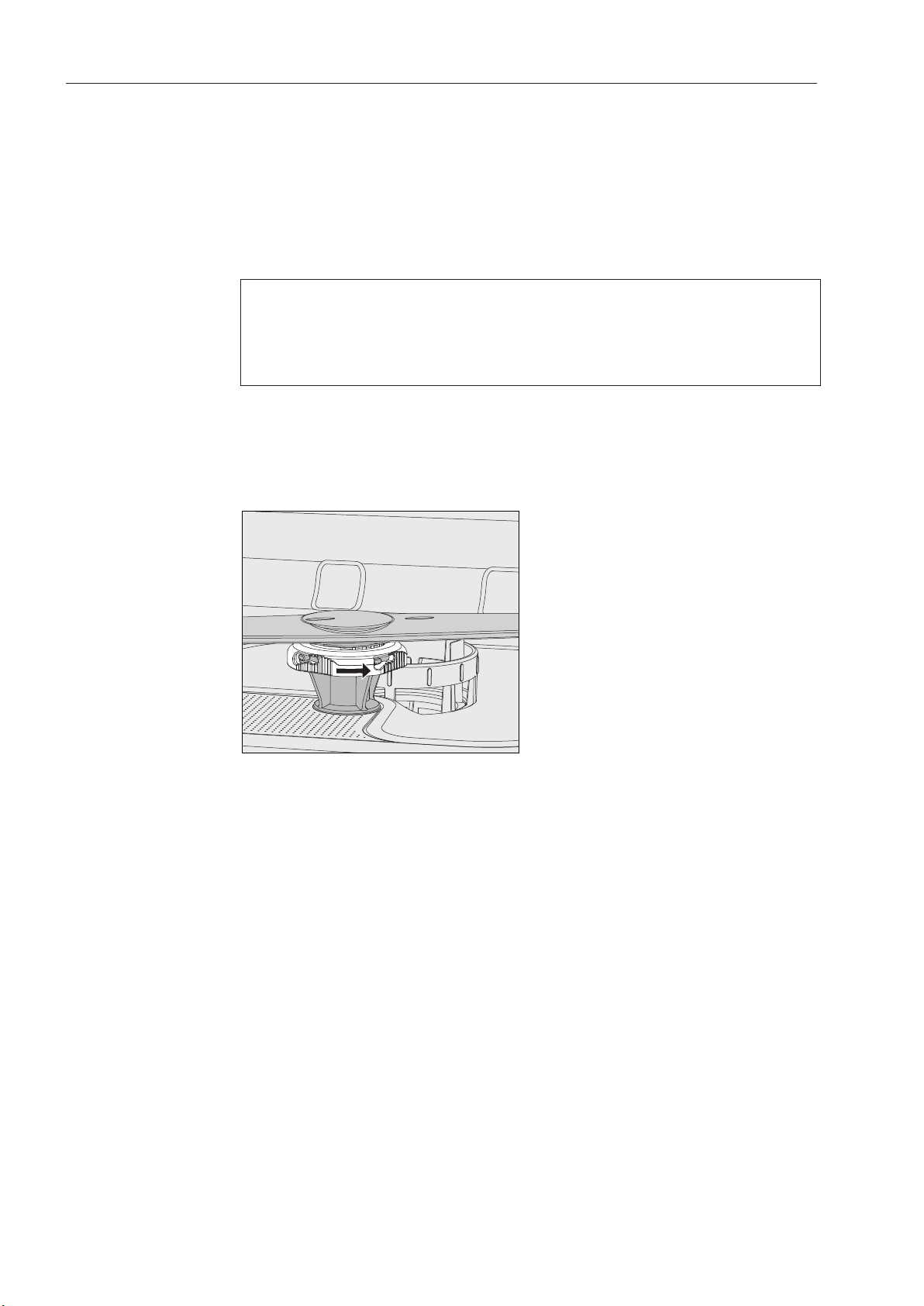
Cleaning and care
94
Cleaning the spray arms
This dishwasher has three different spray arms.
Particles of food can get stuck in the spray arm jets and bearings.
The spr
ay arms should therefore be inspected and cleaned regularly.
T
urn the dishwasher off.
P
ull the upper spray arm downwards to remove it.
The middle and bottom spray arms are secured with a bayonet fit‐
ting.
The bayonet fitting on the lower spray arm is colored yellow so that
it canno
t be mistaken for the fitting on the middle spray arm.
To release the bayonet fitting proceed as follows:
Using the knurled nut turn the middle spr
ay arm to the left as far
as it will go and then pull the spray arm downwards to remove it.
Re
move the lower basket.
Using the knurled nut turn the lower spr
ay arm to the right as far
as it will go and then pull the spray arm upwards to remove it.
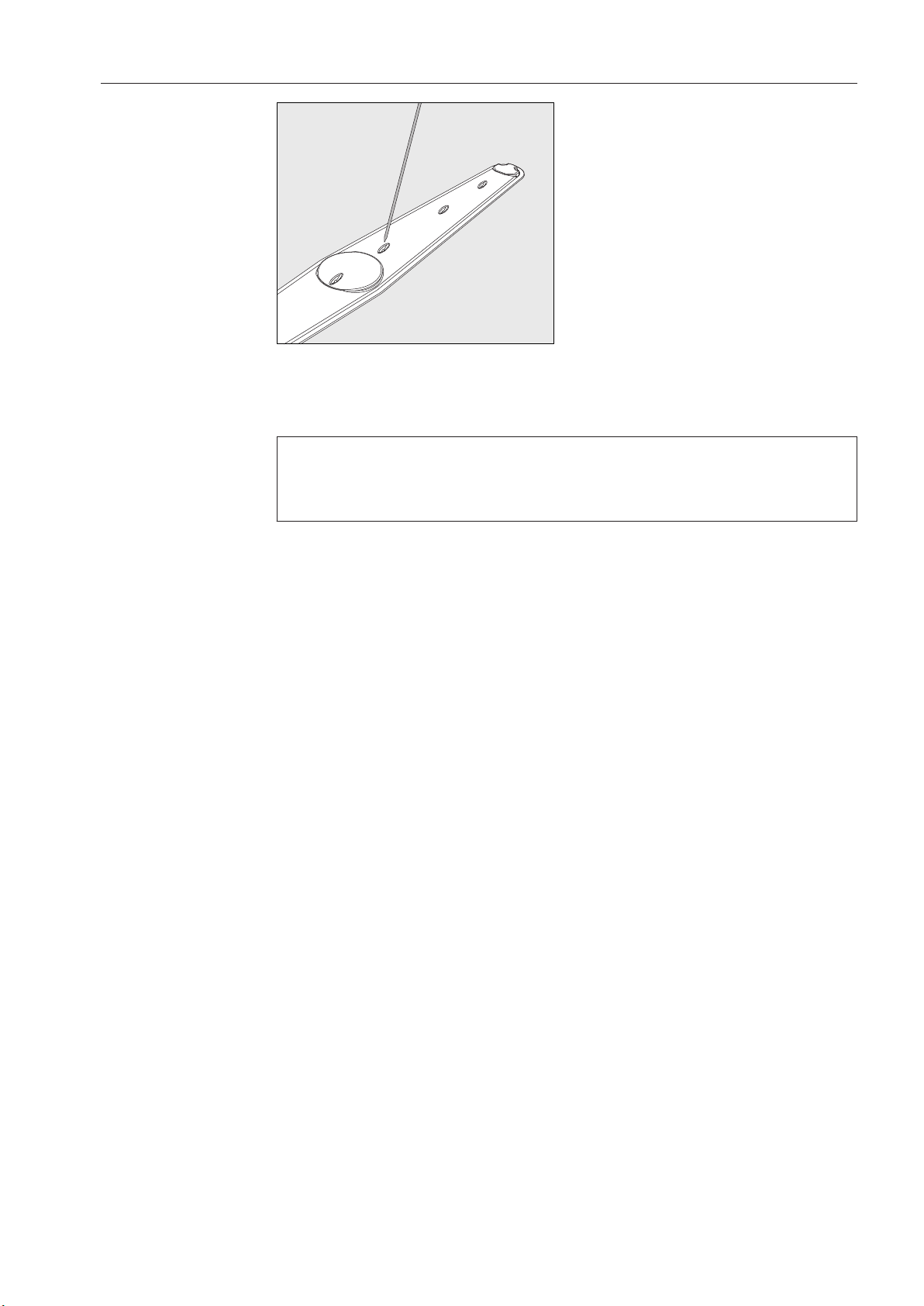
Cleaning and care
95
U
se a pointed object to push food particles that are stuck in the
spray arm jets into the spray arm.
Rinse the spray arms thoroughly under running water.
Replace the spray arms and check that they rotate freely.
Make sure that the spray arm with the yellow bayonet fitting is fitted
in the bott
om of the wash cabinet.
Frequently asked questions
96
With the help of the following guide, minor faults in the performance of the appliance,
some of which
may result from incorrect operation, can be corrected without contacting
the Service Department.
Please note that a call-out fee will be applied to unnecessary service visits where the prob‐
lem cou
ld have been rectified as described in these operating instructions.
Re
pair work to electrical appliances must only be carried out by a suitably qualified
person in strict accordance with current local and national safety regulations. Repairs
and other work by unqualified persons could be dangerous. The manufacturer cannot be
held liable for unauthorized work.
Technical problems
Problem Possible cause and solution
When the dishwasher is
turned on with the but‐
t
on, the display stays dark
and the Start/Stop indica‐
tor does not flash.
The dishwasher is not plugged in.
Inser
t the plug.
The circuit breaker has tripped.
Reset the cir
cuit breaker
(minimum fuse rating - see data plate).
The dishwasher stops dur‐
ing
a program.
The circuit breaker has tripped.
Reset the cir
cuit breaker (see data plate for the correct
fuse rating).
If the cir
cuit breaker trips again, contact Miele Customer
Service.
One of the following fault
messages is displayed:
Before fixing the fault:
T
urn the dishwasher off with the button.
Check water intake There is a problem with the water intake.
O
pen the faucet all the way.
Clea
n the filter in the water inlet (see "Cleaning and
care").
Fault 403-405 If Check water intake
appears in the display, the control unit
is checking the water intake approx. every 30 seconds. If,
after three attempts, water is not getting into the dishwash‐
er, one of these numbers will appear in the display and the
program will be cancelled.
Open the faucet all the way
.
T
urn the dishwasher back on.
Select the desir
ed program.
P
ress the Start/Stop button.

Frequently asked questions
97
Problem Possible cause and solution
Fault 406-408 Water inlet fault.
One of these numbers will appear in the display if the flow
pr
essure is too low and the program will be cancelled.
T
he flow pressure at the water intake point is too low
(see "Technical data"). Contact Miele Service for advice.
Fault 412-414 Water inlet fault.
One of these numbers will appear in the display if the flow
pr
essure is too high and the program will be cancelled.
The flow pr
essure at the water intake point is too high
(see "Technical data"). Contact Miele Service for advice.
Check drainage The water outlet is restricted. There might be water in the
wash cabinet.
Clean the filt
er combination (see "Cleaning and care").
Clean
the drain pump (see "Frequently asked ques‐
tions").
C
lean the non-return valve (see "Frequently asked ques‐
tions").
Remove
any kink or loop in the drain hose.
Fault 433 The door was obstructed when closing and cannot be
dr
awn into the final closed position.
Remo
ve the obstruction from the vicinity of the door.
Fault XXX
(XXX stands for a number)
There may be a technical fault.
After a 10 seconds:
T
urn the dishwasher back on.
Selec
t the desired program.
P
ress the Start/Stop button.
If the error message is displayed again, there is a technical
fault.
Contac
t Miele Service.
The waterproof system has reacted.
Close the faucet.
Contact Mie
le Service.
Frequently asked questions
98
Unusual behavior of the dishwasher
Problem Possible cause and solution
The dishwasher fails to re‐
act
when buttons are
pressed. The display and
indicator lights remain
dark.
The dishwasher has turned itself off after the set "switch off
aft
er" duration to save energy.
P
ress the button to turn the dishwasher back on.
The following fault mes‐
sage is appears in the dis‐
play:
Salt container lid not closed
correctly
The salt reservoir cover is not properly closed.
Close the sal
t reservoir cover.
The dispenser cover can‐
not be closed.
Detergent residue is blocking the latch.
Remo
ve the detergent residue.
The inside of the door
and/or the int
erior walls
are wet after a program
has finished.
This is not a fault.
It is caused by
the drying system.
The moisture will dissipate after a short while.
Water remains in the wash
cabinet at the end of the
pr
ogram.
Before fixing the fault:
T
urn the dishwasher off with the button.
The filter combination in the wash cabinet is clogged.
C
lean the filter combination (see "Cleaning and care").
The drain pump or non-return valve is blocked.
Clea
n the drain pump or the non-return valve (see "Fre‐
quently asked questions").
The drain hose kinked.
Remove the kink.
The on-site drain siphon is blocked.
Check an
d clean the drain siphon.
Frequently asked questions
99
Noises
Problem Possible cause and solution
There is a knocking noise
in the wash cabinet.
A spray arm is hitting the dishware.
Int
errupt the program, and rearrange the items which are
obstructing the spray arm.
There is a rattling noise in
the wash cabinet.
Dishware is moving around in the wash cabinet.
Int
errupt the program and rearrange loose pieces.
A foreign object (e.g. a cherry pit) has become lodged in
the dr
ain pump.
Remove the for
eign object from the drain pump (see
"Cleaning the drain pump and non-return valve").
There is a knocking noise
fr
om the water pipe
This may be caused by the installation or the diameter of
the wat
er pipe.
This has no effect on the functioning of the dishwasher.
If
in doubt, contact a plumber.
Frequently asked questions
100
Poor cleaning results
Problem Possible cause and solution
The dishes are not clean. The dishes were not loaded correctly.
Please obser
ve the instructions in "Loading the dish‐
washer."
The program was not suitable for the requirements.
Sele
ct a more suitable program (see "Program guide)".
Not enough detergent was dispensed.
Use mor
e detergent, or change the brand you are using.
Items are blocking the path of the spray arms.
Rearr
ange the items so that the spray arms can rotate
freely.
The filter combination in the base of the wash cabinet is not
clean
or is not correctly fitted.
This may cause the spray arm jets to get blocked.
Clean
and/or fit the filter combination correctly.
Clean
the spray arm jets, if necessary (see "Cleaning and
care").
The non-return valve is open and blocked. Dirty water has
flowed back int
o the wash cabinet.
C
lean the drain pump and the non-return valve (see "Fre‐
quently asked questions").
If necessary alter the temperature and / or the holding time
for the pr
ogram being used.
Chang
e the relevant parameters for the program (see
"Additional settings, Additional functions").
Smearing appears on
glass
ware and cutlery.
There is a bluish sheen on
the surface of glassware;
film can be wiped off.
The rinse aid dosage is set too high.
Reduce the dosage (see "Additional settings, Additional
functi
ons, Dispensing systems").
Dishware is not dry or cut‐
ler
y and glasses are spot‐
ty.
The rinse aid dosage is set too low or the rinse aid reservoir
is empty
.
Replenish
the rinse aid, increase the dosage or change
the brand of rinse aid used (see "Adding rinse aid").
Frequently asked questions
101
Problem Possible cause and solution
White residue is visible on
cookwar
e and cutlery,
clouding occurs on glass‐
ware; film can be wiped
off.
The rinse aid dosage is too low.
Incr
ease the dosage (see "Additional settings, Additional
functions, Dispensing systems").
The salt reservoir is empty.
Fi
ll the salt reservoir (see "Filling the salt reservoir").
The water softener is programmed to too low for the water
har
dness level.
P
rogram the water softener to the correct value (see "Ad‐
ditional settings, Water hardness").
Glasses have a brownish-
blu
e discoloration; the de‐
posit cannot be wiped off.
Detergent deposits.
Switch t
o another detergent right away.
Glasses are dull and dis‐
color
ed; the deposit can‐
not be wiped off.
The glassware is not dishwasher-proof. The surfaces are
affected.
In the future make sure you purchase dishwasher-proof
glassware.
Tea or lipstick stains have
not bee
n completely re‐
moved.
The wash temperature of the selected program was too
lo
w.
Sele
ct a program with a higher wash temperature.
The bleaching effect of the detergent is too low.
Switch t
o another detergent.
Plastic parts are discol‐
ored.
Natural dyes e.g. from carrots, tomatoes or ketchup may be
the cause. The amount of detergent used or its bleaching
effect was not sufficient to deal with natural dyes.
Use mo
re detergent (see "Operation, Adding detergent").
Discolored plastic items will not regain their original color.
There are rust stains on
the cutler
y.
The "Cold" program was not run after dishwasher salt was
added.
Traces of salt have gotten into the wash cycle.
Al
ways run the "Cold" program without a load after refill‐
ing salt.
The affected items are not corrosion resistant.
Purchase cutlery which is dishwasher-proof.
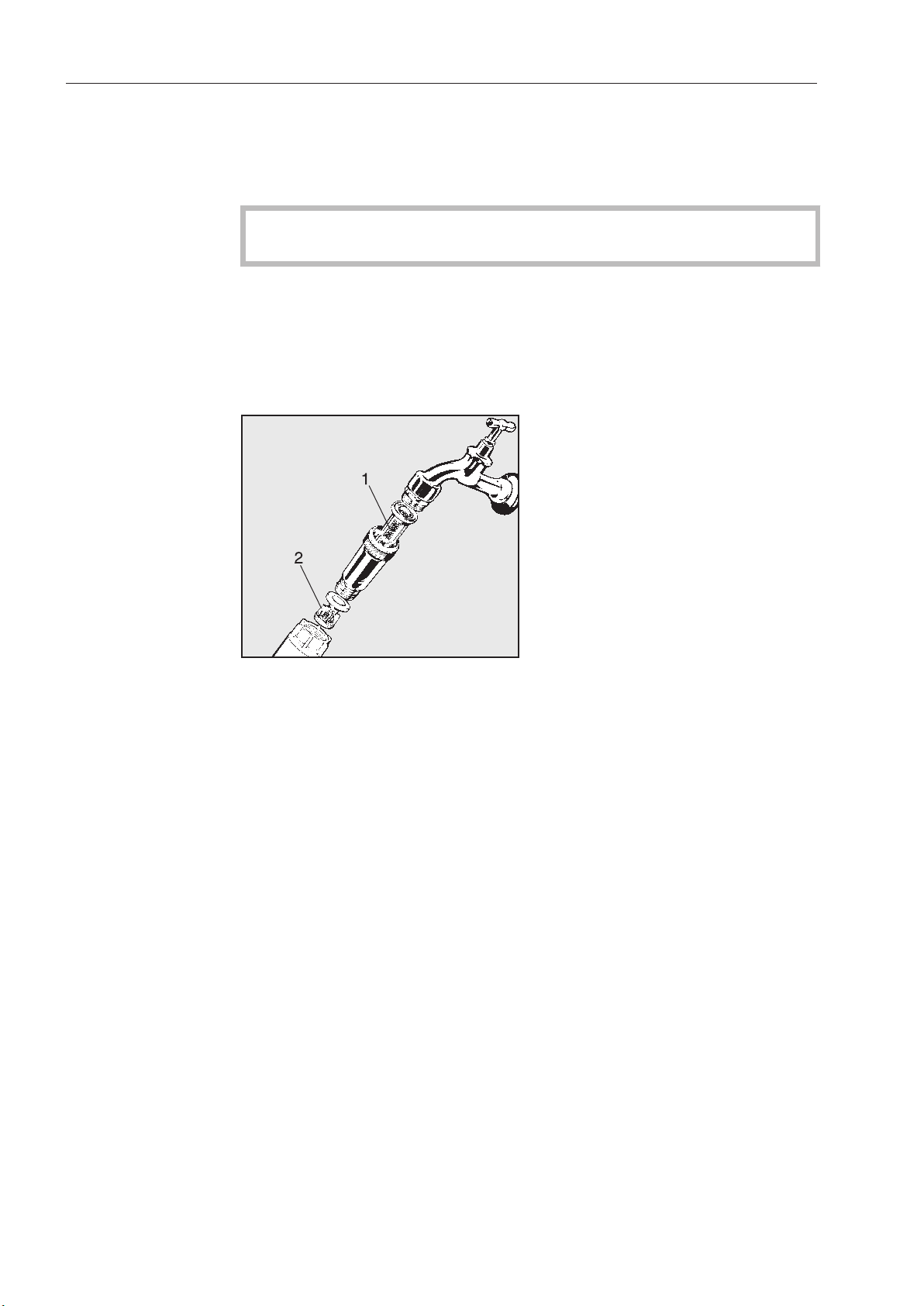
Frequently asked questions
102
Cleaning the filters in the water inlet
Filters are incorporated into the water inlet connection on the hose to
pr
otect the water inlet valve. If these filters get dirty they must be
cleaned as otherwise too little water will flow into the wash cabinet.
T
he plastic housing on the water inlet valve contains an electri‐
cal component. It must not be dipped in water.
D
isconnect the dishwasher from the water supply and the electrical
supply (turn the dishwasher off, unplug it or disconnect or disable
the fuse).
Close the faucet.
U
nscrew the water inlet valve.
C
arefully pull out the large surface area filter 1.
T
ake the seal ring out of the screw connection.
W
ithdraw fine filter 2 using pointed pliers.
C
lean the filters or replace them with new ones if necessary.
Re
place the filters and seals, making sure they are sitting correctly.
Reconnect the hose to the water faucet, making sure the thread
goes on straight and not cross-threaded.
T
urn on the water faucet gradually to test for leaks.
If there is a leak, the inlet hose might not be secured properly, or it
may have been screwed on at an angle. Unscrew and reconnect the
water inlet hose correctly before tightening it.
To clean the filter
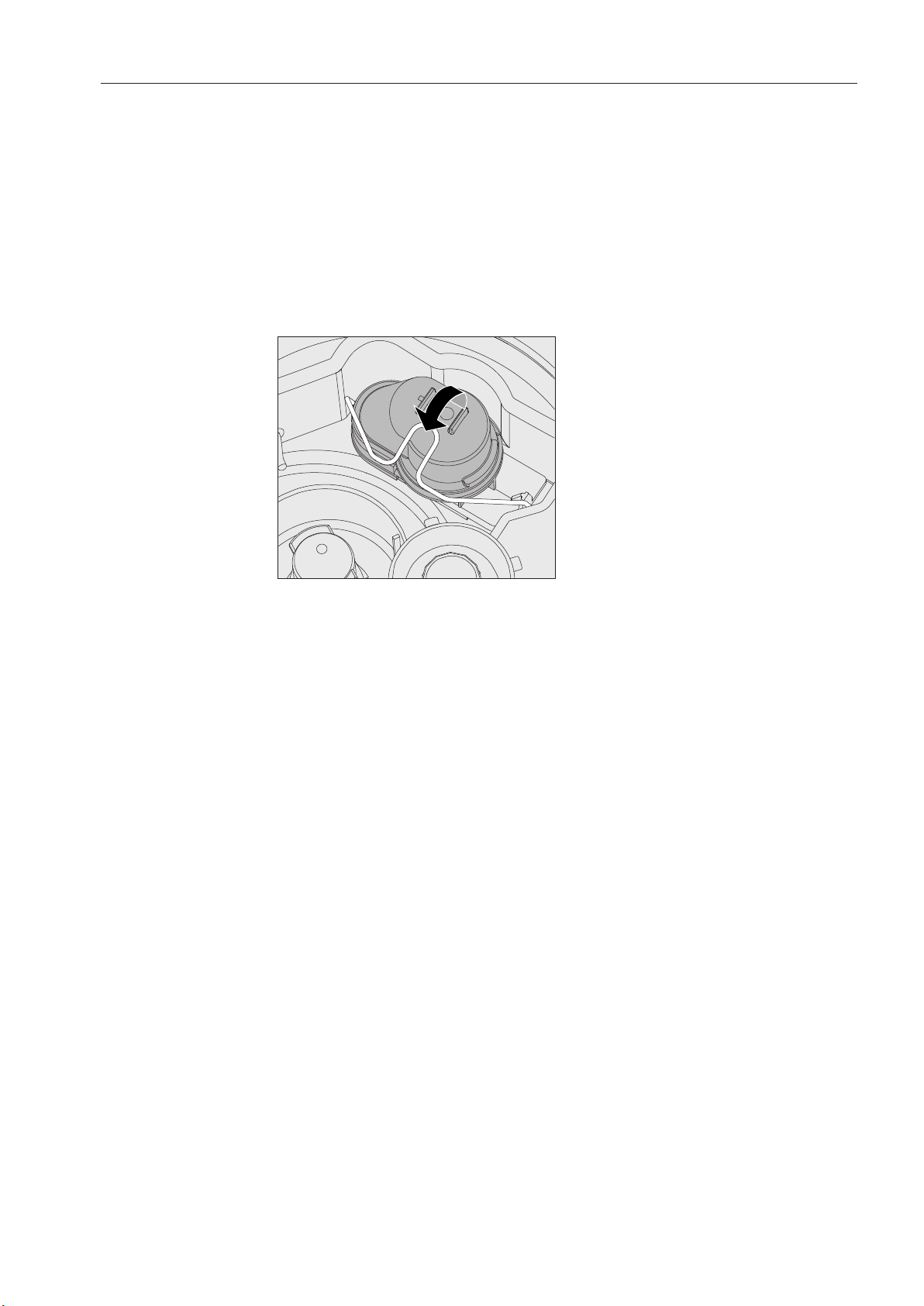
Frequently asked questions
103
Cleaning the drain pump and non-return valve
If water has not pumped out at the end of a program, there may be a
for
eign object in the drain pump or blocking the non-return valve.
These are easy to remove.
D
isconnect the dishwasher from the water supply and the electrical
supply (turn the dishwasher off, unplug it or disconnect or disable
the fuse).
T
ake the filter combination out of the wash cabinet (see "Cleaning
and care").
Lift the locking clamp.
L
ift out the non-return valve and rinse well under running water.
M
ake sure that the vent on the external part of the non-return valve
is not blocked. (This vent is only visible when the non-return valve
has been taken out of the dishwasher). If it is blocked, use a point‐
ed object to release the blockage.
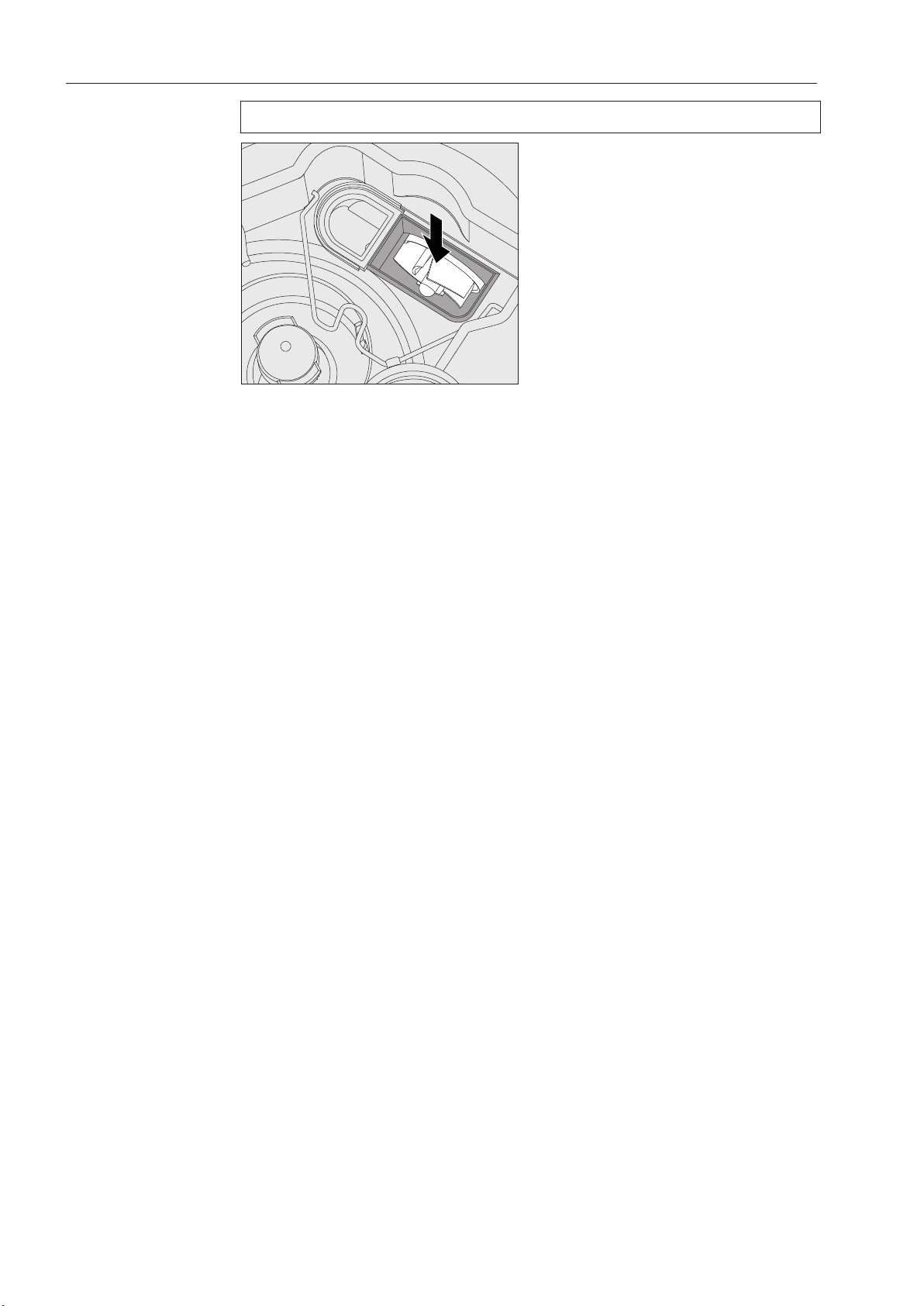
Frequently asked questions
104
The drain pump is situated under the non-return valve (see arrow).
C
heck the area around the drain pump for foreign objects (watch
out for glass splinters which could cause injury) and remove them
before replacing the non-return valve.
C
arefully replace the non-return valve and secure it with the clamp.
After sales service
105
After sales service
If, despite following the instructions in this manual, you are unable to
r
ectify a problem please contact one of the following, quoting the
fault code shown in the display:
– your Miele dealer or
– the Miele Technical Service Department.
Contact details for the Miele Technical Service Department can be
found at the back of this manual.
When con
tacting Miele, please quote the model number of your
dishwasher together with the 8 digit machine number.
The model number and the machine number are both shown on the
data plat
e, located at the top of the door.
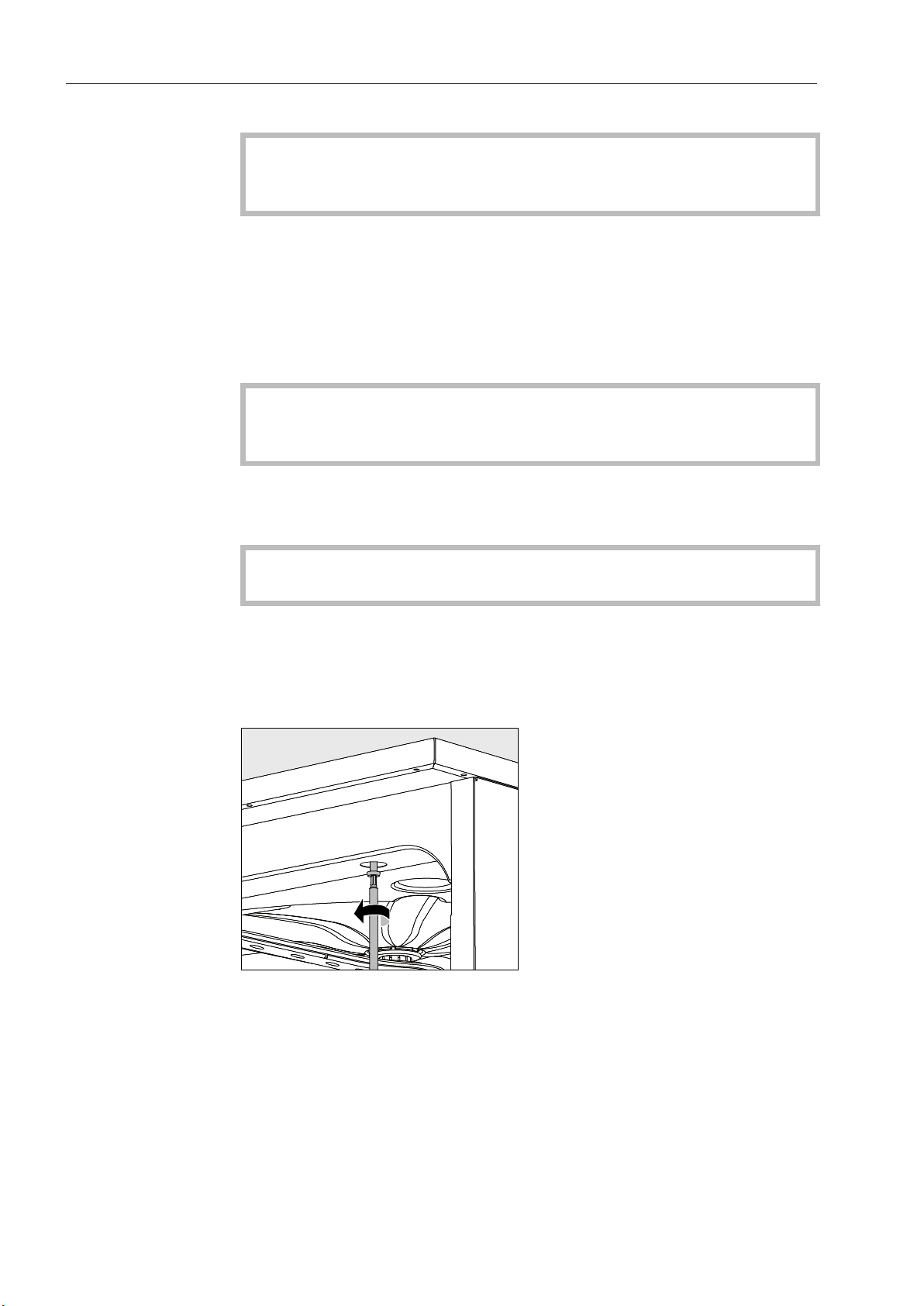
Installation
106
Installation
In o
rder to reduce the risk of damage from condensation, the
furniture in the area around the commercial dishwasher should be
designed for commercial use.
The dishwasher must be installed in a secure and level position. Any
unevenness in the floor level and height of the appliance must be
compensat
ed for by adjusting the four feet.
If the dishwasher is to be installed next to other appliances or furni‐
tur
e or in a niche, make sure the space provided is at least 23 5/8"
(60 cm) wide and 23 5/8" (60 cm) deep.
T
o ensure the stability of undercounter commercial dishwash‐
ers, they must only be installed beneath a continuous countertop
that is bolted to the adjacent cabinetry.
When installed under a continuous counter, please ensure that the
space pr
ovided is at least 23 5/8" (60 cm) wide, 23 5/8" (60 cm) deep
and 32" 5/16" (82 cm) high.
The dishwasher feet must not be unscrewed by more than 2 3/8" (6
cm).
If the dishwasher is fitted with a lid, it can be removed as follows:
Re
move both securing screws on the back of the dishwasher with a
screwdriver.
Open the door
.
U
nscrew the left and right fixing screws with a screwdriver.
L
ift the appliance lid upwards to remove.
Building under
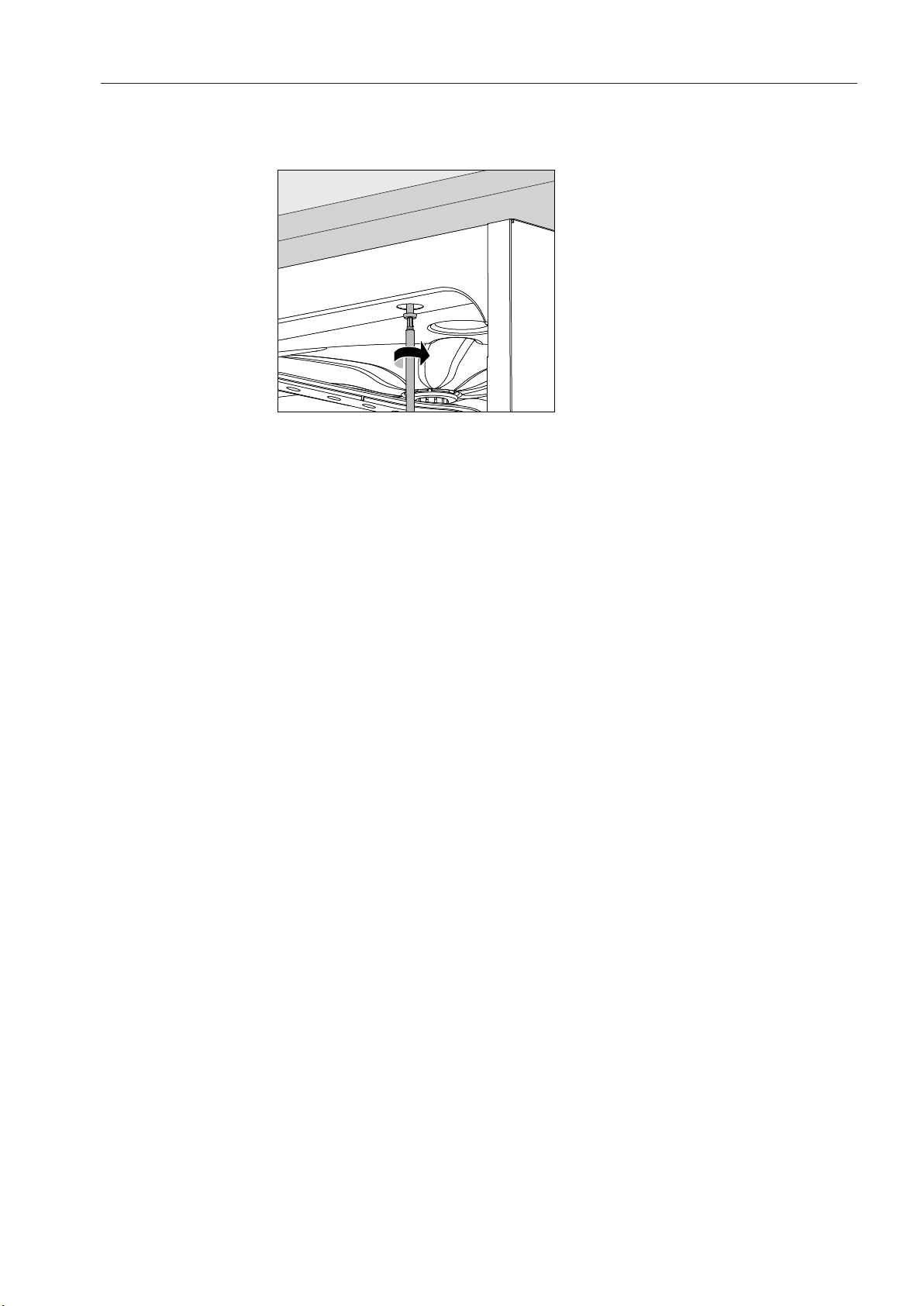
Installation
107
To guarantee stability; the dishwasher must be secured to the counter
aft
er levelling.
Aft
er levelling, secure the dishwasher to the continuous counter.
With the door open, screw into the counter through the holes in the
front trim on the left and right hand sides of the dishwasher.
With stainless steel or stone counters; the dishwasher must be se‐
cur
ed at the sides to the left and right adjacent cupboards with two
screws on each side.
Special screws are supplied in the accessory pack.
Drill holes located in the side wall in front of the door seal must be
used for this.
The gaps between built-under appliances and adjacent cabinetry
must not be filled with silico
ne sealant as this could compromise the
ventilation of the circulation pump.
Depending on the building-under situation, the stainless steel cover
plat
e supplied can be used to protect the lower edge of the counter
against steam damage.
Levelling and se‐
curing the dish‐
washer
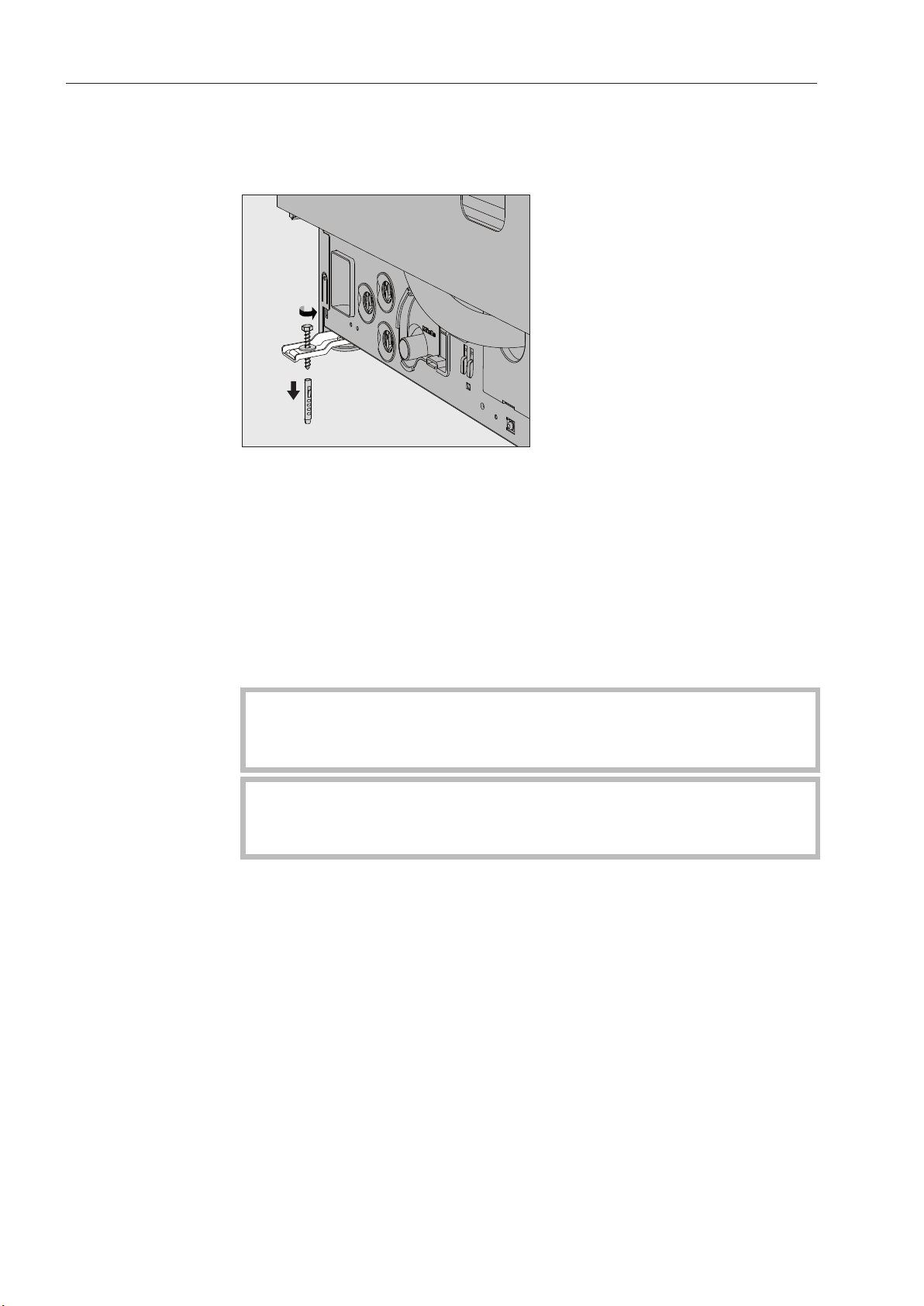
Installation
108
During conversion to a free-standing unit, both rear appliance feet of
the dishwasher must be secur
ed against tipping using the floor an‐
chors.
Attach the floor anchors to the floor using the included fastening
materials at the distance of both rear appliance feet.
T
he fastening screws can be used in both wood floors and, with the
help of dowels, concrete floors.
P
ush the dishwasher into the provided floor anchor seats.
Moving the dishwasher
Before moving the dishwasher, screw in the adjusting feet fully so
that they do not get damaged.
Do
not lift the dishwasher by any protruding components, e.g.
the control panel.
They could break off.
Only tr
ansport the dishwasher on a trolley in its original packag‐
ing. For subsequent moves, the dishwasher must be placed on a
continuous base to avoid damage.
Floor anchors for
fr
ee-standing
units

Electrical connection
109
Electrical connection
All electrical work must be carried out by a suitably qualified
el
ectrician in accordance with local and national safety regulations.
– The plug connection must comply with national regulations. (The
electrical
outlet must be accessible after the appliance has been in‐
stalled.)
– If the appliance is hard wired, a multiple-pole circuit breaker must
b
e used. The circuit breaker must have a contact opening width of
at least 3 mm and be lockable in open position.
– To increase safety, it is recommended that the machine be con‐
nect
ed to a ground fault circuit breaker with a tip current of 30 mA.
– If necessary, equipotential bonding must be carried out.
– The power cord may only be replaced by an original Miele part.
– For technical data, see the data plate or the attached wiring dia‐
gr
am!
The appliance must only be operated with the voltage, frequency, and
fuse r
ating shown on the data plate.
This appliance can be con
verted to a different type of power sup‐
ply in accordance with the conversion diagram and wiring diagram
supplied.
The c
onversion diagram and the data plate are supplied with the
appliance.
The ground lead must be connected to the screw connection point
(mark
ed with the ground symbol ) at the back of the machine.
WARNING
THIS APPLI
ANCE MUST BE GROUNDED
Grounding con‐
nection

Plumbing
110
Connecting the water supply
T
he water in the dishwasher is NOT safe to drink!
Do not re-use removable hose attachments. Use the hose supplied
with thi
s dishwasher.
– The dishwasher must be connected to the water supply in accord‐
ance with local
regulations.
– The water used must at least comply with regulations for drinking
w
ater quality. If the water supply has a high iron content, there is a
danger of corrosion occurring on items being cleaned in the dish‐
washer, as well as the appliance itself. If the chloride content of the
water exceeds 100 mg/l the risk of corrosion to items being cleaned
in the dishwasher will be further increased.
– In certain regions (e.g. mountainous regions), the water composi‐
tion may cause precipitates to form, requiring the use of softened
water for the dishwasher.
– A backflow preventer is not required; the dishwasher corresponds
w
ith the valid standards for the protection of drinking water.
– The water pressure (flow pressure) must amount to at least 200 kPa
overpr
essure (200 kPa = 29 psi). At a water pressure (flow pressure)
below 200 kPa, the water intake time extends automatically. The
maximum permissible static pressure amounts to 1000 kPa (over‐
pressure) (1000 kPa = 145.04 psi). If the water pressure does not lie
in the 200-1000 kPa range (29 - 145.04 psi), ask Miele Service how
to proceed.
– The dishwasher is supplied as standard for connection to cold wa‐
t
er (blue-coded hose) and hot water up to 150°F / 65°C (red-coded
hose). Connect the inlet hoses to the water faucet valves for cold
and hot water.
– If there is no hot water supply, the intake hose with the r
ed marking
must also be connected to the cold water supply.
– Connect the intake hose for the steam condenser (without water
p
rotection device) to a cold water faucet.
– A water faucet valve with a 3/4" male thread must be provided on
sit
e. It should be easily accessible so that the water supply can be
turned off when the appliance is not in use.
– The intake hose is an approx. 5' 7" (1.7 m) long pressure hose DN
10 with a 3/4 inch screw connection. For the extension, a 5' 7" (1.7
m) long, flexible metal hose (test pressure 140 bar) is available. The
dirt filter in the screw connection may not be removed.
– Install the coarse filter (supplied in accessory pack) between the
w
ater faucet valve and the inlet hose
(see Cleaning and care, Water inlet").
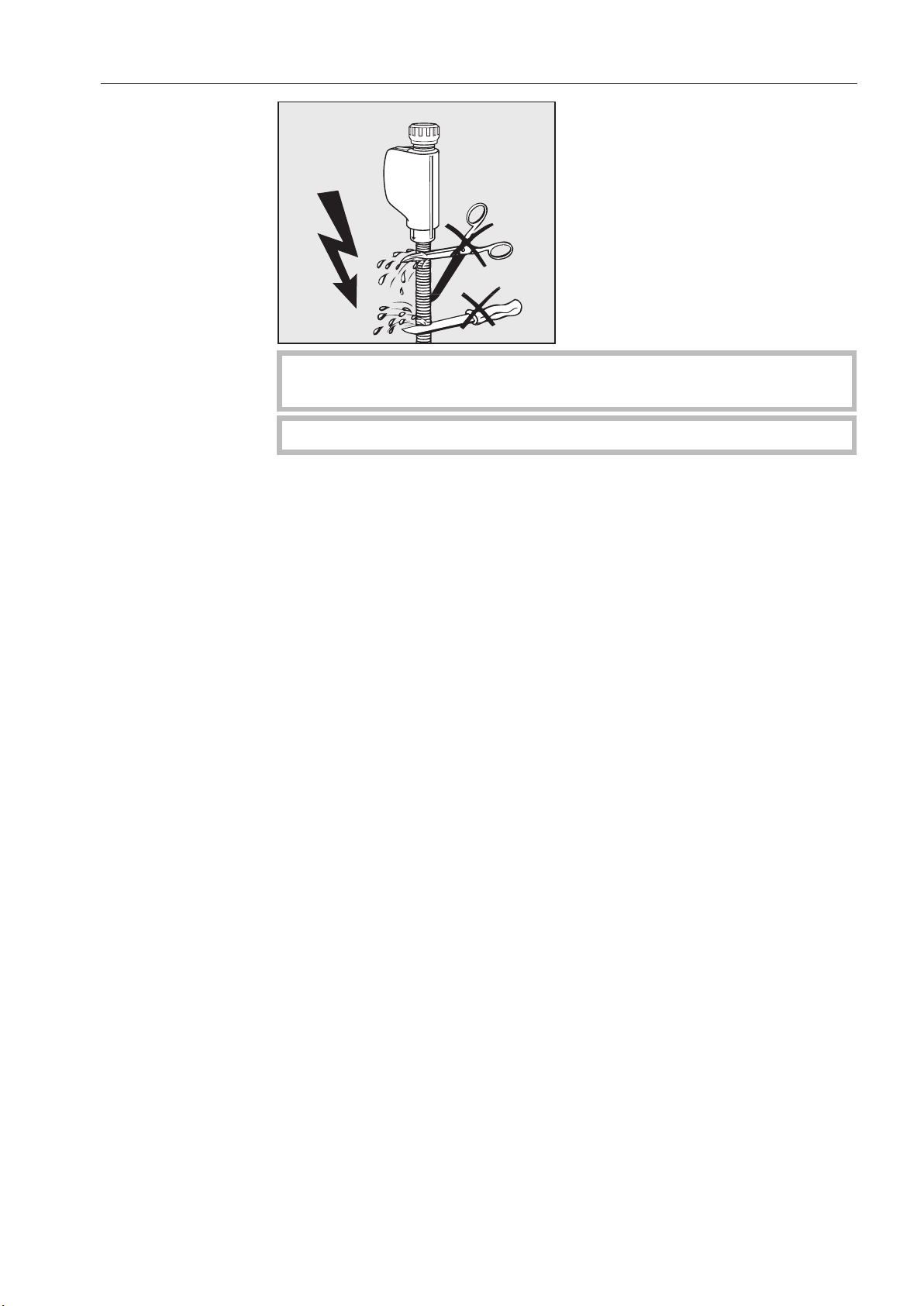
Plumbing
111
Do N
OT shorten or otherwise damage the inlet hoses (see dia‐
gram).
Also refer to the supplied installation diagram!
Plumbing
112
Connecting the water drain
– The drain is equipped with a non-return valve which prevents waste
w
ater from flowing back into the dishwasher through the drain
hose.
– The dishwasher should preferably be connected to a se
parate on-
site drainage system. If no separate connection is available, we rec‐
ommend connection to a double chamber siphon. The on-site con‐
nection must be between 1 ft (0.3 m) and 3' 3" (1 m) height, meas‐
ured from the lower edge of the appliance. If the connection is low‐
er than 1 ft. (0.3 m) the drain hose must be placed in an arc at least
1 ft (0.3 m) high.
– The dishwasher is equipped with a 4' 11" (1.5 m) flexible drain hose
w
ith an internal diameter of 7/8" (22 mm). Hose clips are supplied
with the dishwasher.
– The drain hose may not be shortened. An additional hose and
adap
ter can be used to extend the drain hose. The drain hose
length must not exceed 13' 1 1/2" (4 m).
– The drainage system must be able to accommodate a minimum
d
rainage flow of 42 gpm (16 l/min).
Ma
ke sure that there are no kinks in the hose, and that it is not
squashed or stretched.
Also refer to the supplied installation diagram!
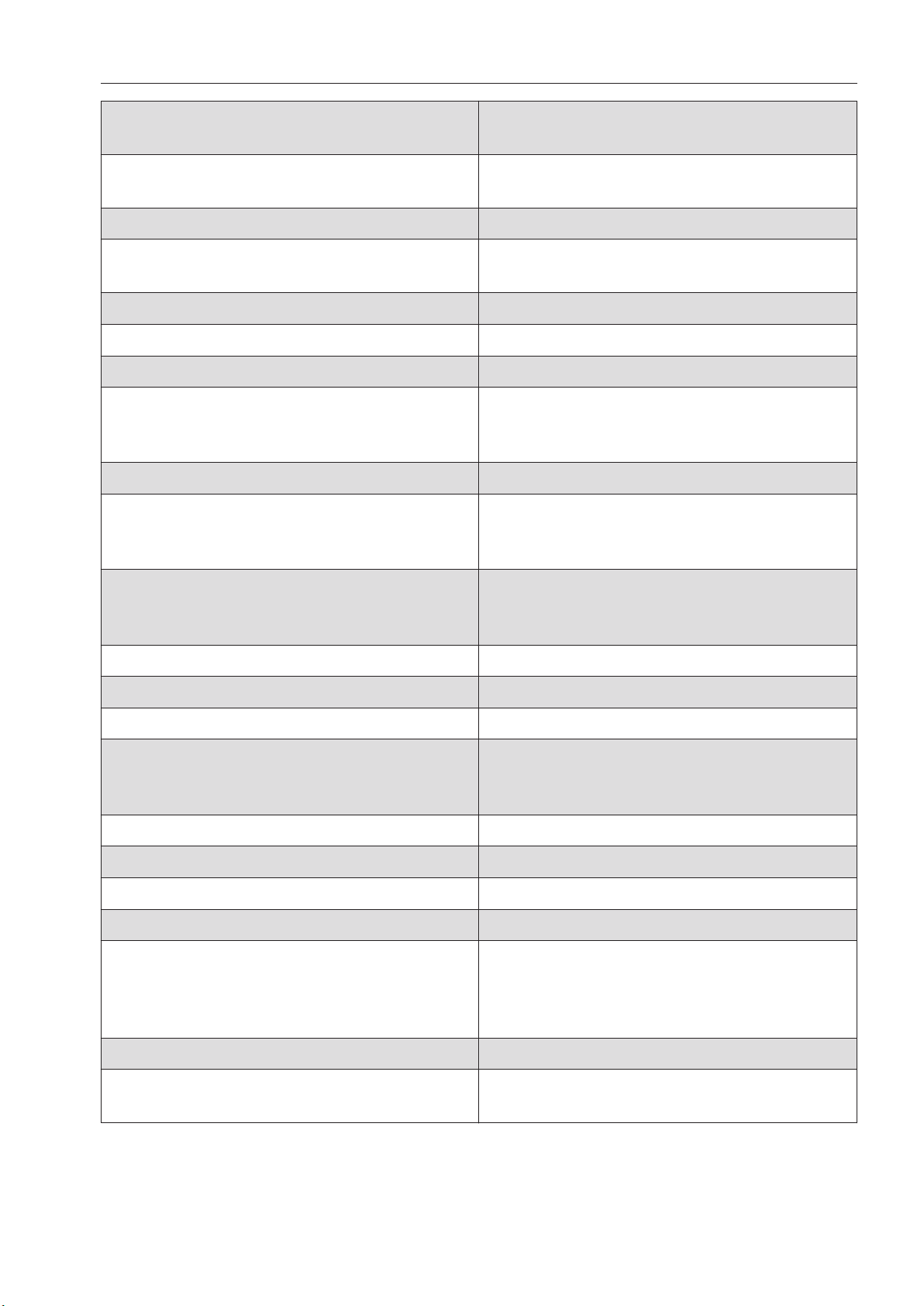
Technical details
113
Height without lid 2' 8 5/16" (82 cm) adjustable + 2 3/8" (6
cm)
Height of free-standing model 2' 8 7/8" (83.5 cm) adjustable + 2 3/8" (6
cm)
Width 1' 11 9/16" (59.8 cm)
Depth
with door open
1' 11 5/8" (60 cm)
3 11 1/4" (120 cm)
Weight (net) 154 lbs (70 kg)
Voltage, rated load, fuse See data plate
Power cord Approx. 5' 7" (1.7 m)
Water temperature:
Cold water connection
Hot water connection
Max. 68°F (20°C)
Max. 149°F (65°C)
Static water pressure Max. 1000 kPa (145 psi) overpressure
Recommended flow pressure:
Col
d and hot water connection
Water connection for steam condenser
200 kPa (29 psi) overpressure
100
kPa (14.5 psi) overpressure
Minimum flow pressure:
Col
d water connection
Hot water connection
100 kPa (14.5 psi) overpressure
40 kP
a (5.8 psi) overpressure
Drain pump height Min. 1' (0.3 m), max. 3' 3 3/8" (1 m)
Drain hose length Max. 13' 1 1/2" (4 m)
Ambient temperature 41°F to 104°F (5°C to 40°C)
Relative humidity
maximum
lin
ear decreasing to
80% for temperatures up to 88°F (31°C)
50% for temperatures up to 104°F (40°C)
Altitude above sea level Up to 6561 ft (2000 m) *
Inlet hoses Approx. 5' 7" (1.7 m)
Drain hose Approx. 4' 11" (1.5 m)
Safety class IP21
Noise emission values
Sound power in LwA
Soun
d pressure in LpA
Built-under appliance with wooden beam in
fr
ont of plinth in Short program
57 dB(A)
45 dB(A)
Certification marks CSA approval, NSF
Manufacturer's address Miele & Cie. KG, Carl-Miele-Straße 29,
333
32 Gütersloh, Germany
* At altitudes above 6561 ft. (2000 m) the boiling point of water is reduced. Dishwashers installed above this altitude must
be modified b
y the Miele Service Department.



Please have the model and serial number
of your appliance available before
contacting Technical Service.
U.S.A.
Miele, Inc.
National Headquarters
9 Independence Way
Princeton, NJ 08540
Phone:
Fax:
www.mieleusa.com
Technical Service & Support
Nationwide
Phone:
Fax:
800-991-9380
800-220-1348
800-991-9380
609-419-9898
609-419-4241
Importer
Miele Limited
Professional Division
1-888-325-3957
1-800-803-3366
Miele Professional
Technical Service
1-888-325-3957
1-800-803-3366
Phone:
Fax:
Canada
Miele & Cie. KG
Carl-Miele-Straße 29
33332 Gütersloh
Germany
Manufacturer
161 Four Valley Drive
Vaughan, ON L4K 4V8
Phone:
Fax:
www.mieleprofessional.ca
Alteration rights reserved / Publication date: 2015-03-12 M.-Nr. 09 974 530 / 01