June 2016
User Manual
NETGEAR, Inc.
350 East Plumeria Drive
San Jose, CA 95134, USA
202-11598-04
Arlo Q
™
Arlo Q
™
and

2
Support
For product updates and web support, visit http://www.arlo.com/en-us/support/.
Trademarks
© NETGEAR, Inc., NETGEAR and the NETGEAR Logo are trademarks of NETGEAR, Inc. Any non‑NETGEAR trademarks are used for
reference purposes only.
Compliance
For the current EU Declaration of Conformity, visit
http://support.netgear.com/app/answers/detail/a_id/11621/.
For regulatory compliance information, visit
http://www.netgear.com/about/regulatory/.
See the regulatory compliance document before connecting the power supply.

3
Contents
1. Set Up Your System 6
Connect Your Arlo Q or Arlo Q Plus Camera ����������������������������������������������������������������������������������������6
Set Up a New Camera ������������������������������������������������������������������������������������������������������������������������������������������������������������������8
Add a Camera From Another Arlo Account ���������������������������������������������������������������������������������������10
Arlo Q Camera Position ����������������������������������������������������������������������������������������������������������������������������������������������������������12
Place or Mount Your Arlo Q Camera ��������������������������������������������������������������������������������������������������������������12
Use Arlo With IFTTT ����������������������������������������������������������������������������������������������������������������������������������������������������������������������13
2. View Your Content 14
View the Cameras Page ��������������������������������������������������������������������������������������������������������������������������������������������������������14
View Camera Feeds ���������������������������������������������������������������������������������������������������������������������������������������������������������������������� 15
Pan and Zoom Video ��������������������������������������������������������������������������������������������������������������������������������������������������������������������15
Record Clips From Live Video �������������������������������������������������������������������������������������������������������������������������������������16
Take a Snapshot From Live Video �����������������������������������������������������������������������������������������������������������������������16
Talk and Listen �������������������������������������������������������������������������������������������������������������������������������������������������������������������������������������� 17
Control the Camera Feed Image ��������������������������������������������������������������������������������������������������������������������������17
Cloud Recording ��������������������������������������������������������������������������������������������������������������������������������������������������������������������������������� 19
View Recordings and Snapshots �������������������������������������������������������������������������������������������������������������������������� 20
3. Use an SD Card With Arlo Q Plus 23
Insert an SD Card �����������������������������������������������������������������������������������������������������������������������������������������������������������������������������23
View the SD Card Status ����������������������������������������������������������������������������������������������������������������������������������������������������23
Safely Eject and Remove an SD Card ����������������������������������������������������������������������������������������������������������24
View Video Clips on an SD Card ������������������������������������������������������������������������������������������������������������������������������25
Change the SD Card Overwrite Setting��������������������������������������������������������������������������������������������������26
Format an SD Card ������������������������������������������������������������������������������������������������������������������������������������������������������������������������26
Turn SD Card Recording O and On ��������������������������������������������������������������������������������������������������������������� 27

4
4. Personalize Your Camera 28
Name Your Camera �����������������������������������������������������������������������������������������������������������������������������������������������������������������������28
Profile Settings �������������������������������������������������������������������������������������������������������������������������������������������������������������������������������������28
Grant Access to Friends ������������������������������������������������������������������������������������������������������������������������������������������������������ 30
5. Modes, Rules, and Smart Alerts 33
Select a Mode ����������������������������������������������������������������������������������������������������������������������������������������������������������������������������������������� 33
Change Motion Sensitivity �����������������������������������������������������������������������������������������������������������������������������������������������35
Change Audio Sensitivity ���������������������������������������������������������������������������������������������������������������������������������������������������� 36
Manage Alerts ���������������������������������������������������������������������������������������������������������������������������������������������������������������������������������������� 37
Set Up Geofencing �������������������������������������������������������������������������������������������������������������������������������������������������������������������������38
Geofencing With Multipe Mobile Devices ���������������������������������������������������������������������������������������������39
Geofencing Accuracy ���������������������������������������������������������������������������������������������������������������������������������������������������������������40
Geofencing First In Last Out ���������������������������������������������������������������������������������������������������������������������������������������41
Schedule Your Camera Rules ��������������������������������������������������������������������������������������������������������������������������������������41
Add a Mode ��������������������������������������������������������������������������������������������������������������������������������������������������������������������������������������������������44
Motion Detection Activity Zones ������������������������������������������������������������������������������������������������������������������������� 45
6. Settings 48
Turn the Arlo App Fingerprint ID Login On and O 48
Change the Time Zone ������������������������������������������������������������������������������������������������������������������������������������������������������������ 48
Status LED ���������������������������������������������������������������������������������������������������������������������������������������������������������������������������������������������������49
Audio Settings ���������������������������������������������������������������������������������������������������������������������������������������������������������������������������������������� 51
Change the WiFi Network ������������������������������������������������������������������������������������������������������������������������������������������������53
View Device Information ����������������������������������������������������������������������������������������������������������������������������������������������������� 53
Restart the Camera���������������������������������������������������������������������������������������������������������������������������������������������������������������������54
Remove a Camera From Your Account ������������������������������������������������������������������������������������������������������ 54

5
7. Manage Your Subscription Plan 56
Subscription Plans �������������������������������������������������������������������������������������������������������������������������������������������������������������������������56
Renew Your Service Plan ��������������������������������������������������������������������������������������������������������������������������������������������������� 56
Select a Premier or Elite Subscription Plan �������������������������������������������������������������������������������������56
Start or Stop a Continuos Video Recording Plan 57
8. Continuous Video Recording 58
View the Timeline ����������������������������������������������������������������������������������������������������������������������������������������������������������������������������� 58
Navigate Through the Timeline ������������������������������������������������������������������������������������������������������������������������������59
View the Timeline Calendar ������������������������������������������������������������������������������������������������������������������������������������������� 60
9. Troubleshooting 61
Manage Bandwidth for Streaming �������������������������������������������������������������������������������������������������������������������61
Can’t See Video Streams in a Browser ������������������������������������������������������������������������������������������������������61
Not Receiving Push Notifications �����������������������������������������������������������������������������������������������������������������������61
6
1. Set Up Your System
Setting up your Arlo Q camera involves a few simple steps: Get the Arlo app, and then
use the app to get an Arlo account and connect your camera to your network. Your
Arlo account lets you view videos from any Internet-connected computer or mobile
device. You can use the same Arlo app to set up and manage both Arlo Q and Arlo
Wire-Free Cameras.
Connect Your Arlo Q or Arlo Q Plus Camera
You can connect your Arlo Q camera using WiFi. You can connect your Arlo Q Plus
camera to the Internet in any of three dierent ways:
• WiFi. Connect the Arlo Q or Arlo Q Plus camera to your router using WiFi and
power the camera with the included micro USB cable and power adapter.
• Arlo Q Plus Power over Ethernet (PoE). Connect the Arlo Q Plus
camera to a PoE switch using the included PoE adapter if you want to power
and connect the camera to the Internet with a single cable.
• Arlo Q Plus Ethernet. Connect the Arlo Q Plus camera to your router with
Ethernet, but power the camera with the included micro USB cable and power
adapter.
Connect an Arlo Q or Arlo Q Plus Camera With WiFi
¾ To connect an Arlo Q or Arlo Q Plus camera with WiFi:
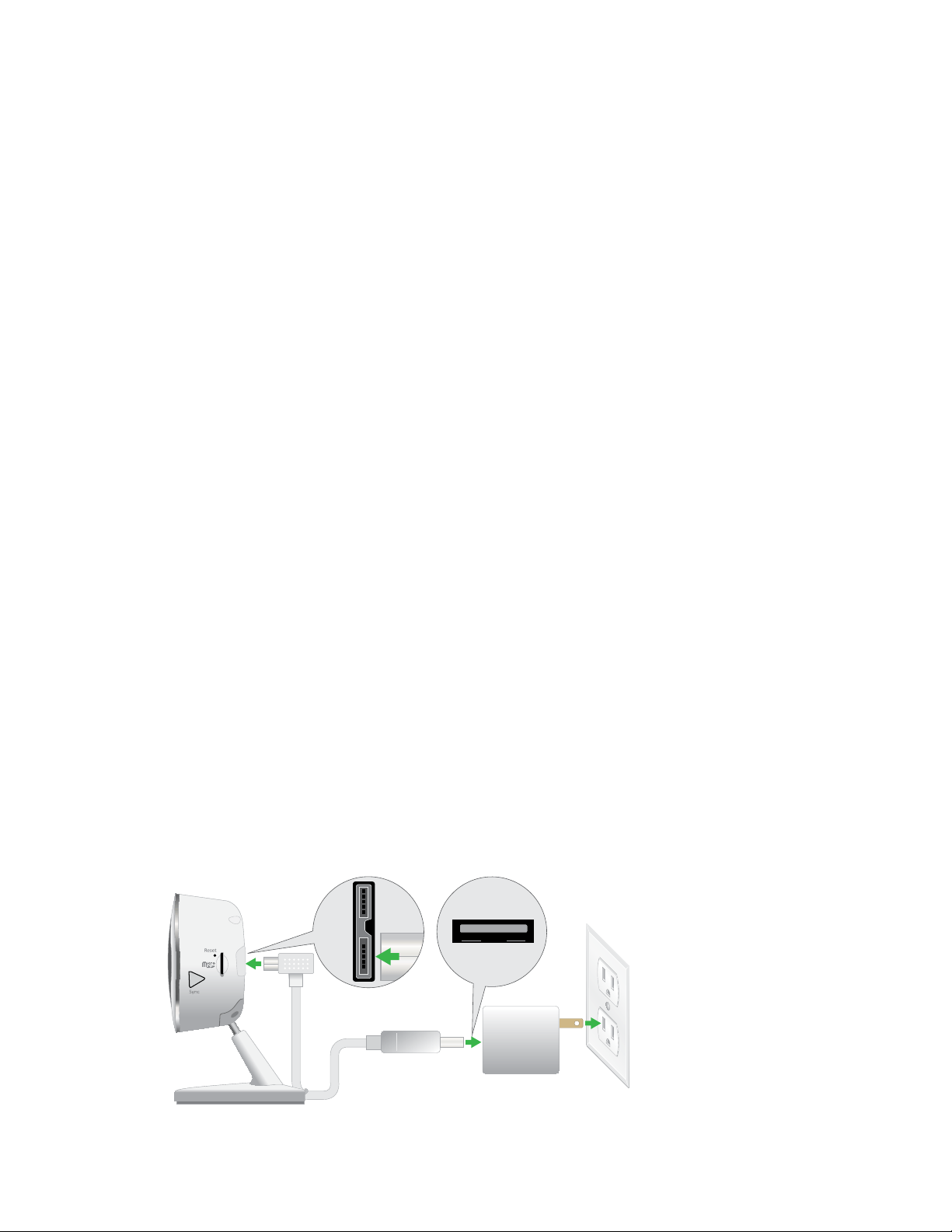
1. Connect the micro USB cable that was included with your camera to the
connector on the back of the camera.
For Arlo Q Plus, connect the micro USB cable to the larger half of the port on
the back of the camera. See the following diagram.
This example shows
an Arlo Q Plus camera
7
Set Up Your System
2. Connect the other end of the micro USB cable to the power adapter.
3. Plug the USB adapter into a wall socket and wait for the camera LED to blink
amber.
4. Continue installing your camera.
For more information, see Set Up a New Camera on page 8.
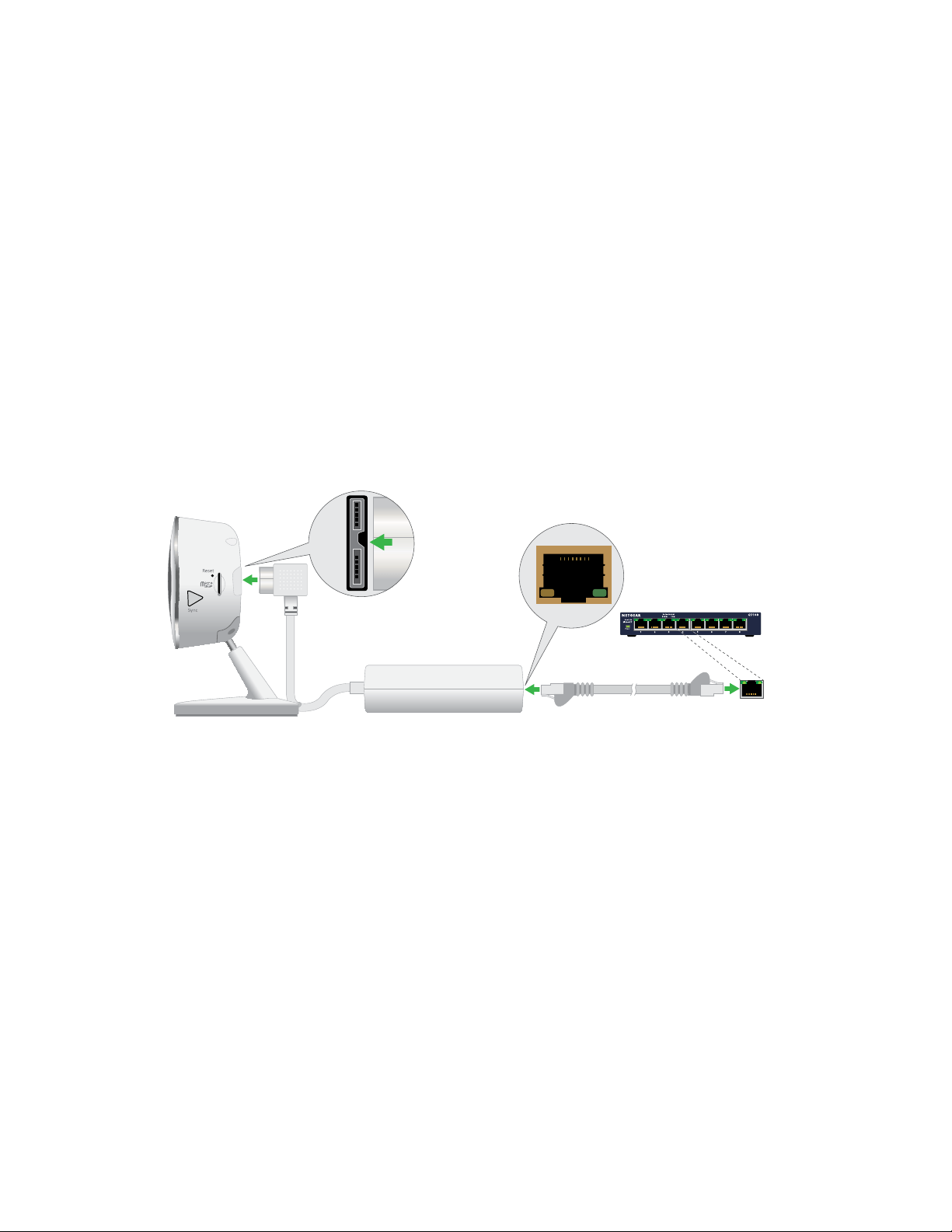
Connect an Arlo Q Plus Camera With PoE
¾ To connect an Arlo Q Plus camera with PoE:
1. Connect the PoE adapter to the camera.
2. Connect your own Ethernet cable to the PoE adapter.
3. Connect the other end of the Ethernet cable to your PoE switch.
4. Continue installing your camera.
For more information, see Set Up a New Camera on page 8.
8
Set Up Your System
Connect an Arlo Q Plus Camera With Ethernet
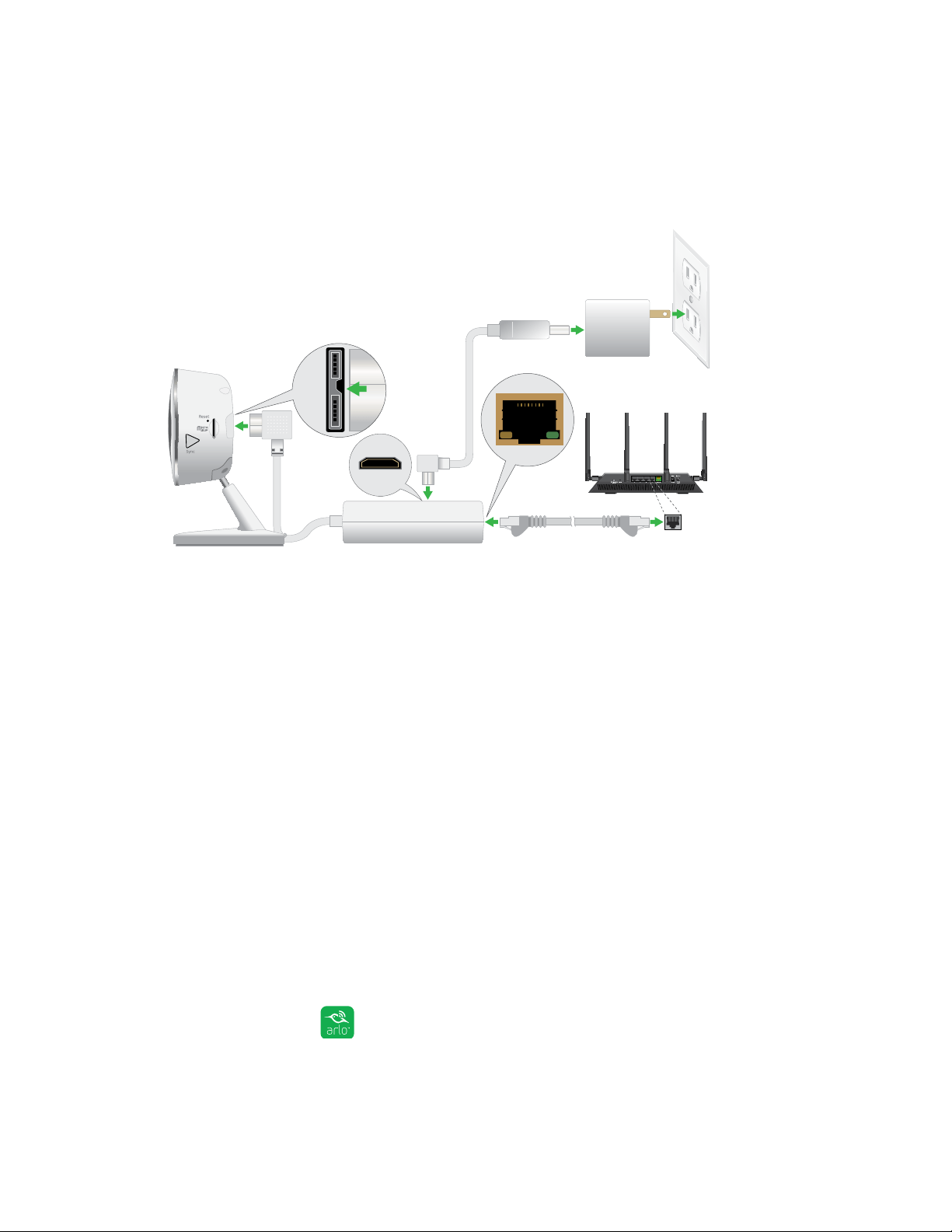
¾ To connect an Arlo Q Plus camera with Ethernet:
1. Connect the PoE adapter to the back of your camera.
2. Connect your own Ethernet cable to the PoE adapter.
3. Connect the other end of the Ethernet cable to an Ethernet switch or a router.
4. Connect the included micro USB cable to the side of the PoE adapter.
5. Connect the other end of the micro USB cable to the USB power adapter.
6. Plug the USB adapter into a wall socket.
7. Continue installing your camera.
For more information, see Set Up a New Camera on page 8.
Set Up a New Camera
On mobile devices, use the Arlo app for the best viewing experience. Visit the Apple
App Store, the Amazon App Store, or the Google Play Store to download the Arlo
app for iOS and Android devices.
¾ To set up a new Arlo Q or Arlo Q Plus camera:
1. Tap the Arlo icon
on your mobile device.
Your moble device must be connected to the same WiFi network as the Arlo
camera.
1
2
4
5
6

9
Set Up Your System
You can also enter arlo.netgear.com in the address bar of a browser.
If you are using a mobile device with a Touch ID® fingerprint identity sensor,
you are prompted to enable Touch ID or skip.
2. To use Touch ID, tap Enable Touch ID.
If you tap Skip, you can turn on the Arlo app fingerprint ID login later. See Turn
the Arlo App Fingerprint ID Login On and O on page 48.
3. Click or tap New System Setup.
A list of cameras displays.
4. Click or tap the camera that you want to set up.
5. Apply power to your camera:
• Arlo Q camera. Plug in your Arlo Q camera.
• Arlo Q Plus or Arlo Q camera WiFi connection. See Connect an Arlo Q or
Arlo Q Plus Camera With WiFi on page 6.
• Arlo Q Plus camera PoE connection. See Connect an Arlo Q Plus Camera
With PoE on page 7.
• Arlo Q Plus camera Ethernet connection. See Connect an Arlo Q Plus
Camera With Ethernet on page 8.
6. Wait until the camera LED is blinking amber.
A slow blinking amber LED indicates that the camera is powered on and is ready
for setup.
7. Click or tap Continue.
8. Enter the name and password for the WiFi network that you want your camera
to connect to.

10
Set Up Your System
If you use an existing Arlo Wire-free system, do not sync your Arlo Q camera to
your base station.
9. Press the Sync button on your camera until the blue LED starts blinking.
A slow blinking blue LED indicates that the camera is connecting to a WiFi
network. A fast blinking blue LED indicates that the camera is connecting to
Arlo servers.
10. Click or tap Continue.
11. Hold the QR code 4 to 8 inches (10 to 20 cm) in front of the camera until you
hear a chime sound.
12. Click or tap Yes if you heard a chime sound.
Click or tap No if you did not hear a chime sound.
13. Wait for the app to discover the Arlo Q camera.
If you did not hear a chime sound, try moving the camera closer to or farther
away from the QR code. If you hear a buzz sound, try the following remedies:
• Check to ensure that you entered the WiFi network name and password
correctly. The WiFi network name and password are case-sensitive.
• Try moving your Arlo Q camera closer to your WiFi router. Do not place your
camera farther than 300 feet (91 meters) from your WiFi router.
Note: For initial setup, you can place the camera in the same room as your WiFi router,
and then move the camera to another location aer you finish the setup. During setup,
the Arlo Q camera must connect to the same WiFi network that you plan to use later.
14. Choose a service plan.
For more information, see Subscription Plans on page 56.
Your Arlo account is set up.
Add a Camera From Another Arlo Account
¾ To add a camera from another Arlo account:
1. Tap the Arlo icon
on your mobile device.
You can also enter arlo.netgear.com in the address bar of a browser
The Cameras page displays.

11
Set Up Your System
2. Log in to the old Arlo account.
3. Click or tap Settings.
The Settings page displays.
4. Click or tap My Devices.
A list of cameras displays.
5. Click or tap the camera.
The settings for the camera display.
6. Scroll down and click the Remove Device button.
The camera is removed from your account.
7. Log out of the Arlo app.
8. Log in to your current Arlo account.
9. Click or tap Add Device.
10. Click or tap the image of the Arlo Q camera.
11. Plug in your camera and wait until the light is blinking amber.
A slow blinking amber LED indicates that the camera is powered on and is ready
for setup.
12. Click or tap Continue.
13. Enter the name and password for the WiFi network that you want your camera
to connect to.
14. Click or tap Continue.
15. Press the Sync button on your camera until the blue light starts blinking.
A slow blinking blue LED indicates that the camera is connecting to a WiFi
network. A fast blinking blue LED indicates that the camera is connecting to
Arlo servers.
16. Click or tap Continue.
Your monitor or mobile device displays a QR code.
12
Set Up Your System
17. Hold your camera in front of your monitor or hold your smartphone or mobile
device in front of your camera until you hear a chime sound.
18. If you hear a chime sound, click or tap Yes.
19. If you do not hear a chime sound, click or tap No and follow the onscreen
instructions.
Arlo Q Camera Position
When positioning your Arlo Q camera, keep these tips in mind:
• Avoid positioning the camera in an area that gets a lot of light shining directly
into the camera lens.
• You can configure Arlo Q cameras to monitor part of the field view and to
detect motion only in the areas that you want monitor.
• Keep active locations in the camera’s field of view.
Arlo Q provides a 130-degree viewing angle. Position your camera so that the
space that you want to monitor is within the camera’s field of view.
• Aim with the cloud.
To help with positioning your camera, do a live stream from the Arlo Q camera.
Aim the camera while watching the video feed on your Arlo smartphone app to
make near-real-time adjustments to the camera’s position.
Place or Mount Your Arlo Q Camera
You can place your Arlo Q camera on a shelf or a flat surface or you can mount it
on the wall.
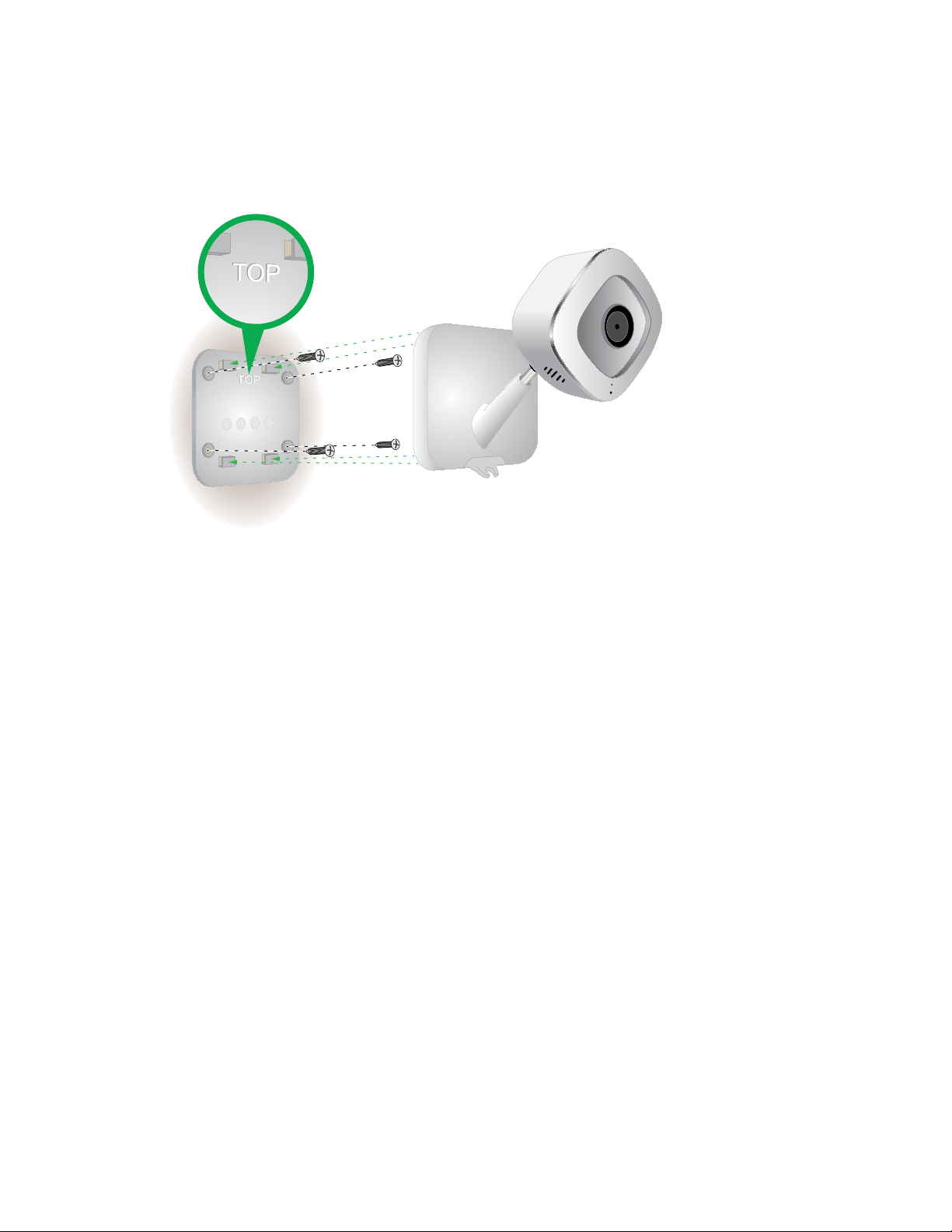
¾ To mount your Arlo Q camera on the wall:
1. Make sure that the mounting plate is separate from the camera base.
13
Set Up Your System
2. Place the wall plate and secure it in place with four screws.
Note: If you’re mounting the camera to drywall, be sure to use the plastic drywall
anchors that are provided.
3. Slide the camera into the wall plate.
Arlo Q also comes with a magnetic plate that can attach to any flat steel or iron
surface. (Magnets do not stick to aluminum or stainless steel.)
Caution: Do not attempt to mount the Arlo Q camera to a half-dome Arlo Wire-free
Camera mount. This might result in the camera falling from the mount and being
damaged.
For more information, see the YouTube video How to Install Arlo Q Smart Home
Security Camera.
Use Arlo With IFTTT
You can use the Arlo app with If This Then That (IFTTT), a free cloud-based service,
that connects smart home devices and applications.
To add Arlo to your IFTTT app, visit https://ifttt.com/channels and see Security and
Monitoring Systems.
To learn more about Arlo and IFTTT, visit the NETGEAR Arlo community.
14
2. View Your Content
Videos recorded by your camera are stored in a library. You can view your recordings
and snapshots, mark them as favorites, and search using the filter.
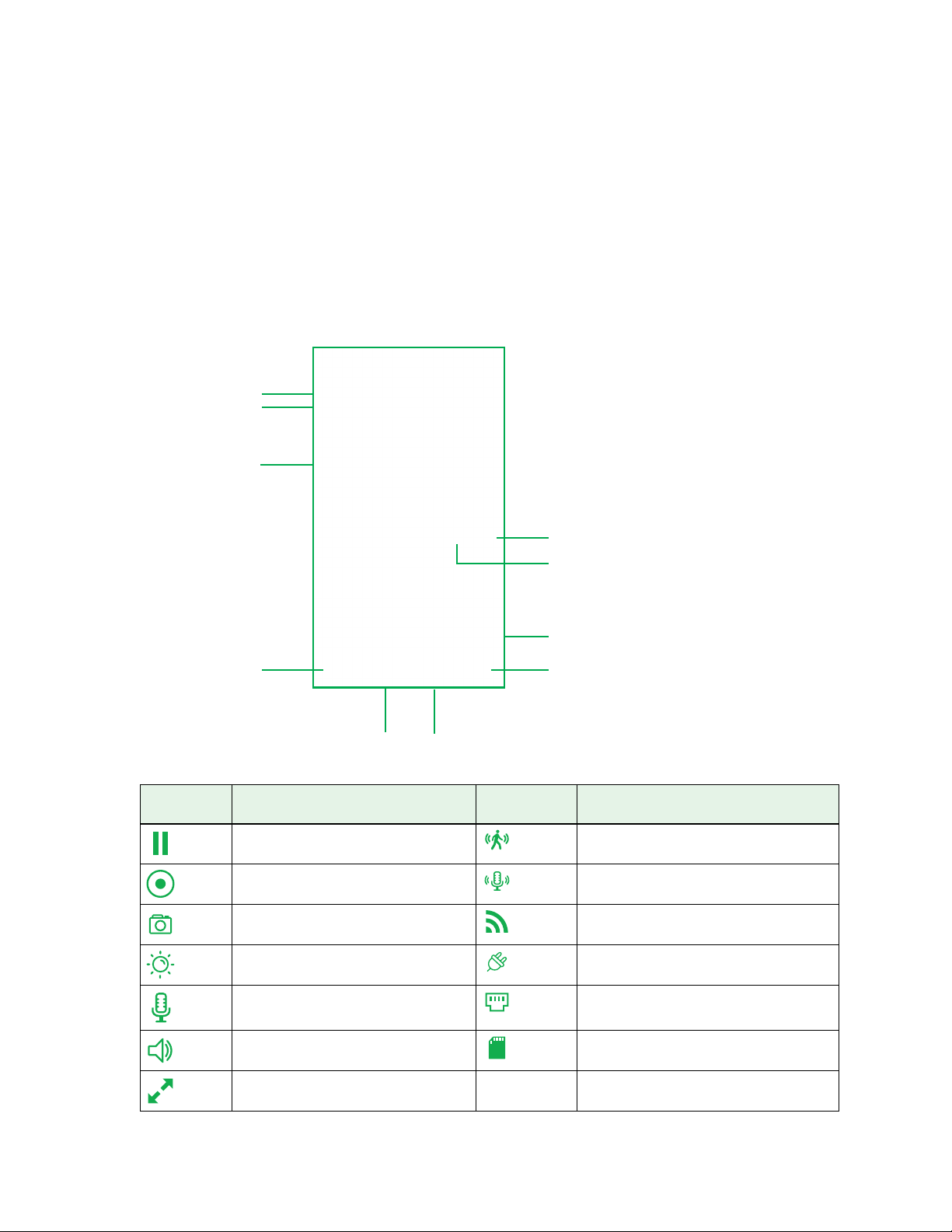
View the Cameras Page
When you launch the Arlo app, the Cameras page displays.
Live Feed
Icon
Click or tap Live to display Camera Icon Display is based on the mode and
camera setup
Pause Motion detection is on
Record video manually Sound detection is on
Snapshot WiFi signal
Brightness Arlo Q Plus power
Microphone. Start using Talk and Listen Arlo Q Plus Ethernet
Speaker. Mute the audio Arlo Q Plus SD card
Full screen.
Camera name
Camera feed
Camera icons
Select
cameras
Optional continuous
video recording (CVR)
View oers
New recordings
Snapshot and
video library
Detection
modes
Settings
View Your Content
15
View Camera Feeds
You can view your Arlo Q camera feeds at any time.
¾ To view camera feeds:
1. Tap the Arlo icon on your mobile device.
If you are using a computer, enter arlo.netgear.com in the address bar of a
browser.
The Cameras page displays. The icons above each camera feed depend on the
rules in the currenty selected mode and how the camera is connected.. For
information about these icons, see View the Cameras Page on page 14.
2. To view and listen to a live feed, click or tap Live on the camera feed image.
A row of live feed icons displays below the live stream image for the camera.
3. To stop viewing and listening to the live feed, click or tap the Pause icon.
Pan and Zoom Video
You can pan and zoom to focus in on the high-def details of any live or recorded
video. Just pinch and drag any image as you do with photos on your smartphone.
¾ To pan and zoom video:
1. Tap the Arlo icon
on your mobile device.
If you are using a computer, enter arlo.netgear.com in the address bar of a
browser.
The Cameras page displays.
2. Click or tap Library.
The calendar displays on the top of the page.
3. Click or tap any live video or prerecorded video from your Arlo library.
4. To pan and zoom using a mobile device, do the following:
• To zoom in and out of the video, use the pinch gesture.
• To move around the zoomed-in frame, touch and drag.

View Your Content
16
5. To pan and zoom using a computer, do the following:
• To zoom in and out, click the Zoom icon.
• To move around in the frame, use your mouse button.
Record Clips From Live Video
¾ To record clips from live video:
1. Tap the Arlo icon
on your mobile device.
If you are using a computer, enter arlo.netgear.com in the address bar of a
browser.
The Cameras page displays.
2. Click or tap Live in the camera feed image.
The camera feed icons display at the bottom of the camera feed image.
3. Click or tap Record Video
.
This icon turns red to indicate that you are recording the live feed.
4. To stop recording, click or tap Record Video
.
Take a Snapshot From Live Video
¾ To take a snapshot from live video:
1. Tap the Arlo icon
on your mobile device.
If you are using a computer, enter arlo.netgear.com in the address bar of a
browser.
The Cameras page displays.
2. Click or tap Live in the camera feed image.
3. Click or tap Snapshot
.
The snapshot is saved in your library.

View Your Content
17
Talk and Listen
¾ To talk and listen:
1. Tap the Arlo icon
on your mobile device.
If you are using a computer, enter arlo.netgear.com in the address bar of a
browser.
The Cameras page displays.
2. Click or tap Live in the camera feed image.
3. Click or tap Microphone
.
A microphone button displays.
4. Wait for the button to turn bright green.
This can take up to five seconds. When the button is bright green, Talk and
Listen is ready.
5. Press and hold or click and hold the Microphone button and speak.
Control the Camera Feed Image
If you use more than one camera, you can change the order in which the camera feeds
are displayed on the Cameras page. You can also zoom, invert, or rotate the camera
feed image.
Change the Camera Order
¾ To change the camera order on the Cameras page:
1. Tap the Arlo icon
on your mobile device.
If you are using a computer, enter arlo.netgear.com in the address bar of a
browser.
The Cameras page displays.
2. Click or tap Settings.
The Settings page displays.
View Your Content
18
3. Under System, click or tap Camera Order.
A list of cameras displays in the order that they display on the Cameras page.
4. If you are using a smartphone or tablet, tap Edit at the top of the page.
A list icon displays.
5. Tap and hold or right-click the list icon and drag the camera to the correct
position on the list.
6. Click or tap Done.
Your settings are saved.
Zoom a Camera Image
To zoom a camera image:
1. Tap the Arlo icon
on your mobile device.
If you are using a computer, enter arlo.netgear.com in the address bar of a
browser.
The Cameras page displays.
2. Click or tap Settings > My Devices.
A list of cameras displays.
3. Click or tap the camera.
The camera settings display.
4. Click or tap Video Settings.
5. Under Activity Zones, click or tap Zoom
.
6. Resize and position the image box as necessary.
7. Click or tap Zoom
.
Your settings are saved.

View Your Content
19
Rotate a Camera Feed
You can invert the video feed image.
¾ To rotate the video display:
1. Tap the Arlo icon on your mobile device.
If you are using a computer, enter arlo.netgear.com in the address bar of a
browser.
The Cameras page displays.
2. Click or tap Settings > My Devices.
A list of cameras displays.
3. Click or tap the camera.
The camera settings display.
4. Click or tap Video Settings.
The Video Settings page displays.
5. Click or tap Rotate Image.
6. The camera feed image is inverted.
Cloud Recording
With cloud recording, everything the Arlo Q cameras record is sent to the cloud
for secure storage in your library. You can access these recordings from anywhere
you are using a mobile device, or on a Windows or Mac computer. All recordings
are encrypted with the user name and password you that create. No one else can
access your recordings.
We provide free cloud storage for the life of the Arlo Q cameras. We store a rolling
7 days of recordings that are created when the Arlo Q camera detects motion or
sound. You can pay to store recordings in the cloud for the last 14 days or 30 days.
You can download recordings and save them to your mobile device or computer for
long-term storage.
View Your Content
20
View Recordings and Snapshots
Your Arlo Q camera stores recordings and snapshots in the library. You can use the
filter and the calender to find and view specific recordings.
Use the Library
You can use the library to find and view recordings based on the date.
¾ To use the library:
1. Tap the Arlo icon on your mobile device.
If you are using a computer, enter arlo.netgear.com in the address bar of a
browser.
The Cameras page displays.
2. Click or tap Library.
The calendar displays on the top of the page.
3. If it is more than one month since you started recording, use the arrows on
either side of the month to select a month to view.
Days on which a video clip was recorded are indicated with a green circle.
4. Click or tap a highlighted date.
Recordings from that date display below the calendar.

View Your Content
21
Use the Filter
You can use the filter to find and view recordings based on criteria that you select.
¾ To use the filter to view your library:
1. Tap the Arlo icon on your mobile device.
If you are using a computer, enter arlo.netgear.com in the address bar of a
browser.
The Cameras page displays.
2. Click or tap Library.
3. Click or tap the Filter icon
in the upper left corner of the page.
The filter page displays.
4. Click or tap the filtering criteria that you want to use.
5. To remove filtering, click or tap Reset.
6. Click or tap Done.
The Filter icon
becomes solid green to show that you are using filtering.
Recordings that match your filter selections display. Dates with recordings are
highlighted in dark green.
Turn O the Filter
The Filter icon on the Library page is solid green when you are using filtering.
When filtering is used, only the recordings in your library that match your filter
criteria display. You can turn o filtering.
¾ To turn o filtering for your library:
1. Tap the Arlo icon
on your mobile device.
If you are using a computer, enter arlo.netgear.com in the address bar of a
browser.
The Cameras page displays.
2. Click or tap Library.
View Your Content
22
3. Click or tap the Filter icon in the upper left corner of the page.
The Filter page displays.
4. Click or tap Reset at the bottom of the page.
Filtering is turned o. The Filter icon
becomes an outline to show that
filtering is not in use.
Share and Download Clips
¾ To share and download clips from the library:
1. Tap the Arlo icon
on your mobile device.
If you are using a computer, enter arlo.netgear.com in the address bar of a
browser.
The Cameras page displays.
2. Click or tap Library.
The Library page displays.
3. Click or tap a snapshot or video.
4. Click or tap Share
.
5. Click or tap the method that you want to use to share the shapshot or video.
The available methods depend on which apps you use on your smartphone or
computer.
23
3. Use an SD Card With Arlo Q Plus
All recordings are stored to the cloud, but with an Arlo Q Plus camera, you can use
an SD card as a backup location to store recordings. Simply insert an SD card and
the camera automatically enables all the settings for you. The SD card cannot be
used on its own as a substitute for cloud recording.
If you put an SD card in the camera, the camera records to both the cloud and
the SD card for motion-triggered and audio-triggered recordings (not CVR). If the
camera is powered on, but the Internet goes down, the camera continues to record
to the SD card.
We support MicroSD cards, class 10 or higher, with up to 128 GB capacity, file
format FAT32.
The Arlo app notifies you if the SD card format is incorrect, if the SD card is full,
and so on. The camera can reformat the card for you. See Format an SD Card on
page 26.
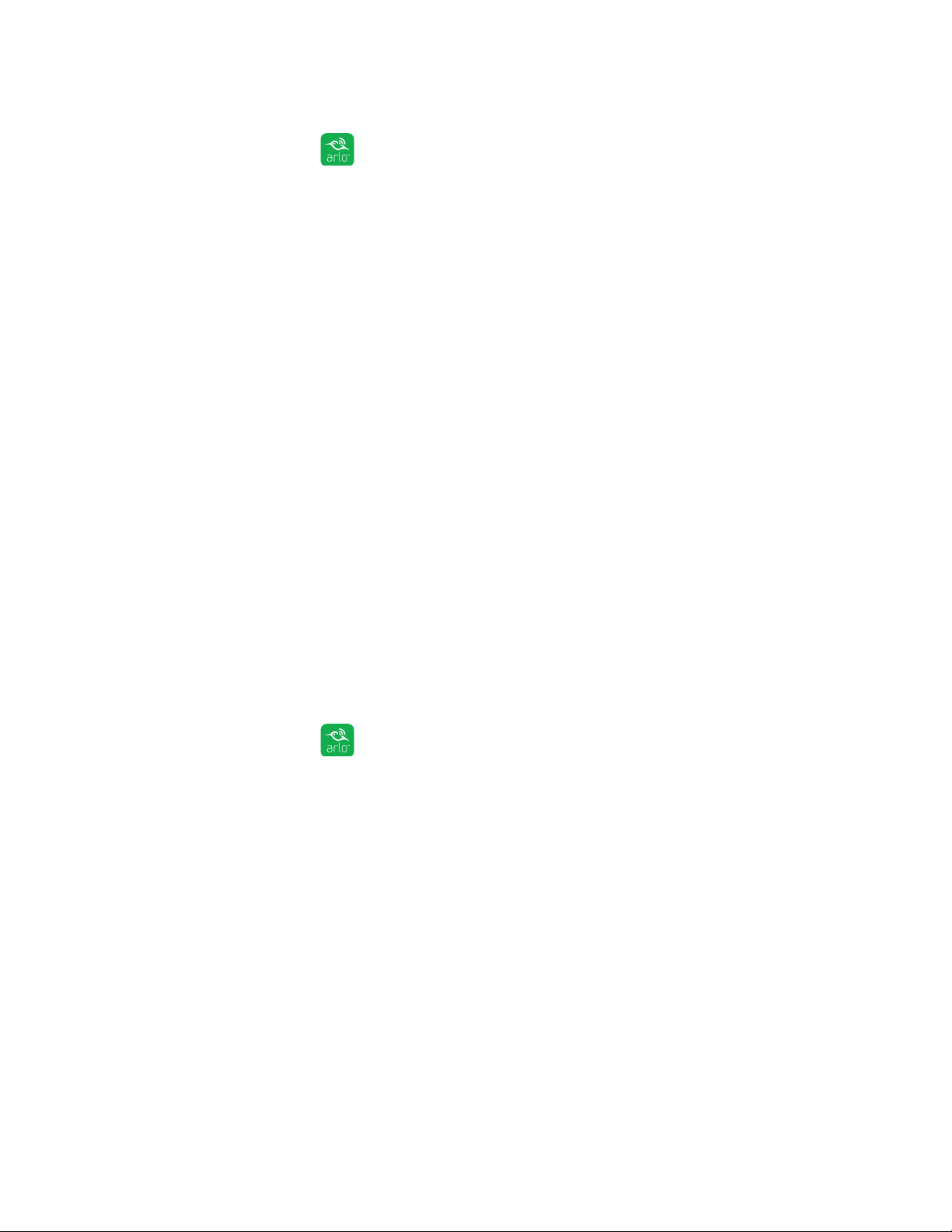
Insert an SD Card
¾ To insert an SD card in an Arlo Q Plus camera:
1. Insert the SD card into the SD card slot on the camera.
2. Press the edge of the card until it is completely seated in the slot.
View the SD Card Status
The Arlo app notifies you if the SD card is getting full or if the SD card is not the
correct format. You can also use the Arlo app to view the SD card status.
24
Use an SD Card With Arlo Q Plus
¾ To view the status of of the SD card for a camera:
1. Tap the Arlo icon
on your mobile device.
If you are using a computer, enter arlo.netgear.com in the address bar of a
browser.
The Cameras page displays.
2. Click or tap Settings > My Devices.
A list of cameras displays.
3. Click or tap the camera.
The camera settings display.
4. In the Storage section, click or tap SD Card.
The SD Card Status shows whether the SD card is ready, needs to be formatted,
or is full.
Safely Eject and Remove an SD Card
Note: Cards must be safely ejected so that recordings do not occur as you are removing
the card. Removing the card while it is in use can cause the card to become corrupted.
¾ To safely eject an SD card:
1. Tap the Arlo icon
on your mobile device.
If you are using a computer, enter arlo.netgear.com in the address bar of a
browser.
The Cameras page displays.
2. Click or tap Settings > My Devices.
A list of cameras displays.
3. Click or tap the camera.
The camera settings display.
4. In the Storage section, click or tap SD Card.
The SD Card page displays.
25
Use an SD Card With Arlo Q Plus
5. Click or tap Safely Eject SD Card.
The settings on the page dim to show that the SD card is ejected. The camera
stops recording onto the SD card. The SD card can now be safely removed.
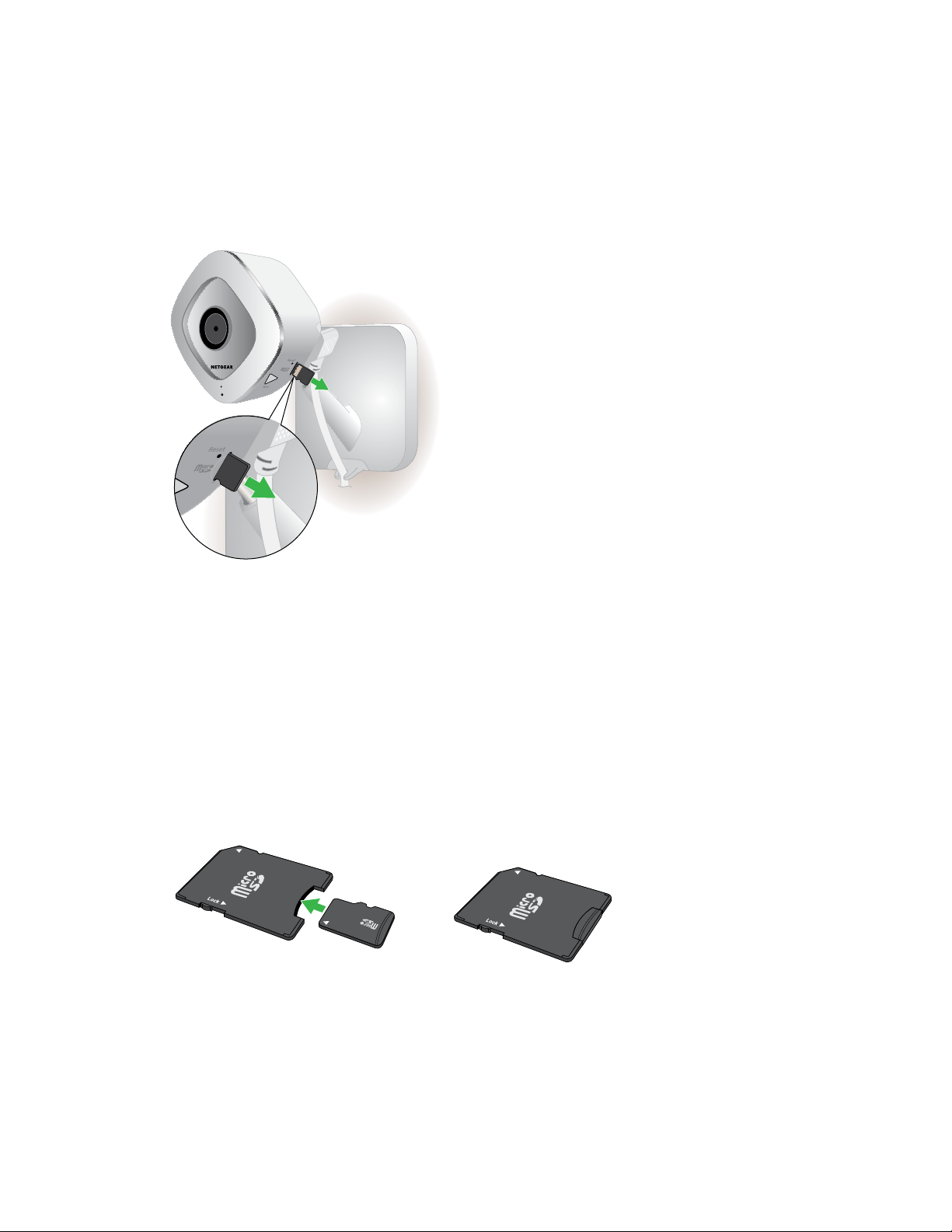
6. To release the SD card, press the edge of the card to push it into the slot.
The SD card ejects.
View Video Clips on an SD Card
Video clips on the SD cards do not display in the Arlo app, but you can use a
Windows or Mac computer to view the clips.
¾ To view video clips on an SD card:
1. Safely eject the SD card.
For more information, see Safely Eject and Remove an SD Card on page 24.
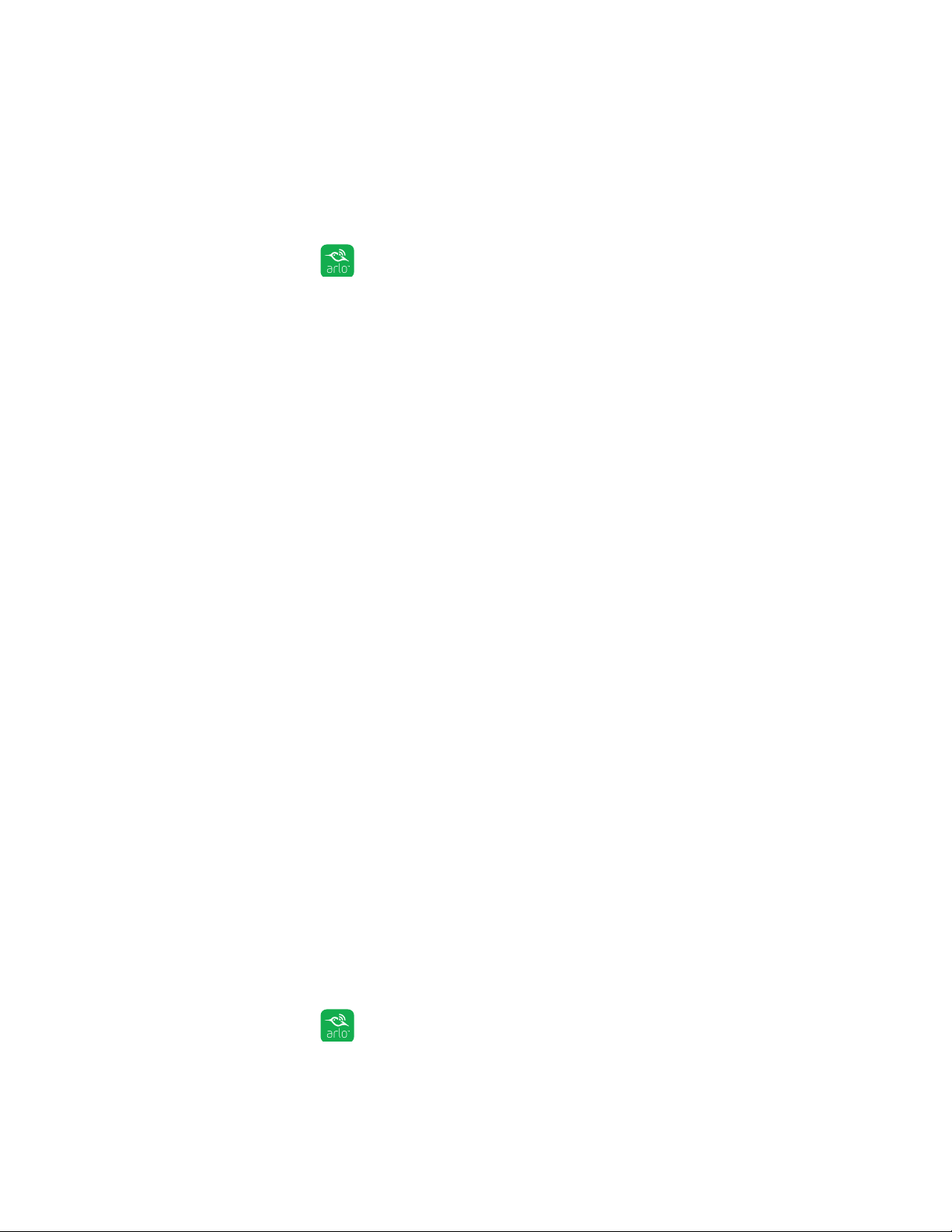
2. Insert the SD card into the adapter that came in the package with the SD card.
3. Insert the SD card adapter into the SD card slot on a Windows computer or a
Mac computer.
26
Use an SD Card With Arlo Q Plus
Change the SD Card Overwrite Setting
By default, if the SD card fills up, the oldest recording is erased to make room for
new recordings. You can change this setting if you want.
¾ To change the SD card overwrite setting:
1. Tap the Arlo icon
on your mobile device.
If you are using a computer, enter arlo.netgear.com in the address bar of a
browser.
The Cameras page displays.
2. Click or tap Settings > My Devices.
A list of cameras displays.
3. Click or tap the camera.
The camera settings display.
4. In the Storage section, click or tap SD Card.
The SD Card page displays.
5. Click or tap Automatic Overwrite.
The setting changes.
Format an SD Card
We support MicroSD cards, class 10 or higher, with up to 128 GB capacity, file
format FAT32.
The Arlo app displays a pop-up message to let you know if it is necessary to format
the SD card. The camera can format the SD card.
¾ To format an SD card:
1. Insert the SD card into the SD slot on the Arlo Q Plus camera.
For more information, see Insert an SD Card on page 23.
2. Tap the Arlo icon
on your mobile device.
If you are using a computer, enter arlo.netgear.com in the address bar of a
browser.

27
Use an SD Card With Arlo Q Plus
The Cameras page displays.
3. Click or tap Settings > My Devices.
A list of cameras displays.
4. Click or tap the camera.
The camera settings display.
5. In the Storage section, click or tap SD Card.
The SD Card page displays.
6. Click or tap Format SD Card.
The SD card is formatted.
Turn SD Card Recording O and On
¾ To turn SD card recording o and on:
1. Insert the SD card into the SD slot on the Arlo Q Plus camera.
For more information, see Insert an SD Card on page 23.
2. Tap the Arlo icon
on your mobile device.
If you are using a computer, enter arlo.netgear.com in the address bar of a
browser.
The Cameras page displays.
3. Click or tap Settings > My Devices.
A list of cameras displays.
4. Click or tap the camera.
The camera settings display.
5. In the Storage section, click or tap SD Card.
The SD Card page displays.
6. Click or tap SD Card Reording.
SD card recording toggles o and on.
28
4. Personalize Your Camera
You can customize Arlo Q settings such as the camera name to make it easier to
manage. You can grant access to friends and set up cloud recording.
Name Your Camera
You can easily customize your Arlo Q camera by renaming it.
¾ To rename your Arlo Q camera:
1. Tap the Arlo icon on your mobile device.
If you are using a computer, enter arlo.netgear.com in the address bar of a
browser.
The Cameras page displays.
2. Click or tap Settings > My Devices.
A list of cameras displays.
3. Click or tap the camera.
The camera settings display.
4. In the Name field, delete the current name and enter a new name that reminds
you of the camera’s location, such as Garage or Front Door.
Camera names are limited to 32 characters.
5. Click or tap Save.
Your settings are saved.
Profile Settings
When you use New Setup, the email address and password that you enter are
saved as your profile. You can change the password and the user name. In the
mobile app, you are automatically logged in when you launch the Arlo app, but you
can turn Auto Login o and on.

Personalize Your Camera
29
Change Your Password and User Name
¾ To change your password and user name:
1. Tap the Arlo icon
on your mobile device.
If you are using a computer, enter arlo.netgear.com in the address bar of a
browser.
The Cameras page displays.
2. Click or tap Settings.
The Settings page displays.
3. Under Account, click or tap Profile.
The Profile page displays.
4. If you are using a smartphone, tap Edit at the top of the page.
The Profile page displays.
5. Type the new entries in the password and name fields.
6. Click or tap Done.
Your settings are saved.
Turn Auto Login On or O for a Smartphone
When Auto Login is turned on, launching the Arlo app on your smartphone
automatically logs you in with the email address and password that you used the
last time you logged in.
¾ To turn Auto Login on or o on your smartphone:
1. Tap the Arlo icon
on your mobile device.
If you are using a computer, enter arlo.netgear.com in the address bar of a
browser.
The Cameras page displays.

Personalize Your Camera
30
2. Click or tap Settings.
The Settings page displays.
3. Under Account, click or tap Profile.
The Profile page displays.
4. Tap Auto Login.
Your settings are saved.
Grant Access to Friends
You can add friends to your Arlo account. Friends can view live streams from your
cameras; record video clips; view, share, mark as favorite, and delete clips from
your library; and take snapshots. Friends are granted limited access to some of the
settings and features of your Arlo account. You can select which cameras friends
can see and what administrative rights are available to them.
Add a Friend
¾ To add a friend to your Arlo Account:
1. Tap the Arlo icon
on your mobile device.
If you are using a computer, enter arlo.netgear.com in the address bar of a
browser.
The Cameras page displays.
2. Click or tap Settings.
The Settings page displays.
3. Under Account, click or tap Grant Access.
4. Click or tap Add or the + symbol.
5. Enter the first name, last name, and email address of the person that you want
to add as a friend.
6. Click or tap the cameras that you want the friend to be able to access.
7. Click or tap Send Invite.

Personalize Your Camera
31
An email is sent inviting the friend to create an Arlo account. This friend’s name
is displayed with the status Pending. When a friend accepts your invitation, the
status changes to Accepted.
Edit a Friend’s Access Privileges
¾ To edit a friend’s access privileges:
1. Tap the Arlo icon
on your mobile device.
If you are using a computer, enter arlo.netgear.com in the address bar of a
browser.
The Cameras page displays.
2. Click or tap Settings.
3. Under Account, click or tap Grant Access.
A list of your friends displays with the status of their accounts.
4. Click or tap the friend, and click or tap Edit
.
The Edit page displays.
5. Click or tap cameras to select or deselect them.
6. Click or tap Allow Access Rights.
Selecting Allow Access Rights allows this friend to change your account and
camera settings.
7. Click or tap Done.
Your settings are saved.
Delete a Friend
¾ To delete a friend’s privileges:
1. Tap the Arlo icon
on your mobile device.
If you are using a computer, enter arlo.netgear.com in the address bar of a
browser.
The Cameras page displays.

Personalize Your Camera
32
2. Click or tap Settings.
3. Under Account, click or tap Grant Access.
A list of your friends displays with the status of their accounts.
4. Select the friend, and click or tap Edit
.
The Edit page displays.
5. Click or tap Delete Friend.
6. Click or tap Yes.
The friend is deleted.
33
5. Modes, Rules, and Smart Alerts
Modes let you use rules to set and control automated actions. With modes, Arlo Q can
be on the lookout for you, even when you are not using the Arlo app.
Arlo Q comes with the following modes:
Armed. Detection is on for this camera.
Disarmed. Detection is o for this camera.
Schedule. Manage detection based on a schedule.
Geofencing. You can use geofencing to arm, disarm, or resume a schedule mode
when you arrive at or leave a given location based on your mobile device.
If you add new modes, the Custom Mode icon
. displays.
You can customize the Armed and Schedule modes and you can add new modes. You
might want to create a mode in which some motion sensors and cameras are active
but others are not. For example, when you are sleeping, you might want your exterior
cameras to be active, but your interior cameras to be inactive.
Note: You can create dierent modes for the same camera, but the camera can
use only one mode at a time.
Select a Mode
You can turn modes on and o manually or set modes to activate according to a
schedule. Use the following methods when you are not using a schedule to control
a mode or to override an existing schedule. You must use at least one mode. The
Arlo Q camera is always in a mode, even if that mode is set to do nothing.
Use the Arlo App Menus to Select a Mode
¾ To select a mode for a camera:
1. Tap the Arlo icon
on your mobile device.
If you are using a computer, enter arlo.netgear.com in the address bar of a
browser.
The Cameras page displays.
34
Modes, Rules, and Smart Alerts
2. Click or tap Mode.
A list of cameras displays.
3. Click or tap the Arlo Q camera.
The Mode page displays.
4. Click or tap a mode to activate it.
The mode that you selected turns on immediately. The mode stays active until
you change it.
When you view the Cameras page, the icons that display at the top of the camera
feed are based on the currently selected mode:
Motion. Motion detection is on.
Sound. Audio detection is on.
Use the 3D Touch Shortcut to Select a Mode
If you are using a mobile device that supports the 3D Touch feature, you can use
3D Touch to quickly select a mode.
¾ To use 3D Touch to select a mode for a camera:
1. Tap and hold the Arlo icon
on your mobile device.
A menu displays listing the default mode selections: Armed, Disarmed, Scheduled,
and Geofencing.
2. Tap a mode in the menu to activate the mode.
The Mode page displays with the activated mode selected. The mode stays
active until you change it.
When you view the Cameras page, the icons that display at the top of the camera
feed are based on the currently selected mode:
Motion. Motion detection is on.
Sound. Audio detection is on.
35
Modes, Rules, and Smart Alerts
Change Motion Sensitivity
You can easily change the sensitivity level for Arlo Q cameras.
¾ To change the sensitivity level for a camera:
1. Tap the Arlo icon on your mobile device.
If you are using a computer, enter arlo.netgear.com in the address bar of a
browser.
The Cameras page displays.
2. Click or tap Mode.
A list of cameras displays.
3. Click or tap the Arlo Q camera.
The Mode page displays.
4. Click or tap Edit
next to the mode.
The Edit Rule page displays.
5. Click or tap Edit
next to the rule that you want to edit.
6. Under If the following, click or tap Edit
next to Motion is detected.
The Motion detection settings page displays.
7. Move the slider to adjust the sensitivity level for motion detection for this
camera.
If you used a mobile device to specify the settings, your settings are saved.
8. If you used a browser to specify the settings, click Save.
Your settings are saved.
36
Modes, Rules, and Smart Alerts
Change Audio Sensitivity
¾ To change audio sensitivity for a camera:
1. Tap the Arlo icon
on your mobile device.
If you are using a computer, enter arlo.netgear.com in the address bar of a
browser.
The Cameras page displays.
2. Click or tap Mode.
A list of cameras displays.
3. Click or tap the Arlo Q camera.
A list of modes displays.
4. Click or tap Edit
next to Armed.
The Edit Rule page displays.
5. Click or tap Edit
next to the rule.
6. Under If the following, click or tap Edit
next to Audio is detected.
7. Move the slider to the desired level of audio detection.
If you used a mobile device to specify the settings, your settings are saved.
8. If you used a browser to specify the settings, click Save.
Your settings are saved.

37
Modes, Rules, and Smart Alerts
Manage Alerts
Arlo can push notifications to your smartphone, send you email alerts, or do both. To
receive Arlo notifications on your phone, you must get the Arlo app.
Note: If you log out of the Arlo app on your smartphone or mobile device, you will
stop receiving push notifications.
¾ To change the alert settings for a camera:
1. Tap the Arlo icon
on your mobile device.
If you are using a computer, enter arlo.netgear.com in the address bar of a
browser.
The Cameras page displays.
2. Click or tap Mode.
A list of cameras displays.
3. Click or tap the Arlo Q camera.
A list of modes displays.
4. Click or tap Edit
next to Armed or your custom mode.
The Edit Rule page displays.
5. Under If the following, specify the motion detection and audio detection
settings.
6. Under Then do the following, specify the settings for Arlo Q to respond to
motion or sound detection by recording video or taking a snapshot.
The selections are Record video, Take snapshot, or Do nothing.
7. Under Alert, click or tap Push Notification to turn alerts on and o for your
mobile device.
8. For email notifications, make sure that the Email Alerts check box is selected.
9. To specify an email address, click or tap Edit next to Email Alerts and enter the
email address.

38
Modes, Rules, and Smart Alerts
Set Up Geofencing
Geofencing is a virtual fence that helps you discover when something or someone
enters or exits a predefined zone. You can use Arlo geofencing to arm, disarm, or
resume schedule modes, when your mobile device is in zone or out of zone.
To set up geofencing, you must use your mobile device and you must allow the Arlo
app to use your location.
Configure Your Mobile Device
¾ To configure your mobile device for more accurate geofencing:
1. Enable GPS or location services so that Arlo can locate your device.
2. Enable WiFi.
Set Up Geofencing for the First Time and Set Up Modes
¾ To set up geofencing for the first time and set up modes:
1. Tap the Arlo icon
on your mobile device.
The Cameras page displays.
2. Tap Mode.
A list of cameras displays.
3. Click or tap the camera.
A list of available modes displays.
4. Tap Geofencing.
The Arlo Would Like to Use your Location prompt displays.
5. Tap Allow.
Geofencing works only if Arlo can locate your mobile device. The Location
Address page displays your current address.
6. To change the address, tap the Address field, type the address for your
location, and then tap Next.
The geofence radius displays as Medium.

39
Modes, Rules, and Smart Alerts
7. To change your radius setting, tap the radius icon, select a radius size, and tap
Next.
Radius size options are Small, Medium, or Large (approximately 150 meters,
250 meters, and 500 meters, respectively).
8. Enter a name for your location and tap Next.
The Away Mode page displays a list of available modes. The away mode is the
detection mode used by the camera when you are away from the location that
you specified.
9. Select an away mode and tap Next.
Note: When your mobile device is out of zone, the Arlo device defaults to the away mode. Most people
select Armed or Custom Mode while they are away.
10. Select a home mode and tap Next.
Note: When your mobile device is in zone, the Arlo device defaults to the home mode. Most people select
Disarmed or Custom Mode while they are home.
If you use more than one enabled mobile device, you might be asked to select an
Arlo device to connect it to.
11. To select the preferred mobile device, tap the device and then tap Next.
12. Tap Save.
Geofencing With Multipe Mobile Devices
If you want multiple mobile devices to participate in your Arlo geofencing, ensure
that the required conditions are met, and then follow the steps to enable or
disable geofencing for the devices.
Ensure that these conditions are met:
• Your Arlo devices are online.
• Your geofencing feature is enabled.
• Your friend’s mobile device is added to your account.
For more information about adding devices, see Enable or Disable Geofencing
for Friends’ Mobile Devices on page 40.
• (Required when your friend wants to participate in geofencing) Your friend is
logged in to the Arlo App on his or her mobile device.
• (Required when your friend wants to participate in geofencing) The GPS or
location service enabled on your friend’s mobile device.

40
Modes, Rules, and Smart Alerts
Enable or Disable Geofencing for Friends’ Mobile Devices
¾ To enable or disable geofencing for your friends’ mobile devices:
1. Tap the Arlo icon
on your mobile device.
The Cameras page displays.
2. Tap Mode.
A list of cameras displays.
3. Click or tap the camera.
A list of available modes displays.
4. Tap the Geofencing edit icon.
The Geofencing editing page displays.
5. Tap Enabled Devices.
The Enabled Device page displays a list of geofencing-enabled mobile devices.
6. Tap the mobile devices that you want to enable for geofencing.
A check mark appears next to the device name when geofencing is enabled.
Note: The device location displays as either In Zone or Out of Zone.
7. (Optional) To disable geofencing, tap the mobile device again.
The check mark disappears when geofencing disabled.
For more information, see Set Up Geofencing on page 38.
Geofencing Accuracy
For accuracy, geofencing uses a combination of GPS, cellular data, and WiFi data.
The local environment aects geofencing as follows:
• In urban environments, where the cell towers and WiFi routers are more dense,
geofencing accuracy can reach 100–200 meters.
Note: If you live in a skyscraper, geofencing might not work reliably due to GPS inaccuracies. Using the
Large radius setting might help.
• In more rural areas, where cell towers and WiFi routers are sparse, geofencing
accuracy can reach several hundred meters.

41
Modes, Rules, and Smart Alerts
To improve geofencing accuracy, ensure that your mobile device meets these
conditions:
• WiFi is turned on.
• GPS or location services are turned on.
Geofencing First In Last Out
Arlo cameras use the first in, last out principal within the geofencing feature.
First in, last out allows you to come and go without worrying about arming and
disarming your Arlo cameras. For example, if your roommate leaves the house
before you, your Arlo cameras remain disarmed because you are still in the house
or geofence. After you leave the house and both devices are outside the geofence,
your Arlo cameras are armed.
For more information about managing multiple devices, see Geofencing With
Multipe Mobile Devices on page 39.
Schedule Your Camera Rules
You can set a schedule to activate and deactivate cameras automatically. Schedules
recur weekly. For example, the schedule for Tuesday is repeated every Tuesday as
long as the schedule is turned on. Arlo is preconfigured with the following schedule:
• Monday through Friday, 8:00 a.m. to 5:00 p.m. All motion sensors are on.
• All other times. All motion sensors are o.
Add a Schedule
¾ To add a schedule for a camera:
1. Tap the Arlo icon
on your mobile device.
If you are using a computer, enter arlo.netgear.com in the address bar of a
browser.
The Cameras page displays.
2. Click or tap Mode.
A list of cameras displays.
42
Modes, Rules, and Smart Alerts
3. Click or tap the Arlo Q camera.
A list of available modes displays.
4. Click or tap Schedule
.
5. Click or tap Edit
next to Schedule.
6. Click or tap + Add.
7. Set the days and times and then click or tap Save.
The schedule is saved.
8. To edit the schedule, click or tap the schedule.
9. Change the start and stop times and click or tap Save.
Edit a Schedule
¾ To edit a schedule:
1. Tap the Arlo icon
on your mobile device.
43
Modes, Rules, and Smart Alerts
If you are using a computer, enter arlo.netgear.com in the address bar of a
browser.
The Cameras page displays.
2. Click or tap Mode.
A list of cameras displays.
3. Click or tap the Arlo Q camera.
A list of available modes displays.
4. Click or tap Schedule
.
5. Click or tap Edit
next to Schedule.
6. Click or tap the schedule.
44
Modes, Rules, and Smart Alerts
7. Change the start and stop times and click or tap Save.
The schedule is saved.
Add a Mode
You can add new modes to tell your Arlo Q camera what to do in certain situations.
For example, you can set your Arlo Q camera to record videos when the motion
sensor is activated and to alert you with an email message.
You can use the rules you create within modes and schedules to customize your
Arlo Q camera. With Arlo Q cameras, you can create one rule for each mode.
¾ To add a mode for a camera:
1. Tap the Arlo icon
on your mobile device.
If you are using a computer, enter arlo.netgear.com in the address bar of a
browser.
The Cameras page displays.
2. Click or tap Mode.
A list of cameras displays.
3. Click or tap the camera.
4. Click or tap Add a Mode.
The New Mode page displays.
5. Enter a name for the mode and click or tap Next.
The Trigger Device page displays.
6. Click or tap When motion is detected and When audio is detected and then
click or tap Next.
The Motion Settings page displays.
7. Set the motion sensitivity and the motion detection zones.
You can use the sliders to adjust the sensitivity of the motion sensor:
• Raise the sensitivity percentage to increase the number of videos that Arlo
captures.

45
Modes, Rules, and Smart Alerts
• Lower the sensitivity percentage to decrease the number of videos that Arlo
captures.
• To specify motion detection zones, click or tap the zone.
8. Click or Tap Next.
The Audio Settings page displays.
9. Set the audio sensitivity and click or tap Next.
The Motion Settings page displays.
10. When prompted, specify what you want the camera to do when motion or audio
is detected and click or tap Next.
You can select Record video, Take snapshot, or Do nothing.
11. When prompted, specify if you want to be notified with alerts when motion or
audio is detected.
If you are using a computer web browser, you can also specify the recording
time setting.
12. Click or tap Next.
The Summary page displays.
13. Review your settings and click or tap Save.
Your settings are saved.
Motion Detection Activity Zones
You can identify zones within the camera view where you want the Arlo Q camera
to detect motion. These zones are called activity zones. You can also select which
activity zone or zones detect motion.
Create an Activity Zone
¾ To create an activity zone:
1. Tap the Arlo icon
on your mobile device.
If you are using a computer, enter arlo.netgear.com in the address bar of a
browser.
The Cameras page displays.

46
Modes, Rules, and Smart Alerts
2. Click or tap Settings > My Devices.
A list of cameras displays.
3. Click or tap the camera.
The camera settings display.
4. If you are using the Arlo App on a mobile device, tap Video Settings.
The Video Settings page displays.
5. At the bottom of the page, click or tap Create New Zone.
An activity zone box displays in the camera feed image.
6. Move the box to the desired activity zone.
You can resize the box using the corner arrows.
7. Click or tap Save.
Your settings are saved.
Select an Activity Zone for a Rule
¾ To select the activity zone where you want motion to be detected:
1. Tap the Arlo icon
on your mobile device.
If you are using a computer, enter arlo.netgear.com in the address bar of a
browser.
The Cameras page displays.
2. Click or tap Mode.
A list of cameras displays.
3. Click or tap the Arlo Q camera.
A list of modes displays.
4. Click or tap the Edit icon
next to the mode.
The Edit Rule page displays.

47
Modes, Rules, and Smart Alerts
5. Under If the following, click or tap Edit next to Motion is detected.
The Motion Detection page displays.
6. Under Motion Detection Zones, click or tap the zone where you want the Arlo Q
camera to detect motion.
If you used a mobile device to specify the settings, your settings are saved.
7. If you used a browser to specify the settings, click Save.
Your settings are saved.
48
6. Settings
You can customize the Arlo Q settings.
Turn the Arlo App Fingerprint ID Login On and O
The Arlo app supports Touch ID fingerprint identity sensors. If you are using a
mobile device with this feature, you can turn the Arlo app Touch ID login on and o.
¾ To turn the Arlo app Touch ID login on and o:
1. Tap the Arlo icon
on your mobile device.
The Cameras page displays.
2. Tap Settings.
The Settings page displays.
3. Tap Profile.
The Profile page displays.
4. Tap Log in with Touch ID.
Tapping this button turns Log in with Touch ID on and o.
Change the Time Zone
¾ To change the time zone:
1. Tap the Arlo icon
on your mobile device.
If you are using a computer, enter arlo.netgear.com in the address bar of a
browser.
The Cameras page displays.
2. Click or tap Settings > My Devices.
A list of cameras displays.
3. Click or tap the camera.
The camera settings display.
Settings
49
4. Click or tap Time Zone.
The Time Zone page displays.
5. Click or tap a time zone.
6. Click or tap Done.
If you are using a mobile device, your settings are saved.
7. If you are using a computer, click Save.
Your settings are saved.
Status LED
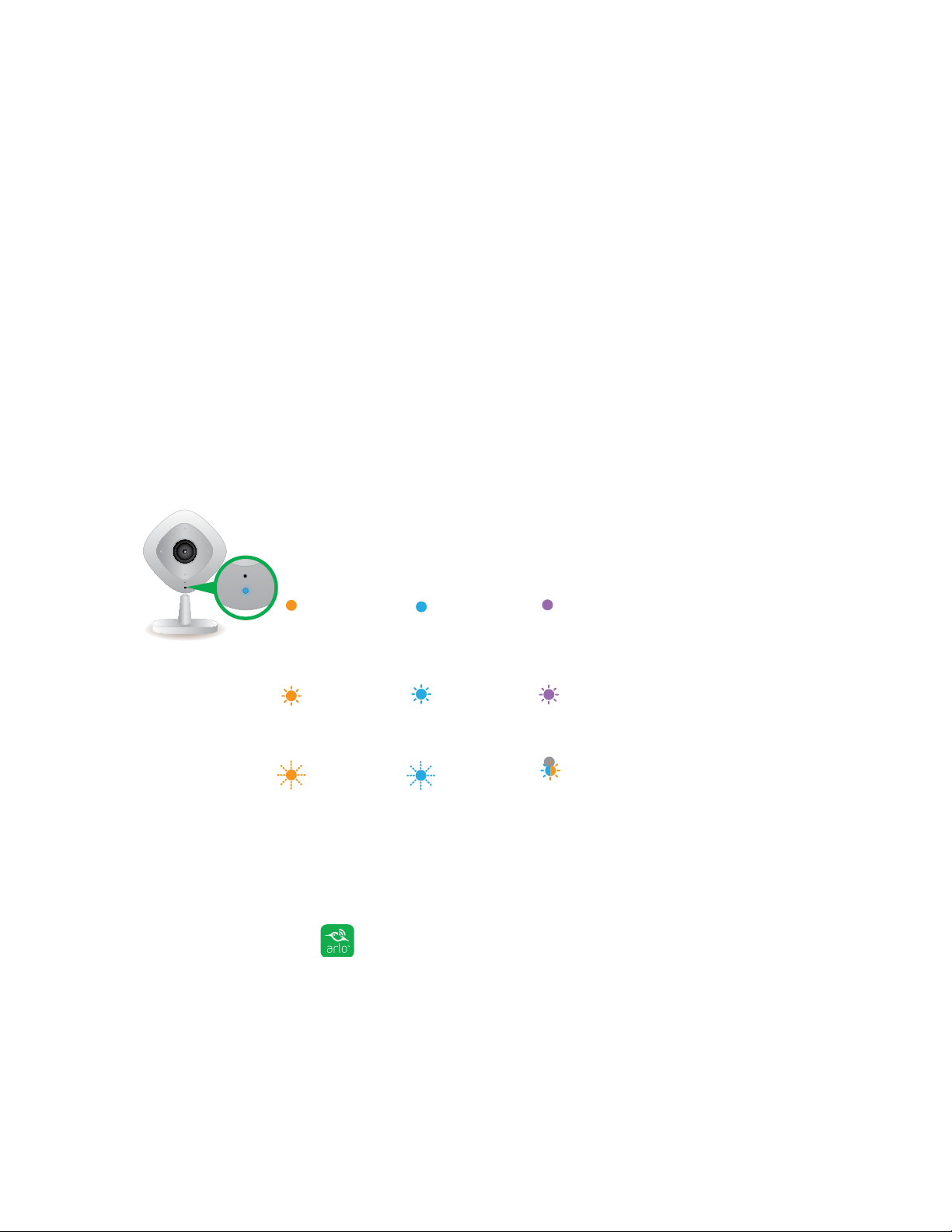
The status LED on the Arlo Q lights in dierent colors. You can turn o the status
LED. The Arlo Q status LED is color coded.
Turn O the Status Light
¾ To turn o the status light:
1. Tap the Arlo icon
on your mobile device.
If you are using a computer, enter arlo.netgear.com in the address bar of a
browser.
The Cameras page displays.
Solid blue
The camera is
powered on and is
connected to Arlo
servers.
Slow blinking
blue
The camera is
connecting to a
WiFi network.
Fast blinking
amber
The camera is not
connected to a
WiFi network yet.
Solid amber
The camera is
booting.
O
The camera is
powered o.
Solid purple
The camera is
connected to a WiFi
network. However, it
is not connected to
the Internet.
Blinking purple
The camera is too
far away from the
router.
Blinking blue/
amber
A firmware update
is in progress. DO
NOT TURN OFF THE
CAMERA.
Slow blinking
amber
The camera is
powered on and is
ready for setup.
Fast blinking
blue
The camera is
connecting to Arlo
servers.

Settings
50
2. Click or tap Settings > My Devices.
A list of cameras displays.
3. Click or tap the camera.
The camera settings display.
4. Click or tap Status Light.
If you are using a mobile device, your settings are saved.
5. If you are using a computer, click Save.
Your settings are saved.
Change the Video Resolution
The default video resolution is 720P. You can change this setting to a higher or
lower resolution. Decreasing the resolution of Arlo Q videos reduces the required
WiFi bandwidth.
¾ To change the video resolution:
1. Tap the Arlo icon
on your mobile device.
If you are using a computer, enter arlo.netgear.com in the address bar of a
browser.
The Cameras page displays.
2. Click or tap Settings > My Devices.
A list of cameras displays.
3. Click or tap the camera.
The camera settings display.
4. If you are using the Arlo App on a mobile device, tap Video Settings.
The Video Settings page displays.
5. Click or tap Video Resolution.
The Video Resolution page displays.
6. Click or tap a setting.
Settings
51
7. Click or tap Done.
If you are using a mobile device, your settings are saved.
8. If you are using a computer, click Save.
Your settings are saved.
Turn Night Vision On and O
When night vision is enabled, the camera automatically turns on infrared (IR) LEDs
to record in low light conditions. We recommend that you turn o night vision if the
Arlo Q camera is facing reflective surfaces, such as windows.
¾ To turn night vision on and o:
1. Tap the Arlo icon
on your mobile device.
If you are using a computer, enter arlo.netgear.com in the address bar of a
browser.
The Cameras page displays.
2. Click or tap Settings > My Devices.
A list of cameras displays.
3. Click or tap the camera.
The camera settings display.
4. If you are using the Arlo App on a mobile device, tap Video Settings.
The Video Settings page displays.
5. Click or tap Night Vision.
Your settings are saved.
Audio Settings
Turn the Microphone O and On
¾ To turn the microphone o and on:
1. Tap the Arlo icon
on your mobile device.
If you are using a computer, enter arlo.netgear.com in the address bar of a

Settings
52
browser.
The Cameras page displays.
2. Click or tap Settings > My Devices.
A list of cameras displays.
3. Click or tap the camera.
The camera settings display.
4. If you are using the Arlo App on a mobile device, tap Audio Settings.
The Audio Settings page displays.
5. Click or tap Microphone.
Your settings are saved.
Change the Speaker Settings
You can turn the speaker o and on and you can control the volume on your
camera settings.
¾ To change the speaker setting:
1. Tap the Arlo icon
on your mobile device.
If you are using a computer, enter arlo.netgear.com in the address bar of a
browser.
The Cameras page displays.
2. Click or tap Settings > My Devices.
A list of cameras displays.
3. Click or tap the camera.
The camera settings display.
4. If you are using the Arlo App on a mobile device, tap Audio Settings.
The Audio Settings page displays.
5. To turn the speaker o and on, click or tap Speaker.
6. To change the speaker volume, move the Speaker Volume slider.
Settings
53
Your settings are saved.
Change the WiFi Network
¾ To change the WiFi network that Arlo connects to:
1. Tap the Arlo icon
on your mobile device.
If you are using a computer, enter arlo.netgear.com in the address bar of a
browser.
The Cameras page displays.
2. Click or tap Settings > My Devices.
A list of cameras displays.
3. Click or tap the camera.
The camera settings display.
4. Click or tap SSID.
The Connect Network page displays.
5. Enter the WiFi network name and password.
6. Click or tap Continue.
7. Follow the prompts to connect your Arlo Q camera to the WiFi network.
If you are using a mobile device, your settings are saved.
8. If you are using a computer, click Save.
Your settings are saved.
View Device Information
¾ To view device information:
1. Tap the Arlo icon
on your mobile device.
If you are using a computer, enter arlo.netgear.com in the address bar of a
browser.
Settings
54
The Cameras page displays.
2. Click or tap Settings > My Devices.
A list of cameras displays.
3. Click or tap the camera.
The camera settings display.
4. Scroll down to the Version heading and view the firmware version, hardware
version, and the serial number.
Restart the Camera
¾ To restart the camera:
1. Tap the Arlo icon
on your mobile device.
If you are using a computer, enter arlo.netgear.com in the address bar of a
browser.
The Cameras page displays.
2. Click or tap Settings > My Devices.
A list of cameras displays.
3. Click or tap the camera.
The camera settings display.
4. Scroll down and click or tap Restart.
The camera restarts.
Remove a Camera From Your Account
¾ To remove a camera from your account:
1. Tap the Arlo icon
on your mobile device.
If you are using a computer, enter arlo.netgear.com in the address bar of a
browser.

Settings
55
The Cameras page displays.
2. Click or tap Settings > My Devices.
A list of cameras displays.
3. Click or tap the camera.
The camera settings display.
4. Scroll down and click or tap Remove Device.
The camera is removed from your account and its settings are deleted.

56
7. Manage Your Subscription Plan
Every Arlo Q camera includes free Basic service that oers basic features and
functionality. When activating your Arlo Q camera, you can choose between the Basic,
Premier, and Elite service plans.
Subscription Plans
Upgrading to a paid service level gives you the ability to expand your Arlo Q camera
to suit your specific needs. Depending on your service level, you can add cameras or
cloud storage and share recordings with friends and family. For information about
service plans, visit http://bit.ly/1AQGR9k.
You can upgrade a Basic or Premier subscription at any time. When you upgrade
from a paid subscription to a higher service level, the system calculates any unused
portion of the current term and deducts that prorated amount from the total cost
of the upgrade. You can also select a Continuos Video Recording (CVR) plan.
Renew Your Service Plan
Monthly plans automatically renew each month until you upgrade to an annual
plan or cancel, eective the next billing cycle. Annual plans autorenew by default
but can be configured to expire at the end of the current annual term.
Select a Premier or Elite Subscription Plan
¾ To select a Premier or Elite subscription plan:
1. Tap the Arlo icon
on your mobile device.
If you are using a computer, enter arlo.netgear.com in the address bar of a
browser.
The Cameras page displays.
2. Click or tap Settings.
The Settings page displays.
3. Under Account, click or tap Subscription.
The Subscription page displays.

57
Manage Your Subscription Plan
4. Click or tap Change Subscription.
The Subscription Plan page displays.
5. To change to a Premier or Elite plan, click or tap SELECT.
6. Follow the onscreen instructions to change your subscription.
After your payment is processed, your service level information is updated on
the Subscription page.
Start or Stop a Continuos Video Recording Plan
Continuous video recording, or CVR, is an optional feature available on Arlo Q
cameras. CVR records all the action 24/7 so that you can rewind any camera to any
minute of any day and catch anything that you missed.
¾ To start or stop a CVR subscription plan:
1. Tap the Arlo icon
on your mobile device.
If you are using a computer, enter arlo.netgear.com in the address bar of a
browser.
The Cameras page displays.
2. Click or tap Settings.
The Settings page displays.
3. Under Account, click or tap Subscription.
The Subscription page displays.
4. Click or tap Change Subscription.
The Subscription Plan page displays.
5. Click or tap No changes? Continue.
The Continuous Video Recording (CVR) plan page displays.
6. Follow the onscreen instructions.
An email message is sent to you to confirm the service level update, the
eective date, and any prorated refund amount for any unused portion of the
current term.
58
8. Continuous Video Recording
Continuous video recording, or CVR, is an optional feature available on Arlo Q
cameras. CVR records all the action 24/7 so that you can rewind any camera to any
minute of any day and catch anything that you missed. CVR captures everything in
the background, and you can access any time by tapping or clicking the Timeline
icon
above the camera feed.
Arlo Q records CVR in addition to recordings that the camera records because
of rules. This feature is available when you purchase an optional CVR plan. For
information about how to sign up for a CVR plan, see Start or Stop a Continuos
Video Recording Plan on page 57.
View the Timeline
¾ To view the timeline:
1. Tap the Arlo icon
on your mobile device.
If you are using a computer, enter arlo.netgear.com in the address bar of a
browser.
The Cameras page displays.
2. Click or tap the Timeline icon
above the camera feed.
Green lines indicate motion recordings and blue lines indicate sound recordings.
3. To return to the Cameras page, click or tap the Back button.

Continuous Video Recording
59
Navigate Through the Timeline
¾ To navigate through the timeline:
1. Tap the Arlo icon
on your mobile device.
If you are using a computer, enter arlo.netgear.com in the address bar of a
browser.
The Cameras page displays.
2. Click or tap the Timeline icon
above the camera feed.
The Timeline page displays.
3. Click and hold or tap and hold the timeline.
4. On a smartphone or mobile device, drag the timeline.
• To go back in time, drag the timeline to the right (either 14 or 30 days back,
depending on your CVR plan).
• To move toward more recent reordings, drag the timeline to the left.
5. If you are using a browser, click to navigate to a specific time or click and drag
to scroll through the timeline.
6. To return to the live feed, click or tap the Live button at the bottom.
Continuous Video Recording
60
View the Timeline Calendar
As the camera records CVR content, it notes when motion or sound was
detected during the continuous recording. For these indicators to display in
the timeline, a mode configured with motion or sound triggers must be armed.
For information about modes, see Select a Mode on page 33.
¾ To view the timeline calendar:
1. Tap the Arlo icon
on your mobile device.
If you are using a computer, enter arlo.netgear.com in the address bar of a
browser.
The Cameras page displays.
2. Click or tap the Timeline icon
above the camera feed.
3. Click or tap the Calendar icon.
The calendar displays small green dots to indicate dates with CVR recordings. A
large green dot indicates the current date.
4. To see a more detailed view of the timeline, do one of the following:
• On a smartphone or mobile device, pinch and zoom. To go to landscape mode,
rotate your device or tap the Enlarge icon.
• If you are using a browser on a computer, click 24 hr, 1 hr, or 5 min to
change your timeline detail.
5. To hide the timeline, tap the TIMELINE button.
6. To display the timeline, tap the TIMELINE button again.
Calendar icon

61
9. Troubleshooting
Manage Bandwidth for Streaming
The bandwidth used by Arlo Q cameras depends on the resolution setting for the
camera. Maximum bandwidth usage when streaming is as follows:
• 1080P. 1500 kbps
• 720P. 700 kbps
• 480P. 300 kbps
• 360P. 200 kbps
• 240P. 100 kbps
If a camera detects low bandwidth, the Arlo system automatically reduces the
setting of the video stream to accommodate the lower bandwidth.
The bandwidth values are for each individual camera. To learn how much bandwidth
your Arlo system uses, multiply the number of cameras that are streaming video at
the same time by the bandwidth for the video quality setting.
For information about setting the resolution for your Arlo Q camera, see Change
the Video Resolution on page 50.
Can’t See Video Streams in a Browser
The Arlo web client uses the Adobe Flash plug-in to display your camera streams
in a browser. Make sure that your browser is not blocking the plug-in and that you
are using the latest version of Adobe Flash.
Your router might be blocking the ports to which Arlo sends data. To ensure that
Arlo can stay connected, you must keep the ports 443 and 80 open on your router.
Not Receiving Push Notifications
You must be logged in to the Arlo app to receive Arlo alerts on your smartphone or
mobile device. Arlo registers your device for push notification when you log in. If
you used the logout option instead of simply exiting the app, you must log back in
to the app. You receive Arlo alerts even if your device is sleeping.
If you did all of the following and are still not getting Arlo Q alerts, contact
NETGEAR support.

62
Troubleshooting
Check the Rules Settings for Armed Modes
Check the rules in your modes. Make sure that Push Notification is enabled in the
Armed mode or in a custom mode if you created one.
¾ To check push notification when you use an Armed mode:
1. Tap the Arlo icon
on your mobile device.
If you are using a computer, enter arlo.netgear.com in the address bar of a
browser.
The Cameras page displays.
2. Click or tap the Mode button.
A list of cameras displays.
3. Select the Arlo Q camera.
A list of modes displays.
4. Click or tap the Edit icon
next to Armed.
The Edit Rule page displays.
5. Under Alert, make sure that the Push Notification check box is selected.
6. Save your changes.
Check the Arlo App Settings on an iOS Device
Make sure that you allow the Arlo app to receive push notifications. The Arlo app
push notifications can be disabled on iOS and Android devices.
¾ To allow Arlo push notifications on iOS devices:
1. Tap the Settings icon for your iOs device.
2. Tap Notifications > Arlo.
The Arlo notification settings display.
3. Make sure that Allow Notification is selected.

63
Troubleshooting
Check the Arlo App Settings on an Android Device
¾ To allow Arlo push notifications on Android devices:
1. Tap the Settings icon for your Android device.
2. Tap Application Manager > Arlo.
The Arlo notification settings display.
3. Make sure that the Show Notifications setting is enabled.
If You Said No to Push Notifications at Installation
When you install the Arlo app for the first time, to receive alerts, you must
select Allow when asked if you want Arlo to send you push notifications. For
iOS apps, after you respond to this alert, it is not presented again unless the
device is restored or the app is uninstalled for at least a day.
If you said no on an iOS device, uninstall the app, wait for a day, and then
reinstall it, and allow notifications. If you do not want to wait a day before you
reinstall the app, you can use the system clock on your device to simulate a day.
Set the system clock forward a day or more, turn your device o, and then turn
the device back on. After you reinstall the app, return the system clock to the
correct setting.