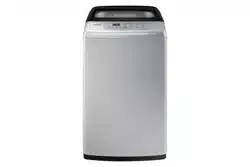
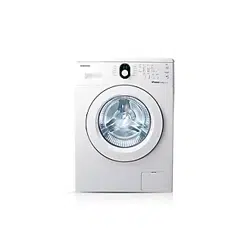
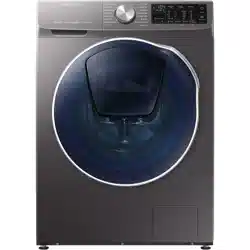
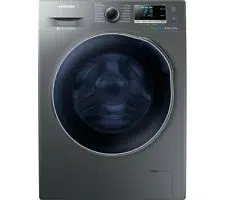
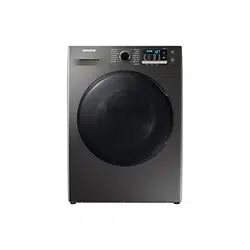
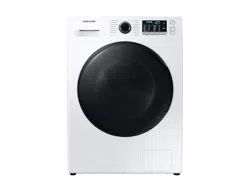
Washing Machine user manual
Setting up your washer
DESCRIPTION OF PART
The User’s Manual is for common use. Make use of the User’s Manual depending upon your washing machine model.

CHECKING BEFORE WASHING AND CARING FOR GARMENTS
Must follow the checkpoints in order to avoid machine problems or damages on garments.
If the below problems are caused by customer’s faults, separate service fee will be charged.
Checkpoints Before Starting Washing
Check if the clothes are bleaching or not.
- Add liquid detergent to a white towel and the garment where you can’t notice well. Then, rub together strongly. Check if the color transferred to the towel.
- Be careful for scarves and imported clothes since they are easily discoloring.
- Check for stains or partial dirt.
- If stains are found, use the towel wet with detergents to rub on in a single direction.
- Before washing, the sleeves, collar, dress hem and pockets are pre-treated by brushing with detergents.
The wrinkle-processed clothes made of wool are specially treated by fixing them with threads before washing. The threads shall be removed after the clothes are dried.
Not washable laundry
Clothes those are easily transformable even by soaking in water.
- Even by soaking in water, neckties, brassieres, jackets, suits and coats can be easily transformed like shrinking and discoloring on the garment surfaces because they are mostly made of rayon, polynosic, cuff and their blend fabrics.
- The wrinkle-processed, embossed, or resin processed products are easy to transform even by soaking in water.
- Easily discoloring products made of cotton and wool, wrinkled silk, leather products, leather accessory, leather ornamented clothes and its accessory.
- Don’t wash those clothes without handling guideline or material indication tag.
About Detergent
When detergents are not dissolving well, use warm water (about 40°C) to dissolve the detergent.
- Use an appropriate amount.
- Even if excess amount of detergent is used, there is not much difference in washing result. It may cause damages to the garments because rinsing is not enough.
- The bleaching agent may cause damages to garments since it is strong alkali.
- Do sufficient rinsing because the powder detergent is easily remained on the garments causing bad odors.
- If too much detergent is used or cold water is used, it doesn’t dissolve completely and remain on the garments, hose or spin basket, causing contamination on clothes.
- In case of reserved washing, detergents must be put in the detergent box. If the powder detergents are spread on laundry directly, it may cause discoloration.
CARING FOR CLOTHES BEFORE WASHING
Take out personal belongings from pockets.
Caution! Check the pockets! Hairpins and coins cause damages to clothes and washing machine. They make noise and problems to the machine. Must check the pocket.
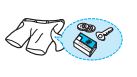
If pants zippers are open while washing, the spin basket may be damaged. The zipper should be closed and fixed with a string before washing.
- Metal on the clothing may cause damage to the clothes and the tub.
- Turn clothing with buttons and embroidered clothes inside out before washing them.
- Clothing with long strings may become entangled with other clothes, and may cause damage to the clothing. Be sure to fix the strings before washing.
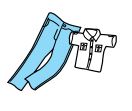
Waterproof clothes (Ski Wear, Diaper Covers, Footboards) are not allowed for washing.
- This may cause the laundry to be ejected or cause the washing machine to vibrate abnormally, which may result in personal injury or damage the washing machine, the floor or the clothing. (Diapers, waterproof clothing, raincoats, umbrella covers, skiwear, car cover sheets, and sleeping bags, etc.).
- When the tub rotates, water may become trapped in the waterproof clothing or fabric and can collect in a corner, causing abnormal vibrations. In addition, the laundry rises and may be ejected and cause personal injury.
- Such abnormal vibrations of the machine may cause physical injury, or damage to the machine, wall, or floor as well as the laundry itself.
Shake the dirt or soils from clothes.
- Soil and sands may rub delicate garments to cause damages and the washing result may be unsatisfactory.
Do pre-washing for white socks, sleeves, and collars before the main washing.
- For stains and dirt on collars, sleeves, hems, and pockets, apply some detergent to them and apply it lightly with a brush before washing.
- Use powdered or liquid detergent. Do not use soap as the tub may become dirty from the dirt on it.
Turn inside out for those nappy clothes before washing.
- If clothes have too much foreign matter, separate them for washing. Other clothes may pick up those dirty matters (dirt, thread).
- Wash black colored clothes and cotton towels separately. If they are washed together, towels may pick up dirty matters. Check before washing.
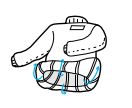
Cashmilon and those garments having big volume and lightweight (eg. Lasedecorated clothes, lingerie, nylon stocking, synthetic fabrics etc.) may rise and cause damages to the clothes and problems to the machine. Use the laundry net or wash them separately.
- Must put those long stringed clothes, lase-worked clothes, bed cover sheet, wool clothes into a laundry net before washing.
- Put delicate clothes in the laundry net.
- Use only those commercial laundry net for washing.
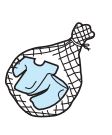
Curtains, floating garments or blue jeans shall be pressed not to float on the water.
If they are floated on the water, press Start/Pause button to stop and press them to sock in the water. If the washing goes on with clothes floating on the water, it may cause damages to the clothes and the washing machine as well as unsatisfactory washing result.
Make sure to soak inflatable items (such as blankets, and cotton-filled or microfibre quilets) in water before you run a cycle.
- Inflatable items may cause damage to the laundry or the machine during the wash or drying process.
- Regardless of the size, blankets or quilts are safer and cleaner to wash one item at a time. Two different-sized blankets in the same load may compromise the drying performance due to unbalanced loads.
To input a blanket
Fold the blanket as shown, and then put it on the plastic area (A) of the tub before inserting into the tub.
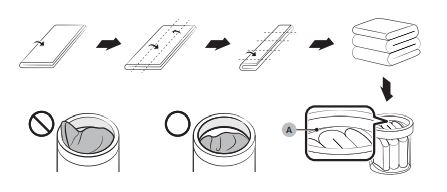
Make sure the laundry is inserted completely.
- Any exposed part of the laundry may cause damage to the machine or the laundry itself, or a water leak.
- Make sure the laundry does not exceed the plastic area (A) in the above figure.
HOW TO WASH AUTOMATICALLY DEPENDS ON THE LAUNDRY
Before starting washing, check the following:
- Connect the water supply hose to the water tap.
- Leave a tap open.
- Plug the power cord in.
- Make sure to lay down the drain hose.
Washing for the first time
Before washing clothes for the first time, you must run a complete cycle without clothes. To do this:
- Press the Power button.
- Open the detergent drawer and insert a little detergent.
- Turn on the water supply to the washing machine.
- Press the Start/Pause button. This will remove any water from the manufacturer’s test run remaining in the machine.
Special notes!
Automatic Sensing Function
- According to the selected program, the amount of laundry is automatically sensed and then the appropriate water level, wash time, rinse cycle, and spinning time are automatically selected for the automatic wash.
- After the power is on, a program is selected and Start/Pause button is pressed. Then, the washing board starts spinning without water. This action senses how much laundry is in the washing basket, not a machine problem. After this sensing process, water supplies automatically.
Adding Detergent and Softener
- It senses the amount of laundry and indicates the water level and amount of detergent. Then, it starts water supply right away.
- During the water supply, it is possible to open the detergent box and add detergent. However, it is better to press Start/Pause button to stop water supply and add detergent. Close the lid and press Start/Pause button again. This way is much more convenient.
- If the softener is applied to the softener dispenser, it is automatically dispensed in the rinse cycle. To dispense the fabric softener automatically, make sure you have selected all the necessary cycles of washing, rinse, and spin.
Put the laundry into the washer and add detergent, too.
Be careful not to overload. Use right detergent for the fabrics you are washing.
- If the lid is open while running, the washing machine is stopped automatically for safety. (Some models display an error message if the lid is not closed while water is supplied.)
- When hot water is selected, both cold and hot water are supplied for the first 20 seconds in order to protect the clothes.
- Possible to control the washing time, rinsing cycle, and spinning time at every program during the washing.
CONTROL PANEL
For more details, see control panel of your washing machine.
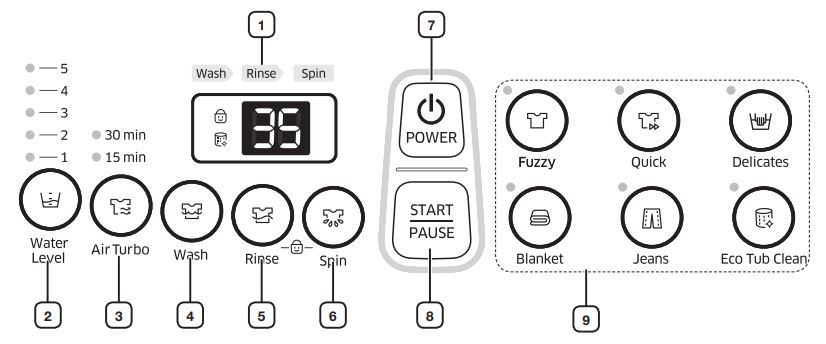
| 1. Digital graphic display |
Displays the remaining wash time.
Displays the error state if a problem occurs in the washing machine so that you can take action. |
| 2. Water Level |
The water level is automatically adjusted. However, you can select the water level manually by pressing this button. |
| 3. Air Turbo |
Press this button to speed dry your laundry.
Each Press of the button cycles through the minute of Air Turbo function.
15 - 30 min.
Air Turbo function can only be selected if a spin cycle is set. |
| 4. Wash |
Press this button to perform a wash only or to adjust the washing time.
You can set the wash time from between 6 to 30 minutes. |
| 5. Rinse |
Press this button to perform a rinse only or to adjust the rinse count.
You can set the rinse count up to five times. |
| 6. Spin |
Press this button to perform a spin cycle only or to adjust the spin time.
You can set the spin time from between 1 to 9 minutes.
When only a spin is selected, the spin time will be different from the total remaining time. This is because the total remaining time includes the actual spin time and the times for water draining and stopping |
| 7. Power |
Press this button once to operate.
Press it again to turn the power off.
|
| 8. Start/Pause |
Use to pause and restart the operation. To change the washing procedure during an operation, press this button to stop, and again to restart after changing the procedure. |
| 9. Cycle |
Fuzzy |
Selects the best washing program automatically |
| Quick |
If you want to wash those frequently used towels or less dirty laundry time. Because washing is speedy, it is good for light or less stained laundry. |
| Delicates |
Washable sweater, cardigan, delicate clothes etc. |
| Blanket |
Big volume laundry like blanket and bed cover sheets |
| Jeans |
For a more thorough wash. |
| Eco Tub Clean |
Use this program to clean the tub, it will keep the tub clean and sanitary.
The TUB CHECK LED is turned on to notify the user that it is time to clean the tub.
The powerful spinning force of the washing tub pulsator removes the contaminations from the exterior of the washing tub to prevent odors or secondary contamination. |
CHILD LOCK
This function is for protecting children, the elderly and the frail.
- Press the Power button.
- To activate the Child Lock function, press and hold both the Rinse and Spin buttons down simultaneously for 3 seconds. (If the Child Lock function is activated, the Child Lock icon blinks.)
- Operations after activating the Child Lock function.
• Even if the Child Lock function is activated, every button works until the door opens.
• When you open the door during the Child Lock is being activated, the alarm sounds and an error message appears. In 30 seconds, draining begins automatically. However, if you close the door within 30 seconds, water will not be drained. (Displayed error message “CL”, “dE”).
• To add laundry after activating the Child Lock function, you must deactivate the Child Lock function.
- To deactivate the Child Lock function, press and hold both the Rinse and Spin buttons simultaneously for 3 seconds again. (If the Child Lock function is deactivated, the Child Lock icon is turned off.)
- To clear “CL” display, after draining is complete, close the door of the washing turn the power off and then on.
- This function is for preventing injury and malfunction of the product because of inappropriate operations or actions by children, the elderly or the frail.
- If the door opens when the Child Lock function is activated, the water is drained by force to prevent children from drowning.
- To add laundry after activating the Child Lock function, you must deactivate the Child Lock.
- Even if the power is turned off and then on when the Child Lock is activated, the Child Lock remains activated.
- Once Child Lock is activated, even when the power is turned off, if the door is opened, water is automatically drained in 30 seconds.
- The Child Lock function cannot be deactivated when CL is displayed. (However, the Child Lock function can be deactivated when the dE error is displayed.)
- When the draining in Child Lock function, all buttons including power button can not be operated.
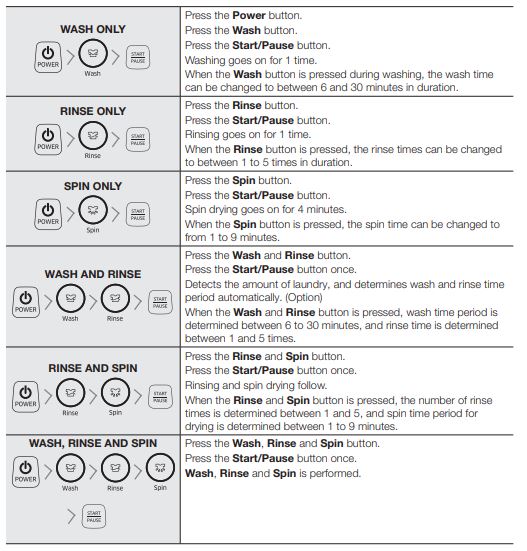
Manual functions
Possible to select the function for each program.
(Example) For a simple washing as the little dirt program: Power >> Select the little dirt program >> Wash >> Start/Pause
Installation & maintenance
The User’s Manual is for common use. Make use of the User’s Manual depending upon your washing machine model.
ENVIRONMENT
Leave some space
Maintain at least 10 cm between the washer and the wall.
Place the washer on a sturdy flat surface.
If the washer is placed on an uneven or weak surface, noise or vibration occurs. (Allowable is 1˚)
Adjust the legs for even placement.
Never install the washer near water.
Do not place the washer in steamy rooms or where the washer is directly exposed to rain. Moisture may destroy the electrical insulation causing an electrical shock hazard.
Avoid direct sunlight or heaters.
As plastic an electrical components are affected by direct heat, never place the washer near furnaces, boilers, etc. Do not place under direct sunlight.
LEVELLING
If the washer is not leveled with the ground, it makes the machine tremble more or be out of order. So, make sure that the washer is leveled properly
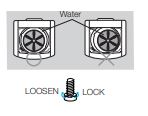
SEE IF THE MACHINE IS PLACED LEVEL BY CHECKING THE POSITION OF THE WASHING TUB.
- Open the lid of the machine, pour water into the tub up to the level just below the pulsator, and adjust the legs so that the pulsator is positioned at the center of the water as shown in the figure.
- Place the machine more than 10 cm away from the wall.
- Adjust the legs on feet for levelling.
|
|
|
CONNECTING THE WATER SUPPLY HOSE
1. Remove the adaptor from the water supply hose.
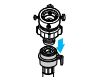
2. First, using a “+” type screw driver, loosen the four screws on the adaptor. Next, take the adaptor and turn part (b) following the arrow for gap about 5 mm between them.
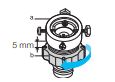
3. Connect adaptor to the water tap by tightening the screws firmly. Then, turn part (b) following the arrow and put (a) and (b) together.
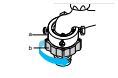
4. Connect the water supply hose to the adaptor. Pull down the part (c) of the water supply hose. When the part (c) is released, the hose is automatically connected to the adaptor making a ‘click’ sound.
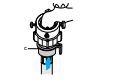
5. Connect the other end of the water supply hose to the inlet water valve at the back of the washer. Screw the hose clockwise all the way in.
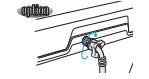
5-1. Connect the other end of the water supply hose to the inlet water valve at the back side of the washer. Screw the hose clockwise all the way in.
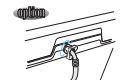
If the water tap is a screw type, assemble a water supply hose that fits to the tap as shown. After completing connection, if water leaks from the hose, then repeat the same steps.
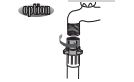
After completing connection, if water leaks from the hose, then repeat the same steps. Use the most conventional type of faucet for water supply. In case the faucet is square or too big, remove the spacing ring before inserting the faucet into the adaptor.
ASSEMBLING THE RAT PROTECTION PANEL (OPTION)
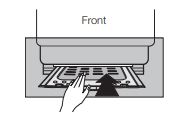
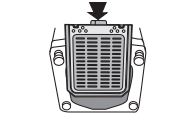
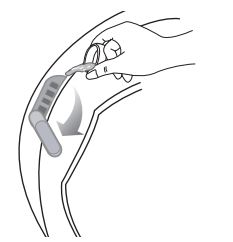
Tilt the washer a little and lift up the panel until it clicks as shown in the figure.
|
|
|
|
| 1. Insert the rat protection panel to the assembling hole on front side to the end. |
|
2. If you have difficulty inserting the panel lift up the washer a little and insert it. |
IN CASE OF PUMP-DRAINED WASHER
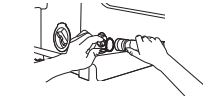
- Take out the cap-hose and connect the outlet-hose. (option)
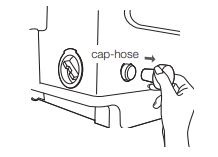
- Be sure to join tightly the drain hose into the drain-outlet on the side of the machine.
- Be sure to join tightly the drain hose into the drainoutlet on the back of the machine.
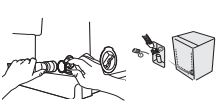
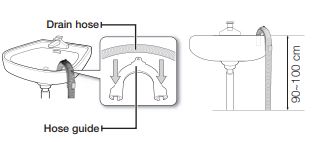
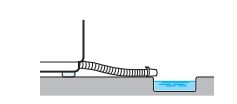
- Install the drain hose in the position of about 90~100 cm above the ground. The end of the drain hose can not be sinked under water.
IN CASE OF GENERAL WASHER (OPTION)
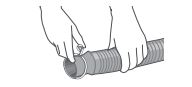
| 1. After pressing the joint ring, insert to the drain hose. |
 |
| 2. After directing the drain hose to a drain, join to the drainoutlet of the washing machine. |
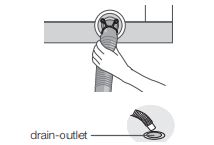 |
3. Be sure to join them tightly by pressing the joint ring and pushing it into the drain-outlet.
The length of drain hose is adjustable so that you can extend the length appropriately |
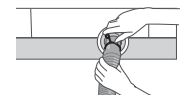 |
HOW TO CHANGE THE DRAIN HOSE DIRECTION (OPTION)
The handle of joint ring is pressed to pull out the drain hose. Change the direction of the drain hose and follow the above guideline again.
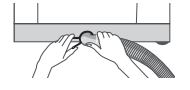
CAUTIONS WHEN INSERTING THE DRAIN HOSE
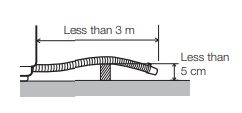
1. Don’t exceed more than 3 m when the drain hose is used by connecting with other hoses.
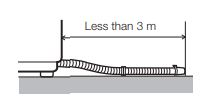
2. Be careful to drain water out at the end of the drain hose.
3. The doorsill shoudn’t be more than 5cm.
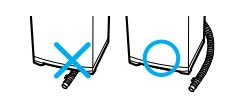
4. Don’t install the drain hose underneath the wash machine.
Test run
Make sure that you install your washing machine correctly by running the Rinse+Spin cycle after the installation is complete.
ADDING DETERGENT
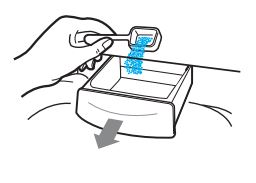
- Open the detergent box by pulling in the direction of the arrow as shown in the figure and then put the powder detergent in the detergent box.
- Put in one-time amount of detergent evenly so the detergent may not brim over the box.
ADDING FABRIC SOFTENER
Slide and open the cover in the direction of the arrow, insert the rinse detergent, and slide and close it in the reverse direction.
- Apply fabric softener to the softener inlet as appropriate. Then, the softener is automatically dispensed in the rinse cycle. To dispense the fabric softener automatically, make sure you have selected all the necessary cycles of washing, rinse, and spin.
- Do not use detergent, bleach or starch into the Softener Inlet.
- Using too much softener may produce unsatisfactory results.
- Do not open the lid during the Spin Dry cycle. If added too early, its effectiveness will decrease.
- Do not leave the softener into the Softener Dispenser for a long time. Because softner became stiff.
WATER SUPPLY CONNECTOR FILTER
| 1. Pull out the filter and wash well. |
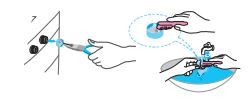 |
| 2. Pull in the filter and connect the hose to the inlet water valve tightly. |
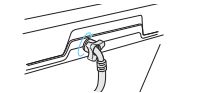 |
| 3. Check if there is a leakage. Note to tighten up the connector. |
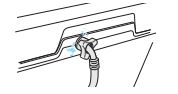 |
CLEANING THE FILTER
Clean the filter net often to keep the washer clean.
|
1. Push the upper part of the Hygiene filter and pull in.
|
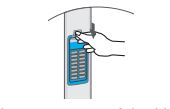
|
| 2. Open the cover as shown in the figure |
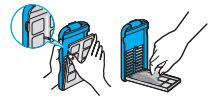
|
| 3. Clean the Hygiene filter |
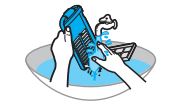 |
| 4. Close the cover and insert the lower part of the filter in the basket first and then push the filter with “click” sound. |
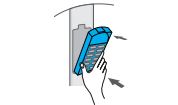 |
CLEANING THE PUMP FILTER (OPTION)
- Place a rag or towel under the wash filter to avoid wetting the floor, and rotate the filter counterclockwise and pull it out.
- Remove any dirt from the filter.
- Return the filter to its place by rotating the filter clockwise until it locks into position.
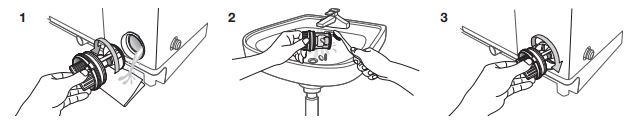
CLEANING THE DETERGENT COMPARTMENT
- Separate the detergent compartment from the washer.
- Separate and clean the Rinse-Cap from the detergent compartment.
- Assemble the Rinse-Cap and insert the detergent compartment into the washer
Troubleshooting
| PROBLEM |
CHECK |
| Washing machine won’t work |
- Is the water tap opened?
- Is the washer plugged in?
- Is the power cut off?
- Is there enough water?
|
| Water dose not drain (5E) |
- Is the drain hose down?(No pump)
- Is the drain hose frozen?
- Is the drain hose clogged?
- If the water dose not drain in 30 minutes, a buzzer will sound, and the remaining time indicator will show “5E”.
|
| Water is not supplied (4E) |
- Is the water tap opened?
- Is the water cut off?
- Is the water supply hose or hose connection clogged?
- Is the water tap frozen?
- If the water supply is not finished in 1 hour or there is no change in the water level 5 minutes (10minutes for some models) after the water supply has started, the buzzer rings and “4E” is displayed on the remaining time indicator.
|
| Spinning does not work (UE) |
- Is the laundry spread out evenly in the washer?
- In the washer set on a sturdy flat surface?
|
| Water is overflowed (IE, 0E) |
- Restart after spinning.
- If the error sign still indicates, call agency.
|
| This indicates that a Child Lock error occurred (CL, dE) |
- The error message blinks at a 1 second interval and the water is drained with an alarm sound. (Displayed message: “CL” or “dE”)
- This function is to prevent children from drowning when falling into the wash tub. When draining is complete and you turn the power off and then on, the washing machine will operate normally.
- To clear “CL” display, after draining is complete, close the door of the washing machine, turn the power off and then on.
- Is the Start/Pause button pressed?
|
| Water leakage error (LE) |
- Check if the end of the drain hose is placed on the floor. (The hose should be hung over the pump - hose guide.)
- Check if the drain hose is clogged by any foreign substances.
- If the error remains, call the service center.
|
Washing machine won’t work?
| PROBLEM |
CHECK |
| The power is cut off. |
Is the electric voltage normal? |
Is the washer plugged in? Plug in the electric cord.
>> Water does not drain. |
|
Is the drain hose down? Put the drain hose down.
|
| Is the drain hose folded? Unfold the drain hose |
| Is the drain hose outlet clogged? Remove the waste cleanly. |
| Washing machine won’t work |
Is the washer lid open?
>> Close the lid. |
Is the Pause button on?
>> Press the Start/Pause button one more time and check if the washer starts. |
|
Is enough water filled to the water level?
>> If the water pressure is low, it takes a long time to start washing.
|
Is the faucet closed?
>> Open the faucet to supply water |
Did you open the door during the spinning cycle?
>> Close the door, and press the Start/Pause button to resume. |
| If the drain hose and spin basket are frozen, do as follows. |
- Add hot water to the frozen water tap and remove the drain hose. Soak into hot water.
- Pour hot water into the spin basket for about 10 minutes.
- Put a hot water towel on the drain hose connector.
- If the drain hose defrosts, connect again and check for proper water draining.
|
| The water drains out immediately. |
The drain is clogged with coins or pins. The drain hose is hung over the drain hose hook. Half fill the spin basket with water and try for spinning again. |
| The water leaks at the water supply hose connector. |
If the faucet connecting part is loose, water may leak.
>> Repeat the assembling steps again. (Refer to “Connecting the water supply hose”) |
Check if the rubber packing of water supply hose is in the right position.
>> Screw tightly again |
Is the water supply hose folded?
>> Unfold the hose. |
If the water supply is too strong, water may leak.
>> Close the faucet a little |
Is water leaking from the faucet itself?
>> Fix the faucet. Water is not supplied. |
| The water leaks at the water supply hose connector. |
Did you press the Start/Pause button after selecting the water supply?
>> If the Start/Pause button is not pressed, water is not supplied. Press the Start/Pause button. |
Is the faucet closed?
>> Turn on the faucet. |
Is the filter net at the water supply hose connector clogged with dirty matters?
>> Clean the filter net by brushing with a toothbrush. |
Is the water supply cut off?
>> If the water supply is suspended, turn off the faucet and power off. |
| Spinning makes loud noises and vibrations. |
Check if the laundry is spread evenly in the washer.
>> Spread out the laundry evenly and start again.
|
Check if the washing machine levels on a sturdy flat floor.
>> Set the machine at level. |
Is the handle for leveling legs loose?
>> Adjust the legs on the feet for leveling. |
Is around the washing machine filled with unnecessary stuffs?
>> Remove those unnecessary things away from the wash machine. |
Specification
WA75H4400SS, WA75H4200SW, WA70H4400SS, WA70H4000SG, WA70H4000SW, WA65H4200SW, WA60H4000SG
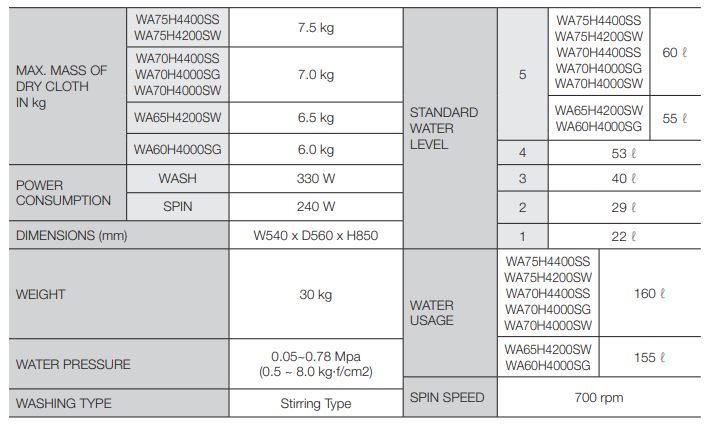
For WA75H4400SS, Fuzzy course + Water level 2 is recommended for a normally soiled load.