ENG
Basic Operation Guide
Before Using the Machine
Document and Paper
Copying
Sending Documents
Receiving Documents
Printing
PC Faxing
Remote UI
System Manager Settings
Troubleshooting
Machine Settings
Appendix
Maintenance
What Can I Do with This Machine?
Please read this guide before operating this product.
After you finish reading this guide, store it in a safe place for future reference.

i
Manuals for the Machine
Machine Set-Up
Software Installation
●
●
Starter Guide
Operation Features
Maintenance
Trouble Shooting
Specifications
Functions you can use without being connected to
a network
●
●
●
●
●
Basic Operation Guide
(This Document)
Operation Features
Maintenance
Trouble Shooting
Specifications
All functions including those that use a network or
driver
●
●
●
●
●
Reference Guide
CD-ROM
CD-ROM
Indicates the manual is supplied in HTML format in the accompanying CD-ROM.
Considerable effort has been made to make sure that the manuals for the machine are free of inaccuracies
and omissions. However, as we are constantly improving our products if you need an exact specification,
please contact Canon.
The machine illustration on the cover may differ slightly from your machine.
●
●
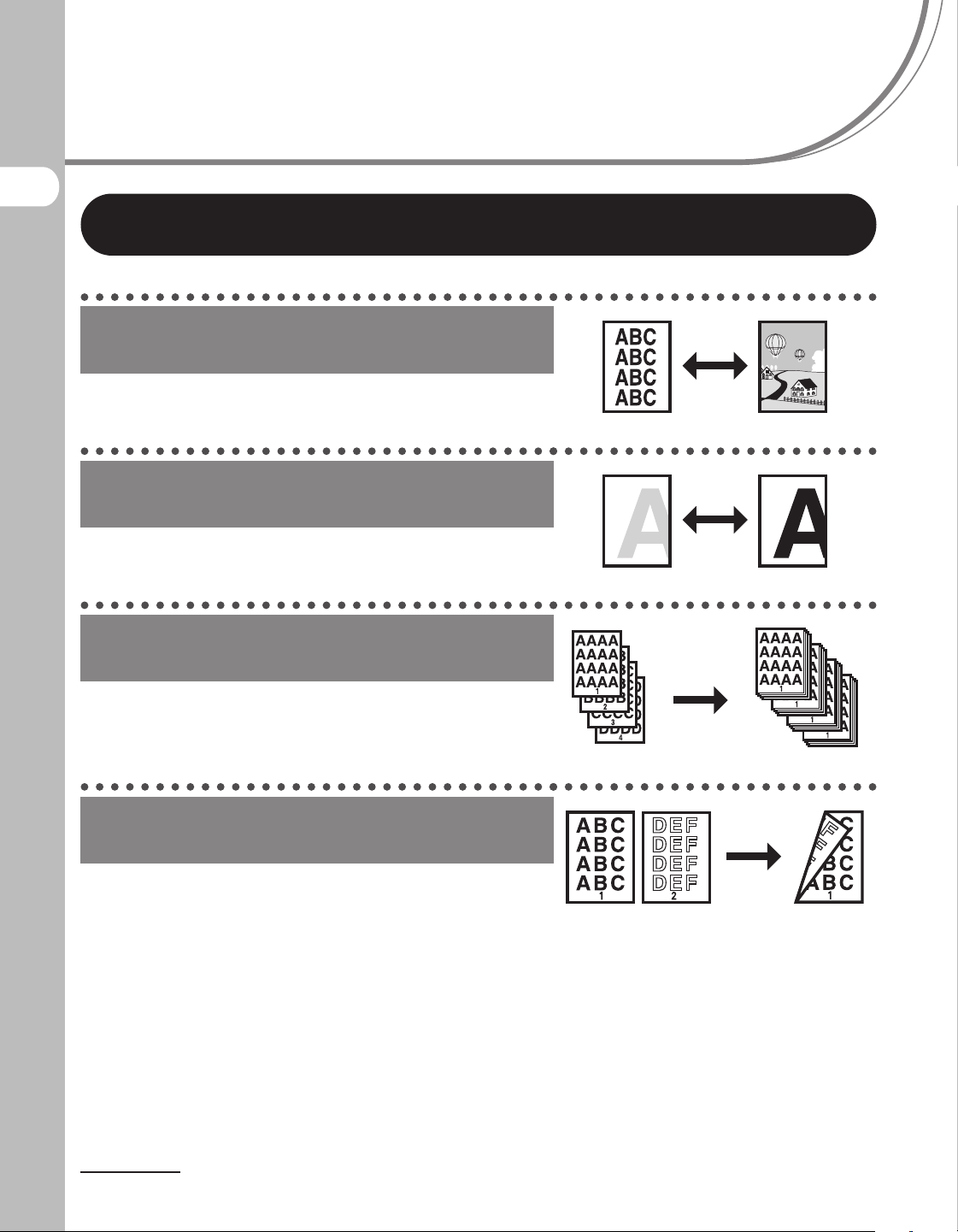
What Can I Do with This Machine?
iii
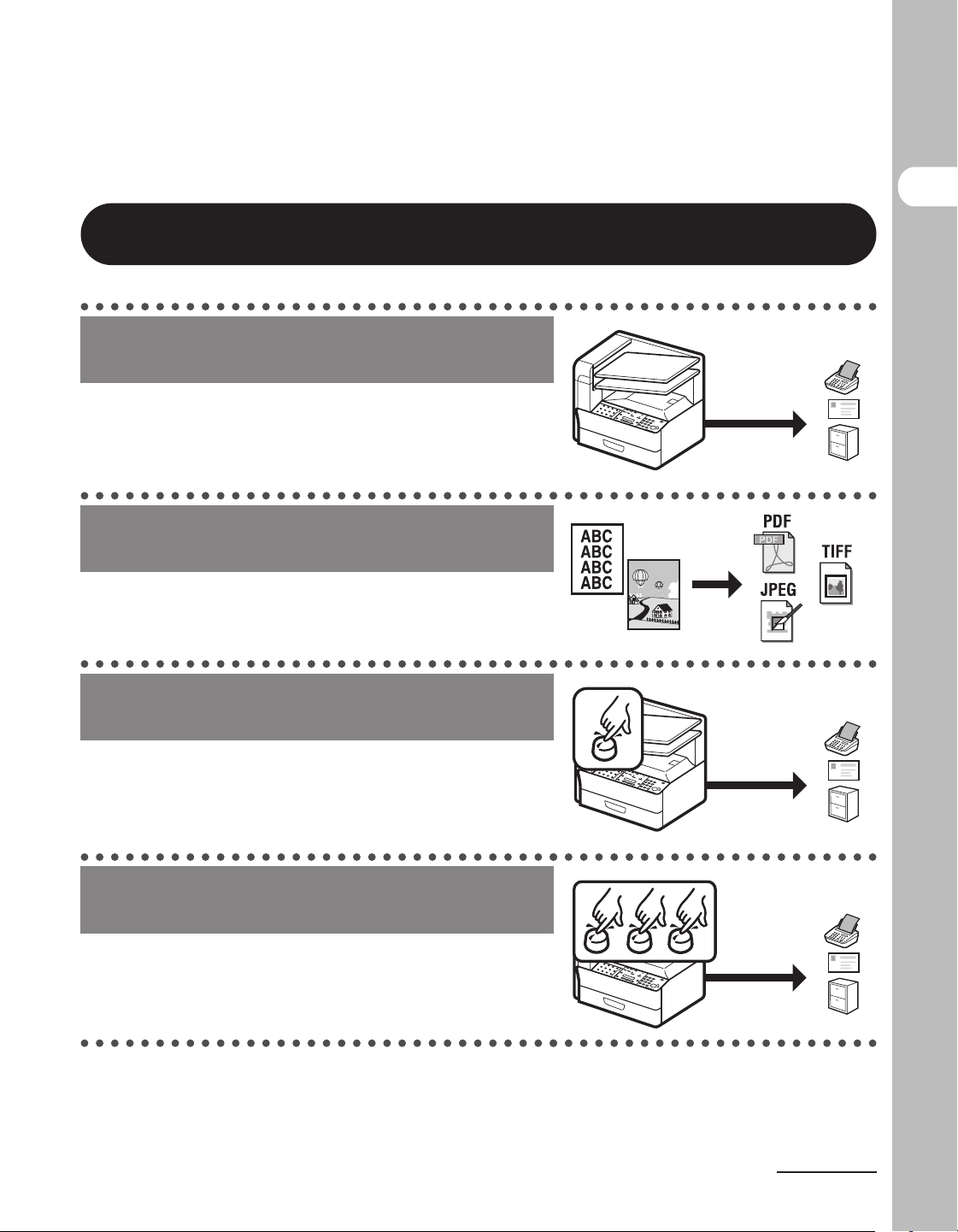
Sending/Receiving Features
Send documents with diverse sending
methods
Fax, E-Mail
*
, I-Fax
*
, and File Server
*
* LASER CLASS 830i Only
Chapter 4→
Send documents in a variety of file
formats (LASER CLASS 830i ONLY)
Send Settings
p. 4-8→
Specify a recipient with a single key
Using One-Touch Keys
p. 4-44→
Specify a recipient with a three-digit
code
Using Coded Dial Codes
p. 4-46→
What Can I Do with This Machine?
iv
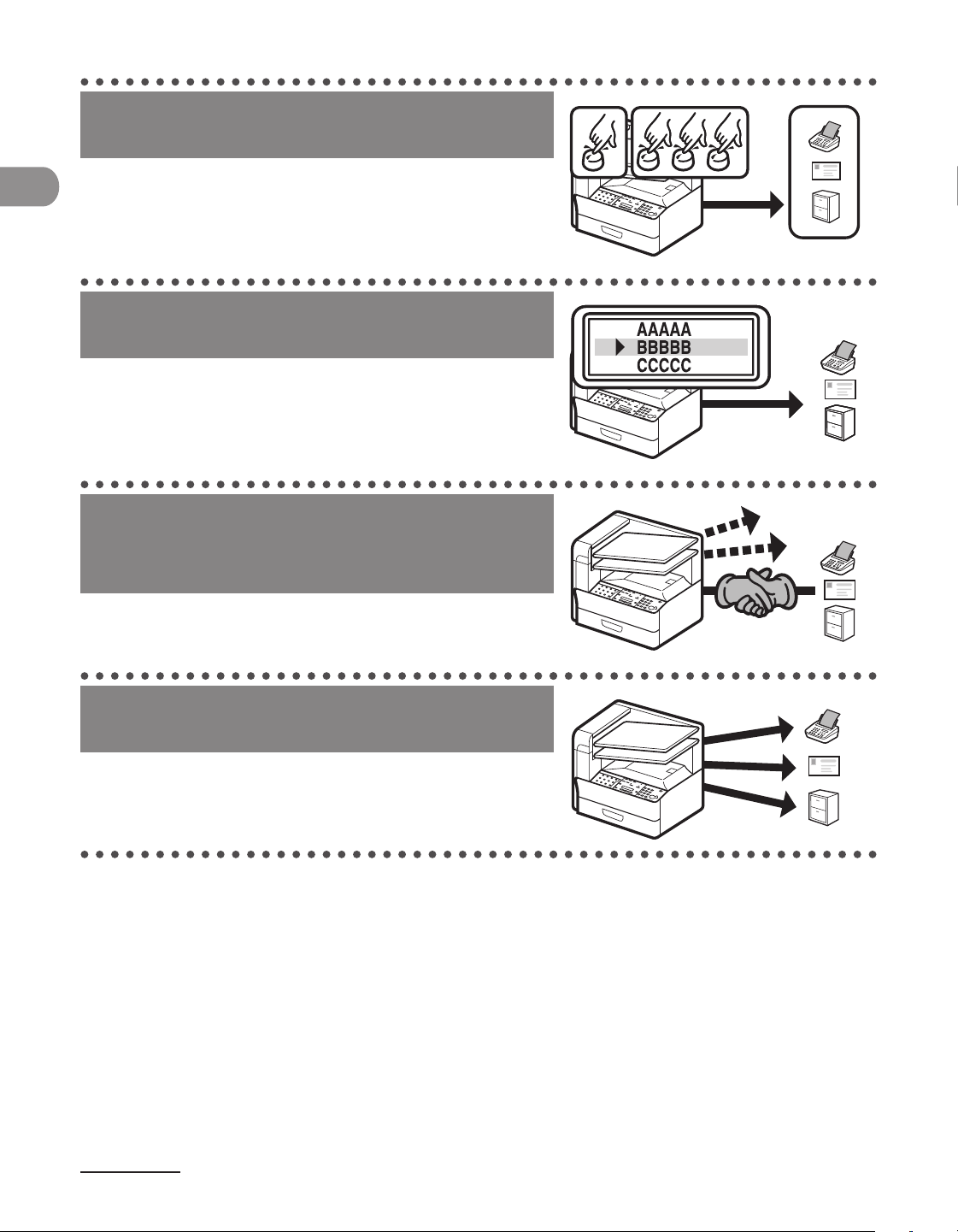
Specify multiple recipients as a group
Using Group Addresses
p. 4-48→
Look up a particular recipient
Using Address Book Key
p. 4-50→
Retry sending documents
automatically (LASER CLASS 830i
Only)
Auto Retry
Reference Guide→
Send documents to multiple
recipients
Broadcasting
p. 4-65→
What Can I Do with This Machine?
vi
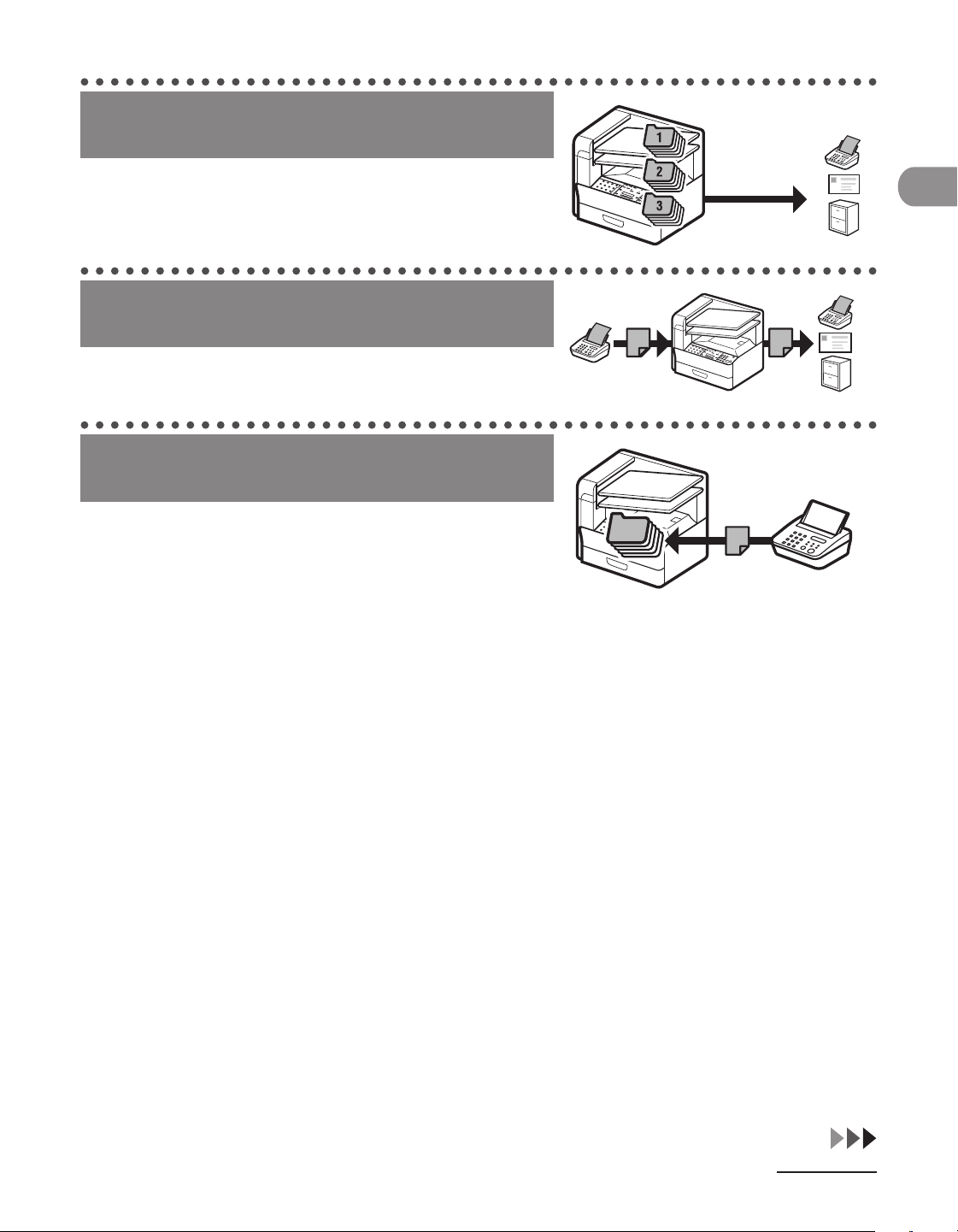
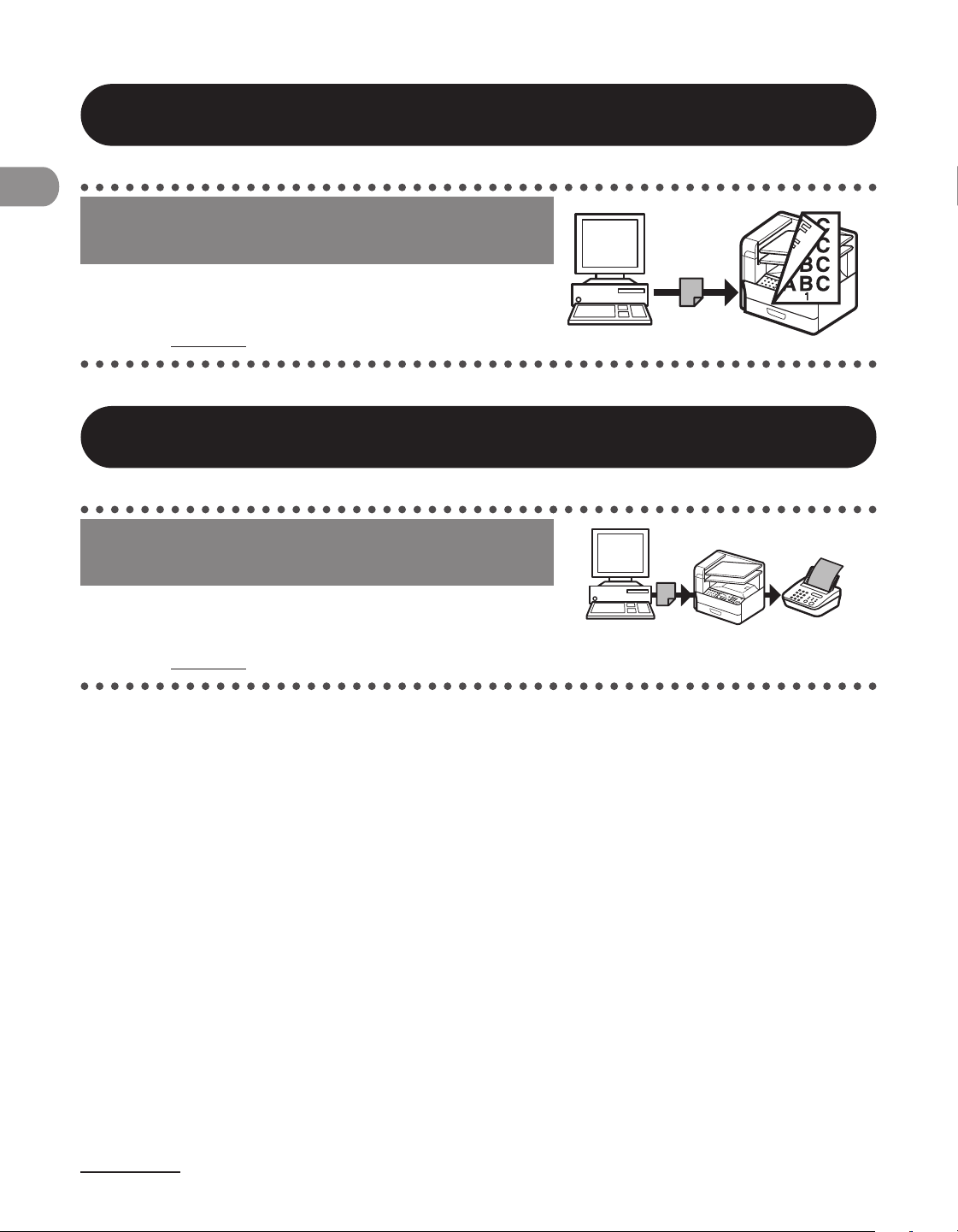
Printer Feature
Print a document from a PC
Printing
*
* For the LASER CLASS 810 an optional network printer kit is required.
Online Help→
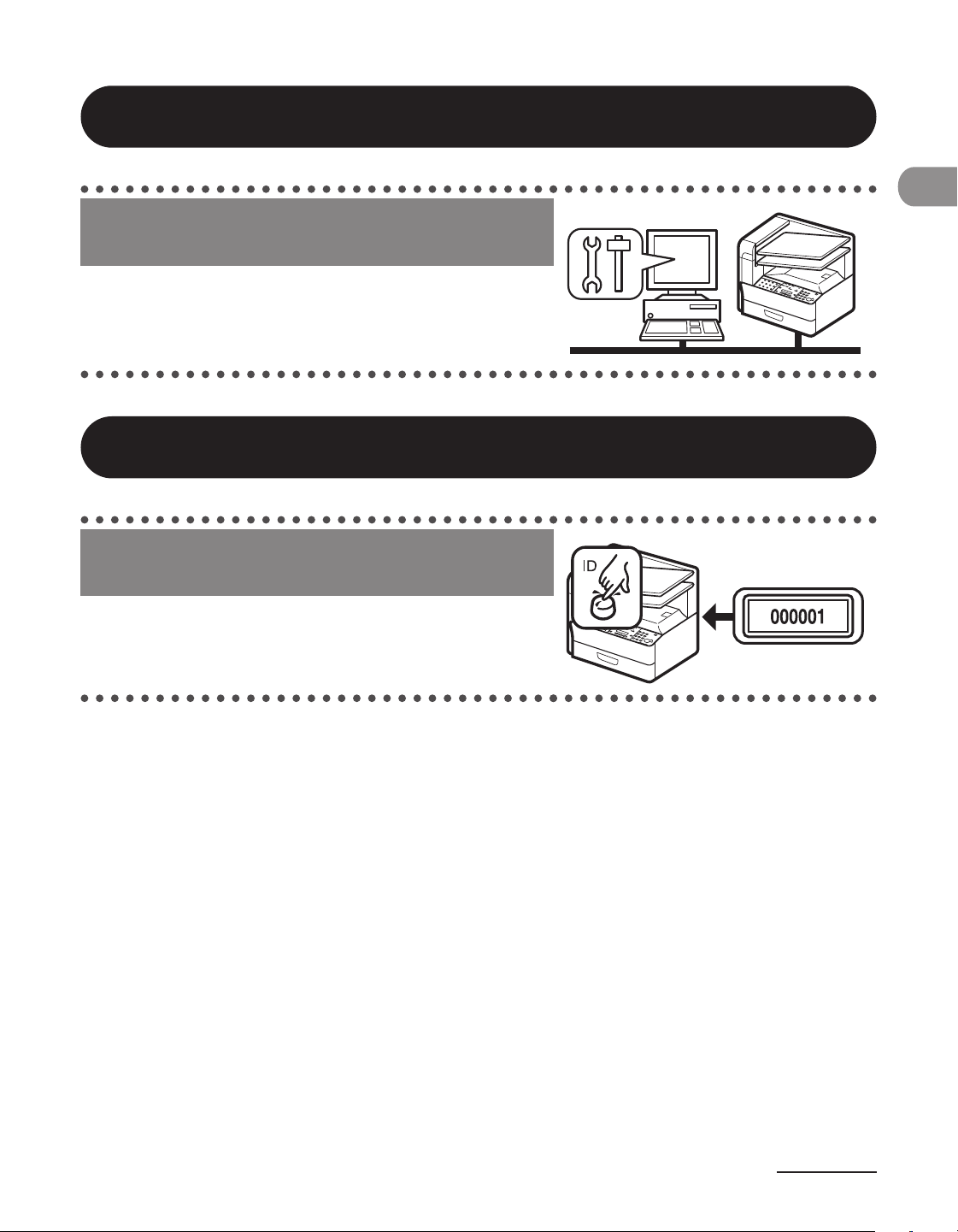
PC Fax Feature
Send a fax from a PC
PC Faxing
*
* For the LASER CLASS 810 an optional network printer kit is required.
Online Help→
vii
What Can I Do with This Machine?
Remote UI Feature
Access and manage the machine from
a PC
Remote UI
*
* For the LASER CLASS 810 an optional network printer kit is required.
Reference Guide→
System Manager Settings
Restrict the use of the machine with
department IDs
Department ID Management
Reference Guide→

What Can I Do with This Machine?
viii
Contents
Manuals for the Machine ........................................................................i
What Can I Do with This Machine? ........................................................ii
Copy Features ...........................................................................................ii
Sending/Receiving Features ...............................................................
iii
Printer Feature .........................................................................................
vi
PC Fax Feature ..........................................................................................vi
Remote UI Feature .................................................................................vii
System Manager Settings ...................................................................vi
i
Contents ...............................................................................................viii
Preface ..................................................................................................xvi
Important Safety Instructions .........................................................
xvi
Handling and Maintenance .............................................................
xvi
Telephone Equipment ...................................................................... xvi
i
Location ................................................................................................. xvi
i
Power Supply .........................................................................................xix
Customer Support (U.S.A.) .................................................................xix
Customer Support (Canada) ..............................................................xx
How to Use This Guide ........................................................................xxi
Symbols Used in This Manual ...........................................................
xxi
llustrations Used in This Manual ......................................................
xxi
Legal Notices .......................................................................................xxii
Copyright ............................................................................................... xxi
i
Disclaimers ............................................................................................ xxi
i
For CA, USA only ................................................................................. xxii
Legal Limitations on the Usage of Your Product and the Use
of Images .............................................................................................. xxiii
Trademarks ........................................................................................... xxiv
IPv6 Ready Logo ................................................................................. xxiv
Users in the U.S.A. ..............................................................................xxv
Pre-Installation Requirements for Canon Facsimile
Equipment .............................................................................................
xxv
Connection of the Equipment ......................................................
xxvi
In Case of Equipment Malfunction ..............................................
xxvi
Rights of the Telephone Company .............................................xxvi
i
FCC Notice ...........................................................................................xxvi
i

ix
What Can I Do with This Machine?
Users in Canada .................................................................................xxix
Pre-Installation Requirements for Canon Facsimile
Equipment ............................................................................................ xxi
x
Notice .......................................................................................................
xxx
Utilisation au Canada .......................................................................xxxii
Conditions à Remplir Préalablement à L’installation d’un
Télécopieur Canon ........................................................................... xxxi
i
Remarques .........................................................................................xxxiii
Laser Safety......................................................................................xxxiv
CDRH Regulations ...........................................................................xxxi
v
1 Before Using the Machine .............................................................. 1-1
Machine Components ........................................................................ 1-2
Operation Panel .................................................................................. 1-4
Right Side of the Operation Panel .................................................
1-4
Left Side of the Operation Panel ....................................................
1-7
LCD (Standby Mode) .......................................................................... 1-9
Fax/Send Mode .....................................................................................1-9
Log In Mode ...........................................................................................1-9
Copy Mode .............................................................................................1-9
Optional Handset ............................................................................. 1-10
Maintaining the Handset ...............................................................
1-10
Department/User ID Management ................................................. 1-11
Procedure before Using the Machine ........................................
1-11
Procedure after Using the Machine ...........................................
1-12
Toner Cartridge ................................................................................ 1-13
Maintaining the Toner Cartridge .................................................
1-14
Timer Settings................................................................................... 1-16
Setting the Sleep Mode ..................................................................
1-16
Setting Auto Clear Time .................................................................
1-18
Setting Time Zone ............................................................................
1-20
Setting Daylight Saving Time .......................................................
1-21
2 Document and Paper ...................................................................... 2-1
Document Requirements ................................................................... 2-2

What Can I Do with This Machine?
x
Scanning Area ..................................................................................... 2-4
Loading Documents ........................................................................... 2-5
In the ADF ...............................................................................................2-5
Paper Requirements ........................................................................... 2-7
Printable Area ..................................................................................... 2-9
Loading Paper ................................................................................... 2-10
In the Multi-Purpose Tray (e.g., Envelopes) .............................
2-10
Setting Paper Size and Type ............................................................ 2-12
3 Copying ........................................................................................... 3-1
Basic Copying Method ....................................................................... 3-2
Scan Settings ...................................................................................... 3-4
Image Quality ........................................................................................
3-4
Density .....................................................................................................
3-5
Auto Zoom .......................................................................................... 3-6
Collate Copy ........................................................................................ 3-7
Two-Sided Copying ............................................................................ 3-9
1 to 2-Sided Copying ..........................................................................
3-9
2 to 2-Sided Copying .......................................................................
3-13
2 to 1-Sided Copying .......................................................................
3-15
Reserved Copy .................................................................................. 3-18
Canceling Copy Jobs ........................................................................ 3-19
Checking and Deleting Jobs ............................................................ 3-20
Checking and Deleting Copy Jobs .............................................
3-20
4 Sending Documents ....................................................................... 4-1
Basic Sending Method ....................................................................... 4-3
Scan Settings ...................................................................................... 4-5
Image Quality (Fax) .............................................................................
4-5
Density .....................................................................................................
4-7
Send Settings (E-Mail/I-Fax/File Server) (LASER CLASS 830i
Only) .........................................................................................................4-8

xi
What Can I Do with This Machine?
Storing/Editing Address Book ......................................................... 4-12
Storing/Editing One-Touch Keys/Coded Dial Codes ............
4-13
Storing Favorites Buttons (LASER CLASS 830i Only) ............
4-30
Storing/Editing Group Addresses ...............................................
4-33
Specifying Destinations ................................................................... 4-44
Using One-Touch Keys ....................................................................
4-44
Using Coded Dial Codes .................................................................
4-46
Using Group Addresses ..................................................................
4-48
Using Address Book Key .................................................................
4-50
Using Favorites Buttons (LASER CLASS 830i Only) ...............
4-54
Manual Sending (Fax) ...................................................................... 4-56
Sending Two-Sided Documents ...................................................... 4-59
Direct Sending .................................................................................. 4-63
Broadcasting ..................................................................................... 4-65
Delayed Sending .............................................................................. 4-67
Job Recall/Redial .............................................................................. 4-69
Setting Up and Using the Optional Stamp Feature ....................... 4-71
Setting Up the Stamp Action .......................................................
4-71
Turning the Stamp Feature ON/OFF ..........................................
4-73
TX Document Archiving ................................................................... 4-75
Before You Set Up the TX Document Archiving .....................
4-75
Turning the TX Document Archiving ON .................................
4-76
Setting Automatic Redialing (Fax) .................................................. 4-78
Switching Temporarily to Tone Dialing ........................................... 4-80
Checking Dialing Line ...................................................................... 4-82
Dialing an Overseas Number (With Pauses) ................................... 4-83
Canceling TX Jobs ............................................................................. 4-85
Checking and Deleting Jobs ............................................................ 4-86
Checking Transmission Results ....................................................
4-86
Checking and Deleting Sending Documents Stored in
Memory ................................................................................................ 4-87
5 Receiving Documents ..................................................................... 5-1
Basic Receiving Method ..................................................................... 5-2

What Can I Do with This Machine?
xii
FaxTel: Optional Settings ................................................................... 5-4
DRPD: Optional Settings .................................................................... 5-6
Manual Reception .............................................................................. 5-7
Memory Reception ............................................................................. 5-8
Memory Lock Reception .................................................................... 5-9
Printing All Documents Stored in Memory .............................
5-13
Reception Restriction ....................................................................... 5-14
Forwarding Received Documents ................................................... 5-15
When Forwarding Destinations Do Not Match the
Forwarding Conditions ...................................................................
5-15
Forwarding Documents Received in Memory .......................
5-18
Forwarding Documents with Forwarding Errors ..................
5-20
Printing or Erasing Documents with Forwarding Errors .....
5-21
Remote Reception ............................................................................ 5-22
Registering Remote Reception ID ..............................................
5-22
Receiving a Fax Remotely ..............................................................
5-24
Printing Received Documents ......................................................... 5-25
Two-Sided Printing ...........................................................................
5-25
Received Image Reduction ...........................................................
5-27
Canceling RX Jobs ............................................................................ 5-29
Checking and Deleting Jobs ............................................................ 5-30
Checking Reception Results .........................................................
5-30
Checking and Deleting Receiving Documents Stored in
Memory ................................................................................................ 5-31
6 Printing ............................................................................................ 6-1
Printing Documents ........................................................................... 6-2
Checking and Deleting Jobs .............................................................. 6-4
Checking and Deleting Print Jobs .................................................
6-4
7 PC Faxing ......................................................................................... 7-1
PC Faxing ............................................................................................. 7-2

xiii
What Can I Do with This Machine?
8 Remote UI ........................................................................................ 8-1
Remote UI ............................................................................................ 8-2
9 System Manager Settings .............................................................. 9-1
Specifying the System Manager Settings ......................................... 9-2
Device Information Settings .............................................................. 9-4
Department ID Management ............................................................ 9-5
Registering the Department ID, Password, and Page Limit .
9-6
Changing the Password and Page Limit ......................................
9-9
Erasing the Department ID and Password
............................... 9-12
Checking Counter Information ....................................................
9-14
Clearing Page Totals .........................................................................
9-16
Printing Counter Information (DEPT. INFO LIST) ...................
9-18
Accepting Print Jobs with Unknown IDs ..................................
9-19
Managing User IDs ........................................................................... 9-20
Handling Documents with Forwarding Errors ............................... 9-22
Restricting Access to Destinations .................................................. 9-24
Setting a Password for the Address Book ................................
9-24
Restricting the New Address ........................................................
9-26
Restricting PC Faxing .......................................................................
9-27
Restricting Job Recall (LASER CLASS 830i Only) ....................
9-28
Restricting Redialing (LASER CLASS 810 Only) ......................
9-29
Confirming Entered Fax Numbers .............................................. 9-30
Restricting Broadcasting ................................................................
9-31
Checking the Job Log ....................................................................... 9-32
10 Maintenance ...............................................................................10-1
Cleaning the Machine ...................................................................... 10-2
Exterior .................................................................................................
10-2
Interior ..................................................................................................
10-3
Fuser Roller .......................................................................................... 10-6
Scanning area ....................................................................................
10-7
Cleaning the ADF Automatically .................................................
10-9
Transcription Roller .......................................................................
10-10

What Can I Do with This Machine?
xiv
Replacing the Toner Cartridge ...................................................... 10-11
Redistributing Toner ......................................................................
10-11
Replacing the Toner Cartridge with a New One ..................
10-14
Replacing the Stamp Cartridge ..................................................... 10-17
Recycling Used Cartridges ............................................................. 10-19
The Clean Earth Campaign ..........................................................
10-19
U.S.A. PROGRAM .............................................................................10-21
CANADA PROGRAM-CANADA PROGRAMME .......................10-24
Transporting the Machine ............................................................. 10-26
11 Troubleshooting ......................................................................... 11-1
Clearing Jams .................................................................................... 11-2
Document Jams ................................................................................ 11-3
Paper Jams .......................................................................................... 11-4
LCD Messages ................................................................................... 11-7
Error Codes...................................................................................... 11-13
If <LOAD CORRECT PAPER> is displayed ...................................... 11-18
Re-Loading the Paper
....................................................................11-18
Changing the Paper Size Setting ..............................................
11-19
General Problems ...........................................................................11-21
Paper Feeding Problems ..............................................................
11-23
Sending/Receiving Problems ........................................................ 11-24
Sending Problems ..........................................................................
11-24
Receiving Problems .......................................................................
11-29
Copying Problems ..........................................................................
11-35
Telephone Problems ......................................................................11-37
If a Power Failure Occurs ................................................................ 11-39
If You Cannot Solve a Problem ...................................................... 11-40
Customer Support (U.S.A.) ...........................................................11-40
Customer Support (Canada) .......................................................11-40
12 Machine Settings ........................................................................ 12-1
Machine Settings .............................................................................. 12-2
Printing USER'S DATA LIST .............................................................
12-2
Accessing the Setting Menu .........................................................
12-3

xv
What Can I Do with This Machine?
Setting Menu .................................................................................... 12-5
PAPER SETTINGS ................................................................................ 12-5
VOLUME CONTROL........................................................................... 12-5
COMMON SETTINGS ........................................................................ 12-7
COPY SETTINGS ................................................................................. 12-9
TX/RX SETTINGS ..............................................................................12-11
ADDRESS BOOK SET. .....................................................................12-19
PRINTER SETTINGS .........................................................................12-25
TIMER SETTINGS ..............................................................................12-30
ADJUST./CLEANING ........................................................................12-32
REPORT SETTINGS ..........................................................................12-34
SYSTEM SETTINGS ..........................................................................12-36
Summary of Reports and Lists ...................................................... 12-51
Printing Reports Automatically .................................................... 12-52
TX REPORT .........................................................................................12-52
RX REPORT .........................................................................................12-55
ACTIVITY REPORT ............................................................................12-57
Printing Reports and Lists Manually ............................................. 12-59
Printing ACTIVITY REPORT ...........................................................
12-60
Printing 1-TOUCH LIST, CODED DIAL LIST, and GROUP DIAL
LIST .......................................................................................................12-61
Printing 1-TOUCH LIST 2, CODED DIAL LIST 2 ......................
12-62
Checking and Deleting Jobs .......................................................... 12-63
Checking and Deleting Report Jobs ........................................
12-63
Checking Remaining Memory ....................................................... 12-64
13 Appendix ..................................................................................... 13-1
Specifications ................................................................................... 13-2
General ................................................................................................. 13-2
Facsimile ..............................................................................................
13-3
Telephone ............................................................................................ 13-5
Send (LASER CLASS 830i Only) ....................................................
13-5
Copier ....................................................................................................
13-6
Printer ...................................................................................................
13-7
Index .................................................................................................. 13-8

What Can I Do with This Machine?
xvi
Preface
Thank you for choosing a Canon product. Before using the machine, please read the
following instructions for your safety.
Important Safety Instructions
Except as specifically described in this guide, do not attempt to service the machine yourself. Never attempt to
disassemble the machine: opening and removing its interior covers will expose you to dangerous voltages and
other risks. For all service, contact Canon Customer Care Center, or a Canon Authorized Service Facility.
Handling and Maintenance
Follow all warnings and instructions marked on the machine.
Do not subject the machine to strong physical shocks or vibrations.
Always unplug the machine before moving or cleaning it.
Do not place your hands, hair, clothing, etc., near the exit and feed rollers. Even if the
machine is not in operation, your hands, hair, or clothing may get caught in the rollers,
which may result in personal injury or damage if the machine suddenly starts printing.
To avoid paper jams, never unplug the power cord, open the scanning platform, or add or
remove paper in the machine while printing.
When transporting the machine, be sure to remove the toner cartridge from the
machine.
Place the toner cartridge in its original protective bag or wrap it in a thick cloth to
prevent exposure to light.
Be careful when removing printed paper from output trays or when aligning it, because it
may be hot and result in burn injury.
Always grip the handle on the sides of the machine when you lift the machine. Never lift
the machine by any of its trays or attachments.
The fixing unit and its surroundings inside the machine may become hot during use.
When removing jammed paper or when inspecting the inside of the machine, do not
touch the fixing unit and its surroundings, as doing so may result in burns or electrical
shock.
Do not insert any objects into the slots or openings on the machine since they may touch
dangerous voltage points or short out parts. This could result in fire or electric shock.
Do not allow small objects (such as pins, paper clips, or staples) to fall into the machine.
–
–
–
–
–
–
–
–
–
–
–
–

xvii
What Can I Do with This Machine?
To avoid spillage in or around the machine, do not eat or drink near it.
Keep the machine clean. Dust accumulation can prevent the machine from operating
properly.
Turn off the main power switch and unplug the power cord from the wall outlet and
contact Canon Customer Care Center in any of the following cases:
When the power cord or plug is damaged or frayed.
If liquid or small object has fallen into the machine.
If the machine has been exposed to rain or water.
If the machine does not operate normally when you have followed the instructions
in this guide. Adjust only those controls that are covered by the instructions in this
guide. Improper adjustment of other controls may result in damage and may require
extensive work by a qualified technician to restore the product to normal operation.
If the machine has been dropped.
If the machine exhibits a distinct change in performance, indicating a need for
servicing.
Telephone Equipment
When using telephone equipment, basic safety precautions should always be followed to reduce the risk of fire,
electric shock, and injury to persons, including the following:
1. Do not use this machine near water (i.e., near a bathtub, kitchen sink, or laundry tub), or in a wet basement or
near a swimming pool.
2. Avoid using the telephone during an electrical storm, as there may be a remote risk of electric shock from
lightning.
3. Do not use the telephone to report a gas leak in the vicinity of the leak.
Location
Place the machine on a flat, stable, vibration-free surface that is strong enough to
support its weight.
Place the machine in a cool, dry, clean, well ventilated place.
Make sure the area is free from dust.
Make sure the location is not exposed to high temperature or humidity.
Keep the machine away from direct sunlight as this can damage it. If you have to place
the machine near a window, install heavy curtains or blinds.
Do not use the machine near water. Make sure that no wet or humid objects come into
contact with the machine.
Do not use or store the machine outdoors.
Do not place the machine near devices that contain magnets or generate magnetic
fields, such as speakers.
–
–
–
–
–
–
–
–
–
–
–
–
–
–
–
–
–
What Can I Do with This Machine?
xviii
If possible, place the machine near an existing telephone line outlet for easy connection
of the telephone line cord, and to avoid the expense of installing a new outlet.
Place the machine near a standard 120 V AC (60 Hz) power outlet.
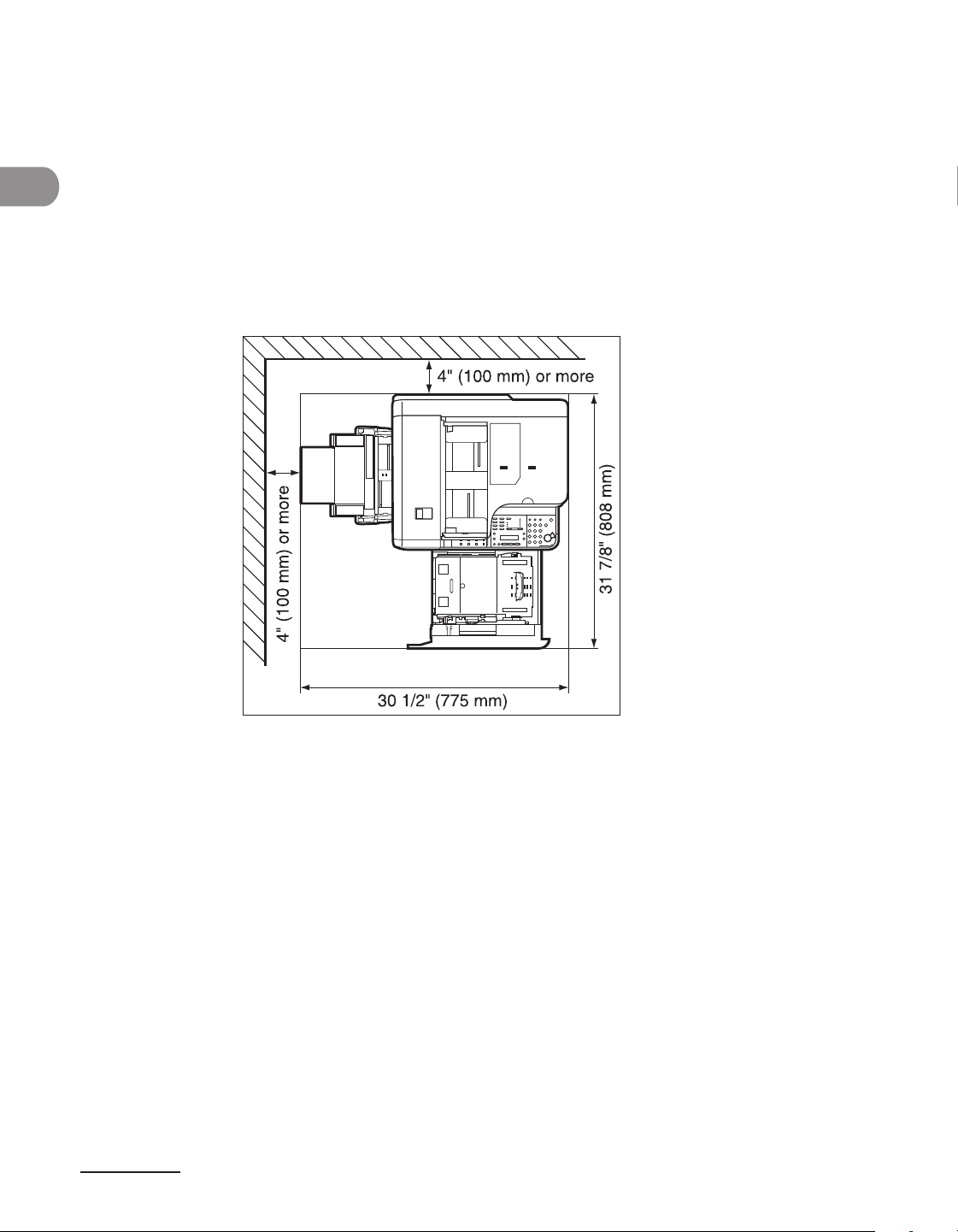
To ensure reliable operation of the machine and to protect it from overheating (which
can cause it to operate abnormally and create a fire risk), do not block the exhaust vent.
Never block or cover any openings on the machine by placing it on a bed, sofa, rug, or
other similar surface. Do not place the machine in a cupboard or built-in installation, or
near a radiator or other heat source unless proper ventilation is provided. Leave at least
4" (10 cm) around all sides of the machine.
Do not stack boxes or furniture around the power outlet. Keep the area free so you can
reach the outlet quickly. If you notice anything unusual (smoke, strange odors, noises)
around the machine, unplug the power cord immediately. Contact Canon Customer Care
Center.
Do not allow anything to rest on the power cord, and do not place the machine where
the cord will be walked on. Make sure the cord is not knotted or kinked.
–
–
–
–
–

xix
What Can I Do with This Machine?
Power Supply
During electrical storms, turn off the main power switch and unplug the power cord from
the power outlet.
If power is suddenly lost due to an outage or accidental unplugging, a built-in battery
retains the user data settings and the speed dialing settings. Any sent or received
documents stored in memory are backed up for about 3 hours.
Whenever you unplug the power cord, wait at least five seconds before you plug it in
again.
Do not plug the power cord into an uninterruptible power supply (UPS).
This product emits low level magnetic flux. If you use a cardiac pacemaker and feel abnormalities, please move
away from this product and consult your doctor.
Customer Support (U.S.A.)
Your machine is designed with the latest technology to provide trouble-free operation.
If you encounter a problem with the machine’s operation, try to solve it by using the
information in Chapter 11. If you cannot solve the problem or if you think your machine
needs servicing, contact Canon Customer Care Center at 1-800-828-4040 between the
hours of 8:00 A.M. to 8:00 P.M. EST Monday through Friday and 10:00 A.M. to 8:00 P.M. on
Saturday. On-line support for 24 hours is also available at the website.
http://www.canontechsupport.com/
–
–
–

What Can I Do with This Machine?
xx
Customer Support (Canada)
Canon Canada Inc., offers a full range of customer technical support options*:
For step-by-step troubleshooting, e-mail technical support, the latest driver or document
downloads, and answers to frequently asked questions, visit http://www.canon.ca/
Free live technical support 9 A.M. to 8 P.M. EST Monday through Friday (excluding
holidays) for products still under warranty 1-800-652-2666
For the location of the authorized service facility nearest you, visit http://www.canon.ca/
or 1-800-652-2666
If the problem cannot be corrected by using one of the above technical support options,
repair options are available at the time of your call to the live technical support number
above or via the website at http://www.canon.ca/
Support program specifics are subject to change without notice.
–
–
–
–
*
xxi
What Can I Do with This Machine?
How to Use This Guide
Symbols Used in This Manual
The following symbols are used throughout the manuals for the machine and indicate the
warnings, cautions and notes you should keep in mind when using the machine.
Indicates a warning that may lead to death or serious injury if not observed.
Explains how to avoid actions that could injure you or damage your
machine.
Explains operating restrictions and how to avoid minor difficulties.
In addition, this guide uses distinctive notations to identify keys and information in the LCD:
The keys you press appear in square brackets: [Stop].
Information in the LCD appears in angle brackets: <LOAD PAPER>.
The numbers that point to the keys on the operation panel diagram correspond to the
order of steps to take in the procedure.
llustrations Used in This Manual
Unless otherwise mentioned, illustrations used in this manual are those taken when no
optional equipment is attached to the LASER CLASS 830i.
The model LASER CLASS 830i is used for illustration purposes in this manual.
When there is any difference between the LASER CLASS 830i and the LASER CLASS 810, it is
clearly indicated in the text, e.g., " LASER CLASS 830i
Only."
–
–

What Can I Do with This Machine?
xxii
Legal Notices
Copyright
Copyright © 2007 by Canon Inc. All rights reserved. No part of this publication may be
reproduced, transmitted, transcribed, stored in a retrieval system, or translated into any
language or computer language in any form or by any means, electronic, mechanical,
magnetic, optical, chemical, manual, or otherwise, without the prior written permission of
Canon Inc.
Disclaimers
The information in this document is subject to change without notice.
CANON INC. MAKES NO WARRANTY OF ANY KIND WITH REGARD TO THIS MATERIAL, EITHER
EXPRESS OR IMPLIED, EXCEPT AS PROVIDED HEREIN, INCLUDING WITHOUT LIMITATION,
THEREOF, WARRANTIES AS TO MARKETABILITY, MERCHANTABILITY, FITNESS FOR A
PARTICULAR PURPOSE OF USE OR NON-INFRINGEMENT. CANON INC. SHALL NOT BE LIABLE
FOR ANY DIRECT, INCIDENTAL, OR CONSEQUENTIAL DAMAGES OF ANY NATURE, OR LOSSES
OR EXPENSES RESULTING FROM THE USE OF THIS MATERIAL.
For CA, USA only
Included battery contains Perchlorate Material - special handling may apply.
See http://www.dtsc.ca.gov/hazardouswaste/perchlorate/ for details.

xxiii
What Can I Do with This Machine?
Legal Limitations on the Usage of Your Product and the Use of
Images
Using your product to scan, print or otherwise reproduce certain documents, and the use
of such images as scanned, printed or otherwise reproduced by your product, may be
prohibited by law and may result in criminal and/or civil liability.
A non-exhaustive list of these documents is set forth below. This list is intended to be a
guide only. If you are uncertain about the legality of using your product to scan, print or
otherwise reproduce any particular document, and/or of the use of the images scanned,
printed or otherwise reproduced, you should consult in advance with your legal advisor for
guidance.
Paper Money– Travelers Checks–
Money Orders– Food Stamps–
Certificates of Deposit
– Passports–
Postage Stamps (canceled or uncanceled) – Immigration Papers–
Identifying Badges or Insignias
– Internal Revenue Stamps (canceled or
uncanceled)
–
Selective Service or Draft Papers
– Bonds or Other Certificates of
Indebtedness
–
Checks or Drafts Issued by Governmental
Agencies
– Stock Certificates–
Motor Vehicle Licenses and Certificates of
Title
– Copyrighted Works/Works of Art without
Permission of Copyright Owner
–
What Can I Do with This Machine?
xxiv
Trademarks
Canon, the Canon logo, and LASER CLASS are trademarks of Canon Inc.
Microsoft, Windows and Windows Server are registered trademarks of Microsoft
Corporation in the United States and other countries.
Windows Vista is a trademark of Microsoft Corporation in the United States and other
countries. All other product and brand names are registered trademarks, trademarks or
service marks of their respective owners.
As an ENERGY STAR Partner, Canon U.S.A., Inc. has determined that this
product meets the ENERGY STAR Program for energy efficiency.
The International E
NERGY STAR Office Equipment Program is an
international program that promotes energy saving through the use of
computers and other office equipment.
The program backs the development and dissemination of products
with functions that effectively reduce energy consumption. It is an
open system in which business proprietors can participate voluntarily.
The targeted products are office equipment, such as computers,
displays, printers, facsimiles, and copiers. The standards and logos are
uniform among participating nations.
IPv6 Ready Logo
This machine has acquired IPv6 Ready Logo Phase-1, as established by
the IPv6 Forum.

xxv
What Can I Do with This Machine?
Users in the U.S.A.
Pre-Installation Requirements for Canon Facsimile Equipment
A. Location
Supply a suitable table, cabinet, or desk. See p. 13-2 for the machine’s weight and dimensions.
B. Order Information
1. Only a single line, touch-tone or rotary telephone set is to be used.
2. Order an RJ11-C modular jack (USOC code), which should be installed by the telephone
company. If the RJ11-C jack is not present, installation cannot occur.
3. Order a regular voice grade line or the equivalent from your telephone company’s business
representative.
Use one line per machine.
DDD (DIRECT DISTANCE DIAL) LINE
-or-
IDDD (INTERNATIONAL DIRECT DISTANCE DIAL) LINE IF YOU COMMUNICATE OVERSEAS
Canon recommends an individual line following industry standards, e.g. the 2500 (Touch Tone) or 500
(Rotary/Pulse Dial) telephones. A dedicated extension off a PBX machine without “Call Waiting” can
be used with the machine. Key telephone systems are not recommended because they send non-
standard signals to individual telephones for ringing and special codes, which may cause a fax error.
This machine is not supported on Voice Over Internet Protocol (VOIP).
C. Power Requirements
This equipment should be connected to a standard 120-volt AC, three-wire grounded outlet
only. Do not connect this machine to an outlet or power line shared with other appliances that
cause “electrical noise.” Air conditioners, electric typewriters, copiers, and machines of this
sort generate electrical noise which often interferes with communications equipment and the
sending and receiving of documents.

What Can I Do with This Machine?
xxvi
Connection of the Equipment
This equipment complies with Part 68 of the FCC rules and the requirements adopted
by the ACTA. On the rear panel of this equipment is a label that contains, among other
information, a product identifier in the format US:AAAEQ##TXXXX. If requested, this
number must be provided to the telephone company.
An FCC compliant telephone cord and modular jack are provided with this equipment. This
equipment is designed to be connected to the telephone network or premises wiring using
a compatible modular jack which is Part 68 compliant. See the Starter Guide for details.
The Ringer Equivalence Number (REN) is used to determine the number of devices that
may be connected to a telephone line. Excessive RENs on a telephone line may result
in the devices not ringing in response to an incoming call. In most but not all areas, the
sum of RENs should not exceed five (5.0). To be certain of the number of devices that
may be connected to a line, as determined by the total RENs, contact the local telephone
company. The REN for this product is part of the product identifier that has the format US:
AAAEQ##TXXXX. The digits represented by ## are the REN without a decimal point (e.g., 10
is a REN of 1.0).
This equipment may not be used on coin service provided by the telephone company.
Connection to party lines is subjected to state tariffs.
In Case of Equipment Malfunction
Should any malfunction occur which cannot be corrected by the procedures described in
this guide, disconnect the equipment from the telephone line , unplug the network cable (if
connected), and unplug the power cord. The telephone line should not be reconnected or
the power cord plugged in until the problem is completely resolved. Users should contact
Canon Authorized Service Facilities for servicing of equipment. Information regarding
Authorized Service Facility locations can be obtained by calling Canon Customer Care
Center (1-800-828-4040).

xxvii
What Can I Do with This Machine?
Rights of the Telephone Company
Should the equipment cause harm to the telephone network, the telephone company
may temporarily disconnect service. The telephone company also retains the right to make
changes in facilities and services which may affect the operation of this equipment. When
such changes are necessary, the telephone company is required to give adequate prior
notice to the user.
FCC Notice
LASER CLASS 810: Model F189500
LASER CLASS 830i
: Model F189505
This device complies with Part 15 of the FCC Rules. Operation is subject to the following two
conditions:
(1) This device may not cause harmful interference, and
(2) this device must accept an interference received, including interference that may
cause undesired operation.
This equipment has been tested and found to comply with the limits for a class B digital device, pursuant
to Part 15 of the FCC Rules. These limits are designed to provide reasonable protection against harmful
interference in a residential installation. This equipment generates, uses and can radiate radio frequency energy
and, if not installed and used in accordance with the instructions, may cause harmful interference to radio
communications. However, there is no guarantee that interference will not occur in a particular installation. If
this equipment does cause harmful interference to radio or television reception, which can be determined by
turning the equipment off and on, the user is encouraged to try to correct the interference by one or more of
the following measures:
Reorient or relocate the receiving antenna.
Increase the separation between the equipment and receiver.
Connect the equipment into an outlet on a circuit different from that to which the
receiver is connected.
Consult the dealer or an experienced radio/TV technician for help.
•
•
•
•

What Can I Do with This Machine?
xxviii
Use of shielded cable is required to comply with class B limits in Subpart B of Part 15 of FCC
Rules.
Do not make any changes or modifications to the equipment unless otherwise specified
in this manual. If such changes or modifications should be made, you could be required to
stop operation of the equipment.
Canon U.S.A., Inc.
One Canon Plaza, Lake Success, NY 11042, U.S.A.
TEL No. 1-516-328-5600
The Telephone Consumer Protection Act of 1991 makes it unlawful for any person to
use a computer or other electronic device to send any message via a telephone fax
machine unless such message clearly contains in a margin at the top or bottom of each
transmitted page or on the first page of the transmission, the date and time it is sent and an
identification of the business or other entity, or other individual sending the message and
the telephone number of the sending machine or such business, other entity, or individual.
In order to program this information into the machine, follow the instructions in the Starter
Guide.

xxix
What Can I Do with This Machine?
Users in Canada
Pre-Installation Requirements for Canon Facsimile Equipment
A. Location
Supply a suitable table, cabinet, or desk. See p. 13-2 for the machine’s weight and dimensions.
B. Order Information
1. Provide only a single-line to touch-tone or rotary telephone set terminated with a standard
4-pin modular phone plug. (Touch-tone is recommended if available in your area.)
2. Order an CA11A modular jack (USOC code), which should be installed by the telephone
company. If the CA11A jack is not present, installation cannot occur.
3. Order a normal business line from your telephone company’s business representative. The
line should be a regular voice grade line or equivalent. Use one line per machine.
DDD (DIRECT DISTANCE DIAL) LINE
-or-
IDDD (INTERNATIONAL DIRECT DISTANCE DIAL) LINE IF YOU COMMUNICATE OVERSEAS
Canon recommends an individual line following industry standards, e.g., the 2500 (touch tone) or 500
(rotary/pulse dial) telephones. A dedicated extension off a PBX machine without “Camp On” signals is
also permissible with the machine. Key telephone systems are not recommended because they send
non-standard signals to individual telephones for ringing and special codes, which may cause a fax
error.
C. Power Requirements
The power outlet should be a three-prong grounded receptacle (Single or Duplex). It should
be independent from copiers, heaters, air conditioners or any electric equipment that is
thermostatically controlled. The rated value is 120 volts and 15 amperes. The CA11A modular
jack should be relatively close to the power outlet to facilitate installation.

What Can I Do with This Machine?
xxx
Notice
This equipment meets the applicable Industry Canada Terminal Equipment Technical
Specifications. This is confirmed by the registration number. The abbreviation, IC, before
the registration number signifies that registration was performed based on a Declaration of
Conformity indicating that Industry Canada technical specifications were met. It does not
imply that Industry Canada approved the equipment.
Cet appareil est conforme aux Spécifications techniques des équipements terminaux de
I’lndustrie du Canada.
Ceci est confirmé par le numéro d’enregistrement. L’abréviation IC précédant le numéro
d’enregistrement signifie que I’enregistrement a été effectué sur la base de la Déclaration de
conformité indiquant que le produit est conforme aux spécifications techniques du Canada.
Ceci n’implique pas que le produit ait été approuvé par I’industrie du Canada.
Before installing this equipment, users should ensure that it is permissible to be connected
to the facilities of the local telecommunications company. The equipment must also be
installed using an acceptable method of connection. The customer should be aware that
compliance with the above conditions may not prevent degradation of service in some
situations.
Repairs to certified equipment should be coordinated by a representative designated by
the supplier. Any repairs or alterations made by the user to this equipment, or equipment
malfunctions, may give the telecommunications company cause to request the user to
disconnect the equipment.
Users should ensure for their own protection that the electrical ground connections of
the power utility, telephone lines and internal metallic water pipe system, if present, are
connected together. This precaution may be particularly important in rural areas.

xxxi
What Can I Do with This Machine?
Users should not attempt to make such connections themselves, but should contact the appropriate electric
inspection authority, or electrician, as appropriate.
This Class B digital apparatus meets all requirements of the Canadian Interference- Causing Equipment
Regulations.
Cet appareil numérique de la classe B respecte toutes les exigences du Règlement sur le matériel brouilleur du
Canada.
The Ringer Equivalence Number (REN) for this terminal equipment is 1.0. The REN assigned
to each terminal equipment provides an indication of the maximum number of terminals
allowed to be connected to a telephone interface. The termination on an interface may
consist of any combination of devices subject only to the requirement that the sum of the
Ringer Equivalence Numbers of all the devices does not exceed five.
Le Nombre d’équivalence Ringer (REN) de cet appareil terminal est 1.0. Le REN attribué à
chaque équipement terminal fournit une indication sur le nombre maximum de terminaux
pouvant être connectés sur une interface téléphonique. La terminaison sur une interface
peut consister en n’importe quelle combinaison d’appareils, à la condition seulement que la
somme des Nombres d’équivalence Ringer de tous les appareils ne soit pas supérieure à 5.
CANON CANADA INC.
1-800-652-2666
9 A.M. to 8 P.M. EST Monday through Friday (excluding holidays)

What Can I Do with This Machine?
xxxii
Utilisation au Canada
Conditions à Remplir Préalablement à L’installation d’un
Télécopieur Canon
A. Emplacement
Prévoir une table, un meuble, ou un bureau suffisamment solide et de taille appropriée (voir le
chapitre 14, Annexe (Appendix), pour les indications de poids et dimensions).
B. Installation téléphonique
1. Une seule ligne téléphonique (tonalités ou impulsions) doit être utilisée.
2. Il faut commander un jack modulaire CA11A qui sera installé par la compagnie
téléphonique. Sans ce jack, la mise en place serait impossible.
3. Si vous vous abonnez à une nouvelle ligne, demandez une ligne d’affaires normale de
qualité téléphonique courante ou équivalente. Prenez un abonnement d’une ligne par
appareil.
Ligne automatique interurbaine
ou
Ligne automatique internationale
(si vous communiquez avec les pays étrangers)
Canon vous conseille d’utiliser une ligne individuelle conforme aux normes industrielles, à savoir:
ligne téléphonique 2,500 (pour appareil à clavier) ou 500 (pour appareil à cadran/impulsions). Il est
également possible de raccorder ce télécopieur à un système téléphonique à poussoirs car la plupart
de ces systèmes émettent des signaux d’appel non normalisés ou des codes spéciaux qui risquent de
perturber le fonctionnement du télécopieur.
C. Condition d’alimentation
Raccordez le télécopieur à une prise de courant plus terre à trois branches, du type simple ou
double, et qui ne sert pas à alimenter un copieur, un appareil de chauffage, un climatiseur ou
tout autre appareil électrique à thermostat. L’alimentation doit être de 115 volts et 15 ampères.
Pour faciliter l’installation, le jack CA11A doit être assez proche de la prise de courant.
xxxiii
What Can I Do with This Machine?
Remarques
Le présent matériel est conforme aux spécifications techniques applicables d’Industrie
Canada.
Avant d’installer cet appareil, l’utilisateur doit s’assurer qu’il est permis de le connecter
à l’équipement de la compagnie de télécommunication locale et doit installer cet
appareil en utilisant une méthode de connexion autorisée. Il se peut qu’il faille étendre
la circuiterie intérieure de la ligne individuelle d’abonné, qui a été installée par la
compagnie, au moyen d’un jeu de connecteurs homologués (rallonge téléphonique).
L’attention de l’utilisateur est attirée sur le fait que le respect des conditions mentionnées
ci-dessus ne constitue pas une garantie contre les dégradations de qualité du service
dans certaines circonstances.
L’indice d’équivalence de la sonnerie (IES) sert à indiquer le nombre maximal de
terminaux qui peuvent être raccordés à une interface téléphonique. La terminaison
d’une interface peut consister en une combinaison quelconque de dispositifs, à la seule
condition que la somme d’indices d’équivalence de la sonnerie de tous les dispositifs
n’excède pas 5.
Le nombre d’équivalents sonnerie (REN) de ce produit est 1,0.
Les réparations sur un appareil certifié doivent être faites par une société d’entretien
canadienne autorisée par le Gouvernement canadien et désignée par le fournisseur.
Toute réparation ou modification que pourrait faire I’utilisateur de cet appareil, ou tout
mauvais fonctionnement, donne à la compagnie de télécommunication le droit de
débrancher I’appareil.
Pour sa propre protection, I’utilisateur doit s’assurer que les prises de terre de I’appareil
d’alimentation, les lignes téléphoniques et les tuyaux métalliques internes, s’il y en a, sont
bien connectés entre eux. Cette précaution est particulièrement importante dans les
zones rurales.
Au lieu d’essayer de faire ces branchements eux-mêmes, les utilisateurs sont invités à faire appel à un service
d’inspection faisant autorité en matière d’électricité ou à un électricien, selon le cas.
Respecte les limites de la classe B de la NMB-003 du Canada.
●
●
●
●
●
●
●
What Can I Do with This Machine?
xxxiv
Laser Safety
This machine complies with 21 CFR Chapter 1 Subchapter J as a Class 1 laser product
under the U.S. Department of Health and Human Services (DHHS) Radiation Performance
Standard according to the Radiation Control for Health and Safety Act of 1968. This means
that the machine does not produce hazardous radiation.
Since radiation emitted inside the machine is completely confined within protective
housings and external covers, the laser beam cannot escape from the machine during any
phase of user operation.
CDRH Regulations
The Center for Devices and Radiological Health (CDRH) of the U.S. Food and Drug
Administration implemented regulations for laser products on August 2, 1976. These
regulations apply to laser products manufactured from August 1, 1976. Compliance is
mandatory for products marketed in the United States.
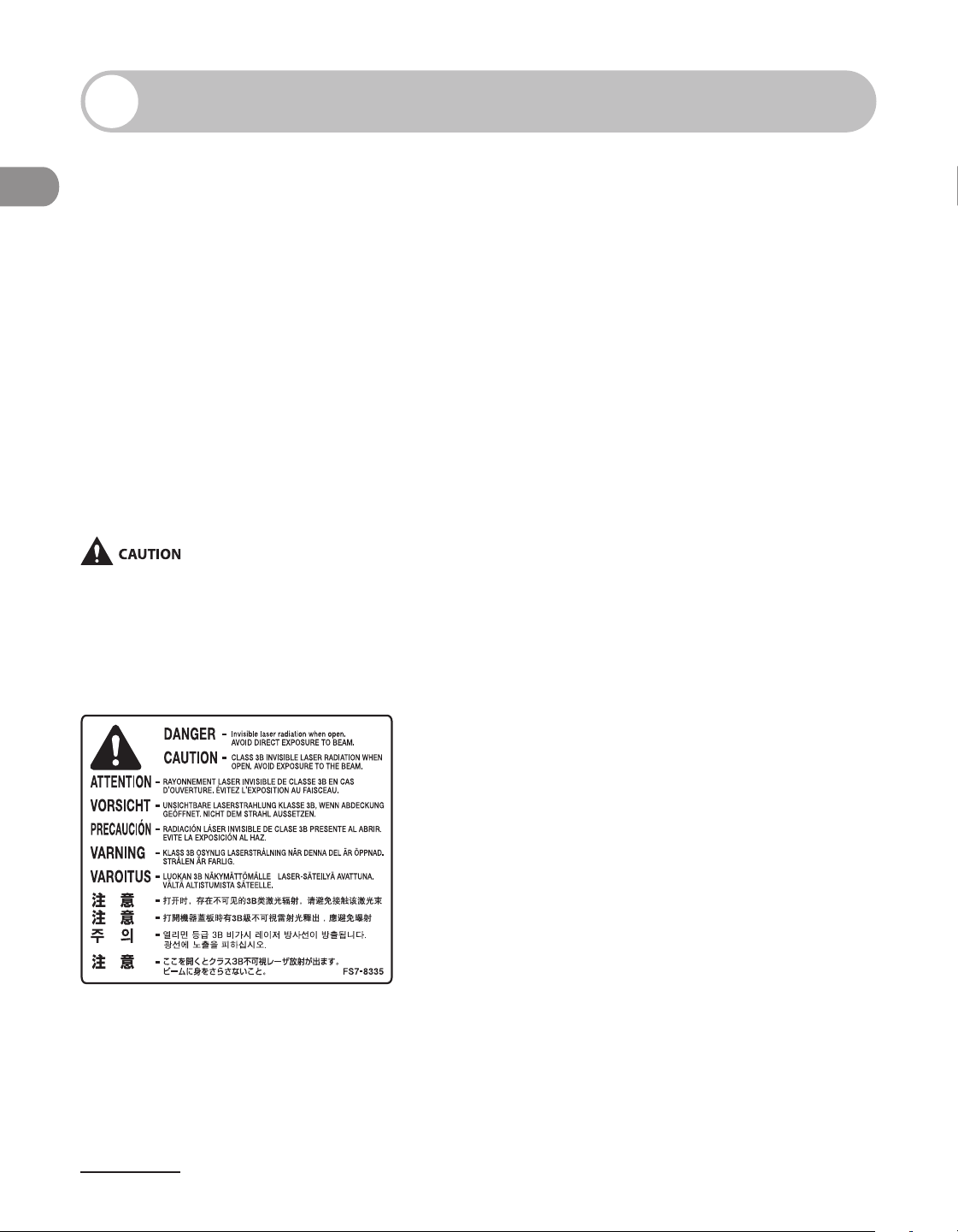
Use of controls, adjustments, or performance of procedures other than those specified in this manual may result
in hazardous radiation exposure.
The label is attached to the laser scanner machine inside the machine and is not in a user
access area.

Before Using the Machine
1
Before Using the
Machine
Machine Components ∙∙∙∙∙∙∙∙∙∙∙∙∙∙∙∙∙∙∙∙∙∙∙∙∙∙∙∙∙∙∙∙∙∙∙∙∙∙∙∙∙∙∙∙∙∙∙∙∙∙∙∙∙∙∙∙∙∙∙∙∙∙∙∙∙1-2
Operation Panel ∙∙∙∙∙∙∙∙∙∙∙∙∙∙∙∙∙∙∙∙∙∙∙∙∙∙∙∙∙∙∙∙∙∙∙∙∙∙∙∙∙∙∙∙∙∙∙∙∙∙∙∙∙∙∙∙∙∙∙∙∙∙∙∙∙∙∙∙∙∙∙∙∙∙∙1-4
Right Side of the Operation Panel ∙∙∙∙∙∙∙∙∙∙∙∙∙∙∙∙∙∙∙∙∙∙∙∙∙∙∙∙∙∙∙∙∙∙∙∙∙∙∙∙∙∙∙∙∙∙∙∙∙∙ 1-4
Left Side of the Operation Panel ∙∙∙∙∙∙∙∙∙∙∙∙∙∙∙∙∙∙∙∙∙∙∙∙∙∙∙∙∙∙∙∙∙∙∙∙∙∙∙∙∙∙∙∙∙∙∙∙∙∙∙∙∙ 1-7
LCD (Standby Mode) ∙∙∙∙∙∙∙∙∙∙∙∙∙∙∙∙∙∙∙∙∙∙∙∙∙∙∙∙∙∙∙∙∙∙∙∙∙∙∙∙∙∙∙∙∙∙∙∙∙∙∙∙∙∙∙∙∙∙∙∙∙∙∙∙∙∙∙∙1-9
Fax/Send Mode ∙∙∙∙∙∙∙∙∙∙∙∙∙∙∙∙∙∙∙∙∙∙∙∙∙∙∙∙∙∙∙∙∙∙∙∙∙∙∙∙∙∙∙∙∙∙∙∙∙∙∙∙∙∙∙∙∙∙∙∙∙∙∙∙∙∙∙∙∙∙∙∙∙∙∙∙∙∙∙∙∙∙∙∙∙ 1-9
Log In Mode ∙∙∙∙∙∙∙∙∙∙∙∙∙∙∙∙∙∙∙∙∙∙∙∙∙∙∙∙∙∙∙∙∙∙∙∙∙∙∙∙∙∙∙∙∙∙∙∙∙∙∙∙∙∙∙∙∙∙∙∙∙∙∙∙∙∙∙∙∙∙∙∙∙∙∙∙∙∙∙∙∙∙∙∙∙∙∙∙∙∙∙ 1-9
Copy Mode ∙∙∙∙∙∙∙∙∙∙∙∙∙∙∙∙∙∙∙∙∙∙∙∙∙∙∙∙∙∙∙∙∙∙∙∙∙∙∙∙∙∙∙∙∙∙∙∙∙∙∙∙∙∙∙∙∙∙∙∙∙∙∙∙∙∙∙∙∙∙∙∙∙∙∙∙∙∙∙∙∙∙∙∙∙∙∙∙∙∙∙∙∙ 1-9
Optional Handset ∙∙∙∙∙∙∙∙∙∙∙∙∙∙∙∙∙∙∙∙∙∙∙∙∙∙∙∙∙∙∙∙∙∙∙∙∙∙∙∙∙∙∙∙∙∙∙∙∙∙∙∙∙∙∙∙∙∙∙∙∙∙∙∙∙∙∙∙∙ 1-10
Maintaining the Handset ∙∙∙∙∙∙∙∙∙∙∙∙∙∙∙∙∙∙∙∙∙∙∙∙∙∙∙∙∙∙∙∙∙∙∙∙∙∙∙∙∙∙∙∙∙∙∙∙∙∙∙∙∙∙∙∙∙∙∙∙∙∙∙∙∙1-10
Department/User ID Management ∙∙∙∙∙∙∙∙∙∙∙∙∙∙∙∙∙∙∙∙∙∙∙∙∙∙∙∙∙∙∙∙∙∙∙∙∙∙∙∙∙ 1-11
Procedure before Using the Machine ∙∙∙∙∙∙∙∙∙∙∙∙∙∙∙∙∙∙∙∙∙∙∙∙∙∙∙∙∙∙∙∙∙∙∙∙∙∙∙∙∙1-11
Procedure after Using the Machine ∙∙∙∙∙∙∙∙∙∙∙∙∙∙∙∙∙∙∙∙∙∙∙∙∙∙∙∙∙∙∙∙∙∙∙∙∙∙∙∙∙∙∙∙∙1-12
Toner Cartridge ∙∙∙∙∙∙∙∙∙∙∙∙∙∙∙∙∙∙∙∙∙∙∙∙∙∙∙∙∙∙∙∙∙∙∙∙∙∙∙∙∙∙∙∙∙∙∙∙∙∙∙∙∙∙∙∙∙∙∙∙∙∙∙∙∙∙∙∙∙∙∙∙∙ 1-13
Maintaining the Toner Cartridge ∙∙∙∙∙∙∙∙∙∙∙∙∙∙∙∙∙∙∙∙∙∙∙∙∙∙∙∙∙∙∙∙∙∙∙∙∙∙∙∙∙∙∙∙∙∙∙∙∙∙1-14
Timer Settings ∙∙∙∙∙∙∙∙∙∙∙∙∙∙∙∙∙∙∙∙∙∙∙∙∙∙∙∙∙∙∙∙∙∙∙∙∙∙∙∙∙∙∙∙∙∙∙∙∙∙∙∙∙∙∙∙∙∙∙∙∙∙∙∙∙∙∙∙∙∙∙∙∙∙∙ 1-16
Setting the Sleep Mode ∙∙∙∙∙∙∙∙∙∙∙∙∙∙∙∙∙∙∙∙∙∙∙∙∙∙∙∙∙∙∙∙∙∙∙∙∙∙∙∙∙∙∙∙∙∙∙∙∙∙∙∙∙∙∙∙∙∙∙∙∙∙∙∙∙∙∙1-16
Setting Auto Clear Time ∙∙∙∙∙∙∙∙∙∙∙∙∙∙∙∙∙∙∙∙∙∙∙∙∙∙∙∙∙∙∙∙∙∙∙∙∙∙∙∙∙∙∙∙∙∙∙∙∙∙∙∙∙∙∙∙∙∙∙∙∙∙∙∙∙∙∙1-18
Setting Time Zone ∙∙∙∙∙∙∙∙∙∙∙∙∙∙∙∙∙∙∙∙∙∙∙∙∙∙∙∙∙∙∙∙∙∙∙∙∙∙∙∙∙∙∙∙∙∙∙∙∙∙∙∙∙∙∙∙∙∙∙∙∙∙∙∙∙∙∙∙∙∙∙∙∙∙∙∙∙∙1-20
Setting Daylight Saving Time ∙∙∙∙∙∙∙∙∙∙∙∙∙∙∙∙∙∙∙∙∙∙∙∙∙∙∙∙∙∙∙∙∙∙∙∙∙∙∙∙∙∙∙∙∙∙∙∙∙∙∙∙∙∙∙∙∙1-21
Before Using the Machine
1-2
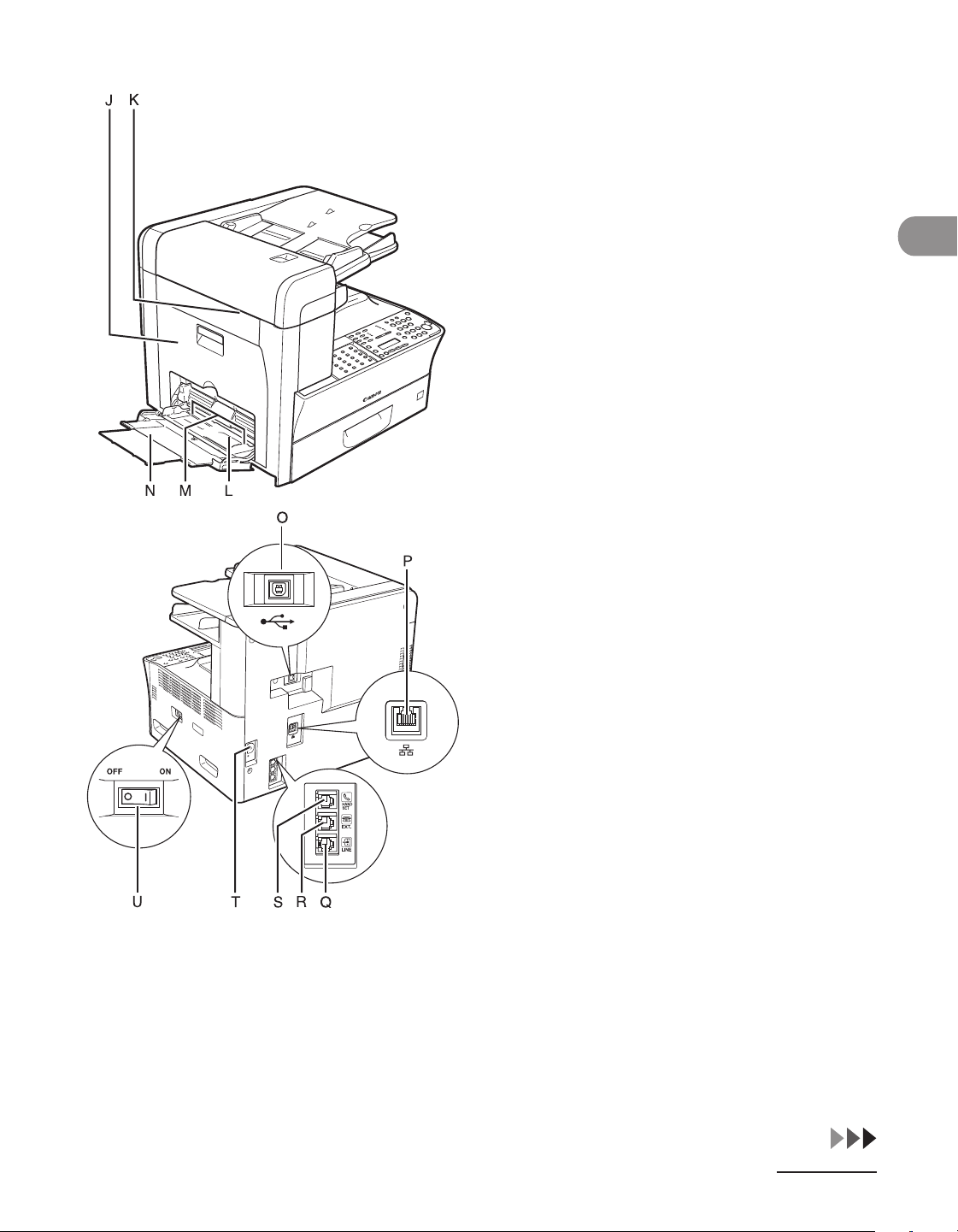
Machine Components
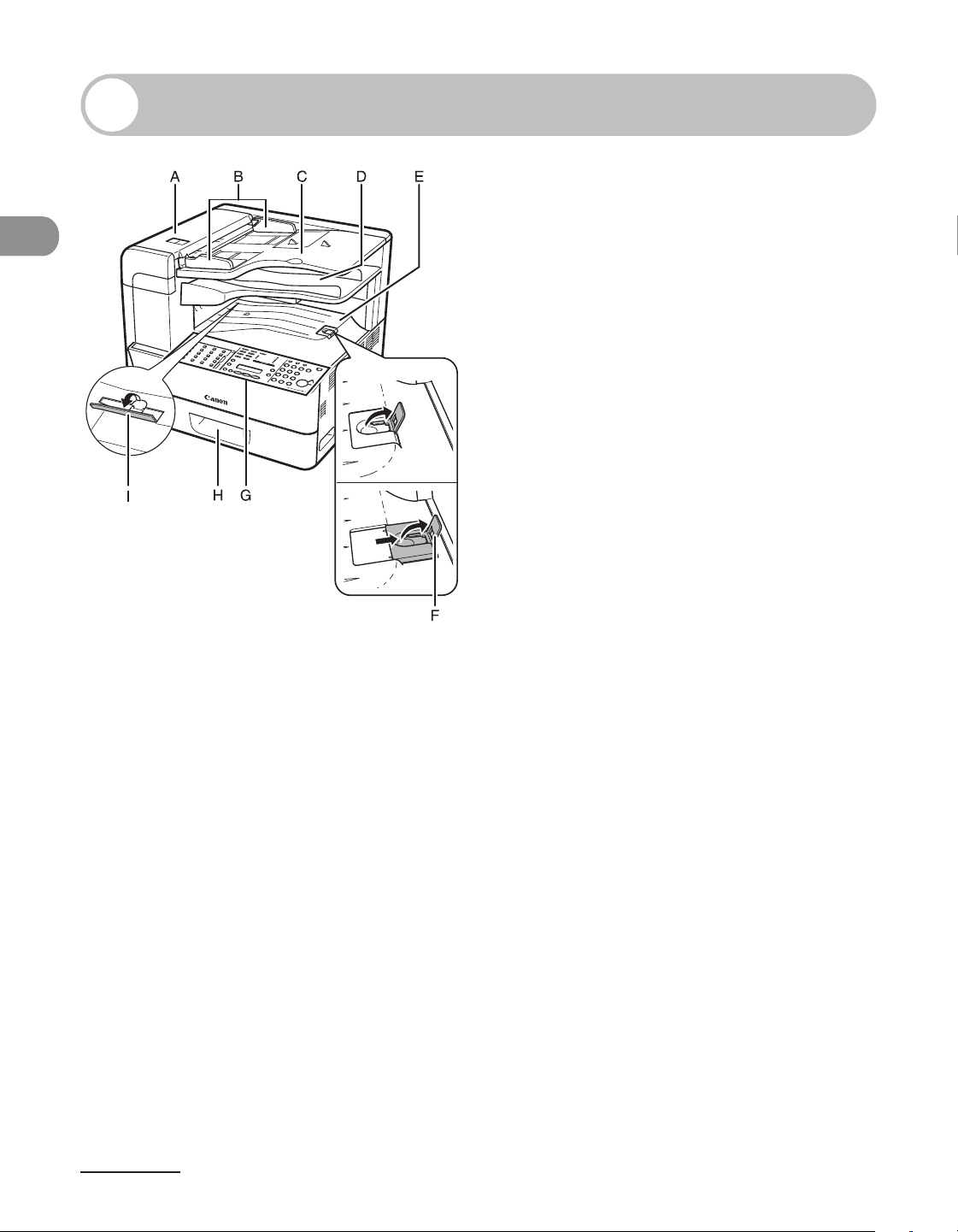
A ADF (Automatic Document Feeder)
Holds documents and feeds them automatically
into the scanning area.
B Slide guides
Adjust to the width of the document.
C Document feeder tray
Holds documents.
D Document delivery tray
Receives documents.
E Paper delivery tray
Receives copies, prints and faxes.
F Paper stopper
Prevents the paper from falling off the paper
delivery tray.
Open the stopper from its original position for
A4/LTR size paper. For LGL size paper, pull out
the extension first, and then open the stopper.
G Operation panel
Machine controls.
H Paper cassette
Holds the paper supply.
I Stacking support
Helps prevent paper curl on the output tray.
Open as far as it goes when using curl-prone
paper.
1-3
Before Using the Machine
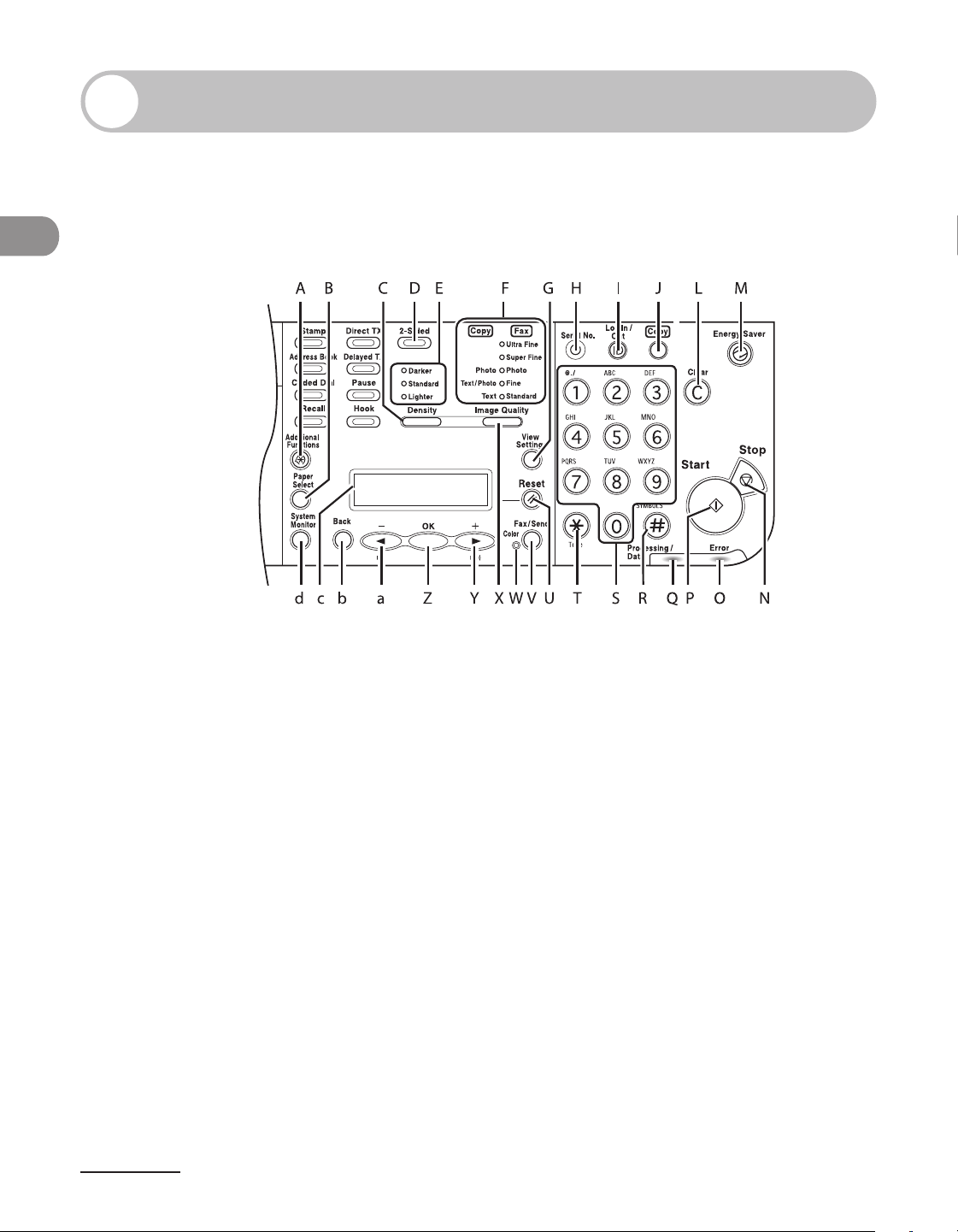
J Left cover
Open this cover when replacing the toner
cartridge or clearing paper jams.
K Scanning area
Scans documents from the ADF.
L Multi-purpose tray
Feeds non-standard size or thick/thin type
paper stacks.
M Slide guides for multi-purpose tray
Adjusts to the width of the paper.
N Multi-purpose tray extension
Pull out to load paper stack.
O USB port
Connect the USB (Universal Serial Bus) cable.
P Ethernet port
Connect the network cable.
For the LASER CLASS 810, the machine is
equipped with an Ethernet port if an optional
printer kit is attached.
Q Telephone line jack
Connect the external telephone cable.
R External device jack
Connect an external device.
S Handset jack
Connect an optional handset cable.
T Power socket
Connect the power cord.
U Main power switch
Turns the power on or off.
Before Using the Machine
1-4
Operation Panel
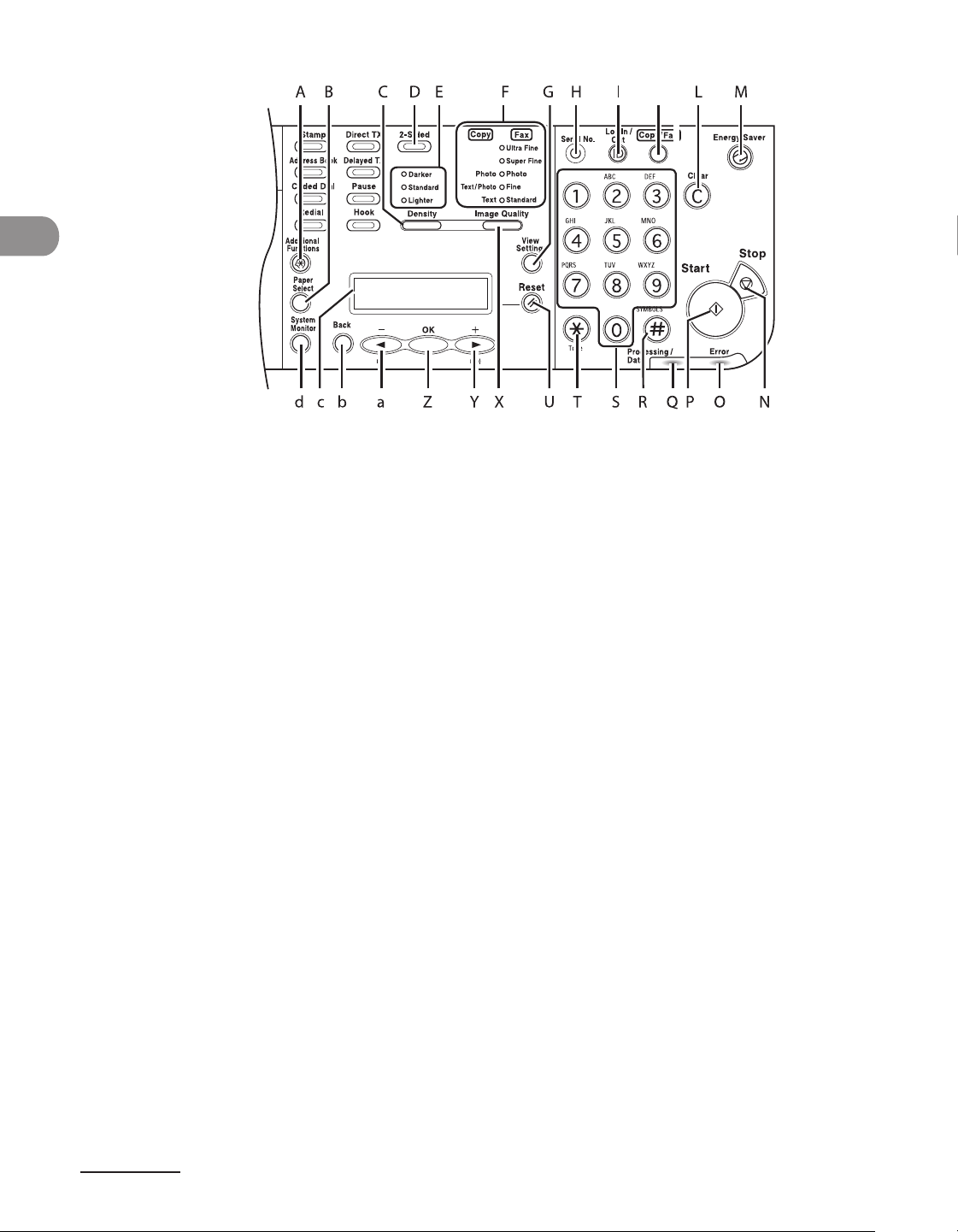
Right Side of the Operation Panel
LASER CLASS 830i●
A [Additional Functions] key
Press to select or cancel the modes in
Additional Functions.
B [Paper Select] key
Press to select a paper source (paper cassette or
multi-purpose tray).
C [Density] key
Press to adjust the density for copy or
documents you send.
D [2-Sided] key
Press to set two-sided copying or faxing.
E Density indicator
Indicates the density you set in the Copy/Fax
mode.
F Image Quality indicator
Indicates the image quality you set in the Copy/
Fax mode.
G [View Settings] key
Press to confirm settings of the copy function.
H [Serial No.] key
Press to confirm the serial number.
I [Log In/Out] key
Press to operate the machine when the ID
management is activated. Also press to enable
the ID management when you finished using
the machine.
J [Copy] key
Press to switch to Copy mode.

1-5
Before Using the Machine
L [Clear] key
Press to clear entered alphanumeric characters.
M [Energy Saver] key
Press to set or cancel the Sleep mode manually.
The key lights green when the Sleep mode is
set, and goes off when the mode is canceled.
N [Stop] key
Press to cancel machine operations.
O Error indicator
Flashes or lights up when an error has occurred.
P [Start] key
Press to start copying, scanning and sending
faxes.
Q Processing/Data indicator
Flashes during sending or receiving faxes.
Lights when the machine has waiting jobs and
stores the data in memory.
R [SYMBOLS] key
Press to enter symbols.
S Numeric keys
Enter letters and numbers.
T [Tone] key
Press to switch from rotary pulse to tone dialing.
U [Reset] key
Press to return the machine to standby mode.
V [Fax/Send] key
Press to switch to the Fax/Send mode.
W Color indicator
Lights up when color sending is selected.
X [Image Quality] key
Press to select image quality for copy or fax.
Y [ ] key
Press to increase the value for various settings.
Also press to see the next item in the menu.
Z [OK] key
Press to accept a set function or mode. Also
press and hold to print a sample page when
you are in the copy mode.
a [ ] key
Press to decrease the value for various settings.
Also press to see the previous item in the menu.
b [Back] key
Press to return to the previous screen.
c LCD display
Displays messages and prompts during
operation. Displays selection, text, and numbers
when adjusting the settings.
d [System Monitor] key
Press to check fax transmission, print, copy, or
report output status.
Before Using the Machine
1-6
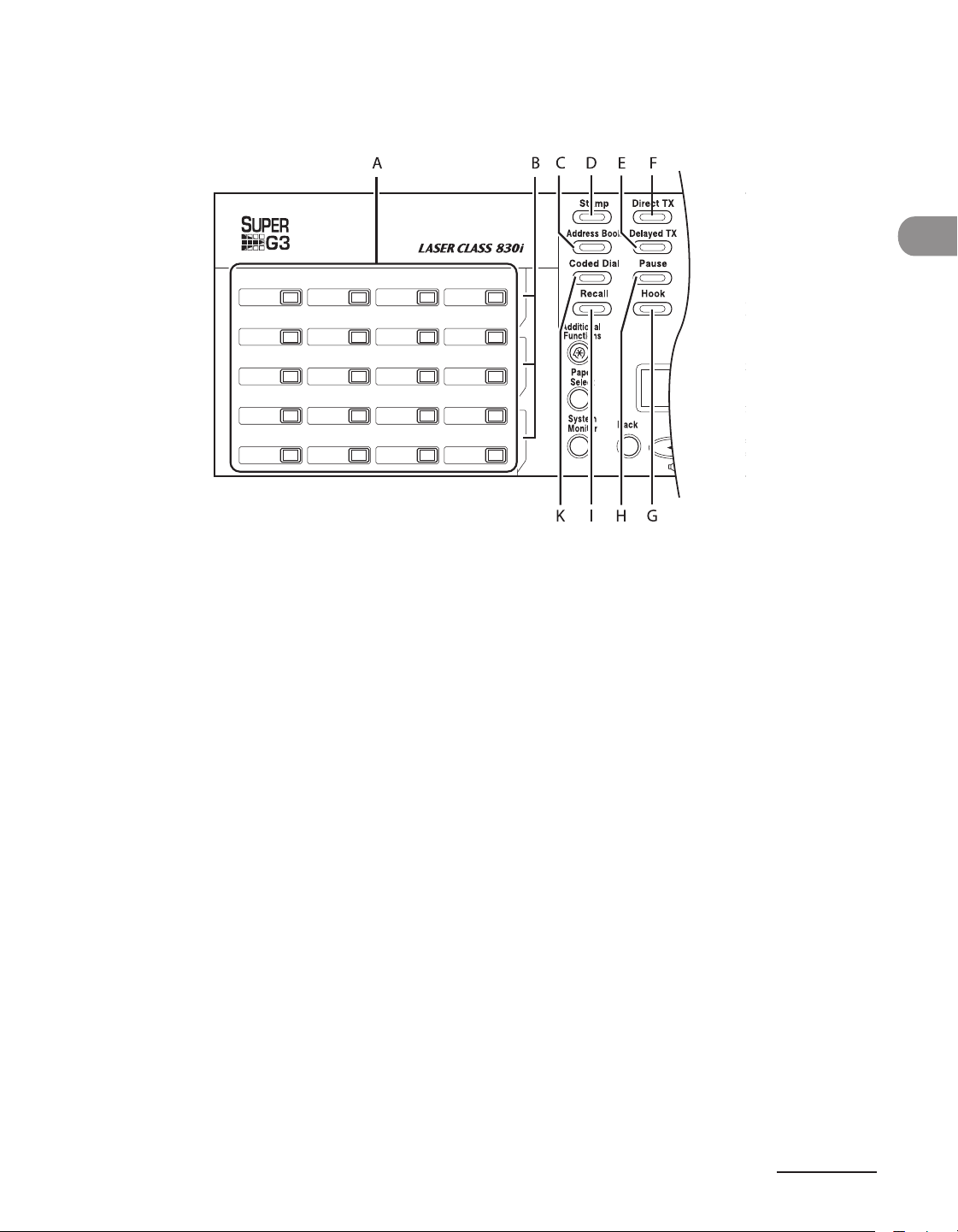
LASER CLASS 810
K
●
K [Copy/Fax] key
Press to switch to the Copy/Fax mode.
1-7
Before Using the Machine
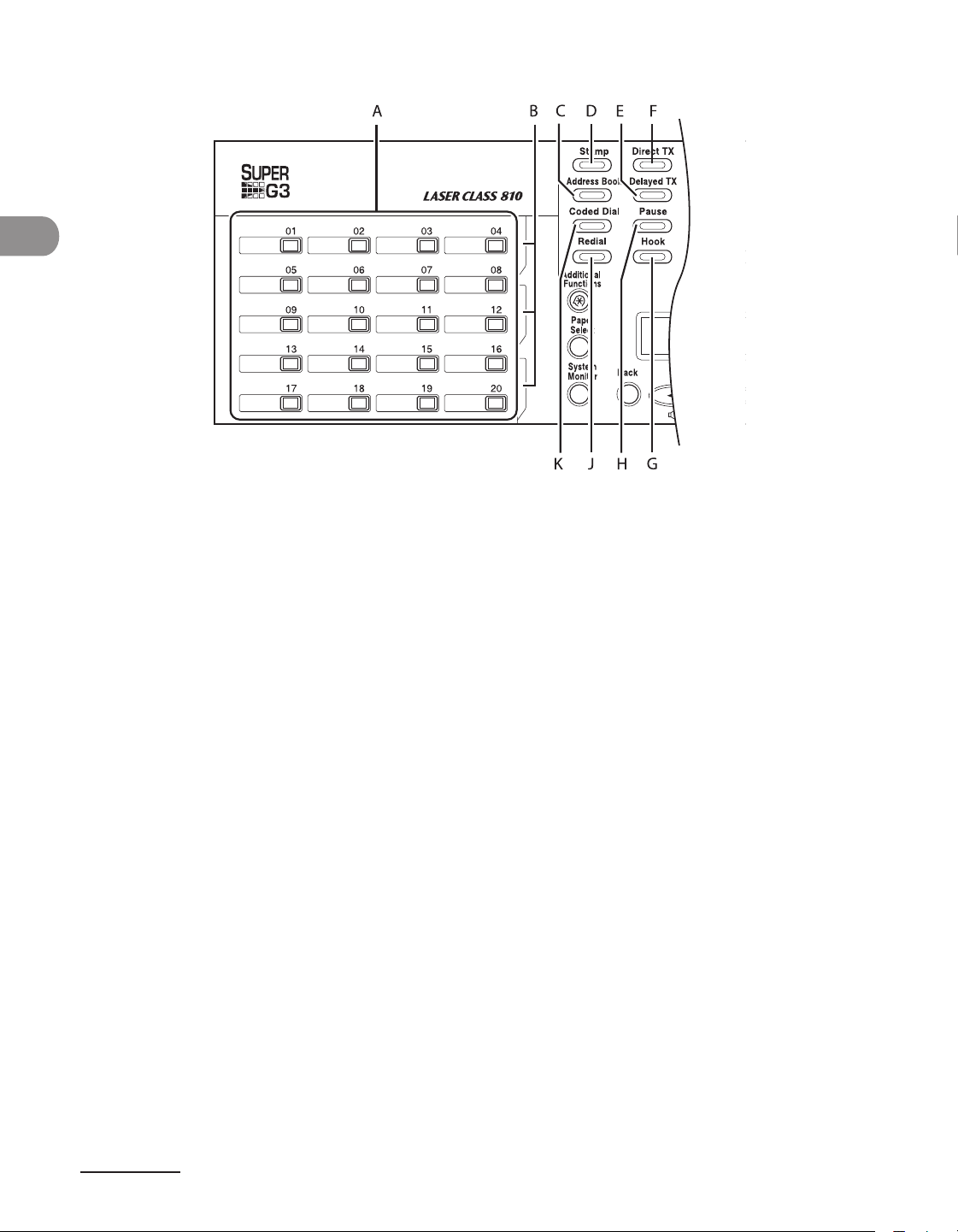
Left Side of the Operation Panel
LASER CLASS 830i
- - - -
●
A One-Touch keys
Press to specify destinations registered under
one-touch keys.
01-04 can be used as favorites buttons (LASER
CLASS 830i Only).
B One-Touch Key Panels
The first panel displays keys 01-20. Open the
first panel to access keys 21-40. Open the
second panel to access keys 41-60. Open the
third panel to access keys 61-80.
C [Address Book] key
Press to search pre-registered destinations
under one-touch keys or coded dial codes by
name, number, or address.
D [Stamp] key
Press to set the Watermark mode.
E [Delayed TX] key
Press to set Delayed Sending.
F [Direct TX] key
Press to set Direct Sending.
G [Hook] key
Press when you want to dial without lifting the
optional handset of the external telephone.
H [Pause] key
Press to enter a pause between or after
the telephone/fax number when dialing or
registering numbers.
I [Recall] key
Press to recall previously set send jobs,
including the destinations, scan settings, and
send settings.
K [Coded Dial] key
Press to specify destinations registered under
coded dial codes.
Before Using the Machine
1-8
LASER CLASS 810
J [Redial] key
Press to redial the last number dialed manually
with the numeric keys when a fax is standing by.
●
1-9
Before Using the Machine
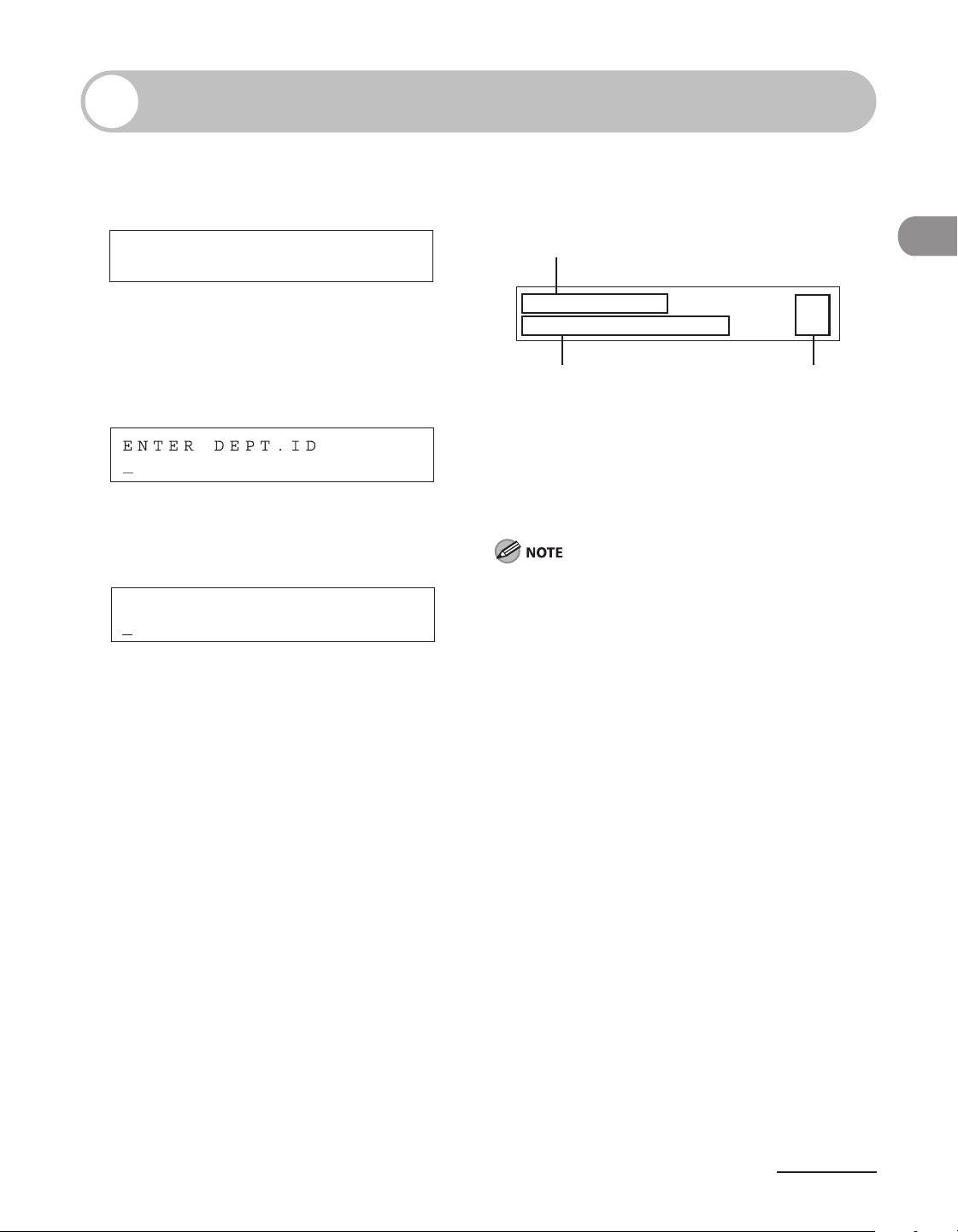
LCD (Standby Mode)
Fax/Send Mode
F A X
Log In Mode
For Department ID Management
For User ID Management
E N T E R U S E R I D : a
Ex.
●
●
Copy Mode
B C
A
O 1
C O P Y 1 0 0 %
C A S S E T T E 1 : L T R
A
Zoom ratio
B
Paper size
C
Quantity
When the main power switch is turned on, the LCD
displays <PLEASE WAIT> first, and then displays
<INITIALIZING...> until the standby display appears.
It is also possible to see the standby display without
having <INITIALIZING...> shown.
Depending on the number of destinations
registered, after the main power switch is turned
ON, you may not be able to perform operations
using the operation panel when the standby
display appears. If this happens, wait until the
machine responses to the key operations.
If the Auto Clear function is activated, the display
returns to the standby mode.
Log in mode is displayed only when Department/
User ID Management is set to <ON> in <SYSTEM
SETTINGS>. To log in or out, see “
Department/User
ID Management,” on p. 1-11.
–
–
–
–
Before Using the Machine
1-10
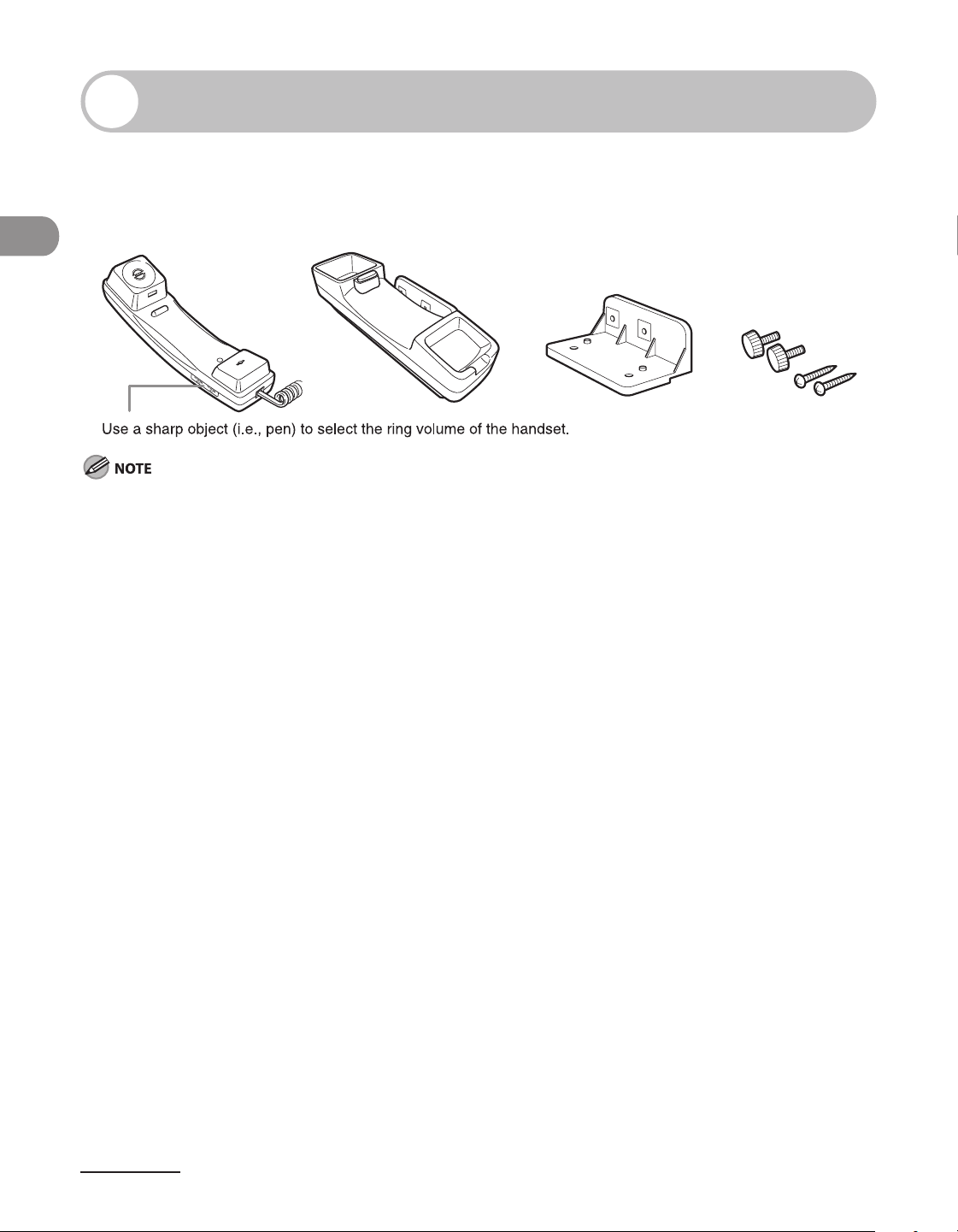
Optional Handset
If you want to use the machine as a telephone and a fax machine, or if you want
to receive faxes manually, install the optional handset available from your local
authorized Canon dealer or the Canon help line.
For how to install the handset, see “Set Up the Machine,” in the Starter Guide.
Maintaining the Handset
Do not leave the handset exposed to direct sunlight.
Do not install the handset in hot or humid conditions.
Do not spray aerosol polish on the handset as it may cause damage.
Use a damp cloth to wipe clean the handset.
–
–
–
–
1-11
Before Using the Machine
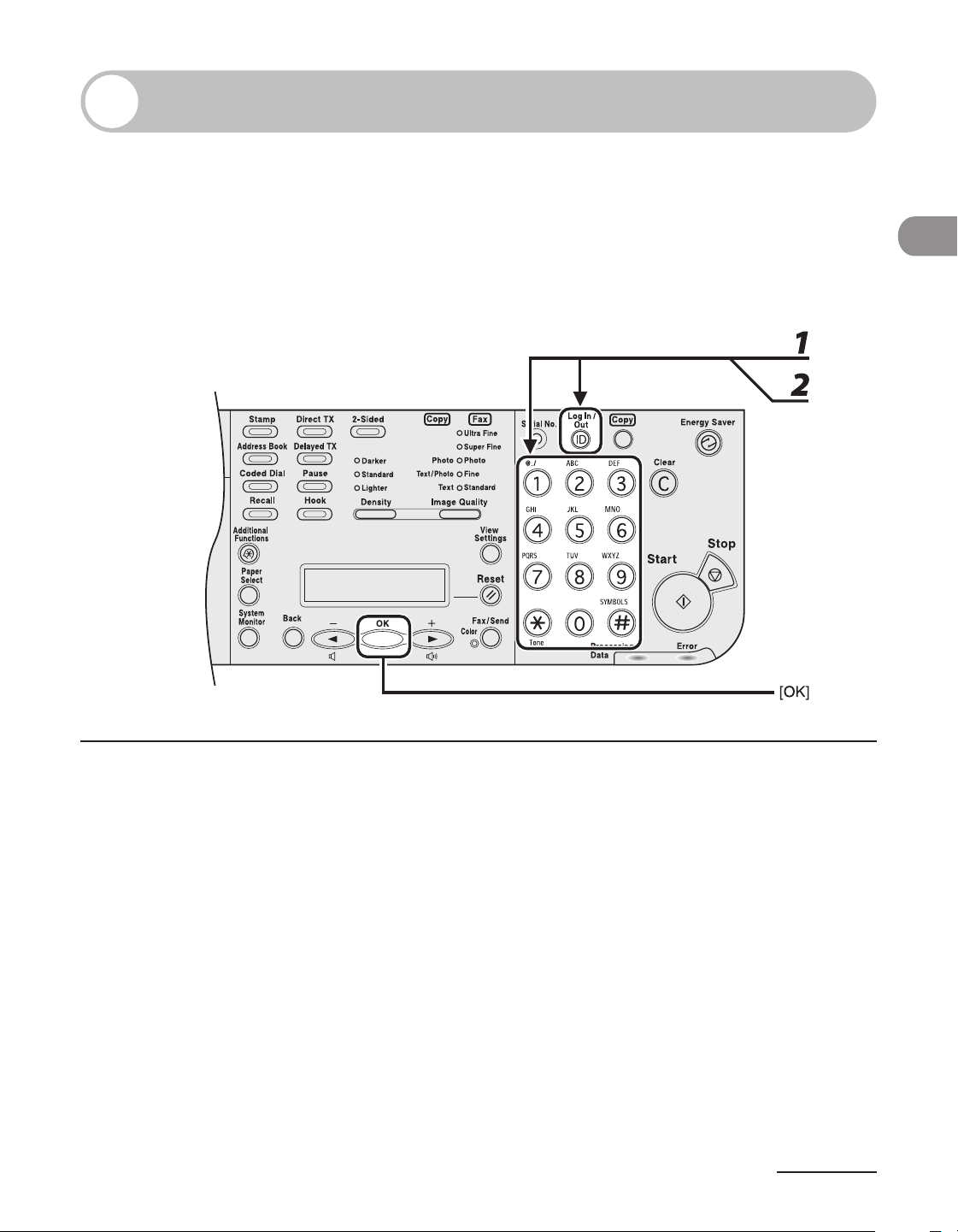
Department/User ID Management
If Department ID Management or User ID Management is set to <ON> in <SYSTEM
SETTINGS>, you must enter your ID and password to be able to operate the machine.
For details, see “System Manager Settings,” on p. 9-1.
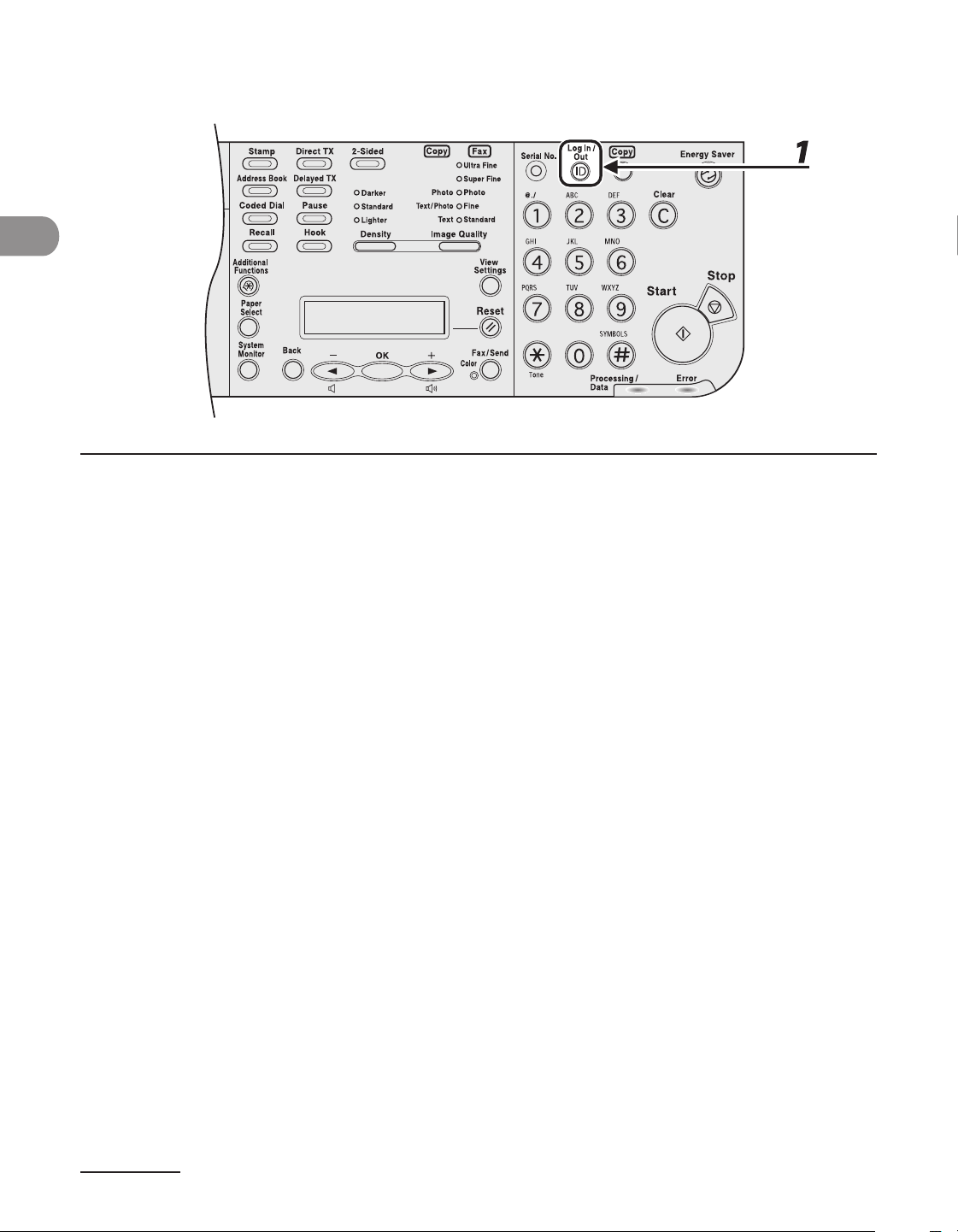
Procedure before Using the Machine
1 Enter the department ID or the user ID with the numeric keys, then press [OK]
or [Log In/Out (ID)].
2 If the password is set, enter the password with the numeric keys, then press
[OK] or [Log In/Out (ID)].
The standby display appears.
Before Using the Machine
1-12
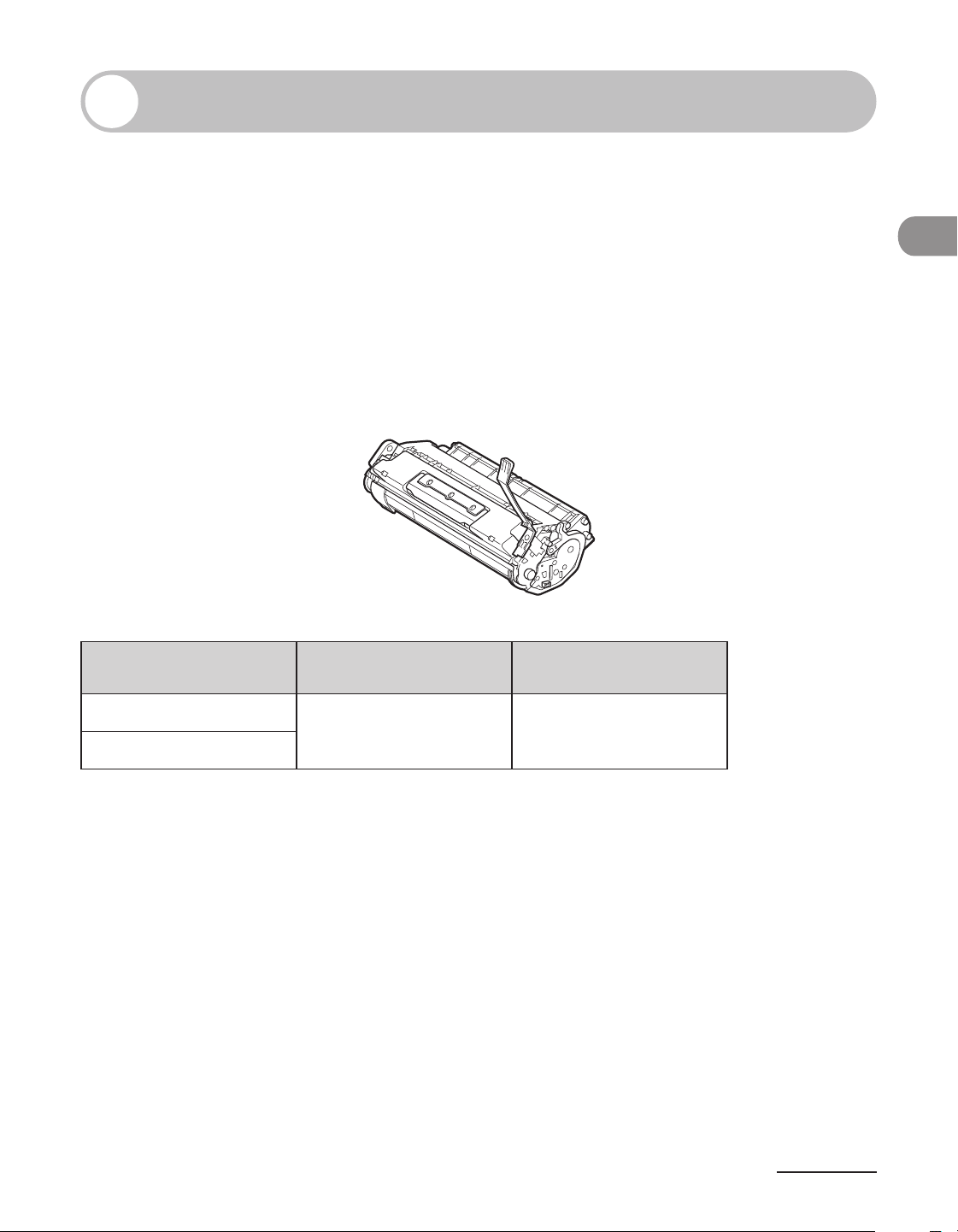
Procedure after Using the Machine
1 Be sure to press [Log In/Out (ID)].
1-13
Before Using the Machine
Toner Cartridge
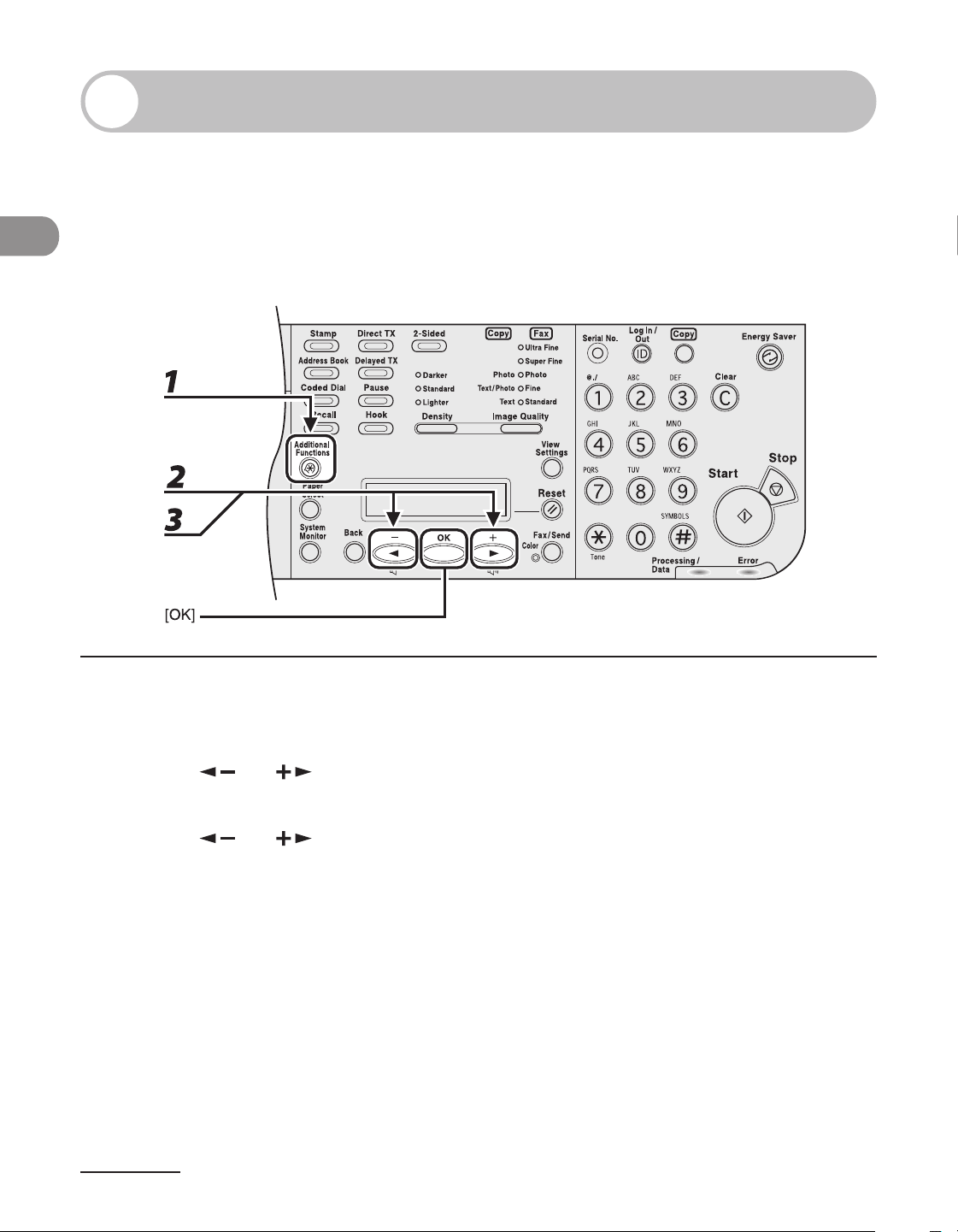
The lifetime of the Canon genuine toner cartridge is approximately 4,500 pages.
The page counts are based on 5% coverage when printing A4 size paper with the
default print density setting. The level of toner consumption varies depending on
the type of documents printed. If your average document contains a lot of graphics,
tables, or charts, the life of the toner cartridge will be shorter as they consume more
toner. When you are replacing a toner cartridge, be sure to use a toner cartridge
designed for this product. To purchase this cartridge, contact your local Canon dealer
or Canon Customer Care Center (1-800-828-4040).
Toner Cartridge name:
Canon FX11 Cartridge
Model Name
Supported Canon
Genuine Cartridge
Print Yield
LASER CLASS 810
Canon FX11 Cartridge
Approx. 4,500 pages
LASER CLASS 830i

Before Using the Machine
1-14
Maintaining the Toner Cartridge
Keep the toner cartridge away from computer screens, disk drives, and floppy disks. The
magnet inside the toner cartridge may harm these items.
Avoid locations subject to high temperature, high humidity, or rapid changes in
temperature.
Do not expose the toner cartridge to direct sunlight or bright light for more than five
minutes.
Store the toner cartridge in its protective bag. Do not open the bag until you are ready to
install the toner cartridge in the machine.
Save the toner cartridge’s protective bag in case you need to repack and transport the
toner cartridge at a later date.
Do not store the toner cartridge in a salty atmosphere or where there are corrosive gases
such as from aerosol sprays.
Do not remove the toner cartridge from the machine unnecessarily.
Do not open the drum protective shutter on the toner cartridge. Print quality may
deteriorate if the drum surface is exposed to light or is damaged.
Always hold the toner cartridge by its handle to avoid touching the drum protective
shutter.
Do not stand the toner cartridge on end, and do not turn it upside down. If toner
becomes caked in the toner cartridge, it may become impossible to free it even by
shaking the toner cartridge.
●
●
●
●
●
●
●
●
●
●

1-15
Before Using the Machine
If there is a toner powder leakage, make sure not to inhale or touch the toner powder. If it
comes in contact with your skin, rinse with cold water using soap. If you feel an irritation
on your skin or inhale the powder, consult a doctor immediately.
When removing the toner cartridge from the machine, make sure to remove it carefully. If
not removed with care, the toner powder may scatter and come in contact with your eyes
and mouth. If this happens, rinse with water and consult a doctor immediately.
Keep the toner cartridge away from small children. If they ingest the toner powder,
consult a doctor immediately.
Do not disassemble the toner cartridge. The toner powder may scatter and come in
contact with your eyes and mouth. If this happens, rinse with water and consult a doctor
immediately.
Do not place the toner cartridge in fire. Toner powder is flammable.
●
●
●
●
Before Using the Machine
1-16
Timer Settings
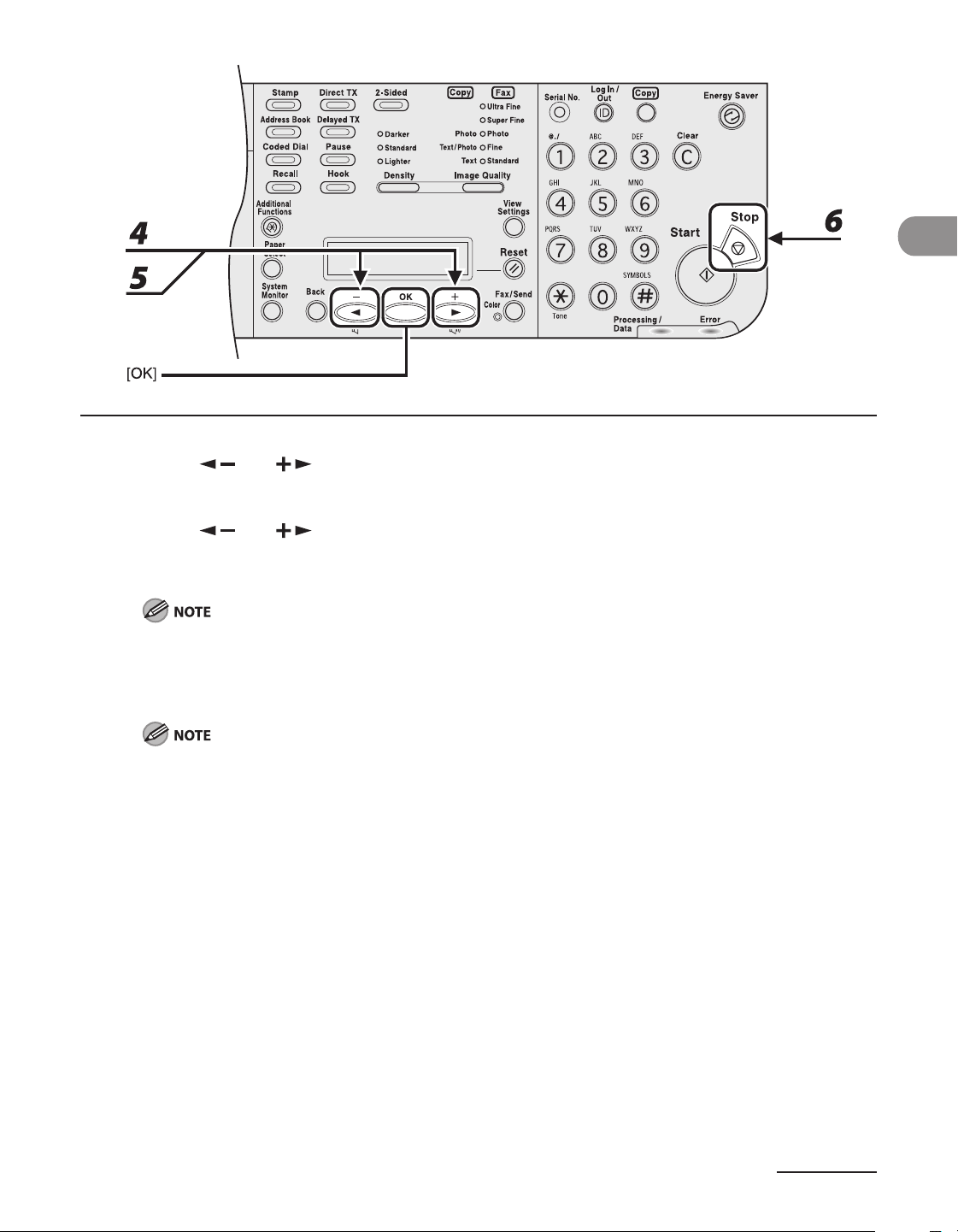
Setting the Sleep Mode
When the machine remains idle for a certain period of time, it automatically enters the
Sleep mode.
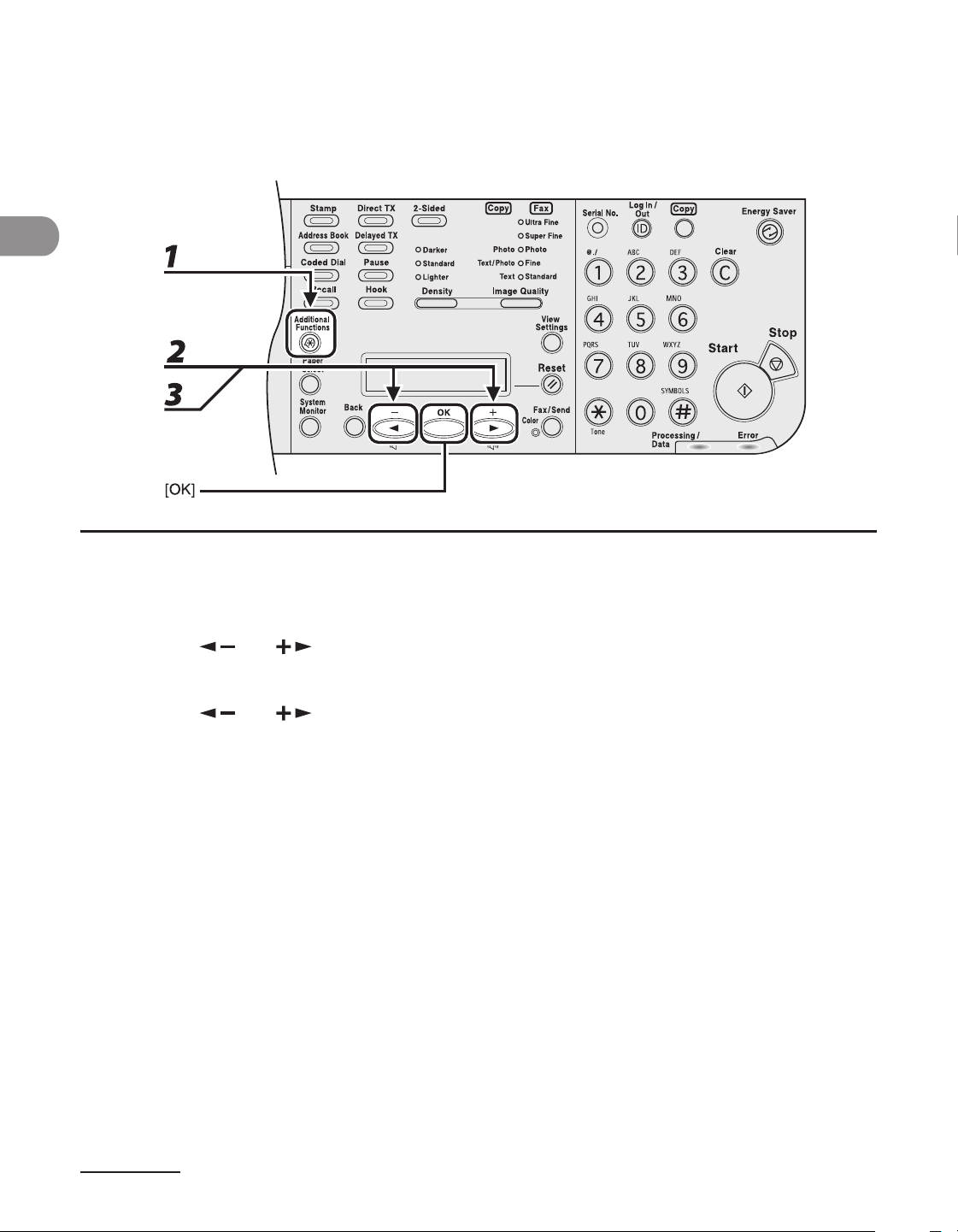
1 Press [Additional Functions].
2 Press [ ] or [ ] to select <TIMER SETTINGS>, then press [OK].
3 Press [ ] or [ ] to select <AUTO SLEEP TIME>, then press [OK].
1-17
Before Using the Machine
4 Press [ ] or [ ] to select <ON>, then press [OK].
5 Press [ ] or [ ] to select the desired interval, then press [OK].
You can set the interval from 3 to 30 minutes (in one-minute increments).
You can also enter values using numeric keys.
The default setting is 5 minutes.
6 Press [Stop] to return to standby mode.
[Energy Saver] lights green when the machine enters the Sleep mode.
To resume normal mode from the Sleep mode, press [Energy Saver] on the operation panel.
To enter the Sleep mode manually, press [Energy Saver] on the operation panel.
The machine will not enter the Sleep mode when:
the machine is in operation
the Processing/Data indicator lights or flashes
a message appears on the display and the Error indicator flashes
paper is loaded in the multi-purpose tray
a paper jam occurs in the machine
the optional handset of the external telephone is off the hook
The machine will leave the Sleep mode when:
you press [Energy Saver] on the operation panel
a fax is received
the optional handset of the external telephone is off the hook
a print job is sent from a computer, and the print is started
If you turn off the main power of the machine while it is in the Sleep mode, wait at least 10 seconds
before turning the main power of the machine back on.
–
–
–
–
•
•
•
•
•
•
–
•
•
•
•
–
Before Using the Machine
1-18
Setting Auto Clear Time
If the machine remains idle for a certain period of time, the display returns to the standby
mode (Auto Clear function).
1 Press [Additional Functions].
2 Press [ ] or [ ] to select <TIMER SETTINGS>, then press [OK].
3 Press [ ] or [ ] to select <AUTO CLEAR TIME>, then press [OK].
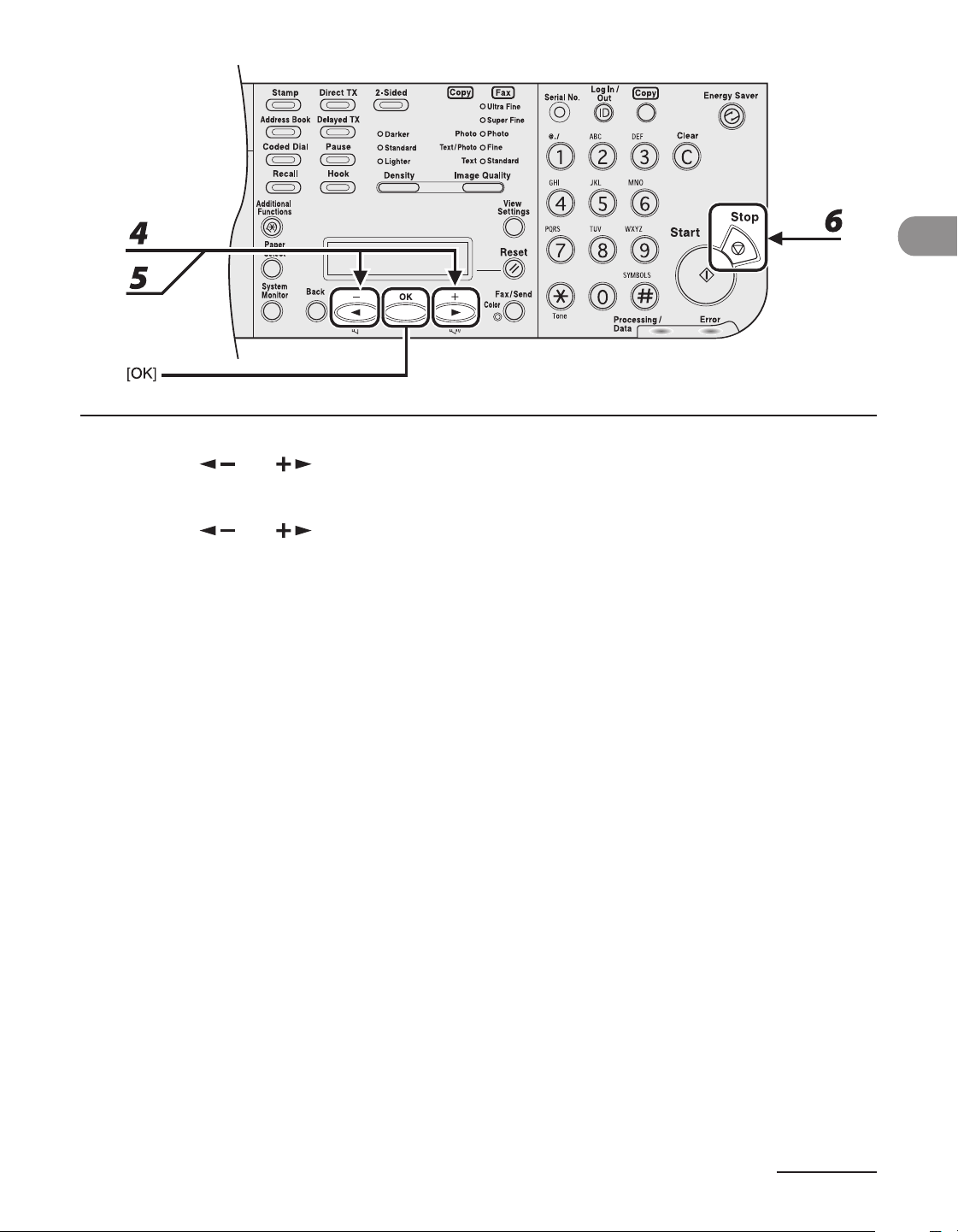
1-19
Before Using the Machine
4 Press [ ] or [ ] to select <ON>, then press [OK].
5 Press [ ] or [ ] to select the desired interval, then press [OK].
You can set the interval from 1 to 9 minutes (in one-minute increments).
You can also enter values using numeric keys.
6 Press [Stop] to return to standby mode.
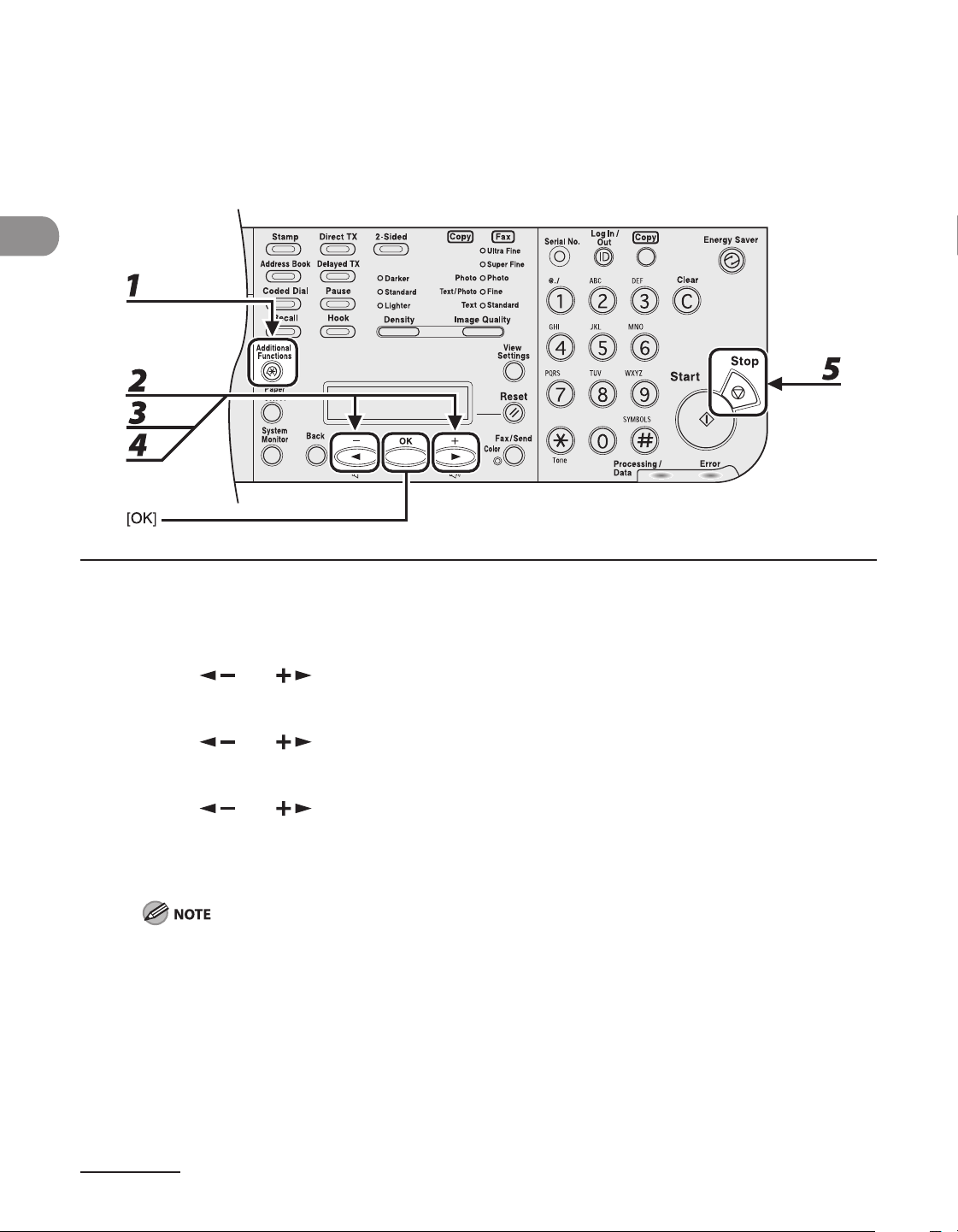
Before Using the Machine
1-20
Setting Time Zone
The standard time zones of the world are expressed globally in terms of the difference in
hours (± up to 12 hours) from GMT (0 hours). A time zone is a region throughout which this
time difference is the same.
1 Press [Additional Functions].
2 Press [ ] or [ ] to select <TIMER SETTINGS>, then press [OK].
3 Press [ ] or [ ] to select <TIME ZONE SETTING>, then press [OK].
4 Press [ ] or [ ] to select the time zone, then press [OK].
5 Press [Stop] to return to the standby mode.
The specified time zone setting becomes effective after the machine is restarted.
When restarting the machine, wait at least 10 seconds before turning the main power back on.
–
–
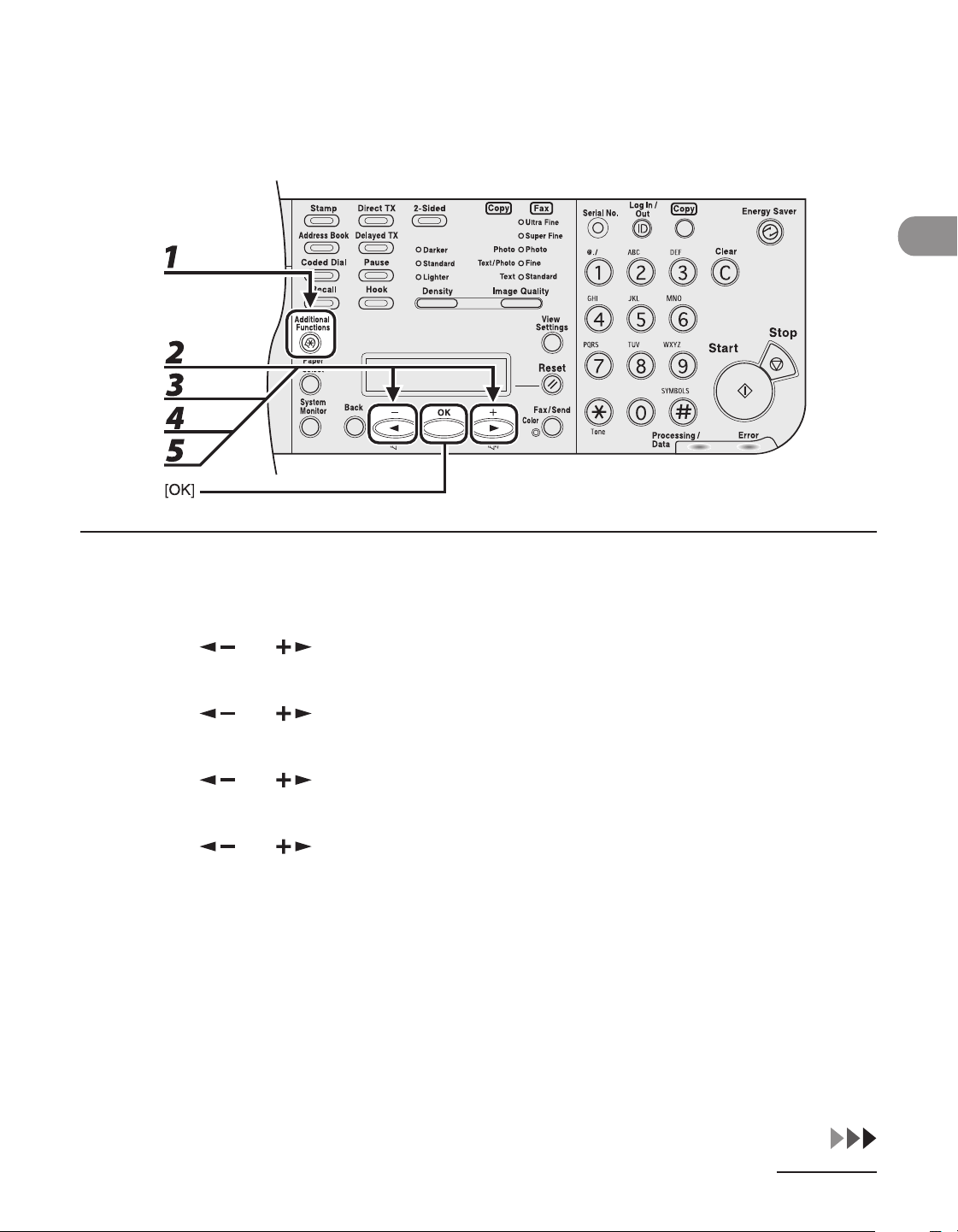
1-21
Before Using the Machine
Setting Daylight Saving Time
In some countries or areas, time is advanced throughout the summer season. This is called
“Daylight Saving Time.”
1 Press [Additional Functions].
2 Press [ ] or [ ] to select <TIMER SETTINGS>, then press [OK].
3 Press [ ] or [ ] to select <DAYLIGHT SV.TIME>, then press [OK].
4 Press [ ] or [ ] to select <ON>, then press [OK].
5 Press [ ] or [ ] to select <START DATE/TIME>, then press [OK].
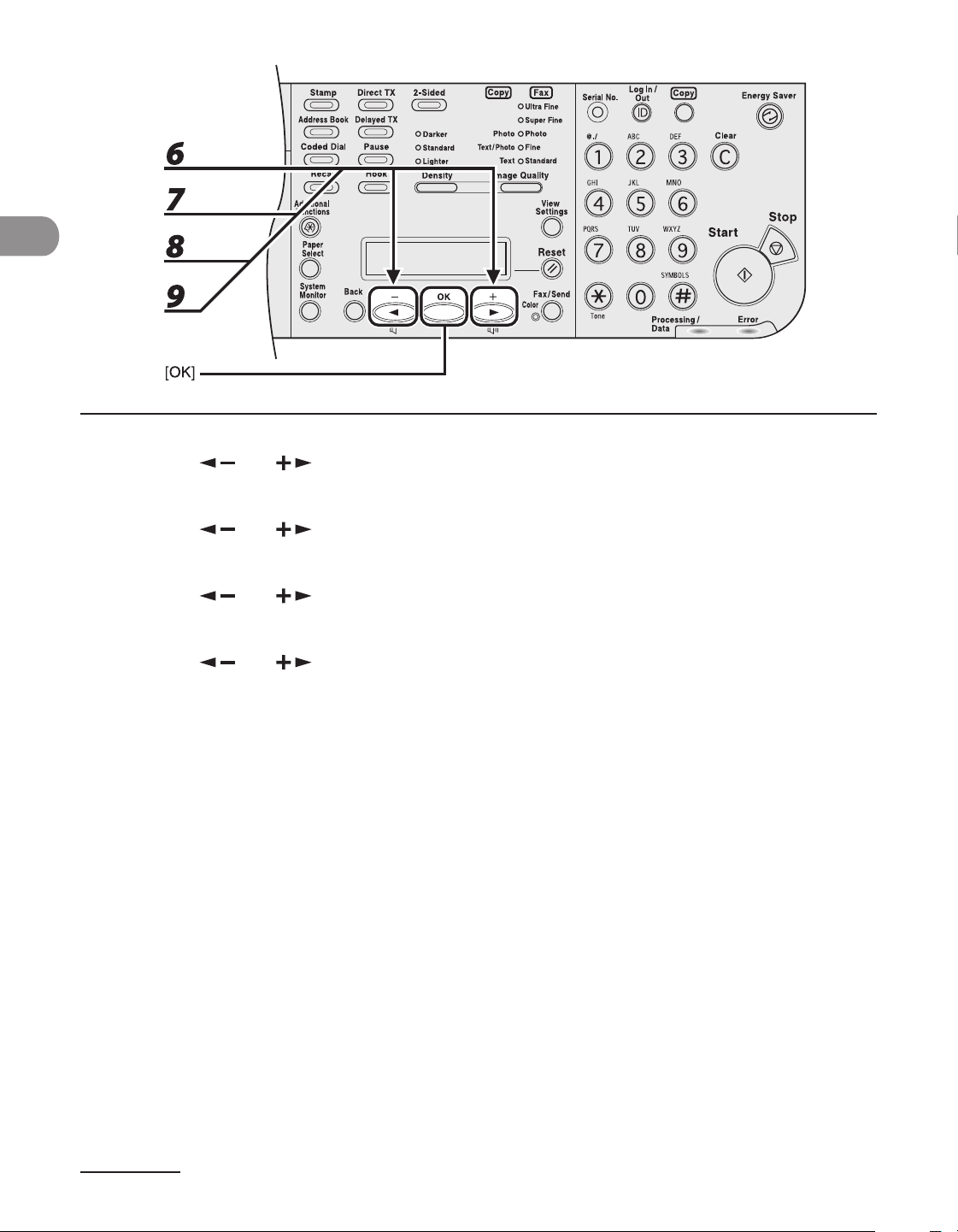
Before Using the Machine
1-22
6 Press [ ] or [ ] to select <MONTH>, then press [OK].
7 Press [ ] or [ ] to select the month, then press [OK].
8 Press [ ] or [ ] to select <WEEK>, then press [OK].
9 Press [ ] or [ ] to select the week, then press [OK].
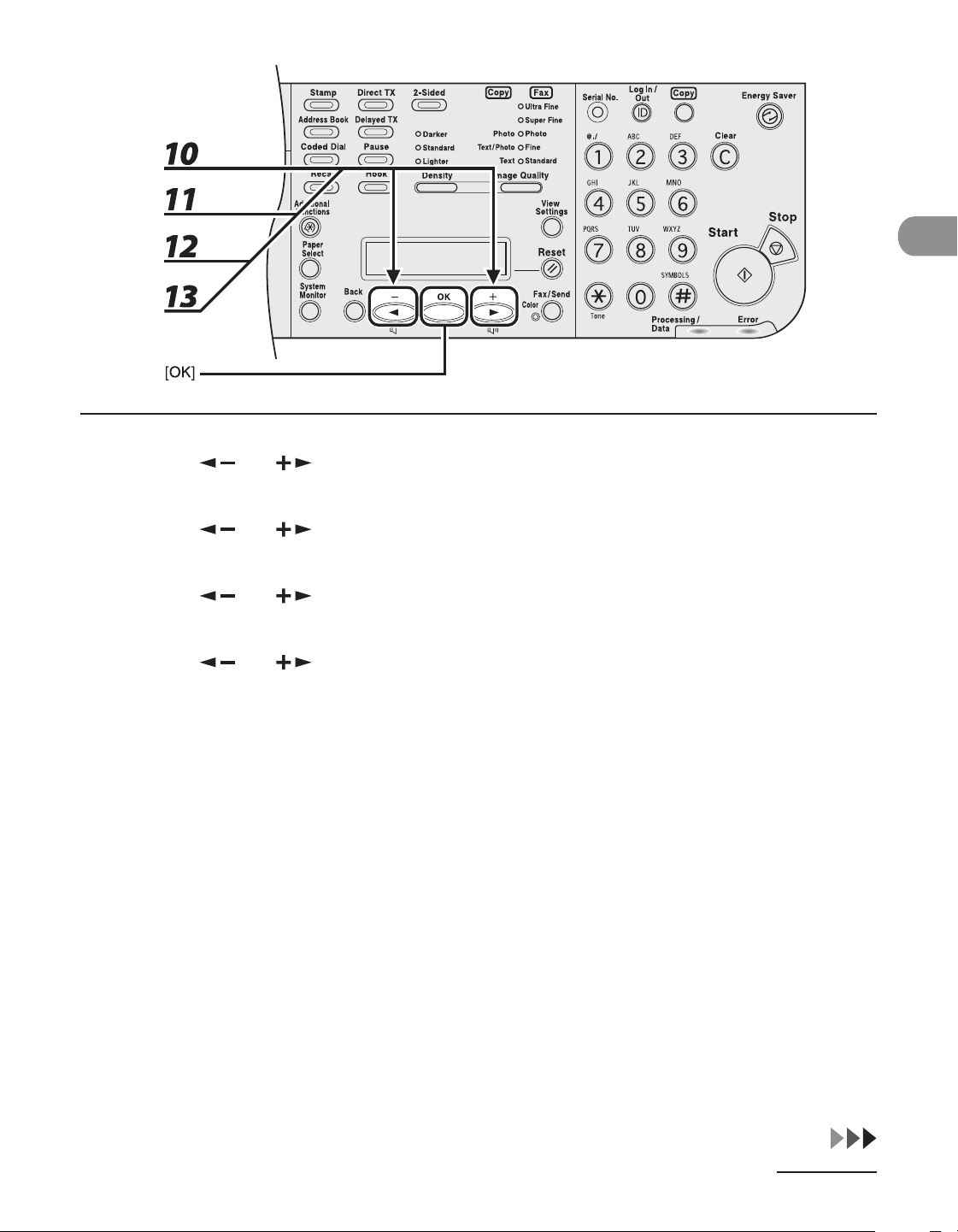
1-23
Before Using the Machine
10 Press [ ] or [ ] to select <DAY>, then press [OK].
11 Press [ ] or [ ] to select the day, then press [OK].
12 Press [ ] or [ ] to select <END DATE/TIME>, then press [OK].
13 Press [ ] or [ ] to select <MONTH>, then press [OK].
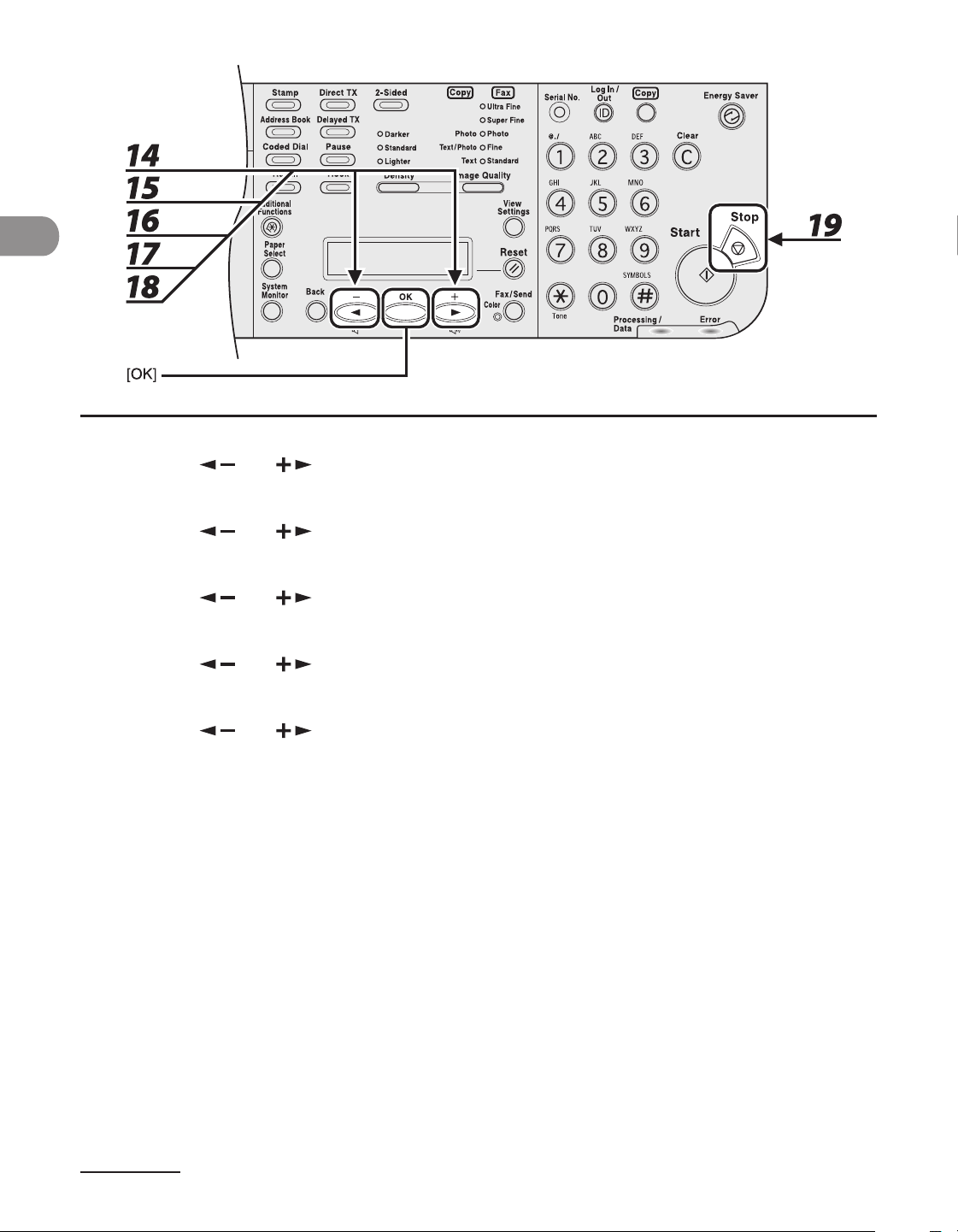
Before Using the Machine
1-24
14 Press [ ] or [ ] to select the month, then press [OK].
15 Press [ ] or [ ] to select <WEEK>, then press [OK].
16 Press [ ] or [ ] to select the week, then press [OK].
17 Press [ ] or [ ] to select <DAY>, then press [OK].
18 Press [ ] or [ ] to select the day, then press [OK].
19 Press [Stop] to return to standby mode.

Document and Paper
2
Document and
Paper
Document Requirements ∙∙∙∙∙∙∙∙∙∙∙∙∙∙∙∙∙∙∙∙∙∙∙∙∙∙∙∙∙∙∙∙∙∙∙∙∙∙∙∙∙∙∙∙∙∙∙∙∙∙∙∙∙∙∙∙∙∙∙∙2-2
Scanning Area ∙∙∙∙∙∙∙∙∙∙∙∙∙∙∙∙∙∙∙∙∙∙∙∙∙∙∙∙∙∙∙∙∙∙∙∙∙∙∙∙∙∙∙∙∙∙∙∙∙∙∙∙∙∙∙∙∙∙∙∙∙∙∙∙∙∙∙∙∙∙∙∙∙∙∙∙∙∙2-4
Loading Documents ∙∙∙∙∙∙∙∙∙∙∙∙∙∙∙∙∙∙∙∙∙∙∙∙∙∙∙∙∙∙∙∙∙∙∙∙∙∙∙∙∙∙∙∙∙∙∙∙∙∙∙∙∙∙∙∙∙∙∙∙∙∙∙∙∙∙∙∙2-5
In the ADF ∙∙∙∙∙∙∙∙∙∙∙∙∙∙∙∙∙∙∙∙∙∙∙∙∙∙∙∙∙∙∙∙∙∙∙∙∙∙∙∙∙∙∙∙∙∙∙∙∙∙∙∙∙∙∙∙∙∙∙∙∙∙∙∙∙∙∙∙∙∙∙∙∙∙∙∙∙∙∙∙∙∙∙∙∙∙∙∙∙∙∙∙∙∙∙ 2-5
Paper Requirements ∙∙∙∙∙∙∙∙∙∙∙∙∙∙∙∙∙∙∙∙∙∙∙∙∙∙∙∙∙∙∙∙∙∙∙∙∙∙∙∙∙∙∙∙∙∙∙∙∙∙∙∙∙∙∙∙∙∙∙∙∙∙∙∙∙∙∙∙2-7
Printable Area ∙∙∙∙∙∙∙∙∙∙∙∙∙∙∙∙∙∙∙∙∙∙∙∙∙∙∙∙∙∙∙∙∙∙∙∙∙∙∙∙∙∙∙∙∙∙∙∙∙∙∙∙∙∙∙∙∙∙∙∙∙∙∙∙∙∙∙∙∙∙∙∙∙∙∙∙∙∙2-9
Loading Paper ∙∙∙∙∙∙∙∙∙∙∙∙∙∙∙∙∙∙∙∙∙∙∙∙∙∙∙∙∙∙∙∙∙∙∙∙∙∙∙∙∙∙∙∙∙∙∙∙∙∙∙∙∙∙∙∙∙∙∙∙∙∙∙∙∙∙∙∙∙∙∙∙∙∙∙ 2-10
In the Multi-Purpose Tray (e.g., Envelopes) ∙∙∙∙∙∙∙∙∙∙∙∙∙∙∙∙∙∙∙∙∙∙∙∙∙∙∙∙∙∙∙2-10
Setting Paper Size and Type ∙∙∙∙∙∙∙∙∙∙∙∙∙∙∙∙∙∙∙∙∙∙∙∙∙∙∙∙∙∙∙∙∙∙∙∙∙∙∙∙∙∙∙∙∙∙∙∙∙∙∙∙ 2-12
Document and Paper
2-2
Document Requirements
ADF
Type Plain paper (Multipage documents of the same size, thickness and weight or one
page documents.)
Size (W x L) LASER CLASS 830i:
Max. 11 3/4" x 17" (Max. 24 7/8")
(Max. 297 x 432 mm (Max. 630 mm))
Min. 5 7/8" x 5 7/8"
(Min. 148 x 148 mm)
LASER CLASS 810:
Max. 8 1/2" x 14" (Max. 24 7/8")
(Max. 216 x 355.6 mm (Max. 630 mm))
Min. 5 7/8" x 5 7/8"
(Min. 148 x 148 mm)
Weight One-Sided Scanning: 13 to 34 lb bond (50 to 128 g/m
2
)
Two-Sided Scanning: 13 to 28 lb bond (50 to 105 g/m
2
)
Quantity Max. 50 sheets*
1
(Max. 20 sheets for LGL documents)*
1
*
2
*
1
21 lb bond (80 g/m
2
) paper
*
2
LASER CLASS 830i Only

2-3
Document and Paper
Do not place the document in the ADF until the glue, ink or correction fluid on the
document is completely dry.
Remove all fasteners (staples, paper clips, etc.) before loading the document in the ADF.
To prevent document jams in the ADF, do not use any of the following:
Wrinkled or creased paper
Carbon paper or carbon-backed paper
Curled or rolled paper
Coated paper
Torn paper
Onion skin or thin paper
Documents with staples or paper clips attached
Paper printed with a thermal transfer printer
Transparencies
●
●
●
–
–
–
–
–
–
–
–
–
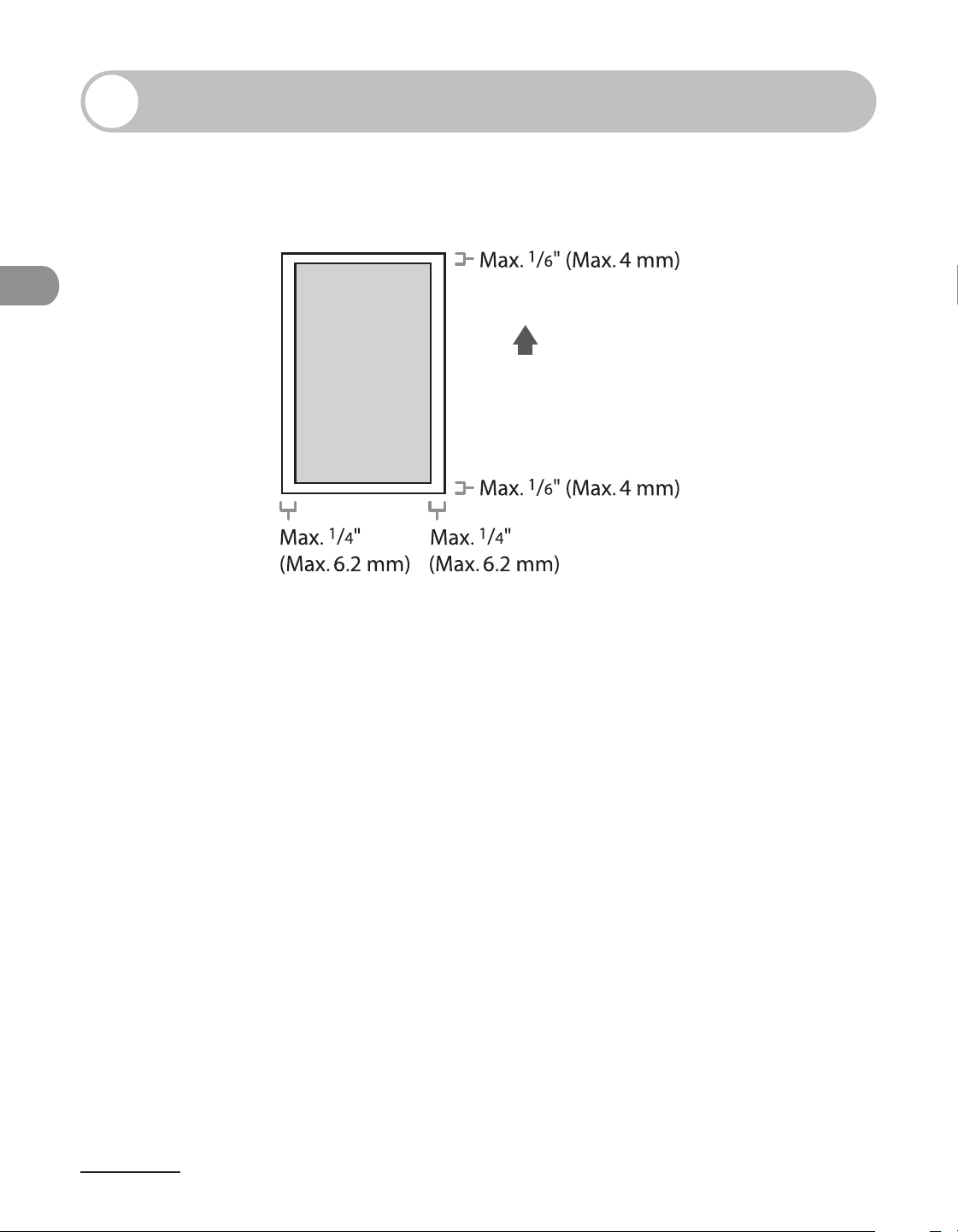
Document and Paper
2-4
Scanning Area
Make sure your document's text and graphics fall within the shaded area in the
following diagram. Note that the margin widths listed are approximate and there may
be slight variations in actual use.
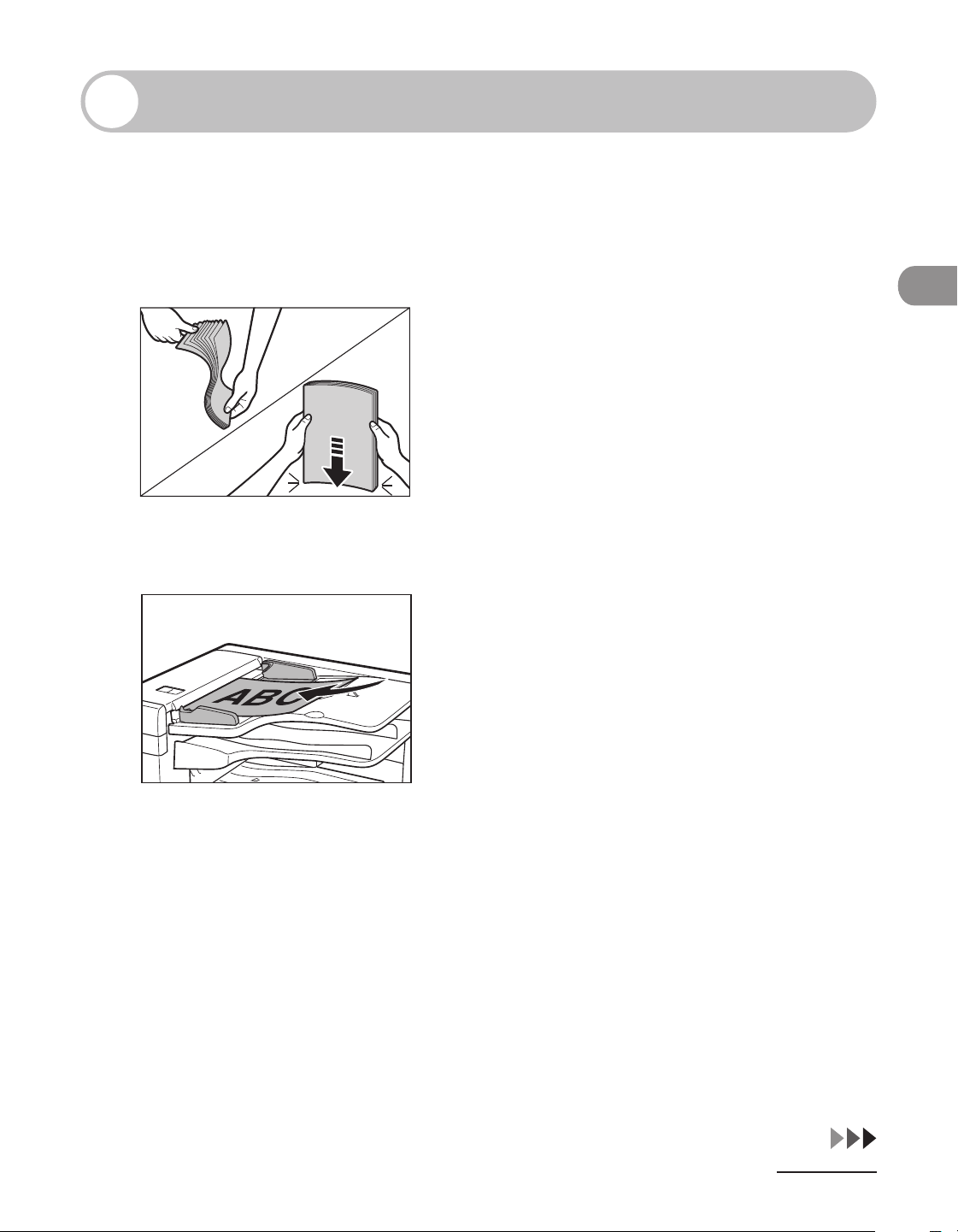
2-5
Document and Paper
Loading Documents
In the ADF
1 Fan the document stack and even the edges.
2 Neatly place the documents face up in the document feeder tray.
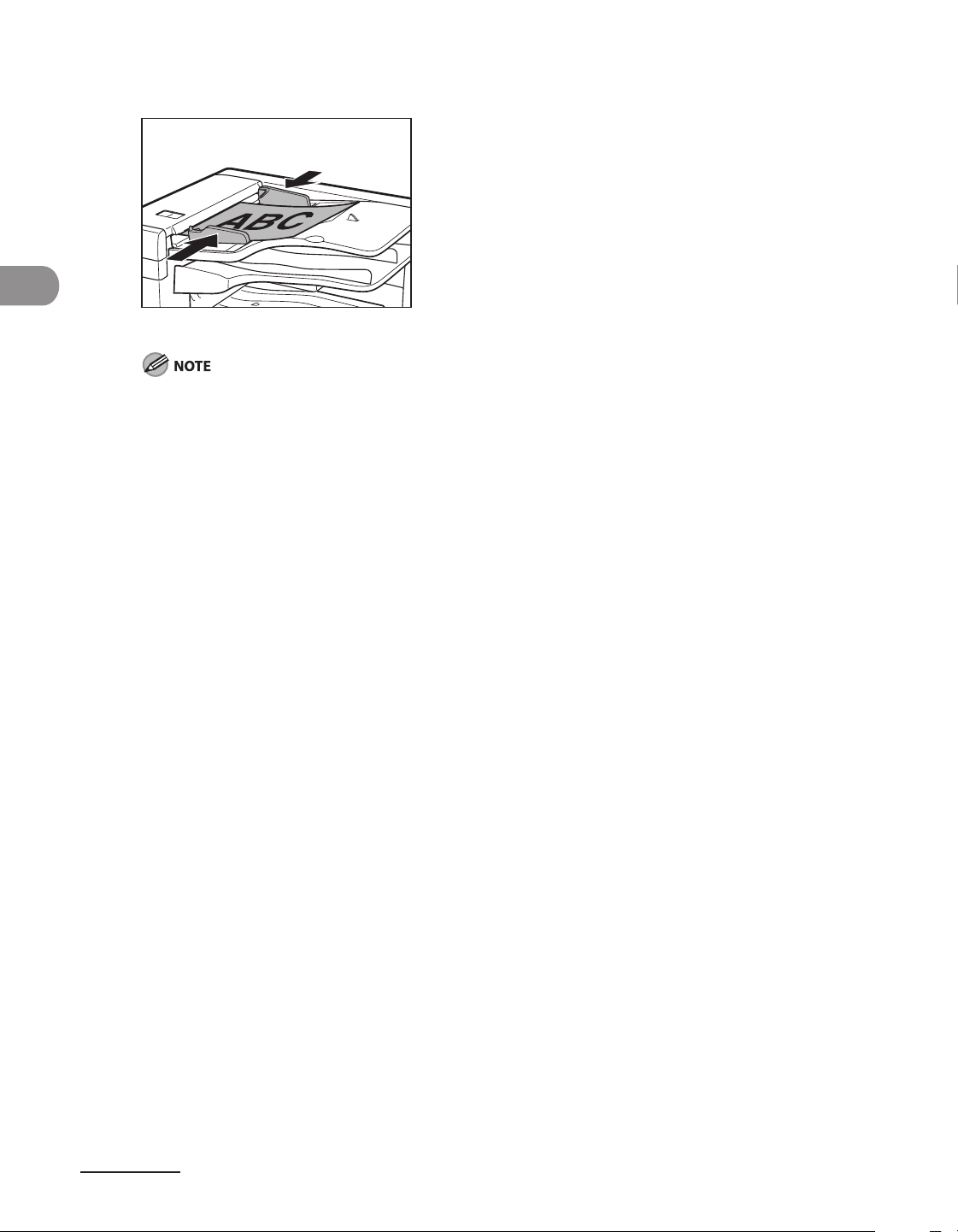
Document and Paper
2-6
3 Adjust the slide guides to the width of the documents.
The document is ready for scanning.
Do not add or remove documents while they are being scanned.
When scanning is complete, remove the documents from the document delivery tray to avoid paper
jams.
Avoid using ADF to scan the same document more than 30 times. When scanned repeatedly,
documents can become folded or torn, which may cause paper jams.
If the feeder rollers are soiled from scanning a document written in pencil, clean them. (See “Cleaning
the Machine,” on p.
10-2.)
–
–
–
–
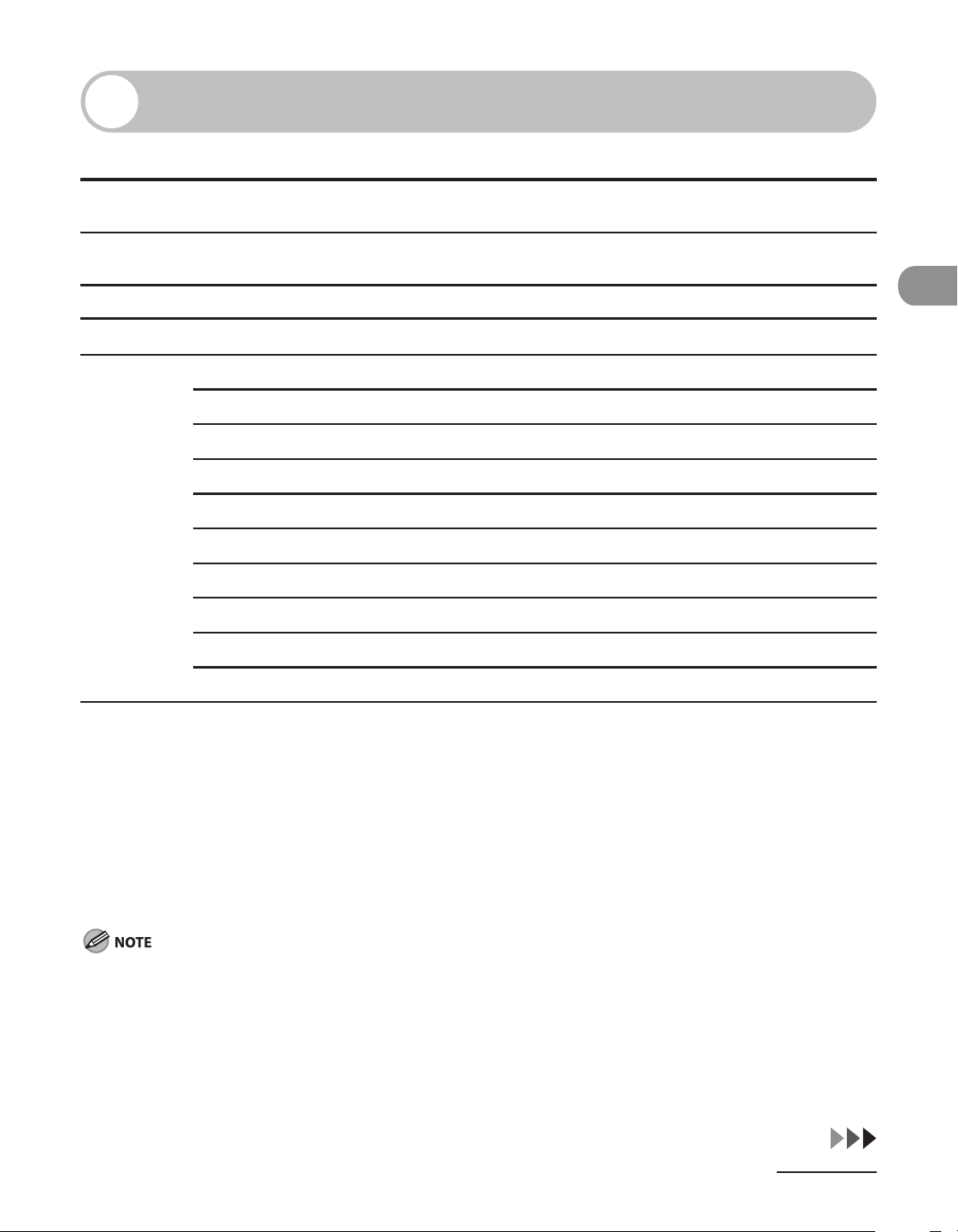
2-7
Document and Paper
Paper Requirements
Paper cassette Multi-purpose tray
Size (W x L)
Legal, Letter 3" x 5" to Legal (8 1/2" x 14")
(76 x 127 to 216 x 356 mm)
Weight
17 to 24 lb bond
(64 to 90 g/m
2
)
15 to 34 lb bond
(56 to 128 g/m
2
)
Quantity Max. 500 sheets
*1
Max. 100 sheets
*1
Type Plain
*2
○ ○
Color
*2
○ ○
Recycled
*3
○ ○
Heavy 1
*3
○ ○
Heavy 2
*4
-
○
Heavy 3
*5
-
○
Bond
*6
○ ○
3hole punch paper
*7
○ ○
Transparency
*8
-
○
Labels -
○
Envelopes -
○
(○: available -: not available)
*
1
21 lb bond (80 g/m2) paper
*
2
From 17 to 21 lb bond (64 to 80 g/m
2
)
*
3
From 22 to 24 lb bond (81 to 90 g/m
2
)
*
4
From 24 to 28 lb bond (91 to 105 g/m
2
)
*
5
From 28 to 34 lb bond (106 to 128 g/m
2
)
*
6
20 lb bond (75 g/m
2
)
*
7
LTR size only
*
8
Use only LTR transparencies made especially for this machine.
The default paper size is LTR. If you use a different paper size, you must change the paper size settings. (See
"Setting Paper Size and Type," on p. 2-12.)

Document and Paper
2-8
To prevent paper jams, do not use any of the following:
Wrinkled or creased paper
Curled or rolled paper
Coated paper
Torn paper
Damp paper
Very thin paper
Paper which has been printed on using a thermal transfer printer (Do not copy on the
reverse side.)
The following types of paper do not print well:
Highly textured paper
Very smooth paper
Shiny paper
Make sure the paper is free from dust, lint, and oil stains.
Be sure to test paper before purchasing large quantities.
Store all paper wrapped and on a flat surface until ready for use. Keep opened packs in
their original packaging in a cool, dry location.
Store paper at 64.4°F–75.2°F (18°C–24°C), 40%–60% relative humidity.
Use only the transparencies designed for laser printers. Canon recommends you to use
Canon type transparencies with this machine.
●
–
–
–
–
–
–
–
●
–
–
–
●
●
●
●
●
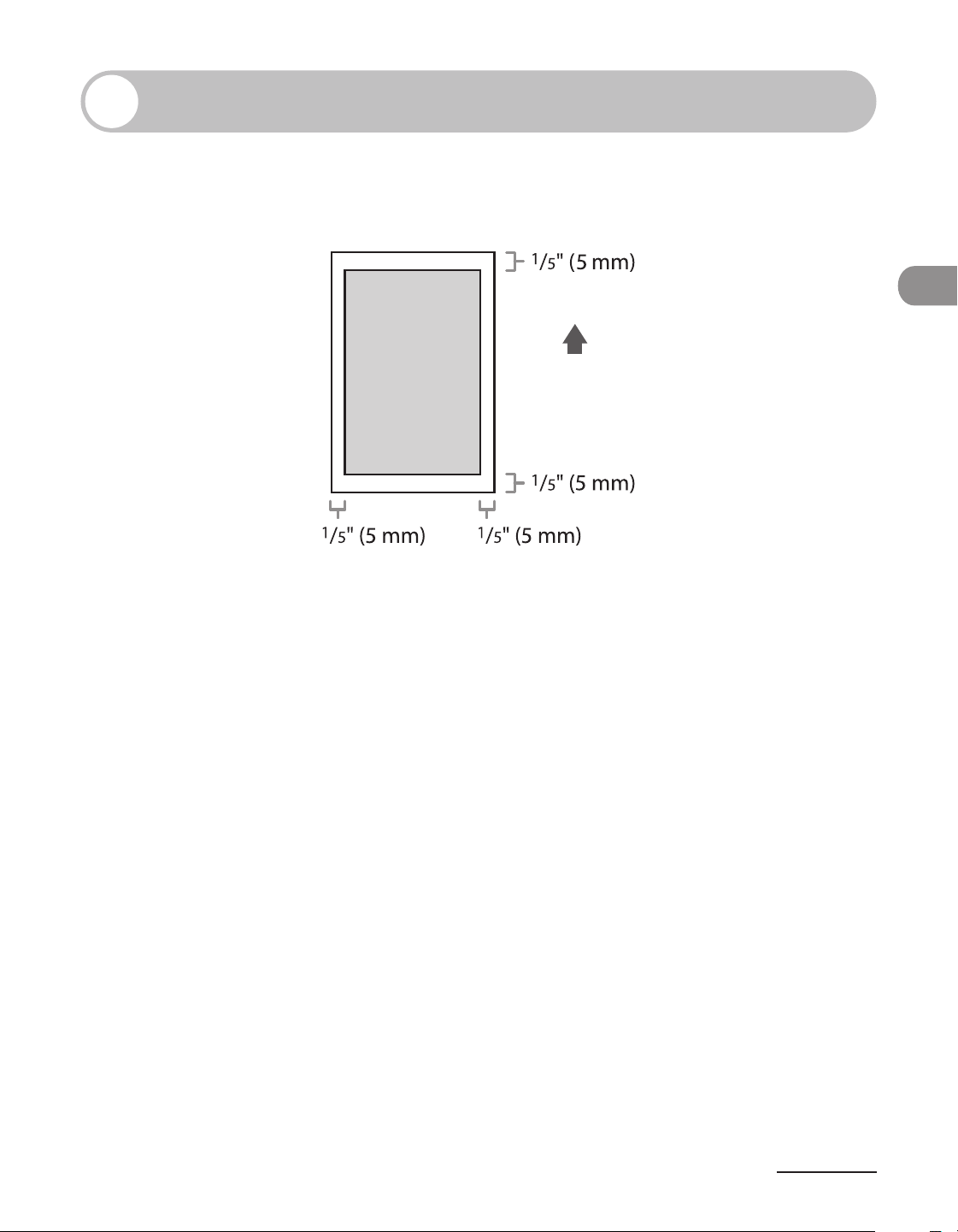
2-9
Document and Paper
Printable Area
The shaded area indicates the approximate printable area of LTR paper and envelope.
Note that the margin widths listed are approximate and there may be slight variations
in actual use.
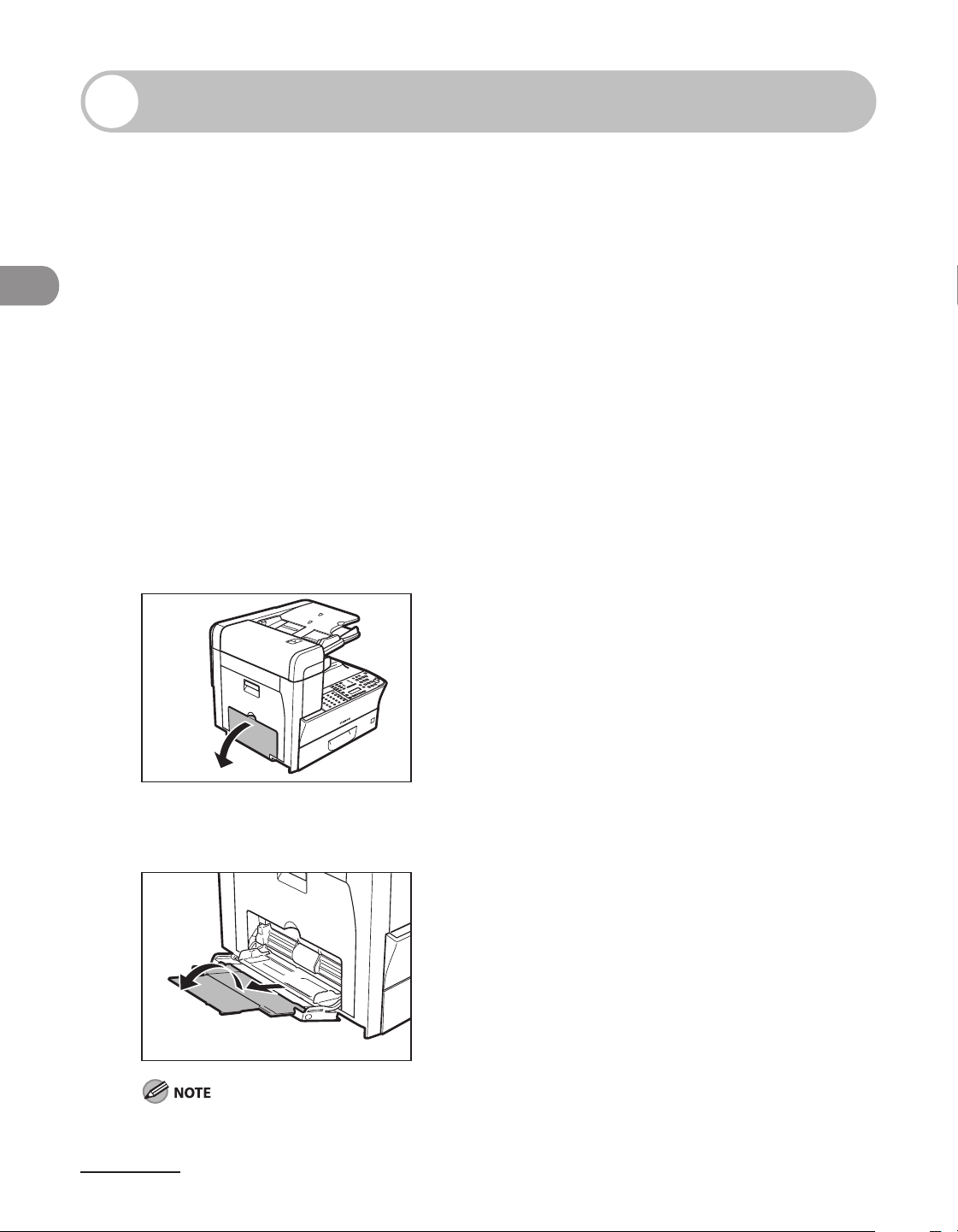
Document and Paper
2-10
Loading Paper
To load paper in the paper cassette, see "Set Up the Machine," in the Starter Guide.
In the Multi-Purpose Tray (e.g., Envelopes)
If you are making prints on transparencies, labels, nonstandard-sized paper, or envelopes,
load them into the multi-purpose tray.
Use standard envelopes with diagonal seams and flaps.
To prevent jams, do not use the following:
Envelopes with windows, holes, perforations, cutouts, or double flaps
Envelopes made with special coated paper or deeply embossed paper
Envelopes with peel-off sealing strips
Envelopes with letters enclosed
Make sure to set the correct envelope size in the printer driver. (See online help.)
1 Open the multi-purpose tray.
2 Pull out the multi-purpose tray extension until it clicks, then open it.
Do not load the paper without using the multi-purpose tray extension.
●
●
–
–
–
–
●
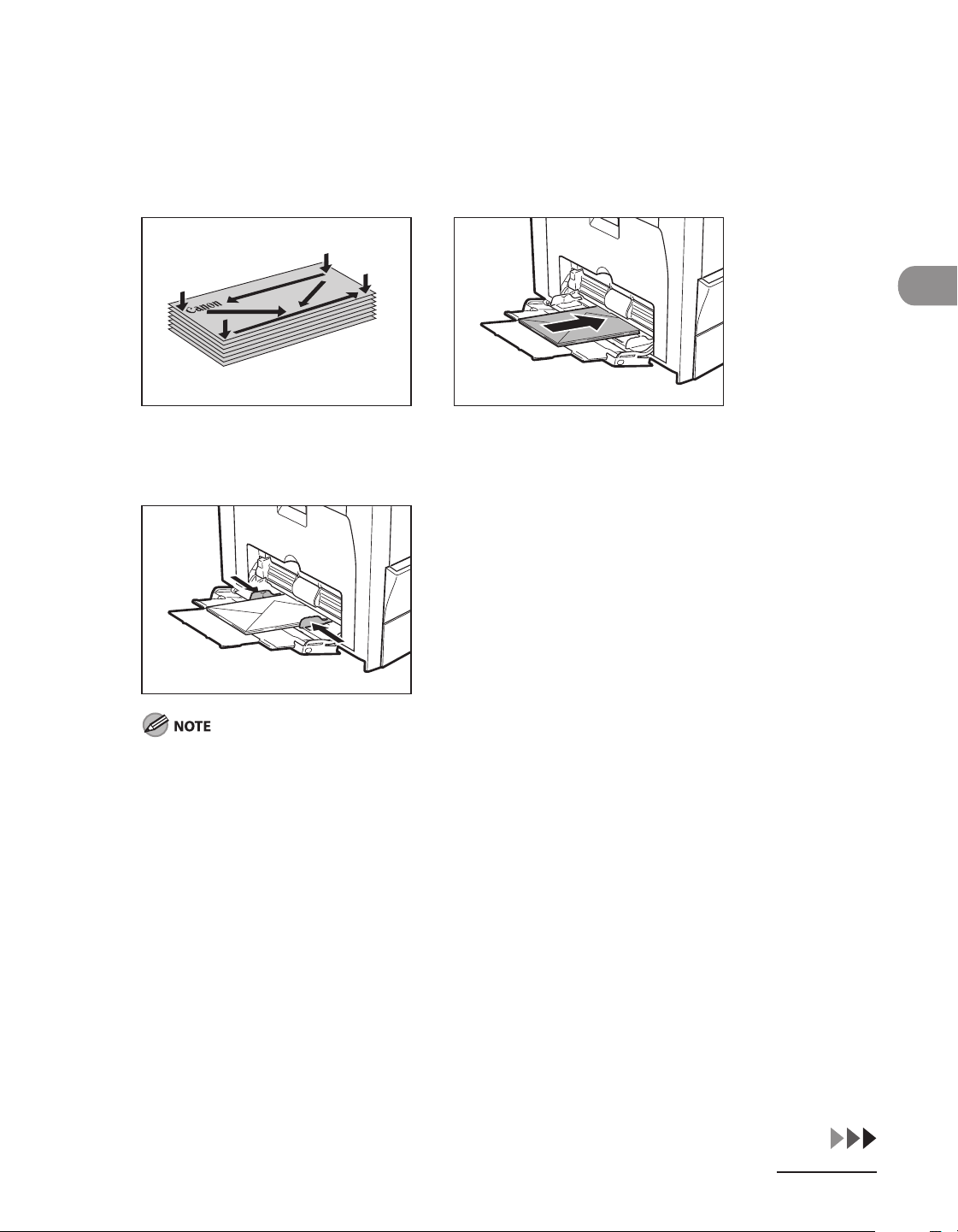
2-11
Document and Paper
3 Gently load the stack of envelopes with the address side facing down, and set
the envelopes as illustrated. Be sure to insert the envelopes as far as they will
go.
When you load the envelopes, arrange the stack of envelopes on a firm, clean surface first, then press
down firmly on the edges to make the folds crisp.
4 Adjust the slide guides to the width of the paper stack.
Make sure that the paper stack does not exceed the paper limit guide.
Some types of paper may not feed properly into the multi-purpose tray. For high quality copies, be
sure to use the paper and transparencies recommended by Canon.
When making copies of a small document or thick paper, etc., the copy speed may be slightly slower
than usual.
–
–
–
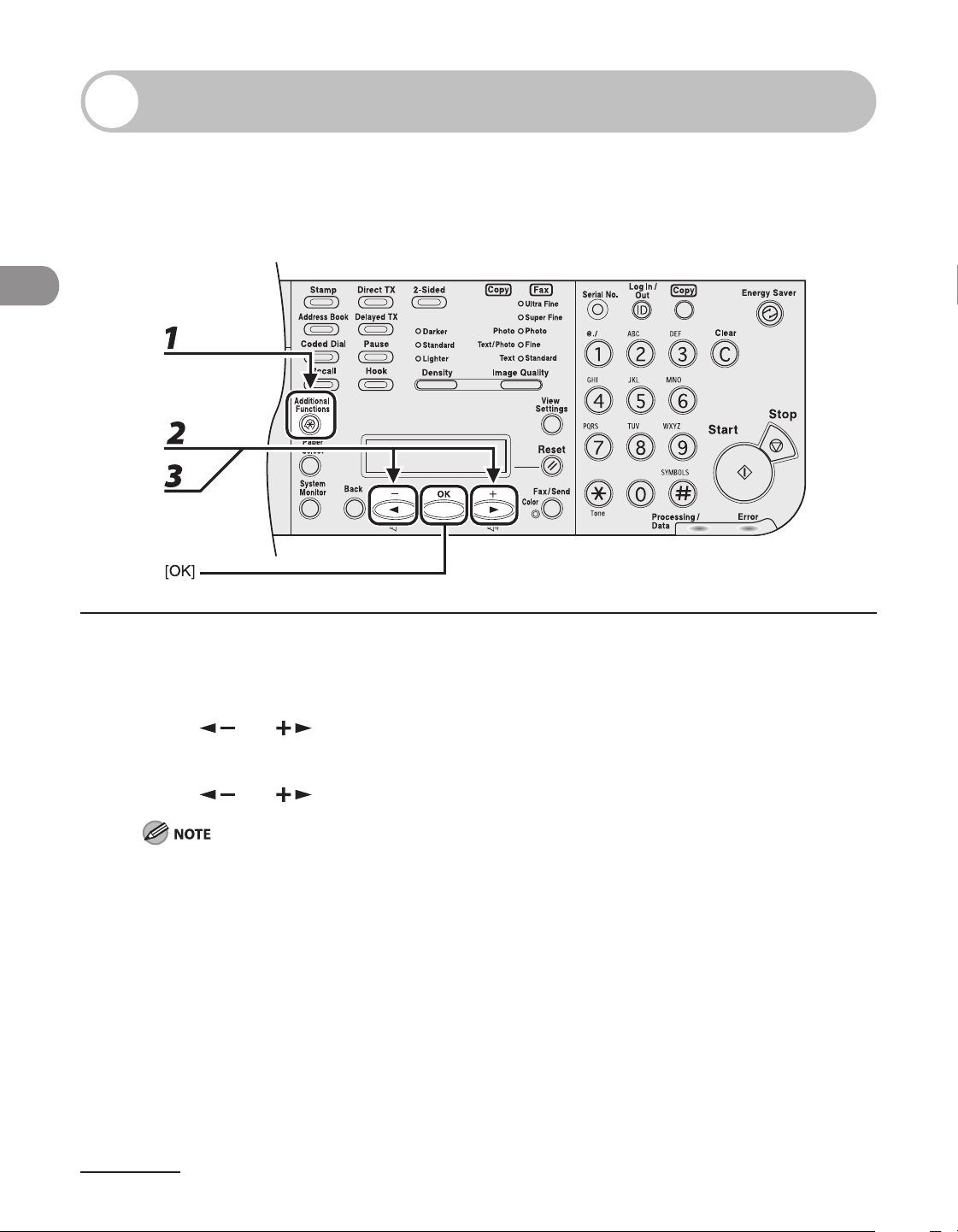
Document and Paper
2-12
Setting Paper Size and Type
The default settings are <LTR> and <PLAIN PAPER>. When you place other size and/or
types of paper, follow this procedure to change the settings.
The procedure is same for paper cassette and multi-purpose tray except for selecting
the paper cassette or multi-purpose tray in step 3 and 6.
1 Press [Additional Functions].
2 Press [ ] or [ ] to select <PAPER SETTINGS>, then press [OK].
3 Press [ ] or [ ] to select <CASSETTE 1> or <MP TRAY>, then press [OK].
If an optional paper cassette is attached, you can also select <CASETTE2>.
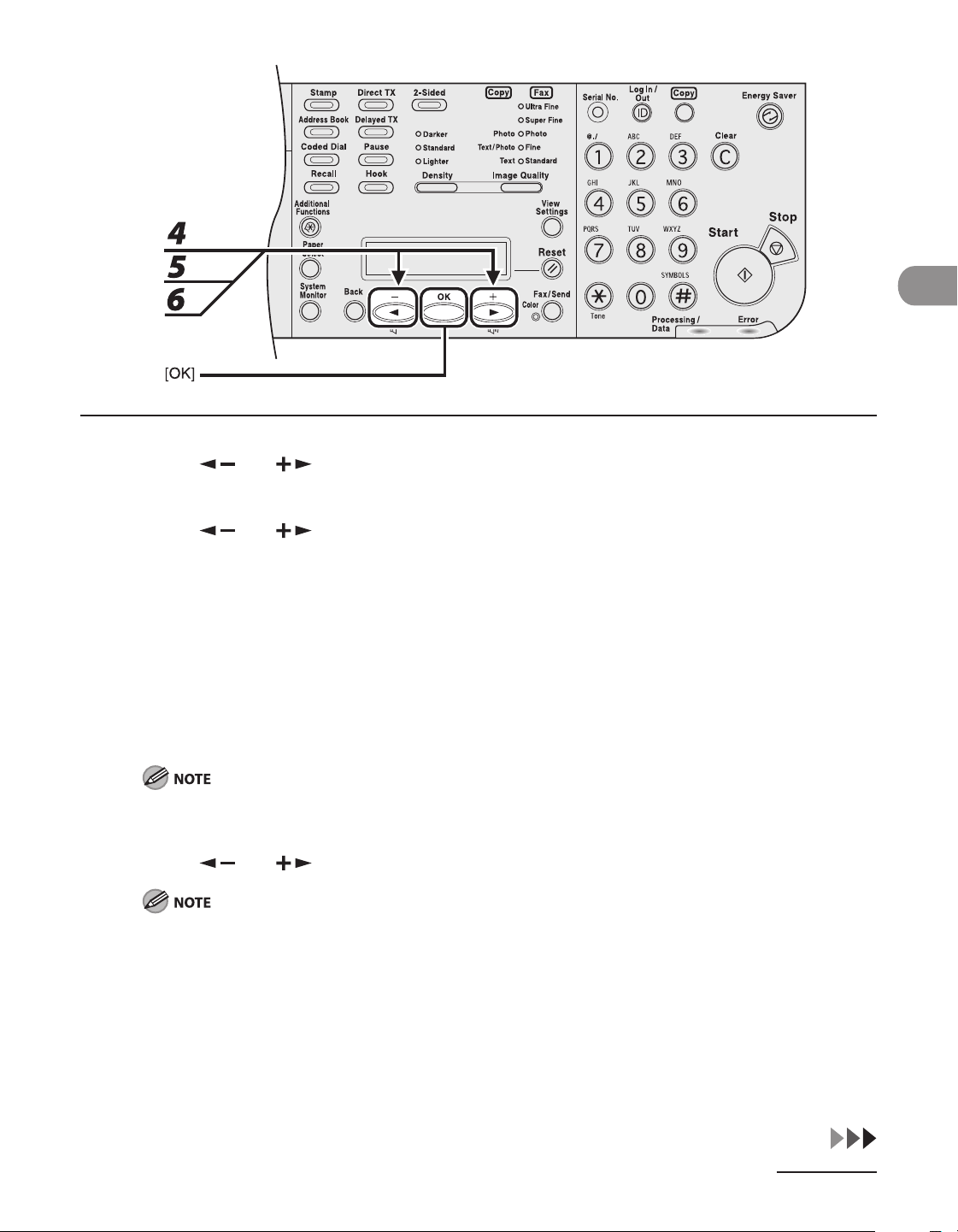
2-13
Document and Paper
4 Press [ ] or [ ] to select <PAPER SIZE>, then press [OK].
5 Press [ ] or [ ] to select the paper size, then press [OK].
You can select from the following paper sizes:
If you select <CASETTE 1> or <CASETTE 2> in step3:
<LTR>, <LGL>, <A4>, <OFICIO>, <BRAZIL-OFICIO>, <MEXICO-OFICIO>, <FLSP>
If you select <MP TRAY> in step3:
<LTR>, <LGL>, <A4>, <B5>, <A5R>, <STMTR>, <EXECUTIV>, <COM10>, <MONARCH>, <DL>, <ISO-C5>,
<ISO-B5>, <OFICIO>, <BRAZIL-OFICIO>, <MEXICO-OFICIO>, <FOLIO>, <G-LTR>, <G-LGL>, <FLSP>,
<CUSTOM SIZE>*
* When selecting this size, enter the height, and press [OK].
Enter the width, and press [OK].
The paper sizes available will vary depending on the country where the unit was purchased.
6 Press [ ] or [ ] to select <SELECT PAPER TYPE>, then press [OK].
If you have selected <EXECUTIV>, <COM10>, <MONARCH>, <DL> or <ISO-C5> for the paper size in step
5, <SELECT PAPER TYPE> is not displayed. Skip to step 8.
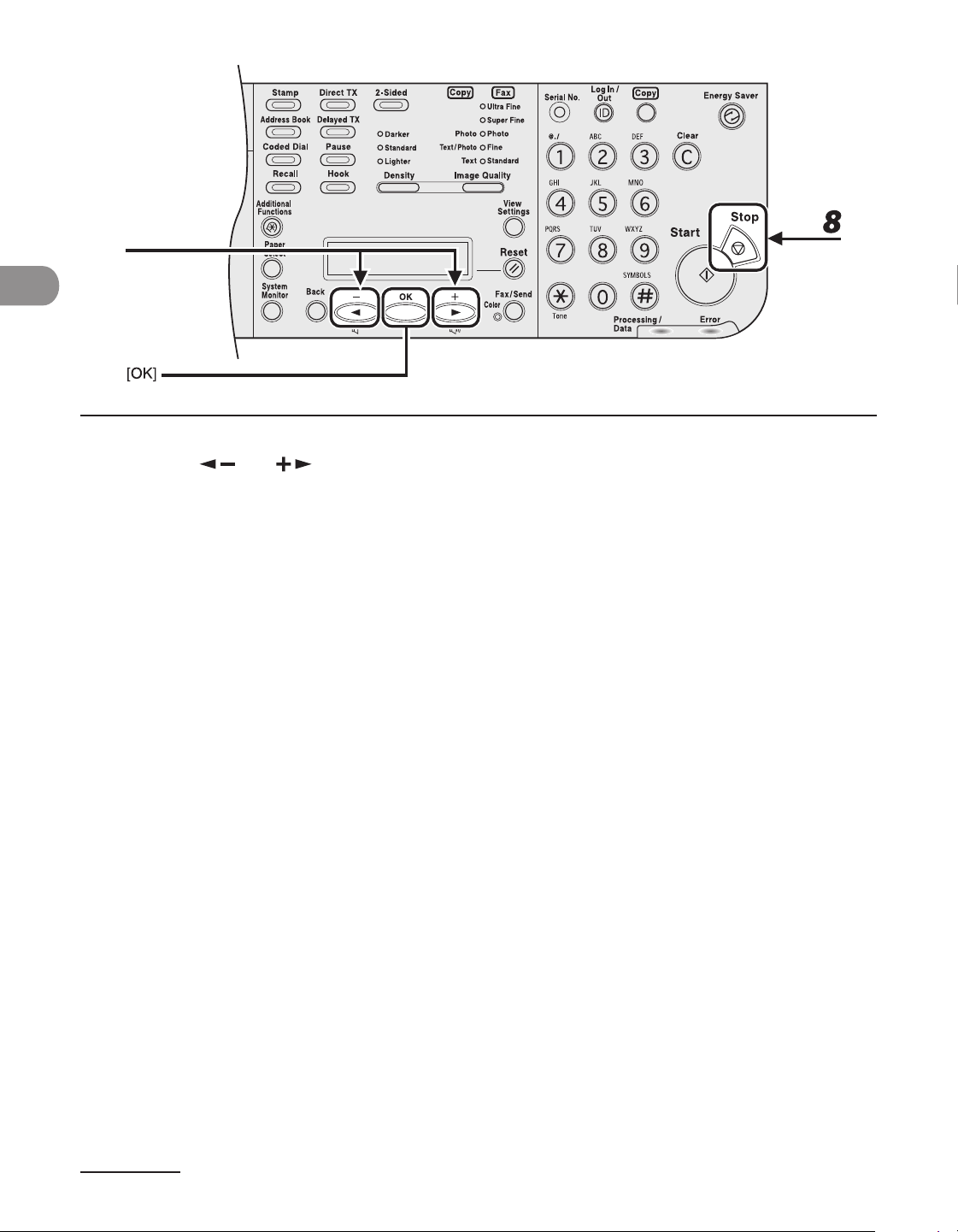
Document and Paper
2-14
7
7 Press [ ] or [ ] to select the paper type, then press [OK].
You can select from the following paper types:
If you select <CASETTE 1> or <CASETTE 2> in step3:
<PLAIN PAPER>, <COLOR>, <RECYCLED>, <HEAVY PAPER1>, <BOND>, <3 HOLE PUNCH PAPER>
If you select <MP TRAY> in step3:
<PLAIN PAPER>, <COLOR>, <RECYCLED>, <HEAVY PAPER 1>, <HEAVY PAPER 2>, <HEAVY PAPER 3>,
<BOND>, <3 HOLE PUNCH PAPER>, <TRANSPARENCY>, <LABELS>, <ENVELOPE>
8 Press [Stop] to return to standby mode.

Copying
3
Copying
Basic Copying Method ∙∙∙∙∙∙∙∙∙∙∙∙∙∙∙∙∙∙∙∙∙∙∙∙∙∙∙∙∙∙∙∙∙∙∙∙∙∙∙∙∙∙∙∙∙∙∙∙∙∙∙∙∙∙∙∙∙∙∙∙∙∙∙∙3-2
Scan Settings ∙∙∙∙∙∙∙∙∙∙∙∙∙∙∙∙∙∙∙∙∙∙∙∙∙∙∙∙∙∙∙∙∙∙∙∙∙∙∙∙∙∙∙∙∙∙∙∙∙∙∙∙∙∙∙∙∙∙∙∙∙∙∙∙∙∙∙∙∙∙∙∙∙∙∙∙∙∙∙3-4
Image Quality ∙∙∙∙∙∙∙∙∙∙∙∙∙∙∙∙∙∙∙∙∙∙∙∙∙∙∙∙∙∙∙∙∙∙∙∙∙∙∙∙∙∙∙∙∙∙∙∙∙∙∙∙∙∙∙∙∙∙∙∙∙∙∙∙∙∙∙∙∙∙∙∙∙∙∙∙∙∙∙∙∙∙∙∙∙∙∙∙ 3-4
Density ∙∙∙∙∙∙∙∙∙∙∙∙∙∙∙∙∙∙∙∙∙∙∙∙∙∙∙∙∙∙∙∙∙∙∙∙∙∙∙∙∙∙∙∙∙∙∙∙∙∙∙∙∙∙∙∙∙∙∙∙∙∙∙∙∙∙∙∙∙∙∙∙∙∙∙∙∙∙∙∙∙∙∙∙∙∙∙∙∙∙∙∙∙∙∙∙∙∙∙∙∙ 3-5
Auto Zoom ∙∙∙∙∙∙∙∙∙∙∙∙∙∙∙∙∙∙∙∙∙∙∙∙∙∙∙∙∙∙∙∙∙∙∙∙∙∙∙∙∙∙∙∙∙∙∙∙∙∙∙∙∙∙∙∙∙∙∙∙∙∙∙∙∙∙∙∙∙∙∙∙∙∙∙∙∙∙∙∙∙∙∙3-6
Collate Copy ∙∙∙∙∙∙∙∙∙∙∙∙∙∙∙∙∙∙∙∙∙∙∙∙∙∙∙∙∙∙∙∙∙∙∙∙∙∙∙∙∙∙∙∙∙∙∙∙∙∙∙∙∙∙∙∙∙∙∙∙∙∙∙∙∙∙∙∙∙∙∙∙∙∙∙∙∙∙∙∙∙3-7
Two-Sided Copying ∙∙∙∙∙∙∙∙∙∙∙∙∙∙∙∙∙∙∙∙∙∙∙∙∙∙∙∙∙∙∙∙∙∙∙∙∙∙∙∙∙∙∙∙∙∙∙∙∙∙∙∙∙∙∙∙∙∙∙∙∙∙∙∙∙∙∙∙∙3-9
1 to 2-Sided Copying ∙∙∙∙∙∙∙∙∙∙∙∙∙∙∙∙∙∙∙∙∙∙∙∙∙∙∙∙∙∙∙∙∙∙∙∙∙∙∙∙∙∙∙∙∙∙∙∙∙∙∙∙∙∙∙∙∙∙∙∙∙∙∙∙∙∙∙∙∙∙∙∙∙∙ 3-9
2 to 2-Sided Copying ∙∙∙∙∙∙∙∙∙∙∙∙∙∙∙∙∙∙∙∙∙∙∙∙∙∙∙∙∙∙∙∙∙∙∙∙∙∙∙∙∙∙∙∙∙∙∙∙∙∙∙∙∙∙∙∙∙∙∙∙∙∙∙∙∙∙∙∙∙∙∙∙3-13
2 to 1-Sided Copying ∙∙∙∙∙∙∙∙∙∙∙∙∙∙∙∙∙∙∙∙∙∙∙∙∙∙∙∙∙∙∙∙∙∙∙∙∙∙∙∙∙∙∙∙∙∙∙∙∙∙∙∙∙∙∙∙∙∙∙∙∙∙∙∙∙∙∙∙∙∙∙∙3-15
Reserved Copy ∙∙∙∙∙∙∙∙∙∙∙∙∙∙∙∙∙∙∙∙∙∙∙∙∙∙∙∙∙∙∙∙∙∙∙∙∙∙∙∙∙∙∙∙∙∙∙∙∙∙∙∙∙∙∙∙∙∙∙∙∙∙∙∙∙∙∙∙∙∙∙∙∙∙ 3-18
Canceling Copy Jobs ∙∙∙∙∙∙∙∙∙∙∙∙∙∙∙∙∙∙∙∙∙∙∙∙∙∙∙∙∙∙∙∙∙∙∙∙∙∙∙∙∙∙∙∙∙∙∙∙∙∙∙∙∙∙∙∙∙∙∙∙∙∙∙∙∙ 3-19
Checking and Deleting Jobs ∙∙∙∙∙∙∙∙∙∙∙∙∙∙∙∙∙∙∙∙∙∙∙∙∙∙∙∙∙∙∙∙∙∙∙∙∙∙∙∙∙∙∙∙∙∙∙∙∙∙∙∙ 3-20
Checking and Deleting Copy Jobs ∙∙∙∙∙∙∙∙∙∙∙∙∙∙∙∙∙∙∙∙∙∙∙∙∙∙∙∙∙∙∙∙∙∙∙∙∙∙∙∙∙∙∙∙∙∙∙3-20
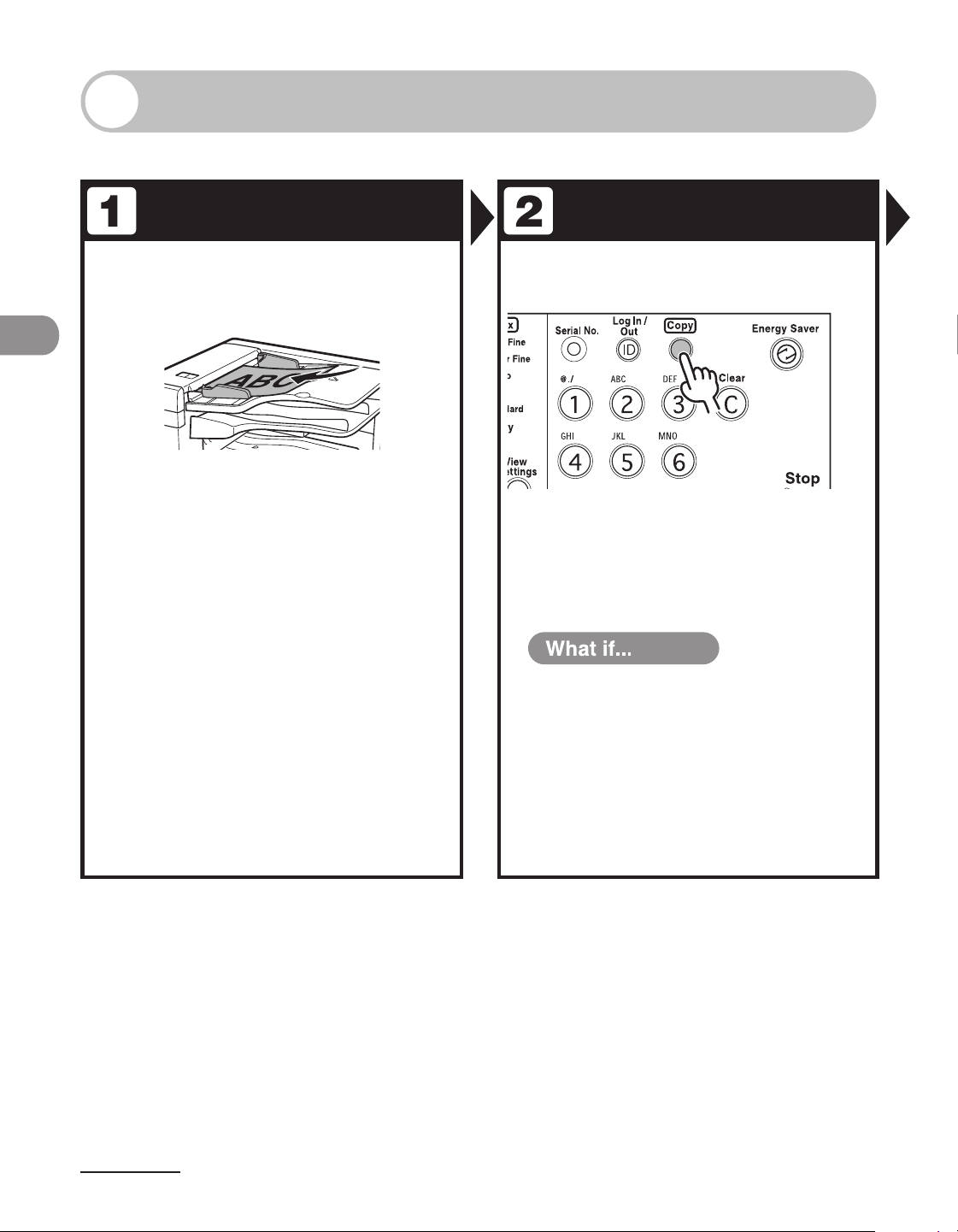
Copying
3-2
Basic Copying Method
Follow this procedure to make a copy.
Set a Document Enter the Copy Mode
Load the document in the ADF.
For documents you can copy, see “Document
Requirements,” on p.
2-2.
Press [Copy]
If using the LASER CLASS 810, you can switch to the Copy
mode by pressing [Copy/Fax].
You want to adjust the image quality
and density:
See “Scan Settings,” on p. 3-4.
To copy using paper loaded in the
multi-purpose tray or the optional
paper cassette:
Press [Paper Select], and select the paper
source.
●
●
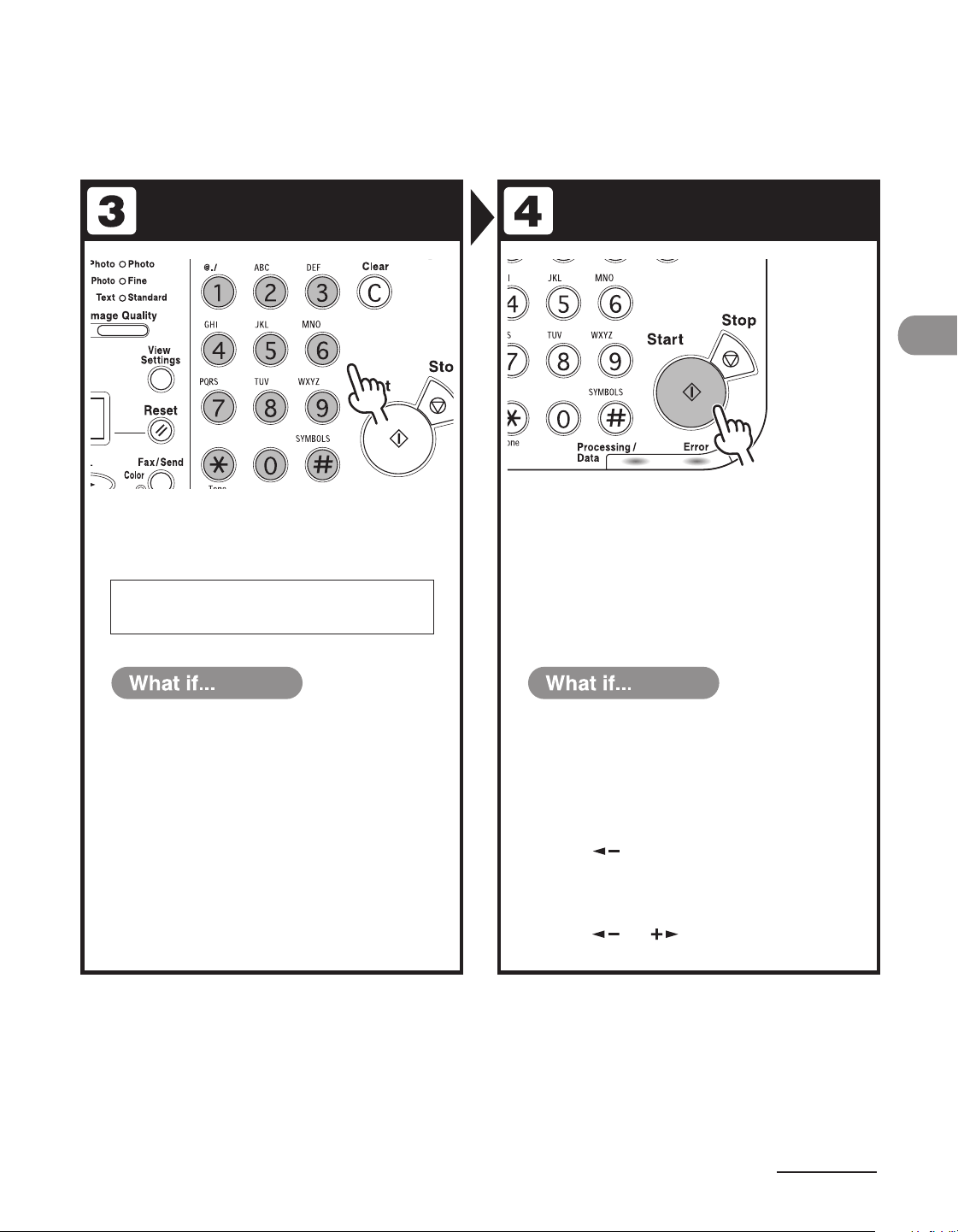
3-3
Copying
Enter the Copy Quantity Start Copying
Use the numeric keys to enter the
desired copy quantity (1 to 99).
O 3
C O P Y 1 0 0 %
C A S S E T T E 1 : L T R
Press [Start].
You enter a wrong number:
Press [Clear], and enter a new number.
● You want to cancel copying:
Press [Stop] on the operation panel.
When the <STOP KEY PRESSED> message
appears, press [OK].
When the <CANCEL?> message appears,
press [ ] to select <YES>.
If <ORIGINAL SIZE> is displayed after
you press [Start]:
Press [ ] or [ ] to specify the original
size.
●
●
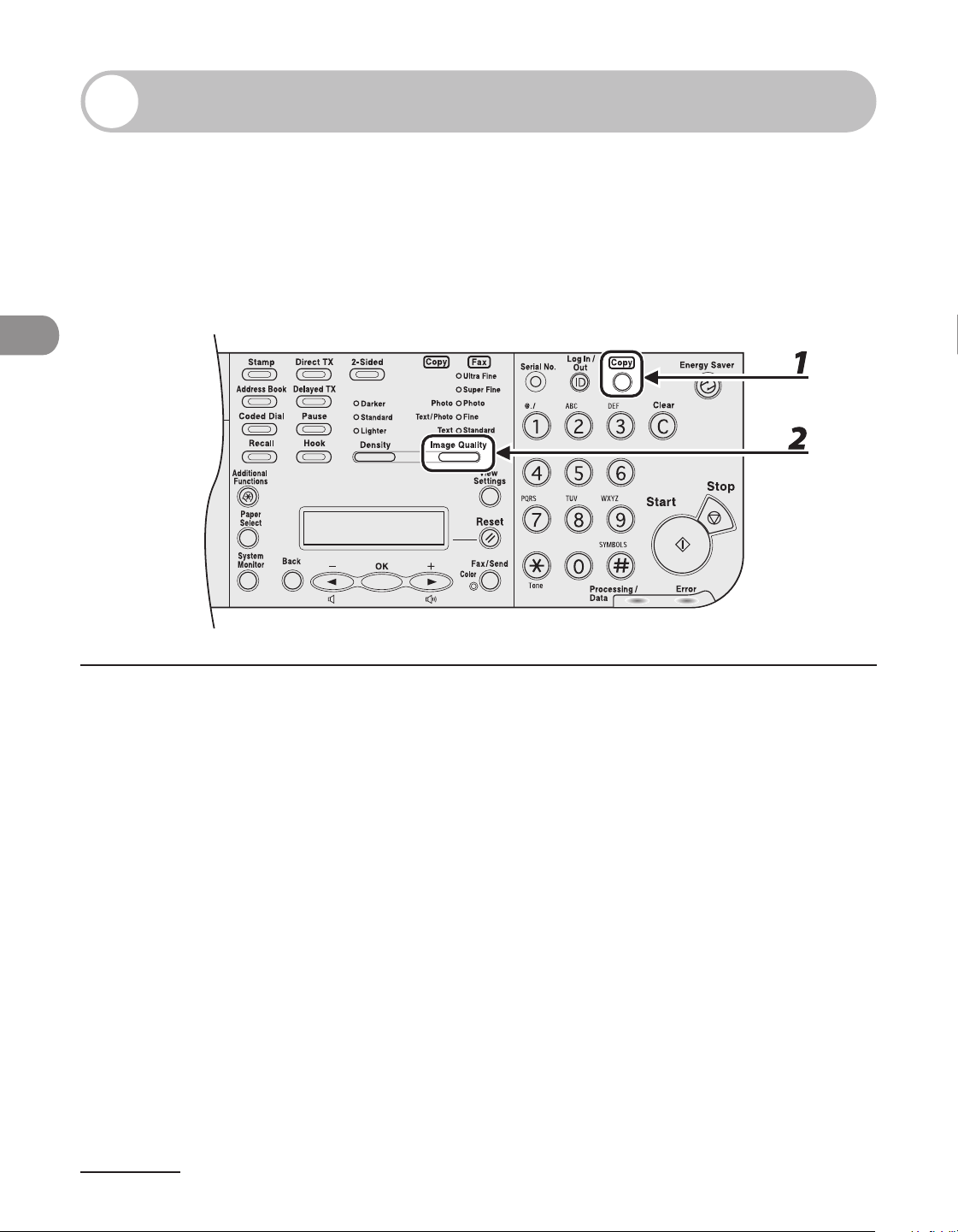
Copying
3-4
Scan Settings
Before pressing [Start] to begin copying, you can adjust the settings to better suit the
document to be scanned. These settings return to the default values if the Auto Clear
function is activated or if you press [Reset].
Image Quality
1 Press [Copy].
If using the LASER CLASS 810, you can switch to the Copy mode by pressing [Copy/Fax].
2 Press [Image Quality] repeatedly to select the document type.
<Photo>: For documents that contain fine text or photos.
<TEXT/PHOTO>: For documents that contain text and photos.
<Text>: For text documents.
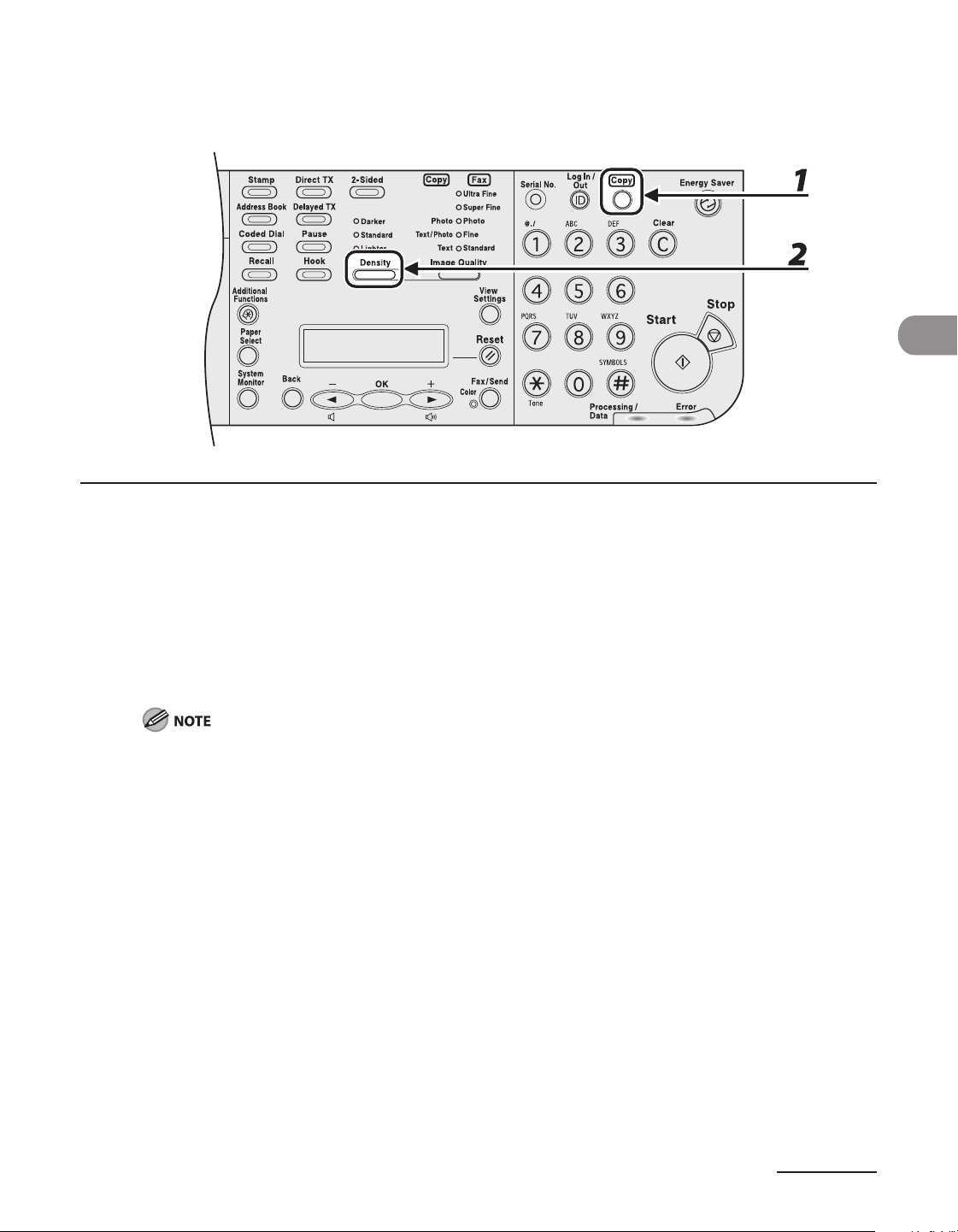
3-5
Copying
Density
You can adjust the density to the most appropriate level for the document manually.
1 Press [Copy].
If using the LASER CLASS 810, you can switch to the Copy mode by pressing [Copy/Fax].
2 Press [Density] repeatedly to select the density mode.
<Darker>: to make light documents darker
<Standard>: Suitable for copying regular originals.
<Lighter>: to make dark documents lighter
To cancel all settings, press [Reset].
When you switch the mode by pressing the mode keys such as [Fax/Send], all settings will be also
canceled. If you want to keep the settings, set the density as following;
[Additional Functions]
→ <COPY SETTINGS> → <STANDARD SETTINGS> → <DENSITY>
(See “Setting Menu,” on p. 12-5.)
–
–
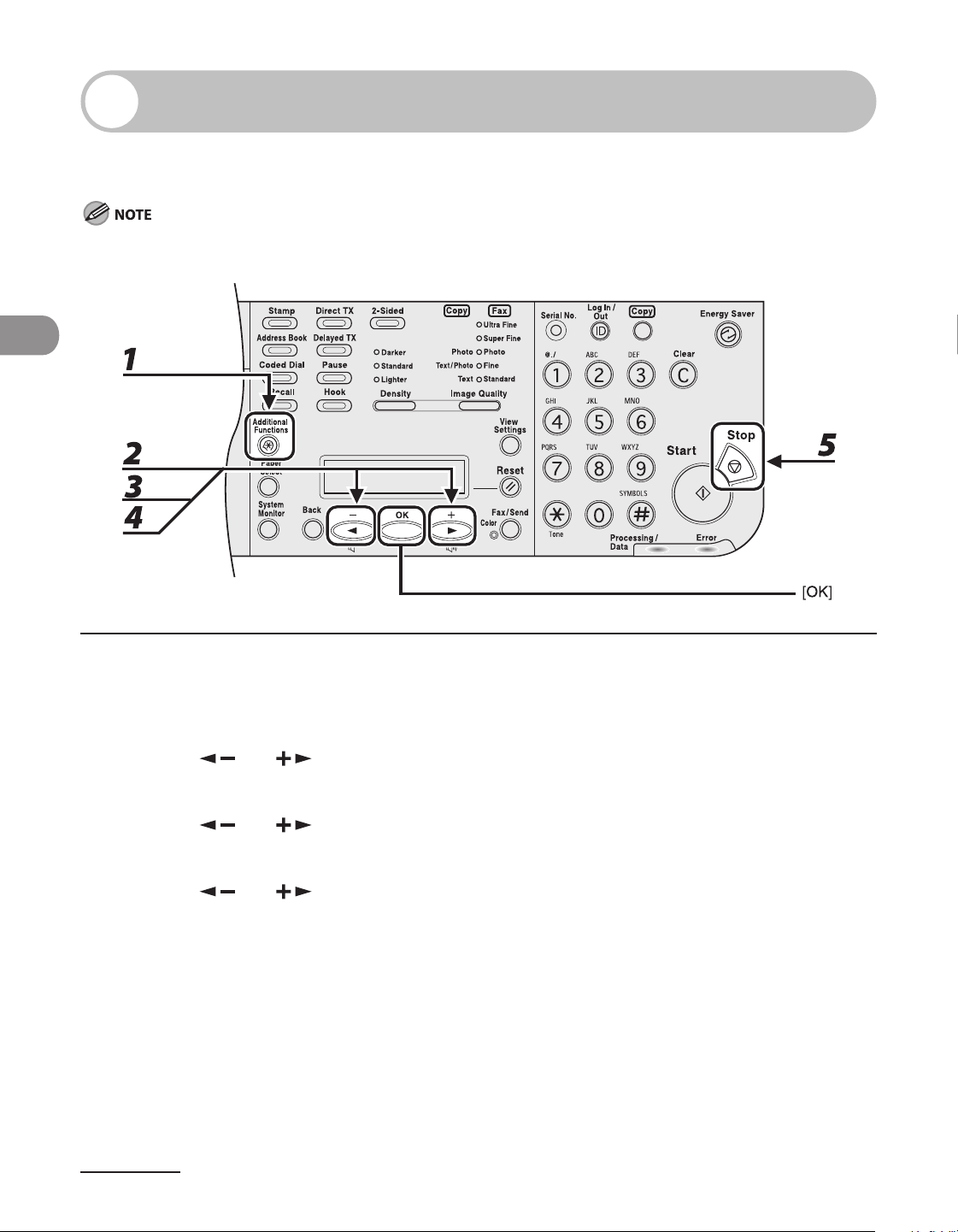
Copying
3-6
Auto Zoom
You can set to automatically enlarge/reduce the original according to a specified
paper size when copying. The zoom ratio can be set from 50% to 145%.
When this setting is enabled, if you are using the LASER CLASS 810, you must specify the original size when
copying.
1 Press [Additional Functions].
2 Press [ ] or [ ] to select <COPY SETTINGS>, then press [OK].
3 Press [ ] or [ ] to select <AUTO ZOOM>, then press [OK].
4 Press [ ] or [ ] to select <ON>, then press [OK].
5 Press [Stop] to return to the standby mode.
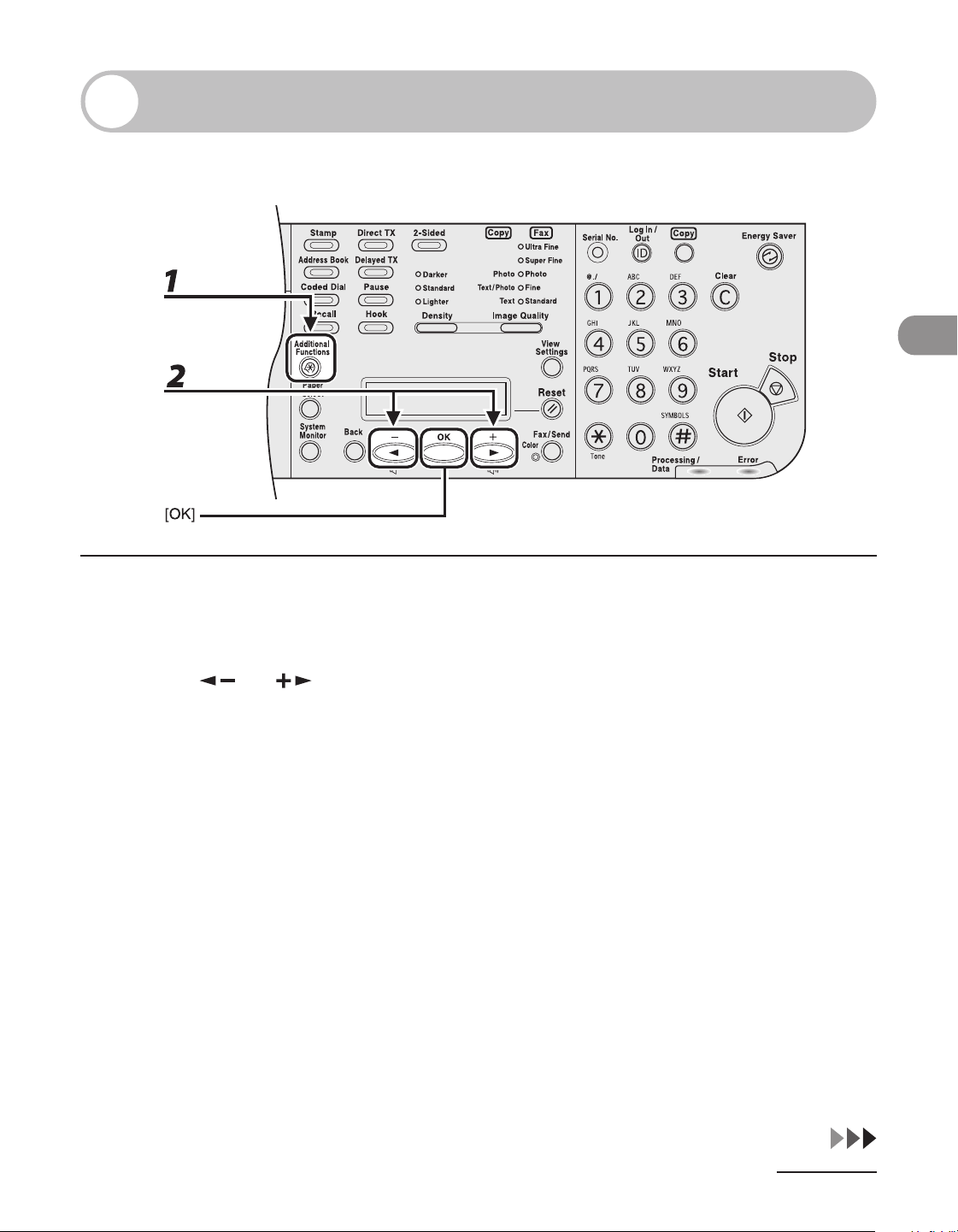
3-7
Copying
Collate Copy
You can set to copy documents collated into sets arranged in page order. This feature
can be used together with “Two-Sided Copying” (see p. 3-9).
1 Press [Additional Functions].
2 Press [ ] or [ ] to select <COPY SETTINGS>, then press [OK].
If you want to use the Collate Copying function together with "Two-Sided Copying" (see p. 3-9), proceed
to step 3 of "1 to 2-Sided Copying," "2 to 2-Sided Copying," or "2 to 1-Sided Copying."
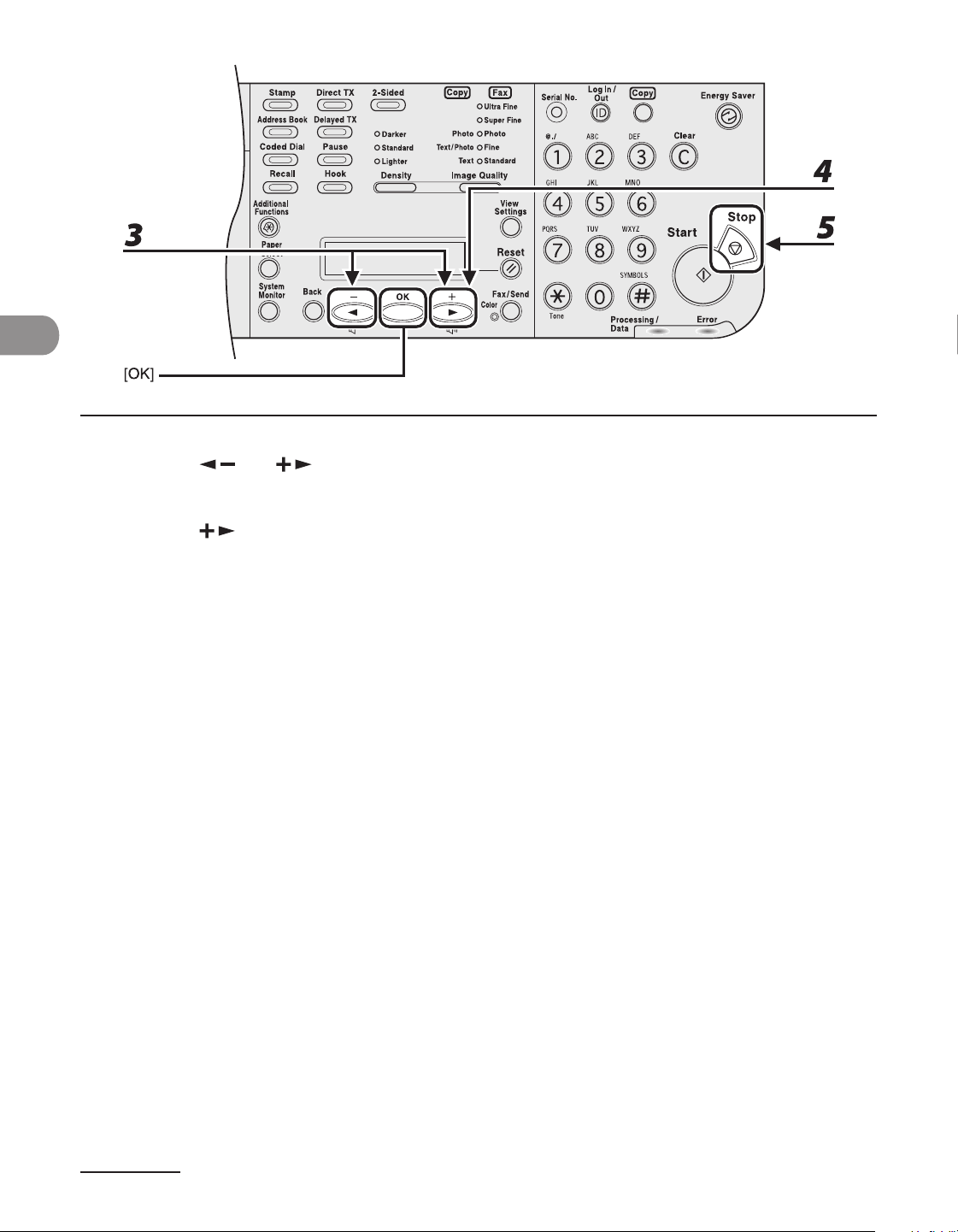
Copying
3-8
3 Press [ ] or [ ] to select <COL.>, then press [OK].
4 Press [ ] to select <ON>, then press [OK].
5 Press [Stop] to return to the standby mode.
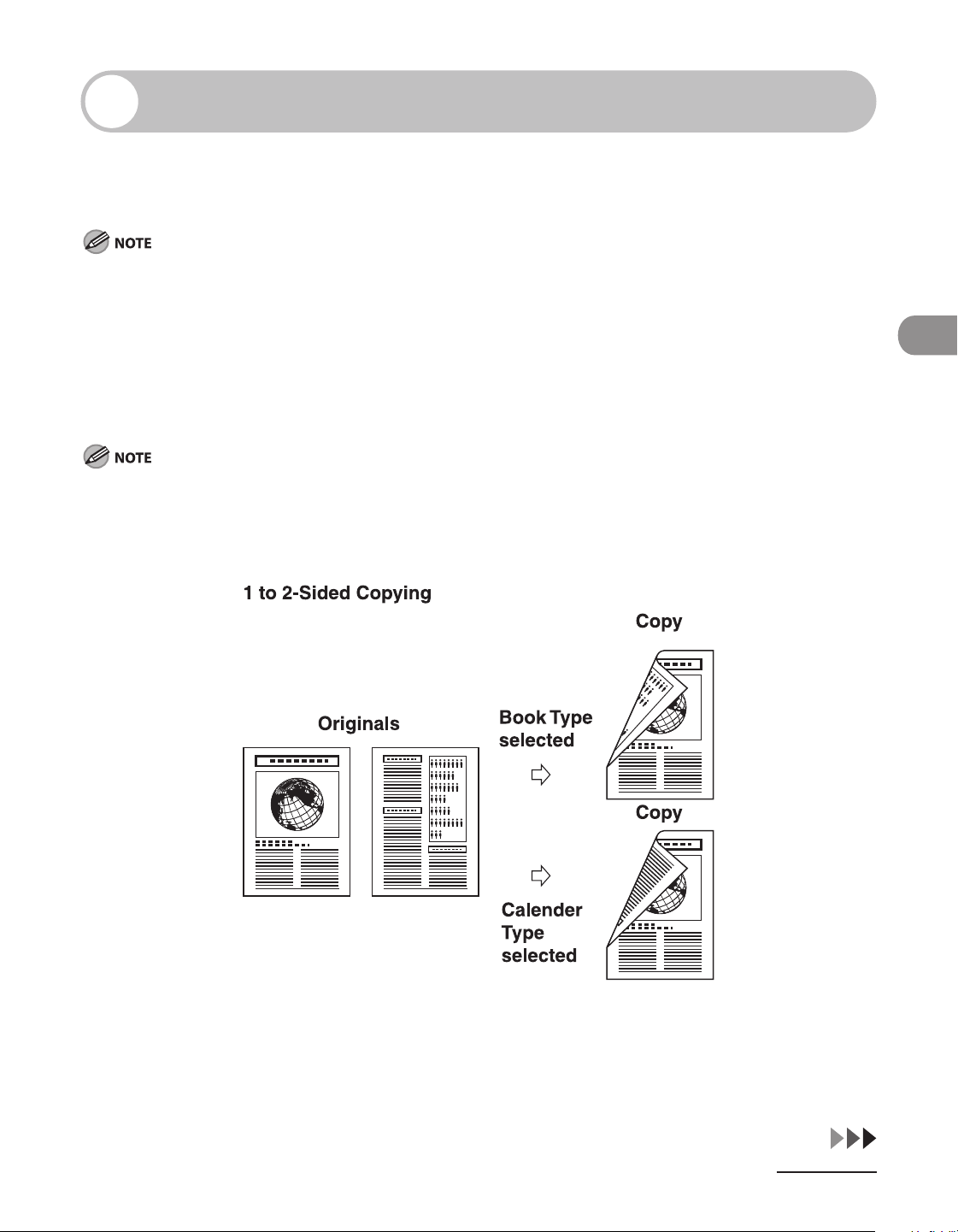
3-9
Copying
Two-Sided Copying
Two-sided copying enables you to make two-sided copies from one-sided or two-
sided documents, or make one-sided copies from two-sided documents. This feature
can be used together with “Collate Copy” (see p. 3-7).
Paper used to make two-sided copies must conform to the following specifications:
Paper size: LGL, LTR, and A4
Paper weight: 17 to 24 lb (64 to 90 g/m
2
)
1 to 2-Sided Copying
You can make two-sided copies from one-sided documents.
The illustrations are the results of the output for the following circumstances.
If using the LASER CLASS 830i: If the orientation of an image in a document is set vertically
If using the LASER CLASS 810: If the orientation of an image in a document is set horizontally
–
–
–
–
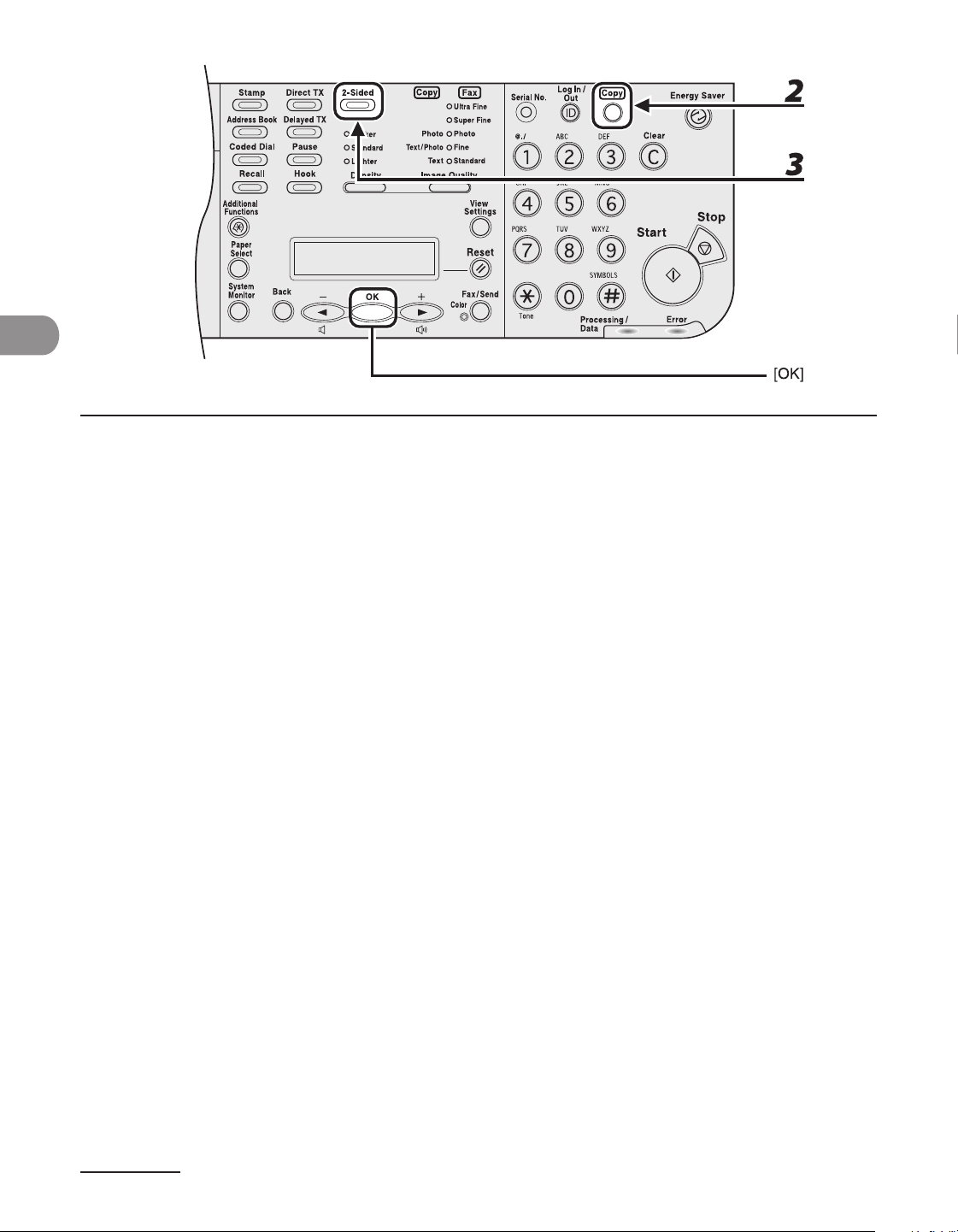
Copying
3-10
1 Set documents.
2 Press [Copy].
If using the LASER CLASS 810, you can switch to the Copy mode by pressing [Copy/Fax].
3 Press [2-sided] repeatedly to select <1 > 2-SIDED>, then press [OK].
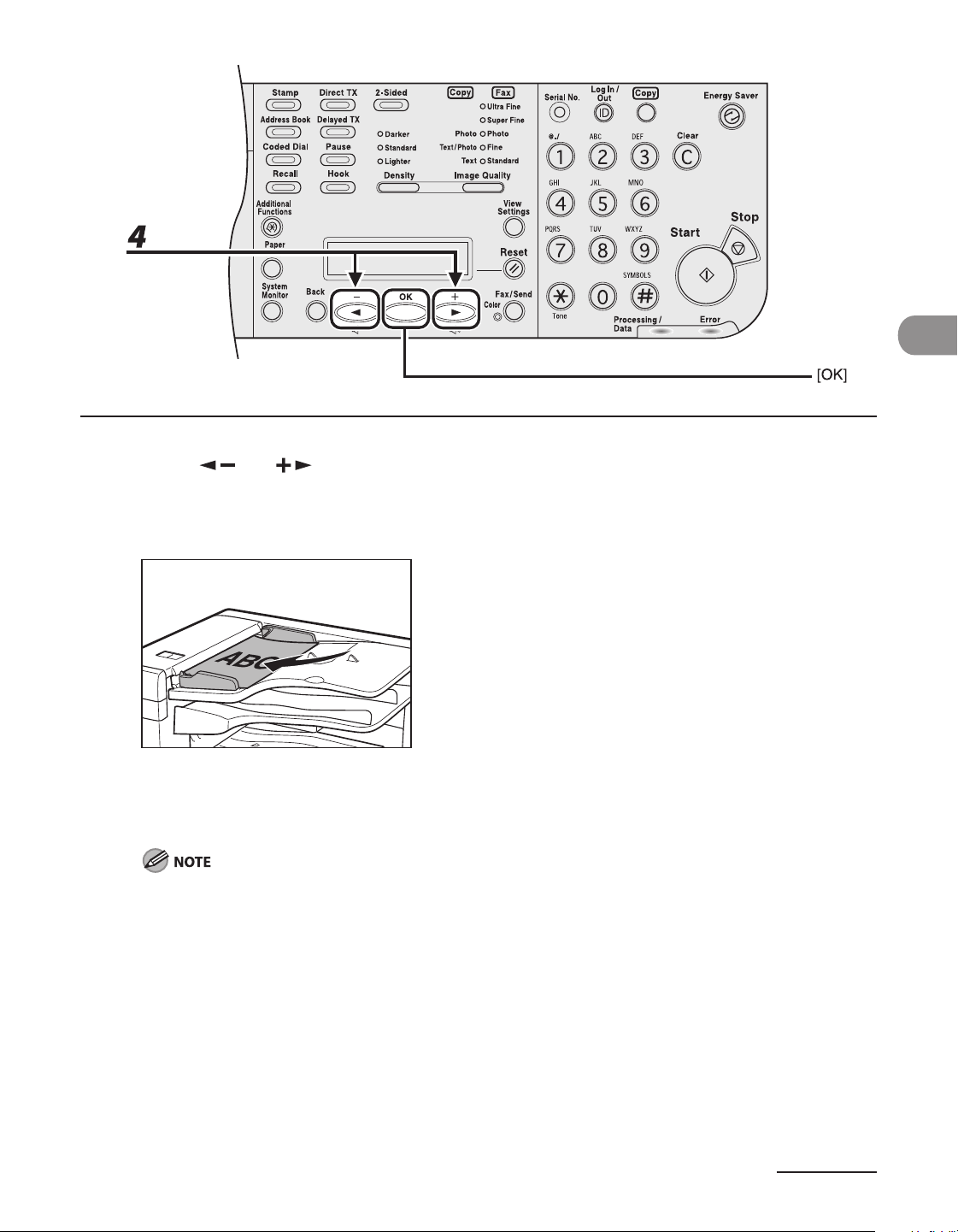
3-11
Copying
4 Press [ ] or [ ] to select <BOOK TYPE> or <CALENDAR TYPE>, then press
[OK].
If using the LASER CLASS 830i:
When images in documents are set vertically as illustrated above, the following are the resulting
outputs.
<BOOK TYPE>: The front and back sides of the document have the same top-bottom orientations.
<CALENDAR TYPE>: The front and back sides of the document have opposite top-bottom orientations.
When images on 11x17 landscape documents are orientated horizontally, select <BOOK TYPE> if the
images on the front and back sides of the copy have opposite orientations. Select <CALENDAR TYPE> if
images on the front and back sides of a copy have the same orientations.
●
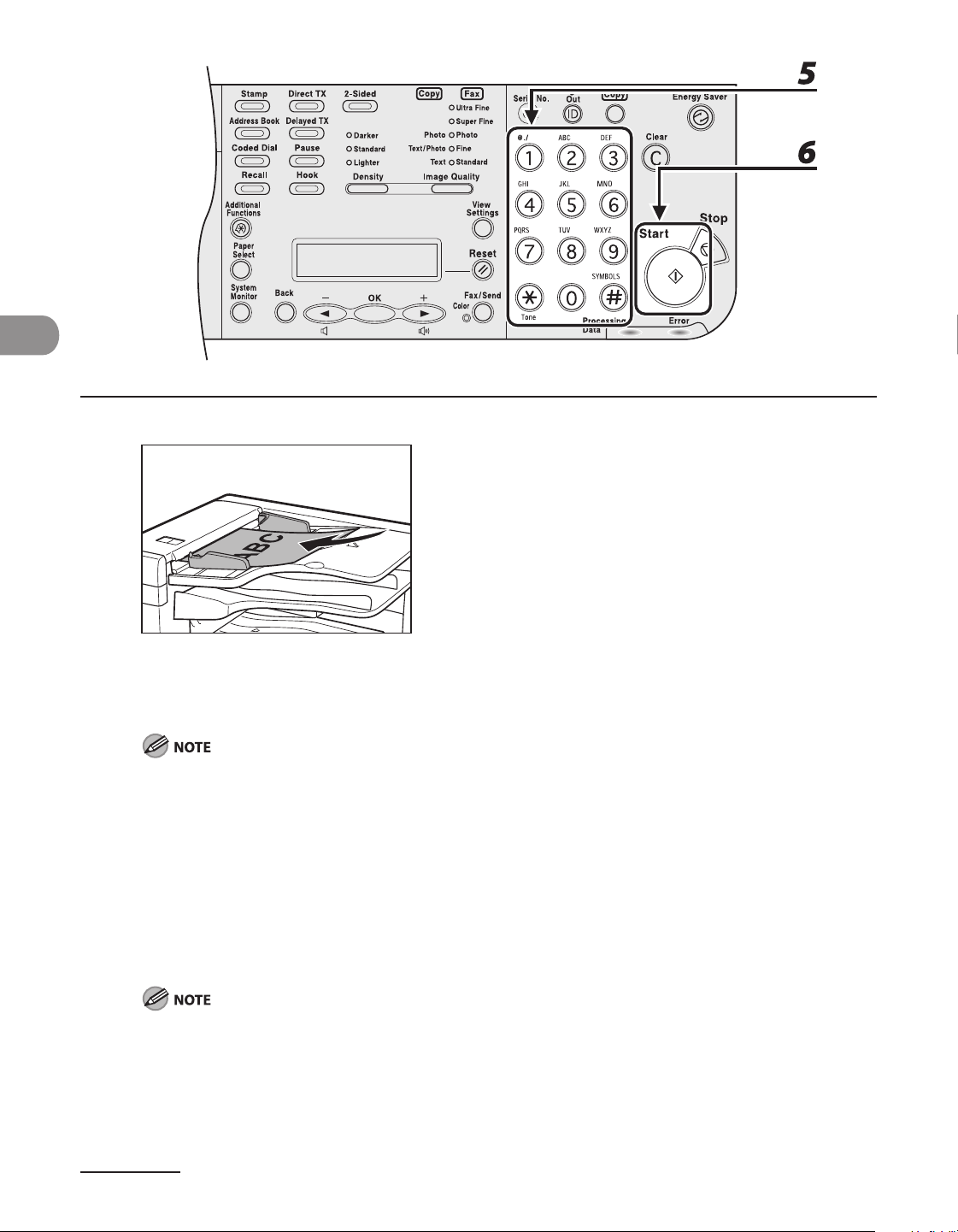
Copying
3-12
If using the LASER CLASS 810:
When images in documents are set horizontally as illustrated above, the following are the resulting
outputs.
<BOOK TYPE>: The front and back sides of the copy have the same top-bottom orientations.
<CALENDAR TYPE>: The front and back sides of the copy have opposite top-bottom orientations.
For landscape originals, such as LTRR documents, with an image set vertically, the front and back
sides of the copy will have opposite top-bottom orientations when <BOOK TYPE> is selected. When
<CALENDAR TYPE> is selected, the front and back sides of the copy will have the same top-bottom
orientations.
5 Use the numeric keys to enter the desired copy quantity (1 to 99).
6 Press [Start].
To cancel all settings, press [Stop].
When you switch the mode by pressing the mode keys such as [Fax/
Send], all settings will be also
canceled. If you want to keep the settings as the default, see “Setting Menu,” on p.
12-5.
You can skip step 4. In this case, the machine makes <BOOK TYPE> copies.
●
–
–
–
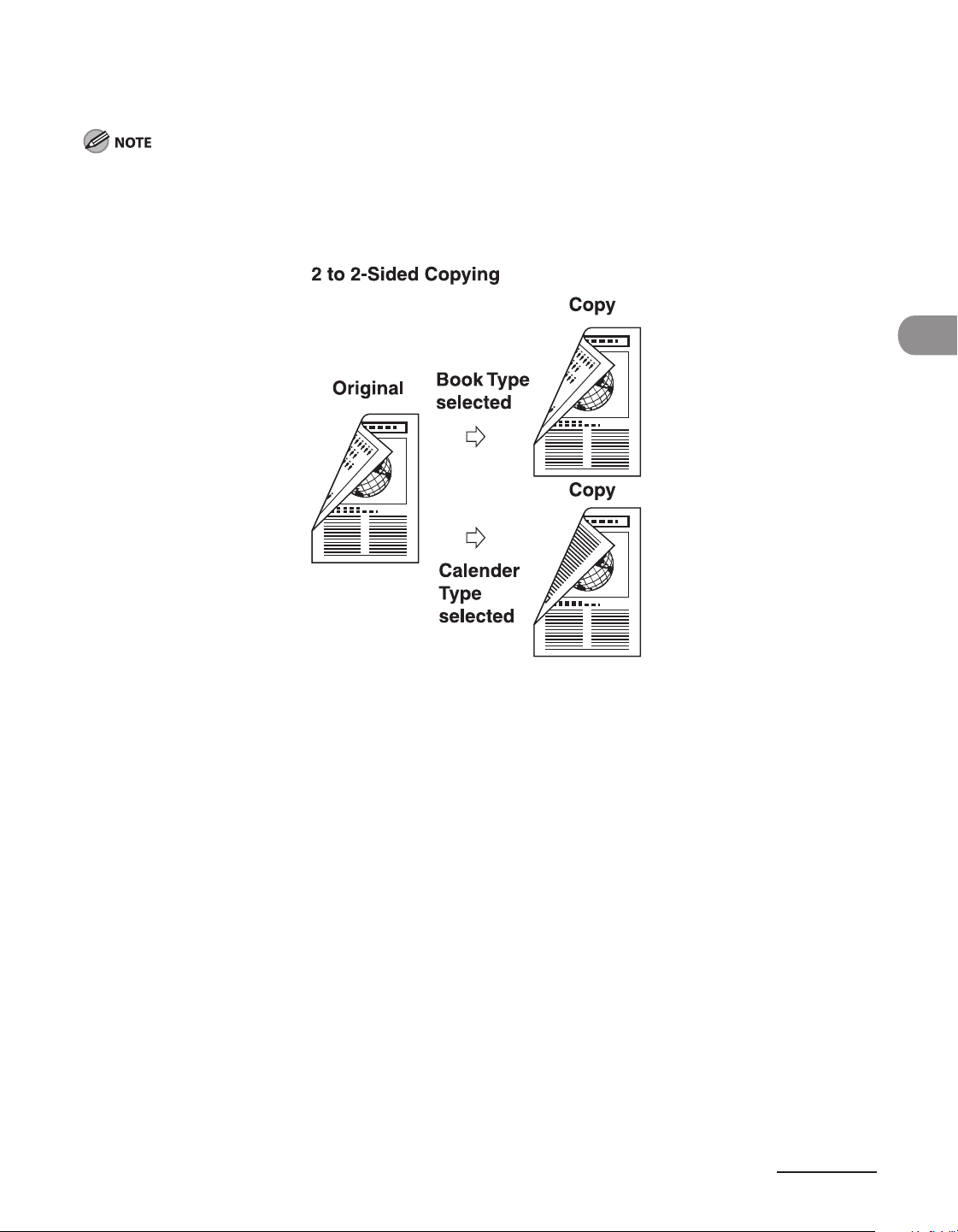
3-13
Copying
2 to 2-Sided Copying
You can make two-sided copies from two-sided documents.
The illustrations are the results of the output for the following circumstances.
If using the LASER CLASS 830i: If the orientation of an image in a document is set vertically
If using the LASER CLASS 810: If the orientation of an image in a document is set horizontally
–
–
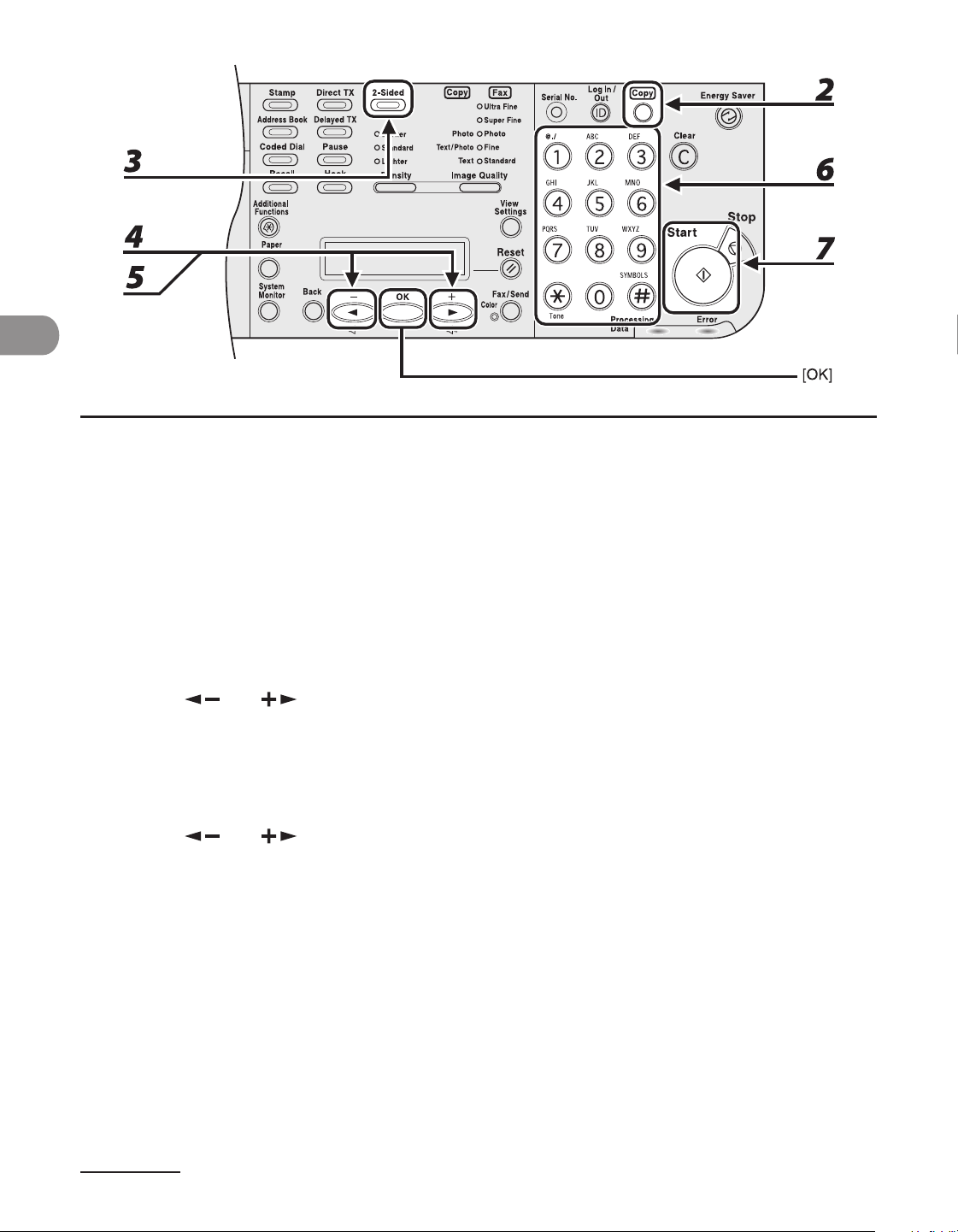
Copying
3-14
1
Set documents.
2 Press [Copy].
If using the LASER CLASS 810, you can switch to the Copy mode by pressing [Copy/Fax].
3 Press [2-Sided] repeatedly to select <2 > 2-SIDED>, then press [OK].
4 Use [ ] or [ ] to select <BOOK TYPE> or <CALENDAR TYPE> (for the
documents), then press [OK].
<BOOK TYPE>: The front and back sides of the document have the same top-bottom orientation.
<CALENDAR TYPE>: The front and back sides of the document have opposite top-bottom orientations.
5 Use [ ] or [ ] to select <BOOK TYPE> or<CALENDAR TYPE> (for the copies),
then press [OK].
6 Use the numeric keys to enter the desired copy quantity (1 to 99).
7 Press [Start].
To cancel all settings, press [Stop].
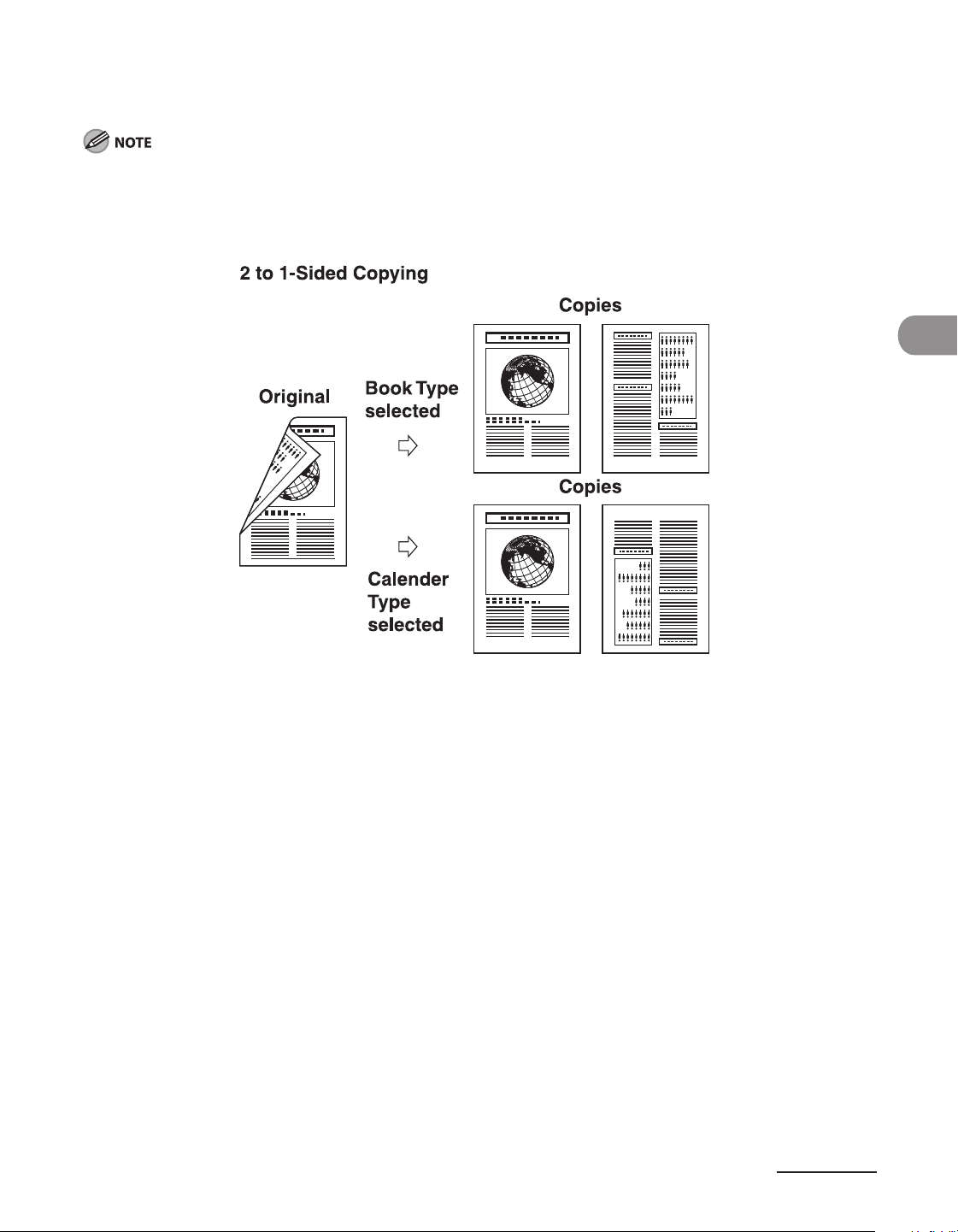
3-15
Copying
2 to 1-Sided Copying
You can make one-sided copies from two-sided documents.
The illustrations are the results of the output for the following circumstances.
If using the LASER CLASS 830i: If the orientation of an image in a document is set vertically
If using the LASER CLASS 810: If the orientation of an image in a document is set horizontally
–
–
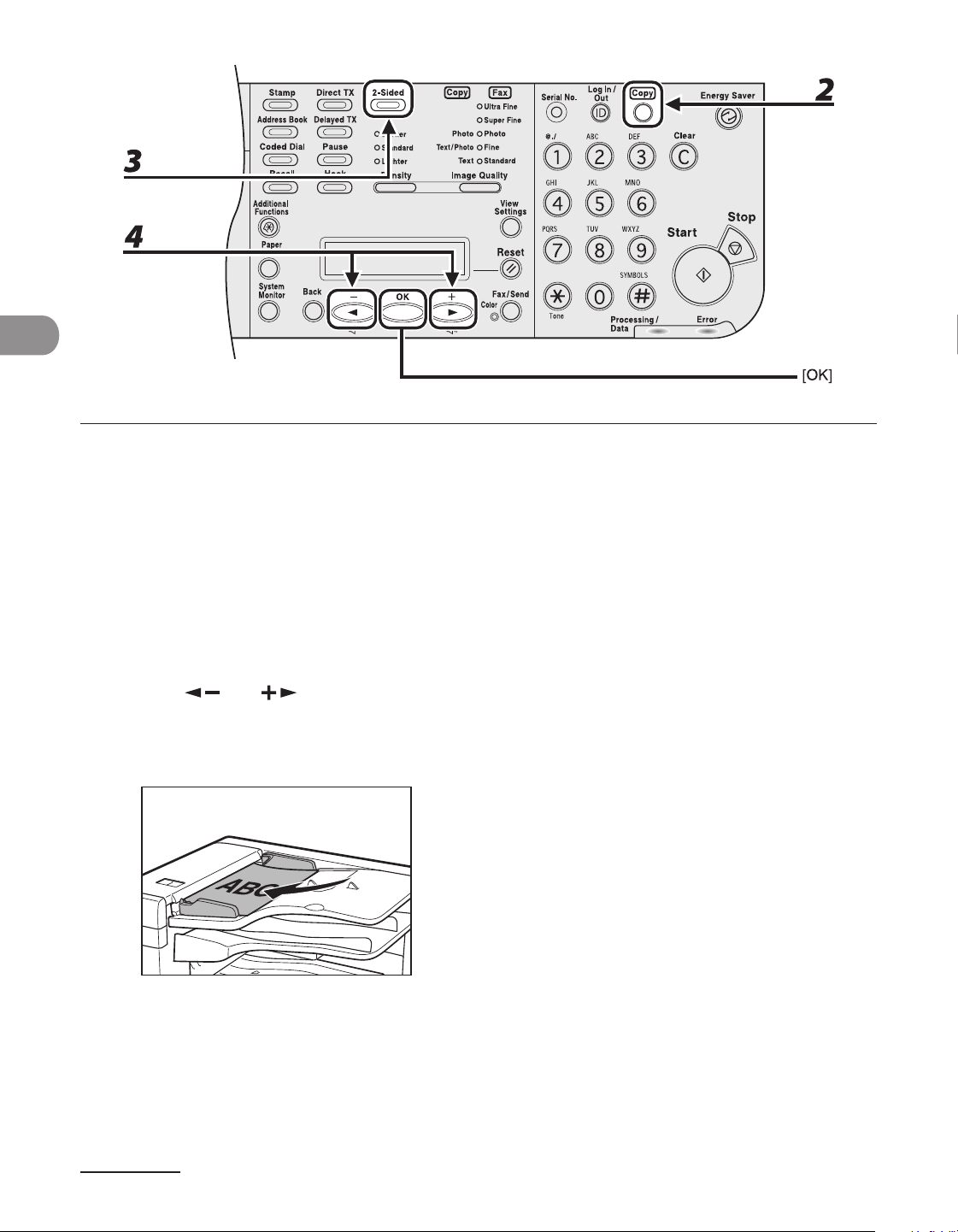
Copying
3-16
1 Set documents.
2 Press [Copy].
If using the LASER CLASS 810, you can switch to the Copy mode by pressing [Copy/Fax].
3 Press [2-Sided] repeatedly to select <2 > 1-SIDED>, then press [OK].
4 Use [ ] or [ ] to select <BOOK TYPE> or <CALENDAR TYPE>, then press
[OK].
If using the LASER CLASS 830i:
When images in documents are set vertically as illustrated above, select the desired output.
<BOOK TYPE>: Select if images on the back side of a document have the same top-bottom orientations
as the front side of the document.
<CALENDAR TYPE>: Select if images on the front and back sides of a document have opposite top-
bottom orientations.
●
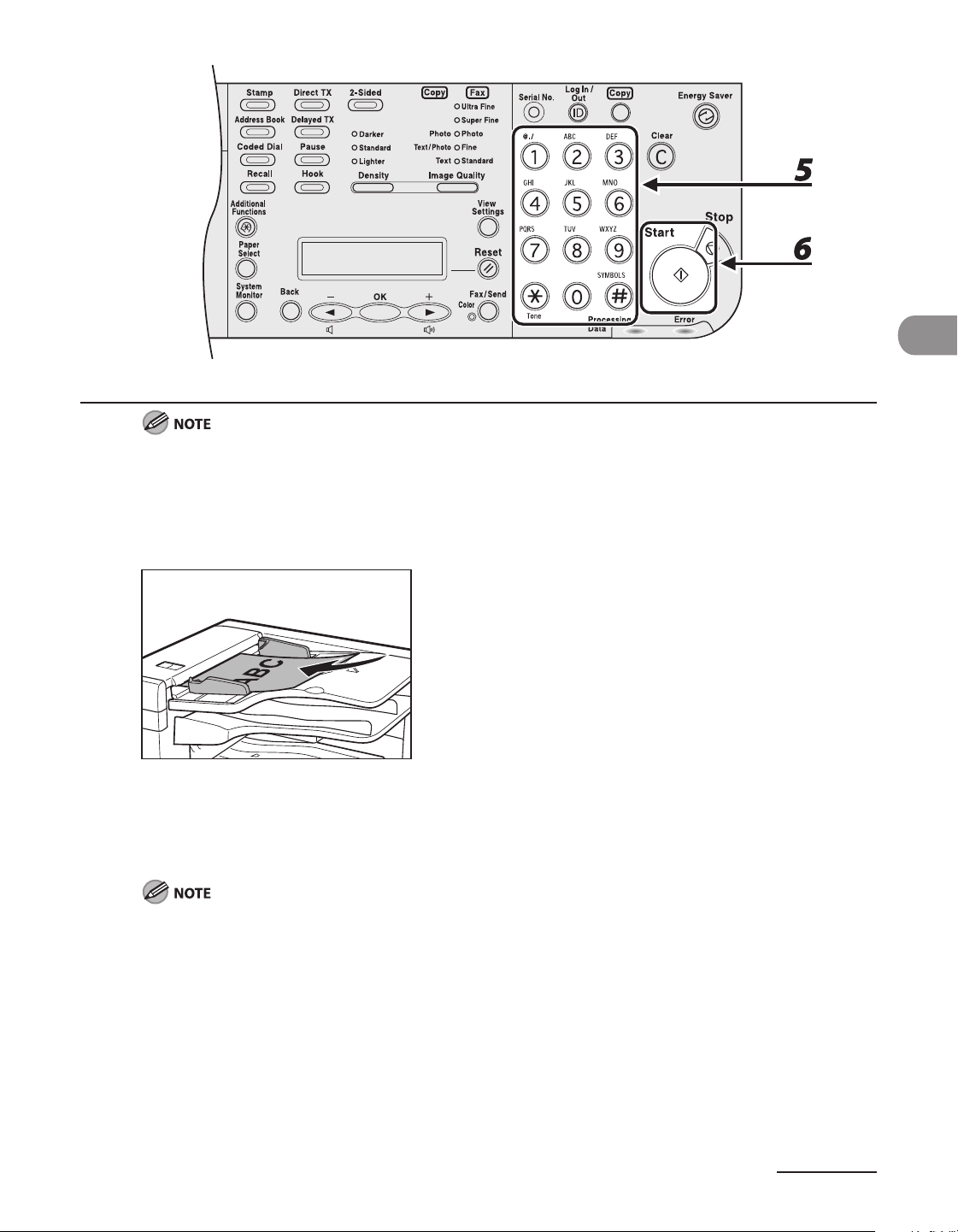
3-17
Copying
When images on 11x17 landscape documents are orientated horizontally, select <BOOK TYPE> if the
images on the front and back sides of the document have opposite orientations. Select <CALENDAR
TYPE> if images on the front and back sides of a document have the same orientations.
If using the LASER CLASS 810:
When images in documents are set horizontally as illustrated above, select the desired output.
<BOOK TYPE>: Select if images on the back side of a document have the same top-bottom orientations
as the front side of the document.
<CALENDAR TYPE>: Select if images on the front and back sides of a document have opposite top-
bottom orientations.
For landscape documents, such as LTRR documents, with an image set vertically, the images on the
front and back sides of the document will have opposite top-bottom orientations when <BOOK TYPE>
is selected. When <CALENDAR TYPE> is selected, the front and back sides of the document will have the
same top-bottom orientations.
5 Use the numeric keys to enter the desired copy quantity (1 to 99).
6 Press [Start].
To cancel all settings, press [Stop].
●
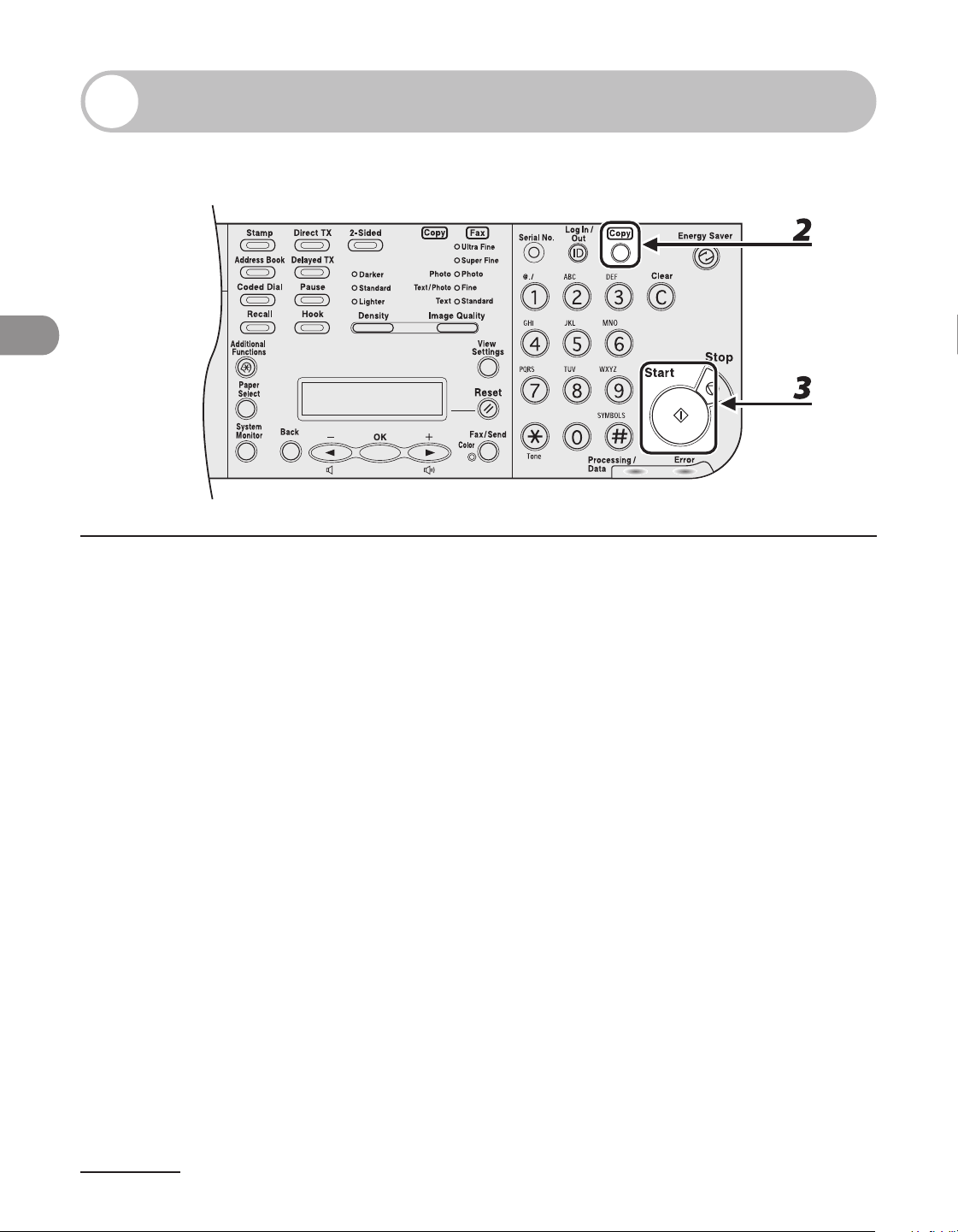
Copying
3-18
Reserved Copy
You can make copy settings and scan documents even if the machine is currently
printing. The scanned documents are processed after the current job is complete.
1 Set documents.
2 Press [Copy].
If using the LASER CLASS 810, you can switch to the Copy mode by pressing [Copy/Fax].
3 Set the desired copy mode and quantity (1 to 99), then press [Start].
You can reserve up to 5 copy jobs, with different settings for each job.
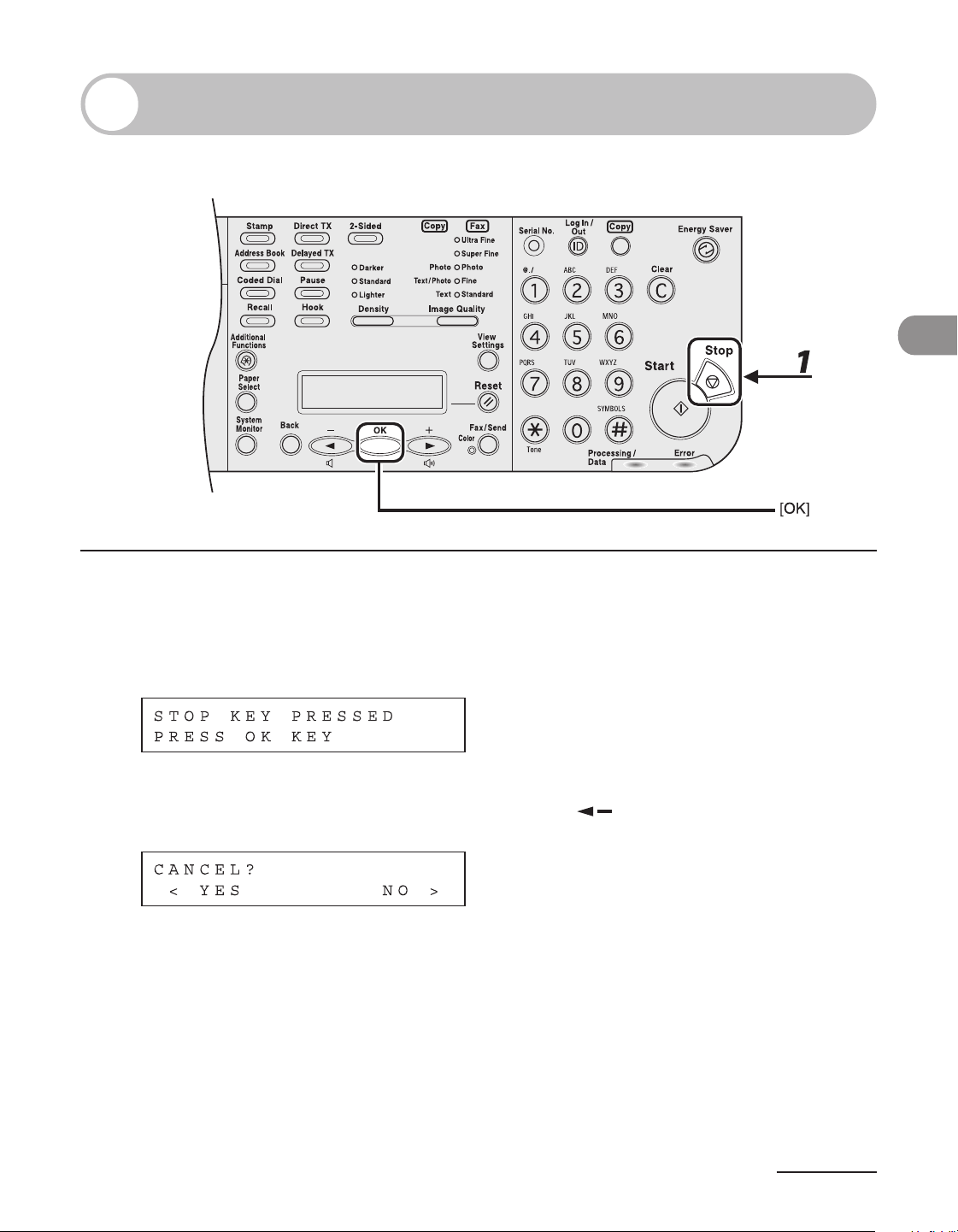
3-19
Copying
Canceling Copy Jobs
Cancel an ongoing job as follows.
1 Press [Stop].
2 When the <STOP KEY PRESSED> message appears, press [OK].
When the <CANCEL?> message appears, press [ ] to select <YES>.
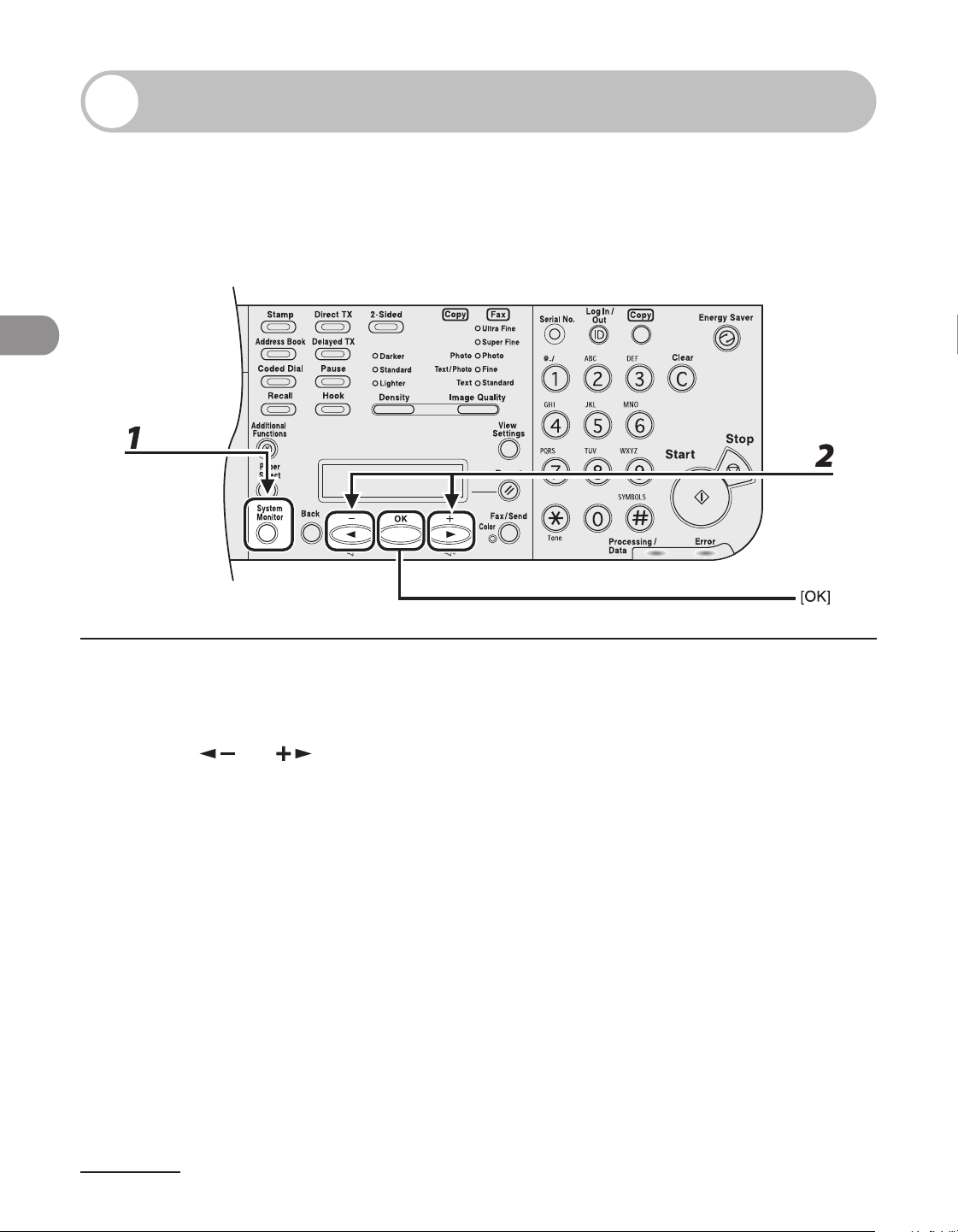
Copying
3-20
Checking and Deleting Jobs
System monitor enables you to monitor the status of the copy jobs currently being
processed.
Checking and Deleting Copy Jobs
1 Press [System Monitor] repeatedly to select <COPY STATUS>, then press [OK].
2 Press [ ] or [ ] to scroll through the job list, and check the status of the
copy jobs.
If you want to delete the job, go to step 3. Otherwise, press [Stop] to return to the standby mode.
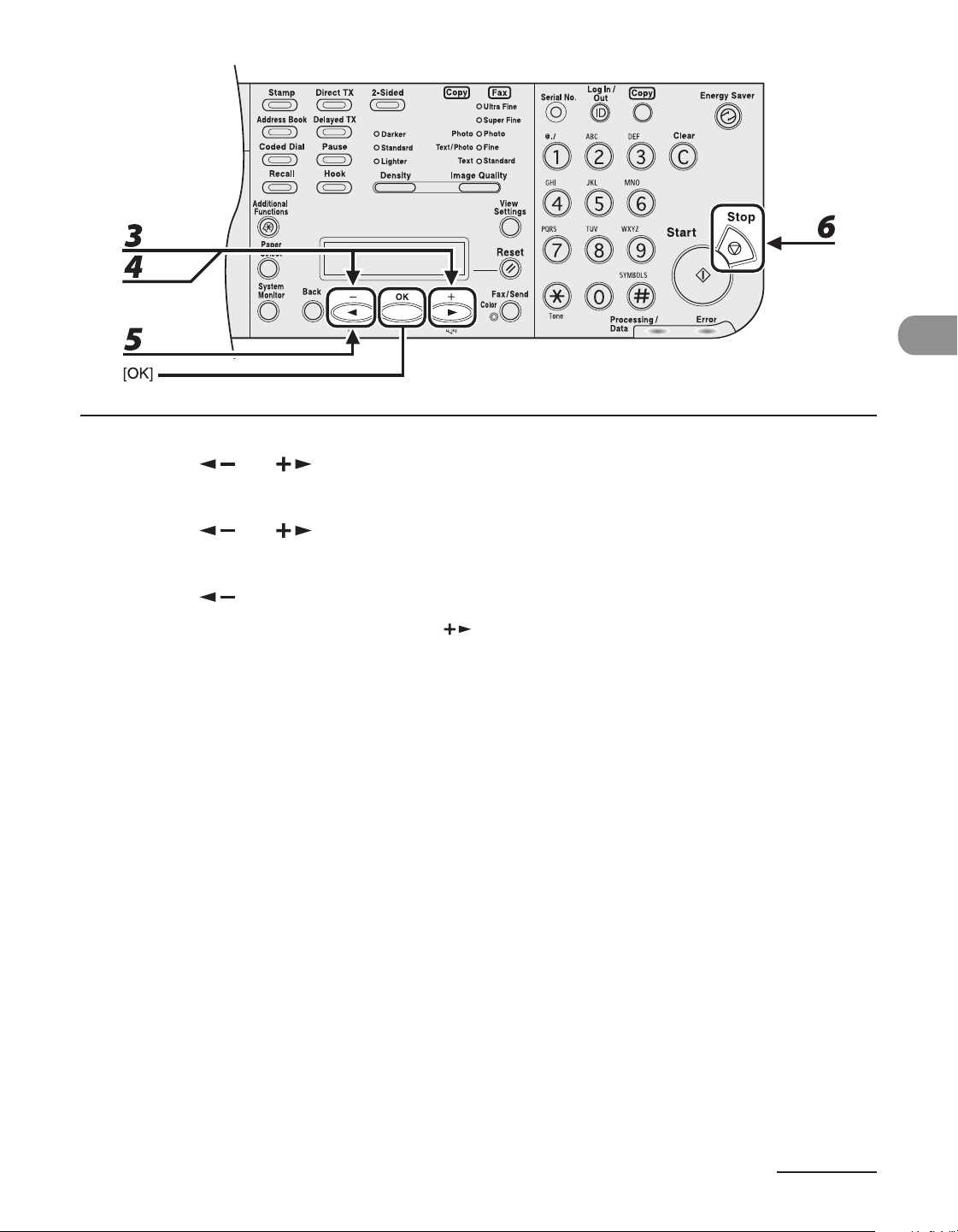
3-21
Copying
3 Press [ ] or [ ] to select the desired job, then press [OK].
4 Press [ ] or [ ] to select <CANCEL>, then press [OK].
5 Press [ ] to select <YES>.
If you do not want to cancel the job, press [ ] to select <NO>.
6 Press [Stop] to return to the standby mode.

Copying
3-22

Sending Documents
4
Sending
Documents
Basic Sending Method ∙∙∙∙∙∙∙∙∙∙∙∙∙∙∙∙∙∙∙∙∙∙∙∙∙∙∙∙∙∙∙∙∙∙∙∙∙∙∙∙∙∙∙∙∙∙∙∙∙∙∙∙∙∙∙∙∙∙∙∙∙∙∙∙4-3
Scan Settings ∙∙∙∙∙∙∙∙∙∙∙∙∙∙∙∙∙∙∙∙∙∙∙∙∙∙∙∙∙∙∙∙∙∙∙∙∙∙∙∙∙∙∙∙∙∙∙∙∙∙∙∙∙∙∙∙∙∙∙∙∙∙∙∙∙∙∙∙∙∙∙∙∙∙∙∙∙∙∙4-5
Image Quality (Fax) ∙∙∙∙∙∙∙∙∙∙∙∙∙∙∙∙∙∙∙∙∙∙∙∙∙∙∙∙∙∙∙∙∙∙∙∙∙∙∙∙∙∙∙∙∙∙∙∙∙∙∙∙∙∙∙∙∙∙∙∙∙∙∙∙∙∙∙∙∙∙∙∙∙∙∙∙∙∙ 4-5
Density ∙∙∙∙∙∙∙∙∙∙∙∙∙∙∙∙∙∙∙∙∙∙∙∙∙∙∙∙∙∙∙∙∙∙∙∙∙∙∙∙∙∙∙∙∙∙∙∙∙∙∙∙∙∙∙∙∙∙∙∙∙∙∙∙∙∙∙∙∙∙∙∙∙∙∙∙∙∙∙∙∙∙∙∙∙∙∙∙∙∙∙∙∙∙∙∙∙∙∙∙∙ 4-7
Send Settings (E-Mail/I-Fax/File Server) (LASER CLASS 830i
Only) ∙∙∙∙∙∙∙∙∙∙∙∙∙∙∙∙∙∙∙∙∙∙∙∙∙∙∙∙∙∙∙∙∙∙∙∙∙∙∙∙∙∙∙∙∙∙∙∙∙∙∙∙∙∙∙∙∙∙∙∙∙∙∙∙∙∙∙∙∙∙∙∙∙∙∙∙∙∙∙∙∙∙∙∙∙∙∙∙∙∙∙∙∙∙∙∙∙∙∙∙∙∙∙∙∙∙ 4-8
Storing/Editing Address Book ∙∙∙∙∙∙∙∙∙∙∙∙∙∙∙∙∙∙∙∙∙∙∙∙∙∙∙∙∙∙∙∙∙∙∙∙∙∙∙∙∙∙∙∙∙∙∙∙∙ 4-12
Storing/Editing One-Touch Keys/Coded Dial Codes ∙∙∙∙∙∙∙∙∙∙∙∙∙4-13
Storing Favorites Buttons (LASER CLASS 830i Only) ∙∙∙∙∙∙∙∙∙∙∙∙∙∙4-30
Storing/Editing Group Addresses ∙∙∙∙∙∙∙∙∙∙∙∙∙∙∙∙∙∙∙∙∙∙∙∙∙∙∙∙∙∙∙∙∙∙∙∙∙∙∙∙∙∙∙∙∙∙∙∙∙4-33
Specifying Destinations ∙∙∙∙∙∙∙∙∙∙∙∙∙∙∙∙∙∙∙∙∙∙∙∙∙∙∙∙∙∙∙∙∙∙∙∙∙∙∙∙∙∙∙∙∙∙∙∙∙∙∙∙∙∙∙∙∙∙∙ 4-44
Using One-Touch Keys ∙∙∙∙∙∙∙∙∙∙∙∙∙∙∙∙∙∙∙∙∙∙∙∙∙∙∙∙∙∙∙∙∙∙∙∙∙∙∙∙∙∙∙∙∙∙∙∙∙∙∙∙∙∙∙∙∙∙∙∙∙∙∙∙∙∙∙∙∙∙4-44
Using Coded Dial Codes ∙∙∙∙∙∙∙∙∙∙∙∙∙∙∙∙∙∙∙∙∙∙∙∙∙∙∙∙∙∙∙∙∙∙∙∙∙∙∙∙∙∙∙∙∙∙∙∙∙∙∙∙∙∙∙∙∙∙∙∙∙∙∙∙∙∙4-46
Using Group Addresses ∙∙∙∙∙∙∙∙∙∙∙∙∙∙∙∙∙∙∙∙∙∙∙∙∙∙∙∙∙∙∙∙∙∙∙∙∙∙∙∙∙∙∙∙∙∙∙∙∙∙∙∙∙∙∙∙∙∙∙∙∙∙∙∙∙∙∙∙4-48
Using Address Book Key ∙∙∙∙∙∙∙∙∙∙∙∙∙∙∙∙∙∙∙∙∙∙∙∙∙∙∙∙∙∙∙∙∙∙∙∙∙∙∙∙∙∙∙∙∙∙∙∙∙∙∙∙∙∙∙∙∙∙∙∙∙∙∙∙∙∙4-50
Using Favorites Buttons (LASER CLASS 830i Only) ∙∙∙∙∙∙∙∙∙∙∙∙∙∙∙∙∙4-54
Manual Sending (Fax) ∙∙∙∙∙∙∙∙∙∙∙∙∙∙∙∙∙∙∙∙∙∙∙∙∙∙∙∙∙∙∙∙∙∙∙∙∙∙∙∙∙∙∙∙∙∙∙∙∙∙∙∙∙∙∙∙∙∙∙∙∙∙∙ 4-56
Sending Two-Sided Documents ∙∙∙∙∙∙∙∙∙∙∙∙∙∙∙∙∙∙∙∙∙∙∙∙∙∙∙∙∙∙∙∙∙∙∙∙∙∙∙∙∙∙∙∙∙∙ 4-59
Direct Sending ∙∙∙∙∙∙∙∙∙∙∙∙∙∙∙∙∙∙∙∙∙∙∙∙∙∙∙∙∙∙∙∙∙∙∙∙∙∙∙∙∙∙∙∙∙∙∙∙∙∙∙∙∙∙∙∙∙∙∙∙∙∙∙∙∙∙∙∙∙∙∙∙∙∙ 4-63
Broadcasting ∙∙∙∙∙∙∙∙∙∙∙∙∙∙∙∙∙∙∙∙∙∙∙∙∙∙∙∙∙∙∙∙∙∙∙∙∙∙∙∙∙∙∙∙∙∙∙∙∙∙∙∙∙∙∙∙∙∙∙∙∙∙∙∙∙∙∙∙∙∙∙∙∙∙∙∙∙ 4-65
Delayed Sending ∙∙∙∙∙∙∙∙∙∙∙∙∙∙∙∙∙∙∙∙∙∙∙∙∙∙∙∙∙∙∙∙∙∙∙∙∙∙∙∙∙∙∙∙∙∙∙∙∙∙∙∙∙∙∙∙∙∙∙∙∙∙∙∙∙∙∙∙∙∙ 4-67
Job Recall/Redial ∙∙∙∙∙∙∙∙∙∙∙∙∙∙∙∙∙∙∙∙∙∙∙∙∙∙∙∙∙∙∙∙∙∙∙∙∙∙∙∙∙∙∙∙∙∙∙∙∙∙∙∙∙∙∙∙∙∙∙∙∙∙∙∙∙∙∙∙∙∙ 4-69
Setting Up and Using the Optional Stamp Feature ∙∙∙∙∙∙∙∙∙∙∙∙∙∙∙ 4-71
Setting Up the Stamp Action ∙∙∙∙∙∙∙∙∙∙∙∙∙∙∙∙∙∙∙∙∙∙∙∙∙∙∙∙∙∙∙∙∙∙∙∙∙∙∙∙∙∙∙∙∙∙∙∙∙∙∙∙∙∙∙∙∙4-71
Turning the Stamp Feature ON/OFF ∙∙∙∙∙∙∙∙∙∙∙∙∙∙∙∙∙∙∙∙∙∙∙∙∙∙∙∙∙∙∙∙∙∙∙∙∙∙∙∙∙∙∙∙4-73
TX Document Archiving ∙∙∙∙∙∙∙∙∙∙∙∙∙∙∙∙∙∙∙∙∙∙∙∙∙∙∙∙∙∙∙∙∙∙∙∙∙∙∙∙∙∙∙∙∙∙∙∙∙∙∙∙∙∙∙∙∙∙∙ 4-75
Before You Set Up the TX Document Archiving ∙∙∙∙∙∙∙∙∙∙∙∙∙∙∙∙∙∙∙∙∙∙4-75
Turning the TX Document Archiving ON ∙∙∙∙∙∙∙∙∙∙∙∙∙∙∙∙∙∙∙∙∙∙∙∙∙∙∙∙∙∙∙∙∙∙∙4-76
Setting Automatic Redialing (Fax) ∙∙∙∙∙∙∙∙∙∙∙∙∙∙∙∙∙∙∙∙∙∙∙∙∙∙∙∙∙∙∙∙∙∙∙∙∙∙∙∙∙∙ 4-78

Sending Documents
4-2
Switching Temporarily to Tone Dialing ∙∙∙∙∙∙∙∙∙∙∙∙∙∙∙∙∙∙∙∙∙∙∙∙∙∙∙∙∙∙∙∙∙∙∙ 4-80
Checking Dialing Line ∙∙∙∙∙∙∙∙∙∙∙∙∙∙∙∙∙∙∙∙∙∙∙∙∙∙∙∙∙∙∙∙∙∙∙∙∙∙∙∙∙∙∙∙∙∙∙∙∙∙∙∙∙∙∙∙∙∙∙∙∙∙ 4-82
Dialing an Overseas Number (With Pauses) ∙∙∙∙∙∙∙∙∙∙∙∙∙∙∙∙∙∙∙∙∙∙∙∙∙∙∙ 4-83
Canceling TX Jobs ∙∙∙∙∙∙∙∙∙∙∙∙∙∙∙∙∙∙∙∙∙∙∙∙∙∙∙∙∙∙∙∙∙∙∙∙∙∙∙∙∙∙∙∙∙∙∙∙∙∙∙∙∙∙∙∙∙∙∙∙∙∙∙∙∙∙∙∙∙ 4-85
Checking and Deleting Jobs ∙∙∙∙∙∙∙∙∙∙∙∙∙∙∙∙∙∙∙∙∙∙∙∙∙∙∙∙∙∙∙∙∙∙∙∙∙∙∙∙∙∙∙∙∙∙∙∙∙∙∙∙ 4-86
Checking Transmission Results ∙∙∙∙∙∙∙∙∙∙∙∙∙∙∙∙∙∙∙∙∙∙∙∙∙∙∙∙∙∙∙∙∙∙∙∙∙∙∙∙∙∙∙∙∙∙∙∙∙∙∙∙∙4-86
Checking and Deleting Sending Documents Stored in
Memory ∙∙∙∙∙∙∙∙∙∙∙∙∙∙∙∙∙∙∙∙∙∙∙∙∙∙∙∙∙∙∙∙∙∙∙∙∙∙∙∙∙∙∙∙∙∙∙∙∙∙∙∙∙∙∙∙∙∙∙∙∙∙∙∙∙∙∙∙∙∙∙∙∙∙∙∙∙∙∙∙∙∙∙∙∙∙∙∙∙∙∙∙∙∙∙∙∙4-87
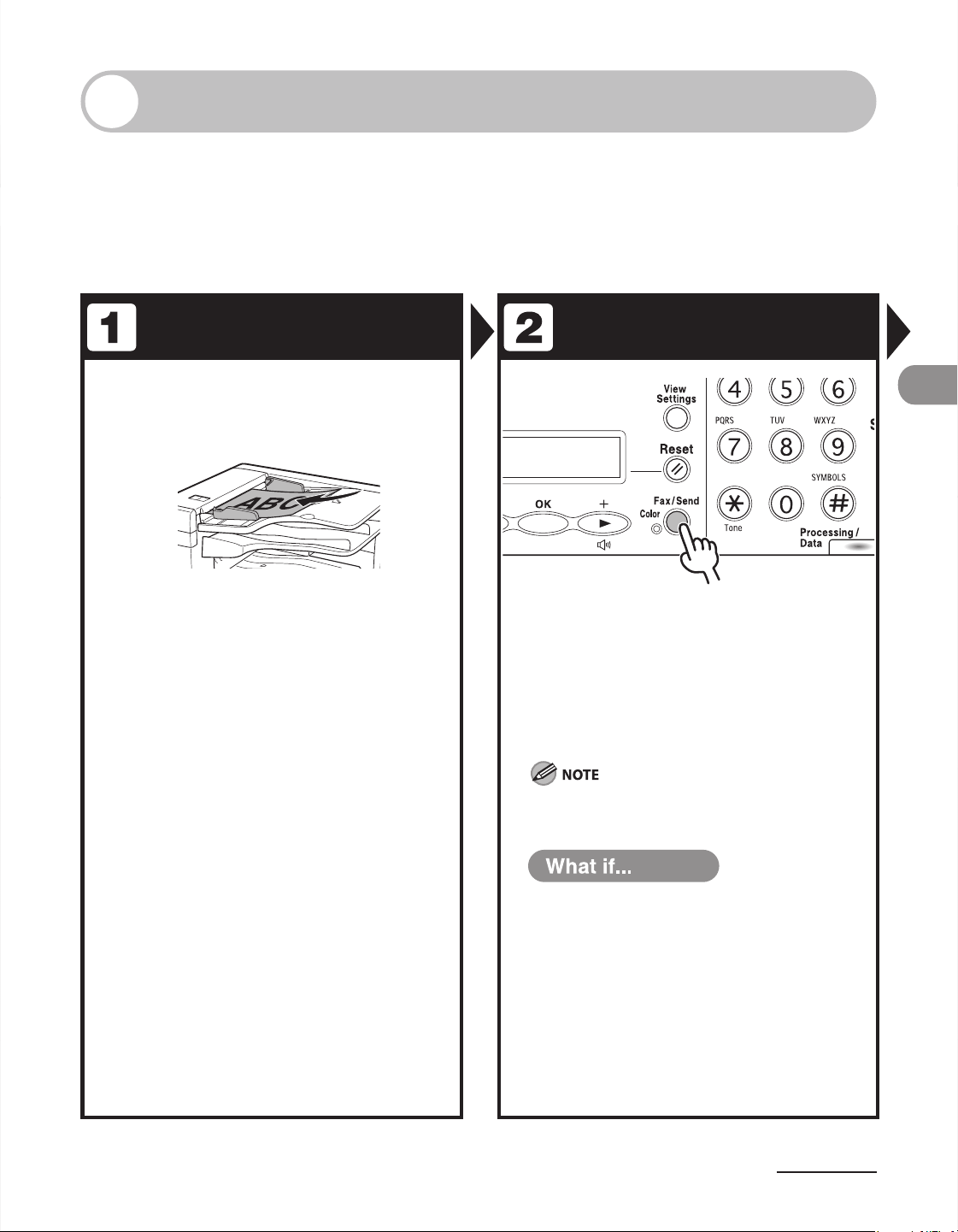
4-3
Sending Documents
Basic Sending Method
Follow this procedure to send faxes, e-mails and I-faxes, or to send documents to a file
server (For the LASER CLASS 810, only the Fax mode is available.).
For network connection, see “Set the Machine for Network Usage,” in the Starter
Guide.
For advanced sending features, see Reference Guide > Send/Receive.
Set a Document
Select the Sending
Method
Load the document in the ADF.
For documents you can send, see “Document
Requirements,” on p.
2-2.
Press [Fax/Send] repeatedly to select
the sending method, then press [OK].
If using the LASER CLASS 810, you can switch to the Fax
mode by pressing [Copy/Fax].
When sending color images, always specify the
sending method before specifying the destination.
You want to send document to a file
server:
You can specify the file server addresses
only with one-touch keys, coded dial
codes, or [Address Book] key. See
“Specifying Destinations,” on p. 4-44.
You want to adjust the image quality
and density :
See “Scan Settings,” on p. 4-5.
●
●
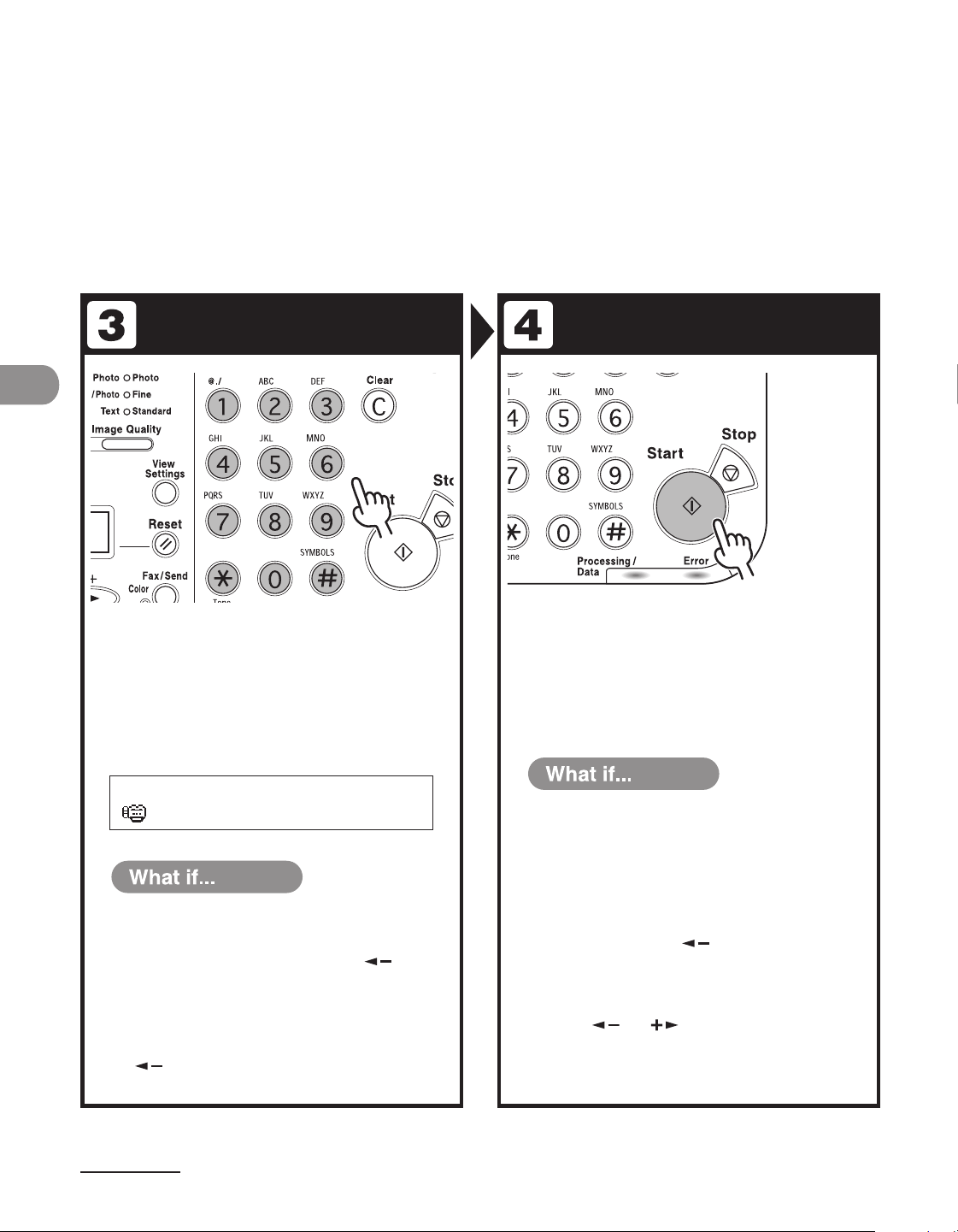
Sending Documents
4-4
Specify the Destination Send the Document
Specify the fax number or e-mail, I-fax
address with the numeric keys.
You can also specify the fax number or e-mail addresses
with one-touch keys, coded dial codes, or [Address Book]
key. (See “Specifying Destinations,” on p. 4-44.)
Press [Start].
= 1 2 3
Ex.
F A X N U M B E R
You enter a wrong number when
specifying a fax number:
Go back to the wrong digit with [
].
You enter a wrong character when
specifying an e-mail or I-fax address:
Go back to the wrong character with
[ ], then press [Clear]. Or press and hold
[Clear] to delete the entire entry.
●
●
You want to cancel sending:
Press [Stop] on the operation panel.
When the <STOP KEY PRESSED> message
appears, press [OK].
When the <CANCEL?> message appears,
select <YES> with [
].
If <ORIGINAL SIZE> is displayed after
you press [Start]:
Press [ ] or [ ] to specify the original
size.
●
●
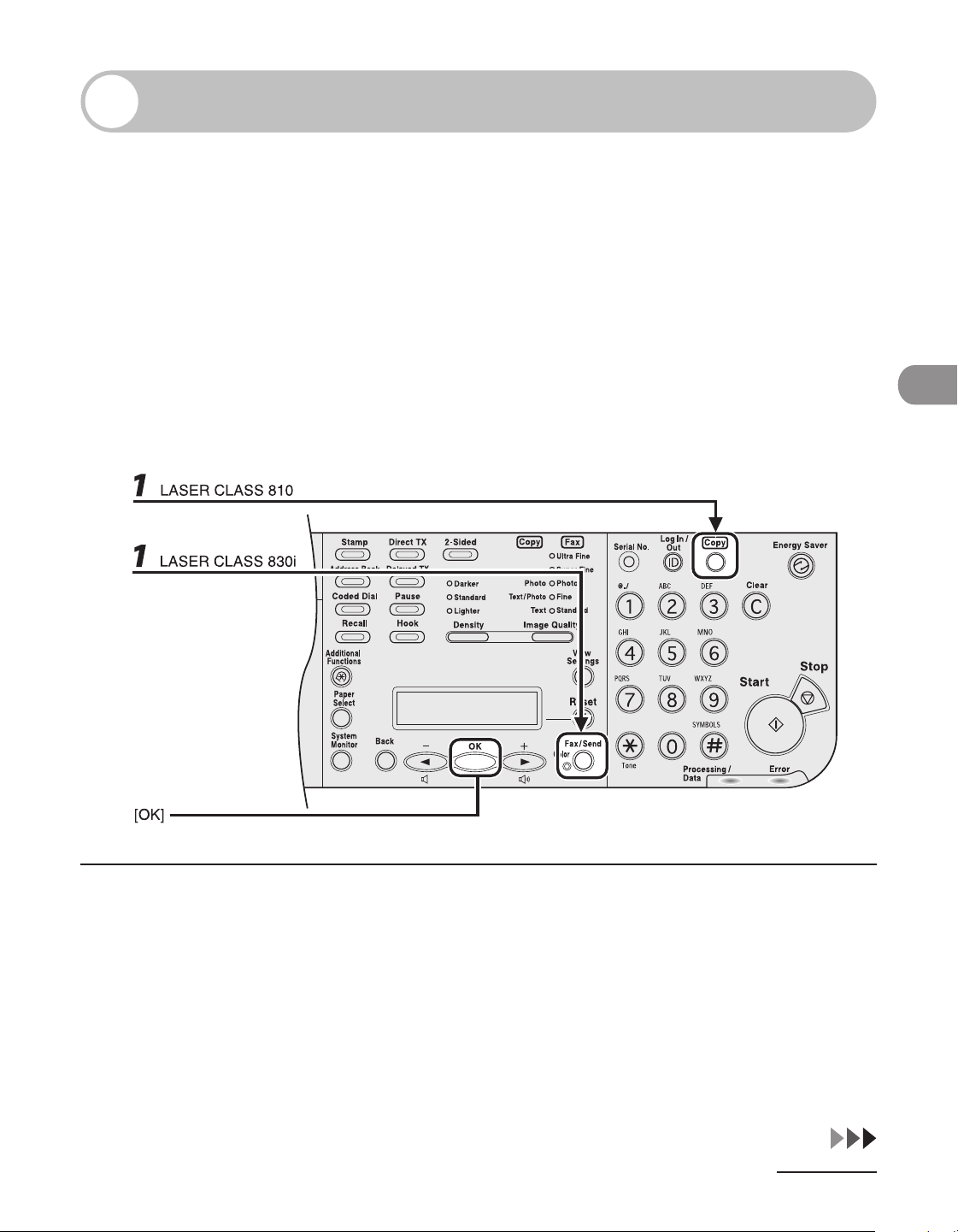
4-5
Sending Documents
Scan Settings
You can adjust the image quality (Fax) and density of the document you send.
The higher image quality you set, the better the output will be, but the longer the
transmission will take.
When you send e-mail, I-fax or send documents to a file server, you can optionally set
the file format, if multiple images are sent as separate files or a single file, resolution,
and original type according to the type of document you are sending (LASER CLASS
830i Only). (See “Send Settings (E-Mail/I-Fax/File Server) (LASER CLASS 830i Only) ,” on
p.
4-8.)
Image Quality (Fax)
1 Press [Fax/Send] to select <FAX>, then press [OK].
If using the LASER CLASS 810, you can switch to the Fax mode by pressing [Copy/Fax].
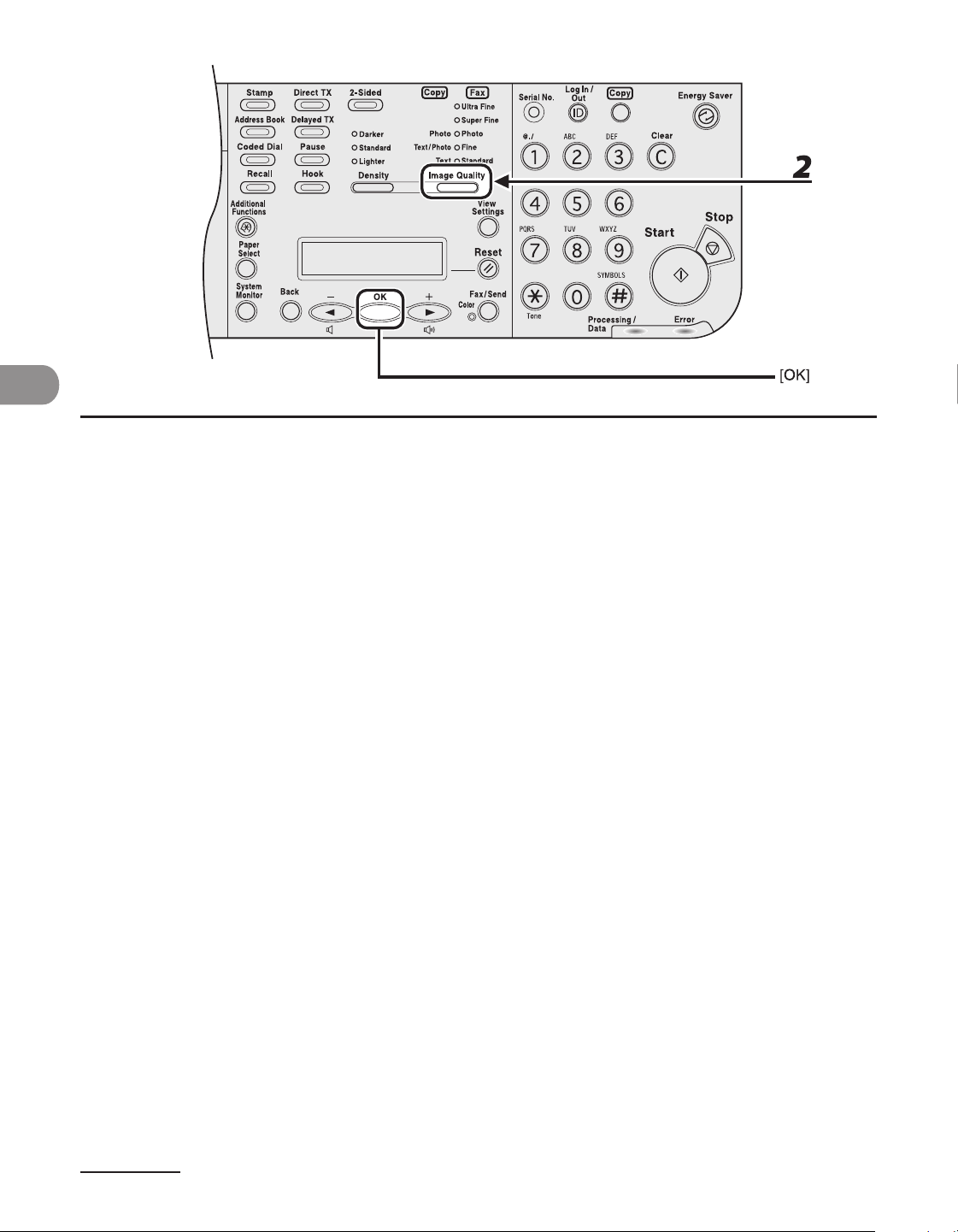
Sending Documents
4-6
2 Press [Image Quality] repeatedly to select the resolution, then press [OK].
<Ultra Fine>: for documents that contain fine print and images (the resolution is eight times that of
<Standard>). (400 x 400 dpi)
<Super Fine>: for documents that contain fine print and images (the resolution is four times that of
<Standard>). (200 x 400 dpi)
<Photo>: for documents that contain photographs (the resolution is twice that of <Standard>). (200 x
200 dpi)
<Fine>: for fine-print documents (the resolution is twice that of <Standard>). (200 x 200 dpi)
<Standard>: for most text-only documents. (200 x 100 dpi)
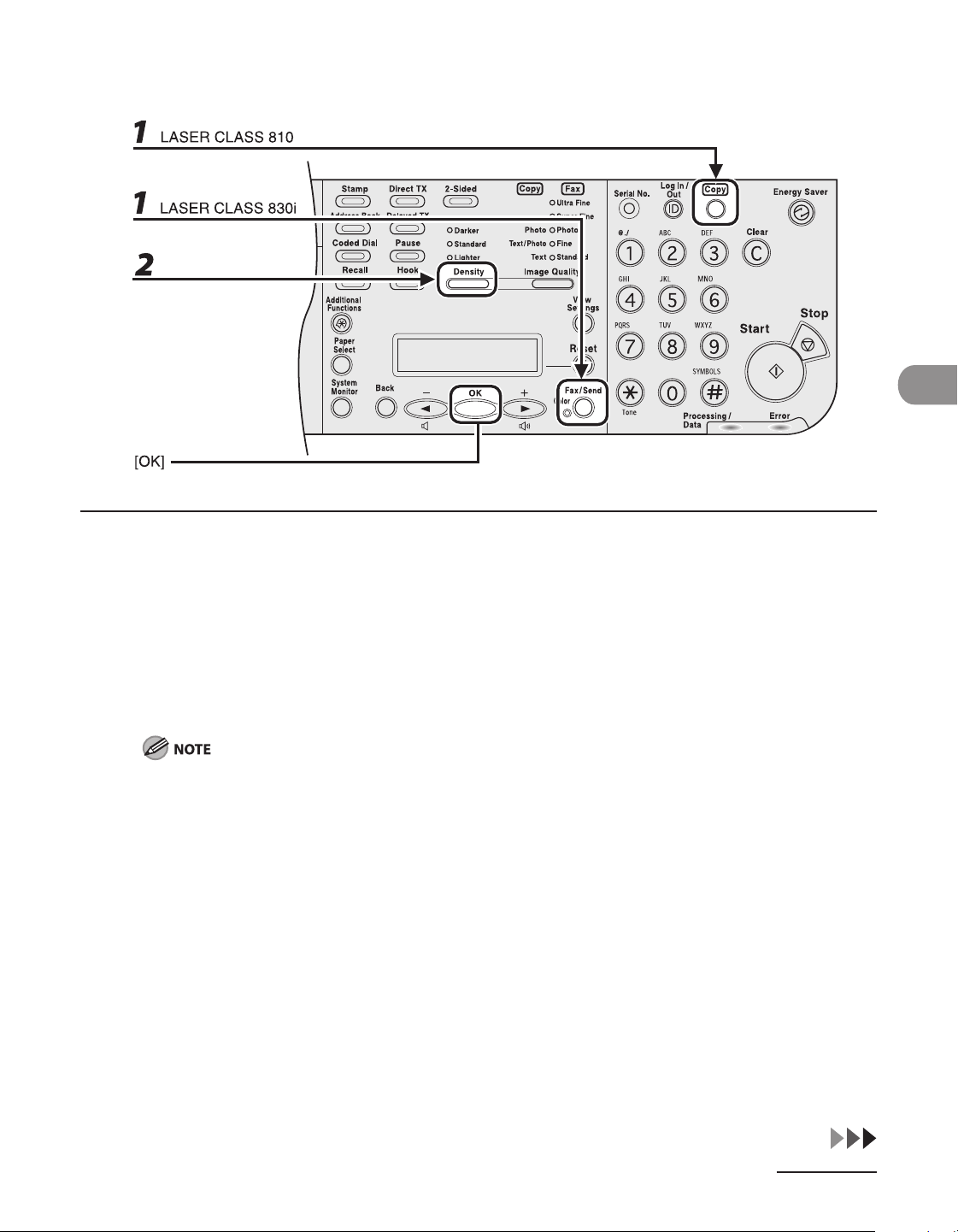
4-7
Sending Documents
Density
1 Press [Fax/Send] repeatedly to select the sending method, then press [OK].
If using the LASER CLASS 810, you can switch to the Fax mode by pressing [Copy/Fax].
2 Press [Density] repeatedly to select the density.
<Darker>: to make light documents darker.
<Standard>: Suitable for copying regular originals.
<Lighter>: to make dark documents lighter.
These settings return to the default values after all documents are scanned. If you want to keep the
settings, set the density as following;
[Additional Functions]
→ <TX/RX SETTINGS> → <TX/RX COMMON SET.> → <TX SETTINGS> →
<SCANNING DENSITY> (See “Setting Menu,” on p. 12-5.)
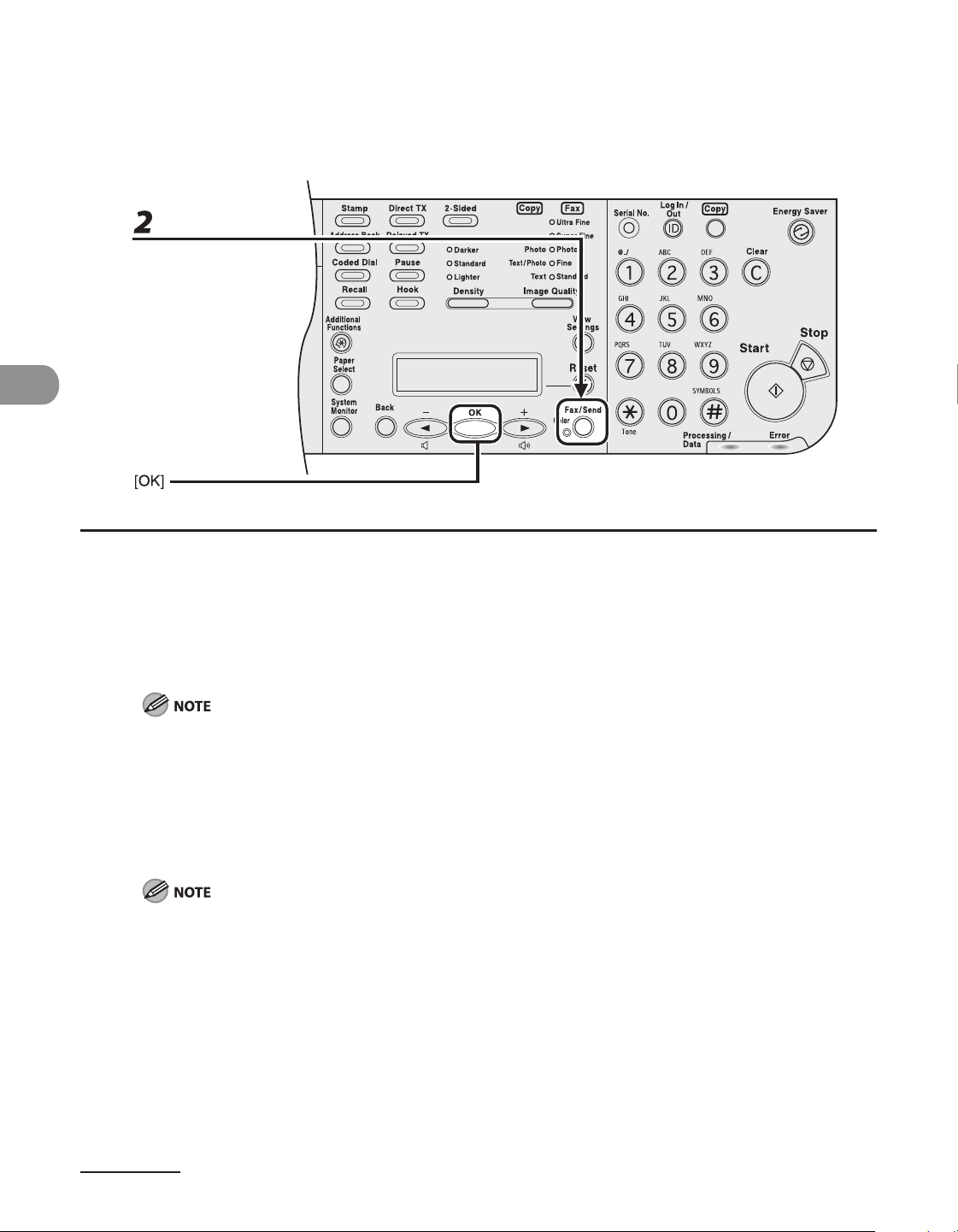
Sending Documents
4-8
Send Settings (E-Mail/I-Fax/File Server) (LASER CLASS 830i Only)
You can optionally set the file format, if multiple images are sent as separate files or a single
file, resolution, and original type after specifying the e-mail or file server address.
1 Set documents.
2 Press [Fax/Send] repeatedly to select the sending method, then press [OK].
To send documents to a file server, select any sending method.
If you want to send color images to a file server or attached to an e-mail message, select <E-MAIL:
COLOR> as a sending method.
When sending color images, always specify the sending method before specifying the destination.
3 Specify the destination.
For instructions on specifying destinations, see “Specifying Destinations,” on p. 4-44.
You can specify the file server addresses only with one-touch keys, coded dial codes, or [Address Book].
–
–
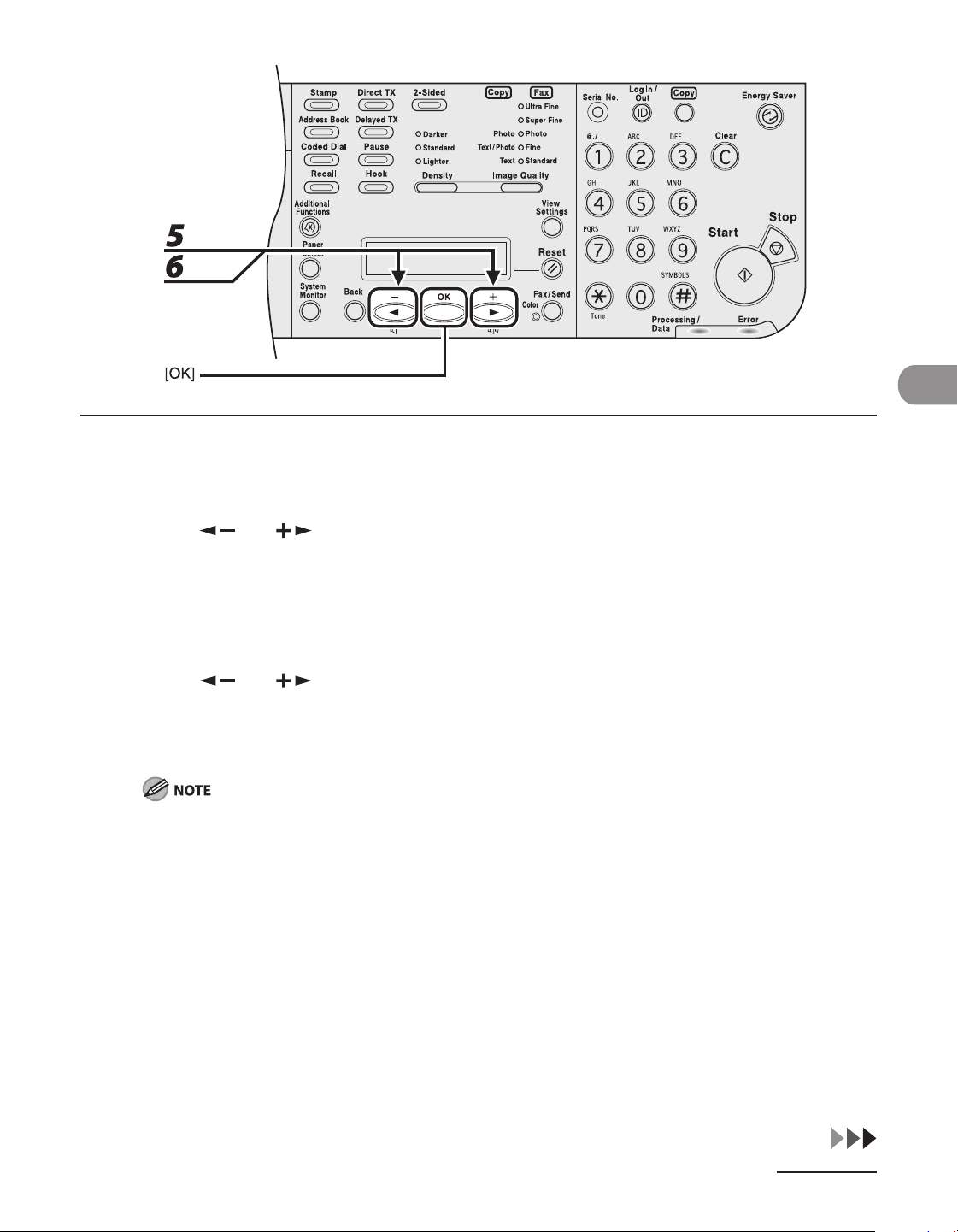
4-9
Sending Documents
4 Press [OK] repeatedly until <FILE FORMAT> is displayed.
5 Press [ ] or [ ] to select the file format, then press [OK].
E-mail (B&W): <PDF>, <TIFF (B&W)>
E-mail (Color): <JPEG>, <PDF (COMPACT)>
File server (B&W): <PDF>, <TIFF (B&W)>
File server (Color): <JPEG>, <PDF (COMPACT)>
6 Press [ ] or [ ] to select <ON> or <OFF> for <DIVIDE INTO PAGES>, then
press [OK].
<OFF>: Sends multiple images as a single file without dividing them.
<ON>: Separates multiple images and send them as separate files
If you have selected <JPEG> in step 5, this setting is not available.
<DIVIDE INTO PAGES> is automatically set to <ON> when sending documents in JPEG format.
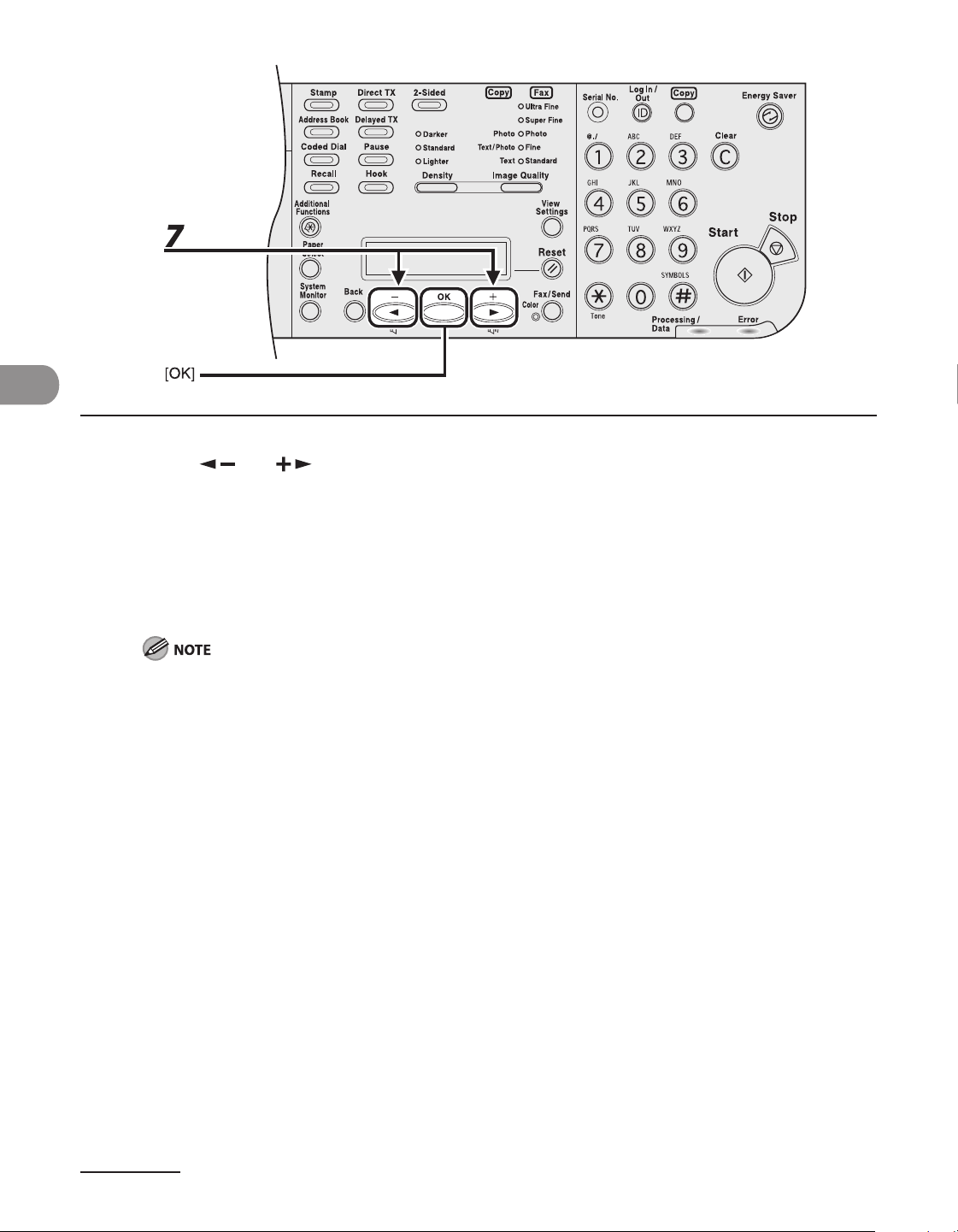
Sending Documents
4-10
7 Press [ ] or [ ] to select the resolution, then press [OK].
E-mail (B&W): <200X200dpi>, <300X300dpi>, <400X400dpi>, <600X600dpi>, <150X150dpi>,
<200X100dpi>
E-mail (Color): <200X200dpi>, <300X300dpi>, <100X100dpi>, <150X150dpi>
I-fax: <200X200dpi>, <200X100dpi>
File server (B&W): <200X200dpi>, <300X300dpi>, <400X400dpi>, <600X600dpi>, <150X150dpi>,
<200X100dpi>
File server (Color): <200X200dpi>, <300X300dpi>, <100X100dpi>, <150X150dpi>
If <PDF (COMPACT)> is selected as the file format, only <300X300dpi> can be selected for sending color
images attached to an e-mail message.
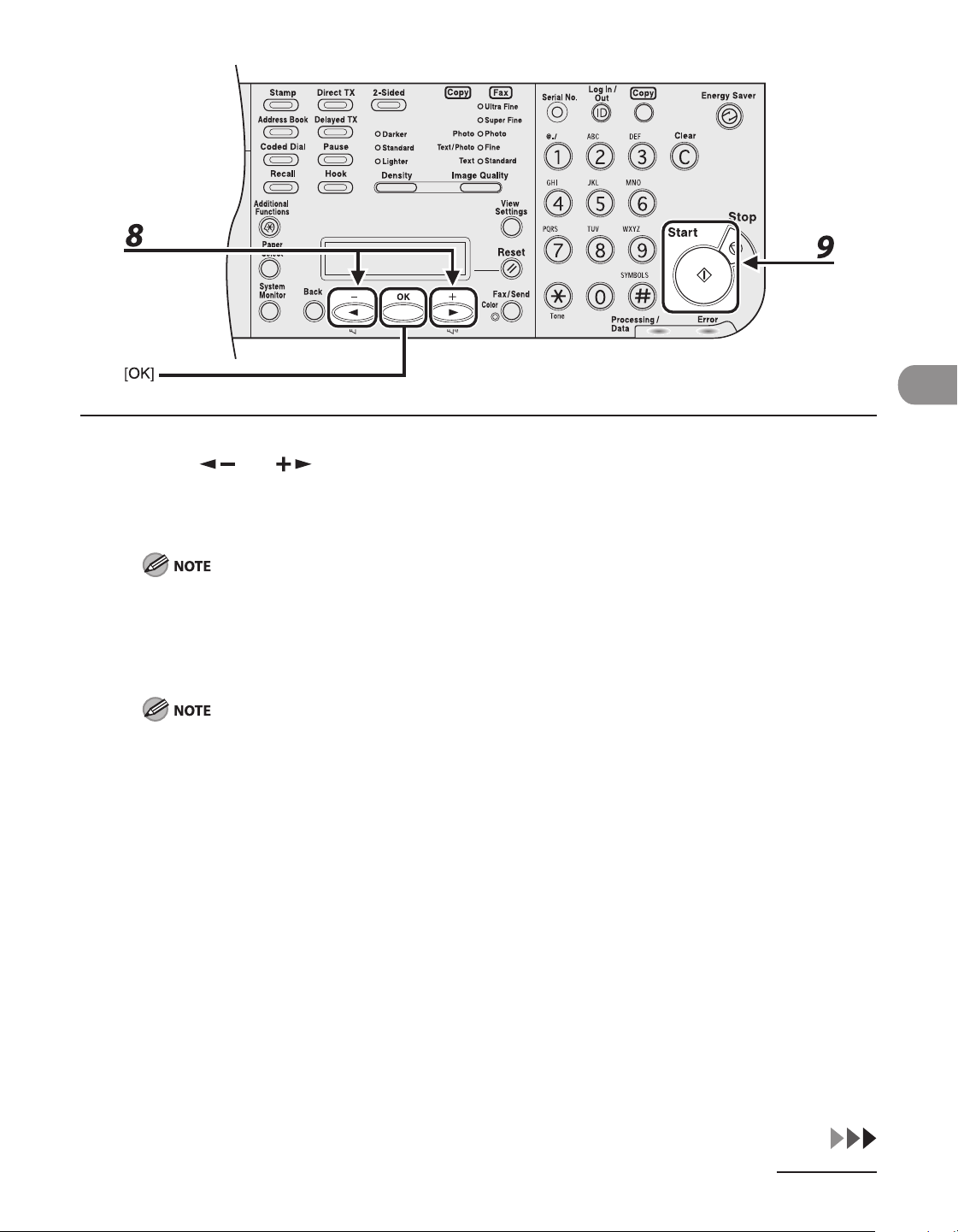
4-11
Sending Documents
8 Press [ ] or [ ] to select the original type, then press [OK].
<TEXT/PHOTO>: For documents that contain text and photos.
<TEXT>: For text documents.
<PHOTO>: For documents that contain fine text or photos.
If you have selected <PDF (COMPACT)> as the file format in step 5, the original type is automatically set
to <TEXT/PHOTO>. Skip to step 9.
9 Press [Start].
When <TIME OUT> is set to <ON> in <TX SETTINGS> in <FAX SETTINGS> in <TX/RX SETTINGS>, and if
you have specified the destination by any other method than using numeric keys, the machine starts
scanning automatically without pressing [Start], after the preset time for this setting is elapsed.
You can set the document’s name, a subject line, message body text, and reply-to address, and e-mail
priority common to all sending jobs. For instructions, see Reference Guide > Send/Receive.
–
–

Sending Documents
4-12
Storing/Editing Address Book
This machine provides you with various ways to specify the destination besides using
the numeric keys. You can register fax numbers, e-mail addresses and file server
addressed to the Address Book. Once you have registered destinations using these
functions, you can specify the destinations by simply pressing one or a combination
of keys:
Using One-Touch Keys (p.
4-44)
You can specify destinations by pressing one-touch keys. You can register up to 80 one-
touch keys, including group addresses.
Using Coded Dial Codes (p.
4-46)
You can specify destinations by pressing [Coded Dial] followed by three-digit code. You
can register up to 120 (LASER CLASS 810)/420 (LASER CLASS 830i) coded dial codes,
including group addresses.
Using Group Addresses (p.
4-48)
You can specify groups of destinations registered in one-touch keys and coded dial
codes. You can register up to 199 (LASER CLASS 810)/499 (LASER CLASS 830i) destinations
in a group.
Using Address Book Key (p.
4-50)
You can specify destinations by pressing [Address Book] and searching a destination from
Address Book.
Using Favorites Buttons (LASER CLASS 830i Only) (p. 4-54)
You can register a destination together with any possible combination of send setteings
in a favorites button. One-touch keys 01 to 04 can be registered as favorites buttons.
Depending on the number of destinations registered, after the main power switch is turned ON, you may not
be able to perform operations using the operation panel when the standby display appears. If this happens,
wait until the machine responses to the key operations.
If <ADD. BOOK PASSWORD> is set in <SYSTEM SETTINGS>, you must enter your password to enter <ADDRESS
BOOK SET.> menu. Enter the password with the numeric keys, then press [OK].
To send documents to a file server, the file server addresses must be registered in one-touch keys or coded
dial codes.
Destinations stored in the Address Book can be exported to your computer as a file, which can be imported
into the machine. For information on exporting the Address Book, see Reference Guide > Settings/
Management from a PC > Import/Export Function.
For easy reference, print out the list of recipients registered in one-touch keys or coded dial codes. (See
“REPORT SETTINGS,” on p. 12-34.)
●
●
●
●
●
–
–
–
–
–
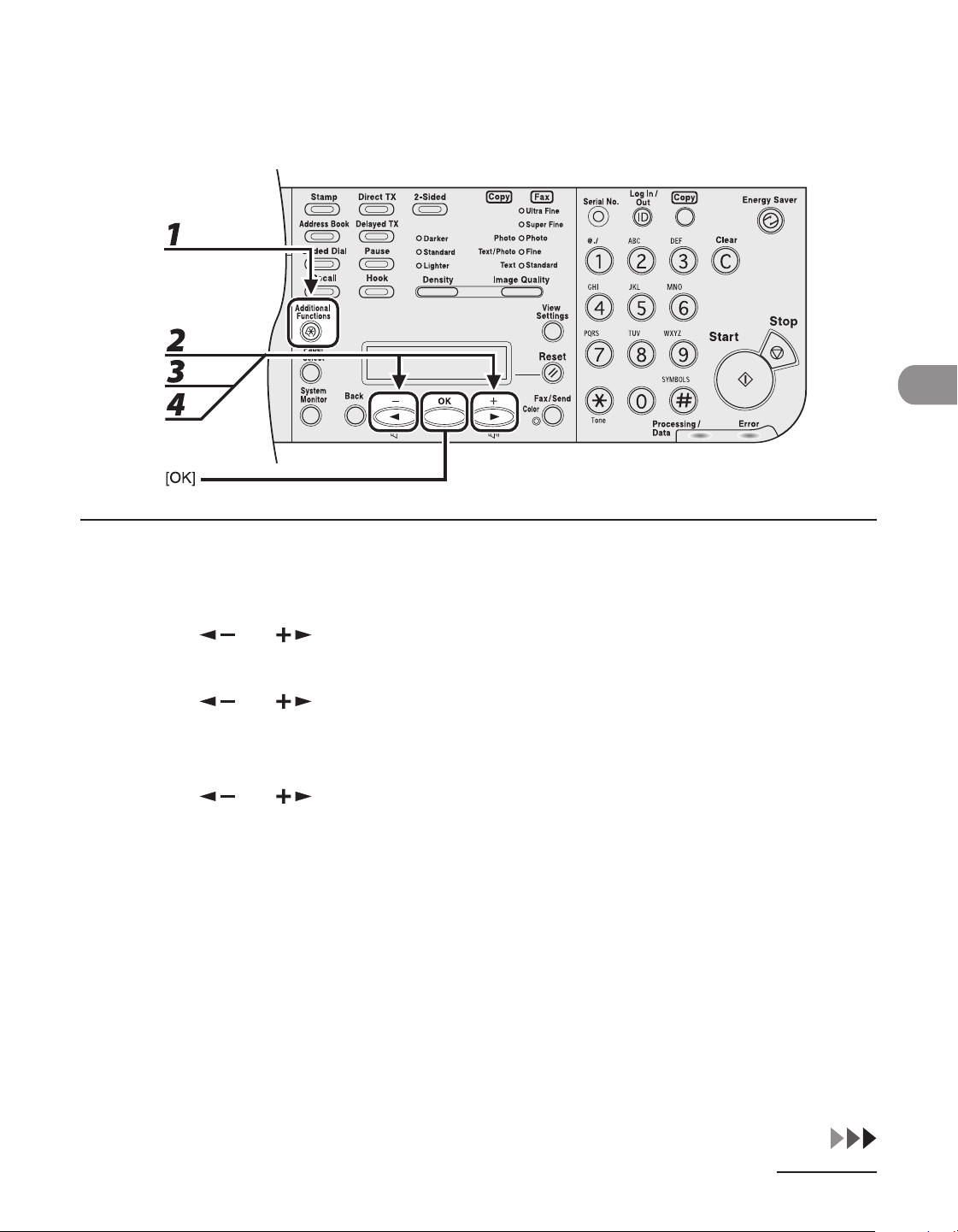
4-13
Sending Documents
Storing/Editing One-Touch Keys/Coded Dial Codes
Registering Fax Numbers
1 Press [Additional Functions].
2 Press [ ] or [ ] to select <ADDRESS BOOK SET.>, then press [OK].
3 Press [ ] or [ ] to select <1-TOUCH SPD DIAL> or <CODED SPD DIAL>, then
press [OK].
4 Press [ ] or [ ] to select a one-touch key (01 to 80) or coded dial code
(LASER CLASS 810: 000 to 119, LASER CLASS 830i: 000 to 419) for which you
want to register the fax number, then press [OK].
You can also select a one-touch key or coded dial code by pressing the corresponding one-touch key, or
[Coded Dial] followed by the desired three-digit code.
●
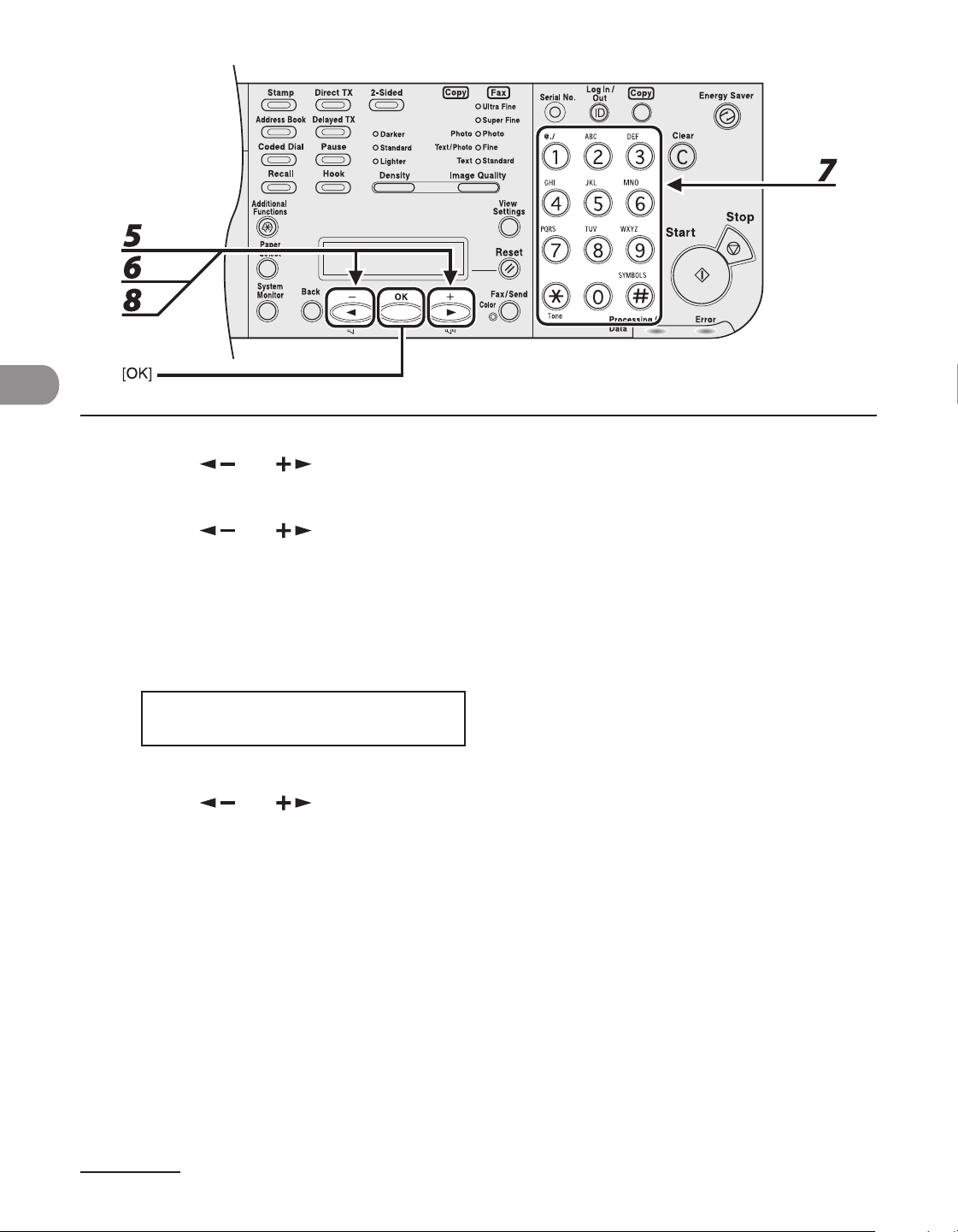
Sending Documents
4-14
5 Press [ ] or [ ] to select <FAX>, then press [OK].
6 Press [ ] or [ ] to select <TEL NUMBER ENTRY>, then press [OK].
7 Enter the fax number you register (max. 120 digits, including spaces and
pauses) with the numeric keys, then press [OK].
0 1 2 X X X X X X X _
T E L N U M B E R E N T R Y
Ex.
8 Press [ ] or [ ] to select <NAME>, then press [OK].
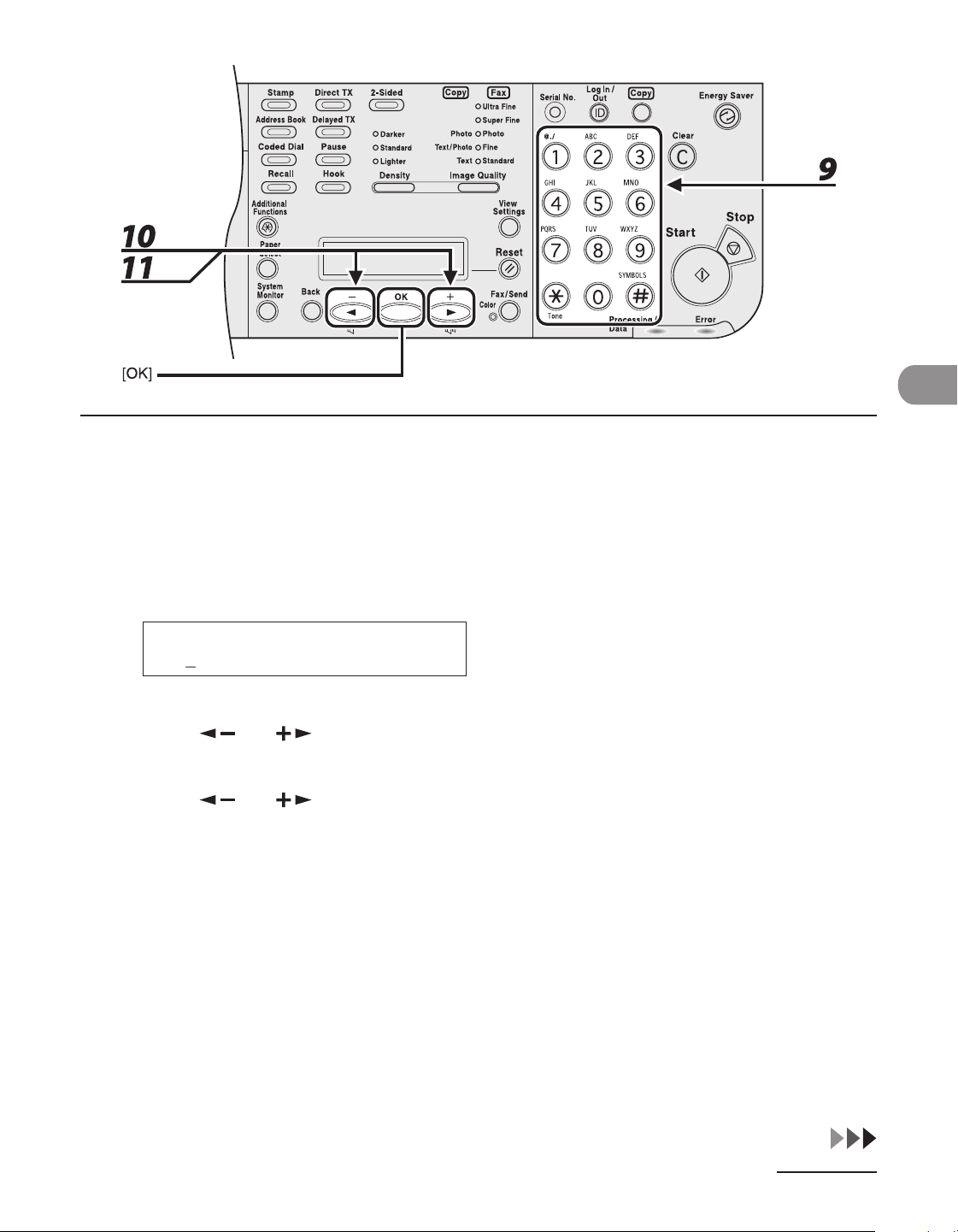
4-15
Sending Documents
9 Enter the destination name (max. 16 letters, including spaces) with the numeric
keys, then press [OK].
If you want to specify the following optional settings (<LONG DISTANCE>, <TX SPEED>, and <ECM>) for
the fax number you are registering, proceed to the next step.
If you do not need to set these options, skip to step 18.
N A M E : a
C a n
Ex.
10 Press [ ] or [ ] to select <OPTIONAL SETTING>, then press [OK].
11 Press [ ] or [ ] to select <ON>, then press [OK].
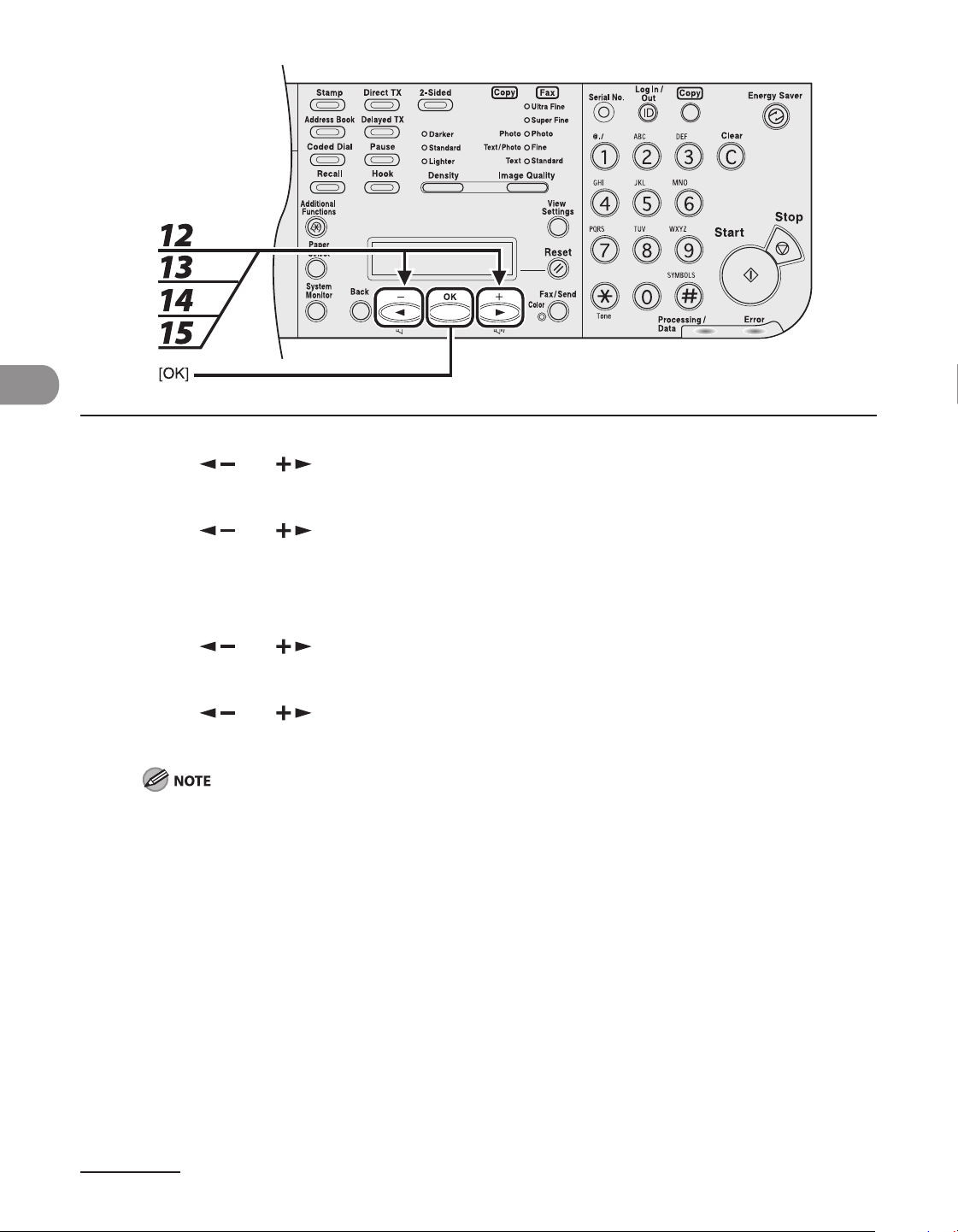
Sending Documents
4-16
12 Press [ ] or [ ] to select <ECM>, then press [OK].
13 Press [ ] or [ ] to select <ON> to reduce system and line errors while
sending to or receiving from other machines that support ECM, then press [OK].
To register another one-touch key or coded dial code, repeat the procedure from step 4.
14 Press [ ] or [ ] to select <TX SPEED>, then press [OK].
15 Press [ ] or [ ] to select the sending speed (33600 bps, 14400 bps, 9600
bps, or 4800 bps), then press [OK].
If transmission errors occur frequently, lower the speed.
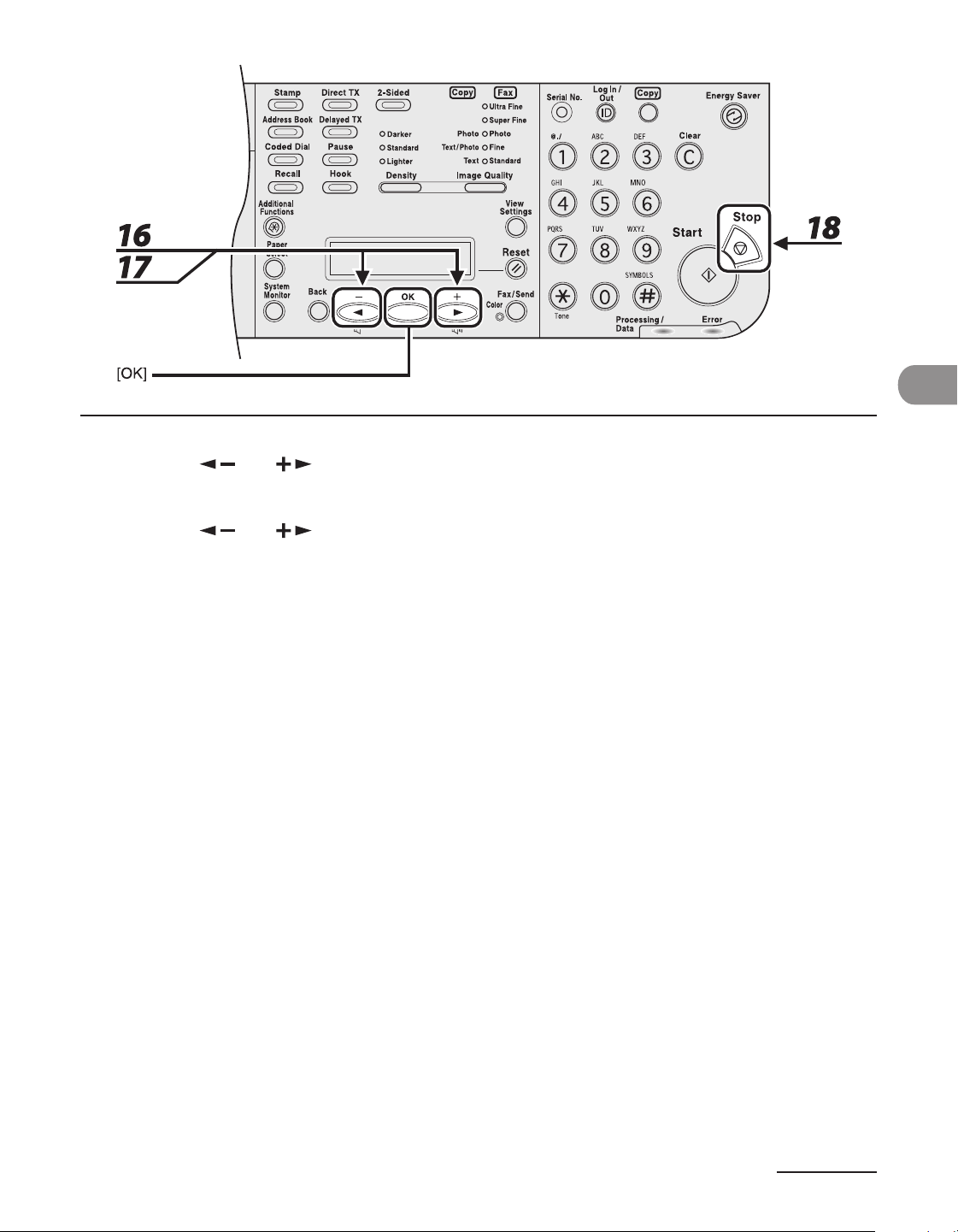
4-17
Sending Documents
16 Press [ ] or [ ] to select <LONG DISTANCE>, then press [OK].
17 Press [ ] or [ ] to select the most effective transmission option, then press
[OK].
<DOMESTIC>: Normally select this option.
<LONG DISTANCE 1-3>: Select one of these options when you make an international call. If errors occur
during fax transmissions, try the setting from <LONG DISTANCE 1> through
<LONG DISTANCE 3>.
18 Press [Stop] to return to the standby mode.
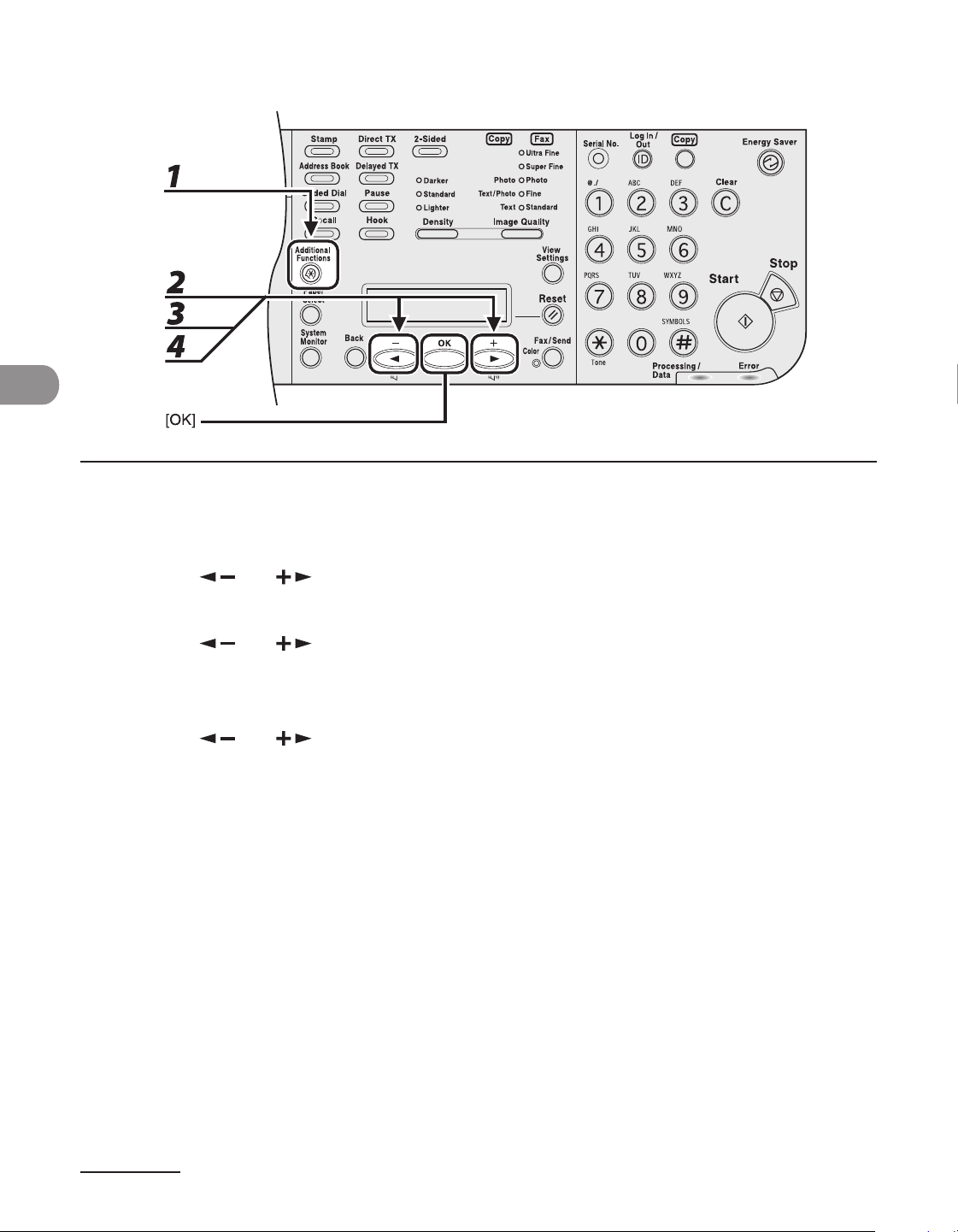
Sending Documents
4-18
Registering E-Mail/I-Fax Addresses (LASER CLASS 830i Only)
1 Press [Additional Functions].
2 Press [ ] or [ ] to select <ADDRESS BOOK SET.>, then press [OK].
3 Press [ ] or [ ] to select <1-TOUCH SPD DIAL> or <CODED SPD DIAL>, then
press [OK].
4 Press [ ] or [ ] to select a one-touch key (01 to 80) or coded dial code
(LASER CLASS 810: 000 to 119, LASER CLASS 830i: 000 to 419) for which you
want to register the address, then press [OK].
You can also select a one-touch key or coded dial code by pressing the corresponding one-touch key, or
[Coded Dial] followed by the desired three-digit code.
●
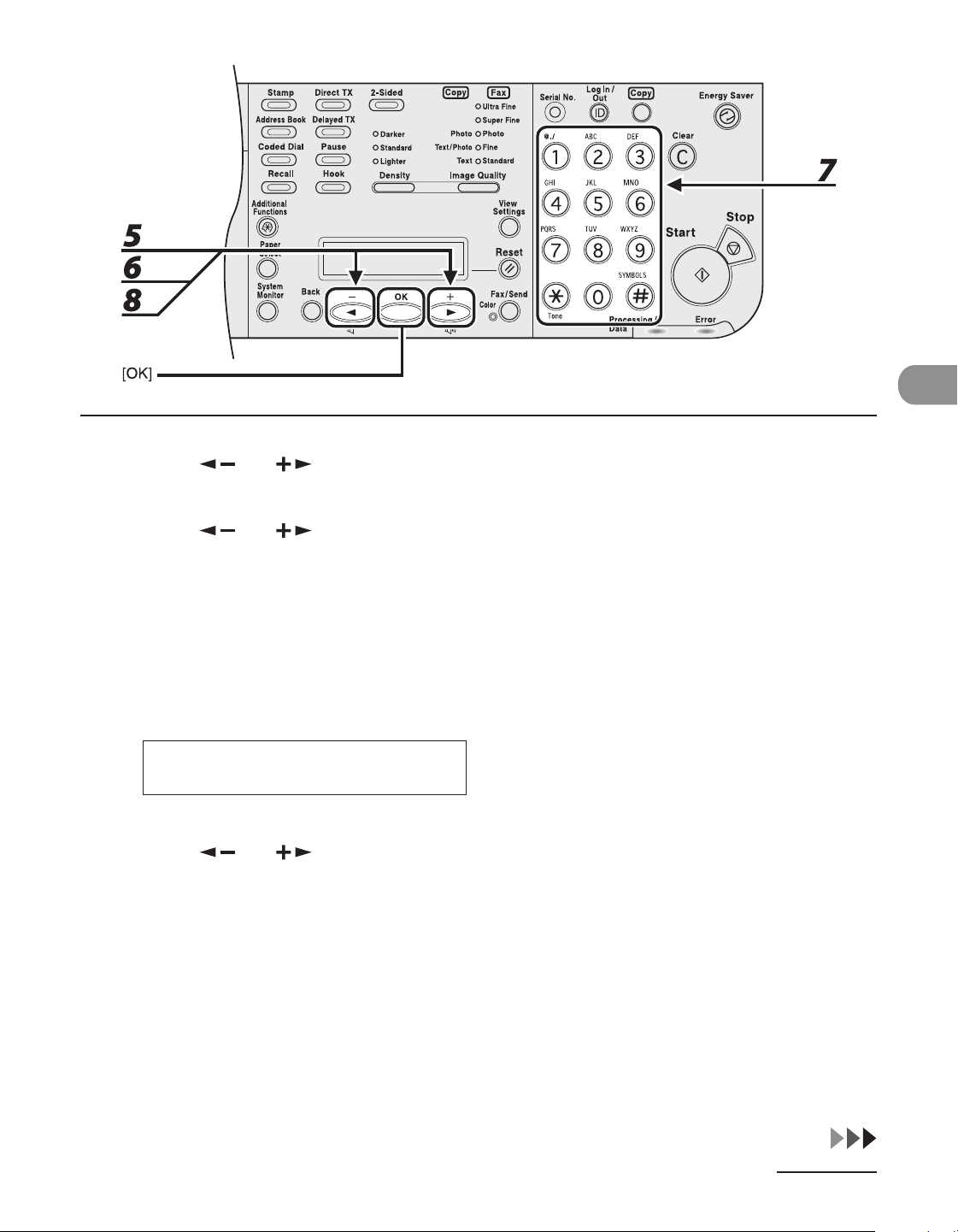
4-19
Sending Documents
5 Press [ ] or [ ] to select <E-MAIL> or <I-FAX>, then press [OK].
6 Press [ ] or [ ] to select <E-MAIL ADDRESS> or <I-FAX ADDRESS>, then
press [OK].
7 Enter the address you register (max. 120 digits) with the numeric keys, then
press [OK].
To register another one-touch key or coded dial code, repeat the procedure from step 4.
E - M A I L A D D R E S S : a
s a l e s @ X X X . c o m
Ex.
_
8 Press [ ] or [ ] to select <NAME>, then press [OK].
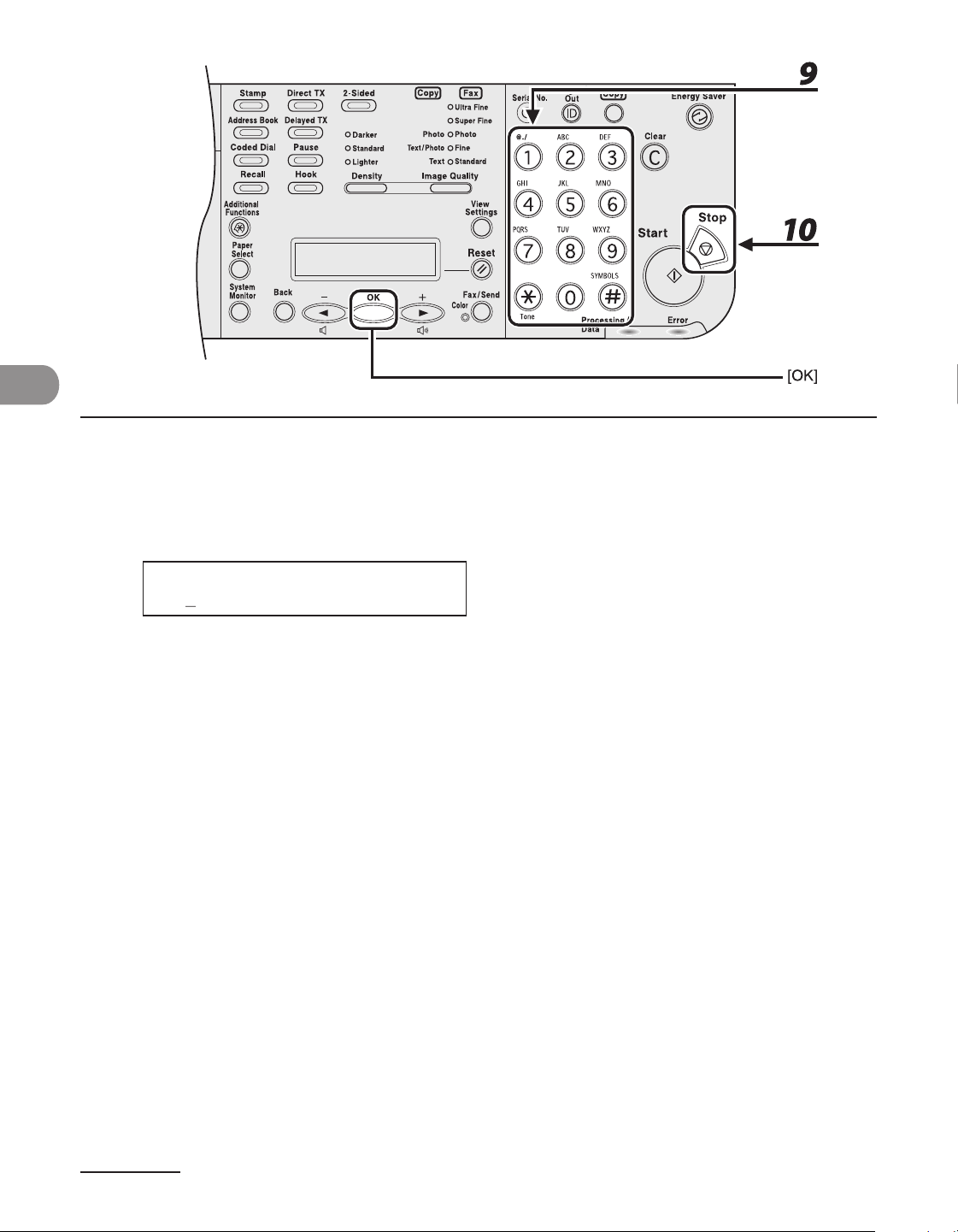
Sending Documents
4-20
9 Enter the destination name (max. 16 letters, including spaces) with the numeric
keys, then press [OK].
N A M E : a
C a n
Ex.
10 Press [Stop] to return to the standby mode.
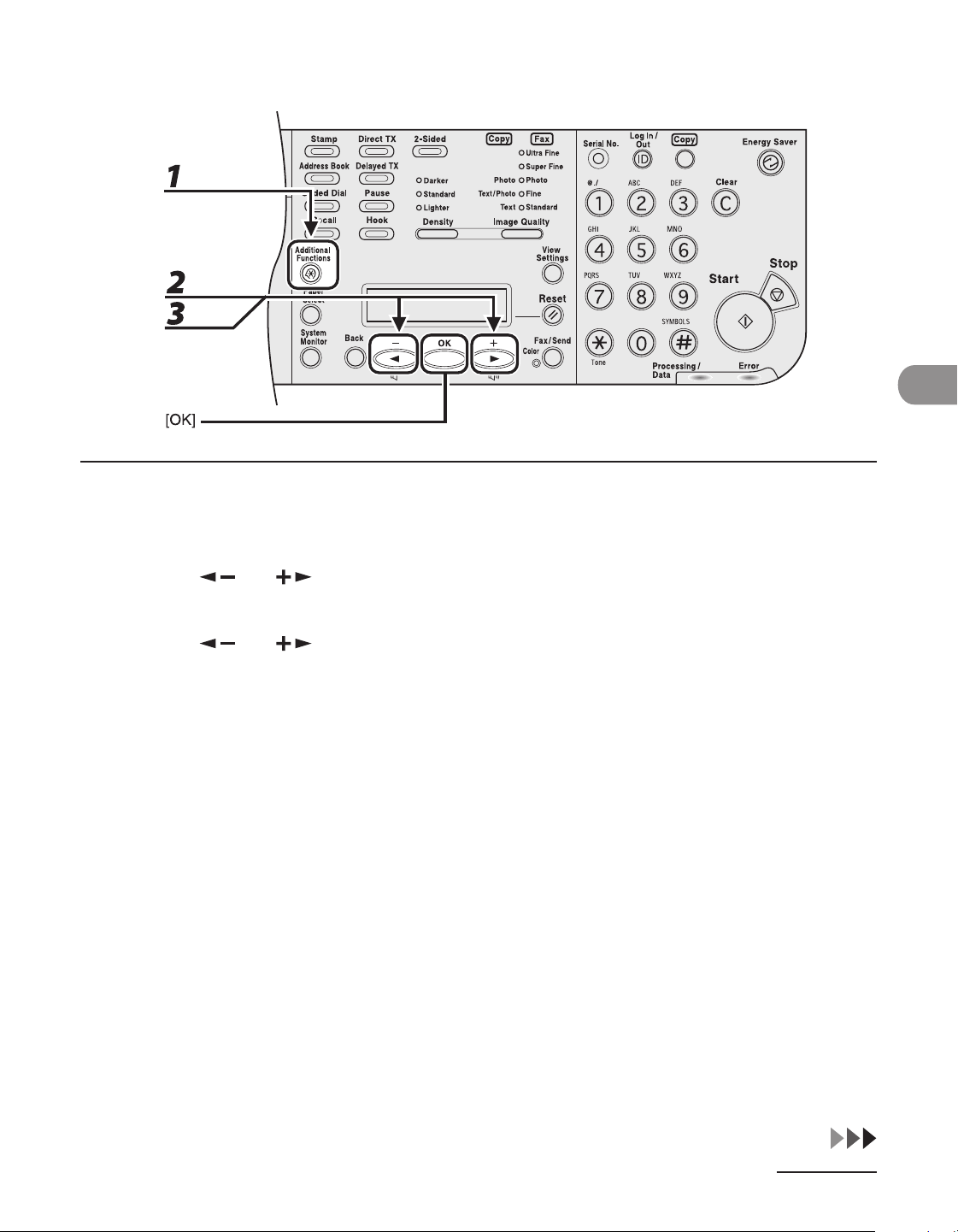
4-21
Sending Documents
Registering File Server Addresses (LASER CLASS 830i Only)
1 Press [Additional Functions].
2 Press [ ] or [ ] to select <ADDRESS BOOK SET.>, then press [OK].
3 Press [ ] or [ ] to select <1-TOUCH SPD DIAL> or <CODED SPD DIAL>, then
press [OK].
●
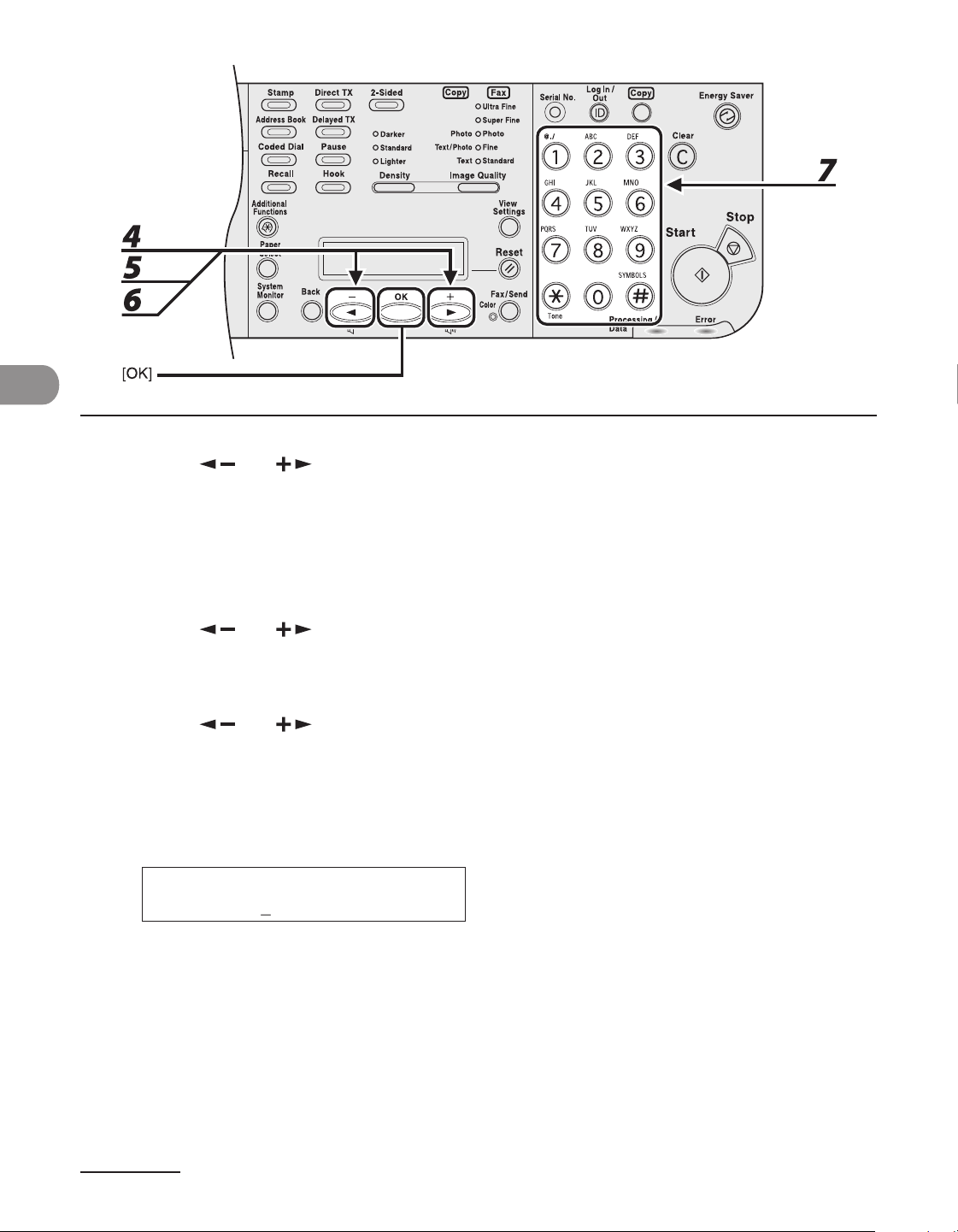
Sending Documents
4-22
4 Press [ ] or [ ] to select a one-touch key (01 to 80) or coded dial code
(LASER CLASS 810: 000 to 119, LASER CLASS 830i: 000 to 419) for which you
want to register the address, then press [OK].
You can also select a one-touch key or coded dial code by pressing the corresponding one-touch key, or
[Coded Dial] followed by the desired three-digit code.
5 Press [ ] or [ ] to select <the server protocol (<FTP> or <SMB>)>, then
press [OK].
6 Press [ ] or [ ] to select <HOST NAME>, then press [OK].
7 Use the numeric keys to enter the name of the file server on the network (up to
120 characters), then press [OK].
H O S T N A M E : 1
c a n o n 0 1
Ex.
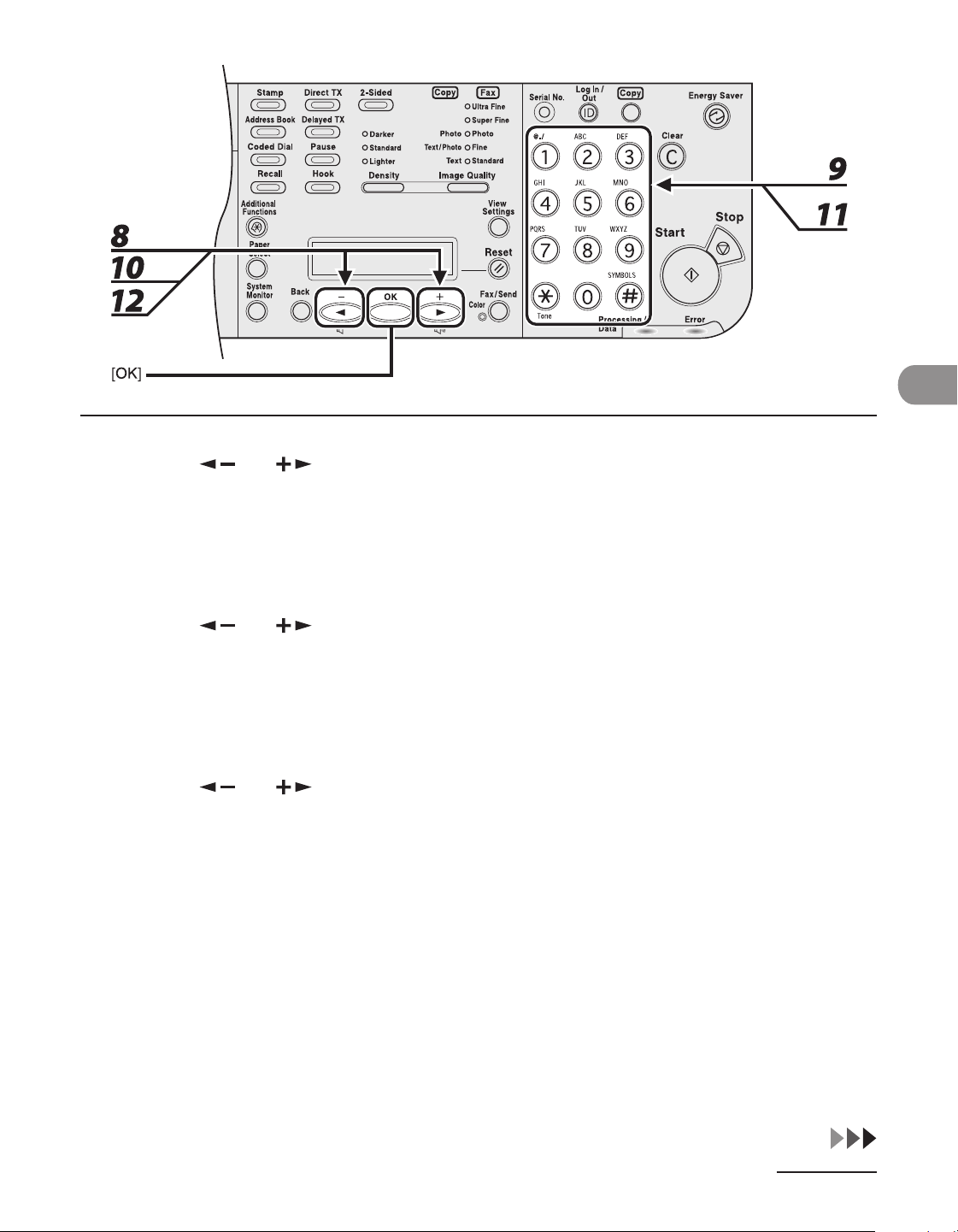
4-23
Sending Documents
8 Press [ ] or [ ] to select <NAME>, then press [OK].
9 Use the numeric keys to enter the destination’s name (up to 16 characters), then
press [OK].
10 Press [ ] or [ ] to select <FILE PATH>, then press [OK].
11 Use the numeric keys to specify the folder to which the job is to be sent (up to
120 characters), then press [OK].
12 Press [ ] or [ ] to select <LOGIN NAME>, then press [OK].
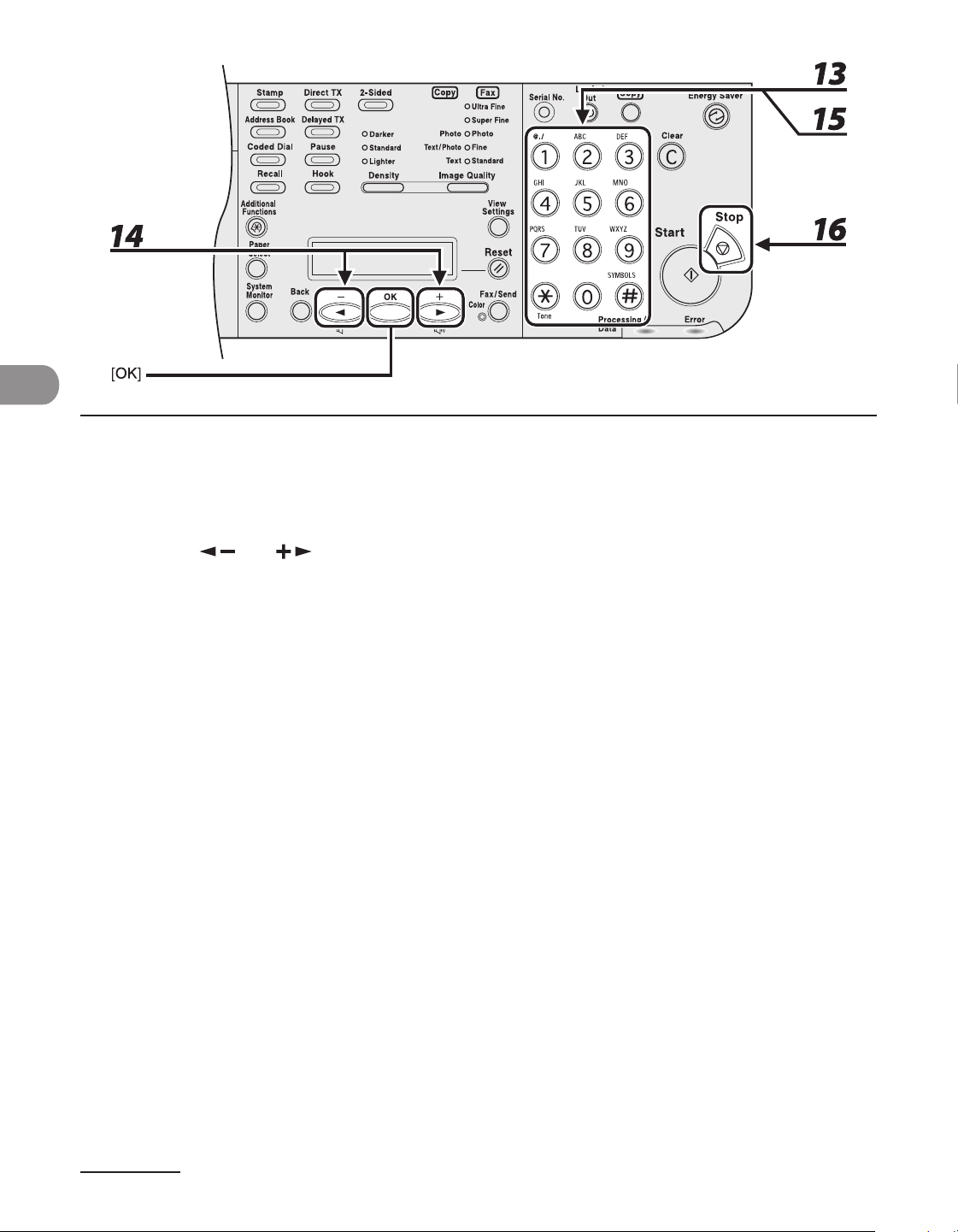
Sending Documents
4-24
13 Use the numeric keys to enter the login name, then press [OK].
You can enter up to 24 characters for the login name.
14 Press [ ] or [ ] to select <PASSWORD>, then press [OK].
15 Use the numeric keys to enter the password, then press [OK].
You can enter up to 24 characters (14 characters when <SMB> is selected as the server protocol) for the
password.
To register another one-touch key or coded dial code, repeat the procedure from step 4.
16 Press [Stop] to return to the standby mode.
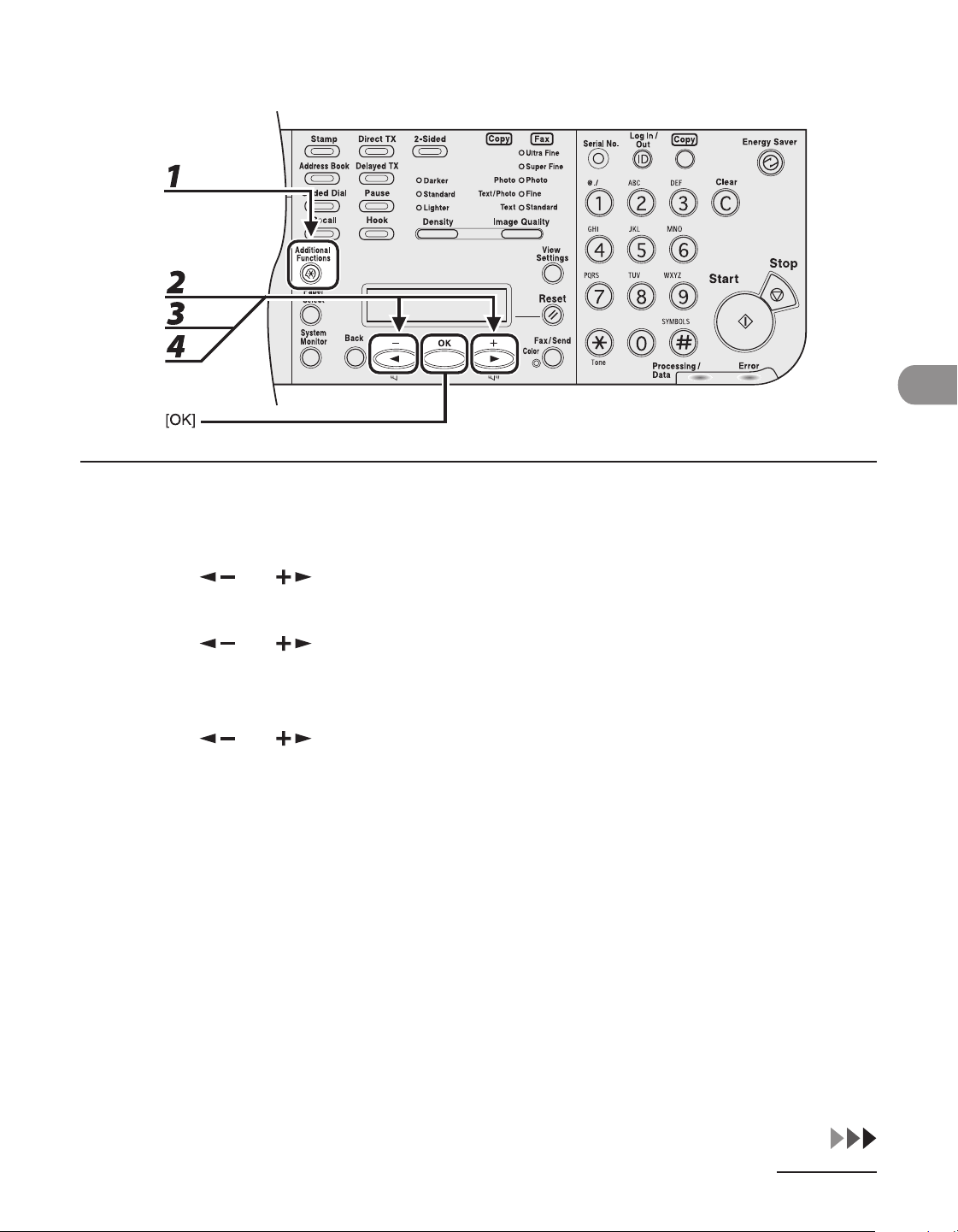
4-25
Sending Documents
Editing One-Touch Keys/Coded Dial Codes
1 Press [Additional Functions].
2 Press [ ] or [ ] to select <ADDRESS BOOK SET.>, then press [OK].
3 Press [ ] or [ ] to select <1-TOUCH SPD DIAL> or <CODED SPD DIAL>, then
press [OK].
4 Press [ ] or [ ] to select the one-touch key (01 to 80) or coded dial code
(LASER CLASS 810: 000 to 119, LASER CLASS 830i: 000 to 419) you want to edit,
then press [OK].
You can also select a one-touch key or coded dial code by pressing the corresponding one-touch key, or
[Coded Dial] followed three-digit code.
●
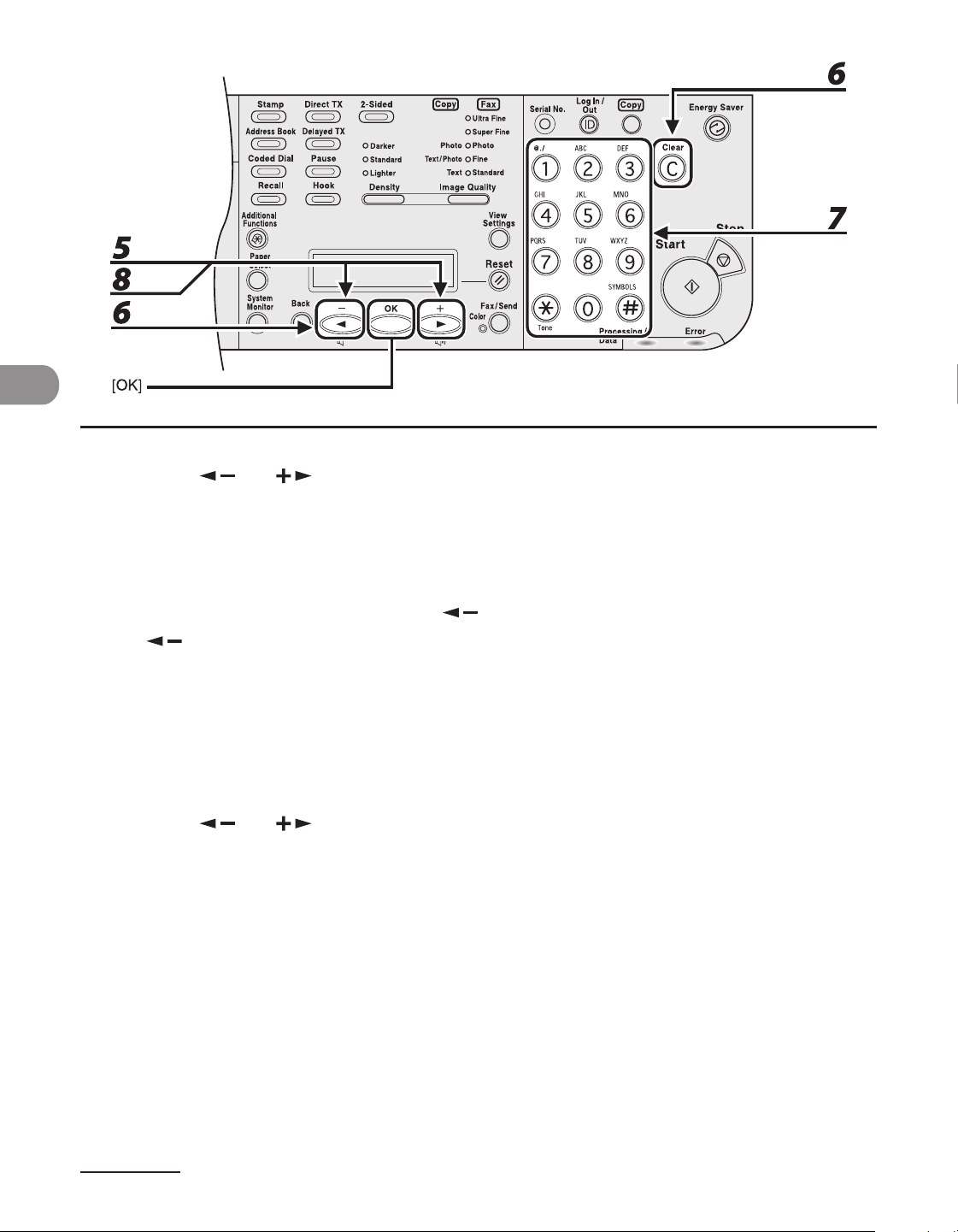
Sending Documents
4-26
5 Press [ ] or [ ] to select <TEL NUMBER ENTRY> or <E-MAIL ADDRESS>,
then press [OK].
You can edit <HOST NAME>, <NAME>, <FILE PATH>, <LOGIN NAME>, and <PASSWORD> when you edit
file server addresses.
6 Go back to the wrong digit with [ ] when you edit a fax number. Or press
[ ] repeatedly to go back to a wrong number or character, then press [Clear]
when you edit an e-mail or I-fax address.
To delete the entire entry, press and hold [Clear].
7 Enter a new number or character with the numeric keys, then press [OK].
8 Press [ ] or [ ] to select <NAME>, then press [OK].
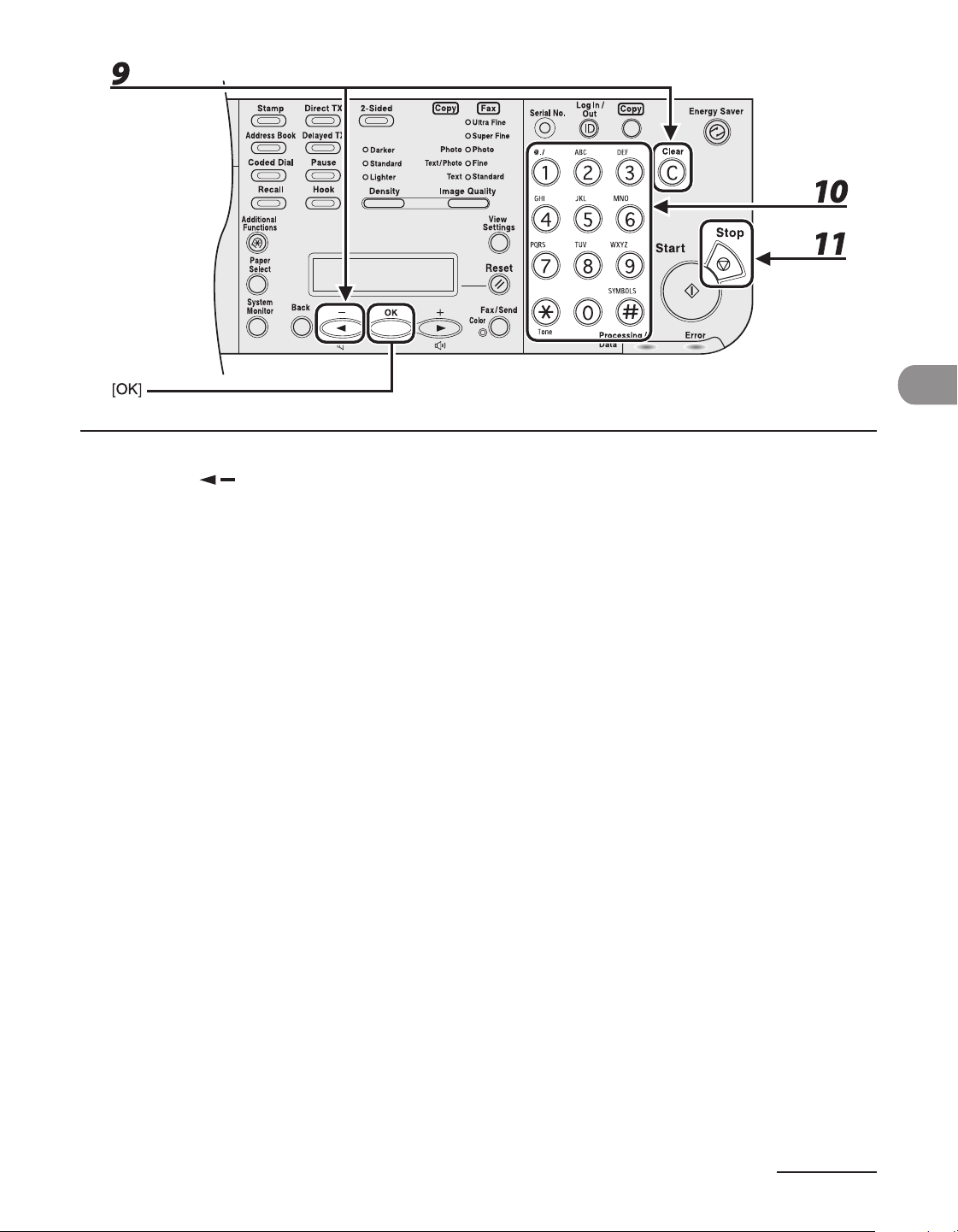
4-27
Sending Documents
9 Press [ ] repeatedly to go back to the character you want to change, then
press [Clear].
To delete the entire entry, press and hold [Clear].
10 Enter a new character with the numeric keys, then press [OK].
If you are editing a one-touch key or coded dial code under which a fax number is registered, you can
also change the optional settings. For instructions, see “Registering Fax Numbers,” on p.
4-13.
11 Press [Stop] to return to the standby mode.
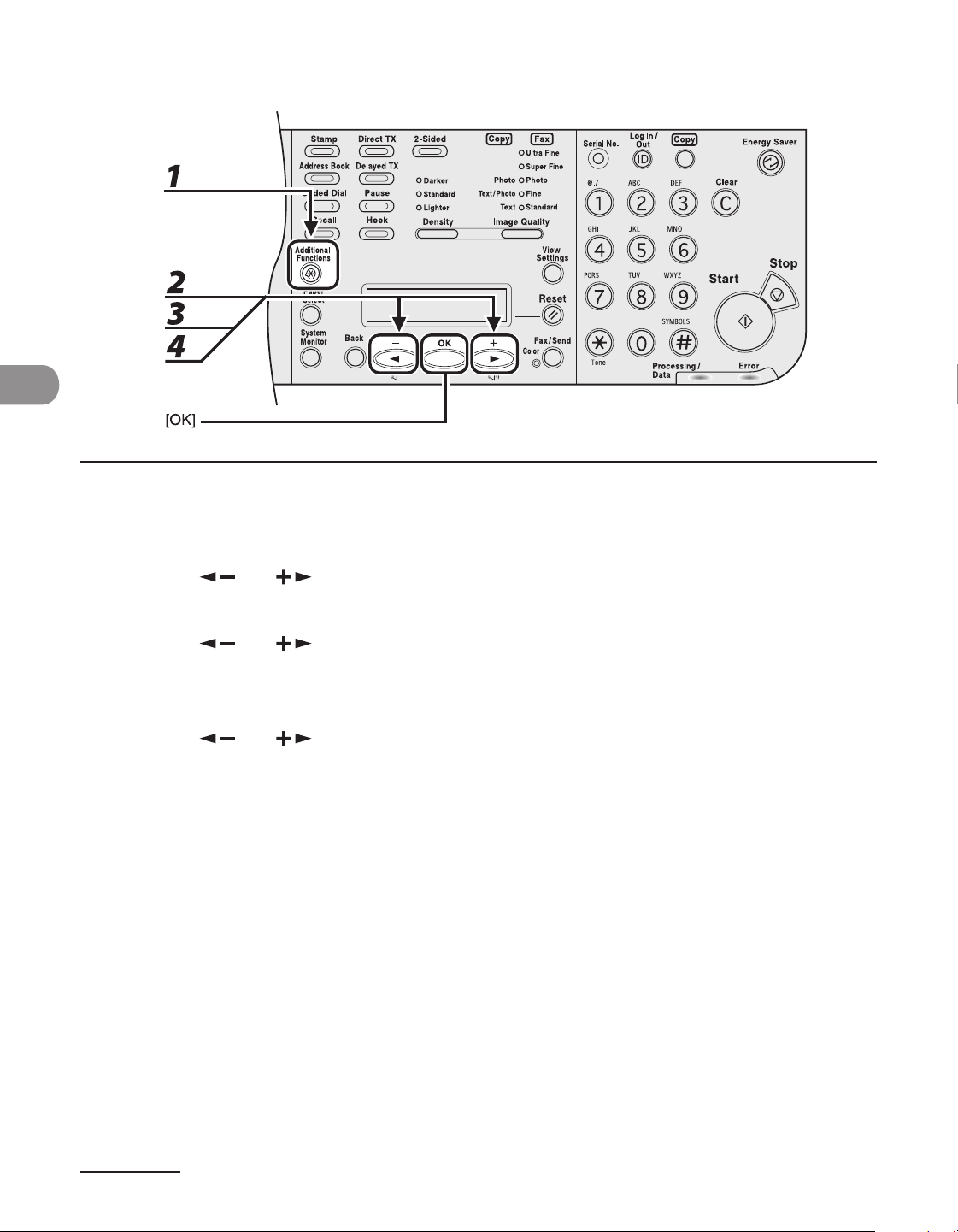
Sending Documents
4-28
Deleting One-Touch Keys/Coded Dial Codes
1 Press [Additional Functions].
2 Press [ ] or [ ] to select <ADDRESS BOOK SET.>, then press [OK].
3 Press [ ] or [ ] to select <1-TOUCH SPD DIAL> or <CODED SPD DIAL>, then
press [OK].
4 Press [ ] or [ ] to select the one-touch key (01 to 80) or coded dial code
(LASER CLASS 810: 000 to 119, LASER CLASS 830i: 000 to 419) you want to
delete, then press [OK].
You can also select a one-touch key or coded dial code by pressing the corresponding one-touch key, or
[Coded Dial] followed by the desired three-digit code.
●
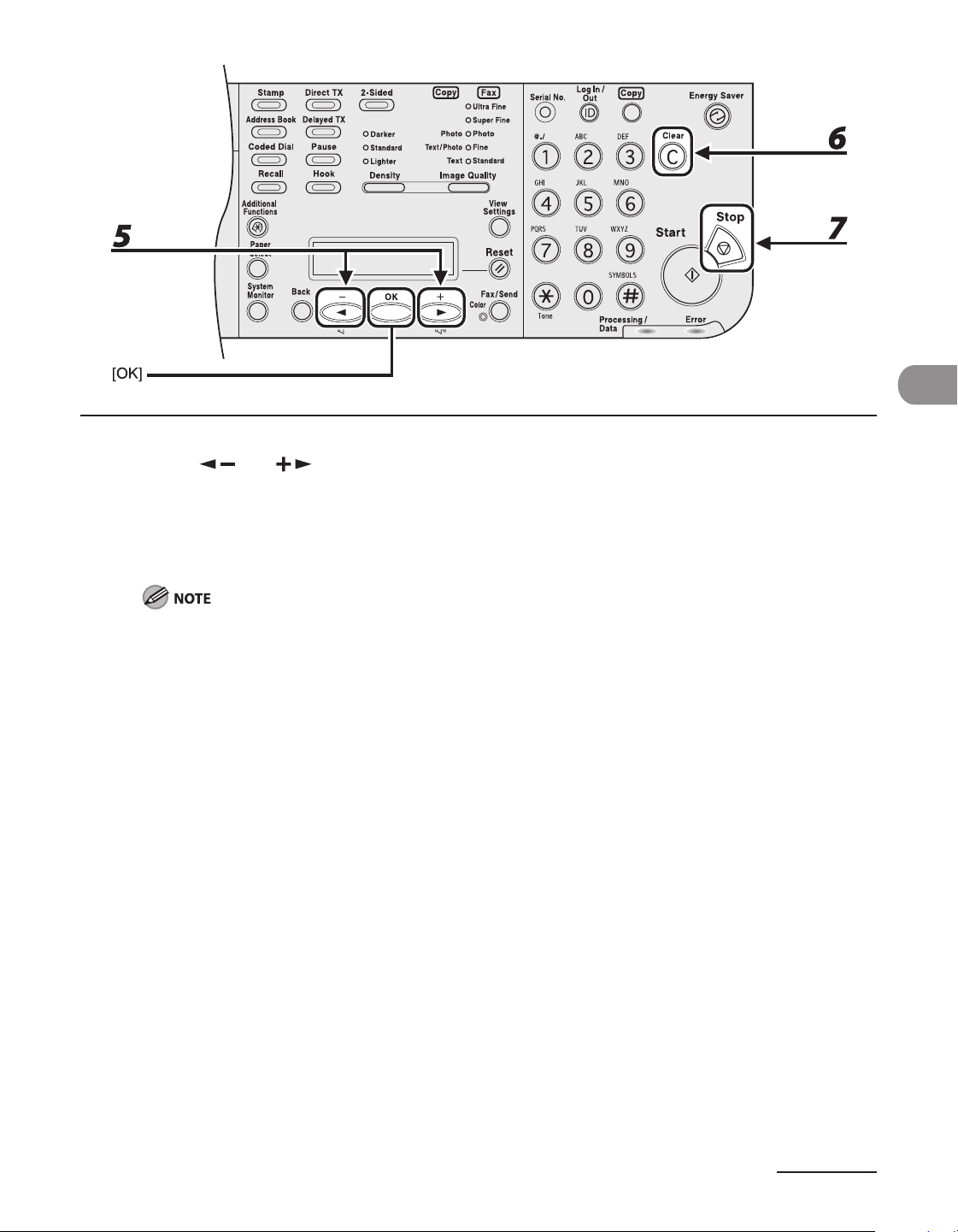
4-29
Sending Documents
5 Press [ ] or [ ] to select <TEL NUMBER ENTRY> , <E-MAIL ADDRESS> or
<HOST NAME>, then press [OK].
6 Press and hold [Clear] to delete the entire entry, then press [OK].
If you delete the fax number, e-mail address or file server address, the registered name is cleared
automatically.
7 Press [Stop] to return to the standby mode.
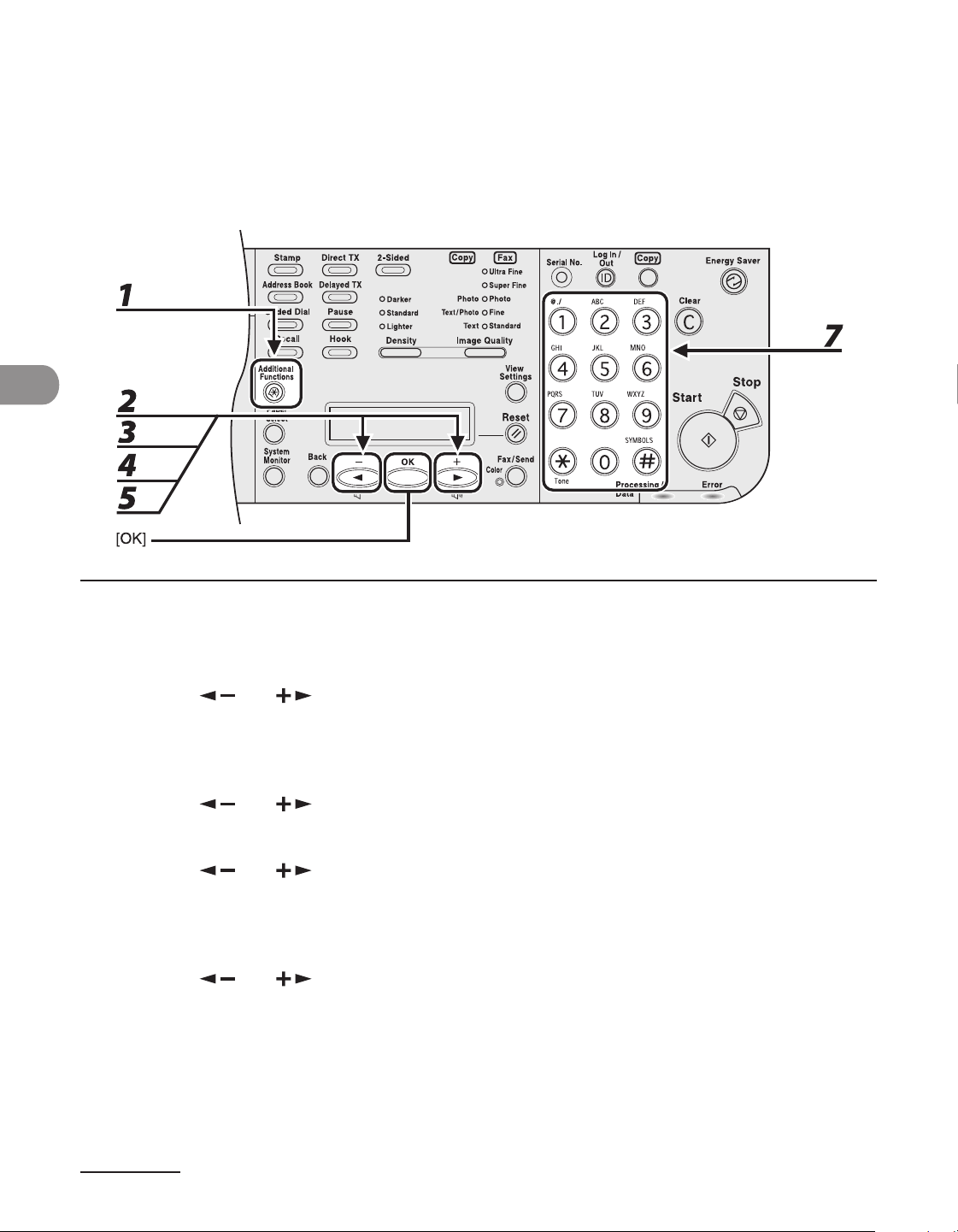
Sending Documents
4-30
Storing Favorites Buttons (LASER CLASS 830i Only)
You can register a destination together with any possible combination of send settings in a
favorites button. One-touch keys 01 to 04 can be registered as favorites buttons.
Registering a Fax Number
1 Press [Additional Functions].
2 Press [ ] or [ ] to select <ADDRESS BOOK SET.>, then press [OK].
If a password has been set for the Address Book, use the numeric keys to enter the password, then press
[OK].
3 Press [ ] or [ ] to select <FAVORITES BUTTONS>, then press [OK].
4 Press [ ] or [ ] to select a one-touch key (01 to 04), then press [OK].
If a one-touch destination is already registered in the desired one-touch key, select another key, or
delete the destination first.
5 Press [ ] or [ ] to select <FAX>, then press [OK].
6 Confirm that <NAME> is displayed, then press [OK].
7 Use the numeric keys to enter the destination’s name (up to 16 characters), then
press [OK].
●
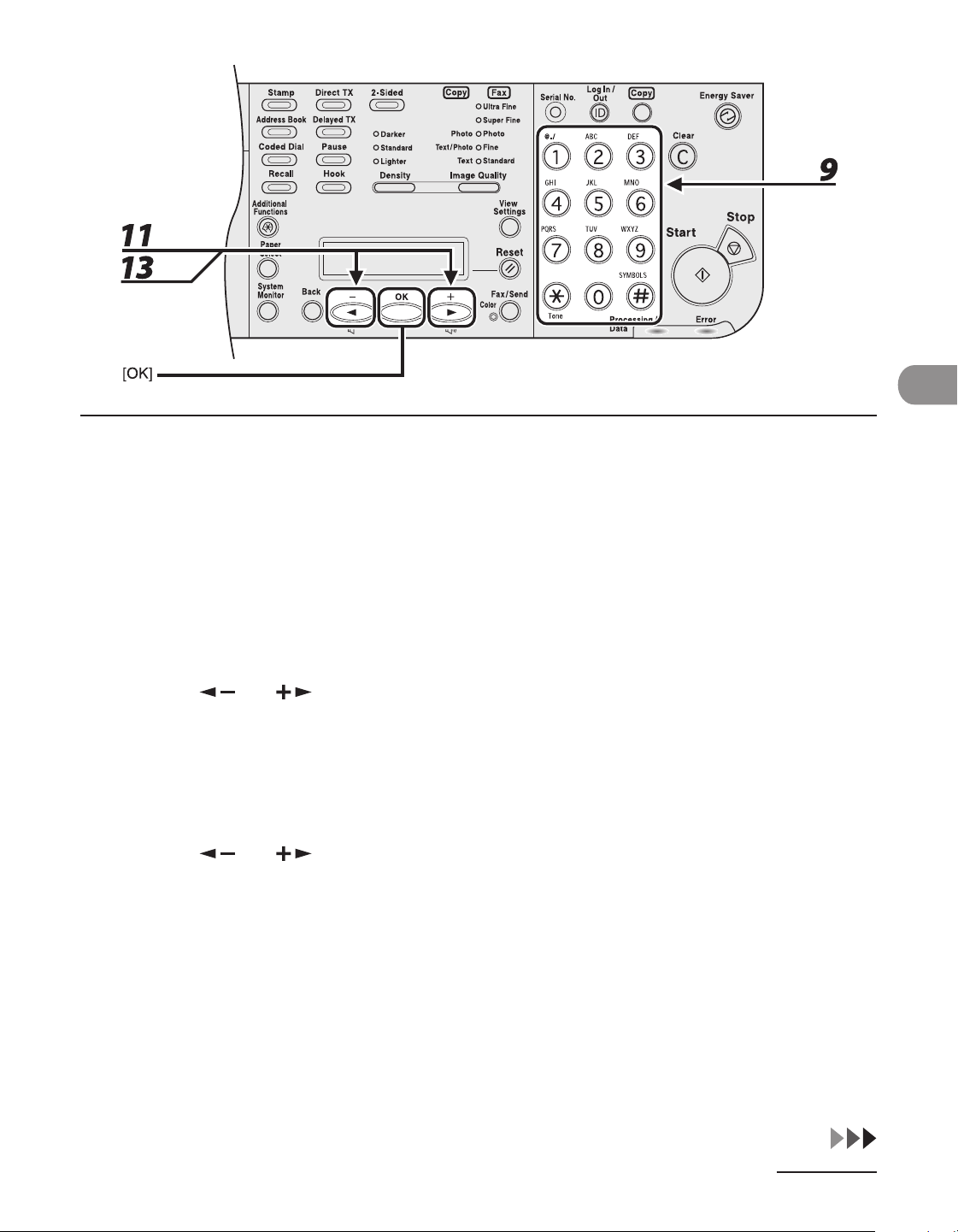
4-31
Sending Documents
8 Confirm that <TEL NUMBER ENTRY> is displayed, then press [OK].
9 Use the numeric keys to enter the destination’s fax number (up to 120
characters), then press [OK].
10 Confirm that <IMAGEQUALITY> is displayed, then press [OK].
11 Press [ ] or [ ] to select the image quality (<FINE>, <PHOTO>, <SUPER
FINE>, <ULTRA FINE>, or <STANDARD>), then press [OK].
12 Confirm that <OPTIONAL SETTING> is displayed, then press [OK].
13 Press [ ] or [ ] to select <ON> or <OFF>, then press [OK].
If you do not want to set the optional settings, select <OFF>, then skip to step 20.
If you want to set the options for sending faxes, select <ON>.
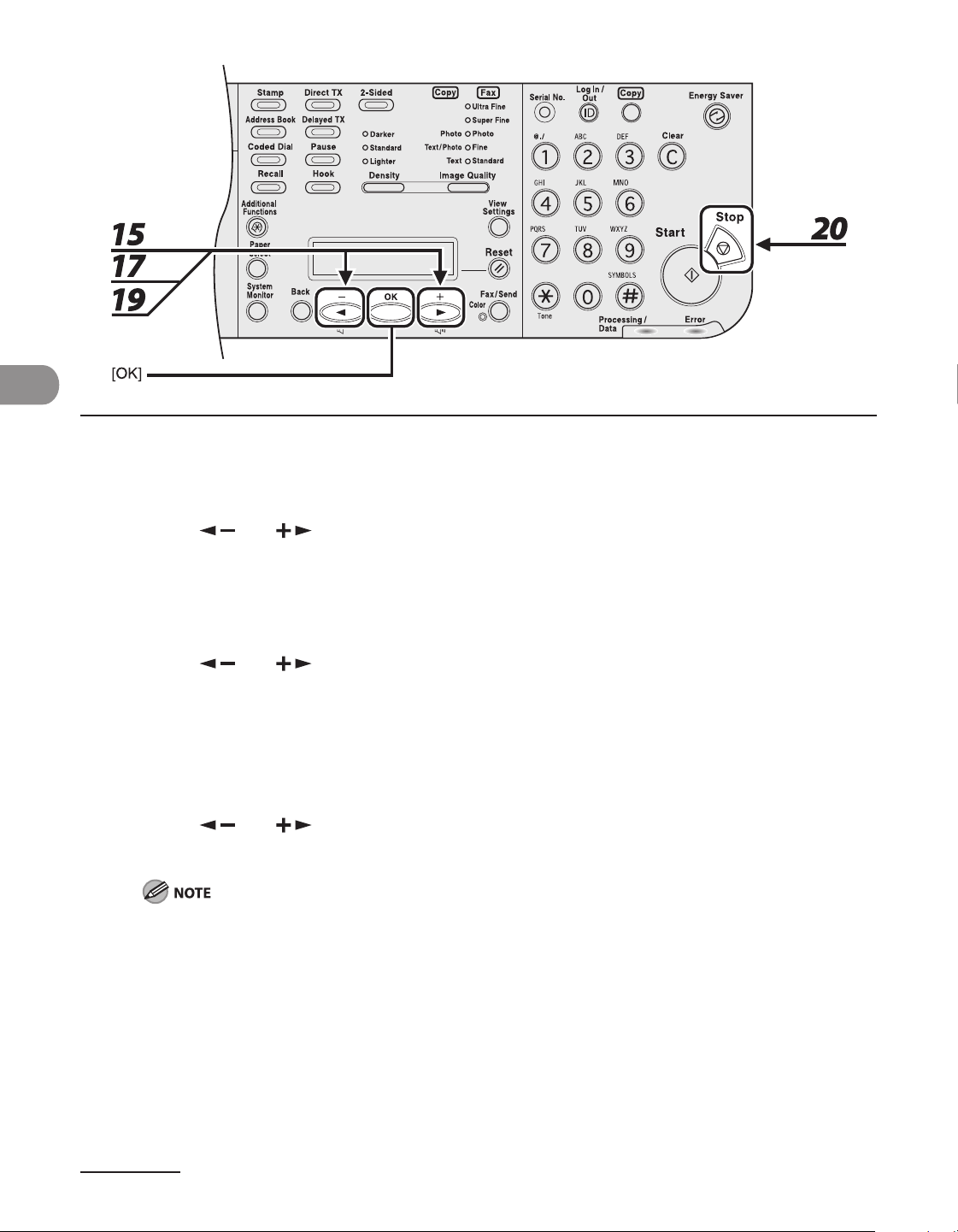
Sending Documents
4-32
14 Confirm that <ECM> is displayed, then press [OK].
15 Press [ ] or [ ] to select <ON> or <OFF>, then press [OK].
16 Confirm that <TX SPEED> is displayed, then press [OK].
17 Press [ ] or [ ] to select the sending speed (33600 bps, 14400 bps, 9600
bps, or 4800 bps), then press [OK].
18 Confirm that <INTERNATIONAL> is displayed, then press [OK].
19 Press [ ] or [ ] to select the transmission option (<DOMESTIC>, <LONG
DISTANCE 1>, <LONG DISTANCE 2>, or <LONG DISTANCE 3>), then press [OK].
If errors occur during international fax transmissions, try the setting from <LONG DISTANCE 1> through
<LONG DISTANCE3>.
20 Press [Stop] to return to the standby mode.
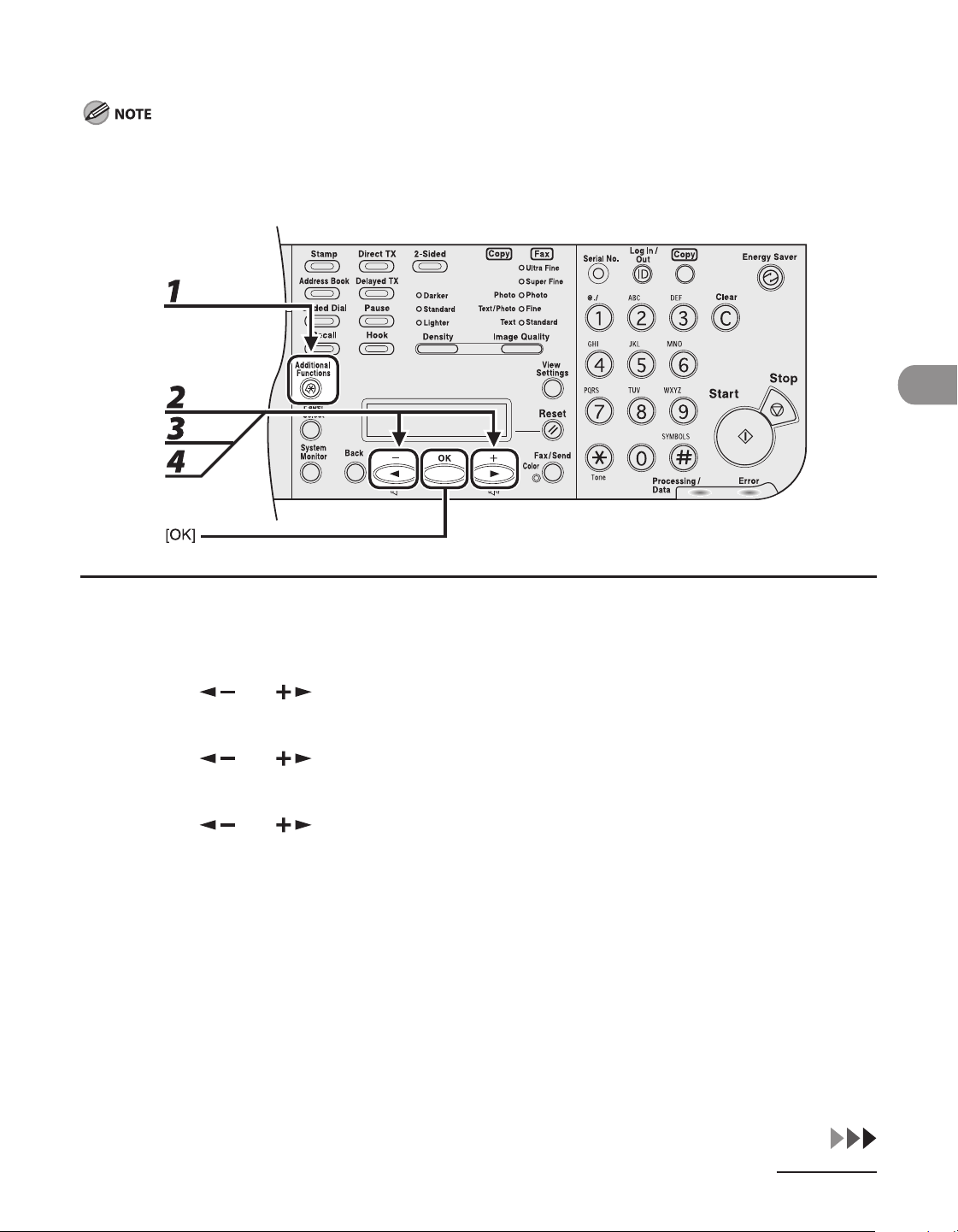
4-33
Sending Documents
Storing/Editing Group Addresses
The destinations must be registered in one-touch keys, or coded dial codes beforehand.
Registering Group Addresses
1 Press [Additional Functions].
2 Press [ ] or [ ] to select <ADDRESS BOOK SET.>, then press [OK].
3 Press [ ] or [ ] to select <GROUP DIAL>, then press [OK].
4 Press [ ] or [ ] to select an empty one-touch key or coded dial code that
you want to set as the group address, then press [OK].
You can also select a one-touch key or coded dial code by pressing the corresponding one-touch key, or
[Coded Dial] followed by the desired three-digit code.
●
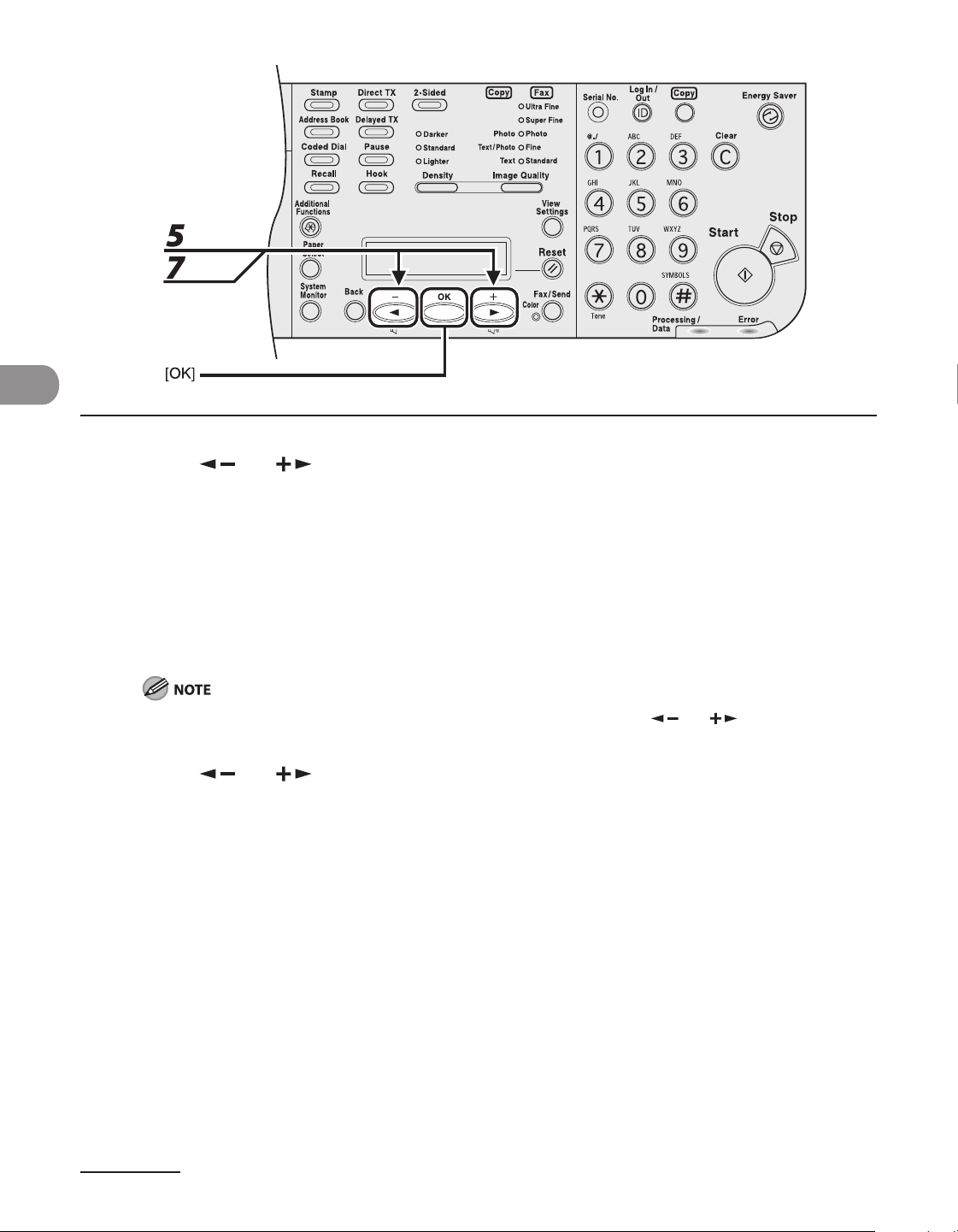
Sending Documents
4-34
5 Press [ ] or [ ] to select <SELECT ADD/TEL NO>, then press [OK].
6 Select the destinations you want to register in the group (LASER CLASS 810:
max. 199 destinations, LASER CLASS 830i: max. 499 destinations) until all
destinations are registered, then press [OK].
To enter a destination stored under a one-touch key, press the desired one-touch key.
To enter a destination stored under a coded dial code, press [Coded Dial], then enter the three-digit
code with the numeric keys. For multiple entries, press [Coded Dial] between each entry.
You can review the destinations which have been already entered with [ ] or [ ].
7 Press [ ] or [ ] to select <NAME>, then press [OK].
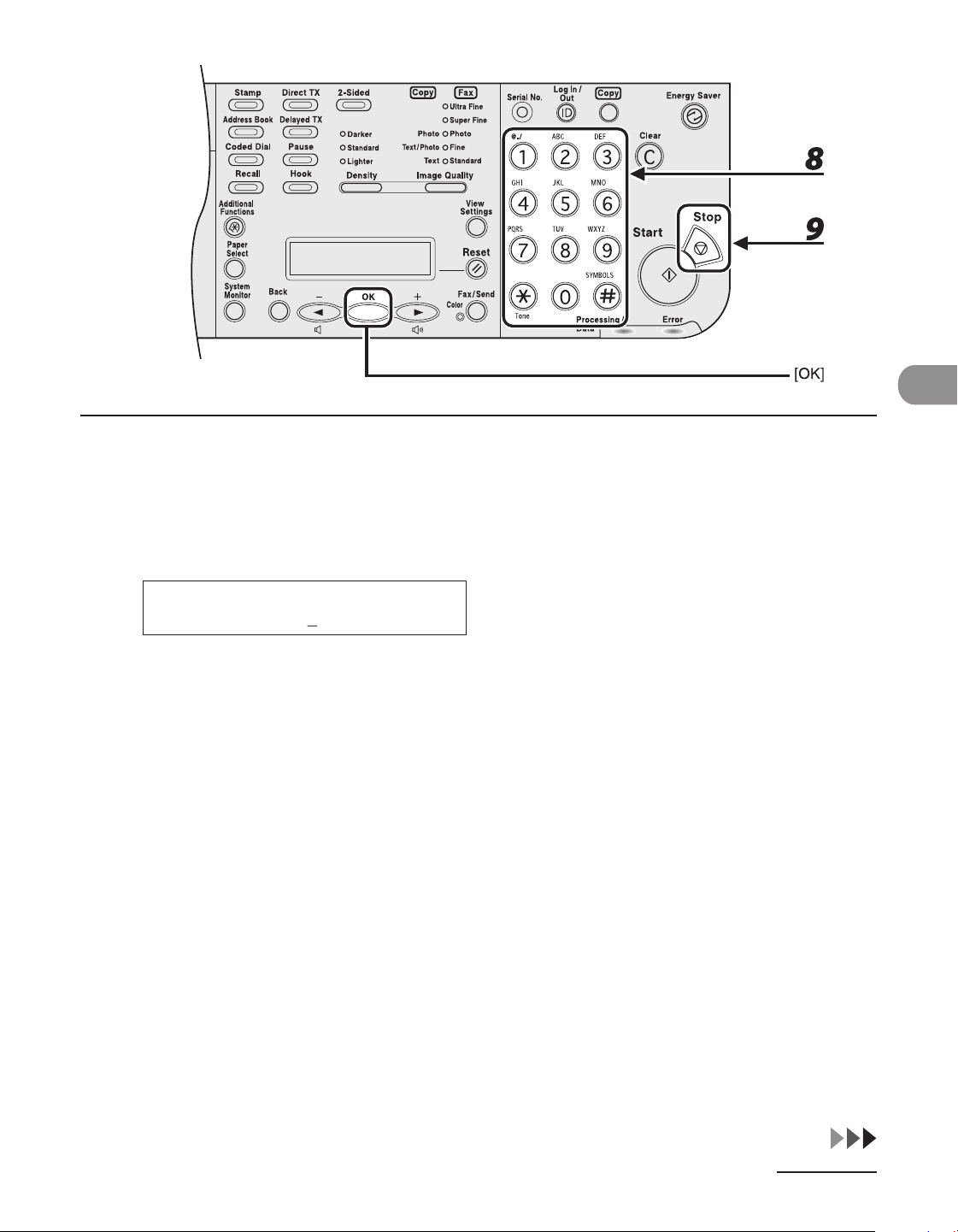
4-35
Sending Documents
8 Enter the group name (max. 16 letters, including spaces) with the numeric keys,
then press [OK].
To register another group, repeat the procedure from step 4.
N A M E : a
C a n o n G r o u p
Ex.
9 Press [Stop] to return to the standby mode.
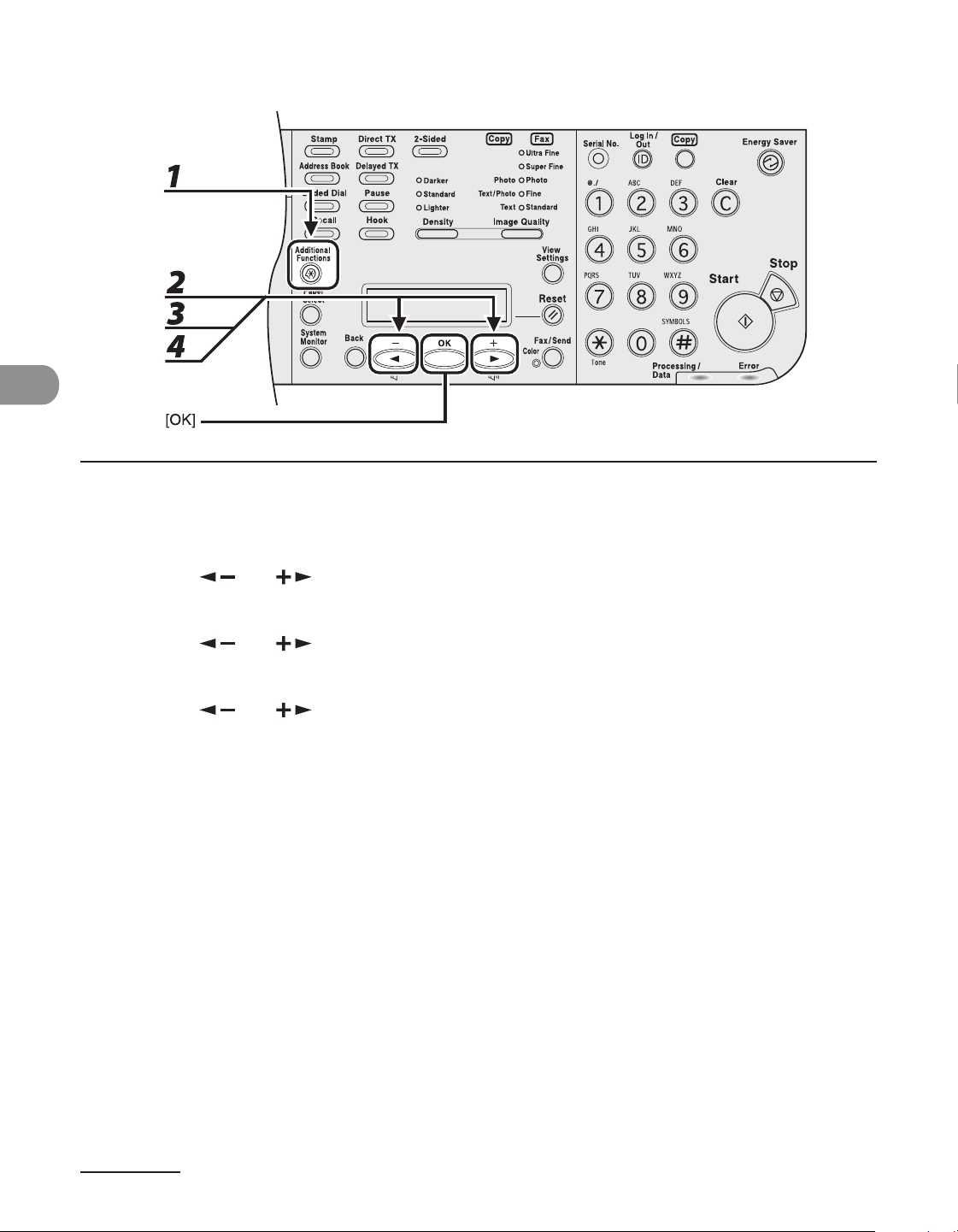
Sending Documents
4-36
Adding New Destination to Group
1 Press [Additional Functions].
2 Press [ ] or [ ] to select <ADDRESS BOOK SET.>, then press [OK].
3 Press [ ] or [ ] to select <GROUP DIAL>, then press [OK].
4 Press [ ] or [ ] to select a group to edit, then press [OK].
To select a group stored under the coded dial code, press [Coded Dial], then enter the three-digit code
using the numeric keys.
●
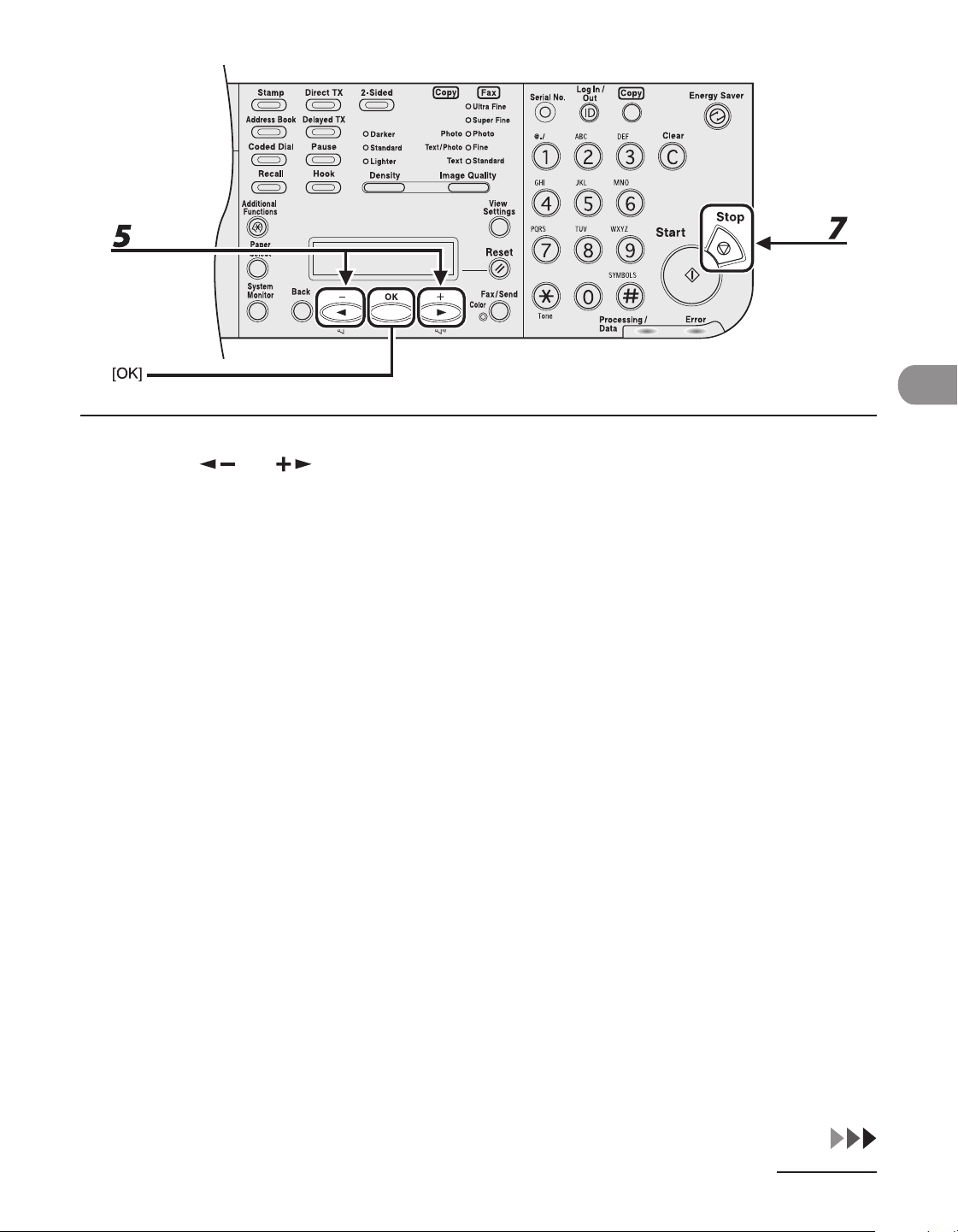
4-37
Sending Documents
5 Press [ ] or [ ] to select <SELECT ADD/TEL NO>, then press [OK].
6 Select the destination you want to add to the group, then press [OK].
For details on specifying a destination from Address Book, see “Registering Group Addresses,” on p. 4-33.
7 Press [Stop] to return to the standby mode.
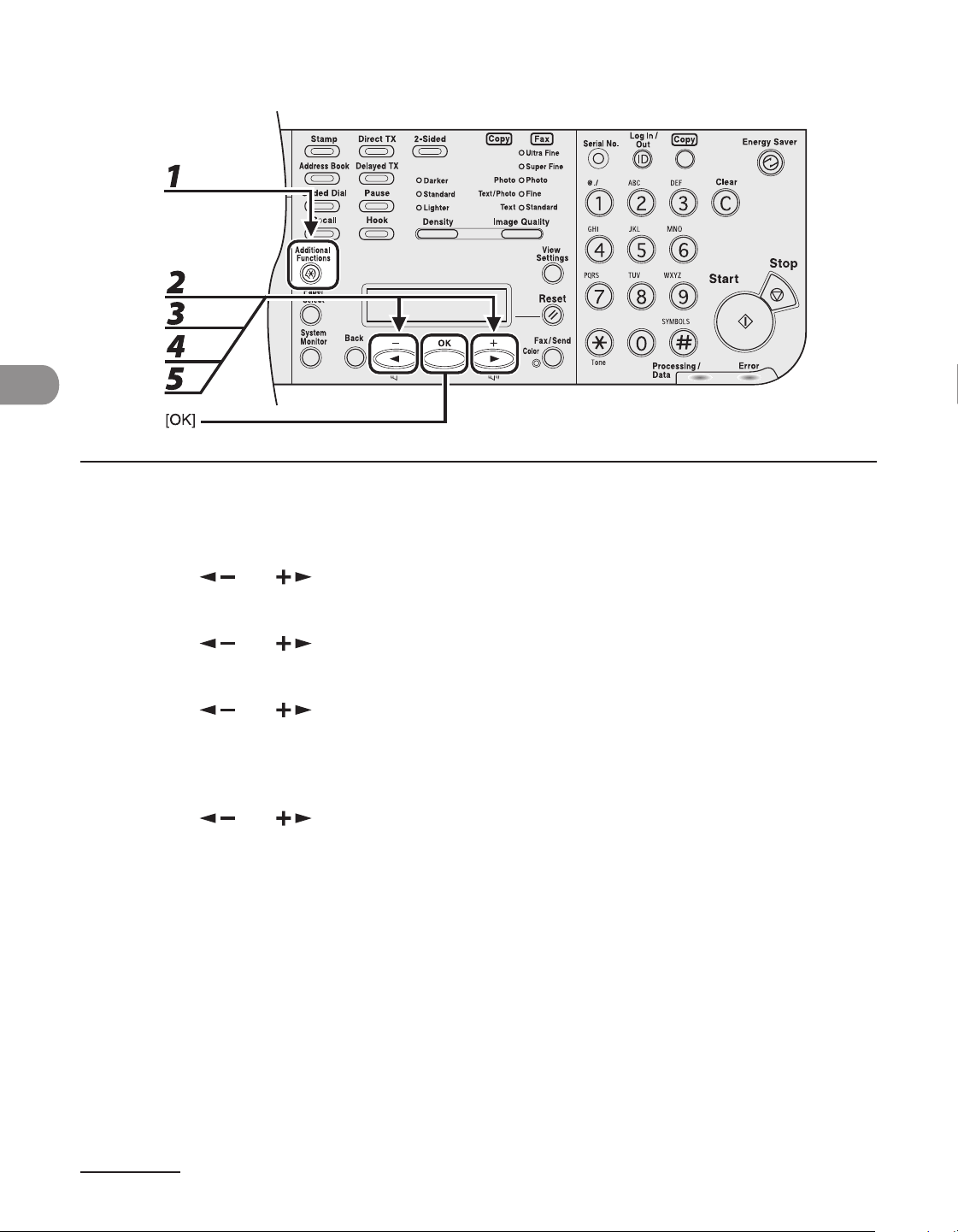
Sending Documents
4-38
Deleting Destination from Group
1 Press [Additional Functions].
2 Press [ ] or [ ] to select <ADDRESS BOOK SET.>, then press [OK].
3 Press [ ] or [ ] to select <GROUP DIAL>, then press [OK].
4 Press [ ] or [ ] to select a group to edit, then press [OK].
To select a group stored under the coded dial code, press [Coded Dial], then enter the three-digit code
using the numeric keys.
5 Press [ ] or [ ] to select <SELECT ADD/TEL NO>, then press [OK].
●
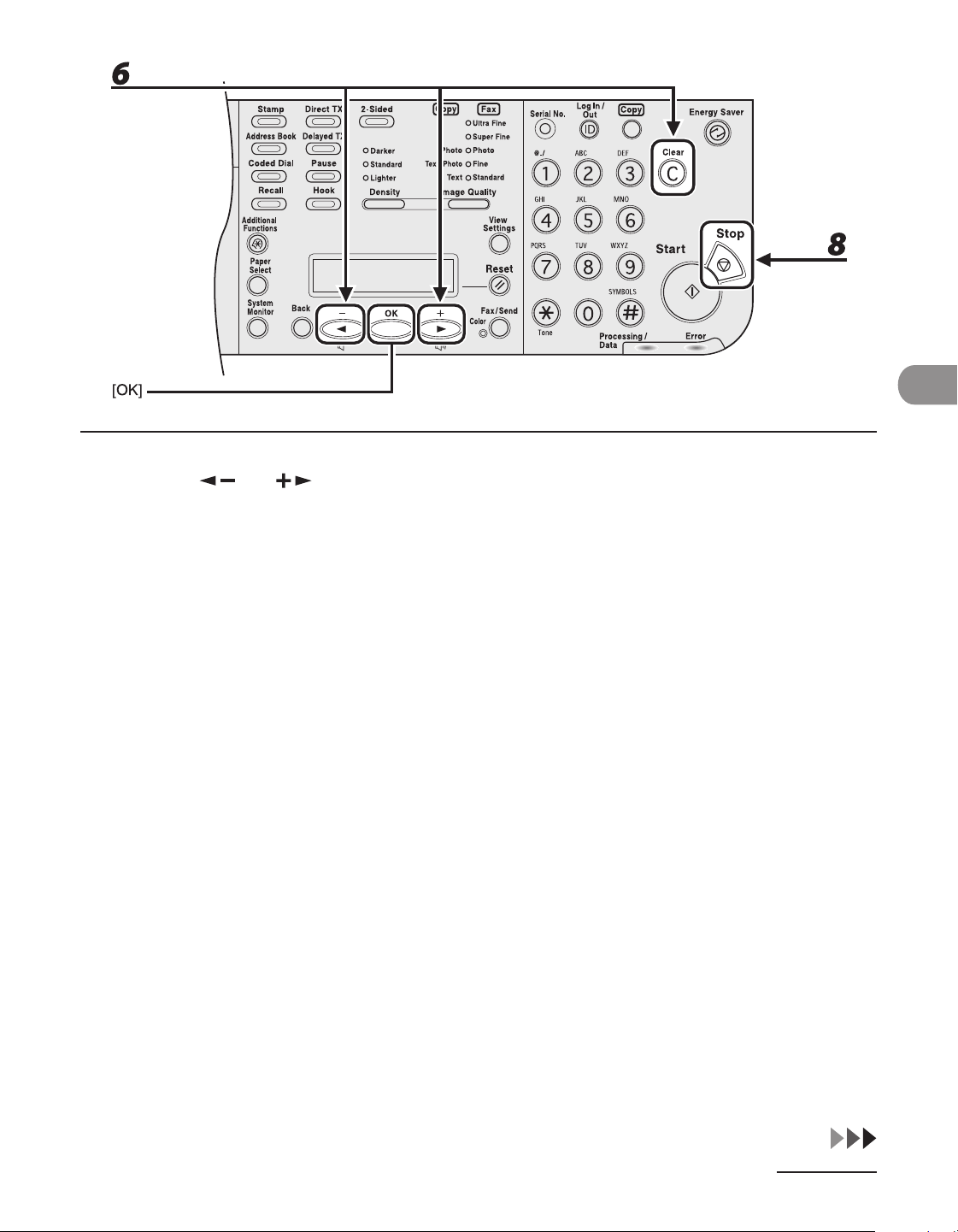
4-39
Sending Documents
6 Press [ ] or [ ] to display the destination you want to delete from the
group, then press [Clear].
Repeat this step if you want to delete another destination.
7 Press [OK].
8 Press [Stop] to return to the standby mode.
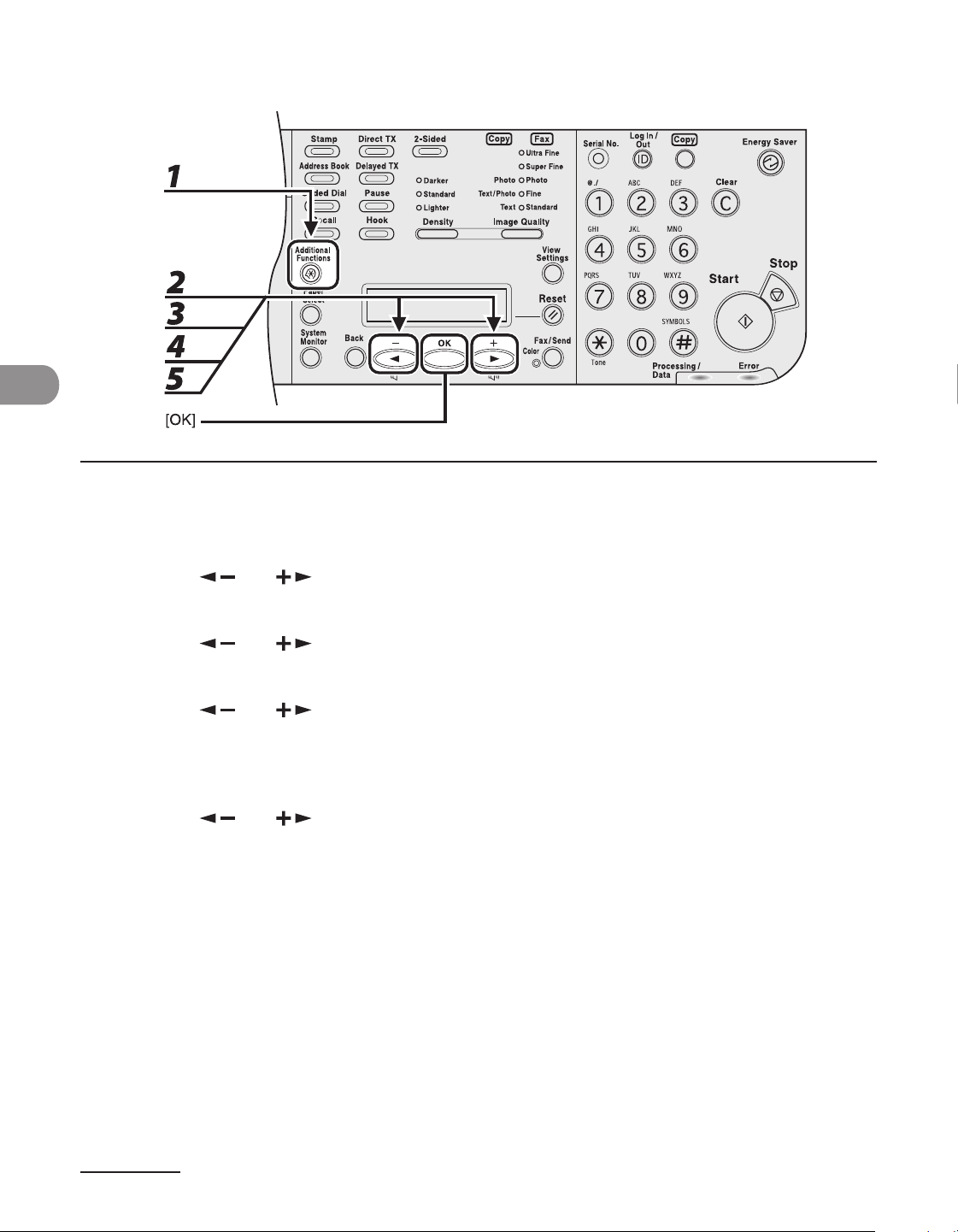
Sending Documents
4-40
Changing Group Name
1 Press [Additional Functions].
2 Press [ ] or [ ] to select <ADDRESS BOOK SET.>, then press [OK].
3 Press [ ] or [ ] to select <GROUP DIAL>, then press [OK].
4 Press [ ] or [ ] to select a group to edit, then press [OK].
To select a group stored under the coded dial code, press [Coded Dial], then enter the three-digit code
using the numeric keys.
5 Press [ ] or [ ] to select <NAME>, then press [OK].
●
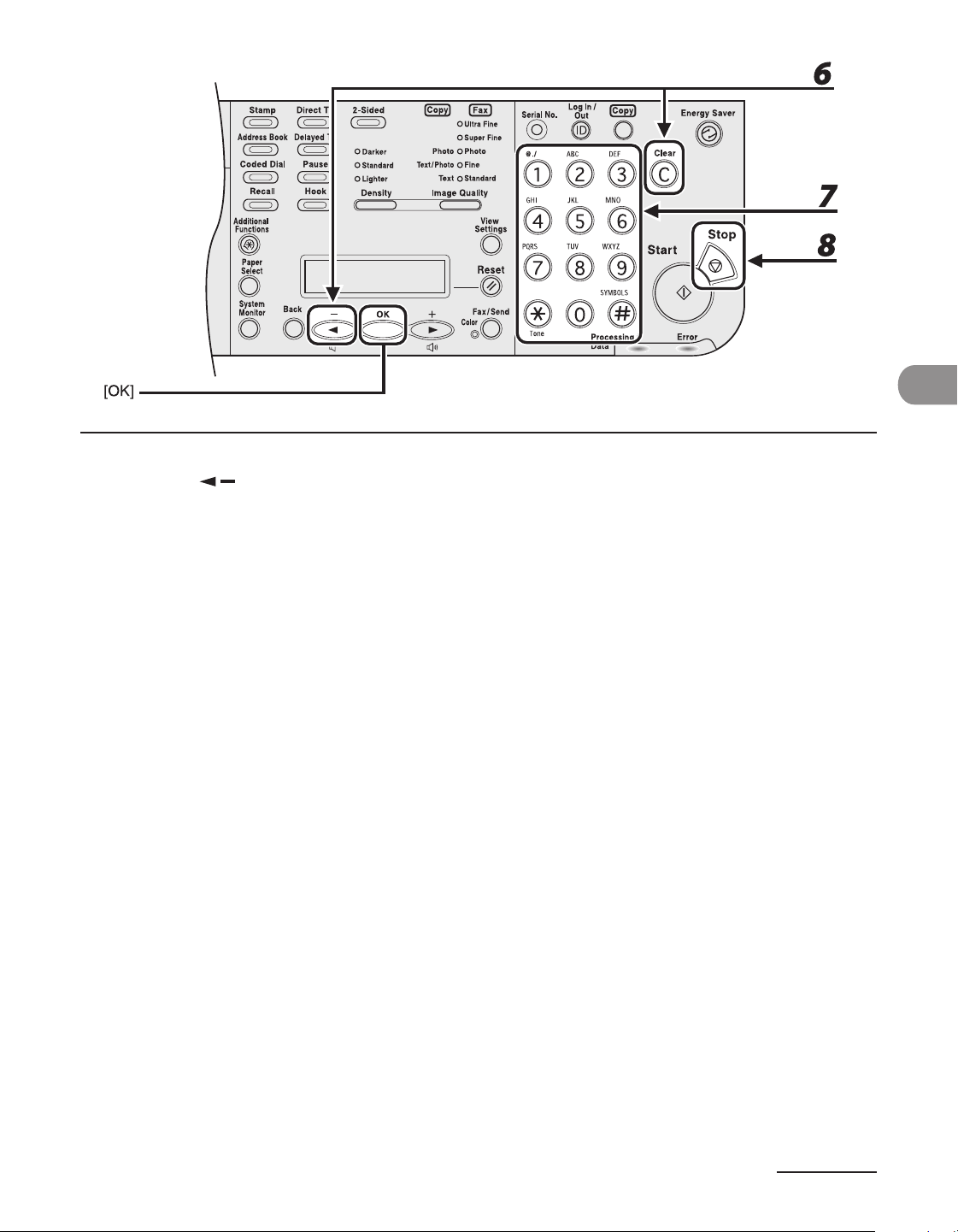
4-41
Sending Documents
6 Press [ ] repeatedly to go back to a wrong character, then press [Clear].
To delete the entire name, press and hold [Clear].
7 Enter a new character with the numeric keys, then press [OK].
8 Press [Stop] to return to the standby mode.
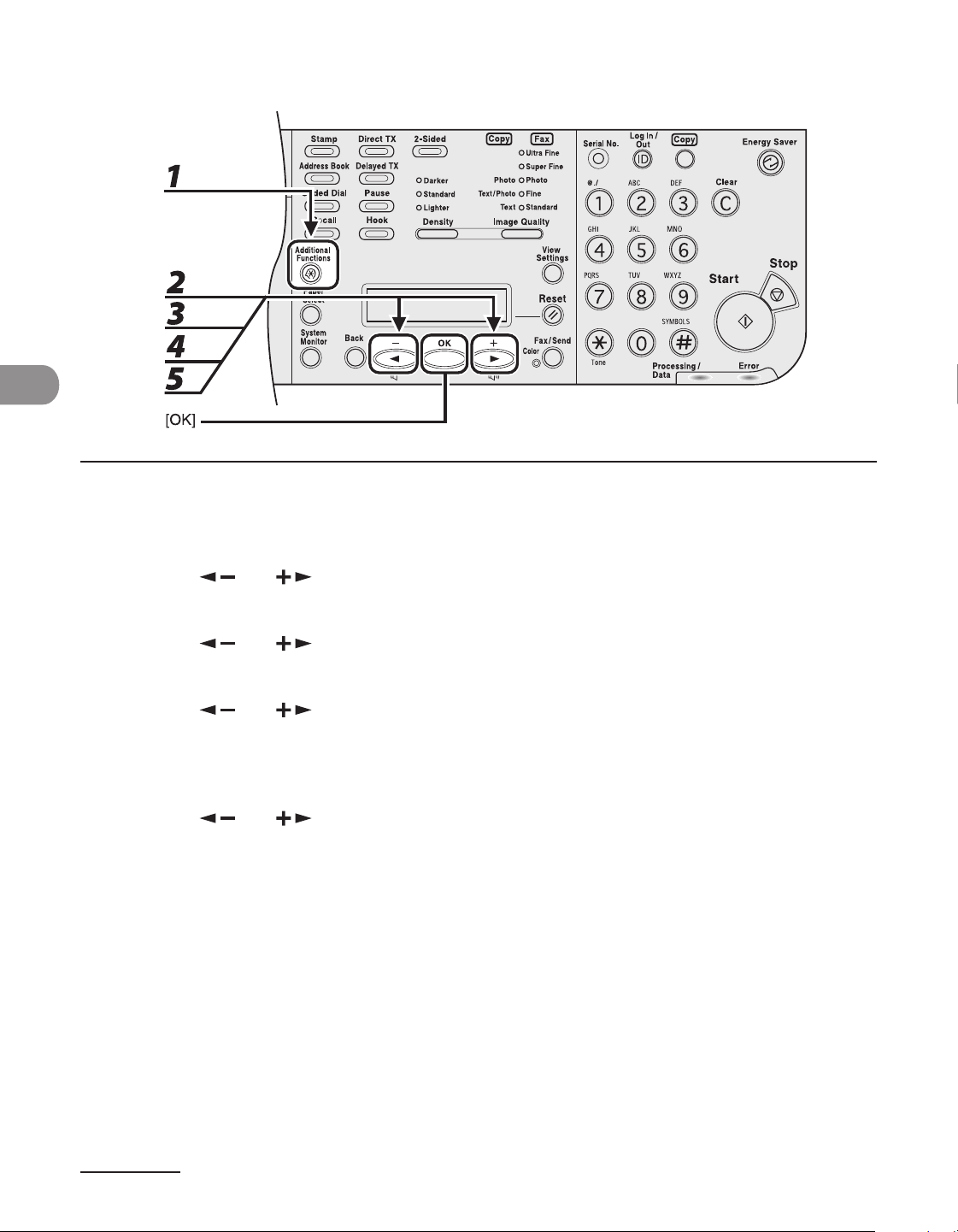
Sending Documents
4-42
Deleting Group Addresses
1 Press [Additional Functions].
2 Press [ ] or [ ] to select <ADDRESS BOOK SET.>, then press [OK].
3 Press [ ] or [ ] to select <GROUP DIAL>, then press [OK].
4 Press [ ] or [ ] to select a group to delete, then press [OK].
To select a group stored under the coded dial code, press [Coded Dial], then enter the three-digit code
using the numeric keys.
5 Press [ ] or [ ] to select <SELECT ADD/TEL NO>, then press [OK].
●
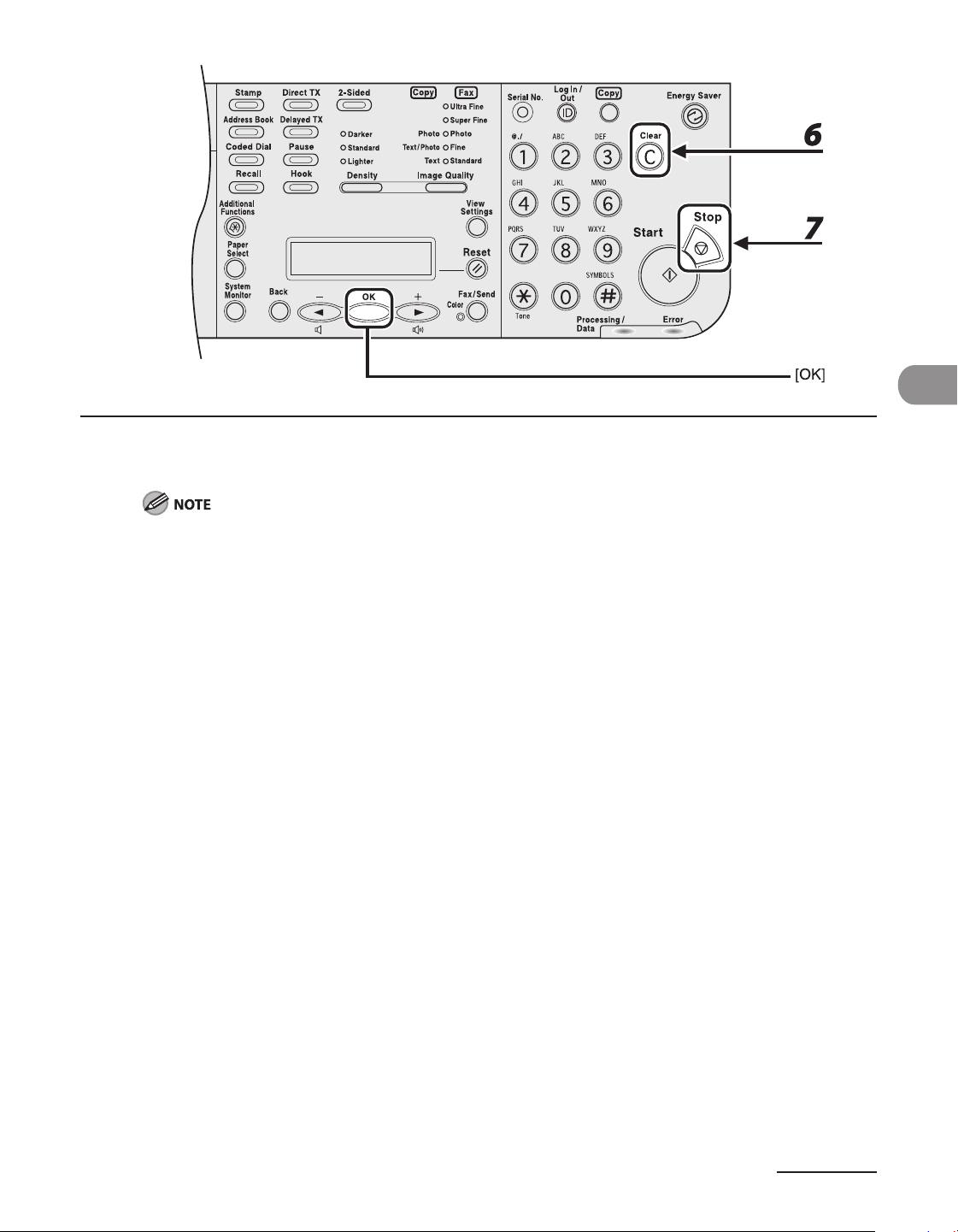
4-43
Sending Documents
6 Press [Clear] repeatedly until all destinations are deleted, then press [OK].
When you delete all destinations, the registered name is cleared automatically.
7 Press [Stop] to return to the standby mode.
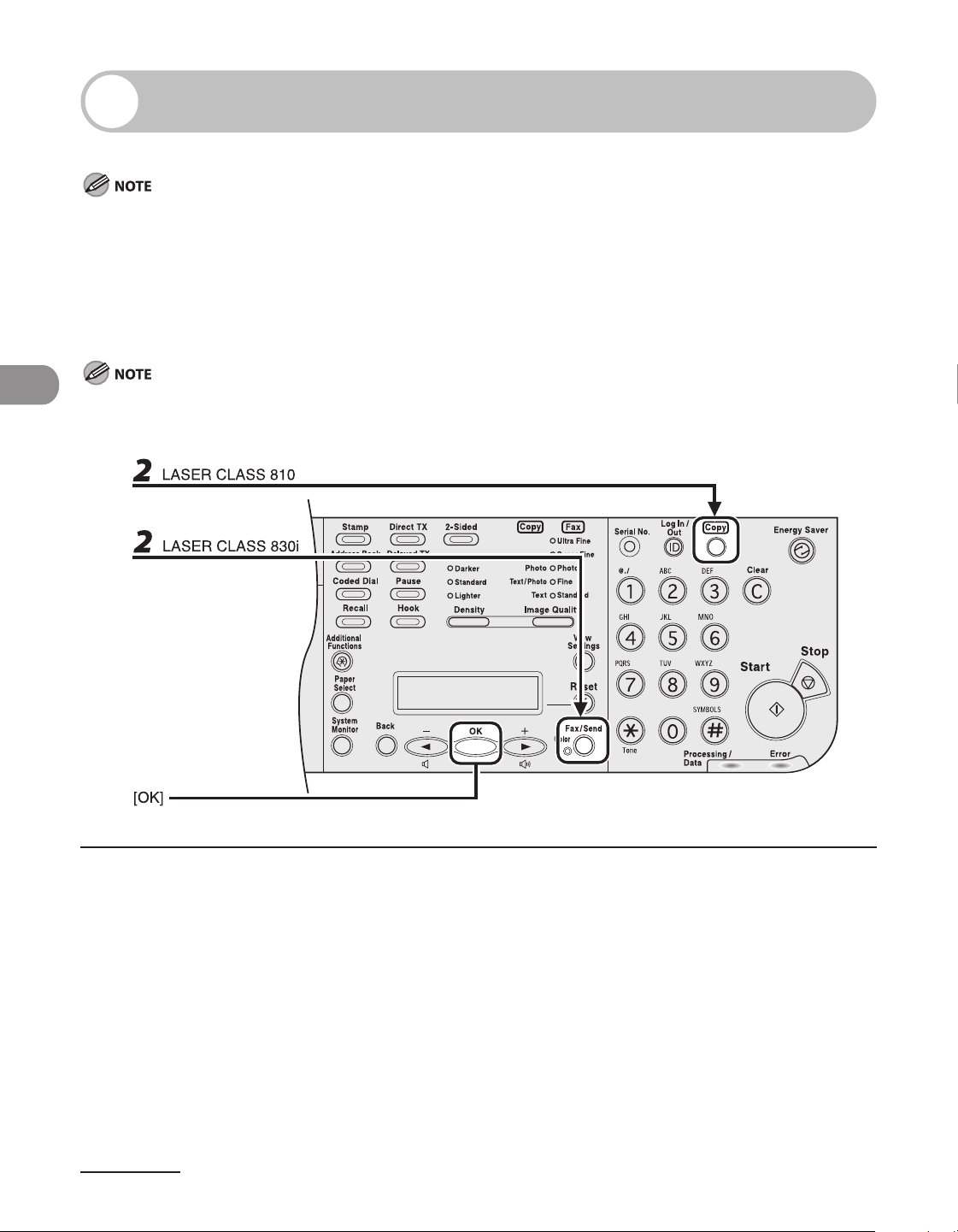
Sending Documents
4-44
Specifying Destinations
Follow the procedure below to send documents to registered recipients.
To send documents to a file server, you can specify the file server addresses only with one-touch keys, coded
dial codes, or [Address Book].
Using One-Touch Keys
You can specify up to 80 destinations using one-touch keys.
To use this feature, you must register destinations in one-touch keys beforehand. (See “Storing/Editing Address
Book,” on p. 4-12.)
1 Set documents.
2 Press [Fax/Send] repeatedly to select the sending method, then press [OK].
If using the LASER CLASS 810, you can switch to the Fax mode by pressing [Copy/Fax].
To send documents to a file server, select any sending method (LASER CLASS 830i Only).
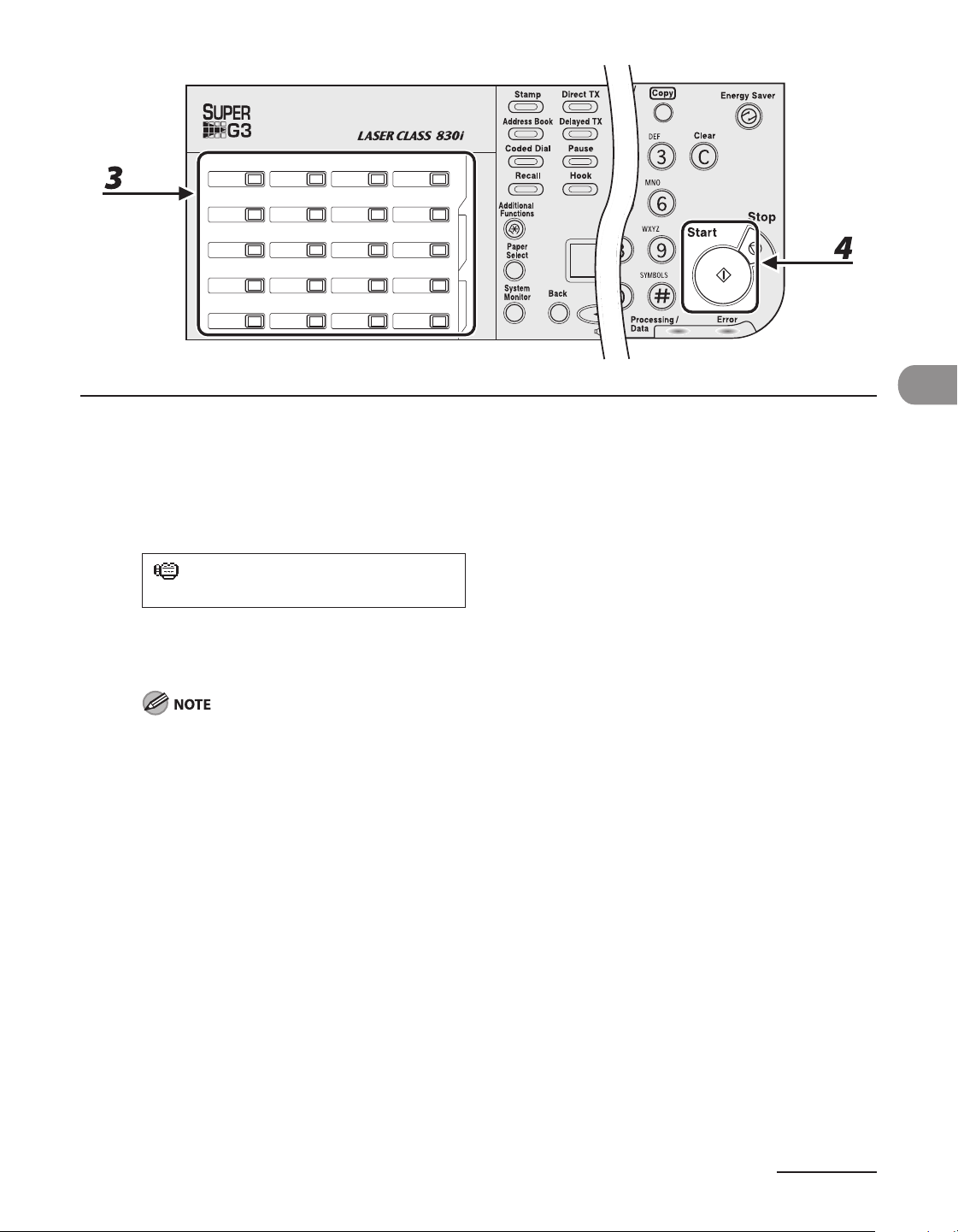
4-45
Sending Documents
- - - -
3 Press the desired one-touch key (01 to 80).
If you pressed a wrong key, press [Clear] and try again.
If you want to adjust the image quality and density, see “Scan Settings,” on p.
4-5.
= 0 1 2 3 X X X X X X
[ 0 5 ] C A N O N U S A
Ex.
4 Press [Start].
When <TIME OUT> is set to <ON> in <TX SETTINGS> in <FAX SETTINGS> in <TX/RX SETTINGS>, and if
you have specified the destination by any other method than using numeric keys, the machine starts
scanning automatically without pressing [Start], after the preset time for this setting is elapsed.
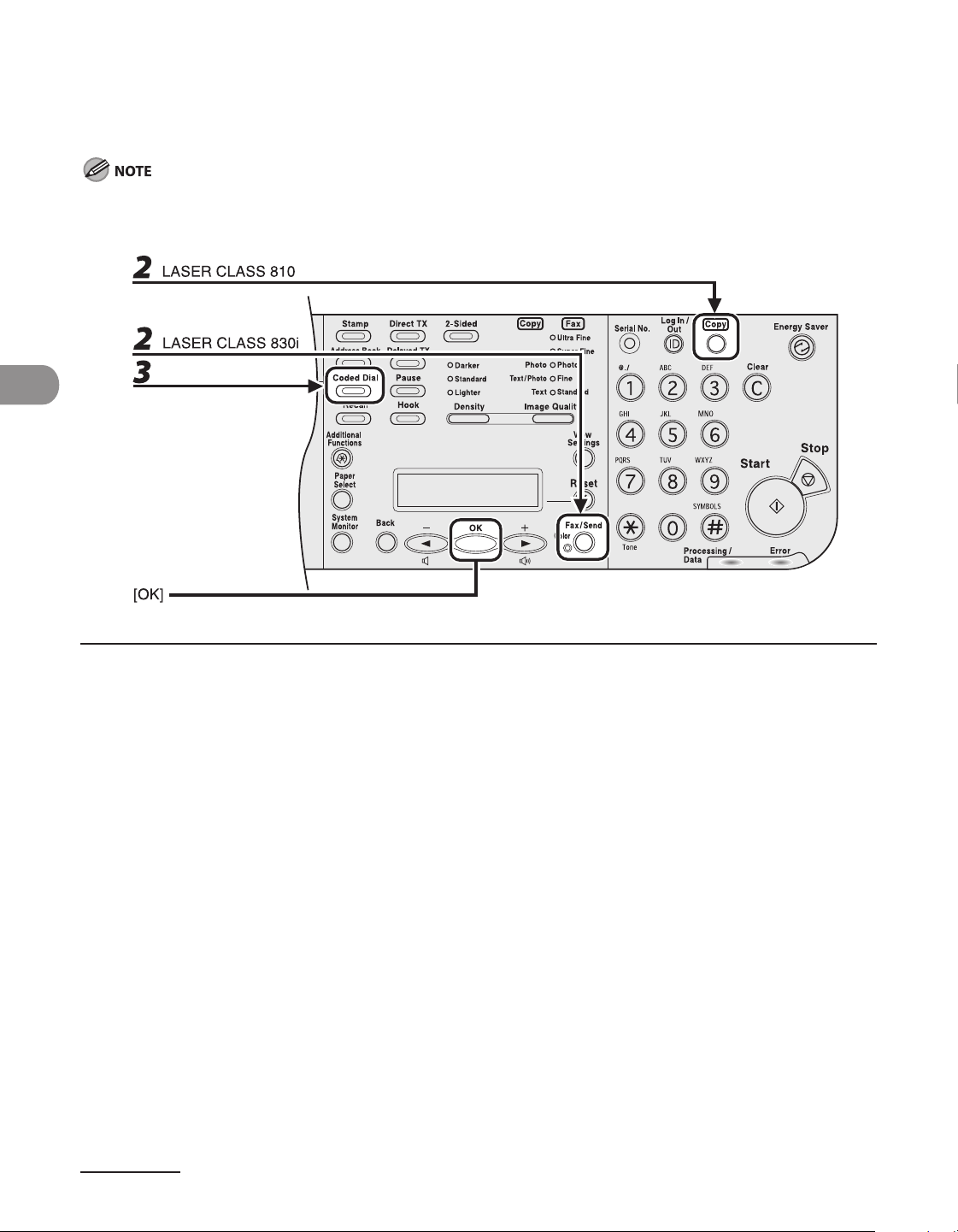
Sending Documents
4-46
Using Coded Dial Codes
You can specify up to 120 (LASER CLASS 810)/420 (LASER CLASS 830i) destinations using
coded dial codes.
To use this feature, you must register destinations in coded dial code beforehand. (See “Storing/Editing Address
Book,” on p. 4-12.)
1 Set documents.
2 Press [Fax/Send] repeatedly to select the sending method, then press [OK].
If using the LASER CLASS 810, you can switch to the Fax mode by pressing [Copy/Fax].
To send documents to a file server, select any sending method (LASER CLASS 830i Only).
3 Press [Coded Dial].
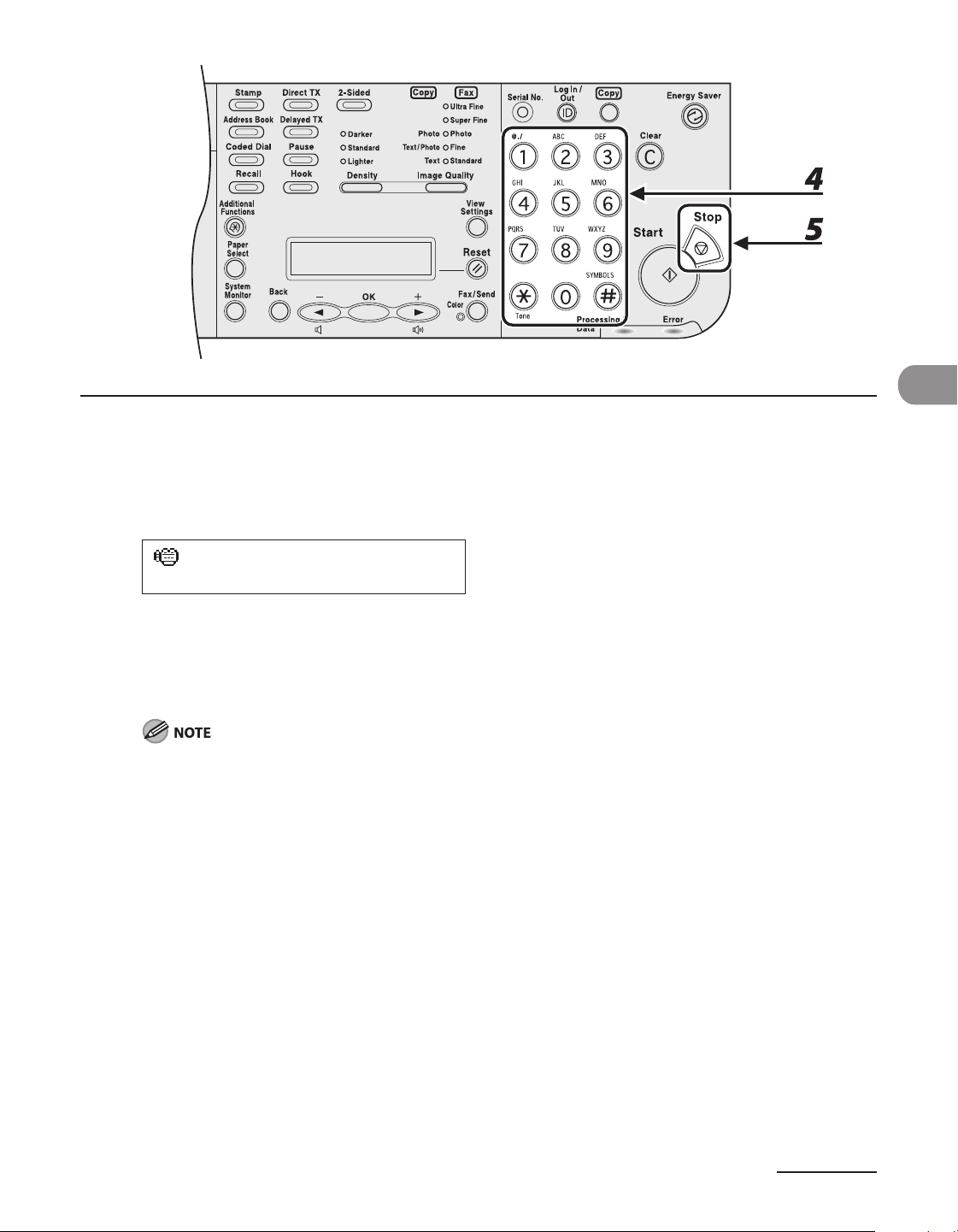
4-47
Sending Documents
4 Enter the desired three-digit code (LASER CLASS 810: 000 to 119, LASER CLASS
830i: 000 to 419) with the numeric keys.
= 0 1 2 3 X X X X X X
[ * 0 0 1 ] C A N O N
Ex.
If you entered a wrong code, press [Clear], then try again from step 3.
If you want to adjust the image quality and density, see “Scan Settings,” on p.
4-5.
5 Press [Start].
When <TIME OUT> is set to <ON> in <TX SETTINGS> in <FAX SETTINGS> in <TX/RX SETTINGS>, and if
you have specified the destination by any other method than using numeric keys, the machine starts
scanning automatically without pressing [Start], after the preset time for this setting is elapsed.
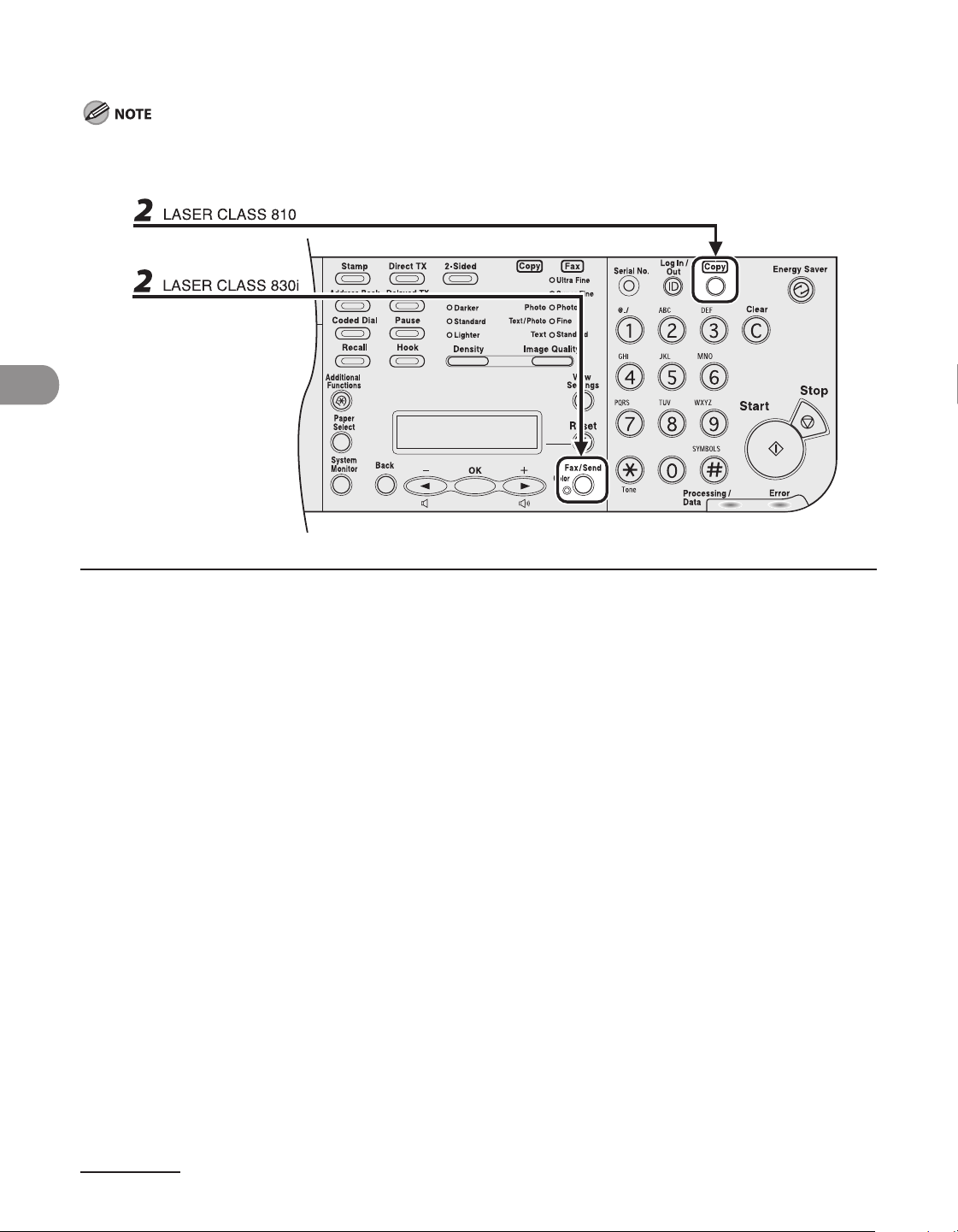
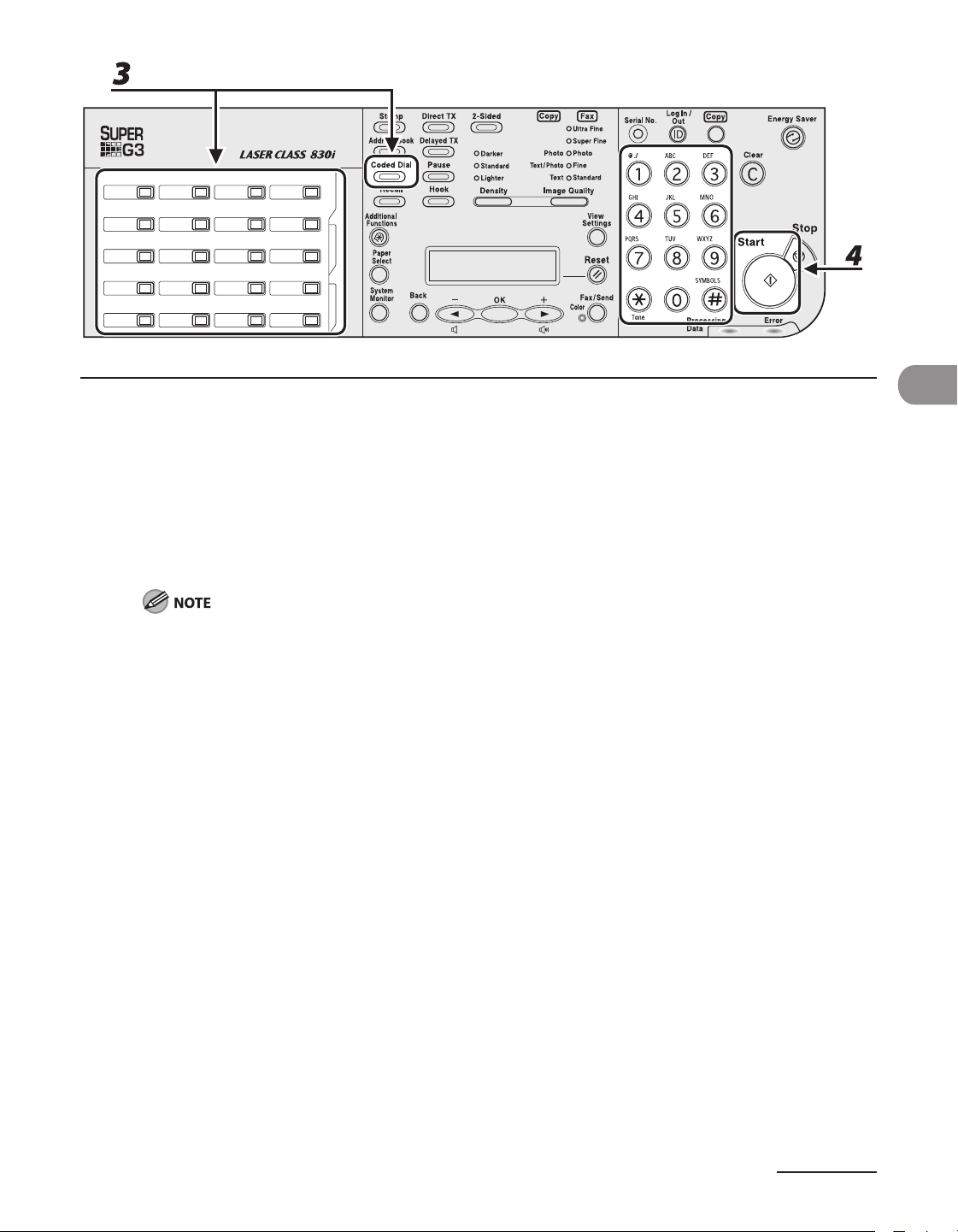
4-49
Sending Documents
- - - -
3 Press the one-touch key or [Coded Dial] followed by the three-digit code under
which the desired address group is registered.
If you pressed a wrong key or code, press [Clear], and perform step 3 again.
If you want to adjust the image quality and density, see “Scan Settings,” on p.
4-5.
4 Press [Start].
When <TIME OUT> is set to <ON> in <TX SETTINGS> in <FAX SETTINGS> in <TX/RX SETTINGS>, and if
you have specified the destination by any other method than using numeric keys, the machine starts
scanning automatically without pressing [Start], after the preset time for this setting is elapsed.
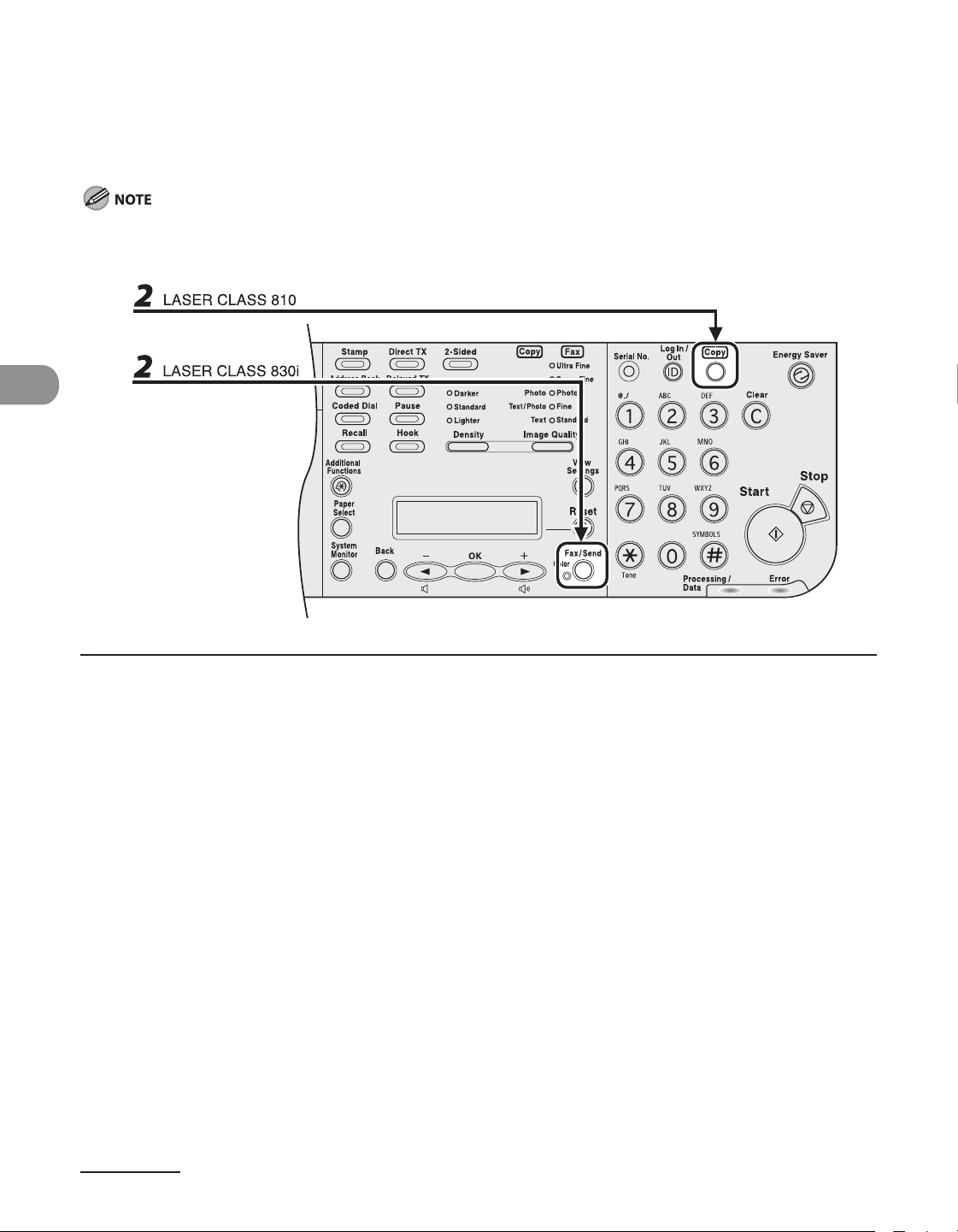
Sending Documents
4-50
Using Address Book Key
[Address Book] search enables you to search for a recipient registered in the machine. This
is useful when you forget which one-touch key or coded dial code the recipient you want is
registered under.
To use this feature, you must register destinations in Address Book beforehand. (See “Storing/Editing Address
Book,” on p. 4-12.)
1 Set documents.
2 Press [Fax/Send].
If using the LASER CLASS 810, you can switch to the Fax mode by pressing [Copy/Fax].
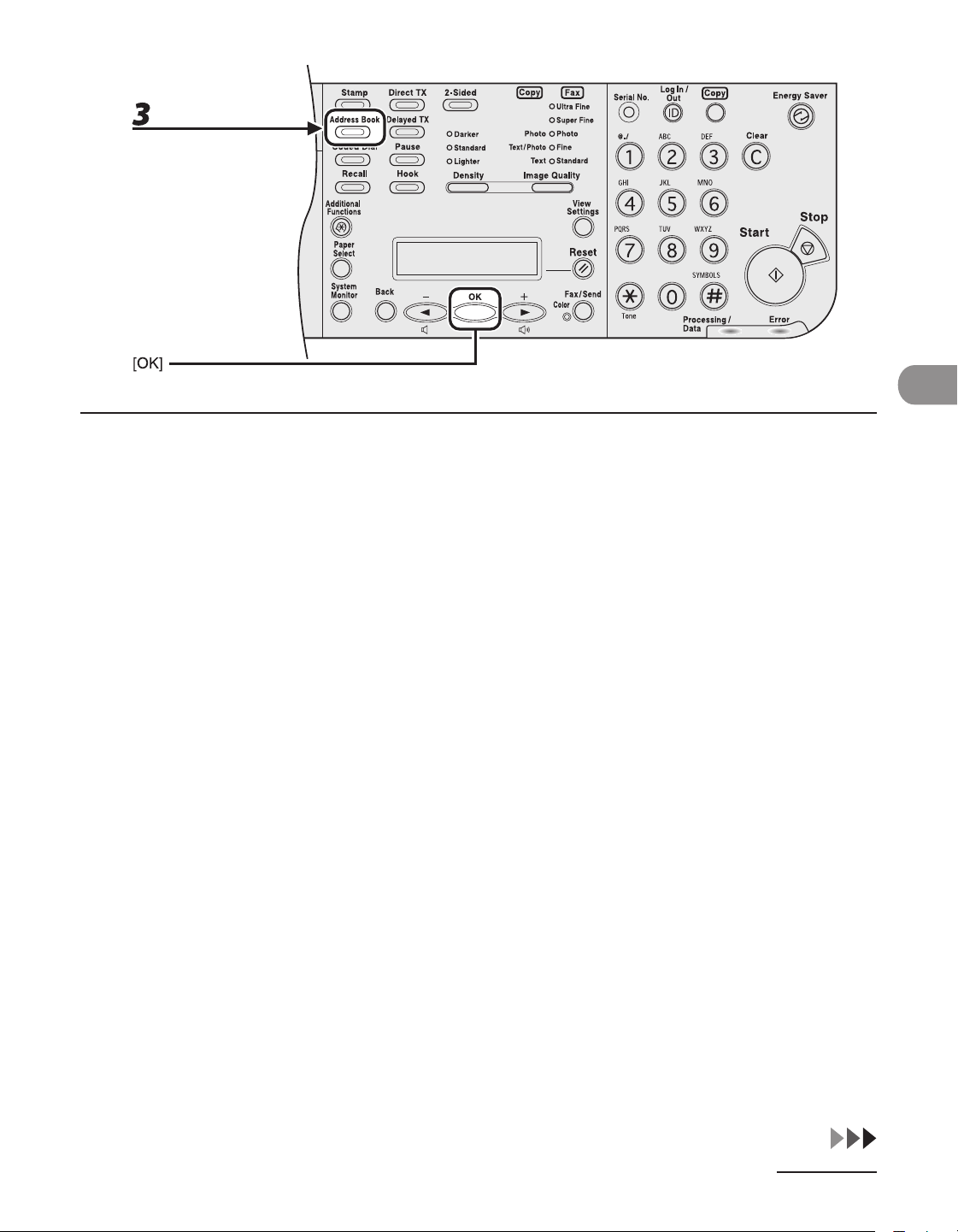
4-51
Sending Documents
3 Press [Address Book] repeatedly to select <NAME SEARCH> or <ADD/TEL
SEARCH>, then press [OK].
If no recipient is registered in Address Book, <NOT REGISTERED> is displayed.
<NAME SEARCH>: searches a destination by name
<ADD/TEL SEARCH>: searches a destination by address or fax number
If using the LASER CLASS 810, skip to step 4.
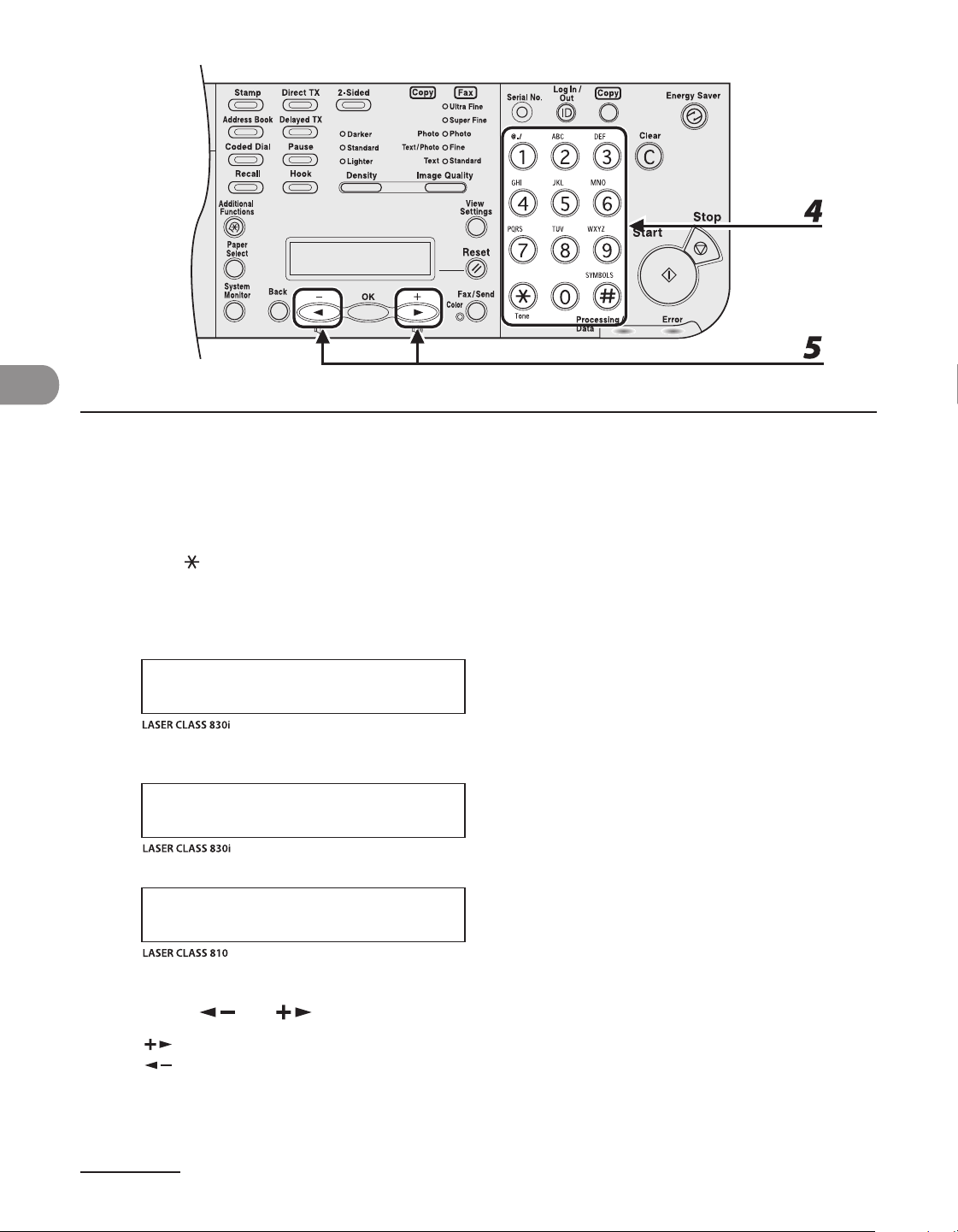
Sending Documents
4-52
\
4 Enter the first letter of the recipient’s name or the first part of the fax number/
address with the numeric keys.
For example, if you want to search for a name that starts with the letter “C,” press [2] (ABC).
Entries starting with the letter you entered are displayed if any entries are registered.
Press [ ] to switch between input modes:
[:A]: Letter mode
[:1]: Number mode
N A M E S E A R C H : A
C A N O N
Ex.
A D D / T E L S E A R C H : A
c a n o n @ X X X . X X X
Ex.
A D D R E S S B O O K : A
H I J K
Ex.
5 Press [ ] or [ ] to search for the recipient.
[ ]: displays recipients in alphabetical order.
[ ]: displays recipients in reverse order.
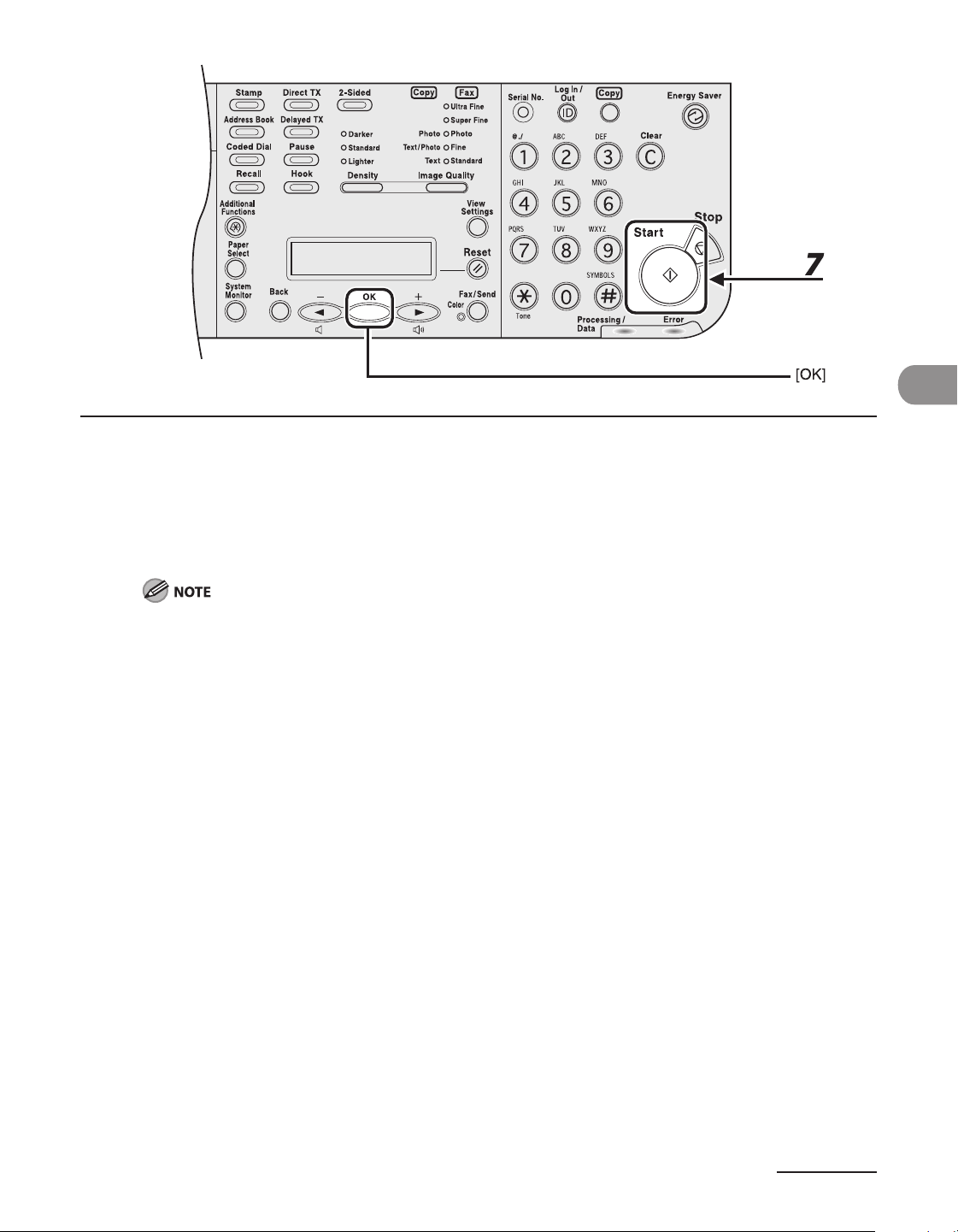
4-53
Sending Documents
6 When the recipient’s name is displayed, press [OK].
If you want to adjust the image quality and density, see “Scan Settings,” on p. 4-5.
7 Press [Start].
When <TIME OUT> is set to <ON> in <TX SETTINGS> in <FAX SETTINGS> in <TX/RX SETTINGS>, and if
you have specified the destination by any other method than using numeric keys, the machine starts
scanning automatically without pressing [Start], after the preset time for this setting is elapsed.
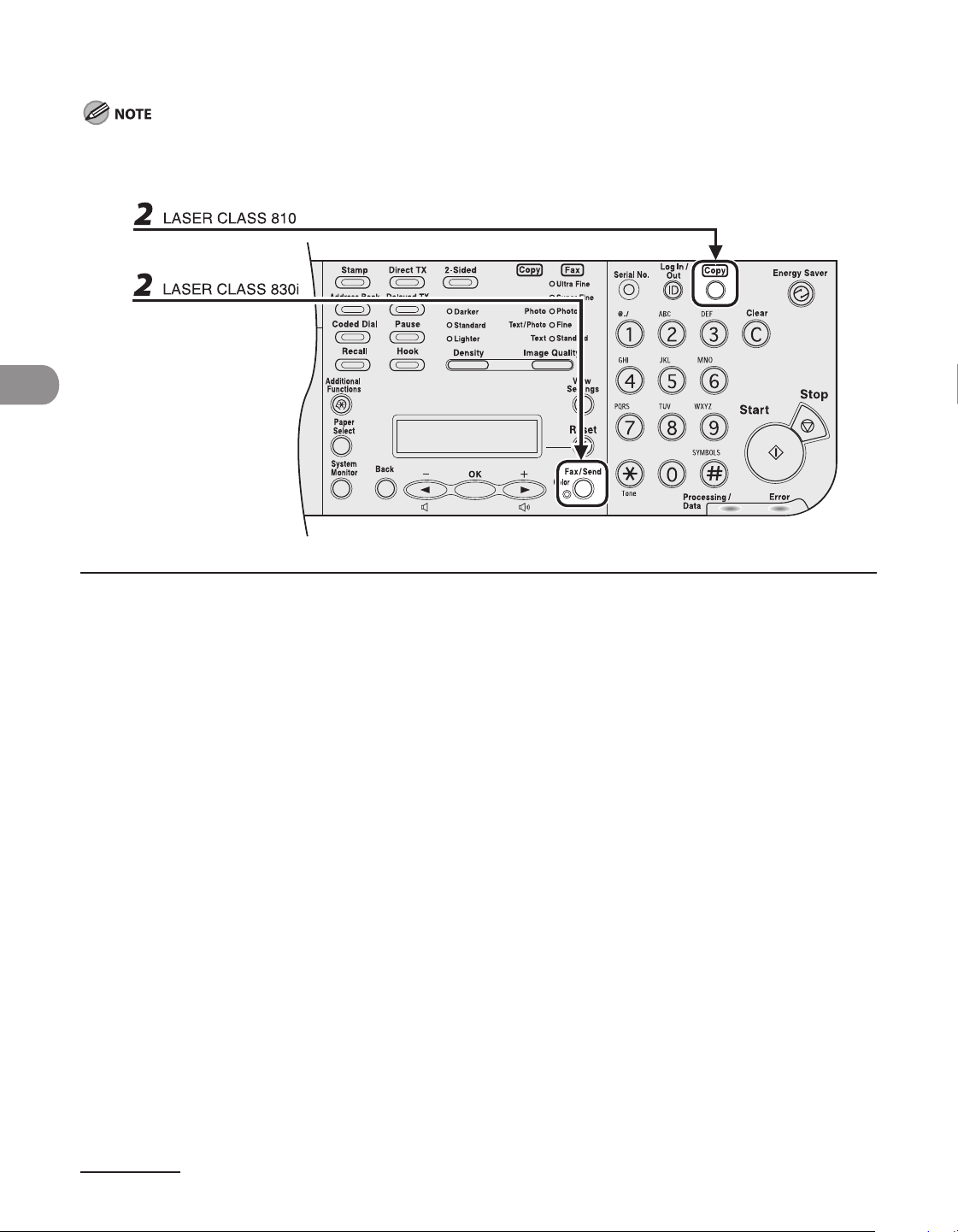
Sending Documents
4-54
Using Favorites Buttons (LASER CLASS 830i Only)
To use this feature, you must register destinations in favorites buttons beforehand. (See “Storing/Editing
Address Book,” on p. 4-12.)
1 Set documents.
2 Press [Fax/Send].
If using the LASER CLASS 810, you can switch to the Fax mode by pressing [Copy/Fax].
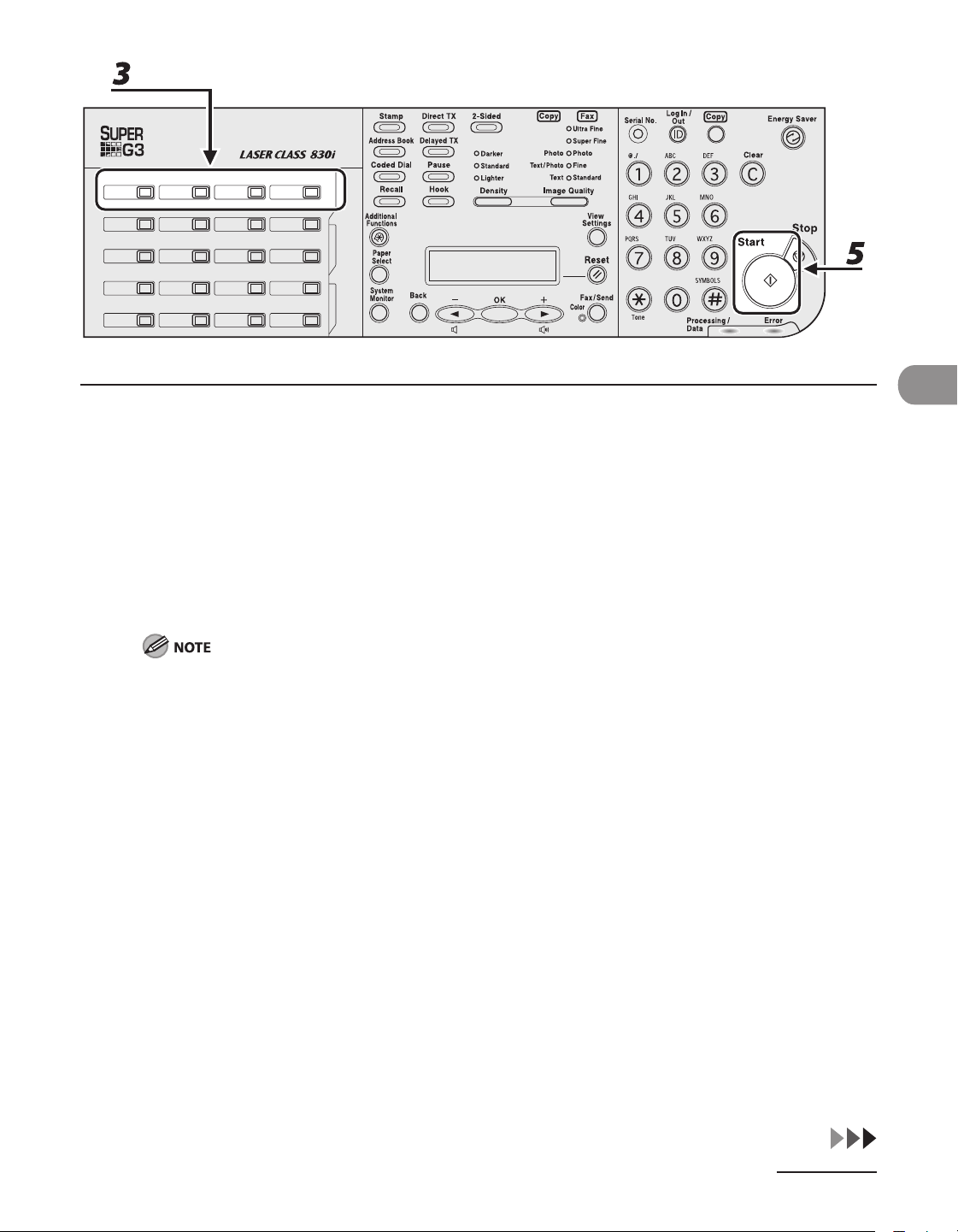
4-55
Sending Documents
- - - -
3 Press the desired one-touch key registered as a favorites button (01 to 04).
If you pressed a wrong key, press [Clear] and try again.
4 Adjust any necessary settings for your document.
For details, see “Scan Settings,” on p.4-5.
5 Press [Start].
When <TIME OUT> is set to <ON> in <TX SETTINGS> in <FAX SETTINGS> in <TX/RX SETTINGS>, and if
you have specified the destination by any other method than using numeric keys, the machine starts
scanning automatically without pressing [Start], after the preset time for this setting is elapsed..
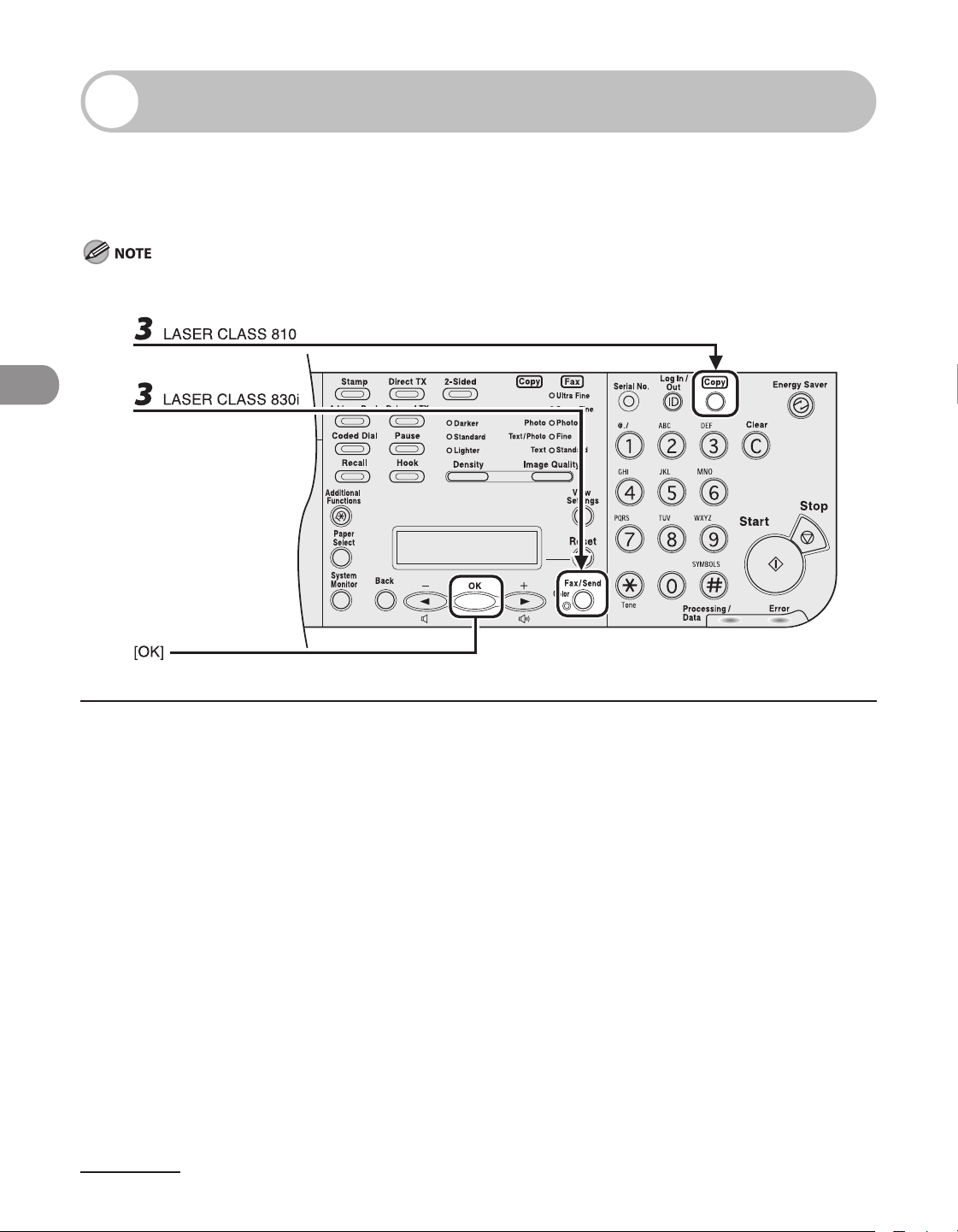
Sending Documents
4-56
Manual Sending (Fax)
Use manual sending when you want to talk to the recipient before sending
a document, or if the recipient does not have a fax machine that can receive
automatically.
You cannot use group dialing for manual sending.
1 Connect the optional handset to the machine if you want to talk to the recipient
before sending a document.
For details on how to connect an optional handset to the machine, see “Set Up the Machine,” in the
Starter Guide
.
2 Load the document in the ADF.
3 Press [Fax/Send] repeatedly to select <FAX>, then press [OK].
If using the LASER CLASS 810, you can switch to the Fax mode by pressing [Copy/Fax].
If you want to adjust the image quality and density, see “Scan Settings,” on p.
4-5.
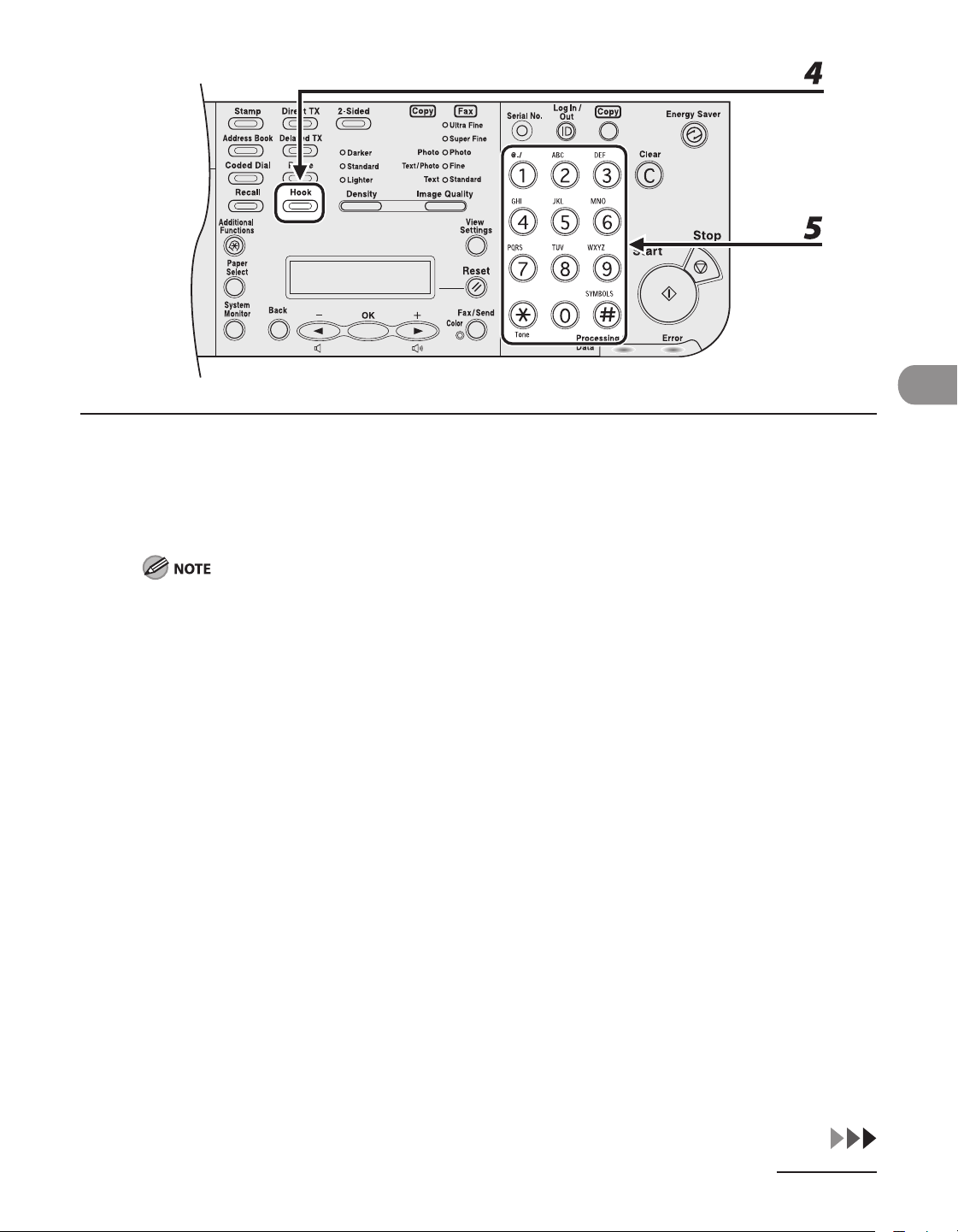
4-57
Sending Documents
4 Press [Hook] or pick up the optional handset.
5 Dial the recipient's fax/telephone number.
Make sure to confirm the dial tone before entering a fax number. If you enter the number before the
dial tone can be heard, the call may not connect, or the wrong number may be dialed.
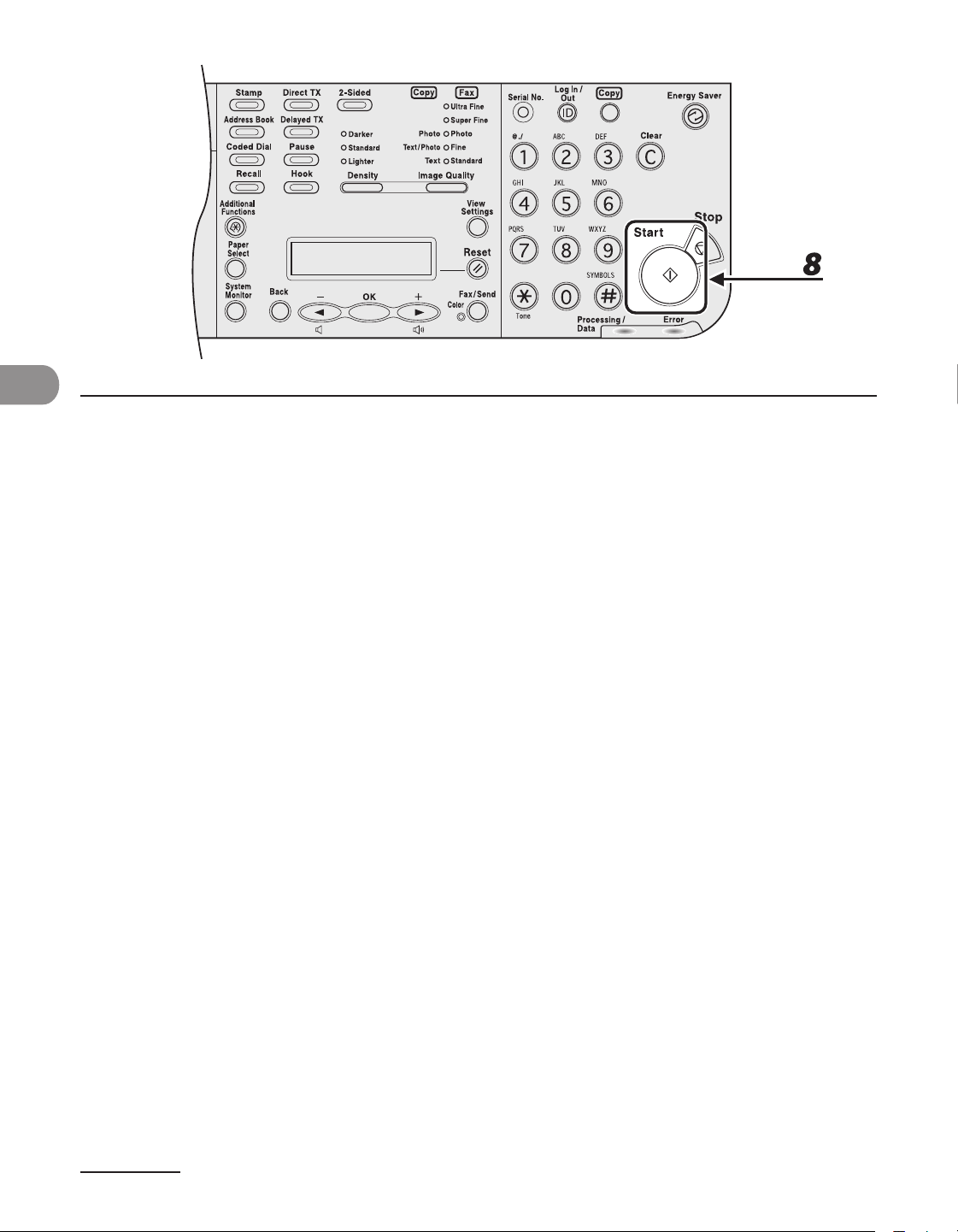
Sending Documents
4-58
6 Talk through the handset to the recipient.
If you press [Hook] in step 4, you can pick up the handset when you hear the recipient's voice.
If you hear a high-pitched signal instead of the recipient's voice, go to step 8.
7 Ask the recipient to set their fax machine to receive faxes.
8 When you hear a high-pitched signal, press [Start], then hang up the handset.
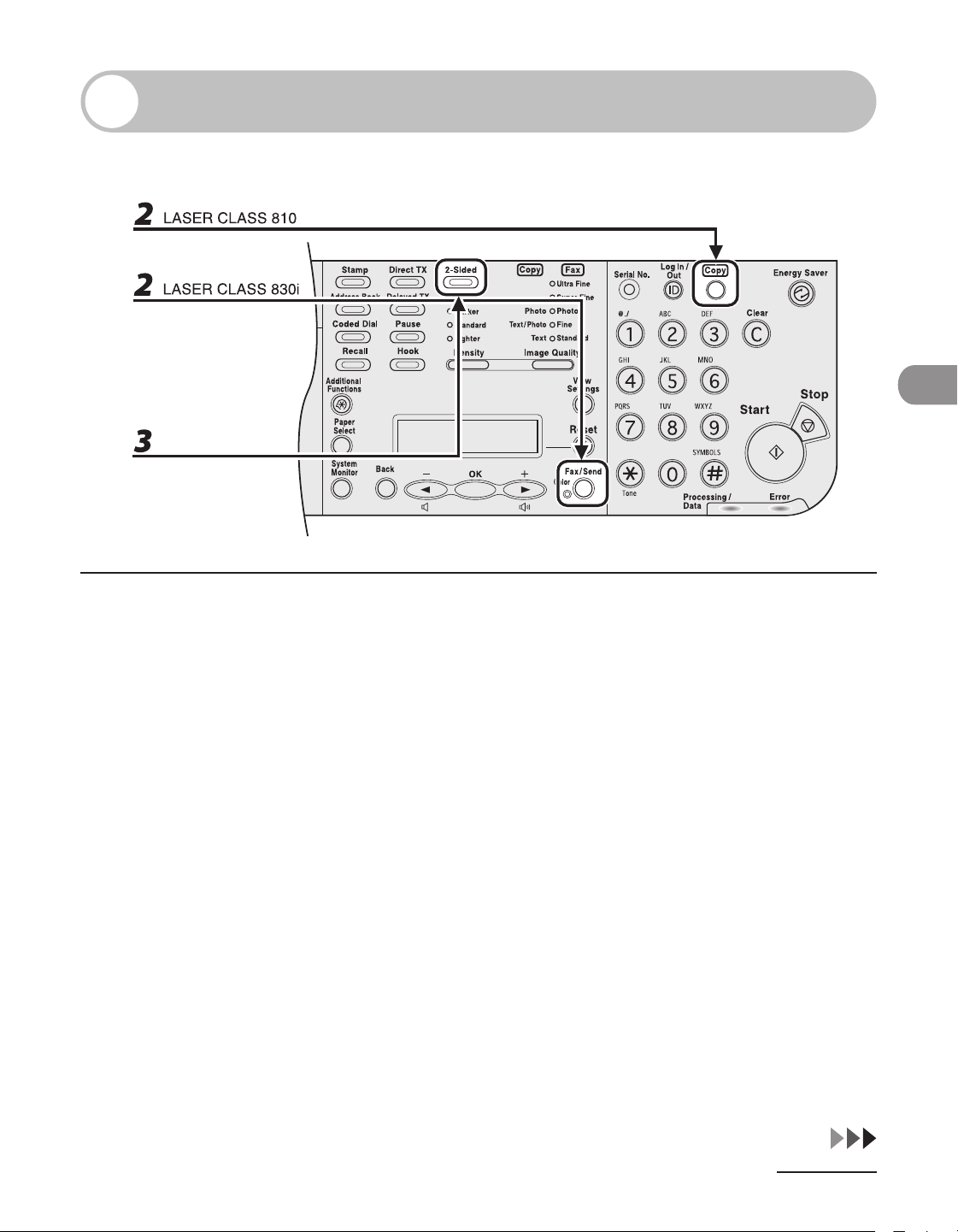
4-59
Sending Documents
Sending Two-Sided Documents
You can set the machine to automatically turn over two-sided documents in the ADF,
and scan each side separately.
1 Set documents in the ADF.
2 Press [Fax/Send] repeatedly to select <FAX>, then press [OK].
If using the LASER CLASS 810, you can switch to the Fax mode by pressing [Copy/Fax].
3 Press [2-Sided].
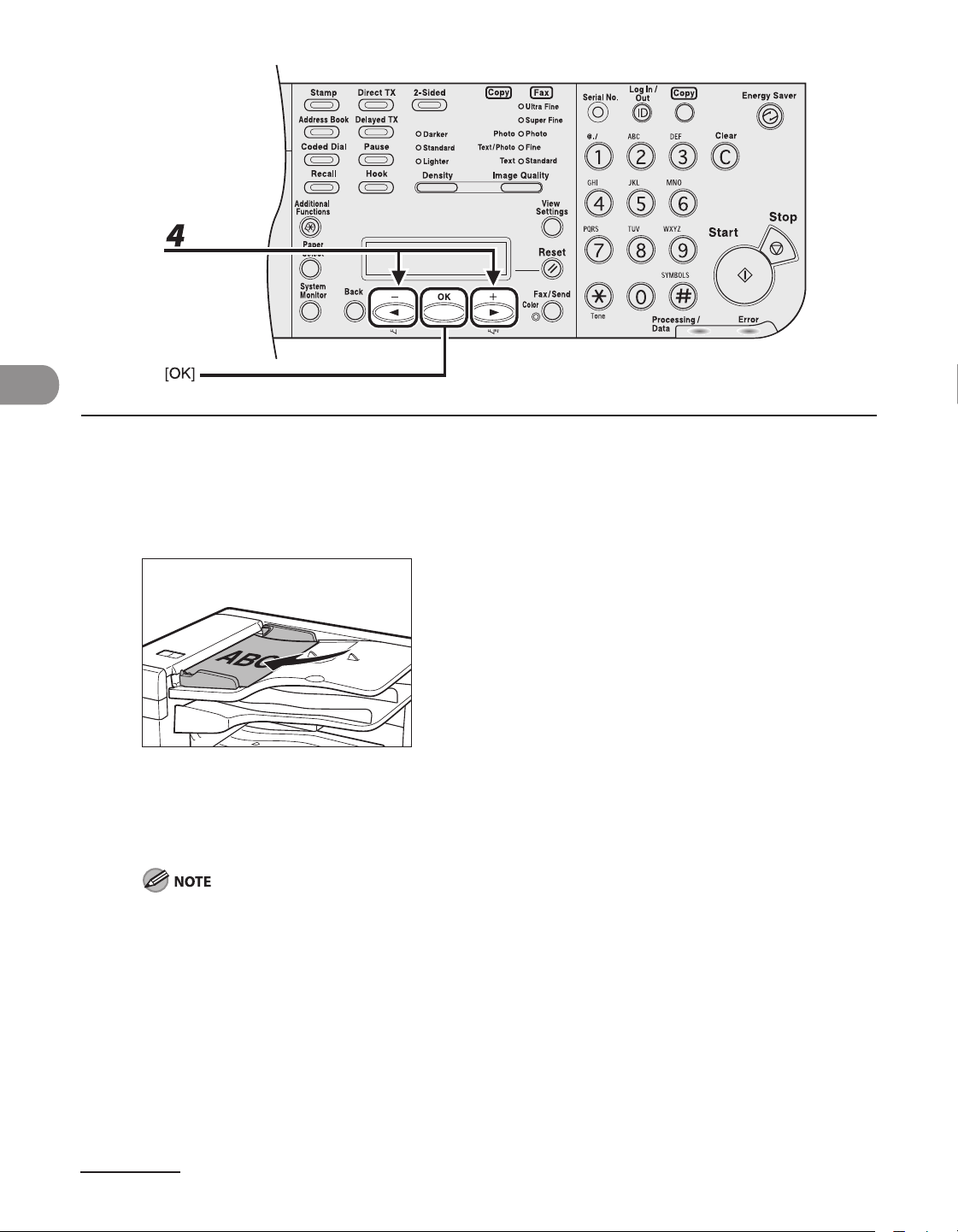
Sending Documents
4-60
4 Press [2-Sided] repeatedly to select <2-SIDED BOOK> or <2-SIDED CALENDAR>,
then press [OK].
If using the LASER CLASS 830i:
When images in documents are set vertically as illustrated above, select the desired output.
<2-SIDED BOOK>: Select if images on the back side of a document have the same top-bottom
orientations as the front side of the document.
<2-SIDED CALENDAR>: Select if images on the front and back sides of a document have opposite
orientations.
When images on 11x17 landscape documents are orientated horizontally, select <2-SIDED BOOK> if
the images on the front and back sides of a document have opposite orientations. Select <2-SIDED
CALENDAR> if images on the front and back sides of a document have the same orientations.
●
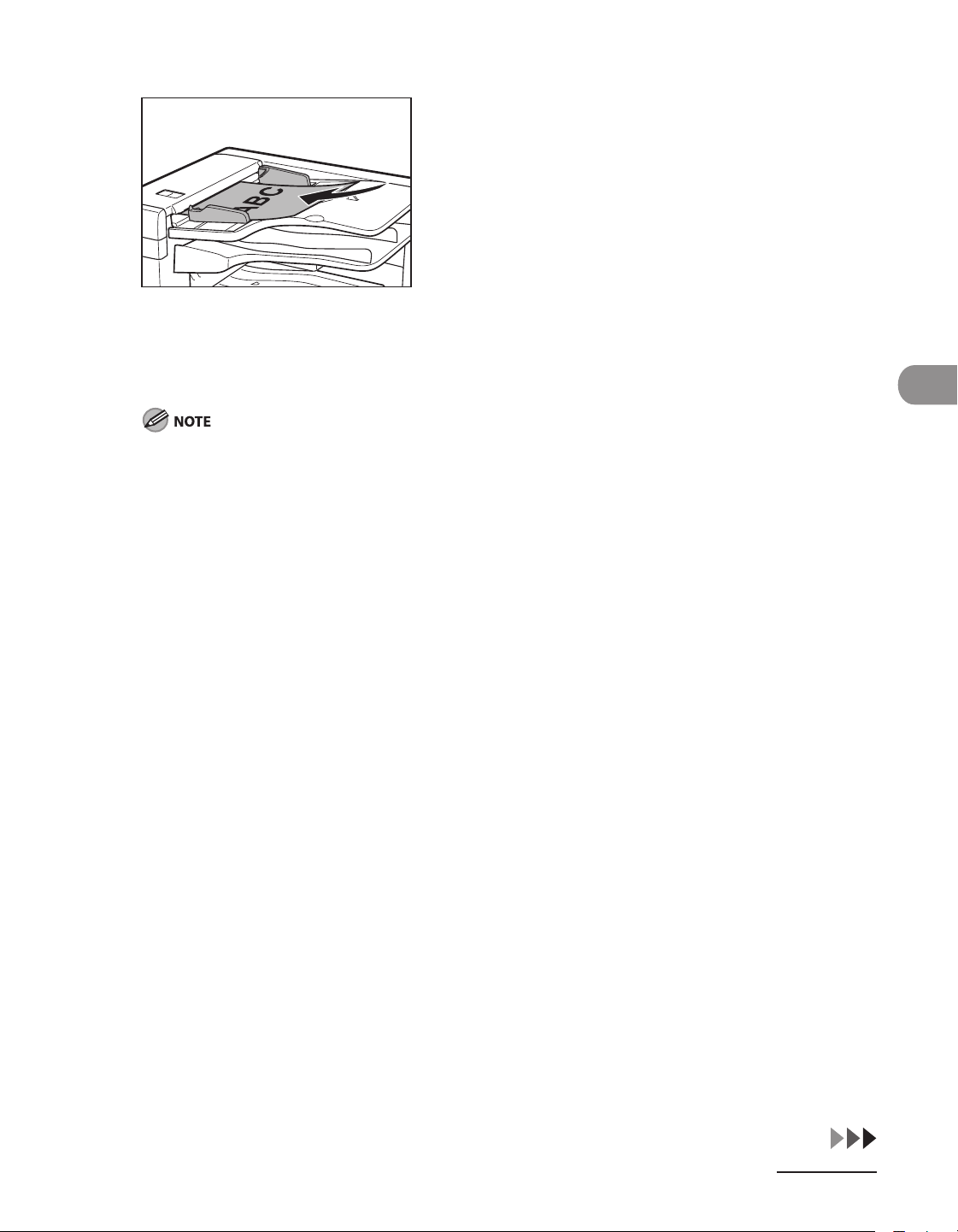
4-61
Sending Documents
If using the LASER CLASS 810:
When images in documents are set horizontally as illustrated above, select the desired output.
<2-SIDED BOOK>: Select if images on the back side of the document have the same top-bottom
orientation as the front side of the document.
<2-SIDED CALENDAR>: Select if images on the front and back side of the document have opposite top-
bottom orientations.
For landscape documents, such as LTRR documents, with an image set vertically, the images on the
front and back sides of the document will have opposite top-bottom orientations when <2-SIDED
BOOK> is selected. When <2-SIDED CALENDAR> is selected, the front and back sides of the document
will have the same top-bottom orientations.
●
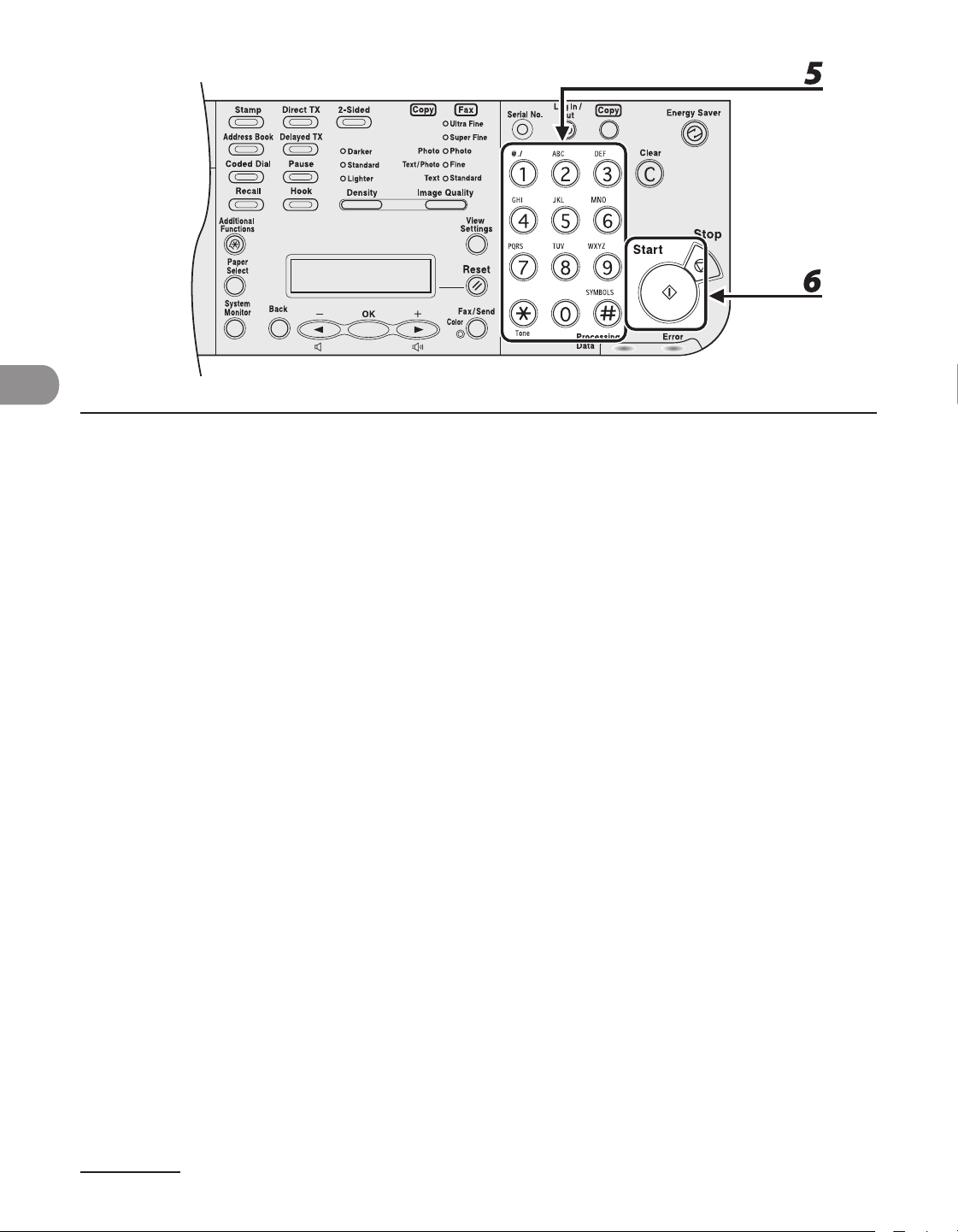
Sending Documents
4-62
5 Use the numeric keys, one-touch speed dialing key, coded speed dialing code,
or address book dialing to enter a recipient.
6 Press [Start].
To cancel all settings and return to standby mode, press [Stop].
When <TIME OUT> is set to <ON> in <TX SETTINGS> in <FAX SETTINGS>, the machine starts dialing
automatically after the preset time for this setting is passed. However, when you manually enter a
recipient, be sure to press [Start].
If the specified time for delayed sending passes during a temporary power failure (that recovers within a
hour), the fax document will be sent at the specified time on the next day.
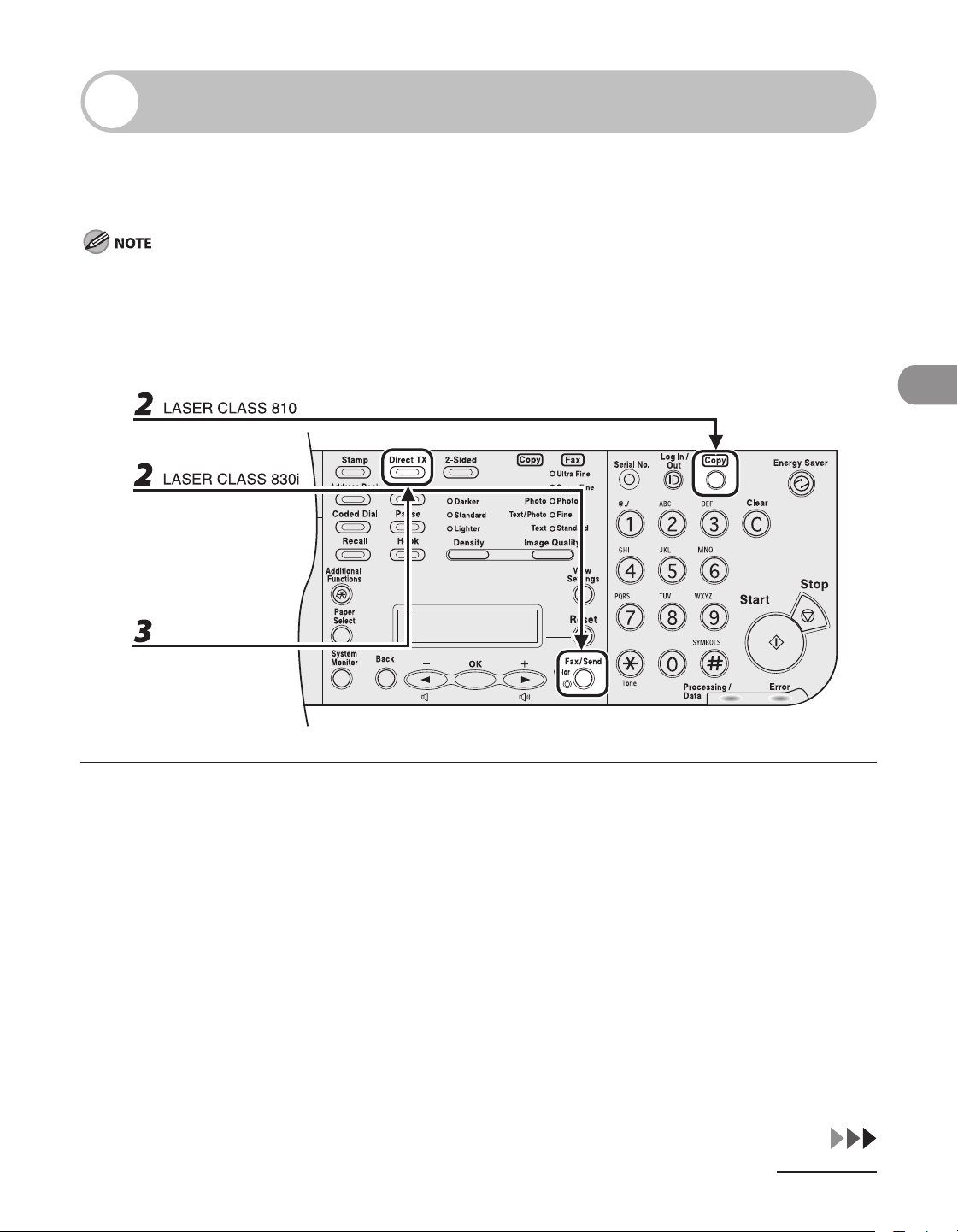
4-63
Sending Documents
Direct Sending
With direct sending, the machine sends the document on the ADF as it scans one
page, without storing all pages into memory at once. You can send a document ahead
of other documents stored in memory.
You cannot use group dialing for direct sending.
With direct sending, the machine scans one page into memory at once and sends it right away. Therefore,
when <MEMORY FULL> is displayed, even if you have selected direct sending, wait until there is enough
space in memory to scan one page, or delete the documents in memory, and try again. (See Reference Guide
> Send/Receive > Direct Sending.)
You cannot use direct sending for e-mail, I-faxs, or sending to a file server.
1 Load the document in the ADF.
2 Press [Fax/Send].
If using the LASER CLASS 810, you can switch to the Fax mode by pressing [Copy/Fax].
3 Press [Direct TX].
To cancel direct sending, press [Direct TX] again.
–
–
–
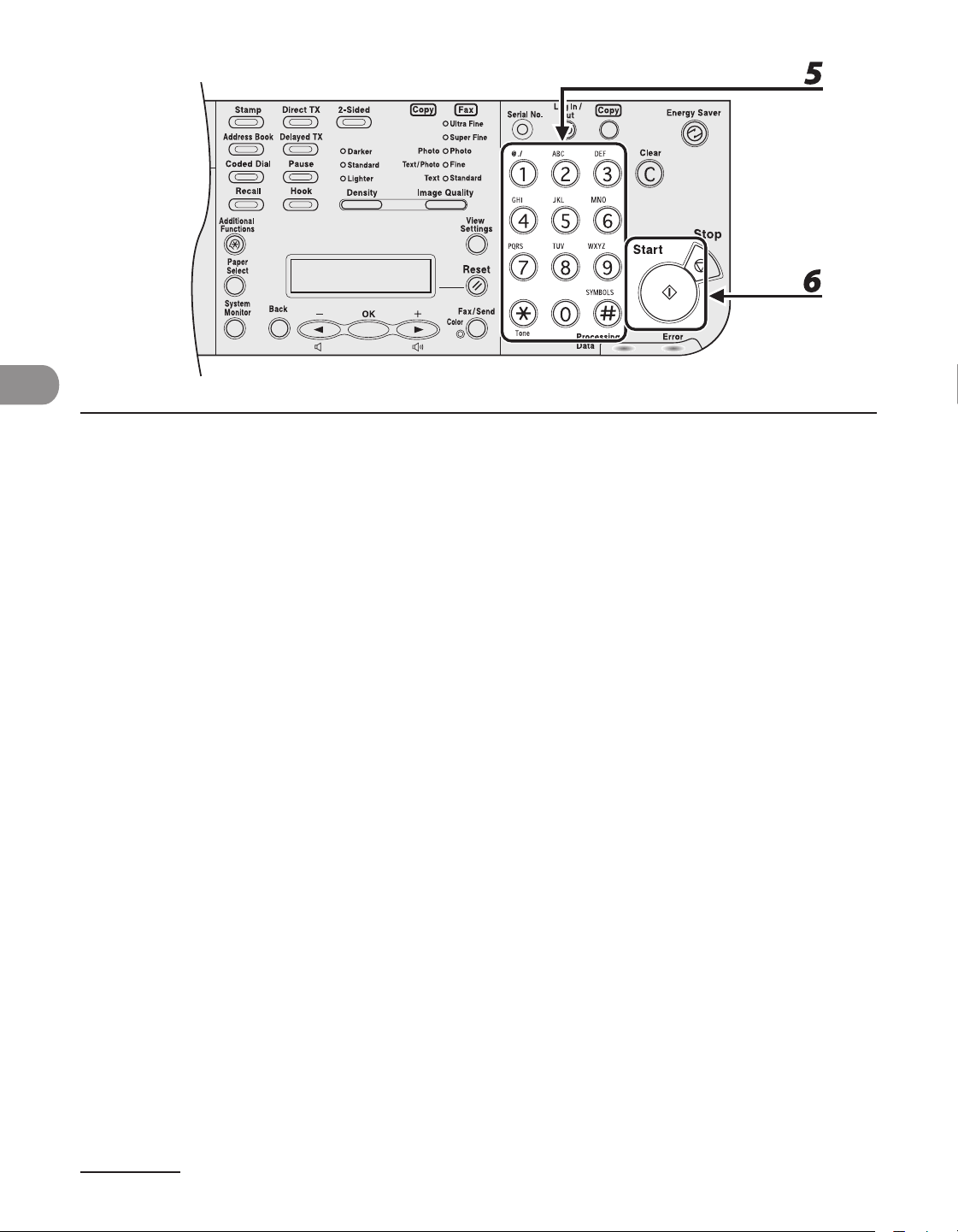
Sending Documents
4-64
4 Adjust any necessary settings for your document.
For details, see "Scan Settings," on p. 4-5.
5 Dial the recipient's fax/telephone number.
If you select delayed transmission or sequential broadcasting, memory sending is automatically
selected.
6 Press [Start].
Each page is sent as it is scanned.
During transmission, <TRANSMITTING...> and the recipient's fax/telephone number alternately appear
as messages on the LCD display.
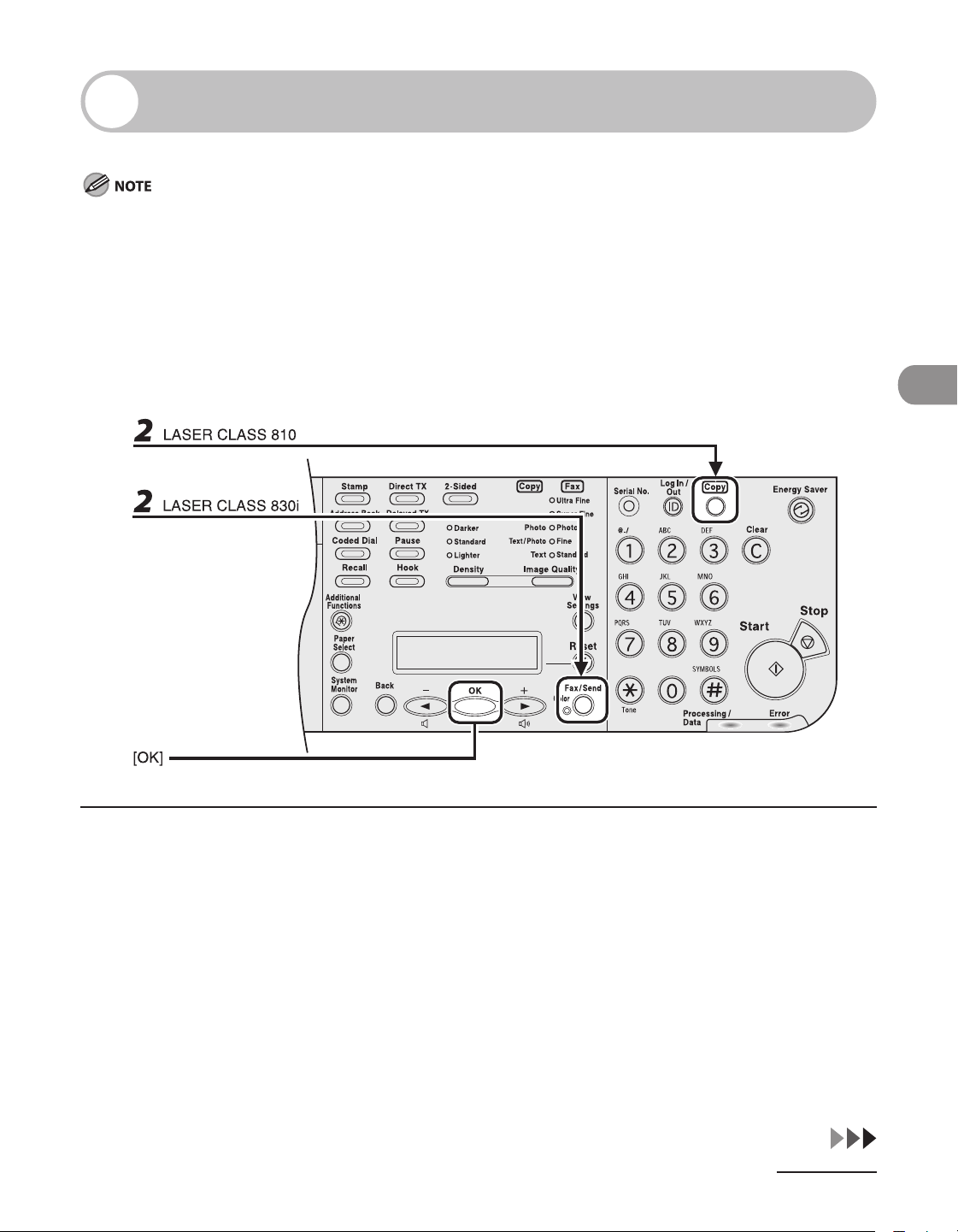
4-65
Sending Documents
Broadcasting
Broadcasting enables you to send the same document to multiple recipients.
You can send the same original to multiple (a maximum of 201 for the LASER CLASS 810 and 501 for the
LASER CLASS 830i) destinations with one operation. (Only one of those destinations can be specified using
the numeric keys.)
If you frequently send documents to multiple destinations, it is recommended that you store those
destinations as a group.
When <REST. MULTI DEST.> is set to <PROHIBIT>, you cannot send the documents to multiple recipients. (See
“Restricting Broadcasting,” on p. 9-31.)
You cannot send color images to multiple recipients using broadcasting. If you want to send color images to
multiple recipients, send documents one by one, or otherwise, send documents as black and white images.
(See “Send Settings (E-Mail/I-Fax/File Server) (LASER CLASS 830i Only),” on p. 4-8.)
1 Set documents.
2 Press [Fax/Send] repeatedly to select the sending method, then press [OK].
If using the LASER CLASS 810, you can switch to the Fax mode by pressing [Copy/Fax].
If you are specifying destinations registered in Address Book, you can skip this step.
–
–
–
–
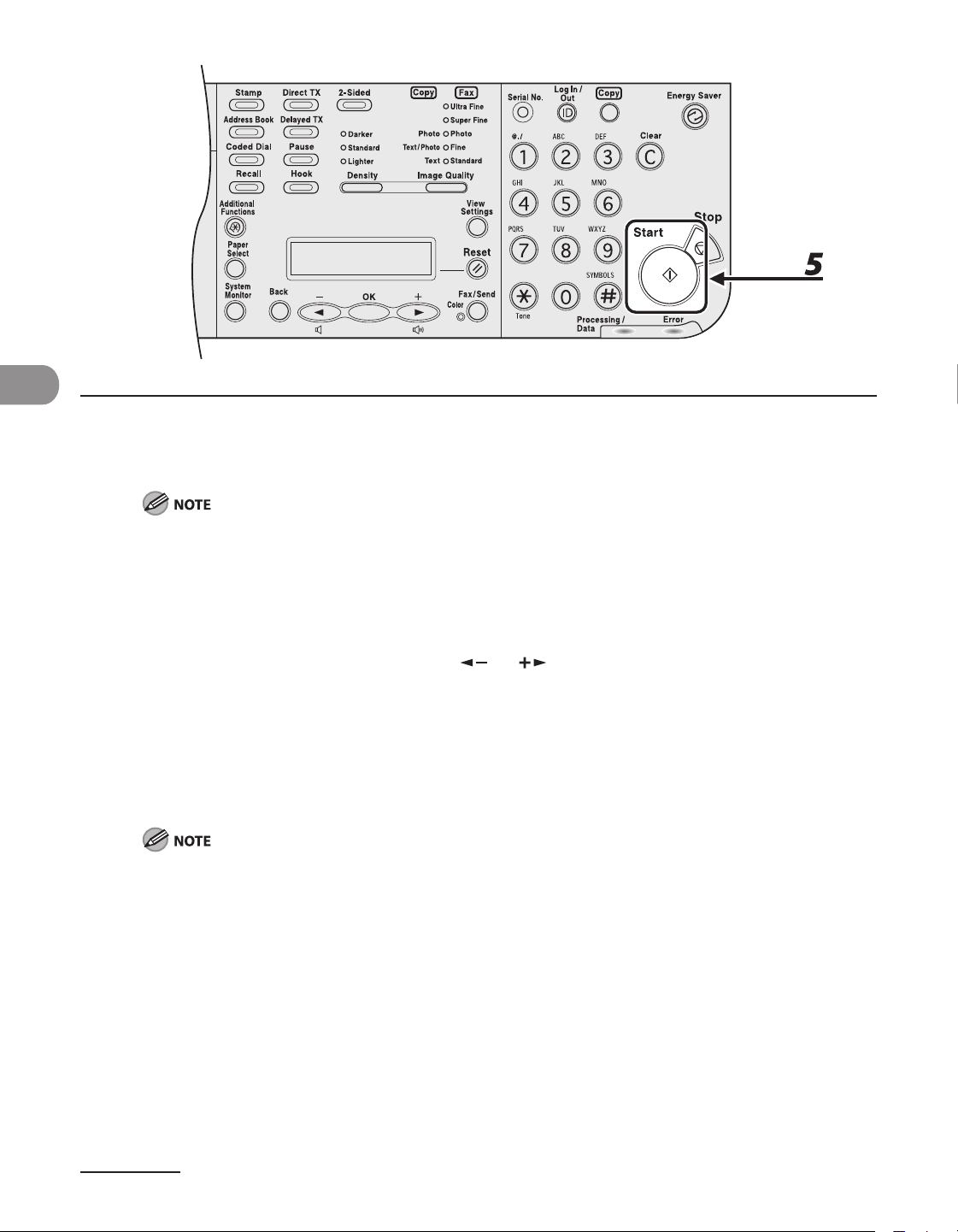
Sending Documents
4-66
3 Specify the destination.
Use the numeric keys, one-touch keys, coded dial codes or [Address Book] key to specify destinations.
Only one destination can be specified using the numeric keys.
4 Repeat step 3 to enter all required recipients.
If you want to enter a fax number or e-mail address using the numeric keys in the middle of the
procedure, press [Fax/Send], select the sending method, and then enter the number or address.
To check all the specified destinations, press [
] or [ ] to scroll the display.
If e-mail addresses and file server addresses are included in the destinations, you can enter the send
settings by pressing [OK] after specifying destinations. All the addresses without fax will use the same
send settings. For details, see “Send Settings (E-Mail/I-Fax/File Server) (LASER CLASS 830i Only),” on p. 4-
8.
5 Press [Start].
When <TIME OUT> is set to <ON> in <TX SETTINGS> in <FAX SETTINGS> in <TX/RX SETTINGS>, and if
you have specified the destination by any other method than using numeric keys, the machine starts
scanning automatically without pressing [Start], after the preset time for this setting is elapsed.
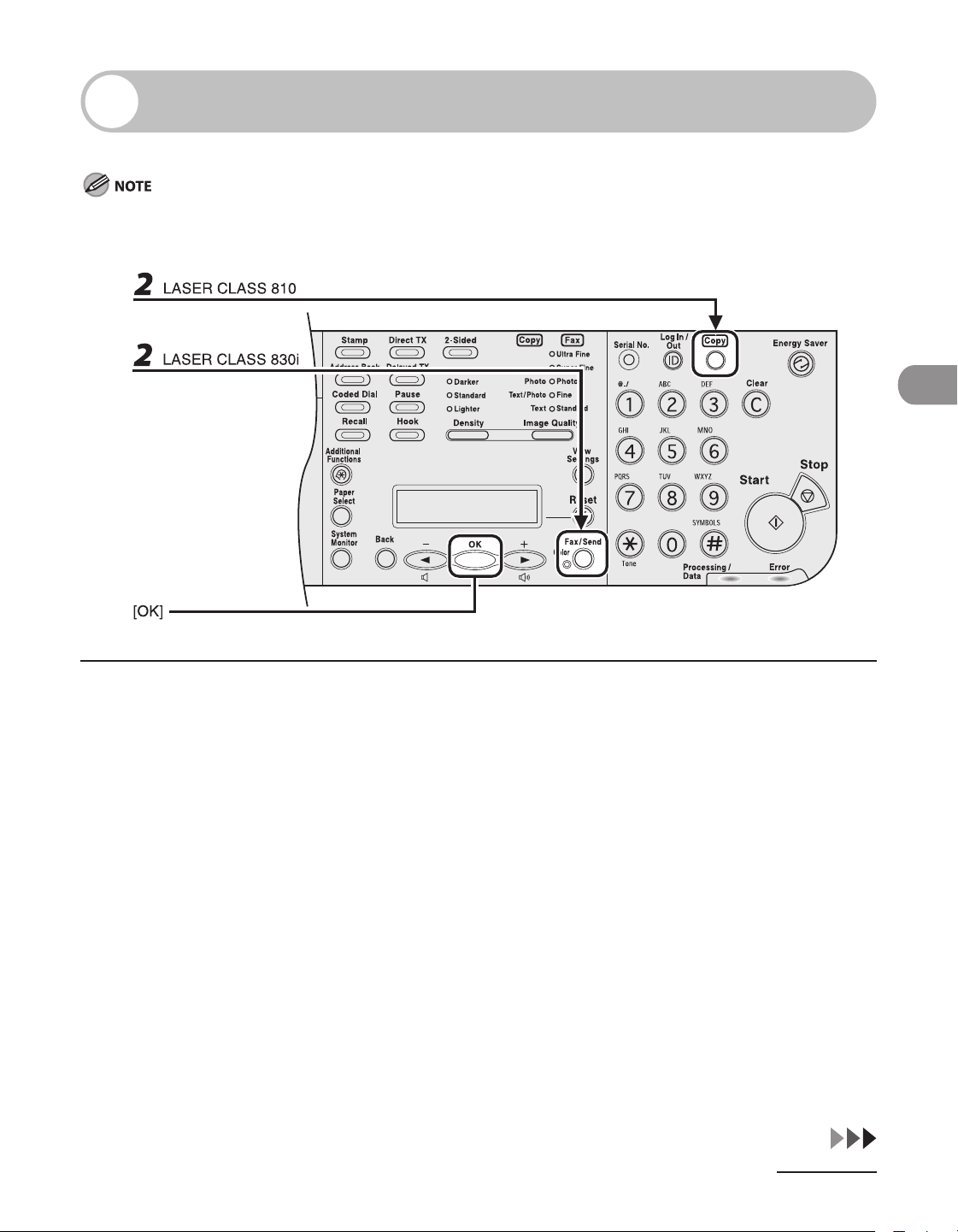
4-67
Sending Documents
Delayed Sending
Delayed sending enables you to start transmission at a specified time.
If <MEMORY FULL> is displayed when sending a color image using delayed sending (See p. 4-87 of the
"Checking and Deleting Sending Documents Stored in Memory" section in the Basic Operation Guide), delete
the job, and send the color image again without using delayed sending.
1 Set documents.
2 Press [Fax/Send] repeatedly to select the sending method, then press [OK].
If using the LASER CLASS 810, you can switch to the Fax mode by pressing [Copy/Fax].
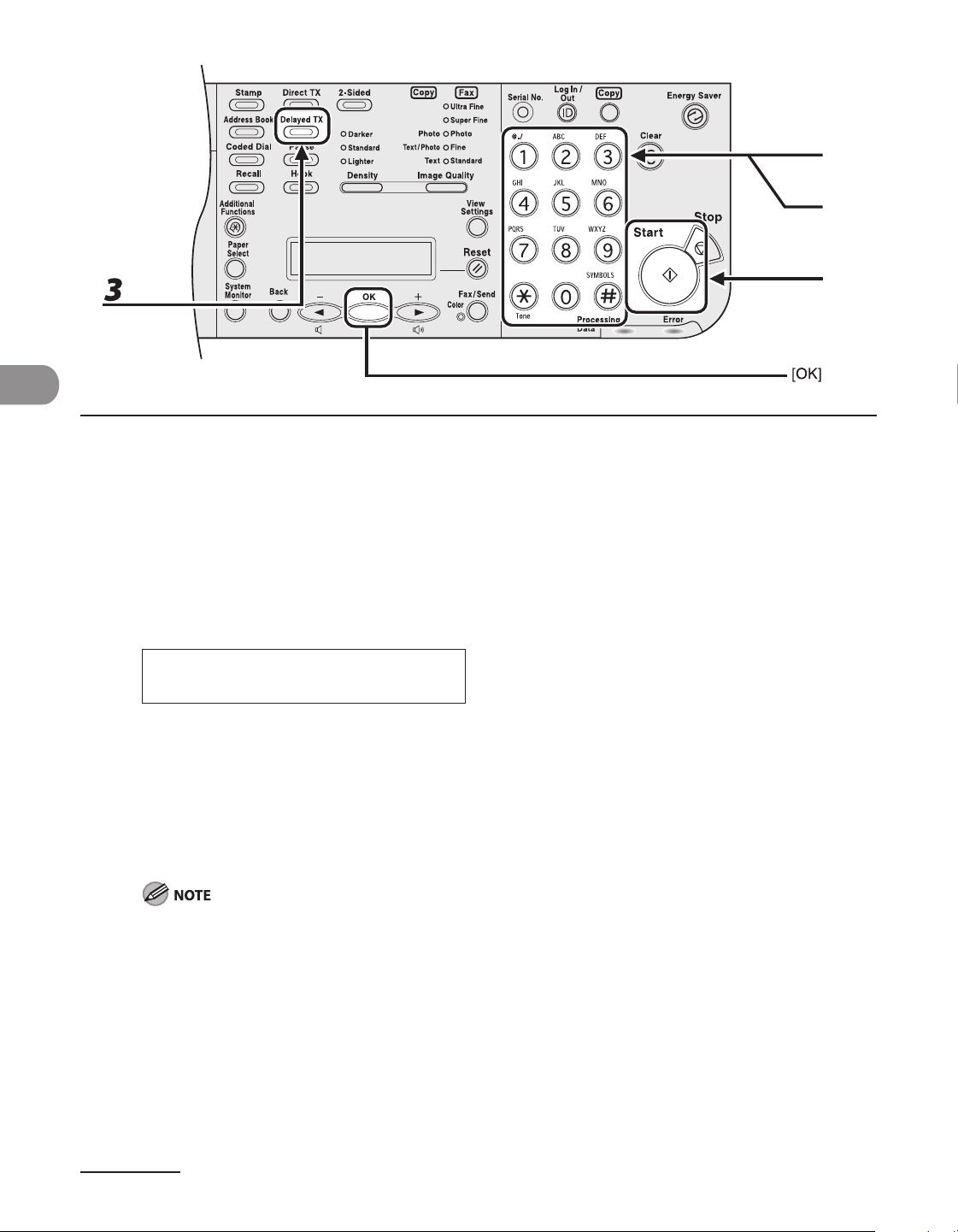
Sending Documents
4-68
6
4
5
3 Press [Delayed TX].
4 Use the numeric keys to enter the time you want to start sending, then press
[OK].
Enter the time in the 24-hour format.
Enter all the numbers, including zeros.
2 0 : 0 0
T X T I M E S E T T I N G
Ex.
5 Use the numeric keys, one-touch speed dialing key, coded speed dialing code,
or address book dialing to enter a recipient.
6 Press [Start].
When <TIME OUT> is set to <ON> in <TX SETTINGS> in <FAX SETTINGS>, the machine starts dialing
automatically after the preset time for this setting is passed. However, when you manually enter a
recipient, be sure to press [Start].
If the specified time for delayed sending passes during a temporary power failure (that recovers
within a hour), the fax document will be sent at the specified time on the next day.
–
–
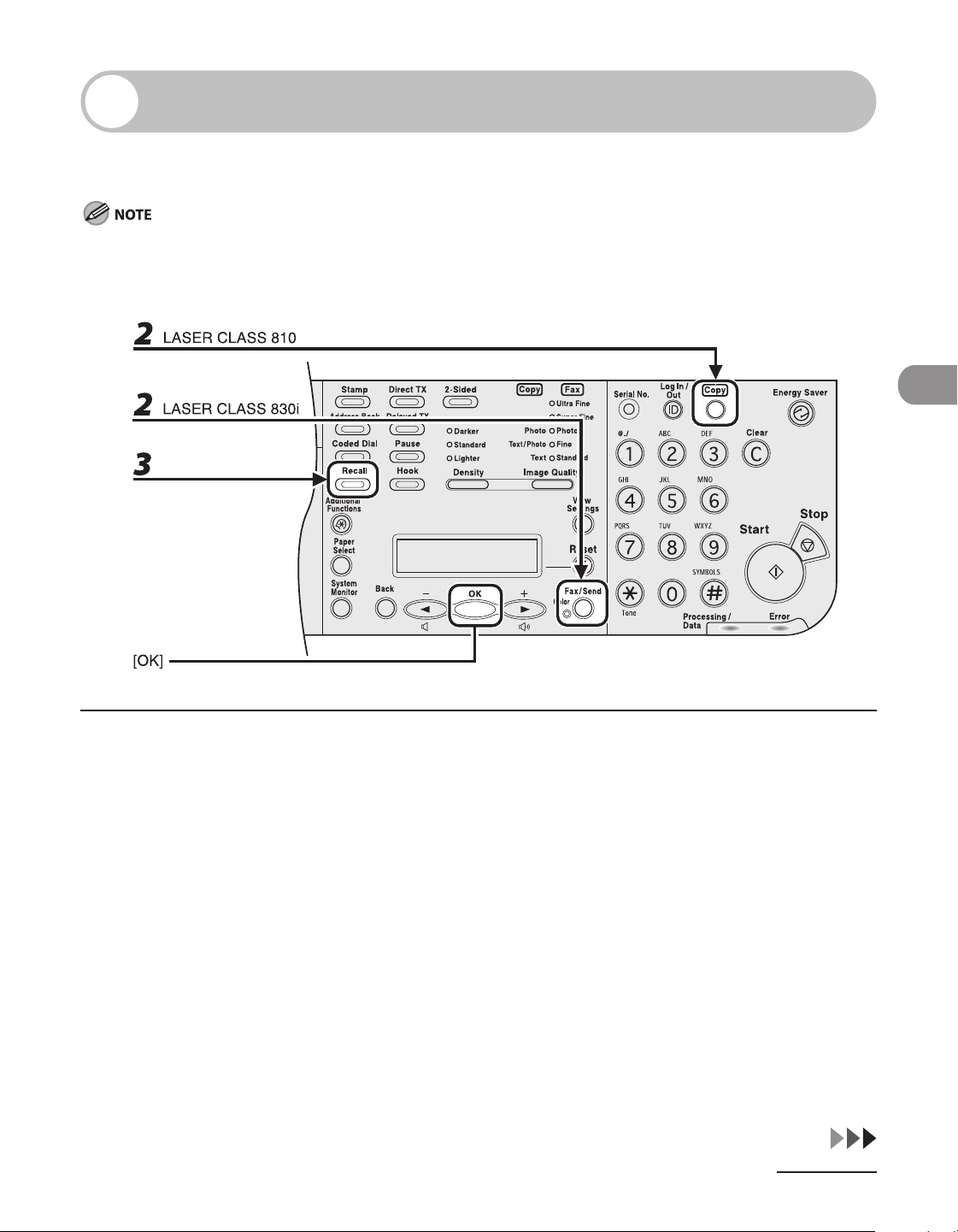
4-69
Sending Documents
Job Recall/Redial
You can recall the last three destinations, scan settings, and send settings which have
been set, and then send your documents.
With the LASER CLASS 830i, this can be used as a Recall function. With the LASER CLASS 810, this can be used
as a Redial function.
When <REST. REDIAL/CALL> is set to <ON>, [Recall] is not available. (See “Restricting Job Recall (LASER CLASS
830i Only),” on p. 9-28.)
1 Set documents.
2 Press [Fax/Send].
If using the LASER CLASS 810, you can switch to the Fax mode by pressing [Copy/Fax].
3 Press [Recall].
–
–
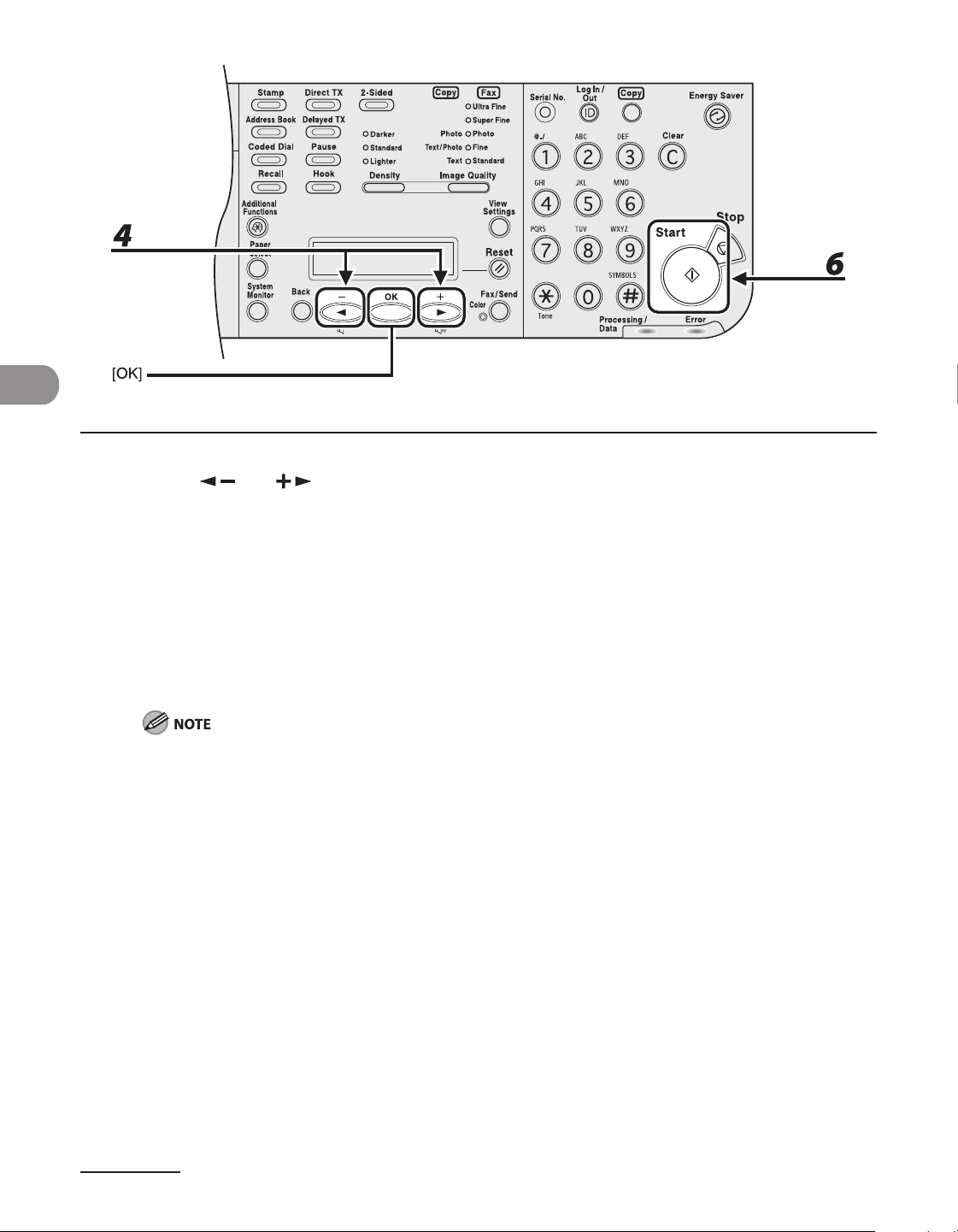
Sending Documents
4-70
4 Press [ ] or [ ] to select <1 BEFORE>, <2 BEFORE>, or <3 BEFORE>, then
press [OK].
5 Confirm that the desired recipient is displayed.
For information on changing scan settings such as the resolution when using the Recall function, see
"Scan Settings," on p. 4-5.
6 Press [Start].
When <TIME OUT> is set to <ON> in <TX SETTINGS> in <FAX SETTINGS> in <TX/RX SETTINGS>, and if
you have specified the destination by any other method than using numeric keys, the machine starts
scanning automatically without pressing [Start], after the preset time for this setting is elapsed.
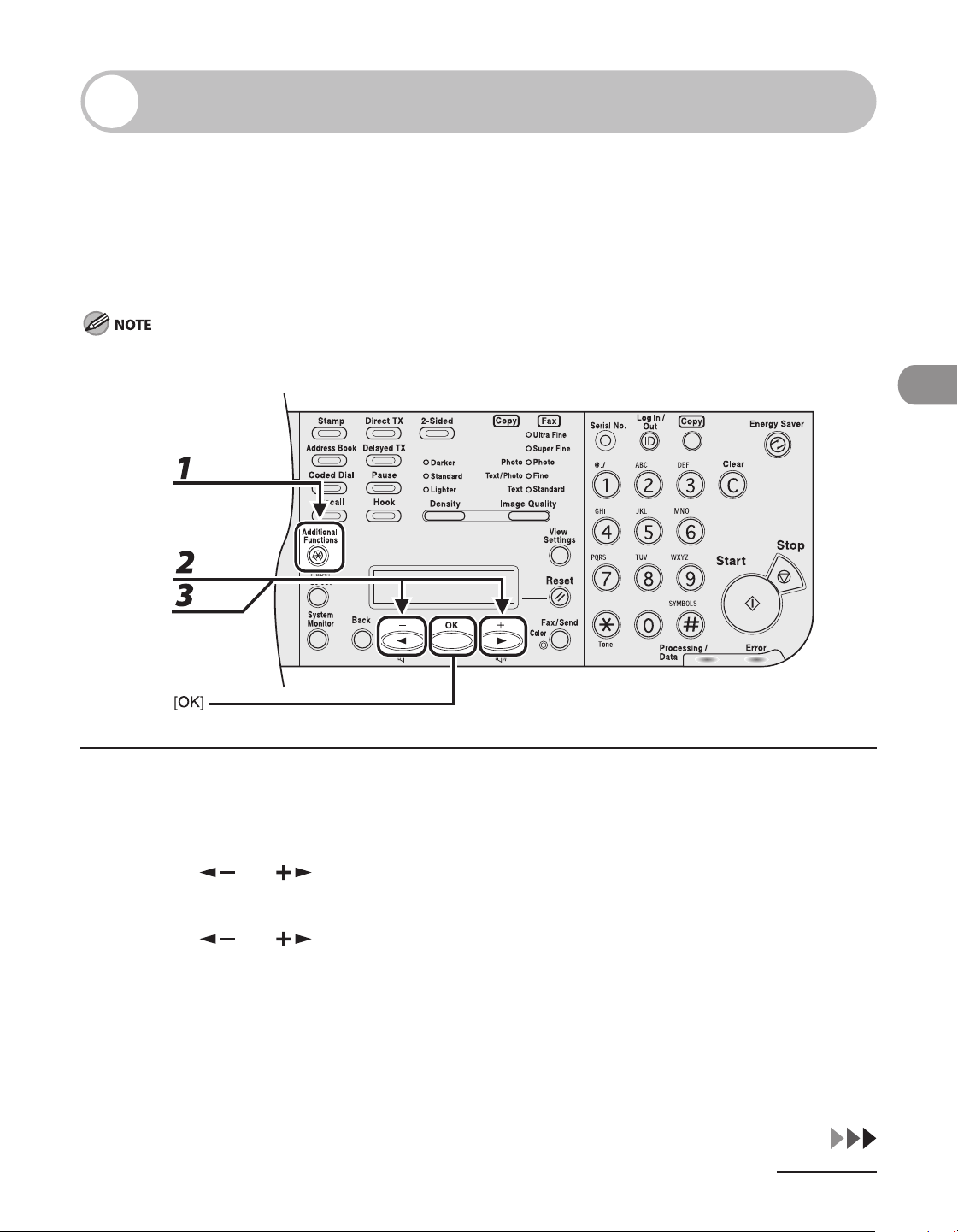
4-71
Sending Documents
Setting Up and Using the Optional Stamp Feature
If the optional stamp feature is provided on your machine, you can set the machine to
stamp the front, lower center of every page you scan for sending.
Setting Up the Stamp Action
Follow this procedure to set up the stamp action when the stamp feature is turned ON.
If you are using the LASER CLASS 830i, this setting is enabled when sending to a fax, I-fax, e-mail, or file server
destination.
1 Press [Additional Functions].
2 Press [ ] or [ ] to select <TX/RX SETTINGS>, then press [OK].
3 Press [ ] or [ ] to select <FAX SETTINGS>, then press [OK].
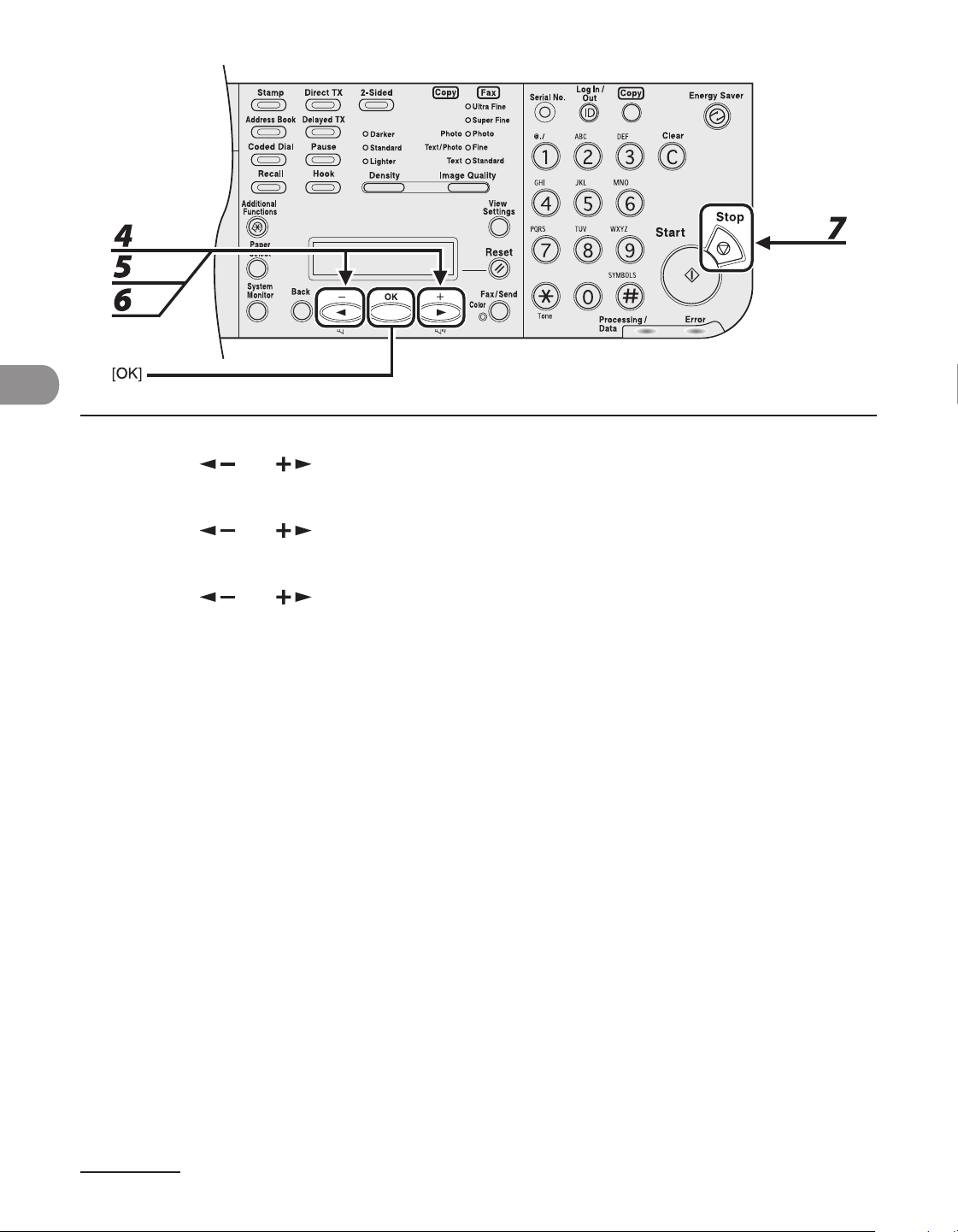
Sending Documents
4-72
4 Press [ ] or [ ] to select <TX SETTINGS>, then press [OK].
5 Press [ ] or [ ] to select <STAMP DOCUMENT>, then press [OK].
6 Press [ ] or [ ] to select <DIRECT TX> or <DIRECT&MEMORY TX>, then
press [OK].
<DIRECT TX>: Stamps only documents you scan for direct sending.
<DIRECT&MEMORY TX>: Stamps all documents you scan for direct and memory sending.
7 Press [Stop] to return to the standby mode.
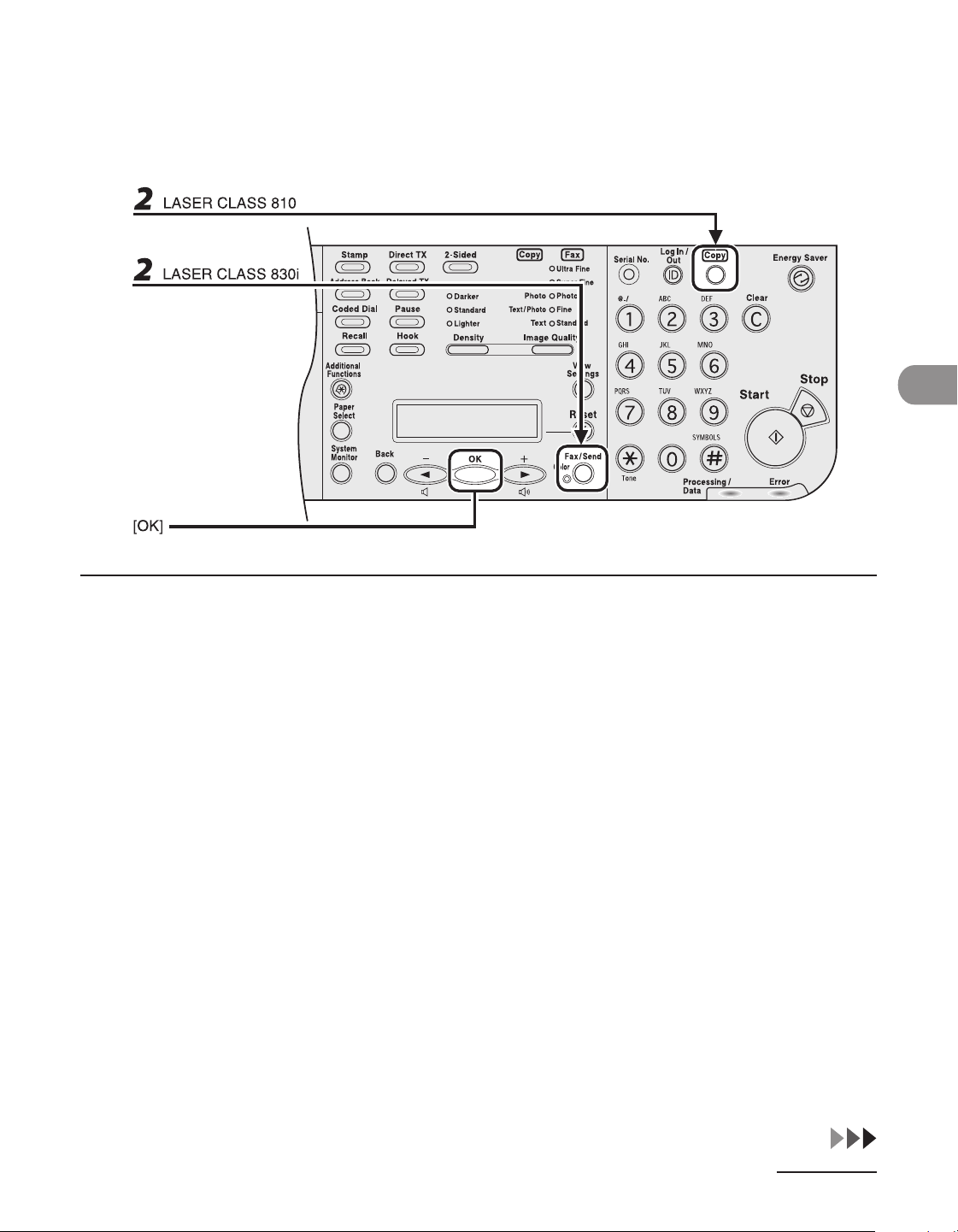
4-73
Sending Documents
Turning the Stamp Feature ON/OFF
You can press [Stamp] to stamp originals when sending or scanning them. The originals are
stamped according to the stamping conditions you set. (See “Setting Up the Stamp Action,”
on p. 4-71.)
1 Set documents.
2 Press [Fax/Send] repeatedly to select the sending method, then press [OK].
If using the LASER CLASS 810, you can switch to the Fax mode by pressing [Copy/Fax].
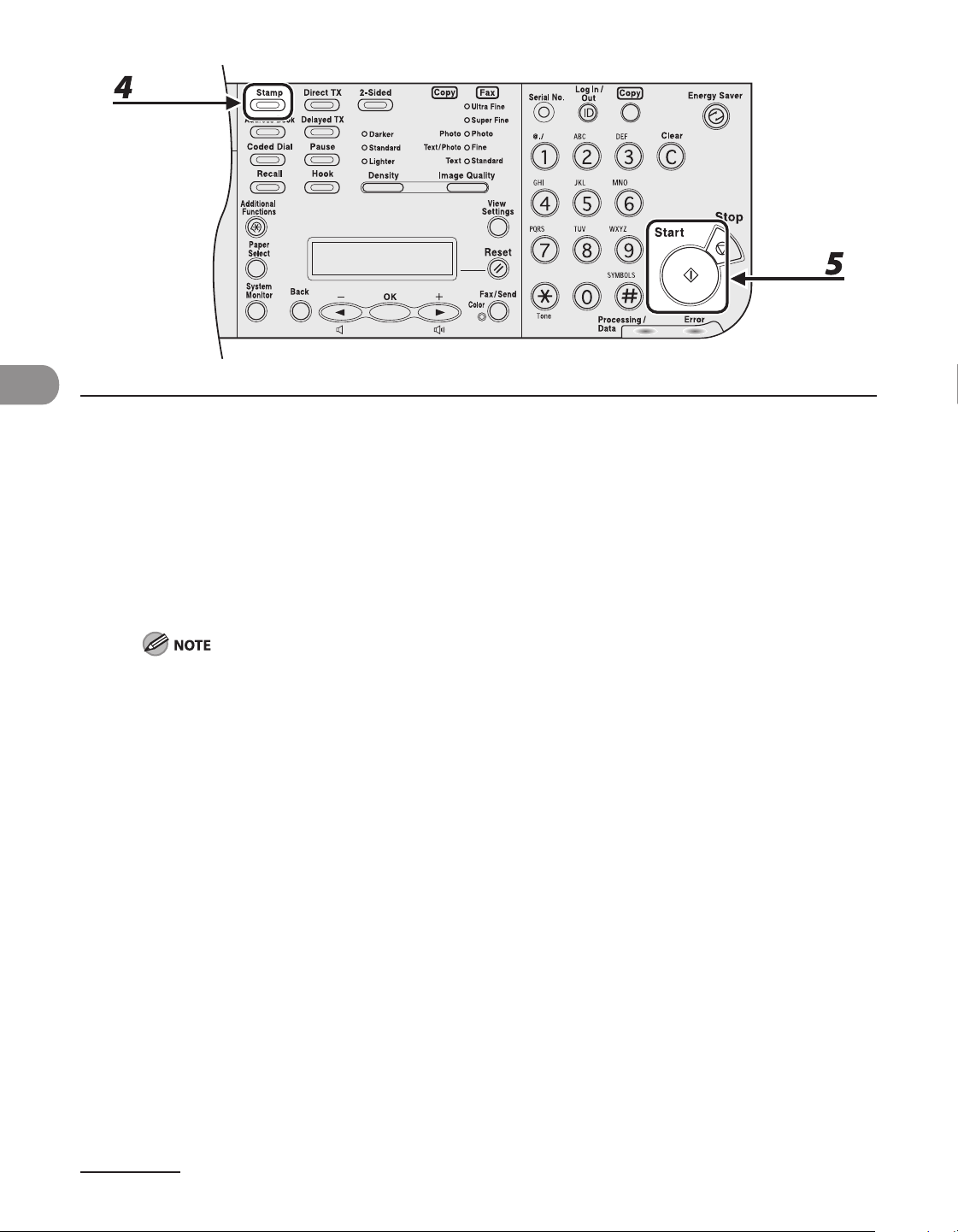
4-75
Sending Documents
TX Document Archiving
This function sends a copy of the documents that are sent from this machine to
another destination (fax number, e-mail/I-fax address, and file server) for archiving.
This feature allows you to make sure that delayed transmission worked properly,
and allows for notification of faxes sent from the machine while you are home or at
another work site.
Set the destination to use for TX Document Archiving in < FW W/OUT CNDITION >
in <SYSTEM SETTINGS>. (See "When Forwarding Destinations Do Not Match the
Forwarding Conditions," on p. 5-15.)
If you are using the LASER CLASS 830i, you can specify an I-Fax machine, Personal Computer, and FTP server
as the destinations.
If an I-FAX machine is set as the destination for TX Document Archiving, if the resolution of the original
document sent is 150 x 150 dpi, this resolution is changed to 200 x 200 dpi.
Before You Set Up the TX Document Archiving
Note these important points before you set up the TX Document Archiving.
The following types of documents are supported by TX Document Archiving:
LASER CLASS 810: Fax
LASER CLASS 830i: Fax, I-fax
The sending method, sending speed, and ECM (Error Correction Mode) settings specified
for the destination set in <FW W/OUT CNDITION> in <SYSTEM SETTINGS>, also apply
when sending for TX Document Archiving.
TX Document Archiving only works for memory sending and black-and-white sending
(including Relay Broadcasting).
TX Document Archiving does not support the following sending methods: Direct
sending and Transferring.
While the TX Document Archiving feature is enabled, the Direct TX LED is off and you
cannot use Direct sending. If Direct sending is required, the document must be sent
manually.
When the TX Document Archiving function is set to <ON>, faxes cannot be sent from a
computer.
Jobs that could not be sent are recorded on the activity report printed every 40 transmissions. (If TX
Document Archiving is set to <ON>, the activity report is set to automatically be printed every 40
transmissions.)
If the original I-FAX transmission is not sent at a resolution supported by faxes (150 x 150 dpi, 300 x 300 dpi,
or 600 x 600 dpi), the resolution is changed to 200 x 200 dpi if a fax machine is set as the destination for TX
Document Archiving.
–
–
●
–
–
●
●
●
●
●
–
–
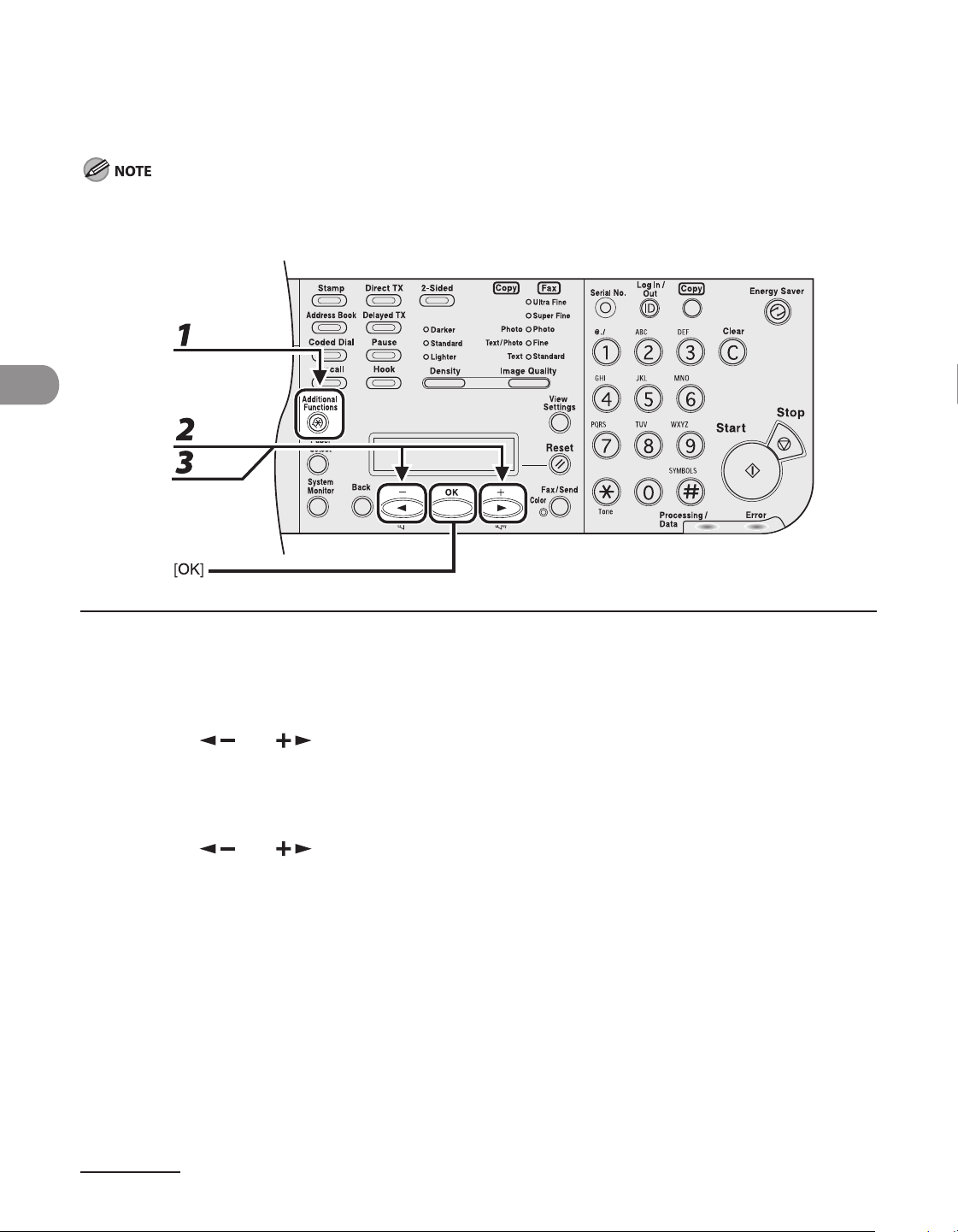
Sending Documents
4-76
Turning the TX Document Archiving ON
Follow this procedure to turn TX Document Archiving ‘ON’.
To activate the TX Document Archiving, other than the following settings, in <FW W/OUT CNDITION> in
<SYSTEM SETTINGS>, it is necessary to set the machine to forward received documents. (See "When Forwarding
Destinations Do Not Match the Forwarding Conditions," on p. 5-15.)
1 Press [Additional Functions].
2 Press [ ] or [ ] to select <SYSTEM SETTINGS>, then press [OK].
If the System Manager ID and System Password have been set, enter the System Manager ID and
SystemPassword using the numeric keys, then press [Log In/Out (ID)].
3 Press [ ] or [ ] to select <COMMUNICATIONS>, then press [OK].
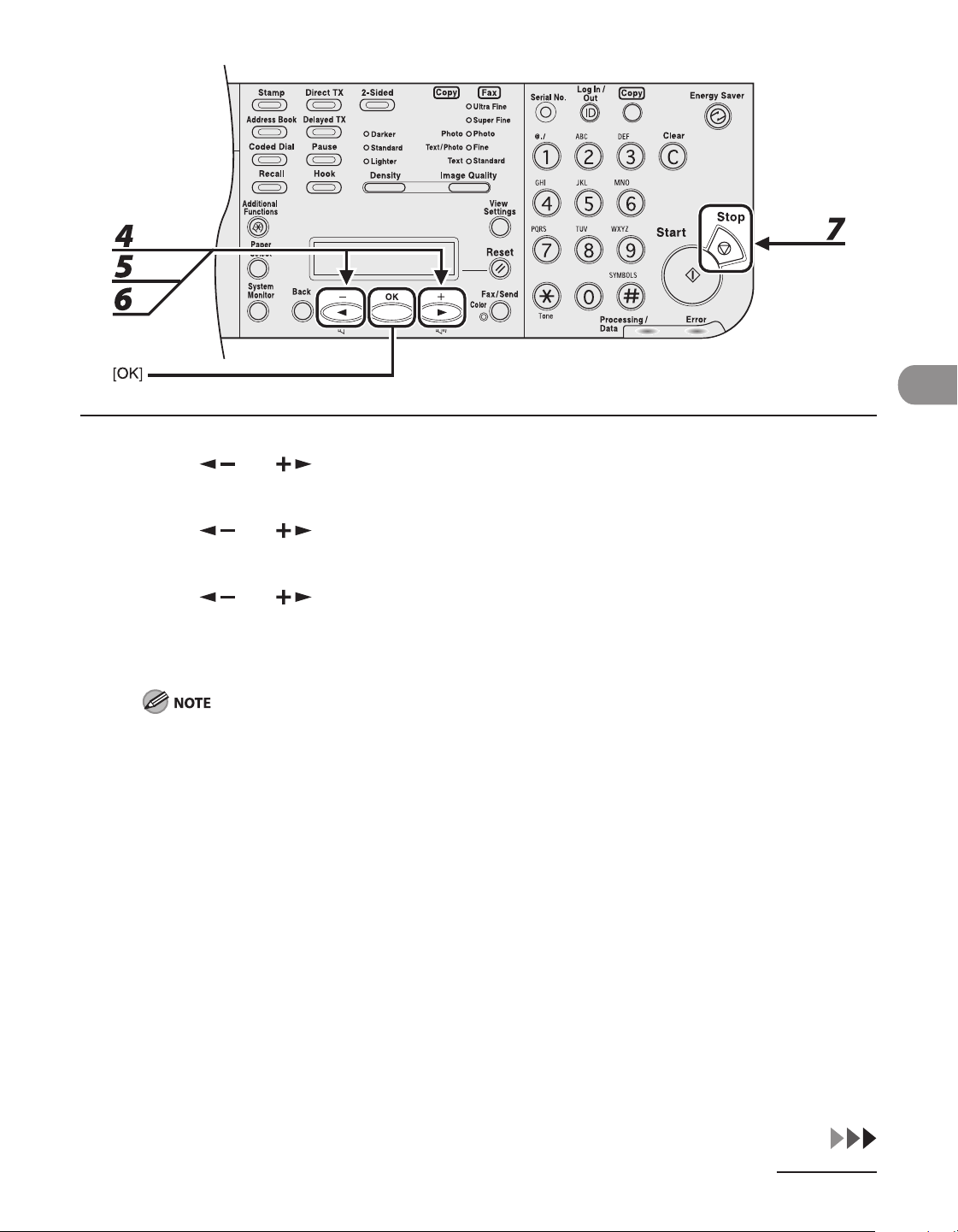
4-77
Sending Documents
4 Press [ ] or [ ] to select <FAX SETTINGS>, then press [OK].
5 Press [ ] or [ ] to select <TX DOC. ARCHIVING>, then press [OK].
6 Press [ ] or [ ] to select <ON>, then press [OK].
7 Press [Stop] to return to the standby mode.
TX Document Archiving will be performed once for each document transmitted. Regarding the
redialing, it works based on the settings of this machine. (See “Setting Automatic Redialing (Fax),” on
p. 4-78.)
When using sequential broadcasting, after all transmissions (including redialing or error redialing)
finish, if there is at least one destination to which all pages were sent successfully, then TX Document
Archiving will be performed once.
In the Activity Management Report, regarding the Mode field (Transaction Mode), "TRANSFER" will
be printed and regarding the NO. field (Transaction Number), the number of the original sending
destination will be printed.
Regarding the DATE and TIME of the TX Document Archiving on the sender information, the DATE
and TIME that the TX Document Archiving was performed will be printed.
–
–
–
–
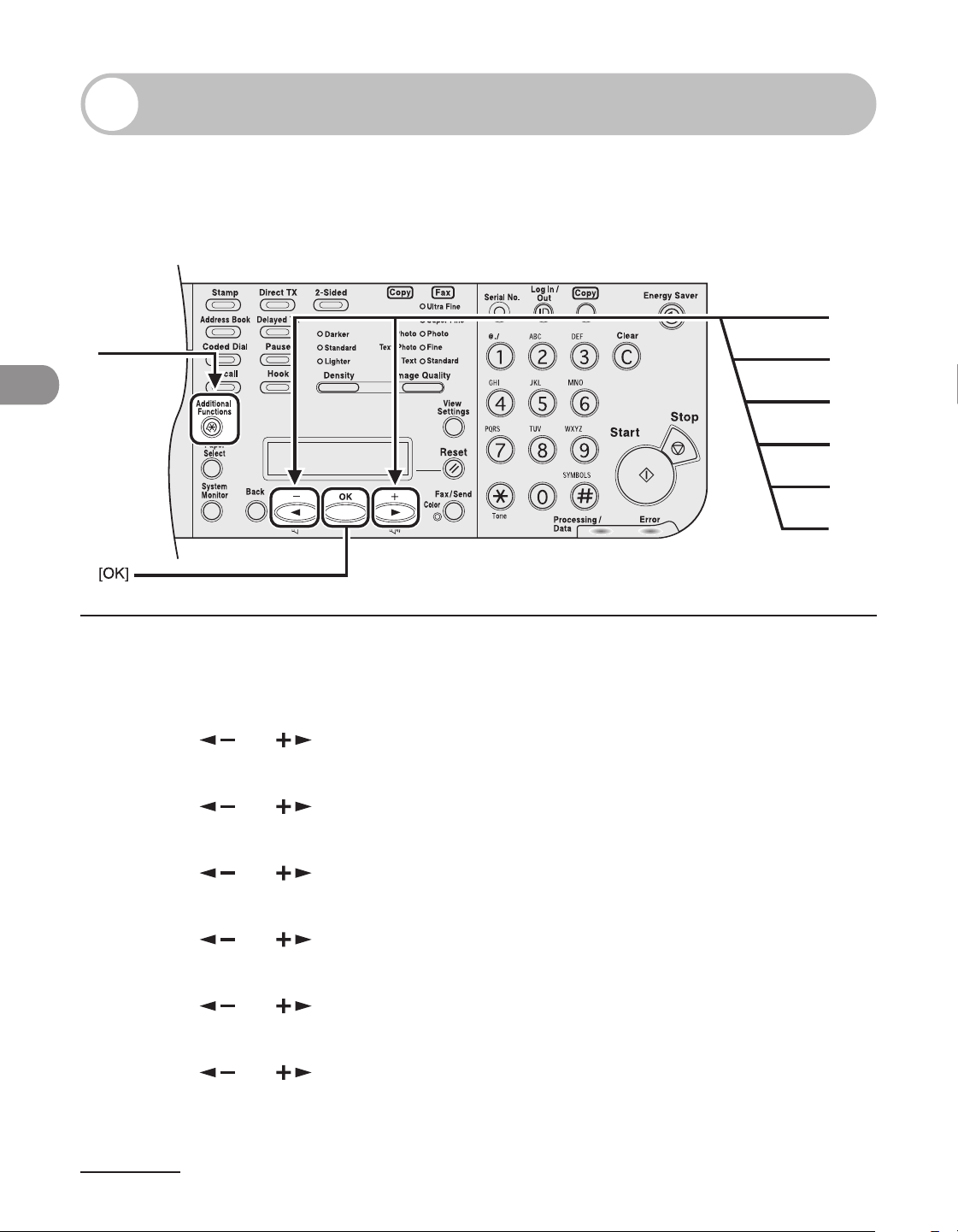
Sending Documents
4-78
Setting Automatic Redialing (Fax)
Automatic redialing enables the machine to automatically redial the recipient’s fax
number if the recipient cannot be reached due to a busy line, or if a sending error
occurs. Auto Redial can be turned <ON> or <OFF>. If you set <AUTO REDIAL> to <ON>,
you can set how many times the machine redials the number, and the redial interval.
2
3
4
5
6
7
1
1 Press [Additional Functions].
2 Press [ ] or [ ] to select <TX/RX SETTINGS>, then press [OK].
3 Press [ ] or [ ] to select <FAX SETTINGS>, then press [OK].
4 Press [ ] or [ ] to select <TX SETTINGS>, then press [OK].
5 Press [ ] or [ ] to select <AUTO REDIAL>, then press [OK].
6 Press [ ] or [ ] to select <ON>, then press [OK].
7 Press [ ] or [ ] to select <REDIAL TIMES>, then press [OK].
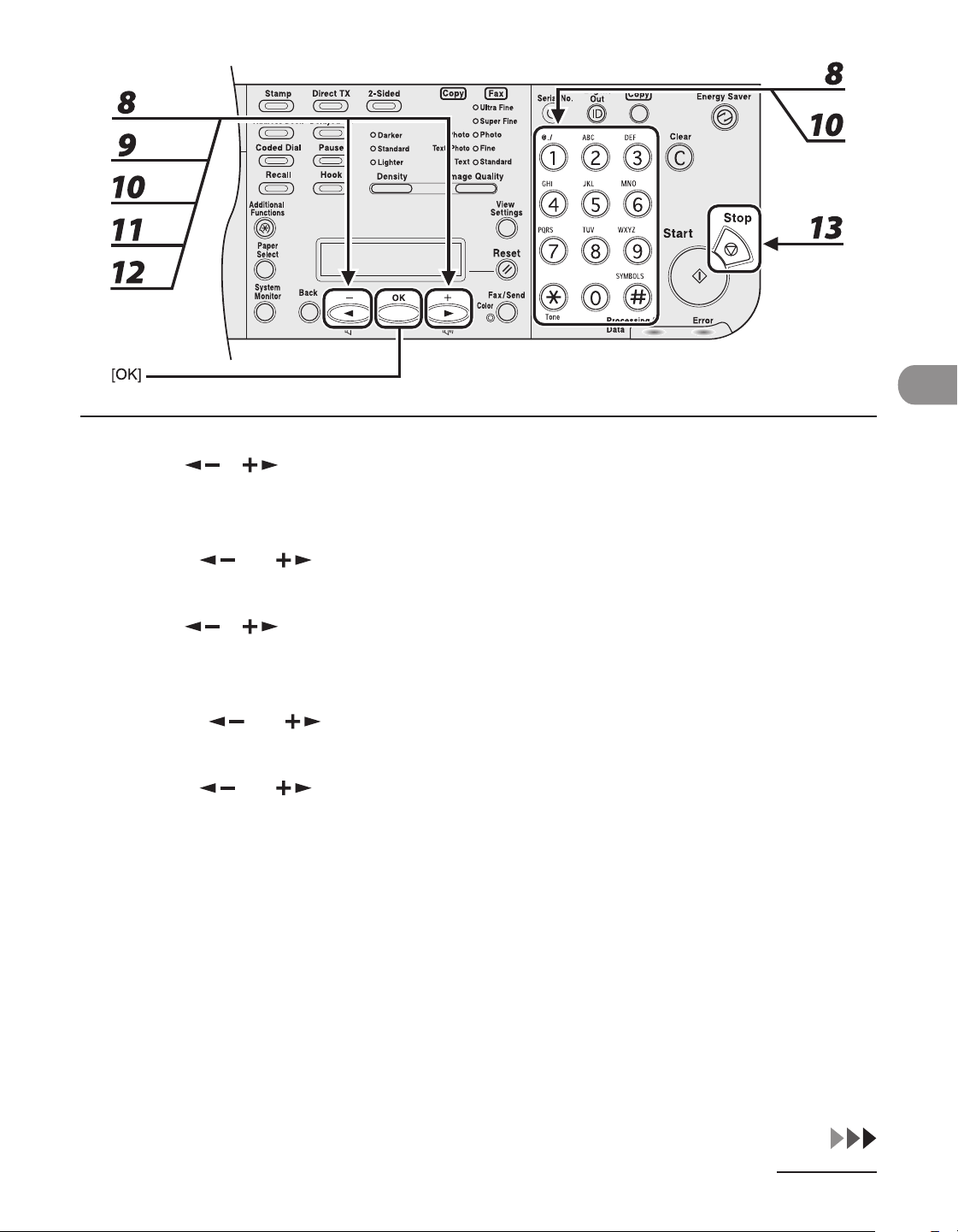
4-79
Sending Documents
8 Use [ ], [ ], or numeric keys to enter the number of redials (1 to 10 times)
the machine will make, then press [OK].
9 Press [ ] or [ ] to select <REDIAL INTERVAL>, then press [OK].
10 Use [ ], [ ], or numeric keys to enter the time (2 to 99 minutes, in one-
minute increments) between redials, then press [OK].
11 Press [ ] or [ ] to select <TX ERROR REDIAL>, then press [OK].
12 Press [ ] or [ ] to select <ON> or <OFF>, then press [OK].
<ON>: Resends all pages if an error occurs during transmission.
<OFF>: Does not redial even if an error occurs during transmission.
13 Press [Stop] to return to the standby mode.
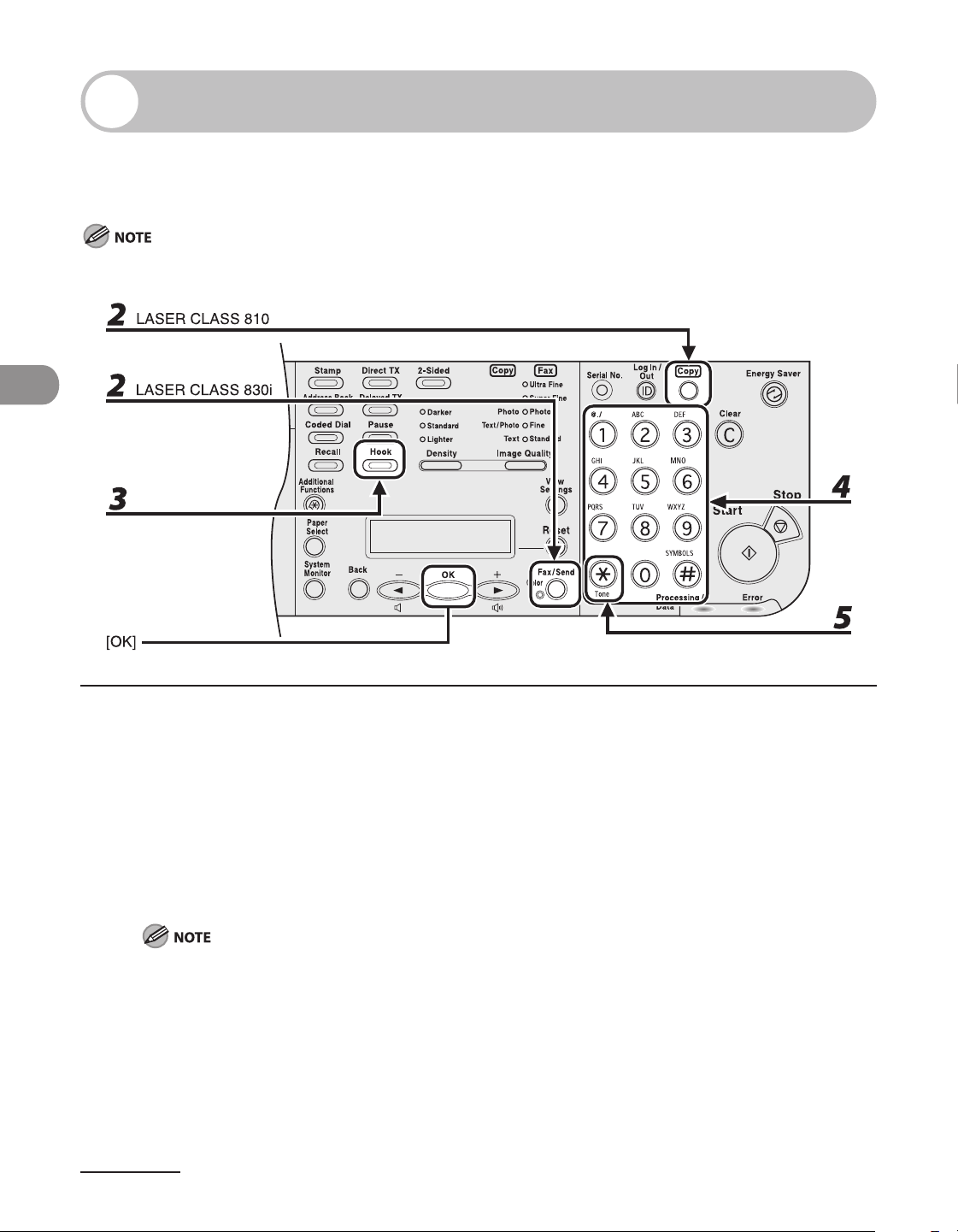
Sending Documents
4-80
Switching Temporarily to Tone Dialing
If your machine is set for pulse dialing, use the procedure below to switch to tone
dialing to use information services (e.g., banks, airline reservations, and hotel
reservations).
To talk to the other party, you will need to connect an optional handset or an external telephone to the
machine.
1 Press [Fax/Send].
If using the LASER CLASS 810, you can switch to the Fax mode by pressing [Copy/Fax].
2 Press [Fax/Send] repeatedly to select <FAX>, then press [OK].
3 Press [Hook].
Make sure to confirm the dial tone before entering a fax number. If you enter the number before the
dial tone can be heard, the call may not be connected, or the wrong number may be dialed.
4 Use the numeric keys to dial the required information service.
5 When the recorded message of the information service answers, press [Tone] to
switch to tone dialing.
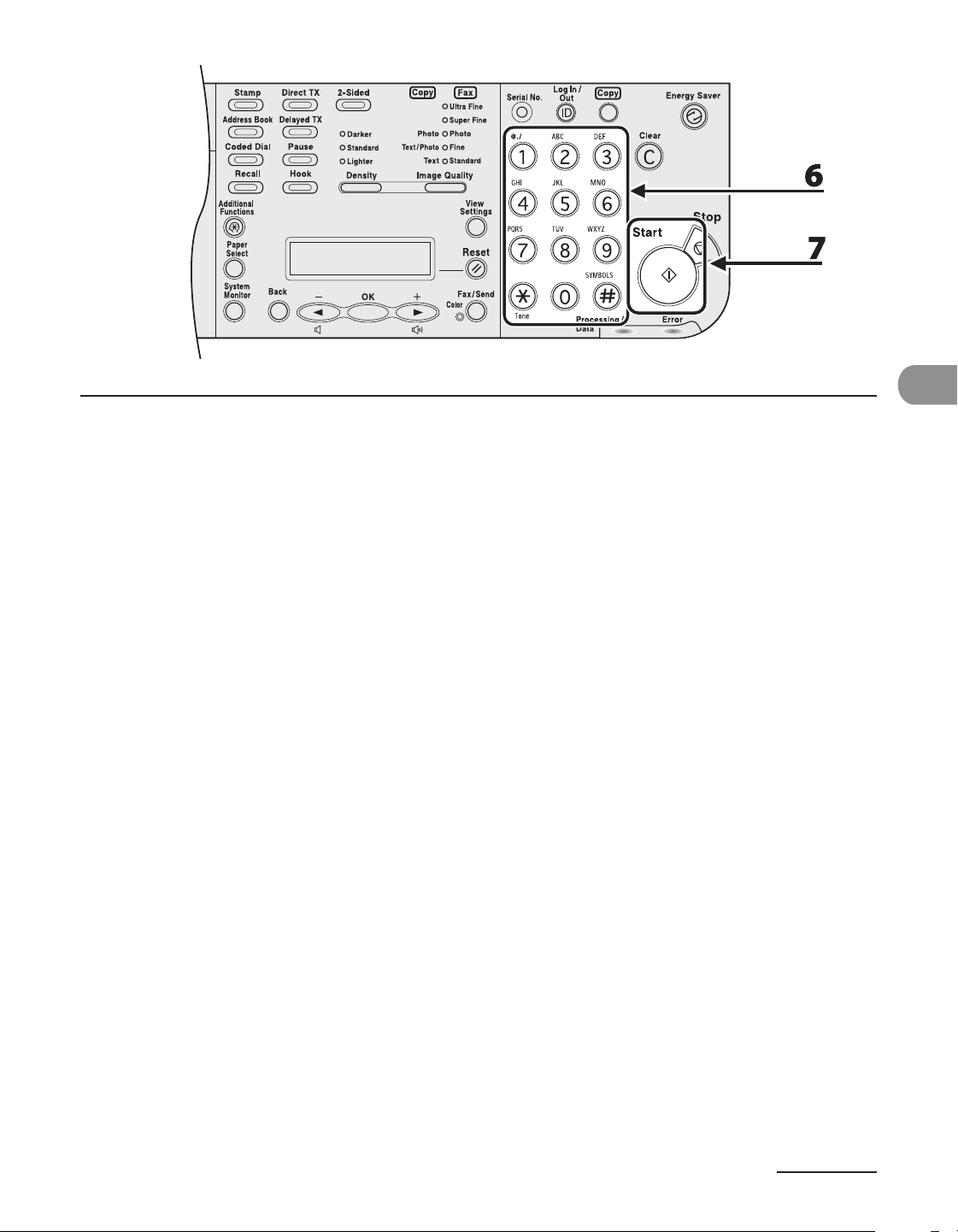
4-81
Sending Documents
6 Use the numeric keys to enter the numbers requested by the information
service.
7 If you want to receive faxes, press [Start].
If you are using the external telephone, hang up the handset after pressing [Start].
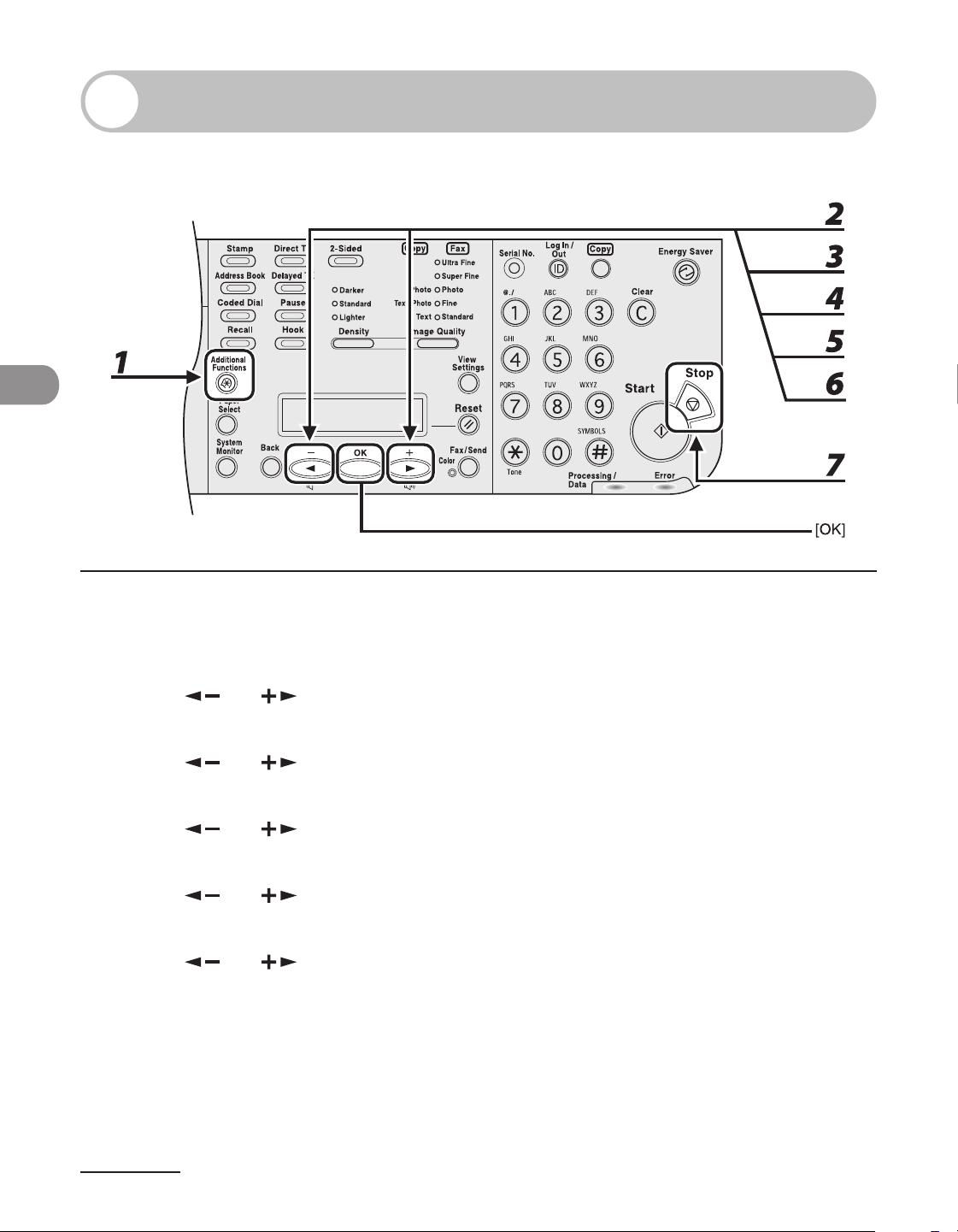
Sending Documents
4-82
Checking Dialing Line
Checking dialing line function enables you to configure the setting on whether to
check for a dial tone.
1 Press [Additional Functions].
2 Use [ ] or [ ] to select <TX/RX SETTINGS>, then press [OK].
3 Use [ ] or [ ] to select <FAX SETTINGS>, then press [OK].
4 Use [ ] or [ ] to select <TX SETTINGS>, then press [OK].
5 Use [ ] or [ ] to select <DIALING LINE CHCK>, then press [OK].
6 Use [ ] or [ ] to select <ON>, then press [OK].
7 Press [Stop] to return to the standby mode.
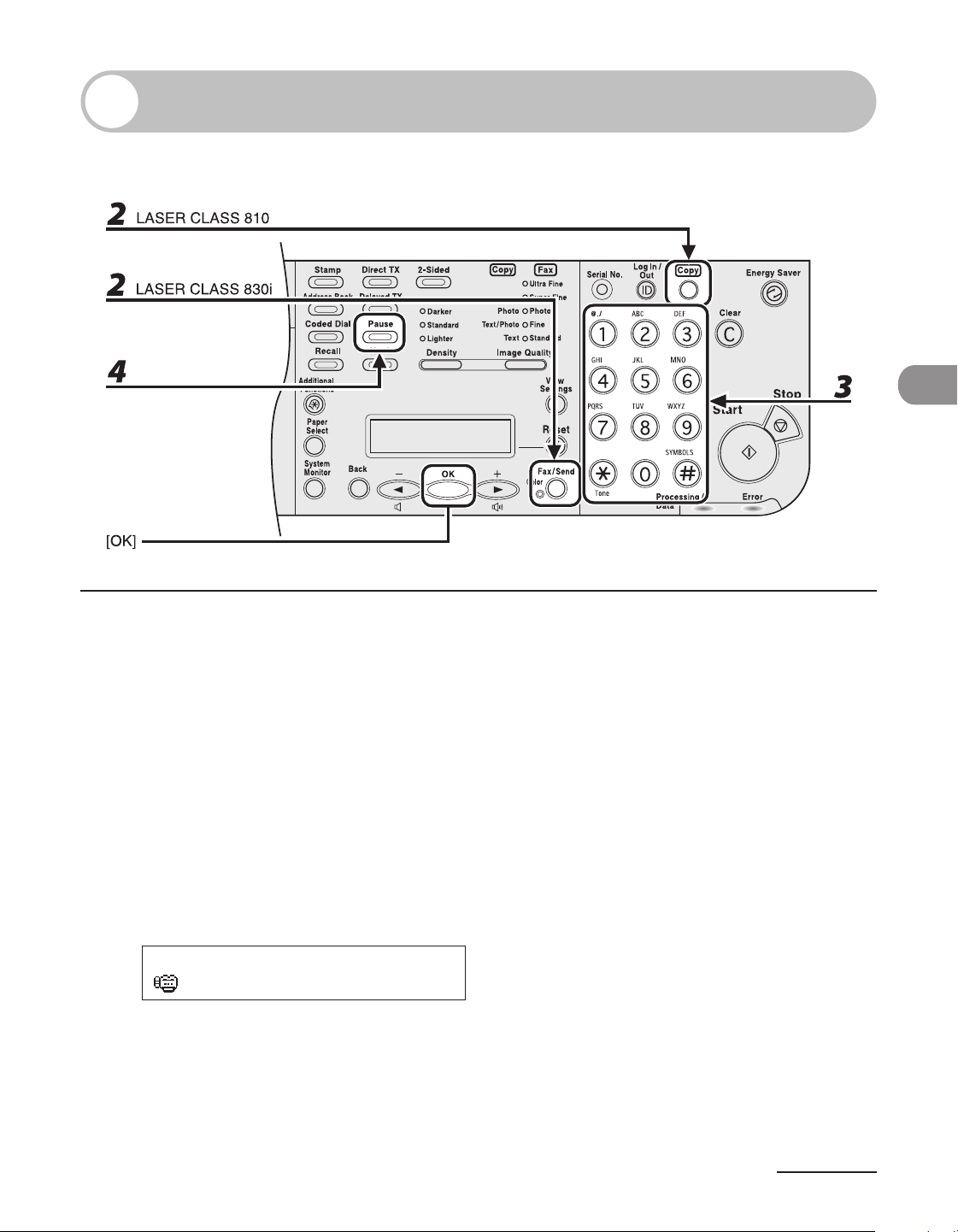
4-83
Sending Documents
Dialing an Overseas Number (With Pauses)
When you dial or register an overseas number, you may need to insert a pause within
the number.
1 Set documents.
2 Press [Fax/Send] repeatedly to select <FAX>, then press [OK].
If using the LASER CLASS 810, you can switch to the Fax mode by pressing [Copy/Fax].
3 Use the numeric keys to dial the international access code.
For details on international access codes, contact your local telephone company.
4 If necessary, press [Pause] to insert a pause.
F A X N U M B E R
= 1 2 3 p 1 2 X X X X
Ex.
The letter <p> is displayed between the numbers.
You can enter successive pauses within the fax number to make the pause time longer.
You can change the length of a pause inserted within the fax number in the <PAUSE TIME> menu. The
default setting is two second. (See “TX/RX SETTINGS,” on p. 12-11.)
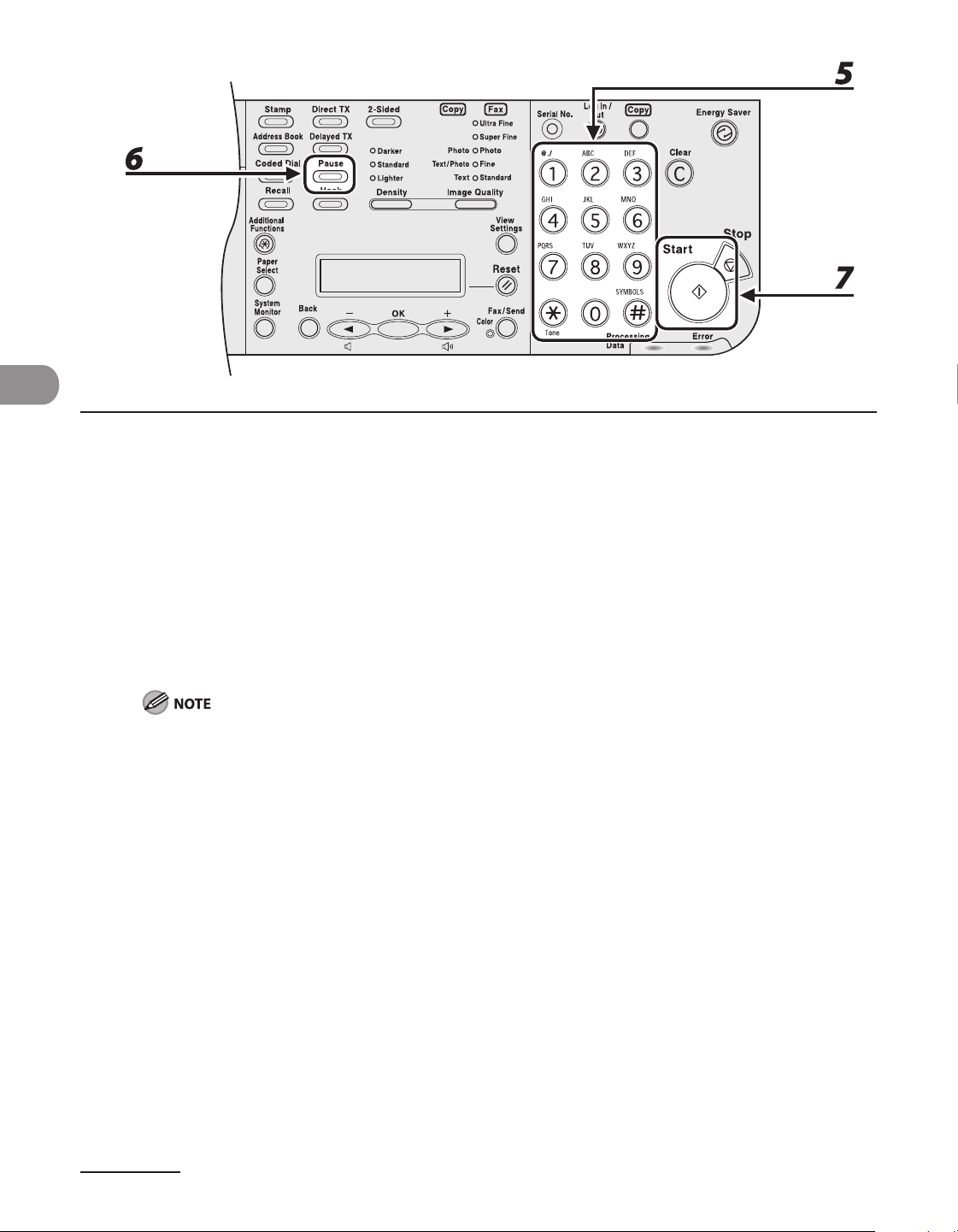
Sending Documents
4-84
5 Use the numeric keys to dial the country code, the area code, and the fax/
telephone number of the recipient.
6 If necessary, press [Pause] to enter a pause at the end of the number.
The letter <P> appears at the end of the fax number.
Pauses entered at the end of fax numbers are always 10 seconds long.
7 Press [Start].
When <TIME OUT> is set to <ON> in <TX SETTINGS> in <FAX SETTINGS> in <TX/RX SETTINGS>, and if
you have specified the destination by any other method than using numeric keys, the machine starts
scanning automatically without pressing [Start], after the preset time for this setting is elapsed.
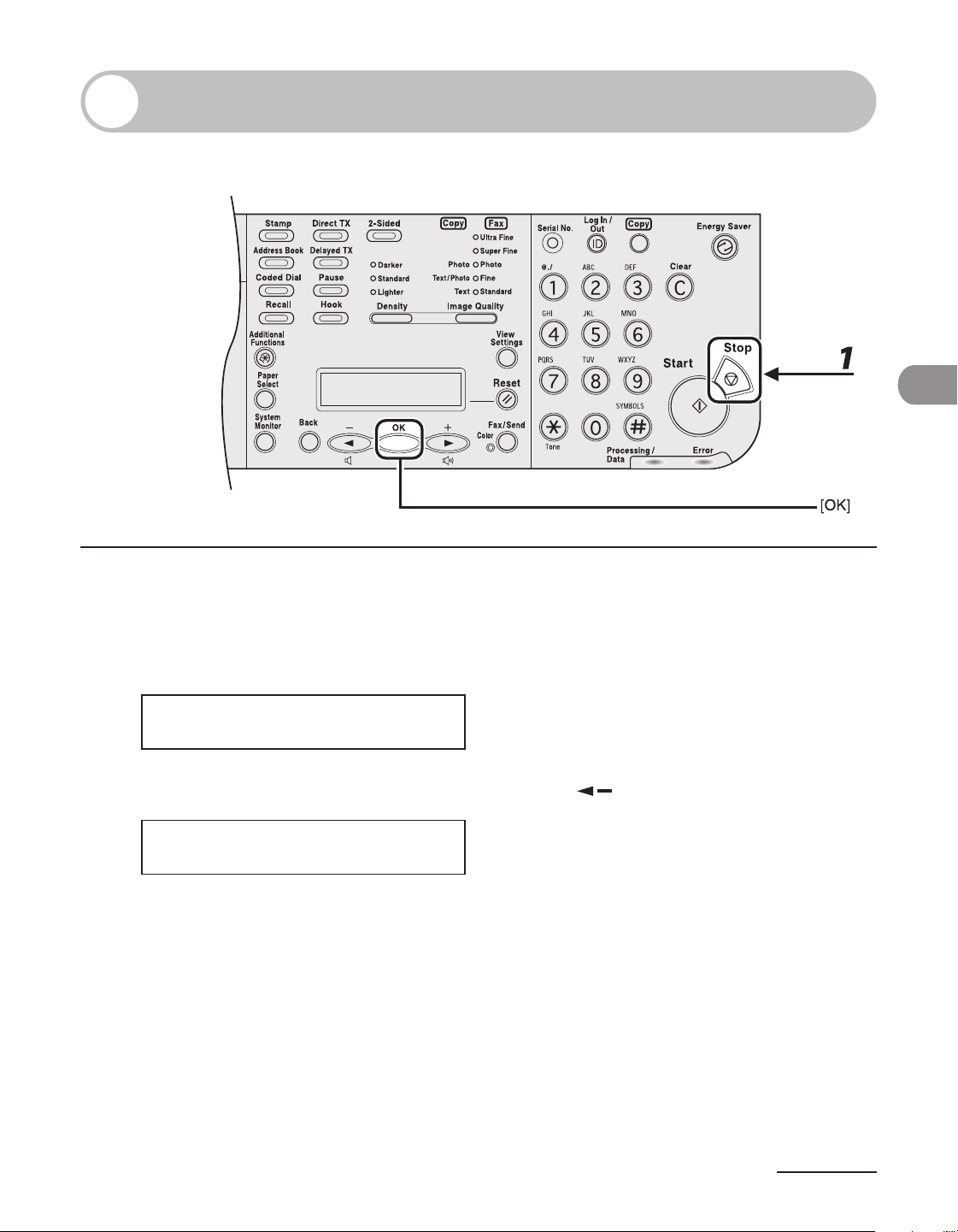
4-85
Sending Documents
Canceling TX Jobs
Cancel an ongoing job as follows.
1 Press [Stop].
2 When the <STOP KEY PRESSED> message appears, press [OK].
P R E S S O K K E Y
S T O P K E Y P R E S S E D
When the <CANCEL?> message appears, press [ ] to select <YES>.
< Y E S N O >
C A N C E L ?
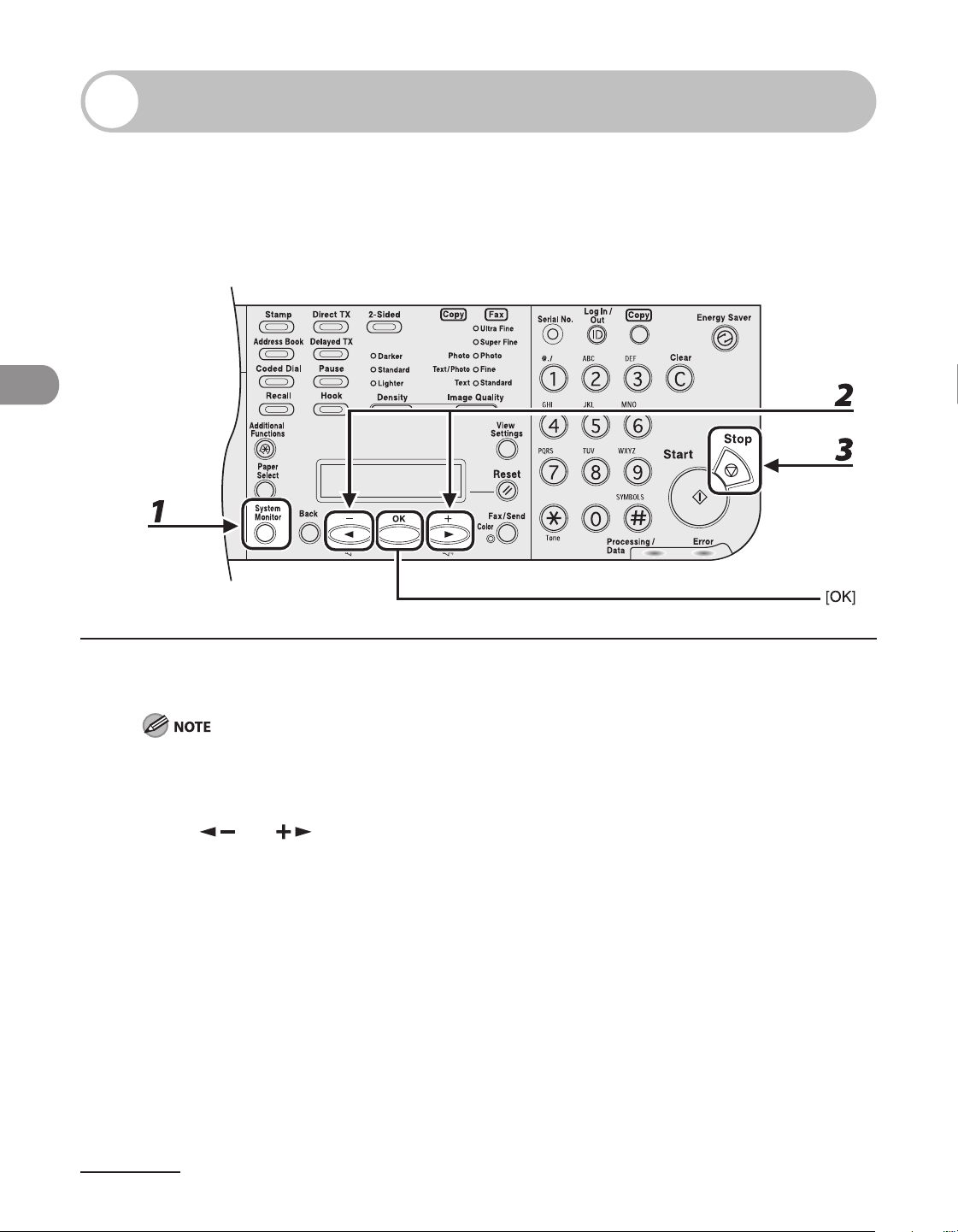
Sending Documents
4-86
Checking and Deleting Jobs
System monitor enables you to view the transmission results, monitor the status of
the send jobs currently being processed.
Checking Transmission Results
1 Press [System Monitor] repeatedly to select <TX/RX LOG>, then press [OK].
If you set <CHECKING THE LOG> to <OFF> in <SYSTEM SETTINGS>, transmission/reception result does
not appear in the LCD.
2 Press [ ] or [ ] to view the required transmission/reception result.
3 Press [Stop] to return to the standby mode.
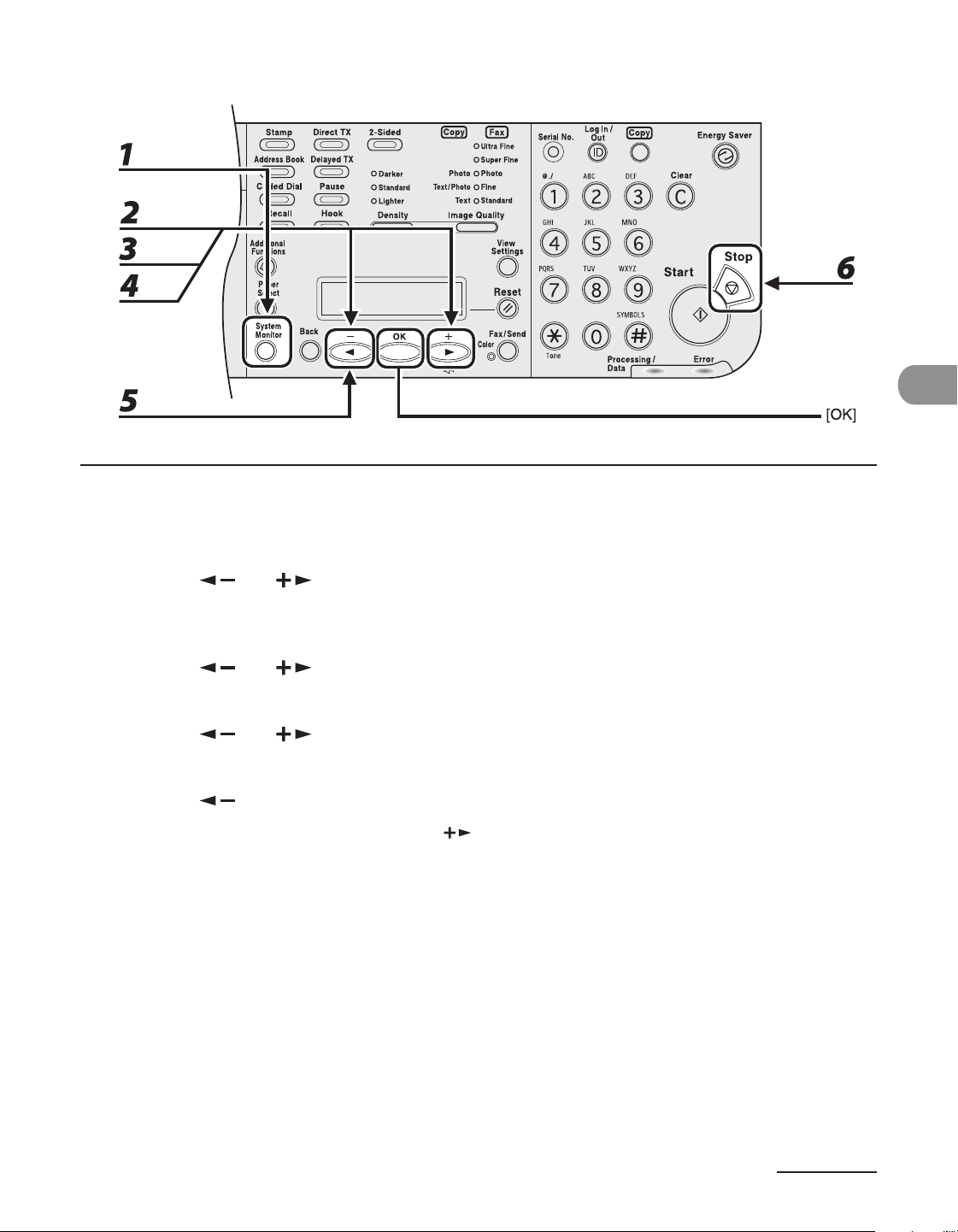
4-87
Sending Documents
Checking and Deleting Sending Documents Stored in Memory
1 Press [System Monitor] repeatedly to select <TX/RX STATUS> then press [OK].
2 Press [ ] or [ ] to scroll through the job list.
If you want to delete the job, go to step 3. Otherwise, press [Stop] to return to the standby mode.
3 Press [ ] or [ ] to select the desired document, then press [OK].
4 Press [ ] or [ ] to select <CANCEL>, then press [OK].
5 Press [ ] to select <YES>.
If you do not want to cancel the job, press [ ] to select <NO>.
6 Press [Stop] to return to the standby mode.

Sending Documents
4-88

Receiving Documents
5
Receiving
Documents
Basic Receiving Method ∙∙∙∙∙∙∙∙∙∙∙∙∙∙∙∙∙∙∙∙∙∙∙∙∙∙∙∙∙∙∙∙∙∙∙∙∙∙∙∙∙∙∙∙∙∙∙∙∙∙∙∙∙∙∙∙∙∙∙∙∙∙5-2
FaxTel: Optional Settings ∙∙∙∙∙∙∙∙∙∙∙∙∙∙∙∙∙∙∙∙∙∙∙∙∙∙∙∙∙∙∙∙∙∙∙∙∙∙∙∙∙∙∙∙∙∙∙∙∙∙∙∙∙∙∙∙∙∙∙∙5-4
DRPD: Optional Settings ∙∙∙∙∙∙∙∙∙∙∙∙∙∙∙∙∙∙∙∙∙∙∙∙∙∙∙∙∙∙∙∙∙∙∙∙∙∙∙∙∙∙∙∙∙∙∙∙∙∙∙∙∙∙∙∙∙∙∙∙∙5-6
Manual Reception ∙∙∙∙∙∙∙∙∙∙∙∙∙∙∙∙∙∙∙∙∙∙∙∙∙∙∙∙∙∙∙∙∙∙∙∙∙∙∙∙∙∙∙∙∙∙∙∙∙∙∙∙∙∙∙∙∙∙∙∙∙∙∙∙∙∙∙∙∙∙∙∙5-7
Memory Reception ∙∙∙∙∙∙∙∙∙∙∙∙∙∙∙∙∙∙∙∙∙∙∙∙∙∙∙∙∙∙∙∙∙∙∙∙∙∙∙∙∙∙∙∙∙∙∙∙∙∙∙∙∙∙∙∙∙∙∙∙∙∙∙∙∙∙∙∙∙∙5-8
Memory Lock Reception ∙∙∙∙∙∙∙∙∙∙∙∙∙∙∙∙∙∙∙∙∙∙∙∙∙∙∙∙∙∙∙∙∙∙∙∙∙∙∙∙∙∙∙∙∙∙∙∙∙∙∙∙∙∙∙∙∙∙∙∙∙5-9
Printing All Documents Stored in Memory ∙∙∙∙∙∙∙∙∙∙∙∙∙∙∙∙∙∙∙∙∙∙∙∙∙∙∙∙∙∙∙5-13
Reception Restriction ∙∙∙∙∙∙∙∙∙∙∙∙∙∙∙∙∙∙∙∙∙∙∙∙∙∙∙∙∙∙∙∙∙∙∙∙∙∙∙∙∙∙∙∙∙∙∙∙∙∙∙∙∙∙∙∙∙∙∙∙∙∙∙ 5-14
Forwarding Received Documents ∙∙∙∙∙∙∙∙∙∙∙∙∙∙∙∙∙∙∙∙∙∙∙∙∙∙∙∙∙∙∙∙∙∙∙∙∙∙∙∙∙∙∙ 5-15
When Forwarding Destinations Do Not Match the Forwarding
Conditions ∙∙∙∙∙∙∙∙∙∙∙∙∙∙∙∙∙∙∙∙∙∙∙∙∙∙∙∙∙∙∙∙∙∙∙∙∙∙∙∙∙∙∙∙∙∙∙∙∙∙∙∙∙∙∙∙∙∙∙∙∙∙∙∙∙∙∙∙∙∙∙∙∙∙∙∙∙∙∙∙∙∙∙∙∙∙∙∙∙∙∙∙∙5-15
Forwarding Documents Received in Memory ∙∙∙∙∙∙∙∙∙∙∙∙∙∙∙∙∙∙∙∙∙∙∙∙∙5-18
Forwarding Documents with Forwarding Errors ∙∙∙∙∙∙∙∙∙∙∙∙∙∙∙∙∙∙∙∙5-20
Printing or Erasing Documents with Forwarding Errors ∙∙∙∙∙∙5-21
Remote Reception ∙∙∙∙∙∙∙∙∙∙∙∙∙∙∙∙∙∙∙∙∙∙∙∙∙∙∙∙∙∙∙∙∙∙∙∙∙∙∙∙∙∙∙∙∙∙∙∙∙∙∙∙∙∙∙∙∙∙∙∙∙∙∙∙∙∙∙∙ 5-22
Registering Remote Reception ID ∙∙∙∙∙∙∙∙∙∙∙∙∙∙∙∙∙∙∙∙∙∙∙∙∙∙∙∙∙∙∙∙∙∙∙∙∙∙∙∙∙∙∙∙∙∙∙∙5-22
Receiving a Fax Remotely ∙∙∙∙∙∙∙∙∙∙∙∙∙∙∙∙∙∙∙∙∙∙∙∙∙∙∙∙∙∙∙∙∙∙∙∙∙∙∙∙∙∙∙∙∙∙∙∙∙∙∙∙∙∙∙∙∙∙∙∙∙∙∙∙5-24
Printing Received Documents ∙∙∙∙∙∙∙∙∙∙∙∙∙∙∙∙∙∙∙∙∙∙∙∙∙∙∙∙∙∙∙∙∙∙∙∙∙∙∙∙∙∙∙∙∙∙∙∙∙ 5-25
Two-Sided Printing ∙∙∙∙∙∙∙∙∙∙∙∙∙∙∙∙∙∙∙∙∙∙∙∙∙∙∙∙∙∙∙∙∙∙∙∙∙∙∙∙∙∙∙∙∙∙∙∙∙∙∙∙∙∙∙∙∙∙∙∙∙∙∙∙∙∙∙∙∙∙∙∙∙∙∙∙5-25
Received Image Reduction ∙∙∙∙∙∙∙∙∙∙∙∙∙∙∙∙∙∙∙∙∙∙∙∙∙∙∙∙∙∙∙∙∙∙∙∙∙∙∙∙∙∙∙∙∙∙∙∙∙∙∙∙∙∙∙∙∙∙∙∙∙5-27
Canceling RX Jobs ∙∙∙∙∙∙∙∙∙∙∙∙∙∙∙∙∙∙∙∙∙∙∙∙∙∙∙∙∙∙∙∙∙∙∙∙∙∙∙∙∙∙∙∙∙∙∙∙∙∙∙∙∙∙∙∙∙∙∙∙∙∙∙∙∙∙∙∙∙ 5-29
Checking and Deleting Jobs ∙∙∙∙∙∙∙∙∙∙∙∙∙∙∙∙∙∙∙∙∙∙∙∙∙∙∙∙∙∙∙∙∙∙∙∙∙∙∙∙∙∙∙∙∙∙∙∙∙∙∙∙ 5-30
Checking Reception Results ∙∙∙∙∙∙∙∙∙∙∙∙∙∙∙∙∙∙∙∙∙∙∙∙∙∙∙∙∙∙∙∙∙∙∙∙∙∙∙∙∙∙∙∙∙∙∙∙∙∙∙∙∙∙∙∙∙∙∙5-30
Checking and Deleting Receiving Documents Stored in
Memory ∙∙∙∙∙∙∙∙∙∙∙∙∙∙∙∙∙∙∙∙∙∙∙∙∙∙∙∙∙∙∙∙∙∙∙∙∙∙∙∙∙∙∙∙∙∙∙∙∙∙∙∙∙∙∙∙∙∙∙∙∙∙∙∙∙∙∙∙∙∙∙∙∙∙∙∙∙∙∙∙∙∙∙∙∙∙∙∙∙∙∙∙∙∙∙∙∙5-31
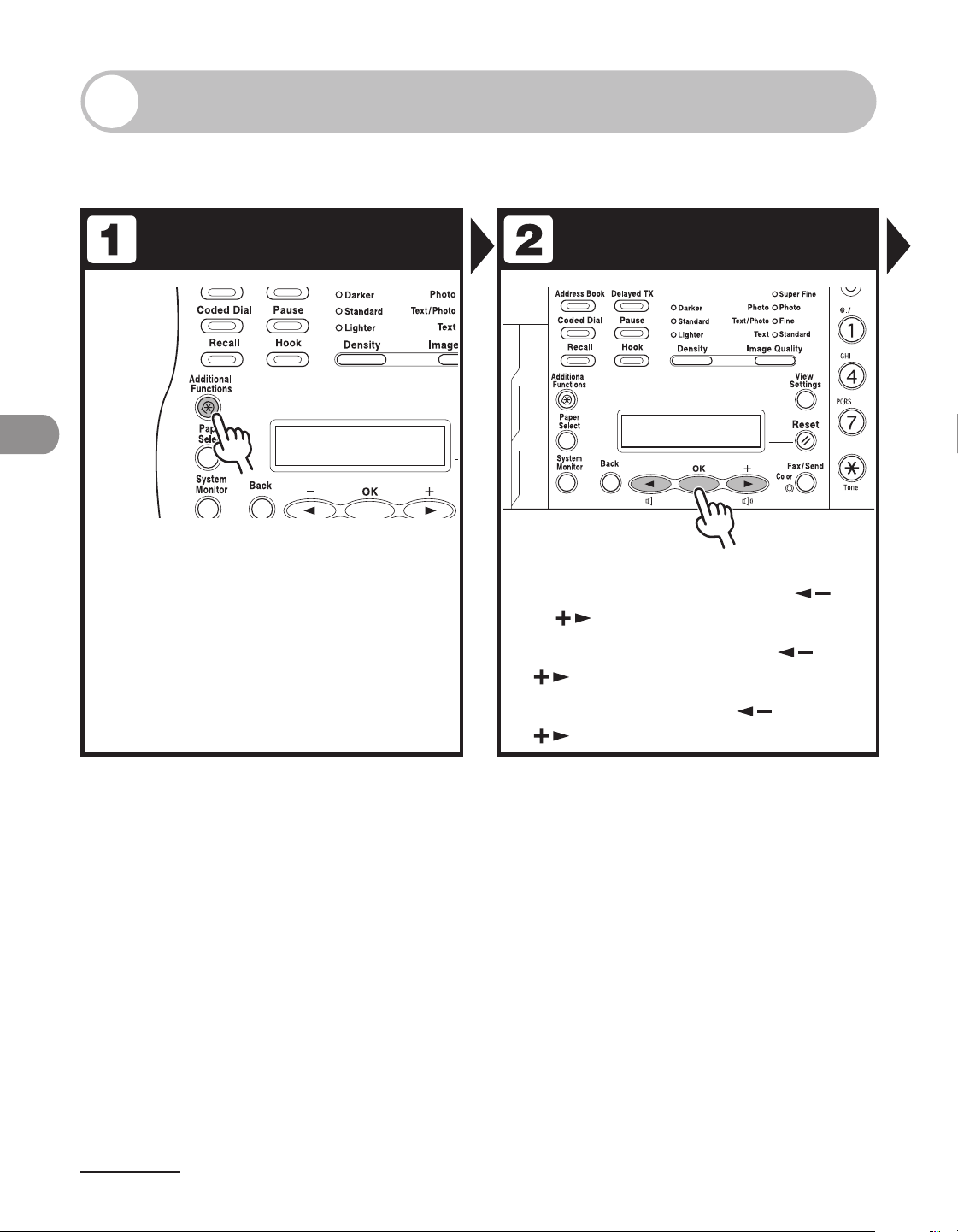
Receiving Documents
5-2
Basic Receiving Method
Follow this procedure to set the machine for receiving faxes.
For advanced receiving features, see Reference Guide > Send/Receive.
Enter the Setting Menu Enter the Receive Mode
04
08
12
16
20
Press [Additional Functions].
Select <TX/RX SETTINGS> with [ ]
or [ ], then press [OK].
Select <FAX SETTINGS> with [ ] or
[ ], then press [OK].
Select <RX MODE> with [ ] or
[ ], then press [OK].
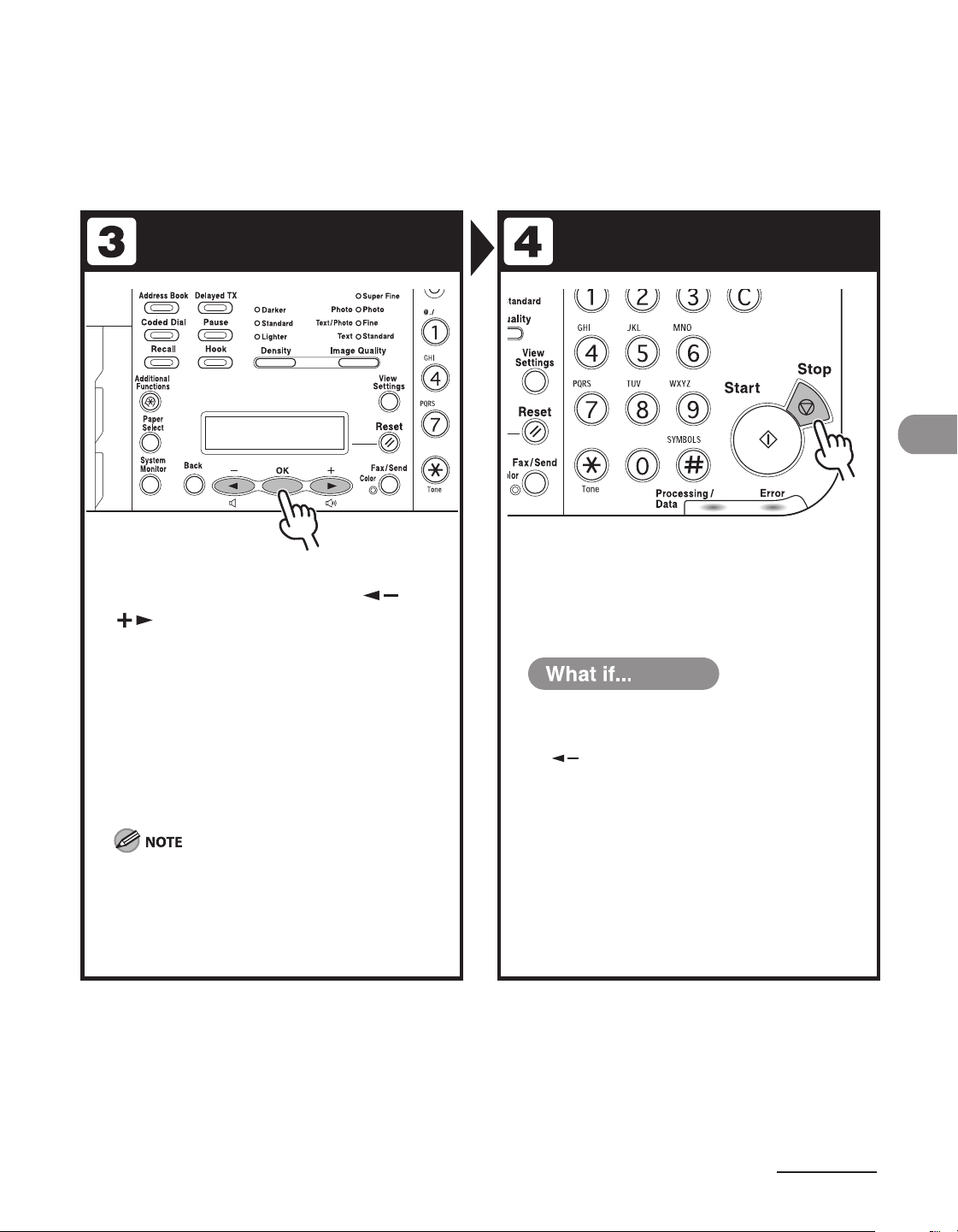
5-3
Receiving Documents
Select the Receive Mode Exit the Setting Menu
04
08
12
16
20
Select the receive mode with [ ] or
[ ], then press [OK].
<FaxOnly>: Answers all calls as faxes.
<FaxTel>: Switches between fax and voice calls
automatically if an external telephone is
connected to the machine.
<AnsMode>: Receives faxes automatically and records
voice messages.
<DRPD>: Distinguishes between fax and voice calls if you
want to use an external telephone.
<Manual>: Does not answer any calls. You have to
manually receive faxes.
For details on these settings, see Reference Guide >
Send/Receive.
For <AnsMode>, make sure an answering machine
is connected to the machine.
For <DRPD>, subscription to a DRPD service is
required.
–
–
Press [Stop] to return to the standby
mode.
You press [Stop] to cancel a job:
The <CANCEL?> message appears. Press
[ ] to select <Yes>. The job is canceled,
and the display returns to the standby
mode.
The <TONER LOW/PREPARE NEW
TONER> message appears:
The toner cartridge is almost empty.
Replace the toner cartridge. For details on
this error message, see “
LCD Messages,”
on p.
11-7.
●
●
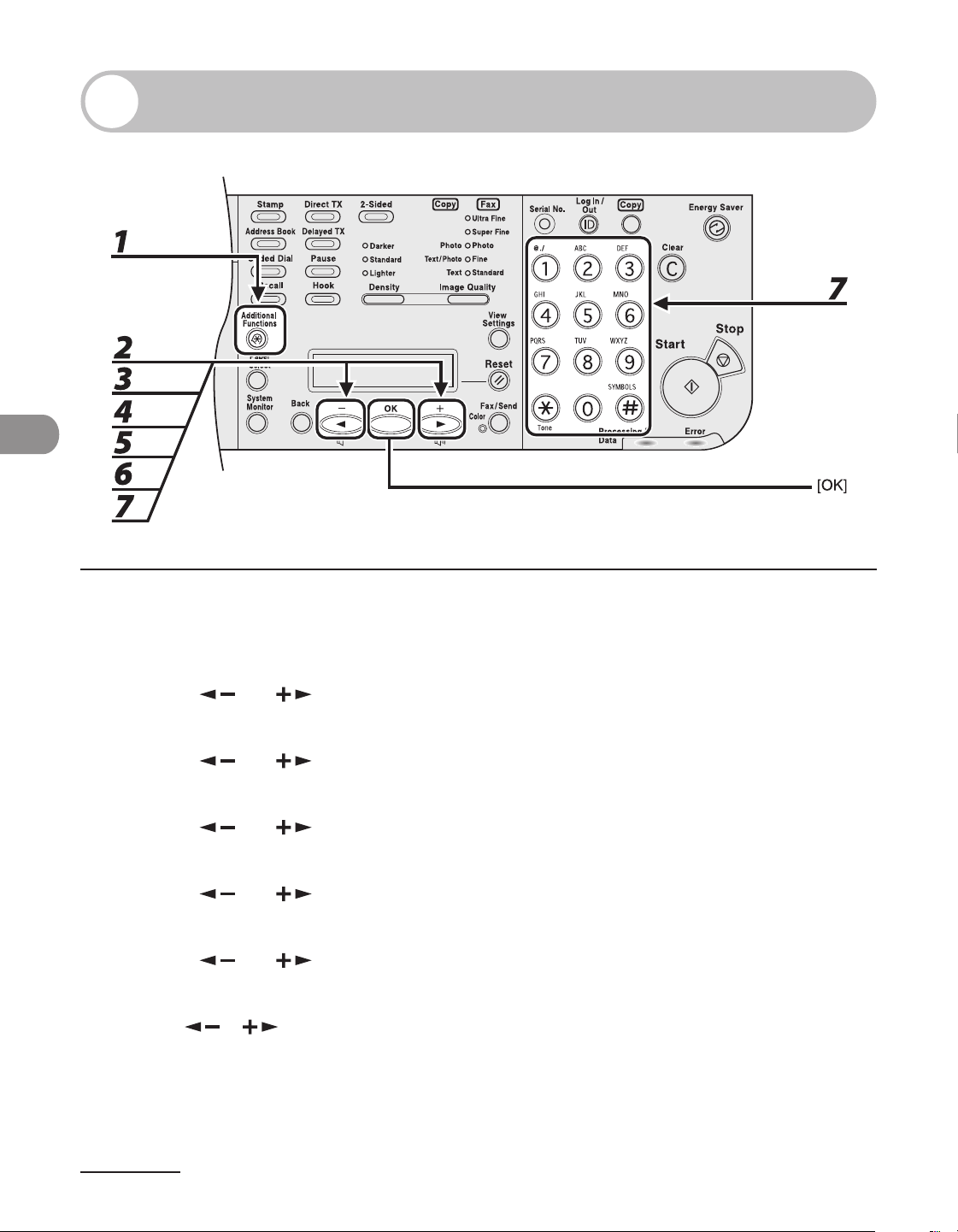
Receiving Documents
5-4
FaxTel: Optional Settings
If required, change the optional settings as follows:
1 Press [Additional Functions].
2 Press [ ] or [ ] to select <TX/RX SETTINGS>, then press [OK].
3 Press [ ] or [ ] to select <FAX SETTINGS>, then press [OK].
4 Press [ ] or [ ] to select <RX SETTINGS>, then press [OK].
5 Press [ ] or [ ] to select <FAX/TEL OPT. SET>, then press [OK].
6 Press [ ] or [ ] to select <RING START TIME>, then press [OK].
7 Use [ ], [ ], or the numeric keys to specify the duration (0 to 30 seconds)
for which the machine attempts to detect the fax tone before it starts ringing,
then press [OK].
If the machine receives a fax, the machine does not ring and switches to the receive mode
automatically.
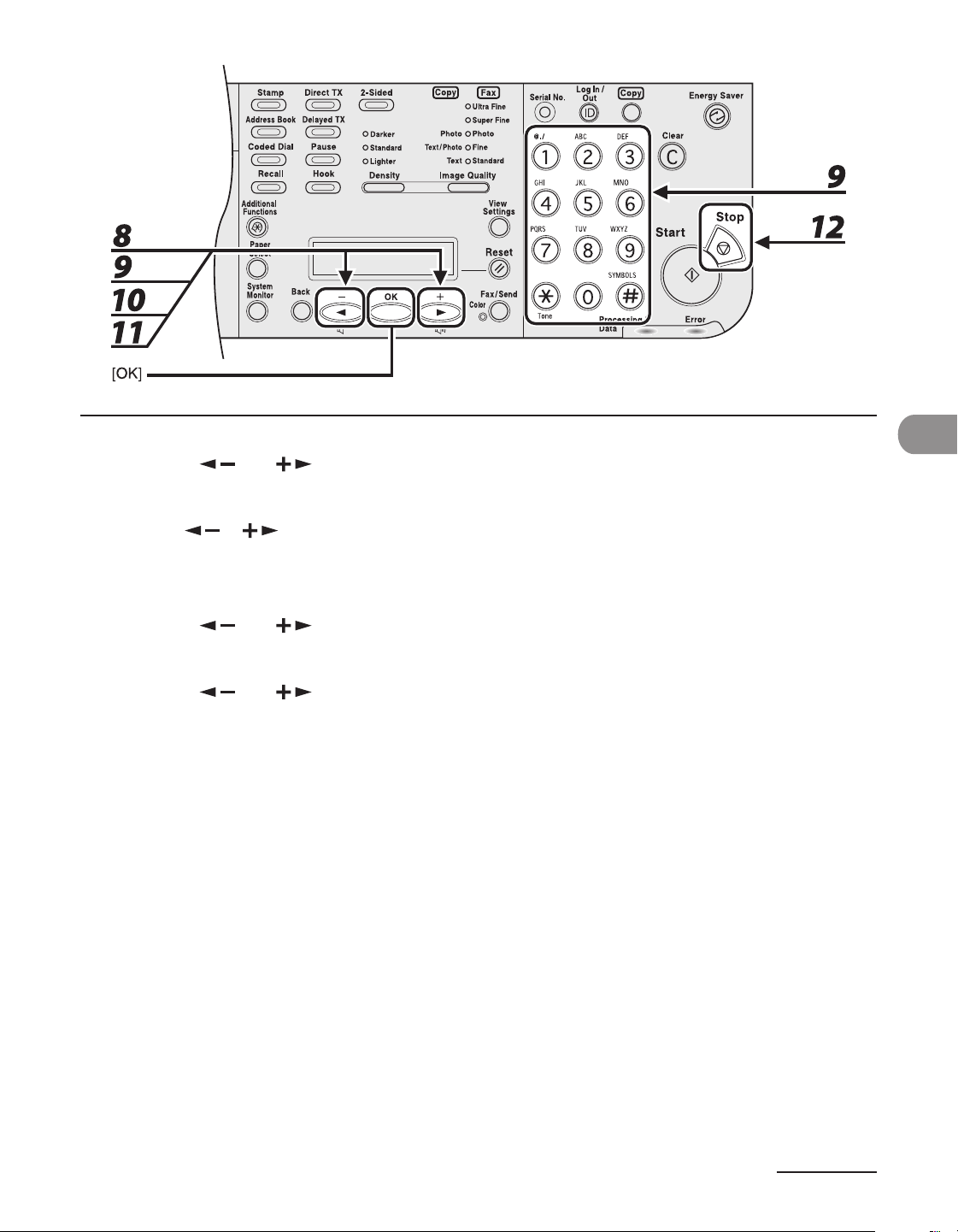
5-5
Receiving Documents
8 Press [ ] or [ ] to select <F/T RING TIME>, then press [OK].
9 Use [ ], [ ], or the numeric keys to specify the duration (15 to 300 seconds)
of ringing, then press [OK].
10 Press [ ] or [ ] to select <F/T SWITCH ACTION>, then press [OK].
11 Press [ ] or [ ] to select the action the machine will take after the ringing
ends, then press [OK].
<RECEIVE>: Receives a fax.
<DISCONNECT>: Disconnects the call.
12 Press [Stop] to return to the standby mode.
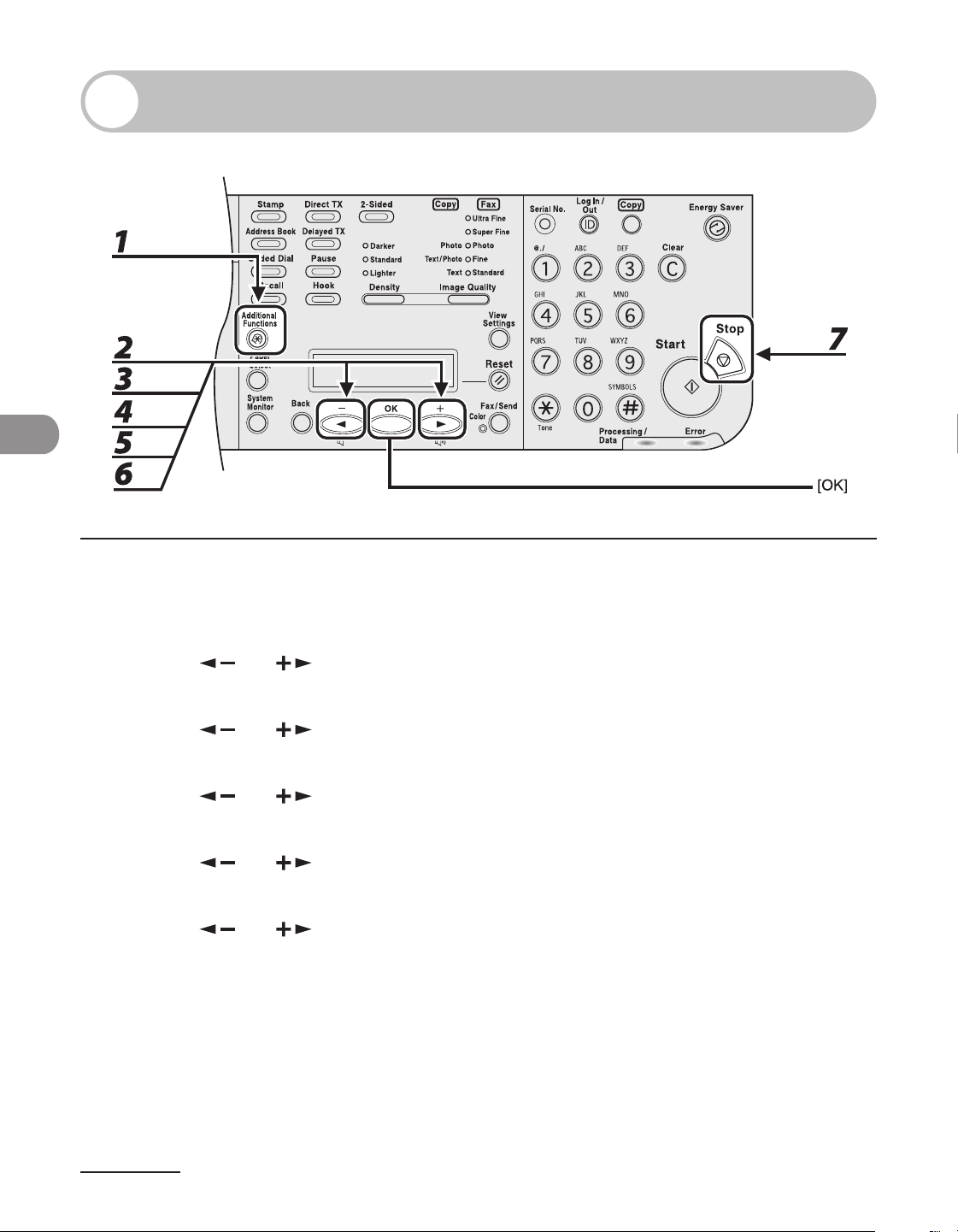
Receiving Documents
5-6
DRPD: Optional Settings
Select the ring pattern assigned by your telephone company.
1 Press [Additional Functions].
2 Press [ ] or [ ] to select <TX/RX SETTINGS>, then press [OK].
3 Press [ ] or [ ] to select <FAX SETTINGS>, then press [OK].
4 Press [ ] or [ ] to select <RX SETTINGS>, then press [OK].
5 Press [ ] or [ ] to select <DRPD:SELECT FAX>, then press [OK].
6 Press [ ] or [ ] to select a ring pattern, then press [OK].
<DOUBLE RING>
<SHORT-SHORT-LONG>
<SHORT-LONG-SHORT>
<OTHER RING TYPE>
<NORMAL RING>
7 Press [Stop] to return to the standby mode.
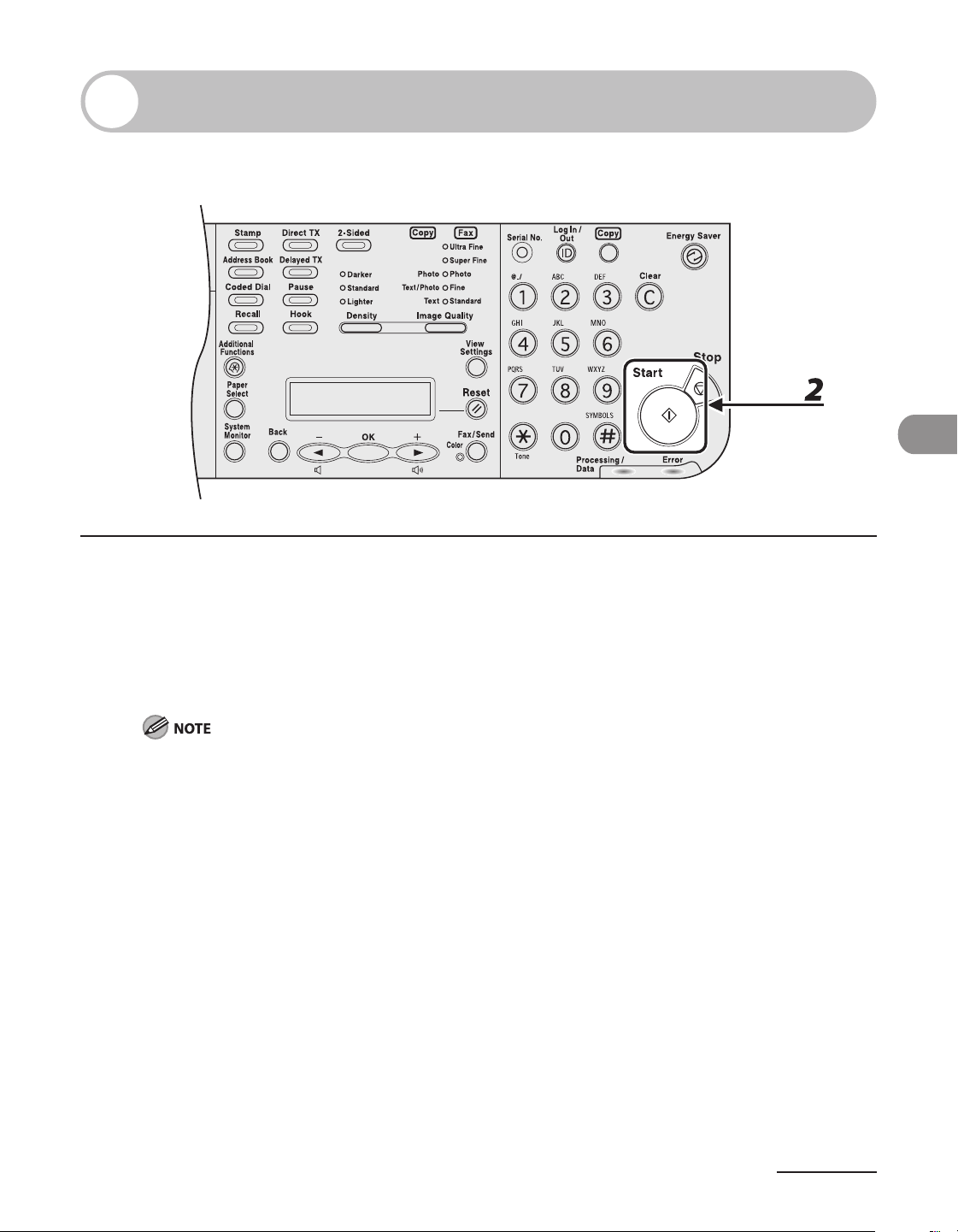
5-7
Receiving Documents
Manual Reception
When you select <Manual> in <RX MODE>, follow the procedure below to receive a
fax.
1 When the telephone rings, pick up the optional handset or the external
telephone.
2 Confirm that the modem’s connecting sound is heard, then press [Start].
If you picked up the receiver of an external telephone in step 1, enter the two digit remote reception ID
using the numeric keys of the external telephone. (See "Receiving a Fax Remotely." on p. 5-24)
3 Hang up the optional handset or the external telephone.

Receiving Documents
5-8
Memory Reception
The machine automatically receives faxes in memory when printing is disabled under
certain conditions (e.g., toner or paper has run out).
When the problem is cleared, the machine automatically prints the fax which was stored in
the memory.
The main memory of the LASER CLASS 830i can store data for a maximum of 90 jobs or approximately 1,500
pages.*
1
The main memory of the LASER CLASS 810 can store data for a maximum of 90 jobs or approximately 512
(1,500*
2
) pages.*
1
*
1
Based on the condition that the other party sends the fax by the LASER CLASS 830i with ITU-T Standard Chart
No. 1, standard mode. The maximum number of pages that the machine’s memory can store differs depending
on the other party’s machine.
Once the pages are printed, they are deleted from the memory.
If the memory becomes full, you will not be able to receive the remaining pages. Contact the other party and
ask them to resend the remaining pages of the fax.
*
2
For the LASER CLASS 810, an optional network printer kit is required.
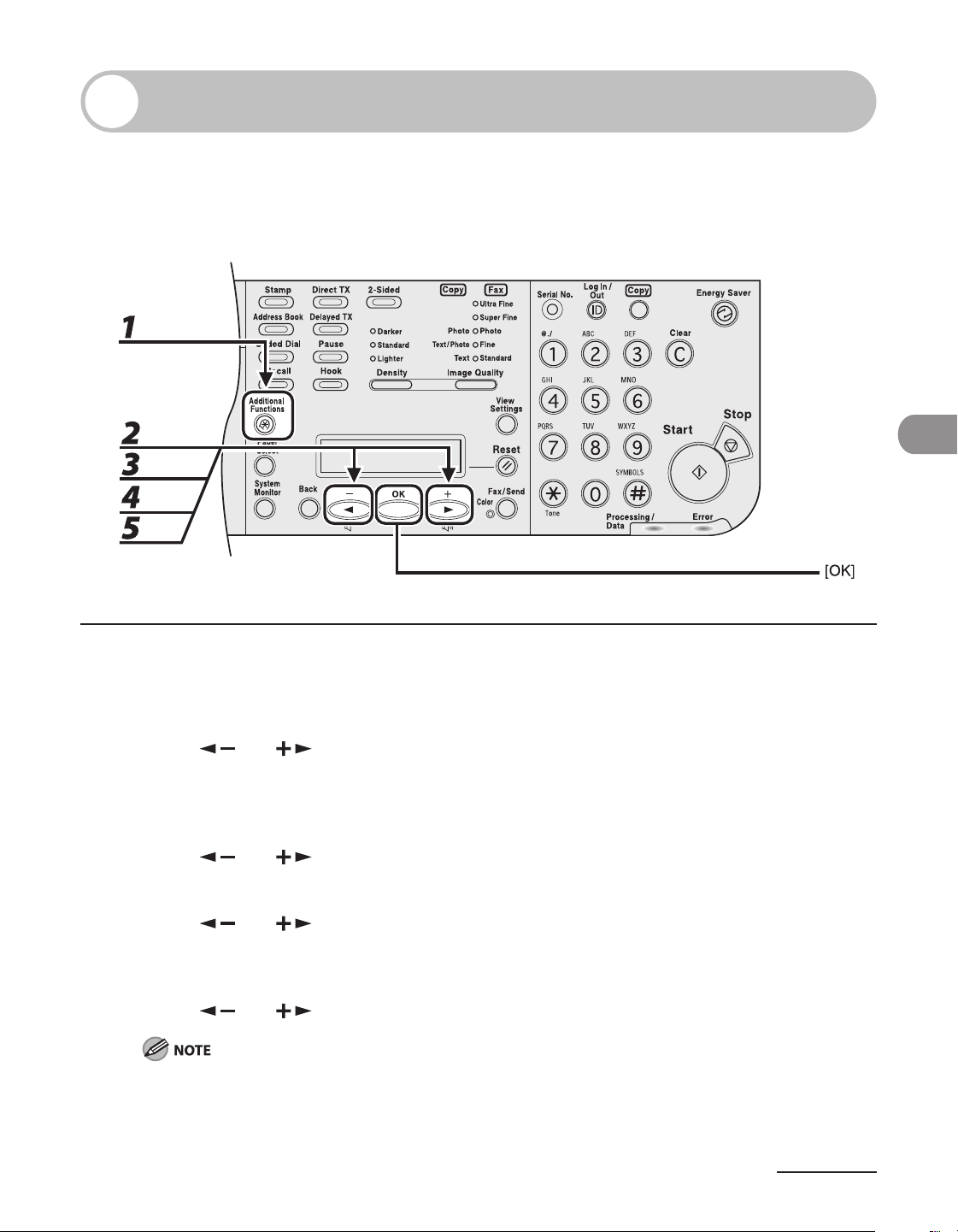
5-9
Receiving Documents
Memory Lock Reception
You can also set the machine to store all documents in memory without automatically
printing them.
You can also forward the documents received in memory to other destinations. (See
“Forwarding Documents Received in Memory,” on p. 5-18.)
1 Press [Additional Functions].
2 Press [ ] or [ ] to select <SYSTEM SETTINGS>, then press [OK].
If the System Manager ID and System Password have been set, enter the System Manager ID and System
Password using the numeric keys, then press [Log In/Out].
3 Press [ ] or [ ] to select <COMMUNICATIONS>, then press [OK].
4 Press [ ] or [ ] to select <MEMORY LOCK>, then press [OK].
If the memory lock password has already been set, enter the password, then press [OK].
5 Press [ ] or [ ] to select <ON>, then press [OK].
When you select <OFF>, the machine starts to print the received documents in memory.
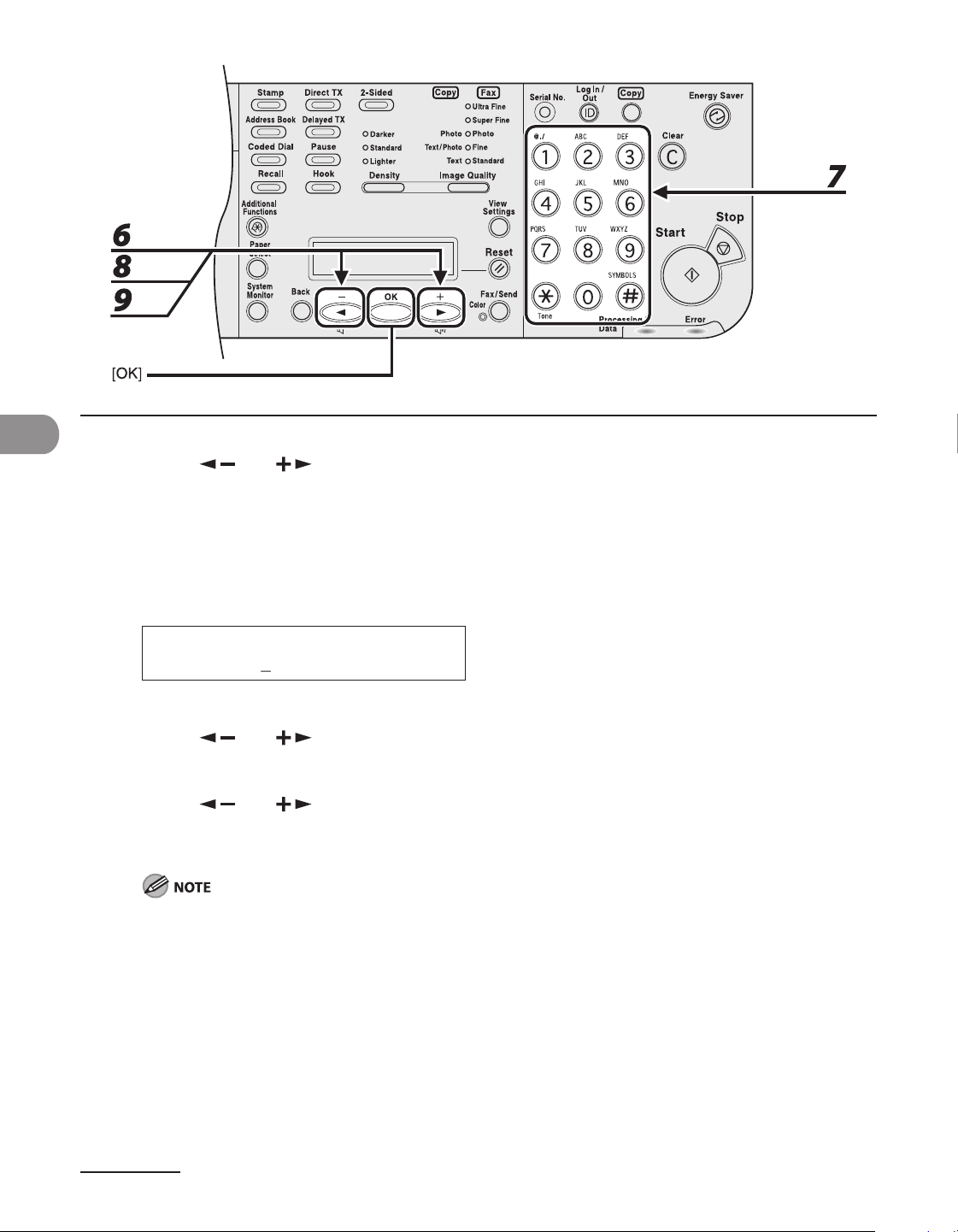
Receiving Documents
5-10
6 Press [ ] or [ ] to select <PASSWORD>, then press [OK].
7 Use the numeric keys to enter the memory lock reception password (up to
seven digits), then press [OK].
P A S S W O R D
1 2 3 4 5 6 7
Ex.
8 Press [ ] or [ ] to select <REPORT PRINT>, then press [OK].
9 Press [ ] or [ ] to select <ON> or <OFF>, then press [OK].
<OFF>: Does not print a RX report.
<ON>: Prints a RX report.
<RX REPORT> should also be set to <ON> so that RX reports are automatically printed when documents
are received in memory. For instructions, see “RX REPORT,” on p. 12-55.
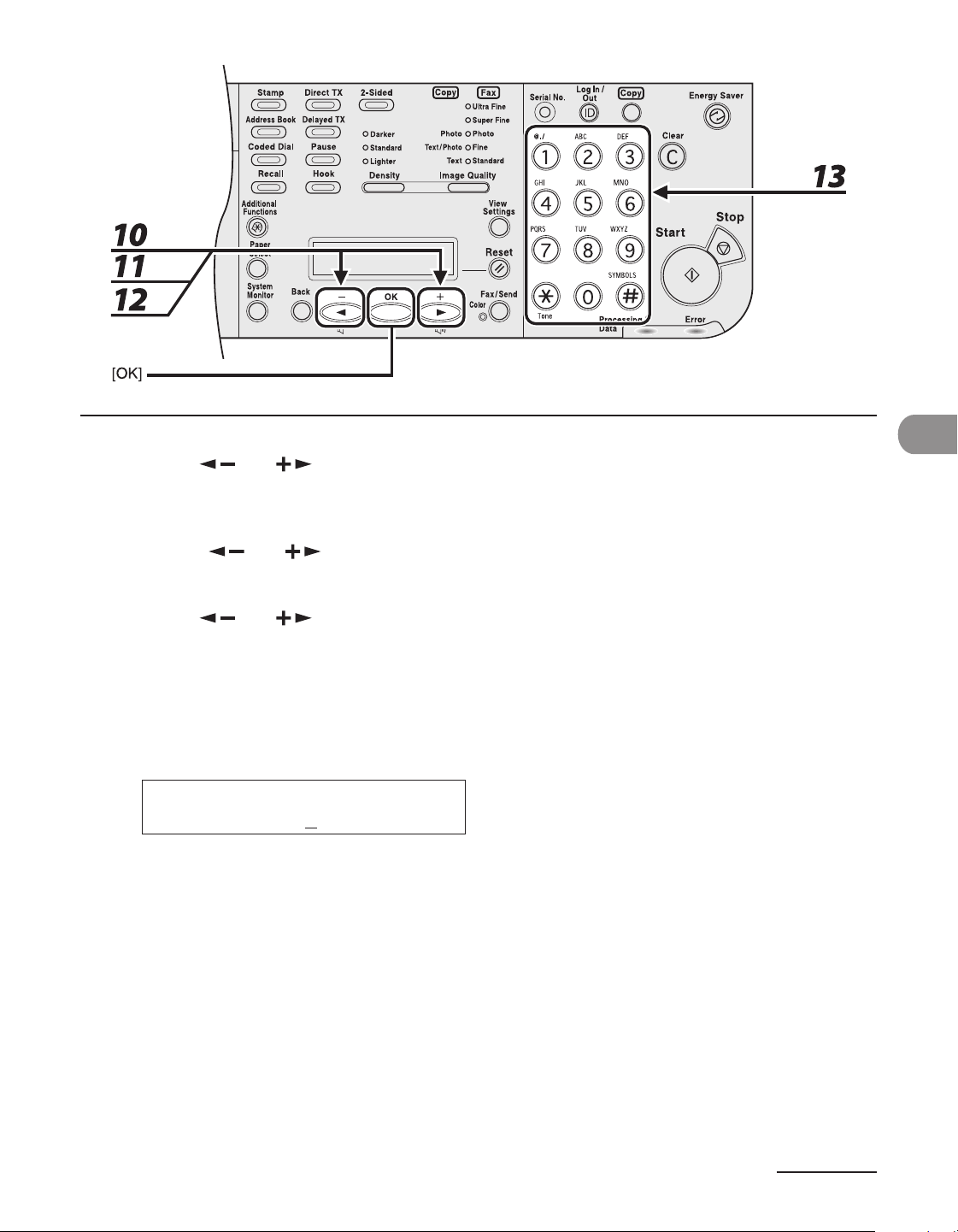
5-11
Receiving Documents
10 Press [ ] or [ ] to select <MEMORY RX TIME>, then press [OK].
If you do not need to set the timer for memory lock, skip to step 16.
11 Press [ ] or [ ] to select <ON>, then press [OK].
12 Press [ ] or [ ] to select <MEM RX START TIME>, then press [OK].
13 Use the numeric keys to enter the start time (in 24-hour format), then press
[OK].
M E M R X S T A R T T I M E
0 0 : 0 0
Ex.
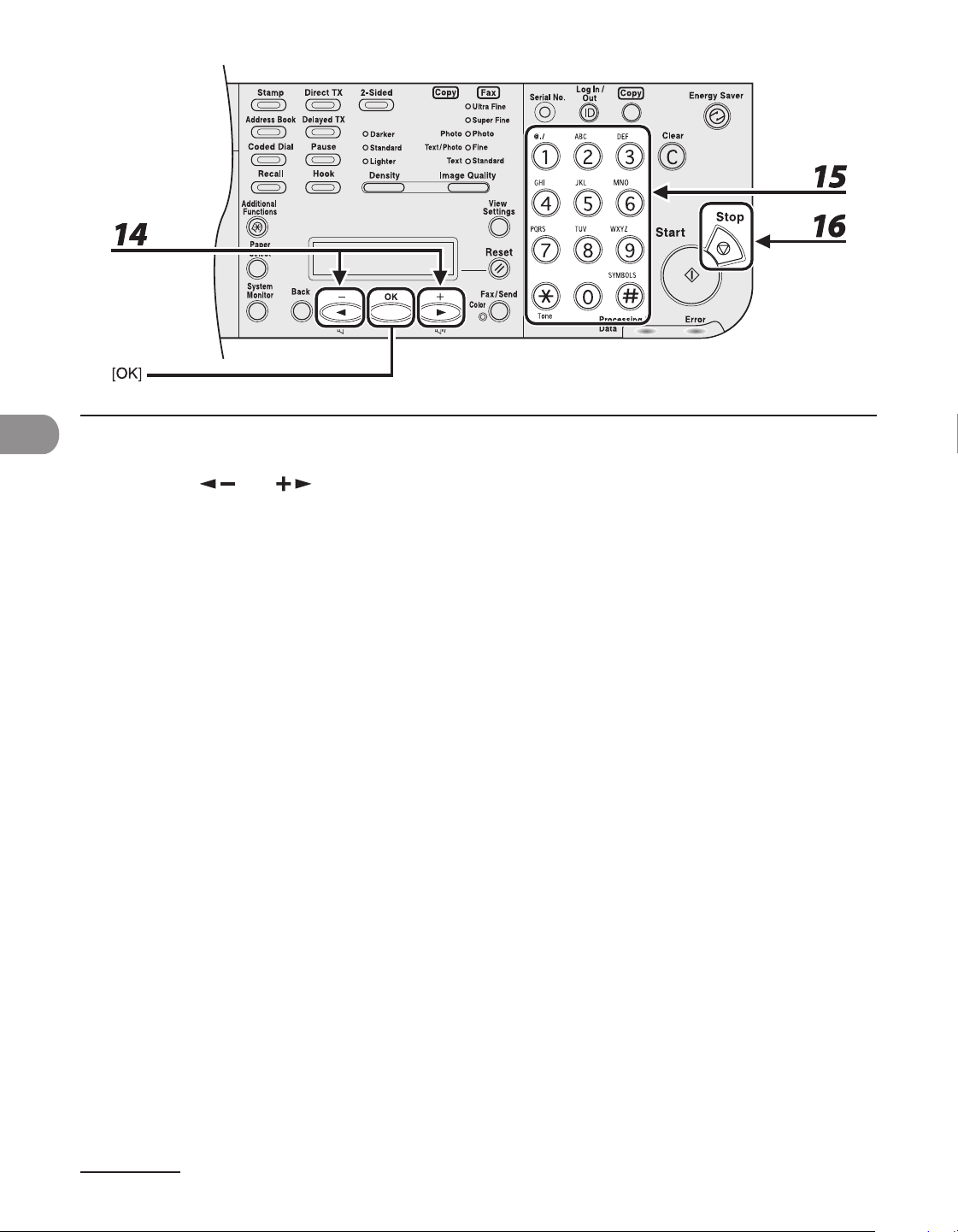
Receiving Documents
5-12
14 Press [ ] or [ ] to select <MEM. RX END TIME>, then press [OK].
15 Use the numeric keys to enter the end time, then press [OK].
16 Press [Stop] to return to the standby mode.
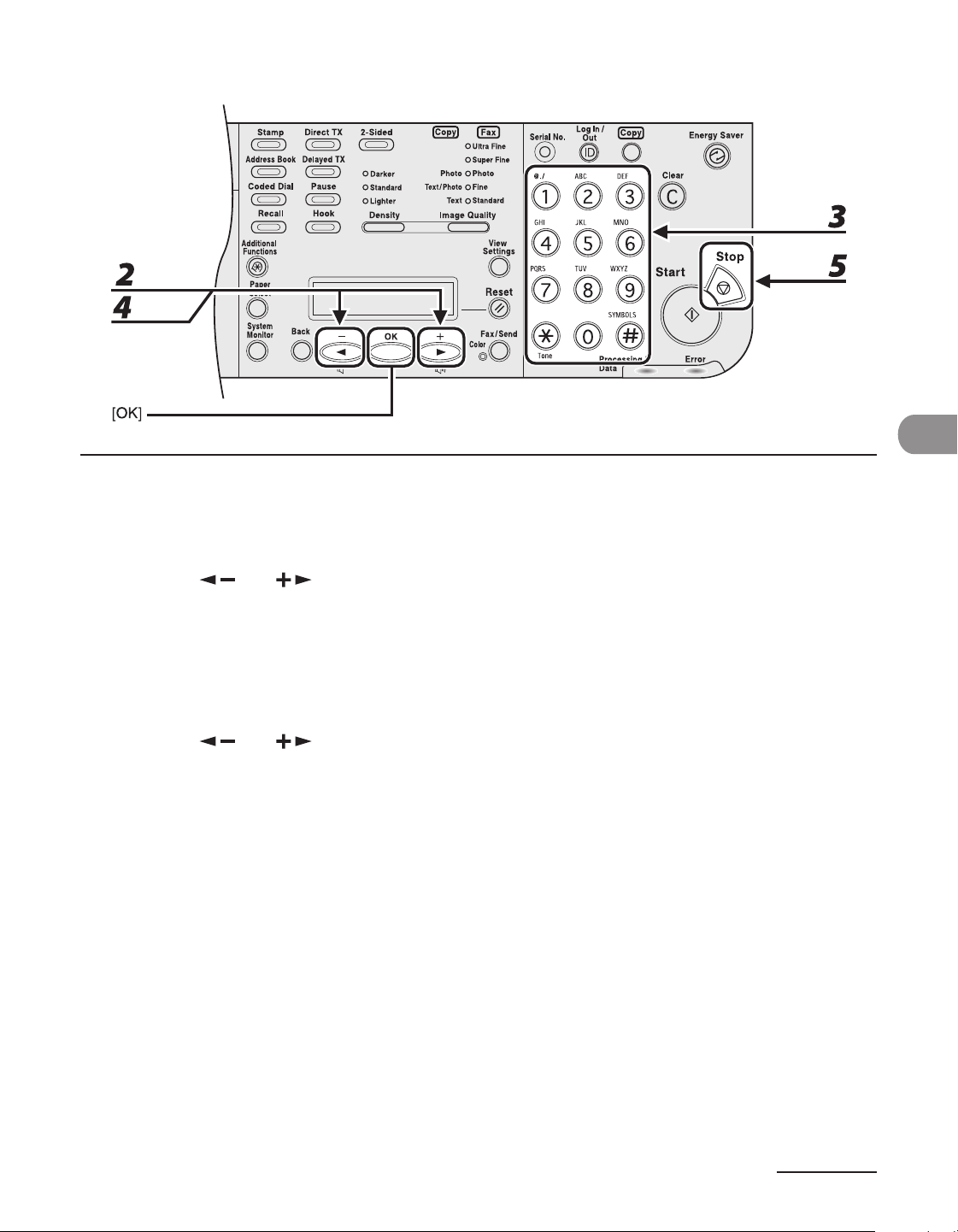
5-13
Receiving Documents
Printing All Documents Stored in Memory
1 Perform step 1 to 3 in “Memory Lock Reception,” on p. 5-9.
2 Press [ ] or [ ] to select <MEMORY LOCK>, then press [OK].
3 Use the numeric keys to enter the memory lock reception password, then press
[OK].
4 Press [ ] or [ ] to select <OFF>, then press [OK].
The received documents are printed.
5 Press [Stop] to return to the standby mode.
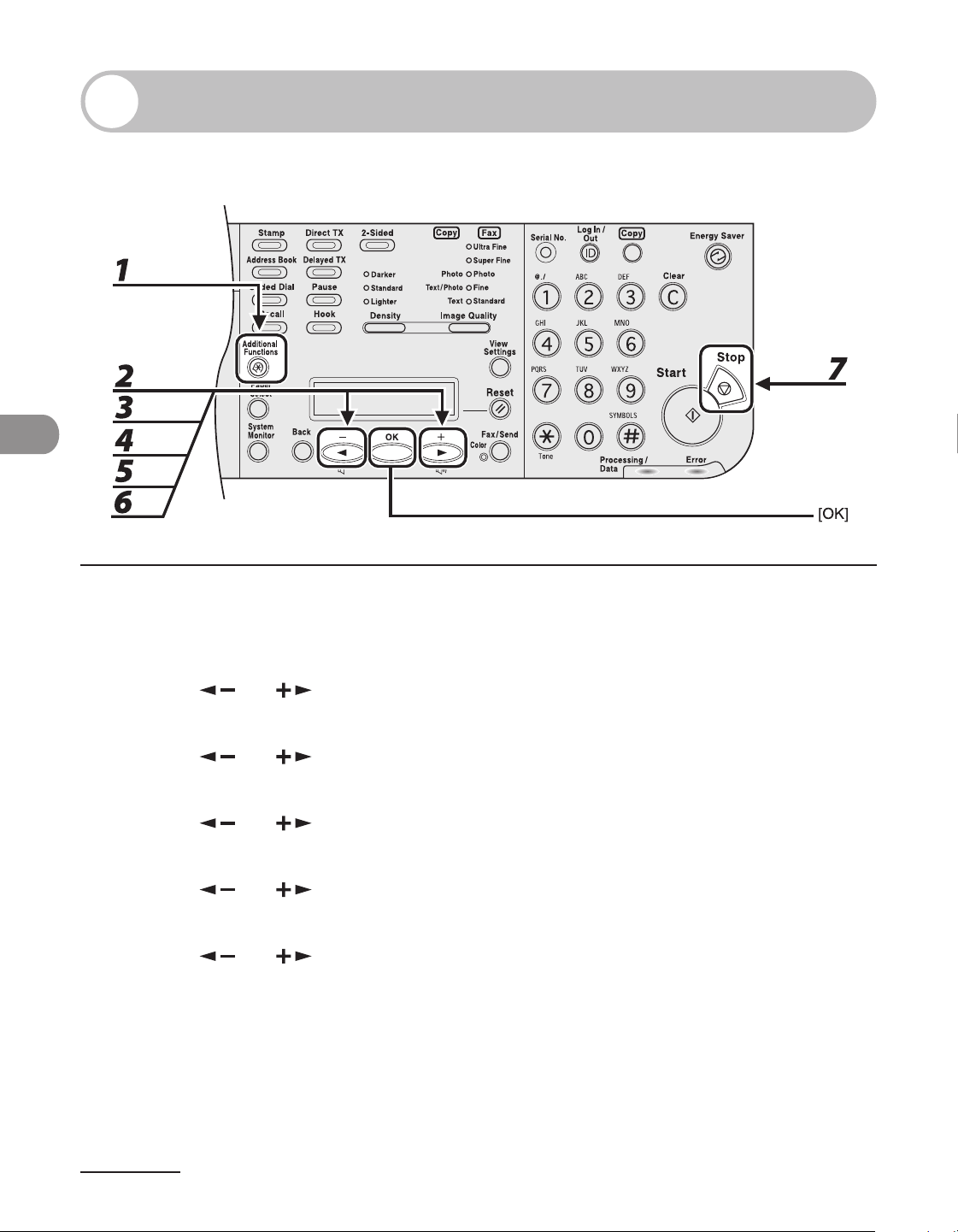
Receiving Documents
5-14
Reception Restriction
You can reject incoming faxes without sending their numbers in the sender’s
machines.
1 Press [Additional Functions].
2 Press [ ] or [ ] to select <TX/RX SETTINGS>, then press [OK].
3 Press [ ] or [ ] to select <FAX SETTINGS>, then press [OK].
4 Press [ ] or [ ] to select <RX SETTINGS>, then press [OK].
5 Press [ ] or [ ] to select <RX RESTRICTION>, then press [OK].
6 Press [ ] or [ ] to select <ON>, then press [OK].
7 Press [Stop] to return to the standby mode.
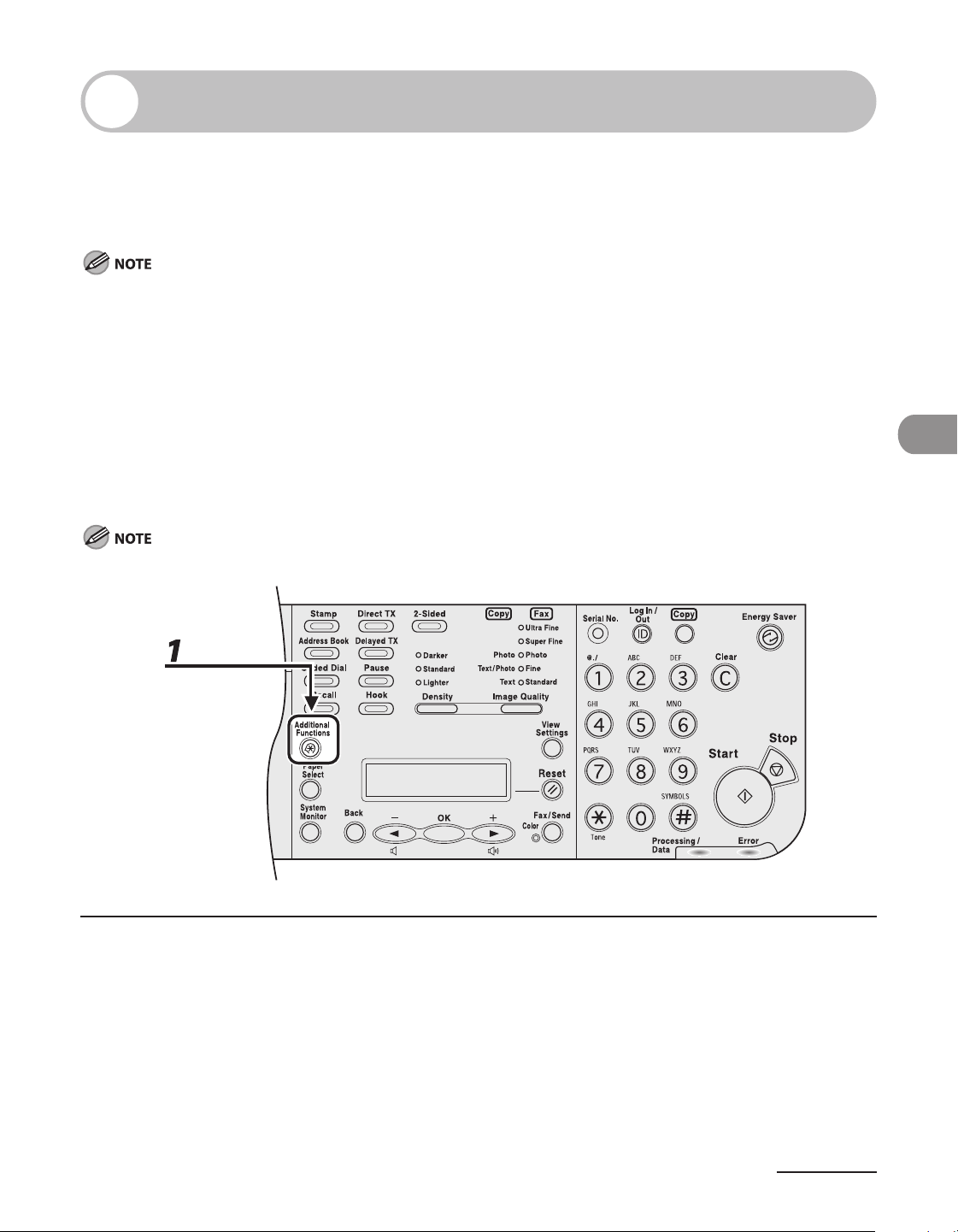
5-15
Receiving Documents
Forwarding Received Documents
You can set the machine to forward received documents to other machines or file
servers. If a received document matches the forwarding conditions, it is forwarded to
the specified destination. Forwarding settings can be made using the Remote UI.
For instructions on forwarding settings and how to turn on and off the forward mode, see Reference Guide >
Settings/Management from a PC > Specifying Forwarding Settings.
When Forwarding Destinations Do Not Match the Forwarding
Conditions
If a forwarding destination is not registered, or if the received document does not match
all of the forwarding conditions that you have specified, you can specify the forwarding
destination using the operation panel.
The documents for TX Document Archiving (see p. 4-75) are sent to a forwarding destination you register here.
1
Press [Additional Functions].
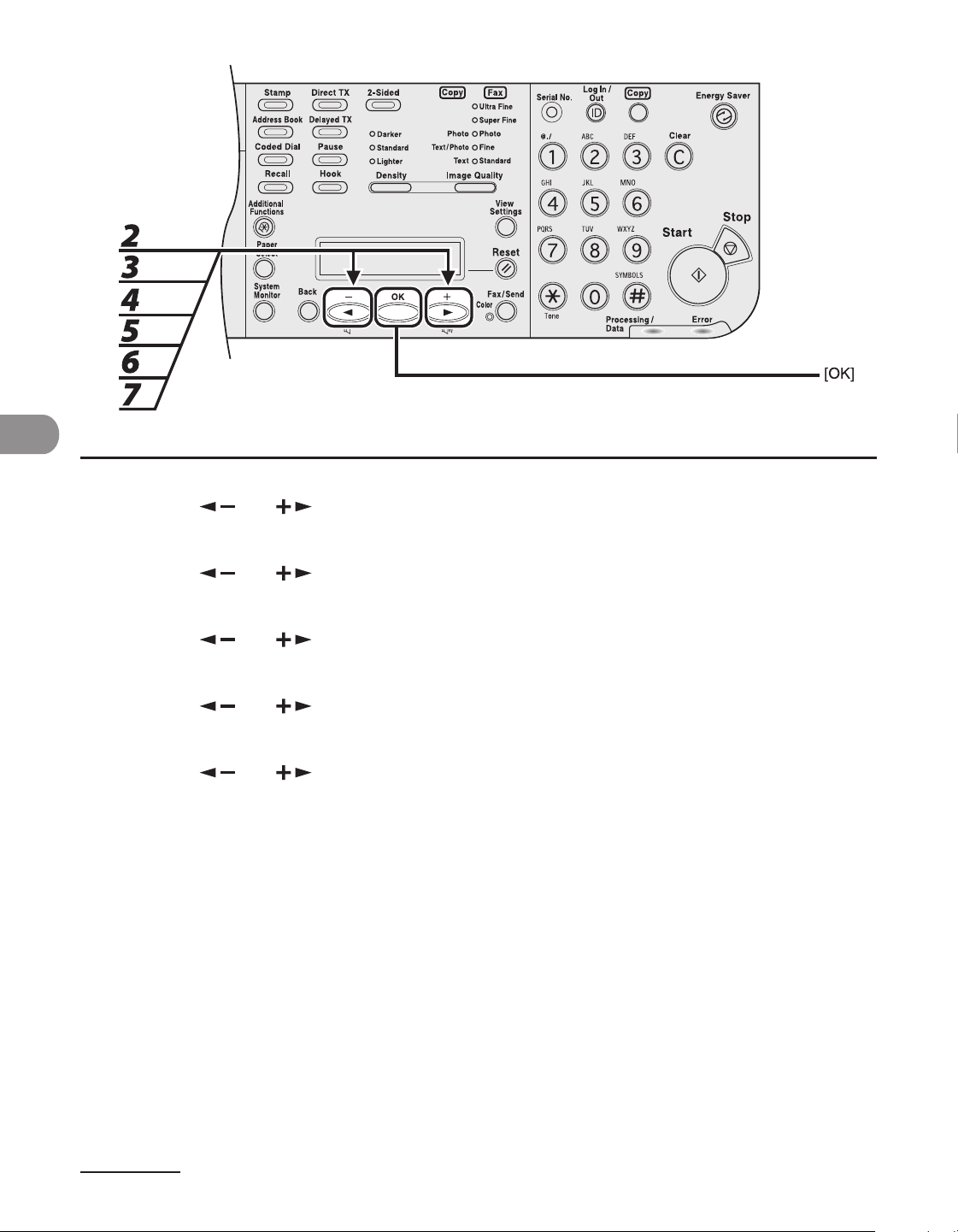
Receiving Documents
5-16
2 Press [ ] or [ ] to select <SYSTEM SETTINGS>, then press [OK].
3 Press [ ] or [ ] to select <FW W/OUT CONDITION>, then press [OK].
4 Press [ ] or [ ] to select <FAX> or <IFax>, then press [OK].
5 Press [ ] or [ ] to select <ON>, then press [OK].
6 Press [ ] or [ ] to select <FORWARD>, then press [OK].
7 Specify the forwarding destination using the one-touch speed dialing key, and
press [OK].
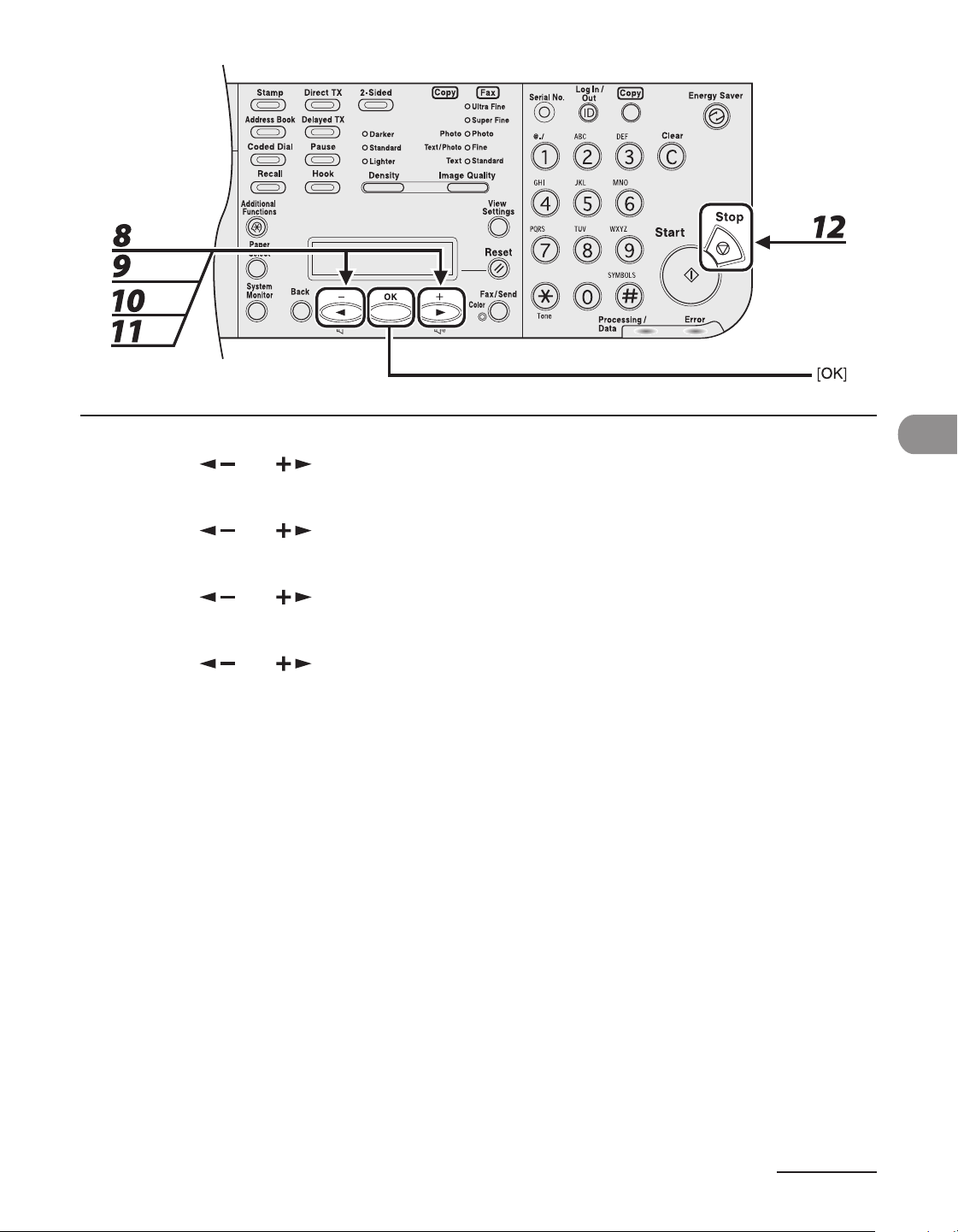
5-17
Receiving Documents
8 Press [ ] or [ ] to select <IMAGE FORMAT>, then press [OK].
9 Press [ ] or [ ] to select <TIFF (B&W)> or <PDF>, then press [OK].
10 Press [ ] or [ ] to select <DIVIDE INTO PAGES>, then press [OK].
11 Press [ ] or [ ] to select <ON> or <OFF> , then press [OK].
<OFF>: Sends multiple images as a single file without dividing them.
<ON>: Separates multiple images and send them as separate files
12 Press [Stop] to return to the standby mode.
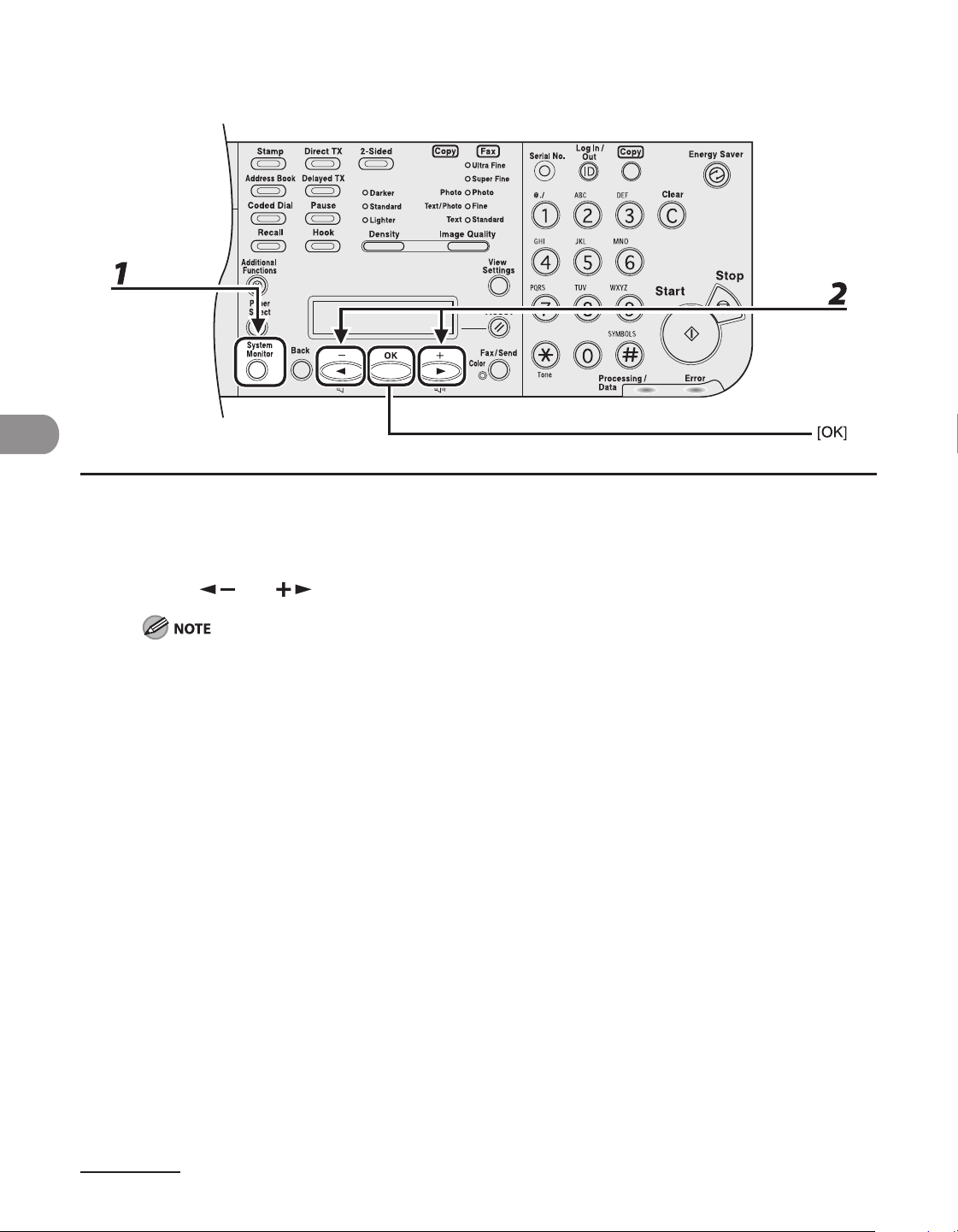
Receiving Documents
5-18
Forwarding Documents Received in Memory
1 Press [System Monitor] repeatedly to select <TX/RX STATUS>, then press [OK].
2 Press [ ] or [ ] to select the desired document, then press [OK].
You can transfer only the documents received in memory, which appears with the message <STNDBY>
in the system monitor.
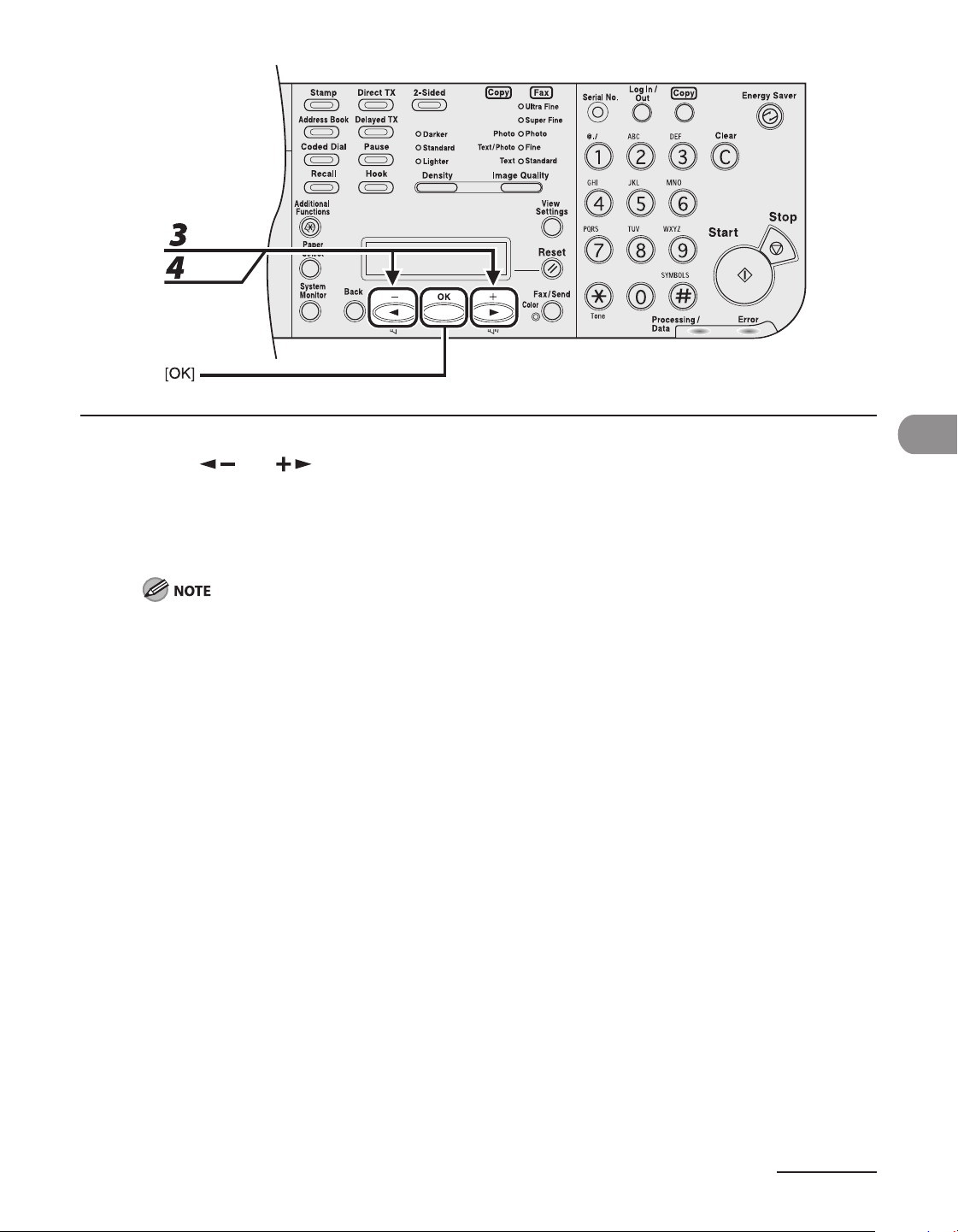
5-19
Receiving Documents
3 Press [ ] or [ ] to select <FORWARD>, then press [OK].
4 Specify the destination, then press [OK].
The machine starts to send the selected document.
You can specify only one destination registered in a one-touch key or coded dial code.
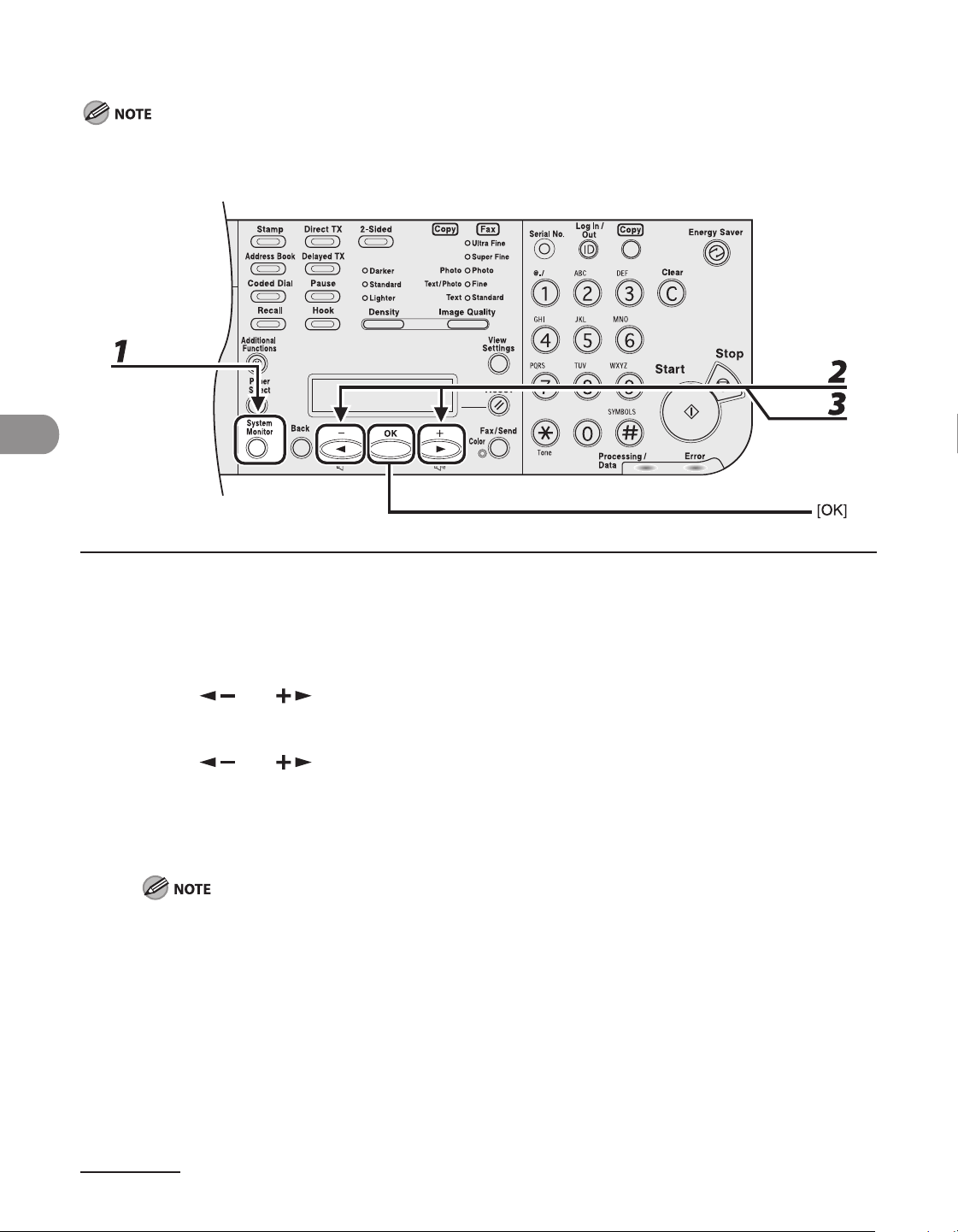
Receiving Documents
5-20
Forwarding Documents with Forwarding Errors
To use this function <STORE TO MEMORY> in <FORWARD ERR.SET> in <SYSTEM SETTINGS> must be set to
<ON>.
1 Press [System Monitor] repeatedly to select <FORWARD ERR. STATUS>, then
press [OK].
2 Press [ ] or [ ] to select the desired document, then press [OK].
3 Press [ ] or [ ] to select <FORWARD>, then press [OK].
4 Specify the destination, then press [OK].
The machine starts to send the selected document.
You can specify only one destination registered in a one-touch key or coded dial code.
The document is erased from memory if transferring is successful.
–
–
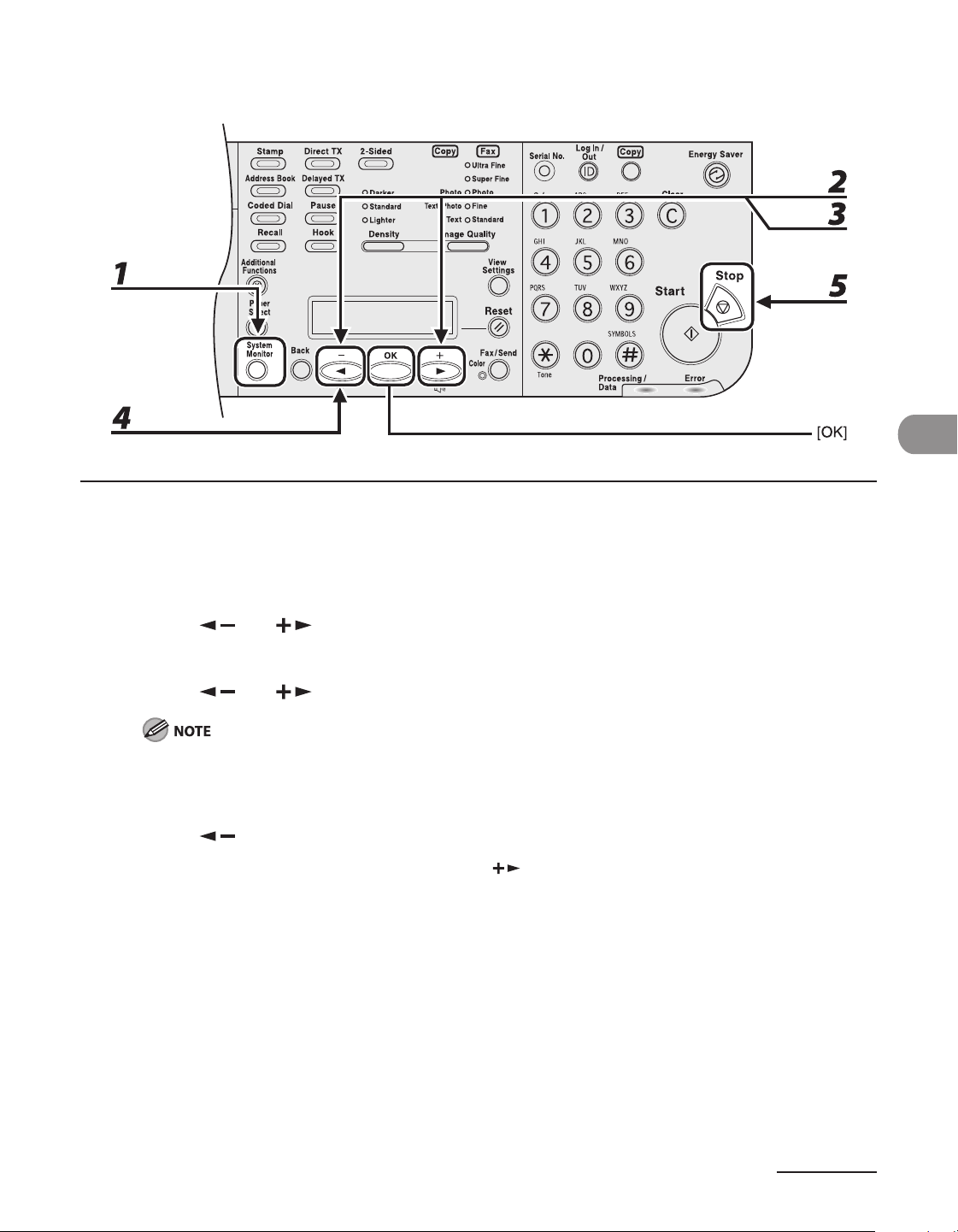
5-21
Receiving Documents
Printing or Erasing Documents with Forwarding Errors
1 Press [System Monitor] repeatedly to select <FORWARD ERR. STATUS>, then
press [OK].
2 Press [ ] or [ ] to select the desired document, then press [OK].
3 Press [ ] or [ ] to select <PRINT> or <CANCEL>, then press [OK].
If <MEMORY LOCK> is <ON> in <COMMUNICATIONS> in <SYSTEM SETTINGS>, the documents cannot
be printed.
4 Press [ ] to select <YES>.
If you do not want to print or erase the job, press [ ] to select <NO>.
5 Press [Stop] to return to the standby mode.
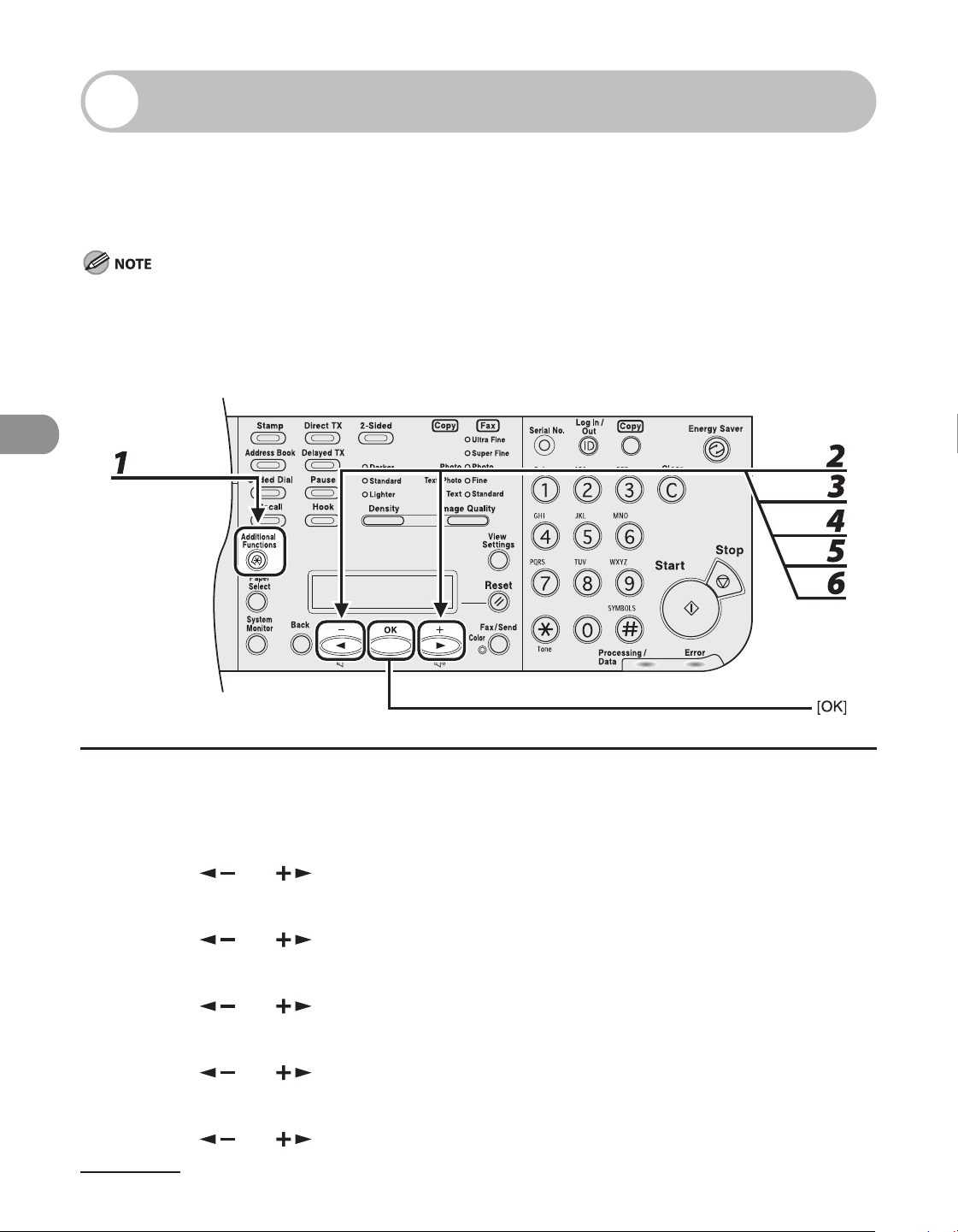
Receiving Documents
5-22
Remote Reception
Remote reception enables you to use an external telephone connected to the machine
to receive faxes manually. This can be useful when the machine is not nearby or is
being used by someone else.
This function is not available when <ENERGY IN SLEEP> in <COMMON SETTINGS> is set to <LOW>.
Registering Remote Reception ID
Follow this procedure if you want to change the default remote reception ID of 25.
1 Press [Additional Functions].
2 Press [ ] or [ ] to select <TX/RX SETTINGS>, then press [OK].
3 Press [ ] or [ ] to select <FAX SETTINGS>, then press [OK].
4 Press [ ] or [ ] to select <RX SETTINGS>, then press [OK].
5 Press [ ] or [ ] to select <REMOTE RX>, then press [OK].
6 Press [ ] or [ ] to select <ON>, then press [OK].
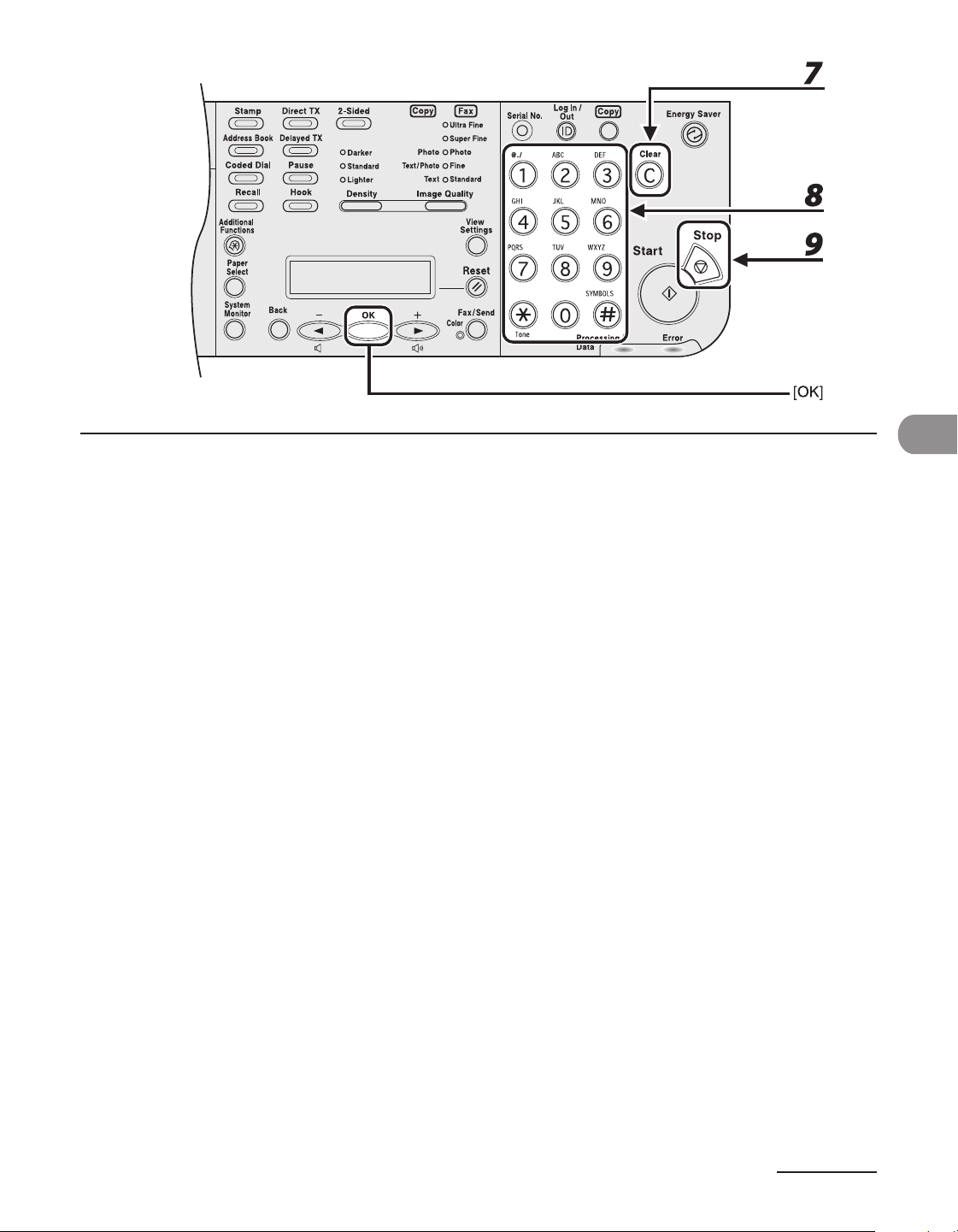
5-23
Receiving Documents
7 Press [Clear] twice to delete the default remote reception ID of 25.
8 Use the numeric keys to enter a new remote reception ID (a combination of two
characters using 0 to 9, and #), then press [OK].
9 Press [Stop] to return to the standby mode.

Receiving Documents
5-24
Receiving a Fax Remotely
1 When you receive a call, pick up the external telephone.
2 Use the numeric keys to enter the two-digit remote reception ID to start
reception.
If the machine is set for pulse dialing, press [Tone] to switch to tone dialing before pressing the remote
reception ID.
3 When the reception is complete, hang up the telephone.
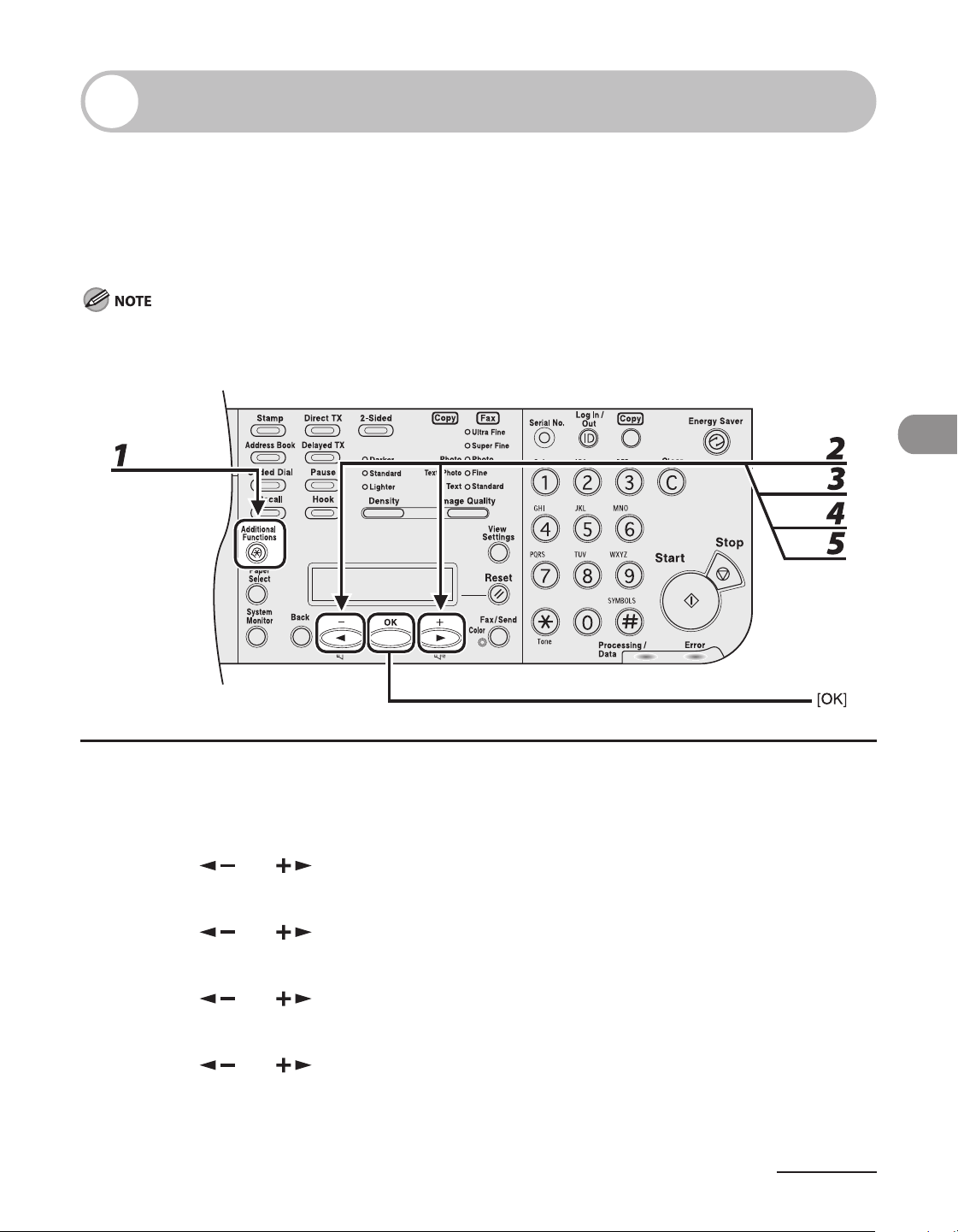
5-25
Receiving Documents
Printing Received Documents
The machine provides the following printing features: two-sided printing and
received image reduction.
Two-Sided Printing
You can print received documents on both sides of the paper.
You can print the received documents on both sides of the paper only when <PAPER SIZE> is set to <LTR>,
<LGL>, or <A4>. The received documents are printed on one side of the paper when <PAPER SIZE> is not set to
<LTR>, <LGL>, or <A4>. (See “Setting Paper Size and Type,” on p. 2-12.)
1 Press [Additional Functions].
2 Press [ ] or [ ] to select <TX/RX SETTINGS>, then press [OK].
3 Press [ ] or [ ] to select <TX/RX COMMON SET.>, then press [OK].
4 Press [ ] or [ ] to select <RX SETTINGS>, then press [OK].
5 Press [ ] or [ ] to select <TWO-SIDED PRINT>, then press [OK].
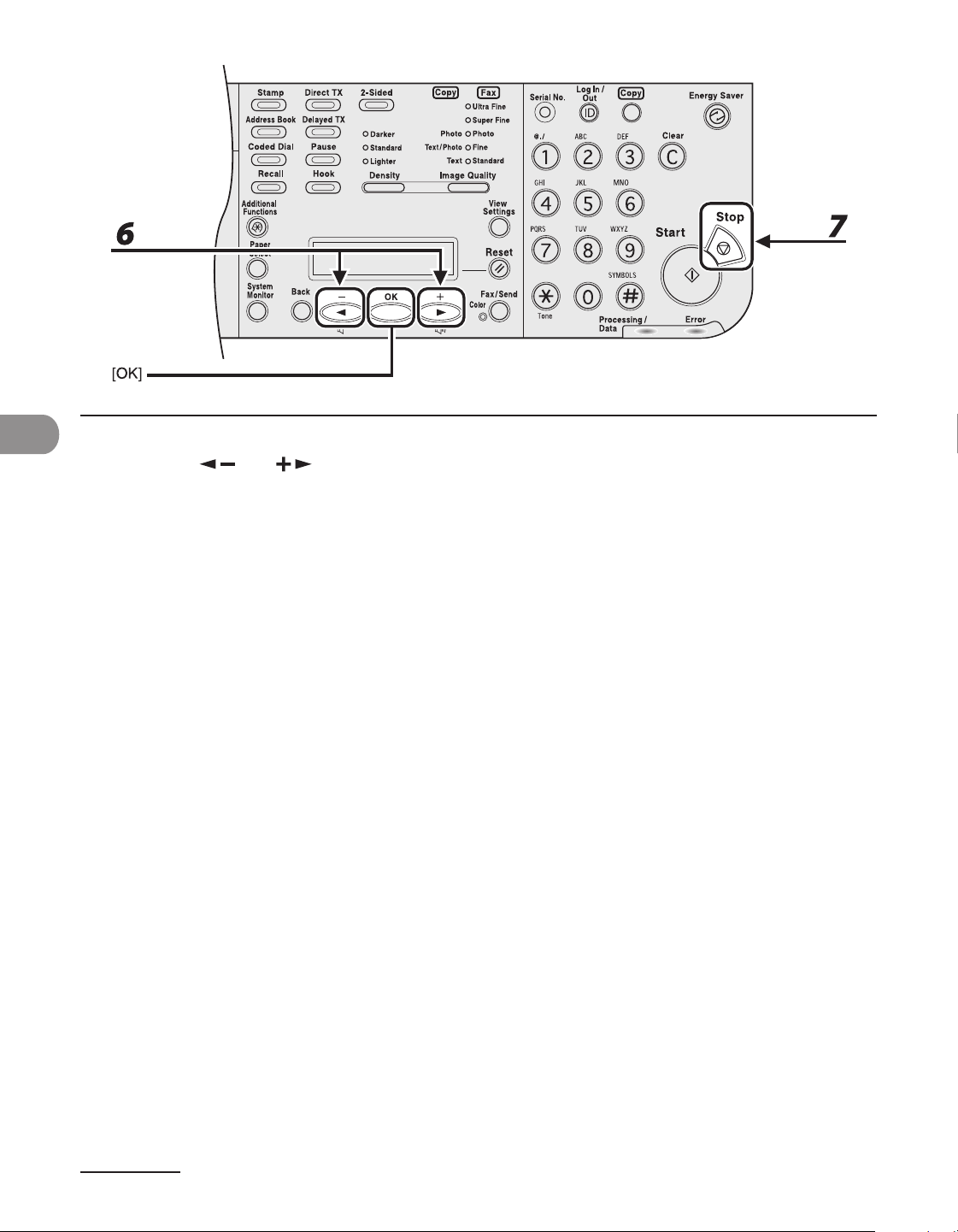
Receiving Documents
5-26
6 Press [ ] or [ ] to select <ON>, then press [OK].
7 Press [Stop] to return to the standby mode.
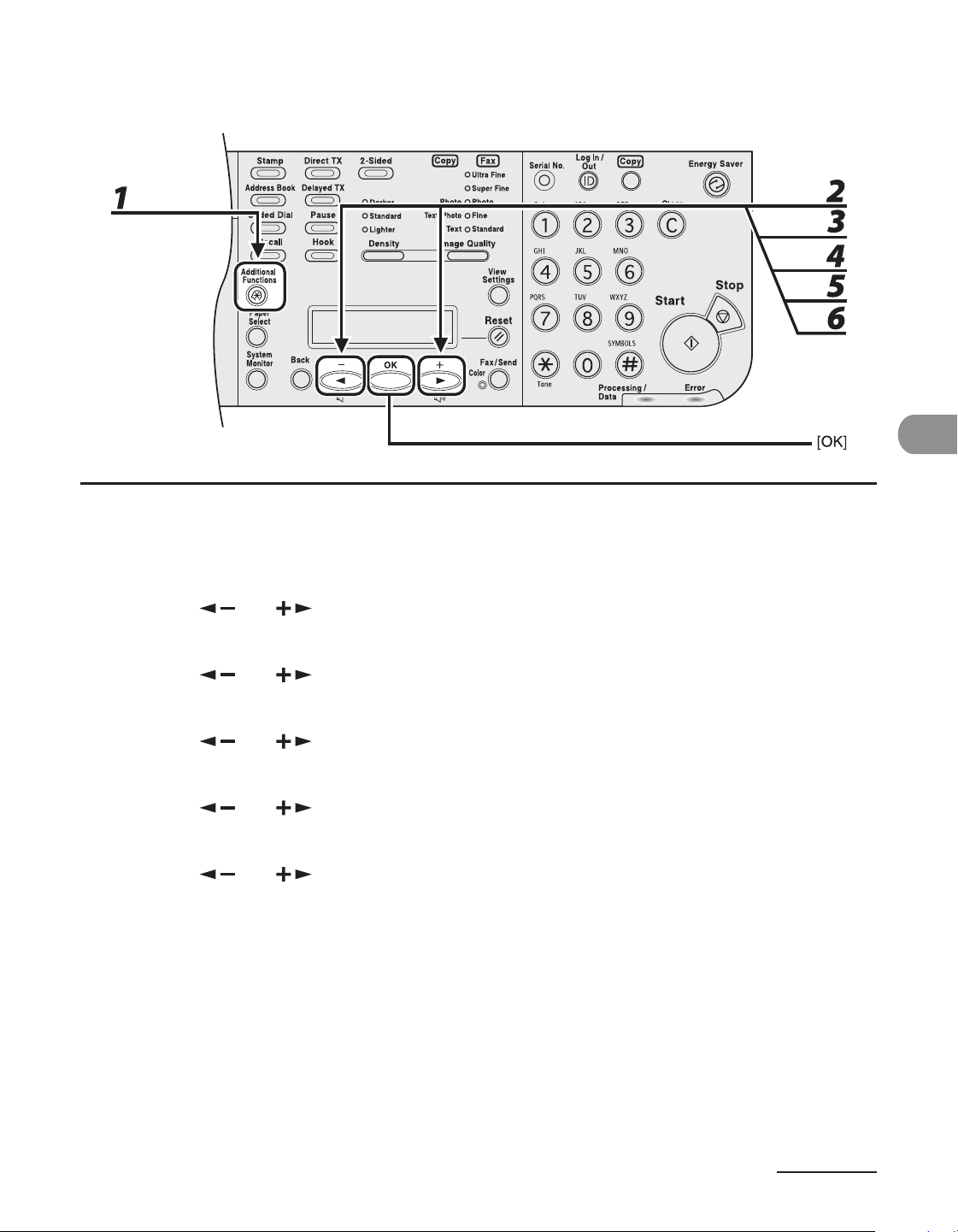
5-27
Receiving Documents
Received Image Reduction
You can print received documents in a reduced size.
1 Press [Additional Functions].
2 Press [ ] or [ ] to select <TX/RX SETTINGS>, then press [OK].
3 Press [ ] or [ ] to select <TX/RX COMMON SET.>, then press [OK].
4 Press [ ] or [ ] to select <RX SETTINGS>, then press [OK].
5 Press [ ] or [ ] to select <RECEIVE REDUCTION>, then press [OK].
6 Press [ ] or [ ] to select <ON>, then press [OK].
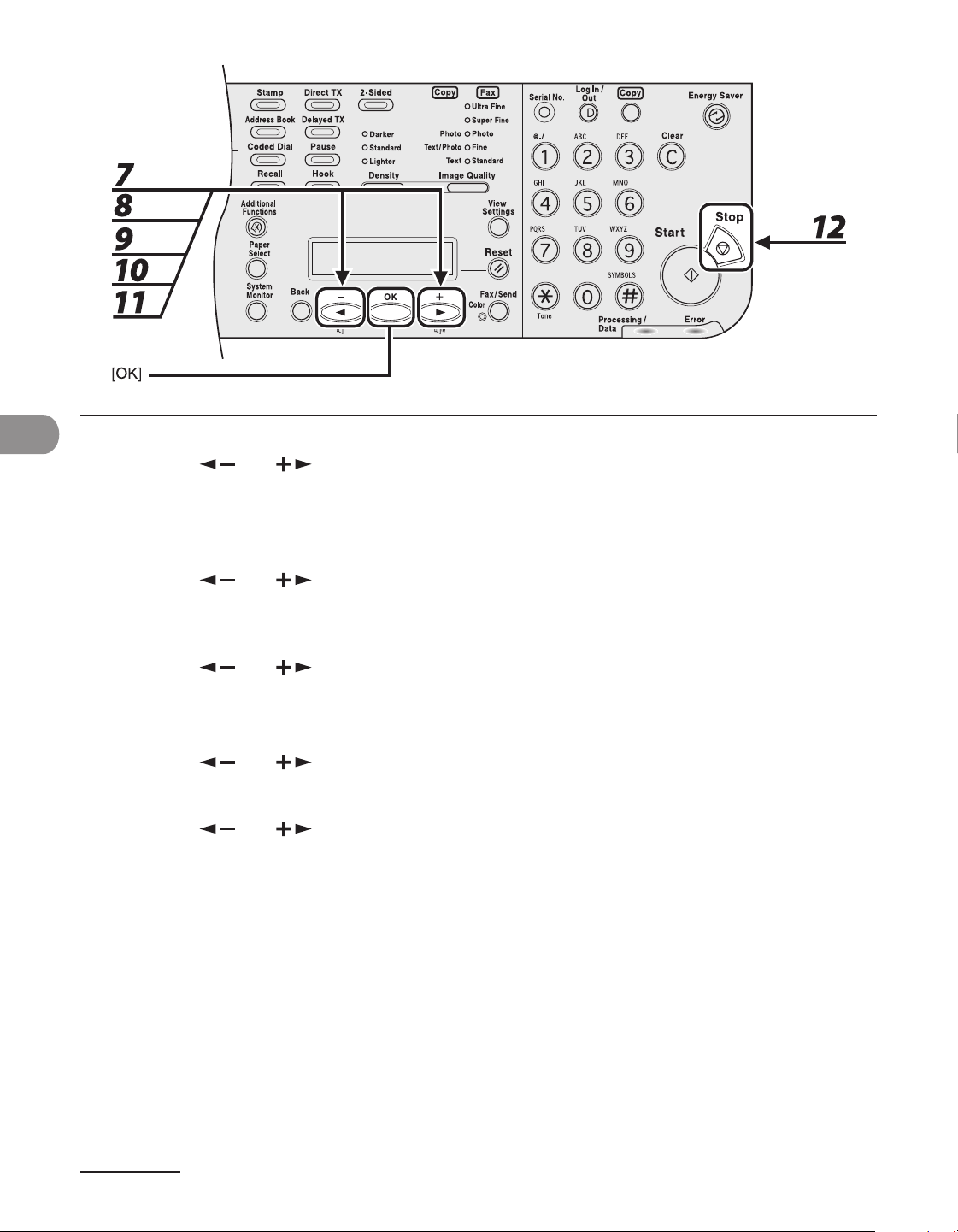
Receiving Documents
5-28
7 Press [ ] or [ ] to select <RX REDUCTION> or <REDUCE DIRECTION>, then
press [OK].
If you select <REDUCE DIRECTION>, skip to step 11.
8 Press [ ] or [ ] to select <AUTO> or <FIXED REDUCTION>, then press [OK].
If you select <AUTO>, adjust the image reduction automatically. Skip to step 10.
9 Press [ ] or [ ] to select a preset reduction ratio (90%, 95%, 97 %, or 75%),
then press [OK].
10 Press [ ] or [ ] to select <REDUCE DIRECTION>, then press [OK].
11 Press [ ] or [ ] to select <VERTICAL ONLY> or <HORIZ & VERTICAL>, then
press [OK].
<VERTICAL ONLY>: Reduces the document vertically only.
<HORIZ & VERTICAL>: Reduces the document both horizontally and vertically.
12 Press [Stop] to return to the standby mode.
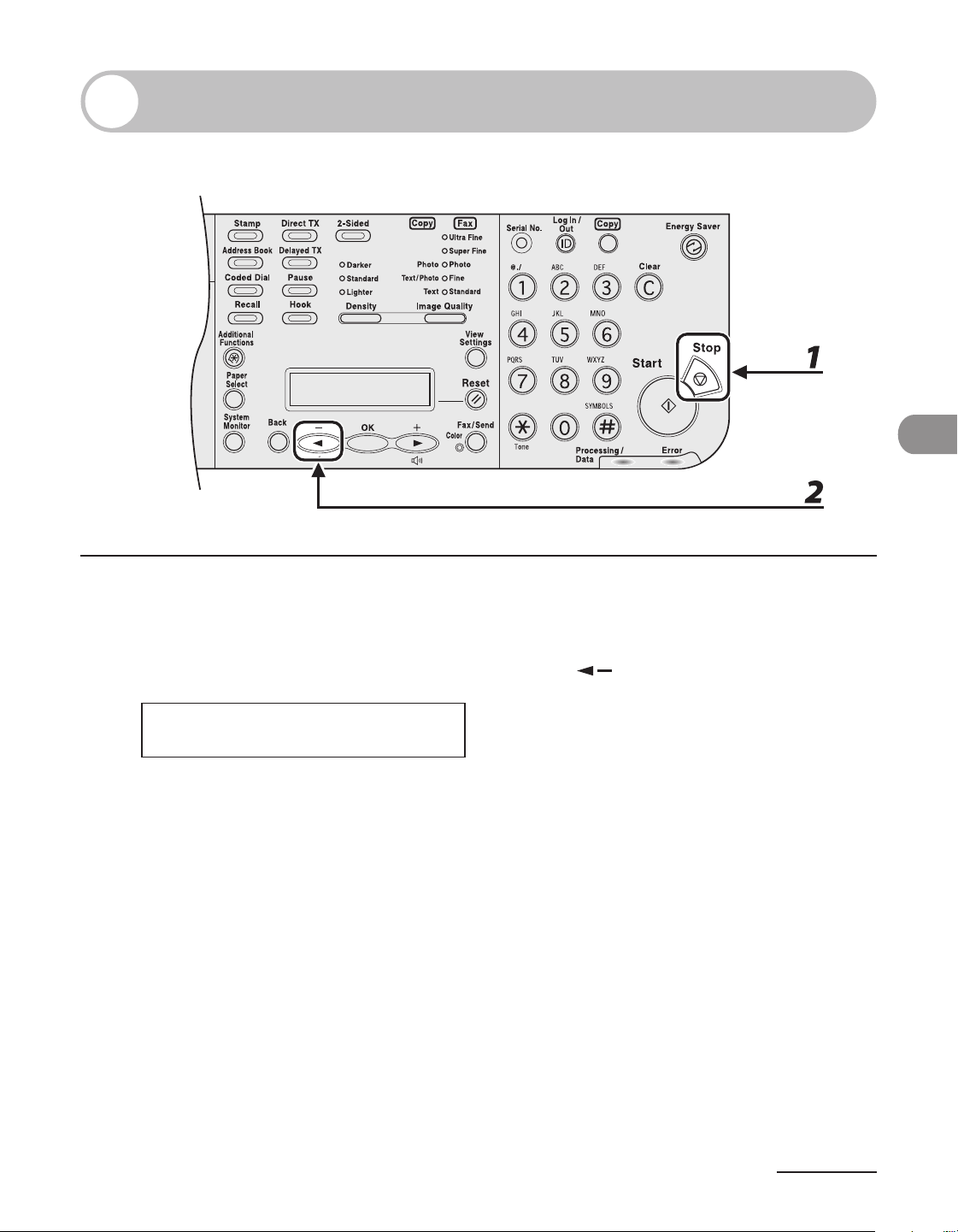
5-29
Receiving Documents
Canceling RX Jobs
Cancel an ongoing job as follows.
1 Press [Stop].
2 When the <CANCEL?> message appears, press [ ] to select <YES>.
< Y E S N O >
C A N C E L ?
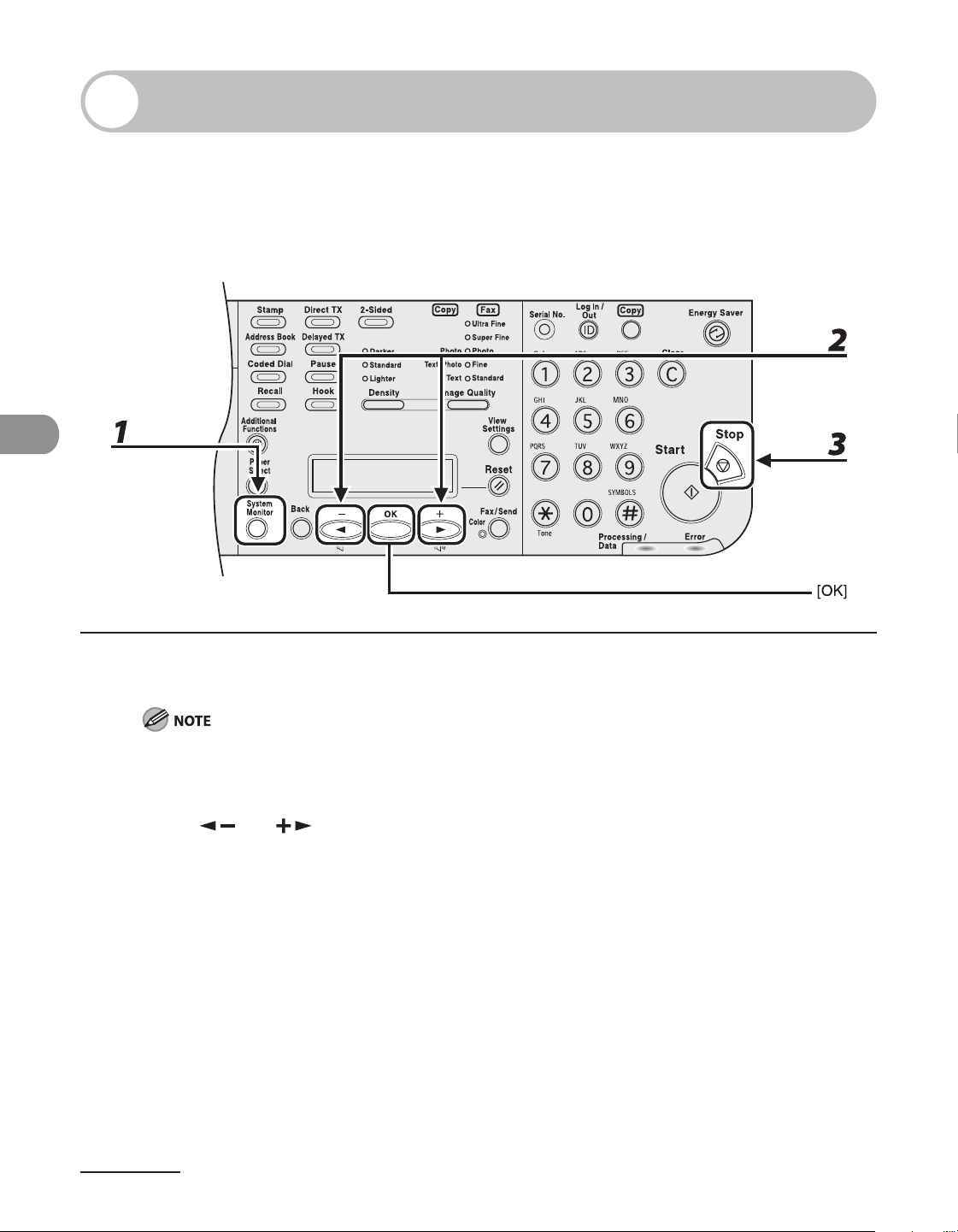
Receiving Documents
5-30
Checking and Deleting Jobs
System monitor enables you to view the reception results, and monitor the status of
the receive jobs currently being processed.
Checking Reception Results
1 Press [System Monitor] repeatedly to select <TX/RX LOG>, then press [OK].
If you set <CHECKING THE LOG> to <OFF> in <SYSTEM SETTINGS>, reception result does not appear in
the LCD.
2 Press [ ] or [ ] to view the required reception result.
3 Press [Stop] to return to the standby mode.
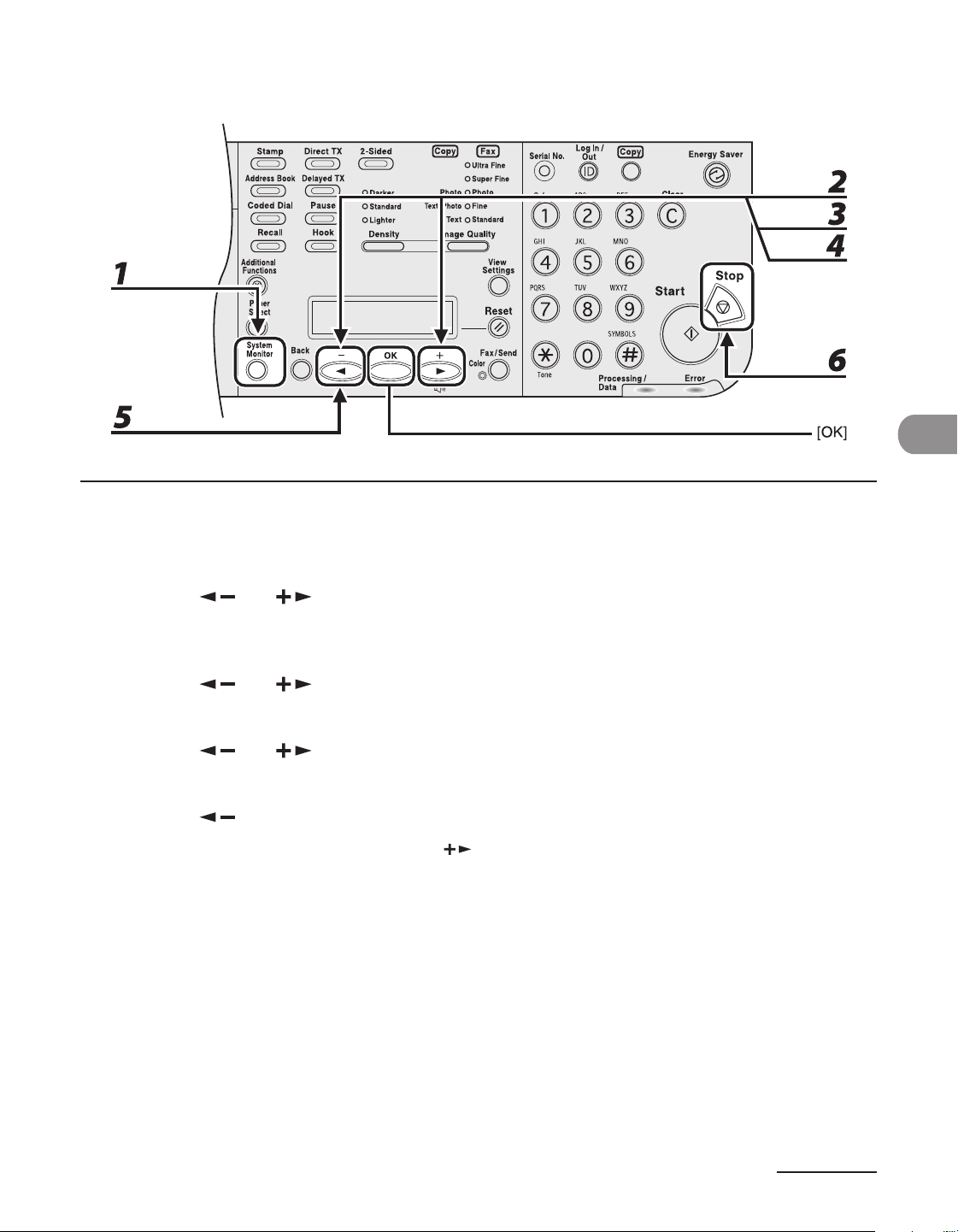
5-31
Receiving Documents
Checking and Deleting Receiving Documents Stored in Memory
1 Press [System Monitor] repeatedly to select <TX/RX STATUS>, then press [OK].
2 Press [ ] or [ ] to scroll through the job list.
If you want to delete the job, go to step 3. Otherwise, press [Stop] to return to the standby mode.
3 Press [ ] or [ ] to select the desired document, then press [OK].
4 Press [ ] or [ ] to select <CANCEL>, then press [OK].
5 Press [ ] to select <YES>.
If you do not want to cancel the job, press [ ] to select <NO>.
6 Press [Stop] to return to the standby mode.

Receiving Documents
5-32

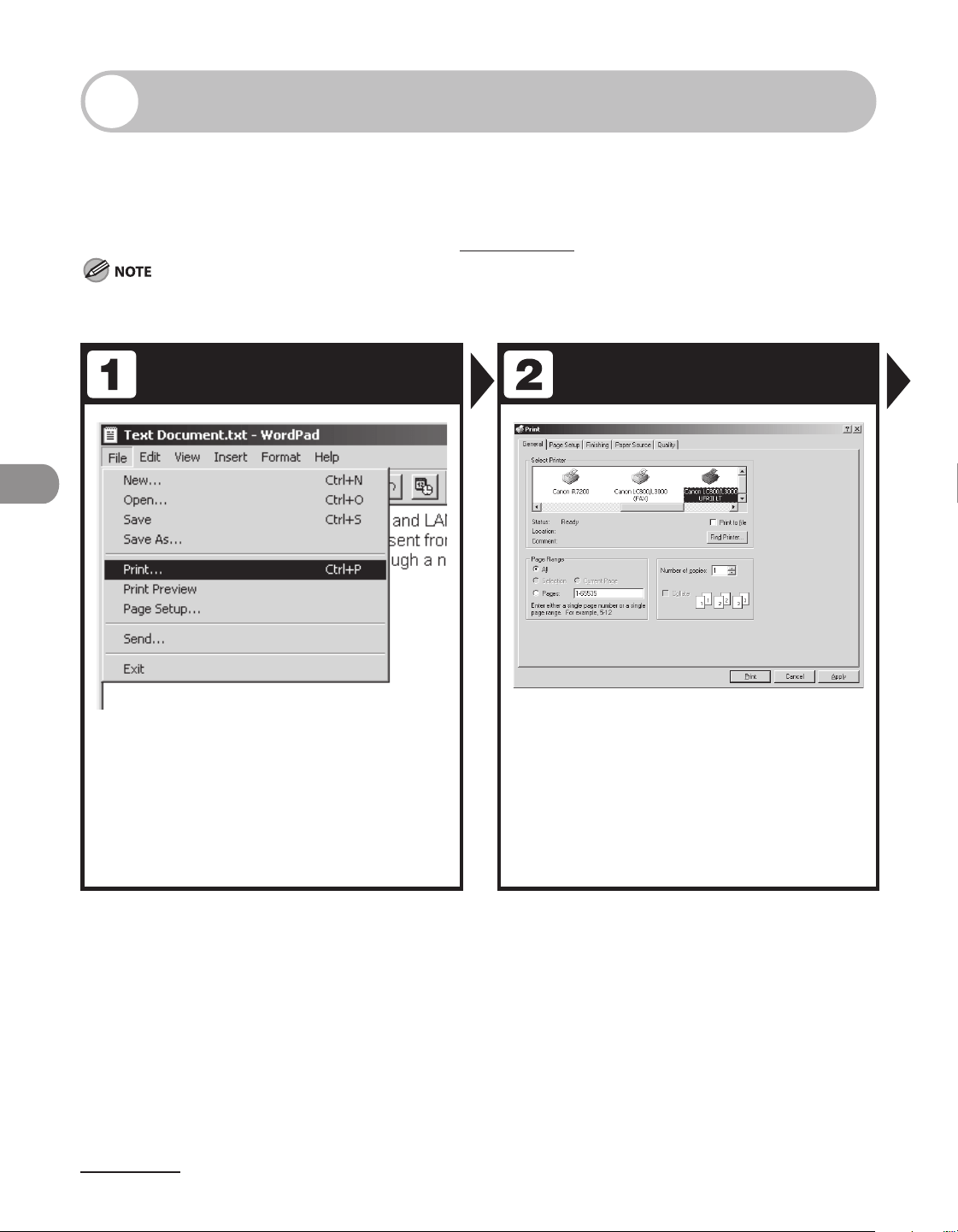
Printing
6-2
Printing Documents
Follow this procedure to print a document from your computer.
Make sure that the printer driver is installed. To check if the driver is installed, see
“Installing Software,” in the Starter Guide.
For details on printer driver settings, see Online Help.
To print a document from a computer on the LASER CLASS 810, an optional network printer kit is required.
How to display the print screen or items on the screen may vary depending on your application and/or OS.
Start the Print Command Select the Printer
From an open document on an
application, click [File] > [Print].
Select the printer icon for the
machine ([Canon LC800/L3000 UFRII
LT], [Canon LC800/L3000 PCL5e],
[Canon LC800/L3000 PCL6]), then
click [Preferences] or [Properties] to
open the dialog box.
–
–
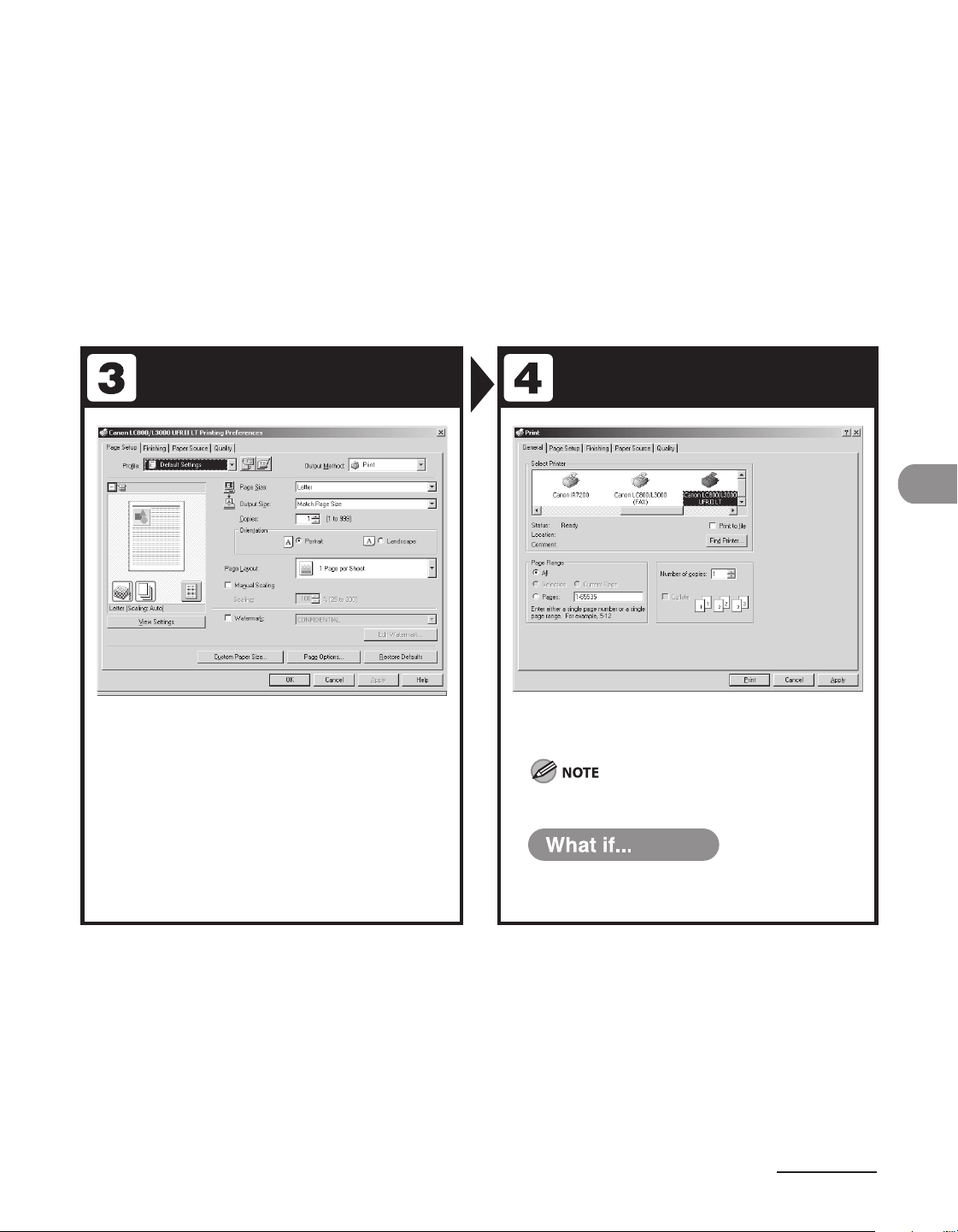
6-3
Printing
Adjust Preferences Print the Document
After finished setting, click [OK]. Click [Print] or [OK].
Printing speed may be slower when sending an e-mail.
You want to cancel printing:
See Reference Guide > Print.
●
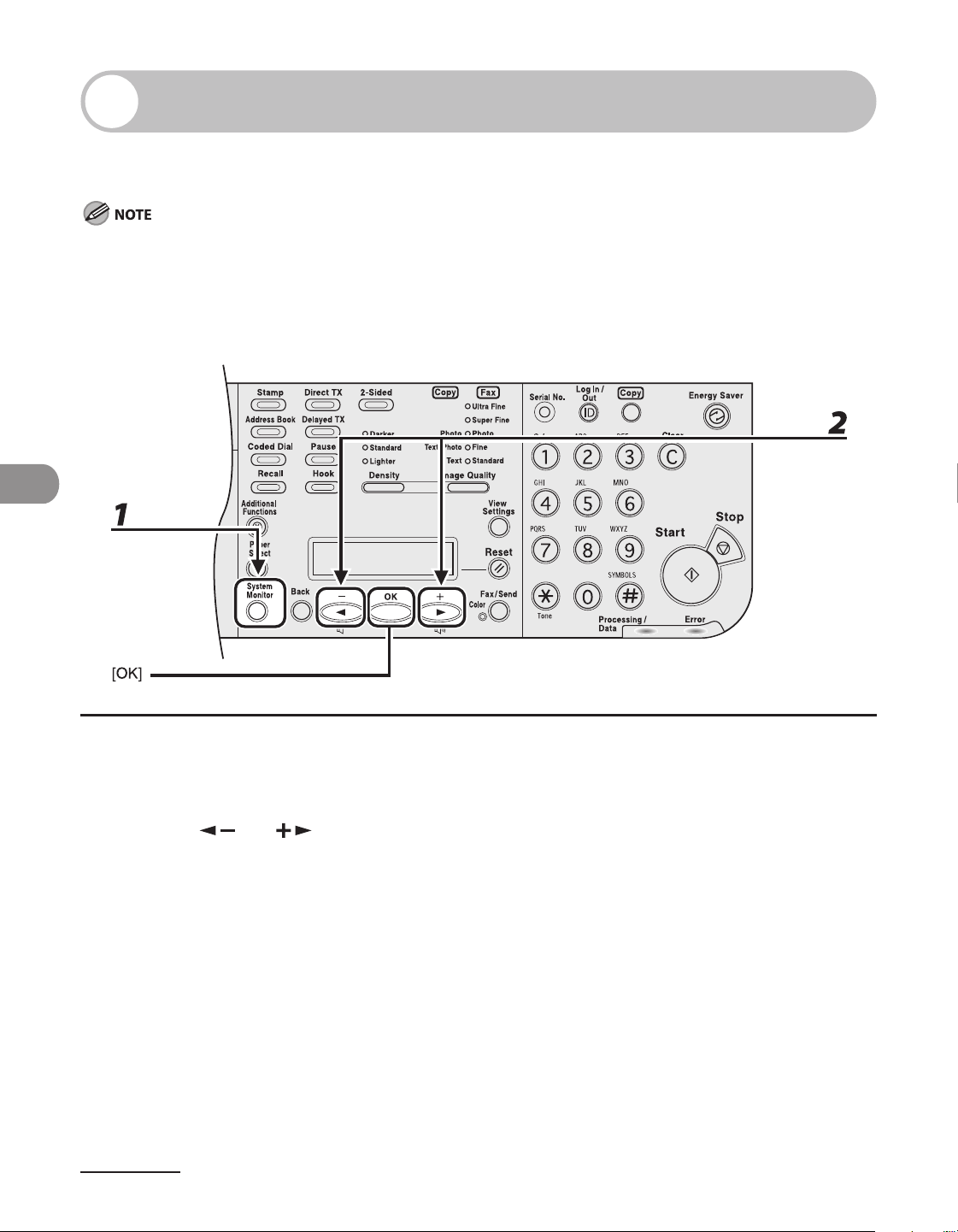
Printing
6-4
Checking and Deleting Jobs
System monitor enables you to monitor the status of the print jobs currently being
processed.
Make sure that the Processing/Data indicator is turned on. When the Processing/Data indicator is turned off, all
print jobs are erased from the memory.
Checking and Deleting Print Jobs
1 Press [System Monitor] repeatedly to select <PRINT STATUS>, then press [OK].
2 Press [ ] or [ ] to scroll through the job list, and check the status of the
print jobs.
If you want to delete the job, go to step 3. Otherwise, press [Stop] to return to the standby mode.
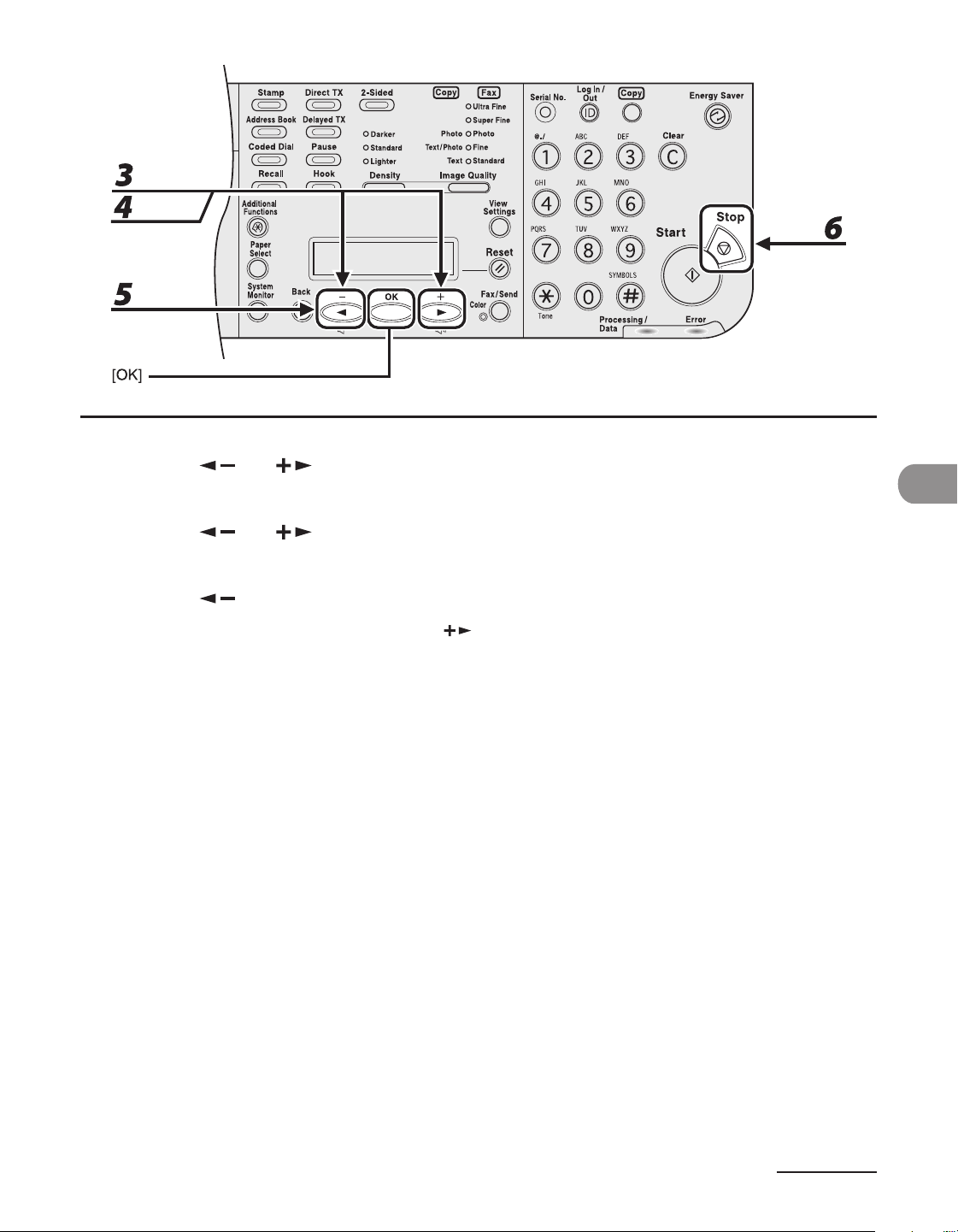
6-5
Printing
3 Press [ ] or [ ] to select the desired job, then press [OK].
4 Press [ ] or [ ] to select <CANCEL>, then press [OK].
5 Press [ ] to select <YES>.
If you do not want to cancel the job, press [ ] to select <NO>.
6 Press [Stop] to return to the standby mode.

Printing
6-6

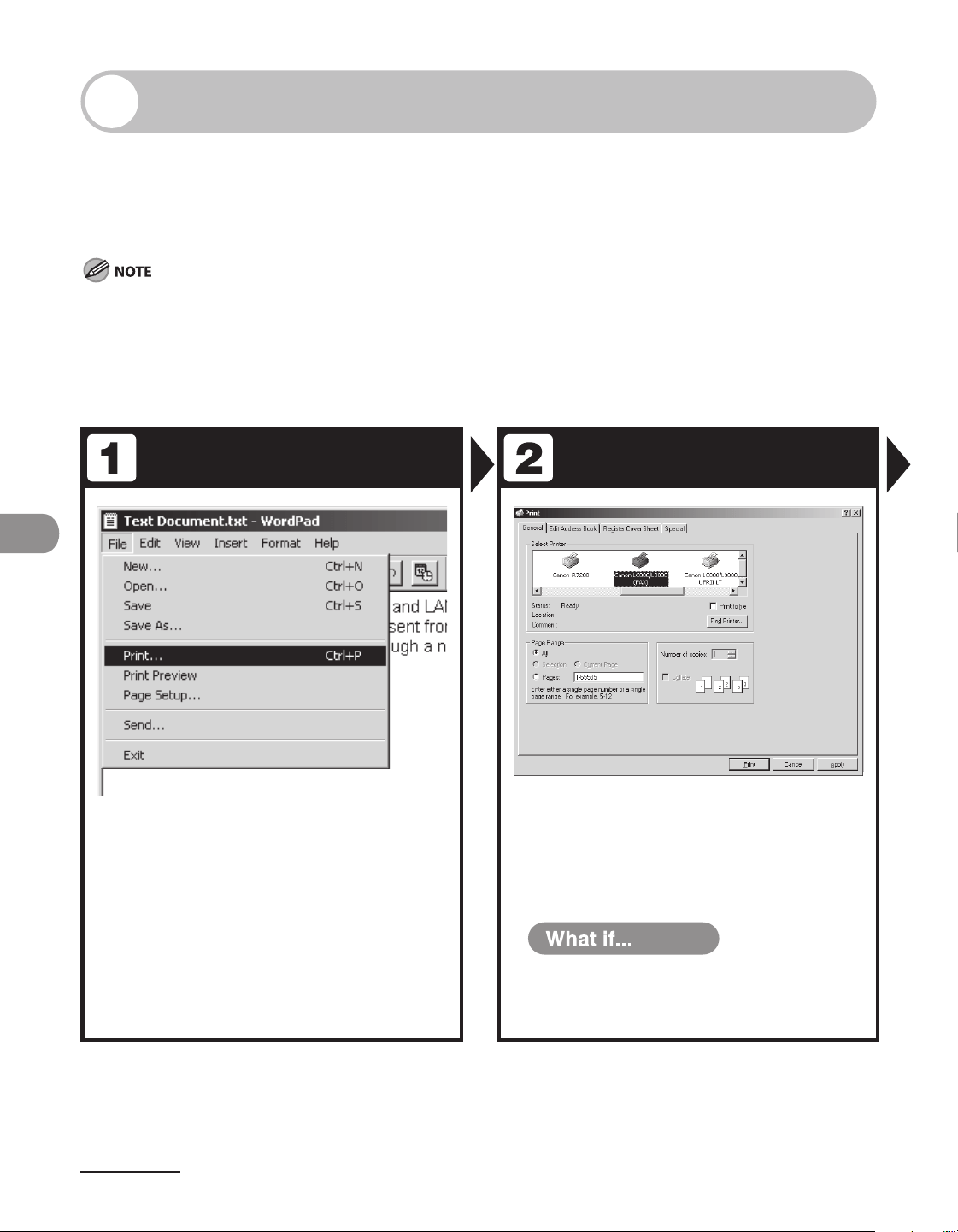
PC Faxing
7-2
PC Faxing
Follow this procedure to send a fax from your computer.
Make sure that the fax driver is installed. To check if the driver is installed, see
“Installing Software,” in the Starter Guide.
For details on fax driver settings, see Online Help.
To send faxes from computers on the LASER CLASS 810, an optional network printer kit is required.
How to display the print screen or items on the screen may vary depending on your application and/or OS.
When the TX Document Archiving function is set to <ON>, faxes cannot be sent from a computer.
Jobs that could not be sent are recorded on the activity report printed every 40 transmissions. (If TX
Document Archiving is set to <ON>, the activity report is set to automatically be printed every 40
transmissions.)
Start the Print Command Select the Fax
From an open document on an
application, click [File] > [Print].
Select the fax icon ([Canon LC800/
L3000 (FAX)]), then click [Print] or
[OK].
You want to adjust the fax properties:
Click [Preferences] or [Properties] and
adjust the settings.
●
–
–
–
–
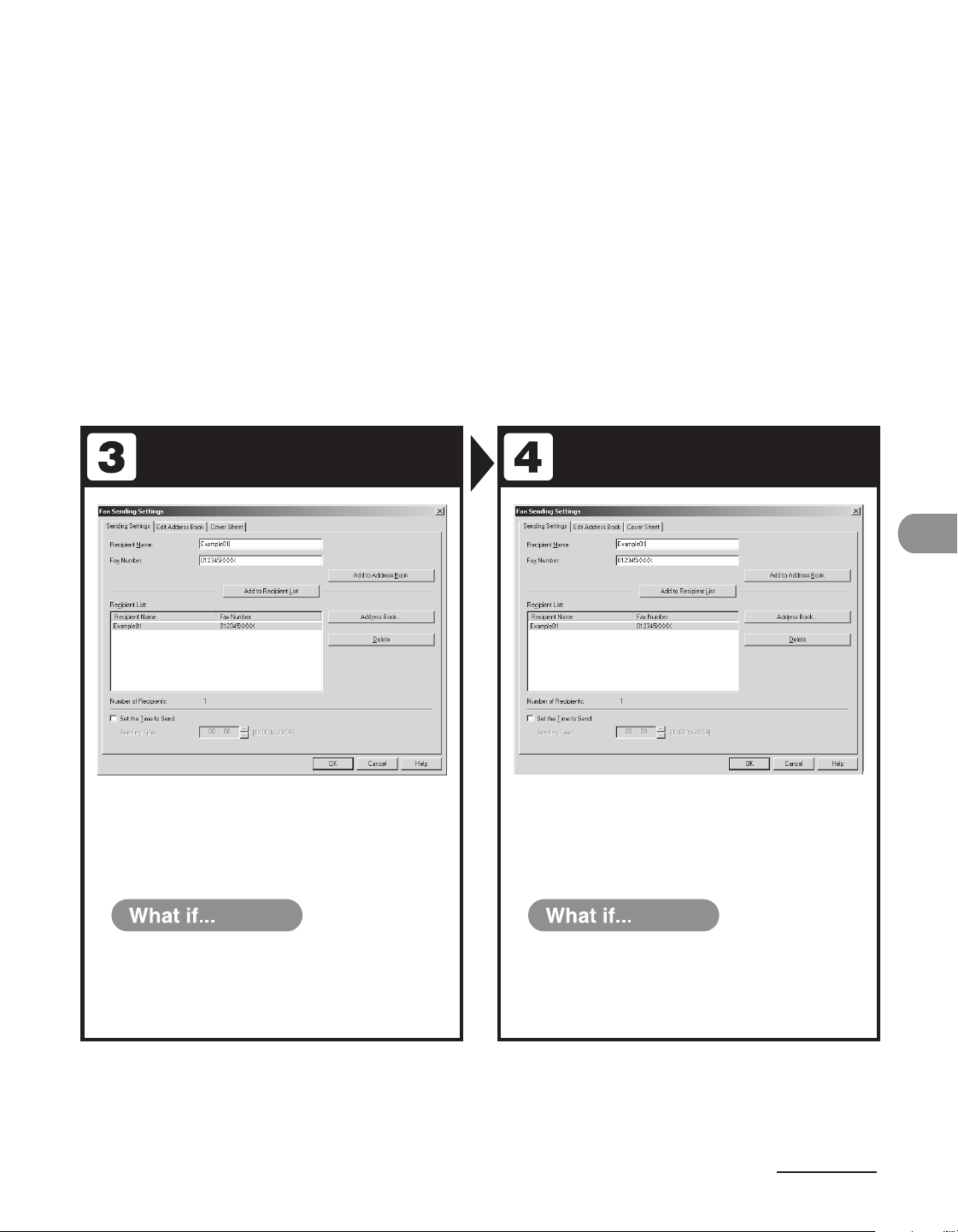
7-3
PC Faxing
Set the Destination Send the Document
Specify the name and fax number in
[Sending Settings], then click [Add to
Recipient List].
Click [OK] in the Fax Sending Settings.
You want to send a fax with a cover
sheet:
Click the [Cover Sheet] tab and set the
format for the cover sheet attachment.
● You want to cancel sending a fax:
See Reference Guide > Send/Receive.
●

PC Faxing
7-4

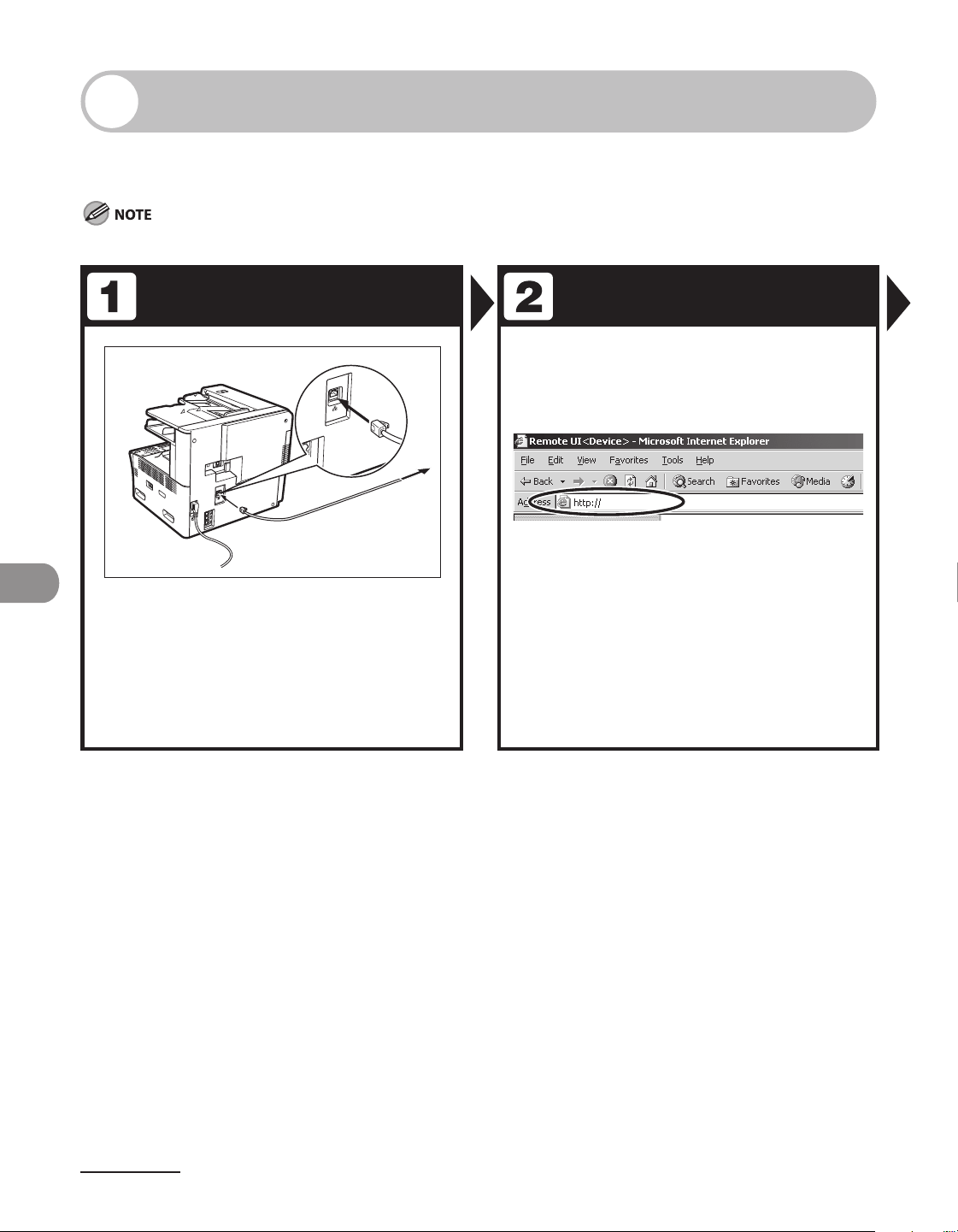
Remote UI
8-2
Remote UI
Follow this procedure for Remote UI management.
For details, see Reference Guide > Settings/Management from a PC.
To use the Remote UI on the LASER CLASS 810, an optional network printer kit is required.
Prepare the Network Startup
Set up the machine for use in a
network, then connect the machine
and the PC to your network router or
a hub.
For details, see “Set the Machine for Network Usage,” in
the Starter Guide.
Start the web browser, enter the IP
address of the machine, then press
[Enter] on the keyboard.
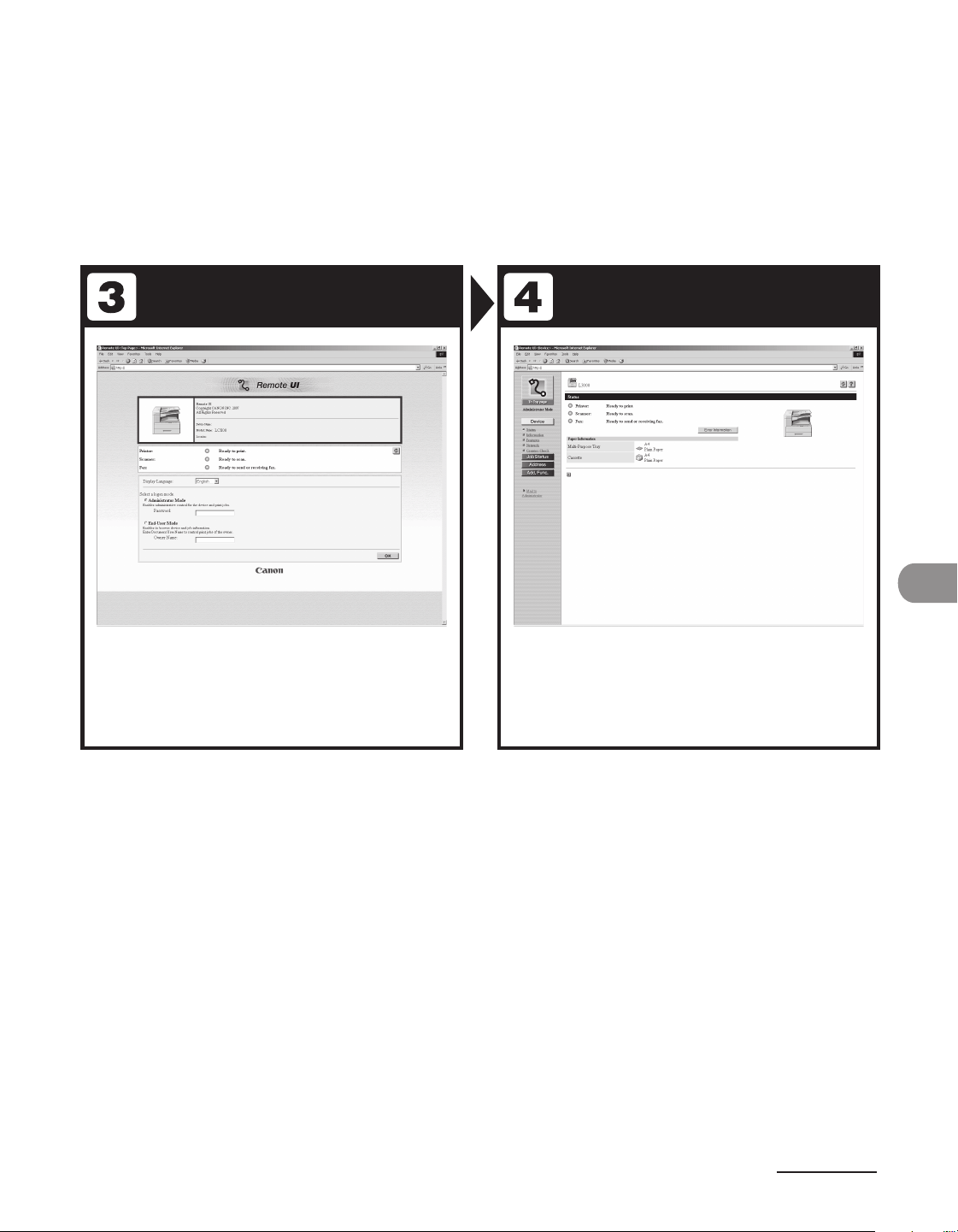
8-3
Remote UI
Log on Operate the Machine
I
Select the user mode, then click [OK]. Now you can manage the machine on
the web browser.
For details, see Reference Guide > Settings/Management
from a PC.

Remote UI
8-4

System Manager Settings
9
System Manager
Settings
Specifying the System Manager Settings ∙∙∙∙∙∙∙∙∙∙∙∙∙∙∙∙∙∙∙∙∙∙∙∙∙∙∙∙∙∙∙∙∙∙9-2
Device Information Settings ∙∙∙∙∙∙∙∙∙∙∙∙∙∙∙∙∙∙∙∙∙∙∙∙∙∙∙∙∙∙∙∙∙∙∙∙∙∙∙∙∙∙∙∙∙∙∙∙∙∙∙∙∙∙∙9-4
Department ID Management ∙∙∙∙∙∙∙∙∙∙∙∙∙∙∙∙∙∙∙∙∙∙∙∙∙∙∙∙∙∙∙∙∙∙∙∙∙∙∙∙∙∙∙∙∙∙∙∙∙∙∙∙∙9-5
Registering the Department ID, Password, and Page Limit ∙∙ 9-6
Changing the Password and Page Limit ∙∙∙∙∙∙∙∙∙∙∙∙∙∙∙∙∙∙∙∙∙∙∙∙∙∙∙∙∙∙∙∙∙∙∙∙∙∙ 9-9
Erasing the Department ID and Password ∙∙∙∙∙∙∙∙∙∙∙∙∙∙∙∙∙∙∙∙∙∙∙∙∙∙∙∙∙∙∙∙9-12
Checking Counter Information ∙∙∙∙∙∙∙∙∙∙∙∙∙∙∙∙∙∙∙∙∙∙∙∙∙∙∙∙∙∙∙∙∙∙∙∙∙∙∙∙∙∙∙∙∙∙∙∙∙∙∙∙∙9-14
Clearing Page Totals ∙∙∙∙∙∙∙∙∙∙∙∙∙∙∙∙∙∙∙∙∙∙∙∙∙∙∙∙∙∙∙∙∙∙∙∙∙∙∙∙∙∙∙∙∙∙∙∙∙∙∙∙∙∙∙∙∙∙∙∙∙∙∙∙∙∙∙∙∙∙∙∙∙∙9-16
Printing Counter Information (DEPT. INFO LIST) ∙∙∙∙∙∙∙∙∙∙∙∙∙∙∙∙∙∙∙∙∙9-18
Accepting Print Jobs with Unknown IDs ∙∙∙∙∙∙∙∙∙∙∙∙∙∙∙∙∙∙∙∙∙∙∙∙∙∙∙∙∙∙∙∙∙∙∙9-19
Managing User IDs ∙∙∙∙∙∙∙∙∙∙∙∙∙∙∙∙∙∙∙∙∙∙∙∙∙∙∙∙∙∙∙∙∙∙∙∙∙∙∙∙∙∙∙∙∙∙∙∙∙∙∙∙∙∙∙∙∙∙∙∙∙∙∙∙∙∙∙ 9-20
Handling Documents with Forwarding Errors ∙∙∙∙∙∙∙∙∙∙∙∙∙∙∙∙∙∙∙∙∙∙∙ 9-22
Restricting Access to Destinations ∙∙∙∙∙∙∙∙∙∙∙∙∙∙∙∙∙∙∙∙∙∙∙∙∙∙∙∙∙∙∙∙∙∙∙∙∙∙∙∙∙∙ 9-24
Setting a Password for the Address Book ∙∙∙∙∙∙∙∙∙∙∙∙∙∙∙∙∙∙∙∙∙∙∙∙∙∙∙∙∙∙∙∙∙∙9-24
Restricting the New Address ∙∙∙∙∙∙∙∙∙∙∙∙∙∙∙∙∙∙∙∙∙∙∙∙∙∙∙∙∙∙∙∙∙∙∙∙∙∙∙∙∙∙∙∙∙∙∙∙∙∙∙∙∙∙∙∙∙∙9-26
Restricting PC Faxing ∙∙∙∙∙∙∙∙∙∙∙∙∙∙∙∙∙∙∙∙∙∙∙∙∙∙∙∙∙∙∙∙∙∙∙∙∙∙∙∙∙∙∙∙∙∙∙∙∙∙∙∙∙∙∙∙∙∙∙∙∙∙∙∙∙∙∙∙∙∙∙∙9-27
Restricting Job Recall (LASER CLASS 830i Only) ∙∙∙∙∙∙∙∙∙∙∙∙∙∙∙∙∙∙∙∙∙∙9-28
Restricting Redialing (LASER CLASS 810 Only) ∙∙∙∙∙∙∙∙∙∙∙∙∙∙∙∙∙∙∙∙∙∙∙∙9-29
Confirming Entered Fax Numbers ∙∙∙∙∙∙∙∙∙∙∙∙∙∙∙∙∙∙∙∙∙∙∙∙∙∙∙∙∙∙∙∙∙∙∙∙∙∙∙∙∙∙∙∙∙∙∙∙9-30
Restricting Broadcasting ∙∙∙∙∙∙∙∙∙∙∙∙∙∙∙∙∙∙∙∙∙∙∙∙∙∙∙∙∙∙∙∙∙∙∙∙∙∙∙∙∙∙∙∙∙∙∙∙∙∙∙∙∙∙∙∙∙∙∙∙∙∙∙∙∙9-31
Checking the Job Log ∙∙∙∙∙∙∙∙∙∙∙∙∙∙∙∙∙∙∙∙∙∙∙∙∙∙∙∙∙∙∙∙∙∙∙∙∙∙∙∙∙∙∙∙∙∙∙∙∙∙∙∙∙∙∙∙∙∙∙∙∙∙∙ 9-32
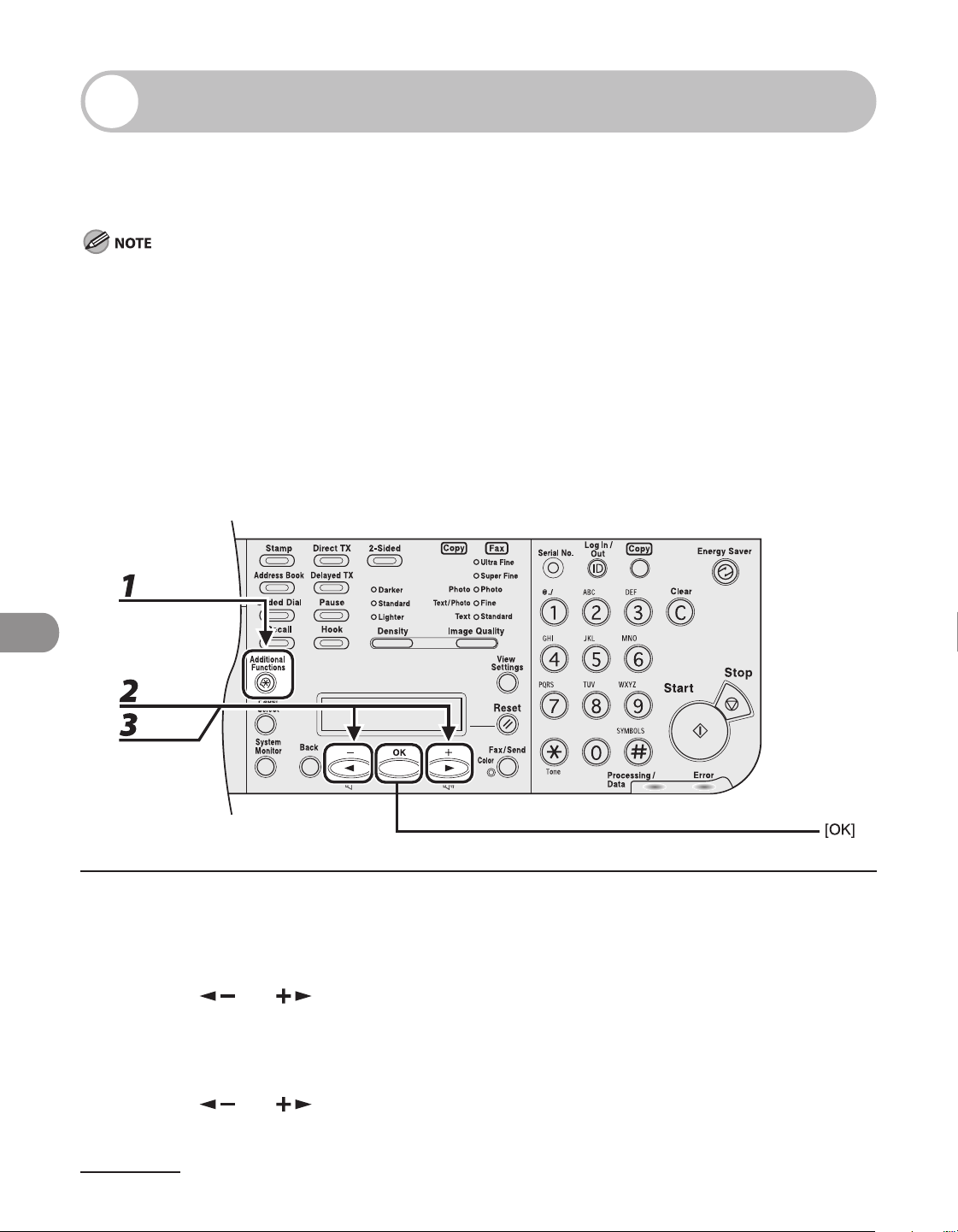
System Manager Settings
9-2
Specifying the System Manager Settings
You can set an ID and a password for the System Manager. Once the System Manager
ID/password is set, restrictions can be placed on storing or changing the System
Settings.
When you use Department ID Management, you need to set both the System Manager ID and password
to restrict the access to the <SYSTEM SETTINGS> menu from the operation panel, or using the Remote UI.
Otherwise, all users will be considered as System Manager, and anyone can access the <SYSTEM SETTINGS>
menu from the operation panel, or use the Remote UI without restriction.
You can enter a maximum of 32 characters for the System Manager’s name.
The maximum number of digits that you can store for the System Manager ID and System Password is seven.
If you enter fewer than seven digits for either setting, the machine stores them with leading zeros.
Example: If <321> is entered, <0000321> is stored.
You cannot store a System Manager ID with only zeros as the number, such as <0000000>. If you enter a
number that begins with zeros, the leading zeros are ignored.
Example: If <02> or <002> is entered, <0000002> is stored.
To delete information that has been entered, press and hold down [Clear]
→ enter the correct number.
1 Press [Additional Functions].
2 Press [ ] or [ ] to select <SYSTEM SETTINGS>, then press [OK].
If the System Manager ID and System Password have been set, enter the System Manager ID and System
Password using the numeric keys, then press [Log In/Out (ID)].
3 Press [ ] or [ ] to select <SYS. MANAGER INFO>, then press [OK].
–
–
–
–
–
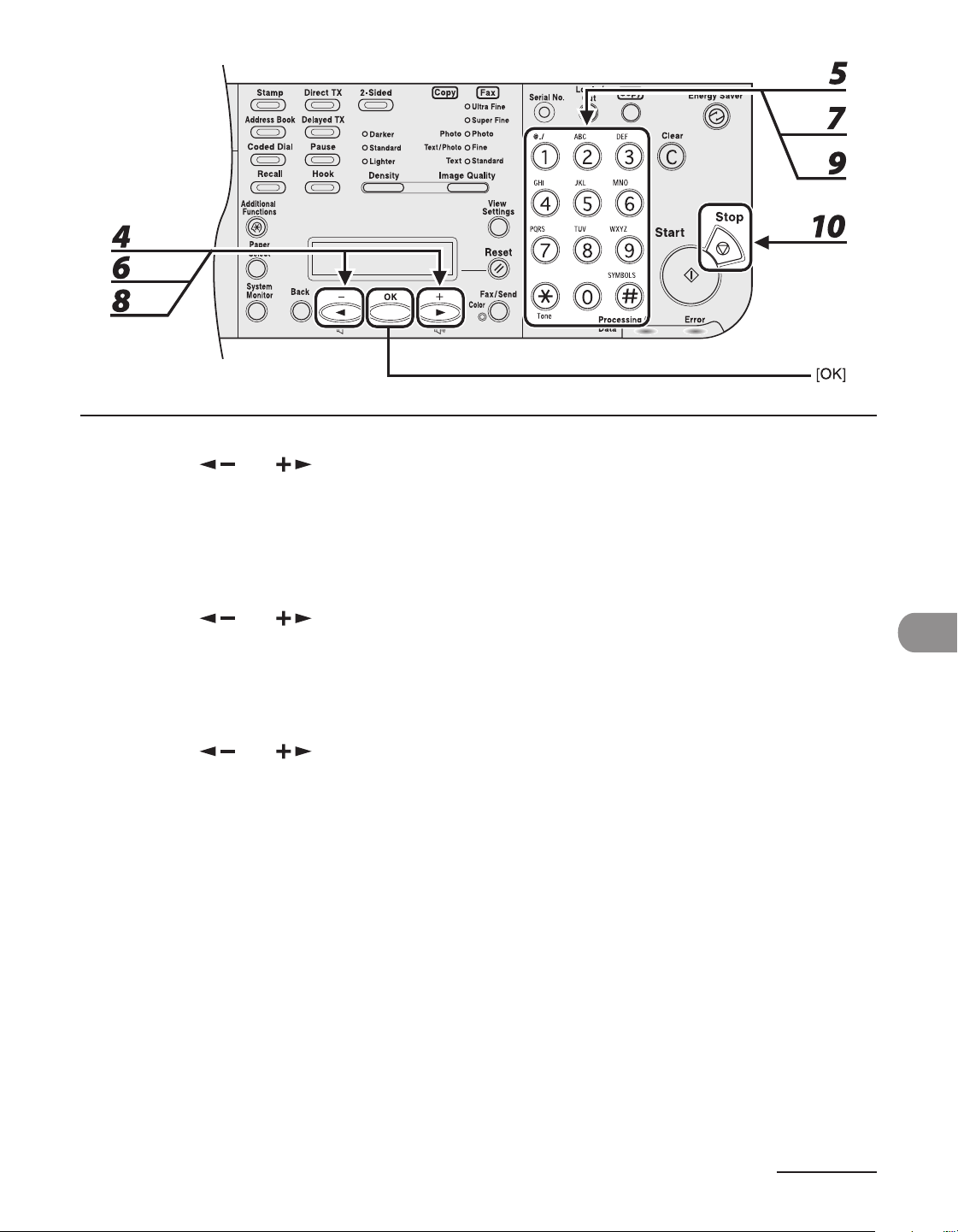
9-3
System Manager Settings
4 Press [ ] or [ ] to select <SYS. MANAGER ID>, then press [OK].
5 Use the numeric keys to enter a number, then press [OK].
You must set both a System Manager ID and password to manage the operations of the machine.
6 Press [ ] or [ ] to select <SYSTEM PASSWORD>, then press [OK].
7 Use the numeric keys to enter a number, then press [OK].
8 Press [ ] or [ ] to select <SYSTEM MANAGER>, then press [OK].
9 Use the numeric keys to enter the System Manager’s name, then press [OK].
10 Press [Stop] to return to the standby mode.
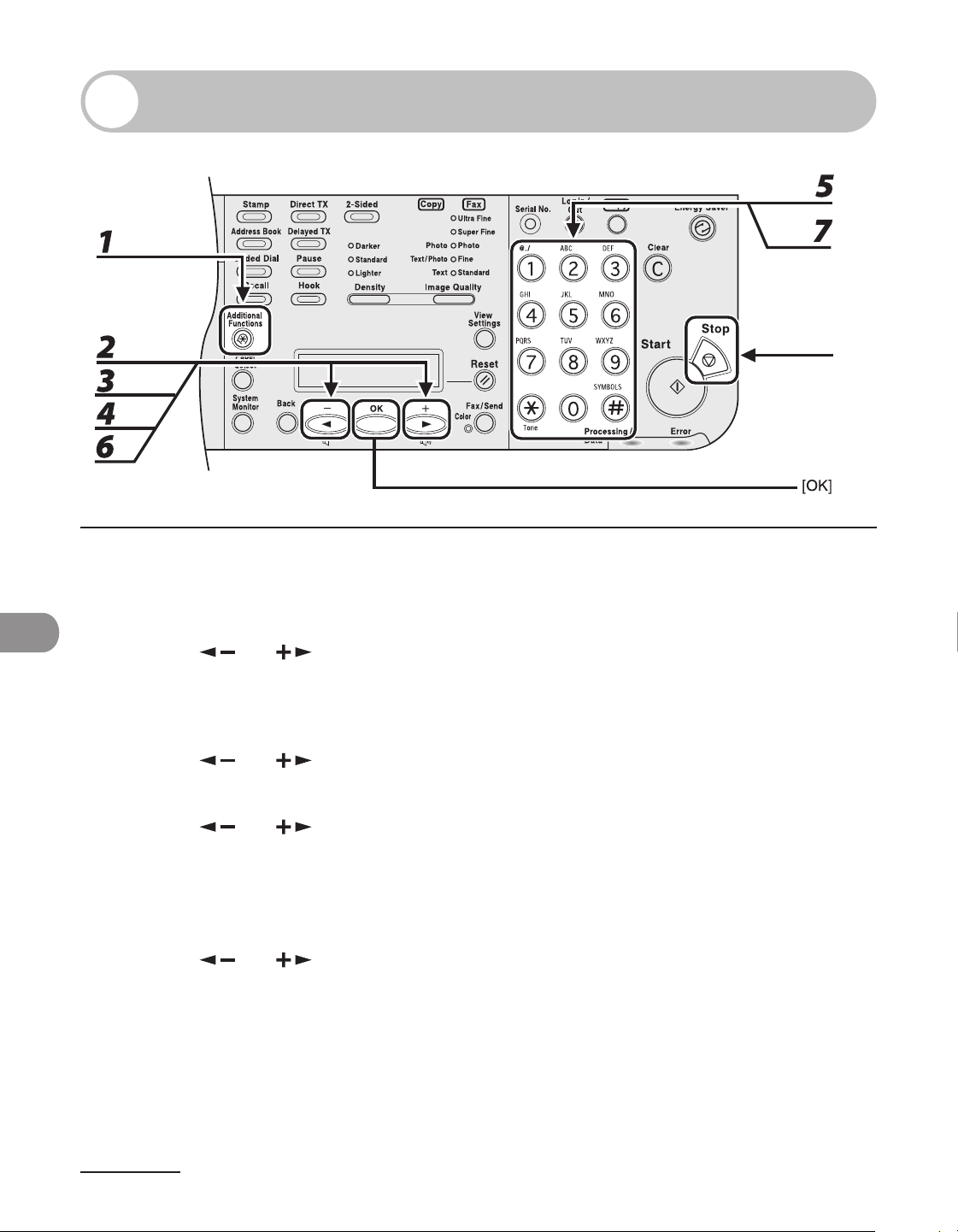
System Manager Settings
9-4
Device Information Settings
You can set a name for the machine, and enter information regarding its location.
8
1 Press [Additional Functions].
2 Press [ ] or [ ] to select <SYSTEM SETTINGS>, then press [OK].
If the System Manager ID and System Password have been set, enter the System Manager ID and System
Password using the numeric keys, then press [Log In/Out (ID)].
3 Press [ ] or [ ] to select <DEVICE INFO>, then press [OK].
4 Press [ ] or [ ] to select <DEVICE NAME>, then press [OK].
5 Use the numeric keys to enter a name (up to 32 characters), then press [OK].
6 Press [ ] or [ ] to select <LOCATION>, then press [OK].
7 Use the numeric keys to enter the location of the machine (up to 32 characters),
then press [OK].
8 Press [Stop] to return to the standby mode.

9-5
System Manager Settings
Department ID Management
You can register a Department ID and password for each department, and manage
the machine by limiting its use to only those who enter the correct Department
ID and password. This is called Department ID Management. Use Department ID
Management to keep track of the copy, scan, and print totals for each department.
With Department ID Management, the following settings can be specified:
Turn Department ID Management ON or OFF.
Register the Department ID and password.
Set page limits for scans, prints, and copies.
Accept or reject print jobs from computers with unknown IDs.
When you use Department ID Management, you need to set both the System Manager ID and password
to restrict the access to the <SYSTEM SETTINGS> menu from the operation panel, or using the Remote UI.
Otherwise, all users will be considered as System Manager, and anyone can access the <SYSTEM SETTINGS>
menu from the operation panel, or use the Remote UI without restriction. (See “Specifying the System
Manager Settings,” on p. 9-2.)
The pages of received fax/I-fax documents and automatically printed reports are not counted as prints.
The maximum number of digits that you can store for the Department ID and password is seven. If you enter
fewer than seven digits for either setting, the machine stores them with leading zeros.
Example: If <321> is entered, <0000321> is stored.
You cannot register a Department ID or password with only zeros as the number, such as <0000000>. If you
enter a number that begins with zeros, the leading zeros are ignored.
Example: If <02> or <002> is entered, <0000002> is stored.
If you make a mistake when entering a number, press [Clear] to clear the entire number
→ enter the correct
number.
You can set the page limit from 0 to 999,999 pages.
–
–
–
–
–
–
–
–
–
–
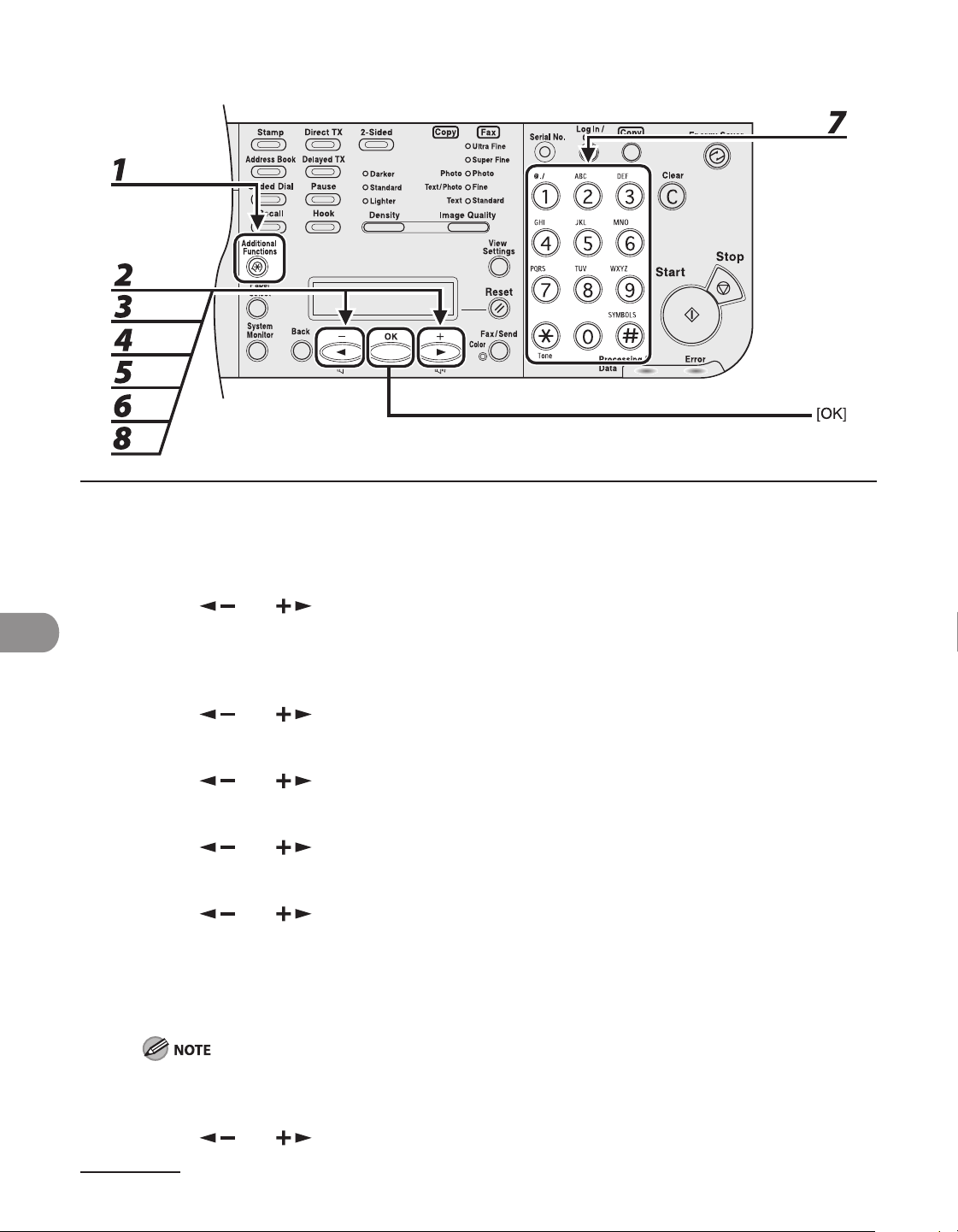
System Manager Settings
9-6
Registering the Department ID, Password, and Page Limit
1 Press [Additional Functions].
2 Press [ ] or [ ] to select <SYSTEM SETTINGS>, then press [OK].
If the System Manager ID and System Password have been set, enter the System Manager ID and System
Password using the numeric keys, then press [Log In/Out (ID)].
3 Press [ ] or [ ] to select <MANAGE DEPT. ID>, then press [OK].
4 Press [ ] or [ ] to select <ON>, then press [OK].
5 Press [ ] or [ ] to select <REGISTER DEPT. ID>, then press [OK].
6 Press [ ] or [ ] to select the number to which department will be
designated, then press [OK].
7 Use the numeric keys to enter the Department ID, then press [OK].
If you do not want to set a password, you can use the machine by entering only the Department ID.
8 Press [ ] or [ ] to select <PASSWORD>, then press [OK].
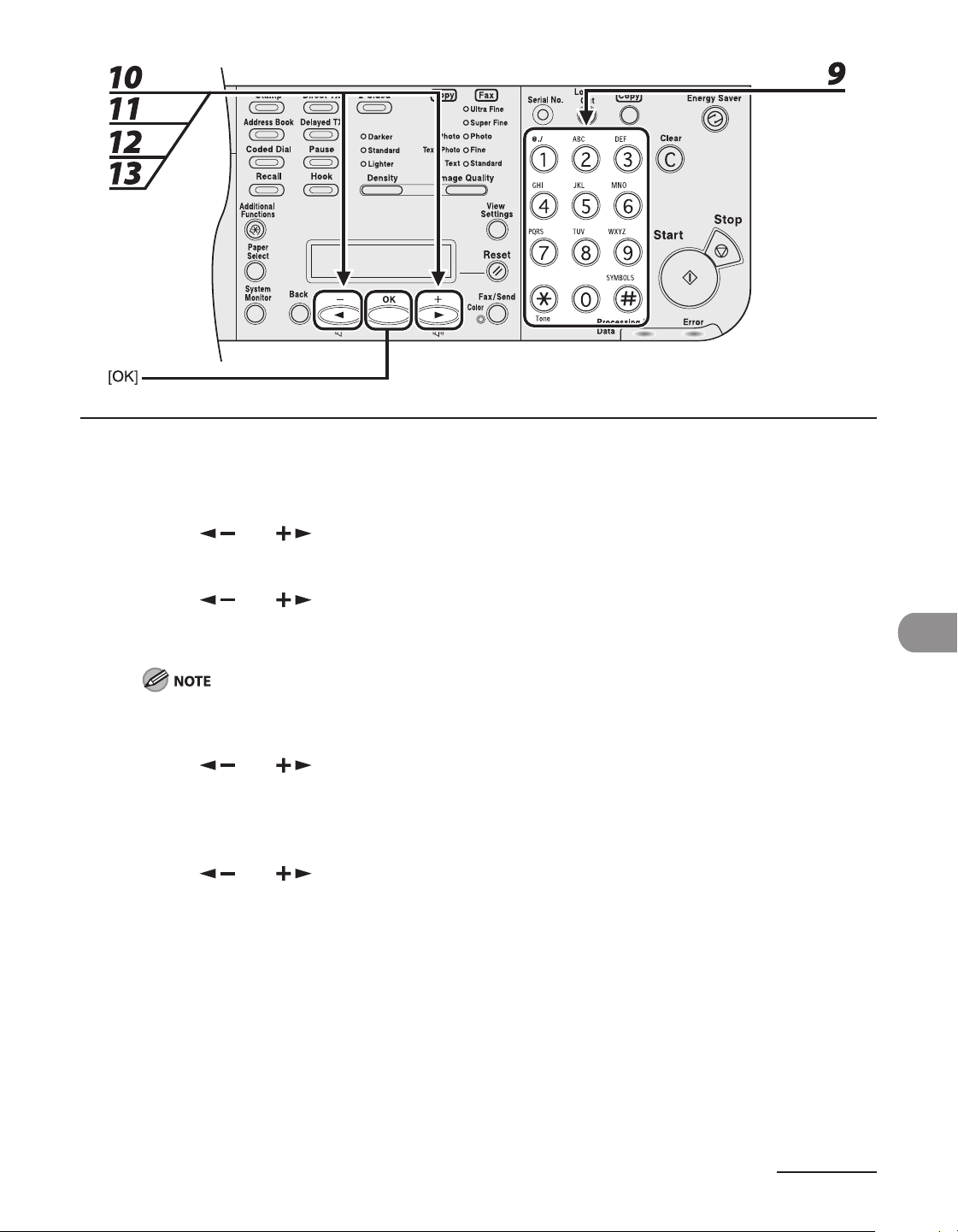
9-7
System Manager Settings
9 Use the numeric keys to enter the password, then press [OK].
10 Press [ ] or [ ] to select <PAGE LIMIT SET.>, then press [OK].
11 Press [ ] or [ ] to select the desired function, then press [OK].
You can select <TOTAL PRINT LIMIT>, <COPY LIMIT>, <BLACK SCAN LIMIT>, <COLOR SCAN LIMIT>
(LASER CLASS 830i Only), or <PRINT LIMIT>.
<TOTAL PRINT> is the sum of <COPY LIMIT> and <PRINT LIMIT>.
12 Press [ ] or [ ] to select <ON> or <OFF>, then press [OK].
<OFF>: Does not set a page limit restriction. Skip to step 15.
<ON>: Set a page limit restriction.
13 Press [ ] or [ ] to select <PAGE TOTALS> (when <TOTAL PRINT LIMIT> is
selected), then press [OK].
The message displayed will vary depending on which function you selected in step 11.
Example: <COPY LIMIT> appears when <COPY LIMIT> is selected.
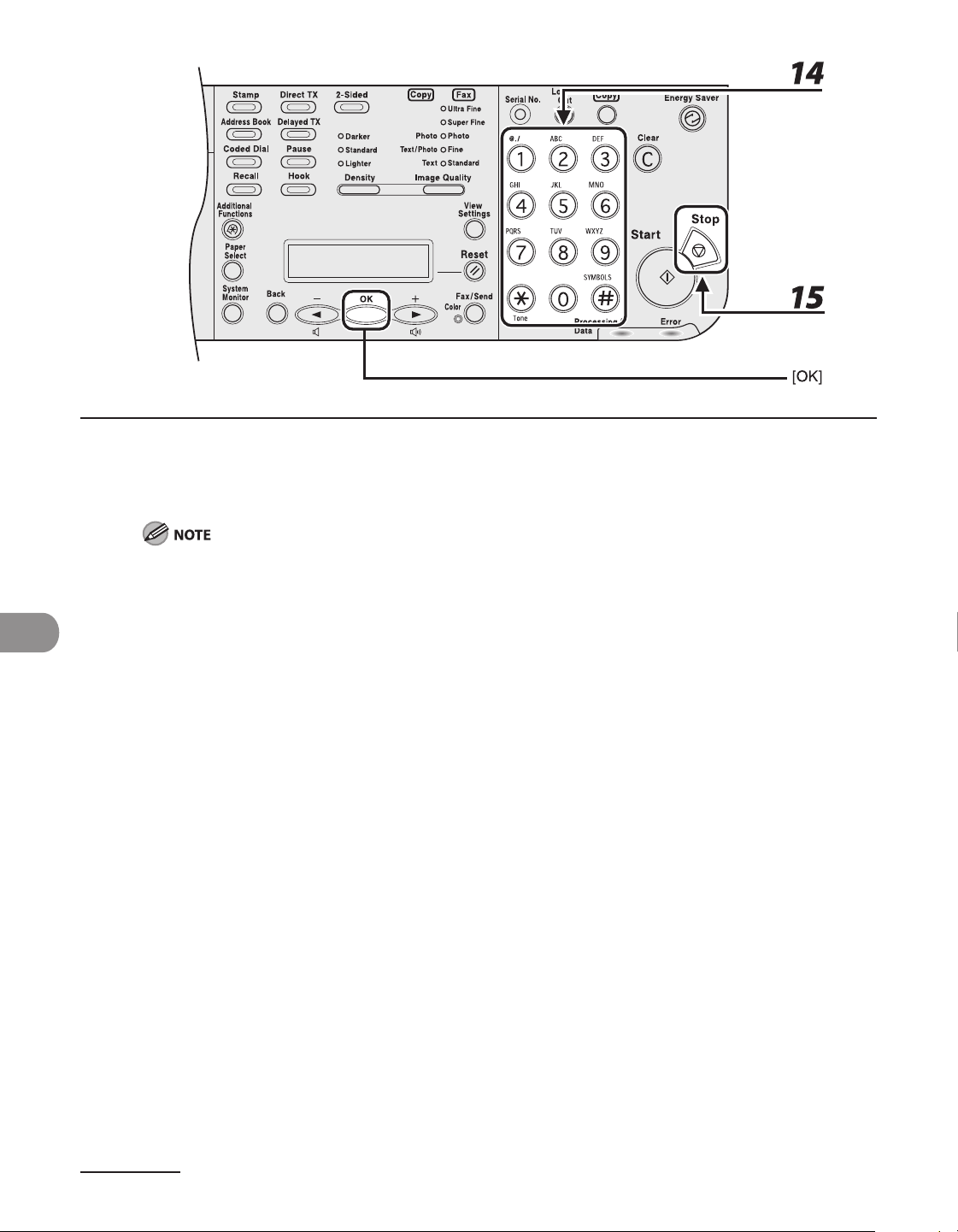
System Manager Settings
9-8
14 Use the numeric keys to enter the maximum number of pages that can be made
by the registered Department ID, then press [OK].
You can set the page limit from 0 to 999,999 pages. Once a page limit is reached, copying, scanning, or
printing is not possible.
The page limit refers to the number of printed surfaces. Therefore, a two-sided print is counted as two
pages.
15 Press [Stop] to return to the standby mode.
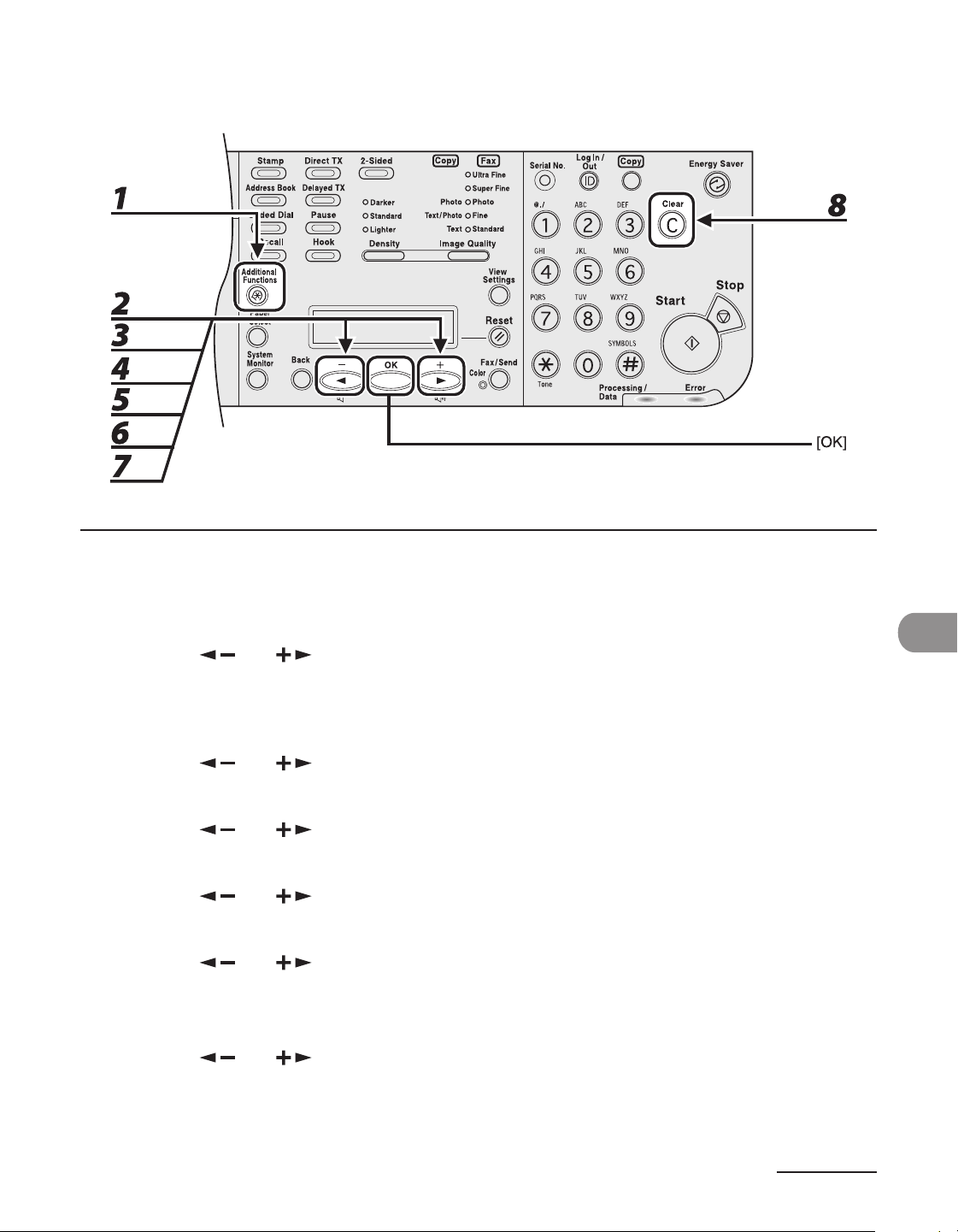
9-9
System Manager Settings
Changing the Password and Page Limit
You can change the password and page limit settings that you have registered.
1 Press [Additional Functions].
2 Press [ ] or [ ] to select <SYSTEM SETTINGS>, then press [OK].
If the System Manager ID and System Password have been set, enter the System Manager ID and System
Password using the numeric keys, then press [Log In/Out (ID)].
3 Press [ ] or [ ] to select <MANAGE DEPT. ID>, then press [OK].
4 Press [ ] or [ ] to select <ON>, then press [OK].
5 Press [ ] or [ ] to select <REGISTER DEPT. ID>, then press [OK].
6 Press [ ] or [ ] to select the Department ID whose password and page limit
you want to change, then press [OK] twice.
7 Press [ ] or [ ] to select <PASSWORD>, then press [OK].
8 Press [Clear] to clear the current password.
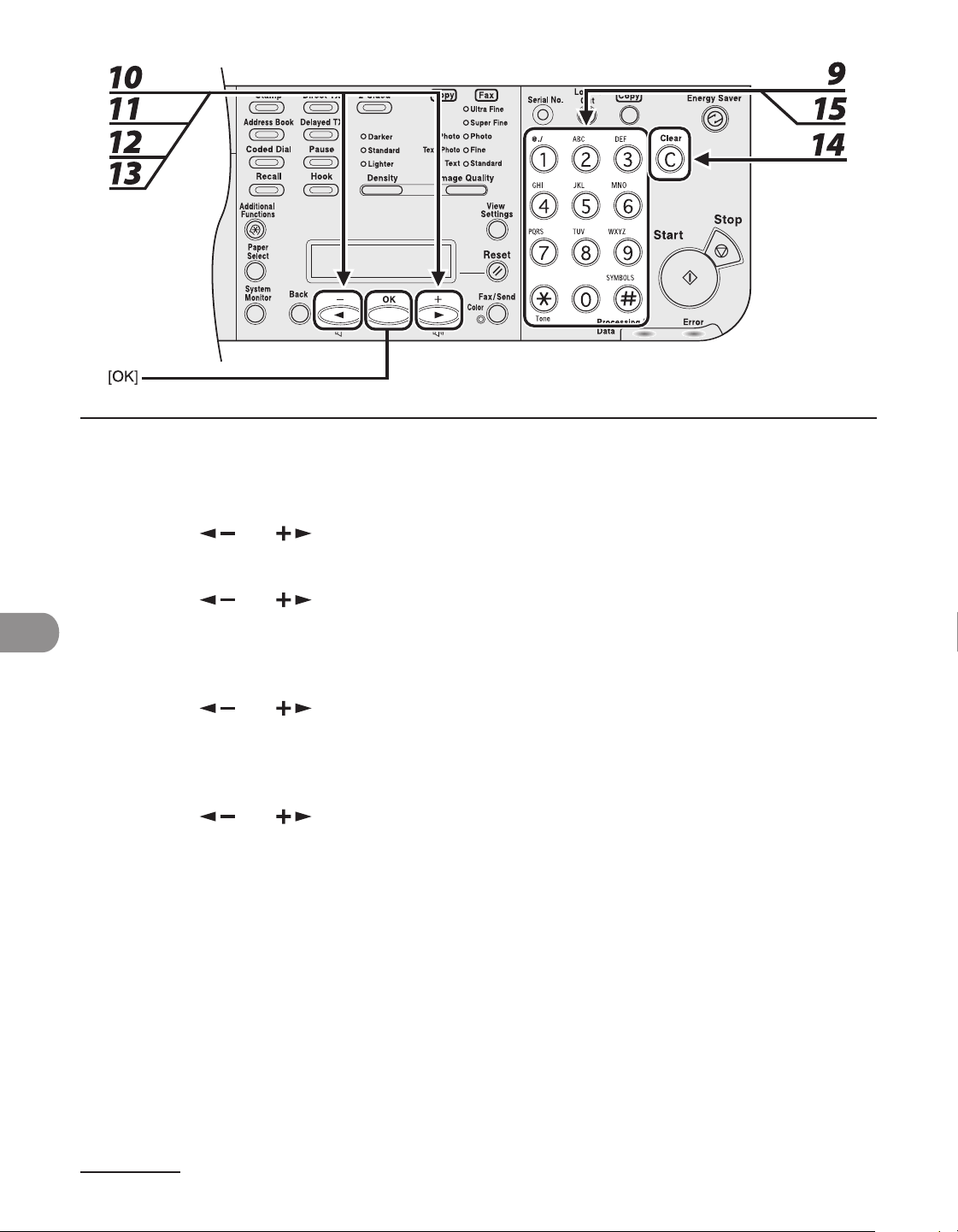
System Manager Settings
9-10
9 Use the numeric keys to enter the new password, then press [OK].
10 Press [ ] or [ ] to select <PAGE LIMIT SET.>, then press [OK].
11 Press [ ] or [ ] to select the desired function, then press [OK].
You can select <TOTAL PRINT LIMIT>, <COPY LIMIT>, <BLACK SCAN LIMIT>, <COLOR SCAN LIMIT>
(LASER CLASS 830i Only), or <PRINT LIMIT>.
12 Press [ ] or [ ] to select <ON> or <OFF>, then press [OK].
<OFF>: Does not set a page limit restriction. Skip to step 16.
<ON>: Set a page limit restriction.
13 Press [ ] or [ ] to select <PAGE TOTALS> (when <TOTAL PRINT LIMIT> is
selected), then press [OK].
The message displayed will vary depending on which function you selected in step 11.
Example: <COPY LIMIT> appears when <COPY LIMIT> is selected.
14 Press [Clear] to clear the current number of page limit restriction.
15 Use the numeric keys to enter the maximum number of pages that can be made
by the registered Department ID, then press [OK].
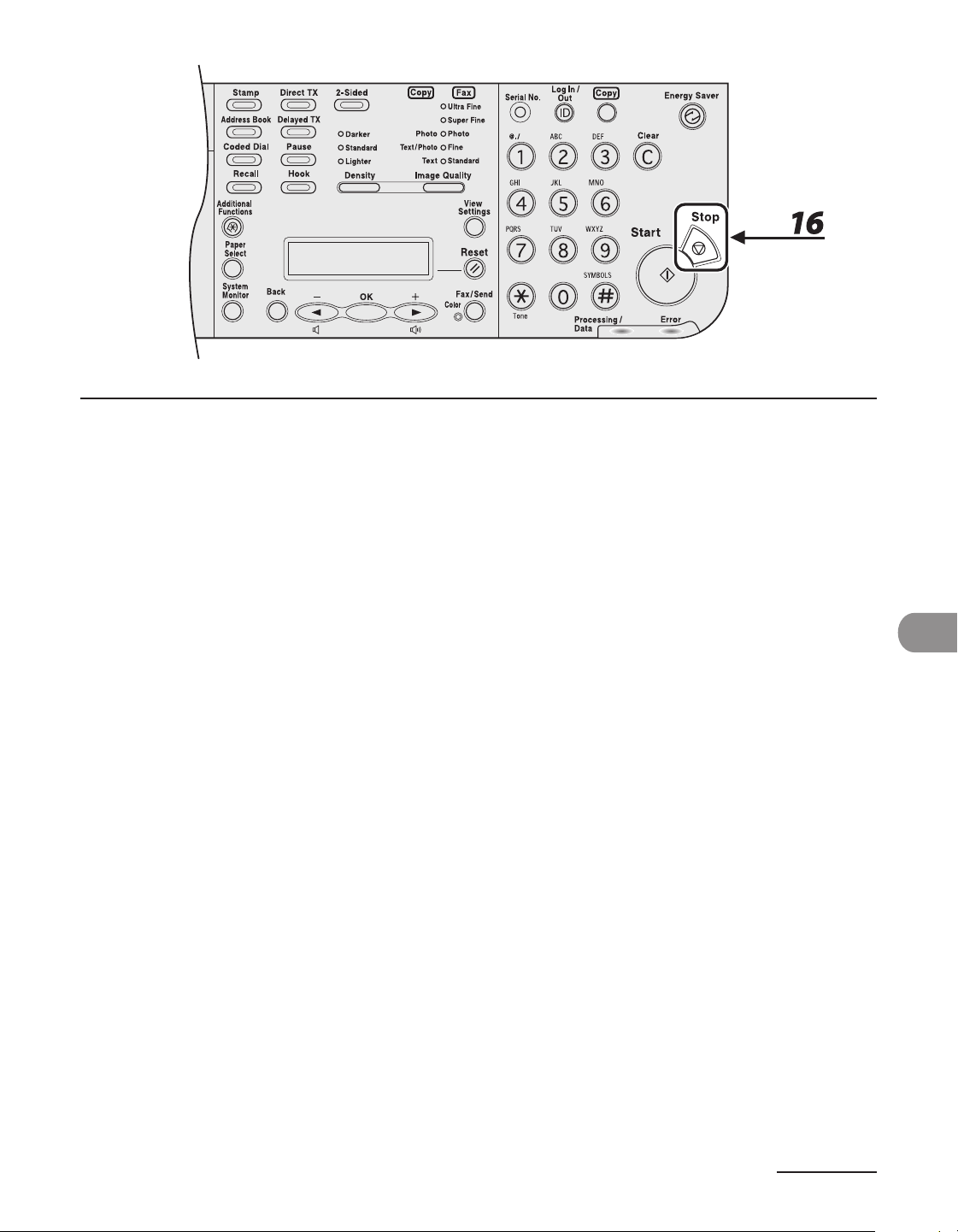
9-11
System Manager Settings
16 Press [Stop] to return to the standby mode.
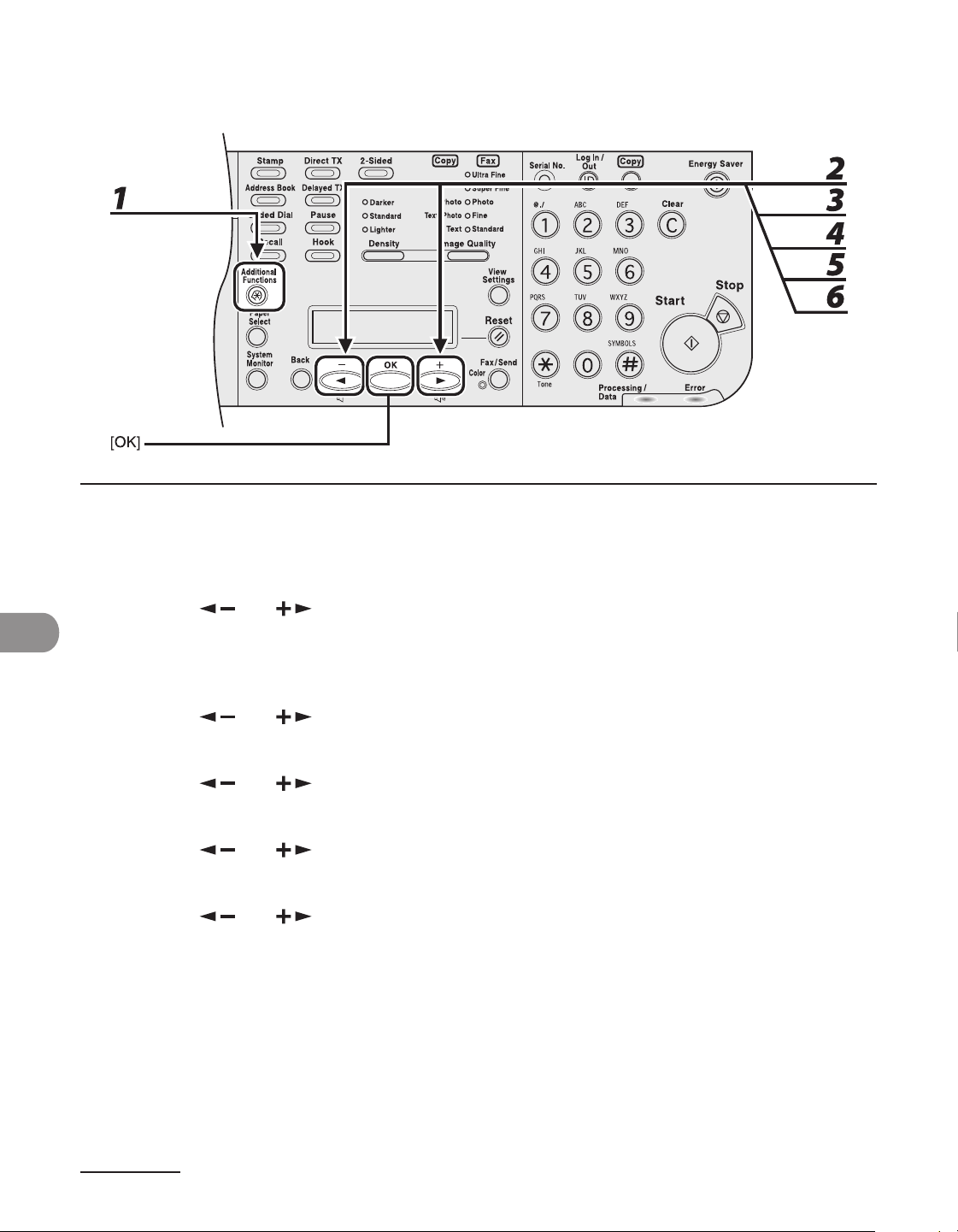
System Manager Settings
9-12
Erasing the Department ID and Password
You can erase the Department ID and password that you have registered.
1 Press [Additional Functions].
2 Press [ ] or [ ] to select <SYSTEM SETTINGS>, then press [OK].
If the System Manager ID and System Password have been set, enter the System Manager ID and System
Password using the numeric keys, then press [Log In/Out (ID)].
3 Press [ ] or [ ] to select <MANAGE DEPT. ID>, then press [OK].
4 Press [ ] or [ ] to select <ON>, then press [OK].
5 Press [ ] or [ ] to select <REGISTER DEPT. ID>, then press [OK].
6 Press [ ] or [ ] to select the Department ID that you want to erase, then
press [OK] twice.
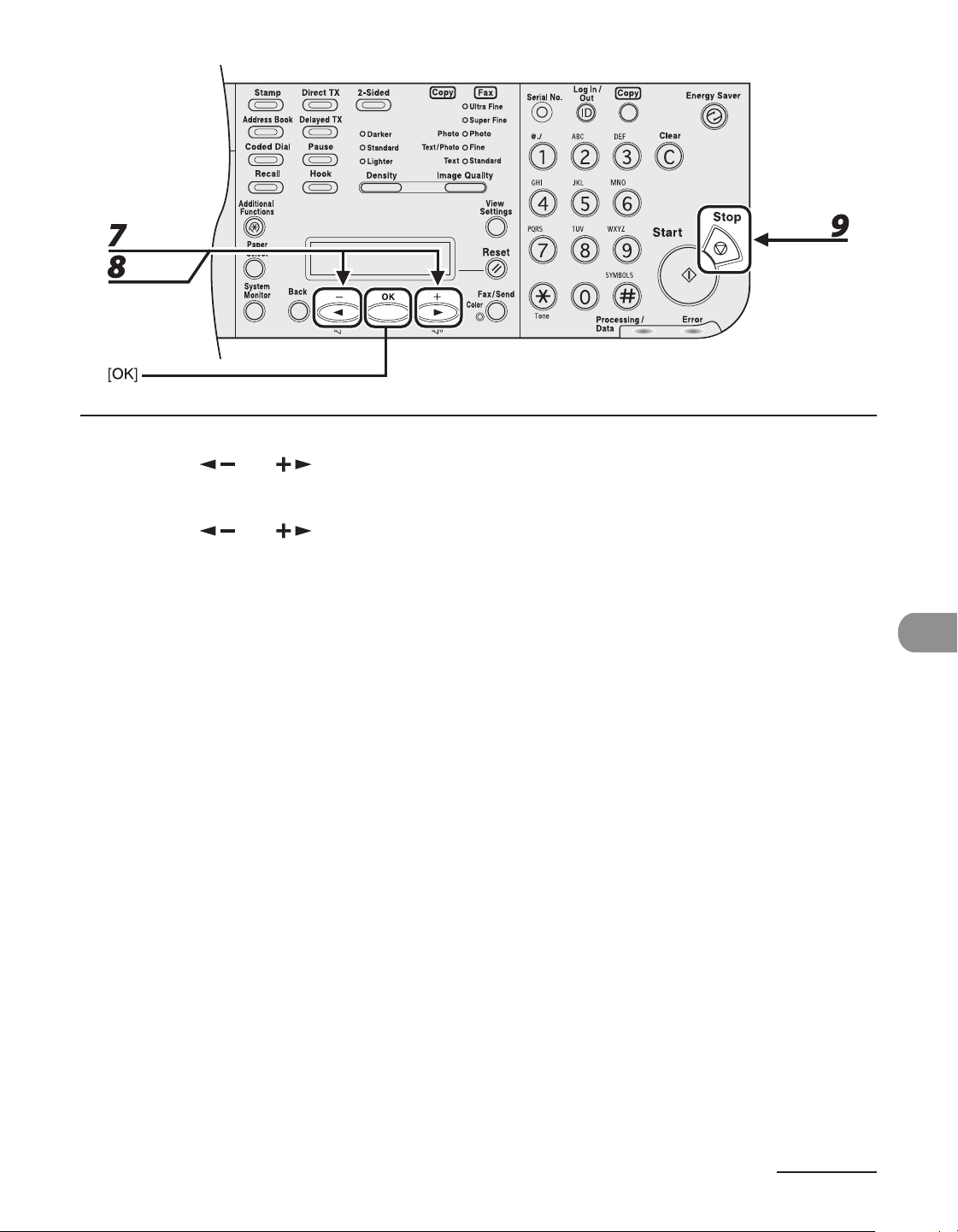
9-13
System Manager Settings
7 Press [ ] or [ ] to select <ERASE>, then press [OK].
8 Press [ ] or [ ] to select <YES> or <NO>, then press [OK].
<NO>: Does not erase the selected Department ID and all of its settings.
<YES>: Erase the selected Department ID and all of its settings.
9 Press [Stop] to return to the standby mode.
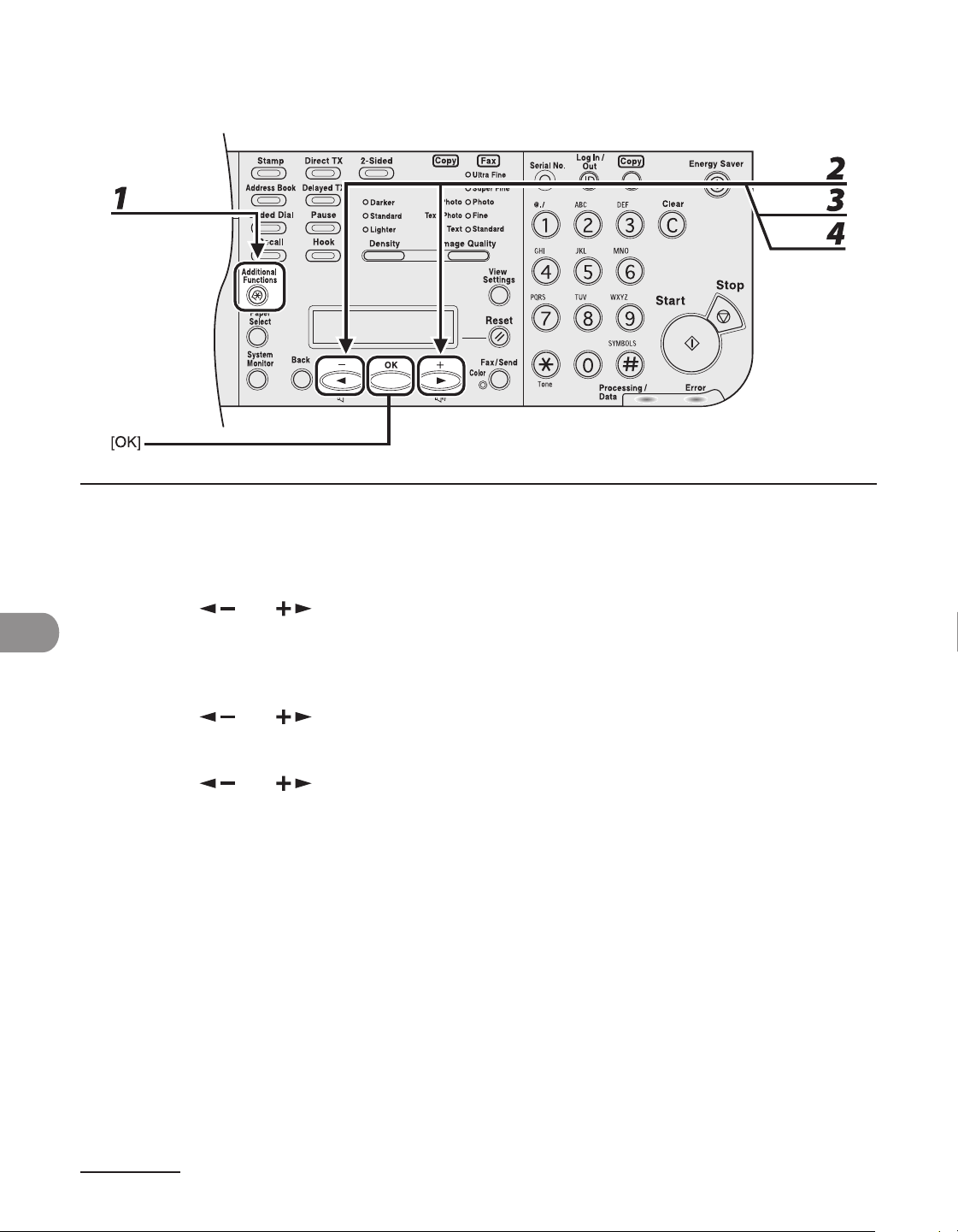
System Manager Settings
9-14
Checking Counter Information
You can check how much paper was used by the each department.
1 Press [Additional Functions].
2 Press [ ] or [ ] to select <SYSTEM SETTINGS>, then press [OK].
If the System Manager ID and System Password have been set, enter the System Manager ID and System
Password using the numeric keys, then press [Log In/Out (ID)].
3 Press [ ] or [ ] to select <MANAGE DEPT. ID>, then press [OK].
4 Press [ ] or [ ] to select <ON>, then press [OK].
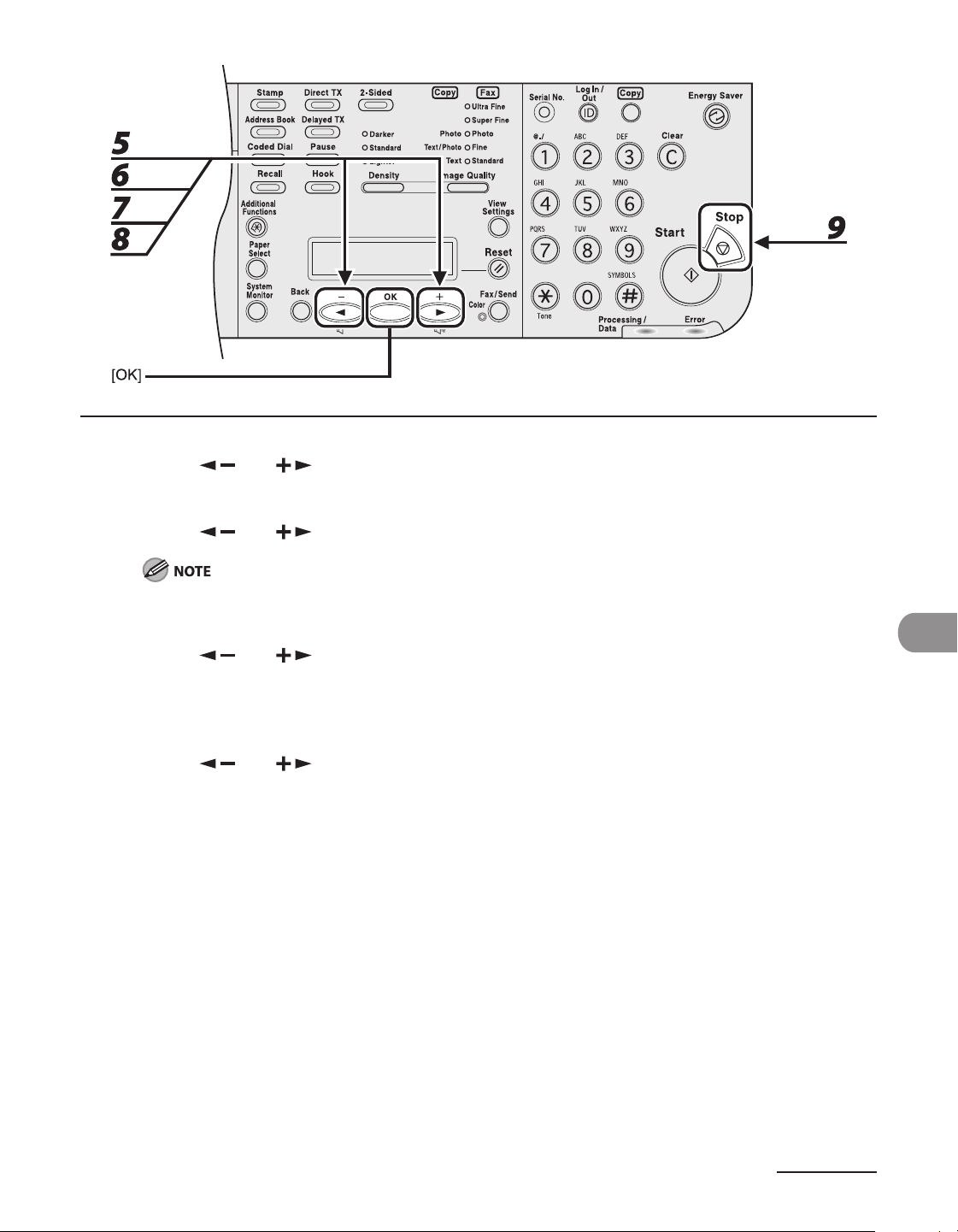
9-15
System Manager Settings
5 Press [ ] or [ ] to select <PAGE TOTALS>, then press [OK].
6 Press [ ] or [ ] to select <VIEW PAGE TOTALS>, then press [OK].
If you select <CLEAR ALL TOTAL>, the counter information is deleted.
7 Press [ ] or [ ] to select the desired function, then press [OK].
You can select <TOTAL PRINT>, <COPY>, <SCAN>, <COLOR SCAN> (LASER CLASS 830i Only), or
<PRINT>.
8 Press [ ] or [ ] to display the desired Department ID, and check the
counter information.
9 Press [Stop] to return to the standby mode.
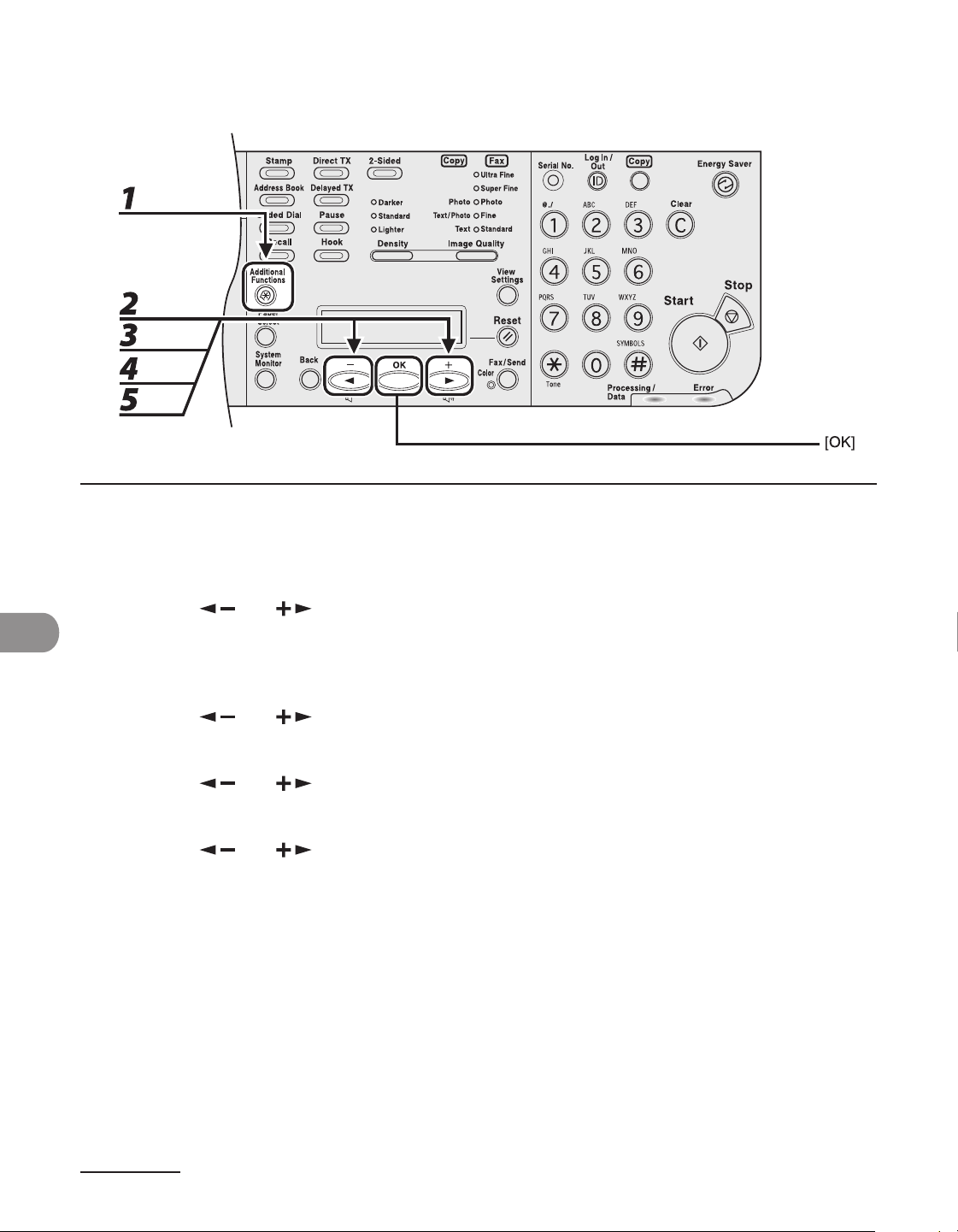
System Manager Settings
9-16
Clearing Page Totals
You can clear the page totals made for all departments.
1 Press [Additional Functions].
2 Press [ ] or [ ] to select <SYSTEM SETTINGS>, then press [OK].
If the System Manager ID and System Password have been set, enter the System Manager ID and System
Password using the numeric keys, then press [Log In/Out (ID)].
3 Press [ ] or [ ] to select <MANAGE DEPT. ID>, then press [OK].
4 Press [ ] or [ ] to select <ON>, then press [OK].
5 Press [ ] or [ ] to select <PAGE TOTALS>, then press [OK].
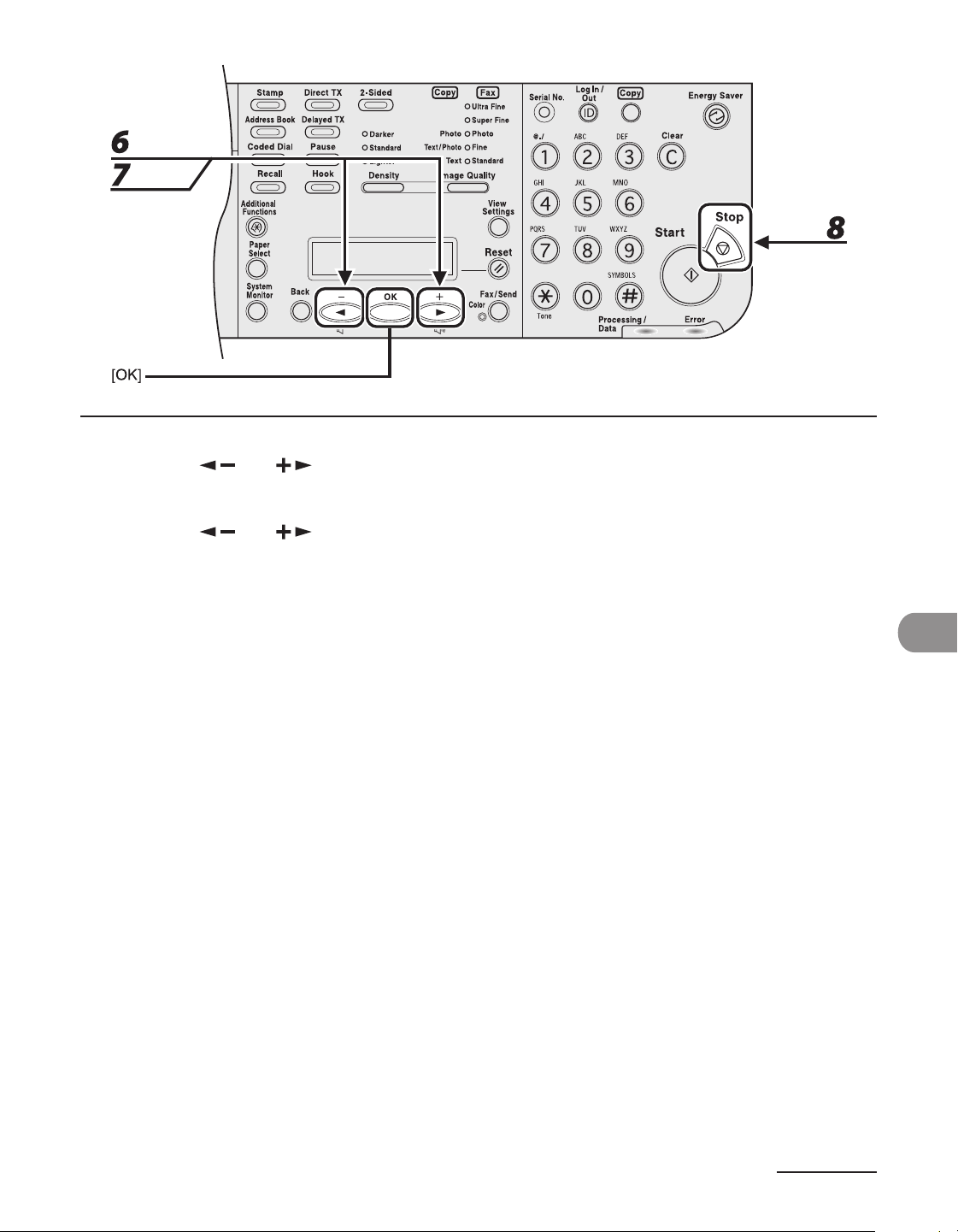
9-17
System Manager Settings
6 Press [ ] or [ ] to select <CLEAR ALL TOTAL>, then press [OK].
7 Press [ ] or [ ] to select <YES> or <NO>, then press [OK].
<NO>: Does not clear the page totals.
<YES>: Clear the page totals.
8 Press [Stop] to return to the standby mode.
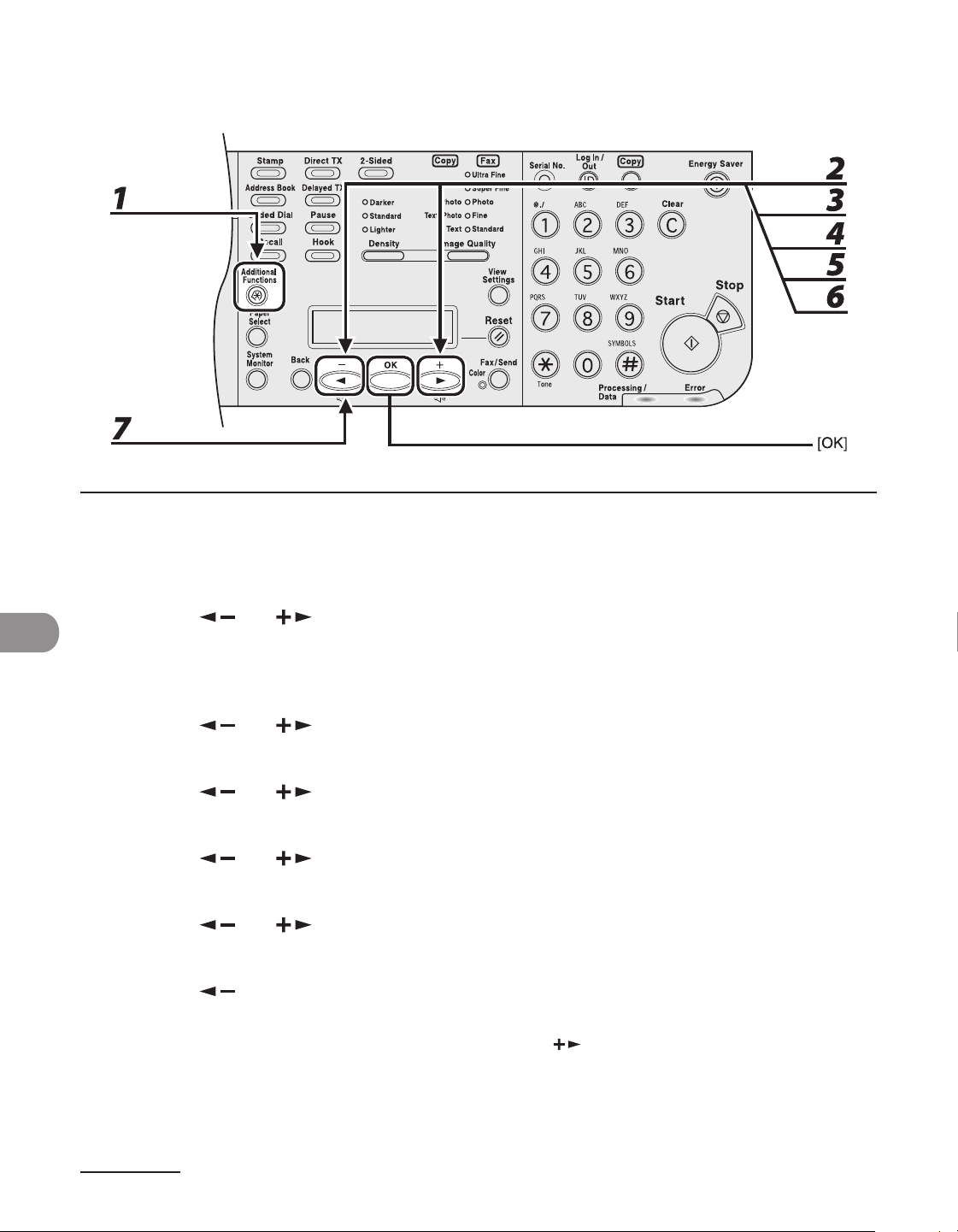
System Manager Settings
9-18
Printing Counter Information (DEPT. INFO LIST)
You can print a list of how much paper was used by the each department.
1 Press [Additional Functions].
2 Press [ ] or [ ] to select <SYSTEM SETTINGS>, then press [OK].
If the System Manager ID and System Password have been set, enter the System Manager ID and System
Password using the numeric keys, then press [Log In/Out (ID)].
3 Press [ ] or [ ] to select <MANAGE DEPT. ID>, then press [OK].
4 Press [ ] or [ ] to select <ON>, then press [OK].
5 Press [ ] or [ ] to select <PAGE TOTALS>, then press [OK].
6 Press [ ] or [ ] to select <PRINT LIST>, then press [OK].
7 Press [ ] to select <YES>.
Printing starts, and the screen automatically returns to the standby mode.
If you do not want to print the counter information, press [
] to select <NO>.
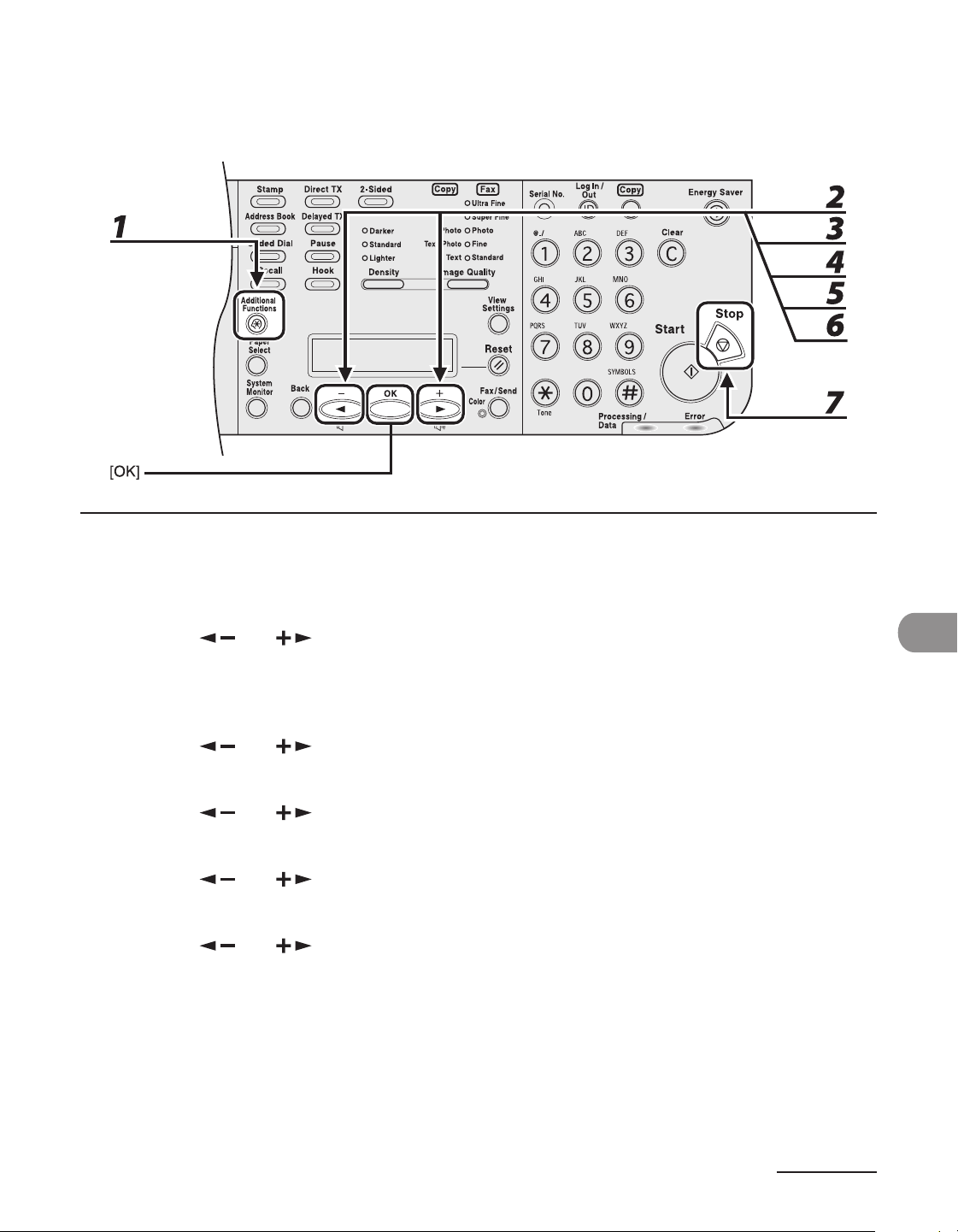
9-19
System Manager Settings
Accepting Print Jobs with Unknown IDs
You can specify whether to accept or reject print jobs from computers that do not
correspond with a registered Department ID.
1 Press [Additional Functions].
2 Press [ ] or [ ] to select <SYSTEM SETTINGS>, then press [OK].
If the System Manager ID and System Password have been set, enter the System Manager ID and System
Password using the numeric keys, then press [Log In/Out (ID)].
3 Press [ ] or [ ] to select <MANAGE DEPT. ID>, then press [OK].
4 Press [ ] or [ ] to select <ON>, then press [OK].
5 Press [ ] or [ ] to select <PDL JOBS W/OUT ID>, then press [OK].
6 Press [ ] or [ ] to select <ON> or <OFF>, then press [OK].
<ON>: The machine accepts print jobs from computers that do not correspond with a registered
Department ID.
<OFF>: The machine does not accept print jobs from computers that do not correspond with a
registered Department ID.
7 Press [Stop] to return to the standby mode.
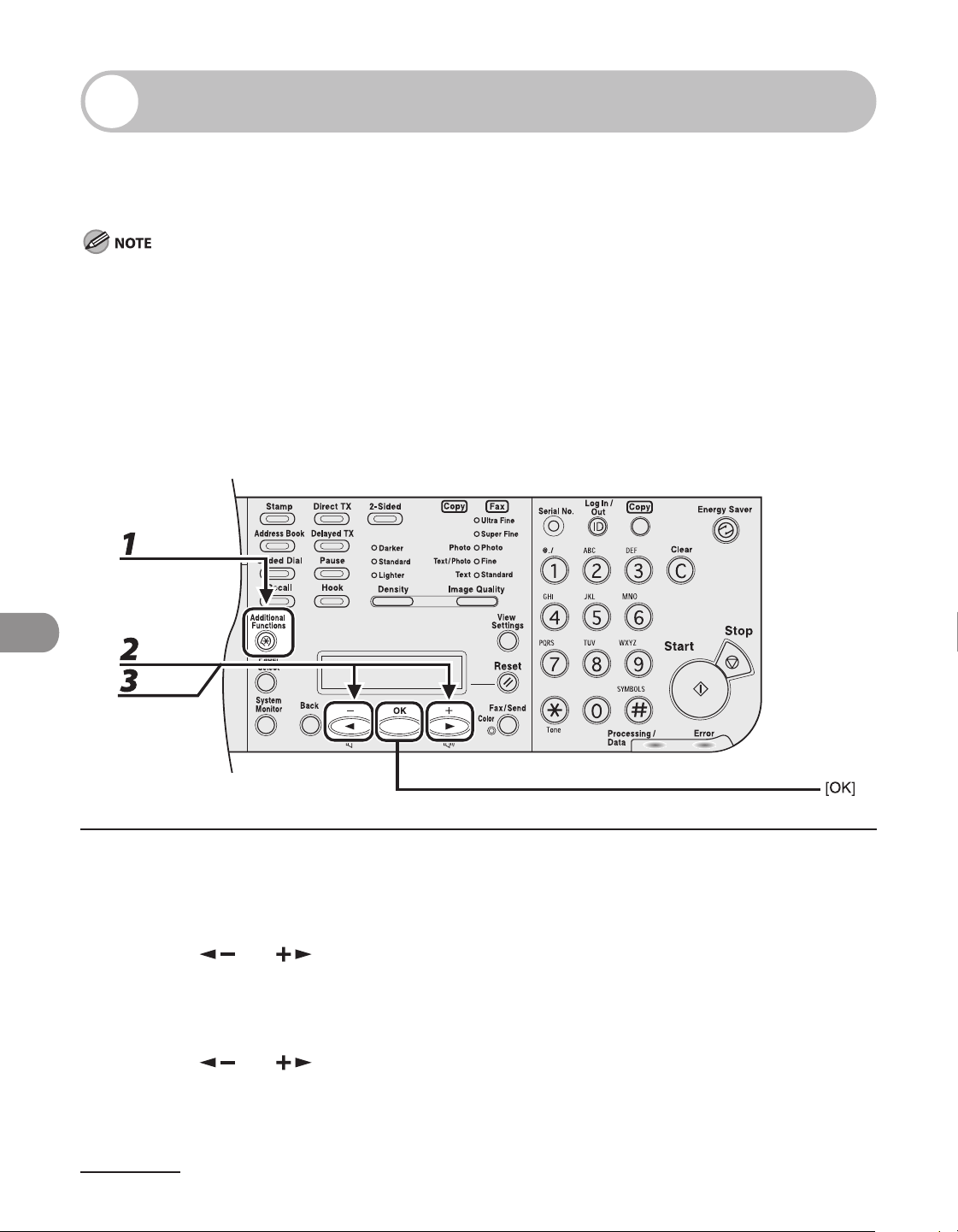
System Manager Settings
9-20
Managing User IDs
You can set whether or not to use the User ID Management.
The User ID Management function enables you to register up to 100 (LASER CLASS
810) / 1000 (LASER CLASS 830i) User IDs.
When you use User ID Management, you need to register a user ID with the administrator privilege to restrict
the access to the <SYSTEM SETTINGS> menu from the operation panel, or using the Remote UI. Otherwise, all
users will be considered as System Manager, and anyone can access the <SYSTEM SETTINGS> menu from the
operation panel, or use the Remote UI without restriction. (See Reference Guide > Settings/Management from
a PC > Managing the Department/User ID from a Computer.)
The User ID and password can be registered only from the Remote UI. For details about the User ID
Management, see Reference Guide > Settings/Management from a PC > Managing the Department/User ID
from a Computer.
You need to register the User ID and password before you set this mode to <ON>.
One Department ID can be registered for each User ID.
1 Press [Additional Functions].
2 Press [ ] or [ ] to select <SYSTEM SETTINGS>, then press [OK].
If the System Manager ID and System Password have been set, enter the System Manager ID and System
Password using the numeric keys, then press [Log In/Out (ID)].
3 Press [ ] or [ ] to select <MANAGE USER ID>, then press [OK].
–
–
–
–
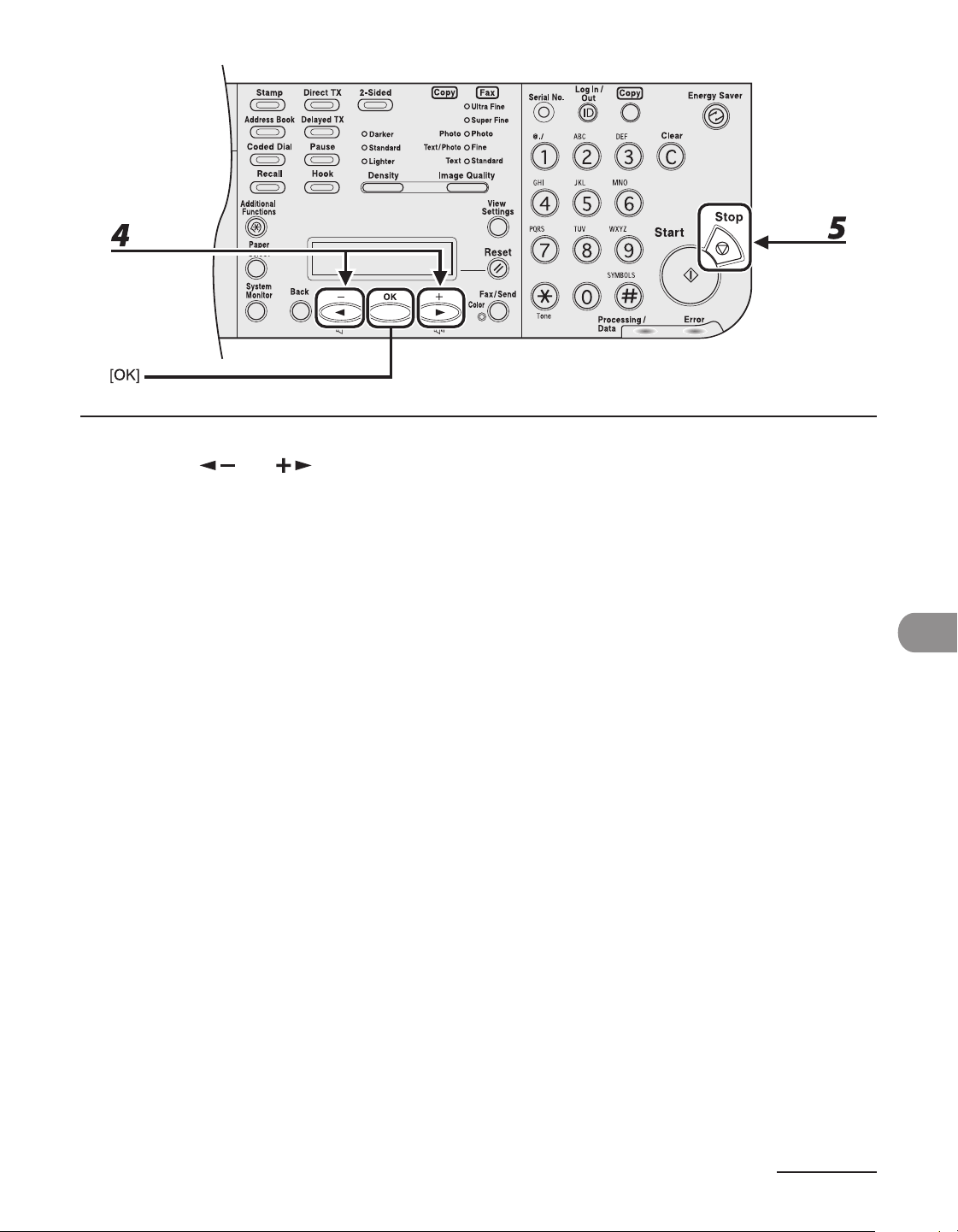
9-21
System Manager Settings
4 Press [ ] or [ ] to select <ON> or <OFF>, then press [OK].
<ON>: User ID Management is enabled.
<OFF>: User ID Management is disabled.
5 Press [Stop] to return to the standby mode.
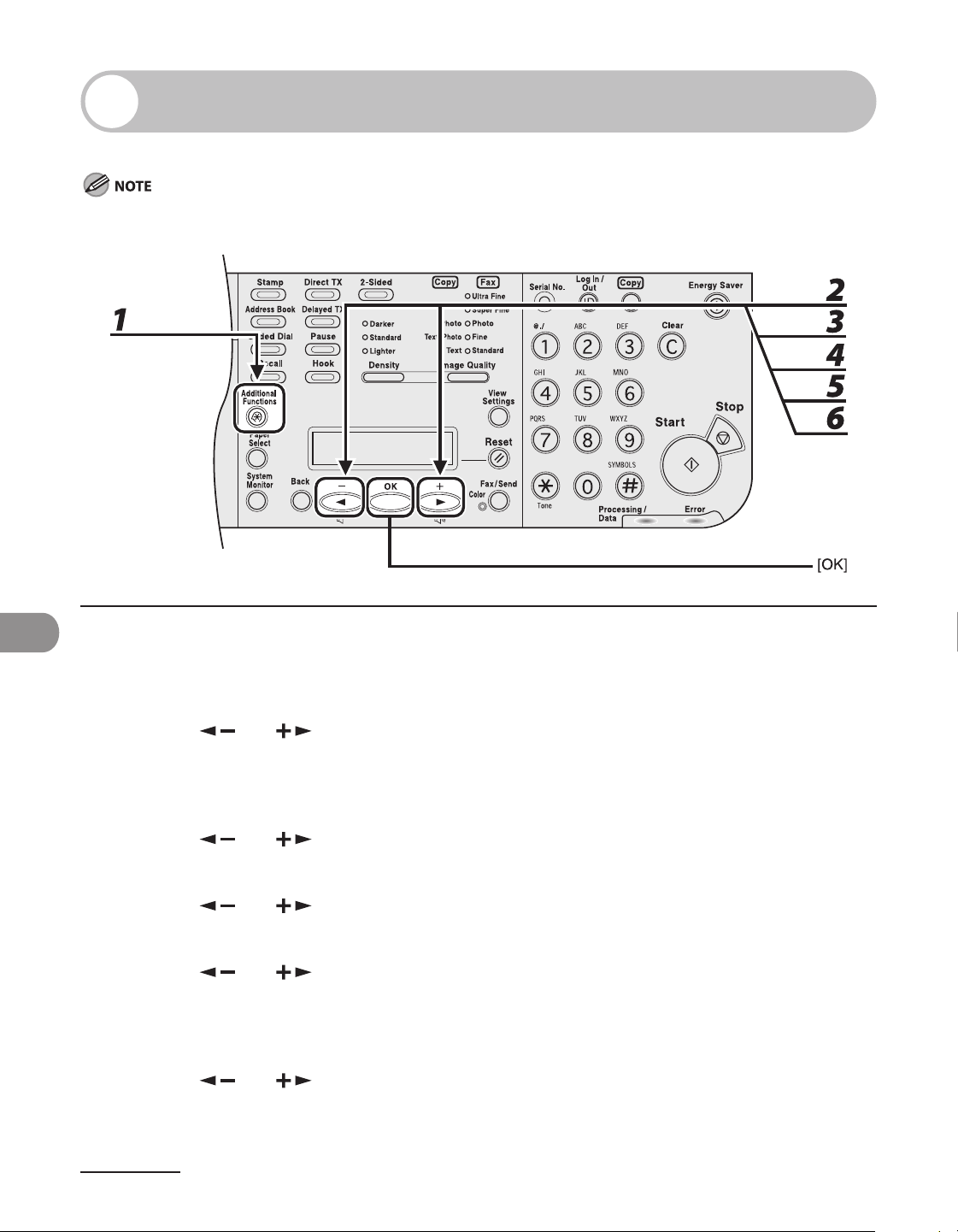
System Manager Settings
9-22
Handling Documents with Forwarding Errors
You can set how the machine handles the documents that failed to be forwarded.
If a forwarding error occurs when both <PRINT> and <STORE TO MEMORY> are set to <OFF>, the received
document will be lost.
1 Press [Additional Functions].
2 Press [ ] or [ ] to select <SYSTEM SETTINGS>, then press [OK].
If the System Manager ID and System Password have been set, enter the System Manager ID and System
Password using the numeric keys, then press [Log In/Out (ID)].
3 Press [ ] or [ ] to select <FORWARD ERR. SET.>, then press [OK].
4 Press [ ] or [ ] to select <PRINT>, then press [OK].
5 Press [ ] or [ ] to select <ON> or <OFF>, then press [OK].
<ON>: The machine prints received documents when document forwarding fails.
<OFF>: The machine does not print the image.
6 Press [ ] or [ ] to select <STORE TO MEMORY>, then press [OK].
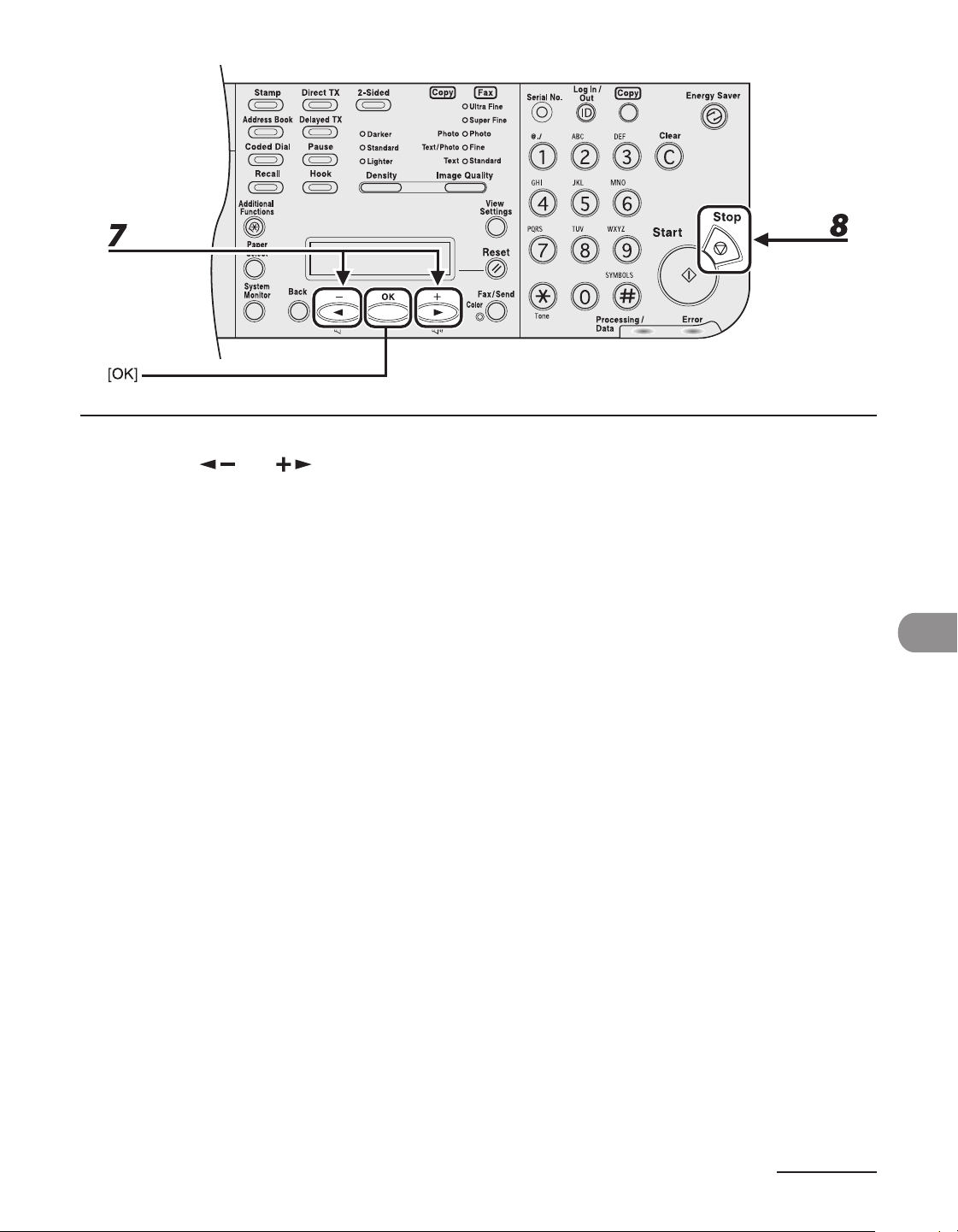
9-23
System Manager Settings
7 Press [ ] or [ ] to select <ON> or <OFF>, then press [OK].
<ON>: The machine stores received documents in memory when document forwarding fails.
<OFF>: The machine does not store the image.
8 Press [Stop] to return to the standby mode.
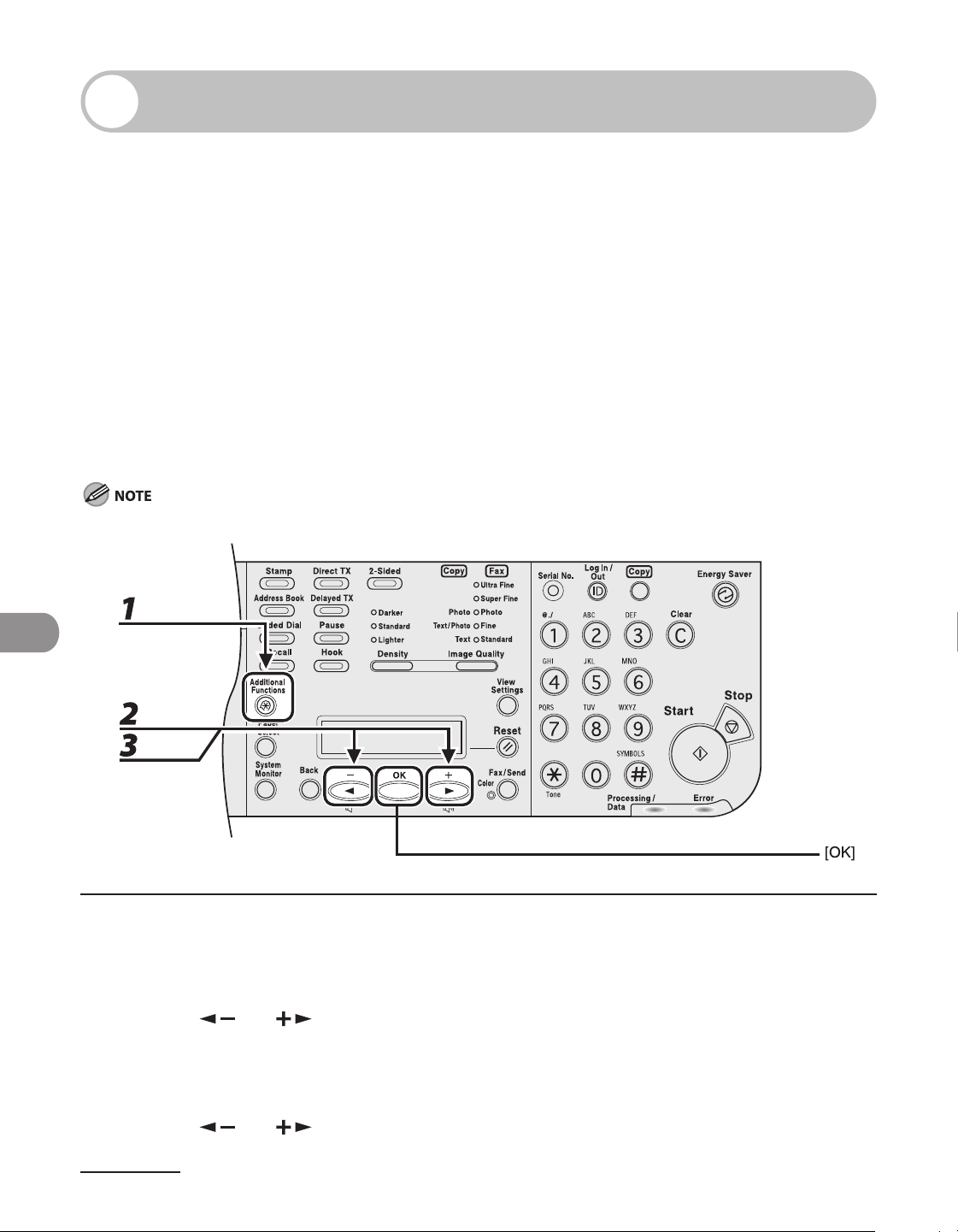
System Manager Settings
9-24
Restricting Access to Destinations
You can send the documents with following restrictions or settings.
Setting a Password for the Address Book
Restricting the New Address
Restricting PC Faxing
Restricting Redialing/Job Recall
Confirming Entered Fax Numbers
Restricting Broadcasting
Setting a Password for the Address Book
If you set a password, the screen for entering the password appears when you attempt to
edit the Address Book.
If you want to cancel password protection, select <OFF> in step 5.
1 Press [Additional Functions].
2 Press [ ] or [ ] to select <SYSTEM SETTINGS>, then press [OK].
If the System Manager ID and System Password have been set, enter the System Manager ID and System
Password using the numeric keys, then press [Log In/Out (ID)].
3 Press [ ] or [ ] to select <RESTRICT TX FUNC>, then press [OK].
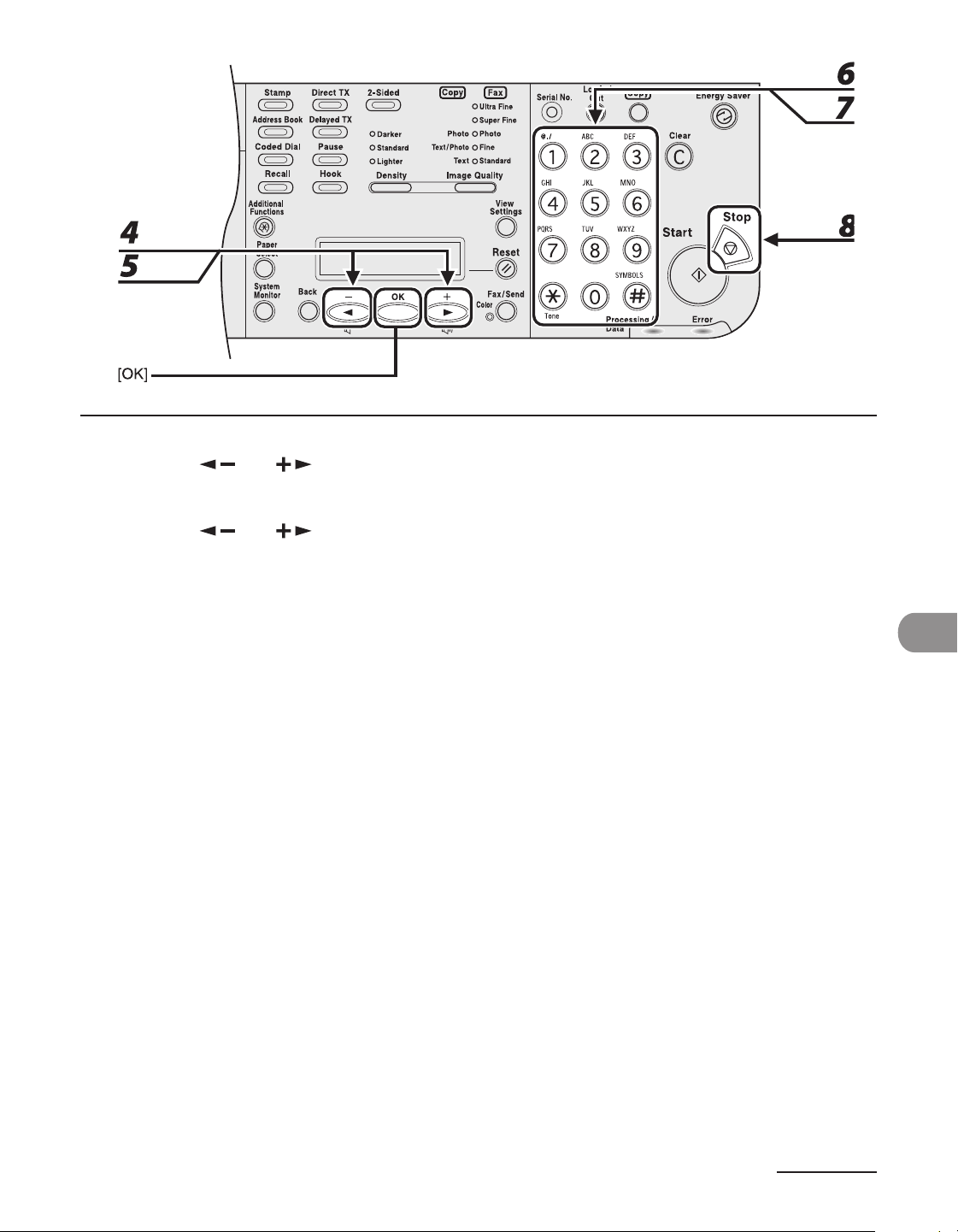
9-25
System Manager Settings
4 Press [ ] or [ ] to select <ADD. BOOK PASSWORD>, then press [OK].
5 Press [ ] or [ ] to select <ON>, then press [OK].
6 Use the numeric keys to enter a password (up to seven digits), then press [OK].
7 Use the numeric keys to enter the password for confirmation, then press [OK].
If you enter a wrong password, you have to start over from the first entry.
8 Press [Stop] to return to the standby mode.
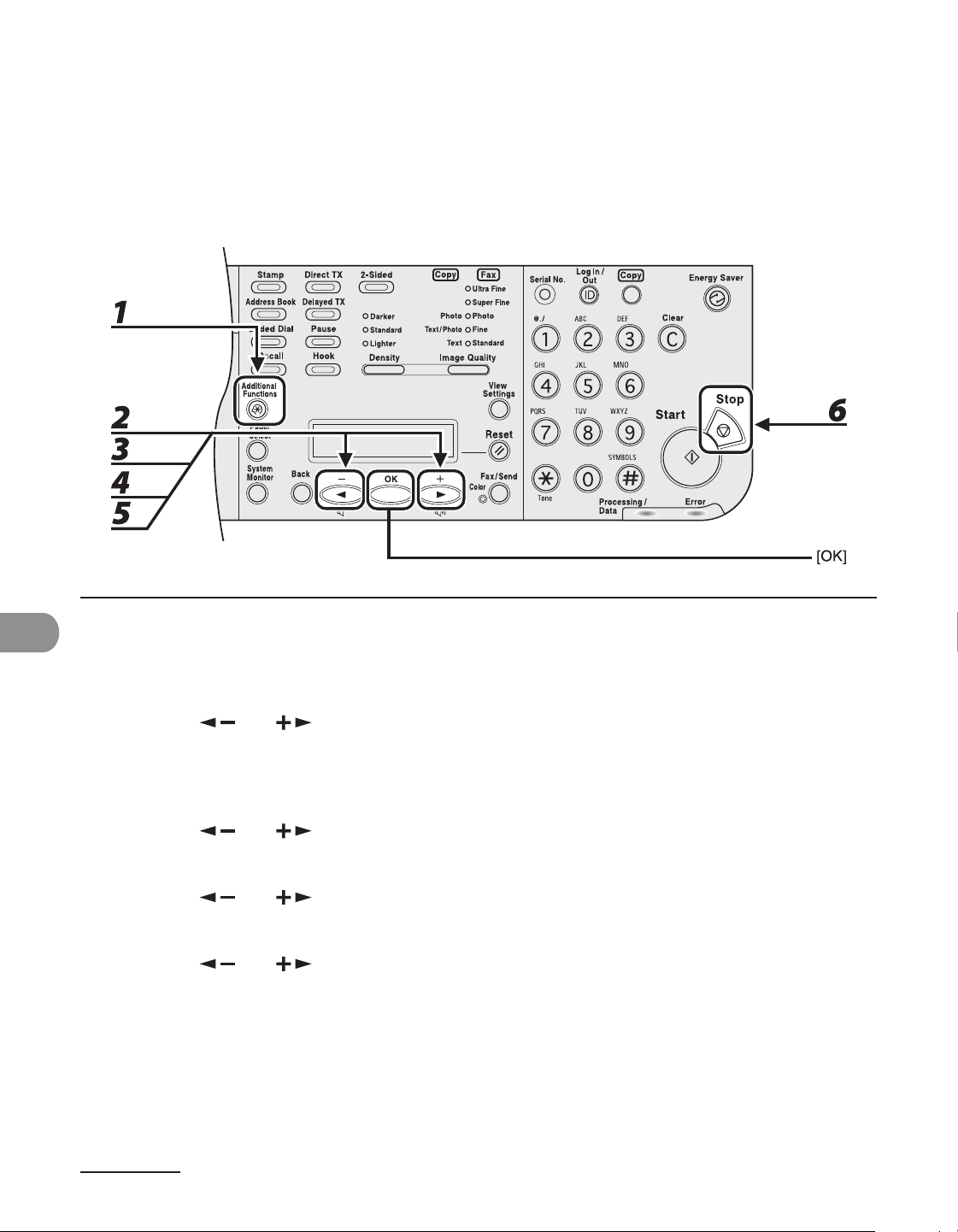
System Manager Settings
9-26
Restricting the New Address
This mode enables you to restrict the entering of new destinations. When you set
<RESTRICT NEW ADD.> to <ON>, the following are restricted:
Specifying a destination using the numeric keys.
Changing registered destinations.
Registering new destinations.
1 Press [Additional Functions].
2 Press [ ] or [ ] to select <SYSTEM SETTINGS>, then press [OK].
If the System Manager ID and System Password have been set, enter the System Manager ID and System
Password using the numeric keys, then press [Log In/Out (ID)].
3 Press [ ] or [ ] to select <RESTRICT TX FUNC>, then press [OK].
4 Press [ ] or [ ] to select <RESTRICT NEW ADD.>, then press [OK].
5 Press [ ] or [ ] to select <ON> or <OFF>, then press [OK].
6 Press [Stop] to return to the standby mode.
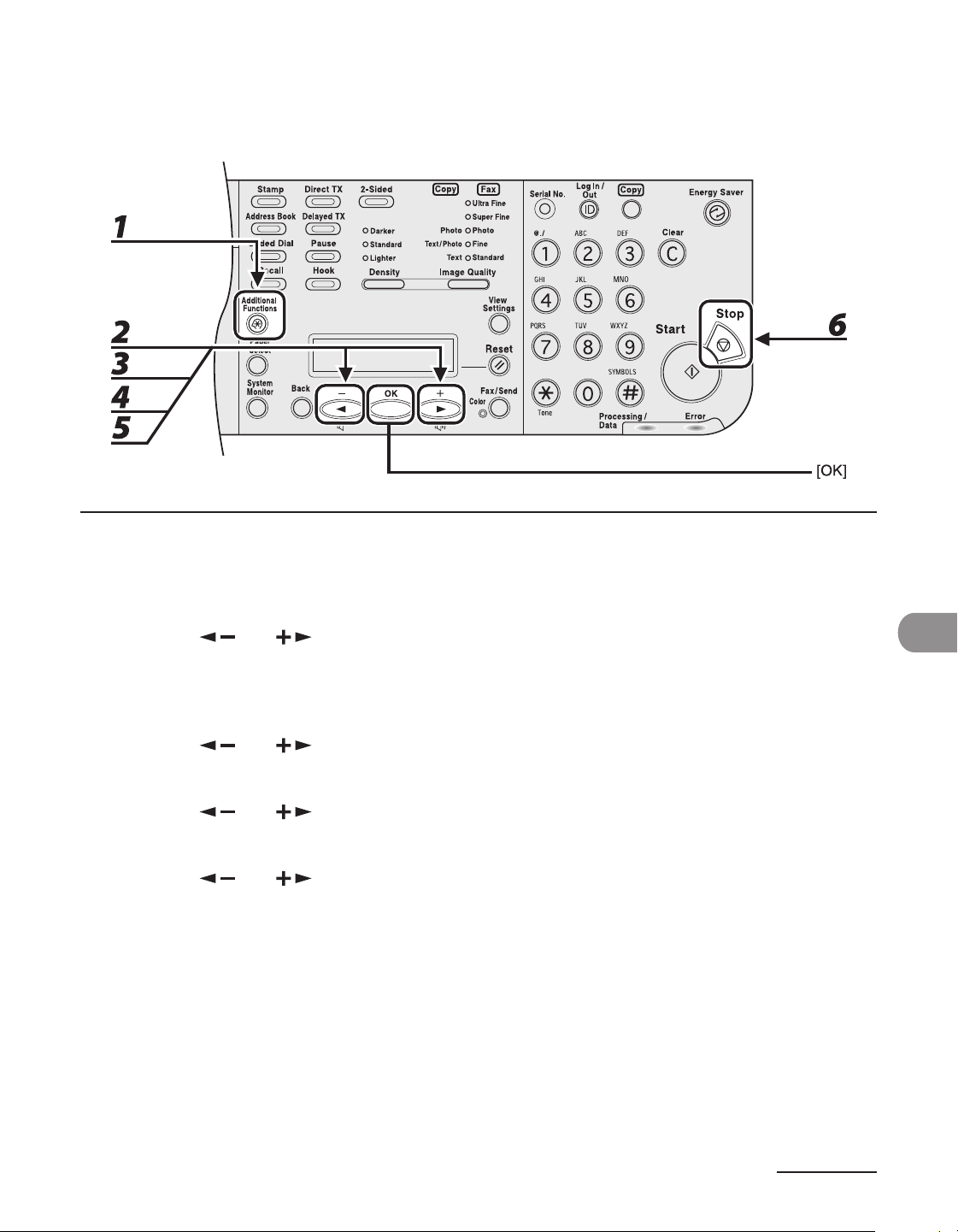
9-27
System Manager Settings
Restricting PC Faxing
You can specify whether or not to allow sending faxes from computers using the fax driver.
An optional network printer kit is required to use the fax driver with the LASER CLASS 810.
1 Press [Additional Functions].
2 Press [ ] or [ ] to select <SYSTEM SETTINGS>, then press [OK].
If the System Manager ID and System Password have been set, enter the System Manager ID and System
Password using the numeric keys, then press [Log In/Out (ID)].
3 Press [ ] or [ ] to select <RESTRICT TX FUNC>, then press [OK].
4 Press [ ] or [ ] to select <FAX DRIVER TX>, then press [OK].
5 Press [ ] or [ ] to select <ON> or <OFF>, then press [OK].
6 Press [Stop] to return to the standby mode.
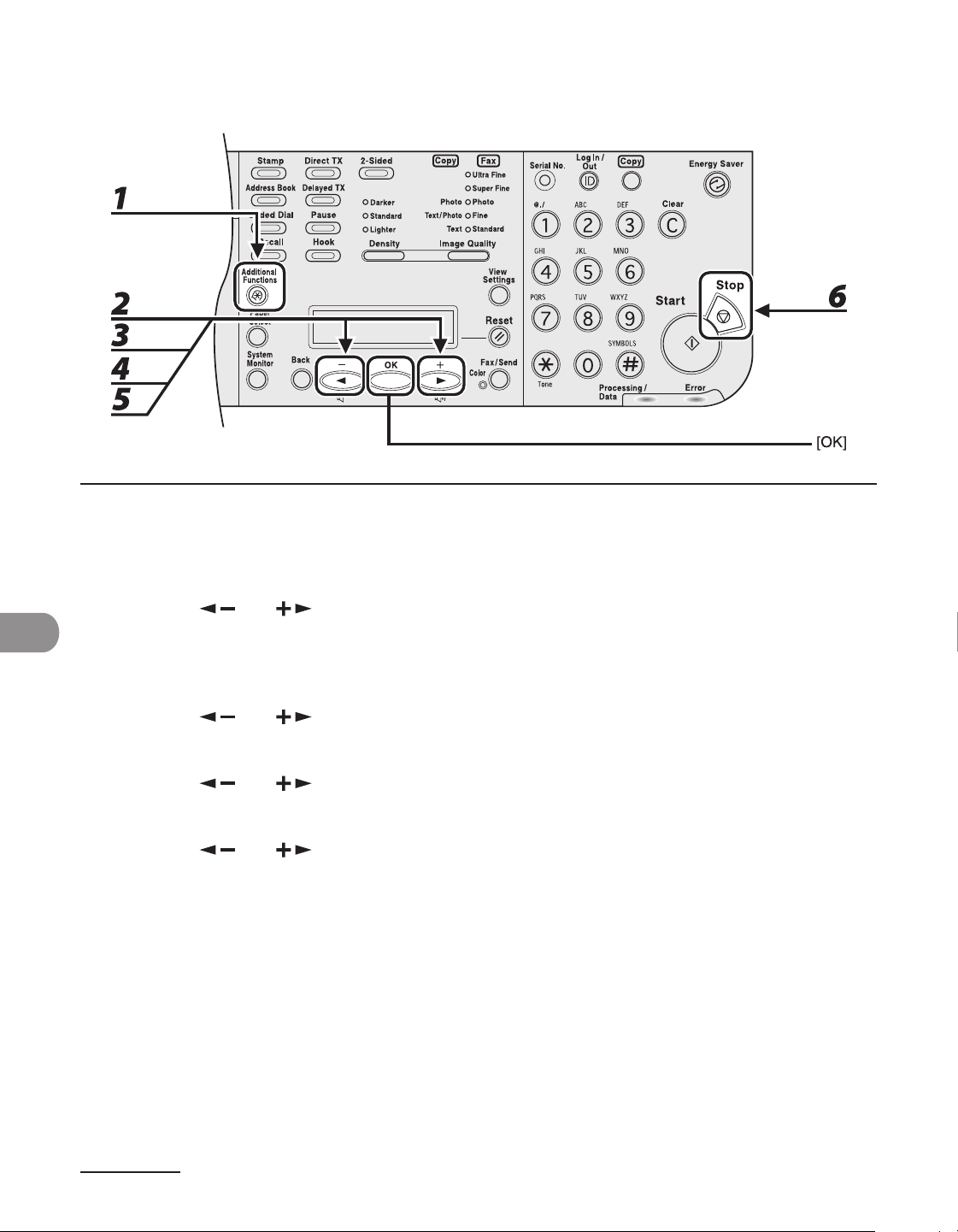
System Manager Settings
9-28
Restricting Job Recall (LASER CLASS 830i Only)
You can specify whether or not to allow using [Recall].
1 Press [Additional Functions].
2 Press [ ] or [ ] to select <SYSTEM SETTINGS>, then press [OK].
If the System Manager ID and System Password have been set, enter the System Manager ID and System
Password using the numeric keys, then press [Log In/Out (ID)].
3 Press [ ] or [ ] to select <RESTRICT TX FUNC>, then press [OK].
4 Press [ ] or [ ] to select <REST. REDIAL/CALL>, then press [OK].
5 Press [ ] or [ ] to select <ON> or <OFF>, then press [OK].
6 Press [Stop] to return to the standby mode.
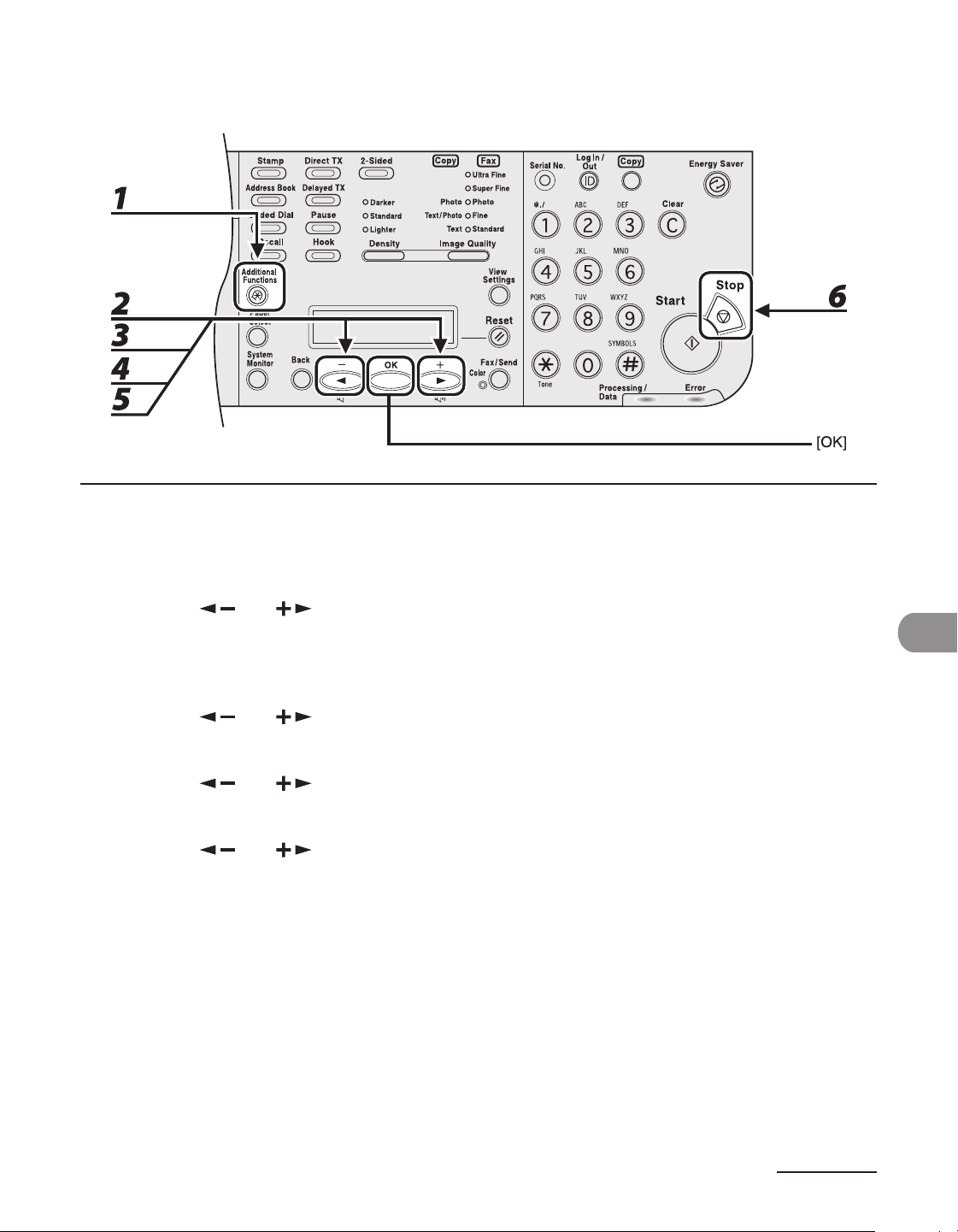
9-29
System Manager Settings
Restricting Redialing (LASER CLASS 810 Only)
You can specify whether or not to allow using [Redial].
1 Press [Additional Functions].
2 Press [ ] or [ ] to select <SYSTEM SETTINGS>, then press [OK].
If the System Manager ID and System Password have been set, enter the System Manager ID and System
Password using the numeric keys, then press [Log In/Out (ID)].
3 Press [ ] or [ ] to select <RESTRICT TX FUNC>, then press [OK].
4 Press [ ] or [ ] to select <RESTRICT REDIAL>, then press [OK].
5 Press [ ] or [ ] to select <ON> or <OFF>, then press [OK].
6 Press [Stop] to return to the standby mode.
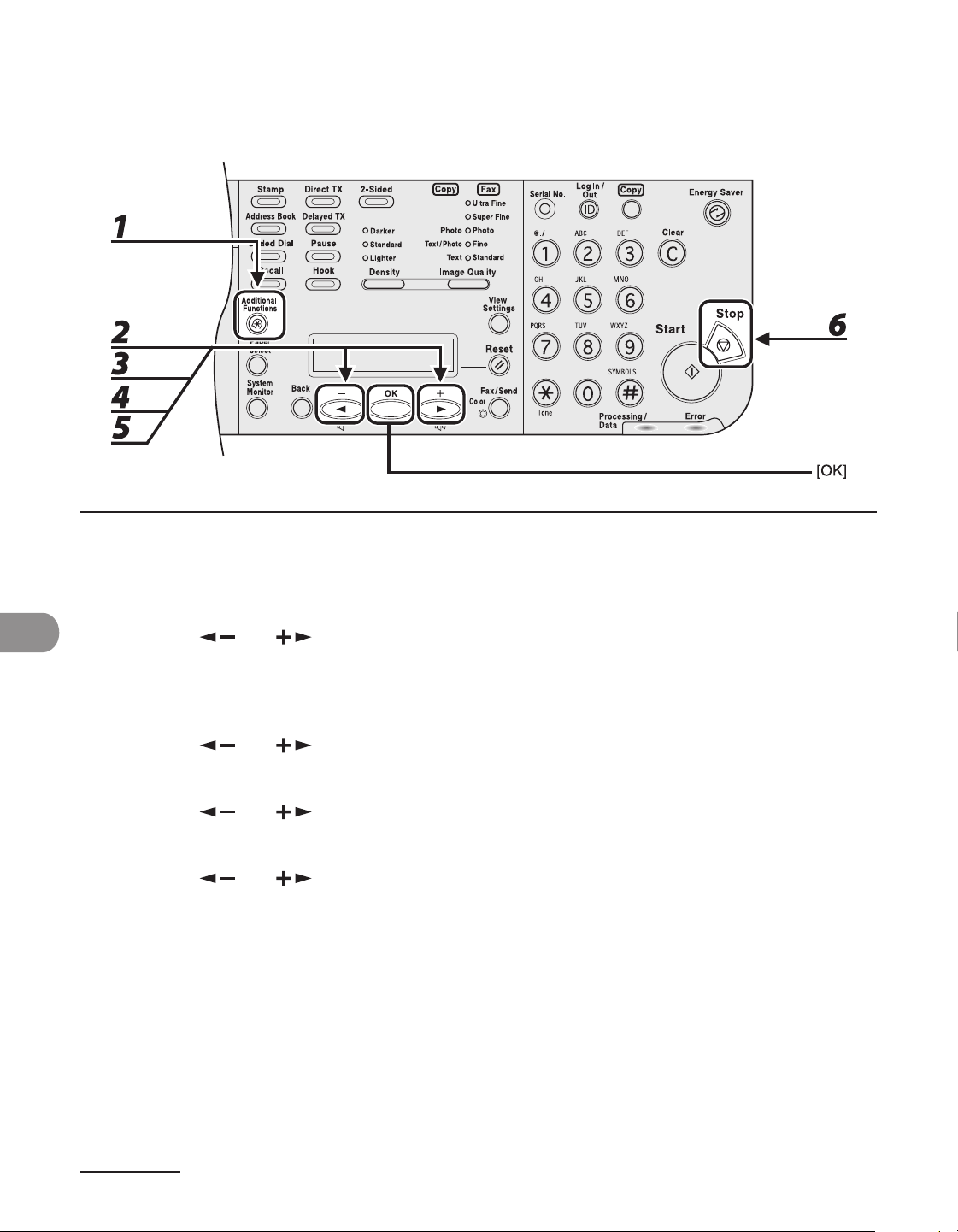
System Manager Settings
9-30
Confirming Entered Fax Numbers
You can specify whether or not to confirm the entered fax numbers each time you send a
fax.
1 Press [Additional Functions].
2 Press [ ] or [ ] to select <SYSTEM SETTINGS>, then press [OK].
If the System Manager ID and System Password have been set, enter the System Manager ID and System
Password using the numeric keys, then press [Log In/Out (ID)].
3 Press [ ] or [ ] to select <RESTRICT TX FUNC>, then press [OK].
4 Press [ ] or [ ] to select <CONFIRM FAX NO.>, then press [OK].
5 Press [ ] or [ ] to select <ON> or <OFF>, then press [OK].
<OFF>: The confirmation screen does not appear.
<ON>: The confirmation screen appears when you enter a fax number using the numeric keys.
6 Press [Stop] to return to the standby mode.
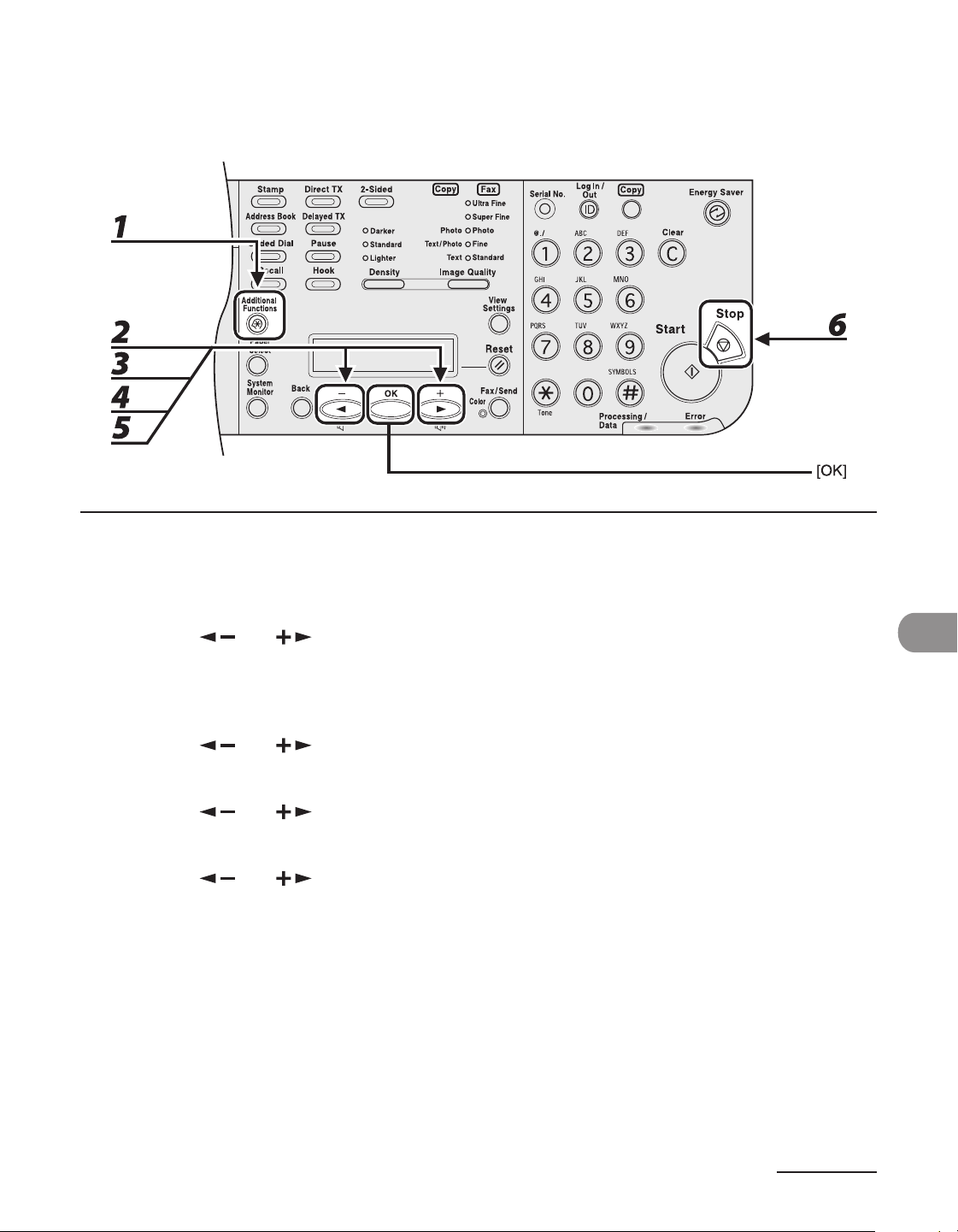
9-31
System Manager Settings
Restricting Broadcasting
You can specify whether or not to allow sending the documents to multiple recipients.
Sets whether to restrict sending to multiple destinations when a fax destination is included.
1 Press [Additional Functions].
2 Press [ ] or [ ] to select <SYSTEM SETTINGS>, then press [OK].
If the System Manager ID and System Password have been set, enter the System Manager ID and System
Password using the numeric keys, then press [Log In/Out (ID)].
3 Press [ ] or [ ] to select <RESTRICT TX FUNC>, then press [OK].
4 Press [ ] or [ ] to select <REST. MULTI DEST>, then press [OK].
5 Press [ ] or [ ] to select <OFF>, <PROHIBIT> or <CONFIRMATION>, then
press [OK].
<OFF>: Allows sending the documents to multiple recipients.
<CONFIRMATION>: The message appears after pressing [Start] to confirm whether or not to send
documents to multiple recipients. The message only appears when fax numbers
are included in the recipients.
<PROHIBIT>: Does not allow sending the documents to multiple recipients.
6 Press [Stop] to return to the standby mode.
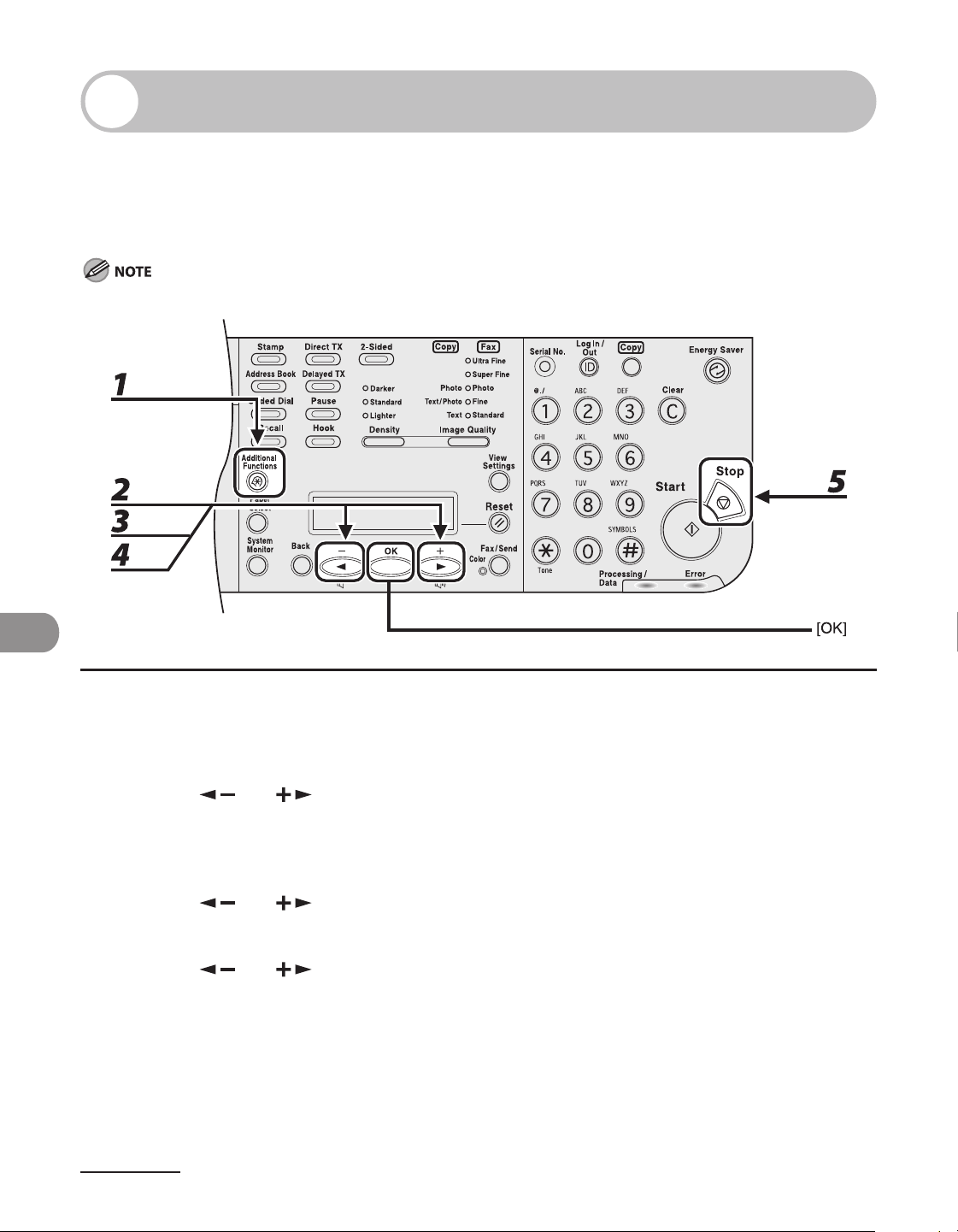
System Manager Settings
9-32
Checking the Job Log
You can specify whether or not to check the job log. When you set <CHECKING THE
LOG> to <ON>, you can check the job log using the System Monitor screen. When
you set <CHECKING THE LOG> to <OFF>, the job log does not appear on the System
Monitor screen.
When you set <CHECKING THE LOG> to <OFF>, the Activity Report will not print automatically.
1 Press [Additional Functions].
2 Press [ ] or [ ] to select <SYSTEM SETTINGS>, then press [OK].
If the System Manager ID and System Password have been set, enter the System Manager ID and System
Password using the numeric keys, then press [Log In/Out (ID)].
3 Press [ ] or [ ] to select <CHECKING THE LOG>, then press [OK].
4 Press [ ] or [ ] to select <ON> or <OFF>, then press [OK].
5 Press [Stop] to return to the standby mode.

Maintenance
10
Maintenance
Cleaning the Machine ∙∙∙∙∙∙∙∙∙∙∙∙∙∙∙∙∙∙∙∙∙∙∙∙∙∙∙∙∙∙∙∙∙∙∙∙∙∙∙∙∙∙∙∙∙∙∙∙∙∙∙∙∙∙∙∙∙∙∙∙∙∙ 10-2
Exterior ∙∙∙∙∙∙∙∙∙∙∙∙∙∙∙∙∙∙∙∙∙∙∙∙∙∙∙∙∙∙∙∙∙∙∙∙∙∙∙∙∙∙∙∙∙∙∙∙∙∙∙∙∙∙∙∙∙∙∙∙∙∙∙∙∙∙∙∙∙∙∙∙∙∙∙∙∙∙∙∙∙∙∙∙∙∙∙∙∙∙∙∙∙∙∙∙∙∙∙10-2
Interior ∙∙∙∙∙∙∙∙∙∙∙∙∙∙∙∙∙∙∙∙∙∙∙∙∙∙∙∙∙∙∙∙∙∙∙∙∙∙∙∙∙∙∙∙∙∙∙∙∙∙∙∙∙∙∙∙∙∙∙∙∙∙∙∙∙∙∙∙∙∙∙∙∙∙∙∙∙∙∙∙∙∙∙∙∙∙∙∙∙∙∙∙∙∙∙∙∙∙∙∙10-3
Fuser Roller ∙∙∙∙∙∙∙∙∙∙∙∙∙∙∙∙∙∙∙∙∙∙∙∙∙∙∙∙∙∙∙∙∙∙∙∙∙∙∙∙∙∙∙∙∙∙∙∙∙∙∙∙∙∙∙∙∙∙∙∙∙∙∙∙∙∙∙∙∙∙∙∙∙∙∙∙∙∙∙∙∙∙∙∙∙∙∙∙∙∙∙10-6
Scanning area ∙∙∙∙∙∙∙∙∙∙∙∙∙∙∙∙∙∙∙∙∙∙∙∙∙∙∙∙∙∙∙∙∙∙∙∙∙∙∙∙∙∙∙∙∙∙∙∙∙∙∙∙∙∙∙∙∙∙∙∙∙∙∙∙∙∙∙∙∙∙∙∙∙∙∙∙∙∙∙∙∙∙∙∙∙∙10-7
Cleaning the ADF Automatically ∙∙∙∙∙∙∙∙∙∙∙∙∙∙∙∙∙∙∙∙∙∙∙∙∙∙∙∙∙∙∙∙∙∙∙∙∙∙∙∙∙∙∙∙∙∙∙∙∙∙10-9
Transcription Roller ∙∙∙∙∙∙∙∙∙∙∙∙∙∙∙∙∙∙∙∙∙∙∙∙∙∙∙∙∙∙∙∙∙∙∙∙∙∙∙∙∙∙∙∙∙∙∙∙∙∙∙∙∙∙∙∙∙∙∙∙∙∙∙∙∙∙∙∙∙∙∙ 10-10
Replacing the Toner Cartridge ∙∙∙∙∙∙∙∙∙∙∙∙∙∙∙∙∙∙∙∙∙∙∙∙∙∙∙∙∙∙∙∙∙∙∙∙∙∙∙∙∙∙∙∙∙∙∙ 10-11
Redistributing Toner ∙∙∙∙∙∙∙∙∙∙∙∙∙∙∙∙∙∙∙∙∙∙∙∙∙∙∙∙∙∙∙∙∙∙∙∙∙∙∙∙∙∙∙∙∙∙∙∙∙∙∙∙∙∙∙∙∙∙∙∙∙∙∙∙∙∙∙∙∙∙∙ 10-11
Replacing the Toner Cartridge with a New One ∙∙∙∙∙∙∙∙∙∙∙∙∙∙∙∙∙∙∙ 10-14
Replacing the Stamp Cartridge ∙∙∙∙∙∙∙∙∙∙∙∙∙∙∙∙∙∙∙∙∙∙∙∙∙∙∙∙∙∙∙∙∙∙∙∙∙∙∙∙∙∙∙∙∙ 10-17
Recycling Used Cartridges ∙∙∙∙∙∙∙∙∙∙∙∙∙∙∙∙∙∙∙∙∙∙∙∙∙∙∙∙∙∙∙∙∙∙∙∙∙∙∙∙∙∙∙∙∙∙∙∙∙∙∙∙∙ 10-19
The Clean Earth Campaign ∙∙∙∙∙∙∙∙∙∙∙∙∙∙∙∙∙∙∙∙∙∙∙∙∙∙∙∙∙∙∙∙∙∙∙∙∙∙∙∙∙∙∙∙∙∙∙∙∙∙∙∙∙∙∙∙∙∙ 10-19
U.S.A. PROGRAM ∙∙∙∙∙∙∙∙∙∙∙∙∙∙∙∙∙∙∙∙∙∙∙∙∙∙∙∙∙∙∙∙∙∙∙∙∙∙∙∙∙∙∙∙∙∙∙∙∙∙∙∙∙∙∙∙∙∙∙∙∙∙∙∙∙∙∙∙∙∙∙∙∙∙∙∙∙∙ 10-21
CANADA PROGRAM-CANADA PROGRAMME ∙∙∙∙∙∙∙∙∙∙∙∙∙∙∙∙∙∙∙∙∙∙∙ 10-24
Transporting the Machine ∙∙∙∙∙∙∙∙∙∙∙∙∙∙∙∙∙∙∙∙∙∙∙∙∙∙∙∙∙∙∙∙∙∙∙∙∙∙∙∙∙∙∙∙∙∙∙∙∙∙∙∙∙ 10-26
Maintenance
10-2
Cleaning the Machine
Note the following before cleaning your
machine:
Make sure no document is stored in
memory, then turn off the main power
switch and disconnect the power cord.
Use a soft cloth to avoid scratching the
components.
Do not use tissue paper, paper towels,
or similar materials for cleaning;
they can stick to the components or
generate static charges.
Never use volatile liquids such as thinners, benzene,
acetone, or any other chemical cleaner to clean
the machine. These can damage the machine
components.
When you turn off the main power switch, the
documents stored in memory will be erased. To check
the jobs stored in memory, see the following:
“Checking and Deleting Copy Jobs,” on p. 3-20
“Checking and Deleting Sending Documents Stored
in Memory,” on p.
4-87
“Checking and Deleting Receiving Documents
Stored in Memory,” on p.
5-31
“Checking and Deleting Print Jobs,” on p. 6-4
–
–
–
–
–
–
–
Exterior
1 Turn off the main power switch
and disconnect the power cord.
2 Wipe the machine's exterior
with a clean, soft, lint-free cloth
dampened with water or diluted
dishwashing detergent solution.
3 Wait for the machine to dry, then
reconnect the power cord and turn
on the main power switch.
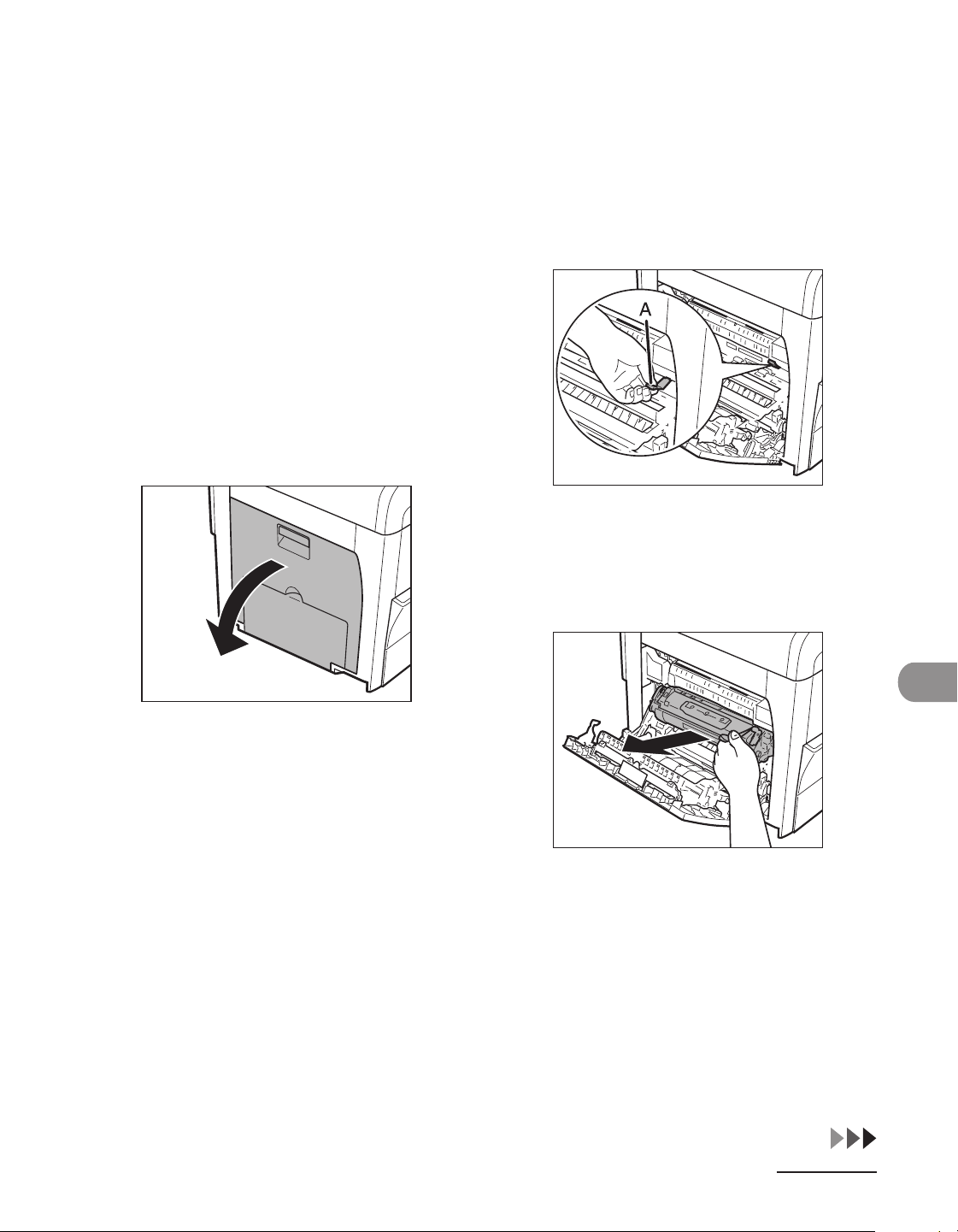
10-3
Maintenance
Interior
Clean the machine’s print area periodically
to prevent toner powder and paper dust
from accumulating inside.
1 Turn off the main power switch
and disconnect the power cord.
2 Open the left cover.
3 Grasp the blue plastic pull tab (A)
on the toner cartridge.
4 Pull the blue plastic pull tab until
you can easily hold the handle of
the toner cartridge.
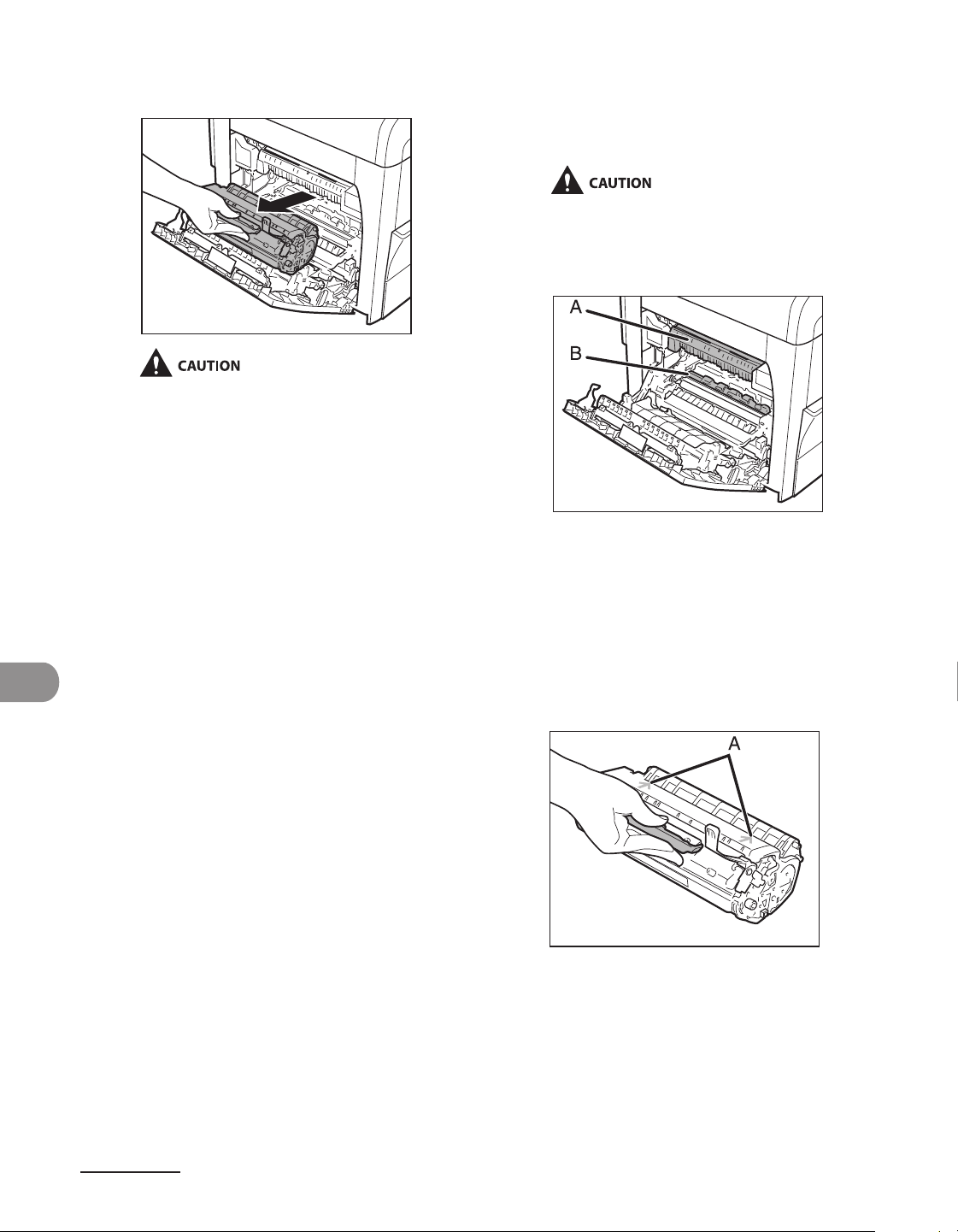
Maintenance
10-4
5 Remove the toner cartridge.
Always hold the toner cartridge by its
handle.
To avoid exposing the toner cartridge to
light, place it in its protective bag or wrap it
in a thick cloth.
Do not open the drum protective shutter
on the toner cartridge. Print quality may
deteriorate if the drum surface is exposed
to light or is damaged.
–
–
–
6 Use a clean, soft, dry, lint-free
cloth to remove any toner or paper
debris from the machine's interior.
Do not touch the fixing assembly (A) as it
becomes very hot during use.
Do not touch the transfer roller (B) as this
can damage the machine.
If loose toner comes into contact with your
skin or clothing, wash with cold water.
Warm water will set the toner.
7 Hold the toner cartridge by its
handle.
The arrows (A) on the toner cartridge should
be pointing toward the machine.
–
–
–
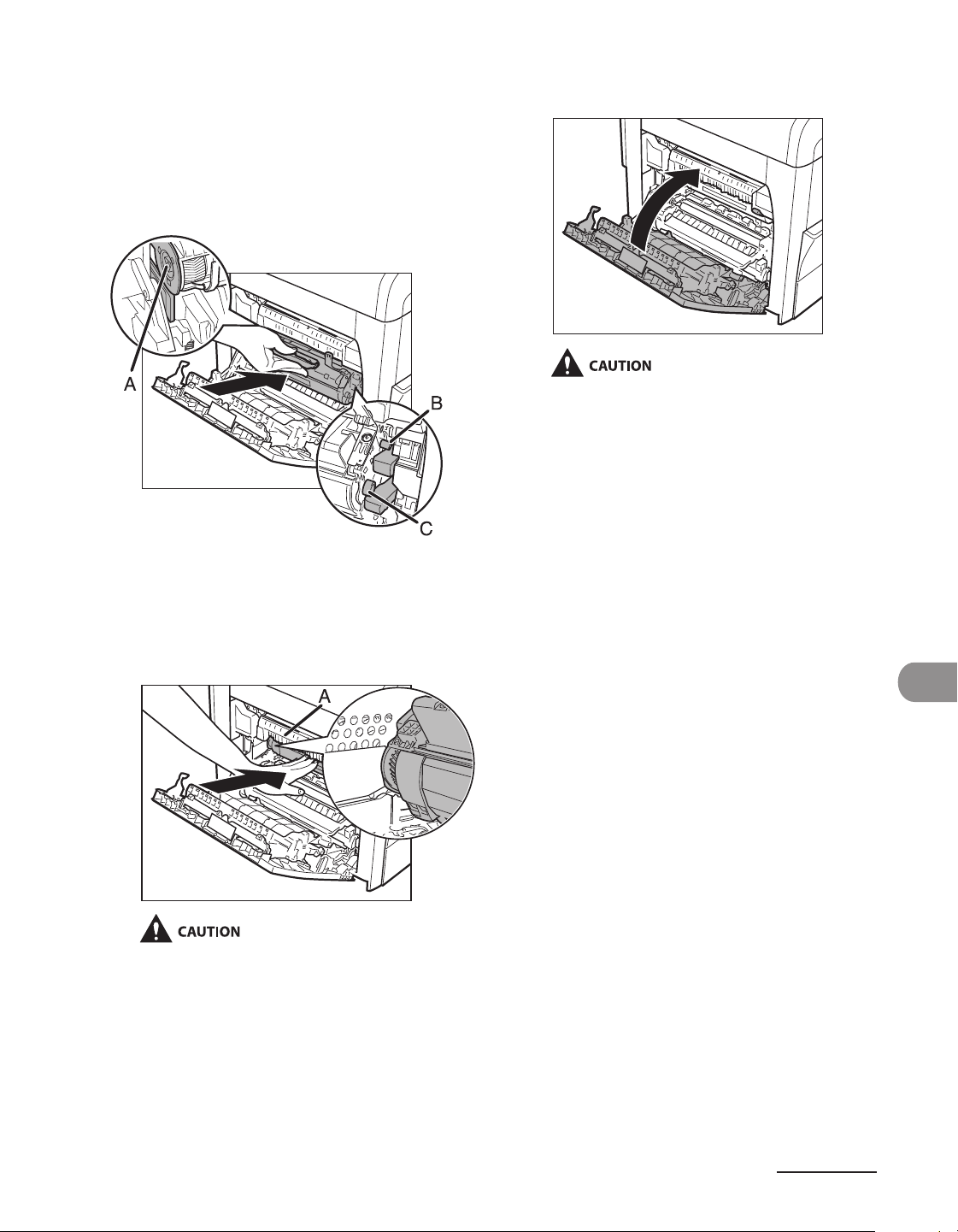
10-5
Maintenance
8 Insert the toner cartridge into the
machine as far as it will go.
The left edge (A) and the right side
protrusions (B, C) of the toner cartridge
should be aligned with on the guides inside
the machine.
9 Push the toner cartridge to make
sure it is properly set in the
machine.
Do not touch the fixing assembly (A) as it
becomes very hot during use.
10 Close the left cover.
Be careful not to get your fingers caught.
If you cannot close the left cover, do not
force it to close. Open the cover and make
sure the toner cartridge is properly set in
the machine.
11 Reconnect the power cord and
turn on the main power switch.
–
–
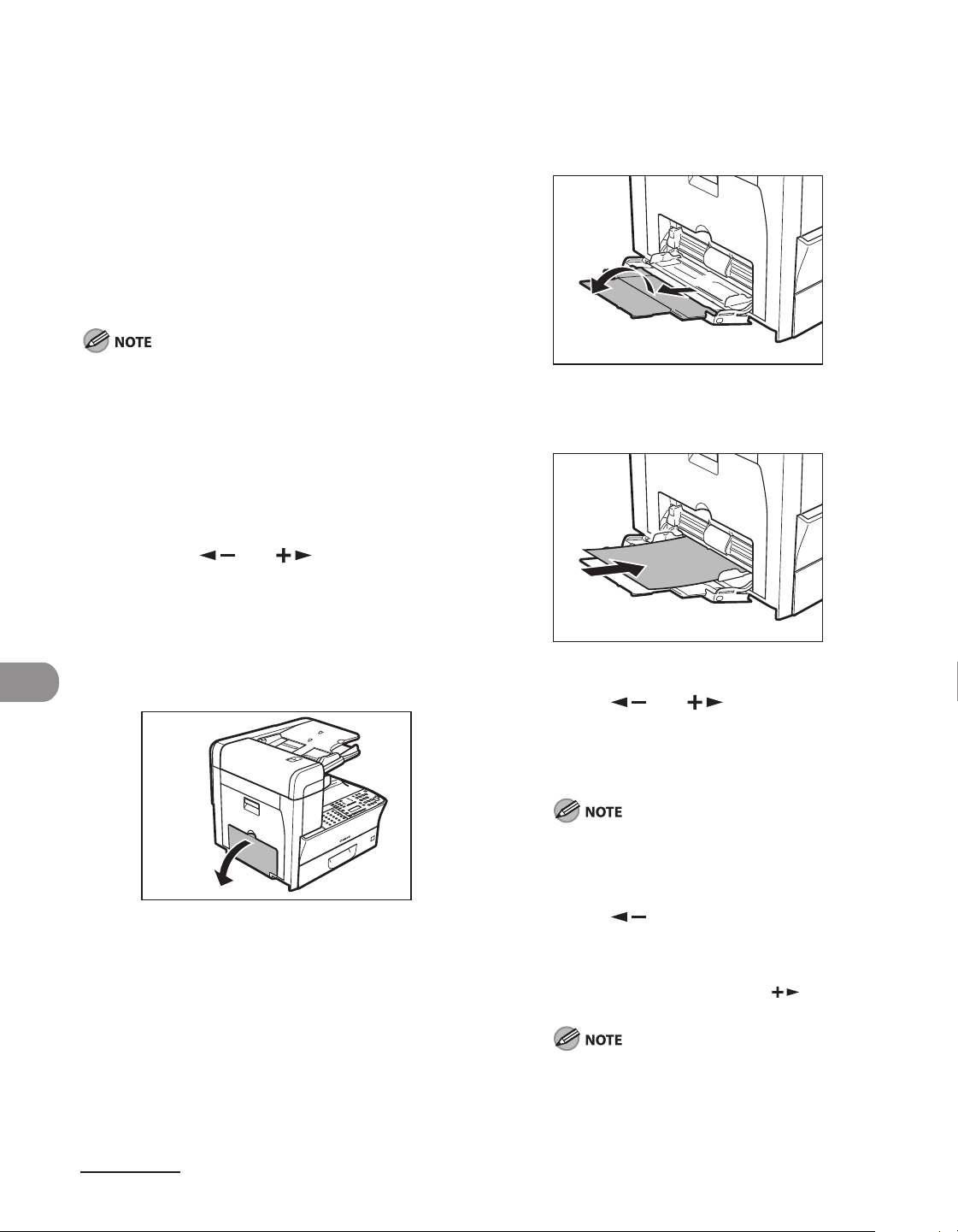
Maintenance
10-6
Fuser Roller
If black spots appear with printing, the fuser
roller in the main unit may be dirty.
Should this occur, clean the fusing roller
in the following procedure. The roller
should also be cleaned each time the toner
cartridge is replaced. Load a sheet of blank
LTR paper into the multi-purpose tray and
start cleaning.
Cleaning the roller takes approximately 130
seconds.
When some jobs are stored in memory, this
function is not available.
1 Press [Additional Functions].
2 Press [ ] or [ ] to select
<ADJUST./CLEANING>, then press
[OK].
3 Open the multi-purpose tray.
–
–
4 Pull out the multi-purpose tray
extension until it clicks, then open
it.
5
Load a sheet of blank LTR paper.
6 Press [ ] or [ ] to select <FIX.
UNIT CLEANING>, then press [OK].
Cleaning starts. When finished, press [Stop] to
return to the standby mode.
Use standard paper as the cleaning paper.
Throw away the cleaning paper after use.
7 Press [ ] to select <YES>.
Cleaning starts. When finished, the display
returns to standby mode.
To not perform cleaning press [
] to select
<NO>.
Use standard paper as the cleaning paper.
Throw away the cleaning paper after use.
–
–
–
–
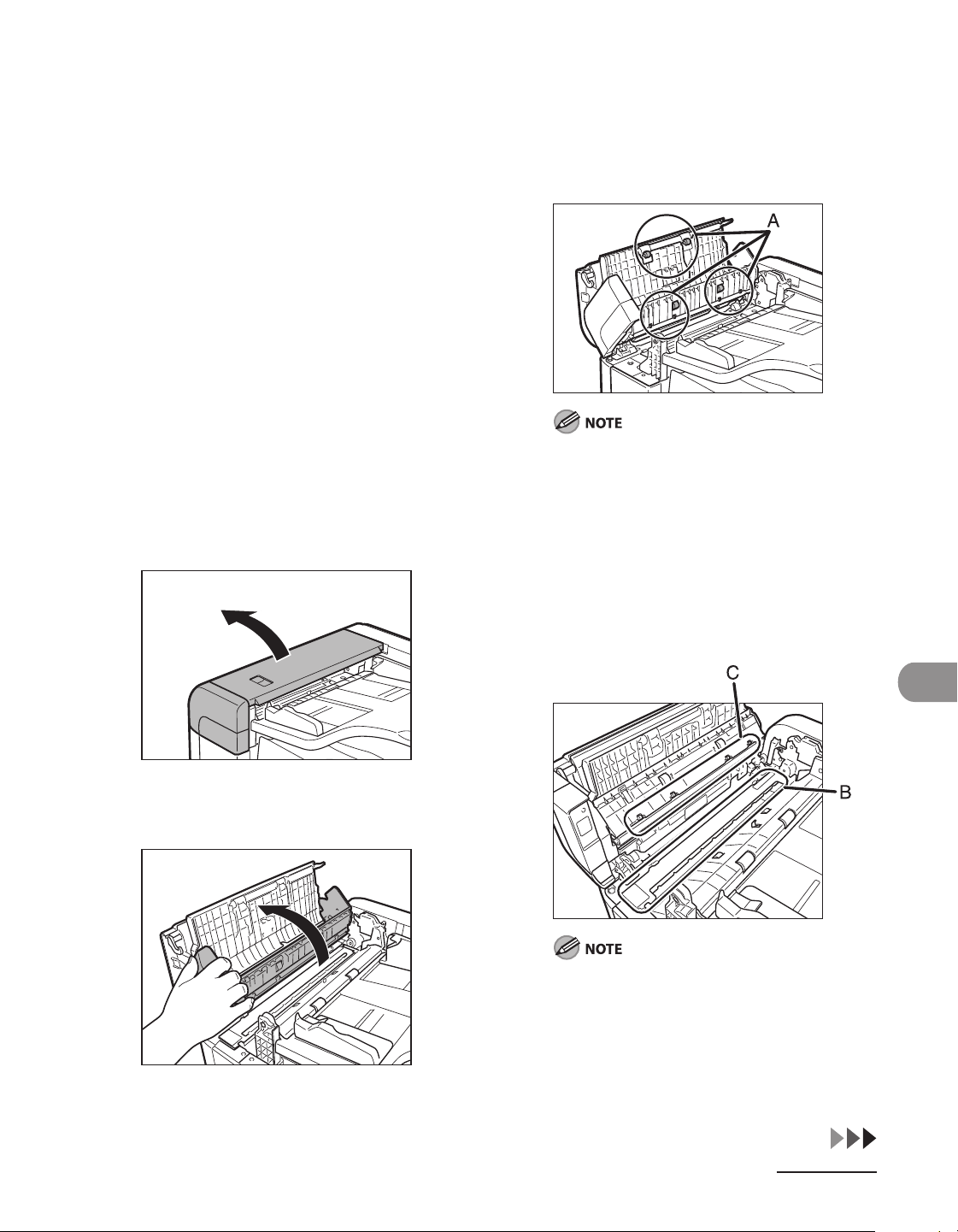
10-7
Maintenance
Scanning area
Keep the scanning area clean to avoid dirty
copies or faxes to be sent.
ADF
If your documents have black streaks or
appear dirty after copying them using the
ADF, this may be caused by pencil lead
rubbing off the documents and onto the
roller. Clean the ADF scanning area, film,
and roller.
1 Turn off the main power switch
and disconnect the power cord.
2 Lift the lever, and open the ADF
cover.
3 Open the feeder front cover.
●
4 Clean the rollers (A) inside the ADF
with a cloth dampened with water.
Then wipe the area with a soft, dry
cloth.
Do not dampen the cloth too much, as this
may tear the document or damage the
machine.
5 Clean the narrow glass plate (B)
and the white plate (C) with a cloth
dampened with water. Then wipe
the area with a soft, dry cloth.
Do not push on the white plate hard. The
white plate is a soft, delicate area.
Do not dampen the cloth too much, as this
may tear the document or damage the
machine.
–
–
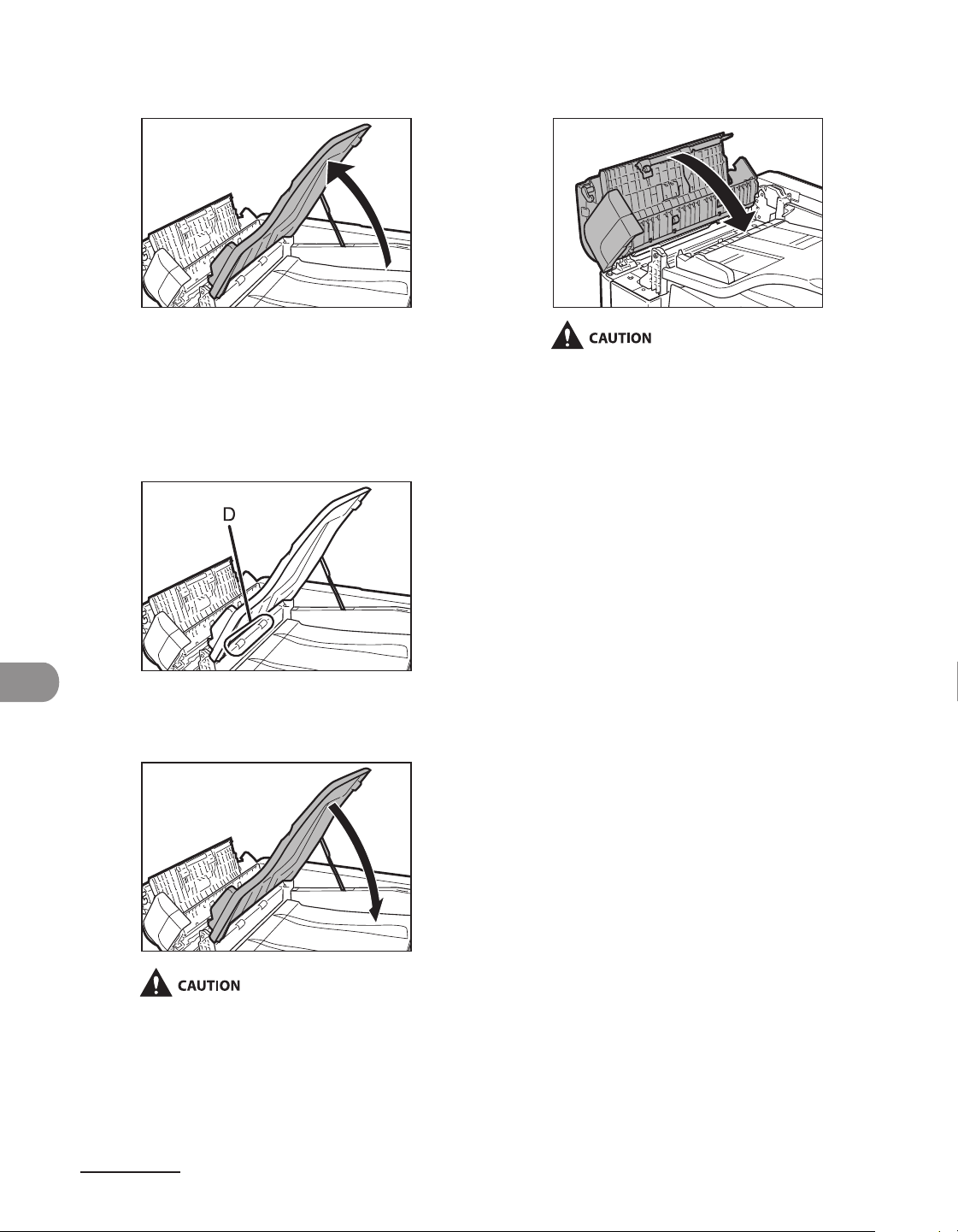
Maintenance
10-8
6 Lift the document feeder tray.
7
Clean the rollers (D) below the
document feeder tray with a cloth
dampened with water. Then wipe
the area with a soft, dry cloth.
8
Lower the document feeder tray.
Be careful not to get your fingers caught.
9 Close the ADF.
Be careful not to get your fingers caught.
10 Reconnect the power cord and turn
on the main power switch.Cleaning
the ADF Automatically.
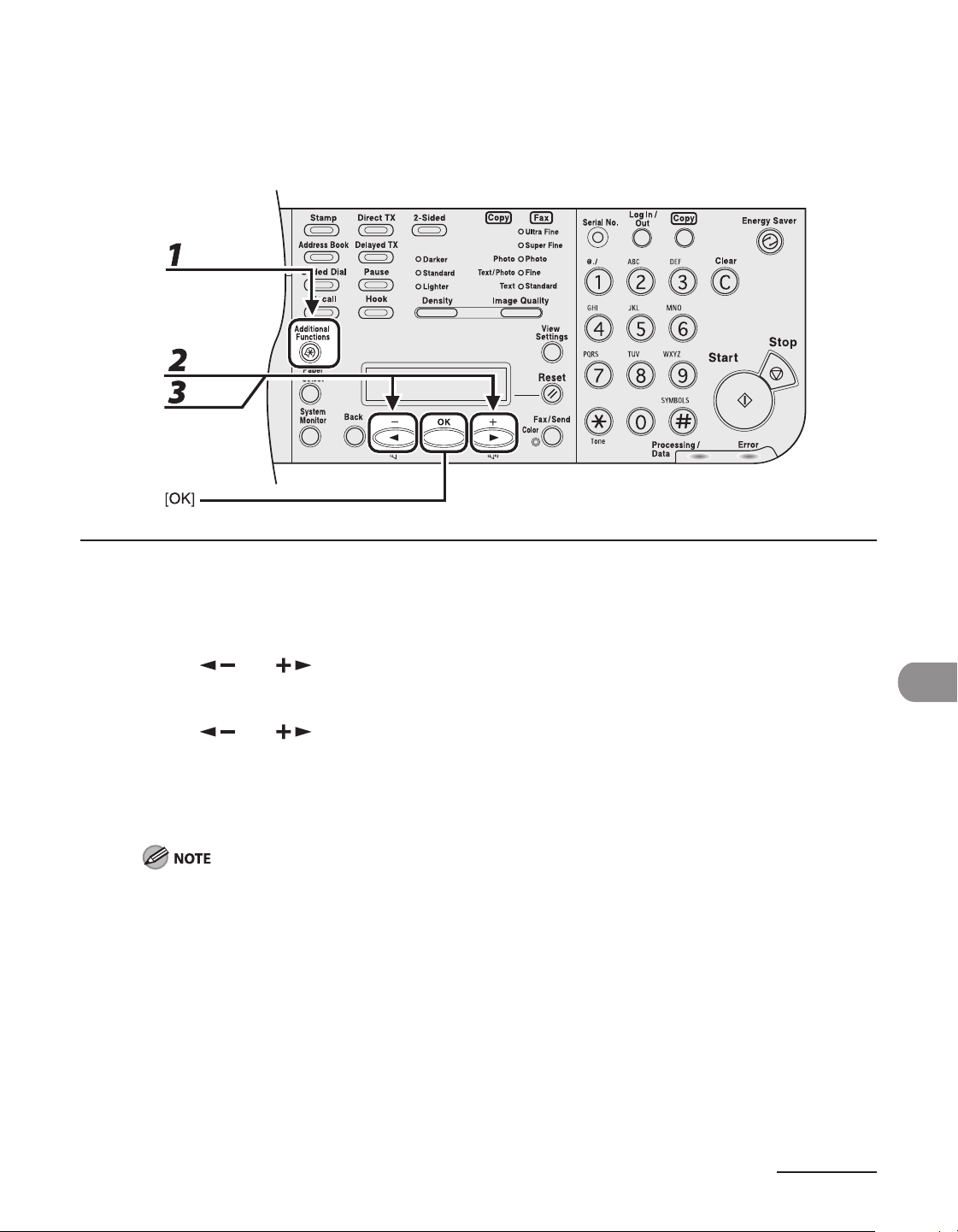
10-9
Maintenance
Cleaning the ADF Automatically
If your documents have black streaks or appear dirty after scanning them through the ADF,
clean the ADF roller by repeatedly feeding blank sheets of paper through it.
1 Press [Additional Functions].
2 Press [ ] or [ ] to select <ADJUST./CLEANING>, then press [OK].
3 Press [ ] or [ ] to select <FEEDER CLEANING>, then press [OK].
4 Load 5 sheets of blank paper into the ADF, then press [OK].
ADF cleaning starts. When finished, the display returns to standby mode.
Use LTR paper.
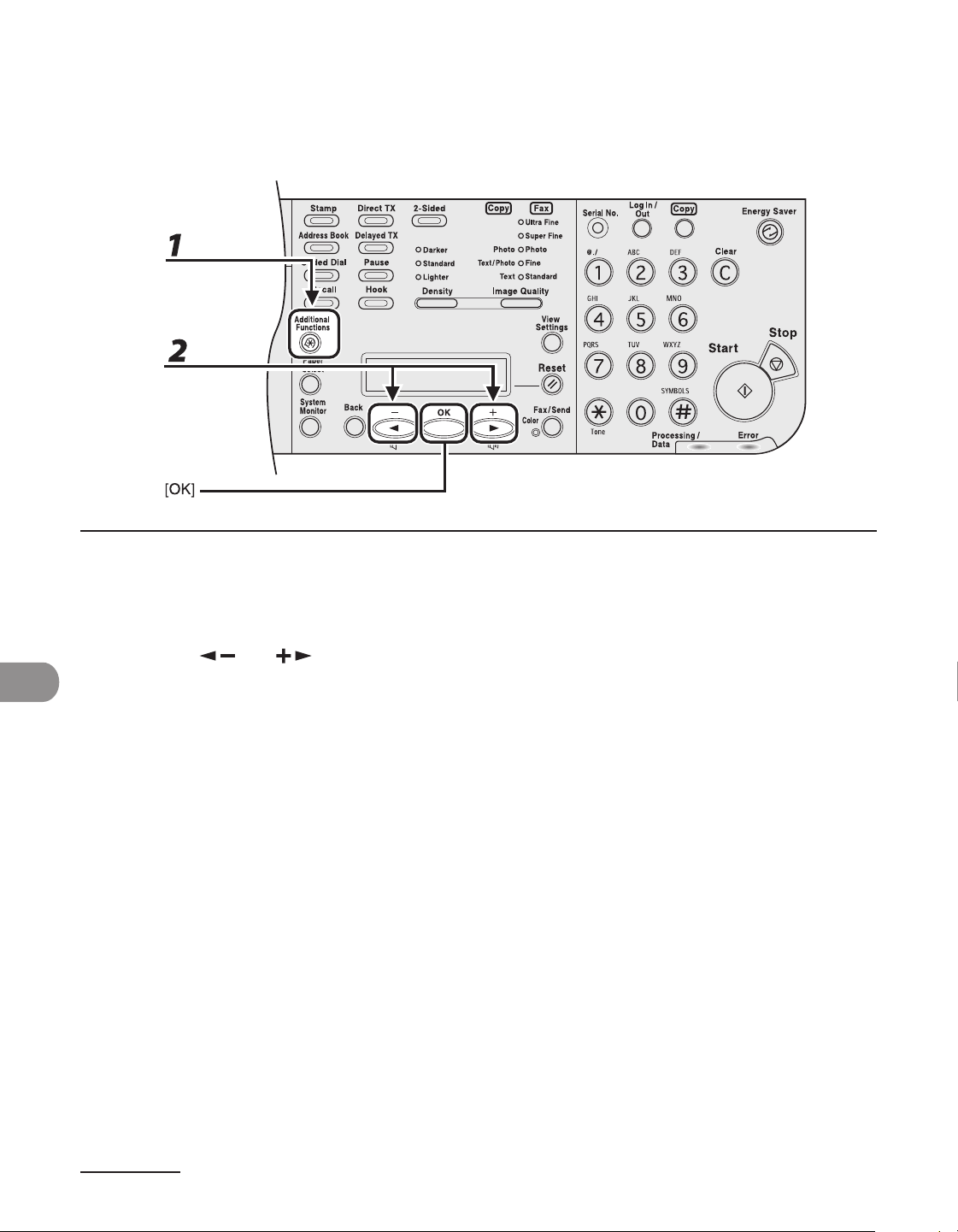
Maintenance
10-10
Transcription Roller
If the back of the paper is smudged after printing, the transcription roller may be dirty.
Clean the transcription roller in the following procedure.
1 Press [Additional Functions].
2 Press [ ] or [ ] to select <ADJUST./CLEANING>, then press [OK].
3 Confirm that <TRANS. ROLR CLEAN> is displayed, then press [OK].
Cleaning starts. When finished, the display returns to standby mode.
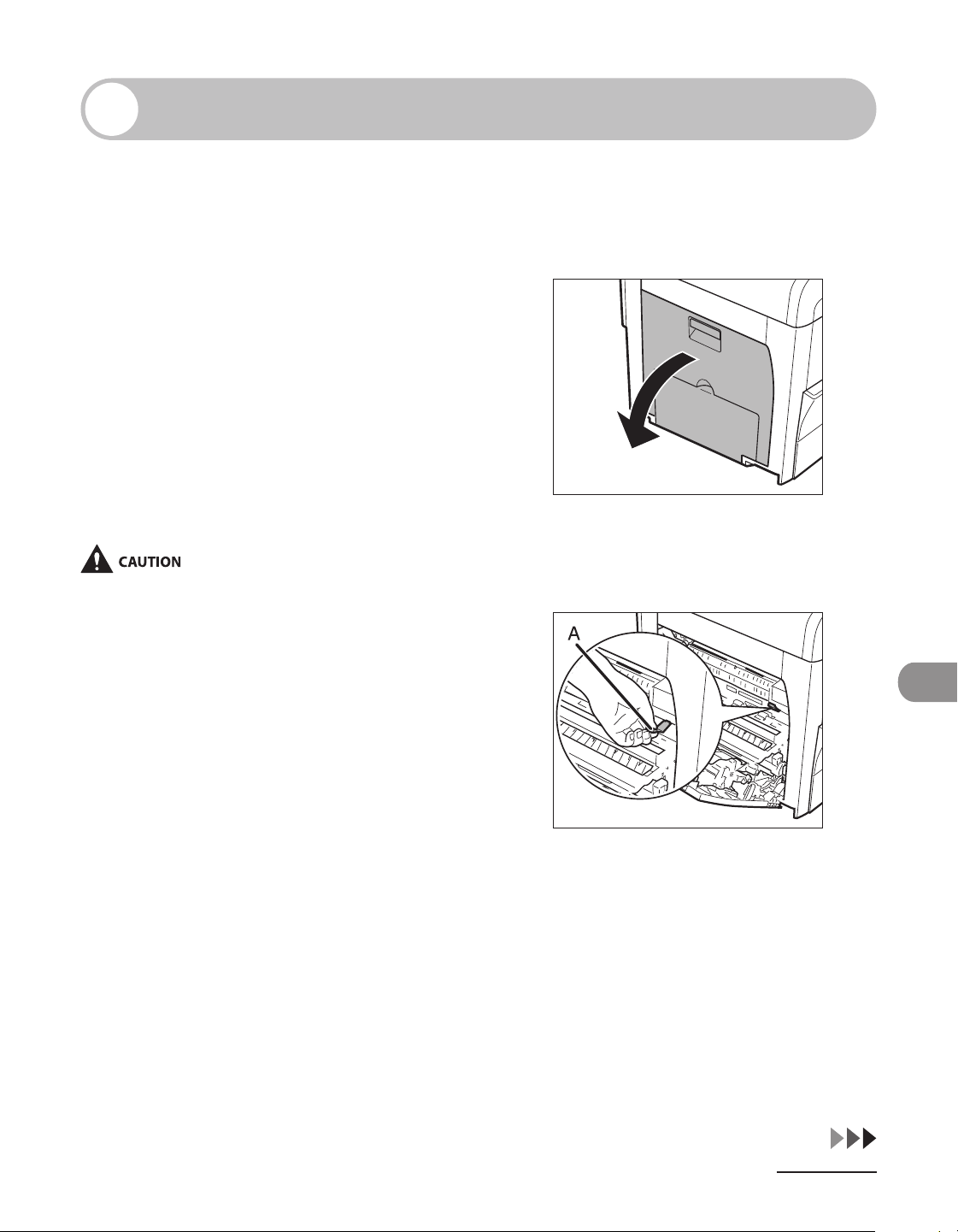
10-11
Maintenance
Replacing the Toner Cartridge
When the LCD displays <TONER LOW/
PREPARE NEW TONER>, the machine will
not print and stores all documents in
memory if it receives data. In this case,
redistribute toner in the toner cartridge.
If the message persists, replace the toner
cartridge.
If you want to print out the documents
without replacing the toner cartridge, set
<CONT. PRINTING> to <KEEP PRINTING>
in <RX SETTINGS> of <TX/RX COMMON
SET.> in <TX/RX SETTINGS>. (See “Setting
Menu,” on p. 12-5.)
When <CONT. PRINTING> is set to <KEEP
PRINTING>, the printed documents may be light or
blurred because of lack of toner. The data is erased
when the documents are printed out, so you can
not print the same documents again.
Do not touch the rollers and parts which have
labels “CAUTION! Hot surface avoid contact” on.
They become very hot during use.
–
–
Redistributing Toner
1 Open the left cover.
2 Grasp the blue plastic pull tab (A)
on the toner cartridge.
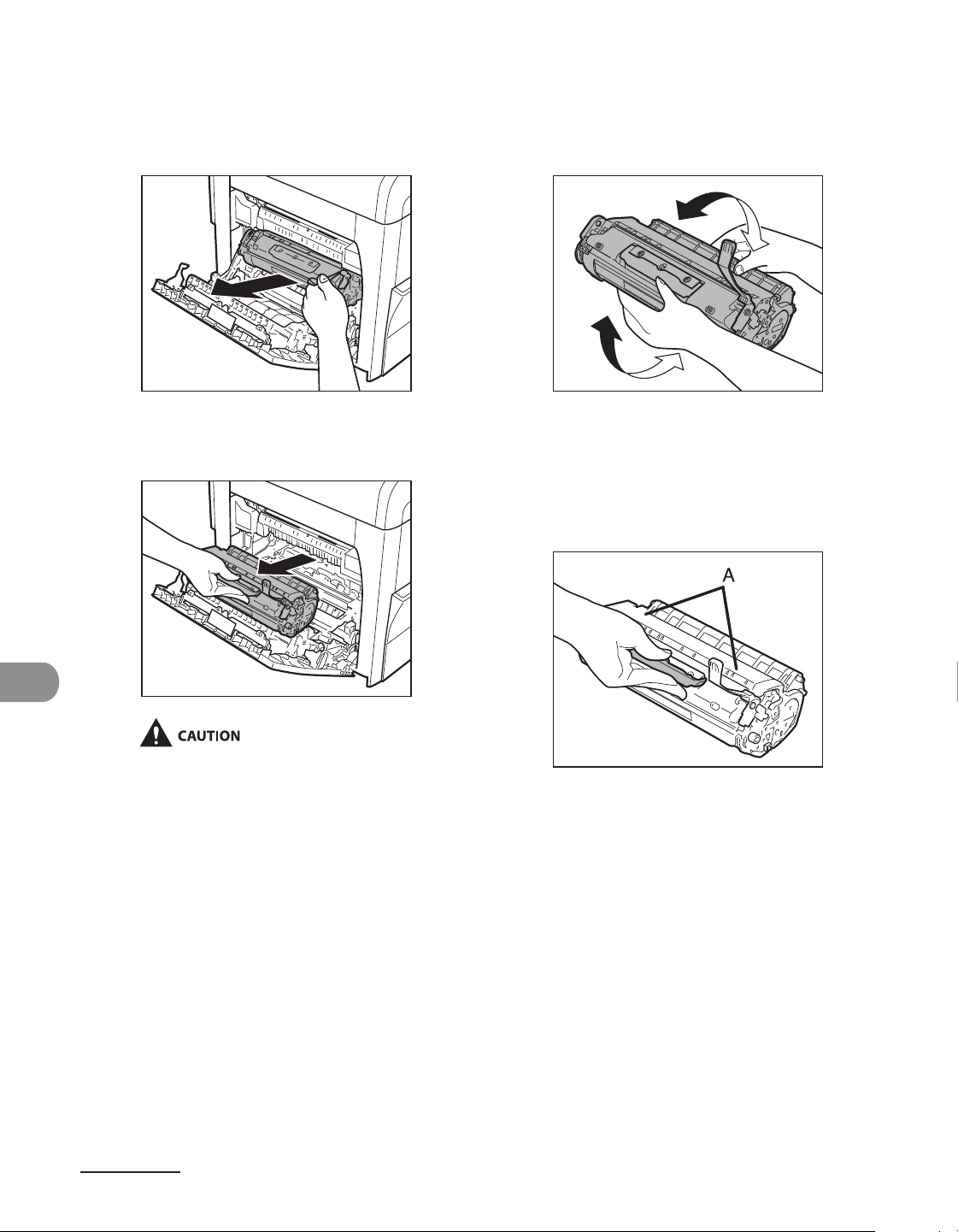
Maintenance
10-12
3 Pull the blue plastic pull tab until
you can easily hold the handle of
the toner cartridge.
4 Remove the toner cartridge.
Always hold the toner cartridge by its
handle.
Do not open the drum protective shutter
on the toner cartridge. Print quality may
deteriorate if the drum surface is exposed
to light or is damaged.
–
–
5 Gently rock the toner cartridge
5 or 6 times to distribute toner
evenly.
6 Hold the toner cartridge by its
handle.
The arrows (A) on the toner cartridge should
be pointing toward the machine.
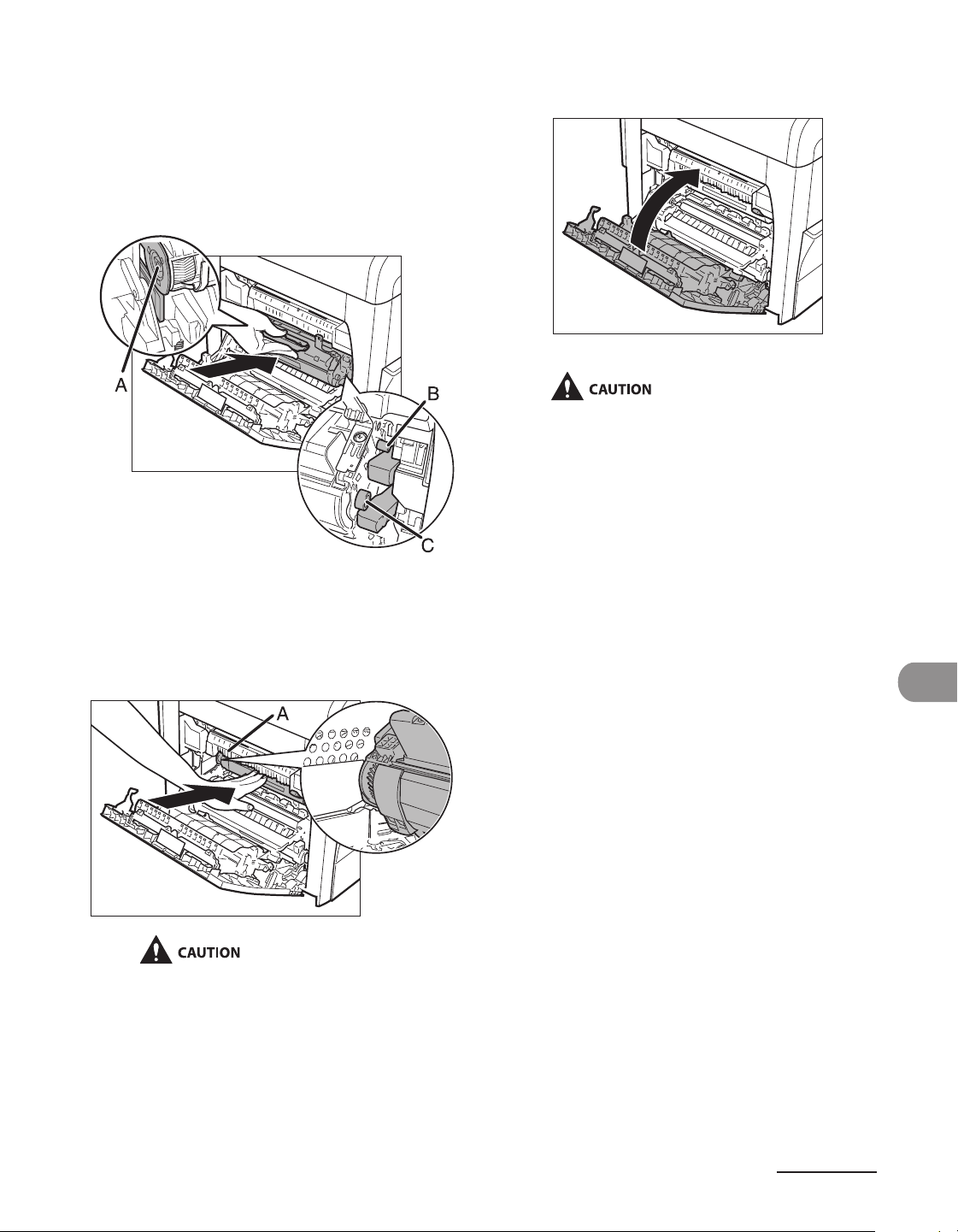
10-13
Maintenance
7 Insert the toner cartridge into the
machine as far as it will go.
The left edge (A) and the right side
protrusions (B, C) of the toner cartridge
should be aligned with the guides inside the
machine.
8 Push the toner cartridge to make
sure it is properly set in the
machine.
Do not touch the fixing assembly (A) as it
becomes very hot during use.
9 Close the left cover.
Be careful not to get your fingers caught.
If you cannot close the left cover, do not
force it to close. Open the cover and make
sure the toner cartridge is properly set in
the machine.
–
–
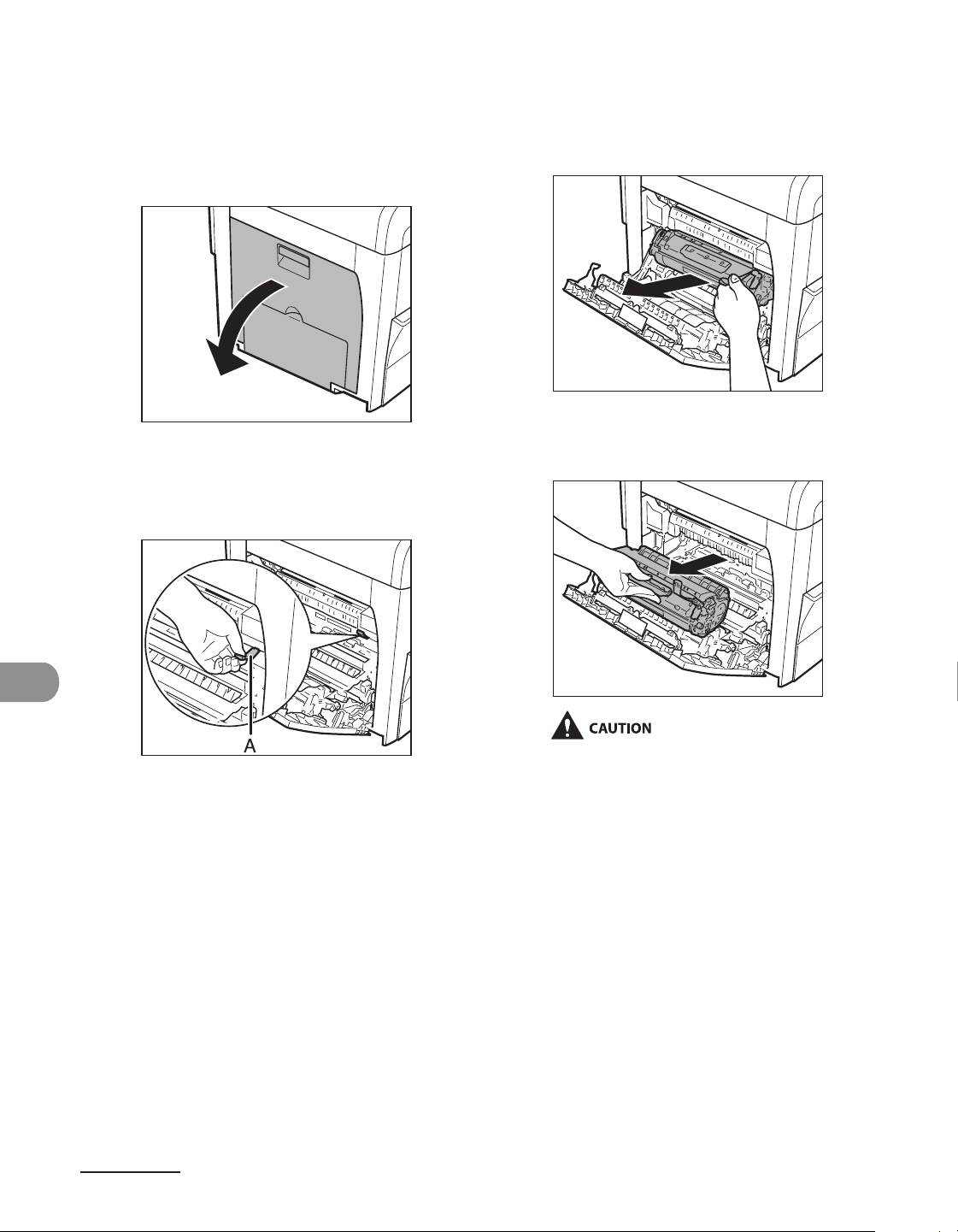
Maintenance
10-14
Replacing the Toner Cartridge
with a New One
1 Open the left cover.
2 Grasp the blue plastic pull tab (A)
on the toner cartridge.
3 Pull the blue plastic pull tab until
you can easily hold the handle of
the toner cartridge.
4 Remove the toner cartridge.
Always hold the toner cartridge by its
handle.
Do not open the drum protective shutter
on the toner cartridge. Print quality may
deteriorate if the drum surface is exposed
to light or is damaged.
–
–
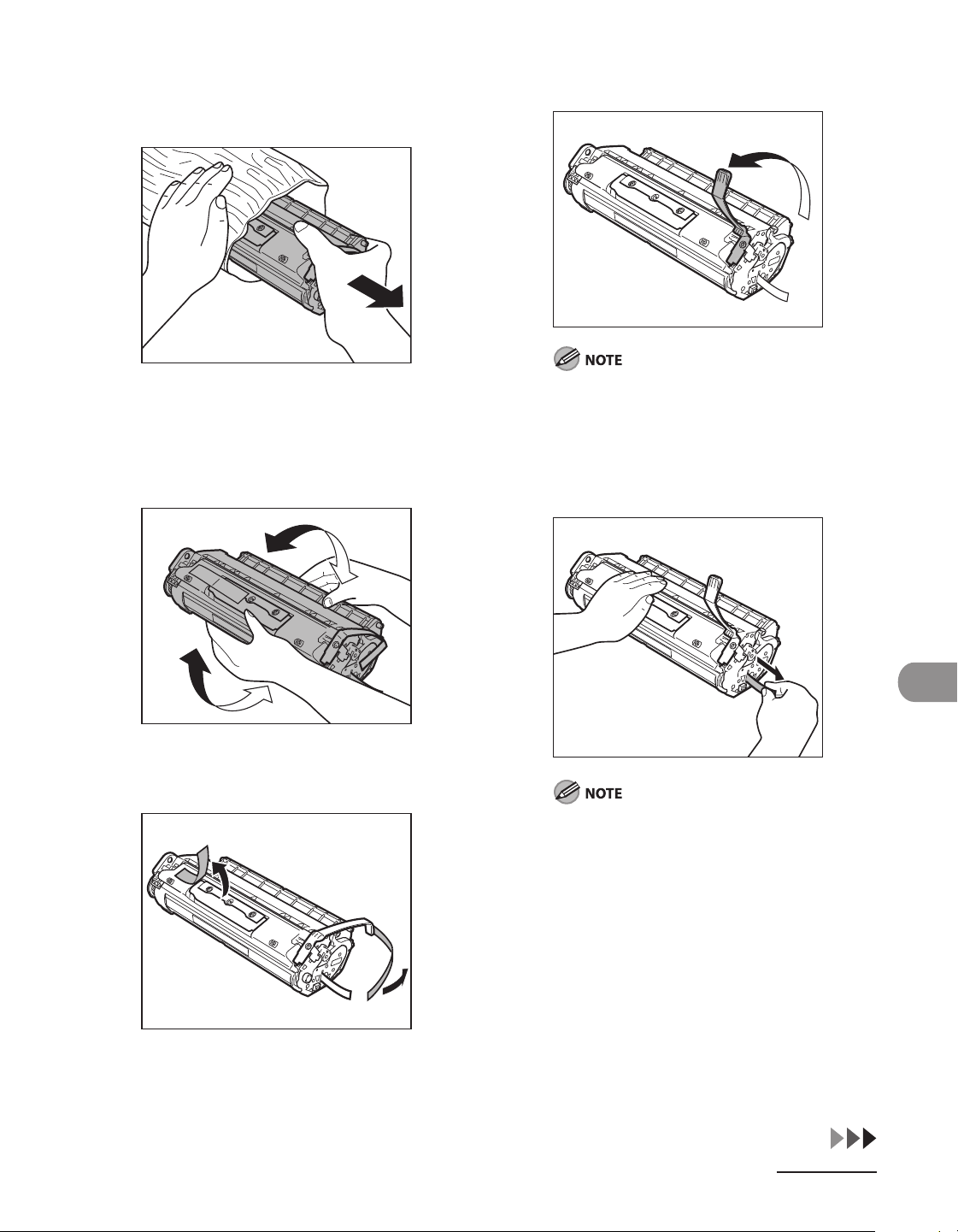
10-15
Maintenance
5 Remove the new toner cartridge
from the protective material.
6 Gently rock the toner cartridge
5 or 6 times to distribute toner
evenly.
7 Remove the seals (2 places).
8
Bend back the blue plastic pull tab.
Do not remove the pull tab as it is used to
pull out the toner when the cartridge needs
replaced.
9
Pull out the seal completely.
Do not pull out the seal at an angle.
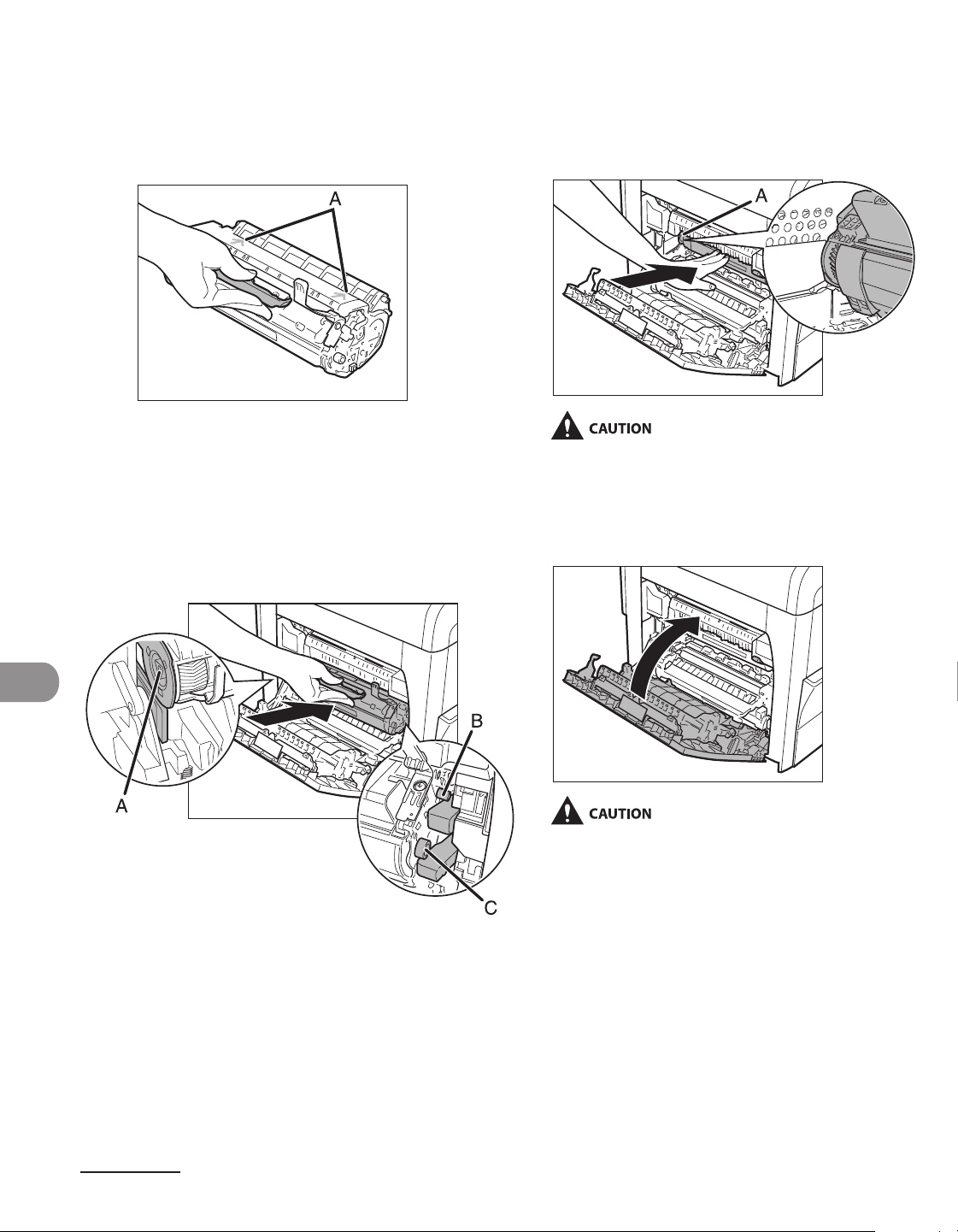
Maintenance
10-16
10 Hold the toner cartridge by its
handle.
The arrows (A) on the toner cartridge should
be pointing toward the machine.
11 Insert the toner cartridge into the
machine as far as it will go.
The left edge (A) and the right side
protrusions (B, C) of the toner cartridge
should be aligned with the guides inside the
machine.
12 Push the toner cartridge to make
sure it is properly set in the
machine.
Do not touch the fixing assembly (A) as it
becomes very hot during use.
13 Close the left cover.
Be careful not to get your fingers caught.
If you cannot close the left cover, do not
force it to close. Open the cover and make
sure the toner cartridge is properly set in
the machine.
–
–
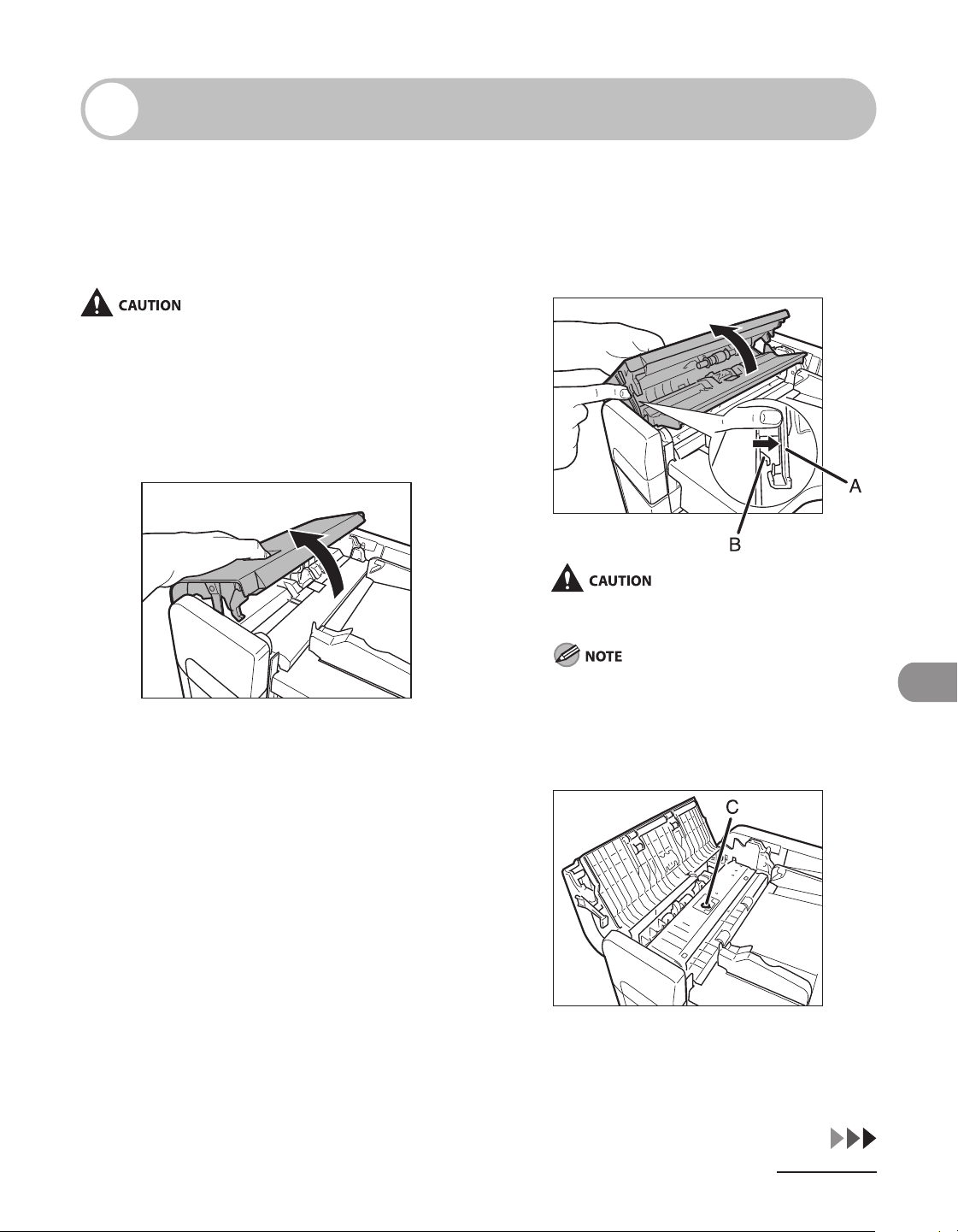
10-17
Maintenance
Replacing the Stamp Cartridge
Sent originals can be stamped to indicate
that they have been sent. Replace the
stamp cartridge when this mark is faint
or no longer visible.
When replacing the stamp cartridge, take care not
to allow ink to come into contact with your hands or
clothing. If ink gets onto your hands or clothing, wash
it off immediately with cold water.
1 Open the feeder cover half way.
2 With the feeder cover open half
way, push the link arm as you open
the feeder cover completely.
Push the link arm (A) before it catches onto
the hook (B).
The feeder cover opens as below, and the
stamp cartridge (C) can be replaced. If the
feeder cover does not open properly, close
the feeder slightly. Then open the feeder
cover again, as you push the link arm.
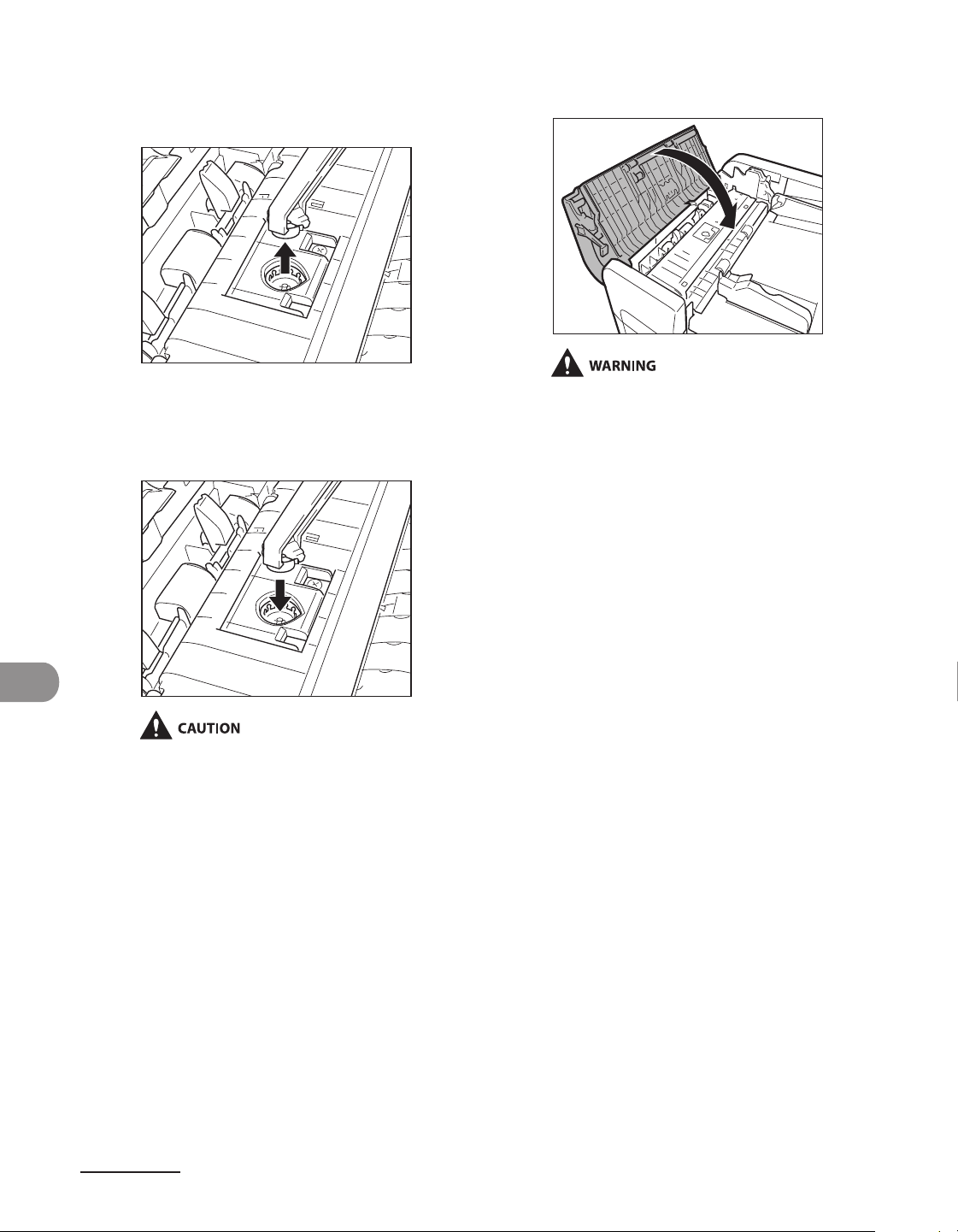
Maintenance
10-18
3 Remove the old stamp cartridge,
using tweezers.
4 Push in the new stamp cartridge
until it clicks, using tweezers.
Make sure that the stamp cartridge is not
protruding from the surface.
Insert the stamp cartridge properly, or it
may cause paper jams.
–
–
5 Gently close the feeder cover.
When closing the covers, be careful not to
get your fingers caught, as this may result in
personal injury.
10-19
Maintenance
Recycling Used Cartridges
Canon has instituted a worldwide recycling program for cartridges
called “The Clean Earth Campaign”. This program preserves precious
natural resources by utilizing a variety of materials found in the
used cartridges that are of no further use, to remanufacture new
cartridges which, at the same time, keeps the environment cleaner
by reducing landfill waste. Complete details concerning this program
are enclosed in each Cartridge box.
The Clean Earth Campaign
THE Canon CARTRIDGE RECYCLING PROGRAM
The Canon Cartridge Recycling Program fulfills the first initiative of Canon’s Clean Earth
Campaign, which supports four critical environmental areas:
Recycling in the Workplace
Conserving Environmental Resources
Scientific Research and Education
Encouraging Outdoors Appreciation
The remaining “Clean Earth” initiatives are supported in the U.S. through sponsorships of
the National Park Foundation, the National Wildlife Federation, and The Nature Conservancy
and in Canada through donations to the World Wildlife Fund Canada and The Nature
Conservancy of Canada.
●
●
●
●
●

Maintenance
10-20
Since its inception, The Canon Cartridge Recycling Program has collected huge amount
of cartridges that otherwise would have been discarded into landfills or similar facilities.
Instead, this rapidly growing program returns used cartridges to the manufacturing
process, thus conserving an array of resources.
Becoming a part of this worthwhile program is easy. When your cartridge is of no further
use, simply follow the instructions detailed for U.S. or Canadian residents.
We appreciate your support of The Canon Cartridge Recycling Program.
Working together we can make a significant contribution to a cleaner planet.
Cartridges collected through this program are not refilled.
You are not entitled to a tax deduction or rebate for the return of empty cartridges.
This program may be modified or discontinued without notice.
●
●
●
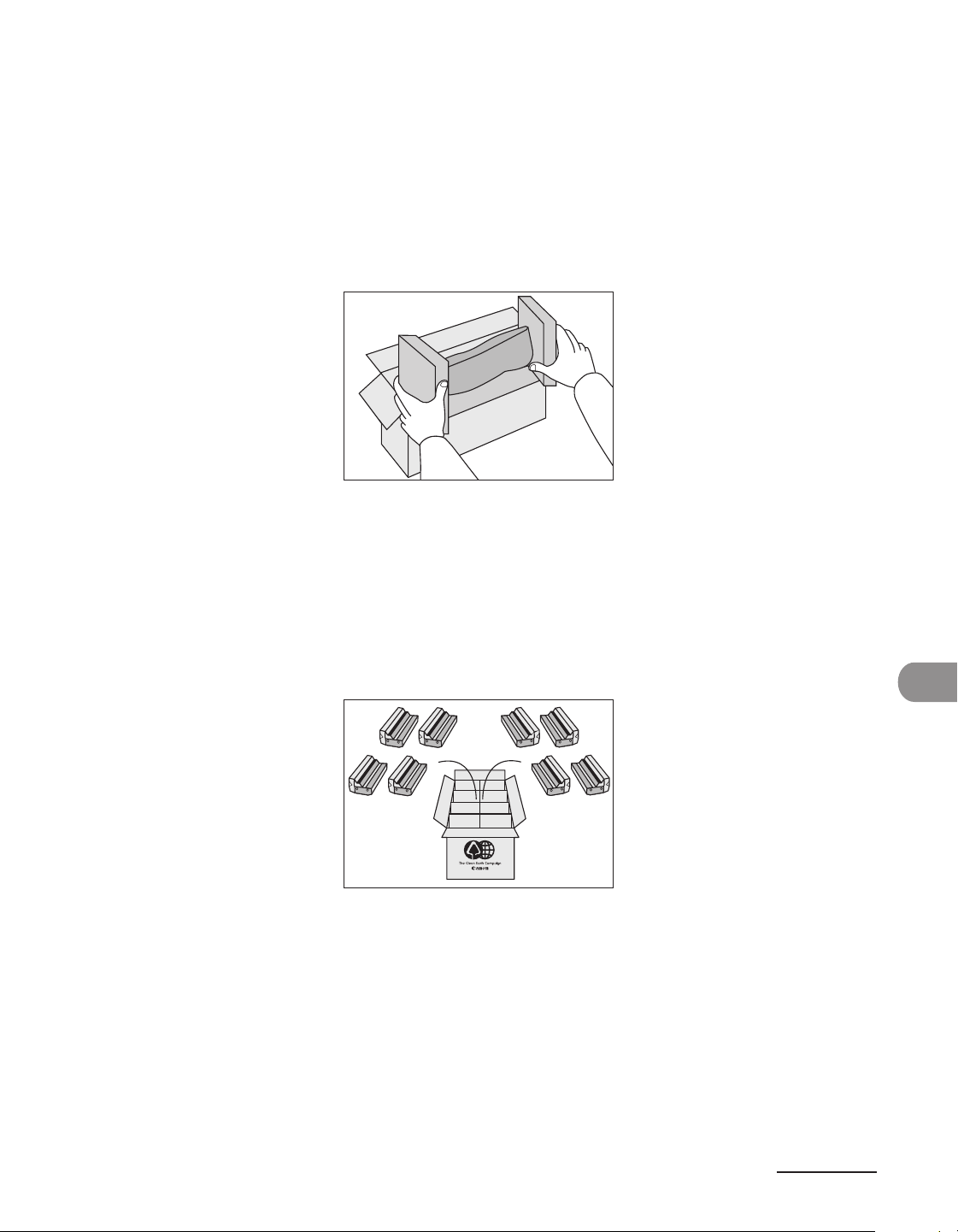
10-21
Maintenance
U.S.A. PROGRAM
Packaging
Option A-1: Single Box Return
Repackage the empty cartridge utilizing the wrapper and pulp mould end-blocks from
the new cartridge’s box.
Place the empty cartridge in the box of your new cartridge. Seal the box.
Option B: Volume Box Return
We encourage you to use this option as a more efficient way to ship cartridges.
Place as many cartridges as possible into one box.
Carefully seal the box with tape;
or
Call 1-800-OK-Canon to receive your free eight cartridge collection box.
●
■
●
●
■
●
●
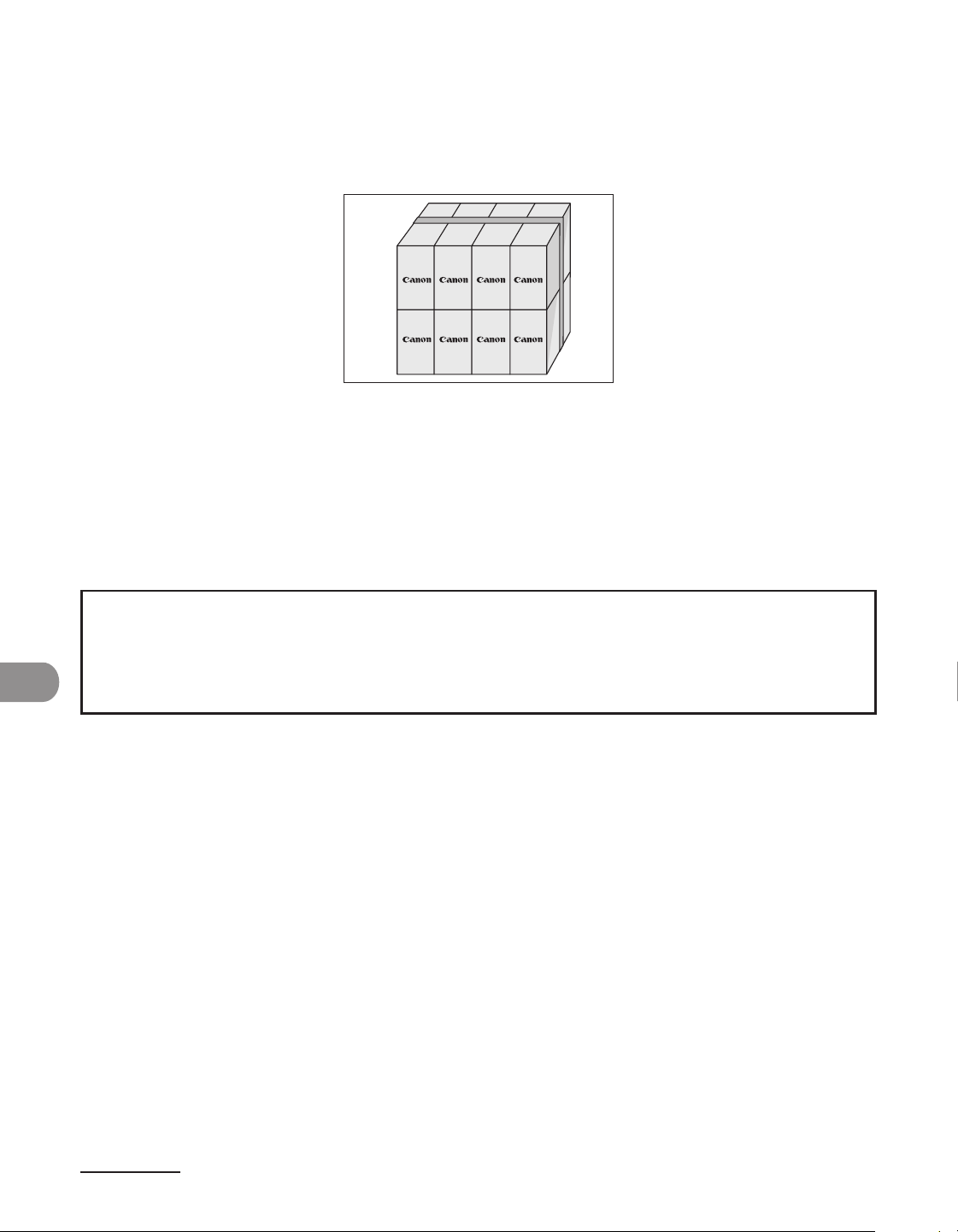
Maintenance
10-22
Option A-2: Multiple Box Return
We encourage you to use this option as a more efficient way to ship cartridges.
Complete Option A-1.
Bundle multiple cartridge boxes together securely with tape.
Please be sure that the shipment does not exceed UPS specifications.
Maximum weight = 70 lb. (31.8 kg)
Maximum length = 108 in. (2,743 mm)
Maximum girth (length + 2 x width + 2 x height) = 130 in. (3,302 mm)
If your shipment exceeds the above limits, please call
1-800-OK-Canon for special
shipping information.
Please Note:
Do not send defective cartridges for replacement.
Defective cartridges under warranty should be exchanged by an authorized dealer or
service facility as provided in the warranty.
■
●
●
10-23
Maintenance
Shipping
Apply the UPS authorized returning label provided in this guide.
Residents of Alaska and Hawaii: Do not use the UPS authorized returning label. For Alaska
and Hawaii Canon set up alternative mail service with the U.S. Postal Service.
Please call 1-800-OK-Canon to receive U.S. Postal Service merchandise returning label.
Option: UPS Pick-up
Give the shipment to your UPS driver when you receive your next regular delivery;
or
Take the shipment to your local UPS receiving point.
●
■
●
●
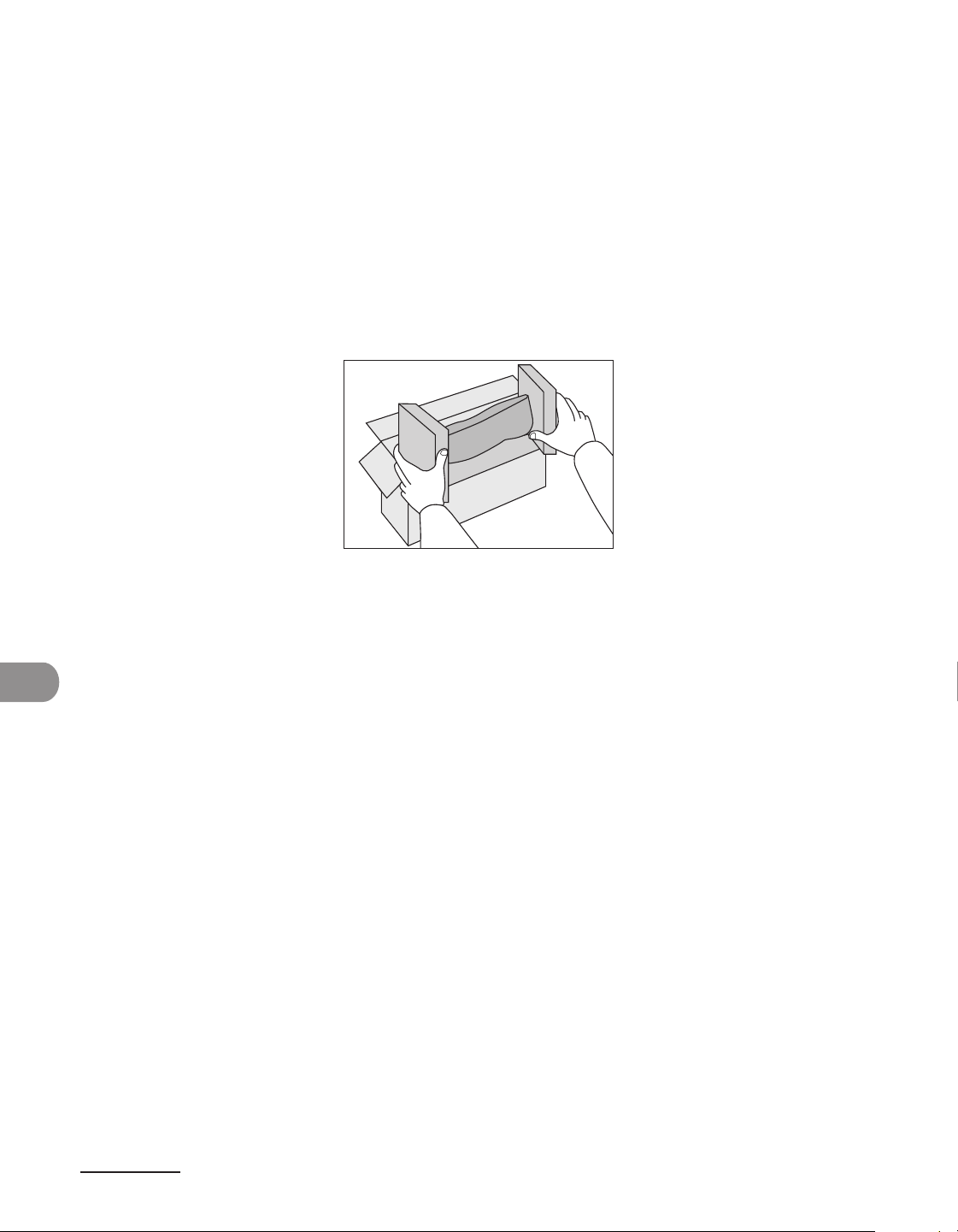
Maintenance
10-24
CANADA PROGRAM-CANADA PROGRAMME
Option A: Single Box Return
Repackage the empty cartridge utilizing the wrapper and pulp mould end-blocks from
the new cartridge’s box.
Place the empty cartridge in the box of your new cartridge. Seal the box.
Apply the Canon Canada Inc./Canada Post label provided in this brochure. Canon’s
labels are specially marked so that Canon pays the postage.
Deposit your empty cartridge in any full size street mailbox or take it to your local
Canada Post outlet or franchise.
Option B: Volume Box Return (eight or more cartridges)
We encourage you to use this option as a more efficient way to ship cartridges.
Call 1-800-667-2666 to receive your free Canon collection box kit.
The collection box can accommodate eight individual cartridge boxes.
Place your eight individually packaged boxes of empty cartridges into the Canon
collection box. Seal the box.
■
●
●
●
●
■
●
●
●
10-25
Maintenance
Apply the Canon Canada Inc./Canada Post label provided in this brochure.
Canon’s labels are specially marked so that Canon pays the postage.
Deliver to any local Canada Post outlet or franchise. Customers who hold a Commercial
pick-up agreement with Canada Post may have their collection box picked up.
Working to preserve endangered species is a long-standing Canon interest.
To this end, for every cartridge collected, Canon Canada donates $1, shared equally
between World Wildlife Fund Canada and the Nature Conservancy of Canada. This
donation is utilized in Canada.
For further information about The Clean Earth Campaign in Canada, please call or write
to Canon.
1-800-667-2666
Canon Canada Inc.
Corporate Customer Relations
6390 Dixie Road
Mississauga, ON L5T 1P7
●
●
●
●
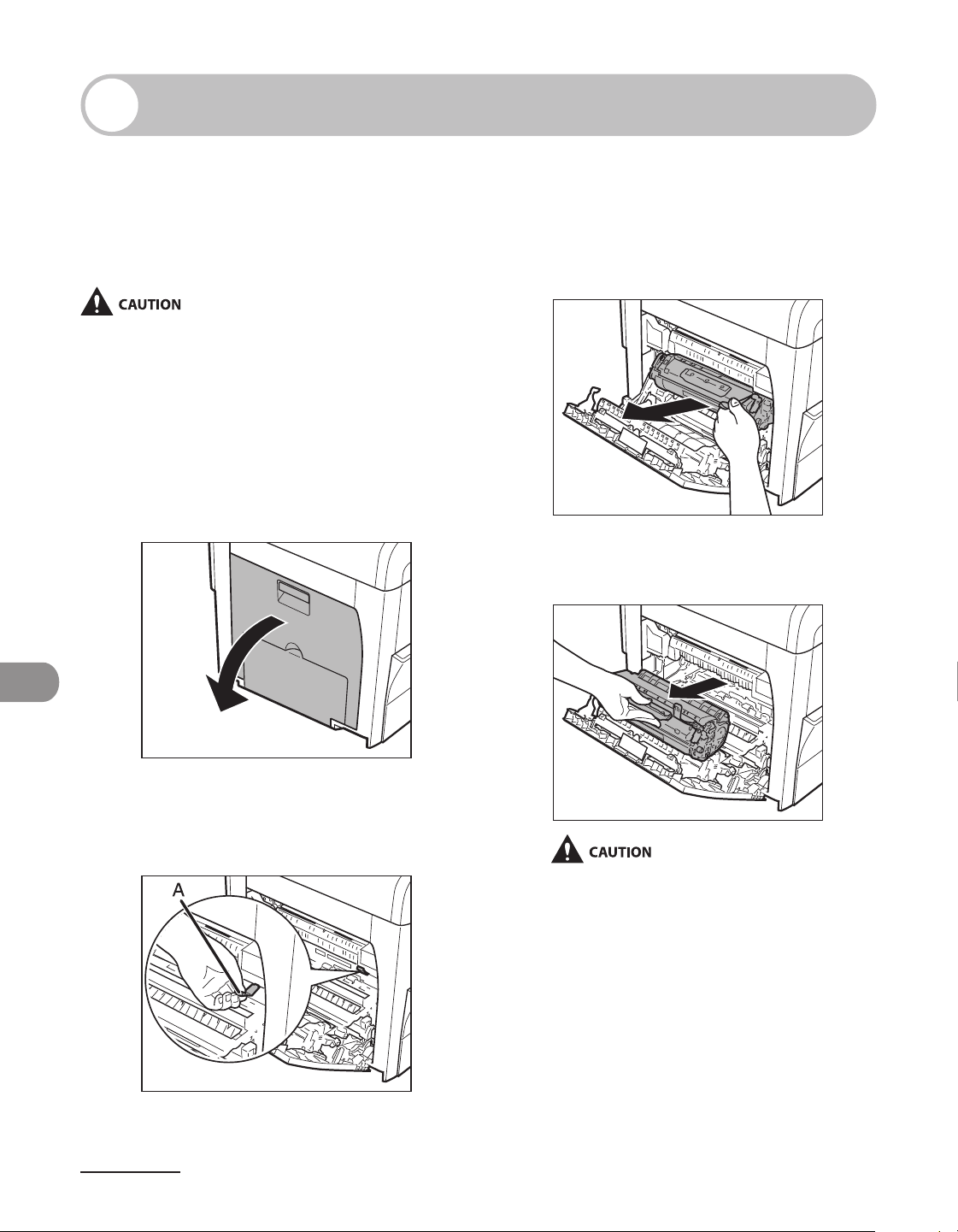
Maintenance
10-26
Transporting the Machine
Follow this procedure to avoid
vibration damage to the machine when
transporting it over a long distance.
Be sure at least two people carry the machine.
1 Disconnect the power cord and
all the cables from the back of the
machine.
2 Open the left cover.
3 Grasp the blue plastic pull tab (A)
on the toner cartridge.
4 Pull the blue plastic pull tab until
you can easily hold the handle of
the toner cartridge.
5 Remove the toner cartridge.
Always hold the toner cartridge by its
handle.
To avoid exposing the toner cartridge to
light, place it in its protective bag or wrap it
in a thick cloth.
Do not open the drum protective shutter
on the toner cartridge. Print quality may
deteriorate if the drum surface is exposed
to light or is damaged.
–
–
–
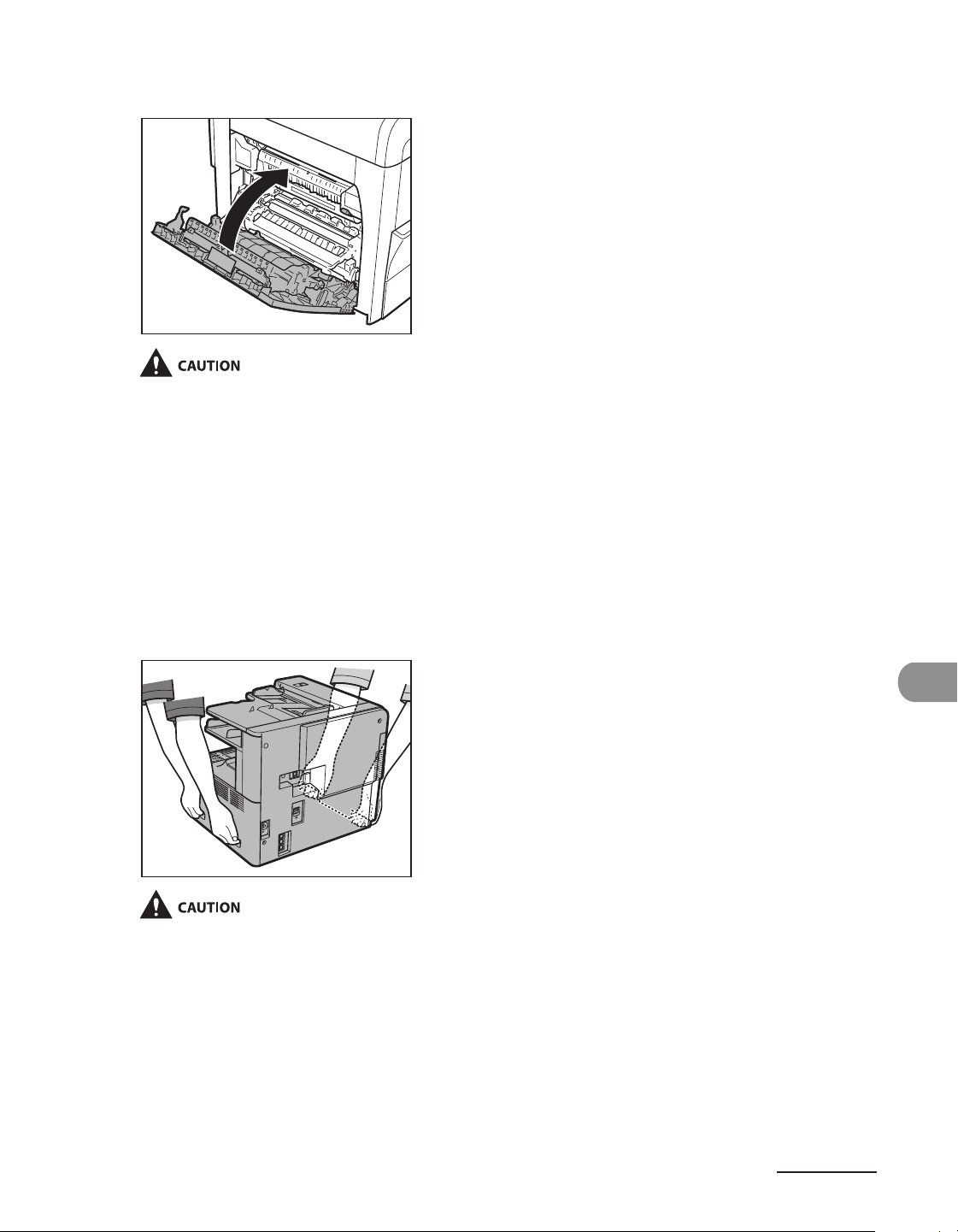
10-27
Maintenance
6 Close the left cover.
Be careful not to get your fingers caught.
7 Make sure the multi-purpose tray
and the paper stopper are back in
their original position.
8 Pick up the machine using the
provided hand grips on the left
and right sides.
Be sure at least two people carry the
machine.
Do not lift the machine by any of its
attachments. Dropping the machine can
cause personal injury.
If you have a back problem, make sure to
check the weight of this machine before
carrying. (See "Specifications," on p. 13-2.)
–
–
–

Maintenance
10-28

Troubleshooting
11
Troubleshooting
Clearing Jams ∙∙∙∙∙∙∙∙∙∙∙∙∙∙∙∙∙∙∙∙∙∙∙∙∙∙∙∙∙∙∙∙∙∙∙∙∙∙∙∙∙∙∙∙∙∙∙∙∙∙∙∙∙∙∙∙∙∙∙∙∙∙∙∙∙∙∙∙∙∙∙∙∙∙∙∙ 11-2
Document Jams ∙∙∙∙∙∙∙∙∙∙∙∙∙∙∙∙∙∙∙∙∙∙∙∙∙∙∙∙∙∙∙∙∙∙∙∙∙∙∙∙∙∙∙∙∙∙∙∙∙∙∙∙∙∙∙∙∙∙∙∙∙∙∙∙∙∙∙∙∙∙∙∙∙∙∙∙∙∙∙∙∙∙11-3
Paper Jams ∙∙∙∙∙∙∙∙∙∙∙∙∙∙∙∙∙∙∙∙∙∙∙∙∙∙∙∙∙∙∙∙∙∙∙∙∙∙∙∙∙∙∙∙∙∙∙∙∙∙∙∙∙∙∙∙∙∙∙∙∙∙∙∙∙∙∙∙∙∙∙∙∙∙∙∙∙∙∙∙∙∙∙∙∙∙∙∙∙∙∙∙11-4
LCD Messages ∙∙∙∙∙∙∙∙∙∙∙∙∙∙∙∙∙∙∙∙∙∙∙∙∙∙∙∙∙∙∙∙∙∙∙∙∙∙∙∙∙∙∙∙∙∙∙∙∙∙∙∙∙∙∙∙∙∙∙∙∙∙∙∙∙∙∙∙∙∙∙∙∙∙∙ 11-7
Error Codes ∙∙∙∙∙∙∙∙∙∙∙∙∙∙∙∙∙∙∙∙∙∙∙∙∙∙∙∙∙∙∙∙∙∙∙∙∙∙∙∙∙∙∙∙∙∙∙∙∙∙∙∙∙∙∙∙∙∙∙∙∙∙∙∙∙∙∙∙∙∙∙∙∙∙∙∙∙∙ 11-13
If <LOAD CORRECT PAPER> is displayed ∙∙∙∙∙∙∙∙∙∙∙∙∙∙∙∙∙∙∙∙∙∙∙∙∙∙∙∙∙∙ 11-18
Re-Loading the Paper ∙∙∙∙∙∙∙∙∙∙∙∙∙∙∙∙∙∙∙∙∙∙∙∙∙∙∙∙∙∙∙∙∙∙∙∙∙∙∙∙∙∙∙∙∙∙∙∙∙∙∙∙∙∙∙∙∙∙∙∙∙∙∙∙∙∙∙∙ 11-18
Changing the Paper Size Setting ∙∙∙∙∙∙∙∙∙∙∙∙∙∙∙∙∙∙∙∙∙∙∙∙∙∙∙∙∙∙∙∙∙∙∙∙∙∙∙∙∙∙∙∙∙∙∙ 11-19
General Problems ∙∙∙∙∙∙∙∙∙∙∙∙∙∙∙∙∙∙∙∙∙∙∙∙∙∙∙∙∙∙∙∙∙∙∙∙∙∙∙∙∙∙∙∙∙∙∙∙∙∙∙∙∙∙∙∙∙∙∙∙∙∙∙∙∙∙∙∙∙∙∙∙∙∙∙∙ 11-21
Paper Feeding Problems ∙∙∙∙∙∙∙∙∙∙∙∙∙∙∙∙∙∙∙∙∙∙∙∙∙∙∙∙∙∙∙∙∙∙∙∙∙∙∙∙∙∙∙∙∙∙∙∙∙∙∙∙∙∙∙∙∙∙∙∙∙∙∙ 11-23
Sending/Receiving Problems ∙∙∙∙∙∙∙∙∙∙∙∙∙∙∙∙∙∙∙∙∙∙∙∙∙∙∙∙∙∙∙∙∙∙∙∙∙∙∙∙∙∙∙∙∙∙∙∙ 11-24
Sending Problems ∙∙∙∙∙∙∙∙∙∙∙∙∙∙∙∙∙∙∙∙∙∙∙∙∙∙∙∙∙∙∙∙∙∙∙∙∙∙∙∙∙∙∙∙∙∙∙∙∙∙∙∙∙∙∙∙∙∙∙∙∙∙∙∙∙∙∙∙∙∙∙∙∙∙∙ 11-24
Receiving Problems ∙∙∙∙∙∙∙∙∙∙∙∙∙∙∙∙∙∙∙∙∙∙∙∙∙∙∙∙∙∙∙∙∙∙∙∙∙∙∙∙∙∙∙∙∙∙∙∙∙∙∙∙∙∙∙∙∙∙∙∙∙∙∙∙∙∙∙∙∙∙∙∙ 11-29
Copying Problems ∙∙∙∙∙∙∙∙∙∙∙∙∙∙∙∙∙∙∙∙∙∙∙∙∙∙∙∙∙∙∙∙∙∙∙∙∙∙∙∙∙∙∙∙∙∙∙∙∙∙∙∙∙∙∙∙∙∙∙∙∙∙∙∙∙∙∙∙∙∙∙∙∙∙∙ 11-35
Telephone Problems ∙∙∙∙∙∙∙∙∙∙∙∙∙∙∙∙∙∙∙∙∙∙∙∙∙∙∙∙∙∙∙∙∙∙∙∙∙∙∙∙∙∙∙∙∙∙∙∙∙∙∙∙∙∙∙∙∙∙∙∙∙∙∙∙∙∙∙∙∙∙ 11-37
If a Power Failure Occurs ∙∙∙∙∙∙∙∙∙∙∙∙∙∙∙∙∙∙∙∙∙∙∙∙∙∙∙∙∙∙∙∙∙∙∙∙∙∙∙∙∙∙∙∙∙∙∙∙∙∙∙∙∙∙∙∙ 11-39
If You Cannot Solve a Problem ∙∙∙∙∙∙∙∙∙∙∙∙∙∙∙∙∙∙∙∙∙∙∙∙∙∙∙∙∙∙∙∙∙∙∙∙∙∙∙∙∙∙∙∙∙∙∙ 11-40
Customer Support (U.S.A.) ∙∙∙∙∙∙∙∙∙∙∙∙∙∙∙∙∙∙∙∙∙∙∙∙∙∙∙∙∙∙∙∙∙∙∙∙∙∙∙∙∙∙∙∙∙∙∙∙∙∙∙∙∙∙∙∙∙∙∙ 11-40
Customer Support (Canada)∙∙∙∙∙∙∙∙∙∙∙∙∙∙∙∙∙∙∙∙∙∙∙∙∙∙∙∙∙∙∙∙∙∙∙∙∙∙∙∙∙∙∙∙∙∙∙∙∙∙∙∙∙∙∙∙ 11-40
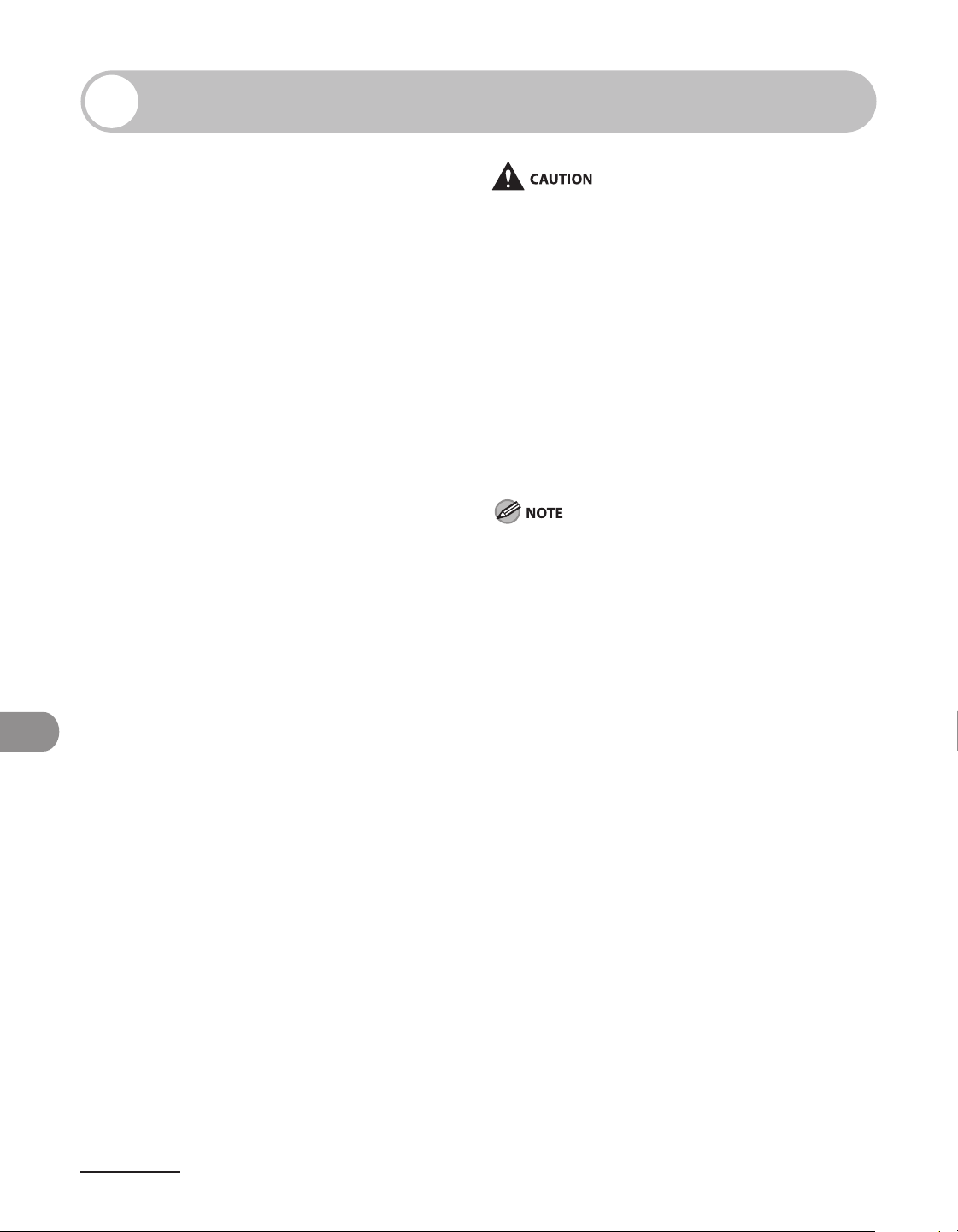
Troubleshooting
11-2
Clearing Jams
This section describes how to remove
jammed paper. When error messages
appear on the LCD display, see “LCD
Messages,” on p. 11-7. For other troubles,
see Reference Guide > Troubleshooting.
When <CHECK DOCUMENT>, <FEEDER
PAPER JAM/CHECK THE FEEDER>,
<DOCUMENT TOO LONG>, or <PAPER
JAM> appears on the LCD display,
remove jammed paper from the machine
first, then from the paper cassette or
multi-purpose tray if necessary. Check
the following if you experience repeated
paper jams:
Fan and tap the paper stack on a
flat surface before loading it in the
machine.
Check that the paper you are using
meets the requirements for use. (See
“Paper Requirements,” on p. 2-7.)
Make sure you have removed any
scraps of paper from the inside of the
machine.
–
–
–
When removing jammed documents or paper,
take care not to cut your hands on the edges of the
document or paper.
When removing jammed paper or when inspecting
the inside of the machine, do not allow necklaces,
bracelets, or other metal objects to touch the
inside of the machine, as this may result in burns or
electrical shock.
If you tear the paper, remove any torn pieces to
avoid further jams.
If loose toner comes into contact with your skin or
clothing, wash with cold water. Warm water will set
the toner.
Do not force a jammed document or paper out of
the machine. Contact Canon Customer Care Center if
needed.
–
–
–
–
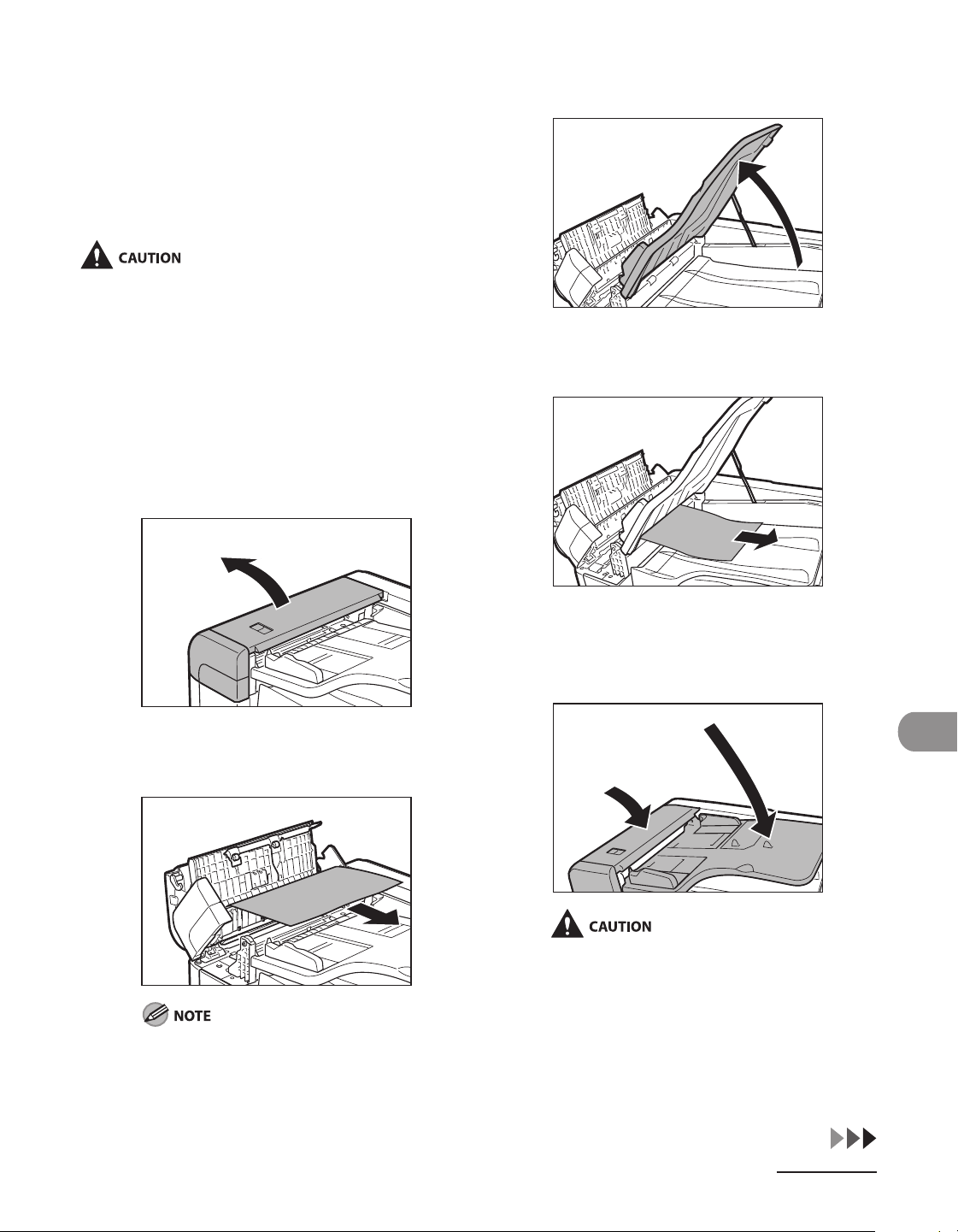
11-3
Troubleshooting
Document Jams
When <CHECK DOCUMENT>, <FEEDER
PAPER JAM/CHECK THE FEEDER>, or
<DOCUMENT TOO LONG> appears on the
LCD display, remove a jammed document
from the ADF or the document delivery slot.
When removing jammed documents or paper,
take care not to cut your hands on the edges of the
document or paper.
When removing jammed paper or when inspecting
the inside of the machine, do not allow necklaces,
bracelets, or other metal objects to touch the
inside of the machine, as this may result in burns or
electrical shock.
1 Lift the lever, and open the ADF.
2 Remove any jammed documents.
Do not pull the document forcefully as it may
tear.
–
–
3 Lift the document feeder tray.
4 Remove any jammed documents.
5 Lower the document feeder tray
and close the ADF.
Be careful not to get your fingers caught.
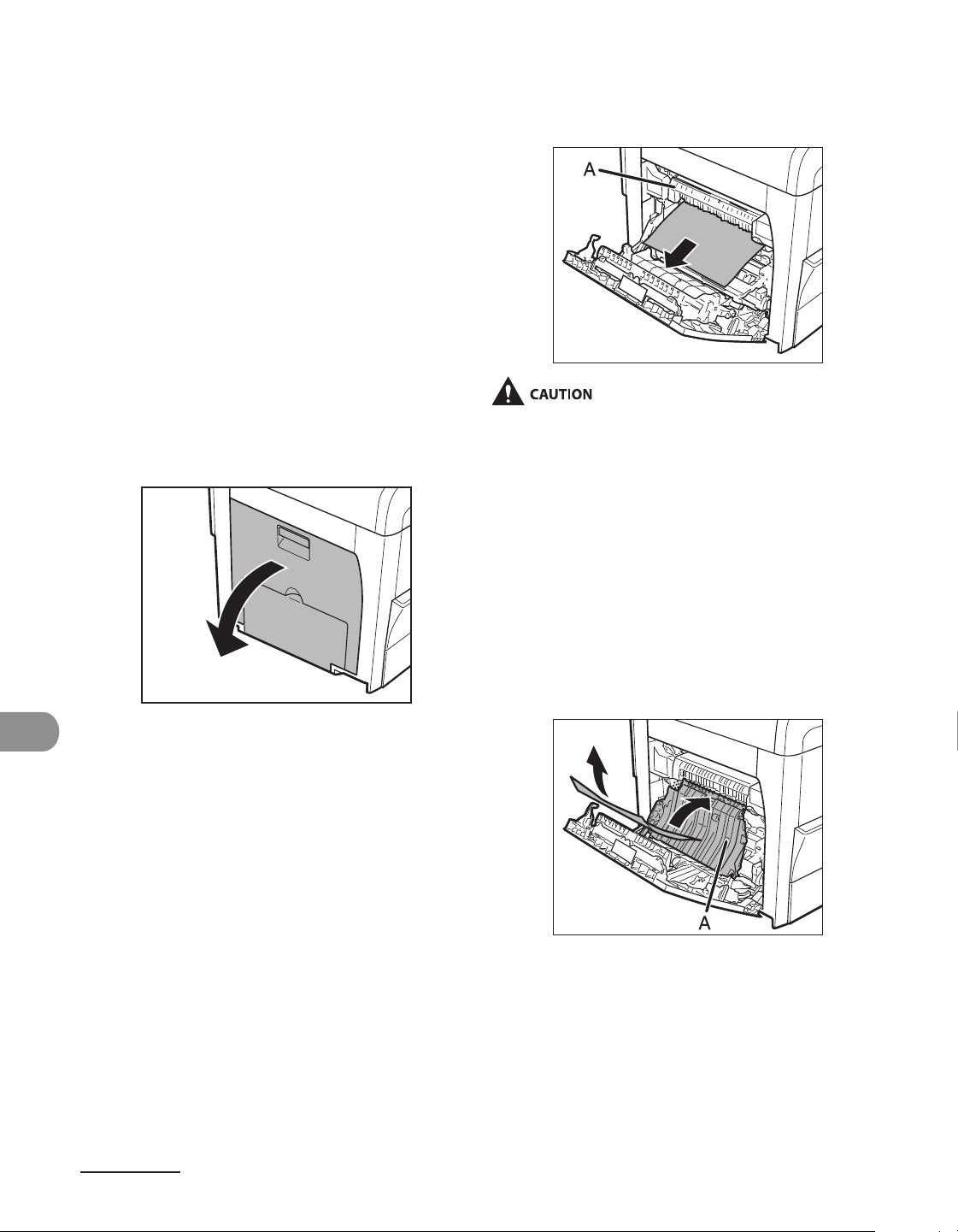
Troubleshooting
11-4
Paper Jams
When <PAPER JAM> appears on the LCD
display, remove jammed paper from inside
the machine first, then from the paper
cassette if necessary. Check the following if
you experience repeated paper jams:
Even the edge of the paper stack by a flat
surface before loading it in the machine.
Check that the paper you are using meets
the requirements for use.
Make sure you have removed any scraps
of paper from inside the machine.
1 Open the left cover.
–
–
–
2 Carefully pull the jammed paper
out of the machine.
Do not touch the fixing assembly (A) as it
becomes very hot during use.
If you tear the paper, remove any torn
pieces to avoid further jams.
If loose toner comes into contact with your
skin or clothing, wash with cold water.
Warm water will set the toner.
3 Tilt the 2-sided transport guide (A)
toward the machine, then remove
the jammed paper (Only for 2-
sided copying).
–
–
–
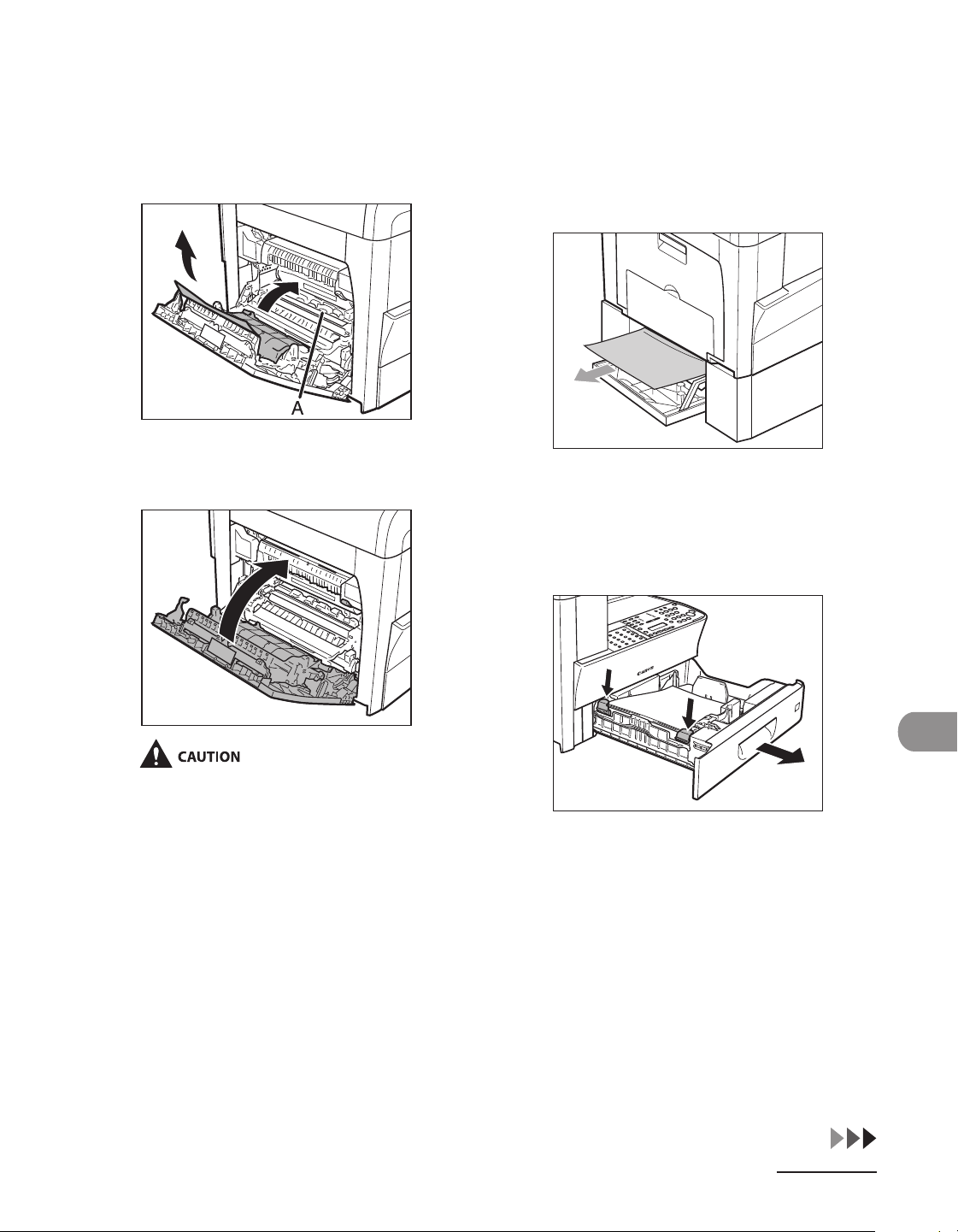
11-5
Troubleshooting
4 Lift and hold the transcription
frame (A), then remove the
jammed paper (Only for 2-sided
copying).
5 Close the left cover.
Be careful not to get your fingers caught.
6 If you use the optional paper
cassette, open the cover on the left
side of the optional paper cassette.
Remove any jammed paper, then
close the cover.
7 Pull out the paper cassette and
push the corners of the stack
under the tabs.
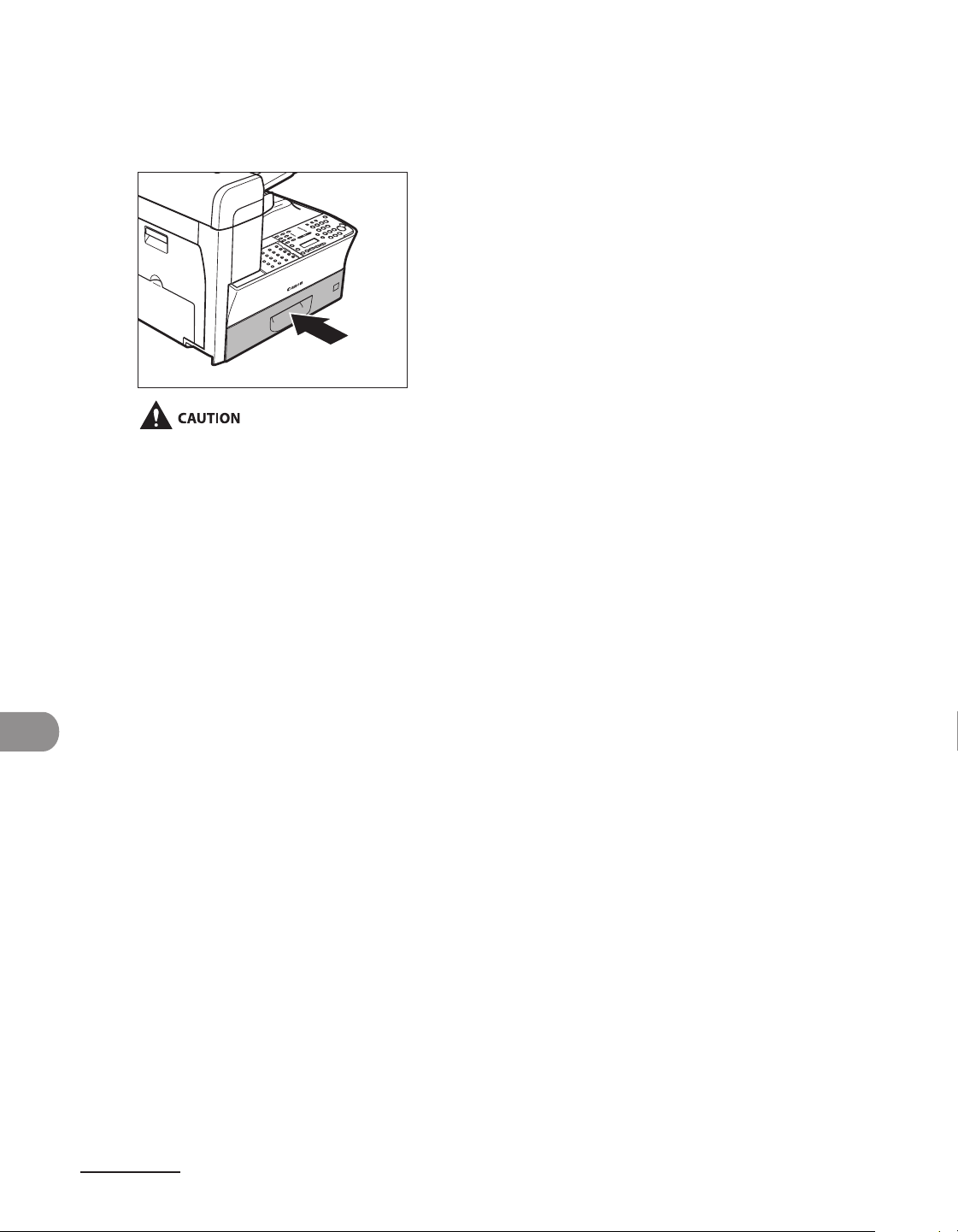
Troubleshooting
11-6
8 Gently push the paper cassette
back into the machine until it
clicks.
Be careful not to get your fingers caught.

11-7
Troubleshooting
LCD Messages
See the table below when the LCD displays error and status messages.
Message Description Action
AVAILABLE MEMORY
nn%
This message shows the
percentage of the memory
currently available. This
message is displayed when you
set the document in the ADF in
Fax/Send mode.
If you need more space, wait
for the machine to send any
documents in memory. Also
print, send, or delete any
documents stored in memory.
CANNOT PRINT RX DATA
FIX ERROR TO PRINT
The machine temporarily
received the data in memory
because an error of some kind
has occurred in the machine.
This error message appears
with one of the messages
below.
<LEFT COVER OPEN/CLOSE
COVER>
<LOAD CORRECT PAPER>
<CHANGE REG’D SIZE/->
PAPER SETTINGS>
<TONER LOW/PREPARE NEW
TONER>
<TONER IS NOT SET/INSERT
TONER>
<LOAD PAPER>
<PAPER JAM>
<PAPER JAM/OPEN LEFT
COVER>
–
–
–
–
–
–
–
–
This error message appears
with another message. When
the error is resolved, the
received data will be printed
out. For how to solve the
problem, see the action for the
messages displayed with it.
CHANGE PAPERSIZE The paper size is not
appropriate for a two-sided
copy.
Set the paper size to <LTR> or
<A4>, then load paper of the
same size.

Troubleshooting
11-8
Message Description Action
CHANGE REG’D SIZE
→PAPER SETTINGS
The paper size is not
appropriate for printing a
report or list.
– Set the paper size to
<LTR>, <LGL>, <A4>,
<OFICIO>, <BRAZIL-
OFICIO>, <MEXICO-OFICIO>,
<FOLIO>, <GOVERNMENT-
LETTER>, <GOVERNMENT-
LEGAL> or <FLSP>, and then
load paper of the same size.
–
The paper ran out while
printing a received
document, report or list.
– Load paper in the paper
cassette.
–
CHECK DOCUMENT A document jam may have
occurred in the ADF.
Remove the jammed
document.
DATA ERROR
PRESS START KEY
The machine may have trouble. Press [Start] to restore all
settings to the default. If the
message persists, contact
Canon Customer Care Center.
DOCUMENT TOO LONG The document fed from the
ADF is longer than 24 7/8"
(630 mm), or is not feeding
correctly.
The document is longer than
17" (432 mm) when you
are sending e-mail, I-fax or
sending a document to a file
server.
–
–
Reduce the length of the
document to within 24 7/8"
(630 mm), then try again.
If the document is shorter
than 17" (432 mm), then try
the procedure again.
–
–
FEEDER GLASS DIRTY
CLEAN FEEDER GLASS
The ADF scanning area may be
dirty.
Clean the ADF scanning area
(See "Cleaning the Machine" on
p.10-2.), then press [OK].
FEEDER PAPER JAM
CHECK THE FEEDER
A document jam may have
occurred in the ADF.
Remove the jammed
document.
INITIALIZING...
PLEASE WAIT
This message appears when
turning on the main power
switch, or when the machine is
not ready for printing.
Wait until the message
disappears.
LEFT COVER OPEN
CLOSE COVER
The left cover is open. Check the left cover and make
sure that it is completely
closed.

11-9
Troubleshooting
Message Description Action
LOAD CORRECT PAPER The size of the paper in the
paper cassette or multipurpose
tray is different from that of the
paper specified in <CASSETTE>
or <MP TRAY> of the <PAPER
SETTINGS> menu.
Load the correct size paper
or change the paper size in
<CASSETTE> or <MP TRAY> of
the <PAPER SETTINGS> menu.
For more information, see “If
<LOAD CORRECT PAPER> is
displayed,” on p. 11-18.
LOAD PAPER No paper is loaded in
the paper cassette or
multipurpose tray when
copying or printing.
– Load the paper correctly by
inserting it all the way to the
back of the paper cassette.
–
If the paper size is not
appropriate for printing, an
error message appears with
one of the messages below.
<CHANGE REG’D SIZE
→ PAPER SETTINGS> or
<CANNOT PRINT RX DATA/
FIX ERROR TO PRINT>
– Set the appropraite size
paper for printing, and
specify the correct size of
paper in <PAPER SETTINGS>.
For printing reports or lists,
set the paper size to <LTR>,
<LGL>, <A4>, <OFICIO>,
<BRAZIL- OFICIO>,
<MEXICOOFICIO>, <FOLIO>,
<GOVERNMENT-LETTER>,
<GOVERNMENTLEGAL> or
<FLSP>, and then load paper
of the same size.
–
The appropriate paper for
printing is not loaded.
– After setting the appropraite
size paper for printing,
specify the correct size
of paper in the <PAPER
SETTINGS> menu.
–

Troubleshooting
11-10
Message Description Action
MEMORY FULL The machine is full of jobs. – Print, send, or delete any
documents stored in
memory.
–
Divide the document stack
or data into a few parts and
try again one by one.
–
Send the document with
low resolution.
–
When this message appears
during using the ADF, the
scanning document stops
halfway. In this case, clear
the paper jam from the ADF.
–
The number of TX/RX
jobs that can be stored
in memory reached the
maximum.
– The maximum numbers
of jobs that can be stored
in memory are as follows
(Based on the condition that
the other party sends the fax
by the LASER CLASS 810/
LASER CLASS 830i with ITU-T
No. 1 Chart standard mode);
Up to 70 jobs for sending or
90 jobs for receiving, 95 fax
jobs including sending and
receiving, or 75 e-mail and
I-fax jobs for receiving.
Wait for the machine to send
any documents in memory.
Also print, send, or delete
any documents stored in
memory.
–
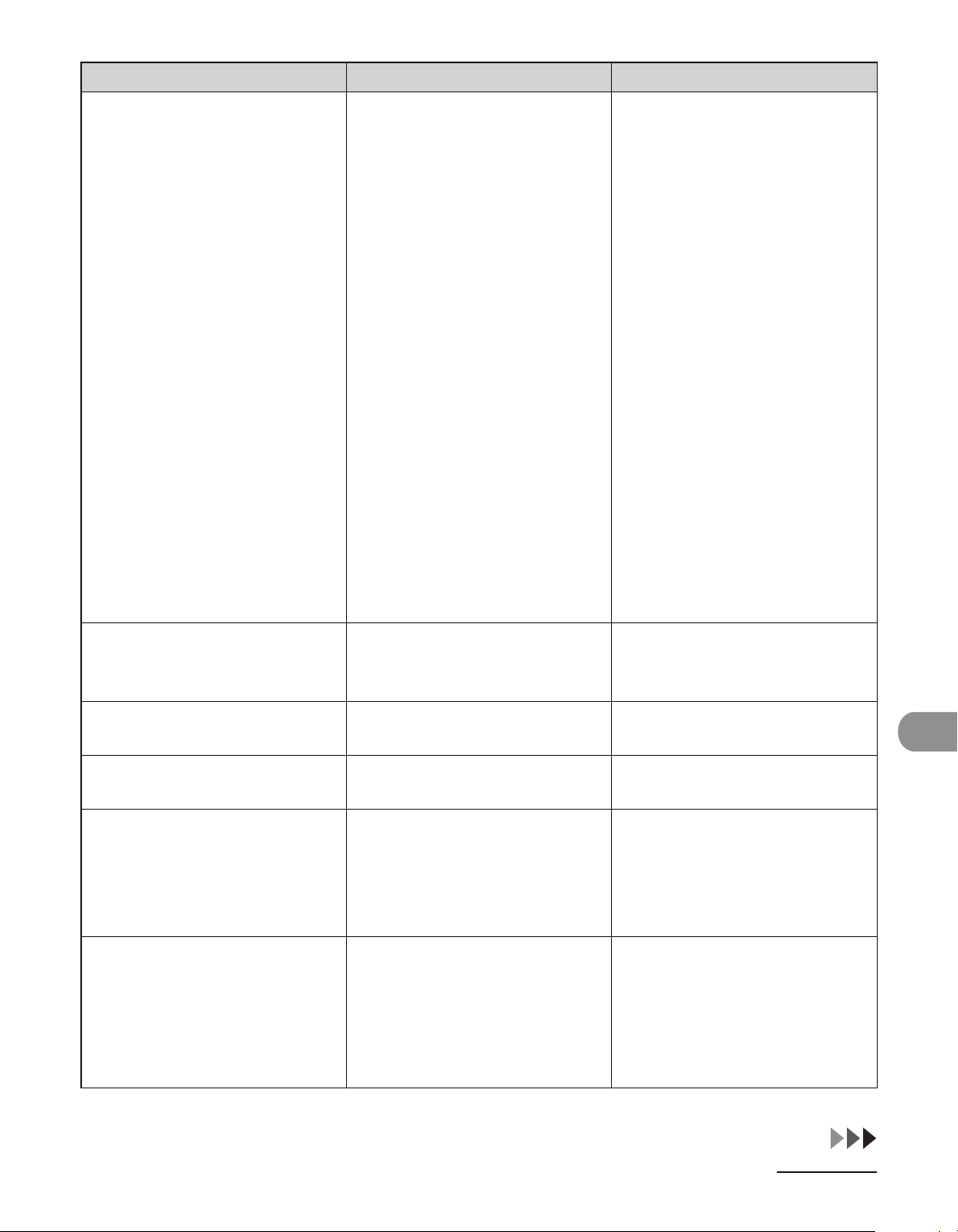
11-11
Troubleshooting
Message Description Action
NOT AVAILABLE NOW You have specified the
group dialing when the line
is off the hook.
You have specified the one-
touch key or coded dial code
that has registered with
other than fax number when
the line is off the hook.
The registered group is
already nested for three
levels of subgroups (e.g., a
group registered in a group
in a group in a group).
You pressed the one-touch
key or coded dial code that
has already been registered,
when you are registering
group addresses.
You pressed the group
dialing that has already been
registered, when you are
registering a one-touch or
coded dial address.
–
–
–
–
–
Specify the recipient other
than group dialing.
Make sure that the line is
disconnected.
You cannot register a group
to contain more than three
levels of subgroups. Modify
the group so that it contains
three levels of groups or less.
Register the one-touch key
or coded dial code that is
not used.
–
–
–
–
NOT REGISTERED No destination is registered for
the one-touch key or coded
dial code you pressed.
Register the destinations
before using the Address Book
function.
NO PAPER (RECIPIENT) No paper is loaded in the
recipients fax machine.
Have the recipient reload their
fax machine with paper.
OUTPUT TRAY FULL The paper delivery tray is full of
paper.
Remove the printouts from the
paper delivery tray.
OVER PAGE LIMIT You cannot print because
the set page limit for either
scans, prints, or copies in the
department ID management
function has been reached.
Contact your system manager.
PAPER JAM
OPEN LEFT COVER
Paper jams have occurred in
the machine.
Open the left cover and
remove the jammed paper.
(See "Paper Jams," on p.11-4.)
The cover must be opened and
closed to resume the current
job.
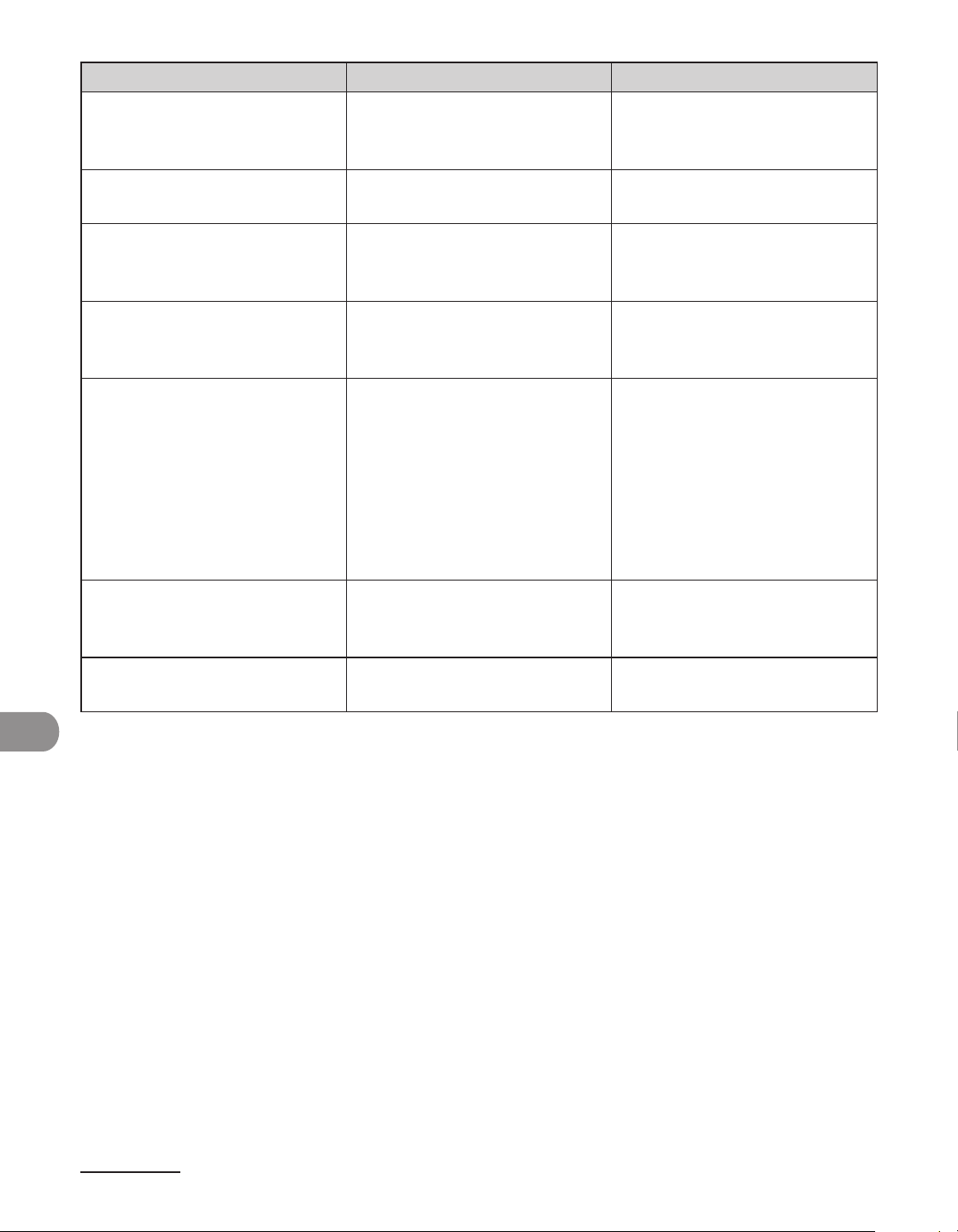
Troubleshooting
11-12
Message Description Action
PHONE OFF HOOK
HANG UP PHONE
The receiver of the external
telephone or handset is off the
hook.
Hang up the receiver.
PREPARING SCANNER...
PLEASE WAIT
The machine is not ready for
scanning.
Wait until the machine is ready.
START AGAIN A transmission error has
occurred because the line
condition was poor.
Check the line condition, then
try again.
STOP KEY PRESSED
PRESS OK KEY
[Stop] has been pressed while
scanning the document using
the ADF.
Press [OK], then set the
document again.
SYSTEM ERROR Some kind of error has
occurred in the machine.
Turn off the main power
switch, wait for more than 10
seconds, then turn it on again.
If the message persists, turn
off the main power switch,
disconnect the power cord,
and contact Canon Customer
Care Center.
TONER IS NOT SET
INSERT TONER
A toner cartridge is not
installed or not installed
correctly.
Install the toner cartridge
correctly tray.
TONER LOW
PREPARE NEW TONER
The toner is running low. Prepare a new toner cartridge.
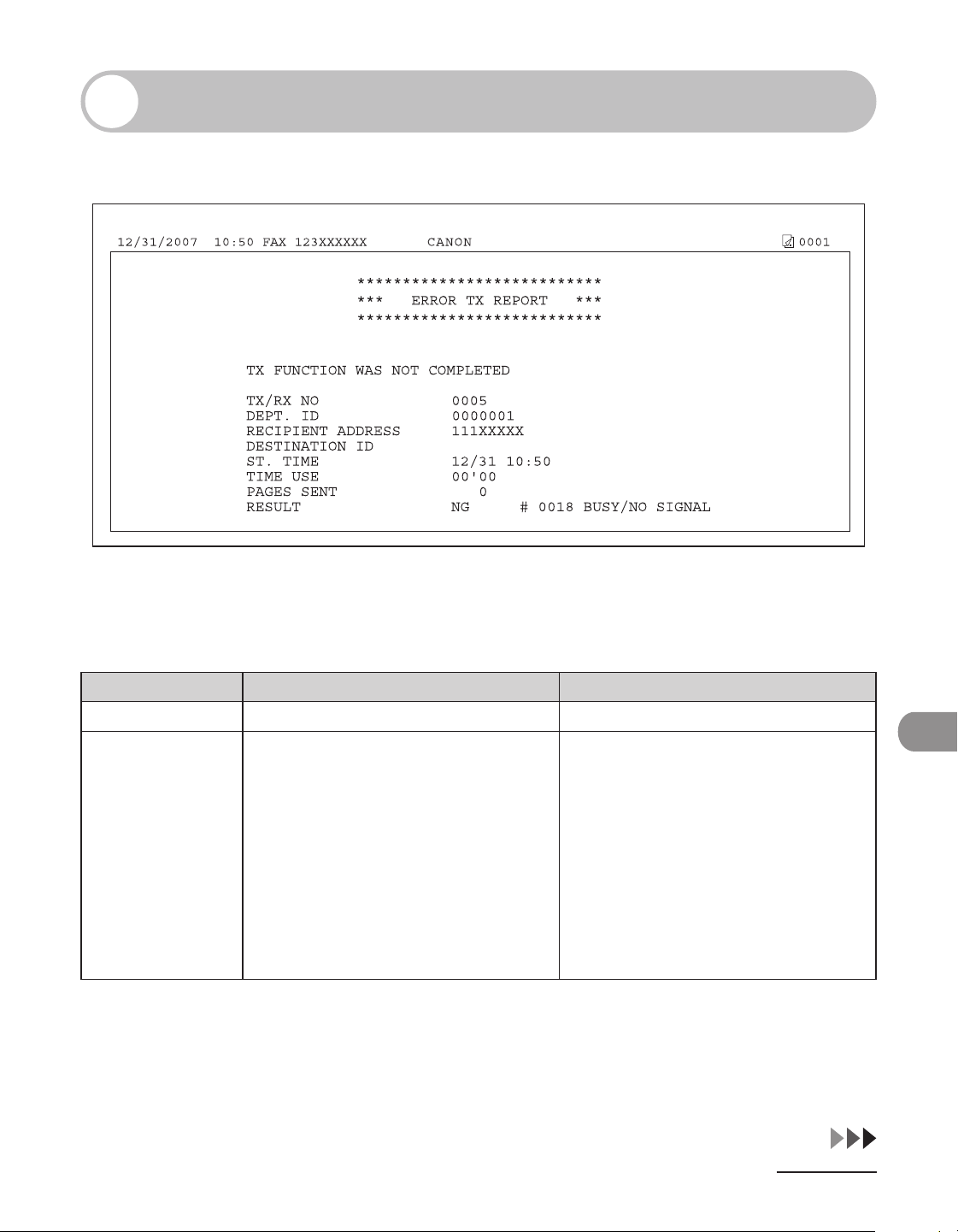
11-13
Troubleshooting
Error Codes
An error code is a four-digit code shown on an ERROR TX REPORT or an ERROR RX
REPORT when an error occurs.
For details on reports, see Reference Guide > Maintenance > Summary of Reports and Lists.
See the table below for individual error codes.
Error Code Description Action
#0001 A document may be jammed. Remove the jammed document.
#0003 An attempt was made to send a
document of 24 7/8" (630 mm) or
longer from the ADF.
– Divide the document into smaller
parts and send from the platen
glass.
–
A document takes a long time to
send because it contains too much
data.
– Reduce the scanning resolution
before sending.
–
A document takes a long time to
receive.
– Contact the other party and ask
them to reduce their scanning
resolution or divide the document
into smaller parts for sending.
–
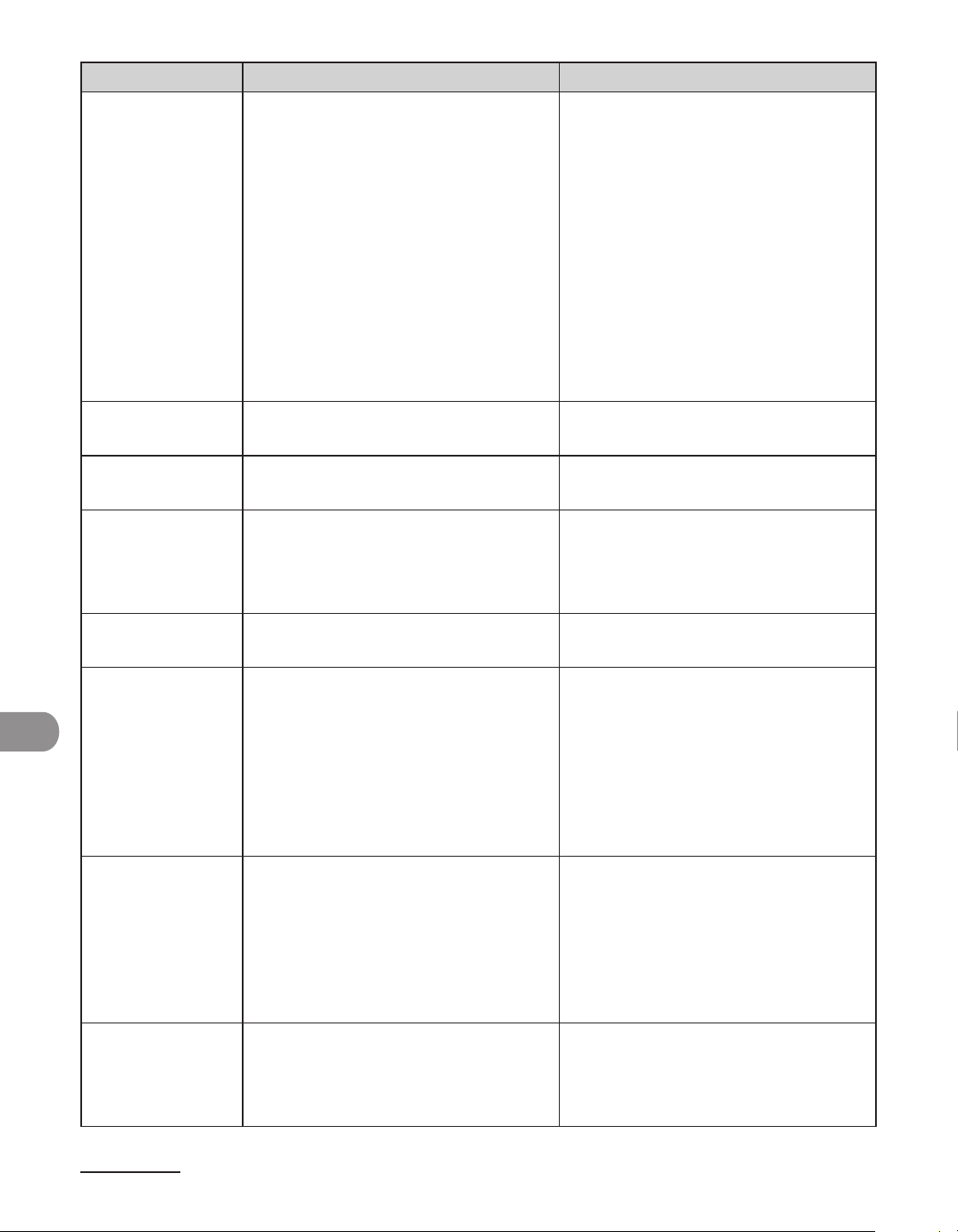
Troubleshooting
11-14
Error Code Description Action
#0005 The other fax machine did not
respond within 35 seconds.
– Send the document again. Contact
the other party and have them
check their fax machine. If you
are making an overseas call, add a
pause to the number.
–
The other party may not be using a
G3 fax machine.
– Check with the other party and
send the document to a G3 fax
machine. If the other party does
not have a G3 fax machine, try
sending your document using
a transmission mode the other
party's fax machine supports.
–
#0009 The paper has run out or the paper
cassette is not set properly.
Load the paper or reset the paper
cassette properly.
#0012 You could not send because the other
party's fax machine is out of paper.
Contact the other party and ask them
to load the paper.
#0018 There is no reply when you redial.
You could not send, because your fax
signal was not returned as the other
party's line was engaged.
Check that the other party's line is
not engaged and try again from the
beginning.
#0037 The memory is full. Print, send, or delete any documents
stored in memory.
#0703 The memory for image data is full
when sending documents.
Wait a few moments, and then try
sending again after other send jobs
are complete.
Erase documents stored in
memory. If the machine still does
not operate normally, turn the
main power OFF, and then back
ON.
–
–
#0705 The send operation was interrupted
because the size of the image data
is larger than that specified in <MAX
TX DATA SIZE> in <E-MAIL/I-FAX> in
<COMMUNICATIONS> in <SYSTEM
SETTINGS>.
Change the setting for <MAX TX
DATA SIZE> in <E-MAIL/I-FAX> in
<COMMUNICATIONS> in <SYSTEM
SETTINGS>.
Select a lower resolution.
Set <DIVIDE INTO PAGES> to <ON>
in send settings.
–
–
–
#0751 The server is not functioning. The
network is down (the server is unable
to connect to the network or was
disconnected).
Check the recipient's address.
Check that the network is up.
–
–

11-15
Troubleshooting
Error Code Description Action
#0752 The SMTP server name or POP
server name for e-mail is not
correct, or the server is not
functioning.
– Check the SMTP server name,
domain name, POP server name,
and e-mail address in <E-MAIL/
I-FAX> in <NETWORK SETTINGS> in
<SYSTEM SETTINGS>.
–
The domain name or e-mail
address may not be set.
– Check that the SMTP server is
operating properly.
–
The network is down.– Check the network status.–
#0753 A TCP/IP error occurred while sending
an e-mail message. (Socket, Select
error, etc.)
Check the network cables and
connectors. If the machine still does
not operate normally, turn the main
power OFF, and then back ON.
#0755 You cannot send jobs because
TCP/IP is not functioning correctly.
– Check <TCP/IP SETTINGS>
in <NETWORK SETTINGS> in
<SYSTEM SETTINGS>.
–
The IP address is not set.– Check <TCP/IP SETTINGS>
in <NETWORK SETTINGS> in
<SYSTEM SETTINGS>.
–
When the machine was turned ON,
an IP address was not assigned to
the machine by the DHCP, RARP, or
BOOTP server.
– Check <TCP/IP SETTINGS>
in <NETWORK SETTINGS> in
<SYSTEM SETTINGS>. Or wait a
while, and then try sending again.
–
#0801 A timeout error occurred while the
machine was communicating with
the SMTP server to send an e-mail
message.
– Check that the SMTP server is
functioning normally, or check the
network status.
–
The SMTP server returned an
error while trying to connect. The
destination is not correct. An error
occurred on the server side during
transmission to a file server.
– Check that the SMTP server is
functioning normally. Check
the network status. Check the
destination setting. Check the
status and setting of the file server.
–
#0802 The name of the SMTP server or
POP server in <E-MAIL/I-FAX>
in <NETWORK SETTINGS> in
<SYSTEM SETTINGS> is incorrect.
– Check the name of the SMTP server
or POP server in <E-MAIL/I-FAX>
in <NETWORK SETTINGS> in
<SYSTEM SETTINGS>.
–
The DNS server name in <DNS
SETTINGS> in <TCP/IP SETTINGS>
in <NETWORK SETTINGS> in
<SYSTEM SETTINGS> is incorrect.
– Check the DNS server name
in <DNS SETTINGS> in <TCP/
IP SETTINGS> in <NETWORK
SETTINGS> in <SYSTEM SETTINGS>.
–
Connection to the DNS server
failed.
– Check that the DNS server is
functioning normally.
–
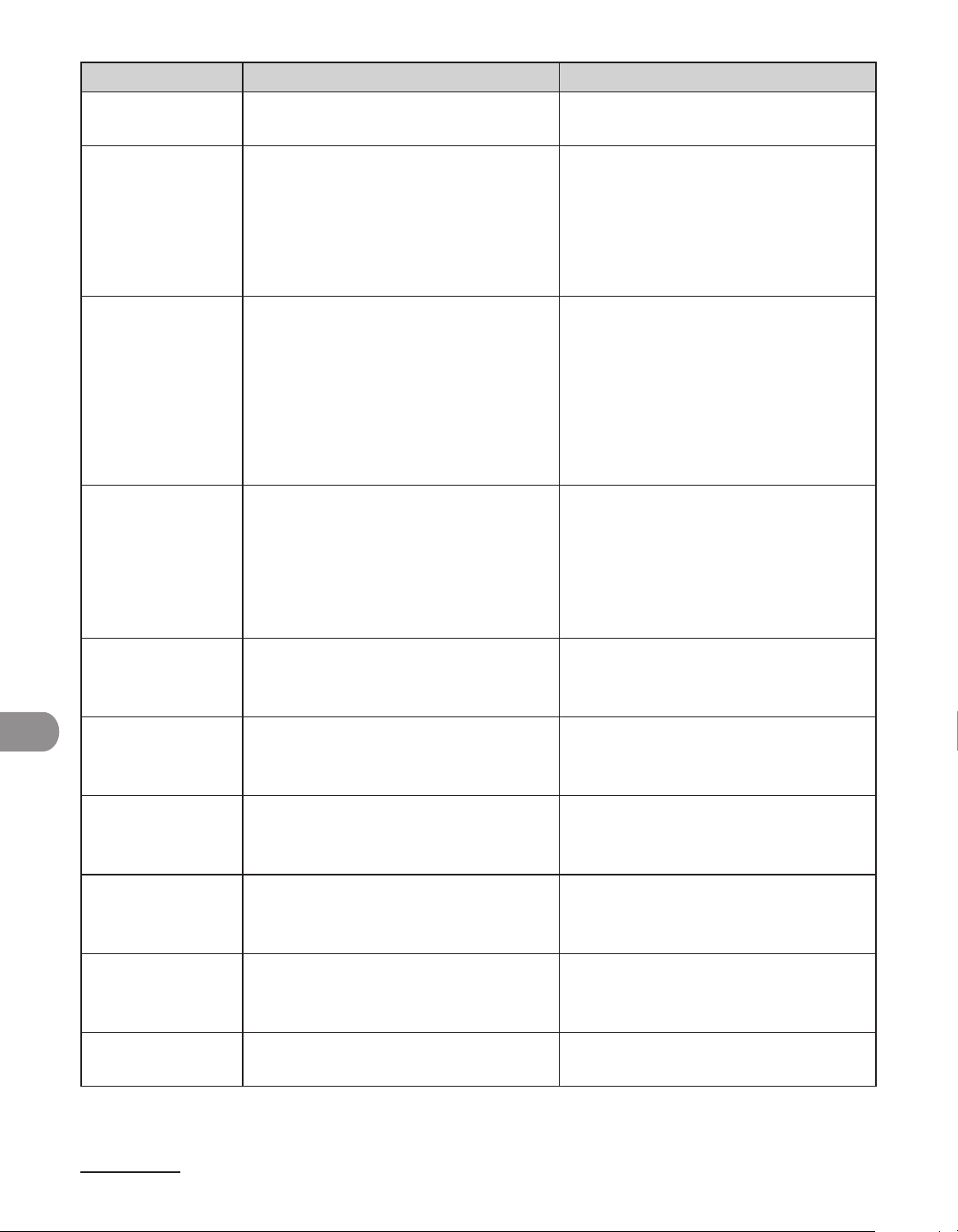
Troubleshooting
11-16
Error Code Description Action
#0804 You have no permission to access the
folder.
Change the setting on the server to
enable access to the folder.
#0806 An incorrect user name or
password was specified for the
sending of a file to a file server.
– Change the user name or
password.
–
An incorrect destination was
specified for the sending of an e-
mail message.
– Check the e-mail address.–
#0808 A timeout error occurred while the
machine was communicating with
the FTP server.
The FTP server returned an error
while trying to connect. The
destination is not correct. An error
occurred on the server side during
transmission.
–
–
Check that the FTP server is
functioning normally. Check the
network status.
Check that the FTP server is
functioning normally. Check
the network status. Check the
destination setting. Check the
status and setting of the file server.
–
–
#0810 The POP server returned an error
during the connection.
A timeout error occurred on the
server while connecting to the POP
server.
–
–
Check the POP Server name in
<E-MAIL/I-FAX> in <NETWORK
SETTINGS> in <SYSTEM SETTINGS>.
Confirm that the POP server is
functioning normally. Check the
network status.
#0812 The POP password setting is incorrect. Check the POP Server password
in <E-MAIL/I-FAX> in <NETWORK
SETTINGS> in <SYSTEM SETTINGS>.
#0813 The POP Server name setting is
incorrect.
Check the POP Server name in
<E-MAIL/I-FAX> in <NETWORK
SETTINGS> in <SYSTEM SETTINGS>.
#0818 You have received data that cannot
be processed (cannot print the
attached file).
Check the settings and ask the sender
to resend the data.
#0819 You have received data that cannot
be processed (MIME information is
incorrect).
Check the settings, and then ask the
sender to resend the data.
#0820 You have received data that cannot
be processed (BASE 64 or uuencode is
incorrect).
Check the settings, and then ask the
sender to resend the data.
#0821 You have received data that cannot
be processed (TIFF analysis error).
Check the settings, and then ask the
sender to resend the data.
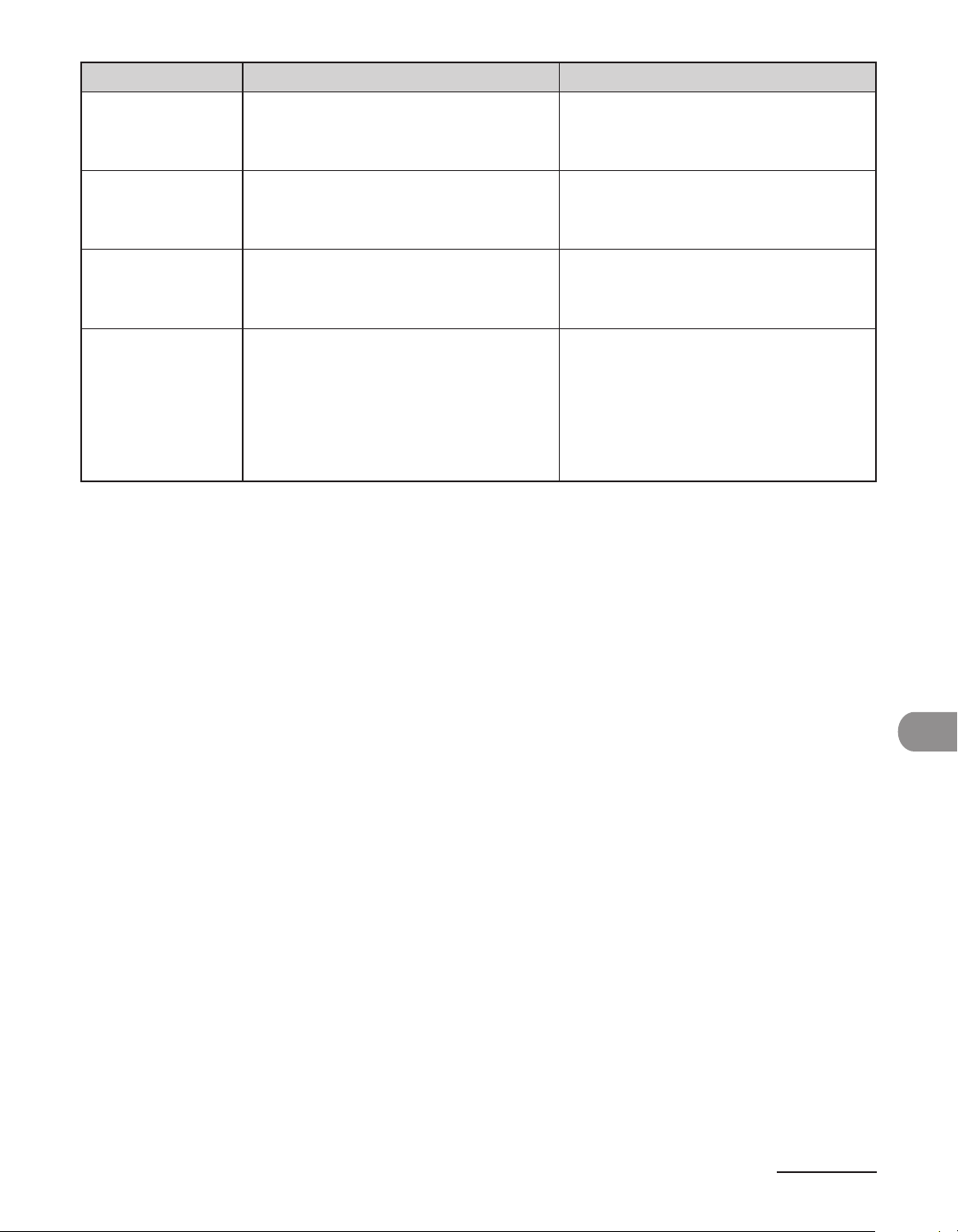
11-17
Troubleshooting
Error Code Description Action
#0827 You have received data that cannot
be processed (contains MIME
information that is not supported).
Check the settings, and then ask the
sender to resend the data.
#0828 You have received HTML data. Ask the sender to use a file format
other than HTML, and then resend the
data.
#0829 Data containing more pages that the
machine can hold in the memory is
received.
Print the received documents, and ask
the sender to resend the remaining
pages.
#0839 The user name or password for
the SMTP authentication in <SMTP
AUTH> is incorrect.
Check the user name and password
for <SMTP AUTH> in <AUTH/ENC
SETTINGS> in <E-MAIL/I-FAX> in
<NETWORK SETTINGS> in <SYSTEM
SETTINGS>. (See “SYSTEM SETTINGS,”
on p. 12-36.)

Troubleshooting
11-18
If <LOAD CORRECT PAPER> is displayed
When <LOAD CORRECT PAPER> appears on the LCD display, the size of the paper in
the paper cassette or multipurpose tray is different from that of the paper specified
in <CASSETTE> or <MP TRAY> of the <PAPER SETTINGS> menu. You need to load
the correct size paper or change the paper size in <CASSETTE> or <MP TRAY> of the
<PAPER SETTINGS> menu.
For print jobs, you need to specify the paper size from your computer.
Re-Loading the Paper
1 Load the correct size paper as shown on LCD display.
Printing resumes when you return the paper cassette to the machine.
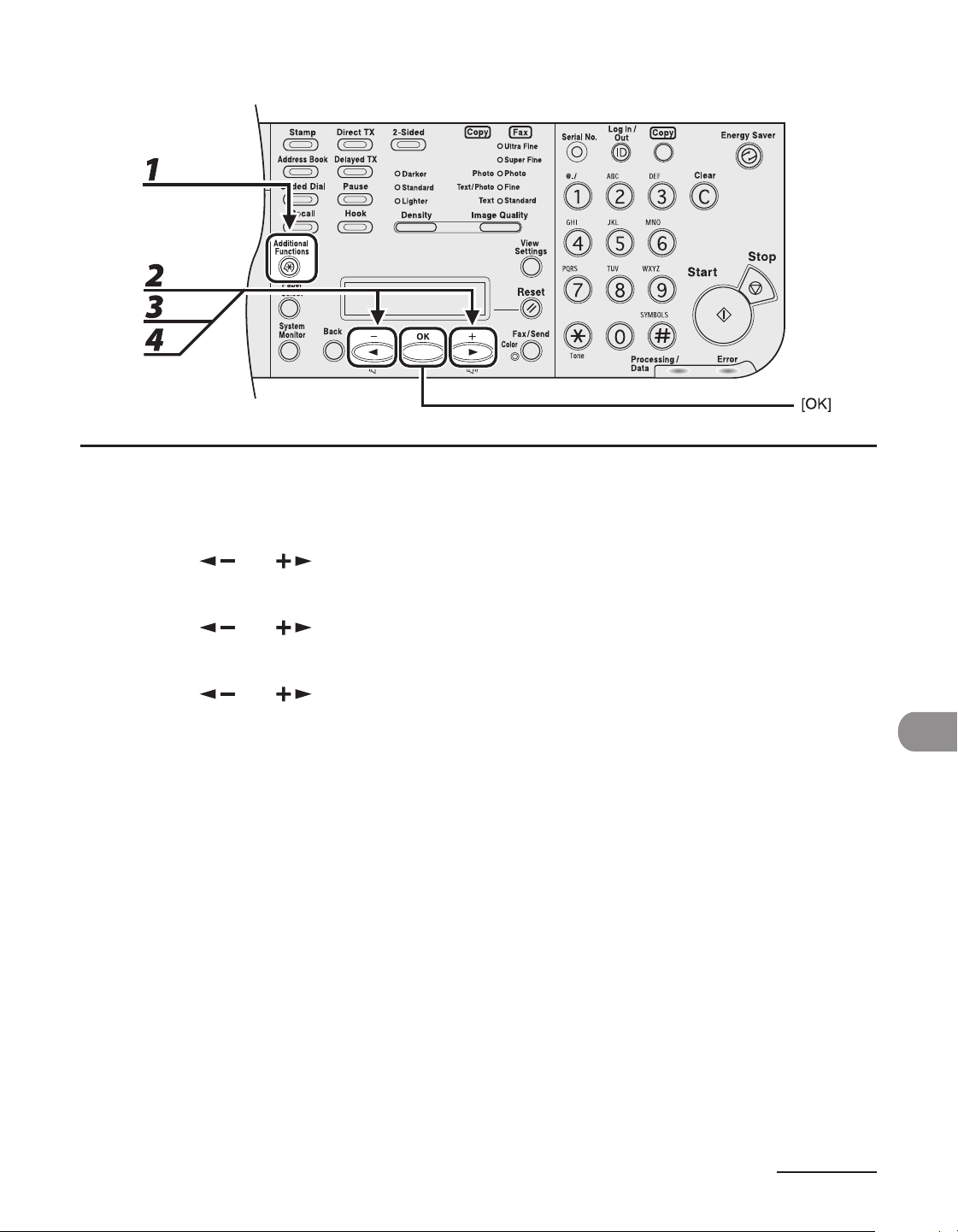
11-19
Troubleshooting
Changing the Paper Size Setting
1 Press [Additional Functions].
2 Press [ ] or [ ] to select <PAPER SETTINGS>, then press [OK].
3 Press [ ] or [ ] to select <CASSETTE> or <MP TRAY>, then press [OK].
4 Press [ ] or [ ] to select <PAPER SIZE>, then press [OK].
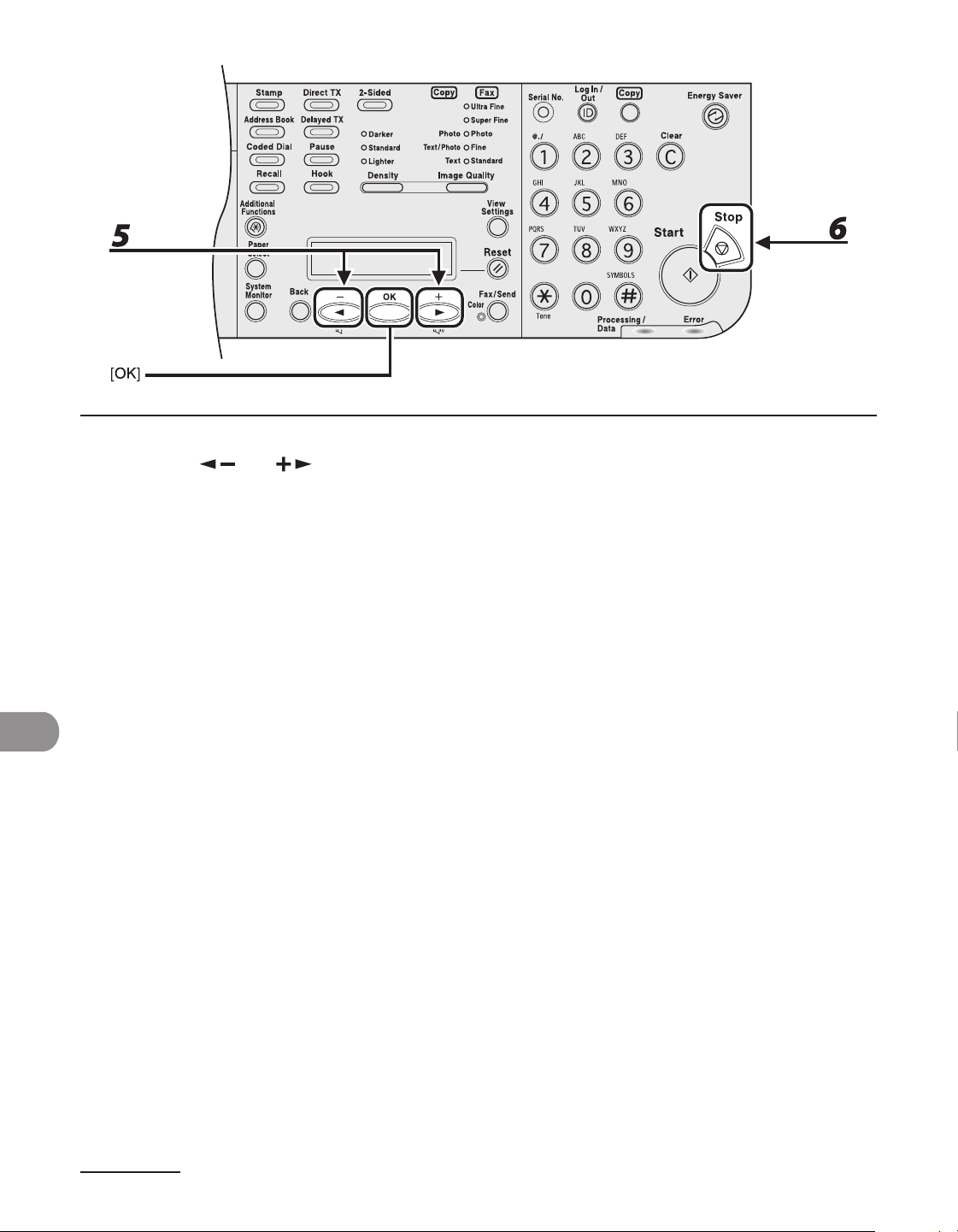
Troubleshooting
11-20
5 Press [ ] or [ ] to select the paper size same as paper loaded into the
machine, then press [OK].
6 Press [Stop] to return to the standby mode.
7 Pull out the paper cassette, and then slowly return it to the machine until it
clicks.
It is not necessary to pull the paper casette out as far as it goes.
The machine re-starts printing.
11-21
Troubleshooting
General Problems
The machine has no power.
Is the power cord plugged in securely?
Check that the power cord is securely plugged into the machine and into the
wall outlet. If the machine is plugged into a power strip, make sure the power
strip is plugged in and turned on.
Is the power cord supplying power?
Use a different power cord, or test the cord for continuity using a voltmeter.
Is the main power switch turned on?
Turn on the main power switch.
The Error indicator flashes.
Does the machine feed paper correctly, or is there paper in the paper
cassette or multi-purpose tray?
Clear the paper jam, or load paper in the paper cassette or multi-purpose tray.
(For instructions on clearing paper jam, See “Clearing Jams,” on p. 11-2. For
instructions on loading paper, see “Set Up the Machine,” in the Starter Guide.)
If the machine has no paper jam, or paper is loaded in the paper cassette or
multi-purpose tray, turn off the main power switch and wait for more than 10
seconds, then turn it on again. If the problem is fixed, the Error indicator will turn
off, and the LCD will return to the standby mode. If the Alarm indicator remains
flashing, unplug the machine, and unplug the machine, and contact your local
authorized Canon dealer.
Nothing appears in the LCD.
Is the power cord plugged in securely?
Check that the power cord is securely plugged into the machine and into the
wall outlet. If the machine is plugged into a power strip, make sure the power
strip is plugged in and turned on.
Troubleshooting
11-22
Is the main power switch turned on?
Turn on the main power switch.
Is the machine in the Sleep mode?
Press [Energy Saver] on the operation panel to cancel the Sleep mode.
11-23
Troubleshooting
Paper Feeding Problems
Paper does not feed properly.
Is the paper loaded correctly?
Make sure the paper is correctly loaded. (See “Set Up the Machine,” in the Starter
Guide.)
Does the machine contain too many sheets?
Make sure you load the correct quantity. (See “Paper Requirements,” on p. 2-7.)
Multiple sheets feed together into the machine.
Is the paper loaded correctly?
Make sure the paper is correctly loaded. (See “Set Up the Machine,” in the Starter
Guide.)
Does the machine contain too many sheets?
Make sure you load the correct quantity. (See “Paper Requirements,” on p. 2-7.)
Are different types of paper loaded in the machine?
Load only one type of paper.
Make sure you load paper that meets the requirements for use. (See “Paper
Requirements,” on p. 2-7.)
Let the paper run out before refilling the machine. Avoid mixing new stock with
paper already loaded.
Repeated paper jams occur.
Is the correct type of paper loaded in the machine?
Make sure you load paper that meets the requirements for use. (See “Paper
Requirements,” on p. 2-7.)
Troubleshooting
11-24
Sending/Receiving Problems
Sending Problems
Document cannot be sent to an e-mail address, I-fax address, or file server.
Did you just turn on the main power switch?
Wait for a while. After turning on the main power switch, the machine cannot
send documents immediately.
Is the e-mail or I-fax address you entered, or the e-mail, I-fax, or file server
address registered in the Address Book correct?
Make sure the e-mail address you entered, or the e-mail or file server address
registered in the Address Book is correct.
If you are sending an e-mail or I-fax message are the SMTP Server and DNS
Server settings correct?
Check the SMTP Server and DNS Server settings.
If you are sending to a file server, are the user and password settings
correct?
Check the user and password settings, and send the document again.
If you are sending to a file server, are the shared folder settings correct?
Check the shared folder settings. (See Reference Guide > Network Settings >
Configuring a Shared Folder.)
11-25
Troubleshooting
Cannot send a fax.
Did you just turn on the main power switch?
Wait for a while. After turning on the main power switch, the machine cannot
scan documents immediately.
Is the machine set for the correct telephone line type?
Make sure the machine is set for the correct telephone line type. (See “Set the
Machine for Sending Faxes,” in the Starter Guide.)
Is your machine in the fax mode?
Press [Fax/Send] repeatedly to select <FAX>, then press [OK] to show the fax
standby display.
Is the document loaded correctly?
Make sure the document is correctly loaded. (See “Loading Documents,” on
p. 2-5.)
Make sure the scanning platform and rear cover are fully closed. (See “Paper
Jams,” on p. 11-4.)
Is the one-touch key or coded dial code you entered registered correctly?
Check that the Address Book settings are registered correctly. (See “Storing/
Editing Address Book,” on p. 4-12.)
Did you dial the correct number?
Check that you have the correct number.
Is the machine in the Sleep mode?
The machine does not scan documents if it is in the Sleep mode. To take the
machine out of the Sleep mode, press [Energy Saver] on the operation panel.
Is the recipient’s machine out of paper?
Ask the recipient to make sure paper is loaded in the machine.
Troubleshooting
11-26
Are there other documents being sent from memory?
Allow time for the documents to finish sending.
Has an error occurred during transmission?
Check the LCD for an error message. (See “LCD Messages,” on p. 11-7.)
Print an Activity Report and check for an error. (See “ACTIVITY REPORT,” on p. 12-
57.)
Is the telephone cable connected properly?
Make sure the cable is connected properly. (See “Set Up the Machine,” in the
Starter Guide.)
Is the telephone line working properly?
Make sure there is a dial tone when you press [Hook] or when you lift the
handset of any external telephone connected to the machine. If there is no dial
tone, contact your local telephone company.
Is the recipient’s machine a G3 fax machine?
Make sure the recipient’s machine is compatible with your machine.
Is BUSY/NO SIGNAL shown on the ERROR TX REPORT?
The fax number you dialed is busy. Try sending the document later.
The recipient’s machine is not working. Ask the recipient to check the machine.
Did the recipient’s machine answer within 35 seconds (after all automatic
redialing attempts)?
Ask the recipient to check the machine. For an overseas call, add pauses to the
registered number. (See “Dialing an Overseas Number (With Pauses),” on p. 4-
83.)
Is the Processing/Data indicator lit?
The external phone is busy. Please wait until the external phone becomes free.
11-27
Troubleshooting
Is the machine overheated?
Unplug the machine and let it cool for about 5 minutes. Then plug in the
machine and try sending again.
Memory fills up immediately when you try to send.
Are you sending with the resolution set to <SUPER FINE> or <ULTRA FINE>?
If you want to keep your document quality, divide the document into some
parts and send them separately.
If your document does not contain fine text or photographs, set the resolution
to <STANDARD>.
If your document contains fine text or photographs, send it directly rather than
using a memory transmission.
Is a document stored in memory, leaving little memory available?
Print, send, or delete any documents stored in memory.
Faxes sent from the machine are spotted or dirty.
Is the recipient’s machine working properly?
Check the machine by making a copy. If the copy is clear, the problem may
be in the recipient’s machine. If the copy is spotted or dirty, clean the scanner
components. (See “Scanning Area,” on p. 2-4.)
Is the document loaded correctly?
Make sure the document is correctly loaded. (See “Loading Documents,” on
p. 2-5.)
The documents you sent are too light.
Is the density setting changed to be lighter?
Adjust the density for light documents to be darker. (See “Density,” on p. 4-7.)
Troubleshooting
11-28
Are the scanning components of the machine clean?
If the received document is spotted or dirty, clean the scanning components.
(See “Scanning Area,” on p. 2-4.)
Sending of documents is too slow.
Is the resolution set to <FINE>, <PHOTO>, <SUPER FINE>, or <ULTRA
FINE>?
Setting the resolution to <STANDARD> reduces the sending time.
Is Error Correction Mode (ECM) set to <ON>?
Because ECM corrects errors during a transmission, any problems on the line can
mean that the transmission will take extra time. Set <ECM TX> to <OFF>. (See
“TX/RX SETTINGS,” on p. 12-11.)
Cannot send using Error Correction Mode (ECM).
Does the recipient’s machine support ECM?
If the recipient’s machine does not support ECM, the document is sent in normal
mode without error checking.
Errors occur frequently while sending.
Are the telephone lines in poor condition, or do you have a bad
connection?
Check if there is a device nearby that interferes with signal transmission (e.g.,
microwave oven).
Lower the transmission speed. (See “SYSTEM SETTINGS,” on p. 12-36.)
Cannot redial with [Recall].
Is <REST. REDIAL/CALL> set to <ON>?
When <REST. REDIAL/CALL> or <RESTRICT REDIAL> is set to <ON>, Redialing is
not available. (See “Restricting Job Recall (LASER CLASS 830i Only),” on p. 9-28.)
11-29
Troubleshooting
Entering the fax number is required again after pressing [Start].
Is <CONFIRM FAX NO.> set to <ON>?
When <CONFIRM FAX NO.> is set to <ON>, you need to enter the fax number
again after pressing [Start]. (See “Confirming Entered Fax Numbers,” on p. 9-30.)
Cannot send the documents to multiple recipients.
Is <REST. MULTI DEST> set to <ON>?
When <REST. MULTI DEST.> is set to <ON>, you cannot send the documents to
multiple recipients. (See “Restricting Broadcasting,” on p. 9-31.)
Receiving Problems
The machine does not receive documents (e-mail, or file server).
Are network settings specified?
Documents cannot be received if the appropriate network settings are not
specified. Confirm this with your system administrator.
Cannot receive a fax automatically.
Is the machine set to receive automatically?
For the machine to receive faxes automatically, the receive mode must be set
to <FaxOnly>, <FaxTel>, <AnsMode>, or <DRPD>. If you have set <AnsMode>,
confirm that an answering machine is connected to the machine and that it is
turned on with an outgoing message properly recorded. (See “Basic Receiving
Method,” on p. 5-2.)
Are documents stored in memory, leaving little or no memory available?
Print, send, or delete any documents stored in memory.
Troubleshooting
11-30
Has an error occurred during reception?
Check the LCD for an error message. (See “LCD Messages,” on p. 11-7.)
Print an Activity Report and check for an error. (See “ACTIVITY REPORT,” on p. 12-
57.)
Is paper loaded in the machine?
Make sure paper is loaded in the machine. (See “Set Up the Machine,” in the
Starter Guide.)
Is the telephone cable connected properly?
Make sure the cable is connected properly. (See “Set Up the Machine,” in the
Starter Guide.)
No automatic switching between telephone and fax calls.
Is the machine set to switch automatically between telephone and fax
calls?
For the machine to switch between fax and telephone calls automatically, the
receive mode must be set to <FaxTel>, <AnsMode>, or <DRPD>. If you have set
<AnsMode>, confirm that an answering machine is connected to the machine
and that it is turned on with an outgoing message properly recorded. (See “Basic
Receiving Method,” on p. 5-2.)
Are documents stored in memory, leaving little or no memory available?
Print, send, or delete any documents stored in memory.
Has an error occurred during reception?
Check the LCD for an error message. (See “LCD Messages,” on p. 11-7.)
Print an Activity Report and check for an error. (See “ACTIVITY REPORT,” on p. 12-
57.)
Is paper loaded in the machine?
Make sure paper is loaded in the machine. (See “Set Up the Machine,” in the
Starter Guide.)
11-31
Troubleshooting
Can the sender’s machine send the CNG signal, which tells your machine
that the incoming call is a fax call?
Some machines cannot send this signal. In such cases, receive the fax manually.
Cannot receive a document manually.
Is the machine set to receive manually?
For the machine to receive faxes manually, the receive mode must be set to
<Manual>. (See “Basic Receiving Method,” on p. 5-2.)
If you set <MANUAL/AUTO> to <ON>, the machine will receive faxes
automatically even when the receive mode is set to <Manual>. (See “TX/RX
SETTINGS,” on p. 12-11.)
Did you hang up the external telephone before pressing [Start] or dialing
the remote reception ID?
Always press [Start] or dial the remote reception ID before hanging up.
Otherwise you will disconnect the call.
Are documents set on the ADF?
After removing the document from the ADF, please attempt manual receiving
again. If you press [Start] when documents are set on the ADF, it automatically
switches to manual sending.
Print quality is poor.
Is the toner low or unevenly distributed?
Redistribute the toner inside the toner cartridge. If the problem persists, replace
the toner cartridge. (See “Replacing the Toner Cartridge,” on p. 10-11.)
Is the correct type of paper loaded in the machine?
Make sure you load paper that meets the requirements for use. (See “Paper
Requirements,” on p. 2-7.)
Is the sender’s machine functioning properly?
Ask the sender to check that the scanning components of the machine are
clean.
Troubleshooting
11-32
Is the machine in the toner saver mode?
Set <TONER SAVER MODE> to <OFF>. (See “COMMON SETTINGS,” on p. 12-7.)
Faxes do not print.
Have you removed the plastic seal from the toner cartridge?
Make sure you remove the seal from the cartridge. (See “Set Up the Machine,” in
the Starter Guide.)
Is the toner cartridge installed properly?
Make sure the toner cartridge is installed properly. (See “Set Up the Machine,” in
the Starter Guide.)
Is the cartridge out of toner?
Replace the toner cartridge. (See “Replacing the Toner Cartridge,” on p. 10-11.)
Is the correct size of paper loaded in the machine?
Make sure you load paper that meets the requirements for use. (See “Paper
Requirements,” on p. 2-7.)
Change <PAPER SETTINGS>. (See “Setting Paper Size and Type,” on p. 2-12.)
Received faxes print blotched or unevenly.
Is <ECM RX> set to <ON>?
ECM (Error Correction Mode) should eliminate such problems. (See “TX/RX
SETTINGS,” on p. 12-11.) However, if the telephone lines are in poor condition,
ask the sender to send faxes again.
Is the sender’s machine functioning properly?
Ask the sender to check that the scanning components of the machine are
clean.
11-33
Troubleshooting
Part of the documents you receive are cut off.
Are the slide guides of the paper cassette set to the size of the paper?
Adjust the guides of the paper cassette to the size of the paper.
Have you specified the correct paper size for the paper cassette?
Specify the correct paper size for the paper cassette.
Is the toner low or unevenly distributed?
Redistribute the toner inside the toner cartridge. If the problem persists, replace
the toner cartridge. (See “Replacing the Toner Cartridge,” on p. 10-11.)
Cannot receive using Error Correction Mode (ECM).
Does the sender’s machine support ECM?
If the sender’s machine does not support ECM, the document is received in
normal mode without error checking.
Receiving of documents is too slow.
Is ECM (Error Correction Mode) set to <ON>?
Because ECM corrects errors during a transmission, any problems on the line can
mean that the transmission will take extra time. Set <ECM RX> to <OFF>. (See
“TX/RX SETTINGS,” on p. 12-11.)
Is the resolution of the sender’s machine set higher?
Contact to the sender and make sure the resolution of the sender’s machine has
been set properly.
Troubleshooting
11-34
You cannot get documents from information services.
Is your machine set to the tone dialing type of the telephone line?
Press [Tone] to set the tone dialing.
Do you receive messages from the information services such as to press
[Start] after the beep to receive?
When you hear the beep sound, press [Start].
Errors occur frequently while receiving.
Are the telephone lines in poor condition, or do you have a bad
connection?
Check if there is a device nearby that interferes with signal reception (e.g.,
microwave oven).
Lower the reception speed. (See “SYSTEM SETTINGS,” on p. 12-36.)
Is the sender’s machine functioning properly?
Ask the sender to check that the machine is functioning properly.
Cannot print received documents on both sides of the paper.
Is <TWO-SIDED PRINT>, set to <ON>?
Make sure that <TWO-SIDED PRINT> is set to <ON>. (See “Two-Sided Printing,”
on p. 5-25.)
11-35
Troubleshooting
Copying Problems
Blank paper comes out from the machine.
Have you removed the plastic seal from the toner cartridge?
Make sure you remove the seal from the cartridge. (See “Set Up the Machine,” in
the Starter Guide.)
Is the toner cartridge installed properly?
Make sure the toner cartridge is installed properly. (See “Set Up the Machine,” in
the Starter Guide.)
Is the cartridge out of toner?
Replace the toner cartridge. (See “Replacing the Toner Cartridge,” on p. 10-11.)
Copy is too light or has uneven density.
Is the toner low or unevenly distributed?
Redistribute the toner inside the toner cartridge. If the problem persists, replace
the toner cartridge. (See “Replacing the Toner Cartridge,” on p. 10-11.)
Copy has vertical white streaks.
Is the toner low or unevenly distributed?
Redistribute the toner inside the toner cartridge. If the problem persists, replace
the toner cartridge. (See “Replacing the Toner Cartridge,” on p. 10-11.)
Copy is spotted or dirty.
If the copy is dirty, clean the interior of the machine (components), the ADF
roller, and the scanning area. (See “Cleaning the Machine,” on p. 10-2.)
Paper jams occur.
Make sure the scanning platform and rear cover are fully closed. (See “Paper
Jams,” on p. 11-4.)
Troubleshooting
11-36
Is the paper loaded correctly?
Make sure the document is correctly loaded. (See “Set Up the Machine,” in the
Starter Guide.)
Is the correct type of paper loaded in the machine?
Make sure you load paper that meets the requirements for use. (See “Paper
Requirements,” on p. 2-7.)
Copy is skewed.
Is the paper loaded correctly?
Make sure the paper is correctly loaded in the machine. (See “Set Up the
Machine,” in the Starter Guide.)
Make sure the paper delivery slot is free of obstructions.
Copy is not clear.
Is the correct type of paper loaded in the machine?
Make sure you load paper that meets the requirements for use. (See “Paper
Requirements,” on p. 2-7.)
Are you copying on the wrong side of the paper?
Some papers have a “right” side for copying. If the copy quality is not as clear as
you think it should be, try copying on the other side of the paper.
Documents are copied in < CALENDAR TYPE> even if <BOOK TYPE> is selected (or vice
versa).
Are you copying the landscape oriented documents?
For the landscape oriented documents, the front and back sides of the copy
will have the opposite top-bottom orientation when <BOOK TYPE> is selected.
When <CALENDAR TYPE> is selected, the front and back side of the copy will
have the same top-bottom orientation. (See “Two-Sided Copying,” on p. 3-9.)
11-37
Troubleshooting
The alarm sounds or <MEMORY FULL> appears in the LCD when making copies.
Is the machine’s memory full?
Check remaining memory. (See “Checking Remaining Memory,” on p. 12-64.)
Telephone Problems
Cannot dial.
Is the telephone cable connected properly?
Make sure the cable is connected properly. (See “Set Up the Machine,” in the
Starter Guide.)
Is the power cord plugged in securely?
Check that the power cord is securely plugged into the machine and into the
wall outlet. If the machine is plugged into a power strip, make sure the power
strip is plugged in and turned on.
Is the main power switch turned on?
Turn on the main power switch.
Is the machine set for the correct telephone line type?
Make sure the machine is set for the correct telephone line type. (See “Set the
Machine for Sending Faxes,” in the Starter Guide.)
Telephone disconnects while you are talking.
Is the telephone cable connected properly?
Make sure the cable is connected properly. (See “Set Up the Machine,” in the
Starter Guide.)
Is the telephone cable defective?
Use another cord.
Troubleshooting
11-38
Calls do not connect, or the wrong number is dialed.
Did you confirm the dial tone before entering the telephone number?
Make sure to confirm the dial tone before entering a telephone number. If you
enter the number before the dial tone can be heard, the call may not connect, or
the wrong number may be dialed.

11-39
Troubleshooting
If a Power Failure Occurs
If power is suddenly lost due to an outage or accidental unplugging, a built-in battery
retains the user data settings and the speed dialing settings. Any sent or received
documents stored in memory are backed up for about 3 hours.
During a power cut, functions are limited as follows:
You cannot send, receive, copy, or print documents.
You may not be able to make telephone calls using an external telephone, depending on
the type of telephone you use.
You can receive telephone calls using an external telephone depending on the type of
telephone you use.
To fully charge the built-in battery, it takes approximately 14 hours when the main power switch is on. If the
built-in battery is not fully charged, the data may not be saved properly.
–
–
–

Troubleshooting
11-40
If You Cannot Solve a Problem
Customer Support (U.S.A.)
If you cannot solve the problem after having referred to the information in this chapter,
contact Canon Customer Care Center at 1-800-828-4040 between the hours of 8:00 A.M.
to 8:00 P.M. EST Monday through Friday and 10:00 A.M. to 8:00 P.M. on Saturday. On-line
support for 24 hours is also available at the website.
http://www.canontechsupport.com/
Customer Support (Canada)
Canon Canada Inc., offers a full range of customer technical support options*:
For step-by-step troubleshooting, e-mail technical support, the latest driver or document
downloads, and answers to frequently asked questions, visit
http://www.canon.ca/
Free live technical support 9 A.M. to 8 P.M. EST Monday through Friday (excluding
holidays) for products still under warranty 1-800-652-2666
For the location of the authorized service facility nearest you, visit
http://www.canon.ca/ or 1-800-652-2666
If the problem cannot be corrected by using one of the above technical support options,
repair options are available at the time of your call to the live technical support number
above or via the website at http://www.canon.ca/
Support program specifics are subject to change without notice.
Please have the following information ready when you contact Canon:
Product name (LASER CLASS 810/LASER CLASS 830i)
Serial number (On the label located at the back of the machine)
Place of purchase
Nature of problem
Steps you have taken to solve the problem and the results
If the machine makes strange noises, emits smoke or odd odor, turn off the main power switch immediately,
disconnect the power cord, and contact Canon Customer Care Center. Do not attempt to disassemble or repair
the machine yourself.
Attempting to repair the machine yourself may void the limited warranty.
–
–
–
–
*
–
–
–
–
–

Machine Settings
12
Machine Settings
Machine Settings ∙∙∙∙∙∙∙∙∙∙∙∙∙∙∙∙∙∙∙∙∙∙∙∙∙∙∙∙∙∙∙∙∙∙∙∙∙∙∙∙∙∙∙∙∙∙∙∙∙∙∙∙∙∙∙∙∙∙∙∙∙∙∙∙∙∙∙∙∙∙ 12-2
Printing USER'S DATA LIST ∙∙∙∙∙∙∙∙∙∙∙∙∙∙∙∙∙∙∙∙∙∙∙∙∙∙∙∙∙∙∙∙∙∙∙∙∙∙∙∙∙∙∙∙∙∙∙∙∙∙∙∙∙∙∙∙∙∙∙∙∙∙∙12-2
Accessing the Setting Menu ∙∙∙∙∙∙∙∙∙∙∙∙∙∙∙∙∙∙∙∙∙∙∙∙∙∙∙∙∙∙∙∙∙∙∙∙∙∙∙∙∙∙∙∙∙∙∙∙∙∙∙∙∙∙∙∙∙∙∙12-3
Setting Menu ∙∙∙∙∙∙∙∙∙∙∙∙∙∙∙∙∙∙∙∙∙∙∙∙∙∙∙∙∙∙∙∙∙∙∙∙∙∙∙∙∙∙∙∙∙∙∙∙∙∙∙∙∙∙∙∙∙∙∙∙∙∙∙∙∙∙∙∙∙∙∙∙∙∙∙∙ 12-5
PAPER SETTINGS ∙∙∙∙∙∙∙∙∙∙∙∙∙∙∙∙∙∙∙∙∙∙∙∙∙∙∙∙∙∙∙∙∙∙∙∙∙∙∙∙∙∙∙∙∙∙∙∙∙∙∙∙∙∙∙∙∙∙∙∙∙∙∙∙∙∙∙∙∙∙∙∙∙∙∙∙∙∙∙∙∙12-5
VOLUME CONTROL ∙∙∙∙∙∙∙∙∙∙∙∙∙∙∙∙∙∙∙∙∙∙∙∙∙∙∙∙∙∙∙∙∙∙∙∙∙∙∙∙∙∙∙∙∙∙∙∙∙∙∙∙∙∙∙∙∙∙∙∙∙∙∙∙∙∙∙∙∙∙∙∙∙∙∙∙12-5
COMMON SETTINGS ∙∙∙∙∙∙∙∙∙∙∙∙∙∙∙∙∙∙∙∙∙∙∙∙∙∙∙∙∙∙∙∙∙∙∙∙∙∙∙∙∙∙∙∙∙∙∙∙∙∙∙∙∙∙∙∙∙∙∙∙∙∙∙∙∙∙∙∙∙∙∙∙∙12-7
COPY SETTINGS ∙∙∙∙∙∙∙∙∙∙∙∙∙∙∙∙∙∙∙∙∙∙∙∙∙∙∙∙∙∙∙∙∙∙∙∙∙∙∙∙∙∙∙∙∙∙∙∙∙∙∙∙∙∙∙∙∙∙∙∙∙∙∙∙∙∙∙∙∙∙∙∙∙∙∙∙∙∙∙∙∙∙∙12-9
TX/RX SETTINGS ∙∙∙∙∙∙∙∙∙∙∙∙∙∙∙∙∙∙∙∙∙∙∙∙∙∙∙∙∙∙∙∙∙∙∙∙∙∙∙∙∙∙∙∙∙∙∙∙∙∙∙∙∙∙∙∙∙∙∙∙∙∙∙∙∙∙∙∙∙∙∙∙∙∙∙∙∙∙ 12-11
ADDRESS BOOK SET. ∙∙∙∙∙∙∙∙∙∙∙∙∙∙∙∙∙∙∙∙∙∙∙∙∙∙∙∙∙∙∙∙∙∙∙∙∙∙∙∙∙∙∙∙∙∙∙∙∙∙∙∙∙∙∙∙∙∙∙∙∙∙∙∙∙∙∙∙∙ 12-19
PRINTER SETTINGS ∙∙∙∙∙∙∙∙∙∙∙∙∙∙∙∙∙∙∙∙∙∙∙∙∙∙∙∙∙∙∙∙∙∙∙∙∙∙∙∙∙∙∙∙∙∙∙∙∙∙∙∙∙∙∙∙∙∙∙∙∙∙∙∙∙∙∙∙∙∙∙∙∙∙ 12-25
TIMER SETTINGS ∙∙∙∙∙∙∙∙∙∙∙∙∙∙∙∙∙∙∙∙∙∙∙∙∙∙∙∙∙∙∙∙∙∙∙∙∙∙∙∙∙∙∙∙∙∙∙∙∙∙∙∙∙∙∙∙∙∙∙∙∙∙∙∙∙∙∙∙∙∙∙∙∙∙∙∙∙∙ 12-30
ADJUST./CLEANING ∙∙∙∙∙∙∙∙∙∙∙∙∙∙∙∙∙∙∙∙∙∙∙∙∙∙∙∙∙∙∙∙∙∙∙∙∙∙∙∙∙∙∙∙∙∙∙∙∙∙∙∙∙∙∙∙∙∙∙∙∙∙∙∙∙∙∙∙∙∙∙∙ 12-32
REPORT SETTINGS ∙∙∙∙∙∙∙∙∙∙∙∙∙∙∙∙∙∙∙∙∙∙∙∙∙∙∙∙∙∙∙∙∙∙∙∙∙∙∙∙∙∙∙∙∙∙∙∙∙∙∙∙∙∙∙∙∙∙∙∙∙∙∙∙∙∙∙∙∙∙∙∙∙∙∙ 12-34
SYSTEM SETTINGS ∙∙∙∙∙∙∙∙∙∙∙∙∙∙∙∙∙∙∙∙∙∙∙∙∙∙∙∙∙∙∙∙∙∙∙∙∙∙∙∙∙∙∙∙∙∙∙∙∙∙∙∙∙∙∙∙∙∙∙∙∙∙∙∙∙∙∙∙∙∙∙∙∙∙∙ 12-36
Summary of Reports and Lists ∙∙∙∙∙∙∙∙∙∙∙∙∙∙∙∙∙∙∙∙∙∙∙∙∙∙∙∙∙∙∙∙∙∙∙∙∙∙∙∙∙∙∙∙∙∙∙ 12-51
Printing Reports Automatically ∙∙∙∙∙∙∙∙∙∙∙∙∙∙∙∙∙∙∙∙∙∙∙∙∙∙∙∙∙∙∙∙∙∙∙∙∙∙∙∙∙∙∙∙∙ 12-52
TX REPORT ∙∙∙∙∙∙∙∙∙∙∙∙∙∙∙∙∙∙∙∙∙∙∙∙∙∙∙∙∙∙∙∙∙∙∙∙∙∙∙∙∙∙∙∙∙∙∙∙∙∙∙∙∙∙∙∙∙∙∙∙∙∙∙∙∙∙∙∙∙∙∙∙∙∙∙∙∙∙∙∙∙∙∙∙∙∙∙∙∙ 12-52
RX REPORT ∙∙∙∙∙∙∙∙∙∙∙∙∙∙∙∙∙∙∙∙∙∙∙∙∙∙∙∙∙∙∙∙∙∙∙∙∙∙∙∙∙∙∙∙∙∙∙∙∙∙∙∙∙∙∙∙∙∙∙∙∙∙∙∙∙∙∙∙∙∙∙∙∙∙∙∙∙∙∙∙∙∙∙∙∙∙∙∙∙ 12-55
ACTIVITY REPORT ∙∙∙∙∙∙∙∙∙∙∙∙∙∙∙∙∙∙∙∙∙∙∙∙∙∙∙∙∙∙∙∙∙∙∙∙∙∙∙∙∙∙∙∙∙∙∙∙∙∙∙∙∙∙∙∙∙∙∙∙∙∙∙∙∙∙∙∙∙∙∙∙∙∙∙∙ 12-57
Printing Reports and Lists Manually ∙∙∙∙∙∙∙∙∙∙∙∙∙∙∙∙∙∙∙∙∙∙∙∙∙∙∙∙∙∙∙∙∙∙∙∙∙ 12-59
Printing ACTIVITY REPORT ∙∙∙∙∙∙∙∙∙∙∙∙∙∙∙∙∙∙∙∙∙∙∙∙∙∙∙∙∙∙∙∙∙∙∙∙∙∙∙∙∙∙∙∙∙∙∙∙∙∙∙∙∙∙∙∙∙∙∙ 12-60
Printing 1-TOUCH LIST, CODED DIAL LIST, and GROUP DIAL
LIST ∙∙∙∙∙∙∙∙∙∙∙∙∙∙∙∙∙∙∙∙∙∙∙∙∙∙∙∙∙∙∙∙∙∙∙∙∙∙∙∙∙∙∙∙∙∙∙∙∙∙∙∙∙∙∙∙∙∙∙∙∙∙∙∙∙∙∙∙∙∙∙∙∙∙∙∙∙∙∙∙∙∙∙∙∙∙∙∙∙∙∙∙∙∙∙∙∙∙∙∙∙∙∙ 12-61
Printing 1-TOUCH LIST 2, CODED DIAL LIST 2 ∙∙∙∙∙∙∙∙∙∙∙∙∙∙∙∙∙∙∙∙∙∙∙ 12-62
Checking and Deleting Jobs ∙∙∙∙∙∙∙∙∙∙∙∙∙∙∙∙∙∙∙∙∙∙∙∙∙∙∙∙∙∙∙∙∙∙∙∙∙∙∙∙∙∙∙∙∙∙∙∙∙∙ 12-63
Checking and Deleting Report Jobs∙∙∙∙∙∙∙∙∙∙∙∙∙∙∙∙∙∙∙∙∙∙∙∙∙∙∙∙∙∙∙∙∙∙∙∙∙∙∙∙∙ 12-63
Checking Remaining Memory ∙∙∙∙∙∙∙∙∙∙∙∙∙∙∙∙∙∙∙∙∙∙∙∙∙∙∙∙∙∙∙∙∙∙∙∙∙∙∙∙∙∙∙∙∙∙∙ 12-64
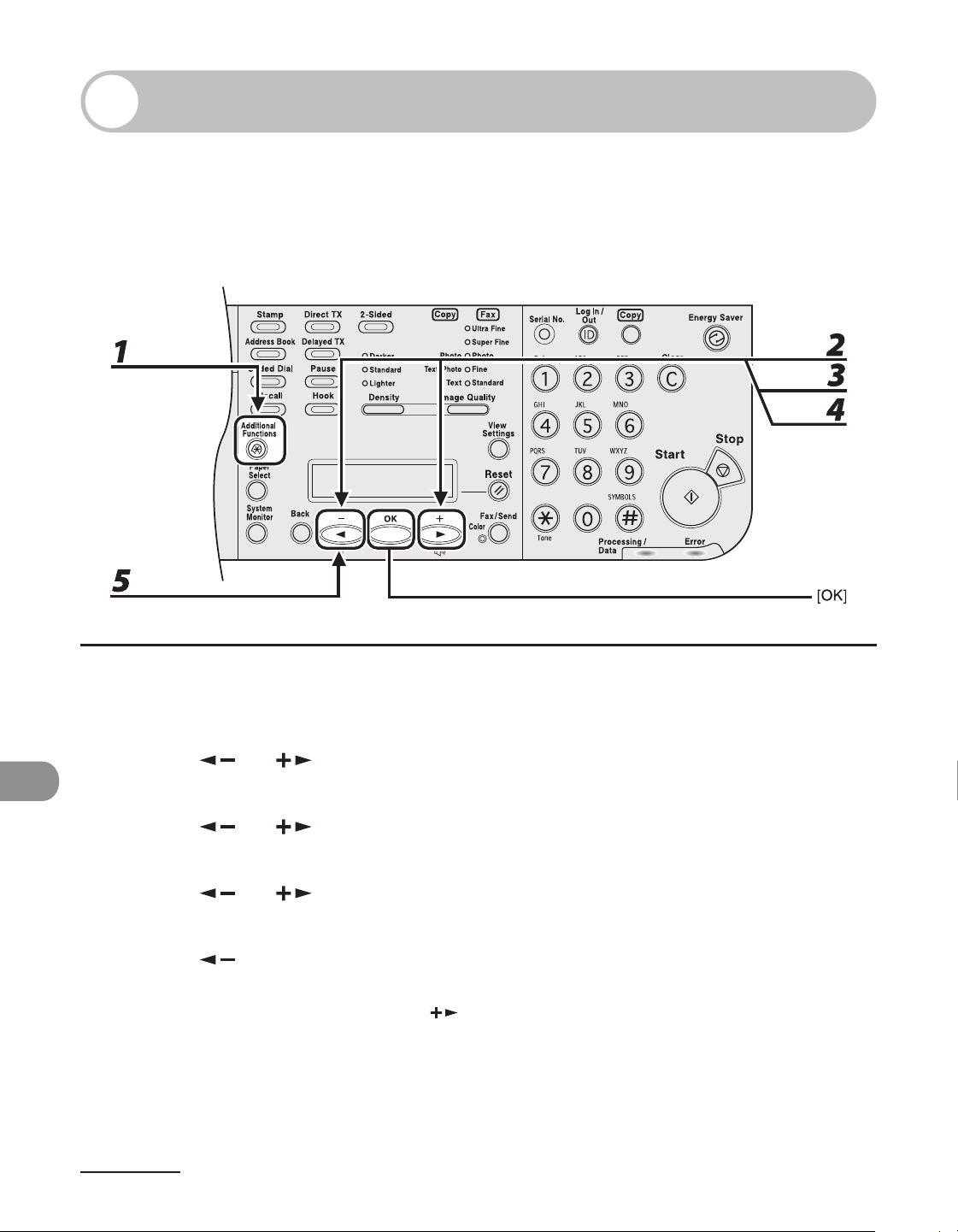
Machine Settings
12-2
Machine Settings
You can adjust the machine settings from the Setting Menu to customize the way the
machine works. To see the list of current settings, print out USER'S DATA LIST.
Printing USER'S DATA LIST
1 Press [Additional Functions].
2 Press [ ] or [ ] to select <REPORT SETTINGS>, then press [OK].
3 Press [ ] or [ ] to select <LIST PRINT>, then press [OK].
4 Press [ ] or [ ] to select <USER DATA LIST>, then press [OK].
5 Press [ ] to select <YES>.
Printing starts, and the screen automatically returns to the standby mode.
If you do not want to print the list, press [
] to select <NO>.
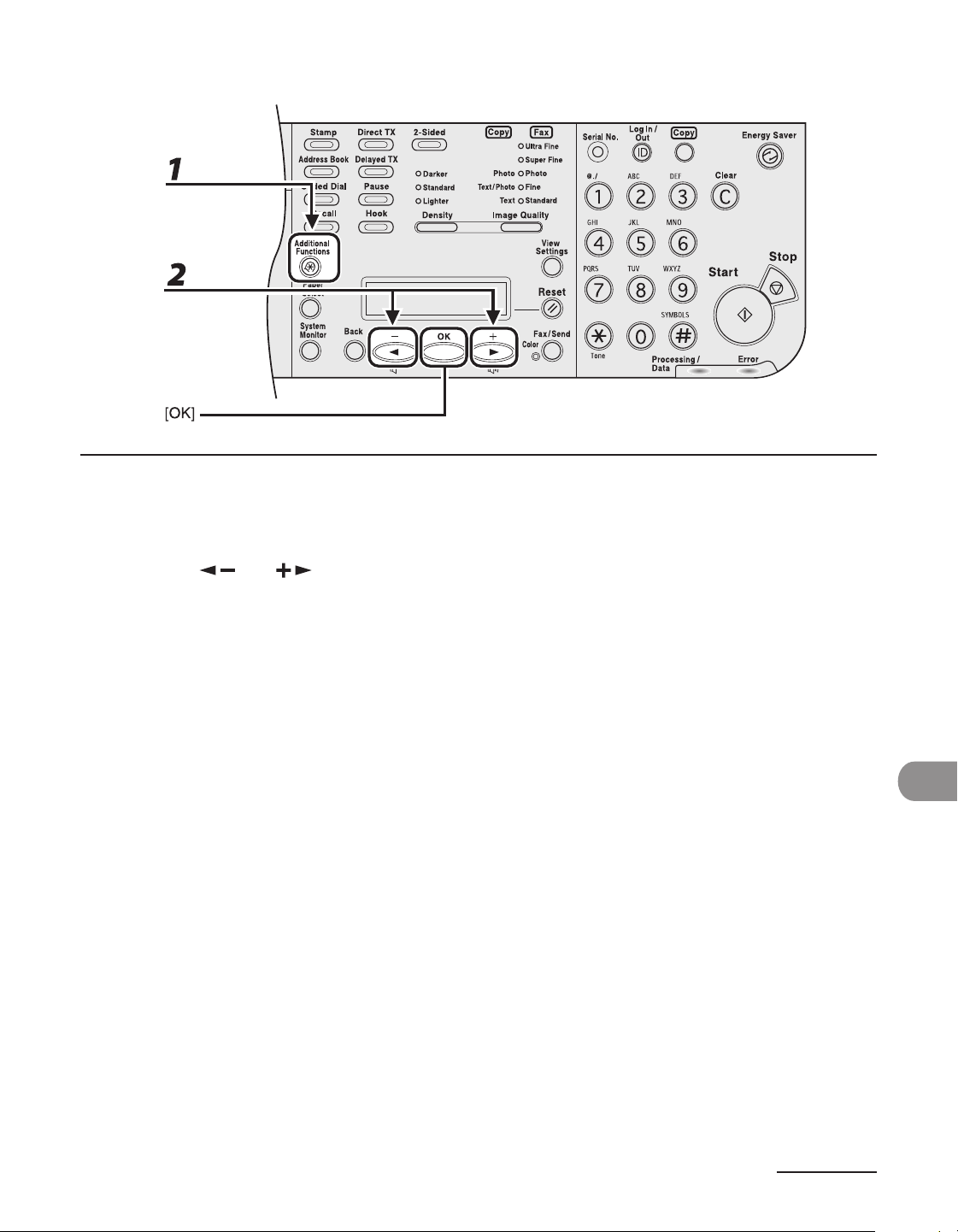
12-3
Machine Settings
Accessing the Setting Menu
1 Press [Additional Functions].
2 Press [ ] or [ ] to select the menu you want to access, then press [OK].
<PAPER SETTINGS>
<VOLUME CONTROL>
<COMMON SETTINGS>
<COPY SETTINGS>
<TX/RX SETTINGS>
<ADDRESS BOOK SET.>
<PRINTER SETTINGS>
<TIMER SETTINGS>
<ADJUST./CLEANING>
<REPORT SETTINGS>
<SYSTEM SETTINGS>
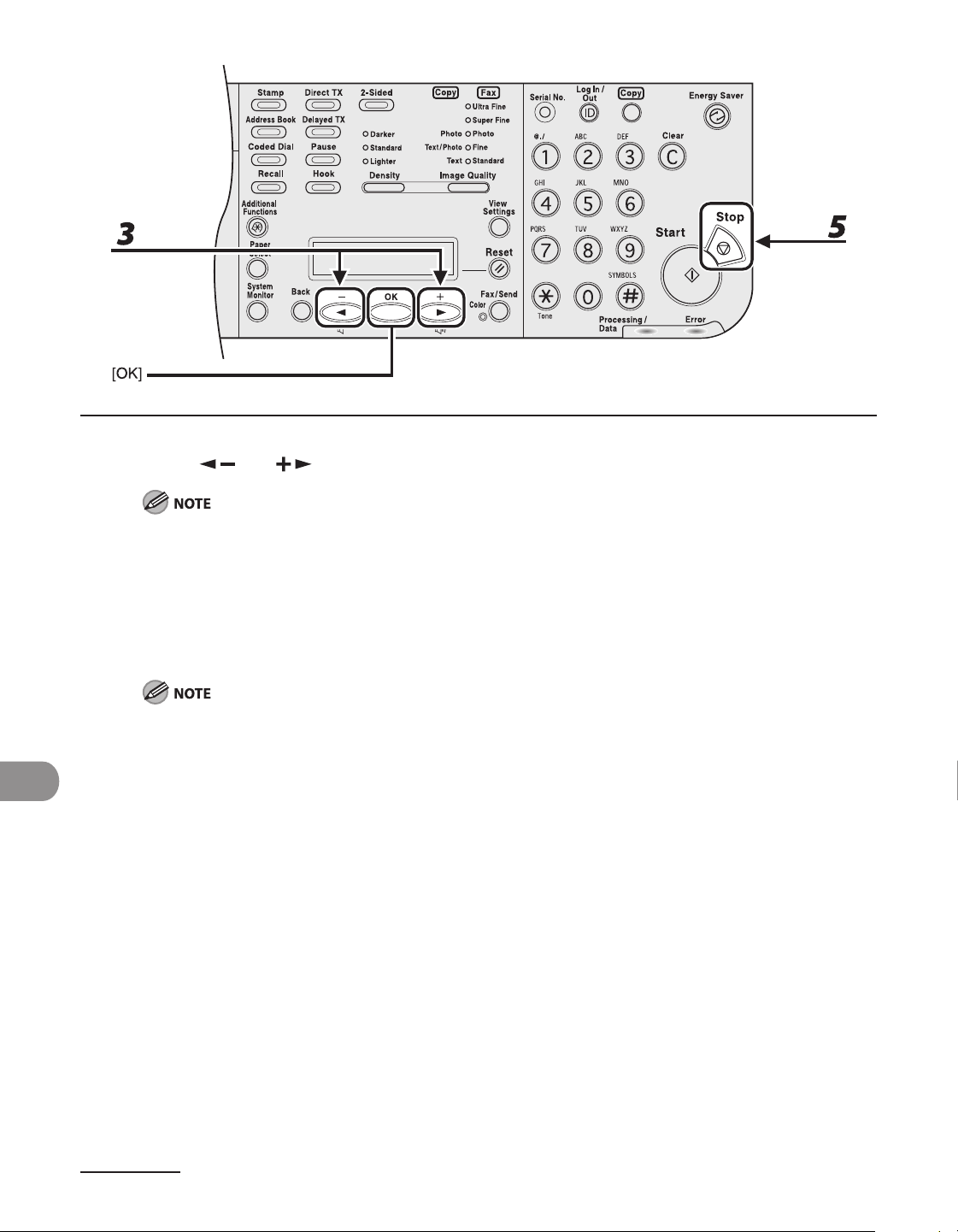
Machine Settings
12-4
3 Press [ ] or [ ] to select a submenu, then press [OK].
For details on the submenu, see “Setting Menu,” on p. 12-5.
4 To register the settings or go to a submenu item, press [OK].
5 When finished, press [Stop] to return to standby mode.
If you press [Stop] before pressing [OK], the setting will not be registered.
Press [Additional Functions] to return to the previous display.
–
–
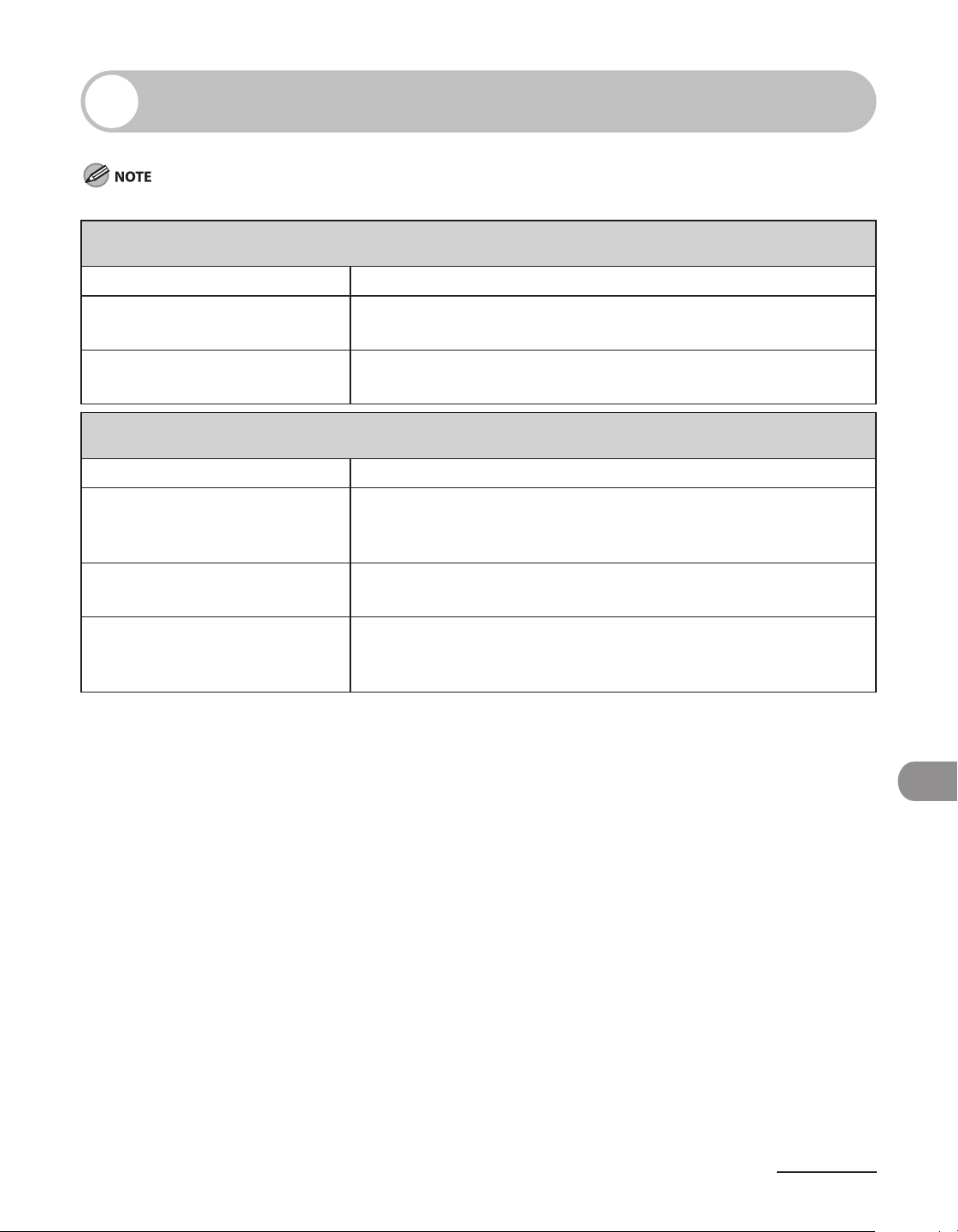
12-5
Machine Settings
Setting Menu
Depending on the country of purchase, some settings may not be available.
PAPER SETTINGS
Setting Item Description
1. CASSETTE Sets the paper size and type on the paper cassette. (See “Setting
Paper Size and Type,” on p. 2-12.)
2. MP TRAY Sets the paper size and type on the multi-purpose tray. (See
“Setting Paper Size and Type,” on p. 2-12.)
VOLUME CONTROL
Setting Item Description
1. MONITOR VOLUME Sets the volume for monitor tone during the fax transmission.
ON (1-3)
OFF
–
–
2. RING VOLUME Sets the volume of the ring produced when the machine detects
a call. (1-3)
3. ENTRY TONE Beeps when pressing the keys on the operation panel.
ON (1-3)
OFF
–
–
Machine Settings
12-6
VOLUME CONTROL
4. ERROR TONE Beeps when an error (e.g., TX error) occurs.
ON (1-3)
OFF
–
–
5. TX JOB DONE TONE Beeps when a document is sent.
ERROR ONLY (1-3)
OFF
ON (1-3)
–
–
–
6. RX JOB DONE TONE Beeps when a document is received.
ERROR ONLY (1-3)
OFF
ON (1-3)
–
–
–
7. SCAN DONE TONE
Beeps when scanning is completed.
ERROR ONLY (1-3)
OFF
ON (1-3)
8. PRINT DONE TONE
Beeps when printing is completed.
ERROR ONLY (1-3)
OFF
ON (1-3)
12-7
Machine Settings
COMMON SETTINGS
Setting Item Description
1. TONER SAVER MODE Sets whether to reduce toner consumption.
OFF
ON
* This function is not effective for print jobs. (See “PRINTER SETTINGS,”
on p.
12-25.)
–
–
2. PRINTER DENSITY Recalibrates the density adjustment scale if differences between
the image in the document and the print occur.
(1-9)
* This function is not effective for print jobs. (See “PRINTER SETTINGS,”
on p.
12-25.)
3. AUTO CASS. SELCT Sets whether to change to another paper source of the same
size if the current paper source runs out while processing a job.
Sets whether to select the appropriate paper source based on
the original's size and copy ratio settings (when making a copy),
or the set ratio of the image (when receiving a fax).
1. COPY Sets whether to activate the Auto Cassette Select function when
copying.
1. CASSETTE 1 (ON/OFF)
2. CASSETTE 2 (ON/OFF)*
3. MP TRAY (OFF/ON)
–
–
–
2. PRINTER** Sets whether to activate the Auto Cassette Select function when
printing.
1. CASSETTE 1 (ON/OFF)
2. CASSETTE 2 (ON/OFF)*
–
–
3. RECEIVE (FAX***) Sets whether to activate the Auto Cassette Select function when
receiving fax/I-fax documents.
1. CASSETTE 1 (ON/OFF)
2. CASSETTE 2 (ON/OFF)*
3. MP TRAY (OFF/ON)
–
–
–
4. OTHER Sets whether to activate the Auto Cassette Select function when
printing a report or list.
1. CASSETTE 1 (ON/OFF)
2. CASSETTE 2 (ON/OFF)*
3. MP TRAY (OFF/ON)
–
–
–
4. ENERGY IN SLEEP Selects power consumption when the machine is in the Sleep
mode between two levels.
LOW
HIGH
–
–
Machine Settings
12-8
COMMON SETTINGS
5. DISPLAY LANGUAGE Selects the language on the display. (See “Specifications,” on
p. 13-2.)
6. ADF DIRTY ERROR Sets whether the error message will appear when the ADF is
dirty.
DO NOT DISPLAY
DISPLAY
–
–
7. INIT. COMMON SET. Restores all <COMMON SETTINGS> to the default except for
<DISPLAY LANGUAGE>.
Press [ ] to select <YES>.
If you do not want to restore all settings, press [ ] to select
<NO>.
* Only for users of the optional paper cassette
** For the LASER CLASS 810 an optional network printer kit is required
*** LASER CLASS 810 Only
12-9
Machine Settings
COPY SETTINGS
Setting Item Description
1. AUTO ZOOM Sets whether to set the zoom ratio for copying automatically.
OFF
ON
–
–
2. COPY DENSITY Sets the density for copying. (1-9)
3. COL. Sets whether to collate the copies automatically.
OFF
ON
–
–
4. STANDARD SETTINGS Sets the default setting for copying.
1. IMAGE QUALITY Sets the document type for copying.
TEXT/PHOTO
TEXT
PHOTO
–
–
–
2. DENSITY Sets the density for copying.
STANDARD
DARK
LIGHT
–
–
–
3. COPIES Sets the number of copies. (1-99)
4. 2-SIDED Sets whether to make the two-sided copies automatically.
OFF
1 > 2-SIDED
2 > 2-SIDED
2 > 1-SIDED
–
–
–
–
5. PAPER SELECT Sets the paper source for copying.
CASSETTE 1
CASSETTE 2*
–
–
5. SHARPNESS Adjusts the sharpness of the copied image. (1-9)
Machine Settings
12-10
COPY SETTINGS
6. PAPER SIZE GROUP Selects a paper size group for your machine.
INCHES
A
AB
–
–
–
7. INIT. COPY SET. Restores all <COPY SETTINGS> to the default.
Press [ ] to select <YES>.
If you do not want to restore all settings, press [ ] to select
<NO>.
* Only for users of the optional paper cassette
12-11
Machine Settings
TX/RX SETTINGS
Setting Item Description
1. TX/RX COMMON SET. Sets the features common to the fax and send functions.
1. TX SETTINGS Sets the transmission features.
1. UNIT NAME Registers your name/company name (max. 24 characters,
including spaces). (See “Set the Machine for Sending Faxes,” in
the Starter Guide.)
2. DATA COMPRESSION
*
Sets the compression ratio for color scanned data. A high
compression ratio reduces the amount of memory used for the
document, but results in low quality images. On the contrary, a
low compression ratio increases the amount of memory used for
the document, but results in high quality images.
NORMAL
HIGH RATIO
LOW RATIO
–
–
–
3. RETRY TIMES
*
Sets the number of retry attempts for sending jobs to an e-
mail or file server address. (0-5) (See Reference Guide > Send/
Receive.)
4. SCANNING DENSITY Adjusts the scanning density for sending documents. (1-9)
5. STANDARD SETTINGS Sets the default settings for sending documents.
1. DENSITY Sets the default density for the document you send.
STANDARD
DK
LT
–
–
–
2. RESOLUTION Sets the default resolution for the document you send.
(200X200dpi, 200X400dpi, 300X300dpi, 400X400dpi,
600X600dpi, 100X100dpi, 150X150dpi, 200X100dpi)
Machine Settings
12-12
TX/RX SETTINGS
3. IMAGE FORMAT
*
Sets the default file format for the document you send.
PDF
TIFF (B&W)
PDF (COMPACT)
JPEG
–
–
–
–
4. ORIGINAL TYPE
*
Sets the default original type for the document you send.
TEXT/PHOTO
TEXT
PHOTO
–
–
–
5. DIVIDE INTO
PAGES
*
Sets whether to use <DIVIDE INTO PAGES> as default.
OFF
ON
–
–
6. DIRECT TX Sets whether to use <DIRECT TX> as default.
OFF
ON
–
–
7. STAMP
DOCUMENT
Sets whether to use <STAMP DOCUMENT> as default.
OFF
ON
–
–
6. SEND SETTINGS
*
Sets the options for sending documents to an e-mail address or
file server.
1. TX FILE NAME Sets the name of the document you send to an e-mail address or
file server. (max. 24 characters, including spaces.)
2. SUBJECT Sets the subject for your e-mail message. (max. 40 characters,
including spaces.)
3. MESSAGE TEXT Sets the message body text for your e-mail message. (max. 140
characters, including spaces.)
4. REPLY-TO Sets the reply-to address for your e-mail message. (max. 120
characters, including spaces.)
5. E-MAIL PRIORITY Sets the priority for your e-mail message.
NORMAL
LOW
HIGH
–
–
–
12-13
Machine Settings
TX/RX SETTINGS
7. TX TERMINAL ID Sets the options for sender information.
1. PRINTING
POSITION
Selects where the sender information is printed in small type at
the top of each page.
OUTSIDE IMAGE
INSIDE IMAGE
–
–
2. TELEPHONE #
MARK
Prefixes your number with the abbreviations FAX or TEL in your
sender information.
FAX
TEL
–
–
8. COLOR TX GAMMA
*
Sets the gamma value for color scanned data. If the set value
corresponds to the gamma value at the recipient’s machine, the
scan exposure of the output data at the recipient’s machine is
automatically adjusted to the level best suited to the quality of
the original.
(GAMMA 1.8, GAMMA 2.2, GAMMA 1.0, GAMMA 1.4)
9. SHARPNESS
*
Sets the contrast of the images you scan. (1-7)
10. ROTATE TX
*
Sets whether to use the TX Rotation function. TX Rotation
function automatically corrects the orientation of the document
by rotating the image when sending. For example, if you set
a document that has a horizontal orientation vertically on
the machine, the machine rotates the image and sends it
horizontally.
You can use the TX Rotation mode for an A4 and a LTR
document only. The TX Rotation mode is not available if you are
using the Direct Sending or Manual Sending.
This settings is only enabled when sending faxes.
ON
OFF
–
–
11. INIT STANDARD SET Sets whether to restore <STANDARD SETTINGS> in <TX
SETTINGS> to the default.
Press [ ] to select <YES>.
If you do not want to restore all settings, press [ ] to select
<NO>.
Machine Settings
12-14
TX/RX SETTINGS
2. RX SETTINGS Sets the reception features.
1.
SELECT CASSETTE You can set how the machine prints documents when there is
no paper matching the size of the received document.
SWITCH A The image is printed over two sheets of paper that have the
same combined size as the received document.
ON
OFF
–
–
SWITCH B The image is printed with blank space on paper that has the
same width as the received document.
ON
OFF
–
–
2. TWO-SIDED PRINT Sets whether the machine prints received documents on both
sides of the paper. (See Reference Guide > Send/Receive.)
OFF
ON
–
–
3. RECEIVE REDUCTION Sets whether the received images print out at a reduced size.
(See Reference Guide > Send/Receive.)
ON Image reduction is turned on.
1. RX
REDUCTION
Selects the reducing type.
AUTO
FIXED REDUCTION (90%, 95%, 97%, 75%)
–
–
2. REDUCE
DIRECTION
Selects the reducing direction.
VERTICAL ONLY
HORIZ & VERTICAL
–
–
OFF Image reduction is turned off.
4. RX PAGE FOOTER Sets whether to insert the machine’s fax number and the sender
information on received faxes.
OFF
ON
–
–
5. CONT. PRINTING Selects how the machine responds when the <TONER LOW/
PREPARE NEW TONER> message appears.
RX TO MEMORY The machine stores all documents in memory.
KEEP PRINTING The machine does not store documents in memory if the toner
runs out. Reset to <RX TO MEMORY> after replacing the toner
cartridge.
12-15
Machine Settings
TX/RX SETTINGS
2. FAX SETTINGS Set the fax features.
1. RX MODE Selects the receive mode. (See “Set the Machine for Receiving
Faxes,” in the Starter Guide.)
FaxOnly
FaxTel
AnsMode
DRPD
Manual
–
–
–
–
–
2. USER SETTINGS Specifies the basic operation settings in the fax mode.
1. UNIT TELEPHONE # Registers your fax number (max. 20 characters, including
spaces). (See “Set the Machine for Sending Faxes,” in the Starter
Guide.)
2. TEL LINE TYPE Selects the telephone line type. (See “Set the Machine for
Sending Faxes,” in the Starter Guide.)
TOUCH TONE
ROTARY PULSE
–
–
3. OFFHOOK ALARM Sets whether the alarm sounds when the handset of the external
telephone is off the hook.
ON
OFF
–
–
3. TX SETTINGS Sets the transmission features.
1. ECM TX Sets whether the ECM (Error Correction Mode) transmission is
activated.
ON
OFF
–
–
2. PAUSE TIME Sets the pause time when you insert pause into the dialing
sequence. (1SEC–15SEC)
Machine Settings
12-16
TX/RX SETTINGS
3. AUTO REDIAL Sets whether to redial automatically when the other line is busy
or a transmission error occurs. (See Reference Guide > Send/
Receive.)
ON Customizes the redial operation.
1. REDIAL TIMES Sets the number of retries. (1TIMES–10TIMES)
2. REDIAL
INTERVAL
Sets period of time before redialing. (2MIN.–99MIN.)
3. TX ERROR
REDIAL
Sets whether the machine redials automatically when
transmission error occurs.
ON
OFF
–
–
OFF After the first attempt at dialing fails, redialing is not attempted.
4. TIME OUT Sets whether to scan a document automatically after specifying
the destination.
* This function is not available when you dial with the numeric keys.
OFF
ON
–
–
5. STAMP DOCUMENT Sets whether to stamp documents when sending with Direct TX
or Memory TX, or to stamp documents only when sending with
Direct TX.
If you are using the LASER CLASS 830i, this setting is enabled
when sending to a fax, I-fax, e-mail, or file server destination.
DIRECT&MEMORY TX
DIRECT TX
–
–
6. DIALING LINE CHCK Sets whether to check the telephone line condition.
OFF
ON
–
–
4. RX SETTINGS Sets the reception features.
1. ECM RX Sets whether the ECM (Error Correction Mode) reception is
activated.
ON
OFF
–
–
12-17
Machine Settings
TX/RX SETTINGS
2. FAX/TEL OPT. SET Sets the optional items in the <FaxTel> mode. (See Reference
Guide > Send/Receive.)
1. RING START TIME Sets the time the machine takes to check whether a call is a fax
or a voice call. (0SEC–30SEC)
2. F/T RING TIME Selects the ring length for voice calls. (15SEC–300SEC)
3. F/T SWITCH
ACTION
Selects whether the machine switches to the receive mode after
the ring time has elapsed, or whether if disconnects the call.
RECEIVE
DISCONNECT
–
–
3. DRPD:SELECT FAX Selects the ring pattern for fax calls.
DOUBLE RING
SHORT-SHORT-LONG
SHORT-LONG-SHORT
OTHER RING TYPE
NORMAL RING
–
–
–
–
–
4. INCOMING RING Sets whether the external telephone rings when the machine
receives a fax. This function is only available when the <RX
MODE> is set to <FaxOnly> or <FaxTel>.
ON The telephone rings when the machine receives a fax if an
external telephone is connected.
RING COUNT Sets the number of incoming rings before the machine answers.
(1TIMES–99TIMES)
OFF The telephone does not ring when the machine receives a fax.
(In the Sleep mode, the telephone may ring one or two times.)
5. REMOTE RX Sets whether to use remote receiving. This function is not
available when <ENERGY IN SLEEP> in <COMMON SETTINGS> is
set to <LOW>. (See Reference Guide > Send/Receive.)
ON The machine enables remote receiving.
REMOTE RX ID You can dial a code on remote extension to start receiving a
document.
A combination of two characters using 0 to 9, * and # is possible.
OFF The machine disables remote receiving.
Machine Settings
12-18
TX/RX SETTINGS
6. MANUAL/AUTO Sets whether the machine switches to the document receive
mode after the external telephone rings for a specified length of
time in the manual receive mode.
OFF The external telephone keeps ringing until someone answers
the call manually.
ON The machine switches to the document receive mode after the
external telephone rings for a specified time.
F/T RING TIME Sets the length of time to elapse before the machine switches to
document receiving. (1SEC–99SEC)
7. RX RESTRICTION You can reject faxes from senders with no fax/telephone
number in their sender information.
OFF All receptions are conducted.
ON Receives the fax only from the sending fax machine that sends
the TSI signal.
* LASER CLASS 830i Only
12-19
Machine Settings
ADDRESS BOOK SET.
Setting Item Description
1. FAVORITES BUTTONS
*
Registers destinations together with a combination of the scan
and send settings for frequent use. (M1–M4: One-touch keys 01
to 04 are used for this feature.)
FAX Registers fax numbers.
1. TEL NUMBER ENTRY Registers the recipient's fax number (max. 120 digits, including
spaces).
2. NAME Registers the recipient's name (max. 16 characters, including
spaces).
3. IMAGEQUALITY Sets the image quality.
FINE
PHOTO
SUPER FINE
ULTRA FINE
STANDARD
–
–
–
–
–
4. OPTIONAL SETTING Selects whether to use the advanced functional settings for each
one-touch key registered in the machine.
OFF The optional setting is not set for this destination.
ON The optional setting is set for this destination.
1. ECM Selects whether to use ECM (Error Correction Mode).
ON
OFF
–
–
2. TX SPEED Select the transmission speed.
(33600bps, 14400bps, 9600bps, 4800bps)
3. INTERNATIONAL Selects a mode for documents you are sending.
DOMESTIC
LONG DISTANCE 1
LONG DISTANCE 2
LONG DISTANCE 3
(See "Registering Fax Numbers," on p. 4-13.)
–
–
–
–
E-MAIL Registers e-mail addresses.
1. E-MAIL ADDRESS Registers the recipient's e-mail address (max. 120 digits).
2. NAME Registers the recipient's name (max. 16 characters, including
spaces).
3. IMAGE FORMAT Sets the file format for the file attached to e-mail message.
PDF
TIFF (B&W)
PDF (COMPACT)
JPEG
–
–
–
–
Machine Settings
12-20
ADDRESS BOOK SET.
4. DIVIDE INTO PAGES Sets if multiple images are sent as separate files or as a single
file.
OFF Sends multiple images as a single file without dividing them.
ON Separates multiple images and send them as separate files.
5. IMAGEQUALITY Sets the resolution of the document you send.
(200x200dpi, 200x400dpi, 300x300dpi, 400x400dpi, 600X600dpi,
100X100dpi, 150X150dpi, 200x100dpi)
6. ORIGINAL TYPE Sets the original type for the document you send.
TEXT/PHOTO
TEXT
PHOTO
–
–
–
IFAX Registers I-fax addresses.
1. I-FAX ADDRESS Registers the recipient's I-fax address (max. 120 digits).
2. NAME Registers the recipient's name (max. 16 characters, including
spaces).
3. DIVIDE INTO PAGES Sets if multiple images are sent as separate files or as a single
file.
OFF Sends multiple images as a single file without dividing them.
ON Separates multiple images and send them as separate files.
4.
IMAGEQUALITY Sets the resolution of the document you send.
(200x200dpi, 200x400dpi, 300x300dpi, 400x400dpi, 600X600dpi,
100X100dpi, 150X150dpi, 200x100dpi)
5. ORIGINAL TYPE Sets the original type for the document you send.
TEXT/PHOTO
TEXT
PHOTO
–
–
–
FTP Registers FTP addresses.
1. HOST NAME Registers the name of the file server (max. 120 characters).
2. NAME Registers the recipient's name (max. 16 characters, including
spaces).
3. FILE PATH Registers the path to the file server (max. 120 characters).
4.
LOGIN NAME Registers the login name to access the file server (max. 24
characters).
12-21
Machine Settings
ADDRESS BOOK SET.
5. PASSWORD Registers the password to access the file server (max. 24
characters).
6. IMAGE FORMAT Sets the file format.
PDF
TIFF (B&W)
PDF (COMPACT)
JPEG
–
–
–
–
7. DIVIDE INTO PAGES Sets if multiple images are sent as separate files or as a single
file.
OFF Sends multiple images as a single file without dividing them.
ON Separates multiple images and send them as separate files.
8. IMAGEQUALITY Sets the resolution of the document you send.
(200x200dpi, 200x400dpi, 300x300dpi, 400x400dpi, 600X600dpi,
100X100dpi, 150X150dpi, 200x100dpi)
9. ORIGINAL TYPE Sets the original type for the document you send.
TEXT/PHOTO
TEXT
PHOTO
–
–
–
SMB Registers SMB addresses.
1. HOST NAME Registers the name of the file server (max. 120 characters).
2. NAME Registers the recipient's name (max. 16 characters, including
spaces).
3. FILE PATH Registers the path to the file server (max. 120 characters).
4. LOGIN NAME Registers the login name to access the file server (max. 24
characters).
5. PASSWORD Registers the password to access the file server (max. 14
characters).
6. IMAGE FORMAT Sets the file format.
PDF
TIFF (B&W)
PDF (COMPACT)
JPEG
–
–
–
–
7. DIVIDE INTO PAGES Sets if multiple images are sent as separate files or as a single
file.
OFF Sends multiple images as a single file without dividing them.
ON Separates multiple images and send them as separate files.
Machine Settings
12-22
ADDRESS BOOK SET.
8. IMAGEQUALITY Sets the resolution of the document you send.
(200x200dpi, 200x400dpi, 300x300dpi, 400x400dpi, 600X600dpi,
100X100dpi, 150X150dpi, 200x100dpi)
9. ORIGINAL TYPE Sets the original type for the document you send.
TEXT/PHOTO
TEXT
PHOTO
–
–
–
2. 1-TOUCH SPD DIAL Registers the destinations on one-touch keys. Up to 8
destinations can be registered. (See “Storing/Editing One-Touch
Keys/Coded Dial Codes,” on p. 4-13.)
FAX Registers fax numbers.
1. TEL NUMBER ENTRY Registers the recipient’s fax number (max. 120 digits, including
spaces).
2. NAME Registers the recipient’s name (max. 16 characters, including
spaces).
3. OPTIONAL SETTING Sets the optional settings for sending faxes.
OFF The optional setting is not set.
ON The optional setting is set.
1. ECM Selects whether to use ECM (Error Correction Mode).
ON
OFF
–
–
2. TX SPEED Selects the transmission speed.
(33600bps, 14400bps, 9600bps, 4800bps)
3.
LONG DISTANCE
Selects a mode for documents you are sending.
DOMESTIC
LONG DISTANCE 1
LONG DISTANCE 2
LONG DISTANCE 3
(See “Registering Fax Numbers,” on p. 4-13.)
–
–
–
–
E-MAIL
*
Registers e-mail addresses.
1. E-MAIL ADDRESS Registers the recipient’s e-mail address (max. 120 digits).
12-23
Machine Settings
ADDRESS BOOK SET.
2. NAME Registers the recipient’s name (max. 16 characters, including
spaces).
IFAX
*
Registers I-fax addresses.
1. I-FAX ADDRESS Registers the recipient's I-fax address (max. 120 digits).
2. NAME Registers the recipient's name (max. 16 characters, including
spaces).
FTP
*
Registers FTP addresses.
1. HOST NAME Registers the name of the file server (max. 120 characters).
2. NAME Registers the recipient's name (max. 16 characters, including
spaces).
3. FILE PATH Registers the path to the file server (max. 120 characters).
4. LOGIN NAME Registers the login name to access the file server (max. 24
characters).
5. PASSWORD Registers the password to access the file server (max. 24
characters).
SMB
*
Registers SMB addresses.
1. HOST NAME Registers the name of the file server (max. 120 characters).
2. NAME Registers the recipient’s name (max. 16 characters, including
spaces).
3. FILE PATH Registers the path to the file server (max. 120 characters).
4. LOGIN NAME Registers the login name to access the file server (max. 24
characters).
5. PASSWORD Registers the password to access the file server (max. 14
characters).
3. CODED SPD DIAL Registers the destinations for coded dial codes. Up to 100
destinations can be registered. (See “Storing/Editing One-Touch
Keys/Coded Dial Codes,” on p. 4-13.)
FAX Registers fax numbers.
1. TEL NUMBER ENTRY Registers the recipient’s fax number (max. 120 digits, including
spaces).
2. NAME Registers the recipient’s name (max. 16 characters, including
spaces).
3. OPTIONAL SETTING Sets the optional settings for sending faxes.
OFF The optional setting is not set.
ON The optional setting is set.
Machine Settings
12-24
ADDRESS BOOK SET.
1. ECM Selects whether to use ECM (Error Correction Mode).
ON
OFF
–
–
2. TX SPEED Selects the transmission speed.
(33600bps, 14400bps, 9600bps, 4800bps)
3.
LONG DISTANCE
Selects a mode for documents you are sending.
DOMESTIC
LONG DISTANCE 1
LONG DISTANCE 2
LONG DISTANCE 3
(See “Registering Fax Numbers,” on p. 4-13.)
–
–
–
–
E-MAIL
*
Registers e-mail addresses.
1. E-MAIL ADDRESS Registers the recipient’s e-mail address (max. 120 digits).
2. NAME Registers the recipient’s name (max. 16 characters, including
spaces).
IFAX
*
Registers I-fax addresses.
1. I-FAX ADDRESS Registers the recipient's I-fax address (max. 120 digits).
2. NAME Registers the recipient's name (max. 16 characters, including
spaces).
FTP
*
Registers FTP addresses.
1. HOST NAME Registers the name of the file server (max. 120 characters).
2. NAME Registers the recipient's name (max. 16 characters, including
spaces).
3. FILE PATH Registers the path to the file server (max. 120 characters).
4. LOGIN NAME Registers the login name to access the file server (max. 24
characters).
5. PASSWORD Registers the password to access the file server (max. 24
characters).
SMB
*
Registers SMB addresses.
1. HOST NAME Registers the name of the file server (max. 120 characters).
2. NAME Registers the recipient’s name (max. 16 characters, including
spaces).
3. FILE PATH Registers the path to the file server (max. 120 characters).
4. LOGIN NAME Registers the login name to access the file server (max. 24
characters).
5. PASSWORD Registers the password to access the file server (max. 14
characters).
12-25
Machine Settings
ADDRESS BOOK SET.
4. GROUP DIAL Registers destinations in group addresses. Up to 199 (LASER
CLASS 810)/499 (LASER CLASS 830i) destinations can be
registered in a group. (See “Storing/Editing One-Touch Keys/
Coded Dial Codes,” on p. 4-13.)
1. SELECT ADD/TEL NO Registers the recipient’s numbers and addresses by specifying
the one-touch keys or coded dial codes.
2. NAME Registers the group name (max. 16 characters, including spaces).
* LASER CLASS 830i Only
PRINTER SETTINGS
*
Setting Item Description
1. DEFAULT PAPERSIZE Sets the default paper size when no paper source is specified.
(A4, B5, A5, LGL, LTR, EXECUTIV, STMT, ISO-B5, ISO-C5, COM10,
MONARCH, DL )
2. DEFAULT PAPERTYPE Sets the default paper type for print jobs. This machine has
internally defined optimal print modes for each specified paper
type.
(PLAIN PAPER, COLOR, RECYCLED, HEAVY PAPER 1, HEAVY
PAPER 2, HEAVY PAPER 3, BOND, TRANSPARENCY, LABELS,
ENVELOPE)
3. COPIES Sets the number of documents printed. (1-999)
4. 2-SIDED PRINTING Sets whether to activate two-sided printing.
OFF
ON
–
–
5. PRINT QUALITY Sets the image quality, density or toner saving mode for
printing.
1. IMAGE REFINEMENT Sets whether to print smoothly the jagged outlines of characters
and graphics.
ON
OFF
–
–
2. DENSITY Adjusts the print density. (1-9)
3. TONER SAVER Sets whether the toner saving mode is enabled.
OFF
ON
–
–
6. PAGE LAYOUT Sets the printing layout.
Machine Settings
12-26
PRINTER SETTINGS
1. BINDING Sets the binding position for two-sided printing.
LONG EDGE
SHORT EDGE
–
–
2. MARGIN Sets the page margin in inches or millimeters.
INCHES (-01.90INCHES–01.90INCHES)
MM (-50.0 MM–50.0 MM)
–
–
7. AUTO ERROR SKIP Sets whether to skip errors and automatically continue printing.
ON When an error occurs, printing automatically continues if the
error can be skipped.
OFF When an error occurs, a message is displayed, and the printer
function stops until the job is canceled.
8. COLLATE Sets whether to collate the printouts automatically.
OFF
COLLATE
–
–
9. ERROR TIME OUT Sets the length of time before the machine returns an error
when no data is received from the computer.
ON Sets the error time out period. (5SEC–300SEC)
OFF The error time out is off.
10. INIT. PRINTER SET Restores all <PRINTER SETTINGS> to the default.
Press [ ] to select <YES>.
If you do not want to restore all settings, press [ ] to select
<NO>.
11. PCL SETTINGS
**
Sets the PCL printer setting.
1. PAPER SAVE Sets whether to save blank pages.
OFF
ON
–
–
2. ORIENTATION Sets the paper orientation.
PORTRAIT
LANDSCAPE
–
–
3. FONT NUMBER Sets the default font typeface for the printer function using the
corresponding font numbers. (0-91)
12-27
Machine Settings
PRINTER SETTINGS
4. POINT SIZE Specifies a point size for the default font. This item appears
when the number in <FONT NUMBER> is that of a proportionally
spaced scalable font. (4.00–999.75)
5. PITCH Specifies the pitch for the default font. This item appears when
the number in <FONT NUMBER> is that of a fixed pitch scalable
font. (00.44–99.99)
6. FORM LINES Sets the number of lines to be printed on a page. (5-128)
7. SYMBOL SET Selects the symbol set most suited to the needs of the host
computer.
8. CUSTOM PAPER Sets whether to use a custom paper size.
OFF Disables you to specify a custom paper size.
ON Enables you to specify a custom paper size.
1. UNIT OF
MEASURE
Selects the unit of measurement to specify a custom paper size.
INCHES
MILLIMETERS
–
–
2. X DIMENSION Specifies the horizontal size of the custom paper.
(05.00–14.00" (127–356 mm))
3. Y DIMENSION Specifies the vertical size of the custom paper.
(03.00–08.50" (76–216 mm))
9. APPEND CR TO LF Sets whether to append a carriage return (CR) when line feed
code (LF) is received.
NO The print head moves down to the next line when line feed
code is received, and the margin does not change (such as the
beginning of the next line).
Machine Settings
12-28
PRINTER SETTINGS
YES The print head moves to the beginning of the next line when
line feed code is received.
10. ENLARGE A4 Sets whether to expand the printable area of A4 size paper to
that of Letter size in width.
* This setting is applicable for A4 paper and portrait orientation for the
PCL5 printing only. The PCL6 printing is not supported.
OFF All the area on a page 1/8" (4.23 mm) from the top, bottom, left,
and right edges is available for printing on A4 paper.
ON All the area on a page 1/8" (4.23 mm) from the top and bottom
edges and 1/8" (3.30 mm) from the left and right edges is
available for printing on A4 paper. Only the width increases.
11. HALFTONES Specifies the display pattern of subtle gradation (medium
gradation) for black-and-white data for each text part, graphics
part and image part.
1. TEXT Enables this function to text parts.
RESOLUTION Prints precisely so that the lines of text data appear clearly. This
setting is appropriate for printing data that contains text or thin
lines.
TONE Prints with a stable texture and distinct gradation, by enhancing
the contrast of tone. This setting is appropriate for printing
image data such as photographic images.
GRADATION Prints with a smooth gradation and fine outline quality
combined. This setting is appropriate for printing diagrams or
graphs in which gradation is used.
12-29
Machine Settings
PRINTER SETTINGS
2. GRAPHICS Enables this function to graphics parts such as diagrams and
graphs.
TONE
GRADATION
RESOLUTION
–
–
–
3. IMAGE Enables this function to image parts such as picture images.
TONE
GRADATION
RESOLUTION
–
–
–
12. RESET PRINTER Clears all print jobs in progress and resets the printer function.
Press [ ] to select <YES>.
If you do not want to restore all settings, press [ ] to select
<NO>.
* For the LASER CLASS 810 an optional network printer kit is required
** LASER CLASS 830i Only
Machine Settings
12-30
TIMER SETTINGS
Setting Item Description
1. DATE&TIME SETTING Sets the current date and time. (See “Set Up the Machine,” in the
Starter Guide.)
2. TIME ZONE SETTING Sets the time zone of your machine’s location. (See “Setting
Time Zone,” on p. 1-20.)
3. DATE TYPE SELECT Sets the date format.
MM/DD/YYYY
DD/MM YYYY
YYYY MM/DD
–
–
–
4. AUTO SLEEP TIME Sets the auto sleep mode when the machine remains idle for a
certain period of time. (3MIN.–30MIN.) (See “Setting the Sleep
Mode,” on p. 1-16.)
ON
OFF
–
–
5. AUTO CLEAR TIME Sets the auto clear mode when the machine has no operation
idle for a certain period of time. (1MIN.–9MIN.) The machine
returns to the standby mode. (See “Setting Auto Clear Time,” on
p. 1-18.)
ON
OFF
–
–
6. DAYLIGHT SV.TIME Sets the daylight saving time mode. (See “Setting Daylight
Saving Time,” on p. 1-21.)
OFF Deactivates the daylight saving time mode.
ON Activates the daylight saving time mode.
12-31
Machine Settings
TIMER SETTINGS
1. START DATE/TIME Sets the start date.
1. MONTH
2. WEEK
3. DAY
–
–
–
2. END DATE/TIME Sets the end date.
1. MONTH
2. WEEK
3. DAY
–
–
–
Machine Settings
12-32
ADJUST./CLEANING
Setting Item Description
1. TRANS. ROLR CLEAN Cleans the transcription roller. (See “Transcription Roller,” on p.
10-10.)
2. FIX.UNIT CLEANING Cleans the fuser roller. (See “Fuser Roller,” on p. 10-6.)
3. FEEDER CLEANING Cleans the ADF. (See "Cleaning the ADF Automatically," on p.
10-9.)
4. SPECIAL MODE M Sets to improve print quality or fix irregular print density. If print
quality decreases or an irregularity in the print density appears,
transcription output may not function adequately.
MID Selects in normal conditions.
LOW Selects to compensate for poor print quality that occurs when
using paper that was stored for a long time at high temperatures
and high humidity.
HIGH Selects to compensate for poor quality that occurs when using
heavyweight paper.
5. SPECIAL MODE N When the two-sided printing function is used, paper may curl
severely or become jammed. Enable this setting to prevent
paper curling or jamming.
OFF
ON
–
–
6. SPECIAL MODE P Sets to activate when lightweight paper or paper which is easy
to get uneven print density is used for printing.
OFF
ON
–
–
7. SPECIAL MODE Q Enable this setting if black or white spots appear on the printed
image.
OFF
ON
–
–
8. SPECIAL MODE R Sets whether to prevent white streaks from appearing on
the printed image. When you print the halftone image or
photograph after the machine has not undergone any operation
for a while, the first page of printouts may have thin white
streaks on the printed image.
OFF
ON
–
–
12-33
Machine Settings
ADJUST./CLEANING
9. SPECIAL MODE S Sets whether to reduce the waiting time for the next printout.
When you change the paper size after continuous printing, the
machine may take a while to start the next printing.
OFF Does not reduce the waiting time next set of printout. (default)
SPEED PRIORITY Reduces the waiting time to start the next set of printout. Print
speed has priority; however, a condition that an previously
printed image also appears faintly on the next output may
occur.
10. CONT. PRINT MODE Sets whether to prevent the back edge of the previous page
from appearing on the following page during continuous
printing of half-tone prints or photographs.
OFF
ON
–
–
11. BACK EDGE MODE Sets whether to prevent back edge of paper from smudging.
OFF
ON
–
–
12. LARGE PAPER MODE Sets whether to improve toner fix on large-sized paper.
OFF
ON
–
–
13. AUTO ADF DRTY ADJ Sets whether to activate smudge (due to dust or dirt) reduction
during printing. When the ADF is dirty, copies may contain
unwanted dots or lines.
OFF
ON
–
–
14. MAINTENANCE CODE This setting is not functional in this model.
Machine Settings
12-34
REPORT SETTINGS
Setting Item Description
1. SETTINGS Sets the report functions. (See Chapter 11, “Appendix,” in the
Reference Guide.)
1. TX REPORT Sets whether the transmission report prints out.
PRINT ERROR ONLY Prints a report only when a transmission error occurs.
REPORT WITH TX
IMAGE
Sets whether to print the first page of the document under the
report.
OFF
ON
–
–
OUTPUT YES Prints a report every time you send a document.
REPORT WITH TX
IMAGE
Sets whether to print the first page of the document under the
report.
OFF
ON
–
–
OUTPUT NO No report is printed.
2. RX REPORT Sets whether the reception report prints out.
OUTPUT NO
PRINT ERROR ONLY
OUTPUT YES
–
–
–
3. ACTIVITY REPORT Sets whether to automatically print the transaction report and
selects its type.
1. AUTO PRINT Sets whether an activity report is printed automatically every
40 transactions. If TX Document Archiving is set to <ON>,
the activity report is automatically set to be printed every 40
transmissions, and the settings under <AUTO PRINT> are not
displayed.
OUTPUT YES
OUTPUT NO
–
–
12-35
Machine Settings
REPORT SETTINGS
2. TX/RX SEPARATE Sets whether an activity report is printed separately for sending
and receiving or not.
OFF
ON
–
–
2. LIST PRINT Prints reports/lists.
1. ACTIVITY REPORT Prints the transaction report (max. last 40 transactions) manually.
Press [ ] to select <YES>.
If you do not want to print the list, press [ ] to select <NO>.
2. SPEED DIAL LIST Prints the list of destinations registered in Address Book.
1. 1-TOUCH LIST
2. CODED DIAL LIST
3. GROUP DIAL LIST
Press [ ] to select <YES>.
If you do not want to print the list, press [ ] to select <NO>.
–
–
–
3. ADD BOOK DETAILS Prints the details of Address Book.
1. 1-TOUCH (DETAILS)
2. CODED (DETAILS)
Press [ ] to select <YES>.
If you do not want to print the list, press [ ] to select <NO>.
–
–
4. USER DATA LIST Prints the setting list registered in the menu. (See “Printing
USER’S DATA LIST,” on p. 12-2.)
Press [ ] to select <YES>.
If you do not want to print the list, press [ ] to select <NO>.
5. FORWARDING
CONDITIONS LIST
Prints the contents of the forwarding settings that have been
specified.
Press [ ] to select <YES>.
If you do not want to restore all settings, press [ ] to select
<NO>.
Machine Settings
12-36
SYSTEM SETTINGS
Setting Item Description
1. SYS. MANAGER INFO Sets the system manager information to protect the contents
of <SYSTEM SETTINGS>. Once the system manager ID and
system password is set, they must be entered every time you
access the <SYSTEM SETTINGS> menu.
1. SYS. MANAGER ID Sets the system manager ID (seven digits).
2. SYSTEM PASSWORD Sets the system manager password (seven digits).
3. SYSTEM MANAGER Sets the system manager name (max. 32 characters, including
spaces).
2. DEVICE INFO Sets device information.
1. DEVICE NAME Registers the machine name (max. 32 characters, including
spaces).
2. LOCATION Registers the machine location (max. 32 characters, including
spaces).
3. MANAGE DEPT. ID Sets if the department ID management is used.
OFF The department ID management is not used.
ON The department ID management is used.
1. REGISTER DEPT. ID Registers the seven digit department ID (max. 30).
1. PASSWORD Registers the department ID management password.
2. PAGE LIMIT SET. Sets page limits for scans, prints, and copies from 0 to 999,999
pages.
1. TOTAL PRINT LIMIT Sets if the total page limit is used.
OFF
ON (000000-999999)
–
–
12-37
Machine Settings
SYSTEM SETTINGS
2. COPY LIMIT Sets if the copy limit is used.
OFF
ON (000000-999999)
–
–
3. BLACK SCAN LIMIT Sets if the scan limit is used.
OFF
ON (000000-999999)
–
–
4. COLOR SCAN LIMIT Sets if the color scan limit is used.
OFF
ON (000000-999999)
–
–
5. PRINT LIMIT Sets if the print limit is used.
OFF
ON (000000-999999)
–
–
3. ERASE Erases the department ID and password.
Press [ ] to select <YES>.
If you do not want to erase all settings, press [ ] to select
<NO>.
2. PAGE TOTALS Displays, clears, and prints counter information.
1. VIEW PAGE TOTALS Displays how much paper was used by each department.
1. TOTAL PRINT
2. COPY
3. SCAN
4. COLOR SCAN
5. PRINT
–
–
–
–
–
2. CLEAR ALL TOTAL Clears counter information.
Press [ ] to select <YES>.
If you do not want to clear the settings, press [ ] to select
<NO>.
Machine Settings
12-38
SYSTEM SETTINGS
3. PRINT LIST Prints counter information.
Press [ ] to select <YES>.
If you do not want to print the list, press [ ] to select <NO>.
3. PDL JOBS W/OUT ID Sets if print jobs from computers with unknown IDs are
accepted or rejected.
ON Accepts print jobs from computers with unknown IDs.
OFF Rejects print jobs from computers with unknown IDs.
4. MANAGE USER ID Sets if the user ID management is used.
OFF
ON
–
–
5. NETWORK SETTINGS* Sets the network setting. (See Reference Guide > Network
Settings.)
1. TCP/IP SETTINGS Sets TCP/IP network.
1. IPv4 SETTINGS Sets TCP/IPv4 network.
1. IP ADDRESS Sets IPv4 Address settings.
1. IP ADDRESS AUTO.
2. IP ADDRESS
3. SUBNET MASK
4. GATEWAY ADDRESS
–
–
–
–
1. IP ADDRESS
AUTO.
Sets whether to automatically set an IP address.
ON Enables an IP address to the machine automatically.
1. DHCP (ON/OFF)
2. BOOTP (OFF/ON)
3. RARP (OFF/ON)
–
–
–
OFF Allocates an IP address to the machine manually.
2. IP ADDRESS Registers a fixed IP address to the machine. (See "Set the
Machine for Network Usage," in the Starter Guide.)
3. SUBNET MASK Registers a fixed subnet mask to the machine.
4. GATEWAY
ADDRESS
Registers a fixed gateway address to the machine.
2. PING COMMAND Enter the IP address of a device on the network and press [OK]
to check whether the machine can connect to that device.
12-39
Machine Settings
SYSTEM SETTINGS
3. SET IP ADD RANGE Sets whether to restrict the range of IP addresses.
OFF Disables restriction of IP address of computers.
ON Enables you to set which IP addresses can send data (print/fax
jobs) to the machine. You can select to permit or reject up to
eight ranges of IP addresses. Set each range of IP addresses by
entering an IP address in both <START IP ADDRESS> and <END
IP ADDRESS>.
1. IP ADDRESS 1
2. IP ADDRESS 2
3. IP ADDRESS 3
4. IP ADDRESS 4
5. IP ADDRESS 5
6. IP ADDRESS 6
7. IP ADDRESS 7
8. IP ADDRESS 8
9. IP ADDRESS 9
10. IP ADDRESS 10
–
–
–
–
–
–
–
–
–
–
4. DNS SETTINGS Sets the DNS server settings.
1. DNS SERVER SET Registers the DNS server address.
1. PRIM. DNS
SERVER
Registers the primary server address.
2. SECOND
DNS SERVER
Registers the secondary server address.
2. HOST/DOMAIN
NAME
Registers the host name and domain name of the DNS server.
1. HOST NAME Registers the host name of the DNS server.
2. DOMAIN
NAME
Registers the domain name of the DNS server.
3. DNS DYNAMIC
SET
Sets whether to use the DNS server dynamic update setting.
1. DNS DYNA.
UPDATE
Sets whether to use the DNS server dynamic update function.
OFF
ON
–
–
2. IPv6 SETTINGS Sets IPv6 Address settings. (See "Set the Machine for Network
Usage," in the Starter Guide.)
1. USE IPv6 Sets whether to use IPv6 networks.
OFF Only IPv4 is used.
ON Both IPv4 and IPv6 are used. A link local address is also
automatically set.
Machine Settings
12-40
SYSTEM SETTINGS
2. STATELESS ADD SET Sets whether to automatically specify a stateless address upon
startup.
OFF
ON
–
–
3. MANUAL ADD SET Allocates an IPv6 address to the machine manually.
1. USE MANUAL
ADD
Sets whether to set a fixed IPv6 address to the machine.
OFF A fixed IPv6 address is not set.
ON Sets a fixed IPv6 address to the machine.
2. MANUAL
ADDRESS
Registers a fixed IPv6 address to the machine.
3. PREFIX LENGTH Sets the prefix length of the IPv6 address. (0-128)
4. DEF. ROUTER
ADD
Sets the default router address.
4. USE DHCPv6 Sets whether to set to obtain a stateful address from a DHCP
server using DHCPv6.
ON
OFF
–
–
5. PING COMMAND Enables you to check whether the machine can connect to a
device on the network.
1. PING
COMMAND
Enter the IPv6 address of a device on the network and press
[OK] to check whether the machine can connect to that device.
2. HOST NAME Enter the host name of a device on the network and press [OK]
to check whether the machine can connect to that device.
6. SET IP ADD RANGE Sets whether to restrict the range of IP addresses.
OFF Disables restriction of IP address of computers.
ON Enables you to set which IP addresses can send data (print/fax
jobs) to the machine. You can select to permit or reject up to
ten ranges of IP addresses. Set each range of IP addresses by
entering an IP address in both <START IP ADDRESS>, <END IP
ADDRESS> and <PREFIX LENGTH>.
1. IP ADDRESS 1
2. IP ADDRESS 2
3. IP ADDRESS 3
4. IP ADDRESS 4
5. IP ADDRESS 5
6. IP ADDRESS 6
7. IP ADDRESS 7
8. IP ADDRESS 8
9. IP ADDRESS 9
10. IP ADDRESS 10
–
–
–
–
–
–
–
–
–
–
12-41
Machine Settings
SYSTEM SETTINGS
7. DNS SETTINGS Sets the DNS server settings.
1.
DNS SERVER SET Registers the DNS server address.
1. PRIM. DNS
SERVER
Registers the primary server address.
2. SECOND
DNS SERVER
Registers the secondary server address.
2. HOST/DOMAIN
NAME
Registers the host name and domain name of the DNS server.
1. SAME HOST/
DOMAIN
ON
OFF
–
–
2. HOST NAME Registers the host name of the DNS server.
3. DOMAIN
NAME
Registers the domain name of the DNS server.
3. DNS DYNAMIC
SET
Sets whether to use the DNS server dynamic update setting.
1. DNS DYNA.
UPDATE
Sets whether to use the DNS server dynamic update function.
ON Enable the DNS server dynamic update function.
1. REG.
MANUAL
ADD
Registers the manual address.
OFF
ON
–
–
2. REG.
STATEFUL
ADD
Registers the stateful address.
OFF
ON
–
–
OFF Disable the DNS server dynamic update function.
Machine Settings
12-42
SYSTEM SETTINGS
3. CONFIGURE WINS
**
Sets the WINS settings to resolve a name with WINS.
1. WINS RESOLUTION Sets whether to resolve a name with WINS.
OFF
ON
–
–
2. WINS SERVER Registers the IP address of a WINS server.
4. LPD PRINT Sets whether to use LPD as the print application.
ON
OFF
–
–
5. RAW PRINT Sets whether to use RAW as the print application.
ON Enables to use RAW.
USE BIDIRECTIONAL Sets whether to use bi-directional communication.
ON
OFF
–
–
OFF Disables to use RAW.
6. USE PASV MODE
**
Sets the PASV mode for FTP.
OFF
ON
–
–
7. FTP EXTENSION
**
Sets the FTP Extension settings.
OFF
ON
–
–
8. USE HTTP Sets whether to activate HTTP (Hyper Text Transfer Protocol)
for the Remote UI.
ON
OFF
–
–
9. PROXY SETTINGS
**
Sets whether to use Proxy server.
1. USE PROXY Enables to use Proxy server.
OFF Proxy server is not used.
ON Enables the use of a proxy server.
1. SERVER
ADDRESS
Enter the IP address or FQDN (format such as "starfish.
company.com") of the proxy server.
2. PORT. NO Enter the port number of the proxy server.
3. USE SAME
DOMAIN
Sets whether to use the proxy server within the same domain.
ON
OFF
–
–
12-43
Machine Settings
SYSTEM SETTINGS
4. AUTH SETTING Sets whether to use proxy authentication.
OFF Proxy authentication is not used.
ON Proxy authentication is used. The following settings must be
specified:
1. USER
2. PASSWORD
–
–
10. PORT NO. Sets the port number settings.
1. LPD 0~65535 (default:515)
2. RAW 0~65535 (default:9100)
3. HTTP 0~65535 (default:80)
4. SMTP RX
**
0~65535 (default:25)
5. POP3 RX
**
0~65535 (default:110)
6. FTP SENDING
**
0~65535 (default:21)
7. SMTP TX
**
0~65535 (default:25)
8. SNMP 0~65535 (default:161)
11. PERMIT RX MAC ADD Sets whether to activate a MAC address filter.
OFF Disables MAC address filter.
Machine Settings
12-44
SYSTEM SETTINGS
ON Specifies a MAC address filter to access. MAC address must be
entered for each setting.
1. PERMIT RX ADD1
2. PERMIT RX ADD2
3. PERMIT RX ADD3
4. PERMIT RX ADD4
5. PERMIT RX ADD5
–
–
–
–
–
2. SMB SERVER SET
**
Sets the SMB settings to use the machine on a NetBIOS
network.
OFF SMB client is not used.
ON SMB client is used.
1. SERVER Enters the NetBIOS name of the machine.
2. WORKGROUP Enters the name of the workgroup the machine belongs to.
3. COMMENT Enters a comment about the printer.
4. LM ANNOUNCE Sets if the machine notifies the LAN Manager of its existence.
OFF
ON
–
–
3. SNMP SETTINGS Sets detailed information about SNMP.
1. USE SNMP Sets whether to activate SNMP.
ON
OFF
–
–
2. COMMUNITY NAME 1 Sets SNMP community name 1 (default: public).
3. COMMUNITY NAME 2 Sets SNMP community name 2.
4. SNMP WRITABLE 1 Enables computers on the network to access the machine and
modify its settings.
ON
OFF
–
–
5. SNMP WRITABLE 2 Enables computers on the network to access the machine and
modify its settings.
OFF
ON
–
–
6. PRINTER MGMT INFO Sets whether to automatically enable the SNMP port
monitoring function, when a port is set to [Standard TCP/IP
Port] in Windows Vista. The SNMP port monitoring function
can obtain print management information such as printer
applications and printer ports.
OFF
ON
–
–
12-45
Machine Settings
SYSTEM SETTINGS
4. DEDICATED PORT Sets or browses detailed information on the machine with a
Canon printer driver or utility.
ON
OFF
–
–
5. ETHERNET DRIVER Specifies the type of network connection.
1. AUTO DETECT Selects the detection method of Ethernet driver.
AUTO Sets the machine to determine the communication mode (Half
duplex/Full duplex) and Ethernet type (10Base-T/100Base-TX)
automatically.
MANUAL Sets the communication mode and Ethernet type manually.
1.
COMMUNICATN
MODE
Selects the communication mode.
HALF DUPLEX
FULL DUPLEX
–
–
2. ETHERNET TYPE Selects the Ethernet type.
10 BASE-T
100 BASE-TX
–
–
6. NETWORK INFO Checks the current network settings.
1. IPv4 Checks the IPv4 settings.
1. IP ADDRESS Checks the IP address.
2. SUBNET MASK Checks the subnet mask.
3. GATEWAY ADDRESS Checks the gateway address.
4. DOMAIN NAME Checks the domain name.
5. HOST NAME Checks the host name.
2. IPv6 Checks the IPv6 settings.
1. LINK LOCAL ADD Checks the link local address.
1. IP ADDRESS
2. PREFIX LENGTH
–
–
2. STATELESS ADD. 1 Checks the stateless address 1.
1. IP ADDRESS
2. PREFIX LENGTH
–
–
3. STATELESS ADD. 2 Checks the stateless address 2.
1. IP ADDRESS
2. PREFIX LENGTH
–
–
4. STATELESS ADD. 3 Checks the stateless address 3.
1. IP ADDRESS
2. PREFIX LENGTH
–
–
Machine Settings
12-46
SYSTEM SETTINGS
5. STATELESS ADD. 4 Checks the stateless address 4.
1. IP ADDRESS
2. PREFIX LENGTH
–
–
6. STATELESS ADD. 5 Checks the stateless address 5.
1. IP ADDRESS
2. PREFIX LENGTH
–
–
7. STATELESS ADD. 6 Checks the stateless address 6.
1. IP ADDRESS
2. PREFIX LENGTH
–
–
8. STATEFUL ADDRESS Checks the stateful address.
1. IP ADDRESS
2. PREFIX LENGTH
–
–
9. DEF. ROUTER ADD Confirm the default router address.
10. DOMAIN NAME Checks the domain name.
11. HOST NAME Checks the host name.
7. E-MAIL/I-FAX
**
Sets detailed settings for e-mail/I-fax.
1. SMTP RX Sets whether to receive e-mail using the machine’s own SMTP
receiving function.
OFF
ON
–
–
2. SMTP SERVER Registers the host name of the machine with the DNS server.
3. POP Sets whether to receive e-mail using a POP server.
OFF
ON
–
–
4. AUTH/ENC SETTINGS Specifies authenticating method before sending e-mail.
1. POP BEFORE SEND Sets whether to use the SMTP server requires POP before SMTP
(method for authenticating users who have logged in the POP
server before sending e-mail).
OFF
ON
–
–
2. SMTP AUTH Sets whether to use the SMTP server requires SMTP
Authentication (method for authenticating users who have
logged in the POP server before sending e-mail).
OFF Disables SMTP Authentication.
ON Enables SMTP Authentication.
1. USER
2. PASSWORD
–
–
5. E-MAIL ADDRESS Enters the e-mail address your machine will use (max. 64
characters).
6. POP SERVER
Enters the POP server IP address or name (max. 48 characters).
12-47
Machine Settings
SYSTEM SETTINGS
7. POP ADDRESS Enters the login name for access to the POP server (max. 32
characters).
8. POP PASSWORD Enters the password for access to the POP server (max. 32
characters).
9. POP INTERVAL Sets the interval you want the POP server to check for
incoming e-mail. If the interval is set to 0, the POP server is not
checked automatically (0MIN.–99MIN.).
8. STARTUP TIME SET. Sets the time period required to delay the startup of network
communications for the machine (0SEC–300SEC).
6. COMMUNICATIONS Sets the fax and e-mail communication.
1. E-MAIL/I-FAX
**
Sets the e-mail/I-fax communications.
1. MAX TX DATA SIZE Sets the maximum data size for outgoing e-mail messages. If
the e-mail message exceeds this data size limit, it is split up
into several e-mail messages before being sent (0MB-99MB).
2. DIVIDED OVER MAX Sets whether to divide a document into separate files when it
is sent if its size exceeds the data size you specify.
OFF
ON
–
–
2. FAX SETTINGS Sets the facsimile communication.
1. TX START SPEED Sets the transmission start speed for faxes.
(33600bps, 2400bps, 4800bps, 7200bps, 9600bps, 14400bps)
2. RX START SPEED Sets the reception start speed for faxes. (33600bps, 2400bps,
4800bps, 7200bps, 9600bps, 14400bps)
3. TX DOC. ARCHIVING Sets whether to use TX Document Archiving.
OFF
ON
–
–
3. MEMORY LOCK Sets whether to receive and store all documents in memory
and not to print automatically. (See Reference Guide > Send/
Receive.)
OFF Disables memory lock reception.
ON Enables memory lock reception.
1. PASSWORD Registers the password that protects the authority for
accessing to memory.
2. REPORT PRINT Sets whether to print a report on memory lock reception.
OFF
ON
–
–
Machine Settings
12-48
SYSTEM SETTINGS
3. MEMORY RX TIME Sets whether to set a period for memory lock reception.
OFF Disables setting a period of memory lock reception.
ON Enables setting a period of memory lock reception.
1. MEM RX START TIME
2. MEM. RX END TIME
–
–
7. FW W/OUT CNDITION Register the forwarding destination to use when the
forwarding conditions are not met.
1. FAX Sets whether to forward received faxes.
OFF Does not perform forwarding when the forwarding conditions
are not met.
ON Performs forwarding using the settings below when the
forwarding conditions are not met.
1. FORWARD Specify a destination registered in a one-touch key or coded
dial code.
2. IMAGE FORMAT Sets the file format to use when forwarding.
TIFF (B&W)
PDF
–
–
3. DIVIDE INTO PAGES Sets whether multiple images are sent as separate files or as a
single file.
OFF
ON
–
–
2. I-FAX
**
Sets whether to forward received I-faxes.
OFF Does not perform forwarding when the forwarding conditions
are not met.
ON Performs forwarding using the settings below when the
forwarding conditions are not met.
1. FORWARD Specify a destination registered in a one-touch key or coded
dial code.
2. IMAGE FORMAT Sets the file format to use when forwarding.
TIFF (B&W)
PDF
–
–
3. DIVIDE INTO PAGES Sets whether multiple images are sent as separate files or as a
single file.
ON
OFF
–
–
8. FORWARD ERR. SET. Sets the machine to print and/or store received documents
when document forwarding fails.
1. PRINT Sets whether to print out the image if forwarding fails.
ON
OFF
–
–
12-49
Machine Settings
SYSTEM SETTINGS
2. STORE TO MEMORY Sets whether to store the image in memory if forwarding fails.
OFF
ON
–
–
9. REMOTE UI Sets whether to activate the Remote UI function to operate the
machine and change the settings from a network computer
using a web browser.
ON
OFF
–
–
10. RESTRICT TX FUNC Sets restriction of the access to destinations.
1. ADD. BOOK PASSWORD Sets a password to restrict editing the Address Book. (7 digits
maximum)
OFF
ON
–
–
2. RESTRICT NEW ADD. Sets whether to restrict registering or changing destinations
for one-touch keys and coded dial codes*
1
. Sets whether
to restrict making calls to the destinations not registered in
Address Book.
OFF
ON*
2
*
1
Registration of group addresses is not restricted.
*
2
You can still make calls using an external phone if all of the
following conditions are set:
• The machine is in the Sleep mode
• <RX MODE> is set to <FaxOnly>
• <ENERGY IN SLEEP> is set to <LOW>
–
–
3. FAX DRIVER TX Sets whether to restrict sending faxes from a computer using
the fax driver.
ON
OFF
–
–
4. REST. REDIAL/CALL
**
(RESTRICT REDIAL
***
)
Sets whether to disable the redial function of the [Redial]
(LASER CLASS 810) / [Recall] (LASER CLASS 830i) key.
OFF
ON
–
–
5. CONFIRM FAX NO. Sets whether to confirm the entered fax numbers each time
you send a fax.
– OFF
– ON
6. REST. MULTI DEST Sets whether to disable the broadcasting function.
OFF The restrict broadcast setting is not set.
CONFIRMATION Sets whether to confirm to enable the broadcasting function
each time you send a fax.
PROHIBIT Disables the broadcasting function.
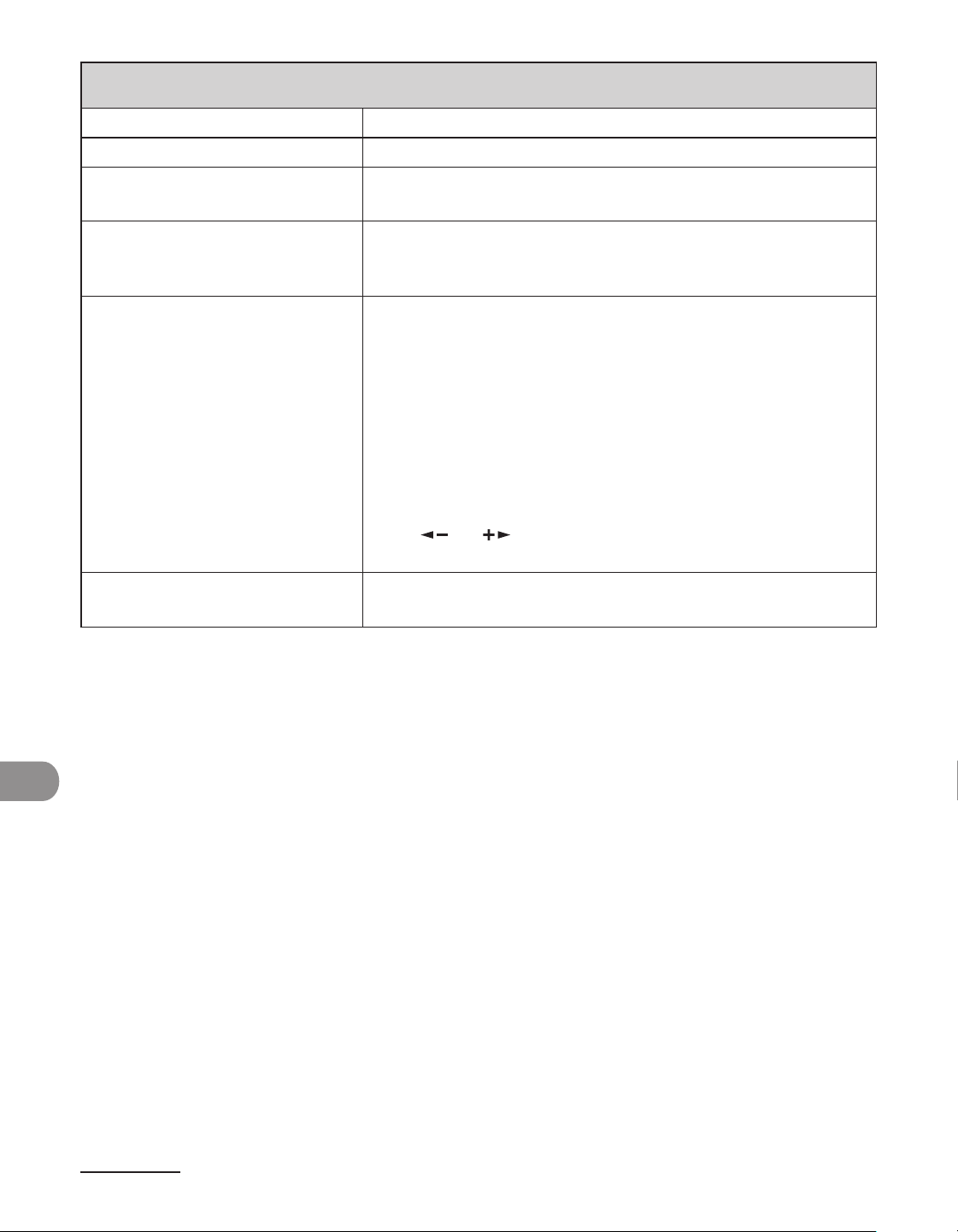
Machine Settings
12-50
SYSTEM SETTINGS
11. CHECKING THE LOG Sets whether to allow displaying the log.
ON Enables confirmation of logs using [System Monitor].
OFF Disables confirmation of logs using [System Monitor]. Activity
Report will not be printed automatically.
12. USE DEVICE USB Sets whether to restrict jobs through the USB interface.
ON
OFF
–
–
13. PDL SELECT(PnP) Sets which driver to install, when installing printer drivers
to your computer through the USB port. For example, after
installing the PCL Printer driver, you can also install the UFR
II Printer Driver via the USB port by switching this setting to
<UFRII LT>.
FAX
UFRII LT
PCL 5e
**
PCL 6
**
Press [ ] or [ ] ➞ select which printer driver to install ➞
press [OK].
–
–
–
–
14. UPDATE FIRMWARE This function is used only when the printer firmware needs to
be updated.
* For the LASER CLASS 810 an optional network printer kit is required
** LASER CLASS 830i Only
*** LASER CLASS 810 Only
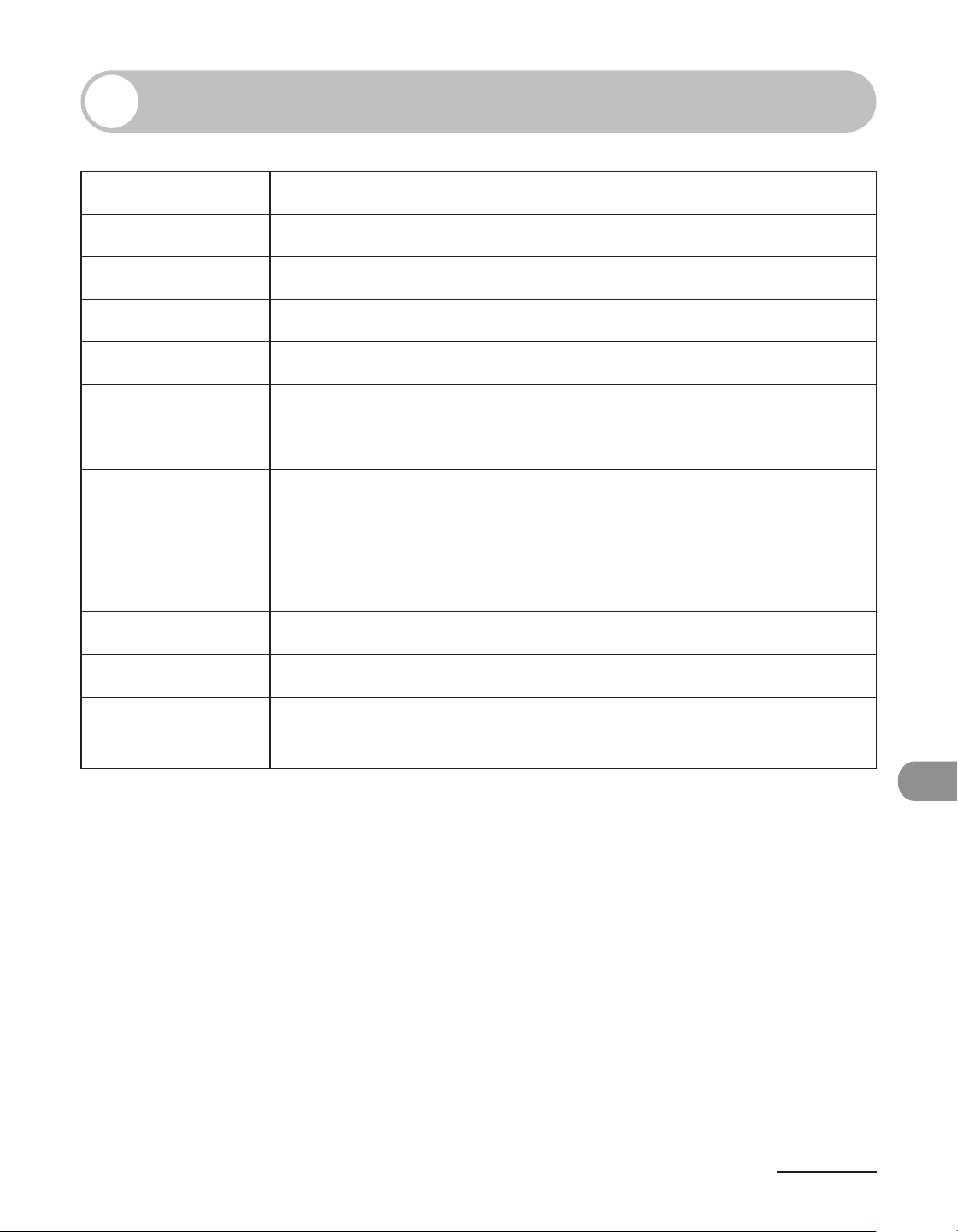
12-51
Machine Settings
Summary of Reports and Lists
The machine can generate the following reports and lists.
Report/List Description
1-TOUCH LIST Lists the recipient addresses registered to all the one-touch keys.
1-TOUCH LIST 2 Lists the detailed data of [1-TOUCH LIST].
CODED DIAL LIST Lists the recipient addresses registered to all the coded codes.
CODED DIAL LIST 2 Lists the detailed data of [CODED DIAL LIST].
GROUP DIAL LIST Lists groups registered for group addresses.
USER’S DATA LIST Lists all the current settings and registered sender information.
DEPT. INFO LIST Lists the Department IDs, page totals of scans, prints, and copies
that have been processed by each department, and page limits of
scans, prints, and copies that can be processed.
ACTIVITY REPORT Shows the last 40 transactions performed by the machine.
TX REPORT Shows the transmission result. Can be set to print automatically.
RX REPORT Shows the reception result. Can be set to print automatically.
FORWARDING
CONDITIONS LIST
Lists the forwarding conditions.
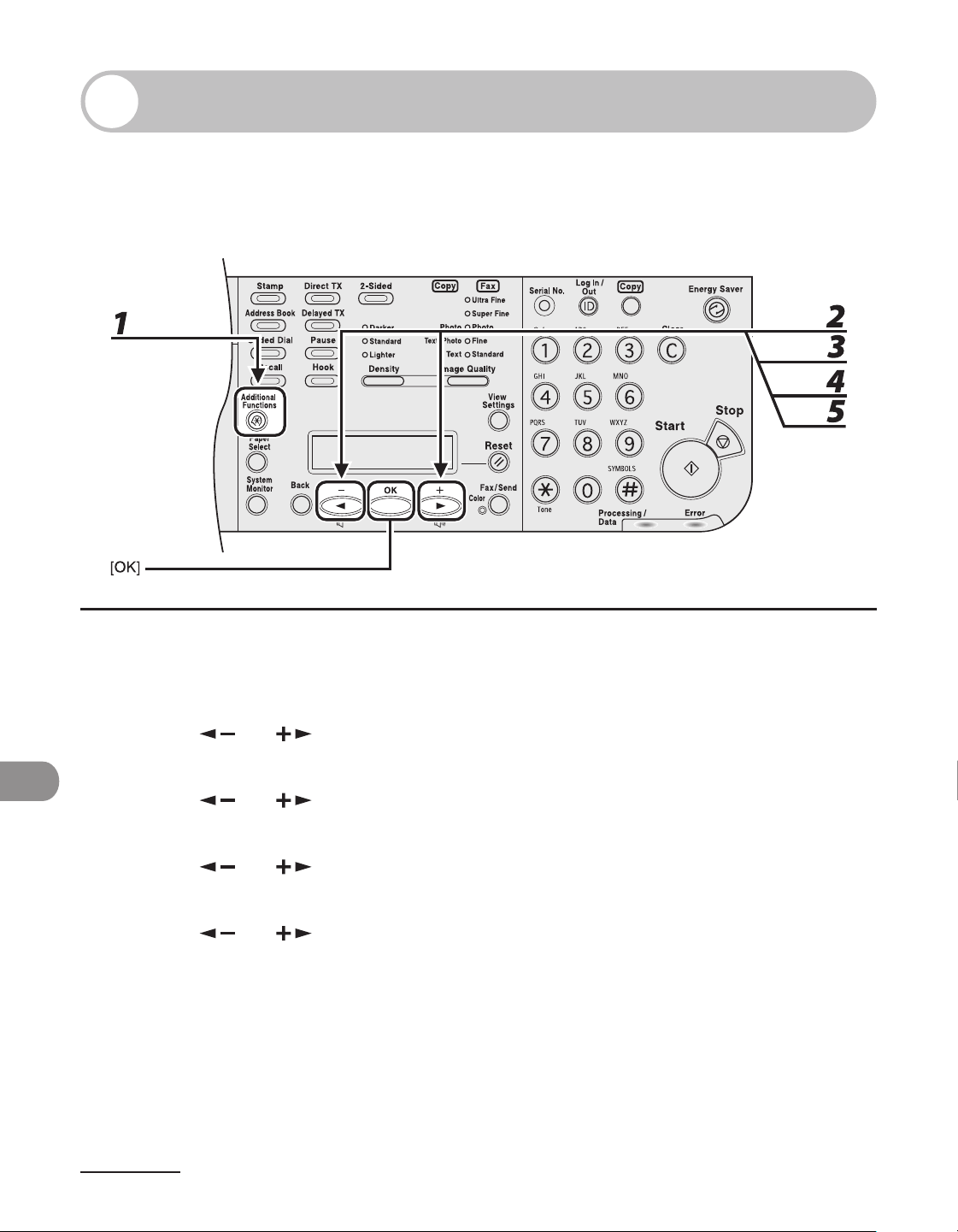
Machine Settings
12-52
Printing Reports Automatically
TX REPORT, RX REPORT, and ACTIVITY REPORT can be set to print automatically.
TX REPORT
1 Press [Additional Functions].
2 Press [ ] or [ ] to select <REPORT SETTINGS>, then press [OK].
3 Press [ ] or [ ] to select <SETTINGS>, then press [OK].
4 Press [ ] or [ ] to select <TX REPORT>, then press [OK].
5 Press [ ] or [ ] to select the setting you want, then press [OK].
<PRINT ERROR ONLY>: Prints a report only when a transmission error occurs.
<OUTPUT YES>: Prints a report every time you send a document.
<OUTPUT NO>: Does not print a report. Skip to step 7.
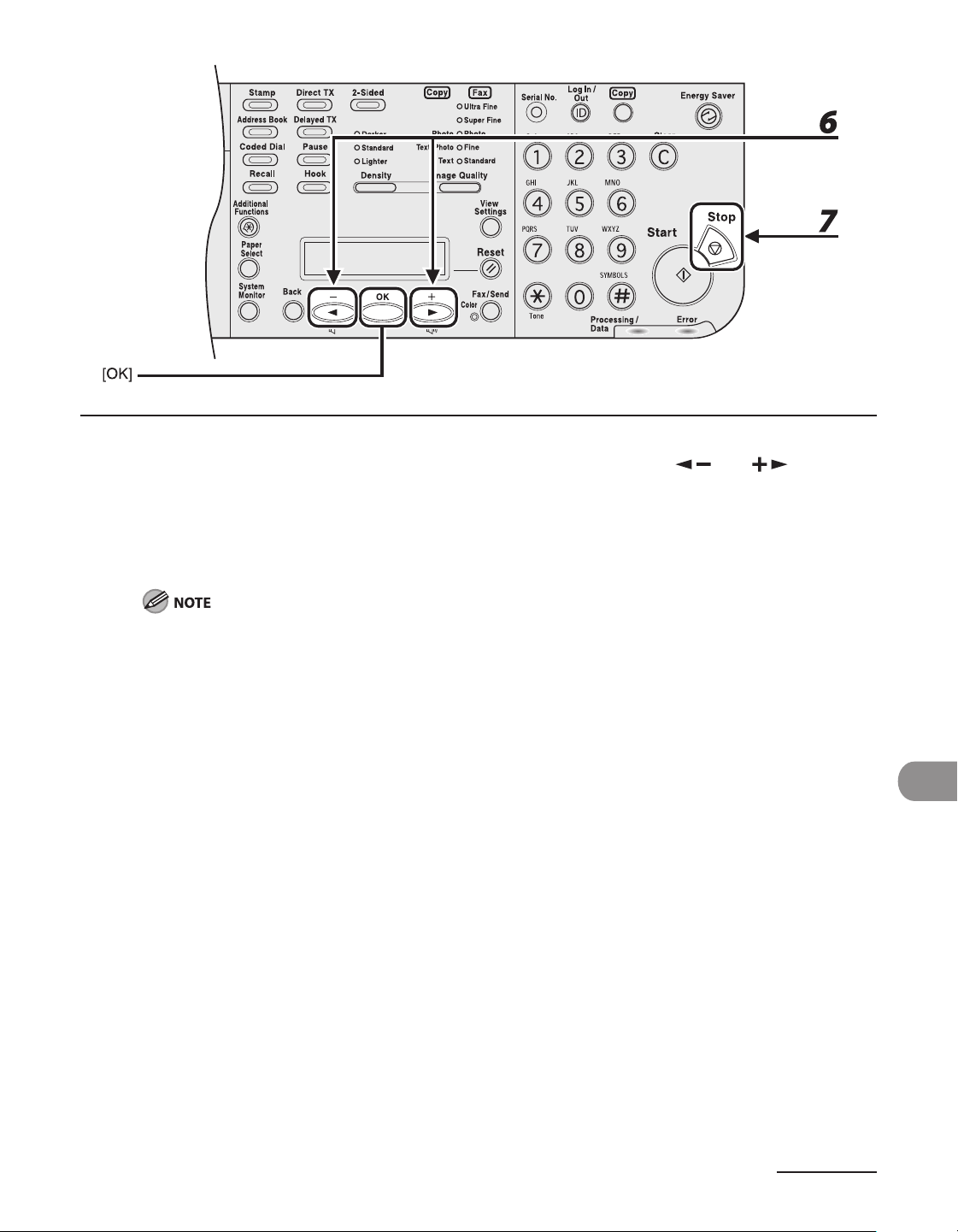
12-53
Machine Settings
6 Confirm that <REPORT WITH TX IMAGE> is displayed, use [ ] or [ ] to select
<ON> to print the first page of the documents under the report, then press
[OK].
<OFF>: Does not print the first page.
<ON>: Prints the first page.
When forwarding the received documents, the machine does not print the first page of the documents
under the report even if <REPORT WITH TX IMAGE> is set to <ON>.
7 Press [Stop] to return to the standby mode.

Machine Settings
12-54
Report Items
The following items are displayed in the Transmission Report:
Transaction description
TX/RX NO: Transaction number
DEPT. ID: If Department ID Management is set, the Department ID is printed.
RECIPIENT ADDRESS: Destination fax/telephone number
DESTINATION ID: Destination name registered in Address Book
ST. TIME: Transmission time
TIME USE: Transmission duration
PAGES SENT: Number of pages sent
RESULT: Result of transaction
OK: Transmission successful
NG: Transmission failed
STOP: Transmission manually canceled before completion
BUSY/NO SIGNAL: The line is busy or the recipient does not answer your call
Error code: For descriptions of error codes, See “Error Codes,” on p. 11-13.
●
•
•
•
•
•
•
•
•
•
–
–
–
–
•
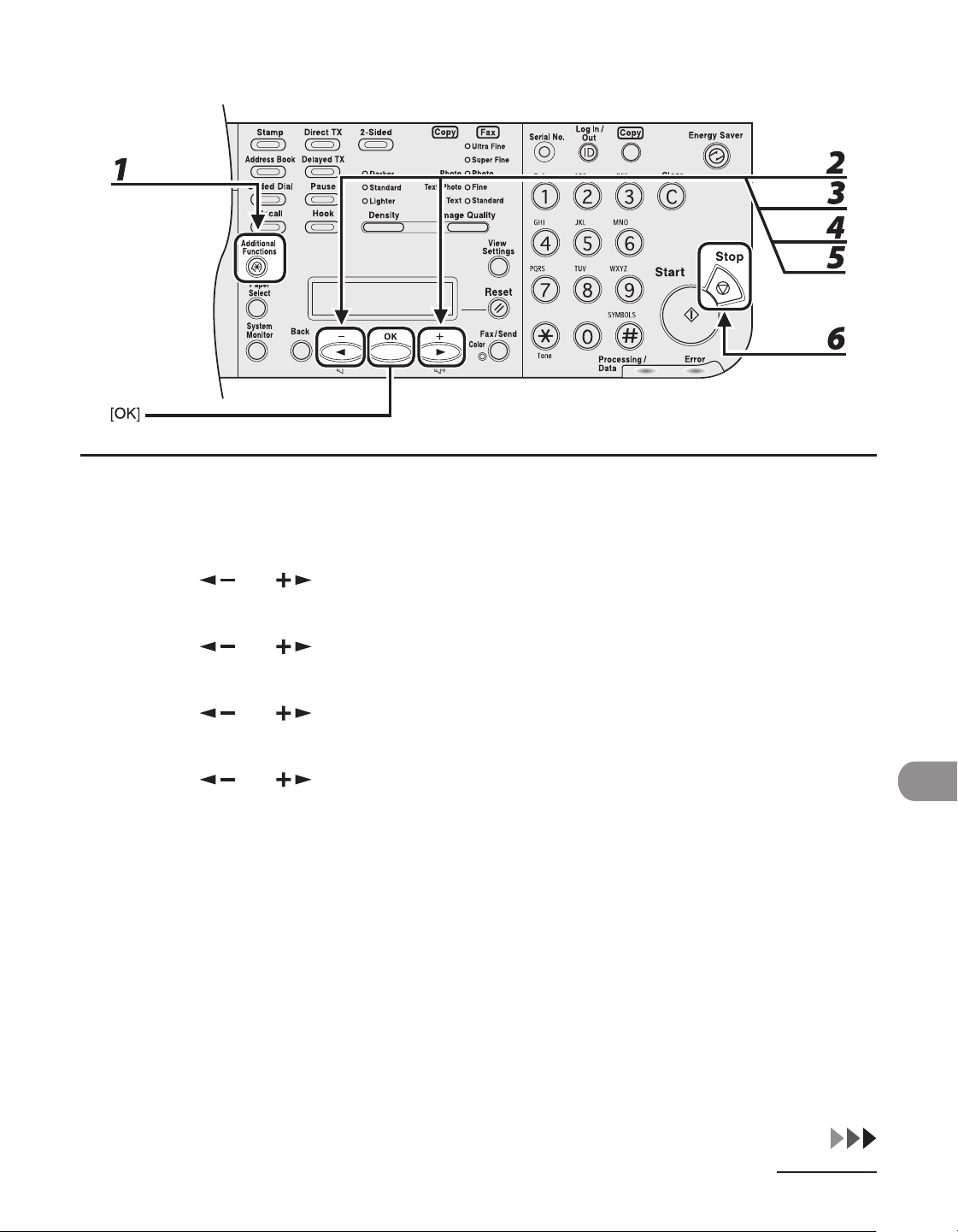
12-55
Machine Settings
RX REPORT
1 Press [Additional Functions].
2 Press [ ] or [ ] to select <REPORT SETTINGS>, then press [OK].
3 Press [ ] or [ ] to select <SETTINGS>, then press [OK].
4 Press [ ] or [ ] to select <RX REPORT>, then press [OK].
5 Press [ ] or [ ] to select the setting you want, then press [OK].
<OUTPUT NO>: Does not print a report.
<PRINT ERROR ONLY>: Prints a report only when a reception error occurs.
<OUTPUT YES>: Prints a report every time you receive a document.
6 Press [Stop] to return to the standby mode.

Machine Settings
12-56
Report Items
The following items are displayed in the Reception Report:
Transaction description
TX/RX NO: Transaction number
RECIPIENT ADDRESS: Recipient’s fax/telephone number address
DESTINATION ID: Sender’s name registered in Address Book
ST. TIME: Transmission time
TIME USE: Transmission duration
PGS.: Number of pages received
RESULT: Result of transaction
OK: Reception successful
NG: Reception failed
STOP: Reception manually canceled before completion
Error code: For descriptions of error codes, see “Error Codes,” on p. 11-13.
●
•
•
•
•
•
•
•
•
–
–
–
•
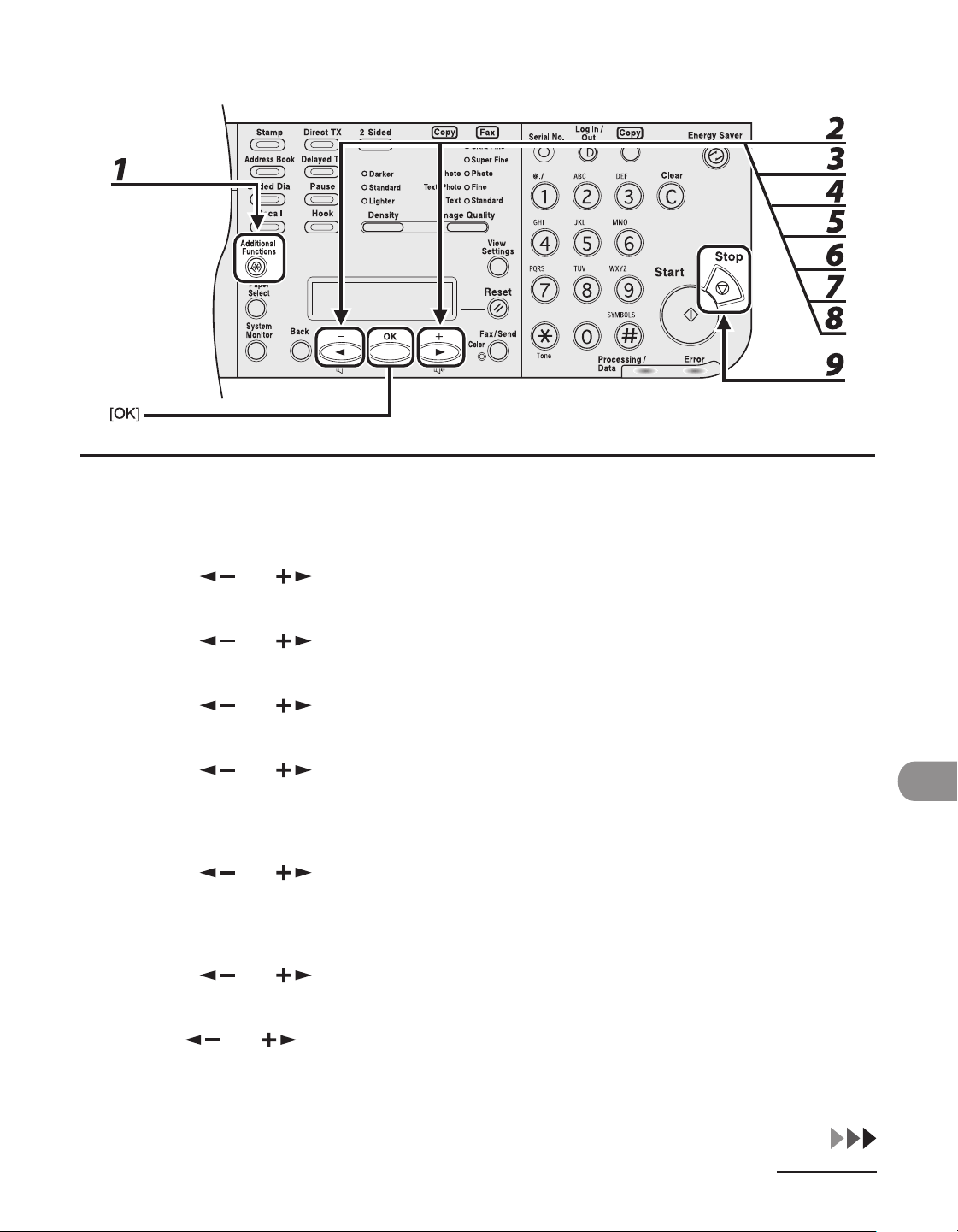
12-57
Machine Settings
ACTIVITY REPORT
1 Press [Additional Functions].
2 Press [ ] or [ ] to select <REPORT SETTINGS>, then press [OK].
3 Press [ ] or [ ] to select <SETTINGS>, then press [OK].
4 Press [ ] or [ ] to select <ACTIVITY REPORT>, then press [OK].
5 Press [ ] or [ ] to select <AUTO PRINT>, then press [OK].
If TX Document Archiving is set to <ON>, the activity report is automatically set to be printed every 40
transmissions, and the settings under <AUTO PRINT> are not displayed. Proceed to step 7.
6 Press [ ] or [ ] to select the setting you want, then press [OK].
<OUTPUT YES>: Prints a report after every 40 transactions.
<OUTPUT NO>: Does not print a report. Skip to step 9.
7 Press [ ] or [ ] to select <TX/RX SEPARATE>, then press [OK].
8 Use [ ] or [ ] to select the setting you want, then press [OK].
<OFF>: Prints a report with the transmission and reception results listed chronologically.
<ON>: Prints a report with the transmission and reception results separated in a report.
9 Press [Stop] to return to the standby mode.

Machine Settings
12-58
Report Items
The following items are displayed in the Activity Report:
DEPT. ID: If Department ID Management is set, the Department ID is printed.
Transmission logs are listed according to Department ID.
ST. TIME: Transmission time
DESTINATION TEL/ID: Destination name and fax number/address
NO: Transaction number
MODE: Transaction, Error correction mode
PGS.: Number of pages sent
RESULT: Result of transaction, transaction duration
OK: Transaction successful
NG: Transaction failed
●
•
•
•
•
•
•
•
–
–

12-59
Machine Settings
Printing Reports and Lists Manually
You can print the following report and lists manually.
ACTIVITY REPORT
1-TOUCH LIST
CODED DIAL LIST
GROUP DIAL LIST
1-TOUCH LIST 2
CODED DIAL LIST 2
USER’S DATA LIST
DEPT. INFO LIST
FORWARDING CONDITION LIST
To print USER’S DATA LIST, see “Printing USER’S DATA LIST,” on p. 12-2.
For information on each report or list, see “Summary of Reports and Lists,” on p. 12-51.
To print DEPT. INFO LIST, see “Printing Counter Information (DEPT. INFO LIST),” on p. 9-18.
Reports can be printed on LGL or LTR paper. (plain or recycled paper)
–
–
–
–
–
–
–
–
–
–
–
–
–
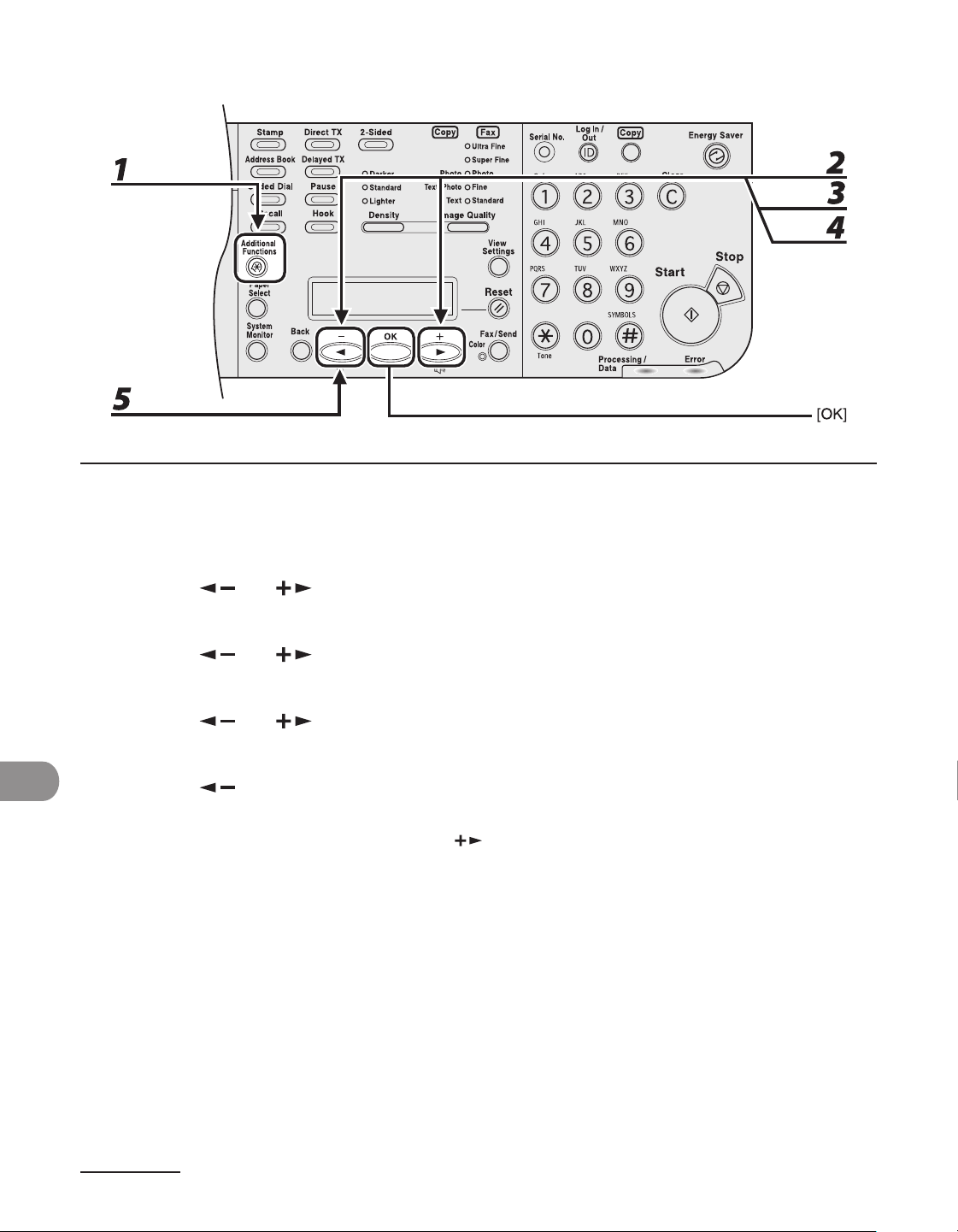
Machine Settings
12-60
Printing ACTIVITY REPORT
1 Press [Additional Functions].
2 Press [ ] or [ ] to select <REPORT SETTINGS>, then press [OK].
3 Press [ ] or [ ] to select <LIST PRINT>, then press [OK].
4 Press [ ] or [ ] to select <ACTIVITY REPORT>, then press [OK].
5 Press [ ] to select <YES>.
Printing starts, and the screen automatically returns to the standby mode.
If you do not want to print the report, press [
] to select <NO>.
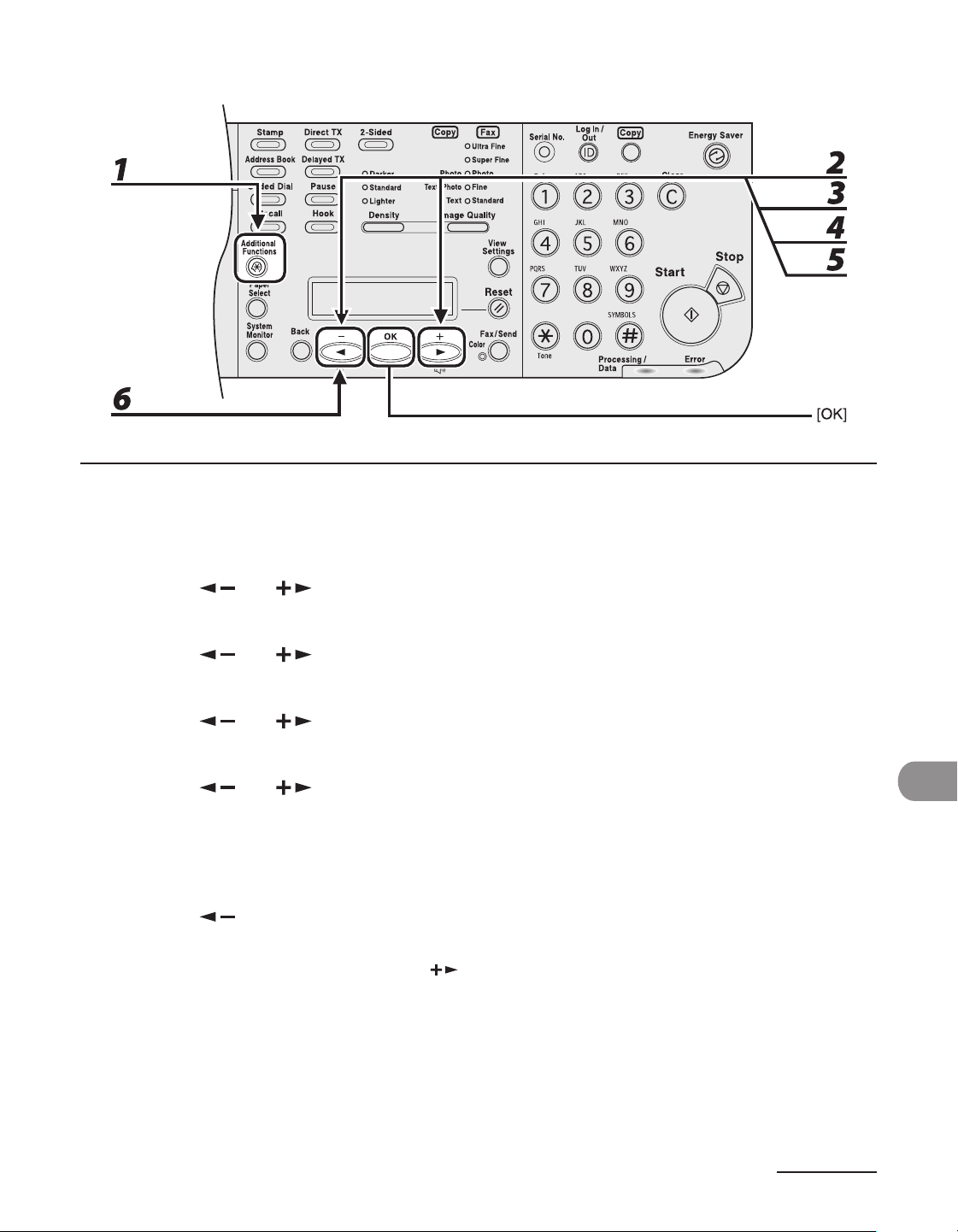
12-61
Machine Settings
Printing 1-TOUCH LIST, CODED DIAL LIST, and GROUP DIAL LIST
1 Press [Additional Functions].
2 Press [ ] or [ ] to select <REPORT SETTINGS>, then press [OK].
3 Press [ ] or [ ] to select <LIST PRINT>, then press [OK].
4 Press [ ] or [ ] to select <SPEED DIAL LIST>,then press [OK].
5 Press [ ] or [ ] to select the desired list, then press [OK].
<1-TOUCH LIST>: Prints 1-TOUCH LIST.
<CODED DIAL LIST>: Prints CODED DIAL LIST.
<GROUP DIAL LIST>: Prints GROUP DIAL LIST.
6 Press [ ] to select <YES>.
Printing starts, and the screen automatically returns to the standby mode.
If you do not want to print the list, press [
] to select <NO>.
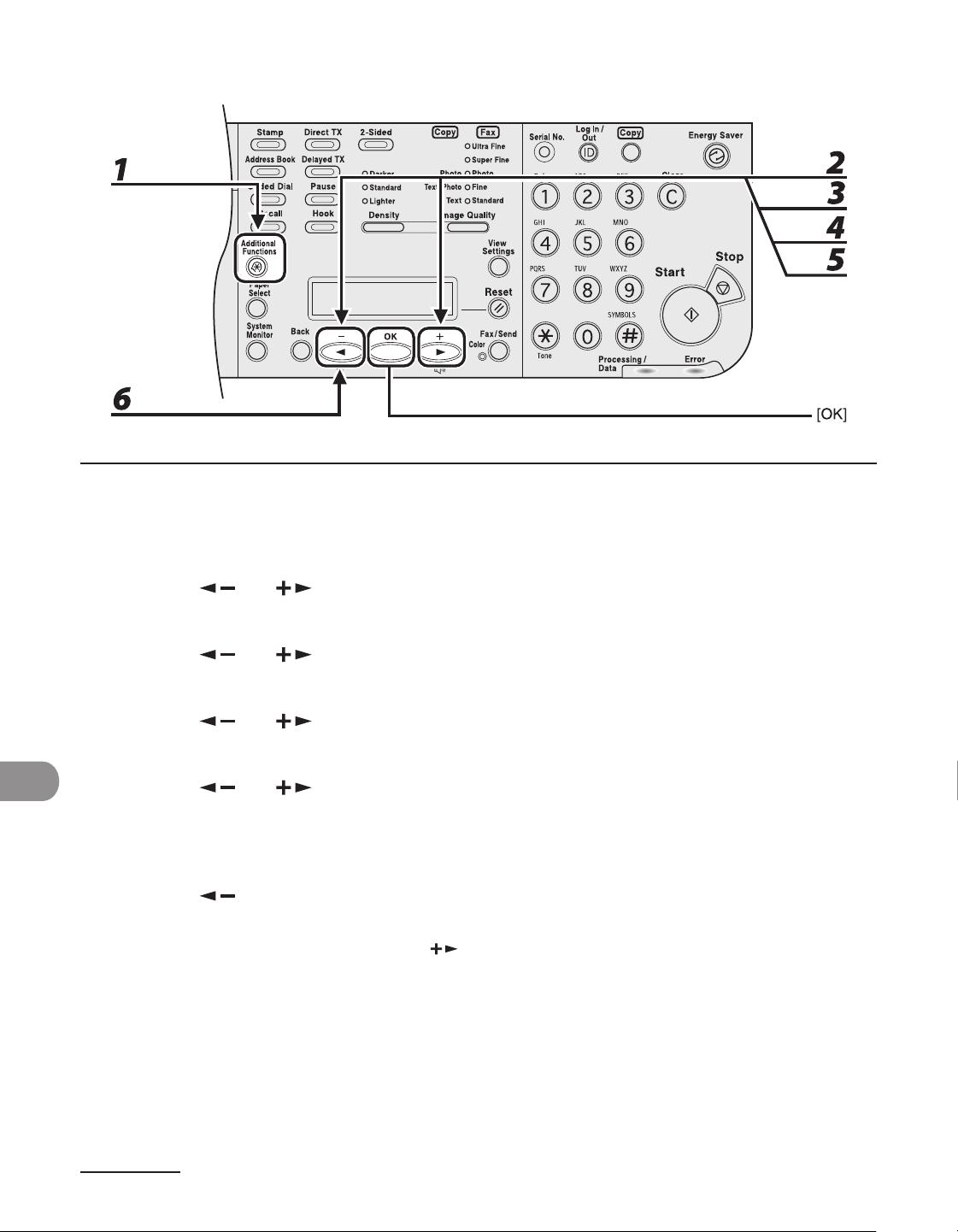
Machine Settings
12-62
Printing 1-TOUCH LIST 2, CODED DIAL LIST 2
1 Press [Additional Functions].
2 Press [ ] or [ ] to select <REPORT SETTINGS>, then press [OK].
3 Press [ ] or [ ] to select <LIST PRINT>, then press [OK].
4 Press [ ] or [ ] to select <ADD BOOK DETAILS>, then press [OK].
5 Press [ ] or [ ] to select the desired list, then press [OK].
<1-TOUCH (DETAILS)>: Prints 1-TOUCH LIST 2.
<CODED (DETAILS)>: Prints CODED DIAL LIST 2.
6 Press [ ] to select <YES>.
Printing starts, and the screen automatically returns to the standby mode.
If you do not want to print the list, press [
] to select <NO>.
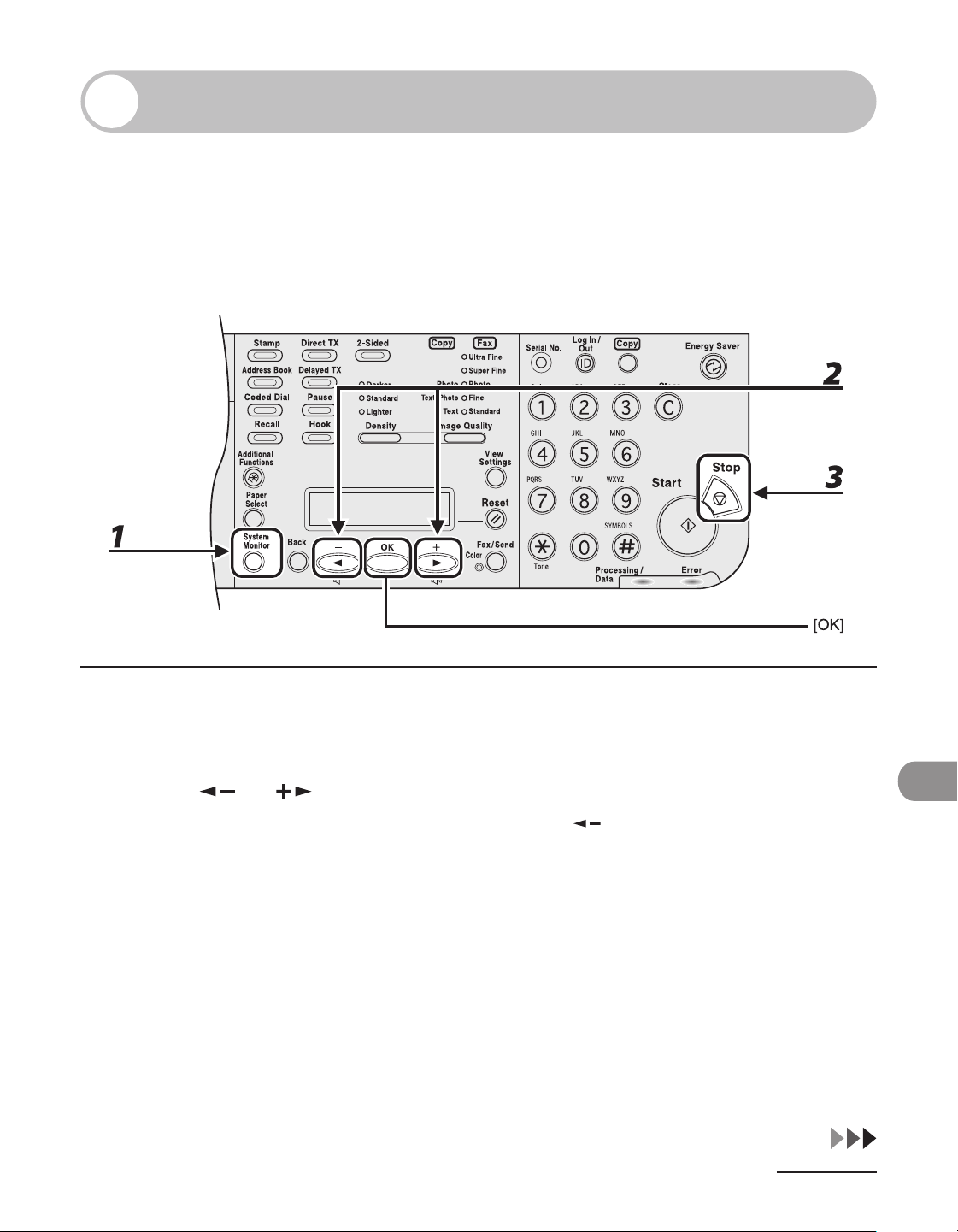
12-63
Machine Settings
Checking and Deleting Jobs
System monitor enables you to monitor the status of the report jobs currently being
processed.
Checking and Deleting Report Jobs
1 Press [System Monitor] repeatedly to select <REPORT STATUS>, then press [OK].
2 Press [ ] or [ ] to scroll through the job list.
When you delete the report job, press [OK] twice, then press [ ] to select <YES>.
3 Press [Stop] to return to the standby mode.
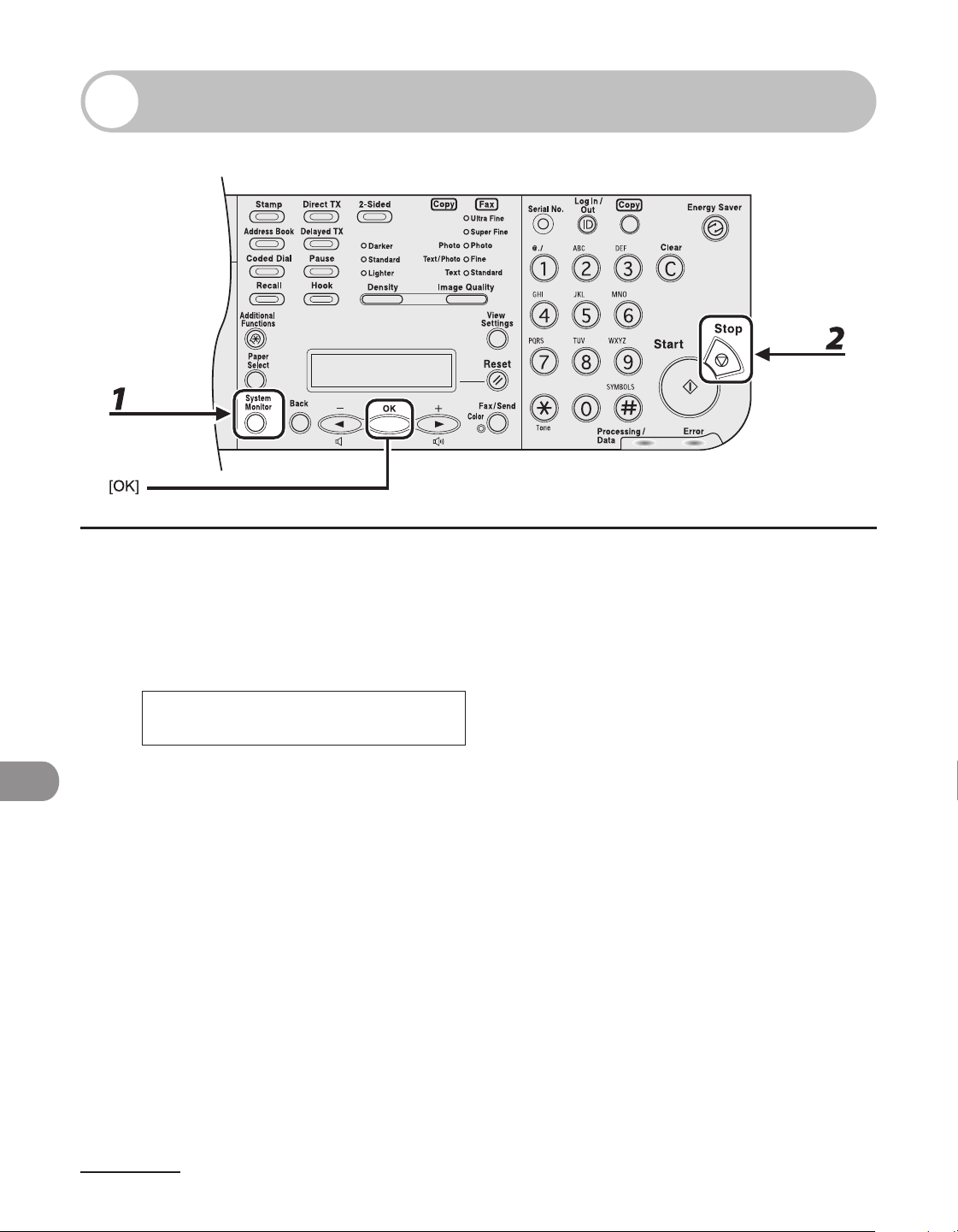
Machine Settings
12-64
Checking Remaining Memory
You can check the remaining memory according to the status of the machine.
1 Press [System Monitor] repeatedly to select <AVAILABLE MEMORY>, then press
[OK] to confirm the remaining memory.
7 5 %
A V A I L A B L E M E M O R Y
Ex.
2 Press [Stop] to return to the standby mode.

Appendix
13
Appendix
Specifications ∙∙∙∙∙∙∙∙∙∙∙∙∙∙∙∙∙∙∙∙∙∙∙∙∙∙∙∙∙∙∙∙∙∙∙∙∙∙∙∙∙∙∙∙∙∙∙∙∙∙∙∙∙∙∙∙∙∙∙∙∙∙∙∙∙∙∙∙∙∙∙∙∙∙∙∙ 13-2
General ∙∙∙∙∙∙∙∙∙∙∙∙∙∙∙∙∙∙∙∙∙∙∙∙∙∙∙∙∙∙∙∙∙∙∙∙∙∙∙∙∙∙∙∙∙∙∙∙∙∙∙∙∙∙∙∙∙∙∙∙∙∙∙∙∙∙∙∙∙∙∙∙∙∙∙∙∙∙∙∙∙∙∙∙∙∙∙∙∙∙∙∙∙∙∙∙∙∙∙13-2
Facsimile ∙∙∙∙∙∙∙∙∙∙∙∙∙∙∙∙∙∙∙∙∙∙∙∙∙∙∙∙∙∙∙∙∙∙∙∙∙∙∙∙∙∙∙∙∙∙∙∙∙∙∙∙∙∙∙∙∙∙∙∙∙∙∙∙∙∙∙∙∙∙∙∙∙∙∙∙∙∙∙∙∙∙∙∙∙∙∙∙∙∙∙∙∙∙∙∙13-3
Telephone ∙∙∙∙∙∙∙∙∙∙∙∙∙∙∙∙∙∙∙∙∙∙∙∙∙∙∙∙∙∙∙∙∙∙∙∙∙∙∙∙∙∙∙∙∙∙∙∙∙∙∙∙∙∙∙∙∙∙∙∙∙∙∙∙∙∙∙∙∙∙∙∙∙∙∙∙∙∙∙∙∙∙∙∙∙∙∙∙∙∙∙∙∙13-5
Send (LASER CLASS 830i Only) ∙∙∙∙∙∙∙∙∙∙∙∙∙∙∙∙∙∙∙∙∙∙∙∙∙∙∙∙∙∙∙∙∙∙∙∙∙∙∙∙∙∙∙∙∙∙∙∙∙∙∙∙∙∙13-5
Copier ∙∙∙∙∙∙∙∙∙∙∙∙∙∙∙∙∙∙∙∙∙∙∙∙∙∙∙∙∙∙∙∙∙∙∙∙∙∙∙∙∙∙∙∙∙∙∙∙∙∙∙∙∙∙∙∙∙∙∙∙∙∙∙∙∙∙∙∙∙∙∙∙∙∙∙∙∙∙∙∙∙∙∙∙∙∙∙∙∙∙∙∙∙∙∙∙∙∙∙∙∙13-6
Printer ∙∙∙∙∙∙∙∙∙∙∙∙∙∙∙∙∙∙∙∙∙∙∙∙∙∙∙∙∙∙∙∙∙∙∙∙∙∙∙∙∙∙∙∙∙∙∙∙∙∙∙∙∙∙∙∙∙∙∙∙∙∙∙∙∙∙∙∙∙∙∙∙∙∙∙∙∙∙∙∙∙∙∙∙∙∙∙∙∙∙∙∙∙∙∙∙∙∙∙∙∙13-7
Index ∙∙∙∙∙∙∙∙∙∙∙∙∙∙∙∙∙∙∙∙∙∙∙∙∙∙∙∙∙∙∙∙∙∙∙∙∙∙∙∙∙∙∙∙∙∙∙∙∙∙∙∙∙∙∙∙∙∙∙∙∙∙∙∙∙∙∙∙∙∙∙∙∙∙∙∙∙∙∙∙∙∙∙∙∙∙∙∙∙∙ 13-8
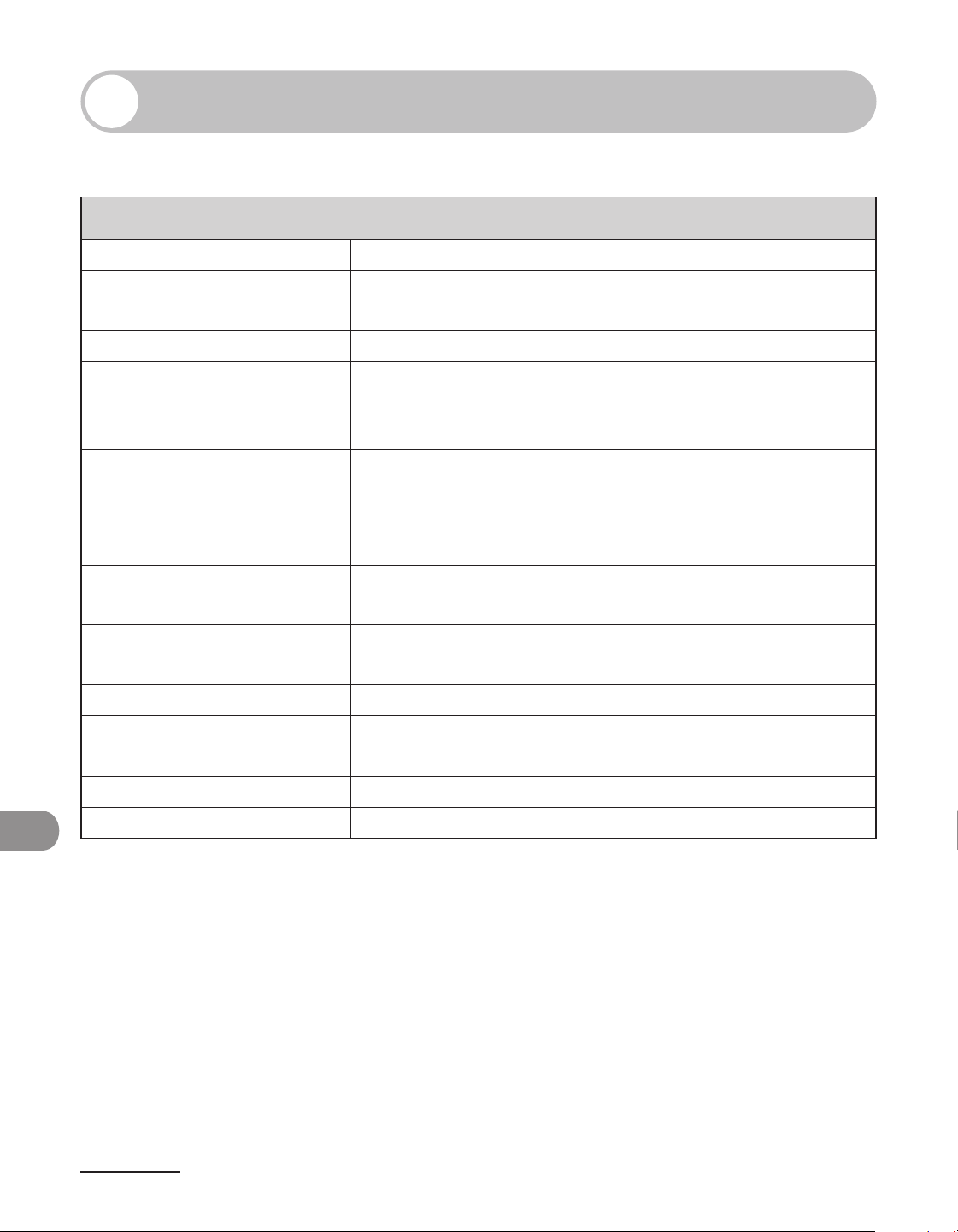
Appendix
13-2
Specifications
General
Type● Personal Desktop
Power Source● 120 - 127 V, 60 Hz (Power requirements differ depending
on the country in which you purchased the product.)
Power Consumption● Max: Less than 1020 W
Weight● LASER CLASS 810: Approx. 54.2 lb (24.6kg)
LASER CLASS 830i: Approx. 56.2 lb (25.5kg)
(including toner cartridge)
Dimensions● 17 3/4 in. (H) x 19 in. (D) x 20 1/2 in. (W) (452mm (H) x
481mm (D) x 520 mm (W))
22 7/8 in. (H) x 19 in. (D) x 20 1/2 in. (W) (580mm (H) x
481mm (D) x 520 mm(W)) (with optional cassette)
Installation Space● 38 3/4 in. (D) x 43 1/4 in. (W)
(984 mm (D) x 1097 mm (W)) (including optional handset)
Environmental
Conditions
● Temperature: 59°F–86°F (15°C–30°C) Humidity: 10%–80%
RH
Display Languages● ENGLISH/FRENCH/SPANISH/PORTUGUESE
Acceptable Documents● » p. 2-2.
Acceptable Paper Stock● » p. 2-7.
Printable Area● » p. 2-9.
Scanning Area● » p. 2-4.
13-3
Appendix
Facsimile
Applicable Line● Public Switched Telephone Network (PSTN)*
1
Compatibility● G3
Data Compression
Schemes
● MH, MR, MMR, JBIG
Modem Speed● 33.6 Kbps
Automatic fallback
Transmission Speed● Approx. 3 seconds/page*
2
at 33.6 Kbps, ECM-JBIG,
transmitting from the memory
Transmission/Reception
Memory
● LASER CLASS 810
Maximum approx. 512 (1500*
3
) pages*
2
(total pages of transmission/reception)
LASER CLASS 830i
Maximum approx. 1500 pages*
2
(total pages of transmission/reception)
*
1
The Public Switched Telephone Network (PSTN) currently supports 28.8 Kbps modem
speed or lower, depending on telephone line conditions
*
2
Based on ITU-T Standard Chart No. 1, JBIG standard mode
*
3
For the LASER CLASS 810, an optional network printer kit is required

Appendix
13-4
Facsimile
Fax Resolution● FINE: 203 pels/in. x 196 lines/in. (8 pels/mm x 7.7 lines/mm)
PHOTO: 203 pels/in. x 196 lines/in. (8 pels/mm x 7.7 lines/mm)
SUPER FINE: 203 pels/in. x 392 lines/in. (8 pels/mm x 15.4 lines/mm)
ULTRA FINE: 406 pels/in. x 392 lines/in. (16 pels/mm x 15.4 lines/mm)
STANDARD: 203 pels/in. x 98 lines/in. (8 pels/mm x 3.85 lines/mm)
Dialing● LASER CLASS 810
Speed dialing
One-touch speed dialing (80 destinations)
Coded speed dialing (120 destinations)
Group dialing (199 destinations)
Address Book dialing (with Address Book key)
Regular dialing (with numeric keys)
Automatic redialing
Manual redialing (with Redial/Pause key)
Sequential broadcast (201 destinations)
Automatic reception
Remote reception by telephone (Default ID: 25)
ACTIVITY REPORT (after every 40 transactions)
TX (Transmission)/RX (Reception) REPORT
TTI (Transmit Terminal Identification)
LASER CLASS 830i
Speed dialing
One-touch speed dialing (80 destinations)
Coded speed dialing (420 destinations)
Group dialing (499 destinations)
Address Book dialing (with Address Book key)
Regular dialing (with numeric keys)
Automatic redialing
Manual redialing (with Redial/Pause key)
Sequential broadcast (501 destinations)
Automatic reception
Remote reception by telephone (Default ID: 25)
ACTIVITY REPORT (after every 40 transactions)
TX (Transmission)/RX (Reception) REPORT
TTI (Transmit Terminal Identification)
–
–
–
–
–
–
–
–
–
–
–
–
–
–
–
–
–
–
–
–
13-5
Appendix
Telephone
Connection● Optional handset
External telephone/answering machine/
data modem
–
–
Specifications are subject to change without notice.
Send (LASER CLASS 830i Only)
Send to file server
Communication Protocol● FTP (TCP/IP), SMB (TCP/IP)
Data Format● TIFF (B&W), PDF (B&W), JPEG (Color), PDF
(Compact) (Color)
Resolution● 100 x 100 dpi, 150 x 150 dpi, 200 x 100 dpi,
200 x 200 dpi, 200 x 400 dpi, 300 x 300 dpi,
400 x 400 dpi, 600 x 600 dpi
System Environment● Windows 98/Me, Windows XP Professional/
Home Edition, Windows 2000 Server/
Professional (SP1 or later), Windows Server
2003, Windows Vista, Solaris Version 2.6 or
later, Mac OS X, Red Hat Linux 7.2
Interface● 100BASE-TX, 10BASE-T
Color Mode● Color, B&W (black and white)
Original Type● Text, Text/Photo, Photo
Appendix
13-6
Send (LASER CLASS 830i Only)
E-mail and I-Fax Features
Communication Protocol● SMTP, POP3, I-FAX (Simple mode)
Resolution● 100 x 100 dpi, 150 x 150 dpi, 200 x 100 dpi,
200 x 200 dpi, 200 x 400 dpi, 300 x 300 dpi,
400 x 400 dpi, 600 x 600 dpi
Data Format● TIFF (B&W), PDF (B&W), JPEG (Color), PDF
(Compact) (Color)
Original Size● E-mail: LTR, LTRR, LGL, LDR, A3, B4, A4, A4R,
A5, A5R, B5, B5R
I-Fax: LTR, LTRR, LGL
*1
, LDR
*1
, A3
*1
, B4
*1
, A4
*1
,
A4R
*1
, A5
*1
, A5R
*1
, B5
*1
, B5R
*1
*1
Sent as LTR
Server Software● Microsoft Exchange Server 5.5 (SP2),
Sendmail 8.11.2, Lotus Domino R4.5/R5
Copier
Scanning Resolution● TEXT mode, TEXT/PHOTO mode, PHOTO mode:
600 dpi x 600 dpi
Printing Resolution● 1200 dpi enhanced x 600 dpi
Magnification● Auto Zoom 0.500 - 1.450, 1% increments
Copy Speed● Direct: LTR 23 cpm
No. of Copies● Max. 99 copies
13-7
Appendix
Printer
Printing Method● Indirect electrostatic method (On-demand fixing)
Paper Handling● Paper cassette: 500 sheets x 1 cassette (21 lb (80 g/m
2
))
Multi-purpose tray: 100 sheets (21 lb (80 g/m
2
))
–
–
Paper Delivery● 100 sheets (17 to 21 lb bond (64 to 80 g/m
2
))
Print Speed● See “Copy Speed,” on p. 13-6.
Printing Resolution● 1200 dpi enhanced x 600 dpi
Number of Tones● 256
Toner Cartridge● » p. 1-13.

Appendix
13-8
Index
Symbols & Numerics
1 to 2-Sided Copying 3-9
2-Sided key 1-4
2 to 1-Sided Copying 3-15
2 to 2-Sided Copying 3-13
A
Accepting Print Jobs with Unknown IDs 9-19
Accessing the Setting Menu 12-3
ACTIVITY REPORT 12-57
Printing ACTIVITY REPORT 12-60
Printing Reports Automatically 12-52
Adding New Destination to Group 4-36
Additional Functions key 1-4
Address Book
Registering E-Mail/I-Fax Addresses (LASER
CLASS 830i Only) 4-18
Registering File Server Addresses (LASER
CLASS 830i Only) 4-21
Setting a Password for the Address Book
9-24
Storing/Editing Address Book 4-12
Address Book key 1-7
Using Address Book Key 4-50
ADF 10-7
ADF (Automatic Document Feeder) 1-2
Auto Zoom 3-6
B
Back key 1-5
Basic Copying Method 3-2
Basic Receiving Method 5-2
Basic Sending Method 4-3
Before You Set Up the TX Document Archiving
4-75
Broadcasting
4-65
C
CANADA PROGRAM-CANADA PROGRAMME
10-24
Canceling
Canceling Copy Jobs 3-19
Canceling RX Jobs 5-29
Canceling TX Jobs 4-85
Canceling Copy Jobs 3-19
Canceling RX Jobs 5-29
Canceling TX Jobs 4-85
CDRH Regulations xxxiv
Changing Group Name 4-40
Changing the Paper Size Setting 11-19
Changing the Password and Page Limit 9-9
Checking
Checking and Deleting Copy Jobs 3-20
Checking and Deleting Jobs 3-20
Checking and Deleting Print Jobs 6-4
Checking and Deleting Receiving Documents
Stored in Memory 5-31
Checking and Deleting Report Jobs 12-63
Checking and Deleting Sending Documents
Stored in Memory 4-87
Checking Counter Information 9-14
Checking Dialing Line 4-82
Checking Reception Results 5-30
Checking Remaining Memory 12-64
Checking the Job Log 9-32
Checking Transmission Results 4-86
Checking and Deleting Copy Jobs 3-20
Checking and Deleting Jobs 3-20
Checking and Deleting Print Jobs 6-4
Checking and Deleting Receiving Documents
Stored in Memory 5-31
Checking and Deleting Report Jobs 12-63

13-9
Appendix
Checking and Deleting Sending Documents
Stored in Memory 4-87
Checking Counter Information 9-14
Checking Dialing Line 4-82
Checking Reception Results 5-30
Checking Remaining Memory 12-64
Checking the Job Log 9-32
Checking Transmission Results 4-86
Cleaning the ADF Automatically 10-9
Cleaning the Machine 10-2
ADF 10-7
Cleaning the ADF Automatically 10-9
Exterior 10-2
Fuser Roller 10-6
Interior 10-3
Scanning area 10-7
Transcription Roller 10-10
Clearing Jams 11-2
Document Jams 11-3
Paper Jams 11-4
Clearing Page Totals 9-16
Clear key 1-5
Coded dial codes
Deleting One-Touch Keys/Coded Dial Codes
4-28
Editing One-Touch Keys/Coded Dial Codes
4-25
Storing/Editing One-Touch Keys/Coded Dial
Codes 4-13
Using Coded Dial Codes 4-46
Coded Dial key 1-7
Collate Copy 3-7
Color indicator 1-5
Conditions à Remplir Préalablement à
L’installation d’un Télécopieur Canon xxxii
Confirming Entered Fax Numbers 9-30
Connection of the Equipment xxvi
Contents viii
Copier 13-6
Copy/Fax key 1-6
Copy Features ii
Copying Problems 11-35
Copy job
Canceling Copy Jobs 3-19
Checking and Deleting Copy Jobs 3-20
Copy key 1-4
Copy Mode 1-9
Copyright xxii
Customer Support
Customer Support (Canada) xx
Customer Support (U.S.A.) xix
Customer Support (Canada) xx
Customer Support (U.S.A.) xix
D
Delayed Sending 4-67
Delayed TX key 1-7
Deleting
Checking and Deleting Copy Jobs 3-20
Checking and Deleting Jobs 3-20
Checking and Deleting Print Jobs 6-4
Checking and Deleting Receiving Documents
Stored in Memory 5-31
Checking and Deleting Report Jobs 12-63
Checking and Deleting Sending Documents
Stored in Memory 4-87
Deleting Destination from Group 4-38
Deleting Group Addresses 4-42
Deleting One-Touch Keys/Coded Dial Codes
4-28
Deleting Destination from Group 4-38
Deleting Group Addresses 4-42
Deleting One-Touch Keys/Coded Dial Codes
4-28
Density 3-5
Density indicator 1-4
Density key 1-4
Department/User ID Management 1-11

Appendix
13-10
Department ID
Erasing the Department ID and Password
9-12
Registering the Department ID, Password,
and Page Limit 9-6
Department ID Management 9-5
Department/User ID Management 1-11
For Department ID Management 1-9
Device Information Settings 9-4
Dialing an Overseas Number (With Pauses) 4-83
Direct Sending 4-63
Direct TX key 1-7
Disclaimers xxii
Document
Document delivery tray 1-2
Document feeder tray 1-2
Document Jams 11-3
Document Requirements 2-2
Loading Documents 2-5
Printing Documents 6-2
Document delivery tray 1-2
Document feeder tray 1-2
Document Jams 11-3
Document Requirements 2-2
Document Stored in memory
Checking and Deleting Sending Documents
Stored in Memory 4-87
Printing All Documents Stored in Memory
5-13
DRPD: Optional Settings 5-6
E
E-mail addresses
Registering E-Mail/I-Fax Addresses (LASER
CLASS 830i Only) 4-18
Editing One-Touch Keys/Coded Dial Codes 4-25
Energy Saver key 1-5
Erasing the Department ID and Password 9-12
Error Codes 11-13
Error indicator 1-5
Ethernet port 1-3
Exterior 10-2
External device jack 1-3
F
Facsimile 13-3
Fax/Send key 1-5
Fax/Send Mode 1-9
Fax numbers
Confirming Entered Fax Numbers 9-30
Registering a Fax Number 4-30
Registering Fax Numbers 4-13
FaxTel: Optional Settings 5-4
FCC Notice xxvii
File server addresses
Registering File Server Addresses (LASER
CLASS 830i Only) 4-21
For CA, USA only xxii
For Department ID Management 1-9
For User ID Management 1-9
Forwarding Documents Received in Memory
5-18
Forwarding Documents with Forwarding Errors
5-20
Forwarding errors
Forwarding Documents with Forwarding
Errors 5-20
Handling Documents with Forwarding Errors
9-22
Printing or Erasing Documents with
Forwarding Errors 5-21
Forwarding Received Documents 5-15
Fuser Roller 10-6
G
General 13-2
General Problems 11-21
Group addresses
Adding New Destination to Group 4-36

13-11
Appendix
Changing Group Name 4-40
Deleting Destination from Group 4-38
Deleting Group Addresses 4-42
Registering Group Addresses 4-33
Storing/Editing Group Addresses 4-33
Using Group Addresses 4-48
H
Handling and Maintenance xvi
Handling Documents with Forwarding Errors
9-22
Handset jack 1-3
Hook key 1-7
How to Use This Guide xxi
I
If <LOAD CORRECT PAPER> is displayed 11-18
If a Power Failure Occurs 11-39
If You Cannot Solve a Problem 11-40
Ilustrations Used in This Manual xxi
Image Quality 3-4
Image Quality (Fax) 4-5
Image Quality (Fax) 4-5
Image Quality indicator 1-4
Image Quality key 1-5
Important Safety Instructions xvi
In Case of Equipment Malfunction xxvi
Interior 10-3
In the ADF 2-5
In the Multi-Purpose Tray (e.g., Envelopes) 2-10
J
Jams
Clearing Jams 11-2
Document Jams 11-3
Paper Jams 11-4
Job Recall/Redial 4-69
L
LASER CLASS 810 1-6
LASER CLASS 830i 1-4
Laser Safety xxxiv
LCD
LCD (Standby Mode) 1-9
LCD display 1-5
LCD Messages 11-7
LCD (Standby Mode) 1-9
LCD display 1-5
LCD Messages 11-7
Left cover 1-3
Left Side of the Operation Panel 1-7
Legal Limitations on the Usage of Your Product
and the Use of Images xxiii
Legal Notices xxii
Loading
Loading Documents 2-5
Loading Paper 2-10
Loading Documents 2-5
Loading Paper 2-10
Location xvii
Log In/Out key 1-4
Log In Mode 1-9
M
Machine
Cleaning the Machine 10-2
Machine Components 1-2
Machine Settings 12-2
Procedure after Using the Machine 1-12
Procedure before Using the Machine 1-11
Transporting the Machine 10-26
Machine Components 1-2
Machine Settings 12-2
Main power switch 1-3
Maintaining the Handset 1-10
Maintaining the Toner Cartridge 1-14
Managing User IDs 9-20

Appendix
13-12
Manual Reception 5-7
Manual Sending (Fax) 4-56
Memory Lock Reception 5-9
Memory Reception 5-8
Menu
Accessing the Setting Menu 12-3
Setting Menu 12-5
Multi-purpose tray 1-3
Multi-purpose tray extension 1-3
N
Notice xxx
Numeric keys 1-5
O
OK key 1-5
One-Touch Key Panels 1-7
One-Touch keys 1-7
Deleting One-Touch Keys/Coded Dial Codes
4-28
Editing One-Touch Keys/Coded Dial Codes
4-25
Storing/Editing One-Touch Keys/Coded Dial
Codes 4-13
Using One-Touch Keys 4-44
Operation panel 1-2
Left Side of the Operation Panel 1-7
Right Side of the Operation Panel 1-4
Optional Handset 1-10
P
Packaging 10-21
Paper
Changing the Paper Size Setting 11-19
Loading Paper 2-10
Paper Jams 11-4
Paper Requirements 2-7
Re-Loading the Paper 11-18
Setting Paper Size and Type 2-12
Paper cassette 1-2
Paper delivery tray 1-2
Paper Feeding Problems 11-23
Paper Jams 11-4
Paper Requirements 2-7
Paper Select key 1-4
Paper stopper 1-2
Password
Changing the Password and Page Limit 9-9
Erasing the Department ID and Password
9-12
Registering the Department ID, Password,
and Page Limit 9-6
Setting a Password for the Address Book
9-24
Pause key 1-7
PC Fax Feature vi
PC Faxing 7-2
Power socket 1-3
Power Supply xix
Pre-Installation Requirements for Canon
Facsimile Equipment xxv, xxix
Preface xvi
Printable Area 2-9
Printer 13-7
Printer Feature vi
Printing 1-TOUCH LIST, CODED DIAL LIST, and
GROUP DIAL LIST 12-61
Printing 1-TOUCH LIST 2, CODED DIAL LIST 2
12-62
Printing ACTIVITY REPORT 12-60
Printing All Documents Stored in Memory 5-13
Printing Counter Information (DEPT. INFO LIST)
9-18
Printing Documents 6-2

13-13
Appendix
Printing lists
Printing 1-TOUCH LIST, CODED DIAL LIST,
and GROUP DIAL LIST 12-61
Printing 1-TOUCH LIST 2, CODED DIAL LIST
2 12-62
Printing Counter Information (DEPT. INFO
LIST) 9-18
Printing Reports and Lists Manually 12-59
Printing USER’S DATA LIST 12-2
Printing or Erasing Documents with Forwarding
Errors 5-21
Printing Received Documents 5-25
Printing reports
ACTIVITY REPORT 12-57
Printing ACTIVITY REPORT 12-60
Printing Reports and Lists Manually 12-59
Printing Reports Automatically 12-52
RX REPORT 12-55
TX REPORT 12-52
Printing Reports and Lists Manually 12-59
Printing Reports Automatically 12-52
Printing USER’S DATA LIST 12-2
Print job
Accepting Print Jobs with Unknown IDs 9-19
Checking and Deleting Print Jobs 6-4
Procedure after Using the Machine 1-12
Procedure before Using the Machine 1-11
Processing/Data indicator 1-5
R
Re-Loading the Paper 11-18
Recall key 1-7
Received Image Reduction 5-27
Receiving a Fax Remotely 5-24
Receiving Problems 11-29
Reception Restriction 5-14
Recycling Used Cartridges 10-19
CANADA PROGRAM-CANADA PROGRAMME
10-24
The Clean Earth Campaign 10-19
U.S.A. PROGRAM 10-21
Redial key 1-8
Redistributing Toner 10-11
Registering a Fax Number 4-30
Registering E-Mail/I-Fax Addresses (LASER CLASS
830i Only) 4-18
Registering Fax Numbers 4-13
Registering File Server Addresses (LASER CLASS
830i Only) 4-21
Registering Group Addresses 4-33
Registering Remote Reception ID 5-22
Registering the Department ID, Password, and
Page Limit 9-6
Remarques xxxiii
Remote Reception 5-22
Remote UI 8-2
Remote UI Feature vii
Replacing the Stamp Cartridge 10-17
Replacing the Toner Cartridge 10-11
Replacing the Toner Cartridge with a New One
10-14
Report Items 12-54
Report job
Checking and Deleting Report Jobs 12-63
Reserved Copy 3-18
Reset key 1-5
Restricting Access to Destinations 9-24
Confirming Entered Fax Numbers 9-30
Restricting Broadcasting 9-31
Restricting Job Recall (LASER CLASS 830i
Only) 9-28
Restricting PC Faxing 9-27
Restricting Redialing (LASER CLASS 810 Only)
9-29
Restricting the New Address 9-26
Setting a Password for the Address Book
9-24
Restricting Broadcasting 9-31
Restricting Job Recall (LASER CLASS 830i Only)
9-28

Appendix
13-14
Restricting PC Faxing 9-27
Restricting Redialing (LASER CLASS 810 Only)
9-29
Restricting the New Address 9-26
Right Side of the Operation Panel 1-4
Rights of the Telephone Company xxvii
RX REPORT 12-55
S
Scanning area 1-3
Scan Settings 3-4
Send (LASER CLASS 830i Only) 13-5
Sending/Receiving Features iii
Sending/Receiving Problems 11-24
Sending Problems 11-24
Sending Two-Sided Documents 4-59
Send Settings (E-Mail/I-Fax/File Server) (LASER
CLASS 830i Only) 4-8
Serial No. key 1-4
Setting a Password for the Address Book 9-24
Setting Auto Clear Time 1-18
Setting Automatic Redialing (Fax) 4-78
Setting Daylight Saving Time 1-21
Setting Menu 12-5
Setting Paper Size and Type 2-12
Setting the Sleep Mode 1-16
Setting Time Zone 1-20
Setting Up and Using the Optional Stamp
Feature 4-71
Setting Up the Stamp Action 4-71
Shipping 10-23
Slide guides 1-2
Slide guides for multi-purpose tray 1-3
Specifications 13-2
Specifying Destinations 4-44
Specifying the System Manager Settings 9-2
Stamp key 1-7
Start key 1-5
Stop key 1-5
Storing/Editing
Storing/Editing Address Book 4-12
Storing/Editing Group Addresses 4-33
Storing/Editing One-Touch Keys/Coded Dial
Codes 4-13
Storing/Editing Address Book 4-12
Storing/Editing Group Addresses 4-33
Storing/Editing One-Touch Keys/Coded Dial
Codes 4-13
Storing Favorites Buttons (LASER CLASS 830i
Only) 4-30
Summary of Reports and Lists 12-51
Switching Temporarily to Tone Dialing 4-80
SYMBOLS key 1-5
Symbols Used in This Manual xxi
System Manager Settings vii
System Monitor key 1-5
T
Telephone 13-5
Telephone line jack 1-3
Telephone Problems 11-37
THE Canon CARTRIDGE RECYCLING PROGRAM
10-19
The Clean Earth Campaign 10-19
Timer Settings 1-16
Tone key 1-5
Toner Cartridge 1-13
Maintaining the Toner Cartridge 1-14
Replacing the Toner Cartridge 10-11
Trademarks xxiv
Transcription Roller 10-10
Transporting the Machine 10-26
Turning the Stamp Feature ON/OFF 4-73
Turning the TX Document Archiving ON 4-76
Two-Sided Copying 3-9

13-15
Appendix
Two-Sided Printing 5-25
TX Document Archiving 4-75
TX REPORT 12-52
U
U.S.A. PROGRAM 10-21
USB port 1-3
Users in Canada xxix
Users in the U.S.A. xxv
Using
Using Address Book Key 4-50
Using Coded Dial Codes 4-46
Using Favorites Buttons (LASER CLASS 830i
Only) 4-54
Using Group Addresses 4-48
Using One-Touch Keys 4-44
Using Address Book Key 4-50
Using Coded Dial Codes 4-46
Using Favorites Buttons (LASER CLASS 830i Only)
4-54
Using Group Addresses 4-48
Using One-Touch Keys 4-44
Utilisation au Canada xxxii
V
View Settings key 1-4
W
When Forwarding Destinations Do Not Match
the Forwarding Conditions 5-15

Appendix
13-16


PRINTED IN CHINA© CANON INC. 2007FT5-1228 (010)
CANON INC.
30-2, Shimomaruko 3-chome, Ohta-ku, Tokyo 146-8501, Japan
CANON U.S.A., INC.
One Canon Plaza, Lake Success, NY 11042, U.S.A.
CANON CANADA INC.
6390 Dixie Road Mississauga, Ontario L5T 1P7, Canada
CANON EUROPA N.V.
Bovenkerkerweg 59-61 1185 XB Amstelveen, The Netherlands
CANON FRANCE S.A.S.
17, quai du Président Paul Doumer 92414 Courbevoie Cedex, France
CANON COMMUNICATION & IMAGE FRANCE S.A.S.
12, rue de l’Industrie 92414 Courbevoie Cedex, France
CANON (U.K.) LTD.
Woodhatch, Reigate, Surrey, RH2 8BF, United Kingdom
CANON DEUTSCHLAND GmbH
Europark Fichtenhain A10, 47807 Krefeld, Germany
CANON ITALIA S.p.A.
Via Milano, 8 20097 San Donato Milanese (MI) Italy
CANON ESPAÑA, S.A.
Joaquín Costa, 41 28002 Madrid, Spain
CANON LATIN AMERICA, INC.
703 Waterford Way Suite 400 Miami, Florida 33126 U.S.A.
CANON AUSTRALIA PTY. LTD
1 Thomas Holt Drive, North Ryde, Sydney, N.S.W. 2113, Australia
CANON CHINA CO., LTD
15F Jinbao Building No.89 Jinbao Street, Dongcheng District, Beijing 100005, China
CANON SINGAPORE PTE. LTD.
1 HarbourFront Avenue #04-01 Keppel Bay Tower, Singapore 098632
CANON HONGKONG CO., LTD.
19/F., The Metropolis Tower, 10 Metropolis Drive, Hunghom, Kowloon, Hong Kong