HOMOLOGATION LIGHT USER MANUAL
924 005 0003 A0
CONFIDENTIAL: This document is the exclusive property of LID Technologies No content may be transmitted or reproduced without written permission
LID Technologies SAS – Toulouse – France
1 / 4
Diffusion : Internal External
Model: 21125
Name: SMART DIAG BOX 434
Name
Function
Date
Signature
Author
Tatiana Janez
Homologation
Assistant
04/12/2025
Checker &
Approver
Ernest Chitson
RF Engineer
26/01/2026
Distribution List: Homologation laboratory
HISTORY OF MODIFICATIONS
Date
Revision
Modification Content
27/01/2026
A0
Creation
CONTENT
1 Object ................................................................................................................................................................................................................................................ 2
2 User information ..................................................................................................................................................................................................................... 2
3 Certification information................................................................................................................................................................................................ 2

HOMOLOGATION LIGHT USER MANUAL
924 005 0003 A0
CONFIDENTIAL: This document is the exclusive property of LID Technologies No content may be transmitted or reproduced without written permission
LID Technologies SAS – Toulouse – France
2 / 4
1 OBJECT
This document is the user manual.
2 USER INFORMATION
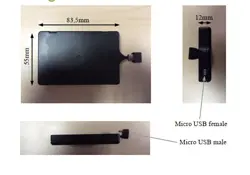
The SmartDiag is a tool designed to query the status of any TPMS device. In combination with a smartphone
(using OTG USB) running the appropriate application, it can read information measured from the sensors
(pressure, temperature, etc), or configure receiver and telematics equipment of the same manufacturer.
Operating Frequency: 433.92 MHz +/-250kHz
3 CERTIFICATION INFORMATION
Manufacturer name: LID Technologies S.A.S
Manufacturer address : Parc Technologique du Canal
12 rue Hermès, bâtiment C
31520 Ramonville-Saint-Agne
FRANCE
Model: 21125
Product: Smart Diag Box 434
HOMOLOGATION LIGHT USER MANUAL
924 005 0003 A0
CONFIDENTIAL: This document is the exclusive property of LID Technologies No content may be transmitted or reproduced without written permission
LID Technologies SAS – Toulouse – France
3 / 4
REGULATORY NOTICES AND LABELS
CANADA
Certification number: 6450A-21125
As the product is only useful once installed in a vehicle, we hereby confirm that we’ll request vehicle
manufacturers to meet the requirements of Federal Communications Commission and Industry Canada.
This device complies with Industry Canada license-exempt RSS standard(s). Operation is subject to the following
two conditions:
(1) this device may not cause harmful interference, and (2) this device must accept interference received,
including interference that may cause undesired operation of the device.
Le présent appareil est conforme aux CNR d'Industrie Canada applicables aux appareils radio exempts de licence.
L'exploitation est autorisée aux deux conditions suivantes :(1) l'appareil ne doit pas produire de brouillage, et (2)
l'utilisateur de l'appareil d’accepter tout brouillage radioélectrique subi, même si le brouillage est susceptible d'en
compromettre le fonctionnement.
This device complies with FCC/IC radiation exposure limits set forth for an uncontrolled environment and meets
the FCC radio frequency (RF) Exposure Guidelines and RSS‐102 of the IC radio frequency (RF) Exposure rules. The
antenna should be installed and operated with minimum distance of 20 cm between the radiator and your body.
This transmitter must not be co-located or operating in conjunction with any other antenna or transmitter.
Le présent appareil est conforme à l'exposition aux radiations FCC / IC définies pour un environnement non
contrôlé et répond aux directives d'exposition de la fréquence de la FCC radiofréquence (RF) et RSS‐102 de la
fréquence radio (RF) IC règles d'exposition. L'antenne doit être installée de façon à garder une distance minimale
de 20 centimètres entre la source de rayonnements et votre corps. L'émetteur ne doit pas être colocalisé ni
fonctionner conjointement avec une autre antenne ou un autre émetteur.
EUROPE
Model number: 21125
The frequency bands and the associated maximum transmit power are as follows:
- 433.92 MHz +/- 250 KHz
- Output power: < 3mW
Company: LID Technologies S.A.S.
Address : Parc Technologique du Canal, 12 rue Hermès, Bâtiment C, 31520 Ramonville-Saint-Agne, France

HOMOLOGATION LIGHT USER MANUAL
924 005 0003 A0
CONFIDENTIAL: This document is the exclusive property of LID Technologies No content may be transmitted or reproduced without written permission
LID Technologies SAS – Toulouse – France
4 / 4
USA
FCC identifier: T4521125
This device complies with Part 15 of the FCC Rules. Operation is subject to the following two conditions:
(1) this device may not cause harmful interference, and (2) this device must accept interference received,
including interference that may cause undesired operation. Changes or modifications not expressly approved by
the party responsible for compliance could void the user's authority to operate the equipment.
No changes shall be made to the equipment without the manufacturer’s permission as this may void the user’s
authority to operate the equipment.
FCC Class B digital device notice
This equipment has been tested and found to comply with the limits for a Class B digital device, pursuant to part
15 of the FCC Rules. These limits are designed to provide reasonable protection against harmful interference in a
residential installation. This equipment generates, uses and can radiate radio frequency energy and, if not
installed and used in accordance with the instructions, may cause harmful interference to radio communications.
However, there is no guarantee that interference will not occur in a particular installation. If this equipment does
cause harmful interference to radio or television reception, which can be determined by turning the equipment
off and on, the user is encouraged to try to correct the interference by one or more of the following measures:
- Reorient or relocate the receiving antenna.
- Increase the separation between the equipment and receiver.
- Connect the equipment into an outlet on a circuit different from that to which the receiver is connected.
- Consult the dealer or an experienced radio/TV technician for help.